What to check on a Cargo Compressor (Screw).
A screw-type cargo compressor moves gas by meshing helical rotors that trap and progressively compress a continuous volume of vapour, rather than the intermittent piston strokes of a reciprocating cargo compressor. That continuous action gives smoother, lower-vibration operation and simpler handling of vapour containing small amounts of liquid carryover, which makes screw compressors well suited to vapour return duty and tank pressure control during loading and discharge on LPG and similar gas carriers. Reciprocating compressors remain common where very high compression ratios or larger single-stage pressure rise is needed; the…
What sets a screw cargo compressor apart
A screw-type cargo compressor moves gas by meshing helical rotors that trap and progressively compress a continuous volume of vapour, rather than the intermittent piston strokes of a reciprocating cargo compressor. That continuous action gives smoother, lower-vibration operation and simpler handling of vapour containing small amounts of liquid carryover, which makes screw compressors well suited to vapour return duty and tank pressure control during loading and discharge on LPG and similar gas carriers. Reciprocating compressors remain common where very high compression ratios or larger single-stage pressure rise is needed; the choice between the two types is generally set by the cargo system design rather than swapped in service.
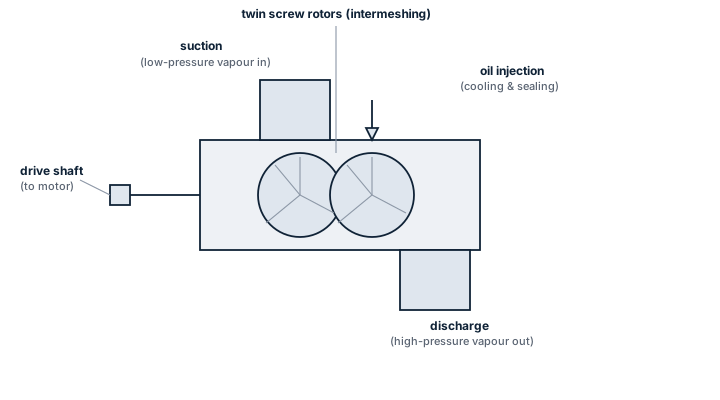
Main components
Rotor pair
A male and female helical rotor set, precision-machined to maintain a small working clearance; wear here directly reduces volumetric efficiency.
Oil injection and separation system
On oil-injected designs, oil is injected into the compression chamber for sealing, cooling and lubrication, then separated from the discharge gas stream before it reaches the cargo tank or vapour return line — separator performance is critical, since carried-over oil contaminates cargo.
Drive and gearbox
An electric motor drives the rotor shaft, typically through a gearbox matching motor speed to optimum rotor speed for the cargo gas and pressure duty.
Suction and discharge valves with interlocks
Automated valves and safety interlocks that prevent operation outside safe suction or discharge pressure limits and support emergency shutdown from the cargo control system.
Selection and sizing
Sizing follows required vapour handling capacity at the specified suction and discharge pressure range for the cargoes the vessel is designed to carry, together with compatibility of rotor and seal materials with the specific gas — some cargoes require oil-free designs or specific elastomer and metallurgy choices to avoid contamination or chemical attack. Turndown capability matters in practice, since vapour return demand varies considerably between the start and end of a loading or discharging operation, and a compressor that only performs well near its rated point will struggle through the rest of the cargo transfer.
Regulations and class
Gas carrier cargo compressors fall under the IGC Code (or IGF Code provisions for gas-fuelled ships handling fuel gas), which sets requirements for cargo machinery space arrangement, gas detection, ventilation and emergency shutdown integration rather than compressor design in isolation. Class societies apply pressure vessel and rotating machinery rules to the compressor casing and drive train, and require the equipment to be included in the ship's cargo system hazardous area and gas detection design documentation reviewed at classification.
Typical faults
- Rotor clearance wear — reduces volumetric efficiency and vapour handling capacity gradually, often noticed first as slower tank pressure control during loading.
- Oil separator degradation — allows oil carryover into the cargo vapour stream, risking cargo contamination on sensitive products.
- Seal failure at the shaft — a common source of gas leakage into the compressor room, triggering gas detection alarms and requiring immediate isolation.
- Interlock or valve actuator fault — can either prevent legitimate startup or, more seriously, fail to stop the compressor on a genuine over-pressure or gas detection trip.
What to look for in a supplier
- Rotor and seal material compatibility confirmed against the vessel's actual cargo range, not a generic LPG rating alone.
- Documented turndown performance across the expected suction pressure range during a typical loading or discharge cycle.
- Spare parts availability for rotors, seals and separator elements through a marine gas carrier parts network.
- Integration support for the vessel's cargo control and emergency shutdown system, including interlock signal compatibility.
Track oil separator differential pressure and consumption trends over time — a slow rise is usually the earliest warning of separator wear, well before any oil carryover shows up in the cargo itself.