What to check on a Gas Detection Control Panel.
Individual detector heads only sense; the control panel is where those readings become a decision. It polls every zone on its loop, compares each reading against low and high alarm setpoints configured for that space and gas type, drives the audible and visual alarms crew actually respond to, and can be wired into interlocks that trip ventilation fans, close fire dampers or cut power to non-intrinsically-safe equipment the moment a threshold is crossed. A ship can have a dozen excellent detector heads and still be poorly protected if the panel…
What Sets a Control Panel Apart
Individual detector heads only sense; the control panel is where those readings become a decision. It polls every zone on its loop, compares each reading against low and high alarm setpoints configured for that space and gas type, drives the audible and visual alarms crew actually respond to, and can be wired into interlocks that trip ventilation fans, close fire dampers or cut power to non-intrinsically-safe equipment the moment a threshold is crossed. A ship can have a dozen excellent detector heads and still be poorly protected if the panel behind them is old, under-maintained or configured with thresholds that no longer match how the spaces are actually used.
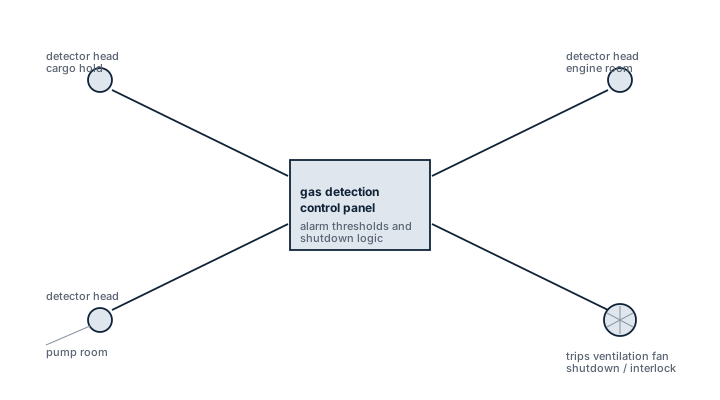
Main Components
Zone Input Modules
Field wiring from detector heads terminates here, either as conventional hard-wired zones or as an addressable loop that identifies which specific detector raised a reading.
Alarm Logic and Processor
This applies the configured low and high setpoints per zone, generates alarm and fault states separately, and sequences any time-delayed actions such as a pre-alarm warning before an automatic trip.
Display and Mimic Panel
A mimic or digital display shows which zone and gas type triggered an alarm, so the watchkeeper does not have to walk to the detector to find out what happened.
Output Relays and Interlocks
Dry contact outputs connect to ventilation fan starters, damper actuators or engine shutdown circuits, translating a gas reading into a physical safety action without waiting for a person to act.
Backup Power Supply
A battery supply keeps the panel and its alarms live through a mains interruption, since gas hazards do not wait for shore power or the generator to be restored.
Selection and Sizing
Sizing starts with the number of zones and gas types actually needed: combustible gas expressed as a percentage of the lower explosive limit, oxygen depletion or enrichment, hydrogen sulphide, carbon dioxide, or specific toxic gases depending on cargo and spaces served. The panel itself is normally mounted in a safe area with intrinsically safe barriers protecting the field wiring into any hazardous zone, so hazardous-area certification applies to the barriers and field devices rather than the panel enclosure. Integration protocol matters too, since a panel that cannot talk to the ship's existing integrated alarm system forces a separate, disconnected alarm point on the bridge.
Regulations and Class
Fixed gas detection is mandatory in specific spaces under SOLAS chapter II-2, and continuous fixed detection is a core requirement of the IGC Code for gas carriers and the IBC Code for chemical tankers, covering both cargo-related gases and enclosed spaces. Class rules generally require the system to fail to an alarm or fault state rather than fail silently, so loss of a sensor or wiring fault must itself be annunciated.
Typical Faults
- Sensor drift not yet flagged - a detector reads low without going into fault, giving false confidence that a space is safe.
- Open circuit in the field loop - a lost zone shows a fault the crew may not notice promptly if the panel's fault alarm is treated with less urgency than a gas alarm.
- Interlock relay contacts stuck - after years of switching, a relay welded closed or open means the ventilation fan does not actually trip when the panel calls for it.
- Degraded battery backup - the panel loses power during a blackout, precisely when gas hazards from a stopped ventilation system are most likely.
- Firmware mismatch after a sensor swap - a replacement detector head from a different batch or supplier is not correctly recognised, reporting incorrectly or not at all.
What to Look For in a Supplier
- Calibration gas and service kits actually available and supported for the panel's specific sensor range.
- Configurable relay outputs that match the ship's real interlocks, not a fixed set of generic outputs.
- Clear separation in the display and alarm sound between a gas alarm and a fault alarm, so crew respond correctly to each.
- Approval matching the vessel's class and flag, particularly for gas carriers under the IGC Code.
- Spares commonality with the detector heads it is paired with, so a field replacement does not also mean a panel software update.
Treat a fault light with the same urgency as a gas alarm - a panel that cannot see a zone is a panel that is not protecting it, and that gap is invisible until someone actually needs the reading.