OceanSphere
Engines

Water Mist Extinguisher

medium 72 / 72 models (Inspector)

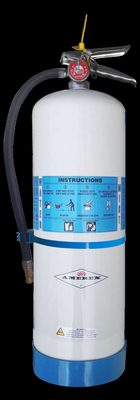
A water mist portable extinguisher breaks water into a fine spray under pressure, cooling and smothering the fire surface without the conductivity risk of a jet stream, making it usable on live electrical equipment up to a safe voltage limit.

Read more — Water Mist Extinguisher explained

What Sets Water Mist Apart

A water mist extinguisher forces water through a specially designed nozzle at high pressure, breaking it into droplets typically below 100 microns. The fine mist absorbs heat far faster than a solid jet because of its greater surface area, and it partially displaces oxygen at the seat of the fire through rapid vapor expansion. Unlike a standard water-jet extinguisher, the mist does not form a conductive column back to the operator, so manufacturers rate many units safe for use on live electrical equipment at typical shipboard voltages, and unlike CO2 or dry powder it leaves the compartment breathable and causes far less collateral mess in accommodation and control spaces.
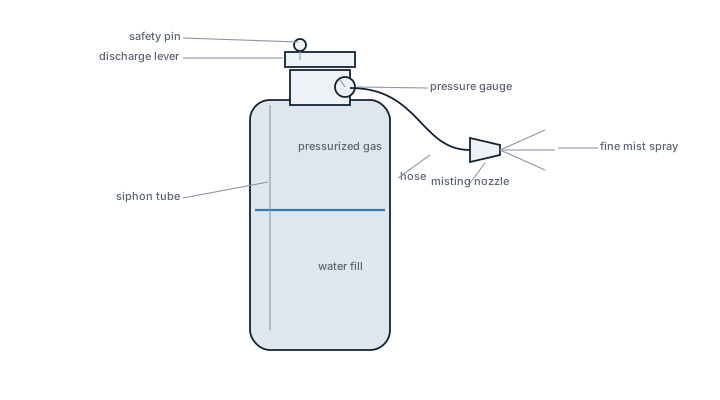
Water mist portable extinguisher construction
Cross-section of a stored-pressure water mist extinguisher: discharge lever with safety pin and pressure gauge on the valve head, pressurised gas above the water fill, a siphon tube to the bottom, and a hose leading to the nozzle that breaks the water into a fine mist spray.

Main Components

Cylinder and Charge

A steel or composite cylinder holds distilled or de-ionized water, sometimes with a small additive package, pressurized with nitrogen to a working pressure in the 8-16 bar range depending on model.

Mist Nozzle

A specialized discharge head, not the plain orifice of a water-jet type, is what actually creates the mist. Swapping in a generic nozzle destroys the fire performance even if the rest of the unit looks identical.

Discharge Valve and Hose

A squeeze-grip or lever valve controls discharge, usually giving 50-90 seconds of continuous use, longer than a comparable CO2 unit of similar weight.

Selection and Sizing

  • Fire class coverage: rated for Class A (ordinary combustibles) and often Class F (cooking oil); check the label before assuming Class B suitability
  • Electrical safety rating and the minimum safe distance stated by the manufacturer for live equipment
  • Discharge time and range, which matter for galley and accommodation layouts with limited retreat space
  • Cylinder test pressure and weight, since a mist unit is often heavier than an equivalent CO2 extinguisher

Regulations and Class

Portable extinguishers fall under SOLAS Ch. II-2 and the FSS Code, which set the minimum number, type and distribution of extinguishers by space. Each unit needs a valid service and hydrostatic test certificate, with servicing intervals set by the manufacturer and verified at annual survey; class surveyors check the service tag date against the cylinder itself, not just the deck log.

Typical Faults

FaultConsequence
Nozzle partially blocked by scale from hard water fillDischarge reverts to a jet, losing the electrical safety rating and cooling effect
Slow nitrogen pressure loss through the valve sealReduced range and discharge time, often unnoticed until the annual gauge check
Wrong extinguisher grabbed under Class B fireIneffective or worsened fire, since a water-based unit is not rated for flammable liquid fires
Cylinder past hydrostatic test date left in serviceSurvey finding, and a real risk of cylinder failure under pressure

What to Look for in a Supplier

  • Independent test certification for the stated electrical safety distance, not just a marketing claim
  • Servicing network able to reach the ship's ports of call for the recurring annual and hydrostatic tests
  • Consistent nozzle and valve parts across the fleet to simplify spares holding

Check the nozzle, not just the pressure gauge, at every inspection - a mist extinguisher with full pressure but a scaled nozzle discharges a jet, and the crew will not find that out until it is too late.

Inspector Mode Show All 72 / 72 with inspector value

13 manufacturers · 72 models

Amerex

8
Amerex Amerex Water Mist 1kg
Amerex Water Mist 1kg unverified
Capacity (kg)
1
Fire class
A,B
Marine Approval
ja
Common Failures & Inspection Points
  • Loss of pressure or propellant from valve/seal leakage, typically indicated by gauge or weight check outside the acceptable condition
  • Corrosion or cylinder damage from marine exposure, typically indicated by pitting, rust or failed inspection
  • Blocked hose/nozzle from contamination or deterioration, typically indicated by restricted discharge during service testing
  • Tamper seal, pin or valve damage, typically indicated by extinguisher not ready for immediate use
  • Extinguishing medium degradation or compaction where applicable, typically indicated by failed service check or poor discharge condition
Service: Check location, accessibility, marking, seal/pin, hose/nozzle, pressure or weight condition as applicable, cylinder corrosion and service date; hydrostatic and internal servicing must follow approved rules and manufacturer instructions.
Spare Parts: Keep approved brackets, seals/pins, hoses/nozzles and replacement units of the required extinguishing medium/type; cylinder refilling and overhaul should be handled by qualified service providers.
Use Cases: Used on all vessels as portable first-response firefighting equipment selected for machinery, accommodation, galley and deck hazards. This entry applies specifically to the Water Mist Extinguisher variant identified as Amerex Amerex Water Mist 1kg.
Amerex Amerex Water Mist 2kg
Amerex Water Mist 2kg unverified
Capacity (kg)
2
Fire class
A,B
Marine Approval
ja
Common Failures & Inspection Points
  • Loss of pressure or propellant from valve/seal leakage, typically indicated by gauge or weight check outside the acceptable condition
  • Corrosion or cylinder damage from marine exposure, typically indicated by pitting, rust or failed inspection
  • Blocked hose/nozzle from contamination or deterioration, typically indicated by restricted discharge during service testing
  • Tamper seal, pin or valve damage, typically indicated by extinguisher not ready for immediate use
  • Extinguishing medium degradation or compaction where applicable, typically indicated by failed service check or poor discharge condition
Service: Check location, accessibility, marking, seal/pin, hose/nozzle, pressure or weight condition as applicable, cylinder corrosion and service date; hydrostatic and internal servicing must follow approved rules and manufacturer instructions.
Spare Parts: Keep approved brackets, seals/pins, hoses/nozzles and replacement units of the required extinguishing medium/type; cylinder refilling and overhaul should be handled by qualified service providers.
Use Cases: Used on all vessels as portable first-response firefighting equipment selected for machinery, accommodation, galley and deck hazards. This entry applies specifically to the Water Mist Extinguisher variant identified as Amerex Amerex Water Mist 2kg.
Amerex Amerex Water Mist 3kg
Amerex Water Mist 3kg unverified
Capacity (kg)
3
Fire class
A,B
Marine Approval
ja
Common Failures & Inspection Points
  • Loss of pressure or propellant from valve/seal leakage, typically indicated by gauge or weight check outside the acceptable condition
  • Corrosion or cylinder damage from marine exposure, typically indicated by pitting, rust or failed inspection
  • Blocked hose/nozzle from contamination or deterioration, typically indicated by restricted discharge during service testing
  • Tamper seal, pin or valve damage, typically indicated by extinguisher not ready for immediate use
  • Extinguishing medium degradation or compaction where applicable, typically indicated by failed service check or poor discharge condition
Service: Check location, accessibility, marking, seal/pin, hose/nozzle, pressure or weight condition as applicable, cylinder corrosion and service date; hydrostatic and internal servicing must follow approved rules and manufacturer instructions.
Spare Parts: Keep approved brackets, seals/pins, hoses/nozzles and replacement units of the required extinguishing medium/type; cylinder refilling and overhaul should be handled by qualified service providers.
Use Cases: Used on all vessels as portable first-response firefighting equipment selected for machinery, accommodation, galley and deck hazards. This entry applies specifically to the Water Mist Extinguisher variant identified as Amerex Amerex Water Mist 3kg.
Amerex Amerex Water Mist 5kg
Amerex Water Mist 5kg unverified
Capacity (kg)
5
Fire class
A,B
Marine Approval
ja
Common Failures & Inspection Points
  • Loss of pressure or propellant from valve/seal leakage, typically indicated by gauge or weight check outside the acceptable condition
  • Corrosion or cylinder damage from marine exposure, typically indicated by pitting, rust or failed inspection
  • Blocked hose/nozzle from contamination or deterioration, typically indicated by restricted discharge during service testing
  • Tamper seal, pin or valve damage, typically indicated by extinguisher not ready for immediate use
  • Extinguishing medium degradation or compaction where applicable, typically indicated by failed service check or poor discharge condition
Service: Check location, accessibility, marking, seal/pin, hose/nozzle, pressure or weight condition as applicable, cylinder corrosion and service date; hydrostatic and internal servicing must follow approved rules and manufacturer instructions.
Spare Parts: Keep approved brackets, seals/pins, hoses/nozzles and replacement units of the required extinguishing medium/type; cylinder refilling and overhaul should be handled by qualified service providers.
Use Cases: Used on all vessels as portable first-response firefighting equipment selected for machinery, accommodation, galley and deck hazards. This entry applies specifically to the Water Mist Extinguisher variant identified as Amerex Amerex Water Mist 5kg.
Amerex Amerex Water Mist 6kg
Amerex Water Mist 6kg unverified
Capacity (kg)
6
Fire class
A,B
Marine Approval
ja
Common Failures & Inspection Points
  • Loss of pressure or propellant from valve/seal leakage, typically indicated by gauge or weight check outside the acceptable condition
  • Corrosion or cylinder damage from marine exposure, typically indicated by pitting, rust or failed inspection
  • Blocked hose/nozzle from contamination or deterioration, typically indicated by restricted discharge during service testing
  • Tamper seal, pin or valve damage, typically indicated by extinguisher not ready for immediate use
  • Extinguishing medium degradation or compaction where applicable, typically indicated by failed service check or poor discharge condition
Service: Check location, accessibility, marking, seal/pin, hose/nozzle, pressure or weight condition as applicable, cylinder corrosion and service date; hydrostatic and internal servicing must follow approved rules and manufacturer instructions.
Spare Parts: Keep approved brackets, seals/pins, hoses/nozzles and replacement units of the required extinguishing medium/type; cylinder refilling and overhaul should be handled by qualified service providers.
Use Cases: Used on all vessels as portable first-response firefighting equipment selected for machinery, accommodation, galley and deck hazards. This entry applies specifically to the Water Mist Extinguisher variant identified as Amerex Amerex Water Mist 6kg.
Amerex Amerex Water Mist 9kg
Amerex Water Mist 9kg unverified
Capacity (kg)
9
Fire class
A,B
Marine Approval
ja
Common Failures & Inspection Points
  • Loss of pressure or propellant from valve/seal leakage, typically indicated by gauge or weight check outside the acceptable condition
  • Corrosion or cylinder damage from marine exposure, typically indicated by pitting, rust or failed inspection
  • Blocked hose/nozzle from contamination or deterioration, typically indicated by restricted discharge during service testing
  • Tamper seal, pin or valve damage, typically indicated by extinguisher not ready for immediate use
  • Extinguishing medium degradation or compaction where applicable, typically indicated by failed service check or poor discharge condition
Service: Check location, accessibility, marking, seal/pin, hose/nozzle, pressure or weight condition as applicable, cylinder corrosion and service date; hydrostatic and internal servicing must follow approved rules and manufacturer instructions.
Spare Parts: Keep approved brackets, seals/pins, hoses/nozzles and replacement units of the required extinguishing medium/type; cylinder refilling and overhaul should be handled by qualified service providers.
Use Cases: Used on all vessels as portable first-response firefighting equipment selected for machinery, accommodation, galley and deck hazards. This entry applies specifically to the Water Mist Extinguisher variant identified as Amerex Amerex Water Mist 9kg.
Amerex Amerex Water Mist 12kg
Amerex Water Mist 12kg unverified
Capacity (kg)
12
Fire class
A,B
Marine Approval
ja
Common Failures & Inspection Points
  • Loss of pressure or propellant from valve/seal leakage, typically indicated by gauge or weight check outside the acceptable condition
  • Corrosion or cylinder damage from marine exposure, typically indicated by pitting, rust or failed inspection
  • Blocked hose/nozzle from contamination or deterioration, typically indicated by restricted discharge during service testing
  • Tamper seal, pin or valve damage, typically indicated by extinguisher not ready for immediate use
  • Extinguishing medium degradation or compaction where applicable, typically indicated by failed service check or poor discharge condition
Service: Check location, accessibility, marking, seal/pin, hose/nozzle, pressure or weight condition as applicable, cylinder corrosion and service date; hydrostatic and internal servicing must follow approved rules and manufacturer instructions.
Spare Parts: Keep approved brackets, seals/pins, hoses/nozzles and replacement units of the required extinguishing medium/type; cylinder refilling and overhaul should be handled by qualified service providers.
Use Cases: Used on all vessels as portable first-response firefighting equipment selected for machinery, accommodation, galley and deck hazards. This entry applies specifically to the Water Mist Extinguisher variant identified as Amerex Amerex Water Mist 12kg.
Amerex Amerex Class-K Kitchen 6L-C
Amerex Class-K Kitchen 6L-C unverified
Fire class
K
Capacity (l)
6
Common Failures & Inspection Points
  • Loss of charge or pressure caused by valve leakage, seal deterioration or damage, resulting in low gauge indication where fitted or insufficient discharge
  • Discharge hose, horn or nozzle blockage caused by dirt, corrosion or physical damage, resulting in restricted agent flow
  • Cylinder corrosion or mechanical damage caused by marine exposure or impact, resulting in visible deterioration or removal from service
  • Operating-pin, handle or valve seizure caused by corrosion or contamination, resulting in inability to activate the extinguisher
  • Agent deterioration or compaction caused by age, moisture or poor storage, resulting in reduced discharge performance or failed service inspection
Service: Check the extinguisher is in its assigned location, accessible, correctly secured and visibly undamaged. Inspect cylinder condition, safety pin, seal, hose, nozzle or horn, pressure indication where fitted and service labels. Keep the unit clean and protected from corrosion and do not paint over markings. Weighing, pressure testing, agent replacement and internal servicing must follow the approved service regime. Replace any unit showing leakage, significant corrosion or damaged operating parts. Refer to the manufacturer documentation for the exact figure for service intervals and rejection criteria.
Spare Parts: Keep approved mounting brackets, safety seals, hoses or horns where permitted and replacement complete extinguishers according to the vessel's fire plan. Portable extinguishers are generally maintained through approved servicing rather than extensive onboard internal repair. Use only compatible certified components.
Use Cases: First-response firefighting in machinery spaces, accommodation, galleys, workshops and deck areas according to extinguishing medium and approved fire plan.

Buckeye Fire

8
Buckeye Fire Buckeye Fire Water Mist 1kg
Buckeye Fire Water Mist 1kg unverified
Capacity (kg)
1
Fire class
A,B
Marine Approval
ja
Common Failures & Inspection Points
  • Loss of charge or pressure caused by valve leakage, seal deterioration or damage, resulting in low gauge indication where fitted or insufficient discharge
  • Discharge hose, horn or nozzle blockage caused by dirt, corrosion or physical damage, resulting in restricted agent flow
  • Cylinder corrosion or mechanical damage caused by marine exposure or impact, resulting in visible deterioration or removal from service
  • Operating-pin, handle or valve seizure caused by corrosion or contamination, resulting in inability to activate the extinguisher
  • Agent deterioration or compaction caused by age, moisture or poor storage, resulting in reduced discharge performance or failed service inspection
Service: Check the extinguisher is in its assigned location, accessible, correctly secured and visibly undamaged. Inspect cylinder condition, safety pin, seal, hose, nozzle or horn, pressure indication where fitted and service labels. Keep the unit clean and protected from corrosion and do not paint over markings. Weighing, pressure testing, agent replacement and internal servicing must follow the approved service regime for the extinguisher type. Replace any unit showing leakage, significant corrosion or damaged operating parts. Refer to the manufacturer documentation for the exact figure for service intervals and rejection criteria.
Spare Parts: Portable extinguishers are generally maintained through approved servicing rather than extensive onboard component replacement. Keep approved mounting brackets, safety seals, hoses or horns where permitted and replacement complete extinguishers according to the vessel's fire plan.
Use Cases: It is used for first-response firefighting on merchant ships, passenger vessels, offshore units or other vessel types where this equipment category is fitted.
Buckeye Fire Buckeye Fire Water Mist 2kg
Buckeye Fire Water Mist 2kg unverified
Capacity (kg)
2
Fire class
A,B
Marine Approval
ja
Common Failures & Inspection Points
  • Loss of charge or pressure caused by valve leakage, seal deterioration or damage, resulting in low gauge indication where fitted or insufficient discharge
  • Discharge hose, horn or nozzle blockage caused by dirt, corrosion or physical damage, resulting in restricted agent flow
  • Cylinder corrosion or mechanical damage caused by marine exposure or impact, resulting in visible deterioration or removal from service
  • Operating-pin, handle or valve seizure caused by corrosion or contamination, resulting in inability to activate the extinguisher
  • Agent deterioration or compaction caused by age, moisture or poor storage, resulting in reduced discharge performance or failed service inspection
Service: Check the extinguisher is in its assigned location, accessible, correctly secured and visibly undamaged. Inspect cylinder condition, safety pin, seal, hose, nozzle or horn, pressure indication where fitted and service labels. Keep the unit clean and protected from corrosion and do not paint over markings. Weighing, pressure testing, agent replacement and internal servicing must follow the approved service regime for the extinguisher type. Replace any unit showing leakage, significant corrosion or damaged operating parts. Refer to the manufacturer documentation for the exact figure for service intervals and rejection criteria.
Spare Parts: Portable extinguishers are generally maintained through approved servicing rather than extensive onboard component replacement. Keep approved mounting brackets, safety seals, hoses or horns where permitted and replacement complete extinguishers according to the vessel's fire plan.
Use Cases: It is used for first-response firefighting on merchant ships, passenger vessels, offshore units or other vessel types where this equipment category is fitted.
Buckeye Fire Buckeye Fire Water Mist 3kg
Buckeye Fire Water Mist 3kg unverified
Capacity (kg)
3
Fire class
A,B
Marine Approval
ja
Common Failures & Inspection Points
  • Loss of charge or pressure caused by valve leakage, seal deterioration or damage, resulting in low gauge indication where fitted or insufficient discharge
  • Discharge hose, horn or nozzle blockage caused by dirt, corrosion or physical damage, resulting in restricted agent flow
  • Cylinder corrosion or mechanical damage caused by marine exposure or impact, resulting in visible deterioration or removal from service
  • Operating-pin, handle or valve seizure caused by corrosion or contamination, resulting in inability to activate the extinguisher
  • Agent deterioration or compaction caused by age, moisture or poor storage, resulting in reduced discharge performance or failed service inspection
Service: Check the extinguisher is in its assigned location, accessible, correctly secured and visibly undamaged. Inspect cylinder condition, safety pin, seal, hose, nozzle or horn, pressure indication where fitted and service labels. Keep the unit clean and protected from corrosion and do not paint over markings. Weighing, pressure testing, agent replacement and internal servicing must follow the approved service regime for the extinguisher type. Replace any unit showing leakage, significant corrosion or damaged operating parts. Refer to the manufacturer documentation for the exact figure for service intervals and rejection criteria.
Spare Parts: Portable extinguishers are generally maintained through approved servicing rather than extensive onboard component replacement. Keep approved mounting brackets, safety seals, hoses or horns where permitted and replacement complete extinguishers according to the vessel's fire plan.
Use Cases: It is used for first-response firefighting on merchant ships, passenger vessels, offshore units or other vessel types where this equipment category is fitted.
Buckeye Fire Buckeye Fire Water Mist 5kg
Buckeye Fire Water Mist 5kg unverified
Capacity (kg)
5
Fire class
A,B
Marine Approval
ja
Common Failures & Inspection Points
  • Loss of charge or pressure caused by valve leakage, seal deterioration or damage, resulting in low gauge indication where fitted or insufficient discharge
  • Discharge hose, horn or nozzle blockage caused by dirt, corrosion or physical damage, resulting in restricted agent flow
  • Cylinder corrosion or mechanical damage caused by marine exposure or impact, resulting in visible deterioration or removal from service
  • Operating-pin, handle or valve seizure caused by corrosion or contamination, resulting in inability to activate the extinguisher
  • Agent deterioration or compaction caused by age, moisture or poor storage, resulting in reduced discharge performance or failed service inspection
Service: Check the extinguisher is in its assigned location, accessible, correctly secured and visibly undamaged. Inspect cylinder condition, safety pin, seal, hose, nozzle or horn, pressure indication where fitted and service labels. Keep the unit clean and protected from corrosion and do not paint over markings. Weighing, pressure testing, agent replacement and internal servicing must follow the approved service regime for the extinguisher type. Replace any unit showing leakage, significant corrosion or damaged operating parts. Refer to the manufacturer documentation for the exact figure for service intervals and rejection criteria.
Spare Parts: Portable extinguishers are generally maintained through approved servicing rather than extensive onboard component replacement. Keep approved mounting brackets, safety seals, hoses or horns where permitted and replacement complete extinguishers according to the vessel's fire plan.
Use Cases: It is used for first-response firefighting on merchant ships, passenger vessels, offshore units or other vessel types where this equipment category is fitted.
Buckeye Fire Buckeye Fire Water Mist 6kg
Buckeye Fire Water Mist 6kg unverified
Capacity (kg)
6
Fire class
A,B
Marine Approval
ja
Common Failures & Inspection Points
  • Loss of charge or pressure caused by valve leakage, seal deterioration or damage, resulting in low gauge indication where fitted or insufficient discharge
  • Discharge hose, horn or nozzle blockage caused by dirt, corrosion or physical damage, resulting in restricted agent flow
  • Cylinder corrosion or mechanical damage caused by marine exposure or impact, resulting in visible deterioration or removal from service
  • Operating-pin, handle or valve seizure caused by corrosion or contamination, resulting in inability to activate the extinguisher
  • Agent deterioration or compaction caused by age, moisture or poor storage, resulting in reduced discharge performance or failed service inspection
Service: Check the extinguisher is in its assigned location, accessible, correctly secured and visibly undamaged. Inspect cylinder condition, safety pin, seal, hose, nozzle or horn, pressure indication where fitted and service labels. Keep the unit clean and protected from corrosion and do not paint over markings. Weighing, pressure testing, agent replacement and internal servicing must follow the approved service regime for the extinguisher type. Replace any unit showing leakage, significant corrosion or damaged operating parts. Refer to the manufacturer documentation for the exact figure for service intervals and rejection criteria.
Spare Parts: Portable extinguishers are generally maintained through approved servicing rather than extensive onboard component replacement. Keep approved mounting brackets, safety seals, hoses or horns where permitted and replacement complete extinguishers according to the vessel's fire plan.
Use Cases: It is used for first-response firefighting on merchant ships, passenger vessels, offshore units or other vessel types where this equipment category is fitted.
Buckeye Fire Buckeye Fire Water Mist 9kg
Buckeye Fire Water Mist 9kg unverified
Capacity (kg)
9
Fire class
A,B
Marine Approval
ja
Common Failures & Inspection Points
  • Loss of charge or pressure caused by valve leakage, seal deterioration or damage, resulting in low gauge indication where fitted or insufficient discharge
  • Discharge hose, horn or nozzle blockage caused by dirt, corrosion or physical damage, resulting in restricted agent flow
  • Cylinder corrosion or mechanical damage caused by marine exposure or impact, resulting in visible deterioration or removal from service
  • Operating-pin, handle or valve seizure caused by corrosion or contamination, resulting in inability to activate the extinguisher
  • Agent deterioration or compaction caused by age, moisture or poor storage, resulting in reduced discharge performance or failed service inspection
Service: Check the extinguisher is in its assigned location, accessible, correctly secured and visibly undamaged. Inspect cylinder condition, safety pin, seal, hose, nozzle or horn, pressure indication where fitted and service labels. Keep the unit clean and protected from corrosion and do not paint over markings. Weighing, pressure testing, agent replacement and internal servicing must follow the approved service regime for the extinguisher type. Replace any unit showing leakage, significant corrosion or damaged operating parts. Refer to the manufacturer documentation for the exact figure for service intervals and rejection criteria.
Spare Parts: Portable extinguishers are generally maintained through approved servicing rather than extensive onboard component replacement. Keep approved mounting brackets, safety seals, hoses or horns where permitted and replacement complete extinguishers according to the vessel's fire plan.
Use Cases: It is used for first-response firefighting on merchant ships, passenger vessels, offshore units or other vessel types where this equipment category is fitted.
Buckeye Fire Buckeye Fire Water Mist 12kg
Buckeye Fire Water Mist 12kg unverified
Capacity (kg)
12
Fire class
A,B
Marine Approval
ja
Common Failures & Inspection Points
  • Loss of charge or pressure caused by valve leakage, seal deterioration or damage, resulting in low gauge indication where fitted or insufficient discharge
  • Discharge hose, horn or nozzle blockage caused by dirt, corrosion or physical damage, resulting in restricted agent flow
  • Cylinder corrosion or mechanical damage caused by marine exposure or impact, resulting in visible deterioration or removal from service
  • Operating-pin, handle or valve seizure caused by corrosion or contamination, resulting in inability to activate the extinguisher
  • Agent deterioration or compaction caused by age, moisture or poor storage, resulting in reduced discharge performance or failed service inspection
Service: Check the extinguisher is in its assigned location, accessible, correctly secured and visibly undamaged. Inspect cylinder condition, safety pin, seal, hose, nozzle or horn, pressure indication where fitted and service labels. Keep the unit clean and protected from corrosion and do not paint over markings. Weighing, pressure testing, agent replacement and internal servicing must follow the approved service regime for the extinguisher type. Replace any unit showing leakage, significant corrosion or damaged operating parts. Refer to the manufacturer documentation for the exact figure for service intervals and rejection criteria.
Spare Parts: Portable extinguishers are generally maintained through approved servicing rather than extensive onboard component replacement. Keep approved mounting brackets, safety seals, hoses or horns where permitted and replacement complete extinguishers according to the vessel's fire plan.
Use Cases: It is used for first-response firefighting on merchant ships, passenger vessels, offshore units or other vessel types where this equipment category is fitted.
Buckeye Fire Buckeye Fire Class-K Kitchen 6L-C
Buckeye Fire Class-K Kitchen 6L-C unverified
Fire class
K
Capacity (l)
6
Common Failures & Inspection Points
  • Loss of charge or propellant can leave the extinguisher under-ready, found by inspection of pressure/weight status as applicable
  • Corrosion or mechanical damage to the cylinder can compromise integrity, seen as rusting, dents or damaged fittings
  • Blocked hose, nozzle or discharge path can prevent effective application, found during inspection or servicing
  • Damaged safety pin, seal, valve or trigger mechanism can prevent reliable activation
  • Expired inspection or degraded extinguishing medium can render the unit unsuitable for service
Service: Inspect accessibility, markings, safety seal, hose/nozzle, cylinder condition and service status. Verify the extinguisher type matches the assigned hazard and the fire-control plan. Charge quantities, pressure limits and overhaul criteria must follow approved manufacturer and statutory servicing documentation.
Spare Parts: Onboard spares are normally limited to approved brackets, pins/seals, hoses or nozzles where permitted; recharge and internal servicing should follow authorized procedures.
Use Cases: Used throughout vessels for immediate manual response to small or incipient fires before escalation.

Kidde / Badger

8
Kidde / Badger Kidde Water Mist 1kg
Kidde Water Mist 1kg unverified
Capacity (kg)
1
Fire class
A,B
Marine Approval
ja
Common Failures & Inspection Points
  • Loss of charge or pressure caused by valve leakage, seal deterioration or damage, resulting in low gauge indication where fitted or insufficient discharge
  • Discharge hose, horn or nozzle blockage caused by dirt, corrosion or physical damage, resulting in restricted agent flow
  • Cylinder corrosion or mechanical damage caused by marine exposure or impact, resulting in visible deterioration or removal from service
  • Operating-pin, handle or valve seizure caused by corrosion or contamination, resulting in inability to activate the extinguisher
  • Agent deterioration or compaction caused by age, moisture or poor storage, resulting in reduced discharge performance or failed service inspection
Service: Check the extinguisher is in its assigned location, accessible, correctly secured and visibly undamaged. Inspect cylinder condition, safety pin, seal, hose, nozzle or horn, pressure indication where fitted and service labels. Keep the unit clean and protected from corrosion and do not paint over markings. Weighing, pressure testing, agent replacement and internal servicing must follow the approved service regime. Replace any unit showing leakage, significant corrosion or damaged operating parts. Refer to the manufacturer documentation for the exact figure for service intervals and rejection criteria.
Spare Parts: Keep approved mounting brackets, safety seals, hoses or horns where permitted and replacement complete extinguishers according to the vessel's fire plan. Portable extinguishers are generally maintained through approved servicing rather than extensive onboard internal repair. Use only compatible certified components.
Use Cases: First-response firefighting in machinery spaces, accommodation, galleys, workshops and deck areas according to extinguishing medium and approved fire plan.
Kidde / Badger Kidde Water Mist 2kg
Kidde Water Mist 2kg unverified
Capacity (kg)
2
Fire class
A,B
Marine Approval
ja
Common Failures & Inspection Points
  • Loss of charge or pressure caused by valve leakage, seal deterioration or damage, resulting in low gauge indication where fitted or insufficient discharge
  • Discharge hose, horn or nozzle blockage caused by dirt, corrosion or physical damage, resulting in restricted agent flow
  • Cylinder corrosion or mechanical damage caused by marine exposure or impact, resulting in visible deterioration or removal from service
  • Operating-pin, handle or valve seizure caused by corrosion or contamination, resulting in inability to activate the extinguisher
  • Agent deterioration or compaction caused by age, moisture or poor storage, resulting in reduced discharge performance or failed service inspection
Service: Check the extinguisher is in its assigned location, accessible, correctly secured and visibly undamaged. Inspect cylinder condition, safety pin, seal, hose, nozzle or horn, pressure indication where fitted and service labels. Keep the unit clean and protected from corrosion and do not paint over markings. Weighing, pressure testing, agent replacement and internal servicing must follow the approved service regime. Replace any unit showing leakage, significant corrosion or damaged operating parts. Refer to the manufacturer documentation for the exact figure for service intervals and rejection criteria.
Spare Parts: Keep approved mounting brackets, safety seals, hoses or horns where permitted and replacement complete extinguishers according to the vessel's fire plan. Portable extinguishers are generally maintained through approved servicing rather than extensive onboard internal repair. Use only compatible certified components.
Use Cases: First-response firefighting in machinery spaces, accommodation, galleys, workshops and deck areas according to extinguishing medium and approved fire plan.
Kidde / Badger Kidde Water Mist 3kg
Kidde Water Mist 3kg unverified
Capacity (kg)
3
Fire class
A,B
Marine Approval
ja
Common Failures & Inspection Points
  • Loss of charge or pressure caused by valve leakage, seal deterioration or damage, resulting in low gauge indication where fitted or insufficient discharge
  • Discharge hose, horn or nozzle blockage caused by dirt, corrosion or physical damage, resulting in restricted agent flow
  • Cylinder corrosion or mechanical damage caused by marine exposure or impact, resulting in visible deterioration or removal from service
  • Operating-pin, handle or valve seizure caused by corrosion or contamination, resulting in inability to activate the extinguisher
  • Agent deterioration or compaction caused by age, moisture or poor storage, resulting in reduced discharge performance or failed service inspection
Service: Check the extinguisher is in its assigned location, accessible, correctly secured and visibly undamaged. Inspect cylinder condition, safety pin, seal, hose, nozzle or horn, pressure indication where fitted and service labels. Keep the unit clean and protected from corrosion and do not paint over markings. Weighing, pressure testing, agent replacement and internal servicing must follow the approved service regime. Replace any unit showing leakage, significant corrosion or damaged operating parts. Refer to the manufacturer documentation for the exact figure for service intervals and rejection criteria.
Spare Parts: Keep approved mounting brackets, safety seals, hoses or horns where permitted and replacement complete extinguishers according to the vessel's fire plan. Portable extinguishers are generally maintained through approved servicing rather than extensive onboard internal repair. Use only compatible certified components.
Use Cases: First-response firefighting in machinery spaces, accommodation, galleys, workshops and deck areas according to extinguishing medium and approved fire plan.
Kidde / Badger Kidde Water Mist 5kg
Kidde Water Mist 5kg unverified
Capacity (kg)
5
Fire class
A,B
Marine Approval
ja
Common Failures & Inspection Points
  • Loss of charge or pressure caused by valve leakage, seal deterioration or damage, resulting in low gauge indication where fitted or insufficient discharge
  • Discharge hose, horn or nozzle blockage caused by dirt, corrosion or physical damage, resulting in restricted agent flow
  • Cylinder corrosion or mechanical damage caused by marine exposure or impact, resulting in visible deterioration or removal from service
  • Operating-pin, handle or valve seizure caused by corrosion or contamination, resulting in inability to activate the extinguisher
  • Agent deterioration or compaction caused by age, moisture or poor storage, resulting in reduced discharge performance or failed service inspection
Service: Check the extinguisher is in its assigned location, accessible, correctly secured and visibly undamaged. Inspect cylinder condition, safety pin, seal, hose, nozzle or horn, pressure indication where fitted and service labels. Keep the unit clean and protected from corrosion and do not paint over markings. Weighing, pressure testing, agent replacement and internal servicing must follow the approved service regime. Replace any unit showing leakage, significant corrosion or damaged operating parts. Refer to the manufacturer documentation for the exact figure for service intervals and rejection criteria.
Spare Parts: Keep approved mounting brackets, safety seals, hoses or horns where permitted and replacement complete extinguishers according to the vessel's fire plan. Portable extinguishers are generally maintained through approved servicing rather than extensive onboard internal repair. Use only compatible certified components.
Use Cases: First-response firefighting in machinery spaces, accommodation, galleys, workshops and deck areas according to extinguishing medium and approved fire plan.
Kidde / Badger Kidde Water Mist 6kg
Kidde Water Mist 6kg unverified
Capacity (kg)
6
Fire class
A,B
Marine Approval
ja
Common Failures & Inspection Points
  • Loss of charge or pressure caused by valve leakage, seal deterioration or damage, resulting in low gauge indication where fitted or insufficient discharge
  • Discharge hose, horn or nozzle blockage caused by dirt, corrosion or physical damage, resulting in restricted agent flow
  • Cylinder corrosion or mechanical damage caused by marine exposure or impact, resulting in visible deterioration or removal from service
  • Operating-pin, handle or valve seizure caused by corrosion or contamination, resulting in inability to activate the extinguisher
  • Agent deterioration or compaction caused by age, moisture or poor storage, resulting in reduced discharge performance or failed service inspection
Service: Check the extinguisher is in its assigned location, accessible, correctly secured and visibly undamaged. Inspect cylinder condition, safety pin, seal, hose, nozzle or horn, pressure indication where fitted and service labels. Keep the unit clean and protected from corrosion and do not paint over markings. Weighing, pressure testing, agent replacement and internal servicing must follow the approved service regime. Replace any unit showing leakage, significant corrosion or damaged operating parts. Refer to the manufacturer documentation for the exact figure for service intervals and rejection criteria.
Spare Parts: Keep approved mounting brackets, safety seals, hoses or horns where permitted and replacement complete extinguishers according to the vessel's fire plan. Portable extinguishers are generally maintained through approved servicing rather than extensive onboard internal repair. Use only compatible certified components.
Use Cases: First-response firefighting in machinery spaces, accommodation, galleys, workshops and deck areas according to extinguishing medium and approved fire plan.
Kidde / Badger Kidde Water Mist 9kg
Kidde Water Mist 9kg unverified
Capacity (kg)
9
Fire class
A,B
Marine Approval
ja
Common Failures & Inspection Points
  • Loss of charge or pressure caused by valve leakage, seal deterioration or damage, resulting in low gauge indication where fitted or insufficient discharge
  • Discharge hose, horn or nozzle blockage caused by dirt, corrosion or physical damage, resulting in restricted agent flow
  • Cylinder corrosion or mechanical damage caused by marine exposure or impact, resulting in visible deterioration or removal from service
  • Operating-pin, handle or valve seizure caused by corrosion or contamination, resulting in inability to activate the extinguisher
  • Agent deterioration or compaction caused by age, moisture or poor storage, resulting in reduced discharge performance or failed service inspection
Service: Check the extinguisher is in its assigned location, accessible, correctly secured and visibly undamaged. Inspect cylinder condition, safety pin, seal, hose, nozzle or horn, pressure indication where fitted and service labels. Keep the unit clean and protected from corrosion and do not paint over markings. Weighing, pressure testing, agent replacement and internal servicing must follow the approved service regime. Replace any unit showing leakage, significant corrosion or damaged operating parts. Refer to the manufacturer documentation for the exact figure for service intervals and rejection criteria.
Spare Parts: Keep approved mounting brackets, safety seals, hoses or horns where permitted and replacement complete extinguishers according to the vessel's fire plan. Portable extinguishers are generally maintained through approved servicing rather than extensive onboard internal repair. Use only compatible certified components.
Use Cases: First-response firefighting in machinery spaces, accommodation, galleys, workshops and deck areas according to extinguishing medium and approved fire plan.
Kidde / Badger Kidde Water Mist 12kg
Kidde Water Mist 12kg unverified
Capacity (kg)
12
Fire class
A,B
Marine Approval
ja
Common Failures & Inspection Points
  • Loss of charge or pressure caused by valve leakage, seal deterioration or damage, resulting in low gauge indication where fitted or insufficient discharge
  • Discharge hose, horn or nozzle blockage caused by dirt, corrosion or physical damage, resulting in restricted agent flow
  • Cylinder corrosion or mechanical damage caused by marine exposure or impact, resulting in visible deterioration or removal from service
  • Operating-pin, handle or valve seizure caused by corrosion or contamination, resulting in inability to activate the extinguisher
  • Agent deterioration or compaction caused by age, moisture or poor storage, resulting in reduced discharge performance or failed service inspection
Service: Check the extinguisher is in its assigned location, accessible, correctly secured and visibly undamaged. Inspect cylinder condition, safety pin, seal, hose, nozzle or horn, pressure indication where fitted and service labels. Keep the unit clean and protected from corrosion and do not paint over markings. Weighing, pressure testing, agent replacement and internal servicing must follow the approved service regime. Replace any unit showing leakage, significant corrosion or damaged operating parts. Refer to the manufacturer documentation for the exact figure for service intervals and rejection criteria.
Spare Parts: Keep approved mounting brackets, safety seals, hoses or horns where permitted and replacement complete extinguishers according to the vessel's fire plan. Portable extinguishers are generally maintained through approved servicing rather than extensive onboard internal repair. Use only compatible certified components.
Use Cases: First-response firefighting in machinery spaces, accommodation, galleys, workshops and deck areas according to extinguishing medium and approved fire plan.
Kidde / Badger Kidde Class-K Kitchen 6L-C
Kidde Class-K Kitchen 6L-C unverified
Fire class
K
Capacity (l)
6
Common Failures & Inspection Points
  • Loss of charge or pressure caused by valve leakage, seal deterioration or damage, resulting in low gauge indication where fitted or insufficient discharge
  • Discharge hose, horn or nozzle blockage caused by dirt, corrosion or physical damage, resulting in restricted agent flow
  • Cylinder corrosion or mechanical damage caused by marine exposure or impact, resulting in visible deterioration or removal from service
  • Operating-pin, handle or valve seizure caused by corrosion or contamination, resulting in inability to activate the extinguisher
  • Agent deterioration or compaction caused by age, moisture or poor storage, resulting in reduced discharge performance or failed service inspection
Service: Check the extinguisher is in its assigned location, accessible, correctly secured and visibly undamaged. Inspect cylinder condition, safety pin, seal, hose, nozzle or horn, pressure indication where fitted and service labels. Keep the unit clean and protected from corrosion and do not paint over markings. Weighing, pressure testing, agent replacement and internal servicing must follow the approved service regime for the extinguisher type. Replace any unit showing leakage, significant corrosion or damaged operating parts. Refer to the manufacturer documentation for the exact figure for service intervals and rejection criteria.
Spare Parts: Portable extinguishers are generally maintained through approved servicing rather than extensive onboard component replacement. Keep approved mounting brackets, safety seals, hoses or horns where permitted and replacement complete extinguishers according to the vessel's fire plan.
Use Cases: It is used for first-response firefighting on merchant ships, passenger vessels, offshore units or other vessel types where this equipment category is fitted.

NAFFCO Marine

8
NAFFCO NAFFCO Water Mist 1kg
NAFFCO Water Mist 1kg unverified
Capacity (kg)
1
Fire class
A,B
Marine Approval
ja
Common Failures & Inspection Points
  • Loss of pressure or propellant from valve/seal leakage, typically indicated by gauge or weight check outside the acceptable condition
  • Corrosion or cylinder damage from marine exposure, typically indicated by pitting, rust or failed inspection
  • Blocked hose/nozzle from contamination or deterioration, typically indicated by restricted discharge during service testing
  • Tamper seal, pin or valve damage, typically indicated by extinguisher not ready for immediate use
  • Extinguishing medium degradation or compaction where applicable, typically indicated by failed service check or poor discharge condition
Service: Check location, accessibility, marking, seal/pin, hose/nozzle, pressure or weight condition as applicable, cylinder corrosion and service date; hydrostatic and internal servicing must follow approved rules and manufacturer instructions.
Spare Parts: Keep approved brackets, seals/pins, hoses/nozzles and replacement units of the required extinguishing medium/type; cylinder refilling and overhaul should be handled by qualified service providers.
Use Cases: Used on all vessels as portable first-response firefighting equipment selected for machinery, accommodation, galley and deck hazards. This entry applies specifically to the Water Mist Extinguisher variant identified as NAFFCO NAFFCO Water Mist 1kg.
NAFFCO NAFFCO Water Mist 2kg
NAFFCO Water Mist 2kg unverified
Capacity (kg)
2
Fire class
A,B
Marine Approval
ja
Common Failures & Inspection Points
  • Loss of pressure or propellant from valve/seal leakage, typically indicated by gauge or weight check outside the acceptable condition
  • Corrosion or cylinder damage from marine exposure, typically indicated by pitting, rust or failed inspection
  • Blocked hose/nozzle from contamination or deterioration, typically indicated by restricted discharge during service testing
  • Tamper seal, pin or valve damage, typically indicated by extinguisher not ready for immediate use
  • Extinguishing medium degradation or compaction where applicable, typically indicated by failed service check or poor discharge condition
Service: Check location, accessibility, marking, seal/pin, hose/nozzle, pressure or weight condition as applicable, cylinder corrosion and service date; hydrostatic and internal servicing must follow approved rules and manufacturer instructions.
Spare Parts: Keep approved brackets, seals/pins, hoses/nozzles and replacement units of the required extinguishing medium/type; cylinder refilling and overhaul should be handled by qualified service providers.
Use Cases: Used on all vessels as portable first-response firefighting equipment selected for machinery, accommodation, galley and deck hazards. This entry applies specifically to the Water Mist Extinguisher variant identified as NAFFCO NAFFCO Water Mist 2kg.
NAFFCO NAFFCO Water Mist 3kg
NAFFCO Water Mist 3kg unverified
Capacity (kg)
3
Fire class
A,B
Marine Approval
ja
Common Failures & Inspection Points
  • Loss of pressure or propellant from valve/seal leakage, typically indicated by gauge or weight check outside the acceptable condition
  • Corrosion or cylinder damage from marine exposure, typically indicated by pitting, rust or failed inspection
  • Blocked hose/nozzle from contamination or deterioration, typically indicated by restricted discharge during service testing
  • Tamper seal, pin or valve damage, typically indicated by extinguisher not ready for immediate use
  • Extinguishing medium degradation or compaction where applicable, typically indicated by failed service check or poor discharge condition
Service: Check location, accessibility, marking, seal/pin, hose/nozzle, pressure or weight condition as applicable, cylinder corrosion and service date; hydrostatic and internal servicing must follow approved rules and manufacturer instructions.
Spare Parts: Keep approved brackets, seals/pins, hoses/nozzles and replacement units of the required extinguishing medium/type; cylinder refilling and overhaul should be handled by qualified service providers.
Use Cases: Used on all vessels as portable first-response firefighting equipment selected for machinery, accommodation, galley and deck hazards. This entry applies specifically to the Water Mist Extinguisher variant identified as NAFFCO NAFFCO Water Mist 3kg.
NAFFCO NAFFCO Water Mist 5kg
NAFFCO Water Mist 5kg unverified
Capacity (kg)
5
Fire class
A,B
Marine Approval
ja
Common Failures & Inspection Points
  • Loss of pressure or propellant from valve/seal leakage, typically indicated by gauge or weight check outside the acceptable condition
  • Corrosion or cylinder damage from marine exposure, typically indicated by pitting, rust or failed inspection
  • Blocked hose/nozzle from contamination or deterioration, typically indicated by restricted discharge during service testing
  • Tamper seal, pin or valve damage, typically indicated by extinguisher not ready for immediate use
  • Extinguishing medium degradation or compaction where applicable, typically indicated by failed service check or poor discharge condition
Service: Check location, accessibility, marking, seal/pin, hose/nozzle, pressure or weight condition as applicable, cylinder corrosion and service date; hydrostatic and internal servicing must follow approved rules and manufacturer instructions.
Spare Parts: Keep approved brackets, seals/pins, hoses/nozzles and replacement units of the required extinguishing medium/type; cylinder refilling and overhaul should be handled by qualified service providers.
Use Cases: Used on all vessels as portable first-response firefighting equipment selected for machinery, accommodation, galley and deck hazards. This entry applies specifically to the Water Mist Extinguisher variant identified as NAFFCO NAFFCO Water Mist 5kg.
NAFFCO NAFFCO Water Mist 6kg
NAFFCO Water Mist 6kg unverified
Capacity (kg)
6
Fire class
A,B
Marine Approval
ja
Common Failures & Inspection Points
  • Loss of pressure or propellant from valve/seal leakage, typically indicated by gauge or weight check outside the acceptable condition
  • Corrosion or cylinder damage from marine exposure, typically indicated by pitting, rust or failed inspection
  • Blocked hose/nozzle from contamination or deterioration, typically indicated by restricted discharge during service testing
  • Tamper seal, pin or valve damage, typically indicated by extinguisher not ready for immediate use
  • Extinguishing medium degradation or compaction where applicable, typically indicated by failed service check or poor discharge condition
Service: Check location, accessibility, marking, seal/pin, hose/nozzle, pressure or weight condition as applicable, cylinder corrosion and service date; hydrostatic and internal servicing must follow approved rules and manufacturer instructions.
Spare Parts: Keep approved brackets, seals/pins, hoses/nozzles and replacement units of the required extinguishing medium/type; cylinder refilling and overhaul should be handled by qualified service providers.
Use Cases: Used on all vessels as portable first-response firefighting equipment selected for machinery, accommodation, galley and deck hazards. This entry applies specifically to the Water Mist Extinguisher variant identified as NAFFCO NAFFCO Water Mist 6kg.
NAFFCO NAFFCO Water Mist 9kg
NAFFCO Water Mist 9kg unverified
Capacity (kg)
9
Fire class
A,B
Marine Approval
ja
Common Failures & Inspection Points
  • Loss of pressure or propellant from valve/seal leakage, typically indicated by gauge or weight check outside the acceptable condition
  • Corrosion or cylinder damage from marine exposure, typically indicated by pitting, rust or failed inspection
  • Blocked hose/nozzle from contamination or deterioration, typically indicated by restricted discharge during service testing
  • Tamper seal, pin or valve damage, typically indicated by extinguisher not ready for immediate use
  • Extinguishing medium degradation or compaction where applicable, typically indicated by failed service check or poor discharge condition
Service: Check location, accessibility, marking, seal/pin, hose/nozzle, pressure or weight condition as applicable, cylinder corrosion and service date; hydrostatic and internal servicing must follow approved rules and manufacturer instructions.
Spare Parts: Keep approved brackets, seals/pins, hoses/nozzles and replacement units of the required extinguishing medium/type; cylinder refilling and overhaul should be handled by qualified service providers.
Use Cases: Used on all vessels as portable first-response firefighting equipment selected for machinery, accommodation, galley and deck hazards. This entry applies specifically to the Water Mist Extinguisher variant identified as NAFFCO NAFFCO Water Mist 9kg.
NAFFCO NAFFCO Water Mist 12kg
NAFFCO Water Mist 12kg unverified
Capacity (kg)
12
Fire class
A,B
Marine Approval
ja
Common Failures & Inspection Points
  • Loss of pressure or propellant from valve/seal leakage, typically indicated by gauge or weight check outside the acceptable condition
  • Corrosion or cylinder damage from marine exposure, typically indicated by pitting, rust or failed inspection
  • Blocked hose/nozzle from contamination or deterioration, typically indicated by restricted discharge during service testing
  • Tamper seal, pin or valve damage, typically indicated by extinguisher not ready for immediate use
  • Extinguishing medium degradation or compaction where applicable, typically indicated by failed service check or poor discharge condition
Service: Check location, accessibility, marking, seal/pin, hose/nozzle, pressure or weight condition as applicable, cylinder corrosion and service date; hydrostatic and internal servicing must follow approved rules and manufacturer instructions.
Spare Parts: Keep approved brackets, seals/pins, hoses/nozzles and replacement units of the required extinguishing medium/type; cylinder refilling and overhaul should be handled by qualified service providers.
Use Cases: Used on all vessels as portable first-response firefighting equipment selected for machinery, accommodation, galley and deck hazards. This entry applies specifically to the Water Mist Extinguisher variant identified as NAFFCO NAFFCO Water Mist 12kg.
NAFFCO NAFFCO Class-K Kitchen 6L-C
NAFFCO Class-K Kitchen 6L-C unverified
Fire class
K
Capacity (l)
6
Common Failures & Inspection Points
  • Loss of charge or pressure caused by valve leakage, seal deterioration or damage, resulting in low gauge indication where fitted or insufficient discharge
  • Discharge hose, horn or nozzle blockage caused by dirt, corrosion or physical damage, resulting in restricted agent flow
  • Cylinder corrosion or mechanical damage caused by marine exposure or impact, resulting in visible deterioration or removal from service
  • Operating-pin, handle or valve seizure caused by corrosion or contamination, resulting in inability to activate the extinguisher
  • Agent deterioration or compaction caused by age, moisture or poor storage, resulting in reduced discharge performance or failed service inspection
Service: Check the extinguisher is in its assigned location, accessible, correctly secured and visibly undamaged. Inspect cylinder condition, safety pin, seal, hose, nozzle or horn, pressure indication where fitted and service labels. Keep the unit clean and protected from corrosion and do not paint over markings. Weighing, pressure testing, agent replacement and internal servicing must follow the approved service regime. Replace any unit showing leakage, significant corrosion or damaged operating parts. Refer to the manufacturer documentation for the exact figure for service intervals and rejection criteria.
Spare Parts: Keep approved mounting brackets, safety seals, hoses or horns where permitted and replacement complete extinguishers according to the vessel's fire plan. Portable extinguishers are generally maintained through approved servicing rather than extensive onboard internal repair. Use only compatible certified components.
Use Cases: First-response firefighting in machinery spaces, accommodation, galleys, workshops and deck areas according to extinguishing medium and approved fire plan.

Survitec Group

8
Survitec Survitec Water Mist 1kg
Survitec Water Mist 1kg unverified
Capacity (kg)
1
Fire class
A,B
Marine Approval
ja
Common Failures & Inspection Points
  • Loss of charge, pressure or extinguishing medium makes the extinguisher unavailable or undercharged during inspection
  • Valve, hose, horn or nozzle blockage prevents normal discharge when operated
  • Corrosion, impact damage or damaged seals compromises the pressure vessel or operating head
  • Caked powder, degraded foam solution or other medium deterioration reduces discharge effectiveness
  • Missing safety pin, tamper seal, label or bracket leaves the extinguisher unsecured or not ready for use
Service: Inspect location, accessibility, bracket, safety seal, hose or horn, pressure or weight indication as applicable, corrosion and service status. Confirm the extinguisher type still matches the local fire risk and approved fire plan. Do not discharge solely for routine checking unless the approved procedure requires it. Refer to manufacturer and statutory documentation for the exact figure for charge, inspection and replacement criteria.
Spare Parts: Maintain complete approved replacement extinguishers and manufacturer-supported hoses, horns, brackets, pins and seals; recharge and pressure-vessel service should follow certified procedures.
Use Cases: First-response firefighting throughout accommodation, machinery, galley, deck and technical spaces.
Survitec Survitec Water Mist 2kg
Survitec Water Mist 2kg unverified
Capacity (kg)
2
Fire class
A,B
Marine Approval
ja
Common Failures & Inspection Points
  • Loss of charge, pressure or extinguishing medium makes the extinguisher unavailable or undercharged during inspection
  • Valve, hose, horn or nozzle blockage prevents normal discharge when operated
  • Corrosion, impact damage or damaged seals compromises the pressure vessel or operating head
  • Caked powder, degraded foam solution or other medium deterioration reduces discharge effectiveness
  • Missing safety pin, tamper seal, label or bracket leaves the extinguisher unsecured or not ready for use
Service: Inspect location, accessibility, bracket, safety seal, hose or horn, pressure or weight indication as applicable, corrosion and service status. Confirm the extinguisher type still matches the local fire risk and approved fire plan. Do not discharge solely for routine checking unless the approved procedure requires it. Refer to manufacturer and statutory documentation for the exact figure for charge, inspection and replacement criteria.
Spare Parts: Maintain complete approved replacement extinguishers and manufacturer-supported hoses, horns, brackets, pins and seals; recharge and pressure-vessel service should follow certified procedures.
Use Cases: First-response firefighting throughout accommodation, machinery, galley, deck and technical spaces.
Survitec Survitec Water Mist 3kg
Survitec Water Mist 3kg unverified
Capacity (kg)
3
Fire class
A,B
Marine Approval
ja
Common Failures & Inspection Points
  • Loss of charge, pressure or extinguishing medium makes the extinguisher unavailable or undercharged during inspection
  • Valve, hose, horn or nozzle blockage prevents normal discharge when operated
  • Corrosion, impact damage or damaged seals compromises the pressure vessel or operating head
  • Caked powder, degraded foam solution or other medium deterioration reduces discharge effectiveness
  • Missing safety pin, tamper seal, label or bracket leaves the extinguisher unsecured or not ready for use
Service: Inspect location, accessibility, bracket, safety seal, hose or horn, pressure or weight indication as applicable, corrosion and service status. Confirm the extinguisher type still matches the local fire risk and approved fire plan. Do not discharge solely for routine checking unless the approved procedure requires it. Refer to manufacturer and statutory documentation for the exact figure for charge, inspection and replacement criteria.
Spare Parts: Maintain complete approved replacement extinguishers and manufacturer-supported hoses, horns, brackets, pins and seals; recharge and pressure-vessel service should follow certified procedures.
Use Cases: First-response firefighting throughout accommodation, machinery, galley, deck and technical spaces.
Survitec Survitec Water Mist 5kg
Survitec Water Mist 5kg unverified
Capacity (kg)
5
Fire class
A,B
Marine Approval
ja
Common Failures & Inspection Points
  • Loss of charge, pressure or extinguishing medium makes the extinguisher unavailable or undercharged during inspection
  • Valve, hose, horn or nozzle blockage prevents normal discharge when operated
  • Corrosion, impact damage or damaged seals compromises the pressure vessel or operating head
  • Caked powder, degraded foam solution or other medium deterioration reduces discharge effectiveness
  • Missing safety pin, tamper seal, label or bracket leaves the extinguisher unsecured or not ready for use
Service: Inspect location, accessibility, bracket, safety seal, hose or horn, pressure or weight indication as applicable, corrosion and service status. Confirm the extinguisher type still matches the local fire risk and approved fire plan. Do not discharge solely for routine checking unless the approved procedure requires it. Refer to manufacturer and statutory documentation for the exact figure for charge, inspection and replacement criteria.
Spare Parts: Maintain complete approved replacement extinguishers and manufacturer-supported hoses, horns, brackets, pins and seals; recharge and pressure-vessel service should follow certified procedures.
Use Cases: First-response firefighting throughout accommodation, machinery, galley, deck and technical spaces.
Survitec Survitec Water Mist 6kg
Survitec Water Mist 6kg unverified
Capacity (kg)
6
Fire class
A,B
Marine Approval
ja
Common Failures & Inspection Points
  • Loss of charge, pressure or extinguishing medium makes the extinguisher unavailable or undercharged during inspection
  • Valve, hose, horn or nozzle blockage prevents normal discharge when operated
  • Corrosion, impact damage or damaged seals compromises the pressure vessel or operating head
  • Caked powder, degraded foam solution or other medium deterioration reduces discharge effectiveness
  • Missing safety pin, tamper seal, label or bracket leaves the extinguisher unsecured or not ready for use
Service: Inspect location, accessibility, bracket, safety seal, hose or horn, pressure or weight indication as applicable, corrosion and service status. Confirm the extinguisher type still matches the local fire risk and approved fire plan. Do not discharge solely for routine checking unless the approved procedure requires it. Refer to manufacturer and statutory documentation for the exact figure for charge, inspection and replacement criteria.
Spare Parts: Maintain complete approved replacement extinguishers and manufacturer-supported hoses, horns, brackets, pins and seals; recharge and pressure-vessel service should follow certified procedures.
Use Cases: First-response firefighting throughout accommodation, machinery, galley, deck and technical spaces.
Survitec Survitec Water Mist 9kg
Survitec Water Mist 9kg unverified
Capacity (kg)
9
Fire class
A,B
Marine Approval
ja
Common Failures & Inspection Points
  • Loss of charge, pressure or extinguishing medium makes the extinguisher unavailable or undercharged during inspection
  • Valve, hose, horn or nozzle blockage prevents normal discharge when operated
  • Corrosion, impact damage or damaged seals compromises the pressure vessel or operating head
  • Caked powder, degraded foam solution or other medium deterioration reduces discharge effectiveness
  • Missing safety pin, tamper seal, label or bracket leaves the extinguisher unsecured or not ready for use
Service: Inspect location, accessibility, bracket, safety seal, hose or horn, pressure or weight indication as applicable, corrosion and service status. Confirm the extinguisher type still matches the local fire risk and approved fire plan. Do not discharge solely for routine checking unless the approved procedure requires it. Refer to manufacturer and statutory documentation for the exact figure for charge, inspection and replacement criteria.
Spare Parts: Maintain complete approved replacement extinguishers and manufacturer-supported hoses, horns, brackets, pins and seals; recharge and pressure-vessel service should follow certified procedures.
Use Cases: First-response firefighting throughout accommodation, machinery, galley, deck and technical spaces.
Survitec Survitec Water Mist 12kg
Survitec Water Mist 12kg unverified
Capacity (kg)
12
Fire class
A,B
Marine Approval
ja
Common Failures & Inspection Points
  • Loss of charge or pressure caused by valve leakage, seal deterioration or damage, resulting in low gauge indication where fitted or insufficient discharge
  • Discharge hose, horn or nozzle blockage caused by dirt, corrosion or physical damage, resulting in restricted agent flow
  • Cylinder corrosion or mechanical damage caused by marine exposure or impact, resulting in visible deterioration or removal from service
  • Operating-pin, handle or valve seizure caused by corrosion or contamination, resulting in inability to activate the extinguisher
  • Agent deterioration or compaction caused by age, moisture or poor storage, resulting in reduced discharge performance or failed service inspection
Service: Check the extinguisher is in its assigned location, accessible, correctly secured and visibly undamaged. Inspect cylinder condition, safety pin, seal, hose, nozzle or horn, pressure indication where fitted and service labels. Keep the unit clean and protected from corrosion and do not paint over markings. Weighing, pressure testing, agent replacement and internal servicing must follow the approved service regime. Replace any unit showing leakage, significant corrosion or damaged operating parts. Refer to the manufacturer documentation for the exact figure for service intervals and rejection criteria.
Spare Parts: Keep approved mounting brackets, safety seals, hoses or horns where permitted and replacement complete extinguishers according to the vessel's fire plan. Portable extinguishers are generally maintained through approved servicing rather than extensive onboard internal repair. Use only compatible certified components.
Use Cases: First-response firefighting in machinery spaces, accommodation, galleys, workshops and deck areas according to extinguishing medium and approved fire plan.
Survitec Survitec Class-K Kitchen 6L-C
Survitec Class-K Kitchen 6L-C unverified
Fire class
K
Capacity (l)
6
Common Failures & Inspection Points
  • Loss of charge or pressure caused by valve leakage, seal deterioration or damage, resulting in low gauge indication where fitted or insufficient discharge
  • Discharge hose, horn or nozzle blockage caused by dirt, corrosion or physical damage, resulting in restricted agent flow
  • Cylinder corrosion or mechanical damage caused by marine exposure or impact, resulting in visible deterioration or removal from service
  • Operating-pin, handle or valve seizure caused by corrosion or contamination, resulting in inability to activate the extinguisher
  • Agent deterioration or compaction caused by age, moisture or poor storage, resulting in reduced discharge performance or failed service inspection
Service: Check the extinguisher is in its assigned location, accessible, correctly secured and visibly undamaged. Inspect cylinder condition, safety pin, seal, hose, nozzle or horn, pressure indication where fitted and service labels. Keep the unit clean and protected from corrosion and do not paint over markings. Weighing, pressure testing, agent replacement and internal servicing must follow the approved service regime for the extinguisher type. Replace any unit showing leakage, significant corrosion or damaged operating parts. Refer to the manufacturer documentation for the exact figure for service intervals and rejection criteria.
Spare Parts: Portable extinguishers are generally maintained through approved servicing rather than extensive onboard component replacement. Keep approved mounting brackets, safety seals, hoses or horns where permitted and replacement complete extinguishers according to the vessel's fire plan.
Use Cases: It is used for first-response firefighting on merchant ships, passenger vessels, offshore units or other vessel types where this equipment category is fitted.

Dräger

7
Dräger Marine Drager Marine Water Mist 1kg
Drager Marine Water Mist 1kg unverified
Capacity (kg)
1
Fire class
A,B
Marine Approval
ja
Common Failures & Inspection Points
  • Loss of charge or pressure caused by valve leakage, seal deterioration or damage, resulting in low gauge indication where fitted or insufficient discharge
  • Discharge hose, horn or nozzle blockage caused by dirt, corrosion or physical damage, resulting in restricted agent flow
  • Cylinder corrosion or mechanical damage caused by marine exposure or impact, resulting in visible deterioration or removal from service
  • Operating-pin, handle or valve seizure caused by corrosion or contamination, resulting in inability to activate the extinguisher
  • Agent deterioration or compaction caused by age, moisture or poor storage, resulting in reduced discharge performance or failed service inspection
Service: Check the extinguisher is in its assigned location, accessible, correctly secured and visibly undamaged. Inspect cylinder condition, safety pin, seal, hose, nozzle or horn, pressure indication where fitted and service labels. Keep the unit clean and protected from corrosion and do not paint over markings. Weighing, pressure testing, agent replacement and internal servicing must follow the approved service regime for the extinguisher type. Replace any unit showing leakage, significant corrosion or damaged operating parts. Refer to the manufacturer documentation for the exact figure for service intervals and rejection criteria.
Spare Parts: Portable extinguishers are generally maintained through approved servicing rather than extensive onboard component replacement. Keep approved mounting brackets, safety seals, hoses or horns where permitted and replacement complete extinguishers according to the vessel's fire plan.
Use Cases: It is used for first-response firefighting on merchant ships, passenger vessels, offshore units or other vessel types where this equipment category is fitted.
Dräger Marine Drager Marine Water Mist 2kg
Drager Marine Water Mist 2kg unverified
Capacity (kg)
2
Fire class
A,B
Marine Approval
ja
Common Failures & Inspection Points
  • Loss of charge or pressure caused by valve leakage, seal deterioration or damage, resulting in low gauge indication where fitted or insufficient discharge
  • Discharge hose, horn or nozzle blockage caused by dirt, corrosion or physical damage, resulting in restricted agent flow
  • Cylinder corrosion or mechanical damage caused by marine exposure or impact, resulting in visible deterioration or removal from service
  • Operating-pin, handle or valve seizure caused by corrosion or contamination, resulting in inability to activate the extinguisher
  • Agent deterioration or compaction caused by age, moisture or poor storage, resulting in reduced discharge performance or failed service inspection
Service: Check the extinguisher is in its assigned location, accessible, correctly secured and visibly undamaged. Inspect cylinder condition, safety pin, seal, hose, nozzle or horn, pressure indication where fitted and service labels. Keep the unit clean and protected from corrosion and do not paint over markings. Weighing, pressure testing, agent replacement and internal servicing must follow the approved service regime for the extinguisher type. Replace any unit showing leakage, significant corrosion or damaged operating parts. Refer to the manufacturer documentation for the exact figure for service intervals and rejection criteria.
Spare Parts: Portable extinguishers are generally maintained through approved servicing rather than extensive onboard component replacement. Keep approved mounting brackets, safety seals, hoses or horns where permitted and replacement complete extinguishers according to the vessel's fire plan.
Use Cases: It is used for first-response firefighting on merchant ships, passenger vessels, offshore units or other vessel types where this equipment category is fitted.
Dräger Marine Drager Marine Water Mist 3kg
Drager Marine Water Mist 3kg unverified
Capacity (kg)
3
Fire class
A,B
Marine Approval
ja
Common Failures & Inspection Points
  • Loss of charge or pressure caused by valve leakage, seal deterioration or damage, resulting in low gauge indication where fitted or insufficient discharge
  • Discharge hose, horn or nozzle blockage caused by dirt, corrosion or physical damage, resulting in restricted agent flow
  • Cylinder corrosion or mechanical damage caused by marine exposure or impact, resulting in visible deterioration or removal from service
  • Operating-pin, handle or valve seizure caused by corrosion or contamination, resulting in inability to activate the extinguisher
  • Agent deterioration or compaction caused by age, moisture or poor storage, resulting in reduced discharge performance or failed service inspection
Service: Check the extinguisher is in its assigned location, accessible, correctly secured and visibly undamaged. Inspect cylinder condition, safety pin, seal, hose, nozzle or horn, pressure indication where fitted and service labels. Keep the unit clean and protected from corrosion and do not paint over markings. Weighing, pressure testing, agent replacement and internal servicing must follow the approved service regime for the extinguisher type. Replace any unit showing leakage, significant corrosion or damaged operating parts. Refer to the manufacturer documentation for the exact figure for service intervals and rejection criteria.
Spare Parts: Portable extinguishers are generally maintained through approved servicing rather than extensive onboard component replacement. Keep approved mounting brackets, safety seals, hoses or horns where permitted and replacement complete extinguishers according to the vessel's fire plan.
Use Cases: It is used for first-response firefighting on merchant ships, passenger vessels, offshore units or other vessel types where this equipment category is fitted.
Dräger Marine Drager Marine Water Mist 5kg
Drager Marine Water Mist 5kg unverified
Capacity (kg)
5
Fire class
A,B
Marine Approval
ja
Common Failures & Inspection Points
  • Loss of charge or pressure caused by valve leakage, seal deterioration or damage, resulting in low gauge indication where fitted or insufficient discharge
  • Discharge hose, horn or nozzle blockage caused by dirt, corrosion or physical damage, resulting in restricted agent flow
  • Cylinder corrosion or mechanical damage caused by marine exposure or impact, resulting in visible deterioration or removal from service
  • Operating-pin, handle or valve seizure caused by corrosion or contamination, resulting in inability to activate the extinguisher
  • Agent deterioration or compaction caused by age, moisture or poor storage, resulting in reduced discharge performance or failed service inspection
Service: Check the extinguisher is in its assigned location, accessible, correctly secured and visibly undamaged. Inspect cylinder condition, safety pin, seal, hose, nozzle or horn, pressure indication where fitted and service labels. Keep the unit clean and protected from corrosion and do not paint over markings. Weighing, pressure testing, agent replacement and internal servicing must follow the approved service regime for the extinguisher type. Replace any unit showing leakage, significant corrosion or damaged operating parts. Refer to the manufacturer documentation for the exact figure for service intervals and rejection criteria.
Spare Parts: Portable extinguishers are generally maintained through approved servicing rather than extensive onboard component replacement. Keep approved mounting brackets, safety seals, hoses or horns where permitted and replacement complete extinguishers according to the vessel's fire plan.
Use Cases: It is used for first-response firefighting on merchant ships, passenger vessels, offshore units or other vessel types where this equipment category is fitted.
Dräger Marine Drager Marine Water Mist 6kg
Drager Marine Water Mist 6kg unverified
Capacity (kg)
6
Fire class
A,B
Marine Approval
ja
Common Failures & Inspection Points
  • Loss of charge or pressure caused by valve leakage, seal deterioration or damage, resulting in low gauge indication where fitted or insufficient discharge
  • Discharge hose, horn or nozzle blockage caused by dirt, corrosion or physical damage, resulting in restricted agent flow
  • Cylinder corrosion or mechanical damage caused by marine exposure or impact, resulting in visible deterioration or removal from service
  • Operating-pin, handle or valve seizure caused by corrosion or contamination, resulting in inability to activate the extinguisher
  • Agent deterioration or compaction caused by age, moisture or poor storage, resulting in reduced discharge performance or failed service inspection
Service: Check the extinguisher is in its assigned location, accessible, correctly secured and visibly undamaged. Inspect cylinder condition, safety pin, seal, hose, nozzle or horn, pressure indication where fitted and service labels. Keep the unit clean and protected from corrosion and do not paint over markings. Weighing, pressure testing, agent replacement and internal servicing must follow the approved service regime for the extinguisher type. Replace any unit showing leakage, significant corrosion or damaged operating parts. Refer to the manufacturer documentation for the exact figure for service intervals and rejection criteria.
Spare Parts: Portable extinguishers are generally maintained through approved servicing rather than extensive onboard component replacement. Keep approved mounting brackets, safety seals, hoses or horns where permitted and replacement complete extinguishers according to the vessel's fire plan.
Use Cases: It is used for first-response firefighting on merchant ships, passenger vessels, offshore units or other vessel types where this equipment category is fitted.
Dräger Marine Drager Marine Water Mist 9kg
Drager Marine Water Mist 9kg unverified
Capacity (kg)
9
Fire class
A,B
Marine Approval
ja
Common Failures & Inspection Points
  • Loss of charge or pressure caused by valve leakage, seal deterioration or damage, resulting in low gauge indication where fitted or insufficient discharge
  • Discharge hose, horn or nozzle blockage caused by dirt, corrosion or physical damage, resulting in restricted agent flow
  • Cylinder corrosion or mechanical damage caused by marine exposure or impact, resulting in visible deterioration or removal from service
  • Operating-pin, handle or valve seizure caused by corrosion or contamination, resulting in inability to activate the extinguisher
  • Agent deterioration or compaction caused by age, moisture or poor storage, resulting in reduced discharge performance or failed service inspection
Service: Check the extinguisher is in its assigned location, accessible, correctly secured and visibly undamaged. Inspect cylinder condition, safety pin, seal, hose, nozzle or horn, pressure indication where fitted and service labels. Keep the unit clean and protected from corrosion and do not paint over markings. Weighing, pressure testing, agent replacement and internal servicing must follow the approved service regime for the extinguisher type. Replace any unit showing leakage, significant corrosion or damaged operating parts. Refer to the manufacturer documentation for the exact figure for service intervals and rejection criteria.
Spare Parts: Portable extinguishers are generally maintained through approved servicing rather than extensive onboard component replacement. Keep approved mounting brackets, safety seals, hoses or horns where permitted and replacement complete extinguishers according to the vessel's fire plan.
Use Cases: It is used for first-response firefighting on merchant ships, passenger vessels, offshore units or other vessel types where this equipment category is fitted.
Dräger Marine Drager Marine Water Mist 12kg
Drager Marine Water Mist 12kg unverified
Capacity (kg)
12
Fire class
A,B
Marine Approval
ja

Pri-Safety Marine

7
Pri-Safety Marine Pri-Safety Marine Water Mist 1kg
Pri-Safety Marine Water Mist 1kg unverified
Capacity (kg)
1
Fire class
A,B
Marine Approval
ja
Common Failures & Inspection Points
  • Loss of charge or propellant can leave the extinguisher under-ready, found by inspection of pressure/weight status as applicable
  • Corrosion or mechanical damage to the cylinder can compromise integrity, seen as rusting, dents or damaged fittings
  • Blocked hose, nozzle or discharge path can prevent effective application, found during inspection or servicing
  • Damaged safety pin, seal, valve or trigger mechanism can prevent reliable activation
  • Expired inspection or degraded extinguishing medium can render the unit unsuitable for service
Service: Inspect accessibility, markings, safety seal, hose/nozzle, cylinder condition and service status. Verify the extinguisher type matches the assigned hazard and the fire-control plan. Charge quantities, pressure limits and overhaul criteria must follow approved manufacturer and statutory servicing documentation.
Spare Parts: Onboard spares are normally limited to approved brackets, pins/seals, hoses or nozzles where permitted; recharge and internal servicing should follow authorized procedures.
Use Cases: Used throughout vessels for immediate manual response to small or incipient fires before escalation.
Pri-Safety Marine Pri-Safety Marine Water Mist 2kg
Pri-Safety Marine Water Mist 2kg unverified
Capacity (kg)
2
Fire class
A,B
Marine Approval
ja
Common Failures & Inspection Points
  • Loss of charge or propellant can leave the extinguisher under-ready, found by inspection of pressure/weight status as applicable
  • Corrosion or mechanical damage to the cylinder can compromise integrity, seen as rusting, dents or damaged fittings
  • Blocked hose, nozzle or discharge path can prevent effective application, found during inspection or servicing
  • Damaged safety pin, seal, valve or trigger mechanism can prevent reliable activation
  • Expired inspection or degraded extinguishing medium can render the unit unsuitable for service
Service: Inspect accessibility, markings, safety seal, hose/nozzle, cylinder condition and service status. Verify the extinguisher type matches the assigned hazard and the fire-control plan. Charge quantities, pressure limits and overhaul criteria must follow approved manufacturer and statutory servicing documentation.
Spare Parts: Onboard spares are normally limited to approved brackets, pins/seals, hoses or nozzles where permitted; recharge and internal servicing should follow authorized procedures.
Use Cases: Used throughout vessels for immediate manual response to small or incipient fires before escalation.
Pri-Safety Marine Pri-Safety Marine Water Mist 3kg
Pri-Safety Marine Water Mist 3kg unverified
Capacity (kg)
3
Fire class
A,B
Marine Approval
ja
Common Failures & Inspection Points
  • Loss of charge or propellant can leave the extinguisher under-ready, found by inspection of pressure/weight status as applicable
  • Corrosion or mechanical damage to the cylinder can compromise integrity, seen as rusting, dents or damaged fittings
  • Blocked hose, nozzle or discharge path can prevent effective application, found during inspection or servicing
  • Damaged safety pin, seal, valve or trigger mechanism can prevent reliable activation
  • Expired inspection or degraded extinguishing medium can render the unit unsuitable for service
Service: Inspect accessibility, markings, safety seal, hose/nozzle, cylinder condition and service status. Verify the extinguisher type matches the assigned hazard and the fire-control plan. Charge quantities, pressure limits and overhaul criteria must follow approved manufacturer and statutory servicing documentation.
Spare Parts: Onboard spares are normally limited to approved brackets, pins/seals, hoses or nozzles where permitted; recharge and internal servicing should follow authorized procedures.
Use Cases: Used throughout vessels for immediate manual response to small or incipient fires before escalation.
Pri-Safety Marine Pri-Safety Marine Water Mist 5kg
Pri-Safety Marine Water Mist 5kg unverified
Capacity (kg)
5
Fire class
A,B
Marine Approval
ja
Common Failures & Inspection Points
  • Loss of charge or propellant can leave the extinguisher under-ready, found by inspection of pressure/weight status as applicable
  • Corrosion or mechanical damage to the cylinder can compromise integrity, seen as rusting, dents or damaged fittings
  • Blocked hose, nozzle or discharge path can prevent effective application, found during inspection or servicing
  • Damaged safety pin, seal, valve or trigger mechanism can prevent reliable activation
  • Expired inspection or degraded extinguishing medium can render the unit unsuitable for service
Service: Inspect accessibility, markings, safety seal, hose/nozzle, cylinder condition and service status. Verify the extinguisher type matches the assigned hazard and the fire-control plan. Charge quantities, pressure limits and overhaul criteria must follow approved manufacturer and statutory servicing documentation.
Spare Parts: Onboard spares are normally limited to approved brackets, pins/seals, hoses or nozzles where permitted; recharge and internal servicing should follow authorized procedures.
Use Cases: Used throughout vessels for immediate manual response to small or incipient fires before escalation.
Pri-Safety Marine Pri-Safety Marine Water Mist 6kg
Pri-Safety Marine Water Mist 6kg unverified
Capacity (kg)
6
Fire class
A,B
Marine Approval
ja
Common Failures & Inspection Points
  • Loss of charge or propellant can leave the extinguisher under-ready, found by inspection of pressure/weight status as applicable
  • Corrosion or mechanical damage to the cylinder can compromise integrity, seen as rusting, dents or damaged fittings
  • Blocked hose, nozzle or discharge path can prevent effective application, found during inspection or servicing
  • Damaged safety pin, seal, valve or trigger mechanism can prevent reliable activation
  • Expired inspection or degraded extinguishing medium can render the unit unsuitable for service
Service: Inspect accessibility, markings, safety seal, hose/nozzle, cylinder condition and service status. Verify the extinguisher type matches the assigned hazard and the fire-control plan. Charge quantities, pressure limits and overhaul criteria must follow approved manufacturer and statutory servicing documentation.
Spare Parts: Onboard spares are normally limited to approved brackets, pins/seals, hoses or nozzles where permitted; recharge and internal servicing should follow authorized procedures.
Use Cases: Used throughout vessels for immediate manual response to small or incipient fires before escalation.
Pri-Safety Marine Pri-Safety Marine Water Mist 9kg
Pri-Safety Marine Water Mist 9kg unverified
Capacity (kg)
9
Fire class
A,B
Marine Approval
ja
Common Failures & Inspection Points
  • Loss of charge or propellant can leave the extinguisher under-ready, found by inspection of pressure/weight status as applicable
  • Corrosion or mechanical damage to the cylinder can compromise integrity, seen as rusting, dents or damaged fittings
  • Blocked hose, nozzle or discharge path can prevent effective application, found during inspection or servicing
  • Damaged safety pin, seal, valve or trigger mechanism can prevent reliable activation
  • Expired inspection or degraded extinguishing medium can render the unit unsuitable for service
Service: Inspect accessibility, markings, safety seal, hose/nozzle, cylinder condition and service status. Verify the extinguisher type matches the assigned hazard and the fire-control plan. Charge quantities, pressure limits and overhaul criteria must follow approved manufacturer and statutory servicing documentation.
Spare Parts: Onboard spares are normally limited to approved brackets, pins/seals, hoses or nozzles where permitted; recharge and internal servicing should follow authorized procedures.
Use Cases: Used throughout vessels for immediate manual response to small or incipient fires before escalation.
Pri-Safety Marine Pri-Safety Marine Water Mist 12kg
Pri-Safety Marine Water Mist 12kg unverified
Capacity (kg)
12
Fire class
A,B
Marine Approval
ja
Common Failures & Inspection Points
  • Loss of charge or propellant can leave the extinguisher under-ready, found by inspection of pressure/weight status as applicable
  • Corrosion or mechanical damage to the cylinder can compromise integrity, seen as rusting, dents or damaged fittings
  • Blocked hose, nozzle or discharge path can prevent effective application, found during inspection or servicing
  • Damaged safety pin, seal, valve or trigger mechanism can prevent reliable activation
  • Expired inspection or degraded extinguishing medium can render the unit unsuitable for service
Service: Inspect accessibility, markings, safety seal, hose/nozzle, cylinder condition and service status. Verify the extinguisher type matches the assigned hazard and the fire-control plan. Charge quantities, pressure limits and overhaul criteria must follow approved manufacturer and statutory servicing documentation.
Spare Parts: Onboard spares are normally limited to approved brackets, pins/seals, hoses or nozzles where permitted; recharge and internal servicing should follow authorized procedures.
Use Cases: Used throughout vessels for immediate manual response to small or incipient fires before escalation.

Sapfire

7
Sapfire Sapfire Water Mist 1kg
Sapfire Water Mist 1kg unverified
Capacity (kg)
1
Fire class
A,B
Marine Approval
ja
Common Failures & Inspection Points
  • Loss of charge, pressure or extinguishing medium makes the extinguisher unavailable or undercharged during inspection
  • Valve, hose, horn or nozzle blockage prevents normal discharge when operated
  • Corrosion, impact damage or damaged seals compromises the pressure vessel or operating head
  • Caked powder, degraded foam solution or other medium deterioration reduces discharge effectiveness
  • Missing safety pin, tamper seal, label or bracket leaves the extinguisher unsecured or not ready for use
Service: Inspect location, accessibility, bracket, safety seal, hose or horn, pressure or weight indication as applicable, corrosion and service status. Confirm the extinguisher type still matches the local fire risk and approved fire plan. Do not discharge solely for routine checking unless the approved procedure requires it. Refer to manufacturer and statutory documentation for the exact figure for charge, inspection and replacement criteria.
Spare Parts: Maintain complete approved replacement extinguishers and manufacturer-supported hoses, horns, brackets, pins and seals; recharge and pressure-vessel service should follow certified procedures.
Use Cases: First-response firefighting throughout accommodation, machinery, galley, deck and technical spaces.
Sapfire Sapfire Water Mist 2kg
Sapfire Water Mist 2kg unverified
Capacity (kg)
2
Fire class
A,B
Marine Approval
ja
Common Failures & Inspection Points
  • Loss of charge, pressure or extinguishing medium makes the extinguisher unavailable or undercharged during inspection
  • Valve, hose, horn or nozzle blockage prevents normal discharge when operated
  • Corrosion, impact damage or damaged seals compromises the pressure vessel or operating head
  • Caked powder, degraded foam solution or other medium deterioration reduces discharge effectiveness
  • Missing safety pin, tamper seal, label or bracket leaves the extinguisher unsecured or not ready for use
Service: Inspect location, accessibility, bracket, safety seal, hose or horn, pressure or weight indication as applicable, corrosion and service status. Confirm the extinguisher type still matches the local fire risk and approved fire plan. Do not discharge solely for routine checking unless the approved procedure requires it. Refer to manufacturer and statutory documentation for the exact figure for charge, inspection and replacement criteria.
Spare Parts: Maintain complete approved replacement extinguishers and manufacturer-supported hoses, horns, brackets, pins and seals; recharge and pressure-vessel service should follow certified procedures.
Use Cases: First-response firefighting throughout accommodation, machinery, galley, deck and technical spaces.
Sapfire Sapfire Water Mist 3kg
Sapfire Water Mist 3kg unverified
Capacity (kg)
3
Fire class
A,B
Marine Approval
ja
Common Failures & Inspection Points
  • Loss of charge, pressure or extinguishing medium makes the extinguisher unavailable or undercharged during inspection
  • Valve, hose, horn or nozzle blockage prevents normal discharge when operated
  • Corrosion, impact damage or damaged seals compromises the pressure vessel or operating head
  • Caked powder, degraded foam solution or other medium deterioration reduces discharge effectiveness
  • Missing safety pin, tamper seal, label or bracket leaves the extinguisher unsecured or not ready for use
Service: Inspect location, accessibility, bracket, safety seal, hose or horn, pressure or weight indication as applicable, corrosion and service status. Confirm the extinguisher type still matches the local fire risk and approved fire plan. Do not discharge solely for routine checking unless the approved procedure requires it. Refer to manufacturer and statutory documentation for the exact figure for charge, inspection and replacement criteria.
Spare Parts: Maintain complete approved replacement extinguishers and manufacturer-supported hoses, horns, brackets, pins and seals; recharge and pressure-vessel service should follow certified procedures.
Use Cases: First-response firefighting throughout accommodation, machinery, galley, deck and technical spaces.
Sapfire Sapfire Water Mist 5kg
Sapfire Water Mist 5kg unverified
Capacity (kg)
5
Fire class
A,B
Marine Approval
ja
Common Failures & Inspection Points
  • Loss of charge, pressure or extinguishing medium makes the extinguisher unavailable or undercharged during inspection
  • Valve, hose, horn or nozzle blockage prevents normal discharge when operated
  • Corrosion, impact damage or damaged seals compromises the pressure vessel or operating head
  • Caked powder, degraded foam solution or other medium deterioration reduces discharge effectiveness
  • Missing safety pin, tamper seal, label or bracket leaves the extinguisher unsecured or not ready for use
Service: Inspect location, accessibility, bracket, safety seal, hose or horn, pressure or weight indication as applicable, corrosion and service status. Confirm the extinguisher type still matches the local fire risk and approved fire plan. Do not discharge solely for routine checking unless the approved procedure requires it. Refer to manufacturer and statutory documentation for the exact figure for charge, inspection and replacement criteria.
Spare Parts: Maintain complete approved replacement extinguishers and manufacturer-supported hoses, horns, brackets, pins and seals; recharge and pressure-vessel service should follow certified procedures.
Use Cases: First-response firefighting throughout accommodation, machinery, galley, deck and technical spaces.
Sapfire Sapfire Water Mist 6kg
Sapfire Water Mist 6kg unverified
Capacity (kg)
6
Fire class
A,B
Marine Approval
ja
Common Failures & Inspection Points
  • Loss of charge, pressure or extinguishing medium makes the extinguisher unavailable or undercharged during inspection
  • Valve, hose, horn or nozzle blockage prevents normal discharge when operated
  • Corrosion, impact damage or damaged seals compromises the pressure vessel or operating head
  • Caked powder, degraded foam solution or other medium deterioration reduces discharge effectiveness
  • Missing safety pin, tamper seal, label or bracket leaves the extinguisher unsecured or not ready for use
Service: Inspect location, accessibility, bracket, safety seal, hose or horn, pressure or weight indication as applicable, corrosion and service status. Confirm the extinguisher type still matches the local fire risk and approved fire plan. Do not discharge solely for routine checking unless the approved procedure requires it. Refer to manufacturer and statutory documentation for the exact figure for charge, inspection and replacement criteria.
Spare Parts: Maintain complete approved replacement extinguishers and manufacturer-supported hoses, horns, brackets, pins and seals; recharge and pressure-vessel service should follow certified procedures.
Use Cases: First-response firefighting throughout accommodation, machinery, galley, deck and technical spaces.
Sapfire Sapfire Water Mist 9kg
Sapfire Water Mist 9kg unverified
Capacity (kg)
9
Fire class
A,B
Marine Approval
ja
Common Failures & Inspection Points
  • Loss of charge, pressure or extinguishing medium makes the extinguisher unavailable or undercharged during inspection
  • Valve, hose, horn or nozzle blockage prevents normal discharge when operated
  • Corrosion, impact damage or damaged seals compromises the pressure vessel or operating head
  • Caked powder, degraded foam solution or other medium deterioration reduces discharge effectiveness
  • Missing safety pin, tamper seal, label or bracket leaves the extinguisher unsecured or not ready for use
Service: Inspect location, accessibility, bracket, safety seal, hose or horn, pressure or weight indication as applicable, corrosion and service status. Confirm the extinguisher type still matches the local fire risk and approved fire plan. Do not discharge solely for routine checking unless the approved procedure requires it. Refer to manufacturer and statutory documentation for the exact figure for charge, inspection and replacement criteria.
Spare Parts: Maintain complete approved replacement extinguishers and manufacturer-supported hoses, horns, brackets, pins and seals; recharge and pressure-vessel service should follow certified procedures.
Use Cases: First-response firefighting throughout accommodation, machinery, galley, deck and technical spaces.
Sapfire Sapfire Water Mist 12kg
Sapfire Water Mist 12kg unverified
Capacity (kg)
12
Fire class
A,B
Marine Approval
ja
Common Failures & Inspection Points
  • Loss of charge, pressure or extinguishing medium makes the extinguisher unavailable or undercharged during inspection
  • Valve, hose, horn or nozzle blockage prevents normal discharge when operated
  • Corrosion, impact damage or damaged seals compromises the pressure vessel or operating head
  • Caked powder, degraded foam solution or other medium deterioration reduces discharge effectiveness
  • Missing safety pin, tamper seal, label or bracket leaves the extinguisher unsecured or not ready for use
Service: Inspect location, accessibility, bracket, safety seal, hose or horn, pressure or weight indication as applicable, corrosion and service status. Confirm the extinguisher type still matches the local fire risk and approved fire plan. Do not discharge solely for routine checking unless the approved procedure requires it. Refer to manufacturer and statutory documentation for the exact figure for charge, inspection and replacement criteria.
Spare Parts: Maintain complete approved replacement extinguishers and manufacturer-supported hoses, horns, brackets, pins and seals; recharge and pressure-vessel service should follow certified procedures.
Use Cases: First-response firefighting throughout accommodation, machinery, galley, deck and technical spaces.

Wilhelmsen

7
Wilhelmsen Wilhelmsen Water Mist 1kg
Wilhelmsen Water Mist 1kg unverified
Capacity (kg)
1
Fire class
A,B
Marine Approval
ja
Common Failures & Inspection Points
  • Loss of charge or pressure caused by valve leakage, seal deterioration or damage, resulting in low gauge indication where fitted or insufficient discharge
  • Discharge hose, horn or nozzle blockage caused by dirt, corrosion or physical damage, resulting in restricted agent flow
  • Cylinder corrosion or mechanical damage caused by marine exposure or impact, resulting in visible deterioration or removal from service
  • Operating-pin, handle or valve seizure caused by corrosion or contamination, resulting in inability to activate the extinguisher
  • Agent deterioration or compaction caused by age, moisture or poor storage, resulting in reduced discharge performance or failed service inspection
Service: Check the extinguisher is in its assigned location, accessible, correctly secured and visibly undamaged. Inspect cylinder condition, safety pin, seal, hose, nozzle or horn, pressure indication where fitted and service labels. Keep the unit clean and protected from corrosion and do not paint over markings. Weighing, pressure testing, agent replacement and internal servicing must follow the approved service regime. Replace any unit showing leakage, significant corrosion or damaged operating parts. Refer to the manufacturer documentation for the exact figure for service intervals and rejection criteria.
Spare Parts: Keep approved mounting brackets, safety seals, hoses or horns where permitted and replacement complete extinguishers according to the vessel's fire plan. Portable extinguishers are generally maintained through approved servicing rather than extensive onboard internal repair. Use only compatible certified components.
Use Cases: First-response firefighting in machinery spaces, accommodation, galleys, workshops and deck areas according to extinguishing medium and approved fire plan.
Wilhelmsen Wilhelmsen Water Mist 2kg
Wilhelmsen Water Mist 2kg unverified
Capacity (kg)
2
Fire class
A,B
Marine Approval
ja
Common Failures & Inspection Points
  • Loss of charge or pressure caused by valve leakage, seal deterioration or damage, resulting in low gauge indication where fitted or insufficient discharge
  • Discharge hose, horn or nozzle blockage caused by dirt, corrosion or physical damage, resulting in restricted agent flow
  • Cylinder corrosion or mechanical damage caused by marine exposure or impact, resulting in visible deterioration or removal from service
  • Operating-pin, handle or valve seizure caused by corrosion or contamination, resulting in inability to activate the extinguisher
  • Agent deterioration or compaction caused by age, moisture or poor storage, resulting in reduced discharge performance or failed service inspection
Service: Check the extinguisher is in its assigned location, accessible, correctly secured and visibly undamaged. Inspect cylinder condition, safety pin, seal, hose, nozzle or horn, pressure indication where fitted and service labels. Keep the unit clean and protected from corrosion and do not paint over markings. Weighing, pressure testing, agent replacement and internal servicing must follow the approved service regime. Replace any unit showing leakage, significant corrosion or damaged operating parts. Refer to the manufacturer documentation for the exact figure for service intervals and rejection criteria.
Spare Parts: Keep approved mounting brackets, safety seals, hoses or horns where permitted and replacement complete extinguishers according to the vessel's fire plan. Portable extinguishers are generally maintained through approved servicing rather than extensive onboard internal repair. Use only compatible certified components.
Use Cases: First-response firefighting in machinery spaces, accommodation, galleys, workshops and deck areas according to extinguishing medium and approved fire plan.
Wilhelmsen Wilhelmsen Water Mist 3kg
Wilhelmsen Water Mist 3kg unverified
Capacity (kg)
3
Fire class
A,B
Marine Approval
ja
Common Failures & Inspection Points
  • Loss of charge or pressure caused by valve leakage, seal deterioration or damage, resulting in low gauge indication where fitted or insufficient discharge
  • Discharge hose, horn or nozzle blockage caused by dirt, corrosion or physical damage, resulting in restricted agent flow
  • Cylinder corrosion or mechanical damage caused by marine exposure or impact, resulting in visible deterioration or removal from service
  • Operating-pin, handle or valve seizure caused by corrosion or contamination, resulting in inability to activate the extinguisher
  • Agent deterioration or compaction caused by age, moisture or poor storage, resulting in reduced discharge performance or failed service inspection
Service: Check the extinguisher is in its assigned location, accessible, correctly secured and visibly undamaged. Inspect cylinder condition, safety pin, seal, hose, nozzle or horn, pressure indication where fitted and service labels. Keep the unit clean and protected from corrosion and do not paint over markings. Weighing, pressure testing, agent replacement and internal servicing must follow the approved service regime. Replace any unit showing leakage, significant corrosion or damaged operating parts. Refer to the manufacturer documentation for the exact figure for service intervals and rejection criteria.
Spare Parts: Keep approved mounting brackets, safety seals, hoses or horns where permitted and replacement complete extinguishers according to the vessel's fire plan. Portable extinguishers are generally maintained through approved servicing rather than extensive onboard internal repair. Use only compatible certified components.
Use Cases: First-response firefighting in machinery spaces, accommodation, galleys, workshops and deck areas according to extinguishing medium and approved fire plan.
Wilhelmsen Wilhelmsen Water Mist 5kg
Wilhelmsen Water Mist 5kg unverified
Capacity (kg)
5
Fire class
A,B
Marine Approval
ja
Common Failures & Inspection Points
  • Loss of charge or pressure caused by valve leakage, seal deterioration or damage, resulting in low gauge indication where fitted or insufficient discharge
  • Discharge hose, horn or nozzle blockage caused by dirt, corrosion or physical damage, resulting in restricted agent flow
  • Cylinder corrosion or mechanical damage caused by marine exposure or impact, resulting in visible deterioration or removal from service
  • Operating-pin, handle or valve seizure caused by corrosion or contamination, resulting in inability to activate the extinguisher
  • Agent deterioration or compaction caused by age, moisture or poor storage, resulting in reduced discharge performance or failed service inspection
Service: Check the extinguisher is in its assigned location, accessible, correctly secured and visibly undamaged. Inspect cylinder condition, safety pin, seal, hose, nozzle or horn, pressure indication where fitted and service labels. Keep the unit clean and protected from corrosion and do not paint over markings. Weighing, pressure testing, agent replacement and internal servicing must follow the approved service regime. Replace any unit showing leakage, significant corrosion or damaged operating parts. Refer to the manufacturer documentation for the exact figure for service intervals and rejection criteria.
Spare Parts: Keep approved mounting brackets, safety seals, hoses or horns where permitted and replacement complete extinguishers according to the vessel's fire plan. Portable extinguishers are generally maintained through approved servicing rather than extensive onboard internal repair. Use only compatible certified components.
Use Cases: First-response firefighting in machinery spaces, accommodation, galleys, workshops and deck areas according to extinguishing medium and approved fire plan.
Wilhelmsen Wilhelmsen Water Mist 6kg
Wilhelmsen Water Mist 6kg unverified
Capacity (kg)
6
Fire class
A,B
Marine Approval
ja
Common Failures & Inspection Points
  • Loss of charge or pressure caused by valve leakage, seal deterioration or damage, resulting in low gauge indication where fitted or insufficient discharge
  • Discharge hose, horn or nozzle blockage caused by dirt, corrosion or physical damage, resulting in restricted agent flow
  • Cylinder corrosion or mechanical damage caused by marine exposure or impact, resulting in visible deterioration or removal from service
  • Operating-pin, handle or valve seizure caused by corrosion or contamination, resulting in inability to activate the extinguisher
  • Agent deterioration or compaction caused by age, moisture or poor storage, resulting in reduced discharge performance or failed service inspection
Service: Check the extinguisher is in its assigned location, accessible, correctly secured and visibly undamaged. Inspect cylinder condition, safety pin, seal, hose, nozzle or horn, pressure indication where fitted and service labels. Keep the unit clean and protected from corrosion and do not paint over markings. Weighing, pressure testing, agent replacement and internal servicing must follow the approved service regime. Replace any unit showing leakage, significant corrosion or damaged operating parts. Refer to the manufacturer documentation for the exact figure for service intervals and rejection criteria.
Spare Parts: Keep approved mounting brackets, safety seals, hoses or horns where permitted and replacement complete extinguishers according to the vessel's fire plan. Portable extinguishers are generally maintained through approved servicing rather than extensive onboard internal repair. Use only compatible certified components.
Use Cases: First-response firefighting in machinery spaces, accommodation, galleys, workshops and deck areas according to extinguishing medium and approved fire plan.
Wilhelmsen Wilhelmsen Water Mist 9kg
Wilhelmsen Water Mist 9kg unverified
Capacity (kg)
9
Fire class
A,B
Marine Approval
ja
Common Failures & Inspection Points
  • Loss of charge or pressure caused by valve leakage, seal deterioration or damage, resulting in low gauge indication where fitted or insufficient discharge
  • Discharge hose, horn or nozzle blockage caused by dirt, corrosion or physical damage, resulting in restricted agent flow
  • Cylinder corrosion or mechanical damage caused by marine exposure or impact, resulting in visible deterioration or removal from service
  • Operating-pin, handle or valve seizure caused by corrosion or contamination, resulting in inability to activate the extinguisher
  • Agent deterioration or compaction caused by age, moisture or poor storage, resulting in reduced discharge performance or failed service inspection
Service: Check the extinguisher is in its assigned location, accessible, correctly secured and visibly undamaged. Inspect cylinder condition, safety pin, seal, hose, nozzle or horn, pressure indication where fitted and service labels. Keep the unit clean and protected from corrosion and do not paint over markings. Weighing, pressure testing, agent replacement and internal servicing must follow the approved service regime. Replace any unit showing leakage, significant corrosion or damaged operating parts. Refer to the manufacturer documentation for the exact figure for service intervals and rejection criteria.
Spare Parts: Keep approved mounting brackets, safety seals, hoses or horns where permitted and replacement complete extinguishers according to the vessel's fire plan. Portable extinguishers are generally maintained through approved servicing rather than extensive onboard internal repair. Use only compatible certified components.
Use Cases: First-response firefighting in machinery spaces, accommodation, galleys, workshops and deck areas according to extinguishing medium and approved fire plan.
Wilhelmsen Wilhelmsen Water Mist 12kg
Wilhelmsen Water Mist 12kg unverified
Capacity (kg)
12
Fire class
A,B
Marine Approval
ja
Common Failures & Inspection Points
  • Loss of charge or pressure caused by valve leakage, seal deterioration or damage, resulting in low gauge indication where fitted or insufficient discharge
  • Discharge hose, horn or nozzle blockage caused by dirt, corrosion or physical damage, resulting in restricted agent flow
  • Cylinder corrosion or mechanical damage caused by marine exposure or impact, resulting in visible deterioration or removal from service
  • Operating-pin, handle or valve seizure caused by corrosion or contamination, resulting in inability to activate the extinguisher
  • Agent deterioration or compaction caused by age, moisture or poor storage, resulting in reduced discharge performance or failed service inspection
Service: Check the extinguisher is in its assigned location, accessible, correctly secured and visibly undamaged. Inspect cylinder condition, safety pin, seal, hose, nozzle or horn, pressure indication where fitted and service labels. Keep the unit clean and protected from corrosion and do not paint over markings. Weighing, pressure testing, agent replacement and internal servicing must follow the approved service regime for the extinguisher type. Replace any unit showing leakage, significant corrosion or damaged operating parts. Refer to the manufacturer documentation for the exact figure for service intervals and rejection criteria.
Spare Parts: Portable extinguishers are generally maintained through approved servicing rather than extensive onboard component replacement. Keep approved mounting brackets, safety seals, hoses or horns where permitted and replacement complete extinguishers according to the vessel's fire plan.
Use Cases: It is used for first-response firefighting on merchant ships, passenger vessels, offshore units or other vessel types where this equipment category is fitted.

Gloria

1
Gloria Gloria Water Mist 6L WM6
Gloria Water Mist 6L WM6
6 L water mist · Fire Suppression / Detection · Water mist fire suppression
Agent
water_mist
Volume (l)
6
Solas
ja
Common Failures & Inspection Points
  • Loss of extinguishing medium, pressure or water supply reduces available firefighting capacity
  • Valve, hose, nozzle, release or pump faults prevent correct discharge
  • Corrosion, seal deterioration or mechanical damage causes leakage or unreliable operation
  • Detection, alarm, fan-stop or shutdown interlock faults create an incomplete or unsafe release sequence
  • Blocked nozzles, hoses or distribution piping reduce delivery to the fire area
Service: Inspect storage or pumps, valves, hoses, nozzles, piping, release controls, alarms and shutdown interfaces according to the system type. Verify accessibility, seals, markings and protected-space arrangements. Functional tests must follow the approved safety procedure without unintended discharge. Refer to manufacturer, class and statutory documentation for the exact figure for pressure, quantity and acceptance criteria.
Spare Parts: Carry approved valves, seals, hoses, nozzles, release components, pump service parts, alarms, fuses and manufacturer-supported extinguisher or system service items.
Strengths
  • Compact 6 L capacity – easy to store and handle on board
  • Low‑residue discharge – minimal clean‑up and no damage to equipment
  • Safe for Class E (electrical) fires because water is demineralised
  • SOLAS‑approved, meeting basic maritime fire‑extinguishing standards
Weaknesses
  • Nozzle can become blocked by mineral deposits if water purity lapses
  • Pressure loss over time may reduce effective discharge range
  • Handle and trigger mechanism subject to wear with frequent use
  • Limited extinguishing volume compared with foam or CO₂ systems for large fires
Typical Vessels: Passenger ferryOffshore supply vesselYacht / leisure craftCoastal cargo shipContainer feeder
Certifications: IMO D-2
Decision Guide: Choose if you need a lightweight, low‑residue extinguisher for electrical or small‑to‑medium fires in confined spaces and want SOLAS compliance. Avoid if the vessel carries high fire‑load cargoes that may require larger agents (foam, CO₂) or if frequent use could accelerate nozzle blockage.
Use Cases: Portable and fixed firefighting on machinery, cargo, accommodation and deck areas.

Jockel

1
Jockel Jockel Water Mist 6L
Jockel Water Mist 6L
6 L water mist · Fire Suppression / Detection · Water mist extinguishing system
Agent
water_mist
Volume (l)
6
Solas
ja
Common Failures & Inspection Points
  • Loss of extinguishing medium, pressure or water supply reduces available firefighting capacity
  • Valve, hose, nozzle, release or pump faults prevent correct discharge
  • Corrosion, seal deterioration or mechanical damage causes leakage or unreliable operation
  • Detection, alarm, fan-stop or shutdown interlock faults create an incomplete or unsafe release sequence
  • Blocked nozzles, hoses or distribution piping reduce delivery to the fire area
Service: Inspect storage or pumps, valves, hoses, nozzles, piping, release controls, alarms and shutdown interfaces according to the system type. Verify accessibility, seals, markings and protected-space arrangements. Functional tests must follow the approved safety procedure without unintended discharge. Refer to manufacturer, class and statutory documentation for the exact figure for pressure, quantity and acceptance criteria.
Spare Parts: Carry approved valves, seals, hoses, nozzles, release components, pump service parts, alarms, fuses and manufacturer-supported extinguisher or system service items.
Strengths
  • SOLAS‑approved for maritime use
  • Leaves no chemical residue – safe for equipment and crew
  • Compact size (6 L) suitable for limited storage spaces
  • Environmentally friendly – uses only water
Weaknesses
  • Limited discharge volume may be insufficient for large fires
  • Nozzle can clog in hard‑water or salty environments
  • Cylinder material prone to corrosion if not regularly maintained
  • Pressure gauge failures reported, affecting reliability of remaining charge
Typical Vessels: Passenger shipFerryCoastal cargo vesselYachtOffshore supply boat
Certifications: SOLASEN 3
Decision Guide: Choose if you need a compact, residue‑free extinguisher for engine rooms, galley or accommodation spaces on vessels where SOLAS compliance is mandatory and fire size is limited. Avoid if the vessel operates in very humid or salty conditions without strict maintenance, or if larger fire loads require higher discharge capacity.
Use Cases: Portable and fixed firefighting on machinery, cargo, accommodation and deck areas.

Knaack & Jahn Schiffbau

1
Knaack & Jahn Schiffbau GmbH KJ FireOff N-pipe Type 2V-MBM-1
KJ FireOff N-pipe Type 2V-MBM-1
Model Number
TAF00000JM

Tanktech

1
Tanktech Co., Ltd. X-Lance - WML25-S
X-Lance - WML25-S
Model Number
TAF00000CK