Vacuum Toilet System
A vacuum toilet system moves waste through small-bore piping using a partial vacuum instead of gravity or flush water, cutting flush volume to under half a litre per use and making it the standard choice where pipe runs cross multiple decks or fresh water is limited.
Read more — Vacuum Toilet System explained ▾
What sets a vacuum system apart from gravity drainage
A conventional gravity toilet needs a continuous downward-sloping pipe run and several litres of flush water per use. A vacuum system instead holds the whole discharge piping network at a partial vacuum, generated by a central vacuum unit, and each toilet uses a fast-acting discharge valve that opens for roughly a second to let the vacuum pull the bowl contents into the pipe as an air-water plug. This lets pipework run horizontally, upward, or across multiple decks with pipe diameters as small as 40mm, which matters on ships where routing a gravity soil line straight down through the hull is not possible.
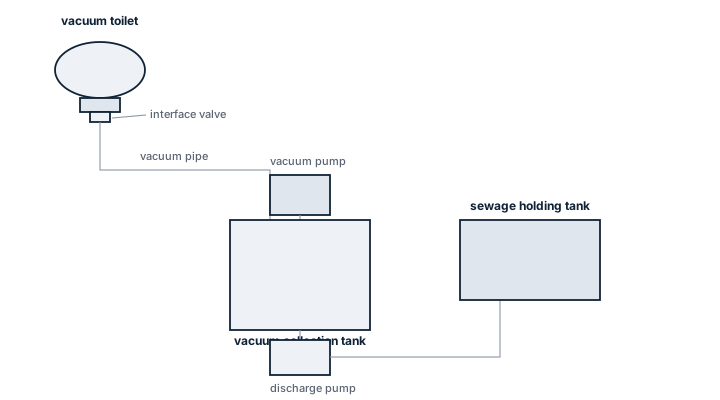
Main components
Vacuum toilet units
Each toilet has a discharge valve at the base of the bowl, triggered by a push button or sensor, and a small flush water inlet, usually well under a litre.
Collection piping
Small-bore pipe, typically stainless steel or approved plastic, routes waste to the vacuum tank. Correct pipe fall and the use of lift sections, where the line rises then falls, are designed into the layout to keep the air-water plugs moving without settling out.
Vacuum unit and holding tank
A central vacuum tank with duty/standby vacuum pumps maintains the system vacuum, typically in the range of 0.4 to 0.5 bar below atmospheric. From the vacuum tank, waste is pumped to the sewage treatment plant or holding tank for later discharge or shore disposal.
Selection and sizing
Sizing depends on the number of fixtures, expected simultaneous use (passenger vessels see much higher peak demand than cargo ships), and the total pipe run length, since vacuum performance degrades with distance and the number of bends.
- Number and type of fixtures (toilets, and in some installations galley waste inlets).
- Peak simultaneous demand, driven by accommodation capacity and watch patterns.
- Vacuum pump duty cycle and standby capacity, since loss of vacuum stops every connected toilet at once.
- Pipe material compatibility with the waste stream and cleaning chemicals used.
Regulations and class requirements
Discharge of sewage is regulated under MARPOL Annex IV, which sets standards for treatment before discharge and defines the distances from land within which untreated or only partially treated sewage may not be released. Class rules require the vacuum and holding tank system to be tested for vacuum retention and cover the materials permitted in contact with the waste stream. Where the vacuum unit feeds an approved sewage treatment plant, that plant carries its own type approval under the applicable IMO resolution.
Typical faults
| Fault | Cause | Consequence |
|---|---|---|
| Loss of vacuum | Leaking valve seal, cracked pipe joint, or vacuum pump failure | Toilets stop flushing across the whole affected section |
| Blocked discharge valve | Foreign objects flushed (wipes, sanitary items) | Single toilet out of service, possible pipe blockage downstream |
| Waterlogged lift section | Insufficient vacuum pressure or worn pump | Slow drainage, odour, eventual full blockage |
| Valve seal wear | Normal cyclic use over years of service | Repeated vacuum loss, rising pump run time |
What to look for in a supplier
- Documented vacuum retention performance for the specific pipe run length and fixture count planned.
- Spare parts availability for discharge valve seals, the highest-wear item in the system.
- Compatibility with the ship's chosen sewage treatment plant or holding tank interface.
- Clear guidance on what may and may not be flushed, since the small pipe bore is far less tolerant of solids than gravity drainage.
A single cracked pipe joint anywhere in the network can bleed off vacuum for every toilet on that branch, so a sudden fleet-wide flushing complaint is a leak search, not a pump replacement, until proven otherwise.
6 manufacturers · 22 models
Wärtsilä
11
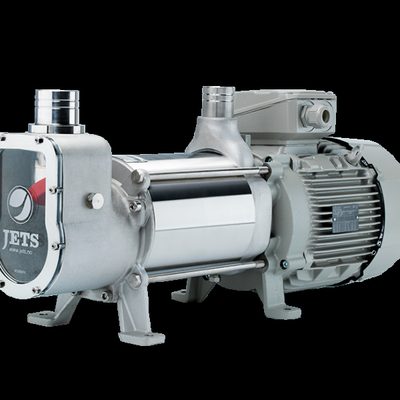
Jets
4
- COD valve failure
- Vacuum generator malfunction
- Piping blockage
- Sensor fault
- Very low freshwater consumption per flush
- No large central vacuum tank required, saving deck space
- Simple valve design allowing annual preventive maintenance
- Compact installation suitable for retrofit on existing vessels
- COD valve can fail and requires regular inspection
- Vacuum generator is a mechanical component prone to malfunction
- Piping blockage may occur if waste solids are not properly sized
- Sensor faults can interrupt flushing cycles
Evac
3
CSSC Nanjing Luzhou Machine
2
Environmental Protection Engineering
1
TBG Marintec
1