"> Pilot Ladder - Equipment Database

Pilot Ladder

medium 2 models total

A pilot ladder is the rope and step ladder rigged over the ship's side for a pilot to board or leave a vessel underway, and SOLAS specifies its construction, rigging and inspection in more procedural detail than almost any other deck equipment.

Read more — Pilot Ladder explained

What makes this type distinct

A pilot ladder differs from an accommodation ladder or gangway in that it is rigged directly against the ship's side with no gangway platform, hangs by its own side ropes from deck fittings, and is used while the ship may still be moving through the water or rolling alongside a pilot boat. Its steps, spacing, side ropes and securing arrangement are specified in far more procedural detail than most deck equipment because the consequence of a failure is a person falling between the ship's side and the water. A combination arrangement, pilot ladder plus accommodation ladder rigged together when freeboard exceeds a set height, is common on larger ships and has its own rigging rules distinct from a pilot ladder used alone.

Pilot ladder rig
Side elevation of a pilot ladder rigged over the ship's side, showing the deck securing point, the two side ropes, the steps between them, a wider spreader step, and the lowest step kept clear of the water.

Main components

Side ropes

Two continuous ropes, uncovered manila or an equivalent material without external coating that could hide internal damage, running the full length of the ladder without a splice below the top step.

Steps

Hardwood or equivalent non-slip material, equally spaced, each step resting horizontally on deck-load with no bindings visible below the through-hole that would prevent inspection of the rope inside.

Spreader steps

Longer steps fitted at set intervals to stop the ladder twisting and to keep the two runs of side rope apart so a climber has a stable, untwisted ladder.

Securing and deployment fittings

Deck eye plates, manropes, and the winch or manual arrangement used to lower and stow the ladder, plus the requirement for a lifebuoy with self-igniting light and heaving line at the embarkation point.

Regulations and class

  • SOLAS Chapter V Regulation 23 and the associated IMO Resolution A.1045(27) set construction, rigging, and pilot transfer arrangement requirements in detail, including step dimensions, spacing tolerance and maximum single-length drop before a combination arrangement becomes mandatory.
  • The ladder must be rigged so the first step above the waterline is a set distance up, with spreader steps at prescribed intervals, and secured to deck fittings strong enough to take the load without deforming.
  • Ships are required to keep pilot ladders and associated rigging in a condition ready for immediate safe use, and port state control inspections specifically target pilot transfer arrangements as a high-risk item.
  • Class and flag administration guidance both stress that non-compliant rigging is one of the most frequently detained deficiencies found in PSC inspections.

Typical faults

FaultConsequence
Side rope internal fibre damage hidden under a step lashingRope can fail under load with no visible external sign, the reason lashings must not obscure the rope at the step
Steps not resting horizontally, or spacing outside toleranceUnsafe, unstable footing for the pilot, a leading cause of pilot transfer falls
Ladder rigged too high or too low above the waterPilot boat crew cannot make a safe transfer, forcing a dangerous last step or jump
Manropes or lifebuoy light missing at the embarkation pointNo immediate rescue aid available if a person falls during transfer

Selection

Selection is less about capacity and more about matching the arrangement to the ship's freeboard: above the SOLAS threshold height a pilot ladder alone is no longer permitted and a combination arrangement with an accommodation ladder becomes mandatory. Length must suit the full range of freeboard the ship will present, loaded and in ballast, and mechanical pilot hoists are prohibited under SOLAS regardless of freeboard.

What to look for in a supplier

  • Certification confirming compliance with the current SOLAS regulation and IMO resolution, not an outdated edition.
  • Uncovered natural or synthetic rope construction that allows visual inspection of the rope condition at every step.
  • Clear step-by-step rigging instructions matched to the ship's actual freeboard range and combination arrangement if required.

Inspect the full length of both side ropes by hand before every pilot transfer, not just a visual glance at the steps, since internal fibre damage under a lashing is invisible from a distance and is exactly what has caused fatal failures.
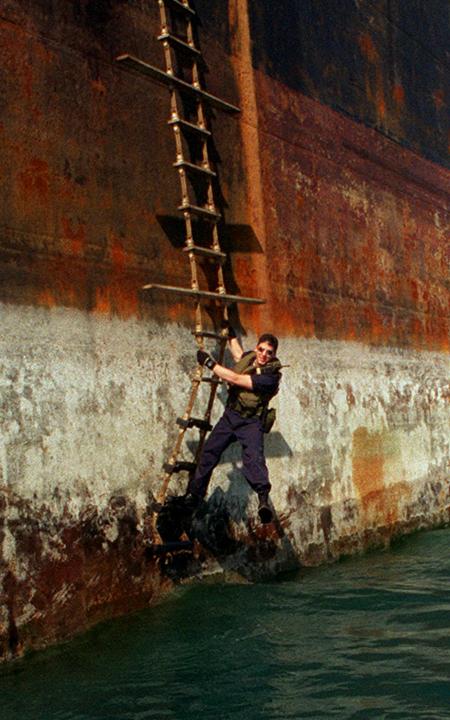
Pilot ladder
Pilot ladder. Photo: Wikimedia Commons, Public domain, via Wikimedia Commons

1 manufacturers · 2 models

Tyne & Wear Marine

2
TW Pilot Ladder 9m
9m, SOLAS Ch. V · Crew Accommodation · hardwood step ladder
Length (m)
9
Compliance
SOLAS_V
Step material
hardwood
Common Failures & Inspection Points
  • Corrosion, cracked welds or structural damage causes visible deterioration and unsafe load transfer
  • Hydraulic, winch or electric-drive faults on powered access equipment cause failed deployment or uncontrolled movement
  • Pins, hinges, rollers or suspension components wear and cause excessive play, binding or abnormal noise
  • Handrails, steps, nets, wires or anti-slip surfaces deteriorate and create a personnel-fall hazard
  • Limit switches, locking devices or control faults cause incomplete securing or unreliable indication
Service: Inspect structural members, foundations, hinges or suspension points, handrails, access surfaces, drives and safety devices according to the equipment type. Review certification and load-test records where applicable and check corrosion after exposed service. Verify secure stowage before sailing. Refer to manufacturer and class documentation for the exact figure for loads, angles and wear criteria.
Spare Parts: Carry approved pins, bushes, rollers, hydraulic seals or hoses where applicable, limit switches, securing hardware, anti-slip repair material and equipment-specific fasteners.
Strengths
  • SOLAS V compliance ensures regulatory acceptance worldwide
  • Hardwood steps provide good grip and resistance to wear under foot traffic
  • 9 m length accommodates a wide range of vessel freeboards without additional extensions
  • Tyne & Wear Marine’s reputation for robust marine‑grade construction
  • Standard eye fittings allow straightforward securing to deck structures
Weaknesses
  • Step rope prone to chafe; requires regular visual inspection and timely replacement
  • Side ropes can degrade under UV exposure, especially in tropical service areas
  • Securing eyes have reported corrosion issues if not maintained with anti‑corrosive coating
  • Hardwood components add weight compared with synthetic‑step alternatives
  • Maintenance intensity higher than fully synthetic ladders (rope wear, eye inspection)
Typical Vessels: TankerContainer shipBulk carrierCruise linerOffshore supply vessel
Certifications: SOLAS V
Decision Guide: Choose if you need a proven, SOLAS‑V compliant ladder with hardwood steps for vessels up to 9 m freeboard and value Tyne & Wear’s build quality. Avoid if low‑maintenance synthetic ladders are preferred, UV exposure is extreme, or corrosion‑resistant alloy fittings are required.
Use Cases: Pilot transfer, crew access, offshore personnel transfer, embarkation and helicopter operations.
Tyne & Wear Marine TW Pilot Ladder 15m
TW Pilot Ladder 15m
15m, SOLAS Ch. V · Crew Accommodation · SOLAS V pilot ladder
Length (m)
15
Compliance
SOLAS_V
Common Failures & Inspection Points
  • Corrosion, cracked welds or structural damage causes visible deterioration and unsafe load transfer
  • Hydraulic, winch or electric-drive faults on powered access equipment cause failed deployment or uncontrolled movement
  • Pins, hinges, rollers or suspension components wear and cause excessive play, binding or abnormal noise
  • Handrails, steps, nets, wires or anti-slip surfaces deteriorate and create a personnel-fall hazard
  • Limit switches, locking devices or control faults cause incomplete securing or unreliable indication
Service: Inspect structural members, foundations, hinges or suspension points, handrails, access surfaces, drives and safety devices according to the equipment type. Review certification and load-test records where applicable and check corrosion after exposed service. Verify secure stowage before sailing. Refer to manufacturer and class documentation for the exact figure for loads, angles and wear criteria.
Spare Parts: Carry approved pins, bushes, rollers, hydraulic seals or hoses where applicable, limit switches, securing hardware, anti-slip repair material and equipment-specific fasteners.
Strengths
  • 15 m length meets SOLAS requirements for vessels with high freeboard
  • Manufactured by Tyne & Wear Marine, known for robust marine access equipment
  • Includes spreader steps that improve safety during pilot boarding and alighting
  • Side rope dimensions conform to standard pilot‑ladder fittings
Weaknesses
  • Side ropes are prone to deterioration and must be replaced every three years
  • Step‑securing bolts have a history of corrosion, requiring vigilant inspection
  • Spreader steps have reported failures, mandating quarterly testing
  • Overall maintenance regime is intensive compared with low‑maintenance alternatives
Typical Vessels: TankerContainer shipBulk carrierCruise linerOffshore supply vessel
Certifications: SOLAS V
Decision Guide: Choose if the vessel requires a long (15 m) SOLAS‑compliant pilot ladder and you can commit to quarterly spreader‑step inspections and a three‑year rope replacement schedule. Avoid if maintenance resources are limited or a shorter, lower‑maintenance ladder would suffice.
Use Cases: Pilot transfer, crew access, offshore personnel transfer, embarkation and helicopter operations.