"> Rescue Boat - Equipment Database

Rescue Boat

medium 245 models total

A rescue boat is a fast, low-freeboard open or partially enclosed craft launched to recover a person from the water or shepherd survivors to a lifeboat; unlike a lifeboat it is not designed to be self-launched with a full complement and carries no enclosed structural fire protection.

Read more — Rescue Boat explained

What sets a rescue boat apart

A rescue boat is built for speed and manoeuvrability, not for surviving a hostile sea state fully loaded like a lifeboat. It is launched with a coxswain and one or two crew, not a full complement, and its job is to reach a person overboard quickly, or to ferry survivors between a stricken vessel and the lifeboats once they are in the water. Fast rescue boats add a rigid or inflatable collar, a more powerful outboard or inboard engine and a self-righting capability that a standard rescue boat does not need.

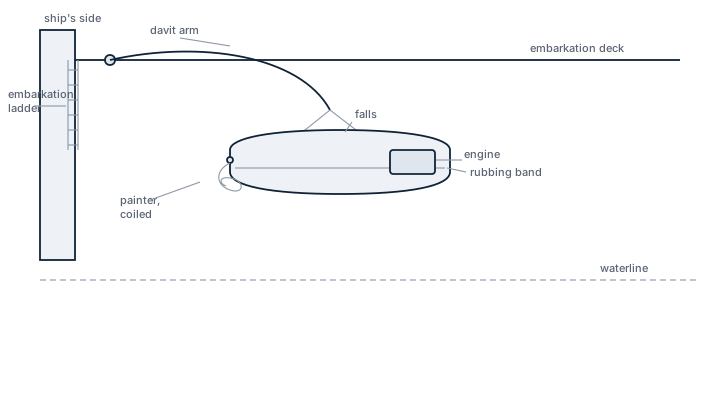
Rescue boat side profile
Side profile of a fast rescue boat showing the rigid hull, inflatable collar, outboard engine, console, single-point lifting hook and bridle, rubbing strake and bow painter line above the waterline.

Main components

Hull and buoyancy

Rigid-hulled types use fibreglass or aluminium with built-in buoyancy chambers; fast rescue boats commonly add an inflated collar for fendering and extra reserve buoyancy when working alongside a hull or a life raft.

Propulsion

Outboard petrol engines remain common on smaller rescue boats for quick starting and light weight, though diesel inboard or water-jet propulsion is increasingly specified where petrol storage on board is a concern. Propulsion must be capable of at least 6 knots and enough reserve power to tow a liferaft against wind and current.

Davit and release gear

Launch is by single-point or dual-fall davit with a hydrostatic or manual release hook. This gear carries the full loaded weight of the boat during launch and recovery and is the part with the worst accident record in the lifesaving appliance family.

Onboard equipment

A rescue boat carries a reduced outfit compared with a lifeboat: buoyant line, first aid kit, boat hook, bailer, torch, and search and rescue transponder, sized for a short-duration recovery operation rather than extended survival.

Selection and sizing

Capacity is normally stated for a crew of at least the rescue party required by the vessel's SOLAS-required complement, commonly rated for 4-6 persons. Speed, davit swing radius, boarding height above the waterline and stowage weight against the ship's existing davit capacity all drive the choice between a standard and a fast rescue boat.

Regulations and class requirements

SOLAS Chapter III and the Life-Saving Appliances (LSA) Code set the performance standard: minimum speed, capacity, davit and release gear testing, and launch time under the ship's abandon-ship arrangements. Release gear must be overhauled and load-tested at the interval set by the LSA Code and the manufacturer, typically annually with a five-year thorough examination including a dynamic winch brake test. Falls are renewed on a fixed replacement interval rather than on condition alone.

Typical faults

  • Seized or corroded release hook — fails to let go cleanly, or worse, releases prematurely under load
  • Perished or under-inflated collar on a fast rescue boat — loss of fendering and reserve buoyancy alongside a hull
  • Outboard engine that will not start cold — delays a time-critical man-overboard response
  • Frayed or overdue falls — reduced safe working load during launch and recovery
  • Blocked bilge or drain plug — boat swamps once waterborne in a seaway

What to look for in a supplier

  • LSA Code type approval matching the exact davit and release gear fitted
  • Davit swing radius and boarding arrangement compatible with the existing deck layout
  • Documented load testing history for the release gear and falls being supplied
  • Engine type suited to the fuel already carried and bunkered on board
  • Service support for the winch brake and hook mechanism at the vessel's normal ports

Time the full launch, motor away and recovery during drills, not just the drop; a rescue boat that cannot be got back aboard quickly leaves its own crew exposed.

9 manufacturers · 245 models

Fassmer

50
Fassmer Fassmer SEL 8.15 Enclosed Lifeboat
Fassmer SEL 8.15 Enclosed Lifeboat
37 persons · Crew Accommodation · motorized enclosed lifeboat
Type
enclosed_lifeboat
Length (m)
8.15
Capacity (persons)
37
Compliance
SOLAS_III
Common Failures & Inspection Points
  • Engine, battery, inflation or release-system deterioration causes unreliable deployment or failed drills where applicable
  • Hook, painter, securing or interlock faults cause stiff operation or unsafe release behaviour
  • Hull, fabric, canopy, seal or container damage causes water ingress or loss of integrity
  • Propulsion, steering or launching-interface faults cause poor manoeuvrability or failed recovery
  • Missing or damaged emergency equipment is detected during drills or statutory inspection
Service: Inspect structure or container, securing and release arrangements, propulsion where fitted and required emergency equipment. Perform drills and functional tests strictly under approved procedures and review statutory service records. Refer to manufacturer and SOLAS-approved documentation for the exact figure for load, capacity and release criteria.
Spare Parts: Carry approved engine or battery consumables where applicable, securing and release parts where onboard replacement is permitted, lighting or inventory consumables and interface spares.
Strengths
  • Enclosed cabin provides weather protection and improves survivability in rough seas
  • High passenger capacity (up to 37) suitable for large vessels
  • Fully compliant with SOLAS Chapter III requirements for life‑saving appliances
  • Robust hull construction typical of Fassmer designs, offering durability
  • Integrated air support system enables extended survival time
Weaknesses
  • Engine start battery failures reported; requires strict weekly testing and annual replacement
  • Air support system can malfunction if not maintained regularly
  • Launching davit mechanisms prone to corrosion, increasing maintenance workload
  • Relatively heavy compared with open‑deck rescue boats, demanding stronger davits
  • Higher acquisition and lifecycle cost than smaller, simpler liferafts
Typical Vessels: TankerContainer shipBulk carrierCruise linerOffshore supply vessel
Certifications: SOLAS Chapter III
Decision Guide: Choose if you need a high‑capacity, weather‑protected lifeboat that meets SOLAS III for large crew/passenger numbers and can be accommodated by robust davit systems. Avoid if vessel space is limited, budget constraints are tight, or you cannot commit to the prescribed weekly engine start tests and corrosion‑control maintenance.
Use Cases: Emergency abandonment and rescue arrangements.
Fassmer FRB 15 Fast Rescue Boat
6 persons, 30 knots · Crew Accommodation · waterjet propulsion
Type
fast_rescue
Length (m)
4.6
Speed knots
30
Capacity (persons)
6
Common Failures & Inspection Points
  • Engine, battery, inflation or release-system deterioration causes unreliable deployment or failed drills where applicable
  • Hook, painter, securing or interlock faults cause stiff operation or unsafe release behaviour
  • Hull, fabric, canopy, seal or container damage causes water ingress or loss of integrity
  • Propulsion, steering or launching-interface faults cause poor manoeuvrability or failed recovery
  • Missing or damaged emergency equipment is detected during drills or statutory inspection
Service: Inspect structure or container, securing and release arrangements, propulsion where fitted and required emergency equipment. Perform drills and functional tests strictly under approved procedures and review statutory service records. Refer to manufacturer and SOLAS-approved documentation for the exact figure for load, capacity and release criteria.
Spare Parts: Carry approved engine or battery consumables where applicable, securing and release parts where onboard replacement is permitted, lighting or inventory consumables and interface spares.
Strengths
  • High top speed (≈30 kn) enables rapid man‑overboard recovery
  • Self‑righting hull enhances crew safety in rough seas
  • Compact length (4.6 m) fits on a wide range of vessel decks
  • Water‑jet intake can be flushed after each use, reducing fouling risk
  • Robust construction suitable for offshore environments
Weaknesses
  • Water‑jet intake prone to blockage if debris is not cleared promptly
  • Self‑righting mechanism may corrode without diligent annual inspection
  • Reported hull delamination requires periodic ultrasonic checks
  • Limited passenger capacity (6 persons) compared with larger RIBs
  • Requires crew familiar with water‑jet operation and maintenance
Typical Vessels: Offshore Supply VesselPlatform Support VesselAnchor Handling Tug Supply (AHTS)Cruise ShipFerryOil & Gas Platform
Decision Guide: Choose if you need a fast, self‑righting rescue craft with water‑jet drive for offshore or near‑shore operations and have the capability to perform regular intake flushing and annual self‑righting inspections. Avoid if maintenance resources are limited, corrosion is extreme, or higher passenger capacity is required.
Use Cases: Emergency abandonment and rescue arrangements.
Fassmer RB-6P unverified
Capacity (persons)
6
Common Failures & Inspection Points
  • Engine or propulsion failure where fitted caused by battery, fuel or mechanical faults, noticed during drills
  • Release, hook or launching-interface fault caused by corrosion, wear or incorrect adjustment, noticed as stiff operation or failed approved test
  • Hull, enclosure or raft-pack damage caused by weather, impact or poor stowage, noticed as cracks, leakage, deformation or damaged container
  • Steering, restraint or securing fault caused by wear/damage, noticed during drill or inspection
  • Missing, expired or overdue survival equipment/service caused by maintenance-control failure, noticed from inventory or service labels
Service: Inspect external structure/container, stowage and securing, engine/steering where fitted, hooks/release/launch interfaces and all accessible safety equipment. Verify service dates, markings, approved occupancy/capacity and compatibility with the assigned launching appliance. Internal liferaft servicing and critical release-gear work should be performed only under approved procedures.
Spare Parts: Carry engine service parts for powered craft, approved batteries/charging items, steering/control components, seals and manufacturer-approved hook/release parts where onboard replacement is permitted. For liferafts, keep only approved external release/lashing components and arrange authorized service/exchange units before due dates.
Use Cases: Used as statutory lifesaving equipment on merchant, passenger, offshore and workboat fleets for abandonment, survival and rescue operations.
Fassmer RB-8P unverified
Capacity (persons)
8
Common Failures & Inspection Points
  • Engine or propulsion failure where fitted caused by battery, fuel or mechanical faults, noticed during drills
  • Release, hook or launching-interface fault caused by corrosion, wear or incorrect adjustment, noticed as stiff operation or failed approved test
  • Hull, enclosure or raft-pack damage caused by weather, impact or poor stowage, noticed as cracks, leakage, deformation or damaged container
  • Steering, restraint or securing fault caused by wear/damage, noticed during drill or inspection
  • Missing, expired or overdue survival equipment/service caused by maintenance-control failure, noticed from inventory or service labels
Service: Inspect external structure/container, stowage and securing, engine/steering where fitted, hooks/release/launch interfaces and all accessible safety equipment. Verify service dates, markings, approved occupancy/capacity and compatibility with the assigned launching appliance. Internal liferaft servicing and critical release-gear work should be performed only under approved procedures.
Spare Parts: Carry engine service parts for powered craft, approved batteries/charging items, steering/control components, seals and manufacturer-approved hook/release parts where onboard replacement is permitted. For liferafts, keep only approved external release/lashing components and arrange authorized service/exchange units before due dates.
Use Cases: Used as statutory lifesaving equipment on merchant, passenger, offshore and workboat fleets for abandonment, survival and rescue operations.
Fassmer RB-10P unverified
Capacity (persons)
10
Common Failures & Inspection Points
  • Engine or propulsion failure where fitted caused by battery, fuel or mechanical faults, noticed during drills
  • Release, hook or launching-interface fault caused by corrosion, wear or incorrect adjustment, noticed as stiff operation or failed approved test
  • Hull, enclosure or raft-pack damage caused by weather, impact or poor stowage, noticed as cracks, leakage, deformation or damaged container
  • Steering, restraint or securing fault caused by wear/damage, noticed during drill or inspection
  • Missing, expired or overdue survival equipment/service caused by maintenance-control failure, noticed from inventory or service labels
Service: Inspect external structure/container, stowage and securing, engine/steering where fitted, hooks/release/launch interfaces and all accessible safety equipment. Verify service dates, markings, approved occupancy/capacity and compatibility with the assigned launching appliance. Internal liferaft servicing and critical release-gear work should be performed only under approved procedures.
Spare Parts: Carry engine service parts for powered craft, approved batteries/charging items, steering/control components, seals and manufacturer-approved hook/release parts where onboard replacement is permitted. For liferafts, keep only approved external release/lashing components and arrange authorized service/exchange units before due dates.
Use Cases: Used as statutory lifesaving equipment on merchant, passenger, offshore and workboat fleets for abandonment, survival and rescue operations.
Fassmer RB-12P unverified
Capacity (persons)
12
Common Failures & Inspection Points
  • Engine or propulsion failure where fitted caused by battery, fuel or mechanical faults, noticed during drills
  • Release, hook or launching-interface fault caused by corrosion, wear or incorrect adjustment, noticed as stiff operation or failed approved test
  • Hull, enclosure or raft-pack damage caused by weather, impact or poor stowage, noticed as cracks, leakage, deformation or damaged container
  • Steering, restraint or securing fault caused by wear/damage, noticed during drill or inspection
  • Missing, expired or overdue survival equipment/service caused by maintenance-control failure, noticed from inventory or service labels
Service: Inspect external structure/container, stowage and securing, engine/steering where fitted, hooks/release/launch interfaces and all accessible safety equipment. Verify service dates, markings, approved occupancy/capacity and compatibility with the assigned launching appliance. Internal liferaft servicing and critical release-gear work should be performed only under approved procedures.
Spare Parts: Carry engine service parts for powered craft, approved batteries/charging items, steering/control components, seals and manufacturer-approved hook/release parts where onboard replacement is permitted. For liferafts, keep only approved external release/lashing components and arrange authorized service/exchange units before due dates.
Use Cases: Used as statutory lifesaving equipment on merchant, passenger, offshore and workboat fleets for abandonment, survival and rescue operations.
Fassmer RB-16P unverified
Capacity (persons)
16
Common Failures & Inspection Points
  • Engine or propulsion failure where fitted caused by battery, fuel or mechanical faults, noticed during drills
  • Release, hook or launching-interface fault caused by corrosion, wear or incorrect adjustment, noticed as stiff operation or failed approved test
  • Hull, enclosure or raft-pack damage caused by weather, impact or poor stowage, noticed as cracks, leakage, deformation or damaged container
  • Steering, restraint or securing fault caused by wear/damage, noticed during drill or inspection
  • Missing, expired or overdue survival equipment/service caused by maintenance-control failure, noticed from inventory or service labels
Service: Inspect external structure/container, stowage and securing, engine/steering where fitted, hooks/release/launch interfaces and all accessible safety equipment. Verify service dates, markings, approved occupancy/capacity and compatibility with the assigned launching appliance. Internal liferaft servicing and critical release-gear work should be performed only under approved procedures.
Spare Parts: Carry engine service parts for powered craft, approved batteries/charging items, steering/control components, seals and manufacturer-approved hook/release parts where onboard replacement is permitted. For liferafts, keep only approved external release/lashing components and arrange authorized service/exchange units before due dates.
Use Cases: Used as statutory lifesaving equipment on merchant, passenger, offshore and workboat fleets for abandonment, survival and rescue operations.
Fassmer RB-20P unverified
Capacity (persons)
20
Common Failures & Inspection Points
  • Engine or propulsion failure where fitted caused by battery, fuel or mechanical faults, noticed during drills
  • Release, hook or launching-interface fault caused by corrosion, wear or incorrect adjustment, noticed as stiff operation or failed approved test
  • Hull, enclosure or raft-pack damage caused by weather, impact or poor stowage, noticed as cracks, leakage, deformation or damaged container
  • Steering, restraint or securing fault caused by wear/damage, noticed during drill or inspection
  • Missing, expired or overdue survival equipment/service caused by maintenance-control failure, noticed from inventory or service labels
Service: Inspect external structure/container, stowage and securing, engine/steering where fitted, hooks/release/launch interfaces and all accessible safety equipment. Verify service dates, markings, approved occupancy/capacity and compatibility with the assigned launching appliance. Internal liferaft servicing and critical release-gear work should be performed only under approved procedures.
Spare Parts: Carry engine service parts for powered craft, approved batteries/charging items, steering/control components, seals and manufacturer-approved hook/release parts where onboard replacement is permitted. For liferafts, keep only approved external release/lashing components and arrange authorized service/exchange units before due dates.
Use Cases: Used as statutory lifesaving equipment on merchant, passenger, offshore and workboat fleets for abandonment, survival and rescue operations.
Fassmer FRB 4P 6kts-C unverified
Capacity (persons)
4
Speed kts
6
Type
Fast Rescue Boat
Common Failures & Inspection Points
  • Engine, battery or fuel-system deterioration causes difficult starting or failure to run during drills
  • Release-hook, linkage or interlock wear causes stiff operation, incorrect indication or unsafe release behaviour
  • Hull, canopy, window or seal damage causes water ingress, corrosion or reduced weathertight integrity
  • Steering or propulsion faults cause poor manoeuvrability, abnormal vibration or loss of thrust
  • Inventory, securing or communication-equipment deficiencies are noticed during drills or statutory inspection
Service: Inspect hull, canopy, drains, engine, batteries, fuel, steering, propeller or jet, release gear, hooks, falls interface, seating and required equipment. Run the engine and test steering and release functions strictly under approved procedures. Review maintenance and statutory service records. Exact load, release and maintenance criteria require manufacturer and SOLAS-approved documentation.
Spare Parts: Carry engine filters and belts as applicable, battery support items, fuel-system consumables, propeller or drive service items, approved release-gear spares where permitted, drain plugs, lights and inventory consumables.
Use Cases: Abandonment and rescue arrangements on SOLAS merchant, passenger and offshore vessels.
Fassmer FRB 6P 6kts-C unverified
Capacity (persons)
6
Speed kts
6
Type
Fast Rescue Boat
Common Failures & Inspection Points
  • Engine, battery or fuel-system deterioration causes difficult starting or failure to run during drills
  • Release-hook, linkage or interlock wear causes stiff operation, incorrect indication or unsafe release behaviour
  • Hull, canopy, window or seal damage causes water ingress, corrosion or reduced weathertight integrity
  • Steering or propulsion faults cause poor manoeuvrability, abnormal vibration or loss of thrust
  • Inventory, securing or communication-equipment deficiencies are noticed during drills or statutory inspection
Service: Inspect hull, canopy, drains, engine, batteries, fuel, steering, propeller or jet, release gear, hooks, falls interface, seating and required equipment. Run the engine and test steering and release functions strictly under approved procedures. Review maintenance and statutory service records. Exact load, release and maintenance criteria require manufacturer and SOLAS-approved documentation.
Spare Parts: Carry engine filters and belts as applicable, battery support items, fuel-system consumables, propeller or drive service items, approved release-gear spares where permitted, drain plugs, lights and inventory consumables.
Use Cases: Abandonment and rescue arrangements on SOLAS merchant, passenger and offshore vessels.
Fassmer FRB 8P 6kts-C unverified
Capacity (persons)
8
Speed kts
6
Type
Fast Rescue Boat
Common Failures & Inspection Points
  • Engine, battery or fuel-system deterioration causes difficult starting or failure to run during drills
  • Release-hook, linkage or interlock wear causes stiff operation, incorrect indication or unsafe release behaviour
  • Hull, canopy, window or seal damage causes water ingress, corrosion or reduced weathertight integrity
  • Steering or propulsion faults cause poor manoeuvrability, abnormal vibration or loss of thrust
  • Inventory, securing or communication-equipment deficiencies are noticed during drills or statutory inspection
Service: Inspect hull, canopy, drains, engine, batteries, fuel, steering, propeller or jet, release gear, hooks, falls interface, seating and required equipment. Run the engine and test steering and release functions strictly under approved procedures. Review maintenance and statutory service records. Exact load, release and maintenance criteria require manufacturer and SOLAS-approved documentation.
Spare Parts: Carry engine filters and belts as applicable, battery support items, fuel-system consumables, propeller or drive service items, approved release-gear spares where permitted, drain plugs, lights and inventory consumables.
Use Cases: Abandonment and rescue arrangements on SOLAS merchant, passenger and offshore vessels.
Fassmer FRB 10P 6kts-C unverified
Capacity (persons)
10
Speed kts
6
Type
Fast Rescue Boat
Common Failures & Inspection Points
  • Container, hull or fabric damage from weathering or impact compromises readiness and is visible during inspection
  • Release, hook or securing defects can prevent correct launching or create unsafe premature release
  • Expired, missing or damaged emergency equipment is identified during service or inventory checks
  • Inflation or pressure loss in inflatable craft may result from valve, cylinder or fabric defects and is found during certified servicing
  • Corrosion or seizure of fittings and moving parts can hinder launching, steering or recovery
Service: Check stowage, accessibility, markings, securing arrangements, release gear and the condition of external components. Verify service certificates, inspection dates and required onboard checks for the specific survival craft and launching arrangement. Inflation systems, load tests, hooks and structural acceptance criteria must be handled under the applicable statutory and manufacturer procedures.
Spare Parts: Onboard spares are generally limited to items approved for shipboard replacement, such as securing parts, lights, batteries, plugs, small fittings and engine-service items for boats; certified raft inflation and fabric repairs are normally handled by an approved service station.
Use Cases: Used as part of the vessel's statutory lifesaving arrangement on merchant, passenger, offshore and special-purpose vessels.
Fassmer FRB 12P 6kts-C unverified
Capacity (persons)
12
Speed kts
6
Type
Fast Rescue Boat
Common Failures & Inspection Points
  • Container, hull or fabric damage from weathering or impact compromises readiness and is visible during inspection
  • Release, hook or securing defects can prevent correct launching or create unsafe premature release
  • Expired, missing or damaged emergency equipment is identified during service or inventory checks
  • Inflation or pressure loss in inflatable craft may result from valve, cylinder or fabric defects and is found during certified servicing
  • Corrosion or seizure of fittings and moving parts can hinder launching, steering or recovery
Service: Check stowage, accessibility, markings, securing arrangements, release gear and the condition of external components. Verify service certificates, inspection dates and required onboard checks for the specific survival craft and launching arrangement. Inflation systems, load tests, hooks and structural acceptance criteria must be handled under the applicable statutory and manufacturer procedures.
Spare Parts: Onboard spares are generally limited to items approved for shipboard replacement, such as securing parts, lights, batteries, plugs, small fittings and engine-service items for boats; certified raft inflation and fabric repairs are normally handled by an approved service station.
Use Cases: Used as part of the vessel's statutory lifesaving arrangement on merchant, passenger, offshore and special-purpose vessels.
Fassmer FRB 15P 6kts-C unverified
Capacity (persons)
15
Speed kts
6
Type
Fast Rescue Boat
Common Failures & Inspection Points
  • Container, hull or fabric damage from weathering or impact compromises readiness and is visible during inspection
  • Release, hook or securing defects can prevent correct launching or create unsafe premature release
  • Expired, missing or damaged emergency equipment is identified during service or inventory checks
  • Inflation or pressure loss in inflatable craft may result from valve, cylinder or fabric defects and is found during certified servicing
  • Corrosion or seizure of fittings and moving parts can hinder launching, steering or recovery
Service: Check stowage, accessibility, markings, securing arrangements, release gear and the condition of external components. Verify service certificates, inspection dates and required onboard checks for the specific survival craft and launching arrangement. Inflation systems, load tests, hooks and structural acceptance criteria must be handled under the applicable statutory and manufacturer procedures.
Spare Parts: Onboard spares are generally limited to items approved for shipboard replacement, such as securing parts, lights, batteries, plugs, small fittings and engine-service items for boats; certified raft inflation and fabric repairs are normally handled by an approved service station.
Use Cases: Used as part of the vessel's statutory lifesaving arrangement on merchant, passenger, offshore and special-purpose vessels.
Fassmer FRB 20P 6kts-C unverified
Capacity (persons)
20
Speed kts
6
Type
Fast Rescue Boat
Common Failures & Inspection Points
  • Container, hull or fabric damage from weathering or impact compromises readiness and is visible during inspection
  • Release, hook or securing defects can prevent correct launching or create unsafe premature release
  • Expired, missing or damaged emergency equipment is identified during service or inventory checks
  • Inflation or pressure loss in inflatable craft may result from valve, cylinder or fabric defects and is found during certified servicing
  • Corrosion or seizure of fittings and moving parts can hinder launching, steering or recovery
Service: Check stowage, accessibility, markings, securing arrangements, release gear and the condition of external components. Verify service certificates, inspection dates and required onboard checks for the specific survival craft and launching arrangement. Inflation systems, load tests, hooks and structural acceptance criteria must be handled under the applicable statutory and manufacturer procedures.
Spare Parts: Onboard spares are generally limited to items approved for shipboard replacement, such as securing parts, lights, batteries, plugs, small fittings and engine-service items for boats; certified raft inflation and fabric repairs are normally handled by an approved service station.
Use Cases: Used as part of the vessel's statutory lifesaving arrangement on merchant, passenger, offshore and special-purpose vessels.
Fassmer FRB 4P 8kts-C unverified
Capacity (persons)
4
Speed kts
8
Type
Fast Rescue Boat
Common Failures & Inspection Points
  • Engine, battery or fuel-system deterioration causes difficult starting or failure to run during drills
  • Release-hook, linkage or interlock wear causes stiff operation, incorrect indication or unsafe release behaviour
  • Hull, canopy, window or seal damage causes water ingress, corrosion or reduced weathertight integrity
  • Steering or propulsion faults cause poor manoeuvrability, abnormal vibration or loss of thrust
  • Inventory, securing or communication-equipment deficiencies are noticed during drills or statutory inspection
Service: Inspect hull, canopy, drains, engine, batteries, fuel, steering, propeller or jet, release gear, hooks, falls interface, seating and required equipment. Run the engine and test steering and release functions strictly under approved procedures. Review maintenance and statutory service records. Exact load, release and maintenance criteria require manufacturer and SOLAS-approved documentation.
Spare Parts: Carry engine filters and belts as applicable, battery support items, fuel-system consumables, propeller or drive service items, approved release-gear spares where permitted, drain plugs, lights and inventory consumables.
Use Cases: Abandonment and rescue arrangements on SOLAS merchant, passenger and offshore vessels.
Fassmer FRB 6P 8kts-C unverified
Capacity (persons)
6
Speed kts
8
Type
Fast Rescue Boat
Common Failures & Inspection Points
  • Engine, battery or fuel-system deterioration causes difficult starting or failure to run during drills
  • Release-hook, linkage or interlock wear causes stiff operation, incorrect indication or unsafe release behaviour
  • Hull, canopy, window or seal damage causes water ingress, corrosion or reduced weathertight integrity
  • Steering or propulsion faults cause poor manoeuvrability, abnormal vibration or loss of thrust
  • Inventory, securing or communication-equipment deficiencies are noticed during drills or statutory inspection
Service: Inspect hull, canopy, drains, engine, batteries, fuel, steering, propeller or jet, release gear, hooks, falls interface, seating and required equipment. Run the engine and test steering and release functions strictly under approved procedures. Review maintenance and statutory service records. Exact load, release and maintenance criteria require manufacturer and SOLAS-approved documentation.
Spare Parts: Carry engine filters and belts as applicable, battery support items, fuel-system consumables, propeller or drive service items, approved release-gear spares where permitted, drain plugs, lights and inventory consumables.
Use Cases: Abandonment and rescue arrangements on SOLAS merchant, passenger and offshore vessels.
Fassmer FRB 8P 8kts-C unverified
Capacity (persons)
8
Speed kts
8
Type
Fast Rescue Boat
Common Failures & Inspection Points
  • Engine, battery or fuel-system deterioration causes difficult starting or failure to run during drills
  • Release-hook, linkage or interlock wear causes stiff operation, incorrect indication or unsafe release behaviour
  • Hull, canopy, window or seal damage causes water ingress, corrosion or reduced weathertight integrity
  • Steering or propulsion faults cause poor manoeuvrability, abnormal vibration or loss of thrust
  • Inventory, securing or communication-equipment deficiencies are noticed during drills or statutory inspection
Service: Inspect hull, canopy, drains, engine, batteries, fuel, steering, propeller or jet, release gear, hooks, falls interface, seating and required equipment. Run the engine and test steering and release functions strictly under approved procedures. Review maintenance and statutory service records. Exact load, release and maintenance criteria require manufacturer and SOLAS-approved documentation.
Spare Parts: Carry engine filters and belts as applicable, battery support items, fuel-system consumables, propeller or drive service items, approved release-gear spares where permitted, drain plugs, lights and inventory consumables.
Use Cases: Abandonment and rescue arrangements on SOLAS merchant, passenger and offshore vessels.
Fassmer FRB 10P 8kts-C unverified
Capacity (persons)
10
Speed kts
8
Type
Fast Rescue Boat
Common Failures & Inspection Points
  • Container, hull or fabric damage from weathering or impact compromises readiness and is visible during inspection
  • Release, hook or securing defects can prevent correct launching or create unsafe premature release
  • Expired, missing or damaged emergency equipment is identified during service or inventory checks
  • Inflation or pressure loss in inflatable craft may result from valve, cylinder or fabric defects and is found during certified servicing
  • Corrosion or seizure of fittings and moving parts can hinder launching, steering or recovery
Service: Check stowage, accessibility, markings, securing arrangements, release gear and the condition of external components. Verify service certificates, inspection dates and required onboard checks for the specific survival craft and launching arrangement. Inflation systems, load tests, hooks and structural acceptance criteria must be handled under the applicable statutory and manufacturer procedures.
Spare Parts: Onboard spares are generally limited to items approved for shipboard replacement, such as securing parts, lights, batteries, plugs, small fittings and engine-service items for boats; certified raft inflation and fabric repairs are normally handled by an approved service station.
Use Cases: Used as part of the vessel's statutory lifesaving arrangement on merchant, passenger, offshore and special-purpose vessels.
Fassmer FRB 12P 8kts-C unverified
Capacity (persons)
12
Speed kts
8
Type
Fast Rescue Boat
Common Failures & Inspection Points
  • Container, hull or fabric damage from weathering or impact compromises readiness and is visible during inspection
  • Release, hook or securing defects can prevent correct launching or create unsafe premature release
  • Expired, missing or damaged emergency equipment is identified during service or inventory checks
  • Inflation or pressure loss in inflatable craft may result from valve, cylinder or fabric defects and is found during certified servicing
  • Corrosion or seizure of fittings and moving parts can hinder launching, steering or recovery
Service: Check stowage, accessibility, markings, securing arrangements, release gear and the condition of external components. Verify service certificates, inspection dates and required onboard checks for the specific survival craft and launching arrangement. Inflation systems, load tests, hooks and structural acceptance criteria must be handled under the applicable statutory and manufacturer procedures.
Spare Parts: Onboard spares are generally limited to items approved for shipboard replacement, such as securing parts, lights, batteries, plugs, small fittings and engine-service items for boats; certified raft inflation and fabric repairs are normally handled by an approved service station.
Use Cases: Used as part of the vessel's statutory lifesaving arrangement on merchant, passenger, offshore and special-purpose vessels.
Fassmer FRB 15P 8kts-C unverified
Capacity (persons)
15
Speed kts
8
Type
Fast Rescue Boat
Common Failures & Inspection Points
  • Container, hull or fabric damage from weathering or impact compromises readiness and is visible during inspection
  • Release, hook or securing defects can prevent correct launching or create unsafe premature release
  • Expired, missing or damaged emergency equipment is identified during service or inventory checks
  • Inflation or pressure loss in inflatable craft may result from valve, cylinder or fabric defects and is found during certified servicing
  • Corrosion or seizure of fittings and moving parts can hinder launching, steering or recovery
Service: Check stowage, accessibility, markings, securing arrangements, release gear and the condition of external components. Verify service certificates, inspection dates and required onboard checks for the specific survival craft and launching arrangement. Inflation systems, load tests, hooks and structural acceptance criteria must be handled under the applicable statutory and manufacturer procedures.
Spare Parts: Onboard spares are generally limited to items approved for shipboard replacement, such as securing parts, lights, batteries, plugs, small fittings and engine-service items for boats; certified raft inflation and fabric repairs are normally handled by an approved service station.
Use Cases: Used as part of the vessel's statutory lifesaving arrangement on merchant, passenger, offshore and special-purpose vessels.
Fassmer FRB 20P 8kts-C unverified
Capacity (persons)
20
Speed kts
8
Type
Fast Rescue Boat
Common Failures & Inspection Points
  • Container, hull or fabric damage from weathering or impact compromises readiness and is visible during inspection
  • Release, hook or securing defects can prevent correct launching or create unsafe premature release
  • Expired, missing or damaged emergency equipment is identified during service or inventory checks
  • Inflation or pressure loss in inflatable craft may result from valve, cylinder or fabric defects and is found during certified servicing
  • Corrosion or seizure of fittings and moving parts can hinder launching, steering or recovery
Service: Check stowage, accessibility, markings, securing arrangements, release gear and the condition of external components. Verify service certificates, inspection dates and required onboard checks for the specific survival craft and launching arrangement. Inflation systems, load tests, hooks and structural acceptance criteria must be handled under the applicable statutory and manufacturer procedures.
Spare Parts: Onboard spares are generally limited to items approved for shipboard replacement, such as securing parts, lights, batteries, plugs, small fittings and engine-service items for boats; certified raft inflation and fabric repairs are normally handled by an approved service station.
Use Cases: Used as part of the vessel's statutory lifesaving arrangement on merchant, passenger, offshore and special-purpose vessels.
Fassmer FRB 4P 10kts-C unverified
Capacity (persons)
4
Speed kts
10
Type
Fast Rescue Boat
Common Failures & Inspection Points
  • Container, hull or fabric damage from weathering or impact compromises readiness and is visible during inspection
  • Release, hook or securing defects can prevent correct launching or create unsafe premature release
  • Expired, missing or damaged emergency equipment is identified during service or inventory checks
  • Inflation or pressure loss in inflatable craft may result from valve, cylinder or fabric defects and is found during certified servicing
  • Corrosion or seizure of fittings and moving parts can hinder launching, steering or recovery
Service: Check stowage, accessibility, markings, securing arrangements, release gear and the condition of external components. Verify service certificates, inspection dates and required onboard checks for the specific survival craft and launching arrangement. Inflation systems, load tests, hooks and structural acceptance criteria must be handled under the applicable statutory and manufacturer procedures.
Spare Parts: Onboard spares are generally limited to items approved for shipboard replacement, such as securing parts, lights, batteries, plugs, small fittings and engine-service items for boats; certified raft inflation and fabric repairs are normally handled by an approved service station.
Use Cases: Used as part of the vessel's statutory lifesaving arrangement on merchant, passenger, offshore and special-purpose vessels.
Fassmer FRB 6P 10kts-C unverified
Capacity (persons)
6
Speed kts
10
Type
Fast Rescue Boat
Common Failures & Inspection Points
  • Container, hull or fabric damage from weathering or impact compromises readiness and is visible during inspection
  • Release, hook or securing defects can prevent correct launching or create unsafe premature release
  • Expired, missing or damaged emergency equipment is identified during service or inventory checks
  • Inflation or pressure loss in inflatable craft may result from valve, cylinder or fabric defects and is found during certified servicing
  • Corrosion or seizure of fittings and moving parts can hinder launching, steering or recovery
Service: Check stowage, accessibility, markings, securing arrangements, release gear and the condition of external components. Verify service certificates, inspection dates and required onboard checks for the specific survival craft and launching arrangement. Inflation systems, load tests, hooks and structural acceptance criteria must be handled under the applicable statutory and manufacturer procedures.
Spare Parts: Onboard spares are generally limited to items approved for shipboard replacement, such as securing parts, lights, batteries, plugs, small fittings and engine-service items for boats; certified raft inflation and fabric repairs are normally handled by an approved service station.
Use Cases: Used as part of the vessel's statutory lifesaving arrangement on merchant, passenger, offshore and special-purpose vessels.
Fassmer FRB 8P 10kts-C unverified
Capacity (persons)
8
Speed kts
10
Type
Fast Rescue Boat
Common Failures & Inspection Points
  • Container, hull or fabric damage from weathering or impact compromises readiness and is visible during inspection
  • Release, hook or securing defects can prevent correct launching or create unsafe premature release
  • Expired, missing or damaged emergency equipment is identified during service or inventory checks
  • Inflation or pressure loss in inflatable craft may result from valve, cylinder or fabric defects and is found during certified servicing
  • Corrosion or seizure of fittings and moving parts can hinder launching, steering or recovery
Service: Check stowage, accessibility, markings, securing arrangements, release gear and the condition of external components. Verify service certificates, inspection dates and required onboard checks for the specific survival craft and launching arrangement. Inflation systems, load tests, hooks and structural acceptance criteria must be handled under the applicable statutory and manufacturer procedures.
Spare Parts: Onboard spares are generally limited to items approved for shipboard replacement, such as securing parts, lights, batteries, plugs, small fittings and engine-service items for boats; certified raft inflation and fabric repairs are normally handled by an approved service station.
Use Cases: Used as part of the vessel's statutory lifesaving arrangement on merchant, passenger, offshore and special-purpose vessels.
Fassmer FRB 10P 10kts-C unverified
Capacity (persons)
10
Speed kts
10
Type
Fast Rescue Boat
Common Failures & Inspection Points
  • Container, hull or fabric damage from weathering or impact compromises readiness and is visible during inspection
  • Release, hook or securing defects can prevent correct launching or create unsafe premature release
  • Expired, missing or damaged emergency equipment is identified during service or inventory checks
  • Inflation or pressure loss in inflatable craft may result from valve, cylinder or fabric defects and is found during certified servicing
  • Corrosion or seizure of fittings and moving parts can hinder launching, steering or recovery
Service: Check stowage, accessibility, markings, securing arrangements, release gear and the condition of external components. Verify service certificates, inspection dates and required onboard checks for the specific survival craft and launching arrangement. Inflation systems, load tests, hooks and structural acceptance criteria must be handled under the applicable statutory and manufacturer procedures.
Spare Parts: Onboard spares are generally limited to items approved for shipboard replacement, such as securing parts, lights, batteries, plugs, small fittings and engine-service items for boats; certified raft inflation and fabric repairs are normally handled by an approved service station.
Use Cases: Used as part of the vessel's statutory lifesaving arrangement on merchant, passenger, offshore and special-purpose vessels.
Fassmer FRB 12P 10kts-C unverified
Capacity (persons)
12
Speed kts
10
Type
Fast Rescue Boat
Common Failures & Inspection Points
  • Container, hull or fabric damage from weathering or impact compromises readiness and is visible during inspection
  • Release, hook or securing defects can prevent correct launching or create unsafe premature release
  • Expired, missing or damaged emergency equipment is identified during service or inventory checks
  • Inflation or pressure loss in inflatable craft may result from valve, cylinder or fabric defects and is found during certified servicing
  • Corrosion or seizure of fittings and moving parts can hinder launching, steering or recovery
Service: Check stowage, accessibility, markings, securing arrangements, release gear and the condition of external components. Verify service certificates, inspection dates and required onboard checks for the specific survival craft and launching arrangement. Inflation systems, load tests, hooks and structural acceptance criteria must be handled under the applicable statutory and manufacturer procedures.
Spare Parts: Onboard spares are generally limited to items approved for shipboard replacement, such as securing parts, lights, batteries, plugs, small fittings and engine-service items for boats; certified raft inflation and fabric repairs are normally handled by an approved service station.
Use Cases: Used as part of the vessel's statutory lifesaving arrangement on merchant, passenger, offshore and special-purpose vessels.
Fassmer FRB 15P 10kts-C unverified
Capacity (persons)
15
Speed kts
10
Type
Fast Rescue Boat
Common Failures & Inspection Points
  • Container, hull or fabric damage from weathering or impact compromises readiness and is visible during inspection
  • Release, hook or securing defects can prevent correct launching or create unsafe premature release
  • Expired, missing or damaged emergency equipment is identified during service or inventory checks
  • Inflation or pressure loss in inflatable craft may result from valve, cylinder or fabric defects and is found during certified servicing
  • Corrosion or seizure of fittings and moving parts can hinder launching, steering or recovery
Service: Check stowage, accessibility, markings, securing arrangements, release gear and the condition of external components. Verify service certificates, inspection dates and required onboard checks for the specific survival craft and launching arrangement. Inflation systems, load tests, hooks and structural acceptance criteria must be handled under the applicable statutory and manufacturer procedures.
Spare Parts: Onboard spares are generally limited to items approved for shipboard replacement, such as securing parts, lights, batteries, plugs, small fittings and engine-service items for boats; certified raft inflation and fabric repairs are normally handled by an approved service station.
Use Cases: Used as part of the vessel's statutory lifesaving arrangement on merchant, passenger, offshore and special-purpose vessels.
Fassmer FRB 20P 10kts-C unverified
Capacity (persons)
20
Speed kts
10
Type
Fast Rescue Boat
Common Failures & Inspection Points
  • Container, hull or fabric damage from weathering or impact compromises readiness and is visible during inspection
  • Release, hook or securing defects can prevent correct launching or create unsafe premature release
  • Expired, missing or damaged emergency equipment is identified during service or inventory checks
  • Inflation or pressure loss in inflatable craft may result from valve, cylinder or fabric defects and is found during certified servicing
  • Corrosion or seizure of fittings and moving parts can hinder launching, steering or recovery
Service: Check stowage, accessibility, markings, securing arrangements, release gear and the condition of external components. Verify service certificates, inspection dates and required onboard checks for the specific survival craft and launching arrangement. Inflation systems, load tests, hooks and structural acceptance criteria must be handled under the applicable statutory and manufacturer procedures.
Spare Parts: Onboard spares are generally limited to items approved for shipboard replacement, such as securing parts, lights, batteries, plugs, small fittings and engine-service items for boats; certified raft inflation and fabric repairs are normally handled by an approved service station.
Use Cases: Used as part of the vessel's statutory lifesaving arrangement on merchant, passenger, offshore and special-purpose vessels.
Fassmer FRB 4P 15kts-C unverified
Capacity (persons)
4
Speed kts
15
Type
Fast Rescue Boat
Common Failures & Inspection Points
  • Container, hull or fabric damage from weathering or impact compromises readiness and is visible during inspection
  • Release, hook or securing defects can prevent correct launching or create unsafe premature release
  • Expired, missing or damaged emergency equipment is identified during service or inventory checks
  • Inflation or pressure loss in inflatable craft may result from valve, cylinder or fabric defects and is found during certified servicing
  • Corrosion or seizure of fittings and moving parts can hinder launching, steering or recovery
Service: Check stowage, accessibility, markings, securing arrangements, release gear and the condition of external components. Verify service certificates, inspection dates and required onboard checks for the specific survival craft and launching arrangement. Inflation systems, load tests, hooks and structural acceptance criteria must be handled under the applicable statutory and manufacturer procedures.
Spare Parts: Onboard spares are generally limited to items approved for shipboard replacement, such as securing parts, lights, batteries, plugs, small fittings and engine-service items for boats; certified raft inflation and fabric repairs are normally handled by an approved service station.
Use Cases: Used as part of the vessel's statutory lifesaving arrangement on merchant, passenger, offshore and special-purpose vessels.
Fassmer FRB 6P 15kts-C unverified
Capacity (persons)
6
Speed kts
15
Type
Fast Rescue Boat
Common Failures & Inspection Points
  • Container, hull or fabric damage from weathering or impact compromises readiness and is visible during inspection
  • Release, hook or securing defects can prevent correct launching or create unsafe premature release
  • Expired, missing or damaged emergency equipment is identified during service or inventory checks
  • Inflation or pressure loss in inflatable craft may result from valve, cylinder or fabric defects and is found during certified servicing
  • Corrosion or seizure of fittings and moving parts can hinder launching, steering or recovery
Service: Check stowage, accessibility, markings, securing arrangements, release gear and the condition of external components. Verify service certificates, inspection dates and required onboard checks for the specific survival craft and launching arrangement. Inflation systems, load tests, hooks and structural acceptance criteria must be handled under the applicable statutory and manufacturer procedures.
Spare Parts: Onboard spares are generally limited to items approved for shipboard replacement, such as securing parts, lights, batteries, plugs, small fittings and engine-service items for boats; certified raft inflation and fabric repairs are normally handled by an approved service station.
Use Cases: Used as part of the vessel's statutory lifesaving arrangement on merchant, passenger, offshore and special-purpose vessels.
Fassmer FRB 8P 15kts-C unverified
Capacity (persons)
8
Speed kts
15
Type
Fast Rescue Boat
Common Failures & Inspection Points
  • Container, hull or fabric damage from weathering or impact compromises readiness and is visible during inspection
  • Release, hook or securing defects can prevent correct launching or create unsafe premature release
  • Expired, missing or damaged emergency equipment is identified during service or inventory checks
  • Inflation or pressure loss in inflatable craft may result from valve, cylinder or fabric defects and is found during certified servicing
  • Corrosion or seizure of fittings and moving parts can hinder launching, steering or recovery
Service: Check stowage, accessibility, markings, securing arrangements, release gear and the condition of external components. Verify service certificates, inspection dates and required onboard checks for the specific survival craft and launching arrangement. Inflation systems, load tests, hooks and structural acceptance criteria must be handled under the applicable statutory and manufacturer procedures.
Spare Parts: Onboard spares are generally limited to items approved for shipboard replacement, such as securing parts, lights, batteries, plugs, small fittings and engine-service items for boats; certified raft inflation and fabric repairs are normally handled by an approved service station.
Use Cases: Used as part of the vessel's statutory lifesaving arrangement on merchant, passenger, offshore and special-purpose vessels.
Fassmer FRB 10P 15kts-C unverified
Capacity (persons)
10
Speed kts
15
Type
Fast Rescue Boat
Common Failures & Inspection Points
  • Container, hull or fabric damage from weathering or impact compromises readiness and is visible during inspection
  • Release, hook or securing defects can prevent correct launching or create unsafe premature release
  • Expired, missing or damaged emergency equipment is identified during service or inventory checks
  • Inflation or pressure loss in inflatable craft may result from valve, cylinder or fabric defects and is found during certified servicing
  • Corrosion or seizure of fittings and moving parts can hinder launching, steering or recovery
Service: Check stowage, accessibility, markings, securing arrangements, release gear and the condition of external components. Verify service certificates, inspection dates and required onboard checks for the specific survival craft and launching arrangement. Inflation systems, load tests, hooks and structural acceptance criteria must be handled under the applicable statutory and manufacturer procedures.
Spare Parts: Onboard spares are generally limited to items approved for shipboard replacement, such as securing parts, lights, batteries, plugs, small fittings and engine-service items for boats; certified raft inflation and fabric repairs are normally handled by an approved service station.
Use Cases: Used as part of the vessel's statutory lifesaving arrangement on merchant, passenger, offshore and special-purpose vessels.
Fassmer FRB 12P 15kts-C unverified
Capacity (persons)
12
Speed kts
15
Type
Fast Rescue Boat
Common Failures & Inspection Points
  • Container, hull or fabric damage from weathering or impact compromises readiness and is visible during inspection
  • Release, hook or securing defects can prevent correct launching or create unsafe premature release
  • Expired, missing or damaged emergency equipment is identified during service or inventory checks
  • Inflation or pressure loss in inflatable craft may result from valve, cylinder or fabric defects and is found during certified servicing
  • Corrosion or seizure of fittings and moving parts can hinder launching, steering or recovery
Service: Check stowage, accessibility, markings, securing arrangements, release gear and the condition of external components. Verify service certificates, inspection dates and required onboard checks for the specific survival craft and launching arrangement. Inflation systems, load tests, hooks and structural acceptance criteria must be handled under the applicable statutory and manufacturer procedures.
Spare Parts: Onboard spares are generally limited to items approved for shipboard replacement, such as securing parts, lights, batteries, plugs, small fittings and engine-service items for boats; certified raft inflation and fabric repairs are normally handled by an approved service station.
Use Cases: Used as part of the vessel's statutory lifesaving arrangement on merchant, passenger, offshore and special-purpose vessels.
Fassmer FRB 15P 15kts-C unverified
Capacity (persons)
15
Speed kts
15
Type
Fast Rescue Boat
Common Failures & Inspection Points
  • Container, hull or fabric damage from weathering or impact compromises readiness and is visible during inspection
  • Release, hook or securing defects can prevent correct launching or create unsafe premature release
  • Expired, missing or damaged emergency equipment is identified during service or inventory checks
  • Inflation or pressure loss in inflatable craft may result from valve, cylinder or fabric defects and is found during certified servicing
  • Corrosion or seizure of fittings and moving parts can hinder launching, steering or recovery
Service: Check stowage, accessibility, markings, securing arrangements, release gear and the condition of external components. Verify service certificates, inspection dates and required onboard checks for the specific survival craft and launching arrangement. Inflation systems, load tests, hooks and structural acceptance criteria must be handled under the applicable statutory and manufacturer procedures.
Spare Parts: Onboard spares are generally limited to items approved for shipboard replacement, such as securing parts, lights, batteries, plugs, small fittings and engine-service items for boats; certified raft inflation and fabric repairs are normally handled by an approved service station.
Use Cases: Used as part of the vessel's statutory lifesaving arrangement on merchant, passenger, offshore and special-purpose vessels.
Fassmer FRB 20P 15kts-C unverified
Capacity (persons)
20
Speed kts
15
Type
Fast Rescue Boat
Common Failures & Inspection Points
  • Container, hull or fabric damage from weathering or impact compromises readiness and is visible during inspection
  • Release, hook or securing defects can prevent correct launching or create unsafe premature release
  • Expired, missing or damaged emergency equipment is identified during service or inventory checks
  • Inflation or pressure loss in inflatable craft may result from valve, cylinder or fabric defects and is found during certified servicing
  • Corrosion or seizure of fittings and moving parts can hinder launching, steering or recovery
Service: Check stowage, accessibility, markings, securing arrangements, release gear and the condition of external components. Verify service certificates, inspection dates and required onboard checks for the specific survival craft and launching arrangement. Inflation systems, load tests, hooks and structural acceptance criteria must be handled under the applicable statutory and manufacturer procedures.
Spare Parts: Onboard spares are generally limited to items approved for shipboard replacement, such as securing parts, lights, batteries, plugs, small fittings and engine-service items for boats; certified raft inflation and fabric repairs are normally handled by an approved service station.
Use Cases: Used as part of the vessel's statutory lifesaving arrangement on merchant, passenger, offshore and special-purpose vessels.
Fassmer FRB 4P 20kts-C unverified
Capacity (persons)
4
Speed kts
20
Type
Fast Rescue Boat
Common Failures & Inspection Points
  • Container, hull or fabric damage from weathering or impact compromises readiness and is visible during inspection
  • Release, hook or securing defects can prevent correct launching or create unsafe premature release
  • Expired, missing or damaged emergency equipment is identified during service or inventory checks
  • Inflation or pressure loss in inflatable craft may result from valve, cylinder or fabric defects and is found during certified servicing
  • Corrosion or seizure of fittings and moving parts can hinder launching, steering or recovery
Service: Check stowage, accessibility, markings, securing arrangements, release gear and the condition of external components. Verify service certificates, inspection dates and required onboard checks for the specific survival craft and launching arrangement. Inflation systems, load tests, hooks and structural acceptance criteria must be handled under the applicable statutory and manufacturer procedures.
Spare Parts: Onboard spares are generally limited to items approved for shipboard replacement, such as securing parts, lights, batteries, plugs, small fittings and engine-service items for boats; certified raft inflation and fabric repairs are normally handled by an approved service station.
Use Cases: Used as part of the vessel's statutory lifesaving arrangement on merchant, passenger, offshore and special-purpose vessels.
Fassmer FRB 6P 20kts-C unverified
Capacity (persons)
6
Speed kts
20
Type
Fast Rescue Boat
Common Failures & Inspection Points
  • Container, hull or fabric damage from weathering or impact compromises readiness and is visible during inspection
  • Release, hook or securing defects can prevent correct launching or create unsafe premature release
  • Expired, missing or damaged emergency equipment is identified during service or inventory checks
  • Inflation or pressure loss in inflatable craft may result from valve, cylinder or fabric defects and is found during certified servicing
  • Corrosion or seizure of fittings and moving parts can hinder launching, steering or recovery
Service: Check stowage, accessibility, markings, securing arrangements, release gear and the condition of external components. Verify service certificates, inspection dates and required onboard checks for the specific survival craft and launching arrangement. Inflation systems, load tests, hooks and structural acceptance criteria must be handled under the applicable statutory and manufacturer procedures.
Spare Parts: Onboard spares are generally limited to items approved for shipboard replacement, such as securing parts, lights, batteries, plugs, small fittings and engine-service items for boats; certified raft inflation and fabric repairs are normally handled by an approved service station.
Use Cases: Used as part of the vessel's statutory lifesaving arrangement on merchant, passenger, offshore and special-purpose vessels.
Fassmer FRB 8P 20kts-C unverified
Capacity (persons)
8
Speed kts
20
Type
Fast Rescue Boat
Common Failures & Inspection Points
  • Container, hull or fabric damage from weathering or impact compromises readiness and is visible during inspection
  • Release, hook or securing defects can prevent correct launching or create unsafe premature release
  • Expired, missing or damaged emergency equipment is identified during service or inventory checks
  • Inflation or pressure loss in inflatable craft may result from valve, cylinder or fabric defects and is found during certified servicing
  • Corrosion or seizure of fittings and moving parts can hinder launching, steering or recovery
Service: Check stowage, accessibility, markings, securing arrangements, release gear and the condition of external components. Verify service certificates, inspection dates and required onboard checks for the specific survival craft and launching arrangement. Inflation systems, load tests, hooks and structural acceptance criteria must be handled under the applicable statutory and manufacturer procedures.
Spare Parts: Onboard spares are generally limited to items approved for shipboard replacement, such as securing parts, lights, batteries, plugs, small fittings and engine-service items for boats; certified raft inflation and fabric repairs are normally handled by an approved service station.
Use Cases: Used as part of the vessel's statutory lifesaving arrangement on merchant, passenger, offshore and special-purpose vessels.
Fassmer FRB 10P 20kts-C unverified
Capacity (persons)
10
Speed kts
20
Type
Fast Rescue Boat
Common Failures & Inspection Points
  • Container, hull or fabric damage from weathering or impact compromises readiness and is visible during inspection
  • Release, hook or securing defects can prevent correct launching or create unsafe premature release
  • Expired, missing or damaged emergency equipment is identified during service or inventory checks
  • Inflation or pressure loss in inflatable craft may result from valve, cylinder or fabric defects and is found during certified servicing
  • Corrosion or seizure of fittings and moving parts can hinder launching, steering or recovery
Service: Check stowage, accessibility, markings, securing arrangements, release gear and the condition of external components. Verify service certificates, inspection dates and required onboard checks for the specific survival craft and launching arrangement. Inflation systems, load tests, hooks and structural acceptance criteria must be handled under the applicable statutory and manufacturer procedures.
Spare Parts: Onboard spares are generally limited to items approved for shipboard replacement, such as securing parts, lights, batteries, plugs, small fittings and engine-service items for boats; certified raft inflation and fabric repairs are normally handled by an approved service station.
Use Cases: Used as part of the vessel's statutory lifesaving arrangement on merchant, passenger, offshore and special-purpose vessels.
Fassmer FRB 12P 20kts-C unverified
Capacity (persons)
12
Speed kts
20
Type
Fast Rescue Boat
Common Failures & Inspection Points
  • Container, hull or fabric damage from weathering or impact compromises readiness and is visible during inspection
  • Release, hook or securing defects can prevent correct launching or create unsafe premature release
  • Expired, missing or damaged emergency equipment is identified during service or inventory checks
  • Inflation or pressure loss in inflatable craft may result from valve, cylinder or fabric defects and is found during certified servicing
  • Corrosion or seizure of fittings and moving parts can hinder launching, steering or recovery
Service: Check stowage, accessibility, markings, securing arrangements, release gear and the condition of external components. Verify service certificates, inspection dates and required onboard checks for the specific survival craft and launching arrangement. Inflation systems, load tests, hooks and structural acceptance criteria must be handled under the applicable statutory and manufacturer procedures.
Spare Parts: Onboard spares are generally limited to items approved for shipboard replacement, such as securing parts, lights, batteries, plugs, small fittings and engine-service items for boats; certified raft inflation and fabric repairs are normally handled by an approved service station.
Use Cases: Used as part of the vessel's statutory lifesaving arrangement on merchant, passenger, offshore and special-purpose vessels.
Fassmer FRB 15P 20kts-C unverified
Capacity (persons)
15
Speed kts
20
Type
Fast Rescue Boat
Common Failures & Inspection Points
  • Container, hull or fabric damage from weathering or impact compromises readiness and is visible during inspection
  • Release, hook or securing defects can prevent correct launching or create unsafe premature release
  • Expired, missing or damaged emergency equipment is identified during service or inventory checks
  • Inflation or pressure loss in inflatable craft may result from valve, cylinder or fabric defects and is found during certified servicing
  • Corrosion or seizure of fittings and moving parts can hinder launching, steering or recovery
Service: Check stowage, accessibility, markings, securing arrangements, release gear and the condition of external components. Verify service certificates, inspection dates and required onboard checks for the specific survival craft and launching arrangement. Inflation systems, load tests, hooks and structural acceptance criteria must be handled under the applicable statutory and manufacturer procedures.
Spare Parts: Onboard spares are generally limited to items approved for shipboard replacement, such as securing parts, lights, batteries, plugs, small fittings and engine-service items for boats; certified raft inflation and fabric repairs are normally handled by an approved service station.
Use Cases: Used as part of the vessel's statutory lifesaving arrangement on merchant, passenger, offshore and special-purpose vessels.
Fassmer FRB 20P 20kts-C unverified
Capacity (persons)
20
Speed kts
20
Type
Fast Rescue Boat
Common Failures & Inspection Points
  • Container, hull or fabric damage from weathering or impact compromises readiness and is visible during inspection
  • Release, hook or securing defects can prevent correct launching or create unsafe premature release
  • Expired, missing or damaged emergency equipment is identified during service or inventory checks
  • Inflation or pressure loss in inflatable craft may result from valve, cylinder or fabric defects and is found during certified servicing
  • Corrosion or seizure of fittings and moving parts can hinder launching, steering or recovery
Service: Check stowage, accessibility, markings, securing arrangements, release gear and the condition of external components. Verify service certificates, inspection dates and required onboard checks for the specific survival craft and launching arrangement. Inflation systems, load tests, hooks and structural acceptance criteria must be handled under the applicable statutory and manufacturer procedures.
Spare Parts: Onboard spares are generally limited to items approved for shipboard replacement, such as securing parts, lights, batteries, plugs, small fittings and engine-service items for boats; certified raft inflation and fabric repairs are normally handled by an approved service station.
Use Cases: Used as part of the vessel's statutory lifesaving arrangement on merchant, passenger, offshore and special-purpose vessels.
Fassmer FRB 4P 25kts-C unverified
Capacity (persons)
4
Speed kts
25
Type
Fast Rescue Boat
Common Failures & Inspection Points
  • Container, hull or fabric damage from weathering or impact compromises readiness and is visible during inspection
  • Release, hook or securing defects can prevent correct launching or create unsafe premature release
  • Expired, missing or damaged emergency equipment is identified during service or inventory checks
  • Inflation or pressure loss in inflatable craft may result from valve, cylinder or fabric defects and is found during certified servicing
  • Corrosion or seizure of fittings and moving parts can hinder launching, steering or recovery
Service: Check stowage, accessibility, markings, securing arrangements, release gear and the condition of external components. Verify service certificates, inspection dates and required onboard checks for the specific survival craft and launching arrangement. Inflation systems, load tests, hooks and structural acceptance criteria must be handled under the applicable statutory and manufacturer procedures.
Spare Parts: Onboard spares are generally limited to items approved for shipboard replacement, such as securing parts, lights, batteries, plugs, small fittings and engine-service items for boats; certified raft inflation and fabric repairs are normally handled by an approved service station.
Use Cases: Used as part of the vessel's statutory lifesaving arrangement on merchant, passenger, offshore and special-purpose vessels.
Fassmer FRB 6P 25kts-C unverified
Capacity (persons)
6
Speed kts
25
Type
Fast Rescue Boat
Common Failures & Inspection Points
  • Container, hull or fabric damage from weathering or impact compromises readiness and is visible during inspection
  • Release, hook or securing defects can prevent correct launching or create unsafe premature release
  • Expired, missing or damaged emergency equipment is identified during service or inventory checks
  • Inflation or pressure loss in inflatable craft may result from valve, cylinder or fabric defects and is found during certified servicing
  • Corrosion or seizure of fittings and moving parts can hinder launching, steering or recovery
Service: Check stowage, accessibility, markings, securing arrangements, release gear and the condition of external components. Verify service certificates, inspection dates and required onboard checks for the specific survival craft and launching arrangement. Inflation systems, load tests, hooks and structural acceptance criteria must be handled under the applicable statutory and manufacturer procedures.
Spare Parts: Onboard spares are generally limited to items approved for shipboard replacement, such as securing parts, lights, batteries, plugs, small fittings and engine-service items for boats; certified raft inflation and fabric repairs are normally handled by an approved service station.
Use Cases: Used as part of the vessel's statutory lifesaving arrangement on merchant, passenger, offshore and special-purpose vessels.
Fassmer FRB 8P 25kts-C unverified
Capacity (persons)
8
Speed kts
25
Type
Fast Rescue Boat
Common Failures & Inspection Points
  • Container, hull or fabric damage from weathering or impact compromises readiness and is visible during inspection
  • Release, hook or securing defects can prevent correct launching or create unsafe premature release
  • Expired, missing or damaged emergency equipment is identified during service or inventory checks
  • Inflation or pressure loss in inflatable craft may result from valve, cylinder or fabric defects and is found during certified servicing
  • Corrosion or seizure of fittings and moving parts can hinder launching, steering or recovery
Service: Check stowage, accessibility, markings, securing arrangements, release gear and the condition of external components. Verify service certificates, inspection dates and required onboard checks for the specific survival craft and launching arrangement. Inflation systems, load tests, hooks and structural acceptance criteria must be handled under the applicable statutory and manufacturer procedures.
Spare Parts: Onboard spares are generally limited to items approved for shipboard replacement, such as securing parts, lights, batteries, plugs, small fittings and engine-service items for boats; certified raft inflation and fabric repairs are normally handled by an approved service station.
Use Cases: Used as part of the vessel's statutory lifesaving arrangement on merchant, passenger, offshore and special-purpose vessels.
Fassmer FRB 10P 25kts-C unverified
Capacity (persons)
10
Speed kts
25
Type
Fast Rescue Boat
Common Failures & Inspection Points
  • Engine starting or fuel-system failure caused by battery, fuel, ignition or maintenance problems, resulting in inability to launch under power or poor acceleration
  • Steering or control-cable deterioration caused by corrosion, stiffness or mechanical damage, resulting in heavy or unreliable maneuvering
  • Hull, fender or buoyancy damage caused by impact, weather exposure or poor stowage, resulting in cracks, water ingress or visible deformation
  • Lifting-point or hook-interface wear caused by repeated drills, corrosion or misalignment, resulting in abnormal play or difficulty connecting the boat to the davit
  • Electrical, navigation-light or communication-equipment failure caused by battery, wiring or water-ingress problems, resulting in failed readiness checks
Service: Inspect hull condition, engine, fuel system, steering, lifting points, painter arrangements, batteries, lights and required rescue equipment. Run and function-test the engine and controls in accordance with the vessel's approved maintenance plan. Examine lifting eyes, hooks and davit interfaces for corrosion, deformation or abnormal wear. Verify drain plugs, buoyancy spaces and weather covers are correctly secured and that the boat remains ready for rapid launching. Check inventory and identification markings against the approved safety-equipment plan. Refer to the manufacturer and statutory documentation for exact service intervals, load tests and acceptance criteria.
Spare Parts: Keep engine service items, approved fuel-system and ignition consumables, steering-cable or control parts, batteries, lamps and model-specific seals recommended by the manufacturer. Critical hook and lifting components must remain within the certified launching arrangement. Confirm all spare parts against the rescue-boat model, engine identification and approved equipment list.
Use Cases: Rescue and recovery duties on merchant ships, offshore vessels, passenger vessels and other craft required to carry an approved rescue boat.
Fassmer FRB 12P 25kts-C unverified
Capacity (persons)
12
Speed kts
25
Type
Fast Rescue Boat
Common Failures & Inspection Points
  • Engine starting or fuel-system failure caused by battery, fuel, ignition or maintenance problems, resulting in inability to launch under power or poor acceleration
  • Steering or control-cable deterioration caused by corrosion, stiffness or mechanical damage, resulting in heavy or unreliable maneuvering
  • Hull, fender or buoyancy damage caused by impact, weather exposure or poor stowage, resulting in cracks, water ingress or visible deformation
  • Lifting-point or hook-interface wear caused by repeated drills, corrosion or misalignment, resulting in abnormal play or difficulty connecting the boat to the davit
  • Electrical, navigation-light or communication-equipment failure caused by battery, wiring or water-ingress problems, resulting in failed readiness checks
Service: Inspect hull condition, engine, fuel system, steering, lifting points, painter arrangements, batteries, lights and required rescue equipment. Run and function-test the engine and controls in accordance with the vessel's approved maintenance plan. Examine lifting eyes, hooks and davit interfaces for corrosion, deformation or abnormal wear. Verify drain plugs, buoyancy spaces and weather covers are correctly secured and that the boat remains ready for rapid launching. Check inventory and identification markings against the approved safety-equipment plan. Refer to the manufacturer and statutory documentation for exact service intervals, load tests and acceptance criteria.
Spare Parts: Keep engine service items, approved fuel-system and ignition consumables, steering-cable or control parts, batteries, lamps and model-specific seals recommended by the manufacturer. Critical hook and lifting components must remain within the certified launching arrangement. Confirm all spare parts against the rescue-boat model, engine identification and approved equipment list.
Use Cases: Rescue and recovery duties on merchant ships, offshore vessels, passenger vessels and other craft required to carry an approved rescue boat.
Fassmer FRB 15P 25kts-C unverified
Capacity (persons)
15
Speed kts
25
Type
Fast Rescue Boat
Common Failures & Inspection Points
  • Engine starting or fuel-system failure caused by battery, fuel, ignition or maintenance problems, resulting in inability to launch under power or poor acceleration
  • Steering or control-cable deterioration caused by corrosion, stiffness or mechanical damage, resulting in heavy or unreliable maneuvering
  • Hull, fender or buoyancy damage caused by impact, weather exposure or poor stowage, resulting in cracks, water ingress or visible deformation
  • Lifting-point or hook-interface wear caused by repeated drills, corrosion or misalignment, resulting in abnormal play or difficulty connecting the boat to the davit
  • Electrical, navigation-light or communication-equipment failure caused by battery, wiring or water-ingress problems, resulting in failed readiness checks
Service: Inspect hull condition, engine, fuel system, steering, lifting points, painter arrangements, batteries, lights and required rescue equipment. Run and function-test the engine and controls in accordance with the vessel's approved maintenance plan. Examine lifting eyes, hooks and davit interfaces for corrosion, deformation or abnormal wear. Verify drain plugs, buoyancy spaces and weather covers are correctly secured and that the boat remains ready for rapid launching. Check inventory and identification markings against the approved safety-equipment plan. Refer to the manufacturer and statutory documentation for exact service intervals, load tests and acceptance criteria.
Spare Parts: Keep engine service items, approved fuel-system and ignition consumables, steering-cable or control parts, batteries, lamps and model-specific seals recommended by the manufacturer. Critical hook and lifting components must remain within the certified launching arrangement. Confirm all spare parts against the rescue-boat model, engine identification and approved equipment list.
Use Cases: Rescue and recovery duties on merchant ships, offshore vessels, passenger vessels and other craft required to carry an approved rescue boat.
Fassmer FRB 20P 25kts-C unverified
Capacity (persons)
20
Speed kts
25
Type
Fast Rescue Boat
Common Failures & Inspection Points
  • Engine starting or fuel-system failure caused by battery, fuel, ignition or maintenance problems, resulting in inability to launch under power or poor acceleration
  • Steering or control-cable deterioration caused by corrosion, stiffness or mechanical damage, resulting in heavy or unreliable maneuvering
  • Hull, fender or buoyancy damage caused by impact, weather exposure or poor stowage, resulting in cracks, water ingress or visible deformation
  • Lifting-point or hook-interface wear caused by repeated drills, corrosion or misalignment, resulting in abnormal play or difficulty connecting the boat to the davit
  • Electrical, navigation-light or communication-equipment failure caused by battery, wiring or water-ingress problems, resulting in failed readiness checks
Service: Inspect hull condition, engine, fuel system, steering, lifting points, painter arrangements, batteries, lights and required rescue equipment. Run and function-test the engine and controls in accordance with the vessel's approved maintenance plan. Examine lifting eyes, hooks and davit interfaces for corrosion, deformation or abnormal wear. Verify drain plugs, buoyancy spaces and weather covers are correctly secured and that the boat remains ready for rapid launching. Check inventory and identification markings against the approved safety-equipment plan. Refer to the manufacturer and statutory documentation for exact service intervals, load tests and acceptance criteria.
Spare Parts: Keep engine service items, approved fuel-system and ignition consumables, steering-cable or control parts, batteries, lamps and model-specific seals recommended by the manufacturer. Critical hook and lifting components must remain within the certified launching arrangement. Confirm all spare parts against the rescue-boat model, engine identification and approved equipment list.
Use Cases: Rescue and recovery duties on merchant ships, offshore vessels, passenger vessels and other craft required to carry an approved rescue boat.

Norsafe / Survitec

49
Norsafe / Survitec Norsafe RB-6P
Norsafe RB-6P unverified
Capacity (persons)
6
Type
Fast Rescue Boat
Common Failures & Inspection Points
  • Engine starting or fuel-system failure caused by battery, fuel, ignition or maintenance problems, resulting in inability to launch under power or poor acceleration
  • Steering or control-cable deterioration caused by corrosion, stiffness or mechanical damage, resulting in heavy or unreliable maneuvering
  • Hull, fender or buoyancy damage caused by impact, weather exposure or poor stowage, resulting in cracks, water ingress or visible deformation
  • Lifting-point or hook-interface wear caused by repeated drills, corrosion or misalignment, resulting in abnormal play or difficulty connecting the boat to the davit
  • Electrical, navigation-light or communication-equipment failure caused by battery, wiring or water-ingress problems, resulting in failed readiness checks
Service: Inspect hull condition, engine, fuel system, steering, lifting points, painter arrangements, batteries, lights and required rescue equipment. Run and function-test the engine and controls in accordance with the vessel's approved maintenance plan. Examine lifting eyes, hooks and davit interfaces for corrosion, deformation or abnormal wear. Verify drain plugs, buoyancy spaces and weather covers are correctly secured and that the boat remains ready for rapid launching. Check inventory and identification markings against the approved safety-equipment plan. Refer to the manufacturer and statutory documentation for exact service intervals, load tests and acceptance criteria.
Spare Parts: Keep engine service items, approved fuel-system and ignition consumables, steering-cable or control parts, batteries, lamps and model-specific seals recommended by the manufacturer. Critical hook and lifting components must remain within the certified launching arrangement. Confirm all spare parts against the rescue-boat model, engine identification and approved equipment list.
Use Cases: Rescue and recovery duties on merchant ships, offshore vessels, passenger vessels and other craft required to carry an approved rescue boat.
Norsafe / Survitec Norsafe RB-8P
Norsafe RB-8P unverified
Capacity (persons)
8
Type
Fast Rescue Boat
Common Failures & Inspection Points
  • Engine starting or fuel-system failure caused by battery, fuel, ignition or maintenance problems, resulting in inability to launch under power or poor acceleration
  • Steering or control-cable deterioration caused by corrosion, stiffness or mechanical damage, resulting in heavy or unreliable maneuvering
  • Hull, fender or buoyancy damage caused by impact, weather exposure or poor stowage, resulting in cracks, water ingress or visible deformation
  • Lifting-point or hook-interface wear caused by repeated drills, corrosion or misalignment, resulting in abnormal play or difficulty connecting the boat to the davit
  • Electrical, navigation-light or communication-equipment failure caused by battery, wiring or water-ingress problems, resulting in failed readiness checks
Service: Inspect hull condition, engine, fuel system, steering, lifting points, painter arrangements, batteries, lights and required rescue equipment. Run and function-test the engine and controls in accordance with the vessel's approved maintenance plan. Examine lifting eyes, hooks and davit interfaces for corrosion, deformation or abnormal wear. Verify drain plugs, buoyancy spaces and weather covers are correctly secured and that the boat remains ready for rapid launching. Check inventory and identification markings against the approved safety-equipment plan. Refer to the manufacturer and statutory documentation for exact service intervals, load tests and acceptance criteria.
Spare Parts: Keep engine service items, approved fuel-system and ignition consumables, steering-cable or control parts, batteries, lamps and model-specific seals recommended by the manufacturer. Critical hook and lifting components must remain within the certified launching arrangement. Confirm all spare parts against the rescue-boat model, engine identification and approved equipment list.
Use Cases: Rescue and recovery duties on merchant ships, offshore vessels, passenger vessels and other craft required to carry an approved rescue boat.
Norsafe / Survitec Norsafe RB-10P
Norsafe RB-10P unverified
Capacity (persons)
10
Type
Fast Rescue Boat
Common Failures & Inspection Points
  • Engine, battery, inflation or release-system deterioration causes failed drills or unreliable deployment depending on the appliance
  • Hook, release, painter, securing or interlock faults cause stiff operation, incorrect indication or unsafe deployment
  • Hull, fabric, canopy, seal or container damage causes water ingress, pressure loss or reduced protection
  • Propulsion, steering, fall or davit faults cause poor manoeuvrability or failed launching and recovery
  • Missing, expired or damaged emergency inventory is detected during drills or statutory inspection
Service: Inspect structure or container, securing, release arrangements, propulsion where fitted, davit interface, required equipment and markings. Perform drills and functional tests strictly under approved procedures. Review statutory service and certification records. Refer to manufacturer and SOLAS-approved documentation for the exact figure for load, service and release criteria.
Spare Parts: Carry approved engine or battery consumables where applicable, release and securing parts where onboard replacement is permitted, lighting or inventory consumables and davit interface spares.
Use Cases: Emergency abandonment, survival and rescue arrangements.
Norsafe / Survitec Norsafe RB-12P
Norsafe RB-12P unverified
Capacity (persons)
12
Type
Fast Rescue Boat
Common Failures & Inspection Points
  • Engine, battery, inflation or release-system deterioration causes failed drills or unreliable deployment depending on the appliance
  • Hook, release, painter, securing or interlock faults cause stiff operation, incorrect indication or unsafe deployment
  • Hull, fabric, canopy, seal or container damage causes water ingress, pressure loss or reduced protection
  • Propulsion, steering, fall or davit faults cause poor manoeuvrability or failed launching and recovery
  • Missing, expired or damaged emergency inventory is detected during drills or statutory inspection
Service: Inspect structure or container, securing, release arrangements, propulsion where fitted, davit interface, required equipment and markings. Perform drills and functional tests strictly under approved procedures. Review statutory service and certification records. Refer to manufacturer and SOLAS-approved documentation for the exact figure for load, service and release criteria.
Spare Parts: Carry approved engine or battery consumables where applicable, release and securing parts where onboard replacement is permitted, lighting or inventory consumables and davit interface spares.
Use Cases: Emergency abandonment, survival and rescue arrangements.
Norsafe RB-16P unverified
Capacity (persons)
16
Type
Fast Rescue Boat
Common Failures & Inspection Points
  • Engine, battery, inflation or release-system deterioration causes failed drills or unreliable deployment depending on the appliance
  • Hook, release, painter, securing or interlock faults cause stiff operation, incorrect indication or unsafe deployment
  • Hull, fabric, canopy, seal or container damage causes water ingress, pressure loss or reduced protection
  • Propulsion, steering, fall or davit faults cause poor manoeuvrability or failed launching and recovery
  • Missing, expired or damaged emergency inventory is detected during drills or statutory inspection
Service: Inspect structure or container, securing, release arrangements, propulsion where fitted, davit interface, required equipment and markings. Perform drills and functional tests strictly under approved procedures. Review statutory service and certification records. Refer to manufacturer and SOLAS-approved documentation for the exact figure for load, service and release criteria.
Spare Parts: Carry approved engine or battery consumables where applicable, release and securing parts where onboard replacement is permitted, lighting or inventory consumables and davit interface spares.
Use Cases: Emergency abandonment, survival and rescue arrangements.
Norsafe RB-20P unverified
Capacity (persons)
20
Type
Fast Rescue Boat
Common Failures & Inspection Points
  • Engine, battery, inflation or release-system deterioration causes failed drills or unreliable deployment depending on the appliance
  • Hook, release, painter, securing or interlock faults cause stiff operation, incorrect indication or unsafe deployment
  • Hull, fabric, canopy, seal or container damage causes water ingress, pressure loss or reduced protection
  • Propulsion, steering, fall or davit faults cause poor manoeuvrability or failed launching and recovery
  • Missing, expired or damaged emergency inventory is detected during drills or statutory inspection
Service: Inspect structure or container, securing, release arrangements, propulsion where fitted, davit interface, required equipment and markings. Perform drills and functional tests strictly under approved procedures. Review statutory service and certification records. Refer to manufacturer and SOLAS-approved documentation for the exact figure for load, service and release criteria.
Spare Parts: Carry approved engine or battery consumables where applicable, release and securing parts where onboard replacement is permitted, lighting or inventory consumables and davit interface spares.
Use Cases: Emergency abandonment, survival and rescue arrangements.
Norsafe RB-25P unverified
Capacity (persons)
25
Type
Fast Rescue Boat
Common Failures & Inspection Points
  • Engine, battery, inflation or release-system deterioration causes failed drills or unreliable deployment depending on the appliance
  • Hook, release, painter, securing or interlock faults cause stiff operation, incorrect indication or unsafe deployment
  • Hull, fabric, canopy, seal or container damage causes water ingress, pressure loss or reduced protection
  • Propulsion, steering, fall or davit faults cause poor manoeuvrability or failed launching and recovery
  • Missing, expired or damaged emergency inventory is detected during drills or statutory inspection
Service: Inspect structure or container, securing, release arrangements, propulsion where fitted, davit interface, required equipment and markings. Perform drills and functional tests strictly under approved procedures. Review statutory service and certification records. Refer to manufacturer and SOLAS-approved documentation for the exact figure for load, service and release criteria.
Spare Parts: Carry approved engine or battery consumables where applicable, release and securing parts where onboard replacement is permitted, lighting or inventory consumables and davit interface spares.
Use Cases: Emergency abandonment, survival and rescue arrangements.
Norsafe FRB 4P 6kts-C unverified
Capacity (persons)
4
Speed kts
6
Type
Fast Rescue Boat
Common Failures & Inspection Points
  • Container, fabric, hull or protective-cover damage caused by weather exposure, impact or poor stowage can compromise readiness and may be visible during inspection
  • Release, lashing or securing faults caused by corrosion, incorrect rigging or maintenance errors can prevent normal deployment or allow insecure stowage
  • Inflation, starting or propulsion-system faults where applicable caused by depleted cylinders, battery issues, fuel problems or mechanical defects can prevent successful deployment or operation
  • Missing, damaged or expired survival equipment caused by poor inventory control can be identified during statutory service or onboard checks
  • Drainage blockage, corrosion or water ingress around the stowage location can deteriorate equipment and create seized fasteners or damaged containers
Service: Inspect stowage, securing, release arrangements, access, markings and visible condition without opening sealed equipment outside the approved service process. Verify service documentation, dates and certificates against the actual unit and vessel records. Any exact load, pressure, interval or replacement criterion must come from the approved manufacturer and statutory documentation.
Spare Parts: Onboard spares are normally limited to maker-approved securing items, covers, lashings, pins, batteries or engine consumables where applicable and permitted, while sealed raft or certified survival equipment is serviced through approved facilities.
Use Cases: Abandon-ship and rescue arrangements on merchant, passenger, offshore and work vessels according to the vessel's certified lifesaving appliance plan.
Norsafe FRB 6P 6kts-C unverified
Capacity (persons)
6
Speed kts
6
Type
Fast Rescue Boat
Common Failures & Inspection Points
  • Container, fabric, hull or protective-cover damage caused by weather exposure, impact or poor stowage can compromise readiness and may be visible during inspection
  • Release, lashing or securing faults caused by corrosion, incorrect rigging or maintenance errors can prevent normal deployment or allow insecure stowage
  • Inflation, starting or propulsion-system faults where applicable caused by depleted cylinders, battery issues, fuel problems or mechanical defects can prevent successful deployment or operation
  • Missing, damaged or expired survival equipment caused by poor inventory control can be identified during statutory service or onboard checks
  • Drainage blockage, corrosion or water ingress around the stowage location can deteriorate equipment and create seized fasteners or damaged containers
Service: Inspect stowage, securing, release arrangements, access, markings and visible condition without opening sealed equipment outside the approved service process. Verify service documentation, dates and certificates against the actual unit and vessel records. Any exact load, pressure, interval or replacement criterion must come from the approved manufacturer and statutory documentation.
Spare Parts: Onboard spares are normally limited to maker-approved securing items, covers, lashings, pins, batteries or engine consumables where applicable and permitted, while sealed raft or certified survival equipment is serviced through approved facilities.
Use Cases: Abandon-ship and rescue arrangements on merchant, passenger, offshore and work vessels according to the vessel's certified lifesaving appliance plan.
Norsafe FRB 8P 6kts-C unverified
Capacity (persons)
8
Speed kts
6
Type
Fast Rescue Boat
Common Failures & Inspection Points
  • Container, fabric, hull or protective-cover damage caused by weather exposure, impact or poor stowage can compromise readiness and may be visible during inspection
  • Release, lashing or securing faults caused by corrosion, incorrect rigging or maintenance errors can prevent normal deployment or allow insecure stowage
  • Inflation, starting or propulsion-system faults where applicable caused by depleted cylinders, battery issues, fuel problems or mechanical defects can prevent successful deployment or operation
  • Missing, damaged or expired survival equipment caused by poor inventory control can be identified during statutory service or onboard checks
  • Drainage blockage, corrosion or water ingress around the stowage location can deteriorate equipment and create seized fasteners or damaged containers
Service: Inspect stowage, securing, release arrangements, access, markings and visible condition without opening sealed equipment outside the approved service process. Verify service documentation, dates and certificates against the actual unit and vessel records. Any exact load, pressure, interval or replacement criterion must come from the approved manufacturer and statutory documentation.
Spare Parts: Onboard spares are normally limited to maker-approved securing items, covers, lashings, pins, batteries or engine consumables where applicable and permitted, while sealed raft or certified survival equipment is serviced through approved facilities.
Use Cases: Abandon-ship and rescue arrangements on merchant, passenger, offshore and work vessels according to the vessel's certified lifesaving appliance plan.
Norsafe FRB 10P 6kts-C unverified
Capacity (persons)
10
Speed kts
6
Type
Fast Rescue Boat
Common Failures & Inspection Points
  • Engine, battery or fuel-system deterioration causes difficult starting or failure to run during drills
  • Release-hook, linkage or interlock wear causes stiff operation, incorrect indication or unsafe release behaviour
  • Hull, canopy, window or seal damage causes water ingress or reduced weathertight integrity
  • Steering or propulsion faults cause poor manoeuvrability, abnormal vibration or loss of thrust
  • Inventory, securing or communication-equipment deficiencies are noticed during drills or statutory inspection
Service: Inspect hull, canopy, drains, engine, batteries, fuel, steering, propulsion, release gear, hooks, seating and required equipment. Run the engine and test steering and release functions strictly under approved procedures. Review maintenance and statutory service records. Refer to manufacturer and SOLAS-approved documentation for the exact figure for load, release and maintenance criteria.
Spare Parts: Carry engine filters and belts as applicable, battery support items, fuel-system consumables, propulsion service items, approved release-gear spares where permitted, drain plugs, lights and inventory consumables.
Use Cases: Abandonment and rescue arrangements on SOLAS merchant, passenger and offshore vessels.
Norsafe FRB 12P 6kts-C unverified
Capacity (persons)
12
Speed kts
6
Type
Fast Rescue Boat
Common Failures & Inspection Points
  • Engine, battery or fuel-system deterioration causes difficult starting or failure to run during drills
  • Release-hook, linkage or interlock wear causes stiff operation, incorrect indication or unsafe release behaviour
  • Hull, canopy, window or seal damage causes water ingress or reduced weathertight integrity
  • Steering or propulsion faults cause poor manoeuvrability, abnormal vibration or loss of thrust
  • Inventory, securing or communication-equipment deficiencies are noticed during drills or statutory inspection
Service: Inspect hull, canopy, drains, engine, batteries, fuel, steering, propulsion, release gear, hooks, seating and required equipment. Run the engine and test steering and release functions strictly under approved procedures. Review maintenance and statutory service records. Refer to manufacturer and SOLAS-approved documentation for the exact figure for load, release and maintenance criteria.
Spare Parts: Carry engine filters and belts as applicable, battery support items, fuel-system consumables, propulsion service items, approved release-gear spares where permitted, drain plugs, lights and inventory consumables.
Use Cases: Abandonment and rescue arrangements on SOLAS merchant, passenger and offshore vessels.
Norsafe FRB 15P 6kts-C unverified
Capacity (persons)
15
Speed kts
6
Type
Fast Rescue Boat
Common Failures & Inspection Points
  • Engine, battery or fuel-system deterioration causes difficult starting or failure to run during drills
  • Release-hook, linkage or interlock wear causes stiff operation, incorrect indication or unsafe release behaviour
  • Hull, canopy, window or seal damage causes water ingress or reduced weathertight integrity
  • Steering or propulsion faults cause poor manoeuvrability, abnormal vibration or loss of thrust
  • Inventory, securing or communication-equipment deficiencies are noticed during drills or statutory inspection
Service: Inspect hull, canopy, drains, engine, batteries, fuel, steering, propulsion, release gear, hooks, seating and required equipment. Run the engine and test steering and release functions strictly under approved procedures. Review maintenance and statutory service records. Refer to manufacturer and SOLAS-approved documentation for the exact figure for load, release and maintenance criteria.
Spare Parts: Carry engine filters and belts as applicable, battery support items, fuel-system consumables, propulsion service items, approved release-gear spares where permitted, drain plugs, lights and inventory consumables.
Use Cases: Abandonment and rescue arrangements on SOLAS merchant, passenger and offshore vessels.
Norsafe FRB 20P 6kts-C unverified
Capacity (persons)
20
Speed kts
6
Type
Fast Rescue Boat
Common Failures & Inspection Points
  • Engine, battery or fuel-system deterioration causes difficult starting or failure to run during drills
  • Release-hook, linkage or interlock wear causes stiff operation, incorrect indication or unsafe release behaviour
  • Hull, canopy, window or seal damage causes water ingress or reduced weathertight integrity
  • Steering or propulsion faults cause poor manoeuvrability, abnormal vibration or loss of thrust
  • Inventory, securing or communication-equipment deficiencies are noticed during drills or statutory inspection
Service: Inspect hull, canopy, drains, engine, batteries, fuel, steering, propulsion, release gear, hooks, seating and required equipment. Run the engine and test steering and release functions strictly under approved procedures. Review maintenance and statutory service records. Refer to manufacturer and SOLAS-approved documentation for the exact figure for load, release and maintenance criteria.
Spare Parts: Carry engine filters and belts as applicable, battery support items, fuel-system consumables, propulsion service items, approved release-gear spares where permitted, drain plugs, lights and inventory consumables.
Use Cases: Abandonment and rescue arrangements on SOLAS merchant, passenger and offshore vessels.
Norsafe FRB 4P 8kts-C unverified
Capacity (persons)
4
Speed kts
8
Type
Fast Rescue Boat
Common Failures & Inspection Points
  • Container, fabric, hull or protective-cover damage caused by weather exposure, impact or poor stowage can compromise readiness and may be visible during inspection
  • Release, lashing or securing faults caused by corrosion, incorrect rigging or maintenance errors can prevent normal deployment or allow insecure stowage
  • Inflation, starting or propulsion-system faults where applicable caused by depleted cylinders, battery issues, fuel problems or mechanical defects can prevent successful deployment or operation
  • Missing, damaged or expired survival equipment caused by poor inventory control can be identified during statutory service or onboard checks
  • Drainage blockage, corrosion or water ingress around the stowage location can deteriorate equipment and create seized fasteners or damaged containers
Service: Inspect stowage, securing, release arrangements, access, markings and visible condition without opening sealed equipment outside the approved service process. Verify service documentation, dates and certificates against the actual unit and vessel records. Any exact load, pressure, interval or replacement criterion must come from the approved manufacturer and statutory documentation.
Spare Parts: Onboard spares are normally limited to maker-approved securing items, covers, lashings, pins, batteries or engine consumables where applicable and permitted, while sealed raft or certified survival equipment is serviced through approved facilities.
Use Cases: Abandon-ship and rescue arrangements on merchant, passenger, offshore and work vessels according to the vessel's certified lifesaving appliance plan.
Norsafe FRB 6P 8kts-C unverified
Capacity (persons)
6
Speed kts
8
Type
Fast Rescue Boat
Common Failures & Inspection Points
  • Container, fabric, hull or protective-cover damage caused by weather exposure, impact or poor stowage can compromise readiness and may be visible during inspection
  • Release, lashing or securing faults caused by corrosion, incorrect rigging or maintenance errors can prevent normal deployment or allow insecure stowage
  • Inflation, starting or propulsion-system faults where applicable caused by depleted cylinders, battery issues, fuel problems or mechanical defects can prevent successful deployment or operation
  • Missing, damaged or expired survival equipment caused by poor inventory control can be identified during statutory service or onboard checks
  • Drainage blockage, corrosion or water ingress around the stowage location can deteriorate equipment and create seized fasteners or damaged containers
Service: Inspect stowage, securing, release arrangements, access, markings and visible condition without opening sealed equipment outside the approved service process. Verify service documentation, dates and certificates against the actual unit and vessel records. Any exact load, pressure, interval or replacement criterion must come from the approved manufacturer and statutory documentation.
Spare Parts: Onboard spares are normally limited to maker-approved securing items, covers, lashings, pins, batteries or engine consumables where applicable and permitted, while sealed raft or certified survival equipment is serviced through approved facilities.
Use Cases: Abandon-ship and rescue arrangements on merchant, passenger, offshore and work vessels according to the vessel's certified lifesaving appliance plan.
Norsafe FRB 8P 8kts-C unverified
Capacity (persons)
8
Speed kts
8
Type
Fast Rescue Boat
Common Failures & Inspection Points
  • Container, fabric, hull or protective-cover damage caused by weather exposure, impact or poor stowage can compromise readiness and may be visible during inspection
  • Release, lashing or securing faults caused by corrosion, incorrect rigging or maintenance errors can prevent normal deployment or allow insecure stowage
  • Inflation, starting or propulsion-system faults where applicable caused by depleted cylinders, battery issues, fuel problems or mechanical defects can prevent successful deployment or operation
  • Missing, damaged or expired survival equipment caused by poor inventory control can be identified during statutory service or onboard checks
  • Drainage blockage, corrosion or water ingress around the stowage location can deteriorate equipment and create seized fasteners or damaged containers
Service: Inspect stowage, securing, release arrangements, access, markings and visible condition without opening sealed equipment outside the approved service process. Verify service documentation, dates and certificates against the actual unit and vessel records. Any exact load, pressure, interval or replacement criterion must come from the approved manufacturer and statutory documentation.
Spare Parts: Onboard spares are normally limited to maker-approved securing items, covers, lashings, pins, batteries or engine consumables where applicable and permitted, while sealed raft or certified survival equipment is serviced through approved facilities.
Use Cases: Abandon-ship and rescue arrangements on merchant, passenger, offshore and work vessels according to the vessel's certified lifesaving appliance plan.
Norsafe FRB 10P 8kts-C unverified
Capacity (persons)
10
Speed kts
8
Type
Fast Rescue Boat
Common Failures & Inspection Points
  • Engine, battery or fuel-system deterioration causes difficult starting or failure to run during drills
  • Release-hook, linkage or interlock wear causes stiff operation, incorrect indication or unsafe release behaviour
  • Hull, canopy, window or seal damage causes water ingress or reduced weathertight integrity
  • Steering or propulsion faults cause poor manoeuvrability, abnormal vibration or loss of thrust
  • Inventory, securing or communication-equipment deficiencies are noticed during drills or statutory inspection
Service: Inspect hull, canopy, drains, engine, batteries, fuel, steering, propulsion, release gear, hooks, seating and required equipment. Run the engine and test steering and release functions strictly under approved procedures. Review maintenance and statutory service records. Refer to manufacturer and SOLAS-approved documentation for the exact figure for load, release and maintenance criteria.
Spare Parts: Carry engine filters and belts as applicable, battery support items, fuel-system consumables, propulsion service items, approved release-gear spares where permitted, drain plugs, lights and inventory consumables.
Use Cases: Abandonment and rescue arrangements on SOLAS merchant, passenger and offshore vessels.
Norsafe FRB 12P 8kts-C unverified
Capacity (persons)
12
Speed kts
8
Type
Fast Rescue Boat
Common Failures & Inspection Points
  • Engine, battery or fuel-system deterioration causes difficult starting or failure to run during drills
  • Release-hook, linkage or interlock wear causes stiff operation, incorrect indication or unsafe release behaviour
  • Hull, canopy, window or seal damage causes water ingress or reduced weathertight integrity
  • Steering or propulsion faults cause poor manoeuvrability, abnormal vibration or loss of thrust
  • Inventory, securing or communication-equipment deficiencies are noticed during drills or statutory inspection
Service: Inspect hull, canopy, drains, engine, batteries, fuel, steering, propulsion, release gear, hooks, seating and required equipment. Run the engine and test steering and release functions strictly under approved procedures. Review maintenance and statutory service records. Refer to manufacturer and SOLAS-approved documentation for the exact figure for load, release and maintenance criteria.
Spare Parts: Carry engine filters and belts as applicable, battery support items, fuel-system consumables, propulsion service items, approved release-gear spares where permitted, drain plugs, lights and inventory consumables.
Use Cases: Abandonment and rescue arrangements on SOLAS merchant, passenger and offshore vessels.
Norsafe FRB 15P 8kts-C unverified
Capacity (persons)
15
Speed kts
8
Type
Fast Rescue Boat
Common Failures & Inspection Points
  • Engine, battery or fuel-system deterioration causes difficult starting or failure to run during drills
  • Release-hook, linkage or interlock wear causes stiff operation, incorrect indication or unsafe release behaviour
  • Hull, canopy, window or seal damage causes water ingress or reduced weathertight integrity
  • Steering or propulsion faults cause poor manoeuvrability, abnormal vibration or loss of thrust
  • Inventory, securing or communication-equipment deficiencies are noticed during drills or statutory inspection
Service: Inspect hull, canopy, drains, engine, batteries, fuel, steering, propulsion, release gear, hooks, seating and required equipment. Run the engine and test steering and release functions strictly under approved procedures. Review maintenance and statutory service records. Refer to manufacturer and SOLAS-approved documentation for the exact figure for load, release and maintenance criteria.
Spare Parts: Carry engine filters and belts as applicable, battery support items, fuel-system consumables, propulsion service items, approved release-gear spares where permitted, drain plugs, lights and inventory consumables.
Use Cases: Abandonment and rescue arrangements on SOLAS merchant, passenger and offshore vessels.
Norsafe FRB 20P 8kts-C unverified
Capacity (persons)
20
Speed kts
8
Type
Fast Rescue Boat
Common Failures & Inspection Points
  • Engine, battery or fuel-system deterioration causes difficult starting or failure to run during drills
  • Release-hook, linkage or interlock wear causes stiff operation, incorrect indication or unsafe release behaviour
  • Hull, canopy, window or seal damage causes water ingress or reduced weathertight integrity
  • Steering or propulsion faults cause poor manoeuvrability, abnormal vibration or loss of thrust
  • Inventory, securing or communication-equipment deficiencies are noticed during drills or statutory inspection
Service: Inspect hull, canopy, drains, engine, batteries, fuel, steering, propulsion, release gear, hooks, seating and required equipment. Run the engine and test steering and release functions strictly under approved procedures. Review maintenance and statutory service records. Refer to manufacturer and SOLAS-approved documentation for the exact figure for load, release and maintenance criteria.
Spare Parts: Carry engine filters and belts as applicable, battery support items, fuel-system consumables, propulsion service items, approved release-gear spares where permitted, drain plugs, lights and inventory consumables.
Use Cases: Abandonment and rescue arrangements on SOLAS merchant, passenger and offshore vessels.
Norsafe FRB 4P 10kts-C unverified
Capacity (persons)
4
Speed kts
10
Type
Fast Rescue Boat
Common Failures & Inspection Points
  • Engine, battery or fuel-system deterioration causes difficult starting or failure to run during drills
  • Release-hook, linkage or interlock wear causes stiff operation, incorrect indication or unsafe release behaviour
  • Hull, canopy, window or seal damage causes water ingress or reduced weathertight integrity
  • Steering or propulsion faults cause poor manoeuvrability, abnormal vibration or loss of thrust
  • Inventory, securing or communication-equipment deficiencies are noticed during drills or statutory inspection
Service: Inspect hull, canopy, drains, engine, batteries, fuel, steering, propulsion, release gear, hooks, seating and required equipment. Run the engine and test steering and release functions strictly under approved procedures. Review maintenance and statutory service records. Refer to manufacturer and SOLAS-approved documentation for the exact figure for load, release and maintenance criteria.
Spare Parts: Carry engine filters and belts as applicable, battery support items, fuel-system consumables, propulsion service items, approved release-gear spares where permitted, drain plugs, lights and inventory consumables.
Use Cases: Abandonment and rescue arrangements on SOLAS merchant, passenger and offshore vessels.
Norsafe FRB 6P 10kts-C unverified
Capacity (persons)
6
Speed kts
10
Type
Fast Rescue Boat
Common Failures & Inspection Points
  • Engine, battery or fuel-system deterioration causes difficult starting or failure to run during drills
  • Release-hook, linkage or interlock wear causes stiff operation, incorrect indication or unsafe release behaviour
  • Hull, canopy, window or seal damage causes water ingress or reduced weathertight integrity
  • Steering or propulsion faults cause poor manoeuvrability, abnormal vibration or loss of thrust
  • Inventory, securing or communication-equipment deficiencies are noticed during drills or statutory inspection
Service: Inspect hull, canopy, drains, engine, batteries, fuel, steering, propulsion, release gear, hooks, seating and required equipment. Run the engine and test steering and release functions strictly under approved procedures. Review maintenance and statutory service records. Refer to manufacturer and SOLAS-approved documentation for the exact figure for load, release and maintenance criteria.
Spare Parts: Carry engine filters and belts as applicable, battery support items, fuel-system consumables, propulsion service items, approved release-gear spares where permitted, drain plugs, lights and inventory consumables.
Use Cases: Abandonment and rescue arrangements on SOLAS merchant, passenger and offshore vessels.
Norsafe FRB 8P 10kts-C unverified
Capacity (persons)
8
Speed kts
10
Type
Fast Rescue Boat
Common Failures & Inspection Points
  • Engine, battery or fuel-system deterioration causes difficult starting or failure to run during drills
  • Release-hook, linkage or interlock wear causes stiff operation, incorrect indication or unsafe release behaviour
  • Hull, canopy, window or seal damage causes water ingress or reduced weathertight integrity
  • Steering or propulsion faults cause poor manoeuvrability, abnormal vibration or loss of thrust
  • Inventory, securing or communication-equipment deficiencies are noticed during drills or statutory inspection
Service: Inspect hull, canopy, drains, engine, batteries, fuel, steering, propulsion, release gear, hooks, seating and required equipment. Run the engine and test steering and release functions strictly under approved procedures. Review maintenance and statutory service records. Refer to manufacturer and SOLAS-approved documentation for the exact figure for load, release and maintenance criteria.
Spare Parts: Carry engine filters and belts as applicable, battery support items, fuel-system consumables, propulsion service items, approved release-gear spares where permitted, drain plugs, lights and inventory consumables.
Use Cases: Abandonment and rescue arrangements on SOLAS merchant, passenger and offshore vessels.
Norsafe FRB 10P 10kts-C unverified
Capacity (persons)
10
Speed kts
10
Type
Fast Rescue Boat
Common Failures & Inspection Points
  • Engine, fuel, battery, or starting-system faults cause failed start or unreliable propulsion during drills
  • Hull, hatch, window, drain, or seal damage from weather exposure causes water ingress or loss of watertight integrity
  • Steering, throttle, propeller, or transmission faults cause poor maneuverability or inability to make way
  • Release gear, hook, painter, or securing-device faults can prevent safe launching, release, or recovery
  • Expired, damaged, or missing survival and safety equipment reduces readiness and is found during inventory or inspection
Service: Check hull and closures, engine and fuel system, battery, steering, propulsion, bilge arrangements, release gear, painter, communications, lights, inventory, and securing. Operational drills, release maintenance, and load testing must follow SOLAS, flag, class, vessel, and manufacturer requirements.
Spare Parts: Typical spares include engine service items, belts or filters, battery and electrical items, propeller or steering hardware, seals, lamps, and approved release-gear service parts through authorized servicing.
Use Cases: Used on merchant, passenger, offshore, fishing, and specialized vessels for abandonment, rescue, man-overboard recovery, and emergency response.
Norsafe FRB 12P 10kts-C unverified
Capacity (persons)
12
Speed kts
10
Type
Fast Rescue Boat
Common Failures & Inspection Points
  • Engine, fuel, battery, or starting-system faults cause failed start or unreliable propulsion during drills
  • Hull, hatch, window, drain, or seal damage from weather exposure causes water ingress or loss of watertight integrity
  • Steering, throttle, propeller, or transmission faults cause poor maneuverability or inability to make way
  • Release gear, hook, painter, or securing-device faults can prevent safe launching, release, or recovery
  • Expired, damaged, or missing survival and safety equipment reduces readiness and is found during inventory or inspection
Service: Check hull and closures, engine and fuel system, battery, steering, propulsion, bilge arrangements, release gear, painter, communications, lights, inventory, and securing. Operational drills, release maintenance, and load testing must follow SOLAS, flag, class, vessel, and manufacturer requirements.
Spare Parts: Typical spares include engine service items, belts or filters, battery and electrical items, propeller or steering hardware, seals, lamps, and approved release-gear service parts through authorized servicing.
Use Cases: Used on merchant, passenger, offshore, fishing, and specialized vessels for abandonment, rescue, man-overboard recovery, and emergency response.
Norsafe FRB 15P 10kts-C unverified
Capacity (persons)
15
Speed kts
10
Type
Fast Rescue Boat
Common Failures & Inspection Points
  • Engine, fuel, battery, or starting-system faults cause failed start or unreliable propulsion during drills
  • Hull, hatch, window, drain, or seal damage from weather exposure causes water ingress or loss of watertight integrity
  • Steering, throttle, propeller, or transmission faults cause poor maneuverability or inability to make way
  • Release gear, hook, painter, or securing-device faults can prevent safe launching, release, or recovery
  • Expired, damaged, or missing survival and safety equipment reduces readiness and is found during inventory or inspection
Service: Check hull and closures, engine and fuel system, battery, steering, propulsion, bilge arrangements, release gear, painter, communications, lights, inventory, and securing. Operational drills, release maintenance, and load testing must follow SOLAS, flag, class, vessel, and manufacturer requirements.
Spare Parts: Typical spares include engine service items, belts or filters, battery and electrical items, propeller or steering hardware, seals, lamps, and approved release-gear service parts through authorized servicing.
Use Cases: Used on merchant, passenger, offshore, fishing, and specialized vessels for abandonment, rescue, man-overboard recovery, and emergency response.
Norsafe FRB 20P 10kts-C unverified
Capacity (persons)
20
Speed kts
10
Type
Fast Rescue Boat
Common Failures & Inspection Points
  • Engine, fuel, battery, or starting-system faults cause failed start or unreliable propulsion during drills
  • Hull, hatch, window, drain, or seal damage from weather exposure causes water ingress or loss of watertight integrity
  • Steering, throttle, propeller, or transmission faults cause poor maneuverability or inability to make way
  • Release gear, hook, painter, or securing-device faults can prevent safe launching, release, or recovery
  • Expired, damaged, or missing survival and safety equipment reduces readiness and is found during inventory or inspection
Service: Check hull and closures, engine and fuel system, battery, steering, propulsion, bilge arrangements, release gear, painter, communications, lights, inventory, and securing. Operational drills, release maintenance, and load testing must follow SOLAS, flag, class, vessel, and manufacturer requirements.
Spare Parts: Typical spares include engine service items, belts or filters, battery and electrical items, propeller or steering hardware, seals, lamps, and approved release-gear service parts through authorized servicing.
Use Cases: Used on merchant, passenger, offshore, fishing, and specialized vessels for abandonment, rescue, man-overboard recovery, and emergency response.
Norsafe FRB 4P 15kts-C unverified
Capacity (persons)
4
Speed kts
15
Type
Fast Rescue Boat
Common Failures & Inspection Points
  • Engine, battery or fuel-system deterioration causes difficult starting or failure to run during drills
  • Release-hook, linkage or interlock wear causes stiff operation, incorrect indication or unsafe release behaviour
  • Hull, canopy, window or seal damage causes water ingress or reduced weathertight integrity
  • Steering or propulsion faults cause poor manoeuvrability, abnormal vibration or loss of thrust
  • Inventory, securing or communication-equipment deficiencies are noticed during drills or statutory inspection
Service: Inspect hull, canopy, drains, engine, batteries, fuel, steering, propulsion, release gear, hooks, seating and required equipment. Run the engine and test steering and release functions strictly under approved procedures. Review maintenance and statutory service records. Refer to manufacturer and SOLAS-approved documentation for the exact figure for load, release and maintenance criteria.
Spare Parts: Carry engine filters and belts as applicable, battery support items, fuel-system consumables, propulsion service items, approved release-gear spares where permitted, drain plugs, lights and inventory consumables.
Use Cases: Abandonment and rescue arrangements on SOLAS merchant, passenger and offshore vessels.
Norsafe FRB 6P 15kts-C unverified
Capacity (persons)
6
Speed kts
15
Type
Fast Rescue Boat
Common Failures & Inspection Points
  • Engine, battery or fuel-system deterioration causes difficult starting or failure to run during drills
  • Release-hook, linkage or interlock wear causes stiff operation, incorrect indication or unsafe release behaviour
  • Hull, canopy, window or seal damage causes water ingress or reduced weathertight integrity
  • Steering or propulsion faults cause poor manoeuvrability, abnormal vibration or loss of thrust
  • Inventory, securing or communication-equipment deficiencies are noticed during drills or statutory inspection
Service: Inspect hull, canopy, drains, engine, batteries, fuel, steering, propulsion, release gear, hooks, seating and required equipment. Run the engine and test steering and release functions strictly under approved procedures. Review maintenance and statutory service records. Refer to manufacturer and SOLAS-approved documentation for the exact figure for load, release and maintenance criteria.
Spare Parts: Carry engine filters and belts as applicable, battery support items, fuel-system consumables, propulsion service items, approved release-gear spares where permitted, drain plugs, lights and inventory consumables.
Use Cases: Abandonment and rescue arrangements on SOLAS merchant, passenger and offshore vessels.
Norsafe FRB 8P 15kts-C unverified
Capacity (persons)
8
Speed kts
15
Type
Fast Rescue Boat
Common Failures & Inspection Points
  • Engine, battery or fuel-system deterioration causes difficult starting or failure to run during drills
  • Release-hook, linkage or interlock wear causes stiff operation, incorrect indication or unsafe release behaviour
  • Hull, canopy, window or seal damage causes water ingress or reduced weathertight integrity
  • Steering or propulsion faults cause poor manoeuvrability, abnormal vibration or loss of thrust
  • Inventory, securing or communication-equipment deficiencies are noticed during drills or statutory inspection
Service: Inspect hull, canopy, drains, engine, batteries, fuel, steering, propulsion, release gear, hooks, seating and required equipment. Run the engine and test steering and release functions strictly under approved procedures. Review maintenance and statutory service records. Refer to manufacturer and SOLAS-approved documentation for the exact figure for load, release and maintenance criteria.
Spare Parts: Carry engine filters and belts as applicable, battery support items, fuel-system consumables, propulsion service items, approved release-gear spares where permitted, drain plugs, lights and inventory consumables.
Use Cases: Abandonment and rescue arrangements on SOLAS merchant, passenger and offshore vessels.
Norsafe FRB 10P 15kts-C unverified
Capacity (persons)
10
Speed kts
15
Type
Fast Rescue Boat
Common Failures & Inspection Points
  • Engine, fuel, battery, or starting-system faults cause failed start or unreliable propulsion during drills
  • Hull, hatch, window, drain, or seal damage from weather exposure causes water ingress or loss of watertight integrity
  • Steering, throttle, propeller, or transmission faults cause poor maneuverability or inability to make way
  • Release gear, hook, painter, or securing-device faults can prevent safe launching, release, or recovery
  • Expired, damaged, or missing survival and safety equipment reduces readiness and is found during inventory or inspection
Service: Check hull and closures, engine and fuel system, battery, steering, propulsion, bilge arrangements, release gear, painter, communications, lights, inventory, and securing. Operational drills, release maintenance, and load testing must follow SOLAS, flag, class, vessel, and manufacturer requirements.
Spare Parts: Typical spares include engine service items, belts or filters, battery and electrical items, propeller or steering hardware, seals, lamps, and approved release-gear service parts through authorized servicing.
Use Cases: Used on merchant, passenger, offshore, fishing, and specialized vessels for abandonment, rescue, man-overboard recovery, and emergency response.
Norsafe FRB 12P 15kts-C unverified
Capacity (persons)
12
Speed kts
15
Type
Fast Rescue Boat
Common Failures & Inspection Points
  • Engine, fuel, battery, or starting-system faults cause failed start or unreliable propulsion during drills
  • Hull, hatch, window, drain, or seal damage from weather exposure causes water ingress or loss of watertight integrity
  • Steering, throttle, propeller, or transmission faults cause poor maneuverability or inability to make way
  • Release gear, hook, painter, or securing-device faults can prevent safe launching, release, or recovery
  • Expired, damaged, or missing survival and safety equipment reduces readiness and is found during inventory or inspection
Service: Check hull and closures, engine and fuel system, battery, steering, propulsion, bilge arrangements, release gear, painter, communications, lights, inventory, and securing. Operational drills, release maintenance, and load testing must follow SOLAS, flag, class, vessel, and manufacturer requirements.
Spare Parts: Typical spares include engine service items, belts or filters, battery and electrical items, propeller or steering hardware, seals, lamps, and approved release-gear service parts through authorized servicing.
Use Cases: Used on merchant, passenger, offshore, fishing, and specialized vessels for abandonment, rescue, man-overboard recovery, and emergency response.
Norsafe FRB 15P 15kts-C unverified
Capacity (persons)
15
Speed kts
15
Type
Fast Rescue Boat
Common Failures & Inspection Points
  • Engine, fuel, battery, or starting-system faults cause failed start or unreliable propulsion during drills
  • Hull, hatch, window, drain, or seal damage from weather exposure causes water ingress or loss of watertight integrity
  • Steering, throttle, propeller, or transmission faults cause poor maneuverability or inability to make way
  • Release gear, hook, painter, or securing-device faults can prevent safe launching, release, or recovery
  • Expired, damaged, or missing survival and safety equipment reduces readiness and is found during inventory or inspection
Service: Check hull and closures, engine and fuel system, battery, steering, propulsion, bilge arrangements, release gear, painter, communications, lights, inventory, and securing. Operational drills, release maintenance, and load testing must follow SOLAS, flag, class, vessel, and manufacturer requirements.
Spare Parts: Typical spares include engine service items, belts or filters, battery and electrical items, propeller or steering hardware, seals, lamps, and approved release-gear service parts through authorized servicing.
Use Cases: Used on merchant, passenger, offshore, fishing, and specialized vessels for abandonment, rescue, man-overboard recovery, and emergency response.
Norsafe FRB 20P 15kts-C unverified
Capacity (persons)
20
Speed kts
15
Type
Fast Rescue Boat
Common Failures & Inspection Points
  • Engine, fuel, battery, or starting-system faults cause failed start or unreliable propulsion during drills
  • Hull, hatch, window, drain, or seal damage from weather exposure causes water ingress or loss of watertight integrity
  • Steering, throttle, propeller, or transmission faults cause poor maneuverability or inability to make way
  • Release gear, hook, painter, or securing-device faults can prevent safe launching, release, or recovery
  • Expired, damaged, or missing survival and safety equipment reduces readiness and is found during inventory or inspection
Service: Check hull and closures, engine and fuel system, battery, steering, propulsion, bilge arrangements, release gear, painter, communications, lights, inventory, and securing. Operational drills, release maintenance, and load testing must follow SOLAS, flag, class, vessel, and manufacturer requirements.
Spare Parts: Typical spares include engine service items, belts or filters, battery and electrical items, propeller or steering hardware, seals, lamps, and approved release-gear service parts through authorized servicing.
Use Cases: Used on merchant, passenger, offshore, fishing, and specialized vessels for abandonment, rescue, man-overboard recovery, and emergency response.
Norsafe FRB 4P 20kts-C unverified
Capacity (persons)
4
Speed kts
20
Type
Fast Rescue Boat
Common Failures & Inspection Points
  • Engine, battery or fuel-system deterioration causes difficult starting or failure to run during drills
  • Release-hook, linkage or interlock wear causes stiff operation, incorrect indication or unsafe release behaviour
  • Hull, canopy, window or seal damage causes water ingress or reduced weathertight integrity
  • Steering or propulsion faults cause poor manoeuvrability, abnormal vibration or loss of thrust
  • Inventory, securing or communication-equipment deficiencies are noticed during drills or statutory inspection
Service: Inspect hull, canopy, drains, engine, batteries, fuel, steering, propulsion, release gear, hooks, seating and required equipment. Run the engine and test steering and release functions strictly under approved procedures. Review maintenance and statutory service records. Refer to manufacturer and SOLAS-approved documentation for the exact figure for load, release and maintenance criteria.
Spare Parts: Carry engine filters and belts as applicable, battery support items, fuel-system consumables, propulsion service items, approved release-gear spares where permitted, drain plugs, lights and inventory consumables.
Use Cases: Abandonment and rescue arrangements on SOLAS merchant, passenger and offshore vessels.
Norsafe FRB 6P 20kts-C unverified
Capacity (persons)
6
Speed kts
20
Type
Fast Rescue Boat
Common Failures & Inspection Points
  • Engine, battery or fuel-system deterioration causes difficult starting or failure to run during drills
  • Release-hook, linkage or interlock wear causes stiff operation, incorrect indication or unsafe release behaviour
  • Hull, canopy, window or seal damage causes water ingress or reduced weathertight integrity
  • Steering or propulsion faults cause poor manoeuvrability, abnormal vibration or loss of thrust
  • Inventory, securing or communication-equipment deficiencies are noticed during drills or statutory inspection
Service: Inspect hull, canopy, drains, engine, batteries, fuel, steering, propulsion, release gear, hooks, seating and required equipment. Run the engine and test steering and release functions strictly under approved procedures. Review maintenance and statutory service records. Refer to manufacturer and SOLAS-approved documentation for the exact figure for load, release and maintenance criteria.
Spare Parts: Carry engine filters and belts as applicable, battery support items, fuel-system consumables, propulsion service items, approved release-gear spares where permitted, drain plugs, lights and inventory consumables.
Use Cases: Abandonment and rescue arrangements on SOLAS merchant, passenger and offshore vessels.
Norsafe FRB 8P 20kts-C unverified
Capacity (persons)
8
Speed kts
20
Type
Fast Rescue Boat
Common Failures & Inspection Points
  • Engine, battery or fuel-system deterioration causes difficult starting or failure to run during drills
  • Release-hook, linkage or interlock wear causes stiff operation, incorrect indication or unsafe release behaviour
  • Hull, canopy, window or seal damage causes water ingress or reduced weathertight integrity
  • Steering or propulsion faults cause poor manoeuvrability, abnormal vibration or loss of thrust
  • Inventory, securing or communication-equipment deficiencies are noticed during drills or statutory inspection
Service: Inspect hull, canopy, drains, engine, batteries, fuel, steering, propulsion, release gear, hooks, seating and required equipment. Run the engine and test steering and release functions strictly under approved procedures. Review maintenance and statutory service records. Refer to manufacturer and SOLAS-approved documentation for the exact figure for load, release and maintenance criteria.
Spare Parts: Carry engine filters and belts as applicable, battery support items, fuel-system consumables, propulsion service items, approved release-gear spares where permitted, drain plugs, lights and inventory consumables.
Use Cases: Abandonment and rescue arrangements on SOLAS merchant, passenger and offshore vessels.
Norsafe FRB 10P 20kts-C unverified
Capacity (persons)
10
Speed kts
20
Type
Fast Rescue Boat
Common Failures & Inspection Points
  • Engine, fuel, battery, or starting-system faults cause failed start or unreliable propulsion during drills
  • Hull, hatch, window, drain, or seal damage from weather exposure causes water ingress or loss of watertight integrity
  • Steering, throttle, propeller, or transmission faults cause poor maneuverability or inability to make way
  • Release gear, hook, painter, or securing-device faults can prevent safe launching, release, or recovery
  • Expired, damaged, or missing survival and safety equipment reduces readiness and is found during inventory or inspection
Service: Check hull and closures, engine and fuel system, battery, steering, propulsion, bilge arrangements, release gear, painter, communications, lights, inventory, and securing. Operational drills, release maintenance, and load testing must follow SOLAS, flag, class, vessel, and manufacturer requirements.
Spare Parts: Typical spares include engine service items, belts or filters, battery and electrical items, propeller or steering hardware, seals, lamps, and approved release-gear service parts through authorized servicing.
Use Cases: Used on merchant, passenger, offshore, fishing, and specialized vessels for abandonment, rescue, man-overboard recovery, and emergency response.
Norsafe FRB 12P 20kts-C unverified
Capacity (persons)
12
Speed kts
20
Type
Fast Rescue Boat
Common Failures & Inspection Points
  • Engine, fuel, battery, or starting-system faults cause failed start or unreliable propulsion during drills
  • Hull, hatch, window, drain, or seal damage from weather exposure causes water ingress or loss of watertight integrity
  • Steering, throttle, propeller, or transmission faults cause poor maneuverability or inability to make way
  • Release gear, hook, painter, or securing-device faults can prevent safe launching, release, or recovery
  • Expired, damaged, or missing survival and safety equipment reduces readiness and is found during inventory or inspection
Service: Check hull and closures, engine and fuel system, battery, steering, propulsion, bilge arrangements, release gear, painter, communications, lights, inventory, and securing. Operational drills, release maintenance, and load testing must follow SOLAS, flag, class, vessel, and manufacturer requirements.
Spare Parts: Typical spares include engine service items, belts or filters, battery and electrical items, propeller or steering hardware, seals, lamps, and approved release-gear service parts through authorized servicing.
Use Cases: Used on merchant, passenger, offshore, fishing, and specialized vessels for abandonment, rescue, man-overboard recovery, and emergency response.
Norsafe FRB 15P 20kts-C unverified
Capacity (persons)
15
Speed kts
20
Type
Fast Rescue Boat
Common Failures & Inspection Points
  • Engine, fuel, battery, or starting-system faults cause failed start or unreliable propulsion during drills
  • Hull, hatch, window, drain, or seal damage from weather exposure causes water ingress or loss of watertight integrity
  • Steering, throttle, propeller, or transmission faults cause poor maneuverability or inability to make way
  • Release gear, hook, painter, or securing-device faults can prevent safe launching, release, or recovery
  • Expired, damaged, or missing survival and safety equipment reduces readiness and is found during inventory or inspection
Service: Check hull and closures, engine and fuel system, battery, steering, propulsion, bilge arrangements, release gear, painter, communications, lights, inventory, and securing. Operational drills, release maintenance, and load testing must follow SOLAS, flag, class, vessel, and manufacturer requirements.
Spare Parts: Typical spares include engine service items, belts or filters, battery and electrical items, propeller or steering hardware, seals, lamps, and approved release-gear service parts through authorized servicing.
Use Cases: Used on merchant, passenger, offshore, fishing, and specialized vessels for abandonment, rescue, man-overboard recovery, and emergency response.
Norsafe FRB 20P 20kts-C unverified
Capacity (persons)
20
Speed kts
20
Type
Fast Rescue Boat
Common Failures & Inspection Points
  • Engine, fuel, battery, or starting-system faults cause failed start or unreliable propulsion during drills
  • Hull, hatch, window, drain, or seal damage from weather exposure causes water ingress or loss of watertight integrity
  • Steering, throttle, propeller, or transmission faults cause poor maneuverability or inability to make way
  • Release gear, hook, painter, or securing-device faults can prevent safe launching, release, or recovery
  • Expired, damaged, or missing survival and safety equipment reduces readiness and is found during inventory or inspection
Service: Check hull and closures, engine and fuel system, battery, steering, propulsion, bilge arrangements, release gear, painter, communications, lights, inventory, and securing. Operational drills, release maintenance, and load testing must follow SOLAS, flag, class, vessel, and manufacturer requirements.
Spare Parts: Typical spares include engine service items, belts or filters, battery and electrical items, propeller or steering hardware, seals, lamps, and approved release-gear service parts through authorized servicing.
Use Cases: Used on merchant, passenger, offshore, fishing, and specialized vessels for abandonment, rescue, man-overboard recovery, and emergency response.
Norsafe FRB 4P 25kts-C unverified
Capacity (persons)
4
Speed kts
25
Type
Fast Rescue Boat
Common Failures & Inspection Points
  • Engine, battery or fuel-system deterioration causes difficult starting or failure to run during drills
  • Release-hook, linkage or interlock wear causes stiff operation, incorrect indication or unsafe release behaviour
  • Hull, canopy, window or seal damage causes water ingress or reduced weathertight integrity
  • Steering or propulsion faults cause poor manoeuvrability, abnormal vibration or loss of thrust
  • Inventory, securing or communication-equipment deficiencies are noticed during drills or statutory inspection
Service: Inspect hull, canopy, drains, engine, batteries, fuel, steering, propulsion, release gear, hooks, seating and required equipment. Run the engine and test steering and release functions strictly under approved procedures. Review maintenance and statutory service records. Refer to manufacturer and SOLAS-approved documentation for the exact figure for load, release and maintenance criteria.
Spare Parts: Carry engine filters and belts as applicable, battery support items, fuel-system consumables, propulsion service items, approved release-gear spares where permitted, drain plugs, lights and inventory consumables.
Use Cases: Abandonment and rescue arrangements on SOLAS merchant, passenger and offshore vessels.
Norsafe FRB 6P 25kts-C unverified
Capacity (persons)
6
Speed kts
25
Type
Fast Rescue Boat
Common Failures & Inspection Points
  • Engine, battery or fuel-system deterioration causes difficult starting or failure to run during drills
  • Release-hook, linkage or interlock wear causes stiff operation, incorrect indication or unsafe release behaviour
  • Hull, canopy, window or seal damage causes water ingress or reduced weathertight integrity
  • Steering or propulsion faults cause poor manoeuvrability, abnormal vibration or loss of thrust
  • Inventory, securing or communication-equipment deficiencies are noticed during drills or statutory inspection
Service: Inspect hull, canopy, drains, engine, batteries, fuel, steering, propulsion, release gear, hooks, seating and required equipment. Run the engine and test steering and release functions strictly under approved procedures. Review maintenance and statutory service records. Refer to manufacturer and SOLAS-approved documentation for the exact figure for load, release and maintenance criteria.
Spare Parts: Carry engine filters and belts as applicable, battery support items, fuel-system consumables, propulsion service items, approved release-gear spares where permitted, drain plugs, lights and inventory consumables.
Use Cases: Abandonment and rescue arrangements on SOLAS merchant, passenger and offshore vessels.
Norsafe FRB 8P 25kts-C unverified
Capacity (persons)
8
Speed kts
25
Type
Fast Rescue Boat
Common Failures & Inspection Points
  • Engine, battery or fuel-system deterioration causes difficult starting or failure to run during drills
  • Release-hook, linkage or interlock wear causes stiff operation, incorrect indication or unsafe release behaviour
  • Hull, canopy, window or seal damage causes water ingress or reduced weathertight integrity
  • Steering or propulsion faults cause poor manoeuvrability, abnormal vibration or loss of thrust
  • Inventory, securing or communication-equipment deficiencies are noticed during drills or statutory inspection
Service: Inspect hull, canopy, drains, engine, batteries, fuel, steering, propulsion, release gear, hooks, seating and required equipment. Run the engine and test steering and release functions strictly under approved procedures. Review maintenance and statutory service records. Refer to manufacturer and SOLAS-approved documentation for the exact figure for load, release and maintenance criteria.
Spare Parts: Carry engine filters and belts as applicable, battery support items, fuel-system consumables, propulsion service items, approved release-gear spares where permitted, drain plugs, lights and inventory consumables.
Use Cases: Abandonment and rescue arrangements on SOLAS merchant, passenger and offshore vessels.
Norsafe FRB 10P 25kts-C unverified
Capacity (persons)
10
Speed kts
25
Type
Fast Rescue Boat
Common Failures & Inspection Points
  • Engine, fuel, battery, or starting-system faults cause failed start or unreliable propulsion during drills
  • Hull, hatch, window, drain, or seal damage from weather exposure causes water ingress or loss of watertight integrity
  • Steering, throttle, propeller, or transmission faults cause poor maneuverability or inability to make way
  • Release gear, hook, painter, or securing-device faults can prevent safe launching, release, or recovery
  • Expired, damaged, or missing survival and safety equipment reduces readiness and is found during inventory or inspection
Service: Check hull and closures, engine and fuel system, battery, steering, propulsion, bilge arrangements, release gear, painter, communications, lights, inventory, and securing. Operational drills, release maintenance, and load testing must follow SOLAS, flag, class, vessel, and manufacturer requirements.
Spare Parts: Typical spares include engine service items, belts or filters, battery and electrical items, propeller or steering hardware, seals, lamps, and approved release-gear service parts through authorized servicing.
Use Cases: Used on merchant, passenger, offshore, fishing, and specialized vessels for abandonment, rescue, man-overboard recovery, and emergency response.
Norsafe FRB 12P 25kts-C unverified
Capacity (persons)
12
Speed kts
25
Type
Fast Rescue Boat
Common Failures & Inspection Points
  • Engine, fuel, battery, or starting-system faults cause failed start or unreliable propulsion during drills
  • Hull, hatch, window, drain, or seal damage from weather exposure causes water ingress or loss of watertight integrity
  • Steering, throttle, propeller, or transmission faults cause poor maneuverability or inability to make way
  • Release gear, hook, painter, or securing-device faults can prevent safe launching, release, or recovery
  • Expired, damaged, or missing survival and safety equipment reduces readiness and is found during inventory or inspection
Service: Check hull and closures, engine and fuel system, battery, steering, propulsion, bilge arrangements, release gear, painter, communications, lights, inventory, and securing. Operational drills, release maintenance, and load testing must follow SOLAS, flag, class, vessel, and manufacturer requirements.
Spare Parts: Typical spares include engine service items, belts or filters, battery and electrical items, propeller or steering hardware, seals, lamps, and approved release-gear service parts through authorized servicing.
Use Cases: Used on merchant, passenger, offshore, fishing, and specialized vessels for abandonment, rescue, man-overboard recovery, and emergency response.
Norsafe FRB 15P 25kts-C unverified
Capacity (persons)
15
Speed kts
25
Type
Fast Rescue Boat
Common Failures & Inspection Points
  • Engine, fuel, battery, or starting-system faults cause failed start or unreliable propulsion during drills
  • Hull, hatch, window, drain, or seal damage from weather exposure causes water ingress or loss of watertight integrity
  • Steering, throttle, propeller, or transmission faults cause poor maneuverability or inability to make way
  • Release gear, hook, painter, or securing-device faults can prevent safe launching, release, or recovery
  • Expired, damaged, or missing survival and safety equipment reduces readiness and is found during inventory or inspection
Service: Check hull and closures, engine and fuel system, battery, steering, propulsion, bilge arrangements, release gear, painter, communications, lights, inventory, and securing. Operational drills, release maintenance, and load testing must follow SOLAS, flag, class, vessel, and manufacturer requirements.
Spare Parts: Typical spares include engine service items, belts or filters, battery and electrical items, propeller or steering hardware, seals, lamps, and approved release-gear service parts through authorized servicing.
Use Cases: Used on merchant, passenger, offshore, fishing, and specialized vessels for abandonment, rescue, man-overboard recovery, and emergency response.
Norsafe FRB 20P 25kts-C unverified
Capacity (persons)
20
Speed kts
25
Type
Fast Rescue Boat
Common Failures & Inspection Points
  • Engine, fuel, battery, or starting-system faults cause failed start or unreliable propulsion during drills
  • Hull, hatch, window, drain, or seal damage from weather exposure causes water ingress or loss of watertight integrity
  • Steering, throttle, propeller, or transmission faults cause poor maneuverability or inability to make way
  • Release gear, hook, painter, or securing-device faults can prevent safe launching, release, or recovery
  • Expired, damaged, or missing survival and safety equipment reduces readiness and is found during inventory or inspection
Service: Check hull and closures, engine and fuel system, battery, steering, propulsion, bilge arrangements, release gear, painter, communications, lights, inventory, and securing. Operational drills, release maintenance, and load testing must follow SOLAS, flag, class, vessel, and manufacturer requirements.
Spare Parts: Typical spares include engine service items, belts or filters, battery and electrical items, propeller or steering hardware, seals, lamps, and approved release-gear service parts through authorized servicing.
Use Cases: Used on merchant, passenger, offshore, fishing, and specialized vessels for abandonment, rescue, man-overboard recovery, and emergency response.

Schat-Harding / Survitec

48
Schat-Harding RB-6P unverified
Capacity (persons)
6
Common Failures & Inspection Points
  • Engine, fuel, battery, or starting-system faults cause failed start or unreliable propulsion during drills
  • Hull, hatch, window, drain, or seal damage from weather exposure causes water ingress or loss of watertight integrity
  • Steering, throttle, propeller, or transmission faults cause poor maneuverability or inability to make way
  • Release gear, hook, painter, or securing-device faults can prevent safe launching, release, or recovery
  • Expired, damaged, or missing survival and safety equipment reduces readiness and is found during inventory or inspection
Service: Check hull and closures, engine and fuel system, battery, steering, propulsion, bilge arrangements, release gear, painter, communications, lights, inventory, and securing. Operational drills, release maintenance, and load testing must follow SOLAS, flag, class, vessel, and manufacturer requirements.
Spare Parts: Typical spares include engine service items, belts or filters, battery and electrical items, propeller or steering hardware, seals, lamps, and approved release-gear service parts through authorized servicing.
Use Cases: Used on merchant, passenger, offshore, fishing, and specialized vessels for abandonment, rescue, man-overboard recovery, and emergency response.
Schat-Harding RB-8P unverified
Capacity (persons)
8
Common Failures & Inspection Points
  • Engine, fuel, battery, or starting-system faults cause failed start or unreliable propulsion during drills
  • Hull, hatch, window, drain, or seal damage from weather exposure causes water ingress or loss of watertight integrity
  • Steering, throttle, propeller, or transmission faults cause poor maneuverability or inability to make way
  • Release gear, hook, painter, or securing-device faults can prevent safe launching, release, or recovery
  • Expired, damaged, or missing survival and safety equipment reduces readiness and is found during inventory or inspection
Service: Check hull and closures, engine and fuel system, battery, steering, propulsion, bilge arrangements, release gear, painter, communications, lights, inventory, and securing. Operational drills, release maintenance, and load testing must follow SOLAS, flag, class, vessel, and manufacturer requirements.
Spare Parts: Typical spares include engine service items, belts or filters, battery and electrical items, propeller or steering hardware, seals, lamps, and approved release-gear service parts through authorized servicing.
Use Cases: Used on merchant, passenger, offshore, fishing, and specialized vessels for abandonment, rescue, man-overboard recovery, and emergency response.
Schat-Harding RB-10P unverified
Capacity (persons)
10
Common Failures & Inspection Points
  • Hull, canopy or closure damage from weather, impact or poor maintenance, typically indicated by cracks, leaks or inability to secure openings
  • Engine or fuel-system deterioration from long standby periods, typically indicated by hard starting, unstable running or inability to achieve reliable propulsion
  • Battery/electrical failure, typically indicated by starter failure, dead lights or charging alarms
  • Release-hook or steering-system wear/corrosion, typically indicated by stiff operation, incorrect locking indication or poor steering
  • Missing/degraded survival equipment or seals, typically indicated by failed statutory inventory or service inspection
Service: Inspect hull, closures, drain arrangements, engine, fuel, battery, steering, release gear, hooks, painter, inventory and launching interfaces; run and test the craft at required intervals under approved procedures.
Spare Parts: Carry engine service consumables, belts/filters where fitted, battery service items, approved hook/release spares, steering components and survival-equipment replacements as permitted by regulations.
Use Cases: Used on SOLAS ships, offshore units, tankers and passenger/cargo vessels for abandonment and rescue duties. This entry applies specifically to the Rescue Boat variant identified as Schat-Harding / Survitec Schat-Harding RB-10P.
Schat-Harding RB-12P unverified
Capacity (persons)
12
Common Failures & Inspection Points
  • Hull, canopy or closure damage from weather, impact or poor maintenance, typically indicated by cracks, leaks or inability to secure openings
  • Engine or fuel-system deterioration from long standby periods, typically indicated by hard starting, unstable running or inability to achieve reliable propulsion
  • Battery/electrical failure, typically indicated by starter failure, dead lights or charging alarms
  • Release-hook or steering-system wear/corrosion, typically indicated by stiff operation, incorrect locking indication or poor steering
  • Missing/degraded survival equipment or seals, typically indicated by failed statutory inventory or service inspection
Service: Inspect hull, closures, drain arrangements, engine, fuel, battery, steering, release gear, hooks, painter, inventory and launching interfaces; run and test the craft at required intervals under approved procedures.
Spare Parts: Carry engine service consumables, belts/filters where fitted, battery service items, approved hook/release spares, steering components and survival-equipment replacements as permitted by regulations.
Use Cases: Used on SOLAS ships, offshore units, tankers and passenger/cargo vessels for abandonment and rescue duties. This entry applies specifically to the Rescue Boat variant identified as Schat-Harding / Survitec Schat-Harding RB-12P.
Schat-Harding RB-16P unverified
Capacity (persons)
16
Common Failures & Inspection Points
  • Hull, canopy or closure damage from weather, impact or poor maintenance, typically indicated by cracks, leaks or inability to secure openings
  • Engine or fuel-system deterioration from long standby periods, typically indicated by hard starting, unstable running or inability to achieve reliable propulsion
  • Battery/electrical failure, typically indicated by starter failure, dead lights or charging alarms
  • Release-hook or steering-system wear/corrosion, typically indicated by stiff operation, incorrect locking indication or poor steering
  • Missing/degraded survival equipment or seals, typically indicated by failed statutory inventory or service inspection
Service: Inspect hull, closures, drain arrangements, engine, fuel, battery, steering, release gear, hooks, painter, inventory and launching interfaces; run and test the craft at required intervals under approved procedures.
Spare Parts: Carry engine service consumables, belts/filters where fitted, battery service items, approved hook/release spares, steering components and survival-equipment replacements as permitted by regulations.
Use Cases: Used on SOLAS ships, offshore units, tankers and passenger/cargo vessels for abandonment and rescue duties. This entry applies specifically to the Rescue Boat variant identified as Schat-Harding / Survitec Schat-Harding RB-16P.
Schat-Harding RB-20P unverified
Capacity (persons)
20
Common Failures & Inspection Points
  • Hull, canopy or closure damage from weather, impact or poor maintenance, typically indicated by cracks, leaks or inability to secure openings
  • Engine or fuel-system deterioration from long standby periods, typically indicated by hard starting, unstable running or inability to achieve reliable propulsion
  • Battery/electrical failure, typically indicated by starter failure, dead lights or charging alarms
  • Release-hook or steering-system wear/corrosion, typically indicated by stiff operation, incorrect locking indication or poor steering
  • Missing/degraded survival equipment or seals, typically indicated by failed statutory inventory or service inspection
Service: Inspect hull, closures, drain arrangements, engine, fuel, battery, steering, release gear, hooks, painter, inventory and launching interfaces; run and test the craft at required intervals under approved procedures.
Spare Parts: Carry engine service consumables, belts/filters where fitted, battery service items, approved hook/release spares, steering components and survival-equipment replacements as permitted by regulations.
Use Cases: Used on SOLAS ships, offshore units, tankers and passenger/cargo vessels for abandonment and rescue duties. This entry applies specifically to the Rescue Boat variant identified as Schat-Harding / Survitec Schat-Harding RB-20P.
Schat-Harding FRB 4P 6kts-C unverified
Capacity (persons)
4
Speed kts
6
Type
Fast Rescue Boat
Common Failures & Inspection Points
  • Engine starting or fuel-system failure caused by battery, fuel, ignition or maintenance problems, resulting in inability to maneuver after launch
  • Steering or control deterioration caused by corrosion, stiffness or mechanical damage, resulting in heavy or unreliable maneuvering
  • Hull, fender or buoyancy damage caused by impact, weather exposure or poor stowage, resulting in cracks, water ingress or visible deformation
  • Release, lifting-point or hook-interface wear caused by repeated drills, corrosion or misalignment, resulting in abnormal play or difficulty launching or recovering the craft
  • Battery, lighting or communication-equipment failure caused by charging, wiring or water-ingress problems, resulting in failed readiness checks
Service: Inspect hull condition, engine, fuel system, steering, release or lifting points, batteries, lights and required emergency equipment. Run and function-test the engine and controls in accordance with the vessel's approved maintenance plan. Examine release hooks, lifting eyes and davit interfaces for corrosion, deformation or abnormal wear. Verify drain plugs, buoyancy spaces, restraints and weather covers are correctly secured and that the craft remains ready for rapid launching. Check inventory and identification markings against the approved safety-equipment plan. Refer to the manufacturer documentation for the exact figure for service intervals, load tests and acceptance criteria.
Spare Parts: Keep engine service items, approved fuel-system and ignition consumables, steering or control parts, batteries, lamps and model-specific seals recommended by the manufacturer. Critical release, hook and lifting components must remain within the certified system. Confirm all spare parts against the craft, engine and launching-appliance identification.
Use Cases: Rescue and abandonment duties on merchant ships, offshore vessels, passenger vessels and other craft required to carry approved survival craft.
Schat-Harding FRB 6P 6kts-C unverified
Capacity (persons)
6
Speed kts
6
Type
Fast Rescue Boat
Common Failures & Inspection Points
  • Engine starting or fuel-system failure caused by battery, fuel, ignition or maintenance problems, resulting in inability to maneuver after launch
  • Steering or control deterioration caused by corrosion, stiffness or mechanical damage, resulting in heavy or unreliable maneuvering
  • Hull, fender or buoyancy damage caused by impact, weather exposure or poor stowage, resulting in cracks, water ingress or visible deformation
  • Release, lifting-point or hook-interface wear caused by repeated drills, corrosion or misalignment, resulting in abnormal play or difficulty launching or recovering the craft
  • Battery, lighting or communication-equipment failure caused by charging, wiring or water-ingress problems, resulting in failed readiness checks
Service: Inspect hull condition, engine, fuel system, steering, release or lifting points, batteries, lights and required emergency equipment. Run and function-test the engine and controls in accordance with the vessel's approved maintenance plan. Examine release hooks, lifting eyes and davit interfaces for corrosion, deformation or abnormal wear. Verify drain plugs, buoyancy spaces, restraints and weather covers are correctly secured and that the craft remains ready for rapid launching. Check inventory and identification markings against the approved safety-equipment plan. Refer to the manufacturer documentation for the exact figure for service intervals, load tests and acceptance criteria.
Spare Parts: Keep engine service items, approved fuel-system and ignition consumables, steering or control parts, batteries, lamps and model-specific seals recommended by the manufacturer. Critical release, hook and lifting components must remain within the certified system. Confirm all spare parts against the craft, engine and launching-appliance identification.
Use Cases: Rescue and abandonment duties on merchant ships, offshore vessels, passenger vessels and other craft required to carry approved survival craft.
Schat-Harding FRB 8P 6kts-C unverified
Capacity (persons)
8
Speed kts
6
Type
Fast Rescue Boat
Common Failures & Inspection Points
  • Engine starting or fuel-system failure caused by battery, fuel, ignition or maintenance problems, resulting in inability to maneuver after launch
  • Steering or control deterioration caused by corrosion, stiffness or mechanical damage, resulting in heavy or unreliable maneuvering
  • Hull, fender or buoyancy damage caused by impact, weather exposure or poor stowage, resulting in cracks, water ingress or visible deformation
  • Release, lifting-point or hook-interface wear caused by repeated drills, corrosion or misalignment, resulting in abnormal play or difficulty launching or recovering the craft
  • Battery, lighting or communication-equipment failure caused by charging, wiring or water-ingress problems, resulting in failed readiness checks
Service: Inspect hull condition, engine, fuel system, steering, release or lifting points, batteries, lights and required emergency equipment. Run and function-test the engine and controls in accordance with the vessel's approved maintenance plan. Examine release hooks, lifting eyes and davit interfaces for corrosion, deformation or abnormal wear. Verify drain plugs, buoyancy spaces, restraints and weather covers are correctly secured and that the craft remains ready for rapid launching. Check inventory and identification markings against the approved safety-equipment plan. Refer to the manufacturer documentation for the exact figure for service intervals, load tests and acceptance criteria.
Spare Parts: Keep engine service items, approved fuel-system and ignition consumables, steering or control parts, batteries, lamps and model-specific seals recommended by the manufacturer. Critical release, hook and lifting components must remain within the certified system. Confirm all spare parts against the craft, engine and launching-appliance identification.
Use Cases: Rescue and abandonment duties on merchant ships, offshore vessels, passenger vessels and other craft required to carry approved survival craft.
Schat-Harding FRB 10P 6kts-C unverified
Capacity (persons)
10
Speed kts
6
Type
Fast Rescue Boat
Common Failures & Inspection Points
  • Engine starting or fuel-system failure caused by battery, fuel, ignition or maintenance problems, resulting in inability to maneuver after launch
  • Steering or control deterioration caused by corrosion, stiffness or mechanical damage, resulting in heavy or unreliable maneuvering
  • Hull, fender or buoyancy damage caused by impact, weather exposure or poor stowage, resulting in cracks, water ingress or visible deformation
  • Release, lifting-point or hook-interface wear caused by repeated drills, corrosion or misalignment, resulting in abnormal play or difficulty launching or recovering the craft
  • Battery, lighting or communication-equipment failure caused by charging, wiring or water-ingress problems, resulting in failed readiness checks
Service: Inspect hull condition, engine, fuel system, steering, release or lifting points, batteries, lights and required emergency equipment. Run and function-test the engine and controls in accordance with the vessel's approved maintenance plan. Examine release hooks, lifting eyes and davit interfaces for corrosion, deformation or abnormal wear. Verify drain plugs, buoyancy spaces, restraints and weather covers are correctly secured and that the craft remains ready for rapid launching. Check inventory and identification markings against the approved safety-equipment plan. Refer to the manufacturer documentation for the exact figure for service intervals, load tests and acceptance criteria.
Spare Parts: Keep engine service items, approved fuel-system and ignition consumables, steering or control parts, batteries, lamps and model-specific seals recommended by the manufacturer. Critical release, hook and lifting components must remain within the certified system. Confirm all spare parts against the craft, engine and launching-appliance identification.
Use Cases: Rescue and abandonment duties on merchant ships, offshore vessels, passenger vessels and other craft required to carry approved survival craft.
Schat-Harding FRB 12P 6kts-C unverified
Capacity (persons)
12
Speed kts
6
Type
Fast Rescue Boat
Common Failures & Inspection Points
  • Engine starting or fuel-system failure caused by battery, fuel, ignition or maintenance problems, resulting in inability to maneuver after launch
  • Steering or control deterioration caused by corrosion, stiffness or mechanical damage, resulting in heavy or unreliable maneuvering
  • Hull, fender or buoyancy damage caused by impact, weather exposure or poor stowage, resulting in cracks, water ingress or visible deformation
  • Release, lifting-point or hook-interface wear caused by repeated drills, corrosion or misalignment, resulting in abnormal play or difficulty launching or recovering the craft
  • Battery, lighting or communication-equipment failure caused by charging, wiring or water-ingress problems, resulting in failed readiness checks
Service: Inspect hull condition, engine, fuel system, steering, release or lifting points, batteries, lights and required emergency equipment. Run and function-test the engine and controls in accordance with the vessel's approved maintenance plan. Examine release hooks, lifting eyes and davit interfaces for corrosion, deformation or abnormal wear. Verify drain plugs, buoyancy spaces, restraints and weather covers are correctly secured and that the craft remains ready for rapid launching. Check inventory and identification markings against the approved safety-equipment plan. Refer to the manufacturer documentation for the exact figure for service intervals, load tests and acceptance criteria.
Spare Parts: Keep engine service items, approved fuel-system and ignition consumables, steering or control parts, batteries, lamps and model-specific seals recommended by the manufacturer. Critical release, hook and lifting components must remain within the certified system. Confirm all spare parts against the craft, engine and launching-appliance identification.
Use Cases: Rescue and abandonment duties on merchant ships, offshore vessels, passenger vessels and other craft required to carry approved survival craft.
Schat-Harding FRB 15P 6kts-C unverified
Capacity (persons)
15
Speed kts
6
Type
Fast Rescue Boat
Common Failures & Inspection Points
  • Engine starting or fuel-system failure caused by battery, fuel, ignition or maintenance problems, resulting in inability to maneuver after launch
  • Steering or control deterioration caused by corrosion, stiffness or mechanical damage, resulting in heavy or unreliable maneuvering
  • Hull, fender or buoyancy damage caused by impact, weather exposure or poor stowage, resulting in cracks, water ingress or visible deformation
  • Release, lifting-point or hook-interface wear caused by repeated drills, corrosion or misalignment, resulting in abnormal play or difficulty launching or recovering the craft
  • Battery, lighting or communication-equipment failure caused by charging, wiring or water-ingress problems, resulting in failed readiness checks
Service: Inspect hull condition, engine, fuel system, steering, release or lifting points, batteries, lights and required emergency equipment. Run and function-test the engine and controls in accordance with the vessel's approved maintenance plan. Examine release hooks, lifting eyes and davit interfaces for corrosion, deformation or abnormal wear. Verify drain plugs, buoyancy spaces, restraints and weather covers are correctly secured and that the craft remains ready for rapid launching. Check inventory and identification markings against the approved safety-equipment plan. Refer to the manufacturer documentation for the exact figure for service intervals, load tests and acceptance criteria.
Spare Parts: Keep engine service items, approved fuel-system and ignition consumables, steering or control parts, batteries, lamps and model-specific seals recommended by the manufacturer. Critical release, hook and lifting components must remain within the certified system. Confirm all spare parts against the craft, engine and launching-appliance identification.
Use Cases: Rescue and abandonment duties on merchant ships, offshore vessels, passenger vessels and other craft required to carry approved survival craft.
Schat-Harding FRB 20P 6kts-C unverified
Capacity (persons)
20
Speed kts
6
Type
Fast Rescue Boat
Common Failures & Inspection Points
  • Engine starting or fuel-system failure caused by battery, fuel, ignition or maintenance problems, resulting in inability to maneuver after launch
  • Steering or control deterioration caused by corrosion, stiffness or mechanical damage, resulting in heavy or unreliable maneuvering
  • Hull, fender or buoyancy damage caused by impact, weather exposure or poor stowage, resulting in cracks, water ingress or visible deformation
  • Release, lifting-point or hook-interface wear caused by repeated drills, corrosion or misalignment, resulting in abnormal play or difficulty launching or recovering the craft
  • Battery, lighting or communication-equipment failure caused by charging, wiring or water-ingress problems, resulting in failed readiness checks
Service: Inspect hull condition, engine, fuel system, steering, release or lifting points, batteries, lights and required emergency equipment. Run and function-test the engine and controls in accordance with the vessel's approved maintenance plan. Examine release hooks, lifting eyes and davit interfaces for corrosion, deformation or abnormal wear. Verify drain plugs, buoyancy spaces, restraints and weather covers are correctly secured and that the craft remains ready for rapid launching. Check inventory and identification markings against the approved safety-equipment plan. Refer to the manufacturer documentation for the exact figure for service intervals, load tests and acceptance criteria.
Spare Parts: Keep engine service items, approved fuel-system and ignition consumables, steering or control parts, batteries, lamps and model-specific seals recommended by the manufacturer. Critical release, hook and lifting components must remain within the certified system. Confirm all spare parts against the craft, engine and launching-appliance identification.
Use Cases: Rescue and abandonment duties on merchant ships, offshore vessels, passenger vessels and other craft required to carry approved survival craft.
Schat-Harding FRB 4P 8kts-C unverified
Capacity (persons)
4
Speed kts
8
Type
Fast Rescue Boat
Common Failures & Inspection Points
  • Engine starting or fuel-system failure caused by battery, fuel, ignition or maintenance problems, resulting in inability to maneuver after launch
  • Steering or control deterioration caused by corrosion, stiffness or mechanical damage, resulting in heavy or unreliable maneuvering
  • Hull, fender or buoyancy damage caused by impact, weather exposure or poor stowage, resulting in cracks, water ingress or visible deformation
  • Release, lifting-point or hook-interface wear caused by repeated drills, corrosion or misalignment, resulting in abnormal play or difficulty launching or recovering the craft
  • Battery, lighting or communication-equipment failure caused by charging, wiring or water-ingress problems, resulting in failed readiness checks
Service: Inspect hull condition, engine, fuel system, steering, release or lifting points, batteries, lights and required emergency equipment. Run and function-test the engine and controls in accordance with the vessel's approved maintenance plan. Examine release hooks, lifting eyes and davit interfaces for corrosion, deformation or abnormal wear. Verify drain plugs, buoyancy spaces, restraints and weather covers are correctly secured and that the craft remains ready for rapid launching. Check inventory and identification markings against the approved safety-equipment plan. Refer to the manufacturer documentation for the exact figure for service intervals, load tests and acceptance criteria.
Spare Parts: Keep engine service items, approved fuel-system and ignition consumables, steering or control parts, batteries, lamps and model-specific seals recommended by the manufacturer. Critical release, hook and lifting components must remain within the certified system. Confirm all spare parts against the craft, engine and launching-appliance identification.
Use Cases: Rescue and abandonment duties on merchant ships, offshore vessels, passenger vessels and other craft required to carry approved survival craft.
Schat-Harding FRB 6P 8kts-C unverified
Capacity (persons)
6
Speed kts
8
Type
Fast Rescue Boat
Common Failures & Inspection Points
  • Engine starting or fuel-system failure caused by battery, fuel, ignition or maintenance problems, resulting in inability to maneuver after launch
  • Steering or control deterioration caused by corrosion, stiffness or mechanical damage, resulting in heavy or unreliable maneuvering
  • Hull, fender or buoyancy damage caused by impact, weather exposure or poor stowage, resulting in cracks, water ingress or visible deformation
  • Release, lifting-point or hook-interface wear caused by repeated drills, corrosion or misalignment, resulting in abnormal play or difficulty launching or recovering the craft
  • Battery, lighting or communication-equipment failure caused by charging, wiring or water-ingress problems, resulting in failed readiness checks
Service: Inspect hull condition, engine, fuel system, steering, release or lifting points, batteries, lights and required emergency equipment. Run and function-test the engine and controls in accordance with the vessel's approved maintenance plan. Examine release hooks, lifting eyes and davit interfaces for corrosion, deformation or abnormal wear. Verify drain plugs, buoyancy spaces, restraints and weather covers are correctly secured and that the craft remains ready for rapid launching. Check inventory and identification markings against the approved safety-equipment plan. Refer to the manufacturer documentation for the exact figure for service intervals, load tests and acceptance criteria.
Spare Parts: Keep engine service items, approved fuel-system and ignition consumables, steering or control parts, batteries, lamps and model-specific seals recommended by the manufacturer. Critical release, hook and lifting components must remain within the certified system. Confirm all spare parts against the craft, engine and launching-appliance identification.
Use Cases: Rescue and abandonment duties on merchant ships, offshore vessels, passenger vessels and other craft required to carry approved survival craft.
Schat-Harding FRB 8P 8kts-C unverified
Capacity (persons)
8
Speed kts
8
Type
Fast Rescue Boat
Common Failures & Inspection Points
  • Engine starting or fuel-system failure caused by battery, fuel, ignition or maintenance problems, resulting in inability to maneuver after launch
  • Steering or control deterioration caused by corrosion, stiffness or mechanical damage, resulting in heavy or unreliable maneuvering
  • Hull, fender or buoyancy damage caused by impact, weather exposure or poor stowage, resulting in cracks, water ingress or visible deformation
  • Release, lifting-point or hook-interface wear caused by repeated drills, corrosion or misalignment, resulting in abnormal play or difficulty launching or recovering the craft
  • Battery, lighting or communication-equipment failure caused by charging, wiring or water-ingress problems, resulting in failed readiness checks
Service: Inspect hull condition, engine, fuel system, steering, release or lifting points, batteries, lights and required emergency equipment. Run and function-test the engine and controls in accordance with the vessel's approved maintenance plan. Examine release hooks, lifting eyes and davit interfaces for corrosion, deformation or abnormal wear. Verify drain plugs, buoyancy spaces, restraints and weather covers are correctly secured and that the craft remains ready for rapid launching. Check inventory and identification markings against the approved safety-equipment plan. Refer to the manufacturer documentation for the exact figure for service intervals, load tests and acceptance criteria.
Spare Parts: Keep engine service items, approved fuel-system and ignition consumables, steering or control parts, batteries, lamps and model-specific seals recommended by the manufacturer. Critical release, hook and lifting components must remain within the certified system. Confirm all spare parts against the craft, engine and launching-appliance identification.
Use Cases: Rescue and abandonment duties on merchant ships, offshore vessels, passenger vessels and other craft required to carry approved survival craft.
Schat-Harding FRB 10P 8kts-C unverified
Capacity (persons)
10
Speed kts
8
Type
Fast Rescue Boat
Common Failures & Inspection Points
  • Engine starting or fuel-system failure caused by battery, fuel, ignition or maintenance problems, resulting in inability to maneuver after launch
  • Steering or control deterioration caused by corrosion, stiffness or mechanical damage, resulting in heavy or unreliable maneuvering
  • Hull, fender or buoyancy damage caused by impact, weather exposure or poor stowage, resulting in cracks, water ingress or visible deformation
  • Release, lifting-point or hook-interface wear caused by repeated drills, corrosion or misalignment, resulting in abnormal play or difficulty launching or recovering the craft
  • Battery, lighting or communication-equipment failure caused by charging, wiring or water-ingress problems, resulting in failed readiness checks
Service: Inspect hull condition, engine, fuel system, steering, release or lifting points, batteries, lights and required emergency equipment. Run and function-test the engine and controls in accordance with the vessel's approved maintenance plan. Examine release hooks, lifting eyes and davit interfaces for corrosion, deformation or abnormal wear. Verify drain plugs, buoyancy spaces, restraints and weather covers are correctly secured and that the craft remains ready for rapid launching. Check inventory and identification markings against the approved safety-equipment plan. Refer to the manufacturer documentation for the exact figure for service intervals, load tests and acceptance criteria.
Spare Parts: Keep engine service items, approved fuel-system and ignition consumables, steering or control parts, batteries, lamps and model-specific seals recommended by the manufacturer. Critical release, hook and lifting components must remain within the certified system. Confirm all spare parts against the craft, engine and launching-appliance identification.
Use Cases: Rescue and abandonment duties on merchant ships, offshore vessels, passenger vessels and other craft required to carry approved survival craft.
Schat-Harding FRB 12P 8kts-C unverified
Capacity (persons)
12
Speed kts
8
Type
Fast Rescue Boat
Common Failures & Inspection Points
  • Engine starting or fuel-system failure caused by battery, fuel, ignition or maintenance problems, resulting in inability to maneuver after launch
  • Steering or control deterioration caused by corrosion, stiffness or mechanical damage, resulting in heavy or unreliable maneuvering
  • Hull, fender or buoyancy damage caused by impact, weather exposure or poor stowage, resulting in cracks, water ingress or visible deformation
  • Release, lifting-point or hook-interface wear caused by repeated drills, corrosion or misalignment, resulting in abnormal play or difficulty launching or recovering the craft
  • Battery, lighting or communication-equipment failure caused by charging, wiring or water-ingress problems, resulting in failed readiness checks
Service: Inspect hull condition, engine, fuel system, steering, release or lifting points, batteries, lights and required emergency equipment. Run and function-test the engine and controls in accordance with the vessel's approved maintenance plan. Examine release hooks, lifting eyes and davit interfaces for corrosion, deformation or abnormal wear. Verify drain plugs, buoyancy spaces, restraints and weather covers are correctly secured and that the craft remains ready for rapid launching. Check inventory and identification markings against the approved safety-equipment plan. Refer to the manufacturer documentation for the exact figure for service intervals, load tests and acceptance criteria.
Spare Parts: Keep engine service items, approved fuel-system and ignition consumables, steering or control parts, batteries, lamps and model-specific seals recommended by the manufacturer. Critical release, hook and lifting components must remain within the certified system. Confirm all spare parts against the craft, engine and launching-appliance identification.
Use Cases: Rescue and abandonment duties on merchant ships, offshore vessels, passenger vessels and other craft required to carry approved survival craft.
Schat-Harding FRB 15P 8kts-C unverified
Capacity (persons)
15
Speed kts
8
Type
Fast Rescue Boat
Common Failures & Inspection Points
  • Engine starting or fuel-system failure caused by battery, fuel, ignition or maintenance problems, resulting in inability to maneuver after launch
  • Steering or control deterioration caused by corrosion, stiffness or mechanical damage, resulting in heavy or unreliable maneuvering
  • Hull, fender or buoyancy damage caused by impact, weather exposure or poor stowage, resulting in cracks, water ingress or visible deformation
  • Release, lifting-point or hook-interface wear caused by repeated drills, corrosion or misalignment, resulting in abnormal play or difficulty launching or recovering the craft
  • Battery, lighting or communication-equipment failure caused by charging, wiring or water-ingress problems, resulting in failed readiness checks
Service: Inspect hull condition, engine, fuel system, steering, release or lifting points, batteries, lights and required emergency equipment. Run and function-test the engine and controls in accordance with the vessel's approved maintenance plan. Examine release hooks, lifting eyes and davit interfaces for corrosion, deformation or abnormal wear. Verify drain plugs, buoyancy spaces, restraints and weather covers are correctly secured and that the craft remains ready for rapid launching. Check inventory and identification markings against the approved safety-equipment plan. Refer to the manufacturer documentation for the exact figure for service intervals, load tests and acceptance criteria.
Spare Parts: Keep engine service items, approved fuel-system and ignition consumables, steering or control parts, batteries, lamps and model-specific seals recommended by the manufacturer. Critical release, hook and lifting components must remain within the certified system. Confirm all spare parts against the craft, engine and launching-appliance identification.
Use Cases: Rescue and abandonment duties on merchant ships, offshore vessels, passenger vessels and other craft required to carry approved survival craft.
Schat-Harding FRB 20P 8kts-C unverified
Capacity (persons)
20
Speed kts
8
Type
Fast Rescue Boat
Common Failures & Inspection Points
  • Engine starting or fuel-system failure caused by battery, fuel, ignition or maintenance problems, resulting in inability to maneuver after launch
  • Steering or control deterioration caused by corrosion, stiffness or mechanical damage, resulting in heavy or unreliable maneuvering
  • Hull, fender or buoyancy damage caused by impact, weather exposure or poor stowage, resulting in cracks, water ingress or visible deformation
  • Release, lifting-point or hook-interface wear caused by repeated drills, corrosion or misalignment, resulting in abnormal play or difficulty launching or recovering the craft
  • Battery, lighting or communication-equipment failure caused by charging, wiring or water-ingress problems, resulting in failed readiness checks
Service: Inspect hull condition, engine, fuel system, steering, release or lifting points, batteries, lights and required emergency equipment. Run and function-test the engine and controls in accordance with the vessel's approved maintenance plan. Examine release hooks, lifting eyes and davit interfaces for corrosion, deformation or abnormal wear. Verify drain plugs, buoyancy spaces, restraints and weather covers are correctly secured and that the craft remains ready for rapid launching. Check inventory and identification markings against the approved safety-equipment plan. Refer to the manufacturer documentation for the exact figure for service intervals, load tests and acceptance criteria.
Spare Parts: Keep engine service items, approved fuel-system and ignition consumables, steering or control parts, batteries, lamps and model-specific seals recommended by the manufacturer. Critical release, hook and lifting components must remain within the certified system. Confirm all spare parts against the craft, engine and launching-appliance identification.
Use Cases: Rescue and abandonment duties on merchant ships, offshore vessels, passenger vessels and other craft required to carry approved survival craft.
Schat-Harding FRB 4P 10kts-C unverified
Capacity (persons)
4
Speed kts
10
Type
Fast Rescue Boat
Common Failures & Inspection Points
  • Engine starting or fuel-system failure caused by battery, fuel, ignition or maintenance problems, resulting in inability to maneuver after launch
  • Steering or control deterioration caused by corrosion, stiffness or mechanical damage, resulting in heavy or unreliable maneuvering
  • Hull, fender or buoyancy damage caused by impact, weather exposure or poor stowage, resulting in cracks, water ingress or visible deformation
  • Release, lifting-point or hook-interface wear caused by repeated drills, corrosion or misalignment, resulting in abnormal play or difficulty launching or recovering the craft
  • Battery, lighting or communication-equipment failure caused by charging, wiring or water-ingress problems, resulting in failed readiness checks
Service: Inspect hull condition, engine, fuel system, steering, release or lifting points, batteries, lights and required emergency equipment. Run and function-test the engine and controls in accordance with the vessel's approved maintenance plan. Examine release hooks, lifting eyes and davit interfaces for corrosion, deformation or abnormal wear. Verify drain plugs, buoyancy spaces, restraints and weather covers are correctly secured and that the craft remains ready for rapid launching. Check inventory and identification markings against the approved safety-equipment plan. Refer to the manufacturer documentation for the exact figure for service intervals, load tests and acceptance criteria.
Spare Parts: Keep engine service items, approved fuel-system and ignition consumables, steering or control parts, batteries, lamps and model-specific seals recommended by the manufacturer. Critical release, hook and lifting components must remain within the certified system. Confirm all spare parts against the craft, engine and launching-appliance identification.
Use Cases: Rescue and abandonment duties on merchant ships, offshore vessels, passenger vessels and other craft required to carry approved survival craft.
Schat-Harding FRB 6P 10kts-C unverified
Capacity (persons)
6
Speed kts
10
Type
Fast Rescue Boat
Common Failures & Inspection Points
  • Engine starting or fuel-system failure caused by battery, fuel, ignition or maintenance problems, resulting in inability to maneuver after launch
  • Steering or control deterioration caused by corrosion, stiffness or mechanical damage, resulting in heavy or unreliable maneuvering
  • Hull, fender or buoyancy damage caused by impact, weather exposure or poor stowage, resulting in cracks, water ingress or visible deformation
  • Release, lifting-point or hook-interface wear caused by repeated drills, corrosion or misalignment, resulting in abnormal play or difficulty launching or recovering the craft
  • Battery, lighting or communication-equipment failure caused by charging, wiring or water-ingress problems, resulting in failed readiness checks
Service: Inspect hull condition, engine, fuel system, steering, release or lifting points, batteries, lights and required emergency equipment. Run and function-test the engine and controls in accordance with the vessel's approved maintenance plan. Examine release hooks, lifting eyes and davit interfaces for corrosion, deformation or abnormal wear. Verify drain plugs, buoyancy spaces, restraints and weather covers are correctly secured and that the craft remains ready for rapid launching. Check inventory and identification markings against the approved safety-equipment plan. Refer to the manufacturer documentation for the exact figure for service intervals, load tests and acceptance criteria.
Spare Parts: Keep engine service items, approved fuel-system and ignition consumables, steering or control parts, batteries, lamps and model-specific seals recommended by the manufacturer. Critical release, hook and lifting components must remain within the certified system. Confirm all spare parts against the craft, engine and launching-appliance identification.
Use Cases: Rescue and abandonment duties on merchant ships, offshore vessels, passenger vessels and other craft required to carry approved survival craft.
Schat-Harding FRB 8P 10kts-C unverified
Capacity (persons)
8
Speed kts
10
Type
Fast Rescue Boat
Common Failures & Inspection Points
  • Engine starting or fuel-system failure caused by battery, fuel, ignition or maintenance problems, resulting in inability to maneuver after launch
  • Steering or control deterioration caused by corrosion, stiffness or mechanical damage, resulting in heavy or unreliable maneuvering
  • Hull, fender or buoyancy damage caused by impact, weather exposure or poor stowage, resulting in cracks, water ingress or visible deformation
  • Release, lifting-point or hook-interface wear caused by repeated drills, corrosion or misalignment, resulting in abnormal play or difficulty launching or recovering the craft
  • Battery, lighting or communication-equipment failure caused by charging, wiring or water-ingress problems, resulting in failed readiness checks
Service: Inspect hull condition, engine, fuel system, steering, release or lifting points, batteries, lights and required emergency equipment. Run and function-test the engine and controls in accordance with the vessel's approved maintenance plan. Examine release hooks, lifting eyes and davit interfaces for corrosion, deformation or abnormal wear. Verify drain plugs, buoyancy spaces, restraints and weather covers are correctly secured and that the craft remains ready for rapid launching. Check inventory and identification markings against the approved safety-equipment plan. Refer to the manufacturer documentation for the exact figure for service intervals, load tests and acceptance criteria.
Spare Parts: Keep engine service items, approved fuel-system and ignition consumables, steering or control parts, batteries, lamps and model-specific seals recommended by the manufacturer. Critical release, hook and lifting components must remain within the certified system. Confirm all spare parts against the craft, engine and launching-appliance identification.
Use Cases: Rescue and abandonment duties on merchant ships, offshore vessels, passenger vessels and other craft required to carry approved survival craft.
Schat-Harding FRB 10P 10kts-C unverified
Capacity (persons)
10
Speed kts
10
Type
Fast Rescue Boat
Common Failures & Inspection Points
  • Engine starting or fuel-system failure caused by battery, fuel, ignition or maintenance problems, resulting in inability to maneuver after launch
  • Steering or control deterioration caused by corrosion, stiffness or mechanical damage, resulting in heavy or unreliable maneuvering
  • Hull, fender or buoyancy damage caused by impact, weather exposure or poor stowage, resulting in cracks, water ingress or visible deformation
  • Release, lifting-point or hook-interface wear caused by repeated drills, corrosion or misalignment, resulting in abnormal play or difficulty launching or recovering the craft
  • Battery, lighting or communication-equipment failure caused by charging, wiring or water-ingress problems, resulting in failed readiness checks
Service: Inspect hull condition, engine, fuel system, steering, release or lifting points, batteries, lights and required emergency equipment. Run and function-test the engine and controls in accordance with the vessel's approved maintenance plan. Examine release hooks, lifting eyes and davit interfaces for corrosion, deformation or abnormal wear. Verify drain plugs, buoyancy spaces, restraints and weather covers are correctly secured and that the craft remains ready for rapid launching. Check inventory and identification markings against the approved safety-equipment plan. Refer to the manufacturer documentation for the exact figure for service intervals, load tests and acceptance criteria.
Spare Parts: Keep engine service items, approved fuel-system and ignition consumables, steering or control parts, batteries, lamps and model-specific seals recommended by the manufacturer. Critical release, hook and lifting components must remain within the certified system. Confirm all spare parts against the craft, engine and launching-appliance identification.
Use Cases: Rescue and abandonment duties on merchant ships, offshore vessels, passenger vessels and other craft required to carry approved survival craft.
Schat-Harding FRB 12P 10kts-C unverified
Capacity (persons)
12
Speed kts
10
Type
Fast Rescue Boat
Common Failures & Inspection Points
  • Engine starting or fuel-system failure caused by battery, fuel, ignition or maintenance problems, resulting in inability to maneuver after launch
  • Steering or control deterioration caused by corrosion, stiffness or mechanical damage, resulting in heavy or unreliable maneuvering
  • Hull, fender or buoyancy damage caused by impact, weather exposure or poor stowage, resulting in cracks, water ingress or visible deformation
  • Release, lifting-point or hook-interface wear caused by repeated drills, corrosion or misalignment, resulting in abnormal play or difficulty launching or recovering the craft
  • Battery, lighting or communication-equipment failure caused by charging, wiring or water-ingress problems, resulting in failed readiness checks
Service: Inspect hull condition, engine, fuel system, steering, release or lifting points, batteries, lights and required emergency equipment. Run and function-test the engine and controls in accordance with the vessel's approved maintenance plan. Examine release hooks, lifting eyes and davit interfaces for corrosion, deformation or abnormal wear. Verify drain plugs, buoyancy spaces, restraints and weather covers are correctly secured and that the craft remains ready for rapid launching. Check inventory and identification markings against the approved safety-equipment plan. Refer to the manufacturer documentation for the exact figure for service intervals, load tests and acceptance criteria.
Spare Parts: Keep engine service items, approved fuel-system and ignition consumables, steering or control parts, batteries, lamps and model-specific seals recommended by the manufacturer. Critical release, hook and lifting components must remain within the certified system. Confirm all spare parts against the craft, engine and launching-appliance identification.
Use Cases: Rescue and abandonment duties on merchant ships, offshore vessels, passenger vessels and other craft required to carry approved survival craft.
Schat-Harding FRB 15P 10kts-C unverified
Capacity (persons)
15
Speed kts
10
Type
Fast Rescue Boat
Common Failures & Inspection Points
  • Engine starting or fuel-system failure caused by battery, fuel, ignition or maintenance problems, resulting in inability to maneuver after launch
  • Steering or control deterioration caused by corrosion, stiffness or mechanical damage, resulting in heavy or unreliable maneuvering
  • Hull, fender or buoyancy damage caused by impact, weather exposure or poor stowage, resulting in cracks, water ingress or visible deformation
  • Release, lifting-point or hook-interface wear caused by repeated drills, corrosion or misalignment, resulting in abnormal play or difficulty launching or recovering the craft
  • Battery, lighting or communication-equipment failure caused by charging, wiring or water-ingress problems, resulting in failed readiness checks
Service: Inspect hull condition, engine, fuel system, steering, release or lifting points, batteries, lights and required emergency equipment. Run and function-test the engine and controls in accordance with the vessel's approved maintenance plan. Examine release hooks, lifting eyes and davit interfaces for corrosion, deformation or abnormal wear. Verify drain plugs, buoyancy spaces, restraints and weather covers are correctly secured and that the craft remains ready for rapid launching. Check inventory and identification markings against the approved safety-equipment plan. Refer to the manufacturer documentation for the exact figure for service intervals, load tests and acceptance criteria.
Spare Parts: Keep engine service items, approved fuel-system and ignition consumables, steering or control parts, batteries, lamps and model-specific seals recommended by the manufacturer. Critical release, hook and lifting components must remain within the certified system. Confirm all spare parts against the craft, engine and launching-appliance identification.
Use Cases: Rescue and abandonment duties on merchant ships, offshore vessels, passenger vessels and other craft required to carry approved survival craft.
Schat-Harding FRB 20P 10kts-C unverified
Capacity (persons)
20
Speed kts
10
Type
Fast Rescue Boat
Common Failures & Inspection Points
  • Engine starting or fuel-system failure caused by battery, fuel, ignition or maintenance problems, resulting in inability to maneuver after launch
  • Steering or control deterioration caused by corrosion, stiffness or mechanical damage, resulting in heavy or unreliable maneuvering
  • Hull, fender or buoyancy damage caused by impact, weather exposure or poor stowage, resulting in cracks, water ingress or visible deformation
  • Release, lifting-point or hook-interface wear caused by repeated drills, corrosion or misalignment, resulting in abnormal play or difficulty launching or recovering the craft
  • Battery, lighting or communication-equipment failure caused by charging, wiring or water-ingress problems, resulting in failed readiness checks
Service: Inspect hull condition, engine, fuel system, steering, release or lifting points, batteries, lights and required emergency equipment. Run and function-test the engine and controls in accordance with the vessel's approved maintenance plan. Examine release hooks, lifting eyes and davit interfaces for corrosion, deformation or abnormal wear. Verify drain plugs, buoyancy spaces, restraints and weather covers are correctly secured and that the craft remains ready for rapid launching. Check inventory and identification markings against the approved safety-equipment plan. Refer to the manufacturer documentation for the exact figure for service intervals, load tests and acceptance criteria.
Spare Parts: Keep engine service items, approved fuel-system and ignition consumables, steering or control parts, batteries, lamps and model-specific seals recommended by the manufacturer. Critical release, hook and lifting components must remain within the certified system. Confirm all spare parts against the craft, engine and launching-appliance identification.
Use Cases: Rescue and abandonment duties on merchant ships, offshore vessels, passenger vessels and other craft required to carry approved survival craft.
Schat-Harding FRB 4P 15kts-C unverified
Capacity (persons)
4
Speed kts
15
Type
Fast Rescue Boat
Common Failures & Inspection Points
  • Engine starting or fuel-system failure caused by battery, fuel, ignition or maintenance problems, resulting in inability to maneuver after launch
  • Steering or control deterioration caused by corrosion, stiffness or mechanical damage, resulting in heavy or unreliable maneuvering
  • Hull, fender or buoyancy damage caused by impact, weather exposure or poor stowage, resulting in cracks, water ingress or visible deformation
  • Release, lifting-point or hook-interface wear caused by repeated drills, corrosion or misalignment, resulting in abnormal play or difficulty launching or recovering the craft
  • Battery, lighting or communication-equipment failure caused by charging, wiring or water-ingress problems, resulting in failed readiness checks
Service: Inspect hull condition, engine, fuel system, steering, release or lifting points, batteries, lights and required emergency equipment. Run and function-test the engine and controls in accordance with the vessel's approved maintenance plan. Examine release hooks, lifting eyes and davit interfaces for corrosion, deformation or abnormal wear. Verify drain plugs, buoyancy spaces, restraints and weather covers are correctly secured and that the craft remains ready for rapid launching. Check inventory and identification markings against the approved safety-equipment plan. Refer to the manufacturer documentation for the exact figure for service intervals, load tests and acceptance criteria.
Spare Parts: Keep engine service items, approved fuel-system and ignition consumables, steering or control parts, batteries, lamps and model-specific seals recommended by the manufacturer. Critical release, hook and lifting components must remain within the certified system. Confirm all spare parts against the craft, engine and launching-appliance identification.
Use Cases: Rescue and abandonment duties on merchant ships, offshore vessels, passenger vessels and other craft required to carry approved survival craft.
Schat-Harding FRB 6P 15kts-C unverified
Capacity (persons)
6
Speed kts
15
Type
Fast Rescue Boat
Common Failures & Inspection Points
  • Engine starting or fuel-system failure caused by battery, fuel, ignition or maintenance problems, resulting in inability to maneuver after launch
  • Steering or control deterioration caused by corrosion, stiffness or mechanical damage, resulting in heavy or unreliable maneuvering
  • Hull, fender or buoyancy damage caused by impact, weather exposure or poor stowage, resulting in cracks, water ingress or visible deformation
  • Release, lifting-point or hook-interface wear caused by repeated drills, corrosion or misalignment, resulting in abnormal play or difficulty launching or recovering the craft
  • Battery, lighting or communication-equipment failure caused by charging, wiring or water-ingress problems, resulting in failed readiness checks
Service: Inspect hull condition, engine, fuel system, steering, release or lifting points, batteries, lights and required emergency equipment. Run and function-test the engine and controls in accordance with the vessel's approved maintenance plan. Examine release hooks, lifting eyes and davit interfaces for corrosion, deformation or abnormal wear. Verify drain plugs, buoyancy spaces, restraints and weather covers are correctly secured and that the craft remains ready for rapid launching. Check inventory and identification markings against the approved safety-equipment plan. Refer to the manufacturer documentation for the exact figure for service intervals, load tests and acceptance criteria.
Spare Parts: Keep engine service items, approved fuel-system and ignition consumables, steering or control parts, batteries, lamps and model-specific seals recommended by the manufacturer. Critical release, hook and lifting components must remain within the certified system. Confirm all spare parts against the craft, engine and launching-appliance identification.
Use Cases: Rescue and abandonment duties on merchant ships, offshore vessels, passenger vessels and other craft required to carry approved survival craft.
Schat-Harding FRB 8P 15kts-C unverified
Capacity (persons)
8
Speed kts
15
Type
Fast Rescue Boat
Common Failures & Inspection Points
  • Engine starting or fuel-system failure caused by battery, fuel, ignition or maintenance problems, resulting in inability to maneuver after launch
  • Steering or control deterioration caused by corrosion, stiffness or mechanical damage, resulting in heavy or unreliable maneuvering
  • Hull, fender or buoyancy damage caused by impact, weather exposure or poor stowage, resulting in cracks, water ingress or visible deformation
  • Release, lifting-point or hook-interface wear caused by repeated drills, corrosion or misalignment, resulting in abnormal play or difficulty launching or recovering the craft
  • Battery, lighting or communication-equipment failure caused by charging, wiring or water-ingress problems, resulting in failed readiness checks
Service: Inspect hull condition, engine, fuel system, steering, release or lifting points, batteries, lights and required emergency equipment. Run and function-test the engine and controls in accordance with the vessel's approved maintenance plan. Examine release hooks, lifting eyes and davit interfaces for corrosion, deformation or abnormal wear. Verify drain plugs, buoyancy spaces, restraints and weather covers are correctly secured and that the craft remains ready for rapid launching. Check inventory and identification markings against the approved safety-equipment plan. Refer to the manufacturer documentation for the exact figure for service intervals, load tests and acceptance criteria.
Spare Parts: Keep engine service items, approved fuel-system and ignition consumables, steering or control parts, batteries, lamps and model-specific seals recommended by the manufacturer. Critical release, hook and lifting components must remain within the certified system. Confirm all spare parts against the craft, engine and launching-appliance identification.
Use Cases: Rescue and abandonment duties on merchant ships, offshore vessels, passenger vessels and other craft required to carry approved survival craft.
Schat-Harding FRB 10P 15kts-C unverified
Capacity (persons)
10
Speed kts
15
Type
Fast Rescue Boat
Common Failures & Inspection Points
  • Engine starting or fuel-system failure caused by battery, fuel, ignition or maintenance problems, resulting in inability to maneuver after launch
  • Steering or control deterioration caused by corrosion, stiffness or mechanical damage, resulting in heavy or unreliable maneuvering
  • Hull, fender or buoyancy damage caused by impact, weather exposure or poor stowage, resulting in cracks, water ingress or visible deformation
  • Release, lifting-point or hook-interface wear caused by repeated drills, corrosion or misalignment, resulting in abnormal play or difficulty launching or recovering the craft
  • Battery, lighting or communication-equipment failure caused by charging, wiring or water-ingress problems, resulting in failed readiness checks
Service: Inspect hull condition, engine, fuel system, steering, release or lifting points, batteries, lights and required emergency equipment. Run and function-test the engine and controls in accordance with the vessel's approved maintenance plan. Examine release hooks, lifting eyes and davit interfaces for corrosion, deformation or abnormal wear. Verify drain plugs, buoyancy spaces, restraints and weather covers are correctly secured and that the craft remains ready for rapid launching. Check inventory and identification markings against the approved safety-equipment plan. Refer to the manufacturer documentation for the exact figure for service intervals, load tests and acceptance criteria.
Spare Parts: Keep engine service items, approved fuel-system and ignition consumables, steering or control parts, batteries, lamps and model-specific seals recommended by the manufacturer. Critical release, hook and lifting components must remain within the certified system. Confirm all spare parts against the craft, engine and launching-appliance identification.
Use Cases: Rescue and abandonment duties on merchant ships, offshore vessels, passenger vessels and other craft required to carry approved survival craft.
Schat-Harding FRB 12P 15kts-C unverified
Capacity (persons)
12
Speed kts
15
Type
Fast Rescue Boat
Common Failures & Inspection Points
  • Engine starting or fuel-system failure caused by battery, fuel, ignition or maintenance problems, resulting in inability to maneuver after launch
  • Steering or control deterioration caused by corrosion, stiffness or mechanical damage, resulting in heavy or unreliable maneuvering
  • Hull, fender or buoyancy damage caused by impact, weather exposure or poor stowage, resulting in cracks, water ingress or visible deformation
  • Release, lifting-point or hook-interface wear caused by repeated drills, corrosion or misalignment, resulting in abnormal play or difficulty launching or recovering the craft
  • Battery, lighting or communication-equipment failure caused by charging, wiring or water-ingress problems, resulting in failed readiness checks
Service: Inspect hull condition, engine, fuel system, steering, release or lifting points, batteries, lights and required emergency equipment. Run and function-test the engine and controls in accordance with the vessel's approved maintenance plan. Examine release hooks, lifting eyes and davit interfaces for corrosion, deformation or abnormal wear. Verify drain plugs, buoyancy spaces, restraints and weather covers are correctly secured and that the craft remains ready for rapid launching. Check inventory and identification markings against the approved safety-equipment plan. Refer to the manufacturer documentation for the exact figure for service intervals, load tests and acceptance criteria.
Spare Parts: Keep engine service items, approved fuel-system and ignition consumables, steering or control parts, batteries, lamps and model-specific seals recommended by the manufacturer. Critical release, hook and lifting components must remain within the certified system. Confirm all spare parts against the craft, engine and launching-appliance identification.
Use Cases: Rescue and abandonment duties on merchant ships, offshore vessels, passenger vessels and other craft required to carry approved survival craft.
Schat-Harding FRB 15P 15kts-C unverified
Capacity (persons)
15
Speed kts
15
Type
Fast Rescue Boat
Common Failures & Inspection Points
  • Engine starting or fuel-system failure caused by battery, fuel, ignition or maintenance problems, resulting in inability to maneuver after launch
  • Steering or control deterioration caused by corrosion, stiffness or mechanical damage, resulting in heavy or unreliable maneuvering
  • Hull, fender or buoyancy damage caused by impact, weather exposure or poor stowage, resulting in cracks, water ingress or visible deformation
  • Release, lifting-point or hook-interface wear caused by repeated drills, corrosion or misalignment, resulting in abnormal play or difficulty launching or recovering the craft
  • Battery, lighting or communication-equipment failure caused by charging, wiring or water-ingress problems, resulting in failed readiness checks
Service: Inspect hull condition, engine, fuel system, steering, release or lifting points, batteries, lights and required emergency equipment. Run and function-test the engine and controls in accordance with the vessel's approved maintenance plan. Examine release hooks, lifting eyes and davit interfaces for corrosion, deformation or abnormal wear. Verify drain plugs, buoyancy spaces, restraints and weather covers are correctly secured and that the craft remains ready for rapid launching. Check inventory and identification markings against the approved safety-equipment plan. Refer to the manufacturer documentation for the exact figure for service intervals, load tests and acceptance criteria.
Spare Parts: Keep engine service items, approved fuel-system and ignition consumables, steering or control parts, batteries, lamps and model-specific seals recommended by the manufacturer. Critical release, hook and lifting components must remain within the certified system. Confirm all spare parts against the craft, engine and launching-appliance identification.
Use Cases: Rescue and abandonment duties on merchant ships, offshore vessels, passenger vessels and other craft required to carry approved survival craft.
Schat-Harding FRB 20P 15kts-C unverified
Capacity (persons)
20
Speed kts
15
Type
Fast Rescue Boat
Common Failures & Inspection Points
  • Engine starting or fuel-system failure caused by battery, fuel, ignition or maintenance problems, resulting in inability to maneuver after launch
  • Steering or control deterioration caused by corrosion, stiffness or mechanical damage, resulting in heavy or unreliable maneuvering
  • Hull, fender or buoyancy damage caused by impact, weather exposure or poor stowage, resulting in cracks, water ingress or visible deformation
  • Release, lifting-point or hook-interface wear caused by repeated drills, corrosion or misalignment, resulting in abnormal play or difficulty launching or recovering the craft
  • Battery, lighting or communication-equipment failure caused by charging, wiring or water-ingress problems, resulting in failed readiness checks
Service: Inspect hull condition, engine, fuel system, steering, release or lifting points, batteries, lights and required emergency equipment. Run and function-test the engine and controls in accordance with the vessel's approved maintenance plan. Examine release hooks, lifting eyes and davit interfaces for corrosion, deformation or abnormal wear. Verify drain plugs, buoyancy spaces, restraints and weather covers are correctly secured and that the craft remains ready for rapid launching. Check inventory and identification markings against the approved safety-equipment plan. Refer to the manufacturer documentation for the exact figure for service intervals, load tests and acceptance criteria.
Spare Parts: Keep engine service items, approved fuel-system and ignition consumables, steering or control parts, batteries, lamps and model-specific seals recommended by the manufacturer. Critical release, hook and lifting components must remain within the certified system. Confirm all spare parts against the craft, engine and launching-appliance identification.
Use Cases: Rescue and abandonment duties on merchant ships, offshore vessels, passenger vessels and other craft required to carry approved survival craft.
Schat-Harding FRB 4P 20kts-C unverified
Capacity (persons)
4
Speed kts
20
Type
Fast Rescue Boat
Common Failures & Inspection Points
  • Engine starting or fuel-system failure caused by battery, fuel, ignition or maintenance problems, resulting in inability to maneuver after launch
  • Steering or control deterioration caused by corrosion, stiffness or mechanical damage, resulting in heavy or unreliable maneuvering
  • Hull, fender or buoyancy damage caused by impact, weather exposure or poor stowage, resulting in cracks, water ingress or visible deformation
  • Release, lifting-point or hook-interface wear caused by repeated drills, corrosion or misalignment, resulting in abnormal play or difficulty launching or recovering the craft
  • Battery, lighting or communication-equipment failure caused by charging, wiring or water-ingress problems, resulting in failed readiness checks
Service: Inspect hull condition, engine, fuel system, steering, release or lifting points, batteries, lights and required emergency equipment. Run and function-test the engine and controls in accordance with the vessel's approved maintenance plan. Examine release hooks, lifting eyes and davit interfaces for corrosion, deformation or abnormal wear. Verify drain plugs, buoyancy spaces, restraints and weather covers are correctly secured and that the craft remains ready for rapid launching. Check inventory and identification markings against the approved safety-equipment plan. Refer to the manufacturer documentation for the exact figure for service intervals, load tests and acceptance criteria.
Spare Parts: Keep engine service items, approved fuel-system and ignition consumables, steering or control parts, batteries, lamps and model-specific seals recommended by the manufacturer. Critical release, hook and lifting components must remain within the certified system. Confirm all spare parts against the craft, engine and launching-appliance identification.
Use Cases: Rescue and abandonment duties on merchant ships, offshore vessels, passenger vessels and other craft required to carry approved survival craft.
Schat-Harding FRB 6P 20kts-C unverified
Capacity (persons)
6
Speed kts
20
Type
Fast Rescue Boat
Common Failures & Inspection Points
  • Engine starting or fuel-system failure caused by battery, fuel, ignition or maintenance problems, resulting in inability to maneuver after launch
  • Steering or control deterioration caused by corrosion, stiffness or mechanical damage, resulting in heavy or unreliable maneuvering
  • Hull, fender or buoyancy damage caused by impact, weather exposure or poor stowage, resulting in cracks, water ingress or visible deformation
  • Release, lifting-point or hook-interface wear caused by repeated drills, corrosion or misalignment, resulting in abnormal play or difficulty launching or recovering the craft
  • Battery, lighting or communication-equipment failure caused by charging, wiring or water-ingress problems, resulting in failed readiness checks
Service: Inspect hull condition, engine, fuel system, steering, release or lifting points, batteries, lights and required emergency equipment. Run and function-test the engine and controls in accordance with the vessel's approved maintenance plan. Examine release hooks, lifting eyes and davit interfaces for corrosion, deformation or abnormal wear. Verify drain plugs, buoyancy spaces, restraints and weather covers are correctly secured and that the craft remains ready for rapid launching. Check inventory and identification markings against the approved safety-equipment plan. Refer to the manufacturer documentation for the exact figure for service intervals, load tests and acceptance criteria.
Spare Parts: Keep engine service items, approved fuel-system and ignition consumables, steering or control parts, batteries, lamps and model-specific seals recommended by the manufacturer. Critical release, hook and lifting components must remain within the certified system. Confirm all spare parts against the craft, engine and launching-appliance identification.
Use Cases: Rescue and abandonment duties on merchant ships, offshore vessels, passenger vessels and other craft required to carry approved survival craft.
Schat-Harding FRB 8P 20kts-C unverified
Capacity (persons)
8
Speed kts
20
Type
Fast Rescue Boat
Common Failures & Inspection Points
  • Engine starting or fuel-system failure caused by battery, fuel, ignition or maintenance problems, resulting in inability to maneuver after launch
  • Steering or control deterioration caused by corrosion, stiffness or mechanical damage, resulting in heavy or unreliable maneuvering
  • Hull, fender or buoyancy damage caused by impact, weather exposure or poor stowage, resulting in cracks, water ingress or visible deformation
  • Release, lifting-point or hook-interface wear caused by repeated drills, corrosion or misalignment, resulting in abnormal play or difficulty launching or recovering the craft
  • Battery, lighting or communication-equipment failure caused by charging, wiring or water-ingress problems, resulting in failed readiness checks
Service: Inspect hull condition, engine, fuel system, steering, release or lifting points, batteries, lights and required emergency equipment. Run and function-test the engine and controls in accordance with the vessel's approved maintenance plan. Examine release hooks, lifting eyes and davit interfaces for corrosion, deformation or abnormal wear. Verify drain plugs, buoyancy spaces, restraints and weather covers are correctly secured and that the craft remains ready for rapid launching. Check inventory and identification markings against the approved safety-equipment plan. Refer to the manufacturer documentation for the exact figure for service intervals, load tests and acceptance criteria.
Spare Parts: Keep engine service items, approved fuel-system and ignition consumables, steering or control parts, batteries, lamps and model-specific seals recommended by the manufacturer. Critical release, hook and lifting components must remain within the certified system. Confirm all spare parts against the craft, engine and launching-appliance identification.
Use Cases: Rescue and abandonment duties on merchant ships, offshore vessels, passenger vessels and other craft required to carry approved survival craft.
Schat-Harding FRB 10P 20kts-C unverified
Capacity (persons)
10
Speed kts
20
Type
Fast Rescue Boat
Common Failures & Inspection Points
  • Engine starting or fuel-system failure caused by battery, fuel, ignition or maintenance problems, resulting in inability to maneuver after launch
  • Steering or control deterioration caused by corrosion, stiffness or mechanical damage, resulting in heavy or unreliable maneuvering
  • Hull, fender or buoyancy damage caused by impact, weather exposure or poor stowage, resulting in cracks, water ingress or visible deformation
  • Release, lifting-point or hook-interface wear caused by repeated drills, corrosion or misalignment, resulting in abnormal play or difficulty launching or recovering the craft
  • Battery, lighting or communication-equipment failure caused by charging, wiring or water-ingress problems, resulting in failed readiness checks
Service: Inspect hull condition, engine, fuel system, steering, release or lifting points, batteries, lights and required emergency equipment. Run and function-test the engine and controls in accordance with the vessel's approved maintenance plan. Examine release hooks, lifting eyes and davit interfaces for corrosion, deformation or abnormal wear. Verify drain plugs, buoyancy spaces, restraints and weather covers are correctly secured and that the craft remains ready for rapid launching. Check inventory and identification markings against the approved safety-equipment plan. Refer to the manufacturer documentation for the exact figure for service intervals, load tests and acceptance criteria.
Spare Parts: Keep engine service items, approved fuel-system and ignition consumables, steering or control parts, batteries, lamps and model-specific seals recommended by the manufacturer. Critical release, hook and lifting components must remain within the certified system. Confirm all spare parts against the craft, engine and launching-appliance identification.
Use Cases: Rescue and abandonment duties on merchant ships, offshore vessels, passenger vessels and other craft required to carry approved survival craft.
Schat-Harding FRB 12P 20kts-C unverified
Capacity (persons)
12
Speed kts
20
Type
Fast Rescue Boat
Common Failures & Inspection Points
  • Engine starting or fuel-system failure caused by battery, fuel, ignition or maintenance problems, resulting in inability to maneuver after launch
  • Steering or control deterioration caused by corrosion, stiffness or mechanical damage, resulting in heavy or unreliable maneuvering
  • Hull, fender or buoyancy damage caused by impact, weather exposure or poor stowage, resulting in cracks, water ingress or visible deformation
  • Release, lifting-point or hook-interface wear caused by repeated drills, corrosion or misalignment, resulting in abnormal play or difficulty launching or recovering the craft
  • Battery, lighting or communication-equipment failure caused by charging, wiring or water-ingress problems, resulting in failed readiness checks
Service: Inspect hull condition, engine, fuel system, steering, release or lifting points, batteries, lights and required emergency equipment. Run and function-test the engine and controls in accordance with the vessel's approved maintenance plan. Examine release hooks, lifting eyes and davit interfaces for corrosion, deformation or abnormal wear. Verify drain plugs, buoyancy spaces, restraints and weather covers are correctly secured and that the craft remains ready for rapid launching. Check inventory and identification markings against the approved safety-equipment plan. Refer to the manufacturer documentation for the exact figure for service intervals, load tests and acceptance criteria.
Spare Parts: Keep engine service items, approved fuel-system and ignition consumables, steering or control parts, batteries, lamps and model-specific seals recommended by the manufacturer. Critical release, hook and lifting components must remain within the certified system. Confirm all spare parts against the craft, engine and launching-appliance identification.
Use Cases: Rescue and abandonment duties on merchant ships, offshore vessels, passenger vessels and other craft required to carry approved survival craft.
Schat-Harding FRB 15P 20kts-C unverified
Capacity (persons)
15
Speed kts
20
Type
Fast Rescue Boat
Common Failures & Inspection Points
  • Engine starting or fuel-system failure caused by battery, fuel, ignition or maintenance problems, resulting in inability to maneuver after launch
  • Steering or control deterioration caused by corrosion, stiffness or mechanical damage, resulting in heavy or unreliable maneuvering
  • Hull, fender or buoyancy damage caused by impact, weather exposure or poor stowage, resulting in cracks, water ingress or visible deformation
  • Release, lifting-point or hook-interface wear caused by repeated drills, corrosion or misalignment, resulting in abnormal play or difficulty launching or recovering the craft
  • Battery, lighting or communication-equipment failure caused by charging, wiring or water-ingress problems, resulting in failed readiness checks
Service: Inspect hull condition, engine, fuel system, steering, release or lifting points, batteries, lights and required emergency equipment. Run and function-test the engine and controls in accordance with the vessel's approved maintenance plan. Examine release hooks, lifting eyes and davit interfaces for corrosion, deformation or abnormal wear. Verify drain plugs, buoyancy spaces, restraints and weather covers are correctly secured and that the craft remains ready for rapid launching. Check inventory and identification markings against the approved safety-equipment plan. Refer to the manufacturer documentation for the exact figure for service intervals, load tests and acceptance criteria.
Spare Parts: Keep engine service items, approved fuel-system and ignition consumables, steering or control parts, batteries, lamps and model-specific seals recommended by the manufacturer. Critical release, hook and lifting components must remain within the certified system. Confirm all spare parts against the craft, engine and launching-appliance identification.
Use Cases: Rescue and abandonment duties on merchant ships, offshore vessels, passenger vessels and other craft required to carry approved survival craft.
Schat-Harding FRB 20P 20kts-C unverified
Capacity (persons)
20
Speed kts
20
Type
Fast Rescue Boat
Common Failures & Inspection Points
  • Engine starting or fuel-system failure caused by battery, fuel, ignition or maintenance problems, resulting in inability to maneuver after launch
  • Steering or control deterioration caused by corrosion, stiffness or mechanical damage, resulting in heavy or unreliable maneuvering
  • Hull, fender or buoyancy damage caused by impact, weather exposure or poor stowage, resulting in cracks, water ingress or visible deformation
  • Release, lifting-point or hook-interface wear caused by repeated drills, corrosion or misalignment, resulting in abnormal play or difficulty launching or recovering the craft
  • Battery, lighting or communication-equipment failure caused by charging, wiring or water-ingress problems, resulting in failed readiness checks
Service: Inspect hull condition, engine, fuel system, steering, release or lifting points, batteries, lights and required emergency equipment. Run and function-test the engine and controls in accordance with the vessel's approved maintenance plan. Examine release hooks, lifting eyes and davit interfaces for corrosion, deformation or abnormal wear. Verify drain plugs, buoyancy spaces, restraints and weather covers are correctly secured and that the craft remains ready for rapid launching. Check inventory and identification markings against the approved safety-equipment plan. Refer to the manufacturer documentation for the exact figure for service intervals, load tests and acceptance criteria.
Spare Parts: Keep engine service items, approved fuel-system and ignition consumables, steering or control parts, batteries, lamps and model-specific seals recommended by the manufacturer. Critical release, hook and lifting components must remain within the certified system. Confirm all spare parts against the craft, engine and launching-appliance identification.
Use Cases: Rescue and abandonment duties on merchant ships, offshore vessels, passenger vessels and other craft required to carry approved survival craft.
Schat-Harding FRB 4P 25kts-C unverified
Capacity (persons)
4
Speed kts
25
Type
Fast Rescue Boat
Common Failures & Inspection Points
  • Engine starting or fuel-system failure caused by battery, fuel, ignition or maintenance problems, resulting in inability to maneuver after launch
  • Steering or control deterioration caused by corrosion, stiffness or mechanical damage, resulting in heavy or unreliable maneuvering
  • Hull, fender or buoyancy damage caused by impact, weather exposure or poor stowage, resulting in cracks, water ingress or visible deformation
  • Release, lifting-point or hook-interface wear caused by repeated drills, corrosion or misalignment, resulting in abnormal play or difficulty launching or recovering the craft
  • Battery, lighting or communication-equipment failure caused by charging, wiring or water-ingress problems, resulting in failed readiness checks
Service: Inspect hull condition, engine, fuel system, steering, release or lifting points, batteries, lights and required emergency equipment. Run and function-test the engine and controls in accordance with the vessel's approved maintenance plan. Examine release hooks, lifting eyes and davit interfaces for corrosion, deformation or abnormal wear. Verify drain plugs, buoyancy spaces, restraints and weather covers are correctly secured and that the craft remains ready for rapid launching. Check inventory and identification markings against the approved safety-equipment plan. Refer to the manufacturer documentation for the exact figure for service intervals, load tests and acceptance criteria.
Spare Parts: Keep engine service items, approved fuel-system and ignition consumables, steering or control parts, batteries, lamps and model-specific seals recommended by the manufacturer. Critical release, hook and lifting components must remain within the certified system. Confirm all spare parts against the craft, engine and launching-appliance identification.
Use Cases: Rescue and abandonment duties on merchant ships, offshore vessels, passenger vessels and other craft required to carry approved survival craft.
Schat-Harding FRB 6P 25kts-C unverified
Capacity (persons)
6
Speed kts
25
Type
Fast Rescue Boat
Common Failures & Inspection Points
  • Engine starting or fuel-system failure caused by battery, fuel, ignition or maintenance problems, resulting in inability to maneuver after launch
  • Steering or control deterioration caused by corrosion, stiffness or mechanical damage, resulting in heavy or unreliable maneuvering
  • Hull, fender or buoyancy damage caused by impact, weather exposure or poor stowage, resulting in cracks, water ingress or visible deformation
  • Release, lifting-point or hook-interface wear caused by repeated drills, corrosion or misalignment, resulting in abnormal play or difficulty launching or recovering the craft
  • Battery, lighting or communication-equipment failure caused by charging, wiring or water-ingress problems, resulting in failed readiness checks
Service: Inspect hull condition, engine, fuel system, steering, release or lifting points, batteries, lights and required emergency equipment. Run and function-test the engine and controls in accordance with the vessel's approved maintenance plan. Examine release hooks, lifting eyes and davit interfaces for corrosion, deformation or abnormal wear. Verify drain plugs, buoyancy spaces, restraints and weather covers are correctly secured and that the craft remains ready for rapid launching. Check inventory and identification markings against the approved safety-equipment plan. Refer to the manufacturer documentation for the exact figure for service intervals, load tests and acceptance criteria.
Spare Parts: Keep engine service items, approved fuel-system and ignition consumables, steering or control parts, batteries, lamps and model-specific seals recommended by the manufacturer. Critical release, hook and lifting components must remain within the certified system. Confirm all spare parts against the craft, engine and launching-appliance identification.
Use Cases: Rescue and abandonment duties on merchant ships, offshore vessels, passenger vessels and other craft required to carry approved survival craft.
Schat-Harding FRB 8P 25kts-C unverified
Capacity (persons)
8
Speed kts
25
Type
Fast Rescue Boat
Common Failures & Inspection Points
  • Engine starting or fuel-system failure caused by battery, fuel, ignition or maintenance problems, resulting in inability to maneuver after launch
  • Steering or control deterioration caused by corrosion, stiffness or mechanical damage, resulting in heavy or unreliable maneuvering
  • Hull, fender or buoyancy damage caused by impact, weather exposure or poor stowage, resulting in cracks, water ingress or visible deformation
  • Release, lifting-point or hook-interface wear caused by repeated drills, corrosion or misalignment, resulting in abnormal play or difficulty launching or recovering the craft
  • Battery, lighting or communication-equipment failure caused by charging, wiring or water-ingress problems, resulting in failed readiness checks
Service: Inspect hull condition, engine, fuel system, steering, release or lifting points, batteries, lights and required emergency equipment. Run and function-test the engine and controls in accordance with the vessel's approved maintenance plan. Examine release hooks, lifting eyes and davit interfaces for corrosion, deformation or abnormal wear. Verify drain plugs, buoyancy spaces, restraints and weather covers are correctly secured and that the craft remains ready for rapid launching. Check inventory and identification markings against the approved safety-equipment plan. Refer to the manufacturer documentation for the exact figure for service intervals, load tests and acceptance criteria.
Spare Parts: Keep engine service items, approved fuel-system and ignition consumables, steering or control parts, batteries, lamps and model-specific seals recommended by the manufacturer. Critical release, hook and lifting components must remain within the certified system. Confirm all spare parts against the craft, engine and launching-appliance identification.
Use Cases: Rescue and abandonment duties on merchant ships, offshore vessels, passenger vessels and other craft required to carry approved survival craft.
Schat-Harding FRB 10P 25kts-C unverified
Capacity (persons)
10
Speed kts
25
Type
Fast Rescue Boat
Common Failures & Inspection Points
  • Engine starting or fuel-system failure caused by battery, fuel, ignition or maintenance problems, resulting in inability to maneuver after launch
  • Steering or control deterioration caused by corrosion, stiffness or mechanical damage, resulting in heavy or unreliable maneuvering
  • Hull, fender or buoyancy damage caused by impact, weather exposure or poor stowage, resulting in cracks, water ingress or visible deformation
  • Release, lifting-point or hook-interface wear caused by repeated drills, corrosion or misalignment, resulting in abnormal play or difficulty launching or recovering the craft
  • Battery, lighting or communication-equipment failure caused by charging, wiring or water-ingress problems, resulting in failed readiness checks
Service: Inspect hull condition, engine, fuel system, steering, release or lifting points, batteries, lights and required emergency equipment. Run and function-test the engine and controls in accordance with the vessel's approved maintenance plan. Examine release hooks, lifting eyes and davit interfaces for corrosion, deformation or abnormal wear. Verify drain plugs, buoyancy spaces, restraints and weather covers are correctly secured and that the craft remains ready for rapid launching. Check inventory and identification markings against the approved safety-equipment plan. Refer to the manufacturer documentation for the exact figure for service intervals, load tests and acceptance criteria.
Spare Parts: Keep engine service items, approved fuel-system and ignition consumables, steering or control parts, batteries, lamps and model-specific seals recommended by the manufacturer. Critical release, hook and lifting components must remain within the certified system. Confirm all spare parts against the craft, engine and launching-appliance identification.
Use Cases: Rescue and abandonment duties on merchant ships, offshore vessels, passenger vessels and other craft required to carry approved survival craft.
Schat-Harding FRB 12P 25kts-C unverified
Capacity (persons)
12
Speed kts
25
Type
Fast Rescue Boat
Common Failures & Inspection Points
  • Engine starting or fuel-system failure caused by battery, fuel, ignition or maintenance problems, resulting in inability to maneuver after launch
  • Steering or control deterioration caused by corrosion, stiffness or mechanical damage, resulting in heavy or unreliable maneuvering
  • Hull, fender or buoyancy damage caused by impact, weather exposure or poor stowage, resulting in cracks, water ingress or visible deformation
  • Release, lifting-point or hook-interface wear caused by repeated drills, corrosion or misalignment, resulting in abnormal play or difficulty launching or recovering the craft
  • Battery, lighting or communication-equipment failure caused by charging, wiring or water-ingress problems, resulting in failed readiness checks
Service: Inspect hull condition, engine, fuel system, steering, release or lifting points, batteries, lights and required emergency equipment. Run and function-test the engine and controls in accordance with the vessel's approved maintenance plan. Examine release hooks, lifting eyes and davit interfaces for corrosion, deformation or abnormal wear. Verify drain plugs, buoyancy spaces, restraints and weather covers are correctly secured and that the craft remains ready for rapid launching. Check inventory and identification markings against the approved safety-equipment plan. Refer to the manufacturer documentation for the exact figure for service intervals, load tests and acceptance criteria.
Spare Parts: Keep engine service items, approved fuel-system and ignition consumables, steering or control parts, batteries, lamps and model-specific seals recommended by the manufacturer. Critical release, hook and lifting components must remain within the certified system. Confirm all spare parts against the craft, engine and launching-appliance identification.
Use Cases: Rescue and abandonment duties on merchant ships, offshore vessels, passenger vessels and other craft required to carry approved survival craft.
Schat-Harding FRB 15P 25kts-C unverified
Capacity (persons)
15
Speed kts
25
Type
Fast Rescue Boat
Common Failures & Inspection Points
  • Engine starting or fuel-system failure caused by battery, fuel, ignition or maintenance problems, resulting in inability to maneuver after launch
  • Steering or control deterioration caused by corrosion, stiffness or mechanical damage, resulting in heavy or unreliable maneuvering
  • Hull, fender or buoyancy damage caused by impact, weather exposure or poor stowage, resulting in cracks, water ingress or visible deformation
  • Release, lifting-point or hook-interface wear caused by repeated drills, corrosion or misalignment, resulting in abnormal play or difficulty launching or recovering the craft
  • Battery, lighting or communication-equipment failure caused by charging, wiring or water-ingress problems, resulting in failed readiness checks
Service: Inspect hull condition, engine, fuel system, steering, release or lifting points, batteries, lights and required emergency equipment. Run and function-test the engine and controls in accordance with the vessel's approved maintenance plan. Examine release hooks, lifting eyes and davit interfaces for corrosion, deformation or abnormal wear. Verify drain plugs, buoyancy spaces, restraints and weather covers are correctly secured and that the craft remains ready for rapid launching. Check inventory and identification markings against the approved safety-equipment plan. Refer to the manufacturer documentation for the exact figure for service intervals, load tests and acceptance criteria.
Spare Parts: Keep engine service items, approved fuel-system and ignition consumables, steering or control parts, batteries, lamps and model-specific seals recommended by the manufacturer. Critical release, hook and lifting components must remain within the certified system. Confirm all spare parts against the craft, engine and launching-appliance identification.
Use Cases: Rescue and abandonment duties on merchant ships, offshore vessels, passenger vessels and other craft required to carry approved survival craft.
Schat-Harding FRB 20P 25kts-C unverified
Capacity (persons)
20
Speed kts
25
Type
Fast Rescue Boat
Common Failures & Inspection Points
  • Engine starting or fuel-system failure caused by battery, fuel, ignition or maintenance problems, resulting in inability to maneuver after launch
  • Steering or control deterioration caused by corrosion, stiffness or mechanical damage, resulting in heavy or unreliable maneuvering
  • Hull, fender or buoyancy damage caused by impact, weather exposure or poor stowage, resulting in cracks, water ingress or visible deformation
  • Release, lifting-point or hook-interface wear caused by repeated drills, corrosion or misalignment, resulting in abnormal play or difficulty launching or recovering the craft
  • Battery, lighting or communication-equipment failure caused by charging, wiring or water-ingress problems, resulting in failed readiness checks
Service: Inspect hull condition, engine, fuel system, steering, release or lifting points, batteries, lights and required emergency equipment. Run and function-test the engine and controls in accordance with the vessel's approved maintenance plan. Examine release hooks, lifting eyes and davit interfaces for corrosion, deformation or abnormal wear. Verify drain plugs, buoyancy spaces, restraints and weather covers are correctly secured and that the craft remains ready for rapid launching. Check inventory and identification markings against the approved safety-equipment plan. Refer to the manufacturer documentation for the exact figure for service intervals, load tests and acceptance criteria.
Spare Parts: Keep engine service items, approved fuel-system and ignition consumables, steering or control parts, batteries, lamps and model-specific seals recommended by the manufacturer. Critical release, hook and lifting components must remain within the certified system. Confirm all spare parts against the craft, engine and launching-appliance identification.
Use Cases: Rescue and abandonment duties on merchant ships, offshore vessels, passenger vessels and other craft required to carry approved survival craft.

Hatecke

47
Hatecke RB-6P unverified
Capacity (persons)
6
Common Failures & Inspection Points
  • Engine or propulsion failure where fitted caused by battery, fuel or mechanical faults, noticed during drills
  • Release, hook or launching-interface fault caused by corrosion, wear or incorrect adjustment, noticed as stiff operation or failed approved test
  • Hull, enclosure or raft-pack damage caused by weather, impact or poor stowage, noticed as cracks, leakage, deformation or damaged container
  • Steering, restraint or securing fault caused by wear/damage, noticed during drill or inspection
  • Missing, expired or overdue survival equipment/service caused by maintenance-control failure, noticed from inventory or service labels
Service: Inspect external structure/container, stowage and securing, engine/steering where fitted, hooks/release/launch interfaces and all accessible safety equipment. Verify service dates, markings, approved occupancy/capacity and compatibility with the assigned launching appliance. Internal liferaft servicing and critical release-gear work should be performed only under approved procedures.
Spare Parts: Carry engine service parts for powered craft, approved batteries/charging items, steering/control components, seals and manufacturer-approved hook/release parts where onboard replacement is permitted. For liferafts, keep only approved external release/lashing components and arrange authorized service/exchange units before due dates.
Use Cases: Used as statutory lifesaving equipment on merchant, passenger, offshore and workboat fleets for abandonment, survival and rescue operations.
Hatecke RB-8P unverified
Capacity (persons)
8
Common Failures & Inspection Points
  • Engine or propulsion failure where fitted caused by battery, fuel or mechanical faults, noticed during drills
  • Release, hook or launching-interface fault caused by corrosion, wear or incorrect adjustment, noticed as stiff operation or failed approved test
  • Hull, enclosure or raft-pack damage caused by weather, impact or poor stowage, noticed as cracks, leakage, deformation or damaged container
  • Steering, restraint or securing fault caused by wear/damage, noticed during drill or inspection
  • Missing, expired or overdue survival equipment/service caused by maintenance-control failure, noticed from inventory or service labels
Service: Inspect external structure/container, stowage and securing, engine/steering where fitted, hooks/release/launch interfaces and all accessible safety equipment. Verify service dates, markings, approved occupancy/capacity and compatibility with the assigned launching appliance. Internal liferaft servicing and critical release-gear work should be performed only under approved procedures.
Spare Parts: Carry engine service parts for powered craft, approved batteries/charging items, steering/control components, seals and manufacturer-approved hook/release parts where onboard replacement is permitted. For liferafts, keep only approved external release/lashing components and arrange authorized service/exchange units before due dates.
Use Cases: Used as statutory lifesaving equipment on merchant, passenger, offshore and workboat fleets for abandonment, survival and rescue operations.
Hatecke RB-10P unverified
Capacity (persons)
10
Common Failures & Inspection Points
  • Engine or propulsion failure where fitted caused by battery, fuel or mechanical faults, noticed during drills
  • Release, hook or launching-interface fault caused by corrosion, wear or incorrect adjustment, noticed as stiff operation or failed approved test
  • Hull, enclosure or raft-pack damage caused by weather, impact or poor stowage, noticed as cracks, leakage, deformation or damaged container
  • Steering, restraint or securing fault caused by wear/damage, noticed during drill or inspection
  • Missing, expired or overdue survival equipment/service caused by maintenance-control failure, noticed from inventory or service labels
Service: Inspect external structure/container, stowage and securing, engine/steering where fitted, hooks/release/launch interfaces and all accessible safety equipment. Verify service dates, markings, approved occupancy/capacity and compatibility with the assigned launching appliance. Internal liferaft servicing and critical release-gear work should be performed only under approved procedures.
Spare Parts: Carry engine service parts for powered craft, approved batteries/charging items, steering/control components, seals and manufacturer-approved hook/release parts where onboard replacement is permitted. For liferafts, keep only approved external release/lashing components and arrange authorized service/exchange units before due dates.
Use Cases: Used as statutory lifesaving equipment on merchant, passenger, offshore and workboat fleets for abandonment, survival and rescue operations.
Hatecke RB-12P unverified
Capacity (persons)
12
Common Failures & Inspection Points
  • Engine or propulsion failure where fitted caused by battery, fuel or mechanical faults, noticed during drills
  • Release, hook or launching-interface fault caused by corrosion, wear or incorrect adjustment, noticed as stiff operation or failed approved test
  • Hull, enclosure or raft-pack damage caused by weather, impact or poor stowage, noticed as cracks, leakage, deformation or damaged container
  • Steering, restraint or securing fault caused by wear/damage, noticed during drill or inspection
  • Missing, expired or overdue survival equipment/service caused by maintenance-control failure, noticed from inventory or service labels
Service: Inspect external structure/container, stowage and securing, engine/steering where fitted, hooks/release/launch interfaces and all accessible safety equipment. Verify service dates, markings, approved occupancy/capacity and compatibility with the assigned launching appliance. Internal liferaft servicing and critical release-gear work should be performed only under approved procedures.
Spare Parts: Carry engine service parts for powered craft, approved batteries/charging items, steering/control components, seals and manufacturer-approved hook/release parts where onboard replacement is permitted. For liferafts, keep only approved external release/lashing components and arrange authorized service/exchange units before due dates.
Use Cases: Used as statutory lifesaving equipment on merchant, passenger, offshore and workboat fleets for abandonment, survival and rescue operations.
Hatecke RB-16P unverified
Capacity (persons)
16
Common Failures & Inspection Points
  • Engine or propulsion failure where fitted caused by battery, fuel or mechanical faults, noticed during drills
  • Release, hook or launching-interface fault caused by corrosion, wear or incorrect adjustment, noticed as stiff operation or failed approved test
  • Hull, enclosure or raft-pack damage caused by weather, impact or poor stowage, noticed as cracks, leakage, deformation or damaged container
  • Steering, restraint or securing fault caused by wear/damage, noticed during drill or inspection
  • Missing, expired or overdue survival equipment/service caused by maintenance-control failure, noticed from inventory or service labels
Service: Inspect external structure/container, stowage and securing, engine/steering where fitted, hooks/release/launch interfaces and all accessible safety equipment. Verify service dates, markings, approved occupancy/capacity and compatibility with the assigned launching appliance. Internal liferaft servicing and critical release-gear work should be performed only under approved procedures.
Spare Parts: Carry engine service parts for powered craft, approved batteries/charging items, steering/control components, seals and manufacturer-approved hook/release parts where onboard replacement is permitted. For liferafts, keep only approved external release/lashing components and arrange authorized service/exchange units before due dates.
Use Cases: Used as statutory lifesaving equipment on merchant, passenger, offshore and workboat fleets for abandonment, survival and rescue operations.
Hatecke FRB 4P 6kts-C unverified
Capacity (persons)
4
Speed kts
6
Type
Fast Rescue Boat
Common Failures & Inspection Points
  • Engine, battery or fuel-system deterioration causes difficult starting or failure to run during drills
  • Release-hook, linkage or interlock wear causes stiff operation, incorrect indication or unsafe release behaviour
  • Hull, canopy, window or seal damage causes water ingress, corrosion or reduced weathertight integrity
  • Steering or propulsion faults cause poor manoeuvrability, abnormal vibration or loss of thrust
  • Inventory, securing or communication-equipment deficiencies are noticed during drills or statutory inspection
Service: Inspect hull, canopy, drains, engine, batteries, fuel, steering, propeller or jet, release gear, hooks, falls interface, seating and required equipment. Run the engine and test steering and release functions strictly under approved procedures. Review maintenance and statutory service records. Exact load, release and maintenance criteria require manufacturer and SOLAS-approved documentation.
Spare Parts: Carry engine filters and belts as applicable, battery support items, fuel-system consumables, propeller or drive service items, approved release-gear spares where permitted, drain plugs, lights and inventory consumables.
Use Cases: Abandonment and rescue arrangements on SOLAS merchant, passenger and offshore vessels.
Hatecke FRB 6P 6kts-C unverified
Capacity (persons)
6
Speed kts
6
Type
Fast Rescue Boat
Common Failures & Inspection Points
  • Engine, battery or fuel-system deterioration causes difficult starting or failure to run during drills
  • Release-hook, linkage or interlock wear causes stiff operation, incorrect indication or unsafe release behaviour
  • Hull, canopy, window or seal damage causes water ingress, corrosion or reduced weathertight integrity
  • Steering or propulsion faults cause poor manoeuvrability, abnormal vibration or loss of thrust
  • Inventory, securing or communication-equipment deficiencies are noticed during drills or statutory inspection
Service: Inspect hull, canopy, drains, engine, batteries, fuel, steering, propeller or jet, release gear, hooks, falls interface, seating and required equipment. Run the engine and test steering and release functions strictly under approved procedures. Review maintenance and statutory service records. Exact load, release and maintenance criteria require manufacturer and SOLAS-approved documentation.
Spare Parts: Carry engine filters and belts as applicable, battery support items, fuel-system consumables, propeller or drive service items, approved release-gear spares where permitted, drain plugs, lights and inventory consumables.
Use Cases: Abandonment and rescue arrangements on SOLAS merchant, passenger and offshore vessels.
Hatecke FRB 8P 6kts-C unverified
Capacity (persons)
8
Speed kts
6
Type
Fast Rescue Boat
Common Failures & Inspection Points
  • Engine, battery or fuel-system deterioration causes difficult starting or failure to run during drills
  • Release-hook, linkage or interlock wear causes stiff operation, incorrect indication or unsafe release behaviour
  • Hull, canopy, window or seal damage causes water ingress, corrosion or reduced weathertight integrity
  • Steering or propulsion faults cause poor manoeuvrability, abnormal vibration or loss of thrust
  • Inventory, securing or communication-equipment deficiencies are noticed during drills or statutory inspection
Service: Inspect hull, canopy, drains, engine, batteries, fuel, steering, propeller or jet, release gear, hooks, falls interface, seating and required equipment. Run the engine and test steering and release functions strictly under approved procedures. Review maintenance and statutory service records. Exact load, release and maintenance criteria require manufacturer and SOLAS-approved documentation.
Spare Parts: Carry engine filters and belts as applicable, battery support items, fuel-system consumables, propeller or drive service items, approved release-gear spares where permitted, drain plugs, lights and inventory consumables.
Use Cases: Abandonment and rescue arrangements on SOLAS merchant, passenger and offshore vessels.
Hatecke FRB 10P 6kts-C unverified
Capacity (persons)
10
Speed kts
6
Type
Fast Rescue Boat
Common Failures & Inspection Points
  • Container, hull or fabric damage from weathering or impact compromises readiness and is visible during inspection
  • Release, hook or securing defects can prevent correct launching or create unsafe premature release
  • Expired, missing or damaged emergency equipment is identified during service or inventory checks
  • Inflation or pressure loss in inflatable craft may result from valve, cylinder or fabric defects and is found during certified servicing
  • Corrosion or seizure of fittings and moving parts can hinder launching, steering or recovery
Service: Check stowage, accessibility, markings, securing arrangements, release gear and the condition of external components. Verify service certificates, inspection dates and required onboard checks for the specific survival craft and launching arrangement. Inflation systems, load tests, hooks and structural acceptance criteria must be handled under the applicable statutory and manufacturer procedures.
Spare Parts: Onboard spares are generally limited to items approved for shipboard replacement, such as securing parts, lights, batteries, plugs, small fittings and engine-service items for boats; certified raft inflation and fabric repairs are normally handled by an approved service station.
Use Cases: Used as part of the vessel's statutory lifesaving arrangement on merchant, passenger, offshore and special-purpose vessels.
Hatecke FRB 12P 6kts-C unverified
Capacity (persons)
12
Speed kts
6
Type
Fast Rescue Boat
Common Failures & Inspection Points
  • Container, hull or fabric damage from weathering or impact compromises readiness and is visible during inspection
  • Release, hook or securing defects can prevent correct launching or create unsafe premature release
  • Expired, missing or damaged emergency equipment is identified during service or inventory checks
  • Inflation or pressure loss in inflatable craft may result from valve, cylinder or fabric defects and is found during certified servicing
  • Corrosion or seizure of fittings and moving parts can hinder launching, steering or recovery
Service: Check stowage, accessibility, markings, securing arrangements, release gear and the condition of external components. Verify service certificates, inspection dates and required onboard checks for the specific survival craft and launching arrangement. Inflation systems, load tests, hooks and structural acceptance criteria must be handled under the applicable statutory and manufacturer procedures.
Spare Parts: Onboard spares are generally limited to items approved for shipboard replacement, such as securing parts, lights, batteries, plugs, small fittings and engine-service items for boats; certified raft inflation and fabric repairs are normally handled by an approved service station.
Use Cases: Used as part of the vessel's statutory lifesaving arrangement on merchant, passenger, offshore and special-purpose vessels.
Hatecke FRB 15P 6kts-C unverified
Capacity (persons)
15
Speed kts
6
Type
Fast Rescue Boat
Common Failures & Inspection Points
  • Container, hull or fabric damage from weathering or impact compromises readiness and is visible during inspection
  • Release, hook or securing defects can prevent correct launching or create unsafe premature release
  • Expired, missing or damaged emergency equipment is identified during service or inventory checks
  • Inflation or pressure loss in inflatable craft may result from valve, cylinder or fabric defects and is found during certified servicing
  • Corrosion or seizure of fittings and moving parts can hinder launching, steering or recovery
Service: Check stowage, accessibility, markings, securing arrangements, release gear and the condition of external components. Verify service certificates, inspection dates and required onboard checks for the specific survival craft and launching arrangement. Inflation systems, load tests, hooks and structural acceptance criteria must be handled under the applicable statutory and manufacturer procedures.
Spare Parts: Onboard spares are generally limited to items approved for shipboard replacement, such as securing parts, lights, batteries, plugs, small fittings and engine-service items for boats; certified raft inflation and fabric repairs are normally handled by an approved service station.
Use Cases: Used as part of the vessel's statutory lifesaving arrangement on merchant, passenger, offshore and special-purpose vessels.
Hatecke FRB 20P 6kts-C unverified
Capacity (persons)
20
Speed kts
6
Type
Fast Rescue Boat
Common Failures & Inspection Points
  • Container, hull or fabric damage from weathering or impact compromises readiness and is visible during inspection
  • Release, hook or securing defects can prevent correct launching or create unsafe premature release
  • Expired, missing or damaged emergency equipment is identified during service or inventory checks
  • Inflation or pressure loss in inflatable craft may result from valve, cylinder or fabric defects and is found during certified servicing
  • Corrosion or seizure of fittings and moving parts can hinder launching, steering or recovery
Service: Check stowage, accessibility, markings, securing arrangements, release gear and the condition of external components. Verify service certificates, inspection dates and required onboard checks for the specific survival craft and launching arrangement. Inflation systems, load tests, hooks and structural acceptance criteria must be handled under the applicable statutory and manufacturer procedures.
Spare Parts: Onboard spares are generally limited to items approved for shipboard replacement, such as securing parts, lights, batteries, plugs, small fittings and engine-service items for boats; certified raft inflation and fabric repairs are normally handled by an approved service station.
Use Cases: Used as part of the vessel's statutory lifesaving arrangement on merchant, passenger, offshore and special-purpose vessels.
Hatecke FRB 4P 8kts-C unverified
Capacity (persons)
4
Speed kts
8
Type
Fast Rescue Boat
Common Failures & Inspection Points
  • Engine, battery or fuel-system deterioration causes difficult starting or failure to run during drills
  • Release-hook, linkage or interlock wear causes stiff operation, incorrect indication or unsafe release behaviour
  • Hull, canopy, window or seal damage causes water ingress, corrosion or reduced weathertight integrity
  • Steering or propulsion faults cause poor manoeuvrability, abnormal vibration or loss of thrust
  • Inventory, securing or communication-equipment deficiencies are noticed during drills or statutory inspection
Service: Inspect hull, canopy, drains, engine, batteries, fuel, steering, propeller or jet, release gear, hooks, falls interface, seating and required equipment. Run the engine and test steering and release functions strictly under approved procedures. Review maintenance and statutory service records. Exact load, release and maintenance criteria require manufacturer and SOLAS-approved documentation.
Spare Parts: Carry engine filters and belts as applicable, battery support items, fuel-system consumables, propeller or drive service items, approved release-gear spares where permitted, drain plugs, lights and inventory consumables.
Use Cases: Abandonment and rescue arrangements on SOLAS merchant, passenger and offshore vessels.
Hatecke FRB 6P 8kts-C unverified
Capacity (persons)
6
Speed kts
8
Type
Fast Rescue Boat
Common Failures & Inspection Points
  • Engine, battery or fuel-system deterioration causes difficult starting or failure to run during drills
  • Release-hook, linkage or interlock wear causes stiff operation, incorrect indication or unsafe release behaviour
  • Hull, canopy, window or seal damage causes water ingress, corrosion or reduced weathertight integrity
  • Steering or propulsion faults cause poor manoeuvrability, abnormal vibration or loss of thrust
  • Inventory, securing or communication-equipment deficiencies are noticed during drills or statutory inspection
Service: Inspect hull, canopy, drains, engine, batteries, fuel, steering, propeller or jet, release gear, hooks, falls interface, seating and required equipment. Run the engine and test steering and release functions strictly under approved procedures. Review maintenance and statutory service records. Exact load, release and maintenance criteria require manufacturer and SOLAS-approved documentation.
Spare Parts: Carry engine filters and belts as applicable, battery support items, fuel-system consumables, propeller or drive service items, approved release-gear spares where permitted, drain plugs, lights and inventory consumables.
Use Cases: Abandonment and rescue arrangements on SOLAS merchant, passenger and offshore vessels.
Hatecke FRB 8P 8kts-C unverified
Capacity (persons)
8
Speed kts
8
Type
Fast Rescue Boat
Common Failures & Inspection Points
  • Engine, battery or fuel-system deterioration causes difficult starting or failure to run during drills
  • Release-hook, linkage or interlock wear causes stiff operation, incorrect indication or unsafe release behaviour
  • Hull, canopy, window or seal damage causes water ingress, corrosion or reduced weathertight integrity
  • Steering or propulsion faults cause poor manoeuvrability, abnormal vibration or loss of thrust
  • Inventory, securing or communication-equipment deficiencies are noticed during drills or statutory inspection
Service: Inspect hull, canopy, drains, engine, batteries, fuel, steering, propeller or jet, release gear, hooks, falls interface, seating and required equipment. Run the engine and test steering and release functions strictly under approved procedures. Review maintenance and statutory service records. Exact load, release and maintenance criteria require manufacturer and SOLAS-approved documentation.
Spare Parts: Carry engine filters and belts as applicable, battery support items, fuel-system consumables, propeller or drive service items, approved release-gear spares where permitted, drain plugs, lights and inventory consumables.
Use Cases: Abandonment and rescue arrangements on SOLAS merchant, passenger and offshore vessels.
Hatecke FRB 10P 8kts-C unverified
Capacity (persons)
10
Speed kts
8
Type
Fast Rescue Boat
Common Failures & Inspection Points
  • Container, hull or fabric damage from weathering or impact compromises readiness and is visible during inspection
  • Release, hook or securing defects can prevent correct launching or create unsafe premature release
  • Expired, missing or damaged emergency equipment is identified during service or inventory checks
  • Inflation or pressure loss in inflatable craft may result from valve, cylinder or fabric defects and is found during certified servicing
  • Corrosion or seizure of fittings and moving parts can hinder launching, steering or recovery
Service: Check stowage, accessibility, markings, securing arrangements, release gear and the condition of external components. Verify service certificates, inspection dates and required onboard checks for the specific survival craft and launching arrangement. Inflation systems, load tests, hooks and structural acceptance criteria must be handled under the applicable statutory and manufacturer procedures.
Spare Parts: Onboard spares are generally limited to items approved for shipboard replacement, such as securing parts, lights, batteries, plugs, small fittings and engine-service items for boats; certified raft inflation and fabric repairs are normally handled by an approved service station.
Use Cases: Used as part of the vessel's statutory lifesaving arrangement on merchant, passenger, offshore and special-purpose vessels.
Hatecke FRB 12P 8kts-C unverified
Capacity (persons)
12
Speed kts
8
Type
Fast Rescue Boat
Common Failures & Inspection Points
  • Container, hull or fabric damage from weathering or impact compromises readiness and is visible during inspection
  • Release, hook or securing defects can prevent correct launching or create unsafe premature release
  • Expired, missing or damaged emergency equipment is identified during service or inventory checks
  • Inflation or pressure loss in inflatable craft may result from valve, cylinder or fabric defects and is found during certified servicing
  • Corrosion or seizure of fittings and moving parts can hinder launching, steering or recovery
Service: Check stowage, accessibility, markings, securing arrangements, release gear and the condition of external components. Verify service certificates, inspection dates and required onboard checks for the specific survival craft and launching arrangement. Inflation systems, load tests, hooks and structural acceptance criteria must be handled under the applicable statutory and manufacturer procedures.
Spare Parts: Onboard spares are generally limited to items approved for shipboard replacement, such as securing parts, lights, batteries, plugs, small fittings and engine-service items for boats; certified raft inflation and fabric repairs are normally handled by an approved service station.
Use Cases: Used as part of the vessel's statutory lifesaving arrangement on merchant, passenger, offshore and special-purpose vessels.
Hatecke FRB 15P 8kts-C unverified
Capacity (persons)
15
Speed kts
8
Type
Fast Rescue Boat
Common Failures & Inspection Points
  • Container, hull or fabric damage from weathering or impact compromises readiness and is visible during inspection
  • Release, hook or securing defects can prevent correct launching or create unsafe premature release
  • Expired, missing or damaged emergency equipment is identified during service or inventory checks
  • Inflation or pressure loss in inflatable craft may result from valve, cylinder or fabric defects and is found during certified servicing
  • Corrosion or seizure of fittings and moving parts can hinder launching, steering or recovery
Service: Check stowage, accessibility, markings, securing arrangements, release gear and the condition of external components. Verify service certificates, inspection dates and required onboard checks for the specific survival craft and launching arrangement. Inflation systems, load tests, hooks and structural acceptance criteria must be handled under the applicable statutory and manufacturer procedures.
Spare Parts: Onboard spares are generally limited to items approved for shipboard replacement, such as securing parts, lights, batteries, plugs, small fittings and engine-service items for boats; certified raft inflation and fabric repairs are normally handled by an approved service station.
Use Cases: Used as part of the vessel's statutory lifesaving arrangement on merchant, passenger, offshore and special-purpose vessels.
Hatecke FRB 20P 8kts-C unverified
Capacity (persons)
20
Speed kts
8
Type
Fast Rescue Boat
Common Failures & Inspection Points
  • Container, hull or fabric damage from weathering or impact compromises readiness and is visible during inspection
  • Release, hook or securing defects can prevent correct launching or create unsafe premature release
  • Expired, missing or damaged emergency equipment is identified during service or inventory checks
  • Inflation or pressure loss in inflatable craft may result from valve, cylinder or fabric defects and is found during certified servicing
  • Corrosion or seizure of fittings and moving parts can hinder launching, steering or recovery
Service: Check stowage, accessibility, markings, securing arrangements, release gear and the condition of external components. Verify service certificates, inspection dates and required onboard checks for the specific survival craft and launching arrangement. Inflation systems, load tests, hooks and structural acceptance criteria must be handled under the applicable statutory and manufacturer procedures.
Spare Parts: Onboard spares are generally limited to items approved for shipboard replacement, such as securing parts, lights, batteries, plugs, small fittings and engine-service items for boats; certified raft inflation and fabric repairs are normally handled by an approved service station.
Use Cases: Used as part of the vessel's statutory lifesaving arrangement on merchant, passenger, offshore and special-purpose vessels.
Hatecke FRB 4P 10kts-C unverified
Capacity (persons)
4
Speed kts
10
Type
Fast Rescue Boat
Common Failures & Inspection Points
  • Container, hull or fabric damage from weathering or impact compromises readiness and is visible during inspection
  • Release, hook or securing defects can prevent correct launching or create unsafe premature release
  • Expired, missing or damaged emergency equipment is identified during service or inventory checks
  • Inflation or pressure loss in inflatable craft may result from valve, cylinder or fabric defects and is found during certified servicing
  • Corrosion or seizure of fittings and moving parts can hinder launching, steering or recovery
Service: Check stowage, accessibility, markings, securing arrangements, release gear and the condition of external components. Verify service certificates, inspection dates and required onboard checks for the specific survival craft and launching arrangement. Inflation systems, load tests, hooks and structural acceptance criteria must be handled under the applicable statutory and manufacturer procedures.
Spare Parts: Onboard spares are generally limited to items approved for shipboard replacement, such as securing parts, lights, batteries, plugs, small fittings and engine-service items for boats; certified raft inflation and fabric repairs are normally handled by an approved service station.
Use Cases: Used as part of the vessel's statutory lifesaving arrangement on merchant, passenger, offshore and special-purpose vessels.
Hatecke FRB 6P 10kts-C unverified
Capacity (persons)
6
Speed kts
10
Type
Fast Rescue Boat
Common Failures & Inspection Points
  • Container, hull or fabric damage from weathering or impact compromises readiness and is visible during inspection
  • Release, hook or securing defects can prevent correct launching or create unsafe premature release
  • Expired, missing or damaged emergency equipment is identified during service or inventory checks
  • Inflation or pressure loss in inflatable craft may result from valve, cylinder or fabric defects and is found during certified servicing
  • Corrosion or seizure of fittings and moving parts can hinder launching, steering or recovery
Service: Check stowage, accessibility, markings, securing arrangements, release gear and the condition of external components. Verify service certificates, inspection dates and required onboard checks for the specific survival craft and launching arrangement. Inflation systems, load tests, hooks and structural acceptance criteria must be handled under the applicable statutory and manufacturer procedures.
Spare Parts: Onboard spares are generally limited to items approved for shipboard replacement, such as securing parts, lights, batteries, plugs, small fittings and engine-service items for boats; certified raft inflation and fabric repairs are normally handled by an approved service station.
Use Cases: Used as part of the vessel's statutory lifesaving arrangement on merchant, passenger, offshore and special-purpose vessels.
Hatecke FRB 8P 10kts-C unverified
Capacity (persons)
8
Speed kts
10
Type
Fast Rescue Boat
Common Failures & Inspection Points
  • Container, hull or fabric damage from weathering or impact compromises readiness and is visible during inspection
  • Release, hook or securing defects can prevent correct launching or create unsafe premature release
  • Expired, missing or damaged emergency equipment is identified during service or inventory checks
  • Inflation or pressure loss in inflatable craft may result from valve, cylinder or fabric defects and is found during certified servicing
  • Corrosion or seizure of fittings and moving parts can hinder launching, steering or recovery
Service: Check stowage, accessibility, markings, securing arrangements, release gear and the condition of external components. Verify service certificates, inspection dates and required onboard checks for the specific survival craft and launching arrangement. Inflation systems, load tests, hooks and structural acceptance criteria must be handled under the applicable statutory and manufacturer procedures.
Spare Parts: Onboard spares are generally limited to items approved for shipboard replacement, such as securing parts, lights, batteries, plugs, small fittings and engine-service items for boats; certified raft inflation and fabric repairs are normally handled by an approved service station.
Use Cases: Used as part of the vessel's statutory lifesaving arrangement on merchant, passenger, offshore and special-purpose vessels.
Hatecke FRB 10P 10kts-C unverified
Capacity (persons)
10
Speed kts
10
Type
Fast Rescue Boat
Common Failures & Inspection Points
  • Container, hull or fabric damage from weathering or impact compromises readiness and is visible during inspection
  • Release, hook or securing defects can prevent correct launching or create unsafe premature release
  • Expired, missing or damaged emergency equipment is identified during service or inventory checks
  • Inflation or pressure loss in inflatable craft may result from valve, cylinder or fabric defects and is found during certified servicing
  • Corrosion or seizure of fittings and moving parts can hinder launching, steering or recovery
Service: Check stowage, accessibility, markings, securing arrangements, release gear and the condition of external components. Verify service certificates, inspection dates and required onboard checks for the specific survival craft and launching arrangement. Inflation systems, load tests, hooks and structural acceptance criteria must be handled under the applicable statutory and manufacturer procedures.
Spare Parts: Onboard spares are generally limited to items approved for shipboard replacement, such as securing parts, lights, batteries, plugs, small fittings and engine-service items for boats; certified raft inflation and fabric repairs are normally handled by an approved service station.
Use Cases: Used as part of the vessel's statutory lifesaving arrangement on merchant, passenger, offshore and special-purpose vessels.
Hatecke FRB 12P 10kts-C unverified
Capacity (persons)
12
Speed kts
10
Type
Fast Rescue Boat
Common Failures & Inspection Points
  • Container, hull or fabric damage from weathering or impact compromises readiness and is visible during inspection
  • Release, hook or securing defects can prevent correct launching or create unsafe premature release
  • Expired, missing or damaged emergency equipment is identified during service or inventory checks
  • Inflation or pressure loss in inflatable craft may result from valve, cylinder or fabric defects and is found during certified servicing
  • Corrosion or seizure of fittings and moving parts can hinder launching, steering or recovery
Service: Check stowage, accessibility, markings, securing arrangements, release gear and the condition of external components. Verify service certificates, inspection dates and required onboard checks for the specific survival craft and launching arrangement. Inflation systems, load tests, hooks and structural acceptance criteria must be handled under the applicable statutory and manufacturer procedures.
Spare Parts: Onboard spares are generally limited to items approved for shipboard replacement, such as securing parts, lights, batteries, plugs, small fittings and engine-service items for boats; certified raft inflation and fabric repairs are normally handled by an approved service station.
Use Cases: Used as part of the vessel's statutory lifesaving arrangement on merchant, passenger, offshore and special-purpose vessels.
Hatecke FRB 15P 10kts-C unverified
Capacity (persons)
15
Speed kts
10
Type
Fast Rescue Boat
Common Failures & Inspection Points
  • Container, hull or fabric damage from weathering or impact compromises readiness and is visible during inspection
  • Release, hook or securing defects can prevent correct launching or create unsafe premature release
  • Expired, missing or damaged emergency equipment is identified during service or inventory checks
  • Inflation or pressure loss in inflatable craft may result from valve, cylinder or fabric defects and is found during certified servicing
  • Corrosion or seizure of fittings and moving parts can hinder launching, steering or recovery
Service: Check stowage, accessibility, markings, securing arrangements, release gear and the condition of external components. Verify service certificates, inspection dates and required onboard checks for the specific survival craft and launching arrangement. Inflation systems, load tests, hooks and structural acceptance criteria must be handled under the applicable statutory and manufacturer procedures.
Spare Parts: Onboard spares are generally limited to items approved for shipboard replacement, such as securing parts, lights, batteries, plugs, small fittings and engine-service items for boats; certified raft inflation and fabric repairs are normally handled by an approved service station.
Use Cases: Used as part of the vessel's statutory lifesaving arrangement on merchant, passenger, offshore and special-purpose vessels.
Hatecke FRB 20P 10kts-C unverified
Capacity (persons)
20
Speed kts
10
Type
Fast Rescue Boat
Common Failures & Inspection Points
  • Container, hull or fabric damage from weathering or impact compromises readiness and is visible during inspection
  • Release, hook or securing defects can prevent correct launching or create unsafe premature release
  • Expired, missing or damaged emergency equipment is identified during service or inventory checks
  • Inflation or pressure loss in inflatable craft may result from valve, cylinder or fabric defects and is found during certified servicing
  • Corrosion or seizure of fittings and moving parts can hinder launching, steering or recovery
Service: Check stowage, accessibility, markings, securing arrangements, release gear and the condition of external components. Verify service certificates, inspection dates and required onboard checks for the specific survival craft and launching arrangement. Inflation systems, load tests, hooks and structural acceptance criteria must be handled under the applicable statutory and manufacturer procedures.
Spare Parts: Onboard spares are generally limited to items approved for shipboard replacement, such as securing parts, lights, batteries, plugs, small fittings and engine-service items for boats; certified raft inflation and fabric repairs are normally handled by an approved service station.
Use Cases: Used as part of the vessel's statutory lifesaving arrangement on merchant, passenger, offshore and special-purpose vessels.
Hatecke FRB 4P 15kts-C unverified
Capacity (persons)
4
Speed kts
15
Type
Fast Rescue Boat
Common Failures & Inspection Points
  • Container, hull or fabric damage from weathering or impact compromises readiness and is visible during inspection
  • Release, hook or securing defects can prevent correct launching or create unsafe premature release
  • Expired, missing or damaged emergency equipment is identified during service or inventory checks
  • Inflation or pressure loss in inflatable craft may result from valve, cylinder or fabric defects and is found during certified servicing
  • Corrosion or seizure of fittings and moving parts can hinder launching, steering or recovery
Service: Check stowage, accessibility, markings, securing arrangements, release gear and the condition of external components. Verify service certificates, inspection dates and required onboard checks for the specific survival craft and launching arrangement. Inflation systems, load tests, hooks and structural acceptance criteria must be handled under the applicable statutory and manufacturer procedures.
Spare Parts: Onboard spares are generally limited to items approved for shipboard replacement, such as securing parts, lights, batteries, plugs, small fittings and engine-service items for boats; certified raft inflation and fabric repairs are normally handled by an approved service station.
Use Cases: Used as part of the vessel's statutory lifesaving arrangement on merchant, passenger, offshore and special-purpose vessels.
Hatecke FRB 6P 15kts-C unverified
Capacity (persons)
6
Speed kts
15
Type
Fast Rescue Boat
Common Failures & Inspection Points
  • Container, hull or fabric damage from weathering or impact compromises readiness and is visible during inspection
  • Release, hook or securing defects can prevent correct launching or create unsafe premature release
  • Expired, missing or damaged emergency equipment is identified during service or inventory checks
  • Inflation or pressure loss in inflatable craft may result from valve, cylinder or fabric defects and is found during certified servicing
  • Corrosion or seizure of fittings and moving parts can hinder launching, steering or recovery
Service: Check stowage, accessibility, markings, securing arrangements, release gear and the condition of external components. Verify service certificates, inspection dates and required onboard checks for the specific survival craft and launching arrangement. Inflation systems, load tests, hooks and structural acceptance criteria must be handled under the applicable statutory and manufacturer procedures.
Spare Parts: Onboard spares are generally limited to items approved for shipboard replacement, such as securing parts, lights, batteries, plugs, small fittings and engine-service items for boats; certified raft inflation and fabric repairs are normally handled by an approved service station.
Use Cases: Used as part of the vessel's statutory lifesaving arrangement on merchant, passenger, offshore and special-purpose vessels.
Hatecke FRB 8P 15kts-C unverified
Capacity (persons)
8
Speed kts
15
Type
Fast Rescue Boat
Common Failures & Inspection Points
  • Container, hull or fabric damage from weathering or impact compromises readiness and is visible during inspection
  • Release, hook or securing defects can prevent correct launching or create unsafe premature release
  • Expired, missing or damaged emergency equipment is identified during service or inventory checks
  • Inflation or pressure loss in inflatable craft may result from valve, cylinder or fabric defects and is found during certified servicing
  • Corrosion or seizure of fittings and moving parts can hinder launching, steering or recovery
Service: Check stowage, accessibility, markings, securing arrangements, release gear and the condition of external components. Verify service certificates, inspection dates and required onboard checks for the specific survival craft and launching arrangement. Inflation systems, load tests, hooks and structural acceptance criteria must be handled under the applicable statutory and manufacturer procedures.
Spare Parts: Onboard spares are generally limited to items approved for shipboard replacement, such as securing parts, lights, batteries, plugs, small fittings and engine-service items for boats; certified raft inflation and fabric repairs are normally handled by an approved service station.
Use Cases: Used as part of the vessel's statutory lifesaving arrangement on merchant, passenger, offshore and special-purpose vessels.
Hatecke FRB 10P 15kts-C unverified
Capacity (persons)
10
Speed kts
15
Type
Fast Rescue Boat
Common Failures & Inspection Points
  • Container, hull or fabric damage from weathering or impact compromises readiness and is visible during inspection
  • Release, hook or securing defects can prevent correct launching or create unsafe premature release
  • Expired, missing or damaged emergency equipment is identified during service or inventory checks
  • Inflation or pressure loss in inflatable craft may result from valve, cylinder or fabric defects and is found during certified servicing
  • Corrosion or seizure of fittings and moving parts can hinder launching, steering or recovery
Service: Check stowage, accessibility, markings, securing arrangements, release gear and the condition of external components. Verify service certificates, inspection dates and required onboard checks for the specific survival craft and launching arrangement. Inflation systems, load tests, hooks and structural acceptance criteria must be handled under the applicable statutory and manufacturer procedures.
Spare Parts: Onboard spares are generally limited to items approved for shipboard replacement, such as securing parts, lights, batteries, plugs, small fittings and engine-service items for boats; certified raft inflation and fabric repairs are normally handled by an approved service station.
Use Cases: Used as part of the vessel's statutory lifesaving arrangement on merchant, passenger, offshore and special-purpose vessels.
Hatecke FRB 12P 15kts-C unverified
Capacity (persons)
12
Speed kts
15
Type
Fast Rescue Boat
Common Failures & Inspection Points
  • Container, hull or fabric damage from weathering or impact compromises readiness and is visible during inspection
  • Release, hook or securing defects can prevent correct launching or create unsafe premature release
  • Expired, missing or damaged emergency equipment is identified during service or inventory checks
  • Inflation or pressure loss in inflatable craft may result from valve, cylinder or fabric defects and is found during certified servicing
  • Corrosion or seizure of fittings and moving parts can hinder launching, steering or recovery
Service: Check stowage, accessibility, markings, securing arrangements, release gear and the condition of external components. Verify service certificates, inspection dates and required onboard checks for the specific survival craft and launching arrangement. Inflation systems, load tests, hooks and structural acceptance criteria must be handled under the applicable statutory and manufacturer procedures.
Spare Parts: Onboard spares are generally limited to items approved for shipboard replacement, such as securing parts, lights, batteries, plugs, small fittings and engine-service items for boats; certified raft inflation and fabric repairs are normally handled by an approved service station.
Use Cases: Used as part of the vessel's statutory lifesaving arrangement on merchant, passenger, offshore and special-purpose vessels.
Hatecke FRB 15P 15kts-C unverified
Capacity (persons)
15
Speed kts
15
Type
Fast Rescue Boat
Common Failures & Inspection Points
  • Container, hull or fabric damage from weathering or impact compromises readiness and is visible during inspection
  • Release, hook or securing defects can prevent correct launching or create unsafe premature release
  • Expired, missing or damaged emergency equipment is identified during service or inventory checks
  • Inflation or pressure loss in inflatable craft may result from valve, cylinder or fabric defects and is found during certified servicing
  • Corrosion or seizure of fittings and moving parts can hinder launching, steering or recovery
Service: Check stowage, accessibility, markings, securing arrangements, release gear and the condition of external components. Verify service certificates, inspection dates and required onboard checks for the specific survival craft and launching arrangement. Inflation systems, load tests, hooks and structural acceptance criteria must be handled under the applicable statutory and manufacturer procedures.
Spare Parts: Onboard spares are generally limited to items approved for shipboard replacement, such as securing parts, lights, batteries, plugs, small fittings and engine-service items for boats; certified raft inflation and fabric repairs are normally handled by an approved service station.
Use Cases: Used as part of the vessel's statutory lifesaving arrangement on merchant, passenger, offshore and special-purpose vessels.
Hatecke FRB 20P 15kts-C unverified
Capacity (persons)
20
Speed kts
15
Type
Fast Rescue Boat
Common Failures & Inspection Points
  • Container, hull or fabric damage from weathering or impact compromises readiness and is visible during inspection
  • Release, hook or securing defects can prevent correct launching or create unsafe premature release
  • Expired, missing or damaged emergency equipment is identified during service or inventory checks
  • Inflation or pressure loss in inflatable craft may result from valve, cylinder or fabric defects and is found during certified servicing
  • Corrosion or seizure of fittings and moving parts can hinder launching, steering or recovery
Service: Check stowage, accessibility, markings, securing arrangements, release gear and the condition of external components. Verify service certificates, inspection dates and required onboard checks for the specific survival craft and launching arrangement. Inflation systems, load tests, hooks and structural acceptance criteria must be handled under the applicable statutory and manufacturer procedures.
Spare Parts: Onboard spares are generally limited to items approved for shipboard replacement, such as securing parts, lights, batteries, plugs, small fittings and engine-service items for boats; certified raft inflation and fabric repairs are normally handled by an approved service station.
Use Cases: Used as part of the vessel's statutory lifesaving arrangement on merchant, passenger, offshore and special-purpose vessels.
Hatecke FRB 4P 20kts-C unverified
Capacity (persons)
4
Speed kts
20
Type
Fast Rescue Boat
Common Failures & Inspection Points
  • Container, hull or fabric damage from weathering or impact compromises readiness and is visible during inspection
  • Release, hook or securing defects can prevent correct launching or create unsafe premature release
  • Expired, missing or damaged emergency equipment is identified during service or inventory checks
  • Inflation or pressure loss in inflatable craft may result from valve, cylinder or fabric defects and is found during certified servicing
  • Corrosion or seizure of fittings and moving parts can hinder launching, steering or recovery
Service: Check stowage, accessibility, markings, securing arrangements, release gear and the condition of external components. Verify service certificates, inspection dates and required onboard checks for the specific survival craft and launching arrangement. Inflation systems, load tests, hooks and structural acceptance criteria must be handled under the applicable statutory and manufacturer procedures.
Spare Parts: Onboard spares are generally limited to items approved for shipboard replacement, such as securing parts, lights, batteries, plugs, small fittings and engine-service items for boats; certified raft inflation and fabric repairs are normally handled by an approved service station.
Use Cases: Used as part of the vessel's statutory lifesaving arrangement on merchant, passenger, offshore and special-purpose vessels.
Hatecke FRB 6P 20kts-C unverified
Capacity (persons)
6
Speed kts
20
Type
Fast Rescue Boat
Common Failures & Inspection Points
  • Container, hull or fabric damage from weathering or impact compromises readiness and is visible during inspection
  • Release, hook or securing defects can prevent correct launching or create unsafe premature release
  • Expired, missing or damaged emergency equipment is identified during service or inventory checks
  • Inflation or pressure loss in inflatable craft may result from valve, cylinder or fabric defects and is found during certified servicing
  • Corrosion or seizure of fittings and moving parts can hinder launching, steering or recovery
Service: Check stowage, accessibility, markings, securing arrangements, release gear and the condition of external components. Verify service certificates, inspection dates and required onboard checks for the specific survival craft and launching arrangement. Inflation systems, load tests, hooks and structural acceptance criteria must be handled under the applicable statutory and manufacturer procedures.
Spare Parts: Onboard spares are generally limited to items approved for shipboard replacement, such as securing parts, lights, batteries, plugs, small fittings and engine-service items for boats; certified raft inflation and fabric repairs are normally handled by an approved service station.
Use Cases: Used as part of the vessel's statutory lifesaving arrangement on merchant, passenger, offshore and special-purpose vessels.
Hatecke FRB 8P 20kts-C unverified
Capacity (persons)
8
Speed kts
20
Type
Fast Rescue Boat
Common Failures & Inspection Points
  • Container, hull or fabric damage from weathering or impact compromises readiness and is visible during inspection
  • Release, hook or securing defects can prevent correct launching or create unsafe premature release
  • Expired, missing or damaged emergency equipment is identified during service or inventory checks
  • Inflation or pressure loss in inflatable craft may result from valve, cylinder or fabric defects and is found during certified servicing
  • Corrosion or seizure of fittings and moving parts can hinder launching, steering or recovery
Service: Check stowage, accessibility, markings, securing arrangements, release gear and the condition of external components. Verify service certificates, inspection dates and required onboard checks for the specific survival craft and launching arrangement. Inflation systems, load tests, hooks and structural acceptance criteria must be handled under the applicable statutory and manufacturer procedures.
Spare Parts: Onboard spares are generally limited to items approved for shipboard replacement, such as securing parts, lights, batteries, plugs, small fittings and engine-service items for boats; certified raft inflation and fabric repairs are normally handled by an approved service station.
Use Cases: Used as part of the vessel's statutory lifesaving arrangement on merchant, passenger, offshore and special-purpose vessels.
Hatecke FRB 10P 20kts-C unverified
Capacity (persons)
10
Speed kts
20
Type
Fast Rescue Boat
Common Failures & Inspection Points
  • Container, hull or fabric damage from weathering or impact compromises readiness and is visible during inspection
  • Release, hook or securing defects can prevent correct launching or create unsafe premature release
  • Expired, missing or damaged emergency equipment is identified during service or inventory checks
  • Inflation or pressure loss in inflatable craft may result from valve, cylinder or fabric defects and is found during certified servicing
  • Corrosion or seizure of fittings and moving parts can hinder launching, steering or recovery
Service: Check stowage, accessibility, markings, securing arrangements, release gear and the condition of external components. Verify service certificates, inspection dates and required onboard checks for the specific survival craft and launching arrangement. Inflation systems, load tests, hooks and structural acceptance criteria must be handled under the applicable statutory and manufacturer procedures.
Spare Parts: Onboard spares are generally limited to items approved for shipboard replacement, such as securing parts, lights, batteries, plugs, small fittings and engine-service items for boats; certified raft inflation and fabric repairs are normally handled by an approved service station.
Use Cases: Used as part of the vessel's statutory lifesaving arrangement on merchant, passenger, offshore and special-purpose vessels.
Hatecke FRB 12P 20kts-C unverified
Capacity (persons)
12
Speed kts
20
Type
Fast Rescue Boat
Common Failures & Inspection Points
  • Container, hull or fabric damage from weathering or impact compromises readiness and is visible during inspection
  • Release, hook or securing defects can prevent correct launching or create unsafe premature release
  • Expired, missing or damaged emergency equipment is identified during service or inventory checks
  • Inflation or pressure loss in inflatable craft may result from valve, cylinder or fabric defects and is found during certified servicing
  • Corrosion or seizure of fittings and moving parts can hinder launching, steering or recovery
Service: Check stowage, accessibility, markings, securing arrangements, release gear and the condition of external components. Verify service certificates, inspection dates and required onboard checks for the specific survival craft and launching arrangement. Inflation systems, load tests, hooks and structural acceptance criteria must be handled under the applicable statutory and manufacturer procedures.
Spare Parts: Onboard spares are generally limited to items approved for shipboard replacement, such as securing parts, lights, batteries, plugs, small fittings and engine-service items for boats; certified raft inflation and fabric repairs are normally handled by an approved service station.
Use Cases: Used as part of the vessel's statutory lifesaving arrangement on merchant, passenger, offshore and special-purpose vessels.
Hatecke FRB 15P 20kts-C unverified
Capacity (persons)
15
Speed kts
20
Type
Fast Rescue Boat
Common Failures & Inspection Points
  • Container, hull or fabric damage from weathering or impact compromises readiness and is visible during inspection
  • Release, hook or securing defects can prevent correct launching or create unsafe premature release
  • Expired, missing or damaged emergency equipment is identified during service or inventory checks
  • Inflation or pressure loss in inflatable craft may result from valve, cylinder or fabric defects and is found during certified servicing
  • Corrosion or seizure of fittings and moving parts can hinder launching, steering or recovery
Service: Check stowage, accessibility, markings, securing arrangements, release gear and the condition of external components. Verify service certificates, inspection dates and required onboard checks for the specific survival craft and launching arrangement. Inflation systems, load tests, hooks and structural acceptance criteria must be handled under the applicable statutory and manufacturer procedures.
Spare Parts: Onboard spares are generally limited to items approved for shipboard replacement, such as securing parts, lights, batteries, plugs, small fittings and engine-service items for boats; certified raft inflation and fabric repairs are normally handled by an approved service station.
Use Cases: Used as part of the vessel's statutory lifesaving arrangement on merchant, passenger, offshore and special-purpose vessels.
Hatecke FRB 20P 20kts-C unverified
Capacity (persons)
20
Speed kts
20
Type
Fast Rescue Boat
Common Failures & Inspection Points
  • Container, hull or fabric damage from weathering or impact compromises readiness and is visible during inspection
  • Release, hook or securing defects can prevent correct launching or create unsafe premature release
  • Expired, missing or damaged emergency equipment is identified during service or inventory checks
  • Inflation or pressure loss in inflatable craft may result from valve, cylinder or fabric defects and is found during certified servicing
  • Corrosion or seizure of fittings and moving parts can hinder launching, steering or recovery
Service: Check stowage, accessibility, markings, securing arrangements, release gear and the condition of external components. Verify service certificates, inspection dates and required onboard checks for the specific survival craft and launching arrangement. Inflation systems, load tests, hooks and structural acceptance criteria must be handled under the applicable statutory and manufacturer procedures.
Spare Parts: Onboard spares are generally limited to items approved for shipboard replacement, such as securing parts, lights, batteries, plugs, small fittings and engine-service items for boats; certified raft inflation and fabric repairs are normally handled by an approved service station.
Use Cases: Used as part of the vessel's statutory lifesaving arrangement on merchant, passenger, offshore and special-purpose vessels.
Hatecke FRB 4P 25kts-C unverified
Capacity (persons)
4
Speed kts
25
Type
Fast Rescue Boat
Common Failures & Inspection Points
  • Container, hull or fabric damage from weathering or impact compromises readiness and is visible during inspection
  • Release, hook or securing defects can prevent correct launching or create unsafe premature release
  • Expired, missing or damaged emergency equipment is identified during service or inventory checks
  • Inflation or pressure loss in inflatable craft may result from valve, cylinder or fabric defects and is found during certified servicing
  • Corrosion or seizure of fittings and moving parts can hinder launching, steering or recovery
Service: Check stowage, accessibility, markings, securing arrangements, release gear and the condition of external components. Verify service certificates, inspection dates and required onboard checks for the specific survival craft and launching arrangement. Inflation systems, load tests, hooks and structural acceptance criteria must be handled under the applicable statutory and manufacturer procedures.
Spare Parts: Onboard spares are generally limited to items approved for shipboard replacement, such as securing parts, lights, batteries, plugs, small fittings and engine-service items for boats; certified raft inflation and fabric repairs are normally handled by an approved service station.
Use Cases: Used as part of the vessel's statutory lifesaving arrangement on merchant, passenger, offshore and special-purpose vessels.
Hatecke FRB 6P 25kts-C unverified
Capacity (persons)
6
Speed kts
25
Type
Fast Rescue Boat
Common Failures & Inspection Points
  • Container, hull or fabric damage from weathering or impact compromises readiness and is visible during inspection
  • Release, hook or securing defects can prevent correct launching or create unsafe premature release
  • Expired, missing or damaged emergency equipment is identified during service or inventory checks
  • Inflation or pressure loss in inflatable craft may result from valve, cylinder or fabric defects and is found during certified servicing
  • Corrosion or seizure of fittings and moving parts can hinder launching, steering or recovery
Service: Check stowage, accessibility, markings, securing arrangements, release gear and the condition of external components. Verify service certificates, inspection dates and required onboard checks for the specific survival craft and launching arrangement. Inflation systems, load tests, hooks and structural acceptance criteria must be handled under the applicable statutory and manufacturer procedures.
Spare Parts: Onboard spares are generally limited to items approved for shipboard replacement, such as securing parts, lights, batteries, plugs, small fittings and engine-service items for boats; certified raft inflation and fabric repairs are normally handled by an approved service station.
Use Cases: Used as part of the vessel's statutory lifesaving arrangement on merchant, passenger, offshore and special-purpose vessels.
Hatecke FRB 8P 25kts-C unverified
Capacity (persons)
8
Speed kts
25
Type
Fast Rescue Boat
Common Failures & Inspection Points
  • Container, hull or fabric damage from weathering or impact compromises readiness and is visible during inspection
  • Release, hook or securing defects can prevent correct launching or create unsafe premature release
  • Expired, missing or damaged emergency equipment is identified during service or inventory checks
  • Inflation or pressure loss in inflatable craft may result from valve, cylinder or fabric defects and is found during certified servicing
  • Corrosion or seizure of fittings and moving parts can hinder launching, steering or recovery
Service: Check stowage, accessibility, markings, securing arrangements, release gear and the condition of external components. Verify service certificates, inspection dates and required onboard checks for the specific survival craft and launching arrangement. Inflation systems, load tests, hooks and structural acceptance criteria must be handled under the applicable statutory and manufacturer procedures.
Spare Parts: Onboard spares are generally limited to items approved for shipboard replacement, such as securing parts, lights, batteries, plugs, small fittings and engine-service items for boats; certified raft inflation and fabric repairs are normally handled by an approved service station.
Use Cases: Used as part of the vessel's statutory lifesaving arrangement on merchant, passenger, offshore and special-purpose vessels.
Hatecke FRB 10P 25kts-C unverified
Capacity (persons)
10
Speed kts
25
Type
Fast Rescue Boat
Common Failures & Inspection Points
  • Container, hull or fabric damage from weathering or impact compromises readiness and is visible during inspection
  • Release, hook or securing defects can prevent correct launching or create unsafe premature release
  • Expired, missing or damaged emergency equipment is identified during service or inventory checks
  • Inflation or pressure loss in inflatable craft may result from valve, cylinder or fabric defects and is found during certified servicing
  • Corrosion or seizure of fittings and moving parts can hinder launching, steering or recovery
Service: Check stowage, accessibility, markings, securing arrangements, release gear and the condition of external components. Verify service certificates, inspection dates and required onboard checks for the specific survival craft and launching arrangement. Inflation systems, load tests, hooks and structural acceptance criteria must be handled under the applicable statutory and manufacturer procedures.
Spare Parts: Onboard spares are generally limited to items approved for shipboard replacement, such as securing parts, lights, batteries, plugs, small fittings and engine-service items for boats; certified raft inflation and fabric repairs are normally handled by an approved service station.
Use Cases: Used as part of the vessel's statutory lifesaving arrangement on merchant, passenger, offshore and special-purpose vessels.
Hatecke FRB 12P 25kts-C unverified
Capacity (persons)
12
Speed kts
25
Type
Fast Rescue Boat
Common Failures & Inspection Points
  • Engine starting or fuel-system failure caused by battery, fuel, ignition or maintenance problems, resulting in inability to launch under power or poor acceleration
  • Steering or control-cable deterioration caused by corrosion, stiffness or mechanical damage, resulting in heavy or unreliable maneuvering
  • Hull, fender or buoyancy damage caused by impact, weather exposure or poor stowage, resulting in cracks, water ingress or visible deformation
  • Lifting-point or hook-interface wear caused by repeated drills, corrosion or misalignment, resulting in abnormal play or difficulty connecting the boat to the davit
  • Electrical, navigation-light or communication-equipment failure caused by battery, wiring or water-ingress problems, resulting in failed readiness checks
Service: Inspect hull condition, engine, fuel system, steering, lifting points, painter arrangements, batteries, lights and required rescue equipment. Run and function-test the engine and controls in accordance with the vessel's approved maintenance plan. Examine lifting eyes, hooks and davit interfaces for corrosion, deformation or abnormal wear. Verify drain plugs, buoyancy spaces and weather covers are correctly secured and that the boat remains ready for rapid launching. Check inventory and identification markings against the approved safety-equipment plan. Refer to the manufacturer and statutory documentation for exact service intervals, load tests and acceptance criteria.
Spare Parts: Keep engine service items, approved fuel-system and ignition consumables, steering-cable or control parts, batteries, lamps and model-specific seals recommended by the manufacturer. Critical hook and lifting components must remain within the certified launching arrangement. Confirm all spare parts against the rescue-boat model, engine identification and approved equipment list.
Use Cases: Rescue and recovery duties on merchant ships, offshore vessels, passenger vessels and other craft required to carry an approved rescue boat.
Hatecke FRB 15P 25kts-C unverified
Capacity (persons)
15
Speed kts
25
Type
Fast Rescue Boat
Common Failures & Inspection Points
  • Engine starting or fuel-system failure caused by battery, fuel, ignition or maintenance problems, resulting in inability to launch under power or poor acceleration
  • Steering or control-cable deterioration caused by corrosion, stiffness or mechanical damage, resulting in heavy or unreliable maneuvering
  • Hull, fender or buoyancy damage caused by impact, weather exposure or poor stowage, resulting in cracks, water ingress or visible deformation
  • Lifting-point or hook-interface wear caused by repeated drills, corrosion or misalignment, resulting in abnormal play or difficulty connecting the boat to the davit
  • Electrical, navigation-light or communication-equipment failure caused by battery, wiring or water-ingress problems, resulting in failed readiness checks
Service: Inspect hull condition, engine, fuel system, steering, lifting points, painter arrangements, batteries, lights and required rescue equipment. Run and function-test the engine and controls in accordance with the vessel's approved maintenance plan. Examine lifting eyes, hooks and davit interfaces for corrosion, deformation or abnormal wear. Verify drain plugs, buoyancy spaces and weather covers are correctly secured and that the boat remains ready for rapid launching. Check inventory and identification markings against the approved safety-equipment plan. Refer to the manufacturer and statutory documentation for exact service intervals, load tests and acceptance criteria.
Spare Parts: Keep engine service items, approved fuel-system and ignition consumables, steering-cable or control parts, batteries, lamps and model-specific seals recommended by the manufacturer. Critical hook and lifting components must remain within the certified launching arrangement. Confirm all spare parts against the rescue-boat model, engine identification and approved equipment list.
Use Cases: Rescue and recovery duties on merchant ships, offshore vessels, passenger vessels and other craft required to carry an approved rescue boat.
Hatecke FRB 20P 25kts-C unverified
Capacity (persons)
20
Speed kts
25
Type
Fast Rescue Boat
Common Failures & Inspection Points
  • Engine starting or fuel-system failure caused by battery, fuel, ignition or maintenance problems, resulting in inability to launch under power or poor acceleration
  • Steering or control-cable deterioration caused by corrosion, stiffness or mechanical damage, resulting in heavy or unreliable maneuvering
  • Hull, fender or buoyancy damage caused by impact, weather exposure or poor stowage, resulting in cracks, water ingress or visible deformation
  • Lifting-point or hook-interface wear caused by repeated drills, corrosion or misalignment, resulting in abnormal play or difficulty connecting the boat to the davit
  • Electrical, navigation-light or communication-equipment failure caused by battery, wiring or water-ingress problems, resulting in failed readiness checks
Service: Inspect hull condition, engine, fuel system, steering, lifting points, painter arrangements, batteries, lights and required rescue equipment. Run and function-test the engine and controls in accordance with the vessel's approved maintenance plan. Examine lifting eyes, hooks and davit interfaces for corrosion, deformation or abnormal wear. Verify drain plugs, buoyancy spaces and weather covers are correctly secured and that the boat remains ready for rapid launching. Check inventory and identification markings against the approved safety-equipment plan. Refer to the manufacturer and statutory documentation for exact service intervals, load tests and acceptance criteria.
Spare Parts: Keep engine service items, approved fuel-system and ignition consumables, steering-cable or control parts, batteries, lamps and model-specific seals recommended by the manufacturer. Critical hook and lifting components must remain within the certified launching arrangement. Confirm all spare parts against the rescue-boat model, engine identification and approved equipment list.
Use Cases: Rescue and recovery duties on merchant ships, offshore vessels, passenger vessels and other craft required to carry an approved rescue boat.

Palfinger Marine Safety

47
Palfinger Marine Safety Palfinger FRB-6P
Palfinger FRB-6P unverified
Capacity (persons)
6
Type
Fast Rescue Boat
Common Failures & Inspection Points
  • Container, fabric, hull or protective-cover damage caused by weather exposure, impact or poor stowage can compromise readiness and may be visible during inspection
  • Release, lashing or securing faults caused by corrosion, incorrect rigging or maintenance errors can prevent normal deployment or allow insecure stowage
  • Inflation, starting or propulsion-system faults where applicable caused by depleted cylinders, battery issues, fuel problems or mechanical defects can prevent successful deployment or operation
  • Missing, damaged or expired survival equipment caused by poor inventory control can be identified during statutory service or onboard checks
  • Drainage blockage, corrosion or water ingress around the stowage location can deteriorate equipment and create seized fasteners or damaged containers
Service: Inspect stowage, securing, release arrangements, access, markings and visible condition without opening sealed equipment outside the approved service process. Verify service documentation, dates and certificates against the actual unit and vessel records. Any exact load, pressure, interval or replacement criterion must come from the approved manufacturer and statutory documentation.
Spare Parts: Onboard spares are normally limited to maker-approved securing items, covers, lashings, pins, batteries or engine consumables where applicable and permitted, while sealed raft or certified survival equipment is serviced through approved facilities.
Use Cases: Abandon-ship and rescue arrangements on merchant, passenger, offshore and work vessels according to the vessel's certified lifesaving appliance plan.
Palfinger Marine Safety Palfinger FRB-8P
Palfinger FRB-8P unverified
Capacity (persons)
8
Type
Fast Rescue Boat
Common Failures & Inspection Points
  • Container, fabric, hull or protective-cover damage caused by weather exposure, impact or poor stowage can compromise readiness and may be visible during inspection
  • Release, lashing or securing faults caused by corrosion, incorrect rigging or maintenance errors can prevent normal deployment or allow insecure stowage
  • Inflation, starting or propulsion-system faults where applicable caused by depleted cylinders, battery issues, fuel problems or mechanical defects can prevent successful deployment or operation
  • Missing, damaged or expired survival equipment caused by poor inventory control can be identified during statutory service or onboard checks
  • Drainage blockage, corrosion or water ingress around the stowage location can deteriorate equipment and create seized fasteners or damaged containers
Service: Inspect stowage, securing, release arrangements, access, markings and visible condition without opening sealed equipment outside the approved service process. Verify service documentation, dates and certificates against the actual unit and vessel records. Any exact load, pressure, interval or replacement criterion must come from the approved manufacturer and statutory documentation.
Spare Parts: Onboard spares are normally limited to maker-approved securing items, covers, lashings, pins, batteries or engine consumables where applicable and permitted, while sealed raft or certified survival equipment is serviced through approved facilities.
Use Cases: Abandon-ship and rescue arrangements on merchant, passenger, offshore and work vessels according to the vessel's certified lifesaving appliance plan.
Palfinger Marine Safety Palfinger FRB-10P
Palfinger FRB-10P unverified
Capacity (persons)
10
Type
Fast Rescue Boat
Common Failures & Inspection Points
  • Container, fabric, hull or protective-cover damage caused by weather exposure, impact or poor stowage can compromise readiness and may be visible during inspection
  • Release, lashing or securing faults caused by corrosion, incorrect rigging or maintenance errors can prevent normal deployment or allow insecure stowage
  • Inflation, starting or propulsion-system faults where applicable caused by depleted cylinders, battery issues, fuel problems or mechanical defects can prevent successful deployment or operation
  • Missing, damaged or expired survival equipment caused by poor inventory control can be identified during statutory service or onboard checks
  • Drainage blockage, corrosion or water ingress around the stowage location can deteriorate equipment and create seized fasteners or damaged containers
Service: Inspect stowage, securing, release arrangements, access, markings and visible condition without opening sealed equipment outside the approved service process. Verify service documentation, dates and certificates against the actual unit and vessel records. Any exact load, pressure, interval or replacement criterion must come from the approved manufacturer and statutory documentation.
Spare Parts: Onboard spares are normally limited to maker-approved securing items, covers, lashings, pins, batteries or engine consumables where applicable and permitted, while sealed raft or certified survival equipment is serviced through approved facilities.
Use Cases: Abandon-ship and rescue arrangements on merchant, passenger, offshore and work vessels according to the vessel's certified lifesaving appliance plan.
Palfinger Marine Safety Palfinger FRB-12P
Palfinger FRB-12P unverified
Capacity (persons)
12
Type
Fast Rescue Boat
Common Failures & Inspection Points
  • Container, fabric, hull or protective-cover damage caused by weather exposure, impact or poor stowage can compromise readiness and may be visible during inspection
  • Release, lashing or securing faults caused by corrosion, incorrect rigging or maintenance errors can prevent normal deployment or allow insecure stowage
  • Inflation, starting or propulsion-system faults where applicable caused by depleted cylinders, battery issues, fuel problems or mechanical defects can prevent successful deployment or operation
  • Missing, damaged or expired survival equipment caused by poor inventory control can be identified during statutory service or onboard checks
  • Drainage blockage, corrosion or water ingress around the stowage location can deteriorate equipment and create seized fasteners or damaged containers
Service: Inspect stowage, securing, release arrangements, access, markings and visible condition without opening sealed equipment outside the approved service process. Verify service documentation, dates and certificates against the actual unit and vessel records. Any exact load, pressure, interval or replacement criterion must come from the approved manufacturer and statutory documentation.
Spare Parts: Onboard spares are normally limited to maker-approved securing items, covers, lashings, pins, batteries or engine consumables where applicable and permitted, while sealed raft or certified survival equipment is serviced through approved facilities.
Use Cases: Abandon-ship and rescue arrangements on merchant, passenger, offshore and work vessels according to the vessel's certified lifesaving appliance plan.
Palfinger FRB-16P unverified
Capacity (persons)
16
Type
Fast Rescue Boat
Common Failures & Inspection Points
  • Container, fabric, hull or protective-cover damage caused by weather exposure, impact or poor stowage can compromise readiness and may be visible during inspection
  • Release, lashing or securing faults caused by corrosion, incorrect rigging or maintenance errors can prevent normal deployment or allow insecure stowage
  • Inflation, starting or propulsion-system faults where applicable caused by depleted cylinders, battery issues, fuel problems or mechanical defects can prevent successful deployment or operation
  • Missing, damaged or expired survival equipment caused by poor inventory control can be identified during statutory service or onboard checks
  • Drainage blockage, corrosion or water ingress around the stowage location can deteriorate equipment and create seized fasteners or damaged containers
Service: Inspect stowage, securing, release arrangements, access, markings and visible condition without opening sealed equipment outside the approved service process. Verify service documentation, dates and certificates against the actual unit and vessel records. Any exact load, pressure, interval or replacement criterion must come from the approved manufacturer and statutory documentation.
Spare Parts: Onboard spares are normally limited to maker-approved securing items, covers, lashings, pins, batteries or engine consumables where applicable and permitted, while sealed raft or certified survival equipment is serviced through approved facilities.
Use Cases: Abandon-ship and rescue arrangements on merchant, passenger, offshore and work vessels according to the vessel's certified lifesaving appliance plan.
Palfinger Marine Safety FRB 4P 6kts-C unverified
Capacity (persons)
4
Speed kts
6
Type
Fast Rescue Boat
Common Failures & Inspection Points
  • Material, hull or container deterioration caused by weather, ultraviolet exposure, impact or aging, resulting in cracks, tears, corrosion or visible deformation
  • Release, securing or launching-component wear caused by drills, corrosion or misalignment, resulting in stiff operation, abnormal play or failed readiness checks
  • Battery, light or communication-equipment failure caused by aging, charging faults or water ingress, resulting in failed self-test or missing emergency indication
  • Engine, steering or inflation-system failure where applicable caused by fuel, mechanical, pneumatic or seal problems, resulting in inability to maneuver or deploy the appliance
  • Incorrect stowage, identification or service status caused by inventory or maintenance errors, resulting in delayed use or an appliance that is not ready
Service: Inspect condition, securing, markings, release or launching interfaces and all accessible emergency equipment appropriate to the appliance. Function-test only those features permitted by the approved onboard procedure and avoid unintended distress transmissions or unsafe release. Check service dates, batteries, hydrostatic releases, engines, lights and inventories where applicable. Keep embarkation, launch and access areas unobstructed. Replace expired, damaged or suspect certified components through the approved service route. Refer to the manufacturer documentation for the exact figure for inspection, servicing, load-test and replacement criteria.
Spare Parts: Keep only approved replacement batteries, lights, seals, securing parts, engine consumables, release components or complete replacement appliances appropriate to the certified equipment. Critical launching and survival components must remain within the approved configuration.
Use Cases: It is used for rescue and abandonment on merchant ships, passenger vessels, offshore units or other vessel types where this equipment category is fitted.
Palfinger Marine Safety FRB 6P 6kts-C unverified
Capacity (persons)
6
Speed kts
6
Type
Fast Rescue Boat
Common Failures & Inspection Points
  • Material, hull or container deterioration caused by weather, ultraviolet exposure, impact or aging, resulting in cracks, tears, corrosion or visible deformation
  • Release, securing or launching-component wear caused by drills, corrosion or misalignment, resulting in stiff operation, abnormal play or failed readiness checks
  • Battery, light or communication-equipment failure caused by aging, charging faults or water ingress, resulting in failed self-test or missing emergency indication
  • Engine, steering or inflation-system failure where applicable caused by fuel, mechanical, pneumatic or seal problems, resulting in inability to maneuver or deploy the appliance
  • Incorrect stowage, identification or service status caused by inventory or maintenance errors, resulting in delayed use or an appliance that is not ready
Service: Inspect condition, securing, markings, release or launching interfaces and all accessible emergency equipment appropriate to the appliance. Function-test only those features permitted by the approved onboard procedure and avoid unintended distress transmissions or unsafe release. Check service dates, batteries, hydrostatic releases, engines, lights and inventories where applicable. Keep embarkation, launch and access areas unobstructed. Replace expired, damaged or suspect certified components through the approved service route. Refer to the manufacturer documentation for the exact figure for inspection, servicing, load-test and replacement criteria.
Spare Parts: Keep only approved replacement batteries, lights, seals, securing parts, engine consumables, release components or complete replacement appliances appropriate to the certified equipment. Critical launching and survival components must remain within the approved configuration.
Use Cases: It is used for rescue and abandonment on merchant ships, passenger vessels, offshore units or other vessel types where this equipment category is fitted.
Palfinger Marine Safety FRB 8P 6kts-C unverified
Capacity (persons)
8
Speed kts
6
Type
Fast Rescue Boat
Common Failures & Inspection Points
  • Material, hull or container deterioration caused by weather, ultraviolet exposure, impact or aging, resulting in cracks, tears, corrosion or visible deformation
  • Release, securing or launching-component wear caused by drills, corrosion or misalignment, resulting in stiff operation, abnormal play or failed readiness checks
  • Battery, light or communication-equipment failure caused by aging, charging faults or water ingress, resulting in failed self-test or missing emergency indication
  • Engine, steering or inflation-system failure where applicable caused by fuel, mechanical, pneumatic or seal problems, resulting in inability to maneuver or deploy the appliance
  • Incorrect stowage, identification or service status caused by inventory or maintenance errors, resulting in delayed use or an appliance that is not ready
Service: Inspect condition, securing, markings, release or launching interfaces and all accessible emergency equipment appropriate to the appliance. Function-test only those features permitted by the approved onboard procedure and avoid unintended distress transmissions or unsafe release. Check service dates, batteries, hydrostatic releases, engines, lights and inventories where applicable. Keep embarkation, launch and access areas unobstructed. Replace expired, damaged or suspect certified components through the approved service route. Refer to the manufacturer documentation for the exact figure for inspection, servicing, load-test and replacement criteria.
Spare Parts: Keep only approved replacement batteries, lights, seals, securing parts, engine consumables, release components or complete replacement appliances appropriate to the certified equipment. Critical launching and survival components must remain within the approved configuration.
Use Cases: It is used for rescue and abandonment on merchant ships, passenger vessels, offshore units or other vessel types where this equipment category is fitted.
Palfinger Marine Safety FRB 10P 6kts-C unverified
Capacity (persons)
10
Speed kts
6
Type
Fast Rescue Boat
Common Failures & Inspection Points
  • Material, hull or container deterioration caused by weather, ultraviolet exposure, impact or aging, resulting in cracks, tears, corrosion or visible deformation
  • Release, securing or launching-component wear caused by drills, corrosion or misalignment, resulting in stiff operation, abnormal play or failed readiness checks
  • Battery, light or communication-equipment failure caused by aging, charging faults or water ingress, resulting in failed self-test or missing emergency indication
  • Engine, steering or inflation-system failure where applicable caused by fuel, mechanical, pneumatic or seal problems, resulting in inability to maneuver or deploy the appliance
  • Incorrect stowage, identification or service status caused by inventory or maintenance errors, resulting in delayed use or an appliance that is not ready
Service: Inspect condition, securing, markings, release or launching interfaces and all accessible emergency equipment appropriate to the appliance. Function-test only those features permitted by the approved onboard procedure and avoid unintended distress transmissions or unsafe release. Check service dates, batteries, hydrostatic releases, engines, lights and inventories where applicable. Keep embarkation, launch and access areas unobstructed. Replace expired, damaged or suspect certified components through the approved service route. Refer to the manufacturer documentation for the exact figure for inspection, servicing, load-test and replacement criteria.
Spare Parts: Keep only approved replacement batteries, lights, seals, securing parts, engine consumables, release components or complete replacement appliances appropriate to the certified equipment. Critical launching and survival components must remain within the approved configuration.
Use Cases: It is used for rescue and abandonment on merchant ships, passenger vessels, offshore units or other vessel types where this equipment category is fitted.
Palfinger Marine Safety FRB 12P 6kts-C unverified
Capacity (persons)
12
Speed kts
6
Type
Fast Rescue Boat
Common Failures & Inspection Points
  • Material, hull or container deterioration caused by weather, ultraviolet exposure, impact or aging, resulting in cracks, tears, corrosion or visible deformation
  • Release, securing or launching-component wear caused by drills, corrosion or misalignment, resulting in stiff operation, abnormal play or failed readiness checks
  • Battery, light or communication-equipment failure caused by aging, charging faults or water ingress, resulting in failed self-test or missing emergency indication
  • Engine, steering or inflation-system failure where applicable caused by fuel, mechanical, pneumatic or seal problems, resulting in inability to maneuver or deploy the appliance
  • Incorrect stowage, identification or service status caused by inventory or maintenance errors, resulting in delayed use or an appliance that is not ready
Service: Inspect condition, securing, markings, release or launching interfaces and all accessible emergency equipment appropriate to the appliance. Function-test only those features permitted by the approved onboard procedure and avoid unintended distress transmissions or unsafe release. Check service dates, batteries, hydrostatic releases, engines, lights and inventories where applicable. Keep embarkation, launch and access areas unobstructed. Replace expired, damaged or suspect certified components through the approved service route. Refer to the manufacturer documentation for the exact figure for inspection, servicing, load-test and replacement criteria.
Spare Parts: Keep only approved replacement batteries, lights, seals, securing parts, engine consumables, release components or complete replacement appliances appropriate to the certified equipment. Critical launching and survival components must remain within the approved configuration.
Use Cases: It is used for rescue and abandonment on merchant ships, passenger vessels, offshore units or other vessel types where this equipment category is fitted.
Palfinger Marine Safety FRB 15P 6kts-C unverified
Capacity (persons)
15
Speed kts
6
Type
Fast Rescue Boat
Common Failures & Inspection Points
  • Material, hull or container deterioration caused by weather, ultraviolet exposure, impact or aging, resulting in cracks, tears, corrosion or visible deformation
  • Release, securing or launching-component wear caused by drills, corrosion or misalignment, resulting in stiff operation, abnormal play or failed readiness checks
  • Battery, light or communication-equipment failure caused by aging, charging faults or water ingress, resulting in failed self-test or missing emergency indication
  • Engine, steering or inflation-system failure where applicable caused by fuel, mechanical, pneumatic or seal problems, resulting in inability to maneuver or deploy the appliance
  • Incorrect stowage, identification or service status caused by inventory or maintenance errors, resulting in delayed use or an appliance that is not ready
Service: Inspect condition, securing, markings, release or launching interfaces and all accessible emergency equipment appropriate to the appliance. Function-test only those features permitted by the approved onboard procedure and avoid unintended distress transmissions or unsafe release. Check service dates, batteries, hydrostatic releases, engines, lights and inventories where applicable. Keep embarkation, launch and access areas unobstructed. Replace expired, damaged or suspect certified components through the approved service route. Refer to the manufacturer documentation for the exact figure for inspection, servicing, load-test and replacement criteria.
Spare Parts: Keep only approved replacement batteries, lights, seals, securing parts, engine consumables, release components or complete replacement appliances appropriate to the certified equipment. Critical launching and survival components must remain within the approved configuration.
Use Cases: It is used for rescue and abandonment on merchant ships, passenger vessels, offshore units or other vessel types where this equipment category is fitted.
Palfinger Marine Safety FRB 20P 6kts-C unverified
Capacity (persons)
20
Speed kts
6
Type
Fast Rescue Boat
Common Failures & Inspection Points
  • Material, hull or container deterioration caused by weather, ultraviolet exposure, impact or aging, resulting in cracks, tears, corrosion or visible deformation
  • Release, securing or launching-component wear caused by drills, corrosion or misalignment, resulting in stiff operation, abnormal play or failed readiness checks
  • Battery, light or communication-equipment failure caused by aging, charging faults or water ingress, resulting in failed self-test or missing emergency indication
  • Engine, steering or inflation-system failure where applicable caused by fuel, mechanical, pneumatic or seal problems, resulting in inability to maneuver or deploy the appliance
  • Incorrect stowage, identification or service status caused by inventory or maintenance errors, resulting in delayed use or an appliance that is not ready
Service: Inspect condition, securing, markings, release or launching interfaces and all accessible emergency equipment appropriate to the appliance. Function-test only those features permitted by the approved onboard procedure and avoid unintended distress transmissions or unsafe release. Check service dates, batteries, hydrostatic releases, engines, lights and inventories where applicable. Keep embarkation, launch and access areas unobstructed. Replace expired, damaged or suspect certified components through the approved service route. Refer to the manufacturer documentation for the exact figure for inspection, servicing, load-test and replacement criteria.
Spare Parts: Keep only approved replacement batteries, lights, seals, securing parts, engine consumables, release components or complete replacement appliances appropriate to the certified equipment. Critical launching and survival components must remain within the approved configuration.
Use Cases: It is used for rescue and abandonment on merchant ships, passenger vessels, offshore units or other vessel types where this equipment category is fitted.
Palfinger Marine Safety FRB 4P 8kts-C unverified
Capacity (persons)
4
Speed kts
8
Type
Fast Rescue Boat
Common Failures & Inspection Points
  • Material, hull or container deterioration caused by weather, ultraviolet exposure, impact or aging, resulting in cracks, tears, corrosion or visible deformation
  • Release, securing or launching-component wear caused by drills, corrosion or misalignment, resulting in stiff operation, abnormal play or failed readiness checks
  • Battery, light or communication-equipment failure caused by aging, charging faults or water ingress, resulting in failed self-test or missing emergency indication
  • Engine, steering or inflation-system failure where applicable caused by fuel, mechanical, pneumatic or seal problems, resulting in inability to maneuver or deploy the appliance
  • Incorrect stowage, identification or service status caused by inventory or maintenance errors, resulting in delayed use or an appliance that is not ready
Service: Inspect condition, securing, markings, release or launching interfaces and all accessible emergency equipment appropriate to the appliance. Function-test only those features permitted by the approved onboard procedure and avoid unintended distress transmissions or unsafe release. Check service dates, batteries, hydrostatic releases, engines, lights and inventories where applicable. Keep embarkation, launch and access areas unobstructed. Replace expired, damaged or suspect certified components through the approved service route. Refer to the manufacturer documentation for the exact figure for inspection, servicing, load-test and replacement criteria.
Spare Parts: Keep only approved replacement batteries, lights, seals, securing parts, engine consumables, release components or complete replacement appliances appropriate to the certified equipment. Critical launching and survival components must remain within the approved configuration.
Use Cases: It is used for rescue and abandonment on merchant ships, passenger vessels, offshore units or other vessel types where this equipment category is fitted.
Palfinger Marine Safety FRB 6P 8kts-C unverified
Capacity (persons)
6
Speed kts
8
Type
Fast Rescue Boat
Common Failures & Inspection Points
  • Material, hull or container deterioration caused by weather, ultraviolet exposure, impact or aging, resulting in cracks, tears, corrosion or visible deformation
  • Release, securing or launching-component wear caused by drills, corrosion or misalignment, resulting in stiff operation, abnormal play or failed readiness checks
  • Battery, light or communication-equipment failure caused by aging, charging faults or water ingress, resulting in failed self-test or missing emergency indication
  • Engine, steering or inflation-system failure where applicable caused by fuel, mechanical, pneumatic or seal problems, resulting in inability to maneuver or deploy the appliance
  • Incorrect stowage, identification or service status caused by inventory or maintenance errors, resulting in delayed use or an appliance that is not ready
Service: Inspect condition, securing, markings, release or launching interfaces and all accessible emergency equipment appropriate to the appliance. Function-test only those features permitted by the approved onboard procedure and avoid unintended distress transmissions or unsafe release. Check service dates, batteries, hydrostatic releases, engines, lights and inventories where applicable. Keep embarkation, launch and access areas unobstructed. Replace expired, damaged or suspect certified components through the approved service route. Refer to the manufacturer documentation for the exact figure for inspection, servicing, load-test and replacement criteria.
Spare Parts: Keep only approved replacement batteries, lights, seals, securing parts, engine consumables, release components or complete replacement appliances appropriate to the certified equipment. Critical launching and survival components must remain within the approved configuration.
Use Cases: It is used for rescue and abandonment on merchant ships, passenger vessels, offshore units or other vessel types where this equipment category is fitted.
Palfinger Marine Safety FRB 8P 8kts-C unverified
Capacity (persons)
8
Speed kts
8
Type
Fast Rescue Boat
Common Failures & Inspection Points
  • Material, hull or container deterioration caused by weather, ultraviolet exposure, impact or aging, resulting in cracks, tears, corrosion or visible deformation
  • Release, securing or launching-component wear caused by drills, corrosion or misalignment, resulting in stiff operation, abnormal play or failed readiness checks
  • Battery, light or communication-equipment failure caused by aging, charging faults or water ingress, resulting in failed self-test or missing emergency indication
  • Engine, steering or inflation-system failure where applicable caused by fuel, mechanical, pneumatic or seal problems, resulting in inability to maneuver or deploy the appliance
  • Incorrect stowage, identification or service status caused by inventory or maintenance errors, resulting in delayed use or an appliance that is not ready
Service: Inspect condition, securing, markings, release or launching interfaces and all accessible emergency equipment appropriate to the appliance. Function-test only those features permitted by the approved onboard procedure and avoid unintended distress transmissions or unsafe release. Check service dates, batteries, hydrostatic releases, engines, lights and inventories where applicable. Keep embarkation, launch and access areas unobstructed. Replace expired, damaged or suspect certified components through the approved service route. Refer to the manufacturer documentation for the exact figure for inspection, servicing, load-test and replacement criteria.
Spare Parts: Keep only approved replacement batteries, lights, seals, securing parts, engine consumables, release components or complete replacement appliances appropriate to the certified equipment. Critical launching and survival components must remain within the approved configuration.
Use Cases: It is used for rescue and abandonment on merchant ships, passenger vessels, offshore units or other vessel types where this equipment category is fitted.
Palfinger Marine Safety FRB 10P 8kts-C unverified
Capacity (persons)
10
Speed kts
8
Type
Fast Rescue Boat
Common Failures & Inspection Points
  • Material, hull or container deterioration caused by weather, ultraviolet exposure, impact or aging, resulting in cracks, tears, corrosion or visible deformation
  • Release, securing or launching-component wear caused by drills, corrosion or misalignment, resulting in stiff operation, abnormal play or failed readiness checks
  • Battery, light or communication-equipment failure caused by aging, charging faults or water ingress, resulting in failed self-test or missing emergency indication
  • Engine, steering or inflation-system failure where applicable caused by fuel, mechanical, pneumatic or seal problems, resulting in inability to maneuver or deploy the appliance
  • Incorrect stowage, identification or service status caused by inventory or maintenance errors, resulting in delayed use or an appliance that is not ready
Service: Inspect condition, securing, markings, release or launching interfaces and all accessible emergency equipment appropriate to the appliance. Function-test only those features permitted by the approved onboard procedure and avoid unintended distress transmissions or unsafe release. Check service dates, batteries, hydrostatic releases, engines, lights and inventories where applicable. Keep embarkation, launch and access areas unobstructed. Replace expired, damaged or suspect certified components through the approved service route. Refer to the manufacturer documentation for the exact figure for inspection, servicing, load-test and replacement criteria.
Spare Parts: Keep only approved replacement batteries, lights, seals, securing parts, engine consumables, release components or complete replacement appliances appropriate to the certified equipment. Critical launching and survival components must remain within the approved configuration.
Use Cases: It is used for rescue and abandonment on merchant ships, passenger vessels, offshore units or other vessel types where this equipment category is fitted.
Palfinger Marine Safety FRB 12P 8kts-C unverified
Capacity (persons)
12
Speed kts
8
Type
Fast Rescue Boat
Common Failures & Inspection Points
  • Material, hull or container deterioration caused by weather, ultraviolet exposure, impact or aging, resulting in cracks, tears, corrosion or visible deformation
  • Release, securing or launching-component wear caused by drills, corrosion or misalignment, resulting in stiff operation, abnormal play or failed readiness checks
  • Battery, light or communication-equipment failure caused by aging, charging faults or water ingress, resulting in failed self-test or missing emergency indication
  • Engine, steering or inflation-system failure where applicable caused by fuel, mechanical, pneumatic or seal problems, resulting in inability to maneuver or deploy the appliance
  • Incorrect stowage, identification or service status caused by inventory or maintenance errors, resulting in delayed use or an appliance that is not ready
Service: Inspect condition, securing, markings, release or launching interfaces and all accessible emergency equipment appropriate to the appliance. Function-test only those features permitted by the approved onboard procedure and avoid unintended distress transmissions or unsafe release. Check service dates, batteries, hydrostatic releases, engines, lights and inventories where applicable. Keep embarkation, launch and access areas unobstructed. Replace expired, damaged or suspect certified components through the approved service route. Refer to the manufacturer documentation for the exact figure for inspection, servicing, load-test and replacement criteria.
Spare Parts: Keep only approved replacement batteries, lights, seals, securing parts, engine consumables, release components or complete replacement appliances appropriate to the certified equipment. Critical launching and survival components must remain within the approved configuration.
Use Cases: It is used for rescue and abandonment on merchant ships, passenger vessels, offshore units or other vessel types where this equipment category is fitted.
Palfinger Marine Safety FRB 15P 8kts-C unverified
Capacity (persons)
15
Speed kts
8
Type
Fast Rescue Boat
Common Failures & Inspection Points
  • Material, hull or container deterioration caused by weather, ultraviolet exposure, impact or aging, resulting in cracks, tears, corrosion or visible deformation
  • Release, securing or launching-component wear caused by drills, corrosion or misalignment, resulting in stiff operation, abnormal play or failed readiness checks
  • Battery, light or communication-equipment failure caused by aging, charging faults or water ingress, resulting in failed self-test or missing emergency indication
  • Engine, steering or inflation-system failure where applicable caused by fuel, mechanical, pneumatic or seal problems, resulting in inability to maneuver or deploy the appliance
  • Incorrect stowage, identification or service status caused by inventory or maintenance errors, resulting in delayed use or an appliance that is not ready
Service: Inspect condition, securing, markings, release or launching interfaces and all accessible emergency equipment appropriate to the appliance. Function-test only those features permitted by the approved onboard procedure and avoid unintended distress transmissions or unsafe release. Check service dates, batteries, hydrostatic releases, engines, lights and inventories where applicable. Keep embarkation, launch and access areas unobstructed. Replace expired, damaged or suspect certified components through the approved service route. Refer to the manufacturer documentation for the exact figure for inspection, servicing, load-test and replacement criteria.
Spare Parts: Keep only approved replacement batteries, lights, seals, securing parts, engine consumables, release components or complete replacement appliances appropriate to the certified equipment. Critical launching and survival components must remain within the approved configuration.
Use Cases: It is used for rescue and abandonment on merchant ships, passenger vessels, offshore units or other vessel types where this equipment category is fitted.
Palfinger Marine Safety FRB 20P 8kts-C unverified
Capacity (persons)
20
Speed kts
8
Type
Fast Rescue Boat
Common Failures & Inspection Points
  • Material, hull or container deterioration caused by weather, ultraviolet exposure, impact or aging, resulting in cracks, tears, corrosion or visible deformation
  • Release, securing or launching-component wear caused by drills, corrosion or misalignment, resulting in stiff operation, abnormal play or failed readiness checks
  • Battery, light or communication-equipment failure caused by aging, charging faults or water ingress, resulting in failed self-test or missing emergency indication
  • Engine, steering or inflation-system failure where applicable caused by fuel, mechanical, pneumatic or seal problems, resulting in inability to maneuver or deploy the appliance
  • Incorrect stowage, identification or service status caused by inventory or maintenance errors, resulting in delayed use or an appliance that is not ready
Service: Inspect condition, securing, markings, release or launching interfaces and all accessible emergency equipment appropriate to the appliance. Function-test only those features permitted by the approved onboard procedure and avoid unintended distress transmissions or unsafe release. Check service dates, batteries, hydrostatic releases, engines, lights and inventories where applicable. Keep embarkation, launch and access areas unobstructed. Replace expired, damaged or suspect certified components through the approved service route. Refer to the manufacturer documentation for the exact figure for inspection, servicing, load-test and replacement criteria.
Spare Parts: Keep only approved replacement batteries, lights, seals, securing parts, engine consumables, release components or complete replacement appliances appropriate to the certified equipment. Critical launching and survival components must remain within the approved configuration.
Use Cases: It is used for rescue and abandonment on merchant ships, passenger vessels, offshore units or other vessel types where this equipment category is fitted.
Palfinger Marine Safety FRB 4P 10kts-C unverified
Capacity (persons)
4
Speed kts
10
Type
Fast Rescue Boat
Common Failures & Inspection Points
  • Material, hull or container deterioration caused by weather, ultraviolet exposure, impact or aging, resulting in cracks, tears, corrosion or visible deformation
  • Release, securing or launching-component wear caused by drills, corrosion or misalignment, resulting in stiff operation, abnormal play or failed readiness checks
  • Battery, light or communication-equipment failure caused by aging, charging faults or water ingress, resulting in failed self-test or missing emergency indication
  • Engine, steering or inflation-system failure where applicable caused by fuel, mechanical, pneumatic or seal problems, resulting in inability to maneuver or deploy the appliance
  • Incorrect stowage, identification or service status caused by inventory or maintenance errors, resulting in delayed use or an appliance that is not ready
Service: Inspect condition, securing, markings, release or launching interfaces and all accessible emergency equipment appropriate to the appliance. Function-test only those features permitted by the approved onboard procedure and avoid unintended distress transmissions or unsafe release. Check service dates, batteries, hydrostatic releases, engines, lights and inventories where applicable. Keep embarkation, launch and access areas unobstructed. Replace expired, damaged or suspect certified components through the approved service route. Refer to the manufacturer documentation for the exact figure for inspection, servicing, load-test and replacement criteria.
Spare Parts: Keep only approved replacement batteries, lights, seals, securing parts, engine consumables, release components or complete replacement appliances appropriate to the certified equipment. Critical launching and survival components must remain within the approved configuration.
Use Cases: It is used for rescue and abandonment on merchant ships, passenger vessels, offshore units or other vessel types where this equipment category is fitted.
Palfinger Marine Safety FRB 6P 10kts-C unverified
Capacity (persons)
6
Speed kts
10
Type
Fast Rescue Boat
Common Failures & Inspection Points
  • Material, hull or container deterioration caused by weather, ultraviolet exposure, impact or aging, resulting in cracks, tears, corrosion or visible deformation
  • Release, securing or launching-component wear caused by drills, corrosion or misalignment, resulting in stiff operation, abnormal play or failed readiness checks
  • Battery, light or communication-equipment failure caused by aging, charging faults or water ingress, resulting in failed self-test or missing emergency indication
  • Engine, steering or inflation-system failure where applicable caused by fuel, mechanical, pneumatic or seal problems, resulting in inability to maneuver or deploy the appliance
  • Incorrect stowage, identification or service status caused by inventory or maintenance errors, resulting in delayed use or an appliance that is not ready
Service: Inspect condition, securing, markings, release or launching interfaces and all accessible emergency equipment appropriate to the appliance. Function-test only those features permitted by the approved onboard procedure and avoid unintended distress transmissions or unsafe release. Check service dates, batteries, hydrostatic releases, engines, lights and inventories where applicable. Keep embarkation, launch and access areas unobstructed. Replace expired, damaged or suspect certified components through the approved service route. Refer to the manufacturer documentation for the exact figure for inspection, servicing, load-test and replacement criteria.
Spare Parts: Keep only approved replacement batteries, lights, seals, securing parts, engine consumables, release components or complete replacement appliances appropriate to the certified equipment. Critical launching and survival components must remain within the approved configuration.
Use Cases: It is used for rescue and abandonment on merchant ships, passenger vessels, offshore units or other vessel types where this equipment category is fitted.
Palfinger Marine Safety FRB 8P 10kts-C unverified
Capacity (persons)
8
Speed kts
10
Type
Fast Rescue Boat
Common Failures & Inspection Points
  • Material, hull or container deterioration caused by weather, ultraviolet exposure, impact or aging, resulting in cracks, tears, corrosion or visible deformation
  • Release, securing or launching-component wear caused by drills, corrosion or misalignment, resulting in stiff operation, abnormal play or failed readiness checks
  • Battery, light or communication-equipment failure caused by aging, charging faults or water ingress, resulting in failed self-test or missing emergency indication
  • Engine, steering or inflation-system failure where applicable caused by fuel, mechanical, pneumatic or seal problems, resulting in inability to maneuver or deploy the appliance
  • Incorrect stowage, identification or service status caused by inventory or maintenance errors, resulting in delayed use or an appliance that is not ready
Service: Inspect condition, securing, markings, release or launching interfaces and all accessible emergency equipment appropriate to the appliance. Function-test only those features permitted by the approved onboard procedure and avoid unintended distress transmissions or unsafe release. Check service dates, batteries, hydrostatic releases, engines, lights and inventories where applicable. Keep embarkation, launch and access areas unobstructed. Replace expired, damaged or suspect certified components through the approved service route. Refer to the manufacturer documentation for the exact figure for inspection, servicing, load-test and replacement criteria.
Spare Parts: Keep only approved replacement batteries, lights, seals, securing parts, engine consumables, release components or complete replacement appliances appropriate to the certified equipment. Critical launching and survival components must remain within the approved configuration.
Use Cases: It is used for rescue and abandonment on merchant ships, passenger vessels, offshore units or other vessel types where this equipment category is fitted.
Palfinger Marine Safety FRB 10P 10kts-C unverified
Capacity (persons)
10
Speed kts
10
Type
Fast Rescue Boat
Common Failures & Inspection Points
  • Corrosion or mechanical damage to securing and release parts can impair launching, found as seized, deformed or heavily corroded components
  • Degraded seals, fabric, buoyancy or enclosure components can compromise readiness, seen as damage, leakage or failed service inspection
  • Expired or deteriorated survival-equipment contents can leave the appliance non-compliant, found during inventory or service checks
  • Battery, lighting or communication-device failure can reduce emergency functionality, noticed during scheduled tests
  • Poor stowage, obstruction or incorrect lashing can delay deployment, found during deck inspection or drills
Service: Inspect stowage, securing, release arrangements, access, markings and the physical condition of the appliance and its emergency equipment. Confirm service dates and certificates match the vessel’s safety records. Any load, pressure, inflation or replacement limits must be taken from approved maker documentation and statutory service instructions.
Spare Parts: Carry only approved onboard-replaceable items such as lights, batteries, lashings, seals and designated survival-equipment consumables; major life-saving appliance servicing is normally handled by authorized service facilities.
Use Cases: Used on merchant, passenger and offshore vessels for abandonment, rescue and emergency survival duties.
Palfinger Marine Safety FRB 12P 10kts-C unverified
Capacity (persons)
12
Speed kts
10
Type
Fast Rescue Boat
Common Failures & Inspection Points
  • Corrosion or mechanical damage to securing and release parts can impair launching, found as seized, deformed or heavily corroded components
  • Degraded seals, fabric, buoyancy or enclosure components can compromise readiness, seen as damage, leakage or failed service inspection
  • Expired or deteriorated survival-equipment contents can leave the appliance non-compliant, found during inventory or service checks
  • Battery, lighting or communication-device failure can reduce emergency functionality, noticed during scheduled tests
  • Poor stowage, obstruction or incorrect lashing can delay deployment, found during deck inspection or drills
Service: Inspect stowage, securing, release arrangements, access, markings and the physical condition of the appliance and its emergency equipment. Confirm service dates and certificates match the vessel’s safety records. Any load, pressure, inflation or replacement limits must be taken from approved maker documentation and statutory service instructions.
Spare Parts: Carry only approved onboard-replaceable items such as lights, batteries, lashings, seals and designated survival-equipment consumables; major life-saving appliance servicing is normally handled by authorized service facilities.
Use Cases: Used on merchant, passenger and offshore vessels for abandonment, rescue and emergency survival duties.
Palfinger Marine Safety FRB 15P 10kts-C unverified
Capacity (persons)
15
Speed kts
10
Type
Fast Rescue Boat
Common Failures & Inspection Points
  • Corrosion or mechanical damage to securing and release parts can impair launching, found as seized, deformed or heavily corroded components
  • Degraded seals, fabric, buoyancy or enclosure components can compromise readiness, seen as damage, leakage or failed service inspection
  • Expired or deteriorated survival-equipment contents can leave the appliance non-compliant, found during inventory or service checks
  • Battery, lighting or communication-device failure can reduce emergency functionality, noticed during scheduled tests
  • Poor stowage, obstruction or incorrect lashing can delay deployment, found during deck inspection or drills
Service: Inspect stowage, securing, release arrangements, access, markings and the physical condition of the appliance and its emergency equipment. Confirm service dates and certificates match the vessel’s safety records. Any load, pressure, inflation or replacement limits must be taken from approved maker documentation and statutory service instructions.
Spare Parts: Carry only approved onboard-replaceable items such as lights, batteries, lashings, seals and designated survival-equipment consumables; major life-saving appliance servicing is normally handled by authorized service facilities.
Use Cases: Used on merchant, passenger and offshore vessels for abandonment, rescue and emergency survival duties.
Palfinger Marine Safety FRB 20P 10kts-C unverified
Capacity (persons)
20
Speed kts
10
Type
Fast Rescue Boat
Common Failures & Inspection Points
  • Corrosion or mechanical damage to securing and release parts can impair launching, found as seized, deformed or heavily corroded components
  • Degraded seals, fabric, buoyancy or enclosure components can compromise readiness, seen as damage, leakage or failed service inspection
  • Expired or deteriorated survival-equipment contents can leave the appliance non-compliant, found during inventory or service checks
  • Battery, lighting or communication-device failure can reduce emergency functionality, noticed during scheduled tests
  • Poor stowage, obstruction or incorrect lashing can delay deployment, found during deck inspection or drills
Service: Inspect stowage, securing, release arrangements, access, markings and the physical condition of the appliance and its emergency equipment. Confirm service dates and certificates match the vessel’s safety records. Any load, pressure, inflation or replacement limits must be taken from approved maker documentation and statutory service instructions.
Spare Parts: Carry only approved onboard-replaceable items such as lights, batteries, lashings, seals and designated survival-equipment consumables; major life-saving appliance servicing is normally handled by authorized service facilities.
Use Cases: Used on merchant, passenger and offshore vessels for abandonment, rescue and emergency survival duties.
Palfinger Marine Safety FRB 4P 15kts-C unverified
Capacity (persons)
4
Speed kts
15
Type
Fast Rescue Boat
Common Failures & Inspection Points
  • Material, hull or container deterioration caused by weather, ultraviolet exposure, impact or aging, resulting in cracks, tears, corrosion or visible deformation
  • Release, securing or launching-component wear caused by drills, corrosion or misalignment, resulting in stiff operation, abnormal play or failed readiness checks
  • Battery, light or communication-equipment failure caused by aging, charging faults or water ingress, resulting in failed self-test or missing emergency indication
  • Engine, steering or inflation-system failure where applicable caused by fuel, mechanical, pneumatic or seal problems, resulting in inability to maneuver or deploy the appliance
  • Incorrect stowage, identification or service status caused by inventory or maintenance errors, resulting in delayed use or an appliance that is not ready
Service: Inspect condition, securing, markings, release or launching interfaces and all accessible emergency equipment appropriate to the appliance. Function-test only those features permitted by the approved onboard procedure and avoid unintended distress transmissions or unsafe release. Check service dates, batteries, hydrostatic releases, engines, lights and inventories where applicable. Keep embarkation, launch and access areas unobstructed. Replace expired, damaged or suspect certified components through the approved service route. Refer to the manufacturer documentation for the exact figure for inspection, servicing, load-test and replacement criteria.
Spare Parts: Keep only approved replacement batteries, lights, seals, securing parts, engine consumables, release components or complete replacement appliances appropriate to the certified equipment. Critical launching and survival components must remain within the approved configuration.
Use Cases: It is used for rescue and abandonment on merchant ships, passenger vessels, offshore units or other vessel types where this equipment category is fitted.
Palfinger Marine Safety FRB 6P 15kts-C unverified
Capacity (persons)
6
Speed kts
15
Type
Fast Rescue Boat
Common Failures & Inspection Points
  • Material, hull or container deterioration caused by weather, ultraviolet exposure, impact or aging, resulting in cracks, tears, corrosion or visible deformation
  • Release, securing or launching-component wear caused by drills, corrosion or misalignment, resulting in stiff operation, abnormal play or failed readiness checks
  • Battery, light or communication-equipment failure caused by aging, charging faults or water ingress, resulting in failed self-test or missing emergency indication
  • Engine, steering or inflation-system failure where applicable caused by fuel, mechanical, pneumatic or seal problems, resulting in inability to maneuver or deploy the appliance
  • Incorrect stowage, identification or service status caused by inventory or maintenance errors, resulting in delayed use or an appliance that is not ready
Service: Inspect condition, securing, markings, release or launching interfaces and all accessible emergency equipment appropriate to the appliance. Function-test only those features permitted by the approved onboard procedure and avoid unintended distress transmissions or unsafe release. Check service dates, batteries, hydrostatic releases, engines, lights and inventories where applicable. Keep embarkation, launch and access areas unobstructed. Replace expired, damaged or suspect certified components through the approved service route. Refer to the manufacturer documentation for the exact figure for inspection, servicing, load-test and replacement criteria.
Spare Parts: Keep only approved replacement batteries, lights, seals, securing parts, engine consumables, release components or complete replacement appliances appropriate to the certified equipment. Critical launching and survival components must remain within the approved configuration.
Use Cases: It is used for rescue and abandonment on merchant ships, passenger vessels, offshore units or other vessel types where this equipment category is fitted.
Palfinger Marine Safety FRB 8P 15kts-C unverified
Capacity (persons)
8
Speed kts
15
Type
Fast Rescue Boat
Common Failures & Inspection Points
  • Material, hull or container deterioration caused by weather, ultraviolet exposure, impact or aging, resulting in cracks, tears, corrosion or visible deformation
  • Release, securing or launching-component wear caused by drills, corrosion or misalignment, resulting in stiff operation, abnormal play or failed readiness checks
  • Battery, light or communication-equipment failure caused by aging, charging faults or water ingress, resulting in failed self-test or missing emergency indication
  • Engine, steering or inflation-system failure where applicable caused by fuel, mechanical, pneumatic or seal problems, resulting in inability to maneuver or deploy the appliance
  • Incorrect stowage, identification or service status caused by inventory or maintenance errors, resulting in delayed use or an appliance that is not ready
Service: Inspect condition, securing, markings, release or launching interfaces and all accessible emergency equipment appropriate to the appliance. Function-test only those features permitted by the approved onboard procedure and avoid unintended distress transmissions or unsafe release. Check service dates, batteries, hydrostatic releases, engines, lights and inventories where applicable. Keep embarkation, launch and access areas unobstructed. Replace expired, damaged or suspect certified components through the approved service route. Refer to the manufacturer documentation for the exact figure for inspection, servicing, load-test and replacement criteria.
Spare Parts: Keep only approved replacement batteries, lights, seals, securing parts, engine consumables, release components or complete replacement appliances appropriate to the certified equipment. Critical launching and survival components must remain within the approved configuration.
Use Cases: It is used for rescue and abandonment on merchant ships, passenger vessels, offshore units or other vessel types where this equipment category is fitted.
Palfinger Marine Safety FRB 10P 15kts-C unverified
Capacity (persons)
10
Speed kts
15
Type
Fast Rescue Boat
Common Failures & Inspection Points
  • Corrosion or mechanical damage to securing and release parts can impair launching, found as seized, deformed or heavily corroded components
  • Degraded seals, fabric, buoyancy or enclosure components can compromise readiness, seen as damage, leakage or failed service inspection
  • Expired or deteriorated survival-equipment contents can leave the appliance non-compliant, found during inventory or service checks
  • Battery, lighting or communication-device failure can reduce emergency functionality, noticed during scheduled tests
  • Poor stowage, obstruction or incorrect lashing can delay deployment, found during deck inspection or drills
Service: Inspect stowage, securing, release arrangements, access, markings and the physical condition of the appliance and its emergency equipment. Confirm service dates and certificates match the vessel’s safety records. Any load, pressure, inflation or replacement limits must be taken from approved maker documentation and statutory service instructions.
Spare Parts: Carry only approved onboard-replaceable items such as lights, batteries, lashings, seals and designated survival-equipment consumables; major life-saving appliance servicing is normally handled by authorized service facilities.
Use Cases: Used on merchant, passenger and offshore vessels for abandonment, rescue and emergency survival duties.
Palfinger Marine Safety FRB 12P 15kts-C unverified
Capacity (persons)
12
Speed kts
15
Type
Fast Rescue Boat
Common Failures & Inspection Points
  • Corrosion or mechanical damage to securing and release parts can impair launching, found as seized, deformed or heavily corroded components
  • Degraded seals, fabric, buoyancy or enclosure components can compromise readiness, seen as damage, leakage or failed service inspection
  • Expired or deteriorated survival-equipment contents can leave the appliance non-compliant, found during inventory or service checks
  • Battery, lighting or communication-device failure can reduce emergency functionality, noticed during scheduled tests
  • Poor stowage, obstruction or incorrect lashing can delay deployment, found during deck inspection or drills
Service: Inspect stowage, securing, release arrangements, access, markings and the physical condition of the appliance and its emergency equipment. Confirm service dates and certificates match the vessel’s safety records. Any load, pressure, inflation or replacement limits must be taken from approved maker documentation and statutory service instructions.
Spare Parts: Carry only approved onboard-replaceable items such as lights, batteries, lashings, seals and designated survival-equipment consumables; major life-saving appliance servicing is normally handled by authorized service facilities.
Use Cases: Used on merchant, passenger and offshore vessels for abandonment, rescue and emergency survival duties.
Palfinger Marine Safety FRB 15P 15kts-C unverified
Capacity (persons)
15
Speed kts
15
Type
Fast Rescue Boat
Common Failures & Inspection Points
  • Corrosion or mechanical damage to securing and release parts can impair launching, found as seized, deformed or heavily corroded components
  • Degraded seals, fabric, buoyancy or enclosure components can compromise readiness, seen as damage, leakage or failed service inspection
  • Expired or deteriorated survival-equipment contents can leave the appliance non-compliant, found during inventory or service checks
  • Battery, lighting or communication-device failure can reduce emergency functionality, noticed during scheduled tests
  • Poor stowage, obstruction or incorrect lashing can delay deployment, found during deck inspection or drills
Service: Inspect stowage, securing, release arrangements, access, markings and the physical condition of the appliance and its emergency equipment. Confirm service dates and certificates match the vessel’s safety records. Any load, pressure, inflation or replacement limits must be taken from approved maker documentation and statutory service instructions.
Spare Parts: Carry only approved onboard-replaceable items such as lights, batteries, lashings, seals and designated survival-equipment consumables; major life-saving appliance servicing is normally handled by authorized service facilities.
Use Cases: Used on merchant, passenger and offshore vessels for abandonment, rescue and emergency survival duties.
Palfinger Marine Safety FRB 20P 15kts-C unverified
Capacity (persons)
20
Speed kts
15
Type
Fast Rescue Boat
Common Failures & Inspection Points
  • Corrosion or mechanical damage to securing and release parts can impair launching, found as seized, deformed or heavily corroded components
  • Degraded seals, fabric, buoyancy or enclosure components can compromise readiness, seen as damage, leakage or failed service inspection
  • Expired or deteriorated survival-equipment contents can leave the appliance non-compliant, found during inventory or service checks
  • Battery, lighting or communication-device failure can reduce emergency functionality, noticed during scheduled tests
  • Poor stowage, obstruction or incorrect lashing can delay deployment, found during deck inspection or drills
Service: Inspect stowage, securing, release arrangements, access, markings and the physical condition of the appliance and its emergency equipment. Confirm service dates and certificates match the vessel’s safety records. Any load, pressure, inflation or replacement limits must be taken from approved maker documentation and statutory service instructions.
Spare Parts: Carry only approved onboard-replaceable items such as lights, batteries, lashings, seals and designated survival-equipment consumables; major life-saving appliance servicing is normally handled by authorized service facilities.
Use Cases: Used on merchant, passenger and offshore vessels for abandonment, rescue and emergency survival duties.
Palfinger Marine Safety FRB 4P 20kts-C unverified
Capacity (persons)
4
Speed kts
20
Type
Fast Rescue Boat
Common Failures & Inspection Points
  • Material, hull or container deterioration caused by weather, ultraviolet exposure, impact or aging, resulting in cracks, tears, corrosion or visible deformation
  • Release, securing or launching-component wear caused by drills, corrosion or misalignment, resulting in stiff operation, abnormal play or failed readiness checks
  • Battery, light or communication-equipment failure caused by aging, charging faults or water ingress, resulting in failed self-test or missing emergency indication
  • Engine, steering or inflation-system failure where applicable caused by fuel, mechanical, pneumatic or seal problems, resulting in inability to maneuver or deploy the appliance
  • Incorrect stowage, identification or service status caused by inventory or maintenance errors, resulting in delayed use or an appliance that is not ready
Service: Inspect condition, securing, markings, release or launching interfaces and all accessible emergency equipment appropriate to the appliance. Function-test only those features permitted by the approved onboard procedure and avoid unintended distress transmissions or unsafe release. Check service dates, batteries, hydrostatic releases, engines, lights and inventories where applicable. Keep embarkation, launch and access areas unobstructed. Replace expired, damaged or suspect certified components through the approved service route. Refer to the manufacturer documentation for the exact figure for inspection, servicing, load-test and replacement criteria.
Spare Parts: Keep only approved replacement batteries, lights, seals, securing parts, engine consumables, release components or complete replacement appliances appropriate to the certified equipment. Critical launching and survival components must remain within the approved configuration.
Use Cases: It is used for rescue and abandonment on merchant ships, passenger vessels, offshore units or other vessel types where this equipment category is fitted.
Palfinger Marine Safety FRB 6P 20kts-C unverified
Capacity (persons)
6
Speed kts
20
Type
Fast Rescue Boat
Common Failures & Inspection Points
  • Material, hull or container deterioration caused by weather, ultraviolet exposure, impact or aging, resulting in cracks, tears, corrosion or visible deformation
  • Release, securing or launching-component wear caused by drills, corrosion or misalignment, resulting in stiff operation, abnormal play or failed readiness checks
  • Battery, light or communication-equipment failure caused by aging, charging faults or water ingress, resulting in failed self-test or missing emergency indication
  • Engine, steering or inflation-system failure where applicable caused by fuel, mechanical, pneumatic or seal problems, resulting in inability to maneuver or deploy the appliance
  • Incorrect stowage, identification or service status caused by inventory or maintenance errors, resulting in delayed use or an appliance that is not ready
Service: Inspect condition, securing, markings, release or launching interfaces and all accessible emergency equipment appropriate to the appliance. Function-test only those features permitted by the approved onboard procedure and avoid unintended distress transmissions or unsafe release. Check service dates, batteries, hydrostatic releases, engines, lights and inventories where applicable. Keep embarkation, launch and access areas unobstructed. Replace expired, damaged or suspect certified components through the approved service route. Refer to the manufacturer documentation for the exact figure for inspection, servicing, load-test and replacement criteria.
Spare Parts: Keep only approved replacement batteries, lights, seals, securing parts, engine consumables, release components or complete replacement appliances appropriate to the certified equipment. Critical launching and survival components must remain within the approved configuration.
Use Cases: It is used for rescue and abandonment on merchant ships, passenger vessels, offshore units or other vessel types where this equipment category is fitted.
Palfinger Marine Safety FRB 8P 20kts-C unverified
Capacity (persons)
8
Speed kts
20
Type
Fast Rescue Boat
Common Failures & Inspection Points
  • Material, hull or container deterioration caused by weather, ultraviolet exposure, impact or aging, resulting in cracks, tears, corrosion or visible deformation
  • Release, securing or launching-component wear caused by drills, corrosion or misalignment, resulting in stiff operation, abnormal play or failed readiness checks
  • Battery, light or communication-equipment failure caused by aging, charging faults or water ingress, resulting in failed self-test or missing emergency indication
  • Engine, steering or inflation-system failure where applicable caused by fuel, mechanical, pneumatic or seal problems, resulting in inability to maneuver or deploy the appliance
  • Incorrect stowage, identification or service status caused by inventory or maintenance errors, resulting in delayed use or an appliance that is not ready
Service: Inspect condition, securing, markings, release or launching interfaces and all accessible emergency equipment appropriate to the appliance. Function-test only those features permitted by the approved onboard procedure and avoid unintended distress transmissions or unsafe release. Check service dates, batteries, hydrostatic releases, engines, lights and inventories where applicable. Keep embarkation, launch and access areas unobstructed. Replace expired, damaged or suspect certified components through the approved service route. Refer to the manufacturer documentation for the exact figure for inspection, servicing, load-test and replacement criteria.
Spare Parts: Keep only approved replacement batteries, lights, seals, securing parts, engine consumables, release components or complete replacement appliances appropriate to the certified equipment. Critical launching and survival components must remain within the approved configuration.
Use Cases: It is used for rescue and abandonment on merchant ships, passenger vessels, offshore units or other vessel types where this equipment category is fitted.
Palfinger Marine Safety FRB 10P 20kts-C unverified
Capacity (persons)
10
Speed kts
20
Type
Fast Rescue Boat
Common Failures & Inspection Points
  • Corrosion or mechanical damage to securing and release parts can impair launching, found as seized, deformed or heavily corroded components
  • Degraded seals, fabric, buoyancy or enclosure components can compromise readiness, seen as damage, leakage or failed service inspection
  • Expired or deteriorated survival-equipment contents can leave the appliance non-compliant, found during inventory or service checks
  • Battery, lighting or communication-device failure can reduce emergency functionality, noticed during scheduled tests
  • Poor stowage, obstruction or incorrect lashing can delay deployment, found during deck inspection or drills
Service: Inspect stowage, securing, release arrangements, access, markings and the physical condition of the appliance and its emergency equipment. Confirm service dates and certificates match the vessel’s safety records. Any load, pressure, inflation or replacement limits must be taken from approved maker documentation and statutory service instructions.
Spare Parts: Carry only approved onboard-replaceable items such as lights, batteries, lashings, seals and designated survival-equipment consumables; major life-saving appliance servicing is normally handled by authorized service facilities.
Use Cases: Used on merchant, passenger and offshore vessels for abandonment, rescue and emergency survival duties.
Palfinger Marine Safety FRB 12P 20kts-C unverified
Capacity (persons)
12
Speed kts
20
Type
Fast Rescue Boat
Common Failures & Inspection Points
  • Corrosion or mechanical damage to securing and release parts can impair launching, found as seized, deformed or heavily corroded components
  • Degraded seals, fabric, buoyancy or enclosure components can compromise readiness, seen as damage, leakage or failed service inspection
  • Expired or deteriorated survival-equipment contents can leave the appliance non-compliant, found during inventory or service checks
  • Battery, lighting or communication-device failure can reduce emergency functionality, noticed during scheduled tests
  • Poor stowage, obstruction or incorrect lashing can delay deployment, found during deck inspection or drills
Service: Inspect stowage, securing, release arrangements, access, markings and the physical condition of the appliance and its emergency equipment. Confirm service dates and certificates match the vessel’s safety records. Any load, pressure, inflation or replacement limits must be taken from approved maker documentation and statutory service instructions.
Spare Parts: Carry only approved onboard-replaceable items such as lights, batteries, lashings, seals and designated survival-equipment consumables; major life-saving appliance servicing is normally handled by authorized service facilities.
Use Cases: Used on merchant, passenger and offshore vessels for abandonment, rescue and emergency survival duties.
Palfinger Marine Safety FRB 15P 20kts-C unverified
Capacity (persons)
15
Speed kts
20
Type
Fast Rescue Boat
Common Failures & Inspection Points
  • Corrosion or mechanical damage to securing and release parts can impair launching, found as seized, deformed or heavily corroded components
  • Degraded seals, fabric, buoyancy or enclosure components can compromise readiness, seen as damage, leakage or failed service inspection
  • Expired or deteriorated survival-equipment contents can leave the appliance non-compliant, found during inventory or service checks
  • Battery, lighting or communication-device failure can reduce emergency functionality, noticed during scheduled tests
  • Poor stowage, obstruction or incorrect lashing can delay deployment, found during deck inspection or drills
Service: Inspect stowage, securing, release arrangements, access, markings and the physical condition of the appliance and its emergency equipment. Confirm service dates and certificates match the vessel’s safety records. Any load, pressure, inflation or replacement limits must be taken from approved maker documentation and statutory service instructions.
Spare Parts: Carry only approved onboard-replaceable items such as lights, batteries, lashings, seals and designated survival-equipment consumables; major life-saving appliance servicing is normally handled by authorized service facilities.
Use Cases: Used on merchant, passenger and offshore vessels for abandonment, rescue and emergency survival duties.
Palfinger Marine Safety FRB 20P 20kts-C unverified
Capacity (persons)
20
Speed kts
20
Type
Fast Rescue Boat
Common Failures & Inspection Points
  • Corrosion or mechanical damage to securing and release parts can impair launching, found as seized, deformed or heavily corroded components
  • Degraded seals, fabric, buoyancy or enclosure components can compromise readiness, seen as damage, leakage or failed service inspection
  • Expired or deteriorated survival-equipment contents can leave the appliance non-compliant, found during inventory or service checks
  • Battery, lighting or communication-device failure can reduce emergency functionality, noticed during scheduled tests
  • Poor stowage, obstruction or incorrect lashing can delay deployment, found during deck inspection or drills
Service: Inspect stowage, securing, release arrangements, access, markings and the physical condition of the appliance and its emergency equipment. Confirm service dates and certificates match the vessel’s safety records. Any load, pressure, inflation or replacement limits must be taken from approved maker documentation and statutory service instructions.
Spare Parts: Carry only approved onboard-replaceable items such as lights, batteries, lashings, seals and designated survival-equipment consumables; major life-saving appliance servicing is normally handled by authorized service facilities.
Use Cases: Used on merchant, passenger and offshore vessels for abandonment, rescue and emergency survival duties.
Palfinger Marine Safety FRB 4P 25kts-C unverified
Capacity (persons)
4
Speed kts
25
Type
Fast Rescue Boat
Common Failures & Inspection Points
  • Material, hull or container deterioration caused by weather, ultraviolet exposure, impact or aging, resulting in cracks, tears, corrosion or visible deformation
  • Release, securing or launching-component wear caused by drills, corrosion or misalignment, resulting in stiff operation, abnormal play or failed readiness checks
  • Battery, light or communication-equipment failure caused by aging, charging faults or water ingress, resulting in failed self-test or missing emergency indication
  • Engine, steering or inflation-system failure where applicable caused by fuel, mechanical, pneumatic or seal problems, resulting in inability to maneuver or deploy the appliance
  • Incorrect stowage, identification or service status caused by inventory or maintenance errors, resulting in delayed use or an appliance that is not ready
Service: Inspect condition, securing, markings, release or launching interfaces and all accessible emergency equipment appropriate to the appliance. Function-test only those features permitted by the approved onboard procedure and avoid unintended distress transmissions or unsafe release. Check service dates, batteries, hydrostatic releases, engines, lights and inventories where applicable. Keep embarkation, launch and access areas unobstructed. Replace expired, damaged or suspect certified components through the approved service route. Refer to the manufacturer documentation for the exact figure for inspection, servicing, load-test and replacement criteria.
Spare Parts: Keep only approved replacement batteries, lights, seals, securing parts, engine consumables, release components or complete replacement appliances appropriate to the certified equipment. Critical launching and survival components must remain within the approved configuration.
Use Cases: It is used for rescue and abandonment on merchant ships, passenger vessels, offshore units or other vessel types where this equipment category is fitted.
Palfinger Marine Safety FRB 6P 25kts-C unverified
Capacity (persons)
6
Speed kts
25
Type
Fast Rescue Boat
Common Failures & Inspection Points
  • Material, hull or container deterioration caused by weather, ultraviolet exposure, impact or aging, resulting in cracks, tears, corrosion or visible deformation
  • Release, securing or launching-component wear caused by drills, corrosion or misalignment, resulting in stiff operation, abnormal play or failed readiness checks
  • Battery, light or communication-equipment failure caused by aging, charging faults or water ingress, resulting in failed self-test or missing emergency indication
  • Engine, steering or inflation-system failure where applicable caused by fuel, mechanical, pneumatic or seal problems, resulting in inability to maneuver or deploy the appliance
  • Incorrect stowage, identification or service status caused by inventory or maintenance errors, resulting in delayed use or an appliance that is not ready
Service: Inspect condition, securing, markings, release or launching interfaces and all accessible emergency equipment appropriate to the appliance. Function-test only those features permitted by the approved onboard procedure and avoid unintended distress transmissions or unsafe release. Check service dates, batteries, hydrostatic releases, engines, lights and inventories where applicable. Keep embarkation, launch and access areas unobstructed. Replace expired, damaged or suspect certified components through the approved service route. Refer to the manufacturer documentation for the exact figure for inspection, servicing, load-test and replacement criteria.
Spare Parts: Keep only approved replacement batteries, lights, seals, securing parts, engine consumables, release components or complete replacement appliances appropriate to the certified equipment. Critical launching and survival components must remain within the approved configuration.
Use Cases: It is used for rescue and abandonment on merchant ships, passenger vessels, offshore units or other vessel types where this equipment category is fitted.
Palfinger Marine Safety FRB 8P 25kts-C unverified
Capacity (persons)
8
Speed kts
25
Type
Fast Rescue Boat
Common Failures & Inspection Points
  • Material, hull or container deterioration caused by weather, ultraviolet exposure, impact or aging, resulting in cracks, tears, corrosion or visible deformation
  • Release, securing or launching-component wear caused by drills, corrosion or misalignment, resulting in stiff operation, abnormal play or failed readiness checks
  • Battery, light or communication-equipment failure caused by aging, charging faults or water ingress, resulting in failed self-test or missing emergency indication
  • Engine, steering or inflation-system failure where applicable caused by fuel, mechanical, pneumatic or seal problems, resulting in inability to maneuver or deploy the appliance
  • Incorrect stowage, identification or service status caused by inventory or maintenance errors, resulting in delayed use or an appliance that is not ready
Service: Inspect condition, securing, markings, release or launching interfaces and all accessible emergency equipment appropriate to the appliance. Function-test only those features permitted by the approved onboard procedure and avoid unintended distress transmissions or unsafe release. Check service dates, batteries, hydrostatic releases, engines, lights and inventories where applicable. Keep embarkation, launch and access areas unobstructed. Replace expired, damaged or suspect certified components through the approved service route. Refer to the manufacturer documentation for the exact figure for inspection, servicing, load-test and replacement criteria.
Spare Parts: Keep only approved replacement batteries, lights, seals, securing parts, engine consumables, release components or complete replacement appliances appropriate to the certified equipment. Critical launching and survival components must remain within the approved configuration.
Use Cases: It is used for rescue and abandonment on merchant ships, passenger vessels, offshore units or other vessel types where this equipment category is fitted.
Palfinger Marine Safety FRB 10P 25kts-C unverified
Capacity (persons)
10
Speed kts
25
Type
Fast Rescue Boat
Common Failures & Inspection Points
  • Corrosion or mechanical damage to securing and release parts can impair launching, found as seized, deformed or heavily corroded components
  • Degraded seals, fabric, buoyancy or enclosure components can compromise readiness, seen as damage, leakage or failed service inspection
  • Expired or deteriorated survival-equipment contents can leave the appliance non-compliant, found during inventory or service checks
  • Battery, lighting or communication-device failure can reduce emergency functionality, noticed during scheduled tests
  • Poor stowage, obstruction or incorrect lashing can delay deployment, found during deck inspection or drills
Service: Inspect stowage, securing, release arrangements, access, markings and the physical condition of the appliance and its emergency equipment. Confirm service dates and certificates match the vessel’s safety records. Any load, pressure, inflation or replacement limits must be taken from approved maker documentation and statutory service instructions.
Spare Parts: Carry only approved onboard-replaceable items such as lights, batteries, lashings, seals and designated survival-equipment consumables; major life-saving appliance servicing is normally handled by authorized service facilities.
Use Cases: Used on merchant, passenger and offshore vessels for abandonment, rescue and emergency survival duties.
Palfinger Marine Safety FRB 12P 25kts-C unverified
Capacity (persons)
12
Speed kts
25
Type
Fast Rescue Boat
Common Failures & Inspection Points
  • Corrosion or mechanical damage to securing and release parts can impair launching, found as seized, deformed or heavily corroded components
  • Degraded seals, fabric, buoyancy or enclosure components can compromise readiness, seen as damage, leakage or failed service inspection
  • Expired or deteriorated survival-equipment contents can leave the appliance non-compliant, found during inventory or service checks
  • Battery, lighting or communication-device failure can reduce emergency functionality, noticed during scheduled tests
  • Poor stowage, obstruction or incorrect lashing can delay deployment, found during deck inspection or drills
Service: Inspect stowage, securing, release arrangements, access, markings and the physical condition of the appliance and its emergency equipment. Confirm service dates and certificates match the vessel’s safety records. Any load, pressure, inflation or replacement limits must be taken from approved maker documentation and statutory service instructions.
Spare Parts: Carry only approved onboard-replaceable items such as lights, batteries, lashings, seals and designated survival-equipment consumables; major life-saving appliance servicing is normally handled by authorized service facilities.
Use Cases: Used on merchant, passenger and offshore vessels for abandonment, rescue and emergency survival duties.
Palfinger Marine Safety FRB 15P 25kts-C unverified
Capacity (persons)
15
Speed kts
25
Type
Fast Rescue Boat
Common Failures & Inspection Points
  • Corrosion or mechanical damage to securing and release parts can impair launching, found as seized, deformed or heavily corroded components
  • Degraded seals, fabric, buoyancy or enclosure components can compromise readiness, seen as damage, leakage or failed service inspection
  • Expired or deteriorated survival-equipment contents can leave the appliance non-compliant, found during inventory or service checks
  • Battery, lighting or communication-device failure can reduce emergency functionality, noticed during scheduled tests
  • Poor stowage, obstruction or incorrect lashing can delay deployment, found during deck inspection or drills
Service: Inspect stowage, securing, release arrangements, access, markings and the physical condition of the appliance and its emergency equipment. Confirm service dates and certificates match the vessel’s safety records. Any load, pressure, inflation or replacement limits must be taken from approved maker documentation and statutory service instructions.
Spare Parts: Carry only approved onboard-replaceable items such as lights, batteries, lashings, seals and designated survival-equipment consumables; major life-saving appliance servicing is normally handled by authorized service facilities.
Use Cases: Used on merchant, passenger and offshore vessels for abandonment, rescue and emergency survival duties.
Palfinger Marine Safety FRB 20P 25kts-C unverified
Capacity (persons)
20
Speed kts
25
Type
Fast Rescue Boat
Common Failures & Inspection Points
  • Corrosion or mechanical damage to securing and release parts can impair launching, found as seized, deformed or heavily corroded components
  • Degraded seals, fabric, buoyancy or enclosure components can compromise readiness, seen as damage, leakage or failed service inspection
  • Expired or deteriorated survival-equipment contents can leave the appliance non-compliant, found during inventory or service checks
  • Battery, lighting or communication-device failure can reduce emergency functionality, noticed during scheduled tests
  • Poor stowage, obstruction or incorrect lashing can delay deployment, found during deck inspection or drills
Service: Inspect stowage, securing, release arrangements, access, markings and the physical condition of the appliance and its emergency equipment. Confirm service dates and certificates match the vessel’s safety records. Any load, pressure, inflation or replacement limits must be taken from approved maker documentation and statutory service instructions.
Spare Parts: Carry only approved onboard-replaceable items such as lights, batteries, lashings, seals and designated survival-equipment consumables; major life-saving appliance servicing is normally handled by authorized service facilities.
Use Cases: Used on merchant, passenger and offshore vessels for abandonment, rescue and emergency survival duties.

Hatecke (Germany)

1
Hatecke (Germany) Rescue Boat / Daughter Craft
Rescue Boat / Daughter Craft
6-10 Persons · Man-Overboard / Rescue
Type
Rescue Boat / Daughter Craft (SOLAS)
Size Range
  • HRB 6
  • HRB 8
  • HRB 10
Drive Type
Outboard / Inboard Diesel
Construction
GRP or aluminum hull
Common Failures & Inspection Points
  • Engine start failure
  • Hull damage from handling
  • Davit hook issues
  • Steering mechanism corrosion
Service: Engine test weekly. Hull inspection quarterly. Davit exercise monthly.
Spare Parts: Hatecke (Drochtersen, Germany). Lead time: 3-6 weeks.

Norsafe / Palfinger Marine (Norway)

1
Norsafe / Palfinger Marine (Norway) Rescue Boat Range
Rescue Boat Range
6-15 Persons · Man-Overboard / Rescue
Type
Rescue Boat (SOLAS, Rigid / RIB)
Size Range
  • NRB 6
  • NRB 10
  • NRB 15
Drive Type
Outboard / Inboard-Jet
Construction
GRP hull or RIB (Rigid Inflatable)
Common Failures & Inspection Points
  • Engine reliability issues from lack of regular testing
  • RIB tube deterioration from UV
  • Davit hook mechanism corrosion
Service: Engine test weekly. RIB tube pressure check monthly. Davit exercise monthly.
Spare Parts: Norsafe/Palfinger. Lead time: 2-6 weeks.

Palfinger Marine / Harding (Austria/Norway)

1
Palfinger Marine / Harding (Austria/Norway) Fast Rescue Boat (FRB)
Fast Rescue Boat (FRB)
6-15 Persons, 20+ knots · Man-Overboard / Rescue
Type
Fast Rescue Boat (SOLAS)
Size Range
  • FRB 15
  • FRB 20
  • FRB 25
  • FRB 30
Drive Type
Outboard / Inboard-Jet
Construction
GRP or HDPE hull, self-righting, twin outboard or waterjet
Common Failures & Inspection Points
  • Outboard motor start failure from lack of testing
  • Hull impact damage from heavy weather launching
  • Davit release hook mechanism issues
  • Self-righting bladder inflation failure
  • Fuel system issues from stale fuel
Service: Engine test weekly. Davit launch/recovery exercise monthly. Hull inspection quarterly. Self-righting system test annually. Fuel system flush if boat unused >3 months.
Spare Parts: Palfinger Marine (ehem. Harding). Lead time: 2-6 weeks. Outboard engines: Yamaha/Honda parts widely available.

VIKING Life-Saving

1
Viking Viking Norsafe Freefall Lifeboat 7.0
Viking Norsafe Freefall Lifeboat 7.0
26 persons · Crew Accommodation · Free-fall launch system
Type
freefall_lifeboat
Length (m)
7.0
Capacity (persons)
26
Compliance
SOLAS_III
Common Failures & Inspection Points
  • Engine, battery, inflation or release-system deterioration causes unreliable deployment or failed drills where applicable
  • Hook, painter, securing or interlock faults cause stiff operation or unsafe release behaviour
  • Hull, fabric, canopy, seal or container damage causes water ingress or loss of integrity
  • Propulsion, steering or launching-interface faults cause poor manoeuvrability or failed recovery
  • Missing or damaged emergency equipment is detected during drills or statutory inspection
Service: Inspect structure or container, securing and release arrangements, propulsion where fitted and required emergency equipment. Perform drills and functional tests strictly under approved procedures and review statutory service records. Refer to manufacturer and SOLAS-approved documentation for the exact figure for load, capacity and release criteria.
Spare Parts: Carry approved engine or battery consumables where applicable, securing and release parts where onboard replacement is permitted, lighting or inventory consumables and interface spares.
Strengths
  • High passenger capacity (26) in a compact 7 m hull
  • Very rapid deployment – release and splash‑down in seconds
  • Enclosed canopy provides weather protection during evacuation
  • Self‑righting hull ensures survivability after impact with water
  • Certified to SOLAS Chapter III and USCG Type Approval
Weaknesses
  • Seat‑harness webbing can wear; requires annual inspection
  • Release hook may need precise adjustment; quarterly testing is mandatory
  • Canopy seals are prone to deterioration over time, increasing maintenance
  • Requires a dedicated free‑fall well – significant deck space allocation
  • Higher upfront cost compared with conventional davit‑launched lifeboats
Typical Vessels: Cruise shipsLarge passenger ferriesOffshore supply vesselsContainer ships with high freeboardTankers requiring rapid mass evacuation
Certifications: SOLAS Chapter IIIUSCG Type Approval
Decision Guide: Choose if the vessel has sufficient deck space for a free‑fall well, needs fast mass evacuation of >20 persons, and must meet strict SOLAS/USCG standards. Avoid if the ship is small, budget‑constrained, or lacks crew training for free‑fall launches.
Use Cases: Emergency abandonment and rescue arrangements.