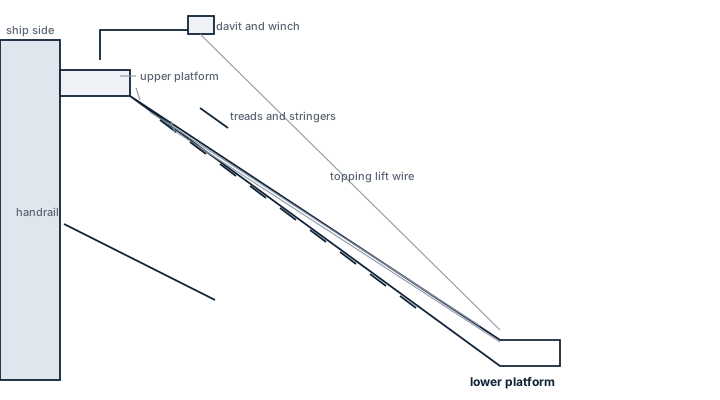
Accommodation Ladder
medium
5 models total
Ship-side ladders for port access, hydraulic or manual.
3 manufacturers · 5 models
Allied Marine Systems
2
AMS Manual Accommodation Ladder 7m
7m length
· Crew Accommodation
· steel manual accommodation ladder
Length (m)
7
Actuation
manual
Common Failures & Inspection Points
- Hinge pin corrosion
- Safety net deterioration
- Landing platform deformation
Service: Inspect safety net monthly; replace when holed or UV-degraded.
Spare Parts: Ersatzteile über Allied Marine Systems oder zugelassene Vertriebspartner. Lead time: 2-6 Wochen.
Strengths
- Simple manual operation – no hydraulic or electrical systems to maintain
- Robust steel construction suitable for harsh marine environments when properly coated
- Integrated safety net provides fall protection out of the box
- Compact 7 m length fits a wide range of vessel deck heights
- Low initial cost compared with powered ladders
Weaknesses
- Hinge pins are prone to corrosion if not inspected and greased regularly
- Safety net can deteriorate from UV exposure, requiring frequent checks
- Landing platform may deform under repeated heavy loads if not reinforced
- Manual deployment is slower than motorised alternatives
- Limited reach – unsuitable for vessels needing access above 7 m
Typical Vessels:
TankerContainer shipBulk carrierOffshore supply vesselPassenger ferry
Decision Guide: Choose if you need a low‑cost, low‑maintenance ladder for vessels with deck heights up to about 7 m and can commit to regular inspection of hinges and safety net. Avoid if rapid deployment is critical, the operating environment is highly corrosive without proper protective coating, or a longer reach is required.
Use Cases: Provides crew access between the main deck and accommodation spaces, serves as an emergency egress route, connects to tender boats or gangways, and can be used for routine inspections of upper decks on commercial vessels.
AMS Hydraulic Accommodation Ladder 11m
11m length
· Crew Accommodation
· hydraulic actuation ladder
Length (m)
11
Actuation
hydraulic
Common Failures & Inspection Points
- Cylinder rod pitting
- Control panel water ingress
- Stanchion base cracking
Service: Chrome-plate cylinder rods; ensure IP65 on control panel.
Spare Parts: Ersatzteile über Allied Marine Systems oder zugelassene Vertriebspartner. Lead time: 2-6 Wochen.
Strengths
- Fast, one‑touch deployment via hydraulic actuation
- Long 11 m reach suitable for high freeboard vessels
- Chrome‑plated cylinder rods give excellent corrosion resistance
- IP65‑rated control panel protects electronics from spray and rain
- Smooth, controlled movement reduces crew fatigue during boarding
Weaknesses
- Hydraulic system requires regular maintenance and leak checks
- Reported cylinder rod pitting can lead to premature wear if not inspected
- Control panel water ingress incidents have been noted in harsh environments
- Stanchion base cracking observed on vessels with high vibration or impact loads
- Higher initial cost and weight compared with manual ladders
Typical Vessels:
Cruise shipPassenger ferryOffshore supply vesselContainer shipTanker
Decision Guide: Choose if you need rapid, reliable boarding on vessels with a high freeboard and have the capability to maintain hydraulic systems. Avoid if maintenance resources are limited, the operating environment is prone to severe water ingress, or weight/space constraints favor lighter manual ladders.
Use Cases: Deployed at gangways for crew change‑over, passenger embarkation/disembarkation, and emergency evacuation where a long, quickly operable ladder is required to bridge the gap between deck and quay.
MacGregor
2
MG Hydraulic Accommodation Ladder 9m
9m length, 150 kg/person
· Crew Accommodation
· hydraulic self-leveling ladder
Length (m)
9
Actuation
hydraulic
Self leveling
ja
Common Failures & Inspection Points
- Hydraulic cylinder leak
- Upper platform hinge corrosion
- Self-leveling sensor failure
Service: Test self-leveling system monthly; grease hinges weekly.
Spare Parts: Ersatzteile über MacGregor oder zugelassene Vertriebspartner. Lead time: 2-6 Wochen.
Strengths
- Fast, one‑handed deployment and retraction using hydraulics
- Self‑leveling sensor keeps the platform horizontal in rolling seas, improving crew safety
- Compact stowage footprint; fits on vessels with limited deck space
- Robust stainless‑steel construction resistant to marine corrosion
- Meets SOLAS requirements for emergency access
Weaknesses
- Hydraulic system adds complexity and requires regular leak inspections
- Higher initial purchase price compared with manual ladders
- Maintenance intensive: hinges need weekly greasing, sensors require periodic calibration
- Dependence on hydraulic power; loss of power can delay deployment
- Weight of the 9 m unit may affect deck load calculations
Typical Vessels:
Offshore supply vesselPlatform support vesselCruise shipContainer ship (crew transfer)FPSO / offshore production unit
Certifications:
IMO SOLAS Chapter IIIDNV GL class approval
Decision Guide: Choose if the vessel needs rapid, safe crew access in moderate to heavy sea states and has hydraulic maintenance capability. Avoid if budget is tight, the ship is small enough for a manual ladder, or the operator prefers low‑maintenance mechanical systems.
Use Cases: Deployed on offshore platforms for crew embarkation/disembarkation, used on cruise ships for passenger boarding when docked at ports with variable tide levels, installed on container vessels to provide safe access to accommodation decks during port calls and emergencies.
MG Hydraulic Accommodation Ladder 15m
15m length
· Crew Accommodation
· hydraulic self‑leveling ladder
Length (m)
15
Actuation
hydraulic
Self leveling
ja
Common Failures & Inspection Points
- Boom cylinder drift
- Stanchion corrosion
- Wire rope trolley jam
Service: Inspect stanchions for wastage at dry-dock; lubricate trolley wheels monthly.
Spare Parts: Ersatzteile über MacGregor oder zugelassene Vertriebspartner. Lead time: 2-6 Wochen.
Strengths
- Hydraulic actuation eliminates manual effort and speeds up deployment/retraction.
- Self‑leveling mechanism maintains a horizontal walkway even on uneven decks, enhancing safety.
- 15 m reach accommodates a wide range of vessel freeboard heights without additional equipment.
- Integrated trolley system allows transport of personnel and light supplies alongside the ladder.
- Robust stanchion design suited for heavy‑load marine environments.
Weaknesses
- Hydraulic system requires regular inspection; cylinder drift can affect positioning.
- Stanchions are prone to corrosion if not protected, especially on vessels with high humidity.
- Wire‑rope trolley may jam and needs monthly lubrication and periodic tension checks.
- Higher initial cost compared with simple manual ladders.
- Maintenance intensity is greater than for non‑hydraulic alternatives.
Typical Vessels:
TankerContainer shipBulk carrierOffshore supply vesselCruise liner
Decision Guide: Choose if: you need a reliable, self‑leveling ladder for vessels with up to 15 m freeboard and frequent crew changes; you value rapid deployment and integrated trolley capability. Avoid if: budget constraints favour simpler manual ladders, or the vessel operates in extremely corrosive environments without a robust maintenance programme.
Use Cases: Commonly installed on tankers and container ships to provide safe crew access from the main deck to accommodation blocks during cargo operations, crew changes, or emergency evacuations; also fitted on offshore supply vessels where sea‑state motion makes self‑leveling essential.
SMST
1
SMST Accommodation Ladder AL-12
12m length
· Crew Accommodation
· hydraulic motion-compensated ladder
Length (m)
12
Actuation
hydraulic
Motion compensated
ja
Common Failures & Inspection Points
- Motion compensation sensor drift
- Step tread wear
- Handrail damage
Service: Calibrate motion sensor annually; replace step treads when worn >3mm.
Spare Parts: Ersatzteile über SMST oder zugelassene Vertriebspartner. Lead time: 2-6 Wochen.
Strengths
- Hydraulic actuation delivers smooth, reliable deployment and retraction.
- Integrated motion‑compensation system reduces impact forces on users during vessel roll/pitch.
- 12 m reach accommodates a wide range of deck heights common on medium‑large vessels.
- Sensor‑based automatic adjustment simplifies operation for crew.
- SMST reputation for robust marine‑grade construction.
Weaknesses
- Motion‑compensation sensor can drift and requires annual calibration.
- Step treads are subject to wear; replacement needed when wear exceeds 3 mm.
- Handrail components may suffer damage in harsh environments, requiring periodic inspection.
- Hydraulic system adds maintenance complexity compared with purely mechanical ladders.
- Higher initial cost than basic manual ladders.
Typical Vessels:
Cruise shipPassenger ferryOffshore supply vesselContainer shipTanker
Decision Guide: Choose if: you need a ladder that can compensate for vessel motion in moderate to heavy seas, the deck height is around 12 m, and you prefer hydraulic operation with automatic adjustment. Avoid if: budget constraints favour simpler manual or electric ladders, sensor reliability is a critical concern, or the vessel operates only in calm waters where motion compensation adds little value.
Use Cases: The AL‑12 is typically installed on passenger‑focused vessels and offshore supply ships to provide safe boarding and disembarkation of crew, passengers, and cargo personnel when transferring to tenders, lifeboats, or other small craft under sea‑state conditions.