Fire Pump (Main + Emergency)
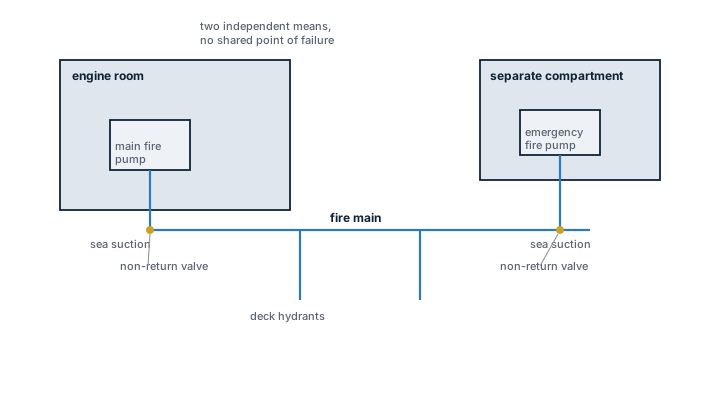
SOLAS requires two independent means of pumping seawater into the fire main: a main fire pump and a fully separate emergency pump outside the space that could disable the first. Neither may share a single point of failure with the other.
Read more — Fire Pump (Main + Emergency) explained ▾
What makes this type
The fire pump supplies seawater under pressure to the ship's fire main, feeding hydrants, hose stations and fixed fire-fighting systems throughout the vessel. What sets this equipment apart from other engine room pumps is the redundancy requirement behind it: SOLAS calls for at least one main fire pump plus an independently powered emergency fire pump, sited in a different space so that a single fire or flood cannot take out both. The emergency pump has its own dedicated engine or motor and its own sea suction and sea chest, entirely separate from the main pump's arrangement.
Main components
Pump unit
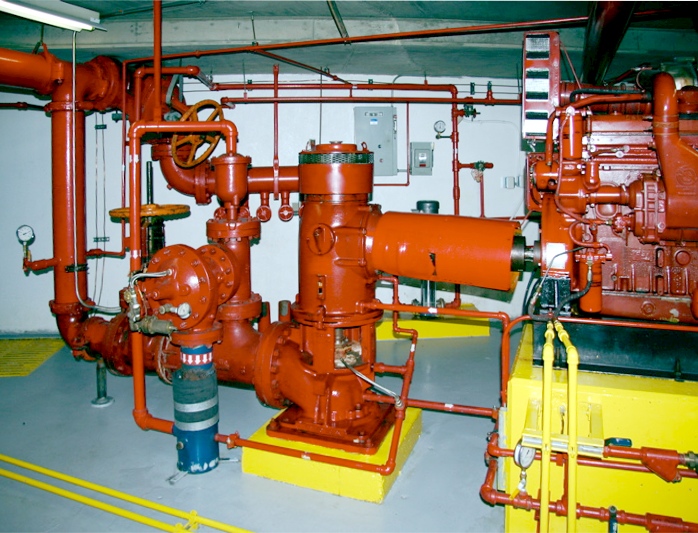
Typically a centrifugal pump, self-priming or fitted with a priming system, sized to deliver the required capacity at the pressure needed to reach the most remote hydrant on board.
Prime mover
The main fire pump is usually driven off the ship's electrical supply or directly by a diesel engine; the emergency pump has its own independent diesel engine or, on some vessels, a dedicated generator, so it works even with the main switchboard dead.
Sea suction and sea chest
A separate sea chest for the emergency pump, positioned so flooding or damage affecting the main engine room does not also disable the emergency supply.
Fire main and isolating valves
The pump discharges into a ring or branched main fitted with isolating valves, allowing a damaged section to be shut off without losing pressure to the rest of the system.
Selection / Sizing
Required capacity is set by SOLAS in relation to the vessel's cargo pump room and machinery space dimensions, expressed as a formula linking pump output to the ship's size and type rather than a flat figure. The pump must maintain a minimum pressure at the two highest or most distant hydrants running simultaneously, and the emergency pump's capacity is set as a defined percentage of the total required main pump capacity, not simply matched one-for-one.
Regulations / Class
SOLAS Chapter II-2 sets out the number, capacity, and independence requirements for fire pumps, including the location of the emergency pump outside the category of space it is meant to back up. Class surveys check pump capacity and pressure at the fire main at intervals set by the survey scheme, and the emergency pump's independent power source is specifically verified as unaffected by a black-out condition in the main machinery space.
Typical faults
- Loss of prime on a self-priming pump — no water delivered on start, often traced to a worn priming device or air leak in the suction line.
- Emergency pump's dedicated engine not run-tested regularly — fails to start when actually needed after months of inactivity.
- Fire main isolating valves seized shut or open — a damaged section cannot be isolated, dropping pressure ship-wide.
- Sea chest strainer fouling — reduced flow and cavitation at the pump, masked until full capacity is demanded.
What to look for in a supplier
- Certified capacity and pressure curves matching the vessel's SOLAS-required figures, not generic pump data.
- Confirmed independence of the emergency unit's power source from the main switchboard.
- Materials suited to continuous seawater service, since this pump must start reliably after long idle periods.
Run the emergency fire pump under load on its own weekly test, not just a no-load start; a pump that starts but cannot build pressure will pass a casual check and fail the day it matters.
Typical Manufacturers
24 manufacturers · 304 models
Grundfos Marine
67- NK 65
- NK 80
- NK 100
- NK 125
- NK 150
- 30
- 500
- 60
- 120
- Standard
- Nennleistung (Motor)
- 0,75 bis 355 kW
- Fördermenge (max.)
- bis 1.300 m³/h (5.800 gpm)
- Förderhöhe (max.)
- bis 137 m (450 ft)
- Ausgangsgrößen
- 1,25" bis 10" (DN 32 bis DN 250)
- Lagerschmierung (NK-Serie)
- SKF LGHP2 grease; motors up to 11 kW: lifetime lubrication; >100,000 operating hours: replacement recommended
- Inspektionsintervalle
- Every 3,000 operating hours or at least 1x/year
- Materialien Marine
- Hochwertige Edelstähle (EN 1.4301, EN 1.4408, EN 1.4517) / Titan für Seewasser
- NB/NBG (Close-Coupled)
- NK/NKG (Long-Coupled)
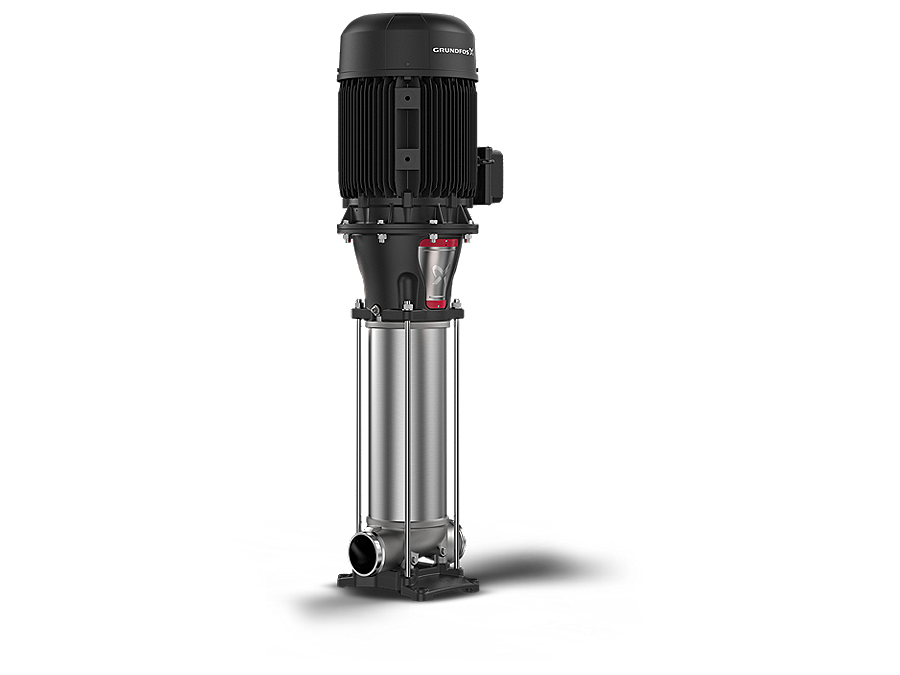
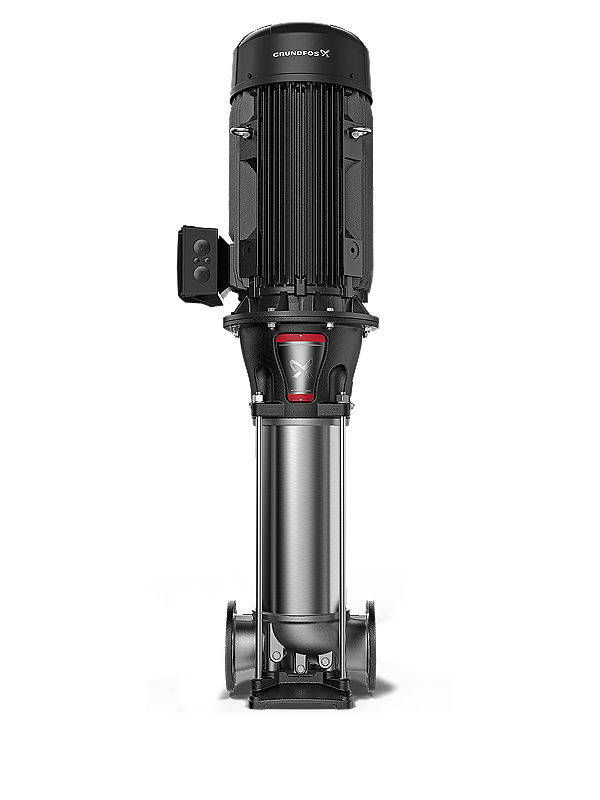
- CR/CRI/CRN (Vertical Multistage)
- NBE/NBE-Serie
- NKE/NKE-Serie
- Stainless Steel Variants (EN 1.4408, EN 1.4517, AISI 316)
- Area: Mechanical seal (mechanical face seal) - wear, leakage, surface roughnessCheck: Visual inspection: leakage quantity 1-10 ml/24h is normal. If >20% water content in oil chamber after 1 week of operation, seal is defective. Seal faces NOT to be touched with bare fingers. At standstill: inject silicone oil between pump housing and coupling to prevent face adhesion.
- Area: Bearing (ball/roller bearing) - wear, bearing clearance, lubrication film breakdownCheck: Check circulation lubrication: relubricate SKF LGHP2 grease using grease gun. Measure bearing clearance with caliper per workshop guidelines. After 100,000 operating hours perform replacement. Motors up to 11 kW are permanently lubricated (no relubrication required). Abnormal vibrations/noise indicate bearing wear.
- Area: Impeller - wear, cavitation, erosion, wear ringsCheck: Visual inspection for: erosion, pitting, cavitation damage, cracks, dents or irregularities on impeller blade leading edges and hub. Inspect wear rings (front/rear) for scratches/deformation. Measure clearance between impeller and pump housing with caliper. Decrease in flow rate/pressure build-up/current consumption indicates impeller damage.
- Area: Motor - wear, bearing wear, heat development, contaminationCheck: Motor to be inspected visually and cleaned regularly for adequate cooling. In dusty environments inspect more frequently. Monitor temperature (elevated heat development = early fault signal). Detect bearing wear through vibrations/noise. Compare current consumption vs. rated value. Motor bearings in 2/4/6-pole motors up to 11 kW are maintenance-free lubricated; larger motors to be lubricated regularly.
- Area: Öl im Pumpenraum - Verschmutzung, Wassergehalt, AlterungCheck: Check oil level after 1 week of operation (after seal replacement). Monitor water content: >20% water means seal failure. Oil change every 3,000 operating hours or 1x/year (Shell Ondina 917 or similar). Inspect oil colour, odour, turbidity for contamination/combustion products.
- Area: Corrosion in seawater applications - material degradation in corrosive environmentCheck: For seawater/marine environments: pump must be designed in high-grade stainless steel (EN 1.4517 Duplex, AISI 316) or titanium. Perform visual inspection for surface rust, pittings, discoloration. High-grade stainless steel designs (EN 1.4408) for T>40°C and chemical fluids. Use special seals (Super Duplex) and sealants for aggressive media.
Type-universal inspection/maintenance points for pumps (Grundfos Marine, Mega-swarm 2026-06). Per-model specs not auto-filled.
- Nennleistung (Motor)
- 0,75 bis 355 kW
- Fördermenge (max.)
- bis 1.300 m³/h (5.800 gpm)
- Förderhöhe (max.)
- bis 137 m (450 ft)
- Ausgangsgrößen
- 1,25" bis 10" (DN 32 bis DN 250)
- Lagerschmierung (NK-Serie)
- SKF LGHP2 grease; motors up to 11 kW: lifetime lubrication; >100,000 operating hours: replacement recommended
- Inspektionsintervalle
- Every 3,000 operating hours or at least 1x/year
- Materialien Marine
- Hochwertige Edelstähle (EN 1.4301, EN 1.4408, EN 1.4517) / Titan für Seewasser
- NB/NBG (Close-Coupled)
- NK/NKG (Long-Coupled)
- CR/CRI/CRN (Vertical Multistage)
- NBE/NBE-Serie
- NKE/NKE-Serie
- Stainless Steel Variants (EN 1.4408, EN 1.4517, AISI 316)
- Area: Mechanical seal (mechanical face seal) - wear, leakage, surface roughnessCheck: Visual inspection: leakage quantity 1-10 ml/24h is normal. If >20% water content in oil chamber after 1 week of operation, seal is defective. Seal faces NOT to be touched with bare fingers. At standstill: inject silicone oil between pump housing and coupling to prevent face adhesion.
- Area: Bearing (ball/roller bearing) - wear, bearing clearance, lubrication film breakdownCheck: Check circulation lubrication: relubricate SKF LGHP2 grease using grease gun. Measure bearing clearance with caliper per workshop guidelines. After 100,000 operating hours perform replacement. Motors up to 11 kW are permanently lubricated (no relubrication required). Abnormal vibrations/noise indicate bearing wear.
- Area: Impeller - wear, cavitation, erosion, wear ringsCheck: Visual inspection for: erosion, pitting, cavitation damage, cracks, dents or irregularities on impeller blade leading edges and hub. Inspect wear rings (front/rear) for scratches/deformation. Measure clearance between impeller and pump housing with caliper. Decrease in flow rate/pressure build-up/current consumption indicates impeller damage.
- Area: Motor - wear, bearing wear, heat development, contaminationCheck: Motor to be inspected visually and cleaned regularly for adequate cooling. In dusty environments inspect more frequently. Monitor temperature (elevated heat development = early fault signal). Detect bearing wear through vibrations/noise. Compare current consumption vs. rated value. Motor bearings in 2/4/6-pole motors up to 11 kW are maintenance-free lubricated; larger motors to be lubricated regularly.
- Area: Öl im Pumpenraum - Verschmutzung, Wassergehalt, AlterungCheck: Check oil level after 1 week of operation (after seal replacement). Monitor water content: >20% water means seal failure. Oil change every 3,000 operating hours or 1x/year (Shell Ondina 917 or similar). Inspect oil colour, odour, turbidity for contamination/combustion products.
- Area: Corrosion in seawater applications - material degradation in corrosive environmentCheck: For seawater/marine environments: pump must be designed in high-grade stainless steel (EN 1.4517 Duplex, AISI 316) or titanium. Perform visual inspection for surface rust, pittings, discoloration. High-grade stainless steel designs (EN 1.4408) for T>40°C and chemical fluids. Use special seals (Super Duplex) and sealants for aggressive media.
Type-universal inspection/maintenance points for pumps (Grundfos Marine, Mega-swarm 2026-06). Per-model specs not auto-filled.
- Nennleistung (Motor)
- 0,75 bis 355 kW
- Fördermenge (max.)
- bis 1.300 m³/h (5.800 gpm)
- Förderhöhe (max.)
- bis 137 m (450 ft)
- Ausgangsgrößen
- 1,25" bis 10" (DN 32 bis DN 250)
- Lagerschmierung (NK-Serie)
- SKF LGHP2 grease; motors up to 11 kW: lifetime lubrication; >100,000 operating hours: replacement recommended
- Inspektionsintervalle
- Every 3,000 operating hours or at least 1x/year
- Materialien Marine
- Hochwertige Edelstähle (EN 1.4301, EN 1.4408, EN 1.4517) / Titan für Seewasser
- NB/NBG (Close-Coupled)
- NK/NKG (Long-Coupled)
- CR/CRI/CRN (Vertical Multistage)
- NBE/NBE-Serie
- NKE/NKE-Serie
- Stainless Steel Variants (EN 1.4408, EN 1.4517, AISI 316)
- Area: Mechanical seal (mechanical face seal) - wear, leakage, surface roughnessCheck: Visual inspection: leakage quantity 1-10 ml/24h is normal. If >20% water content in oil chamber after 1 week of operation, seal is defective. Seal faces NOT to be touched with bare fingers. At standstill: inject silicone oil between pump housing and coupling to prevent face adhesion.
- Area: Bearing (ball/roller bearing) - wear, bearing clearance, lubrication film breakdownCheck: Check circulation lubrication: relubricate SKF LGHP2 grease using grease gun. Measure bearing clearance with caliper per workshop guidelines. After 100,000 operating hours perform replacement. Motors up to 11 kW are permanently lubricated (no relubrication required). Abnormal vibrations/noise indicate bearing wear.
- Area: Impeller - wear, cavitation, erosion, wear ringsCheck: Visual inspection for: erosion, pitting, cavitation damage, cracks, dents or irregularities on impeller blade leading edges and hub. Inspect wear rings (front/rear) for scratches/deformation. Measure clearance between impeller and pump housing with caliper. Decrease in flow rate/pressure build-up/current consumption indicates impeller damage.
- Area: Motor - wear, bearing wear, heat development, contaminationCheck: Motor to be inspected visually and cleaned regularly for adequate cooling. In dusty environments inspect more frequently. Monitor temperature (elevated heat development = early fault signal). Detect bearing wear through vibrations/noise. Compare current consumption vs. rated value. Motor bearings in 2/4/6-pole motors up to 11 kW are maintenance-free lubricated; larger motors to be lubricated regularly.
- Area: Öl im Pumpenraum - Verschmutzung, Wassergehalt, AlterungCheck: Check oil level after 1 week of operation (after seal replacement). Monitor water content: >20% water means seal failure. Oil change every 3,000 operating hours or 1x/year (Shell Ondina 917 or similar). Inspect oil colour, odour, turbidity for contamination/combustion products.
- Area: Corrosion in seawater applications - material degradation in corrosive environmentCheck: For seawater/marine environments: pump must be designed in high-grade stainless steel (EN 1.4517 Duplex, AISI 316) or titanium. Perform visual inspection for surface rust, pittings, discoloration. High-grade stainless steel designs (EN 1.4408) for T>40°C and chemical fluids. Use special seals (Super Duplex) and sealants for aggressive media.
Type-universal inspection/maintenance points for pumps (Grundfos Marine, Mega-swarm 2026-06). Per-model specs not auto-filled.
- Nennleistung (Motor)
- 0,75 bis 355 kW
- Fördermenge (max.)
- bis 1.300 m³/h (5.800 gpm)
- Förderhöhe (max.)
- bis 137 m (450 ft)
- Ausgangsgrößen
- 1,25" bis 10" (DN 32 bis DN 250)
- Lagerschmierung (NK-Serie)
- SKF LGHP2 grease; motors up to 11 kW: lifetime lubrication; >100,000 operating hours: replacement recommended
- Inspektionsintervalle
- Every 3,000 operating hours or at least 1x/year
- Materialien Marine
- Hochwertige Edelstähle (EN 1.4301, EN 1.4408, EN 1.4517) / Titan für Seewasser
- NB/NBG (Close-Coupled)
- NK/NKG (Long-Coupled)
- CR/CRI/CRN (Vertical Multistage)
- NBE/NBE-Serie
- NKE/NKE-Serie
- Stainless Steel Variants (EN 1.4408, EN 1.4517, AISI 316)
- Area: Mechanical seal (mechanical face seal) - wear, leakage, surface roughnessCheck: Visual inspection: leakage quantity 1-10 ml/24h is normal. If >20% water content in oil chamber after 1 week of operation, seal is defective. Seal faces NOT to be touched with bare fingers. At standstill: inject silicone oil between pump housing and coupling to prevent face adhesion.
- Area: Bearing (ball/roller bearing) - wear, bearing clearance, lubrication film breakdownCheck: Check circulation lubrication: relubricate SKF LGHP2 grease using grease gun. Measure bearing clearance with caliper per workshop guidelines. After 100,000 operating hours perform replacement. Motors up to 11 kW are permanently lubricated (no relubrication required). Abnormal vibrations/noise indicate bearing wear.
- Area: Impeller - wear, cavitation, erosion, wear ringsCheck: Visual inspection for: erosion, pitting, cavitation damage, cracks, dents or irregularities on impeller blade leading edges and hub. Inspect wear rings (front/rear) for scratches/deformation. Measure clearance between impeller and pump housing with caliper. Decrease in flow rate/pressure build-up/current consumption indicates impeller damage.
- Area: Motor - wear, bearing wear, heat development, contaminationCheck: Motor to be inspected visually and cleaned regularly for adequate cooling. In dusty environments inspect more frequently. Monitor temperature (elevated heat development = early fault signal). Detect bearing wear through vibrations/noise. Compare current consumption vs. rated value. Motor bearings in 2/4/6-pole motors up to 11 kW are maintenance-free lubricated; larger motors to be lubricated regularly.
- Area: Öl im Pumpenraum - Verschmutzung, Wassergehalt, AlterungCheck: Check oil level after 1 week of operation (after seal replacement). Monitor water content: >20% water means seal failure. Oil change every 3,000 operating hours or 1x/year (Shell Ondina 917 or similar). Inspect oil colour, odour, turbidity for contamination/combustion products.
- Area: Corrosion in seawater applications - material degradation in corrosive environmentCheck: For seawater/marine environments: pump must be designed in high-grade stainless steel (EN 1.4517 Duplex, AISI 316) or titanium. Perform visual inspection for surface rust, pittings, discoloration. High-grade stainless steel designs (EN 1.4408) for T>40°C and chemical fluids. Use special seals (Super Duplex) and sealants for aggressive media.
Type-universal inspection/maintenance points for pumps (Grundfos Marine, Mega-swarm 2026-06). Per-model specs not auto-filled.
- Nennleistung (Motor)
- 0,75 bis 355 kW
- Fördermenge (max.)
- bis 1.300 m³/h (5.800 gpm)
- Förderhöhe (max.)
- bis 137 m (450 ft)
- Ausgangsgrößen
- 1,25" bis 10" (DN 32 bis DN 250)
- Lagerschmierung (NK-Serie)
- SKF LGHP2 grease; motors up to 11 kW: lifetime lubrication; >100,000 operating hours: replacement recommended
- Inspektionsintervalle
- Every 3,000 operating hours or at least 1x/year
- Materialien Marine
- Hochwertige Edelstähle (EN 1.4301, EN 1.4408, EN 1.4517) / Titan für Seewasser
- NB/NBG (Close-Coupled)
- NK/NKG (Long-Coupled)
- CR/CRI/CRN (Vertical Multistage)
- NBE/NBE-Serie
- NKE/NKE-Serie
- Stainless Steel Variants (EN 1.4408, EN 1.4517, AISI 316)
- Area: Mechanical seal (mechanical face seal) - wear, leakage, surface roughnessCheck: Visual inspection: leakage quantity 1-10 ml/24h is normal. If >20% water content in oil chamber after 1 week of operation, seal is defective. Seal faces NOT to be touched with bare fingers. At standstill: inject silicone oil between pump housing and coupling to prevent face adhesion.
- Area: Bearing (ball/roller bearing) - wear, bearing clearance, lubrication film breakdownCheck: Check circulation lubrication: relubricate SKF LGHP2 grease using grease gun. Measure bearing clearance with caliper per workshop guidelines. After 100,000 operating hours perform replacement. Motors up to 11 kW are permanently lubricated (no relubrication required). Abnormal vibrations/noise indicate bearing wear.
- Area: Impeller - wear, cavitation, erosion, wear ringsCheck: Visual inspection for: erosion, pitting, cavitation damage, cracks, dents or irregularities on impeller blade leading edges and hub. Inspect wear rings (front/rear) for scratches/deformation. Measure clearance between impeller and pump housing with caliper. Decrease in flow rate/pressure build-up/current consumption indicates impeller damage.
- Area: Motor - wear, bearing wear, heat development, contaminationCheck: Motor to be inspected visually and cleaned regularly for adequate cooling. In dusty environments inspect more frequently. Monitor temperature (elevated heat development = early fault signal). Detect bearing wear through vibrations/noise. Compare current consumption vs. rated value. Motor bearings in 2/4/6-pole motors up to 11 kW are maintenance-free lubricated; larger motors to be lubricated regularly.
- Area: Öl im Pumpenraum - Verschmutzung, Wassergehalt, AlterungCheck: Check oil level after 1 week of operation (after seal replacement). Monitor water content: >20% water means seal failure. Oil change every 3,000 operating hours or 1x/year (Shell Ondina 917 or similar). Inspect oil colour, odour, turbidity for contamination/combustion products.
- Area: Corrosion in seawater applications - material degradation in corrosive environmentCheck: For seawater/marine environments: pump must be designed in high-grade stainless steel (EN 1.4517 Duplex, AISI 316) or titanium. Perform visual inspection for surface rust, pittings, discoloration. High-grade stainless steel designs (EN 1.4408) for T>40°C and chemical fluids. Use special seals (Super Duplex) and sealants for aggressive media.
Type-universal inspection/maintenance points for pumps (Grundfos Marine, Mega-swarm 2026-06). Per-model specs not auto-filled.
- Nennleistung (Motor)
- 0,75 bis 355 kW
- Fördermenge (max.)
- bis 1.300 m³/h (5.800 gpm)
- Förderhöhe (max.)
- bis 137 m (450 ft)
- Ausgangsgrößen
- 1,25" bis 10" (DN 32 bis DN 250)
- Lagerschmierung (NK-Serie)
- SKF LGHP2 grease; motors up to 11 kW: lifetime lubrication; >100,000 operating hours: replacement recommended
- Inspektionsintervalle
- Every 3,000 operating hours or at least 1x/year
- Materialien Marine
- Hochwertige Edelstähle (EN 1.4301, EN 1.4408, EN 1.4517) / Titan für Seewasser
- NB/NBG (Close-Coupled)
- NK/NKG (Long-Coupled)
- CR/CRI/CRN (Vertical Multistage)
- NBE/NBE-Serie
- NKE/NKE-Serie
- Stainless Steel Variants (EN 1.4408, EN 1.4517, AISI 316)
- Area: Mechanical seal (mechanical face seal) - wear, leakage, surface roughnessCheck: Visual inspection: leakage quantity 1-10 ml/24h is normal. If >20% water content in oil chamber after 1 week of operation, seal is defective. Seal faces NOT to be touched with bare fingers. At standstill: inject silicone oil between pump housing and coupling to prevent face adhesion.
- Area: Bearing (ball/roller bearing) - wear, bearing clearance, lubrication film breakdownCheck: Check circulation lubrication: relubricate SKF LGHP2 grease using grease gun. Measure bearing clearance with caliper per workshop guidelines. After 100,000 operating hours perform replacement. Motors up to 11 kW are permanently lubricated (no relubrication required). Abnormal vibrations/noise indicate bearing wear.
- Area: Impeller - wear, cavitation, erosion, wear ringsCheck: Visual inspection for: erosion, pitting, cavitation damage, cracks, dents or irregularities on impeller blade leading edges and hub. Inspect wear rings (front/rear) for scratches/deformation. Measure clearance between impeller and pump housing with caliper. Decrease in flow rate/pressure build-up/current consumption indicates impeller damage.
- Area: Motor - wear, bearing wear, heat development, contaminationCheck: Motor to be inspected visually and cleaned regularly for adequate cooling. In dusty environments inspect more frequently. Monitor temperature (elevated heat development = early fault signal). Detect bearing wear through vibrations/noise. Compare current consumption vs. rated value. Motor bearings in 2/4/6-pole motors up to 11 kW are maintenance-free lubricated; larger motors to be lubricated regularly.
- Area: Öl im Pumpenraum - Verschmutzung, Wassergehalt, AlterungCheck: Check oil level after 1 week of operation (after seal replacement). Monitor water content: >20% water means seal failure. Oil change every 3,000 operating hours or 1x/year (Shell Ondina 917 or similar). Inspect oil colour, odour, turbidity for contamination/combustion products.
- Area: Corrosion in seawater applications - material degradation in corrosive environmentCheck: For seawater/marine environments: pump must be designed in high-grade stainless steel (EN 1.4517 Duplex, AISI 316) or titanium. Perform visual inspection for surface rust, pittings, discoloration. High-grade stainless steel designs (EN 1.4408) for T>40°C and chemical fluids. Use special seals (Super Duplex) and sealants for aggressive media.
Type-universal inspection/maintenance points for pumps (Grundfos Marine, Mega-swarm 2026-06). Per-model specs not auto-filled.
- Nennleistung (Motor)
- 0,75 bis 355 kW
- Fördermenge (max.)
- bis 1.300 m³/h (5.800 gpm)
- Förderhöhe (max.)
- bis 137 m (450 ft)
- Ausgangsgrößen
- 1,25" bis 10" (DN 32 bis DN 250)
- Lagerschmierung (NK-Serie)
- SKF LGHP2 grease; motors up to 11 kW: lifetime lubrication; >100,000 operating hours: replacement recommended
- Inspektionsintervalle
- Every 3,000 operating hours or at least 1x/year
- Materialien Marine
- Hochwertige Edelstähle (EN 1.4301, EN 1.4408, EN 1.4517) / Titan für Seewasser
- NB/NBG (Close-Coupled)
- NK/NKG (Long-Coupled)
- CR/CRI/CRN (Vertical Multistage)
- NBE/NBE-Serie
- NKE/NKE-Serie
- Stainless Steel Variants (EN 1.4408, EN 1.4517, AISI 316)
- Area: Mechanical seal (mechanical face seal) - wear, leakage, surface roughnessCheck: Visual inspection: leakage quantity 1-10 ml/24h is normal. If >20% water content in oil chamber after 1 week of operation, seal is defective. Seal faces NOT to be touched with bare fingers. At standstill: inject silicone oil between pump housing and coupling to prevent face adhesion.
- Area: Bearing (ball/roller bearing) - wear, bearing clearance, lubrication film breakdownCheck: Check circulation lubrication: relubricate SKF LGHP2 grease using grease gun. Measure bearing clearance with caliper per workshop guidelines. After 100,000 operating hours perform replacement. Motors up to 11 kW are permanently lubricated (no relubrication required). Abnormal vibrations/noise indicate bearing wear.
- Area: Impeller - wear, cavitation, erosion, wear ringsCheck: Visual inspection for: erosion, pitting, cavitation damage, cracks, dents or irregularities on impeller blade leading edges and hub. Inspect wear rings (front/rear) for scratches/deformation. Measure clearance between impeller and pump housing with caliper. Decrease in flow rate/pressure build-up/current consumption indicates impeller damage.
- Area: Motor - wear, bearing wear, heat development, contaminationCheck: Motor to be inspected visually and cleaned regularly for adequate cooling. In dusty environments inspect more frequently. Monitor temperature (elevated heat development = early fault signal). Detect bearing wear through vibrations/noise. Compare current consumption vs. rated value. Motor bearings in 2/4/6-pole motors up to 11 kW are maintenance-free lubricated; larger motors to be lubricated regularly.
- Area: Öl im Pumpenraum - Verschmutzung, Wassergehalt, AlterungCheck: Check oil level after 1 week of operation (after seal replacement). Monitor water content: >20% water means seal failure. Oil change every 3,000 operating hours or 1x/year (Shell Ondina 917 or similar). Inspect oil colour, odour, turbidity for contamination/combustion products.
- Area: Corrosion in seawater applications - material degradation in corrosive environmentCheck: For seawater/marine environments: pump must be designed in high-grade stainless steel (EN 1.4517 Duplex, AISI 316) or titanium. Perform visual inspection for surface rust, pittings, discoloration. High-grade stainless steel designs (EN 1.4408) for T>40°C and chemical fluids. Use special seals (Super Duplex) and sealants for aggressive media.
Type-universal inspection/maintenance points for pumps (Grundfos Marine, Mega-swarm 2026-06). Per-model specs not auto-filled.
- Nennleistung (Motor)
- 0,75 bis 355 kW
- Fördermenge (max.)
- bis 1.300 m³/h (5.800 gpm)
- Förderhöhe (max.)
- bis 137 m (450 ft)
- Ausgangsgrößen
- 1,25" bis 10" (DN 32 bis DN 250)
- Lagerschmierung (NK-Serie)
- SKF LGHP2 grease; motors up to 11 kW: lifetime lubrication; >100,000 operating hours: replacement recommended
- Inspektionsintervalle
- Every 3,000 operating hours or at least 1x/year
- Materialien Marine
- Hochwertige Edelstähle (EN 1.4301, EN 1.4408, EN 1.4517) / Titan für Seewasser
- NB/NBG (Close-Coupled)
- NK/NKG (Long-Coupled)
- CR/CRI/CRN (Vertical Multistage)
- NBE/NBE-Serie
- NKE/NKE-Serie
- Stainless Steel Variants (EN 1.4408, EN 1.4517, AISI 316)
- Area: Mechanical seal (mechanical face seal) - wear, leakage, surface roughnessCheck: Visual inspection: leakage quantity 1-10 ml/24h is normal. If >20% water content in oil chamber after 1 week of operation, seal is defective. Seal faces NOT to be touched with bare fingers. At standstill: inject silicone oil between pump housing and coupling to prevent face adhesion.
- Area: Bearing (ball/roller bearing) - wear, bearing clearance, lubrication film breakdownCheck: Check circulation lubrication: relubricate SKF LGHP2 grease using grease gun. Measure bearing clearance with caliper per workshop guidelines. After 100,000 operating hours perform replacement. Motors up to 11 kW are permanently lubricated (no relubrication required). Abnormal vibrations/noise indicate bearing wear.
- Area: Impeller - wear, cavitation, erosion, wear ringsCheck: Visual inspection for: erosion, pitting, cavitation damage, cracks, dents or irregularities on impeller blade leading edges and hub. Inspect wear rings (front/rear) for scratches/deformation. Measure clearance between impeller and pump housing with caliper. Decrease in flow rate/pressure build-up/current consumption indicates impeller damage.
- Area: Motor - wear, bearing wear, heat development, contaminationCheck: Motor to be inspected visually and cleaned regularly for adequate cooling. In dusty environments inspect more frequently. Monitor temperature (elevated heat development = early fault signal). Detect bearing wear through vibrations/noise. Compare current consumption vs. rated value. Motor bearings in 2/4/6-pole motors up to 11 kW are maintenance-free lubricated; larger motors to be lubricated regularly.
- Area: Öl im Pumpenraum - Verschmutzung, Wassergehalt, AlterungCheck: Check oil level after 1 week of operation (after seal replacement). Monitor water content: >20% water means seal failure. Oil change every 3,000 operating hours or 1x/year (Shell Ondina 917 or similar). Inspect oil colour, odour, turbidity for contamination/combustion products.
- Area: Corrosion in seawater applications - material degradation in corrosive environmentCheck: For seawater/marine environments: pump must be designed in high-grade stainless steel (EN 1.4517 Duplex, AISI 316) or titanium. Perform visual inspection for surface rust, pittings, discoloration. High-grade stainless steel designs (EN 1.4408) for T>40°C and chemical fluids. Use special seals (Super Duplex) and sealants for aggressive media.
Type-universal inspection/maintenance points for pumps (Grundfos Marine, Mega-swarm 2026-06). Per-model specs not auto-filled.
- Nennleistung (Motor)
- 0,75 bis 355 kW
- Fördermenge (max.)
- bis 1.300 m³/h (5.800 gpm)
- Förderhöhe (max.)
- bis 137 m (450 ft)
- Ausgangsgrößen
- 1,25" bis 10" (DN 32 bis DN 250)
- Lagerschmierung (NK-Serie)
- SKF LGHP2 grease; motors up to 11 kW: lifetime lubrication; >100,000 operating hours: replacement recommended
- Inspektionsintervalle
- Every 3,000 operating hours or at least 1x/year
- Materialien Marine
- Hochwertige Edelstähle (EN 1.4301, EN 1.4408, EN 1.4517) / Titan für Seewasser
- NB/NBG (Close-Coupled)
- NK/NKG (Long-Coupled)
- CR/CRI/CRN (Vertical Multistage)
- NBE/NBE-Serie
- NKE/NKE-Serie
- Stainless Steel Variants (EN 1.4408, EN 1.4517, AISI 316)
- Area: Mechanical seal (mechanical face seal) - wear, leakage, surface roughnessCheck: Visual inspection: leakage quantity 1-10 ml/24h is normal. If >20% water content in oil chamber after 1 week of operation, seal is defective. Seal faces NOT to be touched with bare fingers. At standstill: inject silicone oil between pump housing and coupling to prevent face adhesion.
- Area: Bearing (ball/roller bearing) - wear, bearing clearance, lubrication film breakdownCheck: Check circulation lubrication: relubricate SKF LGHP2 grease using grease gun. Measure bearing clearance with caliper per workshop guidelines. After 100,000 operating hours perform replacement. Motors up to 11 kW are permanently lubricated (no relubrication required). Abnormal vibrations/noise indicate bearing wear.
- Area: Impeller - wear, cavitation, erosion, wear ringsCheck: Visual inspection for: erosion, pitting, cavitation damage, cracks, dents or irregularities on impeller blade leading edges and hub. Inspect wear rings (front/rear) for scratches/deformation. Measure clearance between impeller and pump housing with caliper. Decrease in flow rate/pressure build-up/current consumption indicates impeller damage.
- Area: Motor - wear, bearing wear, heat development, contaminationCheck: Motor to be inspected visually and cleaned regularly for adequate cooling. In dusty environments inspect more frequently. Monitor temperature (elevated heat development = early fault signal). Detect bearing wear through vibrations/noise. Compare current consumption vs. rated value. Motor bearings in 2/4/6-pole motors up to 11 kW are maintenance-free lubricated; larger motors to be lubricated regularly.
- Area: Öl im Pumpenraum - Verschmutzung, Wassergehalt, AlterungCheck: Check oil level after 1 week of operation (after seal replacement). Monitor water content: >20% water means seal failure. Oil change every 3,000 operating hours or 1x/year (Shell Ondina 917 or similar). Inspect oil colour, odour, turbidity for contamination/combustion products.
- Area: Corrosion in seawater applications - material degradation in corrosive environmentCheck: For seawater/marine environments: pump must be designed in high-grade stainless steel (EN 1.4517 Duplex, AISI 316) or titanium. Perform visual inspection for surface rust, pittings, discoloration. High-grade stainless steel designs (EN 1.4408) for T>40°C and chemical fluids. Use special seals (Super Duplex) and sealants for aggressive media.
Type-universal inspection/maintenance points for pumps (Grundfos Marine, Mega-swarm 2026-06). Per-model specs not auto-filled.
- Nennleistung (Motor)
- 0,75 bis 355 kW
- Fördermenge (max.)
- bis 1.300 m³/h (5.800 gpm)
- Förderhöhe (max.)
- bis 137 m (450 ft)
- Ausgangsgrößen
- 1,25" bis 10" (DN 32 bis DN 250)
- Lagerschmierung (NK-Serie)
- SKF LGHP2 grease; motors up to 11 kW: lifetime lubrication; >100,000 operating hours: replacement recommended
- Inspektionsintervalle
- Every 3,000 operating hours or at least 1x/year
- Materialien Marine
- Hochwertige Edelstähle (EN 1.4301, EN 1.4408, EN 1.4517) / Titan für Seewasser
- NB/NBG (Close-Coupled)
- NK/NKG (Long-Coupled)
- CR/CRI/CRN (Vertical Multistage)
- NBE/NBE-Serie
- NKE/NKE-Serie
- Stainless Steel Variants (EN 1.4408, EN 1.4517, AISI 316)
- Area: Mechanical seal (mechanical face seal) - wear, leakage, surface roughnessCheck: Visual inspection: leakage quantity 1-10 ml/24h is normal. If >20% water content in oil chamber after 1 week of operation, seal is defective. Seal faces NOT to be touched with bare fingers. At standstill: inject silicone oil between pump housing and coupling to prevent face adhesion.
- Area: Bearing (ball/roller bearing) - wear, bearing clearance, lubrication film breakdownCheck: Check circulation lubrication: relubricate SKF LGHP2 grease using grease gun. Measure bearing clearance with caliper per workshop guidelines. After 100,000 operating hours perform replacement. Motors up to 11 kW are permanently lubricated (no relubrication required). Abnormal vibrations/noise indicate bearing wear.
- Area: Impeller - wear, cavitation, erosion, wear ringsCheck: Visual inspection for: erosion, pitting, cavitation damage, cracks, dents or irregularities on impeller blade leading edges and hub. Inspect wear rings (front/rear) for scratches/deformation. Measure clearance between impeller and pump housing with caliper. Decrease in flow rate/pressure build-up/current consumption indicates impeller damage.
- Area: Motor - wear, bearing wear, heat development, contaminationCheck: Motor to be inspected visually and cleaned regularly for adequate cooling. In dusty environments inspect more frequently. Monitor temperature (elevated heat development = early fault signal). Detect bearing wear through vibrations/noise. Compare current consumption vs. rated value. Motor bearings in 2/4/6-pole motors up to 11 kW are maintenance-free lubricated; larger motors to be lubricated regularly.
- Area: Öl im Pumpenraum - Verschmutzung, Wassergehalt, AlterungCheck: Check oil level after 1 week of operation (after seal replacement). Monitor water content: >20% water means seal failure. Oil change every 3,000 operating hours or 1x/year (Shell Ondina 917 or similar). Inspect oil colour, odour, turbidity for contamination/combustion products.
- Area: Corrosion in seawater applications - material degradation in corrosive environmentCheck: For seawater/marine environments: pump must be designed in high-grade stainless steel (EN 1.4517 Duplex, AISI 316) or titanium. Perform visual inspection for surface rust, pittings, discoloration. High-grade stainless steel designs (EN 1.4408) for T>40°C and chemical fluids. Use special seals (Super Duplex) and sealants for aggressive media.
Type-universal inspection/maintenance points for pumps (Grundfos Marine, Mega-swarm 2026-06). Per-model specs not auto-filled.
- Nennleistung (Motor)
- 0,75 bis 355 kW
- Fördermenge (max.)
- bis 1.300 m³/h (5.800 gpm)
- Förderhöhe (max.)
- bis 137 m (450 ft)
- Ausgangsgrößen
- 1,25" bis 10" (DN 32 bis DN 250)
- Lagerschmierung (NK-Serie)
- SKF LGHP2 grease; motors up to 11 kW: lifetime lubrication; >100,000 operating hours: replacement recommended
- Inspektionsintervalle
- Every 3,000 operating hours or at least 1x/year
- Materialien Marine
- Hochwertige Edelstähle (EN 1.4301, EN 1.4408, EN 1.4517) / Titan für Seewasser
- NB/NBG (Close-Coupled)
- NK/NKG (Long-Coupled)
- CR/CRI/CRN (Vertical Multistage)
- NBE/NBE-Serie
- NKE/NKE-Serie
- Stainless Steel Variants (EN 1.4408, EN 1.4517, AISI 316)
- Area: Mechanical seal (mechanical face seal) - wear, leakage, surface roughnessCheck: Visual inspection: leakage quantity 1-10 ml/24h is normal. If >20% water content in oil chamber after 1 week of operation, seal is defective. Seal faces NOT to be touched with bare fingers. At standstill: inject silicone oil between pump housing and coupling to prevent face adhesion.
- Area: Bearing (ball/roller bearing) - wear, bearing clearance, lubrication film breakdownCheck: Check circulation lubrication: relubricate SKF LGHP2 grease using grease gun. Measure bearing clearance with caliper per workshop guidelines. After 100,000 operating hours perform replacement. Motors up to 11 kW are permanently lubricated (no relubrication required). Abnormal vibrations/noise indicate bearing wear.
- Area: Impeller - wear, cavitation, erosion, wear ringsCheck: Visual inspection for: erosion, pitting, cavitation damage, cracks, dents or irregularities on impeller blade leading edges and hub. Inspect wear rings (front/rear) for scratches/deformation. Measure clearance between impeller and pump housing with caliper. Decrease in flow rate/pressure build-up/current consumption indicates impeller damage.
- Area: Motor - wear, bearing wear, heat development, contaminationCheck: Motor to be inspected visually and cleaned regularly for adequate cooling. In dusty environments inspect more frequently. Monitor temperature (elevated heat development = early fault signal). Detect bearing wear through vibrations/noise. Compare current consumption vs. rated value. Motor bearings in 2/4/6-pole motors up to 11 kW are maintenance-free lubricated; larger motors to be lubricated regularly.
- Area: Öl im Pumpenraum - Verschmutzung, Wassergehalt, AlterungCheck: Check oil level after 1 week of operation (after seal replacement). Monitor water content: >20% water means seal failure. Oil change every 3,000 operating hours or 1x/year (Shell Ondina 917 or similar). Inspect oil colour, odour, turbidity for contamination/combustion products.
- Area: Corrosion in seawater applications - material degradation in corrosive environmentCheck: For seawater/marine environments: pump must be designed in high-grade stainless steel (EN 1.4517 Duplex, AISI 316) or titanium. Perform visual inspection for surface rust, pittings, discoloration. High-grade stainless steel designs (EN 1.4408) for T>40°C and chemical fluids. Use special seals (Super Duplex) and sealants for aggressive media.
Type-universal inspection/maintenance points for pumps (Grundfos Marine, Mega-swarm 2026-06). Per-model specs not auto-filled.
- Nennleistung (Motor)
- 0,75 bis 355 kW
- Fördermenge (max.)
- bis 1.300 m³/h (5.800 gpm)
- Förderhöhe (max.)
- bis 137 m (450 ft)
- Ausgangsgrößen
- 1,25" bis 10" (DN 32 bis DN 250)
- Lagerschmierung (NK-Serie)
- SKF LGHP2 grease; motors up to 11 kW: lifetime lubrication; >100,000 operating hours: replacement recommended
- Inspektionsintervalle
- Every 3,000 operating hours or at least 1x/year
- Materialien Marine
- Hochwertige Edelstähle (EN 1.4301, EN 1.4408, EN 1.4517) / Titan für Seewasser
- NB/NBG (Close-Coupled)
- NK/NKG (Long-Coupled)
- CR/CRI/CRN (Vertical Multistage)
- NBE/NBE-Serie
- NKE/NKE-Serie
- Stainless Steel Variants (EN 1.4408, EN 1.4517, AISI 316)
- Area: Mechanical seal (mechanical face seal) - wear, leakage, surface roughnessCheck: Visual inspection: leakage quantity 1-10 ml/24h is normal. If >20% water content in oil chamber after 1 week of operation, seal is defective. Seal faces NOT to be touched with bare fingers. At standstill: inject silicone oil between pump housing and coupling to prevent face adhesion.
- Area: Bearing (ball/roller bearing) - wear, bearing clearance, lubrication film breakdownCheck: Check circulation lubrication: relubricate SKF LGHP2 grease using grease gun. Measure bearing clearance with caliper per workshop guidelines. After 100,000 operating hours perform replacement. Motors up to 11 kW are permanently lubricated (no relubrication required). Abnormal vibrations/noise indicate bearing wear.
- Area: Impeller - wear, cavitation, erosion, wear ringsCheck: Visual inspection for: erosion, pitting, cavitation damage, cracks, dents or irregularities on impeller blade leading edges and hub. Inspect wear rings (front/rear) for scratches/deformation. Measure clearance between impeller and pump housing with caliper. Decrease in flow rate/pressure build-up/current consumption indicates impeller damage.
- Area: Motor - wear, bearing wear, heat development, contaminationCheck: Motor to be inspected visually and cleaned regularly for adequate cooling. In dusty environments inspect more frequently. Monitor temperature (elevated heat development = early fault signal). Detect bearing wear through vibrations/noise. Compare current consumption vs. rated value. Motor bearings in 2/4/6-pole motors up to 11 kW are maintenance-free lubricated; larger motors to be lubricated regularly.
- Area: Öl im Pumpenraum - Verschmutzung, Wassergehalt, AlterungCheck: Check oil level after 1 week of operation (after seal replacement). Monitor water content: >20% water means seal failure. Oil change every 3,000 operating hours or 1x/year (Shell Ondina 917 or similar). Inspect oil colour, odour, turbidity for contamination/combustion products.
- Area: Corrosion in seawater applications - material degradation in corrosive environmentCheck: For seawater/marine environments: pump must be designed in high-grade stainless steel (EN 1.4517 Duplex, AISI 316) or titanium. Perform visual inspection for surface rust, pittings, discoloration. High-grade stainless steel designs (EN 1.4408) for T>40°C and chemical fluids. Use special seals (Super Duplex) and sealants for aggressive media.
Type-universal inspection/maintenance points for pumps (Grundfos Marine, Mega-swarm 2026-06). Per-model specs not auto-filled.
- Nennleistung (Motor)
- 0,75 bis 355 kW
- Fördermenge (max.)
- bis 1.300 m³/h (5.800 gpm)
- Förderhöhe (max.)
- bis 137 m (450 ft)
- Ausgangsgrößen
- 1,25" bis 10" (DN 32 bis DN 250)
- Lagerschmierung (NK-Serie)
- SKF LGHP2 grease; motors up to 11 kW: lifetime lubrication; >100,000 operating hours: replacement recommended
- Inspektionsintervalle
- Every 3,000 operating hours or at least 1x/year
- Materialien Marine
- Hochwertige Edelstähle (EN 1.4301, EN 1.4408, EN 1.4517) / Titan für Seewasser
- NB/NBG (Close-Coupled)
- NK/NKG (Long-Coupled)
- CR/CRI/CRN (Vertical Multistage)
- NBE/NBE-Serie
- NKE/NKE-Serie
- Stainless Steel Variants (EN 1.4408, EN 1.4517, AISI 316)
- Area: Mechanical seal (mechanical face seal) - wear, leakage, surface roughnessCheck: Visual inspection: leakage quantity 1-10 ml/24h is normal. If >20% water content in oil chamber after 1 week of operation, seal is defective. Seal faces NOT to be touched with bare fingers. At standstill: inject silicone oil between pump housing and coupling to prevent face adhesion.
- Area: Bearing (ball/roller bearing) - wear, bearing clearance, lubrication film breakdownCheck: Check circulation lubrication: relubricate SKF LGHP2 grease using grease gun. Measure bearing clearance with caliper per workshop guidelines. After 100,000 operating hours perform replacement. Motors up to 11 kW are permanently lubricated (no relubrication required). Abnormal vibrations/noise indicate bearing wear.
- Area: Impeller - wear, cavitation, erosion, wear ringsCheck: Visual inspection for: erosion, pitting, cavitation damage, cracks, dents or irregularities on impeller blade leading edges and hub. Inspect wear rings (front/rear) for scratches/deformation. Measure clearance between impeller and pump housing with caliper. Decrease in flow rate/pressure build-up/current consumption indicates impeller damage.
- Area: Motor - wear, bearing wear, heat development, contaminationCheck: Motor to be inspected visually and cleaned regularly for adequate cooling. In dusty environments inspect more frequently. Monitor temperature (elevated heat development = early fault signal). Detect bearing wear through vibrations/noise. Compare current consumption vs. rated value. Motor bearings in 2/4/6-pole motors up to 11 kW are maintenance-free lubricated; larger motors to be lubricated regularly.
- Area: Öl im Pumpenraum - Verschmutzung, Wassergehalt, AlterungCheck: Check oil level after 1 week of operation (after seal replacement). Monitor water content: >20% water means seal failure. Oil change every 3,000 operating hours or 1x/year (Shell Ondina 917 or similar). Inspect oil colour, odour, turbidity for contamination/combustion products.
- Area: Corrosion in seawater applications - material degradation in corrosive environmentCheck: For seawater/marine environments: pump must be designed in high-grade stainless steel (EN 1.4517 Duplex, AISI 316) or titanium. Perform visual inspection for surface rust, pittings, discoloration. High-grade stainless steel designs (EN 1.4408) for T>40°C and chemical fluids. Use special seals (Super Duplex) and sealants for aggressive media.
Type-universal inspection/maintenance points for pumps (Grundfos Marine, Mega-swarm 2026-06). Per-model specs not auto-filled.
- Nennleistung (Motor)
- 0,75 bis 355 kW
- Fördermenge (max.)
- bis 1.300 m³/h (5.800 gpm)
- Förderhöhe (max.)
- bis 137 m (450 ft)
- Ausgangsgrößen
- 1,25" bis 10" (DN 32 bis DN 250)
- Lagerschmierung (NK-Serie)
- SKF LGHP2 grease; motors up to 11 kW: lifetime lubrication; >100,000 operating hours: replacement recommended
- Inspektionsintervalle
- Every 3,000 operating hours or at least 1x/year
- Materialien Marine
- Hochwertige Edelstähle (EN 1.4301, EN 1.4408, EN 1.4517) / Titan für Seewasser
- NB/NBG (Close-Coupled)
- NK/NKG (Long-Coupled)
- CR/CRI/CRN (Vertical Multistage)
- NBE/NBE-Serie
- NKE/NKE-Serie
- Stainless Steel Variants (EN 1.4408, EN 1.4517, AISI 316)
- Area: Mechanical seal (mechanical face seal) - wear, leakage, surface roughnessCheck: Visual inspection: leakage quantity 1-10 ml/24h is normal. If >20% water content in oil chamber after 1 week of operation, seal is defective. Seal faces NOT to be touched with bare fingers. At standstill: inject silicone oil between pump housing and coupling to prevent face adhesion.
- Area: Bearing (ball/roller bearing) - wear, bearing clearance, lubrication film breakdownCheck: Check circulation lubrication: relubricate SKF LGHP2 grease using grease gun. Measure bearing clearance with caliper per workshop guidelines. After 100,000 operating hours perform replacement. Motors up to 11 kW are permanently lubricated (no relubrication required). Abnormal vibrations/noise indicate bearing wear.
- Area: Impeller - wear, cavitation, erosion, wear ringsCheck: Visual inspection for: erosion, pitting, cavitation damage, cracks, dents or irregularities on impeller blade leading edges and hub. Inspect wear rings (front/rear) for scratches/deformation. Measure clearance between impeller and pump housing with caliper. Decrease in flow rate/pressure build-up/current consumption indicates impeller damage.
- Area: Motor - wear, bearing wear, heat development, contaminationCheck: Motor to be inspected visually and cleaned regularly for adequate cooling. In dusty environments inspect more frequently. Monitor temperature (elevated heat development = early fault signal). Detect bearing wear through vibrations/noise. Compare current consumption vs. rated value. Motor bearings in 2/4/6-pole motors up to 11 kW are maintenance-free lubricated; larger motors to be lubricated regularly.
- Area: Öl im Pumpenraum - Verschmutzung, Wassergehalt, AlterungCheck: Check oil level after 1 week of operation (after seal replacement). Monitor water content: >20% water means seal failure. Oil change every 3,000 operating hours or 1x/year (Shell Ondina 917 or similar). Inspect oil colour, odour, turbidity for contamination/combustion products.
- Area: Corrosion in seawater applications - material degradation in corrosive environmentCheck: For seawater/marine environments: pump must be designed in high-grade stainless steel (EN 1.4517 Duplex, AISI 316) or titanium. Perform visual inspection for surface rust, pittings, discoloration. High-grade stainless steel designs (EN 1.4408) for T>40°C and chemical fluids. Use special seals (Super Duplex) and sealants for aggressive media.
Type-universal inspection/maintenance points for pumps (Grundfos Marine, Mega-swarm 2026-06). Per-model specs not auto-filled.
- Nennleistung (Motor)
- 0,75 bis 355 kW
- Fördermenge (max.)
- bis 1.300 m³/h (5.800 gpm)
- Förderhöhe (max.)
- bis 137 m (450 ft)
- Ausgangsgrößen
- 1,25" bis 10" (DN 32 bis DN 250)
- Lagerschmierung (NK-Serie)
- SKF LGHP2 grease; motors up to 11 kW: lifetime lubrication; >100,000 operating hours: replacement recommended
- Inspektionsintervalle
- Every 3,000 operating hours or at least 1x/year
- Materialien Marine
- Hochwertige Edelstähle (EN 1.4301, EN 1.4408, EN 1.4517) / Titan für Seewasser
- NB/NBG (Close-Coupled)
- NK/NKG (Long-Coupled)
- CR/CRI/CRN (Vertical Multistage)
- NBE/NBE-Serie
- NKE/NKE-Serie
- Stainless Steel Variants (EN 1.4408, EN 1.4517, AISI 316)
- Area: Mechanical seal (mechanical face seal) - wear, leakage, surface roughnessCheck: Visual inspection: leakage quantity 1-10 ml/24h is normal. If >20% water content in oil chamber after 1 week of operation, seal is defective. Seal faces NOT to be touched with bare fingers. At standstill: inject silicone oil between pump housing and coupling to prevent face adhesion.
- Area: Bearing (ball/roller bearing) - wear, bearing clearance, lubrication film breakdownCheck: Check circulation lubrication: relubricate SKF LGHP2 grease using grease gun. Measure bearing clearance with caliper per workshop guidelines. After 100,000 operating hours perform replacement. Motors up to 11 kW are permanently lubricated (no relubrication required). Abnormal vibrations/noise indicate bearing wear.
- Area: Impeller - wear, cavitation, erosion, wear ringsCheck: Visual inspection for: erosion, pitting, cavitation damage, cracks, dents or irregularities on impeller blade leading edges and hub. Inspect wear rings (front/rear) for scratches/deformation. Measure clearance between impeller and pump housing with caliper. Decrease in flow rate/pressure build-up/current consumption indicates impeller damage.
- Area: Motor - wear, bearing wear, heat development, contaminationCheck: Motor to be inspected visually and cleaned regularly for adequate cooling. In dusty environments inspect more frequently. Monitor temperature (elevated heat development = early fault signal). Detect bearing wear through vibrations/noise. Compare current consumption vs. rated value. Motor bearings in 2/4/6-pole motors up to 11 kW are maintenance-free lubricated; larger motors to be lubricated regularly.
- Area: Öl im Pumpenraum - Verschmutzung, Wassergehalt, AlterungCheck: Check oil level after 1 week of operation (after seal replacement). Monitor water content: >20% water means seal failure. Oil change every 3,000 operating hours or 1x/year (Shell Ondina 917 or similar). Inspect oil colour, odour, turbidity for contamination/combustion products.
- Area: Corrosion in seawater applications - material degradation in corrosive environmentCheck: For seawater/marine environments: pump must be designed in high-grade stainless steel (EN 1.4517 Duplex, AISI 316) or titanium. Perform visual inspection for surface rust, pittings, discoloration. High-grade stainless steel designs (EN 1.4408) for T>40°C and chemical fluids. Use special seals (Super Duplex) and sealants for aggressive media.
Type-universal inspection/maintenance points for pumps (Grundfos Marine, Mega-swarm 2026-06). Per-model specs not auto-filled.
- Nennleistung (Motor)
- 0,75 bis 355 kW
- Fördermenge (max.)
- bis 1.300 m³/h (5.800 gpm)
- Förderhöhe (max.)
- bis 137 m (450 ft)
- Ausgangsgrößen
- 1,25" bis 10" (DN 32 bis DN 250)
- Lagerschmierung (NK-Serie)
- SKF LGHP2 grease; motors up to 11 kW: lifetime lubrication; >100,000 operating hours: replacement recommended
- Inspektionsintervalle
- Every 3,000 operating hours or at least 1x/year
- Materialien Marine
- Hochwertige Edelstähle (EN 1.4301, EN 1.4408, EN 1.4517) / Titan für Seewasser
- NB/NBG (Close-Coupled)
- NK/NKG (Long-Coupled)
- CR/CRI/CRN (Vertical Multistage)
- NBE/NBE-Serie
- NKE/NKE-Serie
- Stainless Steel Variants (EN 1.4408, EN 1.4517, AISI 316)
- Area: Mechanical seal (mechanical face seal) - wear, leakage, surface roughnessCheck: Visual inspection: leakage quantity 1-10 ml/24h is normal. If >20% water content in oil chamber after 1 week of operation, seal is defective. Seal faces NOT to be touched with bare fingers. At standstill: inject silicone oil between pump housing and coupling to prevent face adhesion.
- Area: Bearing (ball/roller bearing) - wear, bearing clearance, lubrication film breakdownCheck: Check circulation lubrication: relubricate SKF LGHP2 grease using grease gun. Measure bearing clearance with caliper per workshop guidelines. After 100,000 operating hours perform replacement. Motors up to 11 kW are permanently lubricated (no relubrication required). Abnormal vibrations/noise indicate bearing wear.
- Area: Impeller - wear, cavitation, erosion, wear ringsCheck: Visual inspection for: erosion, pitting, cavitation damage, cracks, dents or irregularities on impeller blade leading edges and hub. Inspect wear rings (front/rear) for scratches/deformation. Measure clearance between impeller and pump housing with caliper. Decrease in flow rate/pressure build-up/current consumption indicates impeller damage.
- Area: Motor - wear, bearing wear, heat development, contaminationCheck: Motor to be inspected visually and cleaned regularly for adequate cooling. In dusty environments inspect more frequently. Monitor temperature (elevated heat development = early fault signal). Detect bearing wear through vibrations/noise. Compare current consumption vs. rated value. Motor bearings in 2/4/6-pole motors up to 11 kW are maintenance-free lubricated; larger motors to be lubricated regularly.
- Area: Öl im Pumpenraum - Verschmutzung, Wassergehalt, AlterungCheck: Check oil level after 1 week of operation (after seal replacement). Monitor water content: >20% water means seal failure. Oil change every 3,000 operating hours or 1x/year (Shell Ondina 917 or similar). Inspect oil colour, odour, turbidity for contamination/combustion products.
- Area: Corrosion in seawater applications - material degradation in corrosive environmentCheck: For seawater/marine environments: pump must be designed in high-grade stainless steel (EN 1.4517 Duplex, AISI 316) or titanium. Perform visual inspection for surface rust, pittings, discoloration. High-grade stainless steel designs (EN 1.4408) for T>40°C and chemical fluids. Use special seals (Super Duplex) and sealants for aggressive media.
Type-universal inspection/maintenance points for pumps (Grundfos Marine, Mega-swarm 2026-06). Per-model specs not auto-filled.
- Nennleistung (Motor)
- 0,75 bis 355 kW
- Fördermenge (max.)
- bis 1.300 m³/h (5.800 gpm)
- Förderhöhe (max.)
- bis 137 m (450 ft)
- Ausgangsgrößen
- 1,25" bis 10" (DN 32 bis DN 250)
- Lagerschmierung (NK-Serie)
- SKF LGHP2 grease; motors up to 11 kW: lifetime lubrication; >100,000 operating hours: replacement recommended
- Inspektionsintervalle
- Every 3,000 operating hours or at least 1x/year
- Materialien Marine
- Hochwertige Edelstähle (EN 1.4301, EN 1.4408, EN 1.4517) / Titan für Seewasser
- NB/NBG (Close-Coupled)
- NK/NKG (Long-Coupled)
- CR/CRI/CRN (Vertical Multistage)
- NBE/NBE-Serie
- NKE/NKE-Serie
- Stainless Steel Variants (EN 1.4408, EN 1.4517, AISI 316)
- Area: Mechanical seal (mechanical face seal) - wear, leakage, surface roughnessCheck: Visual inspection: leakage quantity 1-10 ml/24h is normal. If >20% water content in oil chamber after 1 week of operation, seal is defective. Seal faces NOT to be touched with bare fingers. At standstill: inject silicone oil between pump housing and coupling to prevent face adhesion.
- Area: Bearing (ball/roller bearing) - wear, bearing clearance, lubrication film breakdownCheck: Check circulation lubrication: relubricate SKF LGHP2 grease using grease gun. Measure bearing clearance with caliper per workshop guidelines. After 100,000 operating hours perform replacement. Motors up to 11 kW are permanently lubricated (no relubrication required). Abnormal vibrations/noise indicate bearing wear.
- Area: Impeller - wear, cavitation, erosion, wear ringsCheck: Visual inspection for: erosion, pitting, cavitation damage, cracks, dents or irregularities on impeller blade leading edges and hub. Inspect wear rings (front/rear) for scratches/deformation. Measure clearance between impeller and pump housing with caliper. Decrease in flow rate/pressure build-up/current consumption indicates impeller damage.
- Area: Motor - wear, bearing wear, heat development, contaminationCheck: Motor to be inspected visually and cleaned regularly for adequate cooling. In dusty environments inspect more frequently. Monitor temperature (elevated heat development = early fault signal). Detect bearing wear through vibrations/noise. Compare current consumption vs. rated value. Motor bearings in 2/4/6-pole motors up to 11 kW are maintenance-free lubricated; larger motors to be lubricated regularly.
- Area: Öl im Pumpenraum - Verschmutzung, Wassergehalt, AlterungCheck: Check oil level after 1 week of operation (after seal replacement). Monitor water content: >20% water means seal failure. Oil change every 3,000 operating hours or 1x/year (Shell Ondina 917 or similar). Inspect oil colour, odour, turbidity for contamination/combustion products.
- Area: Corrosion in seawater applications - material degradation in corrosive environmentCheck: For seawater/marine environments: pump must be designed in high-grade stainless steel (EN 1.4517 Duplex, AISI 316) or titanium. Perform visual inspection for surface rust, pittings, discoloration. High-grade stainless steel designs (EN 1.4408) for T>40°C and chemical fluids. Use special seals (Super Duplex) and sealants for aggressive media.
Type-universal inspection/maintenance points for pumps (Grundfos Marine, Mega-swarm 2026-06). Per-model specs not auto-filled.
- Nennleistung (Motor)
- 0,75 bis 355 kW
- Fördermenge (max.)
- bis 1.300 m³/h (5.800 gpm)
- Förderhöhe (max.)
- bis 137 m (450 ft)
- Ausgangsgrößen
- 1,25" bis 10" (DN 32 bis DN 250)
- Lagerschmierung (NK-Serie)
- SKF LGHP2 grease; motors up to 11 kW: lifetime lubrication; >100,000 operating hours: replacement recommended
- Inspektionsintervalle
- Every 3,000 operating hours or at least 1x/year
- Materialien Marine
- Hochwertige Edelstähle (EN 1.4301, EN 1.4408, EN 1.4517) / Titan für Seewasser
- NB/NBG (Close-Coupled)
- NK/NKG (Long-Coupled)
- CR/CRI/CRN (Vertical Multistage)
- NBE/NBE-Serie
- NKE/NKE-Serie
- Stainless Steel Variants (EN 1.4408, EN 1.4517, AISI 316)
- Area: Mechanical seal (mechanical face seal) - wear, leakage, surface roughnessCheck: Visual inspection: leakage quantity 1-10 ml/24h is normal. If >20% water content in oil chamber after 1 week of operation, seal is defective. Seal faces NOT to be touched with bare fingers. At standstill: inject silicone oil between pump housing and coupling to prevent face adhesion.
- Area: Bearing (ball/roller bearing) - wear, bearing clearance, lubrication film breakdownCheck: Check circulation lubrication: relubricate SKF LGHP2 grease using grease gun. Measure bearing clearance with caliper per workshop guidelines. After 100,000 operating hours perform replacement. Motors up to 11 kW are permanently lubricated (no relubrication required). Abnormal vibrations/noise indicate bearing wear.
- Area: Impeller - wear, cavitation, erosion, wear ringsCheck: Visual inspection for: erosion, pitting, cavitation damage, cracks, dents or irregularities on impeller blade leading edges and hub. Inspect wear rings (front/rear) for scratches/deformation. Measure clearance between impeller and pump housing with caliper. Decrease in flow rate/pressure build-up/current consumption indicates impeller damage.
- Area: Motor - wear, bearing wear, heat development, contaminationCheck: Motor to be inspected visually and cleaned regularly for adequate cooling. In dusty environments inspect more frequently. Monitor temperature (elevated heat development = early fault signal). Detect bearing wear through vibrations/noise. Compare current consumption vs. rated value. Motor bearings in 2/4/6-pole motors up to 11 kW are maintenance-free lubricated; larger motors to be lubricated regularly.
- Area: Öl im Pumpenraum - Verschmutzung, Wassergehalt, AlterungCheck: Check oil level after 1 week of operation (after seal replacement). Monitor water content: >20% water means seal failure. Oil change every 3,000 operating hours or 1x/year (Shell Ondina 917 or similar). Inspect oil colour, odour, turbidity for contamination/combustion products.
- Area: Corrosion in seawater applications - material degradation in corrosive environmentCheck: For seawater/marine environments: pump must be designed in high-grade stainless steel (EN 1.4517 Duplex, AISI 316) or titanium. Perform visual inspection for surface rust, pittings, discoloration. High-grade stainless steel designs (EN 1.4408) for T>40°C and chemical fluids. Use special seals (Super Duplex) and sealants for aggressive media.
Type-universal inspection/maintenance points for pumps (Grundfos Marine, Mega-swarm 2026-06). Per-model specs not auto-filled.
- Nennleistung (Motor)
- 0,75 bis 355 kW
- Fördermenge (max.)
- bis 1.300 m³/h (5.800 gpm)
- Förderhöhe (max.)
- bis 137 m (450 ft)
- Ausgangsgrößen
- 1,25" bis 10" (DN 32 bis DN 250)
- Lagerschmierung (NK-Serie)
- SKF LGHP2 grease; motors up to 11 kW: lifetime lubrication; >100,000 operating hours: replacement recommended
- Inspektionsintervalle
- Every 3,000 operating hours or at least 1x/year
- Materialien Marine
- Hochwertige Edelstähle (EN 1.4301, EN 1.4408, EN 1.4517) / Titan für Seewasser
- NB/NBG (Close-Coupled)
- NK/NKG (Long-Coupled)
- CR/CRI/CRN (Vertical Multistage)
- NBE/NBE-Serie
- NKE/NKE-Serie
- Stainless Steel Variants (EN 1.4408, EN 1.4517, AISI 316)
- Area: Mechanical seal (mechanical face seal) - wear, leakage, surface roughnessCheck: Visual inspection: leakage quantity 1-10 ml/24h is normal. If >20% water content in oil chamber after 1 week of operation, seal is defective. Seal faces NOT to be touched with bare fingers. At standstill: inject silicone oil between pump housing and coupling to prevent face adhesion.
- Area: Bearing (ball/roller bearing) - wear, bearing clearance, lubrication film breakdownCheck: Check circulation lubrication: relubricate SKF LGHP2 grease using grease gun. Measure bearing clearance with caliper per workshop guidelines. After 100,000 operating hours perform replacement. Motors up to 11 kW are permanently lubricated (no relubrication required). Abnormal vibrations/noise indicate bearing wear.
- Area: Impeller - wear, cavitation, erosion, wear ringsCheck: Visual inspection for: erosion, pitting, cavitation damage, cracks, dents or irregularities on impeller blade leading edges and hub. Inspect wear rings (front/rear) for scratches/deformation. Measure clearance between impeller and pump housing with caliper. Decrease in flow rate/pressure build-up/current consumption indicates impeller damage.
- Area: Motor - wear, bearing wear, heat development, contaminationCheck: Motor to be inspected visually and cleaned regularly for adequate cooling. In dusty environments inspect more frequently. Monitor temperature (elevated heat development = early fault signal). Detect bearing wear through vibrations/noise. Compare current consumption vs. rated value. Motor bearings in 2/4/6-pole motors up to 11 kW are maintenance-free lubricated; larger motors to be lubricated regularly.
- Area: Öl im Pumpenraum - Verschmutzung, Wassergehalt, AlterungCheck: Check oil level after 1 week of operation (after seal replacement). Monitor water content: >20% water means seal failure. Oil change every 3,000 operating hours or 1x/year (Shell Ondina 917 or similar). Inspect oil colour, odour, turbidity for contamination/combustion products.
- Area: Corrosion in seawater applications - material degradation in corrosive environmentCheck: For seawater/marine environments: pump must be designed in high-grade stainless steel (EN 1.4517 Duplex, AISI 316) or titanium. Perform visual inspection for surface rust, pittings, discoloration. High-grade stainless steel designs (EN 1.4408) for T>40°C and chemical fluids. Use special seals (Super Duplex) and sealants for aggressive media.
Type-universal inspection/maintenance points for pumps (Grundfos Marine, Mega-swarm 2026-06). Per-model specs not auto-filled.
- Nennleistung (Motor)
- 0,75 bis 355 kW
- Fördermenge (max.)
- bis 1.300 m³/h (5.800 gpm)
- Förderhöhe (max.)
- bis 137 m (450 ft)
- Ausgangsgrößen
- 1,25" bis 10" (DN 32 bis DN 250)
- Lagerschmierung (NK-Serie)
- SKF LGHP2 grease; motors up to 11 kW: lifetime lubrication; >100,000 operating hours: replacement recommended
- Inspektionsintervalle
- Every 3,000 operating hours or at least 1x/year
- Materialien Marine
- Hochwertige Edelstähle (EN 1.4301, EN 1.4408, EN 1.4517) / Titan für Seewasser
- NB/NBG (Close-Coupled)
- NK/NKG (Long-Coupled)
- CR/CRI/CRN (Vertical Multistage)
- NBE/NBE-Serie
- NKE/NKE-Serie
- Stainless Steel Variants (EN 1.4408, EN 1.4517, AISI 316)
- Area: Mechanical seal (mechanical face seal) - wear, leakage, surface roughnessCheck: Visual inspection: leakage quantity 1-10 ml/24h is normal. If >20% water content in oil chamber after 1 week of operation, seal is defective. Seal faces NOT to be touched with bare fingers. At standstill: inject silicone oil between pump housing and coupling to prevent face adhesion.
- Area: Bearing (ball/roller bearing) - wear, bearing clearance, lubrication film breakdownCheck: Check circulation lubrication: relubricate SKF LGHP2 grease using grease gun. Measure bearing clearance with caliper per workshop guidelines. After 100,000 operating hours perform replacement. Motors up to 11 kW are permanently lubricated (no relubrication required). Abnormal vibrations/noise indicate bearing wear.
- Area: Impeller - wear, cavitation, erosion, wear ringsCheck: Visual inspection for: erosion, pitting, cavitation damage, cracks, dents or irregularities on impeller blade leading edges and hub. Inspect wear rings (front/rear) for scratches/deformation. Measure clearance between impeller and pump housing with caliper. Decrease in flow rate/pressure build-up/current consumption indicates impeller damage.
- Area: Motor - wear, bearing wear, heat development, contaminationCheck: Motor to be inspected visually and cleaned regularly for adequate cooling. In dusty environments inspect more frequently. Monitor temperature (elevated heat development = early fault signal). Detect bearing wear through vibrations/noise. Compare current consumption vs. rated value. Motor bearings in 2/4/6-pole motors up to 11 kW are maintenance-free lubricated; larger motors to be lubricated regularly.
- Area: Öl im Pumpenraum - Verschmutzung, Wassergehalt, AlterungCheck: Check oil level after 1 week of operation (after seal replacement). Monitor water content: >20% water means seal failure. Oil change every 3,000 operating hours or 1x/year (Shell Ondina 917 or similar). Inspect oil colour, odour, turbidity for contamination/combustion products.
- Area: Corrosion in seawater applications - material degradation in corrosive environmentCheck: For seawater/marine environments: pump must be designed in high-grade stainless steel (EN 1.4517 Duplex, AISI 316) or titanium. Perform visual inspection for surface rust, pittings, discoloration. High-grade stainless steel designs (EN 1.4408) for T>40°C and chemical fluids. Use special seals (Super Duplex) and sealants for aggressive media.
Type-universal inspection/maintenance points for pumps (Grundfos Marine, Mega-swarm 2026-06). Per-model specs not auto-filled.
- Nennleistung (Motor)
- 0,75 bis 355 kW
- Fördermenge (max.)
- bis 1.300 m³/h (5.800 gpm)
- Förderhöhe (max.)
- bis 137 m (450 ft)
- Ausgangsgrößen
- 1,25" bis 10" (DN 32 bis DN 250)
- Lagerschmierung (NK-Serie)
- SKF LGHP2 grease; motors up to 11 kW: lifetime lubrication; >100,000 operating hours: replacement recommended
- Inspektionsintervalle
- Every 3,000 operating hours or at least 1x/year
- Materialien Marine
- Hochwertige Edelstähle (EN 1.4301, EN 1.4408, EN 1.4517) / Titan für Seewasser
- NB/NBG (Close-Coupled)
- NK/NKG (Long-Coupled)
- CR/CRI/CRN (Vertical Multistage)
- NBE/NBE-Serie
- NKE/NKE-Serie
- Stainless Steel Variants (EN 1.4408, EN 1.4517, AISI 316)
- Area: Mechanical seal (mechanical face seal) - wear, leakage, surface roughnessCheck: Visual inspection: leakage quantity 1-10 ml/24h is normal. If >20% water content in oil chamber after 1 week of operation, seal is defective. Seal faces NOT to be touched with bare fingers. At standstill: inject silicone oil between pump housing and coupling to prevent face adhesion.
- Area: Bearing (ball/roller bearing) - wear, bearing clearance, lubrication film breakdownCheck: Check circulation lubrication: relubricate SKF LGHP2 grease using grease gun. Measure bearing clearance with caliper per workshop guidelines. After 100,000 operating hours perform replacement. Motors up to 11 kW are permanently lubricated (no relubrication required). Abnormal vibrations/noise indicate bearing wear.
- Area: Impeller - wear, cavitation, erosion, wear ringsCheck: Visual inspection for: erosion, pitting, cavitation damage, cracks, dents or irregularities on impeller blade leading edges and hub. Inspect wear rings (front/rear) for scratches/deformation. Measure clearance between impeller and pump housing with caliper. Decrease in flow rate/pressure build-up/current consumption indicates impeller damage.
- Area: Motor - wear, bearing wear, heat development, contaminationCheck: Motor to be inspected visually and cleaned regularly for adequate cooling. In dusty environments inspect more frequently. Monitor temperature (elevated heat development = early fault signal). Detect bearing wear through vibrations/noise. Compare current consumption vs. rated value. Motor bearings in 2/4/6-pole motors up to 11 kW are maintenance-free lubricated; larger motors to be lubricated regularly.
- Area: Öl im Pumpenraum - Verschmutzung, Wassergehalt, AlterungCheck: Check oil level after 1 week of operation (after seal replacement). Monitor water content: >20% water means seal failure. Oil change every 3,000 operating hours or 1x/year (Shell Ondina 917 or similar). Inspect oil colour, odour, turbidity for contamination/combustion products.
- Area: Corrosion in seawater applications - material degradation in corrosive environmentCheck: For seawater/marine environments: pump must be designed in high-grade stainless steel (EN 1.4517 Duplex, AISI 316) or titanium. Perform visual inspection for surface rust, pittings, discoloration. High-grade stainless steel designs (EN 1.4408) for T>40°C and chemical fluids. Use special seals (Super Duplex) and sealants for aggressive media.
Type-universal inspection/maintenance points for pumps (Grundfos Marine, Mega-swarm 2026-06). Per-model specs not auto-filled.
- Nennleistung (Motor)
- 0,75 bis 355 kW
- Fördermenge (max.)
- bis 1.300 m³/h (5.800 gpm)
- Förderhöhe (max.)
- bis 137 m (450 ft)
- Ausgangsgrößen
- 1,25" bis 10" (DN 32 bis DN 250)
- Lagerschmierung (NK-Serie)
- SKF LGHP2 grease; motors up to 11 kW: lifetime lubrication; >100,000 operating hours: replacement recommended
- Inspektionsintervalle
- Every 3,000 operating hours or at least 1x/year
- Materialien Marine
- Hochwertige Edelstähle (EN 1.4301, EN 1.4408, EN 1.4517) / Titan für Seewasser
- NB/NBG (Close-Coupled)
- NK/NKG (Long-Coupled)
- CR/CRI/CRN (Vertical Multistage)
- NBE/NBE-Serie
- NKE/NKE-Serie
- Stainless Steel Variants (EN 1.4408, EN 1.4517, AISI 316)
- Area: Mechanical seal (mechanical face seal) - wear, leakage, surface roughnessCheck: Visual inspection: leakage quantity 1-10 ml/24h is normal. If >20% water content in oil chamber after 1 week of operation, seal is defective. Seal faces NOT to be touched with bare fingers. At standstill: inject silicone oil between pump housing and coupling to prevent face adhesion.
- Area: Bearing (ball/roller bearing) - wear, bearing clearance, lubrication film breakdownCheck: Check circulation lubrication: relubricate SKF LGHP2 grease using grease gun. Measure bearing clearance with caliper per workshop guidelines. After 100,000 operating hours perform replacement. Motors up to 11 kW are permanently lubricated (no relubrication required). Abnormal vibrations/noise indicate bearing wear.
- Area: Impeller - wear, cavitation, erosion, wear ringsCheck: Visual inspection for: erosion, pitting, cavitation damage, cracks, dents or irregularities on impeller blade leading edges and hub. Inspect wear rings (front/rear) for scratches/deformation. Measure clearance between impeller and pump housing with caliper. Decrease in flow rate/pressure build-up/current consumption indicates impeller damage.
- Area: Motor - wear, bearing wear, heat development, contaminationCheck: Motor to be inspected visually and cleaned regularly for adequate cooling. In dusty environments inspect more frequently. Monitor temperature (elevated heat development = early fault signal). Detect bearing wear through vibrations/noise. Compare current consumption vs. rated value. Motor bearings in 2/4/6-pole motors up to 11 kW are maintenance-free lubricated; larger motors to be lubricated regularly.
- Area: Öl im Pumpenraum - Verschmutzung, Wassergehalt, AlterungCheck: Check oil level after 1 week of operation (after seal replacement). Monitor water content: >20% water means seal failure. Oil change every 3,000 operating hours or 1x/year (Shell Ondina 917 or similar). Inspect oil colour, odour, turbidity for contamination/combustion products.
- Area: Corrosion in seawater applications - material degradation in corrosive environmentCheck: For seawater/marine environments: pump must be designed in high-grade stainless steel (EN 1.4517 Duplex, AISI 316) or titanium. Perform visual inspection for surface rust, pittings, discoloration. High-grade stainless steel designs (EN 1.4408) for T>40°C and chemical fluids. Use special seals (Super Duplex) and sealants for aggressive media.
Type-universal inspection/maintenance points for pumps (Grundfos Marine, Mega-swarm 2026-06). Per-model specs not auto-filled.
- Nennleistung (Motor)
- 0,75 bis 355 kW
- Fördermenge (max.)
- bis 1.300 m³/h (5.800 gpm)
- Förderhöhe (max.)
- bis 137 m (450 ft)
- Ausgangsgrößen
- 1,25" bis 10" (DN 32 bis DN 250)
- Lagerschmierung (NK-Serie)
- SKF LGHP2 grease; motors up to 11 kW: lifetime lubrication; >100,000 operating hours: replacement recommended
- Inspektionsintervalle
- Every 3,000 operating hours or at least 1x/year
- Materialien Marine
- Hochwertige Edelstähle (EN 1.4301, EN 1.4408, EN 1.4517) / Titan für Seewasser
- NB/NBG (Close-Coupled)
- NK/NKG (Long-Coupled)
- CR/CRI/CRN (Vertical Multistage)
- NBE/NBE-Serie
- NKE/NKE-Serie
- Stainless Steel Variants (EN 1.4408, EN 1.4517, AISI 316)
- Area: Mechanical seal (mechanical face seal) - wear, leakage, surface roughnessCheck: Visual inspection: leakage quantity 1-10 ml/24h is normal. If >20% water content in oil chamber after 1 week of operation, seal is defective. Seal faces NOT to be touched with bare fingers. At standstill: inject silicone oil between pump housing and coupling to prevent face adhesion.
- Area: Bearing (ball/roller bearing) - wear, bearing clearance, lubrication film breakdownCheck: Check circulation lubrication: relubricate SKF LGHP2 grease using grease gun. Measure bearing clearance with caliper per workshop guidelines. After 100,000 operating hours perform replacement. Motors up to 11 kW are permanently lubricated (no relubrication required). Abnormal vibrations/noise indicate bearing wear.
- Area: Impeller - wear, cavitation, erosion, wear ringsCheck: Visual inspection for: erosion, pitting, cavitation damage, cracks, dents or irregularities on impeller blade leading edges and hub. Inspect wear rings (front/rear) for scratches/deformation. Measure clearance between impeller and pump housing with caliper. Decrease in flow rate/pressure build-up/current consumption indicates impeller damage.
- Area: Motor - wear, bearing wear, heat development, contaminationCheck: Motor to be inspected visually and cleaned regularly for adequate cooling. In dusty environments inspect more frequently. Monitor temperature (elevated heat development = early fault signal). Detect bearing wear through vibrations/noise. Compare current consumption vs. rated value. Motor bearings in 2/4/6-pole motors up to 11 kW are maintenance-free lubricated; larger motors to be lubricated regularly.
- Area: Öl im Pumpenraum - Verschmutzung, Wassergehalt, AlterungCheck: Check oil level after 1 week of operation (after seal replacement). Monitor water content: >20% water means seal failure. Oil change every 3,000 operating hours or 1x/year (Shell Ondina 917 or similar). Inspect oil colour, odour, turbidity for contamination/combustion products.
- Area: Corrosion in seawater applications - material degradation in corrosive environmentCheck: For seawater/marine environments: pump must be designed in high-grade stainless steel (EN 1.4517 Duplex, AISI 316) or titanium. Perform visual inspection for surface rust, pittings, discoloration. High-grade stainless steel designs (EN 1.4408) for T>40°C and chemical fluids. Use special seals (Super Duplex) and sealants for aggressive media.
Type-universal inspection/maintenance points for pumps (Grundfos Marine, Mega-swarm 2026-06). Per-model specs not auto-filled.
- Nennleistung (Motor)
- 0,75 bis 355 kW
- Fördermenge (max.)
- bis 1.300 m³/h (5.800 gpm)
- Förderhöhe (max.)
- bis 137 m (450 ft)
- Ausgangsgrößen
- 1,25" bis 10" (DN 32 bis DN 250)
- Lagerschmierung (NK-Serie)
- SKF LGHP2 grease; motors up to 11 kW: lifetime lubrication; >100,000 operating hours: replacement recommended
- Inspektionsintervalle
- Every 3,000 operating hours or at least 1x/year
- Materialien Marine
- Hochwertige Edelstähle (EN 1.4301, EN 1.4408, EN 1.4517) / Titan für Seewasser
- NB/NBG (Close-Coupled)
- NK/NKG (Long-Coupled)
- CR/CRI/CRN (Vertical Multistage)
- NBE/NBE-Serie
- NKE/NKE-Serie
- Stainless Steel Variants (EN 1.4408, EN 1.4517, AISI 316)
- Area: Mechanical seal (mechanical face seal) - wear, leakage, surface roughnessCheck: Visual inspection: leakage quantity 1-10 ml/24h is normal. If >20% water content in oil chamber after 1 week of operation, seal is defective. Seal faces NOT to be touched with bare fingers. At standstill: inject silicone oil between pump housing and coupling to prevent face adhesion.
- Area: Bearing (ball/roller bearing) - wear, bearing clearance, lubrication film breakdownCheck: Check circulation lubrication: relubricate SKF LGHP2 grease using grease gun. Measure bearing clearance with caliper per workshop guidelines. After 100,000 operating hours perform replacement. Motors up to 11 kW are permanently lubricated (no relubrication required). Abnormal vibrations/noise indicate bearing wear.
- Area: Impeller - wear, cavitation, erosion, wear ringsCheck: Visual inspection for: erosion, pitting, cavitation damage, cracks, dents or irregularities on impeller blade leading edges and hub. Inspect wear rings (front/rear) for scratches/deformation. Measure clearance between impeller and pump housing with caliper. Decrease in flow rate/pressure build-up/current consumption indicates impeller damage.
- Area: Motor - wear, bearing wear, heat development, contaminationCheck: Motor to be inspected visually and cleaned regularly for adequate cooling. In dusty environments inspect more frequently. Monitor temperature (elevated heat development = early fault signal). Detect bearing wear through vibrations/noise. Compare current consumption vs. rated value. Motor bearings in 2/4/6-pole motors up to 11 kW are maintenance-free lubricated; larger motors to be lubricated regularly.
- Area: Öl im Pumpenraum - Verschmutzung, Wassergehalt, AlterungCheck: Check oil level after 1 week of operation (after seal replacement). Monitor water content: >20% water means seal failure. Oil change every 3,000 operating hours or 1x/year (Shell Ondina 917 or similar). Inspect oil colour, odour, turbidity for contamination/combustion products.
- Area: Corrosion in seawater applications - material degradation in corrosive environmentCheck: For seawater/marine environments: pump must be designed in high-grade stainless steel (EN 1.4517 Duplex, AISI 316) or titanium. Perform visual inspection for surface rust, pittings, discoloration. High-grade stainless steel designs (EN 1.4408) for T>40°C and chemical fluids. Use special seals (Super Duplex) and sealants for aggressive media.
Type-universal inspection/maintenance points for pumps (Grundfos Marine, Mega-swarm 2026-06). Per-model specs not auto-filled.
- Nennleistung (Motor)
- 0,75 bis 355 kW
- Fördermenge (max.)
- bis 1.300 m³/h (5.800 gpm)
- Förderhöhe (max.)
- bis 137 m (450 ft)
- Ausgangsgrößen
- 1,25" bis 10" (DN 32 bis DN 250)
- Lagerschmierung (NK-Serie)
- SKF LGHP2 grease; motors up to 11 kW: lifetime lubrication; >100,000 operating hours: replacement recommended
- Inspektionsintervalle
- Every 3,000 operating hours or at least 1x/year
- Materialien Marine
- Hochwertige Edelstähle (EN 1.4301, EN 1.4408, EN 1.4517) / Titan für Seewasser
- NB/NBG (Close-Coupled)
- NK/NKG (Long-Coupled)
- CR/CRI/CRN (Vertical Multistage)
- NBE/NBE-Serie
- NKE/NKE-Serie
- Stainless Steel Variants (EN 1.4408, EN 1.4517, AISI 316)
- Area: Mechanical seal (mechanical face seal) - wear, leakage, surface roughnessCheck: Visual inspection: leakage quantity 1-10 ml/24h is normal. If >20% water content in oil chamber after 1 week of operation, seal is defective. Seal faces NOT to be touched with bare fingers. At standstill: inject silicone oil between pump housing and coupling to prevent face adhesion.
- Area: Bearing (ball/roller bearing) - wear, bearing clearance, lubrication film breakdownCheck: Check circulation lubrication: relubricate SKF LGHP2 grease using grease gun. Measure bearing clearance with caliper per workshop guidelines. After 100,000 operating hours perform replacement. Motors up to 11 kW are permanently lubricated (no relubrication required). Abnormal vibrations/noise indicate bearing wear.
- Area: Impeller - wear, cavitation, erosion, wear ringsCheck: Visual inspection for: erosion, pitting, cavitation damage, cracks, dents or irregularities on impeller blade leading edges and hub. Inspect wear rings (front/rear) for scratches/deformation. Measure clearance between impeller and pump housing with caliper. Decrease in flow rate/pressure build-up/current consumption indicates impeller damage.
- Area: Motor - wear, bearing wear, heat development, contaminationCheck: Motor to be inspected visually and cleaned regularly for adequate cooling. In dusty environments inspect more frequently. Monitor temperature (elevated heat development = early fault signal). Detect bearing wear through vibrations/noise. Compare current consumption vs. rated value. Motor bearings in 2/4/6-pole motors up to 11 kW are maintenance-free lubricated; larger motors to be lubricated regularly.
- Area: Öl im Pumpenraum - Verschmutzung, Wassergehalt, AlterungCheck: Check oil level after 1 week of operation (after seal replacement). Monitor water content: >20% water means seal failure. Oil change every 3,000 operating hours or 1x/year (Shell Ondina 917 or similar). Inspect oil colour, odour, turbidity for contamination/combustion products.
- Area: Corrosion in seawater applications - material degradation in corrosive environmentCheck: For seawater/marine environments: pump must be designed in high-grade stainless steel (EN 1.4517 Duplex, AISI 316) or titanium. Perform visual inspection for surface rust, pittings, discoloration. High-grade stainless steel designs (EN 1.4408) for T>40°C and chemical fluids. Use special seals (Super Duplex) and sealants for aggressive media.
Type-universal inspection/maintenance points for pumps (Grundfos Marine, Mega-swarm 2026-06). Per-model specs not auto-filled.
- Nennleistung (Motor)
- 0,75 bis 355 kW
- Fördermenge (max.)
- bis 1.300 m³/h (5.800 gpm)
- Förderhöhe (max.)
- bis 137 m (450 ft)
- Ausgangsgrößen
- 1,25" bis 10" (DN 32 bis DN 250)
- Lagerschmierung (NK-Serie)
- SKF LGHP2 grease; motors up to 11 kW: lifetime lubrication; >100,000 operating hours: replacement recommended
- Inspektionsintervalle
- Every 3,000 operating hours or at least 1x/year
- Materialien Marine
- Hochwertige Edelstähle (EN 1.4301, EN 1.4408, EN 1.4517) / Titan für Seewasser
- NB/NBG (Close-Coupled)
- NK/NKG (Long-Coupled)
- CR/CRI/CRN (Vertical Multistage)
- NBE/NBE-Serie
- NKE/NKE-Serie
- Stainless Steel Variants (EN 1.4408, EN 1.4517, AISI 316)
- Area: Mechanical seal (mechanical face seal) - wear, leakage, surface roughnessCheck: Visual inspection: leakage quantity 1-10 ml/24h is normal. If >20% water content in oil chamber after 1 week of operation, seal is defective. Seal faces NOT to be touched with bare fingers. At standstill: inject silicone oil between pump housing and coupling to prevent face adhesion.
- Area: Bearing (ball/roller bearing) - wear, bearing clearance, lubrication film breakdownCheck: Check circulation lubrication: relubricate SKF LGHP2 grease using grease gun. Measure bearing clearance with caliper per workshop guidelines. After 100,000 operating hours perform replacement. Motors up to 11 kW are permanently lubricated (no relubrication required). Abnormal vibrations/noise indicate bearing wear.
- Area: Impeller - wear, cavitation, erosion, wear ringsCheck: Visual inspection for: erosion, pitting, cavitation damage, cracks, dents or irregularities on impeller blade leading edges and hub. Inspect wear rings (front/rear) for scratches/deformation. Measure clearance between impeller and pump housing with caliper. Decrease in flow rate/pressure build-up/current consumption indicates impeller damage.
- Area: Motor - wear, bearing wear, heat development, contaminationCheck: Motor to be inspected visually and cleaned regularly for adequate cooling. In dusty environments inspect more frequently. Monitor temperature (elevated heat development = early fault signal). Detect bearing wear through vibrations/noise. Compare current consumption vs. rated value. Motor bearings in 2/4/6-pole motors up to 11 kW are maintenance-free lubricated; larger motors to be lubricated regularly.
- Area: Öl im Pumpenraum - Verschmutzung, Wassergehalt, AlterungCheck: Check oil level after 1 week of operation (after seal replacement). Monitor water content: >20% water means seal failure. Oil change every 3,000 operating hours or 1x/year (Shell Ondina 917 or similar). Inspect oil colour, odour, turbidity for contamination/combustion products.
- Area: Corrosion in seawater applications - material degradation in corrosive environmentCheck: For seawater/marine environments: pump must be designed in high-grade stainless steel (EN 1.4517 Duplex, AISI 316) or titanium. Perform visual inspection for surface rust, pittings, discoloration. High-grade stainless steel designs (EN 1.4408) for T>40°C and chemical fluids. Use special seals (Super Duplex) and sealants for aggressive media.
Type-universal inspection/maintenance points for pumps (Grundfos Marine, Mega-swarm 2026-06). Per-model specs not auto-filled.
- Nennleistung (Motor)
- 0,75 bis 355 kW
- Fördermenge (max.)
- bis 1.300 m³/h (5.800 gpm)
- Förderhöhe (max.)
- bis 137 m (450 ft)
- Ausgangsgrößen
- 1,25" bis 10" (DN 32 bis DN 250)
- Lagerschmierung (NK-Serie)
- SKF LGHP2 grease; motors up to 11 kW: lifetime lubrication; >100,000 operating hours: replacement recommended
- Inspektionsintervalle
- Every 3,000 operating hours or at least 1x/year
- Materialien Marine
- Hochwertige Edelstähle (EN 1.4301, EN 1.4408, EN 1.4517) / Titan für Seewasser
- NB/NBG (Close-Coupled)
- NK/NKG (Long-Coupled)
- CR/CRI/CRN (Vertical Multistage)
- NBE/NBE-Serie
- NKE/NKE-Serie
- Stainless Steel Variants (EN 1.4408, EN 1.4517, AISI 316)
- Area: Mechanical seal (mechanical face seal) - wear, leakage, surface roughnessCheck: Visual inspection: leakage quantity 1-10 ml/24h is normal. If >20% water content in oil chamber after 1 week of operation, seal is defective. Seal faces NOT to be touched with bare fingers. At standstill: inject silicone oil between pump housing and coupling to prevent face adhesion.
- Area: Bearing (ball/roller bearing) - wear, bearing clearance, lubrication film breakdownCheck: Check circulation lubrication: relubricate SKF LGHP2 grease using grease gun. Measure bearing clearance with caliper per workshop guidelines. After 100,000 operating hours perform replacement. Motors up to 11 kW are permanently lubricated (no relubrication required). Abnormal vibrations/noise indicate bearing wear.
- Area: Impeller - wear, cavitation, erosion, wear ringsCheck: Visual inspection for: erosion, pitting, cavitation damage, cracks, dents or irregularities on impeller blade leading edges and hub. Inspect wear rings (front/rear) for scratches/deformation. Measure clearance between impeller and pump housing with caliper. Decrease in flow rate/pressure build-up/current consumption indicates impeller damage.
- Area: Motor - wear, bearing wear, heat development, contaminationCheck: Motor to be inspected visually and cleaned regularly for adequate cooling. In dusty environments inspect more frequently. Monitor temperature (elevated heat development = early fault signal). Detect bearing wear through vibrations/noise. Compare current consumption vs. rated value. Motor bearings in 2/4/6-pole motors up to 11 kW are maintenance-free lubricated; larger motors to be lubricated regularly.
- Area: Öl im Pumpenraum - Verschmutzung, Wassergehalt, AlterungCheck: Check oil level after 1 week of operation (after seal replacement). Monitor water content: >20% water means seal failure. Oil change every 3,000 operating hours or 1x/year (Shell Ondina 917 or similar). Inspect oil colour, odour, turbidity for contamination/combustion products.
- Area: Corrosion in seawater applications - material degradation in corrosive environmentCheck: For seawater/marine environments: pump must be designed in high-grade stainless steel (EN 1.4517 Duplex, AISI 316) or titanium. Perform visual inspection for surface rust, pittings, discoloration. High-grade stainless steel designs (EN 1.4408) for T>40°C and chemical fluids. Use special seals (Super Duplex) and sealants for aggressive media.
Type-universal inspection/maintenance points for pumps (Grundfos Marine, Mega-swarm 2026-06). Per-model specs not auto-filled.
- Nennleistung (Motor)
- 0,75 bis 355 kW
- Fördermenge (max.)
- bis 1.300 m³/h (5.800 gpm)
- Förderhöhe (max.)
- bis 137 m (450 ft)
- Ausgangsgrößen
- 1,25" bis 10" (DN 32 bis DN 250)
- Lagerschmierung (NK-Serie)
- SKF LGHP2 grease; motors up to 11 kW: lifetime lubrication; >100,000 operating hours: replacement recommended
- Inspektionsintervalle
- Every 3,000 operating hours or at least 1x/year
- Materialien Marine
- Hochwertige Edelstähle (EN 1.4301, EN 1.4408, EN 1.4517) / Titan für Seewasser
- NB/NBG (Close-Coupled)
- NK/NKG (Long-Coupled)
- CR/CRI/CRN (Vertical Multistage)
- NBE/NBE-Serie
- NKE/NKE-Serie
- Stainless Steel Variants (EN 1.4408, EN 1.4517, AISI 316)
- Area: Mechanical seal (mechanical face seal) - wear, leakage, surface roughnessCheck: Visual inspection: leakage quantity 1-10 ml/24h is normal. If >20% water content in oil chamber after 1 week of operation, seal is defective. Seal faces NOT to be touched with bare fingers. At standstill: inject silicone oil between pump housing and coupling to prevent face adhesion.
- Area: Bearing (ball/roller bearing) - wear, bearing clearance, lubrication film breakdownCheck: Check circulation lubrication: relubricate SKF LGHP2 grease using grease gun. Measure bearing clearance with caliper per workshop guidelines. After 100,000 operating hours perform replacement. Motors up to 11 kW are permanently lubricated (no relubrication required). Abnormal vibrations/noise indicate bearing wear.
- Area: Impeller - wear, cavitation, erosion, wear ringsCheck: Visual inspection for: erosion, pitting, cavitation damage, cracks, dents or irregularities on impeller blade leading edges and hub. Inspect wear rings (front/rear) for scratches/deformation. Measure clearance between impeller and pump housing with caliper. Decrease in flow rate/pressure build-up/current consumption indicates impeller damage.
- Area: Motor - wear, bearing wear, heat development, contaminationCheck: Motor to be inspected visually and cleaned regularly for adequate cooling. In dusty environments inspect more frequently. Monitor temperature (elevated heat development = early fault signal). Detect bearing wear through vibrations/noise. Compare current consumption vs. rated value. Motor bearings in 2/4/6-pole motors up to 11 kW are maintenance-free lubricated; larger motors to be lubricated regularly.
- Area: Öl im Pumpenraum - Verschmutzung, Wassergehalt, AlterungCheck: Check oil level after 1 week of operation (after seal replacement). Monitor water content: >20% water means seal failure. Oil change every 3,000 operating hours or 1x/year (Shell Ondina 917 or similar). Inspect oil colour, odour, turbidity for contamination/combustion products.
- Area: Corrosion in seawater applications - material degradation in corrosive environmentCheck: For seawater/marine environments: pump must be designed in high-grade stainless steel (EN 1.4517 Duplex, AISI 316) or titanium. Perform visual inspection for surface rust, pittings, discoloration. High-grade stainless steel designs (EN 1.4408) for T>40°C and chemical fluids. Use special seals (Super Duplex) and sealants for aggressive media.
Type-universal inspection/maintenance points for pumps (Grundfos Marine, Mega-swarm 2026-06). Per-model specs not auto-filled.
- Nennleistung (Motor)
- 0,75 bis 355 kW
- Fördermenge (max.)
- bis 1.300 m³/h (5.800 gpm)
- Förderhöhe (max.)
- bis 137 m (450 ft)
- Ausgangsgrößen
- 1,25" bis 10" (DN 32 bis DN 250)
- Lagerschmierung (NK-Serie)
- SKF LGHP2 grease; motors up to 11 kW: lifetime lubrication; >100,000 operating hours: replacement recommended
- Inspektionsintervalle
- Every 3,000 operating hours or at least 1x/year
- Materialien Marine
- Hochwertige Edelstähle (EN 1.4301, EN 1.4408, EN 1.4517) / Titan für Seewasser
- NB/NBG (Close-Coupled)
- NK/NKG (Long-Coupled)
- CR/CRI/CRN (Vertical Multistage)
- NBE/NBE-Serie
- NKE/NKE-Serie
- Stainless Steel Variants (EN 1.4408, EN 1.4517, AISI 316)
- Area: Mechanical seal (mechanical face seal) - wear, leakage, surface roughnessCheck: Visual inspection: leakage quantity 1-10 ml/24h is normal. If >20% water content in oil chamber after 1 week of operation, seal is defective. Seal faces NOT to be touched with bare fingers. At standstill: inject silicone oil between pump housing and coupling to prevent face adhesion.
- Area: Bearing (ball/roller bearing) - wear, bearing clearance, lubrication film breakdownCheck: Check circulation lubrication: relubricate SKF LGHP2 grease using grease gun. Measure bearing clearance with caliper per workshop guidelines. After 100,000 operating hours perform replacement. Motors up to 11 kW are permanently lubricated (no relubrication required). Abnormal vibrations/noise indicate bearing wear.
- Area: Impeller - wear, cavitation, erosion, wear ringsCheck: Visual inspection for: erosion, pitting, cavitation damage, cracks, dents or irregularities on impeller blade leading edges and hub. Inspect wear rings (front/rear) for scratches/deformation. Measure clearance between impeller and pump housing with caliper. Decrease in flow rate/pressure build-up/current consumption indicates impeller damage.
- Area: Motor - wear, bearing wear, heat development, contaminationCheck: Motor to be inspected visually and cleaned regularly for adequate cooling. In dusty environments inspect more frequently. Monitor temperature (elevated heat development = early fault signal). Detect bearing wear through vibrations/noise. Compare current consumption vs. rated value. Motor bearings in 2/4/6-pole motors up to 11 kW are maintenance-free lubricated; larger motors to be lubricated regularly.
- Area: Öl im Pumpenraum - Verschmutzung, Wassergehalt, AlterungCheck: Check oil level after 1 week of operation (after seal replacement). Monitor water content: >20% water means seal failure. Oil change every 3,000 operating hours or 1x/year (Shell Ondina 917 or similar). Inspect oil colour, odour, turbidity for contamination/combustion products.
- Area: Corrosion in seawater applications - material degradation in corrosive environmentCheck: For seawater/marine environments: pump must be designed in high-grade stainless steel (EN 1.4517 Duplex, AISI 316) or titanium. Perform visual inspection for surface rust, pittings, discoloration. High-grade stainless steel designs (EN 1.4408) for T>40°C and chemical fluids. Use special seals (Super Duplex) and sealants for aggressive media.
Type-universal inspection/maintenance points for pumps (Grundfos Marine, Mega-swarm 2026-06). Per-model specs not auto-filled.
- Nennleistung (Motor)
- 0,75 bis 355 kW
- Fördermenge (max.)
- bis 1.300 m³/h (5.800 gpm)
- Förderhöhe (max.)
- bis 137 m (450 ft)
- Ausgangsgrößen
- 1,25" bis 10" (DN 32 bis DN 250)
- Lagerschmierung (NK-Serie)
- SKF LGHP2 grease; motors up to 11 kW: lifetime lubrication; >100,000 operating hours: replacement recommended
- Inspektionsintervalle
- Every 3,000 operating hours or at least 1x/year
- Materialien Marine
- Hochwertige Edelstähle (EN 1.4301, EN 1.4408, EN 1.4517) / Titan für Seewasser
- NB/NBG (Close-Coupled)
- NK/NKG (Long-Coupled)
- CR/CRI/CRN (Vertical Multistage)
- NBE/NBE-Serie
- NKE/NKE-Serie
- Stainless Steel Variants (EN 1.4408, EN 1.4517, AISI 316)
- Area: Mechanical seal (mechanical face seal) - wear, leakage, surface roughnessCheck: Visual inspection: leakage quantity 1-10 ml/24h is normal. If >20% water content in oil chamber after 1 week of operation, seal is defective. Seal faces NOT to be touched with bare fingers. At standstill: inject silicone oil between pump housing and coupling to prevent face adhesion.
- Area: Bearing (ball/roller bearing) - wear, bearing clearance, lubrication film breakdownCheck: Check circulation lubrication: relubricate SKF LGHP2 grease using grease gun. Measure bearing clearance with caliper per workshop guidelines. After 100,000 operating hours perform replacement. Motors up to 11 kW are permanently lubricated (no relubrication required). Abnormal vibrations/noise indicate bearing wear.
- Area: Impeller - wear, cavitation, erosion, wear ringsCheck: Visual inspection for: erosion, pitting, cavitation damage, cracks, dents or irregularities on impeller blade leading edges and hub. Inspect wear rings (front/rear) for scratches/deformation. Measure clearance between impeller and pump housing with caliper. Decrease in flow rate/pressure build-up/current consumption indicates impeller damage.
- Area: Motor - wear, bearing wear, heat development, contaminationCheck: Motor to be inspected visually and cleaned regularly for adequate cooling. In dusty environments inspect more frequently. Monitor temperature (elevated heat development = early fault signal). Detect bearing wear through vibrations/noise. Compare current consumption vs. rated value. Motor bearings in 2/4/6-pole motors up to 11 kW are maintenance-free lubricated; larger motors to be lubricated regularly.
- Area: Öl im Pumpenraum - Verschmutzung, Wassergehalt, AlterungCheck: Check oil level after 1 week of operation (after seal replacement). Monitor water content: >20% water means seal failure. Oil change every 3,000 operating hours or 1x/year (Shell Ondina 917 or similar). Inspect oil colour, odour, turbidity for contamination/combustion products.
- Area: Corrosion in seawater applications - material degradation in corrosive environmentCheck: For seawater/marine environments: pump must be designed in high-grade stainless steel (EN 1.4517 Duplex, AISI 316) or titanium. Perform visual inspection for surface rust, pittings, discoloration. High-grade stainless steel designs (EN 1.4408) for T>40°C and chemical fluids. Use special seals (Super Duplex) and sealants for aggressive media.
Type-universal inspection/maintenance points for pumps (Grundfos Marine, Mega-swarm 2026-06). Per-model specs not auto-filled.
- Nennleistung (Motor)
- 0,75 bis 355 kW
- Fördermenge (max.)
- bis 1.300 m³/h (5.800 gpm)
- Förderhöhe (max.)
- bis 137 m (450 ft)
- Ausgangsgrößen
- 1,25" bis 10" (DN 32 bis DN 250)
- Lagerschmierung (NK-Serie)
- SKF LGHP2 grease; motors up to 11 kW: lifetime lubrication; >100,000 operating hours: replacement recommended
- Inspektionsintervalle
- Every 3,000 operating hours or at least 1x/year
- Materialien Marine
- Hochwertige Edelstähle (EN 1.4301, EN 1.4408, EN 1.4517) / Titan für Seewasser
- NB/NBG (Close-Coupled)
- NK/NKG (Long-Coupled)
- CR/CRI/CRN (Vertical Multistage)
- NBE/NBE-Serie
- NKE/NKE-Serie
- Stainless Steel Variants (EN 1.4408, EN 1.4517, AISI 316)
- Area: Mechanical seal (mechanical face seal) - wear, leakage, surface roughnessCheck: Visual inspection: leakage quantity 1-10 ml/24h is normal. If >20% water content in oil chamber after 1 week of operation, seal is defective. Seal faces NOT to be touched with bare fingers. At standstill: inject silicone oil between pump housing and coupling to prevent face adhesion.
- Area: Bearing (ball/roller bearing) - wear, bearing clearance, lubrication film breakdownCheck: Check circulation lubrication: relubricate SKF LGHP2 grease using grease gun. Measure bearing clearance with caliper per workshop guidelines. After 100,000 operating hours perform replacement. Motors up to 11 kW are permanently lubricated (no relubrication required). Abnormal vibrations/noise indicate bearing wear.
- Area: Impeller - wear, cavitation, erosion, wear ringsCheck: Visual inspection for: erosion, pitting, cavitation damage, cracks, dents or irregularities on impeller blade leading edges and hub. Inspect wear rings (front/rear) for scratches/deformation. Measure clearance between impeller and pump housing with caliper. Decrease in flow rate/pressure build-up/current consumption indicates impeller damage.
- Area: Motor - wear, bearing wear, heat development, contaminationCheck: Motor to be inspected visually and cleaned regularly for adequate cooling. In dusty environments inspect more frequently. Monitor temperature (elevated heat development = early fault signal). Detect bearing wear through vibrations/noise. Compare current consumption vs. rated value. Motor bearings in 2/4/6-pole motors up to 11 kW are maintenance-free lubricated; larger motors to be lubricated regularly.
- Area: Öl im Pumpenraum - Verschmutzung, Wassergehalt, AlterungCheck: Check oil level after 1 week of operation (after seal replacement). Monitor water content: >20% water means seal failure. Oil change every 3,000 operating hours or 1x/year (Shell Ondina 917 or similar). Inspect oil colour, odour, turbidity for contamination/combustion products.
- Area: Corrosion in seawater applications - material degradation in corrosive environmentCheck: For seawater/marine environments: pump must be designed in high-grade stainless steel (EN 1.4517 Duplex, AISI 316) or titanium. Perform visual inspection for surface rust, pittings, discoloration. High-grade stainless steel designs (EN 1.4408) for T>40°C and chemical fluids. Use special seals (Super Duplex) and sealants for aggressive media.
Type-universal inspection/maintenance points for pumps (Grundfos Marine, Mega-swarm 2026-06). Per-model specs not auto-filled.
- Nennleistung (Motor)
- 0,75 bis 355 kW
- Fördermenge (max.)
- bis 1.300 m³/h (5.800 gpm)
- Förderhöhe (max.)
- bis 137 m (450 ft)
- Ausgangsgrößen
- 1,25" bis 10" (DN 32 bis DN 250)
- Lagerschmierung (NK-Serie)
- SKF LGHP2 grease; motors up to 11 kW: lifetime lubrication; >100,000 operating hours: replacement recommended
- Inspektionsintervalle
- Every 3,000 operating hours or at least 1x/year
- Materialien Marine
- Hochwertige Edelstähle (EN 1.4301, EN 1.4408, EN 1.4517) / Titan für Seewasser
- NB/NBG (Close-Coupled)
- NK/NKG (Long-Coupled)
- CR/CRI/CRN (Vertical Multistage)
- NBE/NBE-Serie
- NKE/NKE-Serie
- Stainless Steel Variants (EN 1.4408, EN 1.4517, AISI 316)
- Area: Mechanical seal (mechanical face seal) - wear, leakage, surface roughnessCheck: Visual inspection: leakage quantity 1-10 ml/24h is normal. If >20% water content in oil chamber after 1 week of operation, seal is defective. Seal faces NOT to be touched with bare fingers. At standstill: inject silicone oil between pump housing and coupling to prevent face adhesion.
- Area: Bearing (ball/roller bearing) - wear, bearing clearance, lubrication film breakdownCheck: Check circulation lubrication: relubricate SKF LGHP2 grease using grease gun. Measure bearing clearance with caliper per workshop guidelines. After 100,000 operating hours perform replacement. Motors up to 11 kW are permanently lubricated (no relubrication required). Abnormal vibrations/noise indicate bearing wear.
- Area: Impeller - wear, cavitation, erosion, wear ringsCheck: Visual inspection for: erosion, pitting, cavitation damage, cracks, dents or irregularities on impeller blade leading edges and hub. Inspect wear rings (front/rear) for scratches/deformation. Measure clearance between impeller and pump housing with caliper. Decrease in flow rate/pressure build-up/current consumption indicates impeller damage.
- Area: Motor - wear, bearing wear, heat development, contaminationCheck: Motor to be inspected visually and cleaned regularly for adequate cooling. In dusty environments inspect more frequently. Monitor temperature (elevated heat development = early fault signal). Detect bearing wear through vibrations/noise. Compare current consumption vs. rated value. Motor bearings in 2/4/6-pole motors up to 11 kW are maintenance-free lubricated; larger motors to be lubricated regularly.
- Area: Öl im Pumpenraum - Verschmutzung, Wassergehalt, AlterungCheck: Check oil level after 1 week of operation (after seal replacement). Monitor water content: >20% water means seal failure. Oil change every 3,000 operating hours or 1x/year (Shell Ondina 917 or similar). Inspect oil colour, odour, turbidity for contamination/combustion products.
- Area: Corrosion in seawater applications - material degradation in corrosive environmentCheck: For seawater/marine environments: pump must be designed in high-grade stainless steel (EN 1.4517 Duplex, AISI 316) or titanium. Perform visual inspection for surface rust, pittings, discoloration. High-grade stainless steel designs (EN 1.4408) for T>40°C and chemical fluids. Use special seals (Super Duplex) and sealants for aggressive media.
Type-universal inspection/maintenance points for pumps (Grundfos Marine, Mega-swarm 2026-06). Per-model specs not auto-filled.
- Nennleistung (Motor)
- 0,75 bis 355 kW
- Fördermenge (max.)
- bis 1.300 m³/h (5.800 gpm)
- Förderhöhe (max.)
- bis 137 m (450 ft)
- Ausgangsgrößen
- 1,25" bis 10" (DN 32 bis DN 250)
- Lagerschmierung (NK-Serie)
- SKF LGHP2 grease; motors up to 11 kW: lifetime lubrication; >100,000 operating hours: replacement recommended
- Inspektionsintervalle
- Every 3,000 operating hours or at least 1x/year
- Materialien Marine
- Hochwertige Edelstähle (EN 1.4301, EN 1.4408, EN 1.4517) / Titan für Seewasser
- NB/NBG (Close-Coupled)
- NK/NKG (Long-Coupled)
- CR/CRI/CRN (Vertical Multistage)
- NBE/NBE-Serie
- NKE/NKE-Serie
- Stainless Steel Variants (EN 1.4408, EN 1.4517, AISI 316)
- Area: Mechanical seal (mechanical face seal) - wear, leakage, surface roughnessCheck: Visual inspection: leakage quantity 1-10 ml/24h is normal. If >20% water content in oil chamber after 1 week of operation, seal is defective. Seal faces NOT to be touched with bare fingers. At standstill: inject silicone oil between pump housing and coupling to prevent face adhesion.
- Area: Bearing (ball/roller bearing) - wear, bearing clearance, lubrication film breakdownCheck: Check circulation lubrication: relubricate SKF LGHP2 grease using grease gun. Measure bearing clearance with caliper per workshop guidelines. After 100,000 operating hours perform replacement. Motors up to 11 kW are permanently lubricated (no relubrication required). Abnormal vibrations/noise indicate bearing wear.
- Area: Impeller - wear, cavitation, erosion, wear ringsCheck: Visual inspection for: erosion, pitting, cavitation damage, cracks, dents or irregularities on impeller blade leading edges and hub. Inspect wear rings (front/rear) for scratches/deformation. Measure clearance between impeller and pump housing with caliper. Decrease in flow rate/pressure build-up/current consumption indicates impeller damage.
- Area: Motor - wear, bearing wear, heat development, contaminationCheck: Motor to be inspected visually and cleaned regularly for adequate cooling. In dusty environments inspect more frequently. Monitor temperature (elevated heat development = early fault signal). Detect bearing wear through vibrations/noise. Compare current consumption vs. rated value. Motor bearings in 2/4/6-pole motors up to 11 kW are maintenance-free lubricated; larger motors to be lubricated regularly.
- Area: Öl im Pumpenraum - Verschmutzung, Wassergehalt, AlterungCheck: Check oil level after 1 week of operation (after seal replacement). Monitor water content: >20% water means seal failure. Oil change every 3,000 operating hours or 1x/year (Shell Ondina 917 or similar). Inspect oil colour, odour, turbidity for contamination/combustion products.
- Area: Corrosion in seawater applications - material degradation in corrosive environmentCheck: For seawater/marine environments: pump must be designed in high-grade stainless steel (EN 1.4517 Duplex, AISI 316) or titanium. Perform visual inspection for surface rust, pittings, discoloration. High-grade stainless steel designs (EN 1.4408) for T>40°C and chemical fluids. Use special seals (Super Duplex) and sealants for aggressive media.
Type-universal inspection/maintenance points for pumps (Grundfos Marine, Mega-swarm 2026-06). Per-model specs not auto-filled.
- Nennleistung (Motor)
- 0,75 bis 355 kW
- Fördermenge (max.)
- bis 1.300 m³/h (5.800 gpm)
- Förderhöhe (max.)
- bis 137 m (450 ft)
- Ausgangsgrößen
- 1,25" bis 10" (DN 32 bis DN 250)
- Lagerschmierung (NK-Serie)
- SKF LGHP2 grease; motors up to 11 kW: lifetime lubrication; >100,000 operating hours: replacement recommended
- Inspektionsintervalle
- Every 3,000 operating hours or at least 1x/year
- Materialien Marine
- Hochwertige Edelstähle (EN 1.4301, EN 1.4408, EN 1.4517) / Titan für Seewasser
- NB/NBG (Close-Coupled)
- NK/NKG (Long-Coupled)
- CR/CRI/CRN (Vertical Multistage)
- NBE/NBE-Serie
- NKE/NKE-Serie
- Stainless Steel Variants (EN 1.4408, EN 1.4517, AISI 316)
- Area: Mechanical seal (mechanical face seal) - wear, leakage, surface roughnessCheck: Visual inspection: leakage quantity 1-10 ml/24h is normal. If >20% water content in oil chamber after 1 week of operation, seal is defective. Seal faces NOT to be touched with bare fingers. At standstill: inject silicone oil between pump housing and coupling to prevent face adhesion.
- Area: Bearing (ball/roller bearing) - wear, bearing clearance, lubrication film breakdownCheck: Check circulation lubrication: relubricate SKF LGHP2 grease using grease gun. Measure bearing clearance with caliper per workshop guidelines. After 100,000 operating hours perform replacement. Motors up to 11 kW are permanently lubricated (no relubrication required). Abnormal vibrations/noise indicate bearing wear.
- Area: Impeller - wear, cavitation, erosion, wear ringsCheck: Visual inspection for: erosion, pitting, cavitation damage, cracks, dents or irregularities on impeller blade leading edges and hub. Inspect wear rings (front/rear) for scratches/deformation. Measure clearance between impeller and pump housing with caliper. Decrease in flow rate/pressure build-up/current consumption indicates impeller damage.
- Area: Motor - wear, bearing wear, heat development, contaminationCheck: Motor to be inspected visually and cleaned regularly for adequate cooling. In dusty environments inspect more frequently. Monitor temperature (elevated heat development = early fault signal). Detect bearing wear through vibrations/noise. Compare current consumption vs. rated value. Motor bearings in 2/4/6-pole motors up to 11 kW are maintenance-free lubricated; larger motors to be lubricated regularly.
- Area: Öl im Pumpenraum - Verschmutzung, Wassergehalt, AlterungCheck: Check oil level after 1 week of operation (after seal replacement). Monitor water content: >20% water means seal failure. Oil change every 3,000 operating hours or 1x/year (Shell Ondina 917 or similar). Inspect oil colour, odour, turbidity for contamination/combustion products.
- Area: Corrosion in seawater applications - material degradation in corrosive environmentCheck: For seawater/marine environments: pump must be designed in high-grade stainless steel (EN 1.4517 Duplex, AISI 316) or titanium. Perform visual inspection for surface rust, pittings, discoloration. High-grade stainless steel designs (EN 1.4408) for T>40°C and chemical fluids. Use special seals (Super Duplex) and sealants for aggressive media.
Type-universal inspection/maintenance points for pumps (Grundfos Marine, Mega-swarm 2026-06). Per-model specs not auto-filled.
- Nennleistung (Motor)
- 0,75 bis 355 kW
- Fördermenge (max.)
- bis 1.300 m³/h (5.800 gpm)
- Förderhöhe (max.)
- bis 137 m (450 ft)
- Ausgangsgrößen
- 1,25" bis 10" (DN 32 bis DN 250)
- Lagerschmierung (NK-Serie)
- SKF LGHP2 grease; motors up to 11 kW: lifetime lubrication; >100,000 operating hours: replacement recommended
- Inspektionsintervalle
- Every 3,000 operating hours or at least 1x/year
- Materialien Marine
- Hochwertige Edelstähle (EN 1.4301, EN 1.4408, EN 1.4517) / Titan für Seewasser
- NB/NBG (Close-Coupled)
- NK/NKG (Long-Coupled)
- CR/CRI/CRN (Vertical Multistage)
- NBE/NBE-Serie
- NKE/NKE-Serie
- Stainless Steel Variants (EN 1.4408, EN 1.4517, AISI 316)
- Area: Mechanical seal (mechanical face seal) - wear, leakage, surface roughnessCheck: Visual inspection: leakage quantity 1-10 ml/24h is normal. If >20% water content in oil chamber after 1 week of operation, seal is defective. Seal faces NOT to be touched with bare fingers. At standstill: inject silicone oil between pump housing and coupling to prevent face adhesion.
- Area: Bearing (ball/roller bearing) - wear, bearing clearance, lubrication film breakdownCheck: Check circulation lubrication: relubricate SKF LGHP2 grease using grease gun. Measure bearing clearance with caliper per workshop guidelines. After 100,000 operating hours perform replacement. Motors up to 11 kW are permanently lubricated (no relubrication required). Abnormal vibrations/noise indicate bearing wear.
- Area: Impeller - wear, cavitation, erosion, wear ringsCheck: Visual inspection for: erosion, pitting, cavitation damage, cracks, dents or irregularities on impeller blade leading edges and hub. Inspect wear rings (front/rear) for scratches/deformation. Measure clearance between impeller and pump housing with caliper. Decrease in flow rate/pressure build-up/current consumption indicates impeller damage.
- Area: Motor - wear, bearing wear, heat development, contaminationCheck: Motor to be inspected visually and cleaned regularly for adequate cooling. In dusty environments inspect more frequently. Monitor temperature (elevated heat development = early fault signal). Detect bearing wear through vibrations/noise. Compare current consumption vs. rated value. Motor bearings in 2/4/6-pole motors up to 11 kW are maintenance-free lubricated; larger motors to be lubricated regularly.
- Area: Öl im Pumpenraum - Verschmutzung, Wassergehalt, AlterungCheck: Check oil level after 1 week of operation (after seal replacement). Monitor water content: >20% water means seal failure. Oil change every 3,000 operating hours or 1x/year (Shell Ondina 917 or similar). Inspect oil colour, odour, turbidity for contamination/combustion products.
- Area: Corrosion in seawater applications - material degradation in corrosive environmentCheck: For seawater/marine environments: pump must be designed in high-grade stainless steel (EN 1.4517 Duplex, AISI 316) or titanium. Perform visual inspection for surface rust, pittings, discoloration. High-grade stainless steel designs (EN 1.4408) for T>40°C and chemical fluids. Use special seals (Super Duplex) and sealants for aggressive media.
Type-universal inspection/maintenance points for pumps (Grundfos Marine, Mega-swarm 2026-06). Per-model specs not auto-filled.
- Nennleistung (Motor)
- 0,75 bis 355 kW
- Fördermenge (max.)
- bis 1.300 m³/h (5.800 gpm)
- Förderhöhe (max.)
- bis 137 m (450 ft)
- Ausgangsgrößen
- 1,25" bis 10" (DN 32 bis DN 250)
- Lagerschmierung (NK-Serie)
- SKF LGHP2 grease; motors up to 11 kW: lifetime lubrication; >100,000 operating hours: replacement recommended
- Inspektionsintervalle
- Every 3,000 operating hours or at least 1x/year
- Materialien Marine
- Hochwertige Edelstähle (EN 1.4301, EN 1.4408, EN 1.4517) / Titan für Seewasser
- NB/NBG (Close-Coupled)
- NK/NKG (Long-Coupled)
- CR/CRI/CRN (Vertical Multistage)
- NBE/NBE-Serie
- NKE/NKE-Serie
- Stainless Steel Variants (EN 1.4408, EN 1.4517, AISI 316)
- Area: Mechanical seal (mechanical face seal) - wear, leakage, surface roughnessCheck: Visual inspection: leakage quantity 1-10 ml/24h is normal. If >20% water content in oil chamber after 1 week of operation, seal is defective. Seal faces NOT to be touched with bare fingers. At standstill: inject silicone oil between pump housing and coupling to prevent face adhesion.
- Area: Bearing (ball/roller bearing) - wear, bearing clearance, lubrication film breakdownCheck: Check circulation lubrication: relubricate SKF LGHP2 grease using grease gun. Measure bearing clearance with caliper per workshop guidelines. After 100,000 operating hours perform replacement. Motors up to 11 kW are permanently lubricated (no relubrication required). Abnormal vibrations/noise indicate bearing wear.
- Area: Impeller - wear, cavitation, erosion, wear ringsCheck: Visual inspection for: erosion, pitting, cavitation damage, cracks, dents or irregularities on impeller blade leading edges and hub. Inspect wear rings (front/rear) for scratches/deformation. Measure clearance between impeller and pump housing with caliper. Decrease in flow rate/pressure build-up/current consumption indicates impeller damage.
- Area: Motor - wear, bearing wear, heat development, contaminationCheck: Motor to be inspected visually and cleaned regularly for adequate cooling. In dusty environments inspect more frequently. Monitor temperature (elevated heat development = early fault signal). Detect bearing wear through vibrations/noise. Compare current consumption vs. rated value. Motor bearings in 2/4/6-pole motors up to 11 kW are maintenance-free lubricated; larger motors to be lubricated regularly.
- Area: Öl im Pumpenraum - Verschmutzung, Wassergehalt, AlterungCheck: Check oil level after 1 week of operation (after seal replacement). Monitor water content: >20% water means seal failure. Oil change every 3,000 operating hours or 1x/year (Shell Ondina 917 or similar). Inspect oil colour, odour, turbidity for contamination/combustion products.
- Area: Corrosion in seawater applications - material degradation in corrosive environmentCheck: For seawater/marine environments: pump must be designed in high-grade stainless steel (EN 1.4517 Duplex, AISI 316) or titanium. Perform visual inspection for surface rust, pittings, discoloration. High-grade stainless steel designs (EN 1.4408) for T>40°C and chemical fluids. Use special seals (Super Duplex) and sealants for aggressive media.
Type-universal inspection/maintenance points for pumps (Grundfos Marine, Mega-swarm 2026-06). Per-model specs not auto-filled.
- Nennleistung (Motor)
- 0,75 bis 355 kW
- Fördermenge (max.)
- bis 1.300 m³/h (5.800 gpm)
- Förderhöhe (max.)
- bis 137 m (450 ft)
- Ausgangsgrößen
- 1,25" bis 10" (DN 32 bis DN 250)
- Lagerschmierung (NK-Serie)
- SKF LGHP2 grease; motors up to 11 kW: lifetime lubrication; >100,000 operating hours: replacement recommended
- Inspektionsintervalle
- Every 3,000 operating hours or at least 1x/year
- Materialien Marine
- Hochwertige Edelstähle (EN 1.4301, EN 1.4408, EN 1.4517) / Titan für Seewasser
- NB/NBG (Close-Coupled)
- NK/NKG (Long-Coupled)
- CR/CRI/CRN (Vertical Multistage)
- NBE/NBE-Serie
- NKE/NKE-Serie
- Stainless Steel Variants (EN 1.4408, EN 1.4517, AISI 316)
- Area: Mechanical seal (mechanical face seal) - wear, leakage, surface roughnessCheck: Visual inspection: leakage quantity 1-10 ml/24h is normal. If >20% water content in oil chamber after 1 week of operation, seal is defective. Seal faces NOT to be touched with bare fingers. At standstill: inject silicone oil between pump housing and coupling to prevent face adhesion.
- Area: Bearing (ball/roller bearing) - wear, bearing clearance, lubrication film breakdownCheck: Check circulation lubrication: relubricate SKF LGHP2 grease using grease gun. Measure bearing clearance with caliper per workshop guidelines. After 100,000 operating hours perform replacement. Motors up to 11 kW are permanently lubricated (no relubrication required). Abnormal vibrations/noise indicate bearing wear.
- Area: Impeller - wear, cavitation, erosion, wear ringsCheck: Visual inspection for: erosion, pitting, cavitation damage, cracks, dents or irregularities on impeller blade leading edges and hub. Inspect wear rings (front/rear) for scratches/deformation. Measure clearance between impeller and pump housing with caliper. Decrease in flow rate/pressure build-up/current consumption indicates impeller damage.
- Area: Motor - wear, bearing wear, heat development, contaminationCheck: Motor to be inspected visually and cleaned regularly for adequate cooling. In dusty environments inspect more frequently. Monitor temperature (elevated heat development = early fault signal). Detect bearing wear through vibrations/noise. Compare current consumption vs. rated value. Motor bearings in 2/4/6-pole motors up to 11 kW are maintenance-free lubricated; larger motors to be lubricated regularly.
- Area: Öl im Pumpenraum - Verschmutzung, Wassergehalt, AlterungCheck: Check oil level after 1 week of operation (after seal replacement). Monitor water content: >20% water means seal failure. Oil change every 3,000 operating hours or 1x/year (Shell Ondina 917 or similar). Inspect oil colour, odour, turbidity for contamination/combustion products.
- Area: Corrosion in seawater applications - material degradation in corrosive environmentCheck: For seawater/marine environments: pump must be designed in high-grade stainless steel (EN 1.4517 Duplex, AISI 316) or titanium. Perform visual inspection for surface rust, pittings, discoloration. High-grade stainless steel designs (EN 1.4408) for T>40°C and chemical fluids. Use special seals (Super Duplex) and sealants for aggressive media.
Type-universal inspection/maintenance points for pumps (Grundfos Marine, Mega-swarm 2026-06). Per-model specs not auto-filled.
- Nennleistung (Motor)
- 0,75 bis 355 kW
- Fördermenge (max.)
- bis 1.300 m³/h (5.800 gpm)
- Förderhöhe (max.)
- bis 137 m (450 ft)
- Ausgangsgrößen
- 1,25" bis 10" (DN 32 bis DN 250)
- Lagerschmierung (NK-Serie)
- SKF LGHP2 grease; motors up to 11 kW: lifetime lubrication; >100,000 operating hours: replacement recommended
- Inspektionsintervalle
- Every 3,000 operating hours or at least 1x/year
- Materialien Marine
- Hochwertige Edelstähle (EN 1.4301, EN 1.4408, EN 1.4517) / Titan für Seewasser
- NB/NBG (Close-Coupled)
- NK/NKG (Long-Coupled)
- CR/CRI/CRN (Vertical Multistage)
- NBE/NBE-Serie
- NKE/NKE-Serie
- Stainless Steel Variants (EN 1.4408, EN 1.4517, AISI 316)
- Area: Mechanical seal (mechanical face seal) - wear, leakage, surface roughnessCheck: Visual inspection: leakage quantity 1-10 ml/24h is normal. If >20% water content in oil chamber after 1 week of operation, seal is defective. Seal faces NOT to be touched with bare fingers. At standstill: inject silicone oil between pump housing and coupling to prevent face adhesion.
- Area: Bearing (ball/roller bearing) - wear, bearing clearance, lubrication film breakdownCheck: Check circulation lubrication: relubricate SKF LGHP2 grease using grease gun. Measure bearing clearance with caliper per workshop guidelines. After 100,000 operating hours perform replacement. Motors up to 11 kW are permanently lubricated (no relubrication required). Abnormal vibrations/noise indicate bearing wear.
- Area: Impeller - wear, cavitation, erosion, wear ringsCheck: Visual inspection for: erosion, pitting, cavitation damage, cracks, dents or irregularities on impeller blade leading edges and hub. Inspect wear rings (front/rear) for scratches/deformation. Measure clearance between impeller and pump housing with caliper. Decrease in flow rate/pressure build-up/current consumption indicates impeller damage.
- Area: Motor - wear, bearing wear, heat development, contaminationCheck: Motor to be inspected visually and cleaned regularly for adequate cooling. In dusty environments inspect more frequently. Monitor temperature (elevated heat development = early fault signal). Detect bearing wear through vibrations/noise. Compare current consumption vs. rated value. Motor bearings in 2/4/6-pole motors up to 11 kW are maintenance-free lubricated; larger motors to be lubricated regularly.
- Area: Öl im Pumpenraum - Verschmutzung, Wassergehalt, AlterungCheck: Check oil level after 1 week of operation (after seal replacement). Monitor water content: >20% water means seal failure. Oil change every 3,000 operating hours or 1x/year (Shell Ondina 917 or similar). Inspect oil colour, odour, turbidity for contamination/combustion products.
- Area: Corrosion in seawater applications - material degradation in corrosive environmentCheck: For seawater/marine environments: pump must be designed in high-grade stainless steel (EN 1.4517 Duplex, AISI 316) or titanium. Perform visual inspection for surface rust, pittings, discoloration. High-grade stainless steel designs (EN 1.4408) for T>40°C and chemical fluids. Use special seals (Super Duplex) and sealants for aggressive media.
Type-universal inspection/maintenance points for pumps (Grundfos Marine, Mega-swarm 2026-06). Per-model specs not auto-filled.
- Nennleistung (Motor)
- 0,75 bis 355 kW
- Fördermenge (max.)
- bis 1.300 m³/h (5.800 gpm)
- Förderhöhe (max.)
- bis 137 m (450 ft)
- Ausgangsgrößen
- 1,25" bis 10" (DN 32 bis DN 250)
- Lagerschmierung (NK-Serie)
- SKF LGHP2 grease; motors up to 11 kW: lifetime lubrication; >100,000 operating hours: replacement recommended
- Inspektionsintervalle
- Every 3,000 operating hours or at least 1x/year
- Materialien Marine
- Hochwertige Edelstähle (EN 1.4301, EN 1.4408, EN 1.4517) / Titan für Seewasser
- NB/NBG (Close-Coupled)
- NK/NKG (Long-Coupled)
- CR/CRI/CRN (Vertical Multistage)
- NBE/NBE-Serie
- NKE/NKE-Serie
- Stainless Steel Variants (EN 1.4408, EN 1.4517, AISI 316)
- Area: Mechanical seal (mechanical face seal) - wear, leakage, surface roughnessCheck: Visual inspection: leakage quantity 1-10 ml/24h is normal. If >20% water content in oil chamber after 1 week of operation, seal is defective. Seal faces NOT to be touched with bare fingers. At standstill: inject silicone oil between pump housing and coupling to prevent face adhesion.
- Area: Bearing (ball/roller bearing) - wear, bearing clearance, lubrication film breakdownCheck: Check circulation lubrication: relubricate SKF LGHP2 grease using grease gun. Measure bearing clearance with caliper per workshop guidelines. After 100,000 operating hours perform replacement. Motors up to 11 kW are permanently lubricated (no relubrication required). Abnormal vibrations/noise indicate bearing wear.
- Area: Impeller - wear, cavitation, erosion, wear ringsCheck: Visual inspection for: erosion, pitting, cavitation damage, cracks, dents or irregularities on impeller blade leading edges and hub. Inspect wear rings (front/rear) for scratches/deformation. Measure clearance between impeller and pump housing with caliper. Decrease in flow rate/pressure build-up/current consumption indicates impeller damage.
- Area: Motor - wear, bearing wear, heat development, contaminationCheck: Motor to be inspected visually and cleaned regularly for adequate cooling. In dusty environments inspect more frequently. Monitor temperature (elevated heat development = early fault signal). Detect bearing wear through vibrations/noise. Compare current consumption vs. rated value. Motor bearings in 2/4/6-pole motors up to 11 kW are maintenance-free lubricated; larger motors to be lubricated regularly.
- Area: Öl im Pumpenraum - Verschmutzung, Wassergehalt, AlterungCheck: Check oil level after 1 week of operation (after seal replacement). Monitor water content: >20% water means seal failure. Oil change every 3,000 operating hours or 1x/year (Shell Ondina 917 or similar). Inspect oil colour, odour, turbidity for contamination/combustion products.
- Area: Corrosion in seawater applications - material degradation in corrosive environmentCheck: For seawater/marine environments: pump must be designed in high-grade stainless steel (EN 1.4517 Duplex, AISI 316) or titanium. Perform visual inspection for surface rust, pittings, discoloration. High-grade stainless steel designs (EN 1.4408) for T>40°C and chemical fluids. Use special seals (Super Duplex) and sealants for aggressive media.
Type-universal inspection/maintenance points for pumps (Grundfos Marine, Mega-swarm 2026-06). Per-model specs not auto-filled.
- Nennleistung (Motor)
- 0,75 bis 355 kW
- Fördermenge (max.)
- bis 1.300 m³/h (5.800 gpm)
- Förderhöhe (max.)
- bis 137 m (450 ft)
- Ausgangsgrößen
- 1,25" bis 10" (DN 32 bis DN 250)
- Lagerschmierung (NK-Serie)
- SKF LGHP2 grease; motors up to 11 kW: lifetime lubrication; >100,000 operating hours: replacement recommended
- Inspektionsintervalle
- Every 3,000 operating hours or at least 1x/year
- Materialien Marine
- Hochwertige Edelstähle (EN 1.4301, EN 1.4408, EN 1.4517) / Titan für Seewasser
- NB/NBG (Close-Coupled)
- NK/NKG (Long-Coupled)
- CR/CRI/CRN (Vertical Multistage)
- NBE/NBE-Serie
- NKE/NKE-Serie
- Stainless Steel Variants (EN 1.4408, EN 1.4517, AISI 316)
- Area: Mechanical seal (mechanical face seal) - wear, leakage, surface roughnessCheck: Visual inspection: leakage quantity 1-10 ml/24h is normal. If >20% water content in oil chamber after 1 week of operation, seal is defective. Seal faces NOT to be touched with bare fingers. At standstill: inject silicone oil between pump housing and coupling to prevent face adhesion.
- Area: Bearing (ball/roller bearing) - wear, bearing clearance, lubrication film breakdownCheck: Check circulation lubrication: relubricate SKF LGHP2 grease using grease gun. Measure bearing clearance with caliper per workshop guidelines. After 100,000 operating hours perform replacement. Motors up to 11 kW are permanently lubricated (no relubrication required). Abnormal vibrations/noise indicate bearing wear.
- Area: Impeller - wear, cavitation, erosion, wear ringsCheck: Visual inspection for: erosion, pitting, cavitation damage, cracks, dents or irregularities on impeller blade leading edges and hub. Inspect wear rings (front/rear) for scratches/deformation. Measure clearance between impeller and pump housing with caliper. Decrease in flow rate/pressure build-up/current consumption indicates impeller damage.
- Area: Motor - wear, bearing wear, heat development, contaminationCheck: Motor to be inspected visually and cleaned regularly for adequate cooling. In dusty environments inspect more frequently. Monitor temperature (elevated heat development = early fault signal). Detect bearing wear through vibrations/noise. Compare current consumption vs. rated value. Motor bearings in 2/4/6-pole motors up to 11 kW are maintenance-free lubricated; larger motors to be lubricated regularly.
- Area: Öl im Pumpenraum - Verschmutzung, Wassergehalt, AlterungCheck: Check oil level after 1 week of operation (after seal replacement). Monitor water content: >20% water means seal failure. Oil change every 3,000 operating hours or 1x/year (Shell Ondina 917 or similar). Inspect oil colour, odour, turbidity for contamination/combustion products.
- Area: Corrosion in seawater applications - material degradation in corrosive environmentCheck: For seawater/marine environments: pump must be designed in high-grade stainless steel (EN 1.4517 Duplex, AISI 316) or titanium. Perform visual inspection for surface rust, pittings, discoloration. High-grade stainless steel designs (EN 1.4408) for T>40°C and chemical fluids. Use special seals (Super Duplex) and sealants for aggressive media.
Type-universal inspection/maintenance points for pumps (Grundfos Marine, Mega-swarm 2026-06). Per-model specs not auto-filled.
- Nennleistung (Motor)
- 0,75 bis 355 kW
- Fördermenge (max.)
- bis 1.300 m³/h (5.800 gpm)
- Förderhöhe (max.)
- bis 137 m (450 ft)
- Ausgangsgrößen
- 1,25" bis 10" (DN 32 bis DN 250)
- Lagerschmierung (NK-Serie)
- SKF LGHP2 grease; motors up to 11 kW: lifetime lubrication; >100,000 operating hours: replacement recommended
- Inspektionsintervalle
- Every 3,000 operating hours or at least 1x/year
- Materialien Marine
- Hochwertige Edelstähle (EN 1.4301, EN 1.4408, EN 1.4517) / Titan für Seewasser
- NB/NBG (Close-Coupled)
- NK/NKG (Long-Coupled)
- CR/CRI/CRN (Vertical Multistage)
- NBE/NBE-Serie
- NKE/NKE-Serie
- Stainless Steel Variants (EN 1.4408, EN 1.4517, AISI 316)
- Area: Mechanical seal (mechanical face seal) - wear, leakage, surface roughnessCheck: Visual inspection: leakage quantity 1-10 ml/24h is normal. If >20% water content in oil chamber after 1 week of operation, seal is defective. Seal faces NOT to be touched with bare fingers. At standstill: inject silicone oil between pump housing and coupling to prevent face adhesion.
- Area: Bearing (ball/roller bearing) - wear, bearing clearance, lubrication film breakdownCheck: Check circulation lubrication: relubricate SKF LGHP2 grease using grease gun. Measure bearing clearance with caliper per workshop guidelines. After 100,000 operating hours perform replacement. Motors up to 11 kW are permanently lubricated (no relubrication required). Abnormal vibrations/noise indicate bearing wear.
- Area: Impeller - wear, cavitation, erosion, wear ringsCheck: Visual inspection for: erosion, pitting, cavitation damage, cracks, dents or irregularities on impeller blade leading edges and hub. Inspect wear rings (front/rear) for scratches/deformation. Measure clearance between impeller and pump housing with caliper. Decrease in flow rate/pressure build-up/current consumption indicates impeller damage.
- Area: Motor - wear, bearing wear, heat development, contaminationCheck: Motor to be inspected visually and cleaned regularly for adequate cooling. In dusty environments inspect more frequently. Monitor temperature (elevated heat development = early fault signal). Detect bearing wear through vibrations/noise. Compare current consumption vs. rated value. Motor bearings in 2/4/6-pole motors up to 11 kW are maintenance-free lubricated; larger motors to be lubricated regularly.
- Area: Öl im Pumpenraum - Verschmutzung, Wassergehalt, AlterungCheck: Check oil level after 1 week of operation (after seal replacement). Monitor water content: >20% water means seal failure. Oil change every 3,000 operating hours or 1x/year (Shell Ondina 917 or similar). Inspect oil colour, odour, turbidity for contamination/combustion products.
- Area: Corrosion in seawater applications - material degradation in corrosive environmentCheck: For seawater/marine environments: pump must be designed in high-grade stainless steel (EN 1.4517 Duplex, AISI 316) or titanium. Perform visual inspection for surface rust, pittings, discoloration. High-grade stainless steel designs (EN 1.4408) for T>40°C and chemical fluids. Use special seals (Super Duplex) and sealants for aggressive media.
Type-universal inspection/maintenance points for pumps (Grundfos Marine, Mega-swarm 2026-06). Per-model specs not auto-filled.
- Nennleistung (Motor)
- 0,75 bis 355 kW
- Fördermenge (max.)
- bis 1.300 m³/h (5.800 gpm)
- Förderhöhe (max.)
- bis 137 m (450 ft)
- Ausgangsgrößen
- 1,25" bis 10" (DN 32 bis DN 250)
- Lagerschmierung (NK-Serie)
- SKF LGHP2 grease; motors up to 11 kW: lifetime lubrication; >100,000 operating hours: replacement recommended
- Inspektionsintervalle
- Every 3,000 operating hours or at least 1x/year
- Materialien Marine
- Hochwertige Edelstähle (EN 1.4301, EN 1.4408, EN 1.4517) / Titan für Seewasser
- NB/NBG (Close-Coupled)
- NK/NKG (Long-Coupled)
- CR/CRI/CRN (Vertical Multistage)
- NBE/NBE-Serie
- NKE/NKE-Serie
- Stainless Steel Variants (EN 1.4408, EN 1.4517, AISI 316)
- Area: Mechanical seal (mechanical face seal) - wear, leakage, surface roughnessCheck: Visual inspection: leakage quantity 1-10 ml/24h is normal. If >20% water content in oil chamber after 1 week of operation, seal is defective. Seal faces NOT to be touched with bare fingers. At standstill: inject silicone oil between pump housing and coupling to prevent face adhesion.
- Area: Bearing (ball/roller bearing) - wear, bearing clearance, lubrication film breakdownCheck: Check circulation lubrication: relubricate SKF LGHP2 grease using grease gun. Measure bearing clearance with caliper per workshop guidelines. After 100,000 operating hours perform replacement. Motors up to 11 kW are permanently lubricated (no relubrication required). Abnormal vibrations/noise indicate bearing wear.
- Area: Impeller - wear, cavitation, erosion, wear ringsCheck: Visual inspection for: erosion, pitting, cavitation damage, cracks, dents or irregularities on impeller blade leading edges and hub. Inspect wear rings (front/rear) for scratches/deformation. Measure clearance between impeller and pump housing with caliper. Decrease in flow rate/pressure build-up/current consumption indicates impeller damage.
- Area: Motor - wear, bearing wear, heat development, contaminationCheck: Motor to be inspected visually and cleaned regularly for adequate cooling. In dusty environments inspect more frequently. Monitor temperature (elevated heat development = early fault signal). Detect bearing wear through vibrations/noise. Compare current consumption vs. rated value. Motor bearings in 2/4/6-pole motors up to 11 kW are maintenance-free lubricated; larger motors to be lubricated regularly.
- Area: Öl im Pumpenraum - Verschmutzung, Wassergehalt, AlterungCheck: Check oil level after 1 week of operation (after seal replacement). Monitor water content: >20% water means seal failure. Oil change every 3,000 operating hours or 1x/year (Shell Ondina 917 or similar). Inspect oil colour, odour, turbidity for contamination/combustion products.
- Area: Corrosion in seawater applications - material degradation in corrosive environmentCheck: For seawater/marine environments: pump must be designed in high-grade stainless steel (EN 1.4517 Duplex, AISI 316) or titanium. Perform visual inspection for surface rust, pittings, discoloration. High-grade stainless steel designs (EN 1.4408) for T>40°C and chemical fluids. Use special seals (Super Duplex) and sealants for aggressive media.
Type-universal inspection/maintenance points for pumps (Grundfos Marine, Mega-swarm 2026-06). Per-model specs not auto-filled.
- Nennleistung (Motor)
- 0,75 bis 355 kW
- Fördermenge (max.)
- bis 1.300 m³/h (5.800 gpm)
- Förderhöhe (max.)
- bis 137 m (450 ft)
- Ausgangsgrößen
- 1,25" bis 10" (DN 32 bis DN 250)
- Lagerschmierung (NK-Serie)
- SKF LGHP2 grease; motors up to 11 kW: lifetime lubrication; >100,000 operating hours: replacement recommended
- Inspektionsintervalle
- Every 3,000 operating hours or at least 1x/year
- Materialien Marine
- Hochwertige Edelstähle (EN 1.4301, EN 1.4408, EN 1.4517) / Titan für Seewasser
- NB/NBG (Close-Coupled)
- NK/NKG (Long-Coupled)
- CR/CRI/CRN (Vertical Multistage)
- NBE/NBE-Serie
- NKE/NKE-Serie
- Stainless Steel Variants (EN 1.4408, EN 1.4517, AISI 316)
- Area: Mechanical seal (mechanical face seal) - wear, leakage, surface roughnessCheck: Visual inspection: leakage quantity 1-10 ml/24h is normal. If >20% water content in oil chamber after 1 week of operation, seal is defective. Seal faces NOT to be touched with bare fingers. At standstill: inject silicone oil between pump housing and coupling to prevent face adhesion.
- Area: Bearing (ball/roller bearing) - wear, bearing clearance, lubrication film breakdownCheck: Check circulation lubrication: relubricate SKF LGHP2 grease using grease gun. Measure bearing clearance with caliper per workshop guidelines. After 100,000 operating hours perform replacement. Motors up to 11 kW are permanently lubricated (no relubrication required). Abnormal vibrations/noise indicate bearing wear.
- Area: Impeller - wear, cavitation, erosion, wear ringsCheck: Visual inspection for: erosion, pitting, cavitation damage, cracks, dents or irregularities on impeller blade leading edges and hub. Inspect wear rings (front/rear) for scratches/deformation. Measure clearance between impeller and pump housing with caliper. Decrease in flow rate/pressure build-up/current consumption indicates impeller damage.
- Area: Motor - wear, bearing wear, heat development, contaminationCheck: Motor to be inspected visually and cleaned regularly for adequate cooling. In dusty environments inspect more frequently. Monitor temperature (elevated heat development = early fault signal). Detect bearing wear through vibrations/noise. Compare current consumption vs. rated value. Motor bearings in 2/4/6-pole motors up to 11 kW are maintenance-free lubricated; larger motors to be lubricated regularly.
- Area: Öl im Pumpenraum - Verschmutzung, Wassergehalt, AlterungCheck: Check oil level after 1 week of operation (after seal replacement). Monitor water content: >20% water means seal failure. Oil change every 3,000 operating hours or 1x/year (Shell Ondina 917 or similar). Inspect oil colour, odour, turbidity for contamination/combustion products.
- Area: Corrosion in seawater applications - material degradation in corrosive environmentCheck: For seawater/marine environments: pump must be designed in high-grade stainless steel (EN 1.4517 Duplex, AISI 316) or titanium. Perform visual inspection for surface rust, pittings, discoloration. High-grade stainless steel designs (EN 1.4408) for T>40°C and chemical fluids. Use special seals (Super Duplex) and sealants for aggressive media.
Type-universal inspection/maintenance points for pumps (Grundfos Marine, Mega-swarm 2026-06). Per-model specs not auto-filled.
- Nennleistung (Motor)
- 0,75 bis 355 kW
- Fördermenge (max.)
- bis 1.300 m³/h (5.800 gpm)
- Förderhöhe (max.)
- bis 137 m (450 ft)
- Ausgangsgrößen
- 1,25" bis 10" (DN 32 bis DN 250)
- Lagerschmierung (NK-Serie)
- SKF LGHP2 grease; motors up to 11 kW: lifetime lubrication; >100,000 operating hours: replacement recommended
- Inspektionsintervalle
- Every 3,000 operating hours or at least 1x/year
- Materialien Marine
- Hochwertige Edelstähle (EN 1.4301, EN 1.4408, EN 1.4517) / Titan für Seewasser
- NB/NBG (Close-Coupled)
- NK/NKG (Long-Coupled)
- CR/CRI/CRN (Vertical Multistage)
- NBE/NBE-Serie
- NKE/NKE-Serie
- Stainless Steel Variants (EN 1.4408, EN 1.4517, AISI 316)
- Area: Mechanical seal (mechanical face seal) - wear, leakage, surface roughnessCheck: Visual inspection: leakage quantity 1-10 ml/24h is normal. If >20% water content in oil chamber after 1 week of operation, seal is defective. Seal faces NOT to be touched with bare fingers. At standstill: inject silicone oil between pump housing and coupling to prevent face adhesion.
- Area: Bearing (ball/roller bearing) - wear, bearing clearance, lubrication film breakdownCheck: Check circulation lubrication: relubricate SKF LGHP2 grease using grease gun. Measure bearing clearance with caliper per workshop guidelines. After 100,000 operating hours perform replacement. Motors up to 11 kW are permanently lubricated (no relubrication required). Abnormal vibrations/noise indicate bearing wear.
- Area: Impeller - wear, cavitation, erosion, wear ringsCheck: Visual inspection for: erosion, pitting, cavitation damage, cracks, dents or irregularities on impeller blade leading edges and hub. Inspect wear rings (front/rear) for scratches/deformation. Measure clearance between impeller and pump housing with caliper. Decrease in flow rate/pressure build-up/current consumption indicates impeller damage.
- Area: Motor - wear, bearing wear, heat development, contaminationCheck: Motor to be inspected visually and cleaned regularly for adequate cooling. In dusty environments inspect more frequently. Monitor temperature (elevated heat development = early fault signal). Detect bearing wear through vibrations/noise. Compare current consumption vs. rated value. Motor bearings in 2/4/6-pole motors up to 11 kW are maintenance-free lubricated; larger motors to be lubricated regularly.
- Area: Öl im Pumpenraum - Verschmutzung, Wassergehalt, AlterungCheck: Check oil level after 1 week of operation (after seal replacement). Monitor water content: >20% water means seal failure. Oil change every 3,000 operating hours or 1x/year (Shell Ondina 917 or similar). Inspect oil colour, odour, turbidity for contamination/combustion products.
- Area: Corrosion in seawater applications - material degradation in corrosive environmentCheck: For seawater/marine environments: pump must be designed in high-grade stainless steel (EN 1.4517 Duplex, AISI 316) or titanium. Perform visual inspection for surface rust, pittings, discoloration. High-grade stainless steel designs (EN 1.4408) for T>40°C and chemical fluids. Use special seals (Super Duplex) and sealants for aggressive media.
Type-universal inspection/maintenance points for pumps (Grundfos Marine, Mega-swarm 2026-06). Per-model specs not auto-filled.
- Nennleistung (Motor)
- 0,75 bis 355 kW
- Fördermenge (max.)
- bis 1.300 m³/h (5.800 gpm)
- Förderhöhe (max.)
- bis 137 m (450 ft)
- Ausgangsgrößen
- 1,25" bis 10" (DN 32 bis DN 250)
- Lagerschmierung (NK-Serie)
- SKF LGHP2 grease; motors up to 11 kW: lifetime lubrication; >100,000 operating hours: replacement recommended
- Inspektionsintervalle
- Every 3,000 operating hours or at least 1x/year
- Materialien Marine
- Hochwertige Edelstähle (EN 1.4301, EN 1.4408, EN 1.4517) / Titan für Seewasser
- NB/NBG (Close-Coupled)
- NK/NKG (Long-Coupled)
- CR/CRI/CRN (Vertical Multistage)
- NBE/NBE-Serie
- NKE/NKE-Serie
- Stainless Steel Variants (EN 1.4408, EN 1.4517, AISI 316)
- Area: Mechanical seal (mechanical face seal) - wear, leakage, surface roughnessCheck: Visual inspection: leakage quantity 1-10 ml/24h is normal. If >20% water content in oil chamber after 1 week of operation, seal is defective. Seal faces NOT to be touched with bare fingers. At standstill: inject silicone oil between pump housing and coupling to prevent face adhesion.
- Area: Bearing (ball/roller bearing) - wear, bearing clearance, lubrication film breakdownCheck: Check circulation lubrication: relubricate SKF LGHP2 grease using grease gun. Measure bearing clearance with caliper per workshop guidelines. After 100,000 operating hours perform replacement. Motors up to 11 kW are permanently lubricated (no relubrication required). Abnormal vibrations/noise indicate bearing wear.
- Area: Impeller - wear, cavitation, erosion, wear ringsCheck: Visual inspection for: erosion, pitting, cavitation damage, cracks, dents or irregularities on impeller blade leading edges and hub. Inspect wear rings (front/rear) for scratches/deformation. Measure clearance between impeller and pump housing with caliper. Decrease in flow rate/pressure build-up/current consumption indicates impeller damage.
- Area: Motor - wear, bearing wear, heat development, contaminationCheck: Motor to be inspected visually and cleaned regularly for adequate cooling. In dusty environments inspect more frequently. Monitor temperature (elevated heat development = early fault signal). Detect bearing wear through vibrations/noise. Compare current consumption vs. rated value. Motor bearings in 2/4/6-pole motors up to 11 kW are maintenance-free lubricated; larger motors to be lubricated regularly.
- Area: Öl im Pumpenraum - Verschmutzung, Wassergehalt, AlterungCheck: Check oil level after 1 week of operation (after seal replacement). Monitor water content: >20% water means seal failure. Oil change every 3,000 operating hours or 1x/year (Shell Ondina 917 or similar). Inspect oil colour, odour, turbidity for contamination/combustion products.
- Area: Corrosion in seawater applications - material degradation in corrosive environmentCheck: For seawater/marine environments: pump must be designed in high-grade stainless steel (EN 1.4517 Duplex, AISI 316) or titanium. Perform visual inspection for surface rust, pittings, discoloration. High-grade stainless steel designs (EN 1.4408) for T>40°C and chemical fluids. Use special seals (Super Duplex) and sealants for aggressive media.
Type-universal inspection/maintenance points for pumps (Grundfos Marine, Mega-swarm 2026-06). Per-model specs not auto-filled.
- Nennleistung (Motor)
- 0,75 bis 355 kW
- Fördermenge (max.)
- bis 1.300 m³/h (5.800 gpm)
- Förderhöhe (max.)
- bis 137 m (450 ft)
- Ausgangsgrößen
- 1,25" bis 10" (DN 32 bis DN 250)
- Lagerschmierung (NK-Serie)
- SKF LGHP2 grease; motors up to 11 kW: lifetime lubrication; >100,000 operating hours: replacement recommended
- Inspektionsintervalle
- Every 3,000 operating hours or at least 1x/year
- Materialien Marine
- Hochwertige Edelstähle (EN 1.4301, EN 1.4408, EN 1.4517) / Titan für Seewasser
- NB/NBG (Close-Coupled)
- NK/NKG (Long-Coupled)
- CR/CRI/CRN (Vertical Multistage)
- NBE/NBE-Serie
- NKE/NKE-Serie
- Stainless Steel Variants (EN 1.4408, EN 1.4517, AISI 316)
- Area: Mechanical seal (mechanical face seal) - wear, leakage, surface roughnessCheck: Visual inspection: leakage quantity 1-10 ml/24h is normal. If >20% water content in oil chamber after 1 week of operation, seal is defective. Seal faces NOT to be touched with bare fingers. At standstill: inject silicone oil between pump housing and coupling to prevent face adhesion.
- Area: Bearing (ball/roller bearing) - wear, bearing clearance, lubrication film breakdownCheck: Check circulation lubrication: relubricate SKF LGHP2 grease using grease gun. Measure bearing clearance with caliper per workshop guidelines. After 100,000 operating hours perform replacement. Motors up to 11 kW are permanently lubricated (no relubrication required). Abnormal vibrations/noise indicate bearing wear.
- Area: Impeller - wear, cavitation, erosion, wear ringsCheck: Visual inspection for: erosion, pitting, cavitation damage, cracks, dents or irregularities on impeller blade leading edges and hub. Inspect wear rings (front/rear) for scratches/deformation. Measure clearance between impeller and pump housing with caliper. Decrease in flow rate/pressure build-up/current consumption indicates impeller damage.
- Area: Motor - wear, bearing wear, heat development, contaminationCheck: Motor to be inspected visually and cleaned regularly for adequate cooling. In dusty environments inspect more frequently. Monitor temperature (elevated heat development = early fault signal). Detect bearing wear through vibrations/noise. Compare current consumption vs. rated value. Motor bearings in 2/4/6-pole motors up to 11 kW are maintenance-free lubricated; larger motors to be lubricated regularly.
- Area: Öl im Pumpenraum - Verschmutzung, Wassergehalt, AlterungCheck: Check oil level after 1 week of operation (after seal replacement). Monitor water content: >20% water means seal failure. Oil change every 3,000 operating hours or 1x/year (Shell Ondina 917 or similar). Inspect oil colour, odour, turbidity for contamination/combustion products.
- Area: Corrosion in seawater applications - material degradation in corrosive environmentCheck: For seawater/marine environments: pump must be designed in high-grade stainless steel (EN 1.4517 Duplex, AISI 316) or titanium. Perform visual inspection for surface rust, pittings, discoloration. High-grade stainless steel designs (EN 1.4408) for T>40°C and chemical fluids. Use special seals (Super Duplex) and sealants for aggressive media.
Type-universal inspection/maintenance points for pumps (Grundfos Marine, Mega-swarm 2026-06). Per-model specs not auto-filled.
- Nennleistung (Motor)
- 0,75 bis 355 kW
- Fördermenge (max.)
- bis 1.300 m³/h (5.800 gpm)
- Förderhöhe (max.)
- bis 137 m (450 ft)
- Ausgangsgrößen
- 1,25" bis 10" (DN 32 bis DN 250)
- Lagerschmierung (NK-Serie)
- SKF LGHP2 grease; motors up to 11 kW: lifetime lubrication; >100,000 operating hours: replacement recommended
- Inspektionsintervalle
- Every 3,000 operating hours or at least 1x/year
- Materialien Marine
- Hochwertige Edelstähle (EN 1.4301, EN 1.4408, EN 1.4517) / Titan für Seewasser
- NB/NBG (Close-Coupled)
- NK/NKG (Long-Coupled)
- CR/CRI/CRN (Vertical Multistage)
- NBE/NBE-Serie
- NKE/NKE-Serie
- Stainless Steel Variants (EN 1.4408, EN 1.4517, AISI 316)
- Area: Mechanical seal (mechanical face seal) - wear, leakage, surface roughnessCheck: Visual inspection: leakage quantity 1-10 ml/24h is normal. If >20% water content in oil chamber after 1 week of operation, seal is defective. Seal faces NOT to be touched with bare fingers. At standstill: inject silicone oil between pump housing and coupling to prevent face adhesion.
- Area: Bearing (ball/roller bearing) - wear, bearing clearance, lubrication film breakdownCheck: Check circulation lubrication: relubricate SKF LGHP2 grease using grease gun. Measure bearing clearance with caliper per workshop guidelines. After 100,000 operating hours perform replacement. Motors up to 11 kW are permanently lubricated (no relubrication required). Abnormal vibrations/noise indicate bearing wear.
- Area: Impeller - wear, cavitation, erosion, wear ringsCheck: Visual inspection for: erosion, pitting, cavitation damage, cracks, dents or irregularities on impeller blade leading edges and hub. Inspect wear rings (front/rear) for scratches/deformation. Measure clearance between impeller and pump housing with caliper. Decrease in flow rate/pressure build-up/current consumption indicates impeller damage.
- Area: Motor - wear, bearing wear, heat development, contaminationCheck: Motor to be inspected visually and cleaned regularly for adequate cooling. In dusty environments inspect more frequently. Monitor temperature (elevated heat development = early fault signal). Detect bearing wear through vibrations/noise. Compare current consumption vs. rated value. Motor bearings in 2/4/6-pole motors up to 11 kW are maintenance-free lubricated; larger motors to be lubricated regularly.
- Area: Öl im Pumpenraum - Verschmutzung, Wassergehalt, AlterungCheck: Check oil level after 1 week of operation (after seal replacement). Monitor water content: >20% water means seal failure. Oil change every 3,000 operating hours or 1x/year (Shell Ondina 917 or similar). Inspect oil colour, odour, turbidity for contamination/combustion products.
- Area: Corrosion in seawater applications - material degradation in corrosive environmentCheck: For seawater/marine environments: pump must be designed in high-grade stainless steel (EN 1.4517 Duplex, AISI 316) or titanium. Perform visual inspection for surface rust, pittings, discoloration. High-grade stainless steel designs (EN 1.4408) for T>40°C and chemical fluids. Use special seals (Super Duplex) and sealants for aggressive media.
Type-universal inspection/maintenance points for pumps (Grundfos Marine, Mega-swarm 2026-06). Per-model specs not auto-filled.
- Nennleistung (Motor)
- 0,75 bis 355 kW
- Fördermenge (max.)
- bis 1.300 m³/h (5.800 gpm)
- Förderhöhe (max.)
- bis 137 m (450 ft)
- Ausgangsgrößen
- 1,25" bis 10" (DN 32 bis DN 250)
- Lagerschmierung (NK-Serie)
- SKF LGHP2 grease; motors up to 11 kW: lifetime lubrication; >100,000 operating hours: replacement recommended
- Inspektionsintervalle
- Every 3,000 operating hours or at least 1x/year
- Materialien Marine
- Hochwertige Edelstähle (EN 1.4301, EN 1.4408, EN 1.4517) / Titan für Seewasser
- NB/NBG (Close-Coupled)
- NK/NKG (Long-Coupled)
- CR/CRI/CRN (Vertical Multistage)
- NBE/NBE-Serie
- NKE/NKE-Serie
- Stainless Steel Variants (EN 1.4408, EN 1.4517, AISI 316)
- Area: Mechanical seal (mechanical face seal) - wear, leakage, surface roughnessCheck: Visual inspection: leakage quantity 1-10 ml/24h is normal. If >20% water content in oil chamber after 1 week of operation, seal is defective. Seal faces NOT to be touched with bare fingers. At standstill: inject silicone oil between pump housing and coupling to prevent face adhesion.
- Area: Bearing (ball/roller bearing) - wear, bearing clearance, lubrication film breakdownCheck: Check circulation lubrication: relubricate SKF LGHP2 grease using grease gun. Measure bearing clearance with caliper per workshop guidelines. After 100,000 operating hours perform replacement. Motors up to 11 kW are permanently lubricated (no relubrication required). Abnormal vibrations/noise indicate bearing wear.
- Area: Impeller - wear, cavitation, erosion, wear ringsCheck: Visual inspection for: erosion, pitting, cavitation damage, cracks, dents or irregularities on impeller blade leading edges and hub. Inspect wear rings (front/rear) for scratches/deformation. Measure clearance between impeller and pump housing with caliper. Decrease in flow rate/pressure build-up/current consumption indicates impeller damage.
- Area: Motor - wear, bearing wear, heat development, contaminationCheck: Motor to be inspected visually and cleaned regularly for adequate cooling. In dusty environments inspect more frequently. Monitor temperature (elevated heat development = early fault signal). Detect bearing wear through vibrations/noise. Compare current consumption vs. rated value. Motor bearings in 2/4/6-pole motors up to 11 kW are maintenance-free lubricated; larger motors to be lubricated regularly.
- Area: Öl im Pumpenraum - Verschmutzung, Wassergehalt, AlterungCheck: Check oil level after 1 week of operation (after seal replacement). Monitor water content: >20% water means seal failure. Oil change every 3,000 operating hours or 1x/year (Shell Ondina 917 or similar). Inspect oil colour, odour, turbidity for contamination/combustion products.
- Area: Corrosion in seawater applications - material degradation in corrosive environmentCheck: For seawater/marine environments: pump must be designed in high-grade stainless steel (EN 1.4517 Duplex, AISI 316) or titanium. Perform visual inspection for surface rust, pittings, discoloration. High-grade stainless steel designs (EN 1.4408) for T>40°C and chemical fluids. Use special seals (Super Duplex) and sealants for aggressive media.
Type-universal inspection/maintenance points for pumps (Grundfos Marine, Mega-swarm 2026-06). Per-model specs not auto-filled.
- Nennleistung (Motor)
- 0,75 bis 355 kW
- Fördermenge (max.)
- bis 1.300 m³/h (5.800 gpm)
- Förderhöhe (max.)
- bis 137 m (450 ft)
- Ausgangsgrößen
- 1,25" bis 10" (DN 32 bis DN 250)
- Lagerschmierung (NK-Serie)
- SKF LGHP2 grease; motors up to 11 kW: lifetime lubrication; >100,000 operating hours: replacement recommended
- Inspektionsintervalle
- Every 3,000 operating hours or at least 1x/year
- Materialien Marine
- Hochwertige Edelstähle (EN 1.4301, EN 1.4408, EN 1.4517) / Titan für Seewasser
- NB/NBG (Close-Coupled)
- NK/NKG (Long-Coupled)
- CR/CRI/CRN (Vertical Multistage)
- NBE/NBE-Serie
- NKE/NKE-Serie
- Stainless Steel Variants (EN 1.4408, EN 1.4517, AISI 316)
- Area: Mechanical seal (mechanical face seal) - wear, leakage, surface roughnessCheck: Visual inspection: leakage quantity 1-10 ml/24h is normal. If >20% water content in oil chamber after 1 week of operation, seal is defective. Seal faces NOT to be touched with bare fingers. At standstill: inject silicone oil between pump housing and coupling to prevent face adhesion.
- Area: Bearing (ball/roller bearing) - wear, bearing clearance, lubrication film breakdownCheck: Check circulation lubrication: relubricate SKF LGHP2 grease using grease gun. Measure bearing clearance with caliper per workshop guidelines. After 100,000 operating hours perform replacement. Motors up to 11 kW are permanently lubricated (no relubrication required). Abnormal vibrations/noise indicate bearing wear.
- Area: Impeller - wear, cavitation, erosion, wear ringsCheck: Visual inspection for: erosion, pitting, cavitation damage, cracks, dents or irregularities on impeller blade leading edges and hub. Inspect wear rings (front/rear) for scratches/deformation. Measure clearance between impeller and pump housing with caliper. Decrease in flow rate/pressure build-up/current consumption indicates impeller damage.
- Area: Motor - wear, bearing wear, heat development, contaminationCheck: Motor to be inspected visually and cleaned regularly for adequate cooling. In dusty environments inspect more frequently. Monitor temperature (elevated heat development = early fault signal). Detect bearing wear through vibrations/noise. Compare current consumption vs. rated value. Motor bearings in 2/4/6-pole motors up to 11 kW are maintenance-free lubricated; larger motors to be lubricated regularly.
- Area: Öl im Pumpenraum - Verschmutzung, Wassergehalt, AlterungCheck: Check oil level after 1 week of operation (after seal replacement). Monitor water content: >20% water means seal failure. Oil change every 3,000 operating hours or 1x/year (Shell Ondina 917 or similar). Inspect oil colour, odour, turbidity for contamination/combustion products.
- Area: Corrosion in seawater applications - material degradation in corrosive environmentCheck: For seawater/marine environments: pump must be designed in high-grade stainless steel (EN 1.4517 Duplex, AISI 316) or titanium. Perform visual inspection for surface rust, pittings, discoloration. High-grade stainless steel designs (EN 1.4408) for T>40°C and chemical fluids. Use special seals (Super Duplex) and sealants for aggressive media.
Type-universal inspection/maintenance points for pumps (Grundfos Marine, Mega-swarm 2026-06). Per-model specs not auto-filled.
- Nennleistung (Motor)
- 0,75 bis 355 kW
- Fördermenge (max.)
- bis 1.300 m³/h (5.800 gpm)
- Förderhöhe (max.)
- bis 137 m (450 ft)
- Ausgangsgrößen
- 1,25" bis 10" (DN 32 bis DN 250)
- Lagerschmierung (NK-Serie)
- SKF LGHP2 grease; motors up to 11 kW: lifetime lubrication; >100,000 operating hours: replacement recommended
- Inspektionsintervalle
- Every 3,000 operating hours or at least 1x/year
- Materialien Marine
- Hochwertige Edelstähle (EN 1.4301, EN 1.4408, EN 1.4517) / Titan für Seewasser
- NB/NBG (Close-Coupled)
- NK/NKG (Long-Coupled)
- CR/CRI/CRN (Vertical Multistage)
- NBE/NBE-Serie
- NKE/NKE-Serie
- Stainless Steel Variants (EN 1.4408, EN 1.4517, AISI 316)
- Area: Mechanical seal (mechanical face seal) - wear, leakage, surface roughnessCheck: Visual inspection: leakage quantity 1-10 ml/24h is normal. If >20% water content in oil chamber after 1 week of operation, seal is defective. Seal faces NOT to be touched with bare fingers. At standstill: inject silicone oil between pump housing and coupling to prevent face adhesion.
- Area: Bearing (ball/roller bearing) - wear, bearing clearance, lubrication film breakdownCheck: Check circulation lubrication: relubricate SKF LGHP2 grease using grease gun. Measure bearing clearance with caliper per workshop guidelines. After 100,000 operating hours perform replacement. Motors up to 11 kW are permanently lubricated (no relubrication required). Abnormal vibrations/noise indicate bearing wear.
- Area: Impeller - wear, cavitation, erosion, wear ringsCheck: Visual inspection for: erosion, pitting, cavitation damage, cracks, dents or irregularities on impeller blade leading edges and hub. Inspect wear rings (front/rear) for scratches/deformation. Measure clearance between impeller and pump housing with caliper. Decrease in flow rate/pressure build-up/current consumption indicates impeller damage.
- Area: Motor - wear, bearing wear, heat development, contaminationCheck: Motor to be inspected visually and cleaned regularly for adequate cooling. In dusty environments inspect more frequently. Monitor temperature (elevated heat development = early fault signal). Detect bearing wear through vibrations/noise. Compare current consumption vs. rated value. Motor bearings in 2/4/6-pole motors up to 11 kW are maintenance-free lubricated; larger motors to be lubricated regularly.
- Area: Öl im Pumpenraum - Verschmutzung, Wassergehalt, AlterungCheck: Check oil level after 1 week of operation (after seal replacement). Monitor water content: >20% water means seal failure. Oil change every 3,000 operating hours or 1x/year (Shell Ondina 917 or similar). Inspect oil colour, odour, turbidity for contamination/combustion products.
- Area: Corrosion in seawater applications - material degradation in corrosive environmentCheck: For seawater/marine environments: pump must be designed in high-grade stainless steel (EN 1.4517 Duplex, AISI 316) or titanium. Perform visual inspection for surface rust, pittings, discoloration. High-grade stainless steel designs (EN 1.4408) for T>40°C and chemical fluids. Use special seals (Super Duplex) and sealants for aggressive media.
Type-universal inspection/maintenance points for pumps (Grundfos Marine, Mega-swarm 2026-06). Per-model specs not auto-filled.
- Nennleistung (Motor)
- 0,75 bis 355 kW
- Fördermenge (max.)
- bis 1.300 m³/h (5.800 gpm)
- Förderhöhe (max.)
- bis 137 m (450 ft)
- Ausgangsgrößen
- 1,25" bis 10" (DN 32 bis DN 250)
- Lagerschmierung (NK-Serie)
- SKF LGHP2 grease; motors up to 11 kW: lifetime lubrication; >100,000 operating hours: replacement recommended
- Inspektionsintervalle
- Every 3,000 operating hours or at least 1x/year
- Materialien Marine
- Hochwertige Edelstähle (EN 1.4301, EN 1.4408, EN 1.4517) / Titan für Seewasser
- NB/NBG (Close-Coupled)
- NK/NKG (Long-Coupled)
- CR/CRI/CRN (Vertical Multistage)
- NBE/NBE-Serie
- NKE/NKE-Serie
- Stainless Steel Variants (EN 1.4408, EN 1.4517, AISI 316)
- Area: Mechanical seal (mechanical face seal) - wear, leakage, surface roughnessCheck: Visual inspection: leakage quantity 1-10 ml/24h is normal. If >20% water content in oil chamber after 1 week of operation, seal is defective. Seal faces NOT to be touched with bare fingers. At standstill: inject silicone oil between pump housing and coupling to prevent face adhesion.
- Area: Bearing (ball/roller bearing) - wear, bearing clearance, lubrication film breakdownCheck: Check circulation lubrication: relubricate SKF LGHP2 grease using grease gun. Measure bearing clearance with caliper per workshop guidelines. After 100,000 operating hours perform replacement. Motors up to 11 kW are permanently lubricated (no relubrication required). Abnormal vibrations/noise indicate bearing wear.
- Area: Impeller - wear, cavitation, erosion, wear ringsCheck: Visual inspection for: erosion, pitting, cavitation damage, cracks, dents or irregularities on impeller blade leading edges and hub. Inspect wear rings (front/rear) for scratches/deformation. Measure clearance between impeller and pump housing with caliper. Decrease in flow rate/pressure build-up/current consumption indicates impeller damage.
- Area: Motor - wear, bearing wear, heat development, contaminationCheck: Motor to be inspected visually and cleaned regularly for adequate cooling. In dusty environments inspect more frequently. Monitor temperature (elevated heat development = early fault signal). Detect bearing wear through vibrations/noise. Compare current consumption vs. rated value. Motor bearings in 2/4/6-pole motors up to 11 kW are maintenance-free lubricated; larger motors to be lubricated regularly.
- Area: Öl im Pumpenraum - Verschmutzung, Wassergehalt, AlterungCheck: Check oil level after 1 week of operation (after seal replacement). Monitor water content: >20% water means seal failure. Oil change every 3,000 operating hours or 1x/year (Shell Ondina 917 or similar). Inspect oil colour, odour, turbidity for contamination/combustion products.
- Area: Corrosion in seawater applications - material degradation in corrosive environmentCheck: For seawater/marine environments: pump must be designed in high-grade stainless steel (EN 1.4517 Duplex, AISI 316) or titanium. Perform visual inspection for surface rust, pittings, discoloration. High-grade stainless steel designs (EN 1.4408) for T>40°C and chemical fluids. Use special seals (Super Duplex) and sealants for aggressive media.
Type-universal inspection/maintenance points for pumps (Grundfos Marine, Mega-swarm 2026-06). Per-model specs not auto-filled.
- Nennleistung (Motor)
- 0,75 bis 355 kW
- Fördermenge (max.)
- bis 1.300 m³/h (5.800 gpm)
- Förderhöhe (max.)
- bis 137 m (450 ft)
- Ausgangsgrößen
- 1,25" bis 10" (DN 32 bis DN 250)
- Lagerschmierung (NK-Serie)
- SKF LGHP2 grease; motors up to 11 kW: lifetime lubrication; >100,000 operating hours: replacement recommended
- Inspektionsintervalle
- Every 3,000 operating hours or at least 1x/year
- Materialien Marine
- Hochwertige Edelstähle (EN 1.4301, EN 1.4408, EN 1.4517) / Titan für Seewasser
- NB/NBG (Close-Coupled)
- NK/NKG (Long-Coupled)
- CR/CRI/CRN (Vertical Multistage)
- NBE/NBE-Serie
- NKE/NKE-Serie
- Stainless Steel Variants (EN 1.4408, EN 1.4517, AISI 316)
- Area: Mechanical seal (mechanical face seal) - wear, leakage, surface roughnessCheck: Visual inspection: leakage quantity 1-10 ml/24h is normal. If >20% water content in oil chamber after 1 week of operation, seal is defective. Seal faces NOT to be touched with bare fingers. At standstill: inject silicone oil between pump housing and coupling to prevent face adhesion.
- Area: Bearing (ball/roller bearing) - wear, bearing clearance, lubrication film breakdownCheck: Check circulation lubrication: relubricate SKF LGHP2 grease using grease gun. Measure bearing clearance with caliper per workshop guidelines. After 100,000 operating hours perform replacement. Motors up to 11 kW are permanently lubricated (no relubrication required). Abnormal vibrations/noise indicate bearing wear.
- Area: Impeller - wear, cavitation, erosion, wear ringsCheck: Visual inspection for: erosion, pitting, cavitation damage, cracks, dents or irregularities on impeller blade leading edges and hub. Inspect wear rings (front/rear) for scratches/deformation. Measure clearance between impeller and pump housing with caliper. Decrease in flow rate/pressure build-up/current consumption indicates impeller damage.
- Area: Motor - wear, bearing wear, heat development, contaminationCheck: Motor to be inspected visually and cleaned regularly for adequate cooling. In dusty environments inspect more frequently. Monitor temperature (elevated heat development = early fault signal). Detect bearing wear through vibrations/noise. Compare current consumption vs. rated value. Motor bearings in 2/4/6-pole motors up to 11 kW are maintenance-free lubricated; larger motors to be lubricated regularly.
- Area: Öl im Pumpenraum - Verschmutzung, Wassergehalt, AlterungCheck: Check oil level after 1 week of operation (after seal replacement). Monitor water content: >20% water means seal failure. Oil change every 3,000 operating hours or 1x/year (Shell Ondina 917 or similar). Inspect oil colour, odour, turbidity for contamination/combustion products.
- Area: Corrosion in seawater applications - material degradation in corrosive environmentCheck: For seawater/marine environments: pump must be designed in high-grade stainless steel (EN 1.4517 Duplex, AISI 316) or titanium. Perform visual inspection for surface rust, pittings, discoloration. High-grade stainless steel designs (EN 1.4408) for T>40°C and chemical fluids. Use special seals (Super Duplex) and sealants for aggressive media.
Type-universal inspection/maintenance points for pumps (Grundfos Marine, Mega-swarm 2026-06). Per-model specs not auto-filled.
- Nennleistung (Motor)
- 0,75 bis 355 kW
- Fördermenge (max.)
- bis 1.300 m³/h (5.800 gpm)
- Förderhöhe (max.)
- bis 137 m (450 ft)
- Ausgangsgrößen
- 1,25" bis 10" (DN 32 bis DN 250)
- Lagerschmierung (NK-Serie)
- SKF LGHP2 grease; motors up to 11 kW: lifetime lubrication; >100,000 operating hours: replacement recommended
- Inspektionsintervalle
- Every 3,000 operating hours or at least 1x/year
- Materialien Marine
- Hochwertige Edelstähle (EN 1.4301, EN 1.4408, EN 1.4517) / Titan für Seewasser
- NB/NBG (Close-Coupled)
- NK/NKG (Long-Coupled)
- CR/CRI/CRN (Vertical Multistage)
- NBE/NBE-Serie
- NKE/NKE-Serie
- Stainless Steel Variants (EN 1.4408, EN 1.4517, AISI 316)
- Area: Mechanical seal (mechanical face seal) - wear, leakage, surface roughnessCheck: Visual inspection: leakage quantity 1-10 ml/24h is normal. If >20% water content in oil chamber after 1 week of operation, seal is defective. Seal faces NOT to be touched with bare fingers. At standstill: inject silicone oil between pump housing and coupling to prevent face adhesion.
- Area: Bearing (ball/roller bearing) - wear, bearing clearance, lubrication film breakdownCheck: Check circulation lubrication: relubricate SKF LGHP2 grease using grease gun. Measure bearing clearance with caliper per workshop guidelines. After 100,000 operating hours perform replacement. Motors up to 11 kW are permanently lubricated (no relubrication required). Abnormal vibrations/noise indicate bearing wear.
- Area: Impeller - wear, cavitation, erosion, wear ringsCheck: Visual inspection for: erosion, pitting, cavitation damage, cracks, dents or irregularities on impeller blade leading edges and hub. Inspect wear rings (front/rear) for scratches/deformation. Measure clearance between impeller and pump housing with caliper. Decrease in flow rate/pressure build-up/current consumption indicates impeller damage.
- Area: Motor - wear, bearing wear, heat development, contaminationCheck: Motor to be inspected visually and cleaned regularly for adequate cooling. In dusty environments inspect more frequently. Monitor temperature (elevated heat development = early fault signal). Detect bearing wear through vibrations/noise. Compare current consumption vs. rated value. Motor bearings in 2/4/6-pole motors up to 11 kW are maintenance-free lubricated; larger motors to be lubricated regularly.
- Area: Öl im Pumpenraum - Verschmutzung, Wassergehalt, AlterungCheck: Check oil level after 1 week of operation (after seal replacement). Monitor water content: >20% water means seal failure. Oil change every 3,000 operating hours or 1x/year (Shell Ondina 917 or similar). Inspect oil colour, odour, turbidity for contamination/combustion products.
- Area: Corrosion in seawater applications - material degradation in corrosive environmentCheck: For seawater/marine environments: pump must be designed in high-grade stainless steel (EN 1.4517 Duplex, AISI 316) or titanium. Perform visual inspection for surface rust, pittings, discoloration. High-grade stainless steel designs (EN 1.4408) for T>40°C and chemical fluids. Use special seals (Super Duplex) and sealants for aggressive media.
Type-universal inspection/maintenance points for pumps (Grundfos Marine, Mega-swarm 2026-06). Per-model specs not auto-filled.
- Nennleistung (Motor)
- 0,75 bis 355 kW
- Fördermenge (max.)
- bis 1.300 m³/h (5.800 gpm)
- Förderhöhe (max.)
- bis 137 m (450 ft)
- Ausgangsgrößen
- 1,25" bis 10" (DN 32 bis DN 250)
- Lagerschmierung (NK-Serie)
- SKF LGHP2 grease; motors up to 11 kW: lifetime lubrication; >100,000 operating hours: replacement recommended
- Inspektionsintervalle
- Every 3,000 operating hours or at least 1x/year
- Materialien Marine
- Hochwertige Edelstähle (EN 1.4301, EN 1.4408, EN 1.4517) / Titan für Seewasser
- NB/NBG (Close-Coupled)
- NK/NKG (Long-Coupled)
- CR/CRI/CRN (Vertical Multistage)
- NBE/NBE-Serie
- NKE/NKE-Serie
- Stainless Steel Variants (EN 1.4408, EN 1.4517, AISI 316)
- Area: Mechanical seal (mechanical face seal) - wear, leakage, surface roughnessCheck: Visual inspection: leakage quantity 1-10 ml/24h is normal. If >20% water content in oil chamber after 1 week of operation, seal is defective. Seal faces NOT to be touched with bare fingers. At standstill: inject silicone oil between pump housing and coupling to prevent face adhesion.
- Area: Bearing (ball/roller bearing) - wear, bearing clearance, lubrication film breakdownCheck: Check circulation lubrication: relubricate SKF LGHP2 grease using grease gun. Measure bearing clearance with caliper per workshop guidelines. After 100,000 operating hours perform replacement. Motors up to 11 kW are permanently lubricated (no relubrication required). Abnormal vibrations/noise indicate bearing wear.
- Area: Impeller - wear, cavitation, erosion, wear ringsCheck: Visual inspection for: erosion, pitting, cavitation damage, cracks, dents or irregularities on impeller blade leading edges and hub. Inspect wear rings (front/rear) for scratches/deformation. Measure clearance between impeller and pump housing with caliper. Decrease in flow rate/pressure build-up/current consumption indicates impeller damage.
- Area: Motor - wear, bearing wear, heat development, contaminationCheck: Motor to be inspected visually and cleaned regularly for adequate cooling. In dusty environments inspect more frequently. Monitor temperature (elevated heat development = early fault signal). Detect bearing wear through vibrations/noise. Compare current consumption vs. rated value. Motor bearings in 2/4/6-pole motors up to 11 kW are maintenance-free lubricated; larger motors to be lubricated regularly.
- Area: Öl im Pumpenraum - Verschmutzung, Wassergehalt, AlterungCheck: Check oil level after 1 week of operation (after seal replacement). Monitor water content: >20% water means seal failure. Oil change every 3,000 operating hours or 1x/year (Shell Ondina 917 or similar). Inspect oil colour, odour, turbidity for contamination/combustion products.
- Area: Corrosion in seawater applications - material degradation in corrosive environmentCheck: For seawater/marine environments: pump must be designed in high-grade stainless steel (EN 1.4517 Duplex, AISI 316) or titanium. Perform visual inspection for surface rust, pittings, discoloration. High-grade stainless steel designs (EN 1.4408) for T>40°C and chemical fluids. Use special seals (Super Duplex) and sealants for aggressive media.
Type-universal inspection/maintenance points for pumps (Grundfos Marine, Mega-swarm 2026-06). Per-model specs not auto-filled.
- Nennleistung (Motor)
- 0,75 bis 355 kW
- Fördermenge (max.)
- bis 1.300 m³/h (5.800 gpm)
- Förderhöhe (max.)
- bis 137 m (450 ft)
- Ausgangsgrößen
- 1,25" bis 10" (DN 32 bis DN 250)
- Lagerschmierung (NK-Serie)
- SKF LGHP2 grease; motors up to 11 kW: lifetime lubrication; >100,000 operating hours: replacement recommended
- Inspektionsintervalle
- Every 3,000 operating hours or at least 1x/year
- Materialien Marine
- Hochwertige Edelstähle (EN 1.4301, EN 1.4408, EN 1.4517) / Titan für Seewasser
- NB/NBG (Close-Coupled)
- NK/NKG (Long-Coupled)
- CR/CRI/CRN (Vertical Multistage)
- NBE/NBE-Serie
- NKE/NKE-Serie
- Stainless Steel Variants (EN 1.4408, EN 1.4517, AISI 316)
- Area: Mechanical seal (mechanical face seal) - wear, leakage, surface roughnessCheck: Visual inspection: leakage quantity 1-10 ml/24h is normal. If >20% water content in oil chamber after 1 week of operation, seal is defective. Seal faces NOT to be touched with bare fingers. At standstill: inject silicone oil between pump housing and coupling to prevent face adhesion.
- Area: Bearing (ball/roller bearing) - wear, bearing clearance, lubrication film breakdownCheck: Check circulation lubrication: relubricate SKF LGHP2 grease using grease gun. Measure bearing clearance with caliper per workshop guidelines. After 100,000 operating hours perform replacement. Motors up to 11 kW are permanently lubricated (no relubrication required). Abnormal vibrations/noise indicate bearing wear.
- Area: Impeller - wear, cavitation, erosion, wear ringsCheck: Visual inspection for: erosion, pitting, cavitation damage, cracks, dents or irregularities on impeller blade leading edges and hub. Inspect wear rings (front/rear) for scratches/deformation. Measure clearance between impeller and pump housing with caliper. Decrease in flow rate/pressure build-up/current consumption indicates impeller damage.
- Area: Motor - wear, bearing wear, heat development, contaminationCheck: Motor to be inspected visually and cleaned regularly for adequate cooling. In dusty environments inspect more frequently. Monitor temperature (elevated heat development = early fault signal). Detect bearing wear through vibrations/noise. Compare current consumption vs. rated value. Motor bearings in 2/4/6-pole motors up to 11 kW are maintenance-free lubricated; larger motors to be lubricated regularly.
- Area: Öl im Pumpenraum - Verschmutzung, Wassergehalt, AlterungCheck: Check oil level after 1 week of operation (after seal replacement). Monitor water content: >20% water means seal failure. Oil change every 3,000 operating hours or 1x/year (Shell Ondina 917 or similar). Inspect oil colour, odour, turbidity for contamination/combustion products.
- Area: Corrosion in seawater applications - material degradation in corrosive environmentCheck: For seawater/marine environments: pump must be designed in high-grade stainless steel (EN 1.4517 Duplex, AISI 316) or titanium. Perform visual inspection for surface rust, pittings, discoloration. High-grade stainless steel designs (EN 1.4408) for T>40°C and chemical fluids. Use special seals (Super Duplex) and sealants for aggressive media.
Type-universal inspection/maintenance points for pumps (Grundfos Marine, Mega-swarm 2026-06). Per-model specs not auto-filled.
- Nennleistung (Motor)
- 0,75 bis 355 kW
- Fördermenge (max.)
- bis 1.300 m³/h (5.800 gpm)
- Förderhöhe (max.)
- bis 137 m (450 ft)
- Ausgangsgrößen
- 1,25" bis 10" (DN 32 bis DN 250)
- Lagerschmierung (NK-Serie)
- SKF LGHP2 grease; motors up to 11 kW: lifetime lubrication; >100,000 operating hours: replacement recommended
- Inspektionsintervalle
- Every 3,000 operating hours or at least 1x/year
- Materialien Marine
- Hochwertige Edelstähle (EN 1.4301, EN 1.4408, EN 1.4517) / Titan für Seewasser
- NB/NBG (Close-Coupled)
- NK/NKG (Long-Coupled)
- CR/CRI/CRN (Vertical Multistage)
- NBE/NBE-Serie
- NKE/NKE-Serie
- Stainless Steel Variants (EN 1.4408, EN 1.4517, AISI 316)
- Area: Mechanical seal (mechanical face seal) - wear, leakage, surface roughnessCheck: Visual inspection: leakage quantity 1-10 ml/24h is normal. If >20% water content in oil chamber after 1 week of operation, seal is defective. Seal faces NOT to be touched with bare fingers. At standstill: inject silicone oil between pump housing and coupling to prevent face adhesion.
- Area: Bearing (ball/roller bearing) - wear, bearing clearance, lubrication film breakdownCheck: Check circulation lubrication: relubricate SKF LGHP2 grease using grease gun. Measure bearing clearance with caliper per workshop guidelines. After 100,000 operating hours perform replacement. Motors up to 11 kW are permanently lubricated (no relubrication required). Abnormal vibrations/noise indicate bearing wear.
- Area: Impeller - wear, cavitation, erosion, wear ringsCheck: Visual inspection for: erosion, pitting, cavitation damage, cracks, dents or irregularities on impeller blade leading edges and hub. Inspect wear rings (front/rear) for scratches/deformation. Measure clearance between impeller and pump housing with caliper. Decrease in flow rate/pressure build-up/current consumption indicates impeller damage.
- Area: Motor - wear, bearing wear, heat development, contaminationCheck: Motor to be inspected visually and cleaned regularly for adequate cooling. In dusty environments inspect more frequently. Monitor temperature (elevated heat development = early fault signal). Detect bearing wear through vibrations/noise. Compare current consumption vs. rated value. Motor bearings in 2/4/6-pole motors up to 11 kW are maintenance-free lubricated; larger motors to be lubricated regularly.
- Area: Öl im Pumpenraum - Verschmutzung, Wassergehalt, AlterungCheck: Check oil level after 1 week of operation (after seal replacement). Monitor water content: >20% water means seal failure. Oil change every 3,000 operating hours or 1x/year (Shell Ondina 917 or similar). Inspect oil colour, odour, turbidity for contamination/combustion products.
- Area: Corrosion in seawater applications - material degradation in corrosive environmentCheck: For seawater/marine environments: pump must be designed in high-grade stainless steel (EN 1.4517 Duplex, AISI 316) or titanium. Perform visual inspection for surface rust, pittings, discoloration. High-grade stainless steel designs (EN 1.4408) for T>40°C and chemical fluids. Use special seals (Super Duplex) and sealants for aggressive media.
Type-universal inspection/maintenance points for pumps (Grundfos Marine, Mega-swarm 2026-06). Per-model specs not auto-filled.
- Nennleistung (Motor)
- 0,75 bis 355 kW
- Fördermenge (max.)
- bis 1.300 m³/h (5.800 gpm)
- Förderhöhe (max.)
- bis 137 m (450 ft)
- Ausgangsgrößen
- 1,25" bis 10" (DN 32 bis DN 250)
- Lagerschmierung (NK-Serie)
- SKF LGHP2 grease; motors up to 11 kW: lifetime lubrication; >100,000 operating hours: replacement recommended
- Inspektionsintervalle
- Every 3,000 operating hours or at least 1x/year
- Materialien Marine
- Hochwertige Edelstähle (EN 1.4301, EN 1.4408, EN 1.4517) / Titan für Seewasser
- NB/NBG (Close-Coupled)
- NK/NKG (Long-Coupled)
- CR/CRI/CRN (Vertical Multistage)
- NBE/NBE-Serie
- NKE/NKE-Serie
- Stainless Steel Variants (EN 1.4408, EN 1.4517, AISI 316)
- Area: Mechanical seal (mechanical face seal) - wear, leakage, surface roughnessCheck: Visual inspection: leakage quantity 1-10 ml/24h is normal. If >20% water content in oil chamber after 1 week of operation, seal is defective. Seal faces NOT to be touched with bare fingers. At standstill: inject silicone oil between pump housing and coupling to prevent face adhesion.
- Area: Bearing (ball/roller bearing) - wear, bearing clearance, lubrication film breakdownCheck: Check circulation lubrication: relubricate SKF LGHP2 grease using grease gun. Measure bearing clearance with caliper per workshop guidelines. After 100,000 operating hours perform replacement. Motors up to 11 kW are permanently lubricated (no relubrication required). Abnormal vibrations/noise indicate bearing wear.
- Area: Impeller - wear, cavitation, erosion, wear ringsCheck: Visual inspection for: erosion, pitting, cavitation damage, cracks, dents or irregularities on impeller blade leading edges and hub. Inspect wear rings (front/rear) for scratches/deformation. Measure clearance between impeller and pump housing with caliper. Decrease in flow rate/pressure build-up/current consumption indicates impeller damage.
- Area: Motor - wear, bearing wear, heat development, contaminationCheck: Motor to be inspected visually and cleaned regularly for adequate cooling. In dusty environments inspect more frequently. Monitor temperature (elevated heat development = early fault signal). Detect bearing wear through vibrations/noise. Compare current consumption vs. rated value. Motor bearings in 2/4/6-pole motors up to 11 kW are maintenance-free lubricated; larger motors to be lubricated regularly.
- Area: Öl im Pumpenraum - Verschmutzung, Wassergehalt, AlterungCheck: Check oil level after 1 week of operation (after seal replacement). Monitor water content: >20% water means seal failure. Oil change every 3,000 operating hours or 1x/year (Shell Ondina 917 or similar). Inspect oil colour, odour, turbidity for contamination/combustion products.
- Area: Corrosion in seawater applications - material degradation in corrosive environmentCheck: For seawater/marine environments: pump must be designed in high-grade stainless steel (EN 1.4517 Duplex, AISI 316) or titanium. Perform visual inspection for surface rust, pittings, discoloration. High-grade stainless steel designs (EN 1.4408) for T>40°C and chemical fluids. Use special seals (Super Duplex) and sealants for aggressive media.
Type-universal inspection/maintenance points for pumps (Grundfos Marine, Mega-swarm 2026-06). Per-model specs not auto-filled.
- Nennleistung (Motor)
- 0,75 bis 355 kW
- Fördermenge (max.)
- bis 1.300 m³/h (5.800 gpm)
- Förderhöhe (max.)
- bis 137 m (450 ft)
- Ausgangsgrößen
- 1,25" bis 10" (DN 32 bis DN 250)
- Lagerschmierung (NK-Serie)
- SKF LGHP2 grease; motors up to 11 kW: lifetime lubrication; >100,000 operating hours: replacement recommended
- Inspektionsintervalle
- Every 3,000 operating hours or at least 1x/year
- Materialien Marine
- Hochwertige Edelstähle (EN 1.4301, EN 1.4408, EN 1.4517) / Titan für Seewasser
- NB/NBG (Close-Coupled)
- NK/NKG (Long-Coupled)
- CR/CRI/CRN (Vertical Multistage)
- NBE/NBE-Serie
- NKE/NKE-Serie
- Stainless Steel Variants (EN 1.4408, EN 1.4517, AISI 316)
- Area: Mechanical seal (mechanical face seal) - wear, leakage, surface roughnessCheck: Visual inspection: leakage quantity 1-10 ml/24h is normal. If >20% water content in oil chamber after 1 week of operation, seal is defective. Seal faces NOT to be touched with bare fingers. At standstill: inject silicone oil between pump housing and coupling to prevent face adhesion.
- Area: Bearing (ball/roller bearing) - wear, bearing clearance, lubrication film breakdownCheck: Check circulation lubrication: relubricate SKF LGHP2 grease using grease gun. Measure bearing clearance with caliper per workshop guidelines. After 100,000 operating hours perform replacement. Motors up to 11 kW are permanently lubricated (no relubrication required). Abnormal vibrations/noise indicate bearing wear.
- Area: Impeller - wear, cavitation, erosion, wear ringsCheck: Visual inspection for: erosion, pitting, cavitation damage, cracks, dents or irregularities on impeller blade leading edges and hub. Inspect wear rings (front/rear) for scratches/deformation. Measure clearance between impeller and pump housing with caliper. Decrease in flow rate/pressure build-up/current consumption indicates impeller damage.
- Area: Motor - wear, bearing wear, heat development, contaminationCheck: Motor to be inspected visually and cleaned regularly for adequate cooling. In dusty environments inspect more frequently. Monitor temperature (elevated heat development = early fault signal). Detect bearing wear through vibrations/noise. Compare current consumption vs. rated value. Motor bearings in 2/4/6-pole motors up to 11 kW are maintenance-free lubricated; larger motors to be lubricated regularly.
- Area: Öl im Pumpenraum - Verschmutzung, Wassergehalt, AlterungCheck: Check oil level after 1 week of operation (after seal replacement). Monitor water content: >20% water means seal failure. Oil change every 3,000 operating hours or 1x/year (Shell Ondina 917 or similar). Inspect oil colour, odour, turbidity for contamination/combustion products.
- Area: Corrosion in seawater applications - material degradation in corrosive environmentCheck: For seawater/marine environments: pump must be designed in high-grade stainless steel (EN 1.4517 Duplex, AISI 316) or titanium. Perform visual inspection for surface rust, pittings, discoloration. High-grade stainless steel designs (EN 1.4408) for T>40°C and chemical fluids. Use special seals (Super Duplex) and sealants for aggressive media.
Type-universal inspection/maintenance points for pumps (Grundfos Marine, Mega-swarm 2026-06). Per-model specs not auto-filled.
- Nennleistung (Motor)
- 0,75 bis 355 kW
- Fördermenge (max.)
- bis 1.300 m³/h (5.800 gpm)
- Förderhöhe (max.)
- bis 137 m (450 ft)
- Ausgangsgrößen
- 1,25" bis 10" (DN 32 bis DN 250)
- Lagerschmierung (NK-Serie)
- SKF LGHP2 grease; motors up to 11 kW: lifetime lubrication; >100,000 operating hours: replacement recommended
- Inspektionsintervalle
- Every 3,000 operating hours or at least 1x/year
- Materialien Marine
- Hochwertige Edelstähle (EN 1.4301, EN 1.4408, EN 1.4517) / Titan für Seewasser
- NB/NBG (Close-Coupled)
- NK/NKG (Long-Coupled)
- CR/CRI/CRN (Vertical Multistage)
- NBE/NBE-Serie
- NKE/NKE-Serie
- Stainless Steel Variants (EN 1.4408, EN 1.4517, AISI 316)
- Area: Mechanical seal (mechanical face seal) - wear, leakage, surface roughnessCheck: Visual inspection: leakage quantity 1-10 ml/24h is normal. If >20% water content in oil chamber after 1 week of operation, seal is defective. Seal faces NOT to be touched with bare fingers. At standstill: inject silicone oil between pump housing and coupling to prevent face adhesion.
- Area: Bearing (ball/roller bearing) - wear, bearing clearance, lubrication film breakdownCheck: Check circulation lubrication: relubricate SKF LGHP2 grease using grease gun. Measure bearing clearance with caliper per workshop guidelines. After 100,000 operating hours perform replacement. Motors up to 11 kW are permanently lubricated (no relubrication required). Abnormal vibrations/noise indicate bearing wear.
- Area: Impeller - wear, cavitation, erosion, wear ringsCheck: Visual inspection for: erosion, pitting, cavitation damage, cracks, dents or irregularities on impeller blade leading edges and hub. Inspect wear rings (front/rear) for scratches/deformation. Measure clearance between impeller and pump housing with caliper. Decrease in flow rate/pressure build-up/current consumption indicates impeller damage.
- Area: Motor - wear, bearing wear, heat development, contaminationCheck: Motor to be inspected visually and cleaned regularly for adequate cooling. In dusty environments inspect more frequently. Monitor temperature (elevated heat development = early fault signal). Detect bearing wear through vibrations/noise. Compare current consumption vs. rated value. Motor bearings in 2/4/6-pole motors up to 11 kW are maintenance-free lubricated; larger motors to be lubricated regularly.
- Area: Öl im Pumpenraum - Verschmutzung, Wassergehalt, AlterungCheck: Check oil level after 1 week of operation (after seal replacement). Monitor water content: >20% water means seal failure. Oil change every 3,000 operating hours or 1x/year (Shell Ondina 917 or similar). Inspect oil colour, odour, turbidity for contamination/combustion products.
- Area: Corrosion in seawater applications - material degradation in corrosive environmentCheck: For seawater/marine environments: pump must be designed in high-grade stainless steel (EN 1.4517 Duplex, AISI 316) or titanium. Perform visual inspection for surface rust, pittings, discoloration. High-grade stainless steel designs (EN 1.4408) for T>40°C and chemical fluids. Use special seals (Super Duplex) and sealants for aggressive media.
Type-universal inspection/maintenance points for pumps (Grundfos Marine, Mega-swarm 2026-06). Per-model specs not auto-filled.
- Nennleistung (Motor)
- 0,75 bis 355 kW
- Fördermenge (max.)
- bis 1.300 m³/h (5.800 gpm)
- Förderhöhe (max.)
- bis 137 m (450 ft)
- Ausgangsgrößen
- 1,25" bis 10" (DN 32 bis DN 250)
- Lagerschmierung (NK-Serie)
- SKF LGHP2 grease; motors up to 11 kW: lifetime lubrication; >100,000 operating hours: replacement recommended
- Inspektionsintervalle
- Every 3,000 operating hours or at least 1x/year
- Materialien Marine
- Hochwertige Edelstähle (EN 1.4301, EN 1.4408, EN 1.4517) / Titan für Seewasser
- NB/NBG (Close-Coupled)
- NK/NKG (Long-Coupled)
- CR/CRI/CRN (Vertical Multistage)
- NBE/NBE-Serie
- NKE/NKE-Serie
- Stainless Steel Variants (EN 1.4408, EN 1.4517, AISI 316)
- Area: Mechanical seal (mechanical face seal) - wear, leakage, surface roughnessCheck: Visual inspection: leakage quantity 1-10 ml/24h is normal. If >20% water content in oil chamber after 1 week of operation, seal is defective. Seal faces NOT to be touched with bare fingers. At standstill: inject silicone oil between pump housing and coupling to prevent face adhesion.
- Area: Bearing (ball/roller bearing) - wear, bearing clearance, lubrication film breakdownCheck: Check circulation lubrication: relubricate SKF LGHP2 grease using grease gun. Measure bearing clearance with caliper per workshop guidelines. After 100,000 operating hours perform replacement. Motors up to 11 kW are permanently lubricated (no relubrication required). Abnormal vibrations/noise indicate bearing wear.
- Area: Impeller - wear, cavitation, erosion, wear ringsCheck: Visual inspection for: erosion, pitting, cavitation damage, cracks, dents or irregularities on impeller blade leading edges and hub. Inspect wear rings (front/rear) for scratches/deformation. Measure clearance between impeller and pump housing with caliper. Decrease in flow rate/pressure build-up/current consumption indicates impeller damage.
- Area: Motor - wear, bearing wear, heat development, contaminationCheck: Motor to be inspected visually and cleaned regularly for adequate cooling. In dusty environments inspect more frequently. Monitor temperature (elevated heat development = early fault signal). Detect bearing wear through vibrations/noise. Compare current consumption vs. rated value. Motor bearings in 2/4/6-pole motors up to 11 kW are maintenance-free lubricated; larger motors to be lubricated regularly.
- Area: Öl im Pumpenraum - Verschmutzung, Wassergehalt, AlterungCheck: Check oil level after 1 week of operation (after seal replacement). Monitor water content: >20% water means seal failure. Oil change every 3,000 operating hours or 1x/year (Shell Ondina 917 or similar). Inspect oil colour, odour, turbidity for contamination/combustion products.
- Area: Corrosion in seawater applications - material degradation in corrosive environmentCheck: For seawater/marine environments: pump must be designed in high-grade stainless steel (EN 1.4517 Duplex, AISI 316) or titanium. Perform visual inspection for surface rust, pittings, discoloration. High-grade stainless steel designs (EN 1.4408) for T>40°C and chemical fluids. Use special seals (Super Duplex) and sealants for aggressive media.
Type-universal inspection/maintenance points for pumps (Grundfos Marine, Mega-swarm 2026-06). Per-model specs not auto-filled.
- Nennleistung (Motor)
- 0,75 bis 355 kW
- Fördermenge (max.)
- bis 1.300 m³/h (5.800 gpm)
- Förderhöhe (max.)
- bis 137 m (450 ft)
- Ausgangsgrößen
- 1,25" bis 10" (DN 32 bis DN 250)
- Lagerschmierung (NK-Serie)
- SKF LGHP2 grease; motors up to 11 kW: lifetime lubrication; >100,000 operating hours: replacement recommended
- Inspektionsintervalle
- Every 3,000 operating hours or at least 1x/year
- Materialien Marine
- Hochwertige Edelstähle (EN 1.4301, EN 1.4408, EN 1.4517) / Titan für Seewasser
- NB/NBG (Close-Coupled)
- NK/NKG (Long-Coupled)
- CR/CRI/CRN (Vertical Multistage)
- NBE/NBE-Serie
- NKE/NKE-Serie
- Stainless Steel Variants (EN 1.4408, EN 1.4517, AISI 316)
- Area: Mechanical seal (mechanical face seal) - wear, leakage, surface roughnessCheck: Visual inspection: leakage quantity 1-10 ml/24h is normal. If >20% water content in oil chamber after 1 week of operation, seal is defective. Seal faces NOT to be touched with bare fingers. At standstill: inject silicone oil between pump housing and coupling to prevent face adhesion.
- Area: Bearing (ball/roller bearing) - wear, bearing clearance, lubrication film breakdownCheck: Check circulation lubrication: relubricate SKF LGHP2 grease using grease gun. Measure bearing clearance with caliper per workshop guidelines. After 100,000 operating hours perform replacement. Motors up to 11 kW are permanently lubricated (no relubrication required). Abnormal vibrations/noise indicate bearing wear.
- Area: Impeller - wear, cavitation, erosion, wear ringsCheck: Visual inspection for: erosion, pitting, cavitation damage, cracks, dents or irregularities on impeller blade leading edges and hub. Inspect wear rings (front/rear) for scratches/deformation. Measure clearance between impeller and pump housing with caliper. Decrease in flow rate/pressure build-up/current consumption indicates impeller damage.
- Area: Motor - wear, bearing wear, heat development, contaminationCheck: Motor to be inspected visually and cleaned regularly for adequate cooling. In dusty environments inspect more frequently. Monitor temperature (elevated heat development = early fault signal). Detect bearing wear through vibrations/noise. Compare current consumption vs. rated value. Motor bearings in 2/4/6-pole motors up to 11 kW are maintenance-free lubricated; larger motors to be lubricated regularly.
- Area: Öl im Pumpenraum - Verschmutzung, Wassergehalt, AlterungCheck: Check oil level after 1 week of operation (after seal replacement). Monitor water content: >20% water means seal failure. Oil change every 3,000 operating hours or 1x/year (Shell Ondina 917 or similar). Inspect oil colour, odour, turbidity for contamination/combustion products.
- Area: Corrosion in seawater applications - material degradation in corrosive environmentCheck: For seawater/marine environments: pump must be designed in high-grade stainless steel (EN 1.4517 Duplex, AISI 316) or titanium. Perform visual inspection for surface rust, pittings, discoloration. High-grade stainless steel designs (EN 1.4408) for T>40°C and chemical fluids. Use special seals (Super Duplex) and sealants for aggressive media.
Type-universal inspection/maintenance points for pumps (Grundfos Marine, Mega-swarm 2026-06). Per-model specs not auto-filled.
- Nennleistung (Motor)
- 0,75 bis 355 kW
- Fördermenge (max.)
- bis 1.300 m³/h (5.800 gpm)
- Förderhöhe (max.)
- bis 137 m (450 ft)
- Ausgangsgrößen
- 1,25" bis 10" (DN 32 bis DN 250)
- Lagerschmierung (NK-Serie)
- SKF LGHP2 grease; motors up to 11 kW: lifetime lubrication; >100,000 operating hours: replacement recommended
- Inspektionsintervalle
- Every 3,000 operating hours or at least 1x/year
- Materialien Marine
- Hochwertige Edelstähle (EN 1.4301, EN 1.4408, EN 1.4517) / Titan für Seewasser
- NB/NBG (Close-Coupled)
- NK/NKG (Long-Coupled)
- CR/CRI/CRN (Vertical Multistage)
- NBE/NBE-Serie
- NKE/NKE-Serie
- Stainless Steel Variants (EN 1.4408, EN 1.4517, AISI 316)
- Area: Mechanical seal (mechanical face seal) - wear, leakage, surface roughnessCheck: Visual inspection: leakage quantity 1-10 ml/24h is normal. If >20% water content in oil chamber after 1 week of operation, seal is defective. Seal faces NOT to be touched with bare fingers. At standstill: inject silicone oil between pump housing and coupling to prevent face adhesion.
- Area: Bearing (ball/roller bearing) - wear, bearing clearance, lubrication film breakdownCheck: Check circulation lubrication: relubricate SKF LGHP2 grease using grease gun. Measure bearing clearance with caliper per workshop guidelines. After 100,000 operating hours perform replacement. Motors up to 11 kW are permanently lubricated (no relubrication required). Abnormal vibrations/noise indicate bearing wear.
- Area: Impeller - wear, cavitation, erosion, wear ringsCheck: Visual inspection for: erosion, pitting, cavitation damage, cracks, dents or irregularities on impeller blade leading edges and hub. Inspect wear rings (front/rear) for scratches/deformation. Measure clearance between impeller and pump housing with caliper. Decrease in flow rate/pressure build-up/current consumption indicates impeller damage.
- Area: Motor - wear, bearing wear, heat development, contaminationCheck: Motor to be inspected visually and cleaned regularly for adequate cooling. In dusty environments inspect more frequently. Monitor temperature (elevated heat development = early fault signal). Detect bearing wear through vibrations/noise. Compare current consumption vs. rated value. Motor bearings in 2/4/6-pole motors up to 11 kW are maintenance-free lubricated; larger motors to be lubricated regularly.
- Area: Öl im Pumpenraum - Verschmutzung, Wassergehalt, AlterungCheck: Check oil level after 1 week of operation (after seal replacement). Monitor water content: >20% water means seal failure. Oil change every 3,000 operating hours or 1x/year (Shell Ondina 917 or similar). Inspect oil colour, odour, turbidity for contamination/combustion products.
- Area: Corrosion in seawater applications - material degradation in corrosive environmentCheck: For seawater/marine environments: pump must be designed in high-grade stainless steel (EN 1.4517 Duplex, AISI 316) or titanium. Perform visual inspection for surface rust, pittings, discoloration. High-grade stainless steel designs (EN 1.4408) for T>40°C and chemical fluids. Use special seals (Super Duplex) and sealants for aggressive media.
Type-universal inspection/maintenance points for pumps (Grundfos Marine, Mega-swarm 2026-06). Per-model specs not auto-filled.
- Nennleistung (Motor)
- 0,75 bis 355 kW
- Fördermenge (max.)
- bis 1.300 m³/h (5.800 gpm)
- Förderhöhe (max.)
- bis 137 m (450 ft)
- Ausgangsgrößen
- 1,25" bis 10" (DN 32 bis DN 250)
- Lagerschmierung (NK-Serie)
- SKF LGHP2 grease; motors up to 11 kW: lifetime lubrication; >100,000 operating hours: replacement recommended
- Inspektionsintervalle
- Every 3,000 operating hours or at least 1x/year
- Materialien Marine
- Hochwertige Edelstähle (EN 1.4301, EN 1.4408, EN 1.4517) / Titan für Seewasser
- NB/NBG (Close-Coupled)
- NK/NKG (Long-Coupled)
- CR/CRI/CRN (Vertical Multistage)
- NBE/NBE-Serie
- NKE/NKE-Serie
- Stainless Steel Variants (EN 1.4408, EN 1.4517, AISI 316)
- Area: Mechanical seal (mechanical face seal) - wear, leakage, surface roughnessCheck: Visual inspection: leakage quantity 1-10 ml/24h is normal. If >20% water content in oil chamber after 1 week of operation, seal is defective. Seal faces NOT to be touched with bare fingers. At standstill: inject silicone oil between pump housing and coupling to prevent face adhesion.
- Area: Bearing (ball/roller bearing) - wear, bearing clearance, lubrication film breakdownCheck: Check circulation lubrication: relubricate SKF LGHP2 grease using grease gun. Measure bearing clearance with caliper per workshop guidelines. After 100,000 operating hours perform replacement. Motors up to 11 kW are permanently lubricated (no relubrication required). Abnormal vibrations/noise indicate bearing wear.
- Area: Impeller - wear, cavitation, erosion, wear ringsCheck: Visual inspection for: erosion, pitting, cavitation damage, cracks, dents or irregularities on impeller blade leading edges and hub. Inspect wear rings (front/rear) for scratches/deformation. Measure clearance between impeller and pump housing with caliper. Decrease in flow rate/pressure build-up/current consumption indicates impeller damage.
- Area: Motor - wear, bearing wear, heat development, contaminationCheck: Motor to be inspected visually and cleaned regularly for adequate cooling. In dusty environments inspect more frequently. Monitor temperature (elevated heat development = early fault signal). Detect bearing wear through vibrations/noise. Compare current consumption vs. rated value. Motor bearings in 2/4/6-pole motors up to 11 kW are maintenance-free lubricated; larger motors to be lubricated regularly.
- Area: Öl im Pumpenraum - Verschmutzung, Wassergehalt, AlterungCheck: Check oil level after 1 week of operation (after seal replacement). Monitor water content: >20% water means seal failure. Oil change every 3,000 operating hours or 1x/year (Shell Ondina 917 or similar). Inspect oil colour, odour, turbidity for contamination/combustion products.
- Area: Corrosion in seawater applications - material degradation in corrosive environmentCheck: For seawater/marine environments: pump must be designed in high-grade stainless steel (EN 1.4517 Duplex, AISI 316) or titanium. Perform visual inspection for surface rust, pittings, discoloration. High-grade stainless steel designs (EN 1.4408) for T>40°C and chemical fluids. Use special seals (Super Duplex) and sealants for aggressive media.
Type-universal inspection/maintenance points for pumps (Grundfos Marine, Mega-swarm 2026-06). Per-model specs not auto-filled.
- Nennleistung (Motor)
- 0,75 bis 355 kW
- Fördermenge (max.)
- bis 1.300 m³/h (5.800 gpm)
- Förderhöhe (max.)
- bis 137 m (450 ft)
- Ausgangsgrößen
- 1,25" bis 10" (DN 32 bis DN 250)
- Lagerschmierung (NK-Serie)
- SKF LGHP2 grease; motors up to 11 kW: lifetime lubrication; >100,000 operating hours: replacement recommended
- Inspektionsintervalle
- Every 3,000 operating hours or at least 1x/year
- Materialien Marine
- Hochwertige Edelstähle (EN 1.4301, EN 1.4408, EN 1.4517) / Titan für Seewasser
- NB/NBG (Close-Coupled)
- NK/NKG (Long-Coupled)
- CR/CRI/CRN (Vertical Multistage)
- NBE/NBE-Serie
- NKE/NKE-Serie
- Stainless Steel Variants (EN 1.4408, EN 1.4517, AISI 316)
- Area: Mechanical seal (mechanical face seal) - wear, leakage, surface roughnessCheck: Visual inspection: leakage quantity 1-10 ml/24h is normal. If >20% water content in oil chamber after 1 week of operation, seal is defective. Seal faces NOT to be touched with bare fingers. At standstill: inject silicone oil between pump housing and coupling to prevent face adhesion.
- Area: Bearing (ball/roller bearing) - wear, bearing clearance, lubrication film breakdownCheck: Check circulation lubrication: relubricate SKF LGHP2 grease using grease gun. Measure bearing clearance with caliper per workshop guidelines. After 100,000 operating hours perform replacement. Motors up to 11 kW are permanently lubricated (no relubrication required). Abnormal vibrations/noise indicate bearing wear.
- Area: Impeller - wear, cavitation, erosion, wear ringsCheck: Visual inspection for: erosion, pitting, cavitation damage, cracks, dents or irregularities on impeller blade leading edges and hub. Inspect wear rings (front/rear) for scratches/deformation. Measure clearance between impeller and pump housing with caliper. Decrease in flow rate/pressure build-up/current consumption indicates impeller damage.
- Area: Motor - wear, bearing wear, heat development, contaminationCheck: Motor to be inspected visually and cleaned regularly for adequate cooling. In dusty environments inspect more frequently. Monitor temperature (elevated heat development = early fault signal). Detect bearing wear through vibrations/noise. Compare current consumption vs. rated value. Motor bearings in 2/4/6-pole motors up to 11 kW are maintenance-free lubricated; larger motors to be lubricated regularly.
- Area: Öl im Pumpenraum - Verschmutzung, Wassergehalt, AlterungCheck: Check oil level after 1 week of operation (after seal replacement). Monitor water content: >20% water means seal failure. Oil change every 3,000 operating hours or 1x/year (Shell Ondina 917 or similar). Inspect oil colour, odour, turbidity for contamination/combustion products.
- Area: Corrosion in seawater applications - material degradation in corrosive environmentCheck: For seawater/marine environments: pump must be designed in high-grade stainless steel (EN 1.4517 Duplex, AISI 316) or titanium. Perform visual inspection for surface rust, pittings, discoloration. High-grade stainless steel designs (EN 1.4408) for T>40°C and chemical fluids. Use special seals (Super Duplex) and sealants for aggressive media.
Type-universal inspection/maintenance points for pumps (Grundfos Marine, Mega-swarm 2026-06). Per-model specs not auto-filled.
- Nennleistung (Motor)
- 0,75 bis 355 kW
- Fördermenge (max.)
- bis 1.300 m³/h (5.800 gpm)
- Förderhöhe (max.)
- bis 137 m (450 ft)
- Ausgangsgrößen
- 1,25" bis 10" (DN 32 bis DN 250)
- Lagerschmierung (NK-Serie)
- SKF LGHP2 grease; motors up to 11 kW: lifetime lubrication; >100,000 operating hours: replacement recommended
- Inspektionsintervalle
- Every 3,000 operating hours or at least 1x/year
- Materialien Marine
- Hochwertige Edelstähle (EN 1.4301, EN 1.4408, EN 1.4517) / Titan für Seewasser
- NB/NBG (Close-Coupled)
- NK/NKG (Long-Coupled)
- CR/CRI/CRN (Vertical Multistage)
- NBE/NBE-Serie
- NKE/NKE-Serie
- Stainless Steel Variants (EN 1.4408, EN 1.4517, AISI 316)
- Area: Mechanical seal (mechanical face seal) - wear, leakage, surface roughnessCheck: Visual inspection: leakage quantity 1-10 ml/24h is normal. If >20% water content in oil chamber after 1 week of operation, seal is defective. Seal faces NOT to be touched with bare fingers. At standstill: inject silicone oil between pump housing and coupling to prevent face adhesion.
- Area: Bearing (ball/roller bearing) - wear, bearing clearance, lubrication film breakdownCheck: Check circulation lubrication: relubricate SKF LGHP2 grease using grease gun. Measure bearing clearance with caliper per workshop guidelines. After 100,000 operating hours perform replacement. Motors up to 11 kW are permanently lubricated (no relubrication required). Abnormal vibrations/noise indicate bearing wear.
- Area: Impeller - wear, cavitation, erosion, wear ringsCheck: Visual inspection for: erosion, pitting, cavitation damage, cracks, dents or irregularities on impeller blade leading edges and hub. Inspect wear rings (front/rear) for scratches/deformation. Measure clearance between impeller and pump housing with caliper. Decrease in flow rate/pressure build-up/current consumption indicates impeller damage.
- Area: Motor - wear, bearing wear, heat development, contaminationCheck: Motor to be inspected visually and cleaned regularly for adequate cooling. In dusty environments inspect more frequently. Monitor temperature (elevated heat development = early fault signal). Detect bearing wear through vibrations/noise. Compare current consumption vs. rated value. Motor bearings in 2/4/6-pole motors up to 11 kW are maintenance-free lubricated; larger motors to be lubricated regularly.
- Area: Öl im Pumpenraum - Verschmutzung, Wassergehalt, AlterungCheck: Check oil level after 1 week of operation (after seal replacement). Monitor water content: >20% water means seal failure. Oil change every 3,000 operating hours or 1x/year (Shell Ondina 917 or similar). Inspect oil colour, odour, turbidity for contamination/combustion products.
- Area: Corrosion in seawater applications - material degradation in corrosive environmentCheck: For seawater/marine environments: pump must be designed in high-grade stainless steel (EN 1.4517 Duplex, AISI 316) or titanium. Perform visual inspection for surface rust, pittings, discoloration. High-grade stainless steel designs (EN 1.4408) for T>40°C and chemical fluids. Use special seals (Super Duplex) and sealants for aggressive media.
Type-universal inspection/maintenance points for pumps (Grundfos Marine, Mega-swarm 2026-06). Per-model specs not auto-filled.
- Nennleistung (Motor)
- 0,75 bis 355 kW
- Fördermenge (max.)
- bis 1.300 m³/h (5.800 gpm)
- Förderhöhe (max.)
- bis 137 m (450 ft)
- Ausgangsgrößen
- 1,25" bis 10" (DN 32 bis DN 250)
- Lagerschmierung (NK-Serie)
- SKF LGHP2 grease; motors up to 11 kW: lifetime lubrication; >100,000 operating hours: replacement recommended
- Inspektionsintervalle
- Every 3,000 operating hours or at least 1x/year
- Materialien Marine
- Hochwertige Edelstähle (EN 1.4301, EN 1.4408, EN 1.4517) / Titan für Seewasser
- NB/NBG (Close-Coupled)
- NK/NKG (Long-Coupled)
- CR/CRI/CRN (Vertical Multistage)
- NBE/NBE-Serie
- NKE/NKE-Serie
- Stainless Steel Variants (EN 1.4408, EN 1.4517, AISI 316)
- Area: Mechanical seal (mechanical face seal) - wear, leakage, surface roughnessCheck: Visual inspection: leakage quantity 1-10 ml/24h is normal. If >20% water content in oil chamber after 1 week of operation, seal is defective. Seal faces NOT to be touched with bare fingers. At standstill: inject silicone oil between pump housing and coupling to prevent face adhesion.
- Area: Bearing (ball/roller bearing) - wear, bearing clearance, lubrication film breakdownCheck: Check circulation lubrication: relubricate SKF LGHP2 grease using grease gun. Measure bearing clearance with caliper per workshop guidelines. After 100,000 operating hours perform replacement. Motors up to 11 kW are permanently lubricated (no relubrication required). Abnormal vibrations/noise indicate bearing wear.
- Area: Impeller - wear, cavitation, erosion, wear ringsCheck: Visual inspection for: erosion, pitting, cavitation damage, cracks, dents or irregularities on impeller blade leading edges and hub. Inspect wear rings (front/rear) for scratches/deformation. Measure clearance between impeller and pump housing with caliper. Decrease in flow rate/pressure build-up/current consumption indicates impeller damage.
- Area: Motor - wear, bearing wear, heat development, contaminationCheck: Motor to be inspected visually and cleaned regularly for adequate cooling. In dusty environments inspect more frequently. Monitor temperature (elevated heat development = early fault signal). Detect bearing wear through vibrations/noise. Compare current consumption vs. rated value. Motor bearings in 2/4/6-pole motors up to 11 kW are maintenance-free lubricated; larger motors to be lubricated regularly.
- Area: Öl im Pumpenraum - Verschmutzung, Wassergehalt, AlterungCheck: Check oil level after 1 week of operation (after seal replacement). Monitor water content: >20% water means seal failure. Oil change every 3,000 operating hours or 1x/year (Shell Ondina 917 or similar). Inspect oil colour, odour, turbidity for contamination/combustion products.
- Area: Corrosion in seawater applications - material degradation in corrosive environmentCheck: For seawater/marine environments: pump must be designed in high-grade stainless steel (EN 1.4517 Duplex, AISI 316) or titanium. Perform visual inspection for surface rust, pittings, discoloration. High-grade stainless steel designs (EN 1.4408) for T>40°C and chemical fluids. Use special seals (Super Duplex) and sealants for aggressive media.
Type-universal inspection/maintenance points for pumps (Grundfos Marine, Mega-swarm 2026-06). Per-model specs not auto-filled.
KSB
60- 50-200
- 65-250
- 80-315
- 100-400
- 125-500
- 30
- 1000
- 60
- 150
- Etanorm Förderbereich
- bis 1900 m³/h, Förderhöhe bis 102 m, Betriebsdruck bis 16 bar, Temperatur -30 bis +140°C
- Omega/Omega V Förderbereich
- Größen DN 80-350, Durchsätze bis 800 l/s, Förderhöhe bis 170 m, Druck bis 25 bar, Temperatur bis +105°C
- Movitec Einsatz
- Hochdruck-Inlinepumpe mit ausgeglichener mechanischer Versiegelung, für Druckerhöhung, Kesselspeisepumpe, Rohrreinigung
- Multitec Einsatz
- Mehrstufige Hochdruckpumpe mit niedrigen NPSH-Werten, für Wasserversorgung, Industrie, Bewässerung, Kraftwerke
- Dichtungssystem
- Mechanical sliding ring seals per EN 12756, simple and balanced (Omega/Multitec), with replaceable shaft sleeves
- Lagerkühlung
- Kugellager-Schmierung, regelmäßige Temperaturüberwachung erforderlich, Grenzen laut Datenblatt
- Verschleißteile
- Replaceable impellers, seal rings, shaft sleeves, bearings — all available as spare parts kits
- Etanorm
- Movitec
- Multitec
- Omega
- Omega V
- Area: Mechanical seal: leakage, wear of sealing surfaces, surface damageCheck: Visual inspection of seal housing and shaft for drip traces or moisture; pressure testing with manometer to detect pressure drops; soap solution for bubble formation and leak location; control of scavenge system for blockages (overheating causes premature wear). Monitor leak rate: mechanical seal normal <0.006 l/h
- Area: Bearing: wear, temperature rise, faulty lubrication (oil/grease)Check: Measure bearing temperature and compare with manufacturer specifications; check vibration and smooth running of pump and motor; check lubricant supply and exchange intervals; inspect elastic transmission elements (coupling bolts, discs, packages) for wear; control coupling alignment. Coupling replacement recommended in case of wear
- Area: Impeller/wear rings: wear on running and suction side, contamination damage, surface corrosionCheck: Visual-mechanical inspection for wear of sealing rings and impeller wear protection; check for wear of shaft keyways and bearing seats; clearance inspection (<1 µm normal value for seals); check wear ring material (hard-chromed or nitrided for abrasive media >800-1000 HV surface hardness). Replace damaged or worn parts with genuine spare parts
- Area: Cavitation: pressure drop below vapor pressure, bubble implosion, material erosion on housing and impellerCheck: Compare NPSH value of system (NPSHA) against required pump NPSH (NPSHR) from data sheet; NPSHA must be >= NPSHR over entire operating range; monitor pump smooth running and operating noise (cavitation noise = rough operating noise); perform pressure test bench tests to simulate cavitation conditions; check suction conditions and system design; visually inspect housing and impeller for pitting and surface erosion
- Area: Systemkomponenten: Rohrleitungen, Armaturen, Schaltfunktion, elektronische Überwachung, KorrosionCheck: Inspect piping and fittings for wear, corrosion and functionality; test pump control and switching function; check electronic monitoring systems; inspect general housing corrosion and bearing contamination traces; perform surface cleaning (DO NOT flush, instead apply protective grease); document all inspection results
Type–universal inspection/maintenance points for pumps (KSB, Mega-Swarm 2026–06). Per-model specs not auto-filled.
- Etanorm Förderbereich
- bis 1900 m³/h, Förderhöhe bis 102 m, Betriebsdruck bis 16 bar, Temperatur -30 bis +140°C
- Omega/Omega V Förderbereich
- Größen DN 80-350, Durchsätze bis 800 l/s, Förderhöhe bis 170 m, Druck bis 25 bar, Temperatur bis +105°C
- Movitec Einsatz
- Hochdruck-Inlinepumpe mit ausgeglichener mechanischer Versiegelung, für Druckerhöhung, Kesselspeisepumpe, Rohrreinigung
- Multitec Einsatz
- Mehrstufige Hochdruckpumpe mit niedrigen NPSH-Werten, für Wasserversorgung, Industrie, Bewässerung, Kraftwerke
- Dichtungssystem
- Mechanical sliding ring seals per EN 12756, simple and balanced (Omega/Multitec), with replaceable shaft sleeves
- Lagerkühlung
- Kugellager-Schmierung, regelmäßige Temperaturüberwachung erforderlich, Grenzen laut Datenblatt
- Verschleißteile
- Replaceable impellers, seal rings, shaft sleeves, bearings — all available as spare parts kits
- Etanorm
- Movitec
- Multitec
- Omega
- Omega V
- Area: Mechanical seal: leakage, wear of sealing surfaces, surface damageCheck: Visual inspection of seal housing and shaft for drip traces or moisture; pressure testing with manometer to detect pressure drops; soap solution for bubble formation and leak location; control of scavenge system for blockages (overheating causes premature wear). Monitor leak rate: mechanical seal normal <0.006 l/h
- Area: Bearing: wear, temperature rise, faulty lubrication (oil/grease)Check: Measure bearing temperature and compare with manufacturer specifications; check vibration and smooth running of pump and motor; check lubricant supply and exchange intervals; inspect elastic transmission elements (coupling bolts, discs, packages) for wear; control coupling alignment. Coupling replacement recommended in case of wear
- Area: Impeller/wear rings: wear on running and suction side, contamination damage, surface corrosionCheck: Visual-mechanical inspection for wear of sealing rings and impeller wear protection; check for wear of shaft keyways and bearing seats; clearance inspection (<1 µm normal value for seals); check wear ring material (hard-chromed or nitrided for abrasive media >800-1000 HV surface hardness). Replace damaged or worn parts with genuine spare parts
- Area: Cavitation: pressure drop below vapor pressure, bubble implosion, material erosion on housing and impellerCheck: Compare NPSH value of system (NPSHA) against required pump NPSH (NPSHR) from data sheet; NPSHA must be >= NPSHR over entire operating range; monitor pump smooth running and operating noise (cavitation noise = rough operating noise); perform pressure test bench tests to simulate cavitation conditions; check suction conditions and system design; visually inspect housing and impeller for pitting and surface erosion
- Area: Systemkomponenten: Rohrleitungen, Armaturen, Schaltfunktion, elektronische Überwachung, KorrosionCheck: Inspect piping and fittings for wear, corrosion and functionality; test pump control and switching function; check electronic monitoring systems; inspect general housing corrosion and bearing contamination traces; perform surface cleaning (DO NOT flush, instead apply protective grease); document all inspection results
Type–universal inspection/maintenance points for pumps (KSB, Mega-Swarm 2026–06). Per-model specs not auto-filled.
- Etanorm Förderbereich
- bis 1900 m³/h, Förderhöhe bis 102 m, Betriebsdruck bis 16 bar, Temperatur -30 bis +140°C
- Omega/Omega V Förderbereich
- Größen DN 80-350, Durchsätze bis 800 l/s, Förderhöhe bis 170 m, Druck bis 25 bar, Temperatur bis +105°C
- Movitec Einsatz
- Hochdruck-Inlinepumpe mit ausgeglichener mechanischer Versiegelung, für Druckerhöhung, Kesselspeisepumpe, Rohrreinigung
- Multitec Einsatz
- Mehrstufige Hochdruckpumpe mit niedrigen NPSH-Werten, für Wasserversorgung, Industrie, Bewässerung, Kraftwerke
- Dichtungssystem
- Mechanical sliding ring seals per EN 12756, simple and balanced (Omega/Multitec), with replaceable shaft sleeves
- Lagerkühlung
- Kugellager-Schmierung, regelmäßige Temperaturüberwachung erforderlich, Grenzen laut Datenblatt
- Verschleißteile
- Replaceable impellers, seal rings, shaft sleeves, bearings — all available as spare parts kits
- Etanorm
- Movitec
- Multitec
- Omega
- Omega V
- Area: Mechanical seal: leakage, wear of sealing surfaces, surface damageCheck: Visual inspection of seal housing and shaft for drip traces or moisture; pressure testing with manometer to detect pressure drops; soap solution for bubble formation and leak location; control of scavenge system for blockages (overheating causes premature wear). Monitor leak rate: mechanical seal normal <0.006 l/h
- Area: Bearing: wear, temperature rise, faulty lubrication (oil/grease)Check: Measure bearing temperature and compare with manufacturer specifications; check vibration and smooth running of pump and motor; check lubricant supply and exchange intervals; inspect elastic transmission elements (coupling bolts, discs, packages) for wear; control coupling alignment. Coupling replacement recommended in case of wear
- Area: Impeller/wear rings: wear on running and suction side, contamination damage, surface corrosionCheck: Visual-mechanical inspection for wear of sealing rings and impeller wear protection; check for wear of shaft keyways and bearing seats; clearance inspection (<1 µm normal value for seals); check wear ring material (hard-chromed or nitrided for abrasive media >800-1000 HV surface hardness). Replace damaged or worn parts with genuine spare parts
- Area: Cavitation: pressure drop below vapor pressure, bubble implosion, material erosion on housing and impellerCheck: Compare NPSH value of system (NPSHA) against required pump NPSH (NPSHR) from data sheet; NPSHA must be >= NPSHR over entire operating range; monitor pump smooth running and operating noise (cavitation noise = rough operating noise); perform pressure test bench tests to simulate cavitation conditions; check suction conditions and system design; visually inspect housing and impeller for pitting and surface erosion
- Area: Systemkomponenten: Rohrleitungen, Armaturen, Schaltfunktion, elektronische Überwachung, KorrosionCheck: Inspect piping and fittings for wear, corrosion and functionality; test pump control and switching function; check electronic monitoring systems; inspect general housing corrosion and bearing contamination traces; perform surface cleaning (DO NOT flush, instead apply protective grease); document all inspection results
Type–universal inspection/maintenance points for pumps (KSB, Mega-Swarm 2026–06). Per-model specs not auto-filled.
- Etanorm Förderbereich
- bis 1900 m³/h, Förderhöhe bis 102 m, Betriebsdruck bis 16 bar, Temperatur -30 bis +140°C
- Omega/Omega V Förderbereich
- Größen DN 80-350, Durchsätze bis 800 l/s, Förderhöhe bis 170 m, Druck bis 25 bar, Temperatur bis +105°C
- Movitec Einsatz
- Hochdruck-Inlinepumpe mit ausgeglichener mechanischer Versiegelung, für Druckerhöhung, Kesselspeisepumpe, Rohrreinigung
- Multitec Einsatz
- Mehrstufige Hochdruckpumpe mit niedrigen NPSH-Werten, für Wasserversorgung, Industrie, Bewässerung, Kraftwerke
- Dichtungssystem
- Mechanical sliding ring seals per EN 12756, simple and balanced (Omega/Multitec), with replaceable shaft sleeves
- Lagerkühlung
- Kugellager-Schmierung, regelmäßige Temperaturüberwachung erforderlich, Grenzen laut Datenblatt
- Verschleißteile
- Replaceable impellers, seal rings, shaft sleeves, bearings — all available as spare parts kits
- Etanorm
- Movitec
- Multitec
- Omega
- Omega V
- Area: Mechanical seal: leakage, wear of sealing surfaces, surface damageCheck: Visual inspection of seal housing and shaft for drip traces or moisture; pressure testing with manometer to detect pressure drops; soap solution for bubble formation and leak location; control of scavenge system for blockages (overheating causes premature wear). Monitor leak rate: mechanical seal normal <0.006 l/h
- Area: Bearing: wear, temperature rise, faulty lubrication (oil/grease)Check: Measure bearing temperature and compare with manufacturer specifications; check vibration and smooth running of pump and motor; check lubricant supply and exchange intervals; inspect elastic transmission elements (coupling bolts, discs, packages) for wear; control coupling alignment. Coupling replacement recommended in case of wear
- Area: Impeller/wear rings: wear on running and suction side, contamination damage, surface corrosionCheck: Visual-mechanical inspection for wear of sealing rings and impeller wear protection; check for wear of shaft keyways and bearing seats; clearance inspection (<1 µm normal value for seals); check wear ring material (hard-chromed or nitrided for abrasive media >800-1000 HV surface hardness). Replace damaged or worn parts with genuine spare parts
- Area: Cavitation: pressure drop below vapor pressure, bubble implosion, material erosion on housing and impellerCheck: Compare NPSH value of system (NPSHA) against required pump NPSH (NPSHR) from data sheet; NPSHA must be >= NPSHR over entire operating range; monitor pump smooth running and operating noise (cavitation noise = rough operating noise); perform pressure test bench tests to simulate cavitation conditions; check suction conditions and system design; visually inspect housing and impeller for pitting and surface erosion
- Area: Systemkomponenten: Rohrleitungen, Armaturen, Schaltfunktion, elektronische Überwachung, KorrosionCheck: Inspect piping and fittings for wear, corrosion and functionality; test pump control and switching function; check electronic monitoring systems; inspect general housing corrosion and bearing contamination traces; perform surface cleaning (DO NOT flush, instead apply protective grease); document all inspection results
Type–universal inspection/maintenance points for pumps (KSB, Mega-Swarm 2026–06). Per-model specs not auto-filled.
- Etanorm Förderbereich
- bis 1900 m³/h, Förderhöhe bis 102 m, Betriebsdruck bis 16 bar, Temperatur -30 bis +140°C
- Omega/Omega V Förderbereich
- Größen DN 80-350, Durchsätze bis 800 l/s, Förderhöhe bis 170 m, Druck bis 25 bar, Temperatur bis +105°C
- Movitec Einsatz
- Hochdruck-Inlinepumpe mit ausgeglichener mechanischer Versiegelung, für Druckerhöhung, Kesselspeisepumpe, Rohrreinigung
- Multitec Einsatz
- Mehrstufige Hochdruckpumpe mit niedrigen NPSH-Werten, für Wasserversorgung, Industrie, Bewässerung, Kraftwerke
- Dichtungssystem
- Mechanical sliding ring seals per EN 12756, simple and balanced (Omega/Multitec), with replaceable shaft sleeves
- Lagerkühlung
- Kugellager-Schmierung, regelmäßige Temperaturüberwachung erforderlich, Grenzen laut Datenblatt
- Verschleißteile
- Replaceable impellers, seal rings, shaft sleeves, bearings — all available as spare parts kits
- Etanorm
- Movitec
- Multitec
- Omega
- Omega V
- Area: Mechanical seal: leakage, wear of sealing surfaces, surface damageCheck: Visual inspection of seal housing and shaft for drip traces or moisture; pressure testing with manometer to detect pressure drops; soap solution for bubble formation and leak location; control of scavenge system for blockages (overheating causes premature wear). Monitor leak rate: mechanical seal normal <0.006 l/h
- Area: Bearing: wear, temperature rise, faulty lubrication (oil/grease)Check: Measure bearing temperature and compare with manufacturer specifications; check vibration and smooth running of pump and motor; check lubricant supply and exchange intervals; inspect elastic transmission elements (coupling bolts, discs, packages) for wear; control coupling alignment. Coupling replacement recommended in case of wear
- Area: Impeller/wear rings: wear on running and suction side, contamination damage, surface corrosionCheck: Visual-mechanical inspection for wear of sealing rings and impeller wear protection; check for wear of shaft keyways and bearing seats; clearance inspection (<1 µm normal value for seals); check wear ring material (hard-chromed or nitrided for abrasive media >800-1000 HV surface hardness). Replace damaged or worn parts with genuine spare parts
- Area: Cavitation: pressure drop below vapor pressure, bubble implosion, material erosion on housing and impellerCheck: Compare NPSH value of system (NPSHA) against required pump NPSH (NPSHR) from data sheet; NPSHA must be >= NPSHR over entire operating range; monitor pump smooth running and operating noise (cavitation noise = rough operating noise); perform pressure test bench tests to simulate cavitation conditions; check suction conditions and system design; visually inspect housing and impeller for pitting and surface erosion
- Area: Systemkomponenten: Rohrleitungen, Armaturen, Schaltfunktion, elektronische Überwachung, KorrosionCheck: Inspect piping and fittings for wear, corrosion and functionality; test pump control and switching function; check electronic monitoring systems; inspect general housing corrosion and bearing contamination traces; perform surface cleaning (DO NOT flush, instead apply protective grease); document all inspection results
Type–universal inspection/maintenance points for pumps (KSB, Mega-Swarm 2026–06). Per-model specs not auto-filled.
- Etanorm Förderbereich
- bis 1900 m³/h, Förderhöhe bis 102 m, Betriebsdruck bis 16 bar, Temperatur -30 bis +140°C
- Omega/Omega V Förderbereich
- Größen DN 80-350, Durchsätze bis 800 l/s, Förderhöhe bis 170 m, Druck bis 25 bar, Temperatur bis +105°C
- Movitec Einsatz
- Hochdruck-Inlinepumpe mit ausgeglichener mechanischer Versiegelung, für Druckerhöhung, Kesselspeisepumpe, Rohrreinigung
- Multitec Einsatz
- Mehrstufige Hochdruckpumpe mit niedrigen NPSH-Werten, für Wasserversorgung, Industrie, Bewässerung, Kraftwerke
- Dichtungssystem
- Mechanical sliding ring seals per EN 12756, simple and balanced (Omega/Multitec), with replaceable shaft sleeves
- Lagerkühlung
- Kugellager-Schmierung, regelmäßige Temperaturüberwachung erforderlich, Grenzen laut Datenblatt
- Verschleißteile
- Replaceable impellers, seal rings, shaft sleeves, bearings — all available as spare parts kits
- Etanorm
- Movitec
- Multitec
- Omega
- Omega V
- Area: Mechanical seal: leakage, wear of sealing surfaces, surface damageCheck: Visual inspection of seal housing and shaft for drip traces or moisture; pressure testing with manometer to detect pressure drops; soap solution for bubble formation and leak location; control of scavenge system for blockages (overheating causes premature wear). Monitor leak rate: mechanical seal normal <0.006 l/h
- Area: Bearing: wear, temperature rise, faulty lubrication (oil/grease)Check: Measure bearing temperature and compare with manufacturer specifications; check vibration and smooth running of pump and motor; check lubricant supply and exchange intervals; inspect elastic transmission elements (coupling bolts, discs, packages) for wear; control coupling alignment. Coupling replacement recommended in case of wear
- Area: Impeller/wear rings: wear on running and suction side, contamination damage, surface corrosionCheck: Visual-mechanical inspection for wear of sealing rings and impeller wear protection; check for wear of shaft keyways and bearing seats; clearance inspection (<1 µm normal value for seals); check wear ring material (hard-chromed or nitrided for abrasive media >800-1000 HV surface hardness). Replace damaged or worn parts with genuine spare parts
- Area: Cavitation: pressure drop below vapor pressure, bubble implosion, material erosion on housing and impellerCheck: Compare NPSH value of system (NPSHA) against required pump NPSH (NPSHR) from data sheet; NPSHA must be >= NPSHR over entire operating range; monitor pump smooth running and operating noise (cavitation noise = rough operating noise); perform pressure test bench tests to simulate cavitation conditions; check suction conditions and system design; visually inspect housing and impeller for pitting and surface erosion
- Area: Systemkomponenten: Rohrleitungen, Armaturen, Schaltfunktion, elektronische Überwachung, KorrosionCheck: Inspect piping and fittings for wear, corrosion and functionality; test pump control and switching function; check electronic monitoring systems; inspect general housing corrosion and bearing contamination traces; perform surface cleaning (DO NOT flush, instead apply protective grease); document all inspection results
Type–universal inspection/maintenance points for pumps (KSB, Mega-Swarm 2026–06). Per-model specs not auto-filled.
- Etanorm Förderbereich
- bis 1900 m³/h, Förderhöhe bis 102 m, Betriebsdruck bis 16 bar, Temperatur -30 bis +140°C
- Omega/Omega V Förderbereich
- Größen DN 80-350, Durchsätze bis 800 l/s, Förderhöhe bis 170 m, Druck bis 25 bar, Temperatur bis +105°C
- Movitec Einsatz
- Hochdruck-Inlinepumpe mit ausgeglichener mechanischer Versiegelung, für Druckerhöhung, Kesselspeisepumpe, Rohrreinigung
- Multitec Einsatz
- Mehrstufige Hochdruckpumpe mit niedrigen NPSH-Werten, für Wasserversorgung, Industrie, Bewässerung, Kraftwerke
- Dichtungssystem
- Mechanical sliding ring seals per EN 12756, simple and balanced (Omega/Multitec), with replaceable shaft sleeves
- Lagerkühlung
- Kugellager-Schmierung, regelmäßige Temperaturüberwachung erforderlich, Grenzen laut Datenblatt
- Verschleißteile
- Replaceable impellers, seal rings, shaft sleeves, bearings — all available as spare parts kits
- Etanorm
- Movitec
- Multitec
- Omega
- Omega V
- Area: Mechanical seal: leakage, wear of sealing surfaces, surface damageCheck: Visual inspection of seal housing and shaft for drip traces or moisture; pressure testing with manometer to detect pressure drops; soap solution for bubble formation and leak location; control of scavenge system for blockages (overheating causes premature wear). Monitor leak rate: mechanical seal normal <0.006 l/h
- Area: Bearing: wear, temperature rise, faulty lubrication (oil/grease)Check: Measure bearing temperature and compare with manufacturer specifications; check vibration and smooth running of pump and motor; check lubricant supply and exchange intervals; inspect elastic transmission elements (coupling bolts, discs, packages) for wear; control coupling alignment. Coupling replacement recommended in case of wear
- Area: Impeller/wear rings: wear on running and suction side, contamination damage, surface corrosionCheck: Visual-mechanical inspection for wear of sealing rings and impeller wear protection; check for wear of shaft keyways and bearing seats; clearance inspection (<1 µm normal value for seals); check wear ring material (hard-chromed or nitrided for abrasive media >800-1000 HV surface hardness). Replace damaged or worn parts with genuine spare parts
- Area: Cavitation: pressure drop below vapor pressure, bubble implosion, material erosion on housing and impellerCheck: Compare NPSH value of system (NPSHA) against required pump NPSH (NPSHR) from data sheet; NPSHA must be >= NPSHR over entire operating range; monitor pump smooth running and operating noise (cavitation noise = rough operating noise); perform pressure test bench tests to simulate cavitation conditions; check suction conditions and system design; visually inspect housing and impeller for pitting and surface erosion
- Area: Systemkomponenten: Rohrleitungen, Armaturen, Schaltfunktion, elektronische Überwachung, KorrosionCheck: Inspect piping and fittings for wear, corrosion and functionality; test pump control and switching function; check electronic monitoring systems; inspect general housing corrosion and bearing contamination traces; perform surface cleaning (DO NOT flush, instead apply protective grease); document all inspection results
Type–universal inspection/maintenance points for pumps (KSB, Mega-Swarm 2026–06). Per-model specs not auto-filled.
- Etanorm Förderbereich
- bis 1900 m³/h, Förderhöhe bis 102 m, Betriebsdruck bis 16 bar, Temperatur -30 bis +140°C
- Omega/Omega V Förderbereich
- Größen DN 80-350, Durchsätze bis 800 l/s, Förderhöhe bis 170 m, Druck bis 25 bar, Temperatur bis +105°C
- Movitec Einsatz
- Hochdruck-Inlinepumpe mit ausgeglichener mechanischer Versiegelung, für Druckerhöhung, Kesselspeisepumpe, Rohrreinigung
- Multitec Einsatz
- Mehrstufige Hochdruckpumpe mit niedrigen NPSH-Werten, für Wasserversorgung, Industrie, Bewässerung, Kraftwerke
- Dichtungssystem
- Mechanical sliding ring seals per EN 12756, simple and balanced (Omega/Multitec), with replaceable shaft sleeves
- Lagerkühlung
- Kugellager-Schmierung, regelmäßige Temperaturüberwachung erforderlich, Grenzen laut Datenblatt
- Verschleißteile
- Replaceable impellers, seal rings, shaft sleeves, bearings — all available as spare parts kits
- Etanorm
- Movitec
- Multitec
- Omega
- Omega V
- Area: Mechanical seal: leakage, wear of sealing surfaces, surface damageCheck: Visual inspection of seal housing and shaft for drip traces or moisture; pressure testing with manometer to detect pressure drops; soap solution for bubble formation and leak location; control of scavenge system for blockages (overheating causes premature wear). Monitor leak rate: mechanical seal normal <0.006 l/h
- Area: Bearing: wear, temperature rise, faulty lubrication (oil/grease)Check: Measure bearing temperature and compare with manufacturer specifications; check vibration and smooth running of pump and motor; check lubricant supply and exchange intervals; inspect elastic transmission elements (coupling bolts, discs, packages) for wear; control coupling alignment. Coupling replacement recommended in case of wear
- Area: Impeller/wear rings: wear on running and suction side, contamination damage, surface corrosionCheck: Visual-mechanical inspection for wear of sealing rings and impeller wear protection; check for wear of shaft keyways and bearing seats; clearance inspection (<1 µm normal value for seals); check wear ring material (hard-chromed or nitrided for abrasive media >800-1000 HV surface hardness). Replace damaged or worn parts with genuine spare parts
- Area: Cavitation: pressure drop below vapor pressure, bubble implosion, material erosion on housing and impellerCheck: Compare NPSH value of system (NPSHA) against required pump NPSH (NPSHR) from data sheet; NPSHA must be >= NPSHR over entire operating range; monitor pump smooth running and operating noise (cavitation noise = rough operating noise); perform pressure test bench tests to simulate cavitation conditions; check suction conditions and system design; visually inspect housing and impeller for pitting and surface erosion
- Area: Systemkomponenten: Rohrleitungen, Armaturen, Schaltfunktion, elektronische Überwachung, KorrosionCheck: Inspect piping and fittings for wear, corrosion and functionality; test pump control and switching function; check electronic monitoring systems; inspect general housing corrosion and bearing contamination traces; perform surface cleaning (DO NOT flush, instead apply protective grease); document all inspection results
Type–universal inspection/maintenance points for pumps (KSB, Mega-Swarm 2026–06). Per-model specs not auto-filled.
- Etanorm Förderbereich
- bis 1900 m³/h, Förderhöhe bis 102 m, Betriebsdruck bis 16 bar, Temperatur -30 bis +140°C
- Omega/Omega V Förderbereich
- Größen DN 80-350, Durchsätze bis 800 l/s, Förderhöhe bis 170 m, Druck bis 25 bar, Temperatur bis +105°C
- Movitec Einsatz
- Hochdruck-Inlinepumpe mit ausgeglichener mechanischer Versiegelung, für Druckerhöhung, Kesselspeisepumpe, Rohrreinigung
- Multitec Einsatz
- Mehrstufige Hochdruckpumpe mit niedrigen NPSH-Werten, für Wasserversorgung, Industrie, Bewässerung, Kraftwerke
- Dichtungssystem
- Mechanical sliding ring seals per EN 12756, simple and balanced (Omega/Multitec), with replaceable shaft sleeves
- Lagerkühlung
- Kugellager-Schmierung, regelmäßige Temperaturüberwachung erforderlich, Grenzen laut Datenblatt
- Verschleißteile
- Replaceable impellers, seal rings, shaft sleeves, bearings — all available as spare parts kits
- Etanorm
- Movitec
- Multitec
- Omega
- Omega V
- Area: Mechanical seal: leakage, wear of sealing surfaces, surface damageCheck: Visual inspection of seal housing and shaft for drip traces or moisture; pressure testing with manometer to detect pressure drops; soap solution for bubble formation and leak location; control of scavenge system for blockages (overheating causes premature wear). Monitor leak rate: mechanical seal normal <0.006 l/h
- Area: Bearing: wear, temperature rise, faulty lubrication (oil/grease)Check: Measure bearing temperature and compare with manufacturer specifications; check vibration and smooth running of pump and motor; check lubricant supply and exchange intervals; inspect elastic transmission elements (coupling bolts, discs, packages) for wear; control coupling alignment. Coupling replacement recommended in case of wear
- Area: Impeller/wear rings: wear on running and suction side, contamination damage, surface corrosionCheck: Visual-mechanical inspection for wear of sealing rings and impeller wear protection; check for wear of shaft keyways and bearing seats; clearance inspection (<1 µm normal value for seals); check wear ring material (hard-chromed or nitrided for abrasive media >800-1000 HV surface hardness). Replace damaged or worn parts with genuine spare parts
- Area: Cavitation: pressure drop below vapor pressure, bubble implosion, material erosion on housing and impellerCheck: Compare NPSH value of system (NPSHA) against required pump NPSH (NPSHR) from data sheet; NPSHA must be >= NPSHR over entire operating range; monitor pump smooth running and operating noise (cavitation noise = rough operating noise); perform pressure test bench tests to simulate cavitation conditions; check suction conditions and system design; visually inspect housing and impeller for pitting and surface erosion
- Area: Systemkomponenten: Rohrleitungen, Armaturen, Schaltfunktion, elektronische Überwachung, KorrosionCheck: Inspect piping and fittings for wear, corrosion and functionality; test pump control and switching function; check electronic monitoring systems; inspect general housing corrosion and bearing contamination traces; perform surface cleaning (DO NOT flush, instead apply protective grease); document all inspection results
Type–universal inspection/maintenance points for pumps (KSB, Mega-Swarm 2026–06). Per-model specs not auto-filled.
- Etanorm Förderbereich
- bis 1900 m³/h, Förderhöhe bis 102 m, Betriebsdruck bis 16 bar, Temperatur -30 bis +140°C
- Omega/Omega V Förderbereich
- Größen DN 80-350, Durchsätze bis 800 l/s, Förderhöhe bis 170 m, Druck bis 25 bar, Temperatur bis +105°C
- Movitec Einsatz
- Hochdruck-Inlinepumpe mit ausgeglichener mechanischer Versiegelung, für Druckerhöhung, Kesselspeisepumpe, Rohrreinigung
- Multitec Einsatz
- Mehrstufige Hochdruckpumpe mit niedrigen NPSH-Werten, für Wasserversorgung, Industrie, Bewässerung, Kraftwerke
- Dichtungssystem
- Mechanical sliding ring seals per EN 12756, simple and balanced (Omega/Multitec), with replaceable shaft sleeves
- Lagerkühlung
- Kugellager-Schmierung, regelmäßige Temperaturüberwachung erforderlich, Grenzen laut Datenblatt
- Verschleißteile
- Replaceable impellers, seal rings, shaft sleeves, bearings — all available as spare parts kits
- Etanorm
- Movitec
- Multitec
- Omega
- Omega V
- Area: Mechanical seal: leakage, wear of sealing surfaces, surface damageCheck: Visual inspection of seal housing and shaft for drip traces or moisture; pressure testing with manometer to detect pressure drops; soap solution for bubble formation and leak location; control of scavenge system for blockages (overheating causes premature wear). Monitor leak rate: mechanical seal normal <0.006 l/h
- Area: Bearing: wear, temperature rise, faulty lubrication (oil/grease)Check: Measure bearing temperature and compare with manufacturer specifications; check vibration and smooth running of pump and motor; check lubricant supply and exchange intervals; inspect elastic transmission elements (coupling bolts, discs, packages) for wear; control coupling alignment. Coupling replacement recommended in case of wear
- Area: Impeller/wear rings: wear on running and suction side, contamination damage, surface corrosionCheck: Visual-mechanical inspection for wear of sealing rings and impeller wear protection; check for wear of shaft keyways and bearing seats; clearance inspection (<1 µm normal value for seals); check wear ring material (hard-chromed or nitrided for abrasive media >800-1000 HV surface hardness). Replace damaged or worn parts with genuine spare parts
- Area: Cavitation: pressure drop below vapor pressure, bubble implosion, material erosion on housing and impellerCheck: Compare NPSH value of system (NPSHA) against required pump NPSH (NPSHR) from data sheet; NPSHA must be >= NPSHR over entire operating range; monitor pump smooth running and operating noise (cavitation noise = rough operating noise); perform pressure test bench tests to simulate cavitation conditions; check suction conditions and system design; visually inspect housing and impeller for pitting and surface erosion
- Area: Systemkomponenten: Rohrleitungen, Armaturen, Schaltfunktion, elektronische Überwachung, KorrosionCheck: Inspect piping and fittings for wear, corrosion and functionality; test pump control and switching function; check electronic monitoring systems; inspect general housing corrosion and bearing contamination traces; perform surface cleaning (DO NOT flush, instead apply protective grease); document all inspection results
Type–universal inspection/maintenance points for pumps (KSB, Mega-Swarm 2026–06). Per-model specs not auto-filled.
- Etanorm Förderbereich
- bis 1900 m³/h, Förderhöhe bis 102 m, Betriebsdruck bis 16 bar, Temperatur -30 bis +140°C
- Omega/Omega V Förderbereich
- Größen DN 80-350, Durchsätze bis 800 l/s, Förderhöhe bis 170 m, Druck bis 25 bar, Temperatur bis +105°C
- Movitec Einsatz
- Hochdruck-Inlinepumpe mit ausgeglichener mechanischer Versiegelung, für Druckerhöhung, Kesselspeisepumpe, Rohrreinigung
- Multitec Einsatz
- Mehrstufige Hochdruckpumpe mit niedrigen NPSH-Werten, für Wasserversorgung, Industrie, Bewässerung, Kraftwerke
- Dichtungssystem
- Mechanical sliding ring seals per EN 12756, simple and balanced (Omega/Multitec), with replaceable shaft sleeves
- Lagerkühlung
- Kugellager-Schmierung, regelmäßige Temperaturüberwachung erforderlich, Grenzen laut Datenblatt
- Verschleißteile
- Replaceable impellers, seal rings, shaft sleeves, bearings — all available as spare parts kits
- Etanorm
- Movitec
- Multitec
- Omega
- Omega V
- Area: Mechanical seal: leakage, wear of sealing surfaces, surface damageCheck: Visual inspection of seal housing and shaft for drip traces or moisture; pressure testing with manometer to detect pressure drops; soap solution for bubble formation and leak location; control of scavenge system for blockages (overheating causes premature wear). Monitor leak rate: mechanical seal normal <0.006 l/h
- Area: Bearing: wear, temperature rise, faulty lubrication (oil/grease)Check: Measure bearing temperature and compare with manufacturer specifications; check vibration and smooth running of pump and motor; check lubricant supply and exchange intervals; inspect elastic transmission elements (coupling bolts, discs, packages) for wear; control coupling alignment. Coupling replacement recommended in case of wear
- Area: Impeller/wear rings: wear on running and suction side, contamination damage, surface corrosionCheck: Visual-mechanical inspection for wear of sealing rings and impeller wear protection; check for wear of shaft keyways and bearing seats; clearance inspection (<1 µm normal value for seals); check wear ring material (hard-chromed or nitrided for abrasive media >800-1000 HV surface hardness). Replace damaged or worn parts with genuine spare parts
- Area: Cavitation: pressure drop below vapor pressure, bubble implosion, material erosion on housing and impellerCheck: Compare NPSH value of system (NPSHA) against required pump NPSH (NPSHR) from data sheet; NPSHA must be >= NPSHR over entire operating range; monitor pump smooth running and operating noise (cavitation noise = rough operating noise); perform pressure test bench tests to simulate cavitation conditions; check suction conditions and system design; visually inspect housing and impeller for pitting and surface erosion
- Area: Systemkomponenten: Rohrleitungen, Armaturen, Schaltfunktion, elektronische Überwachung, KorrosionCheck: Inspect piping and fittings for wear, corrosion and functionality; test pump control and switching function; check electronic monitoring systems; inspect general housing corrosion and bearing contamination traces; perform surface cleaning (DO NOT flush, instead apply protective grease); document all inspection results
Type–universal inspection/maintenance points for pumps (KSB, Mega-Swarm 2026–06). Per-model specs not auto-filled.
- Etanorm Förderbereich
- bis 1900 m³/h, Förderhöhe bis 102 m, Betriebsdruck bis 16 bar, Temperatur -30 bis +140°C
- Omega/Omega V Förderbereich
- Größen DN 80-350, Durchsätze bis 800 l/s, Förderhöhe bis 170 m, Druck bis 25 bar, Temperatur bis +105°C
- Movitec Einsatz
- Hochdruck-Inlinepumpe mit ausgeglichener mechanischer Versiegelung, für Druckerhöhung, Kesselspeisepumpe, Rohrreinigung
- Multitec Einsatz
- Mehrstufige Hochdruckpumpe mit niedrigen NPSH-Werten, für Wasserversorgung, Industrie, Bewässerung, Kraftwerke
- Dichtungssystem
- Mechanical sliding ring seals per EN 12756, simple and balanced (Omega/Multitec), with replaceable shaft sleeves
- Lagerkühlung
- Kugellager-Schmierung, regelmäßige Temperaturüberwachung erforderlich, Grenzen laut Datenblatt
- Verschleißteile
- Replaceable impellers, seal rings, shaft sleeves, bearings — all available as spare parts kits
- Etanorm
- Movitec
- Multitec
- Omega
- Omega V
- Area: Mechanical seal: leakage, wear of sealing surfaces, surface damageCheck: Visual inspection of seal housing and shaft for drip traces or moisture; pressure testing with manometer to detect pressure drops; soap solution for bubble formation and leak location; control of scavenge system for blockages (overheating causes premature wear). Monitor leak rate: mechanical seal normal <0.006 l/h
- Area: Bearing: wear, temperature rise, faulty lubrication (oil/grease)Check: Measure bearing temperature and compare with manufacturer specifications; check vibration and smooth running of pump and motor; check lubricant supply and exchange intervals; inspect elastic transmission elements (coupling bolts, discs, packages) for wear; control coupling alignment. Coupling replacement recommended in case of wear
- Area: Impeller/wear rings: wear on running and suction side, contamination damage, surface corrosionCheck: Visual-mechanical inspection for wear of sealing rings and impeller wear protection; check for wear of shaft keyways and bearing seats; clearance inspection (<1 µm normal value for seals); check wear ring material (hard-chromed or nitrided for abrasive media >800-1000 HV surface hardness). Replace damaged or worn parts with genuine spare parts
- Area: Cavitation: pressure drop below vapor pressure, bubble implosion, material erosion on housing and impellerCheck: Compare NPSH value of system (NPSHA) against required pump NPSH (NPSHR) from data sheet; NPSHA must be >= NPSHR over entire operating range; monitor pump smooth running and operating noise (cavitation noise = rough operating noise); perform pressure test bench tests to simulate cavitation conditions; check suction conditions and system design; visually inspect housing and impeller for pitting and surface erosion
- Area: Systemkomponenten: Rohrleitungen, Armaturen, Schaltfunktion, elektronische Überwachung, KorrosionCheck: Inspect piping and fittings for wear, corrosion and functionality; test pump control and switching function; check electronic monitoring systems; inspect general housing corrosion and bearing contamination traces; perform surface cleaning (DO NOT flush, instead apply protective grease); document all inspection results
Type–universal inspection/maintenance points for pumps (KSB, Mega-Swarm 2026–06). Per-model specs not auto-filled.
- Etanorm Förderbereich
- bis 1900 m³/h, Förderhöhe bis 102 m, Betriebsdruck bis 16 bar, Temperatur -30 bis +140°C
- Omega/Omega V Förderbereich
- Größen DN 80-350, Durchsätze bis 800 l/s, Förderhöhe bis 170 m, Druck bis 25 bar, Temperatur bis +105°C
- Movitec Einsatz
- Hochdruck-Inlinepumpe mit ausgeglichener mechanischer Versiegelung, für Druckerhöhung, Kesselspeisepumpe, Rohrreinigung
- Multitec Einsatz
- Mehrstufige Hochdruckpumpe mit niedrigen NPSH-Werten, für Wasserversorgung, Industrie, Bewässerung, Kraftwerke
- Dichtungssystem
- Mechanical sliding ring seals per EN 12756, simple and balanced (Omega/Multitec), with replaceable shaft sleeves
- Lagerkühlung
- Kugellager-Schmierung, regelmäßige Temperaturüberwachung erforderlich, Grenzen laut Datenblatt
- Verschleißteile
- Replaceable impellers, seal rings, shaft sleeves, bearings — all available as spare parts kits
- Etanorm
- Movitec
- Multitec
- Omega
- Omega V
- Area: Mechanical seal: leakage, wear of sealing surfaces, surface damageCheck: Visual inspection of seal housing and shaft for drip traces or moisture; pressure testing with manometer to detect pressure drops; soap solution for bubble formation and leak location; control of scavenge system for blockages (overheating causes premature wear). Monitor leak rate: mechanical seal normal <0.006 l/h
- Area: Bearing: wear, temperature rise, faulty lubrication (oil/grease)Check: Measure bearing temperature and compare with manufacturer specifications; check vibration and smooth running of pump and motor; check lubricant supply and exchange intervals; inspect elastic transmission elements (coupling bolts, discs, packages) for wear; control coupling alignment. Coupling replacement recommended in case of wear
- Area: Impeller/wear rings: wear on running and suction side, contamination damage, surface corrosionCheck: Visual-mechanical inspection for wear of sealing rings and impeller wear protection; check for wear of shaft keyways and bearing seats; clearance inspection (<1 µm normal value for seals); check wear ring material (hard-chromed or nitrided for abrasive media >800-1000 HV surface hardness). Replace damaged or worn parts with genuine spare parts
- Area: Cavitation: pressure drop below vapor pressure, bubble implosion, material erosion on housing and impellerCheck: Compare NPSH value of system (NPSHA) against required pump NPSH (NPSHR) from data sheet; NPSHA must be >= NPSHR over entire operating range; monitor pump smooth running and operating noise (cavitation noise = rough operating noise); perform pressure test bench tests to simulate cavitation conditions; check suction conditions and system design; visually inspect housing and impeller for pitting and surface erosion
- Area: Systemkomponenten: Rohrleitungen, Armaturen, Schaltfunktion, elektronische Überwachung, KorrosionCheck: Inspect piping and fittings for wear, corrosion and functionality; test pump control and switching function; check electronic monitoring systems; inspect general housing corrosion and bearing contamination traces; perform surface cleaning (DO NOT flush, instead apply protective grease); document all inspection results
Type–universal inspection/maintenance points for pumps (KSB, Mega-Swarm 2026–06). Per-model specs not auto-filled.
- Etanorm Förderbereich
- bis 1900 m³/h, Förderhöhe bis 102 m, Betriebsdruck bis 16 bar, Temperatur -30 bis +140°C
- Omega/Omega V Förderbereich
- Größen DN 80-350, Durchsätze bis 800 l/s, Förderhöhe bis 170 m, Druck bis 25 bar, Temperatur bis +105°C
- Movitec Einsatz
- Hochdruck-Inlinepumpe mit ausgeglichener mechanischer Versiegelung, für Druckerhöhung, Kesselspeisepumpe, Rohrreinigung
- Multitec Einsatz
- Mehrstufige Hochdruckpumpe mit niedrigen NPSH-Werten, für Wasserversorgung, Industrie, Bewässerung, Kraftwerke
- Dichtungssystem
- Mechanical sliding ring seals per EN 12756, simple and balanced (Omega/Multitec), with replaceable shaft sleeves
- Lagerkühlung
- Kugellager-Schmierung, regelmäßige Temperaturüberwachung erforderlich, Grenzen laut Datenblatt
- Verschleißteile
- Replaceable impellers, seal rings, shaft sleeves, bearings — all available as spare parts kits
- Etanorm
- Movitec
- Multitec
- Omega
- Omega V
- Area: Mechanical seal: leakage, wear of sealing surfaces, surface damageCheck: Visual inspection of seal housing and shaft for drip traces or moisture; pressure testing with manometer to detect pressure drops; soap solution for bubble formation and leak location; control of scavenge system for blockages (overheating causes premature wear). Monitor leak rate: mechanical seal normal <0.006 l/h
- Area: Bearing: wear, temperature rise, faulty lubrication (oil/grease)Check: Measure bearing temperature and compare with manufacturer specifications; check vibration and smooth running of pump and motor; check lubricant supply and exchange intervals; inspect elastic transmission elements (coupling bolts, discs, packages) for wear; control coupling alignment. Coupling replacement recommended in case of wear
- Area: Impeller/wear rings: wear on running and suction side, contamination damage, surface corrosionCheck: Visual-mechanical inspection for wear of sealing rings and impeller wear protection; check for wear of shaft keyways and bearing seats; clearance inspection (<1 µm normal value for seals); check wear ring material (hard-chromed or nitrided for abrasive media >800-1000 HV surface hardness). Replace damaged or worn parts with genuine spare parts
- Area: Cavitation: pressure drop below vapor pressure, bubble implosion, material erosion on housing and impellerCheck: Compare NPSH value of system (NPSHA) against required pump NPSH (NPSHR) from data sheet; NPSHA must be >= NPSHR over entire operating range; monitor pump smooth running and operating noise (cavitation noise = rough operating noise); perform pressure test bench tests to simulate cavitation conditions; check suction conditions and system design; visually inspect housing and impeller for pitting and surface erosion
- Area: Systemkomponenten: Rohrleitungen, Armaturen, Schaltfunktion, elektronische Überwachung, KorrosionCheck: Inspect piping and fittings for wear, corrosion and functionality; test pump control and switching function; check electronic monitoring systems; inspect general housing corrosion and bearing contamination traces; perform surface cleaning (DO NOT flush, instead apply protective grease); document all inspection results
Type–universal inspection/maintenance points for pumps (KSB, Mega-Swarm 2026–06). Per-model specs not auto-filled.
- Etanorm Förderbereich
- bis 1900 m³/h, Förderhöhe bis 102 m, Betriebsdruck bis 16 bar, Temperatur -30 bis +140°C
- Omega/Omega V Förderbereich
- Größen DN 80-350, Durchsätze bis 800 l/s, Förderhöhe bis 170 m, Druck bis 25 bar, Temperatur bis +105°C
- Movitec Einsatz
- Hochdruck-Inlinepumpe mit ausgeglichener mechanischer Versiegelung, für Druckerhöhung, Kesselspeisepumpe, Rohrreinigung
- Multitec Einsatz
- Mehrstufige Hochdruckpumpe mit niedrigen NPSH-Werten, für Wasserversorgung, Industrie, Bewässerung, Kraftwerke
- Dichtungssystem
- Mechanical sliding ring seals per EN 12756, simple and balanced (Omega/Multitec), with replaceable shaft sleeves
- Lagerkühlung
- Kugellager-Schmierung, regelmäßige Temperaturüberwachung erforderlich, Grenzen laut Datenblatt
- Verschleißteile
- Replaceable impellers, seal rings, shaft sleeves, bearings — all available as spare parts kits
- Etanorm
- Movitec
- Multitec
- Omega
- Omega V
- Area: Mechanical seal: leakage, wear of sealing surfaces, surface damageCheck: Visual inspection of seal housing and shaft for drip traces or moisture; pressure testing with manometer to detect pressure drops; soap solution for bubble formation and leak location; control of scavenge system for blockages (overheating causes premature wear). Monitor leak rate: mechanical seal normal <0.006 l/h
- Area: Bearing: wear, temperature rise, faulty lubrication (oil/grease)Check: Measure bearing temperature and compare with manufacturer specifications; check vibration and smooth running of pump and motor; check lubricant supply and exchange intervals; inspect elastic transmission elements (coupling bolts, discs, packages) for wear; control coupling alignment. Coupling replacement recommended in case of wear
- Area: Impeller/wear rings: wear on running and suction side, contamination damage, surface corrosionCheck: Visual-mechanical inspection for wear of sealing rings and impeller wear protection; check for wear of shaft keyways and bearing seats; clearance inspection (<1 µm normal value for seals); check wear ring material (hard-chromed or nitrided for abrasive media >800-1000 HV surface hardness). Replace damaged or worn parts with genuine spare parts
- Area: Cavitation: pressure drop below vapor pressure, bubble implosion, material erosion on housing and impellerCheck: Compare NPSH value of system (NPSHA) against required pump NPSH (NPSHR) from data sheet; NPSHA must be >= NPSHR over entire operating range; monitor pump smooth running and operating noise (cavitation noise = rough operating noise); perform pressure test bench tests to simulate cavitation conditions; check suction conditions and system design; visually inspect housing and impeller for pitting and surface erosion
- Area: Systemkomponenten: Rohrleitungen, Armaturen, Schaltfunktion, elektronische Überwachung, KorrosionCheck: Inspect piping and fittings for wear, corrosion and functionality; test pump control and switching function; check electronic monitoring systems; inspect general housing corrosion and bearing contamination traces; perform surface cleaning (DO NOT flush, instead apply protective grease); document all inspection results
Type–universal inspection/maintenance points for pumps (KSB, Mega-Swarm 2026–06). Per-model specs not auto-filled.
- Etanorm Förderbereich
- bis 1900 m³/h, Förderhöhe bis 102 m, Betriebsdruck bis 16 bar, Temperatur -30 bis +140°C
- Omega/Omega V Förderbereich
- Größen DN 80-350, Durchsätze bis 800 l/s, Förderhöhe bis 170 m, Druck bis 25 bar, Temperatur bis +105°C
- Movitec Einsatz
- Hochdruck-Inlinepumpe mit ausgeglichener mechanischer Versiegelung, für Druckerhöhung, Kesselspeisepumpe, Rohrreinigung
- Multitec Einsatz
- Mehrstufige Hochdruckpumpe mit niedrigen NPSH-Werten, für Wasserversorgung, Industrie, Bewässerung, Kraftwerke
- Dichtungssystem
- Mechanical sliding ring seals per EN 12756, simple and balanced (Omega/Multitec), with replaceable shaft sleeves
- Lagerkühlung
- Kugellager-Schmierung, regelmäßige Temperaturüberwachung erforderlich, Grenzen laut Datenblatt
- Verschleißteile
- Replaceable impellers, seal rings, shaft sleeves, bearings — all available as spare parts kits
- Etanorm
- Movitec
- Multitec
- Omega
- Omega V
- Area: Mechanical seal: leakage, wear of sealing surfaces, surface damageCheck: Visual inspection of seal housing and shaft for drip traces or moisture; pressure testing with manometer to detect pressure drops; soap solution for bubble formation and leak location; control of scavenge system for blockages (overheating causes premature wear). Monitor leak rate: mechanical seal normal <0.006 l/h
- Area: Bearing: wear, temperature rise, faulty lubrication (oil/grease)Check: Measure bearing temperature and compare with manufacturer specifications; check vibration and smooth running of pump and motor; check lubricant supply and exchange intervals; inspect elastic transmission elements (coupling bolts, discs, packages) for wear; control coupling alignment. Coupling replacement recommended in case of wear
- Area: Impeller/wear rings: wear on running and suction side, contamination damage, surface corrosionCheck: Visual-mechanical inspection for wear of sealing rings and impeller wear protection; check for wear of shaft keyways and bearing seats; clearance inspection (<1 µm normal value for seals); check wear ring material (hard-chromed or nitrided for abrasive media >800-1000 HV surface hardness). Replace damaged or worn parts with genuine spare parts
- Area: Cavitation: pressure drop below vapor pressure, bubble implosion, material erosion on housing and impellerCheck: Compare NPSH value of system (NPSHA) against required pump NPSH (NPSHR) from data sheet; NPSHA must be >= NPSHR over entire operating range; monitor pump smooth running and operating noise (cavitation noise = rough operating noise); perform pressure test bench tests to simulate cavitation conditions; check suction conditions and system design; visually inspect housing and impeller for pitting and surface erosion
- Area: Systemkomponenten: Rohrleitungen, Armaturen, Schaltfunktion, elektronische Überwachung, KorrosionCheck: Inspect piping and fittings for wear, corrosion and functionality; test pump control and switching function; check electronic monitoring systems; inspect general housing corrosion and bearing contamination traces; perform surface cleaning (DO NOT flush, instead apply protective grease); document all inspection results
Type–universal inspection/maintenance points for pumps (KSB, Mega-Swarm 2026–06). Per-model specs not auto-filled.
- Etanorm Förderbereich
- bis 1900 m³/h, Förderhöhe bis 102 m, Betriebsdruck bis 16 bar, Temperatur -30 bis +140°C
- Omega/Omega V Förderbereich
- Größen DN 80-350, Durchsätze bis 800 l/s, Förderhöhe bis 170 m, Druck bis 25 bar, Temperatur bis +105°C
- Movitec Einsatz
- Hochdruck-Inlinepumpe mit ausgeglichener mechanischer Versiegelung, für Druckerhöhung, Kesselspeisepumpe, Rohrreinigung
- Multitec Einsatz
- Mehrstufige Hochdruckpumpe mit niedrigen NPSH-Werten, für Wasserversorgung, Industrie, Bewässerung, Kraftwerke
- Dichtungssystem
- Mechanical sliding ring seals per EN 12756, simple and balanced (Omega/Multitec), with replaceable shaft sleeves
- Lagerkühlung
- Kugellager-Schmierung, regelmäßige Temperaturüberwachung erforderlich, Grenzen laut Datenblatt
- Verschleißteile
- Replaceable impellers, seal rings, shaft sleeves, bearings — all available as spare parts kits
- Etanorm
- Movitec
- Multitec
- Omega
- Omega V
- Area: Mechanical seal: leakage, wear of sealing surfaces, surface damageCheck: Visual inspection of seal housing and shaft for drip traces or moisture; pressure testing with manometer to detect pressure drops; soap solution for bubble formation and leak location; control of scavenge system for blockages (overheating causes premature wear). Monitor leak rate: mechanical seal normal <0.006 l/h
- Area: Bearing: wear, temperature rise, faulty lubrication (oil/grease)Check: Measure bearing temperature and compare with manufacturer specifications; check vibration and smooth running of pump and motor; check lubricant supply and exchange intervals; inspect elastic transmission elements (coupling bolts, discs, packages) for wear; control coupling alignment. Coupling replacement recommended in case of wear
- Area: Impeller/wear rings: wear on running and suction side, contamination damage, surface corrosionCheck: Visual-mechanical inspection for wear of sealing rings and impeller wear protection; check for wear of shaft keyways and bearing seats; clearance inspection (<1 µm normal value for seals); check wear ring material (hard-chromed or nitrided for abrasive media >800-1000 HV surface hardness). Replace damaged or worn parts with genuine spare parts
- Area: Cavitation: pressure drop below vapor pressure, bubble implosion, material erosion on housing and impellerCheck: Compare NPSH value of system (NPSHA) against required pump NPSH (NPSHR) from data sheet; NPSHA must be >= NPSHR over entire operating range; monitor pump smooth running and operating noise (cavitation noise = rough operating noise); perform pressure test bench tests to simulate cavitation conditions; check suction conditions and system design; visually inspect housing and impeller for pitting and surface erosion
- Area: Systemkomponenten: Rohrleitungen, Armaturen, Schaltfunktion, elektronische Überwachung, KorrosionCheck: Inspect piping and fittings for wear, corrosion and functionality; test pump control and switching function; check electronic monitoring systems; inspect general housing corrosion and bearing contamination traces; perform surface cleaning (DO NOT flush, instead apply protective grease); document all inspection results
Type–universal inspection/maintenance points for pumps (KSB, Mega-Swarm 2026–06). Per-model specs not auto-filled.
- Etanorm Förderbereich
- bis 1900 m³/h, Förderhöhe bis 102 m, Betriebsdruck bis 16 bar, Temperatur -30 bis +140°C
- Omega/Omega V Förderbereich
- Größen DN 80-350, Durchsätze bis 800 l/s, Förderhöhe bis 170 m, Druck bis 25 bar, Temperatur bis +105°C
- Movitec Einsatz
- Hochdruck-Inlinepumpe mit ausgeglichener mechanischer Versiegelung, für Druckerhöhung, Kesselspeisepumpe, Rohrreinigung
- Multitec Einsatz
- Mehrstufige Hochdruckpumpe mit niedrigen NPSH-Werten, für Wasserversorgung, Industrie, Bewässerung, Kraftwerke
- Dichtungssystem
- Mechanical sliding ring seals per EN 12756, simple and balanced (Omega/Multitec), with replaceable shaft sleeves
- Lagerkühlung
- Kugellager-Schmierung, regelmäßige Temperaturüberwachung erforderlich, Grenzen laut Datenblatt
- Verschleißteile
- Replaceable impellers, seal rings, shaft sleeves, bearings — all available as spare parts kits
- Etanorm
- Movitec
- Multitec
- Omega
- Omega V
- Area: Mechanical seal: leakage, wear of sealing surfaces, surface damageCheck: Visual inspection of seal housing and shaft for drip traces or moisture; pressure testing with manometer to detect pressure drops; soap solution for bubble formation and leak location; control of scavenge system for blockages (overheating causes premature wear). Monitor leak rate: mechanical seal normal <0.006 l/h
- Area: Bearing: wear, temperature rise, faulty lubrication (oil/grease)Check: Measure bearing temperature and compare with manufacturer specifications; check vibration and smooth running of pump and motor; check lubricant supply and exchange intervals; inspect elastic transmission elements (coupling bolts, discs, packages) for wear; control coupling alignment. Coupling replacement recommended in case of wear
- Area: Impeller/wear rings: wear on running and suction side, contamination damage, surface corrosionCheck: Visual-mechanical inspection for wear of sealing rings and impeller wear protection; check for wear of shaft keyways and bearing seats; clearance inspection (<1 µm normal value for seals); check wear ring material (hard-chromed or nitrided for abrasive media >800-1000 HV surface hardness). Replace damaged or worn parts with genuine spare parts
- Area: Cavitation: pressure drop below vapor pressure, bubble implosion, material erosion on housing and impellerCheck: Compare NPSH value of system (NPSHA) against required pump NPSH (NPSHR) from data sheet; NPSHA must be >= NPSHR over entire operating range; monitor pump smooth running and operating noise (cavitation noise = rough operating noise); perform pressure test bench tests to simulate cavitation conditions; check suction conditions and system design; visually inspect housing and impeller for pitting and surface erosion
- Area: Systemkomponenten: Rohrleitungen, Armaturen, Schaltfunktion, elektronische Überwachung, KorrosionCheck: Inspect piping and fittings for wear, corrosion and functionality; test pump control and switching function; check electronic monitoring systems; inspect general housing corrosion and bearing contamination traces; perform surface cleaning (DO NOT flush, instead apply protective grease); document all inspection results
Type–universal inspection/maintenance points for pumps (KSB, Mega-Swarm 2026–06). Per-model specs not auto-filled.
- Etanorm Förderbereich
- bis 1900 m³/h, Förderhöhe bis 102 m, Betriebsdruck bis 16 bar, Temperatur -30 bis +140°C
- Omega/Omega V Förderbereich
- Größen DN 80-350, Durchsätze bis 800 l/s, Förderhöhe bis 170 m, Druck bis 25 bar, Temperatur bis +105°C
- Movitec Einsatz
- Hochdruck-Inlinepumpe mit ausgeglichener mechanischer Versiegelung, für Druckerhöhung, Kesselspeisepumpe, Rohrreinigung
- Multitec Einsatz
- Mehrstufige Hochdruckpumpe mit niedrigen NPSH-Werten, für Wasserversorgung, Industrie, Bewässerung, Kraftwerke
- Dichtungssystem
- Mechanical sliding ring seals per EN 12756, simple and balanced (Omega/Multitec), with replaceable shaft sleeves
- Lagerkühlung
- Kugellager-Schmierung, regelmäßige Temperaturüberwachung erforderlich, Grenzen laut Datenblatt
- Verschleißteile
- Replaceable impellers, seal rings, shaft sleeves, bearings — all available as spare parts kits
- Etanorm
- Movitec
- Multitec
- Omega
- Omega V
- Area: Mechanical seal: leakage, wear of sealing surfaces, surface damageCheck: Visual inspection of seal housing and shaft for drip traces or moisture; pressure testing with manometer to detect pressure drops; soap solution for bubble formation and leak location; control of scavenge system for blockages (overheating causes premature wear). Monitor leak rate: mechanical seal normal <0.006 l/h
- Area: Bearing: wear, temperature rise, faulty lubrication (oil/grease)Check: Measure bearing temperature and compare with manufacturer specifications; check vibration and smooth running of pump and motor; check lubricant supply and exchange intervals; inspect elastic transmission elements (coupling bolts, discs, packages) for wear; control coupling alignment. Coupling replacement recommended in case of wear
- Area: Impeller/wear rings: wear on running and suction side, contamination damage, surface corrosionCheck: Visual-mechanical inspection for wear of sealing rings and impeller wear protection; check for wear of shaft keyways and bearing seats; clearance inspection (<1 µm normal value for seals); check wear ring material (hard-chromed or nitrided for abrasive media >800-1000 HV surface hardness). Replace damaged or worn parts with genuine spare parts
- Area: Cavitation: pressure drop below vapor pressure, bubble implosion, material erosion on housing and impellerCheck: Compare NPSH value of system (NPSHA) against required pump NPSH (NPSHR) from data sheet; NPSHA must be >= NPSHR over entire operating range; monitor pump smooth running and operating noise (cavitation noise = rough operating noise); perform pressure test bench tests to simulate cavitation conditions; check suction conditions and system design; visually inspect housing and impeller for pitting and surface erosion
- Area: Systemkomponenten: Rohrleitungen, Armaturen, Schaltfunktion, elektronische Überwachung, KorrosionCheck: Inspect piping and fittings for wear, corrosion and functionality; test pump control and switching function; check electronic monitoring systems; inspect general housing corrosion and bearing contamination traces; perform surface cleaning (DO NOT flush, instead apply protective grease); document all inspection results
Type–universal inspection/maintenance points for pumps (KSB, Mega-Swarm 2026–06). Per-model specs not auto-filled.
- Etanorm Förderbereich
- bis 1900 m³/h, Förderhöhe bis 102 m, Betriebsdruck bis 16 bar, Temperatur -30 bis +140°C
- Omega/Omega V Förderbereich
- Größen DN 80-350, Durchsätze bis 800 l/s, Förderhöhe bis 170 m, Druck bis 25 bar, Temperatur bis +105°C
- Movitec Einsatz
- Hochdruck-Inlinepumpe mit ausgeglichener mechanischer Versiegelung, für Druckerhöhung, Kesselspeisepumpe, Rohrreinigung
- Multitec Einsatz
- Mehrstufige Hochdruckpumpe mit niedrigen NPSH-Werten, für Wasserversorgung, Industrie, Bewässerung, Kraftwerke
- Dichtungssystem
- Mechanical sliding ring seals per EN 12756, simple and balanced (Omega/Multitec), with replaceable shaft sleeves
- Lagerkühlung
- Kugellager-Schmierung, regelmäßige Temperaturüberwachung erforderlich, Grenzen laut Datenblatt
- Verschleißteile
- Replaceable impellers, seal rings, shaft sleeves, bearings — all available as spare parts kits
- Etanorm
- Movitec
- Multitec
- Omega
- Omega V
- Area: Mechanical seal: leakage, wear of sealing surfaces, surface damageCheck: Visual inspection of seal housing and shaft for drip traces or moisture; pressure testing with manometer to detect pressure drops; soap solution for bubble formation and leak location; control of scavenge system for blockages (overheating causes premature wear). Monitor leak rate: mechanical seal normal <0.006 l/h
- Area: Bearing: wear, temperature rise, faulty lubrication (oil/grease)Check: Measure bearing temperature and compare with manufacturer specifications; check vibration and smooth running of pump and motor; check lubricant supply and exchange intervals; inspect elastic transmission elements (coupling bolts, discs, packages) for wear; control coupling alignment. Coupling replacement recommended in case of wear
- Area: Impeller/wear rings: wear on running and suction side, contamination damage, surface corrosionCheck: Visual-mechanical inspection for wear of sealing rings and impeller wear protection; check for wear of shaft keyways and bearing seats; clearance inspection (<1 µm normal value for seals); check wear ring material (hard-chromed or nitrided for abrasive media >800-1000 HV surface hardness). Replace damaged or worn parts with genuine spare parts
- Area: Cavitation: pressure drop below vapor pressure, bubble implosion, material erosion on housing and impellerCheck: Compare NPSH value of system (NPSHA) against required pump NPSH (NPSHR) from data sheet; NPSHA must be >= NPSHR over entire operating range; monitor pump smooth running and operating noise (cavitation noise = rough operating noise); perform pressure test bench tests to simulate cavitation conditions; check suction conditions and system design; visually inspect housing and impeller for pitting and surface erosion
- Area: Systemkomponenten: Rohrleitungen, Armaturen, Schaltfunktion, elektronische Überwachung, KorrosionCheck: Inspect piping and fittings for wear, corrosion and functionality; test pump control and switching function; check electronic monitoring systems; inspect general housing corrosion and bearing contamination traces; perform surface cleaning (DO NOT flush, instead apply protective grease); document all inspection results
Type–universal inspection/maintenance points for pumps (KSB, Mega-Swarm 2026–06). Per-model specs not auto-filled.
- Etanorm Förderbereich
- bis 1900 m³/h, Förderhöhe bis 102 m, Betriebsdruck bis 16 bar, Temperatur -30 bis +140°C
- Omega/Omega V Förderbereich
- Größen DN 80-350, Durchsätze bis 800 l/s, Förderhöhe bis 170 m, Druck bis 25 bar, Temperatur bis +105°C
- Movitec Einsatz
- Hochdruck-Inlinepumpe mit ausgeglichener mechanischer Versiegelung, für Druckerhöhung, Kesselspeisepumpe, Rohrreinigung
- Multitec Einsatz
- Mehrstufige Hochdruckpumpe mit niedrigen NPSH-Werten, für Wasserversorgung, Industrie, Bewässerung, Kraftwerke
- Dichtungssystem
- Mechanical sliding ring seals per EN 12756, simple and balanced (Omega/Multitec), with replaceable shaft sleeves
- Lagerkühlung
- Kugellager-Schmierung, regelmäßige Temperaturüberwachung erforderlich, Grenzen laut Datenblatt
- Verschleißteile
- Replaceable impellers, seal rings, shaft sleeves, bearings — all available as spare parts kits
- Etanorm
- Movitec
- Multitec
- Omega
- Omega V
- Area: Mechanical seal: leakage, wear of sealing surfaces, surface damageCheck: Visual inspection of seal housing and shaft for drip traces or moisture; pressure testing with manometer to detect pressure drops; soap solution for bubble formation and leak location; control of scavenge system for blockages (overheating causes premature wear). Monitor leak rate: mechanical seal normal <0.006 l/h
- Area: Bearing: wear, temperature rise, faulty lubrication (oil/grease)Check: Measure bearing temperature and compare with manufacturer specifications; check vibration and smooth running of pump and motor; check lubricant supply and exchange intervals; inspect elastic transmission elements (coupling bolts, discs, packages) for wear; control coupling alignment. Coupling replacement recommended in case of wear
- Area: Impeller/wear rings: wear on running and suction side, contamination damage, surface corrosionCheck: Visual-mechanical inspection for wear of sealing rings and impeller wear protection; check for wear of shaft keyways and bearing seats; clearance inspection (<1 µm normal value for seals); check wear ring material (hard-chromed or nitrided for abrasive media >800-1000 HV surface hardness). Replace damaged or worn parts with genuine spare parts
- Area: Cavitation: pressure drop below vapor pressure, bubble implosion, material erosion on housing and impellerCheck: Compare NPSH value of system (NPSHA) against required pump NPSH (NPSHR) from data sheet; NPSHA must be >= NPSHR over entire operating range; monitor pump smooth running and operating noise (cavitation noise = rough operating noise); perform pressure test bench tests to simulate cavitation conditions; check suction conditions and system design; visually inspect housing and impeller for pitting and surface erosion
- Area: Systemkomponenten: Rohrleitungen, Armaturen, Schaltfunktion, elektronische Überwachung, KorrosionCheck: Inspect piping and fittings for wear, corrosion and functionality; test pump control and switching function; check electronic monitoring systems; inspect general housing corrosion and bearing contamination traces; perform surface cleaning (DO NOT flush, instead apply protective grease); document all inspection results
Type–universal inspection/maintenance points for pumps (KSB, Mega-Swarm 2026–06). Per-model specs not auto-filled.
- Etanorm Förderbereich
- bis 1900 m³/h, Förderhöhe bis 102 m, Betriebsdruck bis 16 bar, Temperatur -30 bis +140°C
- Omega/Omega V Förderbereich
- Größen DN 80-350, Durchsätze bis 800 l/s, Förderhöhe bis 170 m, Druck bis 25 bar, Temperatur bis +105°C
- Movitec Einsatz
- Hochdruck-Inlinepumpe mit ausgeglichener mechanischer Versiegelung, für Druckerhöhung, Kesselspeisepumpe, Rohrreinigung
- Multitec Einsatz
- Mehrstufige Hochdruckpumpe mit niedrigen NPSH-Werten, für Wasserversorgung, Industrie, Bewässerung, Kraftwerke
- Dichtungssystem
- Mechanical sliding ring seals per EN 12756, simple and balanced (Omega/Multitec), with replaceable shaft sleeves
- Lagerkühlung
- Kugellager-Schmierung, regelmäßige Temperaturüberwachung erforderlich, Grenzen laut Datenblatt
- Verschleißteile
- Replaceable impellers, seal rings, shaft sleeves, bearings — all available as spare parts kits
- Etanorm
- Movitec
- Multitec
- Omega
- Omega V
- Area: Mechanical seal: leakage, wear of sealing surfaces, surface damageCheck: Visual inspection of seal housing and shaft for drip traces or moisture; pressure testing with manometer to detect pressure drops; soap solution for bubble formation and leak location; control of scavenge system for blockages (overheating causes premature wear). Monitor leak rate: mechanical seal normal <0.006 l/h
- Area: Bearing: wear, temperature rise, faulty lubrication (oil/grease)Check: Measure bearing temperature and compare with manufacturer specifications; check vibration and smooth running of pump and motor; check lubricant supply and exchange intervals; inspect elastic transmission elements (coupling bolts, discs, packages) for wear; control coupling alignment. Coupling replacement recommended in case of wear
- Area: Impeller/wear rings: wear on running and suction side, contamination damage, surface corrosionCheck: Visual-mechanical inspection for wear of sealing rings and impeller wear protection; check for wear of shaft keyways and bearing seats; clearance inspection (<1 µm normal value for seals); check wear ring material (hard-chromed or nitrided for abrasive media >800-1000 HV surface hardness). Replace damaged or worn parts with genuine spare parts
- Area: Cavitation: pressure drop below vapor pressure, bubble implosion, material erosion on housing and impellerCheck: Compare NPSH value of system (NPSHA) against required pump NPSH (NPSHR) from data sheet; NPSHA must be >= NPSHR over entire operating range; monitor pump smooth running and operating noise (cavitation noise = rough operating noise); perform pressure test bench tests to simulate cavitation conditions; check suction conditions and system design; visually inspect housing and impeller for pitting and surface erosion
- Area: Systemkomponenten: Rohrleitungen, Armaturen, Schaltfunktion, elektronische Überwachung, KorrosionCheck: Inspect piping and fittings for wear, corrosion and functionality; test pump control and switching function; check electronic monitoring systems; inspect general housing corrosion and bearing contamination traces; perform surface cleaning (DO NOT flush, instead apply protective grease); document all inspection results
Type–universal inspection/maintenance points for pumps (KSB, Mega-Swarm 2026–06). Per-model specs not auto-filled.
- Etanorm Förderbereich
- bis 1900 m³/h, Förderhöhe bis 102 m, Betriebsdruck bis 16 bar, Temperatur -30 bis +140°C
- Omega/Omega V Förderbereich
- Größen DN 80-350, Durchsätze bis 800 l/s, Förderhöhe bis 170 m, Druck bis 25 bar, Temperatur bis +105°C
- Movitec Einsatz
- Hochdruck-Inlinepumpe mit ausgeglichener mechanischer Versiegelung, für Druckerhöhung, Kesselspeisepumpe, Rohrreinigung
- Multitec Einsatz
- Mehrstufige Hochdruckpumpe mit niedrigen NPSH-Werten, für Wasserversorgung, Industrie, Bewässerung, Kraftwerke
- Dichtungssystem
- Mechanical sliding ring seals per EN 12756, simple and balanced (Omega/Multitec), with replaceable shaft sleeves
- Lagerkühlung
- Kugellager-Schmierung, regelmäßige Temperaturüberwachung erforderlich, Grenzen laut Datenblatt
- Verschleißteile
- Replaceable impellers, seal rings, shaft sleeves, bearings — all available as spare parts kits
- Etanorm
- Movitec
- Multitec
- Omega
- Omega V
- Area: Mechanical seal: leakage, wear of sealing surfaces, surface damageCheck: Visual inspection of seal housing and shaft for drip traces or moisture; pressure testing with manometer to detect pressure drops; soap solution for bubble formation and leak location; control of scavenge system for blockages (overheating causes premature wear). Monitor leak rate: mechanical seal normal <0.006 l/h
- Area: Bearing: wear, temperature rise, faulty lubrication (oil/grease)Check: Measure bearing temperature and compare with manufacturer specifications; check vibration and smooth running of pump and motor; check lubricant supply and exchange intervals; inspect elastic transmission elements (coupling bolts, discs, packages) for wear; control coupling alignment. Coupling replacement recommended in case of wear
- Area: Impeller/wear rings: wear on running and suction side, contamination damage, surface corrosionCheck: Visual-mechanical inspection for wear of sealing rings and impeller wear protection; check for wear of shaft keyways and bearing seats; clearance inspection (<1 µm normal value for seals); check wear ring material (hard-chromed or nitrided for abrasive media >800-1000 HV surface hardness). Replace damaged or worn parts with genuine spare parts
- Area: Cavitation: pressure drop below vapor pressure, bubble implosion, material erosion on housing and impellerCheck: Compare NPSH value of system (NPSHA) against required pump NPSH (NPSHR) from data sheet; NPSHA must be >= NPSHR over entire operating range; monitor pump smooth running and operating noise (cavitation noise = rough operating noise); perform pressure test bench tests to simulate cavitation conditions; check suction conditions and system design; visually inspect housing and impeller for pitting and surface erosion
- Area: Systemkomponenten: Rohrleitungen, Armaturen, Schaltfunktion, elektronische Überwachung, KorrosionCheck: Inspect piping and fittings for wear, corrosion and functionality; test pump control and switching function; check electronic monitoring systems; inspect general housing corrosion and bearing contamination traces; perform surface cleaning (DO NOT flush, instead apply protective grease); document all inspection results
Type–universal inspection/maintenance points for pumps (KSB, Mega-Swarm 2026–06). Per-model specs not auto-filled.
- Etanorm Förderbereich
- bis 1900 m³/h, Förderhöhe bis 102 m, Betriebsdruck bis 16 bar, Temperatur -30 bis +140°C
- Omega/Omega V Förderbereich
- Größen DN 80-350, Durchsätze bis 800 l/s, Förderhöhe bis 170 m, Druck bis 25 bar, Temperatur bis +105°C
- Movitec Einsatz
- Hochdruck-Inlinepumpe mit ausgeglichener mechanischer Versiegelung, für Druckerhöhung, Kesselspeisepumpe, Rohrreinigung
- Multitec Einsatz
- Mehrstufige Hochdruckpumpe mit niedrigen NPSH-Werten, für Wasserversorgung, Industrie, Bewässerung, Kraftwerke
- Dichtungssystem
- Mechanical sliding ring seals per EN 12756, simple and balanced (Omega/Multitec), with replaceable shaft sleeves
- Lagerkühlung
- Kugellager-Schmierung, regelmäßige Temperaturüberwachung erforderlich, Grenzen laut Datenblatt
- Verschleißteile
- Replaceable impellers, seal rings, shaft sleeves, bearings — all available as spare parts kits
- Etanorm
- Movitec
- Multitec
- Omega
- Omega V
- Area: Mechanical seal: leakage, wear of sealing surfaces, surface damageCheck: Visual inspection of seal housing and shaft for drip traces or moisture; pressure testing with manometer to detect pressure drops; soap solution for bubble formation and leak location; control of scavenge system for blockages (overheating causes premature wear). Monitor leak rate: mechanical seal normal <0.006 l/h
- Area: Bearing: wear, temperature rise, faulty lubrication (oil/grease)Check: Measure bearing temperature and compare with manufacturer specifications; check vibration and smooth running of pump and motor; check lubricant supply and exchange intervals; inspect elastic transmission elements (coupling bolts, discs, packages) for wear; control coupling alignment. Coupling replacement recommended in case of wear
- Area: Impeller/wear rings: wear on running and suction side, contamination damage, surface corrosionCheck: Visual-mechanical inspection for wear of sealing rings and impeller wear protection; check for wear of shaft keyways and bearing seats; clearance inspection (<1 µm normal value for seals); check wear ring material (hard-chromed or nitrided for abrasive media >800-1000 HV surface hardness). Replace damaged or worn parts with genuine spare parts
- Area: Cavitation: pressure drop below vapor pressure, bubble implosion, material erosion on housing and impellerCheck: Compare NPSH value of system (NPSHA) against required pump NPSH (NPSHR) from data sheet; NPSHA must be >= NPSHR over entire operating range; monitor pump smooth running and operating noise (cavitation noise = rough operating noise); perform pressure test bench tests to simulate cavitation conditions; check suction conditions and system design; visually inspect housing and impeller for pitting and surface erosion
- Area: Systemkomponenten: Rohrleitungen, Armaturen, Schaltfunktion, elektronische Überwachung, KorrosionCheck: Inspect piping and fittings for wear, corrosion and functionality; test pump control and switching function; check electronic monitoring systems; inspect general housing corrosion and bearing contamination traces; perform surface cleaning (DO NOT flush, instead apply protective grease); document all inspection results
Type–universal inspection/maintenance points for pumps (KSB, Mega-Swarm 2026–06). Per-model specs not auto-filled.
- Etanorm Förderbereich
- bis 1900 m³/h, Förderhöhe bis 102 m, Betriebsdruck bis 16 bar, Temperatur -30 bis +140°C
- Omega/Omega V Förderbereich
- Größen DN 80-350, Durchsätze bis 800 l/s, Förderhöhe bis 170 m, Druck bis 25 bar, Temperatur bis +105°C
- Movitec Einsatz
- Hochdruck-Inlinepumpe mit ausgeglichener mechanischer Versiegelung, für Druckerhöhung, Kesselspeisepumpe, Rohrreinigung
- Multitec Einsatz
- Mehrstufige Hochdruckpumpe mit niedrigen NPSH-Werten, für Wasserversorgung, Industrie, Bewässerung, Kraftwerke
- Dichtungssystem
- Mechanical sliding ring seals per EN 12756, simple and balanced (Omega/Multitec), with replaceable shaft sleeves
- Lagerkühlung
- Kugellager-Schmierung, regelmäßige Temperaturüberwachung erforderlich, Grenzen laut Datenblatt
- Verschleißteile
- Replaceable impellers, seal rings, shaft sleeves, bearings — all available as spare parts kits
- Etanorm
- Movitec
- Multitec
- Omega
- Omega V
- Area: Mechanical seal: leakage, wear of sealing surfaces, surface damageCheck: Visual inspection of seal housing and shaft for drip traces or moisture; pressure testing with manometer to detect pressure drops; soap solution for bubble formation and leak location; control of scavenge system for blockages (overheating causes premature wear). Monitor leak rate: mechanical seal normal <0.006 l/h
- Area: Bearing: wear, temperature rise, faulty lubrication (oil/grease)Check: Measure bearing temperature and compare with manufacturer specifications; check vibration and smooth running of pump and motor; check lubricant supply and exchange intervals; inspect elastic transmission elements (coupling bolts, discs, packages) for wear; control coupling alignment. Coupling replacement recommended in case of wear
- Area: Impeller/wear rings: wear on running and suction side, contamination damage, surface corrosionCheck: Visual-mechanical inspection for wear of sealing rings and impeller wear protection; check for wear of shaft keyways and bearing seats; clearance inspection (<1 µm normal value for seals); check wear ring material (hard-chromed or nitrided for abrasive media >800-1000 HV surface hardness). Replace damaged or worn parts with genuine spare parts
- Area: Cavitation: pressure drop below vapor pressure, bubble implosion, material erosion on housing and impellerCheck: Compare NPSH value of system (NPSHA) against required pump NPSH (NPSHR) from data sheet; NPSHA must be >= NPSHR over entire operating range; monitor pump smooth running and operating noise (cavitation noise = rough operating noise); perform pressure test bench tests to simulate cavitation conditions; check suction conditions and system design; visually inspect housing and impeller for pitting and surface erosion
- Area: Systemkomponenten: Rohrleitungen, Armaturen, Schaltfunktion, elektronische Überwachung, KorrosionCheck: Inspect piping and fittings for wear, corrosion and functionality; test pump control and switching function; check electronic monitoring systems; inspect general housing corrosion and bearing contamination traces; perform surface cleaning (DO NOT flush, instead apply protective grease); document all inspection results
Type–universal inspection/maintenance points for pumps (KSB, Mega-Swarm 2026–06). Per-model specs not auto-filled.
- Etanorm Förderbereich
- bis 1900 m³/h, Förderhöhe bis 102 m, Betriebsdruck bis 16 bar, Temperatur -30 bis +140°C
- Omega/Omega V Förderbereich
- Größen DN 80-350, Durchsätze bis 800 l/s, Förderhöhe bis 170 m, Druck bis 25 bar, Temperatur bis +105°C
- Movitec Einsatz
- Hochdruck-Inlinepumpe mit ausgeglichener mechanischer Versiegelung, für Druckerhöhung, Kesselspeisepumpe, Rohrreinigung
- Multitec Einsatz
- Mehrstufige Hochdruckpumpe mit niedrigen NPSH-Werten, für Wasserversorgung, Industrie, Bewässerung, Kraftwerke
- Dichtungssystem
- Mechanical sliding ring seals per EN 12756, simple and balanced (Omega/Multitec), with replaceable shaft sleeves
- Lagerkühlung
- Kugellager-Schmierung, regelmäßige Temperaturüberwachung erforderlich, Grenzen laut Datenblatt
- Verschleißteile
- Replaceable impellers, seal rings, shaft sleeves, bearings — all available as spare parts kits
- Etanorm
- Movitec
- Multitec
- Omega
- Omega V
- Area: Mechanical seal: leakage, wear of sealing surfaces, surface damageCheck: Visual inspection of seal housing and shaft for drip traces or moisture; pressure testing with manometer to detect pressure drops; soap solution for bubble formation and leak location; control of scavenge system for blockages (overheating causes premature wear). Monitor leak rate: mechanical seal normal <0.006 l/h
- Area: Bearing: wear, temperature rise, faulty lubrication (oil/grease)Check: Measure bearing temperature and compare with manufacturer specifications; check vibration and smooth running of pump and motor; check lubricant supply and exchange intervals; inspect elastic transmission elements (coupling bolts, discs, packages) for wear; control coupling alignment. Coupling replacement recommended in case of wear
- Area: Impeller/wear rings: wear on running and suction side, contamination damage, surface corrosionCheck: Visual-mechanical inspection for wear of sealing rings and impeller wear protection; check for wear of shaft keyways and bearing seats; clearance inspection (<1 µm normal value for seals); check wear ring material (hard-chromed or nitrided for abrasive media >800-1000 HV surface hardness). Replace damaged or worn parts with genuine spare parts
- Area: Cavitation: pressure drop below vapor pressure, bubble implosion, material erosion on housing and impellerCheck: Compare NPSH value of system (NPSHA) against required pump NPSH (NPSHR) from data sheet; NPSHA must be >= NPSHR over entire operating range; monitor pump smooth running and operating noise (cavitation noise = rough operating noise); perform pressure test bench tests to simulate cavitation conditions; check suction conditions and system design; visually inspect housing and impeller for pitting and surface erosion
- Area: Systemkomponenten: Rohrleitungen, Armaturen, Schaltfunktion, elektronische Überwachung, KorrosionCheck: Inspect piping and fittings for wear, corrosion and functionality; test pump control and switching function; check electronic monitoring systems; inspect general housing corrosion and bearing contamination traces; perform surface cleaning (DO NOT flush, instead apply protective grease); document all inspection results
Type–universal inspection/maintenance points for pumps (KSB, Mega-Swarm 2026–06). Per-model specs not auto-filled.
- Etanorm Förderbereich
- bis 1900 m³/h, Förderhöhe bis 102 m, Betriebsdruck bis 16 bar, Temperatur -30 bis +140°C
- Omega/Omega V Förderbereich
- Größen DN 80-350, Durchsätze bis 800 l/s, Förderhöhe bis 170 m, Druck bis 25 bar, Temperatur bis +105°C
- Movitec Einsatz
- Hochdruck-Inlinepumpe mit ausgeglichener mechanischer Versiegelung, für Druckerhöhung, Kesselspeisepumpe, Rohrreinigung
- Multitec Einsatz
- Mehrstufige Hochdruckpumpe mit niedrigen NPSH-Werten, für Wasserversorgung, Industrie, Bewässerung, Kraftwerke
- Dichtungssystem
- Mechanical sliding ring seals per EN 12756, simple and balanced (Omega/Multitec), with replaceable shaft sleeves
- Lagerkühlung
- Kugellager-Schmierung, regelmäßige Temperaturüberwachung erforderlich, Grenzen laut Datenblatt
- Verschleißteile
- Replaceable impellers, seal rings, shaft sleeves, bearings — all available as spare parts kits
- Etanorm
- Movitec
- Multitec
- Omega
- Omega V
- Area: Mechanical seal: leakage, wear of sealing surfaces, surface damageCheck: Visual inspection of seal housing and shaft for drip traces or moisture; pressure testing with manometer to detect pressure drops; soap solution for bubble formation and leak location; control of scavenge system for blockages (overheating causes premature wear). Monitor leak rate: mechanical seal normal <0.006 l/h
- Area: Bearing: wear, temperature rise, faulty lubrication (oil/grease)Check: Measure bearing temperature and compare with manufacturer specifications; check vibration and smooth running of pump and motor; check lubricant supply and exchange intervals; inspect elastic transmission elements (coupling bolts, discs, packages) for wear; control coupling alignment. Coupling replacement recommended in case of wear
- Area: Impeller/wear rings: wear on running and suction side, contamination damage, surface corrosionCheck: Visual-mechanical inspection for wear of sealing rings and impeller wear protection; check for wear of shaft keyways and bearing seats; clearance inspection (<1 µm normal value for seals); check wear ring material (hard-chromed or nitrided for abrasive media >800-1000 HV surface hardness). Replace damaged or worn parts with genuine spare parts
- Area: Cavitation: pressure drop below vapor pressure, bubble implosion, material erosion on housing and impellerCheck: Compare NPSH value of system (NPSHA) against required pump NPSH (NPSHR) from data sheet; NPSHA must be >= NPSHR over entire operating range; monitor pump smooth running and operating noise (cavitation noise = rough operating noise); perform pressure test bench tests to simulate cavitation conditions; check suction conditions and system design; visually inspect housing and impeller for pitting and surface erosion
- Area: Systemkomponenten: Rohrleitungen, Armaturen, Schaltfunktion, elektronische Überwachung, KorrosionCheck: Inspect piping and fittings for wear, corrosion and functionality; test pump control and switching function; check electronic monitoring systems; inspect general housing corrosion and bearing contamination traces; perform surface cleaning (DO NOT flush, instead apply protective grease); document all inspection results
Type–universal inspection/maintenance points for pumps (KSB, Mega-Swarm 2026–06). Per-model specs not auto-filled.
- Etanorm Förderbereich
- bis 1900 m³/h, Förderhöhe bis 102 m, Betriebsdruck bis 16 bar, Temperatur -30 bis +140°C
- Omega/Omega V Förderbereich
- Größen DN 80-350, Durchsätze bis 800 l/s, Förderhöhe bis 170 m, Druck bis 25 bar, Temperatur bis +105°C
- Movitec Einsatz
- Hochdruck-Inlinepumpe mit ausgeglichener mechanischer Versiegelung, für Druckerhöhung, Kesselspeisepumpe, Rohrreinigung
- Multitec Einsatz
- Mehrstufige Hochdruckpumpe mit niedrigen NPSH-Werten, für Wasserversorgung, Industrie, Bewässerung, Kraftwerke
- Dichtungssystem
- Mechanical sliding ring seals per EN 12756, simple and balanced (Omega/Multitec), with replaceable shaft sleeves
- Lagerkühlung
- Kugellager-Schmierung, regelmäßige Temperaturüberwachung erforderlich, Grenzen laut Datenblatt
- Verschleißteile
- Replaceable impellers, seal rings, shaft sleeves, bearings — all available as spare parts kits
- Etanorm
- Movitec
- Multitec
- Omega
- Omega V
- Area: Mechanical seal: leakage, wear of sealing surfaces, surface damageCheck: Visual inspection of seal housing and shaft for drip traces or moisture; pressure testing with manometer to detect pressure drops; soap solution for bubble formation and leak location; control of scavenge system for blockages (overheating causes premature wear). Monitor leak rate: mechanical seal normal <0.006 l/h
- Area: Bearing: wear, temperature rise, faulty lubrication (oil/grease)Check: Measure bearing temperature and compare with manufacturer specifications; check vibration and smooth running of pump and motor; check lubricant supply and exchange intervals; inspect elastic transmission elements (coupling bolts, discs, packages) for wear; control coupling alignment. Coupling replacement recommended in case of wear
- Area: Impeller/wear rings: wear on running and suction side, contamination damage, surface corrosionCheck: Visual-mechanical inspection for wear of sealing rings and impeller wear protection; check for wear of shaft keyways and bearing seats; clearance inspection (<1 µm normal value for seals); check wear ring material (hard-chromed or nitrided for abrasive media >800-1000 HV surface hardness). Replace damaged or worn parts with genuine spare parts
- Area: Cavitation: pressure drop below vapor pressure, bubble implosion, material erosion on housing and impellerCheck: Compare NPSH value of system (NPSHA) against required pump NPSH (NPSHR) from data sheet; NPSHA must be >= NPSHR over entire operating range; monitor pump smooth running and operating noise (cavitation noise = rough operating noise); perform pressure test bench tests to simulate cavitation conditions; check suction conditions and system design; visually inspect housing and impeller for pitting and surface erosion
- Area: Systemkomponenten: Rohrleitungen, Armaturen, Schaltfunktion, elektronische Überwachung, KorrosionCheck: Inspect piping and fittings for wear, corrosion and functionality; test pump control and switching function; check electronic monitoring systems; inspect general housing corrosion and bearing contamination traces; perform surface cleaning (DO NOT flush, instead apply protective grease); document all inspection results
Type–universal inspection/maintenance points for pumps (KSB, Mega-Swarm 2026–06). Per-model specs not auto-filled.
- Etanorm Förderbereich
- bis 1900 m³/h, Förderhöhe bis 102 m, Betriebsdruck bis 16 bar, Temperatur -30 bis +140°C
- Omega/Omega V Förderbereich
- Größen DN 80-350, Durchsätze bis 800 l/s, Förderhöhe bis 170 m, Druck bis 25 bar, Temperatur bis +105°C
- Movitec Einsatz
- Hochdruck-Inlinepumpe mit ausgeglichener mechanischer Versiegelung, für Druckerhöhung, Kesselspeisepumpe, Rohrreinigung
- Multitec Einsatz
- Mehrstufige Hochdruckpumpe mit niedrigen NPSH-Werten, für Wasserversorgung, Industrie, Bewässerung, Kraftwerke
- Dichtungssystem
- Mechanical sliding ring seals per EN 12756, simple and balanced (Omega/Multitec), with replaceable shaft sleeves
- Lagerkühlung
- Kugellager-Schmierung, regelmäßige Temperaturüberwachung erforderlich, Grenzen laut Datenblatt
- Verschleißteile
- Replaceable impellers, seal rings, shaft sleeves, bearings — all available as spare parts kits
- Etanorm
- Movitec
- Multitec
- Omega
- Omega V
- Area: Mechanical seal: leakage, wear of sealing surfaces, surface damageCheck: Visual inspection of seal housing and shaft for drip traces or moisture; pressure testing with manometer to detect pressure drops; soap solution for bubble formation and leak location; control of scavenge system for blockages (overheating causes premature wear). Monitor leak rate: mechanical seal normal <0.006 l/h
- Area: Bearing: wear, temperature rise, faulty lubrication (oil/grease)Check: Measure bearing temperature and compare with manufacturer specifications; check vibration and smooth running of pump and motor; check lubricant supply and exchange intervals; inspect elastic transmission elements (coupling bolts, discs, packages) for wear; control coupling alignment. Coupling replacement recommended in case of wear
- Area: Impeller/wear rings: wear on running and suction side, contamination damage, surface corrosionCheck: Visual-mechanical inspection for wear of sealing rings and impeller wear protection; check for wear of shaft keyways and bearing seats; clearance inspection (<1 µm normal value for seals); check wear ring material (hard-chromed or nitrided for abrasive media >800-1000 HV surface hardness). Replace damaged or worn parts with genuine spare parts
- Area: Cavitation: pressure drop below vapor pressure, bubble implosion, material erosion on housing and impellerCheck: Compare NPSH value of system (NPSHA) against required pump NPSH (NPSHR) from data sheet; NPSHA must be >= NPSHR over entire operating range; monitor pump smooth running and operating noise (cavitation noise = rough operating noise); perform pressure test bench tests to simulate cavitation conditions; check suction conditions and system design; visually inspect housing and impeller for pitting and surface erosion
- Area: Systemkomponenten: Rohrleitungen, Armaturen, Schaltfunktion, elektronische Überwachung, KorrosionCheck: Inspect piping and fittings for wear, corrosion and functionality; test pump control and switching function; check electronic monitoring systems; inspect general housing corrosion and bearing contamination traces; perform surface cleaning (DO NOT flush, instead apply protective grease); document all inspection results
Type–universal inspection/maintenance points for pumps (KSB, Mega-Swarm 2026–06). Per-model specs not auto-filled.
- Etanorm Förderbereich
- bis 1900 m³/h, Förderhöhe bis 102 m, Betriebsdruck bis 16 bar, Temperatur -30 bis +140°C
- Omega/Omega V Förderbereich
- Größen DN 80-350, Durchsätze bis 800 l/s, Förderhöhe bis 170 m, Druck bis 25 bar, Temperatur bis +105°C
- Movitec Einsatz
- Hochdruck-Inlinepumpe mit ausgeglichener mechanischer Versiegelung, für Druckerhöhung, Kesselspeisepumpe, Rohrreinigung
- Multitec Einsatz
- Mehrstufige Hochdruckpumpe mit niedrigen NPSH-Werten, für Wasserversorgung, Industrie, Bewässerung, Kraftwerke
- Dichtungssystem
- Mechanical sliding ring seals per EN 12756, simple and balanced (Omega/Multitec), with replaceable shaft sleeves
- Lagerkühlung
- Kugellager-Schmierung, regelmäßige Temperaturüberwachung erforderlich, Grenzen laut Datenblatt
- Verschleißteile
- Replaceable impellers, seal rings, shaft sleeves, bearings — all available as spare parts kits
- Etanorm
- Movitec
- Multitec
- Omega
- Omega V
- Area: Mechanical seal: leakage, wear of sealing surfaces, surface damageCheck: Visual inspection of seal housing and shaft for drip traces or moisture; pressure testing with manometer to detect pressure drops; soap solution for bubble formation and leak location; control of scavenge system for blockages (overheating causes premature wear). Monitor leak rate: mechanical seal normal <0.006 l/h
- Area: Bearing: wear, temperature rise, faulty lubrication (oil/grease)Check: Measure bearing temperature and compare with manufacturer specifications; check vibration and smooth running of pump and motor; check lubricant supply and exchange intervals; inspect elastic transmission elements (coupling bolts, discs, packages) for wear; control coupling alignment. Coupling replacement recommended in case of wear
- Area: Impeller/wear rings: wear on running and suction side, contamination damage, surface corrosionCheck: Visual-mechanical inspection for wear of sealing rings and impeller wear protection; check for wear of shaft keyways and bearing seats; clearance inspection (<1 µm normal value for seals); check wear ring material (hard-chromed or nitrided for abrasive media >800-1000 HV surface hardness). Replace damaged or worn parts with genuine spare parts
- Area: Cavitation: pressure drop below vapor pressure, bubble implosion, material erosion on housing and impellerCheck: Compare NPSH value of system (NPSHA) against required pump NPSH (NPSHR) from data sheet; NPSHA must be >= NPSHR over entire operating range; monitor pump smooth running and operating noise (cavitation noise = rough operating noise); perform pressure test bench tests to simulate cavitation conditions; check suction conditions and system design; visually inspect housing and impeller for pitting and surface erosion
- Area: Systemkomponenten: Rohrleitungen, Armaturen, Schaltfunktion, elektronische Überwachung, KorrosionCheck: Inspect piping and fittings for wear, corrosion and functionality; test pump control and switching function; check electronic monitoring systems; inspect general housing corrosion and bearing contamination traces; perform surface cleaning (DO NOT flush, instead apply protective grease); document all inspection results
Type–universal inspection/maintenance points for pumps (KSB, Mega-Swarm 2026–06). Per-model specs not auto-filled.
- Etanorm Förderbereich
- bis 1900 m³/h, Förderhöhe bis 102 m, Betriebsdruck bis 16 bar, Temperatur -30 bis +140°C
- Omega/Omega V Förderbereich
- Größen DN 80-350, Durchsätze bis 800 l/s, Förderhöhe bis 170 m, Druck bis 25 bar, Temperatur bis +105°C
- Movitec Einsatz
- Hochdruck-Inlinepumpe mit ausgeglichener mechanischer Versiegelung, für Druckerhöhung, Kesselspeisepumpe, Rohrreinigung
- Multitec Einsatz
- Mehrstufige Hochdruckpumpe mit niedrigen NPSH-Werten, für Wasserversorgung, Industrie, Bewässerung, Kraftwerke
- Dichtungssystem
- Mechanical sliding ring seals per EN 12756, simple and balanced (Omega/Multitec), with replaceable shaft sleeves
- Lagerkühlung
- Kugellager-Schmierung, regelmäßige Temperaturüberwachung erforderlich, Grenzen laut Datenblatt
- Verschleißteile
- Replaceable impellers, seal rings, shaft sleeves, bearings — all available as spare parts kits
- Etanorm
- Movitec
- Multitec
- Omega
- Omega V
- Area: Mechanical seal: leakage, wear of sealing surfaces, surface damageCheck: Visual inspection of seal housing and shaft for drip traces or moisture; pressure testing with manometer to detect pressure drops; soap solution for bubble formation and leak location; control of scavenge system for blockages (overheating causes premature wear). Monitor leak rate: mechanical seal normal <0.006 l/h
- Area: Bearing: wear, temperature rise, faulty lubrication (oil/grease)Check: Measure bearing temperature and compare with manufacturer specifications; check vibration and smooth running of pump and motor; check lubricant supply and exchange intervals; inspect elastic transmission elements (coupling bolts, discs, packages) for wear; control coupling alignment. Coupling replacement recommended in case of wear
- Area: Impeller/wear rings: wear on running and suction side, contamination damage, surface corrosionCheck: Visual-mechanical inspection for wear of sealing rings and impeller wear protection; check for wear of shaft keyways and bearing seats; clearance inspection (<1 µm normal value for seals); check wear ring material (hard-chromed or nitrided for abrasive media >800-1000 HV surface hardness). Replace damaged or worn parts with genuine spare parts
- Area: Cavitation: pressure drop below vapor pressure, bubble implosion, material erosion on housing and impellerCheck: Compare NPSH value of system (NPSHA) against required pump NPSH (NPSHR) from data sheet; NPSHA must be >= NPSHR over entire operating range; monitor pump smooth running and operating noise (cavitation noise = rough operating noise); perform pressure test bench tests to simulate cavitation conditions; check suction conditions and system design; visually inspect housing and impeller for pitting and surface erosion
- Area: Systemkomponenten: Rohrleitungen, Armaturen, Schaltfunktion, elektronische Überwachung, KorrosionCheck: Inspect piping and fittings for wear, corrosion and functionality; test pump control and switching function; check electronic monitoring systems; inspect general housing corrosion and bearing contamination traces; perform surface cleaning (DO NOT flush, instead apply protective grease); document all inspection results
Type–universal inspection/maintenance points for pumps (KSB, Mega-Swarm 2026–06). Per-model specs not auto-filled.
- Etanorm Förderbereich
- bis 1900 m³/h, Förderhöhe bis 102 m, Betriebsdruck bis 16 bar, Temperatur -30 bis +140°C
- Omega/Omega V Förderbereich
- Größen DN 80-350, Durchsätze bis 800 l/s, Förderhöhe bis 170 m, Druck bis 25 bar, Temperatur bis +105°C
- Movitec Einsatz
- Hochdruck-Inlinepumpe mit ausgeglichener mechanischer Versiegelung, für Druckerhöhung, Kesselspeisepumpe, Rohrreinigung
- Multitec Einsatz
- Mehrstufige Hochdruckpumpe mit niedrigen NPSH-Werten, für Wasserversorgung, Industrie, Bewässerung, Kraftwerke
- Dichtungssystem
- Mechanical sliding ring seals per EN 12756, simple and balanced (Omega/Multitec), with replaceable shaft sleeves
- Lagerkühlung
- Kugellager-Schmierung, regelmäßige Temperaturüberwachung erforderlich, Grenzen laut Datenblatt
- Verschleißteile
- Replaceable impellers, seal rings, shaft sleeves, bearings — all available as spare parts kits
- Etanorm
- Movitec
- Multitec
- Omega
- Omega V
- Area: Mechanical seal: leakage, wear of sealing surfaces, surface damageCheck: Visual inspection of seal housing and shaft for drip traces or moisture; pressure testing with manometer to detect pressure drops; soap solution for bubble formation and leak location; control of scavenge system for blockages (overheating causes premature wear). Monitor leak rate: mechanical seal normal <0.006 l/h
- Area: Bearing: wear, temperature rise, faulty lubrication (oil/grease)Check: Measure bearing temperature and compare with manufacturer specifications; check vibration and smooth running of pump and motor; check lubricant supply and exchange intervals; inspect elastic transmission elements (coupling bolts, discs, packages) for wear; control coupling alignment. Coupling replacement recommended in case of wear
- Area: Impeller/wear rings: wear on running and suction side, contamination damage, surface corrosionCheck: Visual-mechanical inspection for wear of sealing rings and impeller wear protection; check for wear of shaft keyways and bearing seats; clearance inspection (<1 µm normal value for seals); check wear ring material (hard-chromed or nitrided for abrasive media >800-1000 HV surface hardness). Replace damaged or worn parts with genuine spare parts
- Area: Cavitation: pressure drop below vapor pressure, bubble implosion, material erosion on housing and impellerCheck: Compare NPSH value of system (NPSHA) against required pump NPSH (NPSHR) from data sheet; NPSHA must be >= NPSHR over entire operating range; monitor pump smooth running and operating noise (cavitation noise = rough operating noise); perform pressure test bench tests to simulate cavitation conditions; check suction conditions and system design; visually inspect housing and impeller for pitting and surface erosion
- Area: Systemkomponenten: Rohrleitungen, Armaturen, Schaltfunktion, elektronische Überwachung, KorrosionCheck: Inspect piping and fittings for wear, corrosion and functionality; test pump control and switching function; check electronic monitoring systems; inspect general housing corrosion and bearing contamination traces; perform surface cleaning (DO NOT flush, instead apply protective grease); document all inspection results
Type–universal inspection/maintenance points for pumps (KSB, Mega-Swarm 2026–06). Per-model specs not auto-filled.
- Etanorm Förderbereich
- bis 1900 m³/h, Förderhöhe bis 102 m, Betriebsdruck bis 16 bar, Temperatur -30 bis +140°C
- Omega/Omega V Förderbereich
- Größen DN 80-350, Durchsätze bis 800 l/s, Förderhöhe bis 170 m, Druck bis 25 bar, Temperatur bis +105°C
- Movitec Einsatz
- Hochdruck-Inlinepumpe mit ausgeglichener mechanischer Versiegelung, für Druckerhöhung, Kesselspeisepumpe, Rohrreinigung
- Multitec Einsatz
- Mehrstufige Hochdruckpumpe mit niedrigen NPSH-Werten, für Wasserversorgung, Industrie, Bewässerung, Kraftwerke
- Dichtungssystem
- Mechanical sliding ring seals per EN 12756, simple and balanced (Omega/Multitec), with replaceable shaft sleeves
- Lagerkühlung
- Kugellager-Schmierung, regelmäßige Temperaturüberwachung erforderlich, Grenzen laut Datenblatt
- Verschleißteile
- Replaceable impellers, seal rings, shaft sleeves, bearings — all available as spare parts kits
- Etanorm
- Movitec
- Multitec
- Omega
- Omega V
- Area: Mechanical seal: leakage, wear of sealing surfaces, surface damageCheck: Visual inspection of seal housing and shaft for drip traces or moisture; pressure testing with manometer to detect pressure drops; soap solution for bubble formation and leak location; control of scavenge system for blockages (overheating causes premature wear). Monitor leak rate: mechanical seal normal <0.006 l/h
- Area: Bearing: wear, temperature rise, faulty lubrication (oil/grease)Check: Measure bearing temperature and compare with manufacturer specifications; check vibration and smooth running of pump and motor; check lubricant supply and exchange intervals; inspect elastic transmission elements (coupling bolts, discs, packages) for wear; control coupling alignment. Coupling replacement recommended in case of wear
- Area: Impeller/wear rings: wear on running and suction side, contamination damage, surface corrosionCheck: Visual-mechanical inspection for wear of sealing rings and impeller wear protection; check for wear of shaft keyways and bearing seats; clearance inspection (<1 µm normal value for seals); check wear ring material (hard-chromed or nitrided for abrasive media >800-1000 HV surface hardness). Replace damaged or worn parts with genuine spare parts
- Area: Cavitation: pressure drop below vapor pressure, bubble implosion, material erosion on housing and impellerCheck: Compare NPSH value of system (NPSHA) against required pump NPSH (NPSHR) from data sheet; NPSHA must be >= NPSHR over entire operating range; monitor pump smooth running and operating noise (cavitation noise = rough operating noise); perform pressure test bench tests to simulate cavitation conditions; check suction conditions and system design; visually inspect housing and impeller for pitting and surface erosion
- Area: Systemkomponenten: Rohrleitungen, Armaturen, Schaltfunktion, elektronische Überwachung, KorrosionCheck: Inspect piping and fittings for wear, corrosion and functionality; test pump control and switching function; check electronic monitoring systems; inspect general housing corrosion and bearing contamination traces; perform surface cleaning (DO NOT flush, instead apply protective grease); document all inspection results
Type–universal inspection/maintenance points for pumps (KSB, Mega-Swarm 2026–06). Per-model specs not auto-filled.
- Etanorm Förderbereich
- bis 1900 m³/h, Förderhöhe bis 102 m, Betriebsdruck bis 16 bar, Temperatur -30 bis +140°C
- Omega/Omega V Förderbereich
- Größen DN 80-350, Durchsätze bis 800 l/s, Förderhöhe bis 170 m, Druck bis 25 bar, Temperatur bis +105°C
- Movitec Einsatz
- Hochdruck-Inlinepumpe mit ausgeglichener mechanischer Versiegelung, für Druckerhöhung, Kesselspeisepumpe, Rohrreinigung
- Multitec Einsatz
- Mehrstufige Hochdruckpumpe mit niedrigen NPSH-Werten, für Wasserversorgung, Industrie, Bewässerung, Kraftwerke
- Dichtungssystem
- Mechanical sliding ring seals per EN 12756, simple and balanced (Omega/Multitec), with replaceable shaft sleeves
- Lagerkühlung
- Kugellager-Schmierung, regelmäßige Temperaturüberwachung erforderlich, Grenzen laut Datenblatt
- Verschleißteile
- Replaceable impellers, seal rings, shaft sleeves, bearings — all available as spare parts kits
- Etanorm
- Movitec
- Multitec
- Omega
- Omega V
- Area: Mechanical seal: leakage, wear of sealing surfaces, surface damageCheck: Visual inspection of seal housing and shaft for drip traces or moisture; pressure testing with manometer to detect pressure drops; soap solution for bubble formation and leak location; control of scavenge system for blockages (overheating causes premature wear). Monitor leak rate: mechanical seal normal <0.006 l/h
- Area: Bearing: wear, temperature rise, faulty lubrication (oil/grease)Check: Measure bearing temperature and compare with manufacturer specifications; check vibration and smooth running of pump and motor; check lubricant supply and exchange intervals; inspect elastic transmission elements (coupling bolts, discs, packages) for wear; control coupling alignment. Coupling replacement recommended in case of wear
- Area: Impeller/wear rings: wear on running and suction side, contamination damage, surface corrosionCheck: Visual-mechanical inspection for wear of sealing rings and impeller wear protection; check for wear of shaft keyways and bearing seats; clearance inspection (<1 µm normal value for seals); check wear ring material (hard-chromed or nitrided for abrasive media >800-1000 HV surface hardness). Replace damaged or worn parts with genuine spare parts
- Area: Cavitation: pressure drop below vapor pressure, bubble implosion, material erosion on housing and impellerCheck: Compare NPSH value of system (NPSHA) against required pump NPSH (NPSHR) from data sheet; NPSHA must be >= NPSHR over entire operating range; monitor pump smooth running and operating noise (cavitation noise = rough operating noise); perform pressure test bench tests to simulate cavitation conditions; check suction conditions and system design; visually inspect housing and impeller for pitting and surface erosion
- Area: Systemkomponenten: Rohrleitungen, Armaturen, Schaltfunktion, elektronische Überwachung, KorrosionCheck: Inspect piping and fittings for wear, corrosion and functionality; test pump control and switching function; check electronic monitoring systems; inspect general housing corrosion and bearing contamination traces; perform surface cleaning (DO NOT flush, instead apply protective grease); document all inspection results
Type–universal inspection/maintenance points for pumps (KSB, Mega-Swarm 2026–06). Per-model specs not auto-filled.

- Etanorm Förderbereich
- bis 1900 m³/h, Förderhöhe bis 102 m, Betriebsdruck bis 16 bar, Temperatur -30 bis +140°C
- Omega/Omega V Förderbereich
- Größen DN 80-350, Durchsätze bis 800 l/s, Förderhöhe bis 170 m, Druck bis 25 bar, Temperatur bis +105°C
- Movitec Einsatz
- Hochdruck-Inlinepumpe mit ausgeglichener mechanischer Versiegelung, für Druckerhöhung, Kesselspeisepumpe, Rohrreinigung
- Multitec Einsatz
- Mehrstufige Hochdruckpumpe mit niedrigen NPSH-Werten, für Wasserversorgung, Industrie, Bewässerung, Kraftwerke
- Dichtungssystem
- Mechanical sliding ring seals per EN 12756, simple and balanced (Omega/Multitec), with replaceable shaft sleeves
- Lagerkühlung
- Kugellager-Schmierung, regelmäßige Temperaturüberwachung erforderlich, Grenzen laut Datenblatt
- Verschleißteile
- Replaceable impellers, seal rings, shaft sleeves, bearings — all available as spare parts kits
- Etanorm
- Movitec
- Multitec
- Omega
- Omega V
- Area: Mechanical seal: leakage, wear of sealing surfaces, surface damageCheck: Visual inspection of seal housing and shaft for drip traces or moisture; pressure testing with manometer to detect pressure drops; soap solution for bubble formation and leak location; control of scavenge system for blockages (overheating causes premature wear). Monitor leak rate: mechanical seal normal <0.006 l/h
- Area: Bearing: wear, temperature rise, faulty lubrication (oil/grease)Check: Measure bearing temperature and compare with manufacturer specifications; check vibration and smooth running of pump and motor; check lubricant supply and exchange intervals; inspect elastic transmission elements (coupling bolts, discs, packages) for wear; control coupling alignment. Coupling replacement recommended in case of wear
- Area: Impeller/wear rings: wear on running and suction side, contamination damage, surface corrosionCheck: Visual-mechanical inspection for wear of sealing rings and impeller wear protection; check for wear of shaft keyways and bearing seats; clearance inspection (<1 µm normal value for seals); check wear ring material (hard-chromed or nitrided for abrasive media >800-1000 HV surface hardness). Replace damaged or worn parts with genuine spare parts
- Area: Cavitation: pressure drop below vapor pressure, bubble implosion, material erosion on housing and impellerCheck: Compare NPSH value of system (NPSHA) against required pump NPSH (NPSHR) from data sheet; NPSHA must be >= NPSHR over entire operating range; monitor pump smooth running and operating noise (cavitation noise = rough operating noise); perform pressure test bench tests to simulate cavitation conditions; check suction conditions and system design; visually inspect housing and impeller for pitting and surface erosion
- Area: Systemkomponenten: Rohrleitungen, Armaturen, Schaltfunktion, elektronische Überwachung, KorrosionCheck: Inspect piping and fittings for wear, corrosion and functionality; test pump control and switching function; check electronic monitoring systems; inspect general housing corrosion and bearing contamination traces; perform surface cleaning (DO NOT flush, instead apply protective grease); document all inspection results
Type–universal inspection/maintenance points for pumps (KSB, Mega-Swarm 2026–06). Per-model specs not auto-filled.
- Etanorm Förderbereich
- bis 1900 m³/h, Förderhöhe bis 102 m, Betriebsdruck bis 16 bar, Temperatur -30 bis +140°C
- Omega/Omega V Förderbereich
- Größen DN 80-350, Durchsätze bis 800 l/s, Förderhöhe bis 170 m, Druck bis 25 bar, Temperatur bis +105°C
- Movitec Einsatz
- Hochdruck-Inlinepumpe mit ausgeglichener mechanischer Versiegelung, für Druckerhöhung, Kesselspeisepumpe, Rohrreinigung
- Multitec Einsatz
- Mehrstufige Hochdruckpumpe mit niedrigen NPSH-Werten, für Wasserversorgung, Industrie, Bewässerung, Kraftwerke
- Dichtungssystem
- Mechanical sliding ring seals per EN 12756, simple and balanced (Omega/Multitec), with replaceable shaft sleeves
- Lagerkühlung
- Kugellager-Schmierung, regelmäßige Temperaturüberwachung erforderlich, Grenzen laut Datenblatt
- Verschleißteile
- Replaceable impellers, seal rings, shaft sleeves, bearings — all available as spare parts kits
- Etanorm
- Movitec
- Multitec
- Omega
- Omega V
- Area: Mechanical seal: leakage, wear of sealing surfaces, surface damageCheck: Visual inspection of seal housing and shaft for drip traces or moisture; pressure testing with manometer to detect pressure drops; soap solution for bubble formation and leak location; control of scavenge system for blockages (overheating causes premature wear). Monitor leak rate: mechanical seal normal <0.006 l/h
- Area: Bearing: wear, temperature rise, faulty lubrication (oil/grease)Check: Measure bearing temperature and compare with manufacturer specifications; check vibration and smooth running of pump and motor; check lubricant supply and exchange intervals; inspect elastic transmission elements (coupling bolts, discs, packages) for wear; control coupling alignment. Coupling replacement recommended in case of wear
- Area: Impeller/wear rings: wear on running and suction side, contamination damage, surface corrosionCheck: Visual-mechanical inspection for wear of sealing rings and impeller wear protection; check for wear of shaft keyways and bearing seats; clearance inspection (<1 µm normal value for seals); check wear ring material (hard-chromed or nitrided for abrasive media >800-1000 HV surface hardness). Replace damaged or worn parts with genuine spare parts
- Area: Cavitation: pressure drop below vapor pressure, bubble implosion, material erosion on housing and impellerCheck: Compare NPSH value of system (NPSHA) against required pump NPSH (NPSHR) from data sheet; NPSHA must be >= NPSHR over entire operating range; monitor pump smooth running and operating noise (cavitation noise = rough operating noise); perform pressure test bench tests to simulate cavitation conditions; check suction conditions and system design; visually inspect housing and impeller for pitting and surface erosion
- Area: Systemkomponenten: Rohrleitungen, Armaturen, Schaltfunktion, elektronische Überwachung, KorrosionCheck: Inspect piping and fittings for wear, corrosion and functionality; test pump control and switching function; check electronic monitoring systems; inspect general housing corrosion and bearing contamination traces; perform surface cleaning (DO NOT flush, instead apply protective grease); document all inspection results
Type–universal inspection/maintenance points for pumps (KSB, Mega-Swarm 2026–06). Per-model specs not auto-filled.
- Etanorm Förderbereich
- bis 1900 m³/h, Förderhöhe bis 102 m, Betriebsdruck bis 16 bar, Temperatur -30 bis +140°C
- Omega/Omega V Förderbereich
- Größen DN 80-350, Durchsätze bis 800 l/s, Förderhöhe bis 170 m, Druck bis 25 bar, Temperatur bis +105°C
- Movitec Einsatz
- Hochdruck-Inlinepumpe mit ausgeglichener mechanischer Versiegelung, für Druckerhöhung, Kesselspeisepumpe, Rohrreinigung
- Multitec Einsatz
- Mehrstufige Hochdruckpumpe mit niedrigen NPSH-Werten, für Wasserversorgung, Industrie, Bewässerung, Kraftwerke
- Dichtungssystem
- Mechanical sliding ring seals per EN 12756, simple and balanced (Omega/Multitec), with replaceable shaft sleeves
- Lagerkühlung
- Kugellager-Schmierung, regelmäßige Temperaturüberwachung erforderlich, Grenzen laut Datenblatt
- Verschleißteile
- Replaceable impellers, seal rings, shaft sleeves, bearings — all available as spare parts kits
- Etanorm
- Movitec
- Multitec
- Omega
- Omega V
- Area: Mechanical seal: leakage, wear of sealing surfaces, surface damageCheck: Visual inspection of seal housing and shaft for drip traces or moisture; pressure testing with manometer to detect pressure drops; soap solution for bubble formation and leak location; control of scavenge system for blockages (overheating causes premature wear). Monitor leak rate: mechanical seal normal <0.006 l/h
- Area: Bearing: wear, temperature rise, faulty lubrication (oil/grease)Check: Measure bearing temperature and compare with manufacturer specifications; check vibration and smooth running of pump and motor; check lubricant supply and exchange intervals; inspect elastic transmission elements (coupling bolts, discs, packages) for wear; control coupling alignment. Coupling replacement recommended in case of wear
- Area: Impeller/wear rings: wear on running and suction side, contamination damage, surface corrosionCheck: Visual-mechanical inspection for wear of sealing rings and impeller wear protection; check for wear of shaft keyways and bearing seats; clearance inspection (<1 µm normal value for seals); check wear ring material (hard-chromed or nitrided for abrasive media >800-1000 HV surface hardness). Replace damaged or worn parts with genuine spare parts
- Area: Cavitation: pressure drop below vapor pressure, bubble implosion, material erosion on housing and impellerCheck: Compare NPSH value of system (NPSHA) against required pump NPSH (NPSHR) from data sheet; NPSHA must be >= NPSHR over entire operating range; monitor pump smooth running and operating noise (cavitation noise = rough operating noise); perform pressure test bench tests to simulate cavitation conditions; check suction conditions and system design; visually inspect housing and impeller for pitting and surface erosion
- Area: Systemkomponenten: Rohrleitungen, Armaturen, Schaltfunktion, elektronische Überwachung, KorrosionCheck: Inspect piping and fittings for wear, corrosion and functionality; test pump control and switching function; check electronic monitoring systems; inspect general housing corrosion and bearing contamination traces; perform surface cleaning (DO NOT flush, instead apply protective grease); document all inspection results
Type–universal inspection/maintenance points for pumps (KSB, Mega-Swarm 2026–06). Per-model specs not auto-filled.
- Etanorm Förderbereich
- bis 1900 m³/h, Förderhöhe bis 102 m, Betriebsdruck bis 16 bar, Temperatur -30 bis +140°C
- Omega/Omega V Förderbereich
- Größen DN 80-350, Durchsätze bis 800 l/s, Förderhöhe bis 170 m, Druck bis 25 bar, Temperatur bis +105°C
- Movitec Einsatz
- Hochdruck-Inlinepumpe mit ausgeglichener mechanischer Versiegelung, für Druckerhöhung, Kesselspeisepumpe, Rohrreinigung
- Multitec Einsatz
- Mehrstufige Hochdruckpumpe mit niedrigen NPSH-Werten, für Wasserversorgung, Industrie, Bewässerung, Kraftwerke
- Dichtungssystem
- Mechanical sliding ring seals per EN 12756, simple and balanced (Omega/Multitec), with replaceable shaft sleeves
- Lagerkühlung
- Kugellager-Schmierung, regelmäßige Temperaturüberwachung erforderlich, Grenzen laut Datenblatt
- Verschleißteile
- Replaceable impellers, seal rings, shaft sleeves, bearings — all available as spare parts kits
- Etanorm
- Movitec
- Multitec
- Omega
- Omega V
- Area: Mechanical seal: leakage, wear of sealing surfaces, surface damageCheck: Visual inspection of seal housing and shaft for drip traces or moisture; pressure testing with manometer to detect pressure drops; soap solution for bubble formation and leak location; control of scavenge system for blockages (overheating causes premature wear). Monitor leak rate: mechanical seal normal <0.006 l/h
- Area: Bearing: wear, temperature rise, faulty lubrication (oil/grease)Check: Measure bearing temperature and compare with manufacturer specifications; check vibration and smooth running of pump and motor; check lubricant supply and exchange intervals; inspect elastic transmission elements (coupling bolts, discs, packages) for wear; control coupling alignment. Coupling replacement recommended in case of wear
- Area: Impeller/wear rings: wear on running and suction side, contamination damage, surface corrosionCheck: Visual-mechanical inspection for wear of sealing rings and impeller wear protection; check for wear of shaft keyways and bearing seats; clearance inspection (<1 µm normal value for seals); check wear ring material (hard-chromed or nitrided for abrasive media >800-1000 HV surface hardness). Replace damaged or worn parts with genuine spare parts
- Area: Cavitation: pressure drop below vapor pressure, bubble implosion, material erosion on housing and impellerCheck: Compare NPSH value of system (NPSHA) against required pump NPSH (NPSHR) from data sheet; NPSHA must be >= NPSHR over entire operating range; monitor pump smooth running and operating noise (cavitation noise = rough operating noise); perform pressure test bench tests to simulate cavitation conditions; check suction conditions and system design; visually inspect housing and impeller for pitting and surface erosion
- Area: Systemkomponenten: Rohrleitungen, Armaturen, Schaltfunktion, elektronische Überwachung, KorrosionCheck: Inspect piping and fittings for wear, corrosion and functionality; test pump control and switching function; check electronic monitoring systems; inspect general housing corrosion and bearing contamination traces; perform surface cleaning (DO NOT flush, instead apply protective grease); document all inspection results
Type–universal inspection/maintenance points for pumps (KSB, Mega-Swarm 2026–06). Per-model specs not auto-filled.
- Etanorm Förderbereich
- bis 1900 m³/h, Förderhöhe bis 102 m, Betriebsdruck bis 16 bar, Temperatur -30 bis +140°C
- Omega/Omega V Förderbereich
- Größen DN 80-350, Durchsätze bis 800 l/s, Förderhöhe bis 170 m, Druck bis 25 bar, Temperatur bis +105°C
- Movitec Einsatz
- Hochdruck-Inlinepumpe mit ausgeglichener mechanischer Versiegelung, für Druckerhöhung, Kesselspeisepumpe, Rohrreinigung
- Multitec Einsatz
- Mehrstufige Hochdruckpumpe mit niedrigen NPSH-Werten, für Wasserversorgung, Industrie, Bewässerung, Kraftwerke
- Dichtungssystem
- Mechanical sliding ring seals per EN 12756, simple and balanced (Omega/Multitec), with replaceable shaft sleeves
- Lagerkühlung
- Kugellager-Schmierung, regelmäßige Temperaturüberwachung erforderlich, Grenzen laut Datenblatt
- Verschleißteile
- Replaceable impellers, seal rings, shaft sleeves, bearings — all available as spare parts kits
- Etanorm
- Movitec
- Multitec
- Omega
- Omega V
- Area: Mechanical seal: leakage, wear of sealing surfaces, surface damageCheck: Visual inspection of seal housing and shaft for drip traces or moisture; pressure testing with manometer to detect pressure drops; soap solution for bubble formation and leak location; control of scavenge system for blockages (overheating causes premature wear). Monitor leak rate: mechanical seal normal <0.006 l/h
- Area: Bearing: wear, temperature rise, faulty lubrication (oil/grease)Check: Measure bearing temperature and compare with manufacturer specifications; check vibration and smooth running of pump and motor; check lubricant supply and exchange intervals; inspect elastic transmission elements (coupling bolts, discs, packages) for wear; control coupling alignment. Coupling replacement recommended in case of wear
- Area: Impeller/wear rings: wear on running and suction side, contamination damage, surface corrosionCheck: Visual-mechanical inspection for wear of sealing rings and impeller wear protection; check for wear of shaft keyways and bearing seats; clearance inspection (<1 µm normal value for seals); check wear ring material (hard-chromed or nitrided for abrasive media >800-1000 HV surface hardness). Replace damaged or worn parts with genuine spare parts
- Area: Cavitation: pressure drop below vapor pressure, bubble implosion, material erosion on housing and impellerCheck: Compare NPSH value of system (NPSHA) against required pump NPSH (NPSHR) from data sheet; NPSHA must be >= NPSHR over entire operating range; monitor pump smooth running and operating noise (cavitation noise = rough operating noise); perform pressure test bench tests to simulate cavitation conditions; check suction conditions and system design; visually inspect housing and impeller for pitting and surface erosion
- Area: Systemkomponenten: Rohrleitungen, Armaturen, Schaltfunktion, elektronische Überwachung, KorrosionCheck: Inspect piping and fittings for wear, corrosion and functionality; test pump control and switching function; check electronic monitoring systems; inspect general housing corrosion and bearing contamination traces; perform surface cleaning (DO NOT flush, instead apply protective grease); document all inspection results
Type–universal inspection/maintenance points for pumps (KSB, Mega-Swarm 2026–06). Per-model specs not auto-filled.
- Etanorm Förderbereich
- bis 1900 m³/h, Förderhöhe bis 102 m, Betriebsdruck bis 16 bar, Temperatur -30 bis +140°C
- Omega/Omega V Förderbereich
- Größen DN 80-350, Durchsätze bis 800 l/s, Förderhöhe bis 170 m, Druck bis 25 bar, Temperatur bis +105°C
- Movitec Einsatz
- Hochdruck-Inlinepumpe mit ausgeglichener mechanischer Versiegelung, für Druckerhöhung, Kesselspeisepumpe, Rohrreinigung
- Multitec Einsatz
- Mehrstufige Hochdruckpumpe mit niedrigen NPSH-Werten, für Wasserversorgung, Industrie, Bewässerung, Kraftwerke
- Dichtungssystem
- Mechanical sliding ring seals per EN 12756, simple and balanced (Omega/Multitec), with replaceable shaft sleeves
- Lagerkühlung
- Kugellager-Schmierung, regelmäßige Temperaturüberwachung erforderlich, Grenzen laut Datenblatt
- Verschleißteile
- Replaceable impellers, seal rings, shaft sleeves, bearings — all available as spare parts kits
- Etanorm
- Movitec
- Multitec
- Omega
- Omega V
- Area: Mechanical seal: leakage, wear of sealing surfaces, surface damageCheck: Visual inspection of seal housing and shaft for drip traces or moisture; pressure testing with manometer to detect pressure drops; soap solution for bubble formation and leak location; control of scavenge system for blockages (overheating causes premature wear). Monitor leak rate: mechanical seal normal <0.006 l/h
- Area: Bearing: wear, temperature rise, faulty lubrication (oil/grease)Check: Measure bearing temperature and compare with manufacturer specifications; check vibration and smooth running of pump and motor; check lubricant supply and exchange intervals; inspect elastic transmission elements (coupling bolts, discs, packages) for wear; control coupling alignment. Coupling replacement recommended in case of wear
- Area: Impeller/wear rings: wear on running and suction side, contamination damage, surface corrosionCheck: Visual-mechanical inspection for wear of sealing rings and impeller wear protection; check for wear of shaft keyways and bearing seats; clearance inspection (<1 µm normal value for seals); check wear ring material (hard-chromed or nitrided for abrasive media >800-1000 HV surface hardness). Replace damaged or worn parts with genuine spare parts
- Area: Cavitation: pressure drop below vapor pressure, bubble implosion, material erosion on housing and impellerCheck: Compare NPSH value of system (NPSHA) against required pump NPSH (NPSHR) from data sheet; NPSHA must be >= NPSHR over entire operating range; monitor pump smooth running and operating noise (cavitation noise = rough operating noise); perform pressure test bench tests to simulate cavitation conditions; check suction conditions and system design; visually inspect housing and impeller for pitting and surface erosion
- Area: Systemkomponenten: Rohrleitungen, Armaturen, Schaltfunktion, elektronische Überwachung, KorrosionCheck: Inspect piping and fittings for wear, corrosion and functionality; test pump control and switching function; check electronic monitoring systems; inspect general housing corrosion and bearing contamination traces; perform surface cleaning (DO NOT flush, instead apply protective grease); document all inspection results
Type–universal inspection/maintenance points for pumps (KSB, Mega-Swarm 2026–06). Per-model specs not auto-filled.
- Etanorm Förderbereich
- bis 1900 m³/h, Förderhöhe bis 102 m, Betriebsdruck bis 16 bar, Temperatur -30 bis +140°C
- Omega/Omega V Förderbereich
- Größen DN 80-350, Durchsätze bis 800 l/s, Förderhöhe bis 170 m, Druck bis 25 bar, Temperatur bis +105°C
- Movitec Einsatz
- Hochdruck-Inlinepumpe mit ausgeglichener mechanischer Versiegelung, für Druckerhöhung, Kesselspeisepumpe, Rohrreinigung
- Multitec Einsatz
- Mehrstufige Hochdruckpumpe mit niedrigen NPSH-Werten, für Wasserversorgung, Industrie, Bewässerung, Kraftwerke
- Dichtungssystem
- Mechanical sliding ring seals per EN 12756, simple and balanced (Omega/Multitec), with replaceable shaft sleeves
- Lagerkühlung
- Kugellager-Schmierung, regelmäßige Temperaturüberwachung erforderlich, Grenzen laut Datenblatt
- Verschleißteile
- Replaceable impellers, seal rings, shaft sleeves, bearings — all available as spare parts kits
- Etanorm
- Movitec
- Multitec
- Omega
- Omega V
- Area: Mechanical seal: leakage, wear of sealing surfaces, surface damageCheck: Visual inspection of seal housing and shaft for drip traces or moisture; pressure testing with manometer to detect pressure drops; soap solution for bubble formation and leak location; control of scavenge system for blockages (overheating causes premature wear). Monitor leak rate: mechanical seal normal <0.006 l/h
- Area: Bearing: wear, temperature rise, faulty lubrication (oil/grease)Check: Measure bearing temperature and compare with manufacturer specifications; check vibration and smooth running of pump and motor; check lubricant supply and exchange intervals; inspect elastic transmission elements (coupling bolts, discs, packages) for wear; control coupling alignment. Coupling replacement recommended in case of wear
- Area: Impeller/wear rings: wear on running and suction side, contamination damage, surface corrosionCheck: Visual-mechanical inspection for wear of sealing rings and impeller wear protection; check for wear of shaft keyways and bearing seats; clearance inspection (<1 µm normal value for seals); check wear ring material (hard-chromed or nitrided for abrasive media >800-1000 HV surface hardness). Replace damaged or worn parts with genuine spare parts
- Area: Cavitation: pressure drop below vapor pressure, bubble implosion, material erosion on housing and impellerCheck: Compare NPSH value of system (NPSHA) against required pump NPSH (NPSHR) from data sheet; NPSHA must be >= NPSHR over entire operating range; monitor pump smooth running and operating noise (cavitation noise = rough operating noise); perform pressure test bench tests to simulate cavitation conditions; check suction conditions and system design; visually inspect housing and impeller for pitting and surface erosion
- Area: Systemkomponenten: Rohrleitungen, Armaturen, Schaltfunktion, elektronische Überwachung, KorrosionCheck: Inspect piping and fittings for wear, corrosion and functionality; test pump control and switching function; check electronic monitoring systems; inspect general housing corrosion and bearing contamination traces; perform surface cleaning (DO NOT flush, instead apply protective grease); document all inspection results
Type–universal inspection/maintenance points for pumps (KSB, Mega-Swarm 2026–06). Per-model specs not auto-filled.
- Etanorm Förderbereich
- bis 1900 m³/h, Förderhöhe bis 102 m, Betriebsdruck bis 16 bar, Temperatur -30 bis +140°C
- Omega/Omega V Förderbereich
- Größen DN 80-350, Durchsätze bis 800 l/s, Förderhöhe bis 170 m, Druck bis 25 bar, Temperatur bis +105°C
- Movitec Einsatz
- Hochdruck-Inlinepumpe mit ausgeglichener mechanischer Versiegelung, für Druckerhöhung, Kesselspeisepumpe, Rohrreinigung
- Multitec Einsatz
- Mehrstufige Hochdruckpumpe mit niedrigen NPSH-Werten, für Wasserversorgung, Industrie, Bewässerung, Kraftwerke
- Dichtungssystem
- Mechanical sliding ring seals per EN 12756, simple and balanced (Omega/Multitec), with replaceable shaft sleeves
- Lagerkühlung
- Kugellager-Schmierung, regelmäßige Temperaturüberwachung erforderlich, Grenzen laut Datenblatt
- Verschleißteile
- Replaceable impellers, seal rings, shaft sleeves, bearings — all available as spare parts kits
- Etanorm
- Movitec
- Multitec
- Omega
- Omega V
- Area: Mechanical seal: leakage, wear of sealing surfaces, surface damageCheck: Visual inspection of seal housing and shaft for drip traces or moisture; pressure testing with manometer to detect pressure drops; soap solution for bubble formation and leak location; control of scavenge system for blockages (overheating causes premature wear). Monitor leak rate: mechanical seal normal <0.006 l/h
- Area: Bearing: wear, temperature rise, faulty lubrication (oil/grease)Check: Measure bearing temperature and compare with manufacturer specifications; check vibration and smooth running of pump and motor; check lubricant supply and exchange intervals; inspect elastic transmission elements (coupling bolts, discs, packages) for wear; control coupling alignment. Coupling replacement recommended in case of wear
- Area: Impeller/wear rings: wear on running and suction side, contamination damage, surface corrosionCheck: Visual-mechanical inspection for wear of sealing rings and impeller wear protection; check for wear of shaft keyways and bearing seats; clearance inspection (<1 µm normal value for seals); check wear ring material (hard-chromed or nitrided for abrasive media >800-1000 HV surface hardness). Replace damaged or worn parts with genuine spare parts
- Area: Cavitation: pressure drop below vapor pressure, bubble implosion, material erosion on housing and impellerCheck: Compare NPSH value of system (NPSHA) against required pump NPSH (NPSHR) from data sheet; NPSHA must be >= NPSHR over entire operating range; monitor pump smooth running and operating noise (cavitation noise = rough operating noise); perform pressure test bench tests to simulate cavitation conditions; check suction conditions and system design; visually inspect housing and impeller for pitting and surface erosion
- Area: Systemkomponenten: Rohrleitungen, Armaturen, Schaltfunktion, elektronische Überwachung, KorrosionCheck: Inspect piping and fittings for wear, corrosion and functionality; test pump control and switching function; check electronic monitoring systems; inspect general housing corrosion and bearing contamination traces; perform surface cleaning (DO NOT flush, instead apply protective grease); document all inspection results
Type–universal inspection/maintenance points for pumps (KSB, Mega-Swarm 2026–06). Per-model specs not auto-filled.
- Etanorm Förderbereich
- bis 1900 m³/h, Förderhöhe bis 102 m, Betriebsdruck bis 16 bar, Temperatur -30 bis +140°C
- Omega/Omega V Förderbereich
- Größen DN 80-350, Durchsätze bis 800 l/s, Förderhöhe bis 170 m, Druck bis 25 bar, Temperatur bis +105°C
- Movitec Einsatz
- Hochdruck-Inlinepumpe mit ausgeglichener mechanischer Versiegelung, für Druckerhöhung, Kesselspeisepumpe, Rohrreinigung
- Multitec Einsatz
- Mehrstufige Hochdruckpumpe mit niedrigen NPSH-Werten, für Wasserversorgung, Industrie, Bewässerung, Kraftwerke
- Dichtungssystem
- Mechanical sliding ring seals per EN 12756, simple and balanced (Omega/Multitec), with replaceable shaft sleeves
- Lagerkühlung
- Kugellager-Schmierung, regelmäßige Temperaturüberwachung erforderlich, Grenzen laut Datenblatt
- Verschleißteile
- Replaceable impellers, seal rings, shaft sleeves, bearings — all available as spare parts kits
- Etanorm
- Movitec
- Multitec
- Omega
- Omega V
- Area: Mechanical seal: leakage, wear of sealing surfaces, surface damageCheck: Visual inspection of seal housing and shaft for drip traces or moisture; pressure testing with manometer to detect pressure drops; soap solution for bubble formation and leak location; control of scavenge system for blockages (overheating causes premature wear). Monitor leak rate: mechanical seal normal <0.006 l/h
- Area: Bearing: wear, temperature rise, faulty lubrication (oil/grease)Check: Measure bearing temperature and compare with manufacturer specifications; check vibration and smooth running of pump and motor; check lubricant supply and exchange intervals; inspect elastic transmission elements (coupling bolts, discs, packages) for wear; control coupling alignment. Coupling replacement recommended in case of wear
- Area: Impeller/wear rings: wear on running and suction side, contamination damage, surface corrosionCheck: Visual-mechanical inspection for wear of sealing rings and impeller wear protection; check for wear of shaft keyways and bearing seats; clearance inspection (<1 µm normal value for seals); check wear ring material (hard-chromed or nitrided for abrasive media >800-1000 HV surface hardness). Replace damaged or worn parts with genuine spare parts
- Area: Cavitation: pressure drop below vapor pressure, bubble implosion, material erosion on housing and impellerCheck: Compare NPSH value of system (NPSHA) against required pump NPSH (NPSHR) from data sheet; NPSHA must be >= NPSHR over entire operating range; monitor pump smooth running and operating noise (cavitation noise = rough operating noise); perform pressure test bench tests to simulate cavitation conditions; check suction conditions and system design; visually inspect housing and impeller for pitting and surface erosion
- Area: Systemkomponenten: Rohrleitungen, Armaturen, Schaltfunktion, elektronische Überwachung, KorrosionCheck: Inspect piping and fittings for wear, corrosion and functionality; test pump control and switching function; check electronic monitoring systems; inspect general housing corrosion and bearing contamination traces; perform surface cleaning (DO NOT flush, instead apply protective grease); document all inspection results
Type–universal inspection/maintenance points for pumps (KSB, Mega-Swarm 2026–06). Per-model specs not auto-filled.
- Etanorm Förderbereich
- bis 1900 m³/h, Förderhöhe bis 102 m, Betriebsdruck bis 16 bar, Temperatur -30 bis +140°C
- Omega/Omega V Förderbereich
- Größen DN 80-350, Durchsätze bis 800 l/s, Förderhöhe bis 170 m, Druck bis 25 bar, Temperatur bis +105°C
- Movitec Einsatz
- Hochdruck-Inlinepumpe mit ausgeglichener mechanischer Versiegelung, für Druckerhöhung, Kesselspeisepumpe, Rohrreinigung
- Multitec Einsatz
- Mehrstufige Hochdruckpumpe mit niedrigen NPSH-Werten, für Wasserversorgung, Industrie, Bewässerung, Kraftwerke
- Dichtungssystem
- Mechanical sliding ring seals per EN 12756, simple and balanced (Omega/Multitec), with replaceable shaft sleeves
- Lagerkühlung
- Kugellager-Schmierung, regelmäßige Temperaturüberwachung erforderlich, Grenzen laut Datenblatt
- Verschleißteile
- Replaceable impellers, seal rings, shaft sleeves, bearings — all available as spare parts kits
- Etanorm
- Movitec
- Multitec
- Omega
- Omega V
- Area: Mechanical seal: leakage, wear of sealing surfaces, surface damageCheck: Visual inspection of seal housing and shaft for drip traces or moisture; pressure testing with manometer to detect pressure drops; soap solution for bubble formation and leak location; control of scavenge system for blockages (overheating causes premature wear). Monitor leak rate: mechanical seal normal <0.006 l/h
- Area: Bearing: wear, temperature rise, faulty lubrication (oil/grease)Check: Measure bearing temperature and compare with manufacturer specifications; check vibration and smooth running of pump and motor; check lubricant supply and exchange intervals; inspect elastic transmission elements (coupling bolts, discs, packages) for wear; control coupling alignment. Coupling replacement recommended in case of wear
- Area: Impeller/wear rings: wear on running and suction side, contamination damage, surface corrosionCheck: Visual-mechanical inspection for wear of sealing rings and impeller wear protection; check for wear of shaft keyways and bearing seats; clearance inspection (<1 µm normal value for seals); check wear ring material (hard-chromed or nitrided for abrasive media >800-1000 HV surface hardness). Replace damaged or worn parts with genuine spare parts
- Area: Cavitation: pressure drop below vapor pressure, bubble implosion, material erosion on housing and impellerCheck: Compare NPSH value of system (NPSHA) against required pump NPSH (NPSHR) from data sheet; NPSHA must be >= NPSHR over entire operating range; monitor pump smooth running and operating noise (cavitation noise = rough operating noise); perform pressure test bench tests to simulate cavitation conditions; check suction conditions and system design; visually inspect housing and impeller for pitting and surface erosion
- Area: Systemkomponenten: Rohrleitungen, Armaturen, Schaltfunktion, elektronische Überwachung, KorrosionCheck: Inspect piping and fittings for wear, corrosion and functionality; test pump control and switching function; check electronic monitoring systems; inspect general housing corrosion and bearing contamination traces; perform surface cleaning (DO NOT flush, instead apply protective grease); document all inspection results
Type–universal inspection/maintenance points for pumps (KSB, Mega-Swarm 2026–06). Per-model specs not auto-filled.
- Etanorm Förderbereich
- bis 1900 m³/h, Förderhöhe bis 102 m, Betriebsdruck bis 16 bar, Temperatur -30 bis +140°C
- Omega/Omega V Förderbereich
- Größen DN 80-350, Durchsätze bis 800 l/s, Förderhöhe bis 170 m, Druck bis 25 bar, Temperatur bis +105°C
- Movitec Einsatz
- Hochdruck-Inlinepumpe mit ausgeglichener mechanischer Versiegelung, für Druckerhöhung, Kesselspeisepumpe, Rohrreinigung
- Multitec Einsatz
- Mehrstufige Hochdruckpumpe mit niedrigen NPSH-Werten, für Wasserversorgung, Industrie, Bewässerung, Kraftwerke
- Dichtungssystem
- Mechanical sliding ring seals per EN 12756, simple and balanced (Omega/Multitec), with replaceable shaft sleeves
- Lagerkühlung
- Kugellager-Schmierung, regelmäßige Temperaturüberwachung erforderlich, Grenzen laut Datenblatt
- Verschleißteile
- Replaceable impellers, seal rings, shaft sleeves, bearings — all available as spare parts kits
- Etanorm
- Movitec
- Multitec
- Omega
- Omega V
- Area: Mechanical seal: leakage, wear of sealing surfaces, surface damageCheck: Visual inspection of seal housing and shaft for drip traces or moisture; pressure testing with manometer to detect pressure drops; soap solution for bubble formation and leak location; control of scavenge system for blockages (overheating causes premature wear). Monitor leak rate: mechanical seal normal <0.006 l/h
- Area: Bearing: wear, temperature rise, faulty lubrication (oil/grease)Check: Measure bearing temperature and compare with manufacturer specifications; check vibration and smooth running of pump and motor; check lubricant supply and exchange intervals; inspect elastic transmission elements (coupling bolts, discs, packages) for wear; control coupling alignment. Coupling replacement recommended in case of wear
- Area: Impeller/wear rings: wear on running and suction side, contamination damage, surface corrosionCheck: Visual-mechanical inspection for wear of sealing rings and impeller wear protection; check for wear of shaft keyways and bearing seats; clearance inspection (<1 µm normal value for seals); check wear ring material (hard-chromed or nitrided for abrasive media >800-1000 HV surface hardness). Replace damaged or worn parts with genuine spare parts
- Area: Cavitation: pressure drop below vapor pressure, bubble implosion, material erosion on housing and impellerCheck: Compare NPSH value of system (NPSHA) against required pump NPSH (NPSHR) from data sheet; NPSHA must be >= NPSHR over entire operating range; monitor pump smooth running and operating noise (cavitation noise = rough operating noise); perform pressure test bench tests to simulate cavitation conditions; check suction conditions and system design; visually inspect housing and impeller for pitting and surface erosion
- Area: Systemkomponenten: Rohrleitungen, Armaturen, Schaltfunktion, elektronische Überwachung, KorrosionCheck: Inspect piping and fittings for wear, corrosion and functionality; test pump control and switching function; check electronic monitoring systems; inspect general housing corrosion and bearing contamination traces; perform surface cleaning (DO NOT flush, instead apply protective grease); document all inspection results
Type–universal inspection/maintenance points for pumps (KSB, Mega-Swarm 2026–06). Per-model specs not auto-filled.
- Etanorm Förderbereich
- bis 1900 m³/h, Förderhöhe bis 102 m, Betriebsdruck bis 16 bar, Temperatur -30 bis +140°C
- Omega/Omega V Förderbereich
- Größen DN 80-350, Durchsätze bis 800 l/s, Förderhöhe bis 170 m, Druck bis 25 bar, Temperatur bis +105°C
- Movitec Einsatz
- Hochdruck-Inlinepumpe mit ausgeglichener mechanischer Versiegelung, für Druckerhöhung, Kesselspeisepumpe, Rohrreinigung
- Multitec Einsatz
- Mehrstufige Hochdruckpumpe mit niedrigen NPSH-Werten, für Wasserversorgung, Industrie, Bewässerung, Kraftwerke
- Dichtungssystem
- Mechanical sliding ring seals per EN 12756, simple and balanced (Omega/Multitec), with replaceable shaft sleeves
- Lagerkühlung
- Kugellager-Schmierung, regelmäßige Temperaturüberwachung erforderlich, Grenzen laut Datenblatt
- Verschleißteile
- Replaceable impellers, seal rings, shaft sleeves, bearings — all available as spare parts kits
- Etanorm
- Movitec
- Multitec
- Omega
- Omega V
- Area: Mechanical seal: leakage, wear of sealing surfaces, surface damageCheck: Visual inspection of seal housing and shaft for drip traces or moisture; pressure testing with manometer to detect pressure drops; soap solution for bubble formation and leak location; control of scavenge system for blockages (overheating causes premature wear). Monitor leak rate: mechanical seal normal <0.006 l/h
- Area: Bearing: wear, temperature rise, faulty lubrication (oil/grease)Check: Measure bearing temperature and compare with manufacturer specifications; check vibration and smooth running of pump and motor; check lubricant supply and exchange intervals; inspect elastic transmission elements (coupling bolts, discs, packages) for wear; control coupling alignment. Coupling replacement recommended in case of wear
- Area: Impeller/wear rings: wear on running and suction side, contamination damage, surface corrosionCheck: Visual-mechanical inspection for wear of sealing rings and impeller wear protection; check for wear of shaft keyways and bearing seats; clearance inspection (<1 µm normal value for seals); check wear ring material (hard-chromed or nitrided for abrasive media >800-1000 HV surface hardness). Replace damaged or worn parts with genuine spare parts
- Area: Cavitation: pressure drop below vapor pressure, bubble implosion, material erosion on housing and impellerCheck: Compare NPSH value of system (NPSHA) against required pump NPSH (NPSHR) from data sheet; NPSHA must be >= NPSHR over entire operating range; monitor pump smooth running and operating noise (cavitation noise = rough operating noise); perform pressure test bench tests to simulate cavitation conditions; check suction conditions and system design; visually inspect housing and impeller for pitting and surface erosion
- Area: Systemkomponenten: Rohrleitungen, Armaturen, Schaltfunktion, elektronische Überwachung, KorrosionCheck: Inspect piping and fittings for wear, corrosion and functionality; test pump control and switching function; check electronic monitoring systems; inspect general housing corrosion and bearing contamination traces; perform surface cleaning (DO NOT flush, instead apply protective grease); document all inspection results
Type–universal inspection/maintenance points for pumps (KSB, Mega-Swarm 2026–06). Per-model specs not auto-filled.
- Etanorm Förderbereich
- bis 1900 m³/h, Förderhöhe bis 102 m, Betriebsdruck bis 16 bar, Temperatur -30 bis +140°C
- Omega/Omega V Förderbereich
- Größen DN 80-350, Durchsätze bis 800 l/s, Förderhöhe bis 170 m, Druck bis 25 bar, Temperatur bis +105°C
- Movitec Einsatz
- Hochdruck-Inlinepumpe mit ausgeglichener mechanischer Versiegelung, für Druckerhöhung, Kesselspeisepumpe, Rohrreinigung
- Multitec Einsatz
- Mehrstufige Hochdruckpumpe mit niedrigen NPSH-Werten, für Wasserversorgung, Industrie, Bewässerung, Kraftwerke
- Dichtungssystem
- Mechanical sliding ring seals per EN 12756, simple and balanced (Omega/Multitec), with replaceable shaft sleeves
- Lagerkühlung
- Kugellager-Schmierung, regelmäßige Temperaturüberwachung erforderlich, Grenzen laut Datenblatt
- Verschleißteile
- Replaceable impellers, seal rings, shaft sleeves, bearings — all available as spare parts kits
- Etanorm
- Movitec
- Multitec
- Omega
- Omega V
- Area: Mechanical seal: leakage, wear of sealing surfaces, surface damageCheck: Visual inspection of seal housing and shaft for drip traces or moisture; pressure testing with manometer to detect pressure drops; soap solution for bubble formation and leak location; control of scavenge system for blockages (overheating causes premature wear). Monitor leak rate: mechanical seal normal <0.006 l/h
- Area: Bearing: wear, temperature rise, faulty lubrication (oil/grease)Check: Measure bearing temperature and compare with manufacturer specifications; check vibration and smooth running of pump and motor; check lubricant supply and exchange intervals; inspect elastic transmission elements (coupling bolts, discs, packages) for wear; control coupling alignment. Coupling replacement recommended in case of wear
- Area: Impeller/wear rings: wear on running and suction side, contamination damage, surface corrosionCheck: Visual-mechanical inspection for wear of sealing rings and impeller wear protection; check for wear of shaft keyways and bearing seats; clearance inspection (<1 µm normal value for seals); check wear ring material (hard-chromed or nitrided for abrasive media >800-1000 HV surface hardness). Replace damaged or worn parts with genuine spare parts
- Area: Cavitation: pressure drop below vapor pressure, bubble implosion, material erosion on housing and impellerCheck: Compare NPSH value of system (NPSHA) against required pump NPSH (NPSHR) from data sheet; NPSHA must be >= NPSHR over entire operating range; monitor pump smooth running and operating noise (cavitation noise = rough operating noise); perform pressure test bench tests to simulate cavitation conditions; check suction conditions and system design; visually inspect housing and impeller for pitting and surface erosion
- Area: Systemkomponenten: Rohrleitungen, Armaturen, Schaltfunktion, elektronische Überwachung, KorrosionCheck: Inspect piping and fittings for wear, corrosion and functionality; test pump control and switching function; check electronic monitoring systems; inspect general housing corrosion and bearing contamination traces; perform surface cleaning (DO NOT flush, instead apply protective grease); document all inspection results
Type–universal inspection/maintenance points for pumps (KSB, Mega-Swarm 2026–06). Per-model specs not auto-filled.
- Etanorm Förderbereich
- bis 1900 m³/h, Förderhöhe bis 102 m, Betriebsdruck bis 16 bar, Temperatur -30 bis +140°C
- Omega/Omega V Förderbereich
- Größen DN 80-350, Durchsätze bis 800 l/s, Förderhöhe bis 170 m, Druck bis 25 bar, Temperatur bis +105°C
- Movitec Einsatz
- Hochdruck-Inlinepumpe mit ausgeglichener mechanischer Versiegelung, für Druckerhöhung, Kesselspeisepumpe, Rohrreinigung
- Multitec Einsatz
- Mehrstufige Hochdruckpumpe mit niedrigen NPSH-Werten, für Wasserversorgung, Industrie, Bewässerung, Kraftwerke
- Dichtungssystem
- Mechanical sliding ring seals per EN 12756, simple and balanced (Omega/Multitec), with replaceable shaft sleeves
- Lagerkühlung
- Kugellager-Schmierung, regelmäßige Temperaturüberwachung erforderlich, Grenzen laut Datenblatt
- Verschleißteile
- Replaceable impellers, seal rings, shaft sleeves, bearings — all available as spare parts kits
- Etanorm
- Movitec
- Multitec
- Omega
- Omega V
- Area: Mechanical seal: leakage, wear of sealing surfaces, surface damageCheck: Visual inspection of seal housing and shaft for drip traces or moisture; pressure testing with manometer to detect pressure drops; soap solution for bubble formation and leak location; control of scavenge system for blockages (overheating causes premature wear). Monitor leak rate: mechanical seal normal <0.006 l/h
- Area: Bearing: wear, temperature rise, faulty lubrication (oil/grease)Check: Measure bearing temperature and compare with manufacturer specifications; check vibration and smooth running of pump and motor; check lubricant supply and exchange intervals; inspect elastic transmission elements (coupling bolts, discs, packages) for wear; control coupling alignment. Coupling replacement recommended in case of wear
- Area: Impeller/wear rings: wear on running and suction side, contamination damage, surface corrosionCheck: Visual-mechanical inspection for wear of sealing rings and impeller wear protection; check for wear of shaft keyways and bearing seats; clearance inspection (<1 µm normal value for seals); check wear ring material (hard-chromed or nitrided for abrasive media >800-1000 HV surface hardness). Replace damaged or worn parts with genuine spare parts
- Area: Cavitation: pressure drop below vapor pressure, bubble implosion, material erosion on housing and impellerCheck: Compare NPSH value of system (NPSHA) against required pump NPSH (NPSHR) from data sheet; NPSHA must be >= NPSHR over entire operating range; monitor pump smooth running and operating noise (cavitation noise = rough operating noise); perform pressure test bench tests to simulate cavitation conditions; check suction conditions and system design; visually inspect housing and impeller for pitting and surface erosion
- Area: Systemkomponenten: Rohrleitungen, Armaturen, Schaltfunktion, elektronische Überwachung, KorrosionCheck: Inspect piping and fittings for wear, corrosion and functionality; test pump control and switching function; check electronic monitoring systems; inspect general housing corrosion and bearing contamination traces; perform surface cleaning (DO NOT flush, instead apply protective grease); document all inspection results
Type–universal inspection/maintenance points for pumps (KSB, Mega-Swarm 2026–06). Per-model specs not auto-filled.
- Etanorm Förderbereich
- bis 1900 m³/h, Förderhöhe bis 102 m, Betriebsdruck bis 16 bar, Temperatur -30 bis +140°C
- Omega/Omega V Förderbereich
- Größen DN 80-350, Durchsätze bis 800 l/s, Förderhöhe bis 170 m, Druck bis 25 bar, Temperatur bis +105°C
- Movitec Einsatz
- Hochdruck-Inlinepumpe mit ausgeglichener mechanischer Versiegelung, für Druckerhöhung, Kesselspeisepumpe, Rohrreinigung
- Multitec Einsatz
- Mehrstufige Hochdruckpumpe mit niedrigen NPSH-Werten, für Wasserversorgung, Industrie, Bewässerung, Kraftwerke
- Dichtungssystem
- Mechanical sliding ring seals per EN 12756, simple and balanced (Omega/Multitec), with replaceable shaft sleeves
- Lagerkühlung
- Kugellager-Schmierung, regelmäßige Temperaturüberwachung erforderlich, Grenzen laut Datenblatt
- Verschleißteile
- Replaceable impellers, seal rings, shaft sleeves, bearings — all available as spare parts kits
- Etanorm
- Movitec
- Multitec
- Omega
- Omega V
- Area: Mechanical seal: leakage, wear of sealing surfaces, surface damageCheck: Visual inspection of seal housing and shaft for drip traces or moisture; pressure testing with manometer to detect pressure drops; soap solution for bubble formation and leak location; control of scavenge system for blockages (overheating causes premature wear). Monitor leak rate: mechanical seal normal <0.006 l/h
- Area: Bearing: wear, temperature rise, faulty lubrication (oil/grease)Check: Measure bearing temperature and compare with manufacturer specifications; check vibration and smooth running of pump and motor; check lubricant supply and exchange intervals; inspect elastic transmission elements (coupling bolts, discs, packages) for wear; control coupling alignment. Coupling replacement recommended in case of wear
- Area: Impeller/wear rings: wear on running and suction side, contamination damage, surface corrosionCheck: Visual-mechanical inspection for wear of sealing rings and impeller wear protection; check for wear of shaft keyways and bearing seats; clearance inspection (<1 µm normal value for seals); check wear ring material (hard-chromed or nitrided for abrasive media >800-1000 HV surface hardness). Replace damaged or worn parts with genuine spare parts
- Area: Cavitation: pressure drop below vapor pressure, bubble implosion, material erosion on housing and impellerCheck: Compare NPSH value of system (NPSHA) against required pump NPSH (NPSHR) from data sheet; NPSHA must be >= NPSHR over entire operating range; monitor pump smooth running and operating noise (cavitation noise = rough operating noise); perform pressure test bench tests to simulate cavitation conditions; check suction conditions and system design; visually inspect housing and impeller for pitting and surface erosion
- Area: Systemkomponenten: Rohrleitungen, Armaturen, Schaltfunktion, elektronische Überwachung, KorrosionCheck: Inspect piping and fittings for wear, corrosion and functionality; test pump control and switching function; check electronic monitoring systems; inspect general housing corrosion and bearing contamination traces; perform surface cleaning (DO NOT flush, instead apply protective grease); document all inspection results
Type–universal inspection/maintenance points for pumps (KSB, Mega-Swarm 2026–06). Per-model specs not auto-filled.
- Etanorm Förderbereich
- bis 1900 m³/h, Förderhöhe bis 102 m, Betriebsdruck bis 16 bar, Temperatur -30 bis +140°C
- Omega/Omega V Förderbereich
- Größen DN 80-350, Durchsätze bis 800 l/s, Förderhöhe bis 170 m, Druck bis 25 bar, Temperatur bis +105°C
- Movitec Einsatz
- Hochdruck-Inlinepumpe mit ausgeglichener mechanischer Versiegelung, für Druckerhöhung, Kesselspeisepumpe, Rohrreinigung
- Multitec Einsatz
- Mehrstufige Hochdruckpumpe mit niedrigen NPSH-Werten, für Wasserversorgung, Industrie, Bewässerung, Kraftwerke
- Dichtungssystem
- Mechanical sliding ring seals per EN 12756, simple and balanced (Omega/Multitec), with replaceable shaft sleeves
- Lagerkühlung
- Kugellager-Schmierung, regelmäßige Temperaturüberwachung erforderlich, Grenzen laut Datenblatt
- Verschleißteile
- Replaceable impellers, seal rings, shaft sleeves, bearings — all available as spare parts kits
- Etanorm
- Movitec
- Multitec
- Omega
- Omega V
- Area: Mechanical seal: leakage, wear of sealing surfaces, surface damageCheck: Visual inspection of seal housing and shaft for drip traces or moisture; pressure testing with manometer to detect pressure drops; soap solution for bubble formation and leak location; control of scavenge system for blockages (overheating causes premature wear). Monitor leak rate: mechanical seal normal <0.006 l/h
- Area: Bearing: wear, temperature rise, faulty lubrication (oil/grease)Check: Measure bearing temperature and compare with manufacturer specifications; check vibration and smooth running of pump and motor; check lubricant supply and exchange intervals; inspect elastic transmission elements (coupling bolts, discs, packages) for wear; control coupling alignment. Coupling replacement recommended in case of wear
- Area: Impeller/wear rings: wear on running and suction side, contamination damage, surface corrosionCheck: Visual-mechanical inspection for wear of sealing rings and impeller wear protection; check for wear of shaft keyways and bearing seats; clearance inspection (<1 µm normal value for seals); check wear ring material (hard-chromed or nitrided for abrasive media >800-1000 HV surface hardness). Replace damaged or worn parts with genuine spare parts
- Area: Cavitation: pressure drop below vapor pressure, bubble implosion, material erosion on housing and impellerCheck: Compare NPSH value of system (NPSHA) against required pump NPSH (NPSHR) from data sheet; NPSHA must be >= NPSHR over entire operating range; monitor pump smooth running and operating noise (cavitation noise = rough operating noise); perform pressure test bench tests to simulate cavitation conditions; check suction conditions and system design; visually inspect housing and impeller for pitting and surface erosion
- Area: Systemkomponenten: Rohrleitungen, Armaturen, Schaltfunktion, elektronische Überwachung, KorrosionCheck: Inspect piping and fittings for wear, corrosion and functionality; test pump control and switching function; check electronic monitoring systems; inspect general housing corrosion and bearing contamination traces; perform surface cleaning (DO NOT flush, instead apply protective grease); document all inspection results
Type–universal inspection/maintenance points for pumps (KSB, Mega-Swarm 2026–06). Per-model specs not auto-filled.
- Etanorm Förderbereich
- bis 1900 m³/h, Förderhöhe bis 102 m, Betriebsdruck bis 16 bar, Temperatur -30 bis +140°C
- Omega/Omega V Förderbereich
- Größen DN 80-350, Durchsätze bis 800 l/s, Förderhöhe bis 170 m, Druck bis 25 bar, Temperatur bis +105°C
- Movitec Einsatz
- Hochdruck-Inlinepumpe mit ausgeglichener mechanischer Versiegelung, für Druckerhöhung, Kesselspeisepumpe, Rohrreinigung
- Multitec Einsatz
- Mehrstufige Hochdruckpumpe mit niedrigen NPSH-Werten, für Wasserversorgung, Industrie, Bewässerung, Kraftwerke
- Dichtungssystem
- Mechanical sliding ring seals per EN 12756, simple and balanced (Omega/Multitec), with replaceable shaft sleeves
- Lagerkühlung
- Kugellager-Schmierung, regelmäßige Temperaturüberwachung erforderlich, Grenzen laut Datenblatt
- Verschleißteile
- Replaceable impellers, seal rings, shaft sleeves, bearings — all available as spare parts kits
- Etanorm
- Movitec
- Multitec
- Omega
- Omega V
- Area: Mechanical seal: leakage, wear of sealing surfaces, surface damageCheck: Visual inspection of seal housing and shaft for drip traces or moisture; pressure testing with manometer to detect pressure drops; soap solution for bubble formation and leak location; control of scavenge system for blockages (overheating causes premature wear). Monitor leak rate: mechanical seal normal <0.006 l/h
- Area: Bearing: wear, temperature rise, faulty lubrication (oil/grease)Check: Measure bearing temperature and compare with manufacturer specifications; check vibration and smooth running of pump and motor; check lubricant supply and exchange intervals; inspect elastic transmission elements (coupling bolts, discs, packages) for wear; control coupling alignment. Coupling replacement recommended in case of wear
- Area: Impeller/wear rings: wear on running and suction side, contamination damage, surface corrosionCheck: Visual-mechanical inspection for wear of sealing rings and impeller wear protection; check for wear of shaft keyways and bearing seats; clearance inspection (<1 µm normal value for seals); check wear ring material (hard-chromed or nitrided for abrasive media >800-1000 HV surface hardness). Replace damaged or worn parts with genuine spare parts
- Area: Cavitation: pressure drop below vapor pressure, bubble implosion, material erosion on housing and impellerCheck: Compare NPSH value of system (NPSHA) against required pump NPSH (NPSHR) from data sheet; NPSHA must be >= NPSHR over entire operating range; monitor pump smooth running and operating noise (cavitation noise = rough operating noise); perform pressure test bench tests to simulate cavitation conditions; check suction conditions and system design; visually inspect housing and impeller for pitting and surface erosion
- Area: Systemkomponenten: Rohrleitungen, Armaturen, Schaltfunktion, elektronische Überwachung, KorrosionCheck: Inspect piping and fittings for wear, corrosion and functionality; test pump control and switching function; check electronic monitoring systems; inspect general housing corrosion and bearing contamination traces; perform surface cleaning (DO NOT flush, instead apply protective grease); document all inspection results
Type–universal inspection/maintenance points for pumps (KSB, Mega-Swarm 2026–06). Per-model specs not auto-filled.
- Etanorm Förderbereich
- bis 1900 m³/h, Förderhöhe bis 102 m, Betriebsdruck bis 16 bar, Temperatur -30 bis +140°C
- Omega/Omega V Förderbereich
- Größen DN 80-350, Durchsätze bis 800 l/s, Förderhöhe bis 170 m, Druck bis 25 bar, Temperatur bis +105°C
- Movitec Einsatz
- Hochdruck-Inlinepumpe mit ausgeglichener mechanischer Versiegelung, für Druckerhöhung, Kesselspeisepumpe, Rohrreinigung
- Multitec Einsatz
- Mehrstufige Hochdruckpumpe mit niedrigen NPSH-Werten, für Wasserversorgung, Industrie, Bewässerung, Kraftwerke
- Dichtungssystem
- Mechanical sliding ring seals per EN 12756, simple and balanced (Omega/Multitec), with replaceable shaft sleeves
- Lagerkühlung
- Kugellager-Schmierung, regelmäßige Temperaturüberwachung erforderlich, Grenzen laut Datenblatt
- Verschleißteile
- Replaceable impellers, seal rings, shaft sleeves, bearings — all available as spare parts kits
- Etanorm
- Movitec
- Multitec
- Omega
- Omega V
- Area: Mechanical seal: leakage, wear of sealing surfaces, surface damageCheck: Visual inspection of seal housing and shaft for drip traces or moisture; pressure testing with manometer to detect pressure drops; soap solution for bubble formation and leak location; control of scavenge system for blockages (overheating causes premature wear). Monitor leak rate: mechanical seal normal <0.006 l/h
- Area: Bearing: wear, temperature rise, faulty lubrication (oil/grease)Check: Measure bearing temperature and compare with manufacturer specifications; check vibration and smooth running of pump and motor; check lubricant supply and exchange intervals; inspect elastic transmission elements (coupling bolts, discs, packages) for wear; control coupling alignment. Coupling replacement recommended in case of wear
- Area: Impeller/wear rings: wear on running and suction side, contamination damage, surface corrosionCheck: Visual-mechanical inspection for wear of sealing rings and impeller wear protection; check for wear of shaft keyways and bearing seats; clearance inspection (<1 µm normal value for seals); check wear ring material (hard-chromed or nitrided for abrasive media >800-1000 HV surface hardness). Replace damaged or worn parts with genuine spare parts
- Area: Cavitation: pressure drop below vapor pressure, bubble implosion, material erosion on housing and impellerCheck: Compare NPSH value of system (NPSHA) against required pump NPSH (NPSHR) from data sheet; NPSHA must be >= NPSHR over entire operating range; monitor pump smooth running and operating noise (cavitation noise = rough operating noise); perform pressure test bench tests to simulate cavitation conditions; check suction conditions and system design; visually inspect housing and impeller for pitting and surface erosion
- Area: Systemkomponenten: Rohrleitungen, Armaturen, Schaltfunktion, elektronische Überwachung, KorrosionCheck: Inspect piping and fittings for wear, corrosion and functionality; test pump control and switching function; check electronic monitoring systems; inspect general housing corrosion and bearing contamination traces; perform surface cleaning (DO NOT flush, instead apply protective grease); document all inspection results
Type–universal inspection/maintenance points for pumps (KSB, Mega-Swarm 2026–06). Per-model specs not auto-filled.
- Etanorm Förderbereich
- bis 1900 m³/h, Förderhöhe bis 102 m, Betriebsdruck bis 16 bar, Temperatur -30 bis +140°C
- Omega/Omega V Förderbereich
- Größen DN 80-350, Durchsätze bis 800 l/s, Förderhöhe bis 170 m, Druck bis 25 bar, Temperatur bis +105°C
- Movitec Einsatz
- Hochdruck-Inlinepumpe mit ausgeglichener mechanischer Versiegelung, für Druckerhöhung, Kesselspeisepumpe, Rohrreinigung
- Multitec Einsatz
- Mehrstufige Hochdruckpumpe mit niedrigen NPSH-Werten, für Wasserversorgung, Industrie, Bewässerung, Kraftwerke
- Dichtungssystem
- Mechanical sliding ring seals per EN 12756, simple and balanced (Omega/Multitec), with replaceable shaft sleeves
- Lagerkühlung
- Kugellager-Schmierung, regelmäßige Temperaturüberwachung erforderlich, Grenzen laut Datenblatt
- Verschleißteile
- Replaceable impellers, seal rings, shaft sleeves, bearings — all available as spare parts kits
- Etanorm
- Movitec
- Multitec
- Omega
- Omega V
- Area: Mechanical seal: leakage, wear of sealing surfaces, surface damageCheck: Visual inspection of seal housing and shaft for drip traces or moisture; pressure testing with manometer to detect pressure drops; soap solution for bubble formation and leak location; control of scavenge system for blockages (overheating causes premature wear). Monitor leak rate: mechanical seal normal <0.006 l/h
- Area: Bearing: wear, temperature rise, faulty lubrication (oil/grease)Check: Measure bearing temperature and compare with manufacturer specifications; check vibration and smooth running of pump and motor; check lubricant supply and exchange intervals; inspect elastic transmission elements (coupling bolts, discs, packages) for wear; control coupling alignment. Coupling replacement recommended in case of wear
- Area: Impeller/wear rings: wear on running and suction side, contamination damage, surface corrosionCheck: Visual-mechanical inspection for wear of sealing rings and impeller wear protection; check for wear of shaft keyways and bearing seats; clearance inspection (<1 µm normal value for seals); check wear ring material (hard-chromed or nitrided for abrasive media >800-1000 HV surface hardness). Replace damaged or worn parts with genuine spare parts
- Area: Cavitation: pressure drop below vapor pressure, bubble implosion, material erosion on housing and impellerCheck: Compare NPSH value of system (NPSHA) against required pump NPSH (NPSHR) from data sheet; NPSHA must be >= NPSHR over entire operating range; monitor pump smooth running and operating noise (cavitation noise = rough operating noise); perform pressure test bench tests to simulate cavitation conditions; check suction conditions and system design; visually inspect housing and impeller for pitting and surface erosion
- Area: Systemkomponenten: Rohrleitungen, Armaturen, Schaltfunktion, elektronische Überwachung, KorrosionCheck: Inspect piping and fittings for wear, corrosion and functionality; test pump control and switching function; check electronic monitoring systems; inspect general housing corrosion and bearing contamination traces; perform surface cleaning (DO NOT flush, instead apply protective grease); document all inspection results
Type–universal inspection/maintenance points for pumps (KSB, Mega-Swarm 2026–06). Per-model specs not auto-filled.
- Etanorm Förderbereich
- bis 1900 m³/h, Förderhöhe bis 102 m, Betriebsdruck bis 16 bar, Temperatur -30 bis +140°C
- Omega/Omega V Förderbereich
- Größen DN 80-350, Durchsätze bis 800 l/s, Förderhöhe bis 170 m, Druck bis 25 bar, Temperatur bis +105°C
- Movitec Einsatz
- Hochdruck-Inlinepumpe mit ausgeglichener mechanischer Versiegelung, für Druckerhöhung, Kesselspeisepumpe, Rohrreinigung
- Multitec Einsatz
- Mehrstufige Hochdruckpumpe mit niedrigen NPSH-Werten, für Wasserversorgung, Industrie, Bewässerung, Kraftwerke
- Dichtungssystem
- Mechanical sliding ring seals per EN 12756, simple and balanced (Omega/Multitec), with replaceable shaft sleeves
- Lagerkühlung
- Kugellager-Schmierung, regelmäßige Temperaturüberwachung erforderlich, Grenzen laut Datenblatt
- Verschleißteile
- Replaceable impellers, seal rings, shaft sleeves, bearings — all available as spare parts kits
- Etanorm
- Movitec
- Multitec
- Omega
- Omega V
- Area: Mechanical seal: leakage, wear of sealing surfaces, surface damageCheck: Visual inspection of seal housing and shaft for drip traces or moisture; pressure testing with manometer to detect pressure drops; soap solution for bubble formation and leak location; control of scavenge system for blockages (overheating causes premature wear). Monitor leak rate: mechanical seal normal <0.006 l/h
- Area: Bearing: wear, temperature rise, faulty lubrication (oil/grease)Check: Measure bearing temperature and compare with manufacturer specifications; check vibration and smooth running of pump and motor; check lubricant supply and exchange intervals; inspect elastic transmission elements (coupling bolts, discs, packages) for wear; control coupling alignment. Coupling replacement recommended in case of wear
- Area: Impeller/wear rings: wear on running and suction side, contamination damage, surface corrosionCheck: Visual-mechanical inspection for wear of sealing rings and impeller wear protection; check for wear of shaft keyways and bearing seats; clearance inspection (<1 µm normal value for seals); check wear ring material (hard-chromed or nitrided for abrasive media >800-1000 HV surface hardness). Replace damaged or worn parts with genuine spare parts
- Area: Cavitation: pressure drop below vapor pressure, bubble implosion, material erosion on housing and impellerCheck: Compare NPSH value of system (NPSHA) against required pump NPSH (NPSHR) from data sheet; NPSHA must be >= NPSHR over entire operating range; monitor pump smooth running and operating noise (cavitation noise = rough operating noise); perform pressure test bench tests to simulate cavitation conditions; check suction conditions and system design; visually inspect housing and impeller for pitting and surface erosion
- Area: Systemkomponenten: Rohrleitungen, Armaturen, Schaltfunktion, elektronische Überwachung, KorrosionCheck: Inspect piping and fittings for wear, corrosion and functionality; test pump control and switching function; check electronic monitoring systems; inspect general housing corrosion and bearing contamination traces; perform surface cleaning (DO NOT flush, instead apply protective grease); document all inspection results
Type–universal inspection/maintenance points for pumps (KSB, Mega-Swarm 2026–06). Per-model specs not auto-filled.
- Etanorm Förderbereich
- bis 1900 m³/h, Förderhöhe bis 102 m, Betriebsdruck bis 16 bar, Temperatur -30 bis +140°C
- Omega/Omega V Förderbereich
- Größen DN 80-350, Durchsätze bis 800 l/s, Förderhöhe bis 170 m, Druck bis 25 bar, Temperatur bis +105°C
- Movitec Einsatz
- Hochdruck-Inlinepumpe mit ausgeglichener mechanischer Versiegelung, für Druckerhöhung, Kesselspeisepumpe, Rohrreinigung
- Multitec Einsatz
- Mehrstufige Hochdruckpumpe mit niedrigen NPSH-Werten, für Wasserversorgung, Industrie, Bewässerung, Kraftwerke
- Dichtungssystem
- Mechanical sliding ring seals per EN 12756, simple and balanced (Omega/Multitec), with replaceable shaft sleeves
- Lagerkühlung
- Kugellager-Schmierung, regelmäßige Temperaturüberwachung erforderlich, Grenzen laut Datenblatt
- Verschleißteile
- Replaceable impellers, seal rings, shaft sleeves, bearings — all available as spare parts kits
- Etanorm
- Movitec
- Multitec
- Omega
- Omega V
- Area: Mechanical seal: leakage, wear of sealing surfaces, surface damageCheck: Visual inspection of seal housing and shaft for drip traces or moisture; pressure testing with manometer to detect pressure drops; soap solution for bubble formation and leak location; control of scavenge system for blockages (overheating causes premature wear). Monitor leak rate: mechanical seal normal <0.006 l/h
- Area: Bearing: wear, temperature rise, faulty lubrication (oil/grease)Check: Measure bearing temperature and compare with manufacturer specifications; check vibration and smooth running of pump and motor; check lubricant supply and exchange intervals; inspect elastic transmission elements (coupling bolts, discs, packages) for wear; control coupling alignment. Coupling replacement recommended in case of wear
- Area: Impeller/wear rings: wear on running and suction side, contamination damage, surface corrosionCheck: Visual-mechanical inspection for wear of sealing rings and impeller wear protection; check for wear of shaft keyways and bearing seats; clearance inspection (<1 µm normal value for seals); check wear ring material (hard-chromed or nitrided for abrasive media >800-1000 HV surface hardness). Replace damaged or worn parts with genuine spare parts
- Area: Cavitation: pressure drop below vapor pressure, bubble implosion, material erosion on housing and impellerCheck: Compare NPSH value of system (NPSHA) against required pump NPSH (NPSHR) from data sheet; NPSHA must be >= NPSHR over entire operating range; monitor pump smooth running and operating noise (cavitation noise = rough operating noise); perform pressure test bench tests to simulate cavitation conditions; check suction conditions and system design; visually inspect housing and impeller for pitting and surface erosion
- Area: Systemkomponenten: Rohrleitungen, Armaturen, Schaltfunktion, elektronische Überwachung, KorrosionCheck: Inspect piping and fittings for wear, corrosion and functionality; test pump control and switching function; check electronic monitoring systems; inspect general housing corrosion and bearing contamination traces; perform surface cleaning (DO NOT flush, instead apply protective grease); document all inspection results
Type–universal inspection/maintenance points for pumps (KSB, Mega-Swarm 2026–06). Per-model specs not auto-filled.
- Etanorm Förderbereich
- bis 1900 m³/h, Förderhöhe bis 102 m, Betriebsdruck bis 16 bar, Temperatur -30 bis +140°C
- Omega/Omega V Förderbereich
- Größen DN 80-350, Durchsätze bis 800 l/s, Förderhöhe bis 170 m, Druck bis 25 bar, Temperatur bis +105°C
- Movitec Einsatz
- Hochdruck-Inlinepumpe mit ausgeglichener mechanischer Versiegelung, für Druckerhöhung, Kesselspeisepumpe, Rohrreinigung
- Multitec Einsatz
- Mehrstufige Hochdruckpumpe mit niedrigen NPSH-Werten, für Wasserversorgung, Industrie, Bewässerung, Kraftwerke
- Dichtungssystem
- Mechanical sliding ring seals per EN 12756, simple and balanced (Omega/Multitec), with replaceable shaft sleeves
- Lagerkühlung
- Kugellager-Schmierung, regelmäßige Temperaturüberwachung erforderlich, Grenzen laut Datenblatt
- Verschleißteile
- Replaceable impellers, seal rings, shaft sleeves, bearings — all available as spare parts kits
- Etanorm
- Movitec
- Multitec
- Omega
- Omega V
- Area: Mechanical seal: leakage, wear of sealing surfaces, surface damageCheck: Visual inspection of seal housing and shaft for drip traces or moisture; pressure testing with manometer to detect pressure drops; soap solution for bubble formation and leak location; control of scavenge system for blockages (overheating causes premature wear). Monitor leak rate: mechanical seal normal <0.006 l/h
- Area: Bearing: wear, temperature rise, faulty lubrication (oil/grease)Check: Measure bearing temperature and compare with manufacturer specifications; check vibration and smooth running of pump and motor; check lubricant supply and exchange intervals; inspect elastic transmission elements (coupling bolts, discs, packages) for wear; control coupling alignment. Coupling replacement recommended in case of wear
- Area: Impeller/wear rings: wear on running and suction side, contamination damage, surface corrosionCheck: Visual-mechanical inspection for wear of sealing rings and impeller wear protection; check for wear of shaft keyways and bearing seats; clearance inspection (<1 µm normal value for seals); check wear ring material (hard-chromed or nitrided for abrasive media >800-1000 HV surface hardness). Replace damaged or worn parts with genuine spare parts
- Area: Cavitation: pressure drop below vapor pressure, bubble implosion, material erosion on housing and impellerCheck: Compare NPSH value of system (NPSHA) against required pump NPSH (NPSHR) from data sheet; NPSHA must be >= NPSHR over entire operating range; monitor pump smooth running and operating noise (cavitation noise = rough operating noise); perform pressure test bench tests to simulate cavitation conditions; check suction conditions and system design; visually inspect housing and impeller for pitting and surface erosion
- Area: Systemkomponenten: Rohrleitungen, Armaturen, Schaltfunktion, elektronische Überwachung, KorrosionCheck: Inspect piping and fittings for wear, corrosion and functionality; test pump control and switching function; check electronic monitoring systems; inspect general housing corrosion and bearing contamination traces; perform surface cleaning (DO NOT flush, instead apply protective grease); document all inspection results
Type–universal inspection/maintenance points for pumps (KSB, Mega-Swarm 2026–06). Per-model specs not auto-filled.
- Etanorm Förderbereich
- bis 1900 m³/h, Förderhöhe bis 102 m, Betriebsdruck bis 16 bar, Temperatur -30 bis +140°C
- Omega/Omega V Förderbereich
- Größen DN 80-350, Durchsätze bis 800 l/s, Förderhöhe bis 170 m, Druck bis 25 bar, Temperatur bis +105°C
- Movitec Einsatz
- Hochdruck-Inlinepumpe mit ausgeglichener mechanischer Versiegelung, für Druckerhöhung, Kesselspeisepumpe, Rohrreinigung
- Multitec Einsatz
- Mehrstufige Hochdruckpumpe mit niedrigen NPSH-Werten, für Wasserversorgung, Industrie, Bewässerung, Kraftwerke
- Dichtungssystem
- Mechanical sliding ring seals per EN 12756, simple and balanced (Omega/Multitec), with replaceable shaft sleeves
- Lagerkühlung
- Kugellager-Schmierung, regelmäßige Temperaturüberwachung erforderlich, Grenzen laut Datenblatt
- Verschleißteile
- Replaceable impellers, seal rings, shaft sleeves, bearings — all available as spare parts kits
- Etanorm
- Movitec
- Multitec
- Omega
- Omega V
- Area: Mechanical seal: leakage, wear of sealing surfaces, surface damageCheck: Visual inspection of seal housing and shaft for drip traces or moisture; pressure testing with manometer to detect pressure drops; soap solution for bubble formation and leak location; control of scavenge system for blockages (overheating causes premature wear). Monitor leak rate: mechanical seal normal <0.006 l/h
- Area: Bearing: wear, temperature rise, faulty lubrication (oil/grease)Check: Measure bearing temperature and compare with manufacturer specifications; check vibration and smooth running of pump and motor; check lubricant supply and exchange intervals; inspect elastic transmission elements (coupling bolts, discs, packages) for wear; control coupling alignment. Coupling replacement recommended in case of wear
- Area: Impeller/wear rings: wear on running and suction side, contamination damage, surface corrosionCheck: Visual-mechanical inspection for wear of sealing rings and impeller wear protection; check for wear of shaft keyways and bearing seats; clearance inspection (<1 µm normal value for seals); check wear ring material (hard-chromed or nitrided for abrasive media >800-1000 HV surface hardness). Replace damaged or worn parts with genuine spare parts
- Area: Cavitation: pressure drop below vapor pressure, bubble implosion, material erosion on housing and impellerCheck: Compare NPSH value of system (NPSHA) against required pump NPSH (NPSHR) from data sheet; NPSHA must be >= NPSHR over entire operating range; monitor pump smooth running and operating noise (cavitation noise = rough operating noise); perform pressure test bench tests to simulate cavitation conditions; check suction conditions and system design; visually inspect housing and impeller for pitting and surface erosion
- Area: Systemkomponenten: Rohrleitungen, Armaturen, Schaltfunktion, elektronische Überwachung, KorrosionCheck: Inspect piping and fittings for wear, corrosion and functionality; test pump control and switching function; check electronic monitoring systems; inspect general housing corrosion and bearing contamination traces; perform surface cleaning (DO NOT flush, instead apply protective grease); document all inspection results
Type–universal inspection/maintenance points for pumps (KSB, Mega-Swarm 2026–06). Per-model specs not auto-filled.
- Etanorm Förderbereich
- bis 1900 m³/h, Förderhöhe bis 102 m, Betriebsdruck bis 16 bar, Temperatur -30 bis +140°C
- Omega/Omega V Förderbereich
- Größen DN 80-350, Durchsätze bis 800 l/s, Förderhöhe bis 170 m, Druck bis 25 bar, Temperatur bis +105°C
- Movitec Einsatz
- Hochdruck-Inlinepumpe mit ausgeglichener mechanischer Versiegelung, für Druckerhöhung, Kesselspeisepumpe, Rohrreinigung
- Multitec Einsatz
- Mehrstufige Hochdruckpumpe mit niedrigen NPSH-Werten, für Wasserversorgung, Industrie, Bewässerung, Kraftwerke
- Dichtungssystem
- Mechanical sliding ring seals per EN 12756, simple and balanced (Omega/Multitec), with replaceable shaft sleeves
- Lagerkühlung
- Kugellager-Schmierung, regelmäßige Temperaturüberwachung erforderlich, Grenzen laut Datenblatt
- Verschleißteile
- Replaceable impellers, seal rings, shaft sleeves, bearings — all available as spare parts kits
- Etanorm
- Movitec
- Multitec
- Omega
- Omega V
- Area: Mechanical seal: leakage, wear of sealing surfaces, surface damageCheck: Visual inspection of seal housing and shaft for drip traces or moisture; pressure testing with manometer to detect pressure drops; soap solution for bubble formation and leak location; control of scavenge system for blockages (overheating causes premature wear). Monitor leak rate: mechanical seal normal <0.006 l/h
- Area: Bearing: wear, temperature rise, faulty lubrication (oil/grease)Check: Measure bearing temperature and compare with manufacturer specifications; check vibration and smooth running of pump and motor; check lubricant supply and exchange intervals; inspect elastic transmission elements (coupling bolts, discs, packages) for wear; control coupling alignment. Coupling replacement recommended in case of wear
- Area: Impeller/wear rings: wear on running and suction side, contamination damage, surface corrosionCheck: Visual-mechanical inspection for wear of sealing rings and impeller wear protection; check for wear of shaft keyways and bearing seats; clearance inspection (<1 µm normal value for seals); check wear ring material (hard-chromed or nitrided for abrasive media >800-1000 HV surface hardness). Replace damaged or worn parts with genuine spare parts
- Area: Cavitation: pressure drop below vapor pressure, bubble implosion, material erosion on housing and impellerCheck: Compare NPSH value of system (NPSHA) against required pump NPSH (NPSHR) from data sheet; NPSHA must be >= NPSHR over entire operating range; monitor pump smooth running and operating noise (cavitation noise = rough operating noise); perform pressure test bench tests to simulate cavitation conditions; check suction conditions and system design; visually inspect housing and impeller for pitting and surface erosion
- Area: Systemkomponenten: Rohrleitungen, Armaturen, Schaltfunktion, elektronische Überwachung, KorrosionCheck: Inspect piping and fittings for wear, corrosion and functionality; test pump control and switching function; check electronic monitoring systems; inspect general housing corrosion and bearing contamination traces; perform surface cleaning (DO NOT flush, instead apply protective grease); document all inspection results
Type–universal inspection/maintenance points for pumps (KSB, Mega-Swarm 2026–06). Per-model specs not auto-filled.
- Etanorm Förderbereich
- bis 1900 m³/h, Förderhöhe bis 102 m, Betriebsdruck bis 16 bar, Temperatur -30 bis +140°C
- Omega/Omega V Förderbereich
- Größen DN 80-350, Durchsätze bis 800 l/s, Förderhöhe bis 170 m, Druck bis 25 bar, Temperatur bis +105°C
- Movitec Einsatz
- Hochdruck-Inlinepumpe mit ausgeglichener mechanischer Versiegelung, für Druckerhöhung, Kesselspeisepumpe, Rohrreinigung
- Multitec Einsatz
- Mehrstufige Hochdruckpumpe mit niedrigen NPSH-Werten, für Wasserversorgung, Industrie, Bewässerung, Kraftwerke
- Dichtungssystem
- Mechanical sliding ring seals per EN 12756, simple and balanced (Omega/Multitec), with replaceable shaft sleeves
- Lagerkühlung
- Kugellager-Schmierung, regelmäßige Temperaturüberwachung erforderlich, Grenzen laut Datenblatt
- Verschleißteile
- Replaceable impellers, seal rings, shaft sleeves, bearings — all available as spare parts kits
- Etanorm
- Movitec
- Multitec
- Omega
- Omega V
- Area: Mechanical seal: leakage, wear of sealing surfaces, surface damageCheck: Visual inspection of seal housing and shaft for drip traces or moisture; pressure testing with manometer to detect pressure drops; soap solution for bubble formation and leak location; control of scavenge system for blockages (overheating causes premature wear). Monitor leak rate: mechanical seal normal <0.006 l/h
- Area: Bearing: wear, temperature rise, faulty lubrication (oil/grease)Check: Measure bearing temperature and compare with manufacturer specifications; check vibration and smooth running of pump and motor; check lubricant supply and exchange intervals; inspect elastic transmission elements (coupling bolts, discs, packages) for wear; control coupling alignment. Coupling replacement recommended in case of wear
- Area: Impeller/wear rings: wear on running and suction side, contamination damage, surface corrosionCheck: Visual-mechanical inspection for wear of sealing rings and impeller wear protection; check for wear of shaft keyways and bearing seats; clearance inspection (<1 µm normal value for seals); check wear ring material (hard-chromed or nitrided for abrasive media >800-1000 HV surface hardness). Replace damaged or worn parts with genuine spare parts
- Area: Cavitation: pressure drop below vapor pressure, bubble implosion, material erosion on housing and impellerCheck: Compare NPSH value of system (NPSHA) against required pump NPSH (NPSHR) from data sheet; NPSHA must be >= NPSHR over entire operating range; monitor pump smooth running and operating noise (cavitation noise = rough operating noise); perform pressure test bench tests to simulate cavitation conditions; check suction conditions and system design; visually inspect housing and impeller for pitting and surface erosion
- Area: Systemkomponenten: Rohrleitungen, Armaturen, Schaltfunktion, elektronische Überwachung, KorrosionCheck: Inspect piping and fittings for wear, corrosion and functionality; test pump control and switching function; check electronic monitoring systems; inspect general housing corrosion and bearing contamination traces; perform surface cleaning (DO NOT flush, instead apply protective grease); document all inspection results
Type–universal inspection/maintenance points for pumps (KSB, Mega-Swarm 2026–06). Per-model specs not auto-filled.
- Etanorm Förderbereich
- bis 1900 m³/h, Förderhöhe bis 102 m, Betriebsdruck bis 16 bar, Temperatur -30 bis +140°C
- Omega/Omega V Förderbereich
- Größen DN 80-350, Durchsätze bis 800 l/s, Förderhöhe bis 170 m, Druck bis 25 bar, Temperatur bis +105°C
- Movitec Einsatz
- Hochdruck-Inlinepumpe mit ausgeglichener mechanischer Versiegelung, für Druckerhöhung, Kesselspeisepumpe, Rohrreinigung
- Multitec Einsatz
- Mehrstufige Hochdruckpumpe mit niedrigen NPSH-Werten, für Wasserversorgung, Industrie, Bewässerung, Kraftwerke
- Dichtungssystem
- Mechanical sliding ring seals per EN 12756, simple and balanced (Omega/Multitec), with replaceable shaft sleeves
- Lagerkühlung
- Kugellager-Schmierung, regelmäßige Temperaturüberwachung erforderlich, Grenzen laut Datenblatt
- Verschleißteile
- Replaceable impellers, seal rings, shaft sleeves, bearings — all available as spare parts kits
- Etanorm
- Movitec
- Multitec
- Omega
- Omega V
- Area: Mechanical seal: leakage, wear of sealing surfaces, surface damageCheck: Visual inspection of seal housing and shaft for drip traces or moisture; pressure testing with manometer to detect pressure drops; soap solution for bubble formation and leak location; control of scavenge system for blockages (overheating causes premature wear). Monitor leak rate: mechanical seal normal <0.006 l/h
- Area: Bearing: wear, temperature rise, faulty lubrication (oil/grease)Check: Measure bearing temperature and compare with manufacturer specifications; check vibration and smooth running of pump and motor; check lubricant supply and exchange intervals; inspect elastic transmission elements (coupling bolts, discs, packages) for wear; control coupling alignment. Coupling replacement recommended in case of wear
- Area: Impeller/wear rings: wear on running and suction side, contamination damage, surface corrosionCheck: Visual-mechanical inspection for wear of sealing rings and impeller wear protection; check for wear of shaft keyways and bearing seats; clearance inspection (<1 µm normal value for seals); check wear ring material (hard-chromed or nitrided for abrasive media >800-1000 HV surface hardness). Replace damaged or worn parts with genuine spare parts
- Area: Cavitation: pressure drop below vapor pressure, bubble implosion, material erosion on housing and impellerCheck: Compare NPSH value of system (NPSHA) against required pump NPSH (NPSHR) from data sheet; NPSHA must be >= NPSHR over entire operating range; monitor pump smooth running and operating noise (cavitation noise = rough operating noise); perform pressure test bench tests to simulate cavitation conditions; check suction conditions and system design; visually inspect housing and impeller for pitting and surface erosion
- Area: Systemkomponenten: Rohrleitungen, Armaturen, Schaltfunktion, elektronische Überwachung, KorrosionCheck: Inspect piping and fittings for wear, corrosion and functionality; test pump control and switching function; check electronic monitoring systems; inspect general housing corrosion and bearing contamination traces; perform surface cleaning (DO NOT flush, instead apply protective grease); document all inspection results
Type–universal inspection/maintenance points for pumps (KSB, Mega-Swarm 2026–06). Per-model specs not auto-filled.
Ebara
32- Loss of prime or suction blockage causes inability to build fire-main pressure after start
- Seal or gland failure causes excessive leakage and reduced delivery
- Bearing or coupling faults cause vibration, abnormal noise or pump seizure
- Impeller corrosion, fouling or wear reduces delivered flow and pressure
- Motor, diesel-drive or starter faults cause failure to start locally or remotely
- Cavitation caused by insufficient suction head, blocked strainers or excessive suction losses, resulting in crackling noise, vibration and reduced delivery
- Mechanical-seal or gland leakage caused by wear, misalignment or damaged sealing faces, resulting in visible leakage around the shaft
- Bearing deterioration caused by poor lubrication, contamination or misalignment, resulting in increased noise, vibration or bearing temperature
- Impeller or casing erosion and fouling caused by abrasive solids, corrosion or deposits, resulting in reduced capacity and efficiency
- Coupling or drive problems caused by misalignment, looseness or motor faults, resulting in vibration, abnormal current draw or failure to reach normal speed
- Cavitation caused by insufficient suction head, blocked strainers or excessive suction losses, resulting in crackling noise, vibration and reduced delivery
- Mechanical-seal or gland leakage caused by wear, misalignment or damaged sealing faces, resulting in visible leakage around the shaft
- Bearing deterioration caused by poor lubrication, contamination or misalignment, resulting in increased noise, vibration or bearing temperature
- Impeller or casing erosion and fouling caused by abrasive solids, corrosion or deposits, resulting in reduced capacity and efficiency
- Coupling or drive problems caused by misalignment, looseness or motor faults, resulting in vibration, abnormal current draw or failure to reach normal speed
- Cavitation caused by insufficient suction head, blocked strainers or excessive suction losses, resulting in crackling noise, vibration and reduced delivery
- Mechanical-seal or gland leakage caused by wear, misalignment or damaged sealing faces, resulting in visible leakage around the shaft
- Bearing deterioration caused by poor lubrication, contamination or misalignment, resulting in increased noise, vibration or bearing temperature
- Impeller or casing erosion and fouling caused by abrasive solids, corrosion or deposits, resulting in reduced capacity and efficiency
- Coupling or drive problems caused by misalignment, looseness or motor faults, resulting in vibration, abnormal current draw or failure to reach normal speed
- Loss of prime or suction blockage causes inability to build fire-main pressure after start
- Seal or gland failure causes excessive leakage and reduced delivery
- Bearing or coupling faults cause vibration, abnormal noise or pump seizure
- Impeller corrosion, fouling or wear reduces delivered flow and pressure
- Motor, diesel-drive or starter faults cause failure to start locally or remotely
- Loss of prime or suction blockage causes inability to build fire-main pressure after start
- Seal or gland failure causes excessive leakage and reduced delivery
- Bearing or coupling faults cause vibration, abnormal noise or pump seizure
- Impeller corrosion, fouling or wear reduces delivered flow and pressure
- Motor, diesel-drive or starter faults cause failure to start locally or remotely
- Loss of prime or suction blockage causes inability to build fire-main pressure after start
- Seal or gland failure causes excessive leakage and reduced delivery
- Bearing or coupling faults cause vibration, abnormal noise or pump seizure
- Impeller corrosion, fouling or wear reduces delivered flow and pressure
- Motor, diesel-drive or starter faults cause failure to start locally or remotely
- Loss of prime or suction blockage causes inability to build fire-main pressure after start
- Seal or gland failure causes excessive leakage and reduced delivery
- Bearing or coupling faults cause vibration, abnormal noise or pump seizure
- Impeller corrosion, fouling or wear reduces delivered flow and pressure
- Motor, diesel-drive or starter faults cause failure to start locally or remotely
- Loss of prime or suction blockage causes inability to build fire-main pressure after start
- Seal or gland failure causes excessive leakage and reduced delivery
- Bearing or coupling faults cause vibration, abnormal noise or pump seizure
- Impeller corrosion, fouling or wear reduces delivered flow and pressure
- Motor, diesel-drive or starter faults cause failure to start locally or remotely
- Loss of prime or suction blockage causes inability to build fire-main pressure after start
- Seal or gland failure causes excessive leakage and reduced delivery
- Bearing or coupling faults cause vibration, abnormal noise or pump seizure
- Impeller corrosion, fouling or wear reduces delivered flow and pressure
- Motor, diesel-drive or starter faults cause failure to start locally or remotely
- Loss of prime or suction blockage causes inability to build fire-main pressure after start
- Seal or gland failure causes excessive leakage and reduced delivery
- Bearing or coupling faults cause vibration, abnormal noise or pump seizure
- Impeller corrosion, fouling or wear reduces delivered flow and pressure
- Motor, diesel-drive or starter faults cause failure to start locally or remotely
- Loss of prime or suction blockage causes inability to build fire-main pressure after start
- Seal or gland failure causes excessive leakage and reduced delivery
- Bearing or coupling faults cause vibration, abnormal noise or pump seizure
- Impeller corrosion, fouling or wear reduces delivered flow and pressure
- Motor, diesel-drive or starter faults cause failure to start locally or remotely
- Loss of prime or suction blockage causes inability to build fire-main pressure after start
- Seal or gland failure causes excessive leakage and reduced delivery
- Bearing or coupling faults cause vibration, abnormal noise or pump seizure
- Impeller corrosion, fouling or wear reduces delivered flow and pressure
- Motor, diesel-drive or starter faults cause failure to start locally or remotely
- Loss of prime or suction blockage causes inability to build fire-main pressure after start
- Seal or gland failure causes excessive leakage and reduced delivery
- Bearing or coupling faults cause vibration, abnormal noise or pump seizure
- Impeller corrosion, fouling or wear reduces delivered flow and pressure
- Motor, diesel-drive or starter faults cause failure to start locally or remotely
- Loss of prime or suction blockage causes inability to build fire-main pressure after start
- Seal or gland failure causes excessive leakage and reduced delivery
- Bearing or coupling faults cause vibration, abnormal noise or pump seizure
- Impeller corrosion, fouling or wear reduces delivered flow and pressure
- Motor, diesel-drive or starter faults cause failure to start locally or remotely
- Loss of prime or suction blockage causes inability to build fire-main pressure after start
- Seal or gland failure causes excessive leakage and reduced delivery
- Bearing or coupling faults cause vibration, abnormal noise or pump seizure
- Impeller corrosion, fouling or wear reduces delivered flow and pressure
- Motor, diesel-drive or starter faults cause failure to start locally or remotely
- Air ingress or loss of prime reduces suction performance, noticed as low discharge pressure, fluctuating flow or cavitation noise
- Blocked strainers or restricted suction causes cavitation and reduced capacity, noticed as vibration and poor flow
- Mechanical-seal or gland wear causes leakage around the shaft and may lead to bearing contamination
- Bearing or alignment problems cause abnormal noise, vibration and rising bearing temperature
- Impeller, rotor or internal wear reduces hydraulic performance, noticed as lower pressure or flow at normal operating conditions
- Cavitation caused by insufficient suction head, blocked strainers or excessive suction losses, resulting in crackling noise, vibration and reduced delivery
- Mechanical-seal or gland leakage caused by wear, misalignment or damaged sealing faces, resulting in visible leakage around the shaft
- Bearing deterioration caused by poor lubrication, contamination or misalignment, resulting in increased noise, vibration or bearing temperature
- Impeller or casing erosion and fouling caused by abrasive solids, corrosion or deposits, resulting in reduced capacity and efficiency
- Coupling or drive problems caused by misalignment, looseness or motor faults, resulting in vibration, abnormal current draw or failure to reach normal speed
- Loss of prime or suction blockage causes inability to build fire-main pressure after start
- Seal or gland failure causes excessive leakage and reduced delivery
- Bearing or coupling faults cause vibration, abnormal noise or pump seizure
- Impeller corrosion, fouling or wear reduces delivered flow and pressure
- Motor, diesel-drive or starter faults cause failure to start locally or remotely
- Loss of prime or suction blockage causes inability to build fire-main pressure after start
- Seal or gland failure causes excessive leakage and reduced delivery
- Bearing or coupling faults cause vibration, abnormal noise or pump seizure
- Impeller corrosion, fouling or wear reduces delivered flow and pressure
- Motor, diesel-drive or starter faults cause failure to start locally or remotely
- Loss of prime or suction blockage causes inability to build fire-main pressure after start
- Seal or gland failure causes excessive leakage and reduced delivery
- Bearing or coupling faults cause vibration, abnormal noise or pump seizure
- Impeller corrosion, fouling or wear reduces delivered flow and pressure
- Motor, diesel-drive or starter faults cause failure to start locally or remotely
- Loss of prime or suction blockage causes inability to build fire-main pressure after start
- Seal or gland failure causes excessive leakage and reduced delivery
- Bearing or coupling faults cause vibration, abnormal noise or pump seizure
- Impeller corrosion, fouling or wear reduces delivered flow and pressure
- Motor, diesel-drive or starter faults cause failure to start locally or remotely
- Loss of prime or suction blockage causes inability to build fire-main pressure after start
- Seal or gland failure causes excessive leakage and reduced delivery
- Bearing or coupling faults cause vibration, abnormal noise or pump seizure
- Impeller corrosion, fouling or wear reduces delivered flow and pressure
- Motor, diesel-drive or starter faults cause failure to start locally or remotely
- Loss of prime or suction blockage causes inability to build fire-main pressure after start
- Seal or gland failure causes excessive leakage and reduced delivery
- Bearing or coupling faults cause vibration, abnormal noise or pump seizure
- Impeller corrosion, fouling or wear reduces delivered flow and pressure
- Motor, diesel-drive or starter faults cause failure to start locally or remotely
- Loss of prime or suction blockage causes inability to build fire-main pressure after start
- Seal or gland failure causes excessive leakage and reduced delivery
- Bearing or coupling faults cause vibration, abnormal noise or pump seizure
- Impeller corrosion, fouling or wear reduces delivered flow and pressure
- Motor, diesel-drive or starter faults cause failure to start locally or remotely
- Loss of prime or suction blockage causes inability to build fire-main pressure after start
- Seal or gland failure causes excessive leakage and reduced delivery
- Bearing or coupling faults cause vibration, abnormal noise or pump seizure
- Impeller corrosion, fouling or wear reduces delivered flow and pressure
- Motor, diesel-drive or starter faults cause failure to start locally or remotely
- Loss of prime or suction blockage causes inability to build fire-main pressure after start
- Seal or gland failure causes excessive leakage and reduced delivery
- Bearing or coupling faults cause vibration, abnormal noise or pump seizure
- Impeller corrosion, fouling or wear reduces delivered flow and pressure
- Motor, diesel-drive or starter faults cause failure to start locally or remotely
- Loss of prime or suction blockage causes inability to build fire-main pressure after start
- Seal or gland failure causes excessive leakage and reduced delivery
- Bearing or coupling faults cause vibration, abnormal noise or pump seizure
- Impeller corrosion, fouling or wear reduces delivered flow and pressure
- Motor, diesel-drive or starter faults cause failure to start locally or remotely
- Loss of prime or suction blockage causes inability to build fire-main pressure after start
- Seal or gland failure causes excessive leakage and reduced delivery
- Bearing or coupling faults cause vibration, abnormal noise or pump seizure
- Impeller corrosion, fouling or wear reduces delivered flow and pressure
- Motor, diesel-drive or starter faults cause failure to start locally or remotely
- Loss of prime or suction blockage causes inability to build fire-main pressure after start
- Seal or gland failure causes excessive leakage and reduced delivery
- Bearing or coupling faults cause vibration, abnormal noise or pump seizure
- Impeller corrosion, fouling or wear reduces delivered flow and pressure
- Motor, diesel-drive or starter faults cause failure to start locally or remotely
- Loss of prime or suction blockage causes inability to build fire-main pressure after start
- Seal or gland failure causes excessive leakage and reduced delivery
- Bearing or coupling faults cause vibration, abnormal noise or pump seizure
- Impeller corrosion, fouling or wear reduces delivered flow and pressure
- Motor, diesel-drive or starter faults cause failure to start locally or remotely
- Loss of prime or suction blockage causes inability to build fire-main pressure after start
- Seal or gland failure causes excessive leakage and reduced delivery
- Bearing or coupling faults cause vibration, abnormal noise or pump seizure
- Impeller corrosion, fouling or wear reduces delivered flow and pressure
- Motor, diesel-drive or starter faults cause failure to start locally or remotely
Ruhrpumpen
27- Loss of suction from empty source tank, closed valve, blocked strainer, air ingress, or poor priming causes low discharge pressure, cavitation noise, or no flow
- Seal or packing wear caused by ageing, dry running, shaft movement, or contamination produces visible leakage or loss of suction
- Bearing, coupling, gear, rotor, screw, impeller, or stator wear from poor lubrication, misalignment, debris, or normal service causes vibration, noise, heat, or reduced capacity
- Internal wear, erosion, or excessive clearances caused by abrasive or corrosive media reduces discharge pressure and increases recirculation or running time
- Motor, hydraulic drive, protection, or control faults caused by overload, electrical failure, or actuator problems result in trips, failed starting, or unstable speed
- Poor suction conditions, blockage or air ingress cause low flow, cavitation-like noise or unstable discharge
- Seal, packing or gasket wear causes visible leakage and falling pressure
- Bearing, shaft or coupling wear causes vibration, abnormal noise or rising temperature
- Impeller, screw or pumping-element wear or fouling reduces capacity and can increase motor load
- Motor, hydraulic-drive, valve or control faults cause failure to start, reduced speed or protective trips
- Poor suction conditions, blockage or air ingress cause low flow, cavitation-like noise or unstable discharge
- Seal, packing or gasket wear causes visible leakage and falling pressure
- Bearing, shaft or coupling wear causes vibration, abnormal noise or rising temperature
- Impeller, screw or pumping-element wear or fouling reduces capacity and can increase motor load
- Motor, hydraulic-drive, valve or control faults cause failure to start, reduced speed or protective trips
- Poor suction conditions, blockage or air ingress cause low flow, cavitation-like noise or unstable discharge
- Seal, packing or gasket wear causes visible leakage and falling pressure
- Bearing, shaft or coupling wear causes vibration, abnormal noise or rising temperature
- Impeller, screw or pumping-element wear or fouling reduces capacity and can increase motor load
- Motor, hydraulic-drive, valve or control faults cause failure to start, reduced speed or protective trips
- Loss of suction from empty source tank, closed valve, blocked strainer, air ingress, or poor priming causes low discharge pressure, cavitation noise, or no flow
- Seal or packing wear caused by ageing, dry running, shaft movement, or contamination produces visible leakage or loss of suction
- Bearing, coupling, gear, rotor, screw, impeller, or stator wear from poor lubrication, misalignment, debris, or normal service causes vibration, noise, heat, or reduced capacity
- Internal wear, erosion, or excessive clearances caused by abrasive or corrosive media reduces discharge pressure and increases recirculation or running time
- Motor, hydraulic drive, protection, or control faults caused by overload, electrical failure, or actuator problems result in trips, failed starting, or unstable speed
- Loss of suction from empty source tank, closed valve, blocked strainer, air ingress, or poor priming causes low discharge pressure, cavitation noise, or no flow
- Seal or packing wear caused by ageing, dry running, shaft movement, or contamination produces visible leakage or loss of suction
- Bearing, coupling, gear, rotor, screw, impeller, or stator wear from poor lubrication, misalignment, debris, or normal service causes vibration, noise, heat, or reduced capacity
- Internal wear, erosion, or excessive clearances caused by abrasive or corrosive media reduces discharge pressure and increases recirculation or running time
- Motor, hydraulic drive, protection, or control faults caused by overload, electrical failure, or actuator problems result in trips, failed starting, or unstable speed
- Loss of suction from empty source tank, closed valve, blocked strainer, air ingress, or poor priming causes low discharge pressure, cavitation noise, or no flow
- Seal or packing wear caused by ageing, dry running, shaft movement, or contamination produces visible leakage or loss of suction
- Bearing, coupling, gear, rotor, screw, impeller, or stator wear from poor lubrication, misalignment, debris, or normal service causes vibration, noise, heat, or reduced capacity
- Internal wear, erosion, or excessive clearances caused by abrasive or corrosive media reduces discharge pressure and increases recirculation or running time
- Motor, hydraulic drive, protection, or control faults caused by overload, electrical failure, or actuator problems result in trips, failed starting, or unstable speed
- Loss of suction from empty source tank, closed valve, blocked strainer, air ingress, or poor priming causes low discharge pressure, cavitation noise, or no flow
- Seal or packing wear caused by ageing, dry running, shaft movement, or contamination produces visible leakage or loss of suction
- Bearing, coupling, gear, rotor, screw, impeller, or stator wear from poor lubrication, misalignment, debris, or normal service causes vibration, noise, heat, or reduced capacity
- Internal wear, erosion, or excessive clearances caused by abrasive or corrosive media reduces discharge pressure and increases recirculation or running time
- Motor, hydraulic drive, protection, or control faults caused by overload, electrical failure, or actuator problems result in trips, failed starting, or unstable speed
- Loss of suction from empty source tank, closed valve, blocked strainer, air ingress, or poor priming causes low discharge pressure, cavitation noise, or no flow
- Seal or packing wear caused by ageing, dry running, shaft movement, or contamination produces visible leakage or loss of suction
- Bearing, coupling, gear, rotor, screw, impeller, or stator wear from poor lubrication, misalignment, debris, or normal service causes vibration, noise, heat, or reduced capacity
- Internal wear, erosion, or excessive clearances caused by abrasive or corrosive media reduces discharge pressure and increases recirculation or running time
- Motor, hydraulic drive, protection, or control faults caused by overload, electrical failure, or actuator problems result in trips, failed starting, or unstable speed
- Loss of suction from empty source tank, closed valve, blocked strainer, air ingress, or poor priming causes low discharge pressure, cavitation noise, or no flow
- Seal or packing wear caused by ageing, dry running, shaft movement, or contamination produces visible leakage or loss of suction
- Bearing, coupling, gear, rotor, screw, impeller, or stator wear from poor lubrication, misalignment, debris, or normal service causes vibration, noise, heat, or reduced capacity
- Internal wear, erosion, or excessive clearances caused by abrasive or corrosive media reduces discharge pressure and increases recirculation or running time
- Motor, hydraulic drive, protection, or control faults caused by overload, electrical failure, or actuator problems result in trips, failed starting, or unstable speed
- Loss of suction from empty source tank, closed valve, blocked strainer, air ingress, or poor priming causes low discharge pressure, cavitation noise, or no flow
- Seal or packing wear caused by ageing, dry running, shaft movement, or contamination produces visible leakage or loss of suction
- Bearing, coupling, gear, rotor, screw, impeller, or stator wear from poor lubrication, misalignment, debris, or normal service causes vibration, noise, heat, or reduced capacity
- Internal wear, erosion, or excessive clearances caused by abrasive or corrosive media reduces discharge pressure and increases recirculation or running time
- Motor, hydraulic drive, protection, or control faults caused by overload, electrical failure, or actuator problems result in trips, failed starting, or unstable speed
- Loss of suction from empty source tank, closed valve, blocked strainer, air ingress, or poor priming causes low discharge pressure, cavitation noise, or no flow
- Seal or packing wear caused by ageing, dry running, shaft movement, or contamination produces visible leakage or loss of suction
- Bearing, coupling, gear, rotor, screw, impeller, or stator wear from poor lubrication, misalignment, debris, or normal service causes vibration, noise, heat, or reduced capacity
- Internal wear, erosion, or excessive clearances caused by abrasive or corrosive media reduces discharge pressure and increases recirculation or running time
- Motor, hydraulic drive, protection, or control faults caused by overload, electrical failure, or actuator problems result in trips, failed starting, or unstable speed
- Loss of suction from empty source tank, closed valve, blocked strainer, air ingress, or poor priming causes low discharge pressure, cavitation noise, or no flow
- Seal or packing wear caused by ageing, dry running, shaft movement, or contamination produces visible leakage or loss of suction
- Bearing, coupling, gear, rotor, screw, impeller, or stator wear from poor lubrication, misalignment, debris, or normal service causes vibration, noise, heat, or reduced capacity
- Internal wear, erosion, or excessive clearances caused by abrasive or corrosive media reduces discharge pressure and increases recirculation or running time
- Motor, hydraulic drive, protection, or control faults caused by overload, electrical failure, or actuator problems result in trips, failed starting, or unstable speed
- Loss of suction from empty source tank, closed valve, blocked strainer, air ingress, or poor priming causes low discharge pressure, cavitation noise, or no flow
- Seal or packing wear caused by ageing, dry running, shaft movement, or contamination produces visible leakage or loss of suction
- Bearing, coupling, gear, rotor, screw, impeller, or stator wear from poor lubrication, misalignment, debris, or normal service causes vibration, noise, heat, or reduced capacity
- Internal wear, erosion, or excessive clearances caused by abrasive or corrosive media reduces discharge pressure and increases recirculation or running time
- Motor, hydraulic drive, protection, or control faults caused by overload, electrical failure, or actuator problems result in trips, failed starting, or unstable speed
- Loss of suction from empty source tank, closed valve, blocked strainer, air ingress, or poor priming causes low discharge pressure, cavitation noise, or no flow
- Seal or packing wear caused by ageing, dry running, shaft movement, or contamination produces visible leakage or loss of suction
- Bearing, coupling, gear, rotor, screw, impeller, or stator wear from poor lubrication, misalignment, debris, or normal service causes vibration, noise, heat, or reduced capacity
- Internal wear, erosion, or excessive clearances caused by abrasive or corrosive media reduces discharge pressure and increases recirculation or running time
- Motor, hydraulic drive, protection, or control faults caused by overload, electrical failure, or actuator problems result in trips, failed starting, or unstable speed
- Loss of suction from empty source tank, closed valve, blocked strainer, air ingress, or poor priming causes low discharge pressure, cavitation noise, or no flow
- Seal or packing wear caused by ageing, dry running, shaft movement, or contamination produces visible leakage or loss of suction
- Bearing, coupling, gear, rotor, screw, impeller, or stator wear from poor lubrication, misalignment, debris, or normal service causes vibration, noise, heat, or reduced capacity
- Internal wear, erosion, or excessive clearances caused by abrasive or corrosive media reduces discharge pressure and increases recirculation or running time
- Motor, hydraulic drive, protection, or control faults caused by overload, electrical failure, or actuator problems result in trips, failed starting, or unstable speed
- Loss of suction from empty source tank, closed valve, blocked strainer, air ingress, or poor priming causes low discharge pressure, cavitation noise, or no flow
- Seal or packing wear caused by ageing, dry running, shaft movement, or contamination produces visible leakage or loss of suction
- Bearing, coupling, gear, rotor, screw, impeller, or stator wear from poor lubrication, misalignment, debris, or normal service causes vibration, noise, heat, or reduced capacity
- Internal wear, erosion, or excessive clearances caused by abrasive or corrosive media reduces discharge pressure and increases recirculation or running time
- Motor, hydraulic drive, protection, or control faults caused by overload, electrical failure, or actuator problems result in trips, failed starting, or unstable speed
- Loss of suction from empty source tank, closed valve, blocked strainer, air ingress, or poor priming causes low discharge pressure, cavitation noise, or no flow
- Seal or packing wear caused by ageing, dry running, shaft movement, or contamination produces visible leakage or loss of suction
- Bearing, coupling, gear, rotor, screw, impeller, or stator wear from poor lubrication, misalignment, debris, or normal service causes vibration, noise, heat, or reduced capacity
- Internal wear, erosion, or excessive clearances caused by abrasive or corrosive media reduces discharge pressure and increases recirculation or running time
- Motor, hydraulic drive, protection, or control faults caused by overload, electrical failure, or actuator problems result in trips, failed starting, or unstable speed
- Loss of suction from empty source tank, closed valve, blocked strainer, air ingress, or poor priming causes low discharge pressure, cavitation noise, or no flow
- Seal or packing wear caused by ageing, dry running, shaft movement, or contamination produces visible leakage or loss of suction
- Bearing, coupling, gear, rotor, screw, impeller, or stator wear from poor lubrication, misalignment, debris, or normal service causes vibration, noise, heat, or reduced capacity
- Internal wear, erosion, or excessive clearances caused by abrasive or corrosive media reduces discharge pressure and increases recirculation or running time
- Motor, hydraulic drive, protection, or control faults caused by overload, electrical failure, or actuator problems result in trips, failed starting, or unstable speed
- Loss of suction from empty source tank, closed valve, blocked strainer, air ingress, or poor priming causes low discharge pressure, cavitation noise, or no flow
- Seal or packing wear caused by ageing, dry running, shaft movement, or contamination produces visible leakage or loss of suction
- Bearing, coupling, gear, rotor, screw, impeller, or stator wear from poor lubrication, misalignment, debris, or normal service causes vibration, noise, heat, or reduced capacity
- Internal wear, erosion, or excessive clearances caused by abrasive or corrosive media reduces discharge pressure and increases recirculation or running time
- Motor, hydraulic drive, protection, or control faults caused by overload, electrical failure, or actuator problems result in trips, failed starting, or unstable speed
- Loss of suction from empty source tank, closed valve, blocked strainer, air ingress, or poor priming causes low discharge pressure, cavitation noise, or no flow
- Seal or packing wear caused by ageing, dry running, shaft movement, or contamination produces visible leakage or loss of suction
- Bearing, coupling, gear, rotor, screw, impeller, or stator wear from poor lubrication, misalignment, debris, or normal service causes vibration, noise, heat, or reduced capacity
- Internal wear, erosion, or excessive clearances caused by abrasive or corrosive media reduces discharge pressure and increases recirculation or running time
- Motor, hydraulic drive, protection, or control faults caused by overload, electrical failure, or actuator problems result in trips, failed starting, or unstable speed
- Loss of suction from empty source tank, closed valve, blocked strainer, air ingress, or poor priming causes low discharge pressure, cavitation noise, or no flow
- Seal or packing wear caused by ageing, dry running, shaft movement, or contamination produces visible leakage or loss of suction
- Bearing, coupling, gear, rotor, screw, impeller, or stator wear from poor lubrication, misalignment, debris, or normal service causes vibration, noise, heat, or reduced capacity
- Internal wear, erosion, or excessive clearances caused by abrasive or corrosive media reduces discharge pressure and increases recirculation or running time
- Motor, hydraulic drive, protection, or control faults caused by overload, electrical failure, or actuator problems result in trips, failed starting, or unstable speed
- Loss of suction from empty source tank, closed valve, blocked strainer, air ingress, or poor priming causes low discharge pressure, cavitation noise, or no flow
- Seal or packing wear caused by ageing, dry running, shaft movement, or contamination produces visible leakage or loss of suction
- Bearing, coupling, gear, rotor, screw, impeller, or stator wear from poor lubrication, misalignment, debris, or normal service causes vibration, noise, heat, or reduced capacity
- Internal wear, erosion, or excessive clearances caused by abrasive or corrosive media reduces discharge pressure and increases recirculation or running time
- Motor, hydraulic drive, protection, or control faults caused by overload, electrical failure, or actuator problems result in trips, failed starting, or unstable speed
- Loss of suction from empty source tank, closed valve, blocked strainer, air ingress, or poor priming causes low discharge pressure, cavitation noise, or no flow
- Seal or packing wear caused by ageing, dry running, shaft movement, or contamination produces visible leakage or loss of suction
- Bearing, coupling, gear, rotor, screw, impeller, or stator wear from poor lubrication, misalignment, debris, or normal service causes vibration, noise, heat, or reduced capacity
- Internal wear, erosion, or excessive clearances caused by abrasive or corrosive media reduces discharge pressure and increases recirculation or running time
- Motor, hydraulic drive, protection, or control faults caused by overload, electrical failure, or actuator problems result in trips, failed starting, or unstable speed
- Loss of suction from empty source tank, closed valve, blocked strainer, air ingress, or poor priming causes low discharge pressure, cavitation noise, or no flow
- Seal or packing wear caused by ageing, dry running, shaft movement, or contamination produces visible leakage or loss of suction
- Bearing, coupling, gear, rotor, screw, impeller, or stator wear from poor lubrication, misalignment, debris, or normal service causes vibration, noise, heat, or reduced capacity
- Internal wear, erosion, or excessive clearances caused by abrasive or corrosive media reduces discharge pressure and increases recirculation or running time
- Motor, hydraulic drive, protection, or control faults caused by overload, electrical failure, or actuator problems result in trips, failed starting, or unstable speed
- Loss of suction from empty source tank, closed valve, blocked strainer, air ingress, or poor priming causes low discharge pressure, cavitation noise, or no flow
- Seal or packing wear caused by ageing, dry running, shaft movement, or contamination produces visible leakage or loss of suction
- Bearing, coupling, gear, rotor, screw, impeller, or stator wear from poor lubrication, misalignment, debris, or normal service causes vibration, noise, heat, or reduced capacity
- Internal wear, erosion, or excessive clearances caused by abrasive or corrosive media reduces discharge pressure and increases recirculation or running time
- Motor, hydraulic drive, protection, or control faults caused by overload, electrical failure, or actuator problems result in trips, failed starting, or unstable speed
- Loss of suction from empty source tank, closed valve, blocked strainer, air ingress, or poor priming causes low discharge pressure, cavitation noise, or no flow
- Seal or packing wear caused by ageing, dry running, shaft movement, or contamination produces visible leakage or loss of suction
- Bearing, coupling, gear, rotor, screw, impeller, or stator wear from poor lubrication, misalignment, debris, or normal service causes vibration, noise, heat, or reduced capacity
- Internal wear, erosion, or excessive clearances caused by abrasive or corrosive media reduces discharge pressure and increases recirculation or running time
- Motor, hydraulic drive, protection, or control faults caused by overload, electrical failure, or actuator problems result in trips, failed starting, or unstable speed
Sulzer
27- A 80
- A 100
- A 125
- A 150
- A 200
- A 250
- 50
- 1500
- 60
- 150
- Standard
- Air ingress or loss of prime reduces suction performance, noticed as low discharge pressure, fluctuating flow or cavitation noise
- Blocked strainers or restricted suction causes cavitation and reduced capacity, noticed as vibration and poor flow
- Mechanical-seal or gland wear causes leakage around the shaft and may lead to bearing contamination
- Bearing or alignment problems cause abnormal noise, vibration and rising bearing temperature
- Impeller, rotor or internal wear reduces hydraulic performance, noticed as lower pressure or flow at normal operating conditions
- Air ingress or loss of prime reduces suction performance, noticed as low discharge pressure, fluctuating flow or cavitation noise
- Blocked strainers or restricted suction causes cavitation and reduced capacity, noticed as vibration and poor flow
- Mechanical-seal or gland wear causes leakage around the shaft and may lead to bearing contamination
- Bearing or alignment problems cause abnormal noise, vibration and rising bearing temperature
- Impeller, rotor or internal wear reduces hydraulic performance, noticed as lower pressure or flow at normal operating conditions
- Air ingress or loss of prime reduces suction performance, noticed as low discharge pressure, fluctuating flow or cavitation noise
- Blocked strainers or restricted suction causes cavitation and reduced capacity, noticed as vibration and poor flow
- Mechanical-seal or gland wear causes leakage around the shaft and may lead to bearing contamination
- Bearing or alignment problems cause abnormal noise, vibration and rising bearing temperature
- Impeller, rotor or internal wear reduces hydraulic performance, noticed as lower pressure or flow at normal operating conditions
- Failure to prime or suction starvation caused by air leaks, blocked sea suction or closed valves, resulting in no discharge pressure or unstable flow
- Shaft-seal or gland leakage caused by wear or misalignment, resulting in visible leakage around the pump shaft
- Bearing or coupling deterioration caused by poor lubrication or misalignment, resulting in vibration, noise or elevated temperature
- Impeller or casing fouling and corrosion caused by seawater exposure or deposits, resulting in reduced delivery and pressure
- Drive or starting failure caused by motor, engine, battery, breaker or control faults, resulting in inability to start the pump during testing or emergency demand
- Failure to prime or suction starvation caused by air leaks, blocked sea suction or closed valves, resulting in no discharge pressure or unstable flow
- Shaft-seal or gland leakage caused by wear or misalignment, resulting in visible leakage around the pump shaft
- Bearing or coupling deterioration caused by poor lubrication or misalignment, resulting in vibration, noise or elevated temperature
- Impeller or casing fouling and corrosion caused by seawater exposure or deposits, resulting in reduced delivery and pressure
- Drive or starting failure caused by motor, engine, battery, breaker or control faults, resulting in inability to start the pump during testing or emergency demand
- Failure to prime or suction starvation caused by air leaks, blocked sea suction or closed valves, resulting in no discharge pressure or unstable flow
- Shaft-seal or gland leakage caused by wear or misalignment, resulting in visible leakage around the pump shaft
- Bearing or coupling deterioration caused by poor lubrication or misalignment, resulting in vibration, noise or elevated temperature
- Impeller or casing fouling and corrosion caused by seawater exposure or deposits, resulting in reduced delivery and pressure
- Drive or starting failure caused by motor, engine, battery, breaker or control faults, resulting in inability to start the pump during testing or emergency demand
- Failure to prime or suction starvation caused by air leaks, blocked sea suction or closed valves, resulting in no discharge pressure or unstable flow
- Shaft-seal or gland leakage caused by wear or misalignment, resulting in visible leakage around the pump shaft
- Bearing or coupling deterioration caused by poor lubrication or misalignment, resulting in vibration, noise or elevated temperature
- Impeller or casing fouling and corrosion caused by seawater exposure or deposits, resulting in reduced delivery and pressure
- Drive or starting failure caused by motor, engine, battery, breaker or control faults, resulting in inability to start the pump during testing or emergency demand
- Failure to prime or suction starvation caused by air leaks, blocked sea suction or closed valves, resulting in no discharge pressure or unstable flow
- Shaft-seal or gland leakage caused by wear or misalignment, resulting in visible leakage around the pump shaft
- Bearing or coupling deterioration caused by poor lubrication or misalignment, resulting in vibration, noise or elevated temperature
- Impeller or casing fouling and corrosion caused by seawater exposure or deposits, resulting in reduced delivery and pressure
- Drive or starting failure caused by motor, engine, battery, breaker or control faults, resulting in inability to start the pump during testing or emergency demand
- Failure to prime or suction starvation caused by air leaks, blocked sea suction or closed valves, resulting in no discharge pressure or unstable flow
- Shaft-seal or gland leakage caused by wear or misalignment, resulting in visible leakage around the pump shaft
- Bearing or coupling deterioration caused by poor lubrication or misalignment, resulting in vibration, noise or elevated temperature
- Impeller or casing fouling and corrosion caused by seawater exposure or deposits, resulting in reduced delivery and pressure
- Drive or starting failure caused by motor, engine, battery, breaker or control faults, resulting in inability to start the pump during testing or emergency demand
- Failure to prime or suction starvation caused by air leaks, blocked sea suction or closed valves, resulting in no discharge pressure or unstable flow
- Shaft-seal or gland leakage caused by wear or misalignment, resulting in visible leakage around the pump shaft
- Bearing or coupling deterioration caused by poor lubrication or misalignment, resulting in vibration, noise or elevated temperature
- Impeller or casing fouling and corrosion caused by seawater exposure or deposits, resulting in reduced delivery and pressure
- Drive or starting failure caused by motor, engine, battery, breaker or control faults, resulting in inability to start the pump during testing or emergency demand
- Failure to prime or suction starvation caused by air leaks, blocked sea suction or closed valves, resulting in no discharge pressure or unstable flow
- Shaft-seal or gland leakage caused by wear or misalignment, resulting in visible leakage around the pump shaft
- Bearing or coupling deterioration caused by poor lubrication or misalignment, resulting in vibration, noise or elevated temperature
- Impeller or casing fouling and corrosion caused by seawater exposure or deposits, resulting in reduced delivery and pressure
- Drive or starting failure caused by motor, engine, battery, breaker or control faults, resulting in inability to start the pump during testing or emergency demand
- Failure to prime or suction starvation caused by air leaks, blocked sea suction or closed valves, resulting in no discharge pressure or unstable flow
- Shaft-seal or gland leakage caused by wear or misalignment, resulting in visible leakage around the pump shaft
- Bearing or coupling deterioration caused by poor lubrication or misalignment, resulting in vibration, noise or elevated temperature
- Impeller or casing fouling and corrosion caused by seawater exposure or deposits, resulting in reduced delivery and pressure
- Drive or starting failure caused by motor, engine, battery, breaker or control faults, resulting in inability to start the pump during testing or emergency demand
- Failure to prime or suction starvation caused by air leaks, blocked sea suction or closed valves, resulting in no discharge pressure or unstable flow
- Shaft-seal or gland leakage caused by wear or misalignment, resulting in visible leakage around the pump shaft
- Bearing or coupling deterioration caused by poor lubrication or misalignment, resulting in vibration, noise or elevated temperature
- Impeller or casing fouling and corrosion caused by seawater exposure or deposits, resulting in reduced delivery and pressure
- Drive or starting failure caused by motor, engine, battery, breaker or control faults, resulting in inability to start the pump during testing or emergency demand
- Failure to prime or suction starvation caused by air leaks, blocked sea suction or closed valves, resulting in no discharge pressure or unstable flow
- Shaft-seal or gland leakage caused by wear or misalignment, resulting in visible leakage around the pump shaft
- Bearing or coupling deterioration caused by poor lubrication or misalignment, resulting in vibration, noise or elevated temperature
- Impeller or casing fouling and corrosion caused by seawater exposure or deposits, resulting in reduced delivery and pressure
- Drive or starting failure caused by motor, engine, battery, breaker or control faults, resulting in inability to start the pump during testing or emergency demand
- Failure to prime or suction starvation caused by air leaks, blocked sea suction or closed valves, resulting in no discharge pressure or unstable flow
- Shaft-seal or gland leakage caused by wear or misalignment, resulting in visible leakage around the pump shaft
- Bearing or coupling deterioration caused by poor lubrication or misalignment, resulting in vibration, noise or elevated temperature
- Impeller or casing fouling and corrosion caused by seawater exposure or deposits, resulting in reduced delivery and pressure
- Drive or starting failure caused by motor, engine, battery, breaker or control faults, resulting in inability to start the pump during testing or emergency demand
- Failure to prime or suction starvation caused by air leaks, blocked sea suction or closed valves, resulting in no discharge pressure or unstable flow
- Shaft-seal or gland leakage caused by wear or misalignment, resulting in visible leakage around the pump shaft
- Bearing or coupling deterioration caused by poor lubrication or misalignment, resulting in vibration, noise or elevated temperature
- Impeller or casing fouling and corrosion caused by seawater exposure or deposits, resulting in reduced delivery and pressure
- Drive or starting failure caused by motor, engine, battery, breaker or control faults, resulting in inability to start the pump during testing or emergency demand
- Failure to prime or suction starvation caused by air leaks, blocked sea suction or closed valves, resulting in no discharge pressure or unstable flow
- Shaft-seal or gland leakage caused by wear or misalignment, resulting in visible leakage around the pump shaft
- Bearing or coupling deterioration caused by poor lubrication or misalignment, resulting in vibration, noise or elevated temperature
- Impeller or casing fouling and corrosion caused by seawater exposure or deposits, resulting in reduced delivery and pressure
- Drive or starting failure caused by motor, engine, battery, breaker or control faults, resulting in inability to start the pump during testing or emergency demand
- Failure to prime or suction starvation caused by air leaks, blocked sea suction or closed valves, resulting in no discharge pressure or unstable flow
- Shaft-seal or gland leakage caused by wear or misalignment, resulting in visible leakage around the pump shaft
- Bearing or coupling deterioration caused by poor lubrication or misalignment, resulting in vibration, noise or elevated temperature
- Impeller or casing fouling and corrosion caused by seawater exposure or deposits, resulting in reduced delivery and pressure
- Drive or starting failure caused by motor, engine, battery, breaker or control faults, resulting in inability to start the pump during testing or emergency demand
- Failure to prime or suction starvation caused by air leaks, blocked sea suction or closed valves, resulting in no discharge pressure or unstable flow
- Shaft-seal or gland leakage caused by wear or misalignment, resulting in visible leakage around the pump shaft
- Bearing or coupling deterioration caused by poor lubrication or misalignment, resulting in vibration, noise or elevated temperature
- Impeller or casing fouling and corrosion caused by seawater exposure or deposits, resulting in reduced delivery and pressure
- Drive or starting failure caused by motor, engine, battery, breaker or control faults, resulting in inability to start the pump during testing or emergency demand
- Poor suction conditions, blockage or air ingress cause low flow, cavitation-like noise or unstable discharge
- Seal, packing or gasket wear causes visible leakage and falling pressure
- Bearing, shaft or coupling wear causes vibration, abnormal noise or rising temperature
- Impeller, screw or pumping-element wear or fouling reduces capacity and can increase motor load
- Motor, hydraulic-drive, valve or control faults cause failure to start, reduced speed or protective trips
- Failure to prime or suction starvation caused by air leaks, blocked sea suction or closed valves, resulting in no discharge pressure or unstable flow
- Shaft-seal or gland leakage caused by wear or misalignment, resulting in visible leakage around the pump shaft
- Bearing or coupling deterioration caused by poor lubrication or misalignment, resulting in vibration, noise or elevated temperature
- Impeller or casing fouling and corrosion caused by seawater exposure or deposits, resulting in reduced delivery and pressure
- Drive or starting failure caused by motor, engine, battery, breaker or control faults, resulting in inability to start the pump during testing or emergency demand
- Poor suction conditions, blockage or air ingress cause low flow, cavitation-like noise or unstable discharge
- Seal, packing or gasket wear causes visible leakage and falling pressure
- Bearing, shaft or coupling wear causes vibration, abnormal noise or rising temperature
- Impeller, screw or pumping-element wear or fouling reduces capacity and can increase motor load
- Motor, hydraulic-drive, valve or control faults cause failure to start, reduced speed or protective trips
- Poor suction conditions, blockage or air ingress cause low flow, cavitation-like noise or unstable discharge
- Seal, packing or gasket wear causes visible leakage and falling pressure
- Bearing, shaft or coupling wear causes vibration, abnormal noise or rising temperature
- Impeller, screw or pumping-element wear or fouling reduces capacity and can increase motor load
- Motor, hydraulic-drive, valve or control faults cause failure to start, reduced speed or protective trips
- Poor suction conditions, blockage or air ingress cause low flow, cavitation-like noise or unstable discharge
- Seal, packing or gasket wear causes visible leakage and falling pressure
- Bearing, shaft or coupling wear causes vibration, abnormal noise or rising temperature
- Impeller, screw or pumping-element wear or fouling reduces capacity and can increase motor load
- Motor, hydraulic-drive, valve or control faults cause failure to start, reduced speed or protective trips
- Poor suction conditions, blockage or air ingress cause low flow, cavitation-like noise or unstable discharge
- Seal, packing or gasket wear causes visible leakage and falling pressure
- Bearing, shaft or coupling wear causes vibration, abnormal noise or rising temperature
- Impeller, screw or pumping-element wear or fouling reduces capacity and can increase motor load
- Motor, hydraulic-drive, valve or control faults cause failure to start, reduced speed or protective trips
- Poor suction conditions, blockage or air ingress cause low flow, cavitation-like noise or unstable discharge
- Seal, packing or gasket wear causes visible leakage and falling pressure
- Bearing, shaft or coupling wear causes vibration, abnormal noise or rising temperature
- Impeller, screw or pumping-element wear or fouling reduces capacity and can increase motor load
- Motor, hydraulic-drive, valve or control faults cause failure to start, reduced speed or protective trips
Taiko Kikai Industries
27- Loss of prime or suction blockage causes inability to build fire-main pressure after start
- Seal or gland failure causes excessive leakage and reduced delivery
- Bearing or coupling faults cause vibration, abnormal noise or pump seizure
- Impeller corrosion, fouling or wear reduces delivered flow and pressure
- Motor, diesel-drive or starter faults cause failure to start locally or remotely
- Loss of prime or suction blockage causes inability to build fire-main pressure after start
- Seal or gland failure causes excessive leakage and reduced delivery
- Bearing or coupling faults cause vibration, abnormal noise or pump seizure
- Impeller corrosion, fouling or wear reduces delivered flow and pressure
- Motor, diesel-drive or starter faults cause failure to start locally or remotely
- Loss of prime or suction blockage causes inability to build fire-main pressure after start
- Seal or gland failure causes excessive leakage and reduced delivery
- Bearing or coupling faults cause vibration, abnormal noise or pump seizure
- Impeller corrosion, fouling or wear reduces delivered flow and pressure
- Motor, diesel-drive or starter faults cause failure to start locally or remotely
- Loss of prime or suction blockage causes inability to build fire-main pressure after start
- Seal or gland failure causes excessive leakage and reduced delivery
- Bearing or coupling faults cause vibration, abnormal noise or pump seizure
- Impeller corrosion, fouling or wear reduces delivered flow and pressure
- Motor, diesel-drive or starter faults cause failure to start locally or remotely
- Loss of prime or suction blockage causes inability to build fire-main pressure after start
- Seal or gland failure causes excessive leakage and reduced delivery
- Bearing or coupling faults cause vibration, abnormal noise or pump seizure
- Impeller corrosion, fouling or wear reduces delivered flow and pressure
- Motor, diesel-drive or starter faults cause failure to start locally or remotely
- Loss of prime or suction blockage causes inability to build fire-main pressure after start
- Seal or gland failure causes excessive leakage and reduced delivery
- Bearing or coupling faults cause vibration, abnormal noise or pump seizure
- Impeller corrosion, fouling or wear reduces delivered flow and pressure
- Motor, diesel-drive or starter faults cause failure to start locally or remotely
- Air ingress or loss of prime reduces suction performance, noticed as low discharge pressure, fluctuating flow or cavitation noise
- Blocked strainers or restricted suction causes cavitation and reduced capacity, noticed as vibration and poor flow
- Mechanical-seal or gland wear causes leakage around the shaft and may lead to bearing contamination
- Bearing or alignment problems cause abnormal noise, vibration and rising bearing temperature
- Impeller, rotor or internal wear reduces hydraulic performance, noticed as lower pressure or flow at normal operating conditions
- Loss of prime or suction blockage causes inability to build fire-main pressure after start
- Seal or gland failure causes excessive leakage and reduced delivery
- Bearing or coupling faults cause vibration, abnormal noise or pump seizure
- Impeller corrosion, fouling or wear reduces delivered flow and pressure
- Motor, diesel-drive or starter faults cause failure to start locally or remotely
- Air ingress or loss of prime reduces suction performance, noticed as low discharge pressure, fluctuating flow or cavitation noise
- Blocked strainers or restricted suction causes cavitation and reduced capacity, noticed as vibration and poor flow
- Mechanical-seal or gland wear causes leakage around the shaft and may lead to bearing contamination
- Bearing or alignment problems cause abnormal noise, vibration and rising bearing temperature
- Impeller, rotor or internal wear reduces hydraulic performance, noticed as lower pressure or flow at normal operating conditions
- Air ingress or loss of prime reduces suction performance, noticed as low discharge pressure, fluctuating flow or cavitation noise
- Blocked strainers or restricted suction causes cavitation and reduced capacity, noticed as vibration and poor flow
- Mechanical-seal or gland wear causes leakage around the shaft and may lead to bearing contamination
- Bearing or alignment problems cause abnormal noise, vibration and rising bearing temperature
- Impeller, rotor or internal wear reduces hydraulic performance, noticed as lower pressure or flow at normal operating conditions
- Air ingress or loss of prime reduces suction performance, noticed as low discharge pressure, fluctuating flow or cavitation noise
- Blocked strainers or restricted suction causes cavitation and reduced capacity, noticed as vibration and poor flow
- Mechanical-seal or gland wear causes leakage around the shaft and may lead to bearing contamination
- Bearing or alignment problems cause abnormal noise, vibration and rising bearing temperature
- Impeller, rotor or internal wear reduces hydraulic performance, noticed as lower pressure or flow at normal operating conditions
- Air ingress or loss of prime reduces suction performance, noticed as low discharge pressure, fluctuating flow or cavitation noise
- Blocked strainers or restricted suction causes cavitation and reduced capacity, noticed as vibration and poor flow
- Mechanical-seal or gland wear causes leakage around the shaft and may lead to bearing contamination
- Bearing or alignment problems cause abnormal noise, vibration and rising bearing temperature
- Impeller, rotor or internal wear reduces hydraulic performance, noticed as lower pressure or flow at normal operating conditions
- Air ingress or loss of prime reduces suction performance, noticed as low discharge pressure, fluctuating flow or cavitation noise
- Blocked strainers or restricted suction causes cavitation and reduced capacity, noticed as vibration and poor flow
- Mechanical-seal or gland wear causes leakage around the shaft and may lead to bearing contamination
- Bearing or alignment problems cause abnormal noise, vibration and rising bearing temperature
- Impeller, rotor or internal wear reduces hydraulic performance, noticed as lower pressure or flow at normal operating conditions
- Loss of prime or suction blockage causes inability to build fire-main pressure after start
- Seal or gland failure causes excessive leakage and reduced delivery
- Bearing or coupling faults cause vibration, abnormal noise or pump seizure
- Impeller corrosion, fouling or wear reduces delivered flow and pressure
- Motor, diesel-drive or starter faults cause failure to start locally or remotely
- Loss of prime or suction blockage causes inability to build fire-main pressure after start
- Seal or gland failure causes excessive leakage and reduced delivery
- Bearing or coupling faults cause vibration, abnormal noise or pump seizure
- Impeller corrosion, fouling or wear reduces delivered flow and pressure
- Motor, diesel-drive or starter faults cause failure to start locally or remotely
- Loss of prime or suction blockage causes inability to build fire-main pressure after start
- Seal or gland failure causes excessive leakage and reduced delivery
- Bearing or coupling faults cause vibration, abnormal noise or pump seizure
- Impeller corrosion, fouling or wear reduces delivered flow and pressure
- Motor, diesel-drive or starter faults cause failure to start locally or remotely
- Loss of prime or suction blockage causes inability to build fire-main pressure after start
- Seal or gland failure causes excessive leakage and reduced delivery
- Bearing or coupling faults cause vibration, abnormal noise or pump seizure
- Impeller corrosion, fouling or wear reduces delivered flow and pressure
- Motor, diesel-drive or starter faults cause failure to start locally or remotely
- Loss of prime or suction blockage causes inability to build fire-main pressure after start
- Seal or gland failure causes excessive leakage and reduced delivery
- Bearing or coupling faults cause vibration, abnormal noise or pump seizure
- Impeller corrosion, fouling or wear reduces delivered flow and pressure
- Motor, diesel-drive or starter faults cause failure to start locally or remotely
- Loss of prime or suction blockage causes inability to build fire-main pressure after start
- Seal or gland failure causes excessive leakage and reduced delivery
- Bearing or coupling faults cause vibration, abnormal noise or pump seizure
- Impeller corrosion, fouling or wear reduces delivered flow and pressure
- Motor, diesel-drive or starter faults cause failure to start locally or remotely
- Loss of prime or suction blockage causes inability to build fire-main pressure after start
- Seal or gland failure causes excessive leakage and reduced delivery
- Bearing or coupling faults cause vibration, abnormal noise or pump seizure
- Impeller corrosion, fouling or wear reduces delivered flow and pressure
- Motor, diesel-drive or starter faults cause failure to start locally or remotely
- Loss of prime or suction blockage causes inability to build fire-main pressure after start
- Seal or gland failure causes excessive leakage and reduced delivery
- Bearing or coupling faults cause vibration, abnormal noise or pump seizure
- Impeller corrosion, fouling or wear reduces delivered flow and pressure
- Motor, diesel-drive or starter faults cause failure to start locally or remotely
- Air ingress or loss of prime reduces suction performance, noticed as low discharge pressure, fluctuating flow or cavitation noise
- Blocked strainers or restricted suction causes cavitation and reduced capacity, noticed as vibration and poor flow
- Mechanical-seal or gland wear causes leakage around the shaft and may lead to bearing contamination
- Bearing or alignment problems cause abnormal noise, vibration and rising bearing temperature
- Impeller, rotor or internal wear reduces hydraulic performance, noticed as lower pressure or flow at normal operating conditions
- Loss of prime or suction blockage causes inability to build fire-main pressure after start
- Seal or gland failure causes excessive leakage and reduced delivery
- Bearing or coupling faults cause vibration, abnormal noise or pump seizure
- Impeller corrosion, fouling or wear reduces delivered flow and pressure
- Motor, diesel-drive or starter faults cause failure to start locally or remotely
- Air ingress or loss of prime reduces suction performance, noticed as low discharge pressure, fluctuating flow or cavitation noise
- Blocked strainers or restricted suction causes cavitation and reduced capacity, noticed as vibration and poor flow
- Mechanical-seal or gland wear causes leakage around the shaft and may lead to bearing contamination
- Bearing or alignment problems cause abnormal noise, vibration and rising bearing temperature
- Impeller, rotor or internal wear reduces hydraulic performance, noticed as lower pressure or flow at normal operating conditions
- Air ingress or loss of prime reduces suction performance, noticed as low discharge pressure, fluctuating flow or cavitation noise
- Blocked strainers or restricted suction causes cavitation and reduced capacity, noticed as vibration and poor flow
- Mechanical-seal or gland wear causes leakage around the shaft and may lead to bearing contamination
- Bearing or alignment problems cause abnormal noise, vibration and rising bearing temperature
- Impeller, rotor or internal wear reduces hydraulic performance, noticed as lower pressure or flow at normal operating conditions
- FVT 65
- FVT 80
- FVT 100
- FVT 125
- FVT 150
- 50
- 800
- 60
- 120
- Standard
Wärtsilä
17- Loss of suction from empty source, closed valve, blocked strainer, air ingress, or poor priming causes low discharge pressure, cavitation noise, or no flow
- Seal or packing wear from ageing, dry running, shaft movement, or contamination produces visible leakage or loss of suction
- Bearing, coupling, shaft, impeller, rotor, or internal wear from poor lubrication, misalignment, debris, or normal service causes vibration, noise, heat, or reduced capacity
- Internal erosion, corrosion, or excessive wear reduces discharge pressure and increases recirculation or running time
- Motor, hydraulic drive, protection, or control faults from overload, electrical failure, or actuator problems result in trips, failed starting, or unstable speed
- Poor suction conditions, blockage or air ingress cause low flow, cavitation-like noise or unstable discharge
- Seal, packing or gasket wear causes visible leakage and falling system pressure
- Bearing, shaft or coupling wear causes vibration, abnormal noise or rising temperature
- Impeller, screw or other pumping-element wear or fouling reduces capacity and may increase drive load
- Motor, hydraulic-drive, valve or control faults cause failure to start, reduced speed or protective trips
- Poor suction conditions, blockage or air ingress cause low flow, cavitation-like noise or unstable discharge
- Seal, packing or gasket wear causes visible leakage and falling system pressure
- Bearing, shaft or coupling wear causes vibration, abnormal noise or rising temperature
- Impeller, screw or other pumping-element wear or fouling reduces capacity and may increase drive load
- Motor, hydraulic-drive, valve or control faults cause failure to start, reduced speed or protective trips
- Poor suction conditions, blockage or air ingress cause low flow, cavitation-like noise or unstable discharge
- Seal, packing or gasket wear causes visible leakage and falling system pressure
- Bearing, shaft or coupling wear causes vibration, abnormal noise or rising temperature
- Impeller, screw or other pumping-element wear or fouling reduces capacity and may increase drive load
- Motor, hydraulic-drive, valve or control faults cause failure to start, reduced speed or protective trips
- Loss of suction from empty source, closed valve, blocked strainer, air ingress, or poor priming causes low discharge pressure, cavitation noise, or no flow
- Seal or packing wear from ageing, dry running, shaft movement, or contamination produces visible leakage or loss of suction
- Bearing, coupling, shaft, impeller, rotor, or internal wear from poor lubrication, misalignment, debris, or normal service causes vibration, noise, heat, or reduced capacity
- Internal erosion, corrosion, or excessive wear reduces discharge pressure and increases recirculation or running time
- Motor, hydraulic drive, protection, or control faults from overload, electrical failure, or actuator problems result in trips, failed starting, or unstable speed
- Loss of suction from empty source, closed valve, blocked strainer, air ingress, or poor priming causes low discharge pressure, cavitation noise, or no flow
- Seal or packing wear from ageing, dry running, shaft movement, or contamination produces visible leakage or loss of suction
- Bearing, coupling, shaft, impeller, rotor, or internal wear from poor lubrication, misalignment, debris, or normal service causes vibration, noise, heat, or reduced capacity
- Internal erosion, corrosion, or excessive wear reduces discharge pressure and increases recirculation or running time
- Motor, hydraulic drive, protection, or control faults from overload, electrical failure, or actuator problems result in trips, failed starting, or unstable speed
- Loss of suction from empty source, closed valve, blocked strainer, air ingress, or poor priming causes low discharge pressure, cavitation noise, or no flow
- Seal or packing wear from ageing, dry running, shaft movement, or contamination produces visible leakage or loss of suction
- Bearing, coupling, shaft, impeller, rotor, or internal wear from poor lubrication, misalignment, debris, or normal service causes vibration, noise, heat, or reduced capacity
- Internal erosion, corrosion, or excessive wear reduces discharge pressure and increases recirculation or running time
- Motor, hydraulic drive, protection, or control faults from overload, electrical failure, or actuator problems result in trips, failed starting, or unstable speed
- Loss of suction from empty source, closed valve, blocked strainer, air ingress, or poor priming causes low discharge pressure, cavitation noise, or no flow
- Seal or packing wear from ageing, dry running, shaft movement, or contamination produces visible leakage or loss of suction
- Bearing, coupling, shaft, impeller, rotor, or internal wear from poor lubrication, misalignment, debris, or normal service causes vibration, noise, heat, or reduced capacity
- Internal erosion, corrosion, or excessive wear reduces discharge pressure and increases recirculation or running time
- Motor, hydraulic drive, protection, or control faults from overload, electrical failure, or actuator problems result in trips, failed starting, or unstable speed
- Loss of suction from empty source, closed valve, blocked strainer, air ingress, or poor priming causes low discharge pressure, cavitation noise, or no flow
- Seal or packing wear from ageing, dry running, shaft movement, or contamination produces visible leakage or loss of suction
- Bearing, coupling, shaft, impeller, rotor, or internal wear from poor lubrication, misalignment, debris, or normal service causes vibration, noise, heat, or reduced capacity
- Internal erosion, corrosion, or excessive wear reduces discharge pressure and increases recirculation or running time
- Motor, hydraulic drive, protection, or control faults from overload, electrical failure, or actuator problems result in trips, failed starting, or unstable speed
- Loss of suction from empty source, closed valve, blocked strainer, air ingress, or poor priming causes low discharge pressure, cavitation noise, or no flow
- Seal or packing wear from ageing, dry running, shaft movement, or contamination produces visible leakage or loss of suction
- Bearing, coupling, shaft, impeller, rotor, or internal wear from poor lubrication, misalignment, debris, or normal service causes vibration, noise, heat, or reduced capacity
- Internal erosion, corrosion, or excessive wear reduces discharge pressure and increases recirculation or running time
- Motor, hydraulic drive, protection, or control faults from overload, electrical failure, or actuator problems result in trips, failed starting, or unstable speed
- Loss of suction from empty source, closed valve, blocked strainer, air ingress, or poor priming causes low discharge pressure, cavitation noise, or no flow
- Seal or packing wear from ageing, dry running, shaft movement, or contamination produces visible leakage or loss of suction
- Bearing, coupling, shaft, impeller, rotor, or internal wear from poor lubrication, misalignment, debris, or normal service causes vibration, noise, heat, or reduced capacity
- Internal erosion, corrosion, or excessive wear reduces discharge pressure and increases recirculation or running time
- Motor, hydraulic drive, protection, or control faults from overload, electrical failure, or actuator problems result in trips, failed starting, or unstable speed
- Loss of suction from empty source, closed valve, blocked strainer, air ingress, or poor priming causes low discharge pressure, cavitation noise, or no flow
- Seal or packing wear from ageing, dry running, shaft movement, or contamination produces visible leakage or loss of suction
- Bearing, coupling, shaft, impeller, rotor, or internal wear from poor lubrication, misalignment, debris, or normal service causes vibration, noise, heat, or reduced capacity
- Internal erosion, corrosion, or excessive wear reduces discharge pressure and increases recirculation or running time
- Motor, hydraulic drive, protection, or control faults from overload, electrical failure, or actuator problems result in trips, failed starting, or unstable speed
- Loss of suction from empty source, closed valve, blocked strainer, air ingress, or poor priming causes low discharge pressure, cavitation noise, or no flow
- Seal or packing wear from ageing, dry running, shaft movement, or contamination produces visible leakage or loss of suction
- Bearing, coupling, shaft, impeller, rotor, or internal wear from poor lubrication, misalignment, debris, or normal service causes vibration, noise, heat, or reduced capacity
- Internal erosion, corrosion, or excessive wear reduces discharge pressure and increases recirculation or running time
- Motor, hydraulic drive, protection, or control faults from overload, electrical failure, or actuator problems result in trips, failed starting, or unstable speed
- Loss of suction from empty source, closed valve, blocked strainer, air ingress, or poor priming causes low discharge pressure, cavitation noise, or no flow
- Seal or packing wear from ageing, dry running, shaft movement, or contamination produces visible leakage or loss of suction
- Bearing, coupling, shaft, impeller, rotor, or internal wear from poor lubrication, misalignment, debris, or normal service causes vibration, noise, heat, or reduced capacity
- Internal erosion, corrosion, or excessive wear reduces discharge pressure and increases recirculation or running time
- Motor, hydraulic drive, protection, or control faults from overload, electrical failure, or actuator problems result in trips, failed starting, or unstable speed
- Loss of suction from empty source, closed valve, blocked strainer, air ingress, or poor priming causes low discharge pressure, cavitation noise, or no flow
- Seal or packing wear from ageing, dry running, shaft movement, or contamination produces visible leakage or loss of suction
- Bearing, coupling, shaft, impeller, rotor, or internal wear from poor lubrication, misalignment, debris, or normal service causes vibration, noise, heat, or reduced capacity
- Internal erosion, corrosion, or excessive wear reduces discharge pressure and increases recirculation or running time
- Motor, hydraulic drive, protection, or control faults from overload, electrical failure, or actuator problems result in trips, failed starting, or unstable speed
- Loss of suction from empty source, closed valve, blocked strainer, air ingress, or poor priming causes low discharge pressure, cavitation noise, or no flow
- Seal or packing wear from ageing, dry running, shaft movement, or contamination produces visible leakage or loss of suction
- Bearing, coupling, shaft, impeller, rotor, or internal wear from poor lubrication, misalignment, debris, or normal service causes vibration, noise, heat, or reduced capacity
- Internal erosion, corrosion, or excessive wear reduces discharge pressure and increases recirculation or running time
- Motor, hydraulic drive, protection, or control faults from overload, electrical failure, or actuator problems result in trips, failed starting, or unstable speed
- C 80
- C 100
- C 125
- C 150
- C 200
- 50
- 1200
- 60
- 140
- Standard
Calpeda Marine
16- Loss of suction from empty source tank, closed valve, blocked strainer, air ingress, or poor priming causes low discharge pressure, cavitation noise, or no flow
- Seal or packing wear caused by ageing, dry running, shaft movement, or contamination produces visible leakage or loss of suction
- Bearing, coupling, gear, rotor, screw, impeller, or stator wear from poor lubrication, misalignment, debris, or normal service causes vibration, noise, heat, or reduced capacity
- Internal wear, erosion, or excessive clearances caused by abrasive or corrosive media reduces discharge pressure and increases recirculation or running time
- Motor, hydraulic drive, protection, or control faults caused by overload, electrical failure, or actuator problems result in trips, failed starting, or unstable speed
- Failure to prime or suction starvation caused by air leaks, blocked sea suction or closed valves, resulting in no discharge pressure or unstable flow
- Shaft-seal or gland leakage caused by wear or misalignment, resulting in visible leakage around the pump shaft
- Bearing or coupling deterioration caused by poor lubrication or misalignment, resulting in vibration, noise or elevated temperature
- Impeller or casing fouling and corrosion caused by seawater exposure or deposits, resulting in reduced delivery and pressure
- Drive or starting failure caused by motor, engine, battery, breaker or control faults, resulting in inability to start the pump during testing or emergency demand
- Failure to prime or suction starvation caused by air leaks, blocked sea suction or closed valves, resulting in no discharge pressure or unstable flow
- Shaft-seal or gland leakage caused by wear or misalignment, resulting in visible leakage around the pump shaft
- Bearing or coupling deterioration caused by poor lubrication or misalignment, resulting in vibration, noise or elevated temperature
- Impeller or casing fouling and corrosion caused by seawater exposure or deposits, resulting in reduced delivery and pressure
- Drive or starting failure caused by motor, engine, battery, breaker or control faults, resulting in inability to start the pump during testing or emergency demand
- Failure to prime or suction starvation caused by air leaks, blocked sea suction or closed valves, resulting in no discharge pressure or unstable flow
- Shaft-seal or gland leakage caused by wear or misalignment, resulting in visible leakage around the pump shaft
- Bearing or coupling deterioration caused by poor lubrication or misalignment, resulting in vibration, noise or elevated temperature
- Impeller or casing fouling and corrosion caused by seawater exposure or deposits, resulting in reduced delivery and pressure
- Drive or starting failure caused by motor, engine, battery, breaker or control faults, resulting in inability to start the pump during testing or emergency demand
- Failure to prime or suction starvation caused by air leaks, blocked sea suction or closed valves, resulting in no discharge pressure or unstable flow
- Shaft-seal or gland leakage caused by wear or misalignment, resulting in visible leakage around the pump shaft
- Bearing or coupling deterioration caused by poor lubrication or misalignment, resulting in vibration, noise or elevated temperature
- Impeller or casing fouling and corrosion caused by seawater exposure or deposits, resulting in reduced delivery and pressure
- Drive or starting failure caused by motor, engine, battery, breaker or control faults, resulting in inability to start the pump during testing or emergency demand
- Failure to prime or suction starvation caused by air leaks, blocked sea suction or closed valves, resulting in no discharge pressure or unstable flow
- Shaft-seal or gland leakage caused by wear or misalignment, resulting in visible leakage around the pump shaft
- Bearing or coupling deterioration caused by poor lubrication or misalignment, resulting in vibration, noise or elevated temperature
- Impeller or casing fouling and corrosion caused by seawater exposure or deposits, resulting in reduced delivery and pressure
- Drive or starting failure caused by motor, engine, battery, breaker or control faults, resulting in inability to start the pump during testing or emergency demand
- Failure to prime or suction starvation caused by air leaks, blocked sea suction or closed valves, resulting in no discharge pressure or unstable flow
- Shaft-seal or gland leakage caused by wear or misalignment, resulting in visible leakage around the pump shaft
- Bearing or coupling deterioration caused by poor lubrication or misalignment, resulting in vibration, noise or elevated temperature
- Impeller or casing fouling and corrosion caused by seawater exposure or deposits, resulting in reduced delivery and pressure
- Drive or starting failure caused by motor, engine, battery, breaker or control faults, resulting in inability to start the pump during testing or emergency demand
- Poor suction conditions, blockage or air ingress cause low flow, cavitation-like noise or unstable discharge
- Seal, packing or gasket wear causes visible leakage and falling pressure
- Bearing, shaft or coupling wear causes vibration, abnormal noise or rising temperature
- Impeller, screw or pumping-element wear or fouling reduces capacity and can increase motor load
- Motor, hydraulic-drive, valve or control faults cause failure to start, reduced speed or protective trips
- Poor suction conditions, blockage or air ingress cause low flow, cavitation-like noise or unstable discharge
- Seal, packing or gasket wear causes visible leakage and falling pressure
- Bearing, shaft or coupling wear causes vibration, abnormal noise or rising temperature
- Impeller, screw or pumping-element wear or fouling reduces capacity and can increase motor load
- Motor, hydraulic-drive, valve or control faults cause failure to start, reduced speed or protective trips
- Poor suction conditions, blockage or air ingress cause low flow, cavitation-like noise or unstable discharge
- Seal, packing or gasket wear causes visible leakage and falling pressure
- Bearing, shaft or coupling wear causes vibration, abnormal noise or rising temperature
- Impeller, screw or pumping-element wear or fouling reduces capacity and can increase motor load
- Motor, hydraulic-drive, valve or control faults cause failure to start, reduced speed or protective trips
- Poor suction conditions, blockage or air ingress cause low flow, cavitation-like noise or unstable discharge
- Seal, packing or gasket wear causes visible leakage and falling pressure
- Bearing, shaft or coupling wear causes vibration, abnormal noise or rising temperature
- Impeller, screw or pumping-element wear or fouling reduces capacity and can increase motor load
- Motor, hydraulic-drive, valve or control faults cause failure to start, reduced speed or protective trips
- Poor suction conditions, blockage or air ingress cause low flow, cavitation-like noise or unstable discharge
- Seal, packing or gasket wear causes visible leakage and falling pressure
- Bearing, shaft or coupling wear causes vibration, abnormal noise or rising temperature
- Impeller, screw or pumping-element wear or fouling reduces capacity and can increase motor load
- Motor, hydraulic-drive, valve or control faults cause failure to start, reduced speed or protective trips
- Poor suction conditions, blockage or air ingress cause low flow, cavitation-like noise or unstable discharge
- Seal, packing or gasket wear causes visible leakage and falling pressure
- Bearing, shaft or coupling wear causes vibration, abnormal noise or rising temperature
- Impeller, screw or pumping-element wear or fouling reduces capacity and can increase motor load
- Motor, hydraulic-drive, valve or control faults cause failure to start, reduced speed or protective trips
- Poor suction conditions, blockage or air ingress cause low flow, cavitation-like noise or unstable discharge
- Seal, packing or gasket wear causes visible leakage and falling pressure
- Bearing, shaft or coupling wear causes vibration, abnormal noise or rising temperature
- Impeller, screw or pumping-element wear or fouling reduces capacity and can increase motor load
- Motor, hydraulic-drive, valve or control faults cause failure to start, reduced speed or protective trips
- Poor suction conditions, blockage or air ingress cause low flow, cavitation-like noise or unstable discharge
- Seal, packing or gasket wear causes visible leakage and falling pressure
- Bearing, shaft or coupling wear causes vibration, abnormal noise or rising temperature
- Impeller, screw or pumping-element wear or fouling reduces capacity and can increase motor load
- Motor, hydraulic-drive, valve or control faults cause failure to start, reduced speed or protective trips
- Poor suction conditions, blockage or air ingress cause low flow, cavitation-like noise or unstable discharge
- Seal, packing or gasket wear causes visible leakage and falling pressure
- Bearing, shaft or coupling wear causes vibration, abnormal noise or rising temperature
- Impeller, screw or pumping-element wear or fouling reduces capacity and can increase motor load
- Motor, hydraulic-drive, valve or control faults cause failure to start, reduced speed or protective trips
Naniwa Pump
14- FVS 65
- FVS 80
- FVS 100
- FVS 125
- FVS 150
- 50
- 800
- 60
- 120
- Standard
- Loss of prime or suction blockage causes inability to build fire-main pressure after start
- Seal or gland failure causes excessive leakage and reduced delivery
- Bearing or coupling faults cause vibration, abnormal noise or pump seizure
- Impeller corrosion, fouling or wear reduces delivered flow and pressure
- Motor, diesel-drive or starter faults cause failure to start locally or remotely
- Loss of prime or suction blockage causes inability to build fire-main pressure after start
- Seal or gland failure causes excessive leakage and reduced delivery
- Bearing or coupling faults cause vibration, abnormal noise or pump seizure
- Impeller corrosion, fouling or wear reduces delivered flow and pressure
- Motor, diesel-drive or starter faults cause failure to start locally or remotely
- Loss of prime or suction blockage causes inability to build fire-main pressure after start
- Seal or gland failure causes excessive leakage and reduced delivery
- Bearing or coupling faults cause vibration, abnormal noise or pump seizure
- Impeller corrosion, fouling or wear reduces delivered flow and pressure
- Motor, diesel-drive or starter faults cause failure to start locally or remotely
- Loss of prime or suction blockage causes inability to build fire-main pressure after start
- Seal or gland failure causes excessive leakage and reduced delivery
- Bearing or coupling faults cause vibration, abnormal noise or pump seizure
- Impeller corrosion, fouling or wear reduces delivered flow and pressure
- Motor, diesel-drive or starter faults cause failure to start locally or remotely
- Loss of prime or suction blockage causes inability to build fire-main pressure after start
- Seal or gland failure causes excessive leakage and reduced delivery
- Bearing or coupling faults cause vibration, abnormal noise or pump seizure
- Impeller corrosion, fouling or wear reduces delivered flow and pressure
- Motor, diesel-drive or starter faults cause failure to start locally or remotely
- Loss of prime or suction blockage causes inability to build fire-main pressure after start
- Seal or gland failure causes excessive leakage and reduced delivery
- Bearing or coupling faults cause vibration, abnormal noise or pump seizure
- Impeller corrosion, fouling or wear reduces delivered flow and pressure
- Motor, diesel-drive or starter faults cause failure to start locally or remotely
- Loss of prime or suction blockage causes inability to build fire-main pressure after start
- Seal or gland failure causes excessive leakage and reduced delivery
- Bearing or coupling faults cause vibration, abnormal noise or pump seizure
- Impeller corrosion, fouling or wear reduces delivered flow and pressure
- Motor, diesel-drive or starter faults cause failure to start locally or remotely
- Air ingress or loss of prime reduces suction performance, noticed as low discharge pressure, fluctuating flow or cavitation noise
- Blocked strainers or restricted suction causes cavitation and reduced capacity, noticed as vibration and poor flow
- Mechanical-seal or gland wear causes leakage around the shaft and may lead to bearing contamination
- Bearing or alignment problems cause abnormal noise, vibration and rising bearing temperature
- Impeller, rotor or internal wear reduces hydraulic performance, noticed as lower pressure or flow at normal operating conditions
- Air ingress or loss of prime reduces suction performance, noticed as low discharge pressure, fluctuating flow or cavitation noise
- Blocked strainers or restricted suction causes cavitation and reduced capacity, noticed as vibration and poor flow
- Mechanical-seal or gland wear causes leakage around the shaft and may lead to bearing contamination
- Bearing or alignment problems cause abnormal noise, vibration and rising bearing temperature
- Impeller, rotor or internal wear reduces hydraulic performance, noticed as lower pressure or flow at normal operating conditions
- Air ingress or loss of prime reduces suction performance, noticed as low discharge pressure, fluctuating flow or cavitation noise
- Blocked strainers or restricted suction causes cavitation and reduced capacity, noticed as vibration and poor flow
- Mechanical-seal or gland wear causes leakage around the shaft and may lead to bearing contamination
- Bearing or alignment problems cause abnormal noise, vibration and rising bearing temperature
- Impeller, rotor or internal wear reduces hydraulic performance, noticed as lower pressure or flow at normal operating conditions
- Air ingress or loss of prime reduces suction performance, noticed as low discharge pressure, fluctuating flow or cavitation noise
- Blocked strainers or restricted suction causes cavitation and reduced capacity, noticed as vibration and poor flow
- Mechanical-seal or gland wear causes leakage around the shaft and may lead to bearing contamination
- Bearing or alignment problems cause abnormal noise, vibration and rising bearing temperature
- Impeller, rotor or internal wear reduces hydraulic performance, noticed as lower pressure or flow at normal operating conditions
- Air ingress or loss of prime reduces suction performance, noticed as low discharge pressure, fluctuating flow or cavitation noise
- Blocked strainers or restricted suction causes cavitation and reduced capacity, noticed as vibration and poor flow
- Mechanical-seal or gland wear causes leakage around the shaft and may lead to bearing contamination
- Bearing or alignment problems cause abnormal noise, vibration and rising bearing temperature
- Impeller, rotor or internal wear reduces hydraulic performance, noticed as lower pressure or flow at normal operating conditions
Shinko Industries
3- Poor suction conditions, blockage or air ingress cause low flow, cavitation-like noise or unstable discharge
- Seal, packing or gasket wear causes visible leakage and falling system pressure
- Bearing, shaft or coupling wear causes vibration, abnormal noise or rising temperature
- Impeller, screw or other pumping-element wear or fouling reduces capacity and may increase drive load
- Motor, hydraulic-drive, valve or control faults cause failure to start, reduced speed or protective trips
- Dual‑service design (main + emergency) in one unit, simplifying layout
- Robust cast‑iron housing and double‑suction impeller for high reliability
- Mechanical seal with easy access for routine inspection and replacement
- Low vibration and noise levels, suitable for passenger‑ship accommodation spaces
- Meets SOLAS fire‑pump testing requirements (weekly & quarterly full‑flow tests)
- Relatively heavy and bulky compared with modern compact electric units
- Impeller erosion can occur if suction strainer fouling is not tightly controlled
- Mechanical seal life limited; requires scheduled replacement to avoid failure
- Fixed‑speed operation limits flow fine‑tuning versus variable‑speed drives
- Higher upfront cost than some competing single‑service pumps
- Poor suction conditions, blockage or air ingress cause low flow, cavitation-like noise or unstable discharge
- Seal, packing or gasket wear causes visible leakage and falling system pressure
- Bearing, shaft or coupling wear causes vibration, abnormal noise or rising temperature
- Impeller, screw or other pumping-element wear or fouling reduces capacity and may increase drive load
- Motor, hydraulic-drive, valve or control faults cause failure to start, reduced speed or protective trips
- Integrated main and emergency pumps reduce installation space and piping complexity
- Robust low‑speed diesel engine offers high reliability in harsh marine environments
- Automatic monthly start‑up test simplifies compliance with SOLAS fire‑pump testing requirements
- Self‑priming design (when functioning) enables rapid deployment after a fire event
- Compact mounting arrangement suitable for vessels with limited engine‑room space
- Priming failures have been reported, requiring regular inspection of suction lines and priming valves
- Check valve can seize if not lubricated or maintained, leading to loss of pressure
- Diesel engine start failures may occur in cold weather or after long idle periods
- Fixed flow rating limits use on very large tankers that require higher fire‑water capacity
- Dependence on diesel fuel means additional fuel management compared with electric fire pumps
- SVA 65
- SVA 80
- SVA 100
- SVA 125
- SVA 150
- 50
- 800
- 60
- 120
- Standard fire pump modes
Allweiler (CIRCOR)
1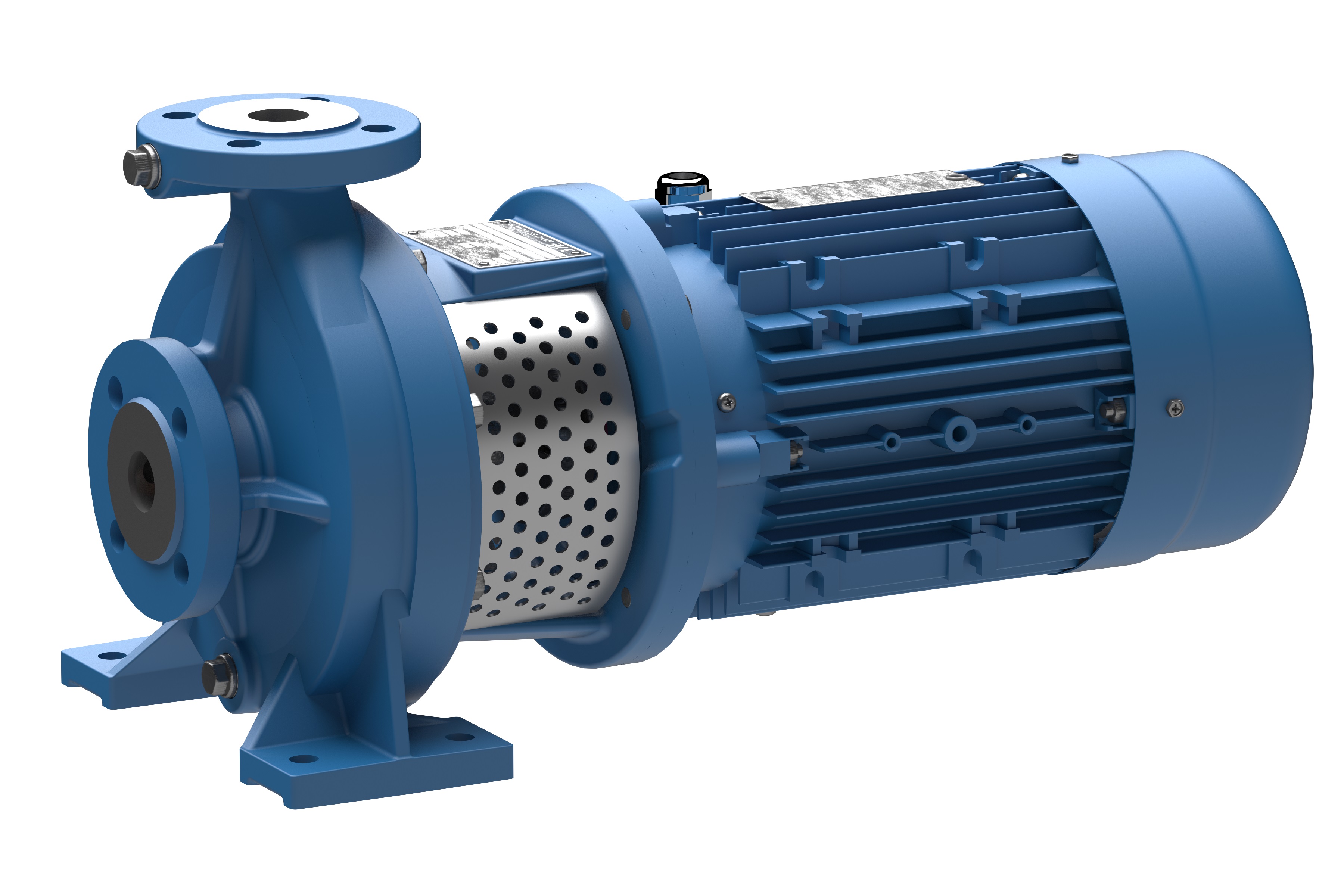
- NB 80
- NB 100
- NB 125
- NB 150
- NB 200
- 50
- 1000
- 60
- 140
- Standard
Aurora Pump (Pentair)
1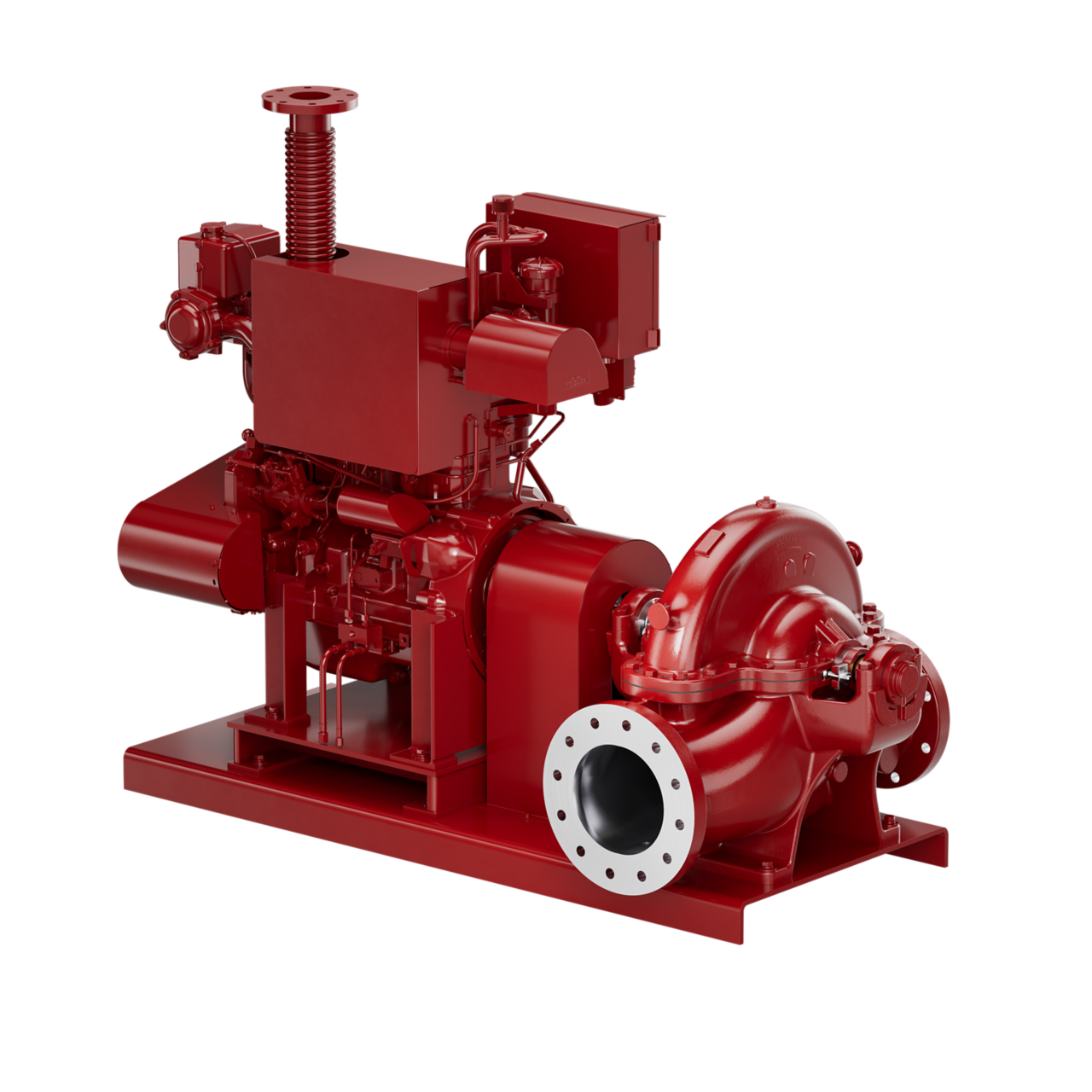
- 480
- 481
- 482
- 485
- 50
- 800
- 60
- 150
- Casing joint leakage
- Bearing wear
- Seal leakage
Azcue Pumps
1- CA 50
- CA 65
- CA 80
- CA 100
- CA 125
- CA 150
- 30
- 500
- 60
- 120
- Mechanical seal leakage
- Bearing wear
- Impeller corrosion
- Cavitation
DESMI
1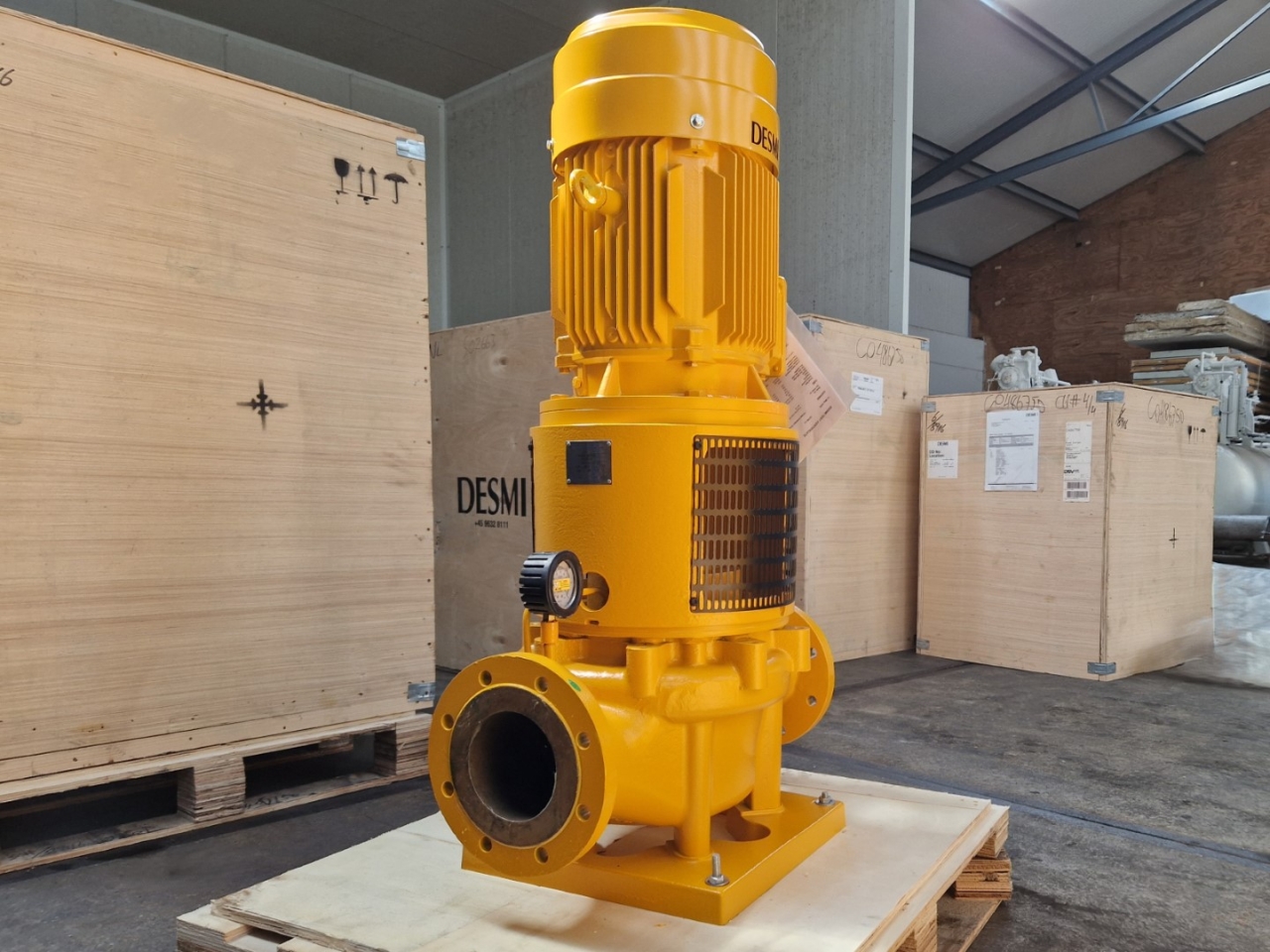
- NSL 80
- NSL 100
- NSL 125
- NSL 150
- NSL 200
- 50
- 1000
- 60
- 120
- Mechanical seal leakage
- Bearing wear from infrequent operation
- Impeller seizure from corrosion (rarely run)
- Cavitation under emergency suction conditions
FFE Marine
1
- FFE 50
- FFE 65
- FFE 80
- 30
- 200
- 60
- 100
- Diesel start failure
- Priming
Hyup Sung
1
- 80
- 100
- 125
- 150
- 200
- 50
- 800
- 60
- 120
- Standard
IMO
1
- Poor suction conditions, blockage or air ingress cause low flow, cavitation-like noise or unstable discharge
- Seal, packing or gasket wear causes visible leakage and falling system pressure
- Bearing, shaft or coupling wear causes vibration, abnormal noise or rising temperature
- Impeller, screw or other pumping-element wear or fouling reduces capacity and may increase drive load
- Motor, hydraulic-drive, valve or control faults cause failure to start, reduced speed or protective trips
- High flow rate and pressure to effectively fight fires in various vessel compartments
- Redundant emergency power source ensures continued operation even during primary power loss
- Compact design suitable for installation on smaller vessels
- Mechanical seal leakage and impeller wear are potential failure modes that require regular maintenance
- Bearing overheating can occur if not properly cooled or lubricated
- Higher upfront cost compared to other fire pump options
Iron Eagle (Dongil)
1- 80
- 100
- 125
- 150
- 200
- 250
- 50
- 1000
- 60
- 140
- Standard
Iron Pump
1- CN 80
- CN 100
- CN 125
- CVL 100
- CVL 150
- CVL 200
- 50
- 1500
- 60
- 150
- Standard fire pump modes
- Bearing wear from infrequent run
Mitsubishi
1- MA 100
- MA 125
- MA 150
- MA 200
- MA 250
- MA 300
- 100
- 2000
- 80
- 150
- Standard heavy-duty
Patterson Pump (Gorman-Rupp)
1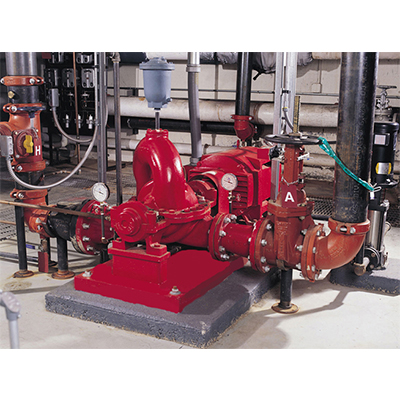
- 3x4-13
- 4x6-13
- 6x8-13
- 8x10-13
- 50
- 1000
- 60
- 150
- Standard
SPX FLOW (Johnson)
1- 80
- 100
- 125
- 150
- 200
- 250
- 50
- 1500
- 60
- 150
- Standard
Survitec (Coltri)
1- EFP 50
- EFP 65
- EFP 80
- EFP 100
- 30
- 300
- 60
- 120
- Diesel start failure (battery, fuel)
- Pump priming failure
- Mechanical seal leakage
- Bearing wear
Yong-Lin Machinery
1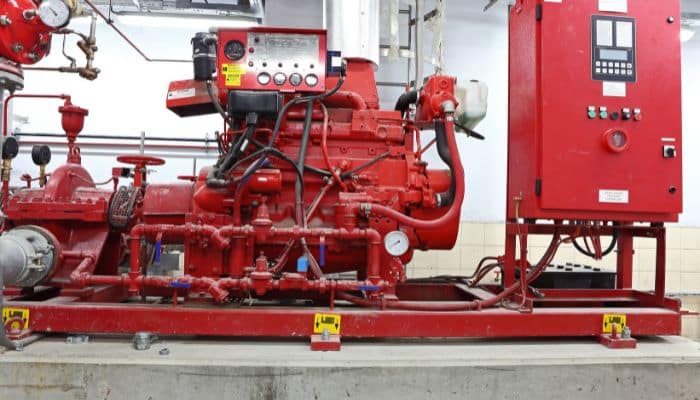
- 80
- 100
- 125
- 150
- 200
- 250
- 50
- 1200
- 60
- 140
- Standard