Offshore Crane
An offshore crane lifts and lowers loads while the vessel itself is moving under wave action, using active or passive heave compensation to hold the load steady relative to a fixed platform or another vessel, which a standard deck crane has no way of doing.
Read more — Offshore Crane explained ▾
What sets an offshore crane apart
A general cargo crane lifts and lowers a load on a stationary or slowly rolling ship, with the operator judging timing against the ship's own motion. An offshore crane routinely has to land a load on, or lift it from, a structure that is not moving with the ship at all: a fixed platform, another vessel, or the seabed. Vessel heave, roll and pitch mean the crane tip is constantly changing position relative to the load's destination. Offshore cranes handle this with active or passive heave compensation, letting the winch pay out or take in wire to hold the load at a near-constant position, or under near-constant tension, regardless of the vessel's motion.
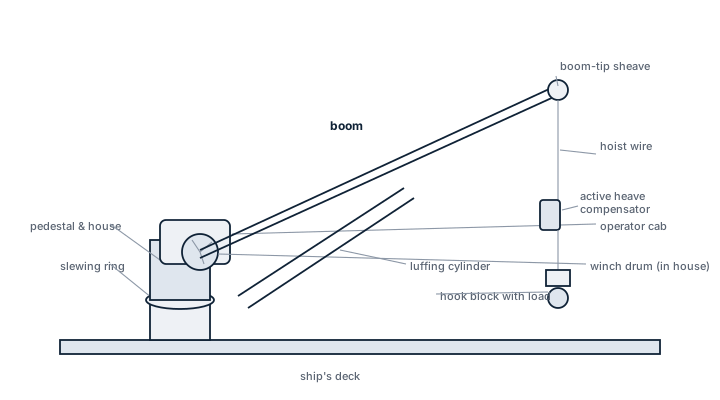
Main components
Pedestal and slew system
Fixed base and slewing ring carrying the full crane, with hydraulic or electric slew drives; on larger offshore cranes the pedestal is a significant structural item engineered into the ship's hull.
Boom and luffing system
Knuckle-boom or lattice-boom designs are both used; knuckle booms fold compactly for stowage and give better reach control close to the vessel, lattice booms give greater reach and capacity at longer radius.
Main and auxiliary winch
The main winch carries the working load; the heave compensation system, whether active and constantly driven by the control system, or passive and reacting to line tension, sits in or alongside this winch.
Motion reference unit
Feeds real-time vessel motion data to the crane's control system on active heave-compensated cranes, so the winch can counteract heave in near real time rather than reacting after the fact.
Selection and sizing
- Safe working load at the required radius, read from the crane's full load chart, not a single headline lifting capacity figure.
- Heave compensation performance: stroke length and response time against the sea states the vessel is expected to operate in.
- Duty class and design factor appropriate to the lift type: cargo transfer, subsea, or personnel transfer, which carry different safety factors.
- Deck footprint, pedestal strength requirement and reach against the vessel's actual operating envelope.
Regulations and class
Class societies certify offshore cranes against their own lifting appliance rules, which set design factors, proof-load and periodic test requirements distinct from cargo gear rules. Cranes used for personnel transfer carry additional certification and are subject to stricter design factors and independent wire rope condition monitoring. Periodic thorough examination and load testing intervals are set by class and enforced through the vessel's safety management system.
Typical faults
| Fault | Cause | Consequence |
|---|---|---|
| Heave compensation lag | Motion reference unit miscalibrated or control tuning not matched to the actual sea state | Load impact or snatch loading at the point of transfer |
| Wire rope degradation | Repeated snatch loading and fleet angle issues on the compensated winch | Accelerated fatigue, risk of rope failure under load |
| Slew or luff drift under load | Hydraulic system leakage or wear in holding valves | Uncontrolled load movement, particularly hazardous during personnel transfer |
| Overload trip in a following sea | Load chart used without correcting for dynamic amplification from vessel motion | Emergency stop mid-lift, or exceeding the crane's rated capacity |
What to look for in a supplier
- Class type approval for the specific crane model and, separately, for its heave compensation system.
- Documented compensation performance tested against real sea-state data, not simulation alone.
- Track record with the specific transfer type intended, since certification and safety case differ between cargo, subsea and personnel transfer.
- Remote diagnostics and a service network reachable at the vessel's actual operating area.
Treat the crane's load chart as a starting point, not the answer, in any real sea state; dynamic amplification from vessel motion can exceed the static safe working load well before the operator sees a warning.
25 manufacturers · 208 models
Liebherr Maritime
40- Traglastbereich (CBG Serie)
- CBG 300: 25 t (Hook), CBG 350: 35 t Grab / 45 t Hook, CBG 500E: bis 90 t Grab
- Traglastbereich (RL Serie)
- RL 650: bis 30 t, RL 1500: bis 40 t, RL 2650: bis 60 t, RL 4200: bis 100 t
- Traglastbereich (MTC Serie)
- MTC 1900: bis 75 t, MTC 3100: bis 100 t, MTC 6000: bis 150 t, MTC 78000: bis 300 t
- Traglastbereich (BOS Serie)
- BOS 2600: bis 100 t, BOS 4200: bis 140 t, BOS 14000: bis 600 t
- Traglastbereich (LS-C Serie)
- LS-C 60: 60 t / 32m Auslegerlänge, LS-C 80: 80 t / 38m, LS-C 100: 100 t / 43m
- Antrieb / Steuerung
- Diesel-hydraulic or Electro-hydraulic, Litronic control system, hydraulic hoses with chromium-nickel plating
- Drehkranz
- Large-diameter roller bearing slewing rings (e.g. ~9 m diameter, ~70 t in BOS series), lubrication and sealing systems
- Inspektionsintervalle
- After ~20,000 operating hours or per statutory requirement (DGUV, ISO 4309); daily visual inspection, annual expert inspection
- CBG (Floating Cargo Cranes)
- CBW (Cylinder Luffing Ship Cranes)
- RL (Ram Luffing Cranes)
- RL-K (Ram Luffing Knuckle Boom Cranes)
- MTC (Mast Type Cranes)
- BOS (Board Offshore Cranes)
- LS-C (Cylinder Luffing Ship Cranes)
- Area: Wire rope wear: diameter reduction >10% (natural fibre core) or >5% (steel core), wire breaks in groups, kinks, waves, twists, corrosion, pittingCheck: Visual daily inspection per ISO 4309:2017; caliper for diameter; magnetic inductive inspection (MRI) for suspected internal damage; inspection points: drum anchorage, loading, deflection over sheaves, loaded rope sections
- Area: Slewing ring: sealing system worn (leaks, contaminated lubrication), tooth wear (check engagement), bearing clearance, vibrations, temperature increaseCheck: Visual inspection for lubricant leakage; check seals for wear and contamination; vibration and temperature monitoring; overhaul by qualified Liebherr service with specialized equipment if needed
- Area: Hydraulic system: pressure loss, leaks at cylinders/pipes, hydraulic fluid contaminated or oxidized, valve and control function impairedCheck: Drucktest (Pressure Test) gegen spezifizierte Solldrücke; Sichtprüfung auf Flüssigkeitsverluste; Ölprobenanalyse (Condition Monitoring); Funktionsprüfung aller Hubfunktionen (Heben, Schwenken, Luffing)
- Area: Hook/Hook-block: cracks, plastic deformation, wear on running surfaces, notches or scratches, damage to load deflection surfacesCheck: Visual surface inspection for surface cracks and deformation; NDT inspection (X-ray/MRI) at critical hooks for internal damage; load test: ~25% above rated load capacity; inspection of hook locking and wear marks
- Area: Steel structure / boom / jib: corrosion, surface cracks (especially at welds and load introduction points), plastic deformation, welded repairsCheck: Surface rust and corrosion by visual inspection; NDT inspection (ultrasonic, X-ray) at critical welds; dimensional check of geometric tolerances; overhaul by Service Centre Steel with welding/structural analysis if required
- Area: Electrical / control (Litronic system): cable insulation faults, connectors/contacts oxidized or corroded, malfunction of control systems, overload/underloadCheck: Visual inspection of all electrical connections for corrosion in saltwater environment; functional test of overload protection and indicators; continuity test of critical circuits; lithium battery/accumulator condition check on electro-hydraulic systems
Type-universal inspection/service points for Deck Cranes (Liebherr Maritime, Mega-Schwarm 2026-06). Per-model specs not auto-filled.
- Traglastbereich (CBG Serie)
- CBG 300: 25 t (Hook), CBG 350: 35 t Grab / 45 t Hook, CBG 500E: bis 90 t Grab
- Traglastbereich (RL Serie)
- RL 650: bis 30 t, RL 1500: bis 40 t, RL 2650: bis 60 t, RL 4200: bis 100 t
- Traglastbereich (MTC Serie)
- MTC 1900: bis 75 t, MTC 3100: bis 100 t, MTC 6000: bis 150 t, MTC 78000: bis 300 t
- Traglastbereich (BOS Serie)
- BOS 2600: bis 100 t, BOS 4200: bis 140 t, BOS 14000: bis 600 t
- Traglastbereich (LS-C Serie)
- LS-C 60: 60 t / 32m Auslegerlänge, LS-C 80: 80 t / 38m, LS-C 100: 100 t / 43m
- Antrieb / Steuerung
- Diesel-hydraulic or Electro-hydraulic, Litronic control system, hydraulic hoses with chromium-nickel plating
- Drehkranz
- Large-diameter roller bearing slewing rings (e.g. ~9 m diameter, ~70 t in BOS series), lubrication and sealing systems
- Inspektionsintervalle
- After ~20,000 operating hours or per statutory requirement (DGUV, ISO 4309); daily visual inspection, annual expert inspection
- CBG (Floating Cargo Cranes)
- CBW (Cylinder Luffing Ship Cranes)
- RL (Ram Luffing Cranes)
- RL-K (Ram Luffing Knuckle Boom Cranes)
- MTC (Mast Type Cranes)
- BOS (Board Offshore Cranes)
- LS-C (Cylinder Luffing Ship Cranes)
- Area: Wire rope wear: diameter reduction >10% (natural fibre core) or >5% (steel core), wire breaks in groups, kinks, waves, twists, corrosion, pittingCheck: Visual daily inspection per ISO 4309:2017; caliper for diameter; magnetic inductive inspection (MRI) for suspected internal damage; inspection points: drum anchorage, loading, deflection over sheaves, loaded rope sections
- Area: Slewing ring: sealing system worn (leaks, contaminated lubrication), tooth wear (check engagement), bearing clearance, vibrations, temperature increaseCheck: Visual inspection for lubricant leakage; check seals for wear and contamination; vibration and temperature monitoring; overhaul by qualified Liebherr service with specialized equipment if needed
- Area: Hydraulic system: pressure loss, leaks at cylinders/pipes, hydraulic fluid contaminated or oxidized, valve and control function impairedCheck: Drucktest (Pressure Test) gegen spezifizierte Solldrücke; Sichtprüfung auf Flüssigkeitsverluste; Ölprobenanalyse (Condition Monitoring); Funktionsprüfung aller Hubfunktionen (Heben, Schwenken, Luffing)
- Area: Hook/Hook-block: cracks, plastic deformation, wear on running surfaces, notches or scratches, damage to load deflection surfacesCheck: Visual surface inspection for surface cracks and deformation; NDT inspection (X-ray/MRI) at critical hooks for internal damage; load test: ~25% above rated load capacity; inspection of hook locking and wear marks
- Area: Steel structure / boom / jib: corrosion, surface cracks (especially at welds and load introduction points), plastic deformation, welded repairsCheck: Surface rust and corrosion by visual inspection; NDT inspection (ultrasonic, X-ray) at critical welds; dimensional check of geometric tolerances; overhaul by Service Centre Steel with welding/structural analysis if required
- Area: Electrical / control (Litronic system): cable insulation faults, connectors/contacts oxidized or corroded, malfunction of control systems, overload/underloadCheck: Visual inspection of all electrical connections for corrosion in saltwater environment; functional test of overload protection and indicators; continuity test of critical circuits; lithium battery/accumulator condition check on electro-hydraulic systems
Type-universal inspection/service points for Deck Cranes (Liebherr Maritime, Mega-Schwarm 2026-06). Per-model specs not auto-filled.
- Traglastbereich (CBG Serie)
- CBG 300: 25 t (Hook), CBG 350: 35 t Grab / 45 t Hook, CBG 500E: bis 90 t Grab
- Traglastbereich (RL Serie)
- RL 650: bis 30 t, RL 1500: bis 40 t, RL 2650: bis 60 t, RL 4200: bis 100 t
- Traglastbereich (MTC Serie)
- MTC 1900: bis 75 t, MTC 3100: bis 100 t, MTC 6000: bis 150 t, MTC 78000: bis 300 t
- Traglastbereich (BOS Serie)
- BOS 2600: bis 100 t, BOS 4200: bis 140 t, BOS 14000: bis 600 t
- Traglastbereich (LS-C Serie)
- LS-C 60: 60 t / 32m Auslegerlänge, LS-C 80: 80 t / 38m, LS-C 100: 100 t / 43m
- Antrieb / Steuerung
- Diesel-hydraulic or Electro-hydraulic, Litronic control system, hydraulic hoses with chromium-nickel plating
- Drehkranz
- Large-diameter roller bearing slewing rings (e.g. ~9 m diameter, ~70 t in BOS series), lubrication and sealing systems
- Inspektionsintervalle
- After ~20,000 operating hours or per statutory requirement (DGUV, ISO 4309); daily visual inspection, annual expert inspection
- CBG (Floating Cargo Cranes)
- CBW (Cylinder Luffing Ship Cranes)
- RL (Ram Luffing Cranes)
- RL-K (Ram Luffing Knuckle Boom Cranes)
- MTC (Mast Type Cranes)
- BOS (Board Offshore Cranes)
- LS-C (Cylinder Luffing Ship Cranes)
- Area: Wire rope wear: diameter reduction >10% (natural fibre core) or >5% (steel core), wire breaks in groups, kinks, waves, twists, corrosion, pittingCheck: Visual daily inspection per ISO 4309:2017; caliper for diameter; magnetic inductive inspection (MRI) for suspected internal damage; inspection points: drum anchorage, loading, deflection over sheaves, loaded rope sections
- Area: Slewing ring: sealing system worn (leaks, contaminated lubrication), tooth wear (check engagement), bearing clearance, vibrations, temperature increaseCheck: Visual inspection for lubricant leakage; check seals for wear and contamination; vibration and temperature monitoring; overhaul by qualified Liebherr service with specialized equipment if needed
- Area: Hydraulic system: pressure loss, leaks at cylinders/pipes, hydraulic fluid contaminated or oxidized, valve and control function impairedCheck: Drucktest (Pressure Test) gegen spezifizierte Solldrücke; Sichtprüfung auf Flüssigkeitsverluste; Ölprobenanalyse (Condition Monitoring); Funktionsprüfung aller Hubfunktionen (Heben, Schwenken, Luffing)
- Area: Hook/Hook-block: cracks, plastic deformation, wear on running surfaces, notches or scratches, damage to load deflection surfacesCheck: Visual surface inspection for surface cracks and deformation; NDT inspection (X-ray/MRI) at critical hooks for internal damage; load test: ~25% above rated load capacity; inspection of hook locking and wear marks
- Area: Steel structure / boom / jib: corrosion, surface cracks (especially at welds and load introduction points), plastic deformation, welded repairsCheck: Surface rust and corrosion by visual inspection; NDT inspection (ultrasonic, X-ray) at critical welds; dimensional check of geometric tolerances; overhaul by Service Centre Steel with welding/structural analysis if required
- Area: Electrical / control (Litronic system): cable insulation faults, connectors/contacts oxidized or corroded, malfunction of control systems, overload/underloadCheck: Visual inspection of all electrical connections for corrosion in saltwater environment; functional test of overload protection and indicators; continuity test of critical circuits; lithium battery/accumulator condition check on electro-hydraulic systems
Type-universal inspection/service points for Deck Cranes (Liebherr Maritime, Mega-Schwarm 2026-06). Per-model specs not auto-filled.
- Traglastbereich (CBG Serie)
- CBG 300: 25 t (Hook), CBG 350: 35 t Grab / 45 t Hook, CBG 500E: bis 90 t Grab
- Traglastbereich (RL Serie)
- RL 650: bis 30 t, RL 1500: bis 40 t, RL 2650: bis 60 t, RL 4200: bis 100 t
- Traglastbereich (MTC Serie)
- MTC 1900: bis 75 t, MTC 3100: bis 100 t, MTC 6000: bis 150 t, MTC 78000: bis 300 t
- Traglastbereich (BOS Serie)
- BOS 2600: bis 100 t, BOS 4200: bis 140 t, BOS 14000: bis 600 t
- Traglastbereich (LS-C Serie)
- LS-C 60: 60 t / 32m Auslegerlänge, LS-C 80: 80 t / 38m, LS-C 100: 100 t / 43m
- Antrieb / Steuerung
- Diesel-hydraulic or Electro-hydraulic, Litronic control system, hydraulic hoses with chromium-nickel plating
- Drehkranz
- Large-diameter roller bearing slewing rings (e.g. ~9 m diameter, ~70 t in BOS series), lubrication and sealing systems
- Inspektionsintervalle
- After ~20,000 operating hours or per statutory requirement (DGUV, ISO 4309); daily visual inspection, annual expert inspection
- CBG (Floating Cargo Cranes)
- CBW (Cylinder Luffing Ship Cranes)
- RL (Ram Luffing Cranes)
- RL-K (Ram Luffing Knuckle Boom Cranes)
- MTC (Mast Type Cranes)
- BOS (Board Offshore Cranes)
- LS-C (Cylinder Luffing Ship Cranes)
- Area: Wire rope wear: diameter reduction >10% (natural fibre core) or >5% (steel core), wire breaks in groups, kinks, waves, twists, corrosion, pittingCheck: Visual daily inspection per ISO 4309:2017; caliper for diameter; magnetic inductive inspection (MRI) for suspected internal damage; inspection points: drum anchorage, loading, deflection over sheaves, loaded rope sections
- Area: Slewing ring: sealing system worn (leaks, contaminated lubrication), tooth wear (check engagement), bearing clearance, vibrations, temperature increaseCheck: Visual inspection for lubricant leakage; check seals for wear and contamination; vibration and temperature monitoring; overhaul by qualified Liebherr service with specialized equipment if needed
- Area: Hydraulic system: pressure loss, leaks at cylinders/pipes, hydraulic fluid contaminated or oxidized, valve and control function impairedCheck: Drucktest (Pressure Test) gegen spezifizierte Solldrücke; Sichtprüfung auf Flüssigkeitsverluste; Ölprobenanalyse (Condition Monitoring); Funktionsprüfung aller Hubfunktionen (Heben, Schwenken, Luffing)
- Area: Hook/Hook-block: cracks, plastic deformation, wear on running surfaces, notches or scratches, damage to load deflection surfacesCheck: Visual surface inspection for surface cracks and deformation; NDT inspection (X-ray/MRI) at critical hooks for internal damage; load test: ~25% above rated load capacity; inspection of hook locking and wear marks
- Area: Steel structure / boom / jib: corrosion, surface cracks (especially at welds and load introduction points), plastic deformation, welded repairsCheck: Surface rust and corrosion by visual inspection; NDT inspection (ultrasonic, X-ray) at critical welds; dimensional check of geometric tolerances; overhaul by Service Centre Steel with welding/structural analysis if required
- Area: Electrical / control (Litronic system): cable insulation faults, connectors/contacts oxidized or corroded, malfunction of control systems, overload/underloadCheck: Visual inspection of all electrical connections for corrosion in saltwater environment; functional test of overload protection and indicators; continuity test of critical circuits; lithium battery/accumulator condition check on electro-hydraulic systems
Type-universal inspection/service points for Deck Cranes (Liebherr Maritime, Mega-Schwarm 2026-06). Per-model specs not auto-filled.
- Traglastbereich (CBG Serie)
- CBG 300: 25 t (Hook), CBG 350: 35 t Grab / 45 t Hook, CBG 500E: bis 90 t Grab
- Traglastbereich (RL Serie)
- RL 650: bis 30 t, RL 1500: bis 40 t, RL 2650: bis 60 t, RL 4200: bis 100 t
- Traglastbereich (MTC Serie)
- MTC 1900: bis 75 t, MTC 3100: bis 100 t, MTC 6000: bis 150 t, MTC 78000: bis 300 t
- Traglastbereich (BOS Serie)
- BOS 2600: bis 100 t, BOS 4200: bis 140 t, BOS 14000: bis 600 t
- Traglastbereich (LS-C Serie)
- LS-C 60: 60 t / 32m Auslegerlänge, LS-C 80: 80 t / 38m, LS-C 100: 100 t / 43m
- Antrieb / Steuerung
- Diesel-hydraulic or Electro-hydraulic, Litronic control system, hydraulic hoses with chromium-nickel plating
- Drehkranz
- Large-diameter roller bearing slewing rings (e.g. ~9 m diameter, ~70 t in BOS series), lubrication and sealing systems
- Inspektionsintervalle
- After ~20,000 operating hours or per statutory requirement (DGUV, ISO 4309); daily visual inspection, annual expert inspection
- CBG (Floating Cargo Cranes)
- CBW (Cylinder Luffing Ship Cranes)
- RL (Ram Luffing Cranes)
- RL-K (Ram Luffing Knuckle Boom Cranes)
- MTC (Mast Type Cranes)
- BOS (Board Offshore Cranes)
- LS-C (Cylinder Luffing Ship Cranes)
- Area: Wire rope wear: diameter reduction >10% (natural fibre core) or >5% (steel core), wire breaks in groups, kinks, waves, twists, corrosion, pittingCheck: Visual daily inspection per ISO 4309:2017; caliper for diameter; magnetic inductive inspection (MRI) for suspected internal damage; inspection points: drum anchorage, loading, deflection over sheaves, loaded rope sections
- Area: Slewing ring: sealing system worn (leaks, contaminated lubrication), tooth wear (check engagement), bearing clearance, vibrations, temperature increaseCheck: Visual inspection for lubricant leakage; check seals for wear and contamination; vibration and temperature monitoring; overhaul by qualified Liebherr service with specialized equipment if needed
- Area: Hydraulic system: pressure loss, leaks at cylinders/pipes, hydraulic fluid contaminated or oxidized, valve and control function impairedCheck: Drucktest (Pressure Test) gegen spezifizierte Solldrücke; Sichtprüfung auf Flüssigkeitsverluste; Ölprobenanalyse (Condition Monitoring); Funktionsprüfung aller Hubfunktionen (Heben, Schwenken, Luffing)
- Area: Hook/Hook-block: cracks, plastic deformation, wear on running surfaces, notches or scratches, damage to load deflection surfacesCheck: Visual surface inspection for surface cracks and deformation; NDT inspection (X-ray/MRI) at critical hooks for internal damage; load test: ~25% above rated load capacity; inspection of hook locking and wear marks
- Area: Steel structure / boom / jib: corrosion, surface cracks (especially at welds and load introduction points), plastic deformation, welded repairsCheck: Surface rust and corrosion by visual inspection; NDT inspection (ultrasonic, X-ray) at critical welds; dimensional check of geometric tolerances; overhaul by Service Centre Steel with welding/structural analysis if required
- Area: Electrical / control (Litronic system): cable insulation faults, connectors/contacts oxidized or corroded, malfunction of control systems, overload/underloadCheck: Visual inspection of all electrical connections for corrosion in saltwater environment; functional test of overload protection and indicators; continuity test of critical circuits; lithium battery/accumulator condition check on electro-hydraulic systems
Type-universal inspection/service points for Deck Cranes (Liebherr Maritime, Mega-Schwarm 2026-06). Per-model specs not auto-filled.
- Traglastbereich (CBG Serie)
- CBG 300: 25 t (Hook), CBG 350: 35 t Grab / 45 t Hook, CBG 500E: bis 90 t Grab
- Traglastbereich (RL Serie)
- RL 650: bis 30 t, RL 1500: bis 40 t, RL 2650: bis 60 t, RL 4200: bis 100 t
- Traglastbereich (MTC Serie)
- MTC 1900: bis 75 t, MTC 3100: bis 100 t, MTC 6000: bis 150 t, MTC 78000: bis 300 t
- Traglastbereich (BOS Serie)
- BOS 2600: bis 100 t, BOS 4200: bis 140 t, BOS 14000: bis 600 t
- Traglastbereich (LS-C Serie)
- LS-C 60: 60 t / 32m Auslegerlänge, LS-C 80: 80 t / 38m, LS-C 100: 100 t / 43m
- Antrieb / Steuerung
- Diesel-hydraulic or Electro-hydraulic, Litronic control system, hydraulic hoses with chromium-nickel plating
- Drehkranz
- Large-diameter roller bearing slewing rings (e.g. ~9 m diameter, ~70 t in BOS series), lubrication and sealing systems
- Inspektionsintervalle
- After ~20,000 operating hours or per statutory requirement (DGUV, ISO 4309); daily visual inspection, annual expert inspection
- CBG (Floating Cargo Cranes)
- CBW (Cylinder Luffing Ship Cranes)
- RL (Ram Luffing Cranes)
- RL-K (Ram Luffing Knuckle Boom Cranes)
- MTC (Mast Type Cranes)
- BOS (Board Offshore Cranes)
- LS-C (Cylinder Luffing Ship Cranes)
- Area: Wire rope wear: diameter reduction >10% (natural fibre core) or >5% (steel core), wire breaks in groups, kinks, waves, twists, corrosion, pittingCheck: Visual daily inspection per ISO 4309:2017; caliper for diameter; magnetic inductive inspection (MRI) for suspected internal damage; inspection points: drum anchorage, loading, deflection over sheaves, loaded rope sections
- Area: Slewing ring: sealing system worn (leaks, contaminated lubrication), tooth wear (check engagement), bearing clearance, vibrations, temperature increaseCheck: Visual inspection for lubricant leakage; check seals for wear and contamination; vibration and temperature monitoring; overhaul by qualified Liebherr service with specialized equipment if needed
- Area: Hydraulic system: pressure loss, leaks at cylinders/pipes, hydraulic fluid contaminated or oxidized, valve and control function impairedCheck: Drucktest (Pressure Test) gegen spezifizierte Solldrücke; Sichtprüfung auf Flüssigkeitsverluste; Ölprobenanalyse (Condition Monitoring); Funktionsprüfung aller Hubfunktionen (Heben, Schwenken, Luffing)
- Area: Hook/Hook-block: cracks, plastic deformation, wear on running surfaces, notches or scratches, damage to load deflection surfacesCheck: Visual surface inspection for surface cracks and deformation; NDT inspection (X-ray/MRI) at critical hooks for internal damage; load test: ~25% above rated load capacity; inspection of hook locking and wear marks
- Area: Steel structure / boom / jib: corrosion, surface cracks (especially at welds and load introduction points), plastic deformation, welded repairsCheck: Surface rust and corrosion by visual inspection; NDT inspection (ultrasonic, X-ray) at critical welds; dimensional check of geometric tolerances; overhaul by Service Centre Steel with welding/structural analysis if required
- Area: Electrical / control (Litronic system): cable insulation faults, connectors/contacts oxidized or corroded, malfunction of control systems, overload/underloadCheck: Visual inspection of all electrical connections for corrosion in saltwater environment; functional test of overload protection and indicators; continuity test of critical circuits; lithium battery/accumulator condition check on electro-hydraulic systems
Type-universal inspection/service points for Deck Cranes (Liebherr Maritime, Mega-Schwarm 2026-06). Per-model specs not auto-filled.
- Traglastbereich (CBG Serie)
- CBG 300: 25 t (Hook), CBG 350: 35 t Grab / 45 t Hook, CBG 500E: bis 90 t Grab
- Traglastbereich (RL Serie)
- RL 650: bis 30 t, RL 1500: bis 40 t, RL 2650: bis 60 t, RL 4200: bis 100 t
- Traglastbereich (MTC Serie)
- MTC 1900: bis 75 t, MTC 3100: bis 100 t, MTC 6000: bis 150 t, MTC 78000: bis 300 t
- Traglastbereich (BOS Serie)
- BOS 2600: bis 100 t, BOS 4200: bis 140 t, BOS 14000: bis 600 t
- Traglastbereich (LS-C Serie)
- LS-C 60: 60 t / 32m Auslegerlänge, LS-C 80: 80 t / 38m, LS-C 100: 100 t / 43m
- Antrieb / Steuerung
- Diesel-hydraulic or Electro-hydraulic, Litronic control system, hydraulic hoses with chromium-nickel plating
- Drehkranz
- Large-diameter roller bearing slewing rings (e.g. ~9 m diameter, ~70 t in BOS series), lubrication and sealing systems
- Inspektionsintervalle
- After ~20,000 operating hours or per statutory requirement (DGUV, ISO 4309); daily visual inspection, annual expert inspection
- CBG (Floating Cargo Cranes)
- CBW (Cylinder Luffing Ship Cranes)
- RL (Ram Luffing Cranes)
- RL-K (Ram Luffing Knuckle Boom Cranes)
- MTC (Mast Type Cranes)
- BOS (Board Offshore Cranes)
- LS-C (Cylinder Luffing Ship Cranes)
- Area: Wire rope wear: diameter reduction >10% (natural fibre core) or >5% (steel core), wire breaks in groups, kinks, waves, twists, corrosion, pittingCheck: Visual daily inspection per ISO 4309:2017; caliper for diameter; magnetic inductive inspection (MRI) for suspected internal damage; inspection points: drum anchorage, loading, deflection over sheaves, loaded rope sections
- Area: Slewing ring: sealing system worn (leaks, contaminated lubrication), tooth wear (check engagement), bearing clearance, vibrations, temperature increaseCheck: Visual inspection for lubricant leakage; check seals for wear and contamination; vibration and temperature monitoring; overhaul by qualified Liebherr service with specialized equipment if needed
- Area: Hydraulic system: pressure loss, leaks at cylinders/pipes, hydraulic fluid contaminated or oxidized, valve and control function impairedCheck: Drucktest (Pressure Test) gegen spezifizierte Solldrücke; Sichtprüfung auf Flüssigkeitsverluste; Ölprobenanalyse (Condition Monitoring); Funktionsprüfung aller Hubfunktionen (Heben, Schwenken, Luffing)
- Area: Hook/Hook-block: cracks, plastic deformation, wear on running surfaces, notches or scratches, damage to load deflection surfacesCheck: Visual surface inspection for surface cracks and deformation; NDT inspection (X-ray/MRI) at critical hooks for internal damage; load test: ~25% above rated load capacity; inspection of hook locking and wear marks
- Area: Steel structure / boom / jib: corrosion, surface cracks (especially at welds and load introduction points), plastic deformation, welded repairsCheck: Surface rust and corrosion by visual inspection; NDT inspection (ultrasonic, X-ray) at critical welds; dimensional check of geometric tolerances; overhaul by Service Centre Steel with welding/structural analysis if required
- Area: Electrical / control (Litronic system): cable insulation faults, connectors/contacts oxidized or corroded, malfunction of control systems, overload/underloadCheck: Visual inspection of all electrical connections for corrosion in saltwater environment; functional test of overload protection and indicators; continuity test of critical circuits; lithium battery/accumulator condition check on electro-hydraulic systems
Type-universal inspection/service points for Deck Cranes (Liebherr Maritime, Mega-Schwarm 2026-06). Per-model specs not auto-filled.
- Traglastbereich (CBG Serie)
- CBG 300: 25 t (Hook), CBG 350: 35 t Grab / 45 t Hook, CBG 500E: bis 90 t Grab
- Traglastbereich (RL Serie)
- RL 650: bis 30 t, RL 1500: bis 40 t, RL 2650: bis 60 t, RL 4200: bis 100 t
- Traglastbereich (MTC Serie)
- MTC 1900: bis 75 t, MTC 3100: bis 100 t, MTC 6000: bis 150 t, MTC 78000: bis 300 t
- Traglastbereich (BOS Serie)
- BOS 2600: bis 100 t, BOS 4200: bis 140 t, BOS 14000: bis 600 t
- Traglastbereich (LS-C Serie)
- LS-C 60: 60 t / 32m Auslegerlänge, LS-C 80: 80 t / 38m, LS-C 100: 100 t / 43m
- Antrieb / Steuerung
- Diesel-hydraulic or Electro-hydraulic, Litronic control system, hydraulic hoses with chromium-nickel plating
- Drehkranz
- Large-diameter roller bearing slewing rings (e.g. ~9 m diameter, ~70 t in BOS series), lubrication and sealing systems
- Inspektionsintervalle
- After ~20,000 operating hours or per statutory requirement (DGUV, ISO 4309); daily visual inspection, annual expert inspection
- CBG (Floating Cargo Cranes)
- CBW (Cylinder Luffing Ship Cranes)
- RL (Ram Luffing Cranes)
- RL-K (Ram Luffing Knuckle Boom Cranes)
- MTC (Mast Type Cranes)
- BOS (Board Offshore Cranes)
- LS-C (Cylinder Luffing Ship Cranes)
- Area: Wire rope wear: diameter reduction >10% (natural fibre core) or >5% (steel core), wire breaks in groups, kinks, waves, twists, corrosion, pittingCheck: Visual daily inspection per ISO 4309:2017; caliper for diameter; magnetic inductive inspection (MRI) for suspected internal damage; inspection points: drum anchorage, loading, deflection over sheaves, loaded rope sections
- Area: Slewing ring: sealing system worn (leaks, contaminated lubrication), tooth wear (check engagement), bearing clearance, vibrations, temperature increaseCheck: Visual inspection for lubricant leakage; check seals for wear and contamination; vibration and temperature monitoring; overhaul by qualified Liebherr service with specialized equipment if needed
- Area: Hydraulic system: pressure loss, leaks at cylinders/pipes, hydraulic fluid contaminated or oxidized, valve and control function impairedCheck: Drucktest (Pressure Test) gegen spezifizierte Solldrücke; Sichtprüfung auf Flüssigkeitsverluste; Ölprobenanalyse (Condition Monitoring); Funktionsprüfung aller Hubfunktionen (Heben, Schwenken, Luffing)
- Area: Hook/Hook-block: cracks, plastic deformation, wear on running surfaces, notches or scratches, damage to load deflection surfacesCheck: Visual surface inspection for surface cracks and deformation; NDT inspection (X-ray/MRI) at critical hooks for internal damage; load test: ~25% above rated load capacity; inspection of hook locking and wear marks
- Area: Steel structure / boom / jib: corrosion, surface cracks (especially at welds and load introduction points), plastic deformation, welded repairsCheck: Surface rust and corrosion by visual inspection; NDT inspection (ultrasonic, X-ray) at critical welds; dimensional check of geometric tolerances; overhaul by Service Centre Steel with welding/structural analysis if required
- Area: Electrical / control (Litronic system): cable insulation faults, connectors/contacts oxidized or corroded, malfunction of control systems, overload/underloadCheck: Visual inspection of all electrical connections for corrosion in saltwater environment; functional test of overload protection and indicators; continuity test of critical circuits; lithium battery/accumulator condition check on electro-hydraulic systems
Type-universal inspection/service points for Deck Cranes (Liebherr Maritime, Mega-Schwarm 2026-06). Per-model specs not auto-filled.
- Traglastbereich (CBG Serie)
- CBG 300: 25 t (Hook), CBG 350: 35 t Grab / 45 t Hook, CBG 500E: bis 90 t Grab
- Traglastbereich (RL Serie)
- RL 650: bis 30 t, RL 1500: bis 40 t, RL 2650: bis 60 t, RL 4200: bis 100 t
- Traglastbereich (MTC Serie)
- MTC 1900: bis 75 t, MTC 3100: bis 100 t, MTC 6000: bis 150 t, MTC 78000: bis 300 t
- Traglastbereich (BOS Serie)
- BOS 2600: bis 100 t, BOS 4200: bis 140 t, BOS 14000: bis 600 t
- Traglastbereich (LS-C Serie)
- LS-C 60: 60 t / 32m Auslegerlänge, LS-C 80: 80 t / 38m, LS-C 100: 100 t / 43m
- Antrieb / Steuerung
- Diesel-hydraulic or Electro-hydraulic, Litronic control system, hydraulic hoses with chromium-nickel plating
- Drehkranz
- Large-diameter roller bearing slewing rings (e.g. ~9 m diameter, ~70 t in BOS series), lubrication and sealing systems
- Inspektionsintervalle
- After ~20,000 operating hours or per statutory requirement (DGUV, ISO 4309); daily visual inspection, annual expert inspection
- CBG (Floating Cargo Cranes)
- CBW (Cylinder Luffing Ship Cranes)
- RL (Ram Luffing Cranes)
- RL-K (Ram Luffing Knuckle Boom Cranes)
- MTC (Mast Type Cranes)
- BOS (Board Offshore Cranes)
- LS-C (Cylinder Luffing Ship Cranes)
- Area: Wire rope wear: diameter reduction >10% (natural fibre core) or >5% (steel core), wire breaks in groups, kinks, waves, twists, corrosion, pittingCheck: Visual daily inspection per ISO 4309:2017; caliper for diameter; magnetic inductive inspection (MRI) for suspected internal damage; inspection points: drum anchorage, loading, deflection over sheaves, loaded rope sections
- Area: Slewing ring: sealing system worn (leaks, contaminated lubrication), tooth wear (check engagement), bearing clearance, vibrations, temperature increaseCheck: Visual inspection for lubricant leakage; check seals for wear and contamination; vibration and temperature monitoring; overhaul by qualified Liebherr service with specialized equipment if needed
- Area: Hydraulic system: pressure loss, leaks at cylinders/pipes, hydraulic fluid contaminated or oxidized, valve and control function impairedCheck: Drucktest (Pressure Test) gegen spezifizierte Solldrücke; Sichtprüfung auf Flüssigkeitsverluste; Ölprobenanalyse (Condition Monitoring); Funktionsprüfung aller Hubfunktionen (Heben, Schwenken, Luffing)
- Area: Hook/Hook-block: cracks, plastic deformation, wear on running surfaces, notches or scratches, damage to load deflection surfacesCheck: Visual surface inspection for surface cracks and deformation; NDT inspection (X-ray/MRI) at critical hooks for internal damage; load test: ~25% above rated load capacity; inspection of hook locking and wear marks
- Area: Steel structure / boom / jib: corrosion, surface cracks (especially at welds and load introduction points), plastic deformation, welded repairsCheck: Surface rust and corrosion by visual inspection; NDT inspection (ultrasonic, X-ray) at critical welds; dimensional check of geometric tolerances; overhaul by Service Centre Steel with welding/structural analysis if required
- Area: Electrical / control (Litronic system): cable insulation faults, connectors/contacts oxidized or corroded, malfunction of control systems, overload/underloadCheck: Visual inspection of all electrical connections for corrosion in saltwater environment; functional test of overload protection and indicators; continuity test of critical circuits; lithium battery/accumulator condition check on electro-hydraulic systems
Type-universal inspection/service points for Deck Cranes (Liebherr Maritime, Mega-Schwarm 2026-06). Per-model specs not auto-filled.
- Traglastbereich (CBG Serie)
- CBG 300: 25 t (Hook), CBG 350: 35 t Grab / 45 t Hook, CBG 500E: bis 90 t Grab
- Traglastbereich (RL Serie)
- RL 650: bis 30 t, RL 1500: bis 40 t, RL 2650: bis 60 t, RL 4200: bis 100 t
- Traglastbereich (MTC Serie)
- MTC 1900: bis 75 t, MTC 3100: bis 100 t, MTC 6000: bis 150 t, MTC 78000: bis 300 t
- Traglastbereich (BOS Serie)
- BOS 2600: bis 100 t, BOS 4200: bis 140 t, BOS 14000: bis 600 t
- Traglastbereich (LS-C Serie)
- LS-C 60: 60 t / 32m Auslegerlänge, LS-C 80: 80 t / 38m, LS-C 100: 100 t / 43m
- Antrieb / Steuerung
- Diesel-hydraulic or Electro-hydraulic, Litronic control system, hydraulic hoses with chromium-nickel plating
- Drehkranz
- Large-diameter roller bearing slewing rings (e.g. ~9 m diameter, ~70 t in BOS series), lubrication and sealing systems
- Inspektionsintervalle
- After ~20,000 operating hours or per statutory requirement (DGUV, ISO 4309); daily visual inspection, annual expert inspection
- CBG (Floating Cargo Cranes)
- CBW (Cylinder Luffing Ship Cranes)
- RL (Ram Luffing Cranes)
- RL-K (Ram Luffing Knuckle Boom Cranes)
- MTC (Mast Type Cranes)
- BOS (Board Offshore Cranes)
- LS-C (Cylinder Luffing Ship Cranes)
- Area: Wire rope wear: diameter reduction >10% (natural fibre core) or >5% (steel core), wire breaks in groups, kinks, waves, twists, corrosion, pittingCheck: Visual daily inspection per ISO 4309:2017; caliper for diameter; magnetic inductive inspection (MRI) for suspected internal damage; inspection points: drum anchorage, loading, deflection over sheaves, loaded rope sections
- Area: Slewing ring: sealing system worn (leaks, contaminated lubrication), tooth wear (check engagement), bearing clearance, vibrations, temperature increaseCheck: Visual inspection for lubricant leakage; check seals for wear and contamination; vibration and temperature monitoring; overhaul by qualified Liebherr service with specialized equipment if needed
- Area: Hydraulic system: pressure loss, leaks at cylinders/pipes, hydraulic fluid contaminated or oxidized, valve and control function impairedCheck: Drucktest (Pressure Test) gegen spezifizierte Solldrücke; Sichtprüfung auf Flüssigkeitsverluste; Ölprobenanalyse (Condition Monitoring); Funktionsprüfung aller Hubfunktionen (Heben, Schwenken, Luffing)
- Area: Hook/Hook-block: cracks, plastic deformation, wear on running surfaces, notches or scratches, damage to load deflection surfacesCheck: Visual surface inspection for surface cracks and deformation; NDT inspection (X-ray/MRI) at critical hooks for internal damage; load test: ~25% above rated load capacity; inspection of hook locking and wear marks
- Area: Steel structure / boom / jib: corrosion, surface cracks (especially at welds and load introduction points), plastic deformation, welded repairsCheck: Surface rust and corrosion by visual inspection; NDT inspection (ultrasonic, X-ray) at critical welds; dimensional check of geometric tolerances; overhaul by Service Centre Steel with welding/structural analysis if required
- Area: Electrical / control (Litronic system): cable insulation faults, connectors/contacts oxidized or corroded, malfunction of control systems, overload/underloadCheck: Visual inspection of all electrical connections for corrosion in saltwater environment; functional test of overload protection and indicators; continuity test of critical circuits; lithium battery/accumulator condition check on electro-hydraulic systems
Type-universal inspection/service points for Deck Cranes (Liebherr Maritime, Mega-Schwarm 2026-06). Per-model specs not auto-filled.
- Traglastbereich (CBG Serie)
- CBG 300: 25 t (Hook), CBG 350: 35 t Grab / 45 t Hook, CBG 500E: bis 90 t Grab
- Traglastbereich (RL Serie)
- RL 650: bis 30 t, RL 1500: bis 40 t, RL 2650: bis 60 t, RL 4200: bis 100 t
- Traglastbereich (MTC Serie)
- MTC 1900: bis 75 t, MTC 3100: bis 100 t, MTC 6000: bis 150 t, MTC 78000: bis 300 t
- Traglastbereich (BOS Serie)
- BOS 2600: bis 100 t, BOS 4200: bis 140 t, BOS 14000: bis 600 t
- Traglastbereich (LS-C Serie)
- LS-C 60: 60 t / 32m Auslegerlänge, LS-C 80: 80 t / 38m, LS-C 100: 100 t / 43m
- Antrieb / Steuerung
- Diesel-hydraulic or Electro-hydraulic, Litronic control system, hydraulic hoses with chromium-nickel plating
- Drehkranz
- Large-diameter roller bearing slewing rings (e.g. ~9 m diameter, ~70 t in BOS series), lubrication and sealing systems
- Inspektionsintervalle
- After ~20,000 operating hours or per statutory requirement (DGUV, ISO 4309); daily visual inspection, annual expert inspection
- CBG (Floating Cargo Cranes)
- CBW (Cylinder Luffing Ship Cranes)
- RL (Ram Luffing Cranes)
- RL-K (Ram Luffing Knuckle Boom Cranes)
- MTC (Mast Type Cranes)
- BOS (Board Offshore Cranes)
- LS-C (Cylinder Luffing Ship Cranes)
- Area: Wire rope wear: diameter reduction >10% (natural fibre core) or >5% (steel core), wire breaks in groups, kinks, waves, twists, corrosion, pittingCheck: Visual daily inspection per ISO 4309:2017; caliper for diameter; magnetic inductive inspection (MRI) for suspected internal damage; inspection points: drum anchorage, loading, deflection over sheaves, loaded rope sections
- Area: Slewing ring: sealing system worn (leaks, contaminated lubrication), tooth wear (check engagement), bearing clearance, vibrations, temperature increaseCheck: Visual inspection for lubricant leakage; check seals for wear and contamination; vibration and temperature monitoring; overhaul by qualified Liebherr service with specialized equipment if needed
- Area: Hydraulic system: pressure loss, leaks at cylinders/pipes, hydraulic fluid contaminated or oxidized, valve and control function impairedCheck: Drucktest (Pressure Test) gegen spezifizierte Solldrücke; Sichtprüfung auf Flüssigkeitsverluste; Ölprobenanalyse (Condition Monitoring); Funktionsprüfung aller Hubfunktionen (Heben, Schwenken, Luffing)
- Area: Hook/Hook-block: cracks, plastic deformation, wear on running surfaces, notches or scratches, damage to load deflection surfacesCheck: Visual surface inspection for surface cracks and deformation; NDT inspection (X-ray/MRI) at critical hooks for internal damage; load test: ~25% above rated load capacity; inspection of hook locking and wear marks
- Area: Steel structure / boom / jib: corrosion, surface cracks (especially at welds and load introduction points), plastic deformation, welded repairsCheck: Surface rust and corrosion by visual inspection; NDT inspection (ultrasonic, X-ray) at critical welds; dimensional check of geometric tolerances; overhaul by Service Centre Steel with welding/structural analysis if required
- Area: Electrical / control (Litronic system): cable insulation faults, connectors/contacts oxidized or corroded, malfunction of control systems, overload/underloadCheck: Visual inspection of all electrical connections for corrosion in saltwater environment; functional test of overload protection and indicators; continuity test of critical circuits; lithium battery/accumulator condition check on electro-hydraulic systems
Type-universal inspection/service points for Deck Cranes (Liebherr Maritime, Mega-Schwarm 2026-06). Per-model specs not auto-filled.
- Traglastbereich (CBG Serie)
- CBG 300: 25 t (Hook), CBG 350: 35 t Grab / 45 t Hook, CBG 500E: bis 90 t Grab
- Traglastbereich (RL Serie)
- RL 650: bis 30 t, RL 1500: bis 40 t, RL 2650: bis 60 t, RL 4200: bis 100 t
- Traglastbereich (MTC Serie)
- MTC 1900: bis 75 t, MTC 3100: bis 100 t, MTC 6000: bis 150 t, MTC 78000: bis 300 t
- Traglastbereich (BOS Serie)
- BOS 2600: bis 100 t, BOS 4200: bis 140 t, BOS 14000: bis 600 t
- Traglastbereich (LS-C Serie)
- LS-C 60: 60 t / 32m Auslegerlänge, LS-C 80: 80 t / 38m, LS-C 100: 100 t / 43m
- Antrieb / Steuerung
- Diesel-hydraulic or Electro-hydraulic, Litronic control system, hydraulic hoses with chromium-nickel plating
- Drehkranz
- Large-diameter roller bearing slewing rings (e.g. ~9 m diameter, ~70 t in BOS series), lubrication and sealing systems
- Inspektionsintervalle
- After ~20,000 operating hours or per statutory requirement (DGUV, ISO 4309); daily visual inspection, annual expert inspection
- CBG (Floating Cargo Cranes)
- CBW (Cylinder Luffing Ship Cranes)
- RL (Ram Luffing Cranes)
- RL-K (Ram Luffing Knuckle Boom Cranes)
- MTC (Mast Type Cranes)
- BOS (Board Offshore Cranes)
- LS-C (Cylinder Luffing Ship Cranes)
- Area: Wire rope wear: diameter reduction >10% (natural fibre core) or >5% (steel core), wire breaks in groups, kinks, waves, twists, corrosion, pittingCheck: Visual daily inspection per ISO 4309:2017; caliper for diameter; magnetic inductive inspection (MRI) for suspected internal damage; inspection points: drum anchorage, loading, deflection over sheaves, loaded rope sections
- Area: Slewing ring: sealing system worn (leaks, contaminated lubrication), tooth wear (check engagement), bearing clearance, vibrations, temperature increaseCheck: Visual inspection for lubricant leakage; check seals for wear and contamination; vibration and temperature monitoring; overhaul by qualified Liebherr service with specialized equipment if needed
- Area: Hydraulic system: pressure loss, leaks at cylinders/pipes, hydraulic fluid contaminated or oxidized, valve and control function impairedCheck: Drucktest (Pressure Test) gegen spezifizierte Solldrücke; Sichtprüfung auf Flüssigkeitsverluste; Ölprobenanalyse (Condition Monitoring); Funktionsprüfung aller Hubfunktionen (Heben, Schwenken, Luffing)
- Area: Hook/Hook-block: cracks, plastic deformation, wear on running surfaces, notches or scratches, damage to load deflection surfacesCheck: Visual surface inspection for surface cracks and deformation; NDT inspection (X-ray/MRI) at critical hooks for internal damage; load test: ~25% above rated load capacity; inspection of hook locking and wear marks
- Area: Steel structure / boom / jib: corrosion, surface cracks (especially at welds and load introduction points), plastic deformation, welded repairsCheck: Surface rust and corrosion by visual inspection; NDT inspection (ultrasonic, X-ray) at critical welds; dimensional check of geometric tolerances; overhaul by Service Centre Steel with welding/structural analysis if required
- Area: Electrical / control (Litronic system): cable insulation faults, connectors/contacts oxidized or corroded, malfunction of control systems, overload/underloadCheck: Visual inspection of all electrical connections for corrosion in saltwater environment; functional test of overload protection and indicators; continuity test of critical circuits; lithium battery/accumulator condition check on electro-hydraulic systems
Type-universal inspection/service points for Deck Cranes (Liebherr Maritime, Mega-Schwarm 2026-06). Per-model specs not auto-filled.
- Traglastbereich (CBG Serie)
- CBG 300: 25 t (Hook), CBG 350: 35 t Grab / 45 t Hook, CBG 500E: bis 90 t Grab
- Traglastbereich (RL Serie)
- RL 650: bis 30 t, RL 1500: bis 40 t, RL 2650: bis 60 t, RL 4200: bis 100 t
- Traglastbereich (MTC Serie)
- MTC 1900: bis 75 t, MTC 3100: bis 100 t, MTC 6000: bis 150 t, MTC 78000: bis 300 t
- Traglastbereich (BOS Serie)
- BOS 2600: bis 100 t, BOS 4200: bis 140 t, BOS 14000: bis 600 t
- Traglastbereich (LS-C Serie)
- LS-C 60: 60 t / 32m Auslegerlänge, LS-C 80: 80 t / 38m, LS-C 100: 100 t / 43m
- Antrieb / Steuerung
- Diesel-hydraulic or Electro-hydraulic, Litronic control system, hydraulic hoses with chromium-nickel plating
- Drehkranz
- Large-diameter roller bearing slewing rings (e.g. ~9 m diameter, ~70 t in BOS series), lubrication and sealing systems
- Inspektionsintervalle
- After ~20,000 operating hours or per statutory requirement (DGUV, ISO 4309); daily visual inspection, annual expert inspection
- CBG (Floating Cargo Cranes)
- CBW (Cylinder Luffing Ship Cranes)
- RL (Ram Luffing Cranes)
- RL-K (Ram Luffing Knuckle Boom Cranes)
- MTC (Mast Type Cranes)
- BOS (Board Offshore Cranes)
- LS-C (Cylinder Luffing Ship Cranes)
- Area: Wire rope wear: diameter reduction >10% (natural fibre core) or >5% (steel core), wire breaks in groups, kinks, waves, twists, corrosion, pittingCheck: Visual daily inspection per ISO 4309:2017; caliper for diameter; magnetic inductive inspection (MRI) for suspected internal damage; inspection points: drum anchorage, loading, deflection over sheaves, loaded rope sections
- Area: Slewing ring: sealing system worn (leaks, contaminated lubrication), tooth wear (check engagement), bearing clearance, vibrations, temperature increaseCheck: Visual inspection for lubricant leakage; check seals for wear and contamination; vibration and temperature monitoring; overhaul by qualified Liebherr service with specialized equipment if needed
- Area: Hydraulic system: pressure loss, leaks at cylinders/pipes, hydraulic fluid contaminated or oxidized, valve and control function impairedCheck: Drucktest (Pressure Test) gegen spezifizierte Solldrücke; Sichtprüfung auf Flüssigkeitsverluste; Ölprobenanalyse (Condition Monitoring); Funktionsprüfung aller Hubfunktionen (Heben, Schwenken, Luffing)
- Area: Hook/Hook-block: cracks, plastic deformation, wear on running surfaces, notches or scratches, damage to load deflection surfacesCheck: Visual surface inspection for surface cracks and deformation; NDT inspection (X-ray/MRI) at critical hooks for internal damage; load test: ~25% above rated load capacity; inspection of hook locking and wear marks
- Area: Steel structure / boom / jib: corrosion, surface cracks (especially at welds and load introduction points), plastic deformation, welded repairsCheck: Surface rust and corrosion by visual inspection; NDT inspection (ultrasonic, X-ray) at critical welds; dimensional check of geometric tolerances; overhaul by Service Centre Steel with welding/structural analysis if required
- Area: Electrical / control (Litronic system): cable insulation faults, connectors/contacts oxidized or corroded, malfunction of control systems, overload/underloadCheck: Visual inspection of all electrical connections for corrosion in saltwater environment; functional test of overload protection and indicators; continuity test of critical circuits; lithium battery/accumulator condition check on electro-hydraulic systems
Type-universal inspection/service points for Deck Cranes (Liebherr Maritime, Mega-Schwarm 2026-06). Per-model specs not auto-filled.
- Traglastbereich (CBG Serie)
- CBG 300: 25 t (Hook), CBG 350: 35 t Grab / 45 t Hook, CBG 500E: bis 90 t Grab
- Traglastbereich (RL Serie)
- RL 650: bis 30 t, RL 1500: bis 40 t, RL 2650: bis 60 t, RL 4200: bis 100 t
- Traglastbereich (MTC Serie)
- MTC 1900: bis 75 t, MTC 3100: bis 100 t, MTC 6000: bis 150 t, MTC 78000: bis 300 t
- Traglastbereich (BOS Serie)
- BOS 2600: bis 100 t, BOS 4200: bis 140 t, BOS 14000: bis 600 t
- Traglastbereich (LS-C Serie)
- LS-C 60: 60 t / 32m Auslegerlänge, LS-C 80: 80 t / 38m, LS-C 100: 100 t / 43m
- Antrieb / Steuerung
- Diesel-hydraulic or Electro-hydraulic, Litronic control system, hydraulic hoses with chromium-nickel plating
- Drehkranz
- Large-diameter roller bearing slewing rings (e.g. ~9 m diameter, ~70 t in BOS series), lubrication and sealing systems
- Inspektionsintervalle
- After ~20,000 operating hours or per statutory requirement (DGUV, ISO 4309); daily visual inspection, annual expert inspection
- CBG (Floating Cargo Cranes)
- CBW (Cylinder Luffing Ship Cranes)
- RL (Ram Luffing Cranes)
- RL-K (Ram Luffing Knuckle Boom Cranes)
- MTC (Mast Type Cranes)
- BOS (Board Offshore Cranes)
- LS-C (Cylinder Luffing Ship Cranes)
- Area: Wire rope wear: diameter reduction >10% (natural fibre core) or >5% (steel core), wire breaks in groups, kinks, waves, twists, corrosion, pittingCheck: Visual daily inspection per ISO 4309:2017; caliper for diameter; magnetic inductive inspection (MRI) for suspected internal damage; inspection points: drum anchorage, loading, deflection over sheaves, loaded rope sections
- Area: Slewing ring: sealing system worn (leaks, contaminated lubrication), tooth wear (check engagement), bearing clearance, vibrations, temperature increaseCheck: Visual inspection for lubricant leakage; check seals for wear and contamination; vibration and temperature monitoring; overhaul by qualified Liebherr service with specialized equipment if needed
- Area: Hydraulic system: pressure loss, leaks at cylinders/pipes, hydraulic fluid contaminated or oxidized, valve and control function impairedCheck: Drucktest (Pressure Test) gegen spezifizierte Solldrücke; Sichtprüfung auf Flüssigkeitsverluste; Ölprobenanalyse (Condition Monitoring); Funktionsprüfung aller Hubfunktionen (Heben, Schwenken, Luffing)
- Area: Hook/Hook-block: cracks, plastic deformation, wear on running surfaces, notches or scratches, damage to load deflection surfacesCheck: Visual surface inspection for surface cracks and deformation; NDT inspection (X-ray/MRI) at critical hooks for internal damage; load test: ~25% above rated load capacity; inspection of hook locking and wear marks
- Area: Steel structure / boom / jib: corrosion, surface cracks (especially at welds and load introduction points), plastic deformation, welded repairsCheck: Surface rust and corrosion by visual inspection; NDT inspection (ultrasonic, X-ray) at critical welds; dimensional check of geometric tolerances; overhaul by Service Centre Steel with welding/structural analysis if required
- Area: Electrical / control (Litronic system): cable insulation faults, connectors/contacts oxidized or corroded, malfunction of control systems, overload/underloadCheck: Visual inspection of all electrical connections for corrosion in saltwater environment; functional test of overload protection and indicators; continuity test of critical circuits; lithium battery/accumulator condition check on electro-hydraulic systems
Type-universal inspection/service points for Deck Cranes (Liebherr Maritime, Mega-Schwarm 2026-06). Per-model specs not auto-filled.
- Traglastbereich (CBG Serie)
- CBG 300: 25 t (Hook), CBG 350: 35 t Grab / 45 t Hook, CBG 500E: bis 90 t Grab
- Traglastbereich (RL Serie)
- RL 650: bis 30 t, RL 1500: bis 40 t, RL 2650: bis 60 t, RL 4200: bis 100 t
- Traglastbereich (MTC Serie)
- MTC 1900: bis 75 t, MTC 3100: bis 100 t, MTC 6000: bis 150 t, MTC 78000: bis 300 t
- Traglastbereich (BOS Serie)
- BOS 2600: bis 100 t, BOS 4200: bis 140 t, BOS 14000: bis 600 t
- Traglastbereich (LS-C Serie)
- LS-C 60: 60 t / 32m Auslegerlänge, LS-C 80: 80 t / 38m, LS-C 100: 100 t / 43m
- Antrieb / Steuerung
- Diesel-hydraulic or Electro-hydraulic, Litronic control system, hydraulic hoses with chromium-nickel plating
- Drehkranz
- Large-diameter roller bearing slewing rings (e.g. ~9 m diameter, ~70 t in BOS series), lubrication and sealing systems
- Inspektionsintervalle
- After ~20,000 operating hours or per statutory requirement (DGUV, ISO 4309); daily visual inspection, annual expert inspection
- CBG (Floating Cargo Cranes)
- CBW (Cylinder Luffing Ship Cranes)
- RL (Ram Luffing Cranes)
- RL-K (Ram Luffing Knuckle Boom Cranes)
- MTC (Mast Type Cranes)
- BOS (Board Offshore Cranes)
- LS-C (Cylinder Luffing Ship Cranes)
- Area: Wire rope wear: diameter reduction >10% (natural fibre core) or >5% (steel core), wire breaks in groups, kinks, waves, twists, corrosion, pittingCheck: Visual daily inspection per ISO 4309:2017; caliper for diameter; magnetic inductive inspection (MRI) for suspected internal damage; inspection points: drum anchorage, loading, deflection over sheaves, loaded rope sections
- Area: Slewing ring: sealing system worn (leaks, contaminated lubrication), tooth wear (check engagement), bearing clearance, vibrations, temperature increaseCheck: Visual inspection for lubricant leakage; check seals for wear and contamination; vibration and temperature monitoring; overhaul by qualified Liebherr service with specialized equipment if needed
- Area: Hydraulic system: pressure loss, leaks at cylinders/pipes, hydraulic fluid contaminated or oxidized, valve and control function impairedCheck: Drucktest (Pressure Test) gegen spezifizierte Solldrücke; Sichtprüfung auf Flüssigkeitsverluste; Ölprobenanalyse (Condition Monitoring); Funktionsprüfung aller Hubfunktionen (Heben, Schwenken, Luffing)
- Area: Hook/Hook-block: cracks, plastic deformation, wear on running surfaces, notches or scratches, damage to load deflection surfacesCheck: Visual surface inspection for surface cracks and deformation; NDT inspection (X-ray/MRI) at critical hooks for internal damage; load test: ~25% above rated load capacity; inspection of hook locking and wear marks
- Area: Steel structure / boom / jib: corrosion, surface cracks (especially at welds and load introduction points), plastic deformation, welded repairsCheck: Surface rust and corrosion by visual inspection; NDT inspection (ultrasonic, X-ray) at critical welds; dimensional check of geometric tolerances; overhaul by Service Centre Steel with welding/structural analysis if required
- Area: Electrical / control (Litronic system): cable insulation faults, connectors/contacts oxidized or corroded, malfunction of control systems, overload/underloadCheck: Visual inspection of all electrical connections for corrosion in saltwater environment; functional test of overload protection and indicators; continuity test of critical circuits; lithium battery/accumulator condition check on electro-hydraulic systems
Type-universal inspection/service points for Deck Cranes (Liebherr Maritime, Mega-Schwarm 2026-06). Per-model specs not auto-filled.
- Traglastbereich (CBG Serie)
- CBG 300: 25 t (Hook), CBG 350: 35 t Grab / 45 t Hook, CBG 500E: bis 90 t Grab
- Traglastbereich (RL Serie)
- RL 650: bis 30 t, RL 1500: bis 40 t, RL 2650: bis 60 t, RL 4200: bis 100 t
- Traglastbereich (MTC Serie)
- MTC 1900: bis 75 t, MTC 3100: bis 100 t, MTC 6000: bis 150 t, MTC 78000: bis 300 t
- Traglastbereich (BOS Serie)
- BOS 2600: bis 100 t, BOS 4200: bis 140 t, BOS 14000: bis 600 t
- Traglastbereich (LS-C Serie)
- LS-C 60: 60 t / 32m Auslegerlänge, LS-C 80: 80 t / 38m, LS-C 100: 100 t / 43m
- Antrieb / Steuerung
- Diesel-hydraulic or Electro-hydraulic, Litronic control system, hydraulic hoses with chromium-nickel plating
- Drehkranz
- Large-diameter roller bearing slewing rings (e.g. ~9 m diameter, ~70 t in BOS series), lubrication and sealing systems
- Inspektionsintervalle
- After ~20,000 operating hours or per statutory requirement (DGUV, ISO 4309); daily visual inspection, annual expert inspection
- CBG (Floating Cargo Cranes)
- CBW (Cylinder Luffing Ship Cranes)
- RL (Ram Luffing Cranes)
- RL-K (Ram Luffing Knuckle Boom Cranes)
- MTC (Mast Type Cranes)
- BOS (Board Offshore Cranes)
- LS-C (Cylinder Luffing Ship Cranes)
- Area: Wire rope wear: diameter reduction >10% (natural fibre core) or >5% (steel core), wire breaks in groups, kinks, waves, twists, corrosion, pittingCheck: Visual daily inspection per ISO 4309:2017; caliper for diameter; magnetic inductive inspection (MRI) for suspected internal damage; inspection points: drum anchorage, loading, deflection over sheaves, loaded rope sections
- Area: Slewing ring: sealing system worn (leaks, contaminated lubrication), tooth wear (check engagement), bearing clearance, vibrations, temperature increaseCheck: Visual inspection for lubricant leakage; check seals for wear and contamination; vibration and temperature monitoring; overhaul by qualified Liebherr service with specialized equipment if needed
- Area: Hydraulic system: pressure loss, leaks at cylinders/pipes, hydraulic fluid contaminated or oxidized, valve and control function impairedCheck: Drucktest (Pressure Test) gegen spezifizierte Solldrücke; Sichtprüfung auf Flüssigkeitsverluste; Ölprobenanalyse (Condition Monitoring); Funktionsprüfung aller Hubfunktionen (Heben, Schwenken, Luffing)
- Area: Hook/Hook-block: cracks, plastic deformation, wear on running surfaces, notches or scratches, damage to load deflection surfacesCheck: Visual surface inspection for surface cracks and deformation; NDT inspection (X-ray/MRI) at critical hooks for internal damage; load test: ~25% above rated load capacity; inspection of hook locking and wear marks
- Area: Steel structure / boom / jib: corrosion, surface cracks (especially at welds and load introduction points), plastic deformation, welded repairsCheck: Surface rust and corrosion by visual inspection; NDT inspection (ultrasonic, X-ray) at critical welds; dimensional check of geometric tolerances; overhaul by Service Centre Steel with welding/structural analysis if required
- Area: Electrical / control (Litronic system): cable insulation faults, connectors/contacts oxidized or corroded, malfunction of control systems, overload/underloadCheck: Visual inspection of all electrical connections for corrosion in saltwater environment; functional test of overload protection and indicators; continuity test of critical circuits; lithium battery/accumulator condition check on electro-hydraulic systems
Type-universal inspection/service points for Deck Cranes (Liebherr Maritime, Mega-Schwarm 2026-06). Per-model specs not auto-filled.
- Traglastbereich (CBG Serie)
- CBG 300: 25 t (Hook), CBG 350: 35 t Grab / 45 t Hook, CBG 500E: bis 90 t Grab
- Traglastbereich (RL Serie)
- RL 650: bis 30 t, RL 1500: bis 40 t, RL 2650: bis 60 t, RL 4200: bis 100 t
- Traglastbereich (MTC Serie)
- MTC 1900: bis 75 t, MTC 3100: bis 100 t, MTC 6000: bis 150 t, MTC 78000: bis 300 t
- Traglastbereich (BOS Serie)
- BOS 2600: bis 100 t, BOS 4200: bis 140 t, BOS 14000: bis 600 t
- Traglastbereich (LS-C Serie)
- LS-C 60: 60 t / 32m Auslegerlänge, LS-C 80: 80 t / 38m, LS-C 100: 100 t / 43m
- Antrieb / Steuerung
- Diesel-hydraulic or Electro-hydraulic, Litronic control system, hydraulic hoses with chromium-nickel plating
- Drehkranz
- Large-diameter roller bearing slewing rings (e.g. ~9 m diameter, ~70 t in BOS series), lubrication and sealing systems
- Inspektionsintervalle
- After ~20,000 operating hours or per statutory requirement (DGUV, ISO 4309); daily visual inspection, annual expert inspection
- CBG (Floating Cargo Cranes)
- CBW (Cylinder Luffing Ship Cranes)
- RL (Ram Luffing Cranes)
- RL-K (Ram Luffing Knuckle Boom Cranes)
- MTC (Mast Type Cranes)
- BOS (Board Offshore Cranes)
- LS-C (Cylinder Luffing Ship Cranes)
- Area: Wire rope wear: diameter reduction >10% (natural fibre core) or >5% (steel core), wire breaks in groups, kinks, waves, twists, corrosion, pittingCheck: Visual daily inspection per ISO 4309:2017; caliper for diameter; magnetic inductive inspection (MRI) for suspected internal damage; inspection points: drum anchorage, loading, deflection over sheaves, loaded rope sections
- Area: Slewing ring: sealing system worn (leaks, contaminated lubrication), tooth wear (check engagement), bearing clearance, vibrations, temperature increaseCheck: Visual inspection for lubricant leakage; check seals for wear and contamination; vibration and temperature monitoring; overhaul by qualified Liebherr service with specialized equipment if needed
- Area: Hydraulic system: pressure loss, leaks at cylinders/pipes, hydraulic fluid contaminated or oxidized, valve and control function impairedCheck: Drucktest (Pressure Test) gegen spezifizierte Solldrücke; Sichtprüfung auf Flüssigkeitsverluste; Ölprobenanalyse (Condition Monitoring); Funktionsprüfung aller Hubfunktionen (Heben, Schwenken, Luffing)
- Area: Hook/Hook-block: cracks, plastic deformation, wear on running surfaces, notches or scratches, damage to load deflection surfacesCheck: Visual surface inspection for surface cracks and deformation; NDT inspection (X-ray/MRI) at critical hooks for internal damage; load test: ~25% above rated load capacity; inspection of hook locking and wear marks
- Area: Steel structure / boom / jib: corrosion, surface cracks (especially at welds and load introduction points), plastic deformation, welded repairsCheck: Surface rust and corrosion by visual inspection; NDT inspection (ultrasonic, X-ray) at critical welds; dimensional check of geometric tolerances; overhaul by Service Centre Steel with welding/structural analysis if required
- Area: Electrical / control (Litronic system): cable insulation faults, connectors/contacts oxidized or corroded, malfunction of control systems, overload/underloadCheck: Visual inspection of all electrical connections for corrosion in saltwater environment; functional test of overload protection and indicators; continuity test of critical circuits; lithium battery/accumulator condition check on electro-hydraulic systems
Type-universal inspection/service points for Deck Cranes (Liebherr Maritime, Mega-Schwarm 2026-06). Per-model specs not auto-filled.
- Traglastbereich (CBG Serie)
- CBG 300: 25 t (Hook), CBG 350: 35 t Grab / 45 t Hook, CBG 500E: bis 90 t Grab
- Traglastbereich (RL Serie)
- RL 650: bis 30 t, RL 1500: bis 40 t, RL 2650: bis 60 t, RL 4200: bis 100 t
- Traglastbereich (MTC Serie)
- MTC 1900: bis 75 t, MTC 3100: bis 100 t, MTC 6000: bis 150 t, MTC 78000: bis 300 t
- Traglastbereich (BOS Serie)
- BOS 2600: bis 100 t, BOS 4200: bis 140 t, BOS 14000: bis 600 t
- Traglastbereich (LS-C Serie)
- LS-C 60: 60 t / 32m Auslegerlänge, LS-C 80: 80 t / 38m, LS-C 100: 100 t / 43m
- Antrieb / Steuerung
- Diesel-hydraulic or Electro-hydraulic, Litronic control system, hydraulic hoses with chromium-nickel plating
- Drehkranz
- Large-diameter roller bearing slewing rings (e.g. ~9 m diameter, ~70 t in BOS series), lubrication and sealing systems
- Inspektionsintervalle
- After ~20,000 operating hours or per statutory requirement (DGUV, ISO 4309); daily visual inspection, annual expert inspection
- CBG (Floating Cargo Cranes)
- CBW (Cylinder Luffing Ship Cranes)
- RL (Ram Luffing Cranes)
- RL-K (Ram Luffing Knuckle Boom Cranes)
- MTC (Mast Type Cranes)
- BOS (Board Offshore Cranes)
- LS-C (Cylinder Luffing Ship Cranes)
- Area: Wire rope wear: diameter reduction >10% (natural fibre core) or >5% (steel core), wire breaks in groups, kinks, waves, twists, corrosion, pittingCheck: Visual daily inspection per ISO 4309:2017; caliper for diameter; magnetic inductive inspection (MRI) for suspected internal damage; inspection points: drum anchorage, loading, deflection over sheaves, loaded rope sections
- Area: Slewing ring: sealing system worn (leaks, contaminated lubrication), tooth wear (check engagement), bearing clearance, vibrations, temperature increaseCheck: Visual inspection for lubricant leakage; check seals for wear and contamination; vibration and temperature monitoring; overhaul by qualified Liebherr service with specialized equipment if needed
- Area: Hydraulic system: pressure loss, leaks at cylinders/pipes, hydraulic fluid contaminated or oxidized, valve and control function impairedCheck: Drucktest (Pressure Test) gegen spezifizierte Solldrücke; Sichtprüfung auf Flüssigkeitsverluste; Ölprobenanalyse (Condition Monitoring); Funktionsprüfung aller Hubfunktionen (Heben, Schwenken, Luffing)
- Area: Hook/Hook-block: cracks, plastic deformation, wear on running surfaces, notches or scratches, damage to load deflection surfacesCheck: Visual surface inspection for surface cracks and deformation; NDT inspection (X-ray/MRI) at critical hooks for internal damage; load test: ~25% above rated load capacity; inspection of hook locking and wear marks
- Area: Steel structure / boom / jib: corrosion, surface cracks (especially at welds and load introduction points), plastic deformation, welded repairsCheck: Surface rust and corrosion by visual inspection; NDT inspection (ultrasonic, X-ray) at critical welds; dimensional check of geometric tolerances; overhaul by Service Centre Steel with welding/structural analysis if required
- Area: Electrical / control (Litronic system): cable insulation faults, connectors/contacts oxidized or corroded, malfunction of control systems, overload/underloadCheck: Visual inspection of all electrical connections for corrosion in saltwater environment; functional test of overload protection and indicators; continuity test of critical circuits; lithium battery/accumulator condition check on electro-hydraulic systems
Type-universal inspection/service points for Deck Cranes (Liebherr Maritime, Mega-Schwarm 2026-06). Per-model specs not auto-filled.
- Traglastbereich (CBG Serie)
- CBG 300: 25 t (Hook), CBG 350: 35 t Grab / 45 t Hook, CBG 500E: bis 90 t Grab
- Traglastbereich (RL Serie)
- RL 650: bis 30 t, RL 1500: bis 40 t, RL 2650: bis 60 t, RL 4200: bis 100 t
- Traglastbereich (MTC Serie)
- MTC 1900: bis 75 t, MTC 3100: bis 100 t, MTC 6000: bis 150 t, MTC 78000: bis 300 t
- Traglastbereich (BOS Serie)
- BOS 2600: bis 100 t, BOS 4200: bis 140 t, BOS 14000: bis 600 t
- Traglastbereich (LS-C Serie)
- LS-C 60: 60 t / 32m Auslegerlänge, LS-C 80: 80 t / 38m, LS-C 100: 100 t / 43m
- Antrieb / Steuerung
- Diesel-hydraulic or Electro-hydraulic, Litronic control system, hydraulic hoses with chromium-nickel plating
- Drehkranz
- Large-diameter roller bearing slewing rings (e.g. ~9 m diameter, ~70 t in BOS series), lubrication and sealing systems
- Inspektionsintervalle
- After ~20,000 operating hours or per statutory requirement (DGUV, ISO 4309); daily visual inspection, annual expert inspection
- CBG (Floating Cargo Cranes)
- CBW (Cylinder Luffing Ship Cranes)
- RL (Ram Luffing Cranes)
- RL-K (Ram Luffing Knuckle Boom Cranes)
- MTC (Mast Type Cranes)
- BOS (Board Offshore Cranes)
- LS-C (Cylinder Luffing Ship Cranes)
- Area: Wire rope wear: diameter reduction >10% (natural fibre core) or >5% (steel core), wire breaks in groups, kinks, waves, twists, corrosion, pittingCheck: Visual daily inspection per ISO 4309:2017; caliper for diameter; magnetic inductive inspection (MRI) for suspected internal damage; inspection points: drum anchorage, loading, deflection over sheaves, loaded rope sections
- Area: Slewing ring: sealing system worn (leaks, contaminated lubrication), tooth wear (check engagement), bearing clearance, vibrations, temperature increaseCheck: Visual inspection for lubricant leakage; check seals for wear and contamination; vibration and temperature monitoring; overhaul by qualified Liebherr service with specialized equipment if needed
- Area: Hydraulic system: pressure loss, leaks at cylinders/pipes, hydraulic fluid contaminated or oxidized, valve and control function impairedCheck: Drucktest (Pressure Test) gegen spezifizierte Solldrücke; Sichtprüfung auf Flüssigkeitsverluste; Ölprobenanalyse (Condition Monitoring); Funktionsprüfung aller Hubfunktionen (Heben, Schwenken, Luffing)
- Area: Hook/Hook-block: cracks, plastic deformation, wear on running surfaces, notches or scratches, damage to load deflection surfacesCheck: Visual surface inspection for surface cracks and deformation; NDT inspection (X-ray/MRI) at critical hooks for internal damage; load test: ~25% above rated load capacity; inspection of hook locking and wear marks
- Area: Steel structure / boom / jib: corrosion, surface cracks (especially at welds and load introduction points), plastic deformation, welded repairsCheck: Surface rust and corrosion by visual inspection; NDT inspection (ultrasonic, X-ray) at critical welds; dimensional check of geometric tolerances; overhaul by Service Centre Steel with welding/structural analysis if required
- Area: Electrical / control (Litronic system): cable insulation faults, connectors/contacts oxidized or corroded, malfunction of control systems, overload/underloadCheck: Visual inspection of all electrical connections for corrosion in saltwater environment; functional test of overload protection and indicators; continuity test of critical circuits; lithium battery/accumulator condition check on electro-hydraulic systems
Type-universal inspection/service points for Deck Cranes (Liebherr Maritime, Mega-Schwarm 2026-06). Per-model specs not auto-filled.
- Traglastbereich (CBG Serie)
- CBG 300: 25 t (Hook), CBG 350: 35 t Grab / 45 t Hook, CBG 500E: bis 90 t Grab
- Traglastbereich (RL Serie)
- RL 650: bis 30 t, RL 1500: bis 40 t, RL 2650: bis 60 t, RL 4200: bis 100 t
- Traglastbereich (MTC Serie)
- MTC 1900: bis 75 t, MTC 3100: bis 100 t, MTC 6000: bis 150 t, MTC 78000: bis 300 t
- Traglastbereich (BOS Serie)
- BOS 2600: bis 100 t, BOS 4200: bis 140 t, BOS 14000: bis 600 t
- Traglastbereich (LS-C Serie)
- LS-C 60: 60 t / 32m Auslegerlänge, LS-C 80: 80 t / 38m, LS-C 100: 100 t / 43m
- Antrieb / Steuerung
- Diesel-hydraulic or Electro-hydraulic, Litronic control system, hydraulic hoses with chromium-nickel plating
- Drehkranz
- Large-diameter roller bearing slewing rings (e.g. ~9 m diameter, ~70 t in BOS series), lubrication and sealing systems
- Inspektionsintervalle
- After ~20,000 operating hours or per statutory requirement (DGUV, ISO 4309); daily visual inspection, annual expert inspection
- CBG (Floating Cargo Cranes)
- CBW (Cylinder Luffing Ship Cranes)
- RL (Ram Luffing Cranes)
- RL-K (Ram Luffing Knuckle Boom Cranes)
- MTC (Mast Type Cranes)
- BOS (Board Offshore Cranes)
- LS-C (Cylinder Luffing Ship Cranes)
- Area: Wire rope wear: diameter reduction >10% (natural fibre core) or >5% (steel core), wire breaks in groups, kinks, waves, twists, corrosion, pittingCheck: Visual daily inspection per ISO 4309:2017; caliper for diameter; magnetic inductive inspection (MRI) for suspected internal damage; inspection points: drum anchorage, loading, deflection over sheaves, loaded rope sections
- Area: Slewing ring: sealing system worn (leaks, contaminated lubrication), tooth wear (check engagement), bearing clearance, vibrations, temperature increaseCheck: Visual inspection for lubricant leakage; check seals for wear and contamination; vibration and temperature monitoring; overhaul by qualified Liebherr service with specialized equipment if needed
- Area: Hydraulic system: pressure loss, leaks at cylinders/pipes, hydraulic fluid contaminated or oxidized, valve and control function impairedCheck: Drucktest (Pressure Test) gegen spezifizierte Solldrücke; Sichtprüfung auf Flüssigkeitsverluste; Ölprobenanalyse (Condition Monitoring); Funktionsprüfung aller Hubfunktionen (Heben, Schwenken, Luffing)
- Area: Hook/Hook-block: cracks, plastic deformation, wear on running surfaces, notches or scratches, damage to load deflection surfacesCheck: Visual surface inspection for surface cracks and deformation; NDT inspection (X-ray/MRI) at critical hooks for internal damage; load test: ~25% above rated load capacity; inspection of hook locking and wear marks
- Area: Steel structure / boom / jib: corrosion, surface cracks (especially at welds and load introduction points), plastic deformation, welded repairsCheck: Surface rust and corrosion by visual inspection; NDT inspection (ultrasonic, X-ray) at critical welds; dimensional check of geometric tolerances; overhaul by Service Centre Steel with welding/structural analysis if required
- Area: Electrical / control (Litronic system): cable insulation faults, connectors/contacts oxidized or corroded, malfunction of control systems, overload/underloadCheck: Visual inspection of all electrical connections for corrosion in saltwater environment; functional test of overload protection and indicators; continuity test of critical circuits; lithium battery/accumulator condition check on electro-hydraulic systems
Type-universal inspection/service points for Deck Cranes (Liebherr Maritime, Mega-Schwarm 2026-06). Per-model specs not auto-filled.
- Traglastbereich (CBG Serie)
- CBG 300: 25 t (Hook), CBG 350: 35 t Grab / 45 t Hook, CBG 500E: bis 90 t Grab
- Traglastbereich (RL Serie)
- RL 650: bis 30 t, RL 1500: bis 40 t, RL 2650: bis 60 t, RL 4200: bis 100 t
- Traglastbereich (MTC Serie)
- MTC 1900: bis 75 t, MTC 3100: bis 100 t, MTC 6000: bis 150 t, MTC 78000: bis 300 t
- Traglastbereich (BOS Serie)
- BOS 2600: bis 100 t, BOS 4200: bis 140 t, BOS 14000: bis 600 t
- Traglastbereich (LS-C Serie)
- LS-C 60: 60 t / 32m Auslegerlänge, LS-C 80: 80 t / 38m, LS-C 100: 100 t / 43m
- Antrieb / Steuerung
- Diesel-hydraulic or Electro-hydraulic, Litronic control system, hydraulic hoses with chromium-nickel plating
- Drehkranz
- Large-diameter roller bearing slewing rings (e.g. ~9 m diameter, ~70 t in BOS series), lubrication and sealing systems
- Inspektionsintervalle
- After ~20,000 operating hours or per statutory requirement (DGUV, ISO 4309); daily visual inspection, annual expert inspection
- CBG (Floating Cargo Cranes)
- CBW (Cylinder Luffing Ship Cranes)
- RL (Ram Luffing Cranes)
- RL-K (Ram Luffing Knuckle Boom Cranes)
- MTC (Mast Type Cranes)
- BOS (Board Offshore Cranes)
- LS-C (Cylinder Luffing Ship Cranes)
- Area: Wire rope wear: diameter reduction >10% (natural fibre core) or >5% (steel core), wire breaks in groups, kinks, waves, twists, corrosion, pittingCheck: Visual daily inspection per ISO 4309:2017; caliper for diameter; magnetic inductive inspection (MRI) for suspected internal damage; inspection points: drum anchorage, loading, deflection over sheaves, loaded rope sections
- Area: Slewing ring: sealing system worn (leaks, contaminated lubrication), tooth wear (check engagement), bearing clearance, vibrations, temperature increaseCheck: Visual inspection for lubricant leakage; check seals for wear and contamination; vibration and temperature monitoring; overhaul by qualified Liebherr service with specialized equipment if needed
- Area: Hydraulic system: pressure loss, leaks at cylinders/pipes, hydraulic fluid contaminated or oxidized, valve and control function impairedCheck: Drucktest (Pressure Test) gegen spezifizierte Solldrücke; Sichtprüfung auf Flüssigkeitsverluste; Ölprobenanalyse (Condition Monitoring); Funktionsprüfung aller Hubfunktionen (Heben, Schwenken, Luffing)
- Area: Hook/Hook-block: cracks, plastic deformation, wear on running surfaces, notches or scratches, damage to load deflection surfacesCheck: Visual surface inspection for surface cracks and deformation; NDT inspection (X-ray/MRI) at critical hooks for internal damage; load test: ~25% above rated load capacity; inspection of hook locking and wear marks
- Area: Steel structure / boom / jib: corrosion, surface cracks (especially at welds and load introduction points), plastic deformation, welded repairsCheck: Surface rust and corrosion by visual inspection; NDT inspection (ultrasonic, X-ray) at critical welds; dimensional check of geometric tolerances; overhaul by Service Centre Steel with welding/structural analysis if required
- Area: Electrical / control (Litronic system): cable insulation faults, connectors/contacts oxidized or corroded, malfunction of control systems, overload/underloadCheck: Visual inspection of all electrical connections for corrosion in saltwater environment; functional test of overload protection and indicators; continuity test of critical circuits; lithium battery/accumulator condition check on electro-hydraulic systems
Type-universal inspection/service points for Deck Cranes (Liebherr Maritime, Mega-Schwarm 2026-06). Per-model specs not auto-filled.
- Traglastbereich (CBG Serie)
- CBG 300: 25 t (Hook), CBG 350: 35 t Grab / 45 t Hook, CBG 500E: bis 90 t Grab
- Traglastbereich (RL Serie)
- RL 650: bis 30 t, RL 1500: bis 40 t, RL 2650: bis 60 t, RL 4200: bis 100 t
- Traglastbereich (MTC Serie)
- MTC 1900: bis 75 t, MTC 3100: bis 100 t, MTC 6000: bis 150 t, MTC 78000: bis 300 t
- Traglastbereich (BOS Serie)
- BOS 2600: bis 100 t, BOS 4200: bis 140 t, BOS 14000: bis 600 t
- Traglastbereich (LS-C Serie)
- LS-C 60: 60 t / 32m Auslegerlänge, LS-C 80: 80 t / 38m, LS-C 100: 100 t / 43m
- Antrieb / Steuerung
- Diesel-hydraulic or Electro-hydraulic, Litronic control system, hydraulic hoses with chromium-nickel plating
- Drehkranz
- Large-diameter roller bearing slewing rings (e.g. ~9 m diameter, ~70 t in BOS series), lubrication and sealing systems
- Inspektionsintervalle
- After ~20,000 operating hours or per statutory requirement (DGUV, ISO 4309); daily visual inspection, annual expert inspection
- CBG (Floating Cargo Cranes)
- CBW (Cylinder Luffing Ship Cranes)
- RL (Ram Luffing Cranes)
- RL-K (Ram Luffing Knuckle Boom Cranes)
- MTC (Mast Type Cranes)
- BOS (Board Offshore Cranes)
- LS-C (Cylinder Luffing Ship Cranes)
- Area: Wire rope wear: diameter reduction >10% (natural fibre core) or >5% (steel core), wire breaks in groups, kinks, waves, twists, corrosion, pittingCheck: Visual daily inspection per ISO 4309:2017; caliper for diameter; magnetic inductive inspection (MRI) for suspected internal damage; inspection points: drum anchorage, loading, deflection over sheaves, loaded rope sections
- Area: Slewing ring: sealing system worn (leaks, contaminated lubrication), tooth wear (check engagement), bearing clearance, vibrations, temperature increaseCheck: Visual inspection for lubricant leakage; check seals for wear and contamination; vibration and temperature monitoring; overhaul by qualified Liebherr service with specialized equipment if needed
- Area: Hydraulic system: pressure loss, leaks at cylinders/pipes, hydraulic fluid contaminated or oxidized, valve and control function impairedCheck: Drucktest (Pressure Test) gegen spezifizierte Solldrücke; Sichtprüfung auf Flüssigkeitsverluste; Ölprobenanalyse (Condition Monitoring); Funktionsprüfung aller Hubfunktionen (Heben, Schwenken, Luffing)
- Area: Hook/Hook-block: cracks, plastic deformation, wear on running surfaces, notches or scratches, damage to load deflection surfacesCheck: Visual surface inspection for surface cracks and deformation; NDT inspection (X-ray/MRI) at critical hooks for internal damage; load test: ~25% above rated load capacity; inspection of hook locking and wear marks
- Area: Steel structure / boom / jib: corrosion, surface cracks (especially at welds and load introduction points), plastic deformation, welded repairsCheck: Surface rust and corrosion by visual inspection; NDT inspection (ultrasonic, X-ray) at critical welds; dimensional check of geometric tolerances; overhaul by Service Centre Steel with welding/structural analysis if required
- Area: Electrical / control (Litronic system): cable insulation faults, connectors/contacts oxidized or corroded, malfunction of control systems, overload/underloadCheck: Visual inspection of all electrical connections for corrosion in saltwater environment; functional test of overload protection and indicators; continuity test of critical circuits; lithium battery/accumulator condition check on electro-hydraulic systems
Type-universal inspection/service points for Deck Cranes (Liebherr Maritime, Mega-Schwarm 2026-06). Per-model specs not auto-filled.
- Traglastbereich (CBG Serie)
- CBG 300: 25 t (Hook), CBG 350: 35 t Grab / 45 t Hook, CBG 500E: bis 90 t Grab
- Traglastbereich (RL Serie)
- RL 650: bis 30 t, RL 1500: bis 40 t, RL 2650: bis 60 t, RL 4200: bis 100 t
- Traglastbereich (MTC Serie)
- MTC 1900: bis 75 t, MTC 3100: bis 100 t, MTC 6000: bis 150 t, MTC 78000: bis 300 t
- Traglastbereich (BOS Serie)
- BOS 2600: bis 100 t, BOS 4200: bis 140 t, BOS 14000: bis 600 t
- Traglastbereich (LS-C Serie)
- LS-C 60: 60 t / 32m Auslegerlänge, LS-C 80: 80 t / 38m, LS-C 100: 100 t / 43m
- Antrieb / Steuerung
- Diesel-hydraulic or Electro-hydraulic, Litronic control system, hydraulic hoses with chromium-nickel plating
- Drehkranz
- Large-diameter roller bearing slewing rings (e.g. ~9 m diameter, ~70 t in BOS series), lubrication and sealing systems
- Inspektionsintervalle
- After ~20,000 operating hours or per statutory requirement (DGUV, ISO 4309); daily visual inspection, annual expert inspection
- CBG (Floating Cargo Cranes)
- CBW (Cylinder Luffing Ship Cranes)
- RL (Ram Luffing Cranes)
- RL-K (Ram Luffing Knuckle Boom Cranes)
- MTC (Mast Type Cranes)
- BOS (Board Offshore Cranes)
- LS-C (Cylinder Luffing Ship Cranes)
- Area: Wire rope wear: diameter reduction >10% (natural fibre core) or >5% (steel core), wire breaks in groups, kinks, waves, twists, corrosion, pittingCheck: Visual daily inspection per ISO 4309:2017; caliper for diameter; magnetic inductive inspection (MRI) for suspected internal damage; inspection points: drum anchorage, loading, deflection over sheaves, loaded rope sections
- Area: Slewing ring: sealing system worn (leaks, contaminated lubrication), tooth wear (check engagement), bearing clearance, vibrations, temperature increaseCheck: Visual inspection for lubricant leakage; check seals for wear and contamination; vibration and temperature monitoring; overhaul by qualified Liebherr service with specialized equipment if needed
- Area: Hydraulic system: pressure loss, leaks at cylinders/pipes, hydraulic fluid contaminated or oxidized, valve and control function impairedCheck: Drucktest (Pressure Test) gegen spezifizierte Solldrücke; Sichtprüfung auf Flüssigkeitsverluste; Ölprobenanalyse (Condition Monitoring); Funktionsprüfung aller Hubfunktionen (Heben, Schwenken, Luffing)
- Area: Hook/Hook-block: cracks, plastic deformation, wear on running surfaces, notches or scratches, damage to load deflection surfacesCheck: Visual surface inspection for surface cracks and deformation; NDT inspection (X-ray/MRI) at critical hooks for internal damage; load test: ~25% above rated load capacity; inspection of hook locking and wear marks
- Area: Steel structure / boom / jib: corrosion, surface cracks (especially at welds and load introduction points), plastic deformation, welded repairsCheck: Surface rust and corrosion by visual inspection; NDT inspection (ultrasonic, X-ray) at critical welds; dimensional check of geometric tolerances; overhaul by Service Centre Steel with welding/structural analysis if required
- Area: Electrical / control (Litronic system): cable insulation faults, connectors/contacts oxidized or corroded, malfunction of control systems, overload/underloadCheck: Visual inspection of all electrical connections for corrosion in saltwater environment; functional test of overload protection and indicators; continuity test of critical circuits; lithium battery/accumulator condition check on electro-hydraulic systems
Type-universal inspection/service points for Deck Cranes (Liebherr Maritime, Mega-Schwarm 2026-06). Per-model specs not auto-filled.
- Traglastbereich (CBG Serie)
- CBG 300: 25 t (Hook), CBG 350: 35 t Grab / 45 t Hook, CBG 500E: bis 90 t Grab
- Traglastbereich (RL Serie)
- RL 650: bis 30 t, RL 1500: bis 40 t, RL 2650: bis 60 t, RL 4200: bis 100 t
- Traglastbereich (MTC Serie)
- MTC 1900: bis 75 t, MTC 3100: bis 100 t, MTC 6000: bis 150 t, MTC 78000: bis 300 t
- Traglastbereich (BOS Serie)
- BOS 2600: bis 100 t, BOS 4200: bis 140 t, BOS 14000: bis 600 t
- Traglastbereich (LS-C Serie)
- LS-C 60: 60 t / 32m Auslegerlänge, LS-C 80: 80 t / 38m, LS-C 100: 100 t / 43m
- Antrieb / Steuerung
- Diesel-hydraulic or Electro-hydraulic, Litronic control system, hydraulic hoses with chromium-nickel plating
- Drehkranz
- Large-diameter roller bearing slewing rings (e.g. ~9 m diameter, ~70 t in BOS series), lubrication and sealing systems
- Inspektionsintervalle
- After ~20,000 operating hours or per statutory requirement (DGUV, ISO 4309); daily visual inspection, annual expert inspection
- CBG (Floating Cargo Cranes)
- CBW (Cylinder Luffing Ship Cranes)
- RL (Ram Luffing Cranes)
- RL-K (Ram Luffing Knuckle Boom Cranes)
- MTC (Mast Type Cranes)
- BOS (Board Offshore Cranes)
- LS-C (Cylinder Luffing Ship Cranes)
- Area: Wire rope wear: diameter reduction >10% (natural fibre core) or >5% (steel core), wire breaks in groups, kinks, waves, twists, corrosion, pittingCheck: Visual daily inspection per ISO 4309:2017; caliper for diameter; magnetic inductive inspection (MRI) for suspected internal damage; inspection points: drum anchorage, loading, deflection over sheaves, loaded rope sections
- Area: Slewing ring: sealing system worn (leaks, contaminated lubrication), tooth wear (check engagement), bearing clearance, vibrations, temperature increaseCheck: Visual inspection for lubricant leakage; check seals for wear and contamination; vibration and temperature monitoring; overhaul by qualified Liebherr service with specialized equipment if needed
- Area: Hydraulic system: pressure loss, leaks at cylinders/pipes, hydraulic fluid contaminated or oxidized, valve and control function impairedCheck: Drucktest (Pressure Test) gegen spezifizierte Solldrücke; Sichtprüfung auf Flüssigkeitsverluste; Ölprobenanalyse (Condition Monitoring); Funktionsprüfung aller Hubfunktionen (Heben, Schwenken, Luffing)
- Area: Hook/Hook-block: cracks, plastic deformation, wear on running surfaces, notches or scratches, damage to load deflection surfacesCheck: Visual surface inspection for surface cracks and deformation; NDT inspection (X-ray/MRI) at critical hooks for internal damage; load test: ~25% above rated load capacity; inspection of hook locking and wear marks
- Area: Steel structure / boom / jib: corrosion, surface cracks (especially at welds and load introduction points), plastic deformation, welded repairsCheck: Surface rust and corrosion by visual inspection; NDT inspection (ultrasonic, X-ray) at critical welds; dimensional check of geometric tolerances; overhaul by Service Centre Steel with welding/structural analysis if required
- Area: Electrical / control (Litronic system): cable insulation faults, connectors/contacts oxidized or corroded, malfunction of control systems, overload/underloadCheck: Visual inspection of all electrical connections for corrosion in saltwater environment; functional test of overload protection and indicators; continuity test of critical circuits; lithium battery/accumulator condition check on electro-hydraulic systems
Type-universal inspection/service points for Deck Cranes (Liebherr Maritime, Mega-Schwarm 2026-06). Per-model specs not auto-filled.
- Traglastbereich (CBG Serie)
- CBG 300: 25 t (Hook), CBG 350: 35 t Grab / 45 t Hook, CBG 500E: bis 90 t Grab
- Traglastbereich (RL Serie)
- RL 650: bis 30 t, RL 1500: bis 40 t, RL 2650: bis 60 t, RL 4200: bis 100 t
- Traglastbereich (MTC Serie)
- MTC 1900: bis 75 t, MTC 3100: bis 100 t, MTC 6000: bis 150 t, MTC 78000: bis 300 t
- Traglastbereich (BOS Serie)
- BOS 2600: bis 100 t, BOS 4200: bis 140 t, BOS 14000: bis 600 t
- Traglastbereich (LS-C Serie)
- LS-C 60: 60 t / 32m Auslegerlänge, LS-C 80: 80 t / 38m, LS-C 100: 100 t / 43m
- Antrieb / Steuerung
- Diesel-hydraulic or Electro-hydraulic, Litronic control system, hydraulic hoses with chromium-nickel plating
- Drehkranz
- Large-diameter roller bearing slewing rings (e.g. ~9 m diameter, ~70 t in BOS series), lubrication and sealing systems
- Inspektionsintervalle
- After ~20,000 operating hours or per statutory requirement (DGUV, ISO 4309); daily visual inspection, annual expert inspection
- CBG (Floating Cargo Cranes)
- CBW (Cylinder Luffing Ship Cranes)
- RL (Ram Luffing Cranes)
- RL-K (Ram Luffing Knuckle Boom Cranes)
- MTC (Mast Type Cranes)
- BOS (Board Offshore Cranes)
- LS-C (Cylinder Luffing Ship Cranes)
- Area: Wire rope wear: diameter reduction >10% (natural fibre core) or >5% (steel core), wire breaks in groups, kinks, waves, twists, corrosion, pittingCheck: Visual daily inspection per ISO 4309:2017; caliper for diameter; magnetic inductive inspection (MRI) for suspected internal damage; inspection points: drum anchorage, loading, deflection over sheaves, loaded rope sections
- Area: Slewing ring: sealing system worn (leaks, contaminated lubrication), tooth wear (check engagement), bearing clearance, vibrations, temperature increaseCheck: Visual inspection for lubricant leakage; check seals for wear and contamination; vibration and temperature monitoring; overhaul by qualified Liebherr service with specialized equipment if needed
- Area: Hydraulic system: pressure loss, leaks at cylinders/pipes, hydraulic fluid contaminated or oxidized, valve and control function impairedCheck: Drucktest (Pressure Test) gegen spezifizierte Solldrücke; Sichtprüfung auf Flüssigkeitsverluste; Ölprobenanalyse (Condition Monitoring); Funktionsprüfung aller Hubfunktionen (Heben, Schwenken, Luffing)
- Area: Hook/Hook-block: cracks, plastic deformation, wear on running surfaces, notches or scratches, damage to load deflection surfacesCheck: Visual surface inspection for surface cracks and deformation; NDT inspection (X-ray/MRI) at critical hooks for internal damage; load test: ~25% above rated load capacity; inspection of hook locking and wear marks
- Area: Steel structure / boom / jib: corrosion, surface cracks (especially at welds and load introduction points), plastic deformation, welded repairsCheck: Surface rust and corrosion by visual inspection; NDT inspection (ultrasonic, X-ray) at critical welds; dimensional check of geometric tolerances; overhaul by Service Centre Steel with welding/structural analysis if required
- Area: Electrical / control (Litronic system): cable insulation faults, connectors/contacts oxidized or corroded, malfunction of control systems, overload/underloadCheck: Visual inspection of all electrical connections for corrosion in saltwater environment; functional test of overload protection and indicators; continuity test of critical circuits; lithium battery/accumulator condition check on electro-hydraulic systems
Type-universal inspection/service points for Deck Cranes (Liebherr Maritime, Mega-Schwarm 2026-06). Per-model specs not auto-filled.
- Traglastbereich (CBG Serie)
- CBG 300: 25 t (Hook), CBG 350: 35 t Grab / 45 t Hook, CBG 500E: bis 90 t Grab
- Traglastbereich (RL Serie)
- RL 650: bis 30 t, RL 1500: bis 40 t, RL 2650: bis 60 t, RL 4200: bis 100 t
- Traglastbereich (MTC Serie)
- MTC 1900: bis 75 t, MTC 3100: bis 100 t, MTC 6000: bis 150 t, MTC 78000: bis 300 t
- Traglastbereich (BOS Serie)
- BOS 2600: bis 100 t, BOS 4200: bis 140 t, BOS 14000: bis 600 t
- Traglastbereich (LS-C Serie)
- LS-C 60: 60 t / 32m Auslegerlänge, LS-C 80: 80 t / 38m, LS-C 100: 100 t / 43m
- Antrieb / Steuerung
- Diesel-hydraulic or Electro-hydraulic, Litronic control system, hydraulic hoses with chromium-nickel plating
- Drehkranz
- Large-diameter roller bearing slewing rings (e.g. ~9 m diameter, ~70 t in BOS series), lubrication and sealing systems
- Inspektionsintervalle
- After ~20,000 operating hours or per statutory requirement (DGUV, ISO 4309); daily visual inspection, annual expert inspection
- CBG (Floating Cargo Cranes)
- CBW (Cylinder Luffing Ship Cranes)
- RL (Ram Luffing Cranes)
- RL-K (Ram Luffing Knuckle Boom Cranes)
- MTC (Mast Type Cranes)
- BOS (Board Offshore Cranes)
- LS-C (Cylinder Luffing Ship Cranes)
- Area: Wire rope wear: diameter reduction >10% (natural fibre core) or >5% (steel core), wire breaks in groups, kinks, waves, twists, corrosion, pittingCheck: Visual daily inspection per ISO 4309:2017; caliper for diameter; magnetic inductive inspection (MRI) for suspected internal damage; inspection points: drum anchorage, loading, deflection over sheaves, loaded rope sections
- Area: Slewing ring: sealing system worn (leaks, contaminated lubrication), tooth wear (check engagement), bearing clearance, vibrations, temperature increaseCheck: Visual inspection for lubricant leakage; check seals for wear and contamination; vibration and temperature monitoring; overhaul by qualified Liebherr service with specialized equipment if needed
- Area: Hydraulic system: pressure loss, leaks at cylinders/pipes, hydraulic fluid contaminated or oxidized, valve and control function impairedCheck: Drucktest (Pressure Test) gegen spezifizierte Solldrücke; Sichtprüfung auf Flüssigkeitsverluste; Ölprobenanalyse (Condition Monitoring); Funktionsprüfung aller Hubfunktionen (Heben, Schwenken, Luffing)
- Area: Hook/Hook-block: cracks, plastic deformation, wear on running surfaces, notches or scratches, damage to load deflection surfacesCheck: Visual surface inspection for surface cracks and deformation; NDT inspection (X-ray/MRI) at critical hooks for internal damage; load test: ~25% above rated load capacity; inspection of hook locking and wear marks
- Area: Steel structure / boom / jib: corrosion, surface cracks (especially at welds and load introduction points), plastic deformation, welded repairsCheck: Surface rust and corrosion by visual inspection; NDT inspection (ultrasonic, X-ray) at critical welds; dimensional check of geometric tolerances; overhaul by Service Centre Steel with welding/structural analysis if required
- Area: Electrical / control (Litronic system): cable insulation faults, connectors/contacts oxidized or corroded, malfunction of control systems, overload/underloadCheck: Visual inspection of all electrical connections for corrosion in saltwater environment; functional test of overload protection and indicators; continuity test of critical circuits; lithium battery/accumulator condition check on electro-hydraulic systems
Type-universal inspection/service points for Deck Cranes (Liebherr Maritime, Mega-Schwarm 2026-06). Per-model specs not auto-filled.
- Traglastbereich (CBG Serie)
- CBG 300: 25 t (Hook), CBG 350: 35 t Grab / 45 t Hook, CBG 500E: bis 90 t Grab
- Traglastbereich (RL Serie)
- RL 650: bis 30 t, RL 1500: bis 40 t, RL 2650: bis 60 t, RL 4200: bis 100 t
- Traglastbereich (MTC Serie)
- MTC 1900: bis 75 t, MTC 3100: bis 100 t, MTC 6000: bis 150 t, MTC 78000: bis 300 t
- Traglastbereich (BOS Serie)
- BOS 2600: bis 100 t, BOS 4200: bis 140 t, BOS 14000: bis 600 t
- Traglastbereich (LS-C Serie)
- LS-C 60: 60 t / 32m Auslegerlänge, LS-C 80: 80 t / 38m, LS-C 100: 100 t / 43m
- Antrieb / Steuerung
- Diesel-hydraulic or Electro-hydraulic, Litronic control system, hydraulic hoses with chromium-nickel plating
- Drehkranz
- Large-diameter roller bearing slewing rings (e.g. ~9 m diameter, ~70 t in BOS series), lubrication and sealing systems
- Inspektionsintervalle
- After ~20,000 operating hours or per statutory requirement (DGUV, ISO 4309); daily visual inspection, annual expert inspection
- CBG (Floating Cargo Cranes)
- CBW (Cylinder Luffing Ship Cranes)
- RL (Ram Luffing Cranes)
- RL-K (Ram Luffing Knuckle Boom Cranes)
- MTC (Mast Type Cranes)
- BOS (Board Offshore Cranes)
- LS-C (Cylinder Luffing Ship Cranes)
- Area: Wire rope wear: diameter reduction >10% (natural fibre core) or >5% (steel core), wire breaks in groups, kinks, waves, twists, corrosion, pittingCheck: Visual daily inspection per ISO 4309:2017; caliper for diameter; magnetic inductive inspection (MRI) for suspected internal damage; inspection points: drum anchorage, loading, deflection over sheaves, loaded rope sections
- Area: Slewing ring: sealing system worn (leaks, contaminated lubrication), tooth wear (check engagement), bearing clearance, vibrations, temperature increaseCheck: Visual inspection for lubricant leakage; check seals for wear and contamination; vibration and temperature monitoring; overhaul by qualified Liebherr service with specialized equipment if needed
- Area: Hydraulic system: pressure loss, leaks at cylinders/pipes, hydraulic fluid contaminated or oxidized, valve and control function impairedCheck: Drucktest (Pressure Test) gegen spezifizierte Solldrücke; Sichtprüfung auf Flüssigkeitsverluste; Ölprobenanalyse (Condition Monitoring); Funktionsprüfung aller Hubfunktionen (Heben, Schwenken, Luffing)
- Area: Hook/Hook-block: cracks, plastic deformation, wear on running surfaces, notches or scratches, damage to load deflection surfacesCheck: Visual surface inspection for surface cracks and deformation; NDT inspection (X-ray/MRI) at critical hooks for internal damage; load test: ~25% above rated load capacity; inspection of hook locking and wear marks
- Area: Steel structure / boom / jib: corrosion, surface cracks (especially at welds and load introduction points), plastic deformation, welded repairsCheck: Surface rust and corrosion by visual inspection; NDT inspection (ultrasonic, X-ray) at critical welds; dimensional check of geometric tolerances; overhaul by Service Centre Steel with welding/structural analysis if required
- Area: Electrical / control (Litronic system): cable insulation faults, connectors/contacts oxidized or corroded, malfunction of control systems, overload/underloadCheck: Visual inspection of all electrical connections for corrosion in saltwater environment; functional test of overload protection and indicators; continuity test of critical circuits; lithium battery/accumulator condition check on electro-hydraulic systems
Type-universal inspection/service points for Deck Cranes (Liebherr Maritime, Mega-Schwarm 2026-06). Per-model specs not auto-filled.
- Traglastbereich (CBG Serie)
- CBG 300: 25 t (Hook), CBG 350: 35 t Grab / 45 t Hook, CBG 500E: bis 90 t Grab
- Traglastbereich (RL Serie)
- RL 650: bis 30 t, RL 1500: bis 40 t, RL 2650: bis 60 t, RL 4200: bis 100 t
- Traglastbereich (MTC Serie)
- MTC 1900: bis 75 t, MTC 3100: bis 100 t, MTC 6000: bis 150 t, MTC 78000: bis 300 t
- Traglastbereich (BOS Serie)
- BOS 2600: bis 100 t, BOS 4200: bis 140 t, BOS 14000: bis 600 t
- Traglastbereich (LS-C Serie)
- LS-C 60: 60 t / 32m Auslegerlänge, LS-C 80: 80 t / 38m, LS-C 100: 100 t / 43m
- Antrieb / Steuerung
- Diesel-hydraulic or Electro-hydraulic, Litronic control system, hydraulic hoses with chromium-nickel plating
- Drehkranz
- Large-diameter roller bearing slewing rings (e.g. ~9 m diameter, ~70 t in BOS series), lubrication and sealing systems
- Inspektionsintervalle
- After ~20,000 operating hours or per statutory requirement (DGUV, ISO 4309); daily visual inspection, annual expert inspection
- CBG (Floating Cargo Cranes)
- CBW (Cylinder Luffing Ship Cranes)
- RL (Ram Luffing Cranes)
- RL-K (Ram Luffing Knuckle Boom Cranes)
- MTC (Mast Type Cranes)
- BOS (Board Offshore Cranes)
- LS-C (Cylinder Luffing Ship Cranes)
- Area: Wire rope wear: diameter reduction >10% (natural fibre core) or >5% (steel core), wire breaks in groups, kinks, waves, twists, corrosion, pittingCheck: Visual daily inspection per ISO 4309:2017; caliper for diameter; magnetic inductive inspection (MRI) for suspected internal damage; inspection points: drum anchorage, loading, deflection over sheaves, loaded rope sections
- Area: Slewing ring: sealing system worn (leaks, contaminated lubrication), tooth wear (check engagement), bearing clearance, vibrations, temperature increaseCheck: Visual inspection for lubricant leakage; check seals for wear and contamination; vibration and temperature monitoring; overhaul by qualified Liebherr service with specialized equipment if needed
- Area: Hydraulic system: pressure loss, leaks at cylinders/pipes, hydraulic fluid contaminated or oxidized, valve and control function impairedCheck: Drucktest (Pressure Test) gegen spezifizierte Solldrücke; Sichtprüfung auf Flüssigkeitsverluste; Ölprobenanalyse (Condition Monitoring); Funktionsprüfung aller Hubfunktionen (Heben, Schwenken, Luffing)
- Area: Hook/Hook-block: cracks, plastic deformation, wear on running surfaces, notches or scratches, damage to load deflection surfacesCheck: Visual surface inspection for surface cracks and deformation; NDT inspection (X-ray/MRI) at critical hooks for internal damage; load test: ~25% above rated load capacity; inspection of hook locking and wear marks
- Area: Steel structure / boom / jib: corrosion, surface cracks (especially at welds and load introduction points), plastic deformation, welded repairsCheck: Surface rust and corrosion by visual inspection; NDT inspection (ultrasonic, X-ray) at critical welds; dimensional check of geometric tolerances; overhaul by Service Centre Steel with welding/structural analysis if required
- Area: Electrical / control (Litronic system): cable insulation faults, connectors/contacts oxidized or corroded, malfunction of control systems, overload/underloadCheck: Visual inspection of all electrical connections for corrosion in saltwater environment; functional test of overload protection and indicators; continuity test of critical circuits; lithium battery/accumulator condition check on electro-hydraulic systems
Type-universal inspection/service points for Deck Cranes (Liebherr Maritime, Mega-Schwarm 2026-06). Per-model specs not auto-filled.
- Traglastbereich (CBG Serie)
- CBG 300: 25 t (Hook), CBG 350: 35 t Grab / 45 t Hook, CBG 500E: bis 90 t Grab
- Traglastbereich (RL Serie)
- RL 650: bis 30 t, RL 1500: bis 40 t, RL 2650: bis 60 t, RL 4200: bis 100 t
- Traglastbereich (MTC Serie)
- MTC 1900: bis 75 t, MTC 3100: bis 100 t, MTC 6000: bis 150 t, MTC 78000: bis 300 t
- Traglastbereich (BOS Serie)
- BOS 2600: bis 100 t, BOS 4200: bis 140 t, BOS 14000: bis 600 t
- Traglastbereich (LS-C Serie)
- LS-C 60: 60 t / 32m Auslegerlänge, LS-C 80: 80 t / 38m, LS-C 100: 100 t / 43m
- Antrieb / Steuerung
- Diesel-hydraulic or Electro-hydraulic, Litronic control system, hydraulic hoses with chromium-nickel plating
- Drehkranz
- Large-diameter roller bearing slewing rings (e.g. ~9 m diameter, ~70 t in BOS series), lubrication and sealing systems
- Inspektionsintervalle
- After ~20,000 operating hours or per statutory requirement (DGUV, ISO 4309); daily visual inspection, annual expert inspection
- CBG (Floating Cargo Cranes)
- CBW (Cylinder Luffing Ship Cranes)
- RL (Ram Luffing Cranes)
- RL-K (Ram Luffing Knuckle Boom Cranes)
- MTC (Mast Type Cranes)
- BOS (Board Offshore Cranes)
- LS-C (Cylinder Luffing Ship Cranes)
- Area: Wire rope wear: diameter reduction >10% (natural fibre core) or >5% (steel core), wire breaks in groups, kinks, waves, twists, corrosion, pittingCheck: Visual daily inspection per ISO 4309:2017; caliper for diameter; magnetic inductive inspection (MRI) for suspected internal damage; inspection points: drum anchorage, loading, deflection over sheaves, loaded rope sections
- Area: Slewing ring: sealing system worn (leaks, contaminated lubrication), tooth wear (check engagement), bearing clearance, vibrations, temperature increaseCheck: Visual inspection for lubricant leakage; check seals for wear and contamination; vibration and temperature monitoring; overhaul by qualified Liebherr service with specialized equipment if needed
- Area: Hydraulic system: pressure loss, leaks at cylinders/pipes, hydraulic fluid contaminated or oxidized, valve and control function impairedCheck: Drucktest (Pressure Test) gegen spezifizierte Solldrücke; Sichtprüfung auf Flüssigkeitsverluste; Ölprobenanalyse (Condition Monitoring); Funktionsprüfung aller Hubfunktionen (Heben, Schwenken, Luffing)
- Area: Hook/Hook-block: cracks, plastic deformation, wear on running surfaces, notches or scratches, damage to load deflection surfacesCheck: Visual surface inspection for surface cracks and deformation; NDT inspection (X-ray/MRI) at critical hooks for internal damage; load test: ~25% above rated load capacity; inspection of hook locking and wear marks
- Area: Steel structure / boom / jib: corrosion, surface cracks (especially at welds and load introduction points), plastic deformation, welded repairsCheck: Surface rust and corrosion by visual inspection; NDT inspection (ultrasonic, X-ray) at critical welds; dimensional check of geometric tolerances; overhaul by Service Centre Steel with welding/structural analysis if required
- Area: Electrical / control (Litronic system): cable insulation faults, connectors/contacts oxidized or corroded, malfunction of control systems, overload/underloadCheck: Visual inspection of all electrical connections for corrosion in saltwater environment; functional test of overload protection and indicators; continuity test of critical circuits; lithium battery/accumulator condition check on electro-hydraulic systems
Type-universal inspection/service points for Deck Cranes (Liebherr Maritime, Mega-Schwarm 2026-06). Per-model specs not auto-filled.
- Traglastbereich (CBG Serie)
- CBG 300: 25 t (Hook), CBG 350: 35 t Grab / 45 t Hook, CBG 500E: bis 90 t Grab
- Traglastbereich (RL Serie)
- RL 650: bis 30 t, RL 1500: bis 40 t, RL 2650: bis 60 t, RL 4200: bis 100 t
- Traglastbereich (MTC Serie)
- MTC 1900: bis 75 t, MTC 3100: bis 100 t, MTC 6000: bis 150 t, MTC 78000: bis 300 t
- Traglastbereich (BOS Serie)
- BOS 2600: bis 100 t, BOS 4200: bis 140 t, BOS 14000: bis 600 t
- Traglastbereich (LS-C Serie)
- LS-C 60: 60 t / 32m Auslegerlänge, LS-C 80: 80 t / 38m, LS-C 100: 100 t / 43m
- Antrieb / Steuerung
- Diesel-hydraulic or Electro-hydraulic, Litronic control system, hydraulic hoses with chromium-nickel plating
- Drehkranz
- Large-diameter roller bearing slewing rings (e.g. ~9 m diameter, ~70 t in BOS series), lubrication and sealing systems
- Inspektionsintervalle
- After ~20,000 operating hours or per statutory requirement (DGUV, ISO 4309); daily visual inspection, annual expert inspection
- CBG (Floating Cargo Cranes)
- CBW (Cylinder Luffing Ship Cranes)
- RL (Ram Luffing Cranes)
- RL-K (Ram Luffing Knuckle Boom Cranes)
- MTC (Mast Type Cranes)
- BOS (Board Offshore Cranes)
- LS-C (Cylinder Luffing Ship Cranes)
- Area: Wire rope wear: diameter reduction >10% (natural fibre core) or >5% (steel core), wire breaks in groups, kinks, waves, twists, corrosion, pittingCheck: Visual daily inspection per ISO 4309:2017; caliper for diameter; magnetic inductive inspection (MRI) for suspected internal damage; inspection points: drum anchorage, loading, deflection over sheaves, loaded rope sections
- Area: Slewing ring: sealing system worn (leaks, contaminated lubrication), tooth wear (check engagement), bearing clearance, vibrations, temperature increaseCheck: Visual inspection for lubricant leakage; check seals for wear and contamination; vibration and temperature monitoring; overhaul by qualified Liebherr service with specialized equipment if needed
- Area: Hydraulic system: pressure loss, leaks at cylinders/pipes, hydraulic fluid contaminated or oxidized, valve and control function impairedCheck: Drucktest (Pressure Test) gegen spezifizierte Solldrücke; Sichtprüfung auf Flüssigkeitsverluste; Ölprobenanalyse (Condition Monitoring); Funktionsprüfung aller Hubfunktionen (Heben, Schwenken, Luffing)
- Area: Hook/Hook-block: cracks, plastic deformation, wear on running surfaces, notches or scratches, damage to load deflection surfacesCheck: Visual surface inspection for surface cracks and deformation; NDT inspection (X-ray/MRI) at critical hooks for internal damage; load test: ~25% above rated load capacity; inspection of hook locking and wear marks
- Area: Steel structure / boom / jib: corrosion, surface cracks (especially at welds and load introduction points), plastic deformation, welded repairsCheck: Surface rust and corrosion by visual inspection; NDT inspection (ultrasonic, X-ray) at critical welds; dimensional check of geometric tolerances; overhaul by Service Centre Steel with welding/structural analysis if required
- Area: Electrical / control (Litronic system): cable insulation faults, connectors/contacts oxidized or corroded, malfunction of control systems, overload/underloadCheck: Visual inspection of all electrical connections for corrosion in saltwater environment; functional test of overload protection and indicators; continuity test of critical circuits; lithium battery/accumulator condition check on electro-hydraulic systems
Type-universal inspection/service points for Deck Cranes (Liebherr Maritime, Mega-Schwarm 2026-06). Per-model specs not auto-filled.
- Traglastbereich (CBG Serie)
- CBG 300: 25 t (Hook), CBG 350: 35 t Grab / 45 t Hook, CBG 500E: bis 90 t Grab
- Traglastbereich (RL Serie)
- RL 650: bis 30 t, RL 1500: bis 40 t, RL 2650: bis 60 t, RL 4200: bis 100 t
- Traglastbereich (MTC Serie)
- MTC 1900: bis 75 t, MTC 3100: bis 100 t, MTC 6000: bis 150 t, MTC 78000: bis 300 t
- Traglastbereich (BOS Serie)
- BOS 2600: bis 100 t, BOS 4200: bis 140 t, BOS 14000: bis 600 t
- Traglastbereich (LS-C Serie)
- LS-C 60: 60 t / 32m Auslegerlänge, LS-C 80: 80 t / 38m, LS-C 100: 100 t / 43m
- Antrieb / Steuerung
- Diesel-hydraulic or Electro-hydraulic, Litronic control system, hydraulic hoses with chromium-nickel plating
- Drehkranz
- Large-diameter roller bearing slewing rings (e.g. ~9 m diameter, ~70 t in BOS series), lubrication and sealing systems
- Inspektionsintervalle
- After ~20,000 operating hours or per statutory requirement (DGUV, ISO 4309); daily visual inspection, annual expert inspection
- CBG (Floating Cargo Cranes)
- CBW (Cylinder Luffing Ship Cranes)
- RL (Ram Luffing Cranes)
- RL-K (Ram Luffing Knuckle Boom Cranes)
- MTC (Mast Type Cranes)
- BOS (Board Offshore Cranes)
- LS-C (Cylinder Luffing Ship Cranes)
- Area: Wire rope wear: diameter reduction >10% (natural fibre core) or >5% (steel core), wire breaks in groups, kinks, waves, twists, corrosion, pittingCheck: Visual daily inspection per ISO 4309:2017; caliper for diameter; magnetic inductive inspection (MRI) for suspected internal damage; inspection points: drum anchorage, loading, deflection over sheaves, loaded rope sections
- Area: Slewing ring: sealing system worn (leaks, contaminated lubrication), tooth wear (check engagement), bearing clearance, vibrations, temperature increaseCheck: Visual inspection for lubricant leakage; check seals for wear and contamination; vibration and temperature monitoring; overhaul by qualified Liebherr service with specialized equipment if needed
- Area: Hydraulic system: pressure loss, leaks at cylinders/pipes, hydraulic fluid contaminated or oxidized, valve and control function impairedCheck: Drucktest (Pressure Test) gegen spezifizierte Solldrücke; Sichtprüfung auf Flüssigkeitsverluste; Ölprobenanalyse (Condition Monitoring); Funktionsprüfung aller Hubfunktionen (Heben, Schwenken, Luffing)
- Area: Hook/Hook-block: cracks, plastic deformation, wear on running surfaces, notches or scratches, damage to load deflection surfacesCheck: Visual surface inspection for surface cracks and deformation; NDT inspection (X-ray/MRI) at critical hooks for internal damage; load test: ~25% above rated load capacity; inspection of hook locking and wear marks
- Area: Steel structure / boom / jib: corrosion, surface cracks (especially at welds and load introduction points), plastic deformation, welded repairsCheck: Surface rust and corrosion by visual inspection; NDT inspection (ultrasonic, X-ray) at critical welds; dimensional check of geometric tolerances; overhaul by Service Centre Steel with welding/structural analysis if required
- Area: Electrical / control (Litronic system): cable insulation faults, connectors/contacts oxidized or corroded, malfunction of control systems, overload/underloadCheck: Visual inspection of all electrical connections for corrosion in saltwater environment; functional test of overload protection and indicators; continuity test of critical circuits; lithium battery/accumulator condition check on electro-hydraulic systems
Type-universal inspection/service points for Deck Cranes (Liebherr Maritime, Mega-Schwarm 2026-06). Per-model specs not auto-filled.
- Traglastbereich (CBG Serie)
- CBG 300: 25 t (Hook), CBG 350: 35 t Grab / 45 t Hook, CBG 500E: bis 90 t Grab
- Traglastbereich (RL Serie)
- RL 650: bis 30 t, RL 1500: bis 40 t, RL 2650: bis 60 t, RL 4200: bis 100 t
- Traglastbereich (MTC Serie)
- MTC 1900: bis 75 t, MTC 3100: bis 100 t, MTC 6000: bis 150 t, MTC 78000: bis 300 t
- Traglastbereich (BOS Serie)
- BOS 2600: bis 100 t, BOS 4200: bis 140 t, BOS 14000: bis 600 t
- Traglastbereich (LS-C Serie)
- LS-C 60: 60 t / 32m Auslegerlänge, LS-C 80: 80 t / 38m, LS-C 100: 100 t / 43m
- Antrieb / Steuerung
- Diesel-hydraulic or Electro-hydraulic, Litronic control system, hydraulic hoses with chromium-nickel plating
- Drehkranz
- Large-diameter roller bearing slewing rings (e.g. ~9 m diameter, ~70 t in BOS series), lubrication and sealing systems
- Inspektionsintervalle
- After ~20,000 operating hours or per statutory requirement (DGUV, ISO 4309); daily visual inspection, annual expert inspection
- CBG (Floating Cargo Cranes)
- CBW (Cylinder Luffing Ship Cranes)
- RL (Ram Luffing Cranes)
- RL-K (Ram Luffing Knuckle Boom Cranes)
- MTC (Mast Type Cranes)
- BOS (Board Offshore Cranes)
- LS-C (Cylinder Luffing Ship Cranes)
- Area: Wire rope wear: diameter reduction >10% (natural fibre core) or >5% (steel core), wire breaks in groups, kinks, waves, twists, corrosion, pittingCheck: Visual daily inspection per ISO 4309:2017; caliper for diameter; magnetic inductive inspection (MRI) for suspected internal damage; inspection points: drum anchorage, loading, deflection over sheaves, loaded rope sections
- Area: Slewing ring: sealing system worn (leaks, contaminated lubrication), tooth wear (check engagement), bearing clearance, vibrations, temperature increaseCheck: Visual inspection for lubricant leakage; check seals for wear and contamination; vibration and temperature monitoring; overhaul by qualified Liebherr service with specialized equipment if needed
- Area: Hydraulic system: pressure loss, leaks at cylinders/pipes, hydraulic fluid contaminated or oxidized, valve and control function impairedCheck: Drucktest (Pressure Test) gegen spezifizierte Solldrücke; Sichtprüfung auf Flüssigkeitsverluste; Ölprobenanalyse (Condition Monitoring); Funktionsprüfung aller Hubfunktionen (Heben, Schwenken, Luffing)
- Area: Hook/Hook-block: cracks, plastic deformation, wear on running surfaces, notches or scratches, damage to load deflection surfacesCheck: Visual surface inspection for surface cracks and deformation; NDT inspection (X-ray/MRI) at critical hooks for internal damage; load test: ~25% above rated load capacity; inspection of hook locking and wear marks
- Area: Steel structure / boom / jib: corrosion, surface cracks (especially at welds and load introduction points), plastic deformation, welded repairsCheck: Surface rust and corrosion by visual inspection; NDT inspection (ultrasonic, X-ray) at critical welds; dimensional check of geometric tolerances; overhaul by Service Centre Steel with welding/structural analysis if required
- Area: Electrical / control (Litronic system): cable insulation faults, connectors/contacts oxidized or corroded, malfunction of control systems, overload/underloadCheck: Visual inspection of all electrical connections for corrosion in saltwater environment; functional test of overload protection and indicators; continuity test of critical circuits; lithium battery/accumulator condition check on electro-hydraulic systems
Type-universal inspection/service points for Deck Cranes (Liebherr Maritime, Mega-Schwarm 2026-06). Per-model specs not auto-filled.
- Traglastbereich (CBG Serie)
- CBG 300: 25 t (Hook), CBG 350: 35 t Grab / 45 t Hook, CBG 500E: bis 90 t Grab
- Traglastbereich (RL Serie)
- RL 650: bis 30 t, RL 1500: bis 40 t, RL 2650: bis 60 t, RL 4200: bis 100 t
- Traglastbereich (MTC Serie)
- MTC 1900: bis 75 t, MTC 3100: bis 100 t, MTC 6000: bis 150 t, MTC 78000: bis 300 t
- Traglastbereich (BOS Serie)
- BOS 2600: bis 100 t, BOS 4200: bis 140 t, BOS 14000: bis 600 t
- Traglastbereich (LS-C Serie)
- LS-C 60: 60 t / 32m Auslegerlänge, LS-C 80: 80 t / 38m, LS-C 100: 100 t / 43m
- Antrieb / Steuerung
- Diesel-hydraulic or Electro-hydraulic, Litronic control system, hydraulic hoses with chromium-nickel plating
- Drehkranz
- Large-diameter roller bearing slewing rings (e.g. ~9 m diameter, ~70 t in BOS series), lubrication and sealing systems
- Inspektionsintervalle
- After ~20,000 operating hours or per statutory requirement (DGUV, ISO 4309); daily visual inspection, annual expert inspection
- CBG (Floating Cargo Cranes)
- CBW (Cylinder Luffing Ship Cranes)
- RL (Ram Luffing Cranes)
- RL-K (Ram Luffing Knuckle Boom Cranes)
- MTC (Mast Type Cranes)
- BOS (Board Offshore Cranes)
- LS-C (Cylinder Luffing Ship Cranes)
- Area: Wire rope wear: diameter reduction >10% (natural fibre core) or >5% (steel core), wire breaks in groups, kinks, waves, twists, corrosion, pittingCheck: Visual daily inspection per ISO 4309:2017; caliper for diameter; magnetic inductive inspection (MRI) for suspected internal damage; inspection points: drum anchorage, loading, deflection over sheaves, loaded rope sections
- Area: Slewing ring: sealing system worn (leaks, contaminated lubrication), tooth wear (check engagement), bearing clearance, vibrations, temperature increaseCheck: Visual inspection for lubricant leakage; check seals for wear and contamination; vibration and temperature monitoring; overhaul by qualified Liebherr service with specialized equipment if needed
- Area: Hydraulic system: pressure loss, leaks at cylinders/pipes, hydraulic fluid contaminated or oxidized, valve and control function impairedCheck: Drucktest (Pressure Test) gegen spezifizierte Solldrücke; Sichtprüfung auf Flüssigkeitsverluste; Ölprobenanalyse (Condition Monitoring); Funktionsprüfung aller Hubfunktionen (Heben, Schwenken, Luffing)
- Area: Hook/Hook-block: cracks, plastic deformation, wear on running surfaces, notches or scratches, damage to load deflection surfacesCheck: Visual surface inspection for surface cracks and deformation; NDT inspection (X-ray/MRI) at critical hooks for internal damage; load test: ~25% above rated load capacity; inspection of hook locking and wear marks
- Area: Steel structure / boom / jib: corrosion, surface cracks (especially at welds and load introduction points), plastic deformation, welded repairsCheck: Surface rust and corrosion by visual inspection; NDT inspection (ultrasonic, X-ray) at critical welds; dimensional check of geometric tolerances; overhaul by Service Centre Steel with welding/structural analysis if required
- Area: Electrical / control (Litronic system): cable insulation faults, connectors/contacts oxidized or corroded, malfunction of control systems, overload/underloadCheck: Visual inspection of all electrical connections for corrosion in saltwater environment; functional test of overload protection and indicators; continuity test of critical circuits; lithium battery/accumulator condition check on electro-hydraulic systems
Type-universal inspection/service points for Deck Cranes (Liebherr Maritime, Mega-Schwarm 2026-06). Per-model specs not auto-filled.
- Traglastbereich (CBG Serie)
- CBG 300: 25 t (Hook), CBG 350: 35 t Grab / 45 t Hook, CBG 500E: bis 90 t Grab
- Traglastbereich (RL Serie)
- RL 650: bis 30 t, RL 1500: bis 40 t, RL 2650: bis 60 t, RL 4200: bis 100 t
- Traglastbereich (MTC Serie)
- MTC 1900: bis 75 t, MTC 3100: bis 100 t, MTC 6000: bis 150 t, MTC 78000: bis 300 t
- Traglastbereich (BOS Serie)
- BOS 2600: bis 100 t, BOS 4200: bis 140 t, BOS 14000: bis 600 t
- Traglastbereich (LS-C Serie)
- LS-C 60: 60 t / 32m Auslegerlänge, LS-C 80: 80 t / 38m, LS-C 100: 100 t / 43m
- Antrieb / Steuerung
- Diesel-hydraulic or Electro-hydraulic, Litronic control system, hydraulic hoses with chromium-nickel plating
- Drehkranz
- Large-diameter roller bearing slewing rings (e.g. ~9 m diameter, ~70 t in BOS series), lubrication and sealing systems
- Inspektionsintervalle
- After ~20,000 operating hours or per statutory requirement (DGUV, ISO 4309); daily visual inspection, annual expert inspection
- CBG (Floating Cargo Cranes)
- CBW (Cylinder Luffing Ship Cranes)
- RL (Ram Luffing Cranes)
- RL-K (Ram Luffing Knuckle Boom Cranes)
- MTC (Mast Type Cranes)
- BOS (Board Offshore Cranes)
- LS-C (Cylinder Luffing Ship Cranes)
- Area: Wire rope wear: diameter reduction >10% (natural fibre core) or >5% (steel core), wire breaks in groups, kinks, waves, twists, corrosion, pittingCheck: Visual daily inspection per ISO 4309:2017; caliper for diameter; magnetic inductive inspection (MRI) for suspected internal damage; inspection points: drum anchorage, loading, deflection over sheaves, loaded rope sections
- Area: Slewing ring: sealing system worn (leaks, contaminated lubrication), tooth wear (check engagement), bearing clearance, vibrations, temperature increaseCheck: Visual inspection for lubricant leakage; check seals for wear and contamination; vibration and temperature monitoring; overhaul by qualified Liebherr service with specialized equipment if needed
- Area: Hydraulic system: pressure loss, leaks at cylinders/pipes, hydraulic fluid contaminated or oxidized, valve and control function impairedCheck: Drucktest (Pressure Test) gegen spezifizierte Solldrücke; Sichtprüfung auf Flüssigkeitsverluste; Ölprobenanalyse (Condition Monitoring); Funktionsprüfung aller Hubfunktionen (Heben, Schwenken, Luffing)
- Area: Hook/Hook-block: cracks, plastic deformation, wear on running surfaces, notches or scratches, damage to load deflection surfacesCheck: Visual surface inspection for surface cracks and deformation; NDT inspection (X-ray/MRI) at critical hooks for internal damage; load test: ~25% above rated load capacity; inspection of hook locking and wear marks
- Area: Steel structure / boom / jib: corrosion, surface cracks (especially at welds and load introduction points), plastic deformation, welded repairsCheck: Surface rust and corrosion by visual inspection; NDT inspection (ultrasonic, X-ray) at critical welds; dimensional check of geometric tolerances; overhaul by Service Centre Steel with welding/structural analysis if required
- Area: Electrical / control (Litronic system): cable insulation faults, connectors/contacts oxidized or corroded, malfunction of control systems, overload/underloadCheck: Visual inspection of all electrical connections for corrosion in saltwater environment; functional test of overload protection and indicators; continuity test of critical circuits; lithium battery/accumulator condition check on electro-hydraulic systems
Type-universal inspection/service points for Deck Cranes (Liebherr Maritime, Mega-Schwarm 2026-06). Per-model specs not auto-filled.
- Traglastbereich (CBG Serie)
- CBG 300: 25 t (Hook), CBG 350: 35 t Grab / 45 t Hook, CBG 500E: bis 90 t Grab
- Traglastbereich (RL Serie)
- RL 650: bis 30 t, RL 1500: bis 40 t, RL 2650: bis 60 t, RL 4200: bis 100 t
- Traglastbereich (MTC Serie)
- MTC 1900: bis 75 t, MTC 3100: bis 100 t, MTC 6000: bis 150 t, MTC 78000: bis 300 t
- Traglastbereich (BOS Serie)
- BOS 2600: bis 100 t, BOS 4200: bis 140 t, BOS 14000: bis 600 t
- Traglastbereich (LS-C Serie)
- LS-C 60: 60 t / 32m Auslegerlänge, LS-C 80: 80 t / 38m, LS-C 100: 100 t / 43m
- Antrieb / Steuerung
- Diesel-hydraulic or Electro-hydraulic, Litronic control system, hydraulic hoses with chromium-nickel plating
- Drehkranz
- Large-diameter roller bearing slewing rings (e.g. ~9 m diameter, ~70 t in BOS series), lubrication and sealing systems
- Inspektionsintervalle
- After ~20,000 operating hours or per statutory requirement (DGUV, ISO 4309); daily visual inspection, annual expert inspection
- CBG (Floating Cargo Cranes)
- CBW (Cylinder Luffing Ship Cranes)
- RL (Ram Luffing Cranes)
- RL-K (Ram Luffing Knuckle Boom Cranes)
- MTC (Mast Type Cranes)
- BOS (Board Offshore Cranes)
- LS-C (Cylinder Luffing Ship Cranes)
- Area: Wire rope wear: diameter reduction >10% (natural fibre core) or >5% (steel core), wire breaks in groups, kinks, waves, twists, corrosion, pittingCheck: Visual daily inspection per ISO 4309:2017; caliper for diameter; magnetic inductive inspection (MRI) for suspected internal damage; inspection points: drum anchorage, loading, deflection over sheaves, loaded rope sections
- Area: Slewing ring: sealing system worn (leaks, contaminated lubrication), tooth wear (check engagement), bearing clearance, vibrations, temperature increaseCheck: Visual inspection for lubricant leakage; check seals for wear and contamination; vibration and temperature monitoring; overhaul by qualified Liebherr service with specialized equipment if needed
- Area: Hydraulic system: pressure loss, leaks at cylinders/pipes, hydraulic fluid contaminated or oxidized, valve and control function impairedCheck: Drucktest (Pressure Test) gegen spezifizierte Solldrücke; Sichtprüfung auf Flüssigkeitsverluste; Ölprobenanalyse (Condition Monitoring); Funktionsprüfung aller Hubfunktionen (Heben, Schwenken, Luffing)
- Area: Hook/Hook-block: cracks, plastic deformation, wear on running surfaces, notches or scratches, damage to load deflection surfacesCheck: Visual surface inspection for surface cracks and deformation; NDT inspection (X-ray/MRI) at critical hooks for internal damage; load test: ~25% above rated load capacity; inspection of hook locking and wear marks
- Area: Steel structure / boom / jib: corrosion, surface cracks (especially at welds and load introduction points), plastic deformation, welded repairsCheck: Surface rust and corrosion by visual inspection; NDT inspection (ultrasonic, X-ray) at critical welds; dimensional check of geometric tolerances; overhaul by Service Centre Steel with welding/structural analysis if required
- Area: Electrical / control (Litronic system): cable insulation faults, connectors/contacts oxidized or corroded, malfunction of control systems, overload/underloadCheck: Visual inspection of all electrical connections for corrosion in saltwater environment; functional test of overload protection and indicators; continuity test of critical circuits; lithium battery/accumulator condition check on electro-hydraulic systems
Type-universal inspection/service points for Deck Cranes (Liebherr Maritime, Mega-Schwarm 2026-06). Per-model specs not auto-filled.
- Traglastbereich (CBG Serie)
- CBG 300: 25 t (Hook), CBG 350: 35 t Grab / 45 t Hook, CBG 500E: bis 90 t Grab
- Traglastbereich (RL Serie)
- RL 650: bis 30 t, RL 1500: bis 40 t, RL 2650: bis 60 t, RL 4200: bis 100 t
- Traglastbereich (MTC Serie)
- MTC 1900: bis 75 t, MTC 3100: bis 100 t, MTC 6000: bis 150 t, MTC 78000: bis 300 t
- Traglastbereich (BOS Serie)
- BOS 2600: bis 100 t, BOS 4200: bis 140 t, BOS 14000: bis 600 t
- Traglastbereich (LS-C Serie)
- LS-C 60: 60 t / 32m Auslegerlänge, LS-C 80: 80 t / 38m, LS-C 100: 100 t / 43m
- Antrieb / Steuerung
- Diesel-hydraulic or Electro-hydraulic, Litronic control system, hydraulic hoses with chromium-nickel plating
- Drehkranz
- Large-diameter roller bearing slewing rings (e.g. ~9 m diameter, ~70 t in BOS series), lubrication and sealing systems
- Inspektionsintervalle
- After ~20,000 operating hours or per statutory requirement (DGUV, ISO 4309); daily visual inspection, annual expert inspection
- CBG (Floating Cargo Cranes)
- CBW (Cylinder Luffing Ship Cranes)
- RL (Ram Luffing Cranes)
- RL-K (Ram Luffing Knuckle Boom Cranes)
- MTC (Mast Type Cranes)
- BOS (Board Offshore Cranes)
- LS-C (Cylinder Luffing Ship Cranes)
- Area: Wire rope wear: diameter reduction >10% (natural fibre core) or >5% (steel core), wire breaks in groups, kinks, waves, twists, corrosion, pittingCheck: Visual daily inspection per ISO 4309:2017; caliper for diameter; magnetic inductive inspection (MRI) for suspected internal damage; inspection points: drum anchorage, loading, deflection over sheaves, loaded rope sections
- Area: Slewing ring: sealing system worn (leaks, contaminated lubrication), tooth wear (check engagement), bearing clearance, vibrations, temperature increaseCheck: Visual inspection for lubricant leakage; check seals for wear and contamination; vibration and temperature monitoring; overhaul by qualified Liebherr service with specialized equipment if needed
- Area: Hydraulic system: pressure loss, leaks at cylinders/pipes, hydraulic fluid contaminated or oxidized, valve and control function impairedCheck: Drucktest (Pressure Test) gegen spezifizierte Solldrücke; Sichtprüfung auf Flüssigkeitsverluste; Ölprobenanalyse (Condition Monitoring); Funktionsprüfung aller Hubfunktionen (Heben, Schwenken, Luffing)
- Area: Hook/Hook-block: cracks, plastic deformation, wear on running surfaces, notches or scratches, damage to load deflection surfacesCheck: Visual surface inspection for surface cracks and deformation; NDT inspection (X-ray/MRI) at critical hooks for internal damage; load test: ~25% above rated load capacity; inspection of hook locking and wear marks
- Area: Steel structure / boom / jib: corrosion, surface cracks (especially at welds and load introduction points), plastic deformation, welded repairsCheck: Surface rust and corrosion by visual inspection; NDT inspection (ultrasonic, X-ray) at critical welds; dimensional check of geometric tolerances; overhaul by Service Centre Steel with welding/structural analysis if required
- Area: Electrical / control (Litronic system): cable insulation faults, connectors/contacts oxidized or corroded, malfunction of control systems, overload/underloadCheck: Visual inspection of all electrical connections for corrosion in saltwater environment; functional test of overload protection and indicators; continuity test of critical circuits; lithium battery/accumulator condition check on electro-hydraulic systems
Type-universal inspection/service points for Deck Cranes (Liebherr Maritime, Mega-Schwarm 2026-06). Per-model specs not auto-filled.
- Traglastbereich (CBG Serie)
- CBG 300: 25 t (Hook), CBG 350: 35 t Grab / 45 t Hook, CBG 500E: bis 90 t Grab
- Traglastbereich (RL Serie)
- RL 650: bis 30 t, RL 1500: bis 40 t, RL 2650: bis 60 t, RL 4200: bis 100 t
- Traglastbereich (MTC Serie)
- MTC 1900: bis 75 t, MTC 3100: bis 100 t, MTC 6000: bis 150 t, MTC 78000: bis 300 t
- Traglastbereich (BOS Serie)
- BOS 2600: bis 100 t, BOS 4200: bis 140 t, BOS 14000: bis 600 t
- Traglastbereich (LS-C Serie)
- LS-C 60: 60 t / 32m Auslegerlänge, LS-C 80: 80 t / 38m, LS-C 100: 100 t / 43m
- Antrieb / Steuerung
- Diesel-hydraulic or Electro-hydraulic, Litronic control system, hydraulic hoses with chromium-nickel plating
- Drehkranz
- Large-diameter roller bearing slewing rings (e.g. ~9 m diameter, ~70 t in BOS series), lubrication and sealing systems
- Inspektionsintervalle
- After ~20,000 operating hours or per statutory requirement (DGUV, ISO 4309); daily visual inspection, annual expert inspection
- CBG (Floating Cargo Cranes)
- CBW (Cylinder Luffing Ship Cranes)
- RL (Ram Luffing Cranes)
- RL-K (Ram Luffing Knuckle Boom Cranes)
- MTC (Mast Type Cranes)
- BOS (Board Offshore Cranes)
- LS-C (Cylinder Luffing Ship Cranes)
- Area: Wire rope wear: diameter reduction >10% (natural fibre core) or >5% (steel core), wire breaks in groups, kinks, waves, twists, corrosion, pittingCheck: Visual daily inspection per ISO 4309:2017; caliper for diameter; magnetic inductive inspection (MRI) for suspected internal damage; inspection points: drum anchorage, loading, deflection over sheaves, loaded rope sections
- Area: Slewing ring: sealing system worn (leaks, contaminated lubrication), tooth wear (check engagement), bearing clearance, vibrations, temperature increaseCheck: Visual inspection for lubricant leakage; check seals for wear and contamination; vibration and temperature monitoring; overhaul by qualified Liebherr service with specialized equipment if needed
- Area: Hydraulic system: pressure loss, leaks at cylinders/pipes, hydraulic fluid contaminated or oxidized, valve and control function impairedCheck: Drucktest (Pressure Test) gegen spezifizierte Solldrücke; Sichtprüfung auf Flüssigkeitsverluste; Ölprobenanalyse (Condition Monitoring); Funktionsprüfung aller Hubfunktionen (Heben, Schwenken, Luffing)
- Area: Hook/Hook-block: cracks, plastic deformation, wear on running surfaces, notches or scratches, damage to load deflection surfacesCheck: Visual surface inspection for surface cracks and deformation; NDT inspection (X-ray/MRI) at critical hooks for internal damage; load test: ~25% above rated load capacity; inspection of hook locking and wear marks
- Area: Steel structure / boom / jib: corrosion, surface cracks (especially at welds and load introduction points), plastic deformation, welded repairsCheck: Surface rust and corrosion by visual inspection; NDT inspection (ultrasonic, X-ray) at critical welds; dimensional check of geometric tolerances; overhaul by Service Centre Steel with welding/structural analysis if required
- Area: Electrical / control (Litronic system): cable insulation faults, connectors/contacts oxidized or corroded, malfunction of control systems, overload/underloadCheck: Visual inspection of all electrical connections for corrosion in saltwater environment; functional test of overload protection and indicators; continuity test of critical circuits; lithium battery/accumulator condition check on electro-hydraulic systems
Type-universal inspection/service points for Deck Cranes (Liebherr Maritime, Mega-Schwarm 2026-06). Per-model specs not auto-filled.
- Traglastbereich (CBG Serie)
- CBG 300: 25 t (Hook), CBG 350: 35 t Grab / 45 t Hook, CBG 500E: bis 90 t Grab
- Traglastbereich (RL Serie)
- RL 650: bis 30 t, RL 1500: bis 40 t, RL 2650: bis 60 t, RL 4200: bis 100 t
- Traglastbereich (MTC Serie)
- MTC 1900: bis 75 t, MTC 3100: bis 100 t, MTC 6000: bis 150 t, MTC 78000: bis 300 t
- Traglastbereich (BOS Serie)
- BOS 2600: bis 100 t, BOS 4200: bis 140 t, BOS 14000: bis 600 t
- Traglastbereich (LS-C Serie)
- LS-C 60: 60 t / 32m Auslegerlänge, LS-C 80: 80 t / 38m, LS-C 100: 100 t / 43m
- Antrieb / Steuerung
- Diesel-hydraulic or Electro-hydraulic, Litronic control system, hydraulic hoses with chromium-nickel plating
- Drehkranz
- Large-diameter roller bearing slewing rings (e.g. ~9 m diameter, ~70 t in BOS series), lubrication and sealing systems
- Inspektionsintervalle
- After ~20,000 operating hours or per statutory requirement (DGUV, ISO 4309); daily visual inspection, annual expert inspection
- CBG (Floating Cargo Cranes)
- CBW (Cylinder Luffing Ship Cranes)
- RL (Ram Luffing Cranes)
- RL-K (Ram Luffing Knuckle Boom Cranes)
- MTC (Mast Type Cranes)
- BOS (Board Offshore Cranes)
- LS-C (Cylinder Luffing Ship Cranes)
- Area: Wire rope wear: diameter reduction >10% (natural fibre core) or >5% (steel core), wire breaks in groups, kinks, waves, twists, corrosion, pittingCheck: Visual daily inspection per ISO 4309:2017; caliper for diameter; magnetic inductive inspection (MRI) for suspected internal damage; inspection points: drum anchorage, loading, deflection over sheaves, loaded rope sections
- Area: Slewing ring: sealing system worn (leaks, contaminated lubrication), tooth wear (check engagement), bearing clearance, vibrations, temperature increaseCheck: Visual inspection for lubricant leakage; check seals for wear and contamination; vibration and temperature monitoring; overhaul by qualified Liebherr service with specialized equipment if needed
- Area: Hydraulic system: pressure loss, leaks at cylinders/pipes, hydraulic fluid contaminated or oxidized, valve and control function impairedCheck: Drucktest (Pressure Test) gegen spezifizierte Solldrücke; Sichtprüfung auf Flüssigkeitsverluste; Ölprobenanalyse (Condition Monitoring); Funktionsprüfung aller Hubfunktionen (Heben, Schwenken, Luffing)
- Area: Hook/Hook-block: cracks, plastic deformation, wear on running surfaces, notches or scratches, damage to load deflection surfacesCheck: Visual surface inspection for surface cracks and deformation; NDT inspection (X-ray/MRI) at critical hooks for internal damage; load test: ~25% above rated load capacity; inspection of hook locking and wear marks
- Area: Steel structure / boom / jib: corrosion, surface cracks (especially at welds and load introduction points), plastic deformation, welded repairsCheck: Surface rust and corrosion by visual inspection; NDT inspection (ultrasonic, X-ray) at critical welds; dimensional check of geometric tolerances; overhaul by Service Centre Steel with welding/structural analysis if required
- Area: Electrical / control (Litronic system): cable insulation faults, connectors/contacts oxidized or corroded, malfunction of control systems, overload/underloadCheck: Visual inspection of all electrical connections for corrosion in saltwater environment; functional test of overload protection and indicators; continuity test of critical circuits; lithium battery/accumulator condition check on electro-hydraulic systems
Type-universal inspection/service points for Deck Cranes (Liebherr Maritime, Mega-Schwarm 2026-06). Per-model specs not auto-filled.
- Traglastbereich (CBG Serie)
- CBG 300: 25 t (Hook), CBG 350: 35 t Grab / 45 t Hook, CBG 500E: bis 90 t Grab
- Traglastbereich (RL Serie)
- RL 650: bis 30 t, RL 1500: bis 40 t, RL 2650: bis 60 t, RL 4200: bis 100 t
- Traglastbereich (MTC Serie)
- MTC 1900: bis 75 t, MTC 3100: bis 100 t, MTC 6000: bis 150 t, MTC 78000: bis 300 t
- Traglastbereich (BOS Serie)
- BOS 2600: bis 100 t, BOS 4200: bis 140 t, BOS 14000: bis 600 t
- Traglastbereich (LS-C Serie)
- LS-C 60: 60 t / 32m Auslegerlänge, LS-C 80: 80 t / 38m, LS-C 100: 100 t / 43m
- Antrieb / Steuerung
- Diesel-hydraulic or Electro-hydraulic, Litronic control system, hydraulic hoses with chromium-nickel plating
- Drehkranz
- Large-diameter roller bearing slewing rings (e.g. ~9 m diameter, ~70 t in BOS series), lubrication and sealing systems
- Inspektionsintervalle
- After ~20,000 operating hours or per statutory requirement (DGUV, ISO 4309); daily visual inspection, annual expert inspection
- CBG (Floating Cargo Cranes)
- CBW (Cylinder Luffing Ship Cranes)
- RL (Ram Luffing Cranes)
- RL-K (Ram Luffing Knuckle Boom Cranes)
- MTC (Mast Type Cranes)
- BOS (Board Offshore Cranes)
- LS-C (Cylinder Luffing Ship Cranes)
- Area: Wire rope wear: diameter reduction >10% (natural fibre core) or >5% (steel core), wire breaks in groups, kinks, waves, twists, corrosion, pittingCheck: Visual daily inspection per ISO 4309:2017; caliper for diameter; magnetic inductive inspection (MRI) for suspected internal damage; inspection points: drum anchorage, loading, deflection over sheaves, loaded rope sections
- Area: Slewing ring: sealing system worn (leaks, contaminated lubrication), tooth wear (check engagement), bearing clearance, vibrations, temperature increaseCheck: Visual inspection for lubricant leakage; check seals for wear and contamination; vibration and temperature monitoring; overhaul by qualified Liebherr service with specialized equipment if needed
- Area: Hydraulic system: pressure loss, leaks at cylinders/pipes, hydraulic fluid contaminated or oxidized, valve and control function impairedCheck: Drucktest (Pressure Test) gegen spezifizierte Solldrücke; Sichtprüfung auf Flüssigkeitsverluste; Ölprobenanalyse (Condition Monitoring); Funktionsprüfung aller Hubfunktionen (Heben, Schwenken, Luffing)
- Area: Hook/Hook-block: cracks, plastic deformation, wear on running surfaces, notches or scratches, damage to load deflection surfacesCheck: Visual surface inspection for surface cracks and deformation; NDT inspection (X-ray/MRI) at critical hooks for internal damage; load test: ~25% above rated load capacity; inspection of hook locking and wear marks
- Area: Steel structure / boom / jib: corrosion, surface cracks (especially at welds and load introduction points), plastic deformation, welded repairsCheck: Surface rust and corrosion by visual inspection; NDT inspection (ultrasonic, X-ray) at critical welds; dimensional check of geometric tolerances; overhaul by Service Centre Steel with welding/structural analysis if required
- Area: Electrical / control (Litronic system): cable insulation faults, connectors/contacts oxidized or corroded, malfunction of control systems, overload/underloadCheck: Visual inspection of all electrical connections for corrosion in saltwater environment; functional test of overload protection and indicators; continuity test of critical circuits; lithium battery/accumulator condition check on electro-hydraulic systems
Type-universal inspection/service points for Deck Cranes (Liebherr Maritime, Mega-Schwarm 2026-06). Per-model specs not auto-filled.
- Traglastbereich (CBG Serie)
- CBG 300: 25 t (Hook), CBG 350: 35 t Grab / 45 t Hook, CBG 500E: bis 90 t Grab
- Traglastbereich (RL Serie)
- RL 650: bis 30 t, RL 1500: bis 40 t, RL 2650: bis 60 t, RL 4200: bis 100 t
- Traglastbereich (MTC Serie)
- MTC 1900: bis 75 t, MTC 3100: bis 100 t, MTC 6000: bis 150 t, MTC 78000: bis 300 t
- Traglastbereich (BOS Serie)
- BOS 2600: bis 100 t, BOS 4200: bis 140 t, BOS 14000: bis 600 t
- Traglastbereich (LS-C Serie)
- LS-C 60: 60 t / 32m Auslegerlänge, LS-C 80: 80 t / 38m, LS-C 100: 100 t / 43m
- Antrieb / Steuerung
- Diesel-hydraulic or Electro-hydraulic, Litronic control system, hydraulic hoses with chromium-nickel plating
- Drehkranz
- Large-diameter roller bearing slewing rings (e.g. ~9 m diameter, ~70 t in BOS series), lubrication and sealing systems
- Inspektionsintervalle
- After ~20,000 operating hours or per statutory requirement (DGUV, ISO 4309); daily visual inspection, annual expert inspection
- CBG (Floating Cargo Cranes)
- CBW (Cylinder Luffing Ship Cranes)
- RL (Ram Luffing Cranes)
- RL-K (Ram Luffing Knuckle Boom Cranes)
- MTC (Mast Type Cranes)
- BOS (Board Offshore Cranes)
- LS-C (Cylinder Luffing Ship Cranes)
- Area: Wire rope wear: diameter reduction >10% (natural fibre core) or >5% (steel core), wire breaks in groups, kinks, waves, twists, corrosion, pittingCheck: Visual daily inspection per ISO 4309:2017; caliper for diameter; magnetic inductive inspection (MRI) for suspected internal damage; inspection points: drum anchorage, loading, deflection over sheaves, loaded rope sections
- Area: Slewing ring: sealing system worn (leaks, contaminated lubrication), tooth wear (check engagement), bearing clearance, vibrations, temperature increaseCheck: Visual inspection for lubricant leakage; check seals for wear and contamination; vibration and temperature monitoring; overhaul by qualified Liebherr service with specialized equipment if needed
- Area: Hydraulic system: pressure loss, leaks at cylinders/pipes, hydraulic fluid contaminated or oxidized, valve and control function impairedCheck: Drucktest (Pressure Test) gegen spezifizierte Solldrücke; Sichtprüfung auf Flüssigkeitsverluste; Ölprobenanalyse (Condition Monitoring); Funktionsprüfung aller Hubfunktionen (Heben, Schwenken, Luffing)
- Area: Hook/Hook-block: cracks, plastic deformation, wear on running surfaces, notches or scratches, damage to load deflection surfacesCheck: Visual surface inspection for surface cracks and deformation; NDT inspection (X-ray/MRI) at critical hooks for internal damage; load test: ~25% above rated load capacity; inspection of hook locking and wear marks
- Area: Steel structure / boom / jib: corrosion, surface cracks (especially at welds and load introduction points), plastic deformation, welded repairsCheck: Surface rust and corrosion by visual inspection; NDT inspection (ultrasonic, X-ray) at critical welds; dimensional check of geometric tolerances; overhaul by Service Centre Steel with welding/structural analysis if required
- Area: Electrical / control (Litronic system): cable insulation faults, connectors/contacts oxidized or corroded, malfunction of control systems, overload/underloadCheck: Visual inspection of all electrical connections for corrosion in saltwater environment; functional test of overload protection and indicators; continuity test of critical circuits; lithium battery/accumulator condition check on electro-hydraulic systems
Type-universal inspection/service points for Deck Cranes (Liebherr Maritime, Mega-Schwarm 2026-06). Per-model specs not auto-filled.
Heila Marine Cranes
31- Hydraulic leakage, contamination or pressure loss caused by worn seals, damaged hoses or pump faults can produce slow movement, reduced force or visible oil leakage
- Brake or holding-device wear caused by friction, contamination or incorrect adjustment can lead to slipping, poor holding or abnormal stopping behavior
- Wire, chain, sheave, drum, bearing or pin wear caused by corrosion, overload or inadequate lubrication can show as noise, rough motion, deformation or visible damage
- Limit switch, sensor or control faults caused by damaged wiring, misalignment or moisture can produce inhibited motions, nuisance trips or loss of safety functions
- Structural corrosion, cracking or loose foundation fasteners caused by cyclic loading and marine exposure can appear as movement, coating breakdown or visible defects around load paths
- Hydraulic leakage, contamination or pressure loss caused by worn seals, damaged hoses or pump faults can produce slow movement, reduced force or visible oil leakage
- Brake or holding-device wear caused by friction, contamination or incorrect adjustment can lead to slipping, poor holding or abnormal stopping behavior
- Wire, chain, sheave, drum, bearing or pin wear caused by corrosion, overload or inadequate lubrication can show as noise, rough motion, deformation or visible damage
- Limit switch, sensor or control faults caused by damaged wiring, misalignment or moisture can produce inhibited motions, nuisance trips or loss of safety functions
- Structural corrosion, cracking or loose foundation fasteners caused by cyclic loading and marine exposure can appear as movement, coating breakdown or visible defects around load paths
- Hydraulic leakage, contamination or pressure loss caused by worn seals, damaged hoses or pump faults can produce slow movement, reduced force or visible oil leakage
- Brake or holding-device wear caused by friction, contamination or incorrect adjustment can lead to slipping, poor holding or abnormal stopping behavior
- Wire, chain, sheave, drum, bearing or pin wear caused by corrosion, overload or inadequate lubrication can show as noise, rough motion, deformation or visible damage
- Limit switch, sensor or control faults caused by damaged wiring, misalignment or moisture can produce inhibited motions, nuisance trips or loss of safety functions
- Structural corrosion, cracking or loose foundation fasteners caused by cyclic loading and marine exposure can appear as movement, coating breakdown or visible defects around load paths
- Hydraulic leakage, contamination or pressure loss caused by worn seals, damaged hoses or pump faults can produce slow movement, reduced force or visible oil leakage
- Brake or holding-device wear caused by friction, contamination or incorrect adjustment can lead to slipping, poor holding or abnormal stopping behavior
- Wire, chain, sheave, drum, bearing or pin wear caused by corrosion, overload or inadequate lubrication can show as noise, rough motion, deformation or visible damage
- Limit switch, sensor or control faults caused by damaged wiring, misalignment or moisture can produce inhibited motions, nuisance trips or loss of safety functions
- Structural corrosion, cracking or loose foundation fasteners caused by cyclic loading and marine exposure can appear as movement, coating breakdown or visible defects around load paths
- Hydraulic leakage, contamination or pressure loss caused by worn seals, damaged hoses or pump faults can produce slow movement, reduced force or visible oil leakage
- Brake or holding-device wear caused by friction, contamination or incorrect adjustment can lead to slipping, poor holding or abnormal stopping behavior
- Wire, chain, sheave, drum, bearing or pin wear caused by corrosion, overload or inadequate lubrication can show as noise, rough motion, deformation or visible damage
- Limit switch, sensor or control faults caused by damaged wiring, misalignment or moisture can produce inhibited motions, nuisance trips or loss of safety functions
- Structural corrosion, cracking or loose foundation fasteners caused by cyclic loading and marine exposure can appear as movement, coating breakdown or visible defects around load paths
- Hydraulic leakage, contamination or pressure loss caused by worn seals, damaged hoses or pump faults can produce slow movement, reduced force or visible oil leakage
- Brake or holding-device wear caused by friction, contamination or incorrect adjustment can lead to slipping, poor holding or abnormal stopping behavior
- Wire, chain, sheave, drum, bearing or pin wear caused by corrosion, overload or inadequate lubrication can show as noise, rough motion, deformation or visible damage
- Limit switch, sensor or control faults caused by damaged wiring, misalignment or moisture can produce inhibited motions, nuisance trips or loss of safety functions
- Structural corrosion, cracking or loose foundation fasteners caused by cyclic loading and marine exposure can appear as movement, coating breakdown or visible defects around load paths
- Hydraulic leakage, contamination or pressure loss caused by worn seals, damaged hoses or pump faults can produce slow movement, reduced force or visible oil leakage
- Brake or holding-device wear caused by friction, contamination or incorrect adjustment can lead to slipping, poor holding or abnormal stopping behavior
- Wire, chain, sheave, drum, bearing or pin wear caused by corrosion, overload or inadequate lubrication can show as noise, rough motion, deformation or visible damage
- Limit switch, sensor or control faults caused by damaged wiring, misalignment or moisture can produce inhibited motions, nuisance trips or loss of safety functions
- Structural corrosion, cracking or loose foundation fasteners caused by cyclic loading and marine exposure can appear as movement, coating breakdown or visible defects around load paths
- Hydraulic leakage, contamination or pressure loss caused by worn seals, damaged hoses or pump faults can produce slow movement, reduced force or visible oil leakage
- Brake or holding-device wear caused by friction, contamination or incorrect adjustment can lead to slipping, poor holding or abnormal stopping behavior
- Wire, chain, sheave, drum, bearing or pin wear caused by corrosion, overload or inadequate lubrication can show as noise, rough motion, deformation or visible damage
- Limit switch, sensor or control faults caused by damaged wiring, misalignment or moisture can produce inhibited motions, nuisance trips or loss of safety functions
- Structural corrosion, cracking or loose foundation fasteners caused by cyclic loading and marine exposure can appear as movement, coating breakdown or visible defects around load paths
- Hydraulic leakage, contamination or pressure loss caused by worn seals, damaged hoses or pump faults can produce slow movement, reduced force or visible oil leakage
- Brake or holding-device wear caused by friction, contamination or incorrect adjustment can lead to slipping, poor holding or abnormal stopping behavior
- Wire, chain, sheave, drum, bearing or pin wear caused by corrosion, overload or inadequate lubrication can show as noise, rough motion, deformation or visible damage
- Limit switch, sensor or control faults caused by damaged wiring, misalignment or moisture can produce inhibited motions, nuisance trips or loss of safety functions
- Structural corrosion, cracking or loose foundation fasteners caused by cyclic loading and marine exposure can appear as movement, coating breakdown or visible defects around load paths
- Hydraulic leakage, low pressure, pump wear, or control-valve faults cause slow, jerky, or weak crane movements
- Wire-rope, sheave, drum, bearing, or structural wear from load cycles and corrosion causes visible damage, noise, poor spooling, or increased play
- Brake or holding-device wear causes load creep, slipping, or inability to hold position
- Limit switch, encoder, load sensor, interlock, or control-system faults cause restricted movement, nuisance shutdowns, or loss of automatic functions
- Corrosion, damaged hoses or cables, loose fasteners, or foundation defects from deck exposure create leakage, unreliable controls, or structural concerns
- Hydraulic leakage, contamination or pressure loss caused by worn seals, damaged hoses or pump faults can produce slow movement, reduced force or visible oil leakage
- Brake or holding-device wear caused by friction, contamination or incorrect adjustment can lead to slipping, poor holding or abnormal stopping behavior
- Wire, chain, sheave, drum, bearing or pin wear caused by corrosion, overload or inadequate lubrication can show as noise, rough motion, deformation or visible damage
- Limit switch, sensor or control faults caused by damaged wiring, misalignment or moisture can produce inhibited motions, nuisance trips or loss of safety functions
- Structural corrosion, cracking or loose foundation fasteners caused by cyclic loading and marine exposure can appear as movement, coating breakdown or visible defects around load paths
- Hydraulic leakage, contamination or pressure loss caused by worn seals, damaged hoses or pump faults can produce slow movement, reduced force or visible oil leakage
- Brake or holding-device wear caused by friction, contamination or incorrect adjustment can lead to slipping, poor holding or abnormal stopping behavior
- Wire, chain, sheave, drum, bearing or pin wear caused by corrosion, overload or inadequate lubrication can show as noise, rough motion, deformation or visible damage
- Limit switch, sensor or control faults caused by damaged wiring, misalignment or moisture can produce inhibited motions, nuisance trips or loss of safety functions
- Structural corrosion, cracking or loose foundation fasteners caused by cyclic loading and marine exposure can appear as movement, coating breakdown or visible defects around load paths
- Hydraulic leakage, contamination or pressure loss caused by worn seals, damaged hoses or pump faults can produce slow movement, reduced force or visible oil leakage
- Brake or holding-device wear caused by friction, contamination or incorrect adjustment can lead to slipping, poor holding or abnormal stopping behavior
- Wire, chain, sheave, drum, bearing or pin wear caused by corrosion, overload or inadequate lubrication can show as noise, rough motion, deformation or visible damage
- Limit switch, sensor or control faults caused by damaged wiring, misalignment or moisture can produce inhibited motions, nuisance trips or loss of safety functions
- Structural corrosion, cracking or loose foundation fasteners caused by cyclic loading and marine exposure can appear as movement, coating breakdown or visible defects around load paths
- Hydraulic leakage, contamination or pressure loss caused by worn seals, damaged hoses or pump faults can produce slow movement, reduced force or visible oil leakage
- Brake or holding-device wear caused by friction, contamination or incorrect adjustment can lead to slipping, poor holding or abnormal stopping behavior
- Wire, chain, sheave, drum, bearing or pin wear caused by corrosion, overload or inadequate lubrication can show as noise, rough motion, deformation or visible damage
- Limit switch, sensor or control faults caused by damaged wiring, misalignment or moisture can produce inhibited motions, nuisance trips or loss of safety functions
- Structural corrosion, cracking or loose foundation fasteners caused by cyclic loading and marine exposure can appear as movement, coating breakdown or visible defects around load paths
- Hydraulic leakage, contamination or pressure loss caused by worn seals, damaged hoses or pump faults can produce slow movement, reduced force or visible oil leakage
- Brake or holding-device wear caused by friction, contamination or incorrect adjustment can lead to slipping, poor holding or abnormal stopping behavior
- Wire, chain, sheave, drum, bearing or pin wear caused by corrosion, overload or inadequate lubrication can show as noise, rough motion, deformation or visible damage
- Limit switch, sensor or control faults caused by damaged wiring, misalignment or moisture can produce inhibited motions, nuisance trips or loss of safety functions
- Structural corrosion, cracking or loose foundation fasteners caused by cyclic loading and marine exposure can appear as movement, coating breakdown or visible defects around load paths
- Hydraulic leakage, low pressure, pump wear, or control-valve faults cause slow, jerky, or weak crane movements
- Wire-rope, sheave, drum, bearing, or structural wear from load cycles and corrosion causes visible damage, noise, poor spooling, or increased play
- Brake or holding-device wear causes load creep, slipping, or inability to hold position
- Limit switch, encoder, load sensor, interlock, or control-system faults cause restricted movement, nuisance shutdowns, or loss of automatic functions
- Corrosion, damaged hoses or cables, loose fasteners, or foundation defects from deck exposure create leakage, unreliable controls, or structural concerns
- Hydraulic leakage, low pressure, pump wear, or control-valve faults cause slow, jerky, or weak crane movements
- Wire-rope, sheave, drum, bearing, or structural wear from load cycles and corrosion causes visible damage, noise, poor spooling, or increased play
- Brake or holding-device wear causes load creep, slipping, or inability to hold position
- Limit switch, encoder, load sensor, interlock, or control-system faults cause restricted movement, nuisance shutdowns, or loss of automatic functions
- Corrosion, damaged hoses or cables, loose fasteners, or foundation defects from deck exposure create leakage, unreliable controls, or structural concerns
- Hydraulic leakage, low pressure, pump wear, or control-valve faults cause slow, jerky, or weak crane movements
- Wire-rope, sheave, drum, bearing, or structural wear from load cycles and corrosion causes visible damage, noise, poor spooling, or increased play
- Brake or holding-device wear causes load creep, slipping, or inability to hold position
- Limit switch, encoder, load sensor, interlock, or control-system faults cause restricted movement, nuisance shutdowns, or loss of automatic functions
- Corrosion, damaged hoses or cables, loose fasteners, or foundation defects from deck exposure create leakage, unreliable controls, or structural concerns
- Hydraulic leakage, low pressure, pump wear, or control-valve faults cause slow, jerky, or weak crane movements
- Wire-rope, sheave, drum, bearing, or structural wear from load cycles and corrosion causes visible damage, noise, poor spooling, or increased play
- Brake or holding-device wear causes load creep, slipping, or inability to hold position
- Limit switch, encoder, load sensor, interlock, or control-system faults cause restricted movement, nuisance shutdowns, or loss of automatic functions
- Corrosion, damaged hoses or cables, loose fasteners, or foundation defects from deck exposure create leakage, unreliable controls, or structural concerns
- Hydraulic leakage, low pressure, pump wear, or control-valve faults cause slow, jerky, or weak crane movements
- Wire-rope, sheave, drum, bearing, or structural wear from load cycles and corrosion causes visible damage, noise, poor spooling, or increased play
- Brake or holding-device wear causes load creep, slipping, or inability to hold position
- Limit switch, encoder, load sensor, interlock, or control-system faults cause restricted movement, nuisance shutdowns, or loss of automatic functions
- Corrosion, damaged hoses or cables, loose fasteners, or foundation defects from deck exposure create leakage, unreliable controls, or structural concerns
- Hydraulic leakage, low pressure, pump wear, or control-valve faults cause slow, jerky, or weak crane movements
- Wire-rope, sheave, drum, bearing, or structural wear from load cycles and corrosion causes visible damage, noise, poor spooling, or increased play
- Brake or holding-device wear causes load creep, slipping, or inability to hold position
- Limit switch, encoder, load sensor, interlock, or control-system faults cause restricted movement, nuisance shutdowns, or loss of automatic functions
- Corrosion, damaged hoses or cables, loose fasteners, or foundation defects from deck exposure create leakage, unreliable controls, or structural concerns
- Hydraulic leakage, low pressure, pump wear, or control-valve faults cause slow, jerky, or weak crane movements
- Wire-rope, sheave, drum, bearing, or structural wear from load cycles and corrosion causes visible damage, noise, poor spooling, or increased play
- Brake or holding-device wear causes load creep, slipping, or inability to hold position
- Limit switch, encoder, load sensor, interlock, or control-system faults cause restricted movement, nuisance shutdowns, or loss of automatic functions
- Corrosion, damaged hoses or cables, loose fasteners, or foundation defects from deck exposure create leakage, unreliable controls, or structural concerns
- Hydraulic leakage, low pressure, pump wear, or control-valve faults cause slow, jerky, or weak crane movements
- Wire-rope, sheave, drum, bearing, or structural wear from load cycles and corrosion causes visible damage, noise, poor spooling, or increased play
- Brake or holding-device wear causes load creep, slipping, or inability to hold position
- Limit switch, encoder, load sensor, interlock, or control-system faults cause restricted movement, nuisance shutdowns, or loss of automatic functions
- Corrosion, damaged hoses or cables, loose fasteners, or foundation defects from deck exposure create leakage, unreliable controls, or structural concerns
- Hydraulic leakage, low pressure, pump wear, or control-valve faults cause slow, jerky, or weak crane movements
- Wire-rope, sheave, drum, bearing, or structural wear from load cycles and corrosion causes visible damage, noise, poor spooling, or increased play
- Brake or holding-device wear causes load creep, slipping, or inability to hold position
- Limit switch, encoder, load sensor, interlock, or control-system faults cause restricted movement, nuisance shutdowns, or loss of automatic functions
- Corrosion, damaged hoses or cables, loose fasteners, or foundation defects from deck exposure create leakage, unreliable controls, or structural concerns
- Hydraulic leakage, low pressure, pump wear, or control-valve faults cause slow, jerky, or weak crane movements
- Wire-rope, sheave, drum, bearing, or structural wear from load cycles and corrosion causes visible damage, noise, poor spooling, or increased play
- Brake or holding-device wear causes load creep, slipping, or inability to hold position
- Limit switch, encoder, load sensor, interlock, or control-system faults cause restricted movement, nuisance shutdowns, or loss of automatic functions
- Corrosion, damaged hoses or cables, loose fasteners, or foundation defects from deck exposure create leakage, unreliable controls, or structural concerns
- Hydraulic leakage, low pressure, pump wear, or control-valve faults cause slow, jerky, or weak crane movements
- Wire-rope, sheave, drum, bearing, or structural wear from load cycles and corrosion causes visible damage, noise, poor spooling, or increased play
- Brake or holding-device wear causes load creep, slipping, or inability to hold position
- Limit switch, encoder, load sensor, interlock, or control-system faults cause restricted movement, nuisance shutdowns, or loss of automatic functions
- Corrosion, damaged hoses or cables, loose fasteners, or foundation defects from deck exposure create leakage, unreliable controls, or structural concerns
- Hydraulic leakage, low pressure, pump wear, or control-valve faults cause slow, jerky, or weak crane movements
- Wire-rope, sheave, drum, bearing, or structural wear from load cycles and corrosion causes visible damage, noise, poor spooling, or increased play
- Brake or holding-device wear causes load creep, slipping, or inability to hold position
- Limit switch, encoder, load sensor, interlock, or control-system faults cause restricted movement, nuisance shutdowns, or loss of automatic functions
- Corrosion, damaged hoses or cables, loose fasteners, or foundation defects from deck exposure create leakage, unreliable controls, or structural concerns
- Hydraulic leakage, low pressure, pump wear, or control-valve faults cause slow, jerky, or weak crane movements
- Wire-rope, sheave, drum, bearing, or structural wear from load cycles and corrosion causes visible damage, noise, poor spooling, or increased play
- Brake or holding-device wear causes load creep, slipping, or inability to hold position
- Limit switch, encoder, load sensor, interlock, or control-system faults cause restricted movement, nuisance shutdowns, or loss of automatic functions
- Corrosion, damaged hoses or cables, loose fasteners, or foundation defects from deck exposure create leakage, unreliable controls, or structural concerns
- Hydraulic leakage, low pressure, pump wear, or control-valve faults cause slow, jerky, or weak crane movements
- Wire-rope, sheave, drum, bearing, or structural wear from load cycles and corrosion causes visible damage, noise, poor spooling, or increased play
- Brake or holding-device wear causes load creep, slipping, or inability to hold position
- Limit switch, encoder, load sensor, interlock, or control-system faults cause restricted movement, nuisance shutdowns, or loss of automatic functions
- Corrosion, damaged hoses or cables, loose fasteners, or foundation defects from deck exposure create leakage, unreliable controls, or structural concerns
- Hydraulic leakage, low pressure, pump wear, or control-valve faults cause slow, jerky, or weak crane movements
- Wire-rope, sheave, drum, bearing, or structural wear from load cycles and corrosion causes visible damage, noise, poor spooling, or increased play
- Brake or holding-device wear causes load creep, slipping, or inability to hold position
- Limit switch, encoder, load sensor, interlock, or control-system faults cause restricted movement, nuisance shutdowns, or loss of automatic functions
- Corrosion, damaged hoses or cables, loose fasteners, or foundation defects from deck exposure create leakage, unreliable controls, or structural concerns
- Hydraulic leakage, low pressure, pump wear, or control-valve faults cause slow, jerky, or weak crane movements
- Wire-rope, sheave, drum, bearing, or structural wear from load cycles and corrosion causes visible damage, noise, poor spooling, or increased play
- Brake or holding-device wear causes load creep, slipping, or inability to hold position
- Limit switch, encoder, load sensor, interlock, or control-system faults cause restricted movement, nuisance shutdowns, or loss of automatic functions
- Corrosion, damaged hoses or cables, loose fasteners, or foundation defects from deck exposure create leakage, unreliable controls, or structural concerns
NOV (National Oilwell Varco)
13- Wire-rope wear, reeving damage or poor spooling causes broken wires, flattening, vibration or uneven hoisting
- Hydraulic leakage, pump wear or valve faults cause slow movements, drift or inability to achieve normal motion
- Brake or holding-valve deterioration causes load creep or poor holding
- Slew bearing, boom pin or structural wear causes abnormal play, noise or visible movement
- Limit-switch, load-monitoring or control faults cause alarms, blocked motions or unreliable protective functions
- Wire-rope wear, reeving damage or poor spooling causes broken wires, flattening, vibration or uneven hoisting
- Hydraulic leakage, pump wear or valve faults cause slow movements, drift or inability to achieve normal motion
- Brake or holding-valve deterioration causes load creep or poor holding
- Slew bearing, boom pin or structural wear causes abnormal play, noise or visible movement
- Limit-switch, load-monitoring or control faults cause alarms, blocked motions or unreliable protective functions
- Wire-rope wear, reeving damage or poor spooling causes broken wires, flattening, vibration or uneven hoisting
- Hydraulic leakage, pump wear or valve faults cause slow movements, drift or inability to achieve normal motion
- Brake or holding-valve deterioration causes load creep or poor holding
- Slew bearing, boom pin or structural wear causes abnormal play, noise or visible movement
- Limit-switch, load-monitoring or control faults cause alarms, blocked motions or unreliable protective functions
- Wire-rope wear, reeving damage or poor spooling causes broken wires, flattening, vibration or uneven hoisting
- Hydraulic leakage, pump wear or valve faults cause slow movements, drift or inability to achieve normal motion
- Brake or holding-valve deterioration causes load creep or poor holding
- Slew bearing, boom pin or structural wear causes abnormal play, noise or visible movement
- Limit-switch, load-monitoring or control faults cause alarms, blocked motions or unreliable protective functions
- Wire-rope wear, reeving damage or poor spooling causes broken wires, flattening, vibration or uneven hoisting
- Hydraulic leakage, pump wear or valve faults cause slow movements, drift or inability to achieve normal motion
- Brake or holding-valve deterioration causes load creep or poor holding
- Slew bearing, boom pin or structural wear causes abnormal play, noise or visible movement
- Limit-switch, load-monitoring or control faults cause alarms, blocked motions or unreliable protective functions
- Wire-rope wear, reeving damage or poor spooling causes broken wires, flattening, vibration or uneven hoisting
- Hydraulic leakage, pump wear or valve faults cause slow movements, drift or inability to achieve normal motion
- Brake or holding-valve deterioration causes load creep or poor holding
- Slew bearing, boom pin or structural wear causes abnormal play, noise or visible movement
- Limit-switch, load-monitoring or control faults cause alarms, blocked motions or unreliable protective functions
- Wire-rope wear, reeving damage or poor spooling causes broken wires, flattening, vibration or uneven hoisting
- Hydraulic leakage, pump wear or valve faults cause slow movements, drift or inability to achieve normal motion
- Brake or holding-valve deterioration causes load creep or poor holding
- Slew bearing, boom pin or structural wear causes abnormal play, noise or visible movement
- Limit-switch, load-monitoring or control faults cause alarms, blocked motions or unreliable protective functions
- Wire-rope wear, reeving damage or poor spooling causes broken wires, flattening, vibration or uneven hoisting
- Hydraulic leakage, pump wear or valve faults cause slow movements, drift or inability to achieve normal motion
- Brake or holding-valve deterioration causes load creep or poor holding
- Slew bearing, boom pin or structural wear causes abnormal play, noise or visible movement
- Limit-switch, load-monitoring or control faults cause alarms, blocked motions or unreliable protective functions
- Wire-rope wear, reeving damage or poor spooling causes broken wires, flattening, vibration or uneven hoisting
- Hydraulic leakage, pump wear or valve faults cause slow movements, drift or inability to achieve normal motion
- Brake or holding-valve deterioration causes load creep or poor holding
- Slew bearing, boom pin or structural wear causes abnormal play, noise or visible movement
- Limit-switch, load-monitoring or control faults cause alarms, blocked motions or unreliable protective functions
- Wire-rope deterioration caused by corrosion, broken wires, crushing or poor spooling, resulting in visible damage or unreliable hoisting
- Hydraulic leakage or drive failure caused by hose, seal, pump or valve faults, resulting in slow, jerky or unavailable movement
- Brake or winch deterioration caused by wear or contamination, resulting in load drift, poor holding or abnormal noise
- Slew-bearing, pin or sheave wear caused by cyclic loading and inadequate lubrication, resulting in play, vibration or rough movement
- Limit, overload or control-system fault caused by sensor, wiring or calibration problems, resulting in alarms, inhibited motion or loss of protective functions
- Wire-rope deterioration caused by corrosion, broken wires, crushing or poor spooling, resulting in visible damage or unreliable hoisting
- Hydraulic leakage or drive failure caused by hose, seal, pump or valve faults, resulting in slow, jerky or unavailable movement
- Brake or winch deterioration caused by wear or contamination, resulting in load drift, poor holding or abnormal noise
- Slew-bearing, pin or sheave wear caused by cyclic loading and inadequate lubrication, resulting in play, vibration or rough movement
- Limit, overload or control-system fault caused by sensor, wiring or calibration problems, resulting in alarms, inhibited motion or loss of protective functions
- Wire-rope deterioration caused by corrosion, broken wires, crushing or poor spooling, resulting in visible damage or unreliable hoisting
- Hydraulic leakage or drive failure caused by hose, seal, pump or valve faults, resulting in slow, jerky or unavailable movement
- Brake or winch deterioration caused by wear or contamination, resulting in load drift, poor holding or abnormal noise
- Slew-bearing, pin or sheave wear caused by cyclic loading and inadequate lubrication, resulting in play, vibration or rough movement
- Limit, overload or control-system fault caused by sensor, wiring or calibration problems, resulting in alarms, inhibited motion or loss of protective functions
- Wire-rope deterioration caused by corrosion, broken wires, crushing or poor spooling, resulting in visible damage or unreliable hoisting
- Hydraulic leakage or drive failure caused by hose, seal, pump or valve faults, resulting in slow, jerky or unavailable movement
- Brake or winch deterioration caused by wear or contamination, resulting in load drift, poor holding or abnormal noise
- Slew-bearing, pin or sheave wear caused by cyclic loading and inadequate lubrication, resulting in play, vibration or rough movement
- Limit, overload or control-system fault caused by sensor, wiring or calibration problems, resulting in alarms, inhibited motion or loss of protective functions
ACE Winches
12- Wire-rope deterioration caused by corrosion, broken wires, crushing or poor spooling, resulting in visible damage or unreliable hoisting
- Hydraulic leakage or drive failure caused by hose, seal, pump or valve faults, resulting in slow, jerky or unavailable movement
- Brake or winch deterioration caused by wear or contamination, resulting in load drift, poor holding or abnormal noise
- Slew-bearing, pin or sheave wear caused by cyclic loading and inadequate lubrication, resulting in play, vibration or rough movement
- Limit, overload or control-system fault caused by sensor, wiring or calibration problems, resulting in alarms, inhibited motion or loss of protective functions
- Wire-rope deterioration caused by corrosion, broken wires, crushing or poor spooling, resulting in visible damage or unreliable hoisting
- Hydraulic leakage or drive failure caused by hose, seal, pump or valve faults, resulting in slow, jerky or unavailable movement
- Brake or winch deterioration caused by wear or contamination, resulting in load drift, poor holding or abnormal noise
- Slew-bearing, pin or sheave wear caused by cyclic loading and inadequate lubrication, resulting in play, vibration or rough movement
- Limit, overload or control-system fault caused by sensor, wiring or calibration problems, resulting in alarms, inhibited motion or loss of protective functions
- Hydraulic leakage, low system pressure, pump wear, or valve faults cause slow, jerky, or weak movement
- Wire rope, chain, sheave, drum, bearing, or structural wear from load cycles and corrosion causes visible damage, noise, poor spooling, or increased play
- Brake, clutch, or holding-device wear causes load creep, slipping, or inability to hold position
- Limit switch, encoder, load sensor, interlock, or control-system faults cause restricted movement, nuisance shutdowns, or loss of automatic functions
- Corrosion, damaged hoses or cables, loose fasteners, or foundation defects from deck exposure cause leakage, unreliable controls, or structural concerns
- Hydraulic leakage, low system pressure, pump wear, or valve faults cause slow, jerky, or weak movement
- Wire rope, chain, sheave, drum, bearing, or structural wear from load cycles and corrosion causes visible damage, noise, poor spooling, or increased play
- Brake, clutch, or holding-device wear causes load creep, slipping, or inability to hold position
- Limit switch, encoder, load sensor, interlock, or control-system faults cause restricted movement, nuisance shutdowns, or loss of automatic functions
- Corrosion, damaged hoses or cables, loose fasteners, or foundation defects from deck exposure cause leakage, unreliable controls, or structural concerns
- Hydraulic leakage, low system pressure, pump wear, or valve faults cause slow, jerky, or weak movement
- Wire rope, chain, sheave, drum, bearing, or structural wear from load cycles and corrosion causes visible damage, noise, poor spooling, or increased play
- Brake, clutch, or holding-device wear causes load creep, slipping, or inability to hold position
- Limit switch, encoder, load sensor, interlock, or control-system faults cause restricted movement, nuisance shutdowns, or loss of automatic functions
- Corrosion, damaged hoses or cables, loose fasteners, or foundation defects from deck exposure cause leakage, unreliable controls, or structural concerns
- Hydraulic leakage, low system pressure, pump wear, or valve faults cause slow, jerky, or weak movement
- Wire rope, chain, sheave, drum, bearing, or structural wear from load cycles and corrosion causes visible damage, noise, poor spooling, or increased play
- Brake, clutch, or holding-device wear causes load creep, slipping, or inability to hold position
- Limit switch, encoder, load sensor, interlock, or control-system faults cause restricted movement, nuisance shutdowns, or loss of automatic functions
- Corrosion, damaged hoses or cables, loose fasteners, or foundation defects from deck exposure cause leakage, unreliable controls, or structural concerns
- Hydraulic leakage, low system pressure, pump wear, or valve faults cause slow, jerky, or weak movement
- Wire rope, chain, sheave, drum, bearing, or structural wear from load cycles and corrosion causes visible damage, noise, poor spooling, or increased play
- Brake, clutch, or holding-device wear causes load creep, slipping, or inability to hold position
- Limit switch, encoder, load sensor, interlock, or control-system faults cause restricted movement, nuisance shutdowns, or loss of automatic functions
- Corrosion, damaged hoses or cables, loose fasteners, or foundation defects from deck exposure cause leakage, unreliable controls, or structural concerns
- Hydraulic leakage, low system pressure, pump wear, or valve faults cause slow, jerky, or weak movement
- Wire rope, chain, sheave, drum, bearing, or structural wear from load cycles and corrosion causes visible damage, noise, poor spooling, or increased play
- Brake, clutch, or holding-device wear causes load creep, slipping, or inability to hold position
- Limit switch, encoder, load sensor, interlock, or control-system faults cause restricted movement, nuisance shutdowns, or loss of automatic functions
- Corrosion, damaged hoses or cables, loose fasteners, or foundation defects from deck exposure cause leakage, unreliable controls, or structural concerns
- Hydraulic leakage, low system pressure, pump wear, or valve faults cause slow, jerky, or weak movement
- Wire rope, chain, sheave, drum, bearing, or structural wear from load cycles and corrosion causes visible damage, noise, poor spooling, or increased play
- Brake, clutch, or holding-device wear causes load creep, slipping, or inability to hold position
- Limit switch, encoder, load sensor, interlock, or control-system faults cause restricted movement, nuisance shutdowns, or loss of automatic functions
- Corrosion, damaged hoses or cables, loose fasteners, or foundation defects from deck exposure cause leakage, unreliable controls, or structural concerns
- Hydraulic leakage, low system pressure, pump wear, or valve faults cause slow, jerky, or weak movement
- Wire rope, chain, sheave, drum, bearing, or structural wear from load cycles and corrosion causes visible damage, noise, poor spooling, or increased play
- Brake, clutch, or holding-device wear causes load creep, slipping, or inability to hold position
- Limit switch, encoder, load sensor, interlock, or control-system faults cause restricted movement, nuisance shutdowns, or loss of automatic functions
- Corrosion, damaged hoses or cables, loose fasteners, or foundation defects from deck exposure cause leakage, unreliable controls, or structural concerns
- Hydraulic leakage, low system pressure, pump wear, or valve faults cause slow, jerky, or weak movement
- Wire rope, chain, sheave, drum, bearing, or structural wear from load cycles and corrosion causes visible damage, noise, poor spooling, or increased play
- Brake, clutch, or holding-device wear causes load creep, slipping, or inability to hold position
- Limit switch, encoder, load sensor, interlock, or control-system faults cause restricted movement, nuisance shutdowns, or loss of automatic functions
- Corrosion, damaged hoses or cables, loose fasteners, or foundation defects from deck exposure cause leakage, unreliable controls, or structural concerns
- Hydraulic leakage, low system pressure, pump wear, or valve faults cause slow, jerky, or weak movement
- Wire rope, chain, sheave, drum, bearing, or structural wear from load cycles and corrosion causes visible damage, noise, poor spooling, or increased play
- Brake, clutch, or holding-device wear causes load creep, slipping, or inability to hold position
- Limit switch, encoder, load sensor, interlock, or control-system faults cause restricted movement, nuisance shutdowns, or loss of automatic functions
- Corrosion, damaged hoses or cables, loose fasteners, or foundation defects from deck exposure cause leakage, unreliable controls, or structural concerns
Allied Marine Crane
12- Hydraulic leakage, low pressure, pump wear, or control-valve faults cause slow, jerky, or weak crane movements
- Wire-rope, sheave, drum, bearing, or structural wear from load cycles and corrosion causes visible damage, noise, poor spooling, or increased play
- Brake or holding-device wear causes load creep, slipping, or inability to hold position
- Limit switch, encoder, load sensor, interlock, or control-system faults cause restricted movement, nuisance shutdowns, or loss of automatic functions
- Corrosion, damaged hoses or cables, loose fasteners, or foundation defects from deck exposure create leakage, unreliable controls, or structural concerns

- Hydraulic leakage, low pressure, pump wear, or control-valve faults cause slow, jerky, or weak crane movements
- Wire-rope, sheave, drum, bearing, or structural wear from load cycles and corrosion causes visible damage, noise, poor spooling, or increased play
- Brake or holding-device wear causes load creep, slipping, or inability to hold position
- Limit switch, encoder, load sensor, interlock, or control-system faults cause restricted movement, nuisance shutdowns, or loss of automatic functions
- Corrosion, damaged hoses or cables, loose fasteners, or foundation defects from deck exposure create leakage, unreliable controls, or structural concerns
- Wire-rope wear, corrosion or broken strands from fatigue and poor lubrication, typically indicated by visible rope damage, uneven winding or failed inspection
- Hydraulic leakage or pressure loss from hoses, seals or valves, typically indicated by slow functions, drifting load or oil leakage
- Brake or clutch wear, typically indicated by poor load holding, excessive stopping distance or abnormal heat
- Slew/hoist bearing or gearbox wear from lubrication failure or overload, typically indicated by noise, backlash, vibration or overheating
- Limit, overload or control-system fault, typically indicated by inhibited movement, incorrect indication or unsafe failure to stop at limits
- Wire-rope wear, corrosion or broken strands from fatigue and poor lubrication, typically indicated by visible rope damage, uneven winding or failed inspection
- Hydraulic leakage or pressure loss from hoses, seals or valves, typically indicated by slow functions, drifting load or oil leakage
- Brake or clutch wear, typically indicated by poor load holding, excessive stopping distance or abnormal heat
- Slew/hoist bearing or gearbox wear from lubrication failure or overload, typically indicated by noise, backlash, vibration or overheating
- Limit, overload or control-system fault, typically indicated by inhibited movement, incorrect indication or unsafe failure to stop at limits
- Wire-rope wear, corrosion or broken strands from fatigue and poor lubrication, typically indicated by visible rope damage, uneven winding or failed inspection
- Hydraulic leakage or pressure loss from hoses, seals or valves, typically indicated by slow functions, drifting load or oil leakage
- Brake or clutch wear, typically indicated by poor load holding, excessive stopping distance or abnormal heat
- Slew/hoist bearing or gearbox wear from lubrication failure or overload, typically indicated by noise, backlash, vibration or overheating
- Limit, overload or control-system fault, typically indicated by inhibited movement, incorrect indication or unsafe failure to stop at limits
- Wire-rope wear, corrosion or broken strands from fatigue and poor lubrication, typically indicated by visible rope damage, uneven winding or failed inspection
- Hydraulic leakage or pressure loss from hoses, seals or valves, typically indicated by slow functions, drifting load or oil leakage
- Brake or clutch wear, typically indicated by poor load holding, excessive stopping distance or abnormal heat
- Slew/hoist bearing or gearbox wear from lubrication failure or overload, typically indicated by noise, backlash, vibration or overheating
- Limit, overload or control-system fault, typically indicated by inhibited movement, incorrect indication or unsafe failure to stop at limits
- Wire-rope wear, corrosion or broken strands from fatigue and poor lubrication, typically indicated by visible rope damage, uneven winding or failed inspection
- Hydraulic leakage or pressure loss from hoses, seals or valves, typically indicated by slow functions, drifting load or oil leakage
- Brake or clutch wear, typically indicated by poor load holding, excessive stopping distance or abnormal heat
- Slew/hoist bearing or gearbox wear from lubrication failure or overload, typically indicated by noise, backlash, vibration or overheating
- Limit, overload or control-system fault, typically indicated by inhibited movement, incorrect indication or unsafe failure to stop at limits
- Wire-rope wear, corrosion or broken strands from fatigue and poor lubrication, typically indicated by visible rope damage, uneven winding or failed inspection
- Hydraulic leakage or pressure loss from hoses, seals or valves, typically indicated by slow functions, drifting load or oil leakage
- Brake or clutch wear, typically indicated by poor load holding, excessive stopping distance or abnormal heat
- Slew/hoist bearing or gearbox wear from lubrication failure or overload, typically indicated by noise, backlash, vibration or overheating
- Limit, overload or control-system fault, typically indicated by inhibited movement, incorrect indication or unsafe failure to stop at limits
- Wire-rope wear, corrosion or broken strands from fatigue and poor lubrication, typically indicated by visible rope damage, uneven winding or failed inspection
- Hydraulic leakage or pressure loss from hoses, seals or valves, typically indicated by slow functions, drifting load or oil leakage
- Brake or clutch wear, typically indicated by poor load holding, excessive stopping distance or abnormal heat
- Slew/hoist bearing or gearbox wear from lubrication failure or overload, typically indicated by noise, backlash, vibration or overheating
- Limit, overload or control-system fault, typically indicated by inhibited movement, incorrect indication or unsafe failure to stop at limits
- Wire-rope wear, corrosion or broken strands from fatigue and poor lubrication, typically indicated by visible rope damage, uneven winding or failed inspection
- Hydraulic leakage or pressure loss from hoses, seals or valves, typically indicated by slow functions, drifting load or oil leakage
- Brake or clutch wear, typically indicated by poor load holding, excessive stopping distance or abnormal heat
- Slew/hoist bearing or gearbox wear from lubrication failure or overload, typically indicated by noise, backlash, vibration or overheating
- Limit, overload or control-system fault, typically indicated by inhibited movement, incorrect indication or unsafe failure to stop at limits
- Wire-rope wear, corrosion or broken strands from fatigue and poor lubrication, typically indicated by visible rope damage, uneven winding or failed inspection
- Hydraulic leakage or pressure loss from hoses, seals or valves, typically indicated by slow functions, drifting load or oil leakage
- Brake or clutch wear, typically indicated by poor load holding, excessive stopping distance or abnormal heat
- Slew/hoist bearing or gearbox wear from lubrication failure or overload, typically indicated by noise, backlash, vibration or overheating
- Limit, overload or control-system fault, typically indicated by inhibited movement, incorrect indication or unsafe failure to stop at limits
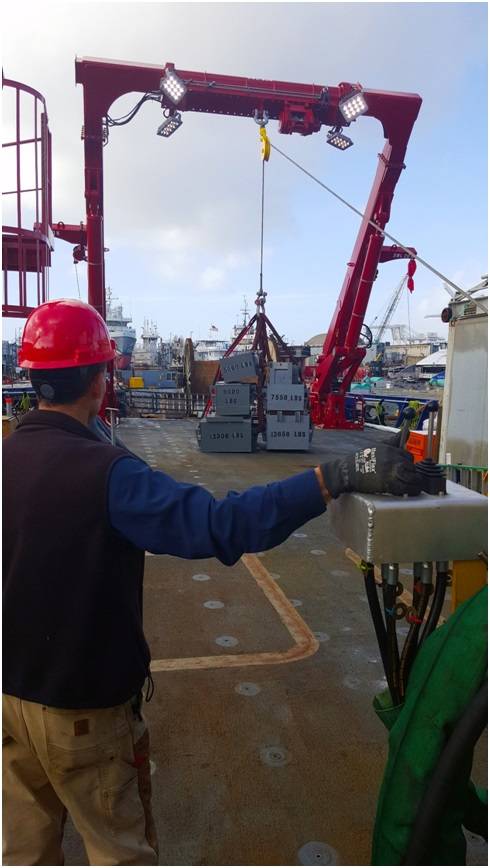
- Wire-rope wear, corrosion or broken strands from fatigue and poor lubrication, typically indicated by visible rope damage, uneven winding or failed inspection
- Hydraulic leakage or pressure loss from hoses, seals or valves, typically indicated by slow functions, drifting load or oil leakage
- Brake or clutch wear, typically indicated by poor load holding, excessive stopping distance or abnormal heat
- Slew/hoist bearing or gearbox wear from lubrication failure or overload, typically indicated by noise, backlash, vibration or overheating
- Limit, overload or control-system fault, typically indicated by inhibited movement, incorrect indication or unsafe failure to stop at limits
KenzFigee
12- Wire-rope deterioration caused by corrosion, broken wires, crushing or poor spooling, resulting in visible damage or unreliable hoisting
- Hydraulic leakage or drive failure caused by hose, seal, pump or valve faults, resulting in slow, jerky or unavailable movement
- Brake or winch deterioration caused by wear or contamination, resulting in load drift, poor holding or abnormal noise
- Slew-bearing, pin or sheave wear caused by cyclic loading and inadequate lubrication, resulting in play, vibration or rough movement
- Limit, overload or control-system fault caused by sensor, wiring or calibration problems, resulting in alarms, inhibited motion or loss of protective functions
- Wire-rope deterioration caused by corrosion, broken wires, crushing or poor spooling, resulting in visible damage or unreliable hoisting
- Hydraulic leakage or drive failure caused by hose, seal, pump or valve faults, resulting in slow, jerky or unavailable movement
- Brake or winch deterioration caused by wear or contamination, resulting in load drift, poor holding or abnormal noise
- Slew-bearing, pin or sheave wear caused by cyclic loading and inadequate lubrication, resulting in play, vibration or rough movement
- Limit, overload or control-system fault caused by sensor, wiring or calibration problems, resulting in alarms, inhibited motion or loss of protective functions
- Hydraulic leakage, low system pressure, pump wear, or valve faults cause slow, jerky, or weak movement
- Wire rope, chain, sheave, drum, bearing, or structural wear from load cycles and corrosion causes visible damage, noise, poor spooling, or increased play
- Brake, clutch, or holding-device wear causes load creep, slipping, or inability to hold position
- Limit switch, encoder, load sensor, interlock, or control-system faults cause restricted movement, nuisance shutdowns, or loss of automatic functions
- Corrosion, damaged hoses or cables, loose fasteners, or foundation defects from deck exposure cause leakage, unreliable controls, or structural concerns
- Hydraulic leakage, low system pressure, pump wear, or valve faults cause slow, jerky, or weak movement
- Wire rope, chain, sheave, drum, bearing, or structural wear from load cycles and corrosion causes visible damage, noise, poor spooling, or increased play
- Brake, clutch, or holding-device wear causes load creep, slipping, or inability to hold position
- Limit switch, encoder, load sensor, interlock, or control-system faults cause restricted movement, nuisance shutdowns, or loss of automatic functions
- Corrosion, damaged hoses or cables, loose fasteners, or foundation defects from deck exposure cause leakage, unreliable controls, or structural concerns
- Hydraulic leakage, low system pressure, pump wear, or valve faults cause slow, jerky, or weak movement
- Wire rope, chain, sheave, drum, bearing, or structural wear from load cycles and corrosion causes visible damage, noise, poor spooling, or increased play
- Brake, clutch, or holding-device wear causes load creep, slipping, or inability to hold position
- Limit switch, encoder, load sensor, interlock, or control-system faults cause restricted movement, nuisance shutdowns, or loss of automatic functions
- Corrosion, damaged hoses or cables, loose fasteners, or foundation defects from deck exposure cause leakage, unreliable controls, or structural concerns
- Hydraulic leakage, low system pressure, pump wear, or valve faults cause slow, jerky, or weak movement
- Wire rope, chain, sheave, drum, bearing, or structural wear from load cycles and corrosion causes visible damage, noise, poor spooling, or increased play
- Brake, clutch, or holding-device wear causes load creep, slipping, or inability to hold position
- Limit switch, encoder, load sensor, interlock, or control-system faults cause restricted movement, nuisance shutdowns, or loss of automatic functions
- Corrosion, damaged hoses or cables, loose fasteners, or foundation defects from deck exposure cause leakage, unreliable controls, or structural concerns
- Hydraulic leakage, low system pressure, pump wear, or valve faults cause slow, jerky, or weak movement
- Wire rope, chain, sheave, drum, bearing, or structural wear from load cycles and corrosion causes visible damage, noise, poor spooling, or increased play
- Brake, clutch, or holding-device wear causes load creep, slipping, or inability to hold position
- Limit switch, encoder, load sensor, interlock, or control-system faults cause restricted movement, nuisance shutdowns, or loss of automatic functions
- Corrosion, damaged hoses or cables, loose fasteners, or foundation defects from deck exposure cause leakage, unreliable controls, or structural concerns
- Hydraulic leakage, low system pressure, pump wear, or valve faults cause slow, jerky, or weak movement
- Wire rope, chain, sheave, drum, bearing, or structural wear from load cycles and corrosion causes visible damage, noise, poor spooling, or increased play
- Brake, clutch, or holding-device wear causes load creep, slipping, or inability to hold position
- Limit switch, encoder, load sensor, interlock, or control-system faults cause restricted movement, nuisance shutdowns, or loss of automatic functions
- Corrosion, damaged hoses or cables, loose fasteners, or foundation defects from deck exposure cause leakage, unreliable controls, or structural concerns
- Hydraulic leakage, low system pressure, pump wear, or valve faults cause slow, jerky, or weak movement
- Wire rope, chain, sheave, drum, bearing, or structural wear from load cycles and corrosion causes visible damage, noise, poor spooling, or increased play
- Brake, clutch, or holding-device wear causes load creep, slipping, or inability to hold position
- Limit switch, encoder, load sensor, interlock, or control-system faults cause restricted movement, nuisance shutdowns, or loss of automatic functions
- Corrosion, damaged hoses or cables, loose fasteners, or foundation defects from deck exposure cause leakage, unreliable controls, or structural concerns
- Hydraulic leakage, low system pressure, pump wear, or valve faults cause slow, jerky, or weak movement
- Wire rope, chain, sheave, drum, bearing, or structural wear from load cycles and corrosion causes visible damage, noise, poor spooling, or increased play
- Brake, clutch, or holding-device wear causes load creep, slipping, or inability to hold position
- Limit switch, encoder, load sensor, interlock, or control-system faults cause restricted movement, nuisance shutdowns, or loss of automatic functions
- Corrosion, damaged hoses or cables, loose fasteners, or foundation defects from deck exposure cause leakage, unreliable controls, or structural concerns
- Hydraulic leakage, low system pressure, pump wear, or valve faults cause slow, jerky, or weak movement
- Wire rope, chain, sheave, drum, bearing, or structural wear from load cycles and corrosion causes visible damage, noise, poor spooling, or increased play
- Brake, clutch, or holding-device wear causes load creep, slipping, or inability to hold position
- Limit switch, encoder, load sensor, interlock, or control-system faults cause restricted movement, nuisance shutdowns, or loss of automatic functions
- Corrosion, damaged hoses or cables, loose fasteners, or foundation defects from deck exposure cause leakage, unreliable controls, or structural concerns
- Hydraulic leakage, low system pressure, pump wear, or valve faults cause slow, jerky, or weak movement
- Wire rope, chain, sheave, drum, bearing, or structural wear from load cycles and corrosion causes visible damage, noise, poor spooling, or increased play
- Brake, clutch, or holding-device wear causes load creep, slipping, or inability to hold position
- Limit switch, encoder, load sensor, interlock, or control-system faults cause restricted movement, nuisance shutdowns, or loss of automatic functions
- Corrosion, damaged hoses or cables, loose fasteners, or foundation defects from deck exposure cause leakage, unreliable controls, or structural concerns
National Oilwell Varco
12- Wire-rope wear, reeving damage or poor spooling causes broken wires, flattening, vibration or uneven hoisting
- Hydraulic leakage, pump wear or valve faults cause slow movements, drift or inability to achieve normal motion
- Brake or holding-valve deterioration causes load creep or poor holding
- Slew bearing, boom pin or structural wear causes abnormal play, noise or visible movement
- Limit-switch, load-monitoring or control faults cause alarms, blocked motions or unreliable protective functions

- Wire-rope wear, reeving damage or poor spooling causes broken wires, flattening, vibration or uneven hoisting
- Hydraulic leakage, pump wear or valve faults cause slow movements, drift or inability to achieve normal motion
- Brake or holding-valve deterioration causes load creep or poor holding
- Slew bearing, boom pin or structural wear causes abnormal play, noise or visible movement
- Limit-switch, load-monitoring or control faults cause alarms, blocked motions or unreliable protective functions
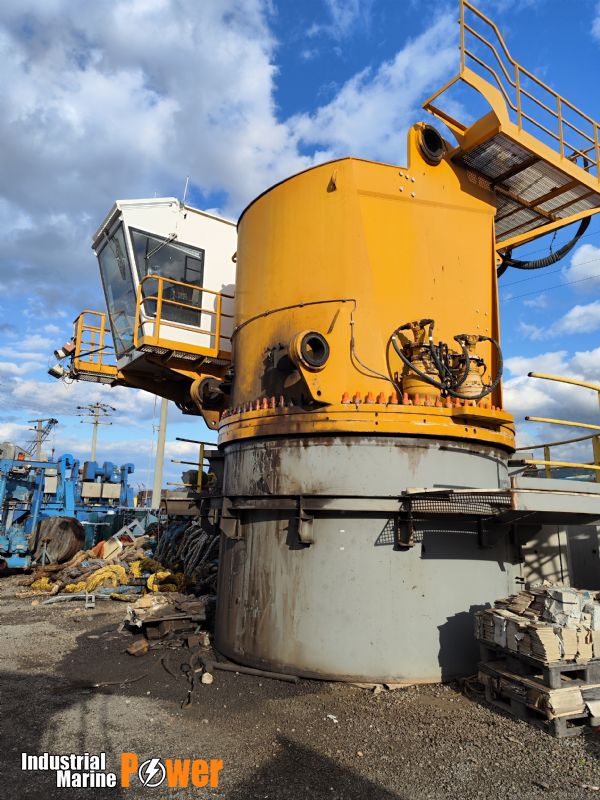
- Wire-rope wear, reeving damage or poor spooling causes broken wires, flattening, vibration or uneven hoisting
- Hydraulic leakage, pump wear or valve faults cause slow movements, drift or inability to achieve normal motion
- Brake or holding-valve deterioration causes load creep or poor holding
- Slew bearing, boom pin or structural wear causes abnormal play, noise or visible movement
- Limit-switch, load-monitoring or control faults cause alarms, blocked motions or unreliable protective functions
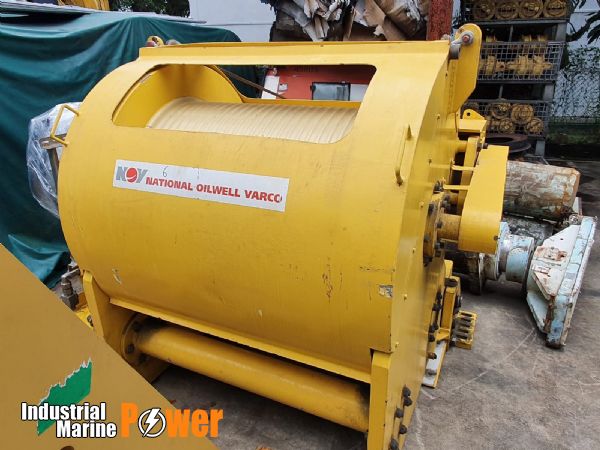
- Wire-rope wear, reeving damage or poor spooling causes broken wires, flattening, vibration or uneven hoisting
- Hydraulic leakage, pump wear or valve faults cause slow movements, drift or inability to achieve normal motion
- Brake or holding-valve deterioration causes load creep or poor holding
- Slew bearing, boom pin or structural wear causes abnormal play, noise or visible movement
- Limit-switch, load-monitoring or control faults cause alarms, blocked motions or unreliable protective functions
- Wire-rope wear, reeving damage or poor spooling causes broken wires, flattening, vibration or uneven hoisting
- Hydraulic leakage, pump wear or valve faults cause slow movements, drift or inability to achieve normal motion
- Brake or holding-valve deterioration causes load creep or poor holding
- Slew bearing, boom pin or structural wear causes abnormal play, noise or visible movement
- Limit-switch, load-monitoring or control faults cause alarms, blocked motions or unreliable protective functions
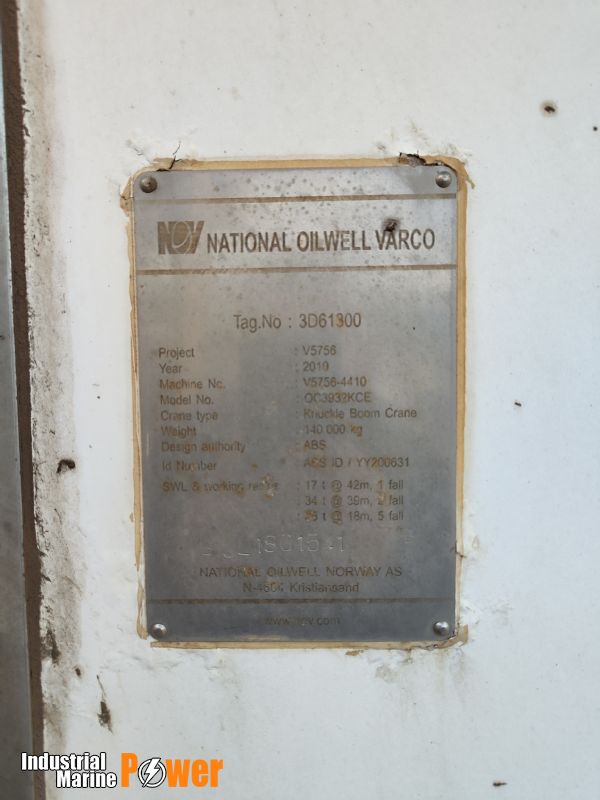
- Wire-rope wear, reeving damage or poor spooling causes broken wires, flattening, vibration or uneven hoisting
- Hydraulic leakage, pump wear or valve faults cause slow movements, drift or inability to achieve normal motion
- Brake or holding-valve deterioration causes load creep or poor holding
- Slew bearing, boom pin or structural wear causes abnormal play, noise or visible movement
- Limit-switch, load-monitoring or control faults cause alarms, blocked motions or unreliable protective functions
- Wire-rope wear, reeving damage or poor spooling causes broken wires, flattening, vibration or uneven hoisting
- Hydraulic leakage, pump wear or valve faults cause slow movements, drift or inability to achieve normal motion
- Brake or holding-valve deterioration causes load creep or poor holding
- Slew bearing, boom pin or structural wear causes abnormal play, noise or visible movement
- Limit-switch, load-monitoring or control faults cause alarms, blocked motions or unreliable protective functions
- Wire-rope wear, reeving damage or poor spooling causes broken wires, flattening, vibration or uneven hoisting
- Hydraulic leakage, pump wear or valve faults cause slow movements, drift or inability to achieve normal motion
- Brake or holding-valve deterioration causes load creep or poor holding
- Slew bearing, boom pin or structural wear causes abnormal play, noise or visible movement
- Limit-switch, load-monitoring or control faults cause alarms, blocked motions or unreliable protective functions
- Wire-rope wear, reeving damage or poor spooling causes broken wires, flattening, vibration or uneven hoisting
- Hydraulic leakage, pump wear or valve faults cause slow movements, drift or inability to achieve normal motion
- Brake or holding-valve deterioration causes load creep or poor holding
- Slew bearing, boom pin or structural wear causes abnormal play, noise or visible movement
- Limit-switch, load-monitoring or control faults cause alarms, blocked motions or unreliable protective functions
- Wire-rope wear, reeving damage or poor spooling causes broken wires, flattening, vibration or uneven hoisting
- Hydraulic leakage, pump wear or valve faults cause slow movements, drift or inability to achieve normal motion
- Brake or holding-valve deterioration causes load creep or poor holding
- Slew bearing, boom pin or structural wear causes abnormal play, noise or visible movement
- Limit-switch, load-monitoring or control faults cause alarms, blocked motions or unreliable protective functions
- Wire-rope wear, reeving damage or poor spooling causes broken wires, flattening, vibration or uneven hoisting
- Hydraulic leakage, pump wear or valve faults cause slow movements, drift or inability to achieve normal motion
- Brake or holding-valve deterioration causes load creep or poor holding
- Slew bearing, boom pin or structural wear causes abnormal play, noise or visible movement
- Limit-switch, load-monitoring or control faults cause alarms, blocked motions or unreliable protective functions
- Wire-rope deterioration caused by corrosion, broken wires, crushing or poor spooling, resulting in visible damage or unreliable hoisting
- Hydraulic leakage or drive failure caused by hose, seal, pump or valve faults, resulting in slow, jerky or unavailable movement
- Brake or winch deterioration caused by wear or contamination, resulting in load drift, poor holding or abnormal noise
- Slew-bearing, pin or sheave wear caused by cyclic loading and inadequate lubrication, resulting in play, vibration or rough movement
- Limit, overload or control-system fault caused by sensor, wiring or calibration problems, resulting in alarms, inhibited motion or loss of protective functions
North Sea Winches
12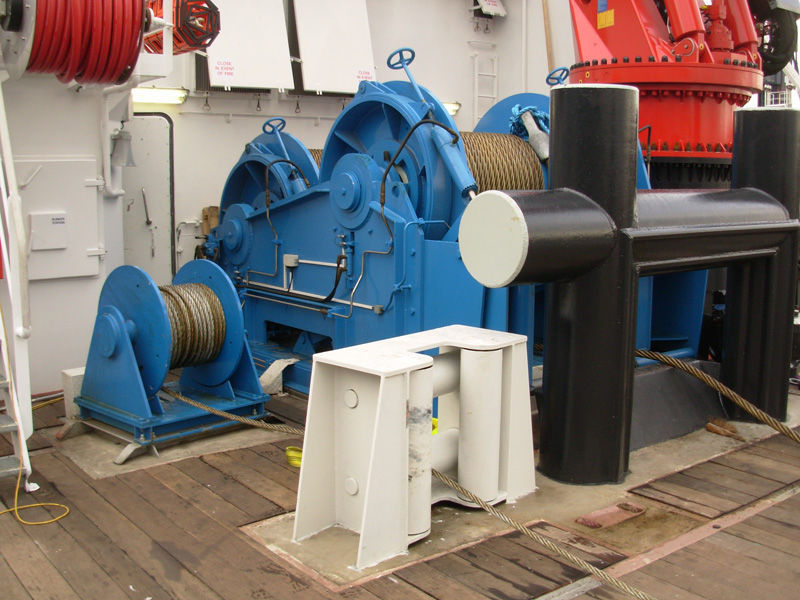
- Hydraulic leakage, contamination or pressure loss caused by worn seals, damaged hoses or pump faults can produce slow movement, reduced force or visible oil leakage
- Brake or holding-device wear caused by friction, contamination or incorrect adjustment can lead to slipping, poor holding or abnormal stopping behavior
- Wire, chain, sheave, drum, bearing or pin wear caused by corrosion, overload or inadequate lubrication can show as noise, rough motion, deformation or visible damage
- Limit switch, sensor or control faults caused by damaged wiring, misalignment or moisture can produce inhibited motions, nuisance trips or loss of safety functions
- Structural corrosion, cracking or loose foundation fasteners caused by cyclic loading and marine exposure can appear as movement, coating breakdown or visible defects around load paths
- Hydraulic leakage, contamination or pressure loss caused by worn seals, damaged hoses or pump faults can produce slow movement, reduced force or visible oil leakage
- Brake or holding-device wear caused by friction, contamination or incorrect adjustment can lead to slipping, poor holding or abnormal stopping behavior
- Wire, chain, sheave, drum, bearing or pin wear caused by corrosion, overload or inadequate lubrication can show as noise, rough motion, deformation or visible damage
- Limit switch, sensor or control faults caused by damaged wiring, misalignment or moisture can produce inhibited motions, nuisance trips or loss of safety functions
- Structural corrosion, cracking or loose foundation fasteners caused by cyclic loading and marine exposure can appear as movement, coating breakdown or visible defects around load paths
- Hydraulic leakage, low pressure, pump wear, or control-valve faults cause slow, jerky, or weak crane movements
- Wire-rope, sheave, drum, bearing, or structural wear from load cycles and corrosion causes visible damage, noise, poor spooling, or increased play
- Brake or holding-device wear causes load creep, slipping, or inability to hold position
- Limit switch, encoder, load sensor, interlock, or control-system faults cause restricted movement, nuisance shutdowns, or loss of automatic functions
- Corrosion, damaged hoses or cables, loose fasteners, or foundation defects from deck exposure create leakage, unreliable controls, or structural concerns
- Hydraulic leakage, low pressure, pump wear, or control-valve faults cause slow, jerky, or weak crane movements
- Wire-rope, sheave, drum, bearing, or structural wear from load cycles and corrosion causes visible damage, noise, poor spooling, or increased play
- Brake or holding-device wear causes load creep, slipping, or inability to hold position
- Limit switch, encoder, load sensor, interlock, or control-system faults cause restricted movement, nuisance shutdowns, or loss of automatic functions
- Corrosion, damaged hoses or cables, loose fasteners, or foundation defects from deck exposure create leakage, unreliable controls, or structural concerns
- Hydraulic leakage, low pressure, pump wear, or control-valve faults cause slow, jerky, or weak crane movements
- Wire-rope, sheave, drum, bearing, or structural wear from load cycles and corrosion causes visible damage, noise, poor spooling, or increased play
- Brake or holding-device wear causes load creep, slipping, or inability to hold position
- Limit switch, encoder, load sensor, interlock, or control-system faults cause restricted movement, nuisance shutdowns, or loss of automatic functions
- Corrosion, damaged hoses or cables, loose fasteners, or foundation defects from deck exposure create leakage, unreliable controls, or structural concerns
- Hydraulic leakage, low pressure, pump wear, or control-valve faults cause slow, jerky, or weak crane movements
- Wire-rope, sheave, drum, bearing, or structural wear from load cycles and corrosion causes visible damage, noise, poor spooling, or increased play
- Brake or holding-device wear causes load creep, slipping, or inability to hold position
- Limit switch, encoder, load sensor, interlock, or control-system faults cause restricted movement, nuisance shutdowns, or loss of automatic functions
- Corrosion, damaged hoses or cables, loose fasteners, or foundation defects from deck exposure create leakage, unreliable controls, or structural concerns
- Hydraulic leakage, low pressure, pump wear, or control-valve faults cause slow, jerky, or weak crane movements
- Wire-rope, sheave, drum, bearing, or structural wear from load cycles and corrosion causes visible damage, noise, poor spooling, or increased play
- Brake or holding-device wear causes load creep, slipping, or inability to hold position
- Limit switch, encoder, load sensor, interlock, or control-system faults cause restricted movement, nuisance shutdowns, or loss of automatic functions
- Corrosion, damaged hoses or cables, loose fasteners, or foundation defects from deck exposure create leakage, unreliable controls, or structural concerns
- Hydraulic leakage, low pressure, pump wear, or control-valve faults cause slow, jerky, or weak crane movements
- Wire-rope, sheave, drum, bearing, or structural wear from load cycles and corrosion causes visible damage, noise, poor spooling, or increased play
- Brake or holding-device wear causes load creep, slipping, or inability to hold position
- Limit switch, encoder, load sensor, interlock, or control-system faults cause restricted movement, nuisance shutdowns, or loss of automatic functions
- Corrosion, damaged hoses or cables, loose fasteners, or foundation defects from deck exposure create leakage, unreliable controls, or structural concerns
- Hydraulic leakage, low pressure, pump wear, or control-valve faults cause slow, jerky, or weak crane movements
- Wire-rope, sheave, drum, bearing, or structural wear from load cycles and corrosion causes visible damage, noise, poor spooling, or increased play
- Brake or holding-device wear causes load creep, slipping, or inability to hold position
- Limit switch, encoder, load sensor, interlock, or control-system faults cause restricted movement, nuisance shutdowns, or loss of automatic functions
- Corrosion, damaged hoses or cables, loose fasteners, or foundation defects from deck exposure create leakage, unreliable controls, or structural concerns
- Hydraulic leakage, low pressure, pump wear, or control-valve faults cause slow, jerky, or weak crane movements
- Wire-rope, sheave, drum, bearing, or structural wear from load cycles and corrosion causes visible damage, noise, poor spooling, or increased play
- Brake or holding-device wear causes load creep, slipping, or inability to hold position
- Limit switch, encoder, load sensor, interlock, or control-system faults cause restricted movement, nuisance shutdowns, or loss of automatic functions
- Corrosion, damaged hoses or cables, loose fasteners, or foundation defects from deck exposure create leakage, unreliable controls, or structural concerns
- Hydraulic leakage, low pressure, pump wear, or control-valve faults cause slow, jerky, or weak crane movements
- Wire-rope, sheave, drum, bearing, or structural wear from load cycles and corrosion causes visible damage, noise, poor spooling, or increased play
- Brake or holding-device wear causes load creep, slipping, or inability to hold position
- Limit switch, encoder, load sensor, interlock, or control-system faults cause restricted movement, nuisance shutdowns, or loss of automatic functions
- Corrosion, damaged hoses or cables, loose fasteners, or foundation defects from deck exposure create leakage, unreliable controls, or structural concerns
- Hydraulic leakage, low pressure, pump wear, or control-valve faults cause slow, jerky, or weak crane movements
- Wire-rope, sheave, drum, bearing, or structural wear from load cycles and corrosion causes visible damage, noise, poor spooling, or increased play
- Brake or holding-device wear causes load creep, slipping, or inability to hold position
- Limit switch, encoder, load sensor, interlock, or control-system faults cause restricted movement, nuisance shutdowns, or loss of automatic functions
- Corrosion, damaged hoses or cables, loose fasteners, or foundation defects from deck exposure create leakage, unreliable controls, or structural concerns
Seatrax Inc.
12- Wire-rope deterioration caused by corrosion, broken wires, crushing or poor spooling, resulting in visible damage or unreliable hoisting
- Hydraulic leakage or drive failure caused by hose, seal, pump or valve faults, resulting in slow, jerky or unavailable movement
- Brake or winch deterioration caused by wear or contamination, resulting in load drift, poor holding or abnormal noise
- Slew-bearing, pin or sheave wear caused by cyclic loading and inadequate lubrication, resulting in play, vibration or rough movement
- Limit, overload or control-system fault caused by sensor, wiring or calibration problems, resulting in alarms, inhibited motion or loss of protective functions
- Wire-rope deterioration caused by corrosion, broken wires, crushing or poor spooling, resulting in visible damage or unreliable hoisting
- Hydraulic leakage or drive failure caused by hose, seal, pump or valve faults, resulting in slow, jerky or unavailable movement
- Brake or winch deterioration caused by wear or contamination, resulting in load drift, poor holding or abnormal noise
- Slew-bearing, pin or sheave wear caused by cyclic loading and inadequate lubrication, resulting in play, vibration or rough movement
- Limit, overload or control-system fault caused by sensor, wiring or calibration problems, resulting in alarms, inhibited motion or loss of protective functions
- Hydraulic leakage, low system pressure, pump wear, or valve faults cause slow, jerky, or weak movement
- Wire rope, chain, sheave, drum, bearing, or structural wear from load cycles and corrosion causes visible damage, noise, poor spooling, or increased play
- Brake, clutch, or holding-device wear causes load creep, slipping, or inability to hold position
- Limit switch, encoder, load sensor, interlock, or control-system faults cause restricted movement, nuisance shutdowns, or loss of automatic functions
- Corrosion, damaged hoses or cables, loose fasteners, or foundation defects from deck exposure cause leakage, unreliable controls, or structural concerns
- Hydraulic leakage, low system pressure, pump wear, or valve faults cause slow, jerky, or weak movement
- Wire rope, chain, sheave, drum, bearing, or structural wear from load cycles and corrosion causes visible damage, noise, poor spooling, or increased play
- Brake, clutch, or holding-device wear causes load creep, slipping, or inability to hold position
- Limit switch, encoder, load sensor, interlock, or control-system faults cause restricted movement, nuisance shutdowns, or loss of automatic functions
- Corrosion, damaged hoses or cables, loose fasteners, or foundation defects from deck exposure cause leakage, unreliable controls, or structural concerns
- Hydraulic leakage, low system pressure, pump wear, or valve faults cause slow, jerky, or weak movement
- Wire rope, chain, sheave, drum, bearing, or structural wear from load cycles and corrosion causes visible damage, noise, poor spooling, or increased play
- Brake, clutch, or holding-device wear causes load creep, slipping, or inability to hold position
- Limit switch, encoder, load sensor, interlock, or control-system faults cause restricted movement, nuisance shutdowns, or loss of automatic functions
- Corrosion, damaged hoses or cables, loose fasteners, or foundation defects from deck exposure cause leakage, unreliable controls, or structural concerns
- Hydraulic leakage, low system pressure, pump wear, or valve faults cause slow, jerky, or weak movement
- Wire rope, chain, sheave, drum, bearing, or structural wear from load cycles and corrosion causes visible damage, noise, poor spooling, or increased play
- Brake, clutch, or holding-device wear causes load creep, slipping, or inability to hold position
- Limit switch, encoder, load sensor, interlock, or control-system faults cause restricted movement, nuisance shutdowns, or loss of automatic functions
- Corrosion, damaged hoses or cables, loose fasteners, or foundation defects from deck exposure cause leakage, unreliable controls, or structural concerns
- Hydraulic leakage, low system pressure, pump wear, or valve faults cause slow, jerky, or weak movement
- Wire rope, chain, sheave, drum, bearing, or structural wear from load cycles and corrosion causes visible damage, noise, poor spooling, or increased play
- Brake, clutch, or holding-device wear causes load creep, slipping, or inability to hold position
- Limit switch, encoder, load sensor, interlock, or control-system faults cause restricted movement, nuisance shutdowns, or loss of automatic functions
- Corrosion, damaged hoses or cables, loose fasteners, or foundation defects from deck exposure cause leakage, unreliable controls, or structural concerns
- Hydraulic leakage, low system pressure, pump wear, or valve faults cause slow, jerky, or weak movement
- Wire rope, chain, sheave, drum, bearing, or structural wear from load cycles and corrosion causes visible damage, noise, poor spooling, or increased play
- Brake, clutch, or holding-device wear causes load creep, slipping, or inability to hold position
- Limit switch, encoder, load sensor, interlock, or control-system faults cause restricted movement, nuisance shutdowns, or loss of automatic functions
- Corrosion, damaged hoses or cables, loose fasteners, or foundation defects from deck exposure cause leakage, unreliable controls, or structural concerns
- Hydraulic leakage, low system pressure, pump wear, or valve faults cause slow, jerky, or weak movement
- Wire rope, chain, sheave, drum, bearing, or structural wear from load cycles and corrosion causes visible damage, noise, poor spooling, or increased play
- Brake, clutch, or holding-device wear causes load creep, slipping, or inability to hold position
- Limit switch, encoder, load sensor, interlock, or control-system faults cause restricted movement, nuisance shutdowns, or loss of automatic functions
- Corrosion, damaged hoses or cables, loose fasteners, or foundation defects from deck exposure cause leakage, unreliable controls, or structural concerns
- Hydraulic leakage, low system pressure, pump wear, or valve faults cause slow, jerky, or weak movement
- Wire rope, chain, sheave, drum, bearing, or structural wear from load cycles and corrosion causes visible damage, noise, poor spooling, or increased play
- Brake, clutch, or holding-device wear causes load creep, slipping, or inability to hold position
- Limit switch, encoder, load sensor, interlock, or control-system faults cause restricted movement, nuisance shutdowns, or loss of automatic functions
- Corrosion, damaged hoses or cables, loose fasteners, or foundation defects from deck exposure cause leakage, unreliable controls, or structural concerns
- Hydraulic leakage, low system pressure, pump wear, or valve faults cause slow, jerky, or weak movement
- Wire rope, chain, sheave, drum, bearing, or structural wear from load cycles and corrosion causes visible damage, noise, poor spooling, or increased play
- Brake, clutch, or holding-device wear causes load creep, slipping, or inability to hold position
- Limit switch, encoder, load sensor, interlock, or control-system faults cause restricted movement, nuisance shutdowns, or loss of automatic functions
- Corrosion, damaged hoses or cables, loose fasteners, or foundation defects from deck exposure cause leakage, unreliable controls, or structural concerns
- Hydraulic leakage, low system pressure, pump wear, or valve faults cause slow, jerky, or weak movement
- Wire rope, chain, sheave, drum, bearing, or structural wear from load cycles and corrosion causes visible damage, noise, poor spooling, or increased play
- Brake, clutch, or holding-device wear causes load creep, slipping, or inability to hold position
- Limit switch, encoder, load sensor, interlock, or control-system faults cause restricted movement, nuisance shutdowns, or loss of automatic functions
- Corrosion, damaged hoses or cables, loose fasteners, or foundation defects from deck exposure cause leakage, unreliable controls, or structural concerns
SWL Cranes
12- Wire-rope wear, corrosion or poor spooling causes visible damage, crushing or irregular hoisting
- Hydraulic leakage or pump wear reduces motion speed and can cause pressure loss or uncontrolled drift
- Brake wear or maladjustment causes load creep, poor holding or abnormal stopping distance
- Limit switch, overload or control faults cause nuisance trips or loss of protective functions
- Bearing, slew-ring or structural wear produces play, noise, vibration or abnormal movement under load
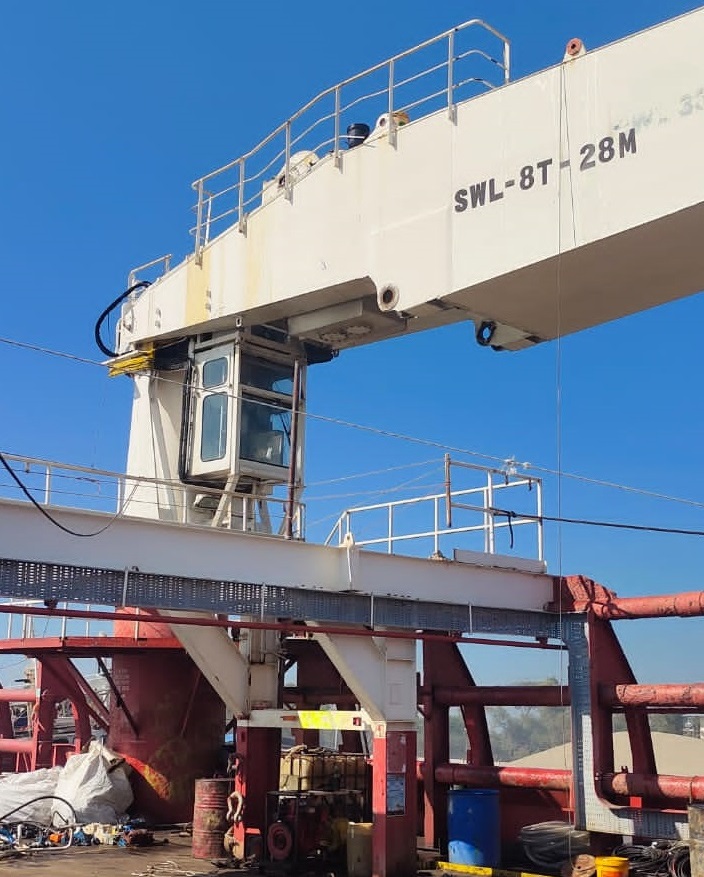
- Wire-rope wear, corrosion or poor spooling causes visible damage, crushing or irregular hoisting
- Hydraulic leakage or pump wear reduces motion speed and can cause pressure loss or uncontrolled drift
- Brake wear or maladjustment causes load creep, poor holding or abnormal stopping distance
- Limit switch, overload or control faults cause nuisance trips or loss of protective functions
- Bearing, slew-ring or structural wear produces play, noise, vibration or abnormal movement under load
- Wire-rope, chain or reeving wear causes broken wires, poor spooling, vibration or uneven movement
- Hydraulic leakage, pump wear or electric-drive faults cause slow operation, drift or inability to complete a motion
- Brake, holding-valve or locking deterioration causes load creep or poor holding
- Pins, bearings, sheaves or structural joints develop play and are noticed as noise or abnormal movement
- Limit-switch, overload, interlock or control faults cause alarms, blocked motions or unreliable protection
- Wire-rope, chain or reeving wear causes broken wires, poor spooling, vibration or uneven movement
- Hydraulic leakage, pump wear or electric-drive faults cause slow operation, drift or inability to complete a motion
- Brake, holding-valve or locking deterioration causes load creep or poor holding
- Pins, bearings, sheaves or structural joints develop play and are noticed as noise or abnormal movement
- Limit-switch, overload, interlock or control faults cause alarms, blocked motions or unreliable protection

- Wire-rope, chain or reeving wear causes broken wires, poor spooling, vibration or uneven movement
- Hydraulic leakage, pump wear or electric-drive faults cause slow operation, drift or inability to complete a motion
- Brake, holding-valve or locking deterioration causes load creep or poor holding
- Pins, bearings, sheaves or structural joints develop play and are noticed as noise or abnormal movement
- Limit-switch, overload, interlock or control faults cause alarms, blocked motions or unreliable protection
- Wire-rope, chain or reeving wear causes broken wires, poor spooling, vibration or uneven movement
- Hydraulic leakage, pump wear or electric-drive faults cause slow operation, drift or inability to complete a motion
- Brake, holding-valve or locking deterioration causes load creep or poor holding
- Pins, bearings, sheaves or structural joints develop play and are noticed as noise or abnormal movement
- Limit-switch, overload, interlock or control faults cause alarms, blocked motions or unreliable protection
- Wire-rope, chain or reeving wear causes broken wires, poor spooling, vibration or uneven movement
- Hydraulic leakage, pump wear or electric-drive faults cause slow operation, drift or inability to complete a motion
- Brake, holding-valve or locking deterioration causes load creep or poor holding
- Pins, bearings, sheaves or structural joints develop play and are noticed as noise or abnormal movement
- Limit-switch, overload, interlock or control faults cause alarms, blocked motions or unreliable protection
- Wire-rope, chain or reeving wear causes broken wires, poor spooling, vibration or uneven movement
- Hydraulic leakage, pump wear or electric-drive faults cause slow operation, drift or inability to complete a motion
- Brake, holding-valve or locking deterioration causes load creep or poor holding
- Pins, bearings, sheaves or structural joints develop play and are noticed as noise or abnormal movement
- Limit-switch, overload, interlock or control faults cause alarms, blocked motions or unreliable protection
- Wire-rope, chain or reeving wear causes broken wires, poor spooling, vibration or uneven movement
- Hydraulic leakage, pump wear or electric-drive faults cause slow operation, drift or inability to complete a motion
- Brake, holding-valve or locking deterioration causes load creep or poor holding
- Pins, bearings, sheaves or structural joints develop play and are noticed as noise or abnormal movement
- Limit-switch, overload, interlock or control faults cause alarms, blocked motions or unreliable protection
- Wire-rope, chain or reeving wear causes broken wires, poor spooling, vibration or uneven movement
- Hydraulic leakage, pump wear or electric-drive faults cause slow operation, drift or inability to complete a motion
- Brake, holding-valve or locking deterioration causes load creep or poor holding
- Pins, bearings, sheaves or structural joints develop play and are noticed as noise or abnormal movement
- Limit-switch, overload, interlock or control faults cause alarms, blocked motions or unreliable protection
- Wire-rope, chain or reeving wear causes broken wires, poor spooling, vibration or uneven movement
- Hydraulic leakage, pump wear or electric-drive faults cause slow operation, drift or inability to complete a motion
- Brake, holding-valve or locking deterioration causes load creep or poor holding
- Pins, bearings, sheaves or structural joints develop play and are noticed as noise or abnormal movement
- Limit-switch, overload, interlock or control faults cause alarms, blocked motions or unreliable protection
- Hydraulic leakage, low system pressure, pump wear, or valve faults cause slow, jerky, or weak movement
- Wire rope, chain, sheave, drum, bearing, or structural wear from load cycles and corrosion causes visible damage, noise, poor spooling, or increased play
- Brake, clutch, or holding-device wear causes load creep, slipping, or inability to hold position
- Limit switch, encoder, load sensor, interlock, or control-system faults cause restricted movement, nuisance shutdowns, or loss of automatic functions
- Corrosion, damaged hoses or cables, loose fasteners, or foundation defects from deck exposure cause leakage, unreliable controls, or structural concerns
Huisman
11- Wire-rope wear, corrosion or broken strands from fatigue and poor lubrication, typically indicated by visible rope damage, uneven winding or failed inspection
- Hydraulic leakage or pressure loss from hoses, seals or valves, typically indicated by slow functions, drifting load or oil leakage
- Brake or clutch wear, typically indicated by poor load holding, excessive stopping distance or abnormal heat
- Slew/hoist bearing or gearbox wear from lubrication failure or overload, typically indicated by noise, backlash, vibration or overheating
- Limit, overload or control-system fault, typically indicated by inhibited movement, incorrect indication or unsafe failure to stop at limits
- Wire-rope wear, corrosion or broken strands from fatigue and poor lubrication, typically indicated by visible rope damage, uneven winding or failed inspection
- Hydraulic leakage or pressure loss from hoses, seals or valves, typically indicated by slow functions, drifting load or oil leakage
- Brake or clutch wear, typically indicated by poor load holding, excessive stopping distance or abnormal heat
- Slew/hoist bearing or gearbox wear from lubrication failure or overload, typically indicated by noise, backlash, vibration or overheating
- Limit, overload or control-system fault, typically indicated by inhibited movement, incorrect indication or unsafe failure to stop at limits
- Wire-rope wear, corrosion or broken strands from fatigue and poor lubrication, typically indicated by visible rope damage, uneven winding or failed inspection
- Hydraulic leakage or pressure loss from hoses, seals or valves, typically indicated by slow functions, drifting load or oil leakage
- Brake or clutch wear, typically indicated by poor load holding, excessive stopping distance or abnormal heat
- Slew/hoist bearing or gearbox wear from lubrication failure or overload, typically indicated by noise, backlash, vibration or overheating
- Limit, overload or control-system fault, typically indicated by inhibited movement, incorrect indication or unsafe failure to stop at limits
- Wire-rope wear, corrosion or broken strands from fatigue and poor lubrication, typically indicated by visible rope damage, uneven winding or failed inspection
- Hydraulic leakage or pressure loss from hoses, seals or valves, typically indicated by slow functions, drifting load or oil leakage
- Brake or clutch wear, typically indicated by poor load holding, excessive stopping distance or abnormal heat
- Slew/hoist bearing or gearbox wear from lubrication failure or overload, typically indicated by noise, backlash, vibration or overheating
- Limit, overload or control-system fault, typically indicated by inhibited movement, incorrect indication or unsafe failure to stop at limits
- Wire-rope wear, corrosion or broken strands from fatigue and poor lubrication, typically indicated by visible rope damage, uneven winding or failed inspection
- Hydraulic leakage or pressure loss from hoses, seals or valves, typically indicated by slow functions, drifting load or oil leakage
- Brake or clutch wear, typically indicated by poor load holding, excessive stopping distance or abnormal heat
- Slew/hoist bearing or gearbox wear from lubrication failure or overload, typically indicated by noise, backlash, vibration or overheating
- Limit, overload or control-system fault, typically indicated by inhibited movement, incorrect indication or unsafe failure to stop at limits
- Hydraulic leakage, low pressure, pump wear, or control-valve faults cause slow, jerky, or weak crane movements
- Wire-rope, sheave, drum, bearing, or structural wear from load cycles and corrosion causes visible damage, noise, poor spooling, or increased play
- Brake or holding-device wear causes load creep, slipping, or inability to hold position
- Limit switch, encoder, load sensor, interlock, or control-system faults cause restricted movement, nuisance shutdowns, or loss of automatic functions
- Corrosion, damaged hoses or cables, loose fasteners, or foundation defects from deck exposure create leakage, unreliable controls, or structural concerns
- Hydraulic leakage, low pressure, pump wear, or control-valve faults cause slow, jerky, or weak crane movements
- Wire-rope, sheave, drum, bearing, or structural wear from load cycles and corrosion causes visible damage, noise, poor spooling, or increased play
- Brake or holding-device wear causes load creep, slipping, or inability to hold position
- Limit switch, encoder, load sensor, interlock, or control-system faults cause restricted movement, nuisance shutdowns, or loss of automatic functions
- Corrosion, damaged hoses or cables, loose fasteners, or foundation defects from deck exposure create leakage, unreliable controls, or structural concerns
- Hydraulic leakage, low pressure, pump wear, or control-valve faults cause slow, jerky, or weak crane movements
- Wire-rope, sheave, drum, bearing, or structural wear from load cycles and corrosion causes visible damage, noise, poor spooling, or increased play
- Brake or holding-device wear causes load creep, slipping, or inability to hold position
- Limit switch, encoder, load sensor, interlock, or control-system faults cause restricted movement, nuisance shutdowns, or loss of automatic functions
- Corrosion, damaged hoses or cables, loose fasteners, or foundation defects from deck exposure create leakage, unreliable controls, or structural concerns
- Wire-rope wear, corrosion or broken strands from fatigue and poor lubrication, typically indicated by visible rope damage, uneven winding or failed inspection
- Hydraulic leakage or pressure loss from hoses, seals or valves, typically indicated by slow functions, drifting load or oil leakage
- Brake or clutch wear, typically indicated by poor load holding, excessive stopping distance or abnormal heat
- Slew/hoist bearing or gearbox wear from lubrication failure or overload, typically indicated by noise, backlash, vibration or overheating
- Limit, overload or control-system fault, typically indicated by inhibited movement, incorrect indication or unsafe failure to stop at limits
- Wire-rope wear, corrosion or broken strands from fatigue and poor lubrication, typically indicated by visible rope damage, uneven winding or failed inspection
- Hydraulic leakage or pressure loss from hoses, seals or valves, typically indicated by slow functions, drifting load or oil leakage
- Brake or clutch wear, typically indicated by poor load holding, excessive stopping distance or abnormal heat
- Slew/hoist bearing or gearbox wear from lubrication failure or overload, typically indicated by noise, backlash, vibration or overheating
- Limit, overload or control-system fault, typically indicated by inhibited movement, incorrect indication or unsafe failure to stop at limits
- Wire-rope wear, corrosion or broken strands from fatigue and poor lubrication, typically indicated by visible rope damage, uneven winding or failed inspection
- Hydraulic leakage or pressure loss from hoses, seals or valves, typically indicated by slow functions, drifting load or oil leakage
- Brake or clutch wear, typically indicated by poor load holding, excessive stopping distance or abnormal heat
- Slew/hoist bearing or gearbox wear from lubrication failure or overload, typically indicated by noise, backlash, vibration or overheating
- Limit, overload or control-system fault, typically indicated by inhibited movement, incorrect indication or unsafe failure to stop at limits
SMST
10- Wire-rope deterioration caused by corrosion, broken wires, crushing or poor spooling, resulting in visible damage or unreliable hoisting
- Hydraulic leakage or drive failure caused by hose, seal, pump or valve faults, resulting in slow, jerky or unavailable movement
- Brake or winch deterioration caused by wear or contamination, resulting in load drift, poor holding or abnormal noise
- Slew-bearing, pin or sheave wear caused by cyclic loading and inadequate lubrication, resulting in play, vibration or rough movement
- Limit, overload or control-system fault caused by sensor, wiring or calibration problems, resulting in alarms, inhibited motion or loss of protective functions
- Wire-rope wear, reeving damage or poor spooling causes broken wires, flattening, vibration or uneven hoisting
- Hydraulic leakage, pump wear or valve faults cause slow movements, drift or inability to achieve normal motion
- Brake or holding-valve deterioration causes load creep or poor holding
- Slew bearing, boom pin or structural wear causes abnormal play, noise or visible movement
- Limit-switch, load-monitoring or control faults cause alarms, blocked motions or unreliable protective functions
- Wire-rope wear, reeving damage or poor spooling causes broken wires, flattening, vibration or uneven hoisting
- Hydraulic leakage, pump wear or valve faults cause slow movements, drift or inability to achieve normal motion
- Brake or holding-valve deterioration causes load creep or poor holding
- Slew bearing, boom pin or structural wear causes abnormal play, noise or visible movement
- Limit-switch, load-monitoring or control faults cause alarms, blocked motions or unreliable protective functions
- Wire-rope wear, reeving damage or poor spooling causes broken wires, flattening, vibration or uneven hoisting
- Hydraulic leakage, pump wear or valve faults cause slow movements, drift or inability to achieve normal motion
- Brake or holding-valve deterioration causes load creep or poor holding
- Slew bearing, boom pin or structural wear causes abnormal play, noise or visible movement
- Limit-switch, load-monitoring or control faults cause alarms, blocked motions or unreliable protective functions
- Wire-rope wear, reeving damage or poor spooling causes broken wires, flattening, vibration or uneven hoisting
- Hydraulic leakage, pump wear or valve faults cause slow movements, drift or inability to achieve normal motion
- Brake or holding-valve deterioration causes load creep or poor holding
- Slew bearing, boom pin or structural wear causes abnormal play, noise or visible movement
- Limit-switch, load-monitoring or control faults cause alarms, blocked motions or unreliable protective functions
- Wire-rope wear, reeving damage or poor spooling causes broken wires, flattening, vibration or uneven hoisting
- Hydraulic leakage, pump wear or valve faults cause slow movements, drift or inability to achieve normal motion
- Brake or holding-valve deterioration causes load creep or poor holding
- Slew bearing, boom pin or structural wear causes abnormal play, noise or visible movement
- Limit-switch, load-monitoring or control faults cause alarms, blocked motions or unreliable protective functions
- Wire-rope wear, reeving damage or poor spooling causes broken wires, flattening, vibration or uneven hoisting
- Hydraulic leakage, pump wear or valve faults cause slow movements, drift or inability to achieve normal motion
- Brake or holding-valve deterioration causes load creep or poor holding
- Slew bearing, boom pin or structural wear causes abnormal play, noise or visible movement
- Limit-switch, load-monitoring or control faults cause alarms, blocked motions or unreliable protective functions
- Wire-rope wear, reeving damage or poor spooling causes broken wires, flattening, vibration or uneven hoisting
- Hydraulic leakage, pump wear or valve faults cause slow movements, drift or inability to achieve normal motion
- Brake or holding-valve deterioration causes load creep or poor holding
- Slew bearing, boom pin or structural wear causes abnormal play, noise or visible movement
- Limit-switch, load-monitoring or control faults cause alarms, blocked motions or unreliable protective functions
- Wire-rope wear, corrosion or poor spooling causes visible damage, crushing or irregular hoisting
- Hydraulic leakage or pump wear reduces motion speed and can cause pressure loss or uncontrolled drift
- Brake wear or maladjustment causes load creep, poor holding or abnormal stopping distance
- Limit switch, overload or control faults cause nuisance trips or loss of protective functions
- Bearing, slew-ring or structural wear produces play, noise, vibration or abnormal movement under load
- Wire-rope wear, corrosion or poor spooling causes visible damage, crushing or irregular hoisting
- Hydraulic leakage or pump wear reduces motion speed and can cause pressure loss or uncontrolled drift
- Brake wear or maladjustment causes load creep, poor holding or abnormal stopping distance
- Limit switch, overload or control faults cause nuisance trips or loss of protective functions
- Bearing, slew-ring or structural wear produces play, noise, vibration or abnormal movement under load
Palfinger Marine
3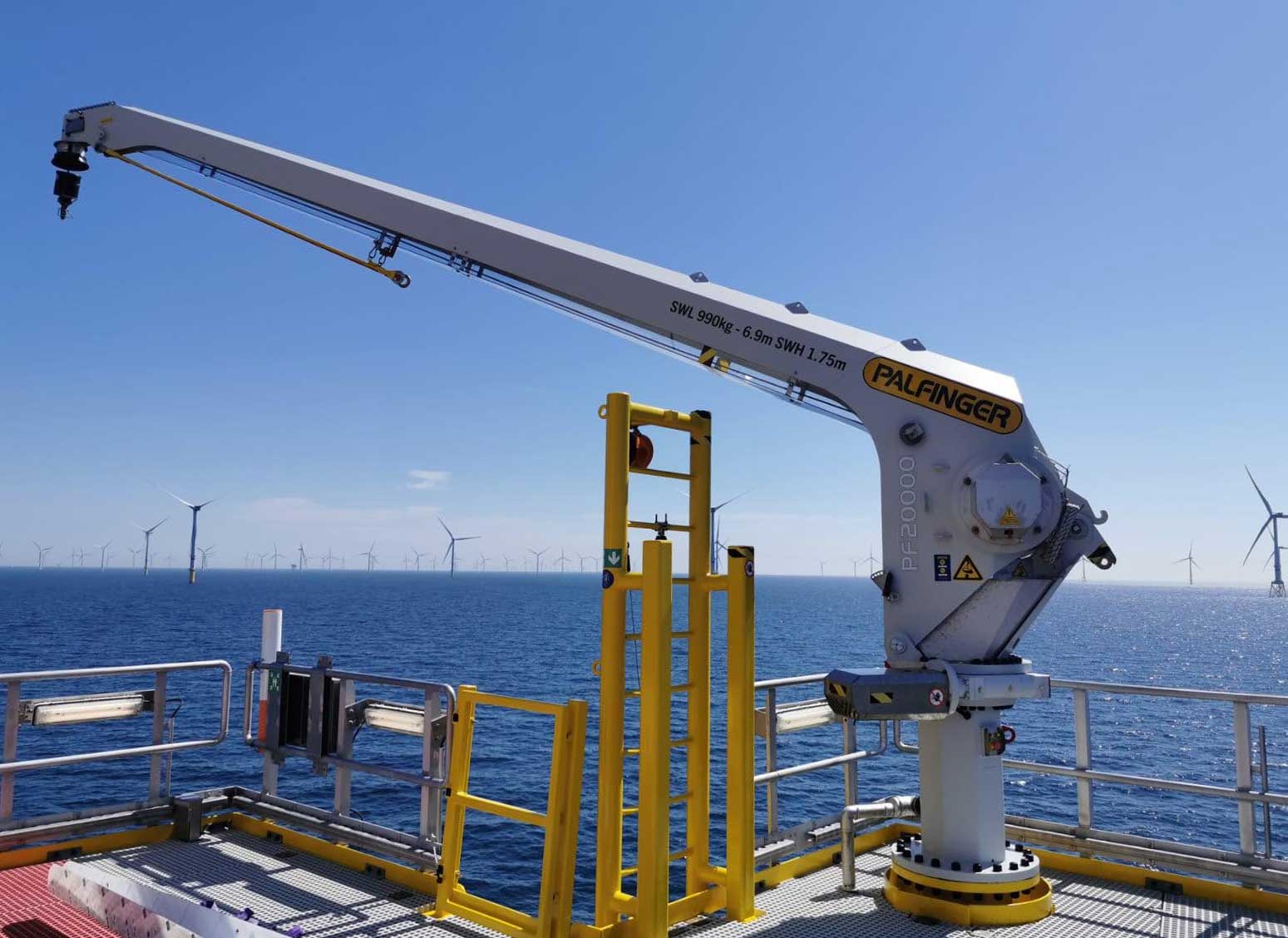
- Wire-rope wear, corrosion or broken strands from fatigue and poor lubrication, typically indicated by visible rope damage, uneven winding or failed inspection
- Hydraulic leakage or pressure loss from hoses, seals or valves, typically indicated by slow functions, drifting load or oil leakage
- Brake or clutch wear, typically indicated by poor load holding, excessive stopping distance or abnormal heat
- Slew/hoist bearing or gearbox wear from lubrication failure or overload, typically indicated by noise, backlash, vibration or overheating
- Limit, overload or control-system fault, typically indicated by inhibited movement, incorrect indication or unsafe failure to stop at limits
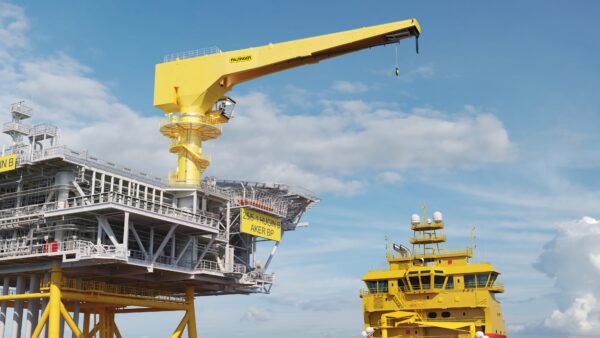
- Wire-rope wear, corrosion or broken strands from fatigue and poor lubrication, typically indicated by visible rope damage, uneven winding or failed inspection
- Hydraulic leakage or pressure loss from hoses, seals or valves, typically indicated by slow functions, drifting load or oil leakage
- Brake or clutch wear, typically indicated by poor load holding, excessive stopping distance or abnormal heat
- Slew/hoist bearing or gearbox wear from lubrication failure or overload, typically indicated by noise, backlash, vibration or overheating
- Limit, overload or control-system fault, typically indicated by inhibited movement, incorrect indication or unsafe failure to stop at limits
- Wire-rope wear, corrosion or broken strands from fatigue and poor lubrication, typically indicated by visible rope damage, uneven winding or failed inspection
- Hydraulic leakage or pressure loss from hoses, seals or valves, typically indicated by slow functions, drifting load or oil leakage
- Brake or clutch wear, typically indicated by poor load holding, excessive stopping distance or abnormal heat
- Slew/hoist bearing or gearbox wear from lubrication failure or overload, typically indicated by noise, backlash, vibration or overheating
- Limit, overload or control-system fault, typically indicated by inhibited movement, incorrect indication or unsafe failure to stop at limits
