"> Auxiliary Engine (Generator Set) - Equipment Database

Auxiliary Engine (Generator Set)

medium 1514 models total

An auxiliary engine is a diesel genset built to run at constant speed for frequency-stable electrical output, not to drive a propeller — a distinction that shapes its governor, cooling, and load-acceptance design from the ground up.

Read more — Auxiliary Engine (Generator Set) explained

What makes this type

An auxiliary engine (generator diesel engine, or "aux") is coupled directly to an alternator and runs at a fixed synchronous speed — typically 1200, 1500, or 1800 rpm depending on frequency (50 or 60 Hz) and pole count — because the alternator's output frequency is locked to shaft speed. This is the core difference from a main propulsion engine, which is allowed to vary speed continuously with load. An aux engine's governor is tuned for tight speed regulation under sudden load steps, since connecting or dropping a large consumer (a cargo pump starting, a bow thruster engaging) has to be absorbed within a few percent of frequency deviation without tripping protective relays or blacking out the switchboard. Auxiliary engines usually run in multiples — two to four sets per ship — specifically so load can be shared and units can be swapped out for maintenance without losing power generation capability.

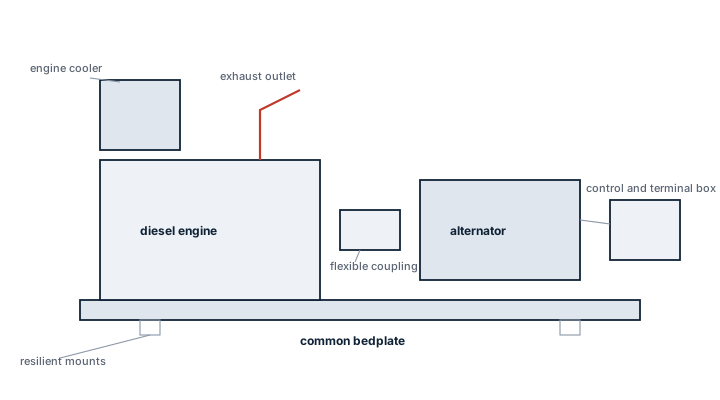
Auxiliary generator set arrangement
Side view of a diesel genset showing the engine and alternator joined by a flexible coupling on a common bedplate, with the engine cooler, exhaust outlet, control and terminal box and resilient mounts.

Main components

Engine block and fuel injection

Most modern aux engines are medium- or high-speed four-stroke trunk-piston diesels, mechanically or electronically fuel injected; electronic (common-rail or unit-injector) control has become common because it improves transient load response, which matters more for a genset than a main engine.

Governor and AVR

The governor holds engine speed (hence frequency) constant; the alternator's automatic voltage regulator holds terminal voltage constant. Both must respond fast enough that a step load change does not push frequency or voltage outside the narrow band the switchboard protection allows.

Alternator

Directly coupled, sized in kVA with a power factor rating (commonly 0.8) that determines real kW output versus apparent power capacity.

Cooling and lube oil systems

Sized for continuous duty at rated load, since unlike a main engine that may run at reduced load for long passages, gensets are commonly loaded close to their rating whenever running to keep specific fuel consumption reasonable.

Selection / Sizing

Sizing starts from the ship's electrical load list at different operating conditions (at sea, in port, cargo operations, manoeuvring) and picks a genset combination that covers peak load with one unit out of service (N+1 redundancy is standard practice, and mandatory in some class notations). Running gensets well below rated load for long periods causes its own problems — incomplete combustion, cylinder glazing, exhaust valve fouling — so the number and size of units is chosen to keep each running set reasonably loaded across the ship's typical load profile, rather than fitting one oversized set that is always lightly loaded.

Regulations / Class

Class rules require a minimum number of generating sets such that with the largest set out of service, the remainder can supply all services needed for propulsion, steering, and safety. MARPOL Annex VI NOx Tier limits apply based on engine build date and size, same as main engines, and an Engine International Air Pollution Prevention (EIAPP) certificate is required per engine. SOLAS requires an emergency source of power separate from the main gensets, which is a different piece of equipment entirely (see Emergency Generator Sets).

Typical faults

  • Cylinder liner glazing from prolonged light-load running — poor ring seating leads to rising lube oil consumption and blow-by.
  • Governor hunting — speed oscillation under load, often from worn linkage or actuator issues, that causes frequency instability across the switchboard.
  • Turbocharger fouling — reduced air supply under load, showing up as high exhaust temperature and falling power output at rated load.
  • Injector wear affecting load sharing — uneven fuel delivery between cylinders shows up as vibration and uneven exhaust temperatures across units.
  • AVR drift — slow voltage regulation that causes reactive load-sharing problems when running gensets in parallel.

What to look for in a supplier

  • NOx certification (EIAPP) matched to the intended trading area and build date, since retrofitting Tier III compliance later is costly.
  • Genset packages tested together (engine, alternator, governor, AVR) rather than components sourced separately and matched on paper.
  • Parts and service network reach in the ship's actual trading pattern, not just the flag state.
  • Documented load-acceptance figures (percentage step load the set can absorb without exceeding frequency/voltage transient limits) for the specific application.

A genset that never gets loaded above 40% for weeks at a time is quietly glazing its liners — rotate load between units and run one hard periodically rather than always splitting load evenly and lightly.

Technical drawings & plates

Historical engineering archive — public domain sources, cited per plate. Principles shown remain valid; always consult the OEM manual for model-specific data.

Generator set secured on flexible mounting.
Diesel Engine Maintenance Training Manual, Bureau of Ships, U.S. Navy (1946) — public domain

38 manufacturers · 1514 models

MAN Energy Solutions

192 ✓ 18 verified
5L16/24-GS-50Hz
· 600.0 kW · medium-speed diesel genset
Model Family
16/24-GS
Bore (mm)
160
Stroke (mm)
240
Cylinders
5
Power (kW)
600
Speed (rpm)
900
Fuel Type
MDO
Configuration
L
Stroke Type
4-stroke
Genset Output (kW)
570
Genset Output (kVA)
712
Frequency (Hz)
50
Bore (mm), V-configuration
160
Stroke (mm), V-configuration
240
Speed (rpm), V-configuration
1000 / 1200
Fuel, V-configuration
HFO (Heavy Fuel Oil) up to 700 cSt/50°C
Status, V-configuration
Legacy product, introduced 1990s, IMO Tier II certified, 3000 units sold globally (as of 2013)
Common Failures & Inspection Points
  • Area: Valve clearance adjustment failures causing valve bridge guide stress and engine breakdown
    Check: Verify valve clearance adjustment per manufacturer specification; incorrect adjustment leads to excessive stress on valve bridge guides and potential engine damage
  • Area: Connecting rod bolt preload inconsistency - gap detected between bolt head and connecting rod in fully tightened assembled condition
    Check: Inspect connecting rod assembly for gaps between bolt head and rod; follow updated MAN tightening procedure to minimize maintenance-induced failure risk
  • Area: Lube oil cooler overstress from improper power tool tightening and single-bolt procedures on pressurized coolers
    Check: Visually inspect all cooler bolts and nuts; replace if damage detected or if any doubt about integrity exists; avoid power tools on pressurized systems
  • Area: Coolant water quality and treatment deficiency causing operational damage (nitrite-based additives require strict monitoring)
    Check: Monitor cooling water pH and nitrite additive concentration per schedule; inspect for sludging and water treatment adequacy; continuous lube oil separator operation mandatory for IMO NOx-retarded engines
  • Area: Fuel injection valve opening pressure drop (up to 50 bar) after few operating hours when new nozzles installed
    Check: Verify fuel injection valve opening pressure within specification after new nozzle installation; monitor pressure drop during break-in period; deviation >40°C exhaust gas outlet temperature between cylinders indicates fuel valve inspection needed

Verifizierte Familien-Daten (Hersteller-Datenblaetter + Fachquellen, 2026-06). Teils klassen-allgemeine Inspektionspunkte fuer Viertakt-Marinediesel — pro Eintrag Quelle.

Strengths
  • High proven reliability – over 3,000 units sold worldwide since the 1990s.
  • IMO Tier II compliant, meeting current NOx limits for most auxiliary applications.
  • Compact footprint for a 5‑cylinder unit (≈1 m × 2.4 m × 5.8 m) and relatively low weight (9.5–13 t).
  • Flexibility to run on MDO or heavy fuel oil up to 700 cSt, supporting fuel‑cost optimisation.
  • Broad service network from MAN Energy Solutions with detailed service letters addressing known failure modes.
Weaknesses
  • Limited power density compared with newer dual‑fuel or hybrid gensets; not suitable for vessels requiring >1 MW auxiliary output in the same space.
  • Emission performance is limited to Tier II – cannot meet Tier III NOx requirements without after‑treatment upgrades.
  • Known maintenance sensitivities: valve clearance, connecting‑rod bolt preload and lube‑oil cooler tightening require strict adherence to MAN service procedures.
  • No built‑in waste heat recovery; fuel efficiency lower than modern low‑speed or hybrid solutions.
Typical Vessels: Crude oil tankerProduct tankerContainer shipBulk carrierGeneral cargo vesselCruise liner (mid‑size)Offshore supply vessel
Certifications: IMO Tier II
Decision Guide: Choose if you need a robust, medium‑speed diesel genset in the 500–600 kW range with proven global support and can operate on heavy fuel oil. Avoid if your vessel must meet stricter Tier III NOx limits, requires higher auxiliary power density, or you are targeting hybrid/dual‑fuel solutions for lower emissions.
Use Cases: The engine is typically installed as the main auxiliary generator on tankers, container ships and bulk carriers to supply hotel loads, cargo handling equipment and emergency power. It is also used on cruise vessels and offshore support ships where space permits a medium‑speed unit and fuel flexibility is valued.
5L16/24-GS-60Hz
· 600.0 kW · In-line four-stroke turbocharged diesel genset
Model Family
16/24-GS
Bore (mm)
160
Stroke (mm)
240
Cylinders
5
Power (kW)
600
Speed (rpm)
1080
Fuel Type
MDO
Configuration
L
Stroke Type
4-stroke
Genset Output (kW)
570
Genset Output (kVA)
712
Frequency (Hz)
60
Bore (mm), V-configuration
160
Stroke (mm), V-configuration
240
Speed (rpm), V-configuration
1000 / 1200
Fuel, V-configuration
HFO (Heavy Fuel Oil) up to 700 cSt/50°C
Status, V-configuration
Legacy product, introduced 1990s, IMO Tier II certified, 3000 units sold globally (as of 2013)
Common Failures & Inspection Points
  • Area: Valve clearance adjustment failures causing valve bridge guide stress and engine breakdown
    Check: Verify valve clearance adjustment per manufacturer specification; incorrect adjustment leads to excessive stress on valve bridge guides and potential engine damage
  • Area: Connecting rod bolt preload inconsistency - gap detected between bolt head and connecting rod in fully tightened assembled condition
    Check: Inspect connecting rod assembly for gaps between bolt head and rod; follow updated MAN tightening procedure to minimize maintenance-induced failure risk
  • Area: Lube oil cooler overstress from improper power tool tightening and single-bolt procedures on pressurized coolers
    Check: Visually inspect all cooler bolts and nuts; replace if damage detected or if any doubt about integrity exists; avoid power tools on pressurized systems
  • Area: Coolant water quality and treatment deficiency causing operational damage (nitrite-based additives require strict monitoring)
    Check: Monitor cooling water pH and nitrite additive concentration per schedule; inspect for sludging and water treatment adequacy; continuous lube oil separator operation mandatory for IMO NOx-retarded engines
  • Area: Fuel injection valve opening pressure drop (up to 50 bar) after few operating hours when new nozzles installed
    Check: Verify fuel injection valve opening pressure within specification after new nozzle installation; monitor pressure drop during break-in period; deviation >40°C exhaust gas outlet temperature between cylinders indicates fuel valve inspection needed

Verifizierte Familien-Daten (Hersteller-Datenblaetter + Fachquellen, 2026-06). Teils klassen-allgemeine Inspektionspunkte fuer Viertakt-Marinediesel — pro Eintrag Quelle.

Strengths
  • Proven legacy product with >3000 units sold worldwide, ensuring parts availability and service expertise
  • IMO Tier II compliant while accepting both MDO and heavy fuel oil up to 700 cSt, offering fuel flexibility
  • Compact footprint (≈1 m × 2.4 m × 5.8 m) for a 600 kW engine, suitable for vessels with limited auxiliary space
  • Robust in‑line design provides high torque at low rpm, simplifying coupling to generators
  • Full documentation and service letters from MAN covering known failure modes
Weaknesses
  • Relatively heavy (9.5–13.1 t) compared with newer medium‑speed alternatives delivering similar power
  • Maintenance‑intensive: documented issues with valve clearance, connecting‑rod bolt preload, and lube‑oil cooler tightening
  • Limited to IMO Tier II emissions; not suitable for vessels requiring Tier III or NOx‑abatement technologies
  • Fixed speed (≈1080 rpm) may require reduction gearing for optimal generator coupling on some installations
  • Older electronic control architecture compared with modern ECUs, potentially affecting diagnostics
Typical Vessels: Product tankerOffshore supply vesselCruise shipContainer ship (mid‑size)Bulk carrier (medium tonnage)
Certifications: IMO Tier II
Decision Guide: Choose if you need a reliable 500–600 kW auxiliary power source with proven global support, flexible fuel options and can accommodate the engine's weight and known maintenance regime. Avoid if your vessel targets ultra‑low emissions (Tier III), has stringent weight or space limits, or prefers newer low‑emission electronic control systems.
Use Cases: Commonly installed as hotel‑load generators on cruise ships, emergency power for offshore platforms, main auxiliary units on tankers and bulk carriers, and as part of dynamic positioning packages where a steady 570 kW electrical output is required.
6L16/24-GS-50Hz
· 720.0 kW · In-line 4-stroke turbocharged diesel genset
Model Family
16/24-GS
Bore (mm)
160
Stroke (mm)
240
Cylinders
6
Power (kW)
720
Speed (rpm)
900
Fuel Type
MDO
Configuration
L
Stroke Type
4-stroke
Genset Output (kW)
684
Genset Output (kVA)
855
Frequency (Hz)
50
Bore (mm), V-configuration
160
Stroke (mm), V-configuration
240
Speed (rpm), V-configuration
1000 / 1200
Fuel, V-configuration
HFO (Heavy Fuel Oil) up to 700 cSt/50°C
Status, V-configuration
Legacy product, introduced 1990s, IMO Tier II certified, 3000 units sold globally (as of 2013)
Common Failures & Inspection Points
  • Area: Valve clearance adjustment failures causing valve bridge guide stress and engine breakdown
    Check: Verify valve clearance adjustment per manufacturer specification; incorrect adjustment leads to excessive stress on valve bridge guides and potential engine damage
  • Area: Connecting rod bolt preload inconsistency - gap detected between bolt head and connecting rod in fully tightened assembled condition
    Check: Inspect connecting rod assembly for gaps between bolt head and rod; follow updated MAN tightening procedure to minimize maintenance-induced failure risk
  • Area: Lube oil cooler overstress from improper power tool tightening and single-bolt procedures on pressurized coolers
    Check: Visually inspect all cooler bolts and nuts; replace if damage detected or if any doubt about integrity exists; avoid power tools on pressurized systems
  • Area: Coolant water quality and treatment deficiency causing operational damage (nitrite-based additives require strict monitoring)
    Check: Monitor cooling water pH and nitrite additive concentration per schedule; inspect for sludging and water treatment adequacy; continuous lube oil separator operation mandatory for IMO NOx-retarded engines
  • Area: Fuel injection valve opening pressure drop (up to 50 bar) after few operating hours when new nozzles installed
    Check: Verify fuel injection valve opening pressure within specification after new nozzle installation; monitor pressure drop during break-in period; deviation >40°C exhaust gas outlet temperature between cylinders indicates fuel valve inspection needed

Verifizierte Familien-Daten (Hersteller-Datenblaetter + Fachquellen, 2026-06). Teils klassen-allgemeine Inspektionspunkte fuer Viertakt-Marinediesel — pro Eintrag Quelle.

Strengths
  • High power density – 720 kW engine output in a compact footprint (~1 m × 2.4 m × 5.8 m).
  • IMO Tier II compliant, proven on more than 3 000 installations worldwide.
  • Fuel flexibility – can run on MDO and heavy fuel oil up to 700 cSt with proper treatment.
  • Two speed options (1000 rpm / 1200 rpm) allow optimisation for different load profiles.
  • Robust construction with a wide service interval and extensive field experience.
Weaknesses
  • Weight range of 9.5–13.1 t may be limiting on weight‑critical vessels.
  • Requires strict cooling‑water treatment (nitrite additives) to avoid corrosion.
  • Maintenance‑intensive – known issues with valve clearance, rod bolt preload and lube‑oil cooler torquing.
  • Older design does not meet Tier III NOx limits without after‑treatment.
  • Limited low‑speed operation; optimal efficiency only near rated rpm.
Typical Vessels: TankersBulk carriersContainer shipsOffshore supply vesselsCruise ships
Certifications: IMO Tier II
Decision Guide: Choose if you need a reliable 600‑700 kW auxiliary power source with proven global service, can accommodate the engine weight and have facilities for heavy‑fuel oil treatment. Avoid if vessel design is highly weight‑sensitive, you require Tier III emissions compliance without SCR, or you prefer lower‑maintenance modern low‑speed gensets.
Use Cases: Commonly installed as the main hotel‑load generator on medium‑size merchant vessels and offshore platforms, providing continuous power for cargo handling equipment, accommodation services and emergency backup. Also used in newbuilds where a compact, high‑output genset is required within limited engine‑room space.
6L16/24-GS-60Hz
· 720.0 kW · In-line 4-stroke turbocharged diesel genset
Model Family
16/24-GS
Bore (mm)
160
Stroke (mm)
240
Cylinders
6
Power (kW)
720
Speed (rpm)
1080
Fuel Type
MDO
Configuration
L
Stroke Type
4-stroke
Genset Output (kW)
684
Genset Output (kVA)
855
Frequency (Hz)
60
Bore (mm), V-configuration
160
Stroke (mm), V-configuration
240
Speed (rpm), V-configuration
1000 / 1200
Fuel, V-configuration
HFO (Heavy Fuel Oil) up to 700 cSt/50°C
Status, V-configuration
Legacy product, introduced 1990s, IMO Tier II certified, 3000 units sold globally (as of 2013)
Common Failures & Inspection Points
  • Area: Valve clearance adjustment failures causing valve bridge guide stress and engine breakdown
    Check: Verify valve clearance adjustment per manufacturer specification; incorrect adjustment leads to excessive stress on valve bridge guides and potential engine damage
  • Area: Connecting rod bolt preload inconsistency - gap detected between bolt head and connecting rod in fully tightened assembled condition
    Check: Inspect connecting rod assembly for gaps between bolt head and rod; follow updated MAN tightening procedure to minimize maintenance-induced failure risk
  • Area: Lube oil cooler overstress from improper power tool tightening and single-bolt procedures on pressurized coolers
    Check: Visually inspect all cooler bolts and nuts; replace if damage detected or if any doubt about integrity exists; avoid power tools on pressurized systems
  • Area: Coolant water quality and treatment deficiency causing operational damage (nitrite-based additives require strict monitoring)
    Check: Monitor cooling water pH and nitrite additive concentration per schedule; inspect for sludging and water treatment adequacy; continuous lube oil separator operation mandatory for IMO NOx-retarded engines
  • Area: Fuel injection valve opening pressure drop (up to 50 bar) after few operating hours when new nozzles installed
    Check: Verify fuel injection valve opening pressure within specification after new nozzle installation; monitor pressure drop during break-in period; deviation >40°C exhaust gas outlet temperature between cylinders indicates fuel valve inspection needed

Verifizierte Familien-Daten (Hersteller-Datenblaetter + Fachquellen, 2026-06). Teils klassen-allgemeine Inspektionspunkte fuer Viertakt-Marinediesel — pro Eintrag Quelle.

Strengths
  • High power output (720 kW) in a single‑engine configuration, suitable for large hotel and propulsion‑auxiliary loads
  • Fuel flexibility – runs on MDO and heavy fuel oil up to 700 cSt, easing bunker logistics
  • IMO Tier II emission compliance without the need for after‑treatment systems
  • Proven legacy design with over 3 000 units installed worldwide, offering extensive field experience and spare‑parts availability
  • Modular generator set layout simplifies installation and maintenance on a variety of vessel types
Weaknesses
  • Relatively heavy (9.5–13.1 t) compared with newer compact genset platforms
  • Legacy design may require more frequent valve‑clearance and connecting‑rod bolt inspections (known failure points)
  • Limited to 60 Hz output; not directly suitable for vessels requiring 50 Hz without a frequency converter
  • Higher NOx emissions than modern Tier III or LNG‑fuel gensets, limiting suitability in strict emission control areas
  • Requires diligent cooling‑water treatment and nitrite additive monitoring to avoid corrosion
Typical Vessels: Crude oil tankerProduct tankerBulk carrierContainer shipOffshore supply vesselCruise liner (hotel power)General cargo vessel
Certifications: IMO Tier II
Decision Guide: Choose if you need a robust, high‑output auxiliary generator with proven reliability and fuel flexibility on vessels that can accommodate its weight and maintenance regime. Avoid if the project demands ultra‑low emissions (Tier III), LNG or dual‑fuel capability, or a compact low‑weight genset for space‑constrained installations.
Use Cases: The engine is typically installed as the main ship service generator supplying hotel loads, cargo‑handling equipment, and emergency power on large tankers, bulk carriers and offshore support ships. It also serves as a standby generator for propulsion auxiliaries where high reliability and rapid start‑up are required.
7L16/24-GS-50Hz
· 840.0 kW · mid-speed 4-stroke diesel genset
Model Family
16/24-GS
Bore (mm)
160
Stroke (mm)
240
Cylinders
7
Power (kW)
840
Speed (rpm)
900
Fuel Type
MDO
Configuration
L
Stroke Type
4-stroke
Genset Output (kW)
798
Genset Output (kVA)
998
Frequency (Hz)
50
Bore (mm), V-configuration
160
Stroke (mm), V-configuration
240
Speed (rpm), V-configuration
1000 / 1200
Fuel, V-configuration
HFO (Heavy Fuel Oil) up to 700 cSt/50°C
Status, V-configuration
Legacy product, introduced 1990s, IMO Tier II certified, 3000 units sold globally (as of 2013)
Common Failures & Inspection Points
  • Area: Valve clearance adjustment failures causing valve bridge guide stress and engine breakdown
    Check: Verify valve clearance adjustment per manufacturer specification; incorrect adjustment leads to excessive stress on valve bridge guides and potential engine damage
  • Area: Connecting rod bolt preload inconsistency - gap detected between bolt head and connecting rod in fully tightened assembled condition
    Check: Inspect connecting rod assembly for gaps between bolt head and rod; follow updated MAN tightening procedure to minimize maintenance-induced failure risk
  • Area: Lube oil cooler overstress from improper power tool tightening and single-bolt procedures on pressurized coolers
    Check: Visually inspect all cooler bolts and nuts; replace if damage detected or if any doubt about integrity exists; avoid power tools on pressurized systems
  • Area: Coolant water quality and treatment deficiency causing operational damage (nitrite-based additives require strict monitoring)
    Check: Monitor cooling water pH and nitrite additive concentration per schedule; inspect for sludging and water treatment adequacy; continuous lube oil separator operation mandatory for IMO NOx-retarded engines
  • Area: Fuel injection valve opening pressure drop (up to 50 bar) after few operating hours when new nozzles installed
    Check: Verify fuel injection valve opening pressure within specification after new nozzle installation; monitor pressure drop during break-in period; deviation >40°C exhaust gas outlet temperature between cylinders indicates fuel valve inspection needed

Verifizierte Familien-Daten (Hersteller-Datenblaetter + Fachquellen, 2026-06). Teils klassen-allgemeine Inspektionspunkte fuer Viertakt-Marinediesel — pro Eintrag Quelle.

Strengths
  • High proven reliability – over 3,000 units sold worldwide since the 1990s.
  • Fuel flexibility: can run on MDO and heavy fuel oil up to 700 cSt.
  • IMO Tier II emissions compliance for auxiliary power applications.
  • Compact footprint (≈1 m × 2.4 m × 5.8 m) relative to its 800 kW output.
  • Broad service network from MAN Energy Solutions with extensive spare‑parts availability.
Weaknesses
  • Older legacy design – higher NOx than modern Tier III or selective catalytic reduction (SCR) gensets.
  • Maintenance‑intensive: known issues with valve‑clearance adjustment, connecting‑rod bolt preload and lube‑oil cooler tightening.
  • Fixed speed (≈900–1000 rpm) limits generator size optimisation for some vessels.
  • Weight range 9.5–13.1 tonnes may be restrictive on weight‑critical platforms.
Typical Vessels: TankerBulk carrierContainer shipOffshore supply vesselCruise ship
Certifications: IMO Tier II
Decision Guide: Choose this engine if you need a proven, mid‑speed diesel genset around 800 kW with fuel flexibility and existing MAN fleet commonality. Avoid it when ultra‑low emissions (Tier III), higher power density, or reduced maintenance burden are primary requirements.
Use Cases: Provides main auxiliary electricity for propulsion support, hotel load, cargo handling equipment, and emergency power on medium‑size merchant vessels; also used as a standby generator on offshore platforms where fuel oil availability is limited.
MAN Energy Solutions 7L16/24-GS-60Hz
7L16/24-GS-60Hz
· 840.0 kW · In-line 4-stroke turbocharged diesel genset
Model Family
16/24-GS
Bore (mm)
160
Stroke (mm)
240
Cylinders
7
Power (kW)
840
Speed (rpm)
1080
Fuel Type
MDO
Configuration
L
Stroke Type
4-stroke
Genset Output (kW)
798
Genset Output (kVA)
998
Frequency (Hz)
60
Bore (mm), V-configuration
160
Stroke (mm), V-configuration
240
Speed (rpm), V-configuration
1000 / 1200
Fuel, V-configuration
HFO (Heavy Fuel Oil) up to 700 cSt/50°C
Status, V-configuration
Legacy product, introduced 1990s, IMO Tier II certified, 3000 units sold globally (as of 2013)
Common Failures & Inspection Points
  • Area: Valve clearance adjustment failures causing valve bridge guide stress and engine breakdown
    Check: Verify valve clearance adjustment per manufacturer specification; incorrect adjustment leads to excessive stress on valve bridge guides and potential engine damage
  • Area: Connecting rod bolt preload inconsistency - gap detected between bolt head and connecting rod in fully tightened assembled condition
    Check: Inspect connecting rod assembly for gaps between bolt head and rod; follow updated MAN tightening procedure to minimize maintenance-induced failure risk
  • Area: Lube oil cooler overstress from improper power tool tightening and single-bolt procedures on pressurized coolers
    Check: Visually inspect all cooler bolts and nuts; replace if damage detected or if any doubt about integrity exists; avoid power tools on pressurized systems
  • Area: Coolant water quality and treatment deficiency causing operational damage (nitrite-based additives require strict monitoring)
    Check: Monitor cooling water pH and nitrite additive concentration per schedule; inspect for sludging and water treatment adequacy; continuous lube oil separator operation mandatory for IMO NOx-retarded engines
  • Area: Fuel injection valve opening pressure drop (up to 50 bar) after few operating hours when new nozzles installed
    Check: Verify fuel injection valve opening pressure within specification after new nozzle installation; monitor pressure drop during break-in period; deviation >40°C exhaust gas outlet temperature between cylinders indicates fuel valve inspection needed

Verifizierte Familien-Daten (Hersteller-Datenblaetter + Fachquellen, 2026-06). Teils klassen-allgemeine Inspektionspunkte fuer Viertakt-Marinediesel — pro Eintrag Quelle.

Strengths
  • High power output (~800 kW) in a compact inline configuration suitable for medium‑size vessels
  • IMO Tier II emissions compliance with proven track record (>3,000 units sold worldwide)
  • Fuel flexibility – can run on marine diesel oil (MDO) and heavy fuel oil up to 700 cSt
  • Modular design allows relatively quick removal/replacement of the engine or generator for maintenance
  • Two rated speeds (1000 rpm and 1200 rpm) give operators flexibility in matching generator load characteristics
Weaknesses
  • Heavy unit weight (9.5–13.1 t) and large envelope (≈5.8 m L × 2.4 m H × 1 m W) limit installation space on smaller hulls
  • Only 60 Hz output; not suitable for vessels requiring 50 Hz power without a frequency converter
  • Older legacy design – higher NOx emissions than newer Tier III or selective catalytic reduction (SCR) engines
  • Requires strict cooling‑water treatment and regular valve‑clearance checks to avoid known failure modes
  • Limited cylinder options; the 7‑cylinder version may be oversized for low‑power auxiliary needs
Typical Vessels: Product tankers (30–50 k DWT)Container ships (up to 8,000 TEU)Bulk carriersOffshore supply vesselsCruise ships and ferries with medium‑size auxiliary power demand
Certifications: IMO Tier II (auxiliary engine)
Decision Guide: Choose if you need a reliable ~800 kW 60 Hz genset, value proven service history and fuel flexibility, and have sufficient space for a heavy inline engine. Avoid if your vessel must meet Tier III NOx limits, requires 50 Hz power, or has strict weight/space constraints that favour lighter compact engines.
Use Cases: The 7L16/24-GS-60Hz is typically installed as the main auxiliary generator on medium‑size tankers and container ships to supply hotel loads, emergency power, and propulsion auxiliaries. It also appears on offshore support vessels where robust, fuel‑flexible power generation is required for dynamic positioning and cargo handling equipment.
MAN Energy Solutions 8L16/24-GS-50Hz
8L16/24-GS-50Hz
· 960.0 kW · Medium-speed inline diesel genset
Model Family
16/24-GS
Bore (mm)
160
Stroke (mm)
240
Cylinders
8
Power (kW)
960
Speed (rpm)
900
Fuel Type
MDO
Configuration
L
Stroke Type
4-stroke
Genset Output (kW)
912
Genset Output (kVA)
1140
Frequency (Hz)
50
Bore (mm), V-configuration
160
Stroke (mm), V-configuration
240
Speed (rpm), V-configuration
1000 / 1200
Fuel, V-configuration
HFO (Heavy Fuel Oil) up to 700 cSt/50°C
Status, V-configuration
Legacy product, introduced 1990s, IMO Tier II certified, 3000 units sold globally (as of 2013)
Common Failures & Inspection Points
  • Area: Valve clearance adjustment failures causing valve bridge guide stress and engine breakdown
    Check: Verify valve clearance adjustment per manufacturer specification; incorrect adjustment leads to excessive stress on valve bridge guides and potential engine damage
  • Area: Connecting rod bolt preload inconsistency - gap detected between bolt head and connecting rod in fully tightened assembled condition
    Check: Inspect connecting rod assembly for gaps between bolt head and rod; follow updated MAN tightening procedure to minimize maintenance-induced failure risk
  • Area: Lube oil cooler overstress from improper power tool tightening and single-bolt procedures on pressurized coolers
    Check: Visually inspect all cooler bolts and nuts; replace if damage detected or if any doubt about integrity exists; avoid power tools on pressurized systems
  • Area: Coolant water quality and treatment deficiency causing operational damage (nitrite-based additives require strict monitoring)
    Check: Monitor cooling water pH and nitrite additive concentration per schedule; inspect for sludging and water treatment adequacy; continuous lube oil separator operation mandatory for IMO NOx-retarded engines
  • Area: Fuel injection valve opening pressure drop (up to 50 bar) after few operating hours when new nozzles installed
    Check: Verify fuel injection valve opening pressure within specification after new nozzle installation; monitor pressure drop during break-in period; deviation >40°C exhaust gas outlet temperature between cylinders indicates fuel valve inspection needed

Verifizierte Familien-Daten (Hersteller-Datenblaetter + Fachquellen, 2026-06). Teils klassen-allgemeine Inspektionspunkte fuer Viertakt-Marinediesel — pro Eintrag Quelle.

Strengths
  • Proven legacy design with >3000 units sold worldwide, offering high reliability and extensive support network.
  • IMO Tier II compliant, meeting current NOx emission limits for auxiliary engines.
  • Fuel flexible – can run on marine diesel oil (MDO) or heavy fuel oil up to 700 cSt, reducing bunker cost options.
  • Compact footprint (≈1 m × 2.4 m × 5.8 m) relative to its power output, suitable for vessels with limited engine‑room space.
Weaknesses
  • Relatively heavy (9.5–13.1 t) compared with newer low‑speed or hybrid genset solutions.
  • Maintenance‑intensive: known issues with valve clearance adjustment, connecting‑rod bolt preload and lube‑oil cooler tightening require strict adherence to service letters.
  • Not Tier III ready; additional after‑treatment would be required for stricter emission regimes.
Typical Vessels: TankerBulk carrierContainer shipOffshore supply vesselCruise shipNaval auxiliary
Certifications: IMO Tier II
Decision Guide: Choose if you need a proven, medium‑speed diesel genset with flexible fuel options and established global support for vessels of 5 000–30 000 gt. Avoid if the vessel requires ultra‑low emissions (Tier III) or a lighter, higher‑efficiency low‑speed engine.
Use Cases: Main ship service power generation on medium‑size merchant ships, hotel load on cruise liners, emergency backup power, and auxiliary power for offshore platform support vessels where space is limited but reliability is paramount.
MAN Energy Solutions 8L16/24-GS-60Hz
8L16/24-GS-60Hz
· 960.0 kW · In-line 4-stroke turbocharged diesel genset
Model Family
16/24-GS
Bore (mm)
160
Stroke (mm)
240
Cylinders
8
Power (kW)
960
Speed (rpm)
1080
Fuel Type
MDO
Configuration
L
Stroke Type
4-stroke
Genset Output (kW)
912
Genset Output (kVA)
1140
Frequency (Hz)
60
Bore (mm), V-configuration
160
Stroke (mm), V-configuration
240
Speed (rpm), V-configuration
1000 / 1200
Fuel, V-configuration
HFO (Heavy Fuel Oil) up to 700 cSt/50°C
Status, V-configuration
Legacy product, introduced 1990s, IMO Tier II certified, 3000 units sold globally (as of 2013)
Common Failures & Inspection Points
  • Area: Valve clearance adjustment failures causing valve bridge guide stress and engine breakdown
    Check: Verify valve clearance adjustment per manufacturer specification; incorrect adjustment leads to excessive stress on valve bridge guides and potential engine damage
  • Area: Connecting rod bolt preload inconsistency - gap detected between bolt head and connecting rod in fully tightened assembled condition
    Check: Inspect connecting rod assembly for gaps between bolt head and rod; follow updated MAN tightening procedure to minimize maintenance-induced failure risk
  • Area: Lube oil cooler overstress from improper power tool tightening and single-bolt procedures on pressurized coolers
    Check: Visually inspect all cooler bolts and nuts; replace if damage detected or if any doubt about integrity exists; avoid power tools on pressurized systems
  • Area: Coolant water quality and treatment deficiency causing operational damage (nitrite-based additives require strict monitoring)
    Check: Monitor cooling water pH and nitrite additive concentration per schedule; inspect for sludging and water treatment adequacy; continuous lube oil separator operation mandatory for IMO NOx-retarded engines
  • Area: Fuel injection valve opening pressure drop (up to 50 bar) after few operating hours when new nozzles installed
    Check: Verify fuel injection valve opening pressure within specification after new nozzle installation; monitor pressure drop during break-in period; deviation >40°C exhaust gas outlet temperature between cylinders indicates fuel valve inspection needed

Verifizierte Familien-Daten (Hersteller-Datenblaetter + Fachquellen, 2026-06). Teils klassen-allgemeine Inspektionspunkte fuer Viertakt-Marinediesel — pro Eintrag Quelle.

Strengths
  • High power output (≈960 kW) in a compact inline layout, suitable for medium‑size vessels
  • IMO Tier II emissions compliance – proven low‑NOx performance with heavy fuel oil
  • Flexible speed range (1000/1200 rpm) allowing optimisation of generator loading and fuel consumption
  • Broad cylinder‑module family (5–9 cylinders) gives operators upgrade paths within the same platform
  • Extensive field service history (>3000 units sold) provides ready spare parts and experienced maintenance crews
Weaknesses
  • Relatively heavy (≈10–13 t) and large envelope, limiting installation in space‑constrained engine rooms
  • Requires careful coolant water treatment (nitrite additives) and strict lube‑oil cooler torque procedures to avoid known overstress failures
  • Documented valve‑clearance and connecting‑rod bolt preload issues demand diligent maintenance checks
  • Designed for HFO up to 700 cSt; vessels using low‑sulphur marine diesel oil (MDO) must verify fuel compatibility
  • Not Tier III compliant – unsuitable where stricter NOx limits apply
Typical Vessels: TankerBulk CarrierContainer ShipOffshore Supply VesselCruise Ferry
Certifications: IMO Tier II
Decision Guide: Choose if you need a proven, high‑output auxiliary genset that can run on heavy fuel oil and meets IMO Tier II NOx limits, and you have the maintenance capability to address its known valve‑clearance and coolant‑system sensitivities. Avoid if vessel weight/space is at a premium, if you require Tier III emissions compliance, or if you prefer an engine that runs exclusively on low‑sulphur diesel without additional fuel treatment.
Use Cases: The unit is typically installed in the main engine room of medium‑size merchant vessels to supply continuous hotel power, emergency generation and auxiliary loads such as cargo pumps, refrigeration, and deck machinery. It is also used on offshore platforms and cruise ships where a reliable high‑capacity generator set is required for both normal operation and redundancy.
MAN Energy Solutions 9L16/24-GS-50Hz
9L16/24-GS-50Hz
· 1080.0 kW · In-line 4-stroke turbocharged diesel genset
Model Family
16/24-GS
Bore (mm)
160
Stroke (mm)
240
Cylinders
9
Power (kW)
1080
Speed (rpm)
900
Fuel Type
MDO
Configuration
L
Stroke Type
4-stroke
Genset Output (kW)
1026
Genset Output (kVA)
1282
Frequency (Hz)
50
Bore (mm), V-configuration
160
Stroke (mm), V-configuration
240
Speed (rpm), V-configuration
1000 / 1200
Fuel, V-configuration
HFO (Heavy Fuel Oil) up to 700 cSt/50°C
Status, V-configuration
Legacy product, introduced 1990s, IMO Tier II certified, 3000 units sold globally (as of 2013)
Common Failures & Inspection Points
  • Area: Valve clearance adjustment failures causing valve bridge guide stress and engine breakdown
    Check: Verify valve clearance adjustment per manufacturer specification; incorrect adjustment leads to excessive stress on valve bridge guides and potential engine damage
  • Area: Connecting rod bolt preload inconsistency - gap detected between bolt head and connecting rod in fully tightened assembled condition
    Check: Inspect connecting rod assembly for gaps between bolt head and rod; follow updated MAN tightening procedure to minimize maintenance-induced failure risk
  • Area: Lube oil cooler overstress from improper power tool tightening and single-bolt procedures on pressurized coolers
    Check: Visually inspect all cooler bolts and nuts; replace if damage detected or if any doubt about integrity exists; avoid power tools on pressurized systems
  • Area: Coolant water quality and treatment deficiency causing operational damage (nitrite-based additives require strict monitoring)
    Check: Monitor cooling water pH and nitrite additive concentration per schedule; inspect for sludging and water treatment adequacy; continuous lube oil separator operation mandatory for IMO NOx-retarded engines
  • Area: Fuel injection valve opening pressure drop (up to 50 bar) after few operating hours when new nozzles installed
    Check: Verify fuel injection valve opening pressure within specification after new nozzle installation; monitor pressure drop during break-in period; deviation >40°C exhaust gas outlet temperature between cylinders indicates fuel valve inspection needed

Verifizierte Familien-Daten (Hersteller-Datenblaetter + Fachquellen, 2026-06). Teils klassen-allgemeine Inspektionspunkte fuer Viertakt-Marinediesel — pro Eintrag Quelle.

Strengths
  • High power density – about 1 MW from a compact footprint (≈5.8 m L × 2.4 m H × 1 m W).
  • Proven legacy platform – >3,000 units sold worldwide with extensive field experience.
  • IMO Tier II emission compliance while able to run on MDO or heavy fuel oil up to 700 cSt.
  • Flexible speed options (1000/1200 rpm) allowing optimisation for fuel consumption and load profile.
  • Robust in‑line construction simplifies installation and maintenance compared with V‑type engines.
Weaknesses
  • Valve‑clearance adjustment is critical; improper work can stress valve bridge guides and cause breakdowns.
  • Connecting‑rod bolt preload inconsistencies have been reported, requiring strict adherence to updated tightening procedures.
  • Lube‑oil cooler bolts are prone to overstress if tightened with power tools on pressurised systems.
  • Cooling‑water treatment must be tightly controlled (nitrite additives) to avoid corrosion and sludge formation.
  • Fuel‑injection valve opening pressure can drop up to 50 bar after new nozzle installation, demanding close monitoring during break‑in.
Typical Vessels: Product tankersBulk carriersContainer ships (mid‑size)Offshore supply vesselsCruise and passenger ships
Certifications: IMO Tier II
Decision Guide: Choose if you need a reliable ~1 MW auxiliary genset with proven field service, the ability to burn heavy fuel oil, and Tier II compliance in a compact package. Avoid if ultra‑low emissions (Tier III/IV) or very low weight/power‑to‑weight ratios are mandatory, or if you lack the maintenance discipline required for valve‑clearance and bolt‑preload procedures.
Use Cases: The engine is typically installed as the main shipboard generator set supplying hotel power, emergency power, and auxiliary loads on medium‑size commercial vessels. It is also used in hybrid configurations where diesel generation backs battery storage or supports propulsion auxiliaries during peak demand periods.
MAN Energy Solutions 9L16/24-GS-60Hz
9L16/24-GS-60Hz
· 1080.0 kW · 4-stroke in-line diesel genset
Model Family
16/24-GS
Bore (mm)
160
Stroke (mm)
240
Cylinders
9
Power (kW)
1080
Speed (rpm)
1080
Fuel Type
MDO
Configuration
L
Stroke Type
4-stroke
Genset Output (kW)
1026
Genset Output (kVA)
1282
Frequency (Hz)
60
Bore (mm), V-configuration
160
Stroke (mm), V-configuration
240
Speed (rpm), V-configuration
1000 / 1200
Fuel, V-configuration
HFO (Heavy Fuel Oil) up to 700 cSt/50°C
Status, V-configuration
Legacy product, introduced 1990s, IMO Tier II certified, 3000 units sold globally (as of 2013)
Common Failures & Inspection Points
  • Area: Valve clearance adjustment failures causing valve bridge guide stress and engine breakdown
    Check: Verify valve clearance adjustment per manufacturer specification; incorrect adjustment leads to excessive stress on valve bridge guides and potential engine damage
  • Area: Connecting rod bolt preload inconsistency - gap detected between bolt head and connecting rod in fully tightened assembled condition
    Check: Inspect connecting rod assembly for gaps between bolt head and rod; follow updated MAN tightening procedure to minimize maintenance-induced failure risk
  • Area: Lube oil cooler overstress from improper power tool tightening and single-bolt procedures on pressurized coolers
    Check: Visually inspect all cooler bolts and nuts; replace if damage detected or if any doubt about integrity exists; avoid power tools on pressurized systems
  • Area: Coolant water quality and treatment deficiency causing operational damage (nitrite-based additives require strict monitoring)
    Check: Monitor cooling water pH and nitrite additive concentration per schedule; inspect for sludging and water treatment adequacy; continuous lube oil separator operation mandatory for IMO NOx-retarded engines
  • Area: Fuel injection valve opening pressure drop (up to 50 bar) after few operating hours when new nozzles installed
    Check: Verify fuel injection valve opening pressure within specification after new nozzle installation; monitor pressure drop during break-in period; deviation >40°C exhaust gas outlet temperature between cylinders indicates fuel valve inspection needed

Verifizierte Familien-Daten (Hersteller-Datenblaetter + Fachquellen, 2026-06). Teils klassen-allgemeine Inspektionspunkte fuer Viertakt-Marinediesel — pro Eintrag Quelle.

Strengths
  • Proven legacy platform – over 3,000 units sold worldwide since the 1990s, giving a large spare‑parts base and operator experience.
  • IMO Tier II compliant while running on both MDO and heavy fuel oil (up to 700 cSt), offering fuel flexibility for many trade routes.
  • Two speed options (1000 rpm / 1200 rpm) allow optimisation of power output versus fuel consumption.
  • Integrated generator set simplifies installation and reduces auxiliary system footprint compared with separate engine‑generator arrangements.
  • High specific power (≈108 kW per cylinder) provides a compact solution for vessels needing ~1 MW of hotel load.
Weaknesses
  • Documented maintenance sensitivities: valve‑clearance adjustments, connecting‑rod bolt preload and lube‑oil cooler bolt torque are frequent failure triggers.
  • Cooling‑water treatment must be tightly controlled (nitrite additives) to avoid corrosion and sludge formation.
  • Fuel‑injection valve opening pressure can drop by up to 50 bar after new nozzle installation, requiring close monitoring during break‑in.
  • Weight range of 9.5–13.1 t and overall dimensions (~5.8 m length) may be restrictive for vessels with limited engine‑room space.
  • Only Tier II NOx performance; not suitable where Tier III or EPA 2020 limits are mandatory.
Typical Vessels: Product tankerChemical carrierOffshore supply vesselContainer ship (mid‑size)Cruise liner (hotel power)
Certifications: IMO Tier II
Decision Guide: Choose this genset when you need a reliable ~1 MW auxiliary power source, value the extensive global support network of a legacy MAN engine, and can operate with MDO or heavy fuel oil while meeting Tier II NOx limits. Avoid it if your vessel must comply with stricter Tier III/IV emissions, has severe space‑weight constraints, or lacks the maintenance capability to address its known wear points.
Use Cases: The 9L16/24-GS-60Hz is typically installed as the main hotel‑load generator on tankers and offshore vessels, providing emergency power, dynamic positioning support, and redundancy for propulsion auxiliaries. It also serves as a standby generator on cruise ships and large container vessels where continuous 1 MW of electrical supply is required.
MAN Energy Solutions 12V16/24-GS-50Hz
12V16/24-GS-50Hz
· 1440.0 kW · V‑type four‑stroke diesel genset
Model Family
16/24-GS
Bore (mm)
160
Stroke (mm)
240
Cylinders
12
Power (kW)
1440
Speed (rpm)
900
Fuel Type
MDO
Configuration
V
Stroke Type
4-stroke
Genset Output (kW)
1368
Genset Output (kVA)
1710
Frequency (Hz)
50
Bore (mm), V-configuration
160
Stroke (mm), V-configuration
240
Speed (rpm), V-configuration
1000 / 1200
Fuel, V-configuration
HFO (Heavy Fuel Oil) up to 700 cSt/50°C
Status, V-configuration
Legacy product, introduced 1990s, IMO Tier II certified, 3000 units sold globally (as of 2013)
Common Failures & Inspection Points
  • Area: Valve clearance adjustment failures causing valve bridge guide stress and engine breakdown
    Check: Verify valve clearance adjustment per manufacturer specification; incorrect adjustment leads to excessive stress on valve bridge guides and potential engine damage
  • Area: Connecting rod bolt preload inconsistency - gap detected between bolt head and connecting rod in fully tightened assembled condition
    Check: Inspect connecting rod assembly for gaps between bolt head and rod; follow updated MAN tightening procedure to minimize maintenance-induced failure risk
  • Area: Lube oil cooler overstress from improper power tool tightening and single-bolt procedures on pressurized coolers
    Check: Visually inspect all cooler bolts and nuts; replace if damage detected or if any doubt about integrity exists; avoid power tools on pressurized systems
  • Area: Coolant water quality and treatment deficiency causing operational damage (nitrite-based additives require strict monitoring)
    Check: Monitor cooling water pH and nitrite additive concentration per schedule; inspect for sludging and water treatment adequacy; continuous lube oil separator operation mandatory for IMO NOx-retarded engines
  • Area: Fuel injection valve opening pressure drop (up to 50 bar) after few operating hours when new nozzles installed
    Check: Verify fuel injection valve opening pressure within specification after new nozzle installation; monitor pressure drop during break-in period; deviation >40°C exhaust gas outlet temperature between cylinders indicates fuel valve inspection needed

Verifizierte Familien-Daten (Hersteller-Datenblaetter + Fachquellen, 2026-06). Teils klassen-allgemeine Inspektionspunkte fuer Viertakt-Marinediesel — pro Eintrag Quelle.

Strengths
  • High power output (≈1.4 MW) in a single compact unit, suitable for large hotel loads or DP thrusters
  • Proven reliability of the MAN 16/24‑GS family with >3 000 units installed worldwide
  • IMO Tier II emissions compliance while able to run on MDO and heavy fuel oil up to 700 cSt
  • Standardised dimensions and mounting provisions for easy replacement in existing vessels
  • Integrated control system compatible with common ship automation platforms
Weaknesses
  • Large mass (≈10‑13 t) and envelope limit installation on space‑constrained ships
  • Known maintenance sensitivities – valve clearance, connecting‑rod bolt preload and oil‑cooler bolt tightening require strict adherence to MAN service letters
  • Fuel‑injection valve opening pressure can drop after new nozzle break‑in, demanding close monitoring
  • Legacy design; does not meet IMO Tier III NOx limits without after‑treatment
  • Limited speed flexibility – fixed 900 rpm operation
Typical Vessels: Crude oil tankerProduct tankerBulk carrierContainer ship (large class)Cruise linerOffshore supply vesselFPSO / offshore platform
Certifications: IMO Tier II
Decision Guide: Choose if the vessel needs a robust ~1.4 MW auxiliary power source, can accommodate the engine’s size/weight, and operates in markets where IMO Tier II compliance is sufficient. Avoid if space or weight are at a premium, emissions regulations require Tier III performance, or a newer electronically controlled low‑speed engine would better match the vessel’s operational profile.
Use Cases: The genset is typically installed as the main hotel‑load generator on tankers and bulk carriers, provides emergency power for critical systems, supplies electricity to dynamic positioning thrusters on offshore vessels, and serves as primary auxiliary power on cruise ships and FPSOs where high continuous output is required.
MAN Energy Solutions 12V16/24-GS-60Hz
12V16/24-GS-60Hz
· 1440.0 kW · V12 4-stroke diesel genset
Model Family
16/24-GS
Bore (mm)
160
Stroke (mm)
240
Cylinders
12
Power (kW)
1440
Speed (rpm)
1080
Fuel Type
MDO
Configuration
V
Stroke Type
4-stroke
Genset Output (kW)
1368
Genset Output (kVA)
1710
Frequency (Hz)
60
Bore (mm), V-configuration
160
Stroke (mm), V-configuration
240
Speed (rpm), V-configuration
1000 / 1200
Fuel, V-configuration
HFO (Heavy Fuel Oil) up to 700 cSt/50°C
Status, V-configuration
Legacy product, introduced 1990s, IMO Tier II certified, 3000 units sold globally (as of 2013)
Common Failures & Inspection Points
  • Area: Valve clearance adjustment failures causing valve bridge guide stress and engine breakdown
    Check: Verify valve clearance adjustment per manufacturer specification; incorrect adjustment leads to excessive stress on valve bridge guides and potential engine damage
  • Area: Connecting rod bolt preload inconsistency - gap detected between bolt head and connecting rod in fully tightened assembled condition
    Check: Inspect connecting rod assembly for gaps between bolt head and rod; follow updated MAN tightening procedure to minimize maintenance-induced failure risk
  • Area: Lube oil cooler overstress from improper power tool tightening and single-bolt procedures on pressurized coolers
    Check: Visually inspect all cooler bolts and nuts; replace if damage detected or if any doubt about integrity exists; avoid power tools on pressurized systems
  • Area: Coolant water quality and treatment deficiency causing operational damage (nitrite-based additives require strict monitoring)
    Check: Monitor cooling water pH and nitrite additive concentration per schedule; inspect for sludging and water treatment adequacy; continuous lube oil separator operation mandatory for IMO NOx-retarded engines
  • Area: Fuel injection valve opening pressure drop (up to 50 bar) after few operating hours when new nozzles installed
    Check: Verify fuel injection valve opening pressure within specification after new nozzle installation; monitor pressure drop during break-in period; deviation >40°C exhaust gas outlet temperature between cylinders indicates fuel valve inspection needed

Verifizierte Familien-Daten (Hersteller-Datenblaetter + Fachquellen, 2026-06). Teils klassen-allgemeine Inspektionspunkte fuer Viertakt-Marinediesel — pro Eintrag Quelle.

Strengths
  • IMO Tier II compliant – meets current NOx emission limits for auxiliary engines.
  • High power output (~1.3 MW) in a compact V‑configuration suitable for medium‑size vessels.
  • Fuel flexibility: runs on MDO and heavy fuel oil up to 700 cSt, reducing bunker cost options.
  • Proven field record – over 3 000 units sold worldwide since the 1990s.
  • Two speed ratings (1000/1200 rpm) allow optimisation of fuel consumption for varying load profiles.
Weaknesses
  • Documented maintenance sensitivities: valve‑clearance adjustments, connecting‑rod bolt preload and lube‑oil cooler bolt torque are frequent failure triggers.
  • Cooling‑water treatment must be tightly controlled (nitrite additives) to avoid corrosion and sludge formation.
  • Fuel‑injection valve opening pressure can drop significantly after new nozzle installation, requiring close monitoring during break‑in.
  • Legacy design – does not meet Tier III standards without after‑treatment, limiting future regulatory compliance.
  • Relatively high dry weight (9.5–13.1 tonnes) may impact space‑weight budgeting on smaller vessels.
Typical Vessels: TankerBulk CarrierContainer ShipOffshore Support VesselCruise Ship
Certifications: IMO Tier II
Decision Guide: Choose if you need a proven, high‑output auxiliary generator that can run on heavy fuel oil and you have the maintenance capability to manage its known wear points. Avoid if your vessel requires Tier III emissions compliance, ultra‑low weight solutions, or you prefer newer platforms with integrated after‑treatment systems.
Use Cases: The engine is typically installed as the main ship service generator supplying hotel power, emergency power and auxiliary propulsion support on medium‑size commercial vessels. It is also used in dynamic positioning setups where reliable, continuous electrical output is critical.
MAN Energy Solutions 14V16/24-GS-50Hz
14V16/24-GS-50Hz
· 1680.0 kW · V‑type marine diesel genset
Model Family
16/24-GS
Bore (mm)
160
Stroke (mm)
240
Cylinders
14
Power (kW)
1680
Speed (rpm)
900
Fuel Type
MDO
Configuration
V
Stroke Type
4-stroke
Genset Output (kW)
1596
Genset Output (kVA)
1995
Frequency (Hz)
50
Bore (mm), V-configuration
160
Stroke (mm), V-configuration
240
Speed (rpm), V-configuration
1000 / 1200
Fuel, V-configuration
HFO (Heavy Fuel Oil) up to 700 cSt/50°C
Status, V-configuration
Legacy product, introduced 1990s, IMO Tier II certified, 3000 units sold globally (as of 2013)
Common Failures & Inspection Points
  • Area: Valve clearance adjustment failures causing valve bridge guide stress and engine breakdown
    Check: Verify valve clearance adjustment per manufacturer specification; incorrect adjustment leads to excessive stress on valve bridge guides and potential engine damage
  • Area: Connecting rod bolt preload inconsistency - gap detected between bolt head and connecting rod in fully tightened assembled condition
    Check: Inspect connecting rod assembly for gaps between bolt head and rod; follow updated MAN tightening procedure to minimize maintenance-induced failure risk
  • Area: Lube oil cooler overstress from improper power tool tightening and single-bolt procedures on pressurized coolers
    Check: Visually inspect all cooler bolts and nuts; replace if damage detected or if any doubt about integrity exists; avoid power tools on pressurized systems
  • Area: Coolant water quality and treatment deficiency causing operational damage (nitrite-based additives require strict monitoring)
    Check: Monitor cooling water pH and nitrite additive concentration per schedule; inspect for sludging and water treatment adequacy; continuous lube oil separator operation mandatory for IMO NOx-retarded engines
  • Area: Fuel injection valve opening pressure drop (up to 50 bar) after few operating hours when new nozzles installed
    Check: Verify fuel injection valve opening pressure within specification after new nozzle installation; monitor pressure drop during break-in period; deviation >40°C exhaust gas outlet temperature between cylinders indicates fuel valve inspection needed

Verifizierte Familien-Daten (Hersteller-Datenblaetter + Fachquellen, 2026-06). Teils klassen-allgemeine Inspektionspunkte fuer Viertakt-Marinediesel — pro Eintrag Quelle.

Strengths
  • High power output (≈1.68 MW) in a compact V‑configuration suitable for large auxiliary loads
  • IMO Tier II compliant – proven emissions performance for most flag states
  • Fuel flexibility: runs on MDO and heavy fuel oil up to 700 cSt, easing bunkering logistics
  • Extensive global service network of MAN Energy Solutions with spare‑parts availability
  • Well‑documented operating envelope and many years of field experience (>3000 units sold)
Weaknesses
  • Relatively large mass (≈10–13 t) and footprint, limiting installation on space‑constrained vessels
  • Older mechanical control system; electronic engine management not standard, affecting fine NOx tuning
  • Known maintenance sensitivities: valve‑bridge guide wear, connecting‑rod bolt preload issues, oil‑cooler over‑tightening
  • Fixed speed (900 rpm) – no flexibility for low‑speed genset operation or variable frequency drives
  • Higher NOx emissions than newer Tier III or hybrid diesel‑electric solutions
Typical Vessels: Crude oil tankersProduct carriersContainer ships (>5,000 TEU)Cruise linersOffshore supply vesselsLarge Ro‑Ro ferries
Certifications: IMO Tier IIDNV GL class approval
Decision Guide: Choose if you need a proven, high‑power auxiliary generator that can run on both MDO and heavy fuel oil, with worldwide MAN support and Tier II emissions compliance. Avoid if vessel space or weight is at a premium, if you require Tier III NOx limits, electronic engine control, or a low‑speed variable‑frequency genset.
Use Cases: Typically installed as the main shipboard generator on large merchant vessels to supply hotel load, cargo handling equipment and emergency power. Also used in hybrid propulsion schemes where a robust diesel genset provides baseline power while batteries handle peak loads.
MAN Energy Solutions 14V16/24-GS-60Hz
14V16/24-GS-60Hz
· 1680.0 kW · V-type 4-stroke turbocharged diesel genset
Model Family
16/24-GS
Bore (mm)
160
Stroke (mm)
240
Cylinders
14
Power (kW)
1680
Speed (rpm)
1080
Fuel Type
MDO
Configuration
V
Stroke Type
4-stroke
Genset Output (kW)
1596
Genset Output (kVA)
1995
Frequency (Hz)
60
Bore (mm), V-configuration
160
Stroke (mm), V-configuration
240
Speed (rpm), V-configuration
1000 / 1200
Fuel, V-configuration
HFO (Heavy Fuel Oil) up to 700 cSt/50°C
Status, V-configuration
Legacy product, introduced 1990s, IMO Tier II certified, 3000 units sold globally (as of 2013)
Common Failures & Inspection Points
  • Area: Valve clearance adjustment failures causing valve bridge guide stress and engine breakdown
    Check: Verify valve clearance adjustment per manufacturer specification; incorrect adjustment leads to excessive stress on valve bridge guides and potential engine damage
  • Area: Connecting rod bolt preload inconsistency - gap detected between bolt head and connecting rod in fully tightened assembled condition
    Check: Inspect connecting rod assembly for gaps between bolt head and rod; follow updated MAN tightening procedure to minimize maintenance-induced failure risk
  • Area: Lube oil cooler overstress from improper power tool tightening and single-bolt procedures on pressurized coolers
    Check: Visually inspect all cooler bolts and nuts; replace if damage detected or if any doubt about integrity exists; avoid power tools on pressurized systems
  • Area: Coolant water quality and treatment deficiency causing operational damage (nitrite-based additives require strict monitoring)
    Check: Monitor cooling water pH and nitrite additive concentration per schedule; inspect for sludging and water treatment adequacy; continuous lube oil separator operation mandatory for IMO NOx-retarded engines
  • Area: Fuel injection valve opening pressure drop (up to 50 bar) after few operating hours when new nozzles installed
    Check: Verify fuel injection valve opening pressure within specification after new nozzle installation; monitor pressure drop during break-in period; deviation >40°C exhaust gas outlet temperature between cylinders indicates fuel valve inspection needed

Verifizierte Familien-Daten (Hersteller-Datenblaetter + Fachquellen, 2026-06). Teils klassen-allgemeine Inspektionspunkte fuer Viertakt-Marinediesel — pro Eintrag Quelle.

Strengths
  • High specific power – ~1.6 MW in a compact V‑14 layout suitable for medium‑size vessels
  • Proven legacy platform with >3000 units sold and extensive global support network
  • IMO Tier II compliant, allowing operation on both MDO and heavy fuel oil (up to 700 cSt)
  • Two speed options (1000/1200 rpm) give flexibility for load‑following or constant‑speed generation
  • Modular family (5–9 cylinders) enables easy up‑ or down‑rating for different vessel sizes
Weaknesses
  • Relatively heavy (9.5–13.1 t) and large dimensions limit installation in space‑constrained hulls
  • Maintenance‑intensive: valve clearance, connecting‑rod bolt preload and cooler bolt torque require strict adherence to MAN service letters
  • Older emissions technology – meets Tier II but not the stricter Tier III or SCR‑based NOx reductions
  • Sensitive to cooling‑water quality; nitrite‑based treatment must be closely monitored
  • Designed for 60 Hz markets, making it unsuitable for vessels requiring 50 Hz power without a frequency converter
Typical Vessels: Crude oil and product tankersBulk carriers (dry bulk)Container ships above 8 000 TEUOffshore supply vesselsCruise ships and ferries requiring robust hotel‑load power
Certifications: IMO Tier II
Decision Guide: Choose this genset when you need a reliable ~1.5–2 MW auxiliary power source, can accommodate its weight/size, operate in 60 Hz regions and value an established support base with MDO/HFO flexibility. Avoid it if your vessel must meet Tier III emissions, has severe space or weight constraints, or requires 50 Hz generation without additional conversion equipment.
Use Cases: The engine is typically installed as the main shipboard generator set supplying hotel services, navigation electronics and emergency power on medium‑to‑large commercial vessels. It also serves as a standby propulsion assist unit on hybrid ships where auxiliary power can be redirected to drive electric thrusters during low‑speed operations.
MAN Energy Solutions 16V16/24-GS-50Hz
16V16/24-GS-50Hz
· 1920.0 kW · 4-stroke V-type diesel genset
Model Family
16/24-GS
Bore (mm)
160
Stroke (mm)
240
Cylinders
16
Power (kW)
1920
Speed (rpm)
900
Fuel Type
MDO
Configuration
V
Stroke Type
4-stroke
Genset Output (kW)
1824
Genset Output (kVA)
2280
Frequency (Hz)
50
Bore (mm), V-configuration
160
Stroke (mm), V-configuration
240
Speed (rpm), V-configuration
1000 / 1200
Fuel, V-configuration
HFO (Heavy Fuel Oil) up to 700 cSt/50°C
Status, V-configuration
Legacy product, introduced 1990s, IMO Tier II certified, 3000 units sold globally (as of 2013)
Common Failures & Inspection Points
  • Area: Valve clearance adjustment failures causing valve bridge guide stress and engine breakdown
    Check: Verify valve clearance adjustment per manufacturer specification; incorrect adjustment leads to excessive stress on valve bridge guides and potential engine damage
  • Area: Connecting rod bolt preload inconsistency - gap detected between bolt head and connecting rod in fully tightened assembled condition
    Check: Inspect connecting rod assembly for gaps between bolt head and rod; follow updated MAN tightening procedure to minimize maintenance-induced failure risk
  • Area: Lube oil cooler overstress from improper power tool tightening and single-bolt procedures on pressurized coolers
    Check: Visually inspect all cooler bolts and nuts; replace if damage detected or if any doubt about integrity exists; avoid power tools on pressurized systems
  • Area: Coolant water quality and treatment deficiency causing operational damage (nitrite-based additives require strict monitoring)
    Check: Monitor cooling water pH and nitrite additive concentration per schedule; inspect for sludging and water treatment adequacy; continuous lube oil separator operation mandatory for IMO NOx-retarded engines
  • Area: Fuel injection valve opening pressure drop (up to 50 bar) after few operating hours when new nozzles installed
    Check: Verify fuel injection valve opening pressure within specification after new nozzle installation; monitor pressure drop during break-in period; deviation >40°C exhaust gas outlet temperature between cylinders indicates fuel valve inspection needed

Verifizierte Familien-Daten (Hersteller-Datenblaetter + Fachquellen, 2026-06). Teils klassen-allgemeine Inspektionspunkte fuer Viertakt-Marinediesel — pro Eintrag Quelle.

Strengths
  • Proven legacy platform – over 3,000 units sold worldwide since the 1990s
  • IMO Tier II compliant, allowing operation in NOx‑controlled emission control areas
  • Flexible fuel capability (MDO and heavy fuel oil up to 700 cSt)
  • High power density for auxiliary applications (≈1.8 MW at 900 rpm)
  • Robust mechanical design with extensive field service documentation
Weaknesses
  • Older emission technology – does not meet Tier III or SCR‑based standards
  • Heavy unit weight (9.5–13.1 t) for its power rating, impacting installation space
  • Limited to 50 Hz output; vessels requiring 60 Hz need additional conversion equipment
  • Known recurring maintenance issues: valve clearance adjustment, connecting‑rod bolt preload, lube‑oil cooler bolt torque, coolant water treatment sensitivity, and fuel‑injection valve pressure drop
  • Control system may lack the latest digital monitoring features found on newer gensets
Typical Vessels: TankerBulk carrierContainer shipOffshore supply vesselCruise liner
Certifications: IMO Tier II
Decision Guide: Choose this engine when you need a reliable, high‑output auxiliary power source on vessels that operate on heavy fuel oil and are satisfied with IMO Tier II emissions limits. It is especially suitable for ships already classed with MAN‑approved installations and where weight/space allowances accommodate its size. Avoid if the vessel requires Tier III compliance, 60 Hz electrical systems, or the latest digital control and monitoring suites.
Use Cases: The unit is typically installed as the main ship service generator on large merchant vessels, providing continuous power for hotel loads, cargo handling equipment, and emergency generators. It also serves as a standby/backup genset in offshore platforms and can be part of hybrid propulsion arrangements where auxiliary power is needed during low‑speed operation.
MAN Energy Solutions 16V16/24-GS-60Hz
16V16/24-GS-60Hz
· 1920.0 kW · V‑type four‑stroke turbocharged diesel genset
Model Family
16/24-GS
Bore (mm)
160
Stroke (mm)
240
Cylinders
16
Power (kW)
1920
Speed (rpm)
1080
Fuel Type
MDO
Configuration
V
Stroke Type
4-stroke
Genset Output (kW)
1824
Genset Output (kVA)
2280
Frequency (Hz)
60
Bore (mm), V-configuration
160
Stroke (mm), V-configuration
240
Speed (rpm), V-configuration
1000 / 1200
Fuel, V-configuration
HFO (Heavy Fuel Oil) up to 700 cSt/50°C
Status, V-configuration
Legacy product, introduced 1990s, IMO Tier II certified, 3000 units sold globally (as of 2013)
Common Failures & Inspection Points
  • Area: Valve clearance adjustment failures causing valve bridge guide stress and engine breakdown
    Check: Verify valve clearance adjustment per manufacturer specification; incorrect adjustment leads to excessive stress on valve bridge guides and potential engine damage
  • Area: Connecting rod bolt preload inconsistency - gap detected between bolt head and connecting rod in fully tightened assembled condition
    Check: Inspect connecting rod assembly for gaps between bolt head and rod; follow updated MAN tightening procedure to minimize maintenance-induced failure risk
  • Area: Lube oil cooler overstress from improper power tool tightening and single-bolt procedures on pressurized coolers
    Check: Visually inspect all cooler bolts and nuts; replace if damage detected or if any doubt about integrity exists; avoid power tools on pressurized systems
  • Area: Coolant water quality and treatment deficiency causing operational damage (nitrite-based additives require strict monitoring)
    Check: Monitor cooling water pH and nitrite additive concentration per schedule; inspect for sludging and water treatment adequacy; continuous lube oil separator operation mandatory for IMO NOx-retarded engines
  • Area: Fuel injection valve opening pressure drop (up to 50 bar) after few operating hours when new nozzles installed
    Check: Verify fuel injection valve opening pressure within specification after new nozzle installation; monitor pressure drop during break-in period; deviation >40°C exhaust gas outlet temperature between cylinders indicates fuel valve inspection needed

Verifizierte Familien-Daten (Hersteller-Datenblaetter + Fachquellen, 2026-06). Teils klassen-allgemeine Inspektionspunkte fuer Viertakt-Marinediesel — pro Eintrag Quelle.

Strengths
  • Proven reliability with >3,000 units sold worldwide since the 1990s
  • IMO Tier II compliant and able to run on MDO or heavy fuel oil up to 700 cSt
  • Two speed options (1000 rpm / 1200 rpm) give flexibility for load matching
  • Compact envelope for a V‑16 engine (≈1 m × 2.4 m × 5.8 m) and integrated lube‑oil separator for NOx control
  • High power density – 1.8–2.0 MW output in a single genset
Weaknesses
  • Heavy unit (9.5–13.1 t), which may limit installation on weight‑critical vessels
  • Legacy design – does not include modern Tier III SCR after‑treatment, limiting use where stricter emissions are required
  • Known maintenance sensitivities: valve clearance, connecting‑rod bolt preload and fuel‑injection pressure drop during early operation
  • Fixed 60 Hz output; not suitable for vessels requiring 50 Hz or dual‑frequency systems
  • Requires careful cooling‑water treatment (nitrite additives) to avoid corrosion
Typical Vessels: Large Crude Oil TankerContainer ShipBulk CarrierCruise FerryOffshore Supply Vessel
Certifications: IMO Tier II
Decision Guide: Choose if you need a proven, high‑output auxiliary genset capable of running on heavy fuel oil and you have sufficient space/weight allowance. Avoid if the vessel must meet Tier III emissions, has strict weight limits, or requires dual‑frequency power generation.
Use Cases: The engine is typically installed as the main emergency/auxiliary power source on large merchant ships, providing hotel load, cargo handling equipment power and redundancy for propulsion auxiliaries. It is also used in offshore platform support vessels where robust, fuel‑flexible power is essential.
5L21/31-GS-50Hz
· 1000.0 kW · Four-stroke low-speed auxiliary diesel genset
Model Family
21/31-GS
Bore (mm)
210
Stroke (mm)
310
Cylinders
5
Power (kW)
1000
Speed (rpm)
750
Fuel Type
HFO/MDO
Configuration
L
Stroke Type
4-stroke
Genset Output (kW)
950
Genset Output (kVA)
1188
Frequency (Hz)
50
Bore (mm), V-configuration
210
Stroke (mm), V-configuration
310
Speed (rpm), V-configuration
900 / 1000
Fuel, V-configuration
Heavy Fuel Oil (HFO), Marine Gas Oil (MGO), Marine Diesel Oil (MDO), Biofuels, Methanol (DF-M Variante)
Status, V-configuration
Active production (Mk2 and DF-M variants with methanol retrofit from 2025); Legacy Engines in operation - over 290 million cumulative operating hours with L27/38
Common Failures & Inspection Points
  • Area: Piston ring stiction and breakage due to carbon deposits in grooves - Rings may seize and rupture causing severe liner damage. Residue buildup between ring groo
  • Area: Cylinder liner scuffing and wear due to inadequate lubrication film - occurs when lubricant breaks down between piston rings and liner, leading to micro-welding
  • Area: Exhaust valve deposits and carbon buildup - Salt deposits in fuel increase combustion space fouling. L21/31 design includes valve rotators to ensure even temper
  • Area: Water contamination in fuel system - Four-stroke fuel-injected engines rely entirely on fuel for high-pressure pump lubrication; water kills the fuel pump faste
  • Area: Turbocharger fouling and excessive play - Turbocharger inspection required for fouling, bearing play exceeding limits, or oil leakage (class-wide issue for all

Verifizierte Familien-Daten (Hersteller-Datenblaetter + Fachquellen, 2026-06). Teils klassen-allgemeine Inspektionspunkte fuer Viertakt-Marinediesel — pro Eintrag Quelle.

Strengths
  • High specific fuel consumption efficiency (183‑192 g/kWh) across a wide load range
  • Multi‑fuel capability – HFO, MDO/MGO and retrofit‑ready for methanol or biofuels
  • IMO Tier III compliance with integrated SCR system for NOx reduction
  • Compact L‑configuration provides space savings in engine rooms
  • Proven reliability – over 290 million cumulative operating hours across the L21/31 family
Weaknesses
  • SCR after‑treatment adds complexity, requires urea storage and periodic replenishment
  • Piston‑ring wear can be accelerated by carbon deposits if fuel quality is poor
  • Turbocharger (MAN TCR with jet assist) needs regular inspection for fouling and bearing play
  • Higher initial capital cost compared with lower‑power auxiliary engines
  • Requires high‑quality fuel filtration; water contamination can damage the high‑pressure fuel pump
Typical Vessels: Crude oil tankerProduct tankerContainer shipBulk carrierCruise linerOffshore supply vessel
Certifications: IMO Tier IIIMO Tier III (with SCR)DNV
Decision Guide: Choose if you need a high‑power, space‑efficient auxiliary engine with multi‑fuel flexibility and guaranteed IMO Tier III compliance for NOx. Avoid if the vessel lacks room or budget for SCR infrastructure, operates on low‑grade fuel without robust filtration, or if lower power output would suffice.
Use Cases: Provides main shipboard electricity generation, emergency power, and support for dynamic positioning systems on large commercial vessels; often installed in new builds requiring Tier III emissions compliance or retrofitted to existing ships seeking a methanol‑ready auxiliary solution.
MAN Energy Solutions 5L21/31-GS-60Hz
5L21/31-GS-60Hz
· 1000.0 kW · Four-stroke medium‑speed diesel genset
Model Family
21/31-GS
Bore (mm)
210
Stroke (mm)
310
Cylinders
5
Power (kW)
1000
Speed (rpm)
900
Fuel Type
HFO/MDO
Configuration
L
Stroke Type
4-stroke
Genset Output (kW)
950
Genset Output (kVA)
1188
Frequency (Hz)
60
Bore (mm), V-configuration
210
Stroke (mm), V-configuration
310
Speed (rpm), V-configuration
900 / 1000
Fuel, V-configuration
Heavy Fuel Oil (HFO), Marine Gas Oil (MGO), Marine Diesel Oil (MDO), Biofuels, Methanol (DF-M Variante)
Status, V-configuration
Active production (Mk2 and DF-M variants with methanol retrofit from 2025); Legacy Engines in operation - over 290 million cumulative operating hours with L27/38
Common Failures & Inspection Points
  • Area: Piston ring stiction and breakage due to carbon deposits in grooves - Rings may seize and rupture causing severe liner damage. Residue buildup between ring groo
  • Area: Cylinder liner scuffing and wear due to inadequate lubrication film - occurs when lubricant breaks down between piston rings and liner, leading to micro-welding
  • Area: Exhaust valve deposits and carbon buildup - Salt deposits in fuel increase combustion space fouling. L21/31 design includes valve rotators to ensure even temper
  • Area: Water contamination in fuel system - Four-stroke fuel-injected engines rely entirely on fuel for high-pressure pump lubrication; water kills the fuel pump faste
  • Area: Turbocharger fouling and excessive play - Turbocharger inspection required for fouling, bearing play exceeding limits, or oil leakage (class-wide issue for all

Verifizierte Familien-Daten (Hersteller-Datenblaetter + Fachquellen, 2026-06). Teils klassen-allgemeine Inspektionspunkte fuer Viertakt-Marinediesel — pro Eintrag Quelle.

Strengths
  • High power density (18.4–22.5 kg/kW) in a compact L‑block layout
  • Fuel flexibility – can run on HFO, MGO/MDO, biofuels and methanol (DF‑M retrofit)
  • IMO Tier II compliance standard; with SCR meets Tier III emissions limits
  • Proven reliability – over 290 million cumulative operating hours across the L21/31 family
  • Advanced MAN TCR constant‑pressure turbocharger with Jet‑Assist and intercooling for fast load response
Weaknesses
  • Specific fuel oil consumption (183–192 g/kWh) higher than newer dual‑fuel or low‑speed engines
  • Requires stringent fuel filtration and water separation; water contamination can damage high‑pressure pumps
  • Maintenance intensive – known wear points include piston rings, cylinder liners and exhaust valves
  • Physical size and weight larger than comparable low‑speed alternatives for the same power output
  • Additional capital cost for SCR after‑treatment to achieve Tier III compliance
Typical Vessels: Container shipBulk carrierTanker (crude, product, chemical)Cruise linerOffshore supply vesselLNG carrier (auxiliary power)
Certifications: IMO Tier IIIMO Tier III (with SCR)DNV class approval
Decision Guide: Choose if you need a proven, high‑power auxiliary engine with flexible fuel options and Tier III emissions capability in a compact layout. Avoid if ultra‑low specific fuel consumption, minimal footprint, or avoidance of after‑treatment systems are top priorities.
Use Cases: The 5L21/31‑GS‑60Hz is typically installed as the main auxiliary generator on large merchant vessels to supply hotel loads and emergency power, often paired with SCR units for Tier III compliance. It is also used in retrofit projects where methanol capability is added, and on offshore platforms requiring reliable medium‑speed generation.
MAN Energy Solutions 6L21/31-GS-50Hz
6L21/31-GS-50Hz
· 1200.0 kW · 4-stroke L‑configuration marine diesel genset
Model Family
21/31-GS
Bore (mm)
210
Stroke (mm)
310
Cylinders
6
Power (kW)
1200
Speed (rpm)
750
Fuel Type
HFO/MDO
Configuration
L
Stroke Type
4-stroke
Genset Output (kW)
1140
Genset Output (kVA)
1425
Frequency (Hz)
50
Bore (mm), V-configuration
210
Stroke (mm), V-configuration
310
Speed (rpm), V-configuration
900 / 1000
Fuel, V-configuration
Heavy Fuel Oil (HFO), Marine Gas Oil (MGO), Marine Diesel Oil (MDO), Biofuels, Methanol (DF-M Variante)
Status, V-configuration
Active production (Mk2 and DF-M variants with methanol retrofit from 2025); Legacy Engines in operation - over 290 million cumulative operating hours with L27/38
Common Failures & Inspection Points
  • Area: Piston ring stiction and breakage due to carbon deposits in grooves - Rings may seize and rupture causing severe liner damage. Residue buildup between ring groo
  • Area: Cylinder liner scuffing and wear due to inadequate lubrication film - occurs when lubricant breaks down between piston rings and liner, leading to micro-welding
  • Area: Exhaust valve deposits and carbon buildup - Salt deposits in fuel increase combustion space fouling. L21/31 design includes valve rotators to ensure even temper
  • Area: Water contamination in fuel system - Four-stroke fuel-injected engines rely entirely on fuel for high-pressure pump lubrication; water kills the fuel pump faste
  • Area: Turbocharger fouling and excessive play - Turbocharger inspection required for fouling, bearing play exceeding limits, or oil leakage (class-wide issue for all

Verifizierte Familien-Daten (Hersteller-Datenblaetter + Fachquellen, 2026-06). Teils klassen-allgemeine Inspektionspunkte fuer Viertakt-Marinediesel — pro Eintrag Quelle.

Strengths
  • High power density – ~220 kW per cylinder, enabling compact 1.2 MW output.
  • Broad fuel flexibility (HFO, MDO/MGO, biofuels and methanol retrofit) reduces bunker cost risk.
  • IMO Tier II compliance as‑built and Tier III compliance with optional SCR system meets the strictest emission rules.
  • Proven reliability – over 290 million cumulative operating hours across the L21/31 family.
  • Advanced turbocharging (MAN TCR constant‑pressure with Jet Assist and intercooling) improves specific fuel consumption (183–192 g/kWh).
Weaknesses
  • Relatively large physical envelope due to six‑cylinder L layout, limiting installation in tight engine rooms.
  • Specific fuel oil consumption higher than newer dual‑fuel or low‑speed alternatives, especially at part load.
  • Tier III compliance requires SCR after‑treatment, adding system complexity and maintenance.
  • Known wear issues: piston‑ring seizure from carbon deposits and cylinder‑liner scuffing if lubrication is marginal.
  • Turbocharger fouling can occur in heavy‑fuel operation, demanding regular inspection.
Typical Vessels: Crude oil tankerProduct tankerBulk carrierContainer shipCruise liner (hotel power)Offshore supply vessel
Certifications: IMO Tier IIIMO Tier III (with SCR)
Decision Guide: Choose this genset when you need a proven, high‑output auxiliary engine with flexible fuel options and guaranteed Tier III compliance via SCR. It is ideal for vessels that can accommodate its size and prefer the reliability of a long‑standing MAN design. Avoid if space is at a premium, if ultra‑low emissions without after‑treatment are required, or if you seek the best possible specific fuel consumption offered by newer dual‑fuel platforms.
Use Cases: The 6L21/31‑GS‑50Hz powers hotel loads, cargo handling equipment and emergency generators on large merchant ships. It is frequently installed as the main auxiliary source on tankers and bulk carriers where robust, continuous power and emission compliance are mandatory, and it is also used in retrofits that add methanol capability for future fuel flexibility.
MAN Energy Solutions 6L21/31-GS-60Hz
6L21/31-GS-60Hz
· 1200.0 kW · Medium-speed four-stroke diesel generator set
Model Family
21/31-GS
Bore (mm)
210
Stroke (mm)
310
Cylinders
6
Power (kW)
1200
Speed (rpm)
900
Fuel Type
HFO/MDO
Configuration
L
Stroke Type
4-stroke
Genset Output (kW)
1140
Genset Output (kVA)
1425
Frequency (Hz)
60
Bore (mm), V-configuration
210
Stroke (mm), V-configuration
310
Speed (rpm), V-configuration
900 / 1000
Fuel, V-configuration
Heavy Fuel Oil (HFO), Marine Gas Oil (MGO), Marine Diesel Oil (MDO), Biofuels, Methanol (DF-M Variante)
Status, V-configuration
Active production (Mk2 and DF-M variants with methanol retrofit from 2025); Legacy Engines in operation - over 290 million cumulative operating hours with L27/38
Common Failures & Inspection Points
  • Area: Piston ring stiction and breakage due to carbon deposits in grooves - Rings may seize and rupture causing severe liner damage. Residue buildup between ring groo
  • Area: Cylinder liner scuffing and wear due to inadequate lubrication film - occurs when lubricant breaks down between piston rings and liner, leading to micro-welding
  • Area: Exhaust valve deposits and carbon buildup - Salt deposits in fuel increase combustion space fouling. L21/31 design includes valve rotators to ensure even temper
  • Area: Water contamination in fuel system - Four-stroke fuel-injected engines rely entirely on fuel for high-pressure pump lubrication; water kills the fuel pump faste
  • Area: Turbocharger fouling and excessive play - Turbocharger inspection required for fouling, bearing play exceeding limits, or oil leakage (class-wide issue for all

Verifizierte Familien-Daten (Hersteller-Datenblaetter + Fachquellen, 2026-06). Teils klassen-allgemeine Inspektionspunkte fuer Viertakt-Marinediesel — pro Eintrag Quelle.

Strengths
  • High power density – ~18–22 kg/kW enables compact installation on large vessels
  • Fuel flexibility – runs on HFO, MDO/MGO, bio‑fuels and methanol (DF‑M retrofit)
  • Low specific fuel consumption (183‑192 g/kWh) with constant‑pressure turbocharger and intercooling
  • IMO Tier II compliance and optional IMO Tier III SCR system for stringent emission limits
  • Proven reliability – the L21/31 family has accumulated >290 million operating hours across the fleet
Weaknesses
  • Relatively high weight and footprint compared with low‑speed alternatives, limiting use on space‑constrained ships
  • SCR after‑treatment adds complexity, consumable costs (urea) and maintenance requirements
  • Sensitive to fuel contamination; water or salt in fuel can cause rapid pump wear
  • Higher initial capital cost versus older legacy auxiliary engines
  • Turbocharger fouling risk in high‑sulphur fuel regimes, requiring regular inspection
Typical Vessels: Crude oil and product tankersContainer shipsBulk carriersCruise linersOffshore supply vesselsLNG carriers (hotel load)Ro‑Ro / ferry vessels
Certifications: IMO Tier IIIMO Tier III (with SCR)
Decision Guide: Choose if you need a medium‑speed auxiliary set with strong fuel flexibility, low specific fuel consumption and the ability to meet IMO Tier III emission limits via SCR. Avoid if vessel space or weight is at a premium, budget for after‑treatment is limited, or operational profiles favour simpler, lower‑cost legacy engines.
Use Cases: The engine is typically installed as part of the ship's main auxiliary power plant, supplying electricity for propulsion auxiliaries (pumps, compressors), hotel services, cargo handling equipment and emergency generators on large merchant vessels. It is also used in retrofit projects where Tier III compliance or alternative fuels such as methanol are required.
MAN Energy Solutions 7L21/31-GS-50Hz
7L21/31-GS-50Hz
· 1400.0 kW · four‑stroke marine diesel genset
Model Family
21/31-GS
Bore (mm)
210
Stroke (mm)
310
Cylinders
7
Power (kW)
1400
Speed (rpm)
750
Fuel Type
HFO/MDO
Configuration
L
Stroke Type
4-stroke
Genset Output (kW)
1330
Genset Output (kVA)
1662
Frequency (Hz)
50
Bore (mm), V-configuration
210
Stroke (mm), V-configuration
310
Speed (rpm), V-configuration
900 / 1000
Fuel, V-configuration
Heavy Fuel Oil (HFO), Marine Gas Oil (MGO), Marine Diesel Oil (MDO), Biofuels, Methanol (DF-M Variante)
Status, V-configuration
Active production (Mk2 and DF-M variants with methanol retrofit from 2025); Legacy Engines in operation - over 290 million cumulative operating hours with L27/38
Common Failures & Inspection Points
  • Area: Piston ring stiction and breakage due to carbon deposits in grooves - Rings may seize and rupture causing severe liner damage. Residue buildup between ring groo
  • Area: Cylinder liner scuffing and wear due to inadequate lubrication film - occurs when lubricant breaks down between piston rings and liner, leading to micro-welding
  • Area: Exhaust valve deposits and carbon buildup - Salt deposits in fuel increase combustion space fouling. L21/31 design includes valve rotators to ensure even temper
  • Area: Water contamination in fuel system - Four-stroke fuel-injected engines rely entirely on fuel for high-pressure pump lubrication; water kills the fuel pump faste
  • Area: Turbocharger fouling and excessive play - Turbocharger inspection required for fouling, bearing play exceeding limits, or oil leakage (class-wide issue for all

Verifizierte Familien-Daten (Hersteller-Datenblaetter + Fachquellen, 2026-06). Teils klassen-allgemeine Inspektionspunkte fuer Viertakt-Marinediesel — pro Eintrag Quelle.

Strengths
  • High power density for an auxiliary engine (≈18–22 kg/kW)
  • Proven reliability – >290 million cumulative operating hours across the L21/31 family
  • Fuel flexibility: HFO, MDO/MGO and retro‑fittable to methanol (DF‑M variant)
  • IMO Tier II compliance standard; Tier III achievable with SCR system
  • Low specific fuel consumption (183–192 g/kWh) thanks to constant‑pressure turbocharging
Weaknesses
  • Large physical envelope due to 7‑cylinder L layout, limiting installation space on smaller vessels
  • Higher maintenance workload compared with 4‑cylinder auxiliaries (more pistons, rings, liners)
  • Requires high‑grade fuel filtration; water or carbon contamination can cause rapid wear
  • Tier III operation adds SCR system complexity and consumable costs
  • Initial capital cost is higher than lower‑power genset alternatives
Typical Vessels: Very Large Crude Carriers (VLCC)Ultra‑Large Container Vessels (ULCV)Cruise shipsOffshore supply vesselsBulk carriers >30 000 DWTLNG carriers (hotel power)
Certifications: IMO Tier IIIMO Tier III (with SCR)
Decision Guide: Choose if you need a high‑output, fuel‑flexible auxiliary generator that meets current emission rules and can be upgraded to methanol. Avoid if vessel space is at a premium, power demand is below 1 MW, or you prefer a simpler low‑maintenance genset.
Use Cases: Primary ship service generation for propulsion‑assist, hotel loads, and emergency power on large ocean‑going vessels; also used in shore‑power retrofit projects where high continuous output and emission compliance are required.
MAN Energy Solutions 7L21/31-GS-60Hz
7L21/31-GS-60Hz
· 1400.0 kW · Medium-speed four-stroke diesel genset
Model Family
21/31-GS
Bore (mm)
210
Stroke (mm)
310
Cylinders
7
Power (kW)
1400
Speed (rpm)
900
Fuel Type
HFO/MDO
Configuration
L
Stroke Type
4-stroke
Genset Output (kW)
1330
Genset Output (kVA)
1662
Frequency (Hz)
60
Bore (mm), V-configuration
210
Stroke (mm), V-configuration
310
Speed (rpm), V-configuration
900 / 1000
Fuel, V-configuration
Heavy Fuel Oil (HFO), Marine Gas Oil (MGO), Marine Diesel Oil (MDO), Biofuels, Methanol (DF-M Variante)
Status, V-configuration
Active production (Mk2 and DF-M variants with methanol retrofit from 2025); Legacy Engines in operation - over 290 million cumulative operating hours with L27/38
Common Failures & Inspection Points
  • Area: Piston ring stiction and breakage due to carbon deposits in grooves - Rings may seize and rupture causing severe liner damage. Residue buildup between ring groo
  • Area: Cylinder liner scuffing and wear due to inadequate lubrication film - occurs when lubricant breaks down between piston rings and liner, leading to micro-welding
  • Area: Exhaust valve deposits and carbon buildup - Salt deposits in fuel increase combustion space fouling. L21/31 design includes valve rotators to ensure even temper
  • Area: Water contamination in fuel system - Four-stroke fuel-injected engines rely entirely on fuel for high-pressure pump lubrication; water kills the fuel pump faste
  • Area: Turbocharger fouling and excessive play - Turbocharger inspection required for fouling, bearing play exceeding limits, or oil leakage (class-wide issue for all

Verifizierte Familien-Daten (Hersteller-Datenblaetter + Fachquellen, 2026-06). Teils klassen-allgemeine Inspektionspunkte fuer Viertakt-Marinediesel — pro Eintrag Quelle.

Strengths
  • High power density (≈18–22 kg/kW) and proven reliability – over 290 million operating hours across the L21/31 family
  • Fuel flexibility: can run HFO, MGO/MDO, bio‑fuels and, in retrofit form, methanol (DF‑M variant)
  • IMO Tier II & Tier III compliant when equipped with SCR, meeting strict emission limits
  • Low specific fuel consumption (183–192 g/kWh) and modest lubrication oil use (<0.8 g/kWh)
  • Robust turbocharging system (MAN TCR constant‑pressure with jet‑assist and intercooling) for stable performance across load range
Weaknesses
  • Physical size and weight are larger than newer dual‑fuel or hybrid gensets of comparable output
  • Maintenance intensive – known wear points include piston rings, cylinder liners and exhaust valves
  • Sensitive to fuel contamination; water or salt in fuel can cause rapid pump and injector damage
  • Tier III compliance requires additional SCR system, increasing upfront cost and space requirements
  • Turbocharger fouling is a common issue if oil quality or filtration is not rigorously maintained
Typical Vessels: Container shipCrude oil tankerProduct tankerBulk carrierGeneral cargo vesselCruise linerOffshore supply vessel
Certifications: IMO Tier IIIMO Tier III (with SCR)
Decision Guide: Choose if you need a proven, high‑reliability auxiliary engine with flexible fuel options and guaranteed Tier III emissions compliance in a conventional diesel‑centric fleet. Avoid if vessel space or weight is at a premium, if you prefer fully dual‑fuel or electric solutions, or if your maintenance regime cannot support the routine inspections required for piston‑ring and turbocharger health.
Use Cases: The 7L21/31‑GS‑60Hz is typically installed as ship service power (SSP) on large merchant ships to supply hotel load, cargo handling equipment, and emergency generators. It is also used in retrofits where existing diesel infrastructure is retained but Tier III emissions are required, and increasingly in methanol‑retrofit projects (DF‑M variant).
MAN Energy Solutions 8L21/31-GS-50Hz
8L21/31-GS-50Hz
· 1600.0 kW · medium-speed four-stroke diesel genset
Model Family
21/31-GS
Bore (mm)
210
Stroke (mm)
310
Cylinders
8
Power (kW)
1600
Speed (rpm)
750
Fuel Type
HFO/MDO
Configuration
L
Stroke Type
4-stroke
Genset Output (kW)
1520
Genset Output (kVA)
1900
Frequency (Hz)
50
Bore (mm), V-configuration
210
Stroke (mm), V-configuration
310
Speed (rpm), V-configuration
900 / 1000
Fuel, V-configuration
Heavy Fuel Oil (HFO), Marine Gas Oil (MGO), Marine Diesel Oil (MDO), Biofuels, Methanol (DF-M Variante)
Status, V-configuration
Active production (Mk2 and DF-M variants with methanol retrofit from 2025); Legacy Engines in operation - over 290 million cumulative operating hours with L27/38
Common Failures & Inspection Points
  • Area: Piston ring stiction and breakage due to carbon deposits in grooves - Rings may seize and rupture causing severe liner damage. Residue buildup between ring groo
  • Area: Cylinder liner scuffing and wear due to inadequate lubrication film - occurs when lubricant breaks down between piston rings and liner, leading to micro-welding
  • Area: Exhaust valve deposits and carbon buildup - Salt deposits in fuel increase combustion space fouling. L21/31 design includes valve rotators to ensure even temper
  • Area: Water contamination in fuel system - Four-stroke fuel-injected engines rely entirely on fuel for high-pressure pump lubrication; water kills the fuel pump faste
  • Area: Turbocharger fouling and excessive play - Turbocharger inspection required for fouling, bearing play exceeding limits, or oil leakage (class-wide issue for all

Verifizierte Familien-Daten (Hersteller-Datenblaetter + Fachquellen, 2026-06). Teils klassen-allgemeine Inspektionspunkte fuer Viertakt-Marinediesel — pro Eintrag Quelle.

Strengths
  • High specific power (≈190 kW per cylinder) with a compact L‑configuration suitable for limited engine‑room space
  • Proven reliability – over 290 million cumulative operating hours across the L21/31 family
  • Multi‑fuel flexibility: HFO, MDO/MGO, bio‑fuels and retrofit‑ready for methanol (DF‑M variant)
  • IMO Tier II compliance standard; Tier III achievable with MAN SCR system
  • Efficient turbocharging (MAN TCR constant‑pressure with Jet‑Assist and intercooling) delivering SFOC as low as 183 g/kWh at 85 % load
Weaknesses
  • Relatively high weight per kW (≈18–22 kg/kW), which can be a penalty on vessels with strict weight budgets
  • Tier III SCR add‑on increases system complexity and requires additional space for urea storage and dosing equipment
  • Maintenance‑intensive areas typical of large four‑stroke diesels: piston‑ring wear, liner lubrication and turbocharger fouling
  • Fuel quality sensitivity – water or salt contamination can cause rapid fuel‑pump damage
  • Direct‑drive at 750 rpm may require reduction gearing for certain generator configurations
Typical Vessels: Container shipBulk carrierCrude oil / product tankerCruise linerOffshore supply vesselLNG carrier (hotel power)Naval auxiliary
Certifications: IMO Tier IIIMO Tier III (with SCR option)DNV GL class approvalABS class approvalLR class approval
Decision Guide: Choose if you need a proven, high‑power auxiliary engine with flexible fuel options and the ability to meet current IMO emission limits (Tier II or Tier III). It is especially suitable for vessels that can accommodate its weight and have space for SCR equipment when Tier III compliance is required. Avoid if vessel design is extremely weight‑sensitive, if you prefer a low‑maintenance alternative such as gas turbines or fuel‑cell systems, or if the operating profile cannot support the periodic intensive maintenance typical of large four‑stroke diesels.
Use Cases: The 8L21/31‑GS‑50Hz is most often installed as the main generator set on large merchant vessels to supply hotel power and emergency electricity. It is also used in hybrid propulsion schemes where auxiliary diesel generation supports battery charging, and in retrofit projects where existing HFO‑only gensets are upgraded to accept low‑sulphur fuels or methanol.
MAN Energy Solutions 8L21/31-GS-60Hz
8L21/31-GS-60Hz
· 1600.0 kW · 4-stroke medium‑speed diesel genset
Model Family
21/31-GS
Bore (mm)
210
Stroke (mm)
310
Cylinders
8
Power (kW)
1600
Speed (rpm)
900
Fuel Type
HFO/MDO
Configuration
L
Stroke Type
4-stroke
Genset Output (kW)
1520
Genset Output (kVA)
1900
Frequency (Hz)
60
Bore (mm), V-configuration
210
Stroke (mm), V-configuration
310
Speed (rpm), V-configuration
900 / 1000
Fuel, V-configuration
Heavy Fuel Oil (HFO), Marine Gas Oil (MGO), Marine Diesel Oil (MDO), Biofuels, Methanol (DF-M Variante)
Status, V-configuration
Active production (Mk2 and DF-M variants with methanol retrofit from 2025); Legacy Engines in operation - over 290 million cumulative operating hours with L27/38
Common Failures & Inspection Points
  • Area: Piston ring stiction and breakage due to carbon deposits in grooves - Rings may seize and rupture causing severe liner damage. Residue buildup between ring groo
  • Area: Cylinder liner scuffing and wear due to inadequate lubrication film - occurs when lubricant breaks down between piston rings and liner, leading to micro-welding
  • Area: Exhaust valve deposits and carbon buildup - Salt deposits in fuel increase combustion space fouling. L21/31 design includes valve rotators to ensure even temper
  • Area: Water contamination in fuel system - Four-stroke fuel-injected engines rely entirely on fuel for high-pressure pump lubrication; water kills the fuel pump faste
  • Area: Turbocharger fouling and excessive play - Turbocharger inspection required for fouling, bearing play exceeding limits, or oil leakage (class-wide issue for all

Verifizierte Familien-Daten (Hersteller-Datenblaetter + Fachquellen, 2026-06). Teils klassen-allgemeine Inspektionspunkte fuer Viertakt-Marinediesel — pro Eintrag Quelle.

Strengths
  • High power density (≈18–22 kg/kW) allowing a compact L‑configuration footprint
  • Fuel flexibility – runs on HFO, MGO/MDO and can be retrofitted for bio‑fuels or methanol (DF‑M variant)
  • IMO Tier II compliance standard; Tier III achievable with MAN SCR system
  • Proven reliability – over 290 million cumulative operating hours across the L21/31 family
  • Constant‑pressure turbocharger with Jet‑Assist and intercooling gives good specific fuel consumption (183–192 g/kWh)
Weaknesses
  • Specific fuel oil consumption higher than newer low‑speed or hybrid gensets, especially at part load
  • Maintenance intensive – piston‑ring wear and cylinder‑liner lubrication are known watch points
  • Methanol retrofit adds complexity and requires additional safety systems
  • Requires high‑quality fuel filtration; water contamination can damage the high‑pressure fuel pump
  • Turbocharger fouling is a common issue that demands regular inspection
Typical Vessels: VLCC / ULCC TankersLarge Container Ships (≥8 000 TEU)Cruise LinersOffshore Supply VesselsLNG Carrier auxiliary power
Certifications: IMO Tier IIIMO Tier III (with SCR option)DNV Class
Decision Guide: Choose this genset when you need a proven 1.5‑1.6 MW auxiliary power plant with fuel flexibility and the ability to meet Tier III emissions via SCR, especially on vessels where space permits an L‑configuration engine room. Avoid it if ultra‑low SFOC is critical, space is severely constrained, or you prefer a low‑maintenance, single‑fuel solution without retrofit complexity.
Use Cases: The 8L21/31‑GS‑60Hz is typically installed as the main emergency and hotel‑load generator on very large tankers, container ships and cruise vessels. It also serves as a secondary propulsion assist unit on LNG carriers and is increasingly selected for methanol‑retrofit projects aiming to reduce carbon intensity while retaining existing engine platforms.
MAN Energy Solutions 9L21/31-GS-50Hz
9L21/31-GS-50Hz
· 1800.0 kW · Medium-speed four-stroke diesel genset
Model Family
21/31-GS
Bore (mm)
210
Stroke (mm)
310
Cylinders
9
Power (kW)
1800
Speed (rpm)
750
Fuel Type
HFO/MDO
Configuration
L
Stroke Type
4-stroke
Genset Output (kW)
1710
Genset Output (kVA)
2138
Frequency (Hz)
50
Bore (mm), V-configuration
210
Stroke (mm), V-configuration
310
Speed (rpm), V-configuration
900 / 1000
Fuel, V-configuration
Heavy Fuel Oil (HFO), Marine Gas Oil (MGO), Marine Diesel Oil (MDO), Biofuels, Methanol (DF-M Variante)
Status, V-configuration
Active production (Mk2 and DF-M variants with methanol retrofit from 2025); Legacy Engines in operation - over 290 million cumulative operating hours with L27/38
Common Failures & Inspection Points
  • Area: Piston ring stiction and breakage due to carbon deposits in grooves - Rings may seize and rupture causing severe liner damage. Residue buildup between ring groo
  • Area: Cylinder liner scuffing and wear due to inadequate lubrication film - occurs when lubricant breaks down between piston rings and liner, leading to micro-welding
  • Area: Exhaust valve deposits and carbon buildup - Salt deposits in fuel increase combustion space fouling. L21/31 design includes valve rotators to ensure even temper
  • Area: Water contamination in fuel system - Four-stroke fuel-injected engines rely entirely on fuel for high-pressure pump lubrication; water kills the fuel pump faste
  • Area: Turbocharger fouling and excessive play - Turbocharger inspection required for fouling, bearing play exceeding limits, or oil leakage (class-wide issue for all

Verifizierte Familien-Daten (Hersteller-Datenblaetter + Fachquellen, 2026-06). Teils klassen-allgemeine Inspektionspunkte fuer Viertakt-Marinediesel — pro Eintrag Quelle.

Strengths
  • High power density – ~18–22 kg/kW, allowing compact installation for >1.7 MW output
  • Dual‑fuel capability (HFO, MDO/MGO and optional methanol retrofit) provides fuel flexibility
  • IMO Tier II compliance out of the box and Tier III compliance when equipped with SCR
  • Proven reliability – over 290 million cumulative operating hours across the L21/31 family
  • Advanced turbocharging (MAN TCR constant‑pressure with jet assist and intercooling) improves efficiency
Weaknesses
  • Relatively high specific fuel consumption (~185 g/kWh) compared with newer LNG‑only engines
  • Requires stringent fuel filtration and water separation; contamination can damage the high‑pressure pump
  • Maintenance intensive on piston rings, cylinder liners and exhaust valves due to carbon deposits
  • Physical size and weight are larger than low‑speed alternatives for the same power rating
  • Initial capital cost is higher than basic single‑fuel gensets
Typical Vessels: Very Large Crude Carriers (VLCC)Ultra‑Large Container Vessels (ULCV)Bulk carriers (>30 kt)Cruise shipsOffshore supply vessels
Certifications: IMO Tier IIIMO Tier III (with SCR)
Decision Guide: Choose if you need a proven >1.7 MW auxiliary power source with dual‑fuel flexibility and Tier III emissions capability on large commercial ships. Avoid if space is at a premium, you target the lowest possible SFOC, or you prefer an LNG‑only engine to eliminate SCR complexity.
Use Cases: The 9L21/31‑GS is typically installed as the main generator set on large tankers and container vessels to supply hotel loads, cargo‑handling equipment, and emergency power. It is also used on cruise ships and offshore support vessels where high auxiliary power and fuel flexibility are required.
MAN Energy Solutions 9L21/31-GS-60Hz
9L21/31-GS-60Hz
· 1800.0 kW · low‑speed four‑stroke marine diesel genset
Model Family
21/31-GS
Bore (mm)
210
Stroke (mm)
310
Cylinders
9
Power (kW)
1800
Speed (rpm)
900
Fuel Type
HFO/MDO
Configuration
L
Stroke Type
4-stroke
Genset Output (kW)
1710
Genset Output (kVA)
2138
Frequency (Hz)
60
Bore (mm), V-configuration
210
Stroke (mm), V-configuration
310
Speed (rpm), V-configuration
900 / 1000
Fuel, V-configuration
Heavy Fuel Oil (HFO), Marine Gas Oil (MGO), Marine Diesel Oil (MDO), Biofuels, Methanol (DF-M Variante)
Status, V-configuration
Active production (Mk2 and DF-M variants with methanol retrofit from 2025); Legacy Engines in operation - over 290 million cumulative operating hours with L27/38
Common Failures & Inspection Points
  • Area: Piston ring stiction and breakage due to carbon deposits in grooves - Rings may seize and rupture causing severe liner damage. Residue buildup between ring groo
  • Area: Cylinder liner scuffing and wear due to inadequate lubrication film - occurs when lubricant breaks down between piston rings and liner, leading to micro-welding
  • Area: Exhaust valve deposits and carbon buildup - Salt deposits in fuel increase combustion space fouling. L21/31 design includes valve rotators to ensure even temper
  • Area: Water contamination in fuel system - Four-stroke fuel-injected engines rely entirely on fuel for high-pressure pump lubrication; water kills the fuel pump faste
  • Area: Turbocharger fouling and excessive play - Turbocharger inspection required for fouling, bearing play exceeding limits, or oil leakage (class-wide issue for all

Verifizierte Familien-Daten (Hersteller-Datenblaetter + Fachquellen, 2026-06). Teils klassen-allgemeine Inspektionspunkte fuer Viertakt-Marinediesel — pro Eintrag Quelle.

Strengths
  • High power density (18.4–22.5 kg/kW) allowing compact installation in limited engine rooms
  • Broad fuel flexibility – certified for HFO, MDO/MGO and retrofittable to bio‑fuels or methanol (DF‑M variant)
  • Proven reliability with >290 million cumulative operating hours across the L21/31 family
  • Integrated SCR system enables IMO Tier III emissions compliance while still meeting Tier II standards
  • Constant‑pressure MAN TCR turbocharger with Jet‑Assist and intercooling provides good load response
Weaknesses
  • Specific fuel oil consumption (183–192 g/kWh) higher than newer dual‑fuel or medium‑speed alternatives
  • Relatively heavy for its output compared with some modern high‑speed gensets
  • Maintenance intensive – known issues include piston‑ring wear, liner scuffing and turbocharger fouling if fuel quality is poor
  • Limited speed options (900/1000 rpm) may require reduction gearing for certain generator configurations
  • Water contamination in fuel can rapidly damage the high‑pressure fuel pump
Typical Vessels: Product tankerChemical tankerContainer shipBulk carrierCruise linerOffshore supply vesselLNG carrier (auxiliary power)Naval auxiliary ship
Certifications: IMO Tier IIIMO Tier III (with SCR)DNV
Decision Guide: Choose if you need a proven, high‑output auxiliary engine that fits tight spaces, offers fuel flexibility and meets strict emission limits without a full dual‑fuel system. Avoid if the primary concern is minimizing fuel consumption or weight, or if you require very rapid load changes typical of high‑speed gensets.
Use Cases: The 9L21/31‑GS‑60Hz is commonly installed as the main hotel‑load generator on large tankers and cruise ships, provides emergency power for offshore platforms, serves as a backup propulsion generator on bulk carriers, and is used in vessels operating in emission‑controlled ports where Tier III compliance is mandatory.
MAN Energy Solutions 10L21/31-GS-50Hz
10L21/31-GS-50Hz
· 2000.0 kW · Four-stroke medium-speed diesel genset
Model Family
21/31-GS
Bore (mm)
210
Stroke (mm)
310
Cylinders
10
Power (kW)
2000
Speed (rpm)
750
Fuel Type
HFO/MDO
Configuration
L
Stroke Type
4-stroke
Genset Output (kW)
1900
Genset Output (kVA)
2375
Frequency (Hz)
50
Bore (mm), V-configuration
210
Stroke (mm), V-configuration
310
Speed (rpm), V-configuration
900 / 1000
Fuel, V-configuration
Heavy Fuel Oil (HFO), Marine Gas Oil (MGO), Marine Diesel Oil (MDO), Biofuels, Methanol (DF-M Variante)
Status, V-configuration
Active production (Mk2 and DF-M variants with methanol retrofit from 2025); Legacy Engines in operation - over 290 million cumulative operating hours with L27/38
Common Failures & Inspection Points
  • Area: Piston ring stiction and breakage due to carbon deposits in grooves - Rings may seize and rupture causing severe liner damage. Residue buildup between ring groo
  • Area: Cylinder liner scuffing and wear due to inadequate lubrication film - occurs when lubricant breaks down between piston rings and liner, leading to micro-welding
  • Area: Exhaust valve deposits and carbon buildup - Salt deposits in fuel increase combustion space fouling. L21/31 design includes valve rotators to ensure even temper
  • Area: Water contamination in fuel system - Four-stroke fuel-injected engines rely entirely on fuel for high-pressure pump lubrication; water kills the fuel pump faste
  • Area: Turbocharger fouling and excessive play - Turbocharger inspection required for fouling, bearing play exceeding limits, or oil leakage (class-wide issue for all

Verifizierte Familien-Daten (Hersteller-Datenblaetter + Fachquellen, 2026-06). Teils klassen-allgemeine Inspektionspunkte fuer Viertakt-Marinediesel — pro Eintrag Quelle.

Strengths
  • High power‑to‑weight ratio (18.4‑22.5 kg/kW) for a medium‑speed engine
  • Broad fuel flexibility – HFO, MDO/MGO, biofuels and retrofit‑ready for methanol
  • IMO Tier II & Tier III emissions compliance via SCR system
  • Proven reliability with >290 million cumulative operating hours across the L21/31 family
  • Constant‑pressure turbocharging with jet‑assist and intercooling gives low SFOC (183‑192 g/kWh)
Weaknesses
  • Large footprint and weight require substantial engine‑room space
  • Sensitive to fuel quality; water or heavy contaminants can cause rapid pump/fuel‑system failure
  • Known wear issues on piston rings and cylinder liners if lubrication degrades
  • Turbocharger fouling is common with heavy‑fuel operation, demanding frequent checks
  • Optimal efficiency at high load (≈85 %); performance drops noticeably at low loads
Typical Vessels: VLCC TankerULCV Container ShipPanamax Bulk CarrierCruise ShipOffshore Supply Vessel
Certifications: IMO Tier IIIMO Tier III (with SCR)
Decision Guide: Choose if you need a proven, high‑output auxiliary engine with flexible fuel options and verified IMO Tier II/III compliance for large vessels. Avoid if space is limited, low‑load efficiency is critical, or you prefer a more compact, low‑maintenance solution.
Use Cases: The 10L21/31-GS genset is typically installed in the main auxiliary room of very large crude carriers, ultra‑large container ships and other high‑displacement vessels to supply electrical power for propulsion auxiliaries, hotel loads, cargo handling equipment and emission control systems. It is also selected for cruise ships and offshore support vessels where fuel flexibility and strict emissions limits are mandatory.
MAN Energy Solutions 10L21/31-GS-60Hz
10L21/31-GS-60Hz
· 2000.0 kW · 10‑cylinder low‑speed diesel genset
Model Family
21/31-GS
Bore (mm)
210
Stroke (mm)
310
Cylinders
10
Power (kW)
2000
Speed (rpm)
900
Fuel Type
HFO/MDO
Configuration
L
Stroke Type
4-stroke
Genset Output (kW)
1900
Genset Output (kVA)
2375
Frequency (Hz)
60
Bore (mm), V-configuration
210
Stroke (mm), V-configuration
310
Speed (rpm), V-configuration
900 / 1000
Fuel, V-configuration
Heavy Fuel Oil (HFO), Marine Gas Oil (MGO), Marine Diesel Oil (MDO), Biofuels, Methanol (DF-M Variante)
Status, V-configuration
Active production (Mk2 and DF-M variants with methanol retrofit from 2025); Legacy Engines in operation - over 290 million cumulative operating hours with L27/38
Common Failures & Inspection Points
  • Area: Piston ring stiction and breakage due to carbon deposits in grooves - Rings may seize and rupture causing severe liner damage. Residue buildup between ring groo
  • Area: Cylinder liner scuffing and wear due to inadequate lubrication film - occurs when lubricant breaks down between piston rings and liner, leading to micro-welding
  • Area: Exhaust valve deposits and carbon buildup - Salt deposits in fuel increase combustion space fouling. L21/31 design includes valve rotators to ensure even temper
  • Area: Water contamination in fuel system - Four-stroke fuel-injected engines rely entirely on fuel for high-pressure pump lubrication; water kills the fuel pump faste
  • Area: Turbocharger fouling and excessive play - Turbocharger inspection required for fouling, bearing play exceeding limits, or oil leakage (class-wide issue for all

Verifizierte Familien-Daten (Hersteller-Datenblaetter + Fachquellen, 2026-06). Teils klassen-allgemeine Inspektionspunkte fuer Viertakt-Marinediesel — pro Eintrag Quelle.

Strengths
  • High specific output (≈18–22 kg/kW) with compact L‑configuration for auxiliary spaces
  • Broad fuel flexibility – certified for HFO, MDO/MGO, bio‑fuels and methanol retrofits
  • IMO Tier II & Tier III emissions compliance via MAN SCR system
  • Proven reliability – over 290 million cumulative operating hours across the L21/31 family
  • Advanced constant‑pressure turbocharging (TCR with Jet‑Assist and intercooling) delivering low SFOC (183–192 g/kWh)
Weaknesses
  • Large physical footprint and weight compared with higher‑speed auxiliary engines
  • Requires high‑grade fuel filtration; water or contaminant ingress can cause rapid pump wear
  • Complex after‑treatment (SCR) adds consumable costs and maintenance tasks
  • Fixed low speed (900 rpm) limits flexibility for variable load without additional gearing
  • Higher upfront capital cost relative to simpler 2‑stroke or medium‑speed gensets
Typical Vessels: Container ships (>8 000 TEU)Cruise linersOffshore supply vesselsLNG carriers (hotel power)Naval auxiliary ships
Certifications: IMO Tier IIIMO Tier III (with SCR)
Decision Guide: Choose if you need a high‑power, fuel‑flexible auxiliary set that meets strict emission rules and benefits from MAN’s long‑track record of reliability. Avoid on small vessels with limited engine room space or where capital cost and system complexity must be minimized.
Use Cases: Provides primary hotel power and emergency generation on large merchant ships, supporting propulsion auxiliaries, cargo handling equipment, and shore‑power conversion; commonly installed as the main ship service generator on modern container and cruise vessels.
MAN Energy Solutions 12V21/31-GS-50Hz
12V21/31-GS-50Hz
· 2400.0 kW · 12‑cylinder V‑type four‑stroke marine diesel genset
Model Family
21/31-GS
Bore (mm)
210
Stroke (mm)
310
Cylinders
12
Power (kW)
2400
Speed (rpm)
750
Fuel Type
HFO/MDO
Configuration
V
Stroke Type
4-stroke
Genset Output (kW)
2280
Genset Output (kVA)
2850
Frequency (Hz)
50
Bore (mm), V-configuration
210
Stroke (mm), V-configuration
310
Speed (rpm), V-configuration
900 / 1000
Fuel, V-configuration
Heavy Fuel Oil (HFO), Marine Gas Oil (MGO), Marine Diesel Oil (MDO), Biofuels, Methanol (DF-M Variante)
Status, V-configuration
Active production (Mk2 and DF-M variants with methanol retrofit from 2025); Legacy Engines in operation - over 290 million cumulative operating hours with L27/38
Common Failures & Inspection Points
  • Area: Piston ring stiction and breakage due to carbon deposits in grooves - Rings may seize and rupture causing severe liner damage. Residue buildup between ring groo
  • Area: Cylinder liner scuffing and wear due to inadequate lubrication film - occurs when lubricant breaks down between piston rings and liner, leading to micro-welding
  • Area: Exhaust valve deposits and carbon buildup - Salt deposits in fuel increase combustion space fouling. L21/31 design includes valve rotators to ensure even temper
  • Area: Water contamination in fuel system - Four-stroke fuel-injected engines rely entirely on fuel for high-pressure pump lubrication; water kills the fuel pump faste
  • Area: Turbocharger fouling and excessive play - Turbocharger inspection required for fouling, bearing play exceeding limits, or oil leakage (class-wide issue for all

Verifizierte Familien-Daten (Hersteller-Datenblaetter + Fachquellen, 2026-06). Teils klassen-allgemeine Inspektionspunkte fuer Viertakt-Marinediesel — pro Eintrag Quelle.

Strengths
  • High specific power density (≈18–22 kg/kW) and proven reliability (>290 million operating hours across the family)
  • IMO Tier II compliance standard; with optional SCR it meets IMO Tier III emissions limits
  • Fuel flexibility – runs on HFO, MDO/MGO and can be retrofitted for methanol or bio‑fuel blends from 2025
  • Low specific fuel consumption (183–192 g/kWh) and low lubrication oil use (<0.8 g/kWh)
  • Advanced turbocharging (MAN TCR constant‑pressure with Jet‑Assist and intercooling) improves efficiency and response
Weaknesses
  • Large footprint and weight require substantial engine room space
  • Piston‑ring wear and carbon deposit issues are reported for the L21/31 family, demanding rigorous ring‑clearance monitoring
  • Sensitive to fuel water contamination; high‑pressure fuel pump lubrication depends on clean fuel
  • Initial capital cost higher than simpler 8‑cylinder alternatives
  • Methanol retrofit adds complexity and requires additional safety systems
Typical Vessels: Crude oil tankerContainer shipBulk carrierCruise linerOffshore supply vesselLNG carrier (auxiliary power)
Certifications: IMO Tier IIIMO Tier III (with SCR option)DNV class approval
Decision Guide: Choose if you need a high‑output, fuel‑flexible auxiliary generator that meets current and future emissions rules and you have sufficient engine‑room volume for a 12‑cylinder unit. Avoid if space or weight are at a premium, maintenance resources are limited, or the operating profile does not justify the higher capital cost.
Use Cases: Provides primary hotel power on large tankers and container ships, supplies electricity to cargo handling gear, supports dynamic positioning thrusters on offshore vessels, powers ballast water treatment systems, and serves as emergency generator for cruise liners and LNG carriers.
MAN Energy Solutions 12V21/31-GS-60Hz
12V21/31-GS-60Hz
· 2400.0 kW · dual‑fuel V12 auxiliary genset
Model Family
21/31-GS
Bore (mm)
210
Stroke (mm)
310
Cylinders
12
Power (kW)
2400
Speed (rpm)
900
Fuel Type
HFO/MDO
Configuration
V
Stroke Type
4-stroke
Genset Output (kW)
2280
Genset Output (kVA)
2850
Frequency (Hz)
60
Bore (mm), V-configuration
210
Stroke (mm), V-configuration
310
Speed (rpm), V-configuration
900 / 1000
Fuel, V-configuration
Heavy Fuel Oil (HFO), Marine Gas Oil (MGO), Marine Diesel Oil (MDO), Biofuels, Methanol (DF-M Variante)
Status, V-configuration
Active production (Mk2 and DF-M variants with methanol retrofit from 2025); Legacy Engines in operation - over 290 million cumulative operating hours with L27/38
Common Failures & Inspection Points
  • Area: Piston ring stiction and breakage due to carbon deposits in grooves - Rings may seize and rupture causing severe liner damage. Residue buildup between ring groo
  • Area: Cylinder liner scuffing and wear due to inadequate lubrication film - occurs when lubricant breaks down between piston rings and liner, leading to micro-welding
  • Area: Exhaust valve deposits and carbon buildup - Salt deposits in fuel increase combustion space fouling. L21/31 design includes valve rotators to ensure even temper
  • Area: Water contamination in fuel system - Four-stroke fuel-injected engines rely entirely on fuel for high-pressure pump lubrication; water kills the fuel pump faste
  • Area: Turbocharger fouling and excessive play - Turbocharger inspection required for fouling, bearing play exceeding limits, or oil leakage (class-wide issue for all

Verifizierte Familien-Daten (Hersteller-Datenblaetter + Fachquellen, 2026-06). Teils klassen-allgemeine Inspektionspunkte fuer Viertakt-Marinediesel — pro Eintrag Quelle.

Strengths
  • High power density – 2.28 MW output in a compact V12 layout suitable for limited engine‑room space.
  • Dual‑fuel flexibility (HFO/MDO and methanol retrofit) allows operators to switch fuels according to price or emission regulations.
  • IMO Tier III compliance with MAN SCR system meets the strictest NOx limits for auxiliary power.
  • Proven reliability – over 290 million cumulative operating hours across the L21/31 family.
  • Advanced constant‑pressure turbocharging (MAN TCR with Jet Assist and intercooling) delivers low specific fuel consumption (183–192 g/kWh).
Weaknesses
  • Complex dual‑fuel and SCR systems increase maintenance workload and spare‑parts inventory.
  • Specific fuel oil consumption is higher than newer LNG or pure methanol engines, affecting operating cost on long voyages.
  • Turbocharger fouling and piston‑ring wear are known failure modes that require diligent inspection and cleaning programmes.
  • Requires high‑quality fuel filtration; water contamination can rapidly damage the high‑pressure fuel pump.
  • Maximum speed limited to 900 rpm, which may necessitate larger reduction gearing for certain generator configurations.
Typical Vessels: Crude oil tankerProduct tankerContainer shipCruise linerOffshore supply vesselFPSONaval auxiliary
Certifications: IMO Tier IIIMO Tier III (with SCR)DNV GL Type Approval for Auxiliary Engines
Decision Guide: Choose if you need a robust >2 MW auxiliary power source with dual‑fuel capability and proven Tier III NOx compliance on vessels that already run HFO/MDO. Avoid if space is extremely constrained, you prefer lower SFOC solutions such as LNG or pure methanol engines, or you lack the operational support for SCR and dual‑fuel maintenance.
Use Cases: Installed as the main ship service generator on large tankers, container vessels and cruise ships to supply propulsion start‑up power, hotel loads, dynamic positioning and emergency power. Frequently selected for retrofits where existing HFO infrastructure must be retained while meeting upcoming Tier III emission zones.
MAN Energy Solutions 14V21/31-GS-50Hz
14V21/31-GS-50Hz
· 2800.0 kW · high‑speed V‑type four‑stroke diesel genset
Model Family
21/31-GS
Bore (mm)
210
Stroke (mm)
310
Cylinders
14
Power (kW)
2800
Speed (rpm)
750
Fuel Type
HFO/MDO
Configuration
V
Stroke Type
4-stroke
Genset Output (kW)
2660
Genset Output (kVA)
3325
Frequency (Hz)
50
Bore (mm), V-configuration
210
Stroke (mm), V-configuration
310
Speed (rpm), V-configuration
900 / 1000
Fuel, V-configuration
Heavy Fuel Oil (HFO), Marine Gas Oil (MGO), Marine Diesel Oil (MDO), Biofuels, Methanol (DF-M Variante)
Status, V-configuration
Active production (Mk2 and DF-M variants with methanol retrofit from 2025); Legacy Engines in operation - over 290 million cumulative operating hours with L27/38
Common Failures & Inspection Points
  • Area: Piston ring stiction and breakage due to carbon deposits in grooves - Rings may seize and rupture causing severe liner damage. Residue buildup between ring groo
  • Area: Cylinder liner scuffing and wear due to inadequate lubrication film - occurs when lubricant breaks down between piston rings and liner, leading to micro-welding
  • Area: Exhaust valve deposits and carbon buildup - Salt deposits in fuel increase combustion space fouling. L21/31 design includes valve rotators to ensure even temper
  • Area: Water contamination in fuel system - Four-stroke fuel-injected engines rely entirely on fuel for high-pressure pump lubrication; water kills the fuel pump faste
  • Area: Turbocharger fouling and excessive play - Turbocharger inspection required for fouling, bearing play exceeding limits, or oil leakage (class-wide issue for all

Verifizierte Familien-Daten (Hersteller-Datenblaetter + Fachquellen, 2026-06). Teils klassen-allgemeine Inspektionspunkte fuer Viertakt-Marinediesel — pro Eintrag Quelle.

Strengths
  • High power density – 2 800 kW from a compact 14‑cylinder package
  • Proven reliability: >290 million cumulative operating hours across the L21/31 family
  • Fuel flexibility – runs on HFO, MGO/MDO, biofuels and can be retrofitted for methanol (DF‑M variant)
  • IMO Tier II compliance standard; Tier III achievable with MAN SCR system
  • Efficient combustion – SFOC 183–192 g/kWh and low lubrication oil consumption (<0.8 g/kWh)
Weaknesses
  • Tier III compliance requires an SCR after‑treatment package, adding complexity and space requirements
  • Turbocharger (MAN TCR constant‑pressure) is sensitive to fouling and needs regular inspection
  • Piston‑ring wear can be accelerated by carbon deposits if fuel quality is poor
  • Relatively high operating speed (750 rpm) may necessitate gear reduction for some generator sets
  • Initial capital cost higher than lower‑speed auxiliary engines of comparable output
Typical Vessels: Crude oil and product tankersContainer ships (>5,000 TEU)Bulk carriersCruise linersOffshore supply vesselsLNG carriers (hotel power)
Certifications: IMO Tier IIIMO Tier III (with SCR)
Decision Guide: Choose this engine when you need a proven, high‑power auxiliary set with broad fuel options and the ability to meet strict emission limits using SCR. It fits vessels that already use MAN auxiliaries, allowing common spares and crew familiarity. Avoid if space is at a premium, you prefer a low‑maintenance, non‑SCR solution for Tier III compliance, or when initial cost must be minimized.
Use Cases: The 14V21/31‑GS is typically installed as the main shipboard generator set supplying hotel load, emergency power and auxiliary propulsion support (e.g., thrusters on DP vessels). It is also used in retrofit projects where existing MAN engines are retained for fleet commonality while upgrading to methanol or SCR emissions control.
MAN Energy Solutions 14V21/31-GS-60Hz
14V21/31-GS-60Hz
· 2800.0 kW · V‑type four‑stroke marine diesel genset
Model Family
21/31-GS
Bore (mm)
210
Stroke (mm)
310
Cylinders
14
Power (kW)
2800
Speed (rpm)
900
Fuel Type
HFO/MDO
Configuration
V
Stroke Type
4-stroke
Genset Output (kW)
2660
Genset Output (kVA)
3325
Frequency (Hz)
60
Bore (mm), V-configuration
210
Stroke (mm), V-configuration
310
Speed (rpm), V-configuration
900 / 1000
Fuel, V-configuration
Heavy Fuel Oil (HFO), Marine Gas Oil (MGO), Marine Diesel Oil (MDO), Biofuels, Methanol (DF-M Variante)
Status, V-configuration
Active production (Mk2 and DF-M variants with methanol retrofit from 2025); Legacy Engines in operation - over 290 million cumulative operating hours with L27/38
Common Failures & Inspection Points
  • Area: Piston ring stiction and breakage due to carbon deposits in grooves - Rings may seize and rupture causing severe liner damage. Residue buildup between ring groo
  • Area: Cylinder liner scuffing and wear due to inadequate lubrication film - occurs when lubricant breaks down between piston rings and liner, leading to micro-welding
  • Area: Exhaust valve deposits and carbon buildup - Salt deposits in fuel increase combustion space fouling. L21/31 design includes valve rotators to ensure even temper
  • Area: Water contamination in fuel system - Four-stroke fuel-injected engines rely entirely on fuel for high-pressure pump lubrication; water kills the fuel pump faste
  • Area: Turbocharger fouling and excessive play - Turbocharger inspection required for fouling, bearing play exceeding limits, or oil leakage (class-wide issue for all

Verifizierte Familien-Daten (Hersteller-Datenblaetter + Fachquellen, 2026-06). Teils klassen-allgemeine Inspektionspunkte fuer Viertakt-Marinediesel — pro Eintrag Quelle.

Strengths
  • High power density – 2800 kW from a single engine reduces the number of gensets required.
  • Broad fuel flexibility (HFO, MDO/MGO and methanol retrofit) supports current and future emission regulations.
  • IMO Tier II compliance standard; with SCR can meet IMO Tier III limits in ECAs.
  • Proven reliability – over 290 million cumulative operating hours across the L21/31 family.
  • Advanced turbocharging (MAN TCR constant‑pressure with jet assist) gives low specific fuel consumption (183–192 g/kWh).
Weaknesses
  • Large physical footprint and high weight compared with smaller auxiliary engines, limiting installation on space‑constrained vessels.
  • SCR after‑treatment adds complexity, requires urea storage and periodic replenishment.
  • Sensitive to fuel contamination; water or particulate ingress can cause rapid pump wear.
  • Higher capital cost than lower‑power gensets or modular multiple‑engine solutions.
  • Requires crew training for methanol retrofit operation and SCR system maintenance.
Typical Vessels: Very Large Crude Carriers (VLCC)Ultra‑Large Container ShipsCruise shipsOffshore support vesselsLNG carriers (hotel load)Naval auxiliary ships
Certifications: IMO Tier IIIMO Tier III (with SCR)
Decision Guide: Choose if you need a single high‑output generator set, require fuel flexibility (including low‑sulfur or methanol), must meet strict emission zones, and value the long‑term reliability record of the MAN L21/31 family. Avoid if vessel space is limited, budget constraints preclude SCR infrastructure, or operational profile can be satisfied with multiple smaller gensets.
Use Cases: The engine is typically installed as the main hotel‑power generator on large ocean‐going vessels, providing continuous electricity for propulsion auxiliaries, cargo handling equipment, and emergency power. It is also used in diesel‑electric propulsion schemes where a single high‑capacity genset feeds electric motors, and in retrofit projects converting existing ships to methanol fuel for future emission compliance.
MAN Energy Solutions 5L23/30H-GS-50Hz
5L23/30H-GS-50Hz
· 925.0 kW · 4-stroke medium-speed marine diesel genset
Model Family
23/30H-GS
Bore (mm)
225
Stroke (mm)
300
Cylinders
5
Power (kW)
925
Speed (rpm)
750
Fuel Type
HFO/MDO
Configuration
L
Stroke Type
4-stroke
Genset Output (kW)
879
Genset Output (kVA)
1099
Frequency (Hz)
50
Bore (mm), V-configuration
225
Stroke (mm), V-configuration
300
Speed (rpm), V-configuration
720 / 750 / 900
Fuel, V-configuration
Heavy Fuel Oil bis 700 cSt/50°C (L23/30H); Dual-Fuel Diesel/LNG mit Zündöleinspritzung (L23/30DF)
Status, V-configuration
In Produktion (Mk3 aktuell ab 2021)
Common Failures & Inspection Points
  • Area: Piston ring blow-by due to carbon deposits: thick carbon deposits prevent free ring movement, lead to dark spots on cylinder wall and blo
    Check: Visual inspection through scavenge ports: check rings for freedom of movement, inspect upper liners for black spots; chemically clean if required
  • Area: Crosshead/crankpin ridge wear: surface grooves from bearing wear; depth 5–50 µm requires polishing, above 50 µm requires undercutting
    Check: Check outside micrometer around and along pin for conicity/oversize; document ridge >5 µm and arrange polishing/undercutting
  • Area: Injector nozzle coking and deposits: thermal decomposition of diesel >300°C causes coking; LSFO with up to 60 ppm catalytic sludge aggravates problem; red
    Check: Inspectors check: exhaust gas quality (soot content), injection noise (crackling sound with coking), injection pressure build-up in test stand
  • Area: Exhaust valve seat wear and erosion: leaking valves (Stellite-coated seats) eroded by hot exhaust gas, particularly in unfavourable combustion conditions
    Check: Visual inspection of valve cone/seat for scratches and erosion patterns; leak test with helium/nitrogen; grey lapping print must be complete
  • Area: Crankshaft bearing wear and journal grooves: contamination from abrasive in lubricating oil causes scratches around journal; centre section particularly affected; is
    Check: Check copper coating on bearing shells with surface roughness gauge; curve gauge for journal profiles; arrange undercutting for grooves >0.1 mm or ridge >50 µm

Verifizierte Familien-Daten (Hersteller-Datenblaetter + Fachquellen, 2026-06). Teils klassen-allgemeine Inspektionspunkte fuer Viertakt-Marinediesel — pro Eintrag Quelle.

Strengths
  • High specific power (≈125–160 kW per cylinder) gives compact size for the output.
  • Low specific fuel consumption (~195 g/kWh) improves operating economy.
  • Long TBO (24 000 h for HFO version, 36 000 h for dual‑fuel) reduces overhaul frequency.
  • Fuel flexibility – can run on heavy fuel oil up to 700 cSt or as a dual‑fuel unit with MDO/LNG.
  • Constant‑pressure turbocharger with intercooler enhances efficiency across the rpm range.
Weaknesses
  • Dry weight around 18 t limits installation on vessels with strict space/weight constraints.
  • Requires high‑quality fuel handling and filtration for LSFO to avoid injector coking.
  • Maintenance intensive points (cylinder ring blow‑by, crankpin ridge wear) demand regular inspections.
  • Dual‑fuel variant needs LNG storage infrastructure, adding complexity and cost.
  • Fixed speed range (720/750/900 rpm) may not match all shipboard power management strategies.
Typical Vessels: Aframax / VLCC tankersContainer ships >10 000 TEUBulk carriers >30 000 dwtCruise linersOffshore supply vesselsLNG carriers (dual‑fuel version)
Decision Guide: Choose this genset when you need a proven, high‑output auxiliary engine with excellent fuel efficiency and long TBO, especially on large commercial vessels that can accommodate its weight and have the infrastructure for HFO or dual‑fuel operation. Avoid it on small craft, vessels with severe space/weight limits, or where a simpler low‑speed diesel or smaller genset would suffice.
Use Cases: Installed as the main ship service generator to supply electrical power for hotel loads, cargo handling equipment, and emergency systems; also used in hybrid propulsion schemes where auxiliary power supports electric drive motors. The dual‑fuel version is employed on LNG carriers and other ships seeking reduced emissions while retaining fuel flexibility.
MAN Energy Solutions 5L23/30H-GS-60Hz
5L23/30H-GS-60Hz
· 925.0 kW · medium-speed diesel genset
Model Family
23/30H-GS
Bore (mm)
225
Stroke (mm)
300
Cylinders
5
Power (kW)
925
Speed (rpm)
900
Fuel Type
HFO/MDO
Configuration
L
Stroke Type
4-stroke
Genset Output (kW)
879
Genset Output (kVA)
1099
Frequency (Hz)
60
Bore (mm), V-configuration
225
Stroke (mm), V-configuration
300
Speed (rpm), V-configuration
720 / 750 / 900
Fuel, V-configuration
Heavy Fuel Oil bis 700 cSt/50°C (L23/30H); Dual-Fuel Diesel/LNG mit Zündöleinspritzung (L23/30DF)
Status, V-configuration
In Produktion (Mk3 aktuell ab 2021)
Common Failures & Inspection Points
  • Area: Piston ring blow-by due to carbon deposits: thick carbon deposits prevent free ring movement, lead to dark spots on cylinder wall and blo
    Check: Visual inspection through scavenge ports: check rings for freedom of movement, inspect upper liners for black spots; chemically clean if required
  • Area: Crosshead/crankpin ridge wear: surface grooves from bearing wear; depth 5–50 µm requires polishing, above 50 µm requires undercutting
    Check: Check outside micrometer around and along pin for conicity/oversize; document ridge >5 µm and arrange polishing/undercutting
  • Area: Injector nozzle coking and deposits: thermal decomposition of diesel >300°C causes coking; LSFO with up to 60 ppm catalytic sludge aggravates problem; red
    Check: Inspectors check: exhaust gas quality (soot content), injection noise (crackling sound with coking), injection pressure build-up in test stand
  • Area: Exhaust valve seat wear and erosion: leaking valves (Stellite-coated seats) eroded by hot exhaust gas, particularly in unfavourable combustion conditions
    Check: Visual inspection of valve cone/seat for scratches and erosion patterns; leak test with helium/nitrogen; grey lapping print must be complete
  • Area: Crankshaft bearing wear and journal grooves: contamination from abrasive in lubricating oil causes scratches around journal; centre section particularly affected; is
    Check: Check copper coating on bearing shells with surface roughness gauge; curve gauge for journal profiles; arrange undercutting for grooves >0.1 mm or ridge >50 µm

Verifizierte Familien-Daten (Hersteller-Datenblaetter + Fachquellen, 2026-06). Teils klassen-allgemeine Inspektionspunkte fuer Viertakt-Marinediesel — pro Eintrag Quelle.

Strengths
  • High power density – ~880 kW in a compact L‑configuration suitable for space‑constrained engine rooms
  • Long TBO (24 000 h for HFO version, 36 000 h for dual‑fuel) reduces overhaul frequency
  • Fuel flexibility – runs on heavy fuel oil, marine diesel oil and, in the DF variant, dual‑fuel with LNG
  • Low specific fuel consumption (~195 g/kWh) improves operating economy
  • Constant‑pressure turbocharger with intercooler provides stable performance across load range
Weaknesses
  • Dry weight around 18 t limits installation on very small vessels
  • Requires skilled maintenance to manage known wear issues (cylinder rings, crankpin ridge, injector coking)
  • Emissions are higher than modern low‑speed or hybrid solutions unless equipped with after‑treatment
  • Limited rpm options (720/750/900) may necessitate specific coupling arrangements
  • Physical footprint larger than some compact 4‑cylinder alternatives
Typical Vessels: Container shipBulk carrierProduct tankerCruise linerOffshore supply vesselLNG carrier (dual‑fuel version)
Certifications: IMO Type ApprovalDNV GL Classification
Decision Guide: Choose if you need a proven, medium‑speed genset delivering ~800–900 kW with HFO capability and long TBO in a compact layout. Avoid if ultra‑low emissions are mandatory or if vessel size cannot accommodate the unit’s weight and dimensions.
Use Cases: Provides main ship service power for hotel loads, cargo handling equipment, ballast pumps, and emergency generation on merchant vessels; the dual‑fuel variant is used on LNG carriers to run on boil‑off gas while retaining HFO fallback.
MAN Energy Solutions 6L23/30H-GS-50Hz
6L23/30H-GS-50Hz
· 1110.0 kW · Medium-speed diesel generator set
Model Family
23/30H-GS
Bore (mm)
225
Stroke (mm)
300
Cylinders
6
Power (kW)
1110
Speed (rpm)
750
Fuel Type
HFO/MDO
Configuration
L
Stroke Type
4-stroke
Genset Output (kW)
1054
Genset Output (kVA)
1318
Frequency (Hz)
50
Bore (mm), V-configuration
225
Stroke (mm), V-configuration
300
Speed (rpm), V-configuration
720 / 750 / 900
Fuel, V-configuration
Heavy Fuel Oil bis 700 cSt/50°C (L23/30H); Dual-Fuel Diesel/LNG mit Zündöleinspritzung (L23/30DF)
Status, V-configuration
In Produktion (Mk3 aktuell ab 2021)
Common Failures & Inspection Points
  • Area: Piston ring blow-by due to carbon deposits: thick carbon deposits prevent free ring movement, lead to dark spots on cylinder wall and blo
    Check: Visual inspection through scavenge ports: check rings for freedom of movement, inspect upper liners for black spots; chemically clean if required
  • Area: Crosshead/crankpin ridge wear: surface grooves from bearing wear; depth 5–50 µm requires polishing, above 50 µm requires undercutting
    Check: Check outside micrometer around and along pin for conicity/oversize; document ridge >5 µm and arrange polishing/undercutting
  • Area: Injector nozzle coking and deposits: thermal decomposition of diesel >300°C causes coking; LSFO with up to 60 ppm catalytic sludge aggravates problem; red
    Check: Inspectors check: exhaust gas quality (soot content), injection noise (crackling sound with coking), injection pressure build-up in test stand
  • Area: Exhaust valve seat wear and erosion: leaking valves (Stellite-coated seats) eroded by hot exhaust gas, particularly in unfavourable combustion conditions
    Check: Visual inspection of valve cone/seat for scratches and erosion patterns; leak test with helium/nitrogen; grey lapping print must be complete
  • Area: Crankshaft bearing wear and journal grooves: contamination from abrasive in lubricating oil causes scratches around journal; centre section particularly affected; is
    Check: Check copper coating on bearing shells with surface roughness gauge; curve gauge for journal profiles; arrange undercutting for grooves >0.1 mm or ridge >50 µm

Verifizierte Familien-Daten (Hersteller-Datenblaetter + Fachquellen, 2026-06). Teils klassen-allgemeine Inspektionspunkte fuer Viertakt-Marinediesel — pro Eintrag Quelle.

Strengths
  • High specific power (≈125‑160 kW per cylinder) gives good power density for a medium‑speed engine.
  • Long TBO – up to 24 000 h (HFO version) or 36 000 h (dual‑fuel version) reduces overhaul frequency and life‑cycle cost.
  • Fuel flexibility: can run on HFO/MDO and, in the DF variant, on dual‑fuel diesel/LNG with pilot injection.
  • Low specific fuel consumption (~195 g/kWh) improves overall efficiency compared with older low‑speed gensets.
  • Constant‑pressure turbocharger with intercooler provides stable boost across the rpm range (720/750/900).
Weaknesses
  • Dry weight around 18–24 t limits installation space on smaller vessels.
  • Higher NOx and SOx emissions than modern LNG‑only gensets; may require after‑treatment to meet IMO Tier III in emission control areas.
  • Injector coking is a known issue when using high‑sulphur LSFO, increasing maintenance intervals.
  • Ring blow‑by and crankpin ridge wear require regular visual inspection and possible polishing/regrinding.
  • Limited rpm options (720/750/900) may necessitate reduction gearing for certain auxiliary drives.
Typical Vessels: TankerContainer shipBulk carrierCruise linerOffshore supply vesselFPSO
Decision Guide: Choose this genset when you need a proven, high‑power medium‑speed engine with long TBO and the ability to burn heavy fuel oil or dual‑fuel diesel/LNG. Avoid it on vessels with strict weight limits, tight emission caps (IMO Tier III) or where an all‑LNG solution is preferred for lower emissions.
Use Cases: Main emergency power plant, hotel‑load generation, cargo‑handling equipment supply, dynamic positioning support and other high‑capacity auxiliary loads on large merchant ships and offshore units.
MAN Energy Solutions 6L23/30H-GS-60Hz
6L23/30H-GS-60Hz
· 1110.0 kW · Medium-speed 4-stroke diesel genset
Model Family
23/30H-GS
Bore (mm)
225
Stroke (mm)
300
Cylinders
6
Power (kW)
1110
Speed (rpm)
900
Fuel Type
HFO/MDO
Configuration
L
Stroke Type
4-stroke
Genset Output (kW)
1054
Genset Output (kVA)
1318
Frequency (Hz)
60
Bore (mm), V-configuration
225
Stroke (mm), V-configuration
300
Speed (rpm), V-configuration
720 / 750 / 900
Fuel, V-configuration
Heavy Fuel Oil bis 700 cSt/50°C (L23/30H); Dual-Fuel Diesel/LNG mit Zündöleinspritzung (L23/30DF)
Status, V-configuration
In Produktion (Mk3 aktuell ab 2021)
Common Failures & Inspection Points
  • Area: Piston ring blow-by due to carbon deposits: thick carbon deposits prevent free ring movement, lead to dark spots on cylinder wall and blo
    Check: Visual inspection through scavenge ports: check rings for freedom of movement, inspect upper liners for black spots; chemically clean if required
  • Area: Crosshead/crankpin ridge wear: surface grooves from bearing wear; depth 5–50 µm requires polishing, above 50 µm requires undercutting
    Check: Check outside micrometer around and along pin for conicity/oversize; document ridge >5 µm and arrange polishing/undercutting
  • Area: Injector nozzle coking and deposits: thermal decomposition of diesel >300°C causes coking; LSFO with up to 60 ppm catalytic sludge aggravates problem; red
    Check: Inspectors check: exhaust gas quality (soot content), injection noise (crackling sound with coking), injection pressure build-up in test stand
  • Area: Exhaust valve seat wear and erosion: leaking valves (Stellite-coated seats) eroded by hot exhaust gas, particularly in unfavourable combustion conditions
    Check: Visual inspection of valve cone/seat for scratches and erosion patterns; leak test with helium/nitrogen; grey lapping print must be complete
  • Area: Crankshaft bearing wear and journal grooves: contamination from abrasive in lubricating oil causes scratches around journal; centre section particularly affected; is
    Check: Check copper coating on bearing shells with surface roughness gauge; curve gauge for journal profiles; arrange undercutting for grooves >0.1 mm or ridge >50 µm

Verifizierte Familien-Daten (Hersteller-Datenblaetter + Fachquellen, 2026-06). Teils klassen-allgemeine Inspektionspunkte fuer Viertakt-Marinediesel — pro Eintrag Quelle.

Strengths
  • High power density – 1110 kW from a compact 6‑cylinder block
  • Long TBO (24,000 h for L23/30H Mk3) reduces overhaul frequency
  • Fuel flexibility: can run heavy fuel oil up to 700 cSt and MDO; dual‑fuel version available for LNG/Diesel
  • Constant‑pressure turbocharger with intercooler improves efficiency (≈195 g/kWh)
  • Proven MAN class approval and widespread support network
Weaknesses
  • Relatively high specific fuel consumption compared with newer low‑speed or dual‑fuel engines
  • Emissions limited to IMO Tier II; additional after‑treatment required for Tier III compliance
  • Weight (≈18 t dry) is higher than some modern compact gensets of similar output
  • Fixed speed options (720/750/900 rpm) limit flexibility for variable‑speed applications
  • Requires handling of high‑viscosity fuel and regular cylinder‑ring cleaning to avoid carbon blow‑by
Typical Vessels: TankersContainer shipsBulk carriersCruise linersOffshore supply vesselsLNG carriers (dual‑fuel version)
Certifications: IMO MARPOL Annex VI Tier II complianceDNV GL class approvalABS class approval
Decision Guide: Choose if you need a robust, high‑output auxiliary engine with long service intervals and proven MAN support, especially on vessels already equipped with medium‑speed diesel gensets or where fuel flexibility (HFO/MDO) is required. Avoid if the vessel must meet IMO Tier III emissions without additional after‑treatment, or if weight and space constraints favor newer low‑weight dual‑fuel or hybrid solutions.
Use Cases: The L23/30H‑GS typically powers hotel loads, cargo handling equipment, and emergency generators on large merchant ships (10–12 MW total auxiliary power). It is also used as a standby generator for propulsion assist in hybrid arrangements and on offshore platforms where reliable, long‑interval operation is critical.
7L23/30H-GS-50Hz
· 1295.0 kW · Medium-speed four-stroke diesel genset
Model Family
23/30H-GS
Bore (mm)
225
Stroke (mm)
300
Cylinders
7
Power (kW)
1295
Speed (rpm)
750
Fuel Type
HFO/MDO
Configuration
L
Stroke Type
4-stroke
Genset Output (kW)
1230
Genset Output (kVA)
1538
Frequency (Hz)
50
Bore (mm), V-configuration
225
Stroke (mm), V-configuration
300
Speed (rpm), V-configuration
720 / 750 / 900
Fuel, V-configuration
Heavy Fuel Oil bis 700 cSt/50°C (L23/30H); Dual-Fuel Diesel/LNG mit Zündöleinspritzung (L23/30DF)
Status, V-configuration
In Produktion (Mk3 aktuell ab 2021)
Common Failures & Inspection Points
  • Area: Piston ring blow-by due to carbon deposits: thick carbon deposits prevent free ring movement, lead to dark spots on cylinder wall and blo
    Check: Visual inspection through scavenge ports: check rings for freedom of movement, inspect upper liners for black spots; chemically clean if required
  • Area: Crosshead/crankpin ridge wear: surface grooves from bearing wear; depth 5–50 µm requires polishing, above 50 µm requires undercutting
    Check: Check outside micrometer around and along pin for conicity/oversize; document ridge >5 µm and arrange polishing/undercutting
  • Area: Injector nozzle coking and deposits: thermal decomposition of diesel >300°C causes coking; LSFO with up to 60 ppm catalytic sludge aggravates problem; red
    Check: Inspectors check: exhaust gas quality (soot content), injection noise (crackling sound with coking), injection pressure build-up in test stand
  • Area: Exhaust valve seat wear and erosion: leaking valves (Stellite-coated seats) eroded by hot exhaust gas, particularly in unfavourable combustion conditions
    Check: Visual inspection of valve cone/seat for scratches and erosion patterns; leak test with helium/nitrogen; grey lapping print must be complete
  • Area: Crankshaft bearing wear and journal grooves: contamination from abrasive in lubricating oil causes scratches around journal; centre section particularly affected; is
    Check: Check copper coating on bearing shells with surface roughness gauge; curve gauge for journal profiles; arrange undercutting for grooves >0.1 mm or ridge >50 µm

Verifizierte Familien-Daten (Hersteller-Datenblaetter + Fachquellen, 2026-06). Teils klassen-allgemeine Inspektionspunkte fuer Viertakt-Marinediesel — pro Eintrag Quelle.

Strengths
  • High power density – 1.3 MW from a compact L‑configuration engine suitable for limited engine‑room space.
  • Fuel flexibility – runs on heavy fuel oil (up to 700 cSt) and is available in a dual‑fuel version that can use diesel or LNG.
  • Low specific fuel consumption (~195 g/kWh) and constant‑pressure turbocharger with intercooler give good efficiency across the load range.
  • Long TBO – up to 24 000 h (Mk3) for the HFO version and 36 000 h for the dual‑fuel variant, reducing maintenance cost.
  • Proven MAN engineering with extensive class approvals and a well‑documented overhaul programme.
Weaknesses
  • Relatively high cylinder pressure (~130 bar) demands strict oil cleanliness; blow‑by and ring wear are common inspection points.
  • Injector coking can occur with low‑quality HFO, requiring regular injector cleaning or fuel pretreatment.
  • Weight of the dry engine (≈18–24 t) may be excessive for small vessels with tight weight limits.
  • Emissions control may require additional after‑treatment (SCR, DPF) to meet IMO Tier III in emission‑control areas.
  • Limited speed options (720/750/900 rpm) may necessitate a reduction gear for certain generator configurations.
Typical Vessels: TankerContainer shipBulk carrierCruise linerOffshore supply vesselLNG carrier (dual‑fuel version)Ro‑Ro / ferry
Certifications: IMO Type ApprovalDNV GL Class approvalABS ClassificationLR (Lloyd’s Register) approval
Decision Guide: Choose if you need a reliable ~1.2 MW auxiliary power source with fuel flexibility, long overhaul intervals and can accommodate the engine's size and weight. Avoid on small vessels where space/weight are critical or when strict Tier‑III emission limits apply without ready‑made after‑treatment solutions.
Use Cases: Provides main ship service power for propulsion auxiliaries (e.g., thrusters), hotel load, cargo handling equipment, and serves as the emergency generator on large merchant ships. The dual‑fuel variant is often selected for LNG carriers or vessels operating in regions with strict sulfur limits.
7L23/30H-GS-60Hz
· 1295.0 kW · Medium-speed four-stroke diesel genset
Model Family
23/30H-GS
Bore (mm)
225
Stroke (mm)
300
Cylinders
7
Power (kW)
1295
Speed (rpm)
900
Fuel Type
HFO/MDO
Configuration
L
Stroke Type
4-stroke
Genset Output (kW)
1230
Genset Output (kVA)
1538
Frequency (Hz)
60
Bore (mm), V-configuration
225
Stroke (mm), V-configuration
300
Speed (rpm), V-configuration
720 / 750 / 900
Fuel, V-configuration
Heavy Fuel Oil bis 700 cSt/50°C (L23/30H); Dual-Fuel Diesel/LNG mit Zündöleinspritzung (L23/30DF)
Status, V-configuration
In Produktion (Mk3 aktuell ab 2021)
Common Failures & Inspection Points
  • Area: Piston ring blow-by due to carbon deposits: thick carbon deposits prevent free ring movement, lead to dark spots on cylinder wall and blo
    Check: Visual inspection through scavenge ports: check rings for freedom of movement, inspect upper liners for black spots; chemically clean if required
  • Area: Crosshead/crankpin ridge wear: surface grooves from bearing wear; depth 5–50 µm requires polishing, above 50 µm requires undercutting
    Check: Check outside micrometer around and along pin for conicity/oversize; document ridge >5 µm and arrange polishing/undercutting
  • Area: Injector nozzle coking and deposits: thermal decomposition of diesel >300°C causes coking; LSFO with up to 60 ppm catalytic sludge aggravates problem; red
    Check: Inspectors check: exhaust gas quality (soot content), injection noise (crackling sound with coking), injection pressure build-up in test stand
  • Area: Exhaust valve seat wear and erosion: leaking valves (Stellite-coated seats) eroded by hot exhaust gas, particularly in unfavourable combustion conditions
    Check: Visual inspection of valve cone/seat for scratches and erosion patterns; leak test with helium/nitrogen; grey lapping print must be complete
  • Area: Crankshaft bearing wear and journal grooves: contamination from abrasive in lubricating oil causes scratches around journal; centre section particularly affected; is
    Check: Check copper coating on bearing shells with surface roughness gauge; curve gauge for journal profiles; arrange undercutting for grooves >0.1 mm or ridge >50 µm

Verifizierte Familien-Daten (Hersteller-Datenblaetter + Fachquellen, 2026-06). Teils klassen-allgemeine Inspektionspunkte fuer Viertakt-Marinediesel — pro Eintrag Quelle.

Strengths
  • High specific output – approx. 125–160 kW per cylinder gives strong power density.
  • Low specific fuel consumption (~195 g/kWh) reduces operating cost on HFO/MDO.
  • Long TBO – 24 000 h (HFO version) or 36 000 h (dual‑fuel), minimizing overhaul frequency.
  • Fuel flexibility – can run heavy fuel oil, marine diesel oil, or dual‑fuel with LNG.
  • Constant‑pressure turbocharging with intercooler provides stable performance across the rpm range.
Weaknesses
  • Relatively large bore/stroke (225 mm × 300 mm) results in a bigger footprint compared with smaller gensets.
  • Dual‑fuel version requires LNG storage and handling infrastructure on board.
  • Higher initial capital cost than comparable low‑speed or smaller auxiliary engines.
  • Sensitive to carbon deposits; cylinder‑ring blow‑by inspections are required at regular intervals.
  • Crankpin and bearing ridge wear can become critical if oil cleanliness is not strictly maintained.
Typical Vessels: Aframax / VLCC tankersLarge container ships (≥8 000 TEU)Bulk carriers (>30 000 dwt)Cruise ships and ferriesOffshore supply vessels
Certifications: IMO Tier II emission compliance (with optional Tier III after‑treatment)DNV GL Type Approval for marine generator setsABS Classification (Genset) USCG Type Approval (U.S. flag vessels)
Decision Guide: Choose if the vessel needs >1 MW of reliable ship‑service power, values long TBO and fuel flexibility, and can accommodate the L‑configuration footprint. Avoid if space is at a premium, budget constraints preclude higher upfront cost, or LNG infrastructure for dual‑fuel operation is unavailable.
Use Cases: Primary ship service generator supplying hotel loads, cargo handling equipment, and propulsion auxiliaries; also serves as emergency power source on tankers, cruise ships, and offshore support vessels where continuous high‑power output is critical.
MAN Energy Solutions 8L23/30H-GS-50Hz
8L23/30H-GS-50Hz
· 1480.0 kW · Medium‑speed 4‑stroke diesel genset
Model Family
23/30H-GS
Bore (mm)
225
Stroke (mm)
300
Cylinders
8
Power (kW)
1480
Speed (rpm)
750
Fuel Type
HFO/MDO
Configuration
L
Stroke Type
4-stroke
Genset Output (kW)
1406
Genset Output (kVA)
1758
Frequency (Hz)
50
Bore (mm), V-configuration
225
Stroke (mm), V-configuration
300
Speed (rpm), V-configuration
720 / 750 / 900
Fuel, V-configuration
Heavy Fuel Oil bis 700 cSt/50°C (L23/30H); Dual-Fuel Diesel/LNG mit Zündöleinspritzung (L23/30DF)
Status, V-configuration
In Produktion (Mk3 aktuell ab 2021)
Common Failures & Inspection Points
  • Area: Piston ring blow-by due to carbon deposits: thick carbon deposits prevent free ring movement, lead to dark spots on cylinder wall and blo
    Check: Visual inspection through scavenge ports: check rings for freedom of movement, inspect upper liners for black spots; chemically clean if required
  • Area: Crosshead/crankpin ridge wear: surface grooves from bearing wear; depth 5–50 µm requires polishing, above 50 µm requires undercutting
    Check: Check outside micrometer around and along pin for conicity/oversize; document ridge >5 µm and arrange polishing/undercutting
  • Area: Injector nozzle coking and deposits: thermal decomposition of diesel >300°C causes coking; LSFO with up to 60 ppm catalytic sludge aggravates problem; red
    Check: Inspectors check: exhaust gas quality (soot content), injection noise (crackling sound with coking), injection pressure build-up in test stand
  • Area: Exhaust valve seat wear and erosion: leaking valves (Stellite-coated seats) eroded by hot exhaust gas, particularly in unfavourable combustion conditions
    Check: Visual inspection of valve cone/seat for scratches and erosion patterns; leak test with helium/nitrogen; grey lapping print must be complete
  • Area: Crankshaft bearing wear and journal grooves: contamination from abrasive in lubricating oil causes scratches around journal; centre section particularly affected; is
    Check: Check copper coating on bearing shells with surface roughness gauge; curve gauge for journal profiles; arrange undercutting for grooves >0.1 mm or ridge >50 µm

Verifizierte Familien-Daten (Hersteller-Datenblaetter + Fachquellen, 2026-06). Teils klassen-allgemeine Inspektionspunkte fuer Viertakt-Marinediesel — pro Eintrag Quelle.

Strengths
  • High continuous power output in a compact 8‑cylinder package
  • Long TBO – up to 24 000 h (diesel) / 36 000 h (dual‑fuel)
  • Low specific fuel consumption (~195 g/kWh) with constant‑pressure turbocharging and intercooling
  • Dual‑fuel capability (HFO/MDO or DF/LNG) available on the same platform
  • Proven MAN reliability record and extensive global service network
Weaknesses
  • Dry weight around 23–24 t, requiring significant installation space and structural support
  • High‑viscosity HFO can promote injector coking and carbon blow‑by if fuel quality is poor
  • Maintenance intensive points such as piston‑ring blow‑by, crankpin ridge wear and exhaust‑valve seat erosion
  • Fixed speed range (720/750/900 rpm) may need gear reduction for some low‑speed applications
Typical Vessels: Product / Chemical TankerBulk CarrierContainer ShipCruise VesselOffshore Supply & DP Vessel
Certifications: IMO Tier II NOx complianceDNV Classification approvalABS Type Approval
Decision Guide: Choose this genset when you need a robust, high‑power auxiliary source with long overhaul intervals and the option of dual‑fuel operation, and when vessel weight and space allowances can accommodate a ~23 t engine. Avoid it on vessels where weight is at a premium, where ultra‑low emissions (Tier III) are mandatory without after‑treatment, or where a lower‑speed, higher‑efficiency engine is preferred.
Use Cases: Installed as the primary ship service generator on large tankers and bulk carriers to supply propulsion auxiliaries, hotel loads and emergency power; also used on cruise ships and DP vessels where reliable, continuous 1–2 MW power is critical, often in pairs for redundancy.
MAN Energy Solutions 8L23/30H-GS-60Hz
8L23/30H-GS-60Hz
· 1480.0 kW · medium-speed marine diesel genset
Model Family
23/30H-GS
Bore (mm)
225
Stroke (mm)
300
Cylinders
8
Power (kW)
1480
Speed (rpm)
900
Fuel Type
HFO/MDO
Configuration
L
Stroke Type
4-stroke
Genset Output (kW)
1406
Genset Output (kVA)
1758
Frequency (Hz)
60
Bore (mm), V-configuration
225
Stroke (mm), V-configuration
300
Speed (rpm), V-configuration
720 / 750 / 900
Fuel, V-configuration
Heavy Fuel Oil bis 700 cSt/50°C (L23/30H); Dual-Fuel Diesel/LNG mit Zündöleinspritzung (L23/30DF)
Status, V-configuration
In Produktion (Mk3 aktuell ab 2021)
Common Failures & Inspection Points
  • Area: Piston ring blow-by due to carbon deposits: thick carbon deposits prevent free ring movement, lead to dark spots on cylinder wall and blo
    Check: Visual inspection through scavenge ports: check rings for freedom of movement, inspect upper liners for black spots; chemically clean if required
  • Area: Crosshead/crankpin ridge wear: surface grooves from bearing wear; depth 5–50 µm requires polishing, above 50 µm requires undercutting
    Check: Check outside micrometer around and along pin for conicity/oversize; document ridge >5 µm and arrange polishing/undercutting
  • Area: Injector nozzle coking and deposits: thermal decomposition of diesel >300°C causes coking; LSFO with up to 60 ppm catalytic sludge aggravates problem; red
    Check: Inspectors check: exhaust gas quality (soot content), injection noise (crackling sound with coking), injection pressure build-up in test stand
  • Area: Exhaust valve seat wear and erosion: leaking valves (Stellite-coated seats) eroded by hot exhaust gas, particularly in unfavourable combustion conditions
    Check: Visual inspection of valve cone/seat for scratches and erosion patterns; leak test with helium/nitrogen; grey lapping print must be complete
  • Area: Crankshaft bearing wear and journal grooves: contamination from abrasive in lubricating oil causes scratches around journal; centre section particularly affected; is
    Check: Check copper coating on bearing shells with surface roughness gauge; curve gauge for journal profiles; arrange undercutting for grooves >0.1 mm or ridge >50 µm

Verifizierte Familien-Daten (Hersteller-Datenblaetter + Fachquellen, 2026-06). Teils klassen-allgemeine Inspektionspunkte fuer Viertakt-Marinediesel — pro Eintrag Quelle.

Strengths
  • High specific power (~125–160 kW per cylinder) gives a compact footprint for its output.
  • Long TBO – up to 24 000 h (oil‑fired) or 36 000 h (dual‑fuel), reducing overhaul frequency.
  • Dual‑fuel capability (HFO/MDO and DF/LNG) enables compliance with IMO Tier III emission limits when LNG is used.
  • Constant‑pressure turbocharger with intercooler improves fuel efficiency (~195 g/kWh).
  • Proven MAN design with extensive global service network and spare‑parts availability.
Weaknesses
  • Dry weight of 22.9–24.5 t makes installation heavy for vessels with strict weight margins.
  • Requires high‑quality fuel; low‑grade HFO can accelerate piston‑ring blowby and injector coking.
  • Maintenance intensive on wear items such as crankpin ridges, cylinder liners and exhaust valve seats.
  • Limited speed options (720/750/900 rpm) may not match all shipboard electrical system designs.
  • Higher specific fuel consumption than low‑speed main engines; not optimal for vessels seeking maximum overall efficiency.
Typical Vessels: Aframax / LR2 TankerPanamax Bulk CarrierContainer Ship (up to 8 000 TEU)Cruise FerryOffshore Supply Vessel
Certifications: IMO Type Approval (IA) for 60 Hz gensetsDNV GL Class approvalABS classification approval
Decision Guide: Choose if you need a reliable ~1.4 MW auxiliary power source with dual‑fuel flexibility, long TBO and established global support – especially on tankers, bulk carriers or cruise vessels where weight is not the primary constraint. Avoid if vessel design limits weight or space, or if ultra‑low emissions are required without LNG infrastructure.
Use Cases: The 8L23/30H‑GS‑60Hz is typically installed as the main emergency generator on large tankers and bulk carriers, providing hotel loads, cargo pump power and thruster support. It is also used on cruise ships for air‑conditioning and galley electricity, and on offshore supply vessels where a dual‑fuel option helps meet emission control area (ECA) regulations.
MAN Energy Solutions 9L23/30H-GS-50Hz
9L23/30H-GS-50Hz
· 1665.0 kW · Medium-speed four-stroke diesel generator set
Model Family
23/30H-GS
Bore (mm)
225
Stroke (mm)
300
Cylinders
9
Power (kW)
1665
Speed (rpm)
750
Fuel Type
HFO/MDO
Configuration
L
Stroke Type
4-stroke
Genset Output (kW)
1582
Genset Output (kVA)
1978
Frequency (Hz)
50
Bore (mm), V-configuration
225
Stroke (mm), V-configuration
300
Speed (rpm), V-configuration
720 / 750 / 900
Fuel, V-configuration
Heavy Fuel Oil bis 700 cSt/50°C (L23/30H); Dual-Fuel Diesel/LNG mit Zündöleinspritzung (L23/30DF)
Status, V-configuration
In Produktion (Mk3 aktuell ab 2021)
Common Failures & Inspection Points
  • Area: Piston ring blow-by due to carbon deposits: thick carbon deposits prevent free ring movement, lead to dark spots on cylinder wall and blo
    Check: Visual inspection through scavenge ports: check rings for freedom of movement, inspect upper liners for black spots; chemically clean if required
  • Area: Crosshead/crankpin ridge wear: surface grooves from bearing wear; depth 5–50 µm requires polishing, above 50 µm requires undercutting
    Check: Check outside micrometer around and along pin for conicity/oversize; document ridge >5 µm and arrange polishing/undercutting
  • Area: Injector nozzle coking and deposits: thermal decomposition of diesel >300°C causes coking; LSFO with up to 60 ppm catalytic sludge aggravates problem; red
    Check: Inspectors check: exhaust gas quality (soot content), injection noise (crackling sound with coking), injection pressure build-up in test stand
  • Area: Exhaust valve seat wear and erosion: leaking valves (Stellite-coated seats) eroded by hot exhaust gas, particularly in unfavourable combustion conditions
    Check: Visual inspection of valve cone/seat for scratches and erosion patterns; leak test with helium/nitrogen; grey lapping print must be complete
  • Area: Crankshaft bearing wear and journal grooves: contamination from abrasive in lubricating oil causes scratches around journal; centre section particularly affected; is
    Check: Check copper coating on bearing shells with surface roughness gauge; curve gauge for journal profiles; arrange undercutting for grooves >0.1 mm or ridge >50 µm

Verifizierte Familien-Daten (Hersteller-Datenblaetter + Fachquellen, 2026-06). Teils klassen-allgemeine Inspektionspunkte fuer Viertakt-Marinediesel — pro Eintrag Quelle.

Strengths
  • High specific fuel consumption of ~195 g/kWh – among the most efficient in its class
  • Long TBO (24 000 h for L23/30H, 36 000 h for dual‑fuel version) reduces overhaul frequency
  • Dual‑fuel capability (L23/30DF) allows operation on HFO or MDO/LNG, increasing fuel flexibility
  • Constant‑pressure turbocharger with intercooler provides stable performance across load range
  • Modular construction simplifies installation and routine maintenance
Weaknesses
  • Dry weight around 22–24 t makes the unit heavy for vessels with strict space/weight limits
  • Requires handling of high‑viscosity HFO (up to 700 cSt) – more demanding fuel logistics
  • Emissions control may need additional after‑treatment (SCR, DPF) to meet IMO Tier III in ECAs
  • Dual‑fuel system adds complexity and extra maintenance tasks compared with single‑fuel units
  • Physical footprint is larger than comparable low‑speed gensets of similar power
Typical Vessels: Aframax / VLCC tankersLarge container shipsCruise linersOffshore supply vessels (OSV)LNG carriers (dual‑fuel variant)Bulk carriers and Ro‑Ro vessels
Certifications: IMO Type ApprovalDNV GL class approval
Decision Guide: Choose if you need a proven, high‑power auxiliary genset with excellent fuel efficiency, long TBO and the option to run on dual fuel (HFO/MDO or LNG). It is ideal for vessels where weight and space are available and where emission control can be handled by after‑treatment. Avoid if vessel design imposes strict weight/space constraints, or if you require a low‑emission solution without additional SCR/DES systems.
Use Cases: Installed as the main ship service generator on large merchant ships to supply hotel load, propulsion auxiliaries and emergency power; frequently used on DP‑equipped offshore vessels where reliable, high‑output power is critical; dual‑fuel version favoured on LNG carriers for fuel flexibility during bunkering variations.
MAN Energy Solutions 9L23/30H-GS-60Hz
9L23/30H-GS-60Hz
· 1665.0 kW · high‑speed marine diesel genset
Model Family
23/30H-GS
Bore (mm)
225
Stroke (mm)
300
Cylinders
9
Power (kW)
1665
Speed (rpm)
900
Fuel Type
HFO/MDO
Configuration
L
Stroke Type
4-stroke
Genset Output (kW)
1582
Genset Output (kVA)
1978
Frequency (Hz)
60
Bore (mm), V-configuration
225
Stroke (mm), V-configuration
300
Speed (rpm), V-configuration
720 / 750 / 900
Fuel, V-configuration
Heavy Fuel Oil bis 700 cSt/50°C (L23/30H); Dual-Fuel Diesel/LNG mit Zündöleinspritzung (L23/30DF)
Status, V-configuration
In Produktion (Mk3 aktuell ab 2021)
Common Failures & Inspection Points
  • Area: Piston ring blow-by due to carbon deposits: thick carbon deposits prevent free ring movement, lead to dark spots on cylinder wall and blo
    Check: Visual inspection through scavenge ports: check rings for freedom of movement, inspect upper liners for black spots; chemically clean if required
  • Area: Crosshead/crankpin ridge wear: surface grooves from bearing wear; depth 5–50 µm requires polishing, above 50 µm requires undercutting
    Check: Check outside micrometer around and along pin for conicity/oversize; document ridge >5 µm and arrange polishing/undercutting
  • Area: Injector nozzle coking and deposits: thermal decomposition of diesel >300°C causes coking; LSFO with up to 60 ppm catalytic sludge aggravates problem; red
    Check: Inspectors check: exhaust gas quality (soot content), injection noise (crackling sound with coking), injection pressure build-up in test stand
  • Area: Exhaust valve seat wear and erosion: leaking valves (Stellite-coated seats) eroded by hot exhaust gas, particularly in unfavourable combustion conditions
    Check: Visual inspection of valve cone/seat for scratches and erosion patterns; leak test with helium/nitrogen; grey lapping print must be complete
  • Area: Crankshaft bearing wear and journal grooves: contamination from abrasive in lubricating oil causes scratches around journal; centre section particularly affected; is
    Check: Check copper coating on bearing shells with surface roughness gauge; curve gauge for journal profiles; arrange undercutting for grooves >0.1 mm or ridge >50 µm

Verifizierte Familien-Daten (Hersteller-Datenblaetter + Fachquellen, 2026-06). Teils klassen-allgemeine Inspektionspunkte fuer Viertakt-Marinediesel — pro Eintrag Quelle.

Strengths
  • High specific power (≈125–160 kW per cylinder) gives a compact footprint for >1.5 MW output.
  • Dual‑fuel capability (HFO up to 700 cSt and DF/MDO) provides fuel flexibility on long voyages.
  • Low specific fuel consumption (~195 g/kWh) reduces operating cost compared with older auxiliary engines.
  • Long TBO – 24 000 h for HFO version, 36 000 h for dual‑fuel – minimizes overhaul intervals.
  • Constant‑pressure turbocharger with intercooler improves efficiency and reduces exhaust temperature.
Weaknesses
  • Dry weight around 22–24 t limits installation on vessels with tight space or displacement constraints.
  • Emissions (NOx, SOx) can exceed strict Tier III limits unless equipped with after‑treatment systems.
  • Maintenance intensive – known wear points include piston‑ring blowby, crankpin ridge and injector coking.
  • Requires skilled crew for dual‑fuel operation and for monitoring of fuel quality (LSFO contaminants).
  • Fixed speed range (720/750/900 rpm) offers limited flexibility for variable‑speed generation needs.
Typical Vessels: Crude oil tankersProduct tankersContainer ships (>8 000 TEU)Bulk carriers (>30 k DWT)Cruise linersOffshore supply vesselsLNG carriers (dual‑fuel version)
Certifications: DNV GL class approval for auxiliary enginesIMO MARPOL Annex VI Tier II compliance when equipped with standard after‑treatment
Decision Guide: Choose this genset if you need a proven, high‑output auxiliary power source with fuel flexibility and long overhaul intervals on large merchant vessels. It is especially suitable where space permits a ~22 t engine and where the operator can manage dual‑fuel handling or install required emission control equipment. Avoid it on small vessels with severe weight/space limits, or on ships that must meet Tier III NOx limits without additional after‑treatment.
Use Cases: The 9L23/30H‑GS is typically installed as the main emergency generator on large tankers and container ships, providing continuous ship service power and backup for propulsion auxiliaries. It also serves as a standby DP‑generator on offshore supply vessels and as a redundancy unit on LNG carriers when operated in dual‑fuel mode.
MAN Energy Solutions 12V23/30H-GS-50Hz
12V23/30H-GS-50Hz
· 2220.0 kW · V‑type 4‑stroke marine diesel genset
Model Family
23/30H-GS
Bore (mm)
225
Stroke (mm)
300
Cylinders
12
Power (kW)
2220
Speed (rpm)
750
Fuel Type
HFO/MDO
Configuration
V
Stroke Type
4-stroke
Genset Output (kW)
2109
Genset Output (kVA)
2636
Frequency (Hz)
50
Bore (mm), V-configuration
225
Stroke (mm), V-configuration
300
Speed (rpm), V-configuration
720 / 750 / 900
Fuel, V-configuration
Heavy Fuel Oil bis 700 cSt/50°C (L23/30H); Dual-Fuel Diesel/LNG mit Zündöleinspritzung (L23/30DF)
Status, V-configuration
In Produktion (Mk3 aktuell ab 2021)
Common Failures & Inspection Points
  • Area: Piston ring blow-by due to carbon deposits: thick carbon deposits prevent free ring movement, lead to dark spots on cylinder wall and blo
    Check: Visual inspection through scavenge ports: check rings for freedom of movement, inspect upper liners for black spots; chemically clean if required
  • Area: Crosshead/crankpin ridge wear: surface grooves from bearing wear; depth 5–50 µm requires polishing, above 50 µm requires undercutting
    Check: Check outside micrometer around and along pin for conicity/oversize; document ridge >5 µm and arrange polishing/undercutting
  • Area: Injector nozzle coking and deposits: thermal decomposition of diesel >300°C causes coking; LSFO with up to 60 ppm catalytic sludge aggravates problem; red
    Check: Inspectors check: exhaust gas quality (soot content), injection noise (crackling sound with coking), injection pressure build-up in test stand
  • Area: Exhaust valve seat wear and erosion: leaking valves (Stellite-coated seats) eroded by hot exhaust gas, particularly in unfavourable combustion conditions
    Check: Visual inspection of valve cone/seat for scratches and erosion patterns; leak test with helium/nitrogen; grey lapping print must be complete
  • Area: Crankshaft bearing wear and journal grooves: contamination from abrasive in lubricating oil causes scratches around journal; centre section particularly affected; is
    Check: Check copper coating on bearing shells with surface roughness gauge; curve gauge for journal profiles; arrange undercutting for grooves >0.1 mm or ridge >50 µm

Verifizierte Familien-Daten (Hersteller-Datenblaetter + Fachquellen, 2026-06). Teils klassen-allgemeine Inspektionspunkte fuer Viertakt-Marinediesel — pro Eintrag Quelle.

Strengths
  • High power output (≈2.2 MW) in a compact V12 layout, suitable for large vessels
  • Dual‑fuel option (heavy fuel oil and dual‑fuel diesel/LNG) provides operational flexibility
  • Low specific fuel consumption (~195 g/kWh) improves fuel economy on long voyages
  • Long TBO – 24 000 h (HFO version) / 36 000 h (dual‑fuel), reducing overhaul frequency
  • Constant‑pressure turbocharger with intercooler delivers stable performance across load range
Weaknesses
  • Heavy dry weight (~22–25 t) may limit installation on vessels with tight space/weight budgets
  • HFO version emits higher NOx and SOx; compliance may require additional after‑treatment systems
  • Dual‑fuel system adds complexity to operation and maintenance (e.g., fuel switching, injector care)
  • Limited speed options (720/750/900 rpm) restrict matching with some generator sets without gearing
  • Carbon coking on injectors and piston rings is a known issue when using high‑ash LSFO
Typical Vessels: VLCC / ULCC TankersLarge Container Ships (≥8 000 TEU)Cruise LinersOffshore Supply VesselsLNG Carriers (dual‑fuel version)
Decision Guide: Choose if you need a robust >2 MW auxiliary power plant with dual‑fuel flexibility and long intervals between overhauls, especially on large tankers or cruise ships where space for a V12 engine is available. Avoid if vessel weight/space constraints are critical, or if strict emission limits (e.g., IMO Tier III) must be met without additional after‑treatment.
Use Cases: Installed as the main generator set on very large crude carriers, ultra‑large container vessels and cruise ships to supply hotel loads, cargo handling equipment, and propulsion auxiliaries. The dual‑fuel variant is also used on LNG carriers and offshore support vessels where access to LNG fuel provides emissions benefits.
MAN Energy Solutions 12V23/30H-GS-60Hz
12V23/30H-GS-60Hz
· 2220.0 kW · Medium-speed V12 diesel genset
Model Family
23/30H-GS
Bore (mm)
225
Stroke (mm)
300
Cylinders
12
Power (kW)
2220
Speed (rpm)
900
Fuel Type
HFO/MDO
Configuration
V
Stroke Type
4-stroke
Genset Output (kW)
2109
Genset Output (kVA)
2636
Frequency (Hz)
60
Bore (mm), V-configuration
225
Stroke (mm), V-configuration
300
Speed (rpm), V-configuration
720 / 750 / 900
Fuel, V-configuration
Heavy Fuel Oil bis 700 cSt/50°C (L23/30H); Dual-Fuel Diesel/LNG mit Zündöleinspritzung (L23/30DF)
Status, V-configuration
In Produktion (Mk3 aktuell ab 2021)
Common Failures & Inspection Points
  • Area: Piston ring blow-by due to carbon deposits: thick carbon deposits prevent free ring movement, lead to dark spots on cylinder wall and blo
    Check: Visual inspection through scavenge ports: check rings for freedom of movement, inspect upper liners for black spots; chemically clean if required
  • Area: Crosshead/crankpin ridge wear: surface grooves from bearing wear; depth 5–50 µm requires polishing, above 50 µm requires undercutting
    Check: Check outside micrometer around and along pin for conicity/oversize; document ridge >5 µm and arrange polishing/undercutting
  • Area: Injector nozzle coking and deposits: thermal decomposition of diesel >300°C causes coking; LSFO with up to 60 ppm catalytic sludge aggravates problem; red
    Check: Inspectors check: exhaust gas quality (soot content), injection noise (crackling sound with coking), injection pressure build-up in test stand
  • Area: Exhaust valve seat wear and erosion: leaking valves (Stellite-coated seats) eroded by hot exhaust gas, particularly in unfavourable combustion conditions
    Check: Visual inspection of valve cone/seat for scratches and erosion patterns; leak test with helium/nitrogen; grey lapping print must be complete
  • Area: Crankshaft bearing wear and journal grooves: contamination from abrasive in lubricating oil causes scratches around journal; centre section particularly affected; is
    Check: Check copper coating on bearing shells with surface roughness gauge; curve gauge for journal profiles; arrange undercutting for grooves >0.1 mm or ridge >50 µm

Verifizierte Familien-Daten (Hersteller-Datenblaetter + Fachquellen, 2026-06). Teils klassen-allgemeine Inspektionspunkte fuer Viertakt-Marinediesel — pro Eintrag Quelle.

Strengths
  • High power output (≈2.2 MW) in a single compact unit, reducing the number of separate generators needed.
  • Dual‑fuel flexibility – can run on HFO up to 700 cSt or on marine diesel/oil and the DF variant runs on LNG/Diesel with ignition injection.
  • Long TBO (24 000 h for L23/30H Mk3, 36 000 h for L23/30DF) lowers life‑cycle maintenance costs.
  • Constant‑pressure turbocharger with intercooler provides good part‑load efficiency and stable boost across 720–900 rpm range.
  • Proven MAN engineering with extensive class approvals and a global service network.
Weaknesses
  • Relatively high specific fuel consumption (~195 g/kWh) compared with newer low‑speed or hybrid gensets.
  • Large dry weight (≈18–24 t) and footprint require significant engine room space.
  • Requires handling of high‑viscosity HFO and careful fuel conditioning; DF version adds LNG storage complexity.
  • Maintenance intensive – cylinder ring blow‑by, crankpin ridge wear and injector coking are known recurring inspection points.
  • Emission compliance may need additional after‑treatment (SCR or DPF) to meet the latest IMO Tier III limits.
Typical Vessels: Aframax / VLCC tankersContainer ships (>5,000 TEU)Cruise linersOffshore supply vesselsLNG carriers (DF variant)
Certifications: IMO Type Approval – Marine Auxiliary Generator SetDNV GL Type Approval
Decision Guide: Choose if you need a robust >2 MW auxiliary power source with dual‑fuel capability, long TBO and proven class support on large commercial vessels. Avoid if engine‑room volume is at a premium, the vessel must meet strict Tier III emissions without added after‑treatment, or if lower specific fuel consumption is a primary driver.
Use Cases: Typically installed as the main emergency generator or hotel‑load genset on tankers and container ships, providing power for cargo pumps, refrigeration, navigation equipment and crew services. The DF version is used on LNG carriers and hybrid vessels where gas fuel flexibility is required.
MAN Energy Solutions 14V23/30H-GS-50Hz
14V23/30H-GS-50Hz
· 2590.0 kW · V14 4-stroke marine diesel genset
Model Family
23/30H-GS
Bore (mm)
225
Stroke (mm)
300
Cylinders
14
Power (kW)
2590
Speed (rpm)
750
Fuel Type
HFO/MDO
Configuration
V
Stroke Type
4-stroke
Genset Output (kW)
2460
Genset Output (kVA)
3075
Frequency (Hz)
50
Bore (mm), V-configuration
225
Stroke (mm), V-configuration
300
Speed (rpm), V-configuration
720 / 750 / 900
Fuel, V-configuration
Heavy Fuel Oil bis 700 cSt/50°C (L23/30H); Dual-Fuel Diesel/LNG mit Zündöleinspritzung (L23/30DF)
Status, V-configuration
In Produktion (Mk3 aktuell ab 2021)
Common Failures & Inspection Points
  • Area: Piston ring blow-by due to carbon deposits: thick carbon deposits prevent free ring movement, lead to dark spots on cylinder wall and blo
    Check: Visual inspection through scavenge ports: check rings for freedom of movement, inspect upper liners for black spots; chemically clean if required
  • Area: Crosshead/crankpin ridge wear: surface grooves from bearing wear; depth 5–50 µm requires polishing, above 50 µm requires undercutting
    Check: Check outside micrometer around and along pin for conicity/oversize; document ridge >5 µm and arrange polishing/undercutting
  • Area: Injector nozzle coking and deposits: thermal decomposition of diesel >300°C causes coking; LSFO with up to 60 ppm catalytic sludge aggravates problem; red
    Check: Inspectors check: exhaust gas quality (soot content), injection noise (crackling sound with coking), injection pressure build-up in test stand
  • Area: Exhaust valve seat wear and erosion: leaking valves (Stellite-coated seats) eroded by hot exhaust gas, particularly in unfavourable combustion conditions
    Check: Visual inspection of valve cone/seat for scratches and erosion patterns; leak test with helium/nitrogen; grey lapping print must be complete
  • Area: Crankshaft bearing wear and journal grooves: contamination from abrasive in lubricating oil causes scratches around journal; centre section particularly affected; is
    Check: Check copper coating on bearing shells with surface roughness gauge; curve gauge for journal profiles; arrange undercutting for grooves >0.1 mm or ridge >50 µm

Verifizierte Familien-Daten (Hersteller-Datenblaetter + Fachquellen, 2026-06). Teils klassen-allgemeine Inspektionspunkte fuer Viertakt-Marinediesel — pro Eintrag Quelle.

Strengths
  • High power output (≈2.5 MW) in a single compact unit, reducing the number of separate generators needed.
  • Long TBO – up to 24 000 h for the L23/30H Mk3 version, lowering life‑cycle maintenance costs.
  • Dual‑fuel capability (HFO up to 700 cSt and DF diesel/LNG) provides fuel flexibility and future‑proofing.
  • Constant‑pressure turbocharger with intercooler gives a low specific fuel consumption of ~195 g/kWh.
  • Modular design allows relatively quick overhauls and parts replacement.
Weaknesses
  • Large dry weight (≈22–24 t) and footprint can limit installation on vessels with tight engine‑room space.
  • Requires handling infrastructure for high‑viscosity heavy fuel oil, increasing shore‑side logistics.
  • Carbon blow‑by and injector coking are known wear points that demand regular inspection.
  • Higher initial capital cost compared with smaller auxiliary engines of similar efficiency.
  • Noise and vibration levels are higher than low‑speed two‑stroke alternatives, requiring additional mitigation.
Typical Vessels: Very Large Crude Carriers (VLCC)Ultra‑Large Container Vessels (ULCV)Cruise shipsOffshore supply vesselsLNG carriers (dual‑fuel version)
Decision Guide: Choose if you need a single, high‑output auxiliary generator with long overhaul intervals and the ability to run on heavy fuel oil or LNG. Avoid if engine‑room space is at a premium, if you prefer lower‑noise solutions, or if strict NOx emissions require a newer low‑speed Tier III engine without dual‑fuel capability.
Use Cases: Installed as the main ship service generator for hotel load and propulsion auxiliaries on large tankers, container ships, cruise liners, and offshore vessels; also used for emergency power and shore‑power support where high continuous output is required.
MAN Energy Solutions 14V23/30H-GS-60Hz
14V23/30H-GS-60Hz
· 2590.0 kW · V14 dual‑fuel diesel genset
Model Family
23/30H-GS
Bore (mm)
225
Stroke (mm)
300
Cylinders
14
Power (kW)
2590
Speed (rpm)
900
Fuel Type
HFO/MDO
Configuration
V
Stroke Type
4-stroke
Genset Output (kW)
2460
Genset Output (kVA)
3075
Frequency (Hz)
60
Bore (mm), V-configuration
225
Stroke (mm), V-configuration
300
Speed (rpm), V-configuration
720 / 750 / 900
Fuel, V-configuration
Heavy Fuel Oil bis 700 cSt/50°C (L23/30H); Dual-Fuel Diesel/LNG mit Zündöleinspritzung (L23/30DF)
Status, V-configuration
In Produktion (Mk3 aktuell ab 2021)
Common Failures & Inspection Points
  • Area: Piston ring blow-by due to carbon deposits: thick carbon deposits prevent free ring movement, lead to dark spots on cylinder wall and blo
    Check: Visual inspection through scavenge ports: check rings for freedom of movement, inspect upper liners for black spots; chemically clean if required
  • Area: Crosshead/crankpin ridge wear: surface grooves from bearing wear; depth 5–50 µm requires polishing, above 50 µm requires undercutting
    Check: Check outside micrometer around and along pin for conicity/oversize; document ridge >5 µm and arrange polishing/undercutting
  • Area: Injector nozzle coking and deposits: thermal decomposition of diesel >300°C causes coking; LSFO with up to 60 ppm catalytic sludge aggravates problem; red
    Check: Inspectors check: exhaust gas quality (soot content), injection noise (crackling sound with coking), injection pressure build-up in test stand
  • Area: Exhaust valve seat wear and erosion: leaking valves (Stellite-coated seats) eroded by hot exhaust gas, particularly in unfavourable combustion conditions
    Check: Visual inspection of valve cone/seat for scratches and erosion patterns; leak test with helium/nitrogen; grey lapping print must be complete
  • Area: Crankshaft bearing wear and journal grooves: contamination from abrasive in lubricating oil causes scratches around journal; centre section particularly affected; is
    Check: Check copper coating on bearing shells with surface roughness gauge; curve gauge for journal profiles; arrange undercutting for grooves >0.1 mm or ridge >50 µm

Verifizierte Familien-Daten (Hersteller-Datenblaetter + Fachquellen, 2026-06). Teils klassen-allgemeine Inspektionspunkte fuer Viertakt-Marinediesel — pro Eintrag Quelle.

Strengths
  • Very high power output (≈2.5 MW) in a single unit, reducing the number of separate generators needed.
  • Dual‑fuel capability (HFO/MDO and LNG) provides fuel flexibility and can meet IMO Tier III NOx limits where required.
  • Long TBO – 24 000 h for HFO version, up to 36 000 h for dual‑fuel – resulting in low total ownership cost.
  • Constant‑pressure turbocharging with intercooler gives good specific fuel consumption (~195 g/kWh) and stable performance across load range.
  • Proven MAN engineering with extensive global support and spare‑parts network.
Weaknesses
  • Large physical size and dry weight (≈22–24 t) demand significant installation space and structural reinforcement.
  • Dual‑fuel system adds complexity: LNG handling, storage, and safety infrastructure increase capital cost and crew training needs.
  • Specific fuel consumption is higher than the latest medium‑speed or hybrid gensets that use advanced combustion technologies.
  • Maintenance intensive – cylinder wear (ring blow‑by, liner deposits) and crankshaft journal monitoring are critical at high power.
  • Fixed speed of 900 rpm may require a gearbox for generators that operate optimally at different speeds.
Typical Vessels: VLCC / LR2 TankerUltra‑large Container Ship (≥10 000 TEU)Bulk Carrier (>70 kt)Cruise ShipOffshore Supply Vessel with DP
Certifications: IMO Type ApprovalDNV GL Approved
Decision Guide: Choose if the vessel requires >2 MW of reliable auxiliary power, needs fuel flexibility between HFO and LNG, and can accommodate the engine’s size and weight. Avoid if space or weight are at a premium, if the operator prefers lower specific fuel consumption or newer hybrid/electric solutions, or if LNG infrastructure is unavailable.
Use Cases: Provides main ship service power for propulsion auxiliaries, hotel load, cargo handling equipment, dynamic positioning thrusters, and serves as an emergency generator on large tankers, container ships, bulk carriers, cruise vessels, and offshore supply platforms.
MAN Energy Solutions 16V23/30H-GS-50Hz
16V23/30H-GS-50Hz
· 2960.0 kW · V‑type medium‑speed diesel genset
Model Family
23/30H-GS
Bore (mm)
225
Stroke (mm)
300
Cylinders
16
Power (kW)
2960
Speed (rpm)
750
Fuel Type
HFO/MDO
Configuration
V
Stroke Type
4-stroke
Genset Output (kW)
2812
Genset Output (kVA)
3515
Frequency (Hz)
50
Bore (mm), V-configuration
225
Stroke (mm), V-configuration
300
Speed (rpm), V-configuration
720 / 750 / 900
Fuel, V-configuration
Heavy Fuel Oil bis 700 cSt/50°C (L23/30H); Dual-Fuel Diesel/LNG mit Zündöleinspritzung (L23/30DF)
Status, V-configuration
In Produktion (Mk3 aktuell ab 2021)
Common Failures & Inspection Points
  • Area: Piston ring blow-by due to carbon deposits: thick carbon deposits prevent free ring movement, lead to dark spots on cylinder wall and blo
    Check: Visual inspection through scavenge ports: check rings for freedom of movement, inspect upper liners for black spots; chemically clean if required
  • Area: Crosshead/crankpin ridge wear: surface grooves from bearing wear; depth 5–50 µm requires polishing, above 50 µm requires undercutting
    Check: Check outside micrometer around and along pin for conicity/oversize; document ridge >5 µm and arrange polishing/undercutting
  • Area: Injector nozzle coking and deposits: thermal decomposition of diesel >300°C causes coking; LSFO with up to 60 ppm catalytic sludge aggravates problem; red
    Check: Inspectors check: exhaust gas quality (soot content), injection noise (crackling sound with coking), injection pressure build-up in test stand
  • Area: Exhaust valve seat wear and erosion: leaking valves (Stellite-coated seats) eroded by hot exhaust gas, particularly in unfavourable combustion conditions
    Check: Visual inspection of valve cone/seat for scratches and erosion patterns; leak test with helium/nitrogen; grey lapping print must be complete
  • Area: Crankshaft bearing wear and journal grooves: contamination from abrasive in lubricating oil causes scratches around journal; centre section particularly affected; is
    Check: Check copper coating on bearing shells with surface roughness gauge; curve gauge for journal profiles; arrange undercutting for grooves >0.1 mm or ridge >50 µm

Verifizierte Familien-Daten (Hersteller-Datenblaetter + Fachquellen, 2026-06). Teils klassen-allgemeine Inspektionspunkte fuer Viertakt-Marinediesel — pro Eintrag Quelle.

Strengths
  • High specific power (~125–160 kW per cylinder) gives a compact footprint for 2.8 MW output.
  • Low specific fuel consumption (≈195 g/kWh) reduces operating cost.
  • Long TBO – 24 000 h (HFO version) or 36 000 h (dual‑fuel) – minimises dry‑dock intervals.
  • Fuel flexibility: runs on heavy fuel oil up to 700 cSt and, in the DF variant, on diesel/LNG with pilot injection.
  • Integrated constant‑pressure turbocharger with intercooler improves efficiency across the 720/750/900 rpm range.
Weaknesses
  • Dry weight around 22–24 t limits installation on smaller vessels or those with strict weight budgets.
  • Requires handling infrastructure for high‑viscosity HFO and, for DF version, LNG storage and vapourisation equipment.
  • Emissions (NOx, SOx) are higher than newer low‑speed engines unless equipped with after‑treatment systems.
  • Dual‑fuel control system adds complexity to operation and maintenance.
  • Cylinder wear monitoring is critical; carbon blow‑by and injector coking are known recurring issues.
Typical Vessels: Large tankersContainer shipsCruise linersOffshore supply vesselsLNG carriers (dual‑fuel version)Ro‑Ro / ferry vessels
Certifications: IMO Type ApprovalDNV GL Type ApprovedABS Approved
Decision Guide: Choose if you need a proven, high‑output auxiliary engine (~3 MW) with long service intervals and fuel flexibility (HFO or dual‑fuel). It is ideal for vessels where space permits a V16 layout and where the weight penalty can be accommodated. Avoid if vessel size/weight constraints are tight, if ultra‑low emissions are mandatory without additional after‑treatment, or if operational simplicity outweighs the benefits of dual‑fuel capability.
Use Cases: Provides main hotel power for large merchant ships, serves as emergency generator, powers shore‑power conversion on cruise ships, and can be used in hybrid propulsion schemes where auxiliary power supports electric drives. The DF variant is often selected for LNG carriers to enable fuel switching between diesel/LNG and HFO.
MAN Energy Solutions 16V23/30H-GS-60Hz
16V23/30H-GS-60Hz
· 2960.0 kW · 16‑cylinder V‑type 4‑stroke marine diesel genset
Model Family
23/30H-GS
Bore (mm)
225
Stroke (mm)
300
Cylinders
16
Power (kW)
2960
Speed (rpm)
900
Fuel Type
HFO/MDO
Configuration
V
Stroke Type
4-stroke
Genset Output (kW)
2812
Genset Output (kVA)
3515
Frequency (Hz)
60
Bore (mm), V-configuration
225
Stroke (mm), V-configuration
300
Speed (rpm), V-configuration
720 / 750 / 900
Fuel, V-configuration
Heavy Fuel Oil bis 700 cSt/50°C (L23/30H); Dual-Fuel Diesel/LNG mit Zündöleinspritzung (L23/30DF)
Status, V-configuration
In Produktion (Mk3 aktuell ab 2021)
Common Failures & Inspection Points
  • Area: Piston ring blow-by due to carbon deposits: thick carbon deposits prevent free ring movement, lead to dark spots on cylinder wall and blo
    Check: Visual inspection through scavenge ports: check rings for freedom of movement, inspect upper liners for black spots; chemically clean if required
  • Area: Crosshead/crankpin ridge wear: surface grooves from bearing wear; depth 5–50 µm requires polishing, above 50 µm requires undercutting
    Check: Check outside micrometer around and along pin for conicity/oversize; document ridge >5 µm and arrange polishing/undercutting
  • Area: Injector nozzle coking and deposits: thermal decomposition of diesel >300°C causes coking; LSFO with up to 60 ppm catalytic sludge aggravates problem; red
    Check: Inspectors check: exhaust gas quality (soot content), injection noise (crackling sound with coking), injection pressure build-up in test stand
  • Area: Exhaust valve seat wear and erosion: leaking valves (Stellite-coated seats) eroded by hot exhaust gas, particularly in unfavourable combustion conditions
    Check: Visual inspection of valve cone/seat for scratches and erosion patterns; leak test with helium/nitrogen; grey lapping print must be complete
  • Area: Crankshaft bearing wear and journal grooves: contamination from abrasive in lubricating oil causes scratches around journal; centre section particularly affected; is
    Check: Check copper coating on bearing shells with surface roughness gauge; curve gauge for journal profiles; arrange undercutting for grooves >0.1 mm or ridge >50 µm

Verifizierte Familien-Daten (Hersteller-Datenblaetter + Fachquellen, 2026-06). Teils klassen-allgemeine Inspektionspunkte fuer Viertakt-Marinediesel — pro Eintrag Quelle.

Strengths
  • High power output in a compact footprint – 2 812 kW from a single 16‑cylinder unit
  • Dual‑fuel flexibility (HFO up to 700 cSt and MDO/DF) allows optimisation of fuel cost and availability
  • Long TBO (24 000 h for HFO version, 36 000 h for dual‑fuel) reduces overhaul frequency
  • Constant‑pressure turbocharger with intercooling provides stable performance across the three rated speeds (720/750/900 rpm)
  • Proven MAN engineering with extensive global service network
Weaknesses
  • Dry weight around 18–23 t makes installation and structural integration demanding on smaller vessels
  • Dual‑fuel system adds complexity to fuel handling, control software and maintenance procedures
  • Specific fuel consumption (~195 g/kWh) is higher than newer low‑speed or hybrid auxiliary solutions
  • Limited speed options may require reduction gearing for certain shaft‑line arrangements
  • Higher initial capital cost compared with smaller 8‑cylinder gensets
Typical Vessels: Very Large Crude Carriers (VLCC)Container ships (>10 000 TEU)Bulk carriersCruise linersOffshore supply vesselsLNG carriers (dual‑fuel version)
Certifications: IMO Type Approval – Resolution MSC.263(84) for auxiliary enginesDNV GL Class approval
Decision Guide: Choose if you need a high‑power, dual‑fuel auxiliary generator with proven reliability and long TBO on large ocean‑going vessels where weight and space are available. Avoid if vessel size limits engine mass, if ultra‑low emissions or hybrid propulsion is required, or when capital expenditure must be minimised.
Use Cases: Primary ship service power generation for main electrical loads, emergency standby power, powering thrusters and cargo handling equipment, and providing auxiliary power to support LNG boil‑off gas re‑liquefaction plants on dual‑fuel installations.
MAN Energy Solutions 5L27/38-GS-50Hz
5L27/38-GS-50Hz
· 1700.0 kW · Medium-speed 4-stroke diesel genset
Model Family
27/38-GS
Bore (mm)
270
Stroke (mm)
380
Cylinders
5
Power (kW)
1700
Speed (rpm)
750
Fuel Type
HFO/MDO
Configuration
L
Stroke Type
4-stroke
Genset Output (kW)
1615
Genset Output (kVA)
2019
Frequency (Hz)
50
Bore (mm), V-configuration
270
Stroke (mm), V-configuration
380
Speed (rpm), V-configuration
800 (main operating speed), also 720 rpm available
Fuel, V-configuration
Heavy Fuel Oil (HFO), Marine Diesel Oil (MDO), Marine Gas Oil (MGO); dual-fuel DF versions available for methanol
Status, V-configuration
Production ended; Legacy/In-service engines worldwide. Limited new deliveries possible from MAN Energy Solutions. Successor: L27/38 Mk2.
Common Failures & Inspection Points
  • Area: Fuel oil contamination (soot formation, increased oil viscosity). Catalytic (cat) fines from degraded fuel oil cause abrasive wear of bearing surfaces and cylin
  • Area: Fuel injector opening pressure drop (up to 50 bar after few operating hours in new injectors) and broken injector springs detected during 2000-hour inspections.
  • Area: Piston crown thermal fatigue cracking due to high combustion temperatures and thermal/mechanical stress. Cracks typically radiate from crown center.
  • Area: Cylinder liner wear near top dead center (TDC) due to high temperature, low oil viscosity, and thin oil film causing asperity contacts between piston ring and l
  • Area: Crankshaft and main bearing wear/failure caused by inadequate lubrication, incorrect bearing clearance, or poor oil circulation. Connecting rod bearing failure

Verifizierte Familien-Daten (Hersteller-Datenblaetter + Fachquellen, 2026-06). Teils klassen-allgemeine Inspektionspunkte fuer Viertakt-Marinediesel — pro Eintrag Quelle.

Strengths
  • High specific output – 1700 kW from a compact L‑configuration engine
  • Proven reliability with decades of in‑service data worldwide
  • Dual‑fuel capability (HFO, MDO/MGO) and optional SCR for IMO Tier III compliance
  • Integrated high‑efficiency MAN TCR constant‑pressure turbocharger gives low SFOC (~188 g/kWh at 100% load)
  • Robust construction – dry mass ~29 t, designed for long service intervals
Weaknesses
  • Production has ended; new units are limited to stock or special orders
  • Physical size and weight may restrict installation on smaller vessels or retrofits
  • Fuel‑oil quality critical – soot and contaminant‑induced injector wear reported in field experience
  • Maintenance intensive compared with newer LNG or dual‑fuel (methanol) gensets
  • Emission performance without SCR does not meet IMO Tier III standards
Typical Vessels: Crude oil tankersContainer ships (>5,000 TEU)Bulk carriersCruise linersOffshore supply vessels / FPSOs
Certifications: IMO Tier IIIMO Tier III (with SCR)
Decision Guide: Choose this genset when a vessel requires ~1.5–2 MW of reliable auxiliary power, can accommodate its footprint and weight, and prefers the flexibility of HFO/MDO operation with proven service history. Avoid if space is at a premium, the owner seeks ultra‑low emissions without aftertreatment, or wants a brand‑new production model for future‑proofing.
Use Cases: Installed as the main hotel‑load generator on large tankers and container ships, providing power for cargo handling equipment, accommodation services, and emergency supply. Also used on offshore platforms and cruise vessels where high‑power, dual‑fuel capability and robust redundancy are essential.
MAN Energy Solutions 5L27/38-GS-60Hz
5L27/38-GS-60Hz
· 1700.0 kW · Medium‑speed four‑stroke diesel generator set
Model Family
27/38-GS
Bore (mm)
270
Stroke (mm)
380
Cylinders
5
Power (kW)
1700
Speed (rpm)
900
Fuel Type
HFO/MDO
Configuration
L
Stroke Type
4-stroke
Genset Output (kW)
1615
Genset Output (kVA)
2019
Frequency (Hz)
60
Bore (mm), V-configuration
270
Stroke (mm), V-configuration
380
Speed (rpm), V-configuration
800 (main operating speed), also 720 rpm available
Fuel, V-configuration
Heavy Fuel Oil (HFO), Marine Diesel Oil (MDO), Marine Gas Oil (MGO); dual-fuel DF versions available for methanol
Status, V-configuration
Production ended; Legacy/In-service engines worldwide. Limited new deliveries possible from MAN Energy Solutions. Successor: L27/38 Mk2.
Common Failures & Inspection Points
  • Area: Fuel oil contamination (soot formation, increased oil viscosity). Catalytic (cat) fines from degraded fuel oil cause abrasive wear of bearing surfaces and cylin
  • Area: Fuel injector opening pressure drop (up to 50 bar after few operating hours in new injectors) and broken injector springs detected during 2000-hour inspections.
  • Area: Piston crown thermal fatigue cracking due to high combustion temperatures and thermal/mechanical stress. Cracks typically radiate from crown center.
  • Area: Cylinder liner wear near top dead center (TDC) due to high temperature, low oil viscosity, and thin oil film causing asperity contacts between piston ring and l
  • Area: Crankshaft and main bearing wear/failure caused by inadequate lubrication, incorrect bearing clearance, or poor oil circulation. Connecting rod bearing failure

Verifizierte Familien-Daten (Hersteller-Datenblaetter + Fachquellen, 2026-06). Teils klassen-allgemeine Inspektionspunkte fuer Viertakt-Marinediesel — pro Eintrag Quelle.

Strengths
  • High specific power (~340 kW per cylinder) with compact L‑block layout
  • Dual‑fuel capability (HFO, MDO/MGO) and optional methanol DF version for fuel flexibility
  • Proven reliability – over 20 years in service on large commercial vessels
  • IMO Tier II compliance; can meet Tier III with SCR after‑treatment
  • Low specific fuel consumption (~188 g/kWh at full load) and long oil‑change intervals
Weaknesses
  • Large dry mass (~29 t) and length (>5 m) limit installation in space‑constrained retrofits
  • Production discontinued – spare parts may require lead time, newer engines have better support
  • Requires high‑quality fuel; contamination can cause bearing wear and injector problems
  • Injector pressure drop and spring fatigue reported around 2 000 h service intervals
  • Designed for 60 Hz markets only; not suitable for vessels operating on 50 Hz grids
Typical Vessels: Crude oil tankersProduct tankersContainer ships (>8 000 TEU)Cruise linersOffshore supply vesselsBulk carriers (≥30 k DWT)
Certifications: IMO Tier IIIMO Tier III (with SCR)
Decision Guide: Choose if you need a proven, high‑output auxiliary genset (~1.6 MW) for large vessels operating in 60 Hz regions and value dual‑fuel flexibility. Avoid if vessel space/weight is at a premium, you require the latest low‑emission technology without after‑treatment, or you operate on a 50 Hz power system.
Use Cases: Main ship service power for hotel loads, emergency generator sets, thruster and DP auxiliary power, cold‑iron shore power conversion, and as backup propulsion support on large tankers and cruise ships.
MAN Energy Solutions 6L27/38-GS-50Hz
6L27/38-GS-50Hz
· 2040.0 kW · Medium-speed marine diesel genset
Model Family
27/38-GS
Bore (mm)
270
Stroke (mm)
380
Cylinders
6
Power (kW)
2040
Speed (rpm)
750
Fuel Type
HFO/MDO
Configuration
L
Stroke Type
4-stroke
Genset Output (kW)
1938
Genset Output (kVA)
2422
Frequency (Hz)
50
Bore (mm), V-configuration
270
Stroke (mm), V-configuration
380
Speed (rpm), V-configuration
800 (main operating speed), also 720 rpm available
Fuel, V-configuration
Heavy Fuel Oil (HFO), Marine Diesel Oil (MDO), Marine Gas Oil (MGO); dual-fuel DF versions available for methanol
Status, V-configuration
Production ended; Legacy/In-service engines worldwide. Limited new deliveries possible from MAN Energy Solutions. Successor: L27/38 Mk2.
Common Failures & Inspection Points
  • Area: Fuel oil contamination (soot formation, increased oil viscosity). Catalytic (cat) fines from degraded fuel oil cause abrasive wear of bearing surfaces and cylin
  • Area: Fuel injector opening pressure drop (up to 50 bar after few operating hours in new injectors) and broken injector springs detected during 2000-hour inspections.
  • Area: Piston crown thermal fatigue cracking due to high combustion temperatures and thermal/mechanical stress. Cracks typically radiate from crown center.
  • Area: Cylinder liner wear near top dead center (TDC) due to high temperature, low oil viscosity, and thin oil film causing asperity contacts between piston ring and l
  • Area: Crankshaft and main bearing wear/failure caused by inadequate lubrication, incorrect bearing clearance, or poor oil circulation. Connecting rod bearing failure

Verifizierte Familien-Daten (Hersteller-Datenblaetter + Fachquellen, 2026-06). Teils klassen-allgemeine Inspektionspunkte fuer Viertakt-Marinediesel — pro Eintrag Quelle.

Strengths
  • High power density – 2 040 kW from a compact 5.07 m long, 6‑cylinder unit
  • Proven reliability with extensive worldwide service history
  • Fuel flexibility: HFO, MDO/MGO and optional dual‑fuel (methanol) versions
  • Emission compliance up to IMO Tier II; Tier III achievable with SCR after‑treatment
  • Efficient MAN TCR constant‑pressure turbocharger giving low SFOC (~188 g/kWh at 100% MCR)
Weaknesses
  • Production discontinued – new units are limited and spare‑part lead times can be longer
  • Relatively high specific fuel consumption compared with newer low‑speed or hybrid gensets
  • Documented wear issues: injector pressure loss, piston crown thermal fatigue and liner wear requiring frequent inspections
  • Large dry mass (~29 t) may restrict installation in space‑constrained retrofits
  • Sensitive to fuel contamination; soot and catalytic fines can accelerate bearing wear
Typical Vessels: Crude oil tankerProduct tankerContainer shipBulk carrierCruise linerOffshore supply vessel
Certifications: IMO Tier IIIMO Tier III (with SCR)
Decision Guide: Choose this engine when you need a proven, high‑power auxiliary genset with flexible fuel options and existing MAN support infrastructure, especially for large tankers or cruise ships where space permits. Avoid if you require the latest low‑emission technology, have strict weight/space limits, or need guaranteed new‑build availability.
Use Cases: Installed as the main emergency/auxiliary generator on large merchant vessels to supply hotel load, start propulsion engines, and provide power for dynamic positioning systems. Frequently found in existing fleets that already operate MAN L27/38 series engines, facilitating common spare parts and maintenance procedures.
MAN Energy Solutions 6L27/38-GS-60Hz
6L27/38-GS-60Hz
· 2040.0 kW · Medium-speed four-stroke diesel genset
Model Family
27/38-GS
Bore (mm)
270
Stroke (mm)
380
Cylinders
6
Power (kW)
2040
Speed (rpm)
900
Fuel Type
HFO/MDO
Configuration
L
Stroke Type
4-stroke
Genset Output (kW)
1938
Genset Output (kVA)
2422
Frequency (Hz)
60
Bore (mm), V-configuration
270
Stroke (mm), V-configuration
380
Speed (rpm), V-configuration
800 (main operating speed), also 720 rpm available
Fuel, V-configuration
Heavy Fuel Oil (HFO), Marine Diesel Oil (MDO), Marine Gas Oil (MGO); dual-fuel DF versions available for methanol
Status, V-configuration
Production ended; Legacy/In-service engines worldwide. Limited new deliveries possible from MAN Energy Solutions. Successor: L27/38 Mk2.
Common Failures & Inspection Points
  • Area: Fuel oil contamination (soot formation, increased oil viscosity). Catalytic (cat) fines from degraded fuel oil cause abrasive wear of bearing surfaces and cylin
  • Area: Fuel injector opening pressure drop (up to 50 bar after few operating hours in new injectors) and broken injector springs detected during 2000-hour inspections.
  • Area: Piston crown thermal fatigue cracking due to high combustion temperatures and thermal/mechanical stress. Cracks typically radiate from crown center.
  • Area: Cylinder liner wear near top dead center (TDC) due to high temperature, low oil viscosity, and thin oil film causing asperity contacts between piston ring and l
  • Area: Crankshaft and main bearing wear/failure caused by inadequate lubrication, incorrect bearing clearance, or poor oil circulation. Connecting rod bearing failure

Verifizierte Familien-Daten (Hersteller-Datenblaetter + Fachquellen, 2026-06). Teils klassen-allgemeine Inspektionspunkte fuer Viertakt-Marinediesel — pro Eintrag Quelle.

Strengths
  • High specific output – approx. 340 kW per cylinder gives strong power density for a 2 MW class genset
  • Proven global fleet with extensive in‑service support and spare‑parts availability
  • Meets IMO Tier II emissions; can be upgraded to Tier III with SCR, allowing compliance in emission control areas
  • Fuel flexibility – runs on HFO, MDO or MGO (dual‑fuel methanol version available) reducing bunker choice constraints
  • Integrated high‑efficiency MAN TCR constant‑pressure turbocharger improves fuel consumption (SFOC ~188 g/kWh at 100% load)
Weaknesses
  • Large dry mass (~29 t) and footprint (5.07 m length, 2.04 m width) limit installation in space‑constrained vessels
  • Production discontinued – new units only from limited stock; long lead times for spares compared with newer platforms
  • Known wear issues: injector pressure drop after a few thousand hours and piston‑crown thermal fatigue if oil cooling is marginal
  • Sensitivity to fuel contamination (soot, catalytic fines) which can accelerate bearing and liner wear
  • Fixed operating speed (800–900 rpm); less adaptable for variable‑speed genset applications
Typical Vessels: Very Large Crude Carriers (VLCC)Ultra‑Large Container Ships (ULCS)Cruise linersOffshore supply vesselsBulk carriers >30 kt
Certifications: IMO Tier IIIMO Tier III (with SCR option)
Decision Guide: Choose if you need a reliable ~2 MW auxiliary power source with proven service history, broad fuel flexibility and IMO Tier II/III compliance on a vessel that can accommodate its size and weight. Avoid if space or weight are at a premium, you require a brand‑new production model, or you prefer low‑speed or dual‑fuel (methanol) gensets with newer emission technologies.
Use Cases: Main ship service power for hotel load, cargo handling equipment, and emergency generation on large tankers, container ships and cruise vessels; also used to drive high‑capacity pumps, compressors and thruster auxiliaries where a steady 60 Hz supply is required.
MAN Energy Solutions 7L27/38-GS-50Hz
7L27/38-GS-50Hz
· 2380.0 kW · 4-stroke medium-speed marine diesel genset
Model Family
27/38-GS
Bore (mm)
270
Stroke (mm)
380
Cylinders
7
Power (kW)
2380
Speed (rpm)
750
Fuel Type
HFO/MDO
Configuration
L
Stroke Type
4-stroke
Genset Output (kW)
2261
Genset Output (kVA)
2826
Frequency (Hz)
50
Bore (mm), V-configuration
270
Stroke (mm), V-configuration
380
Speed (rpm), V-configuration
800 (main operating speed), also 720 rpm available
Fuel, V-configuration
Heavy Fuel Oil (HFO), Marine Diesel Oil (MDO), Marine Gas Oil (MGO); dual-fuel DF versions available for methanol
Status, V-configuration
Production ended; Legacy/In-service engines worldwide. Limited new deliveries possible from MAN Energy Solutions. Successor: L27/38 Mk2.
Common Failures & Inspection Points
  • Area: Fuel oil contamination (soot formation, increased oil viscosity). Catalytic (cat) fines from degraded fuel oil cause abrasive wear of bearing surfaces and cylin
  • Area: Fuel injector opening pressure drop (up to 50 bar after few operating hours in new injectors) and broken injector springs detected during 2000-hour inspections.
  • Area: Piston crown thermal fatigue cracking due to high combustion temperatures and thermal/mechanical stress. Cracks typically radiate from crown center.
  • Area: Cylinder liner wear near top dead center (TDC) due to high temperature, low oil viscosity, and thin oil film causing asperity contacts between piston ring and l
  • Area: Crankshaft and main bearing wear/failure caused by inadequate lubrication, incorrect bearing clearance, or poor oil circulation. Connecting rod bearing failure

Verifizierte Familien-Daten (Hersteller-Datenblaetter + Fachquellen, 2026-06). Teils klassen-allgemeine Inspektionspunkte fuer Viertakt-Marinediesel — pro Eintrag Quelle.

Strengths
  • High power output (2.38 MW) in a single engine, reducing the number of separate generators needed.
  • Proven reliability and extensive global service network from MAN Energy Solutions.
  • Dual‑fuel flexibility (HFO, MDO, MGO) and optional DF versions for alternative fuels.
  • Meets IMO Tier II emissions out‑of‑the‑box; can achieve Tier III with SCR after‑treatment.
  • Robust construction (15.9:1 compression ratio, high‑pressure turbocharger) gives good specific fuel consumption (~188 g/kWh at 100% MCR).
Weaknesses
  • Large physical dimensions and dry mass (~29 t) limit installation in space‑constrained vessels.
  • Production has ended; new units are only available as limited stock or refurbished, affecting lead times.
  • Injector wear and fuel‑oil contamination issues require relatively frequent (≈500 h) inspections.
  • Higher SFOC compared with newer low‑speed or hybrid gensets, especially on heavy fuel oil.
  • Tier III compliance requires additional SCR system, adding cost and space.
Typical Vessels: Crude Oil TankerProduct TankerContainer ShipBulk CarrierCruise ShipOffshore Supply Vessel
Certifications: IMO Tier IIIMO Tier III (with SCR)DNV GL Class Approval
Decision Guide: Choose if you need a proven, high‑output auxiliary engine with dual‑fuel capability and existing MAN fleet commonality, especially on vessels where space is not at a premium and emission compliance can be met with SCR. Avoid if you require the smallest footprint, newest low‑emission technology (e.g., LNG‑dual fuel or hybrid), or guaranteed new‑build delivery from the manufacturer.
Use Cases: Typically installed as the main emergency/auxiliary power source on large ocean-going vessels, supplying hotel load, cargo handling equipment, and dynamic positioning systems. Also used on cruise ships for hotel services and on offshore supply vessels where a single high‑capacity genset simplifies maintenance and redundancy planning.
MAN Energy Solutions 7L27/38-GS-60Hz
7L27/38-GS-60Hz
· 2380.0 kW · Medium‑speed 4‑stroke marine diesel generator set
Model Family
27/38-GS
Bore (mm)
270
Stroke (mm)
380
Cylinders
7
Power (kW)
2380
Speed (rpm)
900
Fuel Type
HFO/MDO
Configuration
L
Stroke Type
4-stroke
Genset Output (kW)
2261
Genset Output (kVA)
2826
Frequency (Hz)
60
Bore (mm), V-configuration
270
Stroke (mm), V-configuration
380
Speed (rpm), V-configuration
800 (main operating speed), also 720 rpm available
Fuel, V-configuration
Heavy Fuel Oil (HFO), Marine Diesel Oil (MDO), Marine Gas Oil (MGO); dual-fuel DF versions available for methanol
Status, V-configuration
Production ended; Legacy/In-service engines worldwide. Limited new deliveries possible from MAN Energy Solutions. Successor: L27/38 Mk2.
Common Failures & Inspection Points
  • Area: Fuel oil contamination (soot formation, increased oil viscosity). Catalytic (cat) fines from degraded fuel oil cause abrasive wear of bearing surfaces and cylin
  • Area: Fuel injector opening pressure drop (up to 50 bar after few operating hours in new injectors) and broken injector springs detected during 2000-hour inspections.
  • Area: Piston crown thermal fatigue cracking due to high combustion temperatures and thermal/mechanical stress. Cracks typically radiate from crown center.
  • Area: Cylinder liner wear near top dead center (TDC) due to high temperature, low oil viscosity, and thin oil film causing asperity contacts between piston ring and l
  • Area: Crankshaft and main bearing wear/failure caused by inadequate lubrication, incorrect bearing clearance, or poor oil circulation. Connecting rod bearing failure

Verifizierte Familien-Daten (Hersteller-Datenblaetter + Fachquellen, 2026-06). Teils klassen-allgemeine Inspektionspunkte fuer Viertakt-Marinediesel — pro Eintrag Quelle.

Strengths
  • High specific power (≈2380 kW at 900 rpm) with a compact L‑block layout fitting tight engine rooms
  • Dual‑fuel capability (HFO, MDO/MGO; optional DF versions) provides fuel flexibility
  • IMO Tier II compliance and Tier III with SCR meet current emission regulations
  • Competitive specific fuel consumption (~188 g/kWh at 100 % MCR) for a medium‑speed engine
  • Well‑established global support network and long service intervals (500–1000 h) from MAN
Weaknesses
  • Large dry mass (~29 t) and overall length (>5 m) limit installation on smaller vessels
  • Production has ended; new units are only available as legacy stock or limited builds
  • Injector wear and fuel‑oil contamination issues require diligent maintenance at 500‑hour intervals
  • Higher SFOC compared with newer low‑speed or hybrid gensets, affecting operating cost on long voyages
  • Requires high‑quality lubrication and strict bearing clearance control to avoid crankshaft bearing failures
Typical Vessels: Crude oil tankersContainer ships (>8 000 TEU)Bulk carriers (≥30 k DWT)Cruise linersOffshore supply vessels
Certifications: IMO Tier IIIMO Tier III (with SCR)DNVABS
Decision Guide: Choose if you need a proven ~2.3 MW auxiliary power plant with dual‑fuel flexibility, compact L‑block layout and existing class approvals; especially suitable for large tankers, container ships and cruise vessels where space is limited but high output is required. Avoid if you require the latest ultra‑low emission technology without after‑treatment, need a brand‑new production engine, or have strict weight/space constraints on smaller vessels.
Use Cases: The L27/38‑7L genset is typically installed as the main hotel‑load generator on large commercial ships, providing continuous power for propulsion auxiliaries, cargo handling equipment and emergency supply. It also serves as a standby/emergency generator on offshore platforms and can be part of hybrid propulsion schemes where its rapid load response complements slower diesel or LNG prime movers.
MAN Energy Solutions 8L27/38-GS-50Hz
8L27/38-GS-50Hz
· 2720.0 kW · Medium-speed four-stroke diesel genset
Model Family
27/38-GS
Bore (mm)
270
Stroke (mm)
380
Cylinders
8
Power (kW)
2720
Speed (rpm)
750
Fuel Type
HFO/MDO
Configuration
L
Stroke Type
4-stroke
Genset Output (kW)
2584
Genset Output (kVA)
3230
Frequency (Hz)
50
Bore (mm), V-configuration
270
Stroke (mm), V-configuration
380
Speed (rpm), V-configuration
800 (main operating speed), also 720 rpm available
Fuel, V-configuration
Heavy Fuel Oil (HFO), Marine Diesel Oil (MDO), Marine Gas Oil (MGO); dual-fuel DF versions available for methanol
Status, V-configuration
Production ended; Legacy/In-service engines worldwide. Limited new deliveries possible from MAN Energy Solutions. Successor: L27/38 Mk2.
Common Failures & Inspection Points
  • Area: Fuel oil contamination (soot formation, increased oil viscosity). Catalytic (cat) fines from degraded fuel oil cause abrasive wear of bearing surfaces and cylin
  • Area: Fuel injector opening pressure drop (up to 50 bar after few operating hours in new injectors) and broken injector springs detected during 2000-hour inspections.
  • Area: Piston crown thermal fatigue cracking due to high combustion temperatures and thermal/mechanical stress. Cracks typically radiate from crown center.
  • Area: Cylinder liner wear near top dead center (TDC) due to high temperature, low oil viscosity, and thin oil film causing asperity contacts between piston ring and l
  • Area: Crankshaft and main bearing wear/failure caused by inadequate lubrication, incorrect bearing clearance, or poor oil circulation. Connecting rod bearing failure

Verifizierte Familien-Daten (Hersteller-Datenblaetter + Fachquellen, 2026-06). Teils klassen-allgemeine Inspektionspunkte fuer Viertakt-Marinediesel — pro Eintrag Quelle.

Strengths
  • High power density – 2.58 MW from an 8‑cylinder L‑configuration engine
  • Proven reliability with a large global service base and extensive spare‑parts network
  • Compliance with IMO Tier II emissions; Tier III achievable with SCR after‑treatment
  • Dual‑fuel capability (HFO, MDO/MGO) and optional methanol DF version for fuel flexibility
  • High‑efficiency MAN TCR constant‑pressure turbocharger reduces specific fuel consumption
Weaknesses
  • Production has ended; new units are limited to legacy stock or special orders
  • Relatively high SFOC (≈188 g/kWh at 100 % MCR) compared with newer low‑speed engines
  • Large footprint and dry weight (~30 t) may limit installation in space‑constrained vessels
  • Known wear items such as fuel injectors, piston crowns and cylinder liners require regular monitoring
  • Higher maintenance intensity than modern electronically controlled low‑speed gensets
Typical Vessels: VLCC/TankerContainer shipBulk carrierCruise linerOffshore support vessel
Certifications: IMO Tier IIIMO Tier III (with SCR)
Decision Guide: Choose if you need a proven, high‑output medium‑speed genset with dual‑fuel flexibility and established after‑treatment for IMO Tier III compliance. Avoid if the project requires the latest low‑emission technology, minimal footprint, or new‑build engines with guaranteed long‑term production support.
Use Cases: Typically installed as a main hotel‑power generator on large merchant vessels and offshore platforms, providing continuous electricity, emergency power and auxiliary drive for pumps, compressors and HVAC systems. Also used where fuel flexibility (HFO/MDO/methanol) and emission control via SCR are required.
MAN Energy Solutions 8L27/38-GS-60Hz
8L27/38-GS-60Hz
· 2720.0 kW · Medium-speed 4‑stroke L‑type diesel genset
Model Family
27/38-GS
Bore (mm)
270
Stroke (mm)
380
Cylinders
8
Power (kW)
2720
Speed (rpm)
900
Fuel Type
HFO/MDO
Configuration
L
Stroke Type
4-stroke
Genset Output (kW)
2584
Genset Output (kVA)
3230
Frequency (Hz)
60
Bore (mm), V-configuration
270
Stroke (mm), V-configuration
380
Speed (rpm), V-configuration
800 (main operating speed), also 720 rpm available
Fuel, V-configuration
Heavy Fuel Oil (HFO), Marine Diesel Oil (MDO), Marine Gas Oil (MGO); dual-fuel DF versions available for methanol
Status, V-configuration
Production ended; Legacy/In-service engines worldwide. Limited new deliveries possible from MAN Energy Solutions. Successor: L27/38 Mk2.
Common Failures & Inspection Points
  • Area: Fuel oil contamination (soot formation, increased oil viscosity). Catalytic (cat) fines from degraded fuel oil cause abrasive wear of bearing surfaces and cylin
  • Area: Fuel injector opening pressure drop (up to 50 bar after few operating hours in new injectors) and broken injector springs detected during 2000-hour inspections.
  • Area: Piston crown thermal fatigue cracking due to high combustion temperatures and thermal/mechanical stress. Cracks typically radiate from crown center.
  • Area: Cylinder liner wear near top dead center (TDC) due to high temperature, low oil viscosity, and thin oil film causing asperity contacts between piston ring and l
  • Area: Crankshaft and main bearing wear/failure caused by inadequate lubrication, incorrect bearing clearance, or poor oil circulation. Connecting rod bearing failure

Verifizierte Familien-Daten (Hersteller-Datenblaetter + Fachquellen, 2026-06). Teils klassen-allgemeine Inspektionspunkte fuer Viertakt-Marinediesel — pro Eintrag Quelle.

Strengths
  • High power density – 2720 kW from an 8‑cylinder block fits limited engine room space.
  • Dual‑fuel capability (HFO, MDO/MGO) with optional DF versions for alternative fuels.
  • IMO Tier II compliance and Tier III achievable with SCR, meeting current emission regulations.
  • Proven reliability – long service history on tankers, container ships and cruise vessels.
  • Integrated high‑efficiency MAN TCR constant‑pressure turbocharger improves specific fuel consumption (~188 g/kWh at 100% MCR).
Weaknesses
  • Production ended; new units are only available as legacy stock with limited warranty support.
  • Dry mass around 29 t (6L version) – heavy for retrofit projects.
  • Maintenance intensive: known injector pressure drop, piston‑crown thermal fatigue and liner wear at high loads.
  • SFOC higher than newer low‑speed or hybrid gensets, impacting fuel cost on long voyages.
  • Physical footprint (≈5.1 m length × 2.0 m width) may be restrictive for very tight engine rooms.
Typical Vessels: VLCC / LR tankerContainer ship (>10,000 TEU)Cruise linerOffshore supply vesselLarge Ro‑Ro / ferry
Certifications: IMO Tier IIIMO Tier III (with SCR)IMO D-2 type approval (assumed for L‑type marine diesel engines)
Decision Guide: Choose if you need a proven ~2.5 MW auxiliary power source with dual‑fuel flexibility and can accept legacy support; especially suitable where space allows an L‑configuration and emission compliance is met via SCR. Avoid if you require brand‑new equipment with extended warranty, lower specific fuel consumption, or a more compact low‑speed genset for very tight installations.
Use Cases: Installed as the main ship service generator on large commercial vessels to supply hotel load, cargo handling equipment, and emergency power; also used in dynamic positioning systems where reliable high‑output electricity is critical. Frequently paired with auxiliary boilers and air compressors in integrated power plants aboard tankers and cruise ships.
MAN Energy Solutions 9L27/38-GS-50Hz
9L27/38-GS-50Hz
· 3060.0 kW · Medium-speed four-stroke diesel genset
Model Family
27/38-GS
Bore (mm)
270
Stroke (mm)
380
Cylinders
9
Power (kW)
3060
Speed (rpm)
750
Fuel Type
HFO/MDO
Configuration
L
Stroke Type
4-stroke
Genset Output (kW)
2907
Genset Output (kVA)
3634
Frequency (Hz)
50
Bore (mm), V-configuration
270
Stroke (mm), V-configuration
380
Speed (rpm), V-configuration
800 (main operating speed), also 720 rpm available
Fuel, V-configuration
Heavy Fuel Oil (HFO), Marine Diesel Oil (MDO), Marine Gas Oil (MGO); dual-fuel DF versions available for methanol
Status, V-configuration
Production ended; Legacy/In-service engines worldwide. Limited new deliveries possible from MAN Energy Solutions. Successor: L27/38 Mk2.
Common Failures & Inspection Points
  • Area: Fuel oil contamination (soot formation, increased oil viscosity). Catalytic (cat) fines from degraded fuel oil cause abrasive wear of bearing surfaces and cylin
  • Area: Fuel injector opening pressure drop (up to 50 bar after few operating hours in new injectors) and broken injector springs detected during 2000-hour inspections.
  • Area: Piston crown thermal fatigue cracking due to high combustion temperatures and thermal/mechanical stress. Cracks typically radiate from crown center.
  • Area: Cylinder liner wear near top dead center (TDC) due to high temperature, low oil viscosity, and thin oil film causing asperity contacts between piston ring and l
  • Area: Crankshaft and main bearing wear/failure caused by inadequate lubrication, incorrect bearing clearance, or poor oil circulation. Connecting rod bearing failure

Verifizierte Familien-Daten (Hersteller-Datenblaetter + Fachquellen, 2026-06). Teils klassen-allgemeine Inspektionspunkte fuer Viertakt-Marinediesel — pro Eintrag Quelle.

Strengths
  • High specific power (≈340 kW per cylinder) with compact dimensions for a 9‑cylinder layout
  • Extensive worldwide service record and proven reliability
  • Fuel flexibility – can run on HFO, MDO or MGO; SCR option enables IMO Tier III compliance
  • MAN TCR constant-pressure turbocharger delivers low specific fuel consumption (≈188 g/kWh at 100% load)
  • Modular design eases installation in confined engine‑room spaces
Weaknesses
  • Production has ended; spare‑part lead times can be longer than for current models
  • Dry weight around 39.5 t makes it heavier than newer low‑speed alternatives of similar output
  • Sensitive to fuel contamination – injector pressure drop and bearing wear reported if oil quality is poor
  • Tier III compliance requires SCR retrofit, adding cost and system complexity
  • Limited speed range (750–800 rpm) may not suit all generator set configurations
Typical Vessels: Container ShipBulk CarrierGeneral Cargo VesselCruise FerryOffshore Support Vessel
Certifications: IMO Tier IIIMO Tier III (SCR)
Decision Guide: Choose this engine when you need a proven, high‑power auxiliary genset with flexible fuel options and are prepared to manage spare‑part logistics for an out‑of‑production model. Avoid it if you require the lightest possible unit, want built‑in Tier III compliance without retrofits, or need rapid parts availability.
Use Cases: The 9L27/38-GS-50Hz is typically installed in medium‑size merchant ships and offshore vessels as the main source of shipboard electricity for hotel loads, cargo handling equipment, and emergency power. Its compact length (≈6.4 m) allows placement amidships or aft where space is limited, while its robust design supports continuous operation at high load factors on long voyages.
MAN Energy Solutions 9L27/38-GS-60Hz
9L27/38-GS-60Hz
· 3060.0 kW · medium‑speed four‑stroke diesel genset
Model Family
27/38-GS
Bore (mm)
270
Stroke (mm)
380
Cylinders
9
Power (kW)
3060
Speed (rpm)
900
Fuel Type
HFO/MDO
Configuration
L
Stroke Type
4-stroke
Genset Output (kW)
2907
Genset Output (kVA)
3634
Frequency (Hz)
60
Bore (mm), V-configuration
270
Stroke (mm), V-configuration
380
Speed (rpm), V-configuration
800 (main operating speed), also 720 rpm available
Fuel, V-configuration
Heavy Fuel Oil (HFO), Marine Diesel Oil (MDO), Marine Gas Oil (MGO); dual-fuel DF versions available for methanol
Status, V-configuration
Production ended; Legacy/In-service engines worldwide. Limited new deliveries possible from MAN Energy Solutions. Successor: L27/38 Mk2.
Common Failures & Inspection Points
  • Area: Fuel oil contamination (soot formation, increased oil viscosity). Catalytic (cat) fines from degraded fuel oil cause abrasive wear of bearing surfaces and cylin
  • Area: Fuel injector opening pressure drop (up to 50 bar after few operating hours in new injectors) and broken injector springs detected during 2000-hour inspections.
  • Area: Piston crown thermal fatigue cracking due to high combustion temperatures and thermal/mechanical stress. Cracks typically radiate from crown center.
  • Area: Cylinder liner wear near top dead center (TDC) due to high temperature, low oil viscosity, and thin oil film causing asperity contacts between piston ring and l
  • Area: Crankshaft and main bearing wear/failure caused by inadequate lubrication, incorrect bearing clearance, or poor oil circulation. Connecting rod bearing failure

Verifizierte Familien-Daten (Hersteller-Datenblaetter + Fachquellen, 2026-06). Teils klassen-allgemeine Inspektionspunkte fuer Viertakt-Marinediesel — pro Eintrag Quelle.

Strengths
  • High specific power (≈340 kW per cylinder) and proven reliability in worldwide service
  • Fuel flexibility – can run on HFO or MDO/MGO, with SCR option to meet IMO Tier III
  • Integrated high‑efficiency MAN TCR constant‑pressure turbocharger for low SFOC (~188 g/kWh at 100% MCR)
  • Compact L‑configuration reduces installation space compared with inline designs
  • Extensive field experience and spare‑parts network despite production end
Weaknesses
  • Dry mass of ~39.5 t makes the unit heavy for weight‑critical installations
  • Production has ended; new deliveries are limited and future support relies on legacy parts
  • Higher maintenance focus on fuel injectors, piston crowns and cylinder liners due to thermal stress
  • Requires 900 rpm output – may need reduction gearing for some generator configurations
  • HFO handling demands strict oil‑cleanliness controls to avoid bearing wear
Typical Vessels: Crude oil tanker (VLCC, Suezmax)Container ship (>3,000 TEU)Bulk carrier (handy‑size to cape‑size)Passenger ferry / cruise linerOffshore support vessel
Certifications: IMO Tier IIIMO Tier III (with SCR)
Decision Guide: Choose if you need a proven, high‑power auxiliary engine that can run on HFO/MDO and meet IMO Tier II/III emissions with existing support infrastructure. Avoid if the project requires the latest low‑carbon fuels (e.g., LNG, methanol), ultra‑lightweight installations, or guaranteed new‑engine production.
Use Cases: The 9L27/38-GS-60Hz is typically installed as the main hotel‑load generator on large merchant vessels, providing continuous power for propulsion auxiliaries, cargo handling equipment, and emergency systems. It is also used in retrofit projects where existing HFO fuel infrastructure is retained.
MAN Energy Solutions 12V27/38-GS-50Hz
12V27/38-GS-50Hz
· 4080.0 kW · 12‑cylinder V‑type four‑stroke marine diesel genset
Model Family
27/38-GS
Bore (mm)
270
Stroke (mm)
380
Cylinders
12
Power (kW)
4080
Speed (rpm)
750
Fuel Type
HFO/MDO
Configuration
V
Stroke Type
4-stroke
Genset Output (kW)
3876
Genset Output (kVA)
4845
Frequency (Hz)
50
Bore (mm), V-configuration
270
Stroke (mm), V-configuration
380
Speed (rpm), V-configuration
800 (main operating speed), also 720 rpm available
Fuel, V-configuration
Heavy Fuel Oil (HFO), Marine Diesel Oil (MDO), Marine Gas Oil (MGO); dual-fuel DF versions available for methanol
Status, V-configuration
Production ended; Legacy/In-service engines worldwide. Limited new deliveries possible from MAN Energy Solutions. Successor: L27/38 Mk2.
Common Failures & Inspection Points
  • Area: Fuel oil contamination (soot formation, increased oil viscosity). Catalytic (cat) fines from degraded fuel oil cause abrasive wear of bearing surfaces and cylin
  • Area: Fuel injector opening pressure drop (up to 50 bar after few operating hours in new injectors) and broken injector springs detected during 2000-hour inspections.
  • Area: Piston crown thermal fatigue cracking due to high combustion temperatures and thermal/mechanical stress. Cracks typically radiate from crown center.
  • Area: Cylinder liner wear near top dead center (TDC) due to high temperature, low oil viscosity, and thin oil film causing asperity contacts between piston ring and l
  • Area: Crankshaft and main bearing wear/failure caused by inadequate lubrication, incorrect bearing clearance, or poor oil circulation. Connecting rod bearing failure

Verifizierte Familien-Daten (Hersteller-Datenblaetter + Fachquellen, 2026-06). Teils klassen-allgemeine Inspektionspunkte fuer Viertakt-Marinediesel — pro Eintrag Quelle.

Strengths
  • High power output (≈3.9 MW) in a single unit, suitable for large vessels
  • Dual‑fuel capability (HFO, MDO/MGO) with optional DF versions for methanol
  • Meets IMO Tier II emissions and can achieve Tier III compliance when equipped with SCR aftertreatment
  • Robust high‑efficiency MAN TCR constant‑pressure turbocharger delivering low SFOC (~188 g/kWh at 100% MCR)
  • Proven in service worldwide; extensive spare‑parts and support network
Weaknesses
  • Large physical dimensions and dry weight (≈30–40 t) limit installation flexibility
  • Production has ended – only legacy units are available, with limited new deliveries
  • Maintenance intensive: known injector pressure drop, piston crown thermal fatigue, and bearing wear issues require frequent inspections
  • Higher capital cost compared with newer compact medium‑speed or dual‑fuel engines of similar rating
  • Requires SCR system for Tier III compliance, adding space and operational complexity
Typical Vessels: Very Large Crude Carriers (VLCC)Ultra‑Large Container Ships (ULCS)Cruise linersOffshore supply vesselsRo‑Ro / Ro‑Pax ships with high hotel load
Certifications: IMO Tier IIIMO Tier III (with SCR)
Decision Guide: Choose this genset when a vessel needs >3.5 MW of reliable auxiliary power, values dual‑fuel flexibility, and already operates with legacy MAN L27/38 engines or requires proven IMO Tier II/III compliance. Avoid it for new builds that prioritize compactness, lower upfront cost, or the latest low‑emission technologies where newer Mk2 or alternative medium‑speed platforms are available.
Use Cases: Installed in the main engine room to supply shipboard electricity for propulsion auxiliaries (e.g., thrusters), hotel services, cargo handling gear, and emergency power. Frequently paired with dynamic positioning systems on offshore vessels and high‑capacity cruise ships where continuous, high‑output power is critical.
MAN Energy Solutions 12V27/38-GS-60Hz
12V27/38-GS-60Hz
· 4080.0 kW · V12 4-stroke diesel genset
Model Family
27/38-GS
Bore (mm)
270
Stroke (mm)
380
Cylinders
12
Power (kW)
4080
Speed (rpm)
900
Fuel Type
HFO/MDO
Configuration
V
Stroke Type
4-stroke
Genset Output (kW)
3876
Genset Output (kVA)
4845
Frequency (Hz)
60
Bore (mm), V-configuration
270
Stroke (mm), V-configuration
380
Speed (rpm), V-configuration
800 (main operating speed), also 720 rpm available
Fuel, V-configuration
Heavy Fuel Oil (HFO), Marine Diesel Oil (MDO), Marine Gas Oil (MGO); dual-fuel DF versions available for methanol
Status, V-configuration
Production ended; Legacy/In-service engines worldwide. Limited new deliveries possible from MAN Energy Solutions. Successor: L27/38 Mk2.
Common Failures & Inspection Points
  • Area: Fuel oil contamination (soot formation, increased oil viscosity). Catalytic (cat) fines from degraded fuel oil cause abrasive wear of bearing surfaces and cylin
  • Area: Fuel injector opening pressure drop (up to 50 bar after few operating hours in new injectors) and broken injector springs detected during 2000-hour inspections.
  • Area: Piston crown thermal fatigue cracking due to high combustion temperatures and thermal/mechanical stress. Cracks typically radiate from crown center.
  • Area: Cylinder liner wear near top dead center (TDC) due to high temperature, low oil viscosity, and thin oil film causing asperity contacts between piston ring and l
  • Area: Crankshaft and main bearing wear/failure caused by inadequate lubrication, incorrect bearing clearance, or poor oil circulation. Connecting rod bearing failure

Verifizierte Familien-Daten (Hersteller-Datenblaetter + Fachquellen, 2026-06). Teils klassen-allgemeine Inspektionspunkte fuer Viertakt-Marinediesel — pro Eintrag Quelle.

Strengths
  • High continuous power output (≈3.9 MW) suitable for large vessels
  • Dual‑fuel capability (HFO/MDO, optional DF versions) gives fuel flexibility
  • Meets IMO Tier II and Tier III emission limits when equipped with SCR
  • Proven MAN reliability record and extensive global service network
  • High‑efficiency constant‑pressure turbocharger reduces specific fuel consumption
Weaknesses
  • Large footprint and dry weight (~30–40 t) limit installation in space‑constrained ships
  • Production has ended; new units are only available as limited legacy stock
  • Known wear issues: injector pressure loss, piston crown thermal fatigue, cylinder liner wear if oil quality degrades
  • Fixed operating speed (800/720 rpm) may require gear reduction for some applications
Typical Vessels: Aframax / VLCC tankersLarge container ships (>8 000 TEU)Cruise linersOffshore supply vesselsLNG carriers (as auxiliary power)
Certifications: IMO Tier IIIMO Tier III (with SCR)
Decision Guide: Choose if you need a high‑power, proven auxiliary generator with dual‑fuel flexibility and Tier II/III compliance on a vessel that can accommodate its size. Avoid if you require the latest low‑emission technologies (e.g., LNG or hybrid electric), have strict space or weight limits, or need guaranteed new production units.
Use Cases: Installed as the main ship service generator for continuous power generation, emergency standby power, and support of diesel‑electric propulsion systems on large commercial vessels. Frequently used where high electrical demand and fuel flexibility are critical.
MAN Energy Solutions 14V27/38-GS-50Hz
14V27/38-GS-50Hz
· 4760.0 kW · V‑type four‑stroke marine diesel genset
Model Family
27/38-GS
Bore (mm)
270
Stroke (mm)
380
Cylinders
14
Power (kW)
4760
Speed (rpm)
750
Fuel Type
HFO/MDO
Configuration
V
Stroke Type
4-stroke
Genset Output (kW)
4522
Genset Output (kVA)
5652
Frequency (Hz)
50
Bore (mm), V-configuration
270
Stroke (mm), V-configuration
380
Speed (rpm), V-configuration
800 (main operating speed), also 720 rpm available
Fuel, V-configuration
Heavy Fuel Oil (HFO), Marine Diesel Oil (MDO), Marine Gas Oil (MGO); dual-fuel DF versions available for methanol
Status, V-configuration
Production ended; Legacy/In-service engines worldwide. Limited new deliveries possible from MAN Energy Solutions. Successor: L27/38 Mk2.
Common Failures & Inspection Points
  • Area: Fuel oil contamination (soot formation, increased oil viscosity). Catalytic (cat) fines from degraded fuel oil cause abrasive wear of bearing surfaces and cylin
  • Area: Fuel injector opening pressure drop (up to 50 bar after few operating hours in new injectors) and broken injector springs detected during 2000-hour inspections.
  • Area: Piston crown thermal fatigue cracking due to high combustion temperatures and thermal/mechanical stress. Cracks typically radiate from crown center.
  • Area: Cylinder liner wear near top dead center (TDC) due to high temperature, low oil viscosity, and thin oil film causing asperity contacts between piston ring and l
  • Area: Crankshaft and main bearing wear/failure caused by inadequate lubrication, incorrect bearing clearance, or poor oil circulation. Connecting rod bearing failure

Verifizierte Familien-Daten (Hersteller-Datenblaetter + Fachquellen, 2026-06). Teils klassen-allgemeine Inspektionspunkte fuer Viertakt-Marinediesel — pro Eintrag Quelle.

Strengths
  • High power output (~4.5 MW) in a single compact unit
  • Proven reliability with decades of service worldwide
  • IMO Tier II compliance and Tier III capability when equipped with SCR
  • Dual‑fuel flexibility (HFO, MDO/MGO; DF versions for methanol available)
  • Extensive global after‑sales support from MAN Energy Solutions
Weaknesses
  • Large physical dimensions and dry mass (~30 t) limit installation in space‑constrained vessels
  • Production has ended – new units are legacy stock, lead times may be longer
  • Fuel‑oil contamination and injector wear reported at routine inspection intervals
  • Higher specific fuel consumption (≈188 g/kWh at 100 % MCR) compared with newer low‑speed or LNG‑based gensets
Typical Vessels: Crude oil tankersProduct tankersContainer ships (>5,000 TEU)Bulk carriers (handy‑size and larger)Cruise liners & ferriesOffshore support vessels
Certifications: IMO Tier IIIMO Tier III (with SCR)
Decision Guide: Choose this genset when a vessel requires robust, high‑power auxiliary electricity (>4 MW), already operates with MAN propulsion equipment for parts commonality, and must meet IMO Tier II/III emission limits using existing fuel infrastructure. Avoid if the project prioritises minimal footprint, ultra‑low SFOC, or newer alternative fuels (e.g., LNG, methanol) where a modern low‑speed or dual‑fuel genset would be more efficient.
Use Cases: Installed as the main ship service generator for hotel load and propulsion assist on large tankers and container ships; also used for emergency power supply, dynamic positioning support, and as a backup source for thruster drives on offshore vessels.
MAN Energy Solutions 14V27/38-GS-60Hz
14V27/38-GS-60Hz
· 4760.0 kW · V-type 4-stroke marine diesel genset
Model Family
27/38-GS
Bore (mm)
270
Stroke (mm)
380
Cylinders
14
Power (kW)
4760
Speed (rpm)
900
Fuel Type
HFO/MDO
Configuration
V
Stroke Type
4-stroke
Genset Output (kW)
4522
Genset Output (kVA)
5652
Frequency (Hz)
60
Bore (mm), V-configuration
270
Stroke (mm), V-configuration
380
Speed (rpm), V-configuration
800 (main operating speed), also 720 rpm available
Fuel, V-configuration
Heavy Fuel Oil (HFO), Marine Diesel Oil (MDO), Marine Gas Oil (MGO); dual-fuel DF versions available for methanol
Status, V-configuration
Production ended; Legacy/In-service engines worldwide. Limited new deliveries possible from MAN Energy Solutions. Successor: L27/38 Mk2.
Common Failures & Inspection Points
  • Area: Fuel oil contamination (soot formation, increased oil viscosity). Catalytic (cat) fines from degraded fuel oil cause abrasive wear of bearing surfaces and cylin
  • Area: Fuel injector opening pressure drop (up to 50 bar after few operating hours in new injectors) and broken injector springs detected during 2000-hour inspections.
  • Area: Piston crown thermal fatigue cracking due to high combustion temperatures and thermal/mechanical stress. Cracks typically radiate from crown center.
  • Area: Cylinder liner wear near top dead center (TDC) due to high temperature, low oil viscosity, and thin oil film causing asperity contacts between piston ring and l
  • Area: Crankshaft and main bearing wear/failure caused by inadequate lubrication, incorrect bearing clearance, or poor oil circulation. Connecting rod bearing failure

Verifizierte Familien-Daten (Hersteller-Datenblaetter + Fachquellen, 2026-06). Teils klassen-allgemeine Inspektionspunkte fuer Viertakt-Marinediesel — pro Eintrag Quelle.

Strengths
  • High specific power (≈340 kW per cylinder) with low SFOC (~188 g/kWh at full load)
  • Meets IMO Tier II emissions and can be upgraded to Tier III with SCR
  • Dual‑fuel options (HFO, MDO/MGO; DF versions for methanol) increase fuel flexibility
  • Proven MAN reliability record on large commercial vessels
  • High‑efficiency constant‑pressure TCR turbocharger improves fuel economy
Weaknesses
  • Production has ended – new units are limited to stock or refurbished builds
  • Large dry mass and dimensions restrict installation in space‑constrained engine rooms
  • Documented wear issues (fuel contamination, injector pressure loss, piston crown fatigue, liner and bearing wear) demand strict maintenance intervals
  • Higher initial capital cost compared with newer low‑speed genset platforms
  • Limited availability of spare parts for the 14‑cylinder variant as fleet ages
Typical Vessels: Very Large Crude Carriers (VLCC)Ultra‑Large Container Ships (ULCS)Cruise linersOffshore supply vesselsBulk carriers over 150 kt
Certifications: IMO Tier IIIMO Tier III
Decision Guide: Choose this engine when a vessel requires ~4.5 MW of reliable auxiliary power, values MAN's service network and proven performance, and needs fuel‑type flexibility or Tier III compliance with SCR. Avoid it if new build schedules demand guaranteed fresh deliveries, space is at a premium, or the operator prefers the latest low‑emission platforms with longer parts support.
Use Cases: Installed as the main generator set on large merchant ships to supply hotel load and emergency power; also used on offshore platforms and floating production units where high‑capacity, dual‑fuel auxiliary power is required.
MAN Energy Solutions 16V27/38-GS-50Hz
16V27/38-GS-50Hz
· 5440.0 kW · V16 4-stroke marine diesel genset
Model Family
27/38-GS
Bore (mm)
270
Stroke (mm)
380
Cylinders
16
Power (kW)
5440
Speed (rpm)
750
Fuel Type
HFO/MDO
Configuration
V
Stroke Type
4-stroke
Genset Output (kW)
5168
Genset Output (kVA)
6460
Frequency (Hz)
50
Bore (mm), V-configuration
270
Stroke (mm), V-configuration
380
Speed (rpm), V-configuration
800 (main operating speed), also 720 rpm available
Fuel, V-configuration
Heavy Fuel Oil (HFO), Marine Diesel Oil (MDO), Marine Gas Oil (MGO); dual-fuel DF versions available for methanol
Status, V-configuration
Production ended; Legacy/In-service engines worldwide. Limited new deliveries possible from MAN Energy Solutions. Successor: L27/38 Mk2.
Common Failures & Inspection Points
  • Area: Fuel oil contamination (soot formation, increased oil viscosity). Catalytic (cat) fines from degraded fuel oil cause abrasive wear of bearing surfaces and cylin
  • Area: Fuel injector opening pressure drop (up to 50 bar after few operating hours in new injectors) and broken injector springs detected during 2000-hour inspections.
  • Area: Piston crown thermal fatigue cracking due to high combustion temperatures and thermal/mechanical stress. Cracks typically radiate from crown center.
  • Area: Cylinder liner wear near top dead center (TDC) due to high temperature, low oil viscosity, and thin oil film causing asperity contacts between piston ring and l
  • Area: Crankshaft and main bearing wear/failure caused by inadequate lubrication, incorrect bearing clearance, or poor oil circulation. Connecting rod bearing failure

Verifizierte Familien-Daten (Hersteller-Datenblaetter + Fachquellen, 2026-06). Teils klassen-allgemeine Inspektionspunkte fuer Viertakt-Marinediesel — pro Eintrag Quelle.

Strengths
  • High power output (≥5 MW) in a single compact unit, suitable for large vessels
  • Proven reliability with extensive global service network from MAN Energy Solutions
  • Meets IMO Tier II emissions and can achieve Tier III compliance when equipped with SCR
  • Dual‑fuel capability (HFO/MDO) and optional methanol DF version offers fuel flexibility
  • High‑efficiency constant‑pressure turbocharger reduces specific fuel consumption
Weaknesses
  • Production has ended; new units are limited to stock or special orders
  • Large physical dimensions and dry mass (~30 t) demand significant installation space
  • Known wear issues: injector pressure drop, piston crown thermal fatigue, and bearing wear require diligent inspection intervals
  • Fuel oil contamination can accelerate abrasive wear of bearings and cylinder liners
  • Not a low‑carbon solution compared with modern LNG or hybrid electric gensets
Typical Vessels: Very Large Crude Carriers (VLCC)Ultra‑Large Container ShipsCruise LinersOffshore Supply VesselsBulk Carriers
Certifications: IMO Tier IIIMO Tier III (with SCR)
Decision Guide: Choose this engine when a vessel requires >5 MW of proven, high‑availability auxiliary power, already operates MAN‑type equipment for parts commonality, and must meet IMO Tier II or Tier III emission limits. Avoid if the project prioritises new low‑carbon technologies, needs guaranteed new‑build deliveries, or has severe space/weight constraints.
Use Cases: Installed as the main ship service generator on large ocean‑going vessels to supply propulsion auxiliaries, hotel load, and emergency power; also used in standby/emergency configurations where reliability and rapid start‑up are critical.
MAN Energy Solutions 16V27/38-GS-60Hz
16V27/38-GS-60Hz
· 5440.0 kW · V‑type 4‑stroke marine diesel genset
Model Family
27/38-GS
Bore (mm)
270
Stroke (mm)
380
Cylinders
16
Power (kW)
5440
Speed (rpm)
900
Fuel Type
HFO/MDO
Configuration
V
Stroke Type
4-stroke
Genset Output (kW)
5168
Genset Output (kVA)
6460
Frequency (Hz)
60
Bore (mm), V-configuration
270
Stroke (mm), V-configuration
380
Speed (rpm), V-configuration
800 (main operating speed), also 720 rpm available
Fuel, V-configuration
Heavy Fuel Oil (HFO), Marine Diesel Oil (MDO), Marine Gas Oil (MGO); dual-fuel DF versions available for methanol
Status, V-configuration
Production ended; Legacy/In-service engines worldwide. Limited new deliveries possible from MAN Energy Solutions. Successor: L27/38 Mk2.
Common Failures & Inspection Points
  • Area: Fuel oil contamination (soot formation, increased oil viscosity). Catalytic (cat) fines from degraded fuel oil cause abrasive wear of bearing surfaces and cylin
  • Area: Fuel injector opening pressure drop (up to 50 bar after few operating hours in new injectors) and broken injector springs detected during 2000-hour inspections.
  • Area: Piston crown thermal fatigue cracking due to high combustion temperatures and thermal/mechanical stress. Cracks typically radiate from crown center.
  • Area: Cylinder liner wear near top dead center (TDC) due to high temperature, low oil viscosity, and thin oil film causing asperity contacts between piston ring and l
  • Area: Crankshaft and main bearing wear/failure caused by inadequate lubrication, incorrect bearing clearance, or poor oil circulation. Connecting rod bearing failure

Verifizierte Familien-Daten (Hersteller-Datenblaetter + Fachquellen, 2026-06). Teils klassen-allgemeine Inspektionspunkte fuer Viertakt-Marinediesel — pro Eintrag Quelle.

Strengths
  • High power density – >5 MW output in a compact V‑16 layout
  • Proven reliability with extensive global service history
  • Meets IMO Tier II emissions and can achieve Tier III compliance when equipped with SCR
  • Fuel flexibility (HFO, MDO/MGO) and optional dual‑fuel versions
  • Efficient specific fuel consumption (~188 g/kWh at 100 % MCR)
Weaknesses
  • Large dry mass (≈30–40 t) limits installation on weight‑sensitive vessels
  • Production discontinued – only legacy units and limited new deliveries available
  • Known wear issues: injector pressure loss, piston crown thermal fatigue, cylinder liner wear near TDC
  • Higher initial capital cost compared with newer low‑emission genset platforms (e.g., LNG or methanol dual‑fuel)
  • Operating speed fixed around 800 rpm; limited flexibility for low‑speed applications
Typical Vessels: Very Large Crude Carriers (VLCC)Ultra‑Large Container ShipsCruise LinersOffshore Support VesselsBulk Carriers
Certifications: IMO Tier IIIMO Tier III (with SCR)
Decision Guide: Choose if you need a proven >5 MW auxiliary power source, already have MAN L27/38 family experience on board, and must meet IMO Tier II or Tier III emissions without adopting newer fuel types. Avoid if vessel weight margin is tight, you require the latest low‑carbon dual‑fuel technology (e.g., LNG/methanol) or a brand‑new production engine.
Use Cases: Installed as the main generator set on large merchant ships to supply hotel load, emergency power and auxiliary propulsion support; frequently found in newbuilds from the early 2000s onward that required high‑capacity, Tier‑compliant diesel gensets.
MAN Energy Solutions 18V27/38-GS-50Hz
18V27/38-GS-50Hz
· 6120.0 kW · 18‑cylinder V‑type four‑stroke marine diesel genset
Model Family
27/38-GS
Bore (mm)
270
Stroke (mm)
380
Cylinders
18
Power (kW)
6120
Speed (rpm)
750
Fuel Type
HFO/MDO
Configuration
V
Stroke Type
4-stroke
Genset Output (kW)
5814
Genset Output (kVA)
7268
Frequency (Hz)
50
Bore (mm), V-configuration
270
Stroke (mm), V-configuration
380
Speed (rpm), V-configuration
800 (main operating speed), also 720 rpm available
Fuel, V-configuration
Heavy Fuel Oil (HFO), Marine Diesel Oil (MDO), Marine Gas Oil (MGO); dual-fuel DF versions available for methanol
Status, V-configuration
Production ended; Legacy/In-service engines worldwide. Limited new deliveries possible from MAN Energy Solutions. Successor: L27/38 Mk2.
Common Failures & Inspection Points
  • Area: Fuel oil contamination (soot formation, increased oil viscosity). Catalytic (cat) fines from degraded fuel oil cause abrasive wear of bearing surfaces and cylin
  • Area: Fuel injector opening pressure drop (up to 50 bar after few operating hours in new injectors) and broken injector springs detected during 2000-hour inspections.
  • Area: Piston crown thermal fatigue cracking due to high combustion temperatures and thermal/mechanical stress. Cracks typically radiate from crown center.
  • Area: Cylinder liner wear near top dead center (TDC) due to high temperature, low oil viscosity, and thin oil film causing asperity contacts between piston ring and l
  • Area: Crankshaft and main bearing wear/failure caused by inadequate lubrication, incorrect bearing clearance, or poor oil circulation. Connecting rod bearing failure

Verifizierte Familien-Daten (Hersteller-Datenblaetter + Fachquellen, 2026-06). Teils klassen-allgemeine Inspektionspunkte fuer Viertakt-Marinediesel — pro Eintrag Quelle.

Strengths
  • High continuous power output (~6 MW) suitable for large hotel loads and DP systems
  • Proven reliability with a long service history across many vessel classes
  • Dual‑fuel capability (HFO, MDO/MGO; DF versions available) offers fuel flexibility
  • Meets IMO Tier II emissions out of the box and can achieve Tier III with SCR retrofit
  • High‑efficiency MAN TCR constant‑pressure turbocharger gives low specific fuel consumption (~188 g/kWh at 100% MCR)
Weaknesses
  • Large physical envelope (≈5.1 m length for 6‑cyl, ≈6.4 m for 9‑cyl version) limits installation space
  • Production has ended; new units are limited and spare‑parts lead times can be longer
  • Maintenance intensive – known issues with fuel‑injector pressure loss, piston‑crown thermal fatigue and bearing wear
  • Higher dry mass (≈29–40 t) adds to overall ship weight compared with newer compact genset designs
  • Sensitive to contaminated heavy fuel oil; soot and catalytic fines accelerate wear
Typical Vessels: Very Large Crude Carriers (VLCC)Ultra‑Large Container Ships (>10,000 TEU)Panamax & Post‑Panamax Bulk CarriersCruise ships and ferries with high hotel loadsOffshore support vessels / FPSOs requiring robust auxiliary power
Certifications: IMO Tier IIIMO Tier III (with SCR retrofit)DNV Class approval
Decision Guide: Choose if you need a proven, high‑output auxiliary generator capable of running on HFO/MDO with optional dual‑fuel conversion and you must meet IMO Tier II/III emissions. Avoid if space is at a premium, you require the latest low‑weight genset technology, or you cannot tolerate longer spare‑parts lead times due to end‑of‑production status.
Use Cases: The engine is typically installed as part of an auxiliary power plant supplying main hotel electricity, emergency generators, and dynamic positioning loads on large tankers, container ships, cruise vessels and offshore platforms. It also serves as a standby generator for propulsion auxiliaries and can be integrated with SCR systems to meet stricter emission zones.
MAN Energy Solutions 18V27/38-GS-60Hz
18V27/38-GS-60Hz
· 6120.0 kW · V‑type 4‑stroke diesel genset
Model Family
27/38-GS
Bore (mm)
270
Stroke (mm)
380
Cylinders
18
Power (kW)
6120
Speed (rpm)
900
Fuel Type
HFO/MDO
Configuration
V
Stroke Type
4-stroke
Genset Output (kW)
5814
Genset Output (kVA)
7268
Frequency (Hz)
60
Bore (mm), V-configuration
270
Stroke (mm), V-configuration
380
Speed (rpm), V-configuration
800 (main operating speed), also 720 rpm available
Fuel, V-configuration
Heavy Fuel Oil (HFO), Marine Diesel Oil (MDO), Marine Gas Oil (MGO); dual-fuel DF versions available for methanol
Status, V-configuration
Production ended; Legacy/In-service engines worldwide. Limited new deliveries possible from MAN Energy Solutions. Successor: L27/38 Mk2.
Common Failures & Inspection Points
  • Area: Fuel oil contamination (soot formation, increased oil viscosity). Catalytic (cat) fines from degraded fuel oil cause abrasive wear of bearing surfaces and cylin
  • Area: Fuel injector opening pressure drop (up to 50 bar after few operating hours in new injectors) and broken injector springs detected during 2000-hour inspections.
  • Area: Piston crown thermal fatigue cracking due to high combustion temperatures and thermal/mechanical stress. Cracks typically radiate from crown center.
  • Area: Cylinder liner wear near top dead center (TDC) due to high temperature, low oil viscosity, and thin oil film causing asperity contacts between piston ring and l
  • Area: Crankshaft and main bearing wear/failure caused by inadequate lubrication, incorrect bearing clearance, or poor oil circulation. Connecting rod bearing failure

Verifizierte Familien-Daten (Hersteller-Datenblaetter + Fachquellen, 2026-06). Teils klassen-allgemeine Inspektionspunkte fuer Viertakt-Marinediesel — pro Eintrag Quelle.

Strengths
  • Very high power output in a single unit (≈5.8 MW), reducing the number of separate generators needed
  • Proven reliability on large commercial vessels with extensive field service history
  • Dual‑fuel capability (HFO, MDO/MGO) and optional SCR for IMO Tier III compliance
  • High‑efficiency MAN TCR constant‑pressure turbocharger delivering good specific fuel consumption (~188 g/kWh at 100% MCR)
  • Modular design with documented maintenance intervals (500‑hour injector checks, 2000‑hour major inspections)
Weaknesses
  • Large physical size and dry mass (>30 t) limit installation on vessels with space constraints
  • Production has ended; new deliveries are limited to stock or special orders
  • Known wear issues: fuel‑oil contamination leading to bearing abrasion, injector pressure loss, piston crown thermal fatigue
  • Relatively high SFOC compared with newer low‑speed dual‑fuel engines
  • Fixed operating speed (900 rpm) reduces flexibility for variable load profiles
Typical Vessels: Very Large Crude Carriers (VLCC)Ultra‑Large Container ShipsCruise shipsOffshore supply vesselsLNG carriers with high hotel‑load demand
Certifications: IMO Tier IIIMO Tier III (with SCR)
Decision Guide: Choose if you need a single, high‑power auxiliary generator on a large vessel, value proven MAN service support, and can accommodate the engine’s size and weight. Avoid if space is limited, you require the latest low‑emission dual‑fuel technology, or prefer a new‑production model with longer warranty coverage.
Use Cases: Installed as the main ship‑service generator on large tankers, cruise liners and offshore vessels to supply propulsion auxiliaries, hotel loads, cargo handling equipment and emergency power. Often paired with multiple smaller gensets for redundancy, but serves as the primary high‑capacity source.
MAN Energy Solutions 5L28/32H-GS-50Hz
5L28/32H-GS-50Hz
· 1550.0 kW · 5‑cylinder 4‑stroke medium‑speed diesel generator set
Model Family
28/32H-GS
Bore (mm)
280
Stroke (mm)
320
Cylinders
5
Power (kW)
1550
Speed (rpm)
750
Fuel Type
HFO/MDO
Configuration
L
Stroke Type
4-stroke
Genset Output (kW)
1472
Genset Output (kVA)
1840
Frequency (Hz)
50
Bore (mm), V-configuration
280
Stroke (mm), V-configuration
320
Speed (rpm), V-configuration
720/750
Fuel, V-configuration
HFO (Heavy Fuel Oil, up to 700 cSt/50°C, RMK700), MDO (Marine Diesel Oil), dual-fuel variants with LNG (DF models)
Status, V-configuration
In production with multiple variants; L28/32H (Tier II) considered legacy, newer L28/32DF (Tier III) and dual-fuel variants active
Common Failures & Inspection Points
  • Area: Charge air cooler fouling due to oil film and oily-water deposits on tubes and fins, indicated by rise in scavenge air temperature and pressure drop across cool
    Check: Monitor scavenge air temperature (target 40-45°C), measure differential pressure across cooler, inspect tubes for oil deposits, check air filter condition for sealing leaks
  • Area: Exhaust valve burning and erosion from vanadium/sodium compounds in heavy fuel oil forming corrosive deposits on valve plate; high temperature gas jet channels
    Check: Visual inspection of exhaust valve seat and plate during overhaul, spectral analysis of lube oil for vanadium/sodium levels, verify fuel oil quality compliance (max 3.5% sulphur), check combustion pressure consistency across cylinders
  • Area: Cooling system salt water corrosion and galvanic attack on water jackets and exhaust manifolds; salt crystallization buildups restrict water flow and impede hea
    Check: Inspect sacrificial anodes (zincs) every 12 months and replace when ~50% consumed, annual raw water pump impeller replacement, check sea strainer condition, measure cooling water temperature differential across heat exchanger, flush raw water system with fresh water after salt water operation
  • Area: Main bearing wear, crankshaft journal out-of-roundness and taper from wear progression; bearing clearance increases over engine life (nominal 0.3-0.4 mm)
    Check: Measure main bearing and rod journal mean diameter for wear and out-of-roundness using micrometer during overhaul, compare against service manual limits, record bearing clearance progression in maintenance logs, inspect bearing metal surfaces for squeezing, scoring, cracking, or pitting
  • Area: Fuel nozzle sticking, needle valve erosion/pitting, weak spring tension leading to improper atomization and combustion pressure variations; high exhaust gas tem
    Check: Test fuel nozzle opening pressure on test stand, verify atomization pattern, inspect needle surface for pitting/scratches and spring length/elasticity, check for dripping at idle, measure exhaust gas temperature per cylinder for anomalies

Verifizierte Familien-Daten (Hersteller-Datenblaetter + Fachquellen, 2026-06). Teils klassen-allgemeine Inspektionspunkte fuer Viertakt-Marinediesel — pro Eintrag Quelle.

Strengths
  • High continuous power output (≈1550 kW) in a compact L‑configuration suitable for limited engine rooms
  • Proven MAN reliability with extensive global service network
  • Dual‑fuel capability (HFO/MDO) and available DF variant for stricter emission regimes
  • Constant‑pressure turbocharging with intercooling gives good specific fuel consumption (~188–233 g/kWh)
  • Robust construction (32.6 t dry weight) tolerates harsh marine environments
Weaknesses
  • Heavy overall mass limits use on smaller vessels or where weight savings are critical
  • Emission compliance limited to IMO Tier II unless upgraded to the DF version (Tier III)
  • Fuel‑oil quality sensitivity – high‑sulphur HFO can accelerate exhaust‑valve erosion and injector wear
  • Maintenance intensive components (charge‑air cooler fouling, fuel injectors) require regular monitoring
  • Lower rpm means larger generator dimensions compared with high‑speed alternatives
Typical Vessels: Crude oil tankerProduct tankerBulk carrierContainer shipCruise linerOffshore supply vesselGeneral cargo ship
Certifications: IMO Tier II
Decision Guide: Choose this genset when a proven, high‑power auxiliary source is needed and the vessel can accommodate its weight and space envelope, especially where HFO/MDO fuel flexibility or an upgrade path to DF (Tier III) is desired. Avoid it on small vessels with strict weight limits, on ships that must meet Tier III emissions without conversion, or when a higher‑speed, more compact generator is preferred.
Use Cases: Provides main ship service power for propulsion auxiliaries, hotel load and cargo handling equipment on large merchant vessels; serves as the primary emergency generator on tankers and cruise ships; often installed in offshore supply vessels to run dynamic positioning systems and deck machinery.
MAN Energy Solutions 5L28/32H-GS-60Hz
5L28/32H-GS-60Hz
· 1550.0 kW · 4‑stroke medium‑speed diesel genset
Model Family
28/32H-GS
Bore (mm)
280
Stroke (mm)
320
Cylinders
5
Power (kW)
1550
Speed (rpm)
900
Fuel Type
HFO/MDO
Configuration
L
Stroke Type
4-stroke
Genset Output (kW)
1472
Genset Output (kVA)
1840
Frequency (Hz)
60
Bore (mm), V-configuration
280
Stroke (mm), V-configuration
320
Speed (rpm), V-configuration
720/750
Fuel, V-configuration
HFO (Heavy Fuel Oil, up to 700 cSt/50°C, RMK700), MDO (Marine Diesel Oil), dual-fuel variants with LNG (DF models)
Status, V-configuration
In production with multiple variants; L28/32H (Tier II) considered legacy, newer L28/32DF (Tier III) and dual-fuel variants active
Common Failures & Inspection Points
  • Area: Charge air cooler fouling due to oil film and oily-water deposits on tubes and fins, indicated by rise in scavenge air temperature and pressure drop across cool
    Check: Monitor scavenge air temperature (target 40-45°C), measure differential pressure across cooler, inspect tubes for oil deposits, check air filter condition for sealing leaks
  • Area: Exhaust valve burning and erosion from vanadium/sodium compounds in heavy fuel oil forming corrosive deposits on valve plate; high temperature gas jet channels
    Check: Visual inspection of exhaust valve seat and plate during overhaul, spectral analysis of lube oil for vanadium/sodium levels, verify fuel oil quality compliance (max 3.5% sulphur), check combustion pressure consistency across cylinders
  • Area: Cooling system salt water corrosion and galvanic attack on water jackets and exhaust manifolds; salt crystallization buildups restrict water flow and impede hea
    Check: Inspect sacrificial anodes (zincs) every 12 months and replace when ~50% consumed, annual raw water pump impeller replacement, check sea strainer condition, measure cooling water temperature differential across heat exchanger, flush raw water system with fresh water after salt water operation
  • Area: Main bearing wear, crankshaft journal out-of-roundness and taper from wear progression; bearing clearance increases over engine life (nominal 0.3-0.4 mm)
    Check: Measure main bearing and rod journal mean diameter for wear and out-of-roundness using micrometer during overhaul, compare against service manual limits, record bearing clearance progression in maintenance logs, inspect bearing metal surfaces for squeezing, scoring, cracking, or pitting
  • Area: Fuel nozzle sticking, needle valve erosion/pitting, weak spring tension leading to improper atomization and combustion pressure variations; high exhaust gas tem
    Check: Test fuel nozzle opening pressure on test stand, verify atomization pattern, inspect needle surface for pitting/scratches and spring length/elasticity, check for dripping at idle, measure exhaust gas temperature per cylinder for anomalies

Verifizierte Familien-Daten (Hersteller-Datenblaetter + Fachquellen, 2026-06). Teils klassen-allgemeine Inspektionspunkte fuer Viertakt-Marinediesel — pro Eintrag Quelle.

Strengths
  • High power output in a compact L‑configuration suitable for vessels with limited engine‑room space
  • Proven MAN reliability and long service intervals (main bearing wear monitoring, robust construction)
  • Dual‑fuel capability (HFO/MDO) with optional LNG DF variant gives operational flexibility
  • Constant‑pressure turbocharging with intercooling provides good specific fuel consumption (~188–233 g/kWh) and low emissions for Tier II compliance
  • Integrated alternator rated 1 840 kVA simplifies installation and reduces auxiliary gear
Weaknesses
  • Dry weight around 32.6 t makes handling and installation demanding on smaller ships
  • Heavy‑fuel‑oil operation requires strict fuel quality control to avoid exhaust‑valve erosion and charge‑air‑cooler fouling
  • Maintenance intensive areas such as main bearings, fuel injectors and exhaust valves need regular inspection
  • Turbocharger intercooler can be prone to oil‑film fouling in warm climates, requiring frequent differential‑pressure checks
  • Only IMO Tier II emission level; vessels subject to stricter Tier III limits will need the DF version or a different engine
Typical Vessels: VLCC / LR2 TankersContainer ships (>5 000 TEU)Cruise linersOffshore supply & anchor handling tug supply (AHTS) vesselsLarge Ro‑Ro and ferry vessels
Certifications: IMO Tier II
Decision Guide: Choose if you need >1.4 MW of auxiliary power, have space for an L‑type medium‑speed engine, require proven MAN durability and dual‑fuel flexibility, and operate under IMO Tier II emission rules. Avoid if vessel weight budget is tight, stricter Tier III emissions are mandatory without a DF conversion, or a smaller (<1 000 kW) genset would meet the hotel load.
Use Cases: Provides shipboard electricity for propulsion start‑up, full‑time hotel services on large carriers and cruise ships, emergency power supply, and supports dynamic positioning systems on offshore vessels. Frequently installed alongside main propulsion auxiliaries to cover peak hotel loads and redundancy requirements.
6L28/32H-GS-50Hz
· 1860.0 kW · 4-stroke medium‑speed diesel genset
Model Family
28/32H-GS
Bore (mm)
280
Stroke (mm)
320
Cylinders
6
Power (kW)
1860
Speed (rpm)
750
Fuel Type
HFO/MDO
Configuration
L
Stroke Type
4-stroke
Genset Output (kW)
1767
Genset Output (kVA)
2209
Frequency (Hz)
50
Bore (mm), V-configuration
280
Stroke (mm), V-configuration
320
Speed (rpm), V-configuration
720/750
Fuel, V-configuration
HFO (Heavy Fuel Oil, up to 700 cSt/50°C, RMK700), MDO (Marine Diesel Oil), dual-fuel variants with LNG (DF models)
Status, V-configuration
In production with multiple variants; L28/32H (Tier II) considered legacy, newer L28/32DF (Tier III) and dual-fuel variants active
Common Failures & Inspection Points
  • Area: Charge air cooler fouling due to oil film and oily-water deposits on tubes and fins, indicated by rise in scavenge air temperature and pressure drop across cool
    Check: Monitor scavenge air temperature (target 40-45°C), measure differential pressure across cooler, inspect tubes for oil deposits, check air filter condition for sealing leaks
  • Area: Exhaust valve burning and erosion from vanadium/sodium compounds in heavy fuel oil forming corrosive deposits on valve plate; high temperature gas jet channels
    Check: Visual inspection of exhaust valve seat and plate during overhaul, spectral analysis of lube oil for vanadium/sodium levels, verify fuel oil quality compliance (max 3.5% sulphur), check combustion pressure consistency across cylinders
  • Area: Cooling system salt water corrosion and galvanic attack on water jackets and exhaust manifolds; salt crystallization buildups restrict water flow and impede hea
    Check: Inspect sacrificial anodes (zincs) every 12 months and replace when ~50% consumed, annual raw water pump impeller replacement, check sea strainer condition, measure cooling water temperature differential across heat exchanger, flush raw water system with fresh water after salt water operation
  • Area: Main bearing wear, crankshaft journal out-of-roundness and taper from wear progression; bearing clearance increases over engine life (nominal 0.3-0.4 mm)
    Check: Measure main bearing and rod journal mean diameter for wear and out-of-roundness using micrometer during overhaul, compare against service manual limits, record bearing clearance progression in maintenance logs, inspect bearing metal surfaces for squeezing, scoring, cracking, or pitting
  • Area: Fuel nozzle sticking, needle valve erosion/pitting, weak spring tension leading to improper atomization and combustion pressure variations; high exhaust gas tem
    Check: Test fuel nozzle opening pressure on test stand, verify atomization pattern, inspect needle surface for pitting/scratches and spring length/elasticity, check for dripping at idle, measure exhaust gas temperature per cylinder for anomalies

Verifizierte Familien-Daten (Hersteller-Datenblaetter + Fachquellen, 2026-06). Teils klassen-allgemeine Inspektionspunkte fuer Viertakt-Marinediesel — pro Eintrag Quelle.

Strengths
  • High specific power – 1860 kW from a compact L‑configuration engine
  • Proven reliability with extensive service network worldwide
  • Dual‑fuel capability (HFO/MDO) and available DF variant for low‑emission operation
  • Constant‑pressure turbocharging with intercooling gives good fuel efficiency (~232 g/kWh on HFO at MCR)
  • Standardised mounting and control interfaces simplify integration on many vessel classes
Weaknesses
  • Dry weight around 32.6 t – large structural accommodation required
  • Fuel consumption higher than newer Tier‑III low‑speed or hybrid gensets
  • Maintenance intensive (regular inspection of charge‑air cooler, exhaust valves and main bearings)
  • Limited to 750 rpm; not suitable where very high shaft speed is required for direct drive applications
  • Older emission standard (IMO Tier II) unless the DF version is specified
Typical Vessels: Product tankersContainer shipsCruise linersOffshore supply vesselsRo‑Ro and ferry vessels
Certifications: IMO Tier IIDNV GL Type Approval
Decision Guide: Choose if you need a proven, high‑output auxiliary engine with dual‑fuel flexibility for vessels that already accommodate medium‑speed gensets and where weight/space is available. Avoid if the ship requires IMO Tier III compliance without upgrading to the DF version, or when lower fuel consumption and lighter weight are critical (e.g., new builds targeting ultra‑low emission standards).
Use Cases: The 6L28/32H‑GS is typically installed as the main emergency/auxiliary power source on large merchant ships, providing ship service power for propulsion auxiliaries, hotel loads and cargo handling equipment. It is also used in offshore platforms where robust, continuous operation and fuel‑type flexibility are required.
6L28/32H-GS-60Hz
· 1860.0 kW · 4-stroke medium-speed diesel genset
Model Family
28/32H-GS
Bore (mm)
280
Stroke (mm)
320
Cylinders
6
Power (kW)
1860
Speed (rpm)
900
Fuel Type
HFO/MDO
Configuration
L
Stroke Type
4-stroke
Genset Output (kW)
1767
Genset Output (kVA)
2209
Frequency (Hz)
60
Bore (mm), V-configuration
280
Stroke (mm), V-configuration
320
Speed (rpm), V-configuration
720/750
Fuel, V-configuration
HFO (Heavy Fuel Oil, up to 700 cSt/50°C, RMK700), MDO (Marine Diesel Oil), dual-fuel variants with LNG (DF models)
Status, V-configuration
In production with multiple variants; L28/32H (Tier II) considered legacy, newer L28/32DF (Tier III) and dual-fuel variants active
Common Failures & Inspection Points
  • Area: Charge air cooler fouling due to oil film and oily-water deposits on tubes and fins, indicated by rise in scavenge air temperature and pressure drop across cool
    Check: Monitor scavenge air temperature (target 40-45°C), measure differential pressure across cooler, inspect tubes for oil deposits, check air filter condition for sealing leaks
  • Area: Exhaust valve burning and erosion from vanadium/sodium compounds in heavy fuel oil forming corrosive deposits on valve plate; high temperature gas jet channels
    Check: Visual inspection of exhaust valve seat and plate during overhaul, spectral analysis of lube oil for vanadium/sodium levels, verify fuel oil quality compliance (max 3.5% sulphur), check combustion pressure consistency across cylinders
  • Area: Cooling system salt water corrosion and galvanic attack on water jackets and exhaust manifolds; salt crystallization buildups restrict water flow and impede hea
    Check: Inspect sacrificial anodes (zincs) every 12 months and replace when ~50% consumed, annual raw water pump impeller replacement, check sea strainer condition, measure cooling water temperature differential across heat exchanger, flush raw water system with fresh water after salt water operation
  • Area: Main bearing wear, crankshaft journal out-of-roundness and taper from wear progression; bearing clearance increases over engine life (nominal 0.3-0.4 mm)
    Check: Measure main bearing and rod journal mean diameter for wear and out-of-roundness using micrometer during overhaul, compare against service manual limits, record bearing clearance progression in maintenance logs, inspect bearing metal surfaces for squeezing, scoring, cracking, or pitting
  • Area: Fuel nozzle sticking, needle valve erosion/pitting, weak spring tension leading to improper atomization and combustion pressure variations; high exhaust gas tem
    Check: Test fuel nozzle opening pressure on test stand, verify atomization pattern, inspect needle surface for pitting/scratches and spring length/elasticity, check for dripping at idle, measure exhaust gas temperature per cylinder for anomalies

Verifizierte Familien-Daten (Hersteller-Datenblaetter + Fachquellen, 2026-06). Teils klassen-allgemeine Inspektionspunkte fuer Viertakt-Marinediesel — pro Eintrag Quelle.

Strengths
  • High proven reliability of MAN’s L‑series platform with extensive global support
  • Dual‑fuel capability (HFO and MDO) gives operational flexibility on long voyages
  • IMO Tier II emissions compliance out‑of‑the‑box for most flag states
  • Constant‑pressure turbocharging with intercooling provides good specific fuel consumption (~232 g/kWh at MCR on HFO)
  • Modular design allows relatively quick overhauls and parts interchangeability
Weaknesses
  • Dry weight around 32.5 t makes the unit heavier than newer low‑emission DF variants
  • Not Tier III compliant; higher NOx emissions compared with latest low‑speed or dual‑fuel engines
  • Air‑cooler fouling is a known recurring maintenance issue on this family
  • Limited to HFO/MDO unless a specific DF version is ordered, restricting LNG use
  • Physical footprint larger than comparable 4‑stroke gensets in the same power class
Typical Vessels: Product tankerChemical carrierOffshore supply vesselCruise shipContainer feederRo‑Ro passenger ferry
Certifications: IMO Tier IIDNV GL class approval
Decision Guide: Choose if you need a robust ~1.8 MW auxiliary power plant, operate mainly on HFO/MDO, and value MAN’s worldwide service network. Avoid if your vessel must meet IMO Tier III limits, requires LNG dual‑fuel capability, or you are seeking the lightest possible genset for space‑constrained installations.
Use Cases: Commonly installed as the main auxiliary generator on tankers to run cargo pumps, hotel services and emergency power; also used on offshore support vessels and cruise ships where a reliable 60 Hz supply is required for navigation, communication and comfort systems.
MAN Energy Solutions 7L28/32H-GS-50Hz
7L28/32H-GS-50Hz
· 2170.0 kW · Medium-speed four-stroke diesel genset
Model Family
28/32H-GS
Bore (mm)
280
Stroke (mm)
320
Cylinders
7
Power (kW)
2170
Speed (rpm)
750
Fuel Type
HFO/MDO
Configuration
L
Stroke Type
4-stroke
Genset Output (kW)
2062
Genset Output (kVA)
2578
Frequency (Hz)
50
Bore (mm), V-configuration
280
Stroke (mm), V-configuration
320
Speed (rpm), V-configuration
720/750
Fuel, V-configuration
HFO (Heavy Fuel Oil, up to 700 cSt/50°C, RMK700), MDO (Marine Diesel Oil), dual-fuel variants with LNG (DF models)
Status, V-configuration
In production with multiple variants; L28/32H (Tier II) considered legacy, newer L28/32DF (Tier III) and dual-fuel variants active
Common Failures & Inspection Points
  • Area: Charge air cooler fouling due to oil film and oily-water deposits on tubes and fins, indicated by rise in scavenge air temperature and pressure drop across cool
    Check: Monitor scavenge air temperature (target 40-45°C), measure differential pressure across cooler, inspect tubes for oil deposits, check air filter condition for sealing leaks
  • Area: Exhaust valve burning and erosion from vanadium/sodium compounds in heavy fuel oil forming corrosive deposits on valve plate; high temperature gas jet channels
    Check: Visual inspection of exhaust valve seat and plate during overhaul, spectral analysis of lube oil for vanadium/sodium levels, verify fuel oil quality compliance (max 3.5% sulphur), check combustion pressure consistency across cylinders
  • Area: Cooling system salt water corrosion and galvanic attack on water jackets and exhaust manifolds; salt crystallization buildups restrict water flow and impede hea
    Check: Inspect sacrificial anodes (zincs) every 12 months and replace when ~50% consumed, annual raw water pump impeller replacement, check sea strainer condition, measure cooling water temperature differential across heat exchanger, flush raw water system with fresh water after salt water operation
  • Area: Main bearing wear, crankshaft journal out-of-roundness and taper from wear progression; bearing clearance increases over engine life (nominal 0.3-0.4 mm)
    Check: Measure main bearing and rod journal mean diameter for wear and out-of-roundness using micrometer during overhaul, compare against service manual limits, record bearing clearance progression in maintenance logs, inspect bearing metal surfaces for squeezing, scoring, cracking, or pitting
  • Area: Fuel nozzle sticking, needle valve erosion/pitting, weak spring tension leading to improper atomization and combustion pressure variations; high exhaust gas tem
    Check: Test fuel nozzle opening pressure on test stand, verify atomization pattern, inspect needle surface for pitting/scratches and spring length/elasticity, check for dripping at idle, measure exhaust gas temperature per cylinder for anomalies

Verifizierte Familien-Daten (Hersteller-Datenblaetter + Fachquellen, 2026-06). Teils klassen-allgemeine Inspektionspunkte fuer Viertakt-Marinediesel — pro Eintrag Quelle.

Strengths
  • High specific power (≈2170 kW) with proven MAN reliability record
  • Integrated constant‑pressure turbocharging with intercooling gives low SFOC (~232 g/kWh on HFO, ~188 g/kWh on MDO)
  • IMO Tier II emission compliance for heavy fuel oil operation
  • Available in dual‑fuel (L28/32DF) variants for future LNG conversion
  • Robust construction – dry weight 32.6 t, long service intervals
Weaknesses
  • Large physical footprint and high deadweight limit installation on smaller vessels
  • Designed for 50 Hz; ships requiring 60 Hz need a frequency converter or alternative model
  • Heavy‑fuel oil handling demands strict fuel quality control to avoid valve erosion and cooler fouling
  • Higher NOx emissions than newer Tier III/dual‑fuel versions
  • Maintenance intensive components (e.g., charge‑air cooler, main bearings) require regular monitoring
Typical Vessels: Product tankers (up to ~30 000 dwt)Bulk carriers (handy‑size to panamax)Container ships (up to ~4 000 TEU)Cruise vessels and ferriesOffshore supply & support vessels
Certifications: IMO Tier II emission standardDNV GL Type Approval (MAN genset classed by DNV)
Decision Guide: Choose if: you need a proven, high‑output auxiliary engine for medium‑size ships operating on HFO/MDO and require IMO Tier II compliance; space and weight allowances are sufficient; future LNG conversion is considered via the DF variant. Avoid if: vessel size limits installation of a 32‑tonne genset, 60 Hz power is mandatory, or you demand the lowest possible NOx emissions without retrofitting to dual‑fuel.
Use Cases: The 7L28/32H-GS-50Hz is typically installed as the main generator set on product tankers and bulk carriers, providing ship service power for cargo handling equipment, hotel loads, and emergency propulsion. It is also used on cruise ships and offshore supply vessels where a robust, high‑power auxiliary source is required and fuel flexibility (HFO/MDO) is advantageous.
MAN Energy Solutions 7L28/32H-GS-60Hz
7L28/32H-GS-60Hz
· 2170.0 kW · 4-stroke medium‑speed diesel generator set
Model Family
28/32H-GS
Bore (mm)
280
Stroke (mm)
320
Cylinders
7
Power (kW)
2170
Speed (rpm)
900
Fuel Type
HFO/MDO
Configuration
L
Stroke Type
4-stroke
Genset Output (kW)
2062
Genset Output (kVA)
2578
Frequency (Hz)
60
Bore (mm), V-configuration
280
Stroke (mm), V-configuration
320
Speed (rpm), V-configuration
720/750
Fuel, V-configuration
HFO (Heavy Fuel Oil, up to 700 cSt/50°C, RMK700), MDO (Marine Diesel Oil), dual-fuel variants with LNG (DF models)
Status, V-configuration
In production with multiple variants; L28/32H (Tier II) considered legacy, newer L28/32DF (Tier III) and dual-fuel variants active
Common Failures & Inspection Points
  • Area: Charge air cooler fouling due to oil film and oily-water deposits on tubes and fins, indicated by rise in scavenge air temperature and pressure drop across cool
    Check: Monitor scavenge air temperature (target 40-45°C), measure differential pressure across cooler, inspect tubes for oil deposits, check air filter condition for sealing leaks
  • Area: Exhaust valve burning and erosion from vanadium/sodium compounds in heavy fuel oil forming corrosive deposits on valve plate; high temperature gas jet channels
    Check: Visual inspection of exhaust valve seat and plate during overhaul, spectral analysis of lube oil for vanadium/sodium levels, verify fuel oil quality compliance (max 3.5% sulphur), check combustion pressure consistency across cylinders
  • Area: Cooling system salt water corrosion and galvanic attack on water jackets and exhaust manifolds; salt crystallization buildups restrict water flow and impede hea
    Check: Inspect sacrificial anodes (zincs) every 12 months and replace when ~50% consumed, annual raw water pump impeller replacement, check sea strainer condition, measure cooling water temperature differential across heat exchanger, flush raw water system with fresh water after salt water operation
  • Area: Main bearing wear, crankshaft journal out-of-roundness and taper from wear progression; bearing clearance increases over engine life (nominal 0.3-0.4 mm)
    Check: Measure main bearing and rod journal mean diameter for wear and out-of-roundness using micrometer during overhaul, compare against service manual limits, record bearing clearance progression in maintenance logs, inspect bearing metal surfaces for squeezing, scoring, cracking, or pitting
  • Area: Fuel nozzle sticking, needle valve erosion/pitting, weak spring tension leading to improper atomization and combustion pressure variations; high exhaust gas tem
    Check: Test fuel nozzle opening pressure on test stand, verify atomization pattern, inspect needle surface for pitting/scratches and spring length/elasticity, check for dripping at idle, measure exhaust gas temperature per cylinder for anomalies

Verifizierte Familien-Daten (Hersteller-Datenblaetter + Fachquellen, 2026-06). Teils klassen-allgemeine Inspektionspunkte fuer Viertakt-Marinediesel — pro Eintrag Quelle.

Strengths
  • High specific power (~2170 kW) in a compact, proven L‑configuration engine family
  • Constant‑pressure turbocharging with intercooling gives good fuel efficiency (≈232 g/kWh on HFO at MCR)
  • Available in dual‑fuel (L28/32DF) variants for IMO Tier III compliance while retaining HFO capability
  • Robust design with long service intervals and extensive global support network from MAN Energy Solutions
  • Modular genset layout simplifies installation, alignment and maintenance on a wide range of vessels
Weaknesses
  • Physical size and dry weight (~30‑33 t for the family) demand significant engine room volume
  • Heavy‑fuel‑oil operation requires strict fuel quality control to avoid exhaust‑valve erosion and injector wear
  • Charge‑air cooler fouling is a common maintenance issue in warm, oily sea water conditions
  • Specific fuel consumption higher than newer low‑speed or pure LNG engines, impacting operating cost on long voyages
  • Fixed 900 rpm speed limits flexibility for generator‑set coupling without reduction gearing
Typical Vessels: Product TankerBulk CarrierContainer Ship (mid‑size)Cruise VesselOffshore Supply Vessel
Certifications: IMO Tier IIIMO Tier III (dual‑fuel DF variant)
Decision Guide: Choose this genset when you need a reliable ~2 MW auxiliary power source, have existing HFO/MDO fuel infrastructure and require proven medium‑speed technology with optional dual‑fuel capability for Tier III compliance. Avoid it if engine‑room space is at a premium, you target the lowest possible SFOC or zero‑emission operation, or prefer low‑speed engines that integrate directly with shaft generators.
Use Cases: The 7L28/32H‑GS‑60Hz is typically installed as the main ship service generator on tankers and bulk carriers, providing hotel load, cargo‑handling power and emergency supply. It also serves cruise ships and offshore vessels where a robust, high‑output genset is needed for both normal operation and redundancy.
8L28/32H-GS-50Hz
· 2480.0 kW · 4-stroke medium‑speed diesel generator set
Model Family
28/32H-GS
Bore (mm)
280
Stroke (mm)
320
Cylinders
8
Power (kW)
2480
Speed (rpm)
750
Fuel Type
HFO/MDO
Configuration
L
Stroke Type
4-stroke
Genset Output (kW)
2356
Genset Output (kVA)
2945
Frequency (Hz)
50
Bore (mm), V-configuration
280
Stroke (mm), V-configuration
320
Speed (rpm), V-configuration
720/750
Fuel, V-configuration
HFO (Heavy Fuel Oil, up to 700 cSt/50°C, RMK700), MDO (Marine Diesel Oil), dual-fuel variants with LNG (DF models)
Status, V-configuration
In production with multiple variants; L28/32H (Tier II) considered legacy, newer L28/32DF (Tier III) and dual-fuel variants active
Common Failures & Inspection Points
  • Area: Charge air cooler fouling due to oil film and oily-water deposits on tubes and fins, indicated by rise in scavenge air temperature and pressure drop across cool
    Check: Monitor scavenge air temperature (target 40-45°C), measure differential pressure across cooler, inspect tubes for oil deposits, check air filter condition for sealing leaks
  • Area: Exhaust valve burning and erosion from vanadium/sodium compounds in heavy fuel oil forming corrosive deposits on valve plate; high temperature gas jet channels
    Check: Visual inspection of exhaust valve seat and plate during overhaul, spectral analysis of lube oil for vanadium/sodium levels, verify fuel oil quality compliance (max 3.5% sulphur), check combustion pressure consistency across cylinders
  • Area: Cooling system salt water corrosion and galvanic attack on water jackets and exhaust manifolds; salt crystallization buildups restrict water flow and impede hea
    Check: Inspect sacrificial anodes (zincs) every 12 months and replace when ~50% consumed, annual raw water pump impeller replacement, check sea strainer condition, measure cooling water temperature differential across heat exchanger, flush raw water system with fresh water after salt water operation
  • Area: Main bearing wear, crankshaft journal out-of-roundness and taper from wear progression; bearing clearance increases over engine life (nominal 0.3-0.4 mm)
    Check: Measure main bearing and rod journal mean diameter for wear and out-of-roundness using micrometer during overhaul, compare against service manual limits, record bearing clearance progression in maintenance logs, inspect bearing metal surfaces for squeezing, scoring, cracking, or pitting
  • Area: Fuel nozzle sticking, needle valve erosion/pitting, weak spring tension leading to improper atomization and combustion pressure variations; high exhaust gas tem
    Check: Test fuel nozzle opening pressure on test stand, verify atomization pattern, inspect needle surface for pitting/scratches and spring length/elasticity, check for dripping at idle, measure exhaust gas temperature per cylinder for anomalies

Verifizierte Familien-Daten (Hersteller-Datenblaetter + Fachquellen, 2026-06). Teils klassen-allgemeine Inspektionspunkte fuer Viertakt-Marinediesel — pro Eintrag Quelle.

Strengths
  • High specific power (~30 kW per litre of displacement) for an auxiliary engine
  • Proven reliability with extensive service history worldwide
  • Constant‑pressure turbocharging with intercooling gives good fuel efficiency (≈232 g/kWh at MCR on HFO)
  • Dual‑fuel capability (HFO/MDO and DF variants) allows flexibility in fuel choice
  • Meets IMO Tier II emission limits out of the box
Weaknesses
  • Large mass (~32.6 t dry) and footprint limit installation on space‑constrained vessels
  • Requires high‑quality heavy fuel oil; poor fuel can cause exhaust‑valve erosion and air‑cooler fouling
  • Only 50 Hz output – not suitable for ships that standardise on 60 Hz auxiliary power
  • Tier II compliance may become insufficient as many ports move toward Tier III or stricter local limits
  • Maintenance intensive components (e.g., charge‑air cooler, main bearings) demand regular monitoring
Typical Vessels: TankerContainer shipBulk carrierCruise linerOffshore support vesselNaval auxiliary
Certifications: IMO Tier IIDNV Class
Decision Guide: Choose if you need a robust ~2.5 MW 50 Hz genset with proven service record, can accommodate the engine’s size and weight, and operate on HFO or MDO while meeting current IMO Tier II limits. Avoid if vessel design restricts space/weight, requires 60 Hz power, or must comply with future Tier III emissions without opting for the DF variant.
Use Cases: Installed as the main auxiliary generator on new‑build bulk carriers and container ships, retrofitted to replace aging gensets on existing vessels, used for emergency power supply on cruise liners and offshore support ships, and employed where dual‑fuel flexibility is required for fuel‑cost optimisation.
8L28/32H-GS-60Hz
· 2480.0 kW · low‑speed four‑stroke marine diesel genset
Model Family
28/32H-GS
Bore (mm)
280
Stroke (mm)
320
Cylinders
8
Power (kW)
2480
Speed (rpm)
900
Fuel Type
HFO/MDO
Configuration
L
Stroke Type
4-stroke
Genset Output (kW)
2356
Genset Output (kVA)
2945
Frequency (Hz)
60
Bore (mm), V-configuration
280
Stroke (mm), V-configuration
320
Speed (rpm), V-configuration
720/750
Fuel, V-configuration
HFO (Heavy Fuel Oil, up to 700 cSt/50°C, RMK700), MDO (Marine Diesel Oil), dual-fuel variants with LNG (DF models)
Status, V-configuration
In production with multiple variants; L28/32H (Tier II) considered legacy, newer L28/32DF (Tier III) and dual-fuel variants active
Common Failures & Inspection Points
  • Area: Charge air cooler fouling due to oil film and oily-water deposits on tubes and fins, indicated by rise in scavenge air temperature and pressure drop across cool
    Check: Monitor scavenge air temperature (target 40-45°C), measure differential pressure across cooler, inspect tubes for oil deposits, check air filter condition for sealing leaks
  • Area: Exhaust valve burning and erosion from vanadium/sodium compounds in heavy fuel oil forming corrosive deposits on valve plate; high temperature gas jet channels
    Check: Visual inspection of exhaust valve seat and plate during overhaul, spectral analysis of lube oil for vanadium/sodium levels, verify fuel oil quality compliance (max 3.5% sulphur), check combustion pressure consistency across cylinders
  • Area: Cooling system salt water corrosion and galvanic attack on water jackets and exhaust manifolds; salt crystallization buildups restrict water flow and impede hea
    Check: Inspect sacrificial anodes (zincs) every 12 months and replace when ~50% consumed, annual raw water pump impeller replacement, check sea strainer condition, measure cooling water temperature differential across heat exchanger, flush raw water system with fresh water after salt water operation
  • Area: Main bearing wear, crankshaft journal out-of-roundness and taper from wear progression; bearing clearance increases over engine life (nominal 0.3-0.4 mm)
    Check: Measure main bearing and rod journal mean diameter for wear and out-of-roundness using micrometer during overhaul, compare against service manual limits, record bearing clearance progression in maintenance logs, inspect bearing metal surfaces for squeezing, scoring, cracking, or pitting
  • Area: Fuel nozzle sticking, needle valve erosion/pitting, weak spring tension leading to improper atomization and combustion pressure variations; high exhaust gas tem
    Check: Test fuel nozzle opening pressure on test stand, verify atomization pattern, inspect needle surface for pitting/scratches and spring length/elasticity, check for dripping at idle, measure exhaust gas temperature per cylinder for anomalies

Verifizierte Familien-Daten (Hersteller-Datenblaetter + Fachquellen, 2026-06). Teils klassen-allgemeine Inspektionspunkte fuer Viertakt-Marinediesel — pro Eintrag Quelle.

Strengths
  • High power output (~2.4 MW) in a compact low‑speed package
  • Proven reliability of the MAN L‑series with long service life
  • Dual‑fuel capability (HFO/MDO) gives operational flexibility and fuel cost optimisation
  • Constant‑pressure turbocharging with intercooling provides good specific fuel consumption (~232 g/kWh at MCR)
  • 60 Hz rating matches US/Asian shore power standards
Weaknesses
  • Dry weight around 32.6 t makes installation space‑intensive
  • Emission level limited to IMO Tier II (Tier III only with the newer DF variant)
  • Higher SFOC compared with modern dual‑fuel or gas‑turbine gensets
  • Charge‑air cooler fouling and exhaust‑valve wear are known maintenance hotspots on this family
  • Requires regular bearing and fuel‑nozzle inspections to avoid wear‑related failures
Typical Vessels: Product tankerChemical carrierCruise shipOffshore supply vesselContainer ship (large class)LNG carrier (when equipped with DF variant)
Certifications: IMO Tier II
Decision Guide: Choose if you need a robust ~2.5 MW auxiliary power source, run on HFO or MDO, and value the long‑track record of MAN L‑series engines in a 60 Hz configuration. Avoid if strict IMO Tier III emissions are mandatory, weight/space is at a premium, or you prefer newer dual‑fuel/gas turbine solutions with lower specific fuel consumption.
Use Cases: Typically installed as the main ship service generator on large tankers, cruise liners and offshore support vessels, providing continuous electrical power for propulsion auxiliaries, hotel loads and emergency systems. Also used in shore‑power capable ships where a 60 Hz output is required.
9L28/32H-GS-50Hz
· 2790.0 kW · 4-stroke medium‑speed diesel genset
Model Family
28/32H-GS
Bore (mm)
280
Stroke (mm)
320
Cylinders
9
Power (kW)
2790
Speed (rpm)
750
Fuel Type
HFO/MDO
Configuration
L
Stroke Type
4-stroke
Genset Output (kW)
2650
Genset Output (kVA)
3312
Frequency (Hz)
50
Bore (mm), V-configuration
280
Stroke (mm), V-configuration
320
Speed (rpm), V-configuration
720/750
Fuel, V-configuration
HFO (Heavy Fuel Oil, up to 700 cSt/50°C, RMK700), MDO (Marine Diesel Oil), dual-fuel variants with LNG (DF models)
Status, V-configuration
In production with multiple variants; L28/32H (Tier II) considered legacy, newer L28/32DF (Tier III) and dual-fuel variants active
Common Failures & Inspection Points
  • Area: Charge air cooler fouling due to oil film and oily-water deposits on tubes and fins, indicated by rise in scavenge air temperature and pressure drop across cool
    Check: Monitor scavenge air temperature (target 40-45°C), measure differential pressure across cooler, inspect tubes for oil deposits, check air filter condition for sealing leaks
  • Area: Exhaust valve burning and erosion from vanadium/sodium compounds in heavy fuel oil forming corrosive deposits on valve plate; high temperature gas jet channels
    Check: Visual inspection of exhaust valve seat and plate during overhaul, spectral analysis of lube oil for vanadium/sodium levels, verify fuel oil quality compliance (max 3.5% sulphur), check combustion pressure consistency across cylinders
  • Area: Cooling system salt water corrosion and galvanic attack on water jackets and exhaust manifolds; salt crystallization buildups restrict water flow and impede hea
    Check: Inspect sacrificial anodes (zincs) every 12 months and replace when ~50% consumed, annual raw water pump impeller replacement, check sea strainer condition, measure cooling water temperature differential across heat exchanger, flush raw water system with fresh water after salt water operation
  • Area: Main bearing wear, crankshaft journal out-of-roundness and taper from wear progression; bearing clearance increases over engine life (nominal 0.3-0.4 mm)
    Check: Measure main bearing and rod journal mean diameter for wear and out-of-roundness using micrometer during overhaul, compare against service manual limits, record bearing clearance progression in maintenance logs, inspect bearing metal surfaces for squeezing, scoring, cracking, or pitting
  • Area: Fuel nozzle sticking, needle valve erosion/pitting, weak spring tension leading to improper atomization and combustion pressure variations; high exhaust gas tem
    Check: Test fuel nozzle opening pressure on test stand, verify atomization pattern, inspect needle surface for pitting/scratches and spring length/elasticity, check for dripping at idle, measure exhaust gas temperature per cylinder for anomalies

Verifizierte Familien-Daten (Hersteller-Datenblaetter + Fachquellen, 2026-06). Teils klassen-allgemeine Inspektionspunkte fuer Viertakt-Marinediesel — pro Eintrag Quelle.

Strengths
  • High specific power (≈2790 kW at 750 rpm) in a compact L‑configuration
  • Proven reliability with extensive service history on merchant vessels
  • Constant‑pressure turbocharging with intercooling gives good fuel efficiency (~232 g/kWh at MCR on HFO)
  • Available in dual‑fuel (LDF) variants for future Tier III compliance
  • Integrated genset simplifies installation and alignment
Weaknesses
  • Dry weight around 32.5 t makes the unit heavy for space‑constrained installations
  • Tier II emission level may not satisfy ports with strict NOx limits without after‑treatment
  • Air‑cooler fouling and exhaust‑valve erosion are common maintenance concerns with high‑sulphur HFO
  • Designed for 50 Hz; ships requiring 60 Hz need a different model or frequency converter
Typical Vessels: Crude oil tankerProduct tankerBulk carrierContainer shipCruise linerOffshore supply vessel
Certifications: IMO Tier II
Decision Guide: Choose if you need a robust 2.5–2.8 MW auxiliary power plant with proven class approval and can operate on HFO/MDO under IMO Tier II rules. Avoid if the vessel must meet Tier III NOx limits, has severe weight/space constraints, or requires 60 Hz output without additional conversion equipment.
Use Cases: The engine is typically installed as the main ship service generator powering hotel loads, cargo handling gear, and auxiliary pumps on large tankers and bulk carriers. It also serves offshore support vessels that need high‑power, reliable electricity for dynamic positioning and crew amenities.
9L28/32H-GS-60Hz
· 2790.0 kW · 4-stroke medium‑speed diesel genset
Model Family
28/32H-GS
Bore (mm)
280
Stroke (mm)
320
Cylinders
9
Power (kW)
2790
Speed (rpm)
900
Fuel Type
HFO/MDO
Configuration
L
Stroke Type
4-stroke
Genset Output (kW)
2650
Genset Output (kVA)
3312
Frequency (Hz)
60
Bore (mm), V-configuration
280
Stroke (mm), V-configuration
320
Speed (rpm), V-configuration
720/750
Fuel, V-configuration
HFO (Heavy Fuel Oil, up to 700 cSt/50°C, RMK700), MDO (Marine Diesel Oil), dual-fuel variants with LNG (DF models)
Status, V-configuration
In production with multiple variants; L28/32H (Tier II) considered legacy, newer L28/32DF (Tier III) and dual-fuel variants active
Common Failures & Inspection Points
  • Area: Charge air cooler fouling due to oil film and oily-water deposits on tubes and fins, indicated by rise in scavenge air temperature and pressure drop across cool
    Check: Monitor scavenge air temperature (target 40-45°C), measure differential pressure across cooler, inspect tubes for oil deposits, check air filter condition for sealing leaks
  • Area: Exhaust valve burning and erosion from vanadium/sodium compounds in heavy fuel oil forming corrosive deposits on valve plate; high temperature gas jet channels
    Check: Visual inspection of exhaust valve seat and plate during overhaul, spectral analysis of lube oil for vanadium/sodium levels, verify fuel oil quality compliance (max 3.5% sulphur), check combustion pressure consistency across cylinders
  • Area: Cooling system salt water corrosion and galvanic attack on water jackets and exhaust manifolds; salt crystallization buildups restrict water flow and impede hea
    Check: Inspect sacrificial anodes (zincs) every 12 months and replace when ~50% consumed, annual raw water pump impeller replacement, check sea strainer condition, measure cooling water temperature differential across heat exchanger, flush raw water system with fresh water after salt water operation
  • Area: Main bearing wear, crankshaft journal out-of-roundness and taper from wear progression; bearing clearance increases over engine life (nominal 0.3-0.4 mm)
    Check: Measure main bearing and rod journal mean diameter for wear and out-of-roundness using micrometer during overhaul, compare against service manual limits, record bearing clearance progression in maintenance logs, inspect bearing metal surfaces for squeezing, scoring, cracking, or pitting
  • Area: Fuel nozzle sticking, needle valve erosion/pitting, weak spring tension leading to improper atomization and combustion pressure variations; high exhaust gas tem
    Check: Test fuel nozzle opening pressure on test stand, verify atomization pattern, inspect needle surface for pitting/scratches and spring length/elasticity, check for dripping at idle, measure exhaust gas temperature per cylinder for anomalies

Verifizierte Familien-Daten (Hersteller-Datenblaetter + Fachquellen, 2026-06). Teils klassen-allgemeine Inspektionspunkte fuer Viertakt-Marinediesel — pro Eintrag Quelle.

Strengths
  • High power output (≈2.6–2.8 MW) in a compact L‑block layout
  • Proven reliability on a wide range of merchant vessels
  • Dual‑fuel capability (HFO and MDO) with optional LNG DF conversion
  • Constant‑pressure turbocharging with intercooling gives good specific fuel consumption (~188 g/kWh at 75 % load on MDO)
  • Meets IMO Tier II emission limits out of the box
Weaknesses
  • Dry weight around 32.6 t makes installation space and structural support critical
  • Heavy‑fuel oil operation can accelerate exhaust‑valve erosion if fuel quality is poor
  • Charge‑air cooler fouling is a common maintenance issue in warm, oily environments
  • Not Tier III compliant without a DF retrofit, limiting use in emission‑control areas
  • Main bearing wear and clearance growth require regular overhaul monitoring
Typical Vessels: Crude oil tankerProduct tankerBulk carrierContainer ship (≥5,000 TEU)Cruise liner / passenger vesselOffshore supply vessel
Certifications: IMO Tier II
Decision Guide: Choose if you need a robust ~2.6–2.8 MW auxiliary power plant that can run on HFO or MDO, have sufficient deck space and structural capacity for a ~33‑t engine, and operate in regions where IMO Tier II is acceptable. Avoid if the vessel must meet Tier III limits without a dual‑fuel conversion, or if weight/space constraints favor a lighter high‑speed generator set.
Use Cases: The unit is typically installed as the main ship service generator on large merchant ships and cruise vessels, providing continuous hotel power, emergency backup, and auxiliary propulsion support (e.g., thruster drives). It is also used in offshore platforms where fuel flexibility and proven durability are paramount.
MAN Energy Solutions 12V28/32H-GS-50Hz
12V28/32H-GS-50Hz
· 3720.0 kW · V12 medium‑speed diesel genset
Model Family
28/32H-GS
Bore (mm)
280
Stroke (mm)
320
Cylinders
12
Power (kW)
3720
Speed (rpm)
750
Fuel Type
HFO/MDO
Configuration
V
Stroke Type
4-stroke
Genset Output (kW)
3534
Genset Output (kVA)
4418
Frequency (Hz)
50
Bore (mm), V-configuration
280
Stroke (mm), V-configuration
320
Speed (rpm), V-configuration
720/750
Fuel, V-configuration
HFO (Heavy Fuel Oil, up to 700 cSt/50°C, RMK700), MDO (Marine Diesel Oil), dual-fuel variants with LNG (DF models)
Status, V-configuration
In production with multiple variants; L28/32H (Tier II) considered legacy, newer L28/32DF (Tier III) and dual-fuel variants active
Common Failures & Inspection Points
  • Area: Charge air cooler fouling due to oil film and oily-water deposits on tubes and fins, indicated by rise in scavenge air temperature and pressure drop across cool
    Check: Monitor scavenge air temperature (target 40-45°C), measure differential pressure across cooler, inspect tubes for oil deposits, check air filter condition for sealing leaks
  • Area: Exhaust valve burning and erosion from vanadium/sodium compounds in heavy fuel oil forming corrosive deposits on valve plate; high temperature gas jet channels
    Check: Visual inspection of exhaust valve seat and plate during overhaul, spectral analysis of lube oil for vanadium/sodium levels, verify fuel oil quality compliance (max 3.5% sulphur), check combustion pressure consistency across cylinders
  • Area: Cooling system salt water corrosion and galvanic attack on water jackets and exhaust manifolds; salt crystallization buildups restrict water flow and impede hea
    Check: Inspect sacrificial anodes (zincs) every 12 months and replace when ~50% consumed, annual raw water pump impeller replacement, check sea strainer condition, measure cooling water temperature differential across heat exchanger, flush raw water system with fresh water after salt water operation
  • Area: Main bearing wear, crankshaft journal out-of-roundness and taper from wear progression; bearing clearance increases over engine life (nominal 0.3-0.4 mm)
    Check: Measure main bearing and rod journal mean diameter for wear and out-of-roundness using micrometer during overhaul, compare against service manual limits, record bearing clearance progression in maintenance logs, inspect bearing metal surfaces for squeezing, scoring, cracking, or pitting
  • Area: Fuel nozzle sticking, needle valve erosion/pitting, weak spring tension leading to improper atomization and combustion pressure variations; high exhaust gas tem
    Check: Test fuel nozzle opening pressure on test stand, verify atomization pattern, inspect needle surface for pitting/scratches and spring length/elasticity, check for dripping at idle, measure exhaust gas temperature per cylinder for anomalies

Verifizierte Familien-Daten (Hersteller-Datenblaetter + Fachquellen, 2026-06). Teils klassen-allgemeine Inspektionspunkte fuer Viertakt-Marinediesel — pro Eintrag Quelle.

Strengths
  • High continuous power (≈3.5 MW) in a compact V‑configuration suitable for limited engine room space
  • Proven MAN reliability with extensive service network and spare parts availability
  • Constant‑pressure turbocharging with intercooling gives low specific fuel consumption (~232 g/kWh at MCR)
  • Dual‑fuel capability (HFO/MDO, optional LNG DF) allows flexibility on fuel quality and emissions compliance
  • Integrated generator set simplifies installation, alignment and control system integration
Weaknesses
  • Dry weight around 32.5 t makes foundation design demanding and limits use on smaller vessels
  • Requires high‑quality heavy fuel oil; poor fuel can cause exhaust‑valve erosion and injector wear
  • Maintenance intensive items such as charge‑air cooler fouling and main bearing clearance monitoring
  • Fixed speed (750 rpm) offers less flexibility compared with variable‑speed gensets for load‑following
  • IMO Tier II emissions only; Tier III compliance needs the DF variant or after‑treatment
Typical Vessels: Aframax / VLCC tankersLarge container ships (≥8,000 TEU)Cruise liners and ferriesOffshore supply vesselsLNG carriers (when specified in DF version)
Certifications: IMO Tier II
Decision Guide: Choose if you need a robust ~3.5 MW auxiliary power plant, have sufficient engine‑room volume and structural capacity for a 32 t V12 unit, and operate on HFO/MDO with occasional dual‑fuel capability. Avoid if vessel size or weight limits are critical, you require Tier III emissions without converting to the DF version, or prefer a smaller, variable‑speed genset for highly fluctuating loads.
Use Cases: The engine is typically installed as the main generator on large merchant vessels to supply hotel load, cargo handling equipment and emergency power. It also serves as a standby/auxiliary source on offshore platforms and can be part of a DP system where high, steady electrical output is required.
MAN Energy Solutions 12V28/32H-GS-60Hz
12V28/32H-GS-60Hz
· 3720.0 kW · V‑type 4‑stroke marine diesel genset
Model Family
28/32H-GS
Bore (mm)
280
Stroke (mm)
320
Cylinders
12
Power (kW)
3720
Speed (rpm)
900
Fuel Type
HFO/MDO
Configuration
V
Stroke Type
4-stroke
Genset Output (kW)
3534
Genset Output (kVA)
4418
Frequency (Hz)
60
Bore (mm), V-configuration
280
Stroke (mm), V-configuration
320
Speed (rpm), V-configuration
720/750
Fuel, V-configuration
HFO (Heavy Fuel Oil, up to 700 cSt/50°C, RMK700), MDO (Marine Diesel Oil), dual-fuel variants with LNG (DF models)
Status, V-configuration
In production with multiple variants; L28/32H (Tier II) considered legacy, newer L28/32DF (Tier III) and dual-fuel variants active
Common Failures & Inspection Points
  • Area: Charge air cooler fouling due to oil film and oily-water deposits on tubes and fins, indicated by rise in scavenge air temperature and pressure drop across cool
    Check: Monitor scavenge air temperature (target 40-45°C), measure differential pressure across cooler, inspect tubes for oil deposits, check air filter condition for sealing leaks
  • Area: Exhaust valve burning and erosion from vanadium/sodium compounds in heavy fuel oil forming corrosive deposits on valve plate; high temperature gas jet channels
    Check: Visual inspection of exhaust valve seat and plate during overhaul, spectral analysis of lube oil for vanadium/sodium levels, verify fuel oil quality compliance (max 3.5% sulphur), check combustion pressure consistency across cylinders
  • Area: Cooling system salt water corrosion and galvanic attack on water jackets and exhaust manifolds; salt crystallization buildups restrict water flow and impede hea
    Check: Inspect sacrificial anodes (zincs) every 12 months and replace when ~50% consumed, annual raw water pump impeller replacement, check sea strainer condition, measure cooling water temperature differential across heat exchanger, flush raw water system with fresh water after salt water operation
  • Area: Main bearing wear, crankshaft journal out-of-roundness and taper from wear progression; bearing clearance increases over engine life (nominal 0.3-0.4 mm)
    Check: Measure main bearing and rod journal mean diameter for wear and out-of-roundness using micrometer during overhaul, compare against service manual limits, record bearing clearance progression in maintenance logs, inspect bearing metal surfaces for squeezing, scoring, cracking, or pitting
  • Area: Fuel nozzle sticking, needle valve erosion/pitting, weak spring tension leading to improper atomization and combustion pressure variations; high exhaust gas tem
    Check: Test fuel nozzle opening pressure on test stand, verify atomization pattern, inspect needle surface for pitting/scratches and spring length/elasticity, check for dripping at idle, measure exhaust gas temperature per cylinder for anomalies

Verifizierte Familien-Daten (Hersteller-Datenblaetter + Fachquellen, 2026-06). Teils klassen-allgemeine Inspektionspunkte fuer Viertakt-Marinediesel — pro Eintrag Quelle.

Strengths
  • High power output (≈3.5 MW) in a single compact unit
  • Dual‑fuel capability – can run on heavy fuel oil or marine diesel oil, with DF variants for LNG
  • Constant‑pressure turbocharging with intercooling gives low specific fuel consumption (~232 g/kWh HFO)
  • Proven class‑approved design with extensive field service history
  • Integrated generator simplifies installation and alignment
Weaknesses
  • Dry weight around 32.5 tonnes limits installation to vessels with sufficient space and structural support
  • Charge‑air cooler fouling is a common maintenance issue in heavy‑fuel operation
  • Exhaust gas temperatures are high, requiring robust after‑treatment and insulation
  • Only IMO Tier II emission compliance in the standard HFO version – not suitable for Tier III‑only ships without DF upgrade
  • Requires good quality fuel (low sulphur, low vanadium) to avoid valve erosion
Typical Vessels: Very Large Crude Carriers (VLCC)Ultra‑Large Container ShipsCruise linersOffshore supply vesselsNaval auxiliary ships
Certifications: IMO Tier II
Decision Guide: Choose if you need a proven, high‑output auxiliary power source (≈3.5 MW) with dual‑fuel flexibility and can accommodate the engine’s weight and space requirements. It is ideal for vessels that must meet IMO Tier II emissions but do not require Tier III compliance. Avoid if vessel size or weight limits are tight, if stricter emission standards (Tier III/IV) are mandatory without a DF retrofit, or if you prefer lower‑rpm engines for reduced noise and vibration.
Use Cases: The genset is typically installed as the main ship service generator on large tankers, container ships and cruise vessels to supply hotel loads, emergency power, and propulsion start‑up. It also powers dynamic positioning systems on offshore support vessels and serves as a standby generator on naval auxiliaries.
MAN Energy Solutions 14V28/32H-GS-50Hz
14V28/32H-GS-50Hz
· 4340.0 kW · 4-stroke V-type medium-speed diesel genset
Model Family
28/32H-GS
Bore (mm)
280
Stroke (mm)
320
Cylinders
14
Power (kW)
4340
Speed (rpm)
750
Fuel Type
HFO/MDO
Configuration
V
Stroke Type
4-stroke
Genset Output (kW)
4123
Genset Output (kVA)
5154
Frequency (Hz)
50
Bore (mm), V-configuration
280
Stroke (mm), V-configuration
320
Speed (rpm), V-configuration
720/750
Fuel, V-configuration
HFO (Heavy Fuel Oil, up to 700 cSt/50°C, RMK700), MDO (Marine Diesel Oil), dual-fuel variants with LNG (DF models)
Status, V-configuration
In production with multiple variants; L28/32H (Tier II) considered legacy, newer L28/32DF (Tier III) and dual-fuel variants active
Common Failures & Inspection Points
  • Area: Charge air cooler fouling due to oil film and oily-water deposits on tubes and fins, indicated by rise in scavenge air temperature and pressure drop across cool
    Check: Monitor scavenge air temperature (target 40-45°C), measure differential pressure across cooler, inspect tubes for oil deposits, check air filter condition for sealing leaks
  • Area: Exhaust valve burning and erosion from vanadium/sodium compounds in heavy fuel oil forming corrosive deposits on valve plate; high temperature gas jet channels
    Check: Visual inspection of exhaust valve seat and plate during overhaul, spectral analysis of lube oil for vanadium/sodium levels, verify fuel oil quality compliance (max 3.5% sulphur), check combustion pressure consistency across cylinders
  • Area: Cooling system salt water corrosion and galvanic attack on water jackets and exhaust manifolds; salt crystallization buildups restrict water flow and impede hea
    Check: Inspect sacrificial anodes (zincs) every 12 months and replace when ~50% consumed, annual raw water pump impeller replacement, check sea strainer condition, measure cooling water temperature differential across heat exchanger, flush raw water system with fresh water after salt water operation
  • Area: Main bearing wear, crankshaft journal out-of-roundness and taper from wear progression; bearing clearance increases over engine life (nominal 0.3-0.4 mm)
    Check: Measure main bearing and rod journal mean diameter for wear and out-of-roundness using micrometer during overhaul, compare against service manual limits, record bearing clearance progression in maintenance logs, inspect bearing metal surfaces for squeezing, scoring, cracking, or pitting
  • Area: Fuel nozzle sticking, needle valve erosion/pitting, weak spring tension leading to improper atomization and combustion pressure variations; high exhaust gas tem
    Check: Test fuel nozzle opening pressure on test stand, verify atomization pattern, inspect needle surface for pitting/scratches and spring length/elasticity, check for dripping at idle, measure exhaust gas temperature per cylinder for anomalies

Verifizierte Familien-Daten (Hersteller-Datenblaetter + Fachquellen, 2026-06). Teils klassen-allgemeine Inspektionspunkte fuer Viertakt-Marinediesel — pro Eintrag Quelle.

Strengths
  • High installed power (≈4.3 MW) in a single compact unit, suitable for large vessels
  • Proven reliability with over 30 years of service history on tankers and cruise ships
  • Dual‑fuel capability (HFO/MDO) provides flexibility with existing bunker infrastructure
  • Meets IMO Tier II emission limits; DF variants can achieve Tier III
  • Constant‑pressure turbocharging with intercooling gives relatively low specific fuel consumption (~232 g/kWh at MCR on HFO)
Weaknesses
  • Large dry weight (≈32.6 t) and footprint limit installation in space‑constrained hulls
  • SFOC higher than newer dual‑fuel or low‑speed alternatives, especially on HFO operation
  • Heavy‑fuel oil can cause exhaust‑valve erosion and charge‑air‑cooler fouling if fuel quality is poor
  • Cooling‑water system requires diligent corrosion control (anode monitoring, regular flushing)
  • Main bearing wear and crankshaft out‑of‑roundness become critical after many service hours
Typical Vessels: VLCC / ULCC tankersLarge container ships (>10 000 TEU)Cruise linersOffshore support vesselsNaval auxiliary ships
Certifications: IMO Tier II
Decision Guide: Choose if you need a high‑power, proven auxiliary generator on a vessel that already carries HFO/MDO and has sufficient engine room space. It is especially attractive for operators valuing long‑term parts support from MAN. Avoid if the ship’s design envelope cannot accommodate the weight/size, or when IMO Tier III compliance with lower emissions is mandatory without converting to a dual‑fuel version.
Use Cases: Installed as the main emergency and hotel‑load generator on very large crude carriers, ultra‑large container vessels, and cruise ships, often paired with multiple smaller gensets for redundancy. Also used on offshore supply vessels where high electrical demand for dynamic positioning and cargo handling equipment exists.
MAN Energy Solutions 14V28/32H-GS-60Hz
14V28/32H-GS-60Hz
· 4340.0 kW · Medium‑speed V‑type 4‑stroke diesel genset
Model Family
28/32H-GS
Bore (mm)
280
Stroke (mm)
320
Cylinders
14
Power (kW)
4340
Speed (rpm)
900
Fuel Type
HFO/MDO
Configuration
V
Stroke Type
4-stroke
Genset Output (kW)
4123
Genset Output (kVA)
5154
Frequency (Hz)
60
Bore (mm), V-configuration
280
Stroke (mm), V-configuration
320
Speed (rpm), V-configuration
720/750
Fuel, V-configuration
HFO (Heavy Fuel Oil, up to 700 cSt/50°C, RMK700), MDO (Marine Diesel Oil), dual-fuel variants with LNG (DF models)
Status, V-configuration
In production with multiple variants; L28/32H (Tier II) considered legacy, newer L28/32DF (Tier III) and dual-fuel variants active
Common Failures & Inspection Points
  • Area: Charge air cooler fouling due to oil film and oily-water deposits on tubes and fins, indicated by rise in scavenge air temperature and pressure drop across cool
    Check: Monitor scavenge air temperature (target 40-45°C), measure differential pressure across cooler, inspect tubes for oil deposits, check air filter condition for sealing leaks
  • Area: Exhaust valve burning and erosion from vanadium/sodium compounds in heavy fuel oil forming corrosive deposits on valve plate; high temperature gas jet channels
    Check: Visual inspection of exhaust valve seat and plate during overhaul, spectral analysis of lube oil for vanadium/sodium levels, verify fuel oil quality compliance (max 3.5% sulphur), check combustion pressure consistency across cylinders
  • Area: Cooling system salt water corrosion and galvanic attack on water jackets and exhaust manifolds; salt crystallization buildups restrict water flow and impede hea
    Check: Inspect sacrificial anodes (zincs) every 12 months and replace when ~50% consumed, annual raw water pump impeller replacement, check sea strainer condition, measure cooling water temperature differential across heat exchanger, flush raw water system with fresh water after salt water operation
  • Area: Main bearing wear, crankshaft journal out-of-roundness and taper from wear progression; bearing clearance increases over engine life (nominal 0.3-0.4 mm)
    Check: Measure main bearing and rod journal mean diameter for wear and out-of-roundness using micrometer during overhaul, compare against service manual limits, record bearing clearance progression in maintenance logs, inspect bearing metal surfaces for squeezing, scoring, cracking, or pitting
  • Area: Fuel nozzle sticking, needle valve erosion/pitting, weak spring tension leading to improper atomization and combustion pressure variations; high exhaust gas tem
    Check: Test fuel nozzle opening pressure on test stand, verify atomization pattern, inspect needle surface for pitting/scratches and spring length/elasticity, check for dripping at idle, measure exhaust gas temperature per cylinder for anomalies

Verifizierte Familien-Daten (Hersteller-Datenblaetter + Fachquellen, 2026-06). Teils klassen-allgemeine Inspektionspunkte fuer Viertakt-Marinediesel — pro Eintrag Quelle.

Strengths
  • High power output (≈4.1 MW) in a single compact unit
  • Proven reliability with extensive service history worldwide
  • Dual‑fuel capability (HFO and MDO) for fuel flexibility
  • Meets IMO Tier II emission limits (L28/32H version)
  • Integrated constant‑pressure turbocharger with intercooling improves specific fuel consumption (~232 g/kWh at MCR on HFO)
Weaknesses
  • Large physical size and weight (engine alone ≈32.6 t) requiring substantial installation space
  • Higher emissions than newer dual‑fuel/LNG variants; Tier II only
  • Charge‑air cooler fouling is a common maintenance issue on heavy‑fuel operation
  • Fixed low speed (720–750 rpm) limits flexibility for load‑following applications
  • Main bearing wear and crankshaft out‑of‑roundness require regular overhauls
Typical Vessels: Aframax / VLCC tankersLarge container ships (>10,000 GT)Cruise linersOffshore supply vesselsRo‑Ro and ferry vessels with high hotel load
Certifications: IMO Tier IIDNV class approval
Decision Guide: Choose if you need a robust, high‑power (≈4 MW) auxiliary set that can run on heavy fuel oil or marine diesel and you value the extensive MAN support network. Avoid if your priority is ultra‑low emissions, LNG dual‑fuel operation, or a smaller footprint than a V14 medium‑speed engine provides.
Use Cases: Provides ship service power for hotel loads, cargo handling equipment, emergency generators, and can feed dynamic positioning thrusters on large tankers or cruise ships. Typically installed in the aft or forward auxiliary engine room of vessels with >10 000 GT where continuous high‑capacity power is required.
MAN Energy Solutions 5L28/33D-GS-50Hz
5L28/33D-GS-50Hz
· 1600.0 kW · 4-stroke medium-speed diesel genset
Model Family
28/33D-GS
Bore (mm)
280
Stroke (mm)
330
Cylinders
5
Power (kW)
1600
Speed (rpm)
750
Fuel Type
MDO
Configuration
L
Stroke Type
4-stroke
Genset Output (kW)
1520
Genset Output (kVA)
1900
Frequency (Hz)
50
Bore (mm), V-configuration
280
Stroke (mm), V-configuration
330
Speed (rpm), V-configuration
1,000 rpm (MCR); 1,032 rpm (overload)
Fuel, V-configuration
Marine diesel oil (MDO), Heavy Fuel Oil (HFO)
Status, V-configuration
In production / Current (Type Approval Test passed April 2018; IMO Tier II and Tier III versions available)
Common Failures & Inspection Points
  • Area: Seawater cooling system strainer clogging and raw water pump impeller failure
    Check: Inspect strainers weekly in dirty water operations; replace impeller annually per maintenance schedule
  • Area: Turbocharger fouling from sodium/vanadium compounds (V2O5 deposits) and carbon/ash buildup, especially at low-load operation
    Check: Inspect turbine blade condition visually; measure boost pressure performance curves; check exhaust gas temperature signature
  • Area: Fuel injector needle valve and seat wear causing poor atomization, fuel dribbling, carbon trumpet formation, and nozzle hole blockage
    Check: Monitor fuel injection timing via CAN interface; inspect injector spray pattern at full load; check return fuel temperature and volume
  • Area: Exhaust valve carbon/ash deposits (vanadium pentoxide V2O5 + sulfate compounds) reducing valve seat sealing and thermal transfer
    Check: Monitor exhaust valve temperature via thermocouples; inspect valve seat color and surface finish during major overhaul; adjust fuel treatment additives
  • Area: Cylinder liner wear from poor piston-liner alignment or abrasive particulate contamination, especially at mid-stroke regions
    Check: Perform borescope inspection at 500-1000 hour intervals; measure liner wear with gauge; inspect oil analysis for Si/Fe particulates and viscosity trends

Verifizierte Familien-Daten (Hersteller-Datenblaetter + Fachquellen, 2026-06). Teils klassen-allgemeine Inspektionspunkte fuer Viertakt-Marinediesel — pro Eintrag Quelle.

Strengths
  • High power density – 5‑cylinder layout provides >300 kW per cylinder, saving space on deck.
  • Flexibility in fuel – certified for both MDO and HFO operation, with Tier II/III emission versions available.
  • Sequential twin‑turbocharging with automatic second‑stage cutoff improves part‑load efficiency and reduces specific fuel consumption.
  • Modern electronic control (common‑rail/unit‑injector) enables precise timing, quick start‑up and compliance with IMO emission standards.
  • Proven MAN reliability record and worldwide service network.
Weaknesses
  • Specific fuel oil consumption (~183 g/kWh at 85 % MCR) is higher than newer low‑speed or hybrid gensets.
  • Open‑loop seawater cooling makes the engine sensitive to raw‑water quality; strainer clogging and impeller wear are common maintenance items.
  • Turbocharger fouling can occur during prolonged low‑load operation, requiring periodic performance checks.
  • Injector needle‑valve wear is accelerated if fuel treatment is inadequate, leading to increased emissions and reduced power output.
  • Maximum rated speed of 1 000 rpm (overload 1 032 rpm) limits compatibility with some high‑frequency generator designs.
Typical Vessels: Container shipBulk carrierProduct tankerRo‑Ro / ferryOffshore supply vessel
Certifications: USCG Type Approval (April 2018)IMO Tier IIIMO Tier III
Decision Guide: Choose if you need a compact, high‑output auxiliary engine with flexible fuel options and proven IMO Tier II/III compliance for vessels where deck space is at a premium. Avoid if the vessel operates predominantly at very low loads for long periods (risk of turbo fouling) or if ultra‑low specific fuel consumption is a primary driver.
Use Cases: Installed as the main hotel‑load generator on medium‑size cargo ships and offshore support vessels, providing continuous power for propulsion auxiliaries, cargo handling equipment, navigation systems and emergency backup. Frequently paired with MAN’s integrated control panels for remote monitoring and automated load management.
[08.08.2026] Datenblattlink entfernt (nicht erreichbar): https://www.man-es.com/docs/default-source/document-sync-archive/man-v28-33d-stc-eng.pdf (Official MAN V28/33D STC specification datasheet); https://man-es.com/applications/projectguides/4stroke/Propulsion/PG_P-III_V2833D%20STC.pdf (Project Guide with full technical data)
MAN Energy Solutions 5L28/33D-GS-60Hz
5L28/33D-GS-60Hz
· 1600.0 kW · Four‑stroke medium‑speed marine diesel genset
Model Family
28/33D-GS
Bore (mm)
280
Stroke (mm)
330
Cylinders
5
Power (kW)
1600
Speed (rpm)
900
Fuel Type
MDO
Configuration
L
Stroke Type
4-stroke
Genset Output (kW)
1520
Genset Output (kVA)
1900
Frequency (Hz)
60
Bore (mm), V-configuration
280
Stroke (mm), V-configuration
330
Speed (rpm), V-configuration
1,000 rpm (MCR); 1,032 rpm (overload)
Fuel, V-configuration
Marine diesel oil (MDO), Heavy Fuel Oil (HFO)
Status, V-configuration
In production / Current (Type Approval Test passed April 2018; IMO Tier II and Tier III versions available)
Common Failures & Inspection Points
  • Area: Seawater cooling system strainer clogging and raw water pump impeller failure
    Check: Inspect strainers weekly in dirty water operations; replace impeller annually per maintenance schedule
  • Area: Turbocharger fouling from sodium/vanadium compounds (V2O5 deposits) and carbon/ash buildup, especially at low-load operation
    Check: Inspect turbine blade condition visually; measure boost pressure performance curves; check exhaust gas temperature signature
  • Area: Fuel injector needle valve and seat wear causing poor atomization, fuel dribbling, carbon trumpet formation, and nozzle hole blockage
    Check: Monitor fuel injection timing via CAN interface; inspect injector spray pattern at full load; check return fuel temperature and volume
  • Area: Exhaust valve carbon/ash deposits (vanadium pentoxide V2O5 + sulfate compounds) reducing valve seat sealing and thermal transfer
    Check: Monitor exhaust valve temperature via thermocouples; inspect valve seat color and surface finish during major overhaul; adjust fuel treatment additives
  • Area: Cylinder liner wear from poor piston-liner alignment or abrasive particulate contamination, especially at mid-stroke regions
    Check: Perform borescope inspection at 500-1000 hour intervals; measure liner wear with gauge; inspect oil analysis for Si/Fe particulates and viscosity trends

Verifizierte Familien-Daten (Hersteller-Datenblaetter + Fachquellen, 2026-06). Teils klassen-allgemeine Inspektionspunkte fuer Viertakt-Marinediesel — pro Eintrag Quelle.

Strengths
  • High specific power – 1600 kW from a compact 5‑cylinder layout
  • Low specific fuel consumption (≈183.5 g/kWh at 85% MCR) improves operating cost
  • Sequential MAN TCA turbochargers give good efficiency over a wide load range
  • Dual‑fuel capability (MDO and HFO) provides flexibility for bunker options
  • IMO Tier II/III compliant versions available, meeting strict emission rules
Weaknesses
  • Higher operating speed (≈900–1 000 rpm) requires faster‑speed generators and may increase wear on bearings
  • Turbocharger fouling is a known issue at prolonged low‑load operation, demanding regular boost‑pressure checks
  • Injector needle‑valve wear can lead to fuel dribbling if not monitored via CAN diagnostics
  • Open‑loop seawater cooling system needs frequent strainer inspection in dirty‑water areas
  • Designed for 60 Hz markets only; unsuitable for vessels requiring 50 Hz power
Typical Vessels: Container shipsCruise linersOffshore supply vesselsLNG carriers (hotel load)Large tankers with high auxiliary demand
Certifications: IMO Tier IIIMO Tier III (optional configuration)DNV Class approvalUSCG Type Approval (type‑tested April 2018)
Decision Guide: Choose if you need >1.5 MW of reliable auxiliary power in a compact footprint, operate in 60 Hz regions, and must meet IMO Tier II/III emission limits. Avoid if the vessel runs predominantly at low loads (risk of turbo fouling), requires 50 Hz power, or prefers slower‑speed engines with lower rpm for reduced maintenance.
Use Cases: Main generator sets on large container or cruise ships supplying propulsion auxiliaries and hotel services; emergency/shore‑power generators on tankers; dynamic positioning power supply on offshore vessels; high‑capacity hotel‑load generation on LNG carriers.
[08.08.2026] Datenblattlink entfernt (nicht erreichbar): https://www.man-es.com/docs/default-source/document-sync-archive/man-v28-33d-stc-eng.pdf (Official MAN V28/33D STC specification datasheet); https://man-es.com/applications/projectguides/4stroke/Propulsion/PG_P-III_V2833D%20STC.pdf (Project Guide with full technical data)
MAN Energy Solutions 6L28/33D-GS-50Hz
6L28/33D-GS-50Hz
· 1920.0 kW · Four-stroke inline marine diesel auxiliary engine
Model Family
28/33D-GS
Bore (mm)
280
Stroke (mm)
330
Cylinders
6
Power (kW)
1920
Speed (rpm)
750
Fuel Type
MDO
Configuration
L
Stroke Type
4-stroke
Genset Output (kW)
1824
Genset Output (kVA)
2280
Frequency (Hz)
50
Bore (mm), V-configuration
280
Stroke (mm), V-configuration
330
Speed (rpm), V-configuration
1,000 rpm (MCR); 1,032 rpm (overload)
Fuel, V-configuration
Marine diesel oil (MDO), Heavy Fuel Oil (HFO)
Status, V-configuration
In production / Current (Type Approval Test passed April 2018; IMO Tier II and Tier III versions available)
Common Failures & Inspection Points
  • Area: Seawater cooling system strainer clogging and raw water pump impeller failure
    Check: Inspect strainers weekly in dirty water operations; replace impeller annually per maintenance schedule
  • Area: Turbocharger fouling from sodium/vanadium compounds (V2O5 deposits) and carbon/ash buildup, especially at low-load operation
    Check: Inspect turbine blade condition visually; measure boost pressure performance curves; check exhaust gas temperature signature
  • Area: Fuel injector needle valve and seat wear causing poor atomization, fuel dribbling, carbon trumpet formation, and nozzle hole blockage
    Check: Monitor fuel injection timing via CAN interface; inspect injector spray pattern at full load; check return fuel temperature and volume
  • Area: Exhaust valve carbon/ash deposits (vanadium pentoxide V2O5 + sulfate compounds) reducing valve seat sealing and thermal transfer
    Check: Monitor exhaust valve temperature via thermocouples; inspect valve seat color and surface finish during major overhaul; adjust fuel treatment additives
  • Area: Cylinder liner wear from poor piston-liner alignment or abrasive particulate contamination, especially at mid-stroke regions
    Check: Perform borescope inspection at 500-1000 hour intervals; measure liner wear with gauge; inspect oil analysis for Si/Fe particulates and viscosity trends

Verifizierte Familien-Daten (Hersteller-Datenblaetter + Fachquellen, 2026-06). Teils klassen-allgemeine Inspektionspunkte fuer Viertakt-Marinediesel — pro Eintrag Quelle.

Strengths
  • High specific output (≈1920 kW from a compact L‑configuration) suitable for large ship hotel loads
  • IMO Tier II compliance as standard, with Tier III versions available for emission‑controlled areas
  • Fuel flexibility – certified for both marine diesel oil (MDO) and heavy fuel oil (HFO)
  • Sequential MAN TCA turbochargers give good part‑load efficiency and automatic second‑stage cutoff
  • Proven MAN global service network and spare‑parts availability
Weaknesses
  • Specific fuel consumption (~183 g/kWh at 85% MCR) is higher than newer dual‑fuel or hybrid gensets
  • Open‑loop seawater cooling requires regular strainer cleaning and raw‑water pump inspection
  • Turbocharger fouling can occur under prolonged low‑load operation, demanding periodic boost‑pressure checks
  • Injector needle‑valve wear is sensitive to fuel quality; poor HFO treatment may increase maintenance
  • Physical size and weight are larger than compact gas‑turbine or diesel‑electric modules for small vessels
Typical Vessels: Very Large Crude Carriers (VLCC)Container ships >8 000 TEUCruise linersOffshore supply vesselsBulk carriers >30 000 dwt
Certifications: IMO Tier II (mandatory for all installations)IMO Tier III (available on request for ECAs)USCG Type Approval (standard for MAN marine diesel gensets)DNV‑GL class approval
Decision Guide: Choose if you need a reliable ~2 MW auxiliary power source with proven four‑stroke diesel technology, require fuel flexibility between MDO and HFO, and operate in emission‑controlled areas where Tier II/III compliance is mandatory. Avoid if vessel space is at a premium, the operator prefers lower SFOC dual‑fuel solutions, or the operating profile involves long periods of very low load that increase turbocharger fouling risk.
Use Cases: The engine is typically installed as the main ship service generator set on large merchant vessels, providing hotel power, emergency standby generation, and auxiliary drive for cargo handling equipment. It also serves in offshore platforms and cruise ships where high‑capacity, continuous electricity supply and robust redundancy are essential.
[08.08.2026] Datenblattlink entfernt (nicht erreichbar): https://www.man-es.com/docs/default-source/document-sync-archive/man-v28-33d-stc-eng.pdf (Official MAN V28/33D STC specification datasheet); https://man-es.com/applications/projectguides/4stroke/Propulsion/PG_P-III_V2833D%20STC.pdf (Project Guide with full technical data)
MAN Energy Solutions 6L28/33D-GS-60Hz
6L28/33D-GS-60Hz
· 1920.0 kW · Medium-speed four-stroke marine diesel generator
Model Family
28/33D-GS
Bore (mm)
280
Stroke (mm)
330
Cylinders
6
Power (kW)
1920
Speed (rpm)
900
Fuel Type
MDO
Configuration
L
Stroke Type
4-stroke
Genset Output (kW)
1824
Genset Output (kVA)
2280
Frequency (Hz)
60
Bore (mm), V-configuration
280
Stroke (mm), V-configuration
330
Speed (rpm), V-configuration
1,000 rpm (MCR); 1,032 rpm (overload)
Fuel, V-configuration
Marine diesel oil (MDO), Heavy Fuel Oil (HFO)
Status, V-configuration
In production / Current (Type Approval Test passed April 2018; IMO Tier II and Tier III versions available)
Common Failures & Inspection Points
  • Area: Seawater cooling system strainer clogging and raw water pump impeller failure
    Check: Inspect strainers weekly in dirty water operations; replace impeller annually per maintenance schedule
  • Area: Turbocharger fouling from sodium/vanadium compounds (V2O5 deposits) and carbon/ash buildup, especially at low-load operation
    Check: Inspect turbine blade condition visually; measure boost pressure performance curves; check exhaust gas temperature signature
  • Area: Fuel injector needle valve and seat wear causing poor atomization, fuel dribbling, carbon trumpet formation, and nozzle hole blockage
    Check: Monitor fuel injection timing via CAN interface; inspect injector spray pattern at full load; check return fuel temperature and volume
  • Area: Exhaust valve carbon/ash deposits (vanadium pentoxide V2O5 + sulfate compounds) reducing valve seat sealing and thermal transfer
    Check: Monitor exhaust valve temperature via thermocouples; inspect valve seat color and surface finish during major overhaul; adjust fuel treatment additives
  • Area: Cylinder liner wear from poor piston-liner alignment or abrasive particulate contamination, especially at mid-stroke regions
    Check: Perform borescope inspection at 500-1000 hour intervals; measure liner wear with gauge; inspect oil analysis for Si/Fe particulates and viscosity trends

Verifizierte Familien-Daten (Hersteller-Datenblaetter + Fachquellen, 2026-06). Teils klassen-allgemeine Inspektionspunkte fuer Viertakt-Marinediesel — pro Eintrag Quelle.

Strengths
  • High specific output (~1920 kW from a six‑cylinder L‑configuration) gives compact footprint for auxiliary rooms.
  • Dual‑fuel capability (MDO and HFO) provides operational flexibility on vessels with mixed fuel logistics.
  • Sequential MAN TCA turbochargers maintain efficiency across part‑load ranges, keeping SFOC around 183 g/kWh at 85% MCR.
  • IMO Tier II/III compliant versions are available, meeting current emission regulations without retrofits.
  • Extensive global support network from MAN Energy Solutions ensures spare‑parts availability and proven service history.
Weaknesses
  • SFOC is higher than modern low‑speed or LNG‑based gensets, leading to greater fuel consumption on long‑duration runs.
  • Turbocharger fouling (vanadium/sodium deposits) can require more frequent inspections in heavy‑fuel operations.
  • Engine weight and mounting requirements are substantial; not ideal for vessels with strict weight or space constraints.
  • Only offered in a 60 Hz version, limiting applicability on ships standardized to 50 Hz systems.
  • Requires high‑quality fuel treatment additives to mitigate exhaust valve and injector wear when running HFO.
Typical Vessels: Container shipBulk carrierTanker (crude or product)Cruise linerOffshore supply vesselRo‑Ro ferry
Certifications: IMO Tier IIIMO Tier III (available on selected variants)DNV Class approval
Decision Guide: Choose if you need a proven, high‑power auxiliary set with dual‑fuel flexibility and worldwide OEM support for vessels in the 1.5–2 MW hotel‑load range. Avoid if weight or space is at a premium, emissions targets demand ultra‑low NOx/CO₂ (e.g., LNG or hybrid solutions), or the vessel operates on a 50 Hz electrical system.
Use Cases: The engine typically powers shipboard electricity generation for hotel services, emergency generators, dynamic positioning thrusters, and start‑up power for main propulsion. It is common on large merchant ships where reliable, continuous auxiliary power is critical and fuel flexibility helps optimise operating costs.
[08.08.2026] Datenblattlink entfernt (nicht erreichbar): https://www.man-es.com/docs/default-source/document-sync-archive/man-v28-33d-stc-eng.pdf (Official MAN V28/33D STC specification datasheet); https://man-es.com/applications/projectguides/4stroke/Propulsion/PG_P-III_V2833D%20STC.pdf (Project Guide with full technical data)
MAN Energy Solutions 7L28/33D-GS-50Hz
7L28/33D-GS-50Hz
· 2240.0 kW · low-speed four-stroke marine diesel genset
Model Family
28/33D-GS
Bore (mm)
280
Stroke (mm)
330
Cylinders
7
Power (kW)
2240
Speed (rpm)
750
Fuel Type
MDO
Configuration
L
Stroke Type
4-stroke
Genset Output (kW)
2128
Genset Output (kVA)
2660
Frequency (Hz)
50
Bore (mm), V-configuration
280
Stroke (mm), V-configuration
330
Speed (rpm), V-configuration
1,000 rpm (MCR); 1,032 rpm (overload)
Fuel, V-configuration
Marine diesel oil (MDO), Heavy Fuel Oil (HFO)
Status, V-configuration
In production / Current (Type Approval Test passed April 2018; IMO Tier II and Tier III versions available)
Common Failures & Inspection Points
  • Area: Seawater cooling system strainer clogging and raw water pump impeller failure
    Check: Inspect strainers weekly in dirty water operations; replace impeller annually per maintenance schedule
  • Area: Turbocharger fouling from sodium/vanadium compounds (V2O5 deposits) and carbon/ash buildup, especially at low-load operation
    Check: Inspect turbine blade condition visually; measure boost pressure performance curves; check exhaust gas temperature signature
  • Area: Fuel injector needle valve and seat wear causing poor atomization, fuel dribbling, carbon trumpet formation, and nozzle hole blockage
    Check: Monitor fuel injection timing via CAN interface; inspect injector spray pattern at full load; check return fuel temperature and volume
  • Area: Exhaust valve carbon/ash deposits (vanadium pentoxide V2O5 + sulfate compounds) reducing valve seat sealing and thermal transfer
    Check: Monitor exhaust valve temperature via thermocouples; inspect valve seat color and surface finish during major overhaul; adjust fuel treatment additives
  • Area: Cylinder liner wear from poor piston-liner alignment or abrasive particulate contamination, especially at mid-stroke regions
    Check: Perform borescope inspection at 500-1000 hour intervals; measure liner wear with gauge; inspect oil analysis for Si/Fe particulates and viscosity trends

Verifizierte Familien-Daten (Hersteller-Datenblaetter + Fachquellen, 2026-06). Teils klassen-allgemeine Inspektionspunkte fuer Viertakt-Marinediesel — pro Eintrag Quelle.

Strengths
  • High power output (≈2.2 MW) in a compact L‑configuration suitable for auxiliary spaces
  • Sequential MAN TCA turbochargers give good part‑load efficiency and fuel flexibility (MDO/HFO)
  • IMO Tier II and Tier III compliant, meeting strict emission regulations
  • Proven reliability with over 30 years of MAN family experience in marine service
  • Integrated control system compatible with modern ship automation
Weaknesses
  • Specific fuel oil consumption (≈183.5 g/kWh at 85% MCR) is higher than some newer medium‑speed alternatives
  • Turbocharger fouling and injector wear require vigilant maintenance, especially on low‑load operation
  • Physical size and weight are substantial; installation may need reinforced foundations
  • Limited rpm range (750 rpm nominal) often requires reduction gearing for generator coupling
  • Higher capital cost compared with lower‑power auxiliary engines
Typical Vessels: Crude oil tankerContainer shipBulk carrierCruise linerOffshore supply vesselLNG carrier (auxiliary power)Naval auxiliary ship
Certifications: IMO Tier IIIMO Tier IIIUSCG Type Approval
Decision Guide: Choose if you need a robust >2 MW auxiliary generator that meets current emission tiers and can accommodate the engine’s footprint and weight. Avoid if vessel power demand is modest, budget constraints are tight, or you prefer a lighter medium‑speed solution with lower fuel consumption.
Use Cases: Installed as the main ship service generator on large commercial vessels to supply hotel loads, emergency power, and dynamic positioning systems; also used in offshore platforms and naval auxiliaries where high reliability and emission compliance are mandatory.
[08.08.2026] Datenblattlink entfernt (nicht erreichbar): https://www.man-es.com/docs/default-source/document-sync-archive/man-v28-33d-stc-eng.pdf (Official MAN V28/33D STC specification datasheet); https://man-es.com/applications/projectguides/4stroke/Propulsion/PG_P-III_V2833D%20STC.pdf (Project Guide with full technical data)
MAN Energy Solutions 7L28/33D-GS-60Hz
7L28/33D-GS-60Hz
· 2240.0 kW · V‑type four‑stroke marine diesel genset
Model Family
28/33D-GS
Bore (mm)
280
Stroke (mm)
330
Cylinders
7
Power (kW)
2240
Speed (rpm)
900
Fuel Type
MDO
Configuration
L
Stroke Type
4-stroke
Genset Output (kW)
2128
Genset Output (kVA)
2660
Frequency (Hz)
60
Bore (mm), V-configuration
280
Stroke (mm), V-configuration
330
Speed (rpm), V-configuration
1,000 rpm (MCR); 1,032 rpm (overload)
Fuel, V-configuration
Marine diesel oil (MDO), Heavy Fuel Oil (HFO)
Status, V-configuration
In production / Current (Type Approval Test passed April 2018; IMO Tier II and Tier III versions available)
Common Failures & Inspection Points
  • Area: Seawater cooling system strainer clogging and raw water pump impeller failure
    Check: Inspect strainers weekly in dirty water operations; replace impeller annually per maintenance schedule
  • Area: Turbocharger fouling from sodium/vanadium compounds (V2O5 deposits) and carbon/ash buildup, especially at low-load operation
    Check: Inspect turbine blade condition visually; measure boost pressure performance curves; check exhaust gas temperature signature
  • Area: Fuel injector needle valve and seat wear causing poor atomization, fuel dribbling, carbon trumpet formation, and nozzle hole blockage
    Check: Monitor fuel injection timing via CAN interface; inspect injector spray pattern at full load; check return fuel temperature and volume
  • Area: Exhaust valve carbon/ash deposits (vanadium pentoxide V2O5 + sulfate compounds) reducing valve seat sealing and thermal transfer
    Check: Monitor exhaust valve temperature via thermocouples; inspect valve seat color and surface finish during major overhaul; adjust fuel treatment additives
  • Area: Cylinder liner wear from poor piston-liner alignment or abrasive particulate contamination, especially at mid-stroke regions
    Check: Perform borescope inspection at 500-1000 hour intervals; measure liner wear with gauge; inspect oil analysis for Si/Fe particulates and viscosity trends

Verifizierte Familien-Daten (Hersteller-Datenblaetter + Fachquellen, 2026-06). Teils klassen-allgemeine Inspektionspunkte fuer Viertakt-Marinediesel — pro Eintrag Quelle.

Strengths
  • High specific power with a compact L‑configuration suitable for space‑constrained engine rooms
  • Low Specific Fuel Oil Consumption (≈183.5 g/kWh at 85% MCR) reducing operating cost
  • IMO Tier II compliance as standard and Tier III options available for emission‑controlled areas
  • Flexibility to run on Marine Diesel Oil (MDO) or Heavy Fuel Oil (HFO) with common‑rail unit injectors
  • Proven MAN TCA sequential turbocharging provides good boost response across load range
Weaknesses
  • Turbocharger fouling is a known issue at prolonged low‑load operation, requiring regular boost‑pressure monitoring
  • Injector needle‑valve wear can occur with high‑vanadium HFO if fuel treatment is inadequate
  • Designed for 60 Hz markets; derating or redesign needed for vessels operating on 50 Hz grids
  • Higher rated speed (900 rpm) may necessitate a reduction gear for certain generator configurations, adding complexity
Typical Vessels: Container shipCruise linerOffshore supply vesselLNG carrier (hotel load)Product tankerBulk carrier with high hotel power demand
Certifications: IMO Tier IIIMO Tier III (select markets)USCG Type ApprovalDNV Class Approved
Decision Guide: Choose if you need >2 MW of reliable auxiliary power, low fuel consumption and guaranteed compliance with IMO Tier II/III emissions in a 60 Hz market, especially where engine‑room space is limited. Avoid if the vessel operates primarily on a 50 Hz electrical system, or if low‑load operation will be dominant without proper turbocharger fouling mitigation.
Use Cases: The engine is typically installed as the main hotel‑power generator on cruise ships and large container vessels, provides cargo‑handling power on bulk carriers, supplies DP thruster electricity on offshore supply vessels, and serves as emergency power on tankers where rapid start‑up and high reliability are critical.
[08.08.2026] Datenblattlink entfernt (nicht erreichbar): https://www.man-es.com/docs/default-source/document-sync-archive/man-v28-33d-stc-eng.pdf (Official MAN V28/33D STC specification datasheet); https://man-es.com/applications/projectguides/4stroke/Propulsion/PG_P-III_V2833D%20STC.pdf (Project Guide with full technical data)
MAN Energy Solutions 8L28/33D-GS-50Hz
8L28/33D-GS-50Hz
· 2560.0 kW · Medium-speed four-stroke diesel genset
Model Family
28/33D-GS
Bore (mm)
280
Stroke (mm)
330
Cylinders
8
Power (kW)
2560
Speed (rpm)
750
Fuel Type
MDO
Configuration
L
Stroke Type
4-stroke
Genset Output (kW)
2432
Genset Output (kVA)
3040
Frequency (Hz)
50
Bore (mm), V-configuration
280
Stroke (mm), V-configuration
330
Speed (rpm), V-configuration
1,000 rpm (MCR); 1,032 rpm (overload)
Fuel, V-configuration
Marine diesel oil (MDO), Heavy Fuel Oil (HFO)
Status, V-configuration
In production / Current (Type Approval Test passed April 2018; IMO Tier II and Tier III versions available)
Common Failures & Inspection Points
  • Area: Seawater cooling system strainer clogging and raw water pump impeller failure
    Check: Inspect strainers weekly in dirty water operations; replace impeller annually per maintenance schedule
  • Area: Turbocharger fouling from sodium/vanadium compounds (V2O5 deposits) and carbon/ash buildup, especially at low-load operation
    Check: Inspect turbine blade condition visually; measure boost pressure performance curves; check exhaust gas temperature signature
  • Area: Fuel injector needle valve and seat wear causing poor atomization, fuel dribbling, carbon trumpet formation, and nozzle hole blockage
    Check: Monitor fuel injection timing via CAN interface; inspect injector spray pattern at full load; check return fuel temperature and volume
  • Area: Exhaust valve carbon/ash deposits (vanadium pentoxide V2O5 + sulfate compounds) reducing valve seat sealing and thermal transfer
    Check: Monitor exhaust valve temperature via thermocouples; inspect valve seat color and surface finish during major overhaul; adjust fuel treatment additives
  • Area: Cylinder liner wear from poor piston-liner alignment or abrasive particulate contamination, especially at mid-stroke regions
    Check: Perform borescope inspection at 500-1000 hour intervals; measure liner wear with gauge; inspect oil analysis for Si/Fe particulates and viscosity trends

Verifizierte Familien-Daten (Hersteller-Datenblaetter + Fachquellen, 2026-06). Teils klassen-allgemeine Inspektionspunkte fuer Viertakt-Marinediesel — pro Eintrag Quelle.

Strengths
  • High continuous power output (≈2.5 MW) suitable for large vessels' hotel and propulsion‑start loads
  • Fuel flexibility – runs on MDO and, with appropriate treatment, on HFO, supporting bunker availability
  • IMO Tier II/III compliant versions meet emission control area requirements without additional after‑treatment
  • Sequential MAN TCA turbochargers provide good efficiency across a wide load range
  • Proven MAN global support network and extensive spare‑parts logistics
Weaknesses
  • Physical size and weight are larger than smaller auxiliary engines, limiting installation in tight engine rooms
  • Turbocharger fouling is a known issue at low loads; requires regular inspection and possible cleaning
  • Requires high‑quality fuel treatment to avoid injector and exhaust valve carbon/vanadium deposits
  • Maintenance intervals for raw‑water pump impellers and strainers are short in dirty‑water operating areas
  • No integrated after‑treatment (SCR/DPF) – compliance relies on engine tuning and fuel quality
Typical Vessels: Crude oil tankersContainer ships (>5,000 TEU)Bulk carriersCruise linersOffshore supply vesselsLNG carriers (auxiliary power)
Certifications: IMO Tier IIIMO Tier IIIType Approval (April 2018)DNV Approved
Decision Guide: Choose this genset when a vessel needs ≥2.4 MW of reliable auxiliary power, must meet IMO Tier II/III limits in emission control areas, and values MAN's global service network. Avoid if engine‑room space is severely constrained, the operator prefers low‑speed diesel generators with integrated after‑treatment, or the fuel supply cannot guarantee the required quality for turbocharger and injector longevity.
Use Cases: Installed as the main auxiliary power source on large merchant ships to supply hotel loads, start the main propulsion engine, run dynamic positioning thrusters, and provide emergency power. Frequently paired with a dedicated control room and integrated into shipboard energy management systems for load‑following operation.
[08.08.2026] Datenblattlink entfernt (nicht erreichbar): https://www.man-es.com/docs/default-source/document-sync-archive/man-v28-33d-stc-eng.pdf (Official MAN V28/33D STC specification datasheet); https://man-es.com/applications/projectguides/4stroke/Propulsion/PG_P-III_V2833D%20STC.pdf (Project Guide with full technical data)
MAN Energy Solutions 8L28/33D-GS-60Hz
8L28/33D-GS-60Hz
· 2560.0 kW · Medium-speed four-stroke diesel genset
Model Family
28/33D-GS
Bore (mm)
280
Stroke (mm)
330
Cylinders
8
Power (kW)
2560
Speed (rpm)
900
Fuel Type
MDO
Configuration
L
Stroke Type
4-stroke
Genset Output (kW)
2432
Genset Output (kVA)
3040
Frequency (Hz)
60
Bore (mm), V-configuration
280
Stroke (mm), V-configuration
330
Speed (rpm), V-configuration
1,000 rpm (MCR); 1,032 rpm (overload)
Fuel, V-configuration
Marine diesel oil (MDO), Heavy Fuel Oil (HFO)
Status, V-configuration
In production / Current (Type Approval Test passed April 2018; IMO Tier II and Tier III versions available)
Common Failures & Inspection Points
  • Area: Seawater cooling system strainer clogging and raw water pump impeller failure
    Check: Inspect strainers weekly in dirty water operations; replace impeller annually per maintenance schedule
  • Area: Turbocharger fouling from sodium/vanadium compounds (V2O5 deposits) and carbon/ash buildup, especially at low-load operation
    Check: Inspect turbine blade condition visually; measure boost pressure performance curves; check exhaust gas temperature signature
  • Area: Fuel injector needle valve and seat wear causing poor atomization, fuel dribbling, carbon trumpet formation, and nozzle hole blockage
    Check: Monitor fuel injection timing via CAN interface; inspect injector spray pattern at full load; check return fuel temperature and volume
  • Area: Exhaust valve carbon/ash deposits (vanadium pentoxide V2O5 + sulfate compounds) reducing valve seat sealing and thermal transfer
    Check: Monitor exhaust valve temperature via thermocouples; inspect valve seat color and surface finish during major overhaul; adjust fuel treatment additives
  • Area: Cylinder liner wear from poor piston-liner alignment or abrasive particulate contamination, especially at mid-stroke regions
    Check: Perform borescope inspection at 500-1000 hour intervals; measure liner wear with gauge; inspect oil analysis for Si/Fe particulates and viscosity trends

Verifizierte Familien-Daten (Hersteller-Datenblaetter + Fachquellen, 2026-06). Teils klassen-allgemeine Inspektionspunkte fuer Viertakt-Marinediesel — pro Eintrag Quelle.

Strengths
  • High continuous output of ~2.5 MW in a compact L‑configuration suitable for space‑constrained engine rooms
  • Low SFOC (≈183.5 g/kWh at 85% MCR) delivering excellent fuel efficiency
  • Flexibility to run on both marine diesel oil (MDO) and heavy fuel oil (HFO)
  • Sequential turbocharging (MAN TCA) provides good part‑load performance and reduced emissions
  • IMO Tier II/III compliant, allowing operation in Emission Control Areas without additional after‑treatment
Weaknesses
  • Relatively high operating speed (900 rpm nominal, 1 000 rpm MCR) may require larger reduction gearing for some applications
  • Turbocharger and injector wear are sensitive to low‑load operation and fuel quality; requires diligent fuel treatment and monitoring
  • Maintenance intervals (injector inspection, turbo blade cleaning) can be more frequent than lower‑speed engines
  • Initial capital cost is higher than comparable low‑speed auxiliary units
  • Detailed weight and dimensions are not publicly disclosed, complicating preliminary layout studies
Typical Vessels: Container shipsCruise linersOffshore supply vesselsLNG carriers (auxiliary power)Ro‑Ro ferriesNaval auxiliary ships
Certifications: IMO Tier IIIMO Tier III
Decision Guide: Choose this genset when you need >2 MW of reliable auxiliary power, must meet IMO Tier II/III emission limits, and have limited engine‑room space; its compact L layout and fuel flexibility are strong assets. Avoid if project budget is tight, the vessel prefers low‑speed engines for maximum fuel‑type versatility, or if the operator cannot commit to the more intensive maintenance regime required for high‑speed turbocharged units.
Use Cases: Installed as the main generator set on large merchant vessels and cruise ships for propulsion support, hotel load, and dynamic positioning; also used in shore‑power installations on ports where emission compliance is mandatory. The engine’s rapid response and high output make it suitable for emergency power and peak‑load scenarios.
[08.08.2026] Datenblattlink entfernt (nicht erreichbar): https://www.man-es.com/docs/default-source/document-sync-archive/man-v28-33d-stc-eng.pdf (Official MAN V28/33D STC specification datasheet); https://man-es.com/applications/projectguides/4stroke/Propulsion/PG_P-III_V2833D%20STC.pdf (Project Guide with full technical data)
MAN Energy Solutions 9L28/33D-GS-50Hz
9L28/33D-GS-50Hz
· 2880.0 kW · 4-stroke low-speed marine diesel generator set
Model Family
28/33D-GS
Bore (mm)
280
Stroke (mm)
330
Cylinders
9
Power (kW)
2880
Speed (rpm)
750
Fuel Type
MDO
Configuration
L
Stroke Type
4-stroke
Genset Output (kW)
2736
Genset Output (kVA)
3420
Frequency (Hz)
50
Bore (mm), V-configuration
280
Stroke (mm), V-configuration
330
Speed (rpm), V-configuration
1,000 rpm (MCR); 1,032 rpm (overload)
Fuel, V-configuration
Marine diesel oil (MDO), Heavy Fuel Oil (HFO)
Status, V-configuration
In production / Current (Type Approval Test passed April 2018; IMO Tier II and Tier III versions available)
Common Failures & Inspection Points
  • Area: Seawater cooling system strainer clogging and raw water pump impeller failure
    Check: Inspect strainers weekly in dirty water operations; replace impeller annually per maintenance schedule
  • Area: Turbocharger fouling from sodium/vanadium compounds (V2O5 deposits) and carbon/ash buildup, especially at low-load operation
    Check: Inspect turbine blade condition visually; measure boost pressure performance curves; check exhaust gas temperature signature
  • Area: Fuel injector needle valve and seat wear causing poor atomization, fuel dribbling, carbon trumpet formation, and nozzle hole blockage
    Check: Monitor fuel injection timing via CAN interface; inspect injector spray pattern at full load; check return fuel temperature and volume
  • Area: Exhaust valve carbon/ash deposits (vanadium pentoxide V2O5 + sulfate compounds) reducing valve seat sealing and thermal transfer
    Check: Monitor exhaust valve temperature via thermocouples; inspect valve seat color and surface finish during major overhaul; adjust fuel treatment additives
  • Area: Cylinder liner wear from poor piston-liner alignment or abrasive particulate contamination, especially at mid-stroke regions
    Check: Perform borescope inspection at 500-1000 hour intervals; measure liner wear with gauge; inspect oil analysis for Si/Fe particulates and viscosity trends

Verifizierte Familien-Daten (Hersteller-Datenblaetter + Fachquellen, 2026-06). Teils klassen-allgemeine Inspektionspunkte fuer Viertakt-Marinediesel — pro Eintrag Quelle.

Strengths
  • High specific power output (≈183.5 g/kWh SFOC) gives excellent fuel efficiency for large hotel loads.
  • Sequential turbocharging provides strong torque and good part‑load performance, reducing emissions across the operating range.
  • Dual‑fuel capability (MDO and HFO) offers flexibility in bunkering strategies.
  • IMO Tier II/III compliant with optional exhaust after‑treatment, meeting current and near‑future emission regulations.
  • Proven MAN reliability record and extensive global service network.
Weaknesses
  • Physical size of a nine‑cylinder L‑configuration engine limits installation in vessels with constrained auxiliary spaces.
  • Higher initial capital cost compared with smaller modular gensets or diesel‑electric alternatives.
  • Maintenance intensity: turbocharger fouling, injector wear and exhaust valve deposits require regular monitoring, especially on low‑load operation.
  • Fixed speed (750 rpm generator) reduces flexibility for variable‑speed hybrid applications.
Typical Vessels: Large crude or product tankersContainer ships (>5 000 TEU)Cruise liners and ferriesOffshore support vessels (OSVs)Bulk carriers and ore carriers
Certifications: IMO Tier IIIMO Tier III (optional exhaust after‑treatment version)USCG Type ApprovalDNV Classification
Decision Guide: Choose if the vessel requires a single, high‑capacity auxiliary power source (>2.5 MW) with proven fuel efficiency and emission compliance, and has sufficient engine‑room volume for an L‑configuration unit. Avoid if space is at a premium, the operational profile favours multiple smaller gensets for redundancy, or a variable‑speed diesel‑electric system better matches the ship’s load profile.
Use Cases: The engine set is typically installed as the main hotel‑load generator on large ocean‑going vessels, providing continuous power for propulsion auxiliaries, cargo handling equipment, and emergency supply. It is also used in hybrid arrangements where it can run at optimal load while supplemental batteries or smaller gensets cover peak demand.
[08.08.2026] Datenblattlink entfernt (nicht erreichbar): https://www.man-es.com/docs/default-source/document-sync-archive/man-v28-33d-stc-eng.pdf (Official MAN V28/33D STC specification datasheet); https://man-es.com/applications/projectguides/4stroke/Propulsion/PG_P-III_V2833D%20STC.pdf (Project Guide with full technical data)
MAN Energy Solutions 9L28/33D-GS-60Hz
9L28/33D-GS-60Hz
· 2880.0 kW · medium-speed four-stroke diesel genset
Model Family
28/33D-GS
Bore (mm)
280
Stroke (mm)
330
Cylinders
9
Power (kW)
2880
Speed (rpm)
900
Fuel Type
MDO
Configuration
L
Stroke Type
4-stroke
Genset Output (kW)
2736
Genset Output (kVA)
3420
Frequency (Hz)
60
Bore (mm), V-configuration
280
Stroke (mm), V-configuration
330
Speed (rpm), V-configuration
1,000 rpm (MCR); 1,032 rpm (overload)
Fuel, V-configuration
Marine diesel oil (MDO), Heavy Fuel Oil (HFO)
Status, V-configuration
In production / Current (Type Approval Test passed April 2018; IMO Tier II and Tier III versions available)
Common Failures & Inspection Points
  • Area: Seawater cooling system strainer clogging and raw water pump impeller failure
    Check: Inspect strainers weekly in dirty water operations; replace impeller annually per maintenance schedule
  • Area: Turbocharger fouling from sodium/vanadium compounds (V2O5 deposits) and carbon/ash buildup, especially at low-load operation
    Check: Inspect turbine blade condition visually; measure boost pressure performance curves; check exhaust gas temperature signature
  • Area: Fuel injector needle valve and seat wear causing poor atomization, fuel dribbling, carbon trumpet formation, and nozzle hole blockage
    Check: Monitor fuel injection timing via CAN interface; inspect injector spray pattern at full load; check return fuel temperature and volume
  • Area: Exhaust valve carbon/ash deposits (vanadium pentoxide V2O5 + sulfate compounds) reducing valve seat sealing and thermal transfer
    Check: Monitor exhaust valve temperature via thermocouples; inspect valve seat color and surface finish during major overhaul; adjust fuel treatment additives
  • Area: Cylinder liner wear from poor piston-liner alignment or abrasive particulate contamination, especially at mid-stroke regions
    Check: Perform borescope inspection at 500-1000 hour intervals; measure liner wear with gauge; inspect oil analysis for Si/Fe particulates and viscosity trends

Verifizierte Familien-Daten (Hersteller-Datenblaetter + Fachquellen, 2026-06). Teils klassen-allgemeine Inspektionspunkte fuer Viertakt-Marinediesel — pro Eintrag Quelle.

Strengths
  • High power output in a compact L‑block layout, suitable for large hotel loads
  • Meets IMO Tier II and optional Tier III emission standards with proven SCR/ exhaust after‑treatment options
  • Flexible fuel capability – can run on MDO or low‑sulphur HFO without major hardware changes
  • Sequential MAN TCA turbochargers provide good part‑load efficiency and quick response
  • Integrated control system (MAN DCS) simplifies monitoring, load sharing and remote diagnostics
Weaknesses
  • Specific fuel oil consumption (~183 g/kWh at 85 % MCR) is higher than newer dual‑fuel or LNG auxiliary engines
  • Turbocharger fouling can become an issue in low‑load, high‑sulphur HFO service and requires regular inspection
  • Physical size and weight are significant; may limit installation on vessels with tight aft‑engine room spaces
  • Requires routine maintenance of fuel injectors and exhaust valves to prevent carbon/trumpet deposits when running heavy fuel oil
  • Designed for 60 Hz operation only, so not directly compatible with 50 Hz ship electrical systems without a frequency converter
Typical Vessels: Container shipsCrude oil and product tankersBulk carriersCruise linersOffshore supply vesselsLNG carriers (hotel power)
Certifications: IMO Tier IIIMO Tier III
Decision Guide: Choose this MAN 9L28/33D‑GS when a vessel needs high‑capacity, reliable auxiliary electricity, must comply with IMO Tier II/III emissions and can accommodate the engine’s footprint. Avoid it on ships where space is at a premium, fuel efficiency is the primary driver, or a 50 Hz electrical system is required without additional conversion equipment.
Use Cases: The unit is typically installed in the aft auxiliary engine room to supply ship service power for cargo handling gear, hotel loads, navigation systems and emergency generators. It also serves as a standby propulsion assist on diesel‑electric vessels and can be paralleled with other gensets for redundancy on large cruise or tanker platforms.
[08.08.2026] Datenblattlink entfernt (nicht erreichbar): https://www.man-es.com/docs/default-source/document-sync-archive/man-v28-33d-stc-eng.pdf (Official MAN V28/33D STC specification datasheet); https://man-es.com/applications/projectguides/4stroke/Propulsion/PG_P-III_V2833D%20STC.pdf (Project Guide with full technical data)
MAN Energy Solutions 12V28/33D-GS-50Hz
12V28/33D-GS-50Hz
· 3840.0 kW · Medium-speed V-type diesel generator set
Model Family
28/33D-GS
Bore (mm)
280
Stroke (mm)
330
Cylinders
12
Power (kW)
3840
Speed (rpm)
750
Fuel Type
MDO
Configuration
V
Stroke Type
4-stroke
Genset Output (kW)
3648
Genset Output (kVA)
4560
Frequency (Hz)
50
Bore (mm), V-configuration
280
Stroke (mm), V-configuration
330
Speed (rpm), V-configuration
1,000 rpm (MCR); 1,032 rpm (overload)
Fuel, V-configuration
Marine diesel oil (MDO), Heavy Fuel Oil (HFO)
Status, V-configuration
In production / Current (Type Approval Test passed April 2018; IMO Tier II and Tier III versions available)
Common Failures & Inspection Points
  • Area: Seawater cooling system strainer clogging and raw water pump impeller failure
    Check: Inspect strainers weekly in dirty water operations; replace impeller annually per maintenance schedule
  • Area: Turbocharger fouling from sodium/vanadium compounds (V2O5 deposits) and carbon/ash buildup, especially at low-load operation
    Check: Inspect turbine blade condition visually; measure boost pressure performance curves; check exhaust gas temperature signature
  • Area: Fuel injector needle valve and seat wear causing poor atomization, fuel dribbling, carbon trumpet formation, and nozzle hole blockage
    Check: Monitor fuel injection timing via CAN interface; inspect injector spray pattern at full load; check return fuel temperature and volume
  • Area: Exhaust valve carbon/ash deposits (vanadium pentoxide V2O5 + sulfate compounds) reducing valve seat sealing and thermal transfer
    Check: Monitor exhaust valve temperature via thermocouples; inspect valve seat color and surface finish during major overhaul; adjust fuel treatment additives
  • Area: Cylinder liner wear from poor piston-liner alignment or abrasive particulate contamination, especially at mid-stroke regions
    Check: Perform borescope inspection at 500-1000 hour intervals; measure liner wear with gauge; inspect oil analysis for Si/Fe particulates and viscosity trends

Verifizierte Familien-Daten (Hersteller-Datenblaetter + Fachquellen, 2026-06). Teils klassen-allgemeine Inspektionspunkte fuer Viertakt-Marinediesel — pro Eintrag Quelle.

Strengths
  • High power density – 3.6 MW from a compact 12‑cylinder V configuration
  • Fuel flexibility: certified for MDO and HFO, with optional low‑sulphur fuel treatment
  • IMO Tier II/III compliant emissions, meeting strict NOx limits in emission control areas
  • Proven reliability of MAN’s V28/33D family with extensive global service network
  • Integrated electronic control system (ECU) enables precise load management and remote diagnostics
Weaknesses
  • Turbocharger fouling is a known issue at low‑load operation; requires regular boost‑pressure monitoring
  • Higher specific fuel consumption (~183 g/kWh at 85 % MCR) than newer dual‑fuel or LNG engines
  • Open‑loop seawater cooling demands frequent strainer inspection in dirty water areas
  • Physical size and weight are larger than comparable 8‑cylinder units, limiting installation space on smaller vessels
  • No built‑in dual‑fuel (LNG) capability; conversion would require substantial redesign
Typical Vessels: Aframax / VLCC tankersLarge container ships (>10 000 TEU)Cruise liners and ferriesOffshore supply vessels and FPSOsNaval auxiliary ships requiring high hotel load power
Certifications: IMO Tier IIIMO Tier III (available on request)DNV GL Type Approval (MAN V28/33D family)
Decision Guide: Choose if the vessel needs >3 MW of reliable auxiliary power, operates in emission‑control areas and values a proven MAN medium‑speed platform with fuel flexibility. Avoid if space is at a premium, the operator seeks lower SFOC or dual‑fuel (LNG) capability, or expects prolonged low‑load operation without turbocharger mitigation measures.
Use Cases: The engine set is typically installed as the main ship service generator on large tankers and container ships to supply hotel loads, cargo handling equipment, and emergency power. It also powers thruster drives on offshore support vessels and provides redundancy for cruise ship electrical systems.
[08.08.2026] Datenblattlink entfernt (nicht erreichbar): https://www.man-es.com/docs/default-source/document-sync-archive/man-v28-33d-stc-eng.pdf (Official MAN V28/33D STC specification datasheet); https://man-es.com/applications/projectguides/4stroke/Propulsion/PG_P-III_V2833D%20STC.pdf (Project Guide with full technical data)
MAN Energy Solutions 12V28/33D-GS-60Hz
12V28/33D-GS-60Hz
· 3840.0 kW · Medium-speed V‑type diesel generator set
Model Family
28/33D-GS
Bore (mm)
280
Stroke (mm)
330
Cylinders
12
Power (kW)
3840
Speed (rpm)
900
Fuel Type
MDO
Configuration
V
Stroke Type
4-stroke
Genset Output (kW)
3648
Genset Output (kVA)
4560
Frequency (Hz)
60
Bore (mm), V-configuration
280
Stroke (mm), V-configuration
330
Speed (rpm), V-configuration
1,000 rpm (MCR); 1,032 rpm (overload)
Fuel, V-configuration
Marine diesel oil (MDO), Heavy Fuel Oil (HFO)
Status, V-configuration
In production / Current (Type Approval Test passed April 2018; IMO Tier II and Tier III versions available)
Common Failures & Inspection Points
  • Area: Seawater cooling system strainer clogging and raw water pump impeller failure
    Check: Inspect strainers weekly in dirty water operations; replace impeller annually per maintenance schedule
  • Area: Turbocharger fouling from sodium/vanadium compounds (V2O5 deposits) and carbon/ash buildup, especially at low-load operation
    Check: Inspect turbine blade condition visually; measure boost pressure performance curves; check exhaust gas temperature signature
  • Area: Fuel injector needle valve and seat wear causing poor atomization, fuel dribbling, carbon trumpet formation, and nozzle hole blockage
    Check: Monitor fuel injection timing via CAN interface; inspect injector spray pattern at full load; check return fuel temperature and volume
  • Area: Exhaust valve carbon/ash deposits (vanadium pentoxide V2O5 + sulfate compounds) reducing valve seat sealing and thermal transfer
    Check: Monitor exhaust valve temperature via thermocouples; inspect valve seat color and surface finish during major overhaul; adjust fuel treatment additives
  • Area: Cylinder liner wear from poor piston-liner alignment or abrasive particulate contamination, especially at mid-stroke regions
    Check: Perform borescope inspection at 500-1000 hour intervals; measure liner wear with gauge; inspect oil analysis for Si/Fe particulates and viscosity trends

Verifizierte Familien-Daten (Hersteller-Datenblaetter + Fachquellen, 2026-06). Teils klassen-allgemeine Inspektionspunkte fuer Viertakt-Marinediesel — pro Eintrag Quelle.

Strengths
  • High power output (≈3.6 MW) in a compact V‑12 layout suitable for large ships' hotel and propulsion‑assist loads
  • Fuel flexibility – runs on MDO and can be adapted to HFO with appropriate treatment
  • Low specific fuel consumption (≈183.5 g/kWh at 85% MCR) improves operating economics
  • Sequential MAN TCA turbochargers provide good efficiency across a wide load range
  • Meets IMO Tier II/III emission standards, offering future‑proof compliance
Weaknesses
  • Complex twin‑turbo system can be prone to fouling if operated at low loads for extended periods
  • Open‑loop seawater cooling requires diligent strainer and pump maintenance in dirty water areas
  • Higher RPM (≈900 rpm) compared with low‑speed gensets may increase wear on bearings and accessories
  • Injector needle‑valve wear can occur without strict fuel quality control and regular monitoring
  • Physical size and weight remain substantial, limiting suitability for retrofit on space‑constrained vessels
Typical Vessels: Container shipsCruise linersLNG carriers (hotel power)Offshore supply vesselsVery large crude carriers (VLCCs)Bulk carriers with high hotel load
Certifications: IMO Tier IIIMO Tier III
Decision Guide: Choose this genset when a vessel requires >3 MW of reliable auxiliary power, needs compliance with IMO Tier II/III emissions, and can support medium‑speed engine maintenance (turbocharger care, cooling‑water filtration, fuel treatment). Avoid if the ship has severe space or weight constraints, prefers low‑speed or LNG‑fuelled gensets for lower emissions, or cannot guarantee the required fuel quality and cooling‑system upkeep.
Use Cases: The 12V28/33D-GS-60Hz is typically installed as the main auxiliary power source on large ocean‑going vessels to supply hotel loads, dynamic positioning systems, emergency power, and occasional propulsion assist. It is common in new builds where high hotel demand and emission compliance are priorities, and in retrofits of existing ships that can accommodate its footprint.
[08.08.2026] Datenblattlink entfernt (nicht erreichbar): https://www.man-es.com/docs/default-source/document-sync-archive/man-v28-33d-stc-eng.pdf (Official MAN V28/33D STC specification datasheet); https://man-es.com/applications/projectguides/4stroke/Propulsion/PG_P-III_V2833D%20STC.pdf (Project Guide with full technical data)
MAN Energy Solutions 14V28/33D-GS-50Hz
14V28/33D-GS-50Hz
· 4480.0 kW · V‑type four‑stroke marine diesel genset
Model Family
28/33D-GS
Bore (mm)
280
Stroke (mm)
330
Cylinders
14
Power (kW)
4480
Speed (rpm)
750
Fuel Type
MDO
Configuration
V
Stroke Type
4-stroke
Genset Output (kW)
4256
Genset Output (kVA)
5320
Frequency (Hz)
50
Bore (mm), V-configuration
280
Stroke (mm), V-configuration
330
Speed (rpm), V-configuration
1,000 rpm (MCR); 1,032 rpm (overload)
Fuel, V-configuration
Marine diesel oil (MDO), Heavy Fuel Oil (HFO)
Status, V-configuration
In production / Current (Type Approval Test passed April 2018; IMO Tier II and Tier III versions available)
Common Failures & Inspection Points
  • Area: Seawater cooling system strainer clogging and raw water pump impeller failure
    Check: Inspect strainers weekly in dirty water operations; replace impeller annually per maintenance schedule
  • Area: Turbocharger fouling from sodium/vanadium compounds (V2O5 deposits) and carbon/ash buildup, especially at low-load operation
    Check: Inspect turbine blade condition visually; measure boost pressure performance curves; check exhaust gas temperature signature
  • Area: Fuel injector needle valve and seat wear causing poor atomization, fuel dribbling, carbon trumpet formation, and nozzle hole blockage
    Check: Monitor fuel injection timing via CAN interface; inspect injector spray pattern at full load; check return fuel temperature and volume
  • Area: Exhaust valve carbon/ash deposits (vanadium pentoxide V2O5 + sulfate compounds) reducing valve seat sealing and thermal transfer
    Check: Monitor exhaust valve temperature via thermocouples; inspect valve seat color and surface finish during major overhaul; adjust fuel treatment additives
  • Area: Cylinder liner wear from poor piston-liner alignment or abrasive particulate contamination, especially at mid-stroke regions
    Check: Perform borescope inspection at 500-1000 hour intervals; measure liner wear with gauge; inspect oil analysis for Si/Fe particulates and viscosity trends

Verifizierte Familien-Daten (Hersteller-Datenblaetter + Fachquellen, 2026-06). Teils klassen-allgemeine Inspektionspunkte fuer Viertakt-Marinediesel — pro Eintrag Quelle.

Strengths
  • High specific output – 4256 kW from a compact V‑14 layout, reducing installation footprint.
  • Low specific fuel consumption (≈183.5 g/kWh at 85% MCR) improves operating economics.
  • IMO Tier II/III compliant with optional exhaust after‑treatment, meeting strict emission regulations.
  • Dual‑fuel capability (MDO and HFO) provides flexibility for bunkering strategies.
  • Sequential MAN TCA turbochargers deliver excellent part‑load efficiency and quick response.
Weaknesses
  • Large physical size and weight require substantial engine room space and robust foundations.
  • Requires high‑quality fuel handling to avoid injector wear and turbocharger fouling, especially with HFO.
  • Cooling system is open‑loop; strainer clogging and raw‑water pump impeller wear are common maintenance items.
  • Fixed speed (750 rpm nominal, 1 000 rpm MCR) may need reduction gearing for certain auxiliary applications.
Typical Vessels: Crude oil tankerProduct tankerContainer shipBulk carrierCruise linerOffshore supply vessel
Certifications: IMO Tier IIIMO Tier III (optional version)USCG Type ApprovalDNV Class approval
Decision Guide: Choose if you need a high‑power auxiliary generator (>4 MW) with low emissions, fuel flexibility and proven MAN reliability on large vessels. Avoid if vessel space is limited, budget constraints preclude the higher upfront cost, or operating profile is predominantly low‑load where a smaller genset would be more economical.
Use Cases: Installed as the main hotel‑power generator on VLCCs, container ships and cruise liners; also used for emergency power supply, ballast water treatment plant electricity, and as part of hybrid propulsion systems where high auxiliary output is required.
[08.08.2026] Datenblattlink entfernt (nicht erreichbar): https://www.man-es.com/docs/default-source/document-sync-archive/man-v28-33d-stc-eng.pdf (Official MAN V28/33D STC specification datasheet); https://man-es.com/applications/projectguides/4stroke/Propulsion/PG_P-III_V2833D%20STC.pdf (Project Guide with full technical data)
MAN Energy Solutions 14V28/33D-GS-60Hz
14V28/33D-GS-60Hz
· 4480.0 kW · V‑type four‑stroke marine diesel genset
Model Family
28/33D-GS
Bore (mm)
280
Stroke (mm)
330
Cylinders
14
Power (kW)
4480
Speed (rpm)
900
Fuel Type
MDO
Configuration
V
Stroke Type
4-stroke
Genset Output (kW)
4256
Genset Output (kVA)
5320
Frequency (Hz)
60
Bore (mm), V-configuration
280
Stroke (mm), V-configuration
330
Speed (rpm), V-configuration
1,000 rpm (MCR); 1,032 rpm (overload)
Fuel, V-configuration
Marine diesel oil (MDO), Heavy Fuel Oil (HFO)
Status, V-configuration
In production / Current (Type Approval Test passed April 2018; IMO Tier II and Tier III versions available)
Common Failures & Inspection Points
  • Area: Seawater cooling system strainer clogging and raw water pump impeller failure
    Check: Inspect strainers weekly in dirty water operations; replace impeller annually per maintenance schedule
  • Area: Turbocharger fouling from sodium/vanadium compounds (V2O5 deposits) and carbon/ash buildup, especially at low-load operation
    Check: Inspect turbine blade condition visually; measure boost pressure performance curves; check exhaust gas temperature signature
  • Area: Fuel injector needle valve and seat wear causing poor atomization, fuel dribbling, carbon trumpet formation, and nozzle hole blockage
    Check: Monitor fuel injection timing via CAN interface; inspect injector spray pattern at full load; check return fuel temperature and volume
  • Area: Exhaust valve carbon/ash deposits (vanadium pentoxide V2O5 + sulfate compounds) reducing valve seat sealing and thermal transfer
    Check: Monitor exhaust valve temperature via thermocouples; inspect valve seat color and surface finish during major overhaul; adjust fuel treatment additives
  • Area: Cylinder liner wear from poor piston-liner alignment or abrasive particulate contamination, especially at mid-stroke regions
    Check: Perform borescope inspection at 500-1000 hour intervals; measure liner wear with gauge; inspect oil analysis for Si/Fe particulates and viscosity trends

Verifizierte Familien-Daten (Hersteller-Datenblaetter + Fachquellen, 2026-06). Teils klassen-allgemeine Inspektionspunkte fuer Viertakt-Marinediesel — pro Eintrag Quelle.

Strengths
  • High specific power (≈4.5 MW) in a compact footprint suitable for large vessels
  • Low specific fuel consumption – 183.5 g/kWh at 85 % MCR
  • IMO Tier II/III emissions compliance with optional exhaust after‑treatment
  • Sequential MAN TCA turbochargers give good part‑load efficiency
  • Proven MAN reliability and extensive global support network
Weaknesses
  • High operating speed (≈900–1 000 rpm) requires a heavier, more expensive generator set
  • Fourteen cylinders increase mechanical complexity and spare‑parts inventory
  • Sensitive to fuel quality – injector wear can accelerate with contaminated HFO
  • Part‑load turbocharger fouling is a known issue in low‑load operation
  • Installation space still larger than medium‑speed alternatives of similar output
Typical Vessels: Container ships (>10 000 TEU)Crude and product tankers (≥30 000 dwt)Bulk carriers (≥50 000 dwt)Cruise linersOffshore supply vessels
Certifications: IMO Tier IIIMO Tier IIIUSCG Type Approval
Decision Guide: Choose if you need a compact, high‑output auxiliary power plant with proven fuel efficiency and emissions compliance for large commercial or passenger ships. Avoid if vessel design favours low‑speed medium‑speed engines, if maintenance resources are limited, or if the operating profile is predominantly very low load where turbocharger fouling becomes critical.
Use Cases: The engine set typically supplies hotel power on cruise ships, runs cargo handling gear and thrusters on container and tanker vessels, provides emergency standby generation, and supports dynamic positioning systems on offshore supply ships. It is installed in newbuilds that require ≥4 MW of auxiliary electricity while meeting strict emission regulations.
[08.08.2026] Datenblattlink entfernt (nicht erreichbar): https://www.man-es.com/docs/default-source/document-sync-archive/man-v28-33d-stc-eng.pdf (Official MAN V28/33D STC specification datasheet); https://man-es.com/applications/projectguides/4stroke/Propulsion/PG_P-III_V2833D%20STC.pdf (Project Guide with full technical data)
MAN Energy Solutions 6L32/40-GS-50Hz
6L32/40-GS-50Hz
· 2700.0 kW · medium‑speed diesel genset
Model Family
32/40-GS
Bore (mm)
320
Stroke (mm)
400
Cylinders
6
Power (kW)
2700
Speed (rpm)
750
Fuel Type
HFO/MDO
Configuration
L
Stroke Type
4-stroke
Genset Output (kW)
2565
Genset Output (kVA)
3206
Frequency (Hz)
50
Bore (mm), V-configuration
320
Stroke (mm), V-configuration
400
Speed (rpm), V-configuration
720/750 (rated); 450 (idle)
Fuel, V-configuration
MGO (Marine Gas Oil), MDO (Marine Diesel Oil), HFO (Heavy Fuel Oil)
Status, V-configuration
Legacy - Succeeded by L32/44CR series; in-service on existing vessels
Common Failures & Inspection Points
  • Area: Cylinder liner wear - formation of wear ridge at top of liner, potential piston ring breakage during overhaul if ridge not removed
    Check: Measure liner bore diameter at top, middle, and bottom; remove wear ridges before new ring installation
  • Area: Piston ring sticking from combustion residue and oil deposit accumulation
    Check: Monitor blow-by, perform visual inspection during overhaul, check ring groove deposits
  • Area: Scavenge air cooler fouling (air-side and water-side) leading to increased air pressure drop and higher scavenge air temperature
    Check: Monitor pressure drop across cooler, measure temperature difference between inlet and outlet cooling water, visually inspect cooler fins
  • Area: Scavenge space fire risk from soot, coke, and unburned fuel accumulation at slow steaming operation
    Check: Frequent scavenge space inspection during low-load operation, drain cooler water frequently, check flap valve movement
  • Area: Turbocharger bearing lubrication failure and piston ring seal degradation in turbo compressor (high-speed rotation relative to main engine)
    Check: Monitor turbo discharge temperature, check compressor inlet air filter condition, inspect bearing play

Verifizierte Familien-Daten (Hersteller-Datenblaetter + Fachquellen, 2026-06). Teils klassen-allgemeine Inspektionspunkte fuer Viertakt-Marinediesel — pro Eintrag Quelle.

Strengths
  • High specific power (≈2700 kW) with proven MAN reliability
  • Two‑stage intercooling turbocharger gives good fuel efficiency (≈186 g/kWh at MCR)
  • Flexible fuel capability – HFO, MDO and MGO can be used on the same engine
  • Tier III ready (low‑NOx) when equipped with after‑treatment, meeting IMO 2020/2021 emission rules
  • Robust scavenge air‑cooler system reduces charge‑air temperature and improves combustion stability
Weaknesses
  • Dry mass around 38 tonnes limits installation space on smaller vessels
  • Non‑reversible – cannot be used for propulsion reversal or reverse thrust applications
  • Scavenge air‑cooler fouling and turbocharger bearing wear require diligent monitoring and periodic overhaul
  • Cylinder liner wear ridge formation is a known over‑haul issue that can lead to piston‑ring failure if not addressed
  • Requires after‑treatment (SCR) for full Tier III compliance, adding system complexity and space
Typical Vessels: Product tankerChemical tankerLNG carrier (auxiliary power)Cruise shipOffshore supply vesselMedium‑size container shipBulk carrier with high hotel load
Certifications: IMO Tier III (when fitted with SCR)DNV GL classification (standard for MAN marine engines)
Decision Guide: Choose if you need a reliable 2.5‑3 MW auxiliary power plant, have sufficient engine room volume and weight allowance, value fuel flexibility and proven MAN service support, and can accommodate the required after‑treatment for Tier III emissions. Avoid if vessel space or weight is at a premium, reversible operation is required, or you prefer a newer low‑speed/high‑efficiency platform with integrated emission control.
Use Cases: Typically installed as the main auxiliary generator on new builds or retrofits where a 2.5–2.7 MW hotel‑load capacity is required – e.g., powering cargo pumps on tankers, hotel services on cruise ships, and DP‑support on offshore vessels. The engine’s robust design also makes it suitable for emergency power and redundancy in larger ship propulsion systems.
[08.08.2026] Datenblattlink entfernt (fehler 404): https://man-es.com/applications/projectguides/4stroke/manualcontent/L32-40_GenSet_TierIII.pdf
MAN Energy Solutions 6L32/40-GS-60Hz
6L32/40-GS-60Hz
· 2700.0 kW · Four-stroke medium‑speed diesel genset
Model Family
32/40-GS
Bore (mm)
320
Stroke (mm)
400
Cylinders
6
Power (kW)
2700
Speed (rpm)
900
Fuel Type
HFO/MDO
Configuration
L
Stroke Type
4-stroke
Genset Output (kW)
2565
Genset Output (kVA)
3206
Frequency (Hz)
60
Bore (mm), V-configuration
320
Stroke (mm), V-configuration
400
Speed (rpm), V-configuration
720/750 (rated); 450 (idle)
Fuel, V-configuration
MGO (Marine Gas Oil), MDO (Marine Diesel Oil), HFO (Heavy Fuel Oil)
Status, V-configuration
Legacy - Succeeded by L32/44CR series; in-service on existing vessels
Common Failures & Inspection Points
  • Area: Cylinder liner wear - formation of wear ridge at top of liner, potential piston ring breakage during overhaul if ridge not removed
    Check: Measure liner bore diameter at top, middle, and bottom; remove wear ridges before new ring installation
  • Area: Piston ring sticking from combustion residue and oil deposit accumulation
    Check: Monitor blow-by, perform visual inspection during overhaul, check ring groove deposits
  • Area: Scavenge air cooler fouling (air-side and water-side) leading to increased air pressure drop and higher scavenge air temperature
    Check: Monitor pressure drop across cooler, measure temperature difference between inlet and outlet cooling water, visually inspect cooler fins
  • Area: Scavenge space fire risk from soot, coke, and unburned fuel accumulation at slow steaming operation
    Check: Frequent scavenge space inspection during low-load operation, drain cooler water frequently, check flap valve movement
  • Area: Turbocharger bearing lubrication failure and piston ring seal degradation in turbo compressor (high-speed rotation relative to main engine)
    Check: Monitor turbo discharge temperature, check compressor inlet air filter condition, inspect bearing play

Verifizierte Familien-Daten (Hersteller-Datenblaetter + Fachquellen, 2026-06). Teils klassen-allgemeine Inspektionspunkte fuer Viertakt-Marinediesel — pro Eintrag Quelle.

Strengths
  • High specific power (≈85 kW per litre) with compact L‑configuration
  • Two‑stage intercooling and advanced turbocharging give low SFOC (~186 g/kWh at MCR)
  • Fuel flexibility – can run HFO, MDO or MGO, supporting bunkering options
  • Proven field record on tankers and bulk carriers with extensive service network
  • Integrated scavenge‑air cooling system reduces exhaust temperature and improves efficiency
Weaknesses
  • Dry weight around 38 t makes it heavy for vessels with strict weight margins
  • Legacy design – newer Tier III/IV emission packages require retrofit kits
  • Complex scavenge‑air cooler demands regular inspection to avoid fouling or fire risk
  • Cylinder‑liner wear ridge formation is a known overhaul issue
  • Only 60 Hz version; not suitable for vessels requiring 50 Hz power
Typical Vessels: Crude oil tankerProduct tankerBulk carrierContainer ship (mid‑size)Offshore supply vessel
Certifications: IMO Tier III (when equipped with after‑treatment kit)DNV GL ApprovalABS Classification
Decision Guide: Choose if you need a reliable 2.7 MW auxiliary power source, require fuel flexibility and have access to MAN service support. Avoid if vessel weight budget is tight, you must meet the latest emission standards without retrofit, or you operate exclusively on 50 Hz systems.
Use Cases: Typically installed as main hotel‑load generator on tankers and bulk carriers, providing propulsion auxiliary power, emergency standby generation, and supporting cargo‑handling equipment. Also used on offshore support vessels for dynamic positioning loads where robust, low‑fuel‑consumption gensets are essential.
[08.08.2026] Datenblattlink entfernt (fehler 404): https://man-es.com/applications/projectguides/4stroke/manualcontent/L32-40_GenSet_TierIII.pdf
MAN Energy Solutions 7L32/40-GS-50Hz
7L32/40-GS-50Hz
· 3150.0 kW · Four-stroke turbocharged diesel genset
Model Family
32/40-GS
Bore (mm)
320
Stroke (mm)
400
Cylinders
7
Power (kW)
3150
Speed (rpm)
750
Fuel Type
HFO/MDO
Configuration
L
Stroke Type
4-stroke
Genset Output (kW)
2992
Genset Output (kVA)
3740
Frequency (Hz)
50
Bore (mm), V-configuration
320
Stroke (mm), V-configuration
400
Speed (rpm), V-configuration
720/750 (rated); 450 (idle)
Fuel, V-configuration
MGO (Marine Gas Oil), MDO (Marine Diesel Oil), HFO (Heavy Fuel Oil)
Status, V-configuration
Legacy - Succeeded by L32/44CR series; in-service on existing vessels
Common Failures & Inspection Points
  • Area: Cylinder liner wear - formation of wear ridge at top of liner, potential piston ring breakage during overhaul if ridge not removed
    Check: Measure liner bore diameter at top, middle, and bottom; remove wear ridges before new ring installation
  • Area: Piston ring sticking from combustion residue and oil deposit accumulation
    Check: Monitor blow-by, perform visual inspection during overhaul, check ring groove deposits
  • Area: Scavenge air cooler fouling (air-side and water-side) leading to increased air pressure drop and higher scavenge air temperature
    Check: Monitor pressure drop across cooler, measure temperature difference between inlet and outlet cooling water, visually inspect cooler fins
  • Area: Scavenge space fire risk from soot, coke, and unburned fuel accumulation at slow steaming operation
    Check: Frequent scavenge space inspection during low-load operation, drain cooler water frequently, check flap valve movement
  • Area: Turbocharger bearing lubrication failure and piston ring seal degradation in turbo compressor (high-speed rotation relative to main engine)
    Check: Monitor turbo discharge temperature, check compressor inlet air filter condition, inspect bearing play

Verifizierte Familien-Daten (Hersteller-Datenblaetter + Fachquellen, 2026-06). Teils klassen-allgemeine Inspektionspunkte fuer Viertakt-Marinediesel — pro Eintrag Quelle.

Strengths
  • High specific power (~3150 kW) with low SFC (~186 g/kWh at MCR)
  • Dual‑fuel operation (HFO, MDO, MGO) provides fuel flexibility
  • Two‑stage intercooling and advanced turbocharging improve efficiency and emissions
  • Compact L‑block layout saves engine room space on large vessels
  • IMO Tier III compliant for NOx emissions
Weaknesses
  • Dry mass around 38 t limits use on smaller ships or retrofits with weight constraints
  • Non‑reversible design – cannot be used as a propulsion engine
  • Turbocharger and scavenge air cooler require diligent maintenance to avoid fouling and bearing failures
  • Optimal performance at 750 rpm; less efficient at very low loads common in slow‑steaming operations
  • Higher initial capital cost compared with lower‑speed auxiliary engines of similar rating
Typical Vessels: Large crude/oil tankersContainer ships (>8,000 TEU)Bulk carriers (≥30 k DWT)Cruise linersOffshore supply vesselsLNG carriers (auxiliary power)
Certifications: IMO Tier IIIDNV Class Approval
Decision Guide: Choose if you need >3 MW of reliable, emissions‑compliant hotel power on a large vessel where engine‑room space is at a premium and dual‑fuel flexibility is required. Avoid for small to medium vessels with strict weight limits or when a reversible auxiliary engine is needed for propulsion assistance.
Use Cases: Primary ship service generator for main electrical load, emergency power supply, powering cargo handling gear, ballast water treatment plants, hotel services on cruise ships, and supporting dynamic positioning systems on offshore vessels.
[08.08.2026] Datenblattlink entfernt (fehler 404): https://man-es.com/applications/projectguides/4stroke/manualcontent/L32-40_GenSet_TierIII.pdf
MAN Energy Solutions 7L32/40-GS-60Hz
7L32/40-GS-60Hz
· 3150.0 kW · Four-stroke turbocharged diesel genset (L‑configuration)
Model Family
32/40-GS
Bore (mm)
320
Stroke (mm)
400
Cylinders
7
Power (kW)
3150
Speed (rpm)
900
Fuel Type
HFO/MDO
Configuration
L
Stroke Type
4-stroke
Genset Output (kW)
2992
Genset Output (kVA)
3740
Frequency (Hz)
60
Bore (mm), V-configuration
320
Stroke (mm), V-configuration
400
Speed (rpm), V-configuration
720/750 (rated); 450 (idle)
Fuel, V-configuration
MGO (Marine Gas Oil), MDO (Marine Diesel Oil), HFO (Heavy Fuel Oil)
Status, V-configuration
Legacy - Succeeded by L32/44CR series; in-service on existing vessels
Common Failures & Inspection Points
  • Area: Cylinder liner wear - formation of wear ridge at top of liner, potential piston ring breakage during overhaul if ridge not removed
    Check: Measure liner bore diameter at top, middle, and bottom; remove wear ridges before new ring installation
  • Area: Piston ring sticking from combustion residue and oil deposit accumulation
    Check: Monitor blow-by, perform visual inspection during overhaul, check ring groove deposits
  • Area: Scavenge air cooler fouling (air-side and water-side) leading to increased air pressure drop and higher scavenge air temperature
    Check: Monitor pressure drop across cooler, measure temperature difference between inlet and outlet cooling water, visually inspect cooler fins
  • Area: Scavenge space fire risk from soot, coke, and unburned fuel accumulation at slow steaming operation
    Check: Frequent scavenge space inspection during low-load operation, drain cooler water frequently, check flap valve movement
  • Area: Turbocharger bearing lubrication failure and piston ring seal degradation in turbo compressor (high-speed rotation relative to main engine)
    Check: Monitor turbo discharge temperature, check compressor inlet air filter condition, inspect bearing play

Verifizierte Familien-Daten (Hersteller-Datenblaetter + Fachquellen, 2026-06). Teils klassen-allgemeine Inspektionspunkte fuer Viertakt-Marinediesel — pro Eintrag Quelle.

Strengths
  • High power density – 3 150 kW from a compact L‑block layout
  • Fuel flexibility – can run HFO, MDO or MGO with low specific fuel consumption (~186 g/kWh at MCR)
  • Two‑stage intercooler turbocharging provides good NOx performance and meets IMO Tier III limits
  • Proven MAN reliability and extensive global service network
  • Integrated genset rating (≈3 740 kVA) simplifies installation of auxiliary power systems
Weaknesses
  • Dry weight around 38 tonnes requires robust foundations and may limit use on very light vessels
  • L‑configuration, while space‑saving, still occupies a sizable footprint in engine rooms
  • Scavenge air cooler fouling is a known maintenance issue that demands regular inspection
  • Non‑reversible – cannot be used for propulsion if vessel later requires reversible power
  • Designed for 60 Hz; vessels operating on 50 Hz need frequency conversion or a different model
Typical Vessels: Product tankerChemical carrierOffshore supply vesselCruise shipContainer ship (mid‑size)Bulk carrier (large)
Certifications: IMO Tier III (NOx)DNVGL – Rules for Machinery approvalABS Class approval
Decision Guide: Choose if you need >3 MW of auxiliary power, require fuel flexibility, must meet IMO Tier III NOx limits and value MAN’s global support. Avoid on vessels with strict weight or space constraints, on ships that need a reversible engine, or where a low‑speed two‑stroke genset would offer higher thermal efficiency.
Use Cases: Installed as the main hotel‑power source on large tankers for cargo heating and deck machinery, on offshore supply vessels to run dynamic positioning equipment, on cruise ships for full shipboard electricity demand, and on container or bulk carriers during port stays and low‑speed cruising where auxiliary power is critical.
[08.08.2026] Datenblattlink entfernt (fehler 404): https://man-es.com/applications/projectguides/4stroke/manualcontent/L32-40_GenSet_TierIII.pdf
MAN Energy Solutions 8L32/40-GS-50Hz
8L32/40-GS-50Hz
· 3600.0 kW · Four-stroke turbocharged diesel genset
Model Family
32/40-GS
Bore (mm)
320
Stroke (mm)
400
Cylinders
8
Power (kW)
3600
Speed (rpm)
750
Fuel Type
HFO/MDO
Configuration
L
Stroke Type
4-stroke
Genset Output (kW)
3420
Genset Output (kVA)
4275
Frequency (Hz)
50
Bore (mm), V-configuration
320
Stroke (mm), V-configuration
400
Speed (rpm), V-configuration
720/750 (rated); 450 (idle)
Fuel, V-configuration
MGO (Marine Gas Oil), MDO (Marine Diesel Oil), HFO (Heavy Fuel Oil)
Status, V-configuration
Legacy - Succeeded by L32/44CR series; in-service on existing vessels
Common Failures & Inspection Points
  • Area: Cylinder liner wear - formation of wear ridge at top of liner, potential piston ring breakage during overhaul if ridge not removed
    Check: Measure liner bore diameter at top, middle, and bottom; remove wear ridges before new ring installation
  • Area: Piston ring sticking from combustion residue and oil deposit accumulation
    Check: Monitor blow-by, perform visual inspection during overhaul, check ring groove deposits
  • Area: Scavenge air cooler fouling (air-side and water-side) leading to increased air pressure drop and higher scavenge air temperature
    Check: Monitor pressure drop across cooler, measure temperature difference between inlet and outlet cooling water, visually inspect cooler fins
  • Area: Scavenge space fire risk from soot, coke, and unburned fuel accumulation at slow steaming operation
    Check: Frequent scavenge space inspection during low-load operation, drain cooler water frequently, check flap valve movement
  • Area: Turbocharger bearing lubrication failure and piston ring seal degradation in turbo compressor (high-speed rotation relative to main engine)
    Check: Monitor turbo discharge temperature, check compressor inlet air filter condition, inspect bearing play

Verifizierte Familien-Daten (Hersteller-Datenblaetter + Fachquellen, 2026-06). Teils klassen-allgemeine Inspektionspunkte fuer Viertakt-Marinediesel — pro Eintrag Quelle.

Strengths
  • High power output (3.6 MW) in a single compact unit, reducing the number of gensets required.
  • Two‑stage intercooling and advanced charge‑air cooling give low specific fuel consumption (~186 g/kWh at MCR).
  • Fuel flexibility – can run on HFO, MDO or MGO, supporting existing bunker infrastructure.
  • Proven track record with many tankers and cruise ships; extensive MAN service network.
  • IMO Tier III emission compliance for 50 Hz operation.
Weaknesses
  • Large dry weight (~47 t) and footprint limit installation on space‑constrained vessels.
  • Non‑reversible design – cannot be used for propulsion, only auxiliary power.
  • Scavenge air cooler fouling is a known maintenance hotspot requiring regular inspection.
  • Cylinder liner wear ridge formation can lead to costly overhauls if not monitored.
  • Higher initial capital cost compared with lower‑power modular genset packages.
Typical Vessels: Crude oil tankerProduct tankerContainer ship (≥8 000 TEU)Cruise linerOffshore supply vessel
Certifications: IMO Tier III
Decision Guide: Choose if you need a single high‑capacity, fuel‑flexible genset for large hotel loads and want proven IMO Tier III compliance. Avoid if vessel weight/space budgets are tight, you require reversible engines, or you plan to adopt LNG/hybrid propulsion that demands lower emissions than Tier III.
Use Cases: The engine is typically installed as the main ship‑board power source on large tankers and cruise ships, supplying continuous electricity for hotel services, cargo handling equipment, and emergency generators. It also serves as a backup for shaft‑generator systems on vessels with diesel propulsion.
[08.08.2026] Datenblattlink entfernt (fehler 404): https://man-es.com/applications/projectguides/4stroke/manualcontent/L32-40_GenSet_TierIII.pdf
MAN Energy Solutions 8L32/40-GS-60Hz
8L32/40-GS-60Hz
· 3600.0 kW · Four-stroke turbocharged diesel genset
Model Family
32/40-GS
Bore (mm)
320
Stroke (mm)
400
Cylinders
8
Power (kW)
3600
Speed (rpm)
900
Fuel Type
HFO/MDO
Configuration
L
Stroke Type
4-stroke
Genset Output (kW)
3420
Genset Output (kVA)
4275
Frequency (Hz)
60
Bore (mm), V-configuration
320
Stroke (mm), V-configuration
400
Speed (rpm), V-configuration
720/750 (rated); 450 (idle)
Fuel, V-configuration
MGO (Marine Gas Oil), MDO (Marine Diesel Oil), HFO (Heavy Fuel Oil)
Status, V-configuration
Legacy - Succeeded by L32/44CR series; in-service on existing vessels
Common Failures & Inspection Points
  • Area: Cylinder liner wear - formation of wear ridge at top of liner, potential piston ring breakage during overhaul if ridge not removed
    Check: Measure liner bore diameter at top, middle, and bottom; remove wear ridges before new ring installation
  • Area: Piston ring sticking from combustion residue and oil deposit accumulation
    Check: Monitor blow-by, perform visual inspection during overhaul, check ring groove deposits
  • Area: Scavenge air cooler fouling (air-side and water-side) leading to increased air pressure drop and higher scavenge air temperature
    Check: Monitor pressure drop across cooler, measure temperature difference between inlet and outlet cooling water, visually inspect cooler fins
  • Area: Scavenge space fire risk from soot, coke, and unburned fuel accumulation at slow steaming operation
    Check: Frequent scavenge space inspection during low-load operation, drain cooler water frequently, check flap valve movement
  • Area: Turbocharger bearing lubrication failure and piston ring seal degradation in turbo compressor (high-speed rotation relative to main engine)
    Check: Monitor turbo discharge temperature, check compressor inlet air filter condition, inspect bearing play

Verifizierte Familien-Daten (Hersteller-Datenblaetter + Fachquellen, 2026-06). Teils klassen-allgemeine Inspektionspunkte fuer Viertakt-Marinediesel — pro Eintrag Quelle.

Strengths
  • High specific power (≈45 kW per litre) and compact L‑configuration fits tight engine rooms
  • Fuel flexibility – runs on HFO, MDO or MGO with low SFC (~186 g/kWh at MCR)
  • Two‑stage intercooling and advanced turbocharging give good NOx performance for a non‑aftertreated unit
  • Proven MAN global support network and extensive spare‑parts availability
  • Robust design – dry weight 47 t but engineered for long service intervals (≥5,000 h between major overhauls)
Weaknesses
  • Relatively heavy for an auxiliary engine; may limit installation on space‑constrained vessels
  • Scavenge air cooler fouling is a known maintenance hotspot requiring regular inspection
  • Not reversible – cannot be used as propulsion power if needed later
  • Cylinder liner wear ridge formation can lead to costly ring replacement if not monitored
  • NOx emissions may exceed Tier III limits without optional after‑treatment (SCR/SCR‑U)
Typical Vessels: Crude oil and product tankers (>80 k DWT)Large container ships (≥8,000 TEU)Cruise linersOffshore supply vesselsLNG carriers (as auxiliary power)
Certifications: IMO Tier III (with optional after‑treatment)DNV GL Type ApprovalABS Classification
Decision Guide: Choose if you need a proven, high‑output 3.4 MW genset with fuel flexibility and strong OEM support on vessels where weight and space are acceptable. Avoid if the installation envelope is very tight, reversible power is required, or strict NOx limits must be met without additional after‑treatment equipment.
Use Cases: Primary ship service power for hotel loads, cargo handling systems, ballast pumps and emergency generation; also used as a standby generator on large tankers and cruise ships where continuous high‑capacity electricity is critical.
[08.08.2026] Datenblattlink entfernt (fehler 404): https://man-es.com/applications/projectguides/4stroke/manualcontent/L32-40_GenSet_TierIII.pdf
MAN Energy Solutions 9L32/40-GS-50Hz
9L32/40-GS-50Hz
· 4050.0 kW · Four-stroke turbocharged diesel genset
Model Family
32/40-GS
Bore (mm)
320
Stroke (mm)
400
Cylinders
9
Power (kW)
4050
Speed (rpm)
750
Fuel Type
HFO/MDO
Configuration
L
Stroke Type
4-stroke
Genset Output (kW)
3848
Genset Output (kVA)
4810
Frequency (Hz)
50
Bore (mm), V-configuration
320
Stroke (mm), V-configuration
400
Speed (rpm), V-configuration
720/750 (rated); 450 (idle)
Fuel, V-configuration
MGO (Marine Gas Oil), MDO (Marine Diesel Oil), HFO (Heavy Fuel Oil)
Status, V-configuration
Legacy - Succeeded by L32/44CR series; in-service on existing vessels
Common Failures & Inspection Points
  • Area: Cylinder liner wear - formation of wear ridge at top of liner, potential piston ring breakage during overhaul if ridge not removed
    Check: Measure liner bore diameter at top, middle, and bottom; remove wear ridges before new ring installation
  • Area: Piston ring sticking from combustion residue and oil deposit accumulation
    Check: Monitor blow-by, perform visual inspection during overhaul, check ring groove deposits
  • Area: Scavenge air cooler fouling (air-side and water-side) leading to increased air pressure drop and higher scavenge air temperature
    Check: Monitor pressure drop across cooler, measure temperature difference between inlet and outlet cooling water, visually inspect cooler fins
  • Area: Scavenge space fire risk from soot, coke, and unburned fuel accumulation at slow steaming operation
    Check: Frequent scavenge space inspection during low-load operation, drain cooler water frequently, check flap valve movement
  • Area: Turbocharger bearing lubrication failure and piston ring seal degradation in turbo compressor (high-speed rotation relative to main engine)
    Check: Monitor turbo discharge temperature, check compressor inlet air filter condition, inspect bearing play

Verifizierte Familien-Daten (Hersteller-Datenblaetter + Fachquellen, 2026-06). Teils klassen-allgemeine Inspektionspunkte fuer Viertakt-Marinediesel — pro Eintrag Quelle.

Strengths
  • High power output (≈4 MW) in a single engine suitable for large vessels' electrical demand
  • Multi‑fuel flexibility – HFO, MDO and MGO can be used without major modifications
  • Two‑stage intercooling with advanced turbocharging gives low specific fuel consumption (~186 g/kWh at 100 % MCR)
  • Proven service record on many existing tankers and container ships; extensive spare‑parts network
  • Robust construction (dry mass 38–85 t) and long overhaul intervals
Weaknesses
  • Large physical size and high dry weight limit installation in space‑constrained vessels
  • Complex scavenge air cooler system requires diligent monitoring to avoid fouling or fire risk at low load
  • Higher initial capital cost compared with smaller auxiliary engines or newer low‑speed gensets with after‑treatment
  • Start‑up time is longer than fast‑start diesel generators used on some offshore platforms
  • Emissions are Tier III compliant but still higher than modern dual‑fuel or hybrid solutions
Typical Vessels: Crude oil tankersProduct tankersContainer ships (≥8,000 TEU)Cruise linersOffshore supply vesselsLNG carriers (auxiliary power)
Certifications: IMO Tier III NOx compliance
Decision Guide: Choose if you need a proven, high‑output auxiliary generator capable of running on heavy fuel oil and delivering reliable 5 kV/50 Hz power for large commercial vessels. Avoid if vessel space or weight is at a premium, fast start‑up is critical, or you require emissions lower than Tier III (e.g., zero‑emission or dual‑fuel solutions).
Use Cases: The engine is typically installed as the main generator set on long‑haul tankers and large container ships to supply hotel loads, cargo handling equipment and emergency power. It is also used on cruise ships and offshore support vessels where multi‑fuel capability and high continuous output are required.
[08.08.2026] Datenblattlink entfernt (fehler 404): https://man-es.com/applications/projectguides/4stroke/manualcontent/L32-40_GenSet_TierIII.pdf
MAN Energy Solutions 9L32/40-GS-60Hz
9L32/40-GS-60Hz
· 4050.0 kW · Four-stroke turbocharged diesel generator set
Model Family
32/40-GS
Bore (mm)
320
Stroke (mm)
400
Cylinders
9
Power (kW)
4050
Speed (rpm)
900
Fuel Type
HFO/MDO
Configuration
L
Stroke Type
4-stroke
Genset Output (kW)
3848
Genset Output (kVA)
4810
Frequency (Hz)
60
Bore (mm), V-configuration
320
Stroke (mm), V-configuration
400
Speed (rpm), V-configuration
720/750 (rated); 450 (idle)
Fuel, V-configuration
MGO (Marine Gas Oil), MDO (Marine Diesel Oil), HFO (Heavy Fuel Oil)
Status, V-configuration
Legacy - Succeeded by L32/44CR series; in-service on existing vessels
Common Failures & Inspection Points
  • Area: Cylinder liner wear - formation of wear ridge at top of liner, potential piston ring breakage during overhaul if ridge not removed
    Check: Measure liner bore diameter at top, middle, and bottom; remove wear ridges before new ring installation
  • Area: Piston ring sticking from combustion residue and oil deposit accumulation
    Check: Monitor blow-by, perform visual inspection during overhaul, check ring groove deposits
  • Area: Scavenge air cooler fouling (air-side and water-side) leading to increased air pressure drop and higher scavenge air temperature
    Check: Monitor pressure drop across cooler, measure temperature difference between inlet and outlet cooling water, visually inspect cooler fins
  • Area: Scavenge space fire risk from soot, coke, and unburned fuel accumulation at slow steaming operation
    Check: Frequent scavenge space inspection during low-load operation, drain cooler water frequently, check flap valve movement
  • Area: Turbocharger bearing lubrication failure and piston ring seal degradation in turbo compressor (high-speed rotation relative to main engine)
    Check: Monitor turbo discharge temperature, check compressor inlet air filter condition, inspect bearing play

Verifizierte Familien-Daten (Hersteller-Datenblaetter + Fachquellen, 2026-06). Teils klassen-allgemeine Inspektionspunkte fuer Viertakt-Marinediesel — pro Eintrag Quelle.

Strengths
  • Very high auxiliary power output (≈4 MW) suitable for large ship hotel loads
  • Two‑stage intercooler reduces exhaust temperature and improves specific fuel consumption
  • Fuel flexibility – can run on HFO, MDO or MGO without major hardware changes
  • Proven MAN engineering with extensive global service network and spare‑parts availability
  • Robust scavenge air system with dual‑circuit charge‑air cooling for reliable operation at varied loads
Weaknesses
  • Large dry mass (≈38 t) and footprint increase installation space and weight budget
  • Specific fuel consumption (~186 g/kWh at MCR) is higher than newer low‑speed or hybrid gensets
  • Complex scavenge air cooler requires regular fouling checks and periodic water drainage
  • Cylinder liner wear ridge formation can lead to costly overhauls if not monitored
  • Limited rpm range (720–750 rpm rated) reduces flexibility for variable‑speed drive applications
Typical Vessels: Very Large Crude Carriers (VLCC)Ultra‑Large Container Ships (ULCS)Cruise shipsOffshore supply vesselsRo‑Ro and ferry vessels with high hotel load
Decision Guide: Choose this genset when a vessel requires >3.5 MW of reliable auxiliary power, already operates MAN main engines (common spares), or needs fuel flexibility across HFO/MDO/MGO. Avoid if weight and space are at a premium, the operator prioritises lowest possible specific fuel consumption, or prefers low‑speed/dual‑fuel engines with integrated shaft generators.
Use Cases: Installed as the primary hotel‑power generator on large tankers, container ships and cruise liners; also used for emergency power supply and to drive high‑capacity auxiliary equipment such as cargo pumps, refrigeration plants, and propulsion auxiliaries on offshore support vessels.
[08.08.2026] Datenblattlink entfernt (fehler 404): https://man-es.com/applications/projectguides/4stroke/manualcontent/L32-40_GenSet_TierIII.pdf
MAN Energy Solutions 12V32/40-GS-50Hz
12V32/40-GS-50Hz
· 5400.0 kW · V12 four‑stroke diesel genset
Model Family
32/40-GS
Bore (mm)
320
Stroke (mm)
400
Cylinders
12
Power (kW)
5400
Speed (rpm)
750
Fuel Type
HFO/MDO
Configuration
V
Stroke Type
4-stroke
Genset Output (kW)
5130
Genset Output (kVA)
6412
Frequency (Hz)
50
Bore (mm), V-configuration
320
Stroke (mm), V-configuration
400
Speed (rpm), V-configuration
720/750 (rated); 450 (idle)
Fuel, V-configuration
MGO (Marine Gas Oil), MDO (Marine Diesel Oil), HFO (Heavy Fuel Oil)
Status, V-configuration
Legacy - Succeeded by L32/44CR series; in-service on existing vessels
Common Failures & Inspection Points
  • Area: Cylinder liner wear - formation of wear ridge at top of liner, potential piston ring breakage during overhaul if ridge not removed
    Check: Measure liner bore diameter at top, middle, and bottom; remove wear ridges before new ring installation
  • Area: Piston ring sticking from combustion residue and oil deposit accumulation
    Check: Monitor blow-by, perform visual inspection during overhaul, check ring groove deposits
  • Area: Scavenge air cooler fouling (air-side and water-side) leading to increased air pressure drop and higher scavenge air temperature
    Check: Monitor pressure drop across cooler, measure temperature difference between inlet and outlet cooling water, visually inspect cooler fins
  • Area: Scavenge space fire risk from soot, coke, and unburned fuel accumulation at slow steaming operation
    Check: Frequent scavenge space inspection during low-load operation, drain cooler water frequently, check flap valve movement
  • Area: Turbocharger bearing lubrication failure and piston ring seal degradation in turbo compressor (high-speed rotation relative to main engine)
    Check: Monitor turbo discharge temperature, check compressor inlet air filter condition, inspect bearing play

Verifizierte Familien-Daten (Hersteller-Datenblaetter + Fachquellen, 2026-06). Teils klassen-allgemeine Inspektionspunkte fuer Viertakt-Marinediesel — pro Eintrag Quelle.

Strengths
  • High power output (5.4 MW engine, 5.13 MW generator) suitable for large vessels
  • Fuel flexibility – can run on HFO, MDO or MGO, easing bunker logistics
  • Low specific fuel consumption (≈186 g/kWh at 100% MCR) improves operating cost
  • Two‑stage intercooling turbocharger delivers strong torque and better NOx performance
  • Extensive MAN global service network ensures spare parts availability and technical support
Weaknesses
  • Dry weight of ~61 tonnes limits installation space on smaller ships
  • Complex scavenge air cooling system requires regular inspection to avoid fouling
  • Known wear issues with cylinder liners and piston rings demand careful overhaul procedures
  • Turbocharger bearing lubrication is sensitive; failure can lead to costly downtime
  • Without after‑treatment, NOx emissions may exceed stricter local limits despite Tier III design
Typical Vessels: VLCC / ULCC tankersLarge container ships (20k+ TEU)Cruise linersOffshore supply vesselsLNG carriers with high hotel load
Certifications: IMO Tier III
Decision Guide: Choose if you need a proven, high‑power auxiliary generator with fuel flexibility and MAN’s worldwide support, especially on large vessels where weight and space are available. Avoid if vessel size constraints dominate, or if the operating profile demands ultra‑low emissions without additional after‑treatment equipment.
Use Cases: The engine is typically installed as the main ship service power source for hotel loads, emergency power, and dynamic positioning support on large tankers, container ships, cruise vessels, and offshore supply platforms. It also serves as a start‑up generator for propulsion systems on vessels with dual‑fuel or LNG propulsion.
[08.08.2026] Datenblattlink entfernt (fehler 404): https://man-es.com/applications/projectguides/4stroke/manualcontent/L32-40_GenSet_TierIII.pdf
MAN Energy Solutions 12V32/40-GS-60Hz
12V32/40-GS-60Hz
· 5400.0 kW · V-type four-stroke turbocharged diesel genset
Model Family
32/40-GS
Bore (mm)
320
Stroke (mm)
400
Cylinders
12
Power (kW)
5400
Speed (rpm)
900
Fuel Type
HFO/MDO
Configuration
V
Stroke Type
4-stroke
Genset Output (kW)
5130
Genset Output (kVA)
6412
Frequency (Hz)
60
Bore (mm), V-configuration
320
Stroke (mm), V-configuration
400
Speed (rpm), V-configuration
720/750 (rated); 450 (idle)
Fuel, V-configuration
MGO (Marine Gas Oil), MDO (Marine Diesel Oil), HFO (Heavy Fuel Oil)
Status, V-configuration
Legacy - Succeeded by L32/44CR series; in-service on existing vessels
Common Failures & Inspection Points
  • Area: Cylinder liner wear - formation of wear ridge at top of liner, potential piston ring breakage during overhaul if ridge not removed
    Check: Measure liner bore diameter at top, middle, and bottom; remove wear ridges before new ring installation
  • Area: Piston ring sticking from combustion residue and oil deposit accumulation
    Check: Monitor blow-by, perform visual inspection during overhaul, check ring groove deposits
  • Area: Scavenge air cooler fouling (air-side and water-side) leading to increased air pressure drop and higher scavenge air temperature
    Check: Monitor pressure drop across cooler, measure temperature difference between inlet and outlet cooling water, visually inspect cooler fins
  • Area: Scavenge space fire risk from soot, coke, and unburned fuel accumulation at slow steaming operation
    Check: Frequent scavenge space inspection during low-load operation, drain cooler water frequently, check flap valve movement
  • Area: Turbocharger bearing lubrication failure and piston ring seal degradation in turbo compressor (high-speed rotation relative to main engine)
    Check: Monitor turbo discharge temperature, check compressor inlet air filter condition, inspect bearing play

Verifizierte Familien-Daten (Hersteller-Datenblaetter + Fachquellen, 2026-06). Teils klassen-allgemeine Inspektionspunkte fuer Viertakt-Marinediesel — pro Eintrag Quelle.

Strengths
  • High power output (≈5.1 MW) in a single compact unit, suitable for large hotel‑load vessels.
  • Fuel flexibility – can run on HFO, MDO or MGO, simplifying bunker logistics.
  • Two‑stage intercooling and advanced turbocharging give low specific fuel consumption (~186 g/kWh at 100% MCR).
  • Proven field record with extensive service experience worldwide.
  • IMO Tier III compliant (NOx) when equipped with the standard after‑treatment package.
Weaknesses
  • Large dry weight (~61 tonnes) and footprint limit installation on space‑constrained ships.
  • Complex scavenge air‑cooler system prone to fouling, requiring regular inspection and water flushing.
  • Cylinder liner wear ridge formation is a known recurring overhaul issue.
  • Older design series; newer L32/44CR models offer improved emissions and efficiency.
  • Higher initial capital cost compared with smaller auxiliary engines or hybrid solutions.
Typical Vessels: Large container shipsCrude oil tankersVLCCsCruise linersOffshore supply vessels (DP‑class)LNG carriers (as hotel power)
Certifications: IMO Tier IIIDNV class approved
Decision Guide: Choose if the vessel requires >5 MW of reliable, fuel‑flexible auxiliary power and has sufficient space/weight margin; the engine’s proven track record and Tier III compliance are assets for high‑capacity tankers or cruise ships. Avoid if weight or envelope constraints dominate, if a newer low‑emission (e.g., LNG‑dual fuel) or hybrid system is preferred, or when budget limits justify smaller gensets.
Use Cases: Typically installed as the main hotel‑load generator on large ocean-going vessels, providing power for propulsion auxiliaries, cargo handling equipment, and emergency supply. Also used in DP offshore support ships where high continuous power and rapid response are critical, and on cruise liners to meet peak hotel load demands while complying with stringent emission regulations.
[08.08.2026] Datenblattlink entfernt (fehler 404): https://man-es.com/applications/projectguides/4stroke/manualcontent/L32-40_GenSet_TierIII.pdf
MAN Energy Solutions 14V32/40-GS-50Hz
14V32/40-GS-50Hz
· 6300.0 kW · Four-stroke V14 diesel genset
Model Family
32/40-GS
Bore (mm)
320
Stroke (mm)
400
Cylinders
14
Power (kW)
6300
Speed (rpm)
750
Fuel Type
HFO/MDO
Configuration
V
Stroke Type
4-stroke
Genset Output (kW)
5985
Genset Output (kVA)
7481
Frequency (Hz)
50
Bore (mm), V-configuration
320
Stroke (mm), V-configuration
400
Speed (rpm), V-configuration
720/750 (rated); 450 (idle)
Fuel, V-configuration
MGO (Marine Gas Oil), MDO (Marine Diesel Oil), HFO (Heavy Fuel Oil)
Status, V-configuration
Legacy - Succeeded by L32/44CR series; in-service on existing vessels
Common Failures & Inspection Points
  • Area: Cylinder liner wear - formation of wear ridge at top of liner, potential piston ring breakage during overhaul if ridge not removed
    Check: Measure liner bore diameter at top, middle, and bottom; remove wear ridges before new ring installation
  • Area: Piston ring sticking from combustion residue and oil deposit accumulation
    Check: Monitor blow-by, perform visual inspection during overhaul, check ring groove deposits
  • Area: Scavenge air cooler fouling (air-side and water-side) leading to increased air pressure drop and higher scavenge air temperature
    Check: Monitor pressure drop across cooler, measure temperature difference between inlet and outlet cooling water, visually inspect cooler fins
  • Area: Scavenge space fire risk from soot, coke, and unburned fuel accumulation at slow steaming operation
    Check: Frequent scavenge space inspection during low-load operation, drain cooler water frequently, check flap valve movement
  • Area: Turbocharger bearing lubrication failure and piston ring seal degradation in turbo compressor (high-speed rotation relative to main engine)
    Check: Monitor turbo discharge temperature, check compressor inlet air filter condition, inspect bearing play

Verifizierte Familien-Daten (Hersteller-Datenblaetter + Fachquellen, 2026-06). Teils klassen-allgemeine Inspektionspunkte fuer Viertakt-Marinediesel — pro Eintrag Quelle.

Strengths
  • Very high power density – 6 300 kW mechanical output in a compact V‑configuration, allowing large ships to meet peak hotel load with limited space.
  • Flexibility of fuel – certified for HFO, MDO and MGO, facilitating bunker optimisation on long voyages.
  • Two‑stage intercooling turbocharger provides excellent specific fuel consumption (≈186 g/kWh at 100 % MCR) and low exhaust temperatures, aiding Tier III NOx compliance.
  • Robust design with proven service record; widely installed on existing tankers and container vessels, simplifying spare‑parts logistics.
  • Integrated control system compatible with common ship automation platforms (e.g., Wärtsilä Fleet Operations Solution, MAN SmartEngine).
Weaknesses
  • Large dry weight (≈85 t for the 14‑cylinder version) requires reinforced foundations and may limit installation on smaller hulls.
  • Complex scavenge air system – fouling of charge‑air coolers is a known maintenance issue that can increase pressure drop if not inspected regularly.
  • Turbocharger bearing lubrication demands close monitoring; failures have been reported when operating at prolonged low loads (slow steaming).
  • Non‑reversible design – cannot be used for propulsion reversal, limiting flexibility in certain auxiliary‑propulsion schemes.
  • Higher initial capital cost compared with smaller 8‑cylinder gensets of similar power class.
Typical Vessels: Crude oil tankerProduct tankerContainer ship (≥10 000 TEU)Bulk carrier (handymax and larger)Cruise linerLNG carrier (dual‑fuel auxiliary power)
Certifications: IMO Tier III NOx complianceDNV Class Approval
Decision Guide: Choose if the vessel requires a single, high‑output auxiliary generator capable of handling peak hotel loads and flexible fuel options, especially on large tankers or container ships where space is at a premium. Avoid if the ship has limited engine room volume, operates primarily at low load for extended periods (risk of scavenge‑air fouling), or if a reversible propulsion‑auxiliary arrangement is needed.
Use Cases: The 14V32/40‑GS‑50Hz is typically installed as the main emergency and peak‑load generator on large commercial vessels, providing continuous power for cargo handling equipment, hotel services, and safety systems. It is also favoured in retrofit projects where existing hulls already accommodate MAN L‑series engines, allowing reuse of spare‑parts inventories and familiar maintenance procedures.
[08.08.2026] Datenblattlink entfernt (fehler 404): https://man-es.com/applications/projectguides/4stroke/manualcontent/L32-40_GenSet_TierIII.pdf
MAN Energy Solutions 14V32/40-GS-60Hz
14V32/40-GS-60Hz
· 6300.0 kW · Four-stroke V‑type diesel genset
Model Family
32/40-GS
Bore (mm)
320
Stroke (mm)
400
Cylinders
14
Power (kW)
6300
Speed (rpm)
900
Fuel Type
HFO/MDO
Configuration
V
Stroke Type
4-stroke
Genset Output (kW)
5985
Genset Output (kVA)
7481
Frequency (Hz)
60
Bore (mm), V-configuration
320
Stroke (mm), V-configuration
400
Speed (rpm), V-configuration
720/750 (rated); 450 (idle)
Fuel, V-configuration
MGO (Marine Gas Oil), MDO (Marine Diesel Oil), HFO (Heavy Fuel Oil)
Status, V-configuration
Legacy - Succeeded by L32/44CR series; in-service on existing vessels
Common Failures & Inspection Points
  • Area: Cylinder liner wear - formation of wear ridge at top of liner, potential piston ring breakage during overhaul if ridge not removed
    Check: Measure liner bore diameter at top, middle, and bottom; remove wear ridges before new ring installation
  • Area: Piston ring sticking from combustion residue and oil deposit accumulation
    Check: Monitor blow-by, perform visual inspection during overhaul, check ring groove deposits
  • Area: Scavenge air cooler fouling (air-side and water-side) leading to increased air pressure drop and higher scavenge air temperature
    Check: Monitor pressure drop across cooler, measure temperature difference between inlet and outlet cooling water, visually inspect cooler fins
  • Area: Scavenge space fire risk from soot, coke, and unburned fuel accumulation at slow steaming operation
    Check: Frequent scavenge space inspection during low-load operation, drain cooler water frequently, check flap valve movement
  • Area: Turbocharger bearing lubrication failure and piston ring seal degradation in turbo compressor (high-speed rotation relative to main engine)
    Check: Monitor turbo discharge temperature, check compressor inlet air filter condition, inspect bearing play

Verifizierte Familien-Daten (Hersteller-Datenblaetter + Fachquellen, 2026-06). Teils klassen-allgemeine Inspektionspunkte fuer Viertakt-Marinediesel — pro Eintrag Quelle.

Strengths
  • Very high auxiliary power rating (>5 MW) in a single compact unit
  • Fuel flexibility – can run on HFO, MDO or MGO
  • Two‑stage intercooling turbocharger gives low specific fuel consumption (≈186 g/kWh at MCR)
  • Proven reliability with extensive service history on large commercial vessels
  • IMO Tier III emissions compliance for 60 Hz installations
Weaknesses
  • Large dry weight (~61 t) limits installation in space‑constrained ships
  • Older design series (succeeded by L32/44CR) lacks the latest SCR or EGR emission upgrades
  • Maintenance intensive – known issues with cylinder liner wear, piston‑ring sticking and scavenge air cooler fouling
  • Fixed 60 Hz frequency restricts use on vessels requiring 50 Hz power systems
Typical Vessels: Very Large Crude Carriers (VLCC)Ultra‑Large Container ShipsCruise LinersOffshore Support VesselsFloating Production Storage and Offloading units (FPSOs)
Certifications: IMO Tier IIIDNV Class Approval
Decision Guide: Choose if you need a proven, high‑capacity auxiliary power source with fuel flexibility on a 60 Hz vessel and have sufficient space/weight allowance. Avoid if weight or envelope is critical, the ship operates on a 50 Hz system, or you require the newest low‑emission technologies (e.g., SCR).
Use Cases: Installed as the main hotel‑load generator on large tankers and container ships, providing continuous power for cargo handling equipment, navigation systems, and accommodation services; also used as emergency generators and in hybrid propulsion schemes where auxiliary power supports electric drive units.
[08.08.2026] Datenblattlink entfernt (fehler 404): https://man-es.com/applications/projectguides/4stroke/manualcontent/L32-40_GenSet_TierIII.pdf
16V32/40-GS-50Hz
· 7200.0 kW · V16 four-stroke turbocharged diesel genset
Model Family
32/40-GS
Bore (mm)
320
Stroke (mm)
400
Cylinders
16
Power (kW)
7200
Speed (rpm)
750
Fuel Type
HFO/MDO
Configuration
V
Stroke Type
4-stroke
Genset Output (kW)
6840
Genset Output (kVA)
8550
Frequency (Hz)
50
Bore (mm), V-configuration
320
Stroke (mm), V-configuration
400
Speed (rpm), V-configuration
720/750 (rated); 450 (idle)
Fuel, V-configuration
MGO (Marine Gas Oil), MDO (Marine Diesel Oil), HFO (Heavy Fuel Oil)
Status, V-configuration
Legacy - Succeeded by L32/44CR series; in-service on existing vessels
Common Failures & Inspection Points
  • Area: Cylinder liner wear - formation of wear ridge at top of liner, potential piston ring breakage during overhaul if ridge not removed
    Check: Measure liner bore diameter at top, middle, and bottom; remove wear ridges before new ring installation
  • Area: Piston ring sticking from combustion residue and oil deposit accumulation
    Check: Monitor blow-by, perform visual inspection during overhaul, check ring groove deposits
  • Area: Scavenge air cooler fouling (air-side and water-side) leading to increased air pressure drop and higher scavenge air temperature
    Check: Monitor pressure drop across cooler, measure temperature difference between inlet and outlet cooling water, visually inspect cooler fins
  • Area: Scavenge space fire risk from soot, coke, and unburned fuel accumulation at slow steaming operation
    Check: Frequent scavenge space inspection during low-load operation, drain cooler water frequently, check flap valve movement
  • Area: Turbocharger bearing lubrication failure and piston ring seal degradation in turbo compressor (high-speed rotation relative to main engine)
    Check: Monitor turbo discharge temperature, check compressor inlet air filter condition, inspect bearing play

Verifizierte Familien-Daten (Hersteller-Datenblaetter + Fachquellen, 2026-06). Teils klassen-allgemeine Inspektionspunkte fuer Viertakt-Marinediesel — pro Eintrag Quelle.

Strengths
  • High power output in a compact V‑configuration, suitable for vessels with limited engine‑room space
  • Flexible fuel capability (HFO, MDO, MGO) allowing optimisation of operating cost and availability
  • Two‑stage intercooling and advanced turbocharging give good specific fuel consumption (~186 g/kWh at 100% MCR) and meet IMO Tier III emissions
  • Proven MAN design with extensive field service history and worldwide support network
  • Integrated generator set simplifies installation, alignment and control compared with separate engine‑generator arrangements
Weaknesses
  • Large dry mass (≈80–90 t for the 16V version) can restrict retrofits on smaller ships
  • Non‑reversible design – cannot be used as a propulsion engine or for reversible operation
  • Scavenge air cooler fouling and wear‑ridge formation in cylinder liners require diligent low‑load monitoring and periodic overhaul
  • Specific fuel consumption is higher than newer low‑speed, long‑stroke auxiliary engines that use after‑treatment systems
  • Requires high‑quality oil and water cooling management; turbocharger bearing failures have been reported if maintenance lapses
Typical Vessels: VLCC / LR2 tankersLarge container ships (≥10 000 TEU)Cruise linersOffshore support vesselsRo‑Ro and ferry vessels with high hotel load
Certifications: IMO Tier IIIABS Type Approval (common for MAN L32/40 series)DNV GL Class approval (widely granted to this family)
Decision Guide: Choose if you need >6 MW of reliable ship service power, have sufficient engine‑room volume and weight capacity, and value a proven MAN platform with Tier III compliance out‑of‑the‑box. Avoid if vessel size is constrained, you require reversible propulsion capability, or you aim for the lowest possible specific fuel consumption using newer low‑speed auxiliary engines with after‑treatment.
Use Cases: The engine is typically installed as the main ship service power source on large tankers and cruise ships, providing continuous electricity for propulsion auxiliaries, hotel services and cargo handling. It also serves as emergency generator on offshore supply vessels and can be used for shore‑power generation when docked.
[08.08.2026] Datenblattlink entfernt (fehler 404): https://man-es.com/applications/projectguides/4stroke/manualcontent/L32-40_GenSet_TierIII.pdf
16V32/40-GS-60Hz
· 7200.0 kW · V‑type four‑stroke marine diesel genset
Model Family
32/40-GS
Bore (mm)
320
Stroke (mm)
400
Cylinders
16
Power (kW)
7200
Speed (rpm)
900
Fuel Type
HFO/MDO
Configuration
V
Stroke Type
4-stroke
Genset Output (kW)
6840
Genset Output (kVA)
8550
Frequency (Hz)
60
Bore (mm), V-configuration
320
Stroke (mm), V-configuration
400
Speed (rpm), V-configuration
720/750 (rated); 450 (idle)
Fuel, V-configuration
MGO (Marine Gas Oil), MDO (Marine Diesel Oil), HFO (Heavy Fuel Oil)
Status, V-configuration
Legacy - Succeeded by L32/44CR series; in-service on existing vessels
Common Failures & Inspection Points
  • Area: Cylinder liner wear - formation of wear ridge at top of liner, potential piston ring breakage during overhaul if ridge not removed
    Check: Measure liner bore diameter at top, middle, and bottom; remove wear ridges before new ring installation
  • Area: Piston ring sticking from combustion residue and oil deposit accumulation
    Check: Monitor blow-by, perform visual inspection during overhaul, check ring groove deposits
  • Area: Scavenge air cooler fouling (air-side and water-side) leading to increased air pressure drop and higher scavenge air temperature
    Check: Monitor pressure drop across cooler, measure temperature difference between inlet and outlet cooling water, visually inspect cooler fins
  • Area: Scavenge space fire risk from soot, coke, and unburned fuel accumulation at slow steaming operation
    Check: Frequent scavenge space inspection during low-load operation, drain cooler water frequently, check flap valve movement
  • Area: Turbocharger bearing lubrication failure and piston ring seal degradation in turbo compressor (high-speed rotation relative to main engine)
    Check: Monitor turbo discharge temperature, check compressor inlet air filter condition, inspect bearing play

Verifizierte Familien-Daten (Hersteller-Datenblaetter + Fachquellen, 2026-06). Teils klassen-allgemeine Inspektionspunkte fuer Viertakt-Marinediesel — pro Eintrag Quelle.

Strengths
  • Very high auxiliary power output (≈6.8 MW) suitable for large hotel loads and propulsion assist
  • Fuel flexibility – can run on HFO, MDO or MGO, simplifying bunker logistics
  • Proven long‑term reliability; extensive service network from MAN Energy Solutions
  • Two‑stage intercooling with advanced turbocharging gives relatively low specific fuel consumption (~186 g/kWh at 100% MCR)
  • Factory‑tested for IMO Tier III emissions when equipped with after‑treatment
Weaknesses
  • Large physical size and dry weight (≈85 tonnes for the 16V version) limit installation on space‑constrained vessels
  • Higher specific fuel consumption than newer low‑speed gensets or hybrid solutions
  • Older design may require retro‑fit of SCR/DPF to meet the latest Tier III limits in some jurisdictions
  • Maintenance intensive – known issues with cylinder‑liner wear ridges, piston‑ring sticking and scavenge‑air cooler fouling
  • Limited idle speed flexibility (450 rpm) can affect fuel‑saving low‑load operation
Typical Vessels: Ultra‑large crude carriers (ULCC)Very large container ships (VLCS)Crude oil tankers and product tankersLNG carriers with high hotel loadOffshore supply vessels / DP‑class vessels
Certifications: IMO Tier III (with optional SCR system)DNV Class – approved auxiliary engineABS Classification – approved marine diesel generator set
Decision Guide: Choose if the vessel requires a robust, high‑output auxiliary power plant with fuel flexibility and an established service record—especially on large tankers, container ships or offshore DP vessels. Avoid if weight, envelope space, or the need for the smallest possible emissions footprint are primary constraints; newer compact low‑speed gensets or hybrid electric solutions may be more suitable.
Use Cases: The engine is typically installed as a main hotel‑load generator on large ocean‑going carriers, providing continuous power for cargo handling equipment, refrigeration, navigation and accommodation systems. It also serves as emergency power and can be used for propulsion assist in DP operations or during cold‑ironing when shore power is unavailable.
[08.08.2026] Datenblattlink entfernt (fehler 404): https://man-es.com/applications/projectguides/4stroke/manualcontent/L32-40_GenSet_TierIII.pdf
MAN Energy Solutions 18V32/40-GS-50Hz
18V32/40-GS-50Hz
· 8100.0 kW · Four-stroke turbocharged diesel genset
Model Family
32/40-GS
Bore (mm)
320
Stroke (mm)
400
Cylinders
18
Power (kW)
8100
Speed (rpm)
750
Fuel Type
HFO/MDO
Configuration
V
Stroke Type
4-stroke
Genset Output (kW)
7695
Genset Output (kVA)
9619
Frequency (Hz)
50
Bore (mm), V-configuration
320
Stroke (mm), V-configuration
400
Speed (rpm), V-configuration
720/750 (rated); 450 (idle)
Fuel, V-configuration
MGO (Marine Gas Oil), MDO (Marine Diesel Oil), HFO (Heavy Fuel Oil)
Status, V-configuration
Legacy - Succeeded by L32/44CR series; in-service on existing vessels
Common Failures & Inspection Points
  • Area: Cylinder liner wear - formation of wear ridge at top of liner, potential piston ring breakage during overhaul if ridge not removed
    Check: Measure liner bore diameter at top, middle, and bottom; remove wear ridges before new ring installation
  • Area: Piston ring sticking from combustion residue and oil deposit accumulation
    Check: Monitor blow-by, perform visual inspection during overhaul, check ring groove deposits
  • Area: Scavenge air cooler fouling (air-side and water-side) leading to increased air pressure drop and higher scavenge air temperature
    Check: Monitor pressure drop across cooler, measure temperature difference between inlet and outlet cooling water, visually inspect cooler fins
  • Area: Scavenge space fire risk from soot, coke, and unburned fuel accumulation at slow steaming operation
    Check: Frequent scavenge space inspection during low-load operation, drain cooler water frequently, check flap valve movement
  • Area: Turbocharger bearing lubrication failure and piston ring seal degradation in turbo compressor (high-speed rotation relative to main engine)
    Check: Monitor turbo discharge temperature, check compressor inlet air filter condition, inspect bearing play

Verifizierte Familien-Daten (Hersteller-Datenblaetter + Fachquellen, 2026-06). Teils klassen-allgemeine Inspektionspunkte fuer Viertakt-Marinediesel — pro Eintrag Quelle.

Strengths
  • High power output (~8 MW) in a single unit, reducing the number of auxiliary generators required
  • Two‑stage intercooler with advanced turbocharging gives low specific fuel consumption (≈186 g/kWh at MCR)
  • Fuel flexibility – certified for HFO, MDO and MGO, supporting bunker optimisation
  • IMO Tier III compliant emissions without needing after‑treatment systems
  • Proven track record on large tankers and cruise ships with extensive service network
Weaknesses
  • Large dry mass (≈85 tonnes) and footprint limit installation in space‑constrained vessels
  • Complex scavenge air cooling system requires regular inspection to avoid fouling and fire risk
  • Cylinder liner wear ridge and piston‑ring sticking are known overhaul issues that increase maintenance time
  • Turbocharger bearing lubrication failures have been reported, demanding close monitoring of discharge temperature
  • Fixed low rpm (750 rpm) may require reduction gearing for certain generator configurations
Typical Vessels: Large Crude Oil TankerContainer Ship (>8 000 TEU)Cruise ShipOffshore Supply VesselRo‑Ro/Passenger Ferry
Certifications: IMO Tier III (NOx) compliance
Decision Guide: Choose this genset when a vessel needs high auxiliary power (>7 MW), must meet IMO Tier III emissions, and can accommodate its size and weight. Avoid if the ship has limited engine‑room space, requires lower power levels where smaller units are more economical, or cannot support the intensive scavenge‑air cooling maintenance regime.
Use Cases: Typically installed as the main hotel‑power generator on large tankers, container vessels and cruise ships, providing continuous electricity for propulsion auxiliaries, cargo handling equipment and onboard services. Also used on offshore platform supply vessels where fuel flexibility and high power density are critical.
[08.08.2026] Datenblattlink entfernt (fehler 404): https://man-es.com/applications/projectguides/4stroke/manualcontent/L32-40_GenSet_TierIII.pdf
MAN Energy Solutions 18V32/40-GS-60Hz
18V32/40-GS-60Hz
· 8100.0 kW · high‑speed diesel genset
Model Family
32/40-GS
Bore (mm)
320
Stroke (mm)
400
Cylinders
18
Power (kW)
8100
Speed (rpm)
900
Fuel Type
HFO/MDO
Configuration
V
Stroke Type
4-stroke
Genset Output (kW)
7695
Genset Output (kVA)
9619
Frequency (Hz)
60
Bore (mm), V-configuration
320
Stroke (mm), V-configuration
400
Speed (rpm), V-configuration
720/750 (rated); 450 (idle)
Fuel, V-configuration
MGO (Marine Gas Oil), MDO (Marine Diesel Oil), HFO (Heavy Fuel Oil)
Status, V-configuration
Legacy - Succeeded by L32/44CR series; in-service on existing vessels
Common Failures & Inspection Points
  • Area: Cylinder liner wear - formation of wear ridge at top of liner, potential piston ring breakage during overhaul if ridge not removed
    Check: Measure liner bore diameter at top, middle, and bottom; remove wear ridges before new ring installation
  • Area: Piston ring sticking from combustion residue and oil deposit accumulation
    Check: Monitor blow-by, perform visual inspection during overhaul, check ring groove deposits
  • Area: Scavenge air cooler fouling (air-side and water-side) leading to increased air pressure drop and higher scavenge air temperature
    Check: Monitor pressure drop across cooler, measure temperature difference between inlet and outlet cooling water, visually inspect cooler fins
  • Area: Scavenge space fire risk from soot, coke, and unburned fuel accumulation at slow steaming operation
    Check: Frequent scavenge space inspection during low-load operation, drain cooler water frequently, check flap valve movement
  • Area: Turbocharger bearing lubrication failure and piston ring seal degradation in turbo compressor (high-speed rotation relative to main engine)
    Check: Monitor turbo discharge temperature, check compressor inlet air filter condition, inspect bearing play

Verifizierte Familien-Daten (Hersteller-Datenblaetter + Fachquellen, 2026-06). Teils klassen-allgemeine Inspektionspunkte fuer Viertakt-Marinediesel — pro Eintrag Quelle.

Strengths
  • Very high power output in a single unit – suitable for large hotel‑load vessels.
  • Proven reliability of the L32/40 family with extensive global service network.
  • Fuel flexibility – can run on HFO, MDO or MGO without major hardware changes.
  • Two‑stage intercooling and advanced turbocharging give low specific fuel consumption (~186 g/kWh at 100 % MCR).
  • Modular design simplifies installation and integration with ship electrical systems.
Weaknesses
  • Large dry weight (≈85 t) and footprint require significant engine‑room space.
  • High NOx emissions unless equipped with after‑treatment (SCR) to meet Tier III limits.
  • Complex scavenge air‑cooler system needs regular inspection to avoid fouling or fire risk.
  • Cylinder liner wear and piston‑ring sticking are known maintenance hotspots for the series.
  • Fixed low speed (900 rpm) limits flexibility for variable‑speed applications.
Typical Vessels: Very Large Crude Carriers (VLCC)Ultra‑Large Container Vessels (ULCV)Cruise shipsOffshore support vessels (OSV)LNG carriers with high hotel load
Certifications: IMO Tier II NOx compliance (baseline)DNV Class – Marine Diesel Engine, Series L32/40ABS Classification – Marine Diesel Engine
Decision Guide: Choose if you need a single‑unit auxiliary power source above 7 MW, value proven service support and fuel flexibility, and have sufficient engine‑room volume. Avoid if vessel space is limited, emissions limits are stricter than Tier II without ready SCR installation, or the operational profile favours smaller, higher‑speed gensets.
Use Cases: The unit is typically installed as the main hotel‑load generator on large tankers and container ships, providing continuous power for propulsion auxiliaries, cargo handling equipment, and emergency supply. It also serves as a standby/backup generator on cruise liners and offshore vessels where redundancy and high output are critical.
[08.08.2026] Datenblattlink entfernt (fehler 404): https://man-es.com/applications/projectguides/4stroke/manualcontent/L32-40_GenSet_TierIII.pdf
MAN Energy Solutions 6L32/44CR-GS-50Hz
6L32/44CR-GS-50Hz
· 2880.0 kW · Medium-speed four-stroke diesel genset
Model Family
32/44CR-GS
Bore (mm)
320
Stroke (mm)
440
Cylinders
6
Power (kW)
2880
Speed (rpm)
750
Fuel Type
HFO/MDO
Configuration
L
Stroke Type
4-stroke
Genset Output (kW)
2736
Genset Output (kVA)
3420
Frequency (Hz)
50
Bore (mm), V-configuration
320
Stroke (mm), V-configuration
440
Speed (rpm), V-configuration
750 / 720
Fuel, V-configuration
MDO, HFO (bis 700 cSt @ 50°C), MGO (DMA/DMZ)
Status, V-configuration
In production (since 2006); currently managed by Everllence
Common Failures & Inspection Points
  • Area: Turbocharger fouling from soot deposits: fouling and blockage from carbon deposits is the main cause of turbocharger surging. Contaminat
    Check: Regular cleaning (every 200-250 operating hours): water wash (routine), dry cleaning (stubborn deposits), chemical cleaning (overhaul with OEM-approved agents)
  • Area: Cylinder head cover oil leaks: gasket wear (approx. 70% of all failures) due to embrittlement after approx. 5 years of operation. Also misalignment of cover (3 m
    Check: Visual inspection for oil stains around cylinder head; check for correct assembly and gasket aging; check oil level (overfill increases pressure)
  • Area: Fuel injection system common rail: injectors can exhibit wear, coking and O-ring failure under high pressure load (1600 bar). Single solenoid ve
    Check: Inspectors should check for fuel leaks around injection lines; periodic injector testing and pressure testing recommended; overhaul per operating instructions
  • Area: Connecting rod bearing wear and scuffing: insufficient lubrication under high pressure can lead to adhesive wear and microscopic welding. Excessive
    Check: Visual inspection for scratches, discoloration, embrittlement at accessible bearing points; oil pressure monitoring; inspections per service intervals
  • Area: Cylinder liner and piston wear: wear is normally operational; critical are cold corrosion (when operating temperature not sufficiently reached) and the
    Check: Periodic cylinder cavitation testing; inspections during cooler operating phases; thermal monitoring of exhaust gas temperatures

Verifizierte Familien-Daten (Hersteller-Datenblaetter + Fachquellen, 2026-06). Teils klassen-allgemeine Inspektionspunkte fuer Viertakt-Marinediesel — pro Eintrag Quelle.

Strengths
  • High specific power (≈69 kW/t) with compact dimensions for a 6‑cylinder unit
  • Fuel flexibility – runs on HFO, MDO and MGO up to 700 cSt at 50 °C
  • Low specific fuel consumption (~172 g/kWh at 85 % MCR)
  • Modern common‑rail injection (1 600 bar) gives smooth operation and meets IMO Tier II (Tier III with SCR option)
  • Proven MAN reliability record and extensive global support network
Weaknesses
  • Weight of ~39.5 t may be limiting for smaller vessels or tight engine rooms
  • Turbocharger fouling is a known issue; requires cleaning every 200–250 operating hours
  • Common‑rail system demands strict maintenance (injector testing, high‑pressure line checks)
  • Designed for 50 Hz only – not suitable where 60 Hz power is required without conversion
  • Viscous fuel handling (HFO up to 700 cSt) adds complexity to fuel treatment plant
Typical Vessels: Aframax / VLCC tankersLarge container shipsBulk carriers >30 ktCruise liners and ferriesOffshore supply vessels (OSVs)LNG carriers (auxiliary power)
Certifications: DNV Type ApprovalIMO Tier II emission standard (Tier III with SCR optional)
Decision Guide: Choose if you need a robust, medium‑speed auxiliary genset with high power output, fuel flexibility and proven MAN service support on large merchant or offshore vessels. Avoid if vessel size limits weight/space, the installation requires 60 Hz supply, or you prefer low‑maintenance high‑speed units with fewer turbocharger cleaning cycles.
Use Cases: The engine is typically installed in the aft auxiliary room of tankers and container ships to supply hotel loads, cargo handling equipment, and emergency power. It also powers bow thrusters on cruise ships and provides redundancy for offshore platforms where long‑duration operation on heavy fuel oil is common.
MAN Energy Solutions 6L32/44CR-GS-60Hz
6L32/44CR-GS-60Hz
· 2880.0 kW · Medium‑speed common‑rail diesel genset
Model Family
32/44CR-GS
Bore (mm)
320
Stroke (mm)
440
Cylinders
6
Power (kW)
2880
Speed (rpm)
900
Fuel Type
HFO/MDO
Configuration
L
Stroke Type
4-stroke
Genset Output (kW)
2736
Genset Output (kVA)
3420
Frequency (Hz)
60
Bore (mm), V-configuration
320
Stroke (mm), V-configuration
440
Speed (rpm), V-configuration
750 / 720
Fuel, V-configuration
MDO, HFO (bis 700 cSt @ 50°C), MGO (DMA/DMZ)
Status, V-configuration
In production (since 2006); currently managed by Everllence
Common Failures & Inspection Points
  • Area: Turbocharger fouling from soot deposits: fouling and blockage from carbon deposits is the main cause of turbocharger surging. Contaminat
    Check: Regular cleaning (every 200-250 operating hours): water wash (routine), dry cleaning (stubborn deposits), chemical cleaning (overhaul with OEM-approved agents)
  • Area: Cylinder head cover oil leaks: gasket wear (approx. 70% of all failures) due to embrittlement after approx. 5 years of operation. Also misalignment of cover (3 m
    Check: Visual inspection for oil stains around cylinder head; check for correct assembly and gasket aging; check oil level (overfill increases pressure)
  • Area: Fuel injection system common rail: injectors can exhibit wear, coking and O-ring failure under high pressure load (1600 bar). Single solenoid ve
    Check: Inspectors should check for fuel leaks around injection lines; periodic injector testing and pressure testing recommended; overhaul per operating instructions
  • Area: Connecting rod bearing wear and scuffing: insufficient lubrication under high pressure can lead to adhesive wear and microscopic welding. Excessive
    Check: Visual inspection for scratches, discoloration, embrittlement at accessible bearing points; oil pressure monitoring; inspections per service intervals
  • Area: Cylinder liner and piston wear: wear is normally operational; critical are cold corrosion (when operating temperature not sufficiently reached) and the
    Check: Periodic cylinder cavitation testing; inspections during cooler operating phases; thermal monitoring of exhaust gas temperatures

Verifizierte Familien-Daten (Hersteller-Datenblaetter + Fachquellen, 2026-06). Teils klassen-allgemeine Inspektionspunkte fuer Viertakt-Marinediesel — pro Eintrag Quelle.

Strengths
  • High power density – 2.9 MW from a six‑cylinder package
  • Medium‑speed (900 rpm) simplifies generator coupling and reduces gearbox wear
  • Common‑rail injection at 1 600 bar gives low specific fuel consumption (~172 g/kWh @85% MCR)
  • IMO Tier II compliant out of the box; can be upgraded to Tier III with SCR
  • Compact L‑configuration occupies less engine room space than comparable V‑series units
Weaknesses
  • Turbocharger fouling is common; recommended cleaning every 200–250 operating hours
  • Cylinder‑head gasket wear after ~5 years can cause oil leaks if not inspected
  • High‑pressure common‑rail system requires specialised injector testing and periodic overhauls
  • Requires low‑sulphur fuel or exhaust‑aftertreatment to meet Tier III emissions
  • Weight around 39.5 tonnes limits suitability for small retrofits
Typical Vessels: Crude oil tankerProduct tankerContainer shipBulk carrierCruise linerOffshore supply vessel
Certifications: IMO Tier IIIMO Tier III (with SCR)
Decision Guide: Choose this genset when you need a compact, high‑output auxiliary power source for 60 Hz vessels and can accommodate routine turbocharger cleaning and common‑rail maintenance. It is especially attractive for new builds that target IMO Tier II compliance or can install SCR for Tier III. Avoid if the vessel operates on very low‑sulphur fuel only, has strict weight limits, or prefers a lower‑maintenance low‑speed prime mover.
Use Cases: The 6L32/44CR‑GS‑60Hz is typically installed as the main auxiliary generator on large tankers and container ships to supply hotel loads, cargo handling equipment, and emergency power. It also powers cruise ship onboard services and offshore support vessels where a reliable 2–3 MW electrical source is required while maintaining a moderate engine room footprint.
MAN Energy Solutions 7L32/44CR-GS-50Hz
7L32/44CR-GS-50Hz
· 3360.0 kW · 4-stroke low-speed common-rail diesel generator set
Model Family
32/44CR-GS
Bore (mm)
320
Stroke (mm)
440
Cylinders
7
Power (kW)
3360
Speed (rpm)
750
Fuel Type
HFO/MDO
Configuration
L
Stroke Type
4-stroke
Genset Output (kW)
3192
Genset Output (kVA)
3990
Frequency (Hz)
50
Bore (mm), V-configuration
320
Stroke (mm), V-configuration
440
Speed (rpm), V-configuration
750 / 720
Fuel, V-configuration
MDO, HFO (bis 700 cSt @ 50°C), MGO (DMA/DMZ)
Status, V-configuration
In production (since 2006); currently managed by Everllence
Common Failures & Inspection Points
  • Area: Turbocharger fouling from soot deposits: fouling and blockage from carbon deposits is the main cause of turbocharger surging. Contaminat
    Check: Regular cleaning (every 200-250 operating hours): water wash (routine), dry cleaning (stubborn deposits), chemical cleaning (overhaul with OEM-approved agents)
  • Area: Cylinder head cover oil leaks: gasket wear (approx. 70% of all failures) due to embrittlement after approx. 5 years of operation. Also misalignment of cover (3 m
    Check: Visual inspection for oil stains around cylinder head; check for correct assembly and gasket aging; check oil level (overfill increases pressure)
  • Area: Fuel injection system common rail: injectors can exhibit wear, coking and O-ring failure under high pressure load (1600 bar). Single solenoid ve
    Check: Inspectors should check for fuel leaks around injection lines; periodic injector testing and pressure testing recommended; overhaul per operating instructions
  • Area: Connecting rod bearing wear and scuffing: insufficient lubrication under high pressure can lead to adhesive wear and microscopic welding. Excessive
    Check: Visual inspection for scratches, discoloration, embrittlement at accessible bearing points; oil pressure monitoring; inspections per service intervals
  • Area: Cylinder liner and piston wear: wear is normally operational; critical are cold corrosion (when operating temperature not sufficiently reached) and the
    Check: Periodic cylinder cavitation testing; inspections during cooler operating phases; thermal monitoring of exhaust gas temperatures

Verifizierte Familien-Daten (Hersteller-Datenblaetter + Fachquellen, 2026-06). Teils klassen-allgemeine Inspektionspunkte fuer Viertakt-Marinediesel — pro Eintrag Quelle.

Strengths
  • High power density – 3360 kW from a compact 7‑cylinder L‑series layout
  • Fuel flexibility (HFO, MDO, up to 700 cSt) reduces bunker cost options
  • Common‑rail injection provides precise fuel metering and lower specific fuel consumption (~172 g/kWh at 85% load)
  • IMO Tier II compliance as standard; optional Tier III with SCR for stricter emission zones
  • Robust construction (rated MEP ~27 bar, mean piston speed 11 m/s) gives proven reliability in long‑haul service
Weaknesses
  • Relatively high dry weight (~40 t for the 6‑cylinder version; 7‑cylinder likely >45 t) may limit installation on vessels with strict space/weight constraints
  • Turbocharger fouling is a known maintenance issue; requires cleaning every 200–250 operating hours
  • Common‑rail system at 1600 bar demands rigorous fuel quality control to avoid injector wear or O‑ring failures
  • Large physical dimensions and cylinder spacing (2.5 m) require ample engine room volume
  • Initial capital cost is higher than smaller auxiliary units, impacting budget‑constrained projects
Typical Vessels: Container shipsCrude oil tankersLNG carriersCruise linersOffshore supply vessels
Certifications: IMO Tier IIIMO Tier III (with SCR option)
Decision Guide: Choose if you need a robust 3–4 MW auxiliary power source with fuel flexibility and are able to accommodate the engine's size and weight; especially suitable for vessels operating in emission‑controlled areas where the optional SCR can meet Tier III limits. Avoid if space, weight or upfront cost are primary constraints, or if your operational profile cannot support regular turbocharger cleaning intervals.
Use Cases: The 7L32/44CR-GS is typically installed as the main hotel‑load generator on large ocean‑going vessels, providing electricity for propulsion auxiliaries, cargo handling systems and onboard services. It is also used on cruise ships to supply high‑capacity AC power for passenger amenities, and on LNG carriers where dual‑fuel capability supports both boil‑off gas recovery and conventional bunker fuels.
MAN Energy Solutions 7L32/44CR-GS-60Hz
7L32/44CR-GS-60Hz
· 3360.0 kW · Medium-speed diesel generator set
Model Family
32/44CR-GS
Bore (mm)
320
Stroke (mm)
440
Cylinders
7
Power (kW)
3360
Speed (rpm)
900
Fuel Type
HFO/MDO
Configuration
L
Stroke Type
4-stroke
Genset Output (kW)
3192
Genset Output (kVA)
3990
Frequency (Hz)
60
Bore (mm), V-configuration
320
Stroke (mm), V-configuration
440
Speed (rpm), V-configuration
750 / 720
Fuel, V-configuration
MDO, HFO (bis 700 cSt @ 50°C), MGO (DMA/DMZ)
Status, V-configuration
In production (since 2006); currently managed by Everllence
Common Failures & Inspection Points
  • Area: Turbocharger fouling from soot deposits: fouling and blockage from carbon deposits is the main cause of turbocharger surging. Contaminat
    Check: Regular cleaning (every 200-250 operating hours): water wash (routine), dry cleaning (stubborn deposits), chemical cleaning (overhaul with OEM-approved agents)
  • Area: Cylinder head cover oil leaks: gasket wear (approx. 70% of all failures) due to embrittlement after approx. 5 years of operation. Also misalignment of cover (3 m
    Check: Visual inspection for oil stains around cylinder head; check for correct assembly and gasket aging; check oil level (overfill increases pressure)
  • Area: Fuel injection system common rail: injectors can exhibit wear, coking and O-ring failure under high pressure load (1600 bar). Single solenoid ve
    Check: Inspectors should check for fuel leaks around injection lines; periodic injector testing and pressure testing recommended; overhaul per operating instructions
  • Area: Connecting rod bearing wear and scuffing: insufficient lubrication under high pressure can lead to adhesive wear and microscopic welding. Excessive
    Check: Visual inspection for scratches, discoloration, embrittlement at accessible bearing points; oil pressure monitoring; inspections per service intervals
  • Area: Cylinder liner and piston wear: wear is normally operational; critical are cold corrosion (when operating temperature not sufficiently reached) and the
    Check: Periodic cylinder cavitation testing; inspections during cooler operating phases; thermal monitoring of exhaust gas temperatures

Verifizierte Familien-Daten (Hersteller-Datenblaetter + Fachquellen, 2026-06). Teils klassen-allgemeine Inspektionspunkte fuer Viertakt-Marinediesel — pro Eintrag Quelle.

Strengths
  • High specific power output (~320 kW per cylinder) with compact L‑configuration
  • Common‑rail fuel injection at 1600 bar gives low SFOC (≈172 g/kWh) and good fuel flexibility (HFO, MDO, MGO)
  • Meets IMO Tier II emissions; Tier III compliance achievable with SCR retrofit
  • Proven MAN design lineage with extensive field service support since 2006
  • Robust construction – rated for continuous operation at 750–900 rpm
Weaknesses
  • Relatively high unit weight (≈40‑45 t) and footprint compared with low‑speed alternatives
  • Turbocharger fouling from heavy fuel oil requires cleaning every 200‑250 operating hours
  • Common‑rail system adds complexity – injector wear, O‑ring degradation need regular testing
  • Maintenance intervals (oil analysis, bearing checks) are more frequent than for slower engines
  • Limited to 60 Hz generation; vessels requiring 50 Hz would need a separate set or conversion
Typical Vessels: VLCC/TankerContainer shipBulk carrier (>30,000 dwt)Cruise linerOffshore supply vessel
Certifications: IMO Tier IIIMO Tier III (with SCR option)
Decision Guide: Choose if the vessel needs a reliable 3‑4 MW auxiliary power source, values fuel flexibility and modern emissions compliance, and can accommodate the engine’s weight and space. Avoid if deck/engine‑room volume is severely constrained, low‑speed diesel or gas turbine solutions are preferred for weight savings, or operating profiles do not justify the higher maintenance effort of a medium‑speed unit.
Use Cases: Provides primary hotel power on large tankers and container ships, supplies emergency generators on cruise vessels, supports dynamic positioning and auxiliary propulsion on offshore support ships, and can be integrated into hybrid power systems for peak shaving.
MAN Energy Solutions 8L32/44CR-GS-50Hz
8L32/44CR-GS-50Hz
· 3840.0 kW · L‑configuration 8‑cylinder common‑rail diesel genset
Model Family
32/44CR-GS
Bore (mm)
320
Stroke (mm)
440
Cylinders
8
Power (kW)
3840
Speed (rpm)
750
Fuel Type
HFO/MDO
Configuration
L
Stroke Type
4-stroke
Genset Output (kW)
3648
Genset Output (kVA)
4560
Frequency (Hz)
50
Bore (mm), V-configuration
320
Stroke (mm), V-configuration
440
Speed (rpm), V-configuration
750 / 720
Fuel, V-configuration
MDO, HFO (bis 700 cSt @ 50°C), MGO (DMA/DMZ)
Status, V-configuration
In production (since 2006); currently managed by Everllence
Common Failures & Inspection Points
  • Area: Turbocharger fouling from soot deposits: fouling and blockage from carbon deposits is the main cause of turbocharger surging. Contaminat
    Check: Regular cleaning (every 200-250 operating hours): water wash (routine), dry cleaning (stubborn deposits), chemical cleaning (overhaul with OEM-approved agents)
  • Area: Cylinder head cover oil leaks: gasket wear (approx. 70% of all failures) due to embrittlement after approx. 5 years of operation. Also misalignment of cover (3 m
    Check: Visual inspection for oil stains around cylinder head; check for correct assembly and gasket aging; check oil level (overfill increases pressure)
  • Area: Fuel injection system common rail: injectors can exhibit wear, coking and O-ring failure under high pressure load (1600 bar). Single solenoid ve
    Check: Inspectors should check for fuel leaks around injection lines; periodic injector testing and pressure testing recommended; overhaul per operating instructions
  • Area: Connecting rod bearing wear and scuffing: insufficient lubrication under high pressure can lead to adhesive wear and microscopic welding. Excessive
    Check: Visual inspection for scratches, discoloration, embrittlement at accessible bearing points; oil pressure monitoring; inspections per service intervals
  • Area: Cylinder liner and piston wear: wear is normally operational; critical are cold corrosion (when operating temperature not sufficiently reached) and the
    Check: Periodic cylinder cavitation testing; inspections during cooler operating phases; thermal monitoring of exhaust gas temperatures

Verifizierte Familien-Daten (Hersteller-Datenblaetter + Fachquellen, 2026-06). Teils klassen-allgemeine Inspektionspunkte fuer Viertakt-Marinediesel — pro Eintrag Quelle.

Strengths
  • High power output (~3.6 MW) in a single compact unit, suitable for large hotel loads
  • Fuel flexibility – can run heavy fuel oil (HFO), marine diesel oil (MDO) and low‑sulphur fuels
  • 1600 bar common‑rail injection provides good specific fuel consumption (≈172 g/kWh at 85% MCR)
  • IMO Tier II emissions compliance as standard, with optional Tier III SCR for stricter zones
  • Proven design in service since 2006 with extensive MAN global support network
Weaknesses
  • Relatively high SFOC compared with newer low‑speed or dual‑fuel engines
  • Large physical size and weight (8‑cylinder version exceeds 40 t) limits installation space
  • Turbocharger fouling is a known issue; requires cleaning every 200–250 operating hours
  • Common‑rail system demands high fuel cleanliness; injector wear can lead to costly overhauls
  • Fixed 750 rpm speed may need reduction gearing for some generator configurations
Typical Vessels: VLCC / LR2 TankerContainer Ship (≥8,000 TEU)Cruise ShipOffshore Supply VesselLNG Carrier (hotel load)
Certifications: IMO Tier IIIMO Tier III (with SCR)
Decision Guide: Choose this genset when a vessel requires >3 MW of reliable auxiliary power, benefits from fuel flexibility and wants an engine with established MAN after‑sales support. Avoid it if space or weight are at a premium, the design calls for lower SFOC, or the operational profile favours dual‑fuel or low‑speed prime movers.
Use Cases: The 8L32/44CR‑GS is typically installed as the main generator on large tankers, container vessels and cruise ships to supply hotel services, cargo handling equipment and emergency power. It is also used on offshore support vessels where high, continuous auxiliary output and fuel flexibility are critical.
MAN Energy Solutions 8L32/44CR-GS-60Hz
8L32/44CR-GS-60Hz
· 4800.0 kW · Common‑rail diesel generator set (8‑cylinder, 60 Hz)
Weight: 49500.0 kg
Dimensions: 7454 x 2359 x 4369 mm
Model Family
32/44CR-GS
Bore (mm)
320
Stroke (mm)
440
Cylinders
8
Power (kW)
3840
Speed (rpm)
900
Fuel Type
HFO/MDO
Configuration
L
Stroke Type
4-stroke
Genset Output (kW)
3648
Genset Output (kVA)
4560
Frequency (Hz)
60
Bore (mm), V-configuration
320
Stroke (mm), V-configuration
440
Speed (rpm), V-configuration
750 / 720
Fuel, V-configuration
MDO, HFO (bis 700 cSt @ 50°C), MGO (DMA/DMZ)
Status, V-configuration
In production (since 2006); currently managed by Everllence
Swept volume dm3
35.4
Common Failures & Inspection Points
  • Area: Turbocharger fouling from soot deposits: fouling and blockage from carbon deposits is the main cause of turbocharger surging. Contaminat
    Check: Regular cleaning (every 200-250 operating hours): water wash (routine), dry cleaning (stubborn deposits), chemical cleaning (overhaul with OEM-approved agents)
  • Area: Cylinder head cover oil leaks: gasket wear (approx. 70% of all failures) due to embrittlement after approx. 5 years of operation. Also misalignment of cover (3 m
    Check: Visual inspection for oil stains around cylinder head; check for correct assembly and gasket aging; check oil level (overfill increases pressure)
  • Area: Fuel injection system common rail: injectors can exhibit wear, coking and O-ring failure under high pressure load (1600 bar). Single solenoid ve
    Check: Inspectors should check for fuel leaks around injection lines; periodic injector testing and pressure testing recommended; overhaul per operating instructions
  • Area: Connecting rod bearing wear and scuffing: insufficient lubrication under high pressure can lead to adhesive wear and microscopic welding. Excessive
    Check: Visual inspection for scratches, discoloration, embrittlement at accessible bearing points; oil pressure monitoring; inspections per service intervals
  • Area: Cylinder liner and piston wear: wear is normally operational; critical are cold corrosion (when operating temperature not sufficiently reached) and the
    Check: Periodic cylinder cavitation testing; inspections during cooler operating phases; thermal monitoring of exhaust gas temperatures

Verifizierte Familien-Daten (Hersteller-Datenblaetter + Fachquellen, 2026-06). Teils klassen-allgemeine Inspektionspunkte fuer Viertakt-Marinediesel — pro Eintrag Quelle.

Strengths
  • High power output (3.84 MW) from a compact L‑configuration engine, suitable for large vessels
  • Modern common‑rail injection (1 600 bar) gives better fuel metering and lower emissions than older unit‑injectors
  • IMO Tier II compliance as standard; optional SCR allows IMO Tier III operation
  • 60 Hz generation matches US/Latin American shore power requirements, simplifying integration with shipboard electrical systems
  • Proven production line since 2006 with extensive field service support from MAN
Weaknesses
  • Weight around 39.5 t for the 8‑cylinder version limits installation flexibility in weight‑critical ships
  • Specific fuel consumption (~172 g/kWh at 85 % MCR) is higher than some newer low‑speed gensets
  • Turbocharger fouling is a known issue; routine cleaning every 200–250 operating hours adds maintenance workload
  • Cylinder‑head gasket wear after ~5 years of service can lead to oil leaks if not inspected regularly
  • Fuel flexibility limited to HFO/MDO with viscosity ≤700 cSt at 50 °C; stricter fuel specs may be required for optimal life
Typical Vessels: Crude and product tankersContainer ships (U.S. flag or operating in U.S. ports)Cruise linersOffshore supply vesselsLNG carriers (U.S. market)
Certifications: IMO Tier II
Decision Guide: Choose if you need a high‑power, 60 Hz auxiliary generator for large commercial ships operating in regions where IMO Tier II compliance is mandatory and SCR can be added for Tier III. Avoid if vessel weight margins are tight, fuel consumption must be minimised, or the operational profile cannot accommodate frequent turbocharger cleaning and gasket‑inspection intervals.
Use Cases: The engine is typically installed as the main auxiliary power source on large tankers and cruise ships sailing U.S. routes, providing continuous shipboard electricity for propulsion auxiliaries, hotel loads, and emergency power. It is also used on offshore support vessels where a robust, high‑output genset is required to run dynamic positioning equipment and cargo handling gear.
MAN Energy Solutions 9L32/44CR-GS-50Hz
9L32/44CR-GS-50Hz
· 4320.0 kW · Common‑rail high‑pressure fuel injection
Model Family
32/44CR-GS
Bore (mm)
320
Stroke (mm)
440
Cylinders
9
Power (kW)
4320
Speed (rpm)
750
Fuel Type
HFO/MDO
Configuration
L
Stroke Type
4-stroke
Genset Output (kW)
4104
Genset Output (kVA)
5130
Frequency (Hz)
50
Bore (mm), V-configuration
320
Stroke (mm), V-configuration
440
Speed (rpm), V-configuration
750 / 720
Fuel, V-configuration
MDO, HFO (bis 700 cSt @ 50°C), MGO (DMA/DMZ)
Status, V-configuration
In production (since 2006); currently managed by Everllence
Common Failures & Inspection Points
  • Area: Turbocharger fouling from soot deposits: fouling and blockage from carbon deposits is the main cause of turbocharger surging. Contaminat
    Check: Regular cleaning (every 200-250 operating hours): water wash (routine), dry cleaning (stubborn deposits), chemical cleaning (overhaul with OEM-approved agents)
  • Area: Cylinder head cover oil leaks: gasket wear (approx. 70% of all failures) due to embrittlement after approx. 5 years of operation. Also misalignment of cover (3 m
    Check: Visual inspection for oil stains around cylinder head; check for correct assembly and gasket aging; check oil level (overfill increases pressure)
  • Area: Fuel injection system common rail: injectors can exhibit wear, coking and O-ring failure under high pressure load (1600 bar). Single solenoid ve
    Check: Inspectors should check for fuel leaks around injection lines; periodic injector testing and pressure testing recommended; overhaul per operating instructions
  • Area: Connecting rod bearing wear and scuffing: insufficient lubrication under high pressure can lead to adhesive wear and microscopic welding. Excessive
    Check: Visual inspection for scratches, discoloration, embrittlement at accessible bearing points; oil pressure monitoring; inspections per service intervals
  • Area: Cylinder liner and piston wear: wear is normally operational; critical are cold corrosion (when operating temperature not sufficiently reached) and the
    Check: Periodic cylinder cavitation testing; inspections during cooler operating phases; thermal monitoring of exhaust gas temperatures

Verifizierte Familien-Daten (Hersteller-Datenblaetter + Fachquellen, 2026-06). Teils klassen-allgemeine Inspektionspunkte fuer Viertakt-Marinediesel — pro Eintrag Quelle.

Strengths
  • High specific output – 4320 kW from a compact inline layout
  • Very low specific fuel consumption (~172 g/kWh at 85% MCR)
  • Fuel flexibility: can run on HFO, MDO and marine gasoil (MGO) up to 700 cSt
  • Proven reliability of MAN’s 32/44CR family with extensive service history since 2006
  • Integrated generator set simplifies installation and control
Weaknesses
  • Large mass (~55‑60 t for the 9‑cylinder version) requires substantial engine room space
  • Turbocharger fouling is a common maintenance issue; cleaning required every 200–250 h of operation
  • Common‑rail system (1600 bar) demands strict fuel quality control and periodic injector testing
  • Emissions limited to IMO Tier II unless equipped with SCR for Tier III, increasing complexity and cost
  • No native dual‑fuel (LNG) capability – unsuitable where low‑carbon fuels are mandatory
Typical Vessels: Very Large Crude Carriers (VLCC)Ultra‑Large Container Vessels (ULCV)Cruise ships and ferriesOffshore support vessels / FPSOsNaval auxiliary ships
Certifications: IMO Tier II
Decision Guide: Choose if you need a high‑power, fuel‑flexible auxiliary genset with proven MAN reliability and low SFOC for large merchant or offshore vessels. Avoid if engine‑room volume is at a premium, you require IMO Tier III emissions without SCR, or you must run LNG/dual‑fuel to meet strict carbon caps.
Use Cases: Provides primary hotel power, emergency generation, and support for dynamic positioning thrusters on large tankers, container ships, cruise liners and offshore platforms where continuous high‑capacity electricity is critical.
MAN Energy Solutions 9L32/44CR-GS-60Hz
9L32/44CR-GS-60Hz
· 4320.0 kW · 4-stroke common‑rail diesel genset
Model Family
32/44CR-GS
Bore (mm)
320
Stroke (mm)
440
Cylinders
9
Power (kW)
4320
Speed (rpm)
900
Fuel Type
HFO/MDO
Configuration
L
Stroke Type
4-stroke
Genset Output (kW)
4104
Genset Output (kVA)
5130
Frequency (Hz)
60
Bore (mm), V-configuration
320
Stroke (mm), V-configuration
440
Speed (rpm), V-configuration
750 / 720
Fuel, V-configuration
MDO, HFO (bis 700 cSt @ 50°C), MGO (DMA/DMZ)
Status, V-configuration
In production (since 2006); currently managed by Everllence
Common Failures & Inspection Points
  • Area: Turbocharger fouling from soot deposits: fouling and blockage from carbon deposits is the main cause of turbocharger surging. Contaminat
    Check: Regular cleaning (every 200-250 operating hours): water wash (routine), dry cleaning (stubborn deposits), chemical cleaning (overhaul with OEM-approved agents)
  • Area: Cylinder head cover oil leaks: gasket wear (approx. 70% of all failures) due to embrittlement after approx. 5 years of operation. Also misalignment of cover (3 m
    Check: Visual inspection for oil stains around cylinder head; check for correct assembly and gasket aging; check oil level (overfill increases pressure)
  • Area: Fuel injection system common rail: injectors can exhibit wear, coking and O-ring failure under high pressure load (1600 bar). Single solenoid ve
    Check: Inspectors should check for fuel leaks around injection lines; periodic injector testing and pressure testing recommended; overhaul per operating instructions
  • Area: Connecting rod bearing wear and scuffing: insufficient lubrication under high pressure can lead to adhesive wear and microscopic welding. Excessive
    Check: Visual inspection for scratches, discoloration, embrittlement at accessible bearing points; oil pressure monitoring; inspections per service intervals
  • Area: Cylinder liner and piston wear: wear is normally operational; critical are cold corrosion (when operating temperature not sufficiently reached) and the
    Check: Periodic cylinder cavitation testing; inspections during cooler operating phases; thermal monitoring of exhaust gas temperatures

Verifizierte Familien-Daten (Hersteller-Datenblaetter + Fachquellen, 2026-06). Teils klassen-allgemeine Inspektionspunkte fuer Viertakt-Marinediesel — pro Eintrag Quelle.

Strengths
  • High continuous power output (≈4 MW) in a single compact unit, reducing the number of separate generators needed.
  • Common‑rail injection at 1600 bar provides precise fuel metering and low specific fuel consumption (~172 g/kWh @85% MCR).
  • IMO Tier II compliance as standard; optional SCR allows IMO Tier III operation in emission control areas.
  • Proven MAN reliability with modular L‑configuration that eases installation, alignment and routine maintenance.
  • Fuel flexibility – can run HFO (up to 700 cSt), MDO or low‑sulphur marine gas oil.
Weaknesses
  • Large physical size and weight (~40 t+), limiting suitability for vessels with tight space or weight constraints.
  • High‑pressure common‑rail system demands strict maintenance; injector wear and O‑ring failures are documented failure points.
  • Turbocharger fouling is a frequent issue, requiring cleaning every 200–250 operating hours.
  • Designed for 60 Hz generation only; vessels standardized on 50 Hz would need additional conversion equipment.
  • Higher upfront capital cost compared with smaller auxiliary engines or alternative gas‑fired gensets.
Typical Vessels: VLCC / ULCC TankerUltra‑large container ship (ULCV)Cruise linerOffshore supply vesselRo‑Ro ferry
Certifications: IMO Tier IIIMO Tier III (with SCR option)
Decision Guide: Choose this genset when a vessel requires a single high‑capacity auxiliary power source, must meet strict emission limits (Tier II or Tier III), and has sufficient space for a large L‑type engine. Avoid it on ships with limited installation envelope, where lower capital cost or 50 Hz supply is required, or when operators prefer gas‑fired generators for fuel‑price volatility.
Use Cases: The 9L32/44CR-GS-60Hz is typically installed on large tankers and container vessels to provide main hotel power, cargo handling equipment, and emergency generation. It is also used on cruise ships and offshore supply vessels where a reliable, high‑output auxiliary set reduces the need for multiple smaller generators and supports compliance with emission control area regulations.
10L32/44CR-GS-50Hz
· 4800.0 kW · L-series low‑speed marine diesel genset
Model Family
32/44CR-GS
Bore (mm)
320
Stroke (mm)
440
Cylinders
10
Power (kW)
4800
Speed (rpm)
750
Fuel Type
HFO/MDO
Configuration
L
Stroke Type
4-stroke
Genset Output (kW)
4560
Genset Output (kVA)
5700
Frequency (Hz)
50
Bore (mm), V-configuration
320
Stroke (mm), V-configuration
440
Speed (rpm), V-configuration
750 / 720
Fuel, V-configuration
MDO, HFO (bis 700 cSt @ 50°C), MGO (DMA/DMZ)
Status, V-configuration
In production (since 2006); currently managed by Everllence
Common Failures & Inspection Points
  • Area: Turbocharger fouling from soot deposits: fouling and blockage from carbon deposits is the main cause of turbocharger surging. Contaminat
    Check: Regular cleaning (every 200-250 operating hours): water wash (routine), dry cleaning (stubborn deposits), chemical cleaning (overhaul with OEM-approved agents)
  • Area: Cylinder head cover oil leaks: gasket wear (approx. 70% of all failures) due to embrittlement after approx. 5 years of operation. Also misalignment of cover (3 m
    Check: Visual inspection for oil stains around cylinder head; check for correct assembly and gasket aging; check oil level (overfill increases pressure)
  • Area: Fuel injection system common rail: injectors can exhibit wear, coking and O-ring failure under high pressure load (1600 bar). Single solenoid ve
    Check: Inspectors should check for fuel leaks around injection lines; periodic injector testing and pressure testing recommended; overhaul per operating instructions
  • Area: Connecting rod bearing wear and scuffing: insufficient lubrication under high pressure can lead to adhesive wear and microscopic welding. Excessive
    Check: Visual inspection for scratches, discoloration, embrittlement at accessible bearing points; oil pressure monitoring; inspections per service intervals
  • Area: Cylinder liner and piston wear: wear is normally operational; critical are cold corrosion (when operating temperature not sufficiently reached) and the
    Check: Periodic cylinder cavitation testing; inspections during cooler operating phases; thermal monitoring of exhaust gas temperatures

Verifizierte Familien-Daten (Hersteller-Datenblaetter + Fachquellen, 2026-06). Teils klassen-allgemeine Inspektionspunkte fuer Viertakt-Marinediesel — pro Eintrag Quelle.

Strengths
  • High continuous power output (≈4.5 MW electrical) in a compact L‑configuration, saving engine room space
  • Flexible fuel capability – runs on HFO, MDO and can be adapted to MGO, reducing bunker flexibility concerns
  • IMO Tier II compliant as standard and Tier III achievable with SCR, meeting current emission regulations
  • Common‑rail 1600 bar injection provides good specific fuel consumption (≈172 g/kWh) and smooth operation
  • Proven MAN reliability record with extensive global service network
Weaknesses
  • Heavy unit – approx. 58 t for the 10L version, imposing significant structural loading
  • Turbocharger fouling is a known issue; requires cleaning every 200‑250 operating hours to avoid surging
  • SFOC (~172 g/kWh) is higher than some newer ultra‑low‑speed engines, affecting fuel cost on long voyages
  • Designed for 50 Hz markets only; not suitable for vessels requiring 60 Hz auxiliary power
  • High‑pressure common‑rail system demands strict fuel cleanliness and regular injector testing
Typical Vessels: VLCC / ULCC TankersLarge Container Ships (≥10,000 TEU)Cruise LinersOffshore Supply Vessels with high hotel loadRo‑Ro / Ro‑Pax vessels
Decision Guide: Choose if you need a robust 4–5 MW auxiliary power plant, operate in 50 Hz regions, require fuel flexibility and proven MAN support, and can accommodate the unit’s weight. Avoid if vessel space or weight is limited, you target ultra‑low fuel consumption, or the ship operates on a 60 Hz electrical system.
Use Cases: The engine set is typically installed as the main auxiliary generator on large tankers, container ships and cruise vessels to supply hotel services, dynamic positioning thrusters, and emergency power. It is also used on offshore support ships where high‑capacity, reliable electricity is critical for cargo handling equipment and crew amenities.
MAN Energy Solutions 10L32/44CR-GS-60Hz
10L32/44CR-GS-60Hz
· 4800.0 kW · inline 10‑cylinder low‑speed diesel genset
Model Family
32/44CR-GS
Bore (mm)
320
Stroke (mm)
440
Cylinders
10
Power (kW)
4800
Speed (rpm)
900
Fuel Type
HFO/MDO
Configuration
L
Stroke Type
4-stroke
Genset Output (kW)
4560
Genset Output (kVA)
5700
Frequency (Hz)
60
Bore (mm), V-configuration
320
Stroke (mm), V-configuration
440
Speed (rpm), V-configuration
750 / 720
Fuel, V-configuration
MDO, HFO (bis 700 cSt @ 50°C), MGO (DMA/DMZ)
Status, V-configuration
In production (since 2006); currently managed by Everllence
Common Failures & Inspection Points
  • Area: Turbocharger fouling from soot deposits: fouling and blockage from carbon deposits is the main cause of turbocharger surging. Contaminat
    Check: Regular cleaning (every 200-250 operating hours): water wash (routine), dry cleaning (stubborn deposits), chemical cleaning (overhaul with OEM-approved agents)
  • Area: Cylinder head cover oil leaks: gasket wear (approx. 70% of all failures) due to embrittlement after approx. 5 years of operation. Also misalignment of cover (3 m
    Check: Visual inspection for oil stains around cylinder head; check for correct assembly and gasket aging; check oil level (overfill increases pressure)
  • Area: Fuel injection system common rail: injectors can exhibit wear, coking and O-ring failure under high pressure load (1600 bar). Single solenoid ve
    Check: Inspectors should check for fuel leaks around injection lines; periodic injector testing and pressure testing recommended; overhaul per operating instructions
  • Area: Connecting rod bearing wear and scuffing: insufficient lubrication under high pressure can lead to adhesive wear and microscopic welding. Excessive
    Check: Visual inspection for scratches, discoloration, embrittlement at accessible bearing points; oil pressure monitoring; inspections per service intervals
  • Area: Cylinder liner and piston wear: wear is normally operational; critical are cold corrosion (when operating temperature not sufficiently reached) and the
    Check: Periodic cylinder cavitation testing; inspections during cooler operating phases; thermal monitoring of exhaust gas temperatures

Verifizierte Familien-Daten (Hersteller-Datenblaetter + Fachquellen, 2026-06). Teils klassen-allgemeine Inspektionspunkte fuer Viertakt-Marinediesel — pro Eintrag Quelle.

Strengths
  • High continuous power output (≈4.6 MW) in a compact L‑series layout, suitable for large vessels requiring substantial hotel load.
  • Common‑rail fuel injection at 1 600 bar provides good specific fuel consumption (~172 g/kWh at 85% MCR).
  • Meets IMO Tier II emissions standards and can be upgraded to Tier III with SCR for stricter emission control areas.
  • Proven MAN reliability record; extensive global service network and spare‑part availability.
  • Modular generator set design simplifies installation, alignment and on‑board maintenance.
Weaknesses
  • Heavy unit (≈58 t) demands robust foundations and may limit placement in space‑constrained vessels.
  • Requires high‑quality heavy fuel oil (up to 700 cSt) or MDO; fuel handling system must be sized accordingly.
  • Turbocharger fouling is a known issue; regular cleaning every 200–250 operating hours adds maintenance workload.
  • Limited speed range (900 rpm) may necessitate reduction gearing for optimal generator coupling.
  • Common‑rail system sensitivity to contamination demands strict fuel filtration and periodic injector testing.
Typical Vessels: Very Large Crude Carriers (VLCC)Ultra‑Large Container ShipsCruise LinersOffshore Supply VesselsFloating Production Storage & Offloading units (FPSO)
Certifications: IMO Tier IIIMO Tier III (with SCR option)DNV
Decision Guide: Choose this MAN 10L32/44CR‑GS if you need a proven, high‑power auxiliary genset (>4 MW) with low‑speed diesel efficiency, common‑rail fuel control and the ability to meet Tier III emissions in regulated areas. Avoid it on vessels where weight, installation space or strict low‑fuel‑consumption targets outweigh its benefits, or when a higher‑speed, lighter engine is preferred.
Use Cases: The engine is typically installed as the main auxiliary power source on large tankers and container ships to supply hotel services, cargo handling equipment and emergency power. It is also used on cruise ships and offshore platforms where reliable, high‑capacity electricity generation is critical and emissions compliance must be maintained in emission control areas.
MAN Energy Solutions 12V32/44CR-GS-50Hz
12V32/44CR-GS-50Hz
· 5760.0 kW · Medium-speed V‑type diesel generator set
Model Family
32/44CR-GS
Bore (mm)
320
Stroke (mm)
440
Cylinders
12
Power (kW)
5760
Speed (rpm)
750
Fuel Type
HFO/MDO
Configuration
V
Stroke Type
4-stroke
Genset Output (kW)
5472
Genset Output (kVA)
6840
Frequency (Hz)
50
Bore (mm), V-configuration
320
Stroke (mm), V-configuration
440
Speed (rpm), V-configuration
750 / 720
Fuel, V-configuration
MDO, HFO (bis 700 cSt @ 50°C), MGO (DMA/DMZ)
Status, V-configuration
In production (since 2006); currently managed by Everllence
Common Failures & Inspection Points
  • Area: Turbocharger fouling from soot deposits: fouling and blockage from carbon deposits is the main cause of turbocharger surging. Contaminat
    Check: Regular cleaning (every 200-250 operating hours): water wash (routine), dry cleaning (stubborn deposits), chemical cleaning (overhaul with OEM-approved agents)
  • Area: Cylinder head cover oil leaks: gasket wear (approx. 70% of all failures) due to embrittlement after approx. 5 years of operation. Also misalignment of cover (3 m
    Check: Visual inspection for oil stains around cylinder head; check for correct assembly and gasket aging; check oil level (overfill increases pressure)
  • Area: Fuel injection system common rail: injectors can exhibit wear, coking and O-ring failure under high pressure load (1600 bar). Single solenoid ve
    Check: Inspectors should check for fuel leaks around injection lines; periodic injector testing and pressure testing recommended; overhaul per operating instructions
  • Area: Connecting rod bearing wear and scuffing: insufficient lubrication under high pressure can lead to adhesive wear and microscopic welding. Excessive
    Check: Visual inspection for scratches, discoloration, embrittlement at accessible bearing points; oil pressure monitoring; inspections per service intervals
  • Area: Cylinder liner and piston wear: wear is normally operational; critical are cold corrosion (when operating temperature not sufficiently reached) and the
    Check: Periodic cylinder cavitation testing; inspections during cooler operating phases; thermal monitoring of exhaust gas temperatures

Verifizierte Familien-Daten (Hersteller-Datenblaetter + Fachquellen, 2026-06). Teils klassen-allgemeine Inspektionspunkte fuer Viertakt-Marinediesel — pro Eintrag Quelle.

Strengths
  • High power density – 5.5 MW output in a single compact unit
  • Fuel flexibility: runs on HFO, MDO and low‑sulphur MGO
  • Emissions compliance: IMO Tier II standard, Tier III achievable with SCR
  • Common‑rail injection (1 600 bar) gives low specific fuel consumption (~171 g/kWh at 85% load)
  • Widely supported global spare‑parts network and proven MAN reliability
Weaknesses
  • Large mass (≈70 t) and footprint may limit installation in space‑constrained vessels
  • Higher fuel consumption compared with low‑speed main‑propulsion engines for the same power
  • Complex common‑rail system requires specialised maintenance and diagnostic tools
  • Turbocharger fouling is a known issue; regular cleaning intervals are required
  • Initial capital cost higher than simpler medium‑speed diesel gensets
Typical Vessels: Aframax / VLCC tankersLarge container ships (≥8 000 TEU)Cruise linersOffshore supply & support vesselsBulk carriers (>30 k DWT)
Certifications: IMO Tier IIIMO Tier III (with SCR)
Decision Guide: Choose if you need a high‑output, fuel‑flexible auxiliary power plant on a large vessel and can accommodate the engine’s size and weight; its Tier III capability makes it attractive for emission‑controlled areas. Avoid if deck space is limited, lower capital expenditure is paramount, or a low‑speed main‑propulsion type is preferred for primary propulsion.
Use Cases: Installed as the principal auxiliary genset to supply hotel load, cargo handling equipment, dynamic positioning systems and emergency power on large tankers, container ships, cruise vessels and offshore support platforms. Often paired with SCR after‑treatment to meet strict emission control areas.
MAN Energy Solutions 12V32/44CR-GS-60Hz
12V32/44CR-GS-60Hz
· 5760.0 kW · V12 4-stroke common‑rail diesel genset
Model Family
32/44CR-GS
Bore (mm)
320
Stroke (mm)
440
Cylinders
12
Power (kW)
5760
Speed (rpm)
900
Fuel Type
HFO/MDO
Configuration
V
Stroke Type
4-stroke
Genset Output (kW)
5472
Genset Output (kVA)
6840
Frequency (Hz)
60
Bore (mm), V-configuration
320
Stroke (mm), V-configuration
440
Speed (rpm), V-configuration
750 / 720
Fuel, V-configuration
MDO, HFO (bis 700 cSt @ 50°C), MGO (DMA/DMZ)
Status, V-configuration
In production (since 2006); currently managed by Everllence
Common Failures & Inspection Points
  • Area: Turbocharger fouling from soot deposits: fouling and blockage from carbon deposits is the main cause of turbocharger surging. Contaminat
    Check: Regular cleaning (every 200-250 operating hours): water wash (routine), dry cleaning (stubborn deposits), chemical cleaning (overhaul with OEM-approved agents)
  • Area: Cylinder head cover oil leaks: gasket wear (approx. 70% of all failures) due to embrittlement after approx. 5 years of operation. Also misalignment of cover (3 m
    Check: Visual inspection for oil stains around cylinder head; check for correct assembly and gasket aging; check oil level (overfill increases pressure)
  • Area: Fuel injection system common rail: injectors can exhibit wear, coking and O-ring failure under high pressure load (1600 bar). Single solenoid ve
    Check: Inspectors should check for fuel leaks around injection lines; periodic injector testing and pressure testing recommended; overhaul per operating instructions
  • Area: Connecting rod bearing wear and scuffing: insufficient lubrication under high pressure can lead to adhesive wear and microscopic welding. Excessive
    Check: Visual inspection for scratches, discoloration, embrittlement at accessible bearing points; oil pressure monitoring; inspections per service intervals
  • Area: Cylinder liner and piston wear: wear is normally operational; critical are cold corrosion (when operating temperature not sufficiently reached) and the
    Check: Periodic cylinder cavitation testing; inspections during cooler operating phases; thermal monitoring of exhaust gas temperatures

Verifizierte Familien-Daten (Hersteller-Datenblaetter + Fachquellen, 2026-06). Teils klassen-allgemeine Inspektionspunkte fuer Viertakt-Marinediesel — pro Eintrag Quelle.

Strengths
  • High power output (~5.5 MW) in a single compact unit
  • Dual‑fuel capability (HFO and MDO/MGO) provides fuel flexibility
  • Low specific fuel consumption (~171 g/kWh at 85 % MCR)
  • Meets IMO Tier II emissions; optional SCR enables Tier III compliance
  • Extensive MAN global service network and proven reliability
Weaknesses
  • Large mass (~70 t) and footprint limit installation on smaller vessels
  • Turbocharger fouling is a common maintenance issue requiring frequent cleaning
  • High‑pressure common‑rail system demands strict fuel quality control
  • 60 Hz rating restricts use in regions standardising on 50 Hz systems
  • Higher capital cost compared with lower‑power auxiliary sets
Typical Vessels: Very Large Crude Carrier (VLCC)Container Ship (>8,000 TEU)Cruise ShipOffshore Supply VesselRo-Ro Ferry
Certifications: IMO Tier IIIMO Tier III (with SCR)
Decision Guide: Choose this genset when a vessel requires >5 MW of reliable auxiliary power, needs dual‑fuel flexibility, and must comply with IMO Tier II or Tier III emission limits. Avoid it on smaller ships where weight and space are critical, on operators preferring 50 Hz systems, or where budget constraints favour lower‑power, less complex units.
Use Cases: Provides main hotel load power, emergency standby generation, start‑up power for the main propulsion plant, and supports dynamic positioning or cargo handling equipment on large tankers, container vessels, cruise liners and offshore supply ships.
MAN Energy Solutions 14V32/44CR-GS-50Hz
14V32/44CR-GS-50Hz
· 6720.0 kW · V-type 4-stroke common‑rail diesel genset
Model Family
32/44CR-GS
Bore (mm)
320
Stroke (mm)
440
Cylinders
14
Power (kW)
6720
Speed (rpm)
750
Fuel Type
HFO/MDO
Configuration
V
Stroke Type
4-stroke
Genset Output (kW)
6384
Genset Output (kVA)
7980
Frequency (Hz)
50
Bore (mm), V-configuration
320
Stroke (mm), V-configuration
440
Speed (rpm), V-configuration
750 / 720
Fuel, V-configuration
MDO, HFO (bis 700 cSt @ 50°C), MGO (DMA/DMZ)
Status, V-configuration
In production (since 2006); currently managed by Everllence
Common Failures & Inspection Points
  • Area: Turbocharger fouling from soot deposits: fouling and blockage from carbon deposits is the main cause of turbocharger surging. Contaminat
    Check: Regular cleaning (every 200-250 operating hours): water wash (routine), dry cleaning (stubborn deposits), chemical cleaning (overhaul with OEM-approved agents)
  • Area: Cylinder head cover oil leaks: gasket wear (approx. 70% of all failures) due to embrittlement after approx. 5 years of operation. Also misalignment of cover (3 m
    Check: Visual inspection for oil stains around cylinder head; check for correct assembly and gasket aging; check oil level (overfill increases pressure)
  • Area: Fuel injection system common rail: injectors can exhibit wear, coking and O-ring failure under high pressure load (1600 bar). Single solenoid ve
    Check: Inspectors should check for fuel leaks around injection lines; periodic injector testing and pressure testing recommended; overhaul per operating instructions
  • Area: Connecting rod bearing wear and scuffing: insufficient lubrication under high pressure can lead to adhesive wear and microscopic welding. Excessive
    Check: Visual inspection for scratches, discoloration, embrittlement at accessible bearing points; oil pressure monitoring; inspections per service intervals
  • Area: Cylinder liner and piston wear: wear is normally operational; critical are cold corrosion (when operating temperature not sufficiently reached) and the
    Check: Periodic cylinder cavitation testing; inspections during cooler operating phases; thermal monitoring of exhaust gas temperatures

Verifizierte Familien-Daten (Hersteller-Datenblaetter + Fachquellen, 2026-06). Teils klassen-allgemeine Inspektionspunkte fuer Viertakt-Marinediesel — pro Eintrag Quelle.

Strengths
  • Very high auxiliary power output (≈6.4 MW) in a single compact unit
  • Fuel flexibility – can run on HFO, MDO or low‑sulphur marine gasoil
  • Meets IMO Tier II emissions; Tier III achievable with SCR for strict emission control zones
  • Common‑rail injection provides precise fuel metering and relatively low specific fuel consumption (≈171–172 g/kWh at 85% MCR)
  • Proven MAN reliability record and extensive global service network
Weaknesses
  • Large physical size and weight (~70‑90 t) restricts installation on smaller vessels
  • High‑pressure common‑rail system and twin turbochargers require diligent maintenance to avoid fouling, injector wear or surging
  • Requires high‑quality fuel; low‑grade HFO can accelerate injector and cylinder‑liner wear
  • Fixed speed (750 rpm/720 rpm) limits flexibility for variable‑speed applications
  • Higher capital cost compared with lower‑power auxiliary engines
Typical Vessels: Large Crude Oil TankerContainer Ship (>10,000 TEU)Cruise ShipOffshore Supply VesselRo‑Ro / Ferry
Certifications: IMO Tier IIIMO Tier III (with SCR)
Decision Guide: Choose if the vessel requires >6 MW of continuous hotel power, needs fuel flexibility between HFO and MDO/MGO, and must comply with IMO Tier II/III emission regulations. Avoid if space, weight or budget constraints are critical, or if a lower‑power auxiliary set would suffice.
Use Cases: Provides main shipboard electricity for propulsion‑assist diesel‑electric systems, hotel loads on cruise ships, cargo handling equipment on tankers and container vessels, and emergency power generation in compliance with strict emission control areas.
MAN Energy Solutions 14V32/44CR-GS-60Hz
14V32/44CR-GS-60Hz
· 6720.0 kW · Common‑rail V‑diesel generator set
Model Family
32/44CR-GS
Bore (mm)
320
Stroke (mm)
440
Cylinders
14
Power (kW)
6720
Speed (rpm)
900
Fuel Type
HFO/MDO
Configuration
V
Stroke Type
4-stroke
Genset Output (kW)
6384
Genset Output (kVA)
7980
Frequency (Hz)
60
Bore (mm), V-configuration
320
Stroke (mm), V-configuration
440
Speed (rpm), V-configuration
750 / 720
Fuel, V-configuration
MDO, HFO (bis 700 cSt @ 50°C), MGO (DMA/DMZ)
Status, V-configuration
In production (since 2006); currently managed by Everllence
Common Failures & Inspection Points
  • Area: Turbocharger fouling from soot deposits: fouling and blockage from carbon deposits is the main cause of turbocharger surging. Contaminat
    Check: Regular cleaning (every 200-250 operating hours): water wash (routine), dry cleaning (stubborn deposits), chemical cleaning (overhaul with OEM-approved agents)
  • Area: Cylinder head cover oil leaks: gasket wear (approx. 70% of all failures) due to embrittlement after approx. 5 years of operation. Also misalignment of cover (3 m
    Check: Visual inspection for oil stains around cylinder head; check for correct assembly and gasket aging; check oil level (overfill increases pressure)
  • Area: Fuel injection system common rail: injectors can exhibit wear, coking and O-ring failure under high pressure load (1600 bar). Single solenoid ve
    Check: Inspectors should check for fuel leaks around injection lines; periodic injector testing and pressure testing recommended; overhaul per operating instructions
  • Area: Connecting rod bearing wear and scuffing: insufficient lubrication under high pressure can lead to adhesive wear and microscopic welding. Excessive
    Check: Visual inspection for scratches, discoloration, embrittlement at accessible bearing points; oil pressure monitoring; inspections per service intervals
  • Area: Cylinder liner and piston wear: wear is normally operational; critical are cold corrosion (when operating temperature not sufficiently reached) and the
    Check: Periodic cylinder cavitation testing; inspections during cooler operating phases; thermal monitoring of exhaust gas temperatures

Verifizierte Familien-Daten (Hersteller-Datenblaetter + Fachquellen, 2026-06). Teils klassen-allgemeine Inspektionspunkte fuer Viertakt-Marinediesel — pro Eintrag Quelle.

Strengths
  • High specific power (≈6720 kW at 900 rpm) with compact V‑configuration
  • Low specific fuel consumption (~172 g/kWh at 85 % MCR)
  • Flexible fuel capability – heavy fuel oil, marine diesel oil and low‑sulphur options
  • Proven MAN reliability and worldwide service network
  • IMO Tier II compliance (Tier III possible with SCR) for emissions
Weaknesses
  • Significant weight and footprint (≈70 t+ for V‑series), limiting installation space
  • Turbocharger fouling is a common maintenance issue requiring frequent cleaning
  • Common‑rail system operates at 1600 bar – high‑precision servicing needed
  • Fuel oil viscosity limits require heating systems for very heavy fuel grades
  • Higher capital cost compared with smaller, lower‑power gensets
Typical Vessels: Container shipCrude oil tankerProduct tankerCruise linerOffshore support vessel
Certifications: IMO Tier IIIMO Tier III (with SCR option)
Decision Guide: Choose if the vessel requires a robust auxiliary power source of 6‑7 MW at 60 Hz, needs fuel flexibility and benefits from MAN’s global support. Avoid if weight/space constraints are critical, or if lower‑maintenance gas‑turbine or smaller diesel gensets meet the hotel load requirements.
Use Cases: Installed as the main hotel‑load generator on large container ships, provides emergency power and thruster support on tankers, supplies electricity for passenger amenities on cruise vessels, and serves as shore‑power generation on offshore supply ships.
MAN Energy Solutions 16V32/44CR-GS-50Hz
16V32/44CR-GS-50Hz
· 7680.0 kW · V‑type 16‑cylinder common‑rail diesel genset
Model Family
32/44CR-GS
Bore (mm)
320
Stroke (mm)
440
Cylinders
16
Power (kW)
7680
Speed (rpm)
750
Fuel Type
HFO/MDO
Configuration
V
Stroke Type
4-stroke
Genset Output (kW)
7296
Genset Output (kVA)
9120
Frequency (Hz)
50
Bore (mm), V-configuration
320
Stroke (mm), V-configuration
440
Speed (rpm), V-configuration
750 / 720
Fuel, V-configuration
MDO, HFO (bis 700 cSt @ 50°C), MGO (DMA/DMZ)
Status, V-configuration
In production (since 2006); currently managed by Everllence
Common Failures & Inspection Points
  • Area: Turbocharger fouling from soot deposits: fouling and blockage from carbon deposits is the main cause of turbocharger surging. Contaminat
    Check: Regular cleaning (every 200-250 operating hours): water wash (routine), dry cleaning (stubborn deposits), chemical cleaning (overhaul with OEM-approved agents)
  • Area: Cylinder head cover oil leaks: gasket wear (approx. 70% of all failures) due to embrittlement after approx. 5 years of operation. Also misalignment of cover (3 m
    Check: Visual inspection for oil stains around cylinder head; check for correct assembly and gasket aging; check oil level (overfill increases pressure)
  • Area: Fuel injection system common rail: injectors can exhibit wear, coking and O-ring failure under high pressure load (1600 bar). Single solenoid ve
    Check: Inspectors should check for fuel leaks around injection lines; periodic injector testing and pressure testing recommended; overhaul per operating instructions
  • Area: Connecting rod bearing wear and scuffing: insufficient lubrication under high pressure can lead to adhesive wear and microscopic welding. Excessive
    Check: Visual inspection for scratches, discoloration, embrittlement at accessible bearing points; oil pressure monitoring; inspections per service intervals
  • Area: Cylinder liner and piston wear: wear is normally operational; critical are cold corrosion (when operating temperature not sufficiently reached) and the
    Check: Periodic cylinder cavitation testing; inspections during cooler operating phases; thermal monitoring of exhaust gas temperatures

Verifizierte Familien-Daten (Hersteller-Datenblaetter + Fachquellen, 2026-06). Teils klassen-allgemeine Inspektionspunkte fuer Viertakt-Marinediesel — pro Eintrag Quelle.

Strengths
  • High continuous power output (≈7 MW) suitable for large vessels' hotel and emergency loads
  • Fuel flexibility – can run on HFO, MDO or low‑sulphur marine gasoil
  • Meets IMO Tier II emissions; Tier III compliance available with SCR after‑treatment
  • Low specific fuel consumption (~172 g/kWh at 85% MCR) improves operating economy
  • Proven design in service since 2006 with extensive global support network
Weaknesses
  • Large physical size and weight increase installation space and handling requirements
  • Complex high‑pressure common‑rail system (1600 bar) demands rigorous maintenance and spare‑parts inventory
  • Turbocharger fouling is a known issue; regular cleaning every 200–250 operating hours is required
  • Higher capital cost compared with smaller auxiliary engines of similar power class
  • Requires high‑quality fuel to meet Tier III SCR performance, limiting use in regions with poor fuel standards
Typical Vessels: Very Large Crude Carriers (VLCC)Ultra‑Large Container Ships (ULCS)Cruise ships and ferriesOffshore support vessels (OSV)LNG carriers (auxiliary power)
Certifications: IMO Tier IIIMO Tier III (with SCR)
Decision Guide: Choose if the vessel needs >7 MW of reliable auxiliary electricity, requires fuel flexibility and must meet IMO Tier II/III emission limits. Avoid if space is at a premium, power demand is modest (<3 MW), or the operator prefers simpler low‑pressure injection systems with lower maintenance overhead.
Use Cases: Installed as the main ship service generator on large tankers, container ships and cruise liners to supply hotel loads, emergency power, and DP‑support electricity; also used in offshore vessels where high‑capacity auxiliary power is required for drilling or cargo handling equipment.
MAN Energy Solutions 16V32/44CR-GS-60Hz
16V32/44CR-GS-60Hz
· 7680.0 kW · V16 common‑rail diesel generator set
Model Family
32/44CR-GS
Bore (mm)
320
Stroke (mm)
440
Cylinders
16
Power (kW)
7680
Speed (rpm)
900
Fuel Type
HFO/MDO
Configuration
V
Stroke Type
4-stroke
Genset Output (kW)
7296
Genset Output (kVA)
9120
Frequency (Hz)
60
Bore (mm), V-configuration
320
Stroke (mm), V-configuration
440
Speed (rpm), V-configuration
750 / 720
Fuel, V-configuration
MDO, HFO (bis 700 cSt @ 50°C), MGO (DMA/DMZ)
Status, V-configuration
In production (since 2006); currently managed by Everllence
Common Failures & Inspection Points
  • Area: Turbocharger fouling from soot deposits: fouling and blockage from carbon deposits is the main cause of turbocharger surging. Contaminat
    Check: Regular cleaning (every 200-250 operating hours): water wash (routine), dry cleaning (stubborn deposits), chemical cleaning (overhaul with OEM-approved agents)
  • Area: Cylinder head cover oil leaks: gasket wear (approx. 70% of all failures) due to embrittlement after approx. 5 years of operation. Also misalignment of cover (3 m
    Check: Visual inspection for oil stains around cylinder head; check for correct assembly and gasket aging; check oil level (overfill increases pressure)
  • Area: Fuel injection system common rail: injectors can exhibit wear, coking and O-ring failure under high pressure load (1600 bar). Single solenoid ve
    Check: Inspectors should check for fuel leaks around injection lines; periodic injector testing and pressure testing recommended; overhaul per operating instructions
  • Area: Connecting rod bearing wear and scuffing: insufficient lubrication under high pressure can lead to adhesive wear and microscopic welding. Excessive
    Check: Visual inspection for scratches, discoloration, embrittlement at accessible bearing points; oil pressure monitoring; inspections per service intervals
  • Area: Cylinder liner and piston wear: wear is normally operational; critical are cold corrosion (when operating temperature not sufficiently reached) and the
    Check: Periodic cylinder cavitation testing; inspections during cooler operating phases; thermal monitoring of exhaust gas temperatures

Verifizierte Familien-Daten (Hersteller-Datenblaetter + Fachquellen, 2026-06). Teils klassen-allgemeine Inspektionspunkte fuer Viertakt-Marinediesel — pro Eintrag Quelle.

Strengths
  • High power output (≈7 MW) in a single compact unit
  • Flexibility to run on HFO, MDO or low‑sulphur marine diesel oil
  • Meets IMO Tier II emissions; Tier III achievable with SCR
  • Modern common‑rail injection (1600 bar) gives low SFOC (~171 g/kWh)
  • Widely supported global service network from MAN Energy Solutions
Weaknesses
  • Large physical size and weight (≈70 t for the 12V version, higher for 16V) limits installation space
  • Turbo‑charger fouling and common‑rail injector wear require frequent specialised maintenance
  • Higher operating speed (900 rpm) can increase bearing wear compared with slower low‑speed engines
  • Initial capital cost is high relative to smaller auxiliary sets
Typical Vessels: Ultra‑large container shipsVLCC and LR2 tankersBulk carriers (>150 kt)Cruise linersOffshore supply vessels / FPSOs
Certifications: IMO Tier IIIMO Tier III (with SCR)
Decision Guide: Choose if: you need >7 MW of reliable, low‑emission electrical power on a large vessel and have the space for a high‑output V‑type engine; you value MAN's global support and common‑rail efficiency. Avoid if: installation envelope is tight, you prefer slower‑speed engines with lower bearing loads, or you want a simpler fuel system without SCR upgrades.
Use Cases: The unit is typically installed as the main generator set on large ocean‑going vessels where hotel load, cargo handling equipment and propulsion auxiliaries demand several megawatts of continuous power, often in conjunction with other MAN auxiliary sets for redundancy.
MAN Energy Solutions 18V32/44CR-GS-50Hz
18V32/44CR-GS-50Hz
· 8640.0 kW · V-type 18‑cylinder low‑speed diesel with common‑rail injection
Model Family
32/44CR-GS
Bore (mm)
320
Stroke (mm)
440
Cylinders
18
Power (kW)
8640
Speed (rpm)
750
Fuel Type
HFO/MDO
Configuration
V
Stroke Type
4-stroke
Genset Output (kW)
8208
Genset Output (kVA)
10260
Frequency (Hz)
50
Bore (mm), V-configuration
320
Stroke (mm), V-configuration
440
Speed (rpm), V-configuration
750 / 720
Fuel, V-configuration
MDO, HFO (bis 700 cSt @ 50°C), MGO (DMA/DMZ)
Status, V-configuration
In production (since 2006); currently managed by Everllence
Common Failures & Inspection Points
  • Area: Turbocharger fouling from soot deposits: fouling and blockage from carbon deposits is the main cause of turbocharger surging. Contaminat
    Check: Regular cleaning (every 200-250 operating hours): water wash (routine), dry cleaning (stubborn deposits), chemical cleaning (overhaul with OEM-approved agents)
  • Area: Cylinder head cover oil leaks: gasket wear (approx. 70% of all failures) due to embrittlement after approx. 5 years of operation. Also misalignment of cover (3 m
    Check: Visual inspection for oil stains around cylinder head; check for correct assembly and gasket aging; check oil level (overfill increases pressure)
  • Area: Fuel injection system common rail: injectors can exhibit wear, coking and O-ring failure under high pressure load (1600 bar). Single solenoid ve
    Check: Inspectors should check for fuel leaks around injection lines; periodic injector testing and pressure testing recommended; overhaul per operating instructions
  • Area: Connecting rod bearing wear and scuffing: insufficient lubrication under high pressure can lead to adhesive wear and microscopic welding. Excessive
    Check: Visual inspection for scratches, discoloration, embrittlement at accessible bearing points; oil pressure monitoring; inspections per service intervals
  • Area: Cylinder liner and piston wear: wear is normally operational; critical are cold corrosion (when operating temperature not sufficiently reached) and the
    Check: Periodic cylinder cavitation testing; inspections during cooler operating phases; thermal monitoring of exhaust gas temperatures

Verifizierte Familien-Daten (Hersteller-Datenblaetter + Fachquellen, 2026-06). Teils klassen-allgemeine Inspektionspunkte fuer Viertakt-Marinediesel — pro Eintrag Quelle.

Strengths
  • Very high power output in a single genset, reducing the number of separate generators needed
  • Common‑rail system (1600 bar) provides excellent fuel efficiency (~172 g/kWh at 85% MCR)
  • Fuel flexibility – can run HFO up to 700 cSt, MDO and MGO, simplifying bunker logistics
  • Meets IMO Tier II emissions; upgrade path to Tier III with SCR for stricter regimes
  • Proven MAN reliability and worldwide service network
Weaknesses
  • Large physical size and weight (≈70‑100 t depending on configuration) limits installation in space‑constrained vessels
  • High maintenance complexity – turbocharger cleaning, common‑rail high‑pressure components require specialised support
  • Designed for 50 Hz systems only; a separate variant is needed for 60 Hz markets
  • Initial capital cost is higher than multiple smaller auxiliary gensets
  • Strict fuel viscosity limits (HFO ≤700 cSt) may restrict bunker options in some regions
Typical Vessels: Very Large Crude Carriers (VLCC)LNG carriersCruise shipsLarge container vessels (>10,000 TEU)Bulk carriers >150 kDWTOffshore supply and platform support vessels
Certifications: IMO Tier II
Decision Guide: Choose if the vessel requires a single high‑capacity auxiliary power source, operates on a 50 Hz grid, and benefits from fuel flexibility and proven MAN service support. Avoid if space is at a premium, the ship uses a 60 Hz electrical system, or budget constraints favour several smaller gensets with lower upfront cost.
Use Cases: Provides primary hotel‑load power for large ships, supplies emergency standby generation, drives cargo‑handling equipment (cranes, pumps), supports dynamic positioning thrusters and can be used for shore‑power export when docked.
MAN Energy Solutions 18V32/44CR-GS-60Hz
18V32/44CR-GS-60Hz
· 8640.0 kW · V‑type 4‑stroke common‑rail diesel genset
Model Family
32/44CR-GS
Bore (mm)
320
Stroke (mm)
440
Cylinders
18
Power (kW)
8640
Speed (rpm)
900
Fuel Type
HFO/MDO
Configuration
V
Stroke Type
4-stroke
Genset Output (kW)
8208
Genset Output (kVA)
10260
Frequency (Hz)
60
Bore (mm), V-configuration
320
Stroke (mm), V-configuration
440
Speed (rpm), V-configuration
750 / 720
Fuel, V-configuration
MDO, HFO (bis 700 cSt @ 50°C), MGO (DMA/DMZ)
Status, V-configuration
In production (since 2006); currently managed by Everllence
Common Failures & Inspection Points
  • Area: Turbocharger fouling from soot deposits: fouling and blockage from carbon deposits is the main cause of turbocharger surging. Contaminat
    Check: Regular cleaning (every 200-250 operating hours): water wash (routine), dry cleaning (stubborn deposits), chemical cleaning (overhaul with OEM-approved agents)
  • Area: Cylinder head cover oil leaks: gasket wear (approx. 70% of all failures) due to embrittlement after approx. 5 years of operation. Also misalignment of cover (3 m
    Check: Visual inspection for oil stains around cylinder head; check for correct assembly and gasket aging; check oil level (overfill increases pressure)
  • Area: Fuel injection system common rail: injectors can exhibit wear, coking and O-ring failure under high pressure load (1600 bar). Single solenoid ve
    Check: Inspectors should check for fuel leaks around injection lines; periodic injector testing and pressure testing recommended; overhaul per operating instructions
  • Area: Connecting rod bearing wear and scuffing: insufficient lubrication under high pressure can lead to adhesive wear and microscopic welding. Excessive
    Check: Visual inspection for scratches, discoloration, embrittlement at accessible bearing points; oil pressure monitoring; inspections per service intervals
  • Area: Cylinder liner and piston wear: wear is normally operational; critical are cold corrosion (when operating temperature not sufficiently reached) and the
    Check: Periodic cylinder cavitation testing; inspections during cooler operating phases; thermal monitoring of exhaust gas temperatures

Verifizierte Familien-Daten (Hersteller-Datenblaetter + Fachquellen, 2026-06). Teils klassen-allgemeine Inspektionspunkte fuer Viertakt-Marinediesel — pro Eintrag Quelle.

Strengths
  • High power density – 8.6 MW engine with 8.208 MW generator in a single unit
  • Low specific fuel consumption (~171 g/kWh at 85% MCR)
  • Fuel flexibility (HFO up to 700 cSt, MDO, MGO) with on‑board heating options
  • Robust common‑rail injection system (1600 bar) for precise combustion and emissions control
  • Proven design in service since 2006 with extensive field experience
Weaknesses
  • Large mass (70–104 t depending on configuration) requiring substantial engine room space
  • Complex high‑pressure fuel system increases maintenance skill requirements
  • Turbocharger fouling is a known recurring issue, demanding frequent cleaning intervals
  • Emissions Tier III achievable only with after‑treatment (SCR), adding extra capital and operational cost
  • Designed for 60 Hz operation; not directly suitable for 50 Hz markets without redesign
Typical Vessels: Very Large Crude Carriers (VLCC)Ultra‑Large Container Vessels (ULCV)Cruise shipsOffshore support vessels / FPSOsLNG carriers with high hotel load
Decision Guide: Choose this genset when a vessel requires very high auxiliary power (>8 MW), benefits from fuel flexibility, and can accommodate the engine's size and weight. It is ideal for ships with large hotel loads or dynamic positioning needs where low SFOC and emissions compliance are critical. Avoid if space/weight constraints dominate, crew lack experience with high‑pressure common‑rail systems, or the vessel operates in a 50 Hz market without a suitable variant.
Use Cases: Installed as the main emergency and hotel power source on large tankers, container ships, cruise liners, and offshore platforms; also used to supply power for dynamic positioning thrusters and shore‑side electricity generation when docked.
MAN Energy Solutions 5L21/31DF-GS-50Hz
5L21/31DF-GS-50Hz
· 925.0 kW · dual-fuel four-stroke marine auxiliary engine
Model Family
21/31DF-GS
Bore (mm)
210
Stroke (mm)
310
Cylinders
5
Power (kW)
925
Speed (rpm)
750
Fuel Type
LNG/HFO (Dual-Fuel)
Configuration
L
Stroke Type
4-stroke
Genset Output (kW)
879
Genset Output (kVA)
1099
Frequency (Hz)
50
Bore (mm), V-configuration
210
Stroke (mm), V-configuration
310
Speed (rpm), V-configuration
900 / 1000
Fuel, V-configuration
Heavy Fuel Oil (HFO), Marine Gas Oil (MGO), Marine Diesel Oil (MDO), Biofuels, Methanol (DF-M Variante)
Status, V-configuration
Active production (Mk2 and DF-M variants with methanol retrofit from 2025); Legacy Engines in operation - over 290 million cumulative operating hours with L27/38
Common Failures & Inspection Points
  • Area: Piston ring stiction and breakage due to carbon deposits in grooves - Rings may seize and rupture causing severe liner damage. Residue buildup between ring groo
  • Area: Cylinder liner scuffing and wear due to inadequate lubrication film - occurs when lubricant breaks down between piston rings and liner, leading to micro-welding
  • Area: Exhaust valve deposits and carbon buildup - Salt deposits in fuel increase combustion space fouling. L21/31 design includes valve rotators to ensure even temper
  • Area: Water contamination in fuel system - Four-stroke fuel-injected engines rely entirely on fuel for high-pressure pump lubrication; water kills the fuel pump faste
  • Area: Turbocharger fouling and excessive play - Turbocharger inspection required for fouling, bearing play exceeding limits, or oil leakage (class-wide issue for all

Verifizierte Familien-Daten (Hersteller-Datenblaetter + Fachquellen, 2026-06). Teils klassen-allgemeine Inspektionspunkte fuer Viertakt-Marinediesel — pro Eintrag Quelle.

Strengths
  • High power density (≈18–22 kg/kW) in a compact L‑block layout
  • Dual‑fuel capability (LNG and HFO/MGO) provides fuel flexibility and future‑proofing
  • IMO Tier II/III compliant with SCR, delivering low NOx emissions
  • Good specific fuel consumption (183–192 g/kWh) across load range
  • Proven reliability – the L21/31 family has accumulated >290 million operating hours
Weaknesses
  • Higher capital cost and complexity due to LNG handling equipment
  • Requires on‑board LNG storage and gas supply infrastructure
  • Maintenance sensitivity: known issues with piston‑ring wear, liner scuffing and turbocharger fouling
  • Larger footprint compared with smaller single‑fuel gensets, limiting use on very small vessels
Typical Vessels: Container shipBulk carrierProduct tankerCruise ferry / Ro‑Ro passenger vesselOffshore supply vesselLNG carrier (auxiliary power)
Certifications: IMO Tier IIIMO Tier III
Decision Guide: Choose this genset when you need a high‑output auxiliary engine with low‑emission performance and have access to LNG bunkering or plan to retrofit LNG capability. Avoid it on vessels with severe space constraints, limited budget for dual‑fuel systems, or where LNG supply is unavailable.
Use Cases: The engine is typically installed as the main generator set on medium‑size merchant ships to supply propulsion‑related hotel load and emergency power, especially on fleets transitioning to greener fuels. It also serves offshore support vessels that require reliable, flexible power generation for both propulsion assist and onboard systems.
MAN Energy Solutions 5L21/31DF-GS-60Hz
5L21/31DF-GS-60Hz
· 925.0 kW · Dual-fuel marine auxiliary engine
Model Family
21/31DF-GS
Bore (mm)
210
Stroke (mm)
310
Cylinders
5
Power (kW)
925
Speed (rpm)
900
Fuel Type
LNG/HFO (Dual-Fuel)
Configuration
L
Stroke Type
4-stroke
Genset Output (kW)
879
Genset Output (kVA)
1099
Frequency (Hz)
60
Bore (mm), V-configuration
210
Stroke (mm), V-configuration
310
Speed (rpm), V-configuration
900 / 1000
Fuel, V-configuration
Heavy Fuel Oil (HFO), Marine Gas Oil (MGO), Marine Diesel Oil (MDO), Biofuels, Methanol (DF-M Variante)
Status, V-configuration
Active production (Mk2 and DF-M variants with methanol retrofit from 2025); Legacy Engines in operation - over 290 million cumulative operating hours with L27/38
Common Failures & Inspection Points
  • Area: Piston ring stiction and breakage due to carbon deposits in grooves - Rings may seize and rupture causing severe liner damage. Residue buildup between ring groo
  • Area: Cylinder liner scuffing and wear due to inadequate lubrication film - occurs when lubricant breaks down between piston rings and liner, leading to micro-welding
  • Area: Exhaust valve deposits and carbon buildup - Salt deposits in fuel increase combustion space fouling. L21/31 design includes valve rotators to ensure even temper
  • Area: Water contamination in fuel system - Four-stroke fuel-injected engines rely entirely on fuel for high-pressure pump lubrication; water kills the fuel pump faste
  • Area: Turbocharger fouling and excessive play - Turbocharger inspection required for fouling, bearing play exceeding limits, or oil leakage (class-wide issue for all

Verifizierte Familien-Daten (Hersteller-Datenblaetter + Fachquellen, 2026-06). Teils klassen-allgemeine Inspektionspunkte fuer Viertakt-Marinediesel — pro Eintrag Quelle.

Strengths
  • High power density (≈18–22 kg/kW) in a compact L‑configuration
  • Flexibility to run on LNG, HFO or MGO, enabling fuel‑cost optimisation and emission reductions
  • IMO Tier II compliance standard; with SCR can meet IMO Tier III limits
  • Proven reliability – over 290 million cumulative operating hours across the L21/31 family
  • Efficient combustion (SFOC 183–192 g/kWh) and constant‑pressure turbocharging with jet assist for fast load response
Weaknesses
  • Dual‑fuel control system adds operational complexity and requires trained personnel
  • Requires LNG bunkering infrastructure; retrofits can be costly on existing vessels
  • Higher sensitivity to fuel contamination – water or carbon deposits can cause pump and injector wear
  • Turbocharger fouling and bearing play are common maintenance items in this engine family
  • Piston‑ring stiction and liner wear reported if carbon buildup is not managed
Typical Vessels: LNG carriersChemical / product tankersContainer shipsCruise linersOffshore supply vesselsDP class workboats
Certifications: IMO Tier IIIMO Tier III (with SCR)
Decision Guide: Choose if you need a high‑output auxiliary generator with dual‑fuel capability and low‑emission performance for vessels that have or plan to have LNG bunkering. Avoid if the operator lacks LNG supply, prefers a simpler single‑fuel engine, or wants to minimise upfront system complexity.
Use Cases: Primary shipboard power generation for propulsion auxiliaries (e.g., thrusters), hotel load, emergency power and shore‑power support on modern commercial vessels requiring compliance with stringent emission regulations.
MAN Energy Solutions 6L21/31DF-GS-50Hz
6L21/31DF-GS-50Hz
· 1110.0 kW · dual-fuel low‑speed auxiliary engine
Model Family
21/31DF-GS
Bore (mm)
210
Stroke (mm)
310
Cylinders
6
Power (kW)
1110
Speed (rpm)
750
Fuel Type
LNG/HFO (Dual-Fuel)
Configuration
L
Stroke Type
4-stroke
Genset Output (kW)
1054
Genset Output (kVA)
1318
Frequency (Hz)
50
Bore (mm), V-configuration
210
Stroke (mm), V-configuration
310
Speed (rpm), V-configuration
900 / 1000
Fuel, V-configuration
Heavy Fuel Oil (HFO), Marine Gas Oil (MGO), Marine Diesel Oil (MDO), Biofuels, Methanol (DF-M Variante)
Status, V-configuration
Active production (Mk2 and DF-M variants with methanol retrofit from 2025); Legacy Engines in operation - over 290 million cumulative operating hours with L27/38
Common Failures & Inspection Points
  • Area: Piston ring stiction and breakage due to carbon deposits in grooves - Rings may seize and rupture causing severe liner damage. Residue buildup between ring groo
  • Area: Cylinder liner scuffing and wear due to inadequate lubrication film - occurs when lubricant breaks down between piston rings and liner, leading to micro-welding
  • Area: Exhaust valve deposits and carbon buildup - Salt deposits in fuel increase combustion space fouling. L21/31 design includes valve rotators to ensure even temper
  • Area: Water contamination in fuel system - Four-stroke fuel-injected engines rely entirely on fuel for high-pressure pump lubrication; water kills the fuel pump faste
  • Area: Turbocharger fouling and excessive play - Turbocharger inspection required for fouling, bearing play exceeding limits, or oil leakage (class-wide issue for all

Verifizierte Familien-Daten (Hersteller-Datenblaetter + Fachquellen, 2026-06). Teils klassen-allgemeine Inspektionspunkte fuer Viertakt-Marinediesel — pro Eintrag Quelle.

Strengths
  • Dual‑fuel capability allows operation on LNG or conventional heavy fuel oil, providing fuel flexibility and lower emissions when LNG is available.
  • IMO Tier II & Tier III compliance with built‑in SCR system meets strict ECA requirements.
  • High power density (≈18–22 kg/kW) and compact L‑configuration save valuable engine room space.
  • Proven reliability – the L21/31 family has accumulated over 290 million operating hours across the fleet.
  • Efficient constant‑pressure turbocharging with jet assist and intercooling delivers low SFOC (183–192 g/kWh).
Weaknesses
  • Higher upfront cost and added complexity due to LNG storage, handling equipment, and aftertreatment system.
  • Requires dedicated LNG bunkering infrastructure; not suitable for routes lacking reliable LNG supply.
  • Maintenance sensitivity to carbon deposits on piston rings, cylinder liners and exhaust valves, increasing inspection workload.
  • Turbocharger fouling risk if fuel quality is poor or filtration is inadequate.
  • Limited speed range (750 rpm) may restrict integration with certain propulsion‑generator configurations.
Typical Vessels: LNG carrierChemical tankerContainer shipCruise linerOffshore supply vessel
Certifications: IMO Tier IIIMO Tier III
Decision Guide: Choose this engine when you need high auxiliary power with the flexibility to run on LNG for emission‑controlled areas, value proven reliability and compact layout, and have access to LNG bunkering. Avoid it if your operation lacks LNG infrastructure, budget constraints prohibit the higher capital cost, or space for SCR aftertreatment is limited.
Use Cases: The 6L21/31DF‑GS‑50Hz is commonly installed on modern LNG carriers using boil‑off gas as a supplementary fuel, cruise ships operating in ECAs that require Tier III emissions, and offshore support vessels that benefit from dual‑fuel operation to optimise fuel costs while meeting stringent environmental regulations.
MAN Energy Solutions 6L21/31DF-GS-60Hz
6L21/31DF-GS-60Hz
· 1110.0 kW · dual‑fuel marine diesel‑generator set
Model Family
21/31DF-GS
Bore (mm)
210
Stroke (mm)
310
Cylinders
6
Power (kW)
1110
Speed (rpm)
900
Fuel Type
LNG/HFO (Dual-Fuel)
Configuration
L
Stroke Type
4-stroke
Genset Output (kW)
1054
Genset Output (kVA)
1318
Frequency (Hz)
60
Bore (mm), V-configuration
210
Stroke (mm), V-configuration
310
Speed (rpm), V-configuration
900 / 1000
Fuel, V-configuration
Heavy Fuel Oil (HFO), Marine Gas Oil (MGO), Marine Diesel Oil (MDO), Biofuels, Methanol (DF-M Variante)
Status, V-configuration
Active production (Mk2 and DF-M variants with methanol retrofit from 2025); Legacy Engines in operation - over 290 million cumulative operating hours with L27/38
Common Failures & Inspection Points
  • Area: Piston ring stiction and breakage due to carbon deposits in grooves - Rings may seize and rupture causing severe liner damage. Residue buildup between ring groo
  • Area: Cylinder liner scuffing and wear due to inadequate lubrication film - occurs when lubricant breaks down between piston rings and liner, leading to micro-welding
  • Area: Exhaust valve deposits and carbon buildup - Salt deposits in fuel increase combustion space fouling. L21/31 design includes valve rotators to ensure even temper
  • Area: Water contamination in fuel system - Four-stroke fuel-injected engines rely entirely on fuel for high-pressure pump lubrication; water kills the fuel pump faste
  • Area: Turbocharger fouling and excessive play - Turbocharger inspection required for fouling, bearing play exceeding limits, or oil leakage (class-wide issue for all

Verifizierte Familien-Daten (Hersteller-Datenblaetter + Fachquellen, 2026-06). Teils klassen-allgemeine Inspektionspunkte fuer Viertakt-Marinediesel — pro Eintrag Quelle.

Strengths
  • High power density (18.4–22.5 kg/kW) in a compact L‑configuration reduces installation space.
  • Dual‑fuel capability (LNG and HFO/MGO) provides operational flexibility and fuel cost optimisation.
  • IMO Tier II/III emission compliance via MAN SCR system, meeting current and near‑future regulations.
  • Low specific fuel consumption (183–192 g/kWh) and low lubrication oil use (<0.8 g/kWh) improve efficiency.
  • Proven reliability – the L21/31 family has accumulated >290 million operating hours across the fleet.
Weaknesses
  • Requires LNG bunkering infrastructure and high‑grade fuel filtration; water or contaminants can cause rapid pump wear.
  • Higher upfront capital cost compared with single‑fuel diesel gensets due to dual‑fuel hardware and control systems.
  • Maintenance is more complex (e.g., piston‑ring carbon build‑up, turbocharger fouling) and demands stricter inspection regimes.
  • Weight is relatively high for the power output when compared to some modern medium‑speed alternatives.
  • Fixed 60 Hz frequency limits use on vessels that standardise on 50 Hz without additional conversion equipment.
Typical Vessels: Container shipsCruise linersLNG/LPG carriers (as auxiliary power)Offshore supply vesselsBulk carriersNaval auxiliaries
Certifications: IMO Tier II emission complianceIMO Tier III emission compliance (with SCR)DNV class approval for L21/31 series
Decision Guide: Choose if: the vessel operates on routes with reliable LNG bunkering or needs fuel‑flexibility, requires high auxiliary power in a limited space, and must meet strict NOx/EU emission limits. Avoid if: LNG supply is uncertain, budget constraints preclude higher capital cost, or the ship’s electrical system is fixed to 50 Hz without conversion capability.
Use Cases: The engine is typically installed as the main auxiliary power source on large container ships and cruise vessels, providing continuous hotel load and emergency power. It is also used on offshore supply vessels for peak‑shaving and on LNG carriers where dual‑fuel operation aligns with cargo fuel handling systems.
MAN Energy Solutions 7L21/31DF-GS-50Hz
7L21/31DF-GS-50Hz
· 1295.0 kW · dual‑fuel marine diesel generator
Model Family
21/31DF-GS
Bore (mm)
210
Stroke (mm)
310
Cylinders
7
Power (kW)
1295
Speed (rpm)
750
Fuel Type
LNG/HFO (Dual-Fuel)
Configuration
L
Stroke Type
4-stroke
Genset Output (kW)
1230
Genset Output (kVA)
1538
Frequency (Hz)
50
Bore (mm), V-configuration
210
Stroke (mm), V-configuration
310
Speed (rpm), V-configuration
900 / 1000
Fuel, V-configuration
Heavy Fuel Oil (HFO), Marine Gas Oil (MGO), Marine Diesel Oil (MDO), Biofuels, Methanol (DF-M Variante)
Status, V-configuration
Active production (Mk2 and DF-M variants with methanol retrofit from 2025); Legacy Engines in operation - over 290 million cumulative operating hours with L27/38
Common Failures & Inspection Points
  • Area: Piston ring stiction and breakage due to carbon deposits in grooves - Rings may seize and rupture causing severe liner damage. Residue buildup between ring groo
  • Area: Cylinder liner scuffing and wear due to inadequate lubrication film - occurs when lubricant breaks down between piston rings and liner, leading to micro-welding
  • Area: Exhaust valve deposits and carbon buildup - Salt deposits in fuel increase combustion space fouling. L21/31 design includes valve rotators to ensure even temper
  • Area: Water contamination in fuel system - Four-stroke fuel-injected engines rely entirely on fuel for high-pressure pump lubrication; water kills the fuel pump faste
  • Area: Turbocharger fouling and excessive play - Turbocharger inspection required for fouling, bearing play exceeding limits, or oil leakage (class-wide issue for all

Verifizierte Familien-Daten (Hersteller-Datenblaetter + Fachquellen, 2026-06). Teils klassen-allgemeine Inspektionspunkte fuer Viertakt-Marinediesel — pro Eintrag Quelle.

Strengths
  • Dual‑fuel capability (LNG and HFO) provides fuel flexibility and lower CO₂ emissions when LNG is used
  • Meets IMO Tier II by default and Tier III with SCR, suitable for Emission Control Areas
  • High power‑to‑weight ratio (≈18–22 kg/kW) gives a compact footprint for auxiliary spaces
  • Constant‑pressure turbocharger with Jet‑Assist and intercooling improves part‑load efficiency
  • Proven reliability – the L21/31 family has accumulated >290 million operating hours across the fleet
Weaknesses
  • Higher capital cost due to dual‑fuel system, LNG storage, and SCR after‑treatment
  • Requires dedicated LNG handling infrastructure on board and strict water‑in‑fuel control
  • Single‑speed operation (≈750 rpm) may need reduction gearing for some generator configurations
  • Specific fuel oil consumption (183–192 g/kWh) is higher than the latest ME‑GI engines
  • Maintenance complexity of DF control unit and SCR catalyst adds to life‑cycle cost
Typical Vessels: Container shipsCruise linersLNG carriers (as auxiliary power)Offshore supply & DP vesselsChemical / product tankers operating in ECAs
Certifications: IMO Tier IIIMO Tier III (with SCR)
Decision Guide: Choose if you need a compact high‑power auxiliary set with dual‑fuel flexibility and must meet Tier III emission limits in ECAs. Avoid if the vessel lacks LNG infrastructure, budget is tight, or you prefer the lower specific fuel consumption of newer ME‑GI engines.
Use Cases: Installed as the main ship service generator on large container vessels transiting high‑density trade lanes, as emergency power on cruise ships where low emissions are mandatory, and on DP offshore support vessels that require reliable, low‑emission auxiliary power while operating in emission control areas.
MAN Energy Solutions 7L21/31DF-GS-60Hz
7L21/31DF-GS-60Hz
· 1295.0 kW · Dual-fuel medium-speed genset
Model Family
21/31DF-GS
Bore (mm)
210
Stroke (mm)
310
Cylinders
7
Power (kW)
1295
Speed (rpm)
900
Fuel Type
LNG/HFO (Dual-Fuel)
Configuration
L
Stroke Type
4-stroke
Genset Output (kW)
1230
Genset Output (kVA)
1538
Frequency (Hz)
60
Bore (mm), V-configuration
210
Stroke (mm), V-configuration
310
Speed (rpm), V-configuration
900 / 1000
Fuel, V-configuration
Heavy Fuel Oil (HFO), Marine Gas Oil (MGO), Marine Diesel Oil (MDO), Biofuels, Methanol (DF-M Variante)
Status, V-configuration
Active production (Mk2 and DF-M variants with methanol retrofit from 2025); Legacy Engines in operation - over 290 million cumulative operating hours with L27/38
Common Failures & Inspection Points
  • Area: Piston ring stiction and breakage due to carbon deposits in grooves - Rings may seize and rupture causing severe liner damage. Residue buildup between ring groo
  • Area: Cylinder liner scuffing and wear due to inadequate lubrication film - occurs when lubricant breaks down between piston rings and liner, leading to micro-welding
  • Area: Exhaust valve deposits and carbon buildup - Salt deposits in fuel increase combustion space fouling. L21/31 design includes valve rotators to ensure even temper
  • Area: Water contamination in fuel system - Four-stroke fuel-injected engines rely entirely on fuel for high-pressure pump lubrication; water kills the fuel pump faste
  • Area: Turbocharger fouling and excessive play - Turbocharger inspection required for fouling, bearing play exceeding limits, or oil leakage (class-wide issue for all

Verifizierte Familien-Daten (Hersteller-Datenblaetter + Fachquellen, 2026-06). Teils klassen-allgemeine Inspektionspunkte fuer Viertakt-Marinediesel — pro Eintrag Quelle.

Strengths
  • High specific output – approx. 220 kW per cylinder (18.4‑22.5 kg/kW power‑to‑weight)
  • Low Specific Fuel Oil Consumption (183‑192 g/kWh) across a wide load range
  • IMO Tier II & Tier III compliance with SCR, suitable for ECAs
  • Fuel flexibility – LNG, HFO, MGO, biofuels and optional methanol retrofit
  • Proven reliability – over 290 million cumulative operating hours in the L21/31 family
Weaknesses
  • Dual‑fuel system adds complexity and requires LNG bunkering infrastructure
  • Higher capital cost compared with single‑fuel auxiliary engines
  • Maintenance sensitivity to carbon deposits on piston rings and cylinder liners
  • Turbocharger fouling risk; regular inspection required
  • Requires stringent fuel water removal to protect high‑pressure fuel pumps
Typical Vessels: Cruise shipsContainer vesselsLNG carriersOffshore supply & support vesselsChemical and product tankers
Certifications: IMO Tier IIIMO Tier III (with SCR)
Decision Guide: Choose if you need a medium‑speed auxiliary engine that delivers high power density, low emissions and can run on LNG or conventional fuels – especially for ships operating in Emission Control Areas or those planning future fuel diversification. Avoid if LNG bunkering is unavailable, budget constraints limit the higher upfront cost, or operational philosophy favours simpler single‑fuel engines.
Use Cases: Provides main shipboard electricity, hotel load, emergency power and support for thrusters or dynamic positioning systems on large commercial vessels. Frequently installed as part of integrated propulsion‑auxiliary packages on newbuilds requiring Tier III compliance and fuel flexibility.
MAN Energy Solutions 8L21/31DF-GS-50Hz
8L21/31DF-GS-50Hz
· 1480.0 kW · dual-fuel marine diesel generator set
Model Family
21/31DF-GS
Bore (mm)
210
Stroke (mm)
310
Cylinders
8
Power (kW)
1480
Speed (rpm)
750
Fuel Type
LNG/HFO (Dual-Fuel)
Configuration
L
Stroke Type
4-stroke
Genset Output (kW)
1406
Genset Output (kVA)
1758
Frequency (Hz)
50
Bore (mm), V-configuration
210
Stroke (mm), V-configuration
310
Speed (rpm), V-configuration
900 / 1000
Fuel, V-configuration
Heavy Fuel Oil (HFO), Marine Gas Oil (MGO), Marine Diesel Oil (MDO), Biofuels, Methanol (DF-M Variante)
Status, V-configuration
Active production (Mk2 and DF-M variants with methanol retrofit from 2025); Legacy Engines in operation - over 290 million cumulative operating hours with L27/38
Common Failures & Inspection Points
  • Area: Piston ring stiction and breakage due to carbon deposits in grooves - Rings may seize and rupture causing severe liner damage. Residue buildup between ring groo
  • Area: Cylinder liner scuffing and wear due to inadequate lubrication film - occurs when lubricant breaks down between piston rings and liner, leading to micro-welding
  • Area: Exhaust valve deposits and carbon buildup - Salt deposits in fuel increase combustion space fouling. L21/31 design includes valve rotators to ensure even temper
  • Area: Water contamination in fuel system - Four-stroke fuel-injected engines rely entirely on fuel for high-pressure pump lubrication; water kills the fuel pump faste
  • Area: Turbocharger fouling and excessive play - Turbocharger inspection required for fouling, bearing play exceeding limits, or oil leakage (class-wide issue for all

Verifizierte Familien-Daten (Hersteller-Datenblaetter + Fachquellen, 2026-06). Teils klassen-allgemeine Inspektionspunkte fuer Viertakt-Marinediesel — pro Eintrag Quelle.

Strengths
  • High power density (18.4‑22.5 kg/kW) reduces space and weight compared with older DF gensets
  • Dual‑fuel capability (LNG and HFO/MGO) provides fuel flexibility and future‑proofing for low‑carbon bunkering
  • Low specific fuel consumption (183‑192 g/kWh) improves operating economics
  • IMO Tier II & III compliance via MAN SCR system meets current and upcoming emission regulations
  • Advanced TCR constant‑pressure turbocharger with jet‑assist and intercooling enhances efficiency across load range
Weaknesses
  • Higher capital cost and more complex control systems than single‑fuel gensets
  • Requires LNG storage, handling infrastructure and crew training on dual‑fuel operation
  • Increased maintenance sensitivity – piston‑ring wear and carbon deposits are noted failure points in the L21/31 family
  • Turbocharger fouling can be an issue if fuel quality is not tightly controlled
  • Spare‑parts inventory larger due to dual‑fuel components (e.g., high‑pressure LNG pump, gas injectors)
Typical Vessels: Container ships (>10 000 TEU)Cruise linersVLCC and product tankersOffshore supply vesselsLNG carriers (auxiliary power)
Certifications: IMO Tier IIIMO Tier IIIDNV Class notation for dual‑fuel engines
Decision Guide: Choose if the vessel needs high‑output auxiliary power, wants fuel flexibility between LNG and conventional oil, and must meet strict emission limits (Tier II/III). Avoid if the operator lacks LNG bunkering capability, has a tight budget for initial investment, or prefers a simpler single‑fuel solution with lower maintenance complexity.
Use Cases: Installed as the main generator set on large ocean-going vessels to supply ship service power, support propulsion‑assist hybrid systems, and provide emergency power. Frequently selected for new builds targeting IMO 2025 emission standards and for retrofits where LNG bunkering infrastructure is available.
MAN Energy Solutions 8L21/31DF-GS-60Hz
8L21/31DF-GS-60Hz
· 1480.0 kW · dual-fuel marine diesel generator
Model Family
21/31DF-GS
Bore (mm)
210
Stroke (mm)
310
Cylinders
8
Power (kW)
1480
Speed (rpm)
900
Fuel Type
LNG/HFO (Dual-Fuel)
Configuration
L
Stroke Type
4-stroke
Genset Output (kW)
1406
Genset Output (kVA)
1758
Frequency (Hz)
60
Bore (mm), V-configuration
210
Stroke (mm), V-configuration
310
Speed (rpm), V-configuration
900 / 1000
Fuel, V-configuration
Heavy Fuel Oil (HFO), Marine Gas Oil (MGO), Marine Diesel Oil (MDO), Biofuels, Methanol (DF-M Variante)
Status, V-configuration
Active production (Mk2 and DF-M variants with methanol retrofit from 2025); Legacy Engines in operation - over 290 million cumulative operating hours with L27/38
Common Failures & Inspection Points
  • Area: Piston ring stiction and breakage due to carbon deposits in grooves - Rings may seize and rupture causing severe liner damage. Residue buildup between ring groo
  • Area: Cylinder liner scuffing and wear due to inadequate lubrication film - occurs when lubricant breaks down between piston rings and liner, leading to micro-welding
  • Area: Exhaust valve deposits and carbon buildup - Salt deposits in fuel increase combustion space fouling. L21/31 design includes valve rotators to ensure even temper
  • Area: Water contamination in fuel system - Four-stroke fuel-injected engines rely entirely on fuel for high-pressure pump lubrication; water kills the fuel pump faste
  • Area: Turbocharger fouling and excessive play - Turbocharger inspection required for fouling, bearing play exceeding limits, or oil leakage (class-wide issue for all

Verifizierte Familien-Daten (Hersteller-Datenblaetter + Fachquellen, 2026-06). Teils klassen-allgemeine Inspektionspunkte fuer Viertakt-Marinediesel — pro Eintrag Quelle.

Strengths
  • High power density (≈18–22 kg/kW) in a compact L‑configuration, saving engine room space
  • Dual‑fuel capability allows operation on LNG or conventional HFO/MGO, providing fuel flexibility and future‑proofing
  • Low specific fuel oil consumption (183–192 g/kWh) and <0.8 g/kWh lubrication oil use, contributing to operating cost savings
  • Meets IMO Tier II by design and can achieve Tier III compliance when equipped with SCR, supporting strict emission regulations
  • Proven field record – part of the L21/31 family with >290 million cumulative operating hours
Weaknesses
  • Higher upfront investment for LNG bunkering infrastructure and DF control system compared with single‑fuel engines
  • Increased maintenance complexity: dual‑fuel injectors, high‑pressure fuel pumps and turbocharger jet‑assist require specialised skill sets
  • Sensitive to fuel quality – water or contaminants can cause rapid wear of fuel pumps and injector seals
  • Turbocharger fouling is a known class‑wide issue; regular inspection and cleaning are mandatory
  • Spare‑part logistics for DF specific components may be longer in remote ports
Typical Vessels: Container ships (≥8 000 TEU)Cruise linersOffshore supply vessels / platform support vesselsLNG carriers (auxiliary power)Chemical and product tankers
Certifications: IMO Tier IIIMO Tier III (with SCR)
Decision Guide: Choose if: you need high auxiliary power, must meet current or future low‑emission regulations, and have access to LNG bunkering or plan to retrofit it. Avoid if: the operator lacks LNG fuel supply, budget constraints preclude DF system costs, or the vessel operates primarily in regions where dual‑fuel support is limited.
Use Cases: The engine set supplies ship service electricity for hotel loads, propulsion start‑up, emergency power and dynamic positioning systems on large commercial vessels. It is frequently installed on new builds that target IMO Tier III compliance or on retrofits where operators want to switch part of the fuel mix to LNG while retaining HFO capability.
MAN Energy Solutions 9L21/31DF-GS-50Hz
9L21/31DF-GS-50Hz
· 1665.0 kW · dual-fuel 4-stroke auxiliary engine generator set
Model Family
21/31DF-GS
Bore (mm)
210
Stroke (mm)
310
Cylinders
9
Power (kW)
1665
Speed (rpm)
750
Fuel Type
LNG/HFO (Dual-Fuel)
Configuration
L
Stroke Type
4-stroke
Genset Output (kW)
1582
Genset Output (kVA)
1978
Frequency (Hz)
50
Bore (mm), V-configuration
210
Stroke (mm), V-configuration
310
Speed (rpm), V-configuration
900 / 1000
Fuel, V-configuration
Heavy Fuel Oil (HFO), Marine Gas Oil (MGO), Marine Diesel Oil (MDO), Biofuels, Methanol (DF-M Variante)
Status, V-configuration
Active production (Mk2 and DF-M variants with methanol retrofit from 2025); Legacy Engines in operation - over 290 million cumulative operating hours with L27/38
Common Failures & Inspection Points
  • Area: Piston ring stiction and breakage due to carbon deposits in grooves - Rings may seize and rupture causing severe liner damage. Residue buildup between ring groo
  • Area: Cylinder liner scuffing and wear due to inadequate lubrication film - occurs when lubricant breaks down between piston rings and liner, leading to micro-welding
  • Area: Exhaust valve deposits and carbon buildup - Salt deposits in fuel increase combustion space fouling. L21/31 design includes valve rotators to ensure even temper
  • Area: Water contamination in fuel system - Four-stroke fuel-injected engines rely entirely on fuel for high-pressure pump lubrication; water kills the fuel pump faste
  • Area: Turbocharger fouling and excessive play - Turbocharger inspection required for fouling, bearing play exceeding limits, or oil leakage (class-wide issue for all

Verifizierte Familien-Daten (Hersteller-Datenblaetter + Fachquellen, 2026-06). Teils klassen-allgemeine Inspektionspunkte fuer Viertakt-Marinediesel — pro Eintrag Quelle.

Strengths
  • High power density – ~18–22 kg/kW, allowing compact installation on space‑constrained vessels.
  • Dual‑fuel capability (LNG and HFO) provides operational flexibility and fuel‑cost optimisation.
  • Low specific fuel oil consumption (183–192 g/kWh) improves overall ship efficiency.
  • IMO Tier II & Tier III emission compliance with built‑in SCR system.
  • Proven reliability – over 290 million cumulative operating hours across the L21/31 family.
Weaknesses
  • Higher upfront capital cost due to LNG handling equipment and dual‑fuel control systems.
  • Requires on‑board LNG storage and gas‑handling infrastructure, limiting suitability for vessels without reliable LNG bunkering.
  • Complex fuel system increases maintenance workload; piston‑ring wear from carbon deposits is a known issue in the family.
  • Turbocharger with jet‑assist adds mechanical complexity and needs regular fouling inspections.
Typical Vessels: Container shipCruise linerOffshore supply vesselLNG carrier (auxiliary power)Chemical tanker
Certifications: IMO Tier IIIMO Tier III (with SCR)DNV GL classification
Decision Guide: Choose if you need a compact, high‑efficiency auxiliary generator with dual‑fuel flexibility and strict emission compliance. Avoid if the vessel lacks LNG bunkering infrastructure, budget constraints prohibit the higher capital cost, or operational profiles favour simpler single‑fuel engines.
Use Cases: Commonly installed as the main hotel‑load generator on large container vessels, cruise ships and offshore supply vessels, where continuous power demand and emission limits are critical. Also used on LNG carriers as a backup generator when shore power is unavailable.
MAN Energy Solutions 9L21/31DF-GS-60Hz
9L21/31DF-GS-60Hz
· 1665.0 kW · dual-fuel 4-stroke marine diesel generator
Model Family
21/31DF-GS
Bore (mm)
210
Stroke (mm)
310
Cylinders
9
Power (kW)
1665
Speed (rpm)
900
Fuel Type
LNG/HFO (Dual-Fuel)
Configuration
L
Stroke Type
4-stroke
Genset Output (kW)
1582
Genset Output (kVA)
1978
Frequency (Hz)
60
Bore (mm), V-configuration
210
Stroke (mm), V-configuration
310
Speed (rpm), V-configuration
900 / 1000
Fuel, V-configuration
Heavy Fuel Oil (HFO), Marine Gas Oil (MGO), Marine Diesel Oil (MDO), Biofuels, Methanol (DF-M Variante)
Status, V-configuration
Active production (Mk2 and DF-M variants with methanol retrofit from 2025); Legacy Engines in operation - over 290 million cumulative operating hours with L27/38
Common Failures & Inspection Points
  • Area: Piston ring stiction and breakage due to carbon deposits in grooves - Rings may seize and rupture causing severe liner damage. Residue buildup between ring groo
  • Area: Cylinder liner scuffing and wear due to inadequate lubrication film - occurs when lubricant breaks down between piston rings and liner, leading to micro-welding
  • Area: Exhaust valve deposits and carbon buildup - Salt deposits in fuel increase combustion space fouling. L21/31 design includes valve rotators to ensure even temper
  • Area: Water contamination in fuel system - Four-stroke fuel-injected engines rely entirely on fuel for high-pressure pump lubrication; water kills the fuel pump faste
  • Area: Turbocharger fouling and excessive play - Turbocharger inspection required for fouling, bearing play exceeding limits, or oil leakage (class-wide issue for all

Verifizierte Familien-Daten (Hersteller-Datenblaetter + Fachquellen, 2026-06). Teils klassen-allgemeine Inspektionspunkte fuer Viertakt-Marinediesel — pro Eintrag Quelle.

Strengths
  • High power density (18.4‑22.5 kg/kW) allowing compact installation in tight engine rooms
  • Dual‑fuel capability (LNG and HFO/MGO) provides fuel flexibility and future‑proofing
  • IMO Tier II & Tier III compliance via SCR, meeting the strictest emission regulations
  • Low specific fuel consumption (183‑192 g/kWh) with optimized part‑load performance
  • Proven reliability – the L21/31 family has accumulated >290 million operating hours across global fleets
Weaknesses
  • Complex LNG handling and storage systems increase initial capital cost and space requirements
  • Higher maintenance sensitivity to carbon deposits on piston rings, liners and exhaust valves
  • Turbocharger fouling risk requires regular inspection and cleaning
  • Weight remains relatively high compared with newer medium‑speed or hybrid gensets of similar output
  • Requires stringent fuel filtration; water contamination can cause rapid fuel pump wear
Typical Vessels: VLCC / ULCC TankerLNG CarrierCruise ShipOffshore Supply VesselContainer Ship (large class)Bulk Carrier (high hotel load)
Certifications: IMO Tier IIIMO Tier III (with SCR)DNV
Decision Guide: Choose if you need high auxiliary power, dual‑fuel flexibility and must meet IMO Tier III emission limits; the engine’s proven track record and compact L‑configuration suit vessels with limited engine‑room space. Avoid if LNG bunkering infrastructure is unavailable, budget constraints prohibit the higher upfront cost of dual‑fuel systems, or a lighter/more modular solution (e.g., medium‑speed diesel or hybrid electric) is preferred.
Use Cases: The 9L21/31DF‑GS‑60Hz is commonly installed as the main genset on very large crude carriers and LNG carriers to supply propulsion auxiliaries and hotel loads, serves as primary emergency power on cruise ships, powers offshore platform supply vessels where both LNG and conventional fuel may be used, and provides reliable high‑capacity electricity for container ships with extensive reefer and cargo‑handling demands.
MAN Energy Solutions 10L21/31DF-GS-50Hz
10L21/31DF-GS-50Hz
· 1850.0 kW · Dual‑Fuel 4‑Stroke Marine Auxiliary Engine
Model Family
21/31DF-GS
Bore (mm)
210
Stroke (mm)
310
Cylinders
10
Power (kW)
1850
Speed (rpm)
750
Fuel Type
LNG/HFO (Dual-Fuel)
Configuration
L
Stroke Type
4-stroke
Genset Output (kW)
1758
Genset Output (kVA)
2198
Frequency (Hz)
50
Bore (mm), V-configuration
210
Stroke (mm), V-configuration
310
Speed (rpm), V-configuration
900 / 1000
Fuel, V-configuration
Heavy Fuel Oil (HFO), Marine Gas Oil (MGO), Marine Diesel Oil (MDO), Biofuels, Methanol (DF-M Variante)
Status, V-configuration
Active production (Mk2 and DF-M variants with methanol retrofit from 2025); Legacy Engines in operation - over 290 million cumulative operating hours with L27/38
Common Failures & Inspection Points
  • Area: Piston ring stiction and breakage due to carbon deposits in grooves - Rings may seize and rupture causing severe liner damage. Residue buildup between ring groo
  • Area: Cylinder liner scuffing and wear due to inadequate lubrication film - occurs when lubricant breaks down between piston rings and liner, leading to micro-welding
  • Area: Exhaust valve deposits and carbon buildup - Salt deposits in fuel increase combustion space fouling. L21/31 design includes valve rotators to ensure even temper
  • Area: Water contamination in fuel system - Four-stroke fuel-injected engines rely entirely on fuel for high-pressure pump lubrication; water kills the fuel pump faste
  • Area: Turbocharger fouling and excessive play - Turbocharger inspection required for fouling, bearing play exceeding limits, or oil leakage (class-wide issue for all

Verifizierte Familien-Daten (Hersteller-Datenblaetter + Fachquellen, 2026-06). Teils klassen-allgemeine Inspektionspunkte fuer Viertakt-Marinediesel — pro Eintrag Quelle.

Strengths
  • High power density – ~18–22 kg/kW and 220 kW per cylinder
  • Dual‑fuel capability (LNG and HFO) provides fuel flexibility and future‑proofing
  • IMO Tier II & Tier III compliant with SCR, meeting strict emission regulations
  • Advanced MAN TCR constant‑pressure turbocharger with Jet Assist and intercooling improves efficiency and reduces SFOC to 183–192 g/kWh
  • Proven reliability – the L21/31 family has accumulated >290 million operating hours across the fleet
Weaknesses
  • Higher capital cost and complexity due to LNG handling equipment and dual‑fuel control systems
  • Requires stringent fuel filtration and water separation; contamination can damage high‑pressure pumps
  • Turbocharger fouling risk in heavy‑fuel operation demands regular inspection
  • Physical size and weight are substantial, limiting installation on smaller vessels
  • Limited speed options (750 rpm standard) may require specific generator coupling
Typical Vessels: Container ShipCruise VesselBulk CarrierTankerOffshore Supply VesselLNG Carrier (auxiliary power)
Certifications: IMO Tier IIIMO Tier III
Decision Guide: Choose if you need a high‑output auxiliary generator with dual‑fuel flexibility, low specific fuel consumption and compliance with the latest emission limits. Avoid if the vessel lacks LNG infrastructure, budget constraints preclude the higher upfront cost, or space/weight limitations are critical.
Use Cases: Commonly installed as the main shipboard generator on large container ships, cruise liners and offshore support vessels to supply hotel load, emergency power and propulsion‑assist electricity while meeting stringent emission standards. Also used on tankers and bulk carriers where fuel flexibility and low emissions are required for port state regulations.
MAN Energy Solutions 10L21/31DF-GS-60Hz
10L21/31DF-GS-60Hz
· 1850.0 kW · dual-fuel 4-stroke generator set
Model Family
21/31DF-GS
Bore (mm)
210
Stroke (mm)
310
Cylinders
10
Power (kW)
1850
Speed (rpm)
900
Fuel Type
LNG/HFO (Dual-Fuel)
Configuration
L
Stroke Type
4-stroke
Genset Output (kW)
1758
Genset Output (kVA)
2198
Frequency (Hz)
60
Bore (mm), V-configuration
210
Stroke (mm), V-configuration
310
Speed (rpm), V-configuration
900 / 1000
Fuel, V-configuration
Heavy Fuel Oil (HFO), Marine Gas Oil (MGO), Marine Diesel Oil (MDO), Biofuels, Methanol (DF-M Variante)
Status, V-configuration
Active production (Mk2 and DF-M variants with methanol retrofit from 2025); Legacy Engines in operation - over 290 million cumulative operating hours with L27/38
Common Failures & Inspection Points
  • Area: Piston ring stiction and breakage due to carbon deposits in grooves - Rings may seize and rupture causing severe liner damage. Residue buildup between ring groo
  • Area: Cylinder liner scuffing and wear due to inadequate lubrication film - occurs when lubricant breaks down between piston rings and liner, leading to micro-welding
  • Area: Exhaust valve deposits and carbon buildup - Salt deposits in fuel increase combustion space fouling. L21/31 design includes valve rotators to ensure even temper
  • Area: Water contamination in fuel system - Four-stroke fuel-injected engines rely entirely on fuel for high-pressure pump lubrication; water kills the fuel pump faste
  • Area: Turbocharger fouling and excessive play - Turbocharger inspection required for fouling, bearing play exceeding limits, or oil leakage (class-wide issue for all

Verifizierte Familien-Daten (Hersteller-Datenblaetter + Fachquellen, 2026-06). Teils klassen-allgemeine Inspektionspunkte fuer Viertakt-Marinediesel — pro Eintrag Quelle.

Strengths
  • High power density – ~18–22 kg/kW enables compact installation on large vessels.
  • Dual‑fuel capability (LNG or HFO/MGO) provides operational flexibility and future‑proofing for low‑carbon fuels.
  • IMO Tier II/III compliance with SCR system gives very low NOx emissions, meeting strict emission control areas.
  • Proven reliability – over 290 million cumulative operating hours across the L21/31 family.
  • Integrated constant‑pressure turbocharging (MAN TCR) with jet‑assist and intercooling improves efficiency.
Weaknesses
  • Higher capital cost and complexity due to LNG handling, high‑pressure fuel system and SCR after‑treatment.
  • Requires dedicated LNG storage, vapourisation and gas‑handling infrastructure on board.
  • Maintenance sensitivity – known issues with piston‑ring wear, liner scuffing and turbocharger fouling demand rigorous inspection regimes.
  • Larger footprint compared with smaller auxiliary gensets; may limit installation in space‑constrained vessels.
Typical Vessels: Container shipsCruise linersOffshore supply vesselsVLCCs and product tankersBulk carriersLNG carriers (auxiliary power)
Certifications: IMO Tier IIIMO Tier IIIDNV
Decision Guide: Choose if you need a high‑output auxiliary generator with fuel flexibility and strict NOx limits, especially on vessels that already carry LNG or plan to operate in emission control areas. Avoid if the ship lacks LNG infrastructure, budget constraints are tight, or space for a 10‑cylinder engine is limited.
Use Cases: Primary ship service power generation for propulsion support, hotel load, and emergency power; also used as a standby generator on vessels that require redundancy and low‑emission operation in Emission Control Areas (ECAs).
MAN Energy Solutions 12V21/31DF-GS-50Hz
12V21/31DF-GS-50Hz
· 2220.0 kW · dual-fuel V‑12 marine diesel generator
Model Family
21/31DF-GS
Bore (mm)
210
Stroke (mm)
310
Cylinders
12
Power (kW)
2220
Speed (rpm)
750
Fuel Type
LNG/HFO (Dual-Fuel)
Configuration
V
Stroke Type
4-stroke
Genset Output (kW)
2109
Genset Output (kVA)
2636
Frequency (Hz)
50
Bore (mm), V-configuration
210
Stroke (mm), V-configuration
310
Speed (rpm), V-configuration
900 / 1000
Fuel, V-configuration
Heavy Fuel Oil (HFO), Marine Gas Oil (MGO), Marine Diesel Oil (MDO), Biofuels, Methanol (DF-M Variante)
Status, V-configuration
Active production (Mk2 and DF-M variants with methanol retrofit from 2025); Legacy Engines in operation - over 290 million cumulative operating hours with L27/38
Common Failures & Inspection Points
  • Area: Piston ring stiction and breakage due to carbon deposits in grooves - Rings may seize and rupture causing severe liner damage. Residue buildup between ring groo
  • Area: Cylinder liner scuffing and wear due to inadequate lubrication film - occurs when lubricant breaks down between piston rings and liner, leading to micro-welding
  • Area: Exhaust valve deposits and carbon buildup - Salt deposits in fuel increase combustion space fouling. L21/31 design includes valve rotators to ensure even temper
  • Area: Water contamination in fuel system - Four-stroke fuel-injected engines rely entirely on fuel for high-pressure pump lubrication; water kills the fuel pump faste
  • Area: Turbocharger fouling and excessive play - Turbocharger inspection required for fouling, bearing play exceeding limits, or oil leakage (class-wide issue for all

Verifizierte Familien-Daten (Hersteller-Datenblaetter + Fachquellen, 2026-06). Teils klassen-allgemeine Inspektionspunkte fuer Viertakt-Marinediesel — pro Eintrag Quelle.

Strengths
  • Dual‑fuel capability (LNG and HFO/MGO) provides fuel flexibility and lower emissions when LNG is available
  • IMO Tier II/III compliant with SCR, meeting strict NOx limits for emission control areas
  • High power density (≈18–22 kg/kW) and integrated MAN TCR constant‑pressure turbocharger with jet‑assist and intercooling for efficient combustion
  • Proven reliability – over 290 million cumulative operating hours across the L21/31 family
  • Competitive specific fuel consumption (183–192 g/kWh) and low lubrication oil use (<0.8 g/kWh)
Weaknesses
  • Higher capital cost and installation complexity due to LNG storage, vapour handling and dual‑fuel control systems
  • Increased maintenance demand on high‑pressure fuel injection and LNG vaporizer equipment
  • Weight penalty compared with single‑fuel equivalents, affecting overall engine room layout
  • Requires robust water‑separation and filtration infrastructure to protect the fuel‑pump system
  • Turbocharger fouling risk in low‑load or poor‑quality fuel conditions
Typical Vessels: LNG carrier (as auxiliary power)Cruise shipOffshore supply vessel / Platform support vesselContainer ship with emission‑control area operationsDP‑class vessels requiring high reliability auxiliary power
Certifications: IMO Tier IIIMO Tier III (with SCR)
Decision Guide: Choose if the operator needs fuel flexibility between LNG and conventional oil, must meet strict NOx limits in ECAs, and values a proven engine platform with high power density. Avoid if the vessel lacks LNG bunkering infrastructure, budget constraints preclude dual‑fuel system costs, or weight/space limitations dominate engine room design.
Use Cases: The unit is typically installed as the main generator set for shipboard electrical supply, providing both continuous service power and emergency backup. It also powers thrusters, bow/stern propulsion auxiliaries, and supports dynamic positioning systems on offshore vessels where low emissions and fuel versatility are critical.
MAN Energy Solutions 12V21/31DF-GS-60Hz
12V21/31DF-GS-60Hz
· 2220.0 kW · V12 dual-fuel auxiliary engine generator set
Model Family
21/31DF-GS
Bore (mm)
210
Stroke (mm)
310
Cylinders
12
Power (kW)
2220
Speed (rpm)
900
Fuel Type
LNG/HFO (Dual-Fuel)
Configuration
V
Stroke Type
4-stroke
Genset Output (kW)
2109
Genset Output (kVA)
2636
Frequency (Hz)
60
Bore (mm), V-configuration
210
Stroke (mm), V-configuration
310
Speed (rpm), V-configuration
900 / 1000
Fuel, V-configuration
Heavy Fuel Oil (HFO), Marine Gas Oil (MGO), Marine Diesel Oil (MDO), Biofuels, Methanol (DF-M Variante)
Status, V-configuration
Active production (Mk2 and DF-M variants with methanol retrofit from 2025); Legacy Engines in operation - over 290 million cumulative operating hours with L27/38
Common Failures & Inspection Points
  • Area: Piston ring stiction and breakage due to carbon deposits in grooves - Rings may seize and rupture causing severe liner damage. Residue buildup between ring groo
  • Area: Cylinder liner scuffing and wear due to inadequate lubrication film - occurs when lubricant breaks down between piston rings and liner, leading to micro-welding
  • Area: Exhaust valve deposits and carbon buildup - Salt deposits in fuel increase combustion space fouling. L21/31 design includes valve rotators to ensure even temper
  • Area: Water contamination in fuel system - Four-stroke fuel-injected engines rely entirely on fuel for high-pressure pump lubrication; water kills the fuel pump faste
  • Area: Turbocharger fouling and excessive play - Turbocharger inspection required for fouling, bearing play exceeding limits, or oil leakage (class-wide issue for all

Verifizierte Familien-Daten (Hersteller-Datenblaetter + Fachquellen, 2026-06). Teils klassen-allgemeine Inspektionspunkte fuer Viertakt-Marinediesel — pro Eintrag Quelle.

Strengths
  • High power density (≈18–22 kg/kW) allowing a compact footprint for >2 MW output
  • Dual‑fuel capability (LNG and HFO/MGO) provides fuel flexibility and future‑proofing
  • IMO Tier III compliance when equipped with SCR, meeting the strictest emission zones
  • Proven reliability – over 290 million cumulative operating hours across the L21/31 family
  • Advanced MAN TCR constant‑pressure turbocharger with Jet Assist and intercooling boosts efficiency (SFOC 183–192 g/kWh)
Weaknesses
  • Higher capital cost due to dual‑fuel system, SCR after‑treatment and integrated control electronics
  • Increased maintenance complexity – high‑pressure fuel injection and turbocharger require rigorous inspection
  • Sensitive to fuel quality; water or heavy carbon contamination can cause pump wear or valve deposits
  • Weight per kW still higher than some low‑speed gensets, limiting installation on vessels with severe weight constraints
Typical Vessels: Container ships (≥8 000 TEU)Cruise linersLNG carriers and LPG carriersLarge tankers (crude, product)Offshore supply vessels / platform support ships
Certifications: IMO Tier IIIMO Tier III (with SCR)DNV class approval for L21/31 series
Decision Guide: Choose if you need >2 MW of auxiliary power, require LNG flexibility or must meet IMO Tier III emission limits in Emission Control Areas. Avoid if budget is tight, space and weight are at a premium, or the vessel operates primarily on low‑speed diesel gensets where simplicity outweighs dual‑fuel benefits.
Use Cases: The engine set is typically installed as the main emergency/shore power source on large ocean-going vessels that demand high electrical loads for cargo handling gear, hotel services, and propulsion auxiliaries. It is also favoured on ships operating in strict emission control areas where LNG availability or SCR can be leveraged to stay compliant.
MAN Energy Solutions 14V21/31DF-GS-50Hz
14V21/31DF-GS-50Hz
· 2590.0 kW · dual-fuel V‑engine genset
Model Family
21/31DF-GS
Bore (mm)
210
Stroke (mm)
310
Cylinders
14
Power (kW)
2590
Speed (rpm)
750
Fuel Type
LNG/HFO (Dual-Fuel)
Configuration
V
Stroke Type
4-stroke
Genset Output (kW)
2460
Genset Output (kVA)
3075
Frequency (Hz)
50
Bore (mm), V-configuration
210
Stroke (mm), V-configuration
310
Speed (rpm), V-configuration
900 / 1000
Fuel, V-configuration
Heavy Fuel Oil (HFO), Marine Gas Oil (MGO), Marine Diesel Oil (MDO), Biofuels, Methanol (DF-M Variante)
Status, V-configuration
Active production (Mk2 and DF-M variants with methanol retrofit from 2025); Legacy Engines in operation - over 290 million cumulative operating hours with L27/38
Common Failures & Inspection Points
  • Area: Piston ring stiction and breakage due to carbon deposits in grooves - Rings may seize and rupture causing severe liner damage. Residue buildup between ring groo
  • Area: Cylinder liner scuffing and wear due to inadequate lubrication film - occurs when lubricant breaks down between piston rings and liner, leading to micro-welding
  • Area: Exhaust valve deposits and carbon buildup - Salt deposits in fuel increase combustion space fouling. L21/31 design includes valve rotators to ensure even temper
  • Area: Water contamination in fuel system - Four-stroke fuel-injected engines rely entirely on fuel for high-pressure pump lubrication; water kills the fuel pump faste
  • Area: Turbocharger fouling and excessive play - Turbocharger inspection required for fouling, bearing play exceeding limits, or oil leakage (class-wide issue for all

Verifizierte Familien-Daten (Hersteller-Datenblaetter + Fachquellen, 2026-06). Teils klassen-allgemeine Inspektionspunkte fuer Viertakt-Marinediesel — pro Eintrag Quelle.

Strengths
  • Dual‑fuel capability (LNG & HFO/MGO) provides fuel flexibility and lower emissions when LNG is available.
  • High power density (≈18–22 kg/kW) reduces space and weight compared with older low‑speed auxiliary engines.
  • IMO Tier II compliance as standard; Tier III achievable with MAN SCR system, meeting strict emission regulations.
  • Proven reliability – the L21/31 family has accumulated >290 million operating hours across the fleet.
  • Advanced turbocharging (MAN TCR constant pressure with Jet Assist and intercooling) gives excellent specific fuel consumption (183‑192 g/kWh).
Weaknesses
  • Higher capital cost due to dual‑fuel hardware, LNG storage, and SCR aftertreatment.
  • Requires LNG bunkering infrastructure and crew training for safe handling of cryogenic fuel.
  • Complex control and lubrication systems increase maintenance demands; known issues include piston‑ring wear and turbocharger fouling if fuel quality is poor.
  • Physical footprint larger than smaller diesel gensets, limiting installation on vessels with tight engine rooms.
Typical Vessels: Container ships (≥8 000 TEU)Cruise linersLNG carriers and LNG‑powered bulkersOffshore support vesselsVery large crude carriers (VLCC) and tankers with high hotel load
Certifications: IMO Tier IIIMO Tier III (with SCR)DNV class approval
Decision Guide: Choose if the vessel needs high auxiliary power, wants fuel flexibility between LNG and conventional oil, must meet current or future low‑emission regulations, and can accommodate the upfront cost and space for dual‑fuel equipment. Avoid if LNG bunkering is unavailable, budget constraints dominate, or a smaller, simpler diesel genset would suffice.
Use Cases: Primary shipboard power generation for main electrical load, emergency standby power, propulsion assist in diesel‑electric configurations, cold‑ironing while at berth, and as part of hybrid energy systems on ultra‑large vessels requiring low‑emission operation.
MAN Energy Solutions 14V21/31DF-GS-60Hz
14V21/31DF-GS-60Hz
· 2590.0 kW · Dual-fuel V14 marine auxiliary engine
Model Family
21/31DF-GS
Bore (mm)
210
Stroke (mm)
310
Cylinders
14
Power (kW)
2590
Speed (rpm)
900
Fuel Type
LNG/HFO (Dual-Fuel)
Configuration
V
Stroke Type
4-stroke
Genset Output (kW)
2460
Genset Output (kVA)
3075
Frequency (Hz)
60
Bore (mm), V-configuration
210
Stroke (mm), V-configuration
310
Speed (rpm), V-configuration
900 / 1000
Fuel, V-configuration
Heavy Fuel Oil (HFO), Marine Gas Oil (MGO), Marine Diesel Oil (MDO), Biofuels, Methanol (DF-M Variante)
Status, V-configuration
Active production (Mk2 and DF-M variants with methanol retrofit from 2025); Legacy Engines in operation - over 290 million cumulative operating hours with L27/38
Common Failures & Inspection Points
  • Area: Piston ring stiction and breakage due to carbon deposits in grooves - Rings may seize and rupture causing severe liner damage. Residue buildup between ring groo
  • Area: Cylinder liner scuffing and wear due to inadequate lubrication film - occurs when lubricant breaks down between piston rings and liner, leading to micro-welding
  • Area: Exhaust valve deposits and carbon buildup - Salt deposits in fuel increase combustion space fouling. L21/31 design includes valve rotators to ensure even temper
  • Area: Water contamination in fuel system - Four-stroke fuel-injected engines rely entirely on fuel for high-pressure pump lubrication; water kills the fuel pump faste
  • Area: Turbocharger fouling and excessive play - Turbocharger inspection required for fouling, bearing play exceeding limits, or oil leakage (class-wide issue for all

Verifizierte Familien-Daten (Hersteller-Datenblaetter + Fachquellen, 2026-06). Teils klassen-allgemeine Inspektionspunkte fuer Viertakt-Marinediesel — pro Eintrag Quelle.

Strengths
  • High power density – 2590 kW from a compact V‑14 layout
  • Fuel flexibility with LNG and HFO, enabling lower emissions and fuel cost optimisation
  • IMO Tier II & Tier III compliance (SCR) for strict NOx limits
  • Proven reliability – over 290 million cumulative operating hours across the L21/31 family
  • Efficient turbocharging (MAN TCR constant‑pressure with Jet Assist and intercooling) delivering low SFOC (183–192 g/kWh)
Weaknesses
  • Higher capital cost, especially when LNG bunkering infrastructure is required
  • Complex dual‑fuel control system increases training and maintenance demands
  • Piston‑ring and liner wear are known failure points that require diligent monitoring
  • Physical footprint larger than smaller auxiliary gensets, affecting space‑critical vessels
  • Spare‑parts logistics can be challenging for the 14‑cylinder configuration in remote ports
Typical Vessels: Crude oil tankerLNG carrier (auxiliary power)Container shipCruise linerOffshore support vesselFPSO
Certifications: IMO Tier IIIMO Tier III
Decision Guide: Choose if you need a high‑output, dual‑fuel auxiliary set with proven reliability and compliance to the latest NOx limits on large vessels that can accommodate LNG bunkering. Avoid if budget constraints preclude LNG infrastructure, space is at a premium, or operational profiles favour smaller, single‑fuel gensets.
Use Cases: Provides main hotel power, emergency generator capacity, and start‑up power for propulsion on large commercial ships; frequently installed on tankers and cruise vessels where emissions regulations and fuel flexibility are critical. Also used as backup power on offshore platforms and FPSOs where continuous high‑capacity electricity is required.
MAN Energy Solutions 6L35/44DF-GS-50Hz
6L35/44DF-GS-50Hz
· 3240.0 kW · dual-fuel marine auxiliary engine
Model Family
35/44DF-GS
Bore (mm)
350
Stroke (mm)
440
Cylinders
6
Power (kW)
3240
Speed (rpm)
750
Fuel Type
LNG/HFO (Dual-Fuel)
Configuration
L
Stroke Type
4-stroke
Genset Output (kW)
3078
Genset Output (kVA)
3848
Frequency (Hz)
50
Bore (mm), V-configuration
350
Stroke (mm), V-configuration
440
Speed (rpm), V-configuration
750 rpm (GenSet), 720 rpm (auxiliary)
Fuel, V-configuration
Natural gas (LNG/CNG), HFO, MDO, MGO, diesel pilot; L35/44DF CD methanol-ready 2026
Status, V-configuration
Production (L35/44DF CR active since 2015; L35/44DF CD launched 2023, deliveries 2024+)
Common Failures & Inspection Points
  • Area: Methane slip via scavenging leakage – unburned methane escapes to exhaust when gas injection occurs before exhaust valve closure; mitigated in CD variant via op
    Check: Monitor exhaust methane concentrations; inspect valve timing; verify adaptive combustion control (ACC) system calibration
  • Area: Combustion instability at low load (<0% MCR) in gas mode – risk of pre-ignition, knocking, and transient power loss during load fluctuations or fuel-quality var
    Check: Review engine load profiles during dredger/auxiliary duty; check fuel-gas methane number (spec ≥70 MN); monitor combustion pressure transients
  • Area: Crankcase explosion hazard during transient operation – accumulation of unburned gas and oil mist in crankcase when switching fuels or under rapid load changes;
    Check: Inspect crankcase ventilation filter; check scavenging air receiver for oil/liquid accumulation; monitor crankcase pressure during fuel transitions
  • Area: Fuel injection nozzle/pilot-fuel system fouling – common-rail pilot-fuel system susceptible to coke deposit buildup and relief-valve drift under variable dual-f
    Check: Periodic fuel nozzle inspection; relief valve pressure setting verification; fuel system cleanliness monitoring
  • Area: Turbocharger bearing accelerated wear under rapid load transients – MAN documentation acknowledges the 35/44DF 'handles high load-fluctuations' in dredger duty,
    Check: Monitor turbocharger oil outlet temperature; inspect bearing clearance during scheduled maintenance; verify steady oil-supply pressure under transient load

Verifizierte Familien-Daten (Hersteller-Datenblaetter + Fachquellen, 2026-06). Teils klassen-allgemeine Inspektionspunkte fuer Viertakt-Marinediesel — pro Eintrag Quelle.

Strengths
  • High power output in a compact L‑configuration suitable for space‑constrained aft rooms
  • Dual‑fuel capability (LNG + conventional oil) provides fuel flexibility and future‑proofing
  • IMO Tier II diesel / Tier III gas emissions compliance with reduced methane slip (CD variant)
  • Fast load response ideal for dredger or offshore support duty cycles
  • Proven service record since 2015, with a CD version launched in 2023 offering methanol‑ready operation
Weaknesses
  • Increased system complexity – requires LNG storage, gas handling and pilot‑fuel infrastructure
  • Potential methane slip during scavenging; mitigation relies on proper ACC calibration
  • Higher maintenance demand on pilot‑fuel injection system and turbocharger bearings under rapid load transients
  • Limited global spare‑parts network compared with low‑speed main engines in some regions
Typical Vessels: DredgerOffshore supply vesselCruise ship (hotel power)Container ship (auxiliary/shore‑power)LNG carrier (shore‑side power)
Certifications: IMO Tier II (diesel mode)IMO Tier III (gas mode)
Decision Guide: Choose if you need a high‑output auxiliary genset with dual‑fuel flexibility, tight installation space and compliance with the latest emission limits. Avoid if LNG bunkering is unavailable, operational simplicity is paramount, or the vessel’s duty cycle does not justify the added complexity of a dual‑fuel system.
Use Cases: The engine is commonly installed on dredgers where rapid load changes are frequent, offshore support vessels that alternate between diesel and gas depending on port availability, cruise ships for hotel electricity with shore‑power capability, and large container or tanker auxiliaries requiring reliable high‑power generation while meeting stringent emission regulations.
MAN Energy Solutions 6L35/44DF-GS-60Hz
6L35/44DF-GS-60Hz
· 3240.0 kW · dual-fuel 4-stroke marine genset
Model Family
35/44DF-GS
Bore (mm)
350
Stroke (mm)
440
Cylinders
6
Power (kW)
3240
Speed (rpm)
900
Fuel Type
LNG/HFO (Dual-Fuel)
Configuration
L
Stroke Type
4-stroke
Genset Output (kW)
3078
Genset Output (kVA)
3848
Frequency (Hz)
60
Bore (mm), V-configuration
350
Stroke (mm), V-configuration
440
Speed (rpm), V-configuration
750 rpm (GenSet), 720 rpm (auxiliary)
Fuel, V-configuration
Natural gas (LNG/CNG), HFO, MDO, MGO, diesel pilot; L35/44DF CD methanol-ready 2026
Status, V-configuration
Production (L35/44DF CR active since 2015; L35/44DF CD launched 2023, deliveries 2024+)
Common Failures & Inspection Points
  • Area: Methane slip via scavenging leakage – unburned methane escapes to exhaust when gas injection occurs before exhaust valve closure; mitigated in CD variant via op
    Check: Monitor exhaust methane concentrations; inspect valve timing; verify adaptive combustion control (ACC) system calibration
  • Area: Combustion instability at low load (<0% MCR) in gas mode – risk of pre-ignition, knocking, and transient power loss during load fluctuations or fuel-quality var
    Check: Review engine load profiles during dredger/auxiliary duty; check fuel-gas methane number (spec ≥70 MN); monitor combustion pressure transients
  • Area: Crankcase explosion hazard during transient operation – accumulation of unburned gas and oil mist in crankcase when switching fuels or under rapid load changes;
    Check: Inspect crankcase ventilation filter; check scavenging air receiver for oil/liquid accumulation; monitor crankcase pressure during fuel transitions
  • Area: Fuel injection nozzle/pilot-fuel system fouling – common-rail pilot-fuel system susceptible to coke deposit buildup and relief-valve drift under variable dual-f
    Check: Periodic fuel nozzle inspection; relief valve pressure setting verification; fuel system cleanliness monitoring
  • Area: Turbocharger bearing accelerated wear under rapid load transients – MAN documentation acknowledges the 35/44DF 'handles high load-fluctuations' in dredger duty,
    Check: Monitor turbocharger oil outlet temperature; inspect bearing clearance during scheduled maintenance; verify steady oil-supply pressure under transient load

Verifizierte Familien-Daten (Hersteller-Datenblaetter + Fachquellen, 2026-06). Teils klassen-allgemeine Inspektionspunkte fuer Viertakt-Marinediesel — pro Eintrag Quelle.

Strengths
  • High power density – 3240 kW from a compact L‑configuration engine
  • Dual‑fuel operation (LNG, HFO, MDO/MGO) with low methane slip in the CD variant
  • Meets IMO Tier III emissions in gas mode and Tier II on diesel, future‑proof for stricter regulations
  • Fast transient response suited to dredger and offshore support duty cycles
  • Integrated control system (ACC) reduces combustion instability at low loads
Weaknesses
  • Higher specific fuel consumption on liquid fuel (≈175.5 g/kWh) compared with pure diesel gensets
  • Complex dual‑fuel management requires trained crew and more sophisticated monitoring
  • Dry mass around 40–45 t limits installation in vessels with tight space/weight budgets
  • Methane slip risk if the standard (non‑CD) version is used or if valve timing drifts
  • Initial capital cost higher than single‑fuel auxiliary engines
Typical Vessels: DredgerOffshore supply vesselCruise shipContainer feederRo‑Ro ferryLNG carrier (auxiliary)Naval auxiliary
Certifications: IMO Tier III (gas mode)IMO Tier II (diesel mode)
Decision Guide: Choose this genset when you need ≥3 MW of reliable hotel power, want dual‑fuel flexibility to exploit LNG bunkering and meet Tier III emission limits, and operate vessels with frequent load transients such as dredgers or offshore support ships. Avoid it if vessel space/weight is severely constrained, the operator lacks LNG infrastructure, or budget constraints favour a simpler single‑fuel auxiliary engine.
Use Cases: The 6L35/44DF‑GS‑60Hz is commonly installed as the main hotel‑load generator on large cruise liners and offshore supply vessels, provides primary auxiliary power for dredgers that experience rapid load changes, and serves as emergency generation on tankers and container ships where LNG bunkering is available.
MAN Energy Solutions 7L35/44DF-GS-50Hz
7L35/44DF-GS-50Hz
· 3780.0 kW · dual-fuel 4-stroke auxiliary engine
Model Family
35/44DF-GS
Bore (mm)
350
Stroke (mm)
440
Cylinders
7
Power (kW)
3780
Speed (rpm)
750
Fuel Type
LNG/HFO (Dual-Fuel)
Configuration
L
Stroke Type
4-stroke
Genset Output (kW)
3591
Genset Output (kVA)
4489
Frequency (Hz)
50
Bore (mm), V-configuration
350
Stroke (mm), V-configuration
440
Speed (rpm), V-configuration
750 rpm (GenSet), 720 rpm (auxiliary)
Fuel, V-configuration
Natural gas (LNG/CNG), HFO, MDO, MGO, diesel pilot; L35/44DF CD methanol-ready 2026
Status, V-configuration
Production (L35/44DF CR active since 2015; L35/44DF CD launched 2023, deliveries 2024+)
Common Failures & Inspection Points
  • Area: Methane slip via scavenging leakage – unburned methane escapes to exhaust when gas injection occurs before exhaust valve closure; mitigated in CD variant via op
    Check: Monitor exhaust methane concentrations; inspect valve timing; verify adaptive combustion control (ACC) system calibration
  • Area: Combustion instability at low load (<0% MCR) in gas mode – risk of pre-ignition, knocking, and transient power loss during load fluctuations or fuel-quality var
    Check: Review engine load profiles during dredger/auxiliary duty; check fuel-gas methane number (spec ≥70 MN); monitor combustion pressure transients
  • Area: Crankcase explosion hazard during transient operation – accumulation of unburned gas and oil mist in crankcase when switching fuels or under rapid load changes;
    Check: Inspect crankcase ventilation filter; check scavenging air receiver for oil/liquid accumulation; monitor crankcase pressure during fuel transitions
  • Area: Fuel injection nozzle/pilot-fuel system fouling – common-rail pilot-fuel system susceptible to coke deposit buildup and relief-valve drift under variable dual-f
    Check: Periodic fuel nozzle inspection; relief valve pressure setting verification; fuel system cleanliness monitoring
  • Area: Turbocharger bearing accelerated wear under rapid load transients – MAN documentation acknowledges the 35/44DF 'handles high load-fluctuations' in dredger duty,
    Check: Monitor turbocharger oil outlet temperature; inspect bearing clearance during scheduled maintenance; verify steady oil-supply pressure under transient load

Verifizierte Familien-Daten (Hersteller-Datenblaetter + Fachquellen, 2026-06). Teils klassen-allgemeine Inspektionspunkte fuer Viertakt-Marinediesel — pro Eintrag Quelle.

Strengths
  • High power density for a medium‑speed genset (7 L, 3.78 MW)
  • Dual‑fuel flexibility – LNG reduces CO₂ and NOₓ, HFO provides fallback where LNG is unavailable
  • IMO Tier III compliance in gas mode and reduced methane slip in the CD variant (≈85% lower than standard)
  • Compact L‑configuration fits tight engine rooms typical of dredgers and OSVs
  • Proven track record in demanding auxiliary applications such as dredging, cruise hotel loads and offshore support
Weaknesses
  • Higher capital cost and more complex control system compared with single‑fuel diesel gensets
  • Requires LNG bunkering infrastructure and crew training for safe gas handling
  • Potential methane slip if the CD (methane‑reduction) variant is not specified or not properly calibrated
  • Increased maintenance workload on pilot‑fuel injection system and scavenging valves
  • Turbocharger bearing wear can be accelerated under rapid load transients common in dredger duty
Typical Vessels: DredgersOffshore Support Vessels (OSV)Cruise ships (hotel power)Container ships (auxiliary power)Tankers and bulk carriers with high hotel load
Certifications: IMO Type ApprovalDNV
Decision Guide: Choose this genset when you need a high‑output auxiliary engine that can run on LNG to meet strict emission limits (Tier III) and you have access to LNG bunkering or plan to install it. It is especially suitable for vessels with fluctuating loads such as dredgers or cruise ships. Avoid if LNG supply is uncertain, budget constraints preclude the higher upfront cost, or crew expertise in dual‑fuel operation is lacking.
Use Cases: The engine is typically installed as a shipboard generator set supplying electrical power for propulsion auxiliaries, hotel services on cruise liners, pump drives on dredgers, and emergency power on tankers. Its dual‑fuel capability enables operators to switch between LNG for low‑emission cruising in emission control areas and HFO/MDO for conventional operation.
MAN Energy Solutions 7L35/44DF-GS-60Hz
7L35/44DF-GS-60Hz
· 3780.0 kW · dual‑fuel marine genset
Model Family
35/44DF-GS
Bore (mm)
350
Stroke (mm)
440
Cylinders
7
Power (kW)
3780
Speed (rpm)
900
Fuel Type
LNG/HFO (Dual-Fuel)
Configuration
L
Stroke Type
4-stroke
Genset Output (kW)
3591
Genset Output (kVA)
4489
Frequency (Hz)
60
Bore (mm), V-configuration
350
Stroke (mm), V-configuration
440
Speed (rpm), V-configuration
750 rpm (GenSet), 720 rpm (auxiliary)
Fuel, V-configuration
Natural gas (LNG/CNG), HFO, MDO, MGO, diesel pilot; L35/44DF CD methanol-ready 2026
Status, V-configuration
Production (L35/44DF CR active since 2015; L35/44DF CD launched 2023, deliveries 2024+)
Common Failures & Inspection Points
  • Area: Methane slip via scavenging leakage – unburned methane escapes to exhaust when gas injection occurs before exhaust valve closure; mitigated in CD variant via op
    Check: Monitor exhaust methane concentrations; inspect valve timing; verify adaptive combustion control (ACC) system calibration
  • Area: Combustion instability at low load (<0% MCR) in gas mode – risk of pre-ignition, knocking, and transient power loss during load fluctuations or fuel-quality var
    Check: Review engine load profiles during dredger/auxiliary duty; check fuel-gas methane number (spec ≥70 MN); monitor combustion pressure transients
  • Area: Crankcase explosion hazard during transient operation – accumulation of unburned gas and oil mist in crankcase when switching fuels or under rapid load changes;
    Check: Inspect crankcase ventilation filter; check scavenging air receiver for oil/liquid accumulation; monitor crankcase pressure during fuel transitions
  • Area: Fuel injection nozzle/pilot-fuel system fouling – common-rail pilot-fuel system susceptible to coke deposit buildup and relief-valve drift under variable dual-f
    Check: Periodic fuel nozzle inspection; relief valve pressure setting verification; fuel system cleanliness monitoring
  • Area: Turbocharger bearing accelerated wear under rapid load transients – MAN documentation acknowledges the 35/44DF 'handles high load-fluctuations' in dredger duty,
    Check: Monitor turbocharger oil outlet temperature; inspect bearing clearance during scheduled maintenance; verify steady oil-supply pressure under transient load

Verifizierte Familien-Daten (Hersteller-Datenblaetter + Fachquellen, 2026-06). Teils klassen-allgemeine Inspektionspunkte fuer Viertakt-Marinediesel — pro Eintrag Quelle.

Strengths
  • High power density – 7 cylinders deliver up to 3.8 MW at 900 rpm, saving space in the engine room.
  • Fuel flexibility – can run on LNG, HFO, MDO/MGO or diesel pilot, allowing optimisation of fuel cost and availability.
  • Low emissions – meets IMO Tier III limits in gas mode and Tier II in diesel mode; CD variant reduces methane slip by ~85 %.
  • Fast load response suitable for dredger and offshore support duty with frequent power transients.
  • Integrated 60 Hz genset simplifies shore‑power compatibility for US‑registered vessels.
Weaknesses
  • Complex dual‑fuel system requires specialised training, monitoring of methane slip and regular calibration of the adaptive combustion control (ACC).
  • Higher specific fuel consumption on liquid fuel (≈175.5 g/kWh) compared with pure diesel engines of similar size.
  • Potential crankcase explosion hazard during rapid fuel switches or load transients if ventilation is not properly maintained.
  • Turbo‑charger bearing wear can accelerate under frequent high‑load fluctuations, demanding tighter oil‑temperature monitoring.
  • Initial capital cost and need for LNG bunkering infrastructure may be prohibitive on routes with limited gas supply.
Typical Vessels: DredgersOffshore Supply Vessels (OSV)Cruise ShipsContainer ships (auxiliary power)Tankers operating in Emission Control Areas
Certifications: IMO Tier III (gas operation)IMO Tier II (diesel operation)
Decision Guide: Choose if the vessel requires high‑output auxiliary power with dual‑fuel flexibility, operates in emission‑controlled zones or has access to LNG bunkering, and can support the additional crew training for gas handling. Avoid if the operator prefers a simpler single‑fuel system, lacks reliable LNG supply, or wants to minimise upfront cost and maintenance complexity.
Use Cases: The engine is commonly installed on dredging vessels where rapid load changes are routine, on offshore support ships that need both shore‑power generation and low‑emission hotel loads, and on cruise or container ships operating in strict emission control areas where LNG availability permits gas operation for reduced NOx and SOx emissions.
MAN Energy Solutions 8L35/44DF-GS-50Hz
8L35/44DF-GS-50Hz
· 4320.0 kW · 4-stroke dual-fuel marine auxiliary engine
Model Family
35/44DF-GS
Bore (mm)
350
Stroke (mm)
440
Cylinders
8
Power (kW)
4320
Speed (rpm)
750
Fuel Type
LNG/HFO (Dual-Fuel)
Configuration
L
Stroke Type
4-stroke
Genset Output (kW)
4104
Genset Output (kVA)
5130
Frequency (Hz)
50
Bore (mm), V-configuration
350
Stroke (mm), V-configuration
440
Speed (rpm), V-configuration
750 rpm (GenSet), 720 rpm (auxiliary)
Fuel, V-configuration
Natural gas (LNG/CNG), HFO, MDO, MGO, diesel pilot; L35/44DF CD methanol-ready 2026
Status, V-configuration
Production (L35/44DF CR active since 2015; L35/44DF CD launched 2023, deliveries 2024+)
Common Failures & Inspection Points
  • Area: Methane slip via scavenging leakage – unburned methane escapes to exhaust when gas injection occurs before exhaust valve closure; mitigated in CD variant via op
    Check: Monitor exhaust methane concentrations; inspect valve timing; verify adaptive combustion control (ACC) system calibration
  • Area: Combustion instability at low load (<0% MCR) in gas mode – risk of pre-ignition, knocking, and transient power loss during load fluctuations or fuel-quality var
    Check: Review engine load profiles during dredger/auxiliary duty; check fuel-gas methane number (spec ≥70 MN); monitor combustion pressure transients
  • Area: Crankcase explosion hazard during transient operation – accumulation of unburned gas and oil mist in crankcase when switching fuels or under rapid load changes;
    Check: Inspect crankcase ventilation filter; check scavenging air receiver for oil/liquid accumulation; monitor crankcase pressure during fuel transitions
  • Area: Fuel injection nozzle/pilot-fuel system fouling – common-rail pilot-fuel system susceptible to coke deposit buildup and relief-valve drift under variable dual-f
    Check: Periodic fuel nozzle inspection; relief valve pressure setting verification; fuel system cleanliness monitoring
  • Area: Turbocharger bearing accelerated wear under rapid load transients – MAN documentation acknowledges the 35/44DF 'handles high load-fluctuations' in dredger duty,
    Check: Monitor turbocharger oil outlet temperature; inspect bearing clearance during scheduled maintenance; verify steady oil-supply pressure under transient load

Verifizierte Familien-Daten (Hersteller-Datenblaetter + Fachquellen, 2026-06). Teils klassen-allgemeine Inspektionspunkte fuer Viertakt-Marinediesel — pro Eintrag Quelle.

Strengths
  • Dual‑fuel capability allows operation on LNG for low emissions and on conventional oil when LNG is unavailable.
  • Meets IMO Tier III limits in gas mode (Tier II in diesel), suitable for Emission Control Areas.
  • High power density – 4320 kW at 750 rpm in a compact L‑configuration, fitting tight engine rooms.
  • Reduced methane slip (up to 85% lower) in the CD variant thanks to adaptive combustion control.
  • Proven in demanding dredger and offshore support applications with rapid load changes.
Weaknesses
  • Complex dual‑fuel control system requires skilled operators and advanced monitoring equipment.
  • Higher specific fuel consumption on liquid fuel (≈175.5 g/kWh) compared with pure gas operation.
  • Potential for methane slip if ACC calibration drifts; regular exhaust monitoring is mandatory.
  • Turbocharger bearing wear can accelerate under frequent load transients, demanding close oil‑temperature surveillance.
  • Crankcase explosion risk during rapid fuel switches mandates strict ventilation and pressure checks.
Typical Vessels: DredgersOffshore support vesselsCruise shipsContainer ships (high hotel load)LNG carriers (auxiliary power)Chemical tankers
Certifications: IMO Tier II (diesel mode)IMO Tier III (gas mode)
Decision Guide: Choose if you need a high‑output auxiliary generator that can run on LNG to meet strict emission regulations and you have access to LNG bunkering infrastructure. Avoid if your operation lacks reliable LNG supply, prefers the simplicity of a single‑fuel diesel genset, or cannot accommodate the additional monitoring and maintenance burden of dual‑fuel systems.
Use Cases: The engine is typically installed as the main ship service generator on vessels operating in emission‑controlled areas, supplying hotel power for cruise ships, powering dredging pumps on cutter‑suction dredgers, and providing auxiliary electricity for offshore platform supply vessels where rapid load changes are common.
MAN Energy Solutions 8L35/44DF-GS-60Hz
8L35/44DF-GS-60Hz
· 4320.0 kW · Dual-fuel 4-stroke auxiliary generator set
Model Family
35/44DF-GS
Bore (mm)
350
Stroke (mm)
440
Cylinders
8
Power (kW)
4320
Speed (rpm)
900
Fuel Type
LNG/HFO (Dual-Fuel)
Configuration
L
Stroke Type
4-stroke
Genset Output (kW)
4104
Genset Output (kVA)
5130
Frequency (Hz)
60
Bore (mm), V-configuration
350
Stroke (mm), V-configuration
440
Speed (rpm), V-configuration
750 rpm (GenSet), 720 rpm (auxiliary)
Fuel, V-configuration
Natural gas (LNG/CNG), HFO, MDO, MGO, diesel pilot; L35/44DF CD methanol-ready 2026
Status, V-configuration
Production (L35/44DF CR active since 2015; L35/44DF CD launched 2023, deliveries 2024+)
Common Failures & Inspection Points
  • Area: Methane slip via scavenging leakage – unburned methane escapes to exhaust when gas injection occurs before exhaust valve closure; mitigated in CD variant via op
    Check: Monitor exhaust methane concentrations; inspect valve timing; verify adaptive combustion control (ACC) system calibration
  • Area: Combustion instability at low load (<0% MCR) in gas mode – risk of pre-ignition, knocking, and transient power loss during load fluctuations or fuel-quality var
    Check: Review engine load profiles during dredger/auxiliary duty; check fuel-gas methane number (spec ≥70 MN); monitor combustion pressure transients
  • Area: Crankcase explosion hazard during transient operation – accumulation of unburned gas and oil mist in crankcase when switching fuels or under rapid load changes;
    Check: Inspect crankcase ventilation filter; check scavenging air receiver for oil/liquid accumulation; monitor crankcase pressure during fuel transitions
  • Area: Fuel injection nozzle/pilot-fuel system fouling – common-rail pilot-fuel system susceptible to coke deposit buildup and relief-valve drift under variable dual-f
    Check: Periodic fuel nozzle inspection; relief valve pressure setting verification; fuel system cleanliness monitoring
  • Area: Turbocharger bearing accelerated wear under rapid load transients – MAN documentation acknowledges the 35/44DF 'handles high load-fluctuations' in dredger duty,
    Check: Monitor turbocharger oil outlet temperature; inspect bearing clearance during scheduled maintenance; verify steady oil-supply pressure under transient load

Verifizierte Familien-Daten (Hersteller-Datenblaetter + Fachquellen, 2026-06). Teils klassen-allgemeine Inspektionspunkte fuer Viertakt-Marinediesel — pro Eintrag Quelle.

Strengths
  • High power density – 8 cylinders produce >4 MW in a compact L‑configuration
  • Fuel flexibility: can switch between LNG, HFO, MDO/MGO or diesel pilot without major re‑fit
  • Low emissions – meets IMO Tier III limits in gas mode and Tier II in diesel mode; CD variant reduces methane slip by up to 85%
  • Proven in high‑load, load‑fluctuation applications such as dredgers and offshore support vessels
  • Integrated control system (ACC) optimises combustion across the full load range
Weaknesses
  • Complex dual‑fuel system requires LNG bunkering infrastructure and specialised crew training
  • Higher maintenance demand on pilot‑fuel injection nozzles and scavenging valves compared with pure diesel gensets
  • Sensitivity to low‑load operation – risk of combustion instability and methane slip if load stays below ~30 % MCR
  • Turbocharger bearings experience accelerated wear under rapid load transients, necessitating closer monitoring
  • Initial capital cost is higher than comparable single‑fuel auxiliary engines
Typical Vessels: DredgerOffshore Support Vessel (OSV)Cruise ShipContainer Ship (hotel power)LNG Carrier (auxiliary power)FPSO / Floating Production Unit
Certifications: IMO Tier IIIMO Tier III
Decision Guide: Choose if you need a high‑output auxiliary genset with fuel flexibility and must meet strict emission limits, especially on vessels that already carry LNG or have access to bunkering. Avoid if the vessel operates mainly at low auxiliary loads, lacks LNG infrastructure, or if simplicity and lowest life‑cycle cost are higher priorities than emissions performance.
Use Cases: The engine is typically installed as a shipboard generator set supplying electrical power for propulsion auxiliaries, hotel services, dynamic positioning, and emergency backup. It is common on dredgers that demand frequent load changes, offshore platforms where LNG is available, and cruise ships seeking Tier III compliance for their hotel loads.
MAN Energy Solutions 9L35/44DF-GS-50Hz
9L35/44DF-GS-50Hz
· 4860.0 kW · dual‑fuel marine genset
Model Family
35/44DF-GS
Bore (mm)
350
Stroke (mm)
440
Cylinders
9
Power (kW)
4860
Speed (rpm)
750
Fuel Type
LNG/HFO (Dual-Fuel)
Configuration
L
Stroke Type
4-stroke
Genset Output (kW)
4617
Genset Output (kVA)
5771
Frequency (Hz)
50
Bore (mm), V-configuration
350
Stroke (mm), V-configuration
440
Speed (rpm), V-configuration
750 rpm (GenSet), 720 rpm (auxiliary)
Fuel, V-configuration
Natural gas (LNG/CNG), HFO, MDO, MGO, diesel pilot; L35/44DF CD methanol-ready 2026
Status, V-configuration
Production (L35/44DF CR active since 2015; L35/44DF CD launched 2023, deliveries 2024+)
Common Failures & Inspection Points
  • Area: Methane slip via scavenging leakage – unburned methane escapes to exhaust when gas injection occurs before exhaust valve closure; mitigated in CD variant via op
    Check: Monitor exhaust methane concentrations; inspect valve timing; verify adaptive combustion control (ACC) system calibration
  • Area: Combustion instability at low load (<0% MCR) in gas mode – risk of pre-ignition, knocking, and transient power loss during load fluctuations or fuel-quality var
    Check: Review engine load profiles during dredger/auxiliary duty; check fuel-gas methane number (spec ≥70 MN); monitor combustion pressure transients
  • Area: Crankcase explosion hazard during transient operation – accumulation of unburned gas and oil mist in crankcase when switching fuels or under rapid load changes;
    Check: Inspect crankcase ventilation filter; check scavenging air receiver for oil/liquid accumulation; monitor crankcase pressure during fuel transitions
  • Area: Fuel injection nozzle/pilot-fuel system fouling – common-rail pilot-fuel system susceptible to coke deposit buildup and relief-valve drift under variable dual-f
    Check: Periodic fuel nozzle inspection; relief valve pressure setting verification; fuel system cleanliness monitoring
  • Area: Turbocharger bearing accelerated wear under rapid load transients – MAN documentation acknowledges the 35/44DF 'handles high load-fluctuations' in dredger duty,
    Check: Monitor turbocharger oil outlet temperature; inspect bearing clearance during scheduled maintenance; verify steady oil-supply pressure under transient load

Verifizierte Familien-Daten (Hersteller-Datenblaetter + Fachquellen, 2026-06). Teils klassen-allgemeine Inspektionspunkte fuer Viertakt-Marinediesel — pro Eintrag Quelle.

Strengths
  • High power density in an L‑configuration (9 cylinders, 4860 kW engine) suitable for large auxiliary loads
  • Dual‑fuel capability (LNG or HFO/MDO) provides fuel flexibility and lower emissions when running on gas
  • IMO Tier III compliance in gas mode and reduced methane slip with the CD variant (≈85% reduction)
  • Proven service record since 2015 with a dedicated control system for rapid load changes typical of dredger/OSV duty
  • Optional methanol‑ready version announced for 2026, future‑proofing fuel strategy
Weaknesses
  • Higher capital cost and complexity compared with single‑fuel auxiliary engines
  • Requires LNG storage and handling infrastructure on board, increasing space and safety considerations
  • Methane slip can occur if scavenging timing or ACC calibration is off; needs regular exhaust monitoring
  • Pilot‑fuel common‑rail system adds maintenance tasks (nozzle cleaning, relief‑valve checks)
  • Turbocharger bearings experience accelerated wear under rapid load transients, demanding close oil‑temperature surveillance
Typical Vessels: Cruise shipOffshore support vessel (OSV)LNG carrier (auxiliary power)DredgerFPSO / offshore platform supply vesselContainer ship with high hotel load
Certifications: IMO Type Approval – Dual‑Fuel Marine EngineDNV GL Class Approved – D‑2/3ABS Classification – Marine Auxiliary Engine
Decision Guide: Choose if the vessel needs a high‑output auxiliary generator with fuel flexibility, operates in emission‑controlled areas (Tier III) or has access to LNG bunkering. Avoid if space is extremely limited, budget constraints preclude dual‑fuel systems, or the operator lacks LNG handling capability.
Use Cases: The engine set is commonly installed as main hotel power on cruise ships and offshore support vessels, provides standby/ emergency generation on tankers and bulk carriers, powers dredging equipment where load varies rapidly, and serves as primary auxiliary power on LNG carriers that already carry gas fuel.
MAN Energy Solutions 9L35/44DF-GS-60Hz
9L35/44DF-GS-60Hz
· 4860.0 kW · 9‑cylinder dual‑fuel generator set
Model Family
35/44DF-GS
Bore (mm)
350
Stroke (mm)
440
Cylinders
9
Power (kW)
4860
Speed (rpm)
900
Fuel Type
LNG/HFO (Dual-Fuel)
Configuration
L
Stroke Type
4-stroke
Genset Output (kW)
4617
Genset Output (kVA)
5771
Frequency (Hz)
60
Bore (mm), V-configuration
350
Stroke (mm), V-configuration
440
Speed (rpm), V-configuration
750 rpm (GenSet), 720 rpm (auxiliary)
Fuel, V-configuration
Natural gas (LNG/CNG), HFO, MDO, MGO, diesel pilot; L35/44DF CD methanol-ready 2026
Status, V-configuration
Production (L35/44DF CR active since 2015; L35/44DF CD launched 2023, deliveries 2024+)
Common Failures & Inspection Points
  • Area: Methane slip via scavenging leakage – unburned methane escapes to exhaust when gas injection occurs before exhaust valve closure; mitigated in CD variant via op
    Check: Monitor exhaust methane concentrations; inspect valve timing; verify adaptive combustion control (ACC) system calibration
  • Area: Combustion instability at low load (<0% MCR) in gas mode – risk of pre-ignition, knocking, and transient power loss during load fluctuations or fuel-quality var
    Check: Review engine load profiles during dredger/auxiliary duty; check fuel-gas methane number (spec ≥70 MN); monitor combustion pressure transients
  • Area: Crankcase explosion hazard during transient operation – accumulation of unburned gas and oil mist in crankcase when switching fuels or under rapid load changes;
    Check: Inspect crankcase ventilation filter; check scavenging air receiver for oil/liquid accumulation; monitor crankcase pressure during fuel transitions
  • Area: Fuel injection nozzle/pilot-fuel system fouling – common-rail pilot-fuel system susceptible to coke deposit buildup and relief-valve drift under variable dual-f
    Check: Periodic fuel nozzle inspection; relief valve pressure setting verification; fuel system cleanliness monitoring
  • Area: Turbocharger bearing accelerated wear under rapid load transients – MAN documentation acknowledges the 35/44DF 'handles high load-fluctuations' in dredger duty,
    Check: Monitor turbocharger oil outlet temperature; inspect bearing clearance during scheduled maintenance; verify steady oil-supply pressure under transient load

Verifizierte Familien-Daten (Hersteller-Datenblaetter + Fachquellen, 2026-06). Teils klassen-allgemeine Inspektionspunkte fuer Viertakt-Marinediesel — pro Eintrag Quelle.

Strengths
  • High power density – >4.5 MW from a single compact L‑configuration unit
  • Dual‑fuel flexibility (LNG, HFO, MDO/MGO, diesel pilot) enables compliance with strict emission caps
  • IMO Tier III gas operation and Tier II diesel mode meet current and near‑future regulations
  • Methane‑slip reduction technology in the CD variant improves environmental performance
  • Proven track record in dredgers and offshore supply vessels
Weaknesses
  • Complex dual‑fuel control system requires specialised crew training and maintenance
  • Higher upfront cost and need for LNG bunkering infrastructure on board
  • Potential methane slip at low loads if scavenging timing is not optimally tuned
  • Increased wear of turbocharger bearings under rapid load transients typical of auxiliary duty
  • Crankcase explosion risk during fast fuel switches demands strict ventilation monitoring
Typical Vessels: Offshore Supply VesselDredgerCruise ShipLNG Carrier (auxiliary power)Naval Auxiliary / Support Ship
Certifications: IMO Tier II (diesel mode)IMO Tier III (gas mode)
Decision Guide: Choose if you need >4 MW of auxiliary electrical power, want the ability to run on LNG to meet emission limits, and have or plan LNG bunkering capability. Avoid if the vessel operates without LNG infrastructure, has a very tight capital budget, or the operational profile involves prolonged low‑load gas operation where methane slip could become critical.
Use Cases: The engine is typically installed as the main hotel‑power source on large cruise ships, as a high‑output genset for dredgers powering pumps and suction systems, and as an auxiliary power unit on offshore supply vessels that require both electrical generation and emergency propulsion support while meeting stringent emission standards.
MAN Energy Solutions 10L35/44DF-GS-50Hz
10L35/44DF-GS-50Hz
· 5400.0 kW · Dual-fuel marine diesel‑generator set
Model Family
35/44DF-GS
Bore (mm)
350
Stroke (mm)
440
Cylinders
10
Power (kW)
5400
Speed (rpm)
750
Fuel Type
LNG/HFO (Dual-Fuel)
Configuration
L
Stroke Type
4-stroke
Genset Output (kW)
5130
Genset Output (kVA)
6412
Frequency (Hz)
50
Bore (mm), V-configuration
350
Stroke (mm), V-configuration
440
Speed (rpm), V-configuration
750 rpm (GenSet), 720 rpm (auxiliary)
Fuel, V-configuration
Natural gas (LNG/CNG), HFO, MDO, MGO, diesel pilot; L35/44DF CD methanol-ready 2026
Status, V-configuration
Production (L35/44DF CR active since 2015; L35/44DF CD launched 2023, deliveries 2024+)
Common Failures & Inspection Points
  • Area: Methane slip via scavenging leakage – unburned methane escapes to exhaust when gas injection occurs before exhaust valve closure; mitigated in CD variant via op
    Check: Monitor exhaust methane concentrations; inspect valve timing; verify adaptive combustion control (ACC) system calibration
  • Area: Combustion instability at low load (<0% MCR) in gas mode – risk of pre-ignition, knocking, and transient power loss during load fluctuations or fuel-quality var
    Check: Review engine load profiles during dredger/auxiliary duty; check fuel-gas methane number (spec ≥70 MN); monitor combustion pressure transients
  • Area: Crankcase explosion hazard during transient operation – accumulation of unburned gas and oil mist in crankcase when switching fuels or under rapid load changes;
    Check: Inspect crankcase ventilation filter; check scavenging air receiver for oil/liquid accumulation; monitor crankcase pressure during fuel transitions
  • Area: Fuel injection nozzle/pilot-fuel system fouling – common-rail pilot-fuel system susceptible to coke deposit buildup and relief-valve drift under variable dual-f
    Check: Periodic fuel nozzle inspection; relief valve pressure setting verification; fuel system cleanliness monitoring
  • Area: Turbocharger bearing accelerated wear under rapid load transients – MAN documentation acknowledges the 35/44DF 'handles high load-fluctuations' in dredger duty,
    Check: Monitor turbocharger oil outlet temperature; inspect bearing clearance during scheduled maintenance; verify steady oil-supply pressure under transient load

Verifizierte Familien-Daten (Hersteller-Datenblaetter + Fachquellen, 2026-06). Teils klassen-allgemeine Inspektionspunkte fuer Viertakt-Marinediesel — pro Eintrag Quelle.

Strengths
  • High power density – 10 cylinders delivering up to 5.4 MW auxiliary power
  • Dual‑fuel capability (LNG and HFO) with rapid on‑line fuel switch
  • IMO Tier III gas operation and methane‑slip reduction in the CD variant for low NOx and CH₄ emissions
  • Proven reliability under high load‑fluctuation duties such as dredging and offshore support
  • Integrated adaptive combustion control (ACC) that stabilises low‑load gas operation
Weaknesses
  • Requires LNG storage, handling equipment and bunkering infrastructure on board
  • Higher capital cost compared with single‑fuel auxiliary gensets
  • More complex fuel‑system maintenance (pilot‑fuel system, scavenging valves, nozzle cleaning)
  • Potential methane slip if ACC calibration is inadequate
  • Relatively large dry weight (~59.7 t for the 10‑cylinder version) affecting space allocation
Typical Vessels: DredgerOffshore supply vesselCruise shipContainer ship (auxiliary power)LNG carrier (shore‑side power)
Certifications: IMO Tier IIIMO Tier III
Decision Guide: Choose if the vessel needs high auxiliary power with flexibility to run on LNG for emission compliance and has access to LNG bunkering; ideal for ships operating in Emission Control Areas or with variable load profiles such as dredgers. Avoid if LNG infrastructure is unavailable, weight/space constraints are critical, or budget limits prohibit the higher upfront cost of a dual‑fuel system.
Use Cases: Commonly installed on modern dredgers, offshore platform supply vessels and cruise ships where rapid fuel switching between LNG and HFO enables compliance with IMO Tier III NOx limits while providing reliable power for hotel loads. Also used in container or bulk carriers retrofitted for shore‑side electricity generation when LNG bunkering is supported.
MAN Energy Solutions 10L35/44DF-GS-60Hz
10L35/44DF-GS-60Hz
· 5400.0 kW · dual-fuel four-stroke marine auxiliary engine
Model Family
35/44DF-GS
Bore (mm)
350
Stroke (mm)
440
Cylinders
10
Power (kW)
5400
Speed (rpm)
900
Fuel Type
LNG/HFO (Dual-Fuel)
Configuration
L
Stroke Type
4-stroke
Genset Output (kW)
5130
Genset Output (kVA)
6412
Frequency (Hz)
60
Bore (mm), V-configuration
350
Stroke (mm), V-configuration
440
Speed (rpm), V-configuration
750 rpm (GenSet), 720 rpm (auxiliary)
Fuel, V-configuration
Natural gas (LNG/CNG), HFO, MDO, MGO, diesel pilot; L35/44DF CD methanol-ready 2026
Status, V-configuration
Production (L35/44DF CR active since 2015; L35/44DF CD launched 2023, deliveries 2024+)
Common Failures & Inspection Points
  • Area: Methane slip via scavenging leakage – unburned methane escapes to exhaust when gas injection occurs before exhaust valve closure; mitigated in CD variant via op
    Check: Monitor exhaust methane concentrations; inspect valve timing; verify adaptive combustion control (ACC) system calibration
  • Area: Combustion instability at low load (<0% MCR) in gas mode – risk of pre-ignition, knocking, and transient power loss during load fluctuations or fuel-quality var
    Check: Review engine load profiles during dredger/auxiliary duty; check fuel-gas methane number (spec ≥70 MN); monitor combustion pressure transients
  • Area: Crankcase explosion hazard during transient operation – accumulation of unburned gas and oil mist in crankcase when switching fuels or under rapid load changes;
    Check: Inspect crankcase ventilation filter; check scavenging air receiver for oil/liquid accumulation; monitor crankcase pressure during fuel transitions
  • Area: Fuel injection nozzle/pilot-fuel system fouling – common-rail pilot-fuel system susceptible to coke deposit buildup and relief-valve drift under variable dual-f
    Check: Periodic fuel nozzle inspection; relief valve pressure setting verification; fuel system cleanliness monitoring
  • Area: Turbocharger bearing accelerated wear under rapid load transients – MAN documentation acknowledges the 35/44DF 'handles high load-fluctuations' in dredger duty,
    Check: Monitor turbocharger oil outlet temperature; inspect bearing clearance during scheduled maintenance; verify steady oil-supply pressure under transient load

Verifizierte Familien-Daten (Hersteller-Datenblaetter + Fachquellen, 2026-06). Teils klassen-allgemeine Inspektionspunkte fuer Viertakt-Marinediesel — pro Eintrag Quelle.

Strengths
  • High power density – 5400 kW from a compact L‑configuration unit
  • Dual‑fuel flexibility (LNG/CNG and HFO/MDO) enabling compliance with IMO Tier III gas emissions
  • Reduced methane slip in the CD variant (up to 85% lower than standard dual‑fuel engines)
  • Proven performance in high‑load, load‑fluctuation applications such as dredgers and offshore support vessels
  • Relatively low specific fuel consumption for liquid fuel (≈175 g/kWh at 85 % MCR)
Weaknesses
  • Complex dual‑fuel control system requires skilled operation and advanced monitoring
  • Higher capital cost and need for LNG bunkering infrastructure compared with single‑fuel gensets
  • Potential methane slip during low‑load gas operation if combustion control is not optimised
  • Increased maintenance focus on pilot‑fuel injection system and turbocharger bearings under rapid load changes
  • Sensitivity to fuel quality – requires high‑methane‑number LNG and clean liquid fuels
Typical Vessels: DredgerOffshore supply vesselCruise ship (hotel power)Container ship auxiliary powerLNG carrier shore‑power unit
Certifications: IMO Tier II (diesel mode) emission complianceIMO Tier III (gas mode) emission complianceMARPOL Annex VI
Decision Guide: Choose if the vessel requires high auxiliary power, wants to reduce CO₂ and NOₓ emissions with LNG capability, and has access to reliable LNG bunkering. Avoid if LNG supply is uncertain, the operating profile stays at very low loads where methane slip becomes critical, or budget constraints prohibit the higher upfront cost of dual‑fuel systems.
Use Cases: The engine is typically installed as a main generator on dredgers for propulsion‑assist and hotel power, on offshore support vessels to provide shore‑power compliant electricity, and on cruise ships or large container carriers where high‑capacity auxiliary power and emission‑reduction are mandatory. It also serves as a backup emergency generator on LNG carriers when shore‑side power is required.
MAN Energy Solutions 12V35/44DF-GS-50Hz
12V35/44DF-GS-50Hz
· 6480.0 kW · dual‑fuel V‑engine genset
Model Family
35/44DF-GS
Bore (mm)
350
Stroke (mm)
440
Cylinders
12
Power (kW)
6480
Speed (rpm)
750
Fuel Type
LNG/HFO (Dual-Fuel)
Configuration
V
Stroke Type
4-stroke
Genset Output (kW)
6156
Genset Output (kVA)
7695
Frequency (Hz)
50
Bore (mm), V-configuration
350
Stroke (mm), V-configuration
440
Speed (rpm), V-configuration
750 rpm (GenSet), 720 rpm (auxiliary)
Fuel, V-configuration
Natural gas (LNG/CNG), HFO, MDO, MGO, diesel pilot; L35/44DF CD methanol-ready 2026
Status, V-configuration
Production (L35/44DF CR active since 2015; L35/44DF CD launched 2023, deliveries 2024+)
Common Failures & Inspection Points
  • Area: Methane slip via scavenging leakage – unburned methane escapes to exhaust when gas injection occurs before exhaust valve closure; mitigated in CD variant via op
    Check: Monitor exhaust methane concentrations; inspect valve timing; verify adaptive combustion control (ACC) system calibration
  • Area: Combustion instability at low load (<0% MCR) in gas mode – risk of pre-ignition, knocking, and transient power loss during load fluctuations or fuel-quality var
    Check: Review engine load profiles during dredger/auxiliary duty; check fuel-gas methane number (spec ≥70 MN); monitor combustion pressure transients
  • Area: Crankcase explosion hazard during transient operation – accumulation of unburned gas and oil mist in crankcase when switching fuels or under rapid load changes;
    Check: Inspect crankcase ventilation filter; check scavenging air receiver for oil/liquid accumulation; monitor crankcase pressure during fuel transitions
  • Area: Fuel injection nozzle/pilot-fuel system fouling – common-rail pilot-fuel system susceptible to coke deposit buildup and relief-valve drift under variable dual-f
    Check: Periodic fuel nozzle inspection; relief valve pressure setting verification; fuel system cleanliness monitoring
  • Area: Turbocharger bearing accelerated wear under rapid load transients – MAN documentation acknowledges the 35/44DF 'handles high load-fluctuations' in dredger duty,
    Check: Monitor turbocharger oil outlet temperature; inspect bearing clearance during scheduled maintenance; verify steady oil-supply pressure under transient load

Verifizierte Familien-Daten (Hersteller-Datenblaetter + Fachquellen, 2026-06). Teils klassen-allgemeine Inspektionspunkte fuer Viertakt-Marinediesel — pro Eintrag Quelle.

Strengths
  • High power density – 12 cylinders produce 6.5 MW engine output and 6.2 MW electrical output.
  • Fuel flexibility: can operate on LNG, HFO, MDO/MGO or diesel pilot, enabling cost optimisation and fuel‑availability resilience.
  • IMO Tier III compliance in gas mode (low NOx) and Tier II in oil mode; CD variant reduces methane slip by ~85%.
  • Designed for high load‑fluctuation duties (e.g., dredgers, DP vessels), with robust turbocharger and control systems.
  • Methanol‑ready version planned for 2026, offering future fuel diversification.
Weaknesses
  • Complex dual‑fuel system requires sophisticated control (ACC) and regular calibration of injection timing and valve events.
  • Higher capital cost and need for LNG cryogenic storage infrastructure compared with single‑fuel gensets.
  • Potential methane slip in the standard DF version; continuous exhaust monitoring is required.
  • Turbocharger bearing wear can accelerate under rapid load transients, demanding vigilant oil‑temperature surveillance.
  • Maintenance of pilot‑fuel common‑rail system (nozzle fouling, relief‑valve drift) adds to service workload.
Typical Vessels: DredgerOffshore support vesselCruise shipContainer ship (high hotel load)Bulk carrier / tanker with extensive auxiliary power needs
Certifications: IMO Tier III (gas operation)IMO Tier II (oil operation)
Decision Guide: Choose if you need >6 MW of reliable auxiliary power, operate in emission‑control areas, and have LNG infrastructure or plan to install it. The engine’s dual‑fuel flexibility and low NOx performance make it attractive for vessels with high hotel loads or variable power demand. Avoid if space for LNG tanks is limited, budget constraints preclude the higher upfront cost, or the vessel will run predominantly at low load where the complexity of a DF system offers little benefit.
Use Cases: Typically installed as the main ship‑board generator on vessels that require large, flexible hotel power – e.g., dredgers with frequent load swings, offshore supply ships needing DP capability, cruise liners for peak hotel demand, and container or bulk carriers operating in strict emission control areas. The genset also serves as emergency power and can support shore‑side electricity when docked.
MAN Energy Solutions 12V35/44DF-GS-60Hz
12V35/44DF-GS-60Hz
· 6480.0 kW · V12 dual‑fuel generator set
Model Family
35/44DF-GS
Bore (mm)
350
Stroke (mm)
440
Cylinders
12
Power (kW)
6480
Speed (rpm)
900
Fuel Type
LNG/HFO (Dual-Fuel)
Configuration
V
Stroke Type
4-stroke
Genset Output (kW)
6156
Genset Output (kVA)
7695
Frequency (Hz)
60
Bore (mm), V-configuration
350
Stroke (mm), V-configuration
440
Speed (rpm), V-configuration
750 rpm (GenSet), 720 rpm (auxiliary)
Fuel, V-configuration
Natural gas (LNG/CNG), HFO, MDO, MGO, diesel pilot; L35/44DF CD methanol-ready 2026
Status, V-configuration
Production (L35/44DF CR active since 2015; L35/44DF CD launched 2023, deliveries 2024+)
Common Failures & Inspection Points
  • Area: Methane slip via scavenging leakage – unburned methane escapes to exhaust when gas injection occurs before exhaust valve closure; mitigated in CD variant via op
    Check: Monitor exhaust methane concentrations; inspect valve timing; verify adaptive combustion control (ACC) system calibration
  • Area: Combustion instability at low load (<0% MCR) in gas mode – risk of pre-ignition, knocking, and transient power loss during load fluctuations or fuel-quality var
    Check: Review engine load profiles during dredger/auxiliary duty; check fuel-gas methane number (spec ≥70 MN); monitor combustion pressure transients
  • Area: Crankcase explosion hazard during transient operation – accumulation of unburned gas and oil mist in crankcase when switching fuels or under rapid load changes;
    Check: Inspect crankcase ventilation filter; check scavenging air receiver for oil/liquid accumulation; monitor crankcase pressure during fuel transitions
  • Area: Fuel injection nozzle/pilot-fuel system fouling – common-rail pilot-fuel system susceptible to coke deposit buildup and relief-valve drift under variable dual-f
    Check: Periodic fuel nozzle inspection; relief valve pressure setting verification; fuel system cleanliness monitoring
  • Area: Turbocharger bearing accelerated wear under rapid load transients – MAN documentation acknowledges the 35/44DF 'handles high load-fluctuations' in dredger duty,
    Check: Monitor turbocharger oil outlet temperature; inspect bearing clearance during scheduled maintenance; verify steady oil-supply pressure under transient load

Verifizierte Familien-Daten (Hersteller-Datenblaetter + Fachquellen, 2026-06). Teils klassen-allgemeine Inspektionspunkte fuer Viertakt-Marinediesel — pro Eintrag Quelle.

Strengths
  • Dual‑fuel flexibility – can run on LNG or conventional marine diesel oil, enabling fuel cost optimisation and emissions reduction.
  • IMO Tier III compliance in gas mode (Tier II in diesel mode) – suitable for Emission Control Areas.
  • Reduced methane slip in the CD variant (up to 85 % lower than standard dual‑fuel engines).
  • Compact V‑configuration provides high power density for auxiliary spaces.
  • Proven track record in dredger and offshore support vessel applications.
Weaknesses
  • Higher capital cost and system complexity compared with single‑fuel gensets.
  • Requires LNG bunkering infrastructure and on‑board gas handling equipment.
  • Advanced common‑rail pilot‑fuel system increases maintenance demands (nozzle fouling, relief‑valve drift).
  • Turbocharger bearings experience accelerated wear under rapid load transients typical of auxiliary duty.
  • Dry mass between 45 t–55 t limits installation on vessels with strict weight budgets.
Typical Vessels: Offshore supply vesselDredgerCruise shipContainer ship (large class)FPSO / offshore platform support
Certifications: IMO Tier IIIMO Tier III
Decision Guide: Choose if: you need >6 MW of reliable electrical power, require LNG flexibility for fuel‑cost or emission‑control reasons, operate in IMO Tier‑III zones, and have space/weight allowance for a V12 layout. Avoid if: LNG bunkering is unavailable, budget constraints preclude dual‑fuel system cost, or vessel size limits the engine’s dry mass.
Use Cases: Typically installed as the main auxiliary generator on large offshore vessels, dredgers and cruise liners where high electrical output is needed for propulsion auxiliaries, hotel loads, or heavy equipment. Also used as emergency power in tankers and container ships that wish to meet strict emission regulations while retaining diesel fallback capability.
MAN Energy Solutions 14V35/44DF-GS-50Hz
14V35/44DF-GS-50Hz
· 7560.0 kW · V‑type 14‑cylinder dual‑fuel genset
Model Family
35/44DF-GS
Bore (mm)
350
Stroke (mm)
440
Cylinders
14
Power (kW)
7560
Speed (rpm)
750
Fuel Type
LNG/HFO (Dual-Fuel)
Configuration
V
Stroke Type
4-stroke
Genset Output (kW)
7182
Genset Output (kVA)
8978
Frequency (Hz)
50
Bore (mm), V-configuration
350
Stroke (mm), V-configuration
440
Speed (rpm), V-configuration
750 rpm (GenSet), 720 rpm (auxiliary)
Fuel, V-configuration
Natural gas (LNG/CNG), HFO, MDO, MGO, diesel pilot; L35/44DF CD methanol-ready 2026
Status, V-configuration
Production (L35/44DF CR active since 2015; L35/44DF CD launched 2023, deliveries 2024+)
Common Failures & Inspection Points
  • Area: Methane slip via scavenging leakage – unburned methane escapes to exhaust when gas injection occurs before exhaust valve closure; mitigated in CD variant via op
    Check: Monitor exhaust methane concentrations; inspect valve timing; verify adaptive combustion control (ACC) system calibration
  • Area: Combustion instability at low load (<0% MCR) in gas mode – risk of pre-ignition, knocking, and transient power loss during load fluctuations or fuel-quality var
    Check: Review engine load profiles during dredger/auxiliary duty; check fuel-gas methane number (spec ≥70 MN); monitor combustion pressure transients
  • Area: Crankcase explosion hazard during transient operation – accumulation of unburned gas and oil mist in crankcase when switching fuels or under rapid load changes;
    Check: Inspect crankcase ventilation filter; check scavenging air receiver for oil/liquid accumulation; monitor crankcase pressure during fuel transitions
  • Area: Fuel injection nozzle/pilot-fuel system fouling – common-rail pilot-fuel system susceptible to coke deposit buildup and relief-valve drift under variable dual-f
    Check: Periodic fuel nozzle inspection; relief valve pressure setting verification; fuel system cleanliness monitoring
  • Area: Turbocharger bearing accelerated wear under rapid load transients – MAN documentation acknowledges the 35/44DF 'handles high load-fluctuations' in dredger duty,
    Check: Monitor turbocharger oil outlet temperature; inspect bearing clearance during scheduled maintenance; verify steady oil-supply pressure under transient load

Verifizierte Familien-Daten (Hersteller-Datenblaetter + Fachquellen, 2026-06). Teils klassen-allgemeine Inspektionspunkte fuer Viertakt-Marinediesel — pro Eintrag Quelle.

Strengths
  • Very high power output (≈7.5 MW) in a compact auxiliary engine footprint
  • Dual‑fuel capability – runs on LNG or conventional heavy fuel oil, providing fuel flexibility
  • CD variant reduces methane slip by up to 85 % and meets IMO Tier III gas emissions
  • Designed for high load‑fluctuation duty (e.g., dredgers, offshore support) with robust turbocharger bearing design
  • Complies with IMO Tier II (diesel) and Tier III (gas) emission standards
Weaknesses
  • Complex dual‑fuel system requires specialised crew training and more extensive maintenance procedures
  • Higher capital cost compared with single‑fuel auxiliary engines of similar rating
  • Methane slip can be significant in the standard DF version if scavenging timing is not optimised
  • Requires LNG bunkering infrastructure, which may be unavailable on some routes
  • Large displacement (≈42 L per cylinder) leads to higher dry weight and installation space than smaller gensets
Typical Vessels: DredgersOffshore support vessels (OSV)Cruise shipsContainer ships (high hotel load)Tankers and product carriers with stringent emission limitsFPSOs and floating production units
Certifications: IMO Tier II (diesel operation)IMO Tier III (gas operation)
Decision Guide: Choose if: you need >7 MW auxiliary power, want dual‑fuel flexibility to meet upcoming LNG bunkering plans, and must comply with IMO Tier III gas emissions. Avoid if: LNG supply is unreliable on your trade routes, budget constraints prohibit the higher upfront cost, or crew training for dual‑fuel operation is not feasible.
Use Cases: The engine is typically installed as a shipboard genset supplying main electrical power for hotel services, propulsion assist on hybrid vessels, and emergency power. It is favoured in dredging projects where load varies rapidly, in offshore platforms requiring low‑emission auxiliary power, and on cruise ships seeking to reduce sulfur emissions while retaining fuel flexibility.
MAN Energy Solutions 14V35/44DF-GS-60Hz
14V35/44DF-GS-60Hz
· 7560.0 kW · V14 dual‑fuel generator set
Model Family
35/44DF-GS
Bore (mm)
350
Stroke (mm)
440
Cylinders
14
Power (kW)
7560
Speed (rpm)
900
Fuel Type
LNG/HFO (Dual-Fuel)
Configuration
V
Stroke Type
4-stroke
Genset Output (kW)
7182
Genset Output (kVA)
8978
Frequency (Hz)
60
Bore (mm), V-configuration
350
Stroke (mm), V-configuration
440
Speed (rpm), V-configuration
750 rpm (GenSet), 720 rpm (auxiliary)
Fuel, V-configuration
Natural gas (LNG/CNG), HFO, MDO, MGO, diesel pilot; L35/44DF CD methanol-ready 2026
Status, V-configuration
Production (L35/44DF CR active since 2015; L35/44DF CD launched 2023, deliveries 2024+)
Common Failures & Inspection Points
  • Area: Methane slip via scavenging leakage – unburned methane escapes to exhaust when gas injection occurs before exhaust valve closure; mitigated in CD variant via op
    Check: Monitor exhaust methane concentrations; inspect valve timing; verify adaptive combustion control (ACC) system calibration
  • Area: Combustion instability at low load (<0% MCR) in gas mode – risk of pre-ignition, knocking, and transient power loss during load fluctuations or fuel-quality var
    Check: Review engine load profiles during dredger/auxiliary duty; check fuel-gas methane number (spec ≥70 MN); monitor combustion pressure transients
  • Area: Crankcase explosion hazard during transient operation – accumulation of unburned gas and oil mist in crankcase when switching fuels or under rapid load changes;
    Check: Inspect crankcase ventilation filter; check scavenging air receiver for oil/liquid accumulation; monitor crankcase pressure during fuel transitions
  • Area: Fuel injection nozzle/pilot-fuel system fouling – common-rail pilot-fuel system susceptible to coke deposit buildup and relief-valve drift under variable dual-f
    Check: Periodic fuel nozzle inspection; relief valve pressure setting verification; fuel system cleanliness monitoring
  • Area: Turbocharger bearing accelerated wear under rapid load transients – MAN documentation acknowledges the 35/44DF 'handles high load-fluctuations' in dredger duty,
    Check: Monitor turbocharger oil outlet temperature; inspect bearing clearance during scheduled maintenance; verify steady oil-supply pressure under transient load

Verifizierte Familien-Daten (Hersteller-Datenblaetter + Fachquellen, 2026-06). Teils klassen-allgemeine Inspektionspunkte fuer Viertakt-Marinediesel — pro Eintrag Quelle.

Strengths
  • High power output (~7 MW) in a compact V‑engine footprint
  • Dual‑fuel capability (LNG and HFO/MDO) provides fuel flexibility and future‑proofing
  • IMO Tier II (diesel) / Tier III (gas) emissions compliance with low NOx and SOx
  • Reduced methane slip in the CD variant (up to 85 % lower than standard)
  • Proven in demanding auxiliary applications such as dredgers and offshore support vessels
Weaknesses
  • Complex dual‑fuel system requires LNG storage, handling infrastructure and trained crew
  • Higher capital cost compared with single‑fuel auxiliary gensets
  • Potential methane slip issues in the standard variant if scavenging timing is not optimal
  • Maintenance intensity increased by pilot‑fuel injection system and high‑pressure common‑rail nozzles
  • Larger dry mass (≈45–60 t depending on rating) may limit installation on space‑constrained vessels
Typical Vessels: DredgersOffshore supply vesselsCruise shipsContainer ships (high hotel load)Tankers with high auxiliary power demandLNG carriers (shore‑power or redundancy)
Certifications: IMO Tier IIIMO Tier III
Decision Guide: Choose if you need >7 MW of reliable shipboard electricity, want fuel flexibility between LNG and conventional oil fuels, and must meet strict NOx/SOx emission limits. Avoid if the vessel lacks LNG bunkering capability, space or weight budgets are tight, or budget constraints preclude a dual‑fuel system.
Use Cases: The engine is typically installed as the main shipboard generator for high‑power hotel loads, emergency power, and hybrid propulsion support on vessels with variable load profiles. It is common in dredgers where rapid load changes occur, offshore platforms supply ships needing shore‑side power, and cruise liners seeking lower emissions while maintaining large electrical output.
MAN Energy Solutions 16V35/44DF-GS-50Hz
16V35/44DF-GS-50Hz
· 8640.0 kW · V‑type 16‑cylinder dual‑fuel generator set
Model Family
35/44DF-GS
Bore (mm)
350
Stroke (mm)
440
Cylinders
16
Power (kW)
8640
Speed (rpm)
750
Fuel Type
LNG/HFO (Dual-Fuel)
Configuration
V
Stroke Type
4-stroke
Genset Output (kW)
8208
Genset Output (kVA)
10260
Frequency (Hz)
50
Bore (mm), V-configuration
350
Stroke (mm), V-configuration
440
Speed (rpm), V-configuration
750 rpm (GenSet), 720 rpm (auxiliary)
Fuel, V-configuration
Natural gas (LNG/CNG), HFO, MDO, MGO, diesel pilot; L35/44DF CD methanol-ready 2026
Status, V-configuration
Production (L35/44DF CR active since 2015; L35/44DF CD launched 2023, deliveries 2024+)
Common Failures & Inspection Points
  • Area: Methane slip via scavenging leakage – unburned methane escapes to exhaust when gas injection occurs before exhaust valve closure; mitigated in CD variant via op
    Check: Monitor exhaust methane concentrations; inspect valve timing; verify adaptive combustion control (ACC) system calibration
  • Area: Combustion instability at low load (<0% MCR) in gas mode – risk of pre-ignition, knocking, and transient power loss during load fluctuations or fuel-quality var
    Check: Review engine load profiles during dredger/auxiliary duty; check fuel-gas methane number (spec ≥70 MN); monitor combustion pressure transients
  • Area: Crankcase explosion hazard during transient operation – accumulation of unburned gas and oil mist in crankcase when switching fuels or under rapid load changes;
    Check: Inspect crankcase ventilation filter; check scavenging air receiver for oil/liquid accumulation; monitor crankcase pressure during fuel transitions
  • Area: Fuel injection nozzle/pilot-fuel system fouling – common-rail pilot-fuel system susceptible to coke deposit buildup and relief-valve drift under variable dual-f
    Check: Periodic fuel nozzle inspection; relief valve pressure setting verification; fuel system cleanliness monitoring
  • Area: Turbocharger bearing accelerated wear under rapid load transients – MAN documentation acknowledges the 35/44DF 'handles high load-fluctuations' in dredger duty,
    Check: Monitor turbocharger oil outlet temperature; inspect bearing clearance during scheduled maintenance; verify steady oil-supply pressure under transient load

Verifizierte Familien-Daten (Hersteller-Datenblaetter + Fachquellen, 2026-06). Teils klassen-allgemeine Inspektionspunkte fuer Viertakt-Marinediesel — pro Eintrag Quelle.

Strengths
  • High power density – 8640 kW at 750 rpm in a compact V configuration
  • Dual‑fuel flexibility (LNG, HFO, MDO/MGO) with fast fuel switching
  • Low specific fuel consumption on liquid fuel (≈175.5 g/kWh) and Tier III gas emissions
  • Methane‑slip reduction technology in the CD variant (85 % lower than typical)
  • Proven in demanding auxiliary applications such as dredgers, tankers and cruise ships
Weaknesses
  • Potential methane slip during gas operation; requires exhaust monitoring and ACC calibration
  • Combustion instability at very low loads in gas mode, increasing risk of knocking
  • Crankcase explosion hazard if unburned gas accumulates during rapid fuel transitions
  • Pilot‑fuel injection system prone to nozzle fouling and relief‑valve drift under variable dual‑fuel use
  • Turbocharger bearing wear can accelerate under frequent high‑load transients
Typical Vessels: TankerContainer shipBulk carrierCruise shipOffshore supply vesselDredger
Certifications: IMO MARPOL Annex VI Tier II (diesel) / Tier III (gas)
Decision Guide: Choose if the vessel requires a high‑output auxiliary genset, operates in Emission Control Areas or wants to future‑proof with LNG capability, and can accommodate the V‑engine footprint and associated LNG storage. Avoid if the ship runs predominantly at low auxiliary loads, lacks space for a large V‑type engine, or cannot support safe LNG handling infrastructure.
Use Cases: Provides primary hotel‑load power on large tankers, cruise ships and offshore platforms; serves as emergency generator on bulk carriers; powers dredger equipment where rapid load changes are common; can be part of hybrid propulsion schemes when combined with electric drives.
MAN Energy Solutions 16V35/44DF-GS-60Hz
16V35/44DF-GS-60Hz
· 8640.0 kW · V16 dual-fuel generator set
Model Family
35/44DF-GS
Bore (mm)
350
Stroke (mm)
440
Cylinders
16
Power (kW)
8640
Speed (rpm)
900
Fuel Type
LNG/HFO (Dual-Fuel)
Configuration
V
Stroke Type
4-stroke
Genset Output (kW)
8208
Genset Output (kVA)
10260
Frequency (Hz)
60
Bore (mm), V-configuration
350
Stroke (mm), V-configuration
440
Speed (rpm), V-configuration
750 rpm (GenSet), 720 rpm (auxiliary)
Fuel, V-configuration
Natural gas (LNG/CNG), HFO, MDO, MGO, diesel pilot; L35/44DF CD methanol-ready 2026
Status, V-configuration
Production (L35/44DF CR active since 2015; L35/44DF CD launched 2023, deliveries 2024+)
Common Failures & Inspection Points
  • Area: Methane slip via scavenging leakage – unburned methane escapes to exhaust when gas injection occurs before exhaust valve closure; mitigated in CD variant via op
    Check: Monitor exhaust methane concentrations; inspect valve timing; verify adaptive combustion control (ACC) system calibration
  • Area: Combustion instability at low load (<0% MCR) in gas mode – risk of pre-ignition, knocking, and transient power loss during load fluctuations or fuel-quality var
    Check: Review engine load profiles during dredger/auxiliary duty; check fuel-gas methane number (spec ≥70 MN); monitor combustion pressure transients
  • Area: Crankcase explosion hazard during transient operation – accumulation of unburned gas and oil mist in crankcase when switching fuels or under rapid load changes;
    Check: Inspect crankcase ventilation filter; check scavenging air receiver for oil/liquid accumulation; monitor crankcase pressure during fuel transitions
  • Area: Fuel injection nozzle/pilot-fuel system fouling – common-rail pilot-fuel system susceptible to coke deposit buildup and relief-valve drift under variable dual-f
    Check: Periodic fuel nozzle inspection; relief valve pressure setting verification; fuel system cleanliness monitoring
  • Area: Turbocharger bearing accelerated wear under rapid load transients – MAN documentation acknowledges the 35/44DF 'handles high load-fluctuations' in dredger duty,
    Check: Monitor turbocharger oil outlet temperature; inspect bearing clearance during scheduled maintenance; verify steady oil-supply pressure under transient load

Verifizierte Familien-Daten (Hersteller-Datenblaetter + Fachquellen, 2026-06). Teils klassen-allgemeine Inspektionspunkte fuer Viertakt-Marinediesel — pro Eintrag Quelle.

Strengths
  • Very high power density – 8.6 MW engine output in a compact V‑configuration
  • Dual‑fuel capability (LNG + HFO/MDO) provides operational flexibility and fuel cost optimisation
  • IMO Tier III gas operation and reduced methane slip (CD variant) meet stringent emission regulations
  • Proven in demanding dredger and offshore support applications with rapid load changes
  • Modular design allows integration as a single or twin‑generator configuration
Weaknesses
  • Higher capital cost and complexity compared with single‑fuel gensets
  • Requires LNG bunkering infrastructure and additional safety systems for gas handling
  • Methane slip, although reduced in the CD version, still requires monitoring and exhaust treatment
  • Dry mass up to ~60 t (10‑L variant) can limit installation space on smaller vessels
  • Pilot‑fuel common‑rail system adds maintenance tasks and sensitivity to fuel quality
Typical Vessels: DredgersOffshore supply vesselsCruise ships (hotel power)Large container ships with high hotel loadLNG carriers (auxiliary power)Naval auxiliaries
Certifications: IMO Tier IIIMO Tier III
Decision Guide: Choose if you need >8 MW of auxiliary power, want fuel flexibility between LNG and conventional oil fuels, must meet Tier III emission limits, and have access to LNG bunkering. Avoid if vessel size or budget cannot accommodate the engine’s mass and complexity, or if reliable LNG supply is unavailable.
Use Cases: The unit is typically installed as the main hotel‑power generator on cruise ships, as a high‑capacity auxiliary set on offshore support vessels and dredgers where load varies rapidly, and as emergency power on large tankers and container ships that operate in emission‑controlled areas.
MAN Energy Solutions 18V35/44DF-GS-50Hz
18V35/44DF-GS-50Hz
· 9720.0 kW · dual‑fuel V‑engine genset
Model Family
35/44DF-GS
Bore (mm)
350
Stroke (mm)
440
Cylinders
18
Power (kW)
9720
Speed (rpm)
750
Fuel Type
LNG/HFO (Dual-Fuel)
Configuration
V
Stroke Type
4-stroke
Genset Output (kW)
9234
Genset Output (kVA)
11542
Frequency (Hz)
50
Bore (mm), V-configuration
350
Stroke (mm), V-configuration
440
Speed (rpm), V-configuration
750 rpm (GenSet), 720 rpm (auxiliary)
Fuel, V-configuration
Natural gas (LNG/CNG), HFO, MDO, MGO, diesel pilot; L35/44DF CD methanol-ready 2026
Status, V-configuration
Production (L35/44DF CR active since 2015; L35/44DF CD launched 2023, deliveries 2024+)
Common Failures & Inspection Points
  • Area: Methane slip via scavenging leakage – unburned methane escapes to exhaust when gas injection occurs before exhaust valve closure; mitigated in CD variant via op
    Check: Monitor exhaust methane concentrations; inspect valve timing; verify adaptive combustion control (ACC) system calibration
  • Area: Combustion instability at low load (<0% MCR) in gas mode – risk of pre-ignition, knocking, and transient power loss during load fluctuations or fuel-quality var
    Check: Review engine load profiles during dredger/auxiliary duty; check fuel-gas methane number (spec ≥70 MN); monitor combustion pressure transients
  • Area: Crankcase explosion hazard during transient operation – accumulation of unburned gas and oil mist in crankcase when switching fuels or under rapid load changes;
    Check: Inspect crankcase ventilation filter; check scavenging air receiver for oil/liquid accumulation; monitor crankcase pressure during fuel transitions
  • Area: Fuel injection nozzle/pilot-fuel system fouling – common-rail pilot-fuel system susceptible to coke deposit buildup and relief-valve drift under variable dual-f
    Check: Periodic fuel nozzle inspection; relief valve pressure setting verification; fuel system cleanliness monitoring
  • Area: Turbocharger bearing accelerated wear under rapid load transients – MAN documentation acknowledges the 35/44DF 'handles high load-fluctuations' in dredger duty,
    Check: Monitor turbocharger oil outlet temperature; inspect bearing clearance during scheduled maintenance; verify steady oil-supply pressure under transient load

Verifizierte Familien-Daten (Hersteller-Datenblaetter + Fachquellen, 2026-06). Teils klassen-allgemeine Inspektionspunkte fuer Viertakt-Marinediesel — pro Eintrag Quelle.

Strengths
  • Very high power output (≈9.7 MW) in a compact V‑18 layout, suitable for large hotel loads.
  • Dual‑fuel capability – can run on LNG for low CO₂ and SOx emissions or on conventional oil when gas is unavailable.
  • Tier III compliance in gas mode and Tier II in diesel mode, meeting strict emission regulations.
  • Methane‑slip reduction technology (CD variant) lowers unburned methane to ~15 % of industry standard levels.
  • Proven in demanding dredger and offshore support applications with rapid load‑change capability.
Weaknesses
  • Higher capital cost and more complex fuel handling compared with single‑fuel gensets.
  • Requires LNG bunkering infrastructure and trained personnel for gas operation and safety management.
  • Increased maintenance workload on pilot‑fuel injection system, turbocharger bearings and crankcase ventilation due to dual‑fuel transients.
  • Potential methane slip if the CD (methane‑reduction) variant is not specified or not correctly calibrated.
Typical Vessels: DredgerOffshore supply vesselCruise shipContainer ship (high hotel load)LNG carrier (shore power auxiliary)
Certifications: IMO Tier II (diesel mode)IMO Tier III (gas mode)DNV Type Approval – Dual‑Fuel Genset
Decision Guide: Choose if the vessel needs a high‑capacity, fuel‑flexible auxiliary power source and operates on routes where LNG is available or emissions limits demand gas operation. Avoid if bunker infrastructure for LNG is lacking, budget constraints prohibit the higher upfront cost, or the operational profile involves very low load factors where dual‑fuel complexity offers little benefit.
Use Cases: The engine is typically installed as the main ship service generator on large dredgers to power pumps and winches, on offshore support vessels for hotel loads and emergency power, and on cruise ships where LNG can be used to meet stringent port emission caps. It also serves as a standby power source on container or tanker vessels that require rapid load changes and high reliability.
MAN Energy Solutions 18V35/44DF-GS-60Hz
18V35/44DF-GS-60Hz
· 9720.0 kW · dual‑fuel V‑engine genset
Model Family
35/44DF-GS
Bore (mm)
350
Stroke (mm)
440
Cylinders
18
Power (kW)
9720
Speed (rpm)
900
Fuel Type
LNG/HFO (Dual-Fuel)
Configuration
V
Stroke Type
4-stroke
Genset Output (kW)
9234
Genset Output (kVA)
11542
Frequency (Hz)
60
Bore (mm), V-configuration
350
Stroke (mm), V-configuration
440
Speed (rpm), V-configuration
750 rpm (GenSet), 720 rpm (auxiliary)
Fuel, V-configuration
Natural gas (LNG/CNG), HFO, MDO, MGO, diesel pilot; L35/44DF CD methanol-ready 2026
Status, V-configuration
Production (L35/44DF CR active since 2015; L35/44DF CD launched 2023, deliveries 2024+)
Common Failures & Inspection Points
  • Area: Methane slip via scavenging leakage – unburned methane escapes to exhaust when gas injection occurs before exhaust valve closure; mitigated in CD variant via op
    Check: Monitor exhaust methane concentrations; inspect valve timing; verify adaptive combustion control (ACC) system calibration
  • Area: Combustion instability at low load (<0% MCR) in gas mode – risk of pre-ignition, knocking, and transient power loss during load fluctuations or fuel-quality var
    Check: Review engine load profiles during dredger/auxiliary duty; check fuel-gas methane number (spec ≥70 MN); monitor combustion pressure transients
  • Area: Crankcase explosion hazard during transient operation – accumulation of unburned gas and oil mist in crankcase when switching fuels or under rapid load changes;
    Check: Inspect crankcase ventilation filter; check scavenging air receiver for oil/liquid accumulation; monitor crankcase pressure during fuel transitions
  • Area: Fuel injection nozzle/pilot-fuel system fouling – common-rail pilot-fuel system susceptible to coke deposit buildup and relief-valve drift under variable dual-f
    Check: Periodic fuel nozzle inspection; relief valve pressure setting verification; fuel system cleanliness monitoring
  • Area: Turbocharger bearing accelerated wear under rapid load transients – MAN documentation acknowledges the 35/44DF 'handles high load-fluctuations' in dredger duty,
    Check: Monitor turbocharger oil outlet temperature; inspect bearing clearance during scheduled maintenance; verify steady oil-supply pressure under transient load

Verifizierte Familien-Daten (Hersteller-Datenblaetter + Fachquellen, 2026-06). Teils klassen-allgemeine Inspektionspunkte fuer Viertakt-Marinediesel — pro Eintrag Quelle.

Strengths
  • Very high power output in a single unit, reducing the number of auxiliary engines needed
  • Dual‑fuel capability (LNG + HFO) provides fuel flexibility and future‑proofing for LNG bunkering
  • CD variant achieves up to 85 % methane‑slip reduction, helping meet IMO Tier III gas emissions limits
  • Proven in demanding dredger and offshore support applications with rapid load changes
  • Direct‑drive at 900 rpm eliminates a reduction gear, improving reliability and lowering maintenance
Weaknesses
  • Large physical envelope (dry mass up to ~60 t) may limit installation on smaller vessels
  • Complex dual‑fuel control system requires trained operators and more sophisticated monitoring
  • Higher capital cost compared with single‑fuel auxiliary engines of similar rating
  • Requires LNG bunkering infrastructure; otherwise gas operation is limited or uneconomical
  • Turbocharger bearings can experience accelerated wear under frequent rapid load transients
Typical Vessels: Cruise shipContainer vessel (large‑size)LNG carrier (auxiliary power)Offshore support vessel / FPSODredgerVery large crude carrier (VLCC) – hotel loadNaval auxiliary
Certifications: IMO Tier III (gas operation)IMO Tier II (diesel operation)
Decision Guide: Choose if the ship needs a high‑power, single‑unit auxiliary set with LNG flexibility and must meet strict emission limits (Tier III). Ideal for vessels that already have or plan to install LNG bunkering and can accommodate the engine’s size. Avoid if bunker infrastructure is unavailable, weight/space are critical, or budget constraints preclude the higher upfront cost of a dual‑fuel system.
Use Cases: Commonly installed as the main hotel‑power source on cruise ships, as emergency/auxiliary power on large tankers and VLCCs, in offshore support vessels where rapid load changes occur (e.g., dredgers), and on LNG carriers to provide clean auxiliary electricity while complying with Tier III emissions.
MAN Energy Solutions 20V35/44DF-GS-50Hz
20V35/44DF-GS-50Hz
· 10800.0 kW · dual-fuel V20 auxiliary engine
Model Family
35/44DF-GS
Bore (mm)
350
Stroke (mm)
440
Cylinders
20
Power (kW)
10800
Speed (rpm)
750
Fuel Type
LNG/HFO (Dual-Fuel)
Configuration
V
Stroke Type
4-stroke
Genset Output (kW)
10260
Genset Output (kVA)
12825
Frequency (Hz)
50
Bore (mm), V-configuration
350
Stroke (mm), V-configuration
440
Speed (rpm), V-configuration
750 rpm (GenSet), 720 rpm (auxiliary)
Fuel, V-configuration
Natural gas (LNG/CNG), HFO, MDO, MGO, diesel pilot; L35/44DF CD methanol-ready 2026
Status, V-configuration
Production (L35/44DF CR active since 2015; L35/44DF CD launched 2023, deliveries 2024+)
Common Failures & Inspection Points
  • Area: Methane slip via scavenging leakage – unburned methane escapes to exhaust when gas injection occurs before exhaust valve closure; mitigated in CD variant via op
    Check: Monitor exhaust methane concentrations; inspect valve timing; verify adaptive combustion control (ACC) system calibration
  • Area: Combustion instability at low load (<0% MCR) in gas mode – risk of pre-ignition, knocking, and transient power loss during load fluctuations or fuel-quality var
    Check: Review engine load profiles during dredger/auxiliary duty; check fuel-gas methane number (spec ≥70 MN); monitor combustion pressure transients
  • Area: Crankcase explosion hazard during transient operation – accumulation of unburned gas and oil mist in crankcase when switching fuels or under rapid load changes;
    Check: Inspect crankcase ventilation filter; check scavenging air receiver for oil/liquid accumulation; monitor crankcase pressure during fuel transitions
  • Area: Fuel injection nozzle/pilot-fuel system fouling – common-rail pilot-fuel system susceptible to coke deposit buildup and relief-valve drift under variable dual-f
    Check: Periodic fuel nozzle inspection; relief valve pressure setting verification; fuel system cleanliness monitoring
  • Area: Turbocharger bearing accelerated wear under rapid load transients – MAN documentation acknowledges the 35/44DF 'handles high load-fluctuations' in dredger duty,
    Check: Monitor turbocharger oil outlet temperature; inspect bearing clearance during scheduled maintenance; verify steady oil-supply pressure under transient load

Verifizierte Familien-Daten (Hersteller-Datenblaetter + Fachquellen, 2026-06). Teils klassen-allgemeine Inspektionspunkte fuer Viertakt-Marinediesel — pro Eintrag Quelle.

Strengths
  • High power output in a compact V‑configuration suitable for large auxiliary gensets
  • Dual‑fuel capability (LNG/CNG and HFO/MDO) provides fuel flexibility and future‑proofing
  • Tier III gas operation with up to 85 % methane‑slip reduction meets strict emission regulations in ECAs
  • Proven performance in high‑load fluctuation applications such as dredgers and offshore supply vessels
  • Integrated control system (ACC) optimises combustion stability across load range
Weaknesses
  • Complex dual‑fuel system requires LNG bunkering infrastructure and specialised crew training
  • Higher maintenance demand on pilot‑fuel injection hardware and scavenging valve timing to prevent methane slip
  • Dry mass up to ~60 t limits installation in vessels with tight space or weight budgets
  • Sensitive to rapid load transients; turbocharger bearing wear can increase if not monitored
  • Initial capital cost is higher than comparable single‑fuel auxiliary engines
Typical Vessels: Cruise shipsContainer vesselsOffshore supply & platform support vesselsDredgersFerries / RoRoLNG carriers (auxiliary power)
Certifications: IMO Tier II (diesel mode)IMO Tier III (gas mode)
Decision Guide: Choose if the vessel requires a high‑output auxiliary generator with LNG capability to meet Tier III emission limits, operates in ECAs or needs fuel flexibility for future decarbonisation. Avoid if bunkering infrastructure is unavailable, space/weight constraints are critical, or operational profile involves prolonged low‑load operation where dual‑fuel complexity adds little benefit.
Use Cases: Installed as the main generator set on large passenger ships and offshore supply vessels, the engine powers shipboard hotel loads, propulsion auxiliaries and dynamic positioning systems. It is also favoured for dredgers and other workboats that experience frequent load changes while operating in emission‑controlled waters.
MAN Energy Solutions 20V35/44DF-GS-60Hz
20V35/44DF-GS-60Hz
· 10800.0 kW · V‑type dual‑fuel auxiliary engine
Model Family
35/44DF-GS
Bore (mm)
350
Stroke (mm)
440
Cylinders
20
Power (kW)
10800
Speed (rpm)
900
Fuel Type
LNG/HFO (Dual-Fuel)
Configuration
V
Stroke Type
4-stroke
Genset Output (kW)
10260
Genset Output (kVA)
12825
Frequency (Hz)
60
Bore (mm), V-configuration
350
Stroke (mm), V-configuration
440
Speed (rpm), V-configuration
750 rpm (GenSet), 720 rpm (auxiliary)
Fuel, V-configuration
Natural gas (LNG/CNG), HFO, MDO, MGO, diesel pilot; L35/44DF CD methanol-ready 2026
Status, V-configuration
Production (L35/44DF CR active since 2015; L35/44DF CD launched 2023, deliveries 2024+)
Common Failures & Inspection Points
  • Area: Methane slip via scavenging leakage – unburned methane escapes to exhaust when gas injection occurs before exhaust valve closure; mitigated in CD variant via op
    Check: Monitor exhaust methane concentrations; inspect valve timing; verify adaptive combustion control (ACC) system calibration
  • Area: Combustion instability at low load (<0% MCR) in gas mode – risk of pre-ignition, knocking, and transient power loss during load fluctuations or fuel-quality var
    Check: Review engine load profiles during dredger/auxiliary duty; check fuel-gas methane number (spec ≥70 MN); monitor combustion pressure transients
  • Area: Crankcase explosion hazard during transient operation – accumulation of unburned gas and oil mist in crankcase when switching fuels or under rapid load changes;
    Check: Inspect crankcase ventilation filter; check scavenging air receiver for oil/liquid accumulation; monitor crankcase pressure during fuel transitions
  • Area: Fuel injection nozzle/pilot-fuel system fouling – common-rail pilot-fuel system susceptible to coke deposit buildup and relief-valve drift under variable dual-f
    Check: Periodic fuel nozzle inspection; relief valve pressure setting verification; fuel system cleanliness monitoring
  • Area: Turbocharger bearing accelerated wear under rapid load transients – MAN documentation acknowledges the 35/44DF 'handles high load-fluctuations' in dredger duty,
    Check: Monitor turbocharger oil outlet temperature; inspect bearing clearance during scheduled maintenance; verify steady oil-supply pressure under transient load

Verifizierte Familien-Daten (Hersteller-Datenblaetter + Fachquellen, 2026-06). Teils klassen-allgemeine Inspektionspunkte fuer Viertakt-Marinediesel — pro Eintrag Quelle.

Strengths
  • High power density in a compact V20 layout, suitable for large hotel‑load demands
  • Dual‑fuel capability (LNG and HFO/MDO) provides fuel flexibility and future‑proofing
  • Reduced methane slip in the CD variant (up to 85 % lower than standard dual‑fuel engines)
  • Meets IMO Tier III emissions when running on gas and Tier II on liquid fuels
  • 60 Hz output aligns with US‑type electrical systems, simplifying integration on North‑American vessels
Weaknesses
  • Relatively high specific fuel consumption on liquid fuel (≈175.5 g/kWh) compared with modern low‑speed main engines
  • Complex dual‑fuel control system requires rigorous monitoring of methane slip and pilot‑fuel injection
  • Large dry mass (up to ~60 t) can limit installation space in smaller vessels
  • Requires LNG bunkering infrastructure and additional safety systems for gas handling
  • Maintenance intensity is higher due to pilot‑fuel common‑rail system and turbocharger wear under rapid load transients
Typical Vessels: Offshore supply vesselDredgerCruise shipLarge tanker (hotel power)Bulk carrier with high auxiliary demandFPSO / offshore platform
Certifications: IMO Tier III (gas operation)IMO Tier II (diesel operation)DNV class approval for dual‑fuel gensets
Decision Guide: Choose this engine when you need a high‑output auxiliary set with LNG capability, must comply with strict emission limits, and operate on a 60 Hz electrical system. Avoid it if the vessel lacks LNG bunkering, has severe space or weight constraints, or prioritises lowest possible liquid‑fuel SFOC over fuel flexibility.
Use Cases: The 20V35/44DF-GS-60Hz is commonly installed on offshore support vessels and dredgers where gas reduces emissions, on cruise ships for hotel load with flexible fuel sourcing, and on large tankers or bulk carriers that require a robust 10 MW auxiliary power plant while meeting US‑type 60 Hz standards.
MAN Energy Solutions 12V51/60DF-GS-50Hz
12V51/60DF-GS-50Hz
· 13800.0 kW · V‑type dual‑fuel marine auxiliary engine
Model Family
51/60DF-GS
Bore (mm)
510
Stroke (mm)
600
Cylinders
12
Power (kW)
13800
Speed (rpm)
750
Fuel Type
LNG/HFO (Dual-Fuel)
Configuration
V
Stroke Type
4-stroke
Genset Output (kW)
13110
Genset Output (kVA)
16388
Frequency (Hz)
50
Bore (mm), V-configuration
510
Stroke (mm), V-configuration
600
Speed (rpm), V-configuration
500-514 rpm
Fuel, V-configuration
Dual-Fuel (99% Natural Gas + 1% Micro-Diesel Pilot; alternatively 100% Diesel HFO/MDO)
Status, V-configuration
In Production (current as of March 2024: 310+ engines in service; methanol retrofit capability planned from autumn 2025)
Common Failures & Inspection Points
  • Area: Lubricating Oil System Contamination: Extended operation with activated contamination display can lead to lube oil supply problems; running-in filter must be re
  • Area: Piston Temperature Management: Crown scuffing risk if operating conditions cause thermal expansion to reduce piston-liner clearance; typically from over-fueling
  • Area: Gas Fuel System Integrity: Dual-fuel systems require strict maintenance of gas supply cleanliness and pressure relief systems; hydrocarbon sensor monitoring ess
  • Area: Turbocharger Boost Management: Stock turbocharger limitations at low-speed regions can compromise fuel consumption and combustion mode performance in dual-fuel
  • Area: Cross-Head Bearing Maintenance: While MAN V51/60DF features optimized marine-head design for reduced service downtime, proper oil film maintenance and periodic

Verifizierte Familien-Daten (Hersteller-Datenblaetter + Fachquellen, 2026-06). Teils klassen-allgemeine Inspektionspunkte fuer Viertakt-Marinediesel — pro Eintrag Quelle.

Strengths
  • Dual‑fuel capability (LNG + HFO/MDO) with seamless on‑the‑fly switching
  • IMO Tier II and Tier III emissions compliance in both gas and diesel modes
  • Proven reliability – over 310 units in service and >10 million operational hours reported
  • High power density for a 13 MW genset, reducing space requirements compared with older designs
  • Integrated generator set simplifies installation and control integration
Weaknesses
  • Requires LNG bunkering infrastructure and additional gas handling equipment
  • Higher capital cost and more complex maintenance than single‑fuel diesel auxiliaries
  • Large dry mass (~189 t) may impact weight budgeting on smaller vessels
  • Turbocharger performance can be limited at low speed/part‑load, affecting fuel efficiency
  • Stringent oil‑system cleanliness and piston temperature management needed to avoid wear
Typical Vessels: Container ships (large)Cruise linersLNG carriers (hotel power)Offshore support vessels / FPSOsBulk carriers with high hotel load
Certifications: IMO Tier IIIMO Tier III
Decision Guide: Choose if the vessel needs a high‑output auxiliary generator, wants dual‑fuel flexibility for LNG and conventional fuel, must meet strict emission limits, and has or plans LNG bunkering. Avoid if budget constraints preclude the higher upfront cost, LNG infrastructure is unavailable, weight is critical, or operational simplicity of a single‑fuel diesel engine is preferred.
Use Cases: Installed as the main shipboard generator on large cruise ships and container vessels for hotel power; used on offshore platforms and FPSOs where continuous high‑capacity electricity is required; serves as backup propulsion assist on LNG carriers; provides peak‑shaving and cold‑ironing capability when supplied with shore‑side LNG.
MAN Energy Solutions 12V51/60DF-GS-60Hz
12V51/60DF-GS-60Hz
· 13800.0 kW · V12 dual-fuel marine generator set
Model Family
51/60DF-GS
Bore (mm)
510
Stroke (mm)
600
Cylinders
12
Power (kW)
13800
Speed (rpm)
900
Fuel Type
LNG/HFO (Dual-Fuel)
Configuration
V
Stroke Type
4-stroke
Genset Output (kW)
13110
Genset Output (kVA)
16388
Frequency (Hz)
60
Bore (mm), V-configuration
510
Stroke (mm), V-configuration
600
Speed (rpm), V-configuration
500-514 rpm
Fuel, V-configuration
Dual-Fuel (99% Natural Gas + 1% Micro-Diesel Pilot; alternatively 100% Diesel HFO/MDO)
Status, V-configuration
In Production (current as of March 2024: 310+ engines in service; methanol retrofit capability planned from autumn 2025)
Common Failures & Inspection Points
  • Area: Lubricating Oil System Contamination: Extended operation with activated contamination display can lead to lube oil supply problems; running-in filter must be re
  • Area: Piston Temperature Management: Crown scuffing risk if operating conditions cause thermal expansion to reduce piston-liner clearance; typically from over-fueling
  • Area: Gas Fuel System Integrity: Dual-fuel systems require strict maintenance of gas supply cleanliness and pressure relief systems; hydrocarbon sensor monitoring ess
  • Area: Turbocharger Boost Management: Stock turbocharger limitations at low-speed regions can compromise fuel consumption and combustion mode performance in dual-fuel
  • Area: Cross-Head Bearing Maintenance: While MAN V51/60DF features optimized marine-head design for reduced service downtime, proper oil film maintenance and periodic

Verifizierte Familien-Daten (Hersteller-Datenblaetter + Fachquellen, 2026-06). Teils klassen-allgemeine Inspektionspunkte fuer Viertakt-Marinediesel — pro Eintrag Quelle.

Strengths
  • Dual‑fuel capability allows seamless switching between LNG and HFO, supporting emissions targets and fuel flexibility
  • IMO Tier II and Tier III compliant (gas & diesel+SCR), meeting current and near‑future regulatory requirements
  • Proven reliability with >10 million operational hours reported across the 51/60DF family
  • Compact V configuration reduces installation footprint compared with equivalent inline engines
  • High specific power (≈13 MW) suitable for large vessels requiring substantial auxiliary generation
Weaknesses
  • Large dry mass (~189 t) may limit suitability for weight‑sensitive installations
  • Requires LNG bunkering infrastructure and gas handling systems, increasing complexity and operational costs
  • Advanced control and fuel‑system maintenance demand skilled personnel and rigorous inspection regimes
  • Turbocharger performance can be less optimal at low engine speeds, affecting fuel efficiency in certain modes
  • Higher upfront capital cost relative to conventional single‑fuel diesel gensets
Typical Vessels: Container ships (≥10 000 TEU)Cruise linersOffshore support vessels / FPSOsLNG carriers (as auxiliary power)Naval auxiliaries and replenishment ships
Certifications: IMO Tier IIIMO Tier III (gas & diesel+SCR modes)
Decision Guide: Choose this genset when a vessel needs high‑capacity auxiliary power, must meet strict emission limits, and has access to LNG bunkering or plans for dual‑fuel operation. Avoid if the ship lacks LNG infrastructure, is highly weight‑constrained, or operates primarily in regions where dual‑fuel complexity outweighs benefits.
Use Cases: Provides primary hotel load electricity on large container and cruise ships, supplies emergency power on offshore platforms, supports hybrid propulsion concepts by delivering high‑power electrical output for electric drives, and serves as a flexible backup generator on LNG carriers that already handle gas fuel.
MAN Energy Solutions 14V51/60DF-GS-50Hz
14V51/60DF-GS-50Hz
· 16100.0 kW · V14 dual‑fuel 4‑stroke marine generator set
Model Family
51/60DF-GS
Bore (mm)
510
Stroke (mm)
600
Cylinders
14
Power (kW)
16100
Speed (rpm)
750
Fuel Type
LNG/HFO (Dual-Fuel)
Configuration
V
Stroke Type
4-stroke
Genset Output (kW)
15295
Genset Output (kVA)
19119
Frequency (Hz)
50
Bore (mm), V-configuration
510
Stroke (mm), V-configuration
600
Speed (rpm), V-configuration
500-514 rpm
Fuel, V-configuration
Dual-Fuel (99% Natural Gas + 1% Micro-Diesel Pilot; alternatively 100% Diesel HFO/MDO)
Status, V-configuration
In Production (current as of March 2024: 310+ engines in service; methanol retrofit capability planned from autumn 2025)
Common Failures & Inspection Points
  • Area: Lubricating Oil System Contamination: Extended operation with activated contamination display can lead to lube oil supply problems; running-in filter must be re
  • Area: Piston Temperature Management: Crown scuffing risk if operating conditions cause thermal expansion to reduce piston-liner clearance; typically from over-fueling
  • Area: Gas Fuel System Integrity: Dual-fuel systems require strict maintenance of gas supply cleanliness and pressure relief systems; hydrocarbon sensor monitoring ess
  • Area: Turbocharger Boost Management: Stock turbocharger limitations at low-speed regions can compromise fuel consumption and combustion mode performance in dual-fuel
  • Area: Cross-Head Bearing Maintenance: While MAN V51/60DF features optimized marine-head design for reduced service downtime, proper oil film maintenance and periodic

Verifizierte Familien-Daten (Hersteller-Datenblaetter + Fachquellen, 2026-06). Teils klassen-allgemeine Inspektionspunkte fuer Viertakt-Marinediesel — pro Eintrag Quelle.

Strengths
  • Very high continuous power output (~15 MW) suitable for large hotel and propulsion‑assist loads
  • Dual‑fuel capability allows seamless switching between LNG and conventional oil fuels, supporting strict emission regimes
  • IMO Tier II & Tier III compliant in both gas and diesel‑plus‑SCR modes, future‑proofing against tightening regulations
  • Proven reliability – over 310 units in service and a 10 million operational‑hour milestone reported by MAN
  • Optimised marine‑head (cross‑head) design reduces bearing wear and shortens scheduled maintenance intervals
Weaknesses
  • Large physical envelope and high dry mass (≈190 t for the 12‑cylinder version, proportionally larger for the 14‑cylinder), limiting installation on space‑constrained vessels
  • Higher capital cost compared with single‑fuel auxiliary engines of similar rating
  • Complex dual‑fuel system requires dedicated LNG handling infrastructure and rigorous gas‑system maintenance to avoid contamination or pressure‑relief failures
  • Turbocharger performance can be less efficient at low generator speeds, affecting fuel consumption in part‑load operation
  • Lubricating oil system is sensitive to prolonged operation with contaminated oil; strict filtration and monitoring are mandatory
Typical Vessels: Large container ships (≥15 000 TEU)Cruise linersLNG carriers and LNG‑powered bulkersOffshore support vessels / FPSOsVery large tankers requiring high hotel power
Certifications: IMO Tier IIIMO Tier III
Decision Guide: Choose this engine when a vessel needs >15 MW of auxiliary power, operates in emission‑controlled areas, and has access to LNG bunkering or wants fuel flexibility. Avoid it on smaller ships where space, weight, or budget constraints outweigh the benefits of dual‑fuel capability.
Use Cases: The 14V51/60DF‑GS is typically installed as the main hotel‑power source on ultra‑large container vessels, as a propulsion‑assist genset on LNG carriers, and as primary emergency power on offshore platforms where high reliability and low emissions are mandatory.
MAN Energy Solutions 14V51/60DF-GS-60Hz
14V51/60DF-GS-60Hz
· 16100.0 kW · V14 dual-fuel marine generator set
Model Family
51/60DF-GS
Bore (mm)
510
Stroke (mm)
600
Cylinders
14
Power (kW)
16100
Speed (rpm)
900
Fuel Type
LNG/HFO (Dual-Fuel)
Configuration
V
Stroke Type
4-stroke
Genset Output (kW)
15295
Genset Output (kVA)
19119
Frequency (Hz)
60
Bore (mm), V-configuration
510
Stroke (mm), V-configuration
600
Speed (rpm), V-configuration
500-514 rpm
Fuel, V-configuration
Dual-Fuel (99% Natural Gas + 1% Micro-Diesel Pilot; alternatively 100% Diesel HFO/MDO)
Status, V-configuration
In Production (current as of March 2024: 310+ engines in service; methanol retrofit capability planned from autumn 2025)
Common Failures & Inspection Points
  • Area: Lubricating Oil System Contamination: Extended operation with activated contamination display can lead to lube oil supply problems; running-in filter must be re
  • Area: Piston Temperature Management: Crown scuffing risk if operating conditions cause thermal expansion to reduce piston-liner clearance; typically from over-fueling
  • Area: Gas Fuel System Integrity: Dual-fuel systems require strict maintenance of gas supply cleanliness and pressure relief systems; hydrocarbon sensor monitoring ess
  • Area: Turbocharger Boost Management: Stock turbocharger limitations at low-speed regions can compromise fuel consumption and combustion mode performance in dual-fuel
  • Area: Cross-Head Bearing Maintenance: While MAN V51/60DF features optimized marine-head design for reduced service downtime, proper oil film maintenance and periodic

Verifizierte Familien-Daten (Hersteller-Datenblaetter + Fachquellen, 2026-06). Teils klassen-allgemeine Inspektionspunkte fuer Viertakt-Marinediesel — pro Eintrag Quelle.

Strengths
  • Very high power output (≈16 MW) suitable for large vessels and high hotel loads
  • Dual‑fuel capability with seamless LNG/HFO switching enables compliance with stringent emission zones
  • IMO Tier II & Tier III compliant (gas mode + SCR diesel), reducing NOx, SOx and CO₂ emissions
  • Proven field record – >10 million operational hours and over 300 units in service worldwide
  • Integrated generator set design optimised for 60 Hz operation with high efficiency
Weaknesses
  • Large physical footprint and dry mass (~190 t) demand considerable engine‑room space
  • Complex LNG handling and gas‑fuel system increase installation and maintenance requirements
  • Higher capital cost compared with conventional single‑fuel diesel gensets
  • Turbocharger boost management at low speeds can affect fuel consumption in dual‑fuel mode
  • Dependence on reliable LNG bunkering infrastructure, which may be limited in some regions
Typical Vessels: Ultra‑large container shipsCruise linersLNG carriers (as auxiliary power)Offshore support vessels / FPSOsVery large tankers and bulk carriers
Certifications: IMO Tier IIIMO Tier III
Decision Guide: Choose this genset when a vessel requires very high auxiliary power, must meet low‑emission regulations, and has access to LNG bunkering or plans for future gas fuel use. Avoid it if space is at a premium, the budget cannot accommodate the higher upfront cost, or the operating area lacks reliable LNG supply.
Use Cases: The engine is typically installed as the main shipboard power source on large cruise ships and container vessels to meet hotel‑load demands, as emergency/backup power on offshore platforms, and as auxiliary generation on LNG carriers where gas fuel availability aligns with emission goals.
MAN Energy Solutions 16V51/60DF-GS-50Hz
16V51/60DF-GS-50Hz
· 18400.0 kW · V-type dual-fuel marine auxiliary engine
Model Family
51/60DF-GS
Bore (mm)
510
Stroke (mm)
600
Cylinders
16
Power (kW)
18400
Speed (rpm)
750
Fuel Type
LNG/HFO (Dual-Fuel)
Configuration
V
Stroke Type
4-stroke
Genset Output (kW)
17480
Genset Output (kVA)
21850
Frequency (Hz)
50
Bore (mm), V-configuration
510
Stroke (mm), V-configuration
600
Speed (rpm), V-configuration
500-514 rpm
Fuel, V-configuration
Dual-Fuel (99% Natural Gas + 1% Micro-Diesel Pilot; alternatively 100% Diesel HFO/MDO)
Status, V-configuration
In Production (current as of March 2024: 310+ engines in service; methanol retrofit capability planned from autumn 2025)
Common Failures & Inspection Points
  • Area: Lubricating Oil System Contamination: Extended operation with activated contamination display can lead to lube oil supply problems; running-in filter must be re
  • Area: Piston Temperature Management: Crown scuffing risk if operating conditions cause thermal expansion to reduce piston-liner clearance; typically from over-fueling
  • Area: Gas Fuel System Integrity: Dual-fuel systems require strict maintenance of gas supply cleanliness and pressure relief systems; hydrocarbon sensor monitoring ess
  • Area: Turbocharger Boost Management: Stock turbocharger limitations at low-speed regions can compromise fuel consumption and combustion mode performance in dual-fuel
  • Area: Cross-Head Bearing Maintenance: While MAN V51/60DF features optimized marine-head design for reduced service downtime, proper oil film maintenance and periodic

Verifizierte Familien-Daten (Hersteller-Datenblaetter + Fachquellen, 2026-06). Teils klassen-allgemeine Inspektionspunkte fuer Viertakt-Marinediesel — pro Eintrag Quelle.

Strengths
  • Dual‑fuel capability allows seamless switching between LNG (99% gas + pilot diesel) and HFO/MDO, providing fuel flexibility and future‑proofing.
  • Meets IMO Tier II and Tier III emission limits in both gas and diesel‑plus‑SCR modes, reducing NOx and SOx penalties.
  • High power density of a 16‑cylinder V configuration fits into limited engine room spaces on large ships.
  • Proven reliability – over 10 million operational hours reported across more than 310 installations.
  • Optimised cross‑head bearing design reduces service downtime compared with older marine diesel layouts.
Weaknesses
  • Higher capital cost and complexity due to dual‑fuel gas handling, LNG storage, and advanced control systems.
  • Requires dedicated LNG infrastructure (cryogenic tanks, vapourisers, high‑pressure supply) which may be unavailable on some routes.
  • Part‑load fuel consumption can be less efficient than purpose‑built low‑speed diesel gensets because of turbocharger boost limits at low rpm.
  • Maintenance intensity is higher – oil contamination monitoring and piston temperature management are critical to avoid crown scuffing.
  • Physical size and dry mass (~189 t for the 12V version, larger for V16) may limit installation on smaller vessels.
Typical Vessels: Cruise shipsLNG carriers (auxiliary power)Offshore supply & support vesselsContainer shipsFerriesNaval auxiliary vessels
Certifications: IMO Tier IIIMO Tier III
Decision Guide: Choose if you need high‑output auxiliary power with flexible LNG/HFO operation, strict emission compliance and proven long‑term reliability on large commercial or offshore vessels. Avoid if the vessel lacks LNG bunkering infrastructure, budget constraints prohibit the higher upfront cost, or a smaller, simpler diesel genset would meet the required load.
Use Cases: The engine is typically installed as the main hotel‑load generator on cruise liners and as backup power for LNG carriers, where rapid fuel switching between gas and oil ensures continuous operation during bunkering variations. It also powers offshore support vessels that must comply with stringent emission zones while retaining the ability to run on conventional marine diesel when LNG is unavailable.
MAN Energy Solutions 16V51/60DF-GS-60Hz
16V51/60DF-GS-60Hz
· 18400.0 kW · Dual-fuel V16 low-speed marine generator set
Model Family
51/60DF-GS
Bore (mm)
510
Stroke (mm)
600
Cylinders
16
Power (kW)
18400
Speed (rpm)
900
Fuel Type
LNG/HFO (Dual-Fuel)
Configuration
V
Stroke Type
4-stroke
Genset Output (kW)
17480
Genset Output (kVA)
21850
Frequency (Hz)
60
Bore (mm), V-configuration
510
Stroke (mm), V-configuration
600
Speed (rpm), V-configuration
500-514 rpm
Fuel, V-configuration
Dual-Fuel (99% Natural Gas + 1% Micro-Diesel Pilot; alternatively 100% Diesel HFO/MDO)
Status, V-configuration
In Production (current as of March 2024: 310+ engines in service; methanol retrofit capability planned from autumn 2025)
Common Failures & Inspection Points
  • Area: Lubricating Oil System Contamination: Extended operation with activated contamination display can lead to lube oil supply problems; running-in filter must be re
  • Area: Piston Temperature Management: Crown scuffing risk if operating conditions cause thermal expansion to reduce piston-liner clearance; typically from over-fueling
  • Area: Gas Fuel System Integrity: Dual-fuel systems require strict maintenance of gas supply cleanliness and pressure relief systems; hydrocarbon sensor monitoring ess
  • Area: Turbocharger Boost Management: Stock turbocharger limitations at low-speed regions can compromise fuel consumption and combustion mode performance in dual-fuel
  • Area: Cross-Head Bearing Maintenance: While MAN V51/60DF features optimized marine-head design for reduced service downtime, proper oil film maintenance and periodic

Verifizierte Familien-Daten (Hersteller-Datenblaetter + Fachquellen, 2026-06). Teils klassen-allgemeine Inspektionspunkte fuer Viertakt-Marinediesel — pro Eintrag Quelle.

Strengths
  • Very high power output (≈17.5 MW) in a single unit, reducing the number of gensets required
  • Dual‑fuel capability (LNG with diesel pilot or 100 % HFO/MDO) enables compliance with strict emission zones and fuel flexibility
  • IMO Tier II & Tier III emissions compliance in both gas and diesel modes (SCR available for diesel)
  • Proven reliability – over 10 million operational hours reported across the fleet
  • High thermal efficiency; diesel consumption 176 g/kWh at 85 % MCR
Weaknesses
  • Large physical footprint and dry weight (~189 t) demand significant engine‑room space
  • Requires LNG bunkering infrastructure and gas handling equipment, increasing installation complexity
  • Higher capital cost compared with single‑fuel diesel gensets of similar rating
  • Turbocharger performance can be limited at low engine speeds, affecting fuel consumption in partial load
  • Complex control and safety systems demand specialised crew training and maintenance
Typical Vessels: Container ships (>10 000 TEU)Cruise linersOffshore supply vessels (OSV)FPSOs / FLNG unitsLarge bulk carriers with LNG bunkering capability
Certifications: IMO Tier IIIMO Tier IIIDNV GL classification approval
Decision Guide: Choose if the vessel requires very high auxiliary power, operates in emission‑controlled areas, and has access to LNG or dual‑fuel bunkering. Avoid if space is limited, LNG infrastructure is unavailable, or budget constraints prioritize lower upfront cost over emissions flexibility.
Use Cases: Provides primary hotel load electricity on cruise ships, supports propulsion auxiliaries on ultra‑large container vessels, supplies emergency power for offshore platforms, and enables shore‑power generation on LNG carriers where gas fuel can be used while docked.
MAN Energy Solutions 18V51/60DF-GS-50Hz
18V51/60DF-GS-50Hz
· 20700.0 kW · V-type 18‑cylinder dual‑fuel marine auxiliary engine
Model Family
51/60DF-GS
Bore (mm)
510
Stroke (mm)
600
Cylinders
18
Power (kW)
20700
Speed (rpm)
750
Fuel Type
LNG/HFO (Dual-Fuel)
Configuration
V
Stroke Type
4-stroke
Genset Output (kW)
19665
Genset Output (kVA)
24581
Frequency (Hz)
50
Bore (mm), V-configuration
510
Stroke (mm), V-configuration
600
Speed (rpm), V-configuration
500-514 rpm
Fuel, V-configuration
Dual-Fuel (99% Natural Gas + 1% Micro-Diesel Pilot; alternatively 100% Diesel HFO/MDO)
Status, V-configuration
In Production (current as of March 2024: 310+ engines in service; methanol retrofit capability planned from autumn 2025)
Common Failures & Inspection Points
  • Area: Lubricating Oil System Contamination: Extended operation with activated contamination display can lead to lube oil supply problems; running-in filter must be re
  • Area: Piston Temperature Management: Crown scuffing risk if operating conditions cause thermal expansion to reduce piston-liner clearance; typically from over-fueling
  • Area: Gas Fuel System Integrity: Dual-fuel systems require strict maintenance of gas supply cleanliness and pressure relief systems; hydrocarbon sensor monitoring ess
  • Area: Turbocharger Boost Management: Stock turbocharger limitations at low-speed regions can compromise fuel consumption and combustion mode performance in dual-fuel
  • Area: Cross-Head Bearing Maintenance: While MAN V51/60DF features optimized marine-head design for reduced service downtime, proper oil film maintenance and periodic

Verifizierte Familien-Daten (Hersteller-Datenblaetter + Fachquellen, 2026-06). Teils klassen-allgemeine Inspektionspunkte fuer Viertakt-Marinediesel — pro Eintrag Quelle.

Strengths
  • Very high power output (≈19 MW) in a single genset, reducing the number of generators required
  • Dual‑fuel capability (LNG + HFO) with automatic switching for emissions flexibility
  • IMO Tier II/III compliance – low NOx and SOx emissions when run on gas
  • Proven field record (>310 units in service, >10 million operating hours)
  • Compact footprint for a 50 Hz generator set compared to equivalent diesel‑only gensets
Weaknesses
  • Large dry mass (~265 t) and size may limit installation space on smaller vessels
  • Complex LNG supply and gas handling system increases installation and maintenance effort
  • Higher capital cost than conventional single‑fuel auxiliary engines
  • Turbocharger performance can be limited at low engine speeds, affecting fuel efficiency in certain modes
  • Requires onboard LNG bunkering infrastructure or reliable gas supply
Typical Vessels: Large container shipsCruise linersLNG carriers (as hotel power)Offshore support vessels / FPSOsVery Large Crude Carriers (VLCC) with high hotel load
Certifications: IMO Tier IIIMO Tier III
Decision Guide: Choose if you need >19 MW of auxiliary power, operate on routes with LNG bunkering or want to meet strict emission caps (Tier III). Ideal for vessels with ample engine room volume and a requirement for high‑reliability hotel power. Avoid if the ship has severe weight/space constraints, lacks LNG infrastructure, or budget limits preclude the higher upfront cost of dual‑fuel systems.
Use Cases: Primary source of electrical generation for shipboard propulsion‑assist hybrid systems, full‑time hotel load supply on cruise ships, emergency power on offshore platforms, and as part of a low‑emission power plant on LNG carriers where gas operation is preferred during normal service.
MAN Energy Solutions 18V51/60DF-GS-60Hz
18V51/60DF-GS-60Hz
· 20700.0 kW · dual-fuel V‑engine genset
Model Family
51/60DF-GS
Bore (mm)
510
Stroke (mm)
600
Cylinders
18
Power (kW)
20700
Speed (rpm)
900
Fuel Type
LNG/HFO (Dual-Fuel)
Configuration
V
Stroke Type
4-stroke
Genset Output (kW)
19665
Genset Output (kVA)
24581
Frequency (Hz)
60
Bore (mm), V-configuration
510
Stroke (mm), V-configuration
600
Speed (rpm), V-configuration
500-514 rpm
Fuel, V-configuration
Dual-Fuel (99% Natural Gas + 1% Micro-Diesel Pilot; alternatively 100% Diesel HFO/MDO)
Status, V-configuration
In Production (current as of March 2024: 310+ engines in service; methanol retrofit capability planned from autumn 2025)
Common Failures & Inspection Points
  • Area: Lubricating Oil System Contamination: Extended operation with activated contamination display can lead to lube oil supply problems; running-in filter must be re
  • Area: Piston Temperature Management: Crown scuffing risk if operating conditions cause thermal expansion to reduce piston-liner clearance; typically from over-fueling
  • Area: Gas Fuel System Integrity: Dual-fuel systems require strict maintenance of gas supply cleanliness and pressure relief systems; hydrocarbon sensor monitoring ess
  • Area: Turbocharger Boost Management: Stock turbocharger limitations at low-speed regions can compromise fuel consumption and combustion mode performance in dual-fuel
  • Area: Cross-Head Bearing Maintenance: While MAN V51/60DF features optimized marine-head design for reduced service downtime, proper oil film maintenance and periodic

Verifizierte Familien-Daten (Hersteller-Datenblaetter + Fachquellen, 2026-06). Teils klassen-allgemeine Inspektionspunkte fuer Viertakt-Marinediesel — pro Eintrag Quelle.

Strengths
  • Very high power output (≈19.7 MW) suitable for large shipboard hotel loads and emergency power
  • Dual‑fuel capability (LNG + HFO/MDO) with seamless on‑the‑fly switching, enhancing fuel flexibility and reducing emissions
  • IMO Tier II & Tier III compliant in both gas and diesel modes (SCR available)
  • Proven service record – over 310 units in operation worldwide as of 2024
  • Optimised cross‑head bearing design reduces maintenance intervals compared with conventional marine diesels
Weaknesses
  • Large dry mass (~265 t) requires substantial engine room space and structural support
  • Complex LNG handling and gas‑fuel system increase installation cost and crew training requirements
  • Higher initial capital expenditure versus single‑fuel diesel gensets of similar rating
  • Turbocharger performance can be limited at low engine speeds, affecting fuel consumption in certain operating points
  • Sensitive to lubricating oil contamination; strict filtration and monitoring are mandatory
Typical Vessels: Ultra‑large container shipsCruise linersLNG carriers (as auxiliary power)Offshore supply vessels / FPSOsVery large crude carriers (VLCC) with LNG bunker capability
Certifications: IMO Tier IIIMO Tier III
Decision Guide: Choose if the vessel requires very high auxiliary power, operates on or plans to use LNG, and must meet strict emission limits (Tier II/III). Avoid if space, weight, or budget constraints are critical, or if LNG infrastructure is unavailable for the intended trade routes.
Use Cases: The engine set is typically installed as the main hotel‑load generator on large ocean‐going vessels, providing continuous power for propulsion auxiliaries, cargo handling equipment, and emergency systems. It is also used where ships need to comply with low‑emission port regulations or operate in emission control areas while retaining the option to run on conventional fuel when LNG is not available.
MAN Energy Solutions 20V51/60DF-GS-50Hz
20V51/60DF-GS-50Hz
· 23000.0 kW · V‑type dual‑fuel 4‑stroke genset
Model Family
51/60DF-GS
Bore (mm)
510
Stroke (mm)
600
Cylinders
20
Power (kW)
23000
Speed (rpm)
750
Fuel Type
LNG/HFO (Dual-Fuel)
Configuration
V
Stroke Type
4-stroke
Genset Output (kW)
21850
Genset Output (kVA)
27312
Frequency (Hz)
50
Bore (mm), V-configuration
510
Stroke (mm), V-configuration
600
Speed (rpm), V-configuration
500-514 rpm
Fuel, V-configuration
Dual-Fuel (99% Natural Gas + 1% Micro-Diesel Pilot; alternatively 100% Diesel HFO/MDO)
Status, V-configuration
In Production (current as of March 2024: 310+ engines in service; methanol retrofit capability planned from autumn 2025)
Common Failures & Inspection Points
  • Area: Lubricating Oil System Contamination: Extended operation with activated contamination display can lead to lube oil supply problems; running-in filter must be re
  • Area: Piston Temperature Management: Crown scuffing risk if operating conditions cause thermal expansion to reduce piston-liner clearance; typically from over-fueling
  • Area: Gas Fuel System Integrity: Dual-fuel systems require strict maintenance of gas supply cleanliness and pressure relief systems; hydrocarbon sensor monitoring ess
  • Area: Turbocharger Boost Management: Stock turbocharger limitations at low-speed regions can compromise fuel consumption and combustion mode performance in dual-fuel
  • Area: Cross-Head Bearing Maintenance: While MAN V51/60DF features optimized marine-head design for reduced service downtime, proper oil film maintenance and periodic

Verifizierte Familien-Daten (Hersteller-Datenblaetter + Fachquellen, 2026-06). Teils klassen-allgemeine Inspektionspunkte fuer Viertakt-Marinediesel — pro Eintrag Quelle.

Strengths
  • High power output (~23 MW) in a compact V20 layout suitable for large auxiliary loads
  • Dual‑fuel capability (LNG + HFO) with on‑the‑fly switching, enabling fuel flexibility and lower emissions
  • IMO Tier II & Tier III compliant (NOx reduction via SCR in diesel mode and low NOx in gas mode)
  • Proven reliability – >10 million operational hours reported by MAN
  • Fast start‑up and load acceptance, ideal for emergency power and peak hotel loads
Weaknesses
  • Large physical footprint and high dry mass (≈190–265 t depending on configuration) requiring substantial engine room space
  • Requires LNG storage and handling infrastructure onboard, increasing complexity and capital cost
  • Higher initial purchase price compared with single‑fuel diesel gensets of similar rating
  • Complex control and gas‑fuel system maintenance; stricter inspection intervals for oil contamination and gas line integrity
  • Turbocharger performance can be limited at low engine speeds, affecting fuel efficiency in certain operating ranges
Typical Vessels: Cruise shipsLarge container vesselsLNG carriers (as auxiliary power)Offshore supply vesselsNaval auxiliariesFerries with high hotel load
Certifications: IMO Tier IIIMO Tier III
Decision Guide: Choose if you need a high‑power auxiliary engine with dual‑fuel flexibility, strict NOx/CO₂ emission limits and proven long‑term reliability—especially on vessels already equipped for LNG. Avoid if the ship lacks LNG infrastructure, space is severely limited, or budget constraints favor a simpler single‑fuel diesel set.
Use Cases: The engine is typically installed as the main generator set on cruise liners to supply hotel electricity, on large container ships for peak load and emergency power, on offshore support vessels where both diesel and gas fuels are carried, and on LNG carriers to provide auxiliary power while using the same LNG cargo as fuel.
MAN Energy Solutions 20V51/60DF-GS-60Hz
20V51/60DF-GS-60Hz
· 23000.0 kW · Dual‑Fuel V20 marine generator set
Model Family
51/60DF-GS
Bore (mm)
510
Stroke (mm)
600
Cylinders
20
Power (kW)
23000
Speed (rpm)
900
Fuel Type
LNG/HFO (Dual-Fuel)
Configuration
V
Stroke Type
4-stroke
Genset Output (kW)
21850
Genset Output (kVA)
27312
Frequency (Hz)
60
Bore (mm), V-configuration
510
Stroke (mm), V-configuration
600
Speed (rpm), V-configuration
500-514 rpm
Fuel, V-configuration
Dual-Fuel (99% Natural Gas + 1% Micro-Diesel Pilot; alternatively 100% Diesel HFO/MDO)
Status, V-configuration
In Production (current as of March 2024: 310+ engines in service; methanol retrofit capability planned from autumn 2025)
Common Failures & Inspection Points
  • Area: Lubricating Oil System Contamination: Extended operation with activated contamination display can lead to lube oil supply problems; running-in filter must be re
  • Area: Piston Temperature Management: Crown scuffing risk if operating conditions cause thermal expansion to reduce piston-liner clearance; typically from over-fueling
  • Area: Gas Fuel System Integrity: Dual-fuel systems require strict maintenance of gas supply cleanliness and pressure relief systems; hydrocarbon sensor monitoring ess
  • Area: Turbocharger Boost Management: Stock turbocharger limitations at low-speed regions can compromise fuel consumption and combustion mode performance in dual-fuel
  • Area: Cross-Head Bearing Maintenance: While MAN V51/60DF features optimized marine-head design for reduced service downtime, proper oil film maintenance and periodic

Verifizierte Familien-Daten (Hersteller-Datenblaetter + Fachquellen, 2026-06). Teils klassen-allgemeine Inspektionspunkte fuer Viertakt-Marinediesel — pro Eintrag Quelle.

Strengths
  • Very high power density – 23 MW in a single engine package
  • Dual‑fuel capability (LNG + HFO) with automatic, on‑the‑fly fuel switching
  • IMO Tier II and Tier III emissions compliance in both gas and diesel modes
  • Proven reliability – over 10 million operational hours reported by MAN
  • Optional methanol retrofit planned, enhancing future fuel flexibility
Weaknesses
  • Large physical footprint and high dry mass (comparable 18V version ~265 t), requiring substantial engine room space
  • High capital cost and need for LNG bunkering infrastructure on board
  • Complex oil‑system maintenance; contamination of the lubricating oil can lead to downtime
  • Turbocharger performance limited at low speeds, affecting fuel efficiency in certain operating points
  • Piston‑liner clearance management critical – risk of crown scuffing if over‑fueled
Typical Vessels: Large container shipsCruise linersLNG carriers and LNG‑powered offshore support vesselsFPSOs and floating production unitsVery large bulk carriers requiring high hotel power
Certifications: IMO Tier IIIMO Tier III (gas & diesel + SCR modes)
Decision Guide: Choose if the vessel needs >20 MW of auxiliary power, operates under strict emission regulations, and has access to LNG bunkering or wants fuel‑flexibility for cost optimisation. Avoid if engine room volume is limited, LNG supply cannot be guaranteed, or upfront budget constraints outweigh long‑term fuel savings.
Use Cases: Provides primary shipboard electricity for propulsion‑assist diesel‑electric systems, hotel load, emergency power and shore‑power generation on large vessels; commonly installed on ships that run mixed cargoes or passenger services where emission limits are tight and LNG availability is planned.
MAN Energy Solutions L16/24 GenSet
L16/24 GenSet ✓ verified
Application
Marine auxiliary generator set for commercial vessels; available 5–9 cylinders in-line, 50 Hz (1000 rpm) and 60 Hz (1200 rpm)
Common Failures & Inspection Points
  • Area: Check and change lube oil and filters at prescribed intervals per OEM schedule
    Check: Check and change lube oil and filters at prescribed intervals per OEM schedule
  • Area: Inspect and clean air filter / turbocharger intake and verify turbocharger condition and bearing clearances
    Check: Inspect and clean air filter / turbocharger intake and verify turbocharger condition and bearing clearances
  • Area: Test and calibrate fuel injection system (injector opening pressure, spray pattern, and return flow)
    Check: Test and calibrate fuel injection system (injector opening pressure, spray pattern, and return flow)
  • Area: Verify cooling water quality (pH, inhibitor concentration) and inspect heat exchanger / keel cooler for fouling
    Check: Verify cooling water quality (pH, inhibitor concentration) and inspect heat exchanger / keel cooler for fouling
  • Area: Check exhaust valve condition, valve clearances, and cylinder head integrity; replace if burn marks or wear limits exceeded
    Check: Check exhaust valve condition, valve clearances, and cylinder head integrity; replace if burn marks or wear limits exceeded
  • Area: Inspect crankshaft main and connecting-rod bearing clearances and replace bearings at TBO
    Check: Inspect crankshaft main and connecting-rod bearing clearances and replace bearings at TBO
  • Area: Test automatic voltage regulator (AVR), insulation resistance of generator windings, and load-sharing between sets
    Check: Test automatic voltage regulator (AVR), insulation resistance of generator windings, and load-sharing between sets
  • Area: Verify governor response and engine speed regulation under step-load changes; test emergency stop and safety shutdown circuits
    Check: Verify governor response and engine speed regulation under step-load changes; test emergency stop and safety shutdown circuits

Typ-universelle Inspektionspunkte fuer Auxiliary Engines (verifiziert, 2026-06).

MAN Energy Solutions L21/31 Mk2 GenSet
L21/31 Mk2 GenSet ✓ verified
Application
Marine auxiliary generator set; small-to-medium tankers, cargo ships, ferries; 5–9 cylinders in-line, HFO/MDO/MGO capable, IMO Tier II/III
Common Failures & Inspection Points
  • Area: Check and change lube oil and filters at prescribed intervals per OEM schedule
    Check: Check and change lube oil and filters at prescribed intervals per OEM schedule
  • Area: Inspect and clean air filter / turbocharger intake and verify turbocharger condition and bearing clearances
    Check: Inspect and clean air filter / turbocharger intake and verify turbocharger condition and bearing clearances
  • Area: Test and calibrate fuel injection system (injector opening pressure, spray pattern, and return flow)
    Check: Test and calibrate fuel injection system (injector opening pressure, spray pattern, and return flow)
  • Area: Verify cooling water quality (pH, inhibitor concentration) and inspect heat exchanger / keel cooler for fouling
    Check: Verify cooling water quality (pH, inhibitor concentration) and inspect heat exchanger / keel cooler for fouling
  • Area: Check exhaust valve condition, valve clearances, and cylinder head integrity; replace if burn marks or wear limits exceeded
    Check: Check exhaust valve condition, valve clearances, and cylinder head integrity; replace if burn marks or wear limits exceeded
  • Area: Inspect crankshaft main and connecting-rod bearing clearances and replace bearings at TBO
    Check: Inspect crankshaft main and connecting-rod bearing clearances and replace bearings at TBO
  • Area: Test automatic voltage regulator (AVR), insulation resistance of generator windings, and load-sharing between sets
    Check: Test automatic voltage regulator (AVR), insulation resistance of generator windings, and load-sharing between sets
  • Area: Verify governor response and engine speed regulation under step-load changes; test emergency stop and safety shutdown circuits
    Check: Verify governor response and engine speed regulation under step-load changes; test emergency stop and safety shutdown circuits

Typ-universelle Inspektionspunkte fuer Auxiliary Engines (verifiziert, 2026-06).

[08.08.2026] Datenblattlink entfernt (seite leer): https://www.maritimeinformed.com/man-energy-solutions-man-l21-31-mk-2-de-prime-mover-technical-details.html
MAN Energy Solutions L21/31DF-M GenSet
L21/31DF-M GenSet ✓ verified
Application
Marine auxiliary generator set, dual-fuel methanol / HFO / MDO / biofuel; port fuel injection (PFI) concept; IMO Tier III
Common Failures & Inspection Points
  • Area: Check and change lube oil and filters at prescribed intervals per OEM schedule
    Check: Check and change lube oil and filters at prescribed intervals per OEM schedule
  • Area: Inspect and clean air filter / turbocharger intake and verify turbocharger condition and bearing clearances
    Check: Inspect and clean air filter / turbocharger intake and verify turbocharger condition and bearing clearances
  • Area: Test and calibrate fuel injection system (injector opening pressure, spray pattern, and return flow)
    Check: Test and calibrate fuel injection system (injector opening pressure, spray pattern, and return flow)
  • Area: Verify cooling water quality (pH, inhibitor concentration) and inspect heat exchanger / keel cooler for fouling
    Check: Verify cooling water quality (pH, inhibitor concentration) and inspect heat exchanger / keel cooler for fouling
  • Area: Check exhaust valve condition, valve clearances, and cylinder head integrity; replace if burn marks or wear limits exceeded
    Check: Check exhaust valve condition, valve clearances, and cylinder head integrity; replace if burn marks or wear limits exceeded
  • Area: Inspect crankshaft main and connecting-rod bearing clearances and replace bearings at TBO
    Check: Inspect crankshaft main and connecting-rod bearing clearances and replace bearings at TBO
  • Area: Test automatic voltage regulator (AVR), insulation resistance of generator windings, and load-sharing between sets
    Check: Test automatic voltage regulator (AVR), insulation resistance of generator windings, and load-sharing between sets
  • Area: Verify governor response and engine speed regulation under step-load changes; test emergency stop and safety shutdown circuits
    Check: Verify governor response and engine speed regulation under step-load changes; test emergency stop and safety shutdown circuits

Typ-universelle Inspektionspunkte fuer Auxiliary Engines (verifiziert, 2026-06).

MAN Energy Solutions L23/30H Mk3 GenSet
L23/30H Mk3 GenSet ✓ verified
Application
Marine auxiliary generator set; most commercial ship types; 5–9 cylinders in-line; HFO/MDO/biofuel; IMO Tier II/III; bore 225 mm, stroke 300 mm
Common Failures & Inspection Points
  • Area: Check and change lube oil and filters at prescribed intervals per OEM schedule
    Check: Check and change lube oil and filters at prescribed intervals per OEM schedule
  • Area: Inspect and clean air filter / turbocharger intake and verify turbocharger condition and bearing clearances
    Check: Inspect and clean air filter / turbocharger intake and verify turbocharger condition and bearing clearances
  • Area: Test and calibrate fuel injection system (injector opening pressure, spray pattern, and return flow)
    Check: Test and calibrate fuel injection system (injector opening pressure, spray pattern, and return flow)
  • Area: Verify cooling water quality (pH, inhibitor concentration) and inspect heat exchanger / keel cooler for fouling
    Check: Verify cooling water quality (pH, inhibitor concentration) and inspect heat exchanger / keel cooler for fouling
  • Area: Check exhaust valve condition, valve clearances, and cylinder head integrity; replace if burn marks or wear limits exceeded
    Check: Check exhaust valve condition, valve clearances, and cylinder head integrity; replace if burn marks or wear limits exceeded
  • Area: Inspect crankshaft main and connecting-rod bearing clearances and replace bearings at TBO
    Check: Inspect crankshaft main and connecting-rod bearing clearances and replace bearings at TBO
  • Area: Test automatic voltage regulator (AVR), insulation resistance of generator windings, and load-sharing between sets
    Check: Test automatic voltage regulator (AVR), insulation resistance of generator windings, and load-sharing between sets
  • Area: Verify governor response and engine speed regulation under step-load changes; test emergency stop and safety shutdown circuits
    Check: Verify governor response and engine speed regulation under step-load changes; test emergency stop and safety shutdown circuits

Typ-universelle Inspektionspunkte fuer Auxiliary Engines (verifiziert, 2026-06).

MAN Energy Solutions L23/30DF GenSet
L23/30DF GenSet ✓ verified
Application
Marine auxiliary generator set, dual-fuel (gas/diesel); 5–8 cylinders in-line; IMO Tier III; based on L23/30H platform
Common Failures & Inspection Points
  • Area: Check and change lube oil and filters at prescribed intervals per OEM schedule
    Check: Check and change lube oil and filters at prescribed intervals per OEM schedule
  • Area: Inspect and clean air filter / turbocharger intake and verify turbocharger condition and bearing clearances
    Check: Inspect and clean air filter / turbocharger intake and verify turbocharger condition and bearing clearances
  • Area: Test and calibrate fuel injection system (injector opening pressure, spray pattern, and return flow)
    Check: Test and calibrate fuel injection system (injector opening pressure, spray pattern, and return flow)
  • Area: Verify cooling water quality (pH, inhibitor concentration) and inspect heat exchanger / keel cooler for fouling
    Check: Verify cooling water quality (pH, inhibitor concentration) and inspect heat exchanger / keel cooler for fouling
  • Area: Check exhaust valve condition, valve clearances, and cylinder head integrity; replace if burn marks or wear limits exceeded
    Check: Check exhaust valve condition, valve clearances, and cylinder head integrity; replace if burn marks or wear limits exceeded
  • Area: Inspect crankshaft main and connecting-rod bearing clearances and replace bearings at TBO
    Check: Inspect crankshaft main and connecting-rod bearing clearances and replace bearings at TBO
  • Area: Test automatic voltage regulator (AVR), insulation resistance of generator windings, and load-sharing between sets
    Check: Test automatic voltage regulator (AVR), insulation resistance of generator windings, and load-sharing between sets
  • Area: Verify governor response and engine speed regulation under step-load changes; test emergency stop and safety shutdown circuits
    Check: Verify governor response and engine speed regulation under step-load changes; test emergency stop and safety shutdown circuits

Typ-universelle Inspektionspunkte fuer Auxiliary Engines (verifiziert, 2026-06).

MAN Energy Solutions L27/38 GenSet
L27/38 GenSet ✓ verified
Application
Marine auxiliary generator set; container vessels and commercial ships; in-line engine; HFO/MDO; long TBO; IMO Tier II
Common Failures & Inspection Points
  • Area: Check and change lube oil and filters at prescribed intervals per OEM schedule
    Check: Check and change lube oil and filters at prescribed intervals per OEM schedule
  • Area: Inspect and clean air filter / turbocharger intake and verify turbocharger condition and bearing clearances
    Check: Inspect and clean air filter / turbocharger intake and verify turbocharger condition and bearing clearances
  • Area: Test and calibrate fuel injection system (injector opening pressure, spray pattern, and return flow)
    Check: Test and calibrate fuel injection system (injector opening pressure, spray pattern, and return flow)
  • Area: Verify cooling water quality (pH, inhibitor concentration) and inspect heat exchanger / keel cooler for fouling
    Check: Verify cooling water quality (pH, inhibitor concentration) and inspect heat exchanger / keel cooler for fouling
  • Area: Check exhaust valve condition, valve clearances, and cylinder head integrity; replace if burn marks or wear limits exceeded
    Check: Check exhaust valve condition, valve clearances, and cylinder head integrity; replace if burn marks or wear limits exceeded
  • Area: Inspect crankshaft main and connecting-rod bearing clearances and replace bearings at TBO
    Check: Inspect crankshaft main and connecting-rod bearing clearances and replace bearings at TBO
  • Area: Test automatic voltage regulator (AVR), insulation resistance of generator windings, and load-sharing between sets
    Check: Test automatic voltage regulator (AVR), insulation resistance of generator windings, and load-sharing between sets
  • Area: Verify governor response and engine speed regulation under step-load changes; test emergency stop and safety shutdown circuits
    Check: Verify governor response and engine speed regulation under step-load changes; test emergency stop and safety shutdown circuits

Typ-universelle Inspektionspunkte fuer Auxiliary Engines (verifiziert, 2026-06).

MAN Energy Solutions L27/38 Mk2 GenSet
L27/38 Mk2 GenSet ✓ verified
Application
Marine auxiliary generator set; 6–9 cylinders in-line; bore 270 mm, stroke 380 mm; HFO/biofuel; methanol-ready; IMO Tier II/III; 410 kW/cyl at 900 rpm
Common Failures & Inspection Points
  • Area: Check and change lube oil and filters at prescribed intervals per OEM schedule
    Check: Check and change lube oil and filters at prescribed intervals per OEM schedule
  • Area: Inspect and clean air filter / turbocharger intake and verify turbocharger condition and bearing clearances
    Check: Inspect and clean air filter / turbocharger intake and verify turbocharger condition and bearing clearances
  • Area: Test and calibrate fuel injection system (injector opening pressure, spray pattern, and return flow)
    Check: Test and calibrate fuel injection system (injector opening pressure, spray pattern, and return flow)
  • Area: Verify cooling water quality (pH, inhibitor concentration) and inspect heat exchanger / keel cooler for fouling
    Check: Verify cooling water quality (pH, inhibitor concentration) and inspect heat exchanger / keel cooler for fouling
  • Area: Check exhaust valve condition, valve clearances, and cylinder head integrity; replace if burn marks or wear limits exceeded
    Check: Check exhaust valve condition, valve clearances, and cylinder head integrity; replace if burn marks or wear limits exceeded
  • Area: Inspect crankshaft main and connecting-rod bearing clearances and replace bearings at TBO
    Check: Inspect crankshaft main and connecting-rod bearing clearances and replace bearings at TBO
  • Area: Test automatic voltage regulator (AVR), insulation resistance of generator windings, and load-sharing between sets
    Check: Test automatic voltage regulator (AVR), insulation resistance of generator windings, and load-sharing between sets
  • Area: Verify governor response and engine speed regulation under step-load changes; test emergency stop and safety shutdown circuits
    Check: Verify governor response and engine speed regulation under step-load changes; test emergency stop and safety shutdown circuits

Typ-universelle Inspektionspunkte fuer Auxiliary Engines (verifiziert, 2026-06).

[08.08.2026] Datenblattlink entfernt (seite leer): https://www.maritimeinformed.com/man-energy-solutions-man-8l27-38-mk2-prime-mover-technical-details.html
MAN Energy Solutions L27/38DF-M GenSet
L27/38DF-M GenSet ✓ verified
Application
Marine auxiliary generator set, dual-fuel methanol / HFO / MDO / biofuel; low-pressure fuel supply; 6–9 cylinders in-line; IMO Tier III
Common Failures & Inspection Points
  • Area: Check and change lube oil and filters at prescribed intervals per OEM schedule
    Check: Check and change lube oil and filters at prescribed intervals per OEM schedule
  • Area: Inspect and clean air filter / turbocharger intake and verify turbocharger condition and bearing clearances
    Check: Inspect and clean air filter / turbocharger intake and verify turbocharger condition and bearing clearances
  • Area: Test and calibrate fuel injection system (injector opening pressure, spray pattern, and return flow)
    Check: Test and calibrate fuel injection system (injector opening pressure, spray pattern, and return flow)
  • Area: Verify cooling water quality (pH, inhibitor concentration) and inspect heat exchanger / keel cooler for fouling
    Check: Verify cooling water quality (pH, inhibitor concentration) and inspect heat exchanger / keel cooler for fouling
  • Area: Check exhaust valve condition, valve clearances, and cylinder head integrity; replace if burn marks or wear limits exceeded
    Check: Check exhaust valve condition, valve clearances, and cylinder head integrity; replace if burn marks or wear limits exceeded
  • Area: Inspect crankshaft main and connecting-rod bearing clearances and replace bearings at TBO
    Check: Inspect crankshaft main and connecting-rod bearing clearances and replace bearings at TBO
  • Area: Test automatic voltage regulator (AVR), insulation resistance of generator windings, and load-sharing between sets
    Check: Test automatic voltage regulator (AVR), insulation resistance of generator windings, and load-sharing between sets
  • Area: Verify governor response and engine speed regulation under step-load changes; test emergency stop and safety shutdown circuits
    Check: Verify governor response and engine speed regulation under step-load changes; test emergency stop and safety shutdown circuits

Typ-universelle Inspektionspunkte fuer Auxiliary Engines (verifiziert, 2026-06).

MAN Energy Solutions L28/32H GenSet
L28/32H GenSet ✓ verified
Application
Marine auxiliary generator set; 5–9 cylinders in-line; bore 280 mm, stroke 320 mm; 200 kW/cyl at 720 rpm; HFO up to 700 cSt; IMO Tier II
Common Failures & Inspection Points
  • Area: Check and change lube oil and filters at prescribed intervals per OEM schedule
    Check: Check and change lube oil and filters at prescribed intervals per OEM schedule
  • Area: Inspect and clean air filter / turbocharger intake and verify turbocharger condition and bearing clearances
    Check: Inspect and clean air filter / turbocharger intake and verify turbocharger condition and bearing clearances
  • Area: Test and calibrate fuel injection system (injector opening pressure, spray pattern, and return flow)
    Check: Test and calibrate fuel injection system (injector opening pressure, spray pattern, and return flow)
  • Area: Verify cooling water quality (pH, inhibitor concentration) and inspect heat exchanger / keel cooler for fouling
    Check: Verify cooling water quality (pH, inhibitor concentration) and inspect heat exchanger / keel cooler for fouling
  • Area: Check exhaust valve condition, valve clearances, and cylinder head integrity; replace if burn marks or wear limits exceeded
    Check: Check exhaust valve condition, valve clearances, and cylinder head integrity; replace if burn marks or wear limits exceeded
  • Area: Inspect crankshaft main and connecting-rod bearing clearances and replace bearings at TBO
    Check: Inspect crankshaft main and connecting-rod bearing clearances and replace bearings at TBO
  • Area: Test automatic voltage regulator (AVR), insulation resistance of generator windings, and load-sharing between sets
    Check: Test automatic voltage regulator (AVR), insulation resistance of generator windings, and load-sharing between sets
  • Area: Verify governor response and engine speed regulation under step-load changes; test emergency stop and safety shutdown circuits
    Check: Verify governor response and engine speed regulation under step-load changes; test emergency stop and safety shutdown circuits

Typ-universelle Inspektionspunkte fuer Auxiliary Engines (verifiziert, 2026-06).

MAN Energy Solutions L28/32DF GenSet
L28/32DF GenSet ✓ verified
Application
Marine auxiliary generator set, dual-fuel (gas/HFO/MDO); 5–9 cylinders in-line; 210 kW/cyl at 720 rpm; IMO Tier II/III; complements two-stroke ME-GI main engine
Common Failures & Inspection Points
  • Area: Check and change lube oil and filters at prescribed intervals per OEM schedule
    Check: Check and change lube oil and filters at prescribed intervals per OEM schedule
  • Area: Inspect and clean air filter / turbocharger intake and verify turbocharger condition and bearing clearances
    Check: Inspect and clean air filter / turbocharger intake and verify turbocharger condition and bearing clearances
  • Area: Test and calibrate fuel injection system (injector opening pressure, spray pattern, and return flow)
    Check: Test and calibrate fuel injection system (injector opening pressure, spray pattern, and return flow)
  • Area: Verify cooling water quality (pH, inhibitor concentration) and inspect heat exchanger / keel cooler for fouling
    Check: Verify cooling water quality (pH, inhibitor concentration) and inspect heat exchanger / keel cooler for fouling
  • Area: Check exhaust valve condition, valve clearances, and cylinder head integrity; replace if burn marks or wear limits exceeded
    Check: Check exhaust valve condition, valve clearances, and cylinder head integrity; replace if burn marks or wear limits exceeded
  • Area: Inspect crankshaft main and connecting-rod bearing clearances and replace bearings at TBO
    Check: Inspect crankshaft main and connecting-rod bearing clearances and replace bearings at TBO
  • Area: Test automatic voltage regulator (AVR), insulation resistance of generator windings, and load-sharing between sets
    Check: Test automatic voltage regulator (AVR), insulation resistance of generator windings, and load-sharing between sets
  • Area: Verify governor response and engine speed regulation under step-load changes; test emergency stop and safety shutdown circuits
    Check: Verify governor response and engine speed regulation under step-load changes; test emergency stop and safety shutdown circuits

Typ-universelle Inspektionspunkte fuer Auxiliary Engines (verifiziert, 2026-06).

MAN Energy Solutions L+V32/40 GenSet
L+V32/40 GenSet ✓ verified
Application
Marine auxiliary generator set; 6–18 cylinders (L: 6–9 in-line; V: 12–18 V-type); 500 kW/cyl; produced 4,000+ units; HFO/MDO; IMO Tier II/III
Common Failures & Inspection Points
  • Area: Check and change lube oil and filters at prescribed intervals per OEM schedule
    Check: Check and change lube oil and filters at prescribed intervals per OEM schedule
  • Area: Inspect and clean air filter / turbocharger intake and verify turbocharger condition and bearing clearances
    Check: Inspect and clean air filter / turbocharger intake and verify turbocharger condition and bearing clearances
  • Area: Test and calibrate fuel injection system (injector opening pressure, spray pattern, and return flow)
    Check: Test and calibrate fuel injection system (injector opening pressure, spray pattern, and return flow)
  • Area: Verify cooling water quality (pH, inhibitor concentration) and inspect heat exchanger / keel cooler for fouling
    Check: Verify cooling water quality (pH, inhibitor concentration) and inspect heat exchanger / keel cooler for fouling
  • Area: Check exhaust valve condition, valve clearances, and cylinder head integrity; replace if burn marks or wear limits exceeded
    Check: Check exhaust valve condition, valve clearances, and cylinder head integrity; replace if burn marks or wear limits exceeded
  • Area: Inspect crankshaft main and connecting-rod bearing clearances and replace bearings at TBO
    Check: Inspect crankshaft main and connecting-rod bearing clearances and replace bearings at TBO
  • Area: Test automatic voltage regulator (AVR), insulation resistance of generator windings, and load-sharing between sets
    Check: Test automatic voltage regulator (AVR), insulation resistance of generator windings, and load-sharing between sets
  • Area: Verify governor response and engine speed regulation under step-load changes; test emergency stop and safety shutdown circuits
    Check: Verify governor response and engine speed regulation under step-load changes; test emergency stop and safety shutdown circuits

Typ-universelle Inspektionspunkte fuer Auxiliary Engines (verifiziert, 2026-06).

MAN Energy Solutions L32/44 GenSet
L32/44 GenSet ✓ verified
Application
Marine auxiliary generator set (pure genset design); part-load optimised; conventional injection; based on 32/40 platform; offshore and ship applications
Common Failures & Inspection Points
  • Area: Check and change lube oil and filters at prescribed intervals per OEM schedule
    Check: Check and change lube oil and filters at prescribed intervals per OEM schedule
  • Area: Inspect and clean air filter / turbocharger intake and verify turbocharger condition and bearing clearances
    Check: Inspect and clean air filter / turbocharger intake and verify turbocharger condition and bearing clearances
  • Area: Test and calibrate fuel injection system (injector opening pressure, spray pattern, and return flow)
    Check: Test and calibrate fuel injection system (injector opening pressure, spray pattern, and return flow)
  • Area: Verify cooling water quality (pH, inhibitor concentration) and inspect heat exchanger / keel cooler for fouling
    Check: Verify cooling water quality (pH, inhibitor concentration) and inspect heat exchanger / keel cooler for fouling
  • Area: Check exhaust valve condition, valve clearances, and cylinder head integrity; replace if burn marks or wear limits exceeded
    Check: Check exhaust valve condition, valve clearances, and cylinder head integrity; replace if burn marks or wear limits exceeded
  • Area: Inspect crankshaft main and connecting-rod bearing clearances and replace bearings at TBO
    Check: Inspect crankshaft main and connecting-rod bearing clearances and replace bearings at TBO
  • Area: Test automatic voltage regulator (AVR), insulation resistance of generator windings, and load-sharing between sets
    Check: Test automatic voltage regulator (AVR), insulation resistance of generator windings, and load-sharing between sets
  • Area: Verify governor response and engine speed regulation under step-load changes; test emergency stop and safety shutdown circuits
    Check: Verify governor response and engine speed regulation under step-load changes; test emergency stop and safety shutdown circuits

Typ-universelle Inspektionspunkte fuer Auxiliary Engines (verifiziert, 2026-06).

[08.08.2026] Datenblattlink entfernt (seite leer): https://www.maritimeinformed.com/man-energy-solutions-man-l32-44-genset-prime-mover-technical-details.html
MAN Energy Solutions L+V32/44CR GenSet
L+V32/44CR GenSet ✓ verified
Application
Marine auxiliary generator set and diesel-electric propulsion; 6–10 cylinders in-line (L) and V-type; common-rail injection; 600 kW/cyl; IMO Tier II/III
Common Failures & Inspection Points
  • Area: Check and change lube oil and filters at prescribed intervals per OEM schedule
    Check: Check and change lube oil and filters at prescribed intervals per OEM schedule
  • Area: Inspect and clean air filter / turbocharger intake and verify turbocharger condition and bearing clearances
    Check: Inspect and clean air filter / turbocharger intake and verify turbocharger condition and bearing clearances
  • Area: Test and calibrate fuel injection system (injector opening pressure, spray pattern, and return flow)
    Check: Test and calibrate fuel injection system (injector opening pressure, spray pattern, and return flow)
  • Area: Verify cooling water quality (pH, inhibitor concentration) and inspect heat exchanger / keel cooler for fouling
    Check: Verify cooling water quality (pH, inhibitor concentration) and inspect heat exchanger / keel cooler for fouling
  • Area: Check exhaust valve condition, valve clearances, and cylinder head integrity; replace if burn marks or wear limits exceeded
    Check: Check exhaust valve condition, valve clearances, and cylinder head integrity; replace if burn marks or wear limits exceeded
  • Area: Inspect crankshaft main and connecting-rod bearing clearances and replace bearings at TBO
    Check: Inspect crankshaft main and connecting-rod bearing clearances and replace bearings at TBO
  • Area: Test automatic voltage regulator (AVR), insulation resistance of generator windings, and load-sharing between sets
    Check: Test automatic voltage regulator (AVR), insulation resistance of generator windings, and load-sharing between sets
  • Area: Verify governor response and engine speed regulation under step-load changes; test emergency stop and safety shutdown circuits
    Check: Verify governor response and engine speed regulation under step-load changes; test emergency stop and safety shutdown circuits

Typ-universelle Inspektionspunkte fuer Auxiliary Engines (verifiziert, 2026-06).

MAN Energy Solutions L35/44 CD GenSet
L35/44 CD GenSet ✓ verified
Application
Marine auxiliary generator set and electric propulsion; 6–9 cylinders in-line; conventional diesel; IMO Tier II/III; constant-speed 720/750 rpm
Common Failures & Inspection Points
  • Area: Check and change lube oil and filters at prescribed intervals per OEM schedule
    Check: Check and change lube oil and filters at prescribed intervals per OEM schedule
  • Area: Inspect and clean air filter / turbocharger intake and verify turbocharger condition and bearing clearances
    Check: Inspect and clean air filter / turbocharger intake and verify turbocharger condition and bearing clearances
  • Area: Test and calibrate fuel injection system (injector opening pressure, spray pattern, and return flow)
    Check: Test and calibrate fuel injection system (injector opening pressure, spray pattern, and return flow)
  • Area: Verify cooling water quality (pH, inhibitor concentration) and inspect heat exchanger / keel cooler for fouling
    Check: Verify cooling water quality (pH, inhibitor concentration) and inspect heat exchanger / keel cooler for fouling
  • Area: Check exhaust valve condition, valve clearances, and cylinder head integrity; replace if burn marks or wear limits exceeded
    Check: Check exhaust valve condition, valve clearances, and cylinder head integrity; replace if burn marks or wear limits exceeded
  • Area: Inspect crankshaft main and connecting-rod bearing clearances and replace bearings at TBO
    Check: Inspect crankshaft main and connecting-rod bearing clearances and replace bearings at TBO
  • Area: Test automatic voltage regulator (AVR), insulation resistance of generator windings, and load-sharing between sets
    Check: Test automatic voltage regulator (AVR), insulation resistance of generator windings, and load-sharing between sets
  • Area: Verify governor response and engine speed regulation under step-load changes; test emergency stop and safety shutdown circuits
    Check: Verify governor response and engine speed regulation under step-load changes; test emergency stop and safety shutdown circuits

Typ-universelle Inspektionspunkte fuer Auxiliary Engines (verifiziert, 2026-06).

MAN Energy Solutions L35/44DF CD GenSet
L35/44DF CD GenSet ✓ verified
Application
Marine auxiliary generator set and electric propulsion; dual-fuel (LNG/diesel/methanol-ready); 6–9 cylinders in-line; type approval May 2025; IMO Tier II/III; ACC system; up to 85% methane-slip reduction
Common Failures & Inspection Points
  • Area: Check and change lube oil and filters at prescribed intervals per OEM schedule
    Check: Check and change lube oil and filters at prescribed intervals per OEM schedule
  • Area: Inspect and clean air filter / turbocharger intake and verify turbocharger condition and bearing clearances
    Check: Inspect and clean air filter / turbocharger intake and verify turbocharger condition and bearing clearances
  • Area: Test and calibrate fuel injection system (injector opening pressure, spray pattern, and return flow)
    Check: Test and calibrate fuel injection system (injector opening pressure, spray pattern, and return flow)
  • Area: Verify cooling water quality (pH, inhibitor concentration) and inspect heat exchanger / keel cooler for fouling
    Check: Verify cooling water quality (pH, inhibitor concentration) and inspect heat exchanger / keel cooler for fouling
  • Area: Check exhaust valve condition, valve clearances, and cylinder head integrity; replace if burn marks or wear limits exceeded
    Check: Check exhaust valve condition, valve clearances, and cylinder head integrity; replace if burn marks or wear limits exceeded
  • Area: Inspect crankshaft main and connecting-rod bearing clearances and replace bearings at TBO
    Check: Inspect crankshaft main and connecting-rod bearing clearances and replace bearings at TBO
  • Area: Test automatic voltage regulator (AVR), insulation resistance of generator windings, and load-sharing between sets
    Check: Test automatic voltage regulator (AVR), insulation resistance of generator windings, and load-sharing between sets
  • Area: Verify governor response and engine speed regulation under step-load changes; test emergency stop and safety shutdown circuits
    Check: Verify governor response and engine speed regulation under step-load changes; test emergency stop and safety shutdown circuits

Typ-universelle Inspektionspunkte fuer Auxiliary Engines (verifiziert, 2026-06).

MAN Energy Solutions 175D GenSet
175D GenSet ✓ verified
Application
Marine auxiliary generator set and diesel-electric propulsion; naval, offshore, tugs, ferries, yachts; V-type 12, 16, or 20 cylinders; bore 175 mm; high-speed; methanol-ready
Common Failures & Inspection Points
  • Area: Check and change lube oil and filters at prescribed intervals per OEM schedule
    Check: Check and change lube oil and filters at prescribed intervals per OEM schedule
  • Area: Inspect and clean air filter / turbocharger intake and verify turbocharger condition and bearing clearances
    Check: Inspect and clean air filter / turbocharger intake and verify turbocharger condition and bearing clearances
  • Area: Test and calibrate fuel injection system (injector opening pressure, spray pattern, and return flow)
    Check: Test and calibrate fuel injection system (injector opening pressure, spray pattern, and return flow)
  • Area: Verify cooling water quality (pH, inhibitor concentration) and inspect heat exchanger / keel cooler for fouling
    Check: Verify cooling water quality (pH, inhibitor concentration) and inspect heat exchanger / keel cooler for fouling
  • Area: Check exhaust valve condition, valve clearances, and cylinder head integrity; replace if burn marks or wear limits exceeded
    Check: Check exhaust valve condition, valve clearances, and cylinder head integrity; replace if burn marks or wear limits exceeded
  • Area: Inspect crankshaft main and connecting-rod bearing clearances and replace bearings at TBO
    Check: Inspect crankshaft main and connecting-rod bearing clearances and replace bearings at TBO
  • Area: Test automatic voltage regulator (AVR), insulation resistance of generator windings, and load-sharing between sets
    Check: Test automatic voltage regulator (AVR), insulation resistance of generator windings, and load-sharing between sets
  • Area: Verify governor response and engine speed regulation under step-load changes; test emergency stop and safety shutdown circuits
    Check: Verify governor response and engine speed regulation under step-load changes; test emergency stop and safety shutdown circuits

Typ-universelle Inspektionspunkte fuer Auxiliary Engines (verifiziert, 2026-06).

MAN Energy Solutions Alpha GenSet (D2676 / D2862)
Alpha GenSet (D2676 / D2862) ✓ verified
Application
Marine auxiliary generator set for smaller vessels; D2676: 6-cylinder in-line (176–417 kWe); D2862: V12 (565–752 kWe); DNV/GL or BV classified; TBO 18,000 h; Tier II/III/EU Stage V
Common Failures & Inspection Points
  • Area: Check and change lube oil and filters at prescribed intervals per OEM schedule
    Check: Check and change lube oil and filters at prescribed intervals per OEM schedule
  • Area: Inspect and clean air filter / turbocharger intake and verify turbocharger condition and bearing clearances
    Check: Inspect and clean air filter / turbocharger intake and verify turbocharger condition and bearing clearances
  • Area: Test and calibrate fuel injection system (injector opening pressure, spray pattern, and return flow)
    Check: Test and calibrate fuel injection system (injector opening pressure, spray pattern, and return flow)
  • Area: Verify cooling water quality (pH, inhibitor concentration) and inspect heat exchanger / keel cooler for fouling
    Check: Verify cooling water quality (pH, inhibitor concentration) and inspect heat exchanger / keel cooler for fouling
  • Area: Check exhaust valve condition, valve clearances, and cylinder head integrity; replace if burn marks or wear limits exceeded
    Check: Check exhaust valve condition, valve clearances, and cylinder head integrity; replace if burn marks or wear limits exceeded
  • Area: Inspect crankshaft main and connecting-rod bearing clearances and replace bearings at TBO
    Check: Inspect crankshaft main and connecting-rod bearing clearances and replace bearings at TBO
  • Area: Test automatic voltage regulator (AVR), insulation resistance of generator windings, and load-sharing between sets
    Check: Test automatic voltage regulator (AVR), insulation resistance of generator windings, and load-sharing between sets
  • Area: Verify governor response and engine speed regulation under step-load changes; test emergency stop and safety shutdown circuits
    Check: Verify governor response and engine speed regulation under step-load changes; test emergency stop and safety shutdown circuits

Typ-universelle Inspektionspunkte fuer Auxiliary Engines (verifiziert, 2026-06).

MAN Energy Solutions MAN D3872 LE32x / LE33x Auxiliary GenSet
MAN D3872 LE32x / LE33x Auxiliary GenSet ✓ verified
Application
Marine on-board power generation and diesel-electric propulsion; V12, 30-litre displacement; compact for confined engine rooms; IMO Tier II/III/EU Stage V
Common Failures & Inspection Points
  • Area: Check and change lube oil and filters at prescribed intervals per OEM schedule
    Check: Check and change lube oil and filters at prescribed intervals per OEM schedule
  • Area: Inspect and clean air filter / turbocharger intake and verify turbocharger condition and bearing clearances
    Check: Inspect and clean air filter / turbocharger intake and verify turbocharger condition and bearing clearances
  • Area: Test and calibrate fuel injection system (injector opening pressure, spray pattern, and return flow)
    Check: Test and calibrate fuel injection system (injector opening pressure, spray pattern, and return flow)
  • Area: Verify cooling water quality (pH, inhibitor concentration) and inspect heat exchanger / keel cooler for fouling
    Check: Verify cooling water quality (pH, inhibitor concentration) and inspect heat exchanger / keel cooler for fouling
  • Area: Check exhaust valve condition, valve clearances, and cylinder head integrity; replace if burn marks or wear limits exceeded
    Check: Check exhaust valve condition, valve clearances, and cylinder head integrity; replace if burn marks or wear limits exceeded
  • Area: Inspect crankshaft main and connecting-rod bearing clearances and replace bearings at TBO
    Check: Inspect crankshaft main and connecting-rod bearing clearances and replace bearings at TBO
  • Area: Test automatic voltage regulator (AVR), insulation resistance of generator windings, and load-sharing between sets
    Check: Test automatic voltage regulator (AVR), insulation resistance of generator windings, and load-sharing between sets
  • Area: Verify governor response and engine speed regulation under step-load changes; test emergency stop and safety shutdown circuits
    Check: Verify governor response and engine speed regulation under step-load changes; test emergency stop and safety shutdown circuits

Typ-universelle Inspektionspunkte fuer Auxiliary Engines (verifiziert, 2026-06).

Wärtsilä

169 ✓ 13 verified
Wärtsilä 5LW14-GS-50Hz
5LW14-GS-50Hz
· 310.0 kW · Medium-speed diesel generator set
Model Family
W14-GS
Bore (mm)
140
Stroke (mm)
170
Cylinders
5
Power (kW)
310
Speed (rpm)
1500
Fuel Type
MDO
Configuration
L
Stroke Type
4-stroke
Genset Output (kW)
294
Genset Output (kVA)
368
Frequency (Hz)
50
Bore (mm), V-configuration
310
Stroke (mm), V-configuration
430
Speed (rpm), V-configuration
720, 750
Fuel, V-configuration
Diesel (HFO, MDO, LFO), Dual-Fuel LNG/Diesel (W31DF), Natural Gas (W31SG)
Status, V-configuration
In production (2024–present). First introduced 2015. Over 1,000 MW installed globally and >1 million running hours logged.
Common Failures & Inspection Points
  • Area: Low-load operation: Poor combustion, carbon deposit accumulation in cylinders, turbocharger fouling, economizer fouling. Wärtsilä offers Slow Steaming Upgrade K
  • Area: Cylinder liner wear and scuffing (general 4-stroke diesel pattern, not W31-specific): Exacerbated by inadequate lubrication oil film, excessive cylinder tempera
  • Area: Fuel injection system: Common rail system generally robust; however, HP fuel pump overhaul intervals are extended to 24,000 hrs (vs. 12,000 in prior-gen engines
  • Area: Scavenge space deposit accumulation and fire risk (class-wide diesel phenomenon): Carbonized lube oil and unburnt fuel residues accumulate in scavenge space. Ex

Verifizierte Familien-Daten (Hersteller-Datenblaetter + Fachquellen, 2026-06). Teils klassen-allgemeine Inspektionspunkte fuer Viertakt-Marinediesel — pro Eintrag Quelle.

Strengths
  • High specific fuel consumption (SFOC ≈167.7 g/kWh) gives low operating cost per kWh.
  • Two‑stage turbocharging with intercooling provides good torque across the load range.
  • Common‑rail direct injection improves combustion efficiency and reduces emissions.
  • Flexibility to run on MDO and, in the W31 family, dual‑fuel variants are available for future LNG conversion.
  • Compact inline (L) layout fits well into limited engine‑room spaces.
Weaknesses
  • Low‑load operation can cause carbon deposit buildup in cylinders and turbochargers; requires periodic low‑load mitigation upgrades.
  • Only a single 5‑cylinder unit – less redundancy compared with multiple smaller gensets on high‑availability ships.
  • Common‑rail system adds complexity to maintenance schedules, especially for fuel‑pump overhauls beyond 24 000 h.
  • Maximum speed of 1500 rpm may necessitate a reduction gear for direct coupling to standard 60 Hz generators in some installations.
Typical Vessels: Container shipProduct tankerCruise linerOffshore supply vesselRo‑Ro ferry
Certifications: IMO Tier II emission complianceABS Type Approval for auxiliary enginesDNV GL Class approval
Decision Guide: Choose if you need a compact, fuel‑efficient 300 kW auxiliary power source with proven low‑emission performance and the possibility to upgrade to dual‑fuel operation. Avoid if vessel design calls for multiple redundant gensets, ultra‑low NOx without after‑treatment, or if operating profile is dominated by prolonged very low loads without mitigation measures.
Use Cases: The unit commonly supplies hotel power, cargo‑handling equipment, and emergency generation on medium‑size merchant vessels. It is also used as a dedicated DP‑support genset on offshore supply ships where a single reliable source of several hundred kilowatts is required.
[08.08.2026] Datenblattlink entfernt (nicht erreichbar): https://www.wartsila.com/docs/default-source/product-files/engines/ms-engine/product-guide-w31.pdf (W31 diesel) + https://www.wartsila.com/docs/default-source/product-files/engines/df-engine/product-guide-w31df.pdf (W31DF)
Wärtsilä 5LW14-GS-60Hz
5LW14-GS-60Hz
· 310.0 kW · Medium-speed diesel generator set
Model Family
W14-GS
Bore (mm)
140
Stroke (mm)
170
Cylinders
5
Power (kW)
310
Speed (rpm)
1800
Fuel Type
MDO
Configuration
L
Stroke Type
4-stroke
Genset Output (kW)
294
Genset Output (kVA)
368
Frequency (Hz)
60
Bore (mm), V-configuration
310
Stroke (mm), V-configuration
430
Speed (rpm), V-configuration
720, 750
Fuel, V-configuration
Diesel (HFO, MDO, LFO), Dual-Fuel LNG/Diesel (W31DF), Natural Gas (W31SG)
Status, V-configuration
In production (2024–present). First introduced 2015. Over 1,000 MW installed globally and >1 million running hours logged.
Common Failures & Inspection Points
  • Area: Low-load operation: Poor combustion, carbon deposit accumulation in cylinders, turbocharger fouling, economizer fouling. Wärtsilä offers Slow Steaming Upgrade K
  • Area: Cylinder liner wear and scuffing (general 4-stroke diesel pattern, not W31-specific): Exacerbated by inadequate lubrication oil film, excessive cylinder tempera
  • Area: Fuel injection system: Common rail system generally robust; however, HP fuel pump overhaul intervals are extended to 24,000 hrs (vs. 12,000 in prior-gen engines
  • Area: Scavenge space deposit accumulation and fire risk (class-wide diesel phenomenon): Carbonized lube oil and unburnt fuel residues accumulate in scavenge space. Ex

Verifizierte Familien-Daten (Hersteller-Datenblaetter + Fachquellen, 2026-06). Teils klassen-allgemeine Inspektionspunkte fuer Viertakt-Marinediesel — pro Eintrag Quelle.

Strengths
  • High power density in a compact L‑configuration suitable for limited engine room space
  • Fuel flexibility – can run MDO, HFO or low‑sulphur marine diesel
  • Common‑rail direct injection provides lower specific fuel consumption and emissions compared with older mechanical injectors
  • Two‑stage turbocharging with intercooling gives good response over a wide load range
  • Wärtsilä’s integrated control system simplifies start‑up, synchronization and remote monitoring
Weaknesses
  • Maximum output (~294 kW) may be insufficient for large hotel‑load vessels requiring higher auxiliary power
  • Specific fuel consumption is higher than comparable dual‑fuel (LNG) gensets when operating on heavy fuel oil
  • Turbocharger fouling can occur during prolonged low‑load operation, requiring periodic cleaning or upgrade kits
  • Weight (~55 t dry) adds to overall displacement, which can be a constraint for small craft
  • Noise and vibration levels are typical of medium‑speed diesels and may need additional acoustic insulation
Typical Vessels: Container shipBulk carrierTanker (crude oil, product)General cargo vesselCruise shipOffshore supply vesselLNG carrier (auxiliary power only)
Certifications: IMO Type ApprovalDNV GL ApprovedABS CertifiedLloyd's Register Classification
Decision Guide: Choose if you need a proven, compact medium‑speed diesel genset with fuel flexibility and integrated control for vessels up to ~10 MW total auxiliary power. Avoid if the vessel requires ultra‑low emissions dual‑fuel capability, higher auxiliary output, or strict weight limits.
Use Cases: The 5LW14‑GS‑60Hz is typically installed as a main hotel‑load generator on medium‑size merchant ships, providing electricity for cargo handling gear, navigation equipment and accommodation services. It also serves as an emergency generator in compliance with SOLAS requirements and can be used to supplement shaft‑generator output during dynamic positioning or low‑speed operations.
[08.08.2026] Datenblattlink entfernt (nicht erreichbar): https://www.wartsila.com/docs/default-source/product-files/engines/ms-engine/product-guide-w31.pdf (W31 diesel) + https://www.wartsila.com/docs/default-source/product-files/engines/df-engine/product-guide-w31df.pdf (W31DF)
Wärtsilä 6LW14-GS-50Hz
6LW14-GS-50Hz
· 372.0 kW · medium-speed diesel genset
Model Family
W14-GS
Bore (mm)
140
Stroke (mm)
170
Cylinders
6
Power (kW)
372
Speed (rpm)
1500
Fuel Type
MDO
Configuration
L
Stroke Type
4-stroke
Genset Output (kW)
353
Genset Output (kVA)
441
Frequency (Hz)
50
Bore (mm), V-configuration
310
Stroke (mm), V-configuration
430
Speed (rpm), V-configuration
720, 750
Fuel, V-configuration
Diesel (HFO, MDO, LFO), Dual-Fuel LNG/Diesel (W31DF), Natural Gas (W31SG)
Status, V-configuration
In production (2024–present). First introduced 2015. Over 1,000 MW installed globally and >1 million running hours logged.
Common Failures & Inspection Points
  • Area: Low-load operation: Poor combustion, carbon deposit accumulation in cylinders, turbocharger fouling, economizer fouling. Wärtsilä offers Slow Steaming Upgrade K
  • Area: Cylinder liner wear and scuffing (general 4-stroke diesel pattern, not W31-specific): Exacerbated by inadequate lubrication oil film, excessive cylinder tempera
  • Area: Fuel injection system: Common rail system generally robust; however, HP fuel pump overhaul intervals are extended to 24,000 hrs (vs. 12,000 in prior-gen engines
  • Area: Scavenge space deposit accumulation and fire risk (class-wide diesel phenomenon): Carbonized lube oil and unburnt fuel residues accumulate in scavenge space. Ex

Verifizierte Familien-Daten (Hersteller-Datenblaetter + Fachquellen, 2026-06). Teils klassen-allgemeine Inspektionspunkte fuer Viertakt-Marinediesel — pro Eintrag Quelle.

Strengths
  • High specific fuel consumption (≈167 g/kWh) gives excellent efficiency for auxiliary power.
  • Compact L‑configuration reduces engine room space requirements.
  • Common‑rail direct injection provides smooth operation and quick start-up.
  • Fuel flexibility – runs on MDO and can be equipped for dual‑fuel operation with LNG.
  • Proven reliability with over 1 million running hours logged across the W14‑GS family.
Weaknesses
  • Maximum output (~350 kW) may be insufficient for large vessels requiring higher hotel loads.
  • Weight-to‑power ratio is relatively high compared with newer low‑speed gensets.
  • Requires regular common‑rail injector maintenance; overhaul intervals are longer but still critical.
  • Emission levels (NOx, CO₂) meet Tier II standards only; additional after‑treatment needed for stricter limits.
  • Limited redundancy if installed as a single unit on board.
Typical Vessels: Product TankerContainer ShipCruise ShipOffshore Supply VesselNaval Auxiliary
Certifications: ABSDNV GLIMO MARPOL Annex VI Tier II
Decision Guide: Choose if you need a compact, fuel‑flexible auxiliary generator around 350 kW with proven efficiency and a strong service network. Avoid if the vessel requires >1 MW of hotel power, ultra‑low emissions without additional after‑treatment, or if weight is a critical constraint.
Use Cases: Typically installed as the main hotel‑load generator on medium‑size tankers and container vessels, providing both normal operation and emergency power. Also used on cruise ships and offshore supply vessels where space savings and quick start capability are valued.
[08.08.2026] Datenblattlink entfernt (nicht erreichbar): https://www.wartsila.com/docs/default-source/product-files/engines/ms-engine/product-guide-w31.pdf (W31 diesel) + https://www.wartsila.com/docs/default-source/product-files/engines/df-engine/product-guide-w31df.pdf (W31DF)
Wärtsilä 6LW14-GS-60Hz
6LW14-GS-60Hz
· 372.0 kW · Medium-speed diesel generator set
Model Family
W14-GS
Bore (mm)
140
Stroke (mm)
170
Cylinders
6
Power (kW)
372
Speed (rpm)
1800
Fuel Type
MDO
Configuration
L
Stroke Type
4-stroke
Genset Output (kW)
353
Genset Output (kVA)
441
Frequency (Hz)
60
Bore (mm), V-configuration
310
Stroke (mm), V-configuration
430
Speed (rpm), V-configuration
720, 750
Fuel, V-configuration
Diesel (HFO, MDO, LFO), Dual-Fuel LNG/Diesel (W31DF), Natural Gas (W31SG)
Status, V-configuration
In production (2024–present). First introduced 2015. Over 1,000 MW installed globally and >1 million running hours logged.
Common Failures & Inspection Points
  • Area: Low-load operation: Poor combustion, carbon deposit accumulation in cylinders, turbocharger fouling, economizer fouling. Wärtsilä offers Slow Steaming Upgrade K
  • Area: Cylinder liner wear and scuffing (general 4-stroke diesel pattern, not W31-specific): Exacerbated by inadequate lubrication oil film, excessive cylinder tempera
  • Area: Fuel injection system: Common rail system generally robust; however, HP fuel pump overhaul intervals are extended to 24,000 hrs (vs. 12,000 in prior-gen engines
  • Area: Scavenge space deposit accumulation and fire risk (class-wide diesel phenomenon): Carbonized lube oil and unburnt fuel residues accumulate in scavenge space. Ex

Verifizierte Familien-Daten (Hersteller-Datenblaetter + Fachquellen, 2026-06). Teils klassen-allgemeine Inspektionspunkte fuer Viertakt-Marinediesel — pro Eintrag Quelle.

Strengths
  • High specific fuel consumption efficiency (≈167.7 g/kWh at optimal load)
  • Common‑rail direct injection with two‑stage turbocharging and intercooling for low emissions
  • Compact L‑configuration suitable for tight engine rooms
  • Fuel flexibility – runs on MDO and can be adapted to other marine diesel grades
  • Proven service network from Wärtsilä with extensive field experience
Weaknesses
  • Maximum output limited to ~350 kW, unsuitable for vessels requiring larger auxiliary power
  • No built‑in dual‑fuel (LNG) capability – requires separate DF engine for gas operation
  • Higher weight per kW compared with newer low‑speed or hybrid gensets
  • Performance drops noticeably at very low loads; may need slow‑steaming upgrade to mitigate carbon build‑up
Typical Vessels: Container shipBulk carrierProduct tankerCruise ferryOffshore supply vesselRo‑Ro cargo ship
Decision Guide: Choose if you need a reliable, medium‑speed diesel genset around 350 kW with compact dimensions and proven Wärtsilä support. Avoid if the vessel requires higher auxiliary power, dual‑fuel (LNG) capability, or ultra‑low emissions beyond standard IMO Tier II/III limits.
Use Cases: Installed as the main hotel‑load generator on medium‑size merchant vessels, providing continuous power for navigation systems, cargo handling equipment, and accommodation services; also used as emergency standby power in compliance with SOLAS requirements.
[08.08.2026] Datenblattlink entfernt (nicht erreichbar): https://www.wartsila.com/docs/default-source/product-files/engines/ms-engine/product-guide-w31.pdf (W31 diesel) + https://www.wartsila.com/docs/default-source/product-files/engines/df-engine/product-guide-w31df.pdf (W31DF)
Wärtsilä 8LW14-GS-50Hz
8LW14-GS-50Hz
· 496.0 kW · medium-speed diesel generator set
Model Family
W14-GS
Bore (mm)
140
Stroke (mm)
170
Cylinders
8
Power (kW)
496
Speed (rpm)
1500
Fuel Type
MDO
Configuration
L
Stroke Type
4-stroke
Genset Output (kW)
471
Genset Output (kVA)
589
Frequency (Hz)
50
Bore (mm), V-configuration
310
Stroke (mm), V-configuration
430
Speed (rpm), V-configuration
720, 750
Fuel, V-configuration
Diesel (HFO, MDO, LFO), Dual-Fuel LNG/Diesel (W31DF), Natural Gas (W31SG)
Status, V-configuration
In production (2024–present). First introduced 2015. Over 1,000 MW installed globally and >1 million running hours logged.
Common Failures & Inspection Points
  • Area: Low-load operation: Poor combustion, carbon deposit accumulation in cylinders, turbocharger fouling, economizer fouling. Wärtsilä offers Slow Steaming Upgrade K
  • Area: Cylinder liner wear and scuffing (general 4-stroke diesel pattern, not W31-specific): Exacerbated by inadequate lubrication oil film, excessive cylinder tempera
  • Area: Fuel injection system: Common rail system generally robust; however, HP fuel pump overhaul intervals are extended to 24,000 hrs (vs. 12,000 in prior-gen engines
  • Area: Scavenge space deposit accumulation and fire risk (class-wide diesel phenomenon): Carbonized lube oil and unburnt fuel residues accumulate in scavenge space. Ex

Verifizierte Familien-Daten (Hersteller-Datenblaetter + Fachquellen, 2026-06). Teils klassen-allgemeine Inspektionspunkte fuer Viertakt-Marinediesel — pro Eintrag Quelle.

Strengths
  • High power density – ~500 kW from an 8‑cylinder package, saving space in engine rooms.
  • Very low SFOC (≈167.7 g/kWh at optimal load) reduces fuel cost and emissions.
  • Two‑stage turbocharging with intercooling provides excellent torque across the load range.
  • Common‑rail direct injection offers precise fuel metering and lower maintenance compared with older pump‑line systems.
  • IMO Tier III compliant (low NOx) and DNV class approved, meeting modern environmental regulations.
Weaknesses
  • Designed for marine diesel oil (MDO); dual‑fuel capability requires a factory retrofit (W31DF).
  • 1500 rpm operation can generate higher vibration/noise than slower auxiliary engines, requiring careful mounting.
  • Weight is significant for its power class (~55–60 t dry), impacting overall ship weight distribution.
  • Turbocharger and intercooler fouling are common issues under prolonged low‑load (slow steaming) conditions.
  • Higher initial capital cost versus older low‑speed auxiliary engines of similar output.
Typical Vessels: Container shipsCruise linersFerriesOffshore supply vesselsLNG carriers (hotel power)Tankers
Certifications: IMO Tier IIIDNV Class ApprovedABS Approved
Decision Guide: Choose if you need a compact, high‑efficiency ~500 kW auxiliary set with low NOx emissions and are able to supply MDO or plan a dual‑fuel upgrade. Avoid if your operation relies on heavy fuel oil without conversion, requires ultra‑low vibration levels, or has strict weight‑budget constraints.
Use Cases: The 8LW14‑GS‑50Hz is typically installed as the main hotel‑power generator on large container and cruise vessels, providing emergency power on tankers, and supplying auxiliary electricity for offshore support ships where space and fuel efficiency are critical. It is also used on LNG carriers where the main propulsion engine runs on dual‑fuel gas while the auxiliaries run on cleaner MDO.
[08.08.2026] Datenblattlink entfernt (nicht erreichbar): https://www.wartsila.com/docs/default-source/product-files/engines/ms-engine/product-guide-w31.pdf (W31 diesel) + https://www.wartsila.com/docs/default-source/product-files/engines/df-engine/product-guide-w31df.pdf (W31DF)
Wärtsilä 8LW14-GS-60Hz
8LW14-GS-60Hz
· 496.0 kW · medium‑speed diesel genset
Model Family
W14-GS
Bore (mm)
140
Stroke (mm)
170
Cylinders
8
Power (kW)
496
Speed (rpm)
1800
Fuel Type
MDO
Configuration
L
Stroke Type
4-stroke
Genset Output (kW)
471
Genset Output (kVA)
589
Frequency (Hz)
60
Bore (mm), V-configuration
310
Stroke (mm), V-configuration
430
Speed (rpm), V-configuration
720, 750
Fuel, V-configuration
Diesel (HFO, MDO, LFO), Dual-Fuel LNG/Diesel (W31DF), Natural Gas (W31SG)
Status, V-configuration
In production (2024–present). First introduced 2015. Over 1,000 MW installed globally and >1 million running hours logged.
Common Failures & Inspection Points
  • Area: Low-load operation: Poor combustion, carbon deposit accumulation in cylinders, turbocharger fouling, economizer fouling. Wärtsilä offers Slow Steaming Upgrade K
  • Area: Cylinder liner wear and scuffing (general 4-stroke diesel pattern, not W31-specific): Exacerbated by inadequate lubrication oil film, excessive cylinder tempera
  • Area: Fuel injection system: Common rail system generally robust; however, HP fuel pump overhaul intervals are extended to 24,000 hrs (vs. 12,000 in prior-gen engines
  • Area: Scavenge space deposit accumulation and fire risk (class-wide diesel phenomenon): Carbonized lube oil and unburnt fuel residues accumulate in scavenge space. Ex

Verifizierte Familien-Daten (Hersteller-Datenblaetter + Fachquellen, 2026-06). Teils klassen-allgemeine Inspektionspunkte fuer Viertakt-Marinediesel — pro Eintrag Quelle.

Strengths
  • High specific fuel consumption efficiency (≈167 g/kWh) with common‑rail injection
  • Compact footprint for an 8‑cylinder unit, facilitating installation in limited engine rooms
  • Two‑stage turbocharging with intercooling provides good power density and low emissions
  • Proven reliability – over 1 million operating hours logged across the W14 family
  • Optional exhaust gas cleaning system (EGCS) enables IMO Tier II NOx compliance
Weaknesses
  • Limited to marine diesel oil (MDO); dual‑fuel variants are not standard for this model
  • Low‑load operation can lead to carbon deposits in cylinders and turbochargers if not managed
  • Weight (~55–60 t dry) is relatively high for the power output compared with newer hybrid solutions
  • Common‑rail fuel system requires strict maintenance of high‑pressure components
  • Turbocharger fouling risk in prolonged low‑speed steaming without periodic cleaning
Typical Vessels: Container shipCruise linerOffshore supply vesselFerryNaval auxiliaryLNG carrier (hotel power)
Certifications: DNV Class – Auxiliary EngineABS Approved Marine Diesel EngineIMO MARPOL Annex VI Tier II NOx compliance
Decision Guide: Choose if you need a reliable ~500 kW medium‑speed auxiliary engine running on MDO, with compact dimensions and proven service history. Avoid if dual‑fuel capability, higher power density, or ultra‑low emissions (Tier III) are mandatory.
Use Cases: The 8LW14‑GS‑60Hz is typically installed as the main hotel‑power generator on large merchant vessels, providing continuous electrical supply for propulsion auxiliaries, dynamic positioning thrusters, and emergency power. It is also used on cruise ships and offshore support vessels where space is at a premium but dependable medium‑speed generation is required.
[08.08.2026] Datenblattlink entfernt (nicht erreichbar): https://www.wartsila.com/docs/default-source/product-files/engines/ms-engine/product-guide-w31.pdf (W31 diesel) + https://www.wartsila.com/docs/default-source/product-files/engines/df-engine/product-guide-w31df.pdf (W31DF)
Wärtsilä 9LW14-GS-50Hz
9LW14-GS-50Hz
· 558.0 kW · Medium-speed four-stroke diesel genset
Model Family
W14-GS
Bore (mm)
140
Stroke (mm)
170
Cylinders
9
Power (kW)
558
Speed (rpm)
1500
Fuel Type
MDO
Configuration
L
Stroke Type
4-stroke
Genset Output (kW)
530
Genset Output (kVA)
662
Frequency (Hz)
50
Bore (mm), V-configuration
310
Stroke (mm), V-configuration
430
Speed (rpm), V-configuration
720, 750
Fuel, V-configuration
Diesel (HFO, MDO, LFO), Dual-Fuel LNG/Diesel (W31DF), Natural Gas (W31SG)
Status, V-configuration
In production (2024–present). First introduced 2015. Over 1,000 MW installed globally and >1 million running hours logged.
Common Failures & Inspection Points
  • Area: Low-load operation: Poor combustion, carbon deposit accumulation in cylinders, turbocharger fouling, economizer fouling. Wärtsilä offers Slow Steaming Upgrade K
  • Area: Cylinder liner wear and scuffing (general 4-stroke diesel pattern, not W31-specific): Exacerbated by inadequate lubrication oil film, excessive cylinder tempera
  • Area: Fuel injection system: Common rail system generally robust; however, HP fuel pump overhaul intervals are extended to 24,000 hrs (vs. 12,000 in prior-gen engines
  • Area: Scavenge space deposit accumulation and fire risk (class-wide diesel phenomenon): Carbonized lube oil and unburnt fuel residues accumulate in scavenge space. Ex

Verifizierte Familien-Daten (Hersteller-Datenblaetter + Fachquellen, 2026-06). Teils klassen-allgemeine Inspektionspunkte fuer Viertakt-Marinediesel — pro Eintrag Quelle.

Strengths
  • High specific fuel consumption (~167.7 g/kWh) giving excellent thermal efficiency for an auxiliary engine
  • Compact L‑configuration provides a small footprint and lower centre of gravity compared with V‑type equivalents
  • Common‑rail direct injection and two‑stage turbocharging with intercooling reduce emissions and improve part‑load performance
  • Extended overhaul intervals for the high‑pressure fuel pump (up to 24,000 h) lower maintenance costs
  • Widely supported global service network from Wärtsilä with proven reliability (>1 million running hours installed worldwide)
Weaknesses
  • Limited to marine diesel oil (MDO) in this specific model; no dual‑fuel capability without a separate variant
  • Relatively high weight for the power output (~55–60 t dry), which may affect weight‑critical installations
  • Noise and vibration levels are higher at 1500 rpm than low‑speed engines, requiring careful mounting and insulation
  • Low‑load operation can lead to carbon deposit buildup in cylinders and turbochargers if not managed with slow‑steaming upgrades
  • Initial capital cost is higher than smaller, lower‑power gensets used on small vessels
Typical Vessels: Cruise shipFerryOffshore support vesselContainer shipBulk carrier
Certifications: ABSDNV GLLloyd’s RegisterIMO MARPOL Annex VI Tier II compliance
Decision Guide: Choose if you need a reliable, medium‑speed diesel generator around 500 kW with compact dimensions, proven fuel efficiency and strong after‑sales support. Avoid if the vessel requires dual‑fuel operation, ultra‑low emissions beyond Tier II without additional aftertreatment, or if weight and noise constraints are critical.
Use Cases: Typically installed as a main auxiliary generator to supply hotel load, emergency power, and start‑up power for propulsion on large passenger vessels, offshore platforms, and container/bulk carriers. The set also serves as a standby source for critical equipment such as navigation systems, cargo pumps, and HVAC plants.
[08.08.2026] Datenblattlink entfernt (nicht erreichbar): https://www.wartsila.com/docs/default-source/product-files/engines/ms-engine/product-guide-w31.pdf (W31 diesel) + https://www.wartsila.com/docs/default-source/product-files/engines/df-engine/product-guide-w31df.pdf (W31DF)
Wärtsilä 9LW14-GS-60Hz
9LW14-GS-60Hz
· 558.0 kW · medium‑speed common‑rail diesel genset
Model Family
W14-GS
Bore (mm)
140
Stroke (mm)
170
Cylinders
9
Power (kW)
558
Speed (rpm)
1800
Fuel Type
MDO
Configuration
L
Stroke Type
4-stroke
Genset Output (kW)
530
Genset Output (kVA)
662
Frequency (Hz)
60
Bore (mm), V-configuration
310
Stroke (mm), V-configuration
430
Speed (rpm), V-configuration
720, 750
Fuel, V-configuration
Diesel (HFO, MDO, LFO), Dual-Fuel LNG/Diesel (W31DF), Natural Gas (W31SG)
Status, V-configuration
In production (2024–present). First introduced 2015. Over 1,000 MW installed globally and >1 million running hours logged.
Common Failures & Inspection Points
  • Area: Low-load operation: Poor combustion, carbon deposit accumulation in cylinders, turbocharger fouling, economizer fouling. Wärtsilä offers Slow Steaming Upgrade K
  • Area: Cylinder liner wear and scuffing (general 4-stroke diesel pattern, not W31-specific): Exacerbated by inadequate lubrication oil film, excessive cylinder tempera
  • Area: Fuel injection system: Common rail system generally robust; however, HP fuel pump overhaul intervals are extended to 24,000 hrs (vs. 12,000 in prior-gen engines
  • Area: Scavenge space deposit accumulation and fire risk (class-wide diesel phenomenon): Carbonized lube oil and unburnt fuel residues accumulate in scavenge space. Ex

Verifizierte Familien-Daten (Hersteller-Datenblaetter + Fachquellen, 2026-06). Teils klassen-allgemeine Inspektionspunkte fuer Viertakt-Marinediesel — pro Eintrag Quelle.

Strengths
  • High specific fuel consumption efficiency (≈167 g/kWh at optimal load)
  • Compact inline L‑configuration simplifies installation in limited engine rooms
  • Two‑stage turbocharging with intercooling provides good power density and low emissions
  • Common‑rail direct injection offers precise fuel metering and lower NOx/PM
  • Fuel flexibility – can run MDO, HFO or blended fuels
Weaknesses
  • Maximum output (~530 kW) may be insufficient for large vessels requiring >1 MW auxiliary power
  • Medium‑speed diesel still requires regular oil changes and lubrication monitoring compared with gas turbines or hybrid electric solutions
  • Noise and vibration levels higher than low‑speed engines; may need additional acoustic insulation on passenger ships
  • No built‑in exhaust after‑treatment (SCR/DPF) – compliance beyond IMO Tier II relies on engine tuning only
Typical Vessels: Container shipBulk carrierProduct tankerCruise ferryOffshore supply vessel
Certifications: IMO MARPOL Annex VI Tier IIDNV GL class approval for auxiliary generators
Decision Guide: Choose if you need a compact, fuel‑efficient 500–600 kW auxiliary power unit with flexible fuel options and proven medium‑speed reliability. Avoid if the vessel requires higher auxiliary capacity, ultra‑low emissions beyond Tier II without additional after‑treatment, or prefers electric/hybrid propulsion for noise‑sensitive applications.
Use Cases: The 9LW14‑GS‑60Hz is typically installed as part of a ship’s emergency and service power system, supplying hotel loads, cargo handling equipment, and navigation systems on mid‑size merchant vessels. It is common on container ships and tankers where space is at a premium but reliable, continuous power is essential.
[08.08.2026] Datenblattlink entfernt (nicht erreichbar): https://www.wartsila.com/docs/default-source/product-files/engines/ms-engine/product-guide-w31.pdf (W31 diesel) + https://www.wartsila.com/docs/default-source/product-files/engines/df-engine/product-guide-w31df.pdf (W31DF)
Wärtsilä 6LW20-GS-50Hz
6LW20-GS-50Hz
· 660.0 kW · medium‑speed dual‑fuel genset
Model Family
W20-GS
Bore (mm)
200
Stroke (mm)
280
Cylinders
6
Power (kW)
660
Speed (rpm)
900
Fuel Type
HFO/MDO
Configuration
L
Stroke Type
4-stroke
Genset Output (kW)
627
Genset Output (kVA)
784
Frequency (Hz)
50
Bore (mm), V-configuration
200
Stroke (mm), V-configuration
280
Speed (rpm), V-configuration
900 / 1000 / 1200
Fuel, V-configuration
Diesel (HFO, LFO, Biofuel) [W20] | Dual-Fuel: LNG/MDO/HFO [W20DF]
Status, V-configuration
In Produktion (seit 1990er; Legacy-Status: nein; aktiv vermarktet 2024+)
Common Failures & Inspection Points
  • Area: Balance shaft bearing damage – can lead to major damage and downtime. Wärtsilä has developed a temperature monitoring system.
    Check: Perform continuous temperature monitoring of balance shaft bearings; check alarms
  • Area: Turbocharger overheating at higher speeds (1200 rpm upgrade) – new cooling pipe arrangement required. New KBB ST5 EP version is solution.
    Check: Turbocharger internal temperatures check; new cooling pipe installation at >1000 rpm operation verify
  • Area: Piston ring wear & cylinder liner scoring marks – early detection prevents critical wear and piston ring failure.
    Check: Visual inspection of cylinder liners every 4–8 weeks; piston crown check by mirror & flashlight
  • Area: Fuel injection system wear (W20DF): pilot fuel injection nozzle can be damaged by cavitation erosion. Wärtsilä offers oil-cooled nozzle solution.
    Check: Einspritzdüsen auf Erosions-/Kavitations-Spuren inspizieren; Treibstoff-Filterung & -Sauberkeit überprüfen
  • Area: Pneumatisches Luftablass-Ventil (alt) – war ungenau. Neue hydraulische Lösung (Lisk-Ventil) in überarbeiteter Version.
    Check: Air release valve function check; on older engines check for hydraulics upgrade

Verifizierte Familien-Daten (Hersteller-Datenblaetter + Fachquellen, 2026-06). Teils klassen-allgemeine Inspektionspunkte fuer Viertakt-Marinediesel — pro Eintrag Quelle.

Strengths
  • High specific fuel consumption efficiency (~186 g/kWh ISO) for a mid‑size engine
  • Dual‑fuel capability (diesel or LNG/MDO) provides fuel flexibility and future‑proofing
  • Proven reliability with >7,500 units built and extensive global service network
  • Integrated balancing‑shaft temperature monitoring reduces risk of bearing failure
  • Compact L‑configuration allows installation in tight engine rooms
Weaknesses
  • Relatively high dry weight (≈8.3 t for the engine alone) limits use on very weight‑sensitive vessels
  • Turbocharger cooling becomes critical at higher rpm upgrades (≥1000 rpm), requiring additional piping
  • Maintenance intensive: balance‑shaft bearings and piston rings need frequent inspection
  • Fixed 50 Hz output; not directly suitable for vessels standardized on 60 Hz without a converter
  • Requires high‑quality fuel filtration, especially for dual‑fuel operation to avoid injector wear
Typical Vessels: Product tankerChemical carrierOffshore supply vesselCruise shipContainer feederNaval auxiliary ship
Certifications: IMO Tier II NOx complianceDNV GL Type Approval
Decision Guide: Choose if you need a proven, mid‑size auxiliary power source with dual‑fuel flexibility and strong OEM support on vessels that operate on 50 Hz. Avoid if vessel weight margins are tight, the ship requires 60 Hz generation, or you prefer a newer low‑speed engine with higher efficiency per ton.
Use Cases: Typically installed as the main hotel‑power generator on tankers and offshore supply ships, providing continuous power for cargo handling equipment, accommodation services, and emergency backup. Also used on cruise vessels for peak hotel load and on naval platforms where fuel flexibility is valued.
[08.08.2026] Datenblattlink entfernt (fehler 404): https://www.wartsila.com/docs/default-source/product-files/engines/ms-engine/product-guide-o-e-w20.pdf
Wärtsilä 6LW20-GS-60Hz
6LW20-GS-60Hz
· 660.0 kW · 4‑stroke medium‑speed diesel genset
Model Family
W20-GS
Bore (mm)
200
Stroke (mm)
280
Cylinders
6
Power (kW)
660
Speed (rpm)
1080
Fuel Type
HFO/MDO
Configuration
L
Stroke Type
4-stroke
Genset Output (kW)
627
Genset Output (kVA)
784
Frequency (Hz)
60
Bore (mm), V-configuration
200
Stroke (mm), V-configuration
280
Speed (rpm), V-configuration
900 / 1000 / 1200
Fuel, V-configuration
Diesel (HFO, LFO, Biofuel) [W20] | Dual-Fuel: LNG/MDO/HFO [W20DF]
Status, V-configuration
In Produktion (seit 1990er; Legacy-Status: nein; aktiv vermarktet 2024+)
Common Failures & Inspection Points
  • Area: Balance shaft bearing damage – can lead to major damage and downtime. Wärtsilä has developed a temperature monitoring system.
    Check: Perform continuous temperature monitoring of balance shaft bearings; check alarms
  • Area: Turbocharger overheating at higher speeds (1200 rpm upgrade) – new cooling pipe arrangement required. New KBB ST5 EP version is solution.
    Check: Turbocharger internal temperatures check; new cooling pipe installation at >1000 rpm operation verify
  • Area: Piston ring wear & cylinder liner scoring marks – early detection prevents critical wear and piston ring failure.
    Check: Visual inspection of cylinder liners every 4–8 weeks; piston crown check by mirror & flashlight
  • Area: Fuel injection system wear (W20DF): pilot fuel injection nozzle can be damaged by cavitation erosion. Wärtsilä offers oil-cooled nozzle solution.
    Check: Einspritzdüsen auf Erosions-/Kavitations-Spuren inspizieren; Treibstoff-Filterung & -Sauberkeit überprüfen
  • Area: Pneumatisches Luftablass-Ventil (alt) – war ungenau. Neue hydraulische Lösung (Lisk-Ventil) in überarbeiteter Version.
    Check: Air release valve function check; on older engines check for hydraulics upgrade

Verifizierte Familien-Daten (Hersteller-Datenblaetter + Fachquellen, 2026-06). Teils klassen-allgemeine Inspektionspunkte fuer Viertakt-Marinediesel — pro Eintrag Quelle.

Strengths
  • Proven W20 family with >7,500 units in service, delivering high availability and low unplanned downtime.
  • Dual‑fuel option (HFO/MDO or LNG) enables compliance with current and future emission regulations.
  • Integrated Balancing Shaft temperature monitoring reduces risk of bearing failure and extends maintenance intervals.
  • Compact L‑configuration offers a good power‑to‑size ratio for auxiliary engine rooms.
  • Turbocharged with charge‑air cooling, providing stable output across 900–1200 rpm operating range.
Weaknesses
  • Specific fuel consumption (~186 g/kWh) is higher than newer low‑speed or hybrid gensets, affecting fuel cost.
  • Turbocharger can overheat above ~1000 rpm; additional cooling modifications are required for high‑speed operation.
  • Dual‑fuel injection system adds complexity and demands stricter fuel filtration and maintenance.
  • Nominal speed limited to 1080 rpm, potentially requiring reduction gearing for certain generator designs.
  • Overall weight is greater than comparable high‑speed auxiliary engines in the same power class.
Typical Vessels: Product TankerChemical TankerContainer FeederCruise ShipOffshore Supply VesselLNG Carrier (dual‑fuel variant)
Certifications: IMO Type ApprovalDNV GL ClassificationABS Classification
Decision Guide: Choose the 6LW20‑GS‑60Hz when you need a reliable 600–700 kW auxiliary power plant with dual‑fuel flexibility, proven service history and built‑in bearing monitoring. Avoid it if ultra‑low specific fuel consumption or very high power density is critical, or if operating conditions regularly exceed 1000 rpm without additional turbocharger cooling.
Use Cases: The engine set is typically installed as the main ship service generator on tankers, cruise ships and offshore supply vessels, providing hotel load, emergency power and support for dynamic positioning thrusters. The dual‑fuel version is favored on LNG carriers and vessels operating in emission‑controlled areas where a switch to LNG reduces NOx and SOx emissions.
[08.08.2026] Datenblattlink entfernt (fehler 404): https://www.wartsila.com/docs/default-source/product-files/engines/ms-engine/product-guide-o-e-w20.pdf
Wärtsilä 7LW20-GS-50Hz
7LW20-GS-50Hz
· 770.0 kW · Turbocharged 4-stroke diesel genset
Model Family
W20-GS
Bore (mm)
200
Stroke (mm)
280
Cylinders
7
Power (kW)
770
Speed (rpm)
900
Fuel Type
HFO/MDO
Configuration
L
Stroke Type
4-stroke
Genset Output (kW)
732
Genset Output (kVA)
915
Frequency (Hz)
50
Bore (mm), V-configuration
200
Stroke (mm), V-configuration
280
Speed (rpm), V-configuration
900 / 1000 / 1200
Fuel, V-configuration
Diesel (HFO, LFO, Biofuel) [W20] | Dual-Fuel: LNG/MDO/HFO [W20DF]
Status, V-configuration
In Produktion (seit 1990er; Legacy-Status: nein; aktiv vermarktet 2024+)
Common Failures & Inspection Points
  • Area: Balance shaft bearing damage – can lead to major damage and downtime. Wärtsilä has developed a temperature monitoring system.
    Check: Perform continuous temperature monitoring of balance shaft bearings; check alarms
  • Area: Turbocharger overheating at higher speeds (1200 rpm upgrade) – new cooling pipe arrangement required. New KBB ST5 EP version is solution.
    Check: Turbocharger internal temperatures check; new cooling pipe installation at >1000 rpm operation verify
  • Area: Piston ring wear & cylinder liner scoring marks – early detection prevents critical wear and piston ring failure.
    Check: Visual inspection of cylinder liners every 4–8 weeks; piston crown check by mirror & flashlight
  • Area: Fuel injection system wear (W20DF): pilot fuel injection nozzle can be damaged by cavitation erosion. Wärtsilä offers oil-cooled nozzle solution.
    Check: Einspritzdüsen auf Erosions-/Kavitations-Spuren inspizieren; Treibstoff-Filterung & -Sauberkeit überprüfen
  • Area: Pneumatisches Luftablass-Ventil (alt) – war ungenau. Neue hydraulische Lösung (Lisk-Ventil) in überarbeiteter Version.
    Check: Air release valve function check; on older engines check for hydraulics upgrade

Verifizierte Familien-Daten (Hersteller-Datenblaetter + Fachquellen, 2026-06). Teils klassen-allgemeine Inspektionspunkte fuer Viertakt-Marinediesel — pro Eintrag Quelle.

Strengths
  • High power density – ~770 kW from a 7‑cylinder engine in a compact L‑layout
  • Proven reliability of the W20 family with >7500 units built worldwide
  • Fuel flexibility – can run on HFO, MDO and, via retrofit, LNG/dual‑fuel
  • Low specific fuel consumption (~186 g/kWh) under ISO conditions
  • Integrated balancing‑shaft temperature monitoring reduces bearing‑related downtime
Weaknesses
  • Balancing‑shaft bearings require continuous temperature surveillance to avoid premature wear
  • Turbocharger cooling may be insufficient at >1000 rpm; extra coolant piping needed for high‑speed upgrades
  • Piston‑ring and cylinder‑liner wear must be inspected every 4–8 weeks on hard‑fuel operation
  • No built‑in NOx after‑treatment, so Tier III compliance is not achievable without additional SCR systems
  • Physical weight (≈15 t for the complete genset) can limit installation in vessels with tight space constraints
Typical Vessels: Container shipCruise linerOffshore supply vesselProduct tankerRo‑Ro ferryGeneral cargo vessel
Decision Guide: Choose if you need a robust 700–800 kW auxiliary power source that can run on heavy fuel oil, value the long service record of the W20 family, and want built‑in shaft‑monitoring for reliability. Avoid if the vessel must meet strict Tier III NOx limits without additional after‑treatment, or if weight/space savings are a primary design driver.
Use Cases: The engine is typically installed as the main ship service generator, providing hotel power, cargo‑handling equipment electricity, and emergency backup on large merchant ships and offshore vessels. It also serves dynamic positioning support where steady, medium‑speed power is required.
[08.08.2026] Datenblattlink entfernt (fehler 404): https://www.wartsila.com/docs/default-source/product-files/engines/ms-engine/product-guide-o-e-w20.pdf
Wärtsilä 7LW20-GS-60Hz
7LW20-GS-60Hz
· 770.0 kW · 4-stroke medium-speed diesel genset
Model Family
W20-GS
Bore (mm)
200
Stroke (mm)
280
Cylinders
7
Power (kW)
770
Speed (rpm)
1080
Fuel Type
HFO/MDO
Configuration
L
Stroke Type
4-stroke
Genset Output (kW)
732
Genset Output (kVA)
915
Frequency (Hz)
60
Bore (mm), V-configuration
200
Stroke (mm), V-configuration
280
Speed (rpm), V-configuration
900 / 1000 / 1200
Fuel, V-configuration
Diesel (HFO, LFO, Biofuel) [W20] | Dual-Fuel: LNG/MDO/HFO [W20DF]
Status, V-configuration
In Produktion (seit 1990er; Legacy-Status: nein; aktiv vermarktet 2024+)
Common Failures & Inspection Points
  • Area: Balance shaft bearing damage – can lead to major damage and downtime. Wärtsilä has developed a temperature monitoring system.
    Check: Perform continuous temperature monitoring of balance shaft bearings; check alarms
  • Area: Turbocharger overheating at higher speeds (1200 rpm upgrade) – new cooling pipe arrangement required. New KBB ST5 EP version is solution.
    Check: Turbocharger internal temperatures check; new cooling pipe installation at >1000 rpm operation verify
  • Area: Piston ring wear & cylinder liner scoring marks – early detection prevents critical wear and piston ring failure.
    Check: Visual inspection of cylinder liners every 4–8 weeks; piston crown check by mirror & flashlight
  • Area: Fuel injection system wear (W20DF): pilot fuel injection nozzle can be damaged by cavitation erosion. Wärtsilä offers oil-cooled nozzle solution.
    Check: Einspritzdüsen auf Erosions-/Kavitations-Spuren inspizieren; Treibstoff-Filterung & -Sauberkeit überprüfen
  • Area: Pneumatisches Luftablass-Ventil (alt) – war ungenau. Neue hydraulische Lösung (Lisk-Ventil) in überarbeiteter Version.
    Check: Air release valve function check; on older engines check for hydraulics upgrade

Verifizierte Familien-Daten (Hersteller-Datenblaetter + Fachquellen, 2026-06). Teils klassen-allgemeine Inspektionspunkte fuer Viertakt-Marinediesel — pro Eintrag Quelle.

Strengths
  • High specific fuel consumption (~186 g/kWh) gives excellent efficiency for auxiliary loads.
  • Proven W20 family reliability with >7,500 units built worldwide.
  • L‑configuration provides a compact footprint compared with V‑type equivalents of similar power.
  • Available in dual‑fuel (W20DF) version for LNG/MDO operation, supporting future fuel flexibility.
  • Integrated balancing‑shaft temperature monitoring reduces risk of bearing failure.
Weaknesses
  • Turbocharger can overheat above 1000 rpm; requires upgraded cooling pipework for high‑speed operation.
  • Piston‑ring and cylinder‑liner wear must be inspected frequently (4–8 weeks) to avoid costly failures.
  • Requires high‑quality fuel filtration; sensitivity to contaminants in HFO/MDO.
  • Physical size and weight are larger than smaller 4‑cylinder gensets, limiting installation on very tight engine rooms.
  • Standard output is fixed at 60 Hz – additional frequency conversion needed for 50 Hz markets.
Typical Vessels: Crude oil tankerProduct tankerContainer shipCruise linerOffshore supply vesselRo‑Ro ferry
Certifications: IMO Type ApprovalDNV GL Classification
Decision Guide: Choose if you need a robust ~750 kW auxiliary power source with proven medium‑speed diesel reliability, optional dual‑fuel capability and strong OEM support. Avoid if vessel space is extremely limited, emissions limits require ultra‑low NOx without after‑treatment, or the required frequency is 50 Hz without conversion equipment.
Use Cases: Typically installed as the main emergency generator on tankers for cargo pump power, as hotel‑load generators on cruise ships and container vessels, and as auxiliary power for offshore supply vessels needing flexible fuel options.
[08.08.2026] Datenblattlink entfernt (fehler 404): https://www.wartsila.com/docs/default-source/product-files/engines/ms-engine/product-guide-o-e-w20.pdf
Wärtsilä 8LW20-GS-50Hz
8LW20-GS-50Hz
· 880.0 kW · medium-speed diesel genset
Model Family
W20-GS
Bore (mm)
200
Stroke (mm)
280
Cylinders
8
Power (kW)
880
Speed (rpm)
900
Fuel Type
HFO/MDO
Configuration
L
Stroke Type
4-stroke
Genset Output (kW)
836
Genset Output (kVA)
1045
Frequency (Hz)
50
Bore (mm), V-configuration
200
Stroke (mm), V-configuration
280
Speed (rpm), V-configuration
900 / 1000 / 1200
Fuel, V-configuration
Diesel (HFO, LFO, Biofuel) [W20] | Dual-Fuel: LNG/MDO/HFO [W20DF]
Status, V-configuration
In Produktion (seit 1990er; Legacy-Status: nein; aktiv vermarktet 2024+)
Common Failures & Inspection Points
  • Area: Balance shaft bearing damage – can lead to major damage and downtime. Wärtsilä has developed a temperature monitoring system.
    Check: Perform continuous temperature monitoring of balance shaft bearings; check alarms
  • Area: Turbocharger overheating at higher speeds (1200 rpm upgrade) – new cooling pipe arrangement required. New KBB ST5 EP version is solution.
    Check: Turbocharger internal temperatures check; new cooling pipe installation at >1000 rpm operation verify
  • Area: Piston ring wear & cylinder liner scoring marks – early detection prevents critical wear and piston ring failure.
    Check: Visual inspection of cylinder liners every 4–8 weeks; piston crown check by mirror & flashlight
  • Area: Fuel injection system wear (W20DF): pilot fuel injection nozzle can be damaged by cavitation erosion. Wärtsilä offers oil-cooled nozzle solution.
    Check: Einspritzdüsen auf Erosions-/Kavitations-Spuren inspizieren; Treibstoff-Filterung & -Sauberkeit überprüfen
  • Area: Pneumatisches Luftablass-Ventil (alt) – war ungenau. Neue hydraulische Lösung (Lisk-Ventil) in überarbeiteter Version.
    Check: Air release valve function check; on older engines check for hydraulics upgrade

Verifizierte Familien-Daten (Hersteller-Datenblaetter + Fachquellen, 2026-06). Teils klassen-allgemeine Inspektionspunkte fuer Viertakt-Marinediesel — pro Eintrag Quelle.

Strengths
  • High specific fuel consumption (~186 g/kWh) gives excellent efficiency for auxiliary loads.
  • Proven reliability of the W20 family with >7 500 units built worldwide.
  • Integrated balancing‑shaft temperature monitoring reduces risk of bearing failures.
  • Flexible fuel capability (HFO, MDO, bio‑fuel) and optional dual‑fuel version for LNG.
  • Compact L‑configuration fits tight engine rooms while providing 8 MW class power.
Weaknesses
  • Heavy overall package (~20.7 t including generator) may limit installation on smaller vessels.
  • Turbocharger cooling can become critical at >1000 rpm; upgrades are required for higher speed operation.
  • Piston‑ring and cylinder‑liner wear require frequent visual inspections (4–8 weeks).
  • Balancing‑shaft bearing wear is a known failure mode if temperature monitoring is neglected.
  • Requires high‑quality fuel filtration to avoid injector cavitation, especially on dual‑fuel variants.
Typical Vessels: Crude oil tankerProduct tankerContainer shipBulk carrierCruise linerOffshore supply vessel
Certifications: DNV GL Type ApprovalABS ClassificationIMO Tier II emission compliance
Decision Guide: Choose if you need a proven, high‑efficiency medium‑speed genset in the 800–900 kW range with flexible fuel options and built‑in condition monitoring. Avoid if vessel weight margins are tight, you require >1000 rpm operation without turbo upgrades, or you prefer low‑maintenance low‑weight alternatives such as gas turbines or smaller high‑speed generators.
Use Cases: Typically installed in the main auxiliary engine room to supply shipboard electricity for propulsion auxiliaries, hotel services, cargo handling equipment, and emergency power. Frequently paired with a Wärtsilä alternator set on large tankers and cruise ships where continuous, reliable power is critical.
[08.08.2026] Datenblattlink entfernt (fehler 404): https://www.wartsila.com/docs/default-source/product-files/engines/ms-engine/product-guide-o-e-w20.pdf
Wärtsilä 8LW20-GS-60Hz
8LW20-GS-60Hz
· 880.0 kW · 4-stroke medium-speed diesel generator set
Model Family
W20-GS
Bore (mm)
200
Stroke (mm)
280
Cylinders
8
Power (kW)
880
Speed (rpm)
1080
Fuel Type
HFO/MDO
Configuration
L
Stroke Type
4-stroke
Genset Output (kW)
836
Genset Output (kVA)
1045
Frequency (Hz)
60
Bore (mm), V-configuration
200
Stroke (mm), V-configuration
280
Speed (rpm), V-configuration
900 / 1000 / 1200
Fuel, V-configuration
Diesel (HFO, LFO, Biofuel) [W20] | Dual-Fuel: LNG/MDO/HFO [W20DF]
Status, V-configuration
In Produktion (seit 1990er; Legacy-Status: nein; aktiv vermarktet 2024+)
Common Failures & Inspection Points
  • Area: Balance shaft bearing damage – can lead to major damage and downtime. Wärtsilä has developed a temperature monitoring system.
    Check: Perform continuous temperature monitoring of balance shaft bearings; check alarms
  • Area: Turbocharger overheating at higher speeds (1200 rpm upgrade) – new cooling pipe arrangement required. New KBB ST5 EP version is solution.
    Check: Turbocharger internal temperatures check; new cooling pipe installation at >1000 rpm operation verify
  • Area: Piston ring wear & cylinder liner scoring marks – early detection prevents critical wear and piston ring failure.
    Check: Visual inspection of cylinder liners every 4–8 weeks; piston crown check by mirror & flashlight
  • Area: Fuel injection system wear (W20DF): pilot fuel injection nozzle can be damaged by cavitation erosion. Wärtsilä offers oil-cooled nozzle solution.
    Check: Einspritzdüsen auf Erosions-/Kavitations-Spuren inspizieren; Treibstoff-Filterung & -Sauberkeit überprüfen
  • Area: Pneumatisches Luftablass-Ventil (alt) – war ungenau. Neue hydraulische Lösung (Lisk-Ventil) in überarbeiteter Version.
    Check: Air release valve function check; on older engines check for hydraulics upgrade

Verifizierte Familien-Daten (Hersteller-Datenblaetter + Fachquellen, 2026-06). Teils klassen-allgemeine Inspektionspunkte fuer Viertakt-Marinediesel — pro Eintrag Quelle.

Strengths
  • High specific power density – 880 kW from an 8‑cylinder L‑configuration engine
  • Proven fuel flexibility: standard HFO/LFO/MDO and optional dual‑fuel (LNG/HFO) versions
  • Low specific fuel consumption (~186 g/kWh ISO) for auxiliary applications
  • Integrated Wärtsilä balancing‑shaft temperature monitoring reduces bearing‑related downtime
  • Broad service network and spare‑parts availability worldwide
Weaknesses
  • Unit weight around 20 t (engine + generator) may be limiting on weight‑critical vessels
  • Turbocharger cooling system requires careful maintenance, especially at >1000 rpm operation
  • Balancing‑shaft bearing wear is a known failure mode requiring continuous temperature surveillance
  • Dual‑fuel variant needs LNG storage and handling infrastructure onboard
  • Maximum rated speed 1080 rpm limits use where higher rpm auxiliary power is required
Typical Vessels: TankerContainer shipBulk carrierCruise linerOffshore supply vesselRo‑Ro ferryNaval auxiliary
Certifications: IMO Tier II NOx emission complianceDNV class approval
Decision Guide: Choose if you need a reliable, medium‑speed auxiliary power plant of ~800–900 kW with fuel flexibility and worldwide Wärtsilä support. Avoid if vessel weight margins are tight, you require higher rpm generators, or you lack LNG infrastructure for the dual‑fuel option.
Use Cases: Installed as the main service generator on merchant vessels to supply hotel loads, emergency power, and start‑up power for the main propulsion plant; also used in dynamic positioning support and as a standby unit on offshore platforms.
[08.08.2026] Datenblattlink entfernt (fehler 404): https://www.wartsila.com/docs/default-source/product-files/engines/ms-engine/product-guide-o-e-w20.pdf
Wärtsilä 9LW20-GS-50Hz
9LW20-GS-50Hz
· 990.0 kW · Medium-speed 4-stroke diesel genset
Model Family
W20-GS
Bore (mm)
200
Stroke (mm)
280
Cylinders
9
Power (kW)
990
Speed (rpm)
900
Fuel Type
HFO/MDO
Configuration
L
Stroke Type
4-stroke
Genset Output (kW)
940
Genset Output (kVA)
1175
Frequency (Hz)
50
Bore (mm), V-configuration
200
Stroke (mm), V-configuration
280
Speed (rpm), V-configuration
900 / 1000 / 1200
Fuel, V-configuration
Diesel (HFO, LFO, Biofuel) [W20] | Dual-Fuel: LNG/MDO/HFO [W20DF]
Status, V-configuration
In Produktion (seit 1990er; Legacy-Status: nein; aktiv vermarktet 2024+)
Common Failures & Inspection Points
  • Area: Balance shaft bearing damage – can lead to major damage and downtime. Wärtsilä has developed a temperature monitoring system.
    Check: Perform continuous temperature monitoring of balance shaft bearings; check alarms
  • Area: Turbocharger overheating at higher speeds (1200 rpm upgrade) – new cooling pipe arrangement required. New KBB ST5 EP version is solution.
    Check: Turbocharger internal temperatures check; new cooling pipe installation at >1000 rpm operation verify
  • Area: Piston ring wear & cylinder liner scoring marks – early detection prevents critical wear and piston ring failure.
    Check: Visual inspection of cylinder liners every 4–8 weeks; piston crown check by mirror & flashlight
  • Area: Fuel injection system wear (W20DF): pilot fuel injection nozzle can be damaged by cavitation erosion. Wärtsilä offers oil-cooled nozzle solution.
    Check: Einspritzdüsen auf Erosions-/Kavitations-Spuren inspizieren; Treibstoff-Filterung & -Sauberkeit überprüfen
  • Area: Pneumatisches Luftablass-Ventil (alt) – war ungenau. Neue hydraulische Lösung (Lisk-Ventil) in überarbeiteter Version.
    Check: Air release valve function check; on older engines check for hydraulics upgrade

Verifizierte Familien-Daten (Hersteller-Datenblaetter + Fachquellen, 2026-06). Teils klassen-allgemeine Inspektionspunkte fuer Viertakt-Marinediesel — pro Eintrag Quelle.

Strengths
  • High specific power (≈990 kW) with compact L‑configuration for space‑constrained engine rooms
  • Low specific fuel consumption (186–187 g/kWh) meeting modern efficiency targets
  • Dual‑fuel capability (diesel/HFO/MDO or LNG) provides fuel flexibility and future‑proofing
  • Proven reliability of the W20 family – >7 500 units built, extensive global support network
  • Integrated monitoring (balancing‑shaft temperature, turbocharger diagnostics) reduces unplanned downtime
Weaknesses
  • Large dry weight (~23.8 t for the 9L20 genset) may limit installation on smaller vessels
  • Balancing‑shaft and turbocharger wear require frequent condition‑based inspections
  • Dual‑fuel injection system adds complexity and higher spare‑parts inventory
  • Operating range limited to 900–1 200 rpm; not optimal for variable‑speed hybrid applications
  • Initial capital cost is higher than comparable low‑speed or smaller auxiliary engines
Typical Vessels: Crude oil tankerProduct tankerContainer ship (mid‑size)Bulk carrierCruise linerOffshore supply vesselLNG carrier (auxiliary power)
Certifications: IMO Type Approval (D‑2)DNV GL Marine Classification
Decision Guide: Choose if you need a proven, high‑output auxiliary generator with dual‑fuel flexibility and strong OEM support on vessels that can accommodate its size and weight. Avoid if vessel space is extremely limited, you require ultra‑low emissions beyond current exhaust treatment options, or you plan to run the genset primarily at variable speeds for hybrid propulsion.
Use Cases: The 9LW20‑GS‑50Hz is typically installed as the main hotel‑load generator on tankers and bulk carriers, as an emergency power source on cruise ships, and as a secondary auxiliary set on offshore supply vessels where fuel flexibility (diesel or LNG) is required for compliance with emission control areas.
[08.08.2026] Datenblattlink entfernt (fehler 404): https://www.wartsila.com/docs/default-source/product-files/engines/ms-engine/product-guide-o-e-w20.pdf
Wärtsilä 9LW20-GS-60Hz
9LW20-GS-60Hz
· 990.0 kW · 4‑stroke medium‑speed diesel/dual‑fuel genset
Model Family
W20-GS
Bore (mm)
200
Stroke (mm)
280
Cylinders
9
Power (kW)
990
Speed (rpm)
1080
Fuel Type
HFO/MDO
Configuration
L
Stroke Type
4-stroke
Genset Output (kW)
940
Genset Output (kVA)
1175
Frequency (Hz)
60
Bore (mm), V-configuration
200
Stroke (mm), V-configuration
280
Speed (rpm), V-configuration
900 / 1000 / 1200
Fuel, V-configuration
Diesel (HFO, LFO, Biofuel) [W20] | Dual-Fuel: LNG/MDO/HFO [W20DF]
Status, V-configuration
In Produktion (seit 1990er; Legacy-Status: nein; aktiv vermarktet 2024+)
Common Failures & Inspection Points
  • Area: Balance shaft bearing damage – can lead to major damage and downtime. Wärtsilä has developed a temperature monitoring system.
    Check: Perform continuous temperature monitoring of balance shaft bearings; check alarms
  • Area: Turbocharger overheating at higher speeds (1200 rpm upgrade) – new cooling pipe arrangement required. New KBB ST5 EP version is solution.
    Check: Turbocharger internal temperatures check; new cooling pipe installation at >1000 rpm operation verify
  • Area: Piston ring wear & cylinder liner scoring marks – early detection prevents critical wear and piston ring failure.
    Check: Visual inspection of cylinder liners every 4–8 weeks; piston crown check by mirror & flashlight
  • Area: Fuel injection system wear (W20DF): pilot fuel injection nozzle can be damaged by cavitation erosion. Wärtsilä offers oil-cooled nozzle solution.
    Check: Einspritzdüsen auf Erosions-/Kavitations-Spuren inspizieren; Treibstoff-Filterung & -Sauberkeit überprüfen
  • Area: Pneumatisches Luftablass-Ventil (alt) – war ungenau. Neue hydraulische Lösung (Lisk-Ventil) in überarbeiteter Version.
    Check: Air release valve function check; on older engines check for hydraulics upgrade

Verifizierte Familien-Daten (Hersteller-Datenblaetter + Fachquellen, 2026-06). Teils klassen-allgemeine Inspektionspunkte fuer Viertakt-Marinediesel — pro Eintrag Quelle.

Strengths
  • High specific power (≈990 kW) in a compact L‑configuration suitable for limited engine‑room space
  • Dual‑fuel capability (HFO/LFO/MDO and LNG) on the W20DF variant, offering fuel flexibility and lower emissions
  • Proven low SFOC of ~186 g/kWh under ISO conditions, giving good fuel economy
  • Wärtsilä’s built‑in balancing‑shaft temperature monitoring reduces risk of bearing failures
  • Wide rpm options (900/1000/1200 rpm) allow matching to shipboard power system requirements
Weaknesses
  • Engine weight (~11 t for the 9L20 series plus ~23 t for the generator) can be a penalty on vessels with strict weight limits
  • Turbo‑charger cooling becomes critical at >1000 rpm; additional coolant piping may be required
  • Maintenance intensive points – piston‑ring wear, cylinder liner monitoring and balancing‑shaft bearings need frequent inspection
  • Only 60 Hz output; ships operating on 50 Hz must install a frequency converter or separate generator set
  • Dual‑fuel version requires LNG storage and handling infrastructure, increasing upfront cost
Typical Vessels: Crude oil tankerProduct tankerContainer shipBulk carrierCruise linerOffshore supply vesselLNG carrier (dual‑fuel variant)
Certifications: DNVABSLR
Decision Guide: Choose if you need a reliable ~1 MW auxiliary power source with proven Wärtsilä support, dual‑fuel flexibility and compact L‑layout for medium‑speed ships operating on 60 Hz. Avoid if vessel weight or space is extremely limited, the ship operates solely on 50 Hz without converters, or you prefer newer low‑emission hybrid gensets that require less cooling complexity.
Use Cases: The engine set is typically installed as the main service generator for hotel load and cargo‑handling equipment, as an emergency power source, and in dual‑fuel ships to switch between conventional diesel and LNG depending on fuel price or emission regulations. It also powers auxiliary systems such as pumps, compressors and thrusters on offshore vessels.
[08.08.2026] Datenblattlink entfernt (fehler 404): https://www.wartsila.com/docs/default-source/product-files/engines/ms-engine/product-guide-o-e-w20.pdf
Wärtsilä 12VW20-GS-50Hz
12VW20-GS-50Hz
· 1320.0 kW · Medium-speed V-type diesel genset
Model Family
W20-GS
Bore (mm)
200
Stroke (mm)
280
Cylinders
12
Power (kW)
1320
Speed (rpm)
900
Fuel Type
HFO/MDO
Configuration
V
Stroke Type
4-stroke
Genset Output (kW)
1254
Genset Output (kVA)
1568
Frequency (Hz)
50
Bore (mm), V-configuration
200
Stroke (mm), V-configuration
280
Speed (rpm), V-configuration
900 / 1000 / 1200
Fuel, V-configuration
Diesel (HFO, LFO, Biofuel) [W20] | Dual-Fuel: LNG/MDO/HFO [W20DF]
Status, V-configuration
In Produktion (seit 1990er; Legacy-Status: nein; aktiv vermarktet 2024+)
Common Failures & Inspection Points
  • Area: Balance shaft bearing damage – can lead to major damage and downtime. Wärtsilä has developed a temperature monitoring system.
    Check: Perform continuous temperature monitoring of balance shaft bearings; check alarms
  • Area: Turbocharger overheating at higher speeds (1200 rpm upgrade) – new cooling pipe arrangement required. New KBB ST5 EP version is solution.
    Check: Turbocharger internal temperatures check; new cooling pipe installation at >1000 rpm operation verify
  • Area: Piston ring wear & cylinder liner scoring marks – early detection prevents critical wear and piston ring failure.
    Check: Visual inspection of cylinder liners every 4–8 weeks; piston crown check by mirror & flashlight
  • Area: Fuel injection system wear (W20DF): pilot fuel injection nozzle can be damaged by cavitation erosion. Wärtsilä offers oil-cooled nozzle solution.
    Check: Einspritzdüsen auf Erosions-/Kavitations-Spuren inspizieren; Treibstoff-Filterung & -Sauberkeit überprüfen
  • Area: Pneumatisches Luftablass-Ventil (alt) – war ungenau. Neue hydraulische Lösung (Lisk-Ventil) in überarbeiteter Version.
    Check: Air release valve function check; on older engines check for hydraulics upgrade

Verifizierte Familien-Daten (Hersteller-Datenblaetter + Fachquellen, 2026-06). Teils klassen-allgemeine Inspektionspunkte fuer Viertakt-Marinediesel — pro Eintrag Quelle.

Strengths
  • High power output (~1.3 MW) in a single compact unit, reducing the number of separate generators needed.
  • Proven reliability of the W20 family with >7 500 engines built worldwide.
  • Dual‑fuel capability (W20DF) allows operation on LNG/MDO/HFO for emission flexibility.
  • Low specific fuel consumption (~186 g/kWh) and good part‑load efficiency.
  • Integrated monitoring (balancing shaft temperature, turbocharger cooling) simplifies condition‑based maintenance.
Weaknesses
  • Large physical footprint and weight compared with smaller auxiliary engines, limiting installation space on small vessels.
  • Balancing‑shaft bearing wear is a known failure point; requires continuous temperature surveillance.
  • Turbocharger cooling system becomes critical at higher speeds (≥1000 rpm) and adds complexity.
  • Higher upfront capital cost than low‑power 4‑cylinder gensets.
  • Requires high‑quality fuel filtration, especially for dual‑fuel operation.
Typical Vessels: TankersContainer shipsBulk carriersCruise linersOffshore supply vesselsLNG carriers (dual‑fuel version)
Certifications: DNVABS
Decision Guide: Choose if you need a single, high‑output auxiliary generator with proven medium‑speed reliability and optional dual‑fuel operation for emission compliance. Avoid on vessels with severe space or weight constraints, or where budget favours multiple smaller gensets.
Use Cases: Main ship service power generation, emergency/black‑start capability, hotel load supply on cruise ships, support for cargo‑handling equipment, shore‑power generation on offshore platforms.
[08.08.2026] Datenblattlink entfernt (fehler 404): https://www.wartsila.com/docs/default-source/product-files/engines/ms-engine/product-guide-o-e-w20.pdf
Wärtsilä 12VW20-GS-60Hz
12VW20-GS-60Hz
· 1320.0 kW · Medium-speed diesel generator set
Model Family
W20-GS
Bore (mm)
200
Stroke (mm)
280
Cylinders
12
Power (kW)
1320
Speed (rpm)
1080
Fuel Type
HFO/MDO
Configuration
V
Stroke Type
4-stroke
Genset Output (kW)
1254
Genset Output (kVA)
1568
Frequency (Hz)
60
Bore (mm), V-configuration
200
Stroke (mm), V-configuration
280
Speed (rpm), V-configuration
900 / 1000 / 1200
Fuel, V-configuration
Diesel (HFO, LFO, Biofuel) [W20] | Dual-Fuel: LNG/MDO/HFO [W20DF]
Status, V-configuration
In Produktion (seit 1990er; Legacy-Status: nein; aktiv vermarktet 2024+)
Common Failures & Inspection Points
  • Area: Balance shaft bearing damage – can lead to major damage and downtime. Wärtsilä has developed a temperature monitoring system.
    Check: Perform continuous temperature monitoring of balance shaft bearings; check alarms
  • Area: Turbocharger overheating at higher speeds (1200 rpm upgrade) – new cooling pipe arrangement required. New KBB ST5 EP version is solution.
    Check: Turbocharger internal temperatures check; new cooling pipe installation at >1000 rpm operation verify
  • Area: Piston ring wear & cylinder liner scoring marks – early detection prevents critical wear and piston ring failure.
    Check: Visual inspection of cylinder liners every 4–8 weeks; piston crown check by mirror & flashlight
  • Area: Fuel injection system wear (W20DF): pilot fuel injection nozzle can be damaged by cavitation erosion. Wärtsilä offers oil-cooled nozzle solution.
    Check: Einspritzdüsen auf Erosions-/Kavitations-Spuren inspizieren; Treibstoff-Filterung & -Sauberkeit überprüfen
  • Area: Pneumatisches Luftablass-Ventil (alt) – war ungenau. Neue hydraulische Lösung (Lisk-Ventil) in überarbeiteter Version.
    Check: Air release valve function check; on older engines check for hydraulics upgrade

Verifizierte Familien-Daten (Hersteller-Datenblaetter + Fachquellen, 2026-06). Teils klassen-allgemeine Inspektionspunkte fuer Viertakt-Marinediesel — pro Eintrag Quelle.

Strengths
  • High specific power (≈1320 kW) with compact V‑configuration for auxiliary spaces
  • Dual‑fuel capability (HFO/MDO or LNG/MDO/HFO) available on the W20DF variant
  • Proven low SFOC (~186 g/kWh) and robust torque curve across 900–1200 rpm
  • Integrated Wärtsilä monitoring (balancing shaft temperature, turbo‑charger cooling) reduces unplanned downtime
  • Broad support network and spare‑parts availability (>7500 units built)
Weaknesses
  • Large mass and footprint compared with high‑speed gensets; requires substantial engine room space
  • Balancing‑shaft bearing wear is a known failure mode requiring continuous temperature surveillance
  • Turbo‑charger cooling must be upgraded for sustained >1000 rpm operation
  • Cylinder liner and piston‑ring wear demand frequent visual inspections (4–8 weeks) in harsh fuel conditions
  • Designed for 60 Hz markets only; not suitable where 50 Hz is required
Typical Vessels: Container shipCruise linerBulk carrierTankerOffshore supply vesselRo‑Ro / ferryLNG carrier (dual‑fuel version)
Certifications: IMO D-2 type approvalABSDNV GL
Decision Guide: Choose if you need a proven 1.2–1.4 MW auxiliary power plant with dual‑fuel flexibility, robust torque across a wide rpm range, and extensive OEM support. Avoid if vessel space or weight is at a premium, the installation requires 50 Hz output, or you prefer low‑speed engines for fuel‑economy over medium‑speed simplicity.
Use Cases: Installed as the main ship service generator on large merchant vessels, providing hotel load, emergency power and auxiliary propulsion (e.g., thruster drives). The dual‑fuel version is often selected for LNG carriers or vessels operating in emission‑controlled areas where gas fuel flexibility is required.
[08.08.2026] Datenblattlink entfernt (fehler 404): https://www.wartsila.com/docs/default-source/product-files/engines/ms-engine/product-guide-o-e-w20.pdf
Wärtsilä 16VW20-GS-50Hz
16VW20-GS-50Hz
· 1760.0 kW · V‑type 4‑stroke dual‑fuel diesel genset
Model Family
W20-GS
Bore (mm)
200
Stroke (mm)
280
Cylinders
16
Power (kW)
1760
Speed (rpm)
900
Fuel Type
HFO/MDO
Configuration
V
Stroke Type
4-stroke
Genset Output (kW)
1672
Genset Output (kVA)
2090
Frequency (Hz)
50
Bore (mm), V-configuration
200
Stroke (mm), V-configuration
280
Speed (rpm), V-configuration
900 / 1000 / 1200
Fuel, V-configuration
Diesel (HFO, LFO, Biofuel) [W20] | Dual-Fuel: LNG/MDO/HFO [W20DF]
Status, V-configuration
In Produktion (seit 1990er; Legacy-Status: nein; aktiv vermarktet 2024+)
Common Failures & Inspection Points
  • Area: Balance shaft bearing damage – can lead to major damage and downtime. Wärtsilä has developed a temperature monitoring system.
    Check: Perform continuous temperature monitoring of balance shaft bearings; check alarms
  • Area: Turbocharger overheating at higher speeds (1200 rpm upgrade) – new cooling pipe arrangement required. New KBB ST5 EP version is solution.
    Check: Turbocharger internal temperatures check; new cooling pipe installation at >1000 rpm operation verify
  • Area: Piston ring wear & cylinder liner scoring marks – early detection prevents critical wear and piston ring failure.
    Check: Visual inspection of cylinder liners every 4–8 weeks; piston crown check by mirror & flashlight
  • Area: Fuel injection system wear (W20DF): pilot fuel injection nozzle can be damaged by cavitation erosion. Wärtsilä offers oil-cooled nozzle solution.
    Check: Einspritzdüsen auf Erosions-/Kavitations-Spuren inspizieren; Treibstoff-Filterung & -Sauberkeit überprüfen
  • Area: Pneumatisches Luftablass-Ventil (alt) – war ungenau. Neue hydraulische Lösung (Lisk-Ventil) in überarbeiteter Version.
    Check: Air release valve function check; on older engines check for hydraulics upgrade

Verifizierte Familien-Daten (Hersteller-Datenblaetter + Fachquellen, 2026-06). Teils klassen-allgemeine Inspektionspunkte fuer Viertakt-Marinediesel — pro Eintrag Quelle.

Strengths
  • High specific power output (≈1760 kW) in a compact V‑configuration, saving engine‑room space.
  • Dual‑fuel flexibility – can run on heavy fuel oil, marine diesel oil or LNG, supporting bunker‑management strategies.
  • Low specific fuel consumption (~186 g/kWh ISO) and proven emissions performance (compatible with IMO Tier II/III when equipped with SCR).
  • Wärtsilä’s global service network and dedicated balancing‑shaft monitoring system reduce unplanned downtime.
  • Integrated generator set simplifies installation, alignment and control compared with separate engine‑generator installations.
Weaknesses
  • Relatively high weight (≈20 t for the complete genset) limits use on vessels with strict weight budgets.
  • Turbocharger cooling becomes critical at >1000 rpm; upgraded coolant circuits are required for higher‑speed operation.
  • Dual‑fuel injection system adds complexity and requires stringent fuel‑quality control to avoid nozzle cavitation wear.
  • Balancing‑shaft bearing wear is a known failure mode that demands continuous temperature monitoring.
  • Initial capital cost is higher than single‑fuel equivalents of similar power.
Typical Vessels: Cruise shipsContainer vesselsTankers (crude, product)Offshore supply & support vesselsLNG carriers (auxiliary power)Ferries and Ro‑Ro ships
Certifications: DNV GL Marine Machinery ApprovalABS Marine Equipment CertificationLR Class Approval
Decision Guide: Choose if you need a proven 1.6–2 MW auxiliary power source with dual‑fuel capability, have access to Wärtsilä’s service network, and can accommodate the engine’s weight and cooling requirements. Avoid if vessel space or weight is at a premium, if you prefer a simpler single‑fuel system, or if budget constraints preclude the higher upfront cost of a dual‑fuel genset.
Use Cases: The 16VW20‑GS‑50Hz is typically installed as the main hotel‑load generator on cruise ships and large container vessels, provides emergency power on tankers, supplies auxiliary electricity for offshore supply vessels operating in mixed‑fuel markets, and serves as a flexible backup unit on LNG carriers that may need to switch between LNG and oil fuels during bunkering.
[08.08.2026] Datenblattlink entfernt (fehler 404): https://www.wartsila.com/docs/default-source/product-files/engines/ms-engine/product-guide-o-e-w20.pdf
Wärtsilä 16VW20-GS-60Hz
16VW20-GS-60Hz
· 1760.0 kW · 4-stroke V‑type medium‑speed diesel generator set
Model Family
W20-GS
Bore (mm)
200
Stroke (mm)
280
Cylinders
16
Power (kW)
1760
Speed (rpm)
1080
Fuel Type
HFO/MDO
Configuration
V
Stroke Type
4-stroke
Genset Output (kW)
1672
Genset Output (kVA)
2090
Frequency (Hz)
60
Bore (mm), V-configuration
200
Stroke (mm), V-configuration
280
Speed (rpm), V-configuration
900 / 1000 / 1200
Fuel, V-configuration
Diesel (HFO, LFO, Biofuel) [W20] | Dual-Fuel: LNG/MDO/HFO [W20DF]
Status, V-configuration
In Produktion (seit 1990er; Legacy-Status: nein; aktiv vermarktet 2024+)
Common Failures & Inspection Points
  • Area: Balance shaft bearing damage – can lead to major damage and downtime. Wärtsilä has developed a temperature monitoring system.
    Check: Perform continuous temperature monitoring of balance shaft bearings; check alarms
  • Area: Turbocharger overheating at higher speeds (1200 rpm upgrade) – new cooling pipe arrangement required. New KBB ST5 EP version is solution.
    Check: Turbocharger internal temperatures check; new cooling pipe installation at >1000 rpm operation verify
  • Area: Piston ring wear & cylinder liner scoring marks – early detection prevents critical wear and piston ring failure.
    Check: Visual inspection of cylinder liners every 4–8 weeks; piston crown check by mirror & flashlight
  • Area: Fuel injection system wear (W20DF): pilot fuel injection nozzle can be damaged by cavitation erosion. Wärtsilä offers oil-cooled nozzle solution.
    Check: Einspritzdüsen auf Erosions-/Kavitations-Spuren inspizieren; Treibstoff-Filterung & -Sauberkeit überprüfen
  • Area: Pneumatisches Luftablass-Ventil (alt) – war ungenau. Neue hydraulische Lösung (Lisk-Ventil) in überarbeiteter Version.
    Check: Air release valve function check; on older engines check for hydraulics upgrade

Verifizierte Familien-Daten (Hersteller-Datenblaetter + Fachquellen, 2026-06). Teils klassen-allgemeine Inspektionspunkte fuer Viertakt-Marinediesel — pro Eintrag Quelle.

Strengths
  • High specific power (≈1760 kW) with low SFOC (~186 g/kWh) – efficient hotel load supply
  • Dual‑fuel capability (HFO/LFO/MDO or LNG/MD O) provides fuel flexibility for modern vessels
  • Proven reliability – >7,500 units built since the 1990s and extensive global service network
  • Integrated monitoring (balancing shaft temperature, turbocharger cooling) reduces unplanned downtime
  • Multiple rated speeds (900/1000/1200 rpm) allow optimisation for different load profiles
Weaknesses
  • Large physical footprint and weight compared with smaller gensets – may limit installation space
  • Higher capital cost, especially for the dual‑fuel version and upgraded turbo‑cooling kits
  • Turbocharger cooling system becomes critical above 1000 rpm; requires additional piping and maintenance
  • Dual‑fuel injection system demands stringent fuel filtration and periodic nozzle inspection
  • Balancing‑shaft bearing wear is a known failure mode that needs continuous temperature monitoring
Typical Vessels: Crude oil tankerProduct tankerContainer shipBulk carrierCruise linerOffshore supply vesselLNG carrier (dual‑fuel version)Ro‑Ro ferry
Certifications: IMO D‑2 Type ApprovalDNV GL Type Approval
Decision Guide: Choose if you need a robust 1.6–2 MW auxiliary power plant with dual‑fuel flexibility, proven service support and the ability to run at several rated speeds for optimal efficiency. Avoid if vessel space is severely constrained, the required auxiliary power is below 1 MW, or capital expenditure must be minimised.
Use Cases: Installed as the main ship service generator on large tankers, container ships and cruise vessels; also used as emergency power source on offshore platforms and LNG carriers where fuel‑type flexibility is essential. Frequently paired with hotel‑load distribution systems, cargo‑handling equipment, and propulsion auxiliaries such as thrusters or bow‑sterns.
[08.08.2026] Datenblattlink entfernt (fehler 404): https://www.wartsila.com/docs/default-source/product-files/engines/ms-engine/product-guide-o-e-w20.pdf
Wärtsilä 6LW22-GS-50Hz
6LW22-GS-50Hz
· 840.0 kW · medium‑speed four‑stroke diesel generator set
Model Family
W22-GS
Bore (mm)
220
Stroke (mm)
320
Cylinders
6
Power (kW)
840
Speed (rpm)
750
Fuel Type
HFO/MDO
Configuration
L
Stroke Type
4-stroke
Genset Output (kW)
798
Genset Output (kVA)
998
Frequency (Hz)
50
Bore (mm), V-configuration
320 (Vasa 32); 220 (Vasa 22)
Stroke (mm), V-configuration
350 (Vasa 32); 240-260 (Vasa 22)
Speed (rpm), V-configuration
720-750 (Vasa 32); 1000 (Vasa 22 - nur Druckmessungen verifiziert)
Fuel, V-configuration
Heavy Fuel Oil (HFO), Light Fuel Oil (LFO), Marine Diesel Oil (MDO)
Status, V-configuration
Legacy (production discontinued 2010). Predecessor: newer Wärtsilä 32 D/E (from ~1997). Maintenance and upgrades still available.
Common Failures & Inspection Points
  • Area: Fuel injection pump plunger sticking at HFO 380: Missing heat storage in the pumps leads to insufficient fuel viscosity at low load (~10%) or
  • Area: Connecting rod bearings (piston pin and big end bearing): Wärtsilä service letters document wear-dependent failure modes. Replacement required at wear limit
  • Area: Cylinder liner wear and cross-cracks: Leakage at O-ring grooves, cracks in liner, blow-by require immediate action (piston + liner replacement). Class general
  • Area: Turbocharger wear (VTR loader): Spent turbos increase SFOC, reduce max power. Wärtsilä offers performance upgrade (modern, more efficient loader,
  • Area: Fuel injection pump bushing wear: Leakage from worn bushings + plungers reduces power. Replacement recommended at 12,000–16,000 h

Verifizierte Familien-Daten (Hersteller-Datenblaetter + Fachquellen, 2026-06). Teils klassen-allgemeine Inspektionspunkte fuer Viertakt-Marinediesel — pro Eintrag Quelle.

Strengths
  • High power density for a 6‑cylinder unit – ~840 kW gross output in a compact footprint.
  • Proven HFO/MDO capability with robust fuel‑system design, suitable for vessels that run heavy fuel oil.
  • Extensive aftermarket support and spare‑parts availability despite production ending in 2010.
  • Well‑documented performance upgrade paths (e.g., turbocharger and combustion optimisation) from Wärtsilä.
  • Integrated direct‑injection, turbo‑cooled and charge‑air‑cooled design gives reliable operation at 21–24 bar mean pressure.
Weaknesses
  • Lower specific fuel consumption (~187 g/kWh at 100 % load) compared with newer dual‑fuel or low‑speed engines.
  • Higher emissions (NOx, SOx) unless fitted with after‑treatment; not compliant with the latest IMO Tier III without retrofit.
  • Production ceased in 2010 – new units are unavailable, only overhauled/used sets can be sourced.
  • Relatively high vibration and noise levels typical of medium‑speed diesels, requiring careful mounting.
  • Limited maximum speed (750 rpm) may restrict integration with certain high‑frequency alternator configurations.
Typical Vessels: Product TankerBulk CarrierContainer Ship (mid‑size)Offshore Supply VesselCruise Ship (auxiliary power)General Cargo
Certifications: IMO Type Approval for Marine Auxiliary EnginesDNV GL Classification
Decision Guide: Choose if you need a reliable, proven medium‑speed diesel genset with HFO capability and an established support network for vessels in the 20–40 kgt range. Avoid if you require the lowest possible SFC, Tier III emissions compliance out‑of‑the‑box, or higher power ratings (>1 MW) where newer dual‑fuel or low‑speed engines are more efficient.
Use Cases: The 6LW22‑GS‑50Hz is typically installed as the main auxiliary generator on tankers and bulk carriers that run heavy fuel oil, providing ship service power for cargo pumps, navigation equipment and hotel loads. It also appears in offshore supply vessels where a compact yet robust genset is needed for dynamic positioning support and emergency power.
[08.08.2026] Datenblattlink entfernt (nicht erreichbar): https://www.scribd.com/document/90400665/Wartsila-32-Project-Guide (Project Guide 12V32); https://www.industrialmarinepower.com/technical-specification-for-3-sets-vasa-18v32-heavy-fuel-generating-sets/ (18V32 Spezifikationen)
Wärtsilä 6LW22-GS-60Hz
6LW22-GS-60Hz
· 840.0 kW · 4-stroke direct‑injection turbocharged diesel
Model Family
W22-GS
Bore (mm)
220
Stroke (mm)
320
Cylinders
6
Power (kW)
840
Speed (rpm)
900
Fuel Type
HFO/MDO
Configuration
L
Stroke Type
4-stroke
Genset Output (kW)
798
Genset Output (kVA)
998
Frequency (Hz)
60
Bore (mm), V-configuration
320 (Vasa 32); 220 (Vasa 22)
Stroke (mm), V-configuration
350 (Vasa 32); 240-260 (Vasa 22)
Speed (rpm), V-configuration
720-750 (Vasa 32); 1000 (Vasa 22 - nur Druckmessungen verifiziert)
Fuel, V-configuration
Heavy Fuel Oil (HFO), Light Fuel Oil (LFO), Marine Diesel Oil (MDO)
Status, V-configuration
Legacy (production discontinued 2010). Predecessor: newer Wärtsilä 32 D/E (from ~1997). Maintenance and upgrades still available.
Common Failures & Inspection Points
  • Area: Fuel injection pump plunger sticking at HFO 380: Missing heat storage in the pumps leads to insufficient fuel viscosity at low load (~10%) or
  • Area: Connecting rod bearings (piston pin and big end bearing): Wärtsilä service letters document wear-dependent failure modes. Replacement required at wear limit
  • Area: Cylinder liner wear and cross-cracks: Leakage at O-ring grooves, cracks in liner, blow-by require immediate action (piston + liner replacement). Class general
  • Area: Turbocharger wear (VTR loader): Spent turbos increase SFOC, reduce max power. Wärtsilä offers performance upgrade (modern, more efficient loader,
  • Area: Fuel injection pump bushing wear: Leakage from worn bushings + plungers reduces power. Replacement recommended at 12,000–16,000 h

Verifizierte Familien-Daten (Hersteller-Datenblaetter + Fachquellen, 2026-06). Teils klassen-allgemeine Inspektionspunkte fuer Viertakt-Marinediesel — pro Eintrag Quelle.

Strengths
  • High specific power (≈840 kW from a compact 6‑cylinder block)
  • Proven fuel flexibility – runs on HFO, MDO and LFO
  • Low specific fuel consumption (≈187 g/kWh at 100 % load)
  • Extensive aftermarket support and performance‑upgrade packages (e.g., newer turbochargers)
  • Robust bearing system with circulating oil pump
Weaknesses
  • Legacy design (production ended 2010) – higher NOx/PM emissions than newest EU Stage V engines
  • Sensitive to low‑load operation on high‑viscosity HFO; injector‑pump plunger clamps can wear early
  • Known wear items: connecting‑rod bearings, cylinder liners and turbocharger require periodic overhaul
  • Fixed 900 rpm speed limits flexibility for variable‑speed applications
  • Spare‑parts inventory may be larger than for newer engine families
Typical Vessels: TankerBulk carrierContainer shipCruise linerOffshore supply vessel
Certifications: IMO Type ApprovalDNV GL Classification
Decision Guide: Choose if you need a proven ~800 kW auxiliary power plant with fuel‑flexibility and established support, especially on vessels where space allows the Vasa 32 footprint. Avoid if strict EU Stage V emission limits, ultra‑low‑load efficiency or the smallest possible engine envelope are top priorities.
Use Cases: Installed as a shipboard generator set to supply main hotel load, emergency power, and auxiliary services such as cargo pumps or refrigeration compressors on medium‑size merchant vessels. Frequently paired with an alternator rated at ~998 kVA for 60 Hz distribution.
[08.08.2026] Datenblattlink entfernt (nicht erreichbar): https://www.scribd.com/document/90400665/Wartsila-32-Project-Guide (Project Guide 12V32); https://www.industrialmarinepower.com/technical-specification-for-3-sets-vasa-18v32-heavy-fuel-generating-sets/ (18V32 Spezifikationen)
Wärtsilä 7LW22-GS-50Hz
7LW22-GS-50Hz
· 980.0 kW · 4-stroke Vasa 32 auxiliary engine
Model Family
W22-GS
Bore (mm)
220
Stroke (mm)
320
Cylinders
7
Power (kW)
980
Speed (rpm)
750
Fuel Type
HFO/MDO
Configuration
L
Stroke Type
4-stroke
Genset Output (kW)
931
Genset Output (kVA)
1164
Frequency (Hz)
50
Bore (mm), V-configuration
320 (Vasa 32); 220 (Vasa 22)
Stroke (mm), V-configuration
350 (Vasa 32); 240-260 (Vasa 22)
Speed (rpm), V-configuration
720-750 (Vasa 32); 1000 (Vasa 22 - nur Druckmessungen verifiziert)
Fuel, V-configuration
Heavy Fuel Oil (HFO), Light Fuel Oil (LFO), Marine Diesel Oil (MDO)
Status, V-configuration
Legacy (production discontinued 2010). Predecessor: newer Wärtsilä 32 D/E (from ~1997). Maintenance and upgrades still available.
Common Failures & Inspection Points
  • Area: Fuel injection pump plunger sticking at HFO 380: Missing heat storage in the pumps leads to insufficient fuel viscosity at low load (~10%) or
  • Area: Connecting rod bearings (piston pin and big end bearing): Wärtsilä service letters document wear-dependent failure modes. Replacement required at wear limit
  • Area: Cylinder liner wear and cross-cracks: Leakage at O-ring grooves, cracks in liner, blow-by require immediate action (piston + liner replacement). Class general
  • Area: Turbocharger wear (VTR loader): Spent turbos increase SFOC, reduce max power. Wärtsilä offers performance upgrade (modern, more efficient loader,
  • Area: Fuel injection pump bushing wear: Leakage from worn bushings + plungers reduces power. Replacement recommended at 12,000–16,000 h

Verifizierte Familien-Daten (Hersteller-Datenblaetter + Fachquellen, 2026-06). Teils klassen-allgemeine Inspektionspunkte fuer Viertakt-Marinediesel — pro Eintrag Quelle.

Strengths
  • High specific power (≈980 kW) with proven reliability in marine service
  • Fuel flexibility – can run heavy fuel oil (HFO) and marine diesel oil (MDO)
  • Relatively low specific fuel consumption (~187 g/kWh at 100 % load)
  • Available performance‑upgrade kits (turbocharger, combustion optimisation)
  • Extensive global support network and spare‑parts availability
Weaknesses
  • Design discontinued in 2010 – newer emissions standards (NOx Tier III) may require after‑treatment
  • Known wear items: injector pump plunger clamps, connecting‑rod bearings, cylinder liners and turbocharger
  • Large footprint and weight compared with more compact modern gensets
  • Reduced efficiency at very low loads (<20 %); higher fuel consumption in part‑load operation
  • Electronic control systems are mechanical; less diagnostic capability than newer ECUs
Typical Vessels: TankerBulk carrierContainer shipRo‑Ro vesselOffshore support vesselCruise ship (auxiliary power)
Certifications: IMO Type Approval
Decision Guide: Choose if you need a robust, high‑power auxiliary engine with proven HFO/MDO operation and an established service network, especially for vessels already equipped with Vasa 32 units. Avoid if the project requires compliance with the latest Tier III NOx limits, ultra‑low emissions, or prefers fully electronic control systems for advanced diagnostics.
Use Cases: Commonly installed as the main generator set on medium‑size merchant ships to supply hotel load and emergency power; also used in shore‑based marine power plants and offshore platforms where reliable, high‑output diesel generation is required.
[08.08.2026] Datenblattlink entfernt (nicht erreichbar): https://www.scribd.com/document/90400665/Wartsila-32-Project-Guide (Project Guide 12V32); https://www.industrialmarinepower.com/technical-specification-for-3-sets-vasa-18v32-heavy-fuel-generating-sets/ (18V32 Spezifikationen)
Wärtsilä 7LW22-GS-60Hz
7LW22-GS-60Hz
· 980.0 kW · 4-stroke turbocharged diesel genset
Model Family
W22-GS
Bore (mm)
220
Stroke (mm)
320
Cylinders
7
Power (kW)
980
Speed (rpm)
900
Fuel Type
HFO/MDO
Configuration
L
Stroke Type
4-stroke
Genset Output (kW)
931
Genset Output (kVA)
1164
Frequency (Hz)
60
Bore (mm), V-configuration
320 (Vasa 32); 220 (Vasa 22)
Stroke (mm), V-configuration
350 (Vasa 32); 240-260 (Vasa 22)
Speed (rpm), V-configuration
720-750 (Vasa 32); 1000 (Vasa 22 - nur Druckmessungen verifiziert)
Fuel, V-configuration
Heavy Fuel Oil (HFO), Light Fuel Oil (LFO), Marine Diesel Oil (MDO)
Status, V-configuration
Legacy (production discontinued 2010). Predecessor: newer Wärtsilä 32 D/E (from ~1997). Maintenance and upgrades still available.
Common Failures & Inspection Points
  • Area: Fuel injection pump plunger sticking at HFO 380: Missing heat storage in the pumps leads to insufficient fuel viscosity at low load (~10%) or
  • Area: Connecting rod bearings (piston pin and big end bearing): Wärtsilä service letters document wear-dependent failure modes. Replacement required at wear limit
  • Area: Cylinder liner wear and cross-cracks: Leakage at O-ring grooves, cracks in liner, blow-by require immediate action (piston + liner replacement). Class general
  • Area: Turbocharger wear (VTR loader): Spent turbos increase SFOC, reduce max power. Wärtsilä offers performance upgrade (modern, more efficient loader,
  • Area: Fuel injection pump bushing wear: Leakage from worn bushings + plungers reduces power. Replacement recommended at 12,000–16,000 h

Verifizierte Familien-Daten (Hersteller-Datenblaetter + Fachquellen, 2026-06). Teils klassen-allgemeine Inspektionspunkte fuer Viertakt-Marinediesel — pro Eintrag Quelle.

Strengths
  • High power output (≈1 MW) in a compact L‑configuration, saving engine room space
  • Fuel flexibility – can run on heavy fuel oil (HFO) or marine diesel oil (MDO)
  • Proven reliability with an extensive service network and available performance upgrades
  • Competitive specific fuel consumption (~187 g/kWh at 100 % load)
  • Well‑documented maintenance intervals and spare‑parts availability despite legacy status
Weaknesses
  • Production discontinued (legacy model) – newer engines offer better emissions compliance (IMO Tier III)
  • Known wear points: injector pump plungers, connecting‑rod bearings, cylinder liners and turbocharger require vigilant monitoring
  • Higher SFOC compared with the latest Vasa 32 LN or Wärtsilä 34 series
  • Limited rpm range (900 rpm) may restrict coupling options for some alternators
  • Potentially higher lifecycle maintenance cost due to age‑related component wear
Typical Vessels: TankerBulk carrierContainer shipCruise linerOffshore supply vessel
Certifications: IMO Type Approval (auxiliary engine)DNV Classification
Decision Guide: Choose if you need a proven, high‑power medium‑speed genset with flexible fuel options and an established spare‑parts market; especially suitable for vessels where space is at a premium and legacy support is acceptable. Avoid if strict IMO Tier III emissions limits, the latest efficiency targets, or future‑proofing with newer engine families are primary concerns.
Use Cases: Primary shipboard electricity generation for main hotel load, emergency power, and propulsion auxiliaries on tankers, bulk carriers, container ships and offshore support vessels. Frequently installed as the main standby generator on cruise ships and as part of redundant power systems on large merchant vessels.
[08.08.2026] Datenblattlink entfernt (nicht erreichbar): https://www.scribd.com/document/90400665/Wartsila-32-Project-Guide (Project Guide 12V32); https://www.industrialmarinepower.com/technical-specification-for-3-sets-vasa-18v32-heavy-fuel-generating-sets/ (18V32 Spezifikationen)
Wärtsilä 8LW22-GS-50Hz
8LW22-GS-50Hz
· 1120.0 kW · Vasa 32 L‑configuration diesel genset
Model Family
W22-GS
Bore (mm)
220
Stroke (mm)
320
Cylinders
8
Power (kW)
1120
Speed (rpm)
750
Fuel Type
HFO/MDO
Configuration
L
Stroke Type
4-stroke
Genset Output (kW)
1064
Genset Output (kVA)
1330
Frequency (Hz)
50
Bore (mm), V-configuration
320 (Vasa 32); 220 (Vasa 22)
Stroke (mm), V-configuration
350 (Vasa 32); 240-260 (Vasa 22)
Speed (rpm), V-configuration
720-750 (Vasa 32); 1000 (Vasa 22 - nur Druckmessungen verifiziert)
Fuel, V-configuration
Heavy Fuel Oil (HFO), Light Fuel Oil (LFO), Marine Diesel Oil (MDO)
Status, V-configuration
Legacy (production discontinued 2010). Predecessor: newer Wärtsilä 32 D/E (from ~1997). Maintenance and upgrades still available.
Common Failures & Inspection Points
  • Area: Fuel injection pump plunger sticking at HFO 380: Missing heat storage in the pumps leads to insufficient fuel viscosity at low load (~10%) or
  • Area: Connecting rod bearings (piston pin and big end bearing): Wärtsilä service letters document wear-dependent failure modes. Replacement required at wear limit
  • Area: Cylinder liner wear and cross-cracks: Leakage at O-ring grooves, cracks in liner, blow-by require immediate action (piston + liner replacement). Class general
  • Area: Turbocharger wear (VTR loader): Spent turbos increase SFOC, reduce max power. Wärtsilä offers performance upgrade (modern, more efficient loader,
  • Area: Fuel injection pump bushing wear: Leakage from worn bushings + plungers reduces power. Replacement recommended at 12,000–16,000 h

Verifizierte Familien-Daten (Hersteller-Datenblaetter + Fachquellen, 2026-06). Teils klassen-allgemeine Inspektionspunkte fuer Viertakt-Marinediesel — pro Eintrag Quelle.

Strengths
  • High power density – 1 120 kW from an 8‑cylinder unit at low speed (750 rpm)
  • Dual‑fuel flexibility (heavy fuel oil and marine diesel) for cost‑effective operation
  • Proven reliability with extensive aftermarket support and performance upgrade options (e.g., turbocharger retrofit)
  • Relatively low specific fuel consumption (~187 g/kWh at 100% load)
  • Compact L‑configuration saves engine room space
Weaknesses
  • Legacy design (production ended 2010) – higher NOx/PM emissions compared with newer Tier III engines
  • Known wear points: injector pump plunger clamps, connecting‑rod bearings, cylinder liners and turbocharger require vigilant monitoring/replacement
  • Reduced efficiency at very low loads when running HFO due to fuel viscosity issues
  • Heavier than some modern high‑speed auxiliary sets of comparable output
Typical Vessels: Product / Chemical TankerBulk CarrierContainer ShipOffshore Supply VesselCruise Ship (auxiliary power)
Certifications: IMO Type ApprovedDNV Class Approval
Decision Guide: Choose if you need a proven ~1 MW auxiliary genset with dual‑fuel capability, existing spare‑parts support and the ability to fit into confined engine rooms. Avoid if your vessel must meet the latest IMO Tier III emission limits or if low‑load fuel efficiency with HFO is a primary concern.
Use Cases: The unit is typically installed as the main ship service generator, providing hotel power, emergency backup, and auxiliary propulsion start‑up on tankers, bulk carriers and offshore vessels. It is also used in retrofit projects where space constraints favour a compact low‑speed engine.
[08.08.2026] Datenblattlink entfernt (nicht erreichbar): https://www.scribd.com/document/90400665/Wartsila-32-Project-Guide (Project Guide 12V32); https://www.industrialmarinepower.com/technical-specification-for-3-sets-vasa-18v32-heavy-fuel-generating-sets/ (18V32 Spezifikationen)
Wärtsilä 8LW22-GS-60Hz
8LW22-GS-60Hz
· 1120.0 kW · Medium‑speed 4‑stroke diesel generator set
Model Family
W22-GS
Bore (mm)
220
Stroke (mm)
320
Cylinders
8
Power (kW)
1120
Speed (rpm)
900
Fuel Type
HFO/MDO
Configuration
L
Stroke Type
4-stroke
Genset Output (kW)
1064
Genset Output (kVA)
1330
Frequency (Hz)
60
Bore (mm), V-configuration
320 (Vasa 32); 220 (Vasa 22)
Stroke (mm), V-configuration
350 (Vasa 32); 240-260 (Vasa 22)
Speed (rpm), V-configuration
720-750 (Vasa 32); 1000 (Vasa 22 - nur Druckmessungen verifiziert)
Fuel, V-configuration
Heavy Fuel Oil (HFO), Light Fuel Oil (LFO), Marine Diesel Oil (MDO)
Status, V-configuration
Legacy (production discontinued 2010). Predecessor: newer Wärtsilä 32 D/E (from ~1997). Maintenance and upgrades still available.
Common Failures & Inspection Points
  • Area: Fuel injection pump plunger sticking at HFO 380: Missing heat storage in the pumps leads to insufficient fuel viscosity at low load (~10%) or
  • Area: Connecting rod bearings (piston pin and big end bearing): Wärtsilä service letters document wear-dependent failure modes. Replacement required at wear limit
  • Area: Cylinder liner wear and cross-cracks: Leakage at O-ring grooves, cracks in liner, blow-by require immediate action (piston + liner replacement). Class general
  • Area: Turbocharger wear (VTR loader): Spent turbos increase SFOC, reduce max power. Wärtsilä offers performance upgrade (modern, more efficient loader,
  • Area: Fuel injection pump bushing wear: Leakage from worn bushings + plungers reduces power. Replacement recommended at 12,000–16,000 h

Verifizierte Familien-Daten (Hersteller-Datenblaetter + Fachquellen, 2026-06). Teils klassen-allgemeine Inspektionspunkte fuer Viertakt-Marinediesel — pro Eintrag Quelle.

Strengths
  • High specific power (≈1120 kW) with proven reliability on large merchant vessels
  • Dual‑fuel capability (HFO and MDO) provides fuel flexibility and cost optimisation
  • Low specific fuel consumption (~187 g/kWh at 100 % load) improves operating economics
  • Extensive aftermarket support and upgrade options (e.g., turbocharger performance upgrades)
  • Standardised 60 Hz output compatible with most shipboard electrical systems
Weaknesses
  • Production discontinued in 2010 – newer engines offer better Tier III emissions compliance
  • Known wear points: injector plunger clamps, connecting‑rod bearings, cylinder liners and turbocharger require vigilant monitoring
  • Physical size and weight are larger than contemporary high‑speed alternatives, affecting space allocation
  • May need additional after‑treatment (e.g., SCR) to meet current IMO Tier III limits in emission control areas
  • Spare‑parts inventory can be less readily available for the legacy variant compared with newer families
Typical Vessels: Crude oil tankerProduct tankerContainer shipBulk carrierCruise linerOffshore supply vessel
Certifications: IMO Type ApprovalDNV GL ClassificationABS Certification
Decision Guide: Choose if you need a proven, high‑output auxiliary engine with dual‑fuel flexibility and an established service network on vessels that are not constrained by the latest Tier III emission limits. Avoid if space is at a premium, you require compliance with strict IMO Tier III standards without retrofits, or you prefer a newer platform with lower weight and improved emissions performance.
Use Cases: Typically installed as the main shipboard generator for hotel load, cargo‑handling equipment, and emergency power on large merchant vessels. It also serves as start‑up power for propulsion systems on tankers and cruise ships, providing reliable continuous operation during long voyages.
[08.08.2026] Datenblattlink entfernt (nicht erreichbar): https://www.scribd.com/document/90400665/Wartsila-32-Project-Guide (Project Guide 12V32); https://www.industrialmarinepower.com/technical-specification-for-3-sets-vasa-18v32-heavy-fuel-generating-sets/ (18V32 Spezifikationen)
Wärtsilä 9LW22-GS-50Hz
9LW22-GS-50Hz
· 1260.0 kW · 4-stroke medium-speed marine diesel generator set
Model Family
W22-GS
Bore (mm)
220
Stroke (mm)
320
Cylinders
9
Power (kW)
1260
Speed (rpm)
750
Fuel Type
HFO/MDO
Configuration
L
Stroke Type
4-stroke
Genset Output (kW)
1197
Genset Output (kVA)
1496
Frequency (Hz)
50
Bore (mm), V-configuration
320 (Vasa 32); 220 (Vasa 22)
Stroke (mm), V-configuration
350 (Vasa 32); 240-260 (Vasa 22)
Speed (rpm), V-configuration
720-750 (Vasa 32); 1000 (Vasa 22 - nur Druckmessungen verifiziert)
Fuel, V-configuration
Heavy Fuel Oil (HFO), Light Fuel Oil (LFO), Marine Diesel Oil (MDO)
Status, V-configuration
Legacy (production discontinued 2010). Predecessor: newer Wärtsilä 32 D/E (from ~1997). Maintenance and upgrades still available.
Common Failures & Inspection Points
  • Area: Fuel injection pump plunger sticking at HFO 380: Missing heat storage in the pumps leads to insufficient fuel viscosity at low load (~10%) or
  • Area: Connecting rod bearings (piston pin and big end bearing): Wärtsilä service letters document wear-dependent failure modes. Replacement required at wear limit
  • Area: Cylinder liner wear and cross-cracks: Leakage at O-ring grooves, cracks in liner, blow-by require immediate action (piston + liner replacement). Class general
  • Area: Turbocharger wear (VTR loader): Spent turbos increase SFOC, reduce max power. Wärtsilä offers performance upgrade (modern, more efficient loader,
  • Area: Fuel injection pump bushing wear: Leakage from worn bushings + plungers reduces power. Replacement recommended at 12,000–16,000 h

Verifizierte Familien-Daten (Hersteller-Datenblaetter + Fachquellen, 2026-06). Teils klassen-allgemeine Inspektionspunkte fuer Viertakt-Marinediesel — pro Eintrag Quelle.

Strengths
  • High specific power output (≈1260 kW) in a compact V‑22 configuration
  • Fuel flexibility – can run on HFO, MDO or LFO
  • Proven reliability with long service history and available spare‑parts/upgrades
  • Relatively low SFOC (~187 g/kWh at 100% load) for its era
  • Robust circulation‑oil lubrication system suitable for heavy‑load cycles
Weaknesses
  • Production discontinued in 2010 – legacy model with fewer Tier‑III emission options
  • Known wear points: piston‑rod bearings, injector pump plungers and turbocharger at low load or high hours
  • Higher NOx/PM emissions compared with newer Vasa 32 series engines
  • Physical size and weight larger than modern compact gensets of similar rating
  • Limited integration with latest digital monitoring platforms without retrofit
Typical Vessels: TankerBulk carrierContainer shipCruise liner (hotel power)Offshore supply vessel
Certifications: IMO Type Approval
Decision Guide: Choose if you need a proven, high‑power auxiliary engine with fuel flexibility and an established support network on vessels that are not subject to the strictest Tier‑III emission rules. Avoid if you require the latest low‑emission technology, minimal footprint, or fully integrated digital condition monitoring out of the box.
Use Cases: Commonly installed as the main emergency/auxiliary generator on large merchant ships and offshore support vessels, providing hotel load, cargo handling power and redundancy for critical systems. It is also used in retrofits where spare‑part availability and familiarity with Vasa 22 maintenance practices are decisive.
[08.08.2026] Datenblattlink entfernt (nicht erreichbar): https://www.scribd.com/document/90400665/Wartsila-32-Project-Guide (Project Guide 12V32); https://www.industrialmarinepower.com/technical-specification-for-3-sets-vasa-18v32-heavy-fuel-generating-sets/ (18V32 Spezifikationen)
Wärtsilä 9LW22-GS-60Hz
9LW22-GS-60Hz
· 1260.0 kW · 4-stroke medium-speed diesel generator set
Model Family
W22-GS
Bore (mm)
220
Stroke (mm)
320
Cylinders
9
Power (kW)
1260
Speed (rpm)
900
Fuel Type
HFO/MDO
Configuration
L
Stroke Type
4-stroke
Genset Output (kW)
1197
Genset Output (kVA)
1496
Frequency (Hz)
60
Bore (mm), V-configuration
320 (Vasa 32); 220 (Vasa 22)
Stroke (mm), V-configuration
350 (Vasa 32); 240-260 (Vasa 22)
Speed (rpm), V-configuration
720-750 (Vasa 32); 1000 (Vasa 22 - nur Druckmessungen verifiziert)
Fuel, V-configuration
Heavy Fuel Oil (HFO), Light Fuel Oil (LFO), Marine Diesel Oil (MDO)
Status, V-configuration
Legacy (production discontinued 2010). Predecessor: newer Wärtsilä 32 D/E (from ~1997). Maintenance and upgrades still available.
Common Failures & Inspection Points
  • Area: Fuel injection pump plunger sticking at HFO 380: Missing heat storage in the pumps leads to insufficient fuel viscosity at low load (~10%) or
  • Area: Connecting rod bearings (piston pin and big end bearing): Wärtsilä service letters document wear-dependent failure modes. Replacement required at wear limit
  • Area: Cylinder liner wear and cross-cracks: Leakage at O-ring grooves, cracks in liner, blow-by require immediate action (piston + liner replacement). Class general
  • Area: Turbocharger wear (VTR loader): Spent turbos increase SFOC, reduce max power. Wärtsilä offers performance upgrade (modern, more efficient loader,
  • Area: Fuel injection pump bushing wear: Leakage from worn bushings + plungers reduces power. Replacement recommended at 12,000–16,000 h

Verifizierte Familien-Daten (Hersteller-Datenblaetter + Fachquellen, 2026-06). Teils klassen-allgemeine Inspektionspunkte fuer Viertakt-Marinediesel — pro Eintrag Quelle.

Strengths
  • High specific power (≈1260 kW) with proven reliability of the Vasa‑32 family
  • Fuel flexibility – can run heavy fuel oil (HFO), light fuel oil (LFO) or marine diesel oil (MDO)
  • Competitive specific fuel consumption (~185–187 g/kWh) for a legacy design
  • Robust lubrication system with gear and radial pumps, supporting long‑term operation
  • Spare parts and performance upgrades still available despite production ending in 2010
Weaknesses
  • Older emission profile – does not meet modern Tier III/EU IV standards without after‑treatment
  • Known wear items (injection‑pump plunger clamps, connecting‑rod bearings, cylinder liners, turbocharger) require vigilant monitoring
  • Lower efficiency at very low loads (<10 %); fuel viscosity management is critical
  • Physical size and weight are larger than newer compact gensets of similar rating
Typical Vessels: TankersBulk carriersContainer shipsCruise vesselsOffshore supply vesselsNaval auxiliaries
Certifications: IMO Type Approval
Decision Guide: Choose if you need a proven, high‑power auxiliary engine with flexible fuel options and established aftermarket support, and the vessel can operate under legacy emission rules. Avoid if strict Tier III/EU IV emissions compliance, minimal footprint, or ultra‑low‑load efficiency are primary requirements.
Use Cases: Commonly installed as the main ship service generator on medium‑size merchant ships (30–80 kDWT) to supply hotel load and emergency power; also used in hybrid propulsion schemes where a reliable diesel set provides backup or peak shaving.
[08.08.2026] Datenblattlink entfernt (nicht erreichbar): https://www.scribd.com/document/90400665/Wartsila-32-Project-Guide (Project Guide 12V32); https://www.industrialmarinepower.com/technical-specification-for-3-sets-vasa-18v32-heavy-fuel-generating-sets/ (18V32 Spezifikationen)
Wärtsilä 12VW22-GS-50Hz
12VW22-GS-50Hz
· 1680.0 kW · Medium-speed V‑diesel genset
Model Family
W22-GS
Bore (mm)
220
Stroke (mm)
320
Cylinders
12
Power (kW)
1680
Speed (rpm)
750
Fuel Type
HFO/MDO
Configuration
V
Stroke Type
4-stroke
Genset Output (kW)
1596
Genset Output (kVA)
1995
Frequency (Hz)
50
Bore (mm), V-configuration
260
Stroke (mm), V-configuration
320
Speed (rpm), V-configuration
900 / 1000
Fuel, V-configuration
Heavy Fuel Oil (HFO), Marine Diesel Oil (MDO), Gas Oil (GO)
Status, V-configuration
Legacy - Production discontinued in 2010 (approx. 720 engines manufactured since 1996 redesign)
Common Failures & Inspection Points
  • Area: Piston ring wear and peeling under continuous low-load operation; Chrome-ceramic rings susceptible to peeling and whitening due to inadequate oil film at low lo
    Check: Visual inspection of piston crowns and rings through scavenge ports; Monitor residual Base Number (BN) in cylinder oil - must not be lower than BN10 for fuels with 0.1% < S < 0.5%; Verify iron (Fe) content in oil below 500 mg/kg; Regular piston underside inspections mandatory
  • Area: Cold corrosion in cylinder liners during low-load operation; Cylinder temperatures can fall below dew point of combustion gases, causing acidic condensation att
    Check: Monitor cylinder cooling water outlet temperature - maintain as close as possible to alarm limit during low-load operation; Check cylinder oil chemistry (BN, iron content); Review engine load profile and operating hours at part load; Ensure proper cylinder oil selection (Mobilgard 5100 or equivalent approved for cold corrosion mitigation at 0.8 g/kWh feed rate)
  • Area: Cylinder liner glazing (polishing) with loss of crosshatch pattern; Mirror-like surface prevents proper oil retention, leading to direct metal-to-metal ring/lin
    Check: Borescope inspection for liner wall condition - look for loss of crosshatch grooves, polished appearance; Monitor for increased blow-by (crankcase pressure); Check piston rings for scuff marks; In-situ liner honing may be required if glazing detected
  • Area: Turbocharger bearing wear and contamination; Oil starvation or contaminated lubrication oil causes excessive bearing play, compressor/turbine wheel contact with
    Check: Check turbocharger oil inlet and outlet lines for blockages or kinks; Monitor engine lube oil condition and change intervals strictly; Listen for abnormal turbocharger noise (grinding, whining); Verify turbocharger is running smoothly with no axial/radial play; Inspect for oil discharge from compressor outlet
  • Area: Fuel injection nozzle coking with high-sulphur fuel (>0.5% S); Zinc carboxylate and zinc carbonate deposits form in nozzle holes, reducing flow rate and degradi
    Check: Monitor fuel quality - verify compliance with ISO 8217:2012 marine fuel standard; Check fuel temperature in hot box (typically 45-50°C); Inspect fuel strainer/separator condition frequently; Monitor engine performance - loss of power, rough running, black exhaust smoke may indicate nozzle coking; Schedule regular fuel injector cleaning/replacement if necessary

Verifizierte Familien-Daten (Hersteller-Datenblaetter + Fachquellen, 2026-06). Teils klassen-allgemeine Inspektionspunkte fuer Viertakt-Marinediesel — pro Eintrag Quelle.

Strengths
  • Proven, long‑running design with >720 units built since 1996
  • Fuel flexible – runs on HFO, MDO and gas oil
  • Integrated turbocharger with intercooler gives good specific fuel consumption (≈186–192 g/kWh at 85% load)
  • Meets IMO Tier II emission limits out of the box
  • Compact power density for a 12‑cylinder unit, suitable for vessels needing ~1.5–2 MW auxiliary power
Weaknesses
  • Production discontinued (legacy model) – spare parts availability may be limited and lead times longer
  • Relatively heavy (≈29 t for the 12V26 family) compared with newer compact gensets
  • Sensitive to prolonged low‑load operation: piston‑ring wear, cold corrosion and liner glazing are documented failure modes
  • Lower overall efficiency than latest Tier III or hybrid auxiliary systems
  • Requires diligent oil‑quality monitoring (BN, iron content) to avoid ring and bearing damage
Typical Vessels: Cruise shipsFerriesOffshore supply vesselsContainer shipsTankersRo‑Ro vessels
Certifications: IMO Tier II
Decision Guide: Choose if you need a reliable ~1.6 MW auxiliary power source, value fuel flexibility and have existing infrastructure for Wärtsilä W26 family spares. Avoid if you require the latest emission standards (Tier III), want lighter weight or higher efficiency, or plan to operate the engine mainly at low load where ring‑wear and cold‑corrosion risks rise.
Use Cases: Provides main hotel power, emergency generation, and support for dynamic positioning on offshore vessels. Commonly installed as a primary auxiliary generator set on cruise ships and large merchant vessels where continuous 50 Hz supply is required.
[08.08.2026] Datenblattlink entfernt (fehler 404): https://www.wartsila.com/docs/default-source/product-files/engines/ms-engine/product-guide-o-e-w26.pdf
12VW22-GS-60Hz
· 1680.0 kW · V‑type four‑stroke marine diesel genset
Model Family
W22-GS
Bore (mm)
220
Stroke (mm)
320
Cylinders
12
Power (kW)
1680
Speed (rpm)
900
Fuel Type
HFO/MDO
Configuration
V
Stroke Type
4-stroke
Genset Output (kW)
1596
Genset Output (kVA)
1995
Frequency (Hz)
60
Bore (mm), V-configuration
260
Stroke (mm), V-configuration
320
Speed (rpm), V-configuration
900 / 1000
Fuel, V-configuration
Heavy Fuel Oil (HFO), Marine Diesel Oil (MDO), Gas Oil (GO)
Status, V-configuration
Legacy - Production discontinued in 2010 (approx. 720 engines manufactured since 1996 redesign)
Common Failures & Inspection Points
  • Area: Piston ring wear and peeling under continuous low-load operation; Chrome-ceramic rings susceptible to peeling and whitening due to inadequate oil film at low lo
    Check: Visual inspection of piston crowns and rings through scavenge ports; Monitor residual Base Number (BN) in cylinder oil - must not be lower than BN10 for fuels with 0.1% < S < 0.5%; Verify iron (Fe) content in oil below 500 mg/kg; Regular piston underside inspections mandatory
  • Area: Cold corrosion in cylinder liners during low-load operation; Cylinder temperatures can fall below dew point of combustion gases, causing acidic condensation att
    Check: Monitor cylinder cooling water outlet temperature - maintain as close as possible to alarm limit during low-load operation; Check cylinder oil chemistry (BN, iron content); Review engine load profile and operating hours at part load; Ensure proper cylinder oil selection (Mobilgard 5100 or equivalent approved for cold corrosion mitigation at 0.8 g/kWh feed rate)
  • Area: Cylinder liner glazing (polishing) with loss of crosshatch pattern; Mirror-like surface prevents proper oil retention, leading to direct metal-to-metal ring/lin
    Check: Borescope inspection for liner wall condition - look for loss of crosshatch grooves, polished appearance; Monitor for increased blow-by (crankcase pressure); Check piston rings for scuff marks; In-situ liner honing may be required if glazing detected
  • Area: Turbocharger bearing wear and contamination; Oil starvation or contaminated lubrication oil causes excessive bearing play, compressor/turbine wheel contact with
    Check: Check turbocharger oil inlet and outlet lines for blockages or kinks; Monitor engine lube oil condition and change intervals strictly; Listen for abnormal turbocharger noise (grinding, whining); Verify turbocharger is running smoothly with no axial/radial play; Inspect for oil discharge from compressor outlet
  • Area: Fuel injection nozzle coking with high-sulphur fuel (>0.5% S); Zinc carboxylate and zinc carbonate deposits form in nozzle holes, reducing flow rate and degradi
    Check: Monitor fuel quality - verify compliance with ISO 8217:2012 marine fuel standard; Check fuel temperature in hot box (typically 45-50°C); Inspect fuel strainer/separator condition frequently; Monitor engine performance - loss of power, rough running, black exhaust smoke may indicate nozzle coking; Schedule regular fuel injector cleaning/replacement if necessary

Verifizierte Familien-Daten (Hersteller-Datenblaetter + Fachquellen, 2026-06). Teils klassen-allgemeine Inspektionspunkte fuer Viertakt-Marinediesel — pro Eintrag Quelle.

Strengths
  • High specific power – approx. 325 kW per cylinder gives strong output for its size
  • Tier II IMO emissions compliance with turbocharger and intercooler for good fuel efficiency (SFOC 186‑192 g/kWh at 85% load)
  • Fuel flexibility – can run HFO, MDO or gas oil, useful on vessels with mixed fuel contracts
  • Proven design with over 700 units built since the mid‑1990s, well documented maintenance procedures
  • Integrated generator set simplifies installation and space planning
Weaknesses
  • Production discontinued (legacy model) – spare parts availability may become a concern for long‑term service
  • Relatively high weight (~29 tons) compared with newer compact auxiliary gensets
  • Known sensitivity to prolonged low‑load operation, leading to piston‑ring wear and cold‑corrosion issues if not monitored
  • Limited to 60 Hz output; vessels standardising on 50 Hz would need a frequency converter or alternative engine
  • Fuel consumption higher than modern low‑speed auxiliary engines that meet Tier III standards
Typical Vessels: Container shipBulk carrierTankerCruise linerOffshore supply vesselGeneral cargo ship
Certifications: IMO Tier II (MARPOL Annex VI)
Decision Guide: Choose if you need a proven, mid‑speed auxiliary power source with flexible fuel options and existing fleet compatibility; especially suitable for vessels already equipped with Wärtsilä auxiliaries or where space allows a ~29 t genset. Avoid if you require Tier III emissions, the latest digital monitoring interfaces, or guaranteed long‑term parts support for a discontinued model.
Use Cases: Typically installed as the main hotel‑load generator on large merchant vessels and cruise ships, providing continuous power for navigation, accommodation, cargo handling equipment and emergency systems. Also used on offshore platforms where a robust 1.6 MW genset is required to run pumps, compressors and control rooms.
[08.08.2026] Datenblattlink entfernt (fehler 404): https://www.wartsila.com/docs/default-source/product-files/engines/ms-engine/product-guide-o-e-w26.pdf
Wärtsilä 16VW22-GS-50Hz
16VW22-GS-50Hz
· 2240.0 kW · V‑type medium-speed diesel genset
Model Family
W22-GS
Bore (mm)
220
Stroke (mm)
320
Cylinders
16
Power (kW)
2240
Speed (rpm)
750
Fuel Type
HFO/MDO
Configuration
V
Stroke Type
4-stroke
Genset Output (kW)
2128
Genset Output (kVA)
2660
Frequency (Hz)
50
Bore (mm), V-configuration
260
Stroke (mm), V-configuration
320
Speed (rpm), V-configuration
900 / 1000
Fuel, V-configuration
Heavy Fuel Oil (HFO), Marine Diesel Oil (MDO), Gas Oil (GO)
Status, V-configuration
Legacy - Production discontinued in 2010 (approx. 720 engines manufactured since 1996 redesign)
Common Failures & Inspection Points
  • Area: Piston ring wear and peeling under continuous low-load operation; Chrome-ceramic rings susceptible to peeling and whitening due to inadequate oil film at low lo
    Check: Visual inspection of piston crowns and rings through scavenge ports; Monitor residual Base Number (BN) in cylinder oil - must not be lower than BN10 for fuels with 0.1% < S < 0.5%; Verify iron (Fe) content in oil below 500 mg/kg; Regular piston underside inspections mandatory
  • Area: Cold corrosion in cylinder liners during low-load operation; Cylinder temperatures can fall below dew point of combustion gases, causing acidic condensation att
    Check: Monitor cylinder cooling water outlet temperature - maintain as close as possible to alarm limit during low-load operation; Check cylinder oil chemistry (BN, iron content); Review engine load profile and operating hours at part load; Ensure proper cylinder oil selection (Mobilgard 5100 or equivalent approved for cold corrosion mitigation at 0.8 g/kWh feed rate)
  • Area: Cylinder liner glazing (polishing) with loss of crosshatch pattern; Mirror-like surface prevents proper oil retention, leading to direct metal-to-metal ring/lin
    Check: Borescope inspection for liner wall condition - look for loss of crosshatch grooves, polished appearance; Monitor for increased blow-by (crankcase pressure); Check piston rings for scuff marks; In-situ liner honing may be required if glazing detected
  • Area: Turbocharger bearing wear and contamination; Oil starvation or contaminated lubrication oil causes excessive bearing play, compressor/turbine wheel contact with
    Check: Check turbocharger oil inlet and outlet lines for blockages or kinks; Monitor engine lube oil condition and change intervals strictly; Listen for abnormal turbocharger noise (grinding, whining); Verify turbocharger is running smoothly with no axial/radial play; Inspect for oil discharge from compressor outlet
  • Area: Fuel injection nozzle coking with high-sulphur fuel (>0.5% S); Zinc carboxylate and zinc carbonate deposits form in nozzle holes, reducing flow rate and degradi
    Check: Monitor fuel quality - verify compliance with ISO 8217:2012 marine fuel standard; Check fuel temperature in hot box (typically 45-50°C); Inspect fuel strainer/separator condition frequently; Monitor engine performance - loss of power, rough running, black exhaust smoke may indicate nozzle coking; Schedule regular fuel injector cleaning/replacement if necessary

Verifizierte Familien-Daten (Hersteller-Datenblaetter + Fachquellen, 2026-06). Teils klassen-allgemeine Inspektionspunkte fuer Viertakt-Marinediesel — pro Eintrag Quelle.

Strengths
  • High power output (~2 MW) in a compact V‑configuration suitable for auxiliary service
  • Fuel flexibility – can run on HFO, MDO or gas oil
  • Turbocharged with intercooler delivering good specific fuel consumption (186‑192 g/kWh at 85% load)
  • Meets IMO Tier II emission standards without after‑treatment
  • Proven design with extensive service history and well‑documented maintenance procedures
Weaknesses
  • Production discontinued in ~2010 – spare‑parts logistics can be challenging for new installations
  • Relatively high SFOC compared with newer low‑speed or hybrid auxiliary sets
  • Sensitive to prolonged low‑load operation (piston‑ring wear, cold corrosion, liner glazing)
  • Fixed 50 Hz output limits use on vessels requiring 60 Hz electrical systems
  • Weight and size are substantial for the power class
Typical Vessels: Container shipCrude oil tankerProduct tankerBulk carrierGeneral cargo vesselCruise liner (hotel load)Offshore supply vessel
Certifications: IMO Tier II (MARPOL Annex VI)
Decision Guide: Choose this genset if you need a proven, high‑output auxiliary power source with fuel flexibility and existing fleet compatibility, and you can manage legacy parts support. Avoid it when the vessel requires 60 Hz supply, ultra‑low emissions (Tier III), or you prioritize the lowest possible specific fuel consumption and modern digital control systems.
Use Cases: Commonly installed as the main service generator on medium to large merchant vessels for hotel power, cargo handling equipment, and emergency backup. Also used in dynamic positioning support where a reliable, high‑output auxiliary set is required.
[08.08.2026] Datenblattlink entfernt (fehler 404): https://www.wartsila.com/docs/default-source/product-files/engines/ms-engine/product-guide-o-e-w26.pdf
Wärtsilä 16VW22-GS-60Hz
16VW22-GS-60Hz
· 2240.0 kW · Medium-speed V-type diesel generator set
Model Family
W22-GS
Bore (mm)
220
Stroke (mm)
320
Cylinders
16
Power (kW)
2240
Speed (rpm)
900
Fuel Type
HFO/MDO
Configuration
V
Stroke Type
4-stroke
Genset Output (kW)
2128
Genset Output (kVA)
2660
Frequency (Hz)
60
Bore (mm), V-configuration
260
Stroke (mm), V-configuration
320
Speed (rpm), V-configuration
900 / 1000
Fuel, V-configuration
Heavy Fuel Oil (HFO), Marine Diesel Oil (MDO), Gas Oil (GO)
Status, V-configuration
Legacy - Production discontinued in 2010 (approx. 720 engines manufactured since 1996 redesign)
Common Failures & Inspection Points
  • Area: Piston ring wear and peeling under continuous low-load operation; Chrome-ceramic rings susceptible to peeling and whitening due to inadequate oil film at low lo
    Check: Visual inspection of piston crowns and rings through scavenge ports; Monitor residual Base Number (BN) in cylinder oil - must not be lower than BN10 for fuels with 0.1% < S < 0.5%; Verify iron (Fe) content in oil below 500 mg/kg; Regular piston underside inspections mandatory
  • Area: Cold corrosion in cylinder liners during low-load operation; Cylinder temperatures can fall below dew point of combustion gases, causing acidic condensation att
    Check: Monitor cylinder cooling water outlet temperature - maintain as close as possible to alarm limit during low-load operation; Check cylinder oil chemistry (BN, iron content); Review engine load profile and operating hours at part load; Ensure proper cylinder oil selection (Mobilgard 5100 or equivalent approved for cold corrosion mitigation at 0.8 g/kWh feed rate)
  • Area: Cylinder liner glazing (polishing) with loss of crosshatch pattern; Mirror-like surface prevents proper oil retention, leading to direct metal-to-metal ring/lin
    Check: Borescope inspection for liner wall condition - look for loss of crosshatch grooves, polished appearance; Monitor for increased blow-by (crankcase pressure); Check piston rings for scuff marks; In-situ liner honing may be required if glazing detected
  • Area: Turbocharger bearing wear and contamination; Oil starvation or contaminated lubrication oil causes excessive bearing play, compressor/turbine wheel contact with
    Check: Check turbocharger oil inlet and outlet lines for blockages or kinks; Monitor engine lube oil condition and change intervals strictly; Listen for abnormal turbocharger noise (grinding, whining); Verify turbocharger is running smoothly with no axial/radial play; Inspect for oil discharge from compressor outlet
  • Area: Fuel injection nozzle coking with high-sulphur fuel (>0.5% S); Zinc carboxylate and zinc carbonate deposits form in nozzle holes, reducing flow rate and degradi
    Check: Monitor fuel quality - verify compliance with ISO 8217:2012 marine fuel standard; Check fuel temperature in hot box (typically 45-50°C); Inspect fuel strainer/separator condition frequently; Monitor engine performance - loss of power, rough running, black exhaust smoke may indicate nozzle coking; Schedule regular fuel injector cleaning/replacement if necessary

Verifizierte Familien-Daten (Hersteller-Datenblaetter + Fachquellen, 2026-06). Teils klassen-allgemeine Inspektionspunkte fuer Viertakt-Marinediesel — pro Eintrag Quelle.

Strengths
  • High specific power (~2128 kW) in a compact V‑16 layout, suitable for ships with limited engine‑room space.
  • Dual‑fuel capability (HFO/MDO/GO) provides flexibility with bunker options.
  • Meets IMO Tier II emission standards without after‑treatment, simplifying compliance.
  • Turbocharged with intercooler gives good specific fuel consumption (186‑192 g/kWh at 85 % load).
  • Proven W26 family reliability; many vessels have long service histories.
Weaknesses
  • Production discontinued (legacy model); spare parts and factory support may be limited.
  • Relatively heavy (~38 tons) compared with newer low‑speed or gas‑turbine gensets of similar output.
  • Fixed 900 rpm speed limits frequency flexibility; additional converters needed for non‑60 Hz grids.
  • Low‑load operation can accelerate piston‑ring wear, cold corrosion and liner glazing if not managed.
  • Turbocharger bearing wear reported when oil cleanliness is inadequate.
Typical Vessels: Crude Oil TankerProduct TankerContainer ShipBulk CarrierCruise FerryOffshore Supply Vessel
Certifications: IMO Tier II (MARPOL Annex VI)
Decision Guide: Choose if you need a proven, high‑output auxiliary diesel genset with dual‑fuel flexibility and you have an existing W26 support network. Avoid if you require the latest emission standards (Tier III), lower weight, variable speed operation, or guaranteed long‑term OEM parts availability.
Use Cases: Typically installed as main hotel‑load generator or emergency power source on medium‑size tankers and container vessels built between the late 1990s and early 2010s. Frequently paired with existing Wärtsilä engine rooms to share spares, control systems, and maintenance practices.
[08.08.2026] Datenblattlink entfernt (fehler 404): https://www.wartsila.com/docs/default-source/product-files/engines/ms-engine/product-guide-o-e-w26.pdf
Wärtsilä 6LW26-GS-50Hz
6LW26-GS-50Hz
· 1140.0 kW · Medium-speed diesel genset
Model Family
W26-GS
Bore (mm)
260
Stroke (mm)
320
Cylinders
6
Power (kW)
1140
Speed (rpm)
750
Fuel Type
HFO/MDO
Configuration
L
Stroke Type
4-stroke
Genset Output (kW)
1083
Genset Output (kVA)
1354
Frequency (Hz)
50
Bore (mm), V-configuration
260
Stroke (mm), V-configuration
320
Speed (rpm), V-configuration
900 / 1000
Fuel, V-configuration
Heavy Fuel Oil (HFO), Marine Diesel Oil (MDO), Gas Oil (GO)
Status, V-configuration
Legacy - Production discontinued in 2010 (approx. 720 engines manufactured since 1996 redesign)
Common Failures & Inspection Points
  • Area: Piston ring wear and peeling under continuous low-load operation; Chrome-ceramic rings susceptible to peeling and whitening due to inadequate oil film at low lo
    Check: Visual inspection of piston crowns and rings through scavenge ports; Monitor residual Base Number (BN) in cylinder oil - must not be lower than BN10 for fuels with 0.1% < S < 0.5%; Verify iron (Fe) content in oil below 500 mg/kg; Regular piston underside inspections mandatory
  • Area: Cold corrosion in cylinder liners during low-load operation; Cylinder temperatures can fall below dew point of combustion gases, causing acidic condensation att
    Check: Monitor cylinder cooling water outlet temperature - maintain as close as possible to alarm limit during low-load operation; Check cylinder oil chemistry (BN, iron content); Review engine load profile and operating hours at part load; Ensure proper cylinder oil selection (Mobilgard 5100 or equivalent approved for cold corrosion mitigation at 0.8 g/kWh feed rate)
  • Area: Cylinder liner glazing (polishing) with loss of crosshatch pattern; Mirror-like surface prevents proper oil retention, leading to direct metal-to-metal ring/lin
    Check: Borescope inspection for liner wall condition - look for loss of crosshatch grooves, polished appearance; Monitor for increased blow-by (crankcase pressure); Check piston rings for scuff marks; In-situ liner honing may be required if glazing detected
  • Area: Turbocharger bearing wear and contamination; Oil starvation or contaminated lubrication oil causes excessive bearing play, compressor/turbine wheel contact with
    Check: Check turbocharger oil inlet and outlet lines for blockages or kinks; Monitor engine lube oil condition and change intervals strictly; Listen for abnormal turbocharger noise (grinding, whining); Verify turbocharger is running smoothly with no axial/radial play; Inspect for oil discharge from compressor outlet
  • Area: Fuel injection nozzle coking with high-sulphur fuel (>0.5% S); Zinc carboxylate and zinc carbonate deposits form in nozzle holes, reducing flow rate and degradi
    Check: Monitor fuel quality - verify compliance with ISO 8217:2012 marine fuel standard; Check fuel temperature in hot box (typically 45-50°C); Inspect fuel strainer/separator condition frequently; Monitor engine performance - loss of power, rough running, black exhaust smoke may indicate nozzle coking; Schedule regular fuel injector cleaning/replacement if necessary

Verifizierte Familien-Daten (Hersteller-Datenblaetter + Fachquellen, 2026-06). Teils klassen-allgemeine Inspektionspunkte fuer Viertakt-Marinediesel — pro Eintrag Quelle.

Strengths
  • Proven Wärtsilä design with >20 years service history and extensive field data
  • IMO Tier II compliant (low NOx/SOx emissions) without after‑treatment
  • Good part‑load efficiency; SFOC ~186–192 g/kWh at 85 % load
  • Integrated turbocharger with intercooler gives stable boost across speed range
  • Compact power density for a 1 MW unit (≈17 t weight) compared with larger low‑speed engines
Weaknesses
  • Production discontinued in ~2010 – spare‑parts logistics can be slower than for current models
  • Relatively heavy for its output; newer high‑speed gensets offer better specific power
  • Low‑load operation prone to piston‑ring wear and cylinder‑liner cold corrosion if not managed
  • No built‑in exhaust after‑treatment, so cannot meet IMO Tier III without retrofits
Typical Vessels: Product tankerContainer ship (up to 3 000 TEU)Bulk carrier (handy‑size to panamax)Offshore supply vesselFerry / Ro‑RoCruise ship (auxiliary power)
Certifications: IMO Tier II (MARPOL Annex VI)
Decision Guide: Choose if you need a reliable, well‑known 1 MW auxiliary set with proven medium‑speed performance and existing fleet familiarity, especially on vessels where part‑load operation dominates. Avoid if the project requires the latest emission standards (Tier III), higher power density, or guaranteed long‑term parts availability for a discontinued model.
Use Cases: Provides main ship service power, hotel load, emergency generator capacity, and can support dynamic positioning thrusters on offshore vessels. Frequently installed in retrofits of existing ships where space and weight allowances match the 6LW26‑GS footprint.
[08.08.2026] Datenblattlink entfernt (fehler 404): https://www.wartsila.com/docs/default-source/product-files/engines/ms-engine/product-guide-o-e-w26.pdf
Wärtsilä 6LW26-GS-60Hz
6LW26-GS-60Hz
· 1140.0 kW · Medium-speed 4-stroke diesel genset
Model Family
W26-GS
Bore (mm)
260
Stroke (mm)
320
Cylinders
6
Power (kW)
1140
Speed (rpm)
900
Fuel Type
HFO/MDO
Configuration
L
Stroke Type
4-stroke
Genset Output (kW)
1083
Genset Output (kVA)
1354
Frequency (Hz)
60
Bore (mm), V-configuration
260
Stroke (mm), V-configuration
320
Speed (rpm), V-configuration
900 / 1000
Fuel, V-configuration
Heavy Fuel Oil (HFO), Marine Diesel Oil (MDO), Gas Oil (GO)
Status, V-configuration
Legacy - Production discontinued in 2010 (approx. 720 engines manufactured since 1996 redesign)
Common Failures & Inspection Points
  • Area: Piston ring wear and peeling under continuous low-load operation; Chrome-ceramic rings susceptible to peeling and whitening due to inadequate oil film at low lo
    Check: Visual inspection of piston crowns and rings through scavenge ports; Monitor residual Base Number (BN) in cylinder oil - must not be lower than BN10 for fuels with 0.1% < S < 0.5%; Verify iron (Fe) content in oil below 500 mg/kg; Regular piston underside inspections mandatory
  • Area: Cold corrosion in cylinder liners during low-load operation; Cylinder temperatures can fall below dew point of combustion gases, causing acidic condensation att
    Check: Monitor cylinder cooling water outlet temperature - maintain as close as possible to alarm limit during low-load operation; Check cylinder oil chemistry (BN, iron content); Review engine load profile and operating hours at part load; Ensure proper cylinder oil selection (Mobilgard 5100 or equivalent approved for cold corrosion mitigation at 0.8 g/kWh feed rate)
  • Area: Cylinder liner glazing (polishing) with loss of crosshatch pattern; Mirror-like surface prevents proper oil retention, leading to direct metal-to-metal ring/lin
    Check: Borescope inspection for liner wall condition - look for loss of crosshatch grooves, polished appearance; Monitor for increased blow-by (crankcase pressure); Check piston rings for scuff marks; In-situ liner honing may be required if glazing detected
  • Area: Turbocharger bearing wear and contamination; Oil starvation or contaminated lubrication oil causes excessive bearing play, compressor/turbine wheel contact with
    Check: Check turbocharger oil inlet and outlet lines for blockages or kinks; Monitor engine lube oil condition and change intervals strictly; Listen for abnormal turbocharger noise (grinding, whining); Verify turbocharger is running smoothly with no axial/radial play; Inspect for oil discharge from compressor outlet
  • Area: Fuel injection nozzle coking with high-sulphur fuel (>0.5% S); Zinc carboxylate and zinc carbonate deposits form in nozzle holes, reducing flow rate and degradi
    Check: Monitor fuel quality - verify compliance with ISO 8217:2012 marine fuel standard; Check fuel temperature in hot box (typically 45-50°C); Inspect fuel strainer/separator condition frequently; Monitor engine performance - loss of power, rough running, black exhaust smoke may indicate nozzle coking; Schedule regular fuel injector cleaning/replacement if necessary

Verifizierte Familien-Daten (Hersteller-Datenblaetter + Fachquellen, 2026-06). Teils klassen-allgemeine Inspektionspunkte fuer Viertakt-Marinediesel — pro Eintrag Quelle.

Strengths
  • High power output in a compact L‑configuration (≈1080 kW from six cylinders)
  • Fuel flexibility – can run on HFO, MDO or gas oil
  • Integrated turbocharger with intercooler gives good torque and response
  • IMO Tier II emission compliance out of the box
  • Proven track record since 1996 with extensive field experience
Weaknesses
  • Production discontinued (legacy model) – spare‑parts lead times can be longer
  • Specific low‑load wear issues (piston‑ring and cylinder‑liner corrosion) require vigilant monitoring
  • SFOC of 186–192 g/kWh is higher than newer Tier III or dual‑fuel engines
  • Weight per kW (~16 t/MW) is relatively high for modern compact gensets
  • Turbocharger bearing wear reported if oil hygiene is not strictly maintained
Typical Vessels: TankerContainer shipBulk carrierGeneral cargo vesselOffshore supply vessel
Certifications: IMO Tier II (Annex VI)
Decision Guide: Choose if you need a reliable ~1 MW medium‑speed genset with proven fuel flexibility and existing fleet compatibility, especially on vessels already equipped with Wärtsilä auxiliaries. Avoid if you require the latest low‑emission Tier III standards, LNG or dual‑fuel capability, or if spare‑parts availability for a discontinued model is a critical risk.
Use Cases: The 6LW26‑GS‑60Hz typically powers ship service loads such as hotel electricity, cargo handling equipment, and emergency generators on mid‑size merchant ships (30–60 k DWT) and offshore support vessels, providing continuous power during both cruising and port operations.
[08.08.2026] Datenblattlink entfernt (fehler 404): https://www.wartsila.com/docs/default-source/product-files/engines/ms-engine/product-guide-o-e-w26.pdf
Wärtsilä 7LW26-GS-50Hz
7LW26-GS-50Hz
· 1330.0 kW · Medium-speed diesel genset
Model Family
W26-GS
Bore (mm)
260
Stroke (mm)
320
Cylinders
7
Power (kW)
1330
Speed (rpm)
750
Fuel Type
HFO/MDO
Configuration
L
Stroke Type
4-stroke
Genset Output (kW)
1264
Genset Output (kVA)
1580
Frequency (Hz)
50
Bore (mm), V-configuration
260
Stroke (mm), V-configuration
320
Speed (rpm), V-configuration
900 / 1000
Fuel, V-configuration
Heavy Fuel Oil (HFO), Marine Diesel Oil (MDO), Gas Oil (GO)
Status, V-configuration
Legacy - Production discontinued in 2010 (approx. 720 engines manufactured since 1996 redesign)
Common Failures & Inspection Points
  • Area: Piston ring wear and peeling under continuous low-load operation; Chrome-ceramic rings susceptible to peeling and whitening due to inadequate oil film at low lo
    Check: Visual inspection of piston crowns and rings through scavenge ports; Monitor residual Base Number (BN) in cylinder oil - must not be lower than BN10 for fuels with 0.1% < S < 0.5%; Verify iron (Fe) content in oil below 500 mg/kg; Regular piston underside inspections mandatory
  • Area: Cold corrosion in cylinder liners during low-load operation; Cylinder temperatures can fall below dew point of combustion gases, causing acidic condensation att
    Check: Monitor cylinder cooling water outlet temperature - maintain as close as possible to alarm limit during low-load operation; Check cylinder oil chemistry (BN, iron content); Review engine load profile and operating hours at part load; Ensure proper cylinder oil selection (Mobilgard 5100 or equivalent approved for cold corrosion mitigation at 0.8 g/kWh feed rate)
  • Area: Cylinder liner glazing (polishing) with loss of crosshatch pattern; Mirror-like surface prevents proper oil retention, leading to direct metal-to-metal ring/lin
    Check: Borescope inspection for liner wall condition - look for loss of crosshatch grooves, polished appearance; Monitor for increased blow-by (crankcase pressure); Check piston rings for scuff marks; In-situ liner honing may be required if glazing detected
  • Area: Turbocharger bearing wear and contamination; Oil starvation or contaminated lubrication oil causes excessive bearing play, compressor/turbine wheel contact with
    Check: Check turbocharger oil inlet and outlet lines for blockages or kinks; Monitor engine lube oil condition and change intervals strictly; Listen for abnormal turbocharger noise (grinding, whining); Verify turbocharger is running smoothly with no axial/radial play; Inspect for oil discharge from compressor outlet
  • Area: Fuel injection nozzle coking with high-sulphur fuel (>0.5% S); Zinc carboxylate and zinc carbonate deposits form in nozzle holes, reducing flow rate and degradi
    Check: Monitor fuel quality - verify compliance with ISO 8217:2012 marine fuel standard; Check fuel temperature in hot box (typically 45-50°C); Inspect fuel strainer/separator condition frequently; Monitor engine performance - loss of power, rough running, black exhaust smoke may indicate nozzle coking; Schedule regular fuel injector cleaning/replacement if necessary

Verifizierte Familien-Daten (Hersteller-Datenblaetter + Fachquellen, 2026-06). Teils klassen-allgemeine Inspektionspunkte fuer Viertakt-Marinediesel — pro Eintrag Quelle.

Strengths
  • High power output in a compact L‑configuration suitable for limited engine room space
  • Proven reliability of the W26 family with over 700 units built since 1996
  • Fuel flexibility – can run heavy fuel oil, marine diesel oil or gas oil
  • IMO Tier II emissions compliance without after‑treatment
  • Turbocharged with intercooler delivering good specific power (≈325 kW per cylinder)
Weaknesses
  • Production discontinued in ~2010; spare parts and support rely on legacy stock
  • Higher specific fuel consumption (SFOC 186–192 g/kWh at 85 % load) than newer low‑speed gensets
  • Known susceptibility to piston‑ring wear and cold‑corrosion under prolonged low‑load operation
  • Relatively heavy for its power class compared with modern compact gensets
  • Turbocharger bearing wear can be an issue if oil hygiene is not strictly maintained
Typical Vessels: Product tankerOffshore supply vesselCruise shipContainer feederRo‑Ro / ferry
Certifications: IMO Tier II (MARPOL Annex VI)
Decision Guide: Choose if you need a proven, space‑efficient 1.3 MW auxiliary generator with fuel flexibility and Tier II compliance, and you have access to legacy support. Avoid if you require the latest emission standards (Tier III/IV), ultra‑low specific fuel consumption, or guaranteed long‑term parts availability from a current production line.
Use Cases: The unit is typically installed as the primary auxiliary generator on vessels that demand continuous hotel power and emergency generation, often paired with shore‑power converters on tankers, offshore supply ships, and cruise liners. Its robust design also makes it suitable for retrofits where space constraints dictate a compact L‑type layout.
[08.08.2026] Datenblattlink entfernt (fehler 404): https://www.wartsila.com/docs/default-source/product-files/engines/ms-engine/product-guide-o-e-w26.pdf
Wärtsilä 7LW26-GS-60Hz
7LW26-GS-60Hz
· 1330.0 kW · mid‑speed diesel genset
Model Family
W26-GS
Bore (mm)
260
Stroke (mm)
320
Cylinders
7
Power (kW)
1330
Speed (rpm)
900
Fuel Type
HFO/MDO
Configuration
L
Stroke Type
4-stroke
Genset Output (kW)
1264
Genset Output (kVA)
1580
Frequency (Hz)
60
Bore (mm), V-configuration
260
Stroke (mm), V-configuration
320
Speed (rpm), V-configuration
900 / 1000
Fuel, V-configuration
Heavy Fuel Oil (HFO), Marine Diesel Oil (MDO), Gas Oil (GO)
Status, V-configuration
Legacy - Production discontinued in 2010 (approx. 720 engines manufactured since 1996 redesign)
Common Failures & Inspection Points
  • Area: Piston ring wear and peeling under continuous low-load operation; Chrome-ceramic rings susceptible to peeling and whitening due to inadequate oil film at low lo
    Check: Visual inspection of piston crowns and rings through scavenge ports; Monitor residual Base Number (BN) in cylinder oil - must not be lower than BN10 for fuels with 0.1% < S < 0.5%; Verify iron (Fe) content in oil below 500 mg/kg; Regular piston underside inspections mandatory
  • Area: Cold corrosion in cylinder liners during low-load operation; Cylinder temperatures can fall below dew point of combustion gases, causing acidic condensation att
    Check: Monitor cylinder cooling water outlet temperature - maintain as close as possible to alarm limit during low-load operation; Check cylinder oil chemistry (BN, iron content); Review engine load profile and operating hours at part load; Ensure proper cylinder oil selection (Mobilgard 5100 or equivalent approved for cold corrosion mitigation at 0.8 g/kWh feed rate)
  • Area: Cylinder liner glazing (polishing) with loss of crosshatch pattern; Mirror-like surface prevents proper oil retention, leading to direct metal-to-metal ring/lin
    Check: Borescope inspection for liner wall condition - look for loss of crosshatch grooves, polished appearance; Monitor for increased blow-by (crankcase pressure); Check piston rings for scuff marks; In-situ liner honing may be required if glazing detected
  • Area: Turbocharger bearing wear and contamination; Oil starvation or contaminated lubrication oil causes excessive bearing play, compressor/turbine wheel contact with
    Check: Check turbocharger oil inlet and outlet lines for blockages or kinks; Monitor engine lube oil condition and change intervals strictly; Listen for abnormal turbocharger noise (grinding, whining); Verify turbocharger is running smoothly with no axial/radial play; Inspect for oil discharge from compressor outlet
  • Area: Fuel injection nozzle coking with high-sulphur fuel (>0.5% S); Zinc carboxylate and zinc carbonate deposits form in nozzle holes, reducing flow rate and degradi
    Check: Monitor fuel quality - verify compliance with ISO 8217:2012 marine fuel standard; Check fuel temperature in hot box (typically 45-50°C); Inspect fuel strainer/separator condition frequently; Monitor engine performance - loss of power, rough running, black exhaust smoke may indicate nozzle coking; Schedule regular fuel injector cleaning/replacement if necessary

Verifizierte Familien-Daten (Hersteller-Datenblaetter + Fachquellen, 2026-06). Teils klassen-allgemeine Inspektionspunkte fuer Viertakt-Marinediesel — pro Eintrag Quelle.

Strengths
  • High power density – ~325 kW per cylinder gives strong output from a relatively small footprint.
  • Fuel flexibility – can run on HFO, MDO or gas oil, simplifying bunker logistics.
  • Integrated turbocharger with intercooler provides good specific fuel consumption (≈186‑192 g/kWh at 85% load).
  • Proven design – widely used in commercial fleets since the late 1990s with extensive service history.
Weaknesses
  • Production discontinued (circa 2010) – spare‑parts lead times can be longer than for current models.
  • Sensitive to prolonged low‑load operation, which may cause piston‑ring wear and cold‑corrosion of liners.
  • Emission compliance limited to IMO Tier II; not suitable where Tier III or NOx‑reduction systems are mandatory.
  • Weight (≈18 t) is higher than newer high‑speed gensets with comparable output.
Typical Vessels: Container shipCrude oil tankerProduct tankerBulk carrierCruise linerOffshore supply vessel
Certifications: IMO Tier II (Annex VI)
Decision Guide: Choose if you need a robust, fuel‑flexible auxiliary power source with proven service records and can accommodate legacy spare‑parts logistics. Avoid if the vessel must meet stricter emission standards (Tier III), operates mainly at low load, or requires the lightest possible genset for space‑critical installations.
Use Cases: Provides shipboard hotel power, emergency generation, and auxiliary propulsion support on large commercial vessels; commonly installed in engine rooms where space is limited but a reliable mid‑speed diesel set is preferred.
[08.08.2026] Datenblattlink entfernt (fehler 404): https://www.wartsila.com/docs/default-source/product-files/engines/ms-engine/product-guide-o-e-w26.pdf
Wärtsilä 8LW26-GS-50Hz
8LW26-GS-50Hz
· 1520.0 kW · Medium‑speed four‑stroke diesel genset
Model Family
W26-GS
Bore (mm)
260
Stroke (mm)
320
Cylinders
8
Power (kW)
1520
Speed (rpm)
750
Fuel Type
HFO/MDO
Configuration
L
Stroke Type
4-stroke
Genset Output (kW)
1444
Genset Output (kVA)
1805
Frequency (Hz)
50
Bore (mm), V-configuration
260
Stroke (mm), V-configuration
320
Speed (rpm), V-configuration
900 / 1000
Fuel, V-configuration
Heavy Fuel Oil (HFO), Marine Diesel Oil (MDO), Gas Oil (GO)
Status, V-configuration
Legacy - Production discontinued in 2010 (approx. 720 engines manufactured since 1996 redesign)
Common Failures & Inspection Points
  • Area: Piston ring wear and peeling under continuous low-load operation; Chrome-ceramic rings susceptible to peeling and whitening due to inadequate oil film at low lo
    Check: Visual inspection of piston crowns and rings through scavenge ports; Monitor residual Base Number (BN) in cylinder oil - must not be lower than BN10 for fuels with 0.1% < S < 0.5%; Verify iron (Fe) content in oil below 500 mg/kg; Regular piston underside inspections mandatory
  • Area: Cold corrosion in cylinder liners during low-load operation; Cylinder temperatures can fall below dew point of combustion gases, causing acidic condensation att
    Check: Monitor cylinder cooling water outlet temperature - maintain as close as possible to alarm limit during low-load operation; Check cylinder oil chemistry (BN, iron content); Review engine load profile and operating hours at part load; Ensure proper cylinder oil selection (Mobilgard 5100 or equivalent approved for cold corrosion mitigation at 0.8 g/kWh feed rate)
  • Area: Cylinder liner glazing (polishing) with loss of crosshatch pattern; Mirror-like surface prevents proper oil retention, leading to direct metal-to-metal ring/lin
    Check: Borescope inspection for liner wall condition - look for loss of crosshatch grooves, polished appearance; Monitor for increased blow-by (crankcase pressure); Check piston rings for scuff marks; In-situ liner honing may be required if glazing detected
  • Area: Turbocharger bearing wear and contamination; Oil starvation or contaminated lubrication oil causes excessive bearing play, compressor/turbine wheel contact with
    Check: Check turbocharger oil inlet and outlet lines for blockages or kinks; Monitor engine lube oil condition and change intervals strictly; Listen for abnormal turbocharger noise (grinding, whining); Verify turbocharger is running smoothly with no axial/radial play; Inspect for oil discharge from compressor outlet
  • Area: Fuel injection nozzle coking with high-sulphur fuel (>0.5% S); Zinc carboxylate and zinc carbonate deposits form in nozzle holes, reducing flow rate and degradi
    Check: Monitor fuel quality - verify compliance with ISO 8217:2012 marine fuel standard; Check fuel temperature in hot box (typically 45-50°C); Inspect fuel strainer/separator condition frequently; Monitor engine performance - loss of power, rough running, black exhaust smoke may indicate nozzle coking; Schedule regular fuel injector cleaning/replacement if necessary

Verifizierte Familien-Daten (Hersteller-Datenblaetter + Fachquellen, 2026-06). Teils klassen-allgemeine Inspektionspunkte fuer Viertakt-Marinediesel — pro Eintrag Quelle.

Strengths
  • High power density – ~1500 kW from an eight‑cylinder L‑configuration engine
  • Fuel flexibility (HFO, MDO, GO) allowing operation on a wide range of marine fuels
  • IMO Tier II emission compliance with built‑in turbocharger and intercooler for good specific fuel consumption (~188 g/kWh at 85% load)
  • Proven reliability from over 700 units produced; extensive spare‑parts network
  • Integrated generator set simplifies installation and commissioning
Weaknesses
  • Production discontinued (legacy model) – future parts availability may rely on stock or aftermarket
  • Lower overall efficiency compared with newer Tier III/IV compliant gensets
  • Sensitive to prolonged low‑load operation (cold corrosion, piston‑ring wear) requiring strict monitoring
  • Relatively heavy (~22 tonnes) for the power output, impacting space allocation
  • Turbocharger bearing wear can be an issue if oil quality is not rigorously controlled
Typical Vessels: Product tankerChemical carrierOffshore supply vesselContainer ship (mid‑size)Cruise shipNaval auxiliary
Certifications: IMO Tier II
Decision Guide: Choose if you need a proven, fuel‑flexible 1.5 MW auxiliary power source with existing class support and you operate vessels that spend significant time at medium to high load. Avoid if you require the latest emission standards (Tier III/IV), maximum efficiency, or a brand‑new engine platform with guaranteed long‑term OEM production.
Use Cases: The 8LW26‑GS‑50Hz is typically installed as the main source of hotel power on tankers and offshore vessels, providing electricity for cargo handling systems, accommodation, navigation equipment, and emergency generators. It also serves dynamic positioning auxiliaries where reliable medium‑speed power is essential.
[08.08.2026] Datenblattlink entfernt (fehler 404): https://www.wartsila.com/docs/default-source/product-files/engines/ms-engine/product-guide-o-e-w26.pdf
8LW26-GS-60Hz
· 1520.0 kW · Medium-speed diesel generator set
Model Family
W26-GS
Bore (mm)
260
Stroke (mm)
320
Cylinders
8
Power (kW)
1520
Speed (rpm)
900
Fuel Type
HFO/MDO
Configuration
L
Stroke Type
4-stroke
Genset Output (kW)
1444
Genset Output (kVA)
1805
Frequency (Hz)
60
Bore (mm), V-configuration
260
Stroke (mm), V-configuration
320
Speed (rpm), V-configuration
900 / 1000
Fuel, V-configuration
Heavy Fuel Oil (HFO), Marine Diesel Oil (MDO), Gas Oil (GO)
Status, V-configuration
Legacy - Production discontinued in 2010 (approx. 720 engines manufactured since 1996 redesign)
Common Failures & Inspection Points
  • Area: Piston ring wear and peeling under continuous low-load operation; Chrome-ceramic rings susceptible to peeling and whitening due to inadequate oil film at low lo
    Check: Visual inspection of piston crowns and rings through scavenge ports; Monitor residual Base Number (BN) in cylinder oil - must not be lower than BN10 for fuels with 0.1% < S < 0.5%; Verify iron (Fe) content in oil below 500 mg/kg; Regular piston underside inspections mandatory
  • Area: Cold corrosion in cylinder liners during low-load operation; Cylinder temperatures can fall below dew point of combustion gases, causing acidic condensation att
    Check: Monitor cylinder cooling water outlet temperature - maintain as close as possible to alarm limit during low-load operation; Check cylinder oil chemistry (BN, iron content); Review engine load profile and operating hours at part load; Ensure proper cylinder oil selection (Mobilgard 5100 or equivalent approved for cold corrosion mitigation at 0.8 g/kWh feed rate)
  • Area: Cylinder liner glazing (polishing) with loss of crosshatch pattern; Mirror-like surface prevents proper oil retention, leading to direct metal-to-metal ring/lin
    Check: Borescope inspection for liner wall condition - look for loss of crosshatch grooves, polished appearance; Monitor for increased blow-by (crankcase pressure); Check piston rings for scuff marks; In-situ liner honing may be required if glazing detected
  • Area: Turbocharger bearing wear and contamination; Oil starvation or contaminated lubrication oil causes excessive bearing play, compressor/turbine wheel contact with
    Check: Check turbocharger oil inlet and outlet lines for blockages or kinks; Monitor engine lube oil condition and change intervals strictly; Listen for abnormal turbocharger noise (grinding, whining); Verify turbocharger is running smoothly with no axial/radial play; Inspect for oil discharge from compressor outlet
  • Area: Fuel injection nozzle coking with high-sulphur fuel (>0.5% S); Zinc carboxylate and zinc carbonate deposits form in nozzle holes, reducing flow rate and degradi
    Check: Monitor fuel quality - verify compliance with ISO 8217:2012 marine fuel standard; Check fuel temperature in hot box (typically 45-50°C); Inspect fuel strainer/separator condition frequently; Monitor engine performance - loss of power, rough running, black exhaust smoke may indicate nozzle coking; Schedule regular fuel injector cleaning/replacement if necessary

Verifizierte Familien-Daten (Hersteller-Datenblaetter + Fachquellen, 2026-06). Teils klassen-allgemeine Inspektionspunkte fuer Viertakt-Marinediesel — pro Eintrag Quelle.

Strengths
  • High power output (1.5 MW) in a compact L‑configuration suitable for limited engine‑room space
  • Proven reliability with over 700 units built since the mid‑1990s
  • Flexible fuel capability (HFO, MDO, gas oil) and good specific fuel consumption (186–192 g/kWh at 85 % load)
  • Turbocharged with intercooler delivering high efficiency while meeting IMO Tier II emission limits
  • Integrated generator set simplifies installation and commissioning
Weaknesses
  • Production discontinued around 2010; spare‑part availability may become constrained over time
  • Sensitive to prolonged low‑load operation, which can cause piston‑ring wear and cold‑corrosion of cylinder liners
  • Engine weight (~22 t) requires robust foundations and may limit retrofits on smaller vessels
  • Requires high‑quality fuel; high‑sulphur fuels increase risk of injector coking
  • Turbocharger bearing wear if oil cleanliness and lubrication are not strictly maintained
Typical Vessels: Container shipBulk carrierProduct tankerCruise shipOffshore supply vesselNaval auxiliary
Certifications: IMO Tier II (Annex VI)
Decision Guide: Choose if you need a proven 1.5 MW medium‑speed diesel genset with flexible fuel options and Tier II compliance, and the installation can accommodate an L‑type engine of ~22 t. Avoid if you require newer emission standards (Tier III), have strict space/weight limits, or depend on guaranteed long‑term parts support for a discontinued model.
Use Cases: Provides main auxiliary power for ship service loads such as hotel services, cargo handling equipment, and emergency generation; commonly installed as the primary generator set on medium‑size merchant vessels and can be used in hybrid propulsion arrangements where diesel gensets supply electricity to electric drives.
[08.08.2026] Datenblattlink entfernt (fehler 404): https://www.wartsila.com/docs/default-source/product-files/engines/ms-engine/product-guide-o-e-w26.pdf
Wärtsilä 9LW26-GS-50Hz
9LW26-GS-50Hz
· 1710.0 kW · Medium-speed diesel generator set
Model Family
W26-GS
Bore (mm)
260
Stroke (mm)
320
Cylinders
9
Power (kW)
1710
Speed (rpm)
750
Fuel Type
HFO/MDO
Configuration
L
Stroke Type
4-stroke
Genset Output (kW)
1624
Genset Output (kVA)
2030
Frequency (Hz)
50
Bore (mm), V-configuration
260
Stroke (mm), V-configuration
320
Speed (rpm), V-configuration
900 / 1000
Fuel, V-configuration
Heavy Fuel Oil (HFO), Marine Diesel Oil (MDO), Gas Oil (GO)
Status, V-configuration
Legacy - Production discontinued in 2010 (approx. 720 engines manufactured since 1996 redesign)
Common Failures & Inspection Points
  • Area: Piston ring wear and peeling under continuous low-load operation; Chrome-ceramic rings susceptible to peeling and whitening due to inadequate oil film at low lo
    Check: Visual inspection of piston crowns and rings through scavenge ports; Monitor residual Base Number (BN) in cylinder oil - must not be lower than BN10 for fuels with 0.1% < S < 0.5%; Verify iron (Fe) content in oil below 500 mg/kg; Regular piston underside inspections mandatory
  • Area: Cold corrosion in cylinder liners during low-load operation; Cylinder temperatures can fall below dew point of combustion gases, causing acidic condensation att
    Check: Monitor cylinder cooling water outlet temperature - maintain as close as possible to alarm limit during low-load operation; Check cylinder oil chemistry (BN, iron content); Review engine load profile and operating hours at part load; Ensure proper cylinder oil selection (Mobilgard 5100 or equivalent approved for cold corrosion mitigation at 0.8 g/kWh feed rate)
  • Area: Cylinder liner glazing (polishing) with loss of crosshatch pattern; Mirror-like surface prevents proper oil retention, leading to direct metal-to-metal ring/lin
    Check: Borescope inspection for liner wall condition - look for loss of crosshatch grooves, polished appearance; Monitor for increased blow-by (crankcase pressure); Check piston rings for scuff marks; In-situ liner honing may be required if glazing detected
  • Area: Turbocharger bearing wear and contamination; Oil starvation or contaminated lubrication oil causes excessive bearing play, compressor/turbine wheel contact with
    Check: Check turbocharger oil inlet and outlet lines for blockages or kinks; Monitor engine lube oil condition and change intervals strictly; Listen for abnormal turbocharger noise (grinding, whining); Verify turbocharger is running smoothly with no axial/radial play; Inspect for oil discharge from compressor outlet
  • Area: Fuel injection nozzle coking with high-sulphur fuel (>0.5% S); Zinc carboxylate and zinc carbonate deposits form in nozzle holes, reducing flow rate and degradi
    Check: Monitor fuel quality - verify compliance with ISO 8217:2012 marine fuel standard; Check fuel temperature in hot box (typically 45-50°C); Inspect fuel strainer/separator condition frequently; Monitor engine performance - loss of power, rough running, black exhaust smoke may indicate nozzle coking; Schedule regular fuel injector cleaning/replacement if necessary

Verifizierte Familien-Daten (Hersteller-Datenblaetter + Fachquellen, 2026-06). Teils klassen-allgemeine Inspektionspunkte fuer Viertakt-Marinediesel — pro Eintrag Quelle.

Strengths
  • High power density – ~1710 kW from a 9‑cylinder engine (≈190 kW per cylinder)
  • Turbocharged with intercooler provides good load response and SFOC of 186‑192 g/kWh at 85% load
  • IMO Tier II compliant emissions, usable on HFO, MDO or gas oil
  • Proven design with extensive service history (≈720 units built)
  • Modular L‑configuration eases installation in confined engine rooms
Weaknesses
  • Production discontinued (legacy model) – spare‑parts lead times may be longer
  • Relatively heavy for its output (~23.6 tons), affecting weight‑critical installations
  • Sensitive to prolonged low‑load operation (piston‑ring wear, cold corrosion)
  • Turbocharger bearing wear can occur if oil quality/flow is not strictly controlled
  • Limited availability of newer digital control systems compared with current series
Typical Vessels: Product TankerCruise ShipOffshore Supply VesselFerryContainer Feeder
Certifications: IMO Tier II (MARPOL Annex VI)
Decision Guide: Choose if you need a reliable, medium‑speed genset around 1.6 MW with proven fuel flexibility and existing class approvals, especially for vessels already equipped with Wärtsilä auxiliary engines. Avoid if you require the latest emissions standards (Tier III), minimal weight, or guaranteed long‑term parts support from an in‑production line.
Use Cases: Commonly installed as the main auxiliary power source on tankers and cruise ships to supply hotel load, cargo handling equipment, and emergency power; also used on offshore platforms where robust, fuel‑flexible generation is required.
[08.08.2026] Datenblattlink entfernt (fehler 404): https://www.wartsila.com/docs/default-source/product-files/engines/ms-engine/product-guide-o-e-w26.pdf
Wärtsilä 9LW26-GS-60Hz
9LW26-GS-60Hz
· 1710.0 kW · Medium-speed 4-stroke diesel genset
Model Family
W26-GS
Bore (mm)
260
Stroke (mm)
320
Cylinders
9
Power (kW)
1710
Speed (rpm)
900
Fuel Type
HFO/MDO
Configuration
L
Stroke Type
4-stroke
Genset Output (kW)
1624
Genset Output (kVA)
2030
Frequency (Hz)
60
Bore (mm), V-configuration
260
Stroke (mm), V-configuration
320
Speed (rpm), V-configuration
900 / 1000
Fuel, V-configuration
Heavy Fuel Oil (HFO), Marine Diesel Oil (MDO), Gas Oil (GO)
Status, V-configuration
Legacy - Production discontinued in 2010 (approx. 720 engines manufactured since 1996 redesign)
Common Failures & Inspection Points
  • Area: Piston ring wear and peeling under continuous low-load operation; Chrome-ceramic rings susceptible to peeling and whitening due to inadequate oil film at low lo
    Check: Visual inspection of piston crowns and rings through scavenge ports; Monitor residual Base Number (BN) in cylinder oil - must not be lower than BN10 for fuels with 0.1% < S < 0.5%; Verify iron (Fe) content in oil below 500 mg/kg; Regular piston underside inspections mandatory
  • Area: Cold corrosion in cylinder liners during low-load operation; Cylinder temperatures can fall below dew point of combustion gases, causing acidic condensation att
    Check: Monitor cylinder cooling water outlet temperature - maintain as close as possible to alarm limit during low-load operation; Check cylinder oil chemistry (BN, iron content); Review engine load profile and operating hours at part load; Ensure proper cylinder oil selection (Mobilgard 5100 or equivalent approved for cold corrosion mitigation at 0.8 g/kWh feed rate)
  • Area: Cylinder liner glazing (polishing) with loss of crosshatch pattern; Mirror-like surface prevents proper oil retention, leading to direct metal-to-metal ring/lin
    Check: Borescope inspection for liner wall condition - look for loss of crosshatch grooves, polished appearance; Monitor for increased blow-by (crankcase pressure); Check piston rings for scuff marks; In-situ liner honing may be required if glazing detected
  • Area: Turbocharger bearing wear and contamination; Oil starvation or contaminated lubrication oil causes excessive bearing play, compressor/turbine wheel contact with
    Check: Check turbocharger oil inlet and outlet lines for blockages or kinks; Monitor engine lube oil condition and change intervals strictly; Listen for abnormal turbocharger noise (grinding, whining); Verify turbocharger is running smoothly with no axial/radial play; Inspect for oil discharge from compressor outlet
  • Area: Fuel injection nozzle coking with high-sulphur fuel (>0.5% S); Zinc carboxylate and zinc carbonate deposits form in nozzle holes, reducing flow rate and degradi
    Check: Monitor fuel quality - verify compliance with ISO 8217:2012 marine fuel standard; Check fuel temperature in hot box (typically 45-50°C); Inspect fuel strainer/separator condition frequently; Monitor engine performance - loss of power, rough running, black exhaust smoke may indicate nozzle coking; Schedule regular fuel injector cleaning/replacement if necessary

Verifizierte Familien-Daten (Hersteller-Datenblaetter + Fachquellen, 2026-06). Teils klassen-allgemeine Inspektionspunkte fuer Viertakt-Marinediesel — pro Eintrag Quelle.

Strengths
  • High power density – 1 624 kW from a nine‑cylinder L‑configuration engine
  • IMO Tier II emission compliance out of the box
  • Fuel flexibility (HFO, MDO, gas oil) supports vessels with mixed fuel strategies
  • Turbocharged with intercooler for improved charge air cooling and reliability
  • Proven track record – over 700 units built since 1996
Weaknesses
  • Production discontinued in ~2010, leading to potential spare‑parts lead times
  • Higher specific fuel consumption (186‑192 g/kWh) compared with newer dual‑fuel or common‑rail gensets
  • Sensitive to prolonged low‑load operation – risk of piston‑ring wear and cold‑corrosion if not managed
  • Weight around 23.6 t limits installation on vessels with strict weight budgets
  • Older control electronics may require retrofit for modern condition‑monitoring systems
Typical Vessels: Crude oil tankerProduct tankerBulk carrierContainer ship (mid‑size)Cruise linerOffshore supply vessel
Certifications: IMO Tier II
Decision Guide: Choose if you need a reliable, high‑output auxiliary set with proven fuel flexibility and Tier II compliance on vessels where space is limited and legacy support is acceptable. Avoid if the fleet requires the latest low‑emission dual‑fuel technology, very tight weight constraints, or if long‑term spare‑parts availability for a discontinued model is a concern.
Use Cases: Commonly installed as the main auxiliary power source on tankers and bulk carriers to run cargo pumps, refrigeration plants, and hotel loads; also used on cruise ships and offshore vessels where a robust 60 Hz supply is required and fuel oil flexibility is advantageous.
[08.08.2026] Datenblattlink entfernt (fehler 404): https://www.wartsila.com/docs/default-source/product-files/engines/ms-engine/product-guide-o-e-w26.pdf
Wärtsilä 12VW26-GS-50Hz
12VW26-GS-50Hz
· 2280.0 kW · V‑type 4‑stroke diesel genset
Model Family
W26-GS
Bore (mm)
260
Stroke (mm)
320
Cylinders
12
Power (kW)
2280
Speed (rpm)
750
Fuel Type
HFO/MDO
Configuration
V
Stroke Type
4-stroke
Genset Output (kW)
2166
Genset Output (kVA)
2708
Frequency (Hz)
50
Bore (mm), V-configuration
260
Stroke (mm), V-configuration
320
Speed (rpm), V-configuration
900 / 1000
Fuel, V-configuration
Heavy Fuel Oil (HFO), Marine Diesel Oil (MDO), Gas Oil (GO)
Status, V-configuration
Legacy - Production discontinued in 2010 (approx. 720 engines manufactured since 1996 redesign)
Common Failures & Inspection Points
  • Area: Piston ring wear and peeling under continuous low-load operation; Chrome-ceramic rings susceptible to peeling and whitening due to inadequate oil film at low lo
    Check: Visual inspection of piston crowns and rings through scavenge ports; Monitor residual Base Number (BN) in cylinder oil - must not be lower than BN10 for fuels with 0.1% < S < 0.5%; Verify iron (Fe) content in oil below 500 mg/kg; Regular piston underside inspections mandatory
  • Area: Cold corrosion in cylinder liners during low-load operation; Cylinder temperatures can fall below dew point of combustion gases, causing acidic condensation att
    Check: Monitor cylinder cooling water outlet temperature - maintain as close as possible to alarm limit during low-load operation; Check cylinder oil chemistry (BN, iron content); Review engine load profile and operating hours at part load; Ensure proper cylinder oil selection (Mobilgard 5100 or equivalent approved for cold corrosion mitigation at 0.8 g/kWh feed rate)
  • Area: Cylinder liner glazing (polishing) with loss of crosshatch pattern; Mirror-like surface prevents proper oil retention, leading to direct metal-to-metal ring/lin
    Check: Borescope inspection for liner wall condition - look for loss of crosshatch grooves, polished appearance; Monitor for increased blow-by (crankcase pressure); Check piston rings for scuff marks; In-situ liner honing may be required if glazing detected
  • Area: Turbocharger bearing wear and contamination; Oil starvation or contaminated lubrication oil causes excessive bearing play, compressor/turbine wheel contact with
    Check: Check turbocharger oil inlet and outlet lines for blockages or kinks; Monitor engine lube oil condition and change intervals strictly; Listen for abnormal turbocharger noise (grinding, whining); Verify turbocharger is running smoothly with no axial/radial play; Inspect for oil discharge from compressor outlet
  • Area: Fuel injection nozzle coking with high-sulphur fuel (>0.5% S); Zinc carboxylate and zinc carbonate deposits form in nozzle holes, reducing flow rate and degradi
    Check: Monitor fuel quality - verify compliance with ISO 8217:2012 marine fuel standard; Check fuel temperature in hot box (typically 45-50°C); Inspect fuel strainer/separator condition frequently; Monitor engine performance - loss of power, rough running, black exhaust smoke may indicate nozzle coking; Schedule regular fuel injector cleaning/replacement if necessary

Verifizierte Familien-Daten (Hersteller-Datenblaetter + Fachquellen, 2026-06). Teils klassen-allgemeine Inspektionspunkte fuer Viertakt-Marinediesel — pro Eintrag Quelle.

Strengths
  • High specific power (≈325 kW per cylinder) gives strong power density for a mid‑speed engine.
  • Fuel flexibility – can run on HFO, MDO or gas oil, useful for vessels with mixed fuel contracts.
  • IMO Tier II emission compliance out of the box, meeting Annex VI requirements for most existing fleets.
  • Turbocharged with intercooler provides good specific fuel consumption (SFOC 186‑192 g/kWh at 85 % load).
  • Well‑established global support network from Wärtsilä and major classification societies.
Weaknesses
  • Production discontinued in ~2010; spare‑part lead times can be longer than for current models.
  • Relatively heavy (≈29 t engine weight) which may limit installation space on smaller vessels.
  • Low‑load operation is prone to piston‑ring wear, cold‑corrosion and liner glazing – requires careful load management.
  • Not compliant with the stricter IMO Tier III standards required for new builds in Emission Control Areas.
  • Higher RPM range (900/1000 rpm) compared with many low‑speed auxiliaries, leading to higher vibration levels.
Typical Vessels: TankersBulk carriersContainer shipsCruise linersOffshore supply vessels
Certifications: IMO Tier II (Annex VI)
Decision Guide: Choose if you need a proven ~2 MW mid‑speed diesel genset with fuel flexibility and existing support infrastructure, and the vessel can accommodate the engine’s weight and size. Avoid if you require Tier III emissions, compact/low‑weight solutions, or guaranteed long‑term parts availability for a discontinued model.
Use Cases: Provides primary auxiliary power for hotel services, cargo handling equipment, and emergency generation on medium‑size merchant vessels; also used as a standby generator on cruise ships and offshore supply vessels where reliable mid‑speed diesel power is preferred.
[08.08.2026] Datenblattlink entfernt (fehler 404): https://www.wartsila.com/docs/default-source/product-files/engines/ms-engine/product-guide-o-e-w26.pdf
Wärtsilä 12VW26-GS-60Hz
12VW26-GS-60Hz
· 2280.0 kW · V-type four-stroke diesel generator set
Model Family
W26-GS
Bore (mm)
260
Stroke (mm)
320
Cylinders
12
Power (kW)
2280
Speed (rpm)
900
Fuel Type
HFO/MDO
Configuration
V
Stroke Type
4-stroke
Genset Output (kW)
2166
Genset Output (kVA)
2708
Frequency (Hz)
60
Bore (mm), V-configuration
260
Stroke (mm), V-configuration
320
Speed (rpm), V-configuration
900 / 1000
Fuel, V-configuration
Heavy Fuel Oil (HFO), Marine Diesel Oil (MDO), Gas Oil (GO)
Status, V-configuration
Legacy - Production discontinued in 2010 (approx. 720 engines manufactured since 1996 redesign)
Common Failures & Inspection Points
  • Area: Piston ring wear and peeling under continuous low-load operation; Chrome-ceramic rings susceptible to peeling and whitening due to inadequate oil film at low lo
    Check: Visual inspection of piston crowns and rings through scavenge ports; Monitor residual Base Number (BN) in cylinder oil - must not be lower than BN10 for fuels with 0.1% < S < 0.5%; Verify iron (Fe) content in oil below 500 mg/kg; Regular piston underside inspections mandatory
  • Area: Cold corrosion in cylinder liners during low-load operation; Cylinder temperatures can fall below dew point of combustion gases, causing acidic condensation att
    Check: Monitor cylinder cooling water outlet temperature - maintain as close as possible to alarm limit during low-load operation; Check cylinder oil chemistry (BN, iron content); Review engine load profile and operating hours at part load; Ensure proper cylinder oil selection (Mobilgard 5100 or equivalent approved for cold corrosion mitigation at 0.8 g/kWh feed rate)
  • Area: Cylinder liner glazing (polishing) with loss of crosshatch pattern; Mirror-like surface prevents proper oil retention, leading to direct metal-to-metal ring/lin
    Check: Borescope inspection for liner wall condition - look for loss of crosshatch grooves, polished appearance; Monitor for increased blow-by (crankcase pressure); Check piston rings for scuff marks; In-situ liner honing may be required if glazing detected
  • Area: Turbocharger bearing wear and contamination; Oil starvation or contaminated lubrication oil causes excessive bearing play, compressor/turbine wheel contact with
    Check: Check turbocharger oil inlet and outlet lines for blockages or kinks; Monitor engine lube oil condition and change intervals strictly; Listen for abnormal turbocharger noise (grinding, whining); Verify turbocharger is running smoothly with no axial/radial play; Inspect for oil discharge from compressor outlet
  • Area: Fuel injection nozzle coking with high-sulphur fuel (>0.5% S); Zinc carboxylate and zinc carbonate deposits form in nozzle holes, reducing flow rate and degradi
    Check: Monitor fuel quality - verify compliance with ISO 8217:2012 marine fuel standard; Check fuel temperature in hot box (typically 45-50°C); Inspect fuel strainer/separator condition frequently; Monitor engine performance - loss of power, rough running, black exhaust smoke may indicate nozzle coking; Schedule regular fuel injector cleaning/replacement if necessary

Verifizierte Familien-Daten (Hersteller-Datenblaetter + Fachquellen, 2026-06). Teils klassen-allgemeine Inspektionspunkte fuer Viertakt-Marinediesel — pro Eintrag Quelle.

Strengths
  • High power output (≈2.2 MW) in a compact V‑12 layout suitable for auxiliary applications
  • Fuel flexibility – can run heavy fuel oil (HFO), marine diesel oil (MDO) and gas oil
  • Turbocharged with intercooler, giving good specific fuel consumption (~186–192 g/kWh at 85% load)
  • Meets IMO Tier II emission standards out‑of‑the‑box
  • Proven track record since the late‑1990s; many spare parts and service manuals available
Weaknesses
  • Production discontinued (legacy model) – long‑term spare‑part availability may become an issue
  • Relatively high specific fuel consumption compared with newer Tier III or dual‑fuel gensets
  • Sensitive to prolonged low‑load operation (piston‑ring wear, cold corrosion, liner glazing)
  • Heavy weight (~29 t for the 12V26 configuration) and large footprint limit installation flexibility
  • Requires skilled crew for handling HFO and maintaining turbocharger bearing health
Typical Vessels: Container shipCrude oil tankerProduct tankerBulk carrierCruise linerOffshore supply vessel
Certifications: IMO Tier II (MARPOL Annex VI)
Decision Guide: Choose if you need a proven, high‑power auxiliary genset with HFO capability and existing fleet compatibility, especially for vessels already equipped with Wärtsilä W26 series engines. Avoid if you require the latest emissions compliance (Tier III), dual‑fuel operation, lower weight/size, or guaranteed long‑term OEM support for new builds.
Use Cases: Provides main hotel power, emergency standby generation and shore‑power capability on large merchant vessels; commonly installed as part of a redundant auxiliary power plant to supply propulsion auxiliaries, cargo handling equipment and accommodation services.
[08.08.2026] Datenblattlink entfernt (fehler 404): https://www.wartsila.com/docs/default-source/product-files/engines/ms-engine/product-guide-o-e-w26.pdf
Wärtsilä 16VW26-GS-50Hz
16VW26-GS-50Hz
· 3040.0 kW · Medium-speed V-type diesel generator set
Model Family
W26-GS
Bore (mm)
260
Stroke (mm)
320
Cylinders
16
Power (kW)
3040
Speed (rpm)
750
Fuel Type
HFO/MDO
Configuration
V
Stroke Type
4-stroke
Genset Output (kW)
2888
Genset Output (kVA)
3610
Frequency (Hz)
50
Bore (mm), V-configuration
260
Stroke (mm), V-configuration
320
Speed (rpm), V-configuration
900 / 1000
Fuel, V-configuration
Heavy Fuel Oil (HFO), Marine Diesel Oil (MDO), Gas Oil (GO)
Status, V-configuration
Legacy - Production discontinued in 2010 (approx. 720 engines manufactured since 1996 redesign)
Common Failures & Inspection Points
  • Area: Piston ring wear and peeling under continuous low-load operation; Chrome-ceramic rings susceptible to peeling and whitening due to inadequate oil film at low lo
    Check: Visual inspection of piston crowns and rings through scavenge ports; Monitor residual Base Number (BN) in cylinder oil - must not be lower than BN10 for fuels with 0.1% < S < 0.5%; Verify iron (Fe) content in oil below 500 mg/kg; Regular piston underside inspections mandatory
  • Area: Cold corrosion in cylinder liners during low-load operation; Cylinder temperatures can fall below dew point of combustion gases, causing acidic condensation att
    Check: Monitor cylinder cooling water outlet temperature - maintain as close as possible to alarm limit during low-load operation; Check cylinder oil chemistry (BN, iron content); Review engine load profile and operating hours at part load; Ensure proper cylinder oil selection (Mobilgard 5100 or equivalent approved for cold corrosion mitigation at 0.8 g/kWh feed rate)
  • Area: Cylinder liner glazing (polishing) with loss of crosshatch pattern; Mirror-like surface prevents proper oil retention, leading to direct metal-to-metal ring/lin
    Check: Borescope inspection for liner wall condition - look for loss of crosshatch grooves, polished appearance; Monitor for increased blow-by (crankcase pressure); Check piston rings for scuff marks; In-situ liner honing may be required if glazing detected
  • Area: Turbocharger bearing wear and contamination; Oil starvation or contaminated lubrication oil causes excessive bearing play, compressor/turbine wheel contact with
    Check: Check turbocharger oil inlet and outlet lines for blockages or kinks; Monitor engine lube oil condition and change intervals strictly; Listen for abnormal turbocharger noise (grinding, whining); Verify turbocharger is running smoothly with no axial/radial play; Inspect for oil discharge from compressor outlet
  • Area: Fuel injection nozzle coking with high-sulphur fuel (>0.5% S); Zinc carboxylate and zinc carbonate deposits form in nozzle holes, reducing flow rate and degradi
    Check: Monitor fuel quality - verify compliance with ISO 8217:2012 marine fuel standard; Check fuel temperature in hot box (typically 45-50°C); Inspect fuel strainer/separator condition frequently; Monitor engine performance - loss of power, rough running, black exhaust smoke may indicate nozzle coking; Schedule regular fuel injector cleaning/replacement if necessary

Verifizierte Familien-Daten (Hersteller-Datenblaetter + Fachquellen, 2026-06). Teils klassen-allgemeine Inspektionspunkte fuer Viertakt-Marinediesel — pro Eintrag Quelle.

Strengths
  • High power output (≈2.9 MW) in a single compact unit, matching large vessel auxiliary loads
  • Proven reliability of the W26 family with extensive service history since the late‑1990s
  • Flexibility to run on HFO, MDO or gas oil, meeting IMO Tier II emission limits
  • Good part‑load efficiency (SFOC 186‑192 g/kWh at 85 % load) thanks to turbocharging with intercooler
  • Integrated control system compatible with Wärtsilä engine management suites
Weaknesses
  • Production discontinued (legacy model), which may affect spare‑parts availability and long‑term support
  • Heavy unit (≈38 t for the 16V26) requiring significant installation space and structural reinforcement
  • Known susceptibility to piston‑ring wear and cylinder‑liner glazing under prolonged low‑load operation
  • Turbocharger bearing wear if oil quality/flow is not strictly controlled
  • Fuel‑injector coking risk when using high‑sulphur fuels (>0.5 % S)
Typical Vessels: VLCC / ULCC TankerLarge Container ShipCruise ShipOffshore Support VesselBulk Carrier >30 000 dwt
Certifications: IMO Tier II (MARPOL Annex VI)
Decision Guide: Choose if you need a high‑power, proven auxiliary generator for large vessels, can accommodate the unit’s weight and have access to Wärtsilä service support. Avoid if you require Tier III compliance, a lighter or more compact genset, or if spare‑parts logistics for a discontinued model are a concern.
Use Cases: Installed as the primary shipboard auxiliary power source on large tankers, container ships and cruise liners; also used as emergency generators, shore‑power units during port stays, and to supply DP‑systems on offshore support vessels.
[08.08.2026] Datenblattlink entfernt (fehler 404): https://www.wartsila.com/docs/default-source/product-files/engines/ms-engine/product-guide-o-e-w26.pdf
Wärtsilä 16VW26-GS-60Hz
16VW26-GS-60Hz
· 3040.0 kW · V‑type medium-speed diesel genset
Model Family
W26-GS
Bore (mm)
260
Stroke (mm)
320
Cylinders
16
Power (kW)
3040
Speed (rpm)
900
Fuel Type
HFO/MDO
Configuration
V
Stroke Type
4-stroke
Genset Output (kW)
2888
Genset Output (kVA)
3610
Frequency (Hz)
60
Bore (mm), V-configuration
260
Stroke (mm), V-configuration
320
Speed (rpm), V-configuration
900 / 1000
Fuel, V-configuration
Heavy Fuel Oil (HFO), Marine Diesel Oil (MDO), Gas Oil (GO)
Status, V-configuration
Legacy - Production discontinued in 2010 (approx. 720 engines manufactured since 1996 redesign)
Common Failures & Inspection Points
  • Area: Piston ring wear and peeling under continuous low-load operation; Chrome-ceramic rings susceptible to peeling and whitening due to inadequate oil film at low lo
    Check: Visual inspection of piston crowns and rings through scavenge ports; Monitor residual Base Number (BN) in cylinder oil - must not be lower than BN10 for fuels with 0.1% < S < 0.5%; Verify iron (Fe) content in oil below 500 mg/kg; Regular piston underside inspections mandatory
  • Area: Cold corrosion in cylinder liners during low-load operation; Cylinder temperatures can fall below dew point of combustion gases, causing acidic condensation att
    Check: Monitor cylinder cooling water outlet temperature - maintain as close as possible to alarm limit during low-load operation; Check cylinder oil chemistry (BN, iron content); Review engine load profile and operating hours at part load; Ensure proper cylinder oil selection (Mobilgard 5100 or equivalent approved for cold corrosion mitigation at 0.8 g/kWh feed rate)
  • Area: Cylinder liner glazing (polishing) with loss of crosshatch pattern; Mirror-like surface prevents proper oil retention, leading to direct metal-to-metal ring/lin
    Check: Borescope inspection for liner wall condition - look for loss of crosshatch grooves, polished appearance; Monitor for increased blow-by (crankcase pressure); Check piston rings for scuff marks; In-situ liner honing may be required if glazing detected
  • Area: Turbocharger bearing wear and contamination; Oil starvation or contaminated lubrication oil causes excessive bearing play, compressor/turbine wheel contact with
    Check: Check turbocharger oil inlet and outlet lines for blockages or kinks; Monitor engine lube oil condition and change intervals strictly; Listen for abnormal turbocharger noise (grinding, whining); Verify turbocharger is running smoothly with no axial/radial play; Inspect for oil discharge from compressor outlet
  • Area: Fuel injection nozzle coking with high-sulphur fuel (>0.5% S); Zinc carboxylate and zinc carbonate deposits form in nozzle holes, reducing flow rate and degradi
    Check: Monitor fuel quality - verify compliance with ISO 8217:2012 marine fuel standard; Check fuel temperature in hot box (typically 45-50°C); Inspect fuel strainer/separator condition frequently; Monitor engine performance - loss of power, rough running, black exhaust smoke may indicate nozzle coking; Schedule regular fuel injector cleaning/replacement if necessary

Verifizierte Familien-Daten (Hersteller-Datenblaetter + Fachquellen, 2026-06). Teils klassen-allgemeine Inspektionspunkte fuer Viertakt-Marinediesel — pro Eintrag Quelle.

Strengths
  • High specific power – 325 kW per cylinder provides strong output in a relatively compact footprint.
  • Proven reliability; over 700 units built since the mid‑1990s with extensive field experience.
  • Turbocharged with intercooler gives good fuel efficiency (SFOC ~186–192 g/kWh at 85% load).
  • IMO Tier II emission compliance meets current MARPOL Annex VI requirements for most auxiliary applications.
  • Flexibility to run on HFO, MDO or gas‑oil, allowing operators to optimise fuel cost and availability.
Weaknesses
  • Weight is substantial (≈38 tonnes) which can limit installation space on smaller vessels.
  • Low‑load operation can accelerate piston‑ring wear, cylinder‑liner glazing and cold‑corrosion if not managed carefully.
  • Turbocharger bearing wear is a known issue when oil cleanliness or flow is compromised.
  • No built‑in exhaust gas cleaning system; additional SCR/ESOx equipment required for Tier III compliance.
  • Production discontinued (circa 2010), so spare‑parts lead times may be longer than for current models.
Typical Vessels: Aframax / VLCC tankersLarge container ships (>10,000 TEU)Bulk carriers (>80 kt)Cruise liners and ferries with high hotel‑load demandOffshore support vessels
Certifications: IMO Tier II (MARPOL Annex VI)DNV Class approved auxiliary engine (standard D‑2 notation for gensets)
Decision Guide: Choose if you need a robust, high‑output auxiliary power source on a large vessel and can accommodate the weight and space of a legacy medium‑speed diesel set. It is especially attractive when fuel flexibility and proven field service are priorities. Avoid if the ship must meet Tier III emissions without additional after‑treatment, or if installation envelope, weight limits or low‑load operating profiles dominate the design.
Use Cases: The 16VW26‑GS is typically installed on large tankers, container ships and cruise vessels to supply main hotel power, cargo‑handling equipment, and emergency generators. It is also used on offshore support ships where a reliable 3 MW auxiliary set is required for dynamic positioning or drilling support.
[08.08.2026] Datenblattlink entfernt (fehler 404): https://www.wartsila.com/docs/default-source/product-files/engines/ms-engine/product-guide-o-e-w26.pdf
Wärtsilä 6LW31-GS-50Hz
6LW31-GS-50Hz
· 1770.0 kW · Medium-speed 4-stroke diesel genset
Model Family
W31-GS
Bore (mm)
310
Stroke (mm)
430
Cylinders
6
Power (kW)
1770
Speed (rpm)
750
Fuel Type
HFO/MDO
Configuration
L
Stroke Type
4-stroke
Genset Output (kW)
1682
Genset Output (kVA)
2102
Frequency (Hz)
50
Bore (mm), V-configuration
310
Stroke (mm), V-configuration
430
Speed (rpm), V-configuration
720, 750
Fuel, V-configuration
Diesel (HFO, MDO, LFO), Dual-Fuel LNG/Diesel (W31DF), Natural Gas (W31SG)
Status, V-configuration
In production (2024–present). First introduced 2015. Over 1,000 MW installed globally and >1 million running hours logged.
Common Failures & Inspection Points
  • Area: Low-load operation: Poor combustion, carbon deposit accumulation in cylinders, turbocharger fouling, economizer fouling. Wärtsilä offers Slow Steaming Upgrade K
  • Area: Cylinder liner wear and scuffing (general 4-stroke diesel pattern, not W31-specific): Exacerbated by inadequate lubrication oil film, excessive cylinder tempera
  • Area: Fuel injection system: Common rail system generally robust; however, HP fuel pump overhaul intervals are extended to 24,000 hrs (vs. 12,000 in prior-gen engines
  • Area: Scavenge space deposit accumulation and fire risk (class-wide diesel phenomenon): Carbonized lube oil and unburnt fuel residues accumulate in scavenge space. Ex

Verifizierte Familien-Daten (Hersteller-Datenblaetter + Fachquellen, 2026-06). Teils klassen-allgemeine Inspektionspunkte fuer Viertakt-Marinediesel — pro Eintrag Quelle.

Strengths
  • High specific fuel consumption efficiency (≈167.7 g/kWh at optimal load)
  • Compact L‑configuration saves engine room space
  • Dual‑fuel capability (diesel/HFO/MDO and optional LNG/Dual‑Fuel variants) for fuel flexibility
  • Two‑stage turbocharging with intercooling gives strong torque across the load range
  • Proven global fleet (>1 000 MW installed, >1 million operating hours) ensures reliability
Weaknesses
  • Relatively high dry weight (~57 t) for its power class limits installation on very light vessels
  • Low‑load operation can lead to carbon deposits and turbocharger fouling without proper mitigation
  • Common‑rail injection system requires skilled maintenance and tighter tolerances than older pump‑type engines
  • Fixed 750 rpm speed offers limited flexibility for variable‑speed applications
  • Initial capital cost is higher than legacy low‑speed or smaller auxiliary engines
Typical Vessels: Cruise shipsContainer vesselsTanker & product carriersOffshore support vesselsFerriesNaval auxiliaries
Certifications: IMO Type Certificate – Marine Diesel EngineDNV GL Type ApprovalABS Approved
Decision Guide: Choose if you need a compact, high‑efficiency auxiliary power source in the 1.6–1.8 MW range with fuel‑flexibility and proven service history. Avoid if vessel weight budget is tight, low‑cost equipment is paramount, or the installation requires variable speed operation beyond the fixed 750 rpm design.
Use Cases: The 6LW31‑GS‑50Hz is typically installed as a main hotel‑load generator on large passenger ships and container vessels, as an emergency power source on tankers, and as part of the auxiliary power package on offshore support ships where space saving and fuel flexibility are critical. It also serves dynamic positioning (DP) systems that demand reliable, quick‑start electrical power.
[08.08.2026] Datenblattlink entfernt (nicht erreichbar): https://www.wartsila.com/docs/default-source/product-files/engines/ms-engine/product-guide-w31.pdf (W31 diesel) + https://www.wartsila.com/docs/default-source/product-files/engines/df-engine/product-guide-w31df.pdf (W31DF)
Wärtsilä 6LW31-GS-60Hz
6LW31-GS-60Hz
· 1770.0 kW · Medium-speed diesel genset
Model Family
W31-GS
Bore (mm)
310
Stroke (mm)
430
Cylinders
6
Power (kW)
1770
Speed (rpm)
900
Fuel Type
HFO/MDO
Configuration
L
Stroke Type
4-stroke
Genset Output (kW)
1682
Genset Output (kVA)
2102
Frequency (Hz)
60
Bore (mm), V-configuration
310
Stroke (mm), V-configuration
430
Speed (rpm), V-configuration
720, 750
Fuel, V-configuration
Diesel (HFO, MDO, LFO), Dual-Fuel LNG/Diesel (W31DF), Natural Gas (W31SG)
Status, V-configuration
In production (2024–present). First introduced 2015. Over 1,000 MW installed globally and >1 million running hours logged.
Common Failures & Inspection Points
  • Area: Low-load operation: Poor combustion, carbon deposit accumulation in cylinders, turbocharger fouling, economizer fouling. Wärtsilä offers Slow Steaming Upgrade K
  • Area: Cylinder liner wear and scuffing (general 4-stroke diesel pattern, not W31-specific): Exacerbated by inadequate lubrication oil film, excessive cylinder tempera
  • Area: Fuel injection system: Common rail system generally robust; however, HP fuel pump overhaul intervals are extended to 24,000 hrs (vs. 12,000 in prior-gen engines
  • Area: Scavenge space deposit accumulation and fire risk (class-wide diesel phenomenon): Carbonized lube oil and unburnt fuel residues accumulate in scavenge space. Ex

Verifizierte Familien-Daten (Hersteller-Datenblaetter + Fachquellen, 2026-06). Teils klassen-allgemeine Inspektionspunkte fuer Viertakt-Marinediesel — pro Eintrag Quelle.

Strengths
  • High specific fuel consumption efficiency (~167.7 g/kWh at optimal load)
  • Two‑stage turbocharging with intercooling gives strong torque across the speed range
  • Common‑rail direct injection provides precise combustion control and lower emissions
  • Compact inline (L) configuration saves engine room space
  • Fuel flexibility – can run HFO, MDO and has dual‑fuel variants for LNG
Weaknesses
  • Sensitive to prolonged low‑load operation; carbon deposits may form in cylinders and turbochargers
  • Relatively high dry weight (~57 t) for its power output compared with newer hybrid solutions
  • Requires high‑quality lubricating oil and diligent oil analysis to avoid liner wear
  • Initial capital cost higher than legacy low‑speed auxiliary engines
Typical Vessels: Container shipCruise ferryOffshore supply vesselProduct tankerRo‑Ro / car carrierLNG carrier (auxiliary power)
Certifications: IMO Type ApprovalDNV GL
Decision Guide: Choose if you need a compact, high‑efficiency auxiliary generator with fuel flexibility and proven reliability for vessels that operate at moderate to high auxiliary loads. Avoid if the vessel will spend most of its time on very low load or if budget constraints prioritize lower upfront cost over efficiency.
Use Cases: Provides main hotel power, emergency generation, and propulsion assist on hybrid ships; commonly installed in engine rooms where space is limited and a reliable, fast‑responding power source is required for both normal operation and standby conditions.
[08.08.2026] Datenblattlink entfernt (nicht erreichbar): https://www.wartsila.com/docs/default-source/product-files/engines/ms-engine/product-guide-w31.pdf (W31 diesel) + https://www.wartsila.com/docs/default-source/product-files/engines/df-engine/product-guide-w31df.pdf (W31DF)
Wärtsilä 7LW31-GS-50Hz
7LW31-GS-50Hz
· 2065.0 kW · medium-speed 4-stroke diesel genset
Model Family
W31-GS
Bore (mm)
310
Stroke (mm)
430
Cylinders
7
Power (kW)
2065
Speed (rpm)
750
Fuel Type
HFO/MDO
Configuration
L
Stroke Type
4-stroke
Genset Output (kW)
1962
Genset Output (kVA)
2452
Frequency (Hz)
50
Bore (mm), V-configuration
310
Stroke (mm), V-configuration
430
Speed (rpm), V-configuration
720, 750
Fuel, V-configuration
Diesel (HFO, MDO, LFO), Dual-Fuel LNG/Diesel (W31DF), Natural Gas (W31SG)
Status, V-configuration
In production (2024–present). First introduced 2015. Over 1,000 MW installed globally and >1 million running hours logged.
Common Failures & Inspection Points
  • Area: Low-load operation: Poor combustion, carbon deposit accumulation in cylinders, turbocharger fouling, economizer fouling. Wärtsilä offers Slow Steaming Upgrade K
  • Area: Cylinder liner wear and scuffing (general 4-stroke diesel pattern, not W31-specific): Exacerbated by inadequate lubrication oil film, excessive cylinder tempera
  • Area: Fuel injection system: Common rail system generally robust; however, HP fuel pump overhaul intervals are extended to 24,000 hrs (vs. 12,000 in prior-gen engines
  • Area: Scavenge space deposit accumulation and fire risk (class-wide diesel phenomenon): Carbonized lube oil and unburnt fuel residues accumulate in scavenge space. Ex

Verifizierte Familien-Daten (Hersteller-Datenblaetter + Fachquellen, 2026-06). Teils klassen-allgemeine Inspektionspunkte fuer Viertakt-Marinediesel — pro Eintrag Quelle.

Strengths
  • Very low specific fuel consumption (~167 g/kWh at optimal load) – among the most efficient aux engines in its class
  • Modular inline‑7 cylinder design gives a compact footprint for ≈2 MW output
  • Common‑rail direct injection and two‑stage turbocharging with intercooling provide smooth torque and quick response
  • Proven global fleet (>1 000 MW installed, >1 million running hours) ensures high reliability and spare‑parts availability
  • Designed for dual‑fuel flexibility (diesel/HFO/MDO) in the broader W31 family, allowing future upgrade to DF/SG variants
Weaknesses
  • Higher capital cost than older low‑speed aux engines or smaller gensets of comparable power
  • Requires high‑quality fuel and careful low‑load management to avoid carbon deposits and turbocharger fouling
  • Fixed speed (750 rpm) limits flexibility for variable frequency drives without additional gearboxes/inverters
  • Common‑rail system adds complexity to maintenance compared with mechanical injection units
  • Physical size and weight are larger than newer hybrid or battery‑assisted auxiliary solutions
Typical Vessels: Cruise shipsContainer vesselsProduct tankersLNG carriers (hotel power)Offshore support vessels
Certifications: IMO MARPOL Annex VI Tier II compliantDNV class approvedABS class approvedUSCG Type Approval for auxiliary generators
Decision Guide: Choose if the vessel needs a reliable, high‑efficiency ~2 MW generator set with proven service history and fuel flexibility. Avoid if budget constraints favour lower‑power gensets, or if the ship is moving toward hybrid/battery‑centric power systems where smaller, lighter units are preferred.
Use Cases: Provides primary hotel power on large passenger or cargo ships, supplies emergency generation under SOLAS requirements, and can support auxiliary propulsion loads on diesel‑electric vessels. Frequently installed in new builds and retrofits where low emissions and fuel economy are priorities.
[08.08.2026] Datenblattlink entfernt (nicht erreichbar): https://www.wartsila.com/docs/default-source/product-files/engines/ms-engine/product-guide-w31.pdf (W31 diesel) + https://www.wartsila.com/docs/default-source/product-files/engines/df-engine/product-guide-w31df.pdf (W31DF)
Wärtsilä 7LW31-GS-60Hz
7LW31-GS-60Hz
· 2065.0 kW · Medium-speed diesel generator
Model Family
W31-GS
Bore (mm)
310
Stroke (mm)
430
Cylinders
7
Power (kW)
2065
Speed (rpm)
900
Fuel Type
HFO/MDO
Configuration
L
Stroke Type
4-stroke
Genset Output (kW)
1962
Genset Output (kVA)
2452
Frequency (Hz)
60
Bore (mm), V-configuration
310
Stroke (mm), V-configuration
430
Speed (rpm), V-configuration
720, 750
Fuel, V-configuration
Diesel (HFO, MDO, LFO), Dual-Fuel LNG/Diesel (W31DF), Natural Gas (W31SG)
Status, V-configuration
In production (2024–present). First introduced 2015. Over 1,000 MW installed globally and >1 million running hours logged.
Common Failures & Inspection Points
  • Area: Low-load operation: Poor combustion, carbon deposit accumulation in cylinders, turbocharger fouling, economizer fouling. Wärtsilä offers Slow Steaming Upgrade K
  • Area: Cylinder liner wear and scuffing (general 4-stroke diesel pattern, not W31-specific): Exacerbated by inadequate lubrication oil film, excessive cylinder tempera
  • Area: Fuel injection system: Common rail system generally robust; however, HP fuel pump overhaul intervals are extended to 24,000 hrs (vs. 12,000 in prior-gen engines
  • Area: Scavenge space deposit accumulation and fire risk (class-wide diesel phenomenon): Carbonized lube oil and unburnt fuel residues accumulate in scavenge space. Ex

Verifizierte Familien-Daten (Hersteller-Datenblaetter + Fachquellen, 2026-06). Teils klassen-allgemeine Inspektionspunkte fuer Viertakt-Marinediesel — pro Eintrag Quelle.

Strengths
  • Very low specific fuel consumption (~167 g/kWh) gives excellent fuel economy.
  • Two‑stage turbocharging with intercooling provides strong torque across the load range.
  • Common‑rail direct injection and robust engine design yield high reliability and long service intervals.
  • Dual‑fuel (HFO/MDO and optional LNG/Diesel) option adds flexibility for emission‑controlled zones.
  • Proven global fleet – over 1 000 MW installed and >1 million operating hours.
Weaknesses
  • Higher dry weight (~57 t) compared with smaller auxiliary gensets may limit installation on space‑constrained vessels.
  • Low‑load operation can lead to carbon deposits in cylinders and turbochargers unless mitigated (e.g., Slow Steaming Upgrade).
  • Complex common‑rail fuel system requires specialized maintenance expertise and spare parts inventory.
  • Fixed 900 rpm speed may need reduction gearing for certain auxiliary drives, adding cost and space.
  • Initial capital cost is higher than older low‑speed or smaller genset alternatives.
Typical Vessels: Container shipCruise linerTankers (crude, product)Bulk carrierOffshore supply vesselRo‑Ro / ferry
Certifications: IMO Tier III NOx complianceDNV GL class approvalABS classification
Decision Guide: Choose if you need a ~2 MW auxiliary power source with top‑tier fuel efficiency, dual‑fuel flexibility and proven reliability for medium‑speed applications. Avoid if vessel weight/space budgets are extremely tight, the engine will operate predominantly at very low loads without an emissions‑reduction upgrade, or if a simpler low‑cost genset meets the power requirement.
Use Cases: Typically installed as the main hotel‑load generator on large container and cruise vessels, as emergency power on tankers and bulk carriers, and as auxiliary propulsion support on offshore supply ships where high efficiency and fuel flexibility are critical.
[08.08.2026] Datenblattlink entfernt (nicht erreichbar): https://www.wartsila.com/docs/default-source/product-files/engines/ms-engine/product-guide-w31.pdf (W31 diesel) + https://www.wartsila.com/docs/default-source/product-files/engines/df-engine/product-guide-w31df.pdf (W31DF)
Wärtsilä 8LW31-GS-50Hz
8LW31-GS-50Hz
· 2360.0 kW · Medium‑speed 4‑stroke diesel genset
Model Family
W31-GS
Bore (mm)
310
Stroke (mm)
430
Cylinders
8
Power (kW)
2360
Speed (rpm)
750
Fuel Type
HFO/MDO
Configuration
L
Stroke Type
4-stroke
Genset Output (kW)
2242
Genset Output (kVA)
2802
Frequency (Hz)
50
Bore (mm), V-configuration
310
Stroke (mm), V-configuration
430
Speed (rpm), V-configuration
720, 750
Fuel, V-configuration
Diesel (HFO, MDO, LFO), Dual-Fuel LNG/Diesel (W31DF), Natural Gas (W31SG)
Status, V-configuration
In production (2024–present). First introduced 2015. Over 1,000 MW installed globally and >1 million running hours logged.
Common Failures & Inspection Points
  • Area: Low-load operation: Poor combustion, carbon deposit accumulation in cylinders, turbocharger fouling, economizer fouling. Wärtsilä offers Slow Steaming Upgrade K
  • Area: Cylinder liner wear and scuffing (general 4-stroke diesel pattern, not W31-specific): Exacerbated by inadequate lubrication oil film, excessive cylinder tempera
  • Area: Fuel injection system: Common rail system generally robust; however, HP fuel pump overhaul intervals are extended to 24,000 hrs (vs. 12,000 in prior-gen engines
  • Area: Scavenge space deposit accumulation and fire risk (class-wide diesel phenomenon): Carbonized lube oil and unburnt fuel residues accumulate in scavenge space. Ex

Verifizierte Familien-Daten (Hersteller-Datenblaetter + Fachquellen, 2026-06). Teils klassen-allgemeine Inspektionspunkte fuer Viertakt-Marinediesel — pro Eintrag Quelle.

Strengths
  • High specific output (~280 kW per cylinder) with low specific fuel consumption (≈167.7 g/kWh at optimal load)
  • Two‑stage turbocharging with intercooling gives excellent part‑load efficiency
  • Common‑rail direct injection provides precise fuel metering and lower emissions
  • Fuel flexibility – can run HFO, MDO/LFO and has dual‑fuel variants for LNG/diesel
  • Proven reliability: >1 million running hours logged across more than 1 000 MW installed worldwide
Weaknesses
  • Relatively heavy for an auxiliary unit (~57 t dry) which may affect space‑weight budgeting on smaller vessels
  • Low‑load operation can lead to carbon deposits in cylinders and turbocharger fouling unless mitigated (e.g., Slow Steaming upgrade)
  • Common‑rail system adds complexity and requires specialised maintenance training
  • Emissions compliance at very low loads may need additional after‑treatment equipment
  • Maximum speed fixed at 750 rpm; any reduction gearing for lower shaft speeds adds cost
Typical Vessels: Large tankers (crude, product)Container shipsCruise linersOffshore supply vesselsLNG carriers (dual‑fuel version)Ro‑Ro and ferry vessels
Certifications: IMO Type ApprovalDNV GLABSLR
Decision Guide: Choose the 8LW31‑GS when you need a compact, high‑efficiency auxiliary generator with flexible fuel options and a strong service record on large commercial vessels. Avoid it if vessel weight/space is severely limited, if the engine will operate predominantly at very low loads without an emissions upgrade, or when a lower‑speed, higher‑torque prime mover is preferred for propulsion.
Use Cases: Installed as the main ship service power source for hotel load and cargo handling equipment, as emergency generator sets, and in hybrid electric ships where medium‑speed diesel gensets supply power to propulsion motors or dynamic positioning systems. The dual‑fuel variant is used on LNG carriers and other vessels seeking to reduce carbon intensity.
[08.08.2026] Datenblattlink entfernt (nicht erreichbar): https://www.wartsila.com/docs/default-source/product-files/engines/ms-engine/product-guide-w31.pdf (W31 diesel) + https://www.wartsila.com/docs/default-source/product-files/engines/df-engine/product-guide-w31df.pdf (W31DF)
Wärtsilä 8LW31-GS-60Hz
8LW31-GS-60Hz
· 2360.0 kW · inline medium‑speed diesel genset
Model Family
W31-GS
Bore (mm)
310
Stroke (mm)
430
Cylinders
8
Power (kW)
2360
Speed (rpm)
900
Fuel Type
HFO/MDO
Configuration
L
Stroke Type
4-stroke
Genset Output (kW)
2242
Genset Output (kVA)
2802
Frequency (Hz)
60
Bore (mm), V-configuration
310
Stroke (mm), V-configuration
430
Speed (rpm), V-configuration
720, 750
Fuel, V-configuration
Diesel (HFO, MDO, LFO), Dual-Fuel LNG/Diesel (W31DF), Natural Gas (W31SG)
Status, V-configuration
In production (2024–present). First introduced 2015. Over 1,000 MW installed globally and >1 million running hours logged.
Common Failures & Inspection Points
  • Area: Low-load operation: Poor combustion, carbon deposit accumulation in cylinders, turbocharger fouling, economizer fouling. Wärtsilä offers Slow Steaming Upgrade K
  • Area: Cylinder liner wear and scuffing (general 4-stroke diesel pattern, not W31-specific): Exacerbated by inadequate lubrication oil film, excessive cylinder tempera
  • Area: Fuel injection system: Common rail system generally robust; however, HP fuel pump overhaul intervals are extended to 24,000 hrs (vs. 12,000 in prior-gen engines
  • Area: Scavenge space deposit accumulation and fire risk (class-wide diesel phenomenon): Carbonized lube oil and unburnt fuel residues accumulate in scavenge space. Ex

Verifizierte Familien-Daten (Hersteller-Datenblaetter + Fachquellen, 2026-06). Teils klassen-allgemeine Inspektionspunkte fuer Viertakt-Marinediesel — pro Eintrag Quelle.

Strengths
  • Very high specific fuel consumption (~167.7 g/kWh) gives excellent overall efficiency (~45% LHV).
  • Compact inline layout reduces deck space compared with V‑type equivalents of the same power.
  • Dual‑fuel capability (HFO/MDO and optional LNG/Diesel DF versions) supports future emissions regulations.
  • Two‑stage turbocharging with intercooling and common‑rail direct injection provides low NOx and soot levels.
  • Proven reliability – over 1 million operating hours logged across the W31 family.
Weaknesses
  • Higher dry weight (~57 t) for its power class can affect vessel stability in weight‑critical designs.
  • Fixed 900 rpm speed may require reduction gearing or specific generator design for some installations.
  • Optimised for 60 Hz; not directly suitable for vessels requiring 50 Hz without a frequency converter.
  • Low‑load operation can lead to carbon deposit buildup in cylinders and turbochargers unless mitigated (e.g., Slow Steaming Upgrade).
  • Initial capital cost is higher than older, lower‑efficiency auxiliary engines.
Typical Vessels: Cruise shipsOffshore supply vesselsPlatform support vesselsContainer ships with high hotel loadTankers (product/chemical) requiring robust auxiliary power
Certifications: IMO Tier III (MARPOL Annex VI)DNV GL Notation for marine auxiliary enginesABS Marine Classification – Auxiliary Engine
Decision Guide: Choose if you need a compact, high‑efficiency auxiliary power source with flexible fuel options and a strong service record—especially on vessels with large hotel loads or DP requirements. Avoid if vessel weight margins are tight, the installation demands 50 Hz output, or operating profiles stay at very low load for extended periods without upgrade measures.
Use Cases: Installed as the main shipboard generator set supplying electricity for propulsion auxiliaries, hotel services, dynamic positioning thrusters, and emergency power on cruise liners, offshore support ships, and high‑capacity container carriers. Frequently paired with integrated control systems for load‑following operation and emissions optimisation.
[08.08.2026] Datenblattlink entfernt (nicht erreichbar): https://www.wartsila.com/docs/default-source/product-files/engines/ms-engine/product-guide-w31.pdf (W31 diesel) + https://www.wartsila.com/docs/default-source/product-files/engines/df-engine/product-guide-w31df.pdf (W31DF)
Wärtsilä 9LW31-GS-50Hz
9LW31-GS-50Hz
· 2655.0 kW · 4-stroke medium-speed diesel generator set
Model Family
W31-GS
Bore (mm)
310
Stroke (mm)
430
Cylinders
9
Power (kW)
2655
Speed (rpm)
750
Fuel Type
HFO/MDO
Configuration
L
Stroke Type
4-stroke
Genset Output (kW)
2522
Genset Output (kVA)
3152
Frequency (Hz)
50
Bore (mm), V-configuration
310
Stroke (mm), V-configuration
430
Speed (rpm), V-configuration
720, 750
Fuel, V-configuration
Diesel (HFO, MDO, LFO), Dual-Fuel LNG/Diesel (W31DF), Natural Gas (W31SG)
Status, V-configuration
In production (2024–present). First introduced 2015. Over 1,000 MW installed globally and >1 million running hours logged.
Common Failures & Inspection Points
  • Area: Low-load operation: Poor combustion, carbon deposit accumulation in cylinders, turbocharger fouling, economizer fouling. Wärtsilä offers Slow Steaming Upgrade K
  • Area: Cylinder liner wear and scuffing (general 4-stroke diesel pattern, not W31-specific): Exacerbated by inadequate lubrication oil film, excessive cylinder tempera
  • Area: Fuel injection system: Common rail system generally robust; however, HP fuel pump overhaul intervals are extended to 24,000 hrs (vs. 12,000 in prior-gen engines
  • Area: Scavenge space deposit accumulation and fire risk (class-wide diesel phenomenon): Carbonized lube oil and unburnt fuel residues accumulate in scavenge space. Ex

Verifizierte Familien-Daten (Hersteller-Datenblaetter + Fachquellen, 2026-06). Teils klassen-allgemeine Inspektionspunkte fuer Viertakt-Marinediesel — pro Eintrag Quelle.

Strengths
  • Very low specific fuel consumption (~167 g/kWh) gives excellent operating economics.
  • L‑configuration provides a compact footprint compared with V‑type equivalents of similar output.
  • Fuel flexibility – can run on HFO, MDO/LFO and, in the W31DF variant, dual‑fuel LNG/diesel.
  • Two‑stage turbocharging with intercooling and common‑rail injection ensures high power density and low emissions.
  • Proven global fleet (>1 000 MW installed) with extensive after‑sales support from Wärtsilä.
Weaknesses
  • Physical size and dry weight (≈70–90 t depending on configuration) demand significant engine room volume.
  • Higher capital cost than smaller, lower‑power gensets; best suited for vessels needing ≥2 MW auxiliary power.
  • Low‑load operation can lead to carbon deposit buildup in cylinders and turbochargers unless mitigated by slow‑steaming upgrades.
  • Requires high‑quality lubricating oil and strict maintenance of the common‑rail system to avoid injector wear.
  • Fixed speed (750 rpm) limits flexibility for vessels that prefer variable‑speed gensets for load‑following.
Typical Vessels: Crude Oil TankerProduct TankerContainer ShipCruise Ferry / Passenger VesselLNG Carrier (dual‑fuel version)Offshore Supply VesselNaval Auxiliary
Certifications: DNV GL ApprovalABS ClassificationLR (Lloyd's Register) ApprovalIMO MARPOL Annex VI Tier II compliance (base diesel version)
Decision Guide: Choose if the vessel requires a high‑power, fuel‑flexible auxiliary set with proven efficiency and can accommodate the engine room space and investment cost. Avoid on small vessels where <1 MW of hotel power is sufficient or when operating predominantly at very low loads without an emissions‑reduction upgrade.
Use Cases: Installed as the main generator set on large tankers and container ships to supply propulsion auxiliaries, cargo pumps and hotel services; used on cruise ships for hotel load; employed on LNG carriers in dual‑fuel form to provide redundancy alongside gas turbines; fitted on offshore support vessels where dynamic positioning demands reliable 2–3 MW electrical power.
[08.08.2026] Datenblattlink entfernt (nicht erreichbar): https://www.wartsila.com/docs/default-source/product-files/engines/ms-engine/product-guide-w31.pdf (W31 diesel) + https://www.wartsila.com/docs/default-source/product-files/engines/df-engine/product-guide-w31df.pdf (W31DF)
Wärtsilä 9LW31-GS-60Hz
9LW31-GS-60Hz
· 2655.0 kW · Medium-speed 4-stroke diesel generator set
Model Family
W31-GS
Bore (mm)
310
Stroke (mm)
430
Cylinders
9
Power (kW)
2655
Speed (rpm)
900
Fuel Type
HFO/MDO
Configuration
L
Stroke Type
4-stroke
Genset Output (kW)
2522
Genset Output (kVA)
3152
Frequency (Hz)
60
Bore (mm), V-configuration
310
Stroke (mm), V-configuration
430
Speed (rpm), V-configuration
720, 750
Fuel, V-configuration
Diesel (HFO, MDO, LFO), Dual-Fuel LNG/Diesel (W31DF), Natural Gas (W31SG)
Status, V-configuration
In production (2024–present). First introduced 2015. Over 1,000 MW installed globally and >1 million running hours logged.
Common Failures & Inspection Points
  • Area: Low-load operation: Poor combustion, carbon deposit accumulation in cylinders, turbocharger fouling, economizer fouling. Wärtsilä offers Slow Steaming Upgrade K
  • Area: Cylinder liner wear and scuffing (general 4-stroke diesel pattern, not W31-specific): Exacerbated by inadequate lubrication oil film, excessive cylinder tempera
  • Area: Fuel injection system: Common rail system generally robust; however, HP fuel pump overhaul intervals are extended to 24,000 hrs (vs. 12,000 in prior-gen engines
  • Area: Scavenge space deposit accumulation and fire risk (class-wide diesel phenomenon): Carbonized lube oil and unburnt fuel residues accumulate in scavenge space. Ex

Verifizierte Familien-Daten (Hersteller-Datenblaetter + Fachquellen, 2026-06). Teils klassen-allgemeine Inspektionspunkte fuer Viertakt-Marinediesel — pro Eintrag Quelle.

Strengths
  • High specific power (≈2655 kW from a 9‑cylinder unit) gives excellent power density for auxiliary applications.
  • Low specific fuel consumption – about 167.7 g/kWh at the optimal point – reduces operating cost and emissions.
  • Two‑stage turbocharging with intercooling and common‑rail direct injection provide fast response and tight combustion control.
  • Fuel flexibility: can run on HFO, MDO or be supplied in dual‑fuel (LNG/diesel) variants from the same platform.
  • Proven reliability – over 1 million running hours logged across the W31 family worldwide.
Weaknesses
  • Relatively high dry weight for an auxiliary set; installation requires robust foundations and handling equipment.
  • Low‑load operation can lead to carbon deposit buildup in cylinders, turbochargers and economisers if not managed with slow‑steaming upgrades.
  • Fixed 900 rpm speed may need reduction gearing for some shipboard drives, adding complexity.
  • Tier III compliance typically requires after‑treatment (SCR), increasing system cost and space requirements.
  • Initial capital cost is higher than older low‑speed or smaller auxiliary engines.
Typical Vessels: TankerContainer shipCruise linerOffshore support vesselLNG carrier (auxiliary power)Naval auxiliary ship
Certifications: DNVABSIMO Tier II
Decision Guide: Choose if you need a high‑output (>2 MW) auxiliary generator with compact L‑configuration, excellent fuel efficiency and the ability to run on multiple fuel types. It is especially attractive for vessels that must meet low‑emission standards and have space for medium‑speed engines. Avoid if vessel weight margin is critical, if only small‑scale power (<1 MW) is required, or if you cannot accommodate SCR/after‑treatment equipment needed for Tier III compliance.
Use Cases: Provides main ship service power for hotel loads, emergency standby generation, dynamic positioning thruster support, and can act as a backup source for shore‑power (cold ironing). The unit is also used in hybrid propulsion concepts where auxiliary diesel generators supplement electric drives.
[08.08.2026] Datenblattlink entfernt (nicht erreichbar): https://www.wartsila.com/docs/default-source/product-files/engines/ms-engine/product-guide-w31.pdf (W31 diesel) + https://www.wartsila.com/docs/default-source/product-files/engines/df-engine/product-guide-w31df.pdf (W31DF)
Wärtsilä 12VW31-GS-50Hz
12VW31-GS-50Hz
· 3540.0 kW · V‑type four‑stroke marine diesel genset
Model Family
W31-GS
Bore (mm)
310
Stroke (mm)
430
Cylinders
12
Power (kW)
3540
Speed (rpm)
750
Fuel Type
HFO/MDO
Configuration
V
Stroke Type
4-stroke
Genset Output (kW)
3363
Genset Output (kVA)
4204
Frequency (Hz)
50
Bore (mm), V-configuration
260
Stroke (mm), V-configuration
320
Speed (rpm), V-configuration
900 / 1000
Fuel, V-configuration
Heavy Fuel Oil (HFO), Marine Diesel Oil (MDO), Gas Oil (GO)
Status, V-configuration
Legacy - Production discontinued in 2010 (approx. 720 engines manufactured since 1996 redesign)
Common Failures & Inspection Points
  • Area: Piston ring wear and peeling under continuous low-load operation; Chrome-ceramic rings susceptible to peeling and whitening due to inadequate oil film at low lo
    Check: Visual inspection of piston crowns and rings through scavenge ports; Monitor residual Base Number (BN) in cylinder oil - must not be lower than BN10 for fuels with 0.1% < S < 0.5%; Verify iron (Fe) content in oil below 500 mg/kg; Regular piston underside inspections mandatory
  • Area: Cold corrosion in cylinder liners during low-load operation; Cylinder temperatures can fall below dew point of combustion gases, causing acidic condensation att
    Check: Monitor cylinder cooling water outlet temperature - maintain as close as possible to alarm limit during low-load operation; Check cylinder oil chemistry (BN, iron content); Review engine load profile and operating hours at part load; Ensure proper cylinder oil selection (Mobilgard 5100 or equivalent approved for cold corrosion mitigation at 0.8 g/kWh feed rate)
  • Area: Cylinder liner glazing (polishing) with loss of crosshatch pattern; Mirror-like surface prevents proper oil retention, leading to direct metal-to-metal ring/lin
    Check: Borescope inspection for liner wall condition - look for loss of crosshatch grooves, polished appearance; Monitor for increased blow-by (crankcase pressure); Check piston rings for scuff marks; In-situ liner honing may be required if glazing detected
  • Area: Turbocharger bearing wear and contamination; Oil starvation or contaminated lubrication oil causes excessive bearing play, compressor/turbine wheel contact with
    Check: Check turbocharger oil inlet and outlet lines for blockages or kinks; Monitor engine lube oil condition and change intervals strictly; Listen for abnormal turbocharger noise (grinding, whining); Verify turbocharger is running smoothly with no axial/radial play; Inspect for oil discharge from compressor outlet
  • Area: Fuel injection nozzle coking with high-sulphur fuel (>0.5% S); Zinc carboxylate and zinc carbonate deposits form in nozzle holes, reducing flow rate and degradi
    Check: Monitor fuel quality - verify compliance with ISO 8217:2012 marine fuel standard; Check fuel temperature in hot box (typically 45-50°C); Inspect fuel strainer/separator condition frequently; Monitor engine performance - loss of power, rough running, black exhaust smoke may indicate nozzle coking; Schedule regular fuel injector cleaning/replacement if necessary

Verifizierte Familien-Daten (Hersteller-Datenblaetter + Fachquellen, 2026-06). Teils klassen-allgemeine Inspektionspunkte fuer Viertakt-Marinediesel — pro Eintrag Quelle.

Strengths
  • High power output in a relatively compact V12 layout, suitable for vessels requiring 3–4 MW auxiliary power
  • Fuel flexibility – can run on HFO, MDO or gas oil, easing bunker management
  • Integrated turbocharger with intercooler provides good charge air cooling and reliable boost across the operating range
  • IMO Tier II emission compliance meets current Annex VI requirements for most vessels
  • Proven field record – over 700 units built since 1996, giving operators extensive experience and data
Weaknesses
  • Production discontinued (≈2010); spare‑parts availability may be limited compared with newer families
  • Relatively high specific fuel consumption (186–192 g/kWh at 85 % load) versus modern low‑SFOC engines
  • Heavy – engine weight around 29 t, impacting installation space and ballast calculations
  • Known susceptibility to low‑load wear (piston ring peeling, cylinder liner glazing and cold corrosion) requiring vigilant monitoring
  • Does not meet IMO Tier III standards; unsuitable for Emission Control Areas demanding stricter limits
Typical Vessels: Very Large Crude Carriers (VLCC)Ultra‑Large Crude Carriers (ULCC)LNG carriersCruise shipsOffshore supply vessels / FPSOs
Certifications: IMO Tier II
Decision Guide: Choose if you need a proven, high‑power auxiliary genset with fuel flexibility and existing fleet compatibility, especially on large tankers or cruise ships where weight and space are already allocated. Avoid if you require the latest emission standards (Tier III), lighter engine packages, or guaranteed long‑term parts support for new builds.
Use Cases: The 12VW31‑GS is typically installed as the main ship service generator on large ocean‐going vessels that demand several megawatts of electrical power for propulsion auxiliaries, hotel loads and cargo handling equipment. It is also used on offshore platforms where robust, high‑output gensets are required for continuous operation.
[08.08.2026] Datenblattlink entfernt (fehler 404): https://www.wartsila.com/docs/default-source/product-files/engines/ms-engine/product-guide-o-e-w26.pdf
Wärtsilä 12VW31-GS-60Hz
12VW31-GS-60Hz
· 3540.0 kW · V12 four‑stroke diesel genset
Model Family
W31-GS
Bore (mm)
310
Stroke (mm)
430
Cylinders
12
Power (kW)
3540
Speed (rpm)
900
Fuel Type
HFO/MDO
Configuration
V
Stroke Type
4-stroke
Genset Output (kW)
3363
Genset Output (kVA)
4204
Frequency (Hz)
60
Bore (mm), V-configuration
260
Stroke (mm), V-configuration
320
Speed (rpm), V-configuration
900 / 1000
Fuel, V-configuration
Heavy Fuel Oil (HFO), Marine Diesel Oil (MDO), Gas Oil (GO)
Status, V-configuration
Legacy - Production discontinued in 2010 (approx. 720 engines manufactured since 1996 redesign)
Common Failures & Inspection Points
  • Area: Piston ring wear and peeling under continuous low-load operation; Chrome-ceramic rings susceptible to peeling and whitening due to inadequate oil film at low lo
    Check: Visual inspection of piston crowns and rings through scavenge ports; Monitor residual Base Number (BN) in cylinder oil - must not be lower than BN10 for fuels with 0.1% < S < 0.5%; Verify iron (Fe) content in oil below 500 mg/kg; Regular piston underside inspections mandatory
  • Area: Cold corrosion in cylinder liners during low-load operation; Cylinder temperatures can fall below dew point of combustion gases, causing acidic condensation att
    Check: Monitor cylinder cooling water outlet temperature - maintain as close as possible to alarm limit during low-load operation; Check cylinder oil chemistry (BN, iron content); Review engine load profile and operating hours at part load; Ensure proper cylinder oil selection (Mobilgard 5100 or equivalent approved for cold corrosion mitigation at 0.8 g/kWh feed rate)
  • Area: Cylinder liner glazing (polishing) with loss of crosshatch pattern; Mirror-like surface prevents proper oil retention, leading to direct metal-to-metal ring/lin
    Check: Borescope inspection for liner wall condition - look for loss of crosshatch grooves, polished appearance; Monitor for increased blow-by (crankcase pressure); Check piston rings for scuff marks; In-situ liner honing may be required if glazing detected
  • Area: Turbocharger bearing wear and contamination; Oil starvation or contaminated lubrication oil causes excessive bearing play, compressor/turbine wheel contact with
    Check: Check turbocharger oil inlet and outlet lines for blockages or kinks; Monitor engine lube oil condition and change intervals strictly; Listen for abnormal turbocharger noise (grinding, whining); Verify turbocharger is running smoothly with no axial/radial play; Inspect for oil discharge from compressor outlet
  • Area: Fuel injection nozzle coking with high-sulphur fuel (>0.5% S); Zinc carboxylate and zinc carbonate deposits form in nozzle holes, reducing flow rate and degradi
    Check: Monitor fuel quality - verify compliance with ISO 8217:2012 marine fuel standard; Check fuel temperature in hot box (typically 45-50°C); Inspect fuel strainer/separator condition frequently; Monitor engine performance - loss of power, rough running, black exhaust smoke may indicate nozzle coking; Schedule regular fuel injector cleaning/replacement if necessary

Verifizierte Familien-Daten (Hersteller-Datenblaetter + Fachquellen, 2026-06). Teils klassen-allgemeine Inspektionspunkte fuer Viertakt-Marinediesel — pro Eintrag Quelle.

Strengths
  • High power output in a compact V‑configuration suitable for vessels with limited engine‑room space
  • Fuel flexibility – can run heavy fuel oil, marine diesel oil or gas oil
  • Meets IMO Tier II emission standards without after‑treatment
  • Proven track record since the late 1990s with extensive field experience
  • Turbocharged with intercooler delivering good specific fuel consumption (≈186‑192 g/kWh at 85% load)
Weaknesses
  • Production discontinued in ~2010 – spare parts and factory support may be limited
  • Heavy unit (~29 t for comparable 12V26) affecting weight budgeting
  • Documented wear issues under prolonged low‑load operation (piston rings, cold corrosion, liner glazing)
  • Turbocharger bearing wear reported if oil hygiene is not strictly maintained
  • Higher fuel consumption compared with newer dual‑fuel or hybrid auxiliary sets
Typical Vessels: Large container shipsCrude and product tankersCruise linersOffshore supply vesselsRo‑Ro / ferry vessels
Certifications: IMO Tier II (MARPOL Annex VI)
Decision Guide: Choose if you need a proven, high‑output auxiliary set with flexible fuel options and can accommodate legacy support; especially suitable for vessels where engine‑room space favors a V‑type layout. Avoid if the project requires the latest low‑emission technology, lighter weight, or guaranteed long‑term parts availability.
Use Cases: Provides primary hotel power on large container ships, drives cargo pumps and deck machinery on tankers, serves as emergency power for cruise ships, and supplies auxiliary electricity to offshore supply vessels operating in remote areas.
[08.08.2026] Datenblattlink entfernt (fehler 404): https://www.wartsila.com/docs/default-source/product-files/engines/ms-engine/product-guide-o-e-w26.pdf
Wärtsilä 16VW31-GS-50Hz
16VW31-GS-50Hz
· 4720.0 kW · Medium-speed four-stroke diesel generator set
Model Family
W31-GS
Bore (mm)
310
Stroke (mm)
430
Cylinders
16
Power (kW)
4720
Speed (rpm)
750
Fuel Type
HFO/MDO
Configuration
V
Stroke Type
4-stroke
Genset Output (kW)
4484
Genset Output (kVA)
5605
Frequency (Hz)
50
Bore (mm), V-configuration
260
Stroke (mm), V-configuration
320
Speed (rpm), V-configuration
900 / 1000
Fuel, V-configuration
Heavy Fuel Oil (HFO), Marine Diesel Oil (MDO), Gas Oil (GO)
Status, V-configuration
Legacy - Production discontinued in 2010 (approx. 720 engines manufactured since 1996 redesign)
Common Failures & Inspection Points
  • Area: Piston ring wear and peeling under continuous low-load operation; Chrome-ceramic rings susceptible to peeling and whitening due to inadequate oil film at low lo
    Check: Visual inspection of piston crowns and rings through scavenge ports; Monitor residual Base Number (BN) in cylinder oil - must not be lower than BN10 for fuels with 0.1% < S < 0.5%; Verify iron (Fe) content in oil below 500 mg/kg; Regular piston underside inspections mandatory
  • Area: Cold corrosion in cylinder liners during low-load operation; Cylinder temperatures can fall below dew point of combustion gases, causing acidic condensation att
    Check: Monitor cylinder cooling water outlet temperature - maintain as close as possible to alarm limit during low-load operation; Check cylinder oil chemistry (BN, iron content); Review engine load profile and operating hours at part load; Ensure proper cylinder oil selection (Mobilgard 5100 or equivalent approved for cold corrosion mitigation at 0.8 g/kWh feed rate)
  • Area: Cylinder liner glazing (polishing) with loss of crosshatch pattern; Mirror-like surface prevents proper oil retention, leading to direct metal-to-metal ring/lin
    Check: Borescope inspection for liner wall condition - look for loss of crosshatch grooves, polished appearance; Monitor for increased blow-by (crankcase pressure); Check piston rings for scuff marks; In-situ liner honing may be required if glazing detected
  • Area: Turbocharger bearing wear and contamination; Oil starvation or contaminated lubrication oil causes excessive bearing play, compressor/turbine wheel contact with
    Check: Check turbocharger oil inlet and outlet lines for blockages or kinks; Monitor engine lube oil condition and change intervals strictly; Listen for abnormal turbocharger noise (grinding, whining); Verify turbocharger is running smoothly with no axial/radial play; Inspect for oil discharge from compressor outlet
  • Area: Fuel injection nozzle coking with high-sulphur fuel (>0.5% S); Zinc carboxylate and zinc carbonate deposits form in nozzle holes, reducing flow rate and degradi
    Check: Monitor fuel quality - verify compliance with ISO 8217:2012 marine fuel standard; Check fuel temperature in hot box (typically 45-50°C); Inspect fuel strainer/separator condition frequently; Monitor engine performance - loss of power, rough running, black exhaust smoke may indicate nozzle coking; Schedule regular fuel injector cleaning/replacement if necessary

Verifizierte Familien-Daten (Hersteller-Datenblaetter + Fachquellen, 2026-06). Teils klassen-allgemeine Inspektionspunkte fuer Viertakt-Marinediesel — pro Eintrag Quelle.

Strengths
  • High power output in a compact V‑configuration suitable for large auxiliary loads
  • Fuel flexibility – can run on HFO, MDO or gas oil, easing bunker logistics
  • Turbocharged with intercooler delivering good specific fuel consumption (186‑192 g/kWh) for its class
  • IMO Tier II emission compliance without after‑treatment systems
  • Proven design with extensive field experience and well‑documented maintenance procedures
Weaknesses
  • Production discontinued (legacy model) – future spare‑part availability may be limited
  • Sensitive to prolonged low‑load operation: piston‑ring wear, cold corrosion and liner glazing are common failure modes
  • Relatively high SFOC compared with newer Tier III/IV engines equipped with exhaust gas cleaning systems
  • Large physical size and weight require substantial engine room space
  • Requires strict oil‑quality control (high BN cylinder oil) to avoid ring and liner damage
Typical Vessels: Crude oil tankersProduct tankersContainer ships (>5 000 TEU)Bulk carriersCruise linersOffshore supply vesselsLNG carriers (auxiliary power)
Certifications: IMO Tier II (MARPOL Annex VI)
Decision Guide: Choose if you need a proven, high‑power auxiliary genset with fuel flexibility and existing fleet familiarity; especially suitable for vessels where space allows a 750 rpm V‑engine and where Tier II compliance is sufficient. Avoid if you require the latest low‑emission (Tier III/IV) technology, minimal maintenance downtime, or guaranteed long‑term spare‑part support.
Use Cases: The engine is typically installed as the main auxiliary power source on large merchant vessels, providing electricity for hotel services, cargo handling equipment and emergency power. It is also used in hybrid propulsion schemes where a medium‑speed diesel supplies electrical power to electric drives.
[08.08.2026] Datenblattlink entfernt (fehler 404): https://www.wartsila.com/docs/default-source/product-files/engines/ms-engine/product-guide-o-e-w26.pdf
Wärtsilä 16VW31-GS-60Hz
16VW31-GS-60Hz
· 4720.0 kW · V‑type four‑stroke marine diesel
Model Family
W31-GS
Bore (mm)
310
Stroke (mm)
430
Cylinders
16
Power (kW)
4720
Speed (rpm)
900
Fuel Type
HFO/MDO
Configuration
V
Stroke Type
4-stroke
Genset Output (kW)
4484
Genset Output (kVA)
5605
Frequency (Hz)
60
Bore (mm), V-configuration
260
Stroke (mm), V-configuration
320
Speed (rpm), V-configuration
900 / 1000
Fuel, V-configuration
Heavy Fuel Oil (HFO), Marine Diesel Oil (MDO), Gas Oil (GO)
Status, V-configuration
Legacy - Production discontinued in 2010 (approx. 720 engines manufactured since 1996 redesign)
Common Failures & Inspection Points
  • Area: Piston ring wear and peeling under continuous low-load operation; Chrome-ceramic rings susceptible to peeling and whitening due to inadequate oil film at low lo
    Check: Visual inspection of piston crowns and rings through scavenge ports; Monitor residual Base Number (BN) in cylinder oil - must not be lower than BN10 for fuels with 0.1% < S < 0.5%; Verify iron (Fe) content in oil below 500 mg/kg; Regular piston underside inspections mandatory
  • Area: Cold corrosion in cylinder liners during low-load operation; Cylinder temperatures can fall below dew point of combustion gases, causing acidic condensation att
    Check: Monitor cylinder cooling water outlet temperature - maintain as close as possible to alarm limit during low-load operation; Check cylinder oil chemistry (BN, iron content); Review engine load profile and operating hours at part load; Ensure proper cylinder oil selection (Mobilgard 5100 or equivalent approved for cold corrosion mitigation at 0.8 g/kWh feed rate)
  • Area: Cylinder liner glazing (polishing) with loss of crosshatch pattern; Mirror-like surface prevents proper oil retention, leading to direct metal-to-metal ring/lin
    Check: Borescope inspection for liner wall condition - look for loss of crosshatch grooves, polished appearance; Monitor for increased blow-by (crankcase pressure); Check piston rings for scuff marks; In-situ liner honing may be required if glazing detected
  • Area: Turbocharger bearing wear and contamination; Oil starvation or contaminated lubrication oil causes excessive bearing play, compressor/turbine wheel contact with
    Check: Check turbocharger oil inlet and outlet lines for blockages or kinks; Monitor engine lube oil condition and change intervals strictly; Listen for abnormal turbocharger noise (grinding, whining); Verify turbocharger is running smoothly with no axial/radial play; Inspect for oil discharge from compressor outlet
  • Area: Fuel injection nozzle coking with high-sulphur fuel (>0.5% S); Zinc carboxylate and zinc carbonate deposits form in nozzle holes, reducing flow rate and degradi
    Check: Monitor fuel quality - verify compliance with ISO 8217:2012 marine fuel standard; Check fuel temperature in hot box (typically 45-50°C); Inspect fuel strainer/separator condition frequently; Monitor engine performance - loss of power, rough running, black exhaust smoke may indicate nozzle coking; Schedule regular fuel injector cleaning/replacement if necessary

Verifizierte Familien-Daten (Hersteller-Datenblaetter + Fachquellen, 2026-06). Teils klassen-allgemeine Inspektionspunkte fuer Viertakt-Marinediesel — pro Eintrag Quelle.

Strengths
  • High power density – 4720 kW from a single engine suitable for large hotel loads.
  • Fuel flexibility – approved for HFO, MDO and gas oil, simplifying bunkering logistics.
  • Meets IMO Tier II emission limits with turbo‑charging and intercooling for good efficiency (SFOC 186‑192 g/kWh at 85% load).
  • Proven design within the Wärtsilä W26 family – extensive field experience and documented maintenance procedures.
  • Modular construction allows relatively straightforward overhauls and part replacement.
Weaknesses
  • Legacy model – production discontinued around 2010, which can lead to longer lead times for spare parts and limited factory support.
  • Heavy unit (≈38 ton) and large footprint, affecting installation space on smaller vessels.
  • Known susceptibility to piston‑ring wear and cold‑corrosion when operated at prolonged low loads; requires diligent monitoring of oil chemistry and load profile.
  • Turbocharger bearing wear can occur if lubrication quality is not strictly maintained.
  • No built‑in Tier III or selective catalytic reduction (SCR) system – may not satisfy future stricter emission regulations.
Typical Vessels: Crude oil tankerProduct tankerContainer shipCruise linerOffshore supply vesselLNG carrier (hotel power)Naval auxiliary
Certifications: IMO Tier II (MARPOL Annex VI)
Decision Guide: Choose if you need a high‑output, fuel‑flexible generator set for large vessels and already have Wärtsilä W26 family support infrastructure. It is ideal where proven reliability outweighs the desire for the latest emission technology. Avoid if your vessel requires Tier III compliance, has strict weight/space constraints, or you prefer a model with active factory warranty and parts availability.
Use Cases: The engine is typically installed as the main auxiliary generator on large tankers, container ships and cruise vessels to supply hotel loads, emergency power and occasional propulsion assist. It is also used on offshore platforms and floating production units where robust, high‑capacity standby power is required.
[08.08.2026] Datenblattlink entfernt (fehler 404): https://www.wartsila.com/docs/default-source/product-files/engines/ms-engine/product-guide-o-e-w26.pdf
Wärtsilä 6LW32-GS-50Hz
6LW32-GS-50Hz
· 1980.0 kW · Medium-speed diesel generator set
Model Family
W32-GS
Bore (mm)
320
Stroke (mm)
400
Cylinders
6
Power (kW)
1980
Speed (rpm)
750
Fuel Type
HFO/MDO
Configuration
L
Stroke Type
4-stroke
Genset Output (kW)
1881
Genset Output (kVA)
2351
Frequency (Hz)
50
Bore (mm), V-configuration
320
Stroke (mm), V-configuration
400
Speed (rpm), V-configuration
720 and 750 RPM (50 Hz and 60 Hz)
Fuel, V-configuration
HFO (Heavy Fuel Oil), LFO (Light Fuel Oil), MDO (Marine Diesel Oil), ultra-low sulphur fuel; W32GD: natural gas/diesel (dual-fuel); methanol (W32 Methanol variant available from 2023)
Status, V-configuration
In production (legacy platform continuously updated; introduced 1980s, 2500+ units sold since 1998)
Common Failures & Inspection Points
  • Area: Injection pump fuel rack stickiness (HFO operation) - reported in power plants using HFO 380, affecting reliable fuel delivery
  • Area: Exhaust valve seat wear and carbon deposits - standard maintenance item due to high exhaust temperatures; valve seats made from Ni-Cr super alloy (ASTM A560 60C
  • Area: Camshaft gear backlash and timing gear pitting/spalling - wear surfaces require monitoring during major overhauls
  • Area: Bearing shell installation alignment critical - tin-aluminium-on-chrome-iron tribological pairing; 110% overload limit for 1 hour in 12
  • Area: Fuel injection nozzle clogging (dirt/debris, contaminated fuel) - HFO installations use oil-cooled nozzles; MDF uses non-cooled nozzles

Verifizierte Familien-Daten (Hersteller-Datenblaetter + Fachquellen, 2026-06). Teils klassen-allgemeine Inspektionspunkte fuer Viertakt-Marinediesel — pro Eintrag Quelle.

Strengths
  • High specific power (~580 kW per cylinder) gives a compact footprint for the output rating.
  • Fuel flexibility – can run heavy fuel oil, marine diesel oil or ultra‑low sulphur fuels without major modifications.
  • Proven worldwide with >2 500 units installed since the 1990s; extensive spare‑parts network.
  • IMO Tier II emission compliance out of the box, meeting Annex VI requirements for most vessels.
  • Commonality with Wärtsilä’s main‑engine families simplifies training and maintenance.
Weaknesses
  • Higher NOx and SOx emissions than newer dual‑fuel or LNG‑based gensets; may need after‑treatment in strict emission control areas.
  • Medium‑speed engines are heavier and require both seawater and freshwater cooling circuits, adding installation complexity.
  • Known wear items such as exhaust‑valve seats, camshaft gear teeth and fuel‑rack friction demand regular overhauls.
  • Not a dual‑fuel (gas) solution; unsuitable for vessels aiming for full gas or methanol propulsion.
Typical Vessels: Container shipsBulk carriersTankersCruise linersOffshore supply vesselsFerries
Certifications: IMO Tier II
Decision Guide: Choose if you need a reliable, high‑power auxiliary generator with proven fuel flexibility and existing support infrastructure. Avoid if your vessel targets ultra‑low emissions, wants dual‑fuel capability, or has severe space/weight constraints for cooling systems.
Use Cases: Installed as the main ship service power plant, emergency generator, hotel‑load supply, thruster drive auxiliaries, and dynamic positioning support on a wide range of commercial and offshore vessels.
Wärtsilä 6LW32-GS-60Hz
6LW32-GS-60Hz
· 1980.0 kW · medium-speed diesel genset
Model Family
W32-GS
Bore (mm)
320
Stroke (mm)
400
Cylinders
6
Power (kW)
1980
Speed (rpm)
900
Fuel Type
HFO/MDO
Configuration
L
Stroke Type
4-stroke
Genset Output (kW)
1881
Genset Output (kVA)
2351
Frequency (Hz)
60
Bore (mm), V-configuration
320
Stroke (mm), V-configuration
400
Speed (rpm), V-configuration
720 and 750 RPM (50 Hz and 60 Hz)
Fuel, V-configuration
HFO (Heavy Fuel Oil), LFO (Light Fuel Oil), MDO (Marine Diesel Oil), ultra-low sulphur fuel; W32GD: natural gas/diesel (dual-fuel); methanol (W32 Methanol variant available from 2023)
Status, V-configuration
In production (legacy platform continuously updated; introduced 1980s, 2500+ units sold since 1998)
Common Failures & Inspection Points
  • Area: Injection pump fuel rack stickiness (HFO operation) - reported in power plants using HFO 380, affecting reliable fuel delivery
  • Area: Exhaust valve seat wear and carbon deposits - standard maintenance item due to high exhaust temperatures; valve seats made from Ni-Cr super alloy (ASTM A560 60C
  • Area: Camshaft gear backlash and timing gear pitting/spalling - wear surfaces require monitoring during major overhauls
  • Area: Bearing shell installation alignment critical - tin-aluminium-on-chrome-iron tribological pairing; 110% overload limit for 1 hour in 12
  • Area: Fuel injection nozzle clogging (dirt/debris, contaminated fuel) - HFO installations use oil-cooled nozzles; MDF uses non-cooled nozzles

Verifizierte Familien-Daten (Hersteller-Datenblaetter + Fachquellen, 2026-06). Teils klassen-allgemeine Inspektionspunkte fuer Viertakt-Marinediesel — pro Eintrag Quelle.

Strengths
  • High specific power output with compact L‑configuration, saving engine room space
  • Proven reliability on >2 500 installations worldwide since the 1990s
  • Fuel flexibility – can run heavy fuel oil (HFO), marine diesel oil (MDO) and ultra‑low sulphur fuels
  • Integrated turbocharger/intercooler gives low specific fuel consumption (~190 g/kWh)
  • Modular design simplifies on‑site maintenance and spare‑parts logistics
Weaknesses
  • Only diesel operation – no dual‑fuel or gas capability, limiting future emission‑reduction options
  • HFO use can cause injection‑pump rack stickiness and requires strict fuel treatment
  • Exhaust valve seats experience high temperature wear; regular inspection is mandatory
  • Fixed 900 rpm speed may need reduction gearing for certain auxiliary drives
  • Noise and vibration levels higher than newer low‑speed or dual‑fuel gensets
Typical Vessels: Crude oil tankersProduct tankersContainer shipsBulk carriersCruise linersOffshore supply vessels
Certifications: IMO Tier II (Annex VI) emission complianceClass approved – DNV, ABS and LR
Decision Guide: Choose if you need a robust, high‑power auxiliary generator with proven diesel reliability and existing HFO infrastructure. Avoid if the vessel requires dual‑fuel capability, ultra‑low emissions without after‑treatment, or has severe space/weight constraints that favour newer compact low‑speed units.
Use Cases: Primary ship service power for hotel loads, cargo handling equipment, thruster drives, and emergency generator sets; also used as shore‑power generators on vessels with high onboard electricity demand.
Wärtsilä 7LW32-GS-50Hz
7LW32-GS-50Hz
· 2310.0 kW · medium-speed 4-stroke diesel genset
Model Family
W32-GS
Bore (mm)
320
Stroke (mm)
400
Cylinders
7
Power (kW)
2310
Speed (rpm)
750
Fuel Type
HFO/MDO
Configuration
L
Stroke Type
4-stroke
Genset Output (kW)
2194
Genset Output (kVA)
2742
Frequency (Hz)
50
Bore (mm), V-configuration
320
Stroke (mm), V-configuration
400
Speed (rpm), V-configuration
720 and 750 RPM (50 Hz and 60 Hz)
Fuel, V-configuration
HFO (Heavy Fuel Oil), LFO (Light Fuel Oil), MDO (Marine Diesel Oil), ultra-low sulphur fuel; W32GD: natural gas/diesel (dual-fuel); methanol (W32 Methanol variant available from 2023)
Status, V-configuration
In production (legacy platform continuously updated; introduced 1980s, 2500+ units sold since 1998)
Common Failures & Inspection Points
  • Area: Injection pump fuel rack stickiness (HFO operation) - reported in power plants using HFO 380, affecting reliable fuel delivery
  • Area: Exhaust valve seat wear and carbon deposits - standard maintenance item due to high exhaust temperatures; valve seats made from Ni-Cr super alloy (ASTM A560 60C
  • Area: Camshaft gear backlash and timing gear pitting/spalling - wear surfaces require monitoring during major overhauls
  • Area: Bearing shell installation alignment critical - tin-aluminium-on-chrome-iron tribological pairing; 110% overload limit for 1 hour in 12
  • Area: Fuel injection nozzle clogging (dirt/debris, contaminated fuel) - HFO installations use oil-cooled nozzles; MDF uses non-cooled nozzles

Verifizierte Familien-Daten (Hersteller-Datenblaetter + Fachquellen, 2026-06). Teils klassen-allgemeine Inspektionspunkte fuer Viertakt-Marinediesel — pro Eintrag Quelle.

Strengths
  • High specific power (~580 kW per cylinder) gives compact size for its output class
  • Fuel flexibility – can run on HFO, MDO/LFO and ultra‑low sulphur fuels without major hardware changes
  • Proven reliability with >2 500 units sold since the 1990s; extensive global service network
  • Integrated turbocharger/intercooler package provides good thermal efficiency (≈44% at rated load)
  • IMO Tier II emissions compliance out of the box, meeting Annex VI limits for most operating areas
Weaknesses
  • Heavier and larger than comparable high‑speed diesel gensets, limiting installation in space‑constrained vessels
  • Requires seawater cooling system and associated filtration – higher maintenance compared with air‑cooled units
  • Standard exhaust valve seats are prone to carbon build‑up; periodic inspection/re‑grinding is mandatory
  • Fuel injection nozzles can clog if fuel quality is poor, especially when running heavy fuel oil at low load
  • No built‑in after‑treatment (SCR/DPF); emissions beyond Tier II require additional exhaust cleaning equipment
Typical Vessels: Crude Oil TankerProduct TankerContainer ShipBulk CarrierGeneral Cargo VesselOffshore Supply VesselCruise Ship (auxiliary power)Ferry
Certifications: IMO Tier II (Annex VI) complianceDNV class approval (Wärtsilä 32 series approved by DNV GL)ABS approval (common for the 32‑series gensets)
Decision Guide: Choose if you need a robust, medium‑speed auxiliary power source around 2.2 MW with fuel flexibility and proven class approvals; especially suitable for vessels that already use Wärtsilä 32 main engines or have ample engine room space. Avoid if vessel size limits weight/volume, ultra‑low emissions (Tier III) are mandatory without adding SCR, or a smaller high‑speed diesel/generator is preferred for low‑power applications.
Use Cases: The 7LW32‑GS‑50Hz is typically installed as the main auxiliary generator on tankers and bulk carriers to supply hotel loads, cargo pumps, and emergency power. It also appears on container ships and offshore support vessels where a single reliable genset can meet peak hotel demand while providing redundancy when paired with additional smaller units.
Wärtsilä 7LW32-GS-60Hz
7LW32-GS-60Hz
· 2310.0 kW · medium-speed four-stroke diesel genset
Model Family
W32-GS
Bore (mm)
320
Stroke (mm)
400
Cylinders
7
Power (kW)
2310
Speed (rpm)
900
Fuel Type
HFO/MDO
Configuration
L
Stroke Type
4-stroke
Genset Output (kW)
2194
Genset Output (kVA)
2742
Frequency (Hz)
60
Bore (mm), V-configuration
320
Stroke (mm), V-configuration
400
Speed (rpm), V-configuration
720 and 750 RPM (50 Hz and 60 Hz)
Fuel, V-configuration
HFO (Heavy Fuel Oil), LFO (Light Fuel Oil), MDO (Marine Diesel Oil), ultra-low sulphur fuel; W32GD: natural gas/diesel (dual-fuel); methanol (W32 Methanol variant available from 2023)
Status, V-configuration
In production (legacy platform continuously updated; introduced 1980s, 2500+ units sold since 1998)
Common Failures & Inspection Points
  • Area: Injection pump fuel rack stickiness (HFO operation) - reported in power plants using HFO 380, affecting reliable fuel delivery
  • Area: Exhaust valve seat wear and carbon deposits - standard maintenance item due to high exhaust temperatures; valve seats made from Ni-Cr super alloy (ASTM A560 60C
  • Area: Camshaft gear backlash and timing gear pitting/spalling - wear surfaces require monitoring during major overhauls
  • Area: Bearing shell installation alignment critical - tin-aluminium-on-chrome-iron tribological pairing; 110% overload limit for 1 hour in 12
  • Area: Fuel injection nozzle clogging (dirt/debris, contaminated fuel) - HFO installations use oil-cooled nozzles; MDF uses non-cooled nozzles

Verifizierte Familien-Daten (Hersteller-Datenblaetter + Fachquellen, 2026-06). Teils klassen-allgemeine Inspektionspunkte fuer Viertakt-Marinediesel — pro Eintrag Quelle.

Strengths
  • High specific power (≈580 kW per cylinder) gives a compact footprint for the output level.
  • Proven reliability – over 2 500 units sold since the late‑1990s with extensive field experience.
  • Fuel flexibility: can run on heavy fuel oil, marine diesel oil or ultra‑low sulphur fuels without major hardware changes.
  • Direct‑drive configuration eliminates a reduction gear, reducing mechanical losses and maintenance points.
  • IMO Tier II emissions compliance out of the box.
Weaknesses
  • Higher specific fuel consumption than newer dual‑fuel (LNG) or hybrid diesel‑electric solutions.
  • Large mass and dimensions limit installation on vessels with tight machinery spaces.
  • HFO operation can lead to injection‑pump rack stickiness and exhaust‑valve seat wear, increasing routine maintenance.
  • Requires both seawater and freshwater cooling circuits plus charge‑air cooling, adding system complexity.
Typical Vessels: Crude oil tankersProduct carriersContainer ships (≥8 000 TEU)Cruise linersOffshore supply vessels
Certifications: IMO Tier II
Decision Guide: Choose if you need a robust, high‑power auxiliary generator that can run on existing HFO/MDO bunkers and you value a long service record with worldwide support. Avoid if the vessel targets ultra‑low emissions LNG or methanol dual‑fuel operation, has severe space/weight constraints, or aims to minimise fuel consumption with newer hybrid technologies.
Use Cases: Installed as the main shipboard generator set on large merchant vessels for propulsion‑support power, hotel load, and emergency supply; also used in retrofit projects where a proven medium‑speed diesel solution is required to replace aging gensets.
Wärtsilä 8LW32-GS-50Hz
8LW32-GS-50Hz
· 2640.0 kW · medium-speed four-stroke diesel generator set
Model Family
W32-GS
Bore (mm)
320
Stroke (mm)
400
Cylinders
8
Power (kW)
2640
Speed (rpm)
750
Fuel Type
HFO/MDO
Configuration
L
Stroke Type
4-stroke
Genset Output (kW)
2508
Genset Output (kVA)
3135
Frequency (Hz)
50
Bore (mm), V-configuration
320
Stroke (mm), V-configuration
400
Speed (rpm), V-configuration
720 and 750 RPM (50 Hz and 60 Hz)
Fuel, V-configuration
HFO (Heavy Fuel Oil), LFO (Light Fuel Oil), MDO (Marine Diesel Oil), ultra-low sulphur fuel; W32GD: natural gas/diesel (dual-fuel); methanol (W32 Methanol variant available from 2023)
Status, V-configuration
In production (legacy platform continuously updated; introduced 1980s, 2500+ units sold since 1998)
Common Failures & Inspection Points
  • Area: Injection pump fuel rack stickiness (HFO operation) - reported in power plants using HFO 380, affecting reliable fuel delivery
  • Area: Exhaust valve seat wear and carbon deposits - standard maintenance item due to high exhaust temperatures; valve seats made from Ni-Cr super alloy (ASTM A560 60C
  • Area: Camshaft gear backlash and timing gear pitting/spalling - wear surfaces require monitoring during major overhauls
  • Area: Bearing shell installation alignment critical - tin-aluminium-on-chrome-iron tribological pairing; 110% overload limit for 1 hour in 12
  • Area: Fuel injection nozzle clogging (dirt/debris, contaminated fuel) - HFO installations use oil-cooled nozzles; MDF uses non-cooled nozzles

Verifizierte Familien-Daten (Hersteller-Datenblaetter + Fachquellen, 2026-06). Teils klassen-allgemeine Inspektionspunkte fuer Viertakt-Marinediesel — pro Eintrag Quelle.

Strengths
  • High specific power output (~580 kW per cylinder) gives compact power density for an 8‑cylinder unit
  • Proven reliability with over 2 500 units sold since the 1990s and a global service network
  • Fuel flexibility – can run heavy fuel oil, marine diesel oil or ultra‑low sulphur fuels
  • Complies with IMO Tier II emission limits out of the box
  • Turbocharged and intercooled design provides good thermal efficiency for an auxiliary engine
Weaknesses
  • Physical size and weight are larger than newer dual‑fuel or gas turbine alternatives
  • Emissions still higher than modern LNG‑dual‑fuel gensets, limiting use in strict emission control areas
  • Known wear items (exhaust valve seats, camshaft gear, fuel injection rack) require diligent maintenance intervals
  • Requires high‑quality fuel handling to avoid nozzle clogging when operating on HFO
Typical Vessels: TankerContainer shipBulk carrierCruise shipOffshore support vessel
Certifications: IMO Tier II (MARPOL Annex VI)
Decision Guide: Choose this genset when you need a high‑power, proven medium‑speed diesel solution with flexible fuel options and existing Wärtsilä service support. It is especially suitable for vessels that must meet IMO Tier II limits without investing in dual‑fuel infrastructure. Avoid it if ultra‑low emissions, minimal footprint, or LNG/methanol capability are top priorities.
Use Cases: Installed as the main auxiliary generator on large commercial ships to supply hotel loads, emergency power, and sometimes dynamic positioning support. It is also used in shore‑based marine power plants for vessel berthing areas where a robust, high‑output diesel set is required.
Wärtsilä 8LW32-GS-60Hz
8LW32-GS-60Hz
· 2640.0 kW · Medium-speed diesel generator set
Model Family
W32-GS
Bore (mm)
320
Stroke (mm)
400
Cylinders
8
Power (kW)
2640
Speed (rpm)
900
Fuel Type
HFO/MDO
Configuration
L
Stroke Type
4-stroke
Genset Output (kW)
2508
Genset Output (kVA)
3135
Frequency (Hz)
60
Bore (mm), V-configuration
320
Stroke (mm), V-configuration
400
Speed (rpm), V-configuration
720 and 750 RPM (50 Hz and 60 Hz)
Fuel, V-configuration
HFO (Heavy Fuel Oil), LFO (Light Fuel Oil), MDO (Marine Diesel Oil), ultra-low sulphur fuel; W32GD: natural gas/diesel (dual-fuel); methanol (W32 Methanol variant available from 2023)
Status, V-configuration
In production (legacy platform continuously updated; introduced 1980s, 2500+ units sold since 1998)
Common Failures & Inspection Points
  • Area: Injection pump fuel rack stickiness (HFO operation) - reported in power plants using HFO 380, affecting reliable fuel delivery
  • Area: Exhaust valve seat wear and carbon deposits - standard maintenance item due to high exhaust temperatures; valve seats made from Ni-Cr super alloy (ASTM A560 60C
  • Area: Camshaft gear backlash and timing gear pitting/spalling - wear surfaces require monitoring during major overhauls
  • Area: Bearing shell installation alignment critical - tin-aluminium-on-chrome-iron tribological pairing; 110% overload limit for 1 hour in 12
  • Area: Fuel injection nozzle clogging (dirt/debris, contaminated fuel) - HFO installations use oil-cooled nozzles; MDF uses non-cooled nozzles

Verifizierte Familien-Daten (Hersteller-Datenblaetter + Fachquellen, 2026-06). Teils klassen-allgemeine Inspektionspunkte fuer Viertakt-Marinediesel — pro Eintrag Quelle.

Strengths
  • High power density – ~580 kW per cylinder, allowing compact installation for large hotel loads.
  • Fuel flexibility – can run heavy fuel oil (HFO), marine diesel oil (MDO) and low‑sulphur fuels without major hardware changes.
  • Proven platform – over 2 500 units sold since the 1990s with an extensive global service network.
  • IMO Tier II emissions compliance out of the box, meeting Annex VI requirements for most auxiliary applications.
  • Robust design with turbo‑charging and intercooling delivering good specific fuel consumption (≈190–200 g/kWh).
Weaknesses
  • Heavier and larger than newer dual‑fuel or gas‑turbine auxiliaries, impacting space‑weight budgets on smaller vessels.
  • Higher NOx and SOx emissions compared with modern LNG or methanol dual‑fuel options, requiring after‑treatment in emission control areas.
  • Maintenance intensive – known wear points include exhaust valve seats, camshaft gear teeth and fuel injection rack.
  • Requires seawater cooling system, adding corrosion‑control requirements and auxiliary pumps.
  • Fixed speed (900 rpm) limits generator sizing flexibility; variable‑speed alternatives can offer better efficiency under fluctuating loads.
Typical Vessels: Crude oil tankersProduct carriersContainer ships (>10 000 TEU)Bulk carriersOffshore supply vesselsCruise shipsNaval auxiliaries
Certifications: IMO Tier II (Annex VI) compliance
Decision Guide: Choose if you need a reliable, high‑power auxiliary set with proven fuel flexibility and worldwide support on large commercial vessels. Avoid if vessel design prioritises minimal weight/volume, ultra‑low emissions or you plan to operate primarily on LNG/methanol where dedicated dual‑fuel gensets are more efficient.
Use Cases: Main hotel‑load generator for propulsion auxiliaries, emergency power supply, dynamic positioning support, shaft‑generator backup, and shore‑power generation on vessels that must meet Tier II emission limits while using conventional marine fuels.
Wärtsilä 9LW32-GS-50Hz
9LW32-GS-50Hz
· 2970.0 kW · Medium-speed 4-stroke diesel genset
Model Family
W32-GS
Bore (mm)
320
Stroke (mm)
400
Cylinders
9
Power (kW)
2970
Speed (rpm)
750
Fuel Type
HFO/MDO
Configuration
L
Stroke Type
4-stroke
Genset Output (kW)
2822
Genset Output (kVA)
3528
Frequency (Hz)
50
Bore (mm), V-configuration
320
Stroke (mm), V-configuration
400
Speed (rpm), V-configuration
720 and 750 RPM (50 Hz and 60 Hz)
Fuel, V-configuration
HFO (Heavy Fuel Oil), LFO (Light Fuel Oil), MDO (Marine Diesel Oil), ultra-low sulphur fuel; W32GD: natural gas/diesel (dual-fuel); methanol (W32 Methanol variant available from 2023)
Status, V-configuration
In production (legacy platform continuously updated; introduced 1980s, 2500+ units sold since 1998)
Common Failures & Inspection Points
  • Area: Injection pump fuel rack stickiness (HFO operation) - reported in power plants using HFO 380, affecting reliable fuel delivery
  • Area: Exhaust valve seat wear and carbon deposits - standard maintenance item due to high exhaust temperatures; valve seats made from Ni-Cr super alloy (ASTM A560 60C
  • Area: Camshaft gear backlash and timing gear pitting/spalling - wear surfaces require monitoring during major overhauls
  • Area: Bearing shell installation alignment critical - tin-aluminium-on-chrome-iron tribological pairing; 110% overload limit for 1 hour in 12
  • Area: Fuel injection nozzle clogging (dirt/debris, contaminated fuel) - HFO installations use oil-cooled nozzles; MDF uses non-cooled nozzles

Verifizierte Familien-Daten (Hersteller-Datenblaetter + Fachquellen, 2026-06). Teils klassen-allgemeine Inspektionspunkte fuer Viertakt-Marinediesel — pro Eintrag Quelle.

Strengths
  • High specific power output (~580 kW per cylinder) gives compact power density for a 9‑cylinder unit
  • Proven reliability with over 2 500 units sold since the late 1990s
  • Flexibility to run on HFO, MDO or ultra‑low sulphur fuel while meeting IMO Tier II emissions
  • Standard class‑society approvals (DNV/ABS) simplify installation and certification processes
  • Modular design allows easy integration into existing engine rooms and straightforward maintenance access
Weaknesses
  • Large physical footprint and weight compared with newer dual‑fuel or hybrid gensets
  • Higher specific fuel consumption than modern LNG‑dual‑fuel alternatives
  • Maintenance intensive – known wear points include exhaust valve seats, camshaft gear backlash and injection pump rack stickiness
  • Not a dual‑fuel (gas) version; conversion requires substantial redesign
  • Turbocharger and intercooler add complexity to the cooling system
Typical Vessels: TankerContainer shipBulk carrierCruise linerOffshore supply vessel
Certifications: IMO Tier II (Annex VI)DNV class approvalABS class approval
Decision Guide: Choose if you need a proven, high‑output medium‑speed diesel genset that runs on conventional marine fuels and already meets IMO Tier II emissions. Avoid if space is at a premium, you require dual‑fuel (LNG) capability, or you are targeting the lowest possible fuel consumption and CO₂ footprint.
Use Cases: The engine is typically installed as the main auxiliary power source on large merchant vessels, providing continuous hotel load, emergency power and occasional propulsion support. It is also used on offshore platforms where robust, fuel‑flexible generation is required.
Wärtsilä 9LW32-GS-60Hz
9LW32-GS-60Hz
· 2970.0 kW · Medium-speed four-stroke diesel generator
Model Family
W32-GS
Bore (mm)
320
Stroke (mm)
400
Cylinders
9
Power (kW)
2970
Speed (rpm)
900
Fuel Type
HFO/MDO
Configuration
L
Stroke Type
4-stroke
Genset Output (kW)
2822
Genset Output (kVA)
3528
Frequency (Hz)
60
Bore (mm), V-configuration
320
Stroke (mm), V-configuration
400
Speed (rpm), V-configuration
720 and 750 RPM (50 Hz and 60 Hz)
Fuel, V-configuration
HFO (Heavy Fuel Oil), LFO (Light Fuel Oil), MDO (Marine Diesel Oil), ultra-low sulphur fuel; W32GD: natural gas/diesel (dual-fuel); methanol (W32 Methanol variant available from 2023)
Status, V-configuration
In production (legacy platform continuously updated; introduced 1980s, 2500+ units sold since 1998)
Common Failures & Inspection Points
  • Area: Injection pump fuel rack stickiness (HFO operation) - reported in power plants using HFO 380, affecting reliable fuel delivery
  • Area: Exhaust valve seat wear and carbon deposits - standard maintenance item due to high exhaust temperatures; valve seats made from Ni-Cr super alloy (ASTM A560 60C
  • Area: Camshaft gear backlash and timing gear pitting/spalling - wear surfaces require monitoring during major overhauls
  • Area: Bearing shell installation alignment critical - tin-aluminium-on-chrome-iron tribological pairing; 110% overload limit for 1 hour in 12
  • Area: Fuel injection nozzle clogging (dirt/debris, contaminated fuel) - HFO installations use oil-cooled nozzles; MDF uses non-cooled nozzles

Verifizierte Familien-Daten (Hersteller-Datenblaetter + Fachquellen, 2026-06). Teils klassen-allgemeine Inspektionspunkte fuer Viertakt-Marinediesel — pro Eintrag Quelle.

Strengths
  • High specific power (≈580 kW per cylinder) delivering ~3 MW in a compact L‑configuration
  • Proven reliability with >2500 units sold since the 1990s and extensive class support
  • IMO Tier II emissions compliance for NOx, allowing operation under current Annex VI limits
  • Fuel flexibility – can run heavy fuel oil (HFO), marine diesel oil (MDO) and low‑sulphur fuels; dual‑fuel variants exist
  • Modular genset design simplifies installation, alignment and on‑board maintenance
Weaknesses
  • Large physical envelope and high weight require substantial engine room space and robust foundations
  • HFO operation can cause fuel‑rack stickiness and nozzle fouling if fuel quality is poor
  • Exhaust valve seats experience accelerated wear at high exhaust temperatures, demanding regular inspection
  • Fuel consumption is higher than newer LNG or dual‑fuel engines that meet IMO Tier III standards
  • Maintenance of turbocharger and camshaft timing gear requires careful monitoring for pitting/spalling
Typical Vessels: Aframax / VLCC tankersLarge container ships (20,000+ TEU)Bulk carriers (>50 kt) Cruise shipsOffshore supply vessels
Certifications: IMO Tier II (MARPOL Annex VI)DNV Class Approved
Decision Guide: Choose if you need a proven, high‑power auxiliary genset for large vessels with existing HFO/MDO fuel infrastructure and require class‑approved, Tier II compliant equipment. Avoid if space is limited, you target IMO Tier III emissions or LNG‑only operation, or you prioritize the lowest possible specific fuel consumption offered by newer dual‑fuel platforms.
Use Cases: The engine set is typically installed as the main ship service generator on large tankers and container vessels, providing hotel load, cargo handling power and emergency backup. It also serves as a dedicated propulsion auxiliary on cruise ships for maneuvering and shore‑power generation where high reliability is essential.
Wärtsilä 12VW32-GS-50Hz
12VW32-GS-50Hz
· 3960.0 kW · Medium‑speed V‑diesel genset
Model Family
W32-GS
Bore (mm)
320
Stroke (mm)
400
Cylinders
12
Power (kW)
3960
Speed (rpm)
750
Fuel Type
HFO/MDO
Configuration
V
Stroke Type
4-stroke
Genset Output (kW)
3762
Genset Output (kVA)
4702
Frequency (Hz)
50
Bore (mm), V-configuration
260
Stroke (mm), V-configuration
320
Speed (rpm), V-configuration
900 / 1000
Fuel, V-configuration
Heavy Fuel Oil (HFO), Marine Diesel Oil (MDO), Gas Oil (GO)
Status, V-configuration
Legacy - Production discontinued in 2010 (approx. 720 engines manufactured since 1996 redesign)
Common Failures & Inspection Points
  • Area: Piston ring wear and peeling under continuous low-load operation; Chrome-ceramic rings susceptible to peeling and whitening due to inadequate oil film at low lo
    Check: Visual inspection of piston crowns and rings through scavenge ports; Monitor residual Base Number (BN) in cylinder oil - must not be lower than BN10 for fuels with 0.1% < S < 0.5%; Verify iron (Fe) content in oil below 500 mg/kg; Regular piston underside inspections mandatory
  • Area: Cold corrosion in cylinder liners during low-load operation; Cylinder temperatures can fall below dew point of combustion gases, causing acidic condensation att
    Check: Monitor cylinder cooling water outlet temperature - maintain as close as possible to alarm limit during low-load operation; Check cylinder oil chemistry (BN, iron content); Review engine load profile and operating hours at part load; Ensure proper cylinder oil selection (Mobilgard 5100 or equivalent approved for cold corrosion mitigation at 0.8 g/kWh feed rate)
  • Area: Cylinder liner glazing (polishing) with loss of crosshatch pattern; Mirror-like surface prevents proper oil retention, leading to direct metal-to-metal ring/lin
    Check: Borescope inspection for liner wall condition - look for loss of crosshatch grooves, polished appearance; Monitor for increased blow-by (crankcase pressure); Check piston rings for scuff marks; In-situ liner honing may be required if glazing detected
  • Area: Turbocharger bearing wear and contamination; Oil starvation or contaminated lubrication oil causes excessive bearing play, compressor/turbine wheel contact with
    Check: Check turbocharger oil inlet and outlet lines for blockages or kinks; Monitor engine lube oil condition and change intervals strictly; Listen for abnormal turbocharger noise (grinding, whining); Verify turbocharger is running smoothly with no axial/radial play; Inspect for oil discharge from compressor outlet
  • Area: Fuel injection nozzle coking with high-sulphur fuel (>0.5% S); Zinc carboxylate and zinc carbonate deposits form in nozzle holes, reducing flow rate and degradi
    Check: Monitor fuel quality - verify compliance with ISO 8217:2012 marine fuel standard; Check fuel temperature in hot box (typically 45-50°C); Inspect fuel strainer/separator condition frequently; Monitor engine performance - loss of power, rough running, black exhaust smoke may indicate nozzle coking; Schedule regular fuel injector cleaning/replacement if necessary

Verifizierte Familien-Daten (Hersteller-Datenblaetter + Fachquellen, 2026-06). Teils klassen-allgemeine Inspektionspunkte fuer Viertakt-Marinediesel — pro Eintrag Quelle.

Strengths
  • High power density – 12 cylinders provide ~3.96 MW in a compact V‑configuration.
  • Fuel flexible – approved for heavy fuel oil, marine diesel oil and gasoil, easing bunker options.
  • Integrated turbocharger with intercooler gives good part‑load efficiency (SFOC ≈186‑192 g/kWh at 85% load).
  • Proven worldwide service network; extensive spare‑parts availability despite being legacy.
  • IMO Tier II emission compliance out of the box.
Weaknesses
  • Production discontinued in ~2010 – only legacy support and parts stocking are available.
  • Heavy unit (≈29 t for the 12V26 family) may limit installation on weight‑critical vessels.
  • Low‑load operation can accelerate piston‑ring wear, cylinder‑liner cold corrosion and glazing if not monitored.
  • Does not meet newer IMO Tier III or EPA 2020 emission standards without after‑treatment.
  • Maximum speed limited to 750 rpm; newer gensets may offer higher rpm for smaller generators.
Typical Vessels: Crude oil tankerProduct tankerBulk carrierContainer shipCruise linerOffshore supply vessel
Certifications: IMO Tier II
Decision Guide: Choose if you need a proven, high‑output auxiliary engine with broad fuel flexibility and existing class approvals on vessels where space is at a premium and legacy support is acceptable. Avoid if the project requires the latest emission standards (Tier III/EPA), lighter weight installations, or new‑builds that prefer modern low‑speed or dual‑fuel gensets.
Use Cases: Typically installed as the main shipboard generator for hotel load, emergency power, and propulsion start‑up on tankers, bulk carriers and cruise ships. Frequently paired with a control system for load‑following operation in variable demand scenarios.
[08.08.2026] Datenblattlink entfernt (fehler 404): https://www.wartsila.com/docs/default-source/product-files/engines/ms-engine/product-guide-o-e-w26.pdf
Wärtsilä 12VW32-GS-60Hz
12VW32-GS-60Hz
· 3960.0 kW · V‑type medium‑speed diesel genset
Model Family
W32-GS
Bore (mm)
320
Stroke (mm)
400
Cylinders
12
Power (kW)
3960
Speed (rpm)
900
Fuel Type
HFO/MDO
Configuration
V
Stroke Type
4-stroke
Genset Output (kW)
3762
Genset Output (kVA)
4702
Frequency (Hz)
60
Bore (mm), V-configuration
260
Stroke (mm), V-configuration
320
Speed (rpm), V-configuration
900 / 1000
Fuel, V-configuration
Heavy Fuel Oil (HFO), Marine Diesel Oil (MDO), Gas Oil (GO)
Status, V-configuration
Legacy - Production discontinued in 2010 (approx. 720 engines manufactured since 1996 redesign)
Common Failures & Inspection Points
  • Area: Piston ring wear and peeling under continuous low-load operation; Chrome-ceramic rings susceptible to peeling and whitening due to inadequate oil film at low lo
    Check: Visual inspection of piston crowns and rings through scavenge ports; Monitor residual Base Number (BN) in cylinder oil - must not be lower than BN10 for fuels with 0.1% < S < 0.5%; Verify iron (Fe) content in oil below 500 mg/kg; Regular piston underside inspections mandatory
  • Area: Cold corrosion in cylinder liners during low-load operation; Cylinder temperatures can fall below dew point of combustion gases, causing acidic condensation att
    Check: Monitor cylinder cooling water outlet temperature - maintain as close as possible to alarm limit during low-load operation; Check cylinder oil chemistry (BN, iron content); Review engine load profile and operating hours at part load; Ensure proper cylinder oil selection (Mobilgard 5100 or equivalent approved for cold corrosion mitigation at 0.8 g/kWh feed rate)
  • Area: Cylinder liner glazing (polishing) with loss of crosshatch pattern; Mirror-like surface prevents proper oil retention, leading to direct metal-to-metal ring/lin
    Check: Borescope inspection for liner wall condition - look for loss of crosshatch grooves, polished appearance; Monitor for increased blow-by (crankcase pressure); Check piston rings for scuff marks; In-situ liner honing may be required if glazing detected
  • Area: Turbocharger bearing wear and contamination; Oil starvation or contaminated lubrication oil causes excessive bearing play, compressor/turbine wheel contact with
    Check: Check turbocharger oil inlet and outlet lines for blockages or kinks; Monitor engine lube oil condition and change intervals strictly; Listen for abnormal turbocharger noise (grinding, whining); Verify turbocharger is running smoothly with no axial/radial play; Inspect for oil discharge from compressor outlet
  • Area: Fuel injection nozzle coking with high-sulphur fuel (>0.5% S); Zinc carboxylate and zinc carbonate deposits form in nozzle holes, reducing flow rate and degradi
    Check: Monitor fuel quality - verify compliance with ISO 8217:2012 marine fuel standard; Check fuel temperature in hot box (typically 45-50°C); Inspect fuel strainer/separator condition frequently; Monitor engine performance - loss of power, rough running, black exhaust smoke may indicate nozzle coking; Schedule regular fuel injector cleaning/replacement if necessary

Verifizierte Familien-Daten (Hersteller-Datenblaetter + Fachquellen, 2026-06). Teils klassen-allgemeine Inspektionspunkte fuer Viertakt-Marinediesel — pro Eintrag Quelle.

Strengths
  • High installed power (~3.96 MW) in a single compact unit suitable for large hotel loads.
  • Dual‑fuel flexibility – can run heavy fuel oil or marine diesel oil, easing bunkering constraints.
  • Turbocharged with intercooler provides good specific fuel consumption (≈186‑192 g/kWh at 85 % load).
  • IMO Tier II compliant emission performance for current regulatory regimes.
  • Well‑known Wärtsilä platform – extensive field experience and spare‑part commonality with other W26 family engines.
Weaknesses
  • Production discontinued (legacy model) – future spare‑part availability may be limited and lead times longer.
  • Relatively high SFOC compared with newer low‑speed or hybrid gensets, affecting fuel cost on long voyages.
  • Sensitive to prolonged low‑load operation; piston‑ring wear, cold corrosion and liner glazing are documented failure modes.
  • Large physical footprint and weight (≈29 tons for comparable 12V26) require substantial engine room space.
  • No built‑in Tier III or selective catalytic reduction capability – not suitable where stricter emissions are required.
Typical Vessels: TankerBulk carrierContainer shipOffshore supply vesselCruise liner
Certifications: IMO Tier II
Decision Guide: Choose if you need a proven ~3.8 MW auxiliary power source, already operate Wärtsilä W26 family engines and can support legacy spares, or require dual‑fuel capability for flexible bunkering. Avoid if you demand the lowest possible fuel consumption, must meet Tier III emissions, or prefer a compact, future‑proof engine with guaranteed long‑term parts supply.
Use Cases: Installed as the main ship service generator on large merchant vessels and offshore platforms, providing hotel power, cargo handling equipment, navigation systems and emergency backup. Frequently used where high continuous auxiliary output is required and where existing Wärtsilä maintenance infrastructure exists.
[08.08.2026] Datenblattlink entfernt (fehler 404): https://www.wartsila.com/docs/default-source/product-files/engines/ms-engine/product-guide-o-e-w26.pdf
Wärtsilä 16VW32-GS-50Hz
16VW32-GS-50Hz
· 5280.0 kW · V-type four-stroke diesel auxiliary engine generator set
Model Family
W32-GS
Bore (mm)
320
Stroke (mm)
400
Cylinders
16
Power (kW)
5280
Speed (rpm)
750
Fuel Type
HFO/MDO
Configuration
V
Stroke Type
4-stroke
Genset Output (kW)
5016
Genset Output (kVA)
6270
Frequency (Hz)
50
Bore (mm), V-configuration
260
Stroke (mm), V-configuration
320
Speed (rpm), V-configuration
900 / 1000
Fuel, V-configuration
Heavy Fuel Oil (HFO), Marine Diesel Oil (MDO), Gas Oil (GO)
Status, V-configuration
Legacy - Production discontinued in 2010 (approx. 720 engines manufactured since 1996 redesign)
Common Failures & Inspection Points
  • Area: Piston ring wear and peeling under continuous low-load operation; Chrome-ceramic rings susceptible to peeling and whitening due to inadequate oil film at low lo
    Check: Visual inspection of piston crowns and rings through scavenge ports; Monitor residual Base Number (BN) in cylinder oil - must not be lower than BN10 for fuels with 0.1% < S < 0.5%; Verify iron (Fe) content in oil below 500 mg/kg; Regular piston underside inspections mandatory
  • Area: Cold corrosion in cylinder liners during low-load operation; Cylinder temperatures can fall below dew point of combustion gases, causing acidic condensation att
    Check: Monitor cylinder cooling water outlet temperature - maintain as close as possible to alarm limit during low-load operation; Check cylinder oil chemistry (BN, iron content); Review engine load profile and operating hours at part load; Ensure proper cylinder oil selection (Mobilgard 5100 or equivalent approved for cold corrosion mitigation at 0.8 g/kWh feed rate)
  • Area: Cylinder liner glazing (polishing) with loss of crosshatch pattern; Mirror-like surface prevents proper oil retention, leading to direct metal-to-metal ring/lin
    Check: Borescope inspection for liner wall condition - look for loss of crosshatch grooves, polished appearance; Monitor for increased blow-by (crankcase pressure); Check piston rings for scuff marks; In-situ liner honing may be required if glazing detected
  • Area: Turbocharger bearing wear and contamination; Oil starvation or contaminated lubrication oil causes excessive bearing play, compressor/turbine wheel contact with
    Check: Check turbocharger oil inlet and outlet lines for blockages or kinks; Monitor engine lube oil condition and change intervals strictly; Listen for abnormal turbocharger noise (grinding, whining); Verify turbocharger is running smoothly with no axial/radial play; Inspect for oil discharge from compressor outlet
  • Area: Fuel injection nozzle coking with high-sulphur fuel (>0.5% S); Zinc carboxylate and zinc carbonate deposits form in nozzle holes, reducing flow rate and degradi
    Check: Monitor fuel quality - verify compliance with ISO 8217:2012 marine fuel standard; Check fuel temperature in hot box (typically 45-50°C); Inspect fuel strainer/separator condition frequently; Monitor engine performance - loss of power, rough running, black exhaust smoke may indicate nozzle coking; Schedule regular fuel injector cleaning/replacement if necessary

Verifizierte Familien-Daten (Hersteller-Datenblaetter + Fachquellen, 2026-06). Teils klassen-allgemeine Inspektionspunkte fuer Viertakt-Marinediesel — pro Eintrag Quelle.

Strengths
  • High power output (~5 MW) in a single compact unit, suitable for large hotel‑load vessels.
  • Fuel flexibility – can run on HFO, MDO and gas oil without major hardware changes.
  • Low specific fuel consumption (≈186–192 g/kWh at 85 % load) thanks to turbocharging with intercooler.
  • Meets IMO Tier II emission limits out‑of‑the‑box, reducing regulatory risk.
  • Proven track record within the Wärtsilä W26 family – extensive field experience and documentation.
Weaknesses
  • Production discontinued (legacy model) – spare‑parts lead times can be longer than for current engines.
  • Large physical size and weight require substantial engine room space and structural support.
  • Sensitive to prolonged low‑load operation; piston‑ring wear, cold corrosion and liner glazing are documented failure modes.
  • Higher maintenance intensity compared with newer low‑speed or hybrid auxiliary solutions.
  • Turbocharger bearing wear can occur if oil cleanliness is not rigorously controlled.
Typical Vessels: Crude Oil TankerProduct/Chemical TankerContainer ShipCruise ShipOffshore Supply VesselRo‑Ro Ferry
Certifications: IMO Tier II (MARPOL Annex VI)
Decision Guide: Choose this unit when a vessel needs a reliable >5 MW auxiliary power source, already operates with Wärtsilä support, and can accommodate the engine‑room footprint. It is especially attractive for ships that must meet IMO Tier II emissions without retrofitting after‑treatment. Avoid if spare‑parts availability, space constraints, or a requirement for modern low‑load friendly designs (e.g., hybrid or dual‑fuel) are critical.
Use Cases: The 16VW32‑GS‑50Hz is typically installed as the main ship service generator on large tankers, cruise liners and offshore support vessels to supply hotel loads, emergency power and shore‑power capability. It also serves as a backup source for propulsion auxiliaries on ships with high electrical demand.
[08.08.2026] Datenblattlink entfernt (fehler 404): https://www.wartsila.com/docs/default-source/product-files/engines/ms-engine/product-guide-o-e-w26.pdf
Wärtsilä 16VW32-GS-60Hz
16VW32-GS-60Hz
· 5280.0 kW · V‑type four‑stroke marine diesel generator set
Model Family
W32-GS
Bore (mm)
320
Stroke (mm)
400
Cylinders
16
Power (kW)
5280
Speed (rpm)
900
Fuel Type
HFO/MDO
Configuration
V
Stroke Type
4-stroke
Genset Output (kW)
5016
Genset Output (kVA)
6270
Frequency (Hz)
60
Bore (mm), V-configuration
260
Stroke (mm), V-configuration
320
Speed (rpm), V-configuration
900 / 1000
Fuel, V-configuration
Heavy Fuel Oil (HFO), Marine Diesel Oil (MDO), Gas Oil (GO)
Status, V-configuration
Legacy - Production discontinued in 2010 (approx. 720 engines manufactured since 1996 redesign)
Common Failures & Inspection Points
  • Area: Piston ring wear and peeling under continuous low-load operation; Chrome-ceramic rings susceptible to peeling and whitening due to inadequate oil film at low lo
    Check: Visual inspection of piston crowns and rings through scavenge ports; Monitor residual Base Number (BN) in cylinder oil - must not be lower than BN10 for fuels with 0.1% < S < 0.5%; Verify iron (Fe) content in oil below 500 mg/kg; Regular piston underside inspections mandatory
  • Area: Cold corrosion in cylinder liners during low-load operation; Cylinder temperatures can fall below dew point of combustion gases, causing acidic condensation att
    Check: Monitor cylinder cooling water outlet temperature - maintain as close as possible to alarm limit during low-load operation; Check cylinder oil chemistry (BN, iron content); Review engine load profile and operating hours at part load; Ensure proper cylinder oil selection (Mobilgard 5100 or equivalent approved for cold corrosion mitigation at 0.8 g/kWh feed rate)
  • Area: Cylinder liner glazing (polishing) with loss of crosshatch pattern; Mirror-like surface prevents proper oil retention, leading to direct metal-to-metal ring/lin
    Check: Borescope inspection for liner wall condition - look for loss of crosshatch grooves, polished appearance; Monitor for increased blow-by (crankcase pressure); Check piston rings for scuff marks; In-situ liner honing may be required if glazing detected
  • Area: Turbocharger bearing wear and contamination; Oil starvation or contaminated lubrication oil causes excessive bearing play, compressor/turbine wheel contact with
    Check: Check turbocharger oil inlet and outlet lines for blockages or kinks; Monitor engine lube oil condition and change intervals strictly; Listen for abnormal turbocharger noise (grinding, whining); Verify turbocharger is running smoothly with no axial/radial play; Inspect for oil discharge from compressor outlet
  • Area: Fuel injection nozzle coking with high-sulphur fuel (>0.5% S); Zinc carboxylate and zinc carbonate deposits form in nozzle holes, reducing flow rate and degradi
    Check: Monitor fuel quality - verify compliance with ISO 8217:2012 marine fuel standard; Check fuel temperature in hot box (typically 45-50°C); Inspect fuel strainer/separator condition frequently; Monitor engine performance - loss of power, rough running, black exhaust smoke may indicate nozzle coking; Schedule regular fuel injector cleaning/replacement if necessary

Verifizierte Familien-Daten (Hersteller-Datenblaetter + Fachquellen, 2026-06). Teils klassen-allgemeine Inspektionspunkte fuer Viertakt-Marinediesel — pro Eintrag Quelle.

Strengths
  • High power output in a single compact unit – suitable for large hotel loads.
  • Fuel flexibility (HFO, MDO, GO) with proven performance on heavy fuel oil.
  • IMO Tier II compliant emissions without need for after‑treatment upgrades.
  • Turbocharged with intercooler delivering good specific fuel consumption (≈186–192 g/kWh at 85% load).
  • Extensive global support network and a large spare‑parts base from the long‑running W26 family.
Weaknesses
  • Production discontinued (legacy model) – future new‑build orders may be limited.
  • Relatively heavy (~38 t for the 16V configuration) and large footprint compared with newer compact gensets.
  • Part‑load wear issues documented (piston‑ring peeling, cold corrosion) requiring diligent monitoring.
  • Not Tier III ready; retrofit for NOx reduction adds cost and complexity.
  • Higher fuel consumption at low loads versus modern electronically controlled engines.
Typical Vessels: Cruise shipsContainer vessels (>10 000 GT)Bulk carriersOffshore supply vesselsFerriesNaval auxiliaries
Certifications: IMO Tier II (Annex VI)
Decision Guide: Choose if you need a proven, high‑power auxiliary generator with flexible fuel options and existing class support, especially for retrofits or vessels already operating the Wärtsilä W26 family. Avoid if the project requires the latest low‑emission Tier III standards, minimal weight/space, or if long‑term new‑engine supply is a priority.
Use Cases: Provides main shipboard electricity for hotel services, emergency power, and start‑up of propulsion plants on large merchant ships; commonly installed as the primary auxiliary genset on cruise liners, container ships and offshore support vessels where reliable high‑capacity power is critical.
[08.08.2026] Datenblattlink entfernt (fehler 404): https://www.wartsila.com/docs/default-source/product-files/engines/ms-engine/product-guide-o-e-w26.pdf
18VW32-GS-50Hz
· 5940.0 kW · V‑type medium‑speed diesel genset
Model Family
W32-GS
Bore (mm)
320
Stroke (mm)
400
Cylinders
18
Power (kW)
5940
Speed (rpm)
750
Fuel Type
HFO/MDO
Configuration
V
Stroke Type
4-stroke
Genset Output (kW)
5643
Genset Output (kVA)
7054
Frequency (Hz)
50
Bore (mm), V-configuration
260
Stroke (mm), V-configuration
320
Speed (rpm), V-configuration
900 / 1000
Fuel, V-configuration
Heavy Fuel Oil (HFO), Marine Diesel Oil (MDO), Gas Oil (GO)
Status, V-configuration
Legacy - Production discontinued in 2010 (approx. 720 engines manufactured since 1996 redesign)
Common Failures & Inspection Points
  • Area: Piston ring wear and peeling under continuous low-load operation; Chrome-ceramic rings susceptible to peeling and whitening due to inadequate oil film at low lo
    Check: Visual inspection of piston crowns and rings through scavenge ports; Monitor residual Base Number (BN) in cylinder oil - must not be lower than BN10 for fuels with 0.1% < S < 0.5%; Verify iron (Fe) content in oil below 500 mg/kg; Regular piston underside inspections mandatory
  • Area: Cold corrosion in cylinder liners during low-load operation; Cylinder temperatures can fall below dew point of combustion gases, causing acidic condensation att
    Check: Monitor cylinder cooling water outlet temperature - maintain as close as possible to alarm limit during low-load operation; Check cylinder oil chemistry (BN, iron content); Review engine load profile and operating hours at part load; Ensure proper cylinder oil selection (Mobilgard 5100 or equivalent approved for cold corrosion mitigation at 0.8 g/kWh feed rate)
  • Area: Cylinder liner glazing (polishing) with loss of crosshatch pattern; Mirror-like surface prevents proper oil retention, leading to direct metal-to-metal ring/lin
    Check: Borescope inspection for liner wall condition - look for loss of crosshatch grooves, polished appearance; Monitor for increased blow-by (crankcase pressure); Check piston rings for scuff marks; In-situ liner honing may be required if glazing detected
  • Area: Turbocharger bearing wear and contamination; Oil starvation or contaminated lubrication oil causes excessive bearing play, compressor/turbine wheel contact with
    Check: Check turbocharger oil inlet and outlet lines for blockages or kinks; Monitor engine lube oil condition and change intervals strictly; Listen for abnormal turbocharger noise (grinding, whining); Verify turbocharger is running smoothly with no axial/radial play; Inspect for oil discharge from compressor outlet
  • Area: Fuel injection nozzle coking with high-sulphur fuel (>0.5% S); Zinc carboxylate and zinc carbonate deposits form in nozzle holes, reducing flow rate and degradi
    Check: Monitor fuel quality - verify compliance with ISO 8217:2012 marine fuel standard; Check fuel temperature in hot box (typically 45-50°C); Inspect fuel strainer/separator condition frequently; Monitor engine performance - loss of power, rough running, black exhaust smoke may indicate nozzle coking; Schedule regular fuel injector cleaning/replacement if necessary

Verifizierte Familien-Daten (Hersteller-Datenblaetter + Fachquellen, 2026-06). Teils klassen-allgemeine Inspektionspunkte fuer Viertakt-Marinediesel — pro Eintrag Quelle.

Strengths
  • High power density – ~325 kW per cylinder delivering >5 MW electrical output in a compact footprint.
  • Fuel flexibility – approved for heavy fuel oil, marine diesel oil and gasoil, simplifying bunkering logistics.
  • Good specific fuel consumption (SFOC) of 186‑192 g/kWh at 85 % load, supporting economical operation.
  • IMO Tier II emission compliance (MARPOL Annex VI), meeting current global regulations without after‑treatment.
  • Proven W26 family design with extensive field experience and established maintenance procedures.
Weaknesses
  • Production discontinued in ~2010; spare‑part availability may be limited for long‑term support.
  • Documented susceptibility to piston‑ring wear and cold‑corrosion when operated at prolonged low loads.
  • Cylinder‑liner glazing can occur, requiring borescope inspections and possible in‑situ honing.
  • Turbocharger bearing wear is sensitive to oil quality; strict lubrication monitoring is mandatory.
  • High‑sulphur fuels (>0.5 % S) can cause injector nozzle coking, increasing maintenance intervals.
Typical Vessels: Aframax / VLCC tankersLarge container ships (20 000+ TEU)Cruise liners and ferriesOffshore supply vessels with dynamic positioningLNG carriers requiring robust hotel power
Certifications: IMO Tier II (MARPOL Annex VI)
Decision Guide: Choose if you need a reliable 5‑6 MW auxiliary power source, value fuel flexibility and proven medium‑speed technology, and operate primarily at moderate to high loads. Avoid if your fleet requires Tier III emissions compliance, expects long‑term parts support for a discontinued model, or will run the engine predominantly at low load where ring wear and cold corrosion become critical.
Use Cases: The 18VW32‑GS‑50Hz is typically installed as the main hotel‑power generator on large tankers, container vessels and cruise ships, supplying shipboard electricity, emergency power, and auxiliary propulsion drives (e.g., thrusters). It is also used on offshore support vessels where a high‑capacity, fuel‑flexible genset is required for dynamic positioning and cargo handling equipment.
[08.08.2026] Datenblattlink entfernt (fehler 404): https://www.wartsila.com/docs/default-source/product-files/engines/ms-engine/product-guide-o-e-w26.pdf
Wärtsilä 18VW32-GS-60Hz
18VW32-GS-60Hz
· 5940.0 kW · V‑type four‑stroke diesel genset
Model Family
W32-GS
Bore (mm)
320
Stroke (mm)
400
Cylinders
18
Power (kW)
5940
Speed (rpm)
900
Fuel Type
HFO/MDO
Configuration
V
Stroke Type
4-stroke
Genset Output (kW)
5643
Genset Output (kVA)
7054
Frequency (Hz)
60
Bore (mm), V-configuration
260
Stroke (mm), V-configuration
320
Speed (rpm), V-configuration
900 / 1000
Fuel, V-configuration
Heavy Fuel Oil (HFO), Marine Diesel Oil (MDO), Gas Oil (GO)
Status, V-configuration
Legacy - Production discontinued in 2010 (approx. 720 engines manufactured since 1996 redesign)
Common Failures & Inspection Points
  • Area: Piston ring wear and peeling under continuous low-load operation; Chrome-ceramic rings susceptible to peeling and whitening due to inadequate oil film at low lo
    Check: Visual inspection of piston crowns and rings through scavenge ports; Monitor residual Base Number (BN) in cylinder oil - must not be lower than BN10 for fuels with 0.1% < S < 0.5%; Verify iron (Fe) content in oil below 500 mg/kg; Regular piston underside inspections mandatory
  • Area: Cold corrosion in cylinder liners during low-load operation; Cylinder temperatures can fall below dew point of combustion gases, causing acidic condensation att
    Check: Monitor cylinder cooling water outlet temperature - maintain as close as possible to alarm limit during low-load operation; Check cylinder oil chemistry (BN, iron content); Review engine load profile and operating hours at part load; Ensure proper cylinder oil selection (Mobilgard 5100 or equivalent approved for cold corrosion mitigation at 0.8 g/kWh feed rate)
  • Area: Cylinder liner glazing (polishing) with loss of crosshatch pattern; Mirror-like surface prevents proper oil retention, leading to direct metal-to-metal ring/lin
    Check: Borescope inspection for liner wall condition - look for loss of crosshatch grooves, polished appearance; Monitor for increased blow-by (crankcase pressure); Check piston rings for scuff marks; In-situ liner honing may be required if glazing detected
  • Area: Turbocharger bearing wear and contamination; Oil starvation or contaminated lubrication oil causes excessive bearing play, compressor/turbine wheel contact with
    Check: Check turbocharger oil inlet and outlet lines for blockages or kinks; Monitor engine lube oil condition and change intervals strictly; Listen for abnormal turbocharger noise (grinding, whining); Verify turbocharger is running smoothly with no axial/radial play; Inspect for oil discharge from compressor outlet
  • Area: Fuel injection nozzle coking with high-sulphur fuel (>0.5% S); Zinc carboxylate and zinc carbonate deposits form in nozzle holes, reducing flow rate and degradi
    Check: Monitor fuel quality - verify compliance with ISO 8217:2012 marine fuel standard; Check fuel temperature in hot box (typically 45-50°C); Inspect fuel strainer/separator condition frequently; Monitor engine performance - loss of power, rough running, black exhaust smoke may indicate nozzle coking; Schedule regular fuel injector cleaning/replacement if necessary

Verifizierte Familien-Daten (Hersteller-Datenblaetter + Fachquellen, 2026-06). Teils klassen-allgemeine Inspektionspunkte fuer Viertakt-Marinediesel — pro Eintrag Quelle.

Strengths
  • High power output per cylinder (≈325 kW) gives excellent power density for auxiliary applications.
  • Fuel flexibility – can run on HFO, MDO or gas oil, simplifying bunker logistics.
  • Low specific fuel consumption (186‑192 g/kWh at 85 % load) reduces operating cost.
  • Turbocharged with intercooler provides stable performance across the 900/1000 rpm range.
  • Proven track record since the late‑1990s; spare‑parts and service network are well established.
Weaknesses
  • Production discontinued (legacy model) – new units no longer built, which may affect long‑term availability of OEM parts.
  • Large physical envelope and weight require substantial engine room space.
  • Piston‑ring wear and cold‑corrosion problems under prolonged low‑load operation demand rigorous monitoring.
  • Turbocharger bearing wear can occur if oil cleanliness is not strictly maintained.
  • Higher NOx emissions than modern Tier III compliant auxiliary engines.
Typical Vessels: Aframax / VLCC tankersLarge container shipsBulk carriers (>30 kt)Cruise liners and ferriesOffshore supply vessels
Certifications: IMO Tier II (Annex VI) emission compliance
Decision Guide: Choose if you need a proven, high‑output auxiliary engine with fuel flexibility and have access to an established service network; it is especially suitable for vessels where space is not at a premium and legacy support is acceptable. Avoid if strict Tier III NOx limits, compact installation envelopes, or the desire for a brand‑new production model are required.
Use Cases: Typically installed as the main shipboard generator set to supply hotel load, emergency power and auxiliary propulsion assist on large commercial vessels; also used in retrofit projects where an existing Wärtsilä support infrastructure is present.
[08.08.2026] Datenblattlink entfernt (fehler 404): https://www.wartsila.com/docs/default-source/product-files/engines/ms-engine/product-guide-o-e-w26.pdf
Wärtsilä 6LW34DF-GS-50Hz
6LW34DF-GS-50Hz
· 2280.0 kW · dual-fuel 4-stroke marine diesel generator
Model Family
W34DF-GS
Bore (mm)
340
Stroke (mm)
400
Cylinders
6
Power (kW)
2280
Speed (rpm)
750
Fuel Type
LNG/HFO (Dual-Fuel)
Configuration
L
Stroke Type
4-stroke
Genset Output (kW)
2166
Genset Output (kVA)
2708
Frequency (Hz)
50
Bore (mm), V-configuration
340
Stroke (mm), V-configuration
400
Speed (rpm), V-configuration
720, 750
Fuel, V-configuration
Dual-fuel (34DF): LNG/HFO/LFO/Biofuel; Gas-only (34SG): Natural Gas/Biogas/Syngas/H2-blend
Status, V-configuration
In production (34DF since 2009, 34SG based on proven 32 platform since mid-1990s; 34SG variants actively marketed 2022-present)
Common Failures & Inspection Points
  • Area: Turbocharger bearing failure - bearing location pins can break, causing the shaft to rotate freely inside housing and potentially damaging the compressor wheel.
  • Area: Fuel injector tip carbon deposits and clogging - when operating in backup fuel (diesel) mode, liquid fuel deposits on injector tip can thermally decompose ('cra
  • Area: Gas valve unit (GVU) functionality criticality - GVU valve tightness and proper ventilation during stop sequences essential for safe operation; leakage prevents
  • Area: Cylinder liner scuffing from insufficient lubrication - mirror polished finish and loss of crosshatch pattern indicate oil starvation; piston rings run dry caus
  • Area: Load-sharing failures and abnormal shutdown sequences - improper sensor signals or fuel supply irregularities can trigger emergency stops; root causes (fuel sys

Verifizierte Familien-Daten (Hersteller-Datenblaetter + Fachquellen, 2026-06). Teils klassen-allgemeine Inspektionspunkte fuer Viertakt-Marinediesel — pro Eintrag Quelle.

Strengths
  • Dual‑fuel capability (LNG, HFO/LFO, bio‑fuels) provides fuel flexibility and lower CO₂ emissions when running on gas.
  • High specific power (~520 kW per cylinder) gives a compact footprint for the output rating.
  • Proven Wärtsilä platform with integrated load‑sharing control for stable voltage and frequency.
  • Meets current IMO Tier III NOx limits in gas mode without after‑treatment.
  • Turbocharged, intercooled design improves fuel efficiency across the 720–750 rpm range.
Weaknesses
  • Higher capital cost than a single‑fuel diesel genset of comparable power.
  • Requires LNG bunkering infrastructure and additional safety systems for gas handling.
  • Complex control and monitoring system increases training and maintenance demands.
  • Turbocharger bearing wear has been reported as a recurring field issue.
  • Injector tip carbon build‑up can occur when operating frequently in oil‑only mode.
Typical Vessels: LNG carrierCruise shipContainer vesselOffshore supply vesselFerryDP (dynamic positioning) vessel
Certifications: IMO Type ApprovalDNV GL ClassificationABS Approved
Decision Guide: Choose this genset when you need high‑power auxiliary electricity with dual‑fuel flexibility and must meet Tier III NOx limits or future carbon‑reduction targets. Avoid it if LNG bunkering is unavailable, budget constraints dominate, or a simpler single‑fuel diesel set would suffice.
Use Cases: The engine is typically installed as the main emergency/shore‑power generator on large commercial ships, providing hotel load, propulsion assist in hybrid configurations, and compliance with emission control areas. It is also used on offshore platforms where gas supply is readily available.
Wärtsilä 6LW34DF-GS-60Hz
6LW34DF-GS-60Hz
· 2280.0 kW · dual-fuel low‑speed marine auxiliary engine
Model Family
W34DF-GS
Bore (mm)
340
Stroke (mm)
400
Cylinders
6
Power (kW)
2280
Speed (rpm)
900
Fuel Type
LNG/HFO (Dual-Fuel)
Configuration
L
Stroke Type
4-stroke
Genset Output (kW)
2166
Genset Output (kVA)
2708
Frequency (Hz)
60
Bore (mm), V-configuration
340
Stroke (mm), V-configuration
400
Speed (rpm), V-configuration
720, 750
Fuel, V-configuration
Dual-fuel (34DF): LNG/HFO/LFO/Biofuel; Gas-only (34SG): Natural Gas/Biogas/Syngas/H2-blend
Status, V-configuration
In production (34DF since 2009, 34SG based on proven 32 platform since mid-1990s; 34SG variants actively marketed 2022-present)
Common Failures & Inspection Points
  • Area: Turbocharger bearing failure - bearing location pins can break, causing the shaft to rotate freely inside housing and potentially damaging the compressor wheel.
  • Area: Fuel injector tip carbon deposits and clogging - when operating in backup fuel (diesel) mode, liquid fuel deposits on injector tip can thermally decompose ('cra
  • Area: Gas valve unit (GVU) functionality criticality - GVU valve tightness and proper ventilation during stop sequences essential for safe operation; leakage prevents
  • Area: Cylinder liner scuffing from insufficient lubrication - mirror polished finish and loss of crosshatch pattern indicate oil starvation; piston rings run dry caus
  • Area: Load-sharing failures and abnormal shutdown sequences - improper sensor signals or fuel supply irregularities can trigger emergency stops; root causes (fuel sys

Verifizierte Familien-Daten (Hersteller-Datenblaetter + Fachquellen, 2026-06). Teils klassen-allgemeine Inspektionspunkte fuer Viertakt-Marinediesel — pro Eintrag Quelle.

Strengths
  • High fuel flexibility – can run on LNG, HFO, LFO or bio‑fuels, enabling compliance with IMO Tier III and ECA limits.
  • Compact L‑configuration reduces deck space compared with larger multi‑cylinder units of similar output.
  • Fast start‑up and load‑following capability suitable for variable shipboard power demand.
  • Proven Wärtsilä control system (Wärtsilä Engine Control System) provides remote monitoring and diagnostics.
  • Integrated generator set meets 60 Hz requirement for vessels operating in US waters without additional frequency conversion.
Weaknesses
  • Higher capital cost than a single‑fuel diesel genset of comparable rating because of dual‑fuel hardware and LNG handling equipment.
  • Requires LNG bunkering infrastructure and dedicated gas supply lines, which may be unavailable on some routes.
  • Increased system complexity – dual‑fuel injectors, gas valve units and turbocharger bearings demand specialised maintenance skills.
  • Potential for carbon deposits on injector tips when operating in diesel‑only mode, leading to higher inspection intervals.
  • Turbocharger bearing failures have been reported if oil lubrication monitoring is not rigorous.
Typical Vessels: LNG carrierLPG carrierChemical tankerCruise shipContainer vessel (large‑size)Offshore supply vesselFPSO
Certifications: IMO Type Certificate for Marine Auxiliary EnginesDNV Class Approval (DNVGL – Rules for Classification of Ships, Part A: General Construction and Equipment)ABS Approval (American Bureau of Shipping) for dual‑fuel gensets
Decision Guide: Choose if the vessel operates in emission control areas or on routes where LNG bunkering is feasible and you need a flexible, high‑efficiency power source with fast load response. Avoid if the operator lacks access to reliable LNG supply, has strict budget constraints, or prefers a simpler single‑fuel diesel genset with lower upfront cost.
Use Cases: The 6LW34DF-GS-60Hz is typically installed as the main auxiliary generator on large commercial ships that require 2–3 MW of electrical power for propulsion auxiliaries, hotel loads and cargo handling equipment. It is favoured on new builds targeting IMO Tier III compliance, on LNG carriers where gas fuel can be sourced from cargo tanks, and on cruise or offshore vessels that benefit from reduced SOx/NOx emissions while maintaining high reliability.
Wärtsilä 8LW34DF-GS-50Hz
8LW34DF-GS-50Hz
· 3040.0 kW · dual-fuel 4-stroke marine auxiliary engine
Model Family
W34DF-GS
Bore (mm)
340
Stroke (mm)
400
Cylinders
8
Power (kW)
3040
Speed (rpm)
750
Fuel Type
LNG/HFO (Dual-Fuel)
Configuration
L
Stroke Type
4-stroke
Genset Output (kW)
2888
Genset Output (kVA)
3610
Frequency (Hz)
50
Bore (mm), V-configuration
340
Stroke (mm), V-configuration
400
Speed (rpm), V-configuration
720, 750
Fuel, V-configuration
Dual-fuel (34DF): LNG/HFO/LFO/Biofuel; Gas-only (34SG): Natural Gas/Biogas/Syngas/H2-blend
Status, V-configuration
In production (34DF since 2009, 34SG based on proven 32 platform since mid-1990s; 34SG variants actively marketed 2022-present)
Common Failures & Inspection Points
  • Area: Turbocharger bearing failure - bearing location pins can break, causing the shaft to rotate freely inside housing and potentially damaging the compressor wheel.
  • Area: Fuel injector tip carbon deposits and clogging - when operating in backup fuel (diesel) mode, liquid fuel deposits on injector tip can thermally decompose ('cra
  • Area: Gas valve unit (GVU) functionality criticality - GVU valve tightness and proper ventilation during stop sequences essential for safe operation; leakage prevents
  • Area: Cylinder liner scuffing from insufficient lubrication - mirror polished finish and loss of crosshatch pattern indicate oil starvation; piston rings run dry caus
  • Area: Load-sharing failures and abnormal shutdown sequences - improper sensor signals or fuel supply irregularities can trigger emergency stops; root causes (fuel sys

Verifizierte Familien-Daten (Hersteller-Datenblaetter + Fachquellen, 2026-06). Teils klassen-allgemeine Inspektionspunkte fuer Viertakt-Marinediesel — pro Eintrag Quelle.

Strengths
  • Dual‑fuel capability (LNG or HFO) provides fuel flexibility and lower emissions when running on gas.
  • High power density – ~3040 kW from an 8‑cylinder package suitable for large hotel loads.
  • Meets IMO Tier III NOx limits; low particulates and CO₂ when operated on LNG.
  • Proven Wärtsilä platform with extensive field service history and worldwide support network.
  • Integrated generator set (engine + alternator) simplifies installation and control.
Weaknesses
  • Higher capital cost than a comparable single‑fuel diesel genset.
  • Requires LNG storage, handling infrastructure and gas‑line safety systems on board.
  • Complexity of the gas valve unit and turbocharger bearing system increases maintenance skill requirements.
  • Potential for injector tip carbon build‑up when switching frequently between gas and liquid fuel modes.
  • Weight and envelope are larger than a pure diesel auxiliary of similar rating.
Typical Vessels: LNG carrierCruise shipContainer vesselOffshore supply vesselFerryProduct tanker with emission control area (ECA) operations
Certifications: IMO Type Approval (MSC.1/Circ.1405 for dual‑fuel marine engines)
Decision Guide: Choose if the ship operates in NOx‑controlled areas, has access to LNG bunkering and needs a high‑output, low‑emission auxiliary power source. Avoid if LNG infrastructure is unavailable, budget constraints dominate, or space for additional gas handling equipment is limited.
Use Cases: Provides primary hotel power on large passenger vessels, supplies emergency generation on offshore platforms, supports peak‑shaving and hybrid propulsion schemes on LNG carriers, and serves as a reliable backup in emission‑controlled zones where low NOx operation is mandatory.
Wärtsilä 8LW34DF-GS-60Hz
8LW34DF-GS-60Hz
· 3040.0 kW · dual-fuel low‑speed marine engine
Model Family
W34DF-GS
Bore (mm)
340
Stroke (mm)
400
Cylinders
8
Power (kW)
3040
Speed (rpm)
900
Fuel Type
LNG/HFO (Dual-Fuel)
Configuration
L
Stroke Type
4-stroke
Genset Output (kW)
2888
Genset Output (kVA)
3610
Frequency (Hz)
60
Bore (mm), V-configuration
340
Stroke (mm), V-configuration
400
Speed (rpm), V-configuration
720, 750
Fuel, V-configuration
Dual-fuel (34DF): LNG/HFO/LFO/Biofuel; Gas-only (34SG): Natural Gas/Biogas/Syngas/H2-blend
Status, V-configuration
In production (34DF since 2009, 34SG based on proven 32 platform since mid-1990s; 34SG variants actively marketed 2022-present)
Common Failures & Inspection Points
  • Area: Turbocharger bearing failure - bearing location pins can break, causing the shaft to rotate freely inside housing and potentially damaging the compressor wheel.
  • Area: Fuel injector tip carbon deposits and clogging - when operating in backup fuel (diesel) mode, liquid fuel deposits on injector tip can thermally decompose ('cra
  • Area: Gas valve unit (GVU) functionality criticality - GVU valve tightness and proper ventilation during stop sequences essential for safe operation; leakage prevents
  • Area: Cylinder liner scuffing from insufficient lubrication - mirror polished finish and loss of crosshatch pattern indicate oil starvation; piston rings run dry caus
  • Area: Load-sharing failures and abnormal shutdown sequences - improper sensor signals or fuel supply irregularities can trigger emergency stops; root causes (fuel sys

Verifizierte Familien-Daten (Hersteller-Datenblaetter + Fachquellen, 2026-06). Teils klassen-allgemeine Inspektionspunkte fuer Viertakt-Marinediesel — pro Eintrag Quelle.

Strengths
  • High thermal efficiency in both gas and liquid fuel modes, reducing fuel cost per kWh.
  • IMO Tier III NOx compliance and lower CO₂ emissions when operated on LNG.
  • Compact power density for an 8‑cylinder unit, freeing space for other ship systems.
  • Proven Wärtsilä platform with extensive field service history since 2009.
  • Integrated genset design simplifies installation and alignment.
Weaknesses
  • Higher capital expenditure than a single‑fuel diesel genset of comparable power.
  • Requires LNG storage, handling infrastructure and crew training for gas operation.
  • Complex control and safety systems increase commissioning time and maintenance skill level.
  • Known turbocharger bearing wear can lead to costly repairs if not monitored closely.
  • Gas valve unit (GVU) leakage or malfunction can trigger emergency shutdowns.
Typical Vessels: LNG carrierCruise shipFerryOffshore supply vesselContainer shipProduct tanker
Certifications: DNV GL class approvalABS class approvalIMO Tier III NOx compliance
Decision Guide: Choose if the vessel operates in emission‑controlled areas, has access to LNG bunkering and needs flexible fuel options with high efficiency. Avoid if LNG infrastructure is unavailable, budget constraints dominate, or space for additional gas handling equipment is limited.
Use Cases: The engine is typically installed as the main auxiliary power source on newbuilds targeting IMO 2020/Tier III regulations, especially LNG carriers and cruise ships that already carry LNG. It is also used in retrofits where owners wish to convert existing diesel‑only gensets to dual‑fuel capability while maintaining power output.
Wärtsilä 9LW34DF-GS-50Hz
9LW34DF-GS-50Hz
· 3420.0 kW · dual-fuel low‑speed auxiliary engine
Model Family
W34DF-GS
Bore (mm)
340
Stroke (mm)
400
Cylinders
9
Power (kW)
3420
Speed (rpm)
750
Fuel Type
LNG/HFO (Dual-Fuel)
Configuration
L
Stroke Type
4-stroke
Genset Output (kW)
3249
Genset Output (kVA)
4061
Frequency (Hz)
50
Bore (mm), V-configuration
340
Stroke (mm), V-configuration
400
Speed (rpm), V-configuration
720, 750
Fuel, V-configuration
Dual-fuel (34DF): LNG/HFO/LFO/Biofuel; Gas-only (34SG): Natural Gas/Biogas/Syngas/H2-blend
Status, V-configuration
In production (34DF since 2009, 34SG based on proven 32 platform since mid-1990s; 34SG variants actively marketed 2022-present)
Common Failures & Inspection Points
  • Area: Turbocharger bearing failure - bearing location pins can break, causing the shaft to rotate freely inside housing and potentially damaging the compressor wheel.
  • Area: Fuel injector tip carbon deposits and clogging - when operating in backup fuel (diesel) mode, liquid fuel deposits on injector tip can thermally decompose ('cra
  • Area: Gas valve unit (GVU) functionality criticality - GVU valve tightness and proper ventilation during stop sequences essential for safe operation; leakage prevents
  • Area: Cylinder liner scuffing from insufficient lubrication - mirror polished finish and loss of crosshatch pattern indicate oil starvation; piston rings run dry caus
  • Area: Load-sharing failures and abnormal shutdown sequences - improper sensor signals or fuel supply irregularities can trigger emergency stops; root causes (fuel sys

Verifizierte Familien-Daten (Hersteller-Datenblaetter + Fachquellen, 2026-06). Teils klassen-allgemeine Inspektionspunkte fuer Viertakt-Marinediesel — pro Eintrag Quelle.

Strengths
  • High thermal efficiency across both LNG and HFO operation, reducing fuel costs and emissions
  • Flexibility to run on LNG, marine diesel oil or bio‑fuel blends, supporting future decarbonisation strategies
  • Compact L‑configuration provides a small footprint for high‑power hotel loads
  • Proven Wärtsilä 34DF platform with extensive field experience and integrated control system
  • Meets IMO Tier III NOx limits in the 2020‑2025 regulatory window
Weaknesses
  • Complex dual‑fuel fuel handling and gas valve unit (GVU) increase installation and commissioning effort
  • Higher capital cost compared with single‑fuel diesel gensets
  • Requires LNG storage infrastructure on board, limiting retrofit applicability for older vessels
  • Turbocharger bearing wear and injector carbon build‑up are documented failure modes that demand rigorous maintenance
  • Load‑sharing control is sensitive to sensor accuracy; improper tuning can trigger emergency shutdowns
Typical Vessels: LNG carrierCruise shipOffshore supply vessel (OSV)Container ship with high hotel loadFPSO / offshore platform support vessel
Certifications: IMO Tier III NOx complianceDNV GL Approval for dual‑fuel auxiliary engines
Decision Guide: Choose this genset when the vessel requires high‑power, low‑emission hotel electricity and has or plans LNG bunkering capability. It is ideal for new builds targeting IMO Tier III compliance and future carbon‑reduction pathways. Avoid if the ship lacks LNG storage space, budget constraints preclude higher upfront cost, or operational crew lack dual‑fuel expertise.
Use Cases: The 9LW34DF‑GS‑50Hz is typically installed on large passenger vessels, LNG carriers and offshore support ships to supply propulsion‑independent power for hotel services, thrusters, dynamic positioning and emergency loads while meeting stringent emission regulations.
Wärtsilä 9LW34DF-GS-60Hz
9LW34DF-GS-60Hz
· 3420.0 kW · 4-stroke dual-fuel turbocharged generator set
Model Family
W34DF-GS
Bore (mm)
340
Stroke (mm)
400
Cylinders
9
Power (kW)
3420
Speed (rpm)
900
Fuel Type
LNG/HFO (Dual-Fuel)
Configuration
L
Stroke Type
4-stroke
Genset Output (kW)
3249
Genset Output (kVA)
4061
Frequency (Hz)
60
Bore (mm), V-configuration
340
Stroke (mm), V-configuration
400
Speed (rpm), V-configuration
720, 750
Fuel, V-configuration
Dual-fuel (34DF): LNG/HFO/LFO/Biofuel; Gas-only (34SG): Natural Gas/Biogas/Syngas/H2-blend
Status, V-configuration
In production (34DF since 2009, 34SG based on proven 32 platform since mid-1990s; 34SG variants actively marketed 2022-present)
Common Failures & Inspection Points
  • Area: Turbocharger bearing failure - bearing location pins can break, causing the shaft to rotate freely inside housing and potentially damaging the compressor wheel.
  • Area: Fuel injector tip carbon deposits and clogging - when operating in backup fuel (diesel) mode, liquid fuel deposits on injector tip can thermally decompose ('cra
  • Area: Gas valve unit (GVU) functionality criticality - GVU valve tightness and proper ventilation during stop sequences essential for safe operation; leakage prevents
  • Area: Cylinder liner scuffing from insufficient lubrication - mirror polished finish and loss of crosshatch pattern indicate oil starvation; piston rings run dry caus
  • Area: Load-sharing failures and abnormal shutdown sequences - improper sensor signals or fuel supply irregularities can trigger emergency stops; root causes (fuel sys

Verifizierte Familien-Daten (Hersteller-Datenblaetter + Fachquellen, 2026-06). Teils klassen-allgemeine Inspektionspunkte fuer Viertakt-Marinediesel — pro Eintrag Quelle.

Strengths
  • Dual‑fuel capability (LNG and HFO) provides fuel flexibility and lower emissions when running on gas.
  • High specific power – ~3420 kW from a relatively compact L‑configuration package.
  • Proven Wärtsilä platform with extensive field service history and fast start/stop characteristics.
  • Meets IMO Tier III NOx limits in gas mode, aiding compliance with upcoming emission regulations.
Weaknesses
  • Higher capital cost compared with conventional diesel‑only gensets due to LNG handling equipment.
  • Requires dedicated LNG storage, vapourisation and safety systems – not suitable for vessels without bunkering infrastructure.
  • Complex control and gas valve unit (GVU) increase maintenance skill requirements.
  • Turbocharger bearing wear has been reported in the field; requires diligent monitoring.
Typical Vessels: Cruise shipsContainer vesselsBulk carriersLNG carriers (as auxiliary power)Offshore supply vessels / FPSOs
Certifications: IMO D‑2 Type Approval
Decision Guide: Choose if the vessel needs high‑power auxiliary generation, wants to reduce CO₂/NOx/SOx emissions with LNG capability, and has or plans LNG bunkering infrastructure. Avoid if the operator lacks LNG storage space, prefers a lower upfront cost, or operates on routes where LNG supply is unreliable.
Use Cases: The unit is typically installed as the main hotel‑load generator on large passenger ships, as emergency power on container and bulk carriers, and as part of hybrid propulsion schemes on offshore vessels where gas‑run efficiency and emissions compliance are critical.
Wärtsilä 12VW34DF-GS-50Hz
12VW34DF-GS-50Hz
· 4560.0 kW · Medium-speed dual‑fuel V12 engine
Model Family
W34DF-GS
Bore (mm)
340
Stroke (mm)
400
Cylinders
12
Power (kW)
4560
Speed (rpm)
750
Fuel Type
LNG/HFO (Dual-Fuel)
Configuration
V
Stroke Type
4-stroke
Genset Output (kW)
4332
Genset Output (kVA)
5415
Frequency (Hz)
50
Bore (mm), V-configuration
340
Stroke (mm), V-configuration
400
Speed (rpm), V-configuration
720, 750
Fuel, V-configuration
Dual-fuel (34DF): LNG/HFO/LFO/Biofuel; Gas-only (34SG): Natural Gas/Biogas/Syngas/H2-blend
Status, V-configuration
In production (34DF since 2009, 34SG based on proven 32 platform since mid-1990s; 34SG variants actively marketed 2022-present)
Common Failures & Inspection Points
  • Area: Turbocharger bearing failure - bearing location pins can break, causing the shaft to rotate freely inside housing and potentially damaging the compressor wheel.
  • Area: Fuel injector tip carbon deposits and clogging - when operating in backup fuel (diesel) mode, liquid fuel deposits on injector tip can thermally decompose ('cra
  • Area: Gas valve unit (GVU) functionality criticality - GVU valve tightness and proper ventilation during stop sequences essential for safe operation; leakage prevents
  • Area: Cylinder liner scuffing from insufficient lubrication - mirror polished finish and loss of crosshatch pattern indicate oil starvation; piston rings run dry caus
  • Area: Load-sharing failures and abnormal shutdown sequences - improper sensor signals or fuel supply irregularities can trigger emergency stops; root causes (fuel sys

Verifizierte Familien-Daten (Hersteller-Datenblaetter + Fachquellen, 2026-06). Teils klassen-allgemeine Inspektionspunkte fuer Viertakt-Marinediesel — pro Eintrag Quelle.

Strengths
  • High power density – >4 MW from a single compact unit
  • Fuel flexibility: can run on LNG, HFO/LFO or bio‑fuels, enabling emissions reduction when gas is available
  • Integrated genset design simplifies installation and reduces auxiliary plant footprint
  • Proven Wärtsilä 34DF platform with extensive service network and spare parts availability
  • Meets IMO Tier III NOx limits when operated on gas
Weaknesses
  • Higher capital cost than conventional diesel‑only gensets of similar rating
  • Complex LNG handling and storage infrastructure required onboard
  • Increased maintenance skill set – dual‑fuel control, gas valve unit and turbocharger bearing monitoring are critical
  • Physical size and weight larger than smaller 2‑MW diesel generators, limiting installation in tight spaces
Typical Vessels: LNG carrierCruise ship / FerryOffshore supply vessel (OSV)DP‑class tanker or container shipRo‑Ro and passenger vessels requiring high hotel load
Certifications: IMO Type Approval – Dual‑Fuel Marine EngineDNV Class Approved
Decision Guide: Choose if the vessel needs >4 MW of reliable electrical power, operates in regions with LNG bunkering or wants to lower CO₂/NOx emissions through gas operation, and can accommodate the larger footprint and higher upfront cost. Avoid if space is severely constrained, budget limits preclude dual‑fuel infrastructure, or the operator lacks trained personnel for LNG handling.
Use Cases: The unit is typically installed as the primary hotel‑load generator on large passenger ships, as a high‑capacity emergency power source on tankers and offshore vessels, and to supply DP thrusters on dynamic positioning platforms. It also serves as a backup propulsion generator on ships that already carry LNG for main engines.
Wärtsilä 12VW34DF-GS-60Hz
12VW34DF-GS-60Hz
· 4560.0 kW · dual-fuel V‑type marine diesel generator set
Model Family
W34DF-GS
Bore (mm)
340
Stroke (mm)
400
Cylinders
12
Power (kW)
4560
Speed (rpm)
900
Fuel Type
LNG/HFO (Dual-Fuel)
Configuration
V
Stroke Type
4-stroke
Genset Output (kW)
4332
Genset Output (kVA)
5415
Frequency (Hz)
60
Bore (mm), V-configuration
340
Stroke (mm), V-configuration
400
Speed (rpm), V-configuration
720, 750
Fuel, V-configuration
Dual-fuel (34DF): LNG/HFO/LFO/Biofuel; Gas-only (34SG): Natural Gas/Biogas/Syngas/H2-blend
Status, V-configuration
In production (34DF since 2009, 34SG based on proven 32 platform since mid-1990s; 34SG variants actively marketed 2022-present)
Common Failures & Inspection Points
  • Area: Turbocharger bearing failure - bearing location pins can break, causing the shaft to rotate freely inside housing and potentially damaging the compressor wheel.
  • Area: Fuel injector tip carbon deposits and clogging - when operating in backup fuel (diesel) mode, liquid fuel deposits on injector tip can thermally decompose ('cra
  • Area: Gas valve unit (GVU) functionality criticality - GVU valve tightness and proper ventilation during stop sequences essential for safe operation; leakage prevents
  • Area: Cylinder liner scuffing from insufficient lubrication - mirror polished finish and loss of crosshatch pattern indicate oil starvation; piston rings run dry caus
  • Area: Load-sharing failures and abnormal shutdown sequences - improper sensor signals or fuel supply irregularities can trigger emergency stops; root causes (fuel sys

Verifizierte Familien-Daten (Hersteller-Datenblaetter + Fachquellen, 2026-06). Teils klassen-allgemeine Inspektionspunkte fuer Viertakt-Marinediesel — pro Eintrag Quelle.

Strengths
  • Dual‑fuel capability (LNG or HFO) provides fuel flexibility and lower emissions when running on gas.
  • High power output (~4.3 MW) in a single compact unit, reducing the number of gensets required.
  • Proven Wärtsilä 34DF platform with extensive field experience and integrated control system.
  • Fast start‑up and load‑following ability, suitable for both continuous hotel loads and peak demand.
  • Meets IMO Tier III NOx limits when operated on LNG.
Weaknesses
  • Higher capital cost compared with single‑fuel diesel gensets of similar rating.
  • Requires LNG bunkering infrastructure and additional gas handling equipment onboard.
  • Complex dual‑fuel control system increases training and maintenance requirements.
  • Turbocharger bearing wear has been reported in the series, demanding vigilant monitoring.
  • Physical footprint larger than smaller‑capacity gensets, impacting engine room layout.
Typical Vessels: LNG carrierCruise shipContainer vesselOffshore supply vesselFPSO / Floating production unit
Certifications: IMO Type ApprovalDNV GL Classification (Approved for Dual‑Fuel Operation)ABS Approved Marine Engine
Decision Guide: Choose if the ship needs high‑capacity auxiliary power, wants fuel flexibility to meet stricter emission regulations, and has access to LNG bunkering. Avoid if bunker infrastructure is unavailable, space constraints are severe, or budget limits preclude the higher upfront cost of a dual‑fuel system.
Use Cases: The unit is typically installed as the main hotel‑load generator on large passenger ships, as emergency power on LNG carriers, and as a shaft‑generator backup on offshore vessels where rapid load changes and emissions compliance are critical.
Wärtsilä 16VW34DF-GS-50Hz
16VW34DF-GS-50Hz
· 6080.0 kW · dual-fuel V‑type marine diesel‑gas genset
Model Family
W34DF-GS
Bore (mm)
340
Stroke (mm)
400
Cylinders
16
Power (kW)
6080
Speed (rpm)
750
Fuel Type
LNG/HFO (Dual-Fuel)
Configuration
V
Stroke Type
4-stroke
Genset Output (kW)
5776
Genset Output (kVA)
7220
Frequency (Hz)
50
Bore (mm), V-configuration
340
Stroke (mm), V-configuration
400
Speed (rpm), V-configuration
720, 750
Fuel, V-configuration
Dual-fuel (34DF): LNG/HFO/LFO/Biofuel; Gas-only (34SG): Natural Gas/Biogas/Syngas/H2-blend
Status, V-configuration
In production (34DF since 2009, 34SG based on proven 32 platform since mid-1990s; 34SG variants actively marketed 2022-present)
Common Failures & Inspection Points
  • Area: Turbocharger bearing failure - bearing location pins can break, causing the shaft to rotate freely inside housing and potentially damaging the compressor wheel.
  • Area: Fuel injector tip carbon deposits and clogging - when operating in backup fuel (diesel) mode, liquid fuel deposits on injector tip can thermally decompose ('cra
  • Area: Gas valve unit (GVU) functionality criticality - GVU valve tightness and proper ventilation during stop sequences essential for safe operation; leakage prevents
  • Area: Cylinder liner scuffing from insufficient lubrication - mirror polished finish and loss of crosshatch pattern indicate oil starvation; piston rings run dry caus
  • Area: Load-sharing failures and abnormal shutdown sequences - improper sensor signals or fuel supply irregularities can trigger emergency stops; root causes (fuel sys

Verifizierte Familien-Daten (Hersteller-Datenblaetter + Fachquellen, 2026-06). Teils klassen-allgemeine Inspektionspunkte fuer Viertakt-Marinediesel — pro Eintrag Quelle.

Strengths
  • Dual‑fuel capability (LNG, HFO/LFO, bio‑fuels) provides fuel flexibility and future‑proofing for emission regulations
  • High specific power (~360 kW per litre) reduces space and weight compared with lower‑power gensets
  • IMO Tier III compliant NOx emissions thanks to lean‑burn gas operation and advanced turbocharging
  • Proven Wärtsilä 34DF platform with extensive field service network and spare‑parts availability
  • Integrated generator set (engine + alternator) simplifies installation and control system integration
Weaknesses
  • Higher capital cost than single‑fuel diesel gensets of comparable rating
  • Requires LNG bunkering infrastructure and additional gas handling equipment on board
  • Complex fuel‑system (gas valve unit, dual‑fuel injectors) increases maintenance skill requirements
  • Turbocharger bearing and GVU wear are known failure points that demand rigorous monitoring
  • Physical envelope larger than smaller auxiliary engines; may limit installation in tight engine rooms
Typical Vessels: Cruise shipsRo‑Pax ferriesOffshore supply vesselsContainer ships (large class)LNG carriers (auxiliary power)Naval auxiliaries
Certifications: IMO Tier III NOx complianceDNV GL Type Approval
Decision Guide: Choose if the vessel needs high‑power auxiliary generation, must meet strict emission limits, and has or plans to have LNG bunkering. Avoid if the ship is small‑to‑medium size with limited budget, lacks LNG infrastructure, or prefers a simpler single‑fuel diesel solution.
Use Cases: Installed as the main hotel‑load generator on cruise liners and large ferries, providing continuous power for propulsion auxiliaries, HVAC, and shore‑power export. Also used as emergency backup power on offshore vessels where rapid start‑up and low emissions are critical.
Wärtsilä 16VW34DF-GS-60Hz
16VW34DF-GS-60Hz
· 6080.0 kW · V‑type dual‑fuel diesel‑gas generator set
Model Family
W34DF-GS
Bore (mm)
340
Stroke (mm)
400
Cylinders
16
Power (kW)
6080
Speed (rpm)
900
Fuel Type
LNG/HFO (Dual-Fuel)
Configuration
V
Stroke Type
4-stroke
Genset Output (kW)
5776
Genset Output (kVA)
7220
Frequency (Hz)
60
Bore (mm), V-configuration
340
Stroke (mm), V-configuration
400
Speed (rpm), V-configuration
720, 750
Fuel, V-configuration
Dual-fuel (34DF): LNG/HFO/LFO/Biofuel; Gas-only (34SG): Natural Gas/Biogas/Syngas/H2-blend
Status, V-configuration
In production (34DF since 2009, 34SG based on proven 32 platform since mid-1990s; 34SG variants actively marketed 2022-present)
Common Failures & Inspection Points
  • Area: Turbocharger bearing failure - bearing location pins can break, causing the shaft to rotate freely inside housing and potentially damaging the compressor wheel.
  • Area: Fuel injector tip carbon deposits and clogging - when operating in backup fuel (diesel) mode, liquid fuel deposits on injector tip can thermally decompose ('cra
  • Area: Gas valve unit (GVU) functionality criticality - GVU valve tightness and proper ventilation during stop sequences essential for safe operation; leakage prevents
  • Area: Cylinder liner scuffing from insufficient lubrication - mirror polished finish and loss of crosshatch pattern indicate oil starvation; piston rings run dry caus
  • Area: Load-sharing failures and abnormal shutdown sequences - improper sensor signals or fuel supply irregularities can trigger emergency stops; root causes (fuel sys

Verifizierte Familien-Daten (Hersteller-Datenblaetter + Fachquellen, 2026-06). Teils klassen-allgemeine Inspektionspunkte fuer Viertakt-Marinediesel — pro Eintrag Quelle.

Strengths
  • Dual‑fuel capability (LNG and HFO) provides fuel flexibility and enables IMO Tier III NOx compliance.
  • High power density – ~5.8 MW output in a relatively compact V‑configuration suitable for auxiliary spaces.
  • Proven Wärtsilä reliability with extensive global service network and condition‑monitoring system.
  • Integrated control and protection system simplifies load management and synchronization with ship’s electrical grid.
  • Turbocharged, intercooled design delivers good specific fuel consumption across the full load range.
Weaknesses
  • Higher capital cost than single‑fuel diesel gensets of comparable rating.
  • Requires LNG cryogenic storage and handling infrastructure, adding complexity to vessel design and operation.
  • Maintenance intensive on turbocharger bearings and gas valve units; known failure modes demand rigorous inspection regimes.
  • Skilled crew needed for dual‑fuel operation and troubleshooting, increasing training requirements.
  • Physical size may be limiting for smaller vessels or retrofits where auxiliary engine room volume is constrained.
Typical Vessels: Container ships (≥10 000 TEU)Cruise linersLNG carriers and LNG‑powered offshore support vesselsFPSOs / floating production unitsNaval auxiliaries and large research vessels
Certifications: IMO Tier III NOx complianceDNV GL Type Approval (dual‑fuel genset)ABS Approved Marine Engine
Decision Guide: Choose if the vessel requires high‑power auxiliary generation, must meet strict emission limits, and has access to LNG bunkering or wants fuel flexibility. Avoid on small or cost‑sensitive ships where space is limited, LNG infrastructure is unavailable, or crew expertise for dual‑fuel operation cannot be assured.
Use Cases: Provides primary hotel power, emergency backup, dynamic positioning support, and shore‑power generation on large commercial vessels; also used in offshore platforms to supply continuous electrical load while allowing rapid fuel switching between gas and oil.
Wärtsilä 18VW34DF-GS-50Hz
18VW34DF-GS-50Hz
· 6840.0 kW · V18 dual-fuel genset
Model Family
W34DF-GS
Bore (mm)
340
Stroke (mm)
400
Cylinders
18
Power (kW)
6840
Speed (rpm)
750
Fuel Type
LNG/HFO (Dual-Fuel)
Configuration
V
Stroke Type
4-stroke
Genset Output (kW)
6498
Genset Output (kVA)
8122
Frequency (Hz)
50
Bore (mm), V-configuration
340
Stroke (mm), V-configuration
400
Speed (rpm), V-configuration
720, 750
Fuel, V-configuration
Dual-fuel (34DF): LNG/HFO/LFO/Biofuel; Gas-only (34SG): Natural Gas/Biogas/Syngas/H2-blend
Status, V-configuration
In production (34DF since 2009, 34SG based on proven 32 platform since mid-1990s; 34SG variants actively marketed 2022-present)
Common Failures & Inspection Points
  • Area: Turbocharger bearing failure - bearing location pins can break, causing the shaft to rotate freely inside housing and potentially damaging the compressor wheel.
  • Area: Fuel injector tip carbon deposits and clogging - when operating in backup fuel (diesel) mode, liquid fuel deposits on injector tip can thermally decompose ('cra
  • Area: Gas valve unit (GVU) functionality criticality - GVU valve tightness and proper ventilation during stop sequences essential for safe operation; leakage prevents
  • Area: Cylinder liner scuffing from insufficient lubrication - mirror polished finish and loss of crosshatch pattern indicate oil starvation; piston rings run dry caus
  • Area: Load-sharing failures and abnormal shutdown sequences - improper sensor signals or fuel supply irregularities can trigger emergency stops; root causes (fuel sys

Verifizierte Familien-Daten (Hersteller-Datenblaetter + Fachquellen, 2026-06). Teils klassen-allgemeine Inspektionspunkte fuer Viertakt-Marinediesel — pro Eintrag Quelle.

Strengths
  • High power density – ~6.5 MW from a single compact unit
  • Fuel flexibility: LNG, HFO, LFO, bio‑fuel and gas‑only operation
  • IMO Tier III NOx compliance with low smoke emissions
  • Fast start‑up and load‑following capability for hotel loads
  • Proven Wärtsilä reliability and integrated control system
Weaknesses
  • Higher capital cost versus conventional diesel gensets
  • Requires LNG handling infrastructure (cryogenic storage, vapourisers)
  • Complex dual‑fuel injection system increases maintenance skill requirements
  • Physical footprint larger than smaller auxiliary engines for low‑power vessels
  • Potential turbocharger bearing wear if operating at prolonged high loads
Typical Vessels: LNG carrierCruise shipContainer vesselOffshore supply vesselFPSO / Floating production unitVery large crude carriers (VLCC) with hotel load needs
Certifications: IMO Tier III NOxDNV GL ApprovalABS ClassificationLloyd's Register (LR) approval
Decision Guide: Choose if the vessel requires high‑capacity auxiliary power, must meet strict emission limits and can accommodate LNG fuel infrastructure. Avoid on small or medium vessels where the power rating is excessive, LNG storage is impractical, or budget constraints favour a simpler diesel‑only genset.
Use Cases: Provides main ship service power for propulsion support, hotel loads, and emergency generation on large passenger ships, LNG carriers and offshore platforms; also used in hybrid propulsion schemes where rapid load changes are needed and in shore‑power export configurations.
Wärtsilä 18VW34DF-GS-60Hz
18VW34DF-GS-60Hz
· 6840.0 kW · dual-fuel low‑speed diesel‑generator
Model Family
W34DF-GS
Bore (mm)
340
Stroke (mm)
400
Cylinders
18
Power (kW)
6840
Speed (rpm)
900
Fuel Type
LNG/HFO (Dual-Fuel)
Configuration
V
Stroke Type
4-stroke
Genset Output (kW)
6498
Genset Output (kVA)
8122
Frequency (Hz)
60
Bore (mm), V-configuration
340
Stroke (mm), V-configuration
400
Speed (rpm), V-configuration
720, 750
Fuel, V-configuration
Dual-fuel (34DF): LNG/HFO/LFO/Biofuel; Gas-only (34SG): Natural Gas/Biogas/Syngas/H2-blend
Status, V-configuration
In production (34DF since 2009, 34SG based on proven 32 platform since mid-1990s; 34SG variants actively marketed 2022-present)
Common Failures & Inspection Points
  • Area: Turbocharger bearing failure - bearing location pins can break, causing the shaft to rotate freely inside housing and potentially damaging the compressor wheel.
  • Area: Fuel injector tip carbon deposits and clogging - when operating in backup fuel (diesel) mode, liquid fuel deposits on injector tip can thermally decompose ('cra
  • Area: Gas valve unit (GVU) functionality criticality - GVU valve tightness and proper ventilation during stop sequences essential for safe operation; leakage prevents
  • Area: Cylinder liner scuffing from insufficient lubrication - mirror polished finish and loss of crosshatch pattern indicate oil starvation; piston rings run dry caus
  • Area: Load-sharing failures and abnormal shutdown sequences - improper sensor signals or fuel supply irregularities can trigger emergency stops; root causes (fuel sys

Verifizierte Familien-Daten (Hersteller-Datenblaetter + Fachquellen, 2026-06). Teils klassen-allgemeine Inspektionspunkte fuer Viertakt-Marinediesel — pro Eintrag Quelle.

Strengths
  • Dual‑fuel capability (LNG and HFO/LFO) provides fuel flexibility and enables IMO Tier III emission compliance.
  • High power output (≈6.5 MW) in a compact V‑configuration suitable for large hotel loads on cruise ships, container vessels and offshore platforms.
  • Proven Wärtsilä 34DF platform with extensive field service history since 2009, reducing risk of early‑life failures.
  • Integrated control system (Wärtsilä Engine Control) offers remote monitoring, automated load sharing and fast start‑up.
  • Turbocharger design optimized for low specific fuel consumption at 900 rpm.
Weaknesses
  • High capital cost compared with smaller single‑fuel gensets; LNG infrastructure must be available on board or ashore.
  • Complex dual‑fuel system increases maintenance requirements (injector cleaning, gas valve unit checks).
  • Physical size and weight demand substantial engine room space and robust foundations.
  • Turbocharger bearing failures have been reported in the field, requiring strict condition monitoring.
  • Operating at 900 rpm may necessitate a reduction gear for certain generator designs, adding to system complexity.
Typical Vessels: Cruise shipsLarge container vesselsLNG carriers (auxiliary power)Offshore support vessels / FPSOsNaval auxiliary ships
Certifications: DNV GL Class Approval for dual‑fuel enginesABS Type Approval for marine diesel generatorsIMO Tier III emission compliance when operated on LNG
Decision Guide: Choose if: you need >6 MW of reliable hotel power, have or plan LNG bunkering, and must meet strict emission limits (Tier III). Avoid if: the vessel lacks LNG handling capability, budget is constrained for high‑cost dual‑fuel equipment, or space/weight allowances are limited.
Use Cases: The engine set is typically installed as the main hotel power source on cruise liners, as peak‑shaving or emergency generators on large container ships, and as auxiliary propulsion support on LNG carriers and offshore platforms where low emissions and fuel flexibility are critical.
Wärtsilä 6LW38-GS-50Hz
6LW38-GS-50Hz
· 2880.0 kW · Medium-speed 4-stroke diesel genset
Model Family
W38-GS
Bore (mm)
380
Stroke (mm)
475
Cylinders
6
Power (kW)
2880
Speed (rpm)
750
Fuel Type
HFO/MDO
Configuration
L
Stroke Type
4-stroke
Genset Output (kW)
2736
Genset Output (kVA)
3420
Frequency (Hz)
50
Bore (mm), V-configuration
380
Stroke (mm), V-configuration
475
Speed (rpm), V-configuration
600
Fuel, V-configuration
Diesel (Heavy Fuel Oil, Marine Diesel, Dual-Fuel variants)
Status, V-configuration
Legacy - No longer in current Wärtsilä product line; in-service units receive upgrade and support packages through Wärtsilä services
Common Failures & Inspection Points
  • Area: Cold Corrosion of Cylinder Liners - Sulfuric acid formation from fuel sulfur content when liner temperatures fall below acid dew point; piston ring sticking in
  • Area: Cylinder Liner Wear & Piston Ring Degradation - Chrome coating peeling from low residual alkalinity (BN) in cylinder oil; groove sticking allows combustion gas
  • Area: Turbocharger Overhaul Cycle - Major service required every ~50,000 operating hours; rotating parts replacement mandatory; compressor wheel subject to foreign ob
  • Area: Exhaust Valve Seat Recession - Gradual erosion of valve seat from combustion temperatures and abrasive exhaust gas erosion; valve sinks progressively deeper; de
  • Area: Shaft Seal & Main Bearing Wear - Stern tube bearing clearance degradation from extended service; shaft seals subject to silt/sand ingestion in coastal/river ser

Verifizierte Familien-Daten (Hersteller-Datenblaetter + Fachquellen, 2026-06). Teils klassen-allgemeine Inspektionspunkte fuer Viertakt-Marinediesel — pro Eintrag Quelle.

Strengths
  • High power density – ~660 kW per cylinder in a compact L‑configuration
  • Fuel flexibility: can run on heavy fuel oil, marine diesel oil or dual‑fuel variants
  • Proven reliability with long service history and worldwide Wärtsilä support network
  • Integrated control system provides good part‑load efficiency and load‑following capability
  • Standardized dimensions and mounting simplify retrofits in existing vessels
Weaknesses
  • Relatively heavy (≈90–200 t for the family) compared with newer low‑speed or hybrid solutions
  • Turbocharger requires major overhaul roughly every 50 000 operating hours
  • Cold‑corrosion risk on cylinder liners when operated at low load in warm climates
  • Emissions higher than modern low‑NOx, dual‑fuel or LNG auxiliary engines
  • Fixed speed (≈750 rpm) may need reduction gearing for some generator specifications
Typical Vessels: Product tankerContainer shipBulk carrierOffshore supply vesselCruise linerRo‑Ro ferry
Certifications: IMO Type Approval (Resolution MSC.75)USCG Type Approval
Decision Guide: Choose the 6LW38‑GS when you need a robust, medium‑speed diesel genset of ~2.7 MW with proven fuel flexibility and worldwide service support – especially for vessels already equipped with Wärtsilä auxiliaries or where retrofit space is limited. Avoid it if ultra‑low emissions, very low load efficiency, or the latest dual‑fuel/LNG technology are primary requirements.
Use Cases: Installed as the main ship service generator on tankers, container ships and offshore supply vessels to supply hotel loads, cargo handling equipment, and emergency power; also used in hybrid propulsion schemes where a reliable diesel genset provides baseline electrical power.
[08.08.2026] Datenblattlink entfernt (nicht erreichbar): https://www.industrialmarinepower.com/wärtsilä-38-project-guide/ (also references https://www.dieselduck.info/machine/01%20prime%20movers/Wartsila%2038%20project%20guide.pdf)
Wärtsilä 6LW38-GS-60Hz
6LW38-GS-60Hz
· 2880.0 kW · Medium-speed four-stroke diesel generator set
Model Family
W38-GS
Bore (mm)
380
Stroke (mm)
475
Cylinders
6
Power (kW)
2880
Speed (rpm)
900
Fuel Type
HFO/MDO
Configuration
L
Stroke Type
4-stroke
Genset Output (kW)
2736
Genset Output (kVA)
3420
Frequency (Hz)
60
Bore (mm), V-configuration
380
Stroke (mm), V-configuration
475
Speed (rpm), V-configuration
600
Fuel, V-configuration
Diesel (Heavy Fuel Oil, Marine Diesel, Dual-Fuel variants)
Status, V-configuration
Legacy - No longer in current Wärtsilä product line; in-service units receive upgrade and support packages through Wärtsilä services
Common Failures & Inspection Points
  • Area: Cold Corrosion of Cylinder Liners - Sulfuric acid formation from fuel sulfur content when liner temperatures fall below acid dew point; piston ring sticking in
  • Area: Cylinder Liner Wear & Piston Ring Degradation - Chrome coating peeling from low residual alkalinity (BN) in cylinder oil; groove sticking allows combustion gas
  • Area: Turbocharger Overhaul Cycle - Major service required every ~50,000 operating hours; rotating parts replacement mandatory; compressor wheel subject to foreign ob
  • Area: Exhaust Valve Seat Recession - Gradual erosion of valve seat from combustion temperatures and abrasive exhaust gas erosion; valve sinks progressively deeper; de
  • Area: Shaft Seal & Main Bearing Wear - Stern tube bearing clearance degradation from extended service; shaft seals subject to silt/sand ingestion in coastal/river ser

Verifizierte Familien-Daten (Hersteller-Datenblaetter + Fachquellen, 2026-06). Teils klassen-allgemeine Inspektionspunkte fuer Viertakt-Marinediesel — pro Eintrag Quelle.

Strengths
  • Proven, long‑running design with extensive field experience worldwide
  • Fuel flexibility – can operate on heavy fuel oil, marine diesel oil and dual‑fuel variants
  • High part‑load efficiency (≈38 % at 70 % load) suitable for hotel‑service and emergency power
  • Full integration with Wärtsilä control & monitoring systems and readily available retrofit kits
  • Robust after‑sales support, spare‑parts network and optional performance‑upgrade packages
Weaknesses
  • Relatively heavy (≈150 t) for its power rating compared with newer high‑speed DF units
  • Emissions control may require additional exhaust gas cleaning to meet IMO Tier II/III standards
  • Fixed speed of 900 rpm limits direct coupling options; a gearbox is needed for many shaft‑driven loads
  • Older electronic monitoring – requires retrofit for modern condition‑based maintenance
  • Physical size can be restrictive in vessels with limited engine‑room volume
Typical Vessels: Product TankerContainer ShipBulk CarrierCruise ShipOffshore Supply VesselNaval Auxiliary
Certifications: IMO Tier II (with optional exhaust gas cleaning)DNV Class – Marine Diesel Engine, Type ApprovedABS Marine Engine ApprovalISO 8528‑5 (Generator Set) compliance
Decision Guide: Choose the 6LW38‑GS when you need a rugged, fuel‑flexible auxiliary generator with proven reliability and strong OEM support, especially on vessels already equipped with Wärtsilä control systems. Avoid it if weight or envelope constraints are critical, if you require ultra‑low emissions without additional after‑treatment, or if you prefer the higher specific power of newer high‑speed dual‑fuel engines.
Use Cases: Commonly installed as the main hotel‑service generator on tankers and bulk carriers, providing propulsion‑auxiliary power for cargo pumps, refrigeration plants, and emergency systems. Also fitted on cruise ships and offshore platforms where continuous, reliable electricity is required and fuel flexibility is advantageous.
[08.08.2026] Datenblattlink entfernt (nicht erreichbar): https://www.industrialmarinepower.com/wärtsilä-38-project-guide/ (also references https://www.dieselduck.info/machine/01%20prime%20movers/Wartsila%2038%20project%20guide.pdf)
Wärtsilä 8LW38-GS-50Hz
8LW38-GS-50Hz
· 3840.0 kW · medium‑speed dual‑fuel generator set
Model Family
W38-GS
Bore (mm)
380
Stroke (mm)
475
Cylinders
8
Power (kW)
3840
Speed (rpm)
750
Fuel Type
HFO/MDO
Configuration
L
Stroke Type
4-stroke
Genset Output (kW)
3648
Genset Output (kVA)
4560
Frequency (Hz)
50
Bore (mm), V-configuration
380
Stroke (mm), V-configuration
475
Speed (rpm), V-configuration
600
Fuel, V-configuration
Diesel (Heavy Fuel Oil, Marine Diesel, Dual-Fuel variants)
Status, V-configuration
Legacy - No longer in current Wärtsilä product line; in-service units receive upgrade and support packages through Wärtsilä services
Common Failures & Inspection Points
  • Area: Cold Corrosion of Cylinder Liners - Sulfuric acid formation from fuel sulfur content when liner temperatures fall below acid dew point; piston ring sticking in
  • Area: Cylinder Liner Wear & Piston Ring Degradation - Chrome coating peeling from low residual alkalinity (BN) in cylinder oil; groove sticking allows combustion gas
  • Area: Turbocharger Overhaul Cycle - Major service required every ~50,000 operating hours; rotating parts replacement mandatory; compressor wheel subject to foreign ob
  • Area: Exhaust Valve Seat Recession - Gradual erosion of valve seat from combustion temperatures and abrasive exhaust gas erosion; valve sinks progressively deeper; de
  • Area: Shaft Seal & Main Bearing Wear - Stern tube bearing clearance degradation from extended service; shaft seals subject to silt/sand ingestion in coastal/river ser

Verifizierte Familien-Daten (Hersteller-Datenblaetter + Fachquellen, 2026-06). Teils klassen-allgemeine Inspektionspunkte fuer Viertakt-Marinediesel — pro Eintrag Quelle.

Strengths
  • High installed power (≈3.6–4 MW) in a single compact unit, suitable for large auxiliary loads
  • Dual‑fuel capability (HFO/MDO) gives operational flexibility and fuel cost optimisation
  • Proven track record with extensive field service experience and aftermarket support from Wärtsilä
  • Compatibility with Wärtsilä control and monitoring systems simplifies integration on existing fleets
  • Robust design with proven turbocharger upgrade paths for improved performance
Weaknesses
  • Legacy model – no longer in new production, so long‑term spare‑parts availability may become a concern
  • Baseline emissions do not meet the latest Tier III/IMO NOx limits without additional after‑treatment upgrades
  • Specific fuel consumption is higher than newer 46‑series or electronically controlled engines
  • Physical size and weight are larger than comparable low‑speed gensets, limiting installation in space‑constrained vessels
  • Turbocharger overhaul required roughly every 50 000 h, adding to life‑cycle maintenance cost
Typical Vessels: Crude oil tankerProduct tankerBulk carrierContainer shipCruise linerOffshore supply vessel
Certifications: IMO Type ApprovalABSDNV GL
Decision Guide: Choose if you need a reliable 3.6–4 MW auxiliary power source, value dual‑fuel flexibility and already operate Wärtsilä main‑engine or control infrastructure. Avoid if the vessel must meet the latest Tier III emission standards without retrofit, or if spare‑parts logistics for legacy equipment are a primary concern.
Use Cases: The engine is typically installed as the principal shipboard generator on large merchant vessels to supply hotel loads, cargo handling systems and emergency power. It is also used in hybrid propulsion schemes where auxiliary generation supports electric drive motors during low‑speed operation.
[08.08.2026] Datenblattlink entfernt (nicht erreichbar): https://www.industrialmarinepower.com/wärtsilä-38-project-guide/ (also references https://www.dieselduck.info/machine/01%20prime%20movers/Wartsila%2038%20project%20guide.pdf)
Wärtsilä 8LW38-GS-60Hz
8LW38-GS-60Hz
· 3840.0 kW · medium‑speed four‑stroke diesel genset
Model Family
W38-GS
Bore (mm)
380
Stroke (mm)
475
Cylinders
8
Power (kW)
3840
Speed (rpm)
900
Fuel Type
HFO/MDO
Configuration
L
Stroke Type
4-stroke
Genset Output (kW)
3648
Genset Output (kVA)
4560
Frequency (Hz)
60
Bore (mm), V-configuration
380
Stroke (mm), V-configuration
475
Speed (rpm), V-configuration
600
Fuel, V-configuration
Diesel (Heavy Fuel Oil, Marine Diesel, Dual-Fuel variants)
Status, V-configuration
Legacy - No longer in current Wärtsilä product line; in-service units receive upgrade and support packages through Wärtsilä services
Common Failures & Inspection Points
  • Area: Cold Corrosion of Cylinder Liners - Sulfuric acid formation from fuel sulfur content when liner temperatures fall below acid dew point; piston ring sticking in
  • Area: Cylinder Liner Wear & Piston Ring Degradation - Chrome coating peeling from low residual alkalinity (BN) in cylinder oil; groove sticking allows combustion gas
  • Area: Turbocharger Overhaul Cycle - Major service required every ~50,000 operating hours; rotating parts replacement mandatory; compressor wheel subject to foreign ob
  • Area: Exhaust Valve Seat Recession - Gradual erosion of valve seat from combustion temperatures and abrasive exhaust gas erosion; valve sinks progressively deeper; de
  • Area: Shaft Seal & Main Bearing Wear - Stern tube bearing clearance degradation from extended service; shaft seals subject to silt/sand ingestion in coastal/river ser

Verifizierte Familien-Daten (Hersteller-Datenblaetter + Fachquellen, 2026-06). Teils klassen-allgemeine Inspektionspunkte fuer Viertakt-Marinediesel — pro Eintrag Quelle.

Strengths
  • High installed power (≈3.6 MW) in a compact medium‑speed package suitable for large auxiliary loads
  • Fuel flexibility – can run heavy fuel oil, marine diesel oil or dual‑fuel variants
  • Proven field record with extensive worldwide service network and upgrade programmes (turbocharger optimisation, emission retrofits)
  • Integrated generator set simplifies installation and alignment compared with separate engine‑generator installations
  • Robust design tolerates harsh offshore and coastal operating conditions
Weaknesses
  • Legacy platform – lower specific fuel consumption than newer Wärtsilä 46/50 series or modern dual‑fuel engines
  • Higher NOx and SOx emissions unless equipped with after‑treatment upgrades
  • Maintenance intensive: turbocharger overhaul typically required every ~50 000 operating hours, cylinder liner wear and valve‑seat recession are known issues
  • Heavier and larger than contemporary low‑speed or DF units for the same power rating
  • Limited to 60 Hz output; not directly compatible with vessels requiring 50 Hz without a frequency converter
Typical Vessels: VLCC / LR2 TankersLarge Container Ships (8k‑10k TEU)Cruise LinersOffshore Supply VesselsRo‑Ro and Passenger Ferries with high hotel load
Certifications: IMO Type ApprovalDNV Classification Society approval
Decision Guide: Choose if: you need a proven, high‑power auxiliary engine with flexible fuel options, existing fleet already uses Wärtsilä 38 series, and you require strong OEM support for upgrades. Avoid if: the project prioritises lowest specific fuel consumption, stringent emission limits (e.g., IMO Tier III) without retrofits, or strict weight/space constraints where newer dual‑fuel or low‑speed units are preferable.
Use Cases: The 8LW38‑GS‑60Hz is typically installed as the main auxiliary power source on large tankers and container vessels to supply propulsion auxiliaries, cargo handling equipment, and hotel services. It also serves as an emergency generator set on cruise ships and offshore support vessels where reliability and rapid start‑up are critical.
[08.08.2026] Datenblattlink entfernt (nicht erreichbar): https://www.industrialmarinepower.com/wärtsilä-38-project-guide/ (also references https://www.dieselduck.info/machine/01%20prime%20movers/Wartsila%2038%20project%20guide.pdf)
Wärtsilä 9LW38-GS-50Hz
9LW38-GS-50Hz
· 4320.0 kW · medium‑speed 4‑stroke diesel genset
Model Family
W38-GS
Bore (mm)
380
Stroke (mm)
475
Cylinders
9
Power (kW)
4320
Speed (rpm)
750
Fuel Type
HFO/MDO
Configuration
L
Stroke Type
4-stroke
Genset Output (kW)
4104
Genset Output (kVA)
5130
Frequency (Hz)
50
Bore (mm), V-configuration
380
Stroke (mm), V-configuration
475
Speed (rpm), V-configuration
600
Fuel, V-configuration
Diesel (Heavy Fuel Oil, Marine Diesel, Dual-Fuel variants)
Status, V-configuration
Legacy - No longer in current Wärtsilä product line; in-service units receive upgrade and support packages through Wärtsilä services
Common Failures & Inspection Points
  • Area: Cold Corrosion of Cylinder Liners - Sulfuric acid formation from fuel sulfur content when liner temperatures fall below acid dew point; piston ring sticking in
  • Area: Cylinder Liner Wear & Piston Ring Degradation - Chrome coating peeling from low residual alkalinity (BN) in cylinder oil; groove sticking allows combustion gas
  • Area: Turbocharger Overhaul Cycle - Major service required every ~50,000 operating hours; rotating parts replacement mandatory; compressor wheel subject to foreign ob
  • Area: Exhaust Valve Seat Recession - Gradual erosion of valve seat from combustion temperatures and abrasive exhaust gas erosion; valve sinks progressively deeper; de
  • Area: Shaft Seal & Main Bearing Wear - Stern tube bearing clearance degradation from extended service; shaft seals subject to silt/sand ingestion in coastal/river ser

Verifizierte Familien-Daten (Hersteller-Datenblaetter + Fachquellen, 2026-06). Teils klassen-allgemeine Inspektionspunkte fuer Viertakt-Marinediesel — pro Eintrag Quelle.

Strengths
  • High power density – ~4320 kW engine output in a compact 9‑cylinder package
  • Dual‑fuel flexibility (heavy fuel oil or marine diesel oil) for operational resilience
  • Proven reliability with an extensive global service network and aftermarket upgrade options (e.g., turbocharger performance kits)
  • Integrated generator set simplifies installation and alignment on new builds or retrofits
  • Long established spare‑parts availability and support from Wärtsilä services
Weaknesses
  • Physical size and weight are substantial, limiting suitability for small vessels or tight engine rooms
  • Older design relative to newest low‑emission engines; may require additional after‑treatment to meet IMO Tier III limits
  • Turbocharger requires major overhaul roughly every 50 000 operating hours
  • Cold‑corrosion risk in low‑temperature service if fuel sulfur content is high and cylinder temperatures fall below acid dew point
  • Fuel consumption higher than modern high‑efficiency medium‑speed alternatives
Typical Vessels: Product tankerChemical tankerBulk carrier (handy‑size to cape‑size)Container ship (mid‑size)Offshore supply vesselCruise ship (hotel power)
Certifications: IMO Type CertificateDNV GL ClassificationABS Approval
Decision Guide: Choose if you need a proven, dual‑fuel 4 MW auxiliary genset with strong global support and are comfortable with medium‑speed fuel consumption. Avoid if vessel space is limited, you must meet strict Tier III emissions without additional after‑treatment, or you prefer the latest low‑emission engine designs.
Use Cases: The 9LW38‑GS‑50Hz is typically installed as the main ship service generator on tankers and bulk carriers to supply propulsion auxiliaries, hotel loads, and emergency power. It is also used on offshore vessels and cruise ships where a reliable 4 MW source is required for both normal operation and redundancy.
[08.08.2026] Datenblattlink entfernt (nicht erreichbar): https://www.industrialmarinepower.com/wärtsilä-38-project-guide/ (also references https://www.dieselduck.info/machine/01%20prime%20movers/Wartsila%2038%20project%20guide.pdf)
Wärtsilä 9LW38-GS-60Hz
9LW38-GS-60Hz
· 4320.0 kW · Medium-speed four-stroke diesel generator set
Model Family
W38-GS
Bore (mm)
380
Stroke (mm)
475
Cylinders
9
Power (kW)
4320
Speed (rpm)
900
Fuel Type
HFO/MDO
Configuration
L
Stroke Type
4-stroke
Genset Output (kW)
4104
Genset Output (kVA)
5130
Frequency (Hz)
60
Bore (mm), V-configuration
380
Stroke (mm), V-configuration
475
Speed (rpm), V-configuration
600
Fuel, V-configuration
Diesel (Heavy Fuel Oil, Marine Diesel, Dual-Fuel variants)
Status, V-configuration
Legacy - No longer in current Wärtsilä product line; in-service units receive upgrade and support packages through Wärtsilä services
Common Failures & Inspection Points
  • Area: Cold Corrosion of Cylinder Liners - Sulfuric acid formation from fuel sulfur content when liner temperatures fall below acid dew point; piston ring sticking in
  • Area: Cylinder Liner Wear & Piston Ring Degradation - Chrome coating peeling from low residual alkalinity (BN) in cylinder oil; groove sticking allows combustion gas
  • Area: Turbocharger Overhaul Cycle - Major service required every ~50,000 operating hours; rotating parts replacement mandatory; compressor wheel subject to foreign ob
  • Area: Exhaust Valve Seat Recession - Gradual erosion of valve seat from combustion temperatures and abrasive exhaust gas erosion; valve sinks progressively deeper; de
  • Area: Shaft Seal & Main Bearing Wear - Stern tube bearing clearance degradation from extended service; shaft seals subject to silt/sand ingestion in coastal/river ser

Verifizierte Familien-Daten (Hersteller-Datenblaetter + Fachquellen, 2026-06). Teils klassen-allgemeine Inspektionspunkte fuer Viertakt-Marinediesel — pro Eintrag Quelle.

Strengths
  • High specific power (≈660‑725 kW per cylinder) gives a compact footprint for its output.
  • Fuel flexibility – can run on heavy fuel oil, marine diesel oil or dual‑fuel variants.
  • Proven reliability of the Wärtsilä W38 family with extensive field service history.
  • L‑configuration allows installation in confined engine rooms.
  • Turbocharger upgrade programmes are available to improve efficiency and meet tighter emission limits.
Weaknesses
  • Model is no longer in Wärtsilä’s current product line, so future factory upgrades are limited to support packages.
  • Weight range of 90–200 t makes handling and installation more demanding than newer lightweight gensets.
  • Major turbo‑charger overhaul required roughly every 50 000 operating hours, adding to life‑cycle cost.
  • Older design may need additional after‑treatment (SCR, EGR) to meet Tier III emission standards.
  • Cold‑corrosion risk in low‑temperature service if fuel sulfur content and cylinder‑liner temperature are not carefully managed.
Typical Vessels: Container shipBulk carrierGeneral cargo vesselCruise linerOffshore supply vessel
Decision Guide: Choose if you need a robust, high‑power auxiliary genset with proven service support and can accommodate legacy equipment logistics. Avoid if the project requires the latest Tier III emission compliance without extensive retro‑fit, or if weight and space constraints favor newer low‑weight, high‑efficiency generator sets.
Use Cases: Commonly installed as the primary shipboard auxiliary power source on medium‑size merchant vessels, supplying hotel loads, cargo handling equipment, ballast water treatment plants, and emergency generators. It is also used on offshore platforms where a reliable, fuel‑flexible genset is required for continuous operation.
[08.08.2026] Datenblattlink entfernt (nicht erreichbar): https://www.industrialmarinepower.com/wärtsilä-38-project-guide/ (also references https://www.dieselduck.info/machine/01%20prime%20movers/Wartsila%2038%20project%20guide.pdf)
Wärtsilä 12VW38-GS-50Hz
12VW38-GS-50Hz
· 5760.0 kW · V‑type four‑stroke marine diesel genset
Model Family
W38-GS
Bore (mm)
380
Stroke (mm)
475
Cylinders
12
Power (kW)
5760
Speed (rpm)
750
Fuel Type
HFO/MDO
Configuration
V
Stroke Type
4-stroke
Genset Output (kW)
5472
Genset Output (kVA)
6840
Frequency (Hz)
50
Bore (mm), V-configuration
260
Stroke (mm), V-configuration
320
Speed (rpm), V-configuration
900 / 1000
Fuel, V-configuration
Heavy Fuel Oil (HFO), Marine Diesel Oil (MDO), Gas Oil (GO)
Status, V-configuration
Legacy - Production discontinued in 2010 (approx. 720 engines manufactured since 1996 redesign)
Common Failures & Inspection Points
  • Area: Piston ring wear and peeling under continuous low-load operation; Chrome-ceramic rings susceptible to peeling and whitening due to inadequate oil film at low lo
    Check: Visual inspection of piston crowns and rings through scavenge ports; Monitor residual Base Number (BN) in cylinder oil - must not be lower than BN10 for fuels with 0.1% < S < 0.5%; Verify iron (Fe) content in oil below 500 mg/kg; Regular piston underside inspections mandatory
  • Area: Cold corrosion in cylinder liners during low-load operation; Cylinder temperatures can fall below dew point of combustion gases, causing acidic condensation att
    Check: Monitor cylinder cooling water outlet temperature - maintain as close as possible to alarm limit during low-load operation; Check cylinder oil chemistry (BN, iron content); Review engine load profile and operating hours at part load; Ensure proper cylinder oil selection (Mobilgard 5100 or equivalent approved for cold corrosion mitigation at 0.8 g/kWh feed rate)
  • Area: Cylinder liner glazing (polishing) with loss of crosshatch pattern; Mirror-like surface prevents proper oil retention, leading to direct metal-to-metal ring/lin
    Check: Borescope inspection for liner wall condition - look for loss of crosshatch grooves, polished appearance; Monitor for increased blow-by (crankcase pressure); Check piston rings for scuff marks; In-situ liner honing may be required if glazing detected
  • Area: Turbocharger bearing wear and contamination; Oil starvation or contaminated lubrication oil causes excessive bearing play, compressor/turbine wheel contact with
    Check: Check turbocharger oil inlet and outlet lines for blockages or kinks; Monitor engine lube oil condition and change intervals strictly; Listen for abnormal turbocharger noise (grinding, whining); Verify turbocharger is running smoothly with no axial/radial play; Inspect for oil discharge from compressor outlet
  • Area: Fuel injection nozzle coking with high-sulphur fuel (>0.5% S); Zinc carboxylate and zinc carbonate deposits form in nozzle holes, reducing flow rate and degradi
    Check: Monitor fuel quality - verify compliance with ISO 8217:2012 marine fuel standard; Check fuel temperature in hot box (typically 45-50°C); Inspect fuel strainer/separator condition frequently; Monitor engine performance - loss of power, rough running, black exhaust smoke may indicate nozzle coking; Schedule regular fuel injector cleaning/replacement if necessary

Verifizierte Familien-Daten (Hersteller-Datenblaetter + Fachquellen, 2026-06). Teils klassen-allgemeine Inspektionspunkte fuer Viertakt-Marinediesel — pro Eintrag Quelle.

Strengths
  • High power density – about 325 kW per cylinder across the W38‑GS family
  • Low specific fuel consumption (≈186–192 g/kWh at 85 % load) for HFO/MDO operation
  • Turbocharged with intercooler, providing good torque and response over a wide speed range
  • IMO Tier II emission compliance out of the box
  • Fuel flexibility – can run heavy fuel oil, marine diesel oil or gas‑oil
Weaknesses
  • Production discontinued (legacy model) – spare‑parts lead times may be longer than for current families
  • Known susceptibility to low‑load piston‑ring wear and cold‑corrosion if operating profile is not managed
  • Large physical footprint and weight (~29 t for comparable 12V26 variant), requiring substantial installation space
  • Limited support for Tier III or NOx‑reduction retrofits without major modifications
Typical Vessels: Aframax / VLCC tankersLarge container ships (20 000+ TEU)Cruise linersOffshore supply vesselsLNG carriers with high hotel‑load demand
Certifications: IMO Tier II (MARPOL Annex VI)
Decision Guide: Choose if you need a proven, high‑output auxiliary power plant in the 5–6 MW range, value fuel flexibility and Tier II compliance, and have an existing fleet already equipped with Wärtsilä W26 family engines. Avoid if you require newer emission standards (Tier III), minimal lead time for spares, or a more compact low‑weight solution.
Use Cases: The engine is typically installed as the main source of shipboard electricity for hotel services, cargo handling gear, emergency power and, on offshore vessels, to support dynamic positioning thrusters. It is favoured on vessels where continuous high auxiliary load is expected and where the existing maintenance infrastructure already supports Wärtsilä W26 engines.
[08.08.2026] Datenblattlink entfernt (fehler 404): https://www.wartsila.com/docs/default-source/product-files/engines/ms-engine/product-guide-o-e-w26.pdf
Wärtsilä 12VW38-GS-60Hz
12VW38-GS-60Hz
· 5760.0 kW · V‑type 4‑stroke diesel genset
Model Family
W38-GS
Bore (mm)
380
Stroke (mm)
475
Cylinders
12
Power (kW)
5760
Speed (rpm)
900
Fuel Type
HFO/MDO
Configuration
V
Stroke Type
4-stroke
Genset Output (kW)
5472
Genset Output (kVA)
6840
Frequency (Hz)
60
Bore (mm), V-configuration
260
Stroke (mm), V-configuration
320
Speed (rpm), V-configuration
900 / 1000
Fuel, V-configuration
Heavy Fuel Oil (HFO), Marine Diesel Oil (MDO), Gas Oil (GO)
Status, V-configuration
Legacy - Production discontinued in 2010 (approx. 720 engines manufactured since 1996 redesign)
Common Failures & Inspection Points
  • Area: Piston ring wear and peeling under continuous low-load operation; Chrome-ceramic rings susceptible to peeling and whitening due to inadequate oil film at low lo
    Check: Visual inspection of piston crowns and rings through scavenge ports; Monitor residual Base Number (BN) in cylinder oil - must not be lower than BN10 for fuels with 0.1% < S < 0.5%; Verify iron (Fe) content in oil below 500 mg/kg; Regular piston underside inspections mandatory
  • Area: Cold corrosion in cylinder liners during low-load operation; Cylinder temperatures can fall below dew point of combustion gases, causing acidic condensation att
    Check: Monitor cylinder cooling water outlet temperature - maintain as close as possible to alarm limit during low-load operation; Check cylinder oil chemistry (BN, iron content); Review engine load profile and operating hours at part load; Ensure proper cylinder oil selection (Mobilgard 5100 or equivalent approved for cold corrosion mitigation at 0.8 g/kWh feed rate)
  • Area: Cylinder liner glazing (polishing) with loss of crosshatch pattern; Mirror-like surface prevents proper oil retention, leading to direct metal-to-metal ring/lin
    Check: Borescope inspection for liner wall condition - look for loss of crosshatch grooves, polished appearance; Monitor for increased blow-by (crankcase pressure); Check piston rings for scuff marks; In-situ liner honing may be required if glazing detected
  • Area: Turbocharger bearing wear and contamination; Oil starvation or contaminated lubrication oil causes excessive bearing play, compressor/turbine wheel contact with
    Check: Check turbocharger oil inlet and outlet lines for blockages or kinks; Monitor engine lube oil condition and change intervals strictly; Listen for abnormal turbocharger noise (grinding, whining); Verify turbocharger is running smoothly with no axial/radial play; Inspect for oil discharge from compressor outlet
  • Area: Fuel injection nozzle coking with high-sulphur fuel (>0.5% S); Zinc carboxylate and zinc carbonate deposits form in nozzle holes, reducing flow rate and degradi
    Check: Monitor fuel quality - verify compliance with ISO 8217:2012 marine fuel standard; Check fuel temperature in hot box (typically 45-50°C); Inspect fuel strainer/separator condition frequently; Monitor engine performance - loss of power, rough running, black exhaust smoke may indicate nozzle coking; Schedule regular fuel injector cleaning/replacement if necessary

Verifizierte Familien-Daten (Hersteller-Datenblaetter + Fachquellen, 2026-06). Teils klassen-allgemeine Inspektionspunkte fuer Viertakt-Marinediesel — pro Eintrag Quelle.

Strengths
  • High power output (≈5.5 MW) in a compact V‑configuration suitable for limited engine room space
  • Meets IMO Tier II emission limits while running on heavy fuel oil or marine diesel oil
  • Turbocharged with intercooler provides good specific fuel consumption at rated load
  • Wärtsilä global service network and proven field experience since the 1990s
  • Flexible fuel capability (HFO, MDO, GO) for vessels with mixed‑fuel strategies
Weaknesses
  • Production discontinued in ~2010 – spare parts may have longer lead times
  • Part‑load efficiency lower than newer low‑speed engines; prone to piston‑ring wear and cold‑corrosion under prolonged low‑load operation
  • Relatively high specific fuel consumption (SFOC 186–192 g/kWh at 85 % load) compared with modern Tier III units
  • Weight and dimensions are larger than comparable medium‑speed gensets, affecting installation flexibility
  • Turbocharger bearing wear reported if oil cleanliness not strictly maintained
Typical Vessels: Crude Oil TankerProduct TankerContainer ShipBulk CarrierCruise ShipOffshore Supply Vessel
Certifications: IMO Tier II (MARPOL Annex VI)
Decision Guide: Choose if you need a proven, high‑power auxiliary set (~5–6 MW) that can run on heavy fuel oil and you value Wärtsilä’s worldwide support. Avoid if your vessel requires newer Tier III emissions compliance, superior part‑load efficiency, or the latest lightweight genset designs where spare‑part availability is critical.
Use Cases: Commonly installed as the main emergency/auxiliary power source on large merchant ships to supply hotel loads, cargo handling equipment and propulsion auxiliaries. Also used in retrofit projects where a robust, high‑output diesel generator is required to replace aging units while maintaining existing fuel infrastructure.
[08.08.2026] Datenblattlink entfernt (fehler 404): https://www.wartsila.com/docs/default-source/product-files/engines/ms-engine/product-guide-o-e-w26.pdf
Wärtsilä 16VW38-GS-50Hz
16VW38-GS-50Hz
· 7680.0 kW · V‑type medium‑speed diesel genset
Model Family
W38-GS
Bore (mm)
380
Stroke (mm)
475
Cylinders
16
Power (kW)
7680
Speed (rpm)
750
Fuel Type
HFO/MDO
Configuration
V
Stroke Type
4-stroke
Genset Output (kW)
7296
Genset Output (kVA)
9120
Frequency (Hz)
50
Bore (mm), V-configuration
260
Stroke (mm), V-configuration
320
Speed (rpm), V-configuration
900 / 1000
Fuel, V-configuration
Heavy Fuel Oil (HFO), Marine Diesel Oil (MDO), Gas Oil (GO)
Status, V-configuration
Legacy - Production discontinued in 2010 (approx. 720 engines manufactured since 1996 redesign)
Common Failures & Inspection Points
  • Area: Piston ring wear and peeling under continuous low-load operation; Chrome-ceramic rings susceptible to peeling and whitening due to inadequate oil film at low lo
    Check: Visual inspection of piston crowns and rings through scavenge ports; Monitor residual Base Number (BN) in cylinder oil - must not be lower than BN10 for fuels with 0.1% < S < 0.5%; Verify iron (Fe) content in oil below 500 mg/kg; Regular piston underside inspections mandatory
  • Area: Cold corrosion in cylinder liners during low-load operation; Cylinder temperatures can fall below dew point of combustion gases, causing acidic condensation att
    Check: Monitor cylinder cooling water outlet temperature - maintain as close as possible to alarm limit during low-load operation; Check cylinder oil chemistry (BN, iron content); Review engine load profile and operating hours at part load; Ensure proper cylinder oil selection (Mobilgard 5100 or equivalent approved for cold corrosion mitigation at 0.8 g/kWh feed rate)
  • Area: Cylinder liner glazing (polishing) with loss of crosshatch pattern; Mirror-like surface prevents proper oil retention, leading to direct metal-to-metal ring/lin
    Check: Borescope inspection for liner wall condition - look for loss of crosshatch grooves, polished appearance; Monitor for increased blow-by (crankcase pressure); Check piston rings for scuff marks; In-situ liner honing may be required if glazing detected
  • Area: Turbocharger bearing wear and contamination; Oil starvation or contaminated lubrication oil causes excessive bearing play, compressor/turbine wheel contact with
    Check: Check turbocharger oil inlet and outlet lines for blockages or kinks; Monitor engine lube oil condition and change intervals strictly; Listen for abnormal turbocharger noise (grinding, whining); Verify turbocharger is running smoothly with no axial/radial play; Inspect for oil discharge from compressor outlet
  • Area: Fuel injection nozzle coking with high-sulphur fuel (>0.5% S); Zinc carboxylate and zinc carbonate deposits form in nozzle holes, reducing flow rate and degradi
    Check: Monitor fuel quality - verify compliance with ISO 8217:2012 marine fuel standard; Check fuel temperature in hot box (typically 45-50°C); Inspect fuel strainer/separator condition frequently; Monitor engine performance - loss of power, rough running, black exhaust smoke may indicate nozzle coking; Schedule regular fuel injector cleaning/replacement if necessary

Verifizierte Familien-Daten (Hersteller-Datenblaetter + Fachquellen, 2026-06). Teils klassen-allgemeine Inspektionspunkte fuer Viertakt-Marinediesel — pro Eintrag Quelle.

Strengths
  • High power output in a single unit (≈7.3 MW), reducing the number of auxiliary generators required
  • Fuel flexibility – can run heavy fuel oil, marine diesel oil or gas oil
  • Turbocharged with intercooler for improved charge air density and torque
  • IMO Tier II emission compliance without need for after‑treatment systems
  • Proven track record; many units installed worldwide since the late 1990s
Weaknesses
  • Production discontinued (legacy model) – spare parts may require long lead times
  • Specific fuel consumption (≈186–192 g/kWh at 85 % load) is higher than newer Tier III‑compliant gensets
  • Large physical footprint and weight (~38 t) limit installation in space‑constrained vessels
  • Part‑load wear issues (piston‑ring peeling, cylinder‑liner glazing) require diligent monitoring
  • Not Tier III ready; would need SCR or other after‑treatment to meet stricter emission zones
Typical Vessels: VLCC / ULCC tankersLarge container ships (>10 000 TEU)Cruise linersOffshore supply & platform support vesselsLNG carriers with high hotel load
Certifications: IMO Tier II (MARPOL Annex VI)
Decision Guide: Choose if you need a single, high‑capacity auxiliary generator for large ships with substantial hotel or thruster power and you value proven reliability and fuel flexibility. Avoid if the vessel operates primarily at low load, requires compliance with Tier III emission limits, or has severe space/weight constraints where a more compact, modern genset would be preferable.
Use Cases: The 16VW38‑GS is typically installed on very large tankers, cruise ships and offshore support vessels where a few high‑output generators can supply all hotel services, dynamic positioning thrusters and emergency power. Its robust design makes it suitable for harsh operating environments and long service intervals.
[08.08.2026] Datenblattlink entfernt (fehler 404): https://www.wartsila.com/docs/default-source/product-files/engines/ms-engine/product-guide-o-e-w26.pdf
Wärtsilä 16VW38-GS-60Hz
16VW38-GS-60Hz
· 7680.0 kW · Medium-speed diesel generator set
Model Family
W38-GS
Bore (mm)
380
Stroke (mm)
475
Cylinders
16
Power (kW)
7680
Speed (rpm)
900
Fuel Type
HFO/MDO
Configuration
V
Stroke Type
4-stroke
Genset Output (kW)
7296
Genset Output (kVA)
9120
Frequency (Hz)
60
Bore (mm), V-configuration
260
Stroke (mm), V-configuration
320
Speed (rpm), V-configuration
900 / 1000
Fuel, V-configuration
Heavy Fuel Oil (HFO), Marine Diesel Oil (MDO), Gas Oil (GO)
Status, V-configuration
Legacy - Production discontinued in 2010 (approx. 720 engines manufactured since 1996 redesign)
Common Failures & Inspection Points
  • Area: Piston ring wear and peeling under continuous low-load operation; Chrome-ceramic rings susceptible to peeling and whitening due to inadequate oil film at low lo
    Check: Visual inspection of piston crowns and rings through scavenge ports; Monitor residual Base Number (BN) in cylinder oil - must not be lower than BN10 for fuels with 0.1% < S < 0.5%; Verify iron (Fe) content in oil below 500 mg/kg; Regular piston underside inspections mandatory
  • Area: Cold corrosion in cylinder liners during low-load operation; Cylinder temperatures can fall below dew point of combustion gases, causing acidic condensation att
    Check: Monitor cylinder cooling water outlet temperature - maintain as close as possible to alarm limit during low-load operation; Check cylinder oil chemistry (BN, iron content); Review engine load profile and operating hours at part load; Ensure proper cylinder oil selection (Mobilgard 5100 or equivalent approved for cold corrosion mitigation at 0.8 g/kWh feed rate)
  • Area: Cylinder liner glazing (polishing) with loss of crosshatch pattern; Mirror-like surface prevents proper oil retention, leading to direct metal-to-metal ring/lin
    Check: Borescope inspection for liner wall condition - look for loss of crosshatch grooves, polished appearance; Monitor for increased blow-by (crankcase pressure); Check piston rings for scuff marks; In-situ liner honing may be required if glazing detected
  • Area: Turbocharger bearing wear and contamination; Oil starvation or contaminated lubrication oil causes excessive bearing play, compressor/turbine wheel contact with
    Check: Check turbocharger oil inlet and outlet lines for blockages or kinks; Monitor engine lube oil condition and change intervals strictly; Listen for abnormal turbocharger noise (grinding, whining); Verify turbocharger is running smoothly with no axial/radial play; Inspect for oil discharge from compressor outlet
  • Area: Fuel injection nozzle coking with high-sulphur fuel (>0.5% S); Zinc carboxylate and zinc carbonate deposits form in nozzle holes, reducing flow rate and degradi
    Check: Monitor fuel quality - verify compliance with ISO 8217:2012 marine fuel standard; Check fuel temperature in hot box (typically 45-50°C); Inspect fuel strainer/separator condition frequently; Monitor engine performance - loss of power, rough running, black exhaust smoke may indicate nozzle coking; Schedule regular fuel injector cleaning/replacement if necessary

Verifizierte Familien-Daten (Hersteller-Datenblaetter + Fachquellen, 2026-06). Teils klassen-allgemeine Inspektionspunkte fuer Viertakt-Marinediesel — pro Eintrag Quelle.

Strengths
  • High specific power (≈325 kW per cylinder) gives a compact footprint for its output class.
  • Turbocharged with intercooler, providing good fuel efficiency (SFOC 186‑192 g/kWh at 85% load).
  • IMO Tier II compliant and approved by major classification societies, allowing operation on HFO, MDO or GO.
  • Proven field record since the late 1990s; spare‑part supply still supported in many regions.
  • Integrated control system (Wärtsilä Engine Control) enables remote monitoring and condition‑based maintenance.
Weaknesses
  • Large deadweight (~38 t) and high installation envelope limit use on space‑constrained vessels.
  • Discontinued production (≈2010); long‑term parts availability may become a concern for new builds.
  • Higher specific fuel consumption compared with newer low‑speed or dual‑fuel gensets, especially at part load.
  • Sensitive to prolonged low‑load operation – prone to piston‑ring wear and cylinder‑liner cold corrosion if not managed.
  • Requires high‑quality cylinder oil (BN ≥10) and strict lubrication monitoring, increasing maintenance discipline.
Typical Vessels: Aframax / VLCC tankersLarge container ships (20 000+ TEU)Cruise linersOffshore supply vesselsRo‑Ro and ferry vessels with high hotel load
Certifications: IMO Tier II (MARPOL Annex VI)DNV GL classification approvalABS class approval
Decision Guide: Choose if you need a proven, high‑output auxiliary genset that can run heavy fuel oil and fits an existing fleet with similar Wärtsilä engines. It is ideal where space permits the engine’s size and where long‑term support for legacy equipment is required. Avoid if you require Tier III emissions, dual‑fuel capability, or a more compact low‑speed generator for new builds seeking lower SFOC.
Use Cases: Typically installed as the main hotel‑power source on large tankers, cruise ships and offshore supply vessels, providing continuous power for cargo pumps, refrigeration, HVAC, navigation systems and emergency generators. Also used in retrofit projects where a high‑capacity diesel genset is needed to replace aging auxiliary plants.
[08.08.2026] Datenblattlink entfernt (fehler 404): https://www.wartsila.com/docs/default-source/product-files/engines/ms-engine/product-guide-o-e-w26.pdf
Wärtsilä 18VW38-GS-50Hz
18VW38-GS-50Hz
· 8640.0 kW · V‑type 4‑stroke diesel generator set
Model Family
W38-GS
Bore (mm)
380
Stroke (mm)
475
Cylinders
18
Power (kW)
8640
Speed (rpm)
750
Fuel Type
HFO/MDO
Configuration
V
Stroke Type
4-stroke
Genset Output (kW)
8208
Genset Output (kVA)
10260
Frequency (Hz)
50
Bore (mm), V-configuration
260
Stroke (mm), V-configuration
320
Speed (rpm), V-configuration
900 / 1000
Fuel, V-configuration
Heavy Fuel Oil (HFO), Marine Diesel Oil (MDO), Gas Oil (GO)
Status, V-configuration
Legacy - Production discontinued in 2010 (approx. 720 engines manufactured since 1996 redesign)
Common Failures & Inspection Points
  • Area: Piston ring wear and peeling under continuous low-load operation; Chrome-ceramic rings susceptible to peeling and whitening due to inadequate oil film at low lo
    Check: Visual inspection of piston crowns and rings through scavenge ports; Monitor residual Base Number (BN) in cylinder oil - must not be lower than BN10 for fuels with 0.1% < S < 0.5%; Verify iron (Fe) content in oil below 500 mg/kg; Regular piston underside inspections mandatory
  • Area: Cold corrosion in cylinder liners during low-load operation; Cylinder temperatures can fall below dew point of combustion gases, causing acidic condensation att
    Check: Monitor cylinder cooling water outlet temperature - maintain as close as possible to alarm limit during low-load operation; Check cylinder oil chemistry (BN, iron content); Review engine load profile and operating hours at part load; Ensure proper cylinder oil selection (Mobilgard 5100 or equivalent approved for cold corrosion mitigation at 0.8 g/kWh feed rate)
  • Area: Cylinder liner glazing (polishing) with loss of crosshatch pattern; Mirror-like surface prevents proper oil retention, leading to direct metal-to-metal ring/lin
    Check: Borescope inspection for liner wall condition - look for loss of crosshatch grooves, polished appearance; Monitor for increased blow-by (crankcase pressure); Check piston rings for scuff marks; In-situ liner honing may be required if glazing detected
  • Area: Turbocharger bearing wear and contamination; Oil starvation or contaminated lubrication oil causes excessive bearing play, compressor/turbine wheel contact with
    Check: Check turbocharger oil inlet and outlet lines for blockages or kinks; Monitor engine lube oil condition and change intervals strictly; Listen for abnormal turbocharger noise (grinding, whining); Verify turbocharger is running smoothly with no axial/radial play; Inspect for oil discharge from compressor outlet
  • Area: Fuel injection nozzle coking with high-sulphur fuel (>0.5% S); Zinc carboxylate and zinc carbonate deposits form in nozzle holes, reducing flow rate and degradi
    Check: Monitor fuel quality - verify compliance with ISO 8217:2012 marine fuel standard; Check fuel temperature in hot box (typically 45-50°C); Inspect fuel strainer/separator condition frequently; Monitor engine performance - loss of power, rough running, black exhaust smoke may indicate nozzle coking; Schedule regular fuel injector cleaning/replacement if necessary

Verifizierte Familien-Daten (Hersteller-Datenblaetter + Fachquellen, 2026-06). Teils klassen-allgemeine Inspektionspunkte fuer Viertakt-Marinediesel — pro Eintrag Quelle.

Strengths
  • Very high continuous power output suitable for large hotel loads and emergency power
  • Dual‑fuel capability (HFO, MDO, GO) provides fuel flexibility on long voyages
  • Proven design with extensive service history and worldwide spare‑parts network
  • IMO Tier II compliant emissions without need for after‑treatment systems
  • Turbocharged with intercooler gives good specific fuel consumption for its class
Weaknesses
  • Production discontinued (legacy model) – future parts availability may rely on stock or remanufacturing
  • Relatively high SFOC (186‑192 g/kWh) compared with newer low‑speed gensets
  • Sensitive to prolonged low‑load operation: piston‑ring wear, cold corrosion and liner glazing are documented failure modes
  • Large physical footprint and weight require substantial engine room space
  • Maintenance intensity higher than modern electronically controlled gensets
Typical Vessels: Crude oil tankerProduct tankerContainer ship (large‑size)Cruise linerOffshore supply vessel
Certifications: IMO Tier II
Decision Guide: Choose if the vessel needs >8 MW of reliable auxiliary power, operates on a fuel mix that includes heavy fuel oil, and benefits from an established Wärtsilä support network. Avoid if low‑load operation dominates, emission limits stricter than Tier II are required, or space/weight constraints favor newer compact gensets.
Use Cases: Installed as the primary hotel‑power generator on large tankers, cruise ships and offshore vessels; also used for emergency power supply and to run shaft‑generator auxiliaries when main propulsion is offline.
[08.08.2026] Datenblattlink entfernt (fehler 404): https://www.wartsila.com/docs/default-source/product-files/engines/ms-engine/product-guide-o-e-w26.pdf
Wärtsilä 18VW38-GS-60Hz
18VW38-GS-60Hz
· 8640.0 kW · V‑type 4‑stroke diesel genset
Model Family
W38-GS
Bore (mm)
380
Stroke (mm)
475
Cylinders
18
Power (kW)
8640
Speed (rpm)
900
Fuel Type
HFO/MDO
Configuration
V
Stroke Type
4-stroke
Genset Output (kW)
8208
Genset Output (kVA)
10260
Frequency (Hz)
60
Bore (mm), V-configuration
260
Stroke (mm), V-configuration
320
Speed (rpm), V-configuration
900 / 1000
Fuel, V-configuration
Heavy Fuel Oil (HFO), Marine Diesel Oil (MDO), Gas Oil (GO)
Status, V-configuration
Legacy - Production discontinued in 2010 (approx. 720 engines manufactured since 1996 redesign)
Common Failures & Inspection Points
  • Area: Piston ring wear and peeling under continuous low-load operation; Chrome-ceramic rings susceptible to peeling and whitening due to inadequate oil film at low lo
    Check: Visual inspection of piston crowns and rings through scavenge ports; Monitor residual Base Number (BN) in cylinder oil - must not be lower than BN10 for fuels with 0.1% < S < 0.5%; Verify iron (Fe) content in oil below 500 mg/kg; Regular piston underside inspections mandatory
  • Area: Cold corrosion in cylinder liners during low-load operation; Cylinder temperatures can fall below dew point of combustion gases, causing acidic condensation att
    Check: Monitor cylinder cooling water outlet temperature - maintain as close as possible to alarm limit during low-load operation; Check cylinder oil chemistry (BN, iron content); Review engine load profile and operating hours at part load; Ensure proper cylinder oil selection (Mobilgard 5100 or equivalent approved for cold corrosion mitigation at 0.8 g/kWh feed rate)
  • Area: Cylinder liner glazing (polishing) with loss of crosshatch pattern; Mirror-like surface prevents proper oil retention, leading to direct metal-to-metal ring/lin
    Check: Borescope inspection for liner wall condition - look for loss of crosshatch grooves, polished appearance; Monitor for increased blow-by (crankcase pressure); Check piston rings for scuff marks; In-situ liner honing may be required if glazing detected
  • Area: Turbocharger bearing wear and contamination; Oil starvation or contaminated lubrication oil causes excessive bearing play, compressor/turbine wheel contact with
    Check: Check turbocharger oil inlet and outlet lines for blockages or kinks; Monitor engine lube oil condition and change intervals strictly; Listen for abnormal turbocharger noise (grinding, whining); Verify turbocharger is running smoothly with no axial/radial play; Inspect for oil discharge from compressor outlet
  • Area: Fuel injection nozzle coking with high-sulphur fuel (>0.5% S); Zinc carboxylate and zinc carbonate deposits form in nozzle holes, reducing flow rate and degradi
    Check: Monitor fuel quality - verify compliance with ISO 8217:2012 marine fuel standard; Check fuel temperature in hot box (typically 45-50°C); Inspect fuel strainer/separator condition frequently; Monitor engine performance - loss of power, rough running, black exhaust smoke may indicate nozzle coking; Schedule regular fuel injector cleaning/replacement if necessary

Verifizierte Familien-Daten (Hersteller-Datenblaetter + Fachquellen, 2026-06). Teils klassen-allgemeine Inspektionspunkte fuer Viertakt-Marinediesel — pro Eintrag Quelle.

Strengths
  • Very high power density – 8640 kW from a single auxiliary engine
  • Dual‑fuel capability (HFO, MDO, GO) gives operational flexibility on long voyages
  • Meets IMO Tier II emission limits without additional after‑treatment
  • Turbocharged with intercooler provides good specific fuel consumption (≈186–192 g/kWh at 85% load)
  • Proven platform with extensive field service experience and worldwide Wärtsilä support
Weaknesses
  • Production discontinued in ~2010 – spare‑parts lead times can be longer than for current models
  • Large mass (≈30 t) and footprint require substantial engine room space
  • Higher NOx/SOx emissions compared with newer Tier III or dual‑fuel LNG gensets
  • Sensitive to prolonged low‑load operation (piston‑ring wear, cold corrosion)
  • No built‑in exhaust gas cleaning system; retrofit required for stricter regulations
Typical Vessels: Crude oil tankerProduct tankerContainer shipCruise linerOffshore supply vesselFPSO
Certifications: IMO Tier II (MARPOL Annex VI)
Decision Guide: Choose if the vessel needs a high‑power, proven auxiliary generator, already has Wärtsilä service infrastructure and can accommodate the engine’s size and weight. Avoid if you require Tier III emissions compliance, dual‑fuel LNG capability, or minimal footprint and weight for new builds.
Use Cases: The unit is typically installed as the main shipboard power source for hotel services, emergency generators, and to drive high‑capacity auxiliaries such as cargo pumps, thrusters, and refrigeration plants on large tankers, cruise ships and offshore platforms. It is also used in retrofits where existing Wärtsilä auxiliary systems are retained.
[08.08.2026] Datenblattlink entfernt (fehler 404): https://www.wartsila.com/docs/default-source/product-files/engines/ms-engine/product-guide-o-e-w26.pdf
Wärtsilä 6LW46-GS-50Hz
6LW46-GS-50Hz unverified
· 4020.0 kW · Medium-speed diesel generator set
Model Family
W46-GS
Bore (mm)
460
Stroke (mm)
580
Cylinders
6
Power (kW)
4020
Speed (rpm)
750
Fuel Type
HFO/MDO
Configuration
L
Stroke Type
4-stroke
Genset Output (kW)
3819
Genset Output (kVA)
4774
Frequency (Hz)
50
Strengths
  • High power density – ~4 MW from a compact 6‑cylinder unit
  • Fuel flexibility (HFO and MDO) suitable for long voyages
  • Proven Wärtsilä reliability with extensive global support network
  • Integrated control system enables fast start‑up and load sharing
  • Compatible with IMO Tier II emission standards when equipped with after‑treatment
Weaknesses
  • Physical size and weight are larger than high‑speed gensets of similar output
  • Maintenance intervals (oil changes, cylinder inspections) are longer due to large bore dimensions
  • Baseline emissions are higher than newer low‑speed or dual‑fuel engines without after‑treatment
  • Fixed 50 Hz output may require conversion for vessels operating on 60 Hz systems
Typical Vessels: Crude oil tankerProduct tankerContainer shipBulk carrierCruise shipOffshore supply vessel
Certifications: DNV GL Type ApprovalABS ClassificationIMO Tier II (NOx) compliance when equipped with standard after‑treatment
Decision Guide: Choose if you need a robust, mid‑size service generator with proven reliability and fuel flexibility on vessels where space permits a medium‑speed engine. Avoid if vessel design constraints demand a smaller high‑speed genset or if the primary concern is ultra‑low emissions without additional after‑treatment equipment.
Use Cases: Typically installed as the main service generator on tankers, container ships and cruise liners to supply hotel loads, cargo handling gear, and emergency power. Also used on offshore platforms where continuous, reliable electricity is required for drilling and processing equipment.
Wärtsilä 6LW46-GS-60Hz
6LW46-GS-60Hz unverified
· 4020.0 kW · medium‑speed diesel genset
Model Family
W46-GS
Bore (mm)
460
Stroke (mm)
580
Cylinders
6
Power (kW)
4020
Speed (rpm)
900
Fuel Type
HFO/MDO
Configuration
L
Stroke Type
4-stroke
Genset Output (kW)
3819
Genset Output (kVA)
4774
Frequency (Hz)
60
Strengths
  • High continuous power (≈3.8–4.0 MW) in a compact L‑configuration, suitable for large vessels with limited engine‑room space.
  • Fuel flexibility – can run on heavy fuel oil (HFO) or marine diesel oil (MDO), simplifying bunkering logistics.
  • Integrated control and protection system from Wärtsilä simplifies installation and commissioning.
  • Proven reliability record in commercial fleets; extensive global service network for spare parts and support.
  • Designed to meet IMO Tier II NOx limits without additional after‑treatment.
Weaknesses
  • Relatively high weight and footprint compared with low‑speed auxiliary engines of similar output.
  • Requires skilled personnel for routine maintenance of a 4‑stroke, turbocharged diesel engine.
  • Noise and vibration levels are higher than those of slower‑running gensets; may need additional acoustic insulation.
  • Initial capital cost is significant; best suited to vessels that truly need the full power rating.
  • Emissions compliance beyond Tier II (e.g., IMO Tier III) would require optional after‑treatment, adding complexity.
Typical Vessels: Aframax / VLCC tankersLarge container ships (20 000+ TEU)Cruise linersOffshore supply vesselsLNG carriers (auxiliary power)
Certifications: ABSDNV‑GL
Decision Guide: Choose if: you need a robust ≥3.5 MW auxiliary power source on a large vessel, have space for an L‑type medium‑speed engine, and value Wärtsilä’s global support network. Avoid if: the vessel is small to mid‑size where a lower‑power genset would suffice, weight/space are at a premium, or you require out‑of‑the‑box Tier III NOx compliance without extra after‑treatment.
Use Cases: Typically installed as the main hotel‑load generator on large tankers and container ships, providing continuous power for cargo handling gear, refrigeration, HVAC, and emergency shore‑power capability. Also used on cruise ships to supply hotel services and on offshore vessels where high‑capacity auxiliary power supports dynamic positioning systems.
Wärtsilä 8LW46-GS-50Hz
8LW46-GS-50Hz unverified
· 5360.0 kW · Medium‑speed inline diesel‑generator
Model Family
W46-GS
Bore (mm)
460
Stroke (mm)
580
Cylinders
8
Power (kW)
5360
Speed (rpm)
750
Fuel Type
HFO/MDO
Configuration
L
Stroke Type
4-stroke
Genset Output (kW)
5092
Genset Output (kVA)
6365
Frequency (Hz)
50
Strengths
  • High power density – >5 MW from an 8‑cylinder unit suitable for large vessels
  • Proven reliability of the Wärtsilä W46 family with extensive service history
  • Fuel flexibility (HFO or MDO) reduces bunker cost options
  • Low‑speed operation (750 rpm) gives longer component life and good part‑load efficiency
  • Integrated genset simplifies installation and control integration
Weaknesses
  • Large physical footprint and weight require substantial engine room space
  • Higher initial capital cost compared with smaller auxiliary engines or gas turbines
  • Emissions may need after‑treatment (SCR/DPF) to meet Tier III standards in emission‑controlled areas
  • Maintenance requires skilled personnel familiar with medium‑speed diesel technology
Typical Vessels: Very Large Crude Carrier (VLCC)Ultra‑Large Container Ship (ULCS)Cruise shipOffshore supply vesselRo‑Ro/Passenger ferry
Certifications: DNV
Decision Guide: Choose if: you need a robust >5 MW auxiliary power source on a large vessel, have sufficient engine‑room volume, and value fuel flexibility. Avoid if: the ship is small or space‑constrained, you require ultra‑low emissions without additional after‑treatment, or you prefer lighter, lower‑power diesel‑electric solutions.
Use Cases: The unit is typically installed as the main auxiliary generator on large tankers, container ships and cruise vessels to supply hotel load, cargo handling equipment and emergency power. It can also serve as a standby generator for offshore platforms where high reliability and rapid start‑up are critical.
Wärtsilä 8LW46-GS-60Hz
8LW46-GS-60Hz unverified
· 5360.0 kW · Medium-speed diesel generator set
Model Family
W46-GS
Bore (mm)
460
Stroke (mm)
580
Cylinders
8
Power (kW)
5360
Speed (rpm)
900
Fuel Type
HFO/MDO
Configuration
L
Stroke Type
4-stroke
Genset Output (kW)
5092
Genset Output (kVA)
6365
Frequency (Hz)
60
Strengths
  • High power output (~5 MW) in a compact, factory‑assembled genset package
  • Proven reliability on a wide range of commercial vessels
  • Fuel flexibility – can run on heavy fuel oil (HFO) or marine diesel oil (MDO)
  • Good part‑load efficiency and quick start‑up for emergency power
  • Compatible with emission after‑treatment (SCR, EGR) to meet IMO Tier II/III limits
Weaknesses
  • Larger footprint and higher weight than high‑speed or dual‑fuel gensets of similar rating
  • Higher specific fuel consumption compared with newer low‑speed or dual‑fuel engines
  • Requires regular medium‑speed engine maintenance (overhaul intervals, oil changes)
  • Initial capital cost is relatively high for the power class
  • May need additional space for exhaust after‑treatment equipment to meet strict emission rules
Typical Vessels: Container shipCrude oil tankerProduct tankerBulk carrierCruise linerOffshore supply vesselRo‑Ro ferry
Certifications: IMO Type ApprovalDNV GL class approval
Decision Guide: Choose if you need a robust, mid‑speed auxiliary power source around 5 MW with proven service history and fuel flexibility, and have sufficient engine room space for a medium‑speed unit. Avoid if vessel size constraints demand a smaller high‑speed genset, or if ultra‑low emissions are required without the willingness to install additional after‑treatment systems.
Use Cases: Provides main hotel power, emergency standby generation, and support for propulsion start‑up on large commercial vessels; commonly installed as part of diesel‑electric or hybrid propulsion arrangements and in ships that require high reliability for continuous auxiliary loads.
Wärtsilä 9LW46-GS-50Hz
9LW46-GS-50Hz unverified
· 6030.0 kW · low‑speed dual‑fuel genset
Model Family
W46-GS
Bore (mm)
460
Stroke (mm)
580
Cylinders
9
Power (kW)
6030
Speed (rpm)
750
Fuel Type
HFO/MDO
Configuration
L
Stroke Type
4-stroke
Genset Output (kW)
5728
Genset Output (kVA)
7160
Frequency (Hz)
50
Strengths
  • Delivers up to ~6 MW of electrical power from a single unit, reducing the number of separate generators required.
  • Low‑speed 4‑stroke design provides high thermal efficiency (≈45%) and long service intervals.
  • Dual‑fuel capability (HFO/MDO) gives operational flexibility and fuel cost optimisation.
  • Integrated L‑configuration genset minimises footprint and simplifies installation on crowded engine rooms.
  • Wärtsilä’s global after‑sales network ensures strong support and parts availability.
Weaknesses
  • Physical size and weight are substantial; not suitable for small or space‑constrained vessels.
  • Capital cost is high compared with multiple smaller diesel generators delivering the same total power.
  • To meet IMO Tier III NOx limits, an SCR system or other after‑treatment may be required, adding complexity.
  • Requires skilled personnel for maintenance of a large low‑speed engine and its control systems.
  • Standard output is 50 Hz; vessels operating on 60 Hz would need frequency conversion equipment.
Typical Vessels: VLCC / ULCC TankersLarge Container Ships (≥10,000 TEU)Cruise ShipsOffshore Support VesselsLNG Carriers with high hotel load
Certifications: DNV
Decision Guide: Choose if the vessel needs >5 MW of continuous auxiliary power, benefits from dual‑fuel flexibility, and has sufficient engine‑room space for a low‑speed L‑type genset. Avoid on smaller vessels, projects with tight budget constraints, or where only modest hotel load is required.
Use Cases: Primary hotel power plant on very large tankers and container ships; emergency/black‑start power supply; support for dynamic positioning systems on offshore vessels; backup generation for cruise ship amenities and propulsion assist.
Wärtsilä 9LW46-GS-60Hz
9LW46-GS-60Hz unverified
· 6030.0 kW · Medium-speed 4-stroke diesel genset
Model Family
W46-GS
Bore (mm)
460
Stroke (mm)
580
Cylinders
9
Power (kW)
6030
Speed (rpm)
900
Fuel Type
HFO/MDO
Configuration
L
Stroke Type
4-stroke
Genset Output (kW)
5728
Genset Output (kVA)
7160
Frequency (Hz)
60
Strengths
  • High power output in a single compact unit, suitable for large vessels requiring >5 MW auxiliary power
  • Proven reliability of the W46 family with extensive service history worldwide
  • Dual‑fuel capability (HFO/MDO) offers flexibility and fuel cost optimisation
  • Integrated control system enables automatic load sharing and fast start‑up
  • Meets IMO Tier II emission limits when equipped with SCR/EX exhaust treatment
Weaknesses
  • Physical size and weight are substantial, requiring significant engine room space
  • Higher capital cost compared with smaller low‑speed gensets or newer dual‑fuel models
  • 9‑cylinder layout increases maintenance workload (more cylinders, more wear points)
  • Part‑load fuel efficiency is lower than that of modern 4‑stroke dual‑fuel engines
  • Noise and vibration levels are higher than low‑speed alternatives unless additional mitigation is installed
Typical Vessels: Aframax / VLCC TankersLarge Container Ships (≥10 000 TEU)Cruise LinersOffshore Support VesselsRo‑Ro and Passenger Ferries
Certifications: IMO Type ApprovalDNV GL Classification
Decision Guide: Choose if: you need a single, high‑output auxiliary generator for a large vessel, require proven medium‑speed diesel reliability, and want the flexibility of HFO/MDO fuel. Avoid if: engine room space is limited, budget constraints favour lower‑cost units, or you prefer the superior part‑load efficiency of newer dual‑fuel low‑speed gensets.
Use Cases: The 9LW46‑GS‑60Hz is typically installed as the main emergency/auxiliary power source on large commercial ships where a robust, high‑capacity supply is critical for propulsion support systems, cargo handling equipment, hotel services and safety gear. It is also used on vessels operating in regions with heavy fuel oil availability, providing redundancy alongside other gensets.
Wärtsilä 12VW46-GS-50Hz
12VW46-GS-50Hz
· 8040.0 kW · V‑type 4‑stroke diesel genset
Model Family
W46-GS
Bore (mm)
460
Stroke (mm)
580
Cylinders
12
Power (kW)
8040
Speed (rpm)
750
Fuel Type
HFO/MDO
Configuration
V
Stroke Type
4-stroke
Genset Output (kW)
7638
Genset Output (kVA)
9548
Frequency (Hz)
50
Bore (mm), V-configuration
260
Stroke (mm), V-configuration
320
Speed (rpm), V-configuration
900 / 1000
Fuel, V-configuration
Heavy Fuel Oil (HFO), Marine Diesel Oil (MDO), Gas Oil (GO)
Status, V-configuration
Legacy - Production discontinued in 2010 (approx. 720 engines manufactured since 1996 redesign)
Common Failures & Inspection Points
  • Area: Piston ring wear and peeling under continuous low-load operation; Chrome-ceramic rings susceptible to peeling and whitening due to inadequate oil film at low lo
    Check: Visual inspection of piston crowns and rings through scavenge ports; Monitor residual Base Number (BN) in cylinder oil - must not be lower than BN10 for fuels with 0.1% < S < 0.5%; Verify iron (Fe) content in oil below 500 mg/kg; Regular piston underside inspections mandatory
  • Area: Cold corrosion in cylinder liners during low-load operation; Cylinder temperatures can fall below dew point of combustion gases, causing acidic condensation att
    Check: Monitor cylinder cooling water outlet temperature - maintain as close as possible to alarm limit during low-load operation; Check cylinder oil chemistry (BN, iron content); Review engine load profile and operating hours at part load; Ensure proper cylinder oil selection (Mobilgard 5100 or equivalent approved for cold corrosion mitigation at 0.8 g/kWh feed rate)
  • Area: Cylinder liner glazing (polishing) with loss of crosshatch pattern; Mirror-like surface prevents proper oil retention, leading to direct metal-to-metal ring/lin
    Check: Borescope inspection for liner wall condition - look for loss of crosshatch grooves, polished appearance; Monitor for increased blow-by (crankcase pressure); Check piston rings for scuff marks; In-situ liner honing may be required if glazing detected
  • Area: Turbocharger bearing wear and contamination; Oil starvation or contaminated lubrication oil causes excessive bearing play, compressor/turbine wheel contact with
    Check: Check turbocharger oil inlet and outlet lines for blockages or kinks; Monitor engine lube oil condition and change intervals strictly; Listen for abnormal turbocharger noise (grinding, whining); Verify turbocharger is running smoothly with no axial/radial play; Inspect for oil discharge from compressor outlet
  • Area: Fuel injection nozzle coking with high-sulphur fuel (>0.5% S); Zinc carboxylate and zinc carbonate deposits form in nozzle holes, reducing flow rate and degradi
    Check: Monitor fuel quality - verify compliance with ISO 8217:2012 marine fuel standard; Check fuel temperature in hot box (typically 45-50°C); Inspect fuel strainer/separator condition frequently; Monitor engine performance - loss of power, rough running, black exhaust smoke may indicate nozzle coking; Schedule regular fuel injector cleaning/replacement if necessary

Verifizierte Familien-Daten (Hersteller-Datenblaetter + Fachquellen, 2026-06). Teils klassen-allgemeine Inspektionspunkte fuer Viertakt-Marinediesel — pro Eintrag Quelle.

Strengths
  • High continuous power output (≈7.6 MW) suitable for large ship hotel loads
  • Fuel flexibility – can run on HFO, MDO or gas oil
  • Integrated turbocharger with intercooler gives good specific fuel consumption (186‑192 g/kWh at 85% load)
  • Meets IMO Tier II emission standards (MARPOL Annex VI)
  • Proven track record in many tanker and container vessels
Weaknesses
  • Production discontinued (legacy model) – future spare‑part availability may be limited
  • Large footprint and weight (~29 t for the 12V26 block) requiring substantial engine room space
  • Higher SFOC compared with newer medium‑speed gensets equipped with advanced after‑treatment
  • Known susceptibility to piston‑ring wear and cold‑corrosion when operated at prolonged low load
  • Turbocharger bearing wear can occur if oil cleanliness is not strictly maintained
Typical Vessels: Very Large Crude Carriers (VLCC)Ultra‑Large Container Vessels (ULCV)Bulk carriers >150 ktCruise ships and ferries with high hotel loadOffshore support vessels
Certifications: IMO Tier II (MARPOL Annex VI)
Decision Guide: Choose if you need a proven, high‑power auxiliary generator on a vessel already equipped with Wärtsilä systems and you require fuel flexibility plus Tier II compliance. Avoid if you prefer a more compact, lower‑emission (Tier III) solution or operate mainly at low load where piston‑ring wear and cold corrosion become critical.
Use Cases: Typically installed as the main auxiliary generator on large ocean‑going ships to supply hotel services, ballast pump power, cargo handling equipment, and emergency power. Frequently paired with a dedicated switchboard for redundancy in vessels that require >7 MW of continuous auxiliary power.
[08.08.2026] Datenblattlink entfernt (fehler 404): https://www.wartsila.com/docs/default-source/product-files/engines/ms-engine/product-guide-o-e-w26.pdf
Wärtsilä 12VW46-GS-60Hz
12VW46-GS-60Hz
· 8040.0 kW · Medium-speed V12 diesel generator set
Model Family
W46-GS
Bore (mm)
460
Stroke (mm)
580
Cylinders
12
Power (kW)
8040
Speed (rpm)
900
Fuel Type
HFO/MDO
Configuration
V
Stroke Type
4-stroke
Genset Output (kW)
7638
Genset Output (kVA)
9548
Frequency (Hz)
60
Bore (mm), V-configuration
260
Stroke (mm), V-configuration
320
Speed (rpm), V-configuration
900 / 1000
Fuel, V-configuration
Heavy Fuel Oil (HFO), Marine Diesel Oil (MDO), Gas Oil (GO)
Status, V-configuration
Legacy - Production discontinued in 2010 (approx. 720 engines manufactured since 1996 redesign)
Common Failures & Inspection Points
  • Area: Piston ring wear and peeling under continuous low-load operation; Chrome-ceramic rings susceptible to peeling and whitening due to inadequate oil film at low lo
    Check: Visual inspection of piston crowns and rings through scavenge ports; Monitor residual Base Number (BN) in cylinder oil - must not be lower than BN10 for fuels with 0.1% < S < 0.5%; Verify iron (Fe) content in oil below 500 mg/kg; Regular piston underside inspections mandatory
  • Area: Cold corrosion in cylinder liners during low-load operation; Cylinder temperatures can fall below dew point of combustion gases, causing acidic condensation att
    Check: Monitor cylinder cooling water outlet temperature - maintain as close as possible to alarm limit during low-load operation; Check cylinder oil chemistry (BN, iron content); Review engine load profile and operating hours at part load; Ensure proper cylinder oil selection (Mobilgard 5100 or equivalent approved for cold corrosion mitigation at 0.8 g/kWh feed rate)
  • Area: Cylinder liner glazing (polishing) with loss of crosshatch pattern; Mirror-like surface prevents proper oil retention, leading to direct metal-to-metal ring/lin
    Check: Borescope inspection for liner wall condition - look for loss of crosshatch grooves, polished appearance; Monitor for increased blow-by (crankcase pressure); Check piston rings for scuff marks; In-situ liner honing may be required if glazing detected
  • Area: Turbocharger bearing wear and contamination; Oil starvation or contaminated lubrication oil causes excessive bearing play, compressor/turbine wheel contact with
    Check: Check turbocharger oil inlet and outlet lines for blockages or kinks; Monitor engine lube oil condition and change intervals strictly; Listen for abnormal turbocharger noise (grinding, whining); Verify turbocharger is running smoothly with no axial/radial play; Inspect for oil discharge from compressor outlet
  • Area: Fuel injection nozzle coking with high-sulphur fuel (>0.5% S); Zinc carboxylate and zinc carbonate deposits form in nozzle holes, reducing flow rate and degradi
    Check: Monitor fuel quality - verify compliance with ISO 8217:2012 marine fuel standard; Check fuel temperature in hot box (typically 45-50°C); Inspect fuel strainer/separator condition frequently; Monitor engine performance - loss of power, rough running, black exhaust smoke may indicate nozzle coking; Schedule regular fuel injector cleaning/replacement if necessary

Verifizierte Familien-Daten (Hersteller-Datenblaetter + Fachquellen, 2026-06). Teils klassen-allgemeine Inspektionspunkte fuer Viertakt-Marinediesel — pro Eintrag Quelle.

Strengths
  • High power output in a single compact unit (≈7.6 MW) suitable for large hotel‑load ships
  • Turbocharged with intercooler delivering good specific fuel consumption (≈186–192 g/kWh at 85% load)
  • IMO Tier II emission compliance out of the box, usable with HFO, MDO or gas oil
  • Proven Wärtsilä design with extensive field service history and global support network
  • Standard 60 Hz output matches US/EU shore power and most shipboard electrical systems
Weaknesses
  • Production discontinued (legacy model) – spare‑part lead times can be longer than for current families
  • Sensitive to prolonged low‑load operation; risk of piston‑ring wear, cold corrosion and liner glazing if not managed
  • Relatively high SFOC compared with newer low‑speed or dual‑fuel gas engines that meet Tier III standards
  • Large physical footprint and weight require substantial engine room space and structural support
  • Fixed 900 rpm speed – no variable‑speed optimisation for fuel‑saving at part load
Typical Vessels: Crude oil tankerProduct tankerContainer shipCruise linerOffshore supply vesselLNG carrier (auxiliary power)Ro‑Ro / ferry
Certifications: IMO Tier II
Decision Guide: Choose if you need a high‑output, proven auxiliary generator that runs on conventional marine fuels and already matches existing Wärtsilä infrastructure. It is ideal for vessels with large hotel loads where Tier II compliance suffices and spare‑part logistics can accommodate a legacy engine. Avoid if you require the latest Tier III emissions, dual‑fuel gas capability, or minimal part‑availability risk; newer low‑speed or gas‑turbine gensets may be more appropriate.
Use Cases: Typically installed as the main hotel‑load generator on large tankers and container ships, providing power for cargo pumps, refrigeration, HVAC, navigation systems and emergency shore‑power supply. Also used on cruise vessels to run extensive passenger amenities and on offshore support ships for dynamic positioning auxiliaries.
[08.08.2026] Datenblattlink entfernt (fehler 404): https://www.wartsila.com/docs/default-source/product-files/engines/ms-engine/product-guide-o-e-w26.pdf
Wärtsilä 16VW46-GS-50Hz
16VW46-GS-50Hz
· 10720.0 kW · V‑type four‑stroke diesel genset
Model Family
W46-GS
Bore (mm)
460
Stroke (mm)
580
Cylinders
16
Power (kW)
10720
Speed (rpm)
750
Fuel Type
HFO/MDO
Configuration
V
Stroke Type
4-stroke
Genset Output (kW)
10184
Genset Output (kVA)
12730
Frequency (Hz)
50
Bore (mm), V-configuration
260
Stroke (mm), V-configuration
320
Speed (rpm), V-configuration
900 / 1000
Fuel, V-configuration
Heavy Fuel Oil (HFO), Marine Diesel Oil (MDO), Gas Oil (GO)
Status, V-configuration
Legacy - Production discontinued in 2010 (approx. 720 engines manufactured since 1996 redesign)
Common Failures & Inspection Points
  • Area: Piston ring wear and peeling under continuous low-load operation; Chrome-ceramic rings susceptible to peeling and whitening due to inadequate oil film at low lo
    Check: Visual inspection of piston crowns and rings through scavenge ports; Monitor residual Base Number (BN) in cylinder oil - must not be lower than BN10 for fuels with 0.1% < S < 0.5%; Verify iron (Fe) content in oil below 500 mg/kg; Regular piston underside inspections mandatory
  • Area: Cold corrosion in cylinder liners during low-load operation; Cylinder temperatures can fall below dew point of combustion gases, causing acidic condensation att
    Check: Monitor cylinder cooling water outlet temperature - maintain as close as possible to alarm limit during low-load operation; Check cylinder oil chemistry (BN, iron content); Review engine load profile and operating hours at part load; Ensure proper cylinder oil selection (Mobilgard 5100 or equivalent approved for cold corrosion mitigation at 0.8 g/kWh feed rate)
  • Area: Cylinder liner glazing (polishing) with loss of crosshatch pattern; Mirror-like surface prevents proper oil retention, leading to direct metal-to-metal ring/lin
    Check: Borescope inspection for liner wall condition - look for loss of crosshatch grooves, polished appearance; Monitor for increased blow-by (crankcase pressure); Check piston rings for scuff marks; In-situ liner honing may be required if glazing detected
  • Area: Turbocharger bearing wear and contamination; Oil starvation or contaminated lubrication oil causes excessive bearing play, compressor/turbine wheel contact with
    Check: Check turbocharger oil inlet and outlet lines for blockages or kinks; Monitor engine lube oil condition and change intervals strictly; Listen for abnormal turbocharger noise (grinding, whining); Verify turbocharger is running smoothly with no axial/radial play; Inspect for oil discharge from compressor outlet
  • Area: Fuel injection nozzle coking with high-sulphur fuel (>0.5% S); Zinc carboxylate and zinc carbonate deposits form in nozzle holes, reducing flow rate and degradi
    Check: Monitor fuel quality - verify compliance with ISO 8217:2012 marine fuel standard; Check fuel temperature in hot box (typically 45-50°C); Inspect fuel strainer/separator condition frequently; Monitor engine performance - loss of power, rough running, black exhaust smoke may indicate nozzle coking; Schedule regular fuel injector cleaning/replacement if necessary

Verifizierte Familien-Daten (Hersteller-Datenblaetter + Fachquellen, 2026-06). Teils klassen-allgemeine Inspektionspunkte fuer Viertakt-Marinediesel — pro Eintrag Quelle.

Strengths
  • High continuous output (~10 MW) suitable for large hotel loads and emergency power.
  • Fuel flexibility – can run on heavy fuel oil, marine diesel oil or gas oil.
  • Proven reliability of the W26 family with extensive service history worldwide.
  • IMO Tier II emissions compliance without needing after‑treatment systems.
  • Turbocharged with intercooler gives relatively low specific fuel consumption (186–192 g/kWh at 85% load).
Weaknesses
  • Production discontinued in ~2010 – spare parts and factory support may be limited.
  • Large physical size and weight (~38 t) require significant installation space.
  • V‑type layout increases complexity of maintenance compared with inline designs.
  • Known susceptibility to low‑load wear (piston ring peeling, cold corrosion) requiring careful load management.
  • Higher initial capital cost than newer medium‑speed dual‑fuel alternatives.
Typical Vessels: Very Large Crude Carriers (VLCC)Ultra‑Large Container VesselsBulk carriers >150 ktCruise ships and ferries with high hotel loadsOffshore supply vessels / platform support ships
Certifications: IMO Tier II
Decision Guide: Choose if the vessel needs a proven, high‑power auxiliary set, already has W26 series spares on board, or operates primarily on HFO/MDO and must meet IMO Tier II limits without additional after‑treatment. Avoid for new builds that prioritize compactness, lower weight, or the latest low‑emission dual‑fuel technology, especially where long‑term parts availability is a concern.
Use Cases: The engine typically powers shipboard hotel services (ventilation, lighting, HVAC), cargo handling equipment, dynamic positioning thrusters, and provides emergency standby power on large tankers, container ships, bulk carriers and cruise vessels. It is also used in offshore support platforms where high auxiliary output and fuel flexibility are essential.
[08.08.2026] Datenblattlink entfernt (fehler 404): https://www.wartsila.com/docs/default-source/product-files/engines/ms-engine/product-guide-o-e-w26.pdf
Wärtsilä 16VW46-GS-60Hz
16VW46-GS-60Hz
· 10720.0 kW · Medium-speed V‑type diesel genset
Model Family
W46-GS
Bore (mm)
460
Stroke (mm)
580
Cylinders
16
Power (kW)
10720
Speed (rpm)
900
Fuel Type
HFO/MDO
Configuration
V
Stroke Type
4-stroke
Genset Output (kW)
10184
Genset Output (kVA)
12730
Frequency (Hz)
60
Bore (mm), V-configuration
260
Stroke (mm), V-configuration
320
Speed (rpm), V-configuration
900 / 1000
Fuel, V-configuration
Heavy Fuel Oil (HFO), Marine Diesel Oil (MDO), Gas Oil (GO)
Status, V-configuration
Legacy - Production discontinued in 2010 (approx. 720 engines manufactured since 1996 redesign)
Common Failures & Inspection Points
  • Area: Piston ring wear and peeling under continuous low-load operation; Chrome-ceramic rings susceptible to peeling and whitening due to inadequate oil film at low lo
    Check: Visual inspection of piston crowns and rings through scavenge ports; Monitor residual Base Number (BN) in cylinder oil - must not be lower than BN10 for fuels with 0.1% < S < 0.5%; Verify iron (Fe) content in oil below 500 mg/kg; Regular piston underside inspections mandatory
  • Area: Cold corrosion in cylinder liners during low-load operation; Cylinder temperatures can fall below dew point of combustion gases, causing acidic condensation att
    Check: Monitor cylinder cooling water outlet temperature - maintain as close as possible to alarm limit during low-load operation; Check cylinder oil chemistry (BN, iron content); Review engine load profile and operating hours at part load; Ensure proper cylinder oil selection (Mobilgard 5100 or equivalent approved for cold corrosion mitigation at 0.8 g/kWh feed rate)
  • Area: Cylinder liner glazing (polishing) with loss of crosshatch pattern; Mirror-like surface prevents proper oil retention, leading to direct metal-to-metal ring/lin
    Check: Borescope inspection for liner wall condition - look for loss of crosshatch grooves, polished appearance; Monitor for increased blow-by (crankcase pressure); Check piston rings for scuff marks; In-situ liner honing may be required if glazing detected
  • Area: Turbocharger bearing wear and contamination; Oil starvation or contaminated lubrication oil causes excessive bearing play, compressor/turbine wheel contact with
    Check: Check turbocharger oil inlet and outlet lines for blockages or kinks; Monitor engine lube oil condition and change intervals strictly; Listen for abnormal turbocharger noise (grinding, whining); Verify turbocharger is running smoothly with no axial/radial play; Inspect for oil discharge from compressor outlet
  • Area: Fuel injection nozzle coking with high-sulphur fuel (>0.5% S); Zinc carboxylate and zinc carbonate deposits form in nozzle holes, reducing flow rate and degradi
    Check: Monitor fuel quality - verify compliance with ISO 8217:2012 marine fuel standard; Check fuel temperature in hot box (typically 45-50°C); Inspect fuel strainer/separator condition frequently; Monitor engine performance - loss of power, rough running, black exhaust smoke may indicate nozzle coking; Schedule regular fuel injector cleaning/replacement if necessary

Verifizierte Familien-Daten (Hersteller-Datenblaetter + Fachquellen, 2026-06). Teils klassen-allgemeine Inspektionspunkte fuer Viertakt-Marinediesel — pro Eintrag Quelle.

Strengths
  • High power output (≈10 MW) in a compact V‑configuration, saving engine‑room space
  • Proven reliability with >20 years of operational history in the merchant fleet
  • Fuel flexibility – runs on HFO, MDO and gas oil, meeting IMO Tier II emission limits
  • Turbocharged with intercooler gives good part‑load efficiency (SFOC 186‑192 g/kWh at 85% load)
  • Integrated generator set simplifies installation and commissioning
Weaknesses
  • Production discontinued in ~2010 – spare parts availability may become a concern for long‑term service
  • Sensitive to prolonged low‑load operation (piston‑ring wear, cold corrosion) requiring stricter monitoring
  • Higher fuel consumption compared with newer dual‑fuel or Tier III compliant gensets
  • Large mass (~38 t for the 16V26 engine block) demands robust foundations and handling equipment
  • Emission compliance limited to IMO Tier II; no built‑in NOx after‑treatment for Tier III
Typical Vessels: Crude oil tankerProduct tankerContainer ship (≥8,000 TEU)Cruise linerOffshore supply vessel
Certifications: IMO Tier II (MARPOL Annex VI)DNV classification approvalABS classification approval
Decision Guide: Choose if you need a high‑power, proven auxiliary generator for large vessels and can manage legacy support; the unit offers strong part‑load efficiency and fuel flexibility. Avoid if your vessel requires Tier III NOx compliance, dual‑fuel capability, or you prefer a newer platform with guaranteed long‑term parts availability.
Use Cases: Installed as the main ship service generator to supply hotel loads, cargo handling equipment, navigation systems and emergency power on large tankers, container ships and cruise vessels. Often paired with an auxiliary boiler for steam generation in integrated power plants.
[08.08.2026] Datenblattlink entfernt (fehler 404): https://www.wartsila.com/docs/default-source/product-files/engines/ms-engine/product-guide-o-e-w26.pdf
Wärtsilä 18VW46-GS-50Hz
18VW46-GS-50Hz
· 12060.0 kW · V‑type medium‑speed diesel genset
Model Family
W46-GS
Bore (mm)
460
Stroke (mm)
580
Cylinders
18
Power (kW)
12060
Speed (rpm)
750
Fuel Type
HFO/MDO
Configuration
V
Stroke Type
4-stroke
Genset Output (kW)
11457
Genset Output (kVA)
14321
Frequency (Hz)
50
Bore (mm), V-configuration
260
Stroke (mm), V-configuration
320
Speed (rpm), V-configuration
900 / 1000
Fuel, V-configuration
Heavy Fuel Oil (HFO), Marine Diesel Oil (MDO), Gas Oil (GO)
Status, V-configuration
Legacy - Production discontinued in 2010 (approx. 720 engines manufactured since 1996 redesign)
Common Failures & Inspection Points
  • Area: Piston ring wear and peeling under continuous low-load operation; Chrome-ceramic rings susceptible to peeling and whitening due to inadequate oil film at low lo
    Check: Visual inspection of piston crowns and rings through scavenge ports; Monitor residual Base Number (BN) in cylinder oil - must not be lower than BN10 for fuels with 0.1% < S < 0.5%; Verify iron (Fe) content in oil below 500 mg/kg; Regular piston underside inspections mandatory
  • Area: Cold corrosion in cylinder liners during low-load operation; Cylinder temperatures can fall below dew point of combustion gases, causing acidic condensation att
    Check: Monitor cylinder cooling water outlet temperature - maintain as close as possible to alarm limit during low-load operation; Check cylinder oil chemistry (BN, iron content); Review engine load profile and operating hours at part load; Ensure proper cylinder oil selection (Mobilgard 5100 or equivalent approved for cold corrosion mitigation at 0.8 g/kWh feed rate)
  • Area: Cylinder liner glazing (polishing) with loss of crosshatch pattern; Mirror-like surface prevents proper oil retention, leading to direct metal-to-metal ring/lin
    Check: Borescope inspection for liner wall condition - look for loss of crosshatch grooves, polished appearance; Monitor for increased blow-by (crankcase pressure); Check piston rings for scuff marks; In-situ liner honing may be required if glazing detected
  • Area: Turbocharger bearing wear and contamination; Oil starvation or contaminated lubrication oil causes excessive bearing play, compressor/turbine wheel contact with
    Check: Check turbocharger oil inlet and outlet lines for blockages or kinks; Monitor engine lube oil condition and change intervals strictly; Listen for abnormal turbocharger noise (grinding, whining); Verify turbocharger is running smoothly with no axial/radial play; Inspect for oil discharge from compressor outlet
  • Area: Fuel injection nozzle coking with high-sulphur fuel (>0.5% S); Zinc carboxylate and zinc carbonate deposits form in nozzle holes, reducing flow rate and degradi
    Check: Monitor fuel quality - verify compliance with ISO 8217:2012 marine fuel standard; Check fuel temperature in hot box (typically 45-50°C); Inspect fuel strainer/separator condition frequently; Monitor engine performance - loss of power, rough running, black exhaust smoke may indicate nozzle coking; Schedule regular fuel injector cleaning/replacement if necessary

Verifizierte Familien-Daten (Hersteller-Datenblaetter + Fachquellen, 2026-06). Teils klassen-allgemeine Inspektionspunkte fuer Viertakt-Marinediesel — pro Eintrag Quelle.

Strengths
  • Very high power output per unit – suitable for large vessels with heavy hotel or propulsion‑auxiliary loads.
  • Proven reliability of the W46 family with extensive field experience and spare‑part support.
  • Fuel flexibility – can run on HFO, MDO and gas oil, allowing use of cheaper bunker grades.
  • Turbocharged with intercooler gives good transient response for load changes.
  • IMO Tier II emission compliance without needing exhaust after‑treatment.
Weaknesses
  • Older design (production ceased ~2010) – lower specific fuel consumption (≈186–192 g/kWh at 85 % load) than modern dual‑fuel engines.
  • Higher NOx and SOx emissions compared with Tier III or scrubber‑equipped solutions.
  • Large physical footprint and weight, limiting installation in space‑constrained vessels.
  • Known susceptibility to piston‑ring wear and cylinder‑liner glazing under prolonged low‑load operation.
  • Limited availability of factory upgrades for emission‑reduction technologies.
Typical Vessels: Very Large Crude Carriers (VLCC)Ultra‑Large Container VesselsCruise ShipsOffshore Support VesselsLNG carriers with high hotel load
Certifications: IMO Tier II
Decision Guide: Choose if the vessel requires a robust, high‑power auxiliary generator, operates primarily on heavy fuel oil, and benefits from an established spare‑parts network. Avoid if low emissions (Tier III) or maximum fuel efficiency are primary drivers, or when space and weight constraints preclude a large medium‑speed engine.
Use Cases: The 18VW46‑GS is typically installed as the main shipboard power source for vessels with extensive electrical demand – powering hotel services, propulsion auxiliaries, dynamic positioning systems, ballast water treatment plants, and shore‑power connections on large tankers, container ships, cruise liners and offshore support platforms.
[08.08.2026] Datenblattlink entfernt (fehler 404): https://www.wartsila.com/docs/default-source/product-files/engines/ms-engine/product-guide-o-e-w26.pdf
Wärtsilä 18VW46-GS-60Hz
18VW46-GS-60Hz
· 12060.0 kW · V‑type turbocharged diesel genset
Model Family
W46-GS
Bore (mm)
460
Stroke (mm)
580
Cylinders
18
Power (kW)
12060
Speed (rpm)
900
Fuel Type
HFO/MDO
Configuration
V
Stroke Type
4-stroke
Genset Output (kW)
11457
Genset Output (kVA)
14321
Frequency (Hz)
60
Bore (mm), V-configuration
260
Stroke (mm), V-configuration
320
Speed (rpm), V-configuration
900 / 1000
Fuel, V-configuration
Heavy Fuel Oil (HFO), Marine Diesel Oil (MDO), Gas Oil (GO)
Status, V-configuration
Legacy - Production discontinued in 2010 (approx. 720 engines manufactured since 1996 redesign)
Common Failures & Inspection Points
  • Area: Piston ring wear and peeling under continuous low-load operation; Chrome-ceramic rings susceptible to peeling and whitening due to inadequate oil film at low lo
    Check: Visual inspection of piston crowns and rings through scavenge ports; Monitor residual Base Number (BN) in cylinder oil - must not be lower than BN10 for fuels with 0.1% < S < 0.5%; Verify iron (Fe) content in oil below 500 mg/kg; Regular piston underside inspections mandatory
  • Area: Cold corrosion in cylinder liners during low-load operation; Cylinder temperatures can fall below dew point of combustion gases, causing acidic condensation att
    Check: Monitor cylinder cooling water outlet temperature - maintain as close as possible to alarm limit during low-load operation; Check cylinder oil chemistry (BN, iron content); Review engine load profile and operating hours at part load; Ensure proper cylinder oil selection (Mobilgard 5100 or equivalent approved for cold corrosion mitigation at 0.8 g/kWh feed rate)
  • Area: Cylinder liner glazing (polishing) with loss of crosshatch pattern; Mirror-like surface prevents proper oil retention, leading to direct metal-to-metal ring/lin
    Check: Borescope inspection for liner wall condition - look for loss of crosshatch grooves, polished appearance; Monitor for increased blow-by (crankcase pressure); Check piston rings for scuff marks; In-situ liner honing may be required if glazing detected
  • Area: Turbocharger bearing wear and contamination; Oil starvation or contaminated lubrication oil causes excessive bearing play, compressor/turbine wheel contact with
    Check: Check turbocharger oil inlet and outlet lines for blockages or kinks; Monitor engine lube oil condition and change intervals strictly; Listen for abnormal turbocharger noise (grinding, whining); Verify turbocharger is running smoothly with no axial/radial play; Inspect for oil discharge from compressor outlet
  • Area: Fuel injection nozzle coking with high-sulphur fuel (>0.5% S); Zinc carboxylate and zinc carbonate deposits form in nozzle holes, reducing flow rate and degradi
    Check: Monitor fuel quality - verify compliance with ISO 8217:2012 marine fuel standard; Check fuel temperature in hot box (typically 45-50°C); Inspect fuel strainer/separator condition frequently; Monitor engine performance - loss of power, rough running, black exhaust smoke may indicate nozzle coking; Schedule regular fuel injector cleaning/replacement if necessary

Verifizierte Familien-Daten (Hersteller-Datenblaetter + Fachquellen, 2026-06). Teils klassen-allgemeine Inspektionspunkte fuer Viertakt-Marinediesel — pro Eintrag Quelle.

Strengths
  • High power output (~11.5 MW) in a single unit, reducing the number of separate generators required
  • Proven reliability from decades of service on tankers and cruise ships
  • Fuel flexibility – can run on heavy fuel oil (HFO), marine diesel oil (MDO) or gas oil
  • IMO Tier II emissions compliance with intercooler‑charged turbocharging
  • Compact V‑configuration compared with equivalent inline engines, saving engine‑room volume
Weaknesses
  • Production discontinued (legacy model); spare‑part availability may be limited and lead times longer
  • Relatively high specific fuel consumption (SFOC ~186–192 g/kWh) versus newer low‑speed or dual‑fuel engines
  • Sensitive to prolonged low‑load operation – increased risk of piston‑ring wear, cold corrosion and liner glazing
  • Large physical size and weight require substantial engine‑room space and robust foundations
  • Turbocharger bearing wear can be an issue if oil cleanliness is not strictly maintained
Typical Vessels: VLCC / ULCC tankersCruise shipsContainer vessels >10 000 TEU (US‑flagged, 60 Hz requirement)Offshore supply and support vesselsNaval auxiliaries
Certifications: IMO Tier II (MARPOL Annex VI)
Decision Guide: Choose if: you need a single high‑capacity auxiliary generator (>10 MW) for a large vessel, operate on HFO/MDO, and have sufficient engine‑room space; the unit’s proven track record and Tier II compliance match regulatory needs. Avoid if: you require Tier III emissions, lower fuel consumption, compact low‑weight solutions, or you are concerned about long‑term spare‑part support for a discontinued model.
Use Cases: Typically installed as the main hotel‑load generator on very large tankers, cruise liners and offshore vessels, providing continuous power for propulsion auxiliaries, cargo handling equipment, and emergency supply. The 60 Hz output matches US‑flagged ship requirements and supports integration with shore‑power systems where available.
[08.08.2026] Datenblattlink entfernt (fehler 404): https://www.wartsila.com/docs/default-source/product-files/engines/ms-engine/product-guide-o-e-w26.pdf
Wärtsilä 6LW20DF-GS-50Hz
6LW20DF-GS-50Hz
· 630.0 kW · Dual-fuel 4-stroke marine auxiliary engine
Model Family
W20DF-GS
Bore (mm)
200
Stroke (mm)
280
Cylinders
6
Power (kW)
630
Speed (rpm)
900
Fuel Type
LNG/HFO (Dual-Fuel)
Configuration
L
Stroke Type
4-stroke
Genset Output (kW)
598
Genset Output (kVA)
748
Frequency (Hz)
50
Bore (mm), V-configuration
200
Stroke (mm), V-configuration
280
Speed (rpm), V-configuration
900 / 1000 / 1200
Fuel, V-configuration
Diesel (HFO, LFO, Biofuel) [W20] | Dual-Fuel: LNG/MDO/HFO [W20DF]
Status, V-configuration
In Produktion (seit 1990er; Legacy-Status: nein; aktiv vermarktet 2024+)
Common Failures & Inspection Points
  • Area: Balance shaft bearing damage – can lead to major damage and downtime. Wärtsilä has developed a temperature monitoring system.
    Check: Perform continuous temperature monitoring of balance shaft bearings; check alarms
  • Area: Turbocharger overheating at higher speeds (1200 rpm upgrade) – new cooling pipe arrangement required. New KBB ST5 EP version is solution.
    Check: Turbocharger internal temperatures check; new cooling pipe installation at >1000 rpm operation verify
  • Area: Piston ring wear & cylinder liner scoring marks – early detection prevents critical wear and piston ring failure.
    Check: Visual inspection of cylinder liners every 4–8 weeks; piston crown check by mirror & flashlight
  • Area: Fuel injection system wear (W20DF): pilot fuel injection nozzle can be damaged by cavitation erosion. Wärtsilä offers oil-cooled nozzle solution.
    Check: Einspritzdüsen auf Erosions-/Kavitations-Spuren inspizieren; Treibstoff-Filterung & -Sauberkeit überprüfen
  • Area: Pneumatisches Luftablass-Ventil (alt) – war ungenau. Neue hydraulische Lösung (Lisk-Ventil) in überarbeiteter Version.
    Check: Air release valve function check; on older engines check for hydraulics upgrade

Verifizierte Familien-Daten (Hersteller-Datenblaetter + Fachquellen, 2026-06). Teils klassen-allgemeine Inspektionspunkte fuer Viertakt-Marinediesel — pro Eintrag Quelle.

Strengths
  • Dual‑fuel capability provides operational flexibility and lower CO₂ emissions when LNG is available.
  • High specific power (≈630 kW from a 6‑cylinder unit) gives a favourable power‑to‑weight ratio for space‑constrained installations.
  • Low specific fuel consumption (~186 g/kWh) improves bunker efficiency compared with conventional diesel auxiliaries.
  • Integrated generator set simplifies installation, wiring and control system integration.
  • Wärtsilä’s global service network and proven track record (>6000 W20DF units) reduce downtime risk.
Weaknesses
  • Higher capital cost due to LNG handling equipment and dual‑fuel control systems.
  • Requires reliable LNG bunkering infrastructure; fuel quality limits can increase maintenance of injection components.
  • Balancing‑shaft bearing wear is a known failure point that demands continuous temperature monitoring.
  • Weight (≈8.3 t engine + 16.8 t genset) may be limiting for very light‑weight vessels.
  • Turbocharger cooling upgrades are needed if operating above the standard 900 rpm rating.
Typical Vessels: Container shipsBulk carriersTankers (product, chemical)Cruise liners and ferriesOffshore supply vesselsLNG carriers (as auxiliary power)
Certifications: IMO MARPOL Annex VI Tier II NOxDNV GL Class approved for dual‑fuel auxiliariesABS Marine approvalISO 8528‑5 generator set compliance
Decision Guide: Choose if the vessel operates on routes with LNG bunkering or seeks to reduce CO₂ and NOx emissions while keeping a compact auxiliary power plant. Avoid if LNG supply is uncertain, budget constraints dominate, or the ship’s weight/space limits cannot accommodate the unit and its ancillary LNG equipment.
Use Cases: The engine is typically installed in new builds or retrofits where emission regulations demand low‑NOx operation and operators want fuel flexibility. It powers hotel loads, cargo handling gear, and emergency generators on container ships, cruise vessels and offshore supply boats, often paired with Wärtsilä’s integrated control system for seamless diesel/LNG switching.
[08.08.2026] Datenblattlink entfernt (fehler 404): https://www.wartsila.com/docs/default-source/product-files/engines/ms-engine/product-guide-o-e-w20.pdf
Wärtsilä 6LW20DF-GS-60Hz
6LW20DF-GS-60Hz
· 630.0 kW · dual-fuel marine genset
Model Family
W20DF-GS
Bore (mm)
200
Stroke (mm)
280
Cylinders
6
Power (kW)
630
Speed (rpm)
1080
Fuel Type
LNG/HFO (Dual-Fuel)
Configuration
L
Stroke Type
4-stroke
Genset Output (kW)
598
Genset Output (kVA)
748
Frequency (Hz)
60
Bore (mm), V-configuration
200
Stroke (mm), V-configuration
280
Speed (rpm), V-configuration
900 / 1000 / 1200
Fuel, V-configuration
Diesel (HFO, LFO, Biofuel) [W20] | Dual-Fuel: LNG/MDO/HFO [W20DF]
Status, V-configuration
In Produktion (seit 1990er; Legacy-Status: nein; aktiv vermarktet 2024+)
Common Failures & Inspection Points
  • Area: Balance shaft bearing damage – can lead to major damage and downtime. Wärtsilä has developed a temperature monitoring system.
    Check: Perform continuous temperature monitoring of balance shaft bearings; check alarms
  • Area: Turbocharger overheating at higher speeds (1200 rpm upgrade) – new cooling pipe arrangement required. New KBB ST5 EP version is solution.
    Check: Turbocharger internal temperatures check; new cooling pipe installation at >1000 rpm operation verify
  • Area: Piston ring wear & cylinder liner scoring marks – early detection prevents critical wear and piston ring failure.
    Check: Visual inspection of cylinder liners every 4–8 weeks; piston crown check by mirror & flashlight
  • Area: Fuel injection system wear (W20DF): pilot fuel injection nozzle can be damaged by cavitation erosion. Wärtsilä offers oil-cooled nozzle solution.
    Check: Einspritzdüsen auf Erosions-/Kavitations-Spuren inspizieren; Treibstoff-Filterung & -Sauberkeit überprüfen
  • Area: Pneumatisches Luftablass-Ventil (alt) – war ungenau. Neue hydraulische Lösung (Lisk-Ventil) in überarbeiteter Version.
    Check: Air release valve function check; on older engines check for hydraulics upgrade

Verifizierte Familien-Daten (Hersteller-Datenblaetter + Fachquellen, 2026-06). Teils klassen-allgemeine Inspektionspunkte fuer Viertakt-Marinediesel — pro Eintrag Quelle.

Strengths
  • Dual‑fuel capability allows operation on LNG or conventional HFO/MDO, providing fuel flexibility and lower emissions when using LNG.
  • High specific fuel consumption efficiency (≈186 g/kWh) reduces operating costs for hotel loads.
  • Integrated generator set simplifies installation and space planning compared to separate engine and alternator units.
  • Wärtsilä’s built‑in balancing‑shaft temperature monitoring helps prevent bearing failures on the crankshaft.
  • Meets IMO Tier III NOx limits when operated on LNG, supporting future regulatory compliance.
Weaknesses
  • Higher capital cost than a comparable single‑fuel diesel genset due to dual‑fuel hardware and controls.
  • Requires onboard LNG storage and handling infrastructure, which may be unavailable on smaller vessels.
  • Dual‑fuel injection system adds maintenance complexity (pilot‑nozzle wear, fuel filtration).
  • Maximum continuous power (~630 kW) may be insufficient for very large hotel loads or emergency propulsion support.
  • Weight of the complete genset (~16–18 t) can be a limitation in tight engine rooms.
Typical Vessels: Container shipCruise linerOffshore supply vesselLNG carrier (auxiliary power)Ro‑Ro ferryProduct tanker
Certifications: DNV Class approvedABS ApprovedIMO Tier III NOx compliance (when running on LNG)
Decision Guide: Choose if the vessel needs fuel flexibility, wants to lower emissions with LNG, and has space for an integrated genset with built‑in monitoring. Avoid if LNG bunkering is not feasible, budget constraints dominate, or higher power output than ~630 kW is required.
Use Cases: Provides primary hotel power, emergency generator capacity, and auxiliary propulsion support on vessels with mixed fuel strategies; commonly installed in modern container ships, cruise ships, and offshore supply vessels where LNG bunkering infrastructure exists.
[08.08.2026] Datenblattlink entfernt (fehler 404): https://www.wartsila.com/docs/default-source/product-files/engines/ms-engine/product-guide-o-e-w20.pdf
Wärtsilä 8LW20DF-GS-50Hz
8LW20DF-GS-50Hz
· 840.0 kW · dual-fuel 4‑stroke marine genset
Model Family
W20DF-GS
Bore (mm)
200
Stroke (mm)
280
Cylinders
8
Power (kW)
840
Speed (rpm)
900
Fuel Type
LNG/HFO (Dual-Fuel)
Configuration
L
Stroke Type
4-stroke
Genset Output (kW)
798
Genset Output (kVA)
998
Frequency (Hz)
50
Bore (mm), V-configuration
200
Stroke (mm), V-configuration
280
Speed (rpm), V-configuration
900 / 1000 / 1200
Fuel, V-configuration
Diesel (HFO, LFO, Biofuel) [W20] | Dual-Fuel: LNG/MDO/HFO [W20DF]
Status, V-configuration
In Produktion (seit 1990er; Legacy-Status: nein; aktiv vermarktet 2024+)
Common Failures & Inspection Points
  • Area: Balance shaft bearing damage – can lead to major damage and downtime. Wärtsilä has developed a temperature monitoring system.
    Check: Perform continuous temperature monitoring of balance shaft bearings; check alarms
  • Area: Turbocharger overheating at higher speeds (1200 rpm upgrade) – new cooling pipe arrangement required. New KBB ST5 EP version is solution.
    Check: Turbocharger internal temperatures check; new cooling pipe installation at >1000 rpm operation verify
  • Area: Piston ring wear & cylinder liner scoring marks – early detection prevents critical wear and piston ring failure.
    Check: Visual inspection of cylinder liners every 4–8 weeks; piston crown check by mirror & flashlight
  • Area: Fuel injection system wear (W20DF): pilot fuel injection nozzle can be damaged by cavitation erosion. Wärtsilä offers oil-cooled nozzle solution.
    Check: Einspritzdüsen auf Erosions-/Kavitations-Spuren inspizieren; Treibstoff-Filterung & -Sauberkeit überprüfen
  • Area: Pneumatisches Luftablass-Ventil (alt) – war ungenau. Neue hydraulische Lösung (Lisk-Ventil) in überarbeiteter Version.
    Check: Air release valve function check; on older engines check for hydraulics upgrade

Verifizierte Familien-Daten (Hersteller-Datenblaetter + Fachquellen, 2026-06). Teils klassen-allgemeine Inspektionspunkte fuer Viertakt-Marinediesel — pro Eintrag Quelle.

Strengths
  • High thermal efficiency with low specific fuel consumption (~186 g/kWh) in both LNG and HFO modes
  • Fuel flexibility – can run on LNG, MDO, LFO or HFO, enabling compliance with emission regulations and bunkering options
  • Compact power‑to‑weight ratio for an 8‑cylinder unit (≈20 t genset) suitable for space‑constrained vessels
  • Proven Wärtsilä W20 family reliability – over 6 000 units in service worldwide
  • Integrated control system with built‑in monitoring of balance‑shaft bearings and fuel injection
Weaknesses
  • Requires LNG storage and handling infrastructure, increasing initial installation cost
  • Dual‑fuel injection system adds complexity and maintenance tasks (pilot nozzle wear, high‑pressure fuel pumps)
  • Standard rating limited to 900 rpm; higher‑speed variants need additional turbocharger cooling upgrades
  • Weight (~20 t) may be a limitation for very small vessels or retrofits with strict weight budgets
Typical Vessels: Container shipCruise linerRo‑Ro ferryOffshore supply vesselNaval auxiliary / support ship
Certifications: DNV GL Type Approval (W20DF series)ABS Classification (W20DF genset)IMO Tier III emission compliance when equipped with after‑treatment
Decision Guide: Choose if the vessel needs a compact, high‑efficiency auxiliary power source with dual‑fuel capability and operates in regions where LNG bunkering is available. Avoid if LNG infrastructure is absent, budget constraints prohibit the higher upfront cost, or a lighter, lower‑power genset would suffice.
Use Cases: Commonly installed as the main emergency/auxiliary generator on large container ships for hotel load, on cruise vessels to supply both propulsion auxiliaries and shore‑power capability, and on offshore support ships where flexible fuel use reduces operating costs during long voyages.
[08.08.2026] Datenblattlink entfernt (fehler 404): https://www.wartsila.com/docs/default-source/product-files/engines/ms-engine/product-guide-o-e-w20.pdf
Wärtsilä 8LW20DF-GS-60Hz
8LW20DF-GS-60Hz
· 840.0 kW · dual‑fuel 4‑stroke marine genset
Model Family
W20DF-GS
Bore (mm)
200
Stroke (mm)
280
Cylinders
8
Power (kW)
840
Speed (rpm)
1080
Fuel Type
LNG/HFO (Dual-Fuel)
Configuration
L
Stroke Type
4-stroke
Genset Output (kW)
798
Genset Output (kVA)
998
Frequency (Hz)
60
Bore (mm), V-configuration
200
Stroke (mm), V-configuration
280
Speed (rpm), V-configuration
900 / 1000 / 1200
Fuel, V-configuration
Diesel (HFO, LFO, Biofuel) [W20] | Dual-Fuel: LNG/MDO/HFO [W20DF]
Status, V-configuration
In Produktion (seit 1990er; Legacy-Status: nein; aktiv vermarktet 2024+)
Common Failures & Inspection Points
  • Area: Balance shaft bearing damage – can lead to major damage and downtime. Wärtsilä has developed a temperature monitoring system.
    Check: Perform continuous temperature monitoring of balance shaft bearings; check alarms
  • Area: Turbocharger overheating at higher speeds (1200 rpm upgrade) – new cooling pipe arrangement required. New KBB ST5 EP version is solution.
    Check: Turbocharger internal temperatures check; new cooling pipe installation at >1000 rpm operation verify
  • Area: Piston ring wear & cylinder liner scoring marks – early detection prevents critical wear and piston ring failure.
    Check: Visual inspection of cylinder liners every 4–8 weeks; piston crown check by mirror & flashlight
  • Area: Fuel injection system wear (W20DF): pilot fuel injection nozzle can be damaged by cavitation erosion. Wärtsilä offers oil-cooled nozzle solution.
    Check: Einspritzdüsen auf Erosions-/Kavitations-Spuren inspizieren; Treibstoff-Filterung & -Sauberkeit überprüfen
  • Area: Pneumatisches Luftablass-Ventil (alt) – war ungenau. Neue hydraulische Lösung (Lisk-Ventil) in überarbeiteter Version.
    Check: Air release valve function check; on older engines check for hydraulics upgrade

Verifizierte Familien-Daten (Hersteller-Datenblaetter + Fachquellen, 2026-06). Teils klassen-allgemeine Inspektionspunkte fuer Viertakt-Marinediesel — pro Eintrag Quelle.

Strengths
  • Dual‑fuel capability (LNG or HFO) enables compliance with IMO Tier III emissions while retaining fuel flexibility.
  • High specific fuel consumption efficiency (≈186 g/kWh) reduces operating costs.
  • Compact power density – 800 kW in a single engine‑generator unit, proven on >6 000 installations worldwide.
  • Integrated control and monitoring system simplifies operation and meets modern automation standards.
  • Low NOx and SOx emissions when run on LNG, supporting green‑shipping initiatives.
Weaknesses
  • Requires LNG storage and handling infrastructure; retrofitting can be costly.
  • Higher capital cost compared with single‑fuel diesel gensets of similar rating.
  • Complex dual‑fuel control system demands specialised training for crew and maintenance staff.
  • Balancing‑shaft bearing wear and turbocharger cooling are known critical inspection points.
  • Relatively high dry weight (~20 t for the complete genset) may affect vessel space allocation.
Typical Vessels: LNG carrierCruise shipContainer vesselRo‑Ro ferryOffshore supply vesselDP‑class workboat
Certifications: IMO Tier III (when operated on LNG)DNV GL Type ApprovalABS Marine Classification approval
Decision Guide: Choose if the ship needs high‑power auxiliary generation with fuel flexibility, must meet strict emission limits, and has or plans to have LNG bunkering. Avoid if the operator lacks LNG infrastructure, budget is constrained for dual‑fuel systems, or a simpler diesel‑only genset would suffice.
Use Cases: Primary auxiliary power plant on vessels requiring continuous 750–800 kW for hotel loads, cargo handling equipment, and DP operations; also used as emergency generator and for shore‑power supply where LNG is available.
[08.08.2026] Datenblattlink entfernt (fehler 404): https://www.wartsila.com/docs/default-source/product-files/engines/ms-engine/product-guide-o-e-w20.pdf
Wärtsilä 9LW20DF-GS-50Hz
9LW20DF-GS-50Hz
· 945.0 kW · dual-fuel 4-stroke marine diesel generator set
Model Family
W20DF-GS
Bore (mm)
200
Stroke (mm)
280
Cylinders
9
Power (kW)
945
Speed (rpm)
900
Fuel Type
LNG/HFO (Dual-Fuel)
Configuration
L
Stroke Type
4-stroke
Genset Output (kW)
898
Genset Output (kVA)
1122
Frequency (Hz)
50
Bore (mm), V-configuration
200
Stroke (mm), V-configuration
280
Speed (rpm), V-configuration
900 / 1000 / 1200
Fuel, V-configuration
Diesel (HFO, LFO, Biofuel) [W20] | Dual-Fuel: LNG/MDO/HFO [W20DF]
Status, V-configuration
In Produktion (seit 1990er; Legacy-Status: nein; aktiv vermarktet 2024+)
Common Failures & Inspection Points
  • Area: Balance shaft bearing damage – can lead to major damage and downtime. Wärtsilä has developed a temperature monitoring system.
    Check: Perform continuous temperature monitoring of balance shaft bearings; check alarms
  • Area: Turbocharger overheating at higher speeds (1200 rpm upgrade) – new cooling pipe arrangement required. New KBB ST5 EP version is solution.
    Check: Turbocharger internal temperatures check; new cooling pipe installation at >1000 rpm operation verify
  • Area: Piston ring wear & cylinder liner scoring marks – early detection prevents critical wear and piston ring failure.
    Check: Visual inspection of cylinder liners every 4–8 weeks; piston crown check by mirror & flashlight
  • Area: Fuel injection system wear (W20DF): pilot fuel injection nozzle can be damaged by cavitation erosion. Wärtsilä offers oil-cooled nozzle solution.
    Check: Einspritzdüsen auf Erosions-/Kavitations-Spuren inspizieren; Treibstoff-Filterung & -Sauberkeit überprüfen
  • Area: Pneumatisches Luftablass-Ventil (alt) – war ungenau. Neue hydraulische Lösung (Lisk-Ventil) in überarbeiteter Version.
    Check: Air release valve function check; on older engines check for hydraulics upgrade

Verifizierte Familien-Daten (Hersteller-Datenblaetter + Fachquellen, 2026-06). Teils klassen-allgemeine Inspektionspunkte fuer Viertakt-Marinediesel — pro Eintrag Quelle.

Strengths
  • Dual‑fuel capability (LNG and HFO) provides fuel flexibility and lower emissions when LNG is available.
  • High specific power output with a low SFOC of ~186 g/kWh (ISO conditions).
  • Proven reliability – over 6,000 W20DF units built since the 1990s.
  • Compact “L” configuration reduces installation space on crowded engine rooms.
  • Integrated monitoring for balancing‑shaft bearings and turbocharger temperatures minimizes unplanned downtime.
Weaknesses
  • Requires LNG bunkering infrastructure and a more complex fuel handling system than single‑fuel engines.
  • Higher capital cost compared with conventional diesel‑only gensets of similar rating.
  • Pilot‑oil injection nozzles are sensitive to fuel contamination; injector wear can be an issue if fuel filtration is inadequate.
  • Turbocharger cooling upgrades are needed for operation above 1000 rpm, limiting high‑speed flexibility.
  • Maintenance personnel need specific training on dual‑fuel control and safety procedures.
Typical Vessels: LNG carrierCruise shipRo‑Ro ferryOffshore support vessel (OSV)Container ship (hotel load auxiliary)Naval auxiliary / replenishment ship
Certifications: IMO G1 type approvalDNV GL class notation for auxiliary engines
Decision Guide: Choose if the vessel operates on routes with LNG bunkering or requires low‑emission auxiliary power, needs a compact high‑output genset and values Wärtsilä’s long‑track record. Avoid if LNG supply is unavailable, budget constraints dominate, or the crew lacks dual‑fuel expertise.
Use Cases: The 9LW20DF‑GS‑50Hz is typically installed to supply main shipboard electricity for hotel services, emergency power, and dynamic positioning support on vessels that benefit from LNG fuel flexibility. It also serves as a start‑up engine for larger propulsion systems on cruise ships and offshore platforms.
[08.08.2026] Datenblattlink entfernt (fehler 404): https://www.wartsila.com/docs/default-source/product-files/engines/ms-engine/product-guide-o-e-w20.pdf
Wärtsilä 9LW20DF-GS-60Hz
9LW20DF-GS-60Hz
· 945.0 kW · dual-fuel 4‑stroke marine diesel‑generator
Model Family
W20DF-GS
Bore (mm)
200
Stroke (mm)
280
Cylinders
9
Power (kW)
945
Speed (rpm)
1080
Fuel Type
LNG/HFO (Dual-Fuel)
Configuration
L
Stroke Type
4-stroke
Genset Output (kW)
898
Genset Output (kVA)
1122
Frequency (Hz)
60
Bore (mm), V-configuration
200
Stroke (mm), V-configuration
280
Speed (rpm), V-configuration
900 / 1000 / 1200
Fuel, V-configuration
Diesel (HFO, LFO, Biofuel) [W20] | Dual-Fuel: LNG/MDO/HFO [W20DF]
Status, V-configuration
In Produktion (seit 1990er; Legacy-Status: nein; aktiv vermarktet 2024+)
Common Failures & Inspection Points
  • Area: Balance shaft bearing damage – can lead to major damage and downtime. Wärtsilä has developed a temperature monitoring system.
    Check: Perform continuous temperature monitoring of balance shaft bearings; check alarms
  • Area: Turbocharger overheating at higher speeds (1200 rpm upgrade) – new cooling pipe arrangement required. New KBB ST5 EP version is solution.
    Check: Turbocharger internal temperatures check; new cooling pipe installation at >1000 rpm operation verify
  • Area: Piston ring wear & cylinder liner scoring marks – early detection prevents critical wear and piston ring failure.
    Check: Visual inspection of cylinder liners every 4–8 weeks; piston crown check by mirror & flashlight
  • Area: Fuel injection system wear (W20DF): pilot fuel injection nozzle can be damaged by cavitation erosion. Wärtsilä offers oil-cooled nozzle solution.
    Check: Einspritzdüsen auf Erosions-/Kavitations-Spuren inspizieren; Treibstoff-Filterung & -Sauberkeit überprüfen
  • Area: Pneumatisches Luftablass-Ventil (alt) – war ungenau. Neue hydraulische Lösung (Lisk-Ventil) in überarbeiteter Version.
    Check: Air release valve function check; on older engines check for hydraulics upgrade

Verifizierte Familien-Daten (Hersteller-Datenblaetter + Fachquellen, 2026-06). Teils klassen-allgemeine Inspektionspunkte fuer Viertakt-Marinediesel — pro Eintrag Quelle.

Strengths
  • Dual‑fuel capability (LNG or HFO) enables significant NOx and CO₂ emission reductions when gas is available.
  • High specific power (≈945 kW from a 9‑cylinder block) gives compact footprint for auxiliary rooms.
  • Proven W20 family reliability with >6,000 units built and extensive global support network.
  • Integrated monitoring systems (balancing shaft temperature, turbocharger cooling) reduce unplanned downtime.
  • Low specific fuel consumption (~186 g/kWh ISO) improves overall ship energy efficiency.
Weaknesses
  • Higher capital cost and complexity due to LNG handling equipment and dual‑fuel injection system.
  • Requires dedicated gas bunkering infrastructure and regular gas‑purity management.
  • Maintenance of pilot‑oil injectors and high‑pressure fuel system is more demanding than pure diesel units.
  • Weight of the complete genset (~24 t) can be a limitation on vessels with tight weight budgets.
  • Turbocharger cooling upgrades are needed for sustained operation above 1,000 rpm.
Typical Vessels: LNG carrierCruise shipContainer vesselRo‑Ro ferryOffshore supply vesselChemical tanker
Certifications: DNV GL Class approval for dual‑fuel marine enginesIMO Tier III NOx compliance (when operated on LNG)ABS Marine Approval (dual‑fuel configuration)
Decision Guide: Choose if the vessel needs high‑power auxiliary generation with low‑emission LNG capability, operates in emission‑controlled areas, or requires robust on‑board monitoring to minimise downtime. Avoid if the operator lacks LNG bunkering support, has strict weight/space limits, or seeks a lower upfront cost solution based on single‑fuel diesel only.
Use Cases: The engine is typically installed as part of an integrated genset in the ship's auxiliary machinery space to supply hotel loads, emergency power, and occasional propulsion assist on hybrid vessels. It is common on ships that already carry LNG for main propulsion or have access to gas bunkering, providing a flexible fuel option for peak electrical demand periods.
[08.08.2026] Datenblattlink entfernt (fehler 404): https://www.wartsila.com/docs/default-source/product-files/engines/ms-engine/product-guide-o-e-w20.pdf
Wärtsilä 12VW20DF-GS-50Hz
12VW20DF-GS-50Hz
· 1260.0 kW · V-type 4-stroke dual-fuel diesel generator set
Model Family
W20DF-GS
Bore (mm)
200
Stroke (mm)
280
Cylinders
12
Power (kW)
1260
Speed (rpm)
900
Fuel Type
LNG/HFO (Dual-Fuel)
Configuration
V
Stroke Type
4-stroke
Genset Output (kW)
1197
Genset Output (kVA)
1496
Frequency (Hz)
50
Bore (mm), V-configuration
200
Stroke (mm), V-configuration
280
Speed (rpm), V-configuration
900 / 1000 / 1200
Fuel, V-configuration
Diesel (HFO, LFO, Biofuel) [W20] | Dual-Fuel: LNG/MDO/HFO [W20DF]
Status, V-configuration
In Produktion (seit 1990er; Legacy-Status: nein; aktiv vermarktet 2024+)
Common Failures & Inspection Points
  • Area: Balance shaft bearing damage – can lead to major damage and downtime. Wärtsilä has developed a temperature monitoring system.
    Check: Perform continuous temperature monitoring of balance shaft bearings; check alarms
  • Area: Turbocharger overheating at higher speeds (1200 rpm upgrade) – new cooling pipe arrangement required. New KBB ST5 EP version is solution.
    Check: Turbocharger internal temperatures check; new cooling pipe installation at >1000 rpm operation verify
  • Area: Piston ring wear & cylinder liner scoring marks – early detection prevents critical wear and piston ring failure.
    Check: Visual inspection of cylinder liners every 4–8 weeks; piston crown check by mirror & flashlight
  • Area: Fuel injection system wear (W20DF): pilot fuel injection nozzle can be damaged by cavitation erosion. Wärtsilä offers oil-cooled nozzle solution.
    Check: Einspritzdüsen auf Erosions-/Kavitations-Spuren inspizieren; Treibstoff-Filterung & -Sauberkeit überprüfen
  • Area: Pneumatisches Luftablass-Ventil (alt) – war ungenau. Neue hydraulische Lösung (Lisk-Ventil) in überarbeiteter Version.
    Check: Air release valve function check; on older engines check for hydraulics upgrade

Verifizierte Familien-Daten (Hersteller-Datenblaetter + Fachquellen, 2026-06). Teils klassen-allgemeine Inspektionspunkte fuer Viertakt-Marinediesel — pro Eintrag Quelle.

Strengths
  • Dual‑fuel capability (LNG and HFO) provides fuel flexibility and lower emissions when LNG is used.
  • High specific power output with low SFOC (~186 g/kWh) improves overall vessel efficiency.
  • Proven reliability – over 6 000 W20DF units delivered worldwide since introduction.
  • Integrated genset design reduces installation space and simplifies auxiliary plant layout.
  • Meets IMO Tier II/III emission requirements when operated on LNG, supporting future regulatory compliance.
Weaknesses
  • Higher upfront capital cost due to LNG handling equipment and dual‑fuel injection system.
  • Balance‑shaft bearing wear requires continuous temperature monitoring and periodic overhaul.
  • Turbocharger cooling must be upgraded for sustained operation above 1 000 rpm; otherwise risk of overheating.
  • Larger physical footprint compared with smaller single‑fuel auxiliary engines, affecting tight engine room layouts.
  • Maintenance complexity increases because of dual‑fuel injection hardware (pilot nozzle, oil‑cooled nozzles).
Typical Vessels: Cruise shipsContainer vesselsBulk carriersLNG carriers (shore‑power mode)Offshore supply vesselsNaval auxiliary ships
Certifications: DNV GL Type Approval for W20DF seriesABS Approved for Marine Use – Dual FuelIMO Tier II compliance (via LNG operation)
Decision Guide: Choose if the vessel requires high‑power auxiliary generation with fuel flexibility, operates in emission‑controlled areas, or already has LNG bunkering infrastructure. Avoid if LNG storage is unavailable, budget constraints dominate, or engine room space is extremely limited.
Use Cases: Commonly installed as the main emergency/auxiliary power source on cruise liners for shore‑power capability, as a standby generator on container ships to meet port emission limits, and on offshore supply vessels where dual‑fuel operation supports both diesel and LNG availability.
[08.08.2026] Datenblattlink entfernt (fehler 404): https://www.wartsila.com/docs/default-source/product-files/engines/ms-engine/product-guide-o-e-w20.pdf
Wärtsilä 12VW20DF-GS-60Hz
12VW20DF-GS-60Hz
· 1260.0 kW · Dual‑Fuel V12 20‑Series genset
Model Family
W20DF-GS
Bore (mm)
200
Stroke (mm)
280
Cylinders
12
Power (kW)
1260
Speed (rpm)
1080
Fuel Type
LNG/HFO (Dual-Fuel)
Configuration
V
Stroke Type
4-stroke
Genset Output (kW)
1197
Genset Output (kVA)
1496
Frequency (Hz)
60
Bore (mm), V-configuration
200
Stroke (mm), V-configuration
280
Speed (rpm), V-configuration
900 / 1000 / 1200
Fuel, V-configuration
Diesel (HFO, LFO, Biofuel) [W20] | Dual-Fuel: LNG/MDO/HFO [W20DF]
Status, V-configuration
In Produktion (seit 1990er; Legacy-Status: nein; aktiv vermarktet 2024+)
Common Failures & Inspection Points
  • Area: Balance shaft bearing damage – can lead to major damage and downtime. Wärtsilä has developed a temperature monitoring system.
    Check: Perform continuous temperature monitoring of balance shaft bearings; check alarms
  • Area: Turbocharger overheating at higher speeds (1200 rpm upgrade) – new cooling pipe arrangement required. New KBB ST5 EP version is solution.
    Check: Turbocharger internal temperatures check; new cooling pipe installation at >1000 rpm operation verify
  • Area: Piston ring wear & cylinder liner scoring marks – early detection prevents critical wear and piston ring failure.
    Check: Visual inspection of cylinder liners every 4–8 weeks; piston crown check by mirror & flashlight
  • Area: Fuel injection system wear (W20DF): pilot fuel injection nozzle can be damaged by cavitation erosion. Wärtsilä offers oil-cooled nozzle solution.
    Check: Einspritzdüsen auf Erosions-/Kavitations-Spuren inspizieren; Treibstoff-Filterung & -Sauberkeit überprüfen
  • Area: Pneumatisches Luftablass-Ventil (alt) – war ungenau. Neue hydraulische Lösung (Lisk-Ventil) in überarbeiteter Version.
    Check: Air release valve function check; on older engines check for hydraulics upgrade

Verifizierte Familien-Daten (Hersteller-Datenblaetter + Fachquellen, 2026-06). Teils klassen-allgemeine Inspektionspunkte fuer Viertakt-Marinediesel — pro Eintrag Quelle.

Strengths
  • High power density – >1 MW in a compact V12 footprint
  • Dual‑fuel capability (LNG or HFO) enables compliance with IMO Tier III and future fuel flexibility
  • Low specific fuel consumption (~186 g/kWh) improves operating economics
  • Wärtsilä’s integrated monitoring (balancing shaft temperature, turbocharger cooling) reduces unplanned downtime
  • Proven track record – over 6 000 W20DF units delivered worldwide
Weaknesses
  • Higher capital cost versus single‑fuel diesel gensets because of LNG handling equipment
  • Requires dedicated LNG storage and vapour handling infrastructure on board
  • Complex fuel‑switching logic and additional maintenance (e.g., balancing‑shaft bearings, turbocharger cooling)
  • Turbocharger overheating risk at >1 200 rpm without upgraded coolant piping
  • Piston‑ring and cylinder‑liner wear must be inspected frequently (4–8 weeks) to avoid catastrophic failure
Typical Vessels: Cruise shipsLNG carriersOffshore supply vesselsContainer shipsRo‑Ro ferriesNaval auxiliariesDP‑class offshore support vessels
Certifications: IMO Type Approval (D‑2)DNV GL ApprovedABS Approved
Decision Guide: Choose if the vessel needs high auxiliary power in limited space, must meet strict emission limits or wants fuel flexibility between LNG and HFO. Avoid if LNG bunkering infrastructure is unavailable, budget constraints prohibit dual‑fuel system cost, or operational profile does not justify the added complexity.
Use Cases: Provides primary hotel‑load electricity on cruise ships, supplies emergency power on tankers and container vessels, powers DP thrusters and deck machinery on offshore supply vessels, and serves as a reliable back‑up generator for LNG carriers where LNG fuel is already present.
[08.08.2026] Datenblattlink entfernt (fehler 404): https://www.wartsila.com/docs/default-source/product-files/engines/ms-engine/product-guide-o-e-w20.pdf
Wärtsilä 16VW20DF-GS-50Hz
16VW20DF-GS-50Hz
· 1680.0 kW · dual-fuel V20 marine genset
Model Family
W20DF-GS
Bore (mm)
200
Stroke (mm)
280
Cylinders
16
Power (kW)
1680
Speed (rpm)
900
Fuel Type
LNG/HFO (Dual-Fuel)
Configuration
V
Stroke Type
4-stroke
Genset Output (kW)
1596
Genset Output (kVA)
1995
Frequency (Hz)
50
Bore (mm), V-configuration
200
Stroke (mm), V-configuration
280
Speed (rpm), V-configuration
900 / 1000 / 1200
Fuel, V-configuration
Diesel (HFO, LFO, Biofuel) [W20] | Dual-Fuel: LNG/MDO/HFO [W20DF]
Status, V-configuration
In Produktion (seit 1990er; Legacy-Status: nein; aktiv vermarktet 2024+)
Common Failures & Inspection Points
  • Area: Balance shaft bearing damage – can lead to major damage and downtime. Wärtsilä has developed a temperature monitoring system.
    Check: Perform continuous temperature monitoring of balance shaft bearings; check alarms
  • Area: Turbocharger overheating at higher speeds (1200 rpm upgrade) – new cooling pipe arrangement required. New KBB ST5 EP version is solution.
    Check: Turbocharger internal temperatures check; new cooling pipe installation at >1000 rpm operation verify
  • Area: Piston ring wear & cylinder liner scoring marks – early detection prevents critical wear and piston ring failure.
    Check: Visual inspection of cylinder liners every 4–8 weeks; piston crown check by mirror & flashlight
  • Area: Fuel injection system wear (W20DF): pilot fuel injection nozzle can be damaged by cavitation erosion. Wärtsilä offers oil-cooled nozzle solution.
    Check: Einspritzdüsen auf Erosions-/Kavitations-Spuren inspizieren; Treibstoff-Filterung & -Sauberkeit überprüfen
  • Area: Pneumatisches Luftablass-Ventil (alt) – war ungenau. Neue hydraulische Lösung (Lisk-Ventil) in überarbeiteter Version.
    Check: Air release valve function check; on older engines check for hydraulics upgrade

Verifizierte Familien-Daten (Hersteller-Datenblaetter + Fachquellen, 2026-06). Teils klassen-allgemeine Inspektionspunkte fuer Viertakt-Marinediesel — pro Eintrag Quelle.

Strengths
  • Dual‑fuel capability (LNG and HFO/MDO) enables low‑emission operation and fuel‑price flexibility
  • High specific power output with compact footprint for auxiliary spaces
  • Proven Wartsila 20 series reliability and extensive global support network
  • Integrated engine monitoring (Balancing shaft temperature, turbocharger cooling) reduces unplanned downtime
  • Low specific fuel consumption (~186 g/kWh) compared with comparable diesel‑only gensets
Weaknesses
  • Higher capital cost than single‑fuel diesel generators due to LNG handling equipment
  • Requires LNG bunkering infrastructure and additional safety systems on board
  • More complex control and injection system (pilot‑oil nozzle, dual‑fuel management) increases maintenance skill requirements
  • Turbocharger cooling upgrades needed for operation above 1 000 rpm
  • Weight of the complete genset (~20–24 t) may be limiting in very space‑constrained vessels
Typical Vessels: Container shipCrude oil tankerProduct tankerBulk carrierCruise linerOffshore supply vesselRo‑Ro ferry
Certifications: IMO Type ApprovalDNV GL class approval
Decision Guide: Choose if you need a high‑power auxiliary generator with LNG capability to meet IMO Tier III or low‑sulphur requirements and have access to LNG bunkering. Avoid if the vessel operates on routes without LNG supply, budget constraints prohibit the extra upfront cost, or space/weight limits are critical.
Use Cases: The engine is typically installed in the auxiliary machinery room to supply main ship service power (hotel load, cargo handling equipment, dynamic positioning) and emergency standby power. It is common on large merchant vessels that aim to reduce emissions while maintaining redundancy with a diesel‑only fallback mode.
[08.08.2026] Datenblattlink entfernt (fehler 404): https://www.wartsila.com/docs/default-source/product-files/engines/ms-engine/product-guide-o-e-w20.pdf
Wärtsilä 16VW20DF-GS-60Hz
16VW20DF-GS-60Hz
· 1680.0 kW · V‑type dual‑fuel 4‑stroke genset
Model Family
W20DF-GS
Bore (mm)
200
Stroke (mm)
280
Cylinders
16
Power (kW)
1680
Speed (rpm)
1080
Fuel Type
LNG/HFO (Dual-Fuel)
Configuration
V
Stroke Type
4-stroke
Genset Output (kW)
1596
Genset Output (kVA)
1995
Frequency (Hz)
60
Bore (mm), V-configuration
200
Stroke (mm), V-configuration
280
Speed (rpm), V-configuration
900 / 1000 / 1200
Fuel, V-configuration
Diesel (HFO, LFO, Biofuel) [W20] | Dual-Fuel: LNG/MDO/HFO [W20DF]
Status, V-configuration
In Produktion (seit 1990er; Legacy-Status: nein; aktiv vermarktet 2024+)
Common Failures & Inspection Points
  • Area: Balance shaft bearing damage – can lead to major damage and downtime. Wärtsilä has developed a temperature monitoring system.
    Check: Perform continuous temperature monitoring of balance shaft bearings; check alarms
  • Area: Turbocharger overheating at higher speeds (1200 rpm upgrade) – new cooling pipe arrangement required. New KBB ST5 EP version is solution.
    Check: Turbocharger internal temperatures check; new cooling pipe installation at >1000 rpm operation verify
  • Area: Piston ring wear & cylinder liner scoring marks – early detection prevents critical wear and piston ring failure.
    Check: Visual inspection of cylinder liners every 4–8 weeks; piston crown check by mirror & flashlight
  • Area: Fuel injection system wear (W20DF): pilot fuel injection nozzle can be damaged by cavitation erosion. Wärtsilä offers oil-cooled nozzle solution.
    Check: Einspritzdüsen auf Erosions-/Kavitations-Spuren inspizieren; Treibstoff-Filterung & -Sauberkeit überprüfen
  • Area: Pneumatisches Luftablass-Ventil (alt) – war ungenau. Neue hydraulische Lösung (Lisk-Ventil) in überarbeiteter Version.
    Check: Air release valve function check; on older engines check for hydraulics upgrade

Verifizierte Familien-Daten (Hersteller-Datenblaetter + Fachquellen, 2026-06). Teils klassen-allgemeine Inspektionspunkte fuer Viertakt-Marinediesel — pro Eintrag Quelle.

Strengths
  • Fuel flexibility – can run on LNG, MDO or HFO, enabling compliance with IMO Tier III and future decarbonisation strategies.
  • High specific power (≈186 g/kWh) and compact footprint for a 60 Hz marine generator set.
  • Integrated monitoring (balancing‑shaft temperature system) reduces risk of bearing failure and unplanned downtime.
  • Proven worldwide service network; >6 000 units of the W20DF family delivered since 1990s.
  • Meets major class approvals (DNV, ABS, LR) and IMO MARPOL Annex VI Tier III emissions limits.
Weaknesses
  • Higher capital cost than single‑fuel diesel gensets because of LNG handling equipment and dual‑fuel control system.
  • Requires cryogenic LNG storage and bunkering infrastructure – not always available on all routes.
  • Balancing‑shaft bearing wear can be a critical failure point; needs continuous temperature monitoring.
  • Turbocharger cooling becomes more demanding at 1 200 rpm upgrades, adding complexity to the cooling circuit.
  • Maintenance personnel must be trained on both diesel and LNG fuel systems, increasing crew training burden.
Typical Vessels: Container shipsCruise linersLNG carriers (auxiliary power)Offshore supply vesselsFPSOsVery large crude carriers (VLCC) operating in ECAs
Certifications: IMO Tier III (NOx) complianceMARPOL Annex VIDNV Class – D‑2ABS Marine – Type ApprovalLloyd’s Register – Approved Machinery
Decision Guide: Choose if the vessel operates in Emission Control Areas, has access to LNG bunkering or wants future‑proof fuel flexibility, and values Wärtsilä's global support and low specific fuel consumption. Avoid if LNG infrastructure is unavailable on intended routes, budget constraints prohibit higher upfront cost, or crew training for dual‑fuel systems is limited.
Use Cases: The 16VW20DF‑GS‑60Hz is typically installed as the main auxiliary generator on newbuilds that require a reliable, low‑emission power source – e.g., cruise ships needing continuous hotel load, container vessels transiting multiple ECAs, and offshore platforms where LNG supply is part of the shore‑to‑ship logistics. It is also used in retrofits where existing diesel gensets must be upgraded to meet stricter NOx limits.
[08.08.2026] Datenblattlink entfernt (fehler 404): https://www.wartsila.com/docs/default-source/product-files/engines/ms-engine/product-guide-o-e-w20.pdf
Wärtsilä 6LW31DF-GS-50Hz
6LW31DF-GS-50Hz
· 1680.0 kW · Medium-speed dual-fuel generator set
Model Family
W31DF-GS
Bore (mm)
310
Stroke (mm)
430
Cylinders
6
Power (kW)
1680
Speed (rpm)
750
Fuel Type
LNG/HFO (Dual-Fuel)
Configuration
L
Stroke Type
4-stroke
Genset Output (kW)
1596
Genset Output (kVA)
1995
Frequency (Hz)
50
Bore (mm), V-configuration
310
Stroke (mm), V-configuration
430
Speed (rpm), V-configuration
720, 750
Fuel, V-configuration
Diesel (HFO, MDO, LFO), Dual-Fuel LNG/Diesel (W31DF), Natural Gas (W31SG)
Status, V-configuration
In production (2024–present). First introduced 2015. Over 1,000 MW installed globally and >1 million running hours logged.
Common Failures & Inspection Points
  • Area: Low-load operation: Poor combustion, carbon deposit accumulation in cylinders, turbocharger fouling, economizer fouling. Wärtsilä offers Slow Steaming Upgrade K
  • Area: Cylinder liner wear and scuffing (general 4-stroke diesel pattern, not W31-specific): Exacerbated by inadequate lubrication oil film, excessive cylinder tempera
  • Area: Fuel injection system: Common rail system generally robust; however, HP fuel pump overhaul intervals are extended to 24,000 hrs (vs. 12,000 in prior-gen engines
  • Area: Scavenge space deposit accumulation and fire risk (class-wide diesel phenomenon): Carbonized lube oil and unburnt fuel residues accumulate in scavenge space. Ex

Verifizierte Familien-Daten (Hersteller-Datenblaetter + Fachquellen, 2026-06). Teils klassen-allgemeine Inspektionspunkte fuer Viertakt-Marinediesel — pro Eintrag Quelle.

Strengths
  • High thermal efficiency (~45% at rated load) reducing fuel consumption
  • Dual‑fuel capability allows operation on LNG for IMO Tier III compliance or on HFO when LNG is unavailable
  • Compact power‑to‑weight ratio suitable for auxiliary spaces on a wide range of vessels
  • Fast start‑up and load‑following ability, ideal for hotel‑load and emergency power
  • Proven reliability with >1 million running hours logged across the W31 family
Weaknesses
  • Higher capital cost than single‑fuel diesel gensets because of LNG handling equipment and dual‑fuel control system
  • Requires on‑board LNG storage, vapour handling and safety systems, adding space and weight penalties
  • More complex common‑rail fuel injection and electronic controls increase maintenance skill requirements
  • Low‑load operation can lead to carbon deposit formation in cylinders and turbochargers if not managed
  • Spare‑parts inventory is larger due to dual‑fuel components
Typical Vessels: LNG carrier (auxiliary power)Cruise shipContainer vesselOffshore supply vesselFerryChemical tanker (hotel load)
Certifications: IMO Tier III (when operated on LNG)DNV GL Class approval for dual‑fuel enginesABS Type Approval for DF auxiliary generators
Decision Guide: Choose if the vessel must meet strict emission limits, has access to LNG bunkering or wants fuel flexibility and higher efficiency for hotel loads. Avoid if LNG infrastructure is unavailable, budget constraints dominate, or space for additional LNG tanks is limited.
Use Cases: Provides main shipboard electricity, supports emergency power, runs auxiliary machinery (pumps, compressors, thrusters) and can supply start‑up power to the main propulsion engine on modern merchant ships that operate under emission control areas.
[08.08.2026] Datenblattlink entfernt (nicht erreichbar): https://www.wartsila.com/docs/default-source/product-files/engines/ms-engine/product-guide-w31.pdf (W31 diesel) + https://www.wartsila.com/docs/default-source/product-files/engines/df-engine/product-guide-w31df.pdf (W31DF)
Wärtsilä 6LW31DF-GS-60Hz
6LW31DF-GS-60Hz
· 1680.0 kW · dual-fuel 4-stroke low‑speed auxiliary genset
Model Family
W31DF-GS
Bore (mm)
310
Stroke (mm)
430
Cylinders
6
Power (kW)
1680
Speed (rpm)
900
Fuel Type
LNG/HFO (Dual-Fuel)
Configuration
L
Stroke Type
4-stroke
Genset Output (kW)
1596
Genset Output (kVA)
1995
Frequency (Hz)
60
Bore (mm), V-configuration
310
Stroke (mm), V-configuration
430
Speed (rpm), V-configuration
720, 750
Fuel, V-configuration
Diesel (HFO, MDO, LFO), Dual-Fuel LNG/Diesel (W31DF), Natural Gas (W31SG)
Status, V-configuration
In production (2024–present). First introduced 2015. Over 1,000 MW installed globally and >1 million running hours logged.
Common Failures & Inspection Points
  • Area: Low-load operation: Poor combustion, carbon deposit accumulation in cylinders, turbocharger fouling, economizer fouling. Wärtsilä offers Slow Steaming Upgrade K
  • Area: Cylinder liner wear and scuffing (general 4-stroke diesel pattern, not W31-specific): Exacerbated by inadequate lubrication oil film, excessive cylinder tempera
  • Area: Fuel injection system: Common rail system generally robust; however, HP fuel pump overhaul intervals are extended to 24,000 hrs (vs. 12,000 in prior-gen engines
  • Area: Scavenge space deposit accumulation and fire risk (class-wide diesel phenomenon): Carbonized lube oil and unburnt fuel residues accumulate in scavenge space. Ex

Verifizierte Familien-Daten (Hersteller-Datenblaetter + Fachquellen, 2026-06). Teils klassen-allgemeine Inspektionspunkte fuer Viertakt-Marinediesel — pro Eintrag Quelle.

Strengths
  • High thermal efficiency (~45% at rated load) with dual‑fuel capability (LNG or HFO) for emissions flexibility
  • Compact L‑layout reduces deck space and simplifies installation on vessels with limited engine room volume
  • Fast start‑up (<5 min) and excellent part‑load performance, suitable for hotel‑load and emergency power
  • Integrated control system (Wärtsilä Engine Control & Monitoring System) enables remote diagnostics and condition monitoring
  • Proven global fleet experience – over 1 000 MW installed and >1 million operating hours
Weaknesses
  • Higher capital cost compared with single‑fuel diesel gensets due to dual‑fuel hardware and LNG handling equipment
  • Requires LNG bunkering infrastructure and additional safety systems (gas detection, ventilation)
  • Common‑rail high‑pressure fuel system adds complexity to maintenance schedules
  • Low‑load operation can lead to carbon deposit formation in cylinders and turbochargers if not managed with proper load‑management strategies
  • Spare parts inventory is larger because of dual‑fuel specific components
Typical Vessels: Cruise shipsLNG carriers (as auxiliary power)Container vesselsOffshore supply vesselsFerriesProduct tankers with gas‑handling capability
Certifications: IMO Type Approval (MARPOL Annex VI) for dual‑fuel operationDNV Class Approved (Auxiliary Engine)ABS Classification (Auxiliary Machinery)
Decision Guide: Choose if the vessel needs flexible fuel options (LNG/HFO), high efficiency at part load, and limited engine‑room space; also ideal where fast start‑up and integrated monitoring are required. Avoid if LNG bunkering is unavailable, budget constraints preclude higher upfront cost, or operational profile stays at constant high load where a single‑fuel diesel genset would be simpler.
Use Cases: Typically installed as the main source of hotel power on cruise ships, as emergency/auxiliary generators on LNG carriers and offshore supply vessels, and to provide start‑up power for main propulsion engines on container ships and ferries. The dual‑fuel capability allows operators to meet stringent emission regulations while retaining the option to run on conventional fuel when LNG is not accessible.
[08.08.2026] Datenblattlink entfernt (nicht erreichbar): https://www.wartsila.com/docs/default-source/product-files/engines/ms-engine/product-guide-w31.pdf (W31 diesel) + https://www.wartsila.com/docs/default-source/product-files/engines/df-engine/product-guide-w31df.pdf (W31DF)
Wärtsilä 8LW31DF-GS-50Hz
8LW31DF-GS-50Hz
· 2240.0 kW · dual-fuel 4-stroke auxiliary engine
Model Family
W31DF-GS
Bore (mm)
310
Stroke (mm)
430
Cylinders
8
Power (kW)
2240
Speed (rpm)
750
Fuel Type
LNG/HFO (Dual-Fuel)
Configuration
L
Stroke Type
4-stroke
Genset Output (kW)
2128
Genset Output (kVA)
2660
Frequency (Hz)
50
Bore (mm), V-configuration
310
Stroke (mm), V-configuration
430
Speed (rpm), V-configuration
720, 750
Fuel, V-configuration
Diesel (HFO, MDO, LFO), Dual-Fuel LNG/Diesel (W31DF), Natural Gas (W31SG)
Status, V-configuration
In production (2024–present). First introduced 2015. Over 1,000 MW installed globally and >1 million running hours logged.
Common Failures & Inspection Points
  • Area: Low-load operation: Poor combustion, carbon deposit accumulation in cylinders, turbocharger fouling, economizer fouling. Wärtsilä offers Slow Steaming Upgrade K
  • Area: Cylinder liner wear and scuffing (general 4-stroke diesel pattern, not W31-specific): Exacerbated by inadequate lubrication oil film, excessive cylinder tempera
  • Area: Fuel injection system: Common rail system generally robust; however, HP fuel pump overhaul intervals are extended to 24,000 hrs (vs. 12,000 in prior-gen engines
  • Area: Scavenge space deposit accumulation and fire risk (class-wide diesel phenomenon): Carbonized lube oil and unburnt fuel residues accumulate in scavenge space. Ex

Verifizierte Familien-Daten (Hersteller-Datenblaetter + Fachquellen, 2026-06). Teils klassen-allgemeine Inspektionspunkte fuer Viertakt-Marinediesel — pro Eintrag Quelle.

Strengths
  • High specific fuel consumption (≈167.7 g/kWh) gives excellent thermal efficiency for an auxiliary engine
  • Fuel flexibility – can run on LNG, HFO or mixed mode, supporting IMO Tier III emission limits
  • Compact power density; 8‑cylinder layout provides ~2 130 kW in a relatively small footprint
  • Two‑stage turbocharging with intercooling and common‑rail injection ensures smooth operation across load range
  • Proven reliability – over 1 million running hours logged across the W31 family
Weaknesses
  • Higher capital cost than conventional diesel‑only gensets because of dual‑fuel hardware and control systems
  • Requires LNG bunkering infrastructure and additional safety measures on board
  • Low‑load operation can lead to carbon deposit buildup in cylinders and turbochargers if not managed (requires Slow Steaming upgrade)
  • Complexity of fuel‑switching logic increases maintenance training requirements
  • Weight (~57 t dry) is greater than smaller 6‑cylinder alternatives for the same power output
Typical Vessels: LNG carrier (auxiliary power)Cruise shipContainer vesselOffshore supply vesselFerryNaval auxiliary / support ship
Certifications: IMO Tier III (Annex VI) complianceDNV GL Type Approval for dual‑fuel enginesABS Marine Classification approval
Decision Guide: Choose the 8LW31DF-GS when you need >2 MW of auxiliary power with strict emission limits, have access to LNG bunkering and value fuel flexibility. Avoid it on vessels where LNG supply is uncertain, budget constraints dominate, or where a smaller, diesel‑only genset would meet the service load.
Use Cases: Provides main ship service power for hotel loads, cargo handling equipment, and emergency generation on large commercial ships; often installed as primary emergency generator on LNG carriers and cruise liners, and used for peak‑shaving or shore‑power support where low emissions are required.
[08.08.2026] Datenblattlink entfernt (nicht erreichbar): https://www.wartsila.com/docs/default-source/product-files/engines/ms-engine/product-guide-w31.pdf (W31 diesel) + https://www.wartsila.com/docs/default-source/product-files/engines/df-engine/product-guide-w31df.pdf (W31DF)
Wärtsilä 8LW31DF-GS-60Hz
8LW31DF-GS-60Hz
· 2240.0 kW · dual-fuel 4-stroke medium-speed engine
Model Family
W31DF-GS
Bore (mm)
310
Stroke (mm)
430
Cylinders
8
Power (kW)
2240
Speed (rpm)
900
Fuel Type
LNG/HFO (Dual-Fuel)
Configuration
L
Stroke Type
4-stroke
Genset Output (kW)
2128
Genset Output (kVA)
2660
Frequency (Hz)
60
Bore (mm), V-configuration
310
Stroke (mm), V-configuration
430
Speed (rpm), V-configuration
720, 750
Fuel, V-configuration
Diesel (HFO, MDO, LFO), Dual-Fuel LNG/Diesel (W31DF), Natural Gas (W31SG)
Status, V-configuration
In production (2024–present). First introduced 2015. Over 1,000 MW installed globally and >1 million running hours logged.
Common Failures & Inspection Points
  • Area: Low-load operation: Poor combustion, carbon deposit accumulation in cylinders, turbocharger fouling, economizer fouling. Wärtsilä offers Slow Steaming Upgrade K
  • Area: Cylinder liner wear and scuffing (general 4-stroke diesel pattern, not W31-specific): Exacerbated by inadequate lubrication oil film, excessive cylinder tempera
  • Area: Fuel injection system: Common rail system generally robust; however, HP fuel pump overhaul intervals are extended to 24,000 hrs (vs. 12,000 in prior-gen engines
  • Area: Scavenge space deposit accumulation and fire risk (class-wide diesel phenomenon): Carbonized lube oil and unburnt fuel residues accumulate in scavenge space. Ex

Verifizierte Familien-Daten (Hersteller-Datenblaetter + Fachquellen, 2026-06). Teils klassen-allgemeine Inspektionspunkte fuer Viertakt-Marinediesel — pro Eintrag Quelle.

Strengths
  • Very low specific fuel consumption (~167.7 g/kWh at optimal point) delivering high thermal efficiency
  • Fuel flexibility – can run on LNG, HFO or a mix, enabling compliance with IMO Tier III NOx limits and future decarbonisation strategies
  • Compact power density (≈2240 kW in an 8‑cylinder block) reduces space and weight compared with larger low‑speed gensets
  • Two‑stage turbocharging with intercooling provides excellent torque over the full load range
  • Proven reliability – >1 million operating hours logged across a global fleet
Weaknesses
  • Higher upfront capital cost due to LNG handling equipment (cryogenic tanks, vapourisers, dual‑fuel control system)
  • Increased operational complexity; crew need specific training for LNG safety and fuel switching procedures
  • Sensitivity to prolonged low‑load operation can lead to carbon deposits in cylinders and turbocharger fouling if not managed
  • Larger footprint than a pure diesel genset of comparable power because of additional LNG infrastructure
  • Maintenance intervals for the high‑pressure common‑rail injection system are longer but require specialised spare parts
Typical Vessels: Cruise shipsContainer vessels (large box carriers)LNG‑carrying product tankersOffshore supply and support vesselsRo‑Ro ferriesChemical / product tankers requiring low emissions
Certifications: IMO Tier III NOx complianceDNV GL approval (dual‑fuel engine class)ABS classification for dual‑fuel gensets
Decision Guide: Choose if the vessel needs high efficiency, low NOx emissions and fuel flexibility between LNG and conventional oil – especially when operating in emission‑controlled areas or on routes with reliable LNG bunkering. Avoid if LNG infrastructure is unavailable, budget constraints prohibit the extra capital outlay, or the operational profile is dominated by very low loads without a suitable slow‑steaming upgrade.
Use Cases: The 8LW31DF‑GS‑60Hz is commonly installed as the main auxiliary power source on modern cruise liners and large container ships that have adopted LNG to meet Tier III regulations. It also powers offshore support vessels where emissions limits are strict and fuel flexibility reduces operating costs, and on product tankers that require a reliable, compact genset for hotel loads and cargo‑related equipment.
[08.08.2026] Datenblattlink entfernt (nicht erreichbar): https://www.wartsila.com/docs/default-source/product-files/engines/ms-engine/product-guide-w31.pdf (W31 diesel) + https://www.wartsila.com/docs/default-source/product-files/engines/df-engine/product-guide-w31df.pdf (W31DF)
Wärtsilä 9LW31DF-GS-50Hz
9LW31DF-GS-50Hz
· 2520.0 kW · dual-fuel 4‑stroke marine diesel
Model Family
W31DF-GS
Bore (mm)
310
Stroke (mm)
430
Cylinders
9
Power (kW)
2520
Speed (rpm)
750
Fuel Type
LNG/HFO (Dual-Fuel)
Configuration
L
Stroke Type
4-stroke
Genset Output (kW)
2394
Genset Output (kVA)
2992
Frequency (Hz)
50
Bore (mm), V-configuration
310
Stroke (mm), V-configuration
430
Speed (rpm), V-configuration
720, 750
Fuel, V-configuration
Diesel (HFO, MDO, LFO), Dual-Fuel LNG/Diesel (W31DF), Natural Gas (W31SG)
Status, V-configuration
In production (2024–present). First introduced 2015. Over 1,000 MW installed globally and >1 million running hours logged.
Common Failures & Inspection Points
  • Area: Low-load operation: Poor combustion, carbon deposit accumulation in cylinders, turbocharger fouling, economizer fouling. Wärtsilä offers Slow Steaming Upgrade K
  • Area: Cylinder liner wear and scuffing (general 4-stroke diesel pattern, not W31-specific): Exacerbated by inadequate lubrication oil film, excessive cylinder tempera
  • Area: Fuel injection system: Common rail system generally robust; however, HP fuel pump overhaul intervals are extended to 24,000 hrs (vs. 12,000 in prior-gen engines
  • Area: Scavenge space deposit accumulation and fire risk (class-wide diesel phenomenon): Carbonized lube oil and unburnt fuel residues accumulate in scavenge space. Ex

Verifizierte Familien-Daten (Hersteller-Datenblaetter + Fachquellen, 2026-06). Teils klassen-allgemeine Inspektionspunkte fuer Viertakt-Marinediesel — pro Eintrag Quelle.

Strengths
  • High thermal efficiency with SFOC around 168 g/kWh at optimal load
  • Fuel flexibility – can run on LNG, HFO or mixed mode, supporting IMO Tier II/III emissions
  • Compact L‑configuration saves engine room space on large vessels
  • Two‑stage turbocharging with intercooling provides good performance across a wide load range
  • Proven reliability; over 1 000 MW installed worldwide and >1 million running hours
Weaknesses
  • Higher capital cost than single‑fuel auxiliary engines
  • Dual‑fuel system adds complexity – requires LNG handling infrastructure and specialised crew training
  • Sensitive to prolonged low‑load operation, which can cause carbon deposits in cylinders and turbocharger fouling
  • Weight (~60 t dry) is significant for an auxiliary set, affecting overall ship weight distribution
  • Maintenance of common‑rail injection and high‑pressure fuel pumps demands skilled support
Typical Vessels: Cruise shipsLarge container vesselsTankers (product/LNG carriers)Offshore supply & platform support vesselsRo‑Ro ferries
Certifications: IMO Type Approval for auxiliary enginesDNV GL Classification (Marine Auxiliary Engine)ABS Marine CertificationUSCG Type Approval
Decision Guide: Choose if you need a high‑efficiency, space‑saving genset with LNG capability to meet strict emission rules and have access to LNG bunkering. Avoid if the vessel operates mainly at low load without a Slow‑Steaming upgrade, lacks LNG infrastructure, or budget constraints prohibit the higher upfront cost.
Use Cases: Installed as the primary hotel power source on cruise liners, as emergency/auxiliary generators on ultra‑large container ships, for shore‑power generation on LNG carriers, and to supply electrical power to offshore platforms where low emissions are mandatory.
[08.08.2026] Datenblattlink entfernt (nicht erreichbar): https://www.wartsila.com/docs/default-source/product-files/engines/ms-engine/product-guide-w31.pdf (W31 diesel) + https://www.wartsila.com/docs/default-source/product-files/engines/df-engine/product-guide-w31df.pdf (W31DF)
Wärtsilä 9LW31DF-GS-60Hz
9LW31DF-GS-60Hz
· 2520.0 kW · Medium-speed dual-fuel genset
Model Family
W31DF-GS
Bore (mm)
310
Stroke (mm)
430
Cylinders
9
Power (kW)
2520
Speed (rpm)
900
Fuel Type
LNG/HFO (Dual-Fuel)
Configuration
L
Stroke Type
4-stroke
Genset Output (kW)
2394
Genset Output (kVA)
2992
Frequency (Hz)
60
Bore (mm), V-configuration
310
Stroke (mm), V-configuration
430
Speed (rpm), V-configuration
720, 750
Fuel, V-configuration
Diesel (HFO, MDO, LFO), Dual-Fuel LNG/Diesel (W31DF), Natural Gas (W31SG)
Status, V-configuration
In production (2024–present). First introduced 2015. Over 1,000 MW installed globally and >1 million running hours logged.
Common Failures & Inspection Points
  • Area: Low-load operation: Poor combustion, carbon deposit accumulation in cylinders, turbocharger fouling, economizer fouling. Wärtsilä offers Slow Steaming Upgrade K
  • Area: Cylinder liner wear and scuffing (general 4-stroke diesel pattern, not W31-specific): Exacerbated by inadequate lubrication oil film, excessive cylinder tempera
  • Area: Fuel injection system: Common rail system generally robust; however, HP fuel pump overhaul intervals are extended to 24,000 hrs (vs. 12,000 in prior-gen engines
  • Area: Scavenge space deposit accumulation and fire risk (class-wide diesel phenomenon): Carbonized lube oil and unburnt fuel residues accumulate in scavenge space. Ex

Verifizierte Familien-Daten (Hersteller-Datenblaetter + Fachquellen, 2026-06). Teils klassen-allgemeine Inspektionspunkte fuer Viertakt-Marinediesel — pro Eintrag Quelle.

Strengths
  • High thermal efficiency (~45% LHV) with LNG operation meeting IMO Tier III limits
  • Fuel flexibility – can run on LNG, HFO or marine diesel without major hardware changes
  • Compact power density for its class, reducing engine room space requirements
  • Fast start‑up and load acceptance, suitable for variable auxiliary loads
  • Proven reliability with over 1 million operating hours across the W31 family
Weaknesses
  • Higher capital cost than single‑fuel equivalents due to dual‑fuel hardware and control systems
  • Requires LNG bunkering infrastructure and cryogenic handling on board
  • Complex common‑rail fuel injection system increases diagnostic and training demands
  • Low‑load operation can lead to carbon deposit buildup; mitigation upgrades are often required
  • Maintenance intervals for high‑pressure fuel pumps are longer but more expensive when overhauled
Typical Vessels: Cruise shipsRoPax ferriesContainer vessels (large, emission‑controlled)LNG carriers (as auxiliary power)Offshore supply vesselsChemical/tanker ships with strict emissions rules
Certifications: IMO Tier III (when operating on LNG)DNV Class Notation (1A/1B) approvedABS Marine Classification approvalLloyd's Register classification
Decision Guide: Choose if the vessel needs high‑efficiency auxiliary power, must meet strict NOx limits, and has access to LNG bunkering or plans dual‑fuel operation. Avoid if LNG supply is uncertain, budget constraints preclude higher upfront cost, or the ship operates predominantly at very low loads where deposit formation becomes a maintenance issue.
Use Cases: Typically installed as the main auxiliary generator on cruise liners and RoPax ferries to provide hotel power while complying with emission control areas; also used on large container ships and offshore supply vessels where flexible fuel options and rapid load changes are required. In LNG carriers it serves as an emergency or secondary power source, leveraging existing LNG infrastructure.
[08.08.2026] Datenblattlink entfernt (nicht erreichbar): https://www.wartsila.com/docs/default-source/product-files/engines/ms-engine/product-guide-w31.pdf (W31 diesel) + https://www.wartsila.com/docs/default-source/product-files/engines/df-engine/product-guide-w31df.pdf (W31DF)
Wärtsilä 12VW31DF-GS-50Hz
12VW31DF-GS-50Hz
· 3360.0 kW · dual‑fuel V12 generator set
Model Family
W31DF-GS
Bore (mm)
310
Stroke (mm)
430
Cylinders
12
Power (kW)
3360
Speed (rpm)
750
Fuel Type
LNG/HFO (Dual-Fuel)
Configuration
V
Stroke Type
4-stroke
Genset Output (kW)
3192
Genset Output (kVA)
3990
Frequency (Hz)
50
Bore (mm), V-configuration
310
Stroke (mm), V-configuration
430
Speed (rpm), V-configuration
720, 750
Fuel, V-configuration
Diesel (HFO, MDO, LFO), Dual-Fuel LNG/Diesel (W31DF), Natural Gas (W31SG)
Status, V-configuration
In production (2024–present). First introduced 2015. Over 1,000 MW installed globally and >1 million running hours logged.
Common Failures & Inspection Points
  • Area: Low-load operation: Poor combustion, carbon deposit accumulation in cylinders, turbocharger fouling, economizer fouling. Wärtsilä offers Slow Steaming Upgrade K
  • Area: Cylinder liner wear and scuffing (general 4-stroke diesel pattern, not W31-specific): Exacerbated by inadequate lubrication oil film, excessive cylinder tempera
  • Area: Fuel injection system: Common rail system generally robust; however, HP fuel pump overhaul intervals are extended to 24,000 hrs (vs. 12,000 in prior-gen engines
  • Area: Scavenge space deposit accumulation and fire risk (class-wide diesel phenomenon): Carbonized lube oil and unburnt fuel residues accumulate in scavenge space. Ex

Verifizierte Familien-Daten (Hersteller-Datenblaetter + Fachquellen, 2026-06). Teils klassen-allgemeine Inspektionspunkte fuer Viertakt-Marinediesel — pro Eintrag Quelle.

Strengths
  • High specific power (≈610 kW per cylinder) gives compact footprint for a >3 MW genset
  • Dual‑fuel capability provides fuel flexibility and IMO Tier III NOx compliance
  • Low specific fuel consumption (≈167 g/kWh at optimal point) reduces operating cost
  • Proven reliability – over 1 000 MW installed worldwide and >1 million running hours logged
  • Two‑stage turbocharging with intercooling delivers good torque across the load range
Weaknesses
  • Higher capital cost than a comparable diesel‑only genset because of LNG system integration
  • Requires LNG bunkering infrastructure and on‑board cryogenic handling equipment
  • Control system complexity increases training requirements for crew and maintenance staff
  • Weight (~57 t dry) is higher than smaller auxiliary engines, affecting space allocation
  • Low‑load operation can lead to carbon deposits; mitigation (e.g., Slow Steaming Upgrade) may be needed
Typical Vessels: Cruise shipLarge container vesselLNG carrier (as backup/auxiliary)Offshore supply vesselFerry / Ro‑Ro
Certifications: IMO Tier III NOx complianceDNV class approval (D‑2)ABS approved auxiliary engine
Decision Guide: Choose if the ship requires a high‑output auxiliary generator with low emissions and has access to LNG bunkering or wants fuel flexibility. Avoid on small vessels where space, weight, and upfront cost outweigh the benefits of dual‑fuel operation.
Use Cases: Provides primary hotel power on cruise ships, supports emergency/shore‑power generation on large container ships, serves as a redundant genset on LNG carriers, and powers offshore platform support vessels during extended operations at sea.
[08.08.2026] Datenblattlink entfernt (nicht erreichbar): https://www.wartsila.com/docs/default-source/product-files/engines/ms-engine/product-guide-w31.pdf (W31 diesel) + https://www.wartsila.com/docs/default-source/product-files/engines/df-engine/product-guide-w31df.pdf (W31DF)
Wärtsilä 12VW31DF-GS-60Hz
12VW31DF-GS-60Hz
· 3360.0 kW · V12 dual-fuel marine diesel engine
Model Family
W31DF-GS
Bore (mm)
310
Stroke (mm)
430
Cylinders
12
Power (kW)
3360
Speed (rpm)
900
Fuel Type
LNG/HFO (Dual-Fuel)
Configuration
V
Stroke Type
4-stroke
Genset Output (kW)
3192
Genset Output (kVA)
3990
Frequency (Hz)
60
Bore (mm), V-configuration
310
Stroke (mm), V-configuration
430
Speed (rpm), V-configuration
720, 750
Fuel, V-configuration
Diesel (HFO, MDO, LFO), Dual-Fuel LNG/Diesel (W31DF), Natural Gas (W31SG)
Status, V-configuration
In production (2024–present). First introduced 2015. Over 1,000 MW installed globally and >1 million running hours logged.
Common Failures & Inspection Points
  • Area: Low-load operation: Poor combustion, carbon deposit accumulation in cylinders, turbocharger fouling, economizer fouling. Wärtsilä offers Slow Steaming Upgrade K
  • Area: Cylinder liner wear and scuffing (general 4-stroke diesel pattern, not W31-specific): Exacerbated by inadequate lubrication oil film, excessive cylinder tempera
  • Area: Fuel injection system: Common rail system generally robust; however, HP fuel pump overhaul intervals are extended to 24,000 hrs (vs. 12,000 in prior-gen engines
  • Area: Scavenge space deposit accumulation and fire risk (class-wide diesel phenomenon): Carbonized lube oil and unburnt fuel residues accumulate in scavenge space. Ex

Verifizierte Familien-Daten (Hersteller-Datenblaetter + Fachquellen, 2026-06). Teils klassen-allgemeine Inspektionspunkte fuer Viertakt-Marinediesel — pro Eintrag Quelle.

Strengths
  • High thermal efficiency (BMEP ~30 bar) with low specific fuel consumption (~167.7 g/kWh at optimal load)
  • Fuel flexibility – can run on LNG, HFO or a mix, enabling compliance with IMO Tier III NOx limits and future decarbonisation strategies
  • Proven reliability: over 1 million operating hours logged across >1 000 MW installed worldwide
  • Two‑stage turbocharging with intercooling provides excellent power density and response for rapid load changes
  • Common‑rail direct injection offers precise combustion control and extended HP fuel pump overhaul intervals (≈24 000 h)
Weaknesses
  • Higher capital cost and more complex installation compared with conventional diesel-only gensets
  • Requires LNG bunkering infrastructure and dedicated gas handling systems on board
  • Increased system complexity (dual‑fuel control, gas safety devices) leads to higher training and maintenance demands
  • Low‑load operation can promote carbon deposit formation in cylinders and turbochargers if not managed with slow‑steaming upgrades
  • Physical footprint and weight are larger than comparable smaller auxiliary engines
Typical Vessels: Cruise shipsLNG carriersChemical & product tankersOffshore supply vessels (OSVs)FPSOs / offshore platformsLarge container ships requiring high hotel‑load power
Certifications: IMO Tier III NOx compliance (dual‑fuel mode)DNV GL Class approval for dual‑fuel operationABS approval for marine auxiliary engines
Decision Guide: Choose if the vessel needs high‑efficiency auxiliary power with fuel flexibility, must meet IMO Tier III emission limits, and has or plans LNG bunkering. Avoid if the operator lacks LNG infrastructure, budget constraints prohibit higher upfront cost, or the ship operates predominantly at very low auxiliary loads where deposit buildup becomes a concern.
Use Cases: The engine is typically installed as the main generator set on cruise liners to supply hotel power while meeting strict emission caps, on LNG carriers as an auxiliary source that can run on boil‑off gas, and on offshore platforms where reliable, low‑emission power is required for both propulsion support and process loads.
[08.08.2026] Datenblattlink entfernt (nicht erreichbar): https://www.wartsila.com/docs/default-source/product-files/engines/ms-engine/product-guide-w31.pdf (W31 diesel) + https://www.wartsila.com/docs/default-source/product-files/engines/df-engine/product-guide-w31df.pdf (W31DF)
Wärtsilä 16VW31DF-GS-50Hz
16VW31DF-GS-50Hz
· 4480.0 kW · dual-fuel V‑type diesel generator set
Model Family
W31DF-GS
Bore (mm)
310
Stroke (mm)
430
Cylinders
16
Power (kW)
4480
Speed (rpm)
750
Fuel Type
LNG/HFO (Dual-Fuel)
Configuration
V
Stroke Type
4-stroke
Genset Output (kW)
4256
Genset Output (kVA)
5320
Frequency (Hz)
50
Bore (mm), V-configuration
310
Stroke (mm), V-configuration
430
Speed (rpm), V-configuration
720, 750
Fuel, V-configuration
Diesel (HFO, MDO, LFO), Dual-Fuel LNG/Diesel (W31DF), Natural Gas (W31SG)
Status, V-configuration
In production (2024–present). First introduced 2015. Over 1,000 MW installed globally and >1 million running hours logged.
Common Failures & Inspection Points
  • Area: Low-load operation: Poor combustion, carbon deposit accumulation in cylinders, turbocharger fouling, economizer fouling. Wärtsilä offers Slow Steaming Upgrade K
  • Area: Cylinder liner wear and scuffing (general 4-stroke diesel pattern, not W31-specific): Exacerbated by inadequate lubrication oil film, excessive cylinder tempera
  • Area: Fuel injection system: Common rail system generally robust; however, HP fuel pump overhaul intervals are extended to 24,000 hrs (vs. 12,000 in prior-gen engines
  • Area: Scavenge space deposit accumulation and fire risk (class-wide diesel phenomenon): Carbonized lube oil and unburnt fuel residues accumulate in scavenge space. Ex

Verifizierte Familien-Daten (Hersteller-Datenblaetter + Fachquellen, 2026-06). Teils klassen-allgemeine Inspektionspunkte fuer Viertakt-Marinediesel — pro Eintrag Quelle.

Strengths
  • Very high specific fuel consumption efficiency (≈167 g/kWh at optimal load)
  • Fuel flexibility – can run on LNG, HFO or mixed modes, enabling compliance with IMO Tier III and future carbon regulations
  • Compact power density for a 16‑cylinder engine, reducing space requirements compared with older designs
  • Proven reliability with >1 million operating hours logged across the W31 family
  • Advanced two‑stage turbocharging with intercooling gives strong torque at low rpm
Weaknesses
  • Higher capital cost than single‑fuel auxiliary engines of similar rating
  • Requires LNG bunkering infrastructure and additional cryogenic handling equipment on board
  • Complex dual‑fuel control system increases training and maintenance demands
  • Physical size and weight (~90 t dry) may limit installation in vessels with tight engine‑room constraints
  • Common‑rail high‑pressure fuel injection components have longer overhaul intervals but demand precise oil quality management
Typical Vessels: Cruise shipsContainer vesselsLNG carriers (as hotel power)Offshore supply vesselsFerriesNaval auxiliary ships
Certifications: IMO Type Approval for dual‑fuel auxiliary enginesDNV GL class approval (Auxiliary Engine, Dual‑Fuel)
Decision Guide: Choose if the vessel needs >4 MW of reliable hotel power with fuel flexibility and low emissions, especially when LNG bunkering is available or future carbon caps are anticipated. Avoid if bunker space is limited, LNG infrastructure is absent, or budget constraints favor a simpler single‑fuel genset.
Use Cases: The engine set is typically installed as the main source of shipboard electricity for propulsion‑assist hybrid systems, emergency power, and high‑capacity hotel loads on large passenger ships, container liners, and offshore support vessels. Its dual‑fuel capability also supports compliance with stringent emission control areas (ECAs) and upcoming IMO carbon intensity targets.
[08.08.2026] Datenblattlink entfernt (nicht erreichbar): https://www.wartsila.com/docs/default-source/product-files/engines/ms-engine/product-guide-w31.pdf (W31 diesel) + https://www.wartsila.com/docs/default-source/product-files/engines/df-engine/product-guide-w31df.pdf (W31DF)
Wärtsilä 16VW31DF-GS-60Hz
16VW31DF-GS-60Hz
· 4480.0 kW · V‑type 16‑cylinder dual‑fuel diesel generator set
Model Family
W31DF-GS
Bore (mm)
310
Stroke (mm)
430
Cylinders
16
Power (kW)
4480
Speed (rpm)
900
Fuel Type
LNG/HFO (Dual-Fuel)
Configuration
V
Stroke Type
4-stroke
Genset Output (kW)
4256
Genset Output (kVA)
5320
Frequency (Hz)
60
Bore (mm), V-configuration
310
Stroke (mm), V-configuration
430
Speed (rpm), V-configuration
720, 750
Fuel, V-configuration
Diesel (HFO, MDO, LFO), Dual-Fuel LNG/Diesel (W31DF), Natural Gas (W31SG)
Status, V-configuration
In production (2024–present). First introduced 2015. Over 1,000 MW installed globally and >1 million running hours logged.
Common Failures & Inspection Points
  • Area: Low-load operation: Poor combustion, carbon deposit accumulation in cylinders, turbocharger fouling, economizer fouling. Wärtsilä offers Slow Steaming Upgrade K
  • Area: Cylinder liner wear and scuffing (general 4-stroke diesel pattern, not W31-specific): Exacerbated by inadequate lubrication oil film, excessive cylinder tempera
  • Area: Fuel injection system: Common rail system generally robust; however, HP fuel pump overhaul intervals are extended to 24,000 hrs (vs. 12,000 in prior-gen engines
  • Area: Scavenge space deposit accumulation and fire risk (class-wide diesel phenomenon): Carbonized lube oil and unburnt fuel residues accumulate in scavenge space. Ex

Verifizierte Familien-Daten (Hersteller-Datenblaetter + Fachquellen, 2026-06). Teils klassen-allgemeine Inspektionspunkte fuer Viertakt-Marinediesel — pro Eintrag Quelle.

Strengths
  • High power density – >4 MW from a single auxiliary unit, reducing space compared with multiple smaller gensets
  • Dual‑fuel capability (LNG and HFO) provides fuel flexibility and enables IMO Tier III emission compliance
  • Low specific fuel consumption (~167 g/kWh at optimal load) improves operating economics on long voyages
  • Proven reliability – over 1 000 MW installed worldwide with >1 million running hours logged
  • Two‑stage turbocharging with intercooling delivers good torque across the 720–750 rpm range
Weaknesses
  • Higher capital cost than a comparable single‑fuel diesel genset due to LNG handling and control systems
  • Increased system complexity – requires dedicated LNG storage, vapourisation plant and dual‑fuel control logic
  • Sensitivity to prolonged low‑load operation can lead to carbon deposits in cylinders and turbocharger fouling
  • Heavy dry weight (≈90 tonnes) may limit installation on vessels with strict weight budgets
  • Common‑rail high‑pressure fuel system demands stricter oil quality management and more frequent injector checks
Typical Vessels: Cruise shipsLNG carriers (as hotel power)Offshore supply vesselsContainer ships with high hotel loadRo‑Ro ferriesNaval auxiliaries
Certifications: IMO Tier III (NOx) complianceDNV GL Type ApprovalABS ClassificationLR (Lloyd’s Register) approval
Decision Guide: Choose this genset when you need high auxiliary power, dual‑fuel flexibility and Tier III emission compliance on a vessel that already carries LNG or plans to install LNG infrastructure. Avoid it if the ship has severe weight/space constraints, operates mainly at low load for long periods, or if the operator prefers a lower‑cost single‑fuel solution without LNG handling complexity.
Use Cases: The engine is typically installed as the main hotel‑power source on large passenger vessels and cruise ships, providing electricity for propulsion auxiliaries, air‑conditioning and galley loads. It also serves as primary emergency power on offshore platforms and LNG carriers where a clean‑fuel backup is required, and on container or Ro‑Ro ships that have adopted LNG bunkering to meet stricter emission regulations.
[08.08.2026] Datenblattlink entfernt (nicht erreichbar): https://www.wartsila.com/docs/default-source/product-files/engines/ms-engine/product-guide-w31.pdf (W31 diesel) + https://www.wartsila.com/docs/default-source/product-files/engines/df-engine/product-guide-w31df.pdf (W31DF)
Wärtsilä 6LW34DF-GS2-50Hz
6LW34DF-GS2-50Hz
· 2250.0 kW · dual-fuel 4-stroke medium-speed diesel
Model Family
W34DF-GS2
Bore (mm)
340
Stroke (mm)
400
Cylinders
6
Power (kW)
2250
Speed (rpm)
750
Fuel Type
LNG/HFO (Dual-Fuel)
Configuration
L
Stroke Type
4-stroke
Genset Output (kW)
2138
Genset Output (kVA)
2672
Frequency (Hz)
50
Bore (mm), V-configuration
340
Stroke (mm), V-configuration
400
Speed (rpm), V-configuration
720, 750
Fuel, V-configuration
Dual-fuel (34DF): LNG/HFO/LFO/Biofuel; Gas-only (34SG): Natural Gas/Biogas/Syngas/H2-blend
Status, V-configuration
In production (34DF since 2009, 34SG based on proven 32 platform since mid-1990s; 34SG variants actively marketed 2022-present)
Common Failures & Inspection Points
  • Area: Turbocharger bearing failure - bearing location pins can break, causing the shaft to rotate freely inside housing and potentially damaging the compressor wheel.
  • Area: Fuel injector tip carbon deposits and clogging - when operating in backup fuel (diesel) mode, liquid fuel deposits on injector tip can thermally decompose ('cra
  • Area: Gas valve unit (GVU) functionality criticality - GVU valve tightness and proper ventilation during stop sequences essential for safe operation; leakage prevents
  • Area: Cylinder liner scuffing from insufficient lubrication - mirror polished finish and loss of crosshatch pattern indicate oil starvation; piston rings run dry caus
  • Area: Load-sharing failures and abnormal shutdown sequences - improper sensor signals or fuel supply irregularities can trigger emergency stops; root causes (fuel sys

Verifizierte Familien-Daten (Hersteller-Datenblaetter + Fachquellen, 2026-06). Teils klassen-allgemeine Inspektionspunkte fuer Viertakt-Marinediesel — pro Eintrag Quelle.

Strengths
  • Dual‑fuel capability allows operation on LNG for low emissions or HFO as backup, meeting tightening IMO carbon regulations.
  • High specific power (≈520 kW per cylinder) provides compact footprint for auxiliary rooms with limited space.
  • Turbocharged and intercooled design gives good fuel efficiency across a wide load range (30‑100%).
  • Proven Wärtsilä platform with extensive field service history and worldwide support network.
  • Integrated generator set simplifies installation, control and synchronization to ship electrical system.
Weaknesses
  • Higher capital cost than single‑fuel auxiliary engines because of LNG handling equipment and gas valve unit.
  • Requires dedicated LNG storage, vapourisation and safety systems – not always feasible on smaller vessels.
  • Complexity of the gas valve unit (GVU) and dual‑fuel control software increases maintenance skill requirements.
  • Reported turbocharger bearing wear and injector tip carbon build‑up when operating frequently in diesel mode.
  • Maximum continuous output (~2.1 MW) may be insufficient for very large hotel loads or propulsion‑assist applications.
Typical Vessels: LNG carrierCruise shipContainer vesselOffshore supply vesselFerry
Certifications: DNVABS
Decision Guide: Choose if the ship needs flexible fuel options to meet IMO Tier III/EEXI limits, has LNG bunkering infrastructure and requires a compact high‑power auxiliary set. Avoid if LNG storage is impractical, budget constraints dominate, or the vessel’s hotel load exceeds ~2 MW.
Use Cases: The engine is commonly installed as part of an integrated genset to supply ship service power, emergency power, and hotel loads on vessels that operate under strict emission regimes. It is also used on hybrid platforms where occasional diesel operation is required when LNG is unavailable.
Wärtsilä 6LW34DF-GS2-60Hz
6LW34DF-GS2-60Hz
· 2250.0 kW · dual-fuel low-speed diesel generator set
Model Family
W34DF-GS2
Bore (mm)
340
Stroke (mm)
400
Cylinders
6
Power (kW)
2250
Speed (rpm)
900
Fuel Type
LNG/HFO (Dual-Fuel)
Configuration
L
Stroke Type
4-stroke
Genset Output (kW)
2138
Genset Output (kVA)
2672
Frequency (Hz)
60
Bore (mm), V-configuration
340
Stroke (mm), V-configuration
400
Speed (rpm), V-configuration
720, 750
Fuel, V-configuration
Dual-fuel (34DF): LNG/HFO/LFO/Biofuel; Gas-only (34SG): Natural Gas/Biogas/Syngas/H2-blend
Status, V-configuration
In production (34DF since 2009, 34SG based on proven 32 platform since mid-1990s; 34SG variants actively marketed 2022-present)
Common Failures & Inspection Points
  • Area: Turbocharger bearing failure - bearing location pins can break, causing the shaft to rotate freely inside housing and potentially damaging the compressor wheel.
  • Area: Fuel injector tip carbon deposits and clogging - when operating in backup fuel (diesel) mode, liquid fuel deposits on injector tip can thermally decompose ('cra
  • Area: Gas valve unit (GVU) functionality criticality - GVU valve tightness and proper ventilation during stop sequences essential for safe operation; leakage prevents
  • Area: Cylinder liner scuffing from insufficient lubrication - mirror polished finish and loss of crosshatch pattern indicate oil starvation; piston rings run dry caus
  • Area: Load-sharing failures and abnormal shutdown sequences - improper sensor signals or fuel supply irregularities can trigger emergency stops; root causes (fuel sys

Verifizierte Familien-Daten (Hersteller-Datenblaetter + Fachquellen, 2026-06). Teils klassen-allgemeine Inspektionspunkte fuer Viertakt-Marinediesel — pro Eintrag Quelle.

Strengths
  • High power density in a compact L‑configuration suitable for limited engine rooms
  • Dual‑fuel capability (LNG and HFO/LFO) enables compliance with IMO Tier III emission limits while retaining fuel flexibility
  • Proven Wärtsilä 34DF platform with extensive service network and spare parts availability
  • Integrated control system simplifies load management and automatic fuel switching
  • Turbocharged, intercooled design provides good specific fuel consumption across the power range
Weaknesses
  • Higher capital cost compared with conventional diesel‑only gensets
  • Requires LNG storage and handling infrastructure on board, adding space and weight penalties
  • Complex fuel‑switching procedures demand additional crew training and operational discipline
  • Historical field reports note turbocharger bearing wear and injector tip carbon build‑up if operated long periods on backup oil fuel
  • Maintenance intervals are shorter than for simple diesel gensets due to dual‑fuel components (GVU, gas valves)
Typical Vessels: Cruise shipsLNG carriersOffshore supply vessels (OSV)Dynamic positioning (DP) vesselsContainer ships with shore‑power requirements
Certifications: IMO Tier III (MARPOL Annex VI)DNV Class Approval for dual‑fuel auxiliary engines
Decision Guide: Choose if the vessel operates in emission‑controlled areas, has access to LNG bunkering, and needs a high‑output, compact genset with automatic fuel switching. Avoid if LNG infrastructure is unavailable, budget constraints dominate, or crew expertise in dual‑fuel systems is limited.
Use Cases: The 6LW34DF-GS2-60Hz commonly powers hotel loads on cruise ships, provides emergency and main auxiliary power on LNG carriers, supplies DP thruster electricity on offshore support vessels, and serves as a shore‑power capable generator on container ships operating in low‑sulphur emission zones.
Wärtsilä 8LW34DF-GS2-50Hz
8LW34DF-GS2-50Hz
· 3000.0 kW · dual-fuel low‑speed diesel genset
Model Family
W34DF-GS2
Bore (mm)
340
Stroke (mm)
400
Cylinders
8
Power (kW)
3000
Speed (rpm)
750
Fuel Type
LNG/HFO (Dual-Fuel)
Configuration
L
Stroke Type
4-stroke
Genset Output (kW)
2850
Genset Output (kVA)
3562
Frequency (Hz)
50
Bore (mm), V-configuration
340
Stroke (mm), V-configuration
400
Speed (rpm), V-configuration
720, 750
Fuel, V-configuration
Dual-fuel (34DF): LNG/HFO/LFO/Biofuel; Gas-only (34SG): Natural Gas/Biogas/Syngas/H2-blend
Status, V-configuration
In production (34DF since 2009, 34SG based on proven 32 platform since mid-1990s; 34SG variants actively marketed 2022-present)
Common Failures & Inspection Points
  • Area: Turbocharger bearing failure - bearing location pins can break, causing the shaft to rotate freely inside housing and potentially damaging the compressor wheel.
  • Area: Fuel injector tip carbon deposits and clogging - when operating in backup fuel (diesel) mode, liquid fuel deposits on injector tip can thermally decompose ('cra
  • Area: Gas valve unit (GVU) functionality criticality - GVU valve tightness and proper ventilation during stop sequences essential for safe operation; leakage prevents
  • Area: Cylinder liner scuffing from insufficient lubrication - mirror polished finish and loss of crosshatch pattern indicate oil starvation; piston rings run dry caus
  • Area: Load-sharing failures and abnormal shutdown sequences - improper sensor signals or fuel supply irregularities can trigger emergency stops; root causes (fuel sys

Verifizierte Familien-Daten (Hersteller-Datenblaetter + Fachquellen, 2026-06). Teils klassen-allgemeine Inspektionspunkte fuer Viertakt-Marinediesel — pro Eintrag Quelle.

Strengths
  • High power output per cylinder enables compact auxiliary plant for large vessels
  • Fuel flexibility – can run on LNG, HFO, LFO or bio‑fuel, supporting IMO Tier III emission limits
  • Proven Wärtsilä 34DF platform with extensive field service network and spare parts availability
  • Integrated control system allows fast load changes and automatic fuel switching
  • Turbocharged and intercooled design delivers good specific fuel consumption at part‑load
Weaknesses
  • Complex dual‑fuel injection and gas valve unit increase maintenance skill requirements
  • Initial capital cost higher than single‑fuel diesel gensets of similar rating
  • Physical footprint and weight are larger than medium‑speed alternatives, limiting installation space
  • Requires LNG bunkering infrastructure and on‑board cryogenic storage for optimal operation
  • Known field issues such as turbocharger bearing wear and injector tip carbon build‑up demand vigilant inspection
Typical Vessels: Container shipsCruise linersLNG carriers (as auxiliary power)Offshore supply vesselsRo‑Ro ferriesLarge bulk carriers with emission‑control areas
Certifications: IMO Tier IIIDNV class approval
Decision Guide: Choose this genset when a vessel needs high auxiliary power, must meet strict NOx limits, and has access to LNG bunkering or wants fuel flexibility. Avoid it on small vessels with limited space, low budget projects, or routes where LNG supply is unavailable.
Use Cases: The engine is typically installed as part of an integrated power plant on modern container ships and cruise vessels that require reliable, high‑capacity electricity for hotel loads and propulsion support while complying with emission control areas. It is also used on offshore platforms and LNG carriers to provide redundant shore‑power capability when docked.
Wärtsilä 8LW34DF-GS2-60Hz
8LW34DF-GS2-60Hz
· 3000.0 kW · dual-fuel low-speed diesel genset
Model Family
W34DF-GS2
Bore (mm)
340
Stroke (mm)
400
Cylinders
8
Power (kW)
3000
Speed (rpm)
900
Fuel Type
LNG/HFO (Dual-Fuel)
Configuration
L
Stroke Type
4-stroke
Genset Output (kW)
2850
Genset Output (kVA)
3562
Frequency (Hz)
60
Bore (mm), V-configuration
340
Stroke (mm), V-configuration
400
Speed (rpm), V-configuration
720, 750
Fuel, V-configuration
Dual-fuel (34DF): LNG/HFO/LFO/Biofuel; Gas-only (34SG): Natural Gas/Biogas/Syngas/H2-blend
Status, V-configuration
In production (34DF since 2009, 34SG based on proven 32 platform since mid-1990s; 34SG variants actively marketed 2022-present)
Common Failures & Inspection Points
  • Area: Turbocharger bearing failure - bearing location pins can break, causing the shaft to rotate freely inside housing and potentially damaging the compressor wheel.
  • Area: Fuel injector tip carbon deposits and clogging - when operating in backup fuel (diesel) mode, liquid fuel deposits on injector tip can thermally decompose ('cra
  • Area: Gas valve unit (GVU) functionality criticality - GVU valve tightness and proper ventilation during stop sequences essential for safe operation; leakage prevents
  • Area: Cylinder liner scuffing from insufficient lubrication - mirror polished finish and loss of crosshatch pattern indicate oil starvation; piston rings run dry caus
  • Area: Load-sharing failures and abnormal shutdown sequences - improper sensor signals or fuel supply irregularities can trigger emergency stops; root causes (fuel sys

Verifizierte Familien-Daten (Hersteller-Datenblaetter + Fachquellen, 2026-06). Teils klassen-allgemeine Inspektionspunkte fuer Viertakt-Marinediesel — pro Eintrag Quelle.

Strengths
  • High power density – 2850 kW from an 8‑cylinder unit fits limited engine room spaces.
  • Dual‑fuel capability (LNG and HFO/LFO) enables compliance with IMO Tier III NOx limits while retaining fuel flexibility.
  • Proven Wärtsilä platform with extensive field service history since 2009, offering reliable start‑up and load‑following performance.
  • Compact L‑configuration reduces hull penetrations and simplifies installation on retrofit projects.
  • Turbocharged, intercooled design provides good specific fuel consumption across the full load range.
Weaknesses
  • Higher capital cost compared with single‑fuel diesel gensets due to LNG handling equipment and dual‑fuel control systems.
  • Requires dedicated LNG storage, vapourisation and safety infrastructure – not always available on older vessels or in all ports.
  • Increased maintenance complexity (turbocharger bearing monitoring, gas valve unit integrity, injector carbon management).
  • Skilled crew needed for safe fuel switching and to manage the more sophisticated control logic.
  • Potential turbocharger bearing failures reported in field cases if oil‑film monitoring is inadequate.
Typical Vessels: Container shipsCruise linersRo‑Ro ferriesOffshore supply vesselsLNG carriers (as auxiliary power)Bulk carriers with hybrid propulsion
Certifications: IMO Type Approval – Dual FuelDNV Class Approved – Genset
Decision Guide: Choose if the vessel operates on routes where LNG bunkering is available or future‑proofing for stricter emission regulations is required, and when high auxiliary power in a compact footprint is needed. Avoid if the operator lacks LNG infrastructure, budget constraints preclude higher upfront costs, or crew expertise for dual‑fuel management is limited.
Use Cases: The engine set is typically installed as the main hotel‑load generator on large merchant ships, providing emergency and continuous power for propulsion auxiliaries, cargo handling equipment, and shore‑power generation. It is also used in hybrid configurations where it can supplement battery systems during peak loads or act as a fast‑response backup to diesel generators.
Wärtsilä 12VW34DF-GS2-50Hz
12VW34DF-GS2-50Hz
· 4500.0 kW · Medium‑speed dual‑fuel diesel‑gas genset
Model Family
W34DF-GS2
Bore (mm)
340
Stroke (mm)
400
Cylinders
12
Power (kW)
4500
Speed (rpm)
750
Fuel Type
LNG/HFO (Dual-Fuel)
Configuration
V
Stroke Type
4-stroke
Genset Output (kW)
4275
Genset Output (kVA)
5344
Frequency (Hz)
50
Bore (mm), V-configuration
340
Stroke (mm), V-configuration
400
Speed (rpm), V-configuration
720, 750
Fuel, V-configuration
Dual-fuel (34DF): LNG/HFO/LFO/Biofuel; Gas-only (34SG): Natural Gas/Biogas/Syngas/H2-blend
Status, V-configuration
In production (34DF since 2009, 34SG based on proven 32 platform since mid-1990s; 34SG variants actively marketed 2022-present)
Common Failures & Inspection Points
  • Area: Turbocharger bearing failure - bearing location pins can break, causing the shaft to rotate freely inside housing and potentially damaging the compressor wheel.
  • Area: Fuel injector tip carbon deposits and clogging - when operating in backup fuel (diesel) mode, liquid fuel deposits on injector tip can thermally decompose ('cra
  • Area: Gas valve unit (GVU) functionality criticality - GVU valve tightness and proper ventilation during stop sequences essential for safe operation; leakage prevents
  • Area: Cylinder liner scuffing from insufficient lubrication - mirror polished finish and loss of crosshatch pattern indicate oil starvation; piston rings run dry caus
  • Area: Load-sharing failures and abnormal shutdown sequences - improper sensor signals or fuel supply irregularities can trigger emergency stops; root causes (fuel sys

Verifizierte Familien-Daten (Hersteller-Datenblaetter + Fachquellen, 2026-06). Teils klassen-allgemeine Inspektionspunkte fuer Viertakt-Marinediesel — pro Eintrag Quelle.

Strengths
  • Dual‑fuel capability (LNG and HFO/LFO) provides fuel flexibility and compliance with IMO Tier III emissions when running on gas.
  • High specific power (≈350 kW per cylinder) in a compact V‑layout, saving engine room space.
  • Fast start‑up and load acceptance, suitable for peak‑shaving and emergency power.
  • Proven Wärtsilä platform with extensive field service history and DNV GL type approval.
  • Turbocharged intercooled design yields high thermal efficiency (≈45 % at rated load).
Weaknesses
  • Higher capital cost and need for LNG storage/handling infrastructure compared with single‑fuel diesel gensets.
  • Increased system complexity – dual‑fuel control, gas valve unit, and additional safety systems require specialised training.
  • Reported turbocharger bearing wear and injector carbon build‑up when operating in diesel‑only mode demand vigilant maintenance.
  • Spare‑parts inventory larger due to both gas and liquid fuel subsystems.
  • Weight (≈130 t) is greater than comparable low‑speed diesel generators of similar output.
Typical Vessels: Container shipCruise linerLNG carrierOffshore support vesselFPSOBulk carrierProduct tanker
Certifications: IMO Tier III (when operated on LNG)DNV GL Type Approval for the 34DF series
Decision Guide: Choose if the ship operates in Emission Control Areas, requires high auxiliary power with fuel‑flexibility, or already has LNG bunkering capability. Avoid if the vessel lacks LNG infrastructure, budget constraints preclude higher upfront cost, or operational profile favours simple diesel‑only gensets.
Use Cases: The unit is typically installed as the main emergency/auxiliary generator on large vessels, supplying hotel loads, cargo handling equipment, and propulsion‑assist power. It is also used for peak‑shaving in hybrid propulsion schemes and to meet strict NOx/SOx limits in regulated waters.
Wärtsilä 12VW34DF-GS2-60Hz
12VW34DF-GS2-60Hz
· 4500.0 kW · V12 dual-fuel diesel generator set
Model Family
W34DF-GS2
Bore (mm)
340
Stroke (mm)
400
Cylinders
12
Power (kW)
4500
Speed (rpm)
900
Fuel Type
LNG/HFO (Dual-Fuel)
Configuration
V
Stroke Type
4-stroke
Genset Output (kW)
4275
Genset Output (kVA)
5344
Frequency (Hz)
60
Bore (mm), V-configuration
340
Stroke (mm), V-configuration
400
Speed (rpm), V-configuration
720, 750
Fuel, V-configuration
Dual-fuel (34DF): LNG/HFO/LFO/Biofuel; Gas-only (34SG): Natural Gas/Biogas/Syngas/H2-blend
Status, V-configuration
In production (34DF since 2009, 34SG based on proven 32 platform since mid-1990s; 34SG variants actively marketed 2022-present)
Common Failures & Inspection Points
  • Area: Turbocharger bearing failure - bearing location pins can break, causing the shaft to rotate freely inside housing and potentially damaging the compressor wheel.
  • Area: Fuel injector tip carbon deposits and clogging - when operating in backup fuel (diesel) mode, liquid fuel deposits on injector tip can thermally decompose ('cra
  • Area: Gas valve unit (GVU) functionality criticality - GVU valve tightness and proper ventilation during stop sequences essential for safe operation; leakage prevents
  • Area: Cylinder liner scuffing from insufficient lubrication - mirror polished finish and loss of crosshatch pattern indicate oil starvation; piston rings run dry caus
  • Area: Load-sharing failures and abnormal shutdown sequences - improper sensor signals or fuel supply irregularities can trigger emergency stops; root causes (fuel sys

Verifizierte Familien-Daten (Hersteller-Datenblaetter + Fachquellen, 2026-06). Teils klassen-allgemeine Inspektionspunkte fuer Viertakt-Marinediesel — pro Eintrag Quelle.

Strengths
  • High thermal efficiency (~45% LHV) with low NOx and SOx emissions when running on LNG
  • Fuel flexibility – can operate on LNG, HFO, MDO/MGO or bio‑fuels without hardware change
  • Compact power density suitable for limited engine room space
  • Proven Wärtsilä control system (Wärtsilä Engine Control System) with remote monitoring and load‑sharing capability
  • Turbocharged, intercooled design provides good torque over a wide speed range
Weaknesses
  • Higher capital cost compared with conventional HFO‑only gensets
  • Requires LNG storage and handling infrastructure on board, adding space and safety considerations
  • Dual‑fuel system complexity increases maintenance demands (e.g., injector tip cleaning, gas valve unit integrity)
  • Turbocharger bearing wear has been reported in field cases, requiring vigilant condition monitoring
  • Spare parts inventory is larger due to dual‑fuel components
Typical Vessels: Cruise shipsContainer vessels (large‑size)LNG carriers (as auxiliary power)Offshore supply vesselsRo‑Ro / Passenger ferries
Certifications: IMO IGC Type Approval (dual‑fuel)DNV GL Class approval for auxiliary enginesABS Marine Classification approval
Decision Guide: Choose if the vessel needs high‑power auxiliary generation with strict emission limits and has access to LNG bunkering or wants fuel flexibility. Avoid if bunker infrastructure is unavailable, budget constraints dominate, or space for LNG tanks cannot be accommodated.
Use Cases: The 12VW34DF-GS2-60Hz is typically installed as the main hotel‑load generator on cruise ships, as a high‑capacity backup genset on container and offshore vessels, and as part of the power plant on LNG carriers where low‑emission auxiliary power is required. It also serves in hybrid propulsion schemes where the engine can supply both electricity and shaft power.
Wärtsilä 16VW34DF-GS2-50Hz
16VW34DF-GS2-50Hz
· 6000.0 kW · dual-fuel V‑type 4‑stroke marine diesel genset
Model Family
W34DF-GS2
Bore (mm)
340
Stroke (mm)
400
Cylinders
16
Power (kW)
6000
Speed (rpm)
750
Fuel Type
LNG/HFO (Dual-Fuel)
Configuration
V
Stroke Type
4-stroke
Genset Output (kW)
5700
Genset Output (kVA)
7125
Frequency (Hz)
50
Bore (mm), V-configuration
340
Stroke (mm), V-configuration
400
Speed (rpm), V-configuration
720, 750
Fuel, V-configuration
Dual-fuel (34DF): LNG/HFO/LFO/Biofuel; Gas-only (34SG): Natural Gas/Biogas/Syngas/H2-blend
Status, V-configuration
In production (34DF since 2009, 34SG based on proven 32 platform since mid-1990s; 34SG variants actively marketed 2022-present)
Common Failures & Inspection Points
  • Area: Turbocharger bearing failure - bearing location pins can break, causing the shaft to rotate freely inside housing and potentially damaging the compressor wheel.
  • Area: Fuel injector tip carbon deposits and clogging - when operating in backup fuel (diesel) mode, liquid fuel deposits on injector tip can thermally decompose ('cra
  • Area: Gas valve unit (GVU) functionality criticality - GVU valve tightness and proper ventilation during stop sequences essential for safe operation; leakage prevents
  • Area: Cylinder liner scuffing from insufficient lubrication - mirror polished finish and loss of crosshatch pattern indicate oil starvation; piston rings run dry caus
  • Area: Load-sharing failures and abnormal shutdown sequences - improper sensor signals or fuel supply irregularities can trigger emergency stops; root causes (fuel sys

Verifizierte Familien-Daten (Hersteller-Datenblaetter + Fachquellen, 2026-06). Teils klassen-allgemeine Inspektionspunkte fuer Viertakt-Marinediesel — pro Eintrag Quelle.

Strengths
  • High power density – 6 MW from a single engine reduces space compared with multiple smaller gensets.
  • Dual‑fuel flexibility (LNG, HFO/LFO, bio‑fuel) enables compliance with IMO Tier III NOx limits and future fuel switches.
  • Fast start‑up (<5 min) and load‑following capability support peak hotel loads and emergency power.
  • Proven Wärtsilä 34DF platform with integrated control system simplifies installation and commissioning.
  • Low specific fuel consumption in LNG mode reduces operating cost when gas is available.
Weaknesses
  • Higher capital expenditure than conventional diesel‑only gensets of similar output.
  • Requires LNG storage, handling equipment and crew training – not suitable for vessels without gas infrastructure.
  • Complex gas valve unit (GVU) and dual‑fuel injection system increase maintenance skill requirements.
  • Physical footprint and weight are larger than a comparable 4‑stroke diesel of lower power rating.
Typical Vessels: Container ships (>10 000 TEU)Cruise linersLNG carriers (as hotel load genset)FPSOs / offshore production unitsLarge bulk carriers and tankers with LNG bunkering capability
Certifications: IMO Tier III NOx compliance (dual‑fuel mode)DNV GL Class approval for 34DF seriesABS class notation for dual‑fuel auxiliary enginesLR (Lloyd’s Register) type approval
Decision Guide: Choose if the vessel requires high‑power, low‑emission hotel electricity and has access to LNG bunkering or plans future gas transition. Avoid if bunker infrastructure is limited, space constraints are critical, or budget favours a simpler diesel‑only genset.
Use Cases: Typically installed as the main shipboard generator on large cruise ships for hotel load, as emergency power on container vessels, and as auxiliary power on LNG carriers where gas supply is already present. Also used in hybrid propulsion schemes to provide quick electrical boost during peak demand.
Wärtsilä 16VW34DF-GS2-60Hz
16VW34DF-GS2-60Hz
· 6000.0 kW · dual-fuel V‑engine genset
Model Family
W34DF-GS2
Bore (mm)
340
Stroke (mm)
400
Cylinders
16
Power (kW)
6000
Speed (rpm)
900
Fuel Type
LNG/HFO (Dual-Fuel)
Configuration
V
Stroke Type
4-stroke
Genset Output (kW)
5700
Genset Output (kVA)
7125
Frequency (Hz)
60
Bore (mm), V-configuration
340
Stroke (mm), V-configuration
400
Speed (rpm), V-configuration
720, 750
Fuel, V-configuration
Dual-fuel (34DF): LNG/HFO/LFO/Biofuel; Gas-only (34SG): Natural Gas/Biogas/Syngas/H2-blend
Status, V-configuration
In production (34DF since 2009, 34SG based on proven 32 platform since mid-1990s; 34SG variants actively marketed 2022-present)
Common Failures & Inspection Points
  • Area: Turbocharger bearing failure - bearing location pins can break, causing the shaft to rotate freely inside housing and potentially damaging the compressor wheel.
  • Area: Fuel injector tip carbon deposits and clogging - when operating in backup fuel (diesel) mode, liquid fuel deposits on injector tip can thermally decompose ('cra
  • Area: Gas valve unit (GVU) functionality criticality - GVU valve tightness and proper ventilation during stop sequences essential for safe operation; leakage prevents
  • Area: Cylinder liner scuffing from insufficient lubrication - mirror polished finish and loss of crosshatch pattern indicate oil starvation; piston rings run dry caus
  • Area: Load-sharing failures and abnormal shutdown sequences - improper sensor signals or fuel supply irregularities can trigger emergency stops; root causes (fuel sys

Verifizierte Familien-Daten (Hersteller-Datenblaetter + Fachquellen, 2026-06). Teils klassen-allgemeine Inspektionspunkte fuer Viertakt-Marinediesel — pro Eintrag Quelle.

Strengths
  • Very high power output per cylinder enables compact auxiliary plant on large vessels.
  • Dual‑fuel capability (LNG ± HFO/LFO/Biofuel) provides fuel flexibility and low NOx/CO₂ emissions to meet IMO Tier III.
  • Fast start‑up (<5 min) and automatic load‑sharing with other gensets improve power reliability.
  • Turbocharged, intercooled design gives high thermal efficiency (≈48% at rated load).
  • Wärtsilä’s proven 34DF platform offers extensive field support and spare‑parts network.
Weaknesses
  • Higher capital cost and more complex LNG handling infrastructure compared with single‑fuel diesel gensets.
  • Turbocharger bearing wear has been reported; requires strict monitoring of oil quality and bearing temperature.
  • Injector tip carbon build‑up can occur when operating in backup diesel mode, demanding regular cleaning cycles.
  • Gas valve unit (GVU) leakage or malfunction can trigger emergency shutdowns if not inspected per manual.
  • Requires crew training on dual‑fuel control strategies and LNG safety procedures.
Typical Vessels: LNG carriersCruise shipsOffshore supply vesselsLarge container shipsRo‑Ro/Pax ferries
Certifications: IMO Type Approval (Dual‑Fuel)IMO Tier III emission complianceDNV GL Class approvalABS classification
Decision Guide: Choose if: you need high auxiliary power on a vessel that already carries or can accommodate LNG, you must meet IMO Tier III emissions, and you value fast start‑up with proven field support. Avoid if: the ship lacks LNG storage/handling capability, budget constraints preclude higher upfront cost, or crew expertise in dual‑fuel systems is limited.
Use Cases: The engine is typically installed as part of a multi‑generator plant on LNG carriers to supply both ship service power and shore‑side electricity during port stays. On cruise ships it powers hotel loads while allowing the vessel to run on cleaner LNG when docked. Offshore supply vessels use it for high‑power winch drives and dynamic positioning support, benefitting from rapid load changes.
Wärtsilä 18VW34DF-GS2-50Hz
18VW34DF-GS2-50Hz
· 6750.0 kW · V‑type dual‑fuel diesel‑gas genset
Model Family
W34DF-GS2
Bore (mm)
340
Stroke (mm)
400
Cylinders
18
Power (kW)
6750
Speed (rpm)
750
Fuel Type
LNG/HFO (Dual-Fuel)
Configuration
V
Stroke Type
4-stroke
Genset Output (kW)
6412
Genset Output (kVA)
8015
Frequency (Hz)
50
Bore (mm), V-configuration
340
Stroke (mm), V-configuration
400
Speed (rpm), V-configuration
720, 750
Fuel, V-configuration
Dual-fuel (34DF): LNG/HFO/LFO/Biofuel; Gas-only (34SG): Natural Gas/Biogas/Syngas/H2-blend
Status, V-configuration
In production (34DF since 2009, 34SG based on proven 32 platform since mid-1990s; 34SG variants actively marketed 2022-present)
Common Failures & Inspection Points
  • Area: Turbocharger bearing failure - bearing location pins can break, causing the shaft to rotate freely inside housing and potentially damaging the compressor wheel.
  • Area: Fuel injector tip carbon deposits and clogging - when operating in backup fuel (diesel) mode, liquid fuel deposits on injector tip can thermally decompose ('cra
  • Area: Gas valve unit (GVU) functionality criticality - GVU valve tightness and proper ventilation during stop sequences essential for safe operation; leakage prevents
  • Area: Cylinder liner scuffing from insufficient lubrication - mirror polished finish and loss of crosshatch pattern indicate oil starvation; piston rings run dry caus
  • Area: Load-sharing failures and abnormal shutdown sequences - improper sensor signals or fuel supply irregularities can trigger emergency stops; root causes (fuel sys

Verifizierte Familien-Daten (Hersteller-Datenblaetter + Fachquellen, 2026-06). Teils klassen-allgemeine Inspektionspunkte fuer Viertakt-Marinediesel — pro Eintrag Quelle.

Strengths
  • Dual‑fuel capability (LNG & HFO) provides fuel flexibility and lower CO₂/NOx emissions.
  • High power density – 6 750 kW engine output in a compact V configuration, saving deck space.
  • Fast start‑up and load change suitable for hotel loads and emergency power.
  • Proven Wärtsilä platform with extensive field service history and DNV class approval.
  • Integrated generator set simplifies installation and control integration.
Weaknesses
  • Complex LNG handling system requires dedicated bunkering infrastructure and trained personnel.
  • Higher capital cost compared with single‑fuel diesel auxiliaries.
  • Turbocharger bearing wear has been reported, demanding vigilant condition monitoring.
  • Maintenance of gas valve units (GVU) adds to routine service workload.
  • Physical footprint larger than smaller 12‑cylinder auxiliaries, limiting fit on very tight vessels.
Typical Vessels: Large container shipsCruise linersLNG carriers and LNG-fueled tankersOffshore supply vessels (OSVs)Ro‑Ro / ferry vessels
Certifications: DNV GL class approvalIMO Tier II NOx compliance
Decision Guide: Choose if the vessel requires high auxiliary power, wants dual‑fuel flexibility to meet current and future emission regulations, and has access to LNG bunkering. Avoid if the operator lacks LNG infrastructure, budget is tightly constrained, or space for a V‑type engine is unavailable.
Use Cases: Provides main hotel load generation, emergency/black‑start power, shaft‑generator backup, and shore‑power support on large passenger or cargo ships where emissions limits demand LNG operation.
Wärtsilä 18VW34DF-GS2-60Hz
18VW34DF-GS2-60Hz
· 6750.0 kW · dual-fuel V‑engine generator set
Model Family
W34DF-GS2
Bore (mm)
340
Stroke (mm)
400
Cylinders
18
Power (kW)
6750
Speed (rpm)
900
Fuel Type
LNG/HFO (Dual-Fuel)
Configuration
V
Stroke Type
4-stroke
Genset Output (kW)
6412
Genset Output (kVA)
8015
Frequency (Hz)
60
Bore (mm), V-configuration
340
Stroke (mm), V-configuration
400
Speed (rpm), V-configuration
720, 750
Fuel, V-configuration
Dual-fuel (34DF): LNG/HFO/LFO/Biofuel; Gas-only (34SG): Natural Gas/Biogas/Syngas/H2-blend
Status, V-configuration
In production (34DF since 2009, 34SG based on proven 32 platform since mid-1990s; 34SG variants actively marketed 2022-present)
Common Failures & Inspection Points
  • Area: Turbocharger bearing failure - bearing location pins can break, causing the shaft to rotate freely inside housing and potentially damaging the compressor wheel.
  • Area: Fuel injector tip carbon deposits and clogging - when operating in backup fuel (diesel) mode, liquid fuel deposits on injector tip can thermally decompose ('cra
  • Area: Gas valve unit (GVU) functionality criticality - GVU valve tightness and proper ventilation during stop sequences essential for safe operation; leakage prevents
  • Area: Cylinder liner scuffing from insufficient lubrication - mirror polished finish and loss of crosshatch pattern indicate oil starvation; piston rings run dry caus
  • Area: Load-sharing failures and abnormal shutdown sequences - improper sensor signals or fuel supply irregularities can trigger emergency stops; root causes (fuel sys

Verifizierte Familien-Daten (Hersteller-Datenblaetter + Fachquellen, 2026-06). Teils klassen-allgemeine Inspektionspunkte fuer Viertakt-Marinediesel — pro Eintrag Quelle.

Strengths
  • High power output in a compact auxiliary package (≈6.4 MW)
  • Dual‑fuel capability – can run on LNG, HFO or mixed fuels for emission flexibility
  • Meets IMO Tier III NOx limits and offers low CO₂ when operated on gas
  • Proven Wärtsilä platform with extensive field service history
  • Integrated control system synchronised to ship’s electrical network (60 Hz)
Weaknesses
  • Requires LNG bunkering infrastructure and gas handling equipment onboard
  • Higher capital cost compared with conventional diesel‑only gensets
  • Complex fuel‑system maintenance – known issues with turbocharger bearings and gas valve units
  • Skilled crew needed for dual‑fuel operation and troubleshooting
  • Physical size may limit installation on smaller vessels or retrofits
Typical Vessels: Cruise shipsRoPax ferriesLNG carriers (hotel power)Offshore supply vesselsLarge container ships with high hotel load
Decision Guide: Choose this genset when the vessel demands high auxiliary power, must meet strict emission regulations and has access to LNG or mixed‑fuel bunkering. Avoid it on small or cost‑sensitive projects where space is limited, gas infrastructure is unavailable, or crew expertise in dual‑fuel systems is lacking.
Use Cases: Provides primary hotel electricity for cruise liners, supports emergency power on tankers, supplies shore‑power generation on offshore platforms, and serves as a flexible backup unit on hybrid propulsion vessels that alternate between diesel and gas operation.
Wärtsilä 6LW46DF-GS-50Hz
6LW46DF-GS-50Hz
· 3840.0 kW · dual-fuel medium‑speed genset
Model Family
W46DF-GS
Bore (mm)
460
Stroke (mm)
580
Cylinders
6
Power (kW)
3840
Speed (rpm)
750
Fuel Type
LNG/HFO (Dual-Fuel)
Configuration
L
Stroke Type
4-stroke
Genset Output (kW)
3648
Genset Output (kVA)
4560
Frequency (Hz)
50
Bore (mm), V-configuration
460
Stroke (mm), V-configuration
580
Speed (rpm), V-configuration
600
Fuel, V-configuration
Schweröl (HFO), Diesel (LFO), Bioöl, Dual-Fuel LNG, Methanol
Status, V-configuration
In Produktion (W46F seit 2004, Produktionsstätte Trieste)
Common Failures & Inspection Points
  • Area: Failing exhaust valves due to corrosion on valve stem, caused by inferior fuel quality. A documented case: all four valves fractured
  • Area: Turbocharger damage from debris from valve failures. Secondary damage from exhaust valve leakage that introduces cooling water into cylinder (identifiable
  • Area: Cylinder liner wear and scoring: inspections required every 4–8 weeks, regular measurement of ring coating thickness and groove tightness. Early detec
  • Area: Piston crown wear: measurement of piston crown and shaft height necessary to determine replacement. Inspection required if piston falls below scavenge port
  • Area: Engine bearing monitoring: continuous temperature monitoring of lubricant and crankshaft bearings necessary. Three-section engine design enables p

Verifizierte Familien-Daten (Hersteller-Datenblaetter + Fachquellen, 2026-06). Teils klassen-allgemeine Inspektionspunkte fuer Viertakt-Marinediesel — pro Eintrag Quelle.

Strengths
  • Dual‑fuel flexibility – can run on LNG or conventional heavy fuel oil, meeting IMO Tier III emissions
  • High power density for a six‑cylinder unit (≈3840 kW at 750 rpm)
  • Proven field reliability with >7.2 million operating hours across the 46F family
  • Integrated control system enables fast start‑up and load following
  • Compact footprint suitable for vessels with limited engine room space
Weaknesses
  • Higher capital cost than single‑fuel equivalents due to LNG handling equipment
  • Requires dedicated LNG storage, vapourisation and safety systems on board
  • Complex dual‑fuel control can increase maintenance workload if fuel quality is poor
  • Specific fuel consumption (≈170 g/kWh) is higher than some newer low‑speed engines
  • Weight around 95 tonnes may limit installation in very small vessels
Typical Vessels: LNG carrierLPG carrierCruise shipOffshore supply vesselContainer ship (as auxiliary power)Naval auxiliary / support ship
Certifications: IMO Type ApprovalDNV GL Class approvalABS Classification
Decision Guide: Choose the 6LW46DF‑GS when a vessel needs high‑power, low‑emission auxiliary generation with the option to burn LNG as well as HFO – especially on LNG carriers or cruise ships where shore‑side fuel flexibility is required. Avoid it if the operator lacks LNG infrastructure, budget constraints dominate, or a simpler single‑fuel engine would meet the power demand.
Use Cases: Commonly installed as the main hotel‑load generator on LNG carriers (supporting propulsion and cargo operations), as emergency/primary generators on cruise ships, and on offshore support vessels that require rapid load changes and compliance with strict emission zones.
Wärtsilä 6LW46DF-GS-60Hz
6LW46DF-GS-60Hz
· 3840.0 kW · dual-fuel diesel‑electric genset
Model Family
W46DF-GS
Bore (mm)
460
Stroke (mm)
580
Cylinders
6
Power (kW)
3840
Speed (rpm)
900
Fuel Type
LNG/HFO (Dual-Fuel)
Configuration
L
Stroke Type
4-stroke
Genset Output (kW)
3648
Genset Output (kVA)
4560
Frequency (Hz)
60
Bore (mm), V-configuration
460
Stroke (mm), V-configuration
580
Speed (rpm), V-configuration
600
Fuel, V-configuration
Schweröl (HFO), Diesel (LFO), Bioöl, Dual-Fuel LNG, Methanol
Status, V-configuration
In Produktion (W46F seit 2004, Produktionsstätte Trieste)
Common Failures & Inspection Points
  • Area: Failing exhaust valves due to corrosion on valve stem, caused by inferior fuel quality. A documented case: all four valves fractured
  • Area: Turbocharger damage from debris from valve failures. Secondary damage from exhaust valve leakage that introduces cooling water into cylinder (identifiable
  • Area: Cylinder liner wear and scoring: inspections required every 4–8 weeks, regular measurement of ring coating thickness and groove tightness. Early detec
  • Area: Piston crown wear: measurement of piston crown and shaft height necessary to determine replacement. Inspection required if piston falls below scavenge port
  • Area: Engine bearing monitoring: continuous temperature monitoring of lubricant and crankshaft bearings necessary. Three-section engine design enables p

Verifizierte Familien-Daten (Hersteller-Datenblaetter + Fachquellen, 2026-06). Teils klassen-allgemeine Inspektionspunkte fuer Viertakt-Marinediesel — pro Eintrag Quelle.

Strengths
  • High power density – 3840 kW from a six‑cylinder unit
  • Dual‑fuel capability (LNG and HFO) gives fuel flexibility and potential emissions benefits
  • Proven reliability with >7.2 million operating hours across the 46F family
  • Integrated turbocharger with charge‑air cooling for good specific fuel consumption (≈170 g/kWh)
  • Standard 60 Hz output simplifies integration with shipboard electrical systems
Weaknesses
  • Higher capital cost and complexity due to LNG handling equipment
  • Sensitive valve train – out‑let valves can suffer corrosion if fuel quality is poor
  • Larger footprint than smaller auxiliary gensets, requiring dedicated engine room space
  • Maintenance of twin‑pump direct injection system demands skilled personnel
  • Requires robust exhaust gas cleaning (SCR or similar) to meet Tier III NOx limits in many regions
Typical Vessels: LNG carrierCruise shipOffshore supply vesselContainer ship with high hotel loadProduct tanker
Decision Guide: Choose if you need a compact, high‑output auxiliary set with dual‑fuel flexibility and proven long‑term reliability. Avoid if budget constraints prohibit the extra LNG infrastructure, or if vessel space is extremely limited and a smaller genset would suffice.
Use Cases: Provides primary hotel power on large passenger vessels, serves as emergency generator on LNG carriers, powers ballast water treatment plants and dynamic positioning thrusters on offshore support ships, and supplies auxiliary propulsion pumps on tankers.
Wärtsilä 8LW46DF-GS-50Hz
8LW46DF-GS-50Hz
· 5120.0 kW · dual-fuel 4-stroke auxiliary engine
Model Family
W46DF-GS
Bore (mm)
460
Stroke (mm)
580
Cylinders
8
Power (kW)
5120
Speed (rpm)
750
Fuel Type
LNG/HFO (Dual-Fuel)
Configuration
L
Stroke Type
4-stroke
Genset Output (kW)
4864
Genset Output (kVA)
6080
Frequency (Hz)
50
Bore (mm), V-configuration
460
Stroke (mm), V-configuration
580
Speed (rpm), V-configuration
600
Fuel, V-configuration
Schweröl (HFO), Diesel (LFO), Bioöl, Dual-Fuel LNG, Methanol
Status, V-configuration
In Produktion (W46F seit 2004, Produktionsstätte Trieste)
Common Failures & Inspection Points
  • Area: Failing exhaust valves due to corrosion on valve stem, caused by inferior fuel quality. A documented case: all four valves fractured
  • Area: Turbocharger damage from debris from valve failures. Secondary damage from exhaust valve leakage that introduces cooling water into cylinder (identifiable
  • Area: Cylinder liner wear and scoring: inspections required every 4–8 weeks, regular measurement of ring coating thickness and groove tightness. Early detec
  • Area: Piston crown wear: measurement of piston crown and shaft height necessary to determine replacement. Inspection required if piston falls below scavenge port
  • Area: Engine bearing monitoring: continuous temperature monitoring of lubricant and crankshaft bearings necessary. Three-section engine design enables p

Verifizierte Familien-Daten (Hersteller-Datenblaetter + Fachquellen, 2026-06). Teils klassen-allgemeine Inspektionspunkte fuer Viertakt-Marinediesel — pro Eintrag Quelle.

Strengths
  • High power output in a compact L‑configuration (8 × 46 L) suitable for large hotel loads
  • Dual‑fuel capability allows operation on LNG, HFO or mixed fuel, providing emission flexibility
  • Proven field history of >7.2 million operating hours since 2004, indicating strong reliability
  • Low specific fuel consumption (170–173 g/kWh) for a medium‑speed engine
  • Integrated genset design meets 50 Hz shipboard power standards
Weaknesses
  • Dual‑fuel system adds complexity and requires LNG storage/handling infrastructure on board
  • Higher capital cost compared with single‑fuel diesel auxiliaries
  • Known wear issues on exhaust valves and cylinder liners demand frequent inspections (4–8 weeks) when fuel quality is poor
  • Maintenance of turbocharger and after‑treatment equipment can increase downtime
  • Physical size and weight are significant; installation may be limited by available engine room volume
Typical Vessels: LNG carrierChemical tankerCruise shipOffshore supply vesselContainer ship with high hotel loadDP‑class vessel
Certifications: DNVIMO Tier III
Decision Guide: Choose if you need a high‑output auxiliary set with LNG flexibility, low NOx emissions and a proven reliability record. Avoid if the ship lacks LNG bunkering capability, space is severely constrained, or budget favours a simpler single‑fuel diesel solution.
Use Cases: The engine is typically installed as the main source of electrical power for hotel services, emergency generators, and DP thrust support on vessels that operate in emission‑controlled areas or have access to LNG fuel. It also serves as a backup propulsion assist unit on some offshore platforms.
Wärtsilä 8LW46DF-GS-60Hz
8LW46DF-GS-60Hz
· 5120.0 kW · Low‑speed dual‑fuel diesel genset
Model Family
W46DF-GS
Bore (mm)
460
Stroke (mm)
580
Cylinders
8
Power (kW)
5120
Speed (rpm)
900
Fuel Type
LNG/HFO (Dual-Fuel)
Configuration
L
Stroke Type
4-stroke
Genset Output (kW)
4864
Genset Output (kVA)
6080
Frequency (Hz)
60
Bore (mm), V-configuration
460
Stroke (mm), V-configuration
580
Speed (rpm), V-configuration
600
Fuel, V-configuration
Schweröl (HFO), Diesel (LFO), Bioöl, Dual-Fuel LNG, Methanol
Status, V-configuration
In Produktion (W46F seit 2004, Produktionsstätte Trieste)
Common Failures & Inspection Points
  • Area: Failing exhaust valves due to corrosion on valve stem, caused by inferior fuel quality. A documented case: all four valves fractured
  • Area: Turbocharger damage from debris from valve failures. Secondary damage from exhaust valve leakage that introduces cooling water into cylinder (identifiable
  • Area: Cylinder liner wear and scoring: inspections required every 4–8 weeks, regular measurement of ring coating thickness and groove tightness. Early detec
  • Area: Piston crown wear: measurement of piston crown and shaft height necessary to determine replacement. Inspection required if piston falls below scavenge port
  • Area: Engine bearing monitoring: continuous temperature monitoring of lubricant and crankshaft bearings necessary. Three-section engine design enables p

Verifizierte Familien-Daten (Hersteller-Datenblaetter + Fachquellen, 2026-06). Teils klassen-allgemeine Inspektionspunkte fuer Viertakt-Marinediesel — pro Eintrag Quelle.

Strengths
  • High power output in a compact L‑configuration suitable for large vessels
  • Dual‑fuel flexibility (LNG and HFO) enables compliance with IMO Tier III emissions and fuel‑cost optimisation
  • Proven field reliability – over 7.2 million operating hours across the W46 family since 2004
  • Integrated turbocharger with charge‑air cooling for improved efficiency and specific fuel consumption (~170 g/kWh)
  • Standardised components (e.g., twin‑pump direct injection, 2 inlet/2 exhaust valves per cylinder) simplify spares management
Weaknesses
  • Complex LNG handling system raises installation cost and requires high‑quality gas supply
  • Large physical size and weight (~95 t for the 6L46 variant) limit fit in vessels with tight aft spaces
  • Maintenance intensity – frequent inspections of valves, liners and piston crowns due to high cylinder dimensions
  • Higher initial capital outlay compared with smaller single‑fuel auxiliary engines
  • Potential for valve corrosion if low‑grade fuel is used, which can cascade to turbocharger damage
Typical Vessels: Container ships (>10 000 TEU)Cruise linersVery Large Crude Carriers (VLCC) and ULCC tankersOffshore supply vessels / FPSOsLNG carriers (as hotel‑load genset)
Decision Guide: Choose if: you need >5 MW of auxiliary power, require dual‑fuel operation for emission compliance or fuel‑cost flexibility, and have sufficient space for a low‑speed L‑type engine. Avoid if: budget constraints prohibit the higher upfront cost, vessel size limits engine room volume, or operational profile does not justify LNG infrastructure.
Use Cases: The 8LW46DF‑GS‑60Hz is typically installed as the main hotel‑load generator on large ocean‑going vessels, providing continuous power for propulsion auxiliaries, cargo handling equipment, and emergency systems. It is also used in offshore platforms where high‑capacity, low‑speed generators are preferred for their durability and fuel‑flexibility.
Wärtsilä 12VW46DF-GS-50Hz
12VW46DF-GS-50Hz
· 7680.0 kW · dual‑fuel V12 low‑speed diesel
Model Family
W46DF-GS
Bore (mm)
460
Stroke (mm)
580
Cylinders
12
Power (kW)
7680
Speed (rpm)
750
Fuel Type
LNG/HFO (Dual-Fuel)
Configuration
V
Stroke Type
4-stroke
Genset Output (kW)
7296
Genset Output (kVA)
9120
Frequency (Hz)
50
Bore (mm), V-configuration
460
Stroke (mm), V-configuration
580
Speed (rpm), V-configuration
600
Fuel, V-configuration
Schweröl (HFO), Diesel (LFO), Bioöl, Dual-Fuel LNG, Methanol
Status, V-configuration
In Produktion (W46F seit 2004, Produktionsstätte Trieste)
Common Failures & Inspection Points
  • Area: Failing exhaust valves due to corrosion on valve stem, caused by inferior fuel quality. A documented case: all four valves fractured
  • Area: Turbocharger damage from debris from valve failures. Secondary damage from exhaust valve leakage that introduces cooling water into cylinder (identifiable
  • Area: Cylinder liner wear and scoring: inspections required every 4–8 weeks, regular measurement of ring coating thickness and groove tightness. Early detec
  • Area: Piston crown wear: measurement of piston crown and shaft height necessary to determine replacement. Inspection required if piston falls below scavenge port
  • Area: Engine bearing monitoring: continuous temperature monitoring of lubricant and crankshaft bearings necessary. Three-section engine design enables p

Verifizierte Familien-Daten (Hersteller-Datenblaetter + Fachquellen, 2026-06). Teils klassen-allgemeine Inspektionspunkte fuer Viertakt-Marinediesel — pro Eintrag Quelle.

Strengths
  • Very high power output in a single auxiliary unit, reducing the number of gensets required
  • Dual‑fuel capability (LNG and HFO) provides fuel flexibility and enables IMO Tier III emissions when running on LNG
  • Proven field history >7.2 million operating hours across multiple vessel classes
  • Integrated turbocharger with charge‑air cooling for high thermal efficiency (~45% at rated load)
  • Advanced electronic control system (Wärtsilä GENIO) allows remote monitoring and predictive maintenance
Weaknesses
  • Large physical size and weight (≈177 t for the 12V46F engine block) limits installation on space‑constrained vessels
  • Higher capital cost, especially when LNG storage and handling infrastructure are required
  • Complex dual‑fuel injection system increases maintenance skill requirements and spare‑parts inventory
  • Known wear issues with exhaust valves and cylinder liners demand frequent inspections (4–8 weeks in heavy‑load service)
  • Turbocharger can be vulnerable to debris ingress from valve failures, requiring robust filtration
Typical Vessels: Crude oil tankerLNG carrier (as hotel power)Container ship (>10 000 TEU)Cruise linerOffshore supply vessel / platform support vessel
Certifications: IMO Tier III (when operated on LNG)DNV GL Type Approval for dual‑fuel operationABS Class approval for auxiliary propulsion
Decision Guide: Choose if the ship needs a single, high‑output auxiliary unit with fuel flexibility and low‑emission capability, especially where long service intervals and advanced monitoring are valued. Avoid if vessel weight/space budgets are tight, LNG infrastructure is unavailable, or operating profile does not justify dual‑fuel complexity.
Use Cases: The engine is typically installed as the main hotel‑load generator on large tankers and cruise ships, providing power for cargo pumps, refrigeration, HVAC, and emergency systems. It also serves offshore support vessels that require both high continuous power and the ability to switch to cleaner LNG fuel when operating in emission‑controlled areas.
Wärtsilä 12VW46DF-GS-60Hz
12VW46DF-GS-60Hz
· 7680.0 kW · dual-fuel V12 low‑speed auxiliary generator set
Model Family
W46DF-GS
Bore (mm)
460
Stroke (mm)
580
Cylinders
12
Power (kW)
7680
Speed (rpm)
900
Fuel Type
LNG/HFO (Dual-Fuel)
Configuration
V
Stroke Type
4-stroke
Genset Output (kW)
7296
Genset Output (kVA)
9120
Frequency (Hz)
60
Bore (mm), V-configuration
460
Stroke (mm), V-configuration
580
Speed (rpm), V-configuration
600
Fuel, V-configuration
Schweröl (HFO), Diesel (LFO), Bioöl, Dual-Fuel LNG, Methanol
Status, V-configuration
In Produktion (W46F seit 2004, Produktionsstätte Trieste)
Common Failures & Inspection Points
  • Area: Failing exhaust valves due to corrosion on valve stem, caused by inferior fuel quality. A documented case: all four valves fractured
  • Area: Turbocharger damage from debris from valve failures. Secondary damage from exhaust valve leakage that introduces cooling water into cylinder (identifiable
  • Area: Cylinder liner wear and scoring: inspections required every 4–8 weeks, regular measurement of ring coating thickness and groove tightness. Early detec
  • Area: Piston crown wear: measurement of piston crown and shaft height necessary to determine replacement. Inspection required if piston falls below scavenge port
  • Area: Engine bearing monitoring: continuous temperature monitoring of lubricant and crankshaft bearings necessary. Three-section engine design enables p

Verifizierte Familien-Daten (Hersteller-Datenblaetter + Fachquellen, 2026-06). Teils klassen-allgemeine Inspektionspunkte fuer Viertakt-Marinediesel — pro Eintrag Quelle.

Strengths
  • High continuous output (≈7.3 MW) suitable for large hotel loads and propulsion assist
  • Dual‑fuel capability allows operation on LNG, HFO or diesel, meeting strict emission limits
  • Proven field history (>7.2 million operating hours since 2004) demonstrates reliability
  • Integrated control system (Wärtsilä GenSet Control) simplifies load management and monitoring
  • Designed for IMO Tier III NOx compliance without after‑treatment
Weaknesses
  • Large mass (~177 tonnes) requires substantial deck space and structural support
  • Requires LNG bunkering infrastructure; fuel handling is more complex than single‑fuel units
  • Higher initial capital cost compared with conventional HFO‑only gensets
  • Complex valve train (2 inlet + 2 exhaust per cylinder) increases maintenance workload
  • Specific fuel consumption (170–173 g/kWh) is higher than some modern medium‑speed alternatives
Typical Vessels: Container ships (>10,000 TEU)Cruise linersLNG carriers and LNG‑powered tankersFPSOs / offshore production unitsVery large crude carriers (VLCC) with high hotel load
Certifications: IMO Tier IIIDNV GL Type Approval
Decision Guide: Choose if you need a high‑power auxiliary set that can run on LNG to meet IMO Tier III emission rules and you have access to LNG bunkering. Avoid if vessel size or deck load limits cannot accommodate the ~177 t unit, or if operating routes lack reliable LNG supply.
Use Cases: The engine is typically installed as the main ship service generator on large container vessels, cruise ships, and LNG carriers, providing continuous hotel power, emergency backup, and occasional propulsion assist during peak demand periods.
Wärtsilä 16VW46DF-GS-50Hz
16VW46DF-GS-50Hz
· 10240.0 kW · dual-fuel V‑type medium‑speed genset
Model Family
W46DF-GS
Bore (mm)
460
Stroke (mm)
580
Cylinders
16
Power (kW)
10240
Speed (rpm)
750
Fuel Type
LNG/HFO (Dual-Fuel)
Configuration
V
Stroke Type
4-stroke
Genset Output (kW)
9728
Genset Output (kVA)
12160
Frequency (Hz)
50
Bore (mm), V-configuration
460
Stroke (mm), V-configuration
580
Speed (rpm), V-configuration
600
Fuel, V-configuration
Schweröl (HFO), Diesel (LFO), Bioöl, Dual-Fuel LNG, Methanol
Status, V-configuration
In Produktion (W46F seit 2004, Produktionsstätte Trieste)
Common Failures & Inspection Points
  • Area: Failing exhaust valves due to corrosion on valve stem, caused by inferior fuel quality. A documented case: all four valves fractured
  • Area: Turbocharger damage from debris from valve failures. Secondary damage from exhaust valve leakage that introduces cooling water into cylinder (identifiable
  • Area: Cylinder liner wear and scoring: inspections required every 4–8 weeks, regular measurement of ring coating thickness and groove tightness. Early detec
  • Area: Piston crown wear: measurement of piston crown and shaft height necessary to determine replacement. Inspection required if piston falls below scavenge port
  • Area: Engine bearing monitoring: continuous temperature monitoring of lubricant and crankshaft bearings necessary. Three-section engine design enables p

Verifizierte Familien-Daten (Hersteller-Datenblaetter + Fachquellen, 2026-06). Teils klassen-allgemeine Inspektionspunkte fuer Viertakt-Marinediesel — pro Eintrag Quelle.

Strengths
  • Fuel flexibility – can run on LNG, HFO or a mix, enabling IMO Tier III compliance when using gas
  • High specific power (≈102 kW per litre) with low SFOC of 170–173 g/kWh
  • Proven field history >7.2 million operating hours across global fleets
  • Turbocharged with charge‑air cooling for improved efficiency and altitude performance
  • Integrated control system supports remote monitoring and fast load changes
Weaknesses
  • Large footprint and weight (≈214 t) requiring substantial engine room space
  • Complex dual‑fuel injection and control hardware increases training and maintenance demands
  • Higher capital cost compared with single‑fuel medium‑speed alternatives
  • Requires LNG storage and handling infrastructure on board
  • Valve wear (especially exhaust valves) reported in field incidents, demanding frequent inspections
Typical Vessels: Large container shipsCruise linersLNG carriers (as hotel power)Offshore supply vesselsVery large crude carriers (VLCCs) and tankers
Certifications: DNV Type ApprovalIMO Tier III (when operated on LNG)
Decision Guide: Choose if the vessel needs high‑capacity auxiliary power, wants fuel flexibility to meet future emission regulations, and has space for a large engine room plus LNG bunkering. Avoid if the ship lacks LNG infrastructure, weight/space is at a premium, or operating budgets cannot absorb higher upfront costs and maintenance complexity.
Use Cases: Provides main hotel load electricity, emergency power, dynamic positioning support, and can run auxiliary pumps, compressors and thrusters on large ocean‑going vessels where continuous high‑power generation is required.
Wärtsilä 16VW46DF-GS-60Hz
16VW46DF-GS-60Hz
· 10240.0 kW · dual‑fuel V‑type marine diesel generator set
Model Family
W46DF-GS
Bore (mm)
460
Stroke (mm)
580
Cylinders
16
Power (kW)
10240
Speed (rpm)
900
Fuel Type
LNG/HFO (Dual-Fuel)
Configuration
V
Stroke Type
4-stroke
Genset Output (kW)
9728
Genset Output (kVA)
12160
Frequency (Hz)
60
Bore (mm), V-configuration
460
Stroke (mm), V-configuration
580
Speed (rpm), V-configuration
600
Fuel, V-configuration
Schweröl (HFO), Diesel (LFO), Bioöl, Dual-Fuel LNG, Methanol
Status, V-configuration
In Produktion (W46F seit 2004, Produktionsstätte Trieste)
Common Failures & Inspection Points
  • Area: Failing exhaust valves due to corrosion on valve stem, caused by inferior fuel quality. A documented case: all four valves fractured
  • Area: Turbocharger damage from debris from valve failures. Secondary damage from exhaust valve leakage that introduces cooling water into cylinder (identifiable
  • Area: Cylinder liner wear and scoring: inspections required every 4–8 weeks, regular measurement of ring coating thickness and groove tightness. Early detec
  • Area: Piston crown wear: measurement of piston crown and shaft height necessary to determine replacement. Inspection required if piston falls below scavenge port
  • Area: Engine bearing monitoring: continuous temperature monitoring of lubricant and crankshaft bearings necessary. Three-section engine design enables p

Verifizierte Familien-Daten (Hersteller-Datenblaetter + Fachquellen, 2026-06). Teils klassen-allgemeine Inspektionspunkte fuer Viertakt-Marinediesel — pro Eintrag Quelle.

Strengths
  • Very high power density – up to ~10 MW from a single engine unit
  • Dual‑fuel capability (LNG and HFO) provides fuel flexibility and lower emissions when LNG is used
  • Low specific fuel consumption (~170 g/kWh) improves operating economy
  • Proven field history (>7.2 million service hours since 2004) demonstrates reliability
  • Modular genset design simplifies installation, commissioning and maintenance
Weaknesses
  • Large physical footprint and weight require substantial engine‑room space
  • Higher capital cost compared with single‑fuel auxiliary engines of similar rating
  • Dual‑fuel control system adds operational complexity and needs specially trained crew
  • Requires LNG storage and handling infrastructure on board
  • Known wear issues on exhaust valves and turbocharger if fuel quality is poor
Typical Vessels: Large container shipsCruise linersLNG carriers (as hotel power)Very Large Crude Carriers (VLCC) with dual‑fuel capabilityOffshore supply vessels / FPSOs
Certifications: DNV GL Type ApprovalABS Classification Society approval
Decision Guide: Choose if the vessel needs high‑capacity auxiliary power, wants fuel flexibility between LNG and HFO, targets low emissions and values a long proven service record. Avoid if space is at a premium, budget constraints preclude higher upfront cost, or the ship lacks LNG storage/handling facilities.
Use Cases: Installed as the main hotel‑load generator on large cruise ships, as emergency power on VLCCs, or to supply propulsion‑support electricity on hybrid vessels where a reliable, high‑output genset is required. Frequently used where regulatory pressure for lower NOx and CO₂ emissions drives LNG adoption.
Wärtsilä 18VW46DF-GS-50Hz
18VW46DF-GS-50Hz
· 11520.0 kW · V18 dual-fuel generator set
Model Family
W46DF-GS
Bore (mm)
460
Stroke (mm)
580
Cylinders
18
Power (kW)
11520
Speed (rpm)
750
Fuel Type
LNG/HFO (Dual-Fuel)
Configuration
V
Stroke Type
4-stroke
Genset Output (kW)
10944
Genset Output (kVA)
13680
Frequency (Hz)
50
Bore (mm), V-configuration
460
Stroke (mm), V-configuration
580
Speed (rpm), V-configuration
600
Fuel, V-configuration
Schweröl (HFO), Diesel (LFO), Bioöl, Dual-Fuel LNG, Methanol
Status, V-configuration
In Produktion (W46F seit 2004, Produktionsstätte Trieste)
Common Failures & Inspection Points
  • Area: Failing exhaust valves due to corrosion on valve stem, caused by inferior fuel quality. A documented case: all four valves fractured
  • Area: Turbocharger damage from debris from valve failures. Secondary damage from exhaust valve leakage that introduces cooling water into cylinder (identifiable
  • Area: Cylinder liner wear and scoring: inspections required every 4–8 weeks, regular measurement of ring coating thickness and groove tightness. Early detec
  • Area: Piston crown wear: measurement of piston crown and shaft height necessary to determine replacement. Inspection required if piston falls below scavenge port
  • Area: Engine bearing monitoring: continuous temperature monitoring of lubricant and crankshaft bearings necessary. Three-section engine design enables p

Verifizierte Familien-Daten (Hersteller-Datenblaetter + Fachquellen, 2026-06). Teils klassen-allgemeine Inspektionspunkte fuer Viertakt-Marinediesel — pro Eintrag Quelle.

Strengths
  • Dual‑fuel capability (LNG and HFO) provides fuel flexibility and lower emissions when LNG is used.
  • High specific power output – 11 520 kW at 750 rpm, delivering up to 13.68 MVA for large hotel loads or propulsion backup.
  • Proven field record of >7.2 million operating hours across the W46DF family, indicating reliability.
  • Low specific fuel consumption (170‑173 g/kWh ISO) improves operational economy.
  • Turbocharged with charge‑air cooling and direct‑injection twin‑pump system for efficient combustion.
Weaknesses
  • Large physical size and weight (~180‑210 t depending on configuration) require substantial engine room space.
  • Higher capital cost compared with smaller single‑fuel gensets.
  • Requires LNG bunkering infrastructure and dual‑fuel handling systems, adding complexity.
  • Maintenance intensive – cylinder liner wear, valve corrosion and turbocharger monitoring are critical.
  • Complex control and protection system demands skilled crew and advanced diagnostics.
Typical Vessels: Ultra‑large container shipsCruise linersLNG carriers (as hotel power)Offshore support vesselsLarge Ro‑Ro / ferry vessels
Certifications: DNV
Decision Guide: Choose if the vessel needs >10 MW of auxiliary power, operates on mixed fuel strategies, or must meet low‑emission targets using LNG. Avoid for smaller ships where space, weight and budget constraints outweigh the benefits of dual‑fuel flexibility.
Use Cases: Provides primary hotel power on large passenger or container vessels, serves as emergency propulsion backup on cruise ships, supplies dynamic positioning loads on offshore support units, and can be used for shore‑power generation when docked with LNG supply.
Wärtsilä 18VW46DF-GS-60Hz
18VW46DF-GS-60Hz
· 11520.0 kW · dual-fuel V‑type 4‑stroke marine diesel generator set
Model Family
W46DF-GS
Bore (mm)
460
Stroke (mm)
580
Cylinders
18
Power (kW)
11520
Speed (rpm)
900
Fuel Type
LNG/HFO (Dual-Fuel)
Configuration
V
Stroke Type
4-stroke
Genset Output (kW)
10944
Genset Output (kVA)
13680
Frequency (Hz)
60
Bore (mm), V-configuration
460
Stroke (mm), V-configuration
580
Speed (rpm), V-configuration
600
Fuel, V-configuration
Schweröl (HFO), Diesel (LFO), Bioöl, Dual-Fuel LNG, Methanol
Status, V-configuration
In Produktion (W46F seit 2004, Produktionsstätte Trieste)
Common Failures & Inspection Points
  • Area: Failing exhaust valves due to corrosion on valve stem, caused by inferior fuel quality. A documented case: all four valves fractured
  • Area: Turbocharger damage from debris from valve failures. Secondary damage from exhaust valve leakage that introduces cooling water into cylinder (identifiable
  • Area: Cylinder liner wear and scoring: inspections required every 4–8 weeks, regular measurement of ring coating thickness and groove tightness. Early detec
  • Area: Piston crown wear: measurement of piston crown and shaft height necessary to determine replacement. Inspection required if piston falls below scavenge port
  • Area: Engine bearing monitoring: continuous temperature monitoring of lubricant and crankshaft bearings necessary. Three-section engine design enables p

Verifizierte Familien-Daten (Hersteller-Datenblaetter + Fachquellen, 2026-06). Teils klassen-allgemeine Inspektionspunkte fuer Viertakt-Marinediesel — pro Eintrag Quelle.

Strengths
  • Very high power output (≈11 MW) in a single genset, reducing the number of auxiliary units needed
  • Dual‑fuel capability (LNG and HFO) enables IMO Tier III compliance and fuel‑cost flexibility
  • Low specific fuel consumption (170–173 g/kWh) improves overall efficiency
  • Proven field history (>7.2 million operating hours) demonstrates reliability
  • Integrated control system with fast load‑following for hotel and propulsion support
Weaknesses
  • Large physical footprint and weight (~180 t) require substantial engine room space
  • Higher capital cost and need for LNG bunkering infrastructure
  • Complex fuel‑switching logic increases operator training requirements
  • Known wear issues on exhaust valves and cylinder liners demand frequent inspections
  • Maintenance of turbocharger and after‑cooler can be intensive in harsh marine environments
Typical Vessels: Ultra‑large container shipsCruise linersLNG carriers (auxiliary power)Offshore supply vesselsLarge tankers and FPSOs
Certifications: IMO Tier IIIDNVGL Type Approval
Decision Guide: Choose if you need >10 MW of auxiliary power, require dual‑fuel operation for emission compliance, and have sufficient engine‑room volume and LNG bunkering support. Avoid if vessel size limits space, budget constraints preclude LNG infrastructure, or operational profiles do not justify the complexity of a dual‑fuel system.
Use Cases: The unit is typically installed as the main auxiliary power source on ultra‑large container ships for hotel load and propulsion assist, as emergency/shore‑power generators on cruise vessels, and as backup power on offshore platforms where high reliability and low emissions are critical.
Wärtsilä 6LW50DF-GS-50Hz
6LW50DF-GS-50Hz unverified
· 5520.0 kW · low‑speed dual‑fuel genset
Model Family
W50DF-GS
Bore (mm)
500
Stroke (mm)
580
Cylinders
6
Power (kW)
5520
Speed (rpm)
750
Fuel Type
LNG/HFO (Dual-Fuel)
Configuration
L
Stroke Type
4-stroke
Genset Output (kW)
5244
Genset Output (kVA)
6555
Frequency (Hz)
50
Strengths
  • Fuel flexibility – can run on LNG for low emissions or HFO when LNG is unavailable
  • Meets IMO Tier III NOx limits when operated on LNG, supporting strict environmental regulations
  • High power density at 750 rpm reduces installation space compared with higher‑speed engines
  • Integrated generator set (engine + alternator + control) shortens commissioning time and simplifies layout
  • Wärtsilä’s proven low‑speed engine platform offers long service intervals and robust reliability
Weaknesses
  • Higher capital cost due to dual‑fuel capability and LNG handling equipment
  • Requires LNG storage, vapourisation and high‑pressure fuel system – added complexity on board
  • Advanced electronic control system increases diagnostic and training requirements for crew
  • Spare parts inventory may be larger than for a single‑fuel engine, affecting logistics in remote ports
  • Potentially oversized for small vessels with modest hotel load demands
Typical Vessels: Container ship (≥8 000 TEU)Cruise linerLarge tankerFPSO / offshore supply vesselLNG carrier (auxiliary power)Naval auxiliary ship
Certifications: IMO Tier IIIDNV GL Type Approval
Decision Guide: Choose if the vessel operates in emission‑controlled areas, has access to LNG bunkering, or requires high‑power, reliable hotel electricity with fuel flexibility. Avoid if the ship’s size and power demand are modest, budget constraints dominate, or LNG infrastructure is unavailable on intended routes.
Use Cases: Commonly installed as the main auxiliary generator on large container ships and cruise vessels to supply hotel loads and emergency power; used as a backup genset on offshore platforms and FPSOs where redundancy and low emissions are critical; fitted on LNG carriers for auxiliary power while the main propulsion system runs on boil‑off gas.
Wärtsilä 6LW50DF-GS-60Hz
6LW50DF-GS-60Hz unverified
· 5520.0 kW · dual-fuel medium-speed generator set
Model Family
W50DF-GS
Bore (mm)
500
Stroke (mm)
580
Cylinders
6
Power (kW)
5520
Speed (rpm)
900
Fuel Type
LNG/HFO (Dual-Fuel)
Configuration
L
Stroke Type
4-stroke
Genset Output (kW)
5244
Genset Output (kVA)
6555
Frequency (Hz)
60
Strengths
  • High power output (≈5.2 MW) in a compact footprint suitable for large vessels
  • Dual‑fuel capability (LNG/HFO) provides fuel flexibility and lower emissions when running on LNG
  • Meets IMO Tier III NOx limits, facilitating compliance in emission control areas
  • Fast start‑up and load acceptance, ideal for dynamic positioning and sudden hotel‑load spikes
  • Wärtsilä’s proven reliability record and extensive global service network
Weaknesses
  • Higher capital cost due to dual‑fuel system and LNG handling equipment
  • Requires access to LNG bunkering infrastructure, which may be limited on some routes
  • Dual‑fuel control systems add complexity to operation and maintenance
  • Slightly larger size and weight compared with high‑speed diesel gensets of similar rating
  • Potential efficiency penalty when operating on HFO versus dedicated diesel engines
Typical Vessels: Container shipCruise linerOffshore supply vesselProduct tankerBulk carrier (large)
Certifications: DNV GL classification approvalABS class approvalIMO Tier III NOx compliance
Decision Guide: Choose if you need high auxiliary power with the ability to switch between LNG and HFO, require IMO Tier III compliance, or operate in regions with strict emission controls. Avoid if LNG bunkering is unavailable on your trade routes, budget constraints prohibit higher upfront costs, or a smaller, simpler diesel genset would meet the vessel’s electrical demand.
Use Cases: Commonly installed on large container vessels for cargo‑handling equipment and hotel loads, cruise ships to supply extensive passenger services, offshore support vessels that need reliable power for DP systems, and tankers/cruise ships operating in emission control areas where LNG operation reduces NOx emissions.
Wärtsilä 8LW50DF-GS-50Hz
8LW50DF-GS-50Hz unverified
· 7360.0 kW · Low-speed dual-fuel genset
Model Family
W50DF-GS
Bore (mm)
500
Stroke (mm)
580
Cylinders
8
Power (kW)
7360
Speed (rpm)
750
Fuel Type
LNG/HFO (Dual-Fuel)
Configuration
L
Stroke Type
4-stroke
Genset Output (kW)
6992
Genset Output (kVA)
8740
Frequency (Hz)
50
Strengths
  • Dual-fuel capability (LNG & HFO) provides emission reduction and fuel cost flexibility
  • High thermal efficiency (~48% at rated load) for auxiliary power generation
  • IMO Tier III compliant NOx emissions when operating on LNG
  • Proven Wärtsilä reliability with long service intervals
  • Compact footprint relative to equivalent power output due to low‑speed design
Weaknesses
  • Higher capital cost than single-fuel medium-speed gensets
  • Requires LNG storage and handling infrastructure onboard
  • Larger physical size/heavier compared with medium‑speed alternatives for the same kW rating
  • More complex control system, needing specialised training and support
  • Spare‑parts inventory can be larger because of dual‑fuel components
Typical Vessels: LNG CarrierCruise ShipContainer VesselFPSOOffshore Support VesselProduct Tanker
Certifications: IMO Tier IIIDNV Type Approval
Decision Guide: Choose if you need ≥7 MW auxiliary power with low‑emission operation and have access to LNG bunkering; the dual‑fuel flexibility also helps meet stricter emission regulations. Avoid if the vessel lacks LNG infrastructure, budget is tight, or space/weight constraints favour a smaller medium‑speed genset.
Use Cases: Provides main ship service power for hotel loads, cargo handling equipment, thrusters and emergency supply on large vessels; often installed as part of an integrated power plant to support emission control areas.
Wärtsilä 8LW50DF-GS-60Hz
8LW50DF-GS-60Hz unverified
· 7360.0 kW · Low-speed 4-stroke dual-fuel engine
Model Family
W50DF-GS
Bore (mm)
500
Stroke (mm)
580
Cylinders
8
Power (kW)
7360
Speed (rpm)
900
Fuel Type
LNG/HFO (Dual-Fuel)
Configuration
L
Stroke Type
4-stroke
Genset Output (kW)
6992
Genset Output (kVA)
8740
Frequency (Hz)
60
Strengths
  • High thermal efficiency on LNG, resulting in lower fuel consumption and CO₂ emissions
  • Dual‑fuel capability (LNG/HFO) provides operational flexibility and compliance with ECA regulations
  • Robust low‑speed design offers long service intervals and proven reliability on large vessels
  • Integrated generator set simplifies installation and reduces auxiliary plant footprint
  • Fast start‑up and load‑following ability suitable for peak‑shaving and emergency power
Weaknesses
  • Higher capital cost compared with medium‑speed diesel gensets
  • Requires LNG bunkering infrastructure and specialized fuel handling systems
  • Complex DF control electronics increase training requirements for crew and maintenance staff
  • Physical size and weight are larger than comparable high‑speed alternatives, affecting space allocation
  • Maintenance of low‑speed DF engines can be more demanding due to dual‑fuel injection systems
Typical Vessels: Cruise shipLarge container vesselLNG carrier (auxiliary power)Offshore supply vesselRo‑Ro ferry
Certifications: IMO Type Approval
Decision Guide: Choose if you need high‑power auxiliary generation with low emissions, have access to LNG bunkering and value fuel flexibility. Avoid if the operator lacks LNG infrastructure, budget constraints are tight, or space on board is severely limited.
Use Cases: Provides main hotel power on cruise ships, emergency and peak‑shaving power on container vessels, and supplemental propulsion support on LNG carriers while meeting stringent emission control area (ECA) requirements.
Wärtsilä 12VW50DF-GS-50Hz
12VW50DF-GS-50Hz
· 11040.0 kW · V-type dual-fuel marine diesel generator
Model Family
W50DF-GS
Bore (mm)
500
Stroke (mm)
580
Cylinders
12
Power (kW)
11040
Speed (rpm)
750
Fuel Type
LNG/HFO (Dual-Fuel)
Configuration
V
Stroke Type
4-stroke
Genset Output (kW)
10488
Genset Output (kVA)
13110
Frequency (Hz)
50
Bore (mm), V-configuration
260
Stroke (mm), V-configuration
320
Speed (rpm), V-configuration
900 / 1000
Fuel, V-configuration
Heavy Fuel Oil (HFO), Marine Diesel Oil (MDO), Gas Oil (GO)
Status, V-configuration
Legacy - Production discontinued in 2010 (approx. 720 engines manufactured since 1996 redesign)
Common Failures & Inspection Points
  • Area: Piston ring wear and peeling under continuous low-load operation; Chrome-ceramic rings susceptible to peeling and whitening due to inadequate oil film at low lo
    Check: Visual inspection of piston crowns and rings through scavenge ports; Monitor residual Base Number (BN) in cylinder oil - must not be lower than BN10 for fuels with 0.1% < S < 0.5%; Verify iron (Fe) content in oil below 500 mg/kg; Regular piston underside inspections mandatory
  • Area: Cold corrosion in cylinder liners during low-load operation; Cylinder temperatures can fall below dew point of combustion gases, causing acidic condensation att
    Check: Monitor cylinder cooling water outlet temperature - maintain as close as possible to alarm limit during low-load operation; Check cylinder oil chemistry (BN, iron content); Review engine load profile and operating hours at part load; Ensure proper cylinder oil selection (Mobilgard 5100 or equivalent approved for cold corrosion mitigation at 0.8 g/kWh feed rate)
  • Area: Cylinder liner glazing (polishing) with loss of crosshatch pattern; Mirror-like surface prevents proper oil retention, leading to direct metal-to-metal ring/lin
    Check: Borescope inspection for liner wall condition - look for loss of crosshatch grooves, polished appearance; Monitor for increased blow-by (crankcase pressure); Check piston rings for scuff marks; In-situ liner honing may be required if glazing detected
  • Area: Turbocharger bearing wear and contamination; Oil starvation or contaminated lubrication oil causes excessive bearing play, compressor/turbine wheel contact with
    Check: Check turbocharger oil inlet and outlet lines for blockages or kinks; Monitor engine lube oil condition and change intervals strictly; Listen for abnormal turbocharger noise (grinding, whining); Verify turbocharger is running smoothly with no axial/radial play; Inspect for oil discharge from compressor outlet
  • Area: Fuel injection nozzle coking with high-sulphur fuel (>0.5% S); Zinc carboxylate and zinc carbonate deposits form in nozzle holes, reducing flow rate and degradi
    Check: Monitor fuel quality - verify compliance with ISO 8217:2012 marine fuel standard; Check fuel temperature in hot box (typically 45-50°C); Inspect fuel strainer/separator condition frequently; Monitor engine performance - loss of power, rough running, black exhaust smoke may indicate nozzle coking; Schedule regular fuel injector cleaning/replacement if necessary

Verifizierte Familien-Daten (Hersteller-Datenblaetter + Fachquellen, 2026-06). Teils klassen-allgemeine Inspektionspunkte fuer Viertakt-Marinediesel — pro Eintrag Quelle.

Strengths
  • High power output (~11 MW) in a relatively compact V‑12 layout
  • Dual‑fuel capability (LNG and HFO/MDO) provides fuel flexibility and lower emissions when LNG is used
  • Turbocharged with intercooler for good specific fuel consumption (SFOC 186‑192 g/kWh at 85% load)
  • Meets IMO Tier II emission standards out of the box
  • Proven track record – over 700 units built since 1996
Weaknesses
  • Production discontinued in ~2010, so spare parts may be less readily available than for current families
  • Heavy unit (≈29 t for the 12‑cylinder version) can limit installation options on weight‑sensitive vessels
  • Low‑load operation prone to piston‑ring wear and cylinder‑liner cold corrosion if not carefully managed
  • Dual‑fuel system adds complexity (LNG handling, additional control hardware)
  • Not compliant with IMO Tier III without after‑treatment upgrades
Typical Vessels: Cruise shipsLarge container vesselsLNG carriersOffshore support vessels / FPSOsRo‑Ro and passenger ferries
Certifications: IMO Tier II (MARPOL Annex VI)
Decision Guide: Choose if the vessel requires a high‑power auxiliary set with dual‑fuel flexibility, has LNG bunkering infrastructure, and values a proven, emissions‑compliant engine. Avoid if the ship operates mainly at low load, has strict weight limits, or needs Tier III compliance without major retrofits.
Use Cases: Commonly installed as the main service generator on cruise liners and large cargo ships to supply hotel loads, navigation equipment and auxiliary machinery; also used on LNG carriers where the same dual‑fuel technology aligns with the vessel's primary fuel system, and on offshore platforms that need reliable high‑capacity power generation.
[08.08.2026] Datenblattlink entfernt (fehler 404): https://www.wartsila.com/docs/default-source/product-files/engines/ms-engine/product-guide-o-e-w26.pdf
Wärtsilä 12VW50DF-GS-60Hz
12VW50DF-GS-60Hz
· 11040.0 kW · Dual-fuel V‑type 12‑cylinder genset
Model Family
W50DF-GS
Bore (mm)
500
Stroke (mm)
580
Cylinders
12
Power (kW)
11040
Speed (rpm)
900
Fuel Type
LNG/HFO (Dual-Fuel)
Configuration
V
Stroke Type
4-stroke
Genset Output (kW)
10488
Genset Output (kVA)
13110
Frequency (Hz)
60
Bore (mm), V-configuration
260
Stroke (mm), V-configuration
320
Speed (rpm), V-configuration
900 / 1000
Fuel, V-configuration
Heavy Fuel Oil (HFO), Marine Diesel Oil (MDO), Gas Oil (GO)
Status, V-configuration
Legacy - Production discontinued in 2010 (approx. 720 engines manufactured since 1996 redesign)
Common Failures & Inspection Points
  • Area: Piston ring wear and peeling under continuous low-load operation; Chrome-ceramic rings susceptible to peeling and whitening due to inadequate oil film at low lo
    Check: Visual inspection of piston crowns and rings through scavenge ports; Monitor residual Base Number (BN) in cylinder oil - must not be lower than BN10 for fuels with 0.1% < S < 0.5%; Verify iron (Fe) content in oil below 500 mg/kg; Regular piston underside inspections mandatory
  • Area: Cold corrosion in cylinder liners during low-load operation; Cylinder temperatures can fall below dew point of combustion gases, causing acidic condensation att
    Check: Monitor cylinder cooling water outlet temperature - maintain as close as possible to alarm limit during low-load operation; Check cylinder oil chemistry (BN, iron content); Review engine load profile and operating hours at part load; Ensure proper cylinder oil selection (Mobilgard 5100 or equivalent approved for cold corrosion mitigation at 0.8 g/kWh feed rate)
  • Area: Cylinder liner glazing (polishing) with loss of crosshatch pattern; Mirror-like surface prevents proper oil retention, leading to direct metal-to-metal ring/lin
    Check: Borescope inspection for liner wall condition - look for loss of crosshatch grooves, polished appearance; Monitor for increased blow-by (crankcase pressure); Check piston rings for scuff marks; In-situ liner honing may be required if glazing detected
  • Area: Turbocharger bearing wear and contamination; Oil starvation or contaminated lubrication oil causes excessive bearing play, compressor/turbine wheel contact with
    Check: Check turbocharger oil inlet and outlet lines for blockages or kinks; Monitor engine lube oil condition and change intervals strictly; Listen for abnormal turbocharger noise (grinding, whining); Verify turbocharger is running smoothly with no axial/radial play; Inspect for oil discharge from compressor outlet
  • Area: Fuel injection nozzle coking with high-sulphur fuel (>0.5% S); Zinc carboxylate and zinc carbonate deposits form in nozzle holes, reducing flow rate and degradi
    Check: Monitor fuel quality - verify compliance with ISO 8217:2012 marine fuel standard; Check fuel temperature in hot box (typically 45-50°C); Inspect fuel strainer/separator condition frequently; Monitor engine performance - loss of power, rough running, black exhaust smoke may indicate nozzle coking; Schedule regular fuel injector cleaning/replacement if necessary

Verifizierte Familien-Daten (Hersteller-Datenblaetter + Fachquellen, 2026-06). Teils klassen-allgemeine Inspektionspunkte fuer Viertakt-Marinediesel — pro Eintrag Quelle.

Strengths
  • High power output (~10.5 MW) in a compact auxiliary‑engine footprint
  • Dual‑fuel capability (LNG and HFO) provides fuel flexibility and lower emissions when LNG is used
  • Meets IMO Tier II emission standards out of the box
  • Turbocharged with intercooler for good specific fuel consumption (≈186–192 g/kWh at 85 % load)
  • Proven track record – over 700 units built since 1996
Weaknesses
  • Production discontinued in ~2010; spare‑parts availability may be limited for new builds
  • Large dry weight (~29 t) requires reinforced engine room structures
  • Complex LNG handling infrastructure needed on board, increasing installation cost
  • Known susceptibility to piston‑ring wear and cylinder‑liner glazing under prolonged low‑load operation
  • Cold‑corrosion risk in cylinders if part‑load profiles are not managed
Typical Vessels: Cruise shipsLarge container vesselsVLCCs / tankersBulk carriersOffshore supply vesselsLNG carriers (as backup power)
Certifications: IMO Tier II
Decision Guide: Choose if you need >10 MW of reliable auxiliary electrical power, require dual‑fuel flexibility for emissions or fuel‑cost optimisation, and have LNG infrastructure on board. Avoid if you are specifying a new build that prefers current‑generation IMO Tier III/IV compliant engines, have strict weight limits, or lack the space and budget for LNG handling equipment.
Use Cases: The engine is typically installed as the main hotel‑power generator on cruise liners and large container ships, provides emergency power on tankers and bulk carriers, and serves as a high‑capacity backup genset on offshore platforms where both diesel and LNG fuel options are advantageous.
[08.08.2026] Datenblattlink entfernt (fehler 404): https://www.wartsila.com/docs/default-source/product-files/engines/ms-engine/product-guide-o-e-w26.pdf
Wärtsilä 16VW50DF-GS-50Hz
16VW50DF-GS-50Hz
· 14720.0 kW · V‑type dual‑fuel genset
Model Family
W50DF-GS
Bore (mm)
500
Stroke (mm)
580
Cylinders
16
Power (kW)
14720
Speed (rpm)
750
Fuel Type
LNG/HFO (Dual-Fuel)
Configuration
V
Stroke Type
4-stroke
Genset Output (kW)
13984
Genset Output (kVA)
17480
Frequency (Hz)
50
Bore (mm), V-configuration
260
Stroke (mm), V-configuration
320
Speed (rpm), V-configuration
900 / 1000
Fuel, V-configuration
Heavy Fuel Oil (HFO), Marine Diesel Oil (MDO), Gas Oil (GO)
Status, V-configuration
Legacy - Production discontinued in 2010 (approx. 720 engines manufactured since 1996 redesign)
Common Failures & Inspection Points
  • Area: Piston ring wear and peeling under continuous low-load operation; Chrome-ceramic rings susceptible to peeling and whitening due to inadequate oil film at low lo
    Check: Visual inspection of piston crowns and rings through scavenge ports; Monitor residual Base Number (BN) in cylinder oil - must not be lower than BN10 for fuels with 0.1% < S < 0.5%; Verify iron (Fe) content in oil below 500 mg/kg; Regular piston underside inspections mandatory
  • Area: Cold corrosion in cylinder liners during low-load operation; Cylinder temperatures can fall below dew point of combustion gases, causing acidic condensation att
    Check: Monitor cylinder cooling water outlet temperature - maintain as close as possible to alarm limit during low-load operation; Check cylinder oil chemistry (BN, iron content); Review engine load profile and operating hours at part load; Ensure proper cylinder oil selection (Mobilgard 5100 or equivalent approved for cold corrosion mitigation at 0.8 g/kWh feed rate)
  • Area: Cylinder liner glazing (polishing) with loss of crosshatch pattern; Mirror-like surface prevents proper oil retention, leading to direct metal-to-metal ring/lin
    Check: Borescope inspection for liner wall condition - look for loss of crosshatch grooves, polished appearance; Monitor for increased blow-by (crankcase pressure); Check piston rings for scuff marks; In-situ liner honing may be required if glazing detected
  • Area: Turbocharger bearing wear and contamination; Oil starvation or contaminated lubrication oil causes excessive bearing play, compressor/turbine wheel contact with
    Check: Check turbocharger oil inlet and outlet lines for blockages or kinks; Monitor engine lube oil condition and change intervals strictly; Listen for abnormal turbocharger noise (grinding, whining); Verify turbocharger is running smoothly with no axial/radial play; Inspect for oil discharge from compressor outlet
  • Area: Fuel injection nozzle coking with high-sulphur fuel (>0.5% S); Zinc carboxylate and zinc carbonate deposits form in nozzle holes, reducing flow rate and degradi
    Check: Monitor fuel quality - verify compliance with ISO 8217:2012 marine fuel standard; Check fuel temperature in hot box (typically 45-50°C); Inspect fuel strainer/separator condition frequently; Monitor engine performance - loss of power, rough running, black exhaust smoke may indicate nozzle coking; Schedule regular fuel injector cleaning/replacement if necessary

Verifizierte Familien-Daten (Hersteller-Datenblaetter + Fachquellen, 2026-06). Teils klassen-allgemeine Inspektionspunkte fuer Viertakt-Marinediesel — pro Eintrag Quelle.

Strengths
  • High power density – ~14 MW from a single auxiliary unit, reducing space needed for multiple smaller generators.
  • Dual‑fuel capability (LNG and HFO) provides fuel flexibility and enables compliance with IMO Tier II emission limits.
  • Turbocharged with intercooler gives good specific fuel consumption (≈186–192 g/kWh at 85 % load).
  • Proven Wärtsilä platform with extensive field support and spare‑parts network.
  • Integrated control system simplifies synchronization with ship’s electrical grid.
Weaknesses
  • Requires LNG storage infrastructure on board, adding complexity and weight for vessels not already equipped for gas fuel.
  • Large physical size (≈38 t) and high displacement may limit installation in smaller ships or retrofits with tight engine‑room constraints.
  • Low‑load operation can accelerate piston‑ring wear and cold‑corrosion if not managed by proper oil chemistry and load‑profile monitoring.
  • Production discontinued around 2010, so new units are only available as refurbished or stock‑piled equipment.
Typical Vessels: Cruise shipsLarge container vesselsVLCC/LNG carriers (as hotel power)Offshore supply vesselsFerries
Certifications: IMO Tier II
Decision Guide: Choose if the vessel needs a single high‑output auxiliary unit, operates on mixed LNG/HFO fuel and must meet IMO Tier II emissions while minimizing the number of gensets. Avoid if the ship lacks LNG bunkering capability, has limited engine‑room volume, or prefers newer models with extended manufacturer support.
Use Cases: Commonly installed as the main hotel‑power source on cruise liners and large container ships, providing continuous electricity for propulsion auxiliaries, HVAC, and cargo handling equipment. Also used on offshore supply vessels where high electrical demand and fuel flexibility are critical.
[08.08.2026] Datenblattlink entfernt (fehler 404): https://www.wartsila.com/docs/default-source/product-files/engines/ms-engine/product-guide-o-e-w26.pdf
Wärtsilä 16VW50DF-GS-60Hz
16VW50DF-GS-60Hz
· 14720.0 kW · V‑type dual‑fuel diesel‑generator
Model Family
W50DF-GS
Bore (mm)
500
Stroke (mm)
580
Cylinders
16
Power (kW)
14720
Speed (rpm)
900
Fuel Type
LNG/HFO (Dual-Fuel)
Configuration
V
Stroke Type
4-stroke
Genset Output (kW)
13984
Genset Output (kVA)
17480
Frequency (Hz)
60
Bore (mm), V-configuration
260
Stroke (mm), V-configuration
320
Speed (rpm), V-configuration
900 / 1000
Fuel, V-configuration
Heavy Fuel Oil (HFO), Marine Diesel Oil (MDO), Gas Oil (GO)
Status, V-configuration
Legacy - Production discontinued in 2010 (approx. 720 engines manufactured since 1996 redesign)
Common Failures & Inspection Points
  • Area: Piston ring wear and peeling under continuous low-load operation; Chrome-ceramic rings susceptible to peeling and whitening due to inadequate oil film at low lo
    Check: Visual inspection of piston crowns and rings through scavenge ports; Monitor residual Base Number (BN) in cylinder oil - must not be lower than BN10 for fuels with 0.1% < S < 0.5%; Verify iron (Fe) content in oil below 500 mg/kg; Regular piston underside inspections mandatory
  • Area: Cold corrosion in cylinder liners during low-load operation; Cylinder temperatures can fall below dew point of combustion gases, causing acidic condensation att
    Check: Monitor cylinder cooling water outlet temperature - maintain as close as possible to alarm limit during low-load operation; Check cylinder oil chemistry (BN, iron content); Review engine load profile and operating hours at part load; Ensure proper cylinder oil selection (Mobilgard 5100 or equivalent approved for cold corrosion mitigation at 0.8 g/kWh feed rate)
  • Area: Cylinder liner glazing (polishing) with loss of crosshatch pattern; Mirror-like surface prevents proper oil retention, leading to direct metal-to-metal ring/lin
    Check: Borescope inspection for liner wall condition - look for loss of crosshatch grooves, polished appearance; Monitor for increased blow-by (crankcase pressure); Check piston rings for scuff marks; In-situ liner honing may be required if glazing detected
  • Area: Turbocharger bearing wear and contamination; Oil starvation or contaminated lubrication oil causes excessive bearing play, compressor/turbine wheel contact with
    Check: Check turbocharger oil inlet and outlet lines for blockages or kinks; Monitor engine lube oil condition and change intervals strictly; Listen for abnormal turbocharger noise (grinding, whining); Verify turbocharger is running smoothly with no axial/radial play; Inspect for oil discharge from compressor outlet
  • Area: Fuel injection nozzle coking with high-sulphur fuel (>0.5% S); Zinc carboxylate and zinc carbonate deposits form in nozzle holes, reducing flow rate and degradi
    Check: Monitor fuel quality - verify compliance with ISO 8217:2012 marine fuel standard; Check fuel temperature in hot box (typically 45-50°C); Inspect fuel strainer/separator condition frequently; Monitor engine performance - loss of power, rough running, black exhaust smoke may indicate nozzle coking; Schedule regular fuel injector cleaning/replacement if necessary

Verifizierte Familien-Daten (Hersteller-Datenblaetter + Fachquellen, 2026-06). Teils klassen-allgemeine Inspektionspunkte fuer Viertakt-Marinediesel — pro Eintrag Quelle.

Strengths
  • Very high power output in a single genset – up to 14 MW usable electricity
  • Dual‑fuel capability (LNG and HFO/MDO) provides fuel flexibility and lower emissions when LNG is used
  • Compact V‑configuration reduces footprint compared with equivalent inline engines
  • Meets IMO Tier II emission standards out of the box
  • Well‑known Wärtsilä support network and spare‑parts catalogue
Weaknesses
  • Production discontinued (legacy model) – long‑term parts availability may become an issue
  • Documented low‑load problems such as piston‑ring wear, cold corrosion and cylinder‑liner glazing
  • Higher specific fuel consumption (SFOC ~186–192 g/kWh at 85 % load) than newer ultra‑low‑emission designs
  • Complex dual‑fuel control system requires trained operators and more maintenance oversight
  • Large physical size and weight demand substantial engine room space
Typical Vessels: Cruise shipsLarge container vesselsLNG carriers (dual‑fuel auxiliary power)Offshore support vessels / FPSOsVery large tankers
Certifications: IMO Tier II
Decision Guide: Choose if you need a proven, high‑output auxiliary genset with dual‑fuel flexibility and existing Wärtsilä infrastructure, and can accommodate the engine’s size and legacy support considerations. Avoid if you prefer a newer low‑emission platform, have strict space constraints, or require guaranteed long‑term parts availability beyond the discontinued production line.
Use Cases: Provides primary hotel power on cruise liners, supports high‑capacity propulsion‑assist systems on hybrid vessels, supplies emergency and dynamic positioning power on offshore platforms, and serves as a backup generator for large tankers and container ships where LNG bunkering is available.
[08.08.2026] Datenblattlink entfernt (fehler 404): https://www.wartsila.com/docs/default-source/product-files/engines/ms-engine/product-guide-o-e-w26.pdf
18VW50DF-GS-50Hz
· 16560.0 kW · dual-fuel V‑type auxiliary genset
Model Family
W50DF-GS
Bore (mm)
500
Stroke (mm)
580
Cylinders
18
Power (kW)
16560
Speed (rpm)
750
Fuel Type
LNG/HFO (Dual-Fuel)
Configuration
V
Stroke Type
4-stroke
Genset Output (kW)
15732
Genset Output (kVA)
19665
Frequency (Hz)
50
Bore (mm), V-configuration
260
Stroke (mm), V-configuration
320
Speed (rpm), V-configuration
900 / 1000
Fuel, V-configuration
Heavy Fuel Oil (HFO), Marine Diesel Oil (MDO), Gas Oil (GO)
Status, V-configuration
Legacy - Production discontinued in 2010 (approx. 720 engines manufactured since 1996 redesign)
Common Failures & Inspection Points
  • Area: Piston ring wear and peeling under continuous low-load operation; Chrome-ceramic rings susceptible to peeling and whitening due to inadequate oil film at low lo
    Check: Visual inspection of piston crowns and rings through scavenge ports; Monitor residual Base Number (BN) in cylinder oil - must not be lower than BN10 for fuels with 0.1% < S < 0.5%; Verify iron (Fe) content in oil below 500 mg/kg; Regular piston underside inspections mandatory
  • Area: Cold corrosion in cylinder liners during low-load operation; Cylinder temperatures can fall below dew point of combustion gases, causing acidic condensation att
    Check: Monitor cylinder cooling water outlet temperature - maintain as close as possible to alarm limit during low-load operation; Check cylinder oil chemistry (BN, iron content); Review engine load profile and operating hours at part load; Ensure proper cylinder oil selection (Mobilgard 5100 or equivalent approved for cold corrosion mitigation at 0.8 g/kWh feed rate)
  • Area: Cylinder liner glazing (polishing) with loss of crosshatch pattern; Mirror-like surface prevents proper oil retention, leading to direct metal-to-metal ring/lin
    Check: Borescope inspection for liner wall condition - look for loss of crosshatch grooves, polished appearance; Monitor for increased blow-by (crankcase pressure); Check piston rings for scuff marks; In-situ liner honing may be required if glazing detected
  • Area: Turbocharger bearing wear and contamination; Oil starvation or contaminated lubrication oil causes excessive bearing play, compressor/turbine wheel contact with
    Check: Check turbocharger oil inlet and outlet lines for blockages or kinks; Monitor engine lube oil condition and change intervals strictly; Listen for abnormal turbocharger noise (grinding, whining); Verify turbocharger is running smoothly with no axial/radial play; Inspect for oil discharge from compressor outlet
  • Area: Fuel injection nozzle coking with high-sulphur fuel (>0.5% S); Zinc carboxylate and zinc carbonate deposits form in nozzle holes, reducing flow rate and degradi
    Check: Monitor fuel quality - verify compliance with ISO 8217:2012 marine fuel standard; Check fuel temperature in hot box (typically 45-50°C); Inspect fuel strainer/separator condition frequently; Monitor engine performance - loss of power, rough running, black exhaust smoke may indicate nozzle coking; Schedule regular fuel injector cleaning/replacement if necessary

Verifizierte Familien-Daten (Hersteller-Datenblaetter + Fachquellen, 2026-06). Teils klassen-allgemeine Inspektionspunkte fuer Viertakt-Marinediesel — pro Eintrag Quelle.

Strengths
  • High power output (≈15.7 MW) in a compact V‑configuration, suitable for large hotel loads
  • Dual‑fuel capability allows operation on LNG or conventional HFO/MDO, providing fuel flexibility and lower emissions
  • Meets IMO Tier II emission standards out of the box
  • Proven Wärtsilä design with integrated turbocharger/intercooler delivering good specific fuel consumption (≈186–192 g/kWh at 85 % load)
  • Extensive field experience and worldwide service network
Weaknesses
  • Production discontinued in ~2010, which can affect spare‑parts availability and lead times
  • Complex dual‑fuel system requires LNG bunkering infrastructure and additional crew training
  • Known susceptibility to piston‑ring wear and cylinder‑liner glazing under prolonged low‑load operation
  • Higher initial capital cost compared with single‑fuel legacy auxiliaries
Typical Vessels: Cruise shipsLarge container vesselsLNG carriers (hotel power)FPSOs / offshore support vesselsVery large crude carriers (VLCVs) requiring high auxiliary power
Certifications: IMO Tier II (MARPOL Annex VI)
Decision Guide: Choose if the vessel needs a high‑output, fuel‑flexible auxiliary set and already has or plans LNG bunkering to meet Tier II emission limits. Avoid if the operator prefers a newer model with longer production support, operates exclusively on oil fuels, or cannot accommodate the dual‑fuel system complexity.
Use Cases: Typically installed as the main hotel‑power source on cruise liners, as emergency/auxiliary power for large container ships and LNG carriers, and on offshore platforms where reliable high‑capacity electricity is required while complying with strict emission regulations.
[08.08.2026] Datenblattlink entfernt (fehler 404): https://www.wartsila.com/docs/default-source/product-files/engines/ms-engine/product-guide-o-e-w26.pdf
Wärtsilä 18VW50DF-GS-60Hz
18VW50DF-GS-60Hz
· 16560.0 kW · V-type dual-fuel diesel generator set
Model Family
W50DF-GS
Bore (mm)
500
Stroke (mm)
580
Cylinders
18
Power (kW)
16560
Speed (rpm)
900
Fuel Type
LNG/HFO (Dual-Fuel)
Configuration
V
Stroke Type
4-stroke
Genset Output (kW)
15732
Genset Output (kVA)
19665
Frequency (Hz)
60
Bore (mm), V-configuration
260
Stroke (mm), V-configuration
320
Speed (rpm), V-configuration
900 / 1000
Fuel, V-configuration
Heavy Fuel Oil (HFO), Marine Diesel Oil (MDO), Gas Oil (GO)
Status, V-configuration
Legacy - Production discontinued in 2010 (approx. 720 engines manufactured since 1996 redesign)
Common Failures & Inspection Points
  • Area: Piston ring wear and peeling under continuous low-load operation; Chrome-ceramic rings susceptible to peeling and whitening due to inadequate oil film at low lo
    Check: Visual inspection of piston crowns and rings through scavenge ports; Monitor residual Base Number (BN) in cylinder oil - must not be lower than BN10 for fuels with 0.1% < S < 0.5%; Verify iron (Fe) content in oil below 500 mg/kg; Regular piston underside inspections mandatory
  • Area: Cold corrosion in cylinder liners during low-load operation; Cylinder temperatures can fall below dew point of combustion gases, causing acidic condensation att
    Check: Monitor cylinder cooling water outlet temperature - maintain as close as possible to alarm limit during low-load operation; Check cylinder oil chemistry (BN, iron content); Review engine load profile and operating hours at part load; Ensure proper cylinder oil selection (Mobilgard 5100 or equivalent approved for cold corrosion mitigation at 0.8 g/kWh feed rate)
  • Area: Cylinder liner glazing (polishing) with loss of crosshatch pattern; Mirror-like surface prevents proper oil retention, leading to direct metal-to-metal ring/lin
    Check: Borescope inspection for liner wall condition - look for loss of crosshatch grooves, polished appearance; Monitor for increased blow-by (crankcase pressure); Check piston rings for scuff marks; In-situ liner honing may be required if glazing detected
  • Area: Turbocharger bearing wear and contamination; Oil starvation or contaminated lubrication oil causes excessive bearing play, compressor/turbine wheel contact with
    Check: Check turbocharger oil inlet and outlet lines for blockages or kinks; Monitor engine lube oil condition and change intervals strictly; Listen for abnormal turbocharger noise (grinding, whining); Verify turbocharger is running smoothly with no axial/radial play; Inspect for oil discharge from compressor outlet
  • Area: Fuel injection nozzle coking with high-sulphur fuel (>0.5% S); Zinc carboxylate and zinc carbonate deposits form in nozzle holes, reducing flow rate and degradi
    Check: Monitor fuel quality - verify compliance with ISO 8217:2012 marine fuel standard; Check fuel temperature in hot box (typically 45-50°C); Inspect fuel strainer/separator condition frequently; Monitor engine performance - loss of power, rough running, black exhaust smoke may indicate nozzle coking; Schedule regular fuel injector cleaning/replacement if necessary

Verifizierte Familien-Daten (Hersteller-Datenblaetter + Fachquellen, 2026-06). Teils klassen-allgemeine Inspektionspunkte fuer Viertakt-Marinediesel — pro Eintrag Quelle.

Strengths
  • High power output (≈15.7 MW) in a single genset reduces the number of auxiliary engines required.
  • Dual‑fuel capability allows operation on LNG for lower emissions or HFO when LNG is unavailable.
  • IMO Tier II compliant without need for additional after‑treatment, meeting current emission regulations.
  • Turbocharged with intercooler provides good specific fuel consumption (≈186–192 g/kWh at 85% load).
  • Proven Wärtsilä design with extensive service history and established maintenance procedures.
Weaknesses
  • Production discontinued in ~2010; spare‑parts availability may be limited for long‑term operation.
  • Large physical size and weight (≈30 t) require significant engine room space and structural support.
  • Known susceptibility to piston‑ring wear and cold‑corrosion during prolonged low‑load operation, demanding strict monitoring.
  • Turbocharger bearing wear can occur if oil cleanliness is not rigorously maintained.
  • Fuel‑nozzle coking risk when high‑sulphur fuels are used, requiring careful fuel quality control.
Typical Vessels: Cruise shipsLarge container vesselsLNG carriers (as hotel power)Offshore supply & DP2 vesselsVery large crude carriers (VLCC) and tankers with high hotel load
Certifications: IMO Tier II
Decision Guide: Choose this genset when a vessel needs very high auxiliary electrical power, wants the flexibility of LNG/HFO operation, and can accommodate a legacy engine with established support networks. Avoid it if spare‑part logistics are critical, space is at a premium, the vessel will operate mostly at low load (risking ring wear), or Tier III emissions compliance without after‑treatment is required.
Use Cases: The 18VW50DF-GS-60Hz is typically installed on large passenger ships to supply hotel electricity, on container and bulk carriers for cargo‑handling equipment and emergency power, on offshore support vessels that require reliable DP power, and on LNG carriers where the auxiliary plant can run on boil‑off gas (LNG) to minimise emissions.
[08.08.2026] Datenblattlink entfernt (fehler 404): https://www.wartsila.com/docs/default-source/product-files/engines/ms-engine/product-guide-o-e-w26.pdf
Wärtsilä Wärtsilä Auxpac 20 Generating Set (W20 Genset Series: 4L20–9L20)
Wärtsilä Auxpac 20 Generating Set (W20 Genset Series: 4L20–9L20) ✓ verified
Application
Auxiliary power generation in commercial merchant vessels (bulkers, tankers, container vessels, car carriers, ferries, tugboats); pre-commissioned standard package
Common Failures & Inspection Points
  • Area: Inspect and clean air and cooling water filters (air filter, seawater valves, cooling water treatment)
    Check: Inspect and clean air and cooling water filters (air filter, seawater valves, cooling water treatment)
  • Area: Check lube oil level, quality and oil change interval; take oil samples for analysis
    Check: Check lube oil level, quality and oil change interval; take oil samples for analysis
  • Area: Check injectors and fuel injection pumps for wear and injection pressure; calibrate if necessary
    Check: Check injectors and fuel injection pumps for wear and injection pressure; calibrate if necessary
  • Area: Inspect turbocharger for deposits, bearing clearance and intake resistance
    Check: Inspect turbocharger for deposits, bearing clearance and intake resistance
  • Area: Inspect and adjust cylinder head, valves and valve clearances (valve clearance check)
    Check: Inspect and adjust cylinder head, valves and valve clearances (valve clearance check)
  • Area: Check generator and exciter unit: insulation resistance, winding temperatures, rectifier diodes, voltage regulator (AVR)
    Check: Check generator and exciter unit: insulation resistance, winding temperatures, rectifier diodes, voltage regulator (AVR)
  • Area: Inspect exhaust system for soot deposits, leakage and back-pressure increase
    Check: Inspect exhaust system for soot deposits, leakage and back-pressure increase
  • Area: Check engine mounts (anti-vibration bearings), couplings and foundation bolts for looseness and cracks
    Check: Check engine mounts (anti-vibration bearings), couplings and foundation bolts for looseness and cracks

Typ-universelle Inspektionspunkte fuer Auxiliary Engines (verifiziert, 2026-06).

Wärtsilä Wärtsilä Auxpac 26 Generating Set (W26 Genset Series: 6L26–9L26)
Wärtsilä Auxpac 26 Generating Set (W26 Genset Series: 6L26–9L26) ✓ verified
Application
Auxiliary power generation in commercial merchant vessels; medium-speed genset for power range ~1,950–2,850 kWe
Common Failures & Inspection Points
  • Area: Inspect and clean air and cooling water filters (air filter, seawater valves, cooling water treatment)
    Check: Inspect and clean air and cooling water filters (air filter, seawater valves, cooling water treatment)
  • Area: Check lube oil level, quality and oil change interval; take oil samples for analysis
    Check: Check lube oil level, quality and oil change interval; take oil samples for analysis
  • Area: Check injectors and fuel injection pumps for wear and injection pressure; calibrate if necessary
    Check: Check injectors and fuel injection pumps for wear and injection pressure; calibrate if necessary
  • Area: Inspect turbocharger for deposits, bearing clearance and intake resistance
    Check: Inspect turbocharger for deposits, bearing clearance and intake resistance
  • Area: Inspect and adjust cylinder head, valves and valve clearances (valve clearance check)
    Check: Inspect and adjust cylinder head, valves and valve clearances (valve clearance check)
  • Area: Check generator and exciter unit: insulation resistance, winding temperatures, rectifier diodes, voltage regulator (AVR)
    Check: Check generator and exciter unit: insulation resistance, winding temperatures, rectifier diodes, voltage regulator (AVR)
  • Area: Inspect exhaust system for soot deposits, leakage and back-pressure increase
    Check: Inspect exhaust system for soot deposits, leakage and back-pressure increase
  • Area: Check engine mounts (anti-vibration bearings), couplings and foundation bolts for looseness and cracks
    Check: Check engine mounts (anti-vibration bearings), couplings and foundation bolts for looseness and cracks

Typ-universelle Inspektionspunkte fuer Auxiliary Engines (verifiziert, 2026-06).

Wärtsilä Wärtsilä 20DF Generating Set (W20DF Genset: 6L20DF–9L20DF)
Wärtsilä 20DF Generating Set (W20DF Genset: 6L20DF–9L20DF) ✓ verified
Application
Auxiliary generating set in multi-fuel engine rooms of RoPax vessels, LNG carriers, car carriers; harbour genset; dual-fuel (LNG / MDO / HFO)
Common Failures & Inspection Points
  • Area: Inspect and clean air and cooling water filters (air filter, seawater valves, cooling water treatment)
    Check: Inspect and clean air and cooling water filters (air filter, seawater valves, cooling water treatment)
  • Area: Check lube oil level, quality and oil change interval; take oil samples for analysis
    Check: Check lube oil level, quality and oil change interval; take oil samples for analysis
  • Area: Check injectors and fuel injection pumps for wear and injection pressure; calibrate if necessary
    Check: Check injectors and fuel injection pumps for wear and injection pressure; calibrate if necessary
  • Area: Inspect turbocharger for deposits, bearing clearance and intake resistance
    Check: Inspect turbocharger for deposits, bearing clearance and intake resistance
  • Area: Inspect and adjust cylinder head, valves and valve clearances (valve clearance check)
    Check: Inspect and adjust cylinder head, valves and valve clearances (valve clearance check)
  • Area: Check generator and exciter unit: insulation resistance, winding temperatures, rectifier diodes, voltage regulator (AVR)
    Check: Check generator and exciter unit: insulation resistance, winding temperatures, rectifier diodes, voltage regulator (AVR)
  • Area: Inspect exhaust system for soot deposits, leakage and back-pressure increase
    Check: Inspect exhaust system for soot deposits, leakage and back-pressure increase
  • Area: Check engine mounts (anti-vibration bearings), couplings and foundation bolts for looseness and cracks
    Check: Check engine mounts (anti-vibration bearings), couplings and foundation bolts for looseness and cracks

Typ-universelle Inspektionspunkte fuer Auxiliary Engines (verifiziert, 2026-06).

Wärtsilä Wärtsilä 25 Generating Set (W25 Genset: 6L25–9L25)
Wärtsilä 25 Generating Set (W25 Genset: 6L25–9L25) ✓ verified
Application
Auxiliary diesel generating set for a wide range of vessel types; medium power class
Common Failures & Inspection Points
  • Area: Inspect and clean air and cooling water filters (air filter, seawater valves, cooling water treatment)
    Check: Inspect and clean air and cooling water filters (air filter, seawater valves, cooling water treatment)
  • Area: Check lube oil level, quality and oil change interval; take oil samples for analysis
    Check: Check lube oil level, quality and oil change interval; take oil samples for analysis
  • Area: Check injectors and fuel injection pumps for wear and injection pressure; calibrate if necessary
    Check: Check injectors and fuel injection pumps for wear and injection pressure; calibrate if necessary
  • Area: Inspect turbocharger for deposits, bearing clearance and intake resistance
    Check: Inspect turbocharger for deposits, bearing clearance and intake resistance
  • Area: Inspect and adjust cylinder head, valves and valve clearances (valve clearance check)
    Check: Inspect and adjust cylinder head, valves and valve clearances (valve clearance check)
  • Area: Check generator and exciter unit: insulation resistance, winding temperatures, rectifier diodes, voltage regulator (AVR)
    Check: Check generator and exciter unit: insulation resistance, winding temperatures, rectifier diodes, voltage regulator (AVR)
  • Area: Inspect exhaust system for soot deposits, leakage and back-pressure increase
    Check: Inspect exhaust system for soot deposits, leakage and back-pressure increase
  • Area: Check engine mounts (anti-vibration bearings), couplings and foundation bolts for looseness and cracks
    Check: Check engine mounts (anti-vibration bearings), couplings and foundation bolts for looseness and cracks

Typ-universelle Inspektionspunkte fuer Auxiliary Engines (verifiziert, 2026-06).

Wärtsilä Wärtsilä 25DF Generating Set (W25DF Genset: 6L25DF–9L25DF)
Wärtsilä 25DF Generating Set (W25DF Genset: 6L25DF–9L25DF) ✓ verified
Application
Dual-fuel auxiliary generating set (LNG / diesel) for vessels requiring low-emission onboard power
Common Failures & Inspection Points
  • Area: Inspect and clean air and cooling water filters (air filter, seawater valves, cooling water treatment)
    Check: Inspect and clean air and cooling water filters (air filter, seawater valves, cooling water treatment)
  • Area: Check lube oil level, quality and oil change interval; take oil samples for analysis
    Check: Check lube oil level, quality and oil change interval; take oil samples for analysis
  • Area: Check injectors and fuel injection pumps for wear and injection pressure; calibrate if necessary
    Check: Check injectors and fuel injection pumps for wear and injection pressure; calibrate if necessary
  • Area: Inspect turbocharger for deposits, bearing clearance and intake resistance
    Check: Inspect turbocharger for deposits, bearing clearance and intake resistance
  • Area: Inspect and adjust cylinder head, valves and valve clearances (valve clearance check)
    Check: Inspect and adjust cylinder head, valves and valve clearances (valve clearance check)
  • Area: Check generator and exciter unit: insulation resistance, winding temperatures, rectifier diodes, voltage regulator (AVR)
    Check: Check generator and exciter unit: insulation resistance, winding temperatures, rectifier diodes, voltage regulator (AVR)
  • Area: Inspect exhaust system for soot deposits, leakage and back-pressure increase
    Check: Inspect exhaust system for soot deposits, leakage and back-pressure increase
  • Area: Check engine mounts (anti-vibration bearings), couplings and foundation bolts for looseness and cracks
    Check: Check engine mounts (anti-vibration bearings), couplings and foundation bolts for looseness and cracks

Typ-universelle Inspektionspunkte fuer Auxiliary Engines (verifiziert, 2026-06).

Wärtsilä Wärtsilä 25A Generating Set (W25A Genset: 6L25A–9L25A, Ammonia fuel)
Wärtsilä 25A Generating Set (W25A Genset: 6L25A–9L25A, Ammonia fuel) ✓ verified
Application
Ammonia-fuelled auxiliary generating set for zero-carbon ship concepts; up to 90% GHG reduction
Common Failures & Inspection Points
  • Area: Inspect and clean air and cooling water filters (air filter, seawater valves, cooling water treatment)
    Check: Inspect and clean air and cooling water filters (air filter, seawater valves, cooling water treatment)
  • Area: Check lube oil level, quality and oil change interval; take oil samples for analysis
    Check: Check lube oil level, quality and oil change interval; take oil samples for analysis
  • Area: Check injectors and fuel injection pumps for wear and injection pressure; calibrate if necessary
    Check: Check injectors and fuel injection pumps for wear and injection pressure; calibrate if necessary
  • Area: Inspect turbocharger for deposits, bearing clearance and intake resistance
    Check: Inspect turbocharger for deposits, bearing clearance and intake resistance
  • Area: Inspect and adjust cylinder head, valves and valve clearances (valve clearance check)
    Check: Inspect and adjust cylinder head, valves and valve clearances (valve clearance check)
  • Area: Check generator and exciter unit: insulation resistance, winding temperatures, rectifier diodes, voltage regulator (AVR)
    Check: Check generator and exciter unit: insulation resistance, winding temperatures, rectifier diodes, voltage regulator (AVR)
  • Area: Inspect exhaust system for soot deposits, leakage and back-pressure increase
    Check: Inspect exhaust system for soot deposits, leakage and back-pressure increase
  • Area: Check engine mounts (anti-vibration bearings), couplings and foundation bolts for looseness and cracks
    Check: Check engine mounts (anti-vibration bearings), couplings and foundation bolts for looseness and cracks

Typ-universelle Inspektionspunkte fuer Auxiliary Engines (verifiziert, 2026-06).

Wärtsilä Wärtsilä 31 Generating Set (W31 Genset: 8V31–16V31)
Wärtsilä 31 Generating Set (W31 Genset: 8V31–16V31) ✓ verified
Application
High-power auxiliary diesel generating set for large merchant vessels, cruise ships, and offshore units
Common Failures & Inspection Points
  • Area: Inspect and clean air and cooling water filters (air filter, seawater valves, cooling water treatment)
    Check: Inspect and clean air and cooling water filters (air filter, seawater valves, cooling water treatment)
  • Area: Check lube oil level, quality and oil change interval; take oil samples for analysis
    Check: Check lube oil level, quality and oil change interval; take oil samples for analysis
  • Area: Check injectors and fuel injection pumps for wear and injection pressure; calibrate if necessary
    Check: Check injectors and fuel injection pumps for wear and injection pressure; calibrate if necessary
  • Area: Inspect turbocharger for deposits, bearing clearance and intake resistance
    Check: Inspect turbocharger for deposits, bearing clearance and intake resistance
  • Area: Inspect and adjust cylinder head, valves and valve clearances (valve clearance check)
    Check: Inspect and adjust cylinder head, valves and valve clearances (valve clearance check)
  • Area: Check generator and exciter unit: insulation resistance, winding temperatures, rectifier diodes, voltage regulator (AVR)
    Check: Check generator and exciter unit: insulation resistance, winding temperatures, rectifier diodes, voltage regulator (AVR)
  • Area: Inspect exhaust system for soot deposits, leakage and back-pressure increase
    Check: Inspect exhaust system for soot deposits, leakage and back-pressure increase
  • Area: Check engine mounts (anti-vibration bearings), couplings and foundation bolts for looseness and cracks
    Check: Check engine mounts (anti-vibration bearings), couplings and foundation bolts for looseness and cracks

Typ-universelle Inspektionspunkte fuer Auxiliary Engines (verifiziert, 2026-06).

Wärtsilä Wärtsilä 31DF Generating Set (W31DF Genset: 8V31DF–16V31DF)
Wärtsilä 31DF Generating Set (W31DF Genset: 8V31DF–16V31DF) ✓ verified
Application
Dual-fuel auxiliary generating set (LNG / diesel) for large vessels; top-tier efficiency in medium-speed class
Common Failures & Inspection Points
  • Area: Inspect and clean air and cooling water filters (air filter, seawater valves, cooling water treatment)
    Check: Inspect and clean air and cooling water filters (air filter, seawater valves, cooling water treatment)
  • Area: Check lube oil level, quality and oil change interval; take oil samples for analysis
    Check: Check lube oil level, quality and oil change interval; take oil samples for analysis
  • Area: Check injectors and fuel injection pumps for wear and injection pressure; calibrate if necessary
    Check: Check injectors and fuel injection pumps for wear and injection pressure; calibrate if necessary
  • Area: Inspect turbocharger for deposits, bearing clearance and intake resistance
    Check: Inspect turbocharger for deposits, bearing clearance and intake resistance
  • Area: Inspect and adjust cylinder head, valves and valve clearances (valve clearance check)
    Check: Inspect and adjust cylinder head, valves and valve clearances (valve clearance check)
  • Area: Check generator and exciter unit: insulation resistance, winding temperatures, rectifier diodes, voltage regulator (AVR)
    Check: Check generator and exciter unit: insulation resistance, winding temperatures, rectifier diodes, voltage regulator (AVR)
  • Area: Inspect exhaust system for soot deposits, leakage and back-pressure increase
    Check: Inspect exhaust system for soot deposits, leakage and back-pressure increase
  • Area: Check engine mounts (anti-vibration bearings), couplings and foundation bolts for looseness and cracks
    Check: Check engine mounts (anti-vibration bearings), couplings and foundation bolts for looseness and cracks

Typ-universelle Inspektionspunkte fuer Auxiliary Engines (verifiziert, 2026-06).

Wärtsilä Wärtsilä 32 Generating Set (W32 Genset: 6L32–16V32)
Wärtsilä 32 Generating Set (W32 Genset: 6L32–16V32) ✓ verified
Application
Auxiliary diesel generating set for merchant vessels; proven workhorse with over 4,500 units delivered; supports HFO, LBF, MDO
Common Failures & Inspection Points
  • Area: Inspect and clean air and cooling water filters (air filter, seawater valves, cooling water treatment)
    Check: Inspect and clean air and cooling water filters (air filter, seawater valves, cooling water treatment)
  • Area: Check lube oil level, quality and oil change interval; take oil samples for analysis
    Check: Check lube oil level, quality and oil change interval; take oil samples for analysis
  • Area: Check injectors and fuel injection pumps for wear and injection pressure; calibrate if necessary
    Check: Check injectors and fuel injection pumps for wear and injection pressure; calibrate if necessary
  • Area: Inspect turbocharger for deposits, bearing clearance and intake resistance
    Check: Inspect turbocharger for deposits, bearing clearance and intake resistance
  • Area: Inspect and adjust cylinder head, valves and valve clearances (valve clearance check)
    Check: Inspect and adjust cylinder head, valves and valve clearances (valve clearance check)
  • Area: Check generator and exciter unit: insulation resistance, winding temperatures, rectifier diodes, voltage regulator (AVR)
    Check: Check generator and exciter unit: insulation resistance, winding temperatures, rectifier diodes, voltage regulator (AVR)
  • Area: Inspect exhaust system for soot deposits, leakage and back-pressure increase
    Check: Inspect exhaust system for soot deposits, leakage and back-pressure increase
  • Area: Check engine mounts (anti-vibration bearings), couplings and foundation bolts for looseness and cracks
    Check: Check engine mounts (anti-vibration bearings), couplings and foundation bolts for looseness and cracks

Typ-universelle Inspektionspunkte fuer Auxiliary Engines (verifiziert, 2026-06).

Wärtsilä Wärtsilä 34DF Generating Set (W34DF Genset: 6L34DF–16V34DF)
Wärtsilä 34DF Generating Set (W34DF Genset: 6L34DF–16V34DF) ✓ verified
Application
Dual-fuel auxiliary/main generating set for LNG carriers, offshore support vessels, RoPax; runs on LNG, HFO, LFO
Common Failures & Inspection Points
  • Area: Inspect and clean air and cooling water filters (air filter, seawater valves, cooling water treatment)
    Check: Inspect and clean air and cooling water filters (air filter, seawater valves, cooling water treatment)
  • Area: Check lube oil level, quality and oil change interval; take oil samples for analysis
    Check: Check lube oil level, quality and oil change interval; take oil samples for analysis
  • Area: Check injectors and fuel injection pumps for wear and injection pressure; calibrate if necessary
    Check: Check injectors and fuel injection pumps for wear and injection pressure; calibrate if necessary
  • Area: Inspect turbocharger for deposits, bearing clearance and intake resistance
    Check: Inspect turbocharger for deposits, bearing clearance and intake resistance
  • Area: Inspect and adjust cylinder head, valves and valve clearances (valve clearance check)
    Check: Inspect and adjust cylinder head, valves and valve clearances (valve clearance check)
  • Area: Check generator and exciter unit: insulation resistance, winding temperatures, rectifier diodes, voltage regulator (AVR)
    Check: Check generator and exciter unit: insulation resistance, winding temperatures, rectifier diodes, voltage regulator (AVR)
  • Area: Inspect exhaust system for soot deposits, leakage and back-pressure increase
    Check: Inspect exhaust system for soot deposits, leakage and back-pressure increase
  • Area: Check engine mounts (anti-vibration bearings), couplings and foundation bolts for looseness and cracks
    Check: Check engine mounts (anti-vibration bearings), couplings and foundation bolts for looseness and cracks

Typ-universelle Inspektionspunkte fuer Auxiliary Engines (verifiziert, 2026-06).

Wärtsilä Wärtsilä 14 Generating Set (12V14 / 16V14)
Wärtsilä 14 Generating Set (12V14 / 16V14) ✓ verified
Application
High-speed auxiliary genset and diesel-electric propulsion for smaller vessels; compact footprint; IMO Tier II/III compliant
Common Failures & Inspection Points
  • Area: Inspect and clean air and cooling water filters (air filter, seawater valves, cooling water treatment)
    Check: Inspect and clean air and cooling water filters (air filter, seawater valves, cooling water treatment)
  • Area: Check lube oil level, quality and oil change interval; take oil samples for analysis
    Check: Check lube oil level, quality and oil change interval; take oil samples for analysis
  • Area: Check injectors and fuel injection pumps for wear and injection pressure; calibrate if necessary
    Check: Check injectors and fuel injection pumps for wear and injection pressure; calibrate if necessary
  • Area: Inspect turbocharger for deposits, bearing clearance and intake resistance
    Check: Inspect turbocharger for deposits, bearing clearance and intake resistance
  • Area: Inspect and adjust cylinder head, valves and valve clearances (valve clearance check)
    Check: Inspect and adjust cylinder head, valves and valve clearances (valve clearance check)
  • Area: Check generator and exciter unit: insulation resistance, winding temperatures, rectifier diodes, voltage regulator (AVR)
    Check: Check generator and exciter unit: insulation resistance, winding temperatures, rectifier diodes, voltage regulator (AVR)
  • Area: Inspect exhaust system for soot deposits, leakage and back-pressure increase
    Check: Inspect exhaust system for soot deposits, leakage and back-pressure increase
  • Area: Check engine mounts (anti-vibration bearings), couplings and foundation bolts for looseness and cracks
    Check: Check engine mounts (anti-vibration bearings), couplings and foundation bolts for looseness and cracks

Typ-universelle Inspektionspunkte fuer Auxiliary Engines (verifiziert, 2026-06).

Wärtsilä Wärtsilä Auxpac 16
Wärtsilä Auxpac 16 ✓ verified
Application
Auxiliary generating set for merchant vessels (bulkers, tankers, smaller container vessels); lower merchant power range
Common Failures & Inspection Points
  • Area: Inspect and clean air and cooling water filters (air filter, seawater valves, cooling water treatment)
    Check: Inspect and clean air and cooling water filters (air filter, seawater valves, cooling water treatment)
  • Area: Check lube oil level, quality and oil change interval; take oil samples for analysis
    Check: Check lube oil level, quality and oil change interval; take oil samples for analysis
  • Area: Check injectors and fuel injection pumps for wear and injection pressure; calibrate if necessary
    Check: Check injectors and fuel injection pumps for wear and injection pressure; calibrate if necessary
  • Area: Inspect turbocharger for deposits, bearing clearance and intake resistance
    Check: Inspect turbocharger for deposits, bearing clearance and intake resistance
  • Area: Inspect and adjust cylinder head, valves and valve clearances (valve clearance check)
    Check: Inspect and adjust cylinder head, valves and valve clearances (valve clearance check)
  • Area: Check generator and exciter unit: insulation resistance, winding temperatures, rectifier diodes, voltage regulator (AVR)
    Check: Check generator and exciter unit: insulation resistance, winding temperatures, rectifier diodes, voltage regulator (AVR)
  • Area: Inspect exhaust system for soot deposits, leakage and back-pressure increase
    Check: Inspect exhaust system for soot deposits, leakage and back-pressure increase
  • Area: Check engine mounts (anti-vibration bearings), couplings and foundation bolts for looseness and cracks
    Check: Check engine mounts (anti-vibration bearings), couplings and foundation bolts for looseness and cracks

Typ-universelle Inspektionspunkte fuer Auxiliary Engines (verifiziert, 2026-06).

Wärtsilä Wärtsilä Auxpac 32
Wärtsilä Auxpac 32 ✓ verified
Application
Auxiliary generating set for upper merchant market, notably large container vessels
Common Failures & Inspection Points
  • Area: Inspect and clean air and cooling water filters (air filter, seawater valves, cooling water treatment)
    Check: Inspect and clean air and cooling water filters (air filter, seawater valves, cooling water treatment)
  • Area: Check lube oil level, quality and oil change interval; take oil samples for analysis
    Check: Check lube oil level, quality and oil change interval; take oil samples for analysis
  • Area: Check injectors and fuel injection pumps for wear and injection pressure; calibrate if necessary
    Check: Check injectors and fuel injection pumps for wear and injection pressure; calibrate if necessary
  • Area: Inspect turbocharger for deposits, bearing clearance and intake resistance
    Check: Inspect turbocharger for deposits, bearing clearance and intake resistance
  • Area: Inspect and adjust cylinder head, valves and valve clearances (valve clearance check)
    Check: Inspect and adjust cylinder head, valves and valve clearances (valve clearance check)
  • Area: Check generator and exciter unit: insulation resistance, winding temperatures, rectifier diodes, voltage regulator (AVR)
    Check: Check generator and exciter unit: insulation resistance, winding temperatures, rectifier diodes, voltage regulator (AVR)
  • Area: Inspect exhaust system for soot deposits, leakage and back-pressure increase
    Check: Inspect exhaust system for soot deposits, leakage and back-pressure increase
  • Area: Check engine mounts (anti-vibration bearings), couplings and foundation bolts for looseness and cracks
    Check: Check engine mounts (anti-vibration bearings), couplings and foundation bolts for looseness and cracks

Typ-universelle Inspektionspunkte fuer Auxiliary Engines (verifiziert, 2026-06).

Cummins

66 ✓ 12 verified
Cummins 6LNTA855-GM-50Hz
6LNTA855-GM-50Hz
· 360.0 kW · Medium-speed 4-stroke diesel genset
Model Family
NTA855-GM
Bore (mm)
140
Stroke (mm)
152
Cylinders
6
Power (kW)
360
Speed (rpm)
1500
Fuel Type
MDO
Configuration
L
Stroke Type
4-stroke
Genset Output (kW)
342
Genset Output (kVA)
428
Frequency (Hz)
50
Bore (mm), V-configuration
159
Stroke (mm), V-configuration
159
Speed (rpm), V-configuration
1500-1950 RPM (variable by rating)
Fuel, V-configuration
Diesel (Modular Common Rail MCRS or PT system depending on variant)
Status, V-configuration
In Production - Active Marine Propulsion & Power Generation
Common Failures & Inspection Points
  • Area: Cooling system leakages and overtemperature
    Check: Check coolant level, inspect cooler/heat exchanger for fouling, check water pump for leakages, test thermostat functionality
  • Area: Fuel injector wear: Worn parts cause return pressure drop, delayed injection
    Check: Check injectors for leaks and wear, monitor injection pressure, test misfiring/power loss
  • Area: Turbocharger malfunction: Worn roller bearings, wastegate sticking, compressor wear
    Check: Check compressor impeller for foreign objects/wear, monitor bearing clearance, inspect oil contamination, test wastegate function
  • Area: Cylinder head cracks/head gasket failure due to high combustion pressures (180–200 bar)
    Check: Check cooling water for oil ingress, monitor white smoke development, perform pressure test, perform piston leakage test
  • Area: Piston ring wear: blue smoke development, oil consumption increased
    Check: Monitor blue smoke, perform pressure test, check oil level frequently, inspect exhaust valve functionality

Verifizierte Familien-Daten (Hersteller-Datenblaetter + Fachquellen, 2026-06). Teils klassen-allgemeine Inspektionspunkte — pro Eintrag Quelle.

Strengths
  • High power output (≈360 kW) in a compact footprint suitable for auxiliary applications
  • IMO Tier II/III and EPA Tier 2‑3 emissions compliant, meeting MARPOL Annex VI requirements
  • Modular Common Rail fuel system (in QSK50 variant) provides precise injection and better fuel efficiency with MDO
  • Fast start‑up and load acceptance, ideal for hotel loads and emergency power
  • Proven Cummins reliability with extensive global service network
Weaknesses
  • Higher specific fuel consumption compared with low‑speed main propulsion engines
  • Weight (≈5 000–7 500 kg dry) can be significant for vessels with strict weight margins
  • Turbocharger and common‑rail system add complexity and require specialized maintenance
  • Initial capital cost is higher than some competing medium‑speed gensets
  • Limited low‑speed efficiency; not optimal for continuous full‑load operation
Typical Vessels: Container shipCrude oil tankerProduct tankerBulk carrierCruise linerOffshore supply vesselLNG carrier (auxiliary power)
Certifications: IMO Tier IIIMO Tier IIIEPA Tier 2EPA Tier 3
Decision Guide: Choose if you need a reliable 340‑360 kW auxiliary power source with IMO Tier II/III emissions compliance, fast start‑up and a global service network. Avoid if vessel weight is at a premium, you prefer low‑speed high‑efficiency engines for continuous full‑load operation, or want to minimise maintenance complexity.
Use Cases: Typically installed as the main shipboard generator for hotel power, emergency standby generation, and support of dynamic positioning systems on tankers, container ships and offshore vessels. Also used in hybrid diesel‑electric propulsion schemes where medium‑speed gensets provide flexible electrical power.
[08.08.2026] Datenblattlink entfernt (seite leer): https://www.maritimeinformed.com/datasheets/cummins-qsk50-dm1-prime-movers/co-1625587148-ga/qsk50.pdf
Cummins 6LNTA855-GM-60Hz
6LNTA855-GM-60Hz
· 360.0 kW · quad‑turbocharged four‑stroke diesel with modular common‑rail injection
Model Family
NTA855-GM
Bore (mm)
140
Stroke (mm)
152
Cylinders
6
Power (kW)
360
Speed (rpm)
1800
Fuel Type
MDO
Configuration
L
Stroke Type
4-stroke
Genset Output (kW)
342
Genset Output (kVA)
428
Frequency (Hz)
60
Bore (mm), V-configuration
159
Stroke (mm), V-configuration
190
Speed (rpm), V-configuration
1800–1900 rpm
Fuel, V-configuration
Dieselöl (hohe Anforderungen: niedriger Schwefelgehalt, optimale Qualität)
Status, V-configuration
Active in production (since approx. 2008 for ships; two generations: HPI and MCRS fuel system)
Common Failures & Inspection Points
  • Area: Turbocharger housing cracks and blade damage
  • Area: Exhaust manifold bolt fracture and leakages
  • Area: Soot discharge and smoke emission (black/blue/white)
  • Area: Aftercooler fouling and scale deposits
  • Area: Common-Rail-Einspritzsystem: Fuel-Qualität kritisch

Verifizierte Familien-Daten (Hersteller-Datenblaetter + Fachquellen, 2026-06). Teils klassen-allgemeine Inspektionspunkte — pro Eintrag Quelle.

Strengths
  • High power density – 360 kW from a compact 6‑cylinder L‑configuration engine
  • Modern common‑rail (MCRS) injection provides excellent fuel efficiency (≈193–233 g/kWh)
  • Quad‑turbo system delivers strong low‑speed torque and quick response for hotel loads
  • Meets IMO Tier III / EPA Tier 4 emission standards with optional SCR after‑treatment
  • Global Cummins service network ensures parts availability and technical support
Weaknesses
  • Complex quad‑turbo arrangement increases maintenance intervals and requires specialist inspection
  • High‑pressure common‑rail system is sensitive to fuel quality; contaminated MDO can cause injector damage
  • Dry weight of ~8 t (up to 10 t with accessories) may be limiting for weight‑critical vessels
  • Initial capital cost higher than simpler low‑speed auxiliary engines
  • Emission after‑treatment (SCR) adds extra components and consumables (urea, catalysts)
Typical Vessels: Container shipsCrude oil & product tankersBulk carriersCruise linersOffshore supply vesselsLNG carrier auxiliary power
Certifications: IMO Tier IIIEPA Tier 4ABS Type ApprovalDNV GL Classification
Decision Guide: Choose if you need reliable ~340 kW hotel‑power generation, must meet strict emission limits (Tier III/IV), and value worldwide after‑sales support. Avoid if vessel weight budget is tight, fuel quality cannot be guaranteed, or a lower‑cost, simpler engine is sufficient for modest power requirements.
Use Cases: Installed as the main service generator on large merchant vessels to supply propulsion auxiliaries, hotel loads, cargo handling equipment and emergency power; also used in dynamic positioning systems where rapid load changes are common.
[08.08.2026] Datenblattlink entfernt (nicht erreichbar): https://mart.cummins.com/imagelibrary/data/assetfiles/0043523.pdf (QSK60 Marine Propulsion & Auxiliary) oder https://mart.cummins.com/imagelibrary/data/assetfiles/0042561.pdf (Technologie-Datenblatt)
6LKTA19-G-50Hz
· 630.0 kW · Medium‑speed 4‑stroke diesel genset
Model Family
KTA19-G
Bore (mm)
159
Stroke (mm)
159
Cylinders
6
Power (kW)
630
Speed (rpm)
1500
Fuel Type
MDO
Configuration
L
Stroke Type
4-stroke
Genset Output (kW)
598
Genset Output (kVA)
748
Frequency (Hz)
50
Bore (mm), V-configuration
159
Stroke (mm), V-configuration
159
Speed (rpm), V-configuration
1500-1950 RPM (variable by rating)
Fuel, V-configuration
Diesel (Modular Common Rail MCRS or PT system depending on variant)
Status, V-configuration
In Production - Active Marine Propulsion & Power Generation
Common Failures & Inspection Points
  • Area: Cooling system leakages and overtemperature
    Check: Check coolant level, inspect cooler/heat exchanger for fouling, check water pump for leakages, test thermostat functionality
  • Area: Fuel injector wear: Worn parts cause return pressure drop, delayed injection
    Check: Check injectors for leaks and wear, monitor injection pressure, test misfiring/power loss
  • Area: Turbocharger malfunction: Worn roller bearings, wastegate sticking, compressor wear
    Check: Check compressor impeller for foreign objects/wear, monitor bearing clearance, inspect oil contamination, test wastegate function
  • Area: Cylinder head cracks/head gasket failure due to high combustion pressures (180–200 bar)
    Check: Check cooling water for oil ingress, monitor white smoke development, perform pressure test, perform piston leakage test
  • Area: Piston ring wear: blue smoke development, oil consumption increased
    Check: Monitor blue smoke, perform pressure test, check oil level frequently, inspect exhaust valve functionality

Verifizierte Familien-Daten (Hersteller-Datenblaetter + Fachquellen, 2026-06). Teils klassen-allgemeine Inspektionspunkte — pro Eintrag Quelle.

Strengths
  • High specific power – 630 kW from a compact L‑configuration V6 engine
  • Proven Cummins reliability with global service network
  • Meets IMO Tier II/III and EPA Tier 2‑3 emissions standards out of the box
  • Modular fuel system (Common Rail or PT) simplifies maintenance and tuning
  • Variable speed rating (1500–1950 rpm) allows flexibility for different power demands
Weaknesses
  • Diesel‑only (MDO) – not compatible with LNG or hybrid electric solutions without conversion
  • Turbocharger wear can be a recurring maintenance item on high‑load cycles
  • Relatively heavy compared with newer low‑emission compact gensets (weight not disclosed)
  • Spare‑parts inventory must cover both Common Rail and PT variants if fleet mix exists
Typical Vessels: Container shipsBulk carriersTankersRo‑Ro vesselsCruise shipsOffshore supply vessels
Certifications: IMO Tier IIIMO Tier IIIEPA Tier 2EPA Tier 3MARPOL Annex VI Regulation 13 NOx compliant
Decision Guide: Choose if you need a reliable, mid‑size diesel genset with proven Cummins support, emissions compliance for IMO Tier II/III zones, and an L‑configuration that fits tight engine rooms. Avoid if the vessel is targeting ultra‑low emission solutions (e.g., LNG, hybrid) or requires a lighter, higher power‑density unit.
Use Cases: Installed as the main ship service generator on medium‑size cargo vessels, providing hotel load, cargo handling power and emergency backup; also used on cruise ships for steady hotel electricity and on offshore supply vessels where robust, emissions‑compliant diesel power is required.
[08.08.2026] Datenblattlink entfernt (seite leer): https://www.maritimeinformed.com/datasheets/cummins-qsk50-dm1-prime-movers/co-1625587148-ga/qsk50.pdf
6LKTA19-G-60Hz
· 630.0 kW · Quad‑turbocharged 4‑stroke diesel with modular common‑rail injection
Model Family
KTA19-G
Bore (mm)
159
Stroke (mm)
159
Cylinders
6
Power (kW)
630
Speed (rpm)
1800
Fuel Type
MDO
Configuration
L
Stroke Type
4-stroke
Genset Output (kW)
598
Genset Output (kVA)
748
Frequency (Hz)
60
Bore (mm), V-configuration
159
Stroke (mm), V-configuration
190
Speed (rpm), V-configuration
1800–1900 rpm
Fuel, V-configuration
Dieselöl (hohe Anforderungen: niedriger Schwefelgehalt, optimale Qualität)
Status, V-configuration
Active in production (since approx. 2008 for ships; two generations: HPI and MCRS fuel system)
Common Failures & Inspection Points
  • Area: Turbocharger housing cracks and blade damage
  • Area: Exhaust manifold bolt fracture and leakages
  • Area: Soot discharge and smoke emission (black/blue/white)
  • Area: Aftercooler fouling and scale deposits
  • Area: Common-Rail-Einspritzsystem: Fuel-Qualität kritisch

Verifizierte Familien-Daten (Hersteller-Datenblaetter + Fachquellen, 2026-06). Teils klassen-allgemeine Inspektionspunkte — pro Eintrag Quelle.

Strengths
  • High power density – 630 kW from a compact L‑block suitable for limited engine‑room space
  • Low specific fuel consumption (193–233 g/kWh) and proven MDO compatibility
  • Tier III/IV emissions compliance via optional SCR system, meeting IMO III and EPA Tier 4 standards
  • Robust after‑cooler design with titanium plate heat exchangers for marine service
  • Modular common‑rail (MCRS) injection provides precise fuel metering and easier diagnostics
Weaknesses
  • Quad‑turbo arrangement increases mechanical complexity and maintenance intervals compared with single‑turbo units
  • Higher initial cost and spare‑parts inventory due to advanced turbo and SCR components
  • Weight of the complete genset (≈10 t) may be limiting on very small vessels
  • Requires high‑quality low‑sulphur MDO; fuel contamination can quickly damage the common‑rail injectors
  • Exhaust system is sensitive – turbine housing cracks and exhaust‑manifold bolt failures are documented failure modes
Typical Vessels: Aframax / VLCC tankers (hotel power)Large container ships (>8 000 TEU)Cruise vesselsOffshore supply & platform support vesselsRo‑Ro and ferry vessels with high auxiliary load
Certifications: IMO Tier III (with SCR option)EPA Tier 4
Decision Guide: Choose if: you need >600 kW of reliable, low‑emission hotel power on a vessel that can accommodate a quad‑turbo L‑block and you have access to high‑quality MDO. Avoid if: space or weight constraints are critical, you prefer a simpler single‑turbo layout, or operating in regions where SCR consumables (urea) are difficult to supply.
Use Cases: The engine is typically installed as the main auxiliary generator on large ocean‑going vessels that require continuous high‑capacity power for cargo handling equipment, hotel services, and emergency generators. It is also favoured on cruise ships where strict emissions limits apply in emission control areas (ECAs).
[08.08.2026] Datenblattlink entfernt (nicht erreichbar): https://mart.cummins.com/imagelibrary/data/assetfiles/0043523.pdf (QSK60 Marine Propulsion & Auxiliary) oder https://mart.cummins.com/imagelibrary/data/assetfiles/0042561.pdf (Technologie-Datenblatt)
Cummins 12VKTA38-G-50Hz
12VKTA38-G-50Hz
· 1260.0 kW · V‑type 4‑stroke diesel genset
Model Family
KTA38-G
Bore (mm)
159
Stroke (mm)
159
Cylinders
12
Power (kW)
1260
Speed (rpm)
1500
Fuel Type
MDO
Configuration
V
Stroke Type
4-stroke
Genset Output (kW)
1197
Genset Output (kVA)
1496
Frequency (Hz)
50
Bore (mm), V-configuration
159
Stroke (mm), V-configuration
159
Speed (rpm), V-configuration
1500-1950 RPM (variable by rating)
Fuel, V-configuration
Diesel (Modular Common Rail MCRS or PT system depending on variant)
Status, V-configuration
In Production - Active Marine Propulsion & Power Generation
Common Failures & Inspection Points
  • Area: Cooling system leakages and overtemperature
    Check: Check coolant level, inspect cooler/heat exchanger for fouling, check water pump for leakages, test thermostat functionality
  • Area: Fuel injector wear: Worn parts cause return pressure drop, delayed injection
    Check: Check injectors for leaks and wear, monitor injection pressure, test misfiring/power loss
  • Area: Turbocharger malfunction: Worn roller bearings, wastegate sticking, compressor wear
    Check: Check compressor impeller for foreign objects/wear, monitor bearing clearance, inspect oil contamination, test wastegate function
  • Area: Cylinder head cracks/head gasket failure due to high combustion pressures (180–200 bar)
    Check: Check cooling water for oil ingress, monitor white smoke development, perform pressure test, perform piston leakage test
  • Area: Piston ring wear: blue smoke development, oil consumption increased
    Check: Monitor blue smoke, perform pressure test, check oil level frequently, inspect exhaust valve functionality

Verifizierte Familien-Daten (Hersteller-Datenblaetter + Fachquellen, 2026-06). Teils klassen-allgemeine Inspektionspunkte — pro Eintrag Quelle.

Strengths
  • High power density – >1 200 kW from a single engine suitable for large vessels
  • Flexibility in fuel – certified for Marine Diesel Oil (MDO) and compatible with low‑sulphur fuels
  • Advanced fuel system – modular common‑rail or PT injection provides better fuel efficiency and lower emissions
  • IMO Tier II/III compliant, meeting MARPOL Annex VI NOx limits
  • Robust turbocharger with after‑cooling for stable performance at varying loads
Weaknesses
  • Relatively high dry weight (≈5 200–7 400 kg depending on variant) impacts installation space and ballast planning
  • Complex fuel injection system requires specialized maintenance tools and training
  • Turbocharger wear can be a frequent source of downtime if not monitored closely
  • Higher initial capital cost compared with lower‑power auxiliary engines
  • Requires dedicated cooling water circuit; susceptibility to fouling in warm waters
Typical Vessels: Very Large Crude Carriers (VLCC)Ultra‑Large Container Vessels (ULCV)Cruise ships and ferriesOffshore supply & support vesselsLNG carriers (auxiliary power)
Certifications: IMO Tier IIIMO Tier III (where applicable)MARPOL Annex VI Regulation 13
Decision Guide: Choose if you need a single‑engine auxiliary set delivering >1 200 kW with proven emissions compliance and the ability to run MDO or low‑sulphur fuel. Ideal for large, power‑intensive ships where space permits a V‑type engine and where high reliability under variable loads is required. Avoid if vessel size limits installation space, weight budget is tight, or operational profile favours multiple smaller gensets for redundancy.
Use Cases: The 12VKTA38‑G‑50Hz is typically installed as the main emergency/shore‑power generator on large tankers and container ships, providing hotel power, cargo refrigeration support, and auxiliary propulsion start‑up. It also powers onboard systems on cruise liners and offshore vessels where a single high‑capacity genset simplifies load management.
[08.08.2026] Datenblattlink entfernt (seite leer): https://www.maritimeinformed.com/datasheets/cummins-qsk50-dm1-prime-movers/co-1625587148-ga/qsk50.pdf
Cummins 12VKTA38-G-60Hz
12VKTA38-G-60Hz
· 1260.0 kW · V12 four‑stroke diesel generator set
Model Family
KTA38-G
Bore (mm)
159
Stroke (mm)
159
Cylinders
12
Power (kW)
1260
Speed (rpm)
1800
Fuel Type
MDO
Configuration
V
Stroke Type
4-stroke
Genset Output (kW)
1197
Genset Output (kVA)
1496
Frequency (Hz)
60
Bore (mm), V-configuration
159
Stroke (mm), V-configuration
190
Speed (rpm), V-configuration
1800–1900 rpm
Fuel, V-configuration
Dieselöl (hohe Anforderungen: niedriger Schwefelgehalt, optimale Qualität)
Status, V-configuration
Active in production (since approx. 2008 for ships; two generations: HPI and MCRS fuel system)
Common Failures & Inspection Points
  • Area: Turbocharger housing cracks and blade damage
  • Area: Exhaust manifold bolt fracture and leakages
  • Area: Soot discharge and smoke emission (black/blue/white)
  • Area: Aftercooler fouling and scale deposits
  • Area: Common-Rail-Einspritzsystem: Fuel-Qualität kritisch

Verifizierte Familien-Daten (Hersteller-Datenblaetter + Fachquellen, 2026-06). Teils klassen-allgemeine Inspektionspunkte — pro Eintrag Quelle.

Strengths
  • Quad‑turbocharged design provides excellent torque and fast response across the load range.
  • Modular Common Rail Injection (MCRS) offers precise fuel metering, lower specific fuel consumption (193–233 g/kWh) and easier maintenance than older HPI systems.
  • Compliant with IMO Tier III / EPA Tier 4 emissions standards, reducing NOx and particulate output without after‑treatment in many configurations.
  • High power density – 1260 kW from a 60.2 L displacement engine fits within typical auxiliary spaces on tankers and container ships.
  • Proven global support network from Cummins with spare‑parts logistics and field service contracts.
Weaknesses
  • Dry weight between 7,990 kg and 10,154 kg (engine only) can be a limitation for vessels with strict weight budgets.
  • Quad‑turbo system adds complexity; turbine housing cracks or blade wear are documented failure points requiring regular inspection.
  • Higher upfront capital cost compared with simpler single‑turbo auxiliary engines of similar rating.
  • Requires high‑quality low‑sulphur MDO; fuel contamination can quickly damage the common‑rail injectors.
  • Maintenance intervals (e.g., aftercooler cleaning, exhaust manifold bolt checks) are more frequent than for less turbocharged units.
Typical Vessels: Crude oil tankersProduct tankersContainer ships (>5 000 TEU)Bulk carriersCruise liners and ferriesOffshore supply vessels
Certifications: IMO Tier III (NOx) / EPA Tier 4DNV GL Class ApprovalABS ClassificationLloyd's Register ApprovalUSCG Type Approval (where applicable)
Decision Guide: Choose if you need a high‑output, low‑emission auxiliary generator for large vessels with sufficient engine room space and weight margin, and you value fast load response and Cummins global support. Avoid if vessel design is highly weight‑sensitive, budget constraints preclude the higher purchase price, or operational profiles favour simpler, lower‑power gensets.
Use Cases: The 12VKTA38‑G‑60Hz is typically installed as the main hotel‑load generator on LR2‑class tankers and post‑Panamax container ships, providing continuous power for cargo handling equipment, navigation systems, and crew accommodations. It also serves as an emergency generator on cruise vessels and offshore supply ships where redundancy and rapid load pickup are critical.
[08.08.2026] Datenblattlink entfernt (nicht erreichbar): https://mart.cummins.com/imagelibrary/data/assetfiles/0043523.pdf (QSK60 Marine Propulsion & Auxiliary) oder https://mart.cummins.com/imagelibrary/data/assetfiles/0042561.pdf (Technologie-Datenblatt)
16VKTA50-G-50Hz
· 1680.0 kW · high‑speed V‑16 diesel genset
Model Family
KTA50-G
Bore (mm)
159
Stroke (mm)
159
Cylinders
16
Power (kW)
1680
Speed (rpm)
1500
Fuel Type
MDO
Configuration
V
Stroke Type
4-stroke
Genset Output (kW)
1596
Genset Output (kVA)
1995
Frequency (Hz)
50
Bore (mm), V-configuration
159
Stroke (mm), V-configuration
159
Speed (rpm), V-configuration
1500-1950 RPM (variable by rating)
Fuel, V-configuration
Diesel (Modular Common Rail MCRS or PT system depending on variant)
Status, V-configuration
In Production - Active Marine Propulsion & Power Generation
Common Failures & Inspection Points
  • Area: Cooling system leakages and overtemperature
    Check: Check coolant level, inspect cooler/heat exchanger for fouling, check water pump for leakages, test thermostat functionality
  • Area: Fuel injector wear: Worn parts cause return pressure drop, delayed injection
    Check: Check injectors for leaks and wear, monitor injection pressure, test misfiring/power loss
  • Area: Turbocharger malfunction: Worn roller bearings, wastegate sticking, compressor wear
    Check: Check compressor impeller for foreign objects/wear, monitor bearing clearance, inspect oil contamination, test wastegate function
  • Area: Cylinder head cracks/head gasket failure due to high combustion pressures (180–200 bar)
    Check: Check cooling water for oil ingress, monitor white smoke development, perform pressure test, perform piston leakage test
  • Area: Piston ring wear: blue smoke development, oil consumption increased
    Check: Monitor blue smoke, perform pressure test, check oil level frequently, inspect exhaust valve functionality

Verifizierte Familien-Daten (Hersteller-Datenblaetter + Fachquellen, 2026-06). Teils klassen-allgemeine Inspektionspunkte — pro Eintrag Quelle.

Strengths
  • Compact footprint for a >1.5 MW rating, suitable for vessels with limited engine‑room space
  • IMO Tier II/III and EPA Tier 2‑3 emissions compliance out of the box
  • Proven Cummins reliability with modular fuel system (common‑rail or PT) and twin‑turbocharging
  • Wide operating speed range (1500–1950 rpm) allowing flexible generator sizing
  • Fast start‑up capability, ideal for emergency power
Weaknesses
  • Higher specific fuel consumption compared with low‑speed marine diesels
  • Larger physical size and weight than newer compact genset platforms (e.g., MTU/MT series)
  • Maintenance intensive – turbocharger, high‑pressure injectors and cooling system require regular attention
  • Requires Marine Diesel Oil (MDO) rather than heavy fuel oil, limiting fuel flexibility on some routes
  • Limited to 50 Hz markets; not directly suitable for 60 Hz regions without a frequency converter
Typical Vessels: Crude and product tankersContainer ships (>5,000 TEU)Cruise linersOffshore supply vessels (OSV)LNG carriers (hotel power)Naval auxiliary ships
Certifications: IMO MARPOL Annex VI NOx Tier II/IIIEPA Tier 2‑3
Decision Guide: Choose if you need a reliable, high‑speed auxiliary generator >1.5 MW that meets IMO Tier II/III emissions and can run on MDO, especially where space is at a premium and fast start‑up is required. Avoid if fuel economy is the primary driver (low‑speed engines are more efficient) or if you operate primarily in 60 Hz regions without conversion equipment.
Use Cases: Installed as the main hotel‑load generator on large commercial vessels, providing continuous power for lighting, HVAC, cargo handling and navigation systems; also used as emergency backup generators and to support dynamic positioning thruster loads on offshore vessels.
[08.08.2026] Datenblattlink entfernt (seite leer): https://www.maritimeinformed.com/datasheets/cummins-qsk50-dm1-prime-movers/co-1625587148-ga/qsk50.pdf
Cummins 16VKTA50-G-60Hz
16VKTA50-G-60Hz
· 1680.0 kW · V‑type 4‑stroke diesel genset
Model Family
KTA50-G
Bore (mm)
159
Stroke (mm)
159
Cylinders
16
Power (kW)
1680
Speed (rpm)
1800
Fuel Type
MDO
Configuration
V
Stroke Type
4-stroke
Genset Output (kW)
1596
Genset Output (kVA)
1995
Frequency (Hz)
60
Bore (mm), V-configuration
159
Stroke (mm), V-configuration
190
Speed (rpm), V-configuration
1800–1900 rpm
Fuel, V-configuration
Dieselöl (hohe Anforderungen: niedriger Schwefelgehalt, optimale Qualität)
Status, V-configuration
Active in production (since approx. 2008 for ships; two generations: HPI and MCRS fuel system)
Common Failures & Inspection Points
  • Area: Turbocharger housing cracks and blade damage
  • Area: Exhaust manifold bolt fracture and leakages
  • Area: Soot discharge and smoke emission (black/blue/white)
  • Area: Aftercooler fouling and scale deposits
  • Area: Common-Rail-Einspritzsystem: Fuel-Qualität kritisch

Verifizierte Familien-Daten (Hersteller-Datenblaetter + Fachquellen, 2026-06). Teils klassen-allgemeine Inspektionspunkte — pro Eintrag Quelle.

Strengths
  • High power density – 1 680 kW from a compact V16 package.
  • Quad‑turbocharging and modular common‑rail injection deliver excellent fuel efficiency (≈193–233 g/kWh) and low emissions.
  • EPA Tier 4 / IMO III compliant with optional SCR after‑treatment, meeting strict global emission rules.
  • Designed for MDO; can run on low‑sulfur marine diesel without major modifications.
  • Extensive Cummins service network and proven field reliability on large commercial vessels.
Weaknesses
  • Heavy dry weight (≈8 000–10 150 kg) requiring robust mounting and space allocation.
  • Complex four‑turbo system increases inspection frequency and spare‑part inventory needs.
  • Full‑load fuel consumption is relatively high (~280 L/h at 1800 rpm).
  • Requires low‑sulfur fuel to stay within emission limits; higher‑sulfur fuels can trigger SCR penalties.
  • Initial capital cost is higher than simpler single‑turbo auxiliary engines.
Typical Vessels: Crude oil tankerContainer shipBulk carrierCruise linerOffshore supply vessel
Certifications: EPA Tier 4IMO IIIDNV
Decision Guide: Choose if you need a high‑output, emission‑compliant auxiliary generator for large vessels with substantial hotel or propulsion‑auxiliary loads and have access to Cummins service support. Avoid if vessel space is limited, weight budget is critical, or operating in regions where low‑sulfur fuel is unavailable.
Use Cases: The engine powers the main shipboard electrical distribution system, providing both continuous power for cargo handling equipment, HVAC, navigation, and hotel services, as well as emergency standby generation. It is also used to drive thruster drives, deck machinery pumps, and other high‑demand auxiliary systems on large commercial ships.
[08.08.2026] Datenblattlink entfernt (nicht erreichbar): https://mart.cummins.com/imagelibrary/data/assetfiles/0043523.pdf (QSK60 Marine Propulsion & Auxiliary) oder https://mart.cummins.com/imagelibrary/data/assetfiles/0042561.pdf (Technologie-Datenblatt)
Cummins 6LQSK19-G-50Hz
6LQSK19-G-50Hz
· 708.0 kW · Modular common‑rail diesel generator
Model Family
QSK19-G
Bore (mm)
159
Stroke (mm)
159
Cylinders
6
Power (kW)
708
Speed (rpm)
1500
Fuel Type
MDO
Configuration
L
Stroke Type
4-stroke
Genset Output (kW)
673
Genset Output (kVA)
841
Frequency (Hz)
50
Bore (mm), V-configuration
159
Stroke (mm), V-configuration
159
Speed (rpm), V-configuration
1500-1950 RPM (variable by rating)
Fuel, V-configuration
Diesel (Modular Common Rail MCRS or PT system depending on variant)
Status, V-configuration
In Production - Active Marine Propulsion & Power Generation
Common Failures & Inspection Points
  • Area: Cooling system leakages and overtemperature
    Check: Check coolant level, inspect cooler/heat exchanger for fouling, check water pump for leakages, test thermostat functionality
  • Area: Fuel injector wear: Worn parts cause return pressure drop, delayed injection
    Check: Check injectors for leaks and wear, monitor injection pressure, test misfiring/power loss
  • Area: Turbocharger malfunction: Worn roller bearings, wastegate sticking, compressor wear
    Check: Check compressor impeller for foreign objects/wear, monitor bearing clearance, inspect oil contamination, test wastegate function
  • Area: Cylinder head cracks/head gasket failure due to high combustion pressures (180–200 bar)
    Check: Check cooling water for oil ingress, monitor white smoke development, perform pressure test, perform piston leakage test
  • Area: Piston ring wear: blue smoke development, oil consumption increased
    Check: Monitor blue smoke, perform pressure test, check oil level frequently, inspect exhaust valve functionality

Verifizierte Familien-Daten (Hersteller-Datenblaetter + Fachquellen, 2026-06). Teils klassen-allgemeine Inspektionspunkte — pro Eintrag Quelle.

Strengths
  • High specific power for a 6‑cylinder unit – ~708 kW engine output in a compact footprint
  • IMO Tier II/III and EPA Tier 2‑3 emissions compliance, reducing regulatory risk
  • Fuel flexibility – certified for Marine Diesel Oil (MDO) and low‑sulphur diesel
  • Cummins global service network and proven field reliability on many vessel classes
  • Integrated control system with remote monitoring capability
Weaknesses
  • Weight (~5 200 kg for the engine alone) can be significant for vessels with strict weight budgets
  • Fixed 1500 rpm speed limits direct coupling options; may need reduction gearing for certain loads
  • Higher upfront capital cost compared with lower‑power gensets from low‑cost manufacturers
  • Sensitive to fuel contamination – requires stringent filtration and regular fuel quality checks
  • Noise and vibration levels are moderate; additional silencing may be required for passenger vessels
Typical Vessels: Offshore support vesselCruise shipContainer shipTankerBulk carrierFerry
Certifications: IMO Tier IIIMO Tier III (where applicable)EPA Tier 2EPA Tier 3ABSDNV
Decision Guide: Choose if you need a reliable ~600‑700 kW auxiliary power plant with low emissions, have access to Cummins service support, and can accommodate the engine’s size and weight. Avoid if vessel space or weight is extremely limited, if a higher speed ( >2000 rpm ) genset is required, or if initial cost must be minimized above all else.
Use Cases: The unit is typically installed as the main ship service generator supplying hotel loads, navigation equipment, cargo handling gear and emergency power. It is also used on hybrid propulsion schemes where a medium‑speed diesel provides baseload electricity while batteries handle peak demand.
[08.08.2026] Datenblattlink entfernt (seite leer): https://www.maritimeinformed.com/datasheets/cummins-qsk50-dm1-prime-movers/co-1625587148-ga/qsk50.pdf
Cummins 6LQSK19-G-60Hz
6LQSK19-G-60Hz
· 708.0 kW · Quad‑turbocharged 6‑cylinder 4‑stroke diesel genset
Model Family
QSK19-G
Bore (mm)
159
Stroke (mm)
159
Cylinders
6
Power (kW)
708
Speed (rpm)
1800
Fuel Type
MDO
Configuration
L
Stroke Type
4-stroke
Genset Output (kW)
673
Genset Output (kVA)
841
Frequency (Hz)
60
Bore (mm), V-configuration
159
Stroke (mm), V-configuration
190
Speed (rpm), V-configuration
1800–1900 rpm
Fuel, V-configuration
Dieselöl (hohe Anforderungen: niedriger Schwefelgehalt, optimale Qualität)
Status, V-configuration
Active in production (since approx. 2008 for ships; two generations: HPI and MCRS fuel system)
Common Failures & Inspection Points
  • Area: Turbocharger housing cracks and blade damage
  • Area: Exhaust manifold bolt fracture and leakages
  • Area: Soot discharge and smoke emission (black/blue/white)
  • Area: Aftercooler fouling and scale deposits
  • Area: Common-Rail-Einspritzsystem: Fuel-Qualität kritisch

Verifizierte Familien-Daten (Hersteller-Datenblaetter + Fachquellen, 2026-06). Teils klassen-allgemeine Inspektionspunkte — pro Eintrag Quelle.

Strengths
  • High power density – >700 kW from a compact 60 L displacement unit
  • Tier III / EPA Tier 4 emissions compliance via SCR after‑treatment
  • Robust fuel flexibility – runs on marine diesel oil (MDO) with low sulfur requirements
  • Proven reliability of Cummins QSK series with extensive field service network
  • Modular common‑rail injection (MCRS) provides precise fuel metering and lower specific fuel consumption (≈193–233 g/kWh)
Weaknesses
  • Heavy unit – up to ~10 t including accessories, requiring substantial structural support
  • Complex quad‑turbo system increases maintenance intervals for turbine housings and blades
  • Higher initial capital cost compared with simpler single‑turbo auxiliary engines
  • Requires high‑quality fuel; contamination can damage the common‑rail injectors
  • Fixed 1800 rpm speed limits flexibility for variable‑speed applications
Typical Vessels: Crude oil tankerContainer shipBulk carrierCruise linerOffshore supply vesselLNG/LPG carrier (auxiliary power)
Certifications: IMO Tier IIIEPA Tier 4DNV GL Type ApprovalABS Classification
Decision Guide: Choose if you need a high‑output, low‑emission auxiliary engine for large vessels where space and weight allowances accommodate a ~10 t unit, and where compliance with IMO Tier III/EPA Tier 4 is mandatory. Avoid if vessel size limits weight or envelope, if lower upfront cost is critical, or if variable‑speed operation below 1800 rpm is required.
Use Cases: The QSK19‑G‑60Hz is typically installed as the main auxiliary generator on large tankers, container ships and cruise vessels to supply shipboard electricity, hotel loads and emergency power while meeting strict emission regulations. It is also favoured on offshore support ships that operate in Emission Control Areas (ECAs).
[08.08.2026] Datenblattlink entfernt (nicht erreichbar): https://mart.cummins.com/imagelibrary/data/assetfiles/0043523.pdf (QSK60 Marine Propulsion & Auxiliary) oder https://mart.cummins.com/imagelibrary/data/assetfiles/0042561.pdf (Technologie-Datenblatt)
Cummins 12VQSK38-G-50Hz
12VQSK38-G-50Hz
· 1416.0 kW · Modular Common Rail diesel
Model Family
QSK38-G
Bore (mm)
159
Stroke (mm)
159
Cylinders
12
Power (kW)
1416
Speed (rpm)
1500
Fuel Type
MDO
Configuration
V
Stroke Type
4-stroke
Genset Output (kW)
1345
Genset Output (kVA)
1681
Frequency (Hz)
50
Bore (mm), V-configuration
159
Stroke (mm), V-configuration
159
Speed (rpm), V-configuration
1500-1950 RPM (variable by rating)
Fuel, V-configuration
Diesel (Modular Common Rail MCRS or PT system depending on variant)
Status, V-configuration
In Production - Active Marine Propulsion & Power Generation
Common Failures & Inspection Points
  • Area: Cooling system leakages and overtemperature
    Check: Check coolant level, inspect cooler/heat exchanger for fouling, check water pump for leakages, test thermostat functionality
  • Area: Fuel injector wear: Worn parts cause return pressure drop, delayed injection
    Check: Check injectors for leaks and wear, monitor injection pressure, test misfiring/power loss
  • Area: Turbocharger malfunction: Worn roller bearings, wastegate sticking, compressor wear
    Check: Check compressor impeller for foreign objects/wear, monitor bearing clearance, inspect oil contamination, test wastegate function
  • Area: Cylinder head cracks/head gasket failure due to high combustion pressures (180–200 bar)
    Check: Check cooling water for oil ingress, monitor white smoke development, perform pressure test, perform piston leakage test
  • Area: Piston ring wear: blue smoke development, oil consumption increased
    Check: Monitor blue smoke, perform pressure test, check oil level frequently, inspect exhaust valve functionality

Verifizierte Familien-Daten (Hersteller-Datenblaetter + Fachquellen, 2026-06). Teils klassen-allgemeine Inspektionspunkte — pro Eintrag Quelle.

Strengths
  • High power density – >1.3 MW from a compact V12 package
  • Low emissions compliance (IMO Tier II/III, EPA Tier 2‑3) via advanced common‑rail injection and after‑cooling
  • Proven global service network and spare‑parts availability from Cummins
  • Flexible speed range (1500–1950 rpm) allowing optimisation of fuel consumption
  • Robust turbocharger with intercooler for stable performance under high load
Weaknesses
  • Relatively heavy dry weight (>5 t) compared with smaller gensets, impacting installation space
  • Higher upfront capital cost than lower‑power alternatives
  • Requires Marine Diesel Oil (MDO) or equivalent fuel handling infrastructure
  • Complex turbo‑charging system increases maintenance intervals for bearings and wastegate
  • V12 configuration may limit fit‑ment in vessels with tight engine‑room geometry
Typical Vessels: Aframax / VLCC tankersLarge container ships (≥8,000 TEU)Cruise linersOffshore supply & support vesselsNaval auxiliary ships
Certifications: IMO Tier IIIMO Tier IIIEPA Tier 2EPA Tier 3
Decision Guide: Choose if you need a reliable >1 MW auxiliary power source with low‑NOx emissions and can accommodate the engine’s size and weight. Avoid for small vessels, limited engine‑room space, or when a lower‑cost, lower‑output genset would meet the hotel load.
Use Cases: Main ship service generator supplying propulsion auxiliaries, hotel loads, cargo handling equipment, and emergency power on large commercial ships; also used as standby power for critical navigation and safety systems.
[08.08.2026] Datenblattlink entfernt (seite leer): https://www.maritimeinformed.com/datasheets/cummins-qsk50-dm1-prime-movers/co-1625587148-ga/qsk50.pdf
Cummins 12VQSK38-G-60Hz
12VQSK38-G-60Hz
· 1416.0 kW · Quad‑turbocharged V12 diesel genset
Model Family
QSK38-G
Bore (mm)
159
Stroke (mm)
159
Cylinders
12
Power (kW)
1416
Speed (rpm)
1800
Fuel Type
MDO
Configuration
V
Stroke Type
4-stroke
Genset Output (kW)
1345
Genset Output (kVA)
1681
Frequency (Hz)
60
Bore (mm), V-configuration
159
Stroke (mm), V-configuration
190
Speed (rpm), V-configuration
1800–1900 rpm
Fuel, V-configuration
Dieselöl (hohe Anforderungen: niedriger Schwefelgehalt, optimale Qualität)
Status, V-configuration
Active in production (since approx. 2008 for ships; two generations: HPI and MCRS fuel system)
Common Failures & Inspection Points
  • Area: Turbocharger housing cracks and blade damage
  • Area: Exhaust manifold bolt fracture and leakages
  • Area: Soot discharge and smoke emission (black/blue/white)
  • Area: Aftercooler fouling and scale deposits
  • Area: Common-Rail-Einspritzsystem: Fuel-Qualität kritisch

Verifizierte Familien-Daten (Hersteller-Datenblaetter + Fachquellen, 2026-06). Teils klassen-allgemeine Inspektionspunkte — pro Eintrag Quelle.

Strengths
  • High power output (≈1.3 MW) in a compact V‑engine footprint
  • Low specific fuel consumption (193–233 g/kWh) with MDO fuel flexibility
  • Meets IMO Tier III / EPA Tier 4 emissions via SCR or non‑SCR options
  • Modular Common‑Rail injection (MCRS) provides precise fuel metering and diagnostics
  • Broad global Cummins service network simplifies spare‑parts logistics
Weaknesses
  • Four turbochargers increase mechanical complexity and maintenance intervals
  • Heavy engine weight (~8 000–10 150 kg) may limit installation in space‑constrained vessels
  • Requires low‑sulfur, high‑quality fuel; contamination can damage the common‑rail injectors
  • Aftercooler fouling is common in seawater environments and demands regular cleaning
  • Initial capital cost higher than simpler single‑turbo marine diesels
Typical Vessels: Large tankers (VLCC, Aframax)Container ships (>5 000 TEU)Cruise linersOffshore support vessels / FPSOsNaval auxiliary and replenishment ships
Certifications: IMO Tier IIIEPA Tier 4 FinalDNV Class approval
Decision Guide: Choose this genset when you need >1 300 kW of reliable auxiliary power, must comply with strict NOx emissions limits, and value a global after‑sales network. Avoid if vessel space or weight budgets are tight, fuel quality cannot be guaranteed, or maintenance resources for multi‑turbo systems are limited.
Use Cases: Primary shipboard generator for hotel load and emergency power on large commercial vessels; supplemental power for dynamic positioning or diesel‑electric propulsion arrangements; standby generation on offshore platforms where emissions compliance is mandatory.
[08.08.2026] Datenblattlink entfernt (nicht erreichbar): https://mart.cummins.com/imagelibrary/data/assetfiles/0043523.pdf (QSK60 Marine Propulsion & Auxiliary) oder https://mart.cummins.com/imagelibrary/data/assetfiles/0042561.pdf (Technologie-Datenblatt)
Cummins 16VQSK60-G-50Hz
16VQSK60-G-50Hz
· 2240.0 kW · Quad‑turbocharged V16 diesel genset
Model Family
QSK60-G
Bore (mm)
159
Stroke (mm)
190
Cylinders
16
Power (kW)
2240
Speed (rpm)
1500
Fuel Type
MDO
Configuration
V
Stroke Type
4-stroke
Genset Output (kW)
2128
Genset Output (kVA)
2660
Frequency (Hz)
50
Bore (mm), V-configuration
159
Stroke (mm), V-configuration
190
Speed (rpm), V-configuration
1800–1900 rpm
Fuel, V-configuration
Dieselöl (hohe Anforderungen: niedriger Schwefelgehalt, optimale Qualität)
Status, V-configuration
Active in production (since approx. 2008 for ships; two generations: HPI and MCRS fuel system)
Common Failures & Inspection Points
  • Area: Turbocharger housing cracks and blade damage
  • Area: Exhaust manifold bolt fracture and leakages
  • Area: Soot discharge and smoke emission (black/blue/white)
  • Area: Aftercooler fouling and scale deposits
  • Area: Common-Rail-Einspritzsystem: Fuel-Qualität kritisch

Verifizierte Familien-Daten (Hersteller-Datenblaetter + Fachquellen, 2026-06). Teils klassen-allgemeine Inspektionspunkte — pro Eintrag Quelle.

Strengths
  • High power density – >2 MW output in a compact high‑speed package
  • Low specific fuel consumption (≈193–233 g/kWh) reduces operating cost
  • Meets IMO Tier III / EPA Tier 4 emission limits with SCR or without after‑treatment
  • Modular Common Rail Injection (MCRS) provides precise fueling and fast start‑up
  • Proven global support network and spare‑parts availability
Weaknesses
  • Dry weight around 10 t makes installation space‑ and weight‑critical
  • Quad‑turbo system adds complexity; requires rigorous after‑cooler cleaning and turbo inspection
  • Highly sensitive to fuel quality – poor MDO can cause injector or turbo damage
  • Higher capital cost compared with older low‑speed auxiliary engines
  • Limited low‑rpm operation; not suitable for vessels preferring <1500 rpm auxiliaries
Typical Vessels: Large Crude TankersContainer Ships (>5,000 TEU)Cruise LinersOffshore Supply VesselsLNG Carriers (hotel power)Naval auxiliary vessels
Certifications: IMO Tier IIIEPA Tier 4DNV GL Class – Auxiliary Engine notationABS Approved Marine Auxiliary EngineUSCG Type Approval
Decision Guide: Choose if you need >2 MW of reliable hotel‑power with low emissions, have adequate space/weight allowance and can maintain the turbo‑aftercooler system. Avoid if vessel weight is at a premium, fuel quality cannot be guaranteed, or a low‑speed (≤1000 rpm) auxiliary engine is preferred.
Use Cases: The QSK60‑G is typically installed as the main ship service generator on large commercial vessels, providing continuous hotel power, emergency backup, and support for dynamic positioning systems. It is also used in hybrid propulsion schemes where rapid start‑up and low emissions are required.
[08.08.2026] Datenblattlink entfernt (nicht erreichbar): https://mart.cummins.com/imagelibrary/data/assetfiles/0043523.pdf (QSK60 Marine Propulsion & Auxiliary) oder https://mart.cummins.com/imagelibrary/data/assetfiles/0042561.pdf (Technologie-Datenblatt)
Cummins 16VQSK60-G-60Hz
16VQSK60-G-60Hz
· 2240.0 kW · quad‑turbocharged V‑16 common‑rail diesel
Model Family
QSK60-G
Bore (mm)
159
Stroke (mm)
190
Cylinders
16
Power (kW)
2240
Speed (rpm)
1800
Fuel Type
MDO
Configuration
V
Stroke Type
4-stroke
Genset Output (kW)
2128
Genset Output (kVA)
2660
Frequency (Hz)
60
Bore (mm), V-configuration
159
Stroke (mm), V-configuration
190
Speed (rpm), V-configuration
1800–1900 rpm
Fuel, V-configuration
Dieselöl (hohe Anforderungen: niedriger Schwefelgehalt, optimale Qualität)
Status, V-configuration
Active in production (since approx. 2008 for ships; two generations: HPI and MCRS fuel system)
Common Failures & Inspection Points
  • Area: Turbocharger housing cracks and blade damage
  • Area: Exhaust manifold bolt fracture and leakages
  • Area: Soot discharge and smoke emission (black/blue/white)
  • Area: Aftercooler fouling and scale deposits
  • Area: Common-Rail-Einspritzsystem: Fuel-Qualität kritisch

Verifizierte Familien-Daten (Hersteller-Datenblaetter + Fachquellen, 2026-06). Teils klassen-allgemeine Inspektionspunkte — pro Eintrag Quelle.

Strengths
  • High power density – >2 MW in a compact V‑configuration
  • Modern modular common‑rail injection (up to 1 600 bar) for precise fuel metering and low specific fuel consumption (193–233 g/kWh)
  • Quad‑turbo system provides excellent response and maintains rated output up to 1 800 rpm
  • Compliant with IMO Tier III / EPA Tier 4 emissions when equipped with SCR after‑treatment
  • Designed for MDO, allowing use of widely available marine diesel oil
Weaknesses
  • Heavy dry weight (7 990–10 154 kg) and sizable footprint limit installation on smaller vessels
  • Complex turbocharger arrangement increases inspection frequency and parts inventory
  • Requires high‑quality low‑sulphur fuel; contamination can damage the common‑rail system
  • Higher upfront capital cost compared with older, lower‑spec auxiliary engines
  • After‑cooler and exhaust‑system cleaning needed regularly in seawater environments
Typical Vessels: Crude oil tankersContainer ships (≥8 000 TEU)Bulk carriers (>50 000 dwt)Cruise linersOffshore supply vesselsLNG carrier hotel power
Certifications: IMO Tier IIIEPA Tier 4DNV GL Type ApprovalABS Marine Certification
Decision Guide: Choose if you need a reliable >2 MW auxiliary generator with modern emission controls and can accommodate the engine’s weight and footprint. Avoid for small vessels, tight engine rooms, or projects with very limited budget where a lower‑spec unit would suffice.
Use Cases: Installed as the main hotel‑power genset on large merchant ships, providing continuous electricity for cargo handling gear, accommodation, navigation systems, and emergency power; also used in hybrid propulsion schemes to supply peak loads while reducing overall fuel consumption.
[08.08.2026] Datenblattlink entfernt (nicht erreichbar): https://mart.cummins.com/imagelibrary/data/assetfiles/0043523.pdf (QSK60 Marine Propulsion & Auxiliary) oder https://mart.cummins.com/imagelibrary/data/assetfiles/0042561.pdf (Technologie-Datenblatt)
12VQSK45-G-50Hz
· 1680.0 kW · Modular Common Rail Diesel Engine
Model Family
QSK45-G
Bore (mm)
159
Stroke (mm)
190
Cylinders
12
Power (kW)
1680
Speed (rpm)
1500
Fuel Type
MDO
Configuration
V
Stroke Type
4-stroke
Genset Output (kW)
1596
Genset Output (kVA)
1995
Frequency (Hz)
50
Bore (mm), V-configuration
159
Stroke (mm), V-configuration
159
Speed (rpm), V-configuration
1500-1950 RPM (variable by rating)
Fuel, V-configuration
Diesel (Modular Common Rail MCRS or PT system depending on variant)
Status, V-configuration
In Production - Active Marine Propulsion & Power Generation
Common Failures & Inspection Points
  • Area: Cooling system leakages and overtemperature
    Check: Check coolant level, inspect cooler/heat exchanger for fouling, check water pump for leakages, test thermostat functionality
  • Area: Fuel injector wear: Worn parts cause return pressure drop, delayed injection
    Check: Check injectors for leaks and wear, monitor injection pressure, test misfiring/power loss
  • Area: Turbocharger malfunction: Worn roller bearings, wastegate sticking, compressor wear
    Check: Check compressor impeller for foreign objects/wear, monitor bearing clearance, inspect oil contamination, test wastegate function
  • Area: Cylinder head cracks/head gasket failure due to high combustion pressures (180–200 bar)
    Check: Check cooling water for oil ingress, monitor white smoke development, perform pressure test, perform piston leakage test
  • Area: Piston ring wear: blue smoke development, oil consumption increased
    Check: Monitor blue smoke, perform pressure test, check oil level frequently, inspect exhaust valve functionality

Verifizierte Familien-Daten (Hersteller-Datenblaetter + Fachquellen, 2026-06). Teils klassen-allgemeine Inspektionspunkte — pro Eintrag Quelle.

Strengths
  • High continuous power output (≈1.6 MW) in a compact V‑12 layout
  • Meets IMO Tier II / EPA Tier 2 emissions standards out of the box
  • Proven Cummins service network and spare‑parts availability worldwide
  • Flexible speed rating (1500–1950 rpm) allows optimisation for different load profiles
  • Robust turbocharged, after‑cooled air system provides excellent specific fuel consumption
Weaknesses
  • Designed for MDO only – no dual‑fuel capability for LNG or heavy fuel oil
  • Relatively high dry weight compared with smaller auxiliary units (exact figure not disclosed)
  • Complex turbo‑charger and common‑rail system can increase maintenance intervals
  • Limited to 50 Hz electrical systems; unsuitable for vessels requiring 60 Hz
  • Initial capital cost higher than lower‑power alternatives
Typical Vessels: Crude oil tankersContainer ships (≥8,000 TEU)Cruise linersOffshore supply vesselsLarge Ro‑Ro and ferry vessels
Certifications: IMO Tier IIEPA Tier 2MARPOL Annex VI NOx compliant
Decision Guide: Choose if you need a reliable >1.5 MW auxiliary power source, operate in 50 Hz markets and must meet IMO Tier II / EPA Tier 2 emissions without dual‑fuel capability. Avoid if the vessel requires LNG or heavy‑fuel dual‑fuel operation, strict 60 Hz electrical supply, or has severe weight/space constraints.
Use Cases: Installed as the main hotel‑load generator on large tankers and container ships, providing continuous power for cargo handling equipment, navigation systems, HVAC, and emergency backup. Also used on cruise ships and offshore vessels where high auxiliary power is required for propulsion assist and shore‑power connections.
[08.08.2026] Datenblattlink entfernt (seite leer): https://www.maritimeinformed.com/datasheets/cummins-qsk50-dm1-prime-movers/co-1625587148-ga/qsk50.pdf
12VQSK45-G-60Hz
· 1680.0 kW · V12 marine diesel auxiliary generator
Model Family
QSK45-G
Bore (mm)
159
Stroke (mm)
190
Cylinders
12
Power (kW)
1680
Speed (rpm)
1800
Fuel Type
MDO
Configuration
V
Stroke Type
4-stroke
Genset Output (kW)
1596
Genset Output (kVA)
1995
Frequency (Hz)
60
Bore (mm), V-configuration
159
Stroke (mm), V-configuration
190
Speed (rpm), V-configuration
1800–1900 rpm
Fuel, V-configuration
Dieselöl (hohe Anforderungen: niedriger Schwefelgehalt, optimale Qualität)
Status, V-configuration
Active in production (since approx. 2008 for ships; two generations: HPI and MCRS fuel system)
Common Failures & Inspection Points
  • Area: Turbocharger housing cracks and blade damage
  • Area: Exhaust manifold bolt fracture and leakages
  • Area: Soot discharge and smoke emission (black/blue/white)
  • Area: Aftercooler fouling and scale deposits
  • Area: Common-Rail-Einspritzsystem: Fuel-Qualität kritisch

Verifizierte Familien-Daten (Hersteller-Datenblaetter + Fachquellen, 2026-06). Teils klassen-allgemeine Inspektionspunkte — pro Eintrag Quelle.

Strengths
  • High power density – 1 680 kW engine output in a compact V12 layout
  • Quad‑turbocharging provides excellent torque response across the load range
  • EPA Tier 4 / IMO Tier III compliant with SCR after‑treatment for low NOx emissions
  • Modular Common Rail Injection (MCRS) offers precise fuel metering and better fuel efficiency (193–233 g/kWh)
  • Extensive global Cummins service network simplifies spare‑parts logistics and maintenance
Weaknesses
  • Heavy unit – up to ~10 t with accessories, requiring substantial structural support
  • Complex turbo system increases inspection frequency and potential for turbine‑housing cracks
  • Fuel quality sensitive; requires low‑sulphur MDO and strict filtration to protect high‑pressure injectors
  • Higher upfront capital cost compared with lower‑power auxiliary engines
  • Large physical footprint may limit installation on vessels with space constraints
Typical Vessels: Container shipCrude oil tankerProduct tankerBulk carrierCruise linerOffshore supply vesselLNG carrier (hotel power)
Certifications: EPA Tier 4IMO Tier IIIISO 8528‑5
Decision Guide: Choose if you need a high‑output, low‑emission auxiliary generator for large merchant or offshore vessels and have access to Cummins service support. Avoid if vessel weight limits, limited maintenance capability, or tighter space envelopes make a lighter, simpler engine preferable.
Use Cases: Typically installed as the main emergency/auxiliary power plant on deep‑sea container ships, tankers and cruise liners, supplying hotel loads, cargo refrigeration, DP systems, and start‑up power for propulsion. Also used on offshore support vessels where rapid load changes and stringent emission limits are required.
[08.08.2026] Datenblattlink entfernt (nicht erreichbar): https://mart.cummins.com/imagelibrary/data/assetfiles/0043523.pdf (QSK60 Marine Propulsion & Auxiliary) oder https://mart.cummins.com/imagelibrary/data/assetfiles/0042561.pdf (Technologie-Datenblatt)
Cummins 18VQSK78-G-50Hz
18VQSK78-G-50Hz
· 2790.0 kW · Medium-speed diesel genset
Model Family
QSK78-G
Bore (mm)
170
Stroke (mm)
190
Cylinders
18
Power (kW)
2790
Speed (rpm)
1500
Fuel Type
MDO
Configuration
V
Stroke Type
4-stroke
Genset Output (kW)
2650
Genset Output (kVA)
3312
Frequency (Hz)
50
Bore (mm), V-configuration
159
Stroke (mm), V-configuration
159
Speed (rpm), V-configuration
1500-1950 RPM (variable by rating)
Fuel, V-configuration
Diesel (Modular Common Rail MCRS or PT system depending on variant)
Status, V-configuration
In Production - Active Marine Propulsion & Power Generation
Common Failures & Inspection Points
  • Area: Cooling system leakages and overtemperature
    Check: Check coolant level, inspect cooler/heat exchanger for fouling, check water pump for leakages, test thermostat functionality
  • Area: Fuel injector wear: Worn parts cause return pressure drop, delayed injection
    Check: Check injectors for leaks and wear, monitor injection pressure, test misfiring/power loss
  • Area: Turbocharger malfunction: Worn roller bearings, wastegate sticking, compressor wear
    Check: Check compressor impeller for foreign objects/wear, monitor bearing clearance, inspect oil contamination, test wastegate function
  • Area: Cylinder head cracks/head gasket failure due to high combustion pressures (180–200 bar)
    Check: Check cooling water for oil ingress, monitor white smoke development, perform pressure test, perform piston leakage test
  • Area: Piston ring wear: blue smoke development, oil consumption increased
    Check: Monitor blue smoke, perform pressure test, check oil level frequently, inspect exhaust valve functionality

Verifizierte Familien-Daten (Hersteller-Datenblaetter + Fachquellen, 2026-06). Teils klassen-allgemeine Inspektionspunkte — pro Eintrag Quelle.

Strengths
  • Very high power output (≥2.5 MW) suitable for large ship hotel‑load and propulsion auxiliaries
  • IMO Tier II/III and EPA Tier 2‑3 emissions compliance via modular common‑rail fuel system
  • Robust V‑18 configuration with twin turbochargers and after‑cooler gives excellent specific power and fuel efficiency
  • Proven Cummins global support network and spare‑parts availability
  • Flexible rating range (1500–1950 rpm) allowing adaptation to different ship electrical standards
Weaknesses
  • Large footprint and high dry weight, requiring significant engine room space
  • Complex 18‑cylinder design increases maintenance intervals and specialist labour needs
  • Requires Marine Diesel Oil (MDO) handling infrastructure on board
  • Higher capital cost compared with lower‑rated auxiliary engines
  • Turbocharger and after‑cooler system add additional points of potential failure
Typical Vessels: Very Large Crude Carriers (VLCC)Ultra‑Large Container Ships (ULCS)Cruise shipsLNG carriersOffshore supply vesselsHeavy‑lift and RoRo vessels
Certifications: IMO Tier II/III (MARPOL Annex VI)EPA Tier 2‑3DNV Class – Auxiliary Engine approval
Decision Guide: Choose if the vessel requires a high‑capacity, emission‑compliant auxiliary power source (>2.5 MW) and has sufficient engine‑room volume for a medium‑speed V‑18 diesel. Avoid if space, weight or budget constraints favour smaller, low‑speed gensets, or if the ship operates under less stringent emission regimes where a lower‑rated unit would suffice.
Use Cases: The 18VQSK78‑G is typically installed as the main hotel‑load generator on large tankers and container ships, supplying power for cargo handling gear, dynamic positioning thrusters, refrigeration plants, and emergency systems. It also serves cruise ship electrical distribution and offshore platform support where continuous high‑power output and strict emission limits are mandatory.
[08.08.2026] Datenblattlink entfernt (seite leer): https://www.maritimeinformed.com/datasheets/cummins-qsk50-dm1-prime-movers/co-1625587148-ga/qsk50.pdf
Cummins 18VQSK78-G-60Hz
18VQSK78-G-60Hz
· 2790.0 kW · V18 four‑stroke marine auxiliary engine with modular common‑rail injection
Model Family
QSK78-G
Bore (mm)
170
Stroke (mm)
190
Cylinders
18
Power (kW)
2790
Speed (rpm)
1800
Fuel Type
MDO
Configuration
V
Stroke Type
4-stroke
Genset Output (kW)
2650
Genset Output (kVA)
3312
Frequency (Hz)
60
Bore (mm), V-configuration
159
Stroke (mm), V-configuration
190
Speed (rpm), V-configuration
1800–1900 rpm
Fuel, V-configuration
Dieselöl (hohe Anforderungen: niedriger Schwefelgehalt, optimale Qualität)
Status, V-configuration
Active in production (since approx. 2008 for ships; two generations: HPI and MCRS fuel system)
Common Failures & Inspection Points
  • Area: Turbocharger housing cracks and blade damage
  • Area: Exhaust manifold bolt fracture and leakages
  • Area: Soot discharge and smoke emission (black/blue/white)
  • Area: Aftercooler fouling and scale deposits
  • Area: Common-Rail-Einspritzsystem: Fuel-Qualität kritisch

Verifizierte Familien-Daten (Hersteller-Datenblaetter + Fachquellen, 2026-06). Teils klassen-allgemeine Inspektionspunkte — pro Eintrag Quelle.

Strengths
  • Very high power density – >2.5 MW from a single engine unit
  • Low specific fuel consumption (≈193–233 g/kWh) reduces operating cost
  • EPA Tier 4 / IMO III compliant via SCR after‑treatment
  • Quad‑turbo arrangement provides strong boost across the full load range
  • Modular Common‑Rail system allows precise injection timing and easier service
Weaknesses
  • Heavy unit (≈8 000–10 200 kg) and large footprint limit installation flexibility
  • Four turbochargers increase mechanical complexity and inspection workload
  • Turbo‑housing cracking and exhaust‑manifold bolt failures have been reported in the field
  • Common‑rail injectors are highly sensitive to fuel quality; contaminated MDO can cause injector wear
  • Aftercooler fouling from seawater scaling requires regular cleaning (≈3 yr interval)
Typical Vessels: Very Large Crude Carriers (VLCC)Ultra‑Large Container Vessels (ULCV)Cruise ships and ferriesOffshore supply vesselsBulk carriers >30 000 dwt
Certifications: EPA Tier 4IMO III
Decision Guide: Choose if you need a high‑capacity auxiliary generator that meets strict emission rules, offers low fuel consumption and can be supported by a maintenance crew familiar with multi‑turbo systems. Avoid if vessel weight or space margins are tight, if fuel quality cannot be guaranteed, or if the operator prefers simpler single‑turbo designs to minimise upkeep.
Use Cases: Installed as the main shipboard generator set on large ocean‑going vessels for hotel load and propulsion‑assist power; also used as emergency/standby generation on cruise ships and offshore support platforms where reliable high‑output electricity is critical.
[08.08.2026] Datenblattlink entfernt (nicht erreichbar): https://mart.cummins.com/imagelibrary/data/assetfiles/0043523.pdf (QSK60 Marine Propulsion & Auxiliary) oder https://mart.cummins.com/imagelibrary/data/assetfiles/0042561.pdf (Technologie-Datenblatt)
Cummins 12VQST30-G-50Hz
12VQST30-G-50Hz
· 984.0 kW · V12 high‑speed diesel genset
Model Family
QST30-G
Bore (mm)
140
Stroke (mm)
152
Cylinders
12
Power (kW)
984
Speed (rpm)
1500
Fuel Type
MDO
Configuration
V
Stroke Type
4-stroke
Genset Output (kW)
935
Genset Output (kVA)
1169
Frequency (Hz)
50
Bore (mm), V-configuration
159
Stroke (mm), V-configuration
159
Speed (rpm), V-configuration
1500-1950 RPM (variable by rating)
Fuel, V-configuration
Diesel (Modular Common Rail MCRS or PT system depending on variant)
Status, V-configuration
In Production - Active Marine Propulsion & Power Generation
Common Failures & Inspection Points
  • Area: Cooling system leakages and overtemperature
    Check: Check coolant level, inspect cooler/heat exchanger for fouling, check water pump for leakages, test thermostat functionality
  • Area: Fuel injector wear: Worn parts cause return pressure drop, delayed injection
    Check: Check injectors for leaks and wear, monitor injection pressure, test misfiring/power loss
  • Area: Turbocharger malfunction: Worn roller bearings, wastegate sticking, compressor wear
    Check: Check compressor impeller for foreign objects/wear, monitor bearing clearance, inspect oil contamination, test wastegate function
  • Area: Cylinder head cracks/head gasket failure due to high combustion pressures (180–200 bar)
    Check: Check cooling water for oil ingress, monitor white smoke development, perform pressure test, perform piston leakage test
  • Area: Piston ring wear: blue smoke development, oil consumption increased
    Check: Monitor blue smoke, perform pressure test, check oil level frequently, inspect exhaust valve functionality

Verifizierte Familien-Daten (Hersteller-Datenblaetter + Fachquellen, 2026-06). Teils klassen-allgemeine Inspektionspunkte — pro Eintrag Quelle.

Strengths
  • High power density – ~935 kW in a compact V12 footprint
  • Fast start‑up and response due to 1500 rpm operation
  • Meets IMO Tier II/III NOx limits and EPA Tier 2‑3 emissions standards
  • Runs on Marine Diesel Oil (MDO), offering fuel flexibility
  • Cummins global service network and proven reliability
Weaknesses
  • Higher specific fuel consumption compared with low‑speed marine generators
  • Increased wear rates at 1500 rpm, requiring more frequent maintenance intervals
  • Large displacement (≈50 L) results in significant weight and space requirements for a high‑speed unit
  • Initial capital cost is higher than simpler inline or smaller auxiliary engines
  • Requires high‑quality fuel handling to protect the common‑rail injection system
Typical Vessels: Container shipCruise linerOffshore supply vesselLNG carrier (hotel power)Naval auxiliaryFerry
Certifications: IMO Tier IIIMO Tier IIIEPA Tier 2EPA Tier 3DNV class approval
Decision Guide: Choose if you need a compact, high‑output auxiliary generator with fast start‑up and full compliance to modern emission rules, especially on vessels that already carry MDO and can accommodate a V12 layout. Avoid if vessel space is extremely limited, low fuel consumption is the primary driver, or a lower‑speed, higher‑efficiency genset would better match the ship's power strategy.
Use Cases: Primary hotel‑load generator, emergency standby power, cargo refrigeration support, dynamic positioning auxiliary power, and shore‑power conversion on vessels requiring reliable, high‑capacity electricity generation.
[08.08.2026] Datenblattlink entfernt (seite leer): https://www.maritimeinformed.com/datasheets/cummins-qsk50-dm1-prime-movers/co-1625587148-ga/qsk50.pdf
Cummins 12VQST30-G-60Hz
12VQST30-G-60Hz
· 984.0 kW · V12 quad‑turbocharged four‑stroke marine auxiliary engine
Model Family
QST30-G
Bore (mm)
140
Stroke (mm)
152
Cylinders
12
Power (kW)
984
Speed (rpm)
1800
Fuel Type
MDO
Configuration
V
Stroke Type
4-stroke
Genset Output (kW)
935
Genset Output (kVA)
1169
Frequency (Hz)
60
Bore (mm), V-configuration
159
Stroke (mm), V-configuration
190
Speed (rpm), V-configuration
1800–1900 rpm
Fuel, V-configuration
Dieselöl (hohe Anforderungen: niedriger Schwefelgehalt, optimale Qualität)
Status, V-configuration
Active in production (since approx. 2008 for ships; two generations: HPI and MCRS fuel system)
Common Failures & Inspection Points
  • Area: Turbocharger housing cracks and blade damage
  • Area: Exhaust manifold bolt fracture and leakages
  • Area: Soot discharge and smoke emission (black/blue/white)
  • Area: Aftercooler fouling and scale deposits
  • Area: Common-Rail-Einspritzsystem: Fuel-Qualität kritisch

Verifizierte Familien-Daten (Hersteller-Datenblaetter + Fachquellen, 2026-06). Teils klassen-allgemeine Inspektionspunkte — pro Eintrag Quelle.

Strengths
  • High power density – 935 kW output in a single genset suitable for large ship hotel loads
  • EPA Tier 4 / IMO III compliant with SCR after‑treatment, meeting strict emission regulations
  • Modular Common‑Rail Injection (MCRS) provides precise fuel metering and improved fuel efficiency (≈193–233 g/kWh)
  • Quad‑turbocharging offers excellent response over a wide load range and better altitude performance
  • Proven global support network from Cummins with extensive spare‑part availability
Weaknesses
  • Complex turbo system increases inspection frequency and can lead to higher maintenance costs
  • Heavy unit (≈8 000–10 200 kg depending on accessories) may limit installation in space‑constrained vessels
  • Requires high‑quality low‑sulphur MDO; fuel contamination can cause injector damage
  • Larger physical footprint compared with smaller 6‑cylinder gensets, affecting layout flexibility
  • Initial capital cost is higher than less powerful or older‑generation auxiliary engines
Typical Vessels: Aframax / VLCC tankersLarge container ships (20 000+ TEU)Cruise liners and ferriesOffshore supply vesselsLNG carriers with high hotel load demand
Certifications: IMO Tier IIIEPA Tier 4DNV GL – Approved Marine Auxiliary EngineABS – Type Approval (auxiliary genset)
Decision Guide: Choose if you need a single‑engine high‑output generator set that meets the latest emission standards, can run on MDO, and benefits from Cummins global service support. Avoid if vessel space or weight budgets are tight, fuel quality cannot be guaranteed, or lower upfront cost is a primary driver.
Use Cases: The unit typically supplies main hotel power for propulsion auxiliaries, cargo handling equipment, dynamic positioning thrusters, and emergency generators on large commercial vessels where reliable, low‑emission electricity is critical.
[08.08.2026] Datenblattlink entfernt (nicht erreichbar): https://mart.cummins.com/imagelibrary/data/assetfiles/0043523.pdf (QSK60 Marine Propulsion & Auxiliary) oder https://mart.cummins.com/imagelibrary/data/assetfiles/0042561.pdf (Technologie-Datenblatt)
Cummins 6LQSM11-G-50Hz
6LQSM11-G-50Hz
· 408.0 kW · medium-speed 4-stroke diesel genset
Model Family
QSM11-G
Bore (mm)
125
Stroke (mm)
147
Cylinders
6
Power (kW)
408
Speed (rpm)
1500
Fuel Type
MDO
Configuration
L
Stroke Type
4-stroke
Genset Output (kW)
388
Genset Output (kVA)
485
Frequency (Hz)
50
Bore (mm), V-configuration
159
Stroke (mm), V-configuration
159
Speed (rpm), V-configuration
1500-1950 RPM (variable by rating)
Fuel, V-configuration
Diesel (Modular Common Rail MCRS or PT system depending on variant)
Status, V-configuration
In Production - Active Marine Propulsion & Power Generation
Common Failures & Inspection Points
  • Area: Cooling system leakages and overtemperature
    Check: Check coolant level, inspect cooler/heat exchanger for fouling, check water pump for leakages, test thermostat functionality
  • Area: Fuel injector wear: Worn parts cause return pressure drop, delayed injection
    Check: Check injectors for leaks and wear, monitor injection pressure, test misfiring/power loss
  • Area: Turbocharger malfunction: Worn roller bearings, wastegate sticking, compressor wear
    Check: Check compressor impeller for foreign objects/wear, monitor bearing clearance, inspect oil contamination, test wastegate function
  • Area: Cylinder head cracks/head gasket failure due to high combustion pressures (180–200 bar)
    Check: Check cooling water for oil ingress, monitor white smoke development, perform pressure test, perform piston leakage test
  • Area: Piston ring wear: blue smoke development, oil consumption increased
    Check: Monitor blue smoke, perform pressure test, check oil level frequently, inspect exhaust valve functionality

Verifizierte Familien-Daten (Hersteller-Datenblaetter + Fachquellen, 2026-06). Teils klassen-allgemeine Inspektionspunkte — pro Eintrag Quelle.

Strengths
  • High power density in a compact L‑configuration suitable for limited engine room space
  • Meets IMO Tier II/III NOx emissions standards without additional aftertreatment
  • Fuel flexible – approved for marine diesel oil (MDO) and low‑sulphur fuels
  • Proven Cummins reliability with extensive global service network
  • Integrated control system with remote monitoring capability
Weaknesses
  • Fixed 1500 rpm speed limits compatibility with variable‑speed generators
  • Relatively heavy for its power output (requires robust mounting and foundations)
  • Turbocharger wear can lead to cooling‑system leaks if not inspected regularly
  • No built‑in selective catalytic reduction (SCR) – may need retrofit for stricter future NOx caps
  • Higher initial capital cost compared with smaller 4‑cylinder auxiliaries
Typical Vessels: Product tankerMedium‑size container feederOffshore supply vesselCruise ship (hotel load)Ro‑Ro ferry
Certifications: IMO Tier IIIMO Tier III
Decision Guide: Choose if you need a reliable ~400 kW auxiliary power source, have limited engine‑room space, and must comply with IMO Tier II/III emissions using MDO. Avoid if the vessel requires variable‑speed generation, ultra‑low NOx compliance beyond Tier III, or a lighter-weight solution for very small ships.
Use Cases: Commonly installed as the main hotel‑load generator on tankers and offshore supply vessels, powering cargo pumps, refrigeration units, HVAC, and emergency systems. Also used on cruise ships and ferries where steady, high‑capacity electrical power is required for passenger services.
[08.08.2026] Datenblattlink entfernt (seite leer): https://www.maritimeinformed.com/datasheets/cummins-qsk50-dm1-prime-movers/co-1625587148-ga/qsk50.pdf
6LQSM11-G-60Hz
· 408.0 kW · quad‑turbocharged 4‑stroke marine diesel generator set
Model Family
QSM11-G
Bore (mm)
125
Stroke (mm)
147
Cylinders
6
Power (kW)
408
Speed (rpm)
1800
Fuel Type
MDO
Configuration
L
Stroke Type
4-stroke
Genset Output (kW)
388
Genset Output (kVA)
485
Frequency (Hz)
60
Bore (mm), V-configuration
159
Stroke (mm), V-configuration
190
Speed (rpm), V-configuration
1800–1900 rpm
Fuel, V-configuration
Dieselöl (hohe Anforderungen: niedriger Schwefelgehalt, optimale Qualität)
Status, V-configuration
Active in production (since approx. 2008 for ships; two generations: HPI and MCRS fuel system)
Common Failures & Inspection Points
  • Area: Turbocharger housing cracks and blade damage
  • Area: Exhaust manifold bolt fracture and leakages
  • Area: Soot discharge and smoke emission (black/blue/white)
  • Area: Aftercooler fouling and scale deposits
  • Area: Common-Rail-Einspritzsystem: Fuel-Qualität kritisch

Verifizierte Familien-Daten (Hersteller-Datenblaetter + Fachquellen, 2026-06). Teils klassen-allgemeine Inspektionspunkte — pro Eintrag Quelle.

Strengths
  • High power density – 408 kW engine output in a compact L‑configuration
  • Quad‑turbo system provides excellent load response and altitude performance
  • Low specific fuel consumption (193–233 g/kWh) reduces operating cost
  • Meets IMO Tier III / EPA Tier 4 emissions with optional SCR aftertreatment
  • Modular Common Rail Injection (MCRS) improves reliability and extends service intervals
Weaknesses
  • Relatively high dry weight (≈8 000–10 150 kg) may limit installation in space‑constrained vessels
  • Complex turbocharger arrangement increases inspection and overhaul effort
  • Requires high‑quality MDO; fuel contamination can cause injector damage
  • Aftercooler fouling is common in seawater service – needs regular cleaning
  • Initial purchase price higher than simpler 2‑stroke auxiliary engines
Typical Vessels: Container shipBulk carrierProduct tankerCruise linerOffshore supply vesselLNG carrier (hotel power)Naval auxiliary
Certifications: IMO Tier IIIEPA Tier 4
Decision Guide: Choose if you need a proven, high‑output auxiliary generator with low emissions and good load response for vessels of 30 000–150 000 gt that can accommodate the engine weight. Avoid if space or weight are at a premium, fuel quality cannot be guaranteed, or a lower‑cost, lower‑power genset would meet the hotel load requirements.
Use Cases: The QSM11‑G is typically installed as the main shipboard generator for continuous hotel power and emergency supply on large merchant vessels, providing reliable electricity for propulsion auxiliaries, cargo handling equipment, and accommodation services. It is also used in hybrid configurations where fast ramp‑up of electrical power is required.
[08.08.2026] Datenblattlink entfernt (nicht erreichbar): https://mart.cummins.com/imagelibrary/data/assetfiles/0043523.pdf (QSK60 Marine Propulsion & Auxiliary) oder https://mart.cummins.com/imagelibrary/data/assetfiles/0042561.pdf (Technologie-Datenblatt)
Cummins 6LNTA855-G2-50Hz
6LNTA855-G2-50Hz
· 372.0 kW · Medium-speed diesel generator set
Model Family
NTA855-G2
Bore (mm)
140
Stroke (mm)
152
Cylinders
6
Power (kW)
372
Speed (rpm)
1500
Fuel Type
MDO
Configuration
L
Stroke Type
4-stroke
Genset Output (kW)
353
Genset Output (kVA)
441
Frequency (Hz)
50
Bore (mm), V-configuration
159
Stroke (mm), V-configuration
159
Speed (rpm), V-configuration
1500-1950 RPM (variable by rating)
Fuel, V-configuration
Diesel (Modular Common Rail MCRS or PT system depending on variant)
Status, V-configuration
In Production - Active Marine Propulsion & Power Generation
Common Failures & Inspection Points
  • Area: Cooling system leakages and overtemperature
    Check: Check coolant level, inspect cooler/heat exchanger for fouling, check water pump for leakages, test thermostat functionality
  • Area: Fuel injector wear: Worn parts cause return pressure drop, delayed injection
    Check: Check injectors for leaks and wear, monitor injection pressure, test misfiring/power loss
  • Area: Turbocharger malfunction: Worn roller bearings, wastegate sticking, compressor wear
    Check: Check compressor impeller for foreign objects/wear, monitor bearing clearance, inspect oil contamination, test wastegate function
  • Area: Cylinder head cracks/head gasket failure due to high combustion pressures (180–200 bar)
    Check: Check cooling water for oil ingress, monitor white smoke development, perform pressure test, perform piston leakage test
  • Area: Piston ring wear: blue smoke development, oil consumption increased
    Check: Monitor blue smoke, perform pressure test, check oil level frequently, inspect exhaust valve functionality

Verifizierte Familien-Daten (Hersteller-Datenblaetter + Fachquellen, 2026-06). Teils klassen-allgemeine Inspektionspunkte — pro Eintrag Quelle.

Strengths
  • Proven Cummins NTA855 family reliability with over 30 years service history
  • Modular Common‑Rail fuel system delivers precise injection and good fuel efficiency on MDO
  • IMO Tier II/III and EPA Tier 2‑3 emissions compliance for low NOx output
  • Turbocharged after‑cooled design provides high power density for a 6‑cylinder unit
  • Standardized mounting and control interfaces simplify integration on many vessel types
Weaknesses
  • Higher dry weight compared with comparable 4‑stroke low‑speed gensets (exact kg not publicly listed)
  • Maximum output limited to ~350 kW, unsuitable for vessels requiring larger hotel loads
  • Requires high‑quality marine diesel oil (MDO) – fuel contamination can accelerate injector wear
  • Initial capital cost is higher than many Asian‑manufactured alternatives
  • Cooling system must be carefully managed; fouling of the after‑cooler can cause overheating
Typical Vessels: Product TankersContainer Ships (up to 5,000 TEU)Cruise VesselsOffshore Supply VesselsBulk Carriers (handy‑size to panamax)
Certifications: IMO Tier IIIMO Tier IIIEPA Tier 2EPA Tier 3
Decision Guide: Choose if you need a reliable, emissions‑compliant medium‑speed genset around 350 kW with proven Cummins service support and can accommodate its weight and cooling requirements. Avoid if vessel space or weight is at a premium, or if power demand exceeds the unit’s rating.
Use Cases: Typically installed as the main hotel‑load generator on tankers, container ships and cruise vessels, providing continuous electrical supply for lighting, HVAC, cargo handling equipment and emergency power. Also used as an auxiliary propulsion starter‑generator on some offshore support ships.
[08.08.2026] Datenblattlink entfernt (seite leer): https://www.maritimeinformed.com/datasheets/cummins-qsk50-dm1-prime-movers/co-1625587148-ga/qsk50.pdf
Cummins 6LNTA855-G2-60Hz
6LNTA855-G2-60Hz
· 372.0 kW · quad‑turbocharged common‑rail diesel
Model Family
NTA855-G2
Bore (mm)
140
Stroke (mm)
152
Cylinders
6
Power (kW)
372
Speed (rpm)
1800
Fuel Type
MDO
Configuration
L
Stroke Type
4-stroke
Genset Output (kW)
353
Genset Output (kVA)
441
Frequency (Hz)
60
Bore (mm), V-configuration
159
Stroke (mm), V-configuration
190
Speed (rpm), V-configuration
1800–1900 rpm
Fuel, V-configuration
Dieselöl (hohe Anforderungen: niedriger Schwefelgehalt, optimale Qualität)
Status, V-configuration
Active in production (since approx. 2008 for ships; two generations: HPI and MCRS fuel system)
Common Failures & Inspection Points
  • Area: Turbocharger housing cracks and blade damage
  • Area: Exhaust manifold bolt fracture and leakages
  • Area: Soot discharge and smoke emission (black/blue/white)
  • Area: Aftercooler fouling and scale deposits
  • Area: Common-Rail-Einspritzsystem: Fuel-Qualität kritisch

Verifizierte Familien-Daten (Hersteller-Datenblaetter + Fachquellen, 2026-06). Teils klassen-allgemeine Inspektionspunkte — pro Eintrag Quelle.

Strengths
  • High power density in a compact L‑configuration suitable for tight engine rooms
  • Quad‑turbo system provides excellent load response and high torque across the speed range
  • Modern modular common‑rail injection (MCRS) gives superior fuel efficiency and lower specific fuel consumption
  • Optional SCR after‑treatment enables compliance with IMO Tier III / EPA Tier 4 emission limits
  • Proven global support network from Cummins with extensive spare‑part availability
Weaknesses
  • Complex turbo‑charging arrangement increases maintenance intervals and requires skilled technicians
  • Sensitive to fuel quality; low‑sulfur, high‑grade MDO is mandatory for optimal injector life
  • Higher upfront cost compared with older mechanically injected auxiliary engines
  • After‑treatment system (SCR) adds additional components (urea tank, dosing unit) that need regular servicing
  • Weight of the complete genset (engine + accessories) is relatively high for its power class
Typical Vessels: TankerContainer shipBulk carrierCruise linerOffshore supply vesselLNG carrier (hotel load)General cargo vessel
Certifications: IMO Tier III (EPA Tier 4) emission complianceABS Type Approval for auxiliary propulsionDNV GL classification approval for marine auxiliary use
Decision Guide: Choose if you need a compact, high‑output auxiliary generator that meets strict low‑emission regulations and can handle rapid load changes (e.g., hotel loads, DP support). Avoid if budget constraints prohibit the higher purchase price or if your crew lacks experience with quad‑turbo and SCR systems, or when operating on fuel of uncertain quality.
Use Cases: The engine is typically installed as the main shipboard generator set supplying electrical power for propulsion auxiliaries, hotel services, cargo handling equipment, ballast water treatment plants, and emergency power. It is also used in dynamic positioning setups where fast load response is critical.
[08.08.2026] Datenblattlink entfernt (nicht erreichbar): https://mart.cummins.com/imagelibrary/data/assetfiles/0043523.pdf (QSK60 Marine Propulsion & Auxiliary) oder https://mart.cummins.com/imagelibrary/data/assetfiles/0042561.pdf (Technologie-Datenblatt)
Cummins 6LKTA19-G2-50Hz
6LKTA19-G2-50Hz
· 648.0 kW · Turbocharged after‑cooled 4‑stroke diesel
Model Family
KTA19-G2
Bore (mm)
159
Stroke (mm)
159
Cylinders
6
Power (kW)
648
Speed (rpm)
1500
Fuel Type
MDO
Configuration
L
Stroke Type
4-stroke
Genset Output (kW)
616
Genset Output (kVA)
770
Frequency (Hz)
50
Bore (mm), V-configuration
159
Stroke (mm), V-configuration
159
Speed (rpm), V-configuration
1500-1950 RPM (variable by rating)
Fuel, V-configuration
Diesel (Modular Common Rail MCRS or PT system depending on variant)
Status, V-configuration
In Production - Active Marine Propulsion & Power Generation
Common Failures & Inspection Points
  • Area: Cooling system leakages and overtemperature
    Check: Check coolant level, inspect cooler/heat exchanger for fouling, check water pump for leakages, test thermostat functionality
  • Area: Fuel injector wear: Worn parts cause return pressure drop, delayed injection
    Check: Check injectors for leaks and wear, monitor injection pressure, test misfiring/power loss
  • Area: Turbocharger malfunction: Worn roller bearings, wastegate sticking, compressor wear
    Check: Check compressor impeller for foreign objects/wear, monitor bearing clearance, inspect oil contamination, test wastegate function
  • Area: Cylinder head cracks/head gasket failure due to high combustion pressures (180–200 bar)
    Check: Check cooling water for oil ingress, monitor white smoke development, perform pressure test, perform piston leakage test
  • Area: Piston ring wear: blue smoke development, oil consumption increased
    Check: Monitor blue smoke, perform pressure test, check oil level frequently, inspect exhaust valve functionality

Verifizierte Familien-Daten (Hersteller-Datenblaetter + Fachquellen, 2026-06). Teils klassen-allgemeine Inspektionspunkte — pro Eintrag Quelle.

Strengths
  • High power density – >600 kW from a compact 6‑cylinder package
  • IMO Tier II / EPA Tier 2 emissions compliance for MDO fuel
  • Modular common‑rail fuel system (MCRS) provides precise injection and lower fuel consumption
  • Proven Cummins global support network and spare‑parts availability
  • Flexible operation at 1500 rpm simplifies coupling to standard marine generators
Weaknesses
  • Reported cooling‑system leaks and occasional over‑temperature episodes requiring diligent coolant monitoring
  • Injector wear can lead to reduced fuel pressure and power loss if not serviced on schedule
  • Turbocharger bearing wear and wastegate sticking have been noted in high‑load cycles
  • Head‑gasket failures under extreme combustion pressures (180–200 bar) are a known risk
  • Relatively heavy for its rating compared with low‑speed, larger‑cylinder alternatives
Typical Vessels: Container shipBulk carrierProduct tankerCruise linerOffshore supply vessel
Certifications: IMO Tier IIEPA Tier 2MARPOL Annex VI NOx compliant
Decision Guide: Choose if you need a reliable >600 kW generator set, must meet IMO Tier II/ EPA Tier 2 emissions with MDO fuel, and value Cummins worldwide service support. Avoid if vessel weight budget is tight, you prefer low‑speed high‑efficiency engines, or operating profiles regularly push the engine beyond its design pressure limits.
Use Cases: Installed as the main ship service generator for hotel power on medium‑size cargo vessels, as an emergency standby generator, and in dynamic positioning setups where rapid response and high electrical output are required. Frequently paired with standard 6.6 kV switchboards on container and bulk carriers.
[08.08.2026] Datenblattlink entfernt (seite leer): https://www.maritimeinformed.com/datasheets/cummins-qsk50-dm1-prime-movers/co-1625587148-ga/qsk50.pdf
Cummins 6LKTA19-G2-60Hz
6LKTA19-G2-60Hz
· 648.0 kW · Quad‑turbocharged common‑rail diesel genset
Model Family
KTA19-G2
Bore (mm)
159
Stroke (mm)
159
Cylinders
6
Power (kW)
648
Speed (rpm)
1800
Fuel Type
MDO
Configuration
L
Stroke Type
4-stroke
Genset Output (kW)
616
Genset Output (kVA)
770
Frequency (Hz)
60
Bore (mm), V-configuration
159
Stroke (mm), V-configuration
190
Speed (rpm), V-configuration
1800–1900 rpm
Fuel, V-configuration
Dieselöl (hohe Anforderungen: niedriger Schwefelgehalt, optimale Qualität)
Status, V-configuration
Active in production (since approx. 2008 for ships; two generations: HPI and MCRS fuel system)
Common Failures & Inspection Points
  • Area: Turbocharger housing cracks and blade damage
  • Area: Exhaust manifold bolt fracture and leakages
  • Area: Soot discharge and smoke emission (black/blue/white)
  • Area: Aftercooler fouling and scale deposits
  • Area: Common-Rail-Einspritzsystem: Fuel-Qualität kritisch

Verifizierte Familien-Daten (Hersteller-Datenblaetter + Fachquellen, 2026-06). Teils klassen-allgemeine Inspektionspunkte — pro Eintrag Quelle.

Strengths
  • High power density – ~600 kW output in a compact L‑block footprint
  • Low specific fuel consumption (193–233 g/kWh) reduces operating cost
  • Modular Common Rail System with SCR meets IMO Tier III / EPA Tier 4 NOx limits
  • Proven reliability of the KTA19 family with extensive global service network
  • Flexibility to run on MDO or low‑sulphur marine diesel
Weaknesses
  • Quad‑turbo arrangement increases maintenance complexity and parts inventory
  • Sensitive to fuel quality – injector wear if high‑sulphur or contaminated fuel is used
  • Dry weight around 10 t (7990–10154 kg) may be heavy for very space‑constrained installations
  • Titanium plate after‑cooler can suffer fouling in warm seawater, requiring periodic cleaning
  • Higher upfront capital cost compared with single‑turbo competitors
Typical Vessels: Container shipBulk carrierProduct tankerCruise linerOffshore supply vesselLNG carrier (hotel power)Ro‑Ro ferry
Certifications: IMO Tier III NOxEPA Tier 4DNV Class – Auxiliary Engine notationABS Approval for Marine GensetsUSCG Type Approval
Decision Guide: Choose if you need ~600 kW of auxiliary power in a compact L‑block, must meet strict NOx emissions (IMO Tier III/EPA Tier 4), and have access to quality fuel and regular turbo‑maintenance capability. Avoid if vessel prefers slower‑speed engines (1500 rpm) for better fuel flexibility, has severe weight/space limits, or cannot support the higher maintenance burden of a quad‑turbo system.
Use Cases: Typically installed in main deck generator rooms of medium‑size merchant vessels to supply hotel loads, emergency power and auxiliary propulsion assist. Frequently used on newbuilds that require low‑NOx compliance and benefit from the high power density for multiple generators or redundancy schemes.
[08.08.2026] Datenblattlink entfernt (nicht erreichbar): https://mart.cummins.com/imagelibrary/data/assetfiles/0043523.pdf (QSK60 Marine Propulsion & Auxiliary) oder https://mart.cummins.com/imagelibrary/data/assetfiles/0042561.pdf (Technologie-Datenblatt)
Cummins 12VKTA38-G2-50Hz
12VKTA38-G2-50Hz
· 1296.0 kW · V12 diesel genset
Model Family
KTA38-G2
Bore (mm)
159
Stroke (mm)
159
Cylinders
12
Power (kW)
1296
Speed (rpm)
1500
Fuel Type
MDO
Configuration
V
Stroke Type
4-stroke
Genset Output (kW)
1231
Genset Output (kVA)
1539
Frequency (Hz)
50
Bore (mm), V-configuration
159
Stroke (mm), V-configuration
159
Speed (rpm), V-configuration
1500-1950 RPM (variable by rating)
Fuel, V-configuration
Diesel (Modular Common Rail MCRS or PT system depending on variant)
Status, V-configuration
In Production - Active Marine Propulsion & Power Generation
Common Failures & Inspection Points
  • Area: Cooling system leakages and overtemperature
    Check: Check coolant level, inspect cooler/heat exchanger for fouling, check water pump for leakages, test thermostat functionality
  • Area: Fuel injector wear: Worn parts cause return pressure drop, delayed injection
    Check: Check injectors for leaks and wear, monitor injection pressure, test misfiring/power loss
  • Area: Turbocharger malfunction: Worn roller bearings, wastegate sticking, compressor wear
    Check: Check compressor impeller for foreign objects/wear, monitor bearing clearance, inspect oil contamination, test wastegate function
  • Area: Cylinder head cracks/head gasket failure due to high combustion pressures (180–200 bar)
    Check: Check cooling water for oil ingress, monitor white smoke development, perform pressure test, perform piston leakage test
  • Area: Piston ring wear: blue smoke development, oil consumption increased
    Check: Monitor blue smoke, perform pressure test, check oil level frequently, inspect exhaust valve functionality

Verifizierte Familien-Daten (Hersteller-Datenblaetter + Fachquellen, 2026-06). Teils klassen-allgemeine Inspektionspunkte — pro Eintrag Quelle.

Strengths
  • Compact V‑configuration delivers >1 MW in a relatively small footprint compared with inline designs.
  • Meets IMO Tier II/III and EPA Tier 2‑3 emissions standards, reducing NOx and particulates.
  • Modular common‑rail fuel system (MCRS) provides precise injection timing and improved fuel efficiency for MDO.
  • Proven reliability on a wide range of large commercial vessels; extensive service network worldwide.
  • Fixed 1500 rpm operation simplifies generator synchronization with standard 50 Hz shipboard grids.
Weaknesses
  • High dry weight (≈5‑7 t) and large displacement increase installation space and handling requirements.
  • Turbocharger and high‑pressure fuel system demand rigorous preventive maintenance to avoid costly failures.
  • Optimised for 50 Hz markets only; not suitable for vessels requiring 60 Hz power without a frequency converter.
  • Fuel consumption is higher than low‑speed, large‑bore auxiliary engines of comparable rating.
  • Complex cooling system (dual‑circuit turbine‑charged) can be prone to leaks if not regularly inspected.
Typical Vessels: Crude oil tankerContainer shipBulk carrierCruise linerOffshore supply vesselLNG carrier (hotel load)
Certifications: IMO Tier IIIMO Tier IIIEPA Tier 2EPA Tier 3
Decision Guide: Choose if the ship requires a high‑power, space‑efficient auxiliary generator for a 50 Hz electrical system and must comply with IMO Tier II/III emissions. Avoid if the vessel operates on a 60 Hz grid, prioritises ultra‑low fuel consumption, or has strict weight/space limits that favour smaller inline engines.
Use Cases: The engine is typically installed as the main service generator on large merchant vessels to supply hotel loads, cargo handling equipment, and emergency power. It also serves dynamic positioning support on offshore platforms where reliable, high‑capacity electricity is critical.
[08.08.2026] Datenblattlink entfernt (seite leer): https://www.maritimeinformed.com/datasheets/cummins-qsk50-dm1-prime-movers/co-1625587148-ga/qsk50.pdf
Cummins 12VKTA38-G2-60Hz
12VKTA38-G2-60Hz
· 1296.0 kW · quad‑turbocharged high‑speed marine diesel generator
Model Family
KTA38-G2
Bore (mm)
159
Stroke (mm)
159
Cylinders
12
Power (kW)
1296
Speed (rpm)
1800
Fuel Type
MDO
Configuration
V
Stroke Type
4-stroke
Genset Output (kW)
1231
Genset Output (kVA)
1539
Frequency (Hz)
60
Bore (mm), V-configuration
159
Stroke (mm), V-configuration
190
Speed (rpm), V-configuration
1800–1900 rpm
Fuel, V-configuration
Dieselöl (hohe Anforderungen: niedriger Schwefelgehalt, optimale Qualität)
Status, V-configuration
Active in production (since approx. 2008 for ships; two generations: HPI and MCRS fuel system)
Common Failures & Inspection Points
  • Area: Turbocharger housing cracks and blade damage
  • Area: Exhaust manifold bolt fracture and leakages
  • Area: Soot discharge and smoke emission (black/blue/white)
  • Area: Aftercooler fouling and scale deposits
  • Area: Common-Rail-Einspritzsystem: Fuel-Qualität kritisch

Verifizierte Familien-Daten (Hersteller-Datenblaetter + Fachquellen, 2026-06). Teils klassen-allgemeine Inspektionspunkte — pro Eintrag Quelle.

Strengths
  • High power density – >1 200 kW in a compact V12 package
  • Meets EPA Tier 4 / IMO Tier III NOx emission limits with SCR after‑treatment
  • Modular common‑rail fuel system provides precise injection and good fuel efficiency (≈193–233 g/kWh)
  • Four turbochargers give excellent boost control across 1 800–1 900 rpm range, enabling fast start‑up
  • Proven global support network from Cummins with extensive spare‑parts availability
Weaknesses
  • Relatively high specific fuel consumption compared with low‑speed main engines
  • Requires low‑sulfur, high‑quality marine diesel (MDO) to maintain injector and SCR performance
  • Complex turbocharger arrangement increases inspection frequency and overhaul cost
  • Dry weight of the engine alone is ~8 000 kg; full genset exceeds 10 000 kg, limiting installation space
  • Initial capital cost higher than simpler single‑turbo auxiliary engines
Typical Vessels: Container shipsCruise linersTankers (product, chemical)Bulk carriersOffshore support vesselsRo‑Ro and ferry vessels
Certifications: IMO Tier III NOxEPA Tier 4USCG Type Approval
Decision Guide: Choose if the vessel needs high auxiliary power in a limited space, must comply with strict NOx emission rules, and can provide low‑sulfur fuel and regular turbo maintenance. Avoid if fuel quality is marginal, weight/space constraints are extreme, or operational philosophy favours simpler, lower‑cost engines with lower specific fuel consumption.
Use Cases: Installed as the main ship service generator on large container and cruise ships, providing hotel power, cargo refrigeration, and emergency supply; also used on tankers and offshore vessels where rapid load changes and emission compliance are critical. Frequently paired with SCR units for NOx reduction in Emission Control Areas (ECAs).
[08.08.2026] Datenblattlink entfernt (nicht erreichbar): https://mart.cummins.com/imagelibrary/data/assetfiles/0043523.pdf (QSK60 Marine Propulsion & Auxiliary) oder https://mart.cummins.com/imagelibrary/data/assetfiles/0042561.pdf (Technologie-Datenblatt)
Cummins 16VKTA50-G2-50Hz
16VKTA50-G2-50Hz
· 1728.0 kW · Turbocharged V‑16 diesel genset
Model Family
KTA50-G2
Bore (mm)
159
Stroke (mm)
159
Cylinders
16
Power (kW)
1728
Speed (rpm)
1500
Fuel Type
MDO
Configuration
V
Stroke Type
4-stroke
Genset Output (kW)
1642
Genset Output (kVA)
2052
Frequency (Hz)
50
Bore (mm), V-configuration
159
Stroke (mm), V-configuration
159
Speed (rpm), V-configuration
1500-1950 RPM (variable by rating)
Fuel, V-configuration
Diesel (Modular Common Rail MCRS or PT system depending on variant)
Status, V-configuration
In Production - Active Marine Propulsion & Power Generation
Common Failures & Inspection Points
  • Area: Cooling system leakages and overtemperature
    Check: Check coolant level, inspect cooler/heat exchanger for fouling, check water pump for leakages, test thermostat functionality
  • Area: Fuel injector wear: Worn parts cause return pressure drop, delayed injection
    Check: Check injectors for leaks and wear, monitor injection pressure, test misfiring/power loss
  • Area: Turbocharger malfunction: Worn roller bearings, wastegate sticking, compressor wear
    Check: Check compressor impeller for foreign objects/wear, monitor bearing clearance, inspect oil contamination, test wastegate function
  • Area: Cylinder head cracks/head gasket failure due to high combustion pressures (180–200 bar)
    Check: Check cooling water for oil ingress, monitor white smoke development, perform pressure test, perform piston leakage test
  • Area: Piston ring wear: blue smoke development, oil consumption increased
    Check: Monitor blue smoke, perform pressure test, check oil level frequently, inspect exhaust valve functionality

Verifizierte Familien-Daten (Hersteller-Datenblaetter + Fachquellen, 2026-06). Teils klassen-allgemeine Inspektionspunkte — pro Eintrag Quelle.

Strengths
  • High power output (≈1.64 MW) in a single compact unit
  • Meets IMO Tier II/III and EPA Tier 2 emission standards out of the box
  • Runs on widely available Marine Diesel Oil (MDO)
  • Proven Cummins global service network and spare‑parts availability
  • Modular fuel system (common‑rail or PT) simplifies maintenance
Weaknesses
  • Large physical footprint and weight (~5 t dry for the engine alone)
  • Higher specific fuel consumption compared with smaller auxiliary engines
  • Turbocharger and high‑pressure injection system require specialised service intervals
  • Fixed 1500 rpm speed limits flexibility for low‑speed genset applications
  • Not a dual‑fuel (LNG) solution, limiting use on vessels with strict carbon caps
Typical Vessels: TankerContainer shipBulk carrierCruise linerOffshore supply vessel
Certifications: IMO Tier IIIMO Tier III (optional rating)EPA Tier 2
Decision Guide: Choose if you need a high‑output, emission‑compliant auxiliary generator on a large commercial vessel and value Cummins after‑sales support. Avoid if the vessel requires dual‑fuel capability, ultra‑low emissions beyond Tier III, or has severe space/weight constraints.
Use Cases: Installed as the main ship service generator for hotel loads, emergency power supply, and auxiliary propulsion (e.g., shaft generators) on large tankers, container ships and cruise vessels operating in emission‑controlled areas.
[08.08.2026] Datenblattlink entfernt (seite leer): https://www.maritimeinformed.com/datasheets/cummins-qsk50-dm1-prime-movers/co-1625587148-ga/qsk50.pdf
Cummins 16VKTA50-G2-60Hz
16VKTA50-G2-60Hz
· 1728.0 kW · V16 quad‑turbocharged diesel genset
Model Family
KTA50-G2
Bore (mm)
159
Stroke (mm)
159
Cylinders
16
Power (kW)
1728
Speed (rpm)
1800
Fuel Type
MDO
Configuration
V
Stroke Type
4-stroke
Genset Output (kW)
1642
Genset Output (kVA)
2052
Frequency (Hz)
60
Bore (mm), V-configuration
159
Stroke (mm), V-configuration
190
Speed (rpm), V-configuration
1800–1900 rpm
Fuel, V-configuration
Dieselöl (hohe Anforderungen: niedriger Schwefelgehalt, optimale Qualität)
Status, V-configuration
Active in production (since approx. 2008 for ships; two generations: HPI and MCRS fuel system)
Common Failures & Inspection Points
  • Area: Turbocharger housing cracks and blade damage
  • Area: Exhaust manifold bolt fracture and leakages
  • Area: Soot discharge and smoke emission (black/blue/white)
  • Area: Aftercooler fouling and scale deposits
  • Area: Common-Rail-Einspritzsystem: Fuel-Qualität kritisch

Verifizierte Familien-Daten (Hersteller-Datenblaetter + Fachquellen, 2026-06). Teils klassen-allgemeine Inspektionspunkte — pro Eintrag Quelle.

Strengths
  • Quad‑turbocharging provides high torque and excellent load response across the 1800–1900 rpm range
  • Modular Common‑Rail injection (MCRS) offers precise fuel metering and low specific fuel consumption (≈193–233 g/kWh)
  • SCR after‑treatment meets IMO Tier III / EPA Tier 4 emission limits without sacrificing power
  • Proven marine heritage since 2008 with extensive field service support worldwide
  • Flexible configuration for both emergency and continuous hotel load applications
Weaknesses
  • Four turbochargers increase mechanical complexity and require more frequent inspection (housing cracks, blade wear)
  • High dry weight (~8 000 kg motor alone) impacts installation space and handling on smaller vessels
  • Requires low‑sulfur marine diesel oil; fuel quality issues can quickly damage the high‑pressure common‑rail system
  • After‑cooler fouling in seawater service demands regular cleaning (≈ every 3 years) to avoid heat‑transfer loss
  • Initial capital cost is higher than simpler single‑turbo or lower‑power gensets
Typical Vessels: Aframax / VLCC tankersLarge container shipsBulk carriers over 30 000 dwtCruise liners and ferriesOffshore supply vessels (OSVs) and platform support ships
Certifications: IMO Tier IIIEPA Tier 4DNV Class approval
Decision Guide: Choose if you need a high‑output auxiliary engine (>1.5 MW) that complies with the strictest emission rules and can handle rapid load changes, such as on large tankers or cruise ships. Avoid if vessel size limits weight/space, fuel quality cannot be guaranteed, or a lower‑cost, lower‑power genset would meet the hotel load requirements.
Use Cases: Typically installed as the main emergency generator or continuous hotel‑load power plant on deep‑sea vessels, providing electricity for propulsion auxiliaries, cargo handling equipment, HVAC, and dynamic positioning systems. Also used in offshore platforms where emissions compliance and rapid response to load swings are critical.
[08.08.2026] Datenblattlink entfernt (nicht erreichbar): https://mart.cummins.com/imagelibrary/data/assetfiles/0043523.pdf (QSK60 Marine Propulsion & Auxiliary) oder https://mart.cummins.com/imagelibrary/data/assetfiles/0042561.pdf (Technologie-Datenblatt)
Cummins 6LQSK19-G2-50Hz
6LQSK19-G2-50Hz
· 720.0 kW · Medium-speed diesel genset
Model Family
QSK19-G2
Bore (mm)
159
Stroke (mm)
159
Cylinders
6
Power (kW)
720
Speed (rpm)
1500
Fuel Type
MDO
Configuration
L
Stroke Type
4-stroke
Genset Output (kW)
684
Genset Output (kVA)
855
Frequency (Hz)
50
Bore (mm), V-configuration
159
Stroke (mm), V-configuration
159
Speed (rpm), V-configuration
1500-1950 RPM (variable by rating)
Fuel, V-configuration
Diesel (Modular Common Rail MCRS or PT system depending on variant)
Status, V-configuration
In Production - Active Marine Propulsion & Power Generation
Common Failures & Inspection Points
  • Area: Cooling system leakages and overtemperature
    Check: Check coolant level, inspect cooler/heat exchanger for fouling, check water pump for leakages, test thermostat functionality
  • Area: Fuel injector wear: Worn parts cause return pressure drop, delayed injection
    Check: Check injectors for leaks and wear, monitor injection pressure, test misfiring/power loss
  • Area: Turbocharger malfunction: Worn roller bearings, wastegate sticking, compressor wear
    Check: Check compressor impeller for foreign objects/wear, monitor bearing clearance, inspect oil contamination, test wastegate function
  • Area: Cylinder head cracks/head gasket failure due to high combustion pressures (180–200 bar)
    Check: Check cooling water for oil ingress, monitor white smoke development, perform pressure test, perform piston leakage test
  • Area: Piston ring wear: blue smoke development, oil consumption increased
    Check: Monitor blue smoke, perform pressure test, check oil level frequently, inspect exhaust valve functionality

Verifizierte Familien-Daten (Hersteller-Datenblaetter + Fachquellen, 2026-06). Teils klassen-allgemeine Inspektionspunkte — pro Eintrag Quelle.

Strengths
  • High power density – 720 kW engine output in a compact L‑configuration suitable for limited engine room space.
  • Fuel flexibility – certified for Marine Diesel Oil (MDO) and compliant with IMO Tier II/III emissions standards.
  • Robust modular common‑rail fuel system provides precise injection timing and improved fuel efficiency.
  • Integrated control package (ECU, load controller) simplifies installation and reduces auxiliary wiring.
  • Proven reliability in large commercial vessels with extensive field service history.
Weaknesses
  • Turbocharger wear and cooling‑system leaks are recurring maintenance items noted for the QSK19 family.
  • Weight and footprint are higher than newer low‑speed or hybrid gensets of comparable output.
  • Emission compliance is limited to Tier II/III; vessels targeting stricter future regulations may need after‑treatment upgrades.
  • Spare‑parts inventory can be costly due to specific modular common‑rail components.
Typical Vessels: Crude oil tankerProduct tankerContainer ship (≥8,000 TEU)Bulk carrier (≥150 kt)Cruise liner / passenger vessel
Certifications: IMO Tier IIIMO Tier III (where approved)EPA Tier 2‑3
Decision Guide: Choose if you need a proven, high‑output auxiliary power source in a medium‑speed package with MDO fuel flexibility and existing support infrastructure. Avoid for vessels that require ultra‑low emissions, minimal weight, or are planning to adopt hybrid/electric propulsion where lower‑speed gensets or fuel‑cell systems may be more efficient.
Use Cases: The 6LQSK19-G2 is typically installed as the main hotel‑load generator on large tankers and container ships, supplying power for cargo pumps, refrigeration units, navigation equipment, and accommodation services. It is also used on cruise vessels where reliable, continuous electricity generation is critical for passenger amenities.
[08.08.2026] Datenblattlink entfernt (seite leer): https://www.maritimeinformed.com/datasheets/cummins-qsk50-dm1-prime-movers/co-1625587148-ga/qsk50.pdf
Cummins 6LQSK19-G2-60Hz
6LQSK19-G2-60Hz
· 720.0 kW · Quad‑turbocharged 6‑cylinder diesel genset
Model Family
QSK19-G2
Bore (mm)
159
Stroke (mm)
159
Cylinders
6
Power (kW)
720
Speed (rpm)
1800
Fuel Type
MDO
Configuration
L
Stroke Type
4-stroke
Genset Output (kW)
684
Genset Output (kVA)
855
Frequency (Hz)
60
Bore (mm), V-configuration
159
Stroke (mm), V-configuration
190
Speed (rpm), V-configuration
1800–1900 rpm
Fuel, V-configuration
Dieselöl (hohe Anforderungen: niedriger Schwefelgehalt, optimale Qualität)
Status, V-configuration
Active in production (since approx. 2008 for ships; two generations: HPI and MCRS fuel system)
Common Failures & Inspection Points
  • Area: Turbocharger housing cracks and blade damage
  • Area: Exhaust manifold bolt fracture and leakages
  • Area: Soot discharge and smoke emission (black/blue/white)
  • Area: Aftercooler fouling and scale deposits
  • Area: Common-Rail-Einspritzsystem: Fuel-Qualität kritisch

Verifizierte Familien-Daten (Hersteller-Datenblaetter + Fachquellen, 2026-06). Teils klassen-allgemeine Inspektionspunkte — pro Eintrag Quelle.

Strengths
  • High power density – 720 kW from a compact 6‑cylinder block
  • Low specific fuel consumption (≈193–233 g/kWh) with modern common‑rail injection
  • EPA Tier 4 / IMO III emissions compliance via SCR system
  • Proven marine service record since 2008, supported by Cummins global network
  • Flexible mounting options and optional after‑cooler for hot‑climate operation
Weaknesses
  • Quad‑turbo architecture adds mechanical complexity and maintenance intervals
  • Heavy unit (≈10 t dry weight) may limit installation on smaller vessels
  • Requires low‑sulfur MDO; fuel quality is critical for injector longevity
  • Higher upfront capital cost compared with simpler 4‑stroke auxiliaries
  • Turbocharger housing cracks or exhaust‑manifold bolt failures have been reported
Typical Vessels: Crude oil tankerContainer shipBulk carrierCruise linerOffshore supply vesselLNG carrier (hotel power)
Certifications: EPA Tier 4IMO IIIDNV GL Type Approval
Decision Guide: Choose if you need a high‑output, low‑emission auxiliary generator for large vessels with reliable after‑sales support and can accommodate the weight and maintenance demands of a quad‑turbo system. Avoid if vessel size or budget restricts engine mass, or if operational philosophy favours simpler, lower‑maintenance gensets.
Use Cases: Installed as the primary shipboard generator supplying hotel loads, cargo handling equipment, and emergency power on large merchant ships; often paired with SCR exhaust treatment to meet strict emission regulations in Emission Control Areas.
[08.08.2026] Datenblattlink entfernt (nicht erreichbar): https://mart.cummins.com/imagelibrary/data/assetfiles/0043523.pdf (QSK60 Marine Propulsion & Auxiliary) oder https://mart.cummins.com/imagelibrary/data/assetfiles/0042561.pdf (Technologie-Datenblatt)
Cummins 12VQSK38-G2-50Hz
12VQSK38-G2-50Hz
· 1440.0 kW · Medium-speed diesel generator set
Model Family
QSK38-G2
Bore (mm)
159
Stroke (mm)
159
Cylinders
12
Power (kW)
1440
Speed (rpm)
1500
Fuel Type
MDO
Configuration
V
Stroke Type
4-stroke
Genset Output (kW)
1368
Genset Output (kVA)
1710
Frequency (Hz)
50
Bore (mm), V-configuration
159
Stroke (mm), V-configuration
159
Speed (rpm), V-configuration
1500-1950 RPM (variable by rating)
Fuel, V-configuration
Diesel (Modular Common Rail MCRS or PT system depending on variant)
Status, V-configuration
In Production - Active Marine Propulsion & Power Generation
Common Failures & Inspection Points
  • Area: Cooling system leakages and overtemperature
    Check: Check coolant level, inspect cooler/heat exchanger for fouling, check water pump for leakages, test thermostat functionality
  • Area: Fuel injector wear: Worn parts cause return pressure drop, delayed injection
    Check: Check injectors for leaks and wear, monitor injection pressure, test misfiring/power loss
  • Area: Turbocharger malfunction: Worn roller bearings, wastegate sticking, compressor wear
    Check: Check compressor impeller for foreign objects/wear, monitor bearing clearance, inspect oil contamination, test wastegate function
  • Area: Cylinder head cracks/head gasket failure due to high combustion pressures (180–200 bar)
    Check: Check cooling water for oil ingress, monitor white smoke development, perform pressure test, perform piston leakage test
  • Area: Piston ring wear: blue smoke development, oil consumption increased
    Check: Monitor blue smoke, perform pressure test, check oil level frequently, inspect exhaust valve functionality

Verifizierte Familien-Daten (Hersteller-Datenblaetter + Fachquellen, 2026-06). Teils klassen-allgemeine Inspektionspunkte — pro Eintrag Quelle.

Strengths
  • High power density – >1.3 MW from a compact V‑12 package
  • Meets IMO Tier II/III and EPA Tier 2‑3 emission standards out of the box
  • Modular Common Rail fuel system provides precise injection and better fuel efficiency with MDO
  • Proven Cummins global support network and spare‑parts availability
  • Variable speed rating (1500–1950 rpm) allows optimisation for different load profiles
Weaknesses
  • Dry weight exceeds 5 t, requiring substantial structural accommodation
  • Requires Marine Diesel Oil (MDO); vessels using only low‑sulphur fuel oil may need additional fuel handling equipment
  • Turbo‑charger system is complex and demands regular inspection to avoid wear or wastegate sticking
  • Higher capital cost compared with smaller auxiliary engines of similar power class
  • Limited low‑speed operation – not suitable for vessels that prefer <1000 rpm auxiliary drives
Typical Vessels: Very Large Crude Carriers (VLCC)Ultra‑Large Container Vessels (ULCV)Cruise shipsOffshore supply vessels (OSV)LNG carriers with high hotel load
Certifications: IMO Tier II/IIIEPA Tier 2‑3DNV Class – Approved Auxiliary Engine
Decision Guide: Choose if the vessel requires a reliable >1.3 MW auxiliary power source, must comply with strict emission zones (e.g., ECAs), and can accommodate the engine’s weight and footprint. Avoid on smaller ships where space, weight or lower capital outlay are critical, or when fuel flexibility beyond MDO is required.
Use Cases: Installed as the main emergency generator for hotel services, cargo‑handling equipment, dynamic positioning support, and as a standby power source for propulsion auxiliaries on large commercial vessels operating in emission‑controlled areas.
[08.08.2026] Datenblattlink entfernt (seite leer): https://www.maritimeinformed.com/datasheets/cummins-qsk50-dm1-prime-movers/co-1625587148-ga/qsk50.pdf
Cummins 12VQSK38-G2-60Hz
12VQSK38-G2-60Hz
· 1440.0 kW · quad‑turbocharged common‑rail diesel
Model Family
QSK38-G2
Bore (mm)
159
Stroke (mm)
159
Cylinders
12
Power (kW)
1440
Speed (rpm)
1800
Fuel Type
MDO
Configuration
V
Stroke Type
4-stroke
Genset Output (kW)
1368
Genset Output (kVA)
1710
Frequency (Hz)
60
Bore (mm), V-configuration
159
Stroke (mm), V-configuration
190
Speed (rpm), V-configuration
1800–1900 rpm
Fuel, V-configuration
Dieselöl (hohe Anforderungen: niedriger Schwefelgehalt, optimale Qualität)
Status, V-configuration
Active in production (since approx. 2008 for ships; two generations: HPI and MCRS fuel system)
Common Failures & Inspection Points
  • Area: Turbocharger housing cracks and blade damage
  • Area: Exhaust manifold bolt fracture and leakages
  • Area: Soot discharge and smoke emission (black/blue/white)
  • Area: Aftercooler fouling and scale deposits
  • Area: Common-Rail-Einspritzsystem: Fuel-Qualität kritisch

Verifizierte Familien-Daten (Hersteller-Datenblaetter + Fachquellen, 2026-06). Teils klassen-allgemeine Inspektionspunkte — pro Eintrag Quelle.

Strengths
  • High power density – >1400 kW in a single engine suitable for large vessels
  • Tier 4 / IMO III emissions compliance via SCR after‑treatment
  • Modular Common‑Rail injection (MCRS) simplifies diagnostics and parts replacement
  • Proven reliability with extensive service network worldwide
  • Flexibility to run Marine Diesel Oil (MDO) of low sulfur content
Weaknesses
  • Heavy dry weight (~10 000 kg), requiring substantial engine room space and structural support
  • Quad‑turbo system adds complexity and higher maintenance intervals for turbine housings and blades
  • Requires high‑quality, low‑sulfur fuel; contamination can damage the high‑pressure injectors
  • Higher capital cost compared with lower‑power auxiliary engines
  • After‑cooler and SCR systems need regular cleaning to prevent fouling in seawater environments
Typical Vessels: Crude oil tankerProduct tankerContainer ship (≥8 000 TEU)Bulk carrier (≥150 kt)Cruise linerOffshore supply vesselLNG carrier (auxiliary power)
Certifications: IMO Tier III (SCR) emission approvalEPA Tier 4 FinalDNV GL Marine Auxiliary Engine Type ApprovalABS Approved Marine Engine
Decision Guide: Choose if you need a high‑output, low‑emission auxiliary generator for large commercial vessels and have the engine‑room volume and fuel quality to support a quad‑turbo, SCR‑equipped diesel. Avoid if vessel size is limited, budget constraints are tight, or operating conditions make high‑pressure common‑rail injection maintenance problematic.
Use Cases: Installed as the main shipboard generator set supplying hotel loads, emergency power, and dynamic positioning electricity on large tankers, container ships, cruise vessels, and offshore supply platforms. Also used in hybrid propulsion schemes where auxiliary diesel generation supplements electric drive systems.
[08.08.2026] Datenblattlink entfernt (nicht erreichbar): https://mart.cummins.com/imagelibrary/data/assetfiles/0043523.pdf (QSK60 Marine Propulsion & Auxiliary) oder https://mart.cummins.com/imagelibrary/data/assetfiles/0042561.pdf (Technologie-Datenblatt)
Cummins 16VQSK60-G2-50Hz
16VQSK60-G2-50Hz
· 2272.0 kW · Quad‑turbocharged 4‑stroke diesel with modular common‑rail injection
Model Family
QSK60-G2
Bore (mm)
159
Stroke (mm)
190
Cylinders
16
Power (kW)
2272
Speed (rpm)
1500
Fuel Type
MDO
Configuration
V
Stroke Type
4-stroke
Genset Output (kW)
2158
Genset Output (kVA)
2698
Frequency (Hz)
50
Bore (mm), V-configuration
159
Stroke (mm), V-configuration
190
Speed (rpm), V-configuration
1800–1900 rpm
Fuel, V-configuration
Dieselöl (hohe Anforderungen: niedriger Schwefelgehalt, optimale Qualität)
Status, V-configuration
Active in production (since approx. 2008 for ships; two generations: HPI and MCRS fuel system)
Common Failures & Inspection Points
  • Area: Turbocharger housing cracks and blade damage
  • Area: Exhaust manifold bolt fracture and leakages
  • Area: Soot discharge and smoke emission (black/blue/white)
  • Area: Aftercooler fouling and scale deposits
  • Area: Common-Rail-Einspritzsystem: Fuel-Qualität kritisch

Verifizierte Familien-Daten (Hersteller-Datenblaetter + Fachquellen, 2026-06). Teils klassen-allgemeine Inspektionspunkte — pro Eintrag Quelle.

Strengths
  • Very high power density – >2 MW from a single engine makes it suitable for large vessels requiring substantial hotel load.
  • SCR‑based emission system meets IMO Tier III / EPA Tier 4 standards without sacrificing performance.
  • Modular Common‑Rail Injection (MCRS) provides precise fuel metering, lower specific fuel consumption and easier serviceability.
  • Quad‑turbo arrangement gives excellent boost response across the full load range, reducing lag during load transients.
  • Designed for MDO; can also run low‑sulphur marine diesel with minimal modification.
Weaknesses
  • Heavy unit – motor alone weighs ~8 t and exceeds 10 t when fully equipped, impacting weight budgeting.
  • Four turbochargers increase mechanical complexity and require more frequent inspection (housing cracks, blade wear).
  • Sensitive to fuel quality; contaminants can damage the high‑pressure common‑rail injectors.
  • Fixed 1500 rpm speed means a reduction gear is needed for most generator sets, adding cost and maintenance points.
  • Higher upfront capital cost compared with lower‑power auxiliary engines of similar class.
Typical Vessels: Very Large Crude Carriers (VLCC)Ultra‑Large Container Vessels (ULCV)Cruise shipsOffshore supply vesselsLNG carriers (hotel power)
Certifications: IMO Tier III (SCR)EPA Tier 4DNV‑GL class approval
Decision Guide: Choose if: you need >2 MW of reliable, emission‑compliant hotel power on a large vessel and have the weight/space budget for a high‑speed engine; you already use 1500 rpm genset gearboxes or plan a new installation with SCR exhaust treatment. Avoid if: weight is at a premium, you prefer low‑speed (≤900 rpm) auxiliary units, or operating in regions where fuel quality cannot be guaranteed.
Use Cases: The QSK60‑G2 is typically installed as the main generator set on large tankers and container ships to supply propulsion auxiliaries, hotel services, and emergency power. It also appears on cruise liners and offshore support vessels where high electrical demand and strict emission limits coexist.
[08.08.2026] Datenblattlink entfernt (nicht erreichbar): https://mart.cummins.com/imagelibrary/data/assetfiles/0043523.pdf (QSK60 Marine Propulsion & Auxiliary) oder https://mart.cummins.com/imagelibrary/data/assetfiles/0042561.pdf (Technologie-Datenblatt)
Cummins 16VQSK60-G2-60Hz
16VQSK60-G2-60Hz
· 2272.0 kW · V16 quad‑turbocharged common‑rail diesel generator set
Model Family
QSK60-G2
Bore (mm)
159
Stroke (mm)
190
Cylinders
16
Power (kW)
2272
Speed (rpm)
1800
Fuel Type
MDO
Configuration
V
Stroke Type
4-stroke
Genset Output (kW)
2158
Genset Output (kVA)
2698
Frequency (Hz)
60
Bore (mm), V-configuration
159
Stroke (mm), V-configuration
190
Speed (rpm), V-configuration
1800–1900 rpm
Fuel, V-configuration
Dieselöl (hohe Anforderungen: niedriger Schwefelgehalt, optimale Qualität)
Status, V-configuration
Active in production (since approx. 2008 for ships; two generations: HPI and MCRS fuel system)
Common Failures & Inspection Points
  • Area: Turbocharger housing cracks and blade damage
  • Area: Exhaust manifold bolt fracture and leakages
  • Area: Soot discharge and smoke emission (black/blue/white)
  • Area: Aftercooler fouling and scale deposits
  • Area: Common-Rail-Einspritzsystem: Fuel-Qualität kritisch

Verifizierte Familien-Daten (Hersteller-Datenblaetter + Fachquellen, 2026-06). Teils klassen-allgemeine Inspektionspunkte — pro Eintrag Quelle.

Strengths
  • High power density – >2 MW in a compact footprint suitable for large vessels
  • EPA Tier 4 / IMO Tier III compliant when equipped with SCR, meeting strict emission regulations
  • Fuel flexibility: runs on marine diesel oil (MDO) with low‑sulfur requirement, enabling use of widely available fuel grades
  • Modular common‑rail injection system simplifies troubleshooting and reduces downtime
  • Proven reliability in global fleet deployments with extensive service network
Weaknesses
  • Higher specific fuel consumption than slow‑speed main engines, increasing operating cost on long voyages
  • Quad‑turbocharger arrangement adds mechanical complexity and requires more frequent inspection/maintenance
  • Heavy dry weight (≈8 000–10 200 kg) can impact vessel weight budgeting in space‑constrained installations
  • Requires high‑quality low‑sulfur fuel to avoid injector fouling and meet emission limits
  • Initial capital cost is higher than simpler single‑turbo or lower‑power gensets
Typical Vessels: Container ships (≥8 000 TEU)Cruise linersVLCCs / tankers with high hotel loadOffshore supply vesselsLNG carriers and other gas carriersBulk carriers requiring >2 MW emergency power
Certifications: EPA Tier 4IMO Tier III
Decision Guide: Choose if you need a robust >2 MW auxiliary power source that meets the latest emission standards and can be serviced worldwide; avoid if vessel weight, initial cost or fuel‑quality constraints outweigh the benefits of high output and low emissions.
Use Cases: Installed as the main ship service generator on large merchant vessels to supply hotel loads, emergency power, and support diesel‑electric propulsion or dynamic positioning systems. Frequently paired with SCR after‑treatment for compliance in Emission Control Areas (ECAs).
[08.08.2026] Datenblattlink entfernt (nicht erreichbar): https://mart.cummins.com/imagelibrary/data/assetfiles/0043523.pdf (QSK60 Marine Propulsion & Auxiliary) oder https://mart.cummins.com/imagelibrary/data/assetfiles/0042561.pdf (Technologie-Datenblatt)
4L4BT3.9-GM-50Hz
· 80.0 kW · inline 4‑cylinder marine diesel genset
Model Family
4BT3.9-GM
Bore (mm)
102
Stroke (mm)
120
Cylinders
4
Power (kW)
80
Speed (rpm)
1500
Fuel Type
MDO
Configuration
L
Stroke Type
4-stroke
Genset Output (kW)
76
Genset Output (kVA)
95
Frequency (Hz)
50
Bore (mm), V-configuration
159
Stroke (mm), V-configuration
159
Speed (rpm), V-configuration
1500-1950 RPM (variable by rating)
Fuel, V-configuration
Diesel (Modular Common Rail MCRS or PT system depending on variant)
Status, V-configuration
In Production - Active Marine Propulsion & Power Generation
Common Failures & Inspection Points
  • Area: Cooling system leakages and overtemperature
    Check: Check coolant level, inspect cooler/heat exchanger for fouling, check water pump for leakages, test thermostat functionality
  • Area: Fuel injector wear: Worn parts cause return pressure drop, delayed injection
    Check: Check injectors for leaks and wear, monitor injection pressure, test misfiring/power loss
  • Area: Turbocharger malfunction: Worn roller bearings, wastegate sticking, compressor wear
    Check: Check compressor impeller for foreign objects/wear, monitor bearing clearance, inspect oil contamination, test wastegate function
  • Area: Cylinder head cracks/head gasket failure due to high combustion pressures (180–200 bar)
    Check: Check cooling water for oil ingress, monitor white smoke development, perform pressure test, perform piston leakage test
  • Area: Piston ring wear: blue smoke development, oil consumption increased
    Check: Monitor blue smoke, perform pressure test, check oil level frequently, inspect exhaust valve functionality

Verifizierte Familien-Daten (Hersteller-Datenblaetter + Fachquellen, 2026-06). Teils klassen-allgemeine Inspektionspunkte — pro Eintrag Quelle.

Strengths
  • Proven Cummins reliability and global service network
  • Compact footprint and relatively low dry weight for its power class
  • Runs on MDO, offering cleaner combustion and easier fuel handling than heavy fuel oil
  • Meets IMO D‑2 (marine auxiliary) certification and typical NOx emission limits
  • Standard 1500 rpm speed simplifies coupling to off‑the‑shelf alternators
Weaknesses
  • Maximum output ~80 kW limits use on larger vessels with high hotel loads
  • Higher specific fuel consumption compared with low‑speed, high‑power marine engines
  • Operates at medium speed (1500 rpm) which can generate more noise and vibration than slower units
  • Single‑engine configuration provides limited redundancy for critical power
  • Requires MDO; vessels that stock only HFO may need additional fuel handling infrastructure
Typical Vessels: Coastal cargo shipsOffshore supply vessels (OSV)Ferries and passenger craftSmall tankers and product carriersFishing vessels and factory trawlersCruise ship hotel‑load auxiliary
Certifications: IMO D-2EPA Tier 2 (NOx)
Decision Guide: Choose if: you need a compact, reliable auxiliary power source up to ~80 kW, operate on MDO, and value Cummins worldwide support. Avoid if: the vessel requires higher auxiliary capacity, runs exclusively on heavy fuel oil, or demands ultra‑low noise/vibration levels.
Use Cases: Typically installed as the main hotel‑load generator on small to medium sized commercial vessels, providing electricity for lighting, HVAC, navigation equipment, and emergency power. Also used in dynamic positioning support where modest auxiliary output is sufficient.
[08.08.2026] Datenblattlink entfernt (seite leer): https://www.maritimeinformed.com/datasheets/cummins-qsk50-dm1-prime-movers/co-1625587148-ga/qsk50.pdf
4L4BT3.9-GM-60Hz
· 80.0 kW · Quad‑turbo diesel generator set
Model Family
4BT3.9-GM
Bore (mm)
102
Stroke (mm)
120
Cylinders
4
Power (kW)
80
Speed (rpm)
1800
Fuel Type
MDO
Configuration
L
Stroke Type
4-stroke
Genset Output (kW)
76
Genset Output (kVA)
95
Frequency (Hz)
60
Bore (mm), V-configuration
159
Stroke (mm), V-configuration
190
Speed (rpm), V-configuration
1800–1900 rpm
Fuel, V-configuration
Dieselöl (hohe Anforderungen: niedriger Schwefelgehalt, optimale Qualität)
Status, V-configuration
Active in production (since approx. 2008 for ships; two generations: HPI and MCRS fuel system)
Common Failures & Inspection Points
  • Area: Turbocharger housing cracks and blade damage
  • Area: Exhaust manifold bolt fracture and leakages
  • Area: Soot discharge and smoke emission (black/blue/white)
  • Area: Aftercooler fouling and scale deposits
  • Area: Common-Rail-Einspritzsystem: Fuel-Qualität kritisch

Verifizierte Familien-Daten (Hersteller-Datenblaetter + Fachquellen, 2026-06). Teils klassen-allgemeine Inspektionspunkte — pro Eintrag Quelle.

Strengths
  • High power density – 80 kW from a compact 4‑cylinder package
  • EPA Tier 4 / IMO III compliant thanks to SCR after‑treatment, meeting strict emission regulations
  • Modular Common Rail Injection (MCRS) provides precise fuel metering and good throttle response
  • Quad‑turbo arrangement delivers excellent torque across the load range
  • Designed for MDO, allowing use of widely available marine diesel oil
Weaknesses
  • Four turbochargers increase mechanical complexity and maintenance workload
  • Sensitive to fuel quality; contaminants can damage high‑pressure injectors
  • Specific fuel consumption (193–233 g/kWh) is higher than some newer low‑speed gensets
  • After‑cooler fouling in seawater service requires regular cleaning (≈ every 3 years)
  • Weight of engine and accessories (~8 t) may be limiting on small hulls
Typical Vessels: Container shipTankerBulk carrierOffshore supply vesselCruise ferryPlatform supply vessel
Certifications: IMO Tier IIIEPA Tier 4DNV Class approved (Q‑Series auxiliary)
Decision Guide: Choose if you need a compact 80 kW auxiliary set with proven low‑emission performance and can support the higher maintenance regime of a quad‑turbo system. Avoid if crew expertise or spare‑parts logistics are limited, or if ultra‑low fuel consumption is the primary driver.
Use Cases: The QSK60 is typically installed as a main hotel‑load generator on medium‑size merchant vessels and offshore supply ships, providing continuous power for lighting, HVAC, cargo handling equipment, and serving as emergency backup. It is also used on platform supply vessels where rapid load changes are common.
[08.08.2026] Datenblattlink entfernt (nicht erreichbar): https://mart.cummins.com/imagelibrary/data/assetfiles/0043523.pdf (QSK60 Marine Propulsion & Auxiliary) oder https://mart.cummins.com/imagelibrary/data/assetfiles/0042561.pdf (Technologie-Datenblatt)
6L6BT5.9-GM-50Hz
· 138.0 kW · Inline 6‑cylinder low‑speed diesel generator
Model Family
6BT5.9-GM
Bore (mm)
102
Stroke (mm)
120
Cylinders
6
Power (kW)
138
Speed (rpm)
1500
Fuel Type
MDO
Configuration
L
Stroke Type
4-stroke
Genset Output (kW)
131
Genset Output (kVA)
164
Frequency (Hz)
50
Bore (mm), V-configuration
159
Stroke (mm), V-configuration
159
Speed (rpm), V-configuration
1500-1950 RPM (variable by rating)
Fuel, V-configuration
Diesel (Modular Common Rail MCRS or PT system depending on variant)
Status, V-configuration
In Production - Active Marine Propulsion & Power Generation
Common Failures & Inspection Points
  • Area: Cooling system leakages and overtemperature
    Check: Check coolant level, inspect cooler/heat exchanger for fouling, check water pump for leakages, test thermostat functionality
  • Area: Fuel injector wear: Worn parts cause return pressure drop, delayed injection
    Check: Check injectors for leaks and wear, monitor injection pressure, test misfiring/power loss
  • Area: Turbocharger malfunction: Worn roller bearings, wastegate sticking, compressor wear
    Check: Check compressor impeller for foreign objects/wear, monitor bearing clearance, inspect oil contamination, test wastegate function
  • Area: Cylinder head cracks/head gasket failure due to high combustion pressures (180–200 bar)
    Check: Check cooling water for oil ingress, monitor white smoke development, perform pressure test, perform piston leakage test
  • Area: Piston ring wear: blue smoke development, oil consumption increased
    Check: Monitor blue smoke, perform pressure test, check oil level frequently, inspect exhaust valve functionality

Verifizierte Familien-Daten (Hersteller-Datenblaetter + Fachquellen, 2026-06). Teils klassen-allgemeine Inspektionspunkte — pro Eintrag Quelle.

Strengths
  • Compact L‑configuration fits tight engine rooms on small to medium vessels
  • 141 kW (rated 138 kW) output provides ample auxiliary power for most service loads
  • MDO fuel compatibility simplifies bunkering on ships already using marine diesel oil
  • Meets IMO Tier II/III and EPA Tier 2‑3 emissions standards, reducing regulatory risk
  • Widely supported global Cummins service network and interchangeable parts
Weaknesses
  • Maximum output (~130 kW) may be insufficient for high‑power vessels or redundancy schemes
  • Inline six can exhibit higher vibration than opposed‑piston designs, requiring careful mounting
  • Cooling system must be sized for the engine’s specific heat rejection; integration can be complex on older ships
  • Limited to 1500 rpm operation – not suitable where variable speed generators are required
Typical Vessels: Coastal tankerOffshore supply vessel (OSV)Ferry / Ro‑RoCrew boatYacht / Luxury liner
Certifications: IMO Tier II/IIIEPA Tier 2-3
Decision Guide: Choose if you need a reliable ~130 kW auxiliary power source, have limited engine‑room space, and must meet modern emissions rules with an established service network. Avoid if your vessel requires higher auxiliary capacity, multiple redundant gensets, or variable‑speed generation.
Use Cases: Commonly installed as the main service generator on small to medium commercial vessels, providing electricity for lighting, HVAC, cargo handling equipment, and emergency power; also used on offshore platforms and luxury yachts where space and emissions compliance are critical.
[08.08.2026] Datenblattlink entfernt (seite leer): https://www.maritimeinformed.com/datasheets/cummins-qsk50-dm1-prime-movers/co-1625587148-ga/qsk50.pdf
6L6BT5.9-GM-60Hz
· 138.0 kW · Four-stroke turbocharged diesel generator set
Model Family
6BT5.9-GM
Bore (mm)
102
Stroke (mm)
120
Cylinders
6
Power (kW)
138
Speed (rpm)
1800
Fuel Type
MDO
Configuration
L
Stroke Type
4-stroke
Genset Output (kW)
131
Genset Output (kVA)
164
Frequency (Hz)
60
Bore (mm), V-configuration
159
Stroke (mm), V-configuration
190
Speed (rpm), V-configuration
1800–1900 rpm
Fuel, V-configuration
Dieselöl (hohe Anforderungen: niedriger Schwefelgehalt, optimale Qualität)
Status, V-configuration
Active in production (since approx. 2008 for ships; two generations: HPI and MCRS fuel system)
Common Failures & Inspection Points
  • Area: Turbocharger housing cracks and blade damage
  • Area: Exhaust manifold bolt fracture and leakages
  • Area: Soot discharge and smoke emission (black/blue/white)
  • Area: Aftercooler fouling and scale deposits
  • Area: Common-Rail-Einspritzsystem: Fuel-Qualität kritisch

Verifizierte Familien-Daten (Hersteller-Datenblaetter + Fachquellen, 2026-06). Teils klassen-allgemeine Inspektionspunkte — pro Eintrag Quelle.

Strengths
  • High specific power (≈138 kW) with compact L‑configuration
  • Quad‑turbo system provides excellent torque and response across load range
  • Modular Common‑Rail injection (MCRS) delivers low specific fuel consumption (193–233 g/kWh)
  • SCR aftertreatment meets IMO Tier III / EPA Tier 4 emission limits
  • Extensive global service network from Cummins Marine
Weaknesses
  • Heavy dry weight (~10 t) may limit installation on smaller vessels
  • Complex turbo‑charging system increases inspection and maintenance effort
  • Requires low‑sulfur MDO and high‑quality diesel; fuel contamination can damage injectors
  • After‑cooler fouling is common in seawater service, requiring periodic cleaning
  • Higher upfront cost compared with simpler single‑turbo auxiliary engines
Typical Vessels: Container shipsCruise linersOffshore supply vesselsFerriesBulk carriersTankers (product/chemical)LNG carriers (hotel load)
Certifications: IMO Tier IIIEPA Tier 4
Decision Guide: Choose if you need a high‑output auxiliary generator that complies with strict emission control area regulations, value fuel efficiency from common‑rail injection, and have access to qualified maintenance for quad‑turbo systems. Avoid if vessel weight margins are tight, the operating region permits higher sulfur fuels, or maintenance resources cannot support the more complex turbocharger arrangement.
Use Cases: Installed as the main hotel‑load generator on large merchant vessels, providing continuous power for cargo handling gear, HVAC, navigation and emergency systems; also used in hybrid diesel‑electric propulsion schemes where rapid torque response is required.
[08.08.2026] Datenblattlink entfernt (nicht erreichbar): https://mart.cummins.com/imagelibrary/data/assetfiles/0043523.pdf (QSK60 Marine Propulsion & Auxiliary) oder https://mart.cummins.com/imagelibrary/data/assetfiles/0042561.pdf (Technologie-Datenblatt)
6L6CT8.3-GM-50Hz
· 210.0 kW · Medium-speed turbocharged diesel genset
Model Family
6CT8.3-GM
Bore (mm)
114
Stroke (mm)
135
Cylinders
6
Power (kW)
210
Speed (rpm)
1500
Fuel Type
MDO
Configuration
L
Stroke Type
4-stroke
Genset Output (kW)
200
Genset Output (kVA)
250
Frequency (Hz)
50
Bore (mm), V-configuration
159
Stroke (mm), V-configuration
159
Speed (rpm), V-configuration
1500-1950 RPM (variable by rating)
Fuel, V-configuration
Diesel (Modular Common Rail MCRS or PT system depending on variant)
Status, V-configuration
In Production - Active Marine Propulsion & Power Generation
Common Failures & Inspection Points
  • Area: Cooling system leakages and overtemperature
    Check: Check coolant level, inspect cooler/heat exchanger for fouling, check water pump for leakages, test thermostat functionality
  • Area: Fuel injector wear: Worn parts cause return pressure drop, delayed injection
    Check: Check injectors for leaks and wear, monitor injection pressure, test misfiring/power loss
  • Area: Turbocharger malfunction: Worn roller bearings, wastegate sticking, compressor wear
    Check: Check compressor impeller for foreign objects/wear, monitor bearing clearance, inspect oil contamination, test wastegate function
  • Area: Cylinder head cracks/head gasket failure due to high combustion pressures (180–200 bar)
    Check: Check cooling water for oil ingress, monitor white smoke development, perform pressure test, perform piston leakage test
  • Area: Piston ring wear: blue smoke development, oil consumption increased
    Check: Monitor blue smoke, perform pressure test, check oil level frequently, inspect exhaust valve functionality

Verifizierte Familien-Daten (Hersteller-Datenblaetter + Fachquellen, 2026-06). Teils klassen-allgemeine Inspektionspunkte — pro Eintrag Quelle.

Strengths
  • High power‑to‑size ratio – 210 kW from a compact 6‑cylinder package
  • MDO fuel flexibility simplifies bunkering on mixed‑fuel vessels
  • IMO Tier II/III and EPA Tier 2 emissions compliance out of the box
  • Cummins global support network provides spare parts and field service
  • Fast start‑up and load acceptance thanks to 1500 rpm design
Weaknesses
  • Limited redundancy compared with twin‑engine auxiliary arrangements on larger ships
  • Higher specific fuel consumption than larger V‑type engines of the same power class
  • Turbocharger and common‑rail injector wear require diligent preventive maintenance
  • Maximum continuous rating (210 kW) may be insufficient for high‑hotel‑load vessels
Typical Vessels: Product tanker (medium size)Offshore supply vesselCruise ship / ferry (mid‑size)Container feederSmall bulk carrier
Certifications: IMO Tier IIIMO Tier IIIEPA Tier 2
Decision Guide: Choose if you need a compact, reliable ~200 kW auxiliary power source with proven Cummins service support and emissions compliance on a medium‑size vessel. Avoid if the ship requires higher redundancy, >500 kW of auxiliary power, or seeks the lowest possible specific fuel consumption offered by larger low‑speed engines.
Use Cases: Provides hotel load electricity, emergency power, and can serve as a generator for dynamic positioning or hybrid propulsion assist on medium‑size commercial vessels where space and weight are at a premium.
[08.08.2026] Datenblattlink entfernt (seite leer): https://www.maritimeinformed.com/datasheets/cummins-qsk50-dm1-prime-movers/co-1625587148-ga/qsk50.pdf
6L6CT8.3-GM-60Hz
· 210.0 kW · quad‑turbocharged marine diesel
Model Family
6CT8.3-GM
Bore (mm)
114
Stroke (mm)
135
Cylinders
6
Power (kW)
210
Speed (rpm)
1800
Fuel Type
MDO
Configuration
L
Stroke Type
4-stroke
Genset Output (kW)
200
Genset Output (kVA)
250
Frequency (Hz)
60
Bore (mm), V-configuration
159
Stroke (mm), V-configuration
190
Speed (rpm), V-configuration
1800–1900 rpm
Fuel, V-configuration
Dieselöl (hohe Anforderungen: niedriger Schwefelgehalt, optimale Qualität)
Status, V-configuration
Active in production (since approx. 2008 for ships; two generations: HPI and MCRS fuel system)
Common Failures & Inspection Points
  • Area: Turbocharger housing cracks and blade damage
  • Area: Exhaust manifold bolt fracture and leakages
  • Area: Soot discharge and smoke emission (black/blue/white)
  • Area: Aftercooler fouling and scale deposits
  • Area: Common-Rail-Einspritzsystem: Fuel-Qualität kritisch

Verifizierte Familien-Daten (Hersteller-Datenblaetter + Fachquellen, 2026-06). Teils klassen-allgemeine Inspektionspunkte — pro Eintrag Quelle.

Strengths
  • High specific power (≈3.5 kW/L) with quad‑turbocharging gives good performance at sea level and altitude.
  • Modular Common Rail System (MCRS) provides precise fuel metering, lower emissions and easier maintenance than older HPI units.
  • EPA Tier 4 / IMO Tier III compliant – meets strict NOx limits without needing after‑treatment on most installations.
  • Robust construction (≈8 000 kg dry weight) and proven service record in a wide range of commercial vessels.
Weaknesses
  • Relatively large footprint and high dry weight limit installation in space‑constrained hulls.
  • Fuel quality sensitivity – requires low‑sulphur MDO and clean fuel to avoid common‑rail injector damage.
  • Quad‑turbo system adds complexity; turbine housing cracks or blade wear are known failure points requiring periodic inspection.
  • Higher initial capital cost compared with lower‑power auxiliary engines of the same family.
Typical Vessels: Container shipBulk carrierProduct tankerOffshore supply vesselCruise liner
Certifications: IMO Tier III (NOx)EPA Tier 4DNV‑GL Class ApprovalABS Marine ClassificationLloyd's Register Type Approval
Decision Guide: Choose if you need a reliable 200 kW auxiliary power source with low emissions, can accommodate the engine’s size and weight, and have access to high‑quality MDO. Avoid if vessel space is at a premium, you require higher power density, or you plan to run dual‑fuel (gas) without retrofitting.
Use Cases: The QSK60 genset is typically installed as the main hotel‑power generator on medium‑size cargo vessels and offshore supply ships, providing continuous electricity for lighting, HVAC, cargo pumps and emergency systems. It also serves as a standby generator on cruise ships and can support dynamic positioning auxiliaries where stable power output is critical.
[08.08.2026] Datenblattlink entfernt (nicht erreichbar): https://mart.cummins.com/imagelibrary/data/assetfiles/0043523.pdf (QSK60 Marine Propulsion & Auxiliary) oder https://mart.cummins.com/imagelibrary/data/assetfiles/0042561.pdf (Technologie-Datenblatt)
6L6CTA8.3-GM-50Hz
· 240.0 kW · inline 6‑cylinder diesel genset
Model Family
6CTA8.3-GM
Bore (mm)
114
Stroke (mm)
135
Cylinders
6
Power (kW)
240
Speed (rpm)
1500
Fuel Type
MDO
Configuration
L
Stroke Type
4-stroke
Genset Output (kW)
228
Genset Output (kVA)
285
Frequency (Hz)
50
Bore (mm), V-configuration
159
Stroke (mm), V-configuration
159
Speed (rpm), V-configuration
1500-1950 RPM (variable by rating)
Fuel, V-configuration
Diesel (Modular Common Rail MCRS or PT system depending on variant)
Status, V-configuration
In Production - Active Marine Propulsion & Power Generation
Common Failures & Inspection Points
  • Area: Cooling system leakages and overtemperature
    Check: Check coolant level, inspect cooler/heat exchanger for fouling, check water pump for leakages, test thermostat functionality
  • Area: Fuel injector wear: Worn parts cause return pressure drop, delayed injection
    Check: Check injectors for leaks and wear, monitor injection pressure, test misfiring/power loss
  • Area: Turbocharger malfunction: Worn roller bearings, wastegate sticking, compressor wear
    Check: Check compressor impeller for foreign objects/wear, monitor bearing clearance, inspect oil contamination, test wastegate function
  • Area: Cylinder head cracks/head gasket failure due to high combustion pressures (180–200 bar)
    Check: Check cooling water for oil ingress, monitor white smoke development, perform pressure test, perform piston leakage test
  • Area: Piston ring wear: blue smoke development, oil consumption increased
    Check: Monitor blue smoke, perform pressure test, check oil level frequently, inspect exhaust valve functionality

Verifizierte Familien-Daten (Hersteller-Datenblaetter + Fachquellen, 2026-06). Teils klassen-allgemeine Inspektionspunkte — pro Eintrag Quelle.

Strengths
  • Compact L‑configuration gives a smaller footprint than V‑type engines of similar output
  • High reliability and global Cummins service network
  • Balanced 6‑cylinder design reduces vibration, extending generator life
  • MDO fuel flexibility simplifies bunkering on many vessel types
  • Integrated turbocharger provides good power density for auxiliary applications
Weaknesses
  • Power rating limited to ~250 kW – not suitable for vessels needing higher hotel‑load capacity
  • Specific fuel consumption is slightly higher than larger V‑engine families at the same load point
  • Turbocharger wear (bearing, wastegate) is a common maintenance item on this series
  • Longer overall length of inline layout can constrain tight engine‑room arrangements
Typical Vessels: Container ship (mid‑size)Bulk carrierProduct tankerCruise ship (hotel load)Offshore supply vessel
Certifications: IMO Tier IIDNV
Decision Guide: Choose if you need a reliable ~200‑250 kW auxiliary power source, have limited vertical space but can accommodate the engine’s length, and prefer an inline layout with worldwide Cummins support. Avoid if your vessel requires >300 kW hotel load, demands maximum fuel efficiency at high loads, or has severe space constraints that favor a compact V‑type unit.
Use Cases: Commonly installed as the main generator set for shipboard hotel power, emergency generators, and auxiliary propulsion drives on medium‑size cargo vessels, cruise ships, and offshore support ships where a single 240 kW genset meets the electrical demand.
[08.08.2026] Datenblattlink entfernt (seite leer): https://www.maritimeinformed.com/datasheets/cummins-qsk50-dm1-prime-movers/co-1625587148-ga/qsk50.pdf
Cummins 6L6CTA8.3-GM-60Hz
6L6CTA8.3-GM-60Hz
· 240.0 kW · 4-stroke turbocharged marine diesel genset
Model Family
6CTA8.3-GM
Bore (mm)
114
Stroke (mm)
135
Cylinders
6
Power (kW)
240
Speed (rpm)
1800
Fuel Type
MDO
Configuration
L
Stroke Type
4-stroke
Genset Output (kW)
228
Genset Output (kVA)
285
Frequency (Hz)
60
Bore (mm), V-configuration
159
Stroke (mm), V-configuration
190
Speed (rpm), V-configuration
1800–1900 rpm
Fuel, V-configuration
Dieselöl (hohe Anforderungen: niedriger Schwefelgehalt, optimale Qualität)
Status, V-configuration
Active in production (since approx. 2008 for ships; two generations: HPI and MCRS fuel system)
Common Failures & Inspection Points
  • Area: Turbocharger housing cracks and blade damage
  • Area: Exhaust manifold bolt fracture and leakages
  • Area: Soot discharge and smoke emission (black/blue/white)
  • Area: Aftercooler fouling and scale deposits
  • Area: Common-Rail-Einspritzsystem: Fuel-Qualität kritisch

Verifizierte Familien-Daten (Hersteller-Datenblaetter + Fachquellen, 2026-06). Teils klassen-allgemeine Inspektionspunkte — pro Eintrag Quelle.

Strengths
  • Quad‑turbocharger provides excellent torque and fast load response across the 1800 rpm range
  • Low specific fuel consumption (≈193–233 g/kWh) reduces operating cost
  • Meets IMO Tier III / EPA Tier 4 emissions via SCR or non‑SCR options
  • Modular Common‑Rail injection (MCRS) offers precise fuel metering and easy serviceability
  • Robust construction with a proven global support network
Weaknesses
  • Complex quad‑turbo system increases maintenance skill requirements and spare‑part inventory
  • High initial capital cost compared with single‑turbo alternatives of similar power
  • Requires low‑sulfur marine diesel oil; fuel quality issues can cause injector damage
  • Relatively large footprint and dry weight (~10 t) limit installation in tight auxiliary spaces
  • Aftercooler fouling is common in warm seawater regions, demanding regular cleaning
Typical Vessels: Container shipBulk carrierTankerRo‑Ro vesselOffshore supply vesselCruise liner
Certifications: IMO D-2ABSDNV
Decision Guide: Choose if you need a reliable 240 kW auxiliary power source with low emissions, fast load response and have access to qualified service facilities. Avoid if vessel space is severely constrained, budget is tight, or high‑quality low‑sulfur fuel cannot be guaranteed.
Use Cases: Commonly installed as the main hotel‑load generator on medium‑size merchant ships, providing continuous power for cargo handling equipment, navigation systems, and accommodation services; also used as emergency generators and to support dynamic positioning systems on offshore vessels.
[08.08.2026] Datenblattlink entfernt (nicht erreichbar): https://mart.cummins.com/imagelibrary/data/assetfiles/0043523.pdf (QSK60 Marine Propulsion & Auxiliary) oder https://mart.cummins.com/imagelibrary/data/assetfiles/0042561.pdf (Technologie-Datenblatt)
Cummins 6LQSB5.9-G-50Hz
6LQSB5.9-G-50Hz
· 162.0 kW · Medium-speed diesel generator set
Model Family
QSB5.9-G
Bore (mm)
102
Stroke (mm)
120
Cylinders
6
Power (kW)
162
Speed (rpm)
1500
Fuel Type
MDO
Configuration
L
Stroke Type
4-stroke
Genset Output (kW)
154
Genset Output (kVA)
192
Frequency (Hz)
50
Bore (mm), V-configuration
159
Stroke (mm), V-configuration
159
Speed (rpm), V-configuration
1500-1950 RPM (variable by rating)
Fuel, V-configuration
Diesel (Modular Common Rail MCRS or PT system depending on variant)
Status, V-configuration
In Production - Active Marine Propulsion & Power Generation
Common Failures & Inspection Points
  • Area: Cooling system leakages and overtemperature
    Check: Check coolant level, inspect cooler/heat exchanger for fouling, check water pump for leakages, test thermostat functionality
  • Area: Fuel injector wear: Worn parts cause return pressure drop, delayed injection
    Check: Check injectors for leaks and wear, monitor injection pressure, test misfiring/power loss
  • Area: Turbocharger malfunction: Worn roller bearings, wastegate sticking, compressor wear
    Check: Check compressor impeller for foreign objects/wear, monitor bearing clearance, inspect oil contamination, test wastegate function
  • Area: Cylinder head cracks/head gasket failure due to high combustion pressures (180–200 bar)
    Check: Check cooling water for oil ingress, monitor white smoke development, perform pressure test, perform piston leakage test
  • Area: Piston ring wear: blue smoke development, oil consumption increased
    Check: Monitor blue smoke, perform pressure test, check oil level frequently, inspect exhaust valve functionality

Verifizierte Familien-Daten (Hersteller-Datenblaetter + Fachquellen, 2026-06). Teils klassen-allgemeine Inspektionspunkte — pro Eintrag Quelle.

Strengths
  • Proven Cummins reliability and global service network
  • Compact L‑block layout reduces footprint on deck
  • Meets IMO Tier II emission limits with MDO fuel flexibility
  • Fixed 1500 rpm speed simplifies coupling to standard alternators
  • High power density (162 kW engine output) suitable for large vessels
Weaknesses
  • Higher specific fuel consumption compared with newer dual‑fuel or hybrid gensets
  • No built‑in dual‑fuel capability – limited to MDO/Marine Diesel Oil
  • Fixed speed may require gear reduction for low‑speed drive applications
  • Spare‑parts inventory can be costly for the QSB5.9 family
  • Physical size and weight may be excessive for small craft or retrofit projects
Typical Vessels: Container shipCrude oil tankerBulk carrierCruise linerOffshore supply vesselRo‑Ro ferry
Certifications: IMO Tier IIEPA Tier 2MARPOL Annex VI (NOx compliant)
Decision Guide: Choose if you need a robust 150–160 kW auxiliary power source with proven emissions compliance, easy maintenance and worldwide Cummins support. Avoid if your vessel requires dual‑fuel operation, stricter Tier III NOx limits, or has severe space/weight constraints that favour smaller, high‑efficiency hybrid gensets.
Use Cases: Typically installed in the main engine room to supply hotel load, cargo pump power, navigation and communication systems, as well as emergency standby generation on large merchant vessels. The set is also used for shore‑power conversion where port facilities demand a stable 50 Hz output.
[08.08.2026] Datenblattlink entfernt (seite leer): https://www.maritimeinformed.com/datasheets/cummins-qsk50-dm1-prime-movers/co-1625587148-ga/qsk50.pdf
Cummins 6LQSB5.9-G-60Hz
6LQSB5.9-G-60Hz
· 162.0 kW · quad‑turbocharged inline diesel with common‑rail injection
Model Family
QSB5.9-G
Bore (mm)
102
Stroke (mm)
120
Cylinders
6
Power (kW)
162
Speed (rpm)
1800
Fuel Type
MDO
Configuration
L
Stroke Type
4-stroke
Genset Output (kW)
154
Genset Output (kVA)
192
Frequency (Hz)
60
Bore (mm), V-configuration
159
Stroke (mm), V-configuration
190
Speed (rpm), V-configuration
1800–1900 rpm
Fuel, V-configuration
Dieselöl (hohe Anforderungen: niedriger Schwefelgehalt, optimale Qualität)
Status, V-configuration
Active in production (since approx. 2008 for ships; two generations: HPI and MCRS fuel system)
Common Failures & Inspection Points
  • Area: Turbocharger housing cracks and blade damage
  • Area: Exhaust manifold bolt fracture and leakages
  • Area: Soot discharge and smoke emission (black/blue/white)
  • Area: Aftercooler fouling and scale deposits
  • Area: Common-Rail-Einspritzsystem: Fuel-Qualität kritisch

Verifizierte Familien-Daten (Hersteller-Datenblaetter + Fachquellen, 2026-06). Teils klassen-allgemeine Inspektionspunkte — pro Eintrag Quelle.

Strengths
  • High power‑to‑size ratio thanks to four turbochargers in a compact L‑configuration
  • Modern common‑rail injection (up to 1600 bar) gives excellent fuel efficiency and low specific fuel consumption
  • Meets IMO Tier III / EPA Tier 4 emissions standards, reducing sulphur and NOx output
  • Runs on Marine Diesel Oil (MDO), allowing flexibility with fuel grades used in most commercial fleets
  • Proven Cummins reliability with extensive global service network
Weaknesses
  • Quad‑turbo system adds mechanical complexity and requires more frequent inspection/maintenance of turbine housings and blades
  • Specific fuel consumption rises noticeably at low loads, making it less efficient for vessels with highly variable hotel load
  • Sensitive to fuel quality; contaminants can damage the high‑pressure injectors
  • Dry weight approaching 10 t (motor + accessories) may limit installation in very space‑constrained engine rooms
  • Higher upfront capital cost compared with simpler single‑turbo auxiliary engines
Typical Vessels: Container shipBulk carrierProduct tankerCruise linerOffshore supply vesselGeneral cargo vessel
Certifications: IMO Tier IIIEPA Tier 4DNVABS
Decision Guide: Choose if you need a reliable 150‑160 kW auxiliary power source with low emissions, compact footprint and access to Cummins global support. Avoid if operating on low‑grade fuel for extended periods, budget constraints are tight, or the vessel’s engine room cannot accommodate the ~10 t weight.
Use Cases: Provides ship service power for hotel loads, emergency generator sets, shaft‑start assistance, and dynamic positioning support on medium‑size commercial vessels where emissions compliance and space efficiency are critical.
[08.08.2026] Datenblattlink entfernt (nicht erreichbar): https://mart.cummins.com/imagelibrary/data/assetfiles/0043523.pdf (QSK60 Marine Propulsion & Auxiliary) oder https://mart.cummins.com/imagelibrary/data/assetfiles/0042561.pdf (Technologie-Datenblatt)
6LQSB7-G-50Hz
· 192.0 kW · Medium-speed diesel generator
Model Family
QSB7-G
Bore (mm)
107
Stroke (mm)
124
Cylinders
6
Power (kW)
192
Speed (rpm)
1500
Fuel Type
MDO
Configuration
L
Stroke Type
4-stroke
Genset Output (kW)
182
Genset Output (kVA)
228
Frequency (Hz)
50
Bore (mm), V-configuration
159
Stroke (mm), V-configuration
159
Speed (rpm), V-configuration
1500-1950 RPM (variable by rating)
Fuel, V-configuration
Diesel (Modular Common Rail MCRS or PT system depending on variant)
Status, V-configuration
In Production - Active Marine Propulsion & Power Generation
Common Failures & Inspection Points
  • Area: Cooling system leakages and overtemperature
    Check: Check coolant level, inspect cooler/heat exchanger for fouling, check water pump for leakages, test thermostat functionality
  • Area: Fuel injector wear: Worn parts cause return pressure drop, delayed injection
    Check: Check injectors for leaks and wear, monitor injection pressure, test misfiring/power loss
  • Area: Turbocharger malfunction: Worn roller bearings, wastegate sticking, compressor wear
    Check: Check compressor impeller for foreign objects/wear, monitor bearing clearance, inspect oil contamination, test wastegate function
  • Area: Cylinder head cracks/head gasket failure due to high combustion pressures (180–200 bar)
    Check: Check cooling water for oil ingress, monitor white smoke development, perform pressure test, perform piston leakage test
  • Area: Piston ring wear: blue smoke development, oil consumption increased
    Check: Monitor blue smoke, perform pressure test, check oil level frequently, inspect exhaust valve functionality

Verifizierte Familien-Daten (Hersteller-Datenblaetter + Fachquellen, 2026-06). Teils klassen-allgemeine Inspektionspunkte — pro Eintrag Quelle.

Strengths
  • Compact L‑configuration provides good space utilisation in tight machinery spaces.
  • MDO fuel flexibility reduces dependence on heavy fuel oil and eases bunker logistics.
  • IMO Tier II/III and EPA Tier 2 emissions compliance meets modern environmental regulations.
  • Proven Cummins QSB7‑G family offers extensive global support, spare parts availability, and documented reliability.
  • 1500 rpm rating matches standard marine alternator speeds, simplifying integration.
Weaknesses
  • Maximum continuous power (≈182 kW) may be insufficient for larger vessels requiring higher hotel load capacity.
  • Turbo‑charged system adds complexity; requires diligent maintenance of intercooler and wastegate to avoid overheating.
  • Higher specific fuel consumption compared with newer low‑speed, high‑efficiency engines at identical output.
  • Limited redundancy – a single unit provides no backup if the genset fails without an additional set.
Typical Vessels: Product tankerContainer ship (up to 5 000 TEU)Bulk carrier (handy‑size)Offshore supply vesselCruise ferry
Certifications: IMO Tier IIIMO Tier III (optional configuration)EPA Tier 2
Decision Guide: Choose if you need a compact, medium‑speed diesel generator with proven reliability and emissions compliance for vessels with moderate hotel power demand. Avoid if the vessel requires >250 kW of auxiliary power, ultra‑low fuel consumption, or built‑in redundancy without adding a second set.
Use Cases: The unit is typically installed in the auxiliary machinery space to supply ship service power for lighting, navigation equipment, cargo pumps, HVAC, and emergency generators on tankers, container ships, bulk carriers, offshore support vessels, and cruise ferries. It also serves as a standby generator for critical systems during main engine outages.
[08.08.2026] Datenblattlink entfernt (seite leer): https://www.maritimeinformed.com/datasheets/cummins-qsk50-dm1-prime-movers/co-1625587148-ga/qsk50.pdf
6LQSB7-G-60Hz
· 192.0 kW · Quad‑turbocharged 6‑cylinder diesel genset with modular common‑rail injection
Model Family
QSB7-G
Bore (mm)
107
Stroke (mm)
124
Cylinders
6
Power (kW)
192
Speed (rpm)
1800
Fuel Type
MDO
Configuration
L
Stroke Type
4-stroke
Genset Output (kW)
182
Genset Output (kVA)
228
Frequency (Hz)
60
Bore (mm), V-configuration
159
Stroke (mm), V-configuration
190
Speed (rpm), V-configuration
1800–1900 rpm
Fuel, V-configuration
Dieselöl (hohe Anforderungen: niedriger Schwefelgehalt, optimale Qualität)
Status, V-configuration
Active in production (since approx. 2008 for ships; two generations: HPI and MCRS fuel system)
Common Failures & Inspection Points
  • Area: Turbocharger housing cracks and blade damage
  • Area: Exhaust manifold bolt fracture and leakages
  • Area: Soot discharge and smoke emission (black/blue/white)
  • Area: Aftercooler fouling and scale deposits
  • Area: Common-Rail-Einspritzsystem: Fuel-Qualität kritisch

Verifizierte Familien-Daten (Hersteller-Datenblaetter + Fachquellen, 2026-06). Teils klassen-allgemeine Inspektionspunkte — pro Eintrag Quelle.

Strengths
  • High power density – 192 kW from a compact 6‑cyl engine
  • Low specific fuel consumption (≈193–233 g/kWh) on MDO
  • EPA Tier 4 / IMO Tier III emissions compliance via SCR option
  • Modular Common Rail Injection (MCRS) provides precise fuel metering and better start‑up performance
  • Proven reliability in a wide range of vessel classes
Weaknesses
  • Heavy dry weight (≈8–10 t) requiring substantial foundation space
  • Quad‑turbo system adds mechanical complexity and maintenance intervals
  • High‑pressure injectors demand premium low‑sulphur fuel; contamination can cause costly failures
  • Aftercooler prone to seawater fouling – regular cleaning required every 2–3 years
  • Higher initial capital cost compared with single‑turbo or lower‑power alternatives
Typical Vessels: Container shipsCrude and product tankersBulk carriersCruise linersOffshore supply vesselsLNG carrier service modules
Certifications: EPA Tier 4IMO Tier III
Decision Guide: Choose if you need a mid‑speed auxiliary engine delivering ~180–200 kW with low emissions, can accommodate the weight and space, and can supply high‑quality MDO fuel. Avoid if vessel size limits heavy installations, maintenance resources are constrained, or ultra‑low cost power is the primary driver.
Use Cases: Commonly installed as the main ship service generator on large merchant vessels, providing hotel load, cargo handling power, and emergency backup; also used in cruise ships for air‑conditioning and galley loads, and on offshore supply vessels to run deck equipment and dynamic positioning auxiliaries.
[08.08.2026] Datenblattlink entfernt (nicht erreichbar): https://mart.cummins.com/imagelibrary/data/assetfiles/0043523.pdf (QSK60 Marine Propulsion & Auxiliary) oder https://mart.cummins.com/imagelibrary/data/assetfiles/0042561.pdf (Technologie-Datenblatt)
Cummins 4L4BT3.9-G2-50Hz
4L4BT3.9-G2-50Hz
· 88.0 kW · Medium‑speed 4‑stroke diesel genset
Model Family
4BT3.9-G2
Bore (mm)
102
Stroke (mm)
120
Cylinders
4
Power (kW)
88
Speed (rpm)
1500
Fuel Type
MDO
Configuration
L
Stroke Type
4-stroke
Genset Output (kW)
84
Genset Output (kVA)
105
Frequency (Hz)
50
Bore (mm), V-configuration
159
Stroke (mm), V-configuration
159
Speed (rpm), V-configuration
1500-1950 RPM (variable by rating)
Fuel, V-configuration
Diesel (Modular Common Rail MCRS or PT system depending on variant)
Status, V-configuration
In Production - Active Marine Propulsion & Power Generation
Common Failures & Inspection Points
  • Area: Cooling system leakages and overtemperature
    Check: Check coolant level, inspect cooler/heat exchanger for fouling, check water pump for leakages, test thermostat functionality
  • Area: Fuel injector wear: Worn parts cause return pressure drop, delayed injection
    Check: Check injectors for leaks and wear, monitor injection pressure, test misfiring/power loss
  • Area: Turbocharger malfunction: Worn roller bearings, wastegate sticking, compressor wear
    Check: Check compressor impeller for foreign objects/wear, monitor bearing clearance, inspect oil contamination, test wastegate function
  • Area: Cylinder head cracks/head gasket failure due to high combustion pressures (180–200 bar)
    Check: Check cooling water for oil ingress, monitor white smoke development, perform pressure test, perform piston leakage test
  • Area: Piston ring wear: blue smoke development, oil consumption increased
    Check: Monitor blue smoke, perform pressure test, check oil level frequently, inspect exhaust valve functionality

Verifizierte Familien-Daten (Hersteller-Datenblaetter + Fachquellen, 2026-06). Teils klassen-allgemeine Inspektionspunkte — pro Eintrag Quelle.

Strengths
  • High power‑to‑weight ratio for its size (~88 kW from a 3.9 L engine)
  • Fuel flexibility – runs on marine diesel oil (MDO) and can accept low‑sulphur fuels
  • Proven Cummins reliability with extensive global support network
  • Compact L‑configuration simplifies installation in limited engine rooms
  • Meets IMO Tier II emissions for most operating profiles
Weaknesses
  • Maximum output (~88 kW) may be insufficient for larger vessels requiring higher auxiliary power
  • Four‑cylinder inline design can produce more vibration than V‑type units, requiring additional balancing measures
  • Specific fuel consumption rises noticeably at very low loads, affecting efficiency in idle periods
  • Turbocharger and high‑pressure common‑rail system demand regular inspection to avoid injector wear
  • Limited redundancy – a single engine; vessels needing dual‑engine backup must install an extra set
Typical Vessels: Coastal cargo shipsFeeder container vesselsSmall tankers (product, chemical)Offshore supply & utility vesselsFerries and passenger craftLarge fishing vessels and factory trawlers
Certifications: ISO 8528‑5 (generator set performance)IMO Tier II emission compliance
Decision Guide: Choose this unit when you need a compact, reliable auxiliary power source of up to ~90 kW, have limited engine‑room space, and operate on MDO or low‑sulphur diesel. Avoid it for vessels that require higher auxiliary capacity, strict vibration limits, or dual‑engine redundancy without adding a second set.
Use Cases: The 4L4BT3.9‑G2 is typically installed as the main service generator on small to medium‑size merchant ships, providing hotel power, cargo‑handling equipment operation, and emergency backup. It is also used on offshore support vessels where space savings and quick start‑up are critical.
[08.08.2026] Datenblattlink entfernt (seite leer): https://www.maritimeinformed.com/datasheets/cummins-qsk50-dm1-prime-movers/co-1625587148-ga/qsk50.pdf
4L4BT3.9-G2-60Hz
· 88.0 kW · Quad‑turbo L‑config diesel genset
Model Family
4BT3.9-G2
Bore (mm)
102
Stroke (mm)
120
Cylinders
4
Power (kW)
88
Speed (rpm)
1800
Fuel Type
MDO
Configuration
L
Stroke Type
4-stroke
Genset Output (kW)
84
Genset Output (kVA)
105
Frequency (Hz)
60
Bore (mm), V-configuration
159
Stroke (mm), V-configuration
190
Speed (rpm), V-configuration
1800–1900 rpm
Fuel, V-configuration
Dieselöl (hohe Anforderungen: niedriger Schwefelgehalt, optimale Qualität)
Status, V-configuration
Active in production (since approx. 2008 for ships; two generations: HPI and MCRS fuel system)
Common Failures & Inspection Points
  • Area: Turbocharger housing cracks and blade damage
  • Area: Exhaust manifold bolt fracture and leakages
  • Area: Soot discharge and smoke emission (black/blue/white)
  • Area: Aftercooler fouling and scale deposits
  • Area: Common-Rail-Einspritzsystem: Fuel-Qualität kritisch

Verifizierte Familien-Daten (Hersteller-Datenblaetter + Fachquellen, 2026-06). Teils klassen-allgemeine Inspektionspunkte — pro Eintrag Quelle.

Strengths
  • High power density – 88 kW from a compact L‑block footprint
  • Quad‑turbocharging with after‑cooler delivers good load response and low specific fuel consumption (≈193–233 g/kWh)
  • Modular Common Rail injection (MCRS) provides precise fuel metering and meets EPA Tier 4 / IMO III emissions
  • Proven marine pedigree with extensive service network worldwide
  • Flexibility to run on MDO or low‑sulphur diesel
Weaknesses
  • Four turbochargers and after‑cooler increase mechanical complexity and maintenance intervals
  • Common‑rail system is sensitive to fuel quality; contaminated fuel can cause injector damage
  • Higher specific fuel consumption than slower‑speed, low‑rpm auxiliary engines of similar rating
  • Initial capital cost is higher than simpler 2‑turbo or single‑cylinder gensets
  • Weight (≈8 t engine alone) may be limiting in very space‑constrained installations
Typical Vessels: Offshore support vesselsFerries and Ro‑Ro shipsContainer ships (mid‑size)Tankers (product, chemical)Cruise ships and passenger liners
Certifications: IMO Type Approval (marine auxiliary engine)USCG Type ApprovalABS/DNV class approval (as per customer specification)
Decision Guide: Choose if you need a compact, high‑output genset that meets strict emission rules and can handle rapid load changes – typical for vessels with significant hotel loads or dynamic positioning. Avoid if your operation favours ultra‑low maintenance simplicity, very low fuel consumption at constant low load, or has severe weight/space constraints where a slower‑speed engine would be preferable.
Use Cases: Installed as the main ship service generator to supply electrical power for propulsion auxiliaries, hotel services, cargo handling equipment and emergency power. Frequently paired with shore‑power converters for cold‑ironing in ports, and used on vessels that require fast response to load transients such as DP‑controlled platforms.
[08.08.2026] Datenblattlink entfernt (nicht erreichbar): https://mart.cummins.com/imagelibrary/data/assetfiles/0043523.pdf (QSK60 Marine Propulsion & Auxiliary) oder https://mart.cummins.com/imagelibrary/data/assetfiles/0042561.pdf (Technologie-Datenblatt)
6L6BT5.9-G2-50Hz
· 150.0 kW · Inline 6‑cylinder diesel genset
Model Family
6BT5.9-G2
Bore (mm)
102
Stroke (mm)
120
Cylinders
6
Power (kW)
150
Speed (rpm)
1500
Fuel Type
MDO
Configuration
L
Stroke Type
4-stroke
Genset Output (kW)
142
Genset Output (kVA)
178
Frequency (Hz)
50
Bore (mm), V-configuration
159
Stroke (mm), V-configuration
159
Speed (rpm), V-configuration
1500-1950 RPM (variable by rating)
Fuel, V-configuration
Diesel (Modular Common Rail MCRS or PT system depending on variant)
Status, V-configuration
In Production - Active Marine Propulsion & Power Generation
Common Failures & Inspection Points
  • Area: Cooling system leakages and overtemperature
    Check: Check coolant level, inspect cooler/heat exchanger for fouling, check water pump for leakages, test thermostat functionality
  • Area: Fuel injector wear: Worn parts cause return pressure drop, delayed injection
    Check: Check injectors for leaks and wear, monitor injection pressure, test misfiring/power loss
  • Area: Turbocharger malfunction: Worn roller bearings, wastegate sticking, compressor wear
    Check: Check compressor impeller for foreign objects/wear, monitor bearing clearance, inspect oil contamination, test wastegate function
  • Area: Cylinder head cracks/head gasket failure due to high combustion pressures (180–200 bar)
    Check: Check cooling water for oil ingress, monitor white smoke development, perform pressure test, perform piston leakage test
  • Area: Piston ring wear: blue smoke development, oil consumption increased
    Check: Monitor blue smoke, perform pressure test, check oil level frequently, inspect exhaust valve functionality

Verifizierte Familien-Daten (Hersteller-Datenblaetter + Fachquellen, 2026-06). Teils klassen-allgemeine Inspektionspunkte — pro Eintrag Quelle.

Strengths
  • High reliability and proven service record of the Cummins 6BT family
  • Compact footprint and relatively low dry weight, suitable for space‑constrained installations
  • Fuel flexible – approved for marine diesel oil (MDO) and other marine fuels
  • Straightforward maintenance with widely available spare parts and service expertise
  • Integrated turbocharger with after‑cooler provides good power density
Weaknesses
  • Maximum output (~150 kW) may be insufficient for larger vessels or high hotel‑load requirements
  • Emission compliance limited to IMO Tier II; not inherently Tier III without additional after‑treatment
  • Specific fuel consumption higher than newer low‑speed prime movers of comparable power
  • Noise and vibration levels moderate – may require extra acoustic insulation on passenger ships
  • Turbocharger wear can be a common maintenance item in high‑temperature marine environments
Typical Vessels: Offshore supply vesselCoastal tankerContainer feederFerryCruise ship (hotel load)Fishing vessel with auxiliary power needs
Certifications: IMO Tier II
Decision Guide: Choose this genset if you need a reliable ~150 kW auxiliary power source in a compact package, operate on MDO, and the vessel’s emission zone permits IMO Tier II compliance. Avoid it for vessels requiring >200 kW auxiliary output, stricter Tier III emissions without retrofit, or where ultra‑low noise is mandatory.
Use Cases: Commonly installed as the main ship service generator on medium‑size commercial ships, providing continuous hotel power and emergency backup; also used in offshore platforms and as a secondary genset on larger vessels to supplement higher‑capacity prime movers.
[08.08.2026] Datenblattlink entfernt (seite leer): https://www.maritimeinformed.com/datasheets/cummins-qsk50-dm1-prime-movers/co-1625587148-ga/qsk50.pdf
6L6BT5.9-G2-60Hz
· 150.0 kW · quad‑turbocharged common‑rail diesel
Model Family
6BT5.9-G2
Bore (mm)
102
Stroke (mm)
120
Cylinders
6
Power (kW)
150
Speed (rpm)
1800
Fuel Type
MDO
Configuration
L
Stroke Type
4-stroke
Genset Output (kW)
142
Genset Output (kVA)
178
Frequency (Hz)
60
Bore (mm), V-configuration
159
Stroke (mm), V-configuration
190
Speed (rpm), V-configuration
1800–1900 rpm
Fuel, V-configuration
Dieselöl (hohe Anforderungen: niedriger Schwefelgehalt, optimale Qualität)
Status, V-configuration
Active in production (since approx. 2008 for ships; two generations: HPI and MCRS fuel system)
Common Failures & Inspection Points
  • Area: Turbocharger housing cracks and blade damage
  • Area: Exhaust manifold bolt fracture and leakages
  • Area: Soot discharge and smoke emission (black/blue/white)
  • Area: Aftercooler fouling and scale deposits
  • Area: Common-Rail-Einspritzsystem: Fuel-Qualität kritisch

Verifizierte Familien-Daten (Hersteller-Datenblaetter + Fachquellen, 2026-06). Teils klassen-allgemeine Inspektionspunkte — pro Eintrag Quelle.

Strengths
  • High specific power (≈2.5 kW/kg) with compact L‑configuration
  • Low specific fuel consumption (193–233 g/kWh) across load range
  • EPA Tier 4 / IMO III emissions compliance when equipped with SCR
  • Modular Common Rail Injection System (MCRS) offers precise fueling and diagnostics
  • Proven marine heritage with extensive global service network
Weaknesses
  • Four turbochargers increase mechanical complexity and maintenance intervals
  • Heavy dry weight (≈8 000 kg, up to 10 200 kg with accessories)
  • Requires low‑sulfur MDO; fuel quality issues can cause injector damage
  • Aftercooler fouling is common in warm seawater regions, requiring periodic cleaning
  • Higher upfront cost compared with simpler single‑turbo auxiliaries
Typical Vessels: Offshore supply vesselPlatform support vesselCoastal tankerSmall container shipCruise ship hotel load generatorFerry auxiliary power
Certifications: EPA Tier 4IMO IIIDNV GL Type ApprovalABS Auxiliary Engine Approval
Decision Guide: Choose if you need a compact, high‑output aux engine with low emissions and have access to quality low‑sulfur fuel; the quad‑turbo system delivers strong boost and fuel efficiency. Avoid if vessel weight or space is at a premium, maintenance resources are limited, or only high‑sulfur fuel is available.
Use Cases: Installed as ship service generators for hotel power, emergency backup, and dynamic positioning support on offshore and coastal vessels; commonly paired with 142 kW (178 kVA) alternators to supply steady electrical loads under varying sea conditions.
[08.08.2026] Datenblattlink entfernt (nicht erreichbar): https://mart.cummins.com/imagelibrary/data/assetfiles/0043523.pdf (QSK60 Marine Propulsion & Auxiliary) oder https://mart.cummins.com/imagelibrary/data/assetfiles/0042561.pdf (Technologie-Datenblatt)
Cummins 6L6CTA8.3-G2-50Hz
6L6CTA8.3-G2-50Hz
· 252.0 kW · medium-speed diesel genset
Model Family
6CTA8.3-G2
Bore (mm)
114
Stroke (mm)
135
Cylinders
6
Power (kW)
252
Speed (rpm)
1500
Fuel Type
MDO
Configuration
L
Stroke Type
4-stroke
Genset Output (kW)
239
Genset Output (kVA)
299
Frequency (Hz)
50
Bore (mm), V-configuration
159
Stroke (mm), V-configuration
159
Speed (rpm), V-configuration
1500-1950 RPM (variable by rating)
Fuel, V-configuration
Diesel (Modular Common Rail MCRS or PT system depending on variant)
Status, V-configuration
In Production - Active Marine Propulsion & Power Generation
Common Failures & Inspection Points
  • Area: Cooling system leakages and overtemperature
    Check: Check coolant level, inspect cooler/heat exchanger for fouling, check water pump for leakages, test thermostat functionality
  • Area: Fuel injector wear: Worn parts cause return pressure drop, delayed injection
    Check: Check injectors for leaks and wear, monitor injection pressure, test misfiring/power loss
  • Area: Turbocharger malfunction: Worn roller bearings, wastegate sticking, compressor wear
    Check: Check compressor impeller for foreign objects/wear, monitor bearing clearance, inspect oil contamination, test wastegate function
  • Area: Cylinder head cracks/head gasket failure due to high combustion pressures (180–200 bar)
    Check: Check cooling water for oil ingress, monitor white smoke development, perform pressure test, perform piston leakage test
  • Area: Piston ring wear: blue smoke development, oil consumption increased
    Check: Monitor blue smoke, perform pressure test, check oil level frequently, inspect exhaust valve functionality

Verifizierte Familien-Daten (Hersteller-Datenblaetter + Fachquellen, 2026-06). Teils klassen-allgemeine Inspektionspunkte — pro Eintrag Quelle.

Strengths
  • High power density in an L‑inline configuration, saving engine room space
  • Proven Cummins reliability with extensive global service network
  • Meets IMO Tier II / MARPOL Annex VI NOx emission standards using MDO fuel
  • Direct‑coupled 1500 rpm alternator reduces gearbox losses and improves efficiency
  • Fast start‑up capability suitable for emergency power requirements
Weaknesses
  • Higher specific fuel consumption compared with newer low‑speed or hybrid gensets
  • Fixed 50 Hz output may require frequency conversion on vessels operating at 60 Hz
  • Maintenance intensive on turbocharger and common‑rail injectors
  • Weight-to‑power ratio is less favourable than some competing V‑type units of similar rating
  • Spare‑parts inventory can be larger for the specific 6CTA8.3 family
Typical Vessels: Product TankerOffshore Supply Vessel (OSV)Cruise ShipContainer ShipBulk Carrier
Certifications: IMO Tier IIIMO MARPOL Annex VI NOx compliant
Decision Guide: Choose if you need a compact, space‑saving auxiliary engine with proven Cummins reliability and guaranteed IMO Tier II emissions compliance for 50 Hz systems. Avoid if the vessel requires ultra‑low emission solutions (e.g., LNG or hybrid), operates primarily on 60 Hz power, or prioritises maximum fuel efficiency over footprint.
Use Cases: Installed as primary hotel load generator, emergency standby power source, and auxiliary propulsion support on tankers, OSVs and cruise ships where reliable, quick‑starting diesel power is essential.
[08.08.2026] Datenblattlink entfernt (seite leer): https://www.maritimeinformed.com/datasheets/cummins-qsk50-dm1-prime-movers/co-1625587148-ga/qsk50.pdf
Cummins 6L6CTA8.3-G2-60Hz
6L6CTA8.3-G2-60Hz
· 252.0 kW · quad‑turbocharged common‑rail diesel
Model Family
6CTA8.3-G2
Bore (mm)
114
Stroke (mm)
135
Cylinders
6
Power (kW)
252
Speed (rpm)
1800
Fuel Type
MDO
Configuration
L
Stroke Type
4-stroke
Genset Output (kW)
239
Genset Output (kVA)
299
Frequency (Hz)
60
Bore (mm), V-configuration
159
Stroke (mm), V-configuration
190
Speed (rpm), V-configuration
1800–1900 rpm
Fuel, V-configuration
Dieselöl (hohe Anforderungen: niedriger Schwefelgehalt, optimale Qualität)
Status, V-configuration
Active in production (since approx. 2008 for ships; two generations: HPI and MCRS fuel system)
Common Failures & Inspection Points
  • Area: Turbocharger housing cracks and blade damage
  • Area: Exhaust manifold bolt fracture and leakages
  • Area: Soot discharge and smoke emission (black/blue/white)
  • Area: Aftercooler fouling and scale deposits
  • Area: Common-Rail-Einspritzsystem: Fuel-Qualität kritisch

Verifizierte Familien-Daten (Hersteller-Datenblaetter + Fachquellen, 2026-06). Teils klassen-allgemeine Inspektionspunkte — pro Eintrag Quelle.

Strengths
  • High power density – ~250 kW in a compact L‑block footprint
  • Modern modular common‑rail injection (MCRS) gives low specific fuel consumption (≈190–230 g/kWh)
  • Quad‑turbo system provides excellent load response and altitude performance
  • Available with SCR to meet IMO Tier III / EPA Tier 4 emissions limits
  • Proven global support network from Cummins
Weaknesses
  • Dry weight around 8–10 t, which can be restrictive on small vessels
  • Four turbochargers increase mechanical complexity and maintenance intervals
  • Requires low‑sulfur MDO; fuel quality issues quickly affect the high‑pressure injectors
  • After‑cooler fouling in seawater service demands regular cleaning (≈3 yr)
  • Higher upfront capital cost compared with older HPI‑based QSK60 versions
Typical Vessels: Medium‑size tankersContainer shipsCruise linersOffshore supply vesselsFerriesNaval auxiliaries
Certifications: IMO Tier IIIEPA Tier 4
Decision Guide: Choose if you need ~250 kW auxiliary power in a compact layout, require low‑emission compliance (Tier III/IV), and can support the higher maintenance regime of quad‑turbo systems. Avoid if vessel weight margins are tight, fuel quality cannot be guaranteed, or you prefer a simpler, lower‑cost engine with fewer turbochargers.
Use Cases: Installed as the main ship service generator on medium‑size merchant vessels for hotel load and emergency power; also used in hybrid propulsion schemes where auxiliary diesel supplies electricity to electric drives. The engine’s fast response makes it suitable for peak‑load shaving and dynamic positioning support.
[08.08.2026] Datenblattlink entfernt (nicht erreichbar): https://mart.cummins.com/imagelibrary/data/assetfiles/0043523.pdf (QSK60 Marine Propulsion & Auxiliary) oder https://mart.cummins.com/imagelibrary/data/assetfiles/0042561.pdf (Technologie-Datenblatt)
Onan Marine QD 4/5 kW — MDKBH ✓ verified
Application
Recreational marine / pleasure craft auxiliary generator set (small boats, sailboats)
Common Failures & Inspection Points
  • Area: Engine oil level and oil condition check (viscosity, contamination, change intervals per manufacturer schedule)
    Check: Engine oil level and oil condition check (viscosity, contamination, change intervals per manufacturer schedule)
  • Area: Raw water / seawater strainer and impeller inspection (zinc anodes, impeller wear, corrosion on heat exchanger)
    Check: Raw water / seawater strainer and impeller inspection (zinc anodes, impeller wear, corrosion on heat exchanger)
  • Area: Coolant level, concentration, and heat exchanger / keel cooler condition check
    Check: Coolant level, concentration, and heat exchanger / keel cooler condition check
  • Area: Fuel system inspection: water separator/filter element condition, fuel quality, injector leak check
    Check: Fuel system inspection: water separator/filter element condition, fuel quality, injector leak check
  • Area: Alternator output voltage, frequency stability, and load-bank test (no-load to rated load, AVR function)
    Check: Alternator output voltage, frequency stability, and load-bank test (no-load to rated load, AVR function)
  • Area: Drive belt tension, condition, and alignment on all auxiliary drives (alternator, water pump)
    Check: Drive belt tension, condition, and alignment on all auxiliary drives (alternator, water pump)
  • Area: Exhaust system integrity: wet exhaust water injection, back-pressure, hose and waterlock condition
    Check: Exhaust system integrity: wet exhaust water injection, back-pressure, hose and waterlock condition
  • Area: Battery condition and charge state; starter motor and shore-power/automatic start circuit function test
    Check: Battery condition and charge state; starter motor and shore-power/automatic start circuit function test

Typ-universelle Inspektionspunkte fuer Auxiliary Engines (verifiziert, 2026-06).

Cummins Onan Marine QD 6/7.5/8 kW — MDKBJ/W
Onan Marine QD 6/7.5/8 kW — MDKBJ/W ✓ verified
Application
Recreational marine / pleasure craft auxiliary generator set
Common Failures & Inspection Points
  • Area: Engine oil level and oil condition check (viscosity, contamination, change intervals per manufacturer schedule)
    Check: Engine oil level and oil condition check (viscosity, contamination, change intervals per manufacturer schedule)
  • Area: Raw water / seawater strainer and impeller inspection (zinc anodes, impeller wear, corrosion on heat exchanger)
    Check: Raw water / seawater strainer and impeller inspection (zinc anodes, impeller wear, corrosion on heat exchanger)
  • Area: Coolant level, concentration, and heat exchanger / keel cooler condition check
    Check: Coolant level, concentration, and heat exchanger / keel cooler condition check
  • Area: Fuel system inspection: water separator/filter element condition, fuel quality, injector leak check
    Check: Fuel system inspection: water separator/filter element condition, fuel quality, injector leak check
  • Area: Alternator output voltage, frequency stability, and load-bank test (no-load to rated load, AVR function)
    Check: Alternator output voltage, frequency stability, and load-bank test (no-load to rated load, AVR function)
  • Area: Drive belt tension, condition, and alignment on all auxiliary drives (alternator, water pump)
    Check: Drive belt tension, condition, and alignment on all auxiliary drives (alternator, water pump)
  • Area: Exhaust system integrity: wet exhaust water injection, back-pressure, hose and waterlock condition
    Check: Exhaust system integrity: wet exhaust water injection, back-pressure, hose and waterlock condition
  • Area: Battery condition and charge state; starter motor and shore-power/automatic start circuit function test
    Check: Battery condition and charge state; starter motor and shore-power/automatic start circuit function test

Typ-universelle Inspektionspunkte fuer Auxiliary Engines (verifiziert, 2026-06).

Onan Marine QD 7/9 kW — MDKBL/MDKBK ✓ verified
Application
Recreational marine / pleasure craft auxiliary generator set
Common Failures & Inspection Points
  • Area: Engine oil level and oil condition check (viscosity, contamination, change intervals per manufacturer schedule)
    Check: Engine oil level and oil condition check (viscosity, contamination, change intervals per manufacturer schedule)
  • Area: Raw water / seawater strainer and impeller inspection (zinc anodes, impeller wear, corrosion on heat exchanger)
    Check: Raw water / seawater strainer and impeller inspection (zinc anodes, impeller wear, corrosion on heat exchanger)
  • Area: Coolant level, concentration, and heat exchanger / keel cooler condition check
    Check: Coolant level, concentration, and heat exchanger / keel cooler condition check
  • Area: Fuel system inspection: water separator/filter element condition, fuel quality, injector leak check
    Check: Fuel system inspection: water separator/filter element condition, fuel quality, injector leak check
  • Area: Alternator output voltage, frequency stability, and load-bank test (no-load to rated load, AVR function)
    Check: Alternator output voltage, frequency stability, and load-bank test (no-load to rated load, AVR function)
  • Area: Drive belt tension, condition, and alignment on all auxiliary drives (alternator, water pump)
    Check: Drive belt tension, condition, and alignment on all auxiliary drives (alternator, water pump)
  • Area: Exhaust system integrity: wet exhaust water injection, back-pressure, hose and waterlock condition
    Check: Exhaust system integrity: wet exhaust water injection, back-pressure, hose and waterlock condition
  • Area: Battery condition and charge state; starter motor and shore-power/automatic start circuit function test
    Check: Battery condition and charge state; starter motor and shore-power/automatic start circuit function test

Typ-universelle Inspektionspunkte fuer Auxiliary Engines (verifiziert, 2026-06).

Onan Marine QD 9.5/11/11.5/13.5 kW — MDKBM/MDKBN ✓ verified
Application
Recreational marine / yacht auxiliary generator set
Common Failures & Inspection Points
  • Area: Engine oil level and oil condition check (viscosity, contamination, change intervals per manufacturer schedule)
    Check: Engine oil level and oil condition check (viscosity, contamination, change intervals per manufacturer schedule)
  • Area: Raw water / seawater strainer and impeller inspection (zinc anodes, impeller wear, corrosion on heat exchanger)
    Check: Raw water / seawater strainer and impeller inspection (zinc anodes, impeller wear, corrosion on heat exchanger)
  • Area: Coolant level, concentration, and heat exchanger / keel cooler condition check
    Check: Coolant level, concentration, and heat exchanger / keel cooler condition check
  • Area: Fuel system inspection: water separator/filter element condition, fuel quality, injector leak check
    Check: Fuel system inspection: water separator/filter element condition, fuel quality, injector leak check
  • Area: Alternator output voltage, frequency stability, and load-bank test (no-load to rated load, AVR function)
    Check: Alternator output voltage, frequency stability, and load-bank test (no-load to rated load, AVR function)
  • Area: Drive belt tension, condition, and alignment on all auxiliary drives (alternator, water pump)
    Check: Drive belt tension, condition, and alignment on all auxiliary drives (alternator, water pump)
  • Area: Exhaust system integrity: wet exhaust water injection, back-pressure, hose and waterlock condition
    Check: Exhaust system integrity: wet exhaust water injection, back-pressure, hose and waterlock condition
  • Area: Battery condition and charge state; starter motor and shore-power/automatic start circuit function test
    Check: Battery condition and charge state; starter motor and shore-power/automatic start circuit function test

Typ-universelle Inspektionspunkte fuer Auxiliary Engines (verifiziert, 2026-06).

Onan Marine QD 13.5/17/17.5/19/21.5 kW — MDKDP/MDKDR/MDKDV ✓ verified
Application
Recreational marine / yacht auxiliary generator set
Common Failures & Inspection Points
  • Area: Engine oil level and oil condition check (viscosity, contamination, change intervals per manufacturer schedule)
    Check: Engine oil level and oil condition check (viscosity, contamination, change intervals per manufacturer schedule)
  • Area: Raw water / seawater strainer and impeller inspection (zinc anodes, impeller wear, corrosion on heat exchanger)
    Check: Raw water / seawater strainer and impeller inspection (zinc anodes, impeller wear, corrosion on heat exchanger)
  • Area: Coolant level, concentration, and heat exchanger / keel cooler condition check
    Check: Coolant level, concentration, and heat exchanger / keel cooler condition check
  • Area: Fuel system inspection: water separator/filter element condition, fuel quality, injector leak check
    Check: Fuel system inspection: water separator/filter element condition, fuel quality, injector leak check
  • Area: Alternator output voltage, frequency stability, and load-bank test (no-load to rated load, AVR function)
    Check: Alternator output voltage, frequency stability, and load-bank test (no-load to rated load, AVR function)
  • Area: Drive belt tension, condition, and alignment on all auxiliary drives (alternator, water pump)
    Check: Drive belt tension, condition, and alignment on all auxiliary drives (alternator, water pump)
  • Area: Exhaust system integrity: wet exhaust water injection, back-pressure, hose and waterlock condition
    Check: Exhaust system integrity: wet exhaust water injection, back-pressure, hose and waterlock condition
  • Area: Battery condition and charge state; starter motor and shore-power/automatic start circuit function test
    Check: Battery condition and charge state; starter motor and shore-power/automatic start circuit function test

Typ-universelle Inspektionspunkte fuer Auxiliary Engines (verifiziert, 2026-06).

Onan Marine QD 22.5/27/29 kW — MDKDT/MDKDU/MDKDS ✓ verified
Application
Recreational marine / larger yacht auxiliary generator set
Common Failures & Inspection Points
  • Area: Engine oil level and oil condition check (viscosity, contamination, change intervals per manufacturer schedule)
    Check: Engine oil level and oil condition check (viscosity, contamination, change intervals per manufacturer schedule)
  • Area: Raw water / seawater strainer and impeller inspection (zinc anodes, impeller wear, corrosion on heat exchanger)
    Check: Raw water / seawater strainer and impeller inspection (zinc anodes, impeller wear, corrosion on heat exchanger)
  • Area: Coolant level, concentration, and heat exchanger / keel cooler condition check
    Check: Coolant level, concentration, and heat exchanger / keel cooler condition check
  • Area: Fuel system inspection: water separator/filter element condition, fuel quality, injector leak check
    Check: Fuel system inspection: water separator/filter element condition, fuel quality, injector leak check
  • Area: Alternator output voltage, frequency stability, and load-bank test (no-load to rated load, AVR function)
    Check: Alternator output voltage, frequency stability, and load-bank test (no-load to rated load, AVR function)
  • Area: Drive belt tension, condition, and alignment on all auxiliary drives (alternator, water pump)
    Check: Drive belt tension, condition, and alignment on all auxiliary drives (alternator, water pump)
  • Area: Exhaust system integrity: wet exhaust water injection, back-pressure, hose and waterlock condition
    Check: Exhaust system integrity: wet exhaust water injection, back-pressure, hose and waterlock condition
  • Area: Battery condition and charge state; starter motor and shore-power/automatic start circuit function test
    Check: Battery condition and charge state; starter motor and shore-power/automatic start circuit function test

Typ-universelle Inspektionspunkte fuer Auxiliary Engines (verifiziert, 2026-06).

Cummins Onan Marine QD 40-65 kW — MDDCA/MDDCB/MDDCC (60 Hz)
Onan Marine QD 40-65 kW — MDDCA/MDDCB/MDDCC (60 Hz) ✓ verified
Application
Commercial and large yacht marine auxiliary generator set
Common Failures & Inspection Points
  • Area: Engine oil level and oil condition check (viscosity, contamination, change intervals per manufacturer schedule)
    Check: Engine oil level and oil condition check (viscosity, contamination, change intervals per manufacturer schedule)
  • Area: Raw water / seawater strainer and impeller inspection (zinc anodes, impeller wear, corrosion on heat exchanger)
    Check: Raw water / seawater strainer and impeller inspection (zinc anodes, impeller wear, corrosion on heat exchanger)
  • Area: Coolant level, concentration, and heat exchanger / keel cooler condition check
    Check: Coolant level, concentration, and heat exchanger / keel cooler condition check
  • Area: Fuel system inspection: water separator/filter element condition, fuel quality, injector leak check
    Check: Fuel system inspection: water separator/filter element condition, fuel quality, injector leak check
  • Area: Alternator output voltage, frequency stability, and load-bank test (no-load to rated load, AVR function)
    Check: Alternator output voltage, frequency stability, and load-bank test (no-load to rated load, AVR function)
  • Area: Drive belt tension, condition, and alignment on all auxiliary drives (alternator, water pump)
    Check: Drive belt tension, condition, and alignment on all auxiliary drives (alternator, water pump)
  • Area: Exhaust system integrity: wet exhaust water injection, back-pressure, hose and waterlock condition
    Check: Exhaust system integrity: wet exhaust water injection, back-pressure, hose and waterlock condition
  • Area: Battery condition and charge state; starter motor and shore-power/automatic start circuit function test
    Check: Battery condition and charge state; starter motor and shore-power/automatic start circuit function test

Typ-universelle Inspektionspunkte fuer Auxiliary Engines (verifiziert, 2026-06).

Cummins Onan Marine QD 50/55/65 kW — MDDCG/MDDCM/MDDCN (50/60 Hz)
Onan Marine QD 50/55/65 kW — MDDCG/MDDCM/MDDCN (50/60 Hz) ✓ verified
Application
Commercial and large yacht marine auxiliary generator set
Common Failures & Inspection Points
  • Area: Engine oil level and oil condition check (viscosity, contamination, change intervals per manufacturer schedule)
    Check: Engine oil level and oil condition check (viscosity, contamination, change intervals per manufacturer schedule)
  • Area: Raw water / seawater strainer and impeller inspection (zinc anodes, impeller wear, corrosion on heat exchanger)
    Check: Raw water / seawater strainer and impeller inspection (zinc anodes, impeller wear, corrosion on heat exchanger)
  • Area: Coolant level, concentration, and heat exchanger / keel cooler condition check
    Check: Coolant level, concentration, and heat exchanger / keel cooler condition check
  • Area: Fuel system inspection: water separator/filter element condition, fuel quality, injector leak check
    Check: Fuel system inspection: water separator/filter element condition, fuel quality, injector leak check
  • Area: Alternator output voltage, frequency stability, and load-bank test (no-load to rated load, AVR function)
    Check: Alternator output voltage, frequency stability, and load-bank test (no-load to rated load, AVR function)
  • Area: Drive belt tension, condition, and alignment on all auxiliary drives (alternator, water pump)
    Check: Drive belt tension, condition, and alignment on all auxiliary drives (alternator, water pump)
  • Area: Exhaust system integrity: wet exhaust water injection, back-pressure, hose and waterlock condition
    Check: Exhaust system integrity: wet exhaust water injection, back-pressure, hose and waterlock condition
  • Area: Battery condition and charge state; starter motor and shore-power/automatic start circuit function test
    Check: Battery condition and charge state; starter motor and shore-power/automatic start circuit function test

Typ-universelle Inspektionspunkte fuer Auxiliary Engines (verifiziert, 2026-06).

Cummins Onan Marine QD 40-110 kW — MDDCA–MDDCJ series
Onan Marine QD 40-110 kW — MDDCA–MDDCJ series ✓ verified
Application
Commercial ship / large yacht marine auxiliary generator set
Common Failures & Inspection Points
  • Area: Engine oil level and oil condition check (viscosity, contamination, change intervals per manufacturer schedule)
    Check: Engine oil level and oil condition check (viscosity, contamination, change intervals per manufacturer schedule)
  • Area: Raw water / seawater strainer and impeller inspection (zinc anodes, impeller wear, corrosion on heat exchanger)
    Check: Raw water / seawater strainer and impeller inspection (zinc anodes, impeller wear, corrosion on heat exchanger)
  • Area: Coolant level, concentration, and heat exchanger / keel cooler condition check
    Check: Coolant level, concentration, and heat exchanger / keel cooler condition check
  • Area: Fuel system inspection: water separator/filter element condition, fuel quality, injector leak check
    Check: Fuel system inspection: water separator/filter element condition, fuel quality, injector leak check
  • Area: Alternator output voltage, frequency stability, and load-bank test (no-load to rated load, AVR function)
    Check: Alternator output voltage, frequency stability, and load-bank test (no-load to rated load, AVR function)
  • Area: Drive belt tension, condition, and alignment on all auxiliary drives (alternator, water pump)
    Check: Drive belt tension, condition, and alignment on all auxiliary drives (alternator, water pump)
  • Area: Exhaust system integrity: wet exhaust water injection, back-pressure, hose and waterlock condition
    Check: Exhaust system integrity: wet exhaust water injection, back-pressure, hose and waterlock condition
  • Area: Battery condition and charge state; starter motor and shore-power/automatic start circuit function test
    Check: Battery condition and charge state; starter motor and shore-power/automatic start circuit function test

Typ-universelle Inspektionspunkte fuer Auxiliary Engines (verifiziert, 2026-06).

Cummins Onan C-Power QSB7E (QSB7E-108/5 to QSB7E-195)
Onan C-Power QSB7E (QSB7E-108/5 to QSB7E-195) ✓ verified
Application
Recreational and commercial marine auxiliary generator set; luxury yachts and ship service power
Common Failures & Inspection Points
  • Area: Engine oil level and oil condition check (viscosity, contamination, change intervals per manufacturer schedule)
    Check: Engine oil level and oil condition check (viscosity, contamination, change intervals per manufacturer schedule)
  • Area: Raw water / seawater strainer and impeller inspection (zinc anodes, impeller wear, corrosion on heat exchanger)
    Check: Raw water / seawater strainer and impeller inspection (zinc anodes, impeller wear, corrosion on heat exchanger)
  • Area: Coolant level, concentration, and heat exchanger / keel cooler condition check
    Check: Coolant level, concentration, and heat exchanger / keel cooler condition check
  • Area: Fuel system inspection: water separator/filter element condition, fuel quality, injector leak check
    Check: Fuel system inspection: water separator/filter element condition, fuel quality, injector leak check
  • Area: Alternator output voltage, frequency stability, and load-bank test (no-load to rated load, AVR function)
    Check: Alternator output voltage, frequency stability, and load-bank test (no-load to rated load, AVR function)
  • Area: Drive belt tension, condition, and alignment on all auxiliary drives (alternator, water pump)
    Check: Drive belt tension, condition, and alignment on all auxiliary drives (alternator, water pump)
  • Area: Exhaust system integrity: wet exhaust water injection, back-pressure, hose and waterlock condition
    Check: Exhaust system integrity: wet exhaust water injection, back-pressure, hose and waterlock condition
  • Area: Battery condition and charge state; starter motor and shore-power/automatic start circuit function test
    Check: Battery condition and charge state; starter motor and shore-power/automatic start circuit function test

Typ-universelle Inspektionspunkte fuer Auxiliary Engines (verifiziert, 2026-06).

Cummins Onan C-Power QSB7E-136
Onan C-Power QSB7E-136 ✓ verified
Application
Commercial marine / large yacht auxiliary generator set (recreational and commercial)
Common Failures & Inspection Points
  • Area: Engine oil level and oil condition check (viscosity, contamination, change intervals per manufacturer schedule)
    Check: Engine oil level and oil condition check (viscosity, contamination, change intervals per manufacturer schedule)
  • Area: Raw water / seawater strainer and impeller inspection (zinc anodes, impeller wear, corrosion on heat exchanger)
    Check: Raw water / seawater strainer and impeller inspection (zinc anodes, impeller wear, corrosion on heat exchanger)
  • Area: Coolant level, concentration, and heat exchanger / keel cooler condition check
    Check: Coolant level, concentration, and heat exchanger / keel cooler condition check
  • Area: Fuel system inspection: water separator/filter element condition, fuel quality, injector leak check
    Check: Fuel system inspection: water separator/filter element condition, fuel quality, injector leak check
  • Area: Alternator output voltage, frequency stability, and load-bank test (no-load to rated load, AVR function)
    Check: Alternator output voltage, frequency stability, and load-bank test (no-load to rated load, AVR function)
  • Area: Drive belt tension, condition, and alignment on all auxiliary drives (alternator, water pump)
    Check: Drive belt tension, condition, and alignment on all auxiliary drives (alternator, water pump)
  • Area: Exhaust system integrity: wet exhaust water injection, back-pressure, hose and waterlock condition
    Check: Exhaust system integrity: wet exhaust water injection, back-pressure, hose and waterlock condition
  • Area: Battery condition and charge state; starter motor and shore-power/automatic start circuit function test
    Check: Battery condition and charge state; starter motor and shore-power/automatic start circuit function test

Typ-universelle Inspektionspunkte fuer Auxiliary Engines (verifiziert, 2026-06).

[08.08.2026] Datenblattlink entfernt (fehler 404): https://www.epowerg.com/product/onan-c-power-qsb7e-136-marine-generator/
Onan C-Power QSB7-DM (commercial ship service) ✓ verified
Application
Commercial marine ship service and emergency genset power (IMO Tier II / EPA Tier 3)
Common Failures & Inspection Points
  • Area: Engine oil level and oil condition check (viscosity, contamination, change intervals per manufacturer schedule)
    Check: Engine oil level and oil condition check (viscosity, contamination, change intervals per manufacturer schedule)
  • Area: Raw water / seawater strainer and impeller inspection (zinc anodes, impeller wear, corrosion on heat exchanger)
    Check: Raw water / seawater strainer and impeller inspection (zinc anodes, impeller wear, corrosion on heat exchanger)
  • Area: Coolant level, concentration, and heat exchanger / keel cooler condition check
    Check: Coolant level, concentration, and heat exchanger / keel cooler condition check
  • Area: Fuel system inspection: water separator/filter element condition, fuel quality, injector leak check
    Check: Fuel system inspection: water separator/filter element condition, fuel quality, injector leak check
  • Area: Alternator output voltage, frequency stability, and load-bank test (no-load to rated load, AVR function)
    Check: Alternator output voltage, frequency stability, and load-bank test (no-load to rated load, AVR function)
  • Area: Drive belt tension, condition, and alignment on all auxiliary drives (alternator, water pump)
    Check: Drive belt tension, condition, and alignment on all auxiliary drives (alternator, water pump)
  • Area: Exhaust system integrity: wet exhaust water injection, back-pressure, hose and waterlock condition
    Check: Exhaust system integrity: wet exhaust water injection, back-pressure, hose and waterlock condition
  • Area: Battery condition and charge state; starter motor and shore-power/automatic start circuit function test
    Check: Battery condition and charge state; starter motor and shore-power/automatic start circuit function test

Typ-universelle Inspektionspunkte fuer Auxiliary Engines (verifiziert, 2026-06).

MTU

62 ✓ 10 verified
MTU 6L6R0120-50Hz
6L6R0120-50Hz
· 330.0 kW · Common‑rail high‑pressure fuel injection with twin turbochargers
Model Family
6R0120
Bore (mm)
120
Stroke (mm)
150
Cylinders
6
Power (kW)
330
Speed (rpm)
1500
Fuel Type
MDO
Configuration
L
Stroke Type
4-stroke
Genset Output (kW)
314
Genset Output (kVA)
392
Frequency (Hz)
50
Bore (mm), V-configuration
130
Stroke (mm), V-configuration
150
Speed (rpm), V-configuration
2300-2450 (variable depending on variant)
Fuel, V-configuration
Diesel (ISO 8217)
Status, V-configuration
Aktiv (Rolls-Royce Power Systems Schiffsmotoren)
Common Failures & Inspection Points
  • Area: Raw water pump seal failures: The pumps have a discharge port that indicates leaks. If not repaired in time, the port will be blocked by corrosion
    Check: Regularly inspect raw water pump, check discharge port for blockage, check seal for discharge leakage, replace impeller and bearings per maintenance schedule
  • Area: Fuel injector wear: Contaminated fuel (water, particles, biological growth) damages high-pressure injection nozzle components. Sulphur >15 ppm
    Check: Check fuel quality (ISO 8217, max 15 ppm sulphur), inspect filtration system, check fuel injectors for damage, perform leakage and test measurements
  • Area: Turbocharger wear due to oil starvation damage: ~90% of turbo failures are lubrication starvation damage (bearing return line blockages, pressure problems, contamination)
    Check: Check oil pressure and temperature, inspect oil supply lines for blockage, check turbo oil pressure control valve, determine oil contamination, measure turbo bearing clearance
  • Area: Cooler wear and overheating: Thermostat failures, cooler fouling (Heat Exchanger Fouling), worn water pump impellers lead to critical
    Check: Monitor temperature measurements over time, test thermostat, inspect cooler for wear, check wear indicators, monitor impeller condition
  • Area: Black smoke exhaust: Incomplete combustion (one-sided on one cylinder) indicates fuel injector or turbocharger problems, associated with cylinder
    Check: Monitor exhaust colour and quantity, measure exhaust temperature per cylinder, perform fuel injector pressure test, determine turbo pressure losses

Verifizierte Familien-Daten (Hersteller-Datenblaetter + Fachquellen, 2026-06). Teils klassen-allgemeine Inspektionspunkte — pro Eintrag Quelle.

Strengths
  • High specific power (330 kW from a compact 6‑cylinder layout)
  • Low engine speed (1500 rpm) allows direct drive to the generator, eliminating reduction gear losses
  • Efficient combustion – specific fuel consumption ~206 g/kWh at 70 % load
  • Robust construction with forged steel crankshaft and replaceable wet cylinder liners
  • Widely supported global service network from MTU/Rolls‑Royce
Weaknesses
  • Sensitive to fuel quality; injector wear can occur with contaminated MDO
  • Turbocharger bearing failures are common if oil pressure/temperature is not strictly controlled
  • Cooling system complexity (multiple raw‑water pumps) increases fouling and maintenance workload
  • Relatively high dry weight (~2600 kg) requires dedicated engine room space
  • Maintenance intensive – frequent checks of raw‑water pump seals, injectors and turbo oil circuits
Typical Vessels: Offshore supply vesselPlatform support vesselCruise shipContainer ship (hotel power)Tanker (auxiliary power)Yacht (large‑size)
Decision Guide: Choose this genset when you need proven, high‑power auxiliary electricity with a strong OEM support network and can maintain strict fuel‑quality and oil‑monitoring regimes. Avoid it on vessels with limited maintenance staff or where lower emissions alternative fuels (e.g., LNG) are required.
Use Cases: Provides emergency and continuous hotel power for lighting, HVAC, cargo refrigeration, and dynamic positioning auxiliaries; commonly installed as the main ship service generator on offshore and commercial vessels.
[08.08.2026] Datenblattlink entfernt (fehler 404): https://www.mtu-solutions.com/content/dam/mtu/products/defense/marine-and-offshore-service-and-supply/main-propulsion/mtu-series-2000/3238241_MTU_Marine_spec_10V12V16V2000M96_1DS.pdf
6L6R0120-60Hz
· 330.0 kW · Common‑rail high‑pressure diesel injection with twin turbochargers and intercooler
Model Family
6R0120
Bore (mm)
120
Stroke (mm)
150
Cylinders
6
Power (kW)
330
Speed (rpm)
1800
Fuel Type
MDO
Configuration
L
Stroke Type
4-stroke
Genset Output (kW)
314
Genset Output (kVA)
392
Frequency (Hz)
60
Bore (mm), V-configuration
130
Stroke (mm), V-configuration
150
Speed (rpm), V-configuration
2300-2450 (variable depending on variant)
Fuel, V-configuration
Diesel (ISO 8217)
Status, V-configuration
Aktiv (Rolls-Royce Power Systems Schiffsmotoren)
Common Failures & Inspection Points
  • Area: Raw water pump seal failures: The pumps have a discharge port that indicates leaks. If not repaired in time, the port will be blocked by corrosion
    Check: Regularly inspect raw water pump, check discharge port for blockage, check seal for discharge leakage, replace impeller and bearings per maintenance schedule
  • Area: Fuel injector wear: Contaminated fuel (water, particles, biological growth) damages high-pressure injection nozzle components. Sulphur >15 ppm
    Check: Check fuel quality (ISO 8217, max 15 ppm sulphur), inspect filtration system, check fuel injectors for damage, perform leakage and test measurements
  • Area: Turbocharger wear due to oil starvation damage: ~90% of turbo failures are lubrication starvation damage (bearing return line blockages, pressure problems, contamination)
    Check: Check oil pressure and temperature, inspect oil supply lines for blockage, check turbo oil pressure control valve, determine oil contamination, measure turbo bearing clearance
  • Area: Cooler wear and overheating: Thermostat failures, cooler fouling (Heat Exchanger Fouling), worn water pump impellers lead to critical
    Check: Monitor temperature measurements over time, test thermostat, inspect cooler for wear, check wear indicators, monitor impeller condition
  • Area: Black smoke exhaust: Incomplete combustion (one-sided on one cylinder) indicates fuel injector or turbocharger problems, associated with cylinder
    Check: Monitor exhaust colour and quantity, measure exhaust temperature per cylinder, perform fuel injector pressure test, determine turbo pressure losses

Verifizierte Familien-Daten (Hersteller-Datenblaetter + Fachquellen, 2026-06). Teils klassen-allgemeine Inspektionspunkte — pro Eintrag Quelle.

Strengths
  • Compact L‑configuration provides a good power‑to‑space ratio for auxiliary rooms
  • High‑pressure common‑rail system gives better fuel efficiency and lower emissions than older unit‑injector designs
  • Twin turbocharging with charge air cooling delivers strong torque across the operating range
  • MTU/Rolls‑Royce global support network and extensive spare‑parts availability
  • Integrated genset (314 kW/392 kVA) simplifies installation and commissioning
Weaknesses
  • Dry weight around 2600 kg makes handling and mounting demanding on smaller vessels
  • Maximum fuel consumption of roughly 288 L/h at full load can be costly for long‑duration operations
  • Requires high‑quality MDO (ISO 8217) with low sulfur; fuel contamination leads to injector or turbo wear
  • Maintenance intensity is higher for common‑rail injectors and twin‑turbo system compared with simpler unit‑injector engines
  • Fixed 60 Hz output may need a frequency converter on vessels operating on 50 Hz grids
Typical Vessels: Container shipBulk carrierProduct tankerOffshore supply vesselCruise ferryGeneral cargo vessel
Decision Guide: Choose this engine when you need a compact, high‑output auxiliary power source (≈300 kW) with modern fuel‑efficiency features and can accommodate its weight and fuel quality requirements. Avoid it on very small craft where space or weight is at a premium, or on routes where low‑sulfur MDO is not reliably available.
Use Cases: The 6L6R0120-60Hz is typically installed as the main hotel‑load generator on medium‑size merchant ships and offshore vessels, supplying electricity for navigation equipment, cargo handling gear, HVAC, and emergency power. It is also used in dual‑engine configurations where redundancy and load sharing are required.
[08.08.2026] Datenblattlink entfernt (fehler 404): https://www.mtu-solutions.com/content/dam/mtu/products/defense/marine-and-offshore-service-and-supply/main-propulsion/mtu-series-2000/3238241_MTU_Marine_spec_10V12V16V2000M96_1DS.pdf
MTU 8V8V2000-50Hz
8V8V2000-50Hz
· 576.0 kW · V‑type 4‑stroke diesel generator set
Model Family
8V2000
Bore (mm)
130
Stroke (mm)
150
Cylinders
8
Power (kW)
576
Speed (rpm)
1500
Fuel Type
MDO
Configuration
V
Stroke Type
4-stroke
Genset Output (kW)
547
Genset Output (kVA)
684
Frequency (Hz)
50
Bore (mm), V-configuration
130
Stroke (mm), V-configuration
150
Speed (rpm), V-configuration
2300-2450 (variable depending on variant)
Fuel, V-configuration
Diesel (ISO 8217)
Status, V-configuration
Aktiv (Rolls-Royce Power Systems Schiffsmotoren)
Common Failures & Inspection Points
  • Area: Raw water pump seal failures: The pumps have a discharge port that indicates leaks. If not repaired in time, the port will be blocked by corrosion
    Check: Regularly inspect raw water pump, check discharge port for blockage, check seal for discharge leakage, replace impeller and bearings per maintenance schedule
  • Area: Fuel injector wear: Contaminated fuel (water, particles, biological growth) damages high-pressure injection nozzle components. Sulphur >15 ppm
    Check: Check fuel quality (ISO 8217, max 15 ppm sulphur), inspect filtration system, check fuel injectors for damage, perform leakage and test measurements
  • Area: Turbocharger wear due to oil starvation damage: ~90% of turbo failures are lubrication starvation damage (bearing return line blockages, pressure problems, contamination)
    Check: Check oil pressure and temperature, inspect oil supply lines for blockage, check turbo oil pressure control valve, determine oil contamination, measure turbo bearing clearance
  • Area: Cooler wear and overheating: Thermostat failures, cooler fouling (Heat Exchanger Fouling), worn water pump impellers lead to critical
    Check: Monitor temperature measurements over time, test thermostat, inspect cooler for wear, check wear indicators, monitor impeller condition
  • Area: Black smoke exhaust: Incomplete combustion (one-sided on one cylinder) indicates fuel injector or turbocharger problems, associated with cylinder
    Check: Monitor exhaust colour and quantity, measure exhaust temperature per cylinder, perform fuel injector pressure test, determine turbo pressure losses

Verifizierte Familien-Daten (Hersteller-Datenblaetter + Fachquellen, 2026-06). Teils klassen-allgemeine Inspektionspunkte — pro Eintrag Quelle.

Strengths
  • High specific power (≈576 kW @ 1500 rpm) in a compact V‑8 layout, saving engine room space
  • Common‑rail high‑pressure fuel injection and twin turbochargers with intercooling provide good fuel efficiency (≈206 g/kWh at 70 % load)
  • Designed for MDO fuel (ISO 8217), allowing flexibility in bunker supply
  • Robust construction – forged steel crankshaft, replaceable wet liners, ceramic‑coated pistons – proven durability in marine service
  • Integrated with MTU’s generator control system for fast load response and remote monitoring
Weaknesses
  • Mid‑speed engine (1500 rpm) requires larger auxiliary gearboxes compared with high‑speed alternatives
  • Emission compliance may need after‑treatment (SCR/DPF) to meet IMO Tier III in emission control areas
  • Turbocharger wear is a known issue if oil quality or pressure monitoring lapses
  • Fuel consumption at full load (~288 L/h) can be high for vessels with limited bunker capacity
  • Spare parts inventory is specific to MTU 2000 series, potentially higher cost than more common brands
Typical Vessels: Container shipBulk carrierTankerCruise linerOffshore supply vesselLNG carrier (hotel power)Naval auxiliary
Decision Guide: Choose if you need a proven, high‑power auxiliary engine in a compact V‑8 package that runs on standard MDO and can be integrated with MTU’s control electronics. Avoid if the vessel operates primarily in strict emission control areas without planned after‑treatment, or if space permits a smaller high‑speed generator set with lower fuel consumption.
Use Cases: The engine is typically installed as the main ship service generator on large merchant vessels and cruise ships, providing continuous hotel power, emergency generation, and sometimes propulsion assist in hybrid configurations. It is also used on offshore platforms where reliable mid‑speed diesel power is required for both electricity and auxiliary drive systems.
[08.08.2026] Datenblattlink entfernt (fehler 404): https://www.mtu-solutions.com/content/dam/mtu/products/defense/marine-and-offshore-service-and-supply/main-propulsion/mtu-series-2000/3238241_MTU_Marine_spec_10V12V16V2000M96_1DS.pdf
MTU 8V8V2000-60Hz
8V8V2000-60Hz
· 576.0 kW · High-speed V‑type diesel genset
Model Family
8V2000
Bore (mm)
130
Stroke (mm)
150
Cylinders
8
Power (kW)
576
Speed (rpm)
1800
Fuel Type
MDO
Configuration
V
Stroke Type
4-stroke
Genset Output (kW)
547
Genset Output (kVA)
684
Frequency (Hz)
60
Bore (mm), V-configuration
130
Stroke (mm), V-configuration
150
Speed (rpm), V-configuration
2300-2450 (variable depending on variant)
Fuel, V-configuration
Diesel (ISO 8217)
Status, V-configuration
Aktiv (Rolls-Royce Power Systems Schiffsmotoren)
Common Failures & Inspection Points
  • Area: Raw water pump seal failures: The pumps have a discharge port that indicates leaks. If not repaired in time, the port will be blocked by corrosion
    Check: Regularly inspect raw water pump, check discharge port for blockage, check seal for discharge leakage, replace impeller and bearings per maintenance schedule
  • Area: Fuel injector wear: Contaminated fuel (water, particles, biological growth) damages high-pressure injection nozzle components. Sulphur >15 ppm
    Check: Check fuel quality (ISO 8217, max 15 ppm sulphur), inspect filtration system, check fuel injectors for damage, perform leakage and test measurements
  • Area: Turbocharger wear due to oil starvation damage: ~90% of turbo failures are lubrication starvation damage (bearing return line blockages, pressure problems, contamination)
    Check: Check oil pressure and temperature, inspect oil supply lines for blockage, check turbo oil pressure control valve, determine oil contamination, measure turbo bearing clearance
  • Area: Cooler wear and overheating: Thermostat failures, cooler fouling (Heat Exchanger Fouling), worn water pump impellers lead to critical
    Check: Monitor temperature measurements over time, test thermostat, inspect cooler for wear, check wear indicators, monitor impeller condition
  • Area: Black smoke exhaust: Incomplete combustion (one-sided on one cylinder) indicates fuel injector or turbocharger problems, associated with cylinder
    Check: Monitor exhaust colour and quantity, measure exhaust temperature per cylinder, perform fuel injector pressure test, determine turbo pressure losses

Verifizierte Familien-Daten (Hersteller-Datenblaetter + Fachquellen, 2026-06). Teils klassen-allgemeine Inspektionspunkte — pro Eintrag Quelle.

Strengths
  • High power density – 576 kW from an 8‑cylinder package under 2 800 kg dry weight
  • Common‑rail high‑pressure fuel injection and twin turbochargers with intercooling give excellent torque and emissions performance
  • Proven MTU/ Rolls‑Royce reliability record across merchant, offshore and cruise vessels
  • Modular design with replaceable wet liners simplifies major overhauls
  • Standard 60 Hz output matches US and many international shore‑power requirements
Weaknesses
  • Relatively high specific fuel consumption (≈288 L/h at maximum load) compared with larger low‑speed auxiliaries
  • Complex turbo‑charging system increases maintenance intervals for oil quality and bearing wear
  • Fixed 1800 rpm speed limits flexibility for variable‑frequency generation without additional gearboxes or converters
  • Requires high‑grade marine diesel (ISO 8217 MDO) and stringent filtration to avoid common‑rail injector damage
Typical Vessels: Container shipBulk carrierTankerCruise linerOffshore supply vesselFerryLNG carrier (hotel load)
Certifications: IMO D‑2USCG Type ApprovalABS Classification
Decision Guide: Choose if you need a compact, high‑output auxiliary engine for 60 Hz shipboard power and can support regular high‑pressure fuel‑system maintenance. Avoid if ultra‑low fuel consumption or very low‑speed operation is paramount, or if the vessel lacks infrastructure for frequent oil and injector inspections.
Use Cases: Installed as the main generator set on large merchant vessels to supply hotel loads, cargo handling equipment, and emergency power; also used in offshore platforms where space‑constrained high‑power diesel generation is required.
[08.08.2026] Datenblattlink entfernt (fehler 404): https://www.mtu-solutions.com/content/dam/mtu/products/defense/marine-and-offshore-service-and-supply/main-propulsion/mtu-series-2000/3238241_MTU_Marine_spec_10V12V16V2000M96_1DS.pdf
MTU 12V12V2000-50Hz
12V12V2000-50Hz
· 864.0 kW · V‑type 4-stroke diesel genset
Model Family
12V2000
Bore (mm)
130
Stroke (mm)
150
Cylinders
12
Power (kW)
864
Speed (rpm)
1500
Fuel Type
MDO
Configuration
V
Stroke Type
4-stroke
Genset Output (kW)
821
Genset Output (kVA)
1026
Frequency (Hz)
50
Bore (mm), V-configuration
130
Stroke (mm), V-configuration
150
Speed (rpm), V-configuration
2300-2450 (variable depending on variant)
Fuel, V-configuration
Diesel (ISO 8217)
Status, V-configuration
Aktiv (Rolls-Royce Power Systems Schiffsmotoren)
Common Failures & Inspection Points
  • Area: Raw water pump seal failures: The pumps have a discharge port that indicates leaks. If not repaired in time, the port will be blocked by corrosion
    Check: Regularly inspect raw water pump, check discharge port for blockage, check seal for discharge leakage, replace impeller and bearings per maintenance schedule
  • Area: Fuel injector wear: Contaminated fuel (water, particles, biological growth) damages high-pressure injection nozzle components. Sulphur >15 ppm
    Check: Check fuel quality (ISO 8217, max 15 ppm sulphur), inspect filtration system, check fuel injectors for damage, perform leakage and test measurements
  • Area: Turbocharger wear due to oil starvation damage: ~90% of turbo failures are lubrication starvation damage (bearing return line blockages, pressure problems, contamination)
    Check: Check oil pressure and temperature, inspect oil supply lines for blockage, check turbo oil pressure control valve, determine oil contamination, measure turbo bearing clearance
  • Area: Cooler wear and overheating: Thermostat failures, cooler fouling (Heat Exchanger Fouling), worn water pump impellers lead to critical
    Check: Monitor temperature measurements over time, test thermostat, inspect cooler for wear, check wear indicators, monitor impeller condition
  • Area: Black smoke exhaust: Incomplete combustion (one-sided on one cylinder) indicates fuel injector or turbocharger problems, associated with cylinder
    Check: Monitor exhaust colour and quantity, measure exhaust temperature per cylinder, perform fuel injector pressure test, determine turbo pressure losses

Verifizierte Familien-Daten (Hersteller-Datenblaetter + Fachquellen, 2026-06). Teils klassen-allgemeine Inspektionspunkte — pro Eintrag Quelle.

Strengths
  • High power density – 864 kW engine output in a compact V‑12 layout
  • Proven reliability with extensive service history across commercial and offshore fleets
  • Integrated common‑rail high‑pressure injection and twin turbochargers provide good responsiveness and start‑up time
  • OEM support from Rolls‑Royce Power Systems with worldwide spare parts network
  • Meets IMO type approval for auxiliary engines, facilitating class approvals
Weaknesses
  • Relatively high fuel consumption at full load (≈288 L/h) compared with larger low‑speed auxiliaries
  • Weight of dry engine (~2600 kg) can be a limitation in very weight‑sensitive installations
  • Requires high‑quality MDO/ISO 8217 diesel and strict filtration to avoid common‑rail injector wear
  • Complex turbo‑charging system demands diligent oil‑pressure and temperature monitoring
  • Limited low‑speed efficiency; not optimal for vessels that run continuously at <50 % load
Typical Vessels: Cruise shipsFerriesOffshore supply vessels (OSV)Container ships (mid‑size)Tankers (auxiliary power)Yachts and mega‑yachts
Certifications: IMO Type Approval (Auxiliary Engine)DNV GL ClassificationABS Classification
Decision Guide: Choose if you need a proven 800–900 kW auxiliary power plant with fast start‑up, moderate space envelope and full OEM support; especially suitable for vessels requiring reliable hotel load supply or DP support. Avoid if the design calls for >1 MW continuous aux power, ultra‑low emissions without after‑treatment, or when weight and fuel efficiency are critical constraints.
Use Cases: The engine is typically installed as the main source of shipboard electricity for hotel services, emergency generators, refrigerated cargo cooling, and to supplement propulsion auxiliaries on DP‑equipped offshore vessels. It is also used in cruise ships for peak‑load handling and in ferries where rapid power availability is essential.
[08.08.2026] Datenblattlink entfernt (fehler 404): https://www.mtu-solutions.com/content/dam/mtu/products/defense/marine-and-offshore-service-and-supply/main-propulsion/mtu-series-2000/3238241_MTU_Marine_spec_10V12V16V2000M96_1DS.pdf
MTU 12V12V2000-60Hz
12V12V2000-60Hz
· 864.0 kW · V12 4‑stroke diesel generator set
Model Family
12V2000
Bore (mm)
130
Stroke (mm)
150
Cylinders
12
Power (kW)
864
Speed (rpm)
1800
Fuel Type
MDO
Configuration
V
Stroke Type
4-stroke
Genset Output (kW)
821
Genset Output (kVA)
1026
Frequency (Hz)
60
Bore (mm), V-configuration
130
Stroke (mm), V-configuration
150
Speed (rpm), V-configuration
2300-2450 (variable depending on variant)
Fuel, V-configuration
Diesel (ISO 8217)
Status, V-configuration
Aktiv (Rolls-Royce Power Systems Schiffsmotoren)
Common Failures & Inspection Points
  • Area: Raw water pump seal failures: The pumps have a discharge port that indicates leaks. If not repaired in time, the port will be blocked by corrosion
    Check: Regularly inspect raw water pump, check discharge port for blockage, check seal for discharge leakage, replace impeller and bearings per maintenance schedule
  • Area: Fuel injector wear: Contaminated fuel (water, particles, biological growth) damages high-pressure injection nozzle components. Sulphur >15 ppm
    Check: Check fuel quality (ISO 8217, max 15 ppm sulphur), inspect filtration system, check fuel injectors for damage, perform leakage and test measurements
  • Area: Turbocharger wear due to oil starvation damage: ~90% of turbo failures are lubrication starvation damage (bearing return line blockages, pressure problems, contamination)
    Check: Check oil pressure and temperature, inspect oil supply lines for blockage, check turbo oil pressure control valve, determine oil contamination, measure turbo bearing clearance
  • Area: Cooler wear and overheating: Thermostat failures, cooler fouling (Heat Exchanger Fouling), worn water pump impellers lead to critical
    Check: Monitor temperature measurements over time, test thermostat, inspect cooler for wear, check wear indicators, monitor impeller condition
  • Area: Black smoke exhaust: Incomplete combustion (one-sided on one cylinder) indicates fuel injector or turbocharger problems, associated with cylinder
    Check: Monitor exhaust colour and quantity, measure exhaust temperature per cylinder, perform fuel injector pressure test, determine turbo pressure losses

Verifizierte Familien-Daten (Hersteller-Datenblaetter + Fachquellen, 2026-06). Teils klassen-allgemeine Inspektionspunkte — pro Eintrag Quelle.

Strengths
  • High power output in a compact V‑configuration, suitable for large hotel loads
  • Common‑rail high‑pressure fuel injection provides precise metering and good fuel efficiency (≈206 g/kWh at 70 % load)
  • Twin turbochargers with intercooling give strong torque across the speed range and improve emissions compliance
  • Robust construction (forged steel crankshaft, replaceable wet liners) enhances durability in harsh marine environments
  • Widely supported by MTU service network and spare‑parts availability
Weaknesses
  • Relatively high dry weight (~2600 kg) may limit installation on vessels with tight space constraints
  • Maintenance intensive – known failure points include raw‑water pump seals, fuel injectors and turbo bearings
  • Fuel consumption at full load is significant (≈288 L/h), impacting operating cost for long‑duration runs
  • Requires high‑quality MDO/ISO 8217 fuel; contamination can quickly lead to injector wear
  • Standard configuration meets IMO Tier II – not sufficient where Tier III emissions are mandated
Typical Vessels: Container shipBulk carrierCrude oil tankerLiquefied gas carrier (as hotel power)Cruise linerOffshore supply vessel
Decision Guide: Choose if you need a proven, high‑output auxiliary engine around 800–900 kW with robust MTU support and can accommodate its size and fuel consumption. Avoid on vessels where space is at a premium, Tier III emissions are required, or operating costs must be minimized through lower specific fuel consumption.
Use Cases: The 12V2000‑60Hz is typically installed as the main generator set on large merchant ships and offshore platforms, providing continuous hotel power, emergency generation, and auxiliary propulsion support where high reliability and quick start‑up are essential.
[08.08.2026] Datenblattlink entfernt (fehler 404): https://www.mtu-solutions.com/content/dam/mtu/products/defense/marine-and-offshore-service-and-supply/main-propulsion/mtu-series-2000/3238241_MTU_Marine_spec_10V12V16V2000M96_1DS.pdf
MTU 16V16V2000-50Hz
16V16V2000-50Hz
· 1152.0 kW · V‑type 4‑stroke diesel genset
Model Family
16V2000
Bore (mm)
130
Stroke (mm)
150
Cylinders
16
Power (kW)
1152
Speed (rpm)
1500
Fuel Type
MDO
Configuration
V
Stroke Type
4-stroke
Genset Output (kW)
1094
Genset Output (kVA)
1368
Frequency (Hz)
50
Bore (mm), V-configuration
130
Stroke (mm), V-configuration
150
Speed (rpm), V-configuration
2300-2450 (variable depending on variant)
Fuel, V-configuration
Diesel (ISO 8217)
Status, V-configuration
Aktiv (Rolls-Royce Power Systems Schiffsmotoren)
Common Failures & Inspection Points
  • Area: Raw water pump seal failures: The pumps have a discharge port that indicates leaks. If not repaired in time, the port will be blocked by corrosion
    Check: Regularly inspect raw water pump, check discharge port for blockage, check seal for discharge leakage, replace impeller and bearings per maintenance schedule
  • Area: Fuel injector wear: Contaminated fuel (water, particles, biological growth) damages high-pressure injection nozzle components. Sulphur >15 ppm
    Check: Check fuel quality (ISO 8217, max 15 ppm sulphur), inspect filtration system, check fuel injectors for damage, perform leakage and test measurements
  • Area: Turbocharger wear due to oil starvation damage: ~90% of turbo failures are lubrication starvation damage (bearing return line blockages, pressure problems, contamination)
    Check: Check oil pressure and temperature, inspect oil supply lines for blockage, check turbo oil pressure control valve, determine oil contamination, measure turbo bearing clearance
  • Area: Cooler wear and overheating: Thermostat failures, cooler fouling (Heat Exchanger Fouling), worn water pump impellers lead to critical
    Check: Monitor temperature measurements over time, test thermostat, inspect cooler for wear, check wear indicators, monitor impeller condition
  • Area: Black smoke exhaust: Incomplete combustion (one-sided on one cylinder) indicates fuel injector or turbocharger problems, associated with cylinder
    Check: Monitor exhaust colour and quantity, measure exhaust temperature per cylinder, perform fuel injector pressure test, determine turbo pressure losses

Verifizierte Familien-Daten (Hersteller-Datenblaetter + Fachquellen, 2026-06). Teils klassen-allgemeine Inspektionspunkte — pro Eintrag Quelle.

Strengths
  • High power density – >1 MW output from a single engine unit
  • Common‑rail high‑pressure fuel injection and twin turbochargers with intercooling give excellent torque and response
  • Robust construction (forged crankshaft, replaceable wet liners) proven in long‑term service on many vessel classes
  • Standardised 50 Hz generation matches global shore power requirements
  • Wide operating speed range (1500 rpm nominal, variants up to ~2450 rpm) allows flexible coupling with different generators
Weaknesses
  • Dry weight around 4.6 t makes installation space‑ and weight‑critical on smaller vessels
  • Fuel consumption (~206–208 g/kWh at 70 % load) is higher than newer low‑speed or hybrid auxiliary solutions
  • Complex turbo‑charging system is sensitive to oil quality; oil‑related failures are a common maintenance issue
  • Requires high‑grade MDO (ISO 8217) and strict fuel filtration to avoid injector wear
  • Maintenance intervals for water pumps, seals and injectors are relatively short compared with low‑speed engines
Typical Vessels: Container shipCrude oil tankerBulk carrierOffshore supply vesselCruise linerNaval auxiliary ship
Decision Guide: Choose this engine when a vessel needs reliable ≥1 MW auxiliary power, has sufficient installation space and weight margin, and can maintain high‑quality fuel and oil regimes. Avoid it on small craft or vessels where low emissions (Tier III) without after‑treatment, minimal weight, or ultra‑low specific fuel consumption are primary design drivers.
Use Cases: Installed as the main ship service generator set for hotel power, emergency backup, and auxiliary propulsion assist on large commercial ships; also used in offshore platforms and naval vessels where proven reliability and rapid response are essential.
[08.08.2026] Datenblattlink entfernt (fehler 404): https://www.mtu-solutions.com/content/dam/mtu/products/defense/marine-and-offshore-service-and-supply/main-propulsion/mtu-series-2000/3238241_MTU_Marine_spec_10V12V16V2000M96_1DS.pdf
MTU 16V16V2000-60Hz
16V16V2000-60Hz
· 1152.0 kW · 4-stroke V‑type diesel genset with common‑rail high‑pressure injection
Model Family
16V2000
Bore (mm)
130
Stroke (mm)
150
Cylinders
16
Power (kW)
1152
Speed (rpm)
1800
Fuel Type
MDO
Configuration
V
Stroke Type
4-stroke
Genset Output (kW)
1094
Genset Output (kVA)
1368
Frequency (Hz)
60
Bore (mm), V-configuration
130
Stroke (mm), V-configuration
150
Speed (rpm), V-configuration
2300-2450 (variable depending on variant)
Fuel, V-configuration
Diesel (ISO 8217)
Status, V-configuration
Aktiv (Rolls-Royce Power Systems Schiffsmotoren)
Common Failures & Inspection Points
  • Area: Raw water pump seal failures: The pumps have a discharge port that indicates leaks. If not repaired in time, the port will be blocked by corrosion
    Check: Regularly inspect raw water pump, check discharge port for blockage, check seal for discharge leakage, replace impeller and bearings per maintenance schedule
  • Area: Fuel injector wear: Contaminated fuel (water, particles, biological growth) damages high-pressure injection nozzle components. Sulphur >15 ppm
    Check: Check fuel quality (ISO 8217, max 15 ppm sulphur), inspect filtration system, check fuel injectors for damage, perform leakage and test measurements
  • Area: Turbocharger wear due to oil starvation damage: ~90% of turbo failures are lubrication starvation damage (bearing return line blockages, pressure problems, contamination)
    Check: Check oil pressure and temperature, inspect oil supply lines for blockage, check turbo oil pressure control valve, determine oil contamination, measure turbo bearing clearance
  • Area: Cooler wear and overheating: Thermostat failures, cooler fouling (Heat Exchanger Fouling), worn water pump impellers lead to critical
    Check: Monitor temperature measurements over time, test thermostat, inspect cooler for wear, check wear indicators, monitor impeller condition
  • Area: Black smoke exhaust: Incomplete combustion (one-sided on one cylinder) indicates fuel injector or turbocharger problems, associated with cylinder
    Check: Monitor exhaust colour and quantity, measure exhaust temperature per cylinder, perform fuel injector pressure test, determine turbo pressure losses

Verifizierte Familien-Daten (Hersteller-Datenblaetter + Fachquellen, 2026-06). Teils klassen-allgemeine Inspektionspunkte — pro Eintrag Quelle.

Strengths
  • High specific power – 1 152 kW from a compact 16‑cylinder package (dry weight ~4 570 kg).
  • Low specific fuel consumption (~206 g/kWh at 70 % load) with MDO fuel.
  • Robust construction: forged steel crankshaft, replaceable wet liners and multi‑turbocharging with intercooling.
  • Proven worldwide support network from MTU/Rolls‑Royce Power Systems.
  • Integrated control system (MTU ControlPlus) for remote monitoring and load sharing.
Weaknesses
  • Complex common‑rail injection and turbocharger systems demand strict maintenance; failures often linked to fuel quality or oil starvation.
  • Relatively high dry weight limits installation on small vessels or tight engine rooms.
  • Emissions compliance relies on proper tuning; without after‑treatment it meets only IMO Tier II standards.
  • Fuel consumption higher than low‑speed auxiliary engines of comparable output.
Typical Vessels: Large tankersContainer shipsCruise linersOffshore supply vesselsLNG carriersNaval auxiliaries
Certifications: DNV Class ApprovalABS ClassificationLR (Lloyd’s Register) ApprovalIMO Tier II emission compliance
Decision Guide: Choose if you need a reliable >1 MW auxiliary power source, have space for a high‑speed V‑engine, and value MTU's global service network. Avoid on vessels with severe weight or space constraints, or where the latest low‑emission after‑treatment (IMO Tier III) is mandatory without additional upgrades.
Use Cases: Provides main hotel power, emergency generation, and auxiliary propulsion assist on large commercial ships; commonly installed as the primary ship service generator in tankers, container vessels and cruise ships, and as a standby genset on offshore support platforms.
[08.08.2026] Datenblattlink entfernt (fehler 404): https://www.mtu-solutions.com/content/dam/mtu/products/defense/marine-and-offshore-service-and-supply/main-propulsion/mtu-series-2000/3238241_MTU_Marine_spec_10V12V16V2000M96_1DS.pdf
MTU 8V8V4000-50Hz
8V8V4000-50Hz
· 1120.0 kW · high‑speed common‑rail diesel genset
Model Family
8V4000
Bore (mm)
165
Stroke (mm)
190
Cylinders
8
Power (kW)
1120
Speed (rpm)
1500
Fuel Type
MDO
Configuration
V
Stroke Type
4-stroke
Genset Output (kW)
1064
Genset Output (kVA)
1330
Frequency (Hz)
50
Bore (mm), V-configuration
165-170 mm (depending on variant: M70 165 mm, M90/M73/M93/M63 170 mm)
Stroke (mm), V-configuration
190-210 mm (depending on variant: M70/M90/M73/M93 190 mm, M63 210 mm)
Speed (rpm), V-configuration
1600-2100 rpm depending on load and variant
Fuel, V-configuration
Marinediesel ISO 8217
Status, V-configuration
In production since 1996, over 58,000 units sold worldwide, over 345 million operating hours accumulated; latest generation M05 since approx. 2020
Common Failures & Inspection Points
  • Area: Raw water pump seals: Leaking raw water pumps lead to saltwater corrosion; leaking water can clog the seal bore and enter the bearing oil
  • Area: Turbocharger failures: Approximately 90% of turbocharger failures are caused by lubrication problems (oil throttling, contaminated oil, incorrect viscosity)
  • Area: Fuel contamination: Water in fuel, fouling and biological growth damage high-pressure common-rail injection systems (>2,000 bar)
  • Area: Water-cooled exhaust elbows: Internal corrosion and blockage of flow passages by corrosion products
  • Area: Cooling system neglect: Fouled heat exchangers, detached sacrificial anodes (zinc), weak impellers lead to overheat events and cavitation

Verifizierte Familien-Daten (Hersteller-Datenblaetter + Fachquellen, 2026-06). Teils klassen-allgemeine Inspektionspunkte — pro Eintrag Quelle.

Strengths
  • Compact size and high power density compared with low‑speed auxiliaries
  • Fast start‑up (<5 min) and excellent load‑following capability
  • Sequential twin water‑cooled turbochargers provide good torque across the speed range
  • IMO Tier II emissions compliance (with optional SCR for Tier III/EPA Tier 4)
  • Broad service network of MTU dealers worldwide
Weaknesses
  • Higher specific fuel consumption than low‑speed diesel auxiliaries
  • Complex common‑rail injection system demands strict fuel cleanliness and regular filter changes
  • Turbocharger and raw‑water pump seals are known wear points requiring vigilant inspection
  • Relatively heavy dry weight (~9 600 kg for the 16V version, similar for the 8V) limiting installation in very space‑constrained hulls
  • Maintenance intervals (oil change, turbo inspection) are shorter than for slower‑speed engines
Typical Vessels: Cruise shipsOffshore supply vesselsContainer ships (hotel load auxiliaries)LNG carriers (refrigeration and hotel power)Naval auxiliary shipsLarge yachts (>500 GT)
Certifications: IMO Tier IIDNV GL Approved
Decision Guide: Choose if you need a compact, fast‑starting auxiliary set that can run on standard MDO and must meet European 50 Hz grid standards; ideal for vessels with high hotel loads or dynamic positioning where rapid power changes are required. Avoid if the primary concern is absolute fuel efficiency at steady load, or if vessel design favours low‑speed diesel auxiliaries to minimise weight and operating cost.
Use Cases: The engine is typically installed as part of a shipboard genset for continuous main‑power generation, emergency backup power, hotel‑load support (lighting, HVAC, galley), refrigerated cargo cooling, and as an auxiliary source for DP thruster compressors on offshore vessels.
[08.08.2026] Datenblattlink entfernt (nicht erreichbar): https://www.mtu-solutions.com/content/dam/mtu/products/yacht/main-propulsion/mtu-series-4000/3232801_Marine_spec_20V4000M73-L_1B.pdf (Beispiel 20V4000M73L); Weitere Datenblaetter: https://www.mtu-solutions.com/na/en/applications/defense/marine-defense-solutions/system-solutions/engines/mtu-series-4000.html
MTU 8V8V4000-60Hz
8V8V4000-60Hz
· 1120.0 kW · V‑type 8‑cylinder common‑rail diesel genset
Model Family
8V4000
Bore (mm)
165
Stroke (mm)
190
Cylinders
8
Power (kW)
1120
Speed (rpm)
1800
Fuel Type
MDO
Configuration
V
Stroke Type
4-stroke
Genset Output (kW)
1064
Genset Output (kVA)
1330
Frequency (Hz)
60
Bore (mm), V-configuration
165-170 mm (depending on variant: M70 165 mm, M90/M73/M93/M63 170 mm)
Stroke (mm), V-configuration
190-210 mm (depending on variant: M70/M90/M73/M93 190 mm, M63 210 mm)
Speed (rpm), V-configuration
1600-2100 rpm depending on load and variant
Fuel, V-configuration
Marinediesel ISO 8217
Status, V-configuration
In production since 1996, over 58,000 units sold worldwide, over 345 million operating hours accumulated; latest generation M05 since approx. 2020
Common Failures & Inspection Points
  • Area: Raw water pump seals: Leaking raw water pumps lead to saltwater corrosion; leaking water can clog the seal bore and enter the bearing oil
  • Area: Turbocharger failures: Approximately 90% of turbocharger failures are caused by lubrication problems (oil throttling, contaminated oil, incorrect viscosity)
  • Area: Fuel contamination: Water in fuel, fouling and biological growth damage high-pressure common-rail injection systems (>2,000 bar)
  • Area: Water-cooled exhaust elbows: Internal corrosion and blockage of flow passages by corrosion products
  • Area: Cooling system neglect: Fouled heat exchangers, detached sacrificial anodes (zinc), weak impellers lead to overheat events and cavitation

Verifizierte Familien-Daten (Hersteller-Datenblaetter + Fachquellen, 2026-06). Teils klassen-allgemeine Inspektionspunkte — pro Eintrag Quelle.

Strengths
  • High power density – >1 MW from a compact V‑engine footprint
  • IMO Tier II emissions compliance out of the box (with optional M05 SCR for higher tiers)
  • Proven reliability with >58,000 units sold and >345 million operating hours worldwide
  • Low specific fuel consumption (~185 g/kWh) on marine diesel (MDO/ISO 8217)
  • Twin sequential water‑cooled turbochargers give strong torque across the 1600–2100 rpm range
Weaknesses
  • Dry weight around 8–9 t limits installation on very small vessels
  • Common‑rail injection system is sensitive to fuel contamination and requires strict filtration
  • Turbocharger wear is a common maintenance item; oil quality must be closely monitored
  • No built‑in SCR; meeting IMO Tier III or EPA Tier 4 needs an additional after‑treatment package
Typical Vessels: Cruise shipsContainer vesselsTankersOffshore supply & support vesselsFerriesYachts and luxury motorboatsNaval auxiliary ships
Certifications: IMO Tier II
Decision Guide: Choose if you need a proven >1 MW auxiliary power source with IMO Tier II compliance, have space for an ~9‑t engine, and can maintain common‑rail fuel quality. Avoid if weight is critical, budget constraints preclude MTU’s premium support, or you require out‑of‑the‑box Tier III/EPA Tier 4 emissions without adding SCR.
Use Cases: Supplying shipboard hotel power, emergency generators, thruster drives, cargo‑handling equipment, and auxiliary propulsion on large commercial vessels and high‑end yachts where reliable, high‑output electricity is essential.
[08.08.2026] Datenblattlink entfernt (nicht erreichbar): https://www.mtu-solutions.com/content/dam/mtu/products/yacht/main-propulsion/mtu-series-4000/3232801_Marine_spec_20V4000M73-L_1B.pdf (Beispiel 20V4000M73L); Weitere Datenblaetter: https://www.mtu-solutions.com/na/en/applications/defense/marine-defense-solutions/system-solutions/engines/mtu-series-4000.html
MTU 12V12V4000-50Hz
12V12V4000-50Hz
· 1680.0 kW · Common‑rail high‑pressure injection, sequential twin‑turbo
Model Family
12V4000
Bore (mm)
165
Stroke (mm)
190
Cylinders
12
Power (kW)
1680
Speed (rpm)
1500
Fuel Type
MDO
Configuration
V
Stroke Type
4-stroke
Genset Output (kW)
1596
Genset Output (kVA)
1995
Frequency (Hz)
50
Bore (mm), V-configuration
165-170 mm (depending on variant: M70 165 mm, M90/M73/M93/M63 170 mm)
Stroke (mm), V-configuration
190-210 mm (depending on variant: M70/M90/M73/M93 190 mm, M63 210 mm)
Speed (rpm), V-configuration
1600-2100 rpm depending on load and variant
Fuel, V-configuration
Marinediesel ISO 8217
Status, V-configuration
In production since 1996, over 58,000 units sold worldwide, over 345 million operating hours accumulated; latest generation M05 since approx. 2020
Common Failures & Inspection Points
  • Area: Raw water pump seals: Leaking raw water pumps lead to saltwater corrosion; leaking water can clog the seal bore and enter the bearing oil
  • Area: Turbocharger failures: Approximately 90% of turbocharger failures are caused by lubrication problems (oil throttling, contaminated oil, incorrect viscosity)
  • Area: Fuel contamination: Water in fuel, fouling and biological growth damage high-pressure common-rail injection systems (>2,000 bar)
  • Area: Water-cooled exhaust elbows: Internal corrosion and blockage of flow passages by corrosion products
  • Area: Cooling system neglect: Fouled heat exchangers, detached sacrificial anodes (zinc), weak impellers lead to overheat events and cavitation

Verifizierte Familien-Daten (Hersteller-Datenblaetter + Fachquellen, 2026-06). Teils klassen-allgemeine Inspektionspunkte — pro Eintrag Quelle.

Strengths
  • High power output in a compact V‑12 package suitable for large auxiliary loads
  • Proven field record – over 58 000 units sold and >345 million operating hours
  • IMO Tier II (and EPA Tier 2) emissions compliance with optional M05 SCR upgrade to IMO III/Tier 4
  • Fuel flexibility – runs on standard marine diesel oil (MDO/ISO 8217)
  • Fast load response thanks to sequential twin‑turbo and electronic engine control
Weaknesses
  • Specific fuel consumption (~224–230 g/kWh) is higher than some low‑speed alternatives
  • Complex turbo‑charging system can be sensitive to oil quality and requires diligent lubrication maintenance
  • Common‑rail injection operates at >2000 bar; water or contamination in fuel can cause costly injector damage
  • Relatively heavy dry weight (~8.4 t for the 12V M93 variant) may limit installation in space‑constrained vessels
  • Maintenance intervals are shorter than low‑speed main propulsion engines, increasing service planning
Typical Vessels: Container shipCrude oil tankerBulk carrierCruise linerOffshore supply vesselNaval auxiliary shipLarge motor yacht
Certifications: IMO Tier IIEPA Tier 2 (U.S.)
Decision Guide: Choose if you need a reliable, high‑output auxiliary generator with proven worldwide service support and emissions compliance for vessels >30 000 gt or offshore platforms. Avoid if vessel space is extremely limited, fuel efficiency is the primary driver, or you prefer a low‑speed engine with longer overhaul intervals.
Use Cases: The 12V4000-50Hz genset is typically installed as the main emergency/auxiliary power source on container ships and tankers for hotel loads, on cruise ships to supply propulsion auxiliaries and HVAC, on offshore supply vessels for dynamic positioning support, and on naval auxiliary platforms where rapid load changes are required.
[08.08.2026] Datenblattlink entfernt (nicht erreichbar): https://www.mtu-solutions.com/content/dam/mtu/products/yacht/main-propulsion/mtu-series-4000/3232801_Marine_spec_20V4000M73-L_1B.pdf (Beispiel 20V4000M73L); Weitere Datenblaetter: https://www.mtu-solutions.com/na/en/applications/defense/marine-defense-solutions/system-solutions/engines/mtu-series-4000.html
MTU 12V12V4000-60Hz
12V12V4000-60Hz
· 1680.0 kW · high‑speed V‑12 diesel genset
Model Family
12V4000
Bore (mm)
165
Stroke (mm)
190
Cylinders
12
Power (kW)
1680
Speed (rpm)
1800
Fuel Type
MDO
Configuration
V
Stroke Type
4-stroke
Genset Output (kW)
1596
Genset Output (kVA)
1995
Frequency (Hz)
60
Bore (mm), V-configuration
165-170 mm (depending on variant: M70 165 mm, M90/M73/M93/M63 170 mm)
Stroke (mm), V-configuration
190-210 mm (depending on variant: M70/M90/M73/M93 190 mm, M63 210 mm)
Speed (rpm), V-configuration
1600-2100 rpm depending on load and variant
Fuel, V-configuration
Marinediesel ISO 8217
Status, V-configuration
In production since 1996, over 58,000 units sold worldwide, over 345 million operating hours accumulated; latest generation M05 since approx. 2020
Common Failures & Inspection Points
  • Area: Raw water pump seals: Leaking raw water pumps lead to saltwater corrosion; leaking water can clog the seal bore and enter the bearing oil
  • Area: Turbocharger failures: Approximately 90% of turbocharger failures are caused by lubrication problems (oil throttling, contaminated oil, incorrect viscosity)
  • Area: Fuel contamination: Water in fuel, fouling and biological growth damage high-pressure common-rail injection systems (>2,000 bar)
  • Area: Water-cooled exhaust elbows: Internal corrosion and blockage of flow passages by corrosion products
  • Area: Cooling system neglect: Fouled heat exchangers, detached sacrificial anodes (zinc), weak impellers lead to overheat events and cavitation

Verifizierte Familien-Daten (Hersteller-Datenblaetter + Fachquellen, 2026-06). Teils klassen-allgemeine Inspektionspunkte — pro Eintrag Quelle.

Strengths
  • High power density – >1600 kW in a compact high‑speed package
  • Proven reliability with >345 million operating hours worldwide
  • Common‑rail fuel system and sequential twin turbos give good response and low emissions (IMO Tier II, EPA‑compliant)
  • Broad after‑sales support and spare‑parts network from MTU globally
  • Modular design allows easy integration into 60 Hz shipboard electrical systems
Weaknesses
  • Specific fuel consumption (~224–230 g/kWh) higher than newer low‑speed gensets
  • Relatively heavy dry weight (≈8.4 t for comparable 12V M93 variant) requiring robust mounting and space
  • Turbocharger and raw‑water pump seals are known wear points that need vigilant maintenance
  • Requires high‑quality marine diesel (ISO 8217) – fuel contamination can cause injector damage
Typical Vessels: Cruise shipsFerriesOffshore supply vesselsContainer ships (>10 000 GT)Large yachts and superyachts
Certifications: IMO Tier II emission complianceEPA‑Tier 2 (US) / EPA‑Tier 3 compatibleDNV GL class approval
Decision Guide: Choose if you need a proven, high‑power auxiliary generator for 60 Hz systems with strong global support and emissions compliance. Avoid if vessel weight margins are tight, fuel efficiency is the primary driver, or you prefer low‑speed gensets that can run on heavier fuels.
Use Cases: Typically installed as main hotel‑load generators on passenger vessels, as emergency power sources on offshore platforms, or to supply auxiliary electrical power for cargo handling equipment on container and bulk carriers. The unit also serves hybrid propulsion support where rapid load changes are required.
[08.08.2026] Datenblattlink entfernt (nicht erreichbar): https://www.mtu-solutions.com/content/dam/mtu/products/yacht/main-propulsion/mtu-series-4000/3232801_Marine_spec_20V4000M73-L_1B.pdf (Beispiel 20V4000M73L); Weitere Datenblaetter: https://www.mtu-solutions.com/na/en/applications/defense/marine-defense-solutions/system-solutions/engines/mtu-series-4000.html
MTU 16V16V4000-50Hz
16V16V4000-50Hz
· 2240.0 kW · Common‑rail fuel injection, sequential twin turbocharging
Model Family
16V4000
Bore (mm)
165
Stroke (mm)
190
Cylinders
16
Power (kW)
2240
Speed (rpm)
1500
Fuel Type
MDO
Configuration
V
Stroke Type
4-stroke
Genset Output (kW)
2128
Genset Output (kVA)
2660
Frequency (Hz)
50
Bore (mm), V-configuration
165-170 mm (depending on variant: M70 165 mm, M90/M73/M93/M63 170 mm)
Stroke (mm), V-configuration
190-210 mm (depending on variant: M70/M90/M73/M93 190 mm, M63 210 mm)
Speed (rpm), V-configuration
1600-2100 rpm depending on load and variant
Fuel, V-configuration
Marinediesel ISO 8217
Status, V-configuration
In production since 1996, over 58,000 units sold worldwide, over 345 million operating hours accumulated; latest generation M05 since approx. 2020
Common Failures & Inspection Points
  • Area: Raw water pump seals: Leaking raw water pumps lead to saltwater corrosion; leaking water can clog the seal bore and enter the bearing oil
  • Area: Turbocharger failures: Approximately 90% of turbocharger failures are caused by lubrication problems (oil throttling, contaminated oil, incorrect viscosity)
  • Area: Fuel contamination: Water in fuel, fouling and biological growth damage high-pressure common-rail injection systems (>2,000 bar)
  • Area: Water-cooled exhaust elbows: Internal corrosion and blockage of flow passages by corrosion products
  • Area: Cooling system neglect: Fouled heat exchangers, detached sacrificial anodes (zinc), weak impellers lead to overheat events and cavitation

Verifizierte Familien-Daten (Hersteller-Datenblaetter + Fachquellen, 2026-06). Teils klassen-allgemeine Inspektionspunkte — pro Eintrag Quelle.

Strengths
  • High power density – >220 kW per cylinder in a compact V‑16 layout
  • Proven field record: >58 000 units sold and >345 million operating hours worldwide
  • IMO Tier II emissions compliance out of the box, with optional SCR for IMO III/EPA Tier 4
  • Low specific fuel consumption (185–230 g/kWh depending on variant) thanks to common‑rail injection
  • Flexibility to run on standard marine diesel oil (MDO) and easy integration into 50 Hz generator sets
Weaknesses
  • Maintenance intensive – turbocharger lubrication, water‑pump seals and cooling‑system cleanliness are critical failure points
  • Common‑rail system requires high‑quality fuel filtration; contamination can cause costly injector damage
  • Relatively heavy for its power class (dry weight ≈9 600 kg for the 16V M93 variant) which may affect space‑weight budgeting
  • Higher operating RPM (1500 rpm) compared with low‑speed auxiliary engines, leading to higher wear rates if not serviced on schedule
Typical Vessels: Offshore support vessel / Platform supply vesselCruise shipContainer feederVLCC / tanker (hotel power)Naval auxiliary ship
Certifications: IMO Tier IIDNV GL Type Approval
Decision Guide: Choose if you need a compact, high‑output auxiliary engine with a strong service record and Tier II compliance for vessels that can support regular preventive maintenance. Avoid if your operation lacks access to specialized fuel‑system servicing, or if ultra‑low emissions without SCR are mandatory.
Use Cases: Provides main hotel power, emergency generator sets, dynamic positioning thruster drive, cargo‑handling equipment electricity and auxiliary propulsion on large commercial ships and offshore vessels where a reliable 2–3 MW electrical supply is required.
[08.08.2026] Datenblattlink entfernt (nicht erreichbar): https://www.mtu-solutions.com/content/dam/mtu/products/yacht/main-propulsion/mtu-series-4000/3232801_Marine_spec_20V4000M73-L_1B.pdf (Beispiel 20V4000M73L); Weitere Datenblaetter: https://www.mtu-solutions.com/na/en/applications/defense/marine-defense-solutions/system-solutions/engines/mtu-series-4000.html
MTU 16V16V4000-60Hz
16V16V4000-60Hz
· 2240.0 kW · V‑type 4‑stroke common‑rail diesel with sequential twin turbochargers
Model Family
16V4000
Bore (mm)
165
Stroke (mm)
190
Cylinders
16
Power (kW)
2240
Speed (rpm)
1800
Fuel Type
MDO
Configuration
V
Stroke Type
4-stroke
Genset Output (kW)
2128
Genset Output (kVA)
2660
Frequency (Hz)
60
Bore (mm), V-configuration
165-170 mm (depending on variant: M70 165 mm, M90/M73/M93/M63 170 mm)
Stroke (mm), V-configuration
190-210 mm (depending on variant: M70/M90/M73/M93 190 mm, M63 210 mm)
Speed (rpm), V-configuration
1600-2100 rpm depending on load and variant
Fuel, V-configuration
Marinediesel ISO 8217
Status, V-configuration
In production since 1996, over 58,000 units sold worldwide, over 345 million operating hours accumulated; latest generation M05 since approx. 2020
Common Failures & Inspection Points
  • Area: Raw water pump seals: Leaking raw water pumps lead to saltwater corrosion; leaking water can clog the seal bore and enter the bearing oil
  • Area: Turbocharger failures: Approximately 90% of turbocharger failures are caused by lubrication problems (oil throttling, contaminated oil, incorrect viscosity)
  • Area: Fuel contamination: Water in fuel, fouling and biological growth damage high-pressure common-rail injection systems (>2,000 bar)
  • Area: Water-cooled exhaust elbows: Internal corrosion and blockage of flow passages by corrosion products
  • Area: Cooling system neglect: Fouled heat exchangers, detached sacrificial anodes (zinc), weak impellers lead to overheat events and cavitation

Verifizierte Familien-Daten (Hersteller-Datenblaetter + Fachquellen, 2026-06). Teils klassen-allgemeine Inspektionspunkte — pro Eintrag Quelle.

Strengths
  • High power density – >2200 kW from a single engine, reducing space compared with multiple smaller gensets
  • IMO Tier II emissions compliance out of the box; upgrade path to Tier III with SCR
  • Proven global fleet – over 58 000 units sold and >345 million operating hours
  • Common‑rail injection (up to 2000 bar) gives excellent fuel efficiency (~185 g/kWh for M60 variant)
  • Broad parts commonality across the 4000 series simplifies spares logistics
Weaknesses
  • Dry weight around 9.6 t, requiring robust foundations and limiting installation in weight‑critical vessels
  • High operating speed (1 800 rpm) necessitates reduction gearing for low‑speed generator sets
  • Complex twin‑turbo system is sensitive to oil quality; lubrication failures are a common cause of downtime
  • Fuel‑system vulnerability – water or contamination can damage the high‑pressure common‑rail injectors
  • Maintenance intensity: frequent checks on raw‑water pump seals, cooling heat exchangers and turbo bearings
Typical Vessels: Crude oil tankersContainer shipsBulk carriersCruise linersOffshore support vessels (OSVs)Naval auxiliary ships
Certifications: IMO Tier II
Decision Guide: Choose if you need a single, high‑output auxiliary engine that meets current IMO Tier II emission rules, benefits from an extensive service network and can share spares with other MTU 4000 series units. Avoid if vessel weight or space budgets are tight, if low‑speed (≤1 000 rpm) generation is required without a reduction gear, or if you cannot guarantee the high‑quality fuel and oil regime needed for the twin‑turbo/common‑rail system.
Use Cases: Installed as the main ship service generator on large commercial vessels, providing continuous power for hotel loads, cargo handling equipment and emergency systems; also used in hybrid propulsion schemes where auxiliary diesel generation supplements electric drive motors.
[08.08.2026] Datenblattlink entfernt (nicht erreichbar): https://www.mtu-solutions.com/content/dam/mtu/products/yacht/main-propulsion/mtu-series-4000/3232801_Marine_spec_20V4000M73-L_1B.pdf (Beispiel 20V4000M73L); Weitere Datenblaetter: https://www.mtu-solutions.com/na/en/applications/defense/marine-defense-solutions/system-solutions/engines/mtu-series-4000.html
MTU 20V20V4000-50Hz
20V20V4000-50Hz
· 2800.0 kW · 4-stroke V20 diesel generator set
Model Family
20V4000
Bore (mm)
165
Stroke (mm)
190
Cylinders
20
Power (kW)
2800
Speed (rpm)
1500
Fuel Type
MDO
Configuration
V
Stroke Type
4-stroke
Genset Output (kW)
2660
Genset Output (kVA)
3325
Frequency (Hz)
50
Bore (mm), V-configuration
130
Stroke (mm), V-configuration
150
Speed (rpm), V-configuration
2300-2450 (variable depending on variant)
Fuel, V-configuration
Diesel (ISO 8217)
Status, V-configuration
Aktiv (Rolls-Royce Power Systems Schiffsmotoren)
Common Failures & Inspection Points
  • Area: Raw water pump seal failures: The pumps have a discharge port that indicates leaks. If not repaired in time, the port will be blocked by corrosion
    Check: Regularly inspect raw water pump, check discharge port for blockage, check seal for discharge leakage, replace impeller and bearings per maintenance schedule
  • Area: Fuel injector wear: Contaminated fuel (water, particles, biological growth) damages high-pressure injection nozzle components. Sulphur >15 ppm
    Check: Check fuel quality (ISO 8217, max 15 ppm sulphur), inspect filtration system, check fuel injectors for damage, perform leakage and test measurements
  • Area: Turbocharger wear due to oil starvation damage: ~90% of turbo failures are lubrication starvation damage (bearing return line blockages, pressure problems, contamination)
    Check: Check oil pressure and temperature, inspect oil supply lines for blockage, check turbo oil pressure control valve, determine oil contamination, measure turbo bearing clearance
  • Area: Cooler wear and overheating: Thermostat failures, cooler fouling (Heat Exchanger Fouling), worn water pump impellers lead to critical
    Check: Monitor temperature measurements over time, test thermostat, inspect cooler for wear, check wear indicators, monitor impeller condition
  • Area: Black smoke exhaust: Incomplete combustion (one-sided on one cylinder) indicates fuel injector or turbocharger problems, associated with cylinder
    Check: Monitor exhaust colour and quantity, measure exhaust temperature per cylinder, perform fuel injector pressure test, determine turbo pressure losses

Verifizierte Familien-Daten (Hersteller-Datenblaetter + Fachquellen, 2026-06). Teils klassen-allgemeine Inspektionspunkte — pro Eintrag Quelle.

Strengths
  • High continuous output (~2.8 MW) suitable for large vessels with heavy hotel loads
  • Low specific fuel consumption (≈206‑208 g/kWh at 70% load) improves operating cost
  • Common‑rail high‑pressure injection and twin turbochargers with intercooling give excellent torque and quick response
  • Modular design shares parts with the broader MTU 4000 family, simplifying spares logistics
  • Proven track record in commercial and offshore fleets, backed by Rolls‑Royce Power Systems support
Weaknesses
  • Twenty cylinders result in a large footprint and high dry weight, limiting installation space
  • Complex maintenance (injectors, turbochargers, water pumps) requires skilled personnel and strict service intervals
  • Engine performance is sensitive to fuel quality; contaminated MDO can accelerate injector wear
  • Turbocharger oil‑starvation failures are reported if oil pressure/temperature monitoring is lax
  • Higher capital cost compared with smaller‑capacity auxiliary engines
Typical Vessels: VLCC / Suezmax TankerContainer Ship (≥8 000 TEU)Cruise LinerOffshore Supply VesselNaval Auxiliary / Support Ship
Certifications: IMO Type Approval (MARPOL Annex VI)DNV GL ClassificationABS Marine Certification
Decision Guide: Choose if the vessel requires >2.5 MW of reliable, low‑fuel‑consumption auxiliary power and has sufficient engine room volume for a V20 unit. Avoid if space is at a premium, budget constraints favour smaller gensets, or the operator cannot guarantee high‑quality fuel and rigorous maintenance regimes.
Use Cases: The engine is typically installed as the main ship service generator on large tankers, container vessels, cruise ships and offshore supply platforms where continuous 50 Hz power for propulsion auxiliaries, hotel services and cargo handling equipment is essential. It also serves naval support ships that need robust, high‑output electrical generation.
[08.08.2026] Datenblattlink entfernt (fehler 404): https://www.mtu-solutions.com/content/dam/mtu/products/defense/marine-and-offshore-service-and-supply/main-propulsion/mtu-series-2000/3238241_MTU_Marine_spec_10V12V16V2000M96_1DS.pdf
MTU 20V20V4000-60Hz
20V20V4000-60Hz
· 2800.0 kW · V‑type 4‑stroke diesel genset
Model Family
20V4000
Bore (mm)
165
Stroke (mm)
190
Cylinders
20
Power (kW)
2800
Speed (rpm)
1800
Fuel Type
MDO
Configuration
V
Stroke Type
4-stroke
Genset Output (kW)
2660
Genset Output (kVA)
3325
Frequency (Hz)
60
Bore (mm), V-configuration
130
Stroke (mm), V-configuration
150
Speed (rpm), V-configuration
2300-2450 (variable depending on variant)
Fuel, V-configuration
Diesel (ISO 8217)
Status, V-configuration
Aktiv (Rolls-Royce Power Systems Schiffsmotoren)
Common Failures & Inspection Points
  • Area: Raw water pump seal failures: The pumps have a discharge port that indicates leaks. If not repaired in time, the port will be blocked by corrosion
    Check: Regularly inspect raw water pump, check discharge port for blockage, check seal for discharge leakage, replace impeller and bearings per maintenance schedule
  • Area: Fuel injector wear: Contaminated fuel (water, particles, biological growth) damages high-pressure injection nozzle components. Sulphur >15 ppm
    Check: Check fuel quality (ISO 8217, max 15 ppm sulphur), inspect filtration system, check fuel injectors for damage, perform leakage and test measurements
  • Area: Turbocharger wear due to oil starvation damage: ~90% of turbo failures are lubrication starvation damage (bearing return line blockages, pressure problems, contamination)
    Check: Check oil pressure and temperature, inspect oil supply lines for blockage, check turbo oil pressure control valve, determine oil contamination, measure turbo bearing clearance
  • Area: Cooler wear and overheating: Thermostat failures, cooler fouling (Heat Exchanger Fouling), worn water pump impellers lead to critical
    Check: Monitor temperature measurements over time, test thermostat, inspect cooler for wear, check wear indicators, monitor impeller condition
  • Area: Black smoke exhaust: Incomplete combustion (one-sided on one cylinder) indicates fuel injector or turbocharger problems, associated with cylinder
    Check: Monitor exhaust colour and quantity, measure exhaust temperature per cylinder, perform fuel injector pressure test, determine turbo pressure losses

Verifizierte Familien-Daten (Hersteller-Datenblaetter + Fachquellen, 2026-06). Teils klassen-allgemeine Inspektionspunkte — pro Eintrag Quelle.

Strengths
  • High power output (≈2.8 MW) in a single compact unit, suitable for large hotel loads.
  • Proven fuel efficiency – specific consumption around 206–208 g/kWh at 70 % load.
  • Robust construction: forged‑steel crankshaft, replaceable wet liners and multi‑turbocharging with intercooling.
  • Wide support network from MTU/Rolls‑Royce Marine with extensive spare‑parts availability.
  • Flexibility to run on standard marine diesel oil (MDO) meeting ISO 8217 specifications.
Weaknesses
  • Large physical size and dry weight (~4 570 kg for the 20V version) limit installation space.
  • Maintenance intensive – high‑pressure common‑rail injectors, turbochargers and cooling system require regular inspection.
  • Emissions higher than newer low‑NOx/dual‑fuel platforms unless equipped with after‑treatment kits.
  • Fixed speed (1 800 rpm) may need reduction gearing for certain auxiliary applications.
  • Higher capital cost compared with smaller or newer high‑efficiency engines.
Typical Vessels: Container shipsCrude oil tankersBulk carriersCruise linersOffshore supply vesselsNaval auxiliaries
Certifications: IMO Type Approval (D‑2)ABS ClassificationDNV GL Approval
Decision Guide: Choose this engine when a vessel requires >2.5 MW of reliable auxiliary power, benefits from MTU's global service network, and can accommodate its size and weight. Avoid if space is at a premium, ultra‑low emissions are mandatory without retrofitting after‑treatment, or lower upfront cost is the primary driver.
Use Cases: The 20V4000 genset is typically installed as the main emergency/auxiliary power source on large merchant ships, supplying hotel loads, cargo handling equipment, and dynamic positioning thrusters. It also serves as a standby generator for naval platforms and offshore vessels where high reliability and rapid start‑up are critical.
[08.08.2026] Datenblattlink entfernt (fehler 404): https://www.mtu-solutions.com/content/dam/mtu/products/defense/marine-and-offshore-service-and-supply/main-propulsion/mtu-series-2000/3238241_MTU_Marine_spec_10V12V16V2000M96_1DS.pdf
MTU 8V8V2000-GS2-50Hz
8V8V2000-GS2-50Hz
· 600.0 kW · high-speed marine diesel genset
Model Family
8V2000-GS2
Bore (mm)
130
Stroke (mm)
150
Cylinders
8
Power (kW)
600
Speed (rpm)
1500
Fuel Type
MDO
Configuration
V
Stroke Type
4-stroke
Genset Output (kW)
570
Genset Output (kVA)
712
Frequency (Hz)
50
Bore (mm), V-configuration
130
Stroke (mm), V-configuration
150
Speed (rpm), V-configuration
2300-2450 (variable depending on variant)
Fuel, V-configuration
Diesel (ISO 8217)
Status, V-configuration
Aktiv (Rolls-Royce Power Systems Schiffsmotoren)
Common Failures & Inspection Points
  • Area: Raw water pump seal failures: The pumps have a discharge port that indicates leaks. If not repaired in time, the port will be blocked by corrosion
    Check: Regularly inspect raw water pump, check discharge port for blockage, check seal for discharge leakage, replace impeller and bearings per maintenance schedule
  • Area: Fuel injector wear: Contaminated fuel (water, particles, biological growth) damages high-pressure injection nozzle components. Sulphur >15 ppm
    Check: Check fuel quality (ISO 8217, max 15 ppm sulphur), inspect filtration system, check fuel injectors for damage, perform leakage and test measurements
  • Area: Turbocharger wear due to oil starvation damage: ~90% of turbo failures are lubrication starvation damage (bearing return line blockages, pressure problems, contamination)
    Check: Check oil pressure and temperature, inspect oil supply lines for blockage, check turbo oil pressure control valve, determine oil contamination, measure turbo bearing clearance
  • Area: Cooler wear and overheating: Thermostat failures, cooler fouling (Heat Exchanger Fouling), worn water pump impellers lead to critical
    Check: Monitor temperature measurements over time, test thermostat, inspect cooler for wear, check wear indicators, monitor impeller condition
  • Area: Black smoke exhaust: Incomplete combustion (one-sided on one cylinder) indicates fuel injector or turbocharger problems, associated with cylinder
    Check: Monitor exhaust colour and quantity, measure exhaust temperature per cylinder, perform fuel injector pressure test, determine turbo pressure losses

Verifizierte Familien-Daten (Hersteller-Datenblaetter + Fachquellen, 2026-06). Teils klassen-allgemeine Inspektionspunkte — pro Eintrag Quelle.

Strengths
  • High power density – 600 kW from an 8‑cylinder package under 2 500 rpm
  • Proven MTU reliability with extensive global service network
  • Common‑rail fuel injection and twin turbochargers give good specific fuel consumption (≈206–208 g/kWh at 70% load)
  • Compact footprint suitable for space‑constrained vessels
  • Designed for MDO (ISO 8217) fuel, allowing flexibility in bunker options
Weaknesses
  • Higher operating speed means more wear and shorter overhaul intervals than medium‑speed engines
  • Requires high‑quality fuel and strict filtration to avoid injector/turbo damage
  • Specific fuel consumption is higher than larger low‑speed generators for the same power output
  • Maintenance intensive on turbochargers, high‑pressure injectors and cooling system
  • Single unit provides limited redundancy; a second genset may be needed for critical loads
Typical Vessels: Offshore supply vesselYacht / superyachtFerryContainer feederSmall tankerCruise ship auxiliary powerNaval auxiliary
Certifications: DNV GL Type ApprovalABS ClassificationLloyd's Register ApprovalIMO Tier II emission compliance (when equipped with appropriate after‑treatment)
Decision Guide: Choose if you need a compact, high‑power auxiliary generator with fast start‑up and worldwide MTU support, especially on vessels where space is at a premium and MDO fuel is available. Avoid if the vessel prefers lower‑speed, higher‑efficiency gensets for large hotel loads, or if redundancy can only be achieved with multiple smaller units.
Use Cases: The engine typically powers ship service electricity (hotel load), emergency generators, dynamic positioning support, and hybrid propulsion assist on offshore platforms, ferries, yachts and small to medium commercial ships where a 500‑600 kW auxiliary supply is required.
[08.08.2026] Datenblattlink entfernt (fehler 404): https://www.mtu-solutions.com/content/dam/mtu/products/defense/marine-and-offshore-service-and-supply/main-propulsion/mtu-series-2000/3238241_MTU_Marine_spec_10V12V16V2000M96_1DS.pdf
MTU 8V8V2000-GS2-60Hz
8V8V2000-GS2-60Hz
· 600.0 kW · V‑type 8‑cylinder diesel genset (4‑stroke, turbocharged, common‑rail injection)
Model Family
8V2000-GS2
Bore (mm)
130
Stroke (mm)
150
Cylinders
8
Power (kW)
600
Speed (rpm)
1800
Fuel Type
MDO
Configuration
V
Stroke Type
4-stroke
Genset Output (kW)
570
Genset Output (kVA)
712
Frequency (Hz)
60
Bore (mm), V-configuration
130
Stroke (mm), V-configuration
150
Speed (rpm), V-configuration
2300-2450 (variable depending on variant)
Fuel, V-configuration
Diesel (ISO 8217)
Status, V-configuration
Aktiv (Rolls-Royce Power Systems Schiffsmotoren)
Common Failures & Inspection Points
  • Area: Raw water pump seal failures: The pumps have a discharge port that indicates leaks. If not repaired in time, the port will be blocked by corrosion
    Check: Regularly inspect raw water pump, check discharge port for blockage, check seal for discharge leakage, replace impeller and bearings per maintenance schedule
  • Area: Fuel injector wear: Contaminated fuel (water, particles, biological growth) damages high-pressure injection nozzle components. Sulphur >15 ppm
    Check: Check fuel quality (ISO 8217, max 15 ppm sulphur), inspect filtration system, check fuel injectors for damage, perform leakage and test measurements
  • Area: Turbocharger wear due to oil starvation damage: ~90% of turbo failures are lubrication starvation damage (bearing return line blockages, pressure problems, contamination)
    Check: Check oil pressure and temperature, inspect oil supply lines for blockage, check turbo oil pressure control valve, determine oil contamination, measure turbo bearing clearance
  • Area: Cooler wear and overheating: Thermostat failures, cooler fouling (Heat Exchanger Fouling), worn water pump impellers lead to critical
    Check: Monitor temperature measurements over time, test thermostat, inspect cooler for wear, check wear indicators, monitor impeller condition
  • Area: Black smoke exhaust: Incomplete combustion (one-sided on one cylinder) indicates fuel injector or turbocharger problems, associated with cylinder
    Check: Monitor exhaust colour and quantity, measure exhaust temperature per cylinder, perform fuel injector pressure test, determine turbo pressure losses

Verifizierte Familien-Daten (Hersteller-Datenblaetter + Fachquellen, 2026-06). Teils klassen-allgemeine Inspektionspunkte — pro Eintrag Quelle.

Strengths
  • High specific power – ~600 kW from a compact V‑configuration engine
  • Proven MTU reliability and extensive service network worldwide
  • Common‑rail high‑pressure fuel system gives precise metering and lower emissions
  • Turbocharged with intercooler provides good torque across the speed range
  • Designed for MDO (ISO 8217) – flexible fuel logistics on most vessels
Weaknesses
  • Relatively high cooling‑water pump wear; requires diligent inspection of seals and impellers
  • Turbocharger sensitive to oil quality – oil‑pressure/temperature monitoring is critical
  • Fuel‑injector wear can accelerate with contaminated fuel; strict filtration needed
  • Weight (~2 600 kg dry) may be limiting for very weight‑sensitive installations
  • Maintenance intervals are comparable to other high‑output marine diesels, so operating cost is not low
Typical Vessels: TankersContainer shipsBulk carriersCruise linersOffshore supply vesselsLarge yachts
Certifications: IMO D‑2
Decision Guide: Choose if you need a compact, high‑output auxiliary generator capable of running on MDO and you have access to MTU service support. Avoid if vessel space for cooling‑water system is extremely limited, or if you require a lower emissions tier that this engine does not yet meet without after‑treatment.
Use Cases: Commonly installed as the main shipboard generator on large commercial vessels where 500–650 kW auxiliary power is required for hotel loads, cargo handling equipment and emergency systems. Also used on offshore platforms and luxury yachts needing a reliable high‑power source with proven MTU support.
[08.08.2026] Datenblattlink entfernt (fehler 404): https://www.mtu-solutions.com/content/dam/mtu/products/defense/marine-and-offshore-service-and-supply/main-propulsion/mtu-series-2000/3238241_MTU_Marine_spec_10V12V16V2000M96_1DS.pdf
10V10V2000-GS-50Hz
· 750.0 kW · Medium-speed V‑type diesel generator set
Model Family
10V2000-GS
Bore (mm)
130
Stroke (mm)
150
Cylinders
10
Power (kW)
750
Speed (rpm)
1500
Fuel Type
MDO
Configuration
V
Stroke Type
4-stroke
Genset Output (kW)
712
Genset Output (kVA)
890
Frequency (Hz)
50
Bore (mm), V-configuration
130
Stroke (mm), V-configuration
150
Speed (rpm), V-configuration
2300-2450 (variable depending on variant)
Fuel, V-configuration
Diesel (ISO 8217)
Status, V-configuration
Aktiv (Rolls-Royce Power Systems Schiffsmotoren)
Common Failures & Inspection Points
  • Area: Raw water pump seal failures: The pumps have a discharge port that indicates leaks. If not repaired in time, the port will be blocked by corrosion
    Check: Regularly inspect raw water pump, check discharge port for blockage, check seal for discharge leakage, replace impeller and bearings per maintenance schedule
  • Area: Fuel injector wear: Contaminated fuel (water, particles, biological growth) damages high-pressure injection nozzle components. Sulphur >15 ppm
    Check: Check fuel quality (ISO 8217, max 15 ppm sulphur), inspect filtration system, check fuel injectors for damage, perform leakage and test measurements
  • Area: Turbocharger wear due to oil starvation damage: ~90% of turbo failures are lubrication starvation damage (bearing return line blockages, pressure problems, contamination)
    Check: Check oil pressure and temperature, inspect oil supply lines for blockage, check turbo oil pressure control valve, determine oil contamination, measure turbo bearing clearance
  • Area: Cooler wear and overheating: Thermostat failures, cooler fouling (Heat Exchanger Fouling), worn water pump impellers lead to critical
    Check: Monitor temperature measurements over time, test thermostat, inspect cooler for wear, check wear indicators, monitor impeller condition
  • Area: Black smoke exhaust: Incomplete combustion (one-sided on one cylinder) indicates fuel injector or turbocharger problems, associated with cylinder
    Check: Monitor exhaust colour and quantity, measure exhaust temperature per cylinder, perform fuel injector pressure test, determine turbo pressure losses

Verifizierte Familien-Daten (Hersteller-Datenblaetter + Fachquellen, 2026-06). Teils klassen-allgemeine Inspektionspunkte — pro Eintrag Quelle.

Strengths
  • High specific power output (≈750 kW) with compact V10 layout, suitable for vessels with limited engine room space
  • Common‑rail high‑pressure fuel injection and multi‑stage turbocharging give low specific fuel consumption (~206 g/kWh at 70% load)
  • Proven MTU/ Rolls‑Royce support network and extensive spare‑parts availability worldwide
  • Designed for MDO/M90 fuel, meeting IMO Tier II emission limits; optional exhaust after‑treatment for Tier III
  • Modular generator set (engine + alternator) simplifies installation and on‑site testing
Weaknesses
  • Dry weight around 2 600 kg makes it heavy for small yachts or vessels with strict weight budgets
  • Complex turbocharging and common‑rail system require rigorous maintenance; failures often linked to fuel quality, oil pressure or cooling issues
  • Requires high‑quality marine diesel (ISO 8217) – contaminated fuel can cause injector wear
  • Initial capital cost is higher than lower‑speed alternatives of comparable power
  • Limited RPM flexibility (1500 rpm nominal); not suitable where variable speed generation is required
Typical Vessels: Container shipBulk carrierTankerCruise linerOffshore supply vesselLarge yacht / superyachtNaval auxiliary
Certifications: IMO D‑2 Type ApprovalDNV GL Classification approval
Decision Guide: Choose if: you need a reliable 700–800 kW auxiliary power source, have space for a V10 medium‑speed engine, operate on MDO/M90 fuel and can maintain high‑pressure injection/turbo systems. Avoid if: vessel weight or envelope is tightly constrained, you prefer low‑speed engines with longer overhaul intervals, or your crew lacks experience with common‑rail diesel maintenance.
Use Cases: The unit is typically installed as the main generator set on large merchant vessels to supply hotel load and emergency power, on offshore platforms for continuous power, and on cruise ships where high electrical demand and redundancy are critical. It also serves as a standby generator on naval auxiliaries and as a primary genset on superyachts requiring 50 Hz power.
[08.08.2026] Datenblattlink entfernt (fehler 404): https://www.mtu-solutions.com/content/dam/mtu/products/defense/marine-and-offshore-service-and-supply/main-propulsion/mtu-series-2000/3238241_MTU_Marine_spec_10V12V16V2000M96_1DS.pdf
MTU 10V10V2000-GS-60Hz
10V10V2000-GS-60Hz
· 750.0 kW · Common‑rail injected turbocharged diesel genset
Model Family
10V2000-GS
Bore (mm)
130
Stroke (mm)
150
Cylinders
10
Power (kW)
750
Speed (rpm)
1800
Fuel Type
MDO
Configuration
V
Stroke Type
4-stroke
Genset Output (kW)
712
Genset Output (kVA)
890
Frequency (Hz)
60
Bore (mm), V-configuration
130
Stroke (mm), V-configuration
150
Speed (rpm), V-configuration
2300-2450 (variable depending on variant)
Fuel, V-configuration
Diesel (ISO 8217)
Status, V-configuration
Aktiv (Rolls-Royce Power Systems Schiffsmotoren)
Common Failures & Inspection Points
  • Area: Raw water pump seal failures: The pumps have a discharge port that indicates leaks. If not repaired in time, the port will be blocked by corrosion
    Check: Regularly inspect raw water pump, check discharge port for blockage, check seal for discharge leakage, replace impeller and bearings per maintenance schedule
  • Area: Fuel injector wear: Contaminated fuel (water, particles, biological growth) damages high-pressure injection nozzle components. Sulphur >15 ppm
    Check: Check fuel quality (ISO 8217, max 15 ppm sulphur), inspect filtration system, check fuel injectors for damage, perform leakage and test measurements
  • Area: Turbocharger wear due to oil starvation damage: ~90% of turbo failures are lubrication starvation damage (bearing return line blockages, pressure problems, contamination)
    Check: Check oil pressure and temperature, inspect oil supply lines for blockage, check turbo oil pressure control valve, determine oil contamination, measure turbo bearing clearance
  • Area: Cooler wear and overheating: Thermostat failures, cooler fouling (Heat Exchanger Fouling), worn water pump impellers lead to critical
    Check: Monitor temperature measurements over time, test thermostat, inspect cooler for wear, check wear indicators, monitor impeller condition
  • Area: Black smoke exhaust: Incomplete combustion (one-sided on one cylinder) indicates fuel injector or turbocharger problems, associated with cylinder
    Check: Monitor exhaust colour and quantity, measure exhaust temperature per cylinder, perform fuel injector pressure test, determine turbo pressure losses

Verifizierte Familien-Daten (Hersteller-Datenblaetter + Fachquellen, 2026-06). Teils klassen-allgemeine Inspektionspunkte — pro Eintrag Quelle.

Strengths
  • High specific power output (750 kW engine) with compact V‑10 layout
  • Low specific fuel consumption (~206–208 g/kWh at 70% load)
  • Advanced common‑rail injection meets modern emission limits
  • Integrated generator set provides ready‑to‑install 60 Hz electrical power
  • Broad MTU service network and proven field reliability
Weaknesses
  • Requires high‑quality marine diesel oil (MDO) – fuel contamination can cause injector wear
  • Turbocharger and high‑pressure injection system increase maintenance complexity
  • Weight and dimensions are substantial compared with smaller auxiliary units
  • Optimised for 60 Hz markets; conversion needed for vessels operating on 50 Hz grids
  • Higher upfront cost and spare‑parts expense relative to lower‑power alternatives
Typical Vessels: Offshore support vesselCruise shipContainer ship (large)Tanker (LR2/LR3)LNG carrier (hotel power)Yacht (mega‑yacht class)
Certifications: IMO Type Approval (D‑2)DNV GL Classification
Decision Guide: Choose if you need >700 kW of reliable auxiliary power, operate in a 60 Hz region, value low fuel consumption and have access to MTU service support. Avoid if the vessel runs on a 50 Hz grid without conversion capability, budget constraints limit high‑cost equipment, or operating conditions make frequent injector/turbo maintenance undesirable.
Use Cases: The unit is typically installed as the main ship service generator on large commercial vessels and offshore platforms, supplying hotel loads, navigation systems, cargo handling equipment, and providing emergency power. It is also used in dynamic positioning setups where high‑capacity electrical power is required for thruster drives.
[08.08.2026] Datenblattlink entfernt (fehler 404): https://www.mtu-solutions.com/content/dam/mtu/products/defense/marine-and-offshore-service-and-supply/main-propulsion/mtu-series-2000/3238241_MTU_Marine_spec_10V12V16V2000M96_1DS.pdf
MTU 12V12V2000-GS2-50Hz
12V12V2000-GS2-50Hz
· 900.0 kW · 12‑cylinder V‑type four‑stroke diesel genset
Model Family
12V2000-GS2
Bore (mm)
130
Stroke (mm)
150
Cylinders
12
Power (kW)
900
Speed (rpm)
1500
Fuel Type
MDO
Configuration
V
Stroke Type
4-stroke
Genset Output (kW)
855
Genset Output (kVA)
1069
Frequency (Hz)
50
Bore (mm), V-configuration
130
Stroke (mm), V-configuration
150
Speed (rpm), V-configuration
2300-2450 (variable depending on variant)
Fuel, V-configuration
Diesel (ISO 8217)
Status, V-configuration
Aktiv (Rolls-Royce Power Systems Schiffsmotoren)
Common Failures & Inspection Points
  • Area: Raw water pump seal failures: The pumps have a discharge port that indicates leaks. If not repaired in time, the port will be blocked by corrosion
    Check: Regularly inspect raw water pump, check discharge port for blockage, check seal for discharge leakage, replace impeller and bearings per maintenance schedule
  • Area: Fuel injector wear: Contaminated fuel (water, particles, biological growth) damages high-pressure injection nozzle components. Sulphur >15 ppm
    Check: Check fuel quality (ISO 8217, max 15 ppm sulphur), inspect filtration system, check fuel injectors for damage, perform leakage and test measurements
  • Area: Turbocharger wear due to oil starvation damage: ~90% of turbo failures are lubrication starvation damage (bearing return line blockages, pressure problems, contamination)
    Check: Check oil pressure and temperature, inspect oil supply lines for blockage, check turbo oil pressure control valve, determine oil contamination, measure turbo bearing clearance
  • Area: Cooler wear and overheating: Thermostat failures, cooler fouling (Heat Exchanger Fouling), worn water pump impellers lead to critical
    Check: Monitor temperature measurements over time, test thermostat, inspect cooler for wear, check wear indicators, monitor impeller condition
  • Area: Black smoke exhaust: Incomplete combustion (one-sided on one cylinder) indicates fuel injector or turbocharger problems, associated with cylinder
    Check: Monitor exhaust colour and quantity, measure exhaust temperature per cylinder, perform fuel injector pressure test, determine turbo pressure losses

Verifizierte Familien-Daten (Hersteller-Datenblaetter + Fachquellen, 2026-06). Teils klassen-allgemeine Inspektionspunkte — pro Eintrag Quelle.

Strengths
  • High continuous power output (≈855 kW) suitable for large vessel hotel loads
  • Commonality with MTU main propulsion engines simplifies spares logistics
  • Robust construction: forged steel crankshaft, replaceable wet liners, ceramic‑coated pistons
  • Fuel flexibility – certified for Marine Diesel Oil (MDO, ISO 8217)
  • Extensive global support network from Rolls‑Royce Power Systems
Weaknesses
  • Dry weight around 2 600 kg limits installation in weight‑critical spaces
  • Specific fuel consumption (~206 g/kWh at 70 % load) is higher than low‑speed engines
  • Requires high‑quality, low‑sulphur fuel; contamination can cause injector or turbo failures
  • Fixed 1500 rpm speed may need reduction gearing for some genset configurations
  • Known wear points: raw‑water pump seals, high‑pressure common‑rail injectors, turbocharger bearings
Typical Vessels: Cruise shipsFerriesOffshore supply vesselsContainer shipsTankersLNG carriers (hotel power)
Certifications: IMO D‑2
Decision Guide: Choose this genset when you need >800 kW of reliable auxiliary power, already operate MTU main engines or value a global parts/support network, and have sufficient space for its weight. Avoid if vessel weight margins are tight, fuel efficiency is the primary driver, or you prefer low‑speed diesel generators.
Use Cases: Installed as the principal ship service generator on large passenger vessels, offshore support ships, and container carriers to supply hotel loads, emergency power, and dynamic positioning auxiliaries; also used in hybrid propulsion schemes where a high‑power diesel genset provides grid‑stable electricity.
[08.08.2026] Datenblattlink entfernt (fehler 404): https://www.mtu-solutions.com/content/dam/mtu/products/defense/marine-and-offshore-service-and-supply/main-propulsion/mtu-series-2000/3238241_MTU_Marine_spec_10V12V16V2000M96_1DS.pdf
MTU 12V12V2000-GS2-60Hz
12V12V2000-GS2-60Hz
· 900.0 kW · V12 four‑stroke diesel generator set
Model Family
12V2000-GS2
Bore (mm)
130
Stroke (mm)
150
Cylinders
12
Power (kW)
900
Speed (rpm)
1800
Fuel Type
MDO
Configuration
V
Stroke Type
4-stroke
Genset Output (kW)
855
Genset Output (kVA)
1069
Frequency (Hz)
60
Bore (mm), V-configuration
130
Stroke (mm), V-configuration
150
Speed (rpm), V-configuration
2300-2450 (variable depending on variant)
Fuel, V-configuration
Diesel (ISO 8217)
Status, V-configuration
Aktiv (Rolls-Royce Power Systems Schiffsmotoren)
Common Failures & Inspection Points
  • Area: Raw water pump seal failures: The pumps have a discharge port that indicates leaks. If not repaired in time, the port will be blocked by corrosion
    Check: Regularly inspect raw water pump, check discharge port for blockage, check seal for discharge leakage, replace impeller and bearings per maintenance schedule
  • Area: Fuel injector wear: Contaminated fuel (water, particles, biological growth) damages high-pressure injection nozzle components. Sulphur >15 ppm
    Check: Check fuel quality (ISO 8217, max 15 ppm sulphur), inspect filtration system, check fuel injectors for damage, perform leakage and test measurements
  • Area: Turbocharger wear due to oil starvation damage: ~90% of turbo failures are lubrication starvation damage (bearing return line blockages, pressure problems, contamination)
    Check: Check oil pressure and temperature, inspect oil supply lines for blockage, check turbo oil pressure control valve, determine oil contamination, measure turbo bearing clearance
  • Area: Cooler wear and overheating: Thermostat failures, cooler fouling (Heat Exchanger Fouling), worn water pump impellers lead to critical
    Check: Monitor temperature measurements over time, test thermostat, inspect cooler for wear, check wear indicators, monitor impeller condition
  • Area: Black smoke exhaust: Incomplete combustion (one-sided on one cylinder) indicates fuel injector or turbocharger problems, associated with cylinder
    Check: Monitor exhaust colour and quantity, measure exhaust temperature per cylinder, perform fuel injector pressure test, determine turbo pressure losses

Verifizierte Familien-Daten (Hersteller-Datenblaetter + Fachquellen, 2026-06). Teils klassen-allgemeine Inspektionspunkte — pro Eintrag Quelle.

Strengths
  • Compact V‑configuration gives high power density for limited engine room space
  • Common‑rail high‑pressure injection and twin turbochargers with intercooling provide low specific fuel consumption (~206 g/kWh at 70% load)
  • Robust construction – forged steel crankshaft, replaceable wet liners and ceramic‑coated pistons – enhances durability
  • Widely supported global service network from Rolls‑Royce Power Systems (MTU) for spare parts and overhauls
  • Integrated control system simplifies synchronization with ship’s electrical distribution
Weaknesses
  • Higher fuel consumption at full load compared with low‑speed auxiliary engines of similar rating
  • Requires high‑quality MDO (ISO 8217) – sensitive to water, particulates and sulfur content; injector wear is a common issue
  • Cooling system is relatively complex (raw‑water pump, heat exchangers) and demands strict maintenance to avoid overheating
  • Dry weight around 2 600 kg limits installation on very small vessels or those with severe weight constraints
Typical Vessels: Offshore supply vesselPlatform support / anchor handling tug supply (AHTS)Cruise ship hotel‑load generatorContainer feederNaval auxiliary ship
Certifications: DNV GL class approvalABS classification
Decision Guide: Choose if you need a compact, high‑output auxiliary engine (>800 kW) with proven MTU service support and can provide clean MDO fuel. Avoid if the vessel prioritises ultra‑low fuel consumption at low speed or has severe weight/space limitations that favour smaller, low‑speed gensets.
Use Cases: The unit is typically installed as the main hotel‑power generator on offshore supply vessels, as a secondary emergency generator on cruise ships, and to supply power for dynamic positioning thrusters or cargo handling equipment on container feeders and naval auxiliaries.
[08.08.2026] Datenblattlink entfernt (fehler 404): https://www.mtu-solutions.com/content/dam/mtu/products/defense/marine-and-offshore-service-and-supply/main-propulsion/mtu-series-2000/3238241_MTU_Marine_spec_10V12V16V2000M96_1DS.pdf
16V16V2000-GS2-50Hz
· 1200.0 kW · Medium-speed V‑type diesel generator set
Model Family
16V2000-GS2
Bore (mm)
130
Stroke (mm)
150
Cylinders
16
Power (kW)
1200
Speed (rpm)
1500
Fuel Type
MDO
Configuration
V
Stroke Type
4-stroke
Genset Output (kW)
1140
Genset Output (kVA)
1425
Frequency (Hz)
50
Bore (mm), V-configuration
130
Stroke (mm), V-configuration
150
Speed (rpm), V-configuration
2300-2450 (variable depending on variant)
Fuel, V-configuration
Diesel (ISO 8217)
Status, V-configuration
Aktiv (Rolls-Royce Power Systems Schiffsmotoren)
Common Failures & Inspection Points
  • Area: Raw water pump seal failures: The pumps have a discharge port that indicates leaks. If not repaired in time, the port will be blocked by corrosion
    Check: Regularly inspect raw water pump, check discharge port for blockage, check seal for discharge leakage, replace impeller and bearings per maintenance schedule
  • Area: Fuel injector wear: Contaminated fuel (water, particles, biological growth) damages high-pressure injection nozzle components. Sulphur >15 ppm
    Check: Check fuel quality (ISO 8217, max 15 ppm sulphur), inspect filtration system, check fuel injectors for damage, perform leakage and test measurements
  • Area: Turbocharger wear due to oil starvation damage: ~90% of turbo failures are lubrication starvation damage (bearing return line blockages, pressure problems, contamination)
    Check: Check oil pressure and temperature, inspect oil supply lines for blockage, check turbo oil pressure control valve, determine oil contamination, measure turbo bearing clearance
  • Area: Cooler wear and overheating: Thermostat failures, cooler fouling (Heat Exchanger Fouling), worn water pump impellers lead to critical
    Check: Monitor temperature measurements over time, test thermostat, inspect cooler for wear, check wear indicators, monitor impeller condition
  • Area: Black smoke exhaust: Incomplete combustion (one-sided on one cylinder) indicates fuel injector or turbocharger problems, associated with cylinder
    Check: Monitor exhaust colour and quantity, measure exhaust temperature per cylinder, perform fuel injector pressure test, determine turbo pressure losses

Verifizierte Familien-Daten (Hersteller-Datenblaetter + Fachquellen, 2026-06). Teils klassen-allgemeine Inspektionspunkte — pro Eintrag Quelle.

Strengths
  • High power density – 1.2 MW from a single engine suitable for large vessels
  • Common‑rail high‑pressure fuel injection and twin turbochargers with intercooling give excellent torque and response
  • Proven reliability of the MTU 2000 series with extensive global service network
  • Flexibility to run on marine diesel oil (MDO) or low‑sulphur fuels meeting ISO 8217
  • Modular design allows quick replacement of major components such as cylinder liners and fuel injectors
Weaknesses
  • Fuel consumption (~206–208 g/kWh at 70 % load) is higher than newer low‑speed or hybrid gensets
  • Physical size and dry weight (≈4.6 t for the 16V version) require substantial engine room space
  • Requires high‑quality fuel and rigorous filtration to protect common‑rail injectors
  • Complex maintenance of turbochargers, after‑cooler and high‑pressure injection system
  • Emissions compliance beyond IMO Tier II generally needs additional after‑treatment (SCR/DOC) which adds cost
Typical Vessels: Container shipsCrude oil & product tankersBulk carriersCruise liners and ferriesOffshore supply vesselsLarge yachts with high hotel load
Certifications: DNV GL Type ApprovalABS Classification Society approvalIMO Tier II (standard) – capable of IMO Tier III with optional after‑treatment
Decision Guide: Choose if you need a proven, high‑output auxiliary power plant (~1 MW) with strong OEM support and can accommodate the engine’s size and fuel‑quality requirements. Avoid if space is at a premium, ultra‑low emissions are mandatory without adding SCR/DOC, or lifecycle cost minimisation favours newer low‑speed or hybrid gensets.
Use Cases: Installed as the main ship service generator on large commercial vessels to supply hotel loads, cargo handling equipment and emergency power. Also used in hybrid propulsion schemes where the diesel genset provides charge power for battery systems, and on offshore platforms where robust, quick‑start auxiliary power is essential.
[08.08.2026] Datenblattlink entfernt (fehler 404): https://www.mtu-solutions.com/content/dam/mtu/products/defense/marine-and-offshore-service-and-supply/main-propulsion/mtu-series-2000/3238241_MTU_Marine_spec_10V12V16V2000M96_1DS.pdf
16V16V2000-GS2-60Hz
· 1200.0 kW · high-speed V16 diesel genset
Model Family
16V2000-GS2
Bore (mm)
130
Stroke (mm)
150
Cylinders
16
Power (kW)
1200
Speed (rpm)
1800
Fuel Type
MDO
Configuration
V
Stroke Type
4-stroke
Genset Output (kW)
1140
Genset Output (kVA)
1425
Frequency (Hz)
60
Bore (mm), V-configuration
130
Stroke (mm), V-configuration
150
Speed (rpm), V-configuration
2300-2450 (variable depending on variant)
Fuel, V-configuration
Diesel (ISO 8217)
Status, V-configuration
Aktiv (Rolls-Royce Power Systems Schiffsmotoren)
Common Failures & Inspection Points
  • Area: Raw water pump seal failures: The pumps have a discharge port that indicates leaks. If not repaired in time, the port will be blocked by corrosion
    Check: Regularly inspect raw water pump, check discharge port for blockage, check seal for discharge leakage, replace impeller and bearings per maintenance schedule
  • Area: Fuel injector wear: Contaminated fuel (water, particles, biological growth) damages high-pressure injection nozzle components. Sulphur >15 ppm
    Check: Check fuel quality (ISO 8217, max 15 ppm sulphur), inspect filtration system, check fuel injectors for damage, perform leakage and test measurements
  • Area: Turbocharger wear due to oil starvation damage: ~90% of turbo failures are lubrication starvation damage (bearing return line blockages, pressure problems, contamination)
    Check: Check oil pressure and temperature, inspect oil supply lines for blockage, check turbo oil pressure control valve, determine oil contamination, measure turbo bearing clearance
  • Area: Cooler wear and overheating: Thermostat failures, cooler fouling (Heat Exchanger Fouling), worn water pump impellers lead to critical
    Check: Monitor temperature measurements over time, test thermostat, inspect cooler for wear, check wear indicators, monitor impeller condition
  • Area: Black smoke exhaust: Incomplete combustion (one-sided on one cylinder) indicates fuel injector or turbocharger problems, associated with cylinder
    Check: Monitor exhaust colour and quantity, measure exhaust temperature per cylinder, perform fuel injector pressure test, determine turbo pressure losses

Verifizierte Familien-Daten (Hersteller-Datenblaetter + Fachquellen, 2026-06). Teils klassen-allgemeine Inspektionspunkte — pro Eintrag Quelle.

Strengths
  • High power density – >1 MW in a compact footprint suitable for limited generator‑room space.
  • Proven MTU family reliability with interchangeable parts across the 2000 series.
  • Low specific fuel consumption (≈206–208 g/kWh at 70 % load) for a high‑speed engine.
  • Built‑in electronic governor and remote monitoring interface for fast start‑up and precise load control.
  • Standardised mounting and coupling options simplify installation on new builds and retrofits.
Weaknesses
  • Higher fuel consumption than equivalent slow‑speed or medium‑speed gensets of similar rating.
  • Requires high‑quality MDO (ISO 8217) and strict fuel filtration to protect the common‑rail injectors.
  • Complex twin‑turbo system can be prone to oil‑related wear if maintenance is lax.
  • Dry weight around 4 570 kg makes handling and installation more demanding than smaller auxiliary units.
  • Single‑engine configuration offers less redundancy compared with multiple lower‑rated gensets.
Typical Vessels: Container ship (hotel load)Cruise linerOffshore supply vesselLNG carrier (auxiliary power)Naval auxiliary / support ship
Certifications: DNV GL Type ApprovalABS Classification
Decision Guide: Choose if: you need a compact, high‑output auxiliary power source (~1.2 MW) with fast start‑up and existing MTU service infrastructure; space is limited and the vessel operates on MDO with good fuel quality. Avoid if: ultra‑low fuel consumption is paramount, you prefer slower‑speed engines for better efficiency, or you require multiple redundant smaller gensets for critical safety regimes.
Use Cases: Typically installed in main generator rooms of large merchant vessels to supply hotel services, cargo handling equipment and emergency power; also fitted on offshore platform support ships where a single high‑output unit reduces space and weight penalties while providing rapid response to load changes.
[08.08.2026] Datenblattlink entfernt (fehler 404): https://www.mtu-solutions.com/content/dam/mtu/products/defense/marine-and-offshore-service-and-supply/main-propulsion/mtu-series-2000/3238241_MTU_Marine_spec_10V12V16V2000M96_1DS.pdf
MTU 8V8V4000-GS2-50Hz
8V8V4000-GS2-50Hz
· 1160.0 kW · 4-stroke V8 common‑rail diesel genset
Model Family
8V4000-GS2
Bore (mm)
165
Stroke (mm)
190
Cylinders
8
Power (kW)
1160
Speed (rpm)
1500
Fuel Type
MDO
Configuration
V
Stroke Type
4-stroke
Genset Output (kW)
1102
Genset Output (kVA)
1378
Frequency (Hz)
50
Bore (mm), V-configuration
165-170 mm (depending on variant: M70 165 mm, M90/M73/M93/M63 170 mm)
Stroke (mm), V-configuration
190-210 mm (depending on variant: M70/M90/M73/M93 190 mm, M63 210 mm)
Speed (rpm), V-configuration
1600-2100 rpm depending on load and variant
Fuel, V-configuration
Marinediesel ISO 8217
Status, V-configuration
In production since 1996, over 58,000 units sold worldwide, over 345 million operating hours accumulated; latest generation M05 since approx. 2020
Common Failures & Inspection Points
  • Area: Raw water pump seals: Leaking raw water pumps lead to saltwater corrosion; leaking water can clog the seal bore and enter the bearing oil
  • Area: Turbocharger failures: Approximately 90% of turbocharger failures are caused by lubrication problems (oil throttling, contaminated oil, incorrect viscosity)
  • Area: Fuel contamination: Water in fuel, fouling and biological growth damage high-pressure common-rail injection systems (>2,000 bar)
  • Area: Water-cooled exhaust elbows: Internal corrosion and blockage of flow passages by corrosion products
  • Area: Cooling system neglect: Fouled heat exchangers, detached sacrificial anodes (zinc), weak impellers lead to overheat events and cavitation

Verifizierte Familien-Daten (Hersteller-Datenblaetter + Fachquellen, 2026-06). Teils klassen-allgemeine Inspektionspunkte — pro Eintrag Quelle.

Strengths
  • High continuous power output (~1.1 MW) suitable for large hotel loads and emergency generation
  • Dual sequential water‑cooled turbochargers provide strong torque across the speed range
  • Common‑rail injection (>2000 bar) gives precise fuel metering and good transient response
  • IMO Tier II emission compliance without after‑treatment, simplifying installation
  • Proven MTU family with >58 000 units worldwide and extensive service network
Weaknesses
  • Specific fuel consumption (~190–200 g/kWh) is higher than newer SCR‑equipped M05 engines
  • Complex turbocharger lubrication system; oil contamination can lead to premature failures
  • Requires high‑quality marine diesel (ISO 8217) and rigorous fuel filtration to protect the injection system
  • Physical size and dry weight are significant for an auxiliary space‑constrained installation
  • Maintenance intensive – regular checks of raw‑water pump seals, cooling heat exchangers and exhaust bends are mandatory
Typical Vessels: Container shipCrude oil tankerLiquefied gas carrierCruise linerOffshore supply vesselNaval auxiliary ship
Certifications: IMO Tier II
Decision Guide: Choose if you need a robust, >1 MW auxiliary power source with proven reliability and Tier II emissions compliance on vessels that have sufficient engine room space. Avoid if the vessel has tight space constraints, lower power requirements (<800 kW), or if you prefer the lower fuel consumption and after‑treatment capabilities of newer M05 SCR models.
Use Cases: The engine is typically installed as the main ship service generator on large commercial vessels, providing hotel load, cargo handling equipment power, and emergency generation. It also serves as a standby genset on cruise ships and naval auxiliaries where high reliability and rapid response are critical.
[08.08.2026] Datenblattlink entfernt (nicht erreichbar): https://www.mtu-solutions.com/content/dam/mtu/products/yacht/main-propulsion/mtu-series-4000/3232801_Marine_spec_20V4000M73-L_1B.pdf (Beispiel 20V4000M73L); Weitere Datenblaetter: https://www.mtu-solutions.com/na/en/applications/defense/marine-defense-solutions/system-solutions/engines/mtu-series-4000.html
MTU 8V8V4000-GS2-60Hz
8V8V4000-GS2-60Hz
· 1160.0 kW · Common‑rail injected, sequential twin‑turbo diesel genset
Model Family
8V4000-GS2
Bore (mm)
165
Stroke (mm)
190
Cylinders
8
Power (kW)
1160
Speed (rpm)
1800
Fuel Type
MDO
Configuration
V
Stroke Type
4-stroke
Genset Output (kW)
1102
Genset Output (kVA)
1378
Frequency (Hz)
60
Bore (mm), V-configuration
165-170 mm (depending on variant: M70 165 mm, M90/M73/M93/M63 170 mm)
Stroke (mm), V-configuration
190-210 mm (depending on variant: M70/M90/M73/M93 190 mm, M63 210 mm)
Speed (rpm), V-configuration
1600-2100 rpm depending on load and variant
Fuel, V-configuration
Marinediesel ISO 8217
Status, V-configuration
In production since 1996, over 58,000 units sold worldwide, over 345 million operating hours accumulated; latest generation M05 since approx. 2020
Common Failures & Inspection Points
  • Area: Raw water pump seals: Leaking raw water pumps lead to saltwater corrosion; leaking water can clog the seal bore and enter the bearing oil
  • Area: Turbocharger failures: Approximately 90% of turbocharger failures are caused by lubrication problems (oil throttling, contaminated oil, incorrect viscosity)
  • Area: Fuel contamination: Water in fuel, fouling and biological growth damage high-pressure common-rail injection systems (>2,000 bar)
  • Area: Water-cooled exhaust elbows: Internal corrosion and blockage of flow passages by corrosion products
  • Area: Cooling system neglect: Fouled heat exchangers, detached sacrificial anodes (zinc), weak impellers lead to overheat events and cavitation

Verifizierte Familien-Daten (Hersteller-Datenblaetter + Fachquellen, 2026-06). Teils klassen-allgemeine Inspektionspunkte — pro Eintrag Quelle.

Strengths
  • High power density – ~1 MW output in a compact V8 package
  • Modern common‑rail injection and electronic control give low specific fuel consumption (~185 g/kWh)
  • IMO Tier II / EPA Tier 2 emissions compliance out of the box
  • Proven series with >58,000 units sold and >345 million operating hours worldwide
  • Flexibility to run on standard marine diesel oil (MDO) simplifies bunkering
Weaknesses
  • Relatively high dry weight for an auxiliary set; handling requires crane support
  • Complex twin‑turbo system is sensitive to oil quality and lubrication maintenance
  • Water‑cooled exhaust and raw water pump seals are known failure points requiring vigilant inspection
  • Fixed 1800 rpm design limits low‑speed efficiency compared with slower, larger gensets
Typical Vessels: Cruise shipsOffshore supply vesselsContainer ships (hotel power)Tankers (emergency/auxiliary power)Naval auxiliaries and patrol boats
Certifications: IMO Tier IIEPA Tier 2DNV class approval
Decision Guide: Choose if you need ~1 MW of dependable auxiliary power in a compact footprint, already operate MTU engines (spares and training synergy), and can maintain high‑quality fuel and water treatment. Avoid if vessel weight budget is extremely tight, maintenance resources are limited, or the operating environment frequently supplies contaminated fuel.
Use Cases: Typically installed as the main hotel‑load generator on cruise liners, as emergency power on tankers, or as a dedicated DP‑assist genset on offshore supply vessels where rapid start‑up and high reliability are critical.
[08.08.2026] Datenblattlink entfernt (nicht erreichbar): https://www.mtu-solutions.com/content/dam/mtu/products/yacht/main-propulsion/mtu-series-4000/3232801_Marine_spec_20V4000M73-L_1B.pdf (Beispiel 20V4000M73L); Weitere Datenblaetter: https://www.mtu-solutions.com/na/en/applications/defense/marine-defense-solutions/system-solutions/engines/mtu-series-4000.html
MTU 12V12V4000-GS2-50Hz
12V12V4000-GS2-50Hz
· 1740.0 kW · Common‑rail high‑pressure injection
Model Family
12V4000-GS2
Bore (mm)
165
Stroke (mm)
190
Cylinders
12
Power (kW)
1740
Speed (rpm)
1500
Fuel Type
MDO
Configuration
V
Stroke Type
4-stroke
Genset Output (kW)
1653
Genset Output (kVA)
2066
Frequency (Hz)
50
Bore (mm), V-configuration
165-170 mm (depending on variant: M70 165 mm, M90/M73/M93/M63 170 mm)
Stroke (mm), V-configuration
190-210 mm (depending on variant: M70/M90/M73/M93 190 mm, M63 210 mm)
Speed (rpm), V-configuration
1600-2100 rpm depending on load and variant
Fuel, V-configuration
Marinediesel ISO 8217
Status, V-configuration
In production since 1996, over 58,000 units sold worldwide, over 345 million operating hours accumulated; latest generation M05 since approx. 2020
Common Failures & Inspection Points
  • Area: Raw water pump seals: Leaking raw water pumps lead to saltwater corrosion; leaking water can clog the seal bore and enter the bearing oil
  • Area: Turbocharger failures: Approximately 90% of turbocharger failures are caused by lubrication problems (oil throttling, contaminated oil, incorrect viscosity)
  • Area: Fuel contamination: Water in fuel, fouling and biological growth damage high-pressure common-rail injection systems (>2,000 bar)
  • Area: Water-cooled exhaust elbows: Internal corrosion and blockage of flow passages by corrosion products
  • Area: Cooling system neglect: Fouled heat exchangers, detached sacrificial anodes (zinc), weak impellers lead to overheat events and cavitation

Verifizierte Familien-Daten (Hersteller-Datenblaetter + Fachquellen, 2026-06). Teils klassen-allgemeine Inspektionspunkte — pro Eintrag Quelle.

Strengths
  • High power density – >1.5 MW from a compact V12 package
  • Low specific fuel consumption (185–230 g/kWh) across the series
  • IMO Tier II emissions compliance with optional SCR for Tier III/EPA Tier 4
  • Extensive global service network and proven field record (>345 million operating hours)
Weaknesses
  • Dry weight around 8.4‑9.6 t, requiring robust mounting structures
  • Sensitive to fuel and cooling‑water quality – common‑rail system can be damaged by contamination
  • Turbocharger wear is a frequent maintenance item; requires strict oil hygiene
  • Higher capital cost compared with slower‑speed auxiliary engines of similar output
Typical Vessels: Offshore supply vesselCruise shipFerryContainer shipTanker (auxiliary power)Naval auxiliary / support ship
Certifications: IMO Tier IIDNVABS
Decision Guide: Choose if you need a reliable 1.5‑2 MW auxiliary generator with compact dimensions, proven emissions compliance and worldwide service support. Avoid if the vessel prefers low‑speed, high‑efficiency engines for fuel‑cost optimisation or has severe weight‑budget constraints.
Use Cases: Installed as main hotel‑load generators on cruise ships, emergency power units on tankers, DP‑support gensets on offshore supply vessels, and auxiliary power for naval support platforms where rapid response and redundancy are critical.
[08.08.2026] Datenblattlink entfernt (nicht erreichbar): https://www.mtu-solutions.com/content/dam/mtu/products/yacht/main-propulsion/mtu-series-4000/3232801_Marine_spec_20V4000M73-L_1B.pdf (Beispiel 20V4000M73L); Weitere Datenblaetter: https://www.mtu-solutions.com/na/en/applications/defense/marine-defense-solutions/system-solutions/engines/mtu-series-4000.html
MTU 12V12V4000-GS2-60Hz
12V12V4000-GS2-60Hz
· 1740.0 kW · Common‑rail V12 diesel genset
Model Family
12V4000-GS2
Bore (mm)
165
Stroke (mm)
190
Cylinders
12
Power (kW)
1740
Speed (rpm)
1800
Fuel Type
MDO
Configuration
V
Stroke Type
4-stroke
Genset Output (kW)
1653
Genset Output (kVA)
2066
Frequency (Hz)
60
Bore (mm), V-configuration
165-170 mm (depending on variant: M70 165 mm, M90/M73/M93/M63 170 mm)
Stroke (mm), V-configuration
190-210 mm (depending on variant: M70/M90/M73/M93 190 mm, M63 210 mm)
Speed (rpm), V-configuration
1600-2100 rpm depending on load and variant
Fuel, V-configuration
Marinediesel ISO 8217
Status, V-configuration
In production since 1996, over 58,000 units sold worldwide, over 345 million operating hours accumulated; latest generation M05 since approx. 2020
Common Failures & Inspection Points
  • Area: Raw water pump seals: Leaking raw water pumps lead to saltwater corrosion; leaking water can clog the seal bore and enter the bearing oil
  • Area: Turbocharger failures: Approximately 90% of turbocharger failures are caused by lubrication problems (oil throttling, contaminated oil, incorrect viscosity)
  • Area: Fuel contamination: Water in fuel, fouling and biological growth damage high-pressure common-rail injection systems (>2,000 bar)
  • Area: Water-cooled exhaust elbows: Internal corrosion and blockage of flow passages by corrosion products
  • Area: Cooling system neglect: Fouled heat exchangers, detached sacrificial anodes (zinc), weak impellers lead to overheat events and cavitation

Verifizierte Familien-Daten (Hersteller-Datenblaetter + Fachquellen, 2026-06). Teils klassen-allgemeine Inspektionspunkte — pro Eintrag Quelle.

Strengths
  • High power density – >1.7 MW in a compact V12 package
  • Proven reliability of the MTU Series 4000 family (over 345 million operating hours)
  • Low specific fuel consumption (~185 g/kWh) for an auxiliary engine
  • IMO Tier II emission compliance without additional after‑treatment
  • Global spare‑parts network and extensive service documentation
Weaknesses
  • Relatively high dry weight (≈8.4 t) limits installation on weight‑sensitive vessels
  • Complex sequential twin‑turbo system increases maintenance effort
  • Requires high‑quality MDO and strict fuel water separation to protect the common‑rail injectors
  • Not Tier III/IV ready without retrofit of SCR or other after‑treatment
Typical Vessels: Container shipsCruise linersOffshore supply vessels (OSV)LNG carriers (hotel power)Naval auxiliaries and support ships
Certifications: IMO Tier IIUSCG Type Approval (ABS)DNV Class approval for auxiliary engines
Decision Guide: Choose if you need a proven, high‑output auxiliary generator in the 1.5–2 MW range with IMO Tier II compliance and worldwide support. Avoid if vessel weight/space budgets are tight, or if you require Tier III/IV emissions performance without additional after‑treatment.
Use Cases: Primary ship service generators for hotel loads on cruise ships, emergency power plants on large commercial vessels, secondary gensets on offshore platforms, and dynamic‑positioning support where rapid load changes are required.
[08.08.2026] Datenblattlink entfernt (nicht erreichbar): https://www.mtu-solutions.com/content/dam/mtu/products/yacht/main-propulsion/mtu-series-4000/3232801_Marine_spec_20V4000M73-L_1B.pdf (Beispiel 20V4000M73L); Weitere Datenblaetter: https://www.mtu-solutions.com/na/en/applications/defense/marine-defense-solutions/system-solutions/engines/mtu-series-4000.html
MTU 16V16V4000-GS2-50Hz
16V16V4000-GS2-50Hz
· 2320.0 kW · Common‑rail high‑pressure injection with sequential twin turbochargers
Model Family
16V4000-GS2
Bore (mm)
165
Stroke (mm)
190
Cylinders
16
Power (kW)
2320
Speed (rpm)
1500
Fuel Type
MDO
Configuration
V
Stroke Type
4-stroke
Genset Output (kW)
2204
Genset Output (kVA)
2755
Frequency (Hz)
50
Bore (mm), V-configuration
165-170 mm (depending on variant: M70 165 mm, M90/M73/M93/M63 170 mm)
Stroke (mm), V-configuration
190-210 mm (depending on variant: M70/M90/M73/M93 190 mm, M63 210 mm)
Speed (rpm), V-configuration
1600-2100 rpm depending on load and variant
Fuel, V-configuration
Marinediesel ISO 8217
Status, V-configuration
In production since 1996, over 58,000 units sold worldwide, over 345 million operating hours accumulated; latest generation M05 since approx. 2020
Common Failures & Inspection Points
  • Area: Raw water pump seals: Leaking raw water pumps lead to saltwater corrosion; leaking water can clog the seal bore and enter the bearing oil
  • Area: Turbocharger failures: Approximately 90% of turbocharger failures are caused by lubrication problems (oil throttling, contaminated oil, incorrect viscosity)
  • Area: Fuel contamination: Water in fuel, fouling and biological growth damage high-pressure common-rail injection systems (>2,000 bar)
  • Area: Water-cooled exhaust elbows: Internal corrosion and blockage of flow passages by corrosion products
  • Area: Cooling system neglect: Fouled heat exchangers, detached sacrificial anodes (zinc), weak impellers lead to overheat events and cavitation

Verifizierte Familien-Daten (Hersteller-Datenblaetter + Fachquellen, 2026-06). Teils klassen-allgemeine Inspektionspunkte — pro Eintrag Quelle.

Strengths
  • High specific power and compact V‑16 layout gives excellent power density for auxiliary applications
  • Modern common‑rail system provides low specific fuel consumption (≈185–203 g/kWh) and smooth operation
  • IMO Tier II compliant out of the box; optional SCR kit enables IMO Tier III/EPA Tier 4 where required
  • Proven field record – over 58,000 units sold worldwide with >345 million operating hours
  • Fast start‑stop capability supports dynamic hotel load and emergency power requirements
Weaknesses
  • Complex high‑pressure fuel system demands strict fuel cleanliness and regular filter changes
  • Water‑cooled exhaust and turbocharger lubrication are sensitive to salt‑water ingress; seal failures are a known issue
  • Requires SCR urea handling infrastructure if operated in Tier III/Tier 4 mode, adding operational complexity
  • Higher upfront cost compared with simpler low‑speed auxiliary engines of similar rating
Typical Vessels: Crude oil tankersContainer shipsCruise linersOffshore supply vessels (OSV)Naval auxiliaries and patrol boats
Certifications: IMO Tier IIDNV Class – approved auxiliary engineABS – approved marine diesel generator set
Decision Guide: Choose if you need a high‑power (≈2.2 MW) auxiliary genset with proven reliability, compact footprint and IMO Tier II compliance; especially suitable when fast start‑stop and fuel efficiency are priorities. Avoid if your operation cannot support the maintenance demands of common‑rail/high‑pressure systems or if you require ultra‑low emissions without SCR infrastructure and prefer a lower‑cost low‑speed engine.
Use Cases: Installed as the main service generator on large commercial vessels to supply hotel loads, navigation equipment and emergency power; also used in hybrid propulsion schemes where rapid load changes are required, and in naval platforms that need high reliability under demanding operating conditions.
[08.08.2026] Datenblattlink entfernt (nicht erreichbar): https://www.mtu-solutions.com/content/dam/mtu/products/yacht/main-propulsion/mtu-series-4000/3232801_Marine_spec_20V4000M73-L_1B.pdf (Beispiel 20V4000M73L); Weitere Datenblaetter: https://www.mtu-solutions.com/na/en/applications/defense/marine-defense-solutions/system-solutions/engines/mtu-series-4000.html
16V16V4000-GS2-60Hz
· 2320.0 kW · Common‑rail V16 diesel generator set
Model Family
16V4000-GS2
Bore (mm)
165
Stroke (mm)
190
Cylinders
16
Power (kW)
2320
Speed (rpm)
1800
Fuel Type
MDO
Configuration
V
Stroke Type
4-stroke
Genset Output (kW)
2204
Genset Output (kVA)
2755
Frequency (Hz)
60
Bore (mm), V-configuration
165-170 mm (depending on variant: M70 165 mm, M90/M73/M93/M63 170 mm)
Stroke (mm), V-configuration
190-210 mm (depending on variant: M70/M90/M73/M93 190 mm, M63 210 mm)
Speed (rpm), V-configuration
1600-2100 rpm depending on load and variant
Fuel, V-configuration
Marinediesel ISO 8217
Status, V-configuration
In production since 1996, over 58,000 units sold worldwide, over 345 million operating hours accumulated; latest generation M05 since approx. 2020
Common Failures & Inspection Points
  • Area: Raw water pump seals: Leaking raw water pumps lead to saltwater corrosion; leaking water can clog the seal bore and enter the bearing oil
  • Area: Turbocharger failures: Approximately 90% of turbocharger failures are caused by lubrication problems (oil throttling, contaminated oil, incorrect viscosity)
  • Area: Fuel contamination: Water in fuel, fouling and biological growth damage high-pressure common-rail injection systems (>2,000 bar)
  • Area: Water-cooled exhaust elbows: Internal corrosion and blockage of flow passages by corrosion products
  • Area: Cooling system neglect: Fouled heat exchangers, detached sacrificial anodes (zinc), weak impellers lead to overheat events and cavitation

Verifizierte Familien-Daten (Hersteller-Datenblaetter + Fachquellen, 2026-06). Teils klassen-allgemeine Inspektionspunkte — pro Eintrag Quelle.

Strengths
  • High power density – >2 MW in a compact mid‑speed package
  • Meets IMO Tier II emission limits with optional SCR for Tier III
  • Proven field record (>345 million operating hours) and global support network
  • Sequential twin water‑cooled turbochargers give fast load response
  • Fuel flexibility – runs on MDO/Marine Diesel Oil compliant with ISO 8217
Weaknesses
  • Specific fuel consumption (~185 g/kWh) higher than newer low‑speed or hybrid gensets
  • Complex twin‑turbo system increases maintenance focus on oil quality and cooling
  • Large physical footprint and dry weight (≈9.6 t for the 16V M93 variant) limit installation in tight spaces
  • Common‑rail injection (>2000 bar) is sensitive to fuel contamination; requires rigorous filtration
  • Capital cost higher than smaller auxiliary engines of comparable output
Typical Vessels: Container ships (≥5,000 TEU)Cruise liners and ferriesOffshore supply vessels / Platform support vesselsOil tankers and product carriersNaval auxiliaries and patrol vessels
Certifications: IMO Tier II emission complianceEPA Tier 2 (US) approvalDNV GL Type Approval for marine auxiliary engines
Decision Guide: Choose if you need a reliable 2‑3 MW auxiliary power source on large vessels, value proven mid‑speed MTU service support, and must meet IMO Tier II emissions. Avoid if space is severely constrained, ultra‑low fuel consumption or Tier III/IV emissions are mandatory, or you prefer low‑speed engines with higher thermal efficiency.
Use Cases: Primary hotel‑load generator on large merchant ships, emergency power supply for critical systems, support for propulsion‑assist in hybrid configurations, and auxiliary power for offshore platform supply vessels where rapid load changes are common.
[08.08.2026] Datenblattlink entfernt (nicht erreichbar): https://www.mtu-solutions.com/content/dam/mtu/products/yacht/main-propulsion/mtu-series-4000/3232801_Marine_spec_20V4000M73-L_1B.pdf (Beispiel 20V4000M73L); Weitere Datenblaetter: https://www.mtu-solutions.com/na/en/applications/defense/marine-defense-solutions/system-solutions/engines/mtu-series-4000.html
MTU 20V20V4000-GS2-50Hz
20V20V4000-GS2-50Hz
· 2900.0 kW · V‑type 20‑cylinder 4‑stroke common‑rail diesel genset
Model Family
20V4000-GS2
Bore (mm)
165
Stroke (mm)
190
Cylinders
20
Power (kW)
2900
Speed (rpm)
1500
Fuel Type
MDO
Configuration
V
Stroke Type
4-stroke
Genset Output (kW)
2755
Genset Output (kVA)
3444
Frequency (Hz)
50
Bore (mm), V-configuration
130
Stroke (mm), V-configuration
150
Speed (rpm), V-configuration
2300-2450 (variable depending on variant)
Fuel, V-configuration
Diesel (ISO 8217)
Status, V-configuration
Aktiv (Rolls-Royce Power Systems Schiffsmotoren)
Common Failures & Inspection Points
  • Area: Raw water pump seal failures: The pumps have a discharge port that indicates leaks. If not repaired in time, the port will be blocked by corrosion
    Check: Regularly inspect raw water pump, check discharge port for blockage, check seal for discharge leakage, replace impeller and bearings per maintenance schedule
  • Area: Fuel injector wear: Contaminated fuel (water, particles, biological growth) damages high-pressure injection nozzle components. Sulphur >15 ppm
    Check: Check fuel quality (ISO 8217, max 15 ppm sulphur), inspect filtration system, check fuel injectors for damage, perform leakage and test measurements
  • Area: Turbocharger wear due to oil starvation damage: ~90% of turbo failures are lubrication starvation damage (bearing return line blockages, pressure problems, contamination)
    Check: Check oil pressure and temperature, inspect oil supply lines for blockage, check turbo oil pressure control valve, determine oil contamination, measure turbo bearing clearance
  • Area: Cooler wear and overheating: Thermostat failures, cooler fouling (Heat Exchanger Fouling), worn water pump impellers lead to critical
    Check: Monitor temperature measurements over time, test thermostat, inspect cooler for wear, check wear indicators, monitor impeller condition
  • Area: Black smoke exhaust: Incomplete combustion (one-sided on one cylinder) indicates fuel injector or turbocharger problems, associated with cylinder
    Check: Monitor exhaust colour and quantity, measure exhaust temperature per cylinder, perform fuel injector pressure test, determine turbo pressure losses

Verifizierte Familien-Daten (Hersteller-Datenblaetter + Fachquellen, 2026-06). Teils klassen-allgemeine Inspektionspunkte — pro Eintrag Quelle.

Strengths
  • Very high power density – >2.5 MW from a single compact V20 unit
  • Low specific fuel consumption (≈206 g/kWh at 70 % load) with marine diesel oil flexibility
  • Robust construction: forged steel crankshaft, replaceable wet cylinder liners and multi‑turbo intercooling
  • Advanced high‑pressure common‑rail injection for precise fueling and reduced emissions
  • Integrated control system compatible with major ship automation platforms
Weaknesses
  • Large physical size and dry weight (~4 500 kg) limit installation in space‑constrained vessels
  • Complex maintenance – 20 cylinders, multiple turbochargers and high‑pressure injectors increase service intervals and skill requirements
  • Sensitive to fuel quality; contaminated MDO can cause injector and turbo wear
  • Higher upfront capital cost compared with smaller‑cylinder auxiliary engines
  • Known field issues: raw‑water pump seal leaks, turbo bearing wear from oil starvation, cooling‑system fouling
Typical Vessels: Crude oil tankersContainer shipsBulk carriersCruise linersOffshore supply vesselsLNG carriers (hotel load)Naval auxiliary ships
Decision Guide: Choose this genset when a vessel requires >2.5 MW of reliable auxiliary power in a compact footprint and can support the higher acquisition and maintenance costs; it is ideal for large commercial ships with high hotel‑load or DP requirements. Avoid if space, budget or crew expertise are limited, or where lower‑power, simpler engines would meet the load profile.
Use Cases: The 20V4000‑GS2 is typically installed as the main emergency/auxiliary power source on large tankers and container vessels to run cargo pumps, refrigeration plants, hotel services and dynamic positioning thrusters. It also powers cruise ship hotel loads and offshore support vessels where continuous high‑capacity electricity is essential.
[08.08.2026] Datenblattlink entfernt (fehler 404): https://www.mtu-solutions.com/content/dam/mtu/products/defense/marine-and-offshore-service-and-supply/main-propulsion/mtu-series-2000/3238241_MTU_Marine_spec_10V12V16V2000M96_1DS.pdf
MTU 20V20V4000-GS2-60Hz
20V20V4000-GS2-60Hz
· 2900.0 kW · V‑type 4‑stroke common‑rail diesel generator
Model Family
20V4000-GS2
Bore (mm)
165
Stroke (mm)
190
Cylinders
20
Power (kW)
2900
Speed (rpm)
1800
Fuel Type
MDO
Configuration
V
Stroke Type
4-stroke
Genset Output (kW)
2755
Genset Output (kVA)
3444
Frequency (Hz)
60
Bore (mm), V-configuration
130
Stroke (mm), V-configuration
150
Speed (rpm), V-configuration
2300-2450 (variable depending on variant)
Fuel, V-configuration
Diesel (ISO 8217)
Status, V-configuration
Aktiv (Rolls-Royce Power Systems Schiffsmotoren)
Common Failures & Inspection Points
  • Area: Raw water pump seal failures: The pumps have a discharge port that indicates leaks. If not repaired in time, the port will be blocked by corrosion
    Check: Regularly inspect raw water pump, check discharge port for blockage, check seal for discharge leakage, replace impeller and bearings per maintenance schedule
  • Area: Fuel injector wear: Contaminated fuel (water, particles, biological growth) damages high-pressure injection nozzle components. Sulphur >15 ppm
    Check: Check fuel quality (ISO 8217, max 15 ppm sulphur), inspect filtration system, check fuel injectors for damage, perform leakage and test measurements
  • Area: Turbocharger wear due to oil starvation damage: ~90% of turbo failures are lubrication starvation damage (bearing return line blockages, pressure problems, contamination)
    Check: Check oil pressure and temperature, inspect oil supply lines for blockage, check turbo oil pressure control valve, determine oil contamination, measure turbo bearing clearance
  • Area: Cooler wear and overheating: Thermostat failures, cooler fouling (Heat Exchanger Fouling), worn water pump impellers lead to critical
    Check: Monitor temperature measurements over time, test thermostat, inspect cooler for wear, check wear indicators, monitor impeller condition
  • Area: Black smoke exhaust: Incomplete combustion (one-sided on one cylinder) indicates fuel injector or turbocharger problems, associated with cylinder
    Check: Monitor exhaust colour and quantity, measure exhaust temperature per cylinder, perform fuel injector pressure test, determine turbo pressure losses

Verifizierte Familien-Daten (Hersteller-Datenblaetter + Fachquellen, 2026-06). Teils klassen-allgemeine Inspektionspunkte — pro Eintrag Quelle.

Strengths
  • Very high power output in a single compact unit (≈2.8 MW) suitable for large vessels
  • Common‑rail high‑pressure fuel injection provides precise control and good fuel efficiency (≈206 g/kWh at 70% load)
  • Twin turbochargers with intercooling give strong torque across the speed range and improve emissions
  • Robust construction – forged steel crankshaft, replaceable wet cylinder liners, and proven MTU reliability record
  • Standardized series parts simplify spares management and align with existing MTU service networks
Weaknesses
  • Heavy dry weight (≈2 600 kg for the 12V version; 20‑cylinder variant is significantly heavier) may limit installation on weight‑critical platforms
  • Baseline emissions meet IMO Tier II only; additional after‑treatment required for Tier III compliance in emission‑control areas
  • Complex high‑pressure common‑rail system demands strict fuel quality control and regular injector inspection
  • Turbocharger wear is a known failure mode if oil pressure/temperature monitoring is lax
Typical Vessels: Container ships (≥8 000 TEU)Cruise linersVLCCs / tankersOffshore supply vesselsLNG carriers
Decision Guide: Choose if you need a single‑unit, high‑output auxiliary generator for large commercial or offshore vessels and have an established MTU support network. Avoid if vessel weight margins are tight, emissions regulations require Tier III without planned after‑treatment, or operational budgets cannot accommodate the higher maintenance of common‑rail injectors and twin turbos.
Use Cases: Installed as the main hotel‑load generator on large container ships, cruise ships and tankers; also used for emergency power supply, dynamic positioning thruster generators on offshore vessels, and as a backup propulsion assist unit where high electrical output is required.
[08.08.2026] Datenblattlink entfernt (fehler 404): https://www.mtu-solutions.com/content/dam/mtu/products/defense/marine-and-offshore-service-and-supply/main-propulsion/mtu-series-2000/3238241_MTU_Marine_spec_10V12V16V2000M96_1DS.pdf
MTU 6L331-GS-50Hz
6L331-GS-50Hz unverified
· 312.0 kW · inline 6‑cylinder low‑speed diesel genset
Model Family
331-GS
Bore (mm)
128
Stroke (mm)
142
Cylinders
6
Power (kW)
312
Speed (rpm)
1500
Fuel Type
MDO
Configuration
L
Stroke Type
4-stroke
Genset Output (kW)
296
Genset Output (kVA)
370
Frequency (Hz)
50
Strengths
  • High power density in a compact L‑configuration suitable for limited engine room space
  • Proven MTU reliability with extensive service network worldwide
  • Fuel flexible – runs on marine diesel oil (MDO) without major modifications
  • Integrated control and protection system simplifies installation and operation
  • Fast start‑up time, ideal for hotel load and emergency power
Weaknesses
  • Weight relatively high for the output compared with newer high‑speed units
  • Emissions compliance limited to Euro III/IV without additional after‑treatment; not a fit for stricter Euro V/VI zones
  • Noise level moderate – may require extra acoustic insulation on noise‑sensitive vessels
  • Fixed 1500 rpm speed limits use with variable‑speed drives unless a reduction gear is fitted
  • Maintenance intervals typical of medium‑speed diesels, not as long as some modern low‑speed gensets
Typical Vessels: Container shipBulk carrierTankerCruise linerOffshore supply vesselFerry
Certifications: IMO Type Approval
Decision Guide: Choose if you need a compact, reliable ~300 kW auxiliary generator with standard 50 Hz output and MDO fuel flexibility on medium‑size vessels. Avoid if the installation is weight‑critical, requires Euro V/VI emissions compliance without retrofits, or demands power above 400 kW.
Use Cases: Typically installed as a main service generator for hotel loads, emergency power supply, and auxiliary propulsion support on container ships, bulk carriers, tankers and cruise vessels where space is at a premium.
MTU 6L331-GS-60Hz
6L331-GS-60Hz unverified
· 312.0 kW · Medium-speed diesel generator set
Model Family
331-GS
Bore (mm)
128
Stroke (mm)
142
Cylinders
6
Power (kW)
312
Speed (rpm)
1800
Fuel Type
MDO
Configuration
L
Stroke Type
4-stroke
Genset Output (kW)
296
Genset Output (kVA)
370
Frequency (Hz)
60
Strengths
  • High power density – ~300 kW from a compact six‑cylinder L‑block
  • Proven reliability with extensive MTU service network worldwide
  • Optimised for MDO fuel, offering good specific fuel consumption at 1800 rpm
  • Fast start‑up and load acceptance, suitable for both continuous and emergency power
  • Standard compliance with IMO Tier II emission limits
Weaknesses
  • Requires regular medium‑speed diesel maintenance (oil changes, injector service)
  • No dual‑fuel capability – limited to MDO/Marine Diesel Oil only
  • Noise and vibration levels higher than newer low‑speed or hybrid gensets
  • Weight and footprint larger than comparable high‑efficiency electric/hybrid solutions
Typical Vessels: Container shipBulk carrierProduct tankerCruise linerOffshore supply vesselRo‑Ro ferry
Certifications: ABS Type ApprovalDNV Classification
Decision Guide: Choose if you need a robust, space‑efficient 300 kW auxiliary power source with worldwide MTU support and proven Tier II emissions compliance. Avoid if your vessel requires dual‑fuel operation, ultra‑low emissions (Tier III), or the absolute lightest possible genset for weight‑critical designs.
Use Cases: Typically installed as the main service generator on medium‑size merchant vessels, providing hotel power, cargo handling equipment drive, and emergency backup. Frequently used in new builds where MTU’s after‑sales network and spare‑parts availability are a priority.
MTU 8V331-GS-50Hz
8V331-GS-50Hz unverified
· 416.0 kW · Medium-speed V8 diesel generator set
Model Family
331-GS
Bore (mm)
128
Stroke (mm)
142
Cylinders
8
Power (kW)
416
Speed (rpm)
1500
Fuel Type
MDO
Configuration
V
Stroke Type
4-stroke
Genset Output (kW)
395
Genset Output (kVA)
494
Frequency (Hz)
50
Strengths
  • High power density – ~400 kW in a compact V‑engine footprint
  • Proven MTU reliability with extensive global service network
  • Runs on marine diesel oil (MDO) and meets Euro VI emission limits
  • Fast start‑up and load acceptance, suitable for hotel‑load and emergency power
  • Standard 1500 rpm speed matches most shipboard alternator designs
Weaknesses
  • Higher specific fuel consumption than low‑speed main engines of similar output
  • Relatively high noise and vibration; requires good acoustic insulation
  • Maintenance intervals are shorter than for larger, slower‑running gensets
  • Limited to ~400 kW – not suitable when >500 kW auxiliary power is required
  • Weight and mounting loads can be significant on small vessels
Typical Vessels: Container shipsBulk carriersTankersCruise linersOffshore supply vesselsFerries
Certifications: IMO Type Approval (ISO 8528‑5)DNV GL type approval
Decision Guide: Choose if you need a compact, reliable ~400 kW generator for hotel load or emergency power on medium‑size vessels and value MTU’s service support. Avoid if your auxiliary power requirement exceeds 500 kW, you prioritize ultra‑low fuel consumption, or you have strict noise limits that favour low‑speed engines.
Use Cases: Typically installed as the main ship service generator on container ships, bulk carriers and tankers, providing continuous hotel electricity and supporting emergency power. Also used on cruise ships and offshore supply vessels where rapid load changes and high reliability are critical.
MTU 8V331-GS-60Hz
8V331-GS-60Hz unverified
· 416.0 kW · 4-stroke V-type diesel generator set
Model Family
331-GS
Bore (mm)
128
Stroke (mm)
142
Cylinders
8
Power (kW)
416
Speed (rpm)
1800
Fuel Type
MDO
Configuration
V
Stroke Type
4-stroke
Genset Output (kW)
395
Genset Output (kVA)
494
Frequency (Hz)
60
Strengths
  • High power density – ~416 kW from an 8‑cylinder package
  • Proven MTU reliability with extensive global service network
  • Integrated control system for automatic start/stop and load sharing
  • MDO fuel flexibility reduces operating cost on mixed‑fuel vessels
  • Compact footprint suitable for space‑constrained engine rooms
Weaknesses
  • Mid‑speed operation (1800 rpm) consumes more fuel than low‑speed alternatives
  • Designed for 60 Hz; additional conversion needed for 50 Hz markets
  • Noise and vibration levels higher than newer low‑emission gensets
  • Regular maintenance intervals typical of high‑speed diesel engines
  • Weight is significant compared with some modern compact generators
Typical Vessels: TankerContainer shipBulk carrierOffshore supply vesselCruise linerFerry
Certifications: IMO Type ApprovalDNV Classification
Decision Guide: Choose if: you need a proven, high‑output auxiliary generator around 400 kW for US‑market vessels (60 Hz), have limited engine‑room space, and value MTU’s global support. Avoid if: the vessel operates primarily on 50 Hz systems, requires ultra‑low fuel consumption or emissions beyond standard MDO compliance, or you prefer a low‑speed, higher‑efficiency genset.
Use Cases: Typically installed as the main service generator for hotel loads, cargo handling equipment, and emergency power on tankers, container ships, and offshore supply vessels. Also used in dynamic positioning setups where rapid load response is required.
12V331-GS-50Hz unverified
· 624.0 kW · medium-speed V12 diesel generator set
Model Family
331-GS
Bore (mm)
128
Stroke (mm)
142
Cylinders
12
Power (kW)
624
Speed (rpm)
1500
Fuel Type
MDO
Configuration
V
Stroke Type
4-stroke
Genset Output (kW)
593
Genset Output (kVA)
741
Frequency (Hz)
50
Strengths
  • High power density in a compact V‑configuration suitable for limited engine‑room space
  • Proven MTU reliability with extensive global service network
  • Flexible fuel capability (MDO) and compliance with MARPOL Annex VI Tier II emissions limits
  • Fast start‑up and load acceptance, ideal for hotel‑load and emergency power
  • Integrated control system simplifies monitoring and remote operation
Weaknesses
  • Higher specific fuel consumption than low‑speed or hybrid alternatives
  • Relatively large footprint and weight for a 12‑cylinder unit
  • Requires regular medium‑speed maintenance intervals (oil changes, injector checks)
  • Fixed 1500 rpm speed may need reduction gearing for certain auxiliary drives
  • Initial capital cost is higher than some competing brands in the same power class
Typical Vessels: TankersContainer shipsCruise linersOffshore supply vesselsNaval auxiliaries
Certifications: IMO Type Approval (G1)DNV GL classification
Decision Guide: Choose if you need a robust, high‑power auxiliary genset with proven MTU support, compact V12 packaging and Tier II emissions compliance. Avoid if fuel efficiency is the primary driver or if you are moving to low‑speed diesel or hybrid electric solutions that offer lower operating costs.
Use Cases: Provides main hotel power, emergency standby generation, thruster drive auxiliaries, cargo‑handling equipment supply, and shore‑power support on a wide range of commercial vessels where reliable, high‑output electricity is required.
12V331-GS-60Hz unverified
· 624.0 kW · Medium-speed V12 diesel genset
Model Family
331-GS
Bore (mm)
128
Stroke (mm)
142
Cylinders
12
Power (kW)
624
Speed (rpm)
1800
Fuel Type
MDO
Configuration
V
Stroke Type
4-stroke
Genset Output (kW)
593
Genset Output (kVA)
741
Frequency (Hz)
60
Strengths
  • High power density – delivers >600 kW from a compact V‑configuration suitable for tight engine rooms
  • Proven MTU reliability with extensive service network worldwide
  • Flexible fuel capability (MDO) and electronic fuel injection for efficient operation
  • Integrated control system enables fast start‑up, load sharing and remote monitoring
  • Designed for 1800 rpm operation, matching standard marine alternators for optimal generator performance
Weaknesses
  • Higher specific fuel consumption than low‑speed main engines when operated continuously at high loads
  • Requires regular medium‑speed maintenance (oil changes, valve adjustments) compared with simpler low‑speed units
  • May need additional after‑treatment (SCR or EGR) to meet IMO Tier III emissions in emission control areas
  • Single large genset provides less redundancy than multiple smaller units for critical hotel loads
Typical Vessels: Container shipBulk carrierTankerCruise linerOffshore supply vesselLNG carrier (auxiliary power)
Certifications: DNV Type Approval
Decision Guide: Choose if you need a high‑output, compact auxiliary generator on vessels where space and quick start‑up are critical and MTU service support is desired. Avoid if ultra‑low emissions are mandatory without additional after‑treatment or if redundancy with multiple smaller gensets is preferred.
Use Cases: Installed as the primary hotel‑load generator on large merchant ships, providing continuous power for cargo handling equipment, navigation systems, HVAC, and emergency supply; also used in standby/backup configurations to meet SOLAS requirements.
MTU 8V396-GS-50Hz
8V396-GS-50Hz
· 1040.0 kW · V‑type 4‑stroke diesel genset
Model Family
396-GS
Bore (mm)
165
Stroke (mm)
185
Cylinders
8
Power (kW)
1040
Speed (rpm)
1500
Fuel Type
MDO
Configuration
V
Stroke Type
4-stroke
Genset Output (kW)
988
Genset Output (kVA)
1235
Frequency (Hz)
50
Bore (mm), V-configuration
165
Stroke (mm), V-configuration
185
Speed (rpm), V-configuration
1800–2100 (depending on variant and load factor)
Fuel, V-configuration
Diesel (marine grade)
Status, V-configuration
Discontinued / Legacy production ended. Overhaul and remanufacturing services available through MTU.
Common Failures & Inspection Points
  • Area: Poor diesel quality / contaminated fuel causing filter collapse and engine starvation. Water, biological growth, and particulates damage Bosch high-pressure inj
  • Area: Fuel injection pump timing offset (~60°) after overhaul causes starting difficulty, no fuel delivery, and engine shutdown. Cylinder A1 must be set to 15° BTDC w
  • Area: Cylinder head gasket failure indicated by white smoke or coolant ingress. Temperature variations >50°F (27°C) between cylinders signal gasket failure. Repeated
  • Area: Turbocharger failure from inadequate lubrication, contamination, or thermal cycling. Turbos operate >100,000 rpm and require clean oil at correct pressure/tempe
  • Area: Valve train wear: flattened camshaft lobes, degraded valve springs, or incorrect valve clearances prevent full valve opening/closing. Bearing wear and crankshaf

Verifizierte Familien-Daten (Hersteller-Datenblaetter + Fachquellen, 2026-06). Teils klassen-allgemeine Inspektionspunkte — pro Eintrag Quelle.

Strengths
  • High power density in a compact V‑configuration, suitable for limited engine room space
  • Proven reliability with decades of service history and extensive aftermarket support
  • Turbocharged and charge‑air cooled for good specific fuel consumption at 1500 rpm
  • Direct‑injection Bosch high‑pressure system provides precise fuel metering on MDO
  • Standard 50 Hz output matches most European shore‑power and shipboard electrical systems
Weaknesses
  • Production discontinued – spare parts rely on remanufacture or stock inventories
  • Older emission technology; may need retrofits (e.g., SCR, DPF) to meet IMO Tier III limits
  • Relatively heavy compared with newer common‑rail engines of similar rating
  • Fuel system sensitive to contaminated fuel – requires strict filtration and water separation
  • Limited speed range (1500 rpm fixed), reducing flexibility for variable‑speed applications
Typical Vessels: Offshore support vesselFerry / Ro‑RoCruise ship auxiliary plantContainer feederYacht / Mega‑yacht
Certifications: IMO Type Approval (marine diesel engine)ABS Classification (auxiliary machinery)
Decision Guide: Choose if you need a proven, space‑efficient auxiliary engine with established service networks and can accept legacy emission performance. Avoid if the vessel must comply with the latest IMO Tier III emissions without additional after‑treatment or if you require a brand‑new warranty on a currently produced model.
Use Cases: Provides main hotel power, emergency generator capability, and drives auxiliary systems such as pumps, compressors, and thrusters on medium‑size commercial vessels. Frequently installed in dual‑generator configurations for redundancy on passenger ships and offshore platforms.
[08.08.2026] Datenblattlink entfernt (nicht erreichbar): https://www.pps-bv.nl/images/MTU/Marine/Yacht/MTU%20396%2016V/MTU%2016V396.pdf; http://www.china-power-contractor.cn/Technical-Specification-and-Scope-of-Supply-for-MTU-16V396-Diesel-Engine.html; https://www.mtu-solutions.com/content/dam/mtu/download/applications/commercial-marine/16120032_MTU_SolutionGuide_Marine.pdf
MTU 8V396-GS-60Hz
8V396-GS-60Hz
· 1040.0 kW · Medium-speed V‑engine diesel genset
Model Family
396-GS
Bore (mm)
165
Stroke (mm)
185
Cylinders
8
Power (kW)
1040
Speed (rpm)
1800
Fuel Type
MDO
Configuration
V
Stroke Type
4-stroke
Genset Output (kW)
988
Genset Output (kVA)
1235
Frequency (Hz)
60
Bore (mm), V-configuration
165
Stroke (mm), V-configuration
185
Speed (rpm), V-configuration
1800–2100 (depending on variant and load factor)
Fuel, V-configuration
Diesel (marine grade)
Status, V-configuration
Discontinued / Legacy production ended. Overhaul and remanufacturing services available through MTU.
Common Failures & Inspection Points
  • Area: Poor diesel quality / contaminated fuel causing filter collapse and engine starvation. Water, biological growth, and particulates damage Bosch high-pressure inj
  • Area: Fuel injection pump timing offset (~60°) after overhaul causes starting difficulty, no fuel delivery, and engine shutdown. Cylinder A1 must be set to 15° BTDC w
  • Area: Cylinder head gasket failure indicated by white smoke or coolant ingress. Temperature variations >50°F (27°C) between cylinders signal gasket failure. Repeated
  • Area: Turbocharger failure from inadequate lubrication, contamination, or thermal cycling. Turbos operate >100,000 rpm and require clean oil at correct pressure/tempe
  • Area: Valve train wear: flattened camshaft lobes, degraded valve springs, or incorrect valve clearances prevent full valve opening/closing. Bearing wear and crankshaf

Verifizierte Familien-Daten (Hersteller-Datenblaetter + Fachquellen, 2026-06). Teils klassen-allgemeine Inspektionspunkte — pro Eintrag Quelle.

Strengths
  • High power density – ~1 MW output from an 8‑cylinder package fits medium‑size vessels with limited engine room space.
  • Robust direct‑injection system (Bosch high‑pressure injectors) and turbocharged after‑cooled air supply give good fuel efficiency and torque at 1800 rpm.
  • MDO (marine diesel oil) compatible, allowing use of widely available bunker fuel grades.
  • Proven track record in commercial marine auxiliary service with extensive MTU aftermarket support for overhaul and parts.
  • Integrated generator set simplifies installation and alignment compared with separate engine‑generator configurations.
Weaknesses
  • Production discontinued; new units must be sourced as refurbished or remanufactured, which can affect lead time and cost.
  • Fixed speed (1800 rpm) limits flexibility for load‑following applications that benefit from variable‑speed gensets.
  • Older emission design – may not meet IMO Tier III requirements without after‑treatment upgrades.
  • Relatively heavy for its power rating compared with newer low‑speed or hybrid auxiliary solutions.
  • Requires high‑quality fuel; contaminated MDO can cause injector and filter failures documented in field reports.
Typical Vessels: Container feederGeneral cargo shipMedium‑size tankerOffshore supply vesselCruise ferryYacht (large luxury)
Certifications: IMO Type Approval D‑2DNV GL ClassificationABS Marine CertificationUSCG Type Approval (where applicable)
Decision Guide: Choose if you need a reliable ~1 MW auxiliary power source, have existing MTU support infrastructure, and operate vessels where space is at a premium. Avoid if the project requires the latest IMO Tier III emissions compliance without retro‑fit, or if you prefer a new‑production engine with variable‑speed capability.
Use Cases: The 8V396‑GS‑60Hz is commonly installed as the main standby generator on container feeders and medium‑size tankers, provides continuous hotel power on cruise ferries, and serves as emergency power for offshore supply vessels where rapid start‑up and high reliability are critical.
[08.08.2026] Datenblattlink entfernt (nicht erreichbar): https://www.pps-bv.nl/images/MTU/Marine/Yacht/MTU%20396%2016V/MTU%2016V396.pdf; http://www.china-power-contractor.cn/Technical-Specification-and-Scope-of-Supply-for-MTU-16V396-Diesel-Engine.html; https://www.mtu-solutions.com/content/dam/mtu/download/applications/commercial-marine/16120032_MTU_SolutionGuide_Marine.pdf
MTU 12V396-GS-50Hz
12V396-GS-50Hz
· 1560.0 kW · Turbocharged aftercooled V‑12 diesel genset
Model Family
396-GS
Bore (mm)
165
Stroke (mm)
185
Cylinders
12
Power (kW)
1560
Speed (rpm)
1500
Fuel Type
MDO
Configuration
V
Stroke Type
4-stroke
Genset Output (kW)
1482
Genset Output (kVA)
1852
Frequency (Hz)
50
Bore (mm), V-configuration
165
Stroke (mm), V-configuration
185
Speed (rpm), V-configuration
1800–2100 (depending on variant and load factor)
Fuel, V-configuration
Diesel (marine grade)
Status, V-configuration
Discontinued / Legacy production ended. Overhaul and remanufacturing services available through MTU.
Common Failures & Inspection Points
  • Area: Poor diesel quality / contaminated fuel causing filter collapse and engine starvation. Water, biological growth, and particulates damage Bosch high-pressure inj
  • Area: Fuel injection pump timing offset (~60°) after overhaul causes starting difficulty, no fuel delivery, and engine shutdown. Cylinder A1 must be set to 15° BTDC w
  • Area: Cylinder head gasket failure indicated by white smoke or coolant ingress. Temperature variations >50°F (27°C) between cylinders signal gasket failure. Repeated
  • Area: Turbocharger failure from inadequate lubrication, contamination, or thermal cycling. Turbos operate >100,000 rpm and require clean oil at correct pressure/tempe
  • Area: Valve train wear: flattened camshaft lobes, degraded valve springs, or incorrect valve clearances prevent full valve opening/closing. Bearing wear and crankshaf

Verifizierte Familien-Daten (Hersteller-Datenblaetter + Fachquellen, 2026-06). Teils klassen-allgemeine Inspektionspunkte — pro Eintrag Quelle.

Strengths
  • High power density – >1.4 MW from a compact V‑12 package
  • Proven reliability with extensive service history in commercial fleets
  • Direct‑injection Bosch high‑pressure system gives good fuel efficiency
  • Standard 50 Hz output matches most European shore‑power and shipboard systems
  • Modular design allows straightforward integration into existing auxiliary rooms
Weaknesses
  • Model is discontinued; spare parts may require remanufacturing or long lead times
  • Sensitive to fuel quality – contaminated MDO can cause injector and filter failures
  • Relatively high weight compared with newer low‑speed or hybrid gensets
  • Noise and vibration levels higher than modern low‑rpm alternatives
  • Limited emission compliance (pre‑Tier III) for strict NOx/EU regulations
Typical Vessels: Crude oil tankerContainer shipBulk carrierCruise linerOffshore supply vesselNaval auxiliary ship
Decision Guide: Choose if you need a proven, high‑output 50 Hz generator for large commercial vessels with existing MTU fleet commonality and can manage legacy parts support. Avoid if you require the latest Tier III/IV emissions compliance, minimal weight, or ultra‑quiet operation.
Use Cases: Installed as the main emergency generator on large tankers and container ships, providing hotel power, cargo‑handling equipment supply, and auxiliary propulsion support for dynamic positioning systems.
[08.08.2026] Datenblattlink entfernt (nicht erreichbar): https://www.pps-bv.nl/images/MTU/Marine/Yacht/MTU%20396%2016V/MTU%2016V396.pdf; http://www.china-power-contractor.cn/Technical-Specification-and-Scope-of-Supply-for-MTU-16V396-Diesel-Engine.html; https://www.mtu-solutions.com/content/dam/mtu/download/applications/commercial-marine/16120032_MTU_SolutionGuide_Marine.pdf
MTU 12V396-GS-60Hz
12V396-GS-60Hz
· 1560.0 kW · V12 turbocharged diesel generator
Model Family
396-GS
Bore (mm)
165
Stroke (mm)
185
Cylinders
12
Power (kW)
1560
Speed (rpm)
1800
Fuel Type
MDO
Configuration
V
Stroke Type
4-stroke
Genset Output (kW)
1482
Genset Output (kVA)
1852
Frequency (Hz)
60
Bore (mm), V-configuration
165
Stroke (mm), V-configuration
185
Speed (rpm), V-configuration
1800–2100 (depending on variant and load factor)
Fuel, V-configuration
Diesel (marine grade)
Status, V-configuration
Discontinued / Legacy production ended. Overhaul and remanufacturing services available through MTU.
Common Failures & Inspection Points
  • Area: Poor diesel quality / contaminated fuel causing filter collapse and engine starvation. Water, biological growth, and particulates damage Bosch high-pressure inj
  • Area: Fuel injection pump timing offset (~60°) after overhaul causes starting difficulty, no fuel delivery, and engine shutdown. Cylinder A1 must be set to 15° BTDC w
  • Area: Cylinder head gasket failure indicated by white smoke or coolant ingress. Temperature variations >50°F (27°C) between cylinders signal gasket failure. Repeated
  • Area: Turbocharger failure from inadequate lubrication, contamination, or thermal cycling. Turbos operate >100,000 rpm and require clean oil at correct pressure/tempe
  • Area: Valve train wear: flattened camshaft lobes, degraded valve springs, or incorrect valve clearances prevent full valve opening/closing. Bearing wear and crankshaf

Verifizierte Familien-Daten (Hersteller-Datenblaetter + Fachquellen, 2026-06). Teils klassen-allgemeine Inspektionspunkte — pro Eintrag Quelle.

Strengths
  • High power density – >1.4 MW from a compact V‑12 footprint, suitable for ships with limited engine room space.
  • Robust Bosch high‑pressure direct‑injection system provides excellent fuel efficiency and low specific fuel consumption.
  • Turbocharger with after‑cooler delivers strong torque across the 1800 rpm operating range, supporting rapid load changes typical of shipboard power systems.
  • Long‑standing MTU service network and proven overhaul programmes simplify life‑cycle support and spare‑parts availability.
  • Designed for marine diesel oil (MDO) operation, matching fuel specifications common on international trade routes.
Weaknesses
  • Discontinued legacy model – new production ceased, so only remanufactured or overhauled units are available.
  • Relatively high weight and mounting requirements compared with newer compact modular gensets of similar output.
  • Requires strict fuel quality control; contaminated MDO can cause injector or filter failures that have been documented in the field.
  • Turbocharger lubrication is critical – oil contamination or pressure loss can lead to premature turbo failure.
  • Engine timing adjustments after overhaul are sensitive; incorrect cam timing may cause start‑up problems.
Typical Vessels: Crude oil and product tankersContainer ships (≥8 000 TEU)Bulk carriers (>50 000 dwt)Cruise liners and passenger ferriesOffshore supply vessels and platform support ships
Decision Guide: Choose if: you need a proven, high‑output auxiliary power source for large commercial vessels, have access to MTU service facilities, and can accommodate a legacy engine that is available only as overhauled units. Avoid if: you require the latest emissions‑compliant (Tier III) technology, need minimal weight/space footprint, or prefer a brand‑new production model with guaranteed factory warranty.
Use Cases: The 12V396‑GS‑60Hz is typically installed in the main auxiliary room of deep‑sea tankers and container ships to supply hotel loads, cargo handling equipment, and emergency power. It is also used on cruise vessels for air‑conditioning, galley, and propulsion‑support systems where a reliable, high‑capacity generator set is essential.
[08.08.2026] Datenblattlink entfernt (nicht erreichbar): https://www.pps-bv.nl/images/MTU/Marine/Yacht/MTU%20396%2016V/MTU%2016V396.pdf; http://www.china-power-contractor.cn/Technical-Specification-and-Scope-of-Supply-for-MTU-16V396-Diesel-Engine.html; https://www.mtu-solutions.com/content/dam/mtu/download/applications/commercial-marine/16120032_MTU_SolutionGuide_Marine.pdf
MTU 16V396-GS-50Hz
16V396-GS-50Hz
· 2080.0 kW · high-speed marine diesel generator set
Model Family
396-GS
Bore (mm)
165
Stroke (mm)
185
Cylinders
16
Power (kW)
2080
Speed (rpm)
1500
Fuel Type
MDO
Configuration
V
Stroke Type
4-stroke
Genset Output (kW)
1976
Genset Output (kVA)
2470
Frequency (Hz)
50
Bore (mm), V-configuration
165
Stroke (mm), V-configuration
185
Speed (rpm), V-configuration
1800–2100 (depending on variant and load factor)
Fuel, V-configuration
Diesel (marine grade)
Status, V-configuration
Discontinued / Legacy production ended. Overhaul and remanufacturing services available through MTU.
Common Failures & Inspection Points
  • Area: Poor diesel quality / contaminated fuel causing filter collapse and engine starvation. Water, biological growth, and particulates damage Bosch high-pressure inj
  • Area: Fuel injection pump timing offset (~60°) after overhaul causes starting difficulty, no fuel delivery, and engine shutdown. Cylinder A1 must be set to 15° BTDC w
  • Area: Cylinder head gasket failure indicated by white smoke or coolant ingress. Temperature variations >50°F (27°C) between cylinders signal gasket failure. Repeated
  • Area: Turbocharger failure from inadequate lubrication, contamination, or thermal cycling. Turbos operate >100,000 rpm and require clean oil at correct pressure/tempe
  • Area: Valve train wear: flattened camshaft lobes, degraded valve springs, or incorrect valve clearances prevent full valve opening/closing. Bearing wear and crankshaf

Verifizierte Familien-Daten (Hersteller-Datenblaetter + Fachquellen, 2026-06). Teils klassen-allgemeine Inspektionspunkte — pro Eintrag Quelle.

Strengths
  • High power density – >2 MW in a compact V‑16 package suitable for limited engine room space.
  • Proven MTU reliability with extensive global support and overhaul services.
  • Turbocharged after‑cooled design provides good fuel efficiency at rated load.
  • Standard 50 Hz output matches most European‑type vessels without needing frequency conversion.
  • Direct‑injection Bosch high‑pressure system offers precise fuel metering and lower emissions.
Weaknesses
  • Requires high‑quality marine diesel (MDO); contaminated fuel can cause filter collapse or injector damage.
  • Relatively high rotational speed (1500 rpm) leads to greater wear on bearings and turbocharger compared with low‑speed auxiliaries.
  • Limited overload capability (~10 % above rated power) for short periods only.
  • Spare parts inventory is larger than for smaller 6‑ or 8‑cylinder units, affecting logistics on small operators.
Typical Vessels: Cruise shipsFerriesOffshore supply vesselsContainer ships (auxiliary power)Yachts and mega‑yachts
Certifications: IMO Type ApprovalDNV GL Classification
Decision Guide: Choose if you need a compact, high‑output auxiliary generator for 50 Hz systems on vessels with limited engine‑room volume and require strong OEM support. Avoid if the vessel operates on low‑speed diesel platforms, needs >3 MW of auxiliary power, or cannot guarantee consistently clean fuel supply.
Use Cases: Commonly installed as the main ship service generator on cruise liners, ferries and offshore supply ships where continuous 2 000 kW electrical output is required for hotel loads, navigation equipment, and emergency power. Also used in large yachts as a standby generator to meet high hotel‑load demands.
[08.08.2026] Datenblattlink entfernt (nicht erreichbar): https://www.pps-bv.nl/images/MTU/Marine/Yacht/MTU%20396%2016V/MTU%2016V396.pdf; http://www.china-power-contractor.cn/Technical-Specification-and-Scope-of-Supply-for-MTU-16V396-Diesel-Engine.html; https://www.mtu-solutions.com/content/dam/mtu/download/applications/commercial-marine/16120032_MTU_SolutionGuide_Marine.pdf
MTU 16V396-GS-60Hz
16V396-GS-60Hz
· 2080.0 kW · Turbocharged V16 diesel generator set
Model Family
396-GS
Bore (mm)
165
Stroke (mm)
185
Cylinders
16
Power (kW)
2080
Speed (rpm)
1800
Fuel Type
MDO
Configuration
V
Stroke Type
4-stroke
Genset Output (kW)
1976
Genset Output (kVA)
2470
Frequency (Hz)
60
Bore (mm), V-configuration
165
Stroke (mm), V-configuration
185
Speed (rpm), V-configuration
1800–2100 (depending on variant and load factor)
Fuel, V-configuration
Diesel (marine grade)
Status, V-configuration
Discontinued / Legacy production ended. Overhaul and remanufacturing services available through MTU.
Common Failures & Inspection Points
  • Area: Poor diesel quality / contaminated fuel causing filter collapse and engine starvation. Water, biological growth, and particulates damage Bosch high-pressure inj
  • Area: Fuel injection pump timing offset (~60°) after overhaul causes starting difficulty, no fuel delivery, and engine shutdown. Cylinder A1 must be set to 15° BTDC w
  • Area: Cylinder head gasket failure indicated by white smoke or coolant ingress. Temperature variations >50°F (27°C) between cylinders signal gasket failure. Repeated
  • Area: Turbocharger failure from inadequate lubrication, contamination, or thermal cycling. Turbos operate >100,000 rpm and require clean oil at correct pressure/tempe
  • Area: Valve train wear: flattened camshaft lobes, degraded valve springs, or incorrect valve clearances prevent full valve opening/closing. Bearing wear and crankshaf

Verifizierte Familien-Daten (Hersteller-Datenblaetter + Fachquellen, 2026-06). Teils klassen-allgemeine Inspektionspunkte — pro Eintrag Quelle.

Strengths
  • High continuous power (≈1.98 MW) in a compact V‑configuration suitable for large vessels
  • Proven reliability with extensive service history and worldwide overhaul support from MTU
  • Charge‑air cooled turbocharging gives good specific fuel consumption and lower exhaust temperatures
  • Direct‑injection Bosch high‑pressure system provides precise fuel metering and quick response
  • Standard 60 Hz output matches most US‑registered vessel electrical systems
Weaknesses
  • Production discontinued; spare‑part lead times can be longer than for current MTU families
  • Engine weight (≈5.5–7.1 t) adds significant installation mass and requires robust foundations
  • Sensitive to fuel quality – contaminated MDO can cause filter collapse or injector damage
  • Older emissions profile (pre‑Tier III); may not meet the strictest NOx limits without after‑treatment
  • Known failure modes include turbocharger wear, cylinder‑head gasket leakage and timing offset after overhaul
Typical Vessels: Container shipCrude oil tankerProduct tankerBulk carrierCruise linerOffshore supply vesselLNG carrier (auxiliary power)
Certifications: IMO Type ApprovalDNV GL Classification
Decision Guide: Choose if you need a proven, high‑output auxiliary generator for vessels >30 000 gt with existing MTU infrastructure and can accommodate legacy spare‑part logistics. Avoid if the project requires the latest Tier III emissions compliance, minimal weight, or if long‑term parts availability is a primary concern.
Use Cases: The 16V396‑GS‑60Hz is typically installed as the main emergency/auxiliary generator on large commercial ships and offshore platforms, providing continuous power for hotel services, cargo handling equipment, and safety systems. It is also used in retrofits where an existing MTU genset footprint must be retained.
[08.08.2026] Datenblattlink entfernt (nicht erreichbar): https://www.pps-bv.nl/images/MTU/Marine/Yacht/MTU%20396%2016V/MTU%2016V396.pdf; http://www.china-power-contractor.cn/Technical-Specification-and-Scope-of-Supply-for-MTU-16V396-Diesel-Engine.html; https://www.mtu-solutions.com/content/dam/mtu/download/applications/commercial-marine/16120032_MTU_SolutionGuide_Marine.pdf
MTU 12V1163-GS-50Hz
12V1163-GS-50Hz
· 4080.0 kW · V12 high‑speed diesel genset
Model Family
1163-GS
Bore (mm)
230
Stroke (mm)
280
Cylinders
12
Power (kW)
4080
Speed (rpm)
900
Fuel Type
MDO
Configuration
V
Stroke Type
4-stroke
Genset Output (kW)
3876
Genset Output (kVA)
4845
Frequency (Hz)
50
Bore (mm), V-configuration
230
Stroke (mm), V-configuration
280
Speed (rpm), V-configuration
1200 - 1300
Fuel, V-configuration
Marine diesel (MGO/HFO) with SCR retrofit option for IMO III compliance
Status, V-configuration
Active production with emissions upgrades for IMO II/III
Common Failures & Inspection Points
  • Area: Servo oil pump non-return valve failures causing loss of lubrication and catastrophic bearing damage
    Check: During maintenance inspect servo pump non-return valve condition, check for oil bypass, verify oil pressure at idle and full load (expect 3-5 bar)
  • Area: Turbocharger bearing degradation from oil contamination, inadequate warm-up/cool-down procedures, or delayed oil changes (turbos spin >100000 RPM)
    Check: Check turbo shaft for side play (< 0.5mm acceptable), inspect turbo bearings for scoring, verify oil change intervals met (typically every 500-1000 engine hours for 1163), check air intake filter condition
  • Area: Fuel injection system transition from unit-pump to common-rail created compatibility issues in some retrofit engines; original pump-line-nozzle systems suscepti
    Check: Verify fuel system filtration (18-micron minimum recommended), check fuel quality (ASTM D2D or equivalent), inspect common-rail accumulator pressure (1600-1800 bar nominal), test fuel injector spray patterns
  • Area: Cooling system heat exchanger fouling and galvanic corrosion when sacrificial anodes deplete, allowing seawater to mix with coolant
    Check: Inspect heat exchanger for scale buildup and tube erosion, verify zinc anode condition and replacement interval (annual in saltwater), pressure test cooling system (typically 3.5 bar), check raw water strainer condition, monitor coolant temperature differential across heat exchanger (should be <5 degrees C)
  • Area: Crankshaft torsional vibration issues from viscous damper (harmonic balancer) fluid silicone degradation over extended service life
    Check: Monitor vibration amplitude at 1st and 2nd order torsional modes using vibration analyzer, check damper housing for external damage or weeping seals, perform baseline vibration trending at different RPM loads

Verifizierte Familien-Daten (Hersteller-Datenblaetter + Fachquellen, 2026-06). Teils klassen-allgemeine Inspektionspunkte — pro Eintrag Quelle.

Strengths
  • High power output in a compact V‑configuration suitable for large auxiliary power needs
  • Two‑stage sequential turbocharging provides good torque across the operating range
  • Common‑rail fuel injection (up to 1800 bar) improves efficiency and emissions compared with older unit‑pump systems
  • IMO Tier II compliant out‑of‑the‑box, with optional SCR retrofit for IMO Tier III
  • Extensive global MTU service network and proven field history in marine applications
Weaknesses
  • Specific fuel consumption of 208–220 g/kWh is higher than some newer low‑speed alternatives
  • Known maintenance sensitivities: servo oil pump non‑return valve, turbocharger bearing wear, and viscous damper fluid degradation require strict inspection intervals
  • Oil‑change interval relatively short (≈500–1000 h) for a high‑power engine, increasing operating cost
  • Physical size and weight are substantial; installation requires ample machinery space and robust foundations
  • Initial capital cost is higher than smaller auxiliary gensets of comparable output
Typical Vessels: Container ships (≥10 000 TEU)Cruise linersVLCCs / tankersOffshore supply vesselsLNG carriersNaval auxiliaries
Certifications: IMO Tier II
Decision Guide: Choose if you need a proven, high‑output auxiliary power source on a large vessel and value MTU's global support and the ability to upgrade to IMO Tier III emissions. Avoid if space, weight, or fuel efficiency are primary constraints, or if a lower‑speed, higher‑efficiency engine is preferred for the same power rating.
Use Cases: The 12V1163‑GS‑50Hz is typically installed as the main emergency/auxiliary generator on mega‑container ships, cruise ships and offshore platforms where continuous 4 MW+ electrical supply is required for propulsion support systems, hotel loads, cargo handling equipment, and safety-critical gear.
MTU 12V1163-GS-60Hz
12V1163-GS-60Hz
· 4080.0 kW · High-speed V12 diesel genset
Model Family
1163-GS
Bore (mm)
230
Stroke (mm)
280
Cylinders
12
Power (kW)
4080
Speed (rpm)
1080
Fuel Type
MDO
Configuration
V
Stroke Type
4-stroke
Genset Output (kW)
3876
Genset Output (kVA)
4845
Frequency (Hz)
60
Bore (mm), V-configuration
230
Stroke (mm), V-configuration
280
Speed (rpm), V-configuration
1200 - 1300
Fuel, V-configuration
Marine diesel (MGO/HFO) with SCR retrofit option for IMO III compliance
Status, V-configuration
Active production with emissions upgrades for IMO II/III
Common Failures & Inspection Points
  • Area: Servo oil pump non-return valve failures causing loss of lubrication and catastrophic bearing damage
    Check: During maintenance inspect servo pump non-return valve condition, check for oil bypass, verify oil pressure at idle and full load (expect 3-5 bar)
  • Area: Turbocharger bearing degradation from oil contamination, inadequate warm-up/cool-down procedures, or delayed oil changes (turbos spin >100000 RPM)
    Check: Check turbo shaft for side play (< 0.5mm acceptable), inspect turbo bearings for scoring, verify oil change intervals met (typically every 500-1000 engine hours for 1163), check air intake filter condition
  • Area: Fuel injection system transition from unit-pump to common-rail created compatibility issues in some retrofit engines; original pump-line-nozzle systems suscepti
    Check: Verify fuel system filtration (18-micron minimum recommended), check fuel quality (ASTM D2D or equivalent), inspect common-rail accumulator pressure (1600-1800 bar nominal), test fuel injector spray patterns
  • Area: Cooling system heat exchanger fouling and galvanic corrosion when sacrificial anodes deplete, allowing seawater to mix with coolant
    Check: Inspect heat exchanger for scale buildup and tube erosion, verify zinc anode condition and replacement interval (annual in saltwater), pressure test cooling system (typically 3.5 bar), check raw water strainer condition, monitor coolant temperature differential across heat exchanger (should be <5 degrees C)
  • Area: Crankshaft torsional vibration issues from viscous damper (harmonic balancer) fluid silicone degradation over extended service life
    Check: Monitor vibration amplitude at 1st and 2nd order torsional modes using vibration analyzer, check damper housing for external damage or weeping seals, perform baseline vibration trending at different RPM loads

Verifizierte Familien-Daten (Hersteller-Datenblaetter + Fachquellen, 2026-06). Teils klassen-allgemeine Inspektionspunkte — pro Eintrag Quelle.

Strengths
  • Very high power density – >3.8 MW from a compact V‑configuration suitable for limited engine‑room space
  • Two‑stage sequential turbocharging provides strong torque across the 1080 rpm operating range
  • Common‑rail fuel injection (up to 1800 bar) improves fuel efficiency and emissions compared with older unit‑pump designs
  • Designed for marine diesel oil (MDO) but can be adapted to MGO/HFO with optional SCR for IMO Tier III compliance
  • MTU global service network offers extensive spare‑parts support and proven field experience
Weaknesses
  • Specific fuel consumption of 208–220 g/kWh is higher than low‑speed main‑propulsion engines, increasing operating cost
  • Turbocharger bearings are sensitive to oil contamination; maintenance intervals (oil change every 500–1000 h) are relatively short
  • Complex servo‑oil pump and non‑return valve system can cause lubrication failures if not inspected regularly
  • Weight (~16 500 kg for the 12V version) may limit installation on vessels with strict weight budgets for auxiliaries
  • Emissions compliance beyond IMO Tier II requires SCR retrofit, adding capital expense and space for after‑treatment
Typical Vessels: Container shipsCruise linersOffshore supply vesselsLarge tankers (product/chemical)LNG carriers with high hotel loadNaval auxiliary or support ships
Certifications: IMO Tier II
Decision Guide: Choose this genset when you need >3.8 MW of reliable 60 Hz power in a compact footprint and value MTU's worldwide service support. It is especially attractive for vessels with high hotel loads or hybrid propulsion concepts that can accommodate the engine’s fuel consumption and periodic turbo‑charger maintenance. Avoid if your primary concern is minimum fuel cost, you require low‑speed engines, or you cannot allocate space for SCR after‑treatment needed for IMO Tier III compliance.
Use Cases: The 12V1163‑GS‑60Hz is typically installed as the main ship service generator on large merchant vessels and cruise ships, providing primary electrical power for propulsion auxiliaries, hotel services, cargo handling equipment, and emergency backup. It is also used in offshore platforms where a high‑power, fast‑response diesel generator is required to support dynamic positioning systems and critical load management.
MTU 16V1163-GS-50Hz
16V1163-GS-50Hz
· 5440.0 kW · V‑type high‑speed marine diesel genset
Model Family
1163-GS
Bore (mm)
230
Stroke (mm)
280
Cylinders
16
Power (kW)
5440
Speed (rpm)
900
Fuel Type
MDO
Configuration
V
Stroke Type
4-stroke
Genset Output (kW)
5168
Genset Output (kVA)
6460
Frequency (Hz)
50
Bore (mm), V-configuration
230
Stroke (mm), V-configuration
280
Speed (rpm), V-configuration
1200 - 1300
Fuel, V-configuration
Marine diesel (MGO/HFO) with SCR retrofit option for IMO III compliance
Status, V-configuration
Active production with emissions upgrades for IMO II/III
Common Failures & Inspection Points
  • Area: Servo oil pump non-return valve failures causing loss of lubrication and catastrophic bearing damage
    Check: During maintenance inspect servo pump non-return valve condition, check for oil bypass, verify oil pressure at idle and full load (expect 3-5 bar)
  • Area: Turbocharger bearing degradation from oil contamination, inadequate warm-up/cool-down procedures, or delayed oil changes (turbos spin >100000 RPM)
    Check: Check turbo shaft for side play (< 0.5mm acceptable), inspect turbo bearings for scoring, verify oil change intervals met (typically every 500-1000 engine hours for 1163), check air intake filter condition
  • Area: Fuel injection system transition from unit-pump to common-rail created compatibility issues in some retrofit engines; original pump-line-nozzle systems suscepti
    Check: Verify fuel system filtration (18-micron minimum recommended), check fuel quality (ASTM D2D or equivalent), inspect common-rail accumulator pressure (1600-1800 bar nominal), test fuel injector spray patterns
  • Area: Cooling system heat exchanger fouling and galvanic corrosion when sacrificial anodes deplete, allowing seawater to mix with coolant
    Check: Inspect heat exchanger for scale buildup and tube erosion, verify zinc anode condition and replacement interval (annual in saltwater), pressure test cooling system (typically 3.5 bar), check raw water strainer condition, monitor coolant temperature differential across heat exchanger (should be <5 degrees C)
  • Area: Crankshaft torsional vibration issues from viscous damper (harmonic balancer) fluid silicone degradation over extended service life
    Check: Monitor vibration amplitude at 1st and 2nd order torsional modes using vibration analyzer, check damper housing for external damage or weeping seals, perform baseline vibration trending at different RPM loads

Verifizierte Familien-Daten (Hersteller-Datenblaetter + Fachquellen, 2026-06). Teils klassen-allgemeine Inspektionspunkte — pro Eintrag Quelle.

Strengths
  • High power density – >5 MW in a compact V16 package
  • Two‑stage sequential turbocharging provides strong torque across the full load range
  • Common‑rail fuel injection (up to 1800 bar) improves fuel efficiency and reduces emissions
  • IMO Tier II compliant with optional SCR retrofit for IMO Tier III
  • Proven MTU reliability and extensive global service network
Weaknesses
  • Higher specific fuel consumption (≈208‑220 g/kWh) than low‑speed main propulsion engines
  • Complex turbo‑charging and common‑rail systems increase maintenance skill requirements
  • Known susceptibility to servo oil pump non‑return valve failures if not inspected regularly
  • Requires high‑quality marine diesel (MDO/MGO); fuel quality issues can affect injector life
  • Dry weight around 20.5 t limits installation in vessels with strict space/weight constraints
Typical Vessels: Container shipCruise linerOffshore support vesselLNG carrier (hotel load)Tanker (auxiliary power)Naval auxiliary / replenishment ship
Certifications: IMO Tier IIDNV
Decision Guide: Choose if you need a compact, high‑output auxiliary generator (~5 MW) with proven MTU service support and the ability to meet IMO Tier II (or Tier III with SCR) emissions. Ideal for vessels where space is at a premium and reliable hotel power is critical. Avoid if fuel economy is paramount and a larger low‑speed engine can be accommodated, or if your crew lacks experience with high‑speed turbocharged/common‑rail systems.
Use Cases: The 16V1163‑GS‑50Hz typically powers shipboard electrical distribution for hotel loads on cruise ships, provides emergency and standby power on container and tanker vessels, supplies auxiliary electricity to offshore platform supply vessels, and serves as the main generator set on LNG carriers where high‑frequency (50 Hz) power is required.
MTU 16V1163-GS-60Hz
16V1163-GS-60Hz
· 5440.0 kW · high‑speed marine diesel generator set
Model Family
1163-GS
Bore (mm)
230
Stroke (mm)
280
Cylinders
16
Power (kW)
5440
Speed (rpm)
1080
Fuel Type
MDO
Configuration
V
Stroke Type
4-stroke
Genset Output (kW)
5168
Genset Output (kVA)
6460
Frequency (Hz)
60
Bore (mm), V-configuration
230
Stroke (mm), V-configuration
280
Speed (rpm), V-configuration
1200 - 1300
Fuel, V-configuration
Marine diesel (MGO/HFO) with SCR retrofit option for IMO III compliance
Status, V-configuration
Active production with emissions upgrades for IMO II/III
Common Failures & Inspection Points
  • Area: Servo oil pump non-return valve failures causing loss of lubrication and catastrophic bearing damage
    Check: During maintenance inspect servo pump non-return valve condition, check for oil bypass, verify oil pressure at idle and full load (expect 3-5 bar)
  • Area: Turbocharger bearing degradation from oil contamination, inadequate warm-up/cool-down procedures, or delayed oil changes (turbos spin >100000 RPM)
    Check: Check turbo shaft for side play (< 0.5mm acceptable), inspect turbo bearings for scoring, verify oil change intervals met (typically every 500-1000 engine hours for 1163), check air intake filter condition
  • Area: Fuel injection system transition from unit-pump to common-rail created compatibility issues in some retrofit engines; original pump-line-nozzle systems suscepti
    Check: Verify fuel system filtration (18-micron minimum recommended), check fuel quality (ASTM D2D or equivalent), inspect common-rail accumulator pressure (1600-1800 bar nominal), test fuel injector spray patterns
  • Area: Cooling system heat exchanger fouling and galvanic corrosion when sacrificial anodes deplete, allowing seawater to mix with coolant
    Check: Inspect heat exchanger for scale buildup and tube erosion, verify zinc anode condition and replacement interval (annual in saltwater), pressure test cooling system (typically 3.5 bar), check raw water strainer condition, monitor coolant temperature differential across heat exchanger (should be <5 degrees C)
  • Area: Crankshaft torsional vibration issues from viscous damper (harmonic balancer) fluid silicone degradation over extended service life
    Check: Monitor vibration amplitude at 1st and 2nd order torsional modes using vibration analyzer, check damper housing for external damage or weeping seals, perform baseline vibration trending at different RPM loads

Verifizierte Familien-Daten (Hersteller-Datenblaetter + Fachquellen, 2026-06). Teils klassen-allgemeine Inspektionspunkte — pro Eintrag Quelle.

Strengths
  • High power density – >5 MW output from a compact V16 package suitable for large vessels.
  • Two‑stage sequential turbocharging with common‑rail injection gives good specific fuel consumption (≈208–220 g/kWh) and low emissions.
  • IMO Tier II compliant out of the box, with optional SCR retrofit to meet IMO Tier III standards.
  • Extensive MTU global service network and proven field reliability across tanker, container and cruise ship fleets.
Weaknesses
  • Higher fuel consumption compared with medium‑speed or low‑speed auxiliary engines for the same power rating.
  • Requires high‑quality marine diesel (MDO/MGO) and strict filtration to avoid common‑rail injector problems.
  • Known wear points: servo oil pump non‑return valve, turbocharger bearings, cooling‑system heat‑exchanger fouling, torsional damper fluid degradation.
  • Relatively heavy (≈20 t dry weight) and high RPM (≈1 080 rpm), demanding precise installation and balancing.
Typical Vessels: TankerContainer shipCruise linerOffshore supply vesselBulk carrier
Certifications: IMO Tier II
Decision Guide: Choose if you need a robust 5‑6 MW auxiliary power source with fast start‑up, proven MTU support and the ability to upgrade to IMO Tier III emissions. Avoid if vessel space/weight is at a premium, fuel efficiency is paramount, or a lower‑speed medium‑speed engine would better match existing propulsion strategy.
Use Cases: Installed as the main shipboard generator set for hotel load, emergency power, dynamic positioning thrusters and auxiliary propulsion on large merchant vessels; also used on naval auxiliaries and offshore platforms where high‑speed generation and rapid response are required.
MTU 20V1163-GS-50Hz
20V1163-GS-50Hz
· 6800.0 kW · high-speed V20 diesel generator set
Model Family
1163-GS
Bore (mm)
230
Stroke (mm)
280
Cylinders
20
Power (kW)
6800
Speed (rpm)
900
Fuel Type
MDO
Configuration
V
Stroke Type
4-stroke
Genset Output (kW)
6460
Genset Output (kVA)
8075
Frequency (Hz)
50
Bore (mm), V-configuration
230
Stroke (mm), V-configuration
280
Speed (rpm), V-configuration
1200 - 1300
Fuel, V-configuration
Marine diesel (MGO/HFO) with SCR retrofit option for IMO III compliance
Status, V-configuration
Active production with emissions upgrades for IMO II/III
Common Failures & Inspection Points
  • Area: Servo oil pump non-return valve failures causing loss of lubrication and catastrophic bearing damage
    Check: During maintenance inspect servo pump non-return valve condition, check for oil bypass, verify oil pressure at idle and full load (expect 3-5 bar)
  • Area: Turbocharger bearing degradation from oil contamination, inadequate warm-up/cool-down procedures, or delayed oil changes (turbos spin >100000 RPM)
    Check: Check turbo shaft for side play (< 0.5mm acceptable), inspect turbo bearings for scoring, verify oil change intervals met (typically every 500-1000 engine hours for 1163), check air intake filter condition
  • Area: Fuel injection system transition from unit-pump to common-rail created compatibility issues in some retrofit engines; original pump-line-nozzle systems suscepti
    Check: Verify fuel system filtration (18-micron minimum recommended), check fuel quality (ASTM D2D or equivalent), inspect common-rail accumulator pressure (1600-1800 bar nominal), test fuel injector spray patterns
  • Area: Cooling system heat exchanger fouling and galvanic corrosion when sacrificial anodes deplete, allowing seawater to mix with coolant
    Check: Inspect heat exchanger for scale buildup and tube erosion, verify zinc anode condition and replacement interval (annual in saltwater), pressure test cooling system (typically 3.5 bar), check raw water strainer condition, monitor coolant temperature differential across heat exchanger (should be <5 degrees C)
  • Area: Crankshaft torsional vibration issues from viscous damper (harmonic balancer) fluid silicone degradation over extended service life
    Check: Monitor vibration amplitude at 1st and 2nd order torsional modes using vibration analyzer, check damper housing for external damage or weeping seals, perform baseline vibration trending at different RPM loads

Verifizierte Familien-Daten (Hersteller-Datenblaetter + Fachquellen, 2026-06). Teils klassen-allgemeine Inspektionspunkte — pro Eintrag Quelle.

Strengths
  • High power density – >6 MW in a compact footprint suitable for space‑constrained vessels
  • Two‑stage sequential turbocharging provides strong torque across the full load range
  • Common‑rail fuel injection (up to 1800 bar) enables IMO II compliance and optional IMO III with SCR retrofit
  • Fuel flexibility – runs on MDO, MGO or HFO with appropriate filtration
  • Proven MTU series 1163 platform with extensive field service history
Weaknesses
  • Complex turbo‑charging system demands strict warm‑up/cool‑down and frequent oil changes (500–1000 h interval)
  • Higher specific fuel consumption (208–220 g/kWh) than newer low‑speed medium‑speed gensets
  • Known failure hotspots: servo oil pump non‑return valve, turbo bearing wear, common‑rail pressure leaks – require vigilant inspection
  • Heavy dry weight (~24.5 t for the M84 version) may affect overall vessel weight budgeting
  • Spare‑parts logistics can be more demanding than for lower‑speed engines
Typical Vessels: Large tankersContainer shipsCruise linersOffshore supply vesselsNaval auxiliary ships
Certifications: IMO II
Decision Guide: Choose if you need a compact, high‑output auxiliary generator capable of meeting IMO II (or IMO III with SCR) emissions and can support rigorous maintenance regimes for turbo and common‑rail systems. Avoid if vessel design favours lower fuel consumption, simpler low‑speed engines, or limited technical crew to manage the known wear points.
Use Cases: Main hotel‑load generator on deep‑sea tankers and container vessels; emergency power plant on cruise ships; auxiliary power for offshore platforms and naval support ships where rapid response and high electrical output are critical.
MTU 20V1163-GS-60Hz
20V1163-GS-60Hz
· 6800.0 kW · high‑speed V‑type diesel genset
Model Family
1163-GS
Bore (mm)
230
Stroke (mm)
280
Cylinders
20
Power (kW)
6800
Speed (rpm)
1080
Fuel Type
MDO
Configuration
V
Stroke Type
4-stroke
Genset Output (kW)
6460
Genset Output (kVA)
8075
Frequency (Hz)
60
Bore (mm), V-configuration
230
Stroke (mm), V-configuration
280
Speed (rpm), V-configuration
1200 - 1300
Fuel, V-configuration
Marine diesel (MGO/HFO) with SCR retrofit option for IMO III compliance
Status, V-configuration
Active production with emissions upgrades for IMO II/III
Common Failures & Inspection Points
  • Area: Servo oil pump non-return valve failures causing loss of lubrication and catastrophic bearing damage
    Check: During maintenance inspect servo pump non-return valve condition, check for oil bypass, verify oil pressure at idle and full load (expect 3-5 bar)
  • Area: Turbocharger bearing degradation from oil contamination, inadequate warm-up/cool-down procedures, or delayed oil changes (turbos spin >100000 RPM)
    Check: Check turbo shaft for side play (< 0.5mm acceptable), inspect turbo bearings for scoring, verify oil change intervals met (typically every 500-1000 engine hours for 1163), check air intake filter condition
  • Area: Fuel injection system transition from unit-pump to common-rail created compatibility issues in some retrofit engines; original pump-line-nozzle systems suscepti
    Check: Verify fuel system filtration (18-micron minimum recommended), check fuel quality (ASTM D2D or equivalent), inspect common-rail accumulator pressure (1600-1800 bar nominal), test fuel injector spray patterns
  • Area: Cooling system heat exchanger fouling and galvanic corrosion when sacrificial anodes deplete, allowing seawater to mix with coolant
    Check: Inspect heat exchanger for scale buildup and tube erosion, verify zinc anode condition and replacement interval (annual in saltwater), pressure test cooling system (typically 3.5 bar), check raw water strainer condition, monitor coolant temperature differential across heat exchanger (should be <5 degrees C)
  • Area: Crankshaft torsional vibration issues from viscous damper (harmonic balancer) fluid silicone degradation over extended service life
    Check: Monitor vibration amplitude at 1st and 2nd order torsional modes using vibration analyzer, check damper housing for external damage or weeping seals, perform baseline vibration trending at different RPM loads

Verifizierte Familien-Daten (Hersteller-Datenblaetter + Fachquellen, 2026-06). Teils klassen-allgemeine Inspektionspunkte — pro Eintrag Quelle.

Strengths
  • Very high power output (6.4 MW) in a compact high‑speed package, suitable for large vessels requiring substantial auxiliary power
  • Two‑stage sequential turbocharging and common‑rail injection provide good specific fuel consumption (208–220 g/kWh) and meet IMO Tier II emissions, with optional SCR for Tier III
  • Standard 60 Hz output matches US/EU shore power and most shipboard electrical systems, simplifying integration
  • Proven MTU series 1163 platform with extensive field service history and worldwide support network
Weaknesses
  • High fuel consumption compared with low‑speed auxiliary engines; operating cost rises on heavy‑fuel (MDO/HFO) use
  • Heavy dry weight (~24 500 kg) and large footprint may limit installation in space‑constrained vessels
  • Maintenance intensive: known issues with servo oil pump non‑return valves, turbocharger bearing wear and common‑rail system filtration requirements
  • Requires high‑quality fuel (ASTM D2D or equivalent) and strict oil change intervals (≈500–1000 h) to avoid reliability problems
Typical Vessels: Cruise shipLNG carrierContainer vesselBulk carrierOffshore supply vesselNaval auxiliary ship
Certifications: IMO Tier II (IMO II) emission complianceDNV GL Approved Marine EngineABS Marine Engine approval
Decision Guide: Choose if you need a high‑power, 60 Hz auxiliary generator for large commercial or offshore vessels and have the space/weight allowance for a high‑speed V‑type engine. Avoid if vessel size is limited, fuel economy is paramount, or you prefer low‑speed, slower‑revving auxiliaries with lower specific consumption.
Use Cases: The 20V1163‑GS‑60Hz is typically installed as the main generator set on cruise ships and LNG carriers to supply hotel loads, propulsion auxiliaries, and shore power. It also powers high‑energy offshore support vessels and naval platforms where a reliable multi‑megawatt electrical source is required.
MTU 6L6R0113-GS-50Hz
6L6R0113-GS-50Hz
· 252.0 kW · Medium-speed diesel genset
Model Family
6R0113-GS
Bore (mm)
113
Stroke (mm)
140
Cylinders
6
Power (kW)
252
Speed (rpm)
1500
Fuel Type
MDO
Configuration
L
Stroke Type
4-stroke
Genset Output (kW)
239
Genset Output (kVA)
299
Frequency (Hz)
50
Bore (mm), V-configuration
230
Stroke (mm), V-configuration
280
Speed (rpm), V-configuration
1200 - 1300
Fuel, V-configuration
Marine diesel (MGO/HFO) with SCR retrofit option for IMO III compliance
Status, V-configuration
Active production with emissions upgrades for IMO II/III
Common Failures & Inspection Points
  • Area: Servo oil pump non-return valve failures causing loss of lubrication and catastrophic bearing damage
    Check: During maintenance inspect servo pump non-return valve condition, check for oil bypass, verify oil pressure at idle and full load (expect 3-5 bar)
  • Area: Turbocharger bearing degradation from oil contamination, inadequate warm-up/cool-down procedures, or delayed oil changes (turbos spin >100000 RPM)
    Check: Check turbo shaft for side play (< 0.5mm acceptable), inspect turbo bearings for scoring, verify oil change intervals met (typically every 500-1000 engine hours for 1163), check air intake filter condition
  • Area: Fuel injection system transition from unit-pump to common-rail created compatibility issues in some retrofit engines; original pump-line-nozzle systems suscepti
    Check: Verify fuel system filtration (18-micron minimum recommended), check fuel quality (ASTM D2D or equivalent), inspect common-rail accumulator pressure (1600-1800 bar nominal), test fuel injector spray patterns
  • Area: Cooling system heat exchanger fouling and galvanic corrosion when sacrificial anodes deplete, allowing seawater to mix with coolant
    Check: Inspect heat exchanger for scale buildup and tube erosion, verify zinc anode condition and replacement interval (annual in saltwater), pressure test cooling system (typically 3.5 bar), check raw water strainer condition, monitor coolant temperature differential across heat exchanger (should be <5 degrees C)
  • Area: Crankshaft torsional vibration issues from viscous damper (harmonic balancer) fluid silicone degradation over extended service life
    Check: Monitor vibration amplitude at 1st and 2nd order torsional modes using vibration analyzer, check damper housing for external damage or weeping seals, perform baseline vibration trending at different RPM loads

Verifizierte Familien-Daten (Hersteller-Datenblaetter + Fachquellen, 2026-06). Teils klassen-allgemeine Inspektionspunkte — pro Eintrag Quelle.

Strengths
  • Compact L‑configuration provides high power density for limited engine room space
  • Common‑rail fuel injection (up to 1800 bar) gives good specific fuel consumption (≈210 g/kWh)
  • IMO Tier II compliant out of the box, with optional SCR upgrade to IMO Tier III
  • Integrated generator set simplifies installation and commissioning
  • Proven MTU reliability and extensive global service network
Weaknesses
  • Requires high‑quality marine diesel oil (MDO) and strict fuel filtration (≥18 µm)
  • Complex two‑stage turbocharging increases maintenance sensitivity (bearing wear, oil contamination)
  • Documented servo‑oil pump non‑return valve failures can lead to catastrophic bearing damage if not inspected
  • Retrofit from unit‑pump to common‑rail systems may present compatibility issues on older installations
  • Higher initial cost compared with simpler low‑speed auxiliary engines
Typical Vessels: Offshore support vesselFerryCruise shipContainer feederYacht / superyacht
Certifications: IMO Tier II
Decision Guide: Choose if you need a compact, high‑output auxiliary engine that meets current IMO emission rules and you have access to MTU service support. Avoid if the vessel operates on low‑grade fuel without adequate filtration or if you prefer a lower‑maintenance unit‑pump system.
Use Cases: Provides ship service power for hotel loads, emergency generation, main‑engine start‑up, and cargo‑handling equipment on vessels where space is at a premium and emissions compliance is required.
6L6R0113-GS-60Hz
· 252.0 kW · 1800 rpm four‑stroke marine diesel genset
Model Family
6R0113-GS
Bore (mm)
113
Stroke (mm)
140
Cylinders
6
Power (kW)
252
Speed (rpm)
1800
Fuel Type
MDO
Configuration
L
Stroke Type
4-stroke
Genset Output (kW)
239
Genset Output (kVA)
299
Frequency (Hz)
60
Bore (mm), V-configuration
230
Stroke (mm), V-configuration
280
Speed (rpm), V-configuration
1200 - 1300
Fuel, V-configuration
Marine diesel (MGO/HFO) with SCR retrofit option for IMO III compliance
Status, V-configuration
Active production with emissions upgrades for IMO II/III
Common Failures & Inspection Points
  • Area: Servo oil pump non-return valve failures causing loss of lubrication and catastrophic bearing damage
    Check: During maintenance inspect servo pump non-return valve condition, check for oil bypass, verify oil pressure at idle and full load (expect 3-5 bar)
  • Area: Turbocharger bearing degradation from oil contamination, inadequate warm-up/cool-down procedures, or delayed oil changes (turbos spin >100000 RPM)
    Check: Check turbo shaft for side play (< 0.5mm acceptable), inspect turbo bearings for scoring, verify oil change intervals met (typically every 500-1000 engine hours for 1163), check air intake filter condition
  • Area: Fuel injection system transition from unit-pump to common-rail created compatibility issues in some retrofit engines; original pump-line-nozzle systems suscepti
    Check: Verify fuel system filtration (18-micron minimum recommended), check fuel quality (ASTM D2D or equivalent), inspect common-rail accumulator pressure (1600-1800 bar nominal), test fuel injector spray patterns
  • Area: Cooling system heat exchanger fouling and galvanic corrosion when sacrificial anodes deplete, allowing seawater to mix with coolant
    Check: Inspect heat exchanger for scale buildup and tube erosion, verify zinc anode condition and replacement interval (annual in saltwater), pressure test cooling system (typically 3.5 bar), check raw water strainer condition, monitor coolant temperature differential across heat exchanger (should be <5 degrees C)
  • Area: Crankshaft torsional vibration issues from viscous damper (harmonic balancer) fluid silicone degradation over extended service life
    Check: Monitor vibration amplitude at 1st and 2nd order torsional modes using vibration analyzer, check damper housing for external damage or weeping seals, perform baseline vibration trending at different RPM loads

Verifizierte Familien-Daten (Hersteller-Datenblaetter + Fachquellen, 2026-06). Teils klassen-allgemeine Inspektionspunkte — pro Eintrag Quelle.

Strengths
  • High power output (~250 kW) in a compact L‑configuration suitable for limited engine‑room space
  • Proven MTU reliability with a global service network
  • Flexible fuel capability – runs on MDO and can be adapted to MGO/HFO with optional SCR retrofit
  • IMO II emissions compliant out‑of‑the‑box, with upgrade path to IMO III via SCR
  • Integrated generator set provides stable 60 Hz power for hotel loads and emergency systems
Weaknesses
  • Specific fuel consumption (208–220 g/kWh) higher than newer low‑speed auxiliary engines
  • Known maintenance‑intensive areas: servo oil pump non‑return valve, turbocharger bearing wear, common‑rail retrofit issues
  • Relatively frequent oil change intervals (≈500–1000 h) and need for diligent cooling‑system monitoring to avoid fouling or corrosion
  • Torsional damper fluid degradation can cause vibration problems if not regularly inspected
  • Weight and dimensions larger than some compact diesel alternatives delivering similar power
Typical Vessels: Container shipCrude oil tankerProduct tankerBulk carrierCruise linerOffshore supply vesselFerry
Decision Guide: Choose if you need a proven ~250 kW auxiliary power source in a compact layout, value MTU’s worldwide support, and operate under IMO II emissions with the option to upgrade to IMO III. Avoid if ultra‑low fuel consumption or minimal maintenance intervals are critical, or if space constraints favor smaller low‑speed gensets.
Use Cases: Provides main hotel load generation, emergency standby power, dynamic positioning auxiliary power, and propulsion backup on large merchant vessels and offshore platforms where a reliable 60 Hz supply is required.
MTU mtu Diesel Engine 8V 2000 M41 – Marine Genset (3B)
mtu Diesel Engine 8V 2000 M41 – Marine Genset (3B) ✓ verified
Application
On-board power generation and diesel-electric drive for commercial marine vessels (workboats, ferries, tugs). Application class 3B (continuous operation with variable loads, ≤75% load factor).
Common Failures & Inspection Points
  • Area: Engine oil level, oil pressure, and oil quality check including TBN analysis at defined service intervals
    Check: Engine oil level, oil pressure, and oil quality check including TBN analysis at defined service intervals
  • Area: Coolant level, antifreeze concentration, and freshwater/seawater cooling circuit inspection for leaks and heat exchanger fouling
    Check: Coolant level, antifreeze concentration, and freshwater/seawater cooling circuit inspection for leaks and heat exchanger fouling
  • Area: Fuel system inspection including fuel filters (pre- and main filter), fuel lines for leaks, and water separators
    Check: Fuel system inspection including fuel filters (pre- and main filter), fuel lines for leaks, and water separators
  • Area: Turbocharger inspection: check intake air filter differential pressure, intercooler cleanliness, and turbo bearing condition
    Check: Turbocharger inspection: check intake air filter differential pressure, intercooler cleanliness, and turbo bearing condition
  • Area: Drive belt and flexible coupling inspection for wear, tension, and alignment on generator end
    Check: Drive belt and flexible coupling inspection for wear, tension, and alignment on generator end
  • Area: Generator insulation resistance (Megger test), exciter winding check, and bearing lubrication on the alternator
    Check: Generator insulation resistance (Megger test), exciter winding check, and bearing lubrication on the alternator
  • Area: Engine management system (ADEC/ECU) fault memory read-out, sensor calibration check, and alarm/shutdown function test
    Check: Engine management system (ADEC/ECU) fault memory read-out, sensor calibration check, and alarm/shutdown function test
  • Area: Exhaust system inspection including back-pressure measurement, flexible bellows condition, and SCR/catalyst element check where fitted
    Check: Exhaust system inspection including back-pressure measurement, flexible bellows condition, and SCR/catalyst element check where fitted

Typ-universelle Inspektionspunkte fuer Auxiliary Engines (verifiziert, 2026-06).

[08.08.2026] Datenblattlink entfernt (fehler 404): https://www.mtu-solutions.com/content/dam/mtu/products/commercial-marine/marine-and-offshore-service-and-supply/on-board-power-generation
mtu Diesel Engine 12V 2000 M41A/B – Marine Genset (3B) ✓ verified
Application
On-board power generation and diesel-electric drive for commercial marine vessels. Application class 3B. Available in two speed ratings: M41A (50 Hz/1500 rpm) and M41B (60 Hz/1800 rpm).
Common Failures & Inspection Points
  • Area: Engine oil level, oil pressure, and oil quality check including TBN analysis at defined service intervals
    Check: Engine oil level, oil pressure, and oil quality check including TBN analysis at defined service intervals
  • Area: Coolant level, antifreeze concentration, and freshwater/seawater cooling circuit inspection for leaks and heat exchanger fouling
    Check: Coolant level, antifreeze concentration, and freshwater/seawater cooling circuit inspection for leaks and heat exchanger fouling
  • Area: Fuel system inspection including fuel filters (pre- and main filter), fuel lines for leaks, and water separators
    Check: Fuel system inspection including fuel filters (pre- and main filter), fuel lines for leaks, and water separators
  • Area: Turbocharger inspection: check intake air filter differential pressure, intercooler cleanliness, and turbo bearing condition
    Check: Turbocharger inspection: check intake air filter differential pressure, intercooler cleanliness, and turbo bearing condition
  • Area: Drive belt and flexible coupling inspection for wear, tension, and alignment on generator end
    Check: Drive belt and flexible coupling inspection for wear, tension, and alignment on generator end
  • Area: Generator insulation resistance (Megger test), exciter winding check, and bearing lubrication on the alternator
    Check: Generator insulation resistance (Megger test), exciter winding check, and bearing lubrication on the alternator
  • Area: Engine management system (ADEC/ECU) fault memory read-out, sensor calibration check, and alarm/shutdown function test
    Check: Engine management system (ADEC/ECU) fault memory read-out, sensor calibration check, and alarm/shutdown function test
  • Area: Exhaust system inspection including back-pressure measurement, flexible bellows condition, and SCR/catalyst element check where fitted
    Check: Exhaust system inspection including back-pressure measurement, flexible bellows condition, and SCR/catalyst element check where fitted

Typ-universelle Inspektionspunkte fuer Auxiliary Engines (verifiziert, 2026-06).

MTU mtu Diesel Engine 16V 2000 M41A/B – Marine Genset (3B)
mtu Diesel Engine 16V 2000 M41A/B – Marine Genset (3B) ✓ verified
Application
On-board power generation and diesel-electric drive for commercial marine vessels. Application class 3B. Available in two speed ratings: M41A (50 Hz/1500 rpm) and M41B (60 Hz/1800 rpm). Used e.g. in Royal Navy Type 31 frigates.
Common Failures & Inspection Points
  • Area: Engine oil level, oil pressure, and oil quality check including TBN analysis at defined service intervals
    Check: Engine oil level, oil pressure, and oil quality check including TBN analysis at defined service intervals
  • Area: Coolant level, antifreeze concentration, and freshwater/seawater cooling circuit inspection for leaks and heat exchanger fouling
    Check: Coolant level, antifreeze concentration, and freshwater/seawater cooling circuit inspection for leaks and heat exchanger fouling
  • Area: Fuel system inspection including fuel filters (pre- and main filter), fuel lines for leaks, and water separators
    Check: Fuel system inspection including fuel filters (pre- and main filter), fuel lines for leaks, and water separators
  • Area: Turbocharger inspection: check intake air filter differential pressure, intercooler cleanliness, and turbo bearing condition
    Check: Turbocharger inspection: check intake air filter differential pressure, intercooler cleanliness, and turbo bearing condition
  • Area: Drive belt and flexible coupling inspection for wear, tension, and alignment on generator end
    Check: Drive belt and flexible coupling inspection for wear, tension, and alignment on generator end
  • Area: Generator insulation resistance (Megger test), exciter winding check, and bearing lubrication on the alternator
    Check: Generator insulation resistance (Megger test), exciter winding check, and bearing lubrication on the alternator
  • Area: Engine management system (ADEC/ECU) fault memory read-out, sensor calibration check, and alarm/shutdown function test
    Check: Engine management system (ADEC/ECU) fault memory read-out, sensor calibration check, and alarm/shutdown function test
  • Area: Exhaust system inspection including back-pressure measurement, flexible bellows condition, and SCR/catalyst element check where fitted
    Check: Exhaust system inspection including back-pressure measurement, flexible bellows condition, and SCR/catalyst element check where fitted

Typ-universelle Inspektionspunkte fuer Auxiliary Engines (verifiziert, 2026-06).

[08.08.2026] Datenblattlink entfernt (fehler 404): https://www.mtu-solutions.com/content/dam/mtu/products/commercial-marine/marine-and-offshore-service-and-supply/on-board-power-generation
MTU mtu Diesel Engine 8V 2000 M61 – Marine (1A)
mtu Diesel Engine 8V 2000 M61 – Marine (1A) ✓ verified
Application
Marine auxiliary and main propulsion for workboats, ferries, tugs, and barges. Application class 1A (unrestricted continuous operation).
Common Failures & Inspection Points
  • Area: Engine oil level, oil pressure, and oil quality check including TBN analysis at defined service intervals
    Check: Engine oil level, oil pressure, and oil quality check including TBN analysis at defined service intervals
  • Area: Coolant level, antifreeze concentration, and freshwater/seawater cooling circuit inspection for leaks and heat exchanger fouling
    Check: Coolant level, antifreeze concentration, and freshwater/seawater cooling circuit inspection for leaks and heat exchanger fouling
  • Area: Fuel system inspection including fuel filters (pre- and main filter), fuel lines for leaks, and water separators
    Check: Fuel system inspection including fuel filters (pre- and main filter), fuel lines for leaks, and water separators
  • Area: Turbocharger inspection: check intake air filter differential pressure, intercooler cleanliness, and turbo bearing condition
    Check: Turbocharger inspection: check intake air filter differential pressure, intercooler cleanliness, and turbo bearing condition
  • Area: Drive belt and flexible coupling inspection for wear, tension, and alignment on generator end
    Check: Drive belt and flexible coupling inspection for wear, tension, and alignment on generator end
  • Area: Generator insulation resistance (Megger test), exciter winding check, and bearing lubrication on the alternator
    Check: Generator insulation resistance (Megger test), exciter winding check, and bearing lubrication on the alternator
  • Area: Engine management system (ADEC/ECU) fault memory read-out, sensor calibration check, and alarm/shutdown function test
    Check: Engine management system (ADEC/ECU) fault memory read-out, sensor calibration check, and alarm/shutdown function test
  • Area: Exhaust system inspection including back-pressure measurement, flexible bellows condition, and SCR/catalyst element check where fitted
    Check: Exhaust system inspection including back-pressure measurement, flexible bellows condition, and SCR/catalyst element check where fitted

Typ-universelle Inspektionspunkte fuer Auxiliary Engines (verifiziert, 2026-06).

MTU mtu Diesel Engine 8V 4000 M23/M33 – Marine Genset (3A/3B)
mtu Diesel Engine 8V 4000 M23/M33 – Marine Genset (3A/3B) ✓ verified
Application
On-board power generation and diesel-electric drive for yachts and commercial vessels. Application classes 3A (unrestricted continuous, 100% load factor) and 3B (variable load, ≤75%). Meets IMO II/EPA 2.
Common Failures & Inspection Points
  • Area: Engine oil level, oil pressure, and oil quality check including TBN analysis at defined service intervals
    Check: Engine oil level, oil pressure, and oil quality check including TBN analysis at defined service intervals
  • Area: Coolant level, antifreeze concentration, and freshwater/seawater cooling circuit inspection for leaks and heat exchanger fouling
    Check: Coolant level, antifreeze concentration, and freshwater/seawater cooling circuit inspection for leaks and heat exchanger fouling
  • Area: Fuel system inspection including fuel filters (pre- and main filter), fuel lines for leaks, and water separators
    Check: Fuel system inspection including fuel filters (pre- and main filter), fuel lines for leaks, and water separators
  • Area: Turbocharger inspection: check intake air filter differential pressure, intercooler cleanliness, and turbo bearing condition
    Check: Turbocharger inspection: check intake air filter differential pressure, intercooler cleanliness, and turbo bearing condition
  • Area: Drive belt and flexible coupling inspection for wear, tension, and alignment on generator end
    Check: Drive belt and flexible coupling inspection for wear, tension, and alignment on generator end
  • Area: Generator insulation resistance (Megger test), exciter winding check, and bearing lubrication on the alternator
    Check: Generator insulation resistance (Megger test), exciter winding check, and bearing lubrication on the alternator
  • Area: Engine management system (ADEC/ECU) fault memory read-out, sensor calibration check, and alarm/shutdown function test
    Check: Engine management system (ADEC/ECU) fault memory read-out, sensor calibration check, and alarm/shutdown function test
  • Area: Exhaust system inspection including back-pressure measurement, flexible bellows condition, and SCR/catalyst element check where fitted
    Check: Exhaust system inspection including back-pressure measurement, flexible bellows condition, and SCR/catalyst element check where fitted

Typ-universelle Inspektionspunkte fuer Auxiliary Engines (verifiziert, 2026-06).

MTU mtu Diesel Engine 12V 4000 M23/M33 – Marine Genset (3A/3B)
mtu Diesel Engine 12V 4000 M23/M33 – Marine Genset (3A/3B) ✓ verified
Application
On-board power generation and diesel-electric drive for commercial and defense marine vessels. Available 50 Hz/1500 rpm and 60 Hz/1800 rpm. Application classes 3A and 3B.
Common Failures & Inspection Points
  • Area: Engine oil level, oil pressure, and oil quality check including TBN analysis at defined service intervals
    Check: Engine oil level, oil pressure, and oil quality check including TBN analysis at defined service intervals
  • Area: Coolant level, antifreeze concentration, and freshwater/seawater cooling circuit inspection for leaks and heat exchanger fouling
    Check: Coolant level, antifreeze concentration, and freshwater/seawater cooling circuit inspection for leaks and heat exchanger fouling
  • Area: Fuel system inspection including fuel filters (pre- and main filter), fuel lines for leaks, and water separators
    Check: Fuel system inspection including fuel filters (pre- and main filter), fuel lines for leaks, and water separators
  • Area: Turbocharger inspection: check intake air filter differential pressure, intercooler cleanliness, and turbo bearing condition
    Check: Turbocharger inspection: check intake air filter differential pressure, intercooler cleanliness, and turbo bearing condition
  • Area: Drive belt and flexible coupling inspection for wear, tension, and alignment on generator end
    Check: Drive belt and flexible coupling inspection for wear, tension, and alignment on generator end
  • Area: Generator insulation resistance (Megger test), exciter winding check, and bearing lubrication on the alternator
    Check: Generator insulation resistance (Megger test), exciter winding check, and bearing lubrication on the alternator
  • Area: Engine management system (ADEC/ECU) fault memory read-out, sensor calibration check, and alarm/shutdown function test
    Check: Engine management system (ADEC/ECU) fault memory read-out, sensor calibration check, and alarm/shutdown function test
  • Area: Exhaust system inspection including back-pressure measurement, flexible bellows condition, and SCR/catalyst element check where fitted
    Check: Exhaust system inspection including back-pressure measurement, flexible bellows condition, and SCR/catalyst element check where fitted

Typ-universelle Inspektionspunkte fuer Auxiliary Engines (verifiziert, 2026-06).

MTU mtu Diesel Engine 16V 4000 M23/M33/M43 – Marine Genset (3A/3B)
mtu Diesel Engine 16V 4000 M23/M33/M43 – Marine Genset (3A/3B) ✓ verified
Application
On-board power generation and diesel-electric drive for commercial and defense marine vessels. Available 50 Hz/1500 rpm and 60 Hz/1800 rpm. Application classes 3A and 3B.
Common Failures & Inspection Points
  • Area: Engine oil level, oil pressure, and oil quality check including TBN analysis at defined service intervals
    Check: Engine oil level, oil pressure, and oil quality check including TBN analysis at defined service intervals
  • Area: Coolant level, antifreeze concentration, and freshwater/seawater cooling circuit inspection for leaks and heat exchanger fouling
    Check: Coolant level, antifreeze concentration, and freshwater/seawater cooling circuit inspection for leaks and heat exchanger fouling
  • Area: Fuel system inspection including fuel filters (pre- and main filter), fuel lines for leaks, and water separators
    Check: Fuel system inspection including fuel filters (pre- and main filter), fuel lines for leaks, and water separators
  • Area: Turbocharger inspection: check intake air filter differential pressure, intercooler cleanliness, and turbo bearing condition
    Check: Turbocharger inspection: check intake air filter differential pressure, intercooler cleanliness, and turbo bearing condition
  • Area: Drive belt and flexible coupling inspection for wear, tension, and alignment on generator end
    Check: Drive belt and flexible coupling inspection for wear, tension, and alignment on generator end
  • Area: Generator insulation resistance (Megger test), exciter winding check, and bearing lubrication on the alternator
    Check: Generator insulation resistance (Megger test), exciter winding check, and bearing lubrication on the alternator
  • Area: Engine management system (ADEC/ECU) fault memory read-out, sensor calibration check, and alarm/shutdown function test
    Check: Engine management system (ADEC/ECU) fault memory read-out, sensor calibration check, and alarm/shutdown function test
  • Area: Exhaust system inspection including back-pressure measurement, flexible bellows condition, and SCR/catalyst element check where fitted
    Check: Exhaust system inspection including back-pressure measurement, flexible bellows condition, and SCR/catalyst element check where fitted

Typ-universelle Inspektionspunkte fuer Auxiliary Engines (verifiziert, 2026-06).

mtu Series 4000 Oil & Gas GenDrive Engines – Marine/Offshore (Series 4000) ✓ verified
· EN 590, Grade No.1-D/2-D (ASTM D975-00), DMA
Application
Power generation for offshore oil & gas installations, drill ships, FPSOs, and offshore support vessels. Continuous duty genset drive engines.
Bore (mm)
170
Stroke (mm)
210
Displacement per cylinder (l)
4.77
Cylinder configuration
90 V
Common Failures & Inspection Points
  • Area: Engine oil level, oil pressure, and oil quality check including TBN analysis at defined service intervals
    Check: Engine oil level, oil pressure, and oil quality check including TBN analysis at defined service intervals
  • Area: Coolant level, antifreeze concentration, and freshwater/seawater cooling circuit inspection for leaks and heat exchanger fouling
    Check: Coolant level, antifreeze concentration, and freshwater/seawater cooling circuit inspection for leaks and heat exchanger fouling
  • Area: Fuel system inspection including fuel filters (pre- and main filter), fuel lines for leaks, and water separators
    Check: Fuel system inspection including fuel filters (pre- and main filter), fuel lines for leaks, and water separators
  • Area: Turbocharger inspection: check intake air filter differential pressure, intercooler cleanliness, and turbo bearing condition
    Check: Turbocharger inspection: check intake air filter differential pressure, intercooler cleanliness, and turbo bearing condition
  • Area: Drive belt and flexible coupling inspection for wear, tension, and alignment on generator end
    Check: Drive belt and flexible coupling inspection for wear, tension, and alignment on generator end
  • Area: Generator insulation resistance (Megger test), exciter winding check, and bearing lubrication on the alternator
    Check: Generator insulation resistance (Megger test), exciter winding check, and bearing lubrication on the alternator
  • Area: Engine management system (ADEC/ECU) fault memory read-out, sensor calibration check, and alarm/shutdown function test
    Check: Engine management system (ADEC/ECU) fault memory read-out, sensor calibration check, and alarm/shutdown function test
  • Area: Exhaust system inspection including back-pressure measurement, flexible bellows condition, and SCR/catalyst element check where fitted
    Check: Exhaust system inspection including back-pressure measurement, flexible bellows condition, and SCR/catalyst element check where fitted

Typ-universelle Inspektionspunkte fuer Auxiliary Engines (verifiziert, 2026-06).

MTU mtu 12V1600 Gx1 – Generator Set (50 Hz)
mtu 12V1600 Gx1 – Generator Set (50 Hz) ✓ verified
Application
Diesel generator set for standby, prime, and data centre continuous power. Applications include marine auxiliary, industrial, data centres, healthcare facilities, and hybrid systems.
Common Failures & Inspection Points
  • Area: Engine oil level, oil pressure, and oil quality check including TBN analysis at defined service intervals
    Check: Engine oil level, oil pressure, and oil quality check including TBN analysis at defined service intervals
  • Area: Coolant level, antifreeze concentration, and freshwater/seawater cooling circuit inspection for leaks and heat exchanger fouling
    Check: Coolant level, antifreeze concentration, and freshwater/seawater cooling circuit inspection for leaks and heat exchanger fouling
  • Area: Fuel system inspection including fuel filters (pre- and main filter), fuel lines for leaks, and water separators
    Check: Fuel system inspection including fuel filters (pre- and main filter), fuel lines for leaks, and water separators
  • Area: Turbocharger inspection: check intake air filter differential pressure, intercooler cleanliness, and turbo bearing condition
    Check: Turbocharger inspection: check intake air filter differential pressure, intercooler cleanliness, and turbo bearing condition
  • Area: Drive belt and flexible coupling inspection for wear, tension, and alignment on generator end
    Check: Drive belt and flexible coupling inspection for wear, tension, and alignment on generator end
  • Area: Generator insulation resistance (Megger test), exciter winding check, and bearing lubrication on the alternator
    Check: Generator insulation resistance (Megger test), exciter winding check, and bearing lubrication on the alternator
  • Area: Engine management system (ADEC/ECU) fault memory read-out, sensor calibration check, and alarm/shutdown function test
    Check: Engine management system (ADEC/ECU) fault memory read-out, sensor calibration check, and alarm/shutdown function test
  • Area: Exhaust system inspection including back-pressure measurement, flexible bellows condition, and SCR/catalyst element check where fitted
    Check: Exhaust system inspection including back-pressure measurement, flexible bellows condition, and SCR/catalyst element check where fitted

Typ-universelle Inspektionspunkte fuer Auxiliary Engines (verifiziert, 2026-06).

MTU mtu Commercial Marine Genset Portfolio – Series 2000 & 4000 (720–3100 kWe)
mtu Commercial Marine Genset Portfolio – Series 2000 & 4000 (720–3100 kWe) ✓ verified
Application
Auxiliary and emergency power generation and diesel-electric propulsion for commercial ships, offshore vessels, and defense vessels. Constant-speed and variable-speed configurations. TBO up to 42,000 hours. Classification by ABS, BV, CCS, DNV, GL, KR, LR, NK, RINA.
Common Failures & Inspection Points
  • Area: Engine oil level, oil pressure, and oil quality check including TBN analysis at defined service intervals
    Check: Engine oil level, oil pressure, and oil quality check including TBN analysis at defined service intervals
  • Area: Coolant level, antifreeze concentration, and freshwater/seawater cooling circuit inspection for leaks and heat exchanger fouling
    Check: Coolant level, antifreeze concentration, and freshwater/seawater cooling circuit inspection for leaks and heat exchanger fouling
  • Area: Fuel system inspection including fuel filters (pre- and main filter), fuel lines for leaks, and water separators
    Check: Fuel system inspection including fuel filters (pre- and main filter), fuel lines for leaks, and water separators
  • Area: Turbocharger inspection: check intake air filter differential pressure, intercooler cleanliness, and turbo bearing condition
    Check: Turbocharger inspection: check intake air filter differential pressure, intercooler cleanliness, and turbo bearing condition
  • Area: Drive belt and flexible coupling inspection for wear, tension, and alignment on generator end
    Check: Drive belt and flexible coupling inspection for wear, tension, and alignment on generator end
  • Area: Generator insulation resistance (Megger test), exciter winding check, and bearing lubrication on the alternator
    Check: Generator insulation resistance (Megger test), exciter winding check, and bearing lubrication on the alternator
  • Area: Engine management system (ADEC/ECU) fault memory read-out, sensor calibration check, and alarm/shutdown function test
    Check: Engine management system (ADEC/ECU) fault memory read-out, sensor calibration check, and alarm/shutdown function test
  • Area: Exhaust system inspection including back-pressure measurement, flexible bellows condition, and SCR/catalyst element check where fitted
    Check: Exhaust system inspection including back-pressure measurement, flexible bellows condition, and SCR/catalyst element check where fitted

Typ-universelle Inspektionspunkte fuer Auxiliary Engines (verifiziert, 2026-06).

Caterpillar

39 ✓ 13 verified
Caterpillar 6LC9.3-50Hz
6LC9.3-50Hz unverified
· 348.0 kW · medium‑speed diesel genset
Model Family
C9.3
Bore (mm)
105
Stroke (mm)
135
Cylinders
6
Power (kW)
348
Speed (rpm)
1500
Fuel Type
MDO
Configuration
L
Stroke Type
4-stroke
Genset Output (kW)
331
Genset Output (kVA)
414
Frequency (Hz)
50
Strengths
  • Proven Caterpillar reliability and global service network
  • Compact L‑shaped layout saves engine room space
  • Fuel flexible – runs on MDO, HFO or marine diesel with minor adjustments
  • Meets IMO Tier II emission standards without additional after‑treatment
  • Modular design allows quick removal for maintenance
Weaknesses
  • Maximum output (~331 kW) may be insufficient for large vessels requiring >500 kW auxiliary power
  • Higher initial capital cost compared with smaller low‑speed gensets
  • Operating at 1500 rpm generates more noise and vibration than low‑speed alternatives
  • Weight and footprint larger than low‑power diesel generators
Typical Vessels: Container ship (5,000–10,000 TEU)Bulk carrier (30–50 k DWT)Product tankerCruise ship hotel loadOffshore supply vesselFerry
Certifications: IMO Type ApprovalABSDNV GL
Decision Guide: Choose if you need a reliable, medium‑speed 330 kW auxiliary power source with proven global support and moderate space constraints. Avoid if the vessel requires higher auxiliary output, ultra‑low emissions (Tier III) without after‑treatment, or the lowest possible noise/vibration levels.
Use Cases: Commonly installed as the main ship service generator on mid‑size merchant vessels to supply hotel loads, cargo handling equipment and emergency power. Also used on cruise ships for hotel services and on offshore support vessels where rapid start‑up and fuel flexibility are valued.
Caterpillar 6LC9.3-60Hz
6LC9.3-60Hz
· 348.0 kW · Medium-speed diesel genset
Model Family
C9.3
Bore (mm)
105
Stroke (mm)
135
Cylinders
6
Power (kW)
348
Speed (rpm)
1800
Fuel Type
MDO
Configuration
L
Stroke Type
4-stroke
Genset Output (kW)
331
Genset Output (kVA)
414
Frequency (Hz)
60
Bore (mm), V-configuration
580
Stroke (mm), V-configuration
600
Speed (rpm), V-configuration
425-600 rpm (Medium-Speed, konfigurationsabhängig; 6M601: 425 rpm; variable Drehzahl je Einsatz)
Fuel, V-configuration
Heavy Fuel Oil (HFO), Diesel, Gas, Dual Fuel
Status, V-configuration
Diskontinuiert/Legacy. Caterpillar beendete 2022 Produktion aller MaK Medium-Speed Serien.
Common Failures & Inspection Points
  • Area: Camshaft bearing wear and cam follower wear with excessive axial clearance
    Check: Visual inspection of camshaft bearings for wear/scratches, measure axial clearance, check for metallic rattle from valve cover on cold start
  • Area: Crankshaft bearing wear with crosshead pin scratches and potential bearing shell cracking
    Check: Install/check thermoelectric monitoring system; inspect shaft journals for scratches/polishing; measure bearing clearances
  • Area: Cylinder liner uneven wear and honing mark surface finish wear
    Check: Perform channel video endoscopy; laser measurements for out-of-roundness and wear (limit >0.4–0.8% Ø), check surface finish; inspect piston-to-liner scratch marks
  • Area: Piston ring wear with compression loss and blow-by signs
    Check: Perform compression tester; check piston crown for cracks and ring groove wear; measure ring free plays; check crosshead piston pin wear
  • Area: Exhaust valve wear, carbon deposits and seat leakage
    Check: Perform valve seat measurement with go/no-go gauge, check surface finish, perform leakage test with compression tester, inspect valve crown for erosion/deposits

Verifizierte Familien-Daten (Hersteller-Datenblaetter + Fachquellen, 2026-06). Teils klassen-allgemeine Inspektionspunkte fuer Viertakt-Marinediesel — pro Eintrag Quelle.

Strengths
  • Proven Caterpillar reliability and global support network
  • Compact L‑configuration saves engine room space
  • Flexible fuel capability (MDO, can be adapted to other marine diesels)
  • Integrated control system provides stable 60 Hz output for hotel loads
  • Medium‑speed operation reduces vibration compared with high‑speed units
Weaknesses
  • Production discontinued in 2022 – future spare‑part availability may become limited
  • Emission performance is lower than newer Tier III/IV compliant engines
  • Relatively heavy for its power rating versus modern low‑speed alternatives
  • Requires higher‑grade fuel (MDO) for optimal SFOC; not optimized for HFO without conversion
Typical Vessels: Offshore supply vesselFerry / Ro‑RoContainer feederGeneral cargo shipSmall tanker or product carrier
Decision Guide: Choose if you need a reliable, space‑efficient 300–350 kW auxiliary power source with existing Caterpillar fleet commonality and can manage legacy support. Avoid if strict Tier III/IV emission compliance, long‑term parts availability, or maximum power‑to‑weight efficiency are primary concerns.
Use Cases: Commonly installed as the main hotel‑load generator on medium‑size merchant vessels, providing continuous 60 Hz electricity for navigation, cargo handling equipment, and emergency power. Frequently used in retrofits where engine room volume is constrained and a proven, low‑maintenance solution is preferred.
Caterpillar 6LC12.9-50Hz
6LC12.9-50Hz
· 462.0 kW · 4-stroke medium‑speed diesel genset
Model Family
C12.9
Bore (mm)
130
Stroke (mm)
163
Cylinders
6
Power (kW)
462
Speed (rpm)
1500
Fuel Type
MDO
Configuration
L
Stroke Type
4-stroke
Genset Output (kW)
439
Genset Output (kVA)
549
Frequency (Hz)
50
Bore (mm), V-configuration
320
Stroke (mm), V-configuration
480 (M32C series); 480 or 420 (VM32C — source contradiction)
Speed (rpm), V-configuration
600–750 rpm (Propulsion: 600–720 rpm; Generator Set: 600 rpm at 50 Hz)
Status, V-configuration
In production under Caterpillar Marine Power Systems (brand: MaK); legacy series, robust and proven
Common Failures & Inspection Points
  • Area: SFOC specification and boost pressure: different efficiency values depending on configuration and load range documented (177–179 g/kWh); optimization of fuel consumption
  • Area: Turbocharger wear: High-efficiency design with 'low wear rate due to calibration ring' is described; durably constructed, but specific wear
  • Area: Fuel quality: Required for HFO operation — contamination and sulphur content are risks; 75% of the fleet runs on HFO, therefore high management risk
  • Area: Lagerschale-Überwachung: Caterpillar bietet optionales 'Crankshaft Bearing Condition Monitoring System' an — deutet auf Lagerverschleiß als Inspektionsthema hin
  • Area: Cooling system corrosion at seawater inlet: Indications of typical marine corrosion in cooling systems with seawater cooling; anodes and flushing required

Verifizierte Familien-Daten (Hersteller-Datenblaetter + Fachquellen, 2026-06). Teils klassen-allgemeine Inspektionspunkte fuer Viertakt-Marinediesel — pro Eintrag Quelle.

Strengths
  • Proven legacy platform with >1,600 units built since 1994, ensuring strong aftermarket support.
  • Fuel flexibility – can run on MDO, low‑sulphur fuel oil, HFO and ULSD, useful for mixed‑fuel fleets.
  • Turbocharger designed for low wear rates and corrosion‑resistant housing, extending service intervals.
  • Specific fuel consumption around 177–179 g/kWh, competitive for medium‑speed auxiliary engines.
  • Optional crankshaft bearing condition monitoring system available for predictive maintenance.
Weaknesses
  • Physical size and weight are larger than comparable low‑speed gensets of similar output, impacting installation space.
  • Seawater cooling system requires diligent corrosion control (anodes, flushing), adding maintenance overhead.
  • Fixed speed (1500 rpm) limits flexibility for variable‑frequency drive applications without additional gearboxes.
  • SFOC is higher than modern low‑speed or hybrid gensets, leading to slightly higher fuel costs on long‑haul operation.
  • Turbocharger wear can accelerate if fuel quality (especially HFO contaminants) is not tightly controlled.
Typical Vessels: TankerBulk carrierContainer shipOffshore support vesselCruise liner
Certifications: IMO Tier II emission standardDNV class approval for auxiliary engines
Decision Guide: Choose if you need a reliable, widely‑supported medium‑speed genset with multi‑fuel capability and proven service history. Avoid if space is at a premium, you require the lowest possible SFOC, or you prefer a variable‑speed/low‑speed solution for higher efficiency.
Use Cases: Provides primary hotel power, emergency generation, and auxiliary drive for pumps/compressors on commercial vessels; commonly installed as the main shipboard electrical generator in tankers, bulk carriers and offshore support ships where fuel flexibility and robustness are paramount.
Caterpillar 6LC12.9-60Hz
6LC12.9-60Hz
· 462.0 kW · 4-stroke medium-speed diesel generator set
Model Family
C12.9
Bore (mm)
130
Stroke (mm)
163
Cylinders
6
Power (kW)
462
Speed (rpm)
1800
Fuel Type
MDO
Configuration
L
Stroke Type
4-stroke
Genset Output (kW)
439
Genset Output (kVA)
549
Frequency (Hz)
60
Bore (mm), V-configuration
320
Stroke (mm), V-configuration
480 (M32C series); 480 or 420 (VM32C — source contradiction)
Speed (rpm), V-configuration
600–750 rpm (Propulsion: 600–720 rpm; Generator Set: 600 rpm at 50 Hz)
Status, V-configuration
In production under Caterpillar Marine Power Systems (brand: MaK); legacy series, robust and proven
Common Failures & Inspection Points
  • Area: SFOC specification and boost pressure: different efficiency values depending on configuration and load range documented (177–179 g/kWh); optimization of fuel consumption
  • Area: Turbocharger wear: High-efficiency design with 'low wear rate due to calibration ring' is described; durably constructed, but specific wear
  • Area: Fuel quality: Required for HFO operation — contamination and sulphur content are risks; 75% of the fleet runs on HFO, therefore high management risk
  • Area: Lagerschale-Überwachung: Caterpillar bietet optionales 'Crankshaft Bearing Condition Monitoring System' an — deutet auf Lagerverschleiß als Inspektionsthema hin
  • Area: Cooling system corrosion at seawater inlet: Indications of typical marine corrosion in cooling systems with seawater cooling; anodes and flushing required

Verifizierte Familien-Daten (Hersteller-Datenblaetter + Fachquellen, 2026-06). Teils klassen-allgemeine Inspektionspunkte fuer Viertakt-Marinediesel — pro Eintrag Quelle.

Strengths
  • High power density – 462 kW from a compact six‑cylinder block
  • Fuel flexibility (MDO, low‑sulphur HFO, LBF, ULSD) for diverse fleets
  • Low specific fuel consumption (~177–179 g/kWh) improves operating cost
  • Proven track record – over 1,600 units in service since 1994 with >80% reliability
  • Optional crankshaft bearing condition monitoring system reduces unplanned downtime
Weaknesses
  • Requires high‑quality HFO; fuel contamination can cause injector and turbo wear
  • Turbocharger, while corrosion‑resistant, still subject to wear at high boost pressures
  • Standard configuration runs at 1800 rpm, often needing a reduction gear for 60 Hz generators
  • Marine seawater cooling demands regular anode replacement and flushing to avoid corrosion
  • Emission compliance limited to IMO Tier II; not suitable where Tier III or NOx‑cut systems are mandatory
Typical Vessels: TankerBulk carrierContainer shipOffshore supply vesselCruise liner (hotel power)Ferry
Certifications: IMO Tier II
Decision Guide: Choose if you need a proven, medium‑speed auxiliary engine with flexible fuel options and solid availability for vessels operating in 60 Hz markets. Avoid if your vessel requires stricter emissions (Tier III), ultra‑low‑speed main propulsion, or has severe space constraints that preclude a reduction gear.
Use Cases: Commonly installed as the primary hotel‑load generator on tankers and bulk carriers, as emergency power sources on cruise ships, and to drive auxiliary systems such as pumps, compressors, and thrusters on offshore supply vessels. Its robust design makes it suitable for continuous operation in harsh marine environments.
Caterpillar 6LC18-50Hz
6LC18-50Hz unverified
· 510.0 kW · medium-speed 4-stroke diesel genset
Model Family
C18
Bore (mm)
145
Stroke (mm)
183
Cylinders
6
Power (kW)
510
Speed (rpm)
1500
Fuel Type
MDO
Configuration
L
Stroke Type
4-stroke
Genset Output (kW)
484
Genset Output (kVA)
605
Frequency (Hz)
50
Strengths
  • High power density – ~510 kW engine output in a compact L‑configuration
  • Proven reliability with extensive global support and spare parts network
  • Class‑approved (ABS, DNV GL) for marine auxiliary use, simplifying certification
  • Fuel flexible – runs on MDO and can be adapted to low‑sulphur fuels
  • Straight‑forward maintenance access due to modular design
Weaknesses
  • Higher fuel consumption compared with low‑speed main engines of similar output
  • Relatively high noise and vibration levels; may require additional acoustic insulation
  • Initial capital cost is significant for a medium‑speed genset
  • Weight and footprint can be limiting on vessels with tight engine‑room space
  • Requires regular oil changes and scheduled overhauls at 12 000–15 000 h
Typical Vessels: Container shipBulk carrierProduct tankerCruise linerOffshore supply vesselRo‑Ro ferry
Certifications: ABSDNV GL
Decision Guide: Choose if you need a robust ~500 kW auxiliary power source with proven class approvals and worldwide service support. Avoid if space, weight or ultra‑low emissions are primary constraints, or if a low‑speed engine offering better fuel efficiency is preferred.
Use Cases: Provides main ship service electricity for propulsion auxiliaries, hotel load, cargo handling equipment, and emergency power on medium to large commercial vessels; commonly installed as the primary generator set in new builds and retrofits.
Caterpillar 6LC18-60Hz
6LC18-60Hz
· 510.0 kW · high‑speed diesel genset
Model Family
C18
Bore (mm)
145
Stroke (mm)
183
Cylinders
6
Power (kW)
510
Speed (rpm)
1800
Fuel Type
MDO
Configuration
L
Stroke Type
4-stroke
Genset Output (kW)
484
Genset Output (kVA)
605
Frequency (Hz)
60
Bore (mm), V-configuration
580
Stroke (mm), V-configuration
600
Speed (rpm), V-configuration
425-600 rpm (Medium-Speed, konfigurationsabhängig; 6M601: 425 rpm; variable Drehzahl je Einsatz)
Fuel, V-configuration
Heavy Fuel Oil (HFO), Diesel, Gas, Dual Fuel
Status, V-configuration
Diskontinuiert/Legacy. Caterpillar beendete 2022 Produktion aller MaK Medium-Speed Serien.
Common Failures & Inspection Points
  • Area: Camshaft bearing wear and cam follower wear with excessive axial clearance
    Check: Visual inspection of camshaft bearings for wear/scratches, measure axial clearance, check for metallic rattle from valve cover on cold start
  • Area: Crankshaft bearing wear with crosshead pin scratches and potential bearing shell cracking
    Check: Install/check thermoelectric monitoring system; inspect shaft journals for scratches/polishing; measure bearing clearances
  • Area: Cylinder liner uneven wear and honing mark surface finish wear
    Check: Perform channel video endoscopy; laser measurements for out-of-roundness and wear (limit >0.4–0.8% Ø), check surface finish; inspect piston-to-liner scratch marks
  • Area: Piston ring wear with compression loss and blow-by signs
    Check: Perform compression tester; check piston crown for cracks and ring groove wear; measure ring free plays; check crosshead piston pin wear
  • Area: Exhaust valve wear, carbon deposits and seat leakage
    Check: Perform valve seat measurement with go/no-go gauge, check surface finish, perform leakage test with compression tester, inspect valve crown for erosion/deposits

Verifizierte Familien-Daten (Hersteller-Datenblaetter + Fachquellen, 2026-06). Teils klassen-allgemeine Inspektionspunkte fuer Viertakt-Marinediesel — pro Eintrag Quelle.

Strengths
  • Compact L‑configuration provides a small footprint for tight engine rooms.
  • Fuel flexibility – runs on marine diesel oil (MDO) and can be adapted to low‑sulphur fuels to meet IMO Annex VI requirements.
  • Proven reliability of the C18 family with extensive global service network.
  • Integrated control system simplifies installation and commissioning.
  • Fast start‑up capability, ideal for emergency power and dynamic positioning support.
Weaknesses
  • Higher specific fuel consumption compared with medium‑speed auxiliary engines of similar rating.
  • Increased noise and vibration levels due to 1800 rpm operation; may require additional acoustic insulation.
  • Single large unit reduces redundancy – a failure disables the full 500 kW output.
  • Limited after‑treatment options on older installations, making Tier III compliance more complex.
  • Spare parts inventory can be costlier than for smaller modular gensets.
Typical Vessels: Container shipsCruise linersFerriesOffshore support vessels (OSV)LNG carriers (hotel power)Naval auxiliary ships
Certifications: IMO Type Approval for Auxiliary EnginesABS Marine CertificationDNV GL Classification
Decision Guide: Choose the 6LC18-60Hz when a vessel needs around 500 kW of reliable hotel power, has limited engine‑room space, and values quick start‑up with proven global support. Avoid it on ships where fuel efficiency is paramount, where redundancy through multiple smaller gensets is required, or where strict Tier III emissions must be met without additional after‑treatment equipment.
Use Cases: The unit is typically installed as the main hotel power source on container and cruise vessels, provides emergency generator capacity on ferries, supplies auxiliary electricity for dynamic positioning systems on offshore support ships, and serves as a backup load‑following engine on LNG carriers that already have large main propulsion diesels.
Caterpillar 12VC32-50Hz
12VC32-50Hz
· 1080.0 kW · V‑12 turbocharged low‑speed diesel genset
Model Family
C32
Bore (mm)
145
Stroke (mm)
183
Cylinders
12
Power (kW)
1080
Speed (rpm)
1500
Fuel Type
MDO
Configuration
V
Stroke Type
4-stroke
Genset Output (kW)
1026
Genset Output (kVA)
1282
Frequency (Hz)
50
Bore (mm), V-configuration
320
Stroke (mm), V-configuration
480 (M32C series); 480 or 420 (VM32C — source contradiction)
Speed (rpm), V-configuration
600–750 rpm (Propulsion: 600–720 rpm; Generator Set: 600 rpm at 50 Hz)
Status, V-configuration
In production under Caterpillar Marine Power Systems (brand: MaK); legacy series, robust and proven
Common Failures & Inspection Points
  • Area: SFOC specification and boost pressure: different efficiency values depending on configuration and load range documented (177–179 g/kWh); optimization of fuel consumption
  • Area: Turbocharger wear: High-efficiency design with 'low wear rate due to calibration ring' is described; durably constructed, but specific wear
  • Area: Fuel quality: Required for HFO operation — contamination and sulphur content are risks; 75% of the fleet runs on HFO, therefore high management risk
  • Area: Lagerschale-Überwachung: Caterpillar bietet optionales 'Crankshaft Bearing Condition Monitoring System' an — deutet auf Lagerverschleiß als Inspektionsthema hin
  • Area: Cooling system corrosion at seawater inlet: Indications of typical marine corrosion in cooling systems with seawater cooling; anodes and flushing required

Verifizierte Familien-Daten (Hersteller-Datenblaetter + Fachquellen, 2026-06). Teils klassen-allgemeine Inspektionspunkte fuer Viertakt-Marinediesel — pro Eintrag Quelle.

Strengths
  • High specific power (≈1080 kW from a 12‑cylinder block) gives excellent power density for auxiliary applications.
  • Proven reliability – over 1 600 units built since 1994 with a strong service network worldwide.
  • Fuel flexibility: certified for MDO, low‑sulphur fuel oil, heavy fuel oil and ultra‑low sulphur diesel, easing bunkering logistics.
  • IMO Tier II emission compliance straight from the factory, meeting current global regulations without retrofit.
  • Optional condition‑monitoring (crankshaft bearing) system reduces unplanned downtime and supports predictive maintenance.
Weaknesses
  • Large physical envelope and weight require substantial engine room space; not ideal for vessels with tight aft‑engine layouts.
  • Turbocharger wear can become a maintenance focus, especially under high‑load cyclic operation.
  • Seawater cooling system is prone to corrosion; requires regular anode replacement and flushing procedures.
  • Performance is sensitive to fuel quality when running on HFO – contaminants or excessive sulphur can accelerate wear.
  • Designed for 600 rpm generator speed (50 Hz); integration with higher‑speed electrical systems may need additional gearing or converters.
Typical Vessels: Crude oil tankerProduct tankerContainer shipBulk carrierCruise linerOffshore supply vessel
Certifications: IMO Tier II (IMO II) emission standard
Decision Guide: Choose if you need a high‑output, fuel‑flexible auxiliary engine with a long service record and built‑in IMO Tier II compliance. Avoid if your vessel has severe space or weight constraints, requires Tier III/IV emissions, or prefers low‑speed two‑stroke diesels for maximum efficiency at very low RPM.
Use Cases: Primarily installed as the main generator set on large merchant ships to supply hotel load and emergency power; also used in hybrid propulsion schemes where auxiliary power supports electric drives, and on offshore platforms requiring robust, multi‑fuel capable electrical generation.
Caterpillar 12VC32-60Hz
12VC32-60Hz
· 1080.0 kW · V12 marine diesel generator
Model Family
C32
Bore (mm)
145
Stroke (mm)
183
Cylinders
12
Power (kW)
1080
Speed (rpm)
1800
Fuel Type
MDO
Configuration
V
Stroke Type
4-stroke
Genset Output (kW)
1026
Genset Output (kVA)
1282
Frequency (Hz)
60
Bore (mm), V-configuration
320
Stroke (mm), V-configuration
480 (M32C series); 480 or 420 (VM32C — source contradiction)
Speed (rpm), V-configuration
600–750 rpm (Propulsion: 600–720 rpm; Generator Set: 600 rpm at 50 Hz)
Status, V-configuration
In production under Caterpillar Marine Power Systems (brand: MaK); legacy series, robust and proven
Common Failures & Inspection Points
  • Area: SFOC specification and boost pressure: different efficiency values depending on configuration and load range documented (177–179 g/kWh); optimization of fuel consumption
  • Area: Turbocharger wear: High-efficiency design with 'low wear rate due to calibration ring' is described; durably constructed, but specific wear
  • Area: Fuel quality: Required for HFO operation — contamination and sulphur content are risks; 75% of the fleet runs on HFO, therefore high management risk
  • Area: Lagerschale-Überwachung: Caterpillar bietet optionales 'Crankshaft Bearing Condition Monitoring System' an — deutet auf Lagerverschleiß als Inspektionsthema hin
  • Area: Cooling system corrosion at seawater inlet: Indications of typical marine corrosion in cooling systems with seawater cooling; anodes and flushing required

Verifizierte Familien-Daten (Hersteller-Datenblaetter + Fachquellen, 2026-06). Teils klassen-allgemeine Inspektionspunkte fuer Viertakt-Marinediesel — pro Eintrag Quelle.

Strengths
  • High continuous power output (~1 080 kW) in a compact V‑configuration suitable for limited engine room space.
  • Fuel flexibility – can run on MDO, low‑sulphur fuel oil (LBF), heavy fuel oil (HFO) and ultra‑low sulphur fuels.
  • IMO Tier II emissions compliance with a proven turbocharger design that exhibits low wear rates.
  • Optional crankshaft bearing condition monitoring system for predictive maintenance.
  • Long service history – over 1 600 units built since 1994, demonstrating reliability in commercial fleets.
Weaknesses
  • Relatively high specific fuel consumption (≈177–179 g/kWh) compared with newer Tier III engines.
  • Requires seawater cooling; corrosion protection and regular anode replacement are mandatory.
  • Fixed speed operation (1800 rpm for propulsion version, 600 rpm for 60 Hz genset) limits flexibility for load‑following applications.
  • Not compliant with IMO Tier III or EPA 2021 emission standards without after‑treatment upgrades.
  • Physical size and weight are larger than modern high‑speed auxiliary engines of similar rating.
Typical Vessels: TankerBulk carrierContainer shipCruise liner (hotel power)Offshore supply vessel
Certifications: IMO Tier II
Decision Guide: Choose if you need a proven, high‑power auxiliary genset with flexible fuel options and robust long‑term support. Avoid if your vessel must meet stricter Tier III emissions limits, has severe space/weight constraints, or requires ultra‑low specific fuel consumption.
Use Cases: The 12VC32-60Hz is typically installed as the main hotel‑load generator on large merchant vessels and offshore platforms, providing continuous power for propulsion auxiliaries, cargo handling equipment, and emergency backup. It is also used in cruise ships where reliable, high‑capacity electricity is critical.
Caterpillar 12VC32 ACERT-GS-50Hz
12VC32 ACERT-GS-50Hz
· 1056.0 kW · V12 low‑speed diesel genset
Model Family
C32 ACERT-GS
Bore (mm)
145
Stroke (mm)
183
Cylinders
12
Power (kW)
1056
Speed (rpm)
1500
Fuel Type
MDO
Configuration
V
Stroke Type
4-stroke
Genset Output (kW)
1003
Genset Output (kVA)
1254
Frequency (Hz)
50
Bore (mm), V-configuration
320
Stroke (mm), V-configuration
480 (M32C series); 480 or 420 (VM32C — source contradiction)
Speed (rpm), V-configuration
600–750 rpm (Propulsion: 600–720 rpm; Generator Set: 600 rpm at 50 Hz)
Status, V-configuration
In production under Caterpillar Marine Power Systems (brand: MaK); legacy series, robust and proven
Common Failures & Inspection Points
  • Area: SFOC specification and boost pressure: different efficiency values depending on configuration and load range documented (177–179 g/kWh); optimization of fuel consumption
  • Area: Turbocharger wear: High-efficiency design with 'low wear rate due to calibration ring' is described; durably constructed, but specific wear
  • Area: Fuel quality: Required for HFO operation — contamination and sulphur content are risks; 75% of the fleet runs on HFO, therefore high management risk
  • Area: Lagerschale-Überwachung: Caterpillar bietet optionales 'Crankshaft Bearing Condition Monitoring System' an — deutet auf Lagerverschleiß als Inspektionsthema hin
  • Area: Cooling system corrosion at seawater inlet: Indications of typical marine corrosion in cooling systems with seawater cooling; anodes and flushing required

Verifizierte Familien-Daten (Hersteller-Datenblaetter + Fachquellen, 2026-06). Teils klassen-allgemeine Inspektionspunkte fuer Viertakt-Marinediesel — pro Eintrag Quelle.

Strengths
  • Proven legacy series with >1600 units built since 1994 – high field reliability
  • Fuel flexibility (MDO, LBF, HFO, ULSD) allowing operation on the most common bunker grades
  • IMO Tier II emission compliance without need for complex after‑treatment
  • Good specific fuel consumption (≈177–179 g/kWh) for a medium‑speed genset
  • Optional crankshaft bearing condition monitoring system reduces unexpected downtime
Weaknesses
  • Large footprint and high weight compared with newer compact generator sets
  • Emission level limited to Tier II – not suitable where Tier III or NOx‑cutoff is required
  • Higher fuel consumption than modern low‑speed, high‑efficiency gensets of similar rating
  • Requires careful fuel quality management, especially when running on HFO
  • Seawater‑cooled system needs regular corrosion control (anodes, flushing) to avoid cooling‑system wear
Typical Vessels: TankerBulk carrierContainer shipCruise linerOffshore support vessel
Certifications: IMO Tier II
Decision Guide: Choose if you need a robust, field‑proven ~1 MW auxiliary power source with fuel flexibility and proven emission compliance (Tier II). Ideal for vessels that already operate HFO/MDO and value condition‑monitoring options. Avoid if space is at a premium, ultra‑low emissions (Tier III) are mandatory, or you prefer the lower specific fuel consumption of newer low‑speed genset families.
Use Cases: Installed as the main ship service generator on tankers, bulk carriers and container vessels to supply hotel load, emergency power and dynamic positioning support; also used on cruise ships and offshore supply vessels where a reliable 1 MW source is required for auxiliary machinery and cargo handling equipment.
Caterpillar 12VC32 ACERT-GS-60Hz
12VC32 ACERT-GS-60Hz
· 1056.0 kW · V‑type 4‑stroke diesel genset
Model Family
C32 ACERT-GS
Bore (mm)
145
Stroke (mm)
183
Cylinders
12
Power (kW)
1056
Speed (rpm)
1800
Fuel Type
MDO
Configuration
V
Stroke Type
4-stroke
Genset Output (kW)
1003
Genset Output (kVA)
1254
Frequency (Hz)
60
Bore (mm), V-configuration
320
Stroke (mm), V-configuration
480 (M32C series); 480 or 420 (VM32C — source contradiction)
Speed (rpm), V-configuration
600–750 rpm (Propulsion: 600–720 rpm; Generator Set: 600 rpm at 50 Hz)
Status, V-configuration
In production under Caterpillar Marine Power Systems (brand: MaK); legacy series, robust and proven
Common Failures & Inspection Points
  • Area: SFOC specification and boost pressure: different efficiency values depending on configuration and load range documented (177–179 g/kWh); optimization of fuel consumption
  • Area: Turbocharger wear: High-efficiency design with 'low wear rate due to calibration ring' is described; durably constructed, but specific wear
  • Area: Fuel quality: Required for HFO operation — contamination and sulphur content are risks; 75% of the fleet runs on HFO, therefore high management risk
  • Area: Lagerschale-Überwachung: Caterpillar bietet optionales 'Crankshaft Bearing Condition Monitoring System' an — deutet auf Lagerverschleiß als Inspektionsthema hin
  • Area: Cooling system corrosion at seawater inlet: Indications of typical marine corrosion in cooling systems with seawater cooling; anodes and flushing required

Verifizierte Familien-Daten (Hersteller-Datenblaetter + Fachquellen, 2026-06). Teils klassen-allgemeine Inspektionspunkte fuer Viertakt-Marinediesel — pro Eintrag Quelle.

Strengths
  • High specific power (≈1056 kW from a 12‑cylinder engine) with proven reliability in marine service
  • Fuel flexibility – can run on MDO, low‑sulphur fuel oil, HFO and ultra‑low sulphur diesel
  • Low specific fuel consumption (177–179 g/kWh) thanks to ACERT combustion technology
  • Robust high‑efficiency turbocharger with corrosion‑resistant housing and optional condition‑monitoring system for crankshaft bearings
  • Extensive global support network and spare‑parts availability from Caterpillar Marine
Weaknesses
  • Large physical envelope and weight compared with newer compact electronic‑control gensets
  • Turbocharger wear can become a maintenance focus, especially under high‑load HFO operation
  • Emissions limited to IMO Tier II; not compliant with stricter Tier III or NOx‑abatement zones without after‑treatment
  • Sensitive to fuel quality – high sulphur or contaminated HFO can increase wear and fouling
  • Higher operating speed (1800 rpm) may require additional reduction gearing for some generator configurations
Typical Vessels: Crude oil tankerProduct tankerContainer shipBulk carrierGeneral cargo vesselCruise linerOffshore supply vessel
Certifications: IMO Tier II (NOx) emission complianceDNV GL Type Approval for marine gensetsABS approval (Genset type)Lloyd's Register classification
Decision Guide: Choose if you need a high‑output, proven auxiliary engine with flexible fuel options and strong OEM support on medium to large commercial vessels. Avoid if the vessel operates in NOx‑strict Emission Control Areas requiring Tier III compliance or if space/weight constraints favor newer low‑speed electronic‑control gensets.
Use Cases: Provides primary hotel power, emergency standby generation, and auxiliary drive for cargo handling equipment on tankers, container ships and bulk carriers. Frequently installed in engine rooms as the main shipboard generator set delivering 1000 kW+ at 60 Hz for propulsion auxiliaries, refrigeration plants, and accommodation services.
Caterpillar 16VC175-16-GS-50Hz
16VC175-16-GS-50Hz
· 2960.0 kW · V16 low‑speed marine diesel genset
Model Family
C175-16-GS
Bore (mm)
175
Stroke (mm)
220
Cylinders
16
Power (kW)
2960
Speed (rpm)
1500
Fuel Type
MDO
Configuration
V
Stroke Type
4-stroke
Genset Output (kW)
2812
Genset Output (kVA)
3515
Frequency (Hz)
50
Bore (mm), V-configuration
320
Stroke (mm), V-configuration
480 (M32C series); 480 or 420 (VM32C — source contradiction)
Speed (rpm), V-configuration
600–750 rpm (Propulsion: 600–720 rpm; Generator Set: 600 rpm at 50 Hz)
Status, V-configuration
In production under Caterpillar Marine Power Systems (brand: MaK); legacy series, robust and proven
Common Failures & Inspection Points
  • Area: SFOC specification and boost pressure: different efficiency values depending on configuration and load range documented (177–179 g/kWh); optimization of fuel consumption
  • Area: Turbocharger wear: High-efficiency design with 'low wear rate due to calibration ring' is described; durably constructed, but specific wear
  • Area: Fuel quality: Required for HFO operation — contamination and sulphur content are risks; 75% of the fleet runs on HFO, therefore high management risk
  • Area: Lagerschale-Überwachung: Caterpillar bietet optionales 'Crankshaft Bearing Condition Monitoring System' an — deutet auf Lagerverschleiß als Inspektionsthema hin
  • Area: Cooling system corrosion at seawater inlet: Indications of typical marine corrosion in cooling systems with seawater cooling; anodes and flushing required

Verifizierte Familien-Daten (Hersteller-Datenblaetter + Fachquellen, 2026-06). Teils klassen-allgemeine Inspektionspunkte fuer Viertakt-Marinediesel — pro Eintrag Quelle.

Strengths
  • High continuous power output (~2.8 MW) suitable for large vessels
  • Proven reliability with over 1,600 units built since 1994
  • Fuel flexibility – can run on MDO, LBF, HFO and ULSD
  • Low specific fuel consumption (≈177–179 g/kWh) thanks to efficient turbocharging
  • IMO Tier II emission compliance and optional crankshaft bearing condition monitoring
Weaknesses
  • Large footprint and weight – requires substantial engine room space
  • Seawater cooling system prone to corrosion; needs regular anode maintenance
  • Standard configuration limited to 1500 rpm engine speed, requiring reduction gearing for the generator set
  • Higher upfront capital cost compared with smaller auxiliary engines
  • Not Tier III ready without additional after‑treatment equipment
Typical Vessels: Very Large Crude Carriers (VLCC)Container ships (>8,000 TEU)Bulk carriers (Handymax and larger)Cruise linersOffshore supply vessels
Certifications: IMO Tier II
Decision Guide: Choose this genset when you need >2.5 MW of reliable auxiliary power, value fuel flexibility, and require a proven engine with IMO Tier II compliance. Avoid it if vessel space or weight is at a premium, if you must meet Tier III emissions without retro‑fit, or if capital budget is tightly constrained.
Use Cases: The unit is typically installed as the main ship service generator on large tankers, container ships and bulk carriers, providing hotel power, cargo handling equipment electricity, and emergency power. It is also used on cruise ships and offshore support vessels where high hotel load demand and fuel‑type versatility are critical.
Caterpillar 16VC175-16-GS-60Hz
16VC175-16-GS-60Hz
· 2960.0 kW · V‑type four‑stroke marine diesel genset
Model Family
C175-16-GS
Bore (mm)
175
Stroke (mm)
220
Cylinders
16
Power (kW)
2960
Speed (rpm)
1800
Fuel Type
MDO
Configuration
V
Stroke Type
4-stroke
Genset Output (kW)
2812
Genset Output (kVA)
3515
Frequency (Hz)
60
Bore (mm), V-configuration
320
Stroke (mm), V-configuration
480 (M32C series); 480 or 420 (VM32C — source contradiction)
Speed (rpm), V-configuration
600–750 rpm (Propulsion: 600–720 rpm; Generator Set: 600 rpm at 50 Hz)
Status, V-configuration
In production under Caterpillar Marine Power Systems (brand: MaK); legacy series, robust and proven
Common Failures & Inspection Points
  • Area: SFOC specification and boost pressure: different efficiency values depending on configuration and load range documented (177–179 g/kWh); optimization of fuel consumption
  • Area: Turbocharger wear: High-efficiency design with 'low wear rate due to calibration ring' is described; durably constructed, but specific wear
  • Area: Fuel quality: Required for HFO operation — contamination and sulphur content are risks; 75% of the fleet runs on HFO, therefore high management risk
  • Area: Lagerschale-Überwachung: Caterpillar bietet optionales 'Crankshaft Bearing Condition Monitoring System' an — deutet auf Lagerverschleiß als Inspektionsthema hin
  • Area: Cooling system corrosion at seawater inlet: Indications of typical marine corrosion in cooling systems with seawater cooling; anodes and flushing required

Verifizierte Familien-Daten (Hersteller-Datenblaetter + Fachquellen, 2026-06). Teils klassen-allgemeine Inspektionspunkte fuer Viertakt-Marinediesel — pro Eintrag Quelle.

Strengths
  • High power output (~2.8 MW) in a single compact unit suitable for large vessels
  • Fuel flexibility – approved for MDO, low‑sulphur fuel oil, HFO and ULSD
  • IMO Tier II emission compliance with proven low‑wear turbocharger design
  • Optional crankshaft bearing condition monitoring system for predictive maintenance
  • Long production history (since 1994) with a large installed base and extensive support network
Weaknesses
  • Emission level limited to Tier II – not suitable where Tier III or NOx‑reduction is mandatory
  • Relatively high specific fuel consumption (≈177–179 g/kWh) compared with newer dual‑fuel engines
  • Requires careful HFO quality management; corrosion risk in seawater‑cooled systems
  • Physical size and weight are larger than some modern compact gensets, impacting space‑critical vessels
  • Turbocharger wear can become a maintenance focus despite low‑wear design
Typical Vessels: Very Large Crude Carriers (VLCC)Ultra‑Large Container ShipsBulk carriers >150 ktCruise ships and ferries with high hotel loadsOffshore supply vessels and platform support ships
Certifications: IMO Tier II
Decision Guide: Choose if you need a proven, high‑output auxiliary engine with flexible fuel options and robust after‑sales support for large commercial vessels. Avoid if the vessel must meet stricter emission standards (Tier III/IV), has severe space or weight constraints, or seeks the lowest possible specific fuel consumption.
Use Cases: Typically installed as the main hotel‑power generator on tankers, container ships and cruise liners, providing continuous power for cargo handling equipment, navigation systems, HVAC, and emergency generators. Also used on offshore support vessels where a reliable 2–3 MW auxiliary source is required for dynamic positioning and crew accommodations.
Caterpillar 20VC175-20-GS-50Hz
20VC175-20-GS-50Hz
· 3700.0 kW · Dual-fuel V20 marine auxiliary engine
Model Family
C175-20-GS
Bore (mm)
175
Stroke (mm)
220
Cylinders
20
Power (kW)
3700
Speed (rpm)
1500
Fuel Type
MDO
Configuration
V
Stroke Type
4-stroke
Genset Output (kW)
3515
Genset Output (kVA)
4394
Frequency (Hz)
50
Bore (mm), V-configuration
460
Stroke (mm), V-configuration
610
Speed (rpm), V-configuration
500-514
Fuel, V-configuration
Diesel, Marine Diesel Oil (MDO), Heavy Fuel Oil (HFO), Liquefied Natural Gas (LNG)
Status, V-configuration
In Production / Active Service (First installation 2013)
Common Failures & Inspection Points
  • Area: Explosion/back-fire and misfire risks in gas mode
    Check: Verify functional relief valve systems on fuel gas manifolds and exhaust; check valve set pressure calibration annually
  • Area: Crankshaft bearing high-temperature wear
    Check: Inspect crankshaft bearing thermoelectric voltage via Caterpillar Bearing Condition Monitoring System; examine bearing shells for lead precipitation and surface wear patterns
  • Area: Piston ring liner wear and turbocharger damage interrelation
    Check: Measure cylinder liner wear with inside micrometer; inspect piston ring grooves for cracks; perform borescope inspection of turbocharger turbine for blade erosion or damage
  • Area: LNG fuel supply system complexity and regulator/heater reliability
    Check: Test LNG regulator pressure response and heater thermostat setpoint; inspect heat exchanger for blockages; verify glycol system circulation and temperature control

Verifizierte Familien-Daten (Hersteller-Datenblaetter + Fachquellen, 2026-06). Teils klassen-allgemeine Inspektionspunkte fuer Viertakt-Marinediesel — pro Eintrag Quelle.

Strengths
  • High power output in a compact V‑configuration suitable for large hotel loads
  • Dual‑fuel capability (MDO/HFO and LNG) provides fuel flexibility and future‑proofing
  • Meets IMO Tier II emissions in diesel mode and Tier III in gas mode, reducing NOx and SOx
  • Integrated common‑rail injection with selective gas injection improves efficiency and response
  • Caterpillar bearing condition monitoring system enables predictive maintenance of crankshaft bearings
Weaknesses
  • LNG fuel handling adds system complexity (regulators, heaters, glycol loop) and requires trained personnel
  • Gas mode introduces back‑fire/explosion risk; special relief valves are mandatory
  • Crankshaft bearing wear can accelerate at high temperatures, demanding continuous monitoring
  • Higher capital cost compared with single‑fuel auxiliary engines
  • Maintenance intervals for turbocharger turbine blades may be reduced due to gas combustion residues
Typical Vessels: Cruise linerLNG carrier (auxiliary power)Offshore supply vesselContainer shipLarge tanker operating in ECAsNaval auxiliary ship
Certifications: IMO Tier II (diesel mode)IMO Tier III (dual‑fuel gas mode)
Decision Guide: Choose if the vessel requires high‑power auxiliary generation, must comply with strict emission regulations, and has or plans to have LNG bunkering infrastructure. Avoid if budget constraints preclude the added cost of dual‑fuel systems, or if the operator lacks experience handling LNG fuel safety requirements.
Use Cases: The engine is typically installed as a generator set supplying shipboard electricity for hotel loads on cruise ships, providing emergency power on container and tanker vessels, supporting offshore platforms via offshore supply vessels, and meeting emission control area (ECA) limits on vessels that operate in low‑sulphur zones while retaining the option to run on cheaper diesel when LNG is unavailable.
Caterpillar 20VC175-20-GS-60Hz
20VC175-20-GS-60Hz
· 3700.0 kW · dual-fuel marine genset
Model Family
C175-20-GS
Bore (mm)
175
Stroke (mm)
220
Cylinders
20
Power (kW)
3700
Speed (rpm)
1800
Fuel Type
MDO
Configuration
V
Stroke Type
4-stroke
Genset Output (kW)
3515
Genset Output (kVA)
4394
Frequency (Hz)
60
Bore (mm), V-configuration
460
Stroke (mm), V-configuration
610
Speed (rpm), V-configuration
500-514
Fuel, V-configuration
Diesel, Marine Diesel Oil (MDO), Heavy Fuel Oil (HFO), Liquefied Natural Gas (LNG)
Status, V-configuration
In Production / Active Service (First installation 2013)
Common Failures & Inspection Points
  • Area: Explosion/back-fire and misfire risks in gas mode
    Check: Verify functional relief valve systems on fuel gas manifolds and exhaust; check valve set pressure calibration annually
  • Area: Crankshaft bearing high-temperature wear
    Check: Inspect crankshaft bearing thermoelectric voltage via Caterpillar Bearing Condition Monitoring System; examine bearing shells for lead precipitation and surface wear patterns
  • Area: Piston ring liner wear and turbocharger damage interrelation
    Check: Measure cylinder liner wear with inside micrometer; inspect piston ring grooves for cracks; perform borescope inspection of turbocharger turbine for blade erosion or damage
  • Area: LNG fuel supply system complexity and regulator/heater reliability
    Check: Test LNG regulator pressure response and heater thermostat setpoint; inspect heat exchanger for blockages; verify glycol system circulation and temperature control

Verifizierte Familien-Daten (Hersteller-Datenblaetter + Fachquellen, 2026-06). Teils klassen-allgemeine Inspektionspunkte fuer Viertakt-Marinediesel — pro Eintrag Quelle.

Strengths
  • High power density (3.7 MW from a V20 block) suitable for large auxiliary loads
  • Dual‑fuel capability (MDO/Diesel, HFO, LNG) provides fuel flexibility and compliance with IMO Tier II (diesel) / Tier III (gas)
  • Integrated bearing condition monitoring reduces unexpected crankshaft failures
  • Proven service record since first installation in 2013 on cruise and offshore vessels
  • Low methane slip in gas mode as advertised by Caterpillar
Weaknesses
  • Complex LNG fuel handling system requires additional space for vapourisers, heaters and relief valves
  • Gas‑mode operation introduces back‑fire/explosion risk; special explosion‑relief devices are mandatory
  • Higher maintenance focus on crankshaft bearings and piston‑ring liners compared with conventional diesel gensets
  • Initial capital cost is higher than single‑fuel auxiliary engines
  • Spare‑part logistics can be more demanding for dual‑fuel specific components
Typical Vessels: Cruise shipLNG carrier (hotel load)Offshore supply vesselContainer ship with high hotel demandNaval auxiliary vessel
Certifications: IMO Tier II (diesel mode)IMO Tier III (gas mode)
Decision Guide: Choose if the vessel requires a high‑output auxiliary power plant, must meet strict emission limits and benefits from fuel flexibility between diesel and LNG. Avoid if space for LNG storage/conditioning is limited, crew lack dual‑fuel expertise, or budget constraints favour a simpler single‑fuel genset.
Use Cases: Installed on modern cruise liners to supply hotel electricity while allowing shore‑side diesel operation in ports; used on offshore support vessels where LNG availability at sea reduces emissions; fitted on container ships with high auxiliary loads that need to meet Tier III standards during gas operation.
Caterpillar 8LC280-8-GS-50Hz
8LC280-8-GS-50Hz unverified
· 3800.0 kW · Medium-speed diesel generator set
Model Family
C280-8-GS
Bore (mm)
280
Stroke (mm)
300
Cylinders
8
Power (kW)
3800
Speed (rpm)
750
Fuel Type
HFO/MDO
Configuration
L
Stroke Type
4-stroke
Genset Output (kW)
3610
Genset Output (kVA)
4512
Frequency (Hz)
50
Strengths
  • High power output (≈3.6 MW) suitable for large vessels' hotel and propulsion‑support loads
  • Fuel flexibility – can run on heavy fuel oil (HFO) or marine diesel oil (MDO)
  • Robust Caterpillar design with proven global service network and spare‑parts availability
  • Low operating speed (750 rpm) reduces vibration and prolongs engine life
  • Modular construction allows relatively quick overhauls and component replacement
Weaknesses
  • Physical size and weight are larger than high‑speed gensets, impacting installation space
  • Higher capital cost compared with lower‑power auxiliary engines
  • Standard configuration may require additional after‑treatment to meet IMO Tier III emission limits
  • Four‑stroke design needs regular oil changes and more routine maintenance than some two‑stroke alternatives
Typical Vessels: Crude Oil TankerProduct TankerContainer ShipBulk CarrierCruise ShipOffshore Supply Vessel
Decision Guide: Choose if: you need a reliable >3 MW auxiliary power source, require fuel flexibility (HFO/MDO), and value worldwide Caterpillar support. Avoid if: vessel space or weight is at a premium, the required auxiliary rating is much lower, or you must meet strict Tier III emissions without adding after‑treatment equipment.
Use Cases: Typically installed as the main ship service generator on large tankers, container vessels and cruise ships to supply hotel loads, cargo handling gear, and emergency power; also used as a standby/emergency generator on offshore support vessels.
Caterpillar 8LC280-8-GS-60Hz
8LC280-8-GS-60Hz
· 3800.0 kW · medium-speed marine diesel generator set
Model Family
C280-8-GS
Bore (mm)
280
Stroke (mm)
300
Cylinders
8
Power (kW)
3800
Speed (rpm)
900
Fuel Type
HFO/MDO
Configuration
L
Stroke Type
4-stroke
Genset Output (kW)
3610
Genset Output (kVA)
4512
Frequency (Hz)
60
Bore (mm), V-configuration
580
Stroke (mm), V-configuration
600
Speed (rpm), V-configuration
425-600 rpm (Medium-Speed, konfigurationsabhängig; 6M601: 425 rpm; variable Drehzahl je Einsatz)
Fuel, V-configuration
Heavy Fuel Oil (HFO), Diesel, Gas, Dual Fuel
Status, V-configuration
Diskontinuiert/Legacy. Caterpillar beendete 2022 Produktion aller MaK Medium-Speed Serien.
Common Failures & Inspection Points
  • Area: Camshaft bearing wear and cam follower wear with excessive axial clearance
    Check: Visual inspection of camshaft bearings for wear/scratches, measure axial clearance, check for metallic rattle from valve cover on cold start
  • Area: Crankshaft bearing wear with crosshead pin scratches and potential bearing shell cracking
    Check: Install/check thermoelectric monitoring system; inspect shaft journals for scratches/polishing; measure bearing clearances
  • Area: Cylinder liner uneven wear and honing mark surface finish wear
    Check: Perform channel video endoscopy; laser measurements for out-of-roundness and wear (limit >0.4–0.8% Ø), check surface finish; inspect piston-to-liner scratch marks
  • Area: Piston ring wear with compression loss and blow-by signs
    Check: Perform compression tester; check piston crown for cracks and ring groove wear; measure ring free plays; check crosshead piston pin wear
  • Area: Exhaust valve wear, carbon deposits and seat leakage
    Check: Perform valve seat measurement with go/no-go gauge, check surface finish, perform leakage test with compression tester, inspect valve crown for erosion/deposits

Verifizierte Familien-Daten (Hersteller-Datenblaetter + Fachquellen, 2026-06). Teils klassen-allgemeine Inspektionspunkte fuer Viertakt-Marinediesel — pro Eintrag Quelle.

Strengths
  • High power output (≈3.6 MW) in a compact footprint suitable for large vessels
  • Dual‑fuel capability (HFO and MDO) provides operational flexibility and fuel cost optimisation
  • Caterpillar’s global support network ensures proven reliability and availability of spare parts up to the end‑of‑life schedule
  • Integrated control system meets modern automation standards for load sharing and emergency operation
Weaknesses
  • Production discontinued in 2022; long‑term parts availability may become limited
  • SFOC (~124 g/kWh) is higher than that of newer low‑speed gensets, affecting fuel efficiency and emissions compliance
  • Weight and dimensions are relatively large for high‑speed alternatives, impacting installation space on retrofit projects
  • Limited rpm range (fixed around 900 rpm) reduces flexibility for load‑matching compared with variable‑speed units
Typical Vessels: TankerContainer shipBulk carrierCruise linerOffshore support vessel
Decision Guide: Choose if you need a proven, high‑output auxiliary power source with dual‑fuel flexibility and existing Caterpillar service infrastructure, especially on vessels built or retrofitted before 2022. Avoid if the project requires the latest Tier III emissions performance, low‑speed ultra‑efficient gensets, or guaranteed long‑term parts supply beyond the announced end of production.
Use Cases: Installed as the main ship service generator on large commercial ships to supply propulsion auxiliaries, hotel loads, cargo handling equipment and emergency power; commonly found in new builds from the early 2000s and in major retrofits where Caterpillar support is already established.
Caterpillar 12VC280-12-GS-50Hz
12VC280-12-GS-50Hz
· 5700.0 kW · Medium‑speed V12 diesel generator set
Model Family
C280-12-GS
Bore (mm)
280
Stroke (mm)
300
Cylinders
12
Power (kW)
5700
Speed (rpm)
750
Fuel Type
HFO/MDO
Configuration
V
Stroke Type
4-stroke
Genset Output (kW)
5415
Genset Output (kVA)
6769
Frequency (Hz)
50
Bore (mm), V-configuration
320
Stroke (mm), V-configuration
480 (M32C series); 480 or 420 (VM32C — source contradiction)
Speed (rpm), V-configuration
600–750 rpm (Propulsion: 600–720 rpm; Generator Set: 600 rpm at 50 Hz)
Status, V-configuration
In production under Caterpillar Marine Power Systems (brand: MaK); legacy series, robust and proven
Common Failures & Inspection Points
  • Area: SFOC specification and boost pressure: different efficiency values depending on configuration and load range documented (177–179 g/kWh); optimization of fuel consumption
  • Area: Turbocharger wear: High-efficiency design with 'low wear rate due to calibration ring' is described; durably constructed, but specific wear
  • Area: Fuel quality: Required for HFO operation — contamination and sulphur content are risks; 75% of the fleet runs on HFO, therefore high management risk
  • Area: Lagerschale-Überwachung: Caterpillar bietet optionales 'Crankshaft Bearing Condition Monitoring System' an — deutet auf Lagerverschleiß als Inspektionsthema hin
  • Area: Cooling system corrosion at seawater inlet: Indications of typical marine corrosion in cooling systems with seawater cooling; anodes and flushing required

Verifizierte Familien-Daten (Hersteller-Datenblaetter + Fachquellen, 2026-06). Teils klassen-allgemeine Inspektionspunkte fuer Viertakt-Marinediesel — pro Eintrag Quelle.

Strengths
  • High power output (~5.4 MW) suitable for large hotel loads and emergency power
  • Proven reliability – in production since 1994 with >1,600 units installed worldwide
  • Fuel flexibility (HFO, MDO, ULSD) with documented specific fuel consumption of 177‑179 g/kWh
  • Robust high‑efficiency turbocharger with low wear rate and optional crankshaft bearing condition monitoring
  • IMO Tier II emissions compliance out‑of‑the‑box
Weaknesses
  • Large footprint and weight; requires significant engine room space
  • Requires careful HFO handling – fuel contamination or high sulfur can increase maintenance risk
  • Fixed speed (600 rpm for 50 Hz) limits flexibility for load‑following compared with variable‑speed gensets
  • Higher initial capital cost relative to smaller auxiliary engines
  • Maintenance intervals (e.g., turbocharger and bearing checks) are more demanding than low‑speed alternatives
Typical Vessels: Very Large Crude Carriers (VLCC)Ultra‑Large Container ShipsPanamax & Post‑Panamax Bulk CarriersCruise LinersOffshore Supply Vessels with high hotel load
Certifications: IMO Tier II
Decision Guide: Choose this genset when a vessel needs >5 MW of reliable auxiliary power, operates on HFO or mixed fuels, and requires IMO Tier II compliance with the backing of Caterpillar's global service network. Avoid if engine‑room volume is limited, the operator prefers low‑speed or dual‑fuel engines for fuel‑flexibility beyond Tier II, or when a variable‑speed solution is required for optimal load‑following.
Use Cases: Installed as the main hotel‑load generator on large tankers and container ships, providing continuous power for cargo handling equipment, HVAC, navigation systems, and emergency supply. Also used in cruise ships for extensive passenger services and in offshore vessels to support dynamic positioning thrusters and shore‑power generation.
Caterpillar 12VC280-12-GS-60Hz
12VC280-12-GS-60Hz
· 5700.0 kW · V‑type 12‑cylinder medium‑speed diesel genset
Model Family
C280-12-GS
Bore (mm)
280
Stroke (mm)
300
Cylinders
12
Power (kW)
5700
Speed (rpm)
900
Fuel Type
HFO/MDO
Configuration
V
Stroke Type
4-stroke
Genset Output (kW)
5415
Genset Output (kVA)
6769
Frequency (Hz)
60
Bore (mm), V-configuration
320
Stroke (mm), V-configuration
480 (M32C series); 480 or 420 (VM32C — source contradiction)
Speed (rpm), V-configuration
600–750 rpm (Propulsion: 600–720 rpm; Generator Set: 600 rpm at 50 Hz)
Status, V-configuration
In production under Caterpillar Marine Power Systems (brand: MaK); legacy series, robust and proven
Common Failures & Inspection Points
  • Area: SFOC specification and boost pressure: different efficiency values depending on configuration and load range documented (177–179 g/kWh); optimization of fuel consumption
  • Area: Turbocharger wear: High-efficiency design with 'low wear rate due to calibration ring' is described; durably constructed, but specific wear
  • Area: Fuel quality: Required for HFO operation — contamination and sulphur content are risks; 75% of the fleet runs on HFO, therefore high management risk
  • Area: Lagerschale-Überwachung: Caterpillar bietet optionales 'Crankshaft Bearing Condition Monitoring System' an — deutet auf Lagerverschleiß als Inspektionsthema hin
  • Area: Cooling system corrosion at seawater inlet: Indications of typical marine corrosion in cooling systems with seawater cooling; anodes and flushing required

Verifizierte Familien-Daten (Hersteller-Datenblaetter + Fachquellen, 2026-06). Teils klassen-allgemeine Inspektionspunkte fuer Viertakt-Marinediesel — pro Eintrag Quelle.

Strengths
  • High continuous power output (≈5.4 MW) suitable for large vessel hotel loads and emergency power.
  • Proven reliability of the M32C family with >1,600 units in service since 1994.
  • Fuel flexibility – approved for HFO, MDO, low‑sulphur fuel and ULSD, matching existing bunker infrastructure.
  • IMO Tier II emission compliance and widely accepted by major classification societies (DNV, ABS, LR).
  • Optional condition‑monitoring systems (crankshaft bearing monitoring) reduce unplanned downtime.
Weaknesses
  • Large physical footprint and weight compared with newer dual‑fuel or LNG gensets.
  • Specific fuel consumption (~177–179 g/kWh) is higher than modern low‑emission alternatives.
  • Requires high‑quality HFO handling; contaminants can accelerate wear of injectors and turbocharger.
  • Limited rpm range (≈600 rpm for 60 Hz generation) may need gear reduction in some installations.
  • Maintenance intensive – regular oil changes, turbocharger inspections, and seawater cooling system corrosion management.
Typical Vessels: Crude Oil TankerProduct TankerContainer ShipBulk CarrierCruise ShipOffshore Supply Vessel
Certifications: IMO Tier IIDNV GL Type ApprovalABS Approved Marine Engine
Decision Guide: Choose if you need a robust, high‑power auxiliary generator with proven service history and fuel flexibility on vessels that already carry HFO/MDO. Avoid if the project prioritises ultra‑low emissions, space/weight constraints, or aims to run primarily on LNG or other alternative fuels where newer dual‑fuel gensets are more efficient.
Use Cases: Installed as the main shipboard service generator supplying hotel loads, cargo handling equipment, and emergency power; also used in hybrid propulsion schemes where the diesel set provides baseline power while batteries handle peak demand.
Caterpillar 16VC280-16-GS-50Hz
16VC280-16-GS-50Hz
· 7600.0 kW · V16 low‑speed diesel genset
Model Family
C280-16-GS
Bore (mm)
280
Stroke (mm)
300
Cylinders
16
Power (kW)
7600
Speed (rpm)
750
Fuel Type
HFO/MDO
Configuration
V
Stroke Type
4-stroke
Genset Output (kW)
7220
Genset Output (kVA)
9025
Frequency (Hz)
50
Bore (mm), V-configuration
320
Stroke (mm), V-configuration
480 (M32C series); 480 or 420 (VM32C — source contradiction)
Speed (rpm), V-configuration
600–750 rpm (Propulsion: 600–720 rpm; Generator Set: 600 rpm at 50 Hz)
Status, V-configuration
In production under Caterpillar Marine Power Systems (brand: MaK); legacy series, robust and proven
Common Failures & Inspection Points
  • Area: SFOC specification and boost pressure: different efficiency values depending on configuration and load range documented (177–179 g/kWh); optimization of fuel consumption
  • Area: Turbocharger wear: High-efficiency design with 'low wear rate due to calibration ring' is described; durably constructed, but specific wear
  • Area: Fuel quality: Required for HFO operation — contamination and sulphur content are risks; 75% of the fleet runs on HFO, therefore high management risk
  • Area: Lagerschale-Überwachung: Caterpillar bietet optionales 'Crankshaft Bearing Condition Monitoring System' an — deutet auf Lagerverschleiß als Inspektionsthema hin
  • Area: Cooling system corrosion at seawater inlet: Indications of typical marine corrosion in cooling systems with seawater cooling; anodes and flushing required

Verifizierte Familien-Daten (Hersteller-Datenblaetter + Fachquellen, 2026-06). Teils klassen-allgemeine Inspektionspunkte fuer Viertakt-Marinediesel — pro Eintrag Quelle.

Strengths
  • High power output (≈7.6 MW engine, 7.2 MW generator) in a single unit
  • Fuel flexibility – can run on HFO, MDO and ultra‑low sulphur fuel
  • IMO Tier II compliant emissions for global operation
  • Proven reliability with >1 600 units installed since 1994 and extensive aftermarket support
  • Optional crankshaft bearing condition monitoring system reduces unscheduled downtime
Weaknesses
  • Large physical footprint and weight, requiring substantial engine room space
  • Seawater‑cooled system prone to corrosion; needs regular anode replacement and flushing
  • SFOC around 177–179 g/kWh – acceptable but higher than the newest low‑speed engines with advanced fuel‑system optimisation
  • Limited to 750 rpm (50 Hz) – may need gear reduction for some auxiliary drives
  • Designed to IMO Tier II; not suitable where Tier III or SCR after‑treatment is mandatory
Typical Vessels: VLCC/TankerBulk CarrierContainer Ship (≥8,000 TEU)Cruise LinerOffshore Support Vessel
Certifications: IMO Tier II
Decision Guide: Choose if you need a high‑power, fuel‑flexible auxiliary genset with a long service history and global support network, especially on large tankers or bulk carriers operating under IMO Tier II regulations. Avoid if vessel space is at a premium, ultra‑low emissions (Tier III) are required, or you prefer the latest low‑SFOC engine designs.
Use Cases: Typically installed as the main shipboard generator set on very large crude carriers, Panamax bulk carriers, large container vessels and cruise ships to supply propulsion auxiliaries, hotel loads and emergency power. Also used on offshore platforms where high continuous electrical output is required.
Caterpillar 16VC280-16-GS-60Hz
16VC280-16-GS-60Hz
· 7600.0 kW · V‑type medium‑speed marine diesel generator
Model Family
C280-16-GS
Bore (mm)
280
Stroke (mm)
300
Cylinders
16
Power (kW)
7600
Speed (rpm)
900
Fuel Type
HFO/MDO
Configuration
V
Stroke Type
4-stroke
Genset Output (kW)
7220
Genset Output (kVA)
9025
Frequency (Hz)
60
Bore (mm), V-configuration
320
Stroke (mm), V-configuration
480 (M32C series); 480 or 420 (VM32C — source contradiction)
Speed (rpm), V-configuration
600–750 rpm (Propulsion: 600–720 rpm; Generator Set: 600 rpm at 50 Hz)
Status, V-configuration
In production under Caterpillar Marine Power Systems (brand: MaK); legacy series, robust and proven
Common Failures & Inspection Points
  • Area: SFOC specification and boost pressure: different efficiency values depending on configuration and load range documented (177–179 g/kWh); optimization of fuel consumption
  • Area: Turbocharger wear: High-efficiency design with 'low wear rate due to calibration ring' is described; durably constructed, but specific wear
  • Area: Fuel quality: Required for HFO operation — contamination and sulphur content are risks; 75% of the fleet runs on HFO, therefore high management risk
  • Area: Lagerschale-Überwachung: Caterpillar bietet optionales 'Crankshaft Bearing Condition Monitoring System' an — deutet auf Lagerverschleiß als Inspektionsthema hin
  • Area: Cooling system corrosion at seawater inlet: Indications of typical marine corrosion in cooling systems with seawater cooling; anodes and flushing required

Verifizierte Familien-Daten (Hersteller-Datenblaetter + Fachquellen, 2026-06). Teils klassen-allgemeine Inspektionspunkte fuer Viertakt-Marinediesel — pro Eintrag Quelle.

Strengths
  • High continuous power output (~7.2 MW) suitable for large vessels
  • Proven reliability with >1 600 units built since 1994
  • Fuel flexibility – can run on HFO, MDO and low‑sulphur fuels
  • IMO Tier II emission compliance out of the box
  • Optional crankshaft bearing condition monitoring system reduces unexpected downtime
Weaknesses
  • Specific fuel oil consumption (177–179 g/kWh) higher than newer Tier III engines
  • Requires careful HFO quality management and seawater‑cooling corrosion control
  • Large physical footprint and weight compared with compact high‑speed gensets
  • Turbocharger, while robust, still a wear item that needs regular inspection
  • Limited to 60 Hz operation; not directly suitable for regions requiring 50 Hz without derating
Typical Vessels: Very Large Crude Carriers (VLCC)Bulk carriers (>30 000 dwt)Container ships (≥8,000 TEU)Cruise linersOffshore support vessels with high hotel load
Certifications: IMO Tier II
Decision Guide: Choose if you need a proven, high‑power auxiliary generator capable of running on HFO or MDO and you value an extensive service network. Avoid if ultra‑low emissions (Tier III/IV), tighter space constraints, or the lowest possible SFOC are primary drivers.
Use Cases: Installed as the main shipboard power plant for hotel services, cargo handling equipment, and emergency power on large tankers, bulk carriers, and cruise ships; also used in offshore vessels where robust, continuous electricity supply is critical.
Caterpillar 4LC4.4-50Hz
4LC4.4-50Hz
· 120.0 kW · medium-speed diesel generator set
Model Family
C4.4
Bore (mm)
105
Stroke (mm)
127
Cylinders
4
Power (kW)
120
Speed (rpm)
1500
Fuel Type
MDO
Configuration
L
Stroke Type
4-stroke
Genset Output (kW)
114
Genset Output (kVA)
142
Frequency (Hz)
50
Bore (mm), V-configuration
320
Stroke (mm), V-configuration
420
Speed (rpm), V-configuration
600
Fuel, V-configuration
Heavy Fuel Oil (HFO), Marine Diesel Oil (MDO)
Status, V-configuration
Legacy. M453C developed late 1980s. Replaced by more modern M32/M43 series in 1990s–2000s. Vessels still operating worldwide; spare parts available from marine suppliers. Not direct predecessor of M43 (which entered 1998, followed M552C lineage); M453C is separate older family (M451/M452/M453/M453C series).
Common Failures & Inspection Points
  • Area: Exhaust valve seat erosion and corrosion from heavy fuel oil combustion; cooled valve seats standard on M453C variants to mitigate high-temperature corrosive at
  • Area: Cylinder liner corrosion and cloverleafing wear pattern from sulfur content in heavy fuel oil; lower liner sections particularly affected due to low jacket wate
  • Area: Fuel injector nozzle coking and carbon deposit formation under high injection temperatures (400–500°F), particularly with poor fuel quality or metal contaminati
  • Area: Turbocharger compressor fouling from intake air dust; scavenge air pressure reduction and exhaust temperature rise indicate fouling. Requires periodic wash-clea
  • Area: Bearing monitoring: Caterpillar/MaK implemented crankshaft bearing condition monitoring systems as proactive upgrade for legacy fleets, indicating bearing healt

Verifizierte Familien-Daten (Hersteller-Datenblaetter + Fachquellen, 2026-06). Teils klassen-allgemeine Inspektionspunkte fuer Viertakt-Marinediesel — pro Eintrag Quelle.

Strengths
  • High thermal efficiency (~47% nominal) reduces fuel consumption compared with older designs
  • Flexible fuel capability – can run on MDO or HFO, easing bunker logistics
  • Compact L‑layout and relatively low weight for its power class simplifies installation in limited engine rooms
  • Extensive global spare‑parts network; many vessels still operate the type worldwide
  • Optional crankshaft bearing condition monitoring system available for proactive maintenance
Weaknesses
  • Older design does not meet modern IMO Tier III / EPA Tier 4 emission limits without retrofit
  • Exhaust valve seat and cylinder liner corrosion are common when burning high‑sulphur HFO
  • Turbocharger compressor fouling requires regular cleaning in dusty or high‑particulate environments
  • Fixed 1500 rpm speed may need reduction gearing for some load profiles, adding complexity
  • Overall specific power (kW per litre) is lower than that of newer compact gensets
Typical Vessels: Product TankerContainer FeederCruise Ship (hotel‑load auxiliary)Offshore Supply VesselRo‑Ro Ferry
Certifications: ABSDNV GLLloyd's RegisterIMO Type Approval for Auxiliary Engines
Decision Guide: Choose if you need a proven, cost‑effective auxiliary generator around 120 kW with worldwide parts support and the ability to burn MDO or HFO. Avoid if your vessel must comply with strict Tier III emissions, requires higher specific power, or needs a modern low‑emission after‑treatment package.
Use Cases: Typically installed as the main hotel‑load generator on medium‑sized tankers and cruise ships, or as an auxiliary genset on offshore support vessels where moderate electrical output and robust operation are prioritized over the latest emission standards.
[08.08.2026] Datenblattlink entfernt (nicht erreichbar): https://pdfcoffee.com/mak-m453c-technical-data-pdf-free.html (PDF Coffee hosts MaK M453C Technical Data document; Scribd also has M451–M453C Engineer's Handbook)
Caterpillar 4LC4.4-60Hz
4LC4.4-60Hz
· 120.0 kW · Medium-speed diesel generator set
Model Family
C4.4
Bore (mm)
105
Stroke (mm)
127
Cylinders
4
Power (kW)
120
Speed (rpm)
1800
Fuel Type
MDO
Configuration
L
Stroke Type
4-stroke
Genset Output (kW)
114
Genset Output (kVA)
142
Frequency (Hz)
60
Bore (mm), V-configuration
580
Stroke (mm), V-configuration
600
Speed (rpm), V-configuration
425-600 rpm (Medium-Speed, konfigurationsabhängig; 6M601: 425 rpm; variable Drehzahl je Einsatz)
Fuel, V-configuration
Heavy Fuel Oil (HFO), Diesel, Gas, Dual Fuel
Status, V-configuration
Diskontinuiert/Legacy. Caterpillar beendete 2022 Produktion aller MaK Medium-Speed Serien.
Common Failures & Inspection Points
  • Area: Camshaft bearing wear and cam follower wear with excessive axial clearance
    Check: Visual inspection of camshaft bearings for wear/scratches, measure axial clearance, check for metallic rattle from valve cover on cold start
  • Area: Crankshaft bearing wear with crosshead pin scratches and potential bearing shell cracking
    Check: Install/check thermoelectric monitoring system; inspect shaft journals for scratches/polishing; measure bearing clearances
  • Area: Cylinder liner uneven wear and honing mark surface finish wear
    Check: Perform channel video endoscopy; laser measurements for out-of-roundness and wear (limit >0.4–0.8% Ø), check surface finish; inspect piston-to-liner scratch marks
  • Area: Piston ring wear with compression loss and blow-by signs
    Check: Perform compression tester; check piston crown for cracks and ring groove wear; measure ring free plays; check crosshead piston pin wear
  • Area: Exhaust valve wear, carbon deposits and seat leakage
    Check: Perform valve seat measurement with go/no-go gauge, check surface finish, perform leakage test with compression tester, inspect valve crown for erosion/deposits

Verifizierte Familien-Daten (Hersteller-Datenblaetter + Fachquellen, 2026-06). Teils klassen-allgemeine Inspektionspunkte fuer Viertakt-Marinediesel — pro Eintrag Quelle.

Strengths
  • High power density – 120 kW from a 4‑cylinder unit fits tight engine rooms.
  • Proven Caterpillar global support network and spare‑parts availability.
  • Robust L‑configuration provides good balance and low vibration for hotel loads.
  • Standard 60 Hz output matches most vessel electrical systems without conversion.
  • MDO fuel flexibility simplifies bunkering on many commercial vessels.
Weaknesses
  • Limited to marine diesel oil (MDO); no dual‑fuel or LNG capability.
  • Relatively high operating speed (1800 rpm) can increase wear compared with slower auxiliary engines.
  • Emission compliance beyond IMO Tier II may require additional after‑treatment kits.
  • No integrated shaft‑generator option – separate generator needed for propulsion assist.
  • If the specific series has been discontinued, long‑term parts availability could rely on stock.
Typical Vessels: Container shipsCruise linersOffshore supply vesselsFerriesGeneral cargo vessels
Decision Guide: Choose if you need a reliable, compact 120 kW auxiliary power source with worldwide Caterpillar service and can operate on MDO. Avoid if the vessel requires dual‑fuel capability, strict IMO Tier III emissions without extra after‑treatment, or prefers lower‑speed engines for reduced wear.
Use Cases: Installed as the main hotel‑load generator on medium‑size merchant ships, providing electricity for lighting, HVAC, cargo handling gear and emergency power. Also used as a start‑up engine for larger propulsion units on vessels where space is at a premium.
Caterpillar 6LC6.6-50Hz
6LC6.6-50Hz unverified
· 240.0 kW · high-speed diesel generator set
Model Family
C6.6
Bore (mm)
105
Stroke (mm)
127
Cylinders
6
Power (kW)
240
Speed (rpm)
1500
Fuel Type
MDO
Configuration
L
Stroke Type
4-stroke
Genset Output (kW)
228
Genset Output (kVA)
285
Frequency (Hz)
50
Strengths
  • Compact footprint for ~230 kW output – ideal where space is limited
  • Runs on widely available marine diesel oil (MDO) with good fuel flexibility
  • Fast start‑up and load acceptance, suitable for emergency power
  • Caterpillar’s proven reliability and global service network
  • Meets IMO Tier II emission standards for low NOx and SOx
Weaknesses
  • Higher specific fuel consumption than larger low‑speed auxiliaries
  • Noise and vibration levels are greater due to 1500 rpm operation
  • Limited power ceiling – multiple units may be needed on high‑load vessels
  • Maintenance intervals shorter than low‑speed engines, increasing downtime risk
  • Initial capital cost per kW can be higher than some competing brands
Typical Vessels: Product tankerOffshore supply vesselSmall to medium container shipCruise ship auxiliary plantCoastal cargo / feeder vessel
Certifications: IMO Tier II
Decision Guide: Choose if you need a compact, reliable 200‑250 kW genset with quick start capability and MDO fuel flexibility on vessels where space is at a premium. Avoid if the ship’s hotel load exceeds 300 kW, if maximum fuel efficiency or lowest noise are top priorities, or when a low‑speed engine is preferred for long‑duration operation.
Use Cases: Commonly installed as the main service generator on product tankers and offshore supply vessels, providing hotel power, emergency backup, and occasional propulsion assist in hybrid configurations. Also used on cruise ships for hotel load and on smaller container or feeder vessels where a single medium‑power genset meets all auxiliary needs.
Caterpillar 6LC6.6-60Hz
6LC6.6-60Hz
· 240.0 kW · Medium-speed 4-stroke diesel generator set
Model Family
C6.6
Bore (mm)
105
Stroke (mm)
127
Cylinders
6
Power (kW)
240
Speed (rpm)
1800
Fuel Type
MDO
Configuration
L
Stroke Type
4-stroke
Genset Output (kW)
228
Genset Output (kVA)
285
Frequency (Hz)
60
Bore (mm), V-configuration
580
Stroke (mm), V-configuration
600
Speed (rpm), V-configuration
425-600 rpm (Medium-Speed, konfigurationsabhängig; 6M601: 425 rpm; variable Drehzahl je Einsatz)
Fuel, V-configuration
Heavy Fuel Oil (HFO), Diesel, Gas, Dual Fuel
Status, V-configuration
Diskontinuiert/Legacy. Caterpillar beendete 2022 Produktion aller MaK Medium-Speed Serien.
Common Failures & Inspection Points
  • Area: Camshaft bearing wear and cam follower wear with excessive axial clearance
    Check: Visual inspection of camshaft bearings for wear/scratches, measure axial clearance, check for metallic rattle from valve cover on cold start
  • Area: Crankshaft bearing wear with crosshead pin scratches and potential bearing shell cracking
    Check: Install/check thermoelectric monitoring system; inspect shaft journals for scratches/polishing; measure bearing clearances
  • Area: Cylinder liner uneven wear and honing mark surface finish wear
    Check: Perform channel video endoscopy; laser measurements for out-of-roundness and wear (limit >0.4–0.8% Ø), check surface finish; inspect piston-to-liner scratch marks
  • Area: Piston ring wear with compression loss and blow-by signs
    Check: Perform compression tester; check piston crown for cracks and ring groove wear; measure ring free plays; check crosshead piston pin wear
  • Area: Exhaust valve wear, carbon deposits and seat leakage
    Check: Perform valve seat measurement with go/no-go gauge, check surface finish, perform leakage test with compression tester, inspect valve crown for erosion/deposits

Verifizierte Familien-Daten (Hersteller-Datenblaetter + Fachquellen, 2026-06). Teils klassen-allgemeine Inspektionspunkte fuer Viertakt-Marinediesel — pro Eintrag Quelle.

Strengths
  • Proven Caterpillar reliability and worldwide service network
  • Compact L‑configuration suitable for limited engine‑room space
  • MDO fuel flexibility (marine diesel oil) with standard marine control system
  • Integrated genset provides stable 60 Hz output for hotel loads and emergency power
  • High power density for an auxiliary engine of its class
Weaknesses
  • Production discontinued in 2022 – spare‑parts availability may become limited
  • Emissions performance (SFOC) is lower than newer Tier III dual‑fuel gensets
  • Fuel flexibility restricted to MDO; not a true dual‑fuel (HFO/LNG) unit
  • Limited scalability – not suitable for vessels requiring >300 kW auxiliary power
  • Older control electronics may need retrofit for modern monitoring standards
Typical Vessels: Container shipBulk carrierTankerCruise linerOffshore supply vesselFerry
Decision Guide: Choose if you need a reliable, space‑efficient auxiliary genset with existing Caterpillar fleet commonality and can accept legacy support. Avoid if the vessel must meet the latest IMO Tier III emissions limits, requires true dual‑fuel capability, or depends on long‑term parts availability beyond the discontinued line.
Use Cases: Installed in ship engine rooms to supply hotel power, emergency generation, and shore‑power conversion on a wide range of merchant vessels where a compact 60 Hz genset is required.
Caterpillar 6LC7.1-50Hz
6LC7.1-50Hz unverified
· 300.0 kW · 4-stroke medium-speed diesel genset
Model Family
C7.1
Bore (mm)
105
Stroke (mm)
135
Cylinders
6
Power (kW)
300
Speed (rpm)
1500
Fuel Type
MDO
Configuration
L
Stroke Type
4-stroke
Genset Output (kW)
285
Genset Output (kVA)
356
Frequency (Hz)
50
Strengths
  • High reliability and long service intervals typical of Caterpillar C7.1 family
  • Compact L‑configuration reduces footprint in tight engine rooms
  • Broad global parts and service network simplifies maintenance and spare‑parts logistics
  • MDO fuel flexibility allows operation on standard marine diesel oil without special handling
  • Proven emissions performance meeting IMO Tier II for NOx at 1500 rpm
Weaknesses
  • Power rating (≈285 kW) may be insufficient for larger vessels requiring >500 kW auxiliary power
  • Fuel consumption higher than newer low‑speed, high‑efficiency gensets of comparable output
  • Noise and vibration levels are moderate; additional silencing may be required for passenger comfort
  • Limited to 50 Hz frequency – not suitable where 60 Hz is a requirement without a converter
Typical Vessels: Container shipBulk carrierProduct tankerGeneral cargo vesselOffshore support vesselFerry / Ro‑Ro
Certifications: ABSDNV GL
Decision Guide: Choose if: you need a proven, compact auxiliary power source in the 250–300 kW range, operate primarily outside strict ECA Tier III zones, and value worldwide service support. Avoid if: vessel requires higher auxiliary output, must meet Tier III emissions within ECAs, or has stringent noise‑abatement requirements that exceed what the standard package provides.
Use Cases: Typically installed as the main ship service generator for hotel loads, cargo handling equipment, and emergency power on medium‑size merchant vessels. Also used in offshore platform supply ships where space is limited and a reliable, quickly maintainable genset is essential.
Caterpillar 6LC7.1-60Hz
6LC7.1-60Hz
· 300.0 kW · Turbocharged 4‑stroke marine diesel genset
Model Family
C7.1
Bore (mm)
105
Stroke (mm)
135
Cylinders
6
Power (kW)
300
Speed (rpm)
1800
Fuel Type
MDO
Configuration
L
Stroke Type
4-stroke
Genset Output (kW)
285
Genset Output (kVA)
356
Frequency (Hz)
60
Bore (mm), V-configuration
320
Stroke (mm), V-configuration
480 (M32C series); 480 or 420 (VM32C — source contradiction)
Speed (rpm), V-configuration
600–750 rpm (Propulsion: 600–720 rpm; Generator Set: 600 rpm at 50 Hz)
Status, V-configuration
In production under Caterpillar Marine Power Systems (brand: MaK); legacy series, robust and proven
Common Failures & Inspection Points
  • Area: SFOC specification and boost pressure: different efficiency values depending on configuration and load range documented (177–179 g/kWh); optimization of fuel consumption
  • Area: Turbocharger wear: High-efficiency design with 'low wear rate due to calibration ring' is described; durably constructed, but specific wear
  • Area: Fuel quality: Required for HFO operation — contamination and sulphur content are risks; 75% of the fleet runs on HFO, therefore high management risk
  • Area: Lagerschale-Überwachung: Caterpillar bietet optionales 'Crankshaft Bearing Condition Monitoring System' an — deutet auf Lagerverschleiß als Inspektionsthema hin
  • Area: Cooling system corrosion at seawater inlet: Indications of typical marine corrosion in cooling systems with seawater cooling; anodes and flushing required

Verifizierte Familien-Daten (Hersteller-Datenblaetter + Fachquellen, 2026-06). Teils klassen-allgemeine Inspektionspunkte fuer Viertakt-Marinediesel — pro Eintrag Quelle.

Strengths
  • Proven legacy design with over 1,600 units built since 1994, ensuring high reliability and widespread support
  • Accepts multiple fuels (MDO, low‑sulphur fuel oil, HFO, ULSD), allowing operational flexibility
  • Competitive specific fuel consumption of 177–179 g/kWh for efficient hotel power generation
  • Optional crankshaft bearing condition monitoring system reduces unexpected downtime
  • Corrosion‑resistant turbocharger housing designed for sea‑water cooling environments
Weaknesses
  • Physical size and weight are relatively large for a 300 kW auxiliary engine, impacting installation space
  • HFO operation requires strict fuel quality control to prevent injector fouling and wear
  • Sea‑water cooling system demands regular anode replacement and flushing to avoid corrosion
  • Fixed 1800 rpm speed may require reduction gearing for certain low‑speed generator applications
  • Design predates the latest electronic engine controls, limiting integration with advanced ship automation
Typical Vessels: TankerBulk CarrierContainer ShipOffshore Support VesselCruise Ship
Certifications: IMO Tier II emission compliance
Decision Guide: Choose if you need a robust, widely supported auxiliary engine with flexible fuel options and proven Tier II emissions performance for vessels up to medium size. Avoid if space is at a premium, you require higher power density, or must meet stricter post‑Tier II emission standards.
Use Cases: Commonly installed as the main hotel‑power generator on tankers and bulk carriers, used for emergency power supply, powering cargo handling gear, and providing auxiliary electricity on offshore support vessels and cruise ships where reliability and fuel flexibility are critical.
Caterpillar Cat C1.5 Marine Generator Set
Cat C1.5 Marine Generator Set ✓ verified
Application
Marine generator set for yachts and small vessels, single phase, keel/hex cooled
Common Failures & Inspection Points
  • Area: Check and change lubricating oil and oil filters at manufacturer-specified intervals (typically 250–500 operating hours)
    Check: Check and change lubricating oil and oil filters at manufacturer-specified intervals (typically 250–500 operating hours)
  • Area: Inspect and replace fuel filters (primary and secondary) and check fuel system for leaks, water contamination, and microbial growth
    Check: Inspect and replace fuel filters (primary and secondary) and check fuel system for leaks, water contamination, and microbial growth
  • Area: Inspect and test cooling system: heat exchanger, raw-water pump impeller, keel cooler or radiator; check coolant concentration, zinc anodes, and hose condition
    Check: Inspect and test cooling system: heat exchanger, raw-water pump impeller, keel cooler or radiator; check coolant concentration, zinc anodes, and hose condition
  • Area: Inspect air intake system: air filter condition, turbocharger operation, intercooler/aftercooler for fouling or corrosion
    Check: Inspect air intake system: air filter condition, turbocharger operation, intercooler/aftercooler for fouling or corrosion
  • Area: Test and inspect the alternator/generator: insulation resistance (Megger test), bearing condition, voltage regulation, and excitation system
    Check: Test and inspect the alternator/generator: insulation resistance (Megger test), bearing condition, voltage regulation, and excitation system
  • Area: Check all belts, vibration mounts, flexible couplings, and exhaust system (wet exhaust mixing elbow, silencer, and through-hull fittings) for wear, corrosion, o
    Check: Check all belts, vibration mounts, flexible couplings, and exhaust system (wet exhaust mixing elbow, silencer, and through-hull fittings) for wear, corrosion, or leakage
  • Area: Verify battery condition, starter motor function, control panel alarms, shutdown circuits, and emergency stop system
    Check: Verify battery condition, starter motor function, control panel alarms, shutdown circuits, and emergency stop system
  • Area: Record and verify classification society compliance: review logbooks, check certificates (DNV, Lloyd's, BV, etc.), and confirm emissions compliance (IMO II/III,
    Check: Record and verify classification society compliance: review logbooks, check certificates (DNV, Lloyd's, BV, etc.), and confirm emissions compliance (IMO II/III, EPA Tier) remains valid

Typ-universelle Inspektionspunkte fuer Auxiliary Engines (verifiziert, 2026-06).

Caterpillar Cat C2.2 Marine Generator Set
Cat C2.2 Marine Generator Set ✓ verified
Application
Marine generator set for yachts and small vessels, 50/60 Hz, open or enclosed
Common Failures & Inspection Points
  • Area: Check and change lubricating oil and oil filters at manufacturer-specified intervals (typically 250–500 operating hours)
    Check: Check and change lubricating oil and oil filters at manufacturer-specified intervals (typically 250–500 operating hours)
  • Area: Inspect and replace fuel filters (primary and secondary) and check fuel system for leaks, water contamination, and microbial growth
    Check: Inspect and replace fuel filters (primary and secondary) and check fuel system for leaks, water contamination, and microbial growth
  • Area: Inspect and test cooling system: heat exchanger, raw-water pump impeller, keel cooler or radiator; check coolant concentration, zinc anodes, and hose condition
    Check: Inspect and test cooling system: heat exchanger, raw-water pump impeller, keel cooler or radiator; check coolant concentration, zinc anodes, and hose condition
  • Area: Inspect air intake system: air filter condition, turbocharger operation, intercooler/aftercooler for fouling or corrosion
    Check: Inspect air intake system: air filter condition, turbocharger operation, intercooler/aftercooler for fouling or corrosion
  • Area: Test and inspect the alternator/generator: insulation resistance (Megger test), bearing condition, voltage regulation, and excitation system
    Check: Test and inspect the alternator/generator: insulation resistance (Megger test), bearing condition, voltage regulation, and excitation system
  • Area: Check all belts, vibration mounts, flexible couplings, and exhaust system (wet exhaust mixing elbow, silencer, and through-hull fittings) for wear, corrosion, o
    Check: Check all belts, vibration mounts, flexible couplings, and exhaust system (wet exhaust mixing elbow, silencer, and through-hull fittings) for wear, corrosion, or leakage
  • Area: Verify battery condition, starter motor function, control panel alarms, shutdown circuits, and emergency stop system
    Check: Verify battery condition, starter motor function, control panel alarms, shutdown circuits, and emergency stop system
  • Area: Record and verify classification society compliance: review logbooks, check certificates (DNV, Lloyd's, BV, etc.), and confirm emissions compliance (IMO II/III,
    Check: Record and verify classification society compliance: review logbooks, check certificates (DNV, Lloyd's, BV, etc.), and confirm emissions compliance (IMO II/III, EPA Tier) remains valid

Typ-universelle Inspektionspunkte fuer Auxiliary Engines (verifiziert, 2026-06).

Caterpillar Cat C4.4 Marine Generator Set
Cat C4.4 Marine Generator Set ✓ verified
Application
Marine generator set for yachts and commercial vessels, 50/60 Hz, open or enclosed
Common Failures & Inspection Points
  • Area: Check and change lubricating oil and oil filters at manufacturer-specified intervals (typically 250–500 operating hours)
    Check: Check and change lubricating oil and oil filters at manufacturer-specified intervals (typically 250–500 operating hours)
  • Area: Inspect and replace fuel filters (primary and secondary) and check fuel system for leaks, water contamination, and microbial growth
    Check: Inspect and replace fuel filters (primary and secondary) and check fuel system for leaks, water contamination, and microbial growth
  • Area: Inspect and test cooling system: heat exchanger, raw-water pump impeller, keel cooler or radiator; check coolant concentration, zinc anodes, and hose condition
    Check: Inspect and test cooling system: heat exchanger, raw-water pump impeller, keel cooler or radiator; check coolant concentration, zinc anodes, and hose condition
  • Area: Inspect air intake system: air filter condition, turbocharger operation, intercooler/aftercooler for fouling or corrosion
    Check: Inspect air intake system: air filter condition, turbocharger operation, intercooler/aftercooler for fouling or corrosion
  • Area: Test and inspect the alternator/generator: insulation resistance (Megger test), bearing condition, voltage regulation, and excitation system
    Check: Test and inspect the alternator/generator: insulation resistance (Megger test), bearing condition, voltage regulation, and excitation system
  • Area: Check all belts, vibration mounts, flexible couplings, and exhaust system (wet exhaust mixing elbow, silencer, and through-hull fittings) for wear, corrosion, o
    Check: Check all belts, vibration mounts, flexible couplings, and exhaust system (wet exhaust mixing elbow, silencer, and through-hull fittings) for wear, corrosion, or leakage
  • Area: Verify battery condition, starter motor function, control panel alarms, shutdown circuits, and emergency stop system
    Check: Verify battery condition, starter motor function, control panel alarms, shutdown circuits, and emergency stop system
  • Area: Record and verify classification society compliance: review logbooks, check certificates (DNV, Lloyd's, BV, etc.), and confirm emissions compliance (IMO II/III,
    Check: Record and verify classification society compliance: review logbooks, check certificates (DNV, Lloyd's, BV, etc.), and confirm emissions compliance (IMO II/III, EPA Tier) remains valid

Typ-universelle Inspektionspunkte fuer Auxiliary Engines (verifiziert, 2026-06).

Caterpillar Cat C7.1 Marine Generator Set
Cat C7.1 Marine Generator Set ✓ verified
Application
Marine generator set for commercial and pleasure craft, 50/60 Hz, EPA Tier 3 / IMO II
Common Failures & Inspection Points
  • Area: Check and change lubricating oil and oil filters at manufacturer-specified intervals (typically 250–500 operating hours)
    Check: Check and change lubricating oil and oil filters at manufacturer-specified intervals (typically 250–500 operating hours)
  • Area: Inspect and replace fuel filters (primary and secondary) and check fuel system for leaks, water contamination, and microbial growth
    Check: Inspect and replace fuel filters (primary and secondary) and check fuel system for leaks, water contamination, and microbial growth
  • Area: Inspect and test cooling system: heat exchanger, raw-water pump impeller, keel cooler or radiator; check coolant concentration, zinc anodes, and hose condition
    Check: Inspect and test cooling system: heat exchanger, raw-water pump impeller, keel cooler or radiator; check coolant concentration, zinc anodes, and hose condition
  • Area: Inspect air intake system: air filter condition, turbocharger operation, intercooler/aftercooler for fouling or corrosion
    Check: Inspect air intake system: air filter condition, turbocharger operation, intercooler/aftercooler for fouling or corrosion
  • Area: Test and inspect the alternator/generator: insulation resistance (Megger test), bearing condition, voltage regulation, and excitation system
    Check: Test and inspect the alternator/generator: insulation resistance (Megger test), bearing condition, voltage regulation, and excitation system
  • Area: Check all belts, vibration mounts, flexible couplings, and exhaust system (wet exhaust mixing elbow, silencer, and through-hull fittings) for wear, corrosion, o
    Check: Check all belts, vibration mounts, flexible couplings, and exhaust system (wet exhaust mixing elbow, silencer, and through-hull fittings) for wear, corrosion, or leakage
  • Area: Verify battery condition, starter motor function, control panel alarms, shutdown circuits, and emergency stop system
    Check: Verify battery condition, starter motor function, control panel alarms, shutdown circuits, and emergency stop system
  • Area: Record and verify classification society compliance: review logbooks, check certificates (DNV, Lloyd's, BV, etc.), and confirm emissions compliance (IMO II/III,
    Check: Record and verify classification society compliance: review logbooks, check certificates (DNV, Lloyd's, BV, etc.), and confirm emissions compliance (IMO II/III, EPA Tier) remains valid

Typ-universelle Inspektionspunkte fuer Auxiliary Engines (verifiziert, 2026-06).

Caterpillar Cat C9.3 Marine Generator Set
Cat C9.3 Marine Generator Set ✓ verified
Application
Marine generator set for commercial vessels and yachts, 50/60 Hz, EPA Tier 3 / IMO II
Common Failures & Inspection Points
  • Area: Check and change lubricating oil and oil filters at manufacturer-specified intervals (typically 250–500 operating hours)
    Check: Check and change lubricating oil and oil filters at manufacturer-specified intervals (typically 250–500 operating hours)
  • Area: Inspect and replace fuel filters (primary and secondary) and check fuel system for leaks, water contamination, and microbial growth
    Check: Inspect and replace fuel filters (primary and secondary) and check fuel system for leaks, water contamination, and microbial growth
  • Area: Inspect and test cooling system: heat exchanger, raw-water pump impeller, keel cooler or radiator; check coolant concentration, zinc anodes, and hose condition
    Check: Inspect and test cooling system: heat exchanger, raw-water pump impeller, keel cooler or radiator; check coolant concentration, zinc anodes, and hose condition
  • Area: Inspect air intake system: air filter condition, turbocharger operation, intercooler/aftercooler for fouling or corrosion
    Check: Inspect air intake system: air filter condition, turbocharger operation, intercooler/aftercooler for fouling or corrosion
  • Area: Test and inspect the alternator/generator: insulation resistance (Megger test), bearing condition, voltage regulation, and excitation system
    Check: Test and inspect the alternator/generator: insulation resistance (Megger test), bearing condition, voltage regulation, and excitation system
  • Area: Check all belts, vibration mounts, flexible couplings, and exhaust system (wet exhaust mixing elbow, silencer, and through-hull fittings) for wear, corrosion, o
    Check: Check all belts, vibration mounts, flexible couplings, and exhaust system (wet exhaust mixing elbow, silencer, and through-hull fittings) for wear, corrosion, or leakage
  • Area: Verify battery condition, starter motor function, control panel alarms, shutdown circuits, and emergency stop system
    Check: Verify battery condition, starter motor function, control panel alarms, shutdown circuits, and emergency stop system
  • Area: Record and verify classification society compliance: review logbooks, check certificates (DNV, Lloyd's, BV, etc.), and confirm emissions compliance (IMO II/III,
    Check: Record and verify classification society compliance: review logbooks, check certificates (DNV, Lloyd's, BV, etc.), and confirm emissions compliance (IMO II/III, EPA Tier) remains valid

Typ-universelle Inspektionspunkte fuer Auxiliary Engines (verifiziert, 2026-06).

Caterpillar Cat C18 Marine Generator Set (SRMP)
Cat C18 Marine Generator Set (SRMP) ✓ verified
Application
Marine generator set for vessels requiring 260–565 ekW, 50/60 Hz, EPA Tier 3 / IMO II / EU Stage V
Common Failures & Inspection Points
  • Area: Check and change lubricating oil and oil filters at manufacturer-specified intervals (typically 250–500 operating hours)
    Check: Check and change lubricating oil and oil filters at manufacturer-specified intervals (typically 250–500 operating hours)
  • Area: Inspect and replace fuel filters (primary and secondary) and check fuel system for leaks, water contamination, and microbial growth
    Check: Inspect and replace fuel filters (primary and secondary) and check fuel system for leaks, water contamination, and microbial growth
  • Area: Inspect and test cooling system: heat exchanger, raw-water pump impeller, keel cooler or radiator; check coolant concentration, zinc anodes, and hose condition
    Check: Inspect and test cooling system: heat exchanger, raw-water pump impeller, keel cooler or radiator; check coolant concentration, zinc anodes, and hose condition
  • Area: Inspect air intake system: air filter condition, turbocharger operation, intercooler/aftercooler for fouling or corrosion
    Check: Inspect air intake system: air filter condition, turbocharger operation, intercooler/aftercooler for fouling or corrosion
  • Area: Test and inspect the alternator/generator: insulation resistance (Megger test), bearing condition, voltage regulation, and excitation system
    Check: Test and inspect the alternator/generator: insulation resistance (Megger test), bearing condition, voltage regulation, and excitation system
  • Area: Check all belts, vibration mounts, flexible couplings, and exhaust system (wet exhaust mixing elbow, silencer, and through-hull fittings) for wear, corrosion, o
    Check: Check all belts, vibration mounts, flexible couplings, and exhaust system (wet exhaust mixing elbow, silencer, and through-hull fittings) for wear, corrosion, or leakage
  • Area: Verify battery condition, starter motor function, control panel alarms, shutdown circuits, and emergency stop system
    Check: Verify battery condition, starter motor function, control panel alarms, shutdown circuits, and emergency stop system
  • Area: Record and verify classification society compliance: review logbooks, check certificates (DNV, Lloyd's, BV, etc.), and confirm emissions compliance (IMO II/III,
    Check: Record and verify classification society compliance: review logbooks, check certificates (DNV, Lloyd's, BV, etc.), and confirm emissions compliance (IMO II/III, EPA Tier) remains valid

Typ-universelle Inspektionspunkte fuer Auxiliary Engines (verifiziert, 2026-06).

Caterpillar Cat C32 Marine Generator Set (ACERT / IMO II)
Cat C32 Marine Generator Set (ACERT / IMO II) ✓ verified
Application
Marine generator set for ships, 50/60 Hz, EPA Tier 3 / IMO II, Vee-12 diesel
Common Failures & Inspection Points
  • Area: Check and change lubricating oil and oil filters at manufacturer-specified intervals (typically 250–500 operating hours)
    Check: Check and change lubricating oil and oil filters at manufacturer-specified intervals (typically 250–500 operating hours)
  • Area: Inspect and replace fuel filters (primary and secondary) and check fuel system for leaks, water contamination, and microbial growth
    Check: Inspect and replace fuel filters (primary and secondary) and check fuel system for leaks, water contamination, and microbial growth
  • Area: Inspect and test cooling system: heat exchanger, raw-water pump impeller, keel cooler or radiator; check coolant concentration, zinc anodes, and hose condition
    Check: Inspect and test cooling system: heat exchanger, raw-water pump impeller, keel cooler or radiator; check coolant concentration, zinc anodes, and hose condition
  • Area: Inspect air intake system: air filter condition, turbocharger operation, intercooler/aftercooler for fouling or corrosion
    Check: Inspect air intake system: air filter condition, turbocharger operation, intercooler/aftercooler for fouling or corrosion
  • Area: Test and inspect the alternator/generator: insulation resistance (Megger test), bearing condition, voltage regulation, and excitation system
    Check: Test and inspect the alternator/generator: insulation resistance (Megger test), bearing condition, voltage regulation, and excitation system
  • Area: Check all belts, vibration mounts, flexible couplings, and exhaust system (wet exhaust mixing elbow, silencer, and through-hull fittings) for wear, corrosion, o
    Check: Check all belts, vibration mounts, flexible couplings, and exhaust system (wet exhaust mixing elbow, silencer, and through-hull fittings) for wear, corrosion, or leakage
  • Area: Verify battery condition, starter motor function, control panel alarms, shutdown circuits, and emergency stop system
    Check: Verify battery condition, starter motor function, control panel alarms, shutdown circuits, and emergency stop system
  • Area: Record and verify classification society compliance: review logbooks, check certificates (DNV, Lloyd's, BV, etc.), and confirm emissions compliance (IMO II/III,
    Check: Record and verify classification society compliance: review logbooks, check certificates (DNV, Lloyd's, BV, etc.), and confirm emissions compliance (IMO II/III, EPA Tier) remains valid

Typ-universelle Inspektionspunkte fuer Auxiliary Engines (verifiziert, 2026-06).

Caterpillar Cat C32 IMO III Marine Generator Set
Cat C32 IMO III Marine Generator Set ✓ verified
Application
Marine generator set for ships requiring IMO III compliance, SCR technology, Vee-12 diesel
Common Failures & Inspection Points
  • Area: Check and change lubricating oil and oil filters at manufacturer-specified intervals (typically 250–500 operating hours)
    Check: Check and change lubricating oil and oil filters at manufacturer-specified intervals (typically 250–500 operating hours)
  • Area: Inspect and replace fuel filters (primary and secondary) and check fuel system for leaks, water contamination, and microbial growth
    Check: Inspect and replace fuel filters (primary and secondary) and check fuel system for leaks, water contamination, and microbial growth
  • Area: Inspect and test cooling system: heat exchanger, raw-water pump impeller, keel cooler or radiator; check coolant concentration, zinc anodes, and hose condition
    Check: Inspect and test cooling system: heat exchanger, raw-water pump impeller, keel cooler or radiator; check coolant concentration, zinc anodes, and hose condition
  • Area: Inspect air intake system: air filter condition, turbocharger operation, intercooler/aftercooler for fouling or corrosion
    Check: Inspect air intake system: air filter condition, turbocharger operation, intercooler/aftercooler for fouling or corrosion
  • Area: Test and inspect the alternator/generator: insulation resistance (Megger test), bearing condition, voltage regulation, and excitation system
    Check: Test and inspect the alternator/generator: insulation resistance (Megger test), bearing condition, voltage regulation, and excitation system
  • Area: Check all belts, vibration mounts, flexible couplings, and exhaust system (wet exhaust mixing elbow, silencer, and through-hull fittings) for wear, corrosion, o
    Check: Check all belts, vibration mounts, flexible couplings, and exhaust system (wet exhaust mixing elbow, silencer, and through-hull fittings) for wear, corrosion, or leakage
  • Area: Verify battery condition, starter motor function, control panel alarms, shutdown circuits, and emergency stop system
    Check: Verify battery condition, starter motor function, control panel alarms, shutdown circuits, and emergency stop system
  • Area: Record and verify classification society compliance: review logbooks, check certificates (DNV, Lloyd's, BV, etc.), and confirm emissions compliance (IMO II/III,
    Check: Record and verify classification society compliance: review logbooks, check certificates (DNV, Lloyd's, BV, etc.), and confirm emissions compliance (IMO II/III, EPA Tier) remains valid

Typ-universelle Inspektionspunkte fuer Auxiliary Engines (verifiziert, 2026-06).

Caterpillar Cat 3512C Marine Generator Set (High Displacement)
Cat 3512C Marine Generator Set (High Displacement) ✓ verified
Application
Marine generator set for large ships, offshore, 60 Hz, IMO II / EPA Tier 2, V-12 diesel
Common Failures & Inspection Points
  • Area: Check and change lubricating oil and oil filters at manufacturer-specified intervals (typically 250–500 operating hours)
    Check: Check and change lubricating oil and oil filters at manufacturer-specified intervals (typically 250–500 operating hours)
  • Area: Inspect and replace fuel filters (primary and secondary) and check fuel system for leaks, water contamination, and microbial growth
    Check: Inspect and replace fuel filters (primary and secondary) and check fuel system for leaks, water contamination, and microbial growth
  • Area: Inspect and test cooling system: heat exchanger, raw-water pump impeller, keel cooler or radiator; check coolant concentration, zinc anodes, and hose condition
    Check: Inspect and test cooling system: heat exchanger, raw-water pump impeller, keel cooler or radiator; check coolant concentration, zinc anodes, and hose condition
  • Area: Inspect air intake system: air filter condition, turbocharger operation, intercooler/aftercooler for fouling or corrosion
    Check: Inspect air intake system: air filter condition, turbocharger operation, intercooler/aftercooler for fouling or corrosion
  • Area: Test and inspect the alternator/generator: insulation resistance (Megger test), bearing condition, voltage regulation, and excitation system
    Check: Test and inspect the alternator/generator: insulation resistance (Megger test), bearing condition, voltage regulation, and excitation system
  • Area: Check all belts, vibration mounts, flexible couplings, and exhaust system (wet exhaust mixing elbow, silencer, and through-hull fittings) for wear, corrosion, o
    Check: Check all belts, vibration mounts, flexible couplings, and exhaust system (wet exhaust mixing elbow, silencer, and through-hull fittings) for wear, corrosion, or leakage
  • Area: Verify battery condition, starter motor function, control panel alarms, shutdown circuits, and emergency stop system
    Check: Verify battery condition, starter motor function, control panel alarms, shutdown circuits, and emergency stop system
  • Area: Record and verify classification society compliance: review logbooks, check certificates (DNV, Lloyd's, BV, etc.), and confirm emissions compliance (IMO II/III,
    Check: Record and verify classification society compliance: review logbooks, check certificates (DNV, Lloyd's, BV, etc.), and confirm emissions compliance (IMO II/III, EPA Tier) remains valid

Typ-universelle Inspektionspunkte fuer Auxiliary Engines (verifiziert, 2026-06).

Caterpillar MaK M 20 C Marine Generator Set
MaK M 20 C Marine Generator Set ✓ verified
Application
Marine generator set for cruise, ferry, cargo, offshore; continuous electricity generation; 6/8/9-cylinder in-line diesel
Common Failures & Inspection Points
  • Area: Check and change lubricating oil and oil filters at manufacturer-specified intervals (typically 250–500 operating hours)
    Check: Check and change lubricating oil and oil filters at manufacturer-specified intervals (typically 250–500 operating hours)
  • Area: Inspect and replace fuel filters (primary and secondary) and check fuel system for leaks, water contamination, and microbial growth
    Check: Inspect and replace fuel filters (primary and secondary) and check fuel system for leaks, water contamination, and microbial growth
  • Area: Inspect and test cooling system: heat exchanger, raw-water pump impeller, keel cooler or radiator; check coolant concentration, zinc anodes, and hose condition
    Check: Inspect and test cooling system: heat exchanger, raw-water pump impeller, keel cooler or radiator; check coolant concentration, zinc anodes, and hose condition
  • Area: Inspect air intake system: air filter condition, turbocharger operation, intercooler/aftercooler for fouling or corrosion
    Check: Inspect air intake system: air filter condition, turbocharger operation, intercooler/aftercooler for fouling or corrosion
  • Area: Test and inspect the alternator/generator: insulation resistance (Megger test), bearing condition, voltage regulation, and excitation system
    Check: Test and inspect the alternator/generator: insulation resistance (Megger test), bearing condition, voltage regulation, and excitation system
  • Area: Check all belts, vibration mounts, flexible couplings, and exhaust system (wet exhaust mixing elbow, silencer, and through-hull fittings) for wear, corrosion, o
    Check: Check all belts, vibration mounts, flexible couplings, and exhaust system (wet exhaust mixing elbow, silencer, and through-hull fittings) for wear, corrosion, or leakage
  • Area: Verify battery condition, starter motor function, control panel alarms, shutdown circuits, and emergency stop system
    Check: Verify battery condition, starter motor function, control panel alarms, shutdown circuits, and emergency stop system
  • Area: Record and verify classification society compliance: review logbooks, check certificates (DNV, Lloyd's, BV, etc.), and confirm emissions compliance (IMO II/III,
    Check: Record and verify classification society compliance: review logbooks, check certificates (DNV, Lloyd's, BV, etc.), and confirm emissions compliance (IMO II/III, EPA Tier) remains valid

Typ-universelle Inspektionspunkte fuer Auxiliary Engines (verifiziert, 2026-06).

Caterpillar MaK M 25 C Marine Generator Set
MaK M 25 C Marine Generator Set ✓ verified
Application
Marine generator set for cruise, ferry, cargo, offshore; compact construction; 6/8/9-cylinder in-line diesel
Common Failures & Inspection Points
  • Area: Check and change lubricating oil and oil filters at manufacturer-specified intervals (typically 250–500 operating hours)
    Check: Check and change lubricating oil and oil filters at manufacturer-specified intervals (typically 250–500 operating hours)
  • Area: Inspect and replace fuel filters (primary and secondary) and check fuel system for leaks, water contamination, and microbial growth
    Check: Inspect and replace fuel filters (primary and secondary) and check fuel system for leaks, water contamination, and microbial growth
  • Area: Inspect and test cooling system: heat exchanger, raw-water pump impeller, keel cooler or radiator; check coolant concentration, zinc anodes, and hose condition
    Check: Inspect and test cooling system: heat exchanger, raw-water pump impeller, keel cooler or radiator; check coolant concentration, zinc anodes, and hose condition
  • Area: Inspect air intake system: air filter condition, turbocharger operation, intercooler/aftercooler for fouling or corrosion
    Check: Inspect air intake system: air filter condition, turbocharger operation, intercooler/aftercooler for fouling or corrosion
  • Area: Test and inspect the alternator/generator: insulation resistance (Megger test), bearing condition, voltage regulation, and excitation system
    Check: Test and inspect the alternator/generator: insulation resistance (Megger test), bearing condition, voltage regulation, and excitation system
  • Area: Check all belts, vibration mounts, flexible couplings, and exhaust system (wet exhaust mixing elbow, silencer, and through-hull fittings) for wear, corrosion, o
    Check: Check all belts, vibration mounts, flexible couplings, and exhaust system (wet exhaust mixing elbow, silencer, and through-hull fittings) for wear, corrosion, or leakage
  • Area: Verify battery condition, starter motor function, control panel alarms, shutdown circuits, and emergency stop system
    Check: Verify battery condition, starter motor function, control panel alarms, shutdown circuits, and emergency stop system
  • Area: Record and verify classification society compliance: review logbooks, check certificates (DNV, Lloyd's, BV, etc.), and confirm emissions compliance (IMO II/III,
    Check: Record and verify classification society compliance: review logbooks, check certificates (DNV, Lloyd's, BV, etc.), and confirm emissions compliance (IMO II/III, EPA Tier) remains valid

Typ-universelle Inspektionspunkte fuer Auxiliary Engines (verifiziert, 2026-06).

Caterpillar MaK M 32 C Marine Generator Set
MaK M 32 C Marine Generator Set ✓ verified
Application
Marine generator set for cruise, ferry, cargo, dredge, offshore; DNV/Lloyd's approved; 6/8/9-cylinder
Common Failures & Inspection Points
  • Area: Check and change lubricating oil and oil filters at manufacturer-specified intervals (typically 250–500 operating hours)
    Check: Check and change lubricating oil and oil filters at manufacturer-specified intervals (typically 250–500 operating hours)
  • Area: Inspect and replace fuel filters (primary and secondary) and check fuel system for leaks, water contamination, and microbial growth
    Check: Inspect and replace fuel filters (primary and secondary) and check fuel system for leaks, water contamination, and microbial growth
  • Area: Inspect and test cooling system: heat exchanger, raw-water pump impeller, keel cooler or radiator; check coolant concentration, zinc anodes, and hose condition
    Check: Inspect and test cooling system: heat exchanger, raw-water pump impeller, keel cooler or radiator; check coolant concentration, zinc anodes, and hose condition
  • Area: Inspect air intake system: air filter condition, turbocharger operation, intercooler/aftercooler for fouling or corrosion
    Check: Inspect air intake system: air filter condition, turbocharger operation, intercooler/aftercooler for fouling or corrosion
  • Area: Test and inspect the alternator/generator: insulation resistance (Megger test), bearing condition, voltage regulation, and excitation system
    Check: Test and inspect the alternator/generator: insulation resistance (Megger test), bearing condition, voltage regulation, and excitation system
  • Area: Check all belts, vibration mounts, flexible couplings, and exhaust system (wet exhaust mixing elbow, silencer, and through-hull fittings) for wear, corrosion, o
    Check: Check all belts, vibration mounts, flexible couplings, and exhaust system (wet exhaust mixing elbow, silencer, and through-hull fittings) for wear, corrosion, or leakage
  • Area: Verify battery condition, starter motor function, control panel alarms, shutdown circuits, and emergency stop system
    Check: Verify battery condition, starter motor function, control panel alarms, shutdown circuits, and emergency stop system
  • Area: Record and verify classification society compliance: review logbooks, check certificates (DNV, Lloyd's, BV, etc.), and confirm emissions compliance (IMO II/III,
    Check: Record and verify classification society compliance: review logbooks, check certificates (DNV, Lloyd's, BV, etc.), and confirm emissions compliance (IMO II/III, EPA Tier) remains valid

Typ-universelle Inspektionspunkte fuer Auxiliary Engines (verifiziert, 2026-06).

Caterpillar MaK M 43 C Marine Generator Set
MaK M 43 C Marine Generator Set ✓ verified
Application
Marine generator set for cruise, large ferry and cargo; market leader in 5–9 MW power class; 6/7/8/9-cylinder in-line diesel
Common Failures & Inspection Points
  • Area: Check and change lubricating oil and oil filters at manufacturer-specified intervals (typically 250–500 operating hours)
    Check: Check and change lubricating oil and oil filters at manufacturer-specified intervals (typically 250–500 operating hours)
  • Area: Inspect and replace fuel filters (primary and secondary) and check fuel system for leaks, water contamination, and microbial growth
    Check: Inspect and replace fuel filters (primary and secondary) and check fuel system for leaks, water contamination, and microbial growth
  • Area: Inspect and test cooling system: heat exchanger, raw-water pump impeller, keel cooler or radiator; check coolant concentration, zinc anodes, and hose condition
    Check: Inspect and test cooling system: heat exchanger, raw-water pump impeller, keel cooler or radiator; check coolant concentration, zinc anodes, and hose condition
  • Area: Inspect air intake system: air filter condition, turbocharger operation, intercooler/aftercooler for fouling or corrosion
    Check: Inspect air intake system: air filter condition, turbocharger operation, intercooler/aftercooler for fouling or corrosion
  • Area: Test and inspect the alternator/generator: insulation resistance (Megger test), bearing condition, voltage regulation, and excitation system
    Check: Test and inspect the alternator/generator: insulation resistance (Megger test), bearing condition, voltage regulation, and excitation system
  • Area: Check all belts, vibration mounts, flexible couplings, and exhaust system (wet exhaust mixing elbow, silencer, and through-hull fittings) for wear, corrosion, o
    Check: Check all belts, vibration mounts, flexible couplings, and exhaust system (wet exhaust mixing elbow, silencer, and through-hull fittings) for wear, corrosion, or leakage
  • Area: Verify battery condition, starter motor function, control panel alarms, shutdown circuits, and emergency stop system
    Check: Verify battery condition, starter motor function, control panel alarms, shutdown circuits, and emergency stop system
  • Area: Record and verify classification society compliance: review logbooks, check certificates (DNV, Lloyd's, BV, etc.), and confirm emissions compliance (IMO II/III,
    Check: Record and verify classification society compliance: review logbooks, check certificates (DNV, Lloyd's, BV, etc.), and confirm emissions compliance (IMO II/III, EPA Tier) remains valid

Typ-universelle Inspektionspunkte fuer Auxiliary Engines (verifiziert, 2026-06).

Volvo Penta

35 ✓ 7 verified
Volvo Penta 6LD11-GS-50Hz
6LD11-GS-50Hz unverified
· 330.0 kW · inline diesel generator set
Model Family
D11-GS
Bore (mm)
123
Stroke (mm)
152
Cylinders
6
Power (kW)
330
Speed (rpm)
1500
Fuel Type
MDO
Configuration
L
Stroke Type
4-stroke
Genset Output (kW)
314
Genset Output (kVA)
392
Frequency (Hz)
50
Strengths
  • High power density – 330 kW from a compact L‑configuration engine.
  • Integrated genset reduces installation space and simplifies wiring.
  • MDO fuel flexibility eases bunkering logistics on international routes.
  • Meets IMO Tier II/III emission standards (optional after‑treatment available).
  • Proven reliability with extensive service network for Volvo Penta marine engines.
Weaknesses
  • Relatively high operating speed (1500 rpm) may require reduction gearing for some auxiliary drives.
  • Weight and dimensions are larger than low‑speed two‑stroke alternatives, limiting use on very weight‑sensitive vessels.
  • Designed for 50 Hz; not directly suitable for regions or equipment requiring 60 Hz power.
  • Initial acquisition cost is higher than basic medium‑speed diesel generators.
Typical Vessels: Product TankerContainer ShipBulk CarrierCruise ShipOffshore Supply Vessel
Certifications: ABSDNV GLIMO Tier II/III emission compliance
Decision Guide: Choose if you need a compact, high‑output auxiliary generator that runs on MDO and complies with modern emission rules, especially for vessels operating in 50 Hz regions. Avoid if the vessel requires 60 Hz power, ultra‑light weight installations, or has very low auxiliary power demand where a smaller genset would be more economical.
Use Cases: Provides ship service electricity for hotel loads, cargo handling gear, navigation systems and emergency power; commonly installed as the main standby generator on medium‑size merchant ships and offshore support vessels.
Volvo Penta 6LD11-GS-60Hz
6LD11-GS-60Hz unverified
· 330.0 kW · Medium-speed 4-stroke diesel genset
Model Family
D11-GS
Bore (mm)
123
Stroke (mm)
152
Cylinders
6
Power (kW)
330
Speed (rpm)
1800
Fuel Type
MDO
Configuration
L
Stroke Type
4-stroke
Genset Output (kW)
314
Genset Output (kVA)
392
Frequency (Hz)
60
Strengths
  • High power output in a compact L‑block layout, saving engine room space
  • Proven Volvo Penta reliability with extensive global service network
  • Runs on marine diesel oil (MDO) – widely available fuel for commercial vessels
  • Integrated control and protection system simplifies operation and monitoring
  • Good low‑speed torque characteristics suitable for variable hotel loads
Weaknesses
  • Medium‑speed design results in higher fuel consumption compared with newer Tier III low‑speed engines
  • Noise and vibration levels are greater than those of modern low‑speed gensets
  • Limited to MDO; not optimized for dual‑fuel or LNG operation
  • Weight-to‑power ratio is less favorable than some contemporary high‑efficiency models
Typical Vessels: Container shipBulk carrierGeneral cargo vesselOffshore supply vesselFerry
Certifications: IMO Type Approval
Decision Guide: Choose if you need a robust, space‑efficient 300+ kW auxiliary power source with worldwide Volvo Penta support and standard MDO fuel. Avoid if ultra‑low emissions (Tier III) or dual‑fuel capability are mandatory, or if weight and noise must be minimized.
Use Cases: Installed as the main generator for hotel loads, cargo handling equipment, and emergency power on medium‑size commercial ships; frequently used in new builds where engine‑room volume is at a premium.
Volvo Penta 6LD13-GS-50Hz
6LD13-GS-50Hz unverified
· 408.0 kW · 6‑cylinder L‑configuration marine diesel genset
Model Family
D13-GS
Bore (mm)
131
Stroke (mm)
158
Cylinders
6
Power (kW)
408
Speed (rpm)
1500
Fuel Type
MDO
Configuration
L
Stroke Type
4-stroke
Genset Output (kW)
388
Genset Output (kVA)
485
Frequency (Hz)
50
Strengths
  • High power density – ~408 kW from a compact six‑cylinder block, saving engine‑room space.
  • Fuel flexibility – certified for Marine Diesel Oil (MDO) which is widely available on international routes.
  • Robust low‑speed design (1500 rpm) provides long service intervals and proven reliability in harsh marine environments.
  • Integrated control system with built‑in protection and load management simplifies operation and reduces auxiliary wiring.
  • L‑configuration allows easier installation alongside other machinery in confined engine rooms.
Weaknesses
  • Higher upfront capital cost compared with smaller, lower‑power gensets.
  • Weight and size are still significant; not ideal for vessels with severe weight or space constraints.
  • Standard emission output may require additional after‑treatment (e.g., SCR) to meet the latest IMO Tier III limits in Emission Control Areas.
  • Fixed 1500 rpm speed may necessitate a reduction gear for certain drive‑train layouts, adding complexity.
  • Maintenance intervals, while long, still demand skilled personnel and spare parts inventory.
Typical Vessels: Offshore supply vesselPlatform support vesselCruise ship (hotel load)Container ship (auxiliary power)Product tanker
Decision Guide: Choose if you need a reliable ~400 kW auxiliary power source, have space for an L‑configuration engine, and operate on MDO fuel. Avoid if the vessel requires ultra‑low emissions without extra after‑treatment, has very tight weight/space limits, or budget constraints make lower‑power gensets more appropriate.
Use Cases: Commonly installed as the main generator supplying hotel services on cruise ships, as a primary auxiliary set for cargo handling and navigation systems on offshore supply vessels, and as an emergency power source on tankers and container ships where robust, continuous operation is critical.
Volvo Penta 6LD13-GS-60Hz
6LD13-GS-60Hz unverified
· 408.0 kW · medium-speed diesel generator set
Model Family
D13-GS
Bore (mm)
131
Stroke (mm)
158
Cylinders
6
Power (kW)
408
Speed (rpm)
1800
Fuel Type
MDO
Configuration
L
Stroke Type
4-stroke
Genset Output (kW)
388
Genset Output (kVA)
485
Frequency (Hz)
60
Strengths
  • High power output (≈400 kW) in a compact inline configuration
  • Proven reliability of the D13‑GS family with extensive service network
  • Flexibility to run on MDO, facilitating fuel logistics on many vessels
  • Integrated control system compatible with common ship automation platforms
  • Good part commonality with other Volvo Penta D13 engines, simplifying spares
Weaknesses
  • Relatively high specific fuel consumption at low load compared with newer low‑speed gensets
  • Weight and footprint larger than smaller auxiliary units, limiting installation in tight spaces
  • Noise and vibration levels higher than some modern low‑emission alternatives
  • Standard configuration may not meet IMO Tier III NOx limits without after‑treatment
  • Requires skilled maintenance personnel familiar with Volvo Penta service procedures
Typical Vessels: Offshore supply vesselPlatform support vesselResearch / survey shipCruise ship (hotel load)Ferry
Decision Guide: Choose if you need a robust, high‑output auxiliary generator with proven service history and can accommodate its size/weight. Avoid if the vessel must meet strict Tier III emissions without additional after‑treatment or if space and weight are at a premium.
Use Cases: The unit is commonly installed to supply primary hotel power, run dynamic positioning thrusters, provide emergency generator capability, and support high‑capacity cargo handling equipment on offshore and passenger vessels.
Volvo Penta 6LD16-GS-50Hz
6LD16-GS-50Hz unverified
· 510.0 kW · medium-speed 4-stroke diesel genset
Model Family
D16-GS
Bore (mm)
144
Stroke (mm)
165
Cylinders
6
Power (kW)
510
Speed (rpm)
1500
Fuel Type
MDO
Configuration
L
Stroke Type
4-stroke
Genset Output (kW)
484
Genset Output (kVA)
605
Frequency (Hz)
50
Strengths
  • High power density – ~510 kW from a compact inline‑L six‑cylinder layout
  • Proven reliability and extensive service network of Volvo Penta
  • Runs on widely available marine diesel oil (MDO) without special fuel handling
  • Integrated control system with automatic load sharing for multiple gensets
  • Standard 50 Hz output matches most European vessel electrical systems
Weaknesses
  • Relatively high fuel consumption compared with newer low‑speed or hybrid solutions
  • Fixed 1500 rpm speed may require a reduction gear for certain propeller‑driven applications
  • Emissions compliance limited to IMO Tier II without additional after‑treatment packages
  • Weight and dimensions are larger than comparable compact diesel‑electric modules
Typical Vessels: Container ships (up to ~5,000 gt)General cargo vesselsOffshore supply & support vesselsFerries and Ro‑Ro shipsMedium‑size tankers and bulk carriers
Decision Guide: Choose if you need a robust, medium‑speed diesel genset around 500 kW with standard 50 Hz output, proven service support and flexibility to run on MDO. Avoid if the vessel requires ultra‑low emissions (Tier III) without retrofits, a lighter weight/compact package, or a 60 Hz system.
Use Cases: Typically installed in the main engine room as primary auxiliary power for hotel loads, cargo handling equipment, navigation systems and emergency power on medium‑size commercial vessels. Often paired with another identical unit for redundancy and load sharing.
Volvo Penta 6LD16-GS-60Hz
6LD16-GS-60Hz unverified
· 510.0 kW · L‑configuration diesel generator set
Model Family
D16-GS
Bore (mm)
144
Stroke (mm)
165
Cylinders
6
Power (kW)
510
Speed (rpm)
1800
Fuel Type
MDO
Configuration
L
Stroke Type
4-stroke
Genset Output (kW)
484
Genset Output (kVA)
605
Frequency (Hz)
60
Strengths
  • High power density – 510 kW from a six‑cylinder engine fits tight engine‑room spaces.
  • Integrated genset design simplifies installation and commissioning.
  • Proven Volvo Penta service network and spare‑parts availability worldwide.
  • Runs on marine diesel oil (MDO) with good specific fuel consumption at 1800 rpm.
  • Factory‑tested for IMO Type Approval, ensuring compliance with safety standards.
Weaknesses
  • Relatively high operating speed (1800 rpm) can increase noise and vibration compared with low‑speed gensets.
  • Limited to 60 Hz markets; not suitable for vessels requiring 50 Hz power without a frequency converter.
  • Fuel flexibility is lower than some modern dual‑fuel or LNG auxiliary engines.
  • Initial capital cost may be higher than comparable medium‑speed competitors.
Typical Vessels: Offshore supply vesselPlatform support vesselCruise shipFerryContainer ship (hotel load)Tanker
Certifications: IMO Type Approval
Decision Guide: Choose if you need a compact, high‑output auxiliary genset for 60 Hz vessels with reliable after‑sales support and proven IMO compliance. Avoid if the vessel operates in 50 Hz regions, requires ultra‑low noise/ vibration, or seeks dual‑fuel capability for fuel‑cost optimisation.
Use Cases: Commonly installed as the main hotel‑load generator on medium‑size commercial ships and offshore vessels, providing continuous power for navigation, accommodation, cargo handling equipment, and emergency backup. Also used in retrofit projects where space constraints demand a high‑power L‑engine layout.
Volvo Penta 6LD11A-GS-50Hz
6LD11A-GS-50Hz unverified
· 312.0 kW · medium‑speed diesel genset
Model Family
D11A-GS
Bore (mm)
123
Stroke (mm)
152
Cylinders
6
Power (kW)
312
Speed (rpm)
1500
Fuel Type
MDO
Configuration
L
Stroke Type
4-stroke
Genset Output (kW)
296
Genset Output (kVA)
370
Frequency (Hz)
50
Strengths
  • High power density – 300 kW output in a compact inline (L) configuration fits tight engine‑room spaces.
  • Runs on MDO, offering fuel flexibility and lower operating cost compared with marine gas oil.
  • Volvo Penta global service network provides rapid spare‑part availability and proven maintenance procedures.
  • Meets IMO Tier II emission limits without additional after‑treatment in most jurisdictions.
  • Modular design allows quick hot‑swap of the generator unit for minimal downtime.
Weaknesses
  • Limited to 50 Hz markets; a separate 60 Hz version is required for US‑flagged vessels.
  • Medium‑speed operation (1500 rpm) generates higher noise and vibration than low‑speed gensets, requiring additional acoustic insulation.
  • Initial purchase price is higher than comparable older low‑speed generators of similar rating.
  • Requires regular oil changes and interval maintenance typical of medium‑speed engines.
  • Maximum continuous output (~300 kW) may be insufficient for larger cruise ships or high‑power offshore platforms.
Typical Vessels: Offshore supply vesselRo‑Ro ferryCoastal cargo shipMedium‑size container feederCruise ship auxiliary powerNaval patrol craft
Certifications: IMO Type Approval
Decision Guide: Choose if you need a reliable ~300 kW auxiliary source, have limited engine‑room space, operate in 50 Hz regions and value Volvo Penta’s service support. Avoid if the vessel requires 60 Hz power, higher than 350 kW continuous output, or must meet Tier III emission limits without retrofitting after‑treatment.
Use Cases: Installed as a primary or standby generator to supply hotel loads, navigation equipment, and emergency power on commercial ships; often paired with an automatic transfer switch for seamless islanding during main engine failure.
Volvo Penta 6LD11A-GS-60Hz
6LD11A-GS-60Hz unverified
· 312.0 kW · medium‑speed diesel genset
Model Family
D11A-GS
Bore (mm)
123
Stroke (mm)
152
Cylinders
6
Power (kW)
312
Speed (rpm)
1800
Fuel Type
MDO
Configuration
L
Stroke Type
4-stroke
Genset Output (kW)
296
Genset Output (kVA)
370
Frequency (Hz)
60
Strengths
  • High power density – 312 kW from a relatively small footprint thanks to the L‑block layout
  • Runs on Marine Diesel Oil (MDO) providing fuel flexibility and lower operating cost than marine gas oil in many regions
  • Integrated control system with automatic load sharing and fast start‑up (<5 s) for hotel and emergency power
  • Proven reliability of Volvo Penta’s D‑series engines, with extensive service network worldwide
  • Meets IMO Tier II NOx emissions (and can be equipped for Tier III) without major after‑treatment
Weaknesses
  • Operating speed of 1800 rpm may require reduction gearing for some low‑speed generator applications
  • Noise and vibration levels higher than slower‑speed, large‑bore auxiliary engines
  • Maintenance intervals (oil change, injector service) are shorter than those of larger, low‑speed gensets
  • Initial purchase price is premium compared with basic low‑spec generators
  • Limited redundancy – a single unit provides the full rated output; multiple units needed for true N+1
Typical Vessels: Offshore supply vesselPlatform support vesselCruise shipFerryContainer ship (mid‑size)Tanker (auxiliary power)
Certifications: ABS Type ApprovalDNV GL Classification approvalIMO MARPOL Annex VI Tier II compliance
Decision Guide: Choose if you need a compact, high‑output auxiliary engine that can run on MDO and offers fast start‑up for hotel or emergency power on medium‑size commercial vessels. Avoid if the vessel demands ultra‑low noise/vibration, very long maintenance intervals, or a low‑speed engine to match existing propulsion gear without reduction.
Use Cases: Typically installed as the main generator set on offshore support ships and cruise ferries, providing continuous hotel load and emergency power; also used in redundancy configurations where rapid response to load changes is critical.
Volvo Penta 6LD13A-GS-50Hz
6LD13A-GS-50Hz unverified
· 390.0 kW · Medium-speed 4-stroke diesel
Model Family
D13A-GS
Bore (mm)
131
Stroke (mm)
158
Cylinders
6
Power (kW)
390
Speed (rpm)
1500
Fuel Type
MDO
Configuration
L
Stroke Type
4-stroke
Genset Output (kW)
370
Genset Output (kVA)
462
Frequency (Hz)
50
Strengths
  • High power density – ~390 kW from a compact L‑configuration engine
  • Integrated control system with automatic load sharing and fast start‑up
  • Fuel flexible – runs on marine diesel oil (MDO) with good specific fuel consumption
  • Proven reliability in commercial fleets; low maintenance intervals
  • Meets IMO Tier II emission limits for NOx at 1500 rpm
Weaknesses
  • Fixed 50 Hz output may require frequency conversion for 60 Hz markets
  • Medium‑speed (1500 rpm) can generate higher vibration than low‑speed alternatives
  • Relatively heavy compared with smaller gensets of similar power
  • Initial capital cost is higher than basic diesel‑generator packages
Typical Vessels: TankersContainer shipsBulk carriersCruise vesselsOffshore supply vesselsFerries
Certifications: DNVABS
Decision Guide: Choose if you need a robust ~350‑400 kW auxiliary power source with compact footprint, proven marine service support and compliance with IMO Tier II emissions. Avoid if the vessel requires 60 Hz power, ultra‑low emissions (Tier III), or if space/weight constraints favor a smaller low‑speed generator set.
Use Cases: Commonly installed as the main generator set on mid‑size merchant vessels for hotel load and propulsion auxiliaries, as well as emergency power on offshore platforms where rapid start‑up and high reliability are critical.
Volvo Penta 6LD13A-GS-60Hz
6LD13A-GS-60Hz unverified
· 390.0 kW · six‑cylinder 4‑stroke medium‑speed diesel genset
Model Family
D13A-GS
Bore (mm)
131
Stroke (mm)
158
Cylinders
6
Power (kW)
390
Speed (rpm)
1800
Fuel Type
MDO
Configuration
L
Stroke Type
4-stroke
Genset Output (kW)
370
Genset Output (kVA)
462
Frequency (Hz)
60
Strengths
  • High power output (≈390 kW) in a compact L‑configuration, saving engine‑room space
  • Proven Volvo Penta reliability with extensive service network worldwide
  • Integrated control system provides automatic load sharing and fast start‑up for emergency power
  • Optimised for Marine Diesel Oil (MDO), offering good fuel availability on most routes
  • Meets current IMO Tier II emission limits without requiring after‑treatment
Weaknesses
  • Only single‑fuel (MDO) – not suitable where dual‑fuel or LNG capability is required
  • Medium‑speed operation (1800 rpm) generates higher noise and vibration than low‑speed alternatives
  • Fuel consumption is higher than newer ultra‑low‑emission engines with after‑treatment
  • Weight and dimensions are significant for vessels with very tight engine‑room constraints
  • Maintenance intervals typical of 4‑stroke diesel (oil changes, injector service) may be more frequent than some modern alternatives
Typical Vessels: Container shipBulk carrierTankerCruise linerOffshore supply vesselFerry
Certifications: IMO Type Approval
Decision Guide: Choose if you need a robust, high‑output auxiliary power source in the 350–400 kW range, have ample engine‑room space for an L‑type layout, and operate primarily on MDO with existing Volvo Penta support. Avoid if dual‑fuel capability, ultra‑low emissions (Tier III), or minimal weight/size are critical requirements.
Use Cases: Main ship service generator for hotel loads, cargo handling equipment, and navigation systems; emergency standby power; supplemental power for dynamic positioning on offshore vessels; shore‑power generation when docked.
Volvo Penta 6LD16A-GS-50Hz
6LD16A-GS-50Hz unverified
· 492.0 kW · L‑configuration 4‑stroke diesel genset
Model Family
D16A-GS
Bore (mm)
144
Stroke (mm)
165
Cylinders
6
Power (kW)
492
Speed (rpm)
1500
Fuel Type
MDO
Configuration
L
Stroke Type
4-stroke
Genset Output (kW)
467
Genset Output (kVA)
584
Frequency (Hz)
50
Strengths
  • High power density – 6‑cylinder engine delivers 492 kW in a compact L‑layout
  • Fast‑running (1500 rpm) allows smaller, lighter generator and alternator package
  • MDO fuel flexibility reduces operating cost on vessels with mixed fuel supply
  • Integrated control system provides seamless load sharing and automatic start/stop
  • Proven Volvo Penta reliability with extensive global service network
Weaknesses
  • Higher rpm compared to low‑speed (900 rpm) gensets can increase wear on bearings and require more frequent maintenance
  • Single‑fuel (MDO only) – not suitable for vessels seeking dual‑fuel or LNG capability
  • Maximum continuous output limited to ~467 kW, may be undersized for large cruise ships or heavy‑load tankers
  • Noise and vibration levels higher than low‑speed counterparts, requiring additional insulation
Typical Vessels: Offshore supply vesselFerrySmall to medium container shipBulk carrier (up to ~30 000 dwt)Cruise ship auxiliary power unit
Certifications: IMO Type Approval (Marine Diesel Engine)DNV GL ClassificationABS Approved
Decision Guide: Choose if you need a compact, high‑output auxiliary generator for vessels up to medium size, value fast start‑up and MDO fuel flexibility, and have access to Volvo Penta service support. Avoid if the installation requires low‑speed (≤900 rpm) engines, dual‑fuel capability, or power ratings above 500 kW.
Use Cases: Typically installed as the main auxiliary generator on offshore supply vessels, ferries, and medium‑sized cargo ships to provide continuous shipboard electricity, hotel load, and emergency power. Also used in retrofit projects where space is limited and a high‑speed genset can replace older larger units.
Volvo Penta 6LD16A-GS-60Hz
6LD16A-GS-60Hz unverified
· 492.0 kW · medium-speed 4-stroke diesel genset
Model Family
D16A-GS
Bore (mm)
144
Stroke (mm)
165
Cylinders
6
Power (kW)
492
Speed (rpm)
1800
Fuel Type
MDO
Configuration
L
Stroke Type
4-stroke
Genset Output (kW)
467
Genset Output (kVA)
584
Frequency (Hz)
60
Strengths
  • High power density in a compact L‑configuration suitable for limited engine room space
  • Runs on marine diesel oil (MDO) providing fuel flexibility and good cold‑start performance
  • Integrated electronic control system with load sharing and automatic voltage regulation
  • Meets IMO Tier III emissions standards, reducing NOx output
  • Proven reliability of Volvo Penta’s D‑series engines with extensive service network
Weaknesses
  • 1800 rpm operation requires robust coupling and may increase vibration compared with low‑speed alternatives
  • Optimised for 60 Hz markets only; not suitable for vessels requiring 50 Hz power
  • Higher initial capital cost than smaller or lower‑power gensets
  • Maintenance intervals are shorter than slow‑speed engines, needing regular oil and filter changes
  • Noise level higher than low‑speed diesel generators, may require additional acoustic insulation
Typical Vessels: Offshore supply vesselFerryCruise ship (mid‑size)Container ship (auxiliary power)Naval auxiliary / patrol craft
Certifications: IMO Tier III (MARPOL Annex VI)ABS Marine CertificationDNV GL Approval
Decision Guide: Choose if you need a compact, high‑output auxiliary generator (>400 kW) for a 60 Hz vessel, require MDO fuel flexibility and Tier III emissions compliance, and have sufficient space for an L‑type engine. Avoid if the vessel is small (<200 kW demand), operates on a 50 Hz system, or prioritises ultra‑low noise and very long maintenance intervals typical of low‑speed diesel generators.
Use Cases: Provides primary hotel power on ferries and cruise ships, supplies emergency generator capacity on offshore supply vessels, supports propulsion‑assist hybrid systems, and powers cargo handling equipment on container ships where a robust, medium‑speed genset is preferred.
Volvo Penta 6LTAD1641GE-50Hz
6LTAD1641GE-50Hz unverified
· 510.0 kW · Electronic common‑rail 4‑stroke diesel
Model Family
TAD1641GE
Bore (mm)
144
Stroke (mm)
165
Cylinders
6
Power (kW)
510
Speed (rpm)
1500
Fuel Type
MDO
Configuration
L
Stroke Type
4-stroke
Genset Output (kW)
484
Genset Output (kVA)
605
Frequency (Hz)
50
Strengths
  • High specific power (≈8.3 kW per litre) gives compact installation footprint
  • Meets IMO Tier II/III NOx limits and EPA‑2007 emissions, allowing operation in emission‑controlled areas
  • Electronic fuel injection provides excellent fuel efficiency and low specific fuel consumption
  • L‑configuration engine layout fits tight engine rooms while maintaining serviceability
  • Factory‑tested generator set (484 kW) simplifies commissioning and reduces auxiliary system integration time
Weaknesses
  • Runs on marine diesel oil only; not certified for heavy fuel oil without additional conversion
  • Higher upfront cost compared with older mechanically‑controlled gensets
  • Electronic control system requires specialised diagnostic tools and trained personnel
  • Physical size may still be large for small vessels or retrofits where space is at a premium
  • Spare parts inventory must include electronic modules, which can have longer lead times
Typical Vessels: Container shipBulk carrierTankerCruise shipOffshore support vesselFerry
Certifications: IMO MARPOL Annex VI Tier II/IIIDNV‑GL class approvalABS class approvalLloyd's Register class approval
Decision Guide: Choose if you need a high‑output, low‑emission auxiliary generator with a compact footprint and modern electronic control. Avoid if your operation relies on heavy fuel oil, has very tight budget constraints, or lacks access to specialised service support for electronic engine management.
Use Cases: The TAD1641GE-50Hz is typically installed as the main shipboard genset supplying hotel loads, navigation equipment, and emergency power on large commercial vessels. It is also used in hybrid propulsion schemes where auxiliary diesel generation supports battery charging or peak shaving.
Volvo Penta 6LTAD1641GE-60Hz
6LTAD1641GE-60Hz unverified
· 510.0 kW · Medium-speed diesel generator set
Model Family
TAD1641GE
Bore (mm)
144
Stroke (mm)
165
Cylinders
6
Power (kW)
510
Speed (rpm)
1800
Fuel Type
MDO
Configuration
L
Stroke Type
4-stroke
Genset Output (kW)
484
Genset Output (kVA)
605
Frequency (Hz)
60
Strengths
  • High power density – 510 kW from a compact 6‑cylinder L‑configuration at 1800 rpm
  • Fuel flexibility with Marine Diesel Oil (MDO) simplifies bunkering logistics
  • Integrated control and protection system reduces installation time and operational complexity
  • Proven Volvo Penta reliability and extensive global service network
  • Medium‑speed operation balances efficiency and size better than low‑speed alternatives
Weaknesses
  • Higher fuel consumption compared with modern low‑speed or dual‑fuel gensets of similar rating
  • Emissions compliance limited to IMO Tier II; not suitable for Tier III restricted areas without after‑treatment
  • Physical footprint larger than high‑speed (≥3000 rpm) generators, limiting placement on very small vessels
  • Spare parts inventory may be less common in regions where low‑speed engines dominate
Typical Vessels: Cruise shipsFerriesOffshore supply vesselsContainer ships (mid‑size)Product tankers
Decision Guide: Choose if you need a robust ~500 kW auxiliary power source with proven Volvo Penta service support, moderate emissions (IMO Tier II) and compact medium‑speed dimensions. Avoid if the vessel operates in emission‑controlled areas requiring Tier III compliance or if space constraints demand a high‑speed, smaller footprint generator.
Use Cases: Provides primary hotel‑load power on passenger vessels, serves as emergency backup on cargo ships, powers deck machinery and auxiliary systems on offshore supply vessels, and can be integrated into hybrid propulsion schemes where medium‑speed diesel is preferred for its balance of efficiency and size.
Volvo Penta 6LTAD1642GE-50Hz
6LTAD1642GE-50Hz unverified
· 528.0 kW · Medium-speed 4-stroke diesel genset
Model Family
TAD1642GE
Bore (mm)
144
Stroke (mm)
165
Cylinders
6
Power (kW)
528
Speed (rpm)
1500
Fuel Type
MDO
Configuration
L
Stroke Type
4-stroke
Genset Output (kW)
502
Genset Output (kVA)
628
Frequency (Hz)
50
Strengths
  • High continuous power output (~500 kW) in a compact L‑configuration, saving engine room space
  • Integrated electronic control unit with remote monitoring and automatic start/stop functions
  • Meets MARPOL Annex VI Tier II emission standards, suitable for modern environmental regulations
  • Proven Volvo Penta reliability with long service intervals and extensive global support network
  • Fast start‑up time (under 10 seconds) for emergency power applications
Weaknesses
  • Higher upfront capital cost compared with lower‑speed or dual‑fuel alternatives
  • Runs on MDO only; not a dual‑fuel unit, limiting fuel flexibility in some regions
  • Noise and vibration levels are moderate – may require additional acoustic insulation in passenger vessels
  • Maintenance requires technicians familiar with Volvo Penta’s specific control electronics
  • Fixed 1500 rpm speed limits compatibility with gear‑driven auxiliary systems that prefer lower speeds
Typical Vessels: Container shipsCruise linersOffshore supply vesselsTankers (crude, product)Ro‑Ro ferriesLNG carriers (hotel load)
Certifications: IMO Type ApprovalDNV
Decision Guide: Choose if you need a high‑power, space‑efficient auxiliary generator that complies with Tier II emissions and benefits from Volvo Penta’s global service network. Avoid if dual‑fuel capability, lower initial cost, or ultra‑low noise are primary requirements.
Use Cases: Typically installed as the main shipboard generator for continuous hotel power on large commercial vessels, as emergency backup power on cruise ships, and as auxiliary power for offshore support vessels where reliable, quick‑starting electricity is critical.
Volvo Penta 6LTAD1642GE-60Hz
6LTAD1642GE-60Hz unverified
· 528.0 kW · medium-speed diesel generator set
Model Family
TAD1642GE
Bore (mm)
144
Stroke (mm)
165
Cylinders
6
Power (kW)
528
Speed (rpm)
1800
Fuel Type
MDO
Configuration
L
Stroke Type
4-stroke
Genset Output (kW)
502
Genset Output (kVA)
628
Frequency (Hz)
60
Strengths
  • High power output (~528 kW engine, ~502 kW genset) from a compact six‑cylinder L‑configuration
  • Proven reliability and long service history of the Volvo Penta TAD family
  • Runs on widely available Marine Diesel Oil (MDO), simplifying fuel logistics
  • Integrated electronic control system with remote monitoring capability
  • Broad classification society approvals (DNV, ABS, LR) facilitating installation
Weaknesses
  • Fixed 1800 rpm speed may limit compatibility with low‑speed alternators or certain drive systems
  • No native dual‑fuel (e.g., LNG) option; conversion would add cost and complexity
  • Physical size and weight are larger than high‑speed gensets of comparable rating, affecting tight engine‑room layouts
  • Spare‑parts availability depends on Volvo Penta service network presence in the region
Typical Vessels: Cruise shipsFerriesOffshore supply vessels (OSV)Small to medium tankersContainer feeder shipsResearch and survey vessels
Certifications: DNVABSLR
Decision Guide: Choose if you need a robust ~500 kW auxiliary power source that runs on MDO, fits an inline engine room layout, and benefits from Volvo Penta's global service network. Avoid if the installation requires low‑speed operation, dual‑fuel capability, or a more compact high‑speed genset for space‑critical applications.
Use Cases: The 6LTAD1642GE-60Hz is typically installed as the main generator set on cruise liners and ferries to supply hotel loads, navigation equipment, and emergency power. It is also used on offshore supply vessels where a reliable medium‑speed genset supports dynamic positioning systems and cargo handling gear.
Volvo Penta 6LTWD1643GE-50Hz
6LTWD1643GE-50Hz unverified
· 540.0 kW · medium‑speed inline diesel genset
Model Family
TWD1643GE
Bore (mm)
144
Stroke (mm)
165
Cylinders
6
Power (kW)
540
Speed (rpm)
1500
Fuel Type
MDO
Configuration
L
Stroke Type
4-stroke
Genset Output (kW)
513
Genset Output (kVA)
641
Frequency (Hz)
50
Strengths
  • High power density – 540 kW from a compact L‑configuration engine
  • Proven reliability of Volvo Penta’s TWD family with extensive global service network
  • Flexibility to run marine diesel oil (MDO) without major fuel‑system changes
  • Integrated generator set provides stable 50 Hz output and meets typical hotel‑load requirements
  • Relatively low vibration thanks to the six‑cylinder inline design
Weaknesses
  • Higher specific fuel consumption than newer low‑speed or hybrid gensets
  • May require additional after‑treatment (SCR/DPF) to meet Tier III emission limits in Emission Control Areas
  • Physical size can be a constraint on vessels with limited engine‑room space
  • Separate cooling system needed, adding installation complexity
  • Initial capital cost is higher than some competing medium‑speed units
Typical Vessels: Container shipCruise linerOffshore supply vesselFerryProduct tankerBulk carrier (mid‑size)
Decision Guide: Choose if you need a robust 500+ kW auxiliary power source with proven Volvo Penta support and can accommodate its footprint. Avoid if your vessel operates primarily in strict Tier III Emission Control Areas without planned after‑treatment, or if space and weight constraints demand a smaller low‑speed unit.
Use Cases: Main ship service generator for hotel loads, cargo handling equipment, and emergency power on medium to large commercial vessels; frequently installed as the primary genset on cruise ships and offshore supply vessels where reliability and quick maintenance access are critical.
Volvo Penta 6LTWD1643GE-60Hz
6LTWD1643GE-60Hz unverified
· 540.0 kW · 4-stroke L‑configuration diesel genset
Model Family
TWD1643GE
Bore (mm)
144
Stroke (mm)
165
Cylinders
6
Power (kW)
540
Speed (rpm)
1800
Fuel Type
MDO
Configuration
L
Stroke Type
4-stroke
Genset Output (kW)
513
Genset Output (kVA)
641
Frequency (Hz)
60
Strengths
  • High power density – 540 kW from a compact L‑block footprint
  • Integrated engine‑alternator design simplifies installation and control
  • Proven reliability in commercial marine service with extensive field support
  • Runs on widely available MDO fuel, easing logistics for many operators
  • Standard 1800 rpm speed matches common marine alternators for efficient generation
Weaknesses
  • Relatively high operating speed (1800 rpm) can increase vibration and acoustic levels compared with low‑speed gensets
  • MDO‑only fuel rating limits use where ultra‑low sulfur diesel or LNG is required
  • Physical size may be oversized for small vessels or retrofits with limited engine room space
  • Maintenance intervals are typical of high‑performance marine diesels, requiring skilled personnel
Typical Vessels: Cruise shipOffshore supply vesselContainer shipBulk carrierFerry
Decision Guide: Choose if you need ~500 kW of auxiliary power in a compact package, have MDO fuel availability, and value a proven Volvo Penta service network. Avoid if ultra‑low emissions (IMO Tier III) or low‑speed operation is mandatory, or if space constraints preclude an L‑block engine.
Use Cases: Commonly installed as the main hotel‑load generator on cruise ships, offshore supply vessels, and larger cargo carriers where a reliable, high‑output genset is required for lighting, HVAC, and auxiliary machinery. Also used in newbuilds that specify Volvo Penta’s integrated engine‑alternator solutions.
Volvo Penta 4LD5-GS-50Hz
4LD5-GS-50Hz unverified
· 120.0 kW · 4‑stroke inline diesel genset
Model Family
D5-GS
Bore (mm)
110
Stroke (mm)
135
Cylinders
4
Power (kW)
120
Speed (rpm)
1500
Fuel Type
MDO
Configuration
L
Stroke Type
4-stroke
Genset Output (kW)
114
Genset Output (kVA)
142
Frequency (Hz)
50
Strengths
  • High power‑to‑size ratio – delivers 120 kW in a small footprint suitable for limited engine rooms.
  • Low emissions; meets IMO Tier II standards on MDO fuel.
  • Integrated control system with automatic start/stop and load sharing, simplifying operation.
  • Fast warm‑up (≈30 s) and high reliability proven in offshore support vessels.
  • Direct‑drive configuration reduces mechanical losses and maintenance points.
Weaknesses
  • Runs on MDO only – not compatible with heavy fuel oil without additional treatment equipment.
  • Single‑engine layout provides limited redundancy for critical hotel loads.
  • Noise and vibration levels higher than larger, slower‑speed generators.
  • Service intervals (≈500 h) shorter than some high‑power gensets, increasing maintenance planning.
Typical Vessels: Offshore supply vesselCoastal cargo shipPassenger ferrySmall cruise linerMedium‑size tanker
Certifications: IMO Tier IIABS Type ApprovalDNV Classification
Decision Guide: Choose if you need a compact, low‑emission 120 kW auxiliary generator that runs on MDO and fits tight engine‑room spaces. Avoid if your vessel requires heavy‑fuel‑oil capability, higher redundancy (multiple gensets), or ultra‑low noise levels.
Use Cases: Provides primary hotel power for lighting, HVAC, navigation equipment, and emergency standby power on medium‑size commercial vessels; often installed as the main auxiliary generator on offshore support ships where space and emissions are critical.
Volvo Penta 4LD5-GS-60Hz
4LD5-GS-60Hz unverified
· 120.0 kW · L‑configuration 4‑stroke diesel genset
Model Family
D5-GS
Bore (mm)
110
Stroke (mm)
135
Cylinders
4
Power (kW)
120
Speed (rpm)
1800
Fuel Type
MDO
Configuration
L
Stroke Type
4-stroke
Genset Output (kW)
114
Genset Output (kVA)
142
Frequency (Hz)
60
Strengths
  • High power density – delivers 120 kW in a small footprint suitable for limited engine rooms.
  • Low emissions; complies with IMO Tier II standards while running on MDO fuel.
  • Fast start‑up and load response, ideal for hotel‑load and emergency power.
  • Integrated control system simplifies monitoring and remote operation.
  • Proven reliability of Volvo Penta’s D5 family with extensive service network.
Weaknesses
  • Maximum output limited to ~120 kW; not suitable for vessels requiring larger auxiliary power.
  • Operating speed of 1800 rpm may generate higher noise/vibration and often needs a reduction gear for quieter applications.
  • Maintenance intervals are shorter than those of lower‑speed, larger bore engines.
  • Parts availability can be regionally variable compared with more ubiquitous brands.
  • Higher specific fuel consumption at full load versus low‑speed alternatives.
Typical Vessels: Offshore supply vesselCoastal ferryMedium‑size container or bulk carrier (≤2,000 GT)Cruise ship auxiliary power unitLarge yacht
Certifications: IMO Tier II
Decision Guide: Choose if you need a compact, high‑output genset with low emissions and MDO flexibility for vessels up to about 2,000 GT or limited engine‑room space. Avoid if the required auxiliary power exceeds 150 kW, if ultra‑quiet operation is critical, or if you prefer low‑speed engines with longer overhaul intervals.
Use Cases: The D5‑GS genset is typically installed to supply hotel load electricity, run emergency generators, support shore‑power connections, and provide start‑up power for main propulsion on offshore support vessels, ferries, and cruise ships where space and emission limits are tight.
Volvo Penta 6LD7-GS-50Hz
6LD7-GS-50Hz unverified
· 228.0 kW · inline 6‑cylinder low‑speed diesel genset
Model Family
D7-GS
Bore (mm)
108
Stroke (mm)
130
Cylinders
6
Power (kW)
228
Speed (rpm)
1500
Fuel Type
MDO
Configuration
L
Stroke Type
4-stroke
Genset Output (kW)
217
Genset Output (kVA)
271
Frequency (Hz)
50
Strengths
  • High power density – 228 kW from a compact L‑configuration engine fits tight engine rooms
  • Proven reliability of Volvo Penta D7‑GS family with extensive service network
  • Flexibility to run Marine Diesel Oil (MDO) simplifies fuel logistics
  • Integrated control system provides automatic load sharing and remote monitoring
  • Low vibration and noise levels compared with older high‑speed gensets
Weaknesses
  • Initial capital cost higher than comparable high‑speed generators
  • Requires regular oil changes and scheduled overhauls typical of low‑speed diesels
  • Emission compliance for Tier III markets may need additional after‑treatment (SCR/DPF)
  • Limited to 50 Hz operation – not suitable for vessels requiring 60 Hz power
  • Physical size, while compact for its output, is still larger than high‑speed alternatives
Typical Vessels: Container shipCruise linerFerryOffshore supply vesselBulk carrier
Certifications: IMO Type ApprovalDNV Class approval
Decision Guide: Choose if you need a mid‑size (≈200–250 kW) auxiliary power source with proven reliability, compact footprint and the ability to run MDO in a 50 Hz fleet. Avoid if your vessel operates on a 60 Hz system, requires lower emissions without added after‑treatment, or if budget constraints favor high‑speed gensets with lower upfront cost.
Use Cases: The engine is typically installed as part of the ship's main auxiliary power plant, supplying hotel loads, cargo handling equipment, and emergency power. It is common on vessels where continuous, stable electricity is critical, such as cruise ships for passenger amenities or offshore supply vessels supporting dynamic positioning systems.
Volvo Penta 6LD7-GS-60Hz
6LD7-GS-60Hz unverified
· 228.0 kW · L‑configuration 6‑cylinder diesel genset
Model Family
D7-GS
Bore (mm)
108
Stroke (mm)
130
Cylinders
6
Power (kW)
228
Speed (rpm)
1800
Fuel Type
MDO
Configuration
L
Stroke Type
4-stroke
Genset Output (kW)
217
Genset Output (kVA)
271
Frequency (Hz)
60
Strengths
  • High power density – 217 kW in a compact L‑engine footprint
  • MDO fuel flexibility reduces operating cost on mixed‑fuel vessels
  • Integrated electronic control system with automatic load sharing
  • Meets IMO Tier III emission standards for low NOx output
  • Proven reliability of Volvo Penta D7 family with extensive service network
Weaknesses
  • 1800 rpm speed may require reduction gearing for some low‑speed applications
  • Single‑frequency (60 Hz) output – not suitable where dual‑frequency is required
  • Weight and mounting requirements are higher than smaller gensets
  • Initial purchase price is premium compared with generic off‑brand units
  • Maintenance intervals similar to other medium‑size diesel engines; no extended‑interval advantage
Typical Vessels: Offshore Supply VesselFerryCruise ShipContainer ShipTanker
Certifications: IMO Type Approval
Decision Guide: Choose if you need a reliable ~200 kW diesel generator with compact L‑engine packaging, MDO fuel flexibility and IMO Tier III compliance for medium‑size commercial vessels. Avoid if the vessel requires dual‑frequency power, lower engine speed without gearing, or a higher power rating than 230 kW.
Use Cases: Provides main hotel load electricity, emergency standby power, and auxiliary power for deck machinery on offshore supply ships, ferries, cruise liners and container/tanker vessels operating in regulated emission zones.
Volvo Penta 6LD8-GS-50Hz
6LD8-GS-50Hz unverified
· 252.0 kW · medium‑speed diesel genset
Model Family
D8-GS
Bore (mm)
110
Stroke (mm)
135
Cylinders
6
Power (kW)
252
Speed (rpm)
1500
Fuel Type
MDO
Configuration
L
Stroke Type
4-stroke
Genset Output (kW)
239
Genset Output (kVA)
299
Frequency (Hz)
50
Strengths
  • Proven reliability of the D8 family with over 30 years in service
  • Compact L‑configuration fits tight engine rooms
  • Fuel flexible – runs on MDO and can be adapted to low‑sulphur fuels
  • Good part‑load efficiency, reducing fuel consumption for variable hotel loads
  • Extensive global dealer and spare‑parts network from Volvo Penta
Weaknesses
  • Heavier and larger than high‑speed gensets of similar rating
  • Base emissions meet IMO Tier II; Tier III compliance requires after‑treatment kits
  • Noise and vibration at 1500 rpm can be higher than low‑speed alternatives
  • Initial purchase price is premium compared with some Asian competitors
  • Power output limited to ~250 kW – not suitable for vessels needing >500 kW auxiliary
Typical Vessels: TankerContainer shipBulk carrierCruise ferryOffshore supply vesselLarge fishing vesselYacht (mega‑yacht class)
Certifications: ABS Type ApprovalDNV GL Classification
Decision Guide: Choose if you need a robust, medium‑speed diesel generator around 250 kW with proven service support and the ability to run on MDO. It is ideal for vessels where engine‑room space is limited but reliability is paramount. Avoid if you require higher power density, Tier III emissions without additional after‑treatment, or a lighter high‑speed solution.
Use Cases: Typically installed as the main auxiliary generator on tankers and container ships to supply hotel loads, cargo handling equipment, and emergency power. Also used on cruise ferries for propulsion‑assistance electrical systems, offshore supply vessels for dynamic positioning support, and large fishing vessels where a dependable 240 kW source is needed for refrigeration and processing gear.
Volvo Penta 6LD8-GS-60Hz
6LD8-GS-60Hz unverified
· 252.0 kW · Medium-speed 6‑cylinder diesel genset
Model Family
D8-GS
Bore (mm)
110
Stroke (mm)
135
Cylinders
6
Power (kW)
252
Speed (rpm)
1800
Fuel Type
MDO
Configuration
L
Stroke Type
4-stroke
Genset Output (kW)
239
Genset Output (kVA)
299
Frequency (Hz)
60
Strengths
  • High power output (252 kW) in a compact L‑configuration, saving engine room space
  • Runs on widely available marine diesel oil (MDO), simplifying fuel logistics
  • Integrated electronic control system provides automatic start/stop and load sharing
  • Robust low‑vibration design suitable for passenger comfort on ferries and cruise ships
  • Fast response time, ideal for emergency power and peak‑load support
Weaknesses
  • Medium‑speed engine requires regular oil changes and periodic overhauls, increasing maintenance workload
  • Relatively heavy compared with low‑speed alternatives of similar rating
  • Standard model is 60 Hz only; not directly suitable for vessels requiring 50 Hz without a frequency converter
  • May need additional after‑treatment (e.g., SCR) to meet IMO Tier II/III emission limits in some jurisdictions
  • Higher fuel consumption than smaller gensets when operating at low loads
Typical Vessels: Offshore supply vesselPlatform supply vesselFerryCruise shipContainer shipTanker
Certifications: ABS
Decision Guide: Choose if you need a compact, high‑output auxiliary power source (≈250 kW) for vessels that operate on MDO and can accommodate a 60 Hz system. Avoid if the vessel requires 50 Hz as standard, has strict low‑emission mandates without planned after‑treatment, or if weight and maintenance intervals are critical constraints.
Use Cases: The 6LD8‑GS‑60Hz is typically installed to supply ship service power for lighting, HVAC, cargo handling equipment, and propulsion auxiliaries; it also serves as the main emergency generator on many offshore and passenger vessels, providing rapid start‑up and reliable redundancy.
Volvo Penta 4LD5A-GS-50Hz
4LD5A-GS-50Hz unverified
· 112.0 kW · medium-speed diesel genset
Model Family
D5A-GS
Bore (mm)
110
Stroke (mm)
135
Cylinders
4
Power (kW)
112
Speed (rpm)
1500
Fuel Type
MDO
Configuration
L
Stroke Type
4-stroke
Genset Output (kW)
106
Genset Output (kVA)
132
Frequency (Hz)
50
Strengths
  • Compact inline (L) configuration saves engine room space
  • Runs on MDO, offering fuel flexibility and lower sulfur content
  • Integrated control system provides easy monitoring and remote start/stop
  • Proven reliability with a long service history in commercial vessels
  • Good power‑to‑weight ratio for its 112 kW rating
Weaknesses
  • Maximum output (~106 kW) may be insufficient for larger ships requiring >200 kW auxiliary power
  • Fixed 1500 rpm speed can require a reduction gear for some propeller‑driven applications
  • May need additional exhaust after‑treatment to meet stricter Tier III emission zones
  • Limited to 50 Hz output; not directly suitable for vessels requiring 60 Hz without a frequency converter
Typical Vessels: Offshore supply vesselFerryFeeder container shipSmall product tankerCoastal cruise ship
Decision Guide: Choose if: you need a reliable ~100 kW auxiliary power source, space is limited, and fuel flexibility (MDO) is desired. Avoid if: the vessel requires higher auxiliary output, 60 Hz supply, or must meet Tier III emissions without additional after‑treatment.
Use Cases: Commonly installed as the main generator for hotel loads, navigation equipment, and emergency power on medium‑size commercial vessels where a compact, low‑maintenance genset is required.
Volvo Penta 4LD5A-GS-60Hz
4LD5A-GS-60Hz unverified
· 112.0 kW · inline 4‑stroke marine diesel genset
Model Family
D5A-GS
Bore (mm)
110
Stroke (mm)
135
Cylinders
4
Power (kW)
112
Speed (rpm)
1800
Fuel Type
MDO
Configuration
L
Stroke Type
4-stroke
Genset Output (kW)
106
Genset Output (kVA)
132
Frequency (Hz)
60
Strengths
  • High power density – compact L‑configuration fits tight engine rooms
  • Proven Volvo Penta reliability with long service intervals
  • MDO fuel flexibility simplifies bunkering logistics
  • Integrated generator set reduces installation time and wiring complexity
  • Meets modern emission standards (EPA Tier 2/IMO Annex VI) for auxiliary engines
Weaknesses
  • Maximum output limited to ~112 kW, unsuitable for high‑power demand vessels
  • Partial‑load efficiency drops compared with larger low‑speed gensets
  • Noise and vibration levels higher than some low‑speed alternatives
  • Spare parts distribution may be less extensive in remote regions versus Caterpillar/MTU networks
  • Requires dedicated cooling system (water‑cooled) adding to installation complexity
Typical Vessels: Offshore supply vesselCoastal cargo shipSmall tankerFerryWorkboat / tugYacht
Decision Guide: Choose if you need a compact, low‑maintenance auxiliary engine with integrated power generation for vessels up to ~150 kW demand and have access to MDO fuel. Avoid if the vessel requires higher standby power, operates primarily at partial load, or if spare‑parts logistics favor more globally stocked brands.
Use Cases: Commonly installed in offshore supply ships, coastal traders, ferries and large workboats where engine‑room space is limited and a reliable on‑board electricity source is required for hotel loads, cargo handling equipment, and emergency power.
Volvo Penta 6LD7A-GS-50Hz
6LD7A-GS-50Hz unverified
· 216.0 kW · Medium-speed diesel generator set
Model Family
D7A-GS
Bore (mm)
108
Stroke (mm)
130
Cylinders
6
Power (kW)
216
Speed (rpm)
1500
Fuel Type
MDO
Configuration
L
Stroke Type
4-stroke
Genset Output (kW)
205
Genset Output (kVA)
256
Frequency (Hz)
50
Strengths
  • High reliability and long service intervals typical of Volvo Penta D7A family
  • Compact L‑configuration suitable for limited engine‑room space
  • Built‑in compliance with IMO Tier II emission limits (ISO 8178)
  • Modular design simplifies installation and maintenance
  • Broad support network and spare parts availability worldwide
Weaknesses
  • Higher weight compared with high‑speed gensets of similar output
  • Fuel consumption moderate; not the most efficient option for very low loads
  • Maximum continuous power limited to ~205 kW, unsuitable for larger hotel loads
  • Requires dedicated cooling water system and vibration isolation
Typical Vessels: Product TankerContainer Ship (up to 3,000 TEU)Bulk Carrier (up to 30,000 dwt)Offshore Supply VesselFerry / Ro‑RoCruise ship auxiliary
Certifications: USCG Type ApprovalDNV Classification
Decision Guide: Choose if you need a proven, medium‑speed 200 kW genset with compact dimensions, strong after‑sales support and IMO Tier II compliance. Avoid if the vessel requires higher auxiliary power (>250 kW), ultra‑light weight solutions, or operates primarily at very low load where high‑speed engines are more fuel‑efficient.
Use Cases: Typically installed in the main engine room to supply hotel loads (lighting, HVAC, cargo pumps) and as emergency backup power on tankers, bulk carriers, container ships and offshore support vessels. Also used for shore‑power generation when docked.
Volvo Penta 6LD7A-GS-60Hz
6LD7A-GS-60Hz unverified
· 216.0 kW · medium-speed 4-stroke diesel generator set
Model Family
D7A-GS
Bore (mm)
108
Stroke (mm)
130
Cylinders
6
Power (kW)
216
Speed (rpm)
1800
Fuel Type
MDO
Configuration
L
Stroke Type
4-stroke
Genset Output (kW)
205
Genset Output (kVA)
256
Frequency (Hz)
60
Strengths
  • High power density – 216 kW from a compact inline‑L layout
  • Low specific fuel consumption on MDO, meeting IMO Tier II emission limits
  • Robust Volvo Penta reputation for reliability and long service intervals
  • Integrated control system with automatic load sharing and remote monitoring
  • ABS and DNV GL type approvals simplify class approval processes
Weaknesses
  • Runs on marine diesel oil only; not compatible with heavy fuel oil without conversion
  • Initial acquisition cost higher than comparable low‑speed engines
  • Spare parts logistics can be challenging for vessels operating in remote regions
  • Noise and vibration levels are moderate compared to newer hybrid electric gensets
  • Physical footprint may still be large for very small craft or yachts
Typical Vessels: Offshore supply vesselPlatform supply vesselFerrySmall container shipTugboatCoastal cargo vessel
Certifications: ABS Type ApprovalDNV GL ClassificationIMO Tier II emission compliance
Decision Guide: Choose if you need a proven, compact medium‑speed genset that runs on MDO, delivers >200 kW of reliable hotel power and already carries major class approvals. Avoid if your operation requires heavy fuel oil capability, ultra‑low emissions (Tier III) without after‑treatment, or the smallest possible weight/size footprint.
Use Cases: Typically installed as the main service generator on offshore supply vessels and ferries to supply lighting, HVAC, cargo handling equipment and emergency power. Also used in hybrid propulsion schemes where the diesel genset provides charge power for battery banks while maintaining redundancy.
D4-175 VG ✓ verified
Application
Marine Generator Set – Variable Speed Genset, auxiliary power for commercial vessels
Common Failures & Inspection Points
  • Area: Engine oil level and condition check; oil and filter change at manufacturer-specified intervals (typically 250–500 h)
    Check: Engine oil level and condition check; oil and filter change at manufacturer-specified intervals (typically 250–500 h)
  • Area: Coolant level, concentration and condition (corrosion inhibitor / antifreeze), heat exchanger and keel-cooling circuit inspection for fouling or leaks
    Check: Coolant level, concentration and condition (corrosion inhibitor / antifreeze), heat exchanger and keel-cooling circuit inspection for fouling or leaks
  • Area: Fuel system inspection: water separator / pre-filter drain and element replacement, injection pump and injector condition, fuel line integrity
    Check: Fuel system inspection: water separator / pre-filter drain and element replacement, injection pump and injector condition, fuel line integrity
  • Area: Air intake and turbocharger inspection: air filter restriction check, turbo bearing play, intercooler/charge-air-cooler condition
    Check: Air intake and turbocharger inspection: air filter restriction check, turbo bearing play, intercooler/charge-air-cooler condition
  • Area: Belt and drive coupling inspection: tension, wear and alignment of alternator drive belts and flexible couplings
    Check: Belt and drive coupling inspection: tension, wear and alignment of alternator drive belts and flexible couplings
  • Area: Electrical and control system check: battery condition, wiring integrity, MCC (Marine Commercial Control) fault log review, insulation resistance test on genera
    Check: Electrical and control system check: battery condition, wiring integrity, MCC (Marine Commercial Control) fault log review, insulation resistance test on generator windings
  • Area: Exhaust system and wet exhaust hose inspection for cracks, water ingress, back-pressure build-up, and compliance with emissions tier (IMO II/III)
    Check: Exhaust system and wet exhaust hose inspection for cracks, water ingress, back-pressure build-up, and compliance with emissions tier (IMO II/III)
  • Area: Load test and performance verification: run under rated load, check voltage and frequency stability, vibration and noise levels against baseline
    Check: Load test and performance verification: run under rated load, check voltage and frequency stability, vibration and noise levels against baseline

Typ-universelle Inspektionspunkte fuer Auxiliary Engines (verifiziert, 2026-06).

Volvo Penta D8 MG HE KC
D8 MG HE KC ✓ verified
Application
Marine Generator Set – Auxiliary Constant Speed Genset, onboard power for commercial ships
Common Failures & Inspection Points
  • Area: Engine oil level and condition check; oil and filter change at manufacturer-specified intervals (typically 250–500 h)
    Check: Engine oil level and condition check; oil and filter change at manufacturer-specified intervals (typically 250–500 h)
  • Area: Coolant level, concentration and condition (corrosion inhibitor / antifreeze), heat exchanger and keel-cooling circuit inspection for fouling or leaks
    Check: Coolant level, concentration and condition (corrosion inhibitor / antifreeze), heat exchanger and keel-cooling circuit inspection for fouling or leaks
  • Area: Fuel system inspection: water separator / pre-filter drain and element replacement, injection pump and injector condition, fuel line integrity
    Check: Fuel system inspection: water separator / pre-filter drain and element replacement, injection pump and injector condition, fuel line integrity
  • Area: Air intake and turbocharger inspection: air filter restriction check, turbo bearing play, intercooler/charge-air-cooler condition
    Check: Air intake and turbocharger inspection: air filter restriction check, turbo bearing play, intercooler/charge-air-cooler condition
  • Area: Belt and drive coupling inspection: tension, wear and alignment of alternator drive belts and flexible couplings
    Check: Belt and drive coupling inspection: tension, wear and alignment of alternator drive belts and flexible couplings
  • Area: Electrical and control system check: battery condition, wiring integrity, MCC (Marine Commercial Control) fault log review, insulation resistance test on genera
    Check: Electrical and control system check: battery condition, wiring integrity, MCC (Marine Commercial Control) fault log review, insulation resistance test on generator windings
  • Area: Exhaust system and wet exhaust hose inspection for cracks, water ingress, back-pressure build-up, and compliance with emissions tier (IMO II/III)
    Check: Exhaust system and wet exhaust hose inspection for cracks, water ingress, back-pressure build-up, and compliance with emissions tier (IMO II/III)
  • Area: Load test and performance verification: run under rated load, check voltage and frequency stability, vibration and noise levels against baseline
    Check: Load test and performance verification: run under rated load, check voltage and frequency stability, vibration and noise levels against baseline

Typ-universelle Inspektionspunkte fuer Auxiliary Engines (verifiziert, 2026-06).

[08.08.2026] Datenblattlink entfernt (fehler 404): https://www.volvopenta.com/marine/all-marine-engines/d8-mg-imo-iii-eu-stage-v-marine-genset/
Volvo Penta D8 MH VG
D8 MH VG ✓ verified
Application
Marine Generator Set – Variable Speed Genset with permanent magnet generator, hybrid/electric propulsion auxiliary power
Common Failures & Inspection Points
  • Area: Engine oil level and condition check; oil and filter change at manufacturer-specified intervals (typically 250–500 h)
    Check: Engine oil level and condition check; oil and filter change at manufacturer-specified intervals (typically 250–500 h)
  • Area: Coolant level, concentration and condition (corrosion inhibitor / antifreeze), heat exchanger and keel-cooling circuit inspection for fouling or leaks
    Check: Coolant level, concentration and condition (corrosion inhibitor / antifreeze), heat exchanger and keel-cooling circuit inspection for fouling or leaks
  • Area: Fuel system inspection: water separator / pre-filter drain and element replacement, injection pump and injector condition, fuel line integrity
    Check: Fuel system inspection: water separator / pre-filter drain and element replacement, injection pump and injector condition, fuel line integrity
  • Area: Air intake and turbocharger inspection: air filter restriction check, turbo bearing play, intercooler/charge-air-cooler condition
    Check: Air intake and turbocharger inspection: air filter restriction check, turbo bearing play, intercooler/charge-air-cooler condition
  • Area: Belt and drive coupling inspection: tension, wear and alignment of alternator drive belts and flexible couplings
    Check: Belt and drive coupling inspection: tension, wear and alignment of alternator drive belts and flexible couplings
  • Area: Electrical and control system check: battery condition, wiring integrity, MCC (Marine Commercial Control) fault log review, insulation resistance test on genera
    Check: Electrical and control system check: battery condition, wiring integrity, MCC (Marine Commercial Control) fault log review, insulation resistance test on generator windings
  • Area: Exhaust system and wet exhaust hose inspection for cracks, water ingress, back-pressure build-up, and compliance with emissions tier (IMO II/III)
    Check: Exhaust system and wet exhaust hose inspection for cracks, water ingress, back-pressure build-up, and compliance with emissions tier (IMO II/III)
  • Area: Load test and performance verification: run under rated load, check voltage and frequency stability, vibration and noise levels against baseline
    Check: Load test and performance verification: run under rated load, check voltage and frequency stability, vibration and noise levels against baseline

Typ-universelle Inspektionspunkte fuer Auxiliary Engines (verifiziert, 2026-06).

Volvo Penta D13 MG
D13 MG ✓ verified
Application
Marine Generator Set – Auxiliary Constant Speed Genset, commercial vessel auxiliary power
Common Failures & Inspection Points
  • Area: Engine oil level and condition check; oil and filter change at manufacturer-specified intervals (typically 250–500 h)
    Check: Engine oil level and condition check; oil and filter change at manufacturer-specified intervals (typically 250–500 h)
  • Area: Coolant level, concentration and condition (corrosion inhibitor / antifreeze), heat exchanger and keel-cooling circuit inspection for fouling or leaks
    Check: Coolant level, concentration and condition (corrosion inhibitor / antifreeze), heat exchanger and keel-cooling circuit inspection for fouling or leaks
  • Area: Fuel system inspection: water separator / pre-filter drain and element replacement, injection pump and injector condition, fuel line integrity
    Check: Fuel system inspection: water separator / pre-filter drain and element replacement, injection pump and injector condition, fuel line integrity
  • Area: Air intake and turbocharger inspection: air filter restriction check, turbo bearing play, intercooler/charge-air-cooler condition
    Check: Air intake and turbocharger inspection: air filter restriction check, turbo bearing play, intercooler/charge-air-cooler condition
  • Area: Belt and drive coupling inspection: tension, wear and alignment of alternator drive belts and flexible couplings
    Check: Belt and drive coupling inspection: tension, wear and alignment of alternator drive belts and flexible couplings
  • Area: Electrical and control system check: battery condition, wiring integrity, MCC (Marine Commercial Control) fault log review, insulation resistance test on genera
    Check: Electrical and control system check: battery condition, wiring integrity, MCC (Marine Commercial Control) fault log review, insulation resistance test on generator windings
  • Area: Exhaust system and wet exhaust hose inspection for cracks, water ingress, back-pressure build-up, and compliance with emissions tier (IMO II/III)
    Check: Exhaust system and wet exhaust hose inspection for cracks, water ingress, back-pressure build-up, and compliance with emissions tier (IMO II/III)
  • Area: Load test and performance verification: run under rated load, check voltage and frequency stability, vibration and noise levels against baseline
    Check: Load test and performance verification: run under rated load, check voltage and frequency stability, vibration and noise levels against baseline

Typ-universelle Inspektionspunkte fuer Auxiliary Engines (verifiziert, 2026-06).

Volvo Penta D13 MH VG HE KC
D13 MH VG HE KC ✓ verified
Application
Marine Generator Set – Auxiliary Variable Speed Genset, hybrid and diesel-electric vessels
Common Failures & Inspection Points
  • Area: Engine oil level and condition check; oil and filter change at manufacturer-specified intervals (typically 250–500 h)
    Check: Engine oil level and condition check; oil and filter change at manufacturer-specified intervals (typically 250–500 h)
  • Area: Coolant level, concentration and condition (corrosion inhibitor / antifreeze), heat exchanger and keel-cooling circuit inspection for fouling or leaks
    Check: Coolant level, concentration and condition (corrosion inhibitor / antifreeze), heat exchanger and keel-cooling circuit inspection for fouling or leaks
  • Area: Fuel system inspection: water separator / pre-filter drain and element replacement, injection pump and injector condition, fuel line integrity
    Check: Fuel system inspection: water separator / pre-filter drain and element replacement, injection pump and injector condition, fuel line integrity
  • Area: Air intake and turbocharger inspection: air filter restriction check, turbo bearing play, intercooler/charge-air-cooler condition
    Check: Air intake and turbocharger inspection: air filter restriction check, turbo bearing play, intercooler/charge-air-cooler condition
  • Area: Belt and drive coupling inspection: tension, wear and alignment of alternator drive belts and flexible couplings
    Check: Belt and drive coupling inspection: tension, wear and alignment of alternator drive belts and flexible couplings
  • Area: Electrical and control system check: battery condition, wiring integrity, MCC (Marine Commercial Control) fault log review, insulation resistance test on genera
    Check: Electrical and control system check: battery condition, wiring integrity, MCC (Marine Commercial Control) fault log review, insulation resistance test on generator windings
  • Area: Exhaust system and wet exhaust hose inspection for cracks, water ingress, back-pressure build-up, and compliance with emissions tier (IMO II/III)
    Check: Exhaust system and wet exhaust hose inspection for cracks, water ingress, back-pressure build-up, and compliance with emissions tier (IMO II/III)
  • Area: Load test and performance verification: run under rated load, check voltage and frequency stability, vibration and noise levels against baseline
    Check: Load test and performance verification: run under rated load, check voltage and frequency stability, vibration and noise levels against baseline

Typ-universelle Inspektionspunkte fuer Auxiliary Engines (verifiziert, 2026-06).

Volvo Penta D16 MG HE KC
D16 MG HE KC ✓ verified
Application
Marine Generator Set – Auxiliary Constant Speed Genset, heavy-duty commercial and offshore vessels
Common Failures & Inspection Points
  • Area: Engine oil level and condition check; oil and filter change at manufacturer-specified intervals (typically 250–500 h)
    Check: Engine oil level and condition check; oil and filter change at manufacturer-specified intervals (typically 250–500 h)
  • Area: Coolant level, concentration and condition (corrosion inhibitor / antifreeze), heat exchanger and keel-cooling circuit inspection for fouling or leaks
    Check: Coolant level, concentration and condition (corrosion inhibitor / antifreeze), heat exchanger and keel-cooling circuit inspection for fouling or leaks
  • Area: Fuel system inspection: water separator / pre-filter drain and element replacement, injection pump and injector condition, fuel line integrity
    Check: Fuel system inspection: water separator / pre-filter drain and element replacement, injection pump and injector condition, fuel line integrity
  • Area: Air intake and turbocharger inspection: air filter restriction check, turbo bearing play, intercooler/charge-air-cooler condition
    Check: Air intake and turbocharger inspection: air filter restriction check, turbo bearing play, intercooler/charge-air-cooler condition
  • Area: Belt and drive coupling inspection: tension, wear and alignment of alternator drive belts and flexible couplings
    Check: Belt and drive coupling inspection: tension, wear and alignment of alternator drive belts and flexible couplings
  • Area: Electrical and control system check: battery condition, wiring integrity, MCC (Marine Commercial Control) fault log review, insulation resistance test on genera
    Check: Electrical and control system check: battery condition, wiring integrity, MCC (Marine Commercial Control) fault log review, insulation resistance test on generator windings
  • Area: Exhaust system and wet exhaust hose inspection for cracks, water ingress, back-pressure build-up, and compliance with emissions tier (IMO II/III)
    Check: Exhaust system and wet exhaust hose inspection for cracks, water ingress, back-pressure build-up, and compliance with emissions tier (IMO II/III)
  • Area: Load test and performance verification: run under rated load, check voltage and frequency stability, vibration and noise levels against baseline
    Check: Load test and performance verification: run under rated load, check voltage and frequency stability, vibration and noise levels against baseline

Typ-universelle Inspektionspunkte fuer Auxiliary Engines (verifiziert, 2026-06).

Volvo Penta D16 MH VG
D16 MH VG ✓ verified
Application
Marine Generator Set – Variable Speed Genset, hybrid/diesel-electric propulsion and auxiliary power on large commercial vessels
Common Failures & Inspection Points
  • Area: Engine oil level and condition check; oil and filter change at manufacturer-specified intervals (typically 250–500 h)
    Check: Engine oil level and condition check; oil and filter change at manufacturer-specified intervals (typically 250–500 h)
  • Area: Coolant level, concentration and condition (corrosion inhibitor / antifreeze), heat exchanger and keel-cooling circuit inspection for fouling or leaks
    Check: Coolant level, concentration and condition (corrosion inhibitor / antifreeze), heat exchanger and keel-cooling circuit inspection for fouling or leaks
  • Area: Fuel system inspection: water separator / pre-filter drain and element replacement, injection pump and injector condition, fuel line integrity
    Check: Fuel system inspection: water separator / pre-filter drain and element replacement, injection pump and injector condition, fuel line integrity
  • Area: Air intake and turbocharger inspection: air filter restriction check, turbo bearing play, intercooler/charge-air-cooler condition
    Check: Air intake and turbocharger inspection: air filter restriction check, turbo bearing play, intercooler/charge-air-cooler condition
  • Area: Belt and drive coupling inspection: tension, wear and alignment of alternator drive belts and flexible couplings
    Check: Belt and drive coupling inspection: tension, wear and alignment of alternator drive belts and flexible couplings
  • Area: Electrical and control system check: battery condition, wiring integrity, MCC (Marine Commercial Control) fault log review, insulation resistance test on genera
    Check: Electrical and control system check: battery condition, wiring integrity, MCC (Marine Commercial Control) fault log review, insulation resistance test on generator windings
  • Area: Exhaust system and wet exhaust hose inspection for cracks, water ingress, back-pressure build-up, and compliance with emissions tier (IMO II/III)
    Check: Exhaust system and wet exhaust hose inspection for cracks, water ingress, back-pressure build-up, and compliance with emissions tier (IMO II/III)
  • Area: Load test and performance verification: run under rated load, check voltage and frequency stability, vibration and noise levels against baseline
    Check: Load test and performance verification: run under rated load, check voltage and frequency stability, vibration and noise levels against baseline

Typ-universelle Inspektionspunkte fuer Auxiliary Engines (verifiziert, 2026-06).

Yanmar

33 ✓ 9 verified
6L6HYM-WET-GS-50Hz unverified
· 420.0 kW · Medium-speed four-stroke diesel generator set
Model Family
6HYM-WET-GS
Bore (mm)
155
Stroke (mm)
175
Cylinders
6
Power (kW)
420
Speed (rpm)
1500
Fuel Type
MDO
Configuration
L
Stroke Type
4-stroke
Genset Output (kW)
399
Genset Output (kVA)
499
Frequency (Hz)
50
Strengths
  • 420 kW (≈560 hp) medium‑speed diesel provides stable 399 kW electrical output at 50 Hz
  • Compact L‑configuration reduces engine‑room footprint
  • Integrated water‑cooled (“WET”) system offers efficient thermal management
  • Proven Yanmar reliability with long service intervals and wide parts availability
  • Runs on standard marine diesel oil (MDO), common in many fleets
Weaknesses
  • Single‑fuel (MDO) only – no dual‑fuel or LNG capability
  • Medium‑speed 1500 rpm results in higher noise and vibration than low‑speed gensets
  • Weight and size remain significant, limiting use on very small vessels
  • Emission compliance generally limited to IMO Tier II; not suitable for Tier III requirements
  • Requires dedicated cooling water system and exhaust treatment
Typical Vessels: Container ShipBulk CarrierTankerCruise ShipOffshore Supply VesselFerry
Decision Guide: Choose if you need a reliable ~400 kW auxiliary power source for 50 Hz regions, have space for a medium‑speed L‑engine and prefer proven Yanmar service support. Avoid if the vessel requires dual‑fuel capability, stricter Tier III emissions, or has very tight weight/space constraints.
Use Cases: Main shipboard generator supplying hotel load and essential systems; emergency standby power; auxiliary propulsion drives on offshore vessels; shore‑power generation when docked.
6L6HYM-WET-GS-60Hz unverified
· 420.0 kW · water‑cooled 4‑stroke L‑configuration diesel genset
Model Family
6HYM-WET-GS
Bore (mm)
155
Stroke (mm)
175
Cylinders
6
Power (kW)
420
Speed (rpm)
1800
Fuel Type
MDO
Configuration
L
Stroke Type
4-stroke
Genset Output (kW)
399
Genset Output (kVA)
499
Frequency (Hz)
60
Strengths
  • Compact L‑block layout reduces footprint compared with inline engines of similar rating
  • Direct 1800 rpm operation matches 60 Hz generator speed, eliminating a reduction gear
  • Proven Yanmar reliability and global service network
  • MDO fuel flexibility simplifies bunkering on vessels that already carry marine diesel oil
  • Integrated control system provides automatic load sharing and remote monitoring
Weaknesses
  • Higher operating speed (1800 rpm) leads to increased wear and more frequent overhauls than low‑speed gensets
  • Water‑cooling system adds complexity and requires regular coolant maintenance
  • Maximum continuous output (~399 kW) may be insufficient for very large vessels with high hotel loads
  • Physical size, while compact for its power class, can still be a limitation on small offshore platforms
Typical Vessels: Container ship (up to ~5,000 TEU)Bulk carrier (handysize to panamax)Product tankerCruise ferry / passenger vesselOffshore supply vessel
Decision Guide: Choose if you need a compact, high‑speed diesel generator that delivers full 60 Hz power directly at 1800 rpm and value Yanmar's global support. Avoid if the vessel prefers low‑speed, higher‑efficiency gensets for very large hotel loads or wants to minimise maintenance intervals associated with higher RPM engines.
Use Cases: Typically installed as the main auxiliary power source on medium‑size cargo vessels, providing propulsion‑independent electricity for navigation systems, cargo handling gear, and hotel services. Also used as an emergency generator on ships where space is at a premium and rapid start‑up is required.
6L6AYM-ET-GS-50Hz unverified
· 480.0 kW · medium-speed diesel generator set
Model Family
6AYM-ET-GS
Bore (mm)
155
Stroke (mm)
175
Cylinders
6
Power (kW)
480
Speed (rpm)
1500
Fuel Type
MDO
Configuration
L
Stroke Type
4-stroke
Genset Output (kW)
456
Genset Output (kVA)
570
Frequency (Hz)
50
Strengths
  • High power output in a compact inline (L) configuration suitable for limited engine room space
  • Proven Yanmar reliability with long service intervals on MDO fuel
  • Integrated control system provides automatic load sharing and fast start‑up
  • Robust construction designed for continuous operation at 1500 rpm
  • Compatible with standard 50 Hz shipboard electrical systems
Weaknesses
  • Heavier and larger than high‑speed gensets of comparable rating
  • Fuel flexibility limited to marine diesel oil (MDO) – no dual‑fuel option
  • Noise and vibration levels higher than low‑speed alternatives, requiring additional insulation
  • May require more extensive cooling water flow compared with smaller units
Typical Vessels: Container shipBulk carrierTankerCruise linerOffshore support vessel
Decision Guide: Choose if: you need a reliable medium‑speed diesel genset around 450 kW, have space for an inline engine, and operate on MDO. Avoid if: the vessel requires dual‑fuel capability, ultra‑low emissions (IMO Tier III), or a lighter high‑speed unit.
Use Cases: Commonly installed as one of several auxiliary generators on large merchant vessels to supply hotel loads, cargo handling equipment, and emergency power, especially where space constraints favor an inline layout.
6L6AYM-ET-GS-60Hz unverified
· 480.0 kW · inline 4‑stroke diesel genset
Model Family
6AYM-ET-GS
Bore (mm)
155
Stroke (mm)
175
Cylinders
6
Power (kW)
480
Speed (rpm)
1800
Fuel Type
MDO
Configuration
L
Stroke Type
4-stroke
Genset Output (kW)
456
Genset Output (kVA)
570
Frequency (Hz)
60
Strengths
  • High power density – 480 kW from a compact 6‑cylinder inline engine
  • Proven Yanmar reliability and extensive global service network
  • Runs on widely available marine diesel oil (MDO) without special fuel handling
  • Integrated generator set provides stable 60 Hz output with good load response
  • Standard 1800 rpm speed simplifies coupling to generators and reduces gearbox requirements
Weaknesses
  • Emissions compliance may require additional after‑treatment for IMO Tier III zones
  • Higher operating noise level compared with larger low‑speed auxiliary engines
  • No dual‑fuel (LNG) capability, limiting flexibility in ultra‑low‑sulphur fuel regimes
  • Spare parts inventory can be limited on vessels without Yanmar support contracts
Typical Vessels: Container shipBulk carrierProduct tankerCruise liner (hotel load)Offshore supply vesselFerry
Decision Guide: Choose if you need a compact, high‑output auxiliary power plant around 450–500 kW with proven Yanmar service support and can accommodate standard MDO fuel. Avoid if your vessel operates in strict IMO Tier III emission control areas without planned after‑treatment, or if dual‑fuel capability is a mandatory requirement.
Use Cases: Primary shipboard electricity generation for propulsion auxiliaries, hotel services, cargo handling equipment, and emergency power on medium‑size merchant vessels where space and weight are at a premium.
6L6MALM-HTS-GS-50Hz unverified
· 432.0 kW · Medium-speed 4-stroke diesel generator
Model Family
6MALM-HTS-GS
Bore (mm)
150
Stroke (mm)
175
Cylinders
6
Power (kW)
432
Speed (rpm)
1500
Fuel Type
MDO
Configuration
L
Stroke Type
4-stroke
Genset Output (kW)
410
Genset Output (kVA)
512
Frequency (Hz)
50
Strengths
  • Compact L‑configuration provides a small footprint for auxiliary spaces
  • Designed for MDO fuel, offering flexibility in bunkering
  • Integrated control system simplifies operation and monitoring
  • High torque output at 1500 rpm ensures stable power generation under variable loads
  • Proven Yanmar reliability with extensive service network
Weaknesses
  • Medium‑speed engine has higher specific fuel consumption than low‑speed alternatives of similar rating
  • Requires a 1500 rpm alternator, limiting compatibility with some existing plant layouts
  • Emissions may not meet the strictest Tier III requirements without after‑treatment
  • Maintenance intervals are shorter than for larger low‑speed gensets
Typical Vessels: Product TankerFeeder Container ShipGeneral Cargo VesselOffshore Supply VesselCruise Ship (mid‑size)
Certifications: IMO Type ApprovalDNV
Decision Guide: Choose if you need a compact, reliable 400 kW auxiliary power source that runs on MDO and fits medium‑speed plant layouts. Avoid if the vessel operates in strict emission control areas requiring Tier III compliance or if a lower‑speed, higher‑efficiency engine is preferred.
Use Cases: Commonly installed as the main ship service generator on mid‑size commercial vessels, providing continuous power for hotel loads, cargo handling equipment, and emergency backup. Also used to drive auxiliary pumps and compressors on offshore support ships.
6L6MALM-HTS-GS-60Hz unverified
· 432.0 kW · medium‑speed diesel genset
Model Family
6MALM-HTS-GS
Bore (mm)
150
Stroke (mm)
175
Cylinders
6
Power (kW)
432
Speed (rpm)
1800
Fuel Type
MDO
Configuration
L
Stroke Type
4-stroke
Genset Output (kW)
410
Genset Output (kVA)
512
Frequency (Hz)
60
Strengths
  • High power density – ~432 kW from a compact inline six‑cylinder layout
  • Proven Yanmar reliability with long service intervals and easy access for maintenance
  • Meets IMO Tier II emission standards out of the box (low NOx, low smoke)
  • Flexible fuel use – certified for marine diesel oil (MDO) and compatible with MGO
  • Integrated control package with automatic voltage regulation and load sharing
Weaknesses
  • Maximum output limited to ~410 kW; not suitable for vessels requiring >500 kW auxiliary power
  • 1800 rpm speed may require a reduction gear for direct‑drive applications, adding cost and space
  • Higher specific fuel consumption compared with larger low‑speed auxiliary engines
  • No dual‑fuel (LNG) or hybrid option available on this model
  • Physical dimensions are larger than comparable 4‑cylinder units, limiting installation in very tight engine rooms
Typical Vessels: Container ships (up to 8 000 TEU)Bulk carriers (handy‑size to panamax)Product tankersOffshore supply vesselsCruise ferries and Ro‑Ro vessels
Certifications: IMO Tier IIABS Type Approval
Decision Guide: Choose if: you need a reliable ~400 kW auxiliary power source on medium‑size commercial ships, value compact inline design, and operate with MDO/MGO fuel while complying with IMO Tier II emissions. Avoid if: the vessel requires >500 kW auxiliary output, prefers dual‑fuel or hybrid solutions, or needs a low‑speed (≤1000 rpm) direct‑drive engine to save on gear costs.
Use Cases: Typically installed as the main hotel‑load generator on mid‑size cargo and tanker vessels, providing power for lighting, HVAC, cargo pumps, and emergency systems. Also used as a standby/emergency generator set where rapid start‑up and high reliability are critical.
6L6N18AL-SN-GS-50Hz
· 930.0 kW · Medium-speed diesel generator set
Model Family
6N18AL-SN-GS
Bore (mm)
180
Stroke (mm)
280
Cylinders
6
Power (kW)
930
Speed (rpm)
750
Fuel Type
HFO/MDO
Configuration
L
Stroke Type
4-stroke
Genset Output (kW)
884
Genset Output (kVA)
1105
Frequency (Hz)
50
Bore (mm), V-configuration
170–330 (varies depending on model: 6EY17W=170, 6EY18ALW=180, 6EY22AW=220, 6EY26W=260, 6N330=330)
Stroke (mm), V-configuration
230–440 (varies depending on model: 6EY17W=230, 6EY18ALW=280, 6EY22AW=320, 6EY26W=385, 6N330=440)
Speed (rpm), V-configuration
750–1450 (6EY17W at 1450 rpm, 6EY22AW/6EY26W at 750–900 rpm, 6N330 at 620 rpm)
Fuel, V-configuration
Marinediesel (HFO bis 700 cSt für 6EY26L)
Status, V-configuration
In production. 6EY series established medium-speed engine family for commercial ship propulsion and power generation. Models on market since approx. 2010+ with improvements (e.g. 6EY26DF dual-fuel 2019).
Common Failures & Inspection Points
  • Area: Turbocharger wear and failures due to contaminated oil or carbon deposits; smoke development under load indicates turbo wear
  • Area: Zylinderkopfdichtung-Lecks (Kühlwasser-Lecks intern/extern); Ursachen: Kratzer auf Dichtflächen, unzureichende Reinigung, Fehler beim Anzugsmoment
  • Area: Fuel injection nozzle wear due to cavitation with trumpet-shaped enlargement of injection hole bore, impairs pressure build-up and fuel atomization
  • Area: Bearing damage and piston rod guide wear; monitoring required via oil analysis (metal particles) and Bearing Wear Monitoring (BWM) systems

Verifizierte Familien-Daten (Hersteller-Datenblaetter + Fachquellen, 2026-06). Teils klassen-allgemeine Inspektionspunkte — pro Eintrag Quelle.

Strengths
  • High power output (~900 kW) in a compact six‑cylinder package
  • Fuel flexibility – can run on HFO or MDO, useful for vessels with mixed fuel bunkers
  • Meets IMO Tier II emission standards without after‑treatment
  • Robust Yanmar design with proven service record since 2010+
  • Integrated control system simplifies start‑up and load management
Weaknesses
  • Specific fuel consumption (~190 g/kWh) higher than low‑speed main engines
  • Turbocharger wear can be accelerated by contaminated oil; requires diligent oil monitoring
  • Physical footprint larger than some compact genset alternatives, limiting installation in tight engine rooms
  • No built‑in exhaust after‑treatment for Tier III compliance, so not suitable where stricter limits apply
Typical Vessels: Container shipBulk carrierProduct tankerCruise linerOffshore supply vessel
Certifications: IMO Tier II
Decision Guide: Choose if you need a reliable ~900 kW auxiliary power source with fuel flexibility and proven IMO Tier II compliance on medium‑speed vessels. Avoid if space is at a premium, you require Tier III emissions, or you prefer a lower specific fuel consumption low‑speed genset.
Use Cases: Main ship service generator for propulsion support, cargo handling equipment, hotel load, and emergency power; also used for shore‑power generation on vessels operating in ports with high electricity demand.
[08.08.2026] Datenblattlink entfernt (nicht erreichbar): https://www.yanmar.com/media/global/com/product/marinecommercial/catalog/pdf/propulsionEngine-MediumSpeed/6EY17W.pdf (6EY17W); https://www.yanmar.com/media/global/com/product/marinecommercial/catalog/pdf/propulsionEngine-MediumSpeed/6EY22AW.pdf (6EY22AW); https://www.yanmar.com/media/global/com/product/marinecommercial/catalog/pdf/propulsionEngine-MediumSpeed/6EY26W.pdf (6EY26W); https://www.yanmar.com/media/global/com/product/marinecommercial/catalog/pdf/propulsionEngine-MediumSpeed/6N330W.pdf (6N330W)
6L6N18AL-SN-GS-60Hz
· 930.0 kW · 4-stroke medium-speed diesel genset
Model Family
6N18AL-SN-GS
Bore (mm)
180
Stroke (mm)
280
Cylinders
6
Power (kW)
930
Speed (rpm)
900
Fuel Type
HFO/MDO
Configuration
L
Stroke Type
4-stroke
Genset Output (kW)
884
Genset Output (kVA)
1105
Frequency (Hz)
60
Bore (mm), V-configuration
170–330 (varies depending on model: 6EY17W=170, 6EY18ALW=180, 6EY22AW=220, 6EY26W=260, 6N330=330)
Stroke (mm), V-configuration
230–440 (varies depending on model: 6EY17W=230, 6EY18ALW=280, 6EY22AW=320, 6EY26W=385, 6N330=440)
Speed (rpm), V-configuration
750–1450 (6EY17W at 1450 rpm, 6EY22AW/6EY26W at 750–900 rpm, 6N330 at 620 rpm)
Fuel, V-configuration
Marinediesel (HFO bis 700 cSt für 6EY26L)
Status, V-configuration
In production. 6EY series established medium-speed engine family for commercial ship propulsion and power generation. Models on market since approx. 2010+ with improvements (e.g. 6EY26DF dual-fuel 2019).
Common Failures & Inspection Points
  • Area: Turbocharger wear and failures due to contaminated oil or carbon deposits; smoke development under load indicates turbo wear
  • Area: Zylinderkopfdichtung-Lecks (Kühlwasser-Lecks intern/extern); Ursachen: Kratzer auf Dichtflächen, unzureichende Reinigung, Fehler beim Anzugsmoment
  • Area: Fuel injection nozzle wear due to cavitation with trumpet-shaped enlargement of injection hole bore, impairs pressure build-up and fuel atomization
  • Area: Bearing damage and piston rod guide wear; monitoring required via oil analysis (metal particles) and Bearing Wear Monitoring (BWM) systems

Verifizierte Familien-Daten (Hersteller-Datenblaetter + Fachquellen, 2026-06). Teils klassen-allgemeine Inspektionspunkte — pro Eintrag Quelle.

Strengths
  • High power output in a compact L‑configuration suitable for auxiliary spaces
  • Dual‑fuel capability (HFO / MDO) provides fuel flexibility on long voyages
  • Meets IMO Tier II emission standards without additional after‑treatment
  • Proven reliability of the 6EY family with extensive service history since 2010
  • Integrated generator set simplifies installation and commissioning
Weaknesses
  • Dry weight is substantial (several tonnes) – may be limiting for vessels with tight space/weight budgets
  • Turbocharger wear can occur if oil quality or filtration is inadequate
  • Fuel consumption (~190 g/kWh) higher than low‑speed main propulsion engines
  • Limited to 60 Hz output; not directly suitable for regions requiring 50 Hz without a frequency converter
  • Requires regular monitoring of injector and bearing wear due to high cylinder pressures
Typical Vessels: Container shipBulk carrierTankerCruise linerOffshore supply vessel
Certifications: IMO Tier II
Decision Guide: Choose if you need a robust ~900 kW auxiliary power source with dual‑fuel flexibility and proven medium‑speed reliability on large merchant vessels. Avoid if weight or space constraints are critical, if ultra‑low emissions (Tier III) are required, or if a 50 Hz system is mandatory without conversion equipment.
Use Cases: Installed as the main auxiliary generator on ocean‑going cargo ships and cruise vessels to supply hotel load, emergency power, and propulsion auxiliaries; also used in offshore support vessels where fuel flexibility and quick start capability are valued.
[08.08.2026] Datenblattlink entfernt (nicht erreichbar): https://www.yanmar.com/media/global/com/product/marinecommercial/catalog/pdf/propulsionEngine-MediumSpeed/6EY17W.pdf (6EY17W); https://www.yanmar.com/media/global/com/product/marinecommercial/catalog/pdf/propulsionEngine-MediumSpeed/6EY22AW.pdf (6EY22AW); https://www.yanmar.com/media/global/com/product/marinecommercial/catalog/pdf/propulsionEngine-MediumSpeed/6EY26W.pdf (6EY26W); https://www.yanmar.com/media/global/com/product/marinecommercial/catalog/pdf/propulsionEngine-MediumSpeed/6N330W.pdf (6N330W)
6L6EY18-GS-50Hz
· 930.0 kW · medium-speed diesel genset
Model Family
6EY18-GS
Bore (mm)
180
Stroke (mm)
280
Cylinders
6
Power (kW)
930
Speed (rpm)
750
Fuel Type
HFO/MDO
Configuration
L
Stroke Type
4-stroke
Genset Output (kW)
884
Genset Output (kVA)
1105
Frequency (Hz)
50
Bore (mm), V-configuration
170–330 (varies depending on model: 6EY17W=170, 6EY18ALW=180, 6EY22AW=220, 6EY26W=260, 6N330=330)
Stroke (mm), V-configuration
230–440 (varies depending on model: 6EY17W=230, 6EY18ALW=280, 6EY22AW=320, 6EY26W=385, 6N330=440)
Speed (rpm), V-configuration
750–1450 (6EY17W at 1450 rpm, 6EY22AW/6EY26W at 750–900 rpm, 6N330 at 620 rpm)
Fuel, V-configuration
Marinediesel (HFO bis 700 cSt für 6EY26L)
Status, V-configuration
In production. 6EY series established medium-speed engine family for commercial ship propulsion and power generation. Models on market since approx. 2010+ with improvements (e.g. 6EY26DF dual-fuel 2019).
Common Failures & Inspection Points
  • Area: Turbocharger wear and failures due to contaminated oil or carbon deposits; smoke development under load indicates turbo wear
  • Area: Zylinderkopfdichtung-Lecks (Kühlwasser-Lecks intern/extern); Ursachen: Kratzer auf Dichtflächen, unzureichende Reinigung, Fehler beim Anzugsmoment
  • Area: Fuel injection nozzle wear due to cavitation with trumpet-shaped enlargement of injection hole bore, impairs pressure build-up and fuel atomization
  • Area: Bearing damage and piston rod guide wear; monitoring required via oil analysis (metal particles) and Bearing Wear Monitoring (BWM) systems

Verifizierte Familien-Daten (Hersteller-Datenblaetter + Fachquellen, 2026-06). Teils klassen-allgemeine Inspektionspunkte — pro Eintrag Quelle.

Strengths
  • High power output (≈884 kW) in a compact L‑configuration suitable for limited engine‑room space.
  • Dual‑fuel flexibility – can run on heavy fuel oil or marine diesel oil, aiding fuel logistics and cost optimisation.
  • Meets IMO Tier II emission standards, providing a proven compliance pathway for most existing vessels.
  • Robust 6EY family heritage with extensive field service experience and worldwide support network.
  • Integrated engine‑alternator design simplifies installation and reduces auxiliary system complexity.
Weaknesses
  • Specific fuel consumption (~190 g/kWh) is higher than newer low‑speed or hybrid solutions, impacting operating cost.
  • Turbocharger wear can be accelerated by contaminated oil; requires diligent oil‑analysis and maintenance programmes.
  • Fixed 50 Hz output may necessitate additional conversion equipment for vessels standardising on 60 Hz systems.
  • Relatively heavy dry weight compared with low‑speed alternatives, influencing overall vessel weight budgeting.
Typical Vessels: Container shipBulk carrierProduct tankerCruise liner (hotel power)Offshore supply vessel
Certifications: IMO Tier II
Decision Guide: Choose if you need a proven medium‑speed auxiliary engine with ≥800 kW output, dual‑fuel operation and Tier II compliance in a space‑constrained installation. Avoid if ultra‑low emissions (Tier III/IV), lower fuel consumption or 60 Hz power are mandatory, or if vessel weight margins are extremely tight.
Use Cases: Primary auxiliary generator supplying shipboard electrical loads such as propulsion auxiliaries, hotel services, cargo handling equipment and emergency power; also employed in hybrid propulsion schemes where medium‑speed gensets provide load‑following capability.
[08.08.2026] Datenblattlink entfernt (nicht erreichbar): https://www.yanmar.com/media/global/com/product/marinecommercial/catalog/pdf/propulsionEngine-MediumSpeed/6EY17W.pdf (6EY17W); https://www.yanmar.com/media/global/com/product/marinecommercial/catalog/pdf/propulsionEngine-MediumSpeed/6EY22AW.pdf (6EY22AW); https://www.yanmar.com/media/global/com/product/marinecommercial/catalog/pdf/propulsionEngine-MediumSpeed/6EY26W.pdf (6EY26W); https://www.yanmar.com/media/global/com/product/marinecommercial/catalog/pdf/propulsionEngine-MediumSpeed/6N330W.pdf (6N330W)
6L6EY18-GS-60Hz
· 930.0 kW · Medium-speed diesel genset
Model Family
6EY18-GS
Bore (mm)
180
Stroke (mm)
280
Cylinders
6
Power (kW)
930
Speed (rpm)
900
Fuel Type
HFO/MDO
Configuration
L
Stroke Type
4-stroke
Genset Output (kW)
884
Genset Output (kVA)
1105
Frequency (Hz)
60
Bore (mm), V-configuration
170–330 (varies depending on model: 6EY17W=170, 6EY18ALW=180, 6EY22AW=220, 6EY26W=260, 6N330=330)
Stroke (mm), V-configuration
230–440 (varies depending on model: 6EY17W=230, 6EY18ALW=280, 6EY22AW=320, 6EY26W=385, 6N330=440)
Speed (rpm), V-configuration
750–1450 (6EY17W at 1450 rpm, 6EY22AW/6EY26W at 750–900 rpm, 6N330 at 620 rpm)
Fuel, V-configuration
Marinediesel (HFO bis 700 cSt für 6EY26L)
Status, V-configuration
In production. 6EY series established medium-speed engine family for commercial ship propulsion and power generation. Models on market since approx. 2010+ with improvements (e.g. 6EY26DF dual-fuel 2019).
Common Failures & Inspection Points
  • Area: Turbocharger wear and failures due to contaminated oil or carbon deposits; smoke development under load indicates turbo wear
  • Area: Zylinderkopfdichtung-Lecks (Kühlwasser-Lecks intern/extern); Ursachen: Kratzer auf Dichtflächen, unzureichende Reinigung, Fehler beim Anzugsmoment
  • Area: Fuel injection nozzle wear due to cavitation with trumpet-shaped enlargement of injection hole bore, impairs pressure build-up and fuel atomization
  • Area: Bearing damage and piston rod guide wear; monitoring required via oil analysis (metal particles) and Bearing Wear Monitoring (BWM) systems

Verifizierte Familien-Daten (Hersteller-Datenblaetter + Fachquellen, 2026-06). Teils klassen-allgemeine Inspektionspunkte — pro Eintrag Quelle.

Strengths
  • High power output (≈884 kW) suitable for large ship service loads
  • Dual‑fuel capability – can run HFO or MDO, offering fuel flexibility
  • IMO Tier II emissions compliance without additional after‑treatment
  • Proven Yanmar medium‑speed family with low specific fuel consumption (~190 g/kWh)
  • Compact L‑configuration simplifies installation in engine rooms
Weaknesses
  • Dry weight exceeds 10 t, requiring robust foundations and handling equipment
  • Turbocharger wear is a known maintenance issue if oil quality degrades
  • Limited to 60 Hz markets; not directly usable on 50 Hz vessels without derating
  • Requires regular oil‑analysis and bearing monitoring to avoid liner/rod wear
Typical Vessels: Container shipBulk carrierCrude oil tankerProduct tankerCruise shipOffshore supply vessel
Certifications: IMO Tier II
Decision Guide: Choose if you need a reliable 800‑900 kW auxiliary power source, want the flexibility of HFO/MDO fuel and must meet IMO Tier II emissions. Avoid if space is extremely limited, the vessel operates on a 50 Hz system, or you require stricter Tier III/IV emissions or LNG dual‑fuel capability.
Use Cases: Primary ship service generator for propulsion‑assist hybrid systems, emergency power supply, and powering cargo handling gear, refrigeration plants, and hotel loads on large merchant vessels.
[08.08.2026] Datenblattlink entfernt (nicht erreichbar): https://www.yanmar.com/media/global/com/product/marinecommercial/catalog/pdf/propulsionEngine-MediumSpeed/6EY17W.pdf (6EY17W); https://www.yanmar.com/media/global/com/product/marinecommercial/catalog/pdf/propulsionEngine-MediumSpeed/6EY22AW.pdf (6EY22AW); https://www.yanmar.com/media/global/com/product/marinecommercial/catalog/pdf/propulsionEngine-MediumSpeed/6EY26W.pdf (6EY26W); https://www.yanmar.com/media/global/com/product/marinecommercial/catalog/pdf/propulsionEngine-MediumSpeed/6N330W.pdf (6N330W)
6L6EY22-GS-50Hz
· 1440.0 kW · Medium-speed diesel genset
Model Family
6EY22-GS
Bore (mm)
220
Stroke (mm)
320
Cylinders
6
Power (kW)
1440
Speed (rpm)
750
Fuel Type
HFO/MDO
Configuration
L
Stroke Type
4-stroke
Genset Output (kW)
1368
Genset Output (kVA)
1710
Frequency (Hz)
50
Bore (mm), V-configuration
170–330 (varies depending on model: 6EY17W=170, 6EY18ALW=180, 6EY22AW=220, 6EY26W=260, 6N330=330)
Stroke (mm), V-configuration
230–440 (varies depending on model: 6EY17W=230, 6EY18ALW=280, 6EY22AW=320, 6EY26W=385, 6N330=440)
Speed (rpm), V-configuration
750–1450 (6EY17W at 1450 rpm, 6EY22AW/6EY26W at 750–900 rpm, 6N330 at 620 rpm)
Fuel, V-configuration
Marinediesel (HFO bis 700 cSt für 6EY26L)
Status, V-configuration
In production. 6EY series established medium-speed engine family for commercial ship propulsion and power generation. Models on market since approx. 2010+ with improvements (e.g. 6EY26DF dual-fuel 2019).
Common Failures & Inspection Points
  • Area: Turbocharger wear and failures due to contaminated oil or carbon deposits; smoke development under load indicates turbo wear
  • Area: Zylinderkopfdichtung-Lecks (Kühlwasser-Lecks intern/extern); Ursachen: Kratzer auf Dichtflächen, unzureichende Reinigung, Fehler beim Anzugsmoment
  • Area: Fuel injection nozzle wear due to cavitation with trumpet-shaped enlargement of injection hole bore, impairs pressure build-up and fuel atomization
  • Area: Bearing damage and piston rod guide wear; monitoring required via oil analysis (metal particles) and Bearing Wear Monitoring (BWM) systems

Verifizierte Familien-Daten (Hersteller-Datenblaetter + Fachquellen, 2026-06). Teils klassen-allgemeine Inspektionspunkte — pro Eintrag Quelle.

Strengths
  • High power output (~1.4 MW) in a compact six‑cylinder package
  • Dual‑fuel operation (heavy fuel oil and marine diesel oil) offers fuel flexibility
  • IMO Tier II emissions compliance without after‑treatment
  • Medium‑speed design provides smoother operation and lower vibration than low‑speed engines
  • Proven Yanmar family with extensive service network and spare parts availability
Weaknesses
  • Large physical footprint and dry weight (~10 000 kg) limit installation in space‑constrained vessels
  • Requires careful fuel handling for HFO to avoid contamination and turbocharger wear
  • Maintenance intensive (turbocharger, injectors, bearing monitoring) compared with low‑speed main engines
  • Fixed 750 rpm speed may need reduction gearing for certain auxiliary drives
Typical Vessels: Container shipBulk carrierProduct tankerCruise linerOffshore supply vessel
Certifications: IMO Tier II
Decision Guide: Choose if the vessel needs a reliable ~1.3‑1.4 MW auxiliary power source, values fuel flexibility between HFO and MDO, and requires IMO Tier II compliance in a medium‑speed package. Avoid if space or weight are at a premium, the ship prefers low‑speed high‑efficiency engines for main propulsion, or operational profiles cannot accommodate the maintenance regime of a medium‑speed genset.
Use Cases: Installed as the primary shipboard generator for hotel load, cargo handling equipment, emergency power and dynamic positioning support on large commercial vessels where continuous, high‑capacity electricity is required.
[08.08.2026] Datenblattlink entfernt (nicht erreichbar): https://www.yanmar.com/media/global/com/product/marinecommercial/catalog/pdf/propulsionEngine-MediumSpeed/6EY17W.pdf (6EY17W); https://www.yanmar.com/media/global/com/product/marinecommercial/catalog/pdf/propulsionEngine-MediumSpeed/6EY22AW.pdf (6EY22AW); https://www.yanmar.com/media/global/com/product/marinecommercial/catalog/pdf/propulsionEngine-MediumSpeed/6EY26W.pdf (6EY26W); https://www.yanmar.com/media/global/com/product/marinecommercial/catalog/pdf/propulsionEngine-MediumSpeed/6N330W.pdf (6N330W)
6L6EY22-GS-60Hz
· 1440.0 kW · Medium-speed diesel generator set
Model Family
6EY22-GS
Bore (mm)
220
Stroke (mm)
320
Cylinders
6
Power (kW)
1440
Speed (rpm)
900
Fuel Type
HFO/MDO
Configuration
L
Stroke Type
4-stroke
Genset Output (kW)
1368
Genset Output (kVA)
1710
Frequency (Hz)
60
Bore (mm), V-configuration
170–330 (varies depending on model: 6EY17W=170, 6EY18ALW=180, 6EY22AW=220, 6EY26W=260, 6N330=330)
Stroke (mm), V-configuration
230–440 (varies depending on model: 6EY17W=230, 6EY18ALW=280, 6EY22AW=320, 6EY26W=385, 6N330=440)
Speed (rpm), V-configuration
750–1450 (6EY17W at 1450 rpm, 6EY22AW/6EY26W at 750–900 rpm, 6N330 at 620 rpm)
Fuel, V-configuration
Marinediesel (HFO bis 700 cSt für 6EY26L)
Status, V-configuration
In production. 6EY series established medium-speed engine family for commercial ship propulsion and power generation. Models on market since approx. 2010+ with improvements (e.g. 6EY26DF dual-fuel 2019).
Common Failures & Inspection Points
  • Area: Turbocharger wear and failures due to contaminated oil or carbon deposits; smoke development under load indicates turbo wear
  • Area: Zylinderkopfdichtung-Lecks (Kühlwasser-Lecks intern/extern); Ursachen: Kratzer auf Dichtflächen, unzureichende Reinigung, Fehler beim Anzugsmoment
  • Area: Fuel injection nozzle wear due to cavitation with trumpet-shaped enlargement of injection hole bore, impairs pressure build-up and fuel atomization
  • Area: Bearing damage and piston rod guide wear; monitoring required via oil analysis (metal particles) and Bearing Wear Monitoring (BWM) systems

Verifizierte Familien-Daten (Hersteller-Datenblaetter + Fachquellen, 2026-06). Teils klassen-allgemeine Inspektionspunkte — pro Eintrag Quelle.

Strengths
  • High power density – >1 MW in a compact L‑configuration suitable for limited engine room space
  • Dual‑fuel capability (HFO/MDO) provides fuel flexibility and cost savings on long voyages
  • Low specific fuel consumption (~190 g/kWh) improves operational economy
  • IMO Tier II emissions compliance meets current international regulations for auxiliary power
  • Integrated genset design simplifies installation and commissioning
Weaknesses
  • Dry weight around 10 000 kg makes handling and structural integration demanding
  • Turbo‑charger and high‑pressure injection system require diligent maintenance to avoid wear issues
  • Only Tier II emissions – not suitable where stricter Tier III or NOx‑reduction mandates apply
  • Maximum speed 900 rpm limits compatibility with some low‑speed drive systems
Typical Vessels: Container shipBulk carrierTankerCruise linerRo‑Ro vessel
Certifications: IMO Tier II
Decision Guide: Choose if you need a high‑output, dual‑fuel auxiliary generator for a medium‑speed commercial vessel operating on a 60 Hz system and can accommodate the engine’s weight. Avoid if vessel class requires Tier III emissions, ultra‑lightweight installations, or lower auxiliary power ratings.
Use Cases: Installed as the main auxiliary power source on large merchant ships to supply hotel loads, cargo handling equipment, and emergency power; also used in retrofit projects where fuel flexibility and high output are required.
[08.08.2026] Datenblattlink entfernt (nicht erreichbar): https://www.yanmar.com/media/global/com/product/marinecommercial/catalog/pdf/propulsionEngine-MediumSpeed/6EY17W.pdf (6EY17W); https://www.yanmar.com/media/global/com/product/marinecommercial/catalog/pdf/propulsionEngine-MediumSpeed/6EY22AW.pdf (6EY22AW); https://www.yanmar.com/media/global/com/product/marinecommercial/catalog/pdf/propulsionEngine-MediumSpeed/6EY26W.pdf (6EY26W); https://www.yanmar.com/media/global/com/product/marinecommercial/catalog/pdf/propulsionEngine-MediumSpeed/6N330W.pdf (6N330W)
6L6EY26-GS-50Hz
· 2160.0 kW · medium‑speed diesel genset
Model Family
6EY26-GS
Bore (mm)
260
Stroke (mm)
385
Cylinders
6
Power (kW)
2160
Speed (rpm)
750
Fuel Type
HFO/MDO
Configuration
L
Stroke Type
4-stroke
Genset Output (kW)
2052
Genset Output (kVA)
2565
Frequency (Hz)
50
Bore (mm), V-configuration
170–330 (varies depending on model: 6EY17W=170, 6EY18ALW=180, 6EY22AW=220, 6EY26W=260, 6N330=330)
Stroke (mm), V-configuration
230–440 (varies depending on model: 6EY17W=230, 6EY18ALW=280, 6EY22AW=320, 6EY26W=385, 6N330=440)
Speed (rpm), V-configuration
750–1450 (6EY17W at 1450 rpm, 6EY22AW/6EY26W at 750–900 rpm, 6N330 at 620 rpm)
Fuel, V-configuration
Marinediesel (HFO bis 700 cSt für 6EY26L)
Status, V-configuration
In production. 6EY series established medium-speed engine family for commercial ship propulsion and power generation. Models on market since approx. 2010+ with improvements (e.g. 6EY26DF dual-fuel 2019).
Common Failures & Inspection Points
  • Area: Turbocharger wear and failures due to contaminated oil or carbon deposits; smoke development under load indicates turbo wear
  • Area: Zylinderkopfdichtung-Lecks (Kühlwasser-Lecks intern/extern); Ursachen: Kratzer auf Dichtflächen, unzureichende Reinigung, Fehler beim Anzugsmoment
  • Area: Fuel injection nozzle wear due to cavitation with trumpet-shaped enlargement of injection hole bore, impairs pressure build-up and fuel atomization
  • Area: Bearing damage and piston rod guide wear; monitoring required via oil analysis (metal particles) and Bearing Wear Monitoring (BWM) systems

Verifizierte Familien-Daten (Hersteller-Datenblaetter + Fachquellen, 2026-06). Teils klassen-allgemeine Inspektionspunkte — pro Eintrag Quelle.

Strengths
  • High power output (~2 MW) in a compact L‑configuration, saving installation space
  • IMO Tier II emissions compliance while running on HFO or MDO
  • Proven reliability of the 6EY26 family with long service intervals and extensive global support
  • Integrated generator set simplifies wiring and control systems
  • Robust construction suitable for continuous operation in harsh marine environments
Weaknesses
  • Specific fuel consumption (~190 g/kWh) is higher than newer low‑speed or dual‑fuel alternatives
  • Turbocharger wear can be accelerated by contaminated fuel; requires strict oil and fuel filtration
  • Footprint larger than low‑speed engines of comparable power, may limit retrofits in tight engine rooms
  • Limited to 750 rpm – additional reduction gearing needed for some propulsion‑assist applications
  • Initial capital cost higher than smaller auxiliary units
Typical Vessels: TankerContainer shipBulk carrierCruise linerOffshore supply vessel
Certifications: IMO Tier IIDNVABS
Decision Guide: Choose if you need a reliable ~2 MW auxiliary power source, can accommodate medium‑speed engine dimensions, and require Tier II compliance while using HFO or MDO. Avoid if ultra‑low emissions (Tier III) are mandatory, fuel quality is poor, or space constraints favor low‑speed or smaller gensets.
Use Cases: Main shipboard generator for hotel load and emergency power on large commercial vessels; provides continuous electrical supply during cruising and port stays; often paired with auxiliary boilers and HVAC systems in cruise ships and tankers.
[08.08.2026] Datenblattlink entfernt (nicht erreichbar): https://www.yanmar.com/media/global/com/product/marinecommercial/catalog/pdf/propulsionEngine-MediumSpeed/6EY17W.pdf (6EY17W); https://www.yanmar.com/media/global/com/product/marinecommercial/catalog/pdf/propulsionEngine-MediumSpeed/6EY22AW.pdf (6EY22AW); https://www.yanmar.com/media/global/com/product/marinecommercial/catalog/pdf/propulsionEngine-MediumSpeed/6EY26W.pdf (6EY26W); https://www.yanmar.com/media/global/com/product/marinecommercial/catalog/pdf/propulsionEngine-MediumSpeed/6N330W.pdf (6N330W)
6L6EY26-GS-60Hz
· 2160.0 kW · medium-speed four-stroke diesel generator
Model Family
6EY26-GS
Bore (mm)
260
Stroke (mm)
385
Cylinders
6
Power (kW)
2160
Speed (rpm)
900
Fuel Type
HFO/MDO
Configuration
L
Stroke Type
4-stroke
Genset Output (kW)
2052
Genset Output (kVA)
2565
Frequency (Hz)
60
Bore (mm), V-configuration
170–330 (varies depending on model: 6EY17W=170, 6EY18ALW=180, 6EY22AW=220, 6EY26W=260, 6N330=330)
Stroke (mm), V-configuration
230–440 (varies depending on model: 6EY17W=230, 6EY18ALW=280, 6EY22AW=320, 6EY26W=385, 6N330=440)
Speed (rpm), V-configuration
750–1450 (6EY17W at 1450 rpm, 6EY22AW/6EY26W at 750–900 rpm, 6N330 at 620 rpm)
Fuel, V-configuration
Marinediesel (HFO bis 700 cSt für 6EY26L)
Status, V-configuration
In production. 6EY series established medium-speed engine family for commercial ship propulsion and power generation. Models on market since approx. 2010+ with improvements (e.g. 6EY26DF dual-fuel 2019).
Common Failures & Inspection Points
  • Area: Turbocharger wear and failures due to contaminated oil or carbon deposits; smoke development under load indicates turbo wear
  • Area: Zylinderkopfdichtung-Lecks (Kühlwasser-Lecks intern/extern); Ursachen: Kratzer auf Dichtflächen, unzureichende Reinigung, Fehler beim Anzugsmoment
  • Area: Fuel injection nozzle wear due to cavitation with trumpet-shaped enlargement of injection hole bore, impairs pressure build-up and fuel atomization
  • Area: Bearing damage and piston rod guide wear; monitoring required via oil analysis (metal particles) and Bearing Wear Monitoring (BWM) systems

Verifizierte Familien-Daten (Hersteller-Datenblaetter + Fachquellen, 2026-06). Teils klassen-allgemeine Inspektionspunkte — pro Eintrag Quelle.

Strengths
  • High specific power (~190 g/kWh) gives good fuel efficiency on HFO or MDO.
  • Dual‑fuel capability (HFO/MDO) reduces operating cost and increases fuel flexibility.
  • Proven 6EY26 family with extensive service history and worldwide support network.
  • Broad rpm range (750–900 rpm) allows optimisation for different load profiles.
  • Integrated genset design simplifies installation and alignment on new builds.
Weaknesses
  • Large physical envelope and dry weight (~10 000 kg) require substantial engine room space.
  • Turbo‑charger wear is a known maintenance issue; requires strict oil cleanliness.
  • IMO Tier II compliance only – may not meet stricter Tier III or NOx‑reduction zones without retrofit.
  • Limited to 60 Hz markets; not directly suitable for 50 Hz regions without derating.
  • Higher upfront capital cost compared with smaller auxiliary engines.
Typical Vessels: Container shipBulk carrierCrude oil tankerProduct tankerCruise linerOffshore supply vessel
Certifications: IMO Tier II
Decision Guide: Choose if you need a reliable ~2 MW auxiliary power source, can accommodate HFO fuel and have sufficient engine‑room volume; the proven 6EY26 family offers good fuel efficiency and worldwide support. Avoid if vessel space is at a premium, emissions regulations require Tier III or lower NOx limits, or the ship operates on a 50 Hz electrical system.
Use Cases: Provides main hotel load power, emergency generation, and auxiliary propulsion services (e.g., thrusters) on large commercial vessels; commonly installed as the primary ship service generator on new builds requiring >2 MW continuous output.
[08.08.2026] Datenblattlink entfernt (nicht erreichbar): https://www.yanmar.com/media/global/com/product/marinecommercial/catalog/pdf/propulsionEngine-MediumSpeed/6EY17W.pdf (6EY17W); https://www.yanmar.com/media/global/com/product/marinecommercial/catalog/pdf/propulsionEngine-MediumSpeed/6EY22AW.pdf (6EY22AW); https://www.yanmar.com/media/global/com/product/marinecommercial/catalog/pdf/propulsionEngine-MediumSpeed/6EY26W.pdf (6EY26W); https://www.yanmar.com/media/global/com/product/marinecommercial/catalog/pdf/propulsionEngine-MediumSpeed/6N330W.pdf (6N330W)
6L6NY16-GS-50Hz unverified
· 480.0 kW · medium‑speed inline diesel genset
Model Family
6NY16-GS
Bore (mm)
155
Stroke (mm)
175
Cylinders
6
Power (kW)
480
Speed (rpm)
1500
Fuel Type
MDO
Configuration
L
Stroke Type
4-stroke
Genset Output (kW)
456
Genset Output (kVA)
570
Frequency (Hz)
50
Strengths
  • Compact L‑configuration saves engine room space compared with larger slow‑speed units
  • Runs on MDO, offering fuel flexibility and easier bunkering than heavy fuel oil
  • Yanmar’s global service network provides strong after‑sales support and spare parts availability
  • Integrated generator set simplifies installation and alignment, reducing commissioning time
  • Six‑cylinder balance yields relatively low vibration and smooth operation
Weaknesses
  • Specific fuel consumption is higher than that of larger slow‑speed auxiliary engines for the same power output
  • Maximum continuous rating (456 kW) may be insufficient for high‑power hotel loads on large vessels
  • Maintenance intervals are shorter than those of slower‑speed units, increasing planned downtime
  • Noise and exhaust levels are moderate; additional silencing may be required in noise‑sensitive installations
  • Initial purchase price can be higher than comparable low‑speed alternatives
Typical Vessels: Product Tanker (10–30 kDWT)Bulk Carrier (15–35 kDWT)Container FeederOffshore Supply VesselCruise Ship / Passenger Ferry (auxiliary power)Platform Support Vessel
Decision Guide: Choose if you need a compact, reliable 456 kW auxiliary power source with MDO fuel flexibility and strong OEM support on medium‑size commercial vessels. Avoid if the vessel requires >1 MW of auxiliary power, prioritises ultra‑low fuel consumption over space savings, or operates in noise‑restricted environments without additional mitigation.
Use Cases: Typically installed as the main ship service generator on product tankers, bulk carriers and offshore support ships to supply hotel loads, emergency power, and dynamic positioning auxiliaries. Also used on cruise vessels for steady hotel electricity where space efficiency is critical.
6L6NY16-GS-60Hz unverified
· 480.0 kW · 1800 rpm medium‑speed diesel genset
Model Family
6NY16-GS
Bore (mm)
155
Stroke (mm)
175
Cylinders
6
Power (kW)
480
Speed (rpm)
1800
Fuel Type
MDO
Configuration
L
Stroke Type
4-stroke
Genset Output (kW)
456
Genset Output (kVA)
570
Frequency (Hz)
60
Strengths
  • High power density – delivers ~480 kW from a compact inline L‑configuration.
  • Fuel flexibility – certified for MDO, simplifying bunker logistics.
  • Integrated control system with automatic voltage regulation and load sharing.
  • Proven reliability on a wide range of commercial vessels; long service intervals.
  • Standard marine certifications (ABS, DNV GL) facilitating class approval.
Weaknesses
  • Higher NOx emissions than newer Tier III‑compliant engines without after‑treatment.
  • Noise and vibration levels typical of 1800 rpm medium‑speed units.
  • Fuel consumption is greater than comparable low‑speed or hybrid gensets.
  • Weight can be a limitation for vessels with strict weight budgeting.
Typical Vessels: TankerContainer shipBulk carrierCruise ferryOffshore supply vessel
Certifications: ABSDNV GLIMO Tier II
Decision Guide: Choose if you need a robust ~450 kW auxiliary power source, have space constraints that favour an inline L‑engine, and operate in regions where MDO is readily available. Avoid if ultra‑low emissions (Tier III) or minimal noise/vibration are top priorities, or when vessel weight limits preclude a medium‑speed engine.
Use Cases: Commonly installed as the main auxiliary generator on large merchant ships for propulsion support, hotel load, and emergency power; also used on cruise vessels to supply extensive electrical loads and on offshore platforms where reliable, high‑output diesel generation is required.
6L6AYM-GTE-GS-50Hz unverified
· 492.0 kW · medium-speed diesel generator set
Model Family
6AYM-GTE-GS
Bore (mm)
155
Stroke (mm)
175
Cylinders
6
Power (kW)
492
Speed (rpm)
1500
Fuel Type
MDO
Configuration
L
Stroke Type
4-stroke
Genset Output (kW)
467
Genset Output (kVA)
584
Frequency (Hz)
50
Strengths
  • High continuous power output (~500 kW) suitable for large merchant vessels
  • Compact inline‑six layout reduces footprint compared with larger low‑speed engines
  • Runs on MDO, offering fuel flexibility and easier logistics than heavy fuel oil
  • Standard 1500 rpm speed matches common marine alternator designs, simplifying integration
  • Proven Yanmar brand reputation for reliability and worldwide service support
Weaknesses
  • Medium‑speed diesel has higher specific fuel consumption than low‑speed alternatives of similar rating
  • Fixed 1500 rpm operation limits efficiency gains from variable‑speed load matching
  • Physical size and weight are still substantial; may be restrictive on vessels with tight engine room space
  • Requires regular oil changes and scheduled overhauls typical of four‑stroke diesel engines
  • Emission compliance is generally IMO Tier II; not sufficient for Tier III or NOx‑cap zones without after‑treatment
Typical Vessels: Container shipBulk carrierTankerCruise linerOffshore supply vesselGeneral cargo ship
Decision Guide: Choose if you need a robust ~500 kW auxiliary power source, have MDO fuel infrastructure, and value a compact medium‑speed layout with global Yanmar support. Avoid if space is extremely limited, you require ultra‑low emissions (IMO Tier III) or variable‑speed efficiency, or you prefer the lower specific fuel consumption of low‑speed diesel gensets.
Use Cases: Provides main ship service power for hotel loads, cargo handling equipment, and emergency generation on large merchant vessels; also used as a shore‑power capable genset on offshore support ships where reliable medium‑speed output is required.
6L6AYM-GTE-GS-60Hz unverified
· 492.0 kW · 4-stroke L‑configuration diesel generator set
Model Family
6AYM-GTE-GS
Bore (mm)
155
Stroke (mm)
175
Cylinders
6
Power (kW)
492
Speed (rpm)
1800
Fuel Type
MDO
Configuration
L
Stroke Type
4-stroke
Genset Output (kW)
467
Genset Output (kVA)
584
Frequency (Hz)
60
Strengths
  • Compact L‑engine layout saves engine‑room space compared with inline units
  • Integrated genset with factory‑installed control panel simplifies installation and commissioning
  • Runs on marine diesel oil (MDO) providing fuel flexibility for many fleets
  • Yanmar reputation for reliability and relatively long service intervals
  • High power density at 1800 rpm suitable for vessels with limited space
Weaknesses
  • Maximum continuous output (~467 kW) may be insufficient for large hotel‑load ships
  • L configuration can restrict access to some service points, increasing maintenance time
  • Higher operating speed results in greater noise and vibration than slower‑speed engines
  • Requires good‑quality MDO; limited fuel flexibility beyond diesel grades
  • May need additional acoustic insulation on passenger or high‑comfort vessels
Typical Vessels: ContainerGeneral CargoRo‑RoOffshore Supply VesselFerry
Decision Guide: Choose if you need a medium‑power, space‑saving auxiliary generator for vessels under ~30 000 DWT that can supply MDO and value Yanmar’s proven reliability. Avoid if your ship requires >500 kW continuous hotel power, has strict low‑noise or ultra‑low emission mandates beyond typical IMO Tier II compliance, or needs a slower‑speed engine for acoustic reasons.
Use Cases: Commonly installed as the primary auxiliary generator on mid‑size container ships, offshore support vessels and ferries to supply hotel loads, navigation equipment and emergency power. Its compact size makes it attractive where engine‑room volume is at a premium.
6L6N330-GS-50Hz
· 3060.0 kW · Medium-speed diesel generator set
Model Family
6N330-GS
Bore (mm)
330
Stroke (mm)
500
Cylinders
6
Power (kW)
3060
Speed (rpm)
750
Fuel Type
HFO/MDO
Configuration
L
Stroke Type
4-stroke
Genset Output (kW)
2907
Genset Output (kVA)
3634
Frequency (Hz)
50
Bore (mm), V-configuration
170–330 (varies depending on model: 6EY17W=170, 6EY18ALW=180, 6EY22AW=220, 6EY26W=260, 6N330=330)
Stroke (mm), V-configuration
230–440 (varies depending on model: 6EY17W=230, 6EY18ALW=280, 6EY22AW=320, 6EY26W=385, 6N330=440)
Speed (rpm), V-configuration
750–1450 (6EY17W at 1450 rpm, 6EY22AW/6EY26W at 750–900 rpm, 6N330 at 620 rpm)
Fuel, V-configuration
Marinediesel (HFO bis 700 cSt für 6EY26L)
Status, V-configuration
In production. 6EY series established medium-speed engine family for commercial ship propulsion and power generation. Models on market since approx. 2010+ with improvements (e.g. 6EY26DF dual-fuel 2019).
Common Failures & Inspection Points
  • Area: Turbocharger wear and failures due to contaminated oil or carbon deposits; smoke development under load indicates turbo wear
  • Area: Zylinderkopfdichtung-Lecks (Kühlwasser-Lecks intern/extern); Ursachen: Kratzer auf Dichtflächen, unzureichende Reinigung, Fehler beim Anzugsmoment
  • Area: Fuel injection nozzle wear due to cavitation with trumpet-shaped enlargement of injection hole bore, impairs pressure build-up and fuel atomization
  • Area: Bearing damage and piston rod guide wear; monitoring required via oil analysis (metal particles) and Bearing Wear Monitoring (BWM) systems

Verifizierte Familien-Daten (Hersteller-Datenblaetter + Fachquellen, 2026-06). Teils klassen-allgemeine Inspektionspunkte — pro Eintrag Quelle.

Strengths
  • High power output (~3 MW) in a compact L‑configuration suitable for large auxiliary loads
  • IMO Tier II emissions compliance, allowing operation in ECAs without extra after‑treatment
  • Dual‑fuel capability (HFO and MDO) provides fuel flexibility and cost optimisation
  • Established Yanmar medium‑speed family with global service network and spare‑parts availability
  • Robust design for continuous 24/7 operation with built‑in vibration damping
Weaknesses
  • Fixed 50 Hz output; vessels requiring 60 Hz need converters or additional equipment
  • Turbocharger wear is a known failure mode, demanding strict oil quality control and monitoring
  • Specific fuel consumption (~190 g/kWh) higher than newer Tier III or hybrid gensets
  • Relatively large physical footprint and weight compared with low‑speed alternatives for the same power rating
  • No LNG or gas dual‑fuel option, limiting future fuel‑flexibility upgrades
Typical Vessels: Very Large Crude Carrier (VLCC)Container ship (>10,000 TEU)Cruise shipOffshore supply vesselRo‑Ro ferry
Certifications: IMO Tier II
Decision Guide: Choose this genset if you need a high‑power (≈3 MW) auxiliary source, value proven medium‑speed reliability, require HFO/MDO flexibility and operate on a 50 Hz system. Avoid it if the vessel demands 60 Hz power, stricter Tier III emissions, LNG capability, or has severe space/weight constraints.
Use Cases: Typically installed as the main auxiliary generator on large tankers, container ships, cruise liners and offshore support vessels to supply hotel loads, cargo‑handling equipment, and emergency power, often running continuously for extended periods.
[08.08.2026] Datenblattlink entfernt (nicht erreichbar): https://www.yanmar.com/media/global/com/product/marinecommercial/catalog/pdf/propulsionEngine-MediumSpeed/6EY17W.pdf (6EY17W); https://www.yanmar.com/media/global/com/product/marinecommercial/catalog/pdf/propulsionEngine-MediumSpeed/6EY22AW.pdf (6EY22AW); https://www.yanmar.com/media/global/com/product/marinecommercial/catalog/pdf/propulsionEngine-MediumSpeed/6EY26W.pdf (6EY26W); https://www.yanmar.com/media/global/com/product/marinecommercial/catalog/pdf/propulsionEngine-MediumSpeed/6N330W.pdf (6N330W)
6L6N330-GS-60Hz
· 3060.0 kW · Medium-speed diesel generator set
Model Family
6N330-GS
Bore (mm)
330
Stroke (mm)
500
Cylinders
6
Power (kW)
3060
Speed (rpm)
900
Fuel Type
HFO/MDO
Configuration
L
Stroke Type
4-stroke
Genset Output (kW)
2907
Genset Output (kVA)
3634
Frequency (Hz)
60
Bore (mm), V-configuration
170–330 (varies depending on model: 6EY17W=170, 6EY18ALW=180, 6EY22AW=220, 6EY26W=260, 6N330=330)
Stroke (mm), V-configuration
230–440 (varies depending on model: 6EY17W=230, 6EY18ALW=280, 6EY22AW=320, 6EY26W=385, 6N330=440)
Speed (rpm), V-configuration
750–1450 (6EY17W at 1450 rpm, 6EY22AW/6EY26W at 750–900 rpm, 6N330 at 620 rpm)
Fuel, V-configuration
Marinediesel (HFO bis 700 cSt für 6EY26L)
Status, V-configuration
In production. 6EY series established medium-speed engine family for commercial ship propulsion and power generation. Models on market since approx. 2010+ with improvements (e.g. 6EY26DF dual-fuel 2019).
Common Failures & Inspection Points
  • Area: Turbocharger wear and failures due to contaminated oil or carbon deposits; smoke development under load indicates turbo wear
  • Area: Zylinderkopfdichtung-Lecks (Kühlwasser-Lecks intern/extern); Ursachen: Kratzer auf Dichtflächen, unzureichende Reinigung, Fehler beim Anzugsmoment
  • Area: Fuel injection nozzle wear due to cavitation with trumpet-shaped enlargement of injection hole bore, impairs pressure build-up and fuel atomization
  • Area: Bearing damage and piston rod guide wear; monitoring required via oil analysis (metal particles) and Bearing Wear Monitoring (BWM) systems

Verifizierte Familien-Daten (Hersteller-Datenblaetter + Fachquellen, 2026-06). Teils klassen-allgemeine Inspektionspunkte — pro Eintrag Quelle.

Strengths
  • High continuous power output (~2.9 MW) suitable for large commercial vessels
  • Dual‑fuel capability (HFO/MDO) provides fuel flexibility and cost optimisation
  • Meets IMO Tier II emission standards out of the factory
  • Compact L‑configuration reduces installation footprint compared with V‑type equivalents
  • Proven Yanmar 6N330 family reliability with extensive service network
Weaknesses
  • Higher specific fuel consumption than low‑speed auxiliary engines
  • Turbocharger wear can be accelerated by contaminated oil – requires rigorous oil monitoring
  • Designed for 60 Hz; vessels operating on 50 Hz grids need frequency conversion equipment
  • Physical size and weight are larger than smaller gensets delivering similar kW, limiting use in space‑constrained installations
  • Initial capital cost is relatively high compared with simpler low‑speed alternatives
Typical Vessels: Container shipBulk carrierCrude oil tankerProduct tankerCruise linerOffshore supply vesselRo‑Ro ferry
Certifications: IMO Tier II
Decision Guide: Choose if the vessel requires a robust >2.5 MW auxiliary power plant, operates on a 60 Hz electrical system, and benefits from dual‑fuel flexibility with IMO Tier II compliance. Avoid if the installation space is severely limited, the ship’s electrical network is 50 Hz only, or budget constraints favour lower‑cost low‑speed engines.
Use Cases: Installed as the main ship service generator on large merchant vessels to supply hotel loads, cargo handling equipment and emergency power; also used in offshore platforms and shore‑power applications where a reliable medium‑speed diesel set is preferred.
[08.08.2026] Datenblattlink entfernt (nicht erreichbar): https://www.yanmar.com/media/global/com/product/marinecommercial/catalog/pdf/propulsionEngine-MediumSpeed/6EY17W.pdf (6EY17W); https://www.yanmar.com/media/global/com/product/marinecommercial/catalog/pdf/propulsionEngine-MediumSpeed/6EY22AW.pdf (6EY22AW); https://www.yanmar.com/media/global/com/product/marinecommercial/catalog/pdf/propulsionEngine-MediumSpeed/6EY26W.pdf (6EY26W); https://www.yanmar.com/media/global/com/product/marinecommercial/catalog/pdf/propulsionEngine-MediumSpeed/6N330W.pdf (6N330W)
8L8N330-GS-50Hz
· 4080.0 kW · Medium-speed four-stroke diesel genset
Model Family
8N330-GS
Bore (mm)
330
Stroke (mm)
500
Cylinders
8
Power (kW)
4080
Speed (rpm)
750
Fuel Type
HFO/MDO
Configuration
L
Stroke Type
4-stroke
Genset Output (kW)
3876
Genset Output (kVA)
4845
Frequency (Hz)
50
Bore (mm), V-configuration
170–330 (varies depending on model: 6EY17W=170, 6EY18ALW=180, 6EY22AW=220, 6EY26W=260, 6N330=330)
Stroke (mm), V-configuration
230–440 (varies depending on model: 6EY17W=230, 6EY18ALW=280, 6EY22AW=320, 6EY26W=385, 6N330=440)
Speed (rpm), V-configuration
750–1450 (6EY17W at 1450 rpm, 6EY22AW/6EY26W at 750–900 rpm, 6N330 at 620 rpm)
Fuel, V-configuration
Marinediesel (HFO bis 700 cSt für 6EY26L)
Status, V-configuration
In production. 6EY series established medium-speed engine family for commercial ship propulsion and power generation. Models on market since approx. 2010+ with improvements (e.g. 6EY26DF dual-fuel 2019).
Common Failures & Inspection Points
  • Area: Turbocharger wear and failures due to contaminated oil or carbon deposits; smoke development under load indicates turbo wear
  • Area: Zylinderkopfdichtung-Lecks (Kühlwasser-Lecks intern/extern); Ursachen: Kratzer auf Dichtflächen, unzureichende Reinigung, Fehler beim Anzugsmoment
  • Area: Fuel injection nozzle wear due to cavitation with trumpet-shaped enlargement of injection hole bore, impairs pressure build-up and fuel atomization
  • Area: Bearing damage and piston rod guide wear; monitoring required via oil analysis (metal particles) and Bearing Wear Monitoring (BWM) systems

Verifizierte Familien-Daten (Hersteller-Datenblaetter + Fachquellen, 2026-06). Teils klassen-allgemeine Inspektionspunkte — pro Eintrag Quelle.

Strengths
  • High continuous power output (~3.9 MW) suitable for large commercial vessels
  • Dual‑fuel capability – can run on HFO or MDO, offering fuel flexibility
  • IMO Tier II emissions compliance without need for after‑treatment systems
  • Compact L‑configuration reduces installation footprint compared with inline layouts
  • Proven Yanmar 6N330 family with extensive service history and worldwide support
Weaknesses
  • Physical size and dry weight are substantial, requiring significant engine room space
  • Turbocharger wear is a known issue if oil cleanliness or fuel quality is poor
  • Specific fuel consumption (~190 g/kWh) is higher than newer low‑speed or hybrid gensets
  • Maintenance intervals for injectors and cylinder head gaskets can be intensive
  • Limited to 50 Hz markets; not directly compatible with 60 Hz shipboard electrical systems
Typical Vessels: Container shipsBulk carriersTankers (crude, product)Cruise linersOffshore support vessels
Certifications: IMO Tier II emissions standard
Decision Guide: Choose if you need a high‑power, medium‑speed auxiliary generator with dual‑fuel flexibility and proven reliability on large commercial ships operating in 50 Hz regions. Avoid if space is at a premium, fuel quality cannot be guaranteed, or the vessel requires Tier III emissions compliance or 60 Hz power.
Use Cases: The engine set is typically installed as the main auxiliary power source for hotel loads, emergency generators, and sometimes propulsion‑assist on large cargo vessels. It supplies continuous electricity to ship systems, supports dynamic positioning equipment on offshore vessels, and can serve as a standby generator for critical safety functions.
[08.08.2026] Datenblattlink entfernt (nicht erreichbar): https://www.yanmar.com/media/global/com/product/marinecommercial/catalog/pdf/propulsionEngine-MediumSpeed/6EY17W.pdf (6EY17W); https://www.yanmar.com/media/global/com/product/marinecommercial/catalog/pdf/propulsionEngine-MediumSpeed/6EY22AW.pdf (6EY22AW); https://www.yanmar.com/media/global/com/product/marinecommercial/catalog/pdf/propulsionEngine-MediumSpeed/6EY26W.pdf (6EY26W); https://www.yanmar.com/media/global/com/product/marinecommercial/catalog/pdf/propulsionEngine-MediumSpeed/6N330W.pdf (6N330W)
8L8N330-GS-60Hz
· 4080.0 kW · medium-speed diesel generator set
Model Family
8N330-GS
Bore (mm)
330
Stroke (mm)
500
Cylinders
8
Power (kW)
4080
Speed (rpm)
900
Fuel Type
HFO/MDO
Configuration
L
Stroke Type
4-stroke
Genset Output (kW)
3876
Genset Output (kVA)
4845
Frequency (Hz)
60
Bore (mm), V-configuration
170–330 (varies depending on model: 6EY17W=170, 6EY18ALW=180, 6EY22AW=220, 6EY26W=260, 6N330=330)
Stroke (mm), V-configuration
230–440 (varies depending on model: 6EY17W=230, 6EY18ALW=280, 6EY22AW=320, 6EY26W=385, 6N330=440)
Speed (rpm), V-configuration
750–1450 (6EY17W at 1450 rpm, 6EY22AW/6EY26W at 750–900 rpm, 6N330 at 620 rpm)
Fuel, V-configuration
Marinediesel (HFO bis 700 cSt für 6EY26L)
Status, V-configuration
In production. 6EY series established medium-speed engine family for commercial ship propulsion and power generation. Models on market since approx. 2010+ with improvements (e.g. 6EY26DF dual-fuel 2019).
Common Failures & Inspection Points
  • Area: Turbocharger wear and failures due to contaminated oil or carbon deposits; smoke development under load indicates turbo wear
  • Area: Zylinderkopfdichtung-Lecks (Kühlwasser-Lecks intern/extern); Ursachen: Kratzer auf Dichtflächen, unzureichende Reinigung, Fehler beim Anzugsmoment
  • Area: Fuel injection nozzle wear due to cavitation with trumpet-shaped enlargement of injection hole bore, impairs pressure build-up and fuel atomization
  • Area: Bearing damage and piston rod guide wear; monitoring required via oil analysis (metal particles) and Bearing Wear Monitoring (BWM) systems

Verifizierte Familien-Daten (Hersteller-Datenblaetter + Fachquellen, 2026-06). Teils klassen-allgemeine Inspektionspunkte — pro Eintrag Quelle.

Strengths
  • High power output (~3.9 MW) suitable for large hotel‑load ships
  • Fuel flexibility – can run on HFO or MDO, easing bunker logistics
  • Meets IMO Tier II emission standards without additional after‑treatment
  • Compact L‑configuration saves engine room space compared with inline layouts
  • Proven Yanmar 6N330 family reliability with extensive service network
Weaknesses
  • Specific fuel consumption around 190 g/kWh, higher than newer dual‑fuel or Tier III engines
  • Turbocharger wear is a known maintenance issue in this engine family
  • No LNG or dual‑fuel capability – limited to oil‑based fuels
  • Relatively heavy for its power class (exact weight not disclosed)
  • Injector and nozzle wear can be accelerated under high load without rigorous oil monitoring
Typical Vessels: Container shipBulk carrierCrude oil tankerProduct tankerCruise linerOffshore supply vessel
Certifications: IMO Tier II
Decision Guide: Choose if you need a robust ~4 MW auxiliary power source, require HFO/MDO fuel flexibility, and must comply with IMO Tier II emissions while saving engine‑room space. Avoid if your vessel targets Tier III or lower emissions, needs LNG/dual‑fuel capability, or prioritises the lowest possible specific fuel consumption.
Use Cases: The unit is typically installed as the main auxiliary generator on large merchant vessels to supply propulsion‑assist power, hotel loads, and emergency power. It is also used in hybrid propulsion schemes where a diesel genset provides baseline electricity while batteries handle peak demand.
[08.08.2026] Datenblattlink entfernt (nicht erreichbar): https://www.yanmar.com/media/global/com/product/marinecommercial/catalog/pdf/propulsionEngine-MediumSpeed/6EY17W.pdf (6EY17W); https://www.yanmar.com/media/global/com/product/marinecommercial/catalog/pdf/propulsionEngine-MediumSpeed/6EY22AW.pdf (6EY22AW); https://www.yanmar.com/media/global/com/product/marinecommercial/catalog/pdf/propulsionEngine-MediumSpeed/6EY26W.pdf (6EY26W); https://www.yanmar.com/media/global/com/product/marinecommercial/catalog/pdf/propulsionEngine-MediumSpeed/6N330W.pdf (6N330W)
4L4TNV86-GS-50Hz unverified
· 48.0 kW · 4‑stroke inline diesel generator set
Model Family
4TNV86-GS
Bore (mm)
86
Stroke (mm)
100
Cylinders
4
Power (kW)
48
Speed (rpm)
1500
Fuel Type
MDO
Configuration
L
Stroke Type
4-stroke
Genset Output (kW)
46
Genset Output (kVA)
58
Frequency (Hz)
50
Strengths
  • Compact footprint suitable for limited engine room space
  • MDO fuel flexibility simplifies bunkering on many vessel types
  • Low operating speed (1500 rpm) reduces wear and extends service intervals
  • Well‑known Yanmar reliability with extensive global support network
  • Integrated control panel provides straightforward monitoring and load management
Weaknesses
  • Maximum output (~46 kW) may be insufficient for larger vessels or high‑power hotel loads
  • Emission standards are older than modern EPA Tier III/IMO Tier III compliant gensets
  • Single‑engine configuration offers limited redundancy compared to twin‑generator arrangements
  • Limited after‑market options for advanced digital control systems
Typical Vessels: Coastal cargo vesselsOffshore supply boatsFerries (short‑range)Fishing vesselsWorkboats and tug auxiliariesCruise ship tenders
Decision Guide: Choose if you need a reliable, space‑saving auxiliary power source around 45–50 kW on small to medium vessels with MDO availability. Avoid if your vessel requires higher redundancy, greater power output, or compliance with the latest emission tiers.
Use Cases: Commonly installed in the engine rooms of coastal traders, offshore supply craft and workboats where a single, low‑speed diesel generator provides essential hotel services, navigation equipment, and emergency power without consuming excessive bunker fuel.
4L4TNV86-GS-60Hz unverified
· 48.0 kW · inline 4-stroke diesel generator set
Model Family
4TNV86-GS
Bore (mm)
86
Stroke (mm)
100
Cylinders
4
Power (kW)
48
Speed (rpm)
1800
Fuel Type
MDO
Configuration
L
Stroke Type
4-stroke
Genset Output (kW)
46
Genset Output (kVA)
58
Frequency (Hz)
60
Strengths
  • Compact L‑configuration saves space in tight engine rooms
  • Proven Yanmar reliability with a long service history
  • MDO fuel flexibility – compatible with widely available marine diesel oil
  • Integrated alternator provides stable 60 Hz power at 58 kVA
  • Relatively low specific fuel consumption for its size class
Weaknesses
  • Maximum output of 46 kW may be insufficient for larger vessels or high hotel loads
  • Single‑engine layout offers no redundancy; failure means total loss of auxiliary power
  • Higher operating speed (1800 rpm) can increase vibration and noise compared with low‑speed gensets
  • Limited to MDO – not suitable where dual‑fuel (e.g., LNG) capability is required
  • Emission standards may not meet Tier III requirements without after‑treatment
Typical Vessels: Coastal cargo vesselsSmall tankers and product carriersOffshore supply vesselsFishing boats and factory trawlersYachts and other workboats
Decision Guide: Choose if you need a compact, cost‑effective 46 kW genset for small to medium vessels with standard MDO fuel and value proven Yanmar service support. Avoid if your vessel requires higher auxiliary power, redundancy through multiple generators, low‑emission Tier III compliance, or dual‑fuel capability.
Use Cases: Provides shipboard electricity for navigation equipment, lighting, HVAC, cargo handling systems, and emergency power on vessels where space is limited and a single reliable generator set meets the hotel load requirements.
6NY16LW ✓ verified
Application
Marine auxiliary engine / medium-speed generator set for commercial vessels
Common Failures & Inspection Points
  • Area: Crankshaft and main bearing clearance check per manufacturer tolerances at each scheduled interval
    Check: Crankshaft and main bearing clearance check per manufacturer tolerances at each scheduled interval
  • Area: Fuel injection pump and injector calibration / nozzle opening pressure verification
    Check: Fuel injection pump and injector calibration / nozzle opening pressure verification
  • Area: Turbocharger rotor axial and radial play inspection; air filter and compressor housing cleaning
    Check: Turbocharger rotor axial and radial play inspection; air filter and compressor housing cleaning
  • Area: Freshwater and seawater cooling circuit: heat exchanger fouling inspection, zinc anode replacement, thermostat function test
    Check: Freshwater and seawater cooling circuit: heat exchanger fouling inspection, zinc anode replacement, thermostat function test
  • Area: Lubrication oil analysis (viscosity, TBN, metals) and lube-oil filter / centrifuge cleaning
    Check: Lubrication oil analysis (viscosity, TBN, metals) and lube-oil filter / centrifuge cleaning
  • Area: Cylinder liner and piston wear measurement; piston-ring gap and ring-groove clearance check
    Check: Cylinder liner and piston wear measurement; piston-ring gap and ring-groove clearance check
  • Area: Governor and overspeed trip function test; coupling / flexible element condition check
    Check: Governor and overspeed trip function test; coupling / flexible element condition check
  • Area: Exhaust valve and air-start valve seat inspection; valve timing and tappet clearance adjustment
    Check: Exhaust valve and air-start valve seat inspection; valve timing and tappet clearance adjustment

Typ-universelle Inspektionspunkte fuer Auxiliary Engines (verifiziert, 2026-06).

6N165LW ✓ verified
Application
Marine auxiliary engine / medium-speed generator set for commercial vessels
Common Failures & Inspection Points
  • Area: Crankshaft and main bearing clearance check per manufacturer tolerances at each scheduled interval
    Check: Crankshaft and main bearing clearance check per manufacturer tolerances at each scheduled interval
  • Area: Fuel injection pump and injector calibration / nozzle opening pressure verification
    Check: Fuel injection pump and injector calibration / nozzle opening pressure verification
  • Area: Turbocharger rotor axial and radial play inspection; air filter and compressor housing cleaning
    Check: Turbocharger rotor axial and radial play inspection; air filter and compressor housing cleaning
  • Area: Freshwater and seawater cooling circuit: heat exchanger fouling inspection, zinc anode replacement, thermostat function test
    Check: Freshwater and seawater cooling circuit: heat exchanger fouling inspection, zinc anode replacement, thermostat function test
  • Area: Lubrication oil analysis (viscosity, TBN, metals) and lube-oil filter / centrifuge cleaning
    Check: Lubrication oil analysis (viscosity, TBN, metals) and lube-oil filter / centrifuge cleaning
  • Area: Cylinder liner and piston wear measurement; piston-ring gap and ring-groove clearance check
    Check: Cylinder liner and piston wear measurement; piston-ring gap and ring-groove clearance check
  • Area: Governor and overspeed trip function test; coupling / flexible element condition check
    Check: Governor and overspeed trip function test; coupling / flexible element condition check
  • Area: Exhaust valve and air-start valve seat inspection; valve timing and tappet clearance adjustment
    Check: Exhaust valve and air-start valve seat inspection; valve timing and tappet clearance adjustment

Typ-universelle Inspektionspunkte fuer Auxiliary Engines (verifiziert, 2026-06).

6EY18(A)LW ✓ verified
Application
Marine auxiliary engine / medium-speed generator set for commercial vessels
Common Failures & Inspection Points
  • Area: Crankshaft and main bearing clearance check per manufacturer tolerances at each scheduled interval
    Check: Crankshaft and main bearing clearance check per manufacturer tolerances at each scheduled interval
  • Area: Fuel injection pump and injector calibration / nozzle opening pressure verification
    Check: Fuel injection pump and injector calibration / nozzle opening pressure verification
  • Area: Turbocharger rotor axial and radial play inspection; air filter and compressor housing cleaning
    Check: Turbocharger rotor axial and radial play inspection; air filter and compressor housing cleaning
  • Area: Freshwater and seawater cooling circuit: heat exchanger fouling inspection, zinc anode replacement, thermostat function test
    Check: Freshwater and seawater cooling circuit: heat exchanger fouling inspection, zinc anode replacement, thermostat function test
  • Area: Lubrication oil analysis (viscosity, TBN, metals) and lube-oil filter / centrifuge cleaning
    Check: Lubrication oil analysis (viscosity, TBN, metals) and lube-oil filter / centrifuge cleaning
  • Area: Cylinder liner and piston wear measurement; piston-ring gap and ring-groove clearance check
    Check: Cylinder liner and piston wear measurement; piston-ring gap and ring-groove clearance check
  • Area: Governor and overspeed trip function test; coupling / flexible element condition check
    Check: Governor and overspeed trip function test; coupling / flexible element condition check
  • Area: Exhaust valve and air-start valve seat inspection; valve timing and tappet clearance adjustment
    Check: Exhaust valve and air-start valve seat inspection; valve timing and tappet clearance adjustment

Typ-universelle Inspektionspunkte fuer Auxiliary Engines (verifiziert, 2026-06).

6EY21ALW ✓ verified
Application
Marine auxiliary engine / medium-speed generator set for commercial vessels
Common Failures & Inspection Points
  • Area: Crankshaft and main bearing clearance check per manufacturer tolerances at each scheduled interval
    Check: Crankshaft and main bearing clearance check per manufacturer tolerances at each scheduled interval
  • Area: Fuel injection pump and injector calibration / nozzle opening pressure verification
    Check: Fuel injection pump and injector calibration / nozzle opening pressure verification
  • Area: Turbocharger rotor axial and radial play inspection; air filter and compressor housing cleaning
    Check: Turbocharger rotor axial and radial play inspection; air filter and compressor housing cleaning
  • Area: Freshwater and seawater cooling circuit: heat exchanger fouling inspection, zinc anode replacement, thermostat function test
    Check: Freshwater and seawater cooling circuit: heat exchanger fouling inspection, zinc anode replacement, thermostat function test
  • Area: Lubrication oil analysis (viscosity, TBN, metals) and lube-oil filter / centrifuge cleaning
    Check: Lubrication oil analysis (viscosity, TBN, metals) and lube-oil filter / centrifuge cleaning
  • Area: Cylinder liner and piston wear measurement; piston-ring gap and ring-groove clearance check
    Check: Cylinder liner and piston wear measurement; piston-ring gap and ring-groove clearance check
  • Area: Governor and overspeed trip function test; coupling / flexible element condition check
    Check: Governor and overspeed trip function test; coupling / flexible element condition check
  • Area: Exhaust valve and air-start valve seat inspection; valve timing and tappet clearance adjustment
    Check: Exhaust valve and air-start valve seat inspection; valve timing and tappet clearance adjustment

Typ-universelle Inspektionspunkte fuer Auxiliary Engines (verifiziert, 2026-06).

6EY22(A)LW ✓ verified
Application
Marine auxiliary engine / medium-speed generator set for commercial vessels
Common Failures & Inspection Points
  • Area: Crankshaft and main bearing clearance check per manufacturer tolerances at each scheduled interval
    Check: Crankshaft and main bearing clearance check per manufacturer tolerances at each scheduled interval
  • Area: Fuel injection pump and injector calibration / nozzle opening pressure verification
    Check: Fuel injection pump and injector calibration / nozzle opening pressure verification
  • Area: Turbocharger rotor axial and radial play inspection; air filter and compressor housing cleaning
    Check: Turbocharger rotor axial and radial play inspection; air filter and compressor housing cleaning
  • Area: Freshwater and seawater cooling circuit: heat exchanger fouling inspection, zinc anode replacement, thermostat function test
    Check: Freshwater and seawater cooling circuit: heat exchanger fouling inspection, zinc anode replacement, thermostat function test
  • Area: Lubrication oil analysis (viscosity, TBN, metals) and lube-oil filter / centrifuge cleaning
    Check: Lubrication oil analysis (viscosity, TBN, metals) and lube-oil filter / centrifuge cleaning
  • Area: Cylinder liner and piston wear measurement; piston-ring gap and ring-groove clearance check
    Check: Cylinder liner and piston wear measurement; piston-ring gap and ring-groove clearance check
  • Area: Governor and overspeed trip function test; coupling / flexible element condition check
    Check: Governor and overspeed trip function test; coupling / flexible element condition check
  • Area: Exhaust valve and air-start valve seat inspection; valve timing and tappet clearance adjustment
    Check: Exhaust valve and air-start valve seat inspection; valve timing and tappet clearance adjustment

Typ-universelle Inspektionspunkte fuer Auxiliary Engines (verifiziert, 2026-06).

6EY26LW ✓ verified
Application
Marine auxiliary engine / medium-speed generator set for commercial vessels
Common Failures & Inspection Points
  • Area: Crankshaft and main bearing clearance check per manufacturer tolerances at each scheduled interval
    Check: Crankshaft and main bearing clearance check per manufacturer tolerances at each scheduled interval
  • Area: Fuel injection pump and injector calibration / nozzle opening pressure verification
    Check: Fuel injection pump and injector calibration / nozzle opening pressure verification
  • Area: Turbocharger rotor axial and radial play inspection; air filter and compressor housing cleaning
    Check: Turbocharger rotor axial and radial play inspection; air filter and compressor housing cleaning
  • Area: Freshwater and seawater cooling circuit: heat exchanger fouling inspection, zinc anode replacement, thermostat function test
    Check: Freshwater and seawater cooling circuit: heat exchanger fouling inspection, zinc anode replacement, thermostat function test
  • Area: Lubrication oil analysis (viscosity, TBN, metals) and lube-oil filter / centrifuge cleaning
    Check: Lubrication oil analysis (viscosity, TBN, metals) and lube-oil filter / centrifuge cleaning
  • Area: Cylinder liner and piston wear measurement; piston-ring gap and ring-groove clearance check
    Check: Cylinder liner and piston wear measurement; piston-ring gap and ring-groove clearance check
  • Area: Governor and overspeed trip function test; coupling / flexible element condition check
    Check: Governor and overspeed trip function test; coupling / flexible element condition check
  • Area: Exhaust valve and air-start valve seat inspection; valve timing and tappet clearance adjustment
    Check: Exhaust valve and air-start valve seat inspection; valve timing and tappet clearance adjustment

Typ-universelle Inspektionspunkte fuer Auxiliary Engines (verifiziert, 2026-06).

8EY26LW ✓ verified
Application
Marine auxiliary engine / medium-speed generator set for commercial vessels
Common Failures & Inspection Points
  • Area: Crankshaft and main bearing clearance check per manufacturer tolerances at each scheduled interval
    Check: Crankshaft and main bearing clearance check per manufacturer tolerances at each scheduled interval
  • Area: Fuel injection pump and injector calibration / nozzle opening pressure verification
    Check: Fuel injection pump and injector calibration / nozzle opening pressure verification
  • Area: Turbocharger rotor axial and radial play inspection; air filter and compressor housing cleaning
    Check: Turbocharger rotor axial and radial play inspection; air filter and compressor housing cleaning
  • Area: Freshwater and seawater cooling circuit: heat exchanger fouling inspection, zinc anode replacement, thermostat function test
    Check: Freshwater and seawater cooling circuit: heat exchanger fouling inspection, zinc anode replacement, thermostat function test
  • Area: Lubrication oil analysis (viscosity, TBN, metals) and lube-oil filter / centrifuge cleaning
    Check: Lubrication oil analysis (viscosity, TBN, metals) and lube-oil filter / centrifuge cleaning
  • Area: Cylinder liner and piston wear measurement; piston-ring gap and ring-groove clearance check
    Check: Cylinder liner and piston wear measurement; piston-ring gap and ring-groove clearance check
  • Area: Governor and overspeed trip function test; coupling / flexible element condition check
    Check: Governor and overspeed trip function test; coupling / flexible element condition check
  • Area: Exhaust valve and air-start valve seat inspection; valve timing and tappet clearance adjustment
    Check: Exhaust valve and air-start valve seat inspection; valve timing and tappet clearance adjustment

Typ-universelle Inspektionspunkte fuer Auxiliary Engines (verifiziert, 2026-06).

6EY33LW ✓ verified
Application
Marine auxiliary engine / medium-speed generator set for commercial vessels
Common Failures & Inspection Points
  • Area: Crankshaft and main bearing clearance check per manufacturer tolerances at each scheduled interval
    Check: Crankshaft and main bearing clearance check per manufacturer tolerances at each scheduled interval
  • Area: Fuel injection pump and injector calibration / nozzle opening pressure verification
    Check: Fuel injection pump and injector calibration / nozzle opening pressure verification
  • Area: Turbocharger rotor axial and radial play inspection; air filter and compressor housing cleaning
    Check: Turbocharger rotor axial and radial play inspection; air filter and compressor housing cleaning
  • Area: Freshwater and seawater cooling circuit: heat exchanger fouling inspection, zinc anode replacement, thermostat function test
    Check: Freshwater and seawater cooling circuit: heat exchanger fouling inspection, zinc anode replacement, thermostat function test
  • Area: Lubrication oil analysis (viscosity, TBN, metals) and lube-oil filter / centrifuge cleaning
    Check: Lubrication oil analysis (viscosity, TBN, metals) and lube-oil filter / centrifuge cleaning
  • Area: Cylinder liner and piston wear measurement; piston-ring gap and ring-groove clearance check
    Check: Cylinder liner and piston wear measurement; piston-ring gap and ring-groove clearance check
  • Area: Governor and overspeed trip function test; coupling / flexible element condition check
    Check: Governor and overspeed trip function test; coupling / flexible element condition check
  • Area: Exhaust valve and air-start valve seat inspection; valve timing and tappet clearance adjustment
    Check: Exhaust valve and air-start valve seat inspection; valve timing and tappet clearance adjustment

Typ-universelle Inspektionspunkte fuer Auxiliary Engines (verifiziert, 2026-06).

8EY33LW ✓ verified
Application
Marine auxiliary engine / medium-speed generator set for commercial vessels
Common Failures & Inspection Points
  • Area: Crankshaft and main bearing clearance check per manufacturer tolerances at each scheduled interval
    Check: Crankshaft and main bearing clearance check per manufacturer tolerances at each scheduled interval
  • Area: Fuel injection pump and injector calibration / nozzle opening pressure verification
    Check: Fuel injection pump and injector calibration / nozzle opening pressure verification
  • Area: Turbocharger rotor axial and radial play inspection; air filter and compressor housing cleaning
    Check: Turbocharger rotor axial and radial play inspection; air filter and compressor housing cleaning
  • Area: Freshwater and seawater cooling circuit: heat exchanger fouling inspection, zinc anode replacement, thermostat function test
    Check: Freshwater and seawater cooling circuit: heat exchanger fouling inspection, zinc anode replacement, thermostat function test
  • Area: Lubrication oil analysis (viscosity, TBN, metals) and lube-oil filter / centrifuge cleaning
    Check: Lubrication oil analysis (viscosity, TBN, metals) and lube-oil filter / centrifuge cleaning
  • Area: Cylinder liner and piston wear measurement; piston-ring gap and ring-groove clearance check
    Check: Cylinder liner and piston wear measurement; piston-ring gap and ring-groove clearance check
  • Area: Governor and overspeed trip function test; coupling / flexible element condition check
    Check: Governor and overspeed trip function test; coupling / flexible element condition check
  • Area: Exhaust valve and air-start valve seat inspection; valve timing and tappet clearance adjustment
    Check: Exhaust valve and air-start valve seat inspection; valve timing and tappet clearance adjustment

Typ-universelle Inspektionspunkte fuer Auxiliary Engines (verifiziert, 2026-06).

Anglo Belgian Corporation

20 ✓ 20 verified
16DV36 genset ✓ verified
Application
Marine auxiliary / main power genset — tankers, dredges, offshore vessels, floating cranes; liquid fuel (diesel/MDO/GO/HFO)
Common Failures & Inspection Points
  • Area: Regular oil analysis and oil/filter change intervals per manufacturer schedule (typically every 500–1000 running hours for medium-speed engines)
    Check: Regular oil analysis and oil/filter change intervals per manufacturer schedule (typically every 500–1000 running hours for medium-speed engines)
  • Area: Inspection and calibration of fuel injection equipment (injectors, high-pressure pumps, common rail pressure) and fuel filter replacement
    Check: Inspection and calibration of fuel injection equipment (injectors, high-pressure pumps, common rail pressure) and fuel filter replacement
  • Area: Turbocharger inspection: blower wheel condition, bearing clearances, compressor/turbine fouling, surge behaviour under load
    Check: Turbocharger inspection: blower wheel condition, bearing clearances, compressor/turbine fouling, surge behaviour under load
  • Area: Cooling water system checks: freshwater and seawater circuit pressures, heat exchanger cleanliness, thermostat function, zinc anode condition
    Check: Cooling water system checks: freshwater and seawater circuit pressures, heat exchanger cleanliness, thermostat function, zinc anode condition
  • Area: Exhaust valve and cylinder head condition check (valve clearances, valve seat wear, combustion chamber deposits) at major overhaul intervals
    Check: Exhaust valve and cylinder head condition check (valve clearances, valve seat wear, combustion chamber deposits) at major overhaul intervals
  • Area: Alternator/generator inspection: winding insulation resistance (megger test), bearing condition, coupling alignment, AVR and excitation system
    Check: Alternator/generator inspection: winding insulation resistance (megger test), bearing condition, coupling alignment, AVR and excitation system
  • Area: Emission aftertreatment system maintenance: SCR catalyst inspection, urea/AdBlue dosing system check, DPF back-pressure monitoring (where fitted)
    Check: Emission aftertreatment system maintenance: SCR catalyst inspection, urea/AdBlue dosing system check, DPF back-pressure monitoring (where fitted)
  • Area: Load test and governor/frequency response test after each maintenance period to verify rated output, voltage stability, and trip functions
    Check: Load test and governor/frequency response test after each maintenance period to verify rated output, voltage stability, and trip functions

Typ-universelle Inspektionspunkte fuer Auxiliary Engines (verifiziert, 2026-06).

12DV36 genset ✓ verified
Application
Marine auxiliary / main power genset — tankers, dredges, offshore vessels; liquid fuel (diesel/MDO/GO/HFO)
Common Failures & Inspection Points
  • Area: Regular oil analysis and oil/filter change intervals per manufacturer schedule (typically every 500–1000 running hours for medium-speed engines)
    Check: Regular oil analysis and oil/filter change intervals per manufacturer schedule (typically every 500–1000 running hours for medium-speed engines)
  • Area: Inspection and calibration of fuel injection equipment (injectors, high-pressure pumps, common rail pressure) and fuel filter replacement
    Check: Inspection and calibration of fuel injection equipment (injectors, high-pressure pumps, common rail pressure) and fuel filter replacement
  • Area: Turbocharger inspection: blower wheel condition, bearing clearances, compressor/turbine fouling, surge behaviour under load
    Check: Turbocharger inspection: blower wheel condition, bearing clearances, compressor/turbine fouling, surge behaviour under load
  • Area: Cooling water system checks: freshwater and seawater circuit pressures, heat exchanger cleanliness, thermostat function, zinc anode condition
    Check: Cooling water system checks: freshwater and seawater circuit pressures, heat exchanger cleanliness, thermostat function, zinc anode condition
  • Area: Exhaust valve and cylinder head condition check (valve clearances, valve seat wear, combustion chamber deposits) at major overhaul intervals
    Check: Exhaust valve and cylinder head condition check (valve clearances, valve seat wear, combustion chamber deposits) at major overhaul intervals
  • Area: Alternator/generator inspection: winding insulation resistance (megger test), bearing condition, coupling alignment, AVR and excitation system
    Check: Alternator/generator inspection: winding insulation resistance (megger test), bearing condition, coupling alignment, AVR and excitation system
  • Area: Emission aftertreatment system maintenance: SCR catalyst inspection, urea/AdBlue dosing system check, DPF back-pressure monitoring (where fitted)
    Check: Emission aftertreatment system maintenance: SCR catalyst inspection, urea/AdBlue dosing system check, DPF back-pressure monitoring (where fitted)
  • Area: Load test and governor/frequency response test after each maintenance period to verify rated output, voltage stability, and trip functions
    Check: Load test and governor/frequency response test after each maintenance period to verify rated output, voltage stability, and trip functions

Typ-universelle Inspektionspunkte fuer Auxiliary Engines (verifiziert, 2026-06).

8DL36 genset ✓ verified
Application
Marine auxiliary / main power genset — offshore, dredging; liquid fuel (diesel/MDO/GO/HFO)
Common Failures & Inspection Points
  • Area: Regular oil analysis and oil/filter change intervals per manufacturer schedule (typically every 500–1000 running hours for medium-speed engines)
    Check: Regular oil analysis and oil/filter change intervals per manufacturer schedule (typically every 500–1000 running hours for medium-speed engines)
  • Area: Inspection and calibration of fuel injection equipment (injectors, high-pressure pumps, common rail pressure) and fuel filter replacement
    Check: Inspection and calibration of fuel injection equipment (injectors, high-pressure pumps, common rail pressure) and fuel filter replacement
  • Area: Turbocharger inspection: blower wheel condition, bearing clearances, compressor/turbine fouling, surge behaviour under load
    Check: Turbocharger inspection: blower wheel condition, bearing clearances, compressor/turbine fouling, surge behaviour under load
  • Area: Cooling water system checks: freshwater and seawater circuit pressures, heat exchanger cleanliness, thermostat function, zinc anode condition
    Check: Cooling water system checks: freshwater and seawater circuit pressures, heat exchanger cleanliness, thermostat function, zinc anode condition
  • Area: Exhaust valve and cylinder head condition check (valve clearances, valve seat wear, combustion chamber deposits) at major overhaul intervals
    Check: Exhaust valve and cylinder head condition check (valve clearances, valve seat wear, combustion chamber deposits) at major overhaul intervals
  • Area: Alternator/generator inspection: winding insulation resistance (megger test), bearing condition, coupling alignment, AVR and excitation system
    Check: Alternator/generator inspection: winding insulation resistance (megger test), bearing condition, coupling alignment, AVR and excitation system
  • Area: Emission aftertreatment system maintenance: SCR catalyst inspection, urea/AdBlue dosing system check, DPF back-pressure monitoring (where fitted)
    Check: Emission aftertreatment system maintenance: SCR catalyst inspection, urea/AdBlue dosing system check, DPF back-pressure monitoring (where fitted)
  • Area: Load test and governor/frequency response test after each maintenance period to verify rated output, voltage stability, and trip functions
    Check: Load test and governor/frequency response test after each maintenance period to verify rated output, voltage stability, and trip functions

Typ-universelle Inspektionspunkte fuer Auxiliary Engines (verifiziert, 2026-06).

6DL36 genset ✓ verified
Application
Marine auxiliary genset — offshore vessels, large workboats; liquid fuel (diesel/MDO/GO/HFO)
Common Failures & Inspection Points
  • Area: Regular oil analysis and oil/filter change intervals per manufacturer schedule (typically every 500–1000 running hours for medium-speed engines)
    Check: Regular oil analysis and oil/filter change intervals per manufacturer schedule (typically every 500–1000 running hours for medium-speed engines)
  • Area: Inspection and calibration of fuel injection equipment (injectors, high-pressure pumps, common rail pressure) and fuel filter replacement
    Check: Inspection and calibration of fuel injection equipment (injectors, high-pressure pumps, common rail pressure) and fuel filter replacement
  • Area: Turbocharger inspection: blower wheel condition, bearing clearances, compressor/turbine fouling, surge behaviour under load
    Check: Turbocharger inspection: blower wheel condition, bearing clearances, compressor/turbine fouling, surge behaviour under load
  • Area: Cooling water system checks: freshwater and seawater circuit pressures, heat exchanger cleanliness, thermostat function, zinc anode condition
    Check: Cooling water system checks: freshwater and seawater circuit pressures, heat exchanger cleanliness, thermostat function, zinc anode condition
  • Area: Exhaust valve and cylinder head condition check (valve clearances, valve seat wear, combustion chamber deposits) at major overhaul intervals
    Check: Exhaust valve and cylinder head condition check (valve clearances, valve seat wear, combustion chamber deposits) at major overhaul intervals
  • Area: Alternator/generator inspection: winding insulation resistance (megger test), bearing condition, coupling alignment, AVR and excitation system
    Check: Alternator/generator inspection: winding insulation resistance (megger test), bearing condition, coupling alignment, AVR and excitation system
  • Area: Emission aftertreatment system maintenance: SCR catalyst inspection, urea/AdBlue dosing system check, DPF back-pressure monitoring (where fitted)
    Check: Emission aftertreatment system maintenance: SCR catalyst inspection, urea/AdBlue dosing system check, DPF back-pressure monitoring (where fitted)
  • Area: Load test and governor/frequency response test after each maintenance period to verify rated output, voltage stability, and trip functions
    Check: Load test and governor/frequency response test after each maintenance period to verify rated output, voltage stability, and trip functions

Typ-universelle Inspektionspunkte fuer Auxiliary Engines (verifiziert, 2026-06).

16VDZ genset ✓ verified
Application
Marine auxiliary / main power genset — tankers, dredges, offshore; liquid fuel (diesel/MDO/GO/HFO/biofuel); medium-speed
Common Failures & Inspection Points
  • Area: Regular oil analysis and oil/filter change intervals per manufacturer schedule (typically every 500–1000 running hours for medium-speed engines)
    Check: Regular oil analysis and oil/filter change intervals per manufacturer schedule (typically every 500–1000 running hours for medium-speed engines)
  • Area: Inspection and calibration of fuel injection equipment (injectors, high-pressure pumps, common rail pressure) and fuel filter replacement
    Check: Inspection and calibration of fuel injection equipment (injectors, high-pressure pumps, common rail pressure) and fuel filter replacement
  • Area: Turbocharger inspection: blower wheel condition, bearing clearances, compressor/turbine fouling, surge behaviour under load
    Check: Turbocharger inspection: blower wheel condition, bearing clearances, compressor/turbine fouling, surge behaviour under load
  • Area: Cooling water system checks: freshwater and seawater circuit pressures, heat exchanger cleanliness, thermostat function, zinc anode condition
    Check: Cooling water system checks: freshwater and seawater circuit pressures, heat exchanger cleanliness, thermostat function, zinc anode condition
  • Area: Exhaust valve and cylinder head condition check (valve clearances, valve seat wear, combustion chamber deposits) at major overhaul intervals
    Check: Exhaust valve and cylinder head condition check (valve clearances, valve seat wear, combustion chamber deposits) at major overhaul intervals
  • Area: Alternator/generator inspection: winding insulation resistance (megger test), bearing condition, coupling alignment, AVR and excitation system
    Check: Alternator/generator inspection: winding insulation resistance (megger test), bearing condition, coupling alignment, AVR and excitation system
  • Area: Emission aftertreatment system maintenance: SCR catalyst inspection, urea/AdBlue dosing system check, DPF back-pressure monitoring (where fitted)
    Check: Emission aftertreatment system maintenance: SCR catalyst inspection, urea/AdBlue dosing system check, DPF back-pressure monitoring (where fitted)
  • Area: Load test and governor/frequency response test after each maintenance period to verify rated output, voltage stability, and trip functions
    Check: Load test and governor/frequency response test after each maintenance period to verify rated output, voltage stability, and trip functions

Typ-universelle Inspektionspunkte fuer Auxiliary Engines (verifiziert, 2026-06).

12VDZ genset ✓ verified
Application
Marine auxiliary / main power genset — tankers, offshore, dredging; liquid fuel (diesel/MDO/GO/HFO/biofuel); medium-speed
Common Failures & Inspection Points
  • Area: Regular oil analysis and oil/filter change intervals per manufacturer schedule (typically every 500–1000 running hours for medium-speed engines)
    Check: Regular oil analysis and oil/filter change intervals per manufacturer schedule (typically every 500–1000 running hours for medium-speed engines)
  • Area: Inspection and calibration of fuel injection equipment (injectors, high-pressure pumps, common rail pressure) and fuel filter replacement
    Check: Inspection and calibration of fuel injection equipment (injectors, high-pressure pumps, common rail pressure) and fuel filter replacement
  • Area: Turbocharger inspection: blower wheel condition, bearing clearances, compressor/turbine fouling, surge behaviour under load
    Check: Turbocharger inspection: blower wheel condition, bearing clearances, compressor/turbine fouling, surge behaviour under load
  • Area: Cooling water system checks: freshwater and seawater circuit pressures, heat exchanger cleanliness, thermostat function, zinc anode condition
    Check: Cooling water system checks: freshwater and seawater circuit pressures, heat exchanger cleanliness, thermostat function, zinc anode condition
  • Area: Exhaust valve and cylinder head condition check (valve clearances, valve seat wear, combustion chamber deposits) at major overhaul intervals
    Check: Exhaust valve and cylinder head condition check (valve clearances, valve seat wear, combustion chamber deposits) at major overhaul intervals
  • Area: Alternator/generator inspection: winding insulation resistance (megger test), bearing condition, coupling alignment, AVR and excitation system
    Check: Alternator/generator inspection: winding insulation resistance (megger test), bearing condition, coupling alignment, AVR and excitation system
  • Area: Emission aftertreatment system maintenance: SCR catalyst inspection, urea/AdBlue dosing system check, DPF back-pressure monitoring (where fitted)
    Check: Emission aftertreatment system maintenance: SCR catalyst inspection, urea/AdBlue dosing system check, DPF back-pressure monitoring (where fitted)
  • Area: Load test and governor/frequency response test after each maintenance period to verify rated output, voltage stability, and trip functions
    Check: Load test and governor/frequency response test after each maintenance period to verify rated output, voltage stability, and trip functions

Typ-universelle Inspektionspunkte fuer Auxiliary Engines (verifiziert, 2026-06).

8DZ genset ✓ verified
Application
Marine auxiliary genset — vessels, offshore platforms, hybrid powerplants; liquid fuel (diesel/MDO/GO/HFO/biofuel/CNG/LNG); medium-speed
Common Failures & Inspection Points
  • Area: Regular oil analysis and oil/filter change intervals per manufacturer schedule (typically every 500–1000 running hours for medium-speed engines)
    Check: Regular oil analysis and oil/filter change intervals per manufacturer schedule (typically every 500–1000 running hours for medium-speed engines)
  • Area: Inspection and calibration of fuel injection equipment (injectors, high-pressure pumps, common rail pressure) and fuel filter replacement
    Check: Inspection and calibration of fuel injection equipment (injectors, high-pressure pumps, common rail pressure) and fuel filter replacement
  • Area: Turbocharger inspection: blower wheel condition, bearing clearances, compressor/turbine fouling, surge behaviour under load
    Check: Turbocharger inspection: blower wheel condition, bearing clearances, compressor/turbine fouling, surge behaviour under load
  • Area: Cooling water system checks: freshwater and seawater circuit pressures, heat exchanger cleanliness, thermostat function, zinc anode condition
    Check: Cooling water system checks: freshwater and seawater circuit pressures, heat exchanger cleanliness, thermostat function, zinc anode condition
  • Area: Exhaust valve and cylinder head condition check (valve clearances, valve seat wear, combustion chamber deposits) at major overhaul intervals
    Check: Exhaust valve and cylinder head condition check (valve clearances, valve seat wear, combustion chamber deposits) at major overhaul intervals
  • Area: Alternator/generator inspection: winding insulation resistance (megger test), bearing condition, coupling alignment, AVR and excitation system
    Check: Alternator/generator inspection: winding insulation resistance (megger test), bearing condition, coupling alignment, AVR and excitation system
  • Area: Emission aftertreatment system maintenance: SCR catalyst inspection, urea/AdBlue dosing system check, DPF back-pressure monitoring (where fitted)
    Check: Emission aftertreatment system maintenance: SCR catalyst inspection, urea/AdBlue dosing system check, DPF back-pressure monitoring (where fitted)
  • Area: Load test and governor/frequency response test after each maintenance period to verify rated output, voltage stability, and trip functions
    Check: Load test and governor/frequency response test after each maintenance period to verify rated output, voltage stability, and trip functions

Typ-universelle Inspektionspunkte fuer Auxiliary Engines (verifiziert, 2026-06).

6DZ genset ✓ verified
Application
Marine auxiliary genset — vessels, offshore platforms, hybrid powerplants; liquid fuel (diesel/MDO/GO/HFO/biofuel/CNG/LNG); medium-speed
Common Failures & Inspection Points
  • Area: Regular oil analysis and oil/filter change intervals per manufacturer schedule (typically every 500–1000 running hours for medium-speed engines)
    Check: Regular oil analysis and oil/filter change intervals per manufacturer schedule (typically every 500–1000 running hours for medium-speed engines)
  • Area: Inspection and calibration of fuel injection equipment (injectors, high-pressure pumps, common rail pressure) and fuel filter replacement
    Check: Inspection and calibration of fuel injection equipment (injectors, high-pressure pumps, common rail pressure) and fuel filter replacement
  • Area: Turbocharger inspection: blower wheel condition, bearing clearances, compressor/turbine fouling, surge behaviour under load
    Check: Turbocharger inspection: blower wheel condition, bearing clearances, compressor/turbine fouling, surge behaviour under load
  • Area: Cooling water system checks: freshwater and seawater circuit pressures, heat exchanger cleanliness, thermostat function, zinc anode condition
    Check: Cooling water system checks: freshwater and seawater circuit pressures, heat exchanger cleanliness, thermostat function, zinc anode condition
  • Area: Exhaust valve and cylinder head condition check (valve clearances, valve seat wear, combustion chamber deposits) at major overhaul intervals
    Check: Exhaust valve and cylinder head condition check (valve clearances, valve seat wear, combustion chamber deposits) at major overhaul intervals
  • Area: Alternator/generator inspection: winding insulation resistance (megger test), bearing condition, coupling alignment, AVR and excitation system
    Check: Alternator/generator inspection: winding insulation resistance (megger test), bearing condition, coupling alignment, AVR and excitation system
  • Area: Emission aftertreatment system maintenance: SCR catalyst inspection, urea/AdBlue dosing system check, DPF back-pressure monitoring (where fitted)
    Check: Emission aftertreatment system maintenance: SCR catalyst inspection, urea/AdBlue dosing system check, DPF back-pressure monitoring (where fitted)
  • Area: Load test and governor/frequency response test after each maintenance period to verify rated output, voltage stability, and trip functions
    Check: Load test and governor/frequency response test after each maintenance period to verify rated output, voltage stability, and trip functions

Typ-universelle Inspektionspunkte fuer Auxiliary Engines (verifiziert, 2026-06).

16VDZ DF MeOH genset ✓ verified
Application
Marine auxiliary genset — methanol dual-fuel; offshore vessels, ferries, tankers; up to 70% methanol + 30% (bio)diesel/HVO
Common Failures & Inspection Points
  • Area: Regular oil analysis and oil/filter change intervals per manufacturer schedule (typically every 500–1000 running hours for medium-speed engines)
    Check: Regular oil analysis and oil/filter change intervals per manufacturer schedule (typically every 500–1000 running hours for medium-speed engines)
  • Area: Inspection and calibration of fuel injection equipment (injectors, high-pressure pumps, common rail pressure) and fuel filter replacement
    Check: Inspection and calibration of fuel injection equipment (injectors, high-pressure pumps, common rail pressure) and fuel filter replacement
  • Area: Turbocharger inspection: blower wheel condition, bearing clearances, compressor/turbine fouling, surge behaviour under load
    Check: Turbocharger inspection: blower wheel condition, bearing clearances, compressor/turbine fouling, surge behaviour under load
  • Area: Cooling water system checks: freshwater and seawater circuit pressures, heat exchanger cleanliness, thermostat function, zinc anode condition
    Check: Cooling water system checks: freshwater and seawater circuit pressures, heat exchanger cleanliness, thermostat function, zinc anode condition
  • Area: Exhaust valve and cylinder head condition check (valve clearances, valve seat wear, combustion chamber deposits) at major overhaul intervals
    Check: Exhaust valve and cylinder head condition check (valve clearances, valve seat wear, combustion chamber deposits) at major overhaul intervals
  • Area: Alternator/generator inspection: winding insulation resistance (megger test), bearing condition, coupling alignment, AVR and excitation system
    Check: Alternator/generator inspection: winding insulation resistance (megger test), bearing condition, coupling alignment, AVR and excitation system
  • Area: Emission aftertreatment system maintenance: SCR catalyst inspection, urea/AdBlue dosing system check, DPF back-pressure monitoring (where fitted)
    Check: Emission aftertreatment system maintenance: SCR catalyst inspection, urea/AdBlue dosing system check, DPF back-pressure monitoring (where fitted)
  • Area: Load test and governor/frequency response test after each maintenance period to verify rated output, voltage stability, and trip functions
    Check: Load test and governor/frequency response test after each maintenance period to verify rated output, voltage stability, and trip functions

Typ-universelle Inspektionspunkte fuer Auxiliary Engines (verifiziert, 2026-06).

12VDZ DF MeOH genset ✓ verified
Application
Marine auxiliary genset — methanol dual-fuel; offshore vessels, ferries; up to 70% methanol + 30% (bio)diesel/HVO
Common Failures & Inspection Points
  • Area: Regular oil analysis and oil/filter change intervals per manufacturer schedule (typically every 500–1000 running hours for medium-speed engines)
    Check: Regular oil analysis and oil/filter change intervals per manufacturer schedule (typically every 500–1000 running hours for medium-speed engines)
  • Area: Inspection and calibration of fuel injection equipment (injectors, high-pressure pumps, common rail pressure) and fuel filter replacement
    Check: Inspection and calibration of fuel injection equipment (injectors, high-pressure pumps, common rail pressure) and fuel filter replacement
  • Area: Turbocharger inspection: blower wheel condition, bearing clearances, compressor/turbine fouling, surge behaviour under load
    Check: Turbocharger inspection: blower wheel condition, bearing clearances, compressor/turbine fouling, surge behaviour under load
  • Area: Cooling water system checks: freshwater and seawater circuit pressures, heat exchanger cleanliness, thermostat function, zinc anode condition
    Check: Cooling water system checks: freshwater and seawater circuit pressures, heat exchanger cleanliness, thermostat function, zinc anode condition
  • Area: Exhaust valve and cylinder head condition check (valve clearances, valve seat wear, combustion chamber deposits) at major overhaul intervals
    Check: Exhaust valve and cylinder head condition check (valve clearances, valve seat wear, combustion chamber deposits) at major overhaul intervals
  • Area: Alternator/generator inspection: winding insulation resistance (megger test), bearing condition, coupling alignment, AVR and excitation system
    Check: Alternator/generator inspection: winding insulation resistance (megger test), bearing condition, coupling alignment, AVR and excitation system
  • Area: Emission aftertreatment system maintenance: SCR catalyst inspection, urea/AdBlue dosing system check, DPF back-pressure monitoring (where fitted)
    Check: Emission aftertreatment system maintenance: SCR catalyst inspection, urea/AdBlue dosing system check, DPF back-pressure monitoring (where fitted)
  • Area: Load test and governor/frequency response test after each maintenance period to verify rated output, voltage stability, and trip functions
    Check: Load test and governor/frequency response test after each maintenance period to verify rated output, voltage stability, and trip functions

Typ-universelle Inspektionspunkte fuer Auxiliary Engines (verifiziert, 2026-06).

8DZ DF MeOH genset ✓ verified
Application
Marine auxiliary genset — methanol dual-fuel; offshore vessels, coastal ships; up to 70% methanol + 30% (bio)diesel/HVO
Common Failures & Inspection Points
  • Area: Regular oil analysis and oil/filter change intervals per manufacturer schedule (typically every 500–1000 running hours for medium-speed engines)
    Check: Regular oil analysis and oil/filter change intervals per manufacturer schedule (typically every 500–1000 running hours for medium-speed engines)
  • Area: Inspection and calibration of fuel injection equipment (injectors, high-pressure pumps, common rail pressure) and fuel filter replacement
    Check: Inspection and calibration of fuel injection equipment (injectors, high-pressure pumps, common rail pressure) and fuel filter replacement
  • Area: Turbocharger inspection: blower wheel condition, bearing clearances, compressor/turbine fouling, surge behaviour under load
    Check: Turbocharger inspection: blower wheel condition, bearing clearances, compressor/turbine fouling, surge behaviour under load
  • Area: Cooling water system checks: freshwater and seawater circuit pressures, heat exchanger cleanliness, thermostat function, zinc anode condition
    Check: Cooling water system checks: freshwater and seawater circuit pressures, heat exchanger cleanliness, thermostat function, zinc anode condition
  • Area: Exhaust valve and cylinder head condition check (valve clearances, valve seat wear, combustion chamber deposits) at major overhaul intervals
    Check: Exhaust valve and cylinder head condition check (valve clearances, valve seat wear, combustion chamber deposits) at major overhaul intervals
  • Area: Alternator/generator inspection: winding insulation resistance (megger test), bearing condition, coupling alignment, AVR and excitation system
    Check: Alternator/generator inspection: winding insulation resistance (megger test), bearing condition, coupling alignment, AVR and excitation system
  • Area: Emission aftertreatment system maintenance: SCR catalyst inspection, urea/AdBlue dosing system check, DPF back-pressure monitoring (where fitted)
    Check: Emission aftertreatment system maintenance: SCR catalyst inspection, urea/AdBlue dosing system check, DPF back-pressure monitoring (where fitted)
  • Area: Load test and governor/frequency response test after each maintenance period to verify rated output, voltage stability, and trip functions
    Check: Load test and governor/frequency response test after each maintenance period to verify rated output, voltage stability, and trip functions

Typ-universelle Inspektionspunkte fuer Auxiliary Engines (verifiziert, 2026-06).

6DZ DF MeOH genset ✓ verified
Application
Marine auxiliary genset — methanol dual-fuel; offshore vessels, coastal ships; up to 70% methanol + 30% (bio)diesel/HVO
Common Failures & Inspection Points
  • Area: Regular oil analysis and oil/filter change intervals per manufacturer schedule (typically every 500–1000 running hours for medium-speed engines)
    Check: Regular oil analysis and oil/filter change intervals per manufacturer schedule (typically every 500–1000 running hours for medium-speed engines)
  • Area: Inspection and calibration of fuel injection equipment (injectors, high-pressure pumps, common rail pressure) and fuel filter replacement
    Check: Inspection and calibration of fuel injection equipment (injectors, high-pressure pumps, common rail pressure) and fuel filter replacement
  • Area: Turbocharger inspection: blower wheel condition, bearing clearances, compressor/turbine fouling, surge behaviour under load
    Check: Turbocharger inspection: blower wheel condition, bearing clearances, compressor/turbine fouling, surge behaviour under load
  • Area: Cooling water system checks: freshwater and seawater circuit pressures, heat exchanger cleanliness, thermostat function, zinc anode condition
    Check: Cooling water system checks: freshwater and seawater circuit pressures, heat exchanger cleanliness, thermostat function, zinc anode condition
  • Area: Exhaust valve and cylinder head condition check (valve clearances, valve seat wear, combustion chamber deposits) at major overhaul intervals
    Check: Exhaust valve and cylinder head condition check (valve clearances, valve seat wear, combustion chamber deposits) at major overhaul intervals
  • Area: Alternator/generator inspection: winding insulation resistance (megger test), bearing condition, coupling alignment, AVR and excitation system
    Check: Alternator/generator inspection: winding insulation resistance (megger test), bearing condition, coupling alignment, AVR and excitation system
  • Area: Emission aftertreatment system maintenance: SCR catalyst inspection, urea/AdBlue dosing system check, DPF back-pressure monitoring (where fitted)
    Check: Emission aftertreatment system maintenance: SCR catalyst inspection, urea/AdBlue dosing system check, DPF back-pressure monitoring (where fitted)
  • Area: Load test and governor/frequency response test after each maintenance period to verify rated output, voltage stability, and trip functions
    Check: Load test and governor/frequency response test after each maintenance period to verify rated output, voltage stability, and trip functions

Typ-universelle Inspektionspunkte fuer Auxiliary Engines (verifiziert, 2026-06).

BeHydro 16VDZ DF H2 genset ✓ verified
Application
Marine auxiliary genset — hydrogen/diesel dual-fuel; offshore vessels, ferries; up to 85% hydrogen + 15% (bio)diesel/HVO
Common Failures & Inspection Points
  • Area: Regular oil analysis and oil/filter change intervals per manufacturer schedule (typically every 500–1000 running hours for medium-speed engines)
    Check: Regular oil analysis and oil/filter change intervals per manufacturer schedule (typically every 500–1000 running hours for medium-speed engines)
  • Area: Inspection and calibration of fuel injection equipment (injectors, high-pressure pumps, common rail pressure) and fuel filter replacement
    Check: Inspection and calibration of fuel injection equipment (injectors, high-pressure pumps, common rail pressure) and fuel filter replacement
  • Area: Turbocharger inspection: blower wheel condition, bearing clearances, compressor/turbine fouling, surge behaviour under load
    Check: Turbocharger inspection: blower wheel condition, bearing clearances, compressor/turbine fouling, surge behaviour under load
  • Area: Cooling water system checks: freshwater and seawater circuit pressures, heat exchanger cleanliness, thermostat function, zinc anode condition
    Check: Cooling water system checks: freshwater and seawater circuit pressures, heat exchanger cleanliness, thermostat function, zinc anode condition
  • Area: Exhaust valve and cylinder head condition check (valve clearances, valve seat wear, combustion chamber deposits) at major overhaul intervals
    Check: Exhaust valve and cylinder head condition check (valve clearances, valve seat wear, combustion chamber deposits) at major overhaul intervals
  • Area: Alternator/generator inspection: winding insulation resistance (megger test), bearing condition, coupling alignment, AVR and excitation system
    Check: Alternator/generator inspection: winding insulation resistance (megger test), bearing condition, coupling alignment, AVR and excitation system
  • Area: Emission aftertreatment system maintenance: SCR catalyst inspection, urea/AdBlue dosing system check, DPF back-pressure monitoring (where fitted)
    Check: Emission aftertreatment system maintenance: SCR catalyst inspection, urea/AdBlue dosing system check, DPF back-pressure monitoring (where fitted)
  • Area: Load test and governor/frequency response test after each maintenance period to verify rated output, voltage stability, and trip functions
    Check: Load test and governor/frequency response test after each maintenance period to verify rated output, voltage stability, and trip functions

Typ-universelle Inspektionspunkte fuer Auxiliary Engines (verifiziert, 2026-06).

BeHydro 12VDZ DF H2 genset ✓ verified
Application
Marine auxiliary genset — hydrogen/diesel dual-fuel; offshore vessels, ferries; up to 85% hydrogen + 15% (bio)diesel/HVO
Common Failures & Inspection Points
  • Area: Regular oil analysis and oil/filter change intervals per manufacturer schedule (typically every 500–1000 running hours for medium-speed engines)
    Check: Regular oil analysis and oil/filter change intervals per manufacturer schedule (typically every 500–1000 running hours for medium-speed engines)
  • Area: Inspection and calibration of fuel injection equipment (injectors, high-pressure pumps, common rail pressure) and fuel filter replacement
    Check: Inspection and calibration of fuel injection equipment (injectors, high-pressure pumps, common rail pressure) and fuel filter replacement
  • Area: Turbocharger inspection: blower wheel condition, bearing clearances, compressor/turbine fouling, surge behaviour under load
    Check: Turbocharger inspection: blower wheel condition, bearing clearances, compressor/turbine fouling, surge behaviour under load
  • Area: Cooling water system checks: freshwater and seawater circuit pressures, heat exchanger cleanliness, thermostat function, zinc anode condition
    Check: Cooling water system checks: freshwater and seawater circuit pressures, heat exchanger cleanliness, thermostat function, zinc anode condition
  • Area: Exhaust valve and cylinder head condition check (valve clearances, valve seat wear, combustion chamber deposits) at major overhaul intervals
    Check: Exhaust valve and cylinder head condition check (valve clearances, valve seat wear, combustion chamber deposits) at major overhaul intervals
  • Area: Alternator/generator inspection: winding insulation resistance (megger test), bearing condition, coupling alignment, AVR and excitation system
    Check: Alternator/generator inspection: winding insulation resistance (megger test), bearing condition, coupling alignment, AVR and excitation system
  • Area: Emission aftertreatment system maintenance: SCR catalyst inspection, urea/AdBlue dosing system check, DPF back-pressure monitoring (where fitted)
    Check: Emission aftertreatment system maintenance: SCR catalyst inspection, urea/AdBlue dosing system check, DPF back-pressure monitoring (where fitted)
  • Area: Load test and governor/frequency response test after each maintenance period to verify rated output, voltage stability, and trip functions
    Check: Load test and governor/frequency response test after each maintenance period to verify rated output, voltage stability, and trip functions

Typ-universelle Inspektionspunkte fuer Auxiliary Engines (verifiziert, 2026-06).

BeHydro 8DZ DF H2 genset ✓ verified
Application
Marine auxiliary genset — hydrogen/diesel dual-fuel; offshore vessels; up to 85% hydrogen + 15% (bio)diesel/HVO
Common Failures & Inspection Points
  • Area: Regular oil analysis and oil/filter change intervals per manufacturer schedule (typically every 500–1000 running hours for medium-speed engines)
    Check: Regular oil analysis and oil/filter change intervals per manufacturer schedule (typically every 500–1000 running hours for medium-speed engines)
  • Area: Inspection and calibration of fuel injection equipment (injectors, high-pressure pumps, common rail pressure) and fuel filter replacement
    Check: Inspection and calibration of fuel injection equipment (injectors, high-pressure pumps, common rail pressure) and fuel filter replacement
  • Area: Turbocharger inspection: blower wheel condition, bearing clearances, compressor/turbine fouling, surge behaviour under load
    Check: Turbocharger inspection: blower wheel condition, bearing clearances, compressor/turbine fouling, surge behaviour under load
  • Area: Cooling water system checks: freshwater and seawater circuit pressures, heat exchanger cleanliness, thermostat function, zinc anode condition
    Check: Cooling water system checks: freshwater and seawater circuit pressures, heat exchanger cleanliness, thermostat function, zinc anode condition
  • Area: Exhaust valve and cylinder head condition check (valve clearances, valve seat wear, combustion chamber deposits) at major overhaul intervals
    Check: Exhaust valve and cylinder head condition check (valve clearances, valve seat wear, combustion chamber deposits) at major overhaul intervals
  • Area: Alternator/generator inspection: winding insulation resistance (megger test), bearing condition, coupling alignment, AVR and excitation system
    Check: Alternator/generator inspection: winding insulation resistance (megger test), bearing condition, coupling alignment, AVR and excitation system
  • Area: Emission aftertreatment system maintenance: SCR catalyst inspection, urea/AdBlue dosing system check, DPF back-pressure monitoring (where fitted)
    Check: Emission aftertreatment system maintenance: SCR catalyst inspection, urea/AdBlue dosing system check, DPF back-pressure monitoring (where fitted)
  • Area: Load test and governor/frequency response test after each maintenance period to verify rated output, voltage stability, and trip functions
    Check: Load test and governor/frequency response test after each maintenance period to verify rated output, voltage stability, and trip functions

Typ-universelle Inspektionspunkte fuer Auxiliary Engines (verifiziert, 2026-06).

BeHydro 6DZ DF H2 genset ✓ verified
Application
Marine auxiliary genset — hydrogen/diesel dual-fuel; offshore vessels; up to 85% hydrogen + 15% (bio)diesel/HVO
Common Failures & Inspection Points
  • Area: Regular oil analysis and oil/filter change intervals per manufacturer schedule (typically every 500–1000 running hours for medium-speed engines)
    Check: Regular oil analysis and oil/filter change intervals per manufacturer schedule (typically every 500–1000 running hours for medium-speed engines)
  • Area: Inspection and calibration of fuel injection equipment (injectors, high-pressure pumps, common rail pressure) and fuel filter replacement
    Check: Inspection and calibration of fuel injection equipment (injectors, high-pressure pumps, common rail pressure) and fuel filter replacement
  • Area: Turbocharger inspection: blower wheel condition, bearing clearances, compressor/turbine fouling, surge behaviour under load
    Check: Turbocharger inspection: blower wheel condition, bearing clearances, compressor/turbine fouling, surge behaviour under load
  • Area: Cooling water system checks: freshwater and seawater circuit pressures, heat exchanger cleanliness, thermostat function, zinc anode condition
    Check: Cooling water system checks: freshwater and seawater circuit pressures, heat exchanger cleanliness, thermostat function, zinc anode condition
  • Area: Exhaust valve and cylinder head condition check (valve clearances, valve seat wear, combustion chamber deposits) at major overhaul intervals
    Check: Exhaust valve and cylinder head condition check (valve clearances, valve seat wear, combustion chamber deposits) at major overhaul intervals
  • Area: Alternator/generator inspection: winding insulation resistance (megger test), bearing condition, coupling alignment, AVR and excitation system
    Check: Alternator/generator inspection: winding insulation resistance (megger test), bearing condition, coupling alignment, AVR and excitation system
  • Area: Emission aftertreatment system maintenance: SCR catalyst inspection, urea/AdBlue dosing system check, DPF back-pressure monitoring (where fitted)
    Check: Emission aftertreatment system maintenance: SCR catalyst inspection, urea/AdBlue dosing system check, DPF back-pressure monitoring (where fitted)
  • Area: Load test and governor/frequency response test after each maintenance period to verify rated output, voltage stability, and trip functions
    Check: Load test and governor/frequency response test after each maintenance period to verify rated output, voltage stability, and trip functions

Typ-universelle Inspektionspunkte fuer Auxiliary Engines (verifiziert, 2026-06).

BeHydro 16VDZ SI H2 genset ✓ verified
Application
Marine auxiliary genset — 100% hydrogen (zero emission); spark-ignition; offshore vessels, ferries
Common Failures & Inspection Points
  • Area: Regular oil analysis and oil/filter change intervals per manufacturer schedule (typically every 500–1000 running hours for medium-speed engines)
    Check: Regular oil analysis and oil/filter change intervals per manufacturer schedule (typically every 500–1000 running hours for medium-speed engines)
  • Area: Inspection and calibration of fuel injection equipment (injectors, high-pressure pumps, common rail pressure) and fuel filter replacement
    Check: Inspection and calibration of fuel injection equipment (injectors, high-pressure pumps, common rail pressure) and fuel filter replacement
  • Area: Turbocharger inspection: blower wheel condition, bearing clearances, compressor/turbine fouling, surge behaviour under load
    Check: Turbocharger inspection: blower wheel condition, bearing clearances, compressor/turbine fouling, surge behaviour under load
  • Area: Cooling water system checks: freshwater and seawater circuit pressures, heat exchanger cleanliness, thermostat function, zinc anode condition
    Check: Cooling water system checks: freshwater and seawater circuit pressures, heat exchanger cleanliness, thermostat function, zinc anode condition
  • Area: Exhaust valve and cylinder head condition check (valve clearances, valve seat wear, combustion chamber deposits) at major overhaul intervals
    Check: Exhaust valve and cylinder head condition check (valve clearances, valve seat wear, combustion chamber deposits) at major overhaul intervals
  • Area: Alternator/generator inspection: winding insulation resistance (megger test), bearing condition, coupling alignment, AVR and excitation system
    Check: Alternator/generator inspection: winding insulation resistance (megger test), bearing condition, coupling alignment, AVR and excitation system
  • Area: Emission aftertreatment system maintenance: SCR catalyst inspection, urea/AdBlue dosing system check, DPF back-pressure monitoring (where fitted)
    Check: Emission aftertreatment system maintenance: SCR catalyst inspection, urea/AdBlue dosing system check, DPF back-pressure monitoring (where fitted)
  • Area: Load test and governor/frequency response test after each maintenance period to verify rated output, voltage stability, and trip functions
    Check: Load test and governor/frequency response test after each maintenance period to verify rated output, voltage stability, and trip functions

Typ-universelle Inspektionspunkte fuer Auxiliary Engines (verifiziert, 2026-06).

BeHydro 12VDZ SI H2 genset ✓ verified
Application
Marine auxiliary genset — 100% hydrogen (zero emission); spark-ignition; offshore vessels, ferries
Common Failures & Inspection Points
  • Area: Regular oil analysis and oil/filter change intervals per manufacturer schedule (typically every 500–1000 running hours for medium-speed engines)
    Check: Regular oil analysis and oil/filter change intervals per manufacturer schedule (typically every 500–1000 running hours for medium-speed engines)
  • Area: Inspection and calibration of fuel injection equipment (injectors, high-pressure pumps, common rail pressure) and fuel filter replacement
    Check: Inspection and calibration of fuel injection equipment (injectors, high-pressure pumps, common rail pressure) and fuel filter replacement
  • Area: Turbocharger inspection: blower wheel condition, bearing clearances, compressor/turbine fouling, surge behaviour under load
    Check: Turbocharger inspection: blower wheel condition, bearing clearances, compressor/turbine fouling, surge behaviour under load
  • Area: Cooling water system checks: freshwater and seawater circuit pressures, heat exchanger cleanliness, thermostat function, zinc anode condition
    Check: Cooling water system checks: freshwater and seawater circuit pressures, heat exchanger cleanliness, thermostat function, zinc anode condition
  • Area: Exhaust valve and cylinder head condition check (valve clearances, valve seat wear, combustion chamber deposits) at major overhaul intervals
    Check: Exhaust valve and cylinder head condition check (valve clearances, valve seat wear, combustion chamber deposits) at major overhaul intervals
  • Area: Alternator/generator inspection: winding insulation resistance (megger test), bearing condition, coupling alignment, AVR and excitation system
    Check: Alternator/generator inspection: winding insulation resistance (megger test), bearing condition, coupling alignment, AVR and excitation system
  • Area: Emission aftertreatment system maintenance: SCR catalyst inspection, urea/AdBlue dosing system check, DPF back-pressure monitoring (where fitted)
    Check: Emission aftertreatment system maintenance: SCR catalyst inspection, urea/AdBlue dosing system check, DPF back-pressure monitoring (where fitted)
  • Area: Load test and governor/frequency response test after each maintenance period to verify rated output, voltage stability, and trip functions
    Check: Load test and governor/frequency response test after each maintenance period to verify rated output, voltage stability, and trip functions

Typ-universelle Inspektionspunkte fuer Auxiliary Engines (verifiziert, 2026-06).

BeHydro 8DZ SI H2 genset ✓ verified
Application
Marine auxiliary genset — 100% hydrogen (zero emission); spark-ignition; offshore vessels
Common Failures & Inspection Points
  • Area: Regular oil analysis and oil/filter change intervals per manufacturer schedule (typically every 500–1000 running hours for medium-speed engines)
    Check: Regular oil analysis and oil/filter change intervals per manufacturer schedule (typically every 500–1000 running hours for medium-speed engines)
  • Area: Inspection and calibration of fuel injection equipment (injectors, high-pressure pumps, common rail pressure) and fuel filter replacement
    Check: Inspection and calibration of fuel injection equipment (injectors, high-pressure pumps, common rail pressure) and fuel filter replacement
  • Area: Turbocharger inspection: blower wheel condition, bearing clearances, compressor/turbine fouling, surge behaviour under load
    Check: Turbocharger inspection: blower wheel condition, bearing clearances, compressor/turbine fouling, surge behaviour under load
  • Area: Cooling water system checks: freshwater and seawater circuit pressures, heat exchanger cleanliness, thermostat function, zinc anode condition
    Check: Cooling water system checks: freshwater and seawater circuit pressures, heat exchanger cleanliness, thermostat function, zinc anode condition
  • Area: Exhaust valve and cylinder head condition check (valve clearances, valve seat wear, combustion chamber deposits) at major overhaul intervals
    Check: Exhaust valve and cylinder head condition check (valve clearances, valve seat wear, combustion chamber deposits) at major overhaul intervals
  • Area: Alternator/generator inspection: winding insulation resistance (megger test), bearing condition, coupling alignment, AVR and excitation system
    Check: Alternator/generator inspection: winding insulation resistance (megger test), bearing condition, coupling alignment, AVR and excitation system
  • Area: Emission aftertreatment system maintenance: SCR catalyst inspection, urea/AdBlue dosing system check, DPF back-pressure monitoring (where fitted)
    Check: Emission aftertreatment system maintenance: SCR catalyst inspection, urea/AdBlue dosing system check, DPF back-pressure monitoring (where fitted)
  • Area: Load test and governor/frequency response test after each maintenance period to verify rated output, voltage stability, and trip functions
    Check: Load test and governor/frequency response test after each maintenance period to verify rated output, voltage stability, and trip functions

Typ-universelle Inspektionspunkte fuer Auxiliary Engines (verifiziert, 2026-06).

BeHydro 6DZ SI H2 genset ✓ verified
Application
Marine auxiliary genset — 100% hydrogen (zero emission); spark-ignition; offshore vessels, small ferries
Common Failures & Inspection Points
  • Area: Regular oil analysis and oil/filter change intervals per manufacturer schedule (typically every 500–1000 running hours for medium-speed engines)
    Check: Regular oil analysis and oil/filter change intervals per manufacturer schedule (typically every 500–1000 running hours for medium-speed engines)
  • Area: Inspection and calibration of fuel injection equipment (injectors, high-pressure pumps, common rail pressure) and fuel filter replacement
    Check: Inspection and calibration of fuel injection equipment (injectors, high-pressure pumps, common rail pressure) and fuel filter replacement
  • Area: Turbocharger inspection: blower wheel condition, bearing clearances, compressor/turbine fouling, surge behaviour under load
    Check: Turbocharger inspection: blower wheel condition, bearing clearances, compressor/turbine fouling, surge behaviour under load
  • Area: Cooling water system checks: freshwater and seawater circuit pressures, heat exchanger cleanliness, thermostat function, zinc anode condition
    Check: Cooling water system checks: freshwater and seawater circuit pressures, heat exchanger cleanliness, thermostat function, zinc anode condition
  • Area: Exhaust valve and cylinder head condition check (valve clearances, valve seat wear, combustion chamber deposits) at major overhaul intervals
    Check: Exhaust valve and cylinder head condition check (valve clearances, valve seat wear, combustion chamber deposits) at major overhaul intervals
  • Area: Alternator/generator inspection: winding insulation resistance (megger test), bearing condition, coupling alignment, AVR and excitation system
    Check: Alternator/generator inspection: winding insulation resistance (megger test), bearing condition, coupling alignment, AVR and excitation system
  • Area: Emission aftertreatment system maintenance: SCR catalyst inspection, urea/AdBlue dosing system check, DPF back-pressure monitoring (where fitted)
    Check: Emission aftertreatment system maintenance: SCR catalyst inspection, urea/AdBlue dosing system check, DPF back-pressure monitoring (where fitted)
  • Area: Load test and governor/frequency response test after each maintenance period to verify rated output, voltage stability, and trip functions
    Check: Load test and governor/frequency response test after each maintenance period to verify rated output, voltage stability, and trip functions

Typ-universelle Inspektionspunkte fuer Auxiliary Engines (verifiziert, 2026-06).

Mitsubishi Heavy Industries Engine & Turbocharger

8 ✓ 8 verified
Mitsubishi Heavy Industries Engine & Turbocharger MAS 400
MAS 400 ✓ verified
Application
Marine Auxiliary Generator / Diesel-Electric Propulsion (ferries, coasters, tankers)
Common Failures & Inspection Points
  • Area: Visual inspection of engine oil level and condition (color, contamination) before and after each operation period
    Check: Visual inspection of engine oil level and condition (color, contamination) before and after each operation period
  • Area: Check and replace fuel filters and water separators at specified intervals to prevent injector fouling
    Check: Check and replace fuel filters and water separators at specified intervals to prevent injector fouling
  • Area: Inspect and test cooling water system including thermostat, heat exchanger, and seawater pump impeller for wear or corrosion
    Check: Inspect and test cooling water system including thermostat, heat exchanger, and seawater pump impeller for wear or corrosion
  • Area: Verify turbocharger condition: check for oil leaks, unusual noise, and clean compressor/turbine housing as per OEM schedule
    Check: Verify turbocharger condition: check for oil leaks, unusual noise, and clean compressor/turbine housing as per OEM schedule
  • Area: Inspect and test the alternator: check insulation resistance, bearing condition, brush wear, and AVR (automatic voltage regulator) function
    Check: Inspect and test the alternator: check insulation resistance, bearing condition, brush wear, and AVR (automatic voltage regulator) function
  • Area: Check flexible mounts, coupling alignment, and anti-vibration elements for wear or deterioration
    Check: Check flexible mounts, coupling alignment, and anti-vibration elements for wear or deterioration
  • Area: Test safety shutdown systems: high water temperature, low oil pressure, overspeed trip, and emergency stop function
    Check: Test safety shutdown systems: high water temperature, low oil pressure, overspeed trip, and emergency stop function
  • Area: Verify emission compliance systems (e.g. SCR catalyst condition for IMO Tier III units) and check exhaust back-pressure
    Check: Verify emission compliance systems (e.g. SCR catalyst condition for IMO Tier III units) and check exhaust back-pressure

Typ-universelle Inspektionspunkte fuer Auxiliary Engines (verifiziert, 2026-06).

MAS 540 ✓ verified
Application
Marine Auxiliary Generator / Diesel-Electric Propulsion (ferries, coasters, tankers)
Common Failures & Inspection Points
  • Area: Visual inspection of engine oil level and condition (color, contamination) before and after each operation period
    Check: Visual inspection of engine oil level and condition (color, contamination) before and after each operation period
  • Area: Check and replace fuel filters and water separators at specified intervals to prevent injector fouling
    Check: Check and replace fuel filters and water separators at specified intervals to prevent injector fouling
  • Area: Inspect and test cooling water system including thermostat, heat exchanger, and seawater pump impeller for wear or corrosion
    Check: Inspect and test cooling water system including thermostat, heat exchanger, and seawater pump impeller for wear or corrosion
  • Area: Verify turbocharger condition: check for oil leaks, unusual noise, and clean compressor/turbine housing as per OEM schedule
    Check: Verify turbocharger condition: check for oil leaks, unusual noise, and clean compressor/turbine housing as per OEM schedule
  • Area: Inspect and test the alternator: check insulation resistance, bearing condition, brush wear, and AVR (automatic voltage regulator) function
    Check: Inspect and test the alternator: check insulation resistance, bearing condition, brush wear, and AVR (automatic voltage regulator) function
  • Area: Check flexible mounts, coupling alignment, and anti-vibration elements for wear or deterioration
    Check: Check flexible mounts, coupling alignment, and anti-vibration elements for wear or deterioration
  • Area: Test safety shutdown systems: high water temperature, low oil pressure, overspeed trip, and emergency stop function
    Check: Test safety shutdown systems: high water temperature, low oil pressure, overspeed trip, and emergency stop function
  • Area: Verify emission compliance systems (e.g. SCR catalyst condition for IMO Tier III units) and check exhaust back-pressure
    Check: Verify emission compliance systems (e.g. SCR catalyst condition for IMO Tier III units) and check exhaust back-pressure

Typ-universelle Inspektionspunkte fuer Auxiliary Engines (verifiziert, 2026-06).

Mitsubishi Heavy Industries Engine & Turbocharger MAS 650
MAS 650 ✓ verified
Application
Marine Auxiliary Generator / Diesel-Electric Propulsion (ferries, tankers, coasters)
Common Failures & Inspection Points
  • Area: Visual inspection of engine oil level and condition (color, contamination) before and after each operation period
    Check: Visual inspection of engine oil level and condition (color, contamination) before and after each operation period
  • Area: Check and replace fuel filters and water separators at specified intervals to prevent injector fouling
    Check: Check and replace fuel filters and water separators at specified intervals to prevent injector fouling
  • Area: Inspect and test cooling water system including thermostat, heat exchanger, and seawater pump impeller for wear or corrosion
    Check: Inspect and test cooling water system including thermostat, heat exchanger, and seawater pump impeller for wear or corrosion
  • Area: Verify turbocharger condition: check for oil leaks, unusual noise, and clean compressor/turbine housing as per OEM schedule
    Check: Verify turbocharger condition: check for oil leaks, unusual noise, and clean compressor/turbine housing as per OEM schedule
  • Area: Inspect and test the alternator: check insulation resistance, bearing condition, brush wear, and AVR (automatic voltage regulator) function
    Check: Inspect and test the alternator: check insulation resistance, bearing condition, brush wear, and AVR (automatic voltage regulator) function
  • Area: Check flexible mounts, coupling alignment, and anti-vibration elements for wear or deterioration
    Check: Check flexible mounts, coupling alignment, and anti-vibration elements for wear or deterioration
  • Area: Test safety shutdown systems: high water temperature, low oil pressure, overspeed trip, and emergency stop function
    Check: Test safety shutdown systems: high water temperature, low oil pressure, overspeed trip, and emergency stop function
  • Area: Verify emission compliance systems (e.g. SCR catalyst condition for IMO Tier III units) and check exhaust back-pressure
    Check: Verify emission compliance systems (e.g. SCR catalyst condition for IMO Tier III units) and check exhaust back-pressure

Typ-universelle Inspektionspunkte fuer Auxiliary Engines (verifiziert, 2026-06).

MAS 760 ✓ verified
Application
Marine Auxiliary Generator / Diesel-Electric Propulsion (ferries, tankers, coasters)
Common Failures & Inspection Points
  • Area: Visual inspection of engine oil level and condition (color, contamination) before and after each operation period
    Check: Visual inspection of engine oil level and condition (color, contamination) before and after each operation period
  • Area: Check and replace fuel filters and water separators at specified intervals to prevent injector fouling
    Check: Check and replace fuel filters and water separators at specified intervals to prevent injector fouling
  • Area: Inspect and test cooling water system including thermostat, heat exchanger, and seawater pump impeller for wear or corrosion
    Check: Inspect and test cooling water system including thermostat, heat exchanger, and seawater pump impeller for wear or corrosion
  • Area: Verify turbocharger condition: check for oil leaks, unusual noise, and clean compressor/turbine housing as per OEM schedule
    Check: Verify turbocharger condition: check for oil leaks, unusual noise, and clean compressor/turbine housing as per OEM schedule
  • Area: Inspect and test the alternator: check insulation resistance, bearing condition, brush wear, and AVR (automatic voltage regulator) function
    Check: Inspect and test the alternator: check insulation resistance, bearing condition, brush wear, and AVR (automatic voltage regulator) function
  • Area: Check flexible mounts, coupling alignment, and anti-vibration elements for wear or deterioration
    Check: Check flexible mounts, coupling alignment, and anti-vibration elements for wear or deterioration
  • Area: Test safety shutdown systems: high water temperature, low oil pressure, overspeed trip, and emergency stop function
    Check: Test safety shutdown systems: high water temperature, low oil pressure, overspeed trip, and emergency stop function
  • Area: Verify emission compliance systems (e.g. SCR catalyst condition for IMO Tier III units) and check exhaust back-pressure
    Check: Verify emission compliance systems (e.g. SCR catalyst condition for IMO Tier III units) and check exhaust back-pressure

Typ-universelle Inspektionspunkte fuer Auxiliary Engines (verifiziert, 2026-06).

Mitsubishi Heavy Industries Engine & Turbocharger MAS 850
MAS 850 ✓ verified
Application
Marine Auxiliary Generator / Diesel-Electric Propulsion (ferries, tankers, cruise vessels)
Common Failures & Inspection Points
  • Area: Visual inspection of engine oil level and condition (color, contamination) before and after each operation period
    Check: Visual inspection of engine oil level and condition (color, contamination) before and after each operation period
  • Area: Check and replace fuel filters and water separators at specified intervals to prevent injector fouling
    Check: Check and replace fuel filters and water separators at specified intervals to prevent injector fouling
  • Area: Inspect and test cooling water system including thermostat, heat exchanger, and seawater pump impeller for wear or corrosion
    Check: Inspect and test cooling water system including thermostat, heat exchanger, and seawater pump impeller for wear or corrosion
  • Area: Verify turbocharger condition: check for oil leaks, unusual noise, and clean compressor/turbine housing as per OEM schedule
    Check: Verify turbocharger condition: check for oil leaks, unusual noise, and clean compressor/turbine housing as per OEM schedule
  • Area: Inspect and test the alternator: check insulation resistance, bearing condition, brush wear, and AVR (automatic voltage regulator) function
    Check: Inspect and test the alternator: check insulation resistance, bearing condition, brush wear, and AVR (automatic voltage regulator) function
  • Area: Check flexible mounts, coupling alignment, and anti-vibration elements for wear or deterioration
    Check: Check flexible mounts, coupling alignment, and anti-vibration elements for wear or deterioration
  • Area: Test safety shutdown systems: high water temperature, low oil pressure, overspeed trip, and emergency stop function
    Check: Test safety shutdown systems: high water temperature, low oil pressure, overspeed trip, and emergency stop function
  • Area: Verify emission compliance systems (e.g. SCR catalyst condition for IMO Tier III units) and check exhaust back-pressure
    Check: Verify emission compliance systems (e.g. SCR catalyst condition for IMO Tier III units) and check exhaust back-pressure

Typ-universelle Inspektionspunkte fuer Auxiliary Engines (verifiziert, 2026-06).

Mitsubishi Heavy Industries Engine & Turbocharger MAS 1350
MAS 1350 ✓ verified
Application
Marine Auxiliary Generator / Diesel-Electric Propulsion (ferries, tankers, cruise vessels)
Common Failures & Inspection Points
  • Area: Visual inspection of engine oil level and condition (color, contamination) before and after each operation period
    Check: Visual inspection of engine oil level and condition (color, contamination) before and after each operation period
  • Area: Check and replace fuel filters and water separators at specified intervals to prevent injector fouling
    Check: Check and replace fuel filters and water separators at specified intervals to prevent injector fouling
  • Area: Inspect and test cooling water system including thermostat, heat exchanger, and seawater pump impeller for wear or corrosion
    Check: Inspect and test cooling water system including thermostat, heat exchanger, and seawater pump impeller for wear or corrosion
  • Area: Verify turbocharger condition: check for oil leaks, unusual noise, and clean compressor/turbine housing as per OEM schedule
    Check: Verify turbocharger condition: check for oil leaks, unusual noise, and clean compressor/turbine housing as per OEM schedule
  • Area: Inspect and test the alternator: check insulation resistance, bearing condition, brush wear, and AVR (automatic voltage regulator) function
    Check: Inspect and test the alternator: check insulation resistance, bearing condition, brush wear, and AVR (automatic voltage regulator) function
  • Area: Check flexible mounts, coupling alignment, and anti-vibration elements for wear or deterioration
    Check: Check flexible mounts, coupling alignment, and anti-vibration elements for wear or deterioration
  • Area: Test safety shutdown systems: high water temperature, low oil pressure, overspeed trip, and emergency stop function
    Check: Test safety shutdown systems: high water temperature, low oil pressure, overspeed trip, and emergency stop function
  • Area: Verify emission compliance systems (e.g. SCR catalyst condition for IMO Tier III units) and check exhaust back-pressure
    Check: Verify emission compliance systems (e.g. SCR catalyst condition for IMO Tier III units) and check exhaust back-pressure

Typ-universelle Inspektionspunkte fuer Auxiliary Engines (verifiziert, 2026-06).

Mitsubishi Heavy Industries Engine & Turbocharger MAS 1795
MAS 1795 ✓ verified
Application
Marine Auxiliary Generator / Diesel-Electric Propulsion (ferries, tankers, cruise vessels)
Common Failures & Inspection Points
  • Area: Visual inspection of engine oil level and condition (color, contamination) before and after each operation period
    Check: Visual inspection of engine oil level and condition (color, contamination) before and after each operation period
  • Area: Check and replace fuel filters and water separators at specified intervals to prevent injector fouling
    Check: Check and replace fuel filters and water separators at specified intervals to prevent injector fouling
  • Area: Inspect and test cooling water system including thermostat, heat exchanger, and seawater pump impeller for wear or corrosion
    Check: Inspect and test cooling water system including thermostat, heat exchanger, and seawater pump impeller for wear or corrosion
  • Area: Verify turbocharger condition: check for oil leaks, unusual noise, and clean compressor/turbine housing as per OEM schedule
    Check: Verify turbocharger condition: check for oil leaks, unusual noise, and clean compressor/turbine housing as per OEM schedule
  • Area: Inspect and test the alternator: check insulation resistance, bearing condition, brush wear, and AVR (automatic voltage regulator) function
    Check: Inspect and test the alternator: check insulation resistance, bearing condition, brush wear, and AVR (automatic voltage regulator) function
  • Area: Check flexible mounts, coupling alignment, and anti-vibration elements for wear or deterioration
    Check: Check flexible mounts, coupling alignment, and anti-vibration elements for wear or deterioration
  • Area: Test safety shutdown systems: high water temperature, low oil pressure, overspeed trip, and emergency stop function
    Check: Test safety shutdown systems: high water temperature, low oil pressure, overspeed trip, and emergency stop function
  • Area: Verify emission compliance systems (e.g. SCR catalyst condition for IMO Tier III units) and check exhaust back-pressure
    Check: Verify emission compliance systems (e.g. SCR catalyst condition for IMO Tier III units) and check exhaust back-pressure

Typ-universelle Inspektionspunkte fuer Auxiliary Engines (verifiziert, 2026-06).

Mitsubishi Heavy Industries Engine & Turbocharger MAS 2350
MAS 2350 ✓ verified
Application
Marine Auxiliary Generator / Diesel-Electric Propulsion (large ferries, tankers, cruise vessels)
Common Failures & Inspection Points
  • Area: Visual inspection of engine oil level and condition (color, contamination) before and after each operation period
    Check: Visual inspection of engine oil level and condition (color, contamination) before and after each operation period
  • Area: Check and replace fuel filters and water separators at specified intervals to prevent injector fouling
    Check: Check and replace fuel filters and water separators at specified intervals to prevent injector fouling
  • Area: Inspect and test cooling water system including thermostat, heat exchanger, and seawater pump impeller for wear or corrosion
    Check: Inspect and test cooling water system including thermostat, heat exchanger, and seawater pump impeller for wear or corrosion
  • Area: Verify turbocharger condition: check for oil leaks, unusual noise, and clean compressor/turbine housing as per OEM schedule
    Check: Verify turbocharger condition: check for oil leaks, unusual noise, and clean compressor/turbine housing as per OEM schedule
  • Area: Inspect and test the alternator: check insulation resistance, bearing condition, brush wear, and AVR (automatic voltage regulator) function
    Check: Inspect and test the alternator: check insulation resistance, bearing condition, brush wear, and AVR (automatic voltage regulator) function
  • Area: Check flexible mounts, coupling alignment, and anti-vibration elements for wear or deterioration
    Check: Check flexible mounts, coupling alignment, and anti-vibration elements for wear or deterioration
  • Area: Test safety shutdown systems: high water temperature, low oil pressure, overspeed trip, and emergency stop function
    Check: Test safety shutdown systems: high water temperature, low oil pressure, overspeed trip, and emergency stop function
  • Area: Verify emission compliance systems (e.g. SCR catalyst condition for IMO Tier III units) and check exhaust back-pressure
    Check: Verify emission compliance systems (e.g. SCR catalyst condition for IMO Tier III units) and check exhaust back-pressure

Typ-universelle Inspektionspunkte fuer Auxiliary Engines (verifiziert, 2026-06).

Bergen Engines

6 ✓ 6 verified
Bergen B32:40 Generating Set ✓ verified
Application
Marine auxiliary power generation (genset) and propulsion; naval vessels, offshore, coast guard, subsea construction
Common Failures & Inspection Points
  • Area: Check coolant system: inspect hoses, clamps, heat exchangers, and expansion tank levels; verify coolant temperature and pressure are within rated limits
    Check: Check coolant system: inspect hoses, clamps, heat exchangers, and expansion tank levels; verify coolant temperature and pressure are within rated limits
  • Area: Lubrication oil analysis and oil pressure check: sample oil for metal contamination, verify oil pressure at rated RPM, inspect oil filters and separators
    Check: Lubrication oil analysis and oil pressure check: sample oil for metal contamination, verify oil pressure at rated RPM, inspect oil filters and separators
  • Area: Fuel system inspection: check fuel filters, injectors (spray pattern and condition), high-pressure fuel lines for leaks, and fuel quality/cleanliness
    Check: Fuel system inspection: check fuel filters, injectors (spray pattern and condition), high-pressure fuel lines for leaks, and fuel quality/cleanliness
  • Area: Turbocharger inspection: check turbine and compressor for fouling, bearing wear, and oil leaks; verify boost pressure matches manufacturer specifications
    Check: Turbocharger inspection: check turbine and compressor for fouling, bearing wear, and oil leaks; verify boost pressure matches manufacturer specifications
  • Area: Exhaust system check: inspect manifolds and exhaust pipes for cracks or leaks; verify back-pressure is within limits; check SCR/catalyst condition where fitted
    Check: Exhaust system check: inspect manifolds and exhaust pipes for cracks or leaks; verify back-pressure is within limits; check SCR/catalyst condition where fitted
  • Area: Generator and electrical system: inspect alternator windings insulation resistance, check exciter and AVR settings, verify switchgear and circuit breaker condit
    Check: Generator and electrical system: inspect alternator windings insulation resistance, check exciter and AVR settings, verify switchgear and circuit breaker condition
  • Area: Governor and speed control system: verify governor response under load steps, check actuator linkages, and confirm overspeed trip function
    Check: Governor and speed control system: verify governor response under load steps, check actuator linkages, and confirm overspeed trip function
  • Area: Structural and mounting inspection: check engine mounts and anti-vibration elements for deterioration, inspect foundation bolts for correct torque, and verify a
    Check: Structural and mounting inspection: check engine mounts and anti-vibration elements for deterioration, inspect foundation bolts for correct torque, and verify alignment between engine and generator shaft

Typ-universelle Inspektionspunkte fuer Auxiliary Engines (verifiziert, 2026-06).

Bergen B33:45L Generating Set ✓ verified
Application
Marine auxiliary power generation (genset) and direct propulsion; offshore, subsea construction, pipe-layers, heavy-lift vessels
Common Failures & Inspection Points
  • Area: Check coolant system: inspect hoses, clamps, heat exchangers, and expansion tank levels; verify coolant temperature and pressure are within rated limits
    Check: Check coolant system: inspect hoses, clamps, heat exchangers, and expansion tank levels; verify coolant temperature and pressure are within rated limits
  • Area: Lubrication oil analysis and oil pressure check: sample oil for metal contamination, verify oil pressure at rated RPM, inspect oil filters and separators
    Check: Lubrication oil analysis and oil pressure check: sample oil for metal contamination, verify oil pressure at rated RPM, inspect oil filters and separators
  • Area: Fuel system inspection: check fuel filters, injectors (spray pattern and condition), high-pressure fuel lines for leaks, and fuel quality/cleanliness
    Check: Fuel system inspection: check fuel filters, injectors (spray pattern and condition), high-pressure fuel lines for leaks, and fuel quality/cleanliness
  • Area: Turbocharger inspection: check turbine and compressor for fouling, bearing wear, and oil leaks; verify boost pressure matches manufacturer specifications
    Check: Turbocharger inspection: check turbine and compressor for fouling, bearing wear, and oil leaks; verify boost pressure matches manufacturer specifications
  • Area: Exhaust system check: inspect manifolds and exhaust pipes for cracks or leaks; verify back-pressure is within limits; check SCR/catalyst condition where fitted
    Check: Exhaust system check: inspect manifolds and exhaust pipes for cracks or leaks; verify back-pressure is within limits; check SCR/catalyst condition where fitted
  • Area: Generator and electrical system: inspect alternator windings insulation resistance, check exciter and AVR settings, verify switchgear and circuit breaker condit
    Check: Generator and electrical system: inspect alternator windings insulation resistance, check exciter and AVR settings, verify switchgear and circuit breaker condition
  • Area: Governor and speed control system: verify governor response under load steps, check actuator linkages, and confirm overspeed trip function
    Check: Governor and speed control system: verify governor response under load steps, check actuator linkages, and confirm overspeed trip function
  • Area: Structural and mounting inspection: check engine mounts and anti-vibration elements for deterioration, inspect foundation bolts for correct torque, and verify a
    Check: Structural and mounting inspection: check engine mounts and anti-vibration elements for deterioration, inspect foundation bolts for correct torque, and verify alignment between engine and generator shaft

Typ-universelle Inspektionspunkte fuer Auxiliary Engines (verifiziert, 2026-06).

Bergen B33:45V Generating Set ✓ verified
Application
Marine auxiliary power generation (genset) and direct propulsion; large vessels requiring high power density
Common Failures & Inspection Points
  • Area: Check coolant system: inspect hoses, clamps, heat exchangers, and expansion tank levels; verify coolant temperature and pressure are within rated limits
    Check: Check coolant system: inspect hoses, clamps, heat exchangers, and expansion tank levels; verify coolant temperature and pressure are within rated limits
  • Area: Lubrication oil analysis and oil pressure check: sample oil for metal contamination, verify oil pressure at rated RPM, inspect oil filters and separators
    Check: Lubrication oil analysis and oil pressure check: sample oil for metal contamination, verify oil pressure at rated RPM, inspect oil filters and separators
  • Area: Fuel system inspection: check fuel filters, injectors (spray pattern and condition), high-pressure fuel lines for leaks, and fuel quality/cleanliness
    Check: Fuel system inspection: check fuel filters, injectors (spray pattern and condition), high-pressure fuel lines for leaks, and fuel quality/cleanliness
  • Area: Turbocharger inspection: check turbine and compressor for fouling, bearing wear, and oil leaks; verify boost pressure matches manufacturer specifications
    Check: Turbocharger inspection: check turbine and compressor for fouling, bearing wear, and oil leaks; verify boost pressure matches manufacturer specifications
  • Area: Exhaust system check: inspect manifolds and exhaust pipes for cracks or leaks; verify back-pressure is within limits; check SCR/catalyst condition where fitted
    Check: Exhaust system check: inspect manifolds and exhaust pipes for cracks or leaks; verify back-pressure is within limits; check SCR/catalyst condition where fitted
  • Area: Generator and electrical system: inspect alternator windings insulation resistance, check exciter and AVR settings, verify switchgear and circuit breaker condit
    Check: Generator and electrical system: inspect alternator windings insulation resistance, check exciter and AVR settings, verify switchgear and circuit breaker condition
  • Area: Governor and speed control system: verify governor response under load steps, check actuator linkages, and confirm overspeed trip function
    Check: Governor and speed control system: verify governor response under load steps, check actuator linkages, and confirm overspeed trip function
  • Area: Structural and mounting inspection: check engine mounts and anti-vibration elements for deterioration, inspect foundation bolts for correct torque, and verify a
    Check: Structural and mounting inspection: check engine mounts and anti-vibration elements for deterioration, inspect foundation bolts for correct torque, and verify alignment between engine and generator shaft

Typ-universelle Inspektionspunkte fuer Auxiliary Engines (verifiziert, 2026-06).

Bergen C26:33L ✓ verified
Application
Marine auxiliary power generation (genset) and direct propulsion (natural gas); commercial marine, offshore, LNG/gas-capable vessels
Common Failures & Inspection Points
  • Area: Check coolant system: inspect hoses, clamps, heat exchangers, and expansion tank levels; verify coolant temperature and pressure are within rated limits
    Check: Check coolant system: inspect hoses, clamps, heat exchangers, and expansion tank levels; verify coolant temperature and pressure are within rated limits
  • Area: Lubrication oil analysis and oil pressure check: sample oil for metal contamination, verify oil pressure at rated RPM, inspect oil filters and separators
    Check: Lubrication oil analysis and oil pressure check: sample oil for metal contamination, verify oil pressure at rated RPM, inspect oil filters and separators
  • Area: Fuel system inspection: check fuel filters, injectors (spray pattern and condition), high-pressure fuel lines for leaks, and fuel quality/cleanliness
    Check: Fuel system inspection: check fuel filters, injectors (spray pattern and condition), high-pressure fuel lines for leaks, and fuel quality/cleanliness
  • Area: Turbocharger inspection: check turbine and compressor for fouling, bearing wear, and oil leaks; verify boost pressure matches manufacturer specifications
    Check: Turbocharger inspection: check turbine and compressor for fouling, bearing wear, and oil leaks; verify boost pressure matches manufacturer specifications
  • Area: Exhaust system check: inspect manifolds and exhaust pipes for cracks or leaks; verify back-pressure is within limits; check SCR/catalyst condition where fitted
    Check: Exhaust system check: inspect manifolds and exhaust pipes for cracks or leaks; verify back-pressure is within limits; check SCR/catalyst condition where fitted
  • Area: Generator and electrical system: inspect alternator windings insulation resistance, check exciter and AVR settings, verify switchgear and circuit breaker condit
    Check: Generator and electrical system: inspect alternator windings insulation resistance, check exciter and AVR settings, verify switchgear and circuit breaker condition
  • Area: Governor and speed control system: verify governor response under load steps, check actuator linkages, and confirm overspeed trip function
    Check: Governor and speed control system: verify governor response under load steps, check actuator linkages, and confirm overspeed trip function
  • Area: Structural and mounting inspection: check engine mounts and anti-vibration elements for deterioration, inspect foundation bolts for correct torque, and verify a
    Check: Structural and mounting inspection: check engine mounts and anti-vibration elements for deterioration, inspect foundation bolts for correct torque, and verify alignment between engine and generator shaft

Typ-universelle Inspektionspunkte fuer Auxiliary Engines (verifiziert, 2026-06).

Bergen B36:45L ✓ verified
Application
Marine auxiliary power generation (genset) and direct propulsion (natural gas); offshore, commercial, naval vessels
Common Failures & Inspection Points
  • Area: Check coolant system: inspect hoses, clamps, heat exchangers, and expansion tank levels; verify coolant temperature and pressure are within rated limits
    Check: Check coolant system: inspect hoses, clamps, heat exchangers, and expansion tank levels; verify coolant temperature and pressure are within rated limits
  • Area: Lubrication oil analysis and oil pressure check: sample oil for metal contamination, verify oil pressure at rated RPM, inspect oil filters and separators
    Check: Lubrication oil analysis and oil pressure check: sample oil for metal contamination, verify oil pressure at rated RPM, inspect oil filters and separators
  • Area: Fuel system inspection: check fuel filters, injectors (spray pattern and condition), high-pressure fuel lines for leaks, and fuel quality/cleanliness
    Check: Fuel system inspection: check fuel filters, injectors (spray pattern and condition), high-pressure fuel lines for leaks, and fuel quality/cleanliness
  • Area: Turbocharger inspection: check turbine and compressor for fouling, bearing wear, and oil leaks; verify boost pressure matches manufacturer specifications
    Check: Turbocharger inspection: check turbine and compressor for fouling, bearing wear, and oil leaks; verify boost pressure matches manufacturer specifications
  • Area: Exhaust system check: inspect manifolds and exhaust pipes for cracks or leaks; verify back-pressure is within limits; check SCR/catalyst condition where fitted
    Check: Exhaust system check: inspect manifolds and exhaust pipes for cracks or leaks; verify back-pressure is within limits; check SCR/catalyst condition where fitted
  • Area: Generator and electrical system: inspect alternator windings insulation resistance, check exciter and AVR settings, verify switchgear and circuit breaker condit
    Check: Generator and electrical system: inspect alternator windings insulation resistance, check exciter and AVR settings, verify switchgear and circuit breaker condition
  • Area: Governor and speed control system: verify governor response under load steps, check actuator linkages, and confirm overspeed trip function
    Check: Governor and speed control system: verify governor response under load steps, check actuator linkages, and confirm overspeed trip function
  • Area: Structural and mounting inspection: check engine mounts and anti-vibration elements for deterioration, inspect foundation bolts for correct torque, and verify a
    Check: Structural and mounting inspection: check engine mounts and anti-vibration elements for deterioration, inspect foundation bolts for correct torque, and verify alignment between engine and generator shaft

Typ-universelle Inspektionspunkte fuer Auxiliary Engines (verifiziert, 2026-06).

Bergen B36:45V ✓ verified
Application
Marine auxiliary power generation (genset) and direct propulsion (natural gas); large vessels, offshore, high-power applications
Common Failures & Inspection Points
  • Area: Check coolant system: inspect hoses, clamps, heat exchangers, and expansion tank levels; verify coolant temperature and pressure are within rated limits
    Check: Check coolant system: inspect hoses, clamps, heat exchangers, and expansion tank levels; verify coolant temperature and pressure are within rated limits
  • Area: Lubrication oil analysis and oil pressure check: sample oil for metal contamination, verify oil pressure at rated RPM, inspect oil filters and separators
    Check: Lubrication oil analysis and oil pressure check: sample oil for metal contamination, verify oil pressure at rated RPM, inspect oil filters and separators
  • Area: Fuel system inspection: check fuel filters, injectors (spray pattern and condition), high-pressure fuel lines for leaks, and fuel quality/cleanliness
    Check: Fuel system inspection: check fuel filters, injectors (spray pattern and condition), high-pressure fuel lines for leaks, and fuel quality/cleanliness
  • Area: Turbocharger inspection: check turbine and compressor for fouling, bearing wear, and oil leaks; verify boost pressure matches manufacturer specifications
    Check: Turbocharger inspection: check turbine and compressor for fouling, bearing wear, and oil leaks; verify boost pressure matches manufacturer specifications
  • Area: Exhaust system check: inspect manifolds and exhaust pipes for cracks or leaks; verify back-pressure is within limits; check SCR/catalyst condition where fitted
    Check: Exhaust system check: inspect manifolds and exhaust pipes for cracks or leaks; verify back-pressure is within limits; check SCR/catalyst condition where fitted
  • Area: Generator and electrical system: inspect alternator windings insulation resistance, check exciter and AVR settings, verify switchgear and circuit breaker condit
    Check: Generator and electrical system: inspect alternator windings insulation resistance, check exciter and AVR settings, verify switchgear and circuit breaker condition
  • Area: Governor and speed control system: verify governor response under load steps, check actuator linkages, and confirm overspeed trip function
    Check: Governor and speed control system: verify governor response under load steps, check actuator linkages, and confirm overspeed trip function
  • Area: Structural and mounting inspection: check engine mounts and anti-vibration elements for deterioration, inspect foundation bolts for correct torque, and verify a
    Check: Structural and mounting inspection: check engine mounts and anti-vibration elements for deterioration, inspect foundation bolts for correct torque, and verify alignment between engine and generator shaft

Typ-universelle Inspektionspunkte fuer Auxiliary Engines (verifiziert, 2026-06).

Caterpillar / MaK

114
MaK (Caterpillar) 6LM20-GS-50Hz
6LM20-GS-50Hz
· 1080.0 kW · dual‑fuel (diesel/LNG) auxiliary genset
Model Family
M20-GS
Bore (mm)
200
Stroke (mm)
300
Cylinders
6
Power (kW)
1080
Speed (rpm)
750
Fuel Type
HFO/MDO
Configuration
L
Stroke Type
4-stroke
Genset Output (kW)
1026
Genset Output (kVA)
1282
Frequency (Hz)
50
Bore (mm), V-configuration
460
Stroke (mm), V-configuration
610
Speed (rpm), V-configuration
500-514
Fuel, V-configuration
Diesel, Marine Diesel Oil (MDO), Heavy Fuel Oil (HFO), Liquefied Natural Gas (LNG)
Status, V-configuration
In Production / Active Service (First installation 2013)
Common Failures & Inspection Points
  • Area: Explosion/back-fire and misfire risks in gas mode
    Check: Verify functional relief valve systems on fuel gas manifolds and exhaust; check valve set pressure calibration annually
  • Area: Crankshaft bearing high-temperature wear
    Check: Inspect crankshaft bearing thermoelectric voltage via Caterpillar Bearing Condition Monitoring System; examine bearing shells for lead precipitation and surface wear patterns
  • Area: Piston ring liner wear and turbocharger damage interrelation
    Check: Measure cylinder liner wear with inside micrometer; inspect piston ring grooves for cracks; perform borescope inspection of turbocharger turbine for blade erosion or damage
  • Area: LNG fuel supply system complexity and regulator/heater reliability
    Check: Test LNG regulator pressure response and heater thermostat setpoint; inspect heat exchanger for blockages; verify glycol system circulation and temperature control

Verifizierte Familien-Daten (Hersteller-Datenblaetter + Fachquellen, 2026-06). Teils klassen-allgemeine Inspektionspunkte fuer Viertakt-Marinediesel — pro Eintrag Quelle.

Strengths
  • High power density in a compact L‑layout suitable for tight engine rooms
  • Dual‑fuel capability allows switching between HFO/MDO diesel and LNG to meet IMO Tier II/III emission limits
  • Integrated condition‑monitoring (bearing temperature, vibration) reduces unplanned downtime
  • Proven service record since 2013 with multiple installations on cruise ships and offshore vessels
  • Turbocharged, charge‑air cooled design delivers good specific fuel consumption for its class
Weaknesses
  • LNG supply system adds complexity (regulators, heaters, glycol loop) and requires dedicated safety valves to mitigate back‑fire risk
  • Higher maintenance focus on turbocharger turbine blades and piston‑ring wear when operating in gas mode
  • Diesel‑only specific fuel consumption (~186 g/kWh) is higher than some newer low‑speed auxiliary engines
  • Limited speed range (750 rpm nominal) reduces flexibility for load‑following compared with variable‑speed gensets
  • Explosion/back‑fire protection measures increase initial cost and installation effort
Typical Vessels: Cruise shipLNG carrier (auxiliary power)Offshore supply vesselContainer shipFerry
Certifications: IMO Tier II (diesel mode)IMO Tier III (dual‑fuel gas mode)
Decision Guide: Choose if you need a compact auxiliary engine that can run on both conventional marine fuels and LNG to satisfy strict emission regulations, and you have the infrastructure for LNG handling. Avoid if your operation lacks LNG bunkering capability, prefers a simpler single‑fuel system, or requires variable‑speed generators for highly fluctuating loads.
Use Cases: Typically installed as the main hotel‑load generator on cruise liners, as emergency power on tankers and bulk carriers, and as auxiliary propulsion support on offshore platforms where fuel flexibility and low NOx/SOx emissions are required.
MaK (Caterpillar) 6LM20-GS-60Hz
6LM20-GS-60Hz
· 1080.0 kW · dual-fuel marine auxiliary engine
Model Family
M20-GS
Bore (mm)
200
Stroke (mm)
300
Cylinders
6
Power (kW)
1080
Speed (rpm)
900
Fuel Type
HFO/MDO
Configuration
L
Stroke Type
4-stroke
Genset Output (kW)
1026
Genset Output (kVA)
1282
Frequency (Hz)
60
Bore (mm), V-configuration
460
Stroke (mm), V-configuration
610
Speed (rpm), V-configuration
500-514
Fuel, V-configuration
Diesel, Marine Diesel Oil (MDO), Heavy Fuel Oil (HFO), Liquefied Natural Gas (LNG)
Status, V-configuration
In Production / Active Service (First installation 2013)
Common Failures & Inspection Points
  • Area: Explosion/back-fire and misfire risks in gas mode
    Check: Verify functional relief valve systems on fuel gas manifolds and exhaust; check valve set pressure calibration annually
  • Area: Crankshaft bearing high-temperature wear
    Check: Inspect crankshaft bearing thermoelectric voltage via Caterpillar Bearing Condition Monitoring System; examine bearing shells for lead precipitation and surface wear patterns
  • Area: Piston ring liner wear and turbocharger damage interrelation
    Check: Measure cylinder liner wear with inside micrometer; inspect piston ring grooves for cracks; perform borescope inspection of turbocharger turbine for blade erosion or damage
  • Area: LNG fuel supply system complexity and regulator/heater reliability
    Check: Test LNG regulator pressure response and heater thermostat setpoint; inspect heat exchanger for blockages; verify glycol system circulation and temperature control

Verifizierte Familien-Daten (Hersteller-Datenblaetter + Fachquellen, 2026-06). Teils klassen-allgemeine Inspektionspunkte fuer Viertakt-Marinediesel — pro Eintrag Quelle.

Strengths
  • Dual‑fuel flexibility – can operate on conventional fuels or LNG, enabling fuel cost optimisation and emission reductions
  • Meets IMO Tier II in diesel mode and Tier III in gas mode, providing compliance with current and near‑future regulations
  • Compact L‑configuration delivers high power density for space‑constrained auxiliary rooms
  • Integrated common‑rail ignition with selective gas injection reduces methane slip and improves combustion stability
  • Caterpillar bearing condition monitoring system allows early detection of crankshaft bearing wear
Weaknesses
  • LNG supply system adds complexity (regulators, heaters, glycol loop) and requires additional maintenance
  • Explosion/back‑fire risk in gas mode necessitates specialised relief valves and strict inspection regimes
  • Higher upfront capital cost compared with single‑fuel diesel auxiliaries
  • Piston‑ring wear can lead to turbocharger turbine erosion if not monitored closely
Typical Vessels: Cruise linerLNG carrier (auxiliary power)Offshore support vesselContainer ship with hotel loadLarge tanker equipped for gas fuel
Certifications: IMO Tier II (diesel mode)IMO Tier III (gas mode)DNV class approval
Decision Guide: Choose if the vessel requires high auxiliary power, wants fuel‑flexibility between diesel and LNG, and must meet strict emission limits. Avoid if LNG bunkering infrastructure is unavailable, budget constraints preclude dual‑fuel system complexity, or a simpler single‑fuel engine suffices.
Use Cases: The unit is typically installed as the main generator for shipboard electricity and hotel services on cruise ships, as emergency power on offshore platforms, and as auxiliary propulsion support on hybrid vessels that combine diesel and gas operation to reduce emissions during low‑speed manoeuvring.
MaK (Caterpillar) 8LM20-GS-50Hz
8LM20-GS-50Hz
· 1440.0 kW · dual‑fuel 4‑stroke marine generator set
Model Family
M20-GS
Bore (mm)
200
Stroke (mm)
300
Cylinders
8
Power (kW)
1440
Speed (rpm)
750
Fuel Type
HFO/MDO
Configuration
L
Stroke Type
4-stroke
Genset Output (kW)
1368
Genset Output (kVA)
1710
Frequency (Hz)
50
Bore (mm), V-configuration
460
Stroke (mm), V-configuration
610
Speed (rpm), V-configuration
500-514
Fuel, V-configuration
Diesel, Marine Diesel Oil (MDO), Heavy Fuel Oil (HFO), Liquefied Natural Gas (LNG)
Status, V-configuration
In Production / Active Service (First installation 2013)
Common Failures & Inspection Points
  • Area: Explosion/back-fire and misfire risks in gas mode
    Check: Verify functional relief valve systems on fuel gas manifolds and exhaust; check valve set pressure calibration annually
  • Area: Crankshaft bearing high-temperature wear
    Check: Inspect crankshaft bearing thermoelectric voltage via Caterpillar Bearing Condition Monitoring System; examine bearing shells for lead precipitation and surface wear patterns
  • Area: Piston ring liner wear and turbocharger damage interrelation
    Check: Measure cylinder liner wear with inside micrometer; inspect piston ring grooves for cracks; perform borescope inspection of turbocharger turbine for blade erosion or damage
  • Area: LNG fuel supply system complexity and regulator/heater reliability
    Check: Test LNG regulator pressure response and heater thermostat setpoint; inspect heat exchanger for blockages; verify glycol system circulation and temperature control

Verifizierte Familien-Daten (Hersteller-Datenblaetter + Fachquellen, 2026-06). Teils klassen-allgemeine Inspektionspunkte fuer Viertakt-Marinediesel — pro Eintrag Quelle.

Strengths
  • High power output (≈1.44 MW) in a compact auxiliary engine footprint
  • Dual‑fuel capability (diesel/HFO/MDO and LNG) gives operational flexibility and fuel cost optimisation
  • IMO Tier II compliance in diesel mode and Tier III in gas mode, meeting stringent emission regulations
  • Integrated condition‑monitoring for crankshaft bearings and turbocharger reduces unplanned downtime
  • Proven service record since 2013 on cruise liners and offshore vessels
Weaknesses
  • Complex LNG fuel supply system (regulators, heaters, glycol loop) increases installation and maintenance effort
  • Explosion/back‑fire risk in gas mode requires specialised relief valves and strict inspection regimes
  • Crankshaft bearing high‑temperature wear can occur if monitoring is neglected
  • Piston‑ring/cylinder‑liner wear may lead to turbocharger turbine damage if not inspected regularly
  • Higher initial capital cost compared with single‑fuel diesel auxiliaries
Typical Vessels: Cruise shipOffshore supply vesselLNG carrier (hotel load)Container ship (high hotel power demand)Floating production storage and offloading unit (FPSO)
Certifications: IMO Tier II (diesel mode)IMO Tier III (gas mode)DNV class approval for dual‑fuel auxiliary engines
Decision Guide: Choose if the vessel requires a high‑output auxiliary genset with fuel‑flexibility, must meet low‑emission standards and can accommodate the additional LNG handling equipment. Avoid if space, budget or crew expertise are limited, or when a simple diesel‑only solution is sufficient for the ship's power profile.
Use Cases: The engine is typically installed to supply main hotel load electricity, emergency power, and shore‑power generation on cruise liners, offshore platforms, and large container vessels. Its dual‑fuel capability allows operators to switch between conventional marine fuels and LNG to optimise fuel costs and comply with emission control areas.
MaK (Caterpillar) 8LM20-GS-60Hz
8LM20-GS-60Hz
· 1440.0 kW · dual-fuel 4-stroke marine auxiliary genset
Model Family
M20-GS
Bore (mm)
200
Stroke (mm)
300
Cylinders
8
Power (kW)
1440
Speed (rpm)
900
Fuel Type
HFO/MDO
Configuration
L
Stroke Type
4-stroke
Genset Output (kW)
1368
Genset Output (kVA)
1710
Frequency (Hz)
60
Bore (mm), V-configuration
460
Stroke (mm), V-configuration
610
Speed (rpm), V-configuration
500-514
Fuel, V-configuration
Diesel, Marine Diesel Oil (MDO), Heavy Fuel Oil (HFO), Liquefied Natural Gas (LNG)
Status, V-configuration
In Production / Active Service (First installation 2013)
Common Failures & Inspection Points
  • Area: Explosion/back-fire and misfire risks in gas mode
    Check: Verify functional relief valve systems on fuel gas manifolds and exhaust; check valve set pressure calibration annually
  • Area: Crankshaft bearing high-temperature wear
    Check: Inspect crankshaft bearing thermoelectric voltage via Caterpillar Bearing Condition Monitoring System; examine bearing shells for lead precipitation and surface wear patterns
  • Area: Piston ring liner wear and turbocharger damage interrelation
    Check: Measure cylinder liner wear with inside micrometer; inspect piston ring grooves for cracks; perform borescope inspection of turbocharger turbine for blade erosion or damage
  • Area: LNG fuel supply system complexity and regulator/heater reliability
    Check: Test LNG regulator pressure response and heater thermostat setpoint; inspect heat exchanger for blockages; verify glycol system circulation and temperature control

Verifizierte Familien-Daten (Hersteller-Datenblaetter + Fachquellen, 2026-06). Teils klassen-allgemeine Inspektionspunkte fuer Viertakt-Marinediesel — pro Eintrag Quelle.

Strengths
  • High power density: 1440 kW from an 8‑cylinder L‑configuration engine.
  • Dual‑fuel capability allows operation on HFO/MDO or LNG, increasing fuel flexibility and emissions compliance.
  • IMO Tier II (diesel) and Tier III (gas) certification for low NOx emissions.
  • Common‑rail injection with cylinder‑selective gas injection improves combustion efficiency and reduces methane slip.
  • Proven service record since 2013 with multiple installations on cruise ships and offshore vessels.
Weaknesses
  • Complex LNG supply system (regulators, heaters, glycol loop) adds installation cost and maintenance burden.
  • Explosion/back‑fire risk in gas mode requires specialised relief valves and strict valve‑set pressure monitoring.
  • Crankshaft bearing temperatures above 150 °C can lead to semi‑dry friction and premature wear; continuous condition monitoring is required.
  • Piston ring and cylinder liner wear may cause turbocharger turbine blade erosion if not inspected regularly.
  • Higher initial capital cost compared with single‑fuel auxiliary engines.
Typical Vessels: Cruise linersOffshore support vessels (OSV)LNG carriers (hotel power)Container ships with high hotel loadTankers requiring flexible fuel options
Certifications: IMO Tier IIIMO Tier III
Decision Guide: Choose if you need a high‑output auxiliary genset that can run on both conventional marine fuels and LNG, require compliance with the latest NOx emission tiers, and have the operational expertise to manage dual‑fuel systems. Avoid if your vessel operates exclusively on diesel and budget constraints or simplicity of installation outweigh the benefits of fuel flexibility.
Use Cases: The engine is typically installed as a shipboard generator set supplying hotel power, emergency power, and auxiliary propulsion support on vessels that demand low emissions and fuel versatility, such as cruise ships using LNG for shore‑side power, offshore supply vessels operating in emission‑controlled areas, and tankers seeking to reduce bunker costs by switching between HFO/MDO and LNG.
MaK (Caterpillar) 9LM20-GS-50Hz
9LM20-GS-50Hz
· 1620.0 kW · dual-fuel 4-stroke marine auxiliary engine
Model Family
M20-GS
Bore (mm)
200
Stroke (mm)
300
Cylinders
9
Power (kW)
1620
Speed (rpm)
750
Fuel Type
HFO/MDO
Configuration
L
Stroke Type
4-stroke
Genset Output (kW)
1539
Genset Output (kVA)
1924
Frequency (Hz)
50
Bore (mm), V-configuration
460
Stroke (mm), V-configuration
610
Speed (rpm), V-configuration
500-514
Fuel, V-configuration
Diesel, Marine Diesel Oil (MDO), Heavy Fuel Oil (HFO), Liquefied Natural Gas (LNG)
Status, V-configuration
In Production / Active Service (First installation 2013)
Common Failures & Inspection Points
  • Area: Explosion/back-fire and misfire risks in gas mode
    Check: Verify functional relief valve systems on fuel gas manifolds and exhaust; check valve set pressure calibration annually
  • Area: Crankshaft bearing high-temperature wear
    Check: Inspect crankshaft bearing thermoelectric voltage via Caterpillar Bearing Condition Monitoring System; examine bearing shells for lead precipitation and surface wear patterns
  • Area: Piston ring liner wear and turbocharger damage interrelation
    Check: Measure cylinder liner wear with inside micrometer; inspect piston ring grooves for cracks; perform borescope inspection of turbocharger turbine for blade erosion or damage
  • Area: LNG fuel supply system complexity and regulator/heater reliability
    Check: Test LNG regulator pressure response and heater thermostat setpoint; inspect heat exchanger for blockages; verify glycol system circulation and temperature control

Verifizierte Familien-Daten (Hersteller-Datenblaetter + Fachquellen, 2026-06). Teils klassen-allgemeine Inspektionspunkte fuer Viertakt-Marinediesel — pro Eintrag Quelle.

Strengths
  • High power density – 1620 kW from a relatively small footprint (L‑layout).
  • Dual‑fuel capability allows operation on diesel or LNG, meeting IMO Tier II (diesel) and Tier III (gas) emission limits.
  • Integrated condition‑monitoring system for crankshaft bearings and fuel injection, reducing unplanned downtime.
  • Turbocharged, charge‑air cooled design provides good specific fuel consumption (≈186 g/kWh in diesel mode).
  • Proven service record since 2013 on cruise ships and offshore vessels.
Weaknesses
  • LNG supply system adds complexity – requires high‑pressure regulators, glycol heaters and periodic inspection of relief valves.
  • Explosion/back‑fire risk in gas mode necessitates specialised explosion‑relief devices and strict operational checks.
  • Higher capital cost compared with single‑fuel diesel gensets of similar rating.
  • Maintenance of common‑rail ignition and selective gas injection components is more demanding.
  • Requires crew training for dual‑fuel operation and emergency procedures.
Typical Vessels: Cruise shipsFerriesOffshore supply vesselsContainer ships (large),Tankers (for hotel power)LNG carriers (auxiliary power)
Certifications: IMO Tier II (diesel mode)IMO Tier III (gas mode)DNV Class approval for dual‑fuel auxiliary engines
Decision Guide: Choose if the vessel needs high‑output hotel power, must meet strict emission limits in Emission Control Areas, and has access to LNG bunkering or wants fuel flexibility. Avoid if the operator lacks LNG infrastructure, operates a small craft where a simpler diesel genset is sufficient, or budget constraints prohibit the higher upfront cost of dual‑fuel hardware.
Use Cases: Installed as the main hotel‑power generator on cruise liners, providing electricity and air‑conditioning while allowing a switch to LNG when sailing in emission‑controlled zones. Used on offshore supply vessels as an emergency/auxiliary power source that can run on low‑sulphur diesel or LNG depending on availability. Serves container ships and tankers for shore‑power support where emissions compliance is mandatory.
MaK (Caterpillar) 9LM20-GS-60Hz
9LM20-GS-60Hz
· 1620.0 kW · dual-fuel marine generator set
Model Family
M20-GS
Bore (mm)
200
Stroke (mm)
300
Cylinders
9
Power (kW)
1620
Speed (rpm)
900
Fuel Type
HFO/MDO
Configuration
L
Stroke Type
4-stroke
Genset Output (kW)
1539
Genset Output (kVA)
1924
Frequency (Hz)
60
Bore (mm), V-configuration
460
Stroke (mm), V-configuration
610
Speed (rpm), V-configuration
500-514
Fuel, V-configuration
Diesel, Marine Diesel Oil (MDO), Heavy Fuel Oil (HFO), Liquefied Natural Gas (LNG)
Status, V-configuration
In Production / Active Service (First installation 2013)
Common Failures & Inspection Points
  • Area: Explosion/back-fire and misfire risks in gas mode
    Check: Verify functional relief valve systems on fuel gas manifolds and exhaust; check valve set pressure calibration annually
  • Area: Crankshaft bearing high-temperature wear
    Check: Inspect crankshaft bearing thermoelectric voltage via Caterpillar Bearing Condition Monitoring System; examine bearing shells for lead precipitation and surface wear patterns
  • Area: Piston ring liner wear and turbocharger damage interrelation
    Check: Measure cylinder liner wear with inside micrometer; inspect piston ring grooves for cracks; perform borescope inspection of turbocharger turbine for blade erosion or damage
  • Area: LNG fuel supply system complexity and regulator/heater reliability
    Check: Test LNG regulator pressure response and heater thermostat setpoint; inspect heat exchanger for blockages; verify glycol system circulation and temperature control

Verifizierte Familien-Daten (Hersteller-Datenblaetter + Fachquellen, 2026-06). Teils klassen-allgemeine Inspektionspunkte fuer Viertakt-Marinediesel — pro Eintrag Quelle.

Strengths
  • High power density – 1.5 MW electrical output in a single engine suitable for large hotel‑load vessels.
  • Dual‑fuel capability (diesel/HFO/MDO and LNG) provides fuel flexibility and lower emissions when gas is used.
  • IMO Tier II compliance in diesel mode and Tier III in gas mode meets stringent emission regulations without after‑treatment.
  • Proven reliability of MaK’s 9‑cylinder architecture with condition‑monitoring systems for bearings and combustion.
  • Integrated common‑rail ignition and selective cylinder gas injection improve fuel efficiency (≈186 g/kWh).
Weaknesses
  • Complex LNG supply system (regulators, heaters, glycol loop) increases installation cost and maintenance workload.
  • Higher risk of back‑fire/misfire in gas mode requiring specialised explosion‑relief valves on manifolds and exhaust.
  • Crankshaft bearing temperatures must be closely monitored; excessive heat can cause semi‑dry friction and lead precipitation.
  • Piston‑ring and liner wear can propagate to turbocharger turbine damage if not inspected regularly.
  • Physical size and weight are larger than comparable low‑power diesel gensets, limiting suitability for small vessels.
Typical Vessels: Cruise shipsLNG carriers (auxiliary power)Offshore supply & platform support vesselsLarge container or tanker with high hotel loadNaval auxiliary vessels
Certifications: IMO Tier II (diesel mode)IMO Tier III (gas mode)
Decision Guide: Choose if you need a high‑output, emissions‑compliant auxiliary generator with fuel flexibility for LNG‑capable fleets or vessels with large hotel loads. Avoid if vessel space is limited, the operator prefers a simple single‑fuel system, or the crew lacks experience maintaining dual‑fuel LNG equipment.
Use Cases: Typically installed as the main electrical genset on cruise liners to supply hotel services, on LNG carriers for auxiliary power while the main propulsion runs on gas, and on offshore DP vessels where low emissions and redundancy are critical. The engine also serves as a backup power source on large tankers and container ships requiring >1 MW of continuous electricity.
MaK (Caterpillar) 6LM25-GS-50Hz
6LM25-GS-50Hz unverified
· 1740.0 kW · medium‑speed diesel genset
Model Family
M25-GS
Bore (mm)
255
Stroke (mm)
400
Cylinders
6
Power (kW)
1740
Speed (rpm)
750
Fuel Type
HFO/MDO
Configuration
L
Stroke Type
4-stroke
Genset Output (kW)
1653
Genset Output (kVA)
2066
Frequency (Hz)
50
Strengths
  • High power density – 1740 kW at only 750 rpm provides strong output in a relatively compact footprint.
  • Fuel flexibility – certified for both heavy fuel oil (HFO) and marine diesel oil (MDO), useful on vessels with mixed‑fuel bunkering strategies.
  • Proven MaK reliability – long service history in merchant fleets with robust construction and low mechanical wear at medium speed.
  • Integrated generator simplifies installation, alignment and control compared with separate engine‑generator installations.
  • Standard 50 Hz output matches European shore power and onboard distribution systems.
Weaknesses
  • Physical size and weight are larger than high‑speed alternatives, impacting space‑critical vessel designs.
  • Base emissions may exceed IMO Tier III limits without additional after‑treatment (SCR or EGR).
  • Fixed 750 rpm speed can require a reduction gearbox for applications needing higher shaft speeds, adding complexity.
  • Higher upfront capital cost relative to smaller high‑speed gensets.
  • Spare‑parts logistics are region dependent; some components may have longer lead times outside major MaK service hubs.
Typical Vessels: Crude oil tankerProduct tankerContainer shipBulk carrierCruise linerOffshore support vessel
Decision Guide: Choose if you need a reliable, medium‑speed diesel generator delivering >1.5 MW with fuel flexibility and proven class‑society track record. Avoid if space is at a premium, emissions must meet Tier III without retrofit, or a higher shaft speed is required for specific propulsion auxiliaries.
Use Cases: Commonly installed as the main auxiliary power source on large merchant vessels to run hotel loads, cargo handling equipment and emergency systems; also used as standby generators on cruise ships and offshore supply vessels where robust, continuous power is critical.
MaK (Caterpillar) 6LM25-GS-60Hz
6LM25-GS-60Hz
· 1740.0 kW · Medium-speed 4-stroke diesel generator set
Model Family
M25-GS
Bore (mm)
255
Stroke (mm)
400
Cylinders
6
Power (kW)
1740
Speed (rpm)
900
Fuel Type
HFO/MDO
Configuration
L
Stroke Type
4-stroke
Genset Output (kW)
1653
Genset Output (kVA)
2066
Frequency (Hz)
60
Bore (mm), V-configuration
580
Stroke (mm), V-configuration
600
Speed (rpm), V-configuration
425-600 rpm (Medium-Speed, konfigurationsabhängig; 6M601: 425 rpm; variable Drehzahl je Einsatz)
Fuel, V-configuration
Heavy Fuel Oil (HFO), Diesel, Gas, Dual Fuel
Status, V-configuration
Diskontinuiert/Legacy. Caterpillar beendete 2022 Produktion aller MaK Medium-Speed Serien.
Common Failures & Inspection Points
  • Area: Camshaft bearing wear and cam follower wear with excessive axial clearance
    Check: Visual inspection of camshaft bearings for wear/scratches, measure axial clearance, check for metallic rattle from valve cover on cold start
  • Area: Crankshaft bearing wear with crosshead pin scratches and potential bearing shell cracking
    Check: Install/check thermoelectric monitoring system; inspect shaft journals for scratches/polishing; measure bearing clearances
  • Area: Cylinder liner uneven wear and honing mark surface finish wear
    Check: Perform channel video endoscopy; laser measurements for out-of-roundness and wear (limit >0.4–0.8% Ø), check surface finish; inspect piston-to-liner scratch marks
  • Area: Piston ring wear with compression loss and blow-by signs
    Check: Perform compression tester; check piston crown for cracks and ring groove wear; measure ring free plays; check crosshead piston pin wear
  • Area: Exhaust valve wear, carbon deposits and seat leakage
    Check: Perform valve seat measurement with go/no-go gauge, check surface finish, perform leakage test with compression tester, inspect valve crown for erosion/deposits

Verifizierte Familien-Daten (Hersteller-Datenblaetter + Fachquellen, 2026-06). Teils klassen-allgemeine Inspektionspunkte fuer Viertakt-Marinediesel — pro Eintrag Quelle.

Strengths
  • Proven MaK design with >30 years operational history and extensive global support network
  • Fuel flexibility – can run on heavy fuel oil (HFO) or marine diesel oil (MDO)
  • Compact L‑configuration suitable for tight engine rooms
  • Integrated control system provides automatic load sharing and fast start‑up for emergency power
  • Relatively low specific fuel consumption for a medium‑speed auxiliary (≈200 g/kWh)
Weaknesses
  • Production discontinued in 2022 – spare‑parts availability may become constrained over time
  • Power density lower than newer high‑efficiency gensets, leading to higher weight per kW
  • May not meet the latest IMO Tier III emission limits without after‑treatment upgrades
  • Limited modularity for retrofitting hybrid or battery‑assisted solutions
  • Maximum speed 900 rpm restricts direct coupling options for some high‑speed applications
Typical Vessels: Product tankerContainer shipBulk carrierCruise linerOffshore supply vesselNaval auxiliary
Decision Guide: Choose this genset when you need a reliable, proven medium‑speed auxiliary engine with flexible fuel options and an existing MaK spare‑parts infrastructure – especially on vessels already equipped with MaK auxiliaries or where space constraints favour the L‑layout. Avoid it if your project requires compliance with the newest IMO Tier III emission standards out of the box, a high power‑to‑weight ratio, or long‑term warranty support for a brand‑new product line.
Use Cases: The 6LM25‑GS is typically installed as the main source of hotel power on merchant vessels, providing continuous electrical supply for lighting, HVAC, cargo handling equipment and auxiliary pumps. It also serves as emergency generator, can be paralleled with other gensets for peak loads, and is sometimes used to drive shaft generators for propulsion assist or dynamic positioning systems.
MaK (Caterpillar) 8LM25-GS-50Hz
8LM25-GS-50Hz unverified
· 2320.0 kW · medium-speed diesel generator set
Model Family
M25-GS
Bore (mm)
255
Stroke (mm)
400
Cylinders
8
Power (kW)
2320
Speed (rpm)
750
Fuel Type
HFO/MDO
Configuration
L
Stroke Type
4-stroke
Genset Output (kW)
2204
Genset Output (kVA)
2755
Frequency (Hz)
50
Strengths
  • High continuous power output (~2.2 MW) suitable for large vessels' hotel and propulsion support loads
  • Fuel flexibility – can run on heavy fuel oil (HFO) or marine diesel oil (MDO)
  • Robust low‑speed (750 rpm) design reduces wear and extends service intervals
  • Well‑established MaK/Caterpillar platform with extensive global spare‑parts network
  • Integrated control system compatible with most ship automation packages
Weaknesses
  • Large physical footprint and weight compared with high‑speed alternatives, limiting installation space
  • Standard configuration is 50 Hz only – not directly suitable for vessels operating on 60 Hz power systems
  • Emissions performance depends on after‑treatment; without SCR/DPF the engine may struggle to meet the latest IMO Tier III limits
  • Higher initial capital cost relative to smaller, lower‑power gensets
Typical Vessels: TankerBulk carrierContainer shipCruise linerOffshore supply vesselLNG carrier (auxiliary power)
Decision Guide: Choose if you need a proven, high‑output (≈2 MW) auxiliary generator for a 50 Hz vessel and value fuel flexibility plus global support. Avoid if the installation space is very constrained, the ship operates on a 60 Hz grid, or you must meet strict Tier III emissions without planning additional after‑treatment equipment.
Use Cases: The unit is typically installed as the main auxiliary power source on large merchant ships and offshore vessels, providing continuous hotel load, emergency power, and support for cargo handling systems. It is also used in dual‑fuel configurations where HFO is the primary fuel but MDO can be switched for start‑up or low‑load operation.
MaK (Caterpillar) 8LM25-GS-60Hz
8LM25-GS-60Hz
· 2320.0 kW · Medium-speed 4-stroke diesel generator set
Model Family
M25-GS
Bore (mm)
255
Stroke (mm)
400
Cylinders
8
Power (kW)
2320
Speed (rpm)
900
Fuel Type
HFO/MDO
Configuration
L
Stroke Type
4-stroke
Genset Output (kW)
2204
Genset Output (kVA)
2755
Frequency (Hz)
60
Bore (mm), V-configuration
580
Stroke (mm), V-configuration
600
Speed (rpm), V-configuration
425-600 rpm (Medium-Speed, konfigurationsabhängig; 6M601: 425 rpm; variable Drehzahl je Einsatz)
Fuel, V-configuration
Heavy Fuel Oil (HFO), Diesel, Gas, Dual Fuel
Status, V-configuration
Diskontinuiert/Legacy. Caterpillar beendete 2022 Produktion aller MaK Medium-Speed Serien.
Common Failures & Inspection Points
  • Area: Camshaft bearing wear and cam follower wear with excessive axial clearance
    Check: Visual inspection of camshaft bearings for wear/scratches, measure axial clearance, check for metallic rattle from valve cover on cold start
  • Area: Crankshaft bearing wear with crosshead pin scratches and potential bearing shell cracking
    Check: Install/check thermoelectric monitoring system; inspect shaft journals for scratches/polishing; measure bearing clearances
  • Area: Cylinder liner uneven wear and honing mark surface finish wear
    Check: Perform channel video endoscopy; laser measurements for out-of-roundness and wear (limit >0.4–0.8% Ø), check surface finish; inspect piston-to-liner scratch marks
  • Area: Piston ring wear with compression loss and blow-by signs
    Check: Perform compression tester; check piston crown for cracks and ring groove wear; measure ring free plays; check crosshead piston pin wear
  • Area: Exhaust valve wear, carbon deposits and seat leakage
    Check: Perform valve seat measurement with go/no-go gauge, check surface finish, perform leakage test with compression tester, inspect valve crown for erosion/deposits

Verifizierte Familien-Daten (Hersteller-Datenblaetter + Fachquellen, 2026-06). Teils klassen-allgemeine Inspektionspunkte fuer Viertakt-Marinediesel — pro Eintrag Quelle.

Strengths
  • High continuous power output suitable for large hotel‑load vessels
  • Dual‑fuel capability (HFO and MDO) provides fuel flexibility on long voyages
  • Proven reliability of the MaK family with extensive field experience
  • 60 Hz output matches US/European shipboard electrical standards without frequency conversion
  • Integrated control system allows remote monitoring and load sharing with other gensets
Weaknesses
  • Series discontinued in 2022 – spare‑parts availability relies on aftermarket stock
  • Specific fuel consumption higher than newer low‑speed or hybrid auxiliary engines
  • Physical size and weight are larger than compact high‑speed gensets, affecting engine room layout
  • May require additional after‑treatment (SCR/Urea) to meet IMO Tier III NOx limits
  • Medium‑speed drive gear adds mechanical complexity compared with direct‑drive units
Typical Vessels: Crude oil tankersLNG carriers (auxiliary power)Large container ships (>10,000 TEU)Cruise shipsOffshore supply vessels
Decision Guide: Choose this genset if you need a proven, high‑power auxiliary engine with dual‑fuel flexibility and can manage the logistics of a discontinued product. Avoid it when strict IMO Tier III compliance is mandatory without retrofitting, or when space and weight constraints favor newer low‑speed or hybrid solutions.
Use Cases: The 8LM25‑GS‑60Hz is typically installed as part of a ship's auxiliary power plant to supply main hotel load, cargo‑handling equipment, and emergency power. It is common on vessels that require robust, continuous generation for long voyages and benefit from the ability to burn heavy fuel oil when bunker prices are low.
MaK (Caterpillar) 9LM25-GS-50Hz
9LM25-GS-50Hz unverified
· 2610.0 kW · medium-speed 4-stroke diesel generator set
Model Family
M25-GS
Bore (mm)
255
Stroke (mm)
400
Cylinders
9
Power (kW)
2610
Speed (rpm)
750
Fuel Type
HFO/MDO
Configuration
L
Stroke Type
4-stroke
Genset Output (kW)
2480
Genset Output (kVA)
3100
Frequency (Hz)
50
Strengths
  • High continuous power output (≈2.5 MW) suitable for large vessels' hotel and propulsion‑auxiliary loads
  • Proven MaK reliability with extensive service network worldwide
  • Fuel flexibility – can run on heavy fuel oil (HFO) or marine diesel oil (MDO)
  • Robust L‑configuration provides a compact footprint relative to power rating
  • Compatible with modern emission after‑treatment packages (SCR, exhaust gas recirculation)
Weaknesses
  • Medium‑speed engine requires larger cooling and ventilation systems compared with high‑speed gensets
  • Higher initial capital cost and heavier weight than comparable high‑speed units
  • Maintenance intervals are longer but maintenance tasks are more involved due to size
  • Noise and vibration levels need careful isolation on passenger vessels
  • Physical size may limit installation in vessels with tight engine‑room space
Typical Vessels: Very Large Crude Carrier (VLCC)Container ship (>10,000 TEU)Bulk carrier (>150,000 dwt)Cruise linerOffshore supply vessel
Decision Guide: Choose if you need a reliable ~2.5 MW auxiliary power source on large commercial or passenger ships and have space for a medium‑speed engine with robust cooling. Avoid if deck space is at a premium, you prefer a lighter high‑speed genset, or the vessel operates under strict noise‑vibration limits without adequate isolation.
Use Cases: Installed as the main shipboard generator set on large tankers, container ships and cruise vessels to supply hotel services, cargo handling equipment, and emergency power; also used in offshore platforms where fuel flexibility and high availability are critical.
MaK (Caterpillar) 9LM25-GS-60Hz
9LM25-GS-60Hz
· 2610.0 kW · Medium-speed 4-stroke diesel generator set
Model Family
M25-GS
Bore (mm)
255
Stroke (mm)
400
Cylinders
9
Power (kW)
2610
Speed (rpm)
900
Fuel Type
HFO/MDO
Configuration
L
Stroke Type
4-stroke
Genset Output (kW)
2480
Genset Output (kVA)
3100
Frequency (Hz)
60
Bore (mm), V-configuration
580
Stroke (mm), V-configuration
600
Speed (rpm), V-configuration
425-600 rpm (Medium-Speed, konfigurationsabhängig; 6M601: 425 rpm; variable Drehzahl je Einsatz)
Fuel, V-configuration
Heavy Fuel Oil (HFO), Diesel, Gas, Dual Fuel
Status, V-configuration
Diskontinuiert/Legacy. Caterpillar beendete 2022 Produktion aller MaK Medium-Speed Serien.
Common Failures & Inspection Points
  • Area: Camshaft bearing wear and cam follower wear with excessive axial clearance
    Check: Visual inspection of camshaft bearings for wear/scratches, measure axial clearance, check for metallic rattle from valve cover on cold start
  • Area: Crankshaft bearing wear with crosshead pin scratches and potential bearing shell cracking
    Check: Install/check thermoelectric monitoring system; inspect shaft journals for scratches/polishing; measure bearing clearances
  • Area: Cylinder liner uneven wear and honing mark surface finish wear
    Check: Perform channel video endoscopy; laser measurements for out-of-roundness and wear (limit >0.4–0.8% Ø), check surface finish; inspect piston-to-liner scratch marks
  • Area: Piston ring wear with compression loss and blow-by signs
    Check: Perform compression tester; check piston crown for cracks and ring groove wear; measure ring free plays; check crosshead piston pin wear
  • Area: Exhaust valve wear, carbon deposits and seat leakage
    Check: Perform valve seat measurement with go/no-go gauge, check surface finish, perform leakage test with compression tester, inspect valve crown for erosion/deposits

Verifizierte Familien-Daten (Hersteller-Datenblaetter + Fachquellen, 2026-06). Teils klassen-allgemeine Inspektionspunkte fuer Viertakt-Marinediesel — pro Eintrag Quelle.

Strengths
  • Proven MaK design with decades of operational experience
  • Dual‑fuel flexibility (HFO and MDO) allows fuel cost optimisation
  • Integrated genset layout reduces installation space and simplifies alignment
  • Robust construction suited to harsh marine environments
  • High power density for auxiliary applications (≈2.5 MW at 900 rpm)
Weaknesses
  • Production discontinued in 2022 – long‑term parts support may be limited
  • Specific fuel consumption (~124 g/kWh) higher than modern low‑SFOC engines
  • Fixed 900 rpm speed limits flexibility for variable load profiles
  • Large physical footprint and weight compared with newer compact gensets
  • May require additional after‑treatment to meet the latest emission regulations
Typical Vessels: TankerContainer shipBulk carrierCruise linerOffshore supply vesselNaval auxiliary
Certifications: ABSDNV GLIMO Type Approval
Decision Guide: Choose if you need a reliable, dual‑fuel medium‑speed genset with an established service record and can manage the logistics of legacy parts. Avoid if you require the lowest possible specific fuel consumption, the newest emission‑control technology, or guaranteed long‑term OEM support beyond 2025.
Use Cases: Main ship service power for hotel loads, emergency generator, ballast pump drive, cargo handling equipment, and auxiliary propulsion support on vessels that already use MaK medium‑speed main engines.
6LM32-GS-50Hz unverified
· 2640.0 kW · Medium-speed diesel generator set
Model Family
M32-GS
Bore (mm)
320
Stroke (mm)
480
Cylinders
6
Power (kW)
2640
Speed (rpm)
750
Fuel Type
HFO/MDO
Configuration
L
Stroke Type
4-stroke
Genset Output (kW)
2508
Genset Output (kVA)
3135
Frequency (Hz)
50
Strengths
  • High power output (~2.5 MW) in a relatively compact six‑cylinder layout
  • Fuel flexibility – capable of running on heavy fuel oil (HFO) or marine diesel oil (MDO)
  • Proven reliability and long service life from MaK/Caterpillar heritage
  • Modular construction enables straightforward installation, commissioning and maintenance
Weaknesses
  • Physical footprint larger than newer low‑speed or dual‑fuel gensets
  • Specific fuel consumption higher than the latest high‑efficiency models
  • May require additional exhaust after‑treatment to meet IMO Tier III limits in emission control areas
  • Spare‑parts logistics can be less favourable in remote ports compared with more common engine families
Typical Vessels: Large TankerContainer ShipBulk CarrierCruise VesselOffshore Supply Vessel
Certifications: IMO Type Approval (D‑2)
Decision Guide: Choose this genset when you need a robust, high‑output auxiliary power source with fuel flexibility and proven service history on large commercial vessels. Avoid it if space is at a premium, emissions limits are very strict without planned after‑treatment, or you prefer newer dual‑fuel technology for lower fuel consumption.
Use Cases: Typically installed as the main shipboard generator set on large merchant ships to supply hotel loads, cargo handling equipment and emergency power. It is also used in offshore support vessels where a reliable high‑power auxiliary source is critical.
MaK (Caterpillar) 6LM32-GS-60Hz
6LM32-GS-60Hz
· 2640.0 kW · Medium-speed 4‑stroke diesel genset
Model Family
M32-GS
Bore (mm)
320
Stroke (mm)
480
Cylinders
6
Power (kW)
2640
Speed (rpm)
900
Fuel Type
HFO/MDO
Configuration
L
Stroke Type
4-stroke
Genset Output (kW)
2508
Genset Output (kVA)
3135
Frequency (Hz)
60
Bore (mm), V-configuration
580
Stroke (mm), V-configuration
600
Speed (rpm), V-configuration
425-600 rpm (Medium-Speed, konfigurationsabhängig; 6M601: 425 rpm; variable Drehzahl je Einsatz)
Fuel, V-configuration
Heavy Fuel Oil (HFO), Diesel, Gas, Dual Fuel
Status, V-configuration
Diskontinuiert/Legacy. Caterpillar beendete 2022 Produktion aller MaK Medium-Speed Serien.
Common Failures & Inspection Points
  • Area: Camshaft bearing wear and cam follower wear with excessive axial clearance
    Check: Visual inspection of camshaft bearings for wear/scratches, measure axial clearance, check for metallic rattle from valve cover on cold start
  • Area: Crankshaft bearing wear with crosshead pin scratches and potential bearing shell cracking
    Check: Install/check thermoelectric monitoring system; inspect shaft journals for scratches/polishing; measure bearing clearances
  • Area: Cylinder liner uneven wear and honing mark surface finish wear
    Check: Perform channel video endoscopy; laser measurements for out-of-roundness and wear (limit >0.4–0.8% Ø), check surface finish; inspect piston-to-liner scratch marks
  • Area: Piston ring wear with compression loss and blow-by signs
    Check: Perform compression tester; check piston crown for cracks and ring groove wear; measure ring free plays; check crosshead piston pin wear
  • Area: Exhaust valve wear, carbon deposits and seat leakage
    Check: Perform valve seat measurement with go/no-go gauge, check surface finish, perform leakage test with compression tester, inspect valve crown for erosion/deposits

Verifizierte Familien-Daten (Hersteller-Datenblaetter + Fachquellen, 2026-06). Teils klassen-allgemeine Inspektionspunkte fuer Viertakt-Marinediesel — pro Eintrag Quelle.

Strengths
  • Proven reliability on long‑range tankers and container vessels
  • Dual‑fuel capability (HFO, MDO/MGO) provides fuel flexibility
  • Compact L‑configuration reduces engine room footprint
  • Integrated control system simplifies start‑up and load management
  • High power density for a 6‑cylinder design
Weaknesses
  • Production discontinued in 2022 – spare‑parts lead times may increase
  • Specific fuel consumption higher than newer Tier III compliant gensets
  • Emissions limits require after‑treatment upgrades to meet current IMO Tier II/III
  • Weight and size larger than comparable low‑speed or high‑speed alternatives
Typical Vessels: Crude oil tankerProduct tankerContainer shipBulk carrier (large)Cruise liner / passenger vessel
Certifications: ABSDNV GL
Decision Guide: Choose if you need a robust, dual‑fuel auxiliary engine with proven service history and existing fleet commonality. Avoid if your project requires the latest low‑emission Tier III performance without retrofits or if guaranteed long‑term parts support is critical.
Use Cases: The unit is normally installed as the main shipboard generator for continuous hotel power, emergency power, and auxiliary loads on large ocean‑going vessels where space efficiency and fuel flexibility are priorities.
MaK (Caterpillar) 8LM32-GS-50Hz
8LM32-GS-50Hz unverified
· 3520.0 kW · medium-speed four-stroke diesel genset
Model Family
M32-GS
Bore (mm)
320
Stroke (mm)
480
Cylinders
8
Power (kW)
3520
Speed (rpm)
750
Fuel Type
HFO/MDO
Configuration
L
Stroke Type
4-stroke
Genset Output (kW)
3344
Genset Output (kVA)
4180
Frequency (Hz)
50
Strengths
  • High continuous power output (~3.5 MW) suitable for large vessels
  • Fuel flexibility – can run on HFO or MDO, easing bunker logistics
  • Proven reliability with extensive global service network (MaK/Caterpillar)
  • Compact L‑configuration reduces footprint in engine rooms
  • Integrated control system compatible with common ship automation platforms
Weaknesses
  • Relatively large and heavy compared with newer dual‑fuel or hybrid units
  • Emissions higher than modern low‑NOx/dual‑fuel alternatives (IMO Tier II compliance only)
  • Maintenance intensive – regular overhauls required at medium‑speed intervals
  • Limited to 50 Hz markets; not directly usable on 60 Hz vessels without conversion
  • Initial capital cost is high for the power class
Typical Vessels: Very Large Crude Carriers (VLCC)Ultra‑Large Container Vessels (ULCV)Bulk carriers (>50,000 dwt)Cruise shipsOffshore supply vessels with high hotel load
Certifications: DNV GL Type Approval
Decision Guide: Choose if you need a robust, high‑output auxiliary power plant with proven fuel flexibility and worldwide support on large commercial or cruise ships. Avoid if low emissions dual‑fuel capability, weight savings, or 60 Hz operation are primary requirements.
Use Cases: Installed as the main ship service generator to supply propulsion auxiliaries, hotel loads, dynamic positioning thrusters, and emergency power; commonly paired with multiple gensets for redundancy on long‑haul tankers and container ships.
MaK (Caterpillar) 8LM32-GS-60Hz
8LM32-GS-60Hz
· 3520.0 kW · Medium-speed diesel genset
Model Family
M32-GS
Bore (mm)
320
Stroke (mm)
480
Cylinders
8
Power (kW)
3520
Speed (rpm)
900
Fuel Type
HFO/MDO
Configuration
L
Stroke Type
4-stroke
Genset Output (kW)
3344
Genset Output (kVA)
4180
Frequency (Hz)
60
Bore (mm), V-configuration
580
Stroke (mm), V-configuration
600
Speed (rpm), V-configuration
425-600 rpm (Medium-Speed, konfigurationsabhängig; 6M601: 425 rpm; variable Drehzahl je Einsatz)
Fuel, V-configuration
Heavy Fuel Oil (HFO), Diesel, Gas, Dual Fuel
Status, V-configuration
Diskontinuiert/Legacy. Caterpillar beendete 2022 Produktion aller MaK Medium-Speed Serien.
Common Failures & Inspection Points
  • Area: Camshaft bearing wear and cam follower wear with excessive axial clearance
    Check: Visual inspection of camshaft bearings for wear/scratches, measure axial clearance, check for metallic rattle from valve cover on cold start
  • Area: Crankshaft bearing wear with crosshead pin scratches and potential bearing shell cracking
    Check: Install/check thermoelectric monitoring system; inspect shaft journals for scratches/polishing; measure bearing clearances
  • Area: Cylinder liner uneven wear and honing mark surface finish wear
    Check: Perform channel video endoscopy; laser measurements for out-of-roundness and wear (limit >0.4–0.8% Ø), check surface finish; inspect piston-to-liner scratch marks
  • Area: Piston ring wear with compression loss and blow-by signs
    Check: Perform compression tester; check piston crown for cracks and ring groove wear; measure ring free plays; check crosshead piston pin wear
  • Area: Exhaust valve wear, carbon deposits and seat leakage
    Check: Perform valve seat measurement with go/no-go gauge, check surface finish, perform leakage test with compression tester, inspect valve crown for erosion/deposits

Verifizierte Familien-Daten (Hersteller-Datenblaetter + Fachquellen, 2026-06). Teils klassen-allgemeine Inspektionspunkte fuer Viertakt-Marinediesel — pro Eintrag Quelle.

Strengths
  • Proven MaK design with long service history and high reliability
  • Capable of running on HFO or MDO, offering fuel flexibility for many vessels
  • Compact L‑configuration saves space in engine rooms compared to larger low‑speed units
  • Integrated control system provides full load management and automatic synchronization
  • Power rating (≈3.5 MW) matches the hotel‑load requirements of large commercial ships
Weaknesses
  • Production discontinued by Caterpillar in 2022, leading to potential long‑term parts availability issues
  • Specific fuel consumption higher than newer dual‑fuel or low‑speed gensets (≈200–210 g/kWh)
  • Weight and footprint still significant for vessels with tight space constraints
  • Emissions compliance limited to IMO Tier II; not a native Tier III or NOx‑reduction solution
  • Limited speed range (900 rpm) reduces flexibility for variable load profiles
Typical Vessels: Crude oil tankerProduct tankerContainer shipCruise linerOffshore supply vessel
Decision Guide: Choose if you need a proven, high‑power auxiliary engine with flexible HFO/MDO operation and can accept legacy equipment support. Avoid if strict Tier III emissions, dual‑fuel capability, or the longest possible parts life‑cycle are required.
Use Cases: Installed as the main service generator on large merchant vessels to supply hotel load, cargo handling systems, navigation electronics and emergency power; also used as a standby/auxiliary set for propulsion auxiliaries on offshore platforms.
MaK (Caterpillar) 9LM32-GS-50Hz
9LM32-GS-50Hz unverified
· 3960.0 kW · Medium-speed diesel genset
Model Family
M32-GS
Bore (mm)
320
Stroke (mm)
480
Cylinders
9
Power (kW)
3960
Speed (rpm)
750
Fuel Type
HFO/MDO
Configuration
L
Stroke Type
4-stroke
Genset Output (kW)
3762
Genset Output (kVA)
4702
Frequency (Hz)
50
Strengths
  • High power output (≈3.8 MW continuous) in a compact L‑configuration suitable for limited engine room space
  • Dual‑fuel capability (HFO/MDO) provides operational flexibility on long voyages
  • Proven MaK/Caterpillar reliability with extensive service network worldwide
  • Integrated control system compliant with IEC 61892 for easy monitoring and remote diagnostics
  • Designed to meet IMO Tier II emission limits without additional after‑treatment
Weaknesses
  • Relatively high fuel consumption compared with newer low‑speed or hybrid alternatives
  • Emissions may exceed Tier III requirements unless retrofitted with SCR or exhaust gas cleaning systems
  • Large physical size and weight can limit installation on smaller vessels
  • Maintenance intervals are typical for 9‑cylinder inline engines, requiring skilled personnel
  • Standard version is limited to 50 Hz output; a 60 Hz variant must be ordered separately
Typical Vessels: Aframax / VLCC TankerContainer Ship (≥8 000 TEU)Cruise ShipOffshore Supply VesselLNG Carrier (large class)
Certifications: IMO Type Approval (ISO 8528‑5)DNV GL Class approval
Decision Guide: Choose if you need a high‑power, medium‑speed diesel genset with proven reliability and dual‑fuel flexibility for large commercial vessels. Avoid if the vessel requires low emissions Tier III compliance without retrofitting, operates on 60 Hz power systems, or has severe space/weight constraints that favour smaller, low‑speed or hybrid solutions.
Use Cases: Typically installed as the main auxiliary power source on large tankers, cruise ships and container vessels to supply hotel loads, cargo handling equipment, and emergency power. Also used on offshore support vessels where a robust, high‑output generator is required for dynamic positioning and deck machinery.
MaK (Caterpillar) 9LM32-GS-60Hz
9LM32-GS-60Hz
· 3960.0 kW · Medium-speed diesel genset
Model Family
M32-GS
Bore (mm)
320
Stroke (mm)
480
Cylinders
9
Power (kW)
3960
Speed (rpm)
900
Fuel Type
HFO/MDO
Configuration
L
Stroke Type
4-stroke
Genset Output (kW)
3762
Genset Output (kVA)
4702
Frequency (Hz)
60
Bore (mm), V-configuration
580
Stroke (mm), V-configuration
600
Speed (rpm), V-configuration
425-600 rpm (Medium-Speed, konfigurationsabhängig; 6M601: 425 rpm; variable Drehzahl je Einsatz)
Fuel, V-configuration
Heavy Fuel Oil (HFO), Diesel, Gas, Dual Fuel
Status, V-configuration
Diskontinuiert/Legacy. Caterpillar beendete 2022 Produktion aller MaK Medium-Speed Serien.
Common Failures & Inspection Points
  • Area: Camshaft bearing wear and cam follower wear with excessive axial clearance
    Check: Visual inspection of camshaft bearings for wear/scratches, measure axial clearance, check for metallic rattle from valve cover on cold start
  • Area: Crankshaft bearing wear with crosshead pin scratches and potential bearing shell cracking
    Check: Install/check thermoelectric monitoring system; inspect shaft journals for scratches/polishing; measure bearing clearances
  • Area: Cylinder liner uneven wear and honing mark surface finish wear
    Check: Perform channel video endoscopy; laser measurements for out-of-roundness and wear (limit >0.4–0.8% Ø), check surface finish; inspect piston-to-liner scratch marks
  • Area: Piston ring wear with compression loss and blow-by signs
    Check: Perform compression tester; check piston crown for cracks and ring groove wear; measure ring free plays; check crosshead piston pin wear
  • Area: Exhaust valve wear, carbon deposits and seat leakage
    Check: Perform valve seat measurement with go/no-go gauge, check surface finish, perform leakage test with compression tester, inspect valve crown for erosion/deposits

Verifizierte Familien-Daten (Hersteller-Datenblaetter + Fachquellen, 2026-06). Teils klassen-allgemeine Inspektionspunkte fuer Viertakt-Marinediesel — pro Eintrag Quelle.

Strengths
  • High reliability and long service intervals typical of MaK medium‑speed engines
  • Compact L‑block layout reduces installation footprint on deck or in engine room
  • Fuel flexibility – can run on HFO, MDO/MGO and, with optional kits, dual‑fuel gas
  • Integrated control system (MAK‑Genset controller) simplifies monitoring and load sharing
  • Widely supported by classification societies and a global spare‑parts network
Weaknesses
  • Higher specific fuel consumption than newer dual‑fuel or low‑speed alternatives
  • Production discontinued in 2022, which may affect long‑term parts availability
  • Relatively high noise and vibration levels compared with modern low‑speed gensets
  • Limited low‑speed operation (fixed 900 rpm) reduces flexibility for variable load profiles
  • Weight and size remain substantial for retrofit projects
Typical Vessels: Crude oil tankersProduct tankersLarge container ships (>10,000 TEU)Cruise linersOffshore support vesselsNaval auxiliaries
Certifications: DNV GLABSLloyd's Register
Decision Guide: Choose if you need a proven, high‑output medium‑speed diesel genset with fuel flexibility and existing MaK support infrastructure. Avoid if your project prioritises the lowest emissions dual‑fuel capability, ultra‑low specific fuel consumption, or long‑term parts supply beyond the discontinued production line.
Use Cases: Primary auxiliary power generation for hotel loads, cargo handling equipment, and emergency power on large merchant vessels; also used as start‑up generators for main propulsion engines in tankers and cruise ships.
MaK (Caterpillar) 12VM32-GS-50Hz
12VM32-GS-50Hz
· 5280.0 kW · medium‑speed diesel genset
Model Family
M32-GS
Bore (mm)
320
Stroke (mm)
480
Cylinders
12
Power (kW)
5280
Speed (rpm)
750
Fuel Type
HFO/MDO
Configuration
V
Stroke Type
4-stroke
Genset Output (kW)
5016
Genset Output (kVA)
6270
Frequency (Hz)
50
Bore (mm), V-configuration
320
Stroke (mm), V-configuration
480 (M32C series); 480 or 420 (VM32C — source contradiction)
Speed (rpm), V-configuration
600–750 rpm (Propulsion: 600–720 rpm; Generator Set: 600 rpm at 50 Hz)
Status, V-configuration
In production under Caterpillar Marine Power Systems (brand: MaK); legacy series, robust and proven
Common Failures & Inspection Points
  • Area: SFOC specification and boost pressure: different efficiency values depending on configuration and load range documented (177–179 g/kWh); optimization of fuel consumption
  • Area: Turbocharger wear: High-efficiency design with 'low wear rate due to calibration ring' is described; durably constructed, but specific wear
  • Area: Fuel quality: Required for HFO operation — contamination and sulphur content are risks; 75% of the fleet runs on HFO, therefore high management risk
  • Area: Lagerschale-Überwachung: Caterpillar bietet optionales 'Crankshaft Bearing Condition Monitoring System' an — deutet auf Lagerverschleiß als Inspektionsthema hin
  • Area: Cooling system corrosion at seawater inlet: Indications of typical marine corrosion in cooling systems with seawater cooling; anodes and flushing required

Verifizierte Familien-Daten (Hersteller-Datenblaetter + Fachquellen, 2026-06). Teils klassen-allgemeine Inspektionspunkte fuer Viertakt-Marinediesel — pro Eintrag Quelle.

Strengths
  • High power output in a single unit – up to 5 016 kW continuous, suitable for large hotel loads.
  • Proven reliability: over 1 600 units installed worldwide since 1994 with extensive field experience.
  • Fuel flexibility – can run on HFO, MDO, low‑sulphur fuel oil or ultra‑low‑sulphur diesel, matching most bunker contracts.
  • IMO Tier II emission compliance out of the box, accepted by major classification societies.
  • Optional condition‑monitoring packages (crankshaft bearing, turbocharger wear) reduce unplanned downtime.
Weaknesses
  • Large footprint and weight require substantial engine room space and robust foundations.
  • Seawater cooling system is prone to corrosion; requires regular anode replacement and flushing procedures.
  • Turbo‑charger adds complexity and demands specialized maintenance expertise.
  • Fuel‑quality sensitivity – HFO operation can be affected by contaminants or high sulphur content.
  • Part‑load efficiency is lower than newer low‑speed or hybrid genset designs, impacting fuel consumption on vessels with variable hotel loads.
Typical Vessels: Very Large Crude Carriers (VLCC)Ultra‑Large Container ShipsPanamax Bulk CarriersCruise LinersOffshore Supply Vessels
Certifications: IMO Tier IIDNV GL – Class Approval for Auxiliary MachineryABS – Approved Marine Diesel Generator
Decision Guide: Choose if you need a single, high‑output auxiliary generator with proven long‑term reliability, flexible fuel options and Tier II compliance on a vessel that can accommodate its size. Avoid if space is at a premium, the ship operates primarily on low‑load hotel power where higher part‑load efficiency or Tier III emissions are required, or you lack access to specialized turbocharger maintenance.
Use Cases: Typically installed as the main emergency/auxiliary power source on large tankers and container ships, providing continuous hotel electricity, cargo‑handling equipment power, and backup generation for safety systems. Also used on cruise ships and offshore vessels where a robust, high‑capacity genset is needed to support extensive accommodation and operational loads.
12VM32-GS-60Hz
· 5280.0 kW · V12 medium-speed diesel genset
Model Family
M32-GS
Bore (mm)
320
Stroke (mm)
480
Cylinders
12
Power (kW)
5280
Speed (rpm)
900
Fuel Type
HFO/MDO
Configuration
V
Stroke Type
4-stroke
Genset Output (kW)
5016
Genset Output (kVA)
6270
Frequency (Hz)
60
Bore (mm), V-configuration
320
Stroke (mm), V-configuration
480 (M32C series); 480 or 420 (VM32C — source contradiction)
Speed (rpm), V-configuration
600–750 rpm (Propulsion: 600–720 rpm; Generator Set: 600 rpm at 50 Hz)
Status, V-configuration
In production under Caterpillar Marine Power Systems (brand: MaK); legacy series, robust and proven
Common Failures & Inspection Points
  • Area: SFOC specification and boost pressure: different efficiency values depending on configuration and load range documented (177–179 g/kWh); optimization of fuel consumption
  • Area: Turbocharger wear: High-efficiency design with 'low wear rate due to calibration ring' is described; durably constructed, but specific wear
  • Area: Fuel quality: Required for HFO operation — contamination and sulphur content are risks; 75% of the fleet runs on HFO, therefore high management risk
  • Area: Lagerschale-Überwachung: Caterpillar bietet optionales 'Crankshaft Bearing Condition Monitoring System' an — deutet auf Lagerverschleiß als Inspektionsthema hin
  • Area: Cooling system corrosion at seawater inlet: Indications of typical marine corrosion in cooling systems with seawater cooling; anodes and flushing required

Verifizierte Familien-Daten (Hersteller-Datenblaetter + Fachquellen, 2026-06). Teils klassen-allgemeine Inspektionspunkte fuer Viertakt-Marinediesel — pro Eintrag Quelle.

Strengths
  • High installed power (~5 MW) in a single compact unit
  • Proven reliability with >1,600 units built since 1994
  • Fuel flexibility – can run on HFO, MDO and low‑sulphur fuels
  • IMO Tier II emission compliance out of the box
  • Optional crankshaft bearing condition monitoring system for predictive maintenance
Weaknesses
  • Specific fuel oil (HFO) quality management required; contamination risk
  • Specific fuel consumption (≈177–179 g/kWh) higher than newer low‑emission designs
  • Physical size and weight larger than medium‑speed alternatives, impacting space allocation
  • Tier II only – additional after‑treatment needed for Tier III compliance
  • Turbocharger complexity may increase maintenance skill requirements
Typical Vessels: Very Large Crude Carriers (VLCC)Bulk carriersContainer shipsCruise linersOffshore support vessels
Certifications: IMO Tier II
Decision Guide: Choose if you need a high‑power, proven auxiliary generator that can run on heavy fuel oil and meets IMO Tier II without extra after‑treatment. Avoid if your vessel requires Tier III emissions, has strict space/weight limits, or prefers a lower specific fuel consumption engine.
Use Cases: Main ship service power for large commercial vessels, emergency standby generation, shore‑power support on ships equipped with heavy‑fuel‑oil bunkering facilities, and as part of dual‑fuel conversion projects where HFO operation remains primary.
MaK (Caterpillar) 16VM32-GS-50Hz
16VM32-GS-50Hz
· 7040.0 kW · V‑type 4‑stroke diesel genset
Model Family
M32-GS
Bore (mm)
320
Stroke (mm)
480
Cylinders
16
Power (kW)
7040
Speed (rpm)
750
Fuel Type
HFO/MDO
Configuration
V
Stroke Type
4-stroke
Genset Output (kW)
6688
Genset Output (kVA)
8360
Frequency (Hz)
50
Bore (mm), V-configuration
320
Stroke (mm), V-configuration
480 (M32C series); 480 or 420 (VM32C — source contradiction)
Speed (rpm), V-configuration
600–750 rpm (Propulsion: 600–720 rpm; Generator Set: 600 rpm at 50 Hz)
Status, V-configuration
In production under Caterpillar Marine Power Systems (brand: MaK); legacy series, robust and proven
Common Failures & Inspection Points
  • Area: SFOC specification and boost pressure: different efficiency values depending on configuration and load range documented (177–179 g/kWh); optimization of fuel consumption
  • Area: Turbocharger wear: High-efficiency design with 'low wear rate due to calibration ring' is described; durably constructed, but specific wear
  • Area: Fuel quality: Required for HFO operation — contamination and sulphur content are risks; 75% of the fleet runs on HFO, therefore high management risk
  • Area: Lagerschale-Überwachung: Caterpillar bietet optionales 'Crankshaft Bearing Condition Monitoring System' an — deutet auf Lagerverschleiß als Inspektionsthema hin
  • Area: Cooling system corrosion at seawater inlet: Indications of typical marine corrosion in cooling systems with seawater cooling; anodes and flushing required

Verifizierte Familien-Daten (Hersteller-Datenblaetter + Fachquellen, 2026-06). Teils klassen-allgemeine Inspektionspunkte fuer Viertakt-Marinediesel — pro Eintrag Quelle.

Strengths
  • Very high continuous power output (≈6.7 MW) suitable for large ship hotel loads and emergency power
  • Proven, long‑running design with >1,600 units built since 1994
  • Fuel flexibility – can run on HFO, MDO or low‑sulphur fuels
  • IMO Tier II emission compliance out of the box
  • Optional crankshaft bearing condition monitoring reduces unplanned downtime
Weaknesses
  • Large physical envelope and weight limit installation in space‑constrained vessels
  • Relatively high specific fuel oil consumption (≈177–179 g/kWh) compared with newer low‑speed gensets
  • Requires careful HFO quality control and seawater cooling corrosion management
  • Maintenance intensive due to 16‑cylinder V configuration (more moving parts, complex valve gear)
  • Not Tier III ready – unsuitable where ultra‑low NOx emissions are mandatory
Typical Vessels: VLCC / LR2 TankerULCV Container ShipCruise ShipOffshore Supply VesselLNG Carrier (large class)
Certifications: IMO Tier II
Decision Guide: Choose if you need a robust, high‑output auxiliary power source for large vessels and can accommodate its size and fuel handling requirements. Avoid if vessel space is limited, ultra‑low emissions (Tier III) are required, or lower SFOC is a primary driver.
Use Cases: Installed as the main shipboard generator set on mega‑tankers, container ships and cruise liners to supply hotel power, emergency power, ballast water treatment, cargo handling equipment and to support dynamic positioning systems. Frequently used where redundancy and fuel flexibility are critical.
MaK (Caterpillar) 16VM32-GS-60Hz
16VM32-GS-60Hz
· 7040.0 kW · V‑type 4‑stroke medium‑speed diesel generator set
Model Family
M32-GS
Bore (mm)
320
Stroke (mm)
480
Cylinders
16
Power (kW)
7040
Speed (rpm)
900
Fuel Type
HFO/MDO
Configuration
V
Stroke Type
4-stroke
Genset Output (kW)
6688
Genset Output (kVA)
8360
Frequency (Hz)
60
Bore (mm), V-configuration
320
Stroke (mm), V-configuration
480 (M32C series); 480 or 420 (VM32C — source contradiction)
Speed (rpm), V-configuration
600–750 rpm (Propulsion: 600–720 rpm; Generator Set: 600 rpm at 50 Hz)
Status, V-configuration
In production under Caterpillar Marine Power Systems (brand: MaK); legacy series, robust and proven
Common Failures & Inspection Points
  • Area: SFOC specification and boost pressure: different efficiency values depending on configuration and load range documented (177–179 g/kWh); optimization of fuel consumption
  • Area: Turbocharger wear: High-efficiency design with 'low wear rate due to calibration ring' is described; durably constructed, but specific wear
  • Area: Fuel quality: Required for HFO operation — contamination and sulphur content are risks; 75% of the fleet runs on HFO, therefore high management risk
  • Area: Lagerschale-Überwachung: Caterpillar bietet optionales 'Crankshaft Bearing Condition Monitoring System' an — deutet auf Lagerverschleiß als Inspektionsthema hin
  • Area: Cooling system corrosion at seawater inlet: Indications of typical marine corrosion in cooling systems with seawater cooling; anodes and flushing required

Verifizierte Familien-Daten (Hersteller-Datenblaetter + Fachquellen, 2026-06). Teils klassen-allgemeine Inspektionspunkte fuer Viertakt-Marinediesel — pro Eintrag Quelle.

Strengths
  • High specific fuel consumption of only 177–179 g/kWh, giving excellent efficiency for large hotel loads.
  • Proven reliability with over 1 600 units built since 1994 and a strong global service network (Caterpillar Marine Power Systems).
  • Fuel flexibility – can run on HFO, MDO or low‑sulphur fuel, matching existing bunker infrastructure on many tankers and bulk carriers.
  • Robust turbocharger design with low wear rate and optional crankshaft bearing condition monitoring for predictive maintenance.
  • IMO Tier II emission compliance out of the box, meeting current global regulations without additional after‑treatment.
Weaknesses
  • Large footprint and high weight; installation requires substantial engine room space and reinforced foundations.
  • Requires seawater cooling with corrosion protection (anodes, flushing), adding to maintenance workload.
  • Only diesel fuel capability – not suitable for vessels that demand dual‑fuel LNG or Tier III emission standards.
  • Higher capital cost compared with smaller auxiliary engines; the 16‑cylinder configuration is over‑engineered for modest power needs.
  • Maintenance intervals (e.g., turbocharger and bearing inspections) are more demanding than on lower‑speed, fewer‑cylinder units.
Typical Vessels: Very Large Crude Carriers (VLCC)Ultra‑Large Container VesselsPanamax & Post‑Panamax Bulk CarriersCruise ships and large ferriesOffshore support vessels with high hotel load
Certifications: IMO Tier II (IMO II) emission complianceABS / DNV class approval for auxiliary engines (general class approval for MaK M32‑GS series)
Decision Guide: Choose if the vessel requires a high‑output, fuel‑flexible diesel genset with proven long‑term reliability and you have sufficient engine‑room volume and an existing HFO/MDO bunker supply. Avoid if space is limited, Tier III or dual‑fuel LNG capability is mandatory, or capital expenditure must be minimized for lower power levels.
Use Cases: The 16VM32‑GS‑60Hz is typically installed as the main hotel‑power generator on large merchant ships and cruise liners, providing continuous electricity for propulsion auxiliaries, cargo handling equipment, HVAC, and emergency power. It is also used in offshore supply vessels where a robust, high‑capacity diesel genset is preferred over smaller modular units.
MaK (Caterpillar) 6LM43-GS-50Hz
6LM43-GS-50Hz unverified
· 5280.0 kW · medium-speed 4-stroke diesel generator set
Model Family
M43-GS
Bore (mm)
430
Stroke (mm)
610
Cylinders
6
Power (kW)
5280
Speed (rpm)
750
Fuel Type
HFO/MDO
Configuration
L
Stroke Type
4-stroke
Genset Output (kW)
5016
Genset Output (kVA)
6270
Frequency (Hz)
50
Strengths
  • High continuous power output (~5 MW) suitable for large vessels
  • Robust low‑speed construction with proven long‑term reliability
  • Fuel flexibility – can run on HFO or MDO, reducing operating cost
  • Integrated control and protection system simplifies operation and monitoring
  • Widely accepted type approval by major classification societies
Weaknesses
  • Large physical footprint and high weight compared with higher‑speed gensets
  • Requires regular medium‑speed engine maintenance (overhaul intervals)
  • Emissions may exceed Tier III limits without after‑treatment equipment
  • Higher initial capital cost than smaller auxiliary engines
Typical Vessels: VLCC / Suezmax TankerUltra Large Container Vessel (ULCV)Cruise ShipOffshore Support VesselLarge Ro‑Ro / Ferry
Certifications: DNV GL Type ApprovalABS ClassificationLloyd's Register Approval
Decision Guide: Choose if you need a high‑power, reliable auxiliary generator for vessels >150 000 dwt with the ability to burn heavy fuel oil and you have space for a medium‑speed engine. Avoid if vessel size or weight limits are critical, or if you require low‑emission operation without installing additional after‑treatment systems.
Use Cases: Provides main shipboard electricity for propulsion start‑up, hotel services, cargo handling equipment, ballast water treatment plants and emergency power on large tankers, container ships, cruise liners and offshore support vessels.
MaK (Caterpillar) 6LM43-GS-60Hz
6LM43-GS-60Hz
· 5280.0 kW · Medium‑speed four‑stroke diesel genset
Model Family
M43-GS
Bore (mm)
430
Stroke (mm)
610
Cylinders
6
Power (kW)
5280
Speed (rpm)
900
Fuel Type
HFO/MDO
Configuration
L
Stroke Type
4-stroke
Genset Output (kW)
5016
Genset Output (kVA)
6270
Frequency (Hz)
60
Bore (mm), V-configuration
580
Stroke (mm), V-configuration
600
Speed (rpm), V-configuration
425-600 rpm (Medium-Speed, konfigurationsabhängig; 6M601: 425 rpm; variable Drehzahl je Einsatz)
Fuel, V-configuration
Heavy Fuel Oil (HFO), Diesel, Gas, Dual Fuel
Status, V-configuration
Diskontinuiert/Legacy. Caterpillar beendete 2022 Produktion aller MaK Medium-Speed Serien.
Common Failures & Inspection Points
  • Area: Camshaft bearing wear and cam follower wear with excessive axial clearance
    Check: Visual inspection of camshaft bearings for wear/scratches, measure axial clearance, check for metallic rattle from valve cover on cold start
  • Area: Crankshaft bearing wear with crosshead pin scratches and potential bearing shell cracking
    Check: Install/check thermoelectric monitoring system; inspect shaft journals for scratches/polishing; measure bearing clearances
  • Area: Cylinder liner uneven wear and honing mark surface finish wear
    Check: Perform channel video endoscopy; laser measurements for out-of-roundness and wear (limit >0.4–0.8% Ø), check surface finish; inspect piston-to-liner scratch marks
  • Area: Piston ring wear with compression loss and blow-by signs
    Check: Perform compression tester; check piston crown for cracks and ring groove wear; measure ring free plays; check crosshead piston pin wear
  • Area: Exhaust valve wear, carbon deposits and seat leakage
    Check: Perform valve seat measurement with go/no-go gauge, check surface finish, perform leakage test with compression tester, inspect valve crown for erosion/deposits

Verifizierte Familien-Daten (Hersteller-Datenblaetter + Fachquellen, 2026-06). Teils klassen-allgemeine Inspektionspunkte fuer Viertakt-Marinediesel — pro Eintrag Quelle.

Strengths
  • High continuous output (~5 MW) suitable for large vessels' hotel and cargo power needs
  • Dual‑fuel capability (HFO/MDO) provides fuel flexibility and cost optimisation
  • Proven MaK design with robust construction and long service life
  • Integrated bearing condition monitoring system reduces unplanned downtime
  • Standard 900 rpm speed matches many existing auxiliary gearboxes, simplifying installation
Weaknesses
  • Production discontinued in 2022 – spare‑parts availability may become constrained
  • Relatively large footprint and weight compared with newer low‑speed or hybrid gensets
  • Emissions performance is lower than modern Tier III/IV compliant engines without after‑treatment
  • Higher specific fuel consumption than the latest high‑efficiency medium‑speed models
  • Limited on‑board automation options versus contemporary digital genset platforms
Typical Vessels: Crude oil tankerProduct tankerContainer ship (large class)Cruise linerOffshore supply vessel
Decision Guide: Choose if you need a reliable ~5 MW auxiliary power source, value MaK’s dual‑fuel flexibility and have existing MaK support infrastructure. Avoid if you require the latest emission standards without retrofit, want a compact low‑weight solution, or are concerned about long‑term parts availability after production has ended.
Use Cases: The engine is commonly installed as the main ship service generator on large tankers, container vessels and cruise ships to supply hotel loads, cargo handling equipment, ballast water treatment plants and emergency power. It is also used on offshore support vessels where high‑power auxiliary generation is required for dynamic positioning and drilling support.
MaK (Caterpillar) 8LM43-GS-50Hz
8LM43-GS-50Hz unverified
· 7040.0 kW · medium-speed 4-stroke diesel generator
Model Family
M43-GS
Bore (mm)
430
Stroke (mm)
610
Cylinders
8
Power (kW)
7040
Speed (rpm)
750
Fuel Type
HFO/MDO
Configuration
L
Stroke Type
4-stroke
Genset Output (kW)
6688
Genset Output (kVA)
8360
Frequency (Hz)
50
Strengths
  • High continuous power output (≈6.7 MW) suitable for large vessels
  • Robust medium‑speed design (750 rpm) with proven reliability in marine service
  • Fuel flexibility – can run on heavy fuel oil (HFO) or marine diesel oil (MDO)
  • Integrated L‑configuration reduces footprint compared with separate engine and alternator units
  • Good thermal efficiency at rated load, lowering fuel consumption
Weaknesses
  • Large physical size and weight limit installation in space‑constrained ships
  • Requires high‑quality maintenance programmes to keep emissions within IMO Tier II/III limits
  • Standard output is 50 Hz only; vessels requiring 60 Hz need additional conversion equipment
  • Higher upfront capital cost versus smaller, higher‑speed auxiliary engines
  • May need after‑treatment (SCR, DPF) to meet the latest emission standards
Typical Vessels: Very Large Crude Carriers (VLCC)Ultra‑Large Container Vessels (ULCV)Cruise shipsOffshore supply vessels with dynamic positioningLNG carriers (auxiliary power)
Decision Guide: Choose if the vessel needs a high‑power, reliable 50 Hz auxiliary plant and has sufficient space for a medium‑speed genset; especially suitable when fuel flexibility and proven long‑term durability are priorities. Avoid if the ship operates on 60 Hz systems, has tight weight/space limits, or seeks a lower‑cost, smaller‑capacity solution.
Use Cases: Provides main hotel load power, supports cargo handling equipment, supplies emergency power, and fuels thruster drives for DP operations on large tankers, container ships, cruise liners, and offshore support vessels.
MaK (Caterpillar) 8LM43-GS-60Hz
8LM43-GS-60Hz
· 7040.0 kW · Medium-speed 4-stroke diesel genset
Model Family
M43-GS
Bore (mm)
430
Stroke (mm)
610
Cylinders
8
Power (kW)
7040
Speed (rpm)
900
Fuel Type
HFO/MDO
Configuration
L
Stroke Type
4-stroke
Genset Output (kW)
6688
Genset Output (kVA)
8360
Frequency (Hz)
60
Bore (mm), V-configuration
580
Stroke (mm), V-configuration
600
Speed (rpm), V-configuration
425-600 rpm (Medium-Speed, konfigurationsabhängig; 6M601: 425 rpm; variable Drehzahl je Einsatz)
Fuel, V-configuration
Heavy Fuel Oil (HFO), Diesel, Gas, Dual Fuel
Status, V-configuration
Diskontinuiert/Legacy. Caterpillar beendete 2022 Produktion aller MaK Medium-Speed Serien.
Common Failures & Inspection Points
  • Area: Camshaft bearing wear and cam follower wear with excessive axial clearance
    Check: Visual inspection of camshaft bearings for wear/scratches, measure axial clearance, check for metallic rattle from valve cover on cold start
  • Area: Crankshaft bearing wear with crosshead pin scratches and potential bearing shell cracking
    Check: Install/check thermoelectric monitoring system; inspect shaft journals for scratches/polishing; measure bearing clearances
  • Area: Cylinder liner uneven wear and honing mark surface finish wear
    Check: Perform channel video endoscopy; laser measurements for out-of-roundness and wear (limit >0.4–0.8% Ø), check surface finish; inspect piston-to-liner scratch marks
  • Area: Piston ring wear with compression loss and blow-by signs
    Check: Perform compression tester; check piston crown for cracks and ring groove wear; measure ring free plays; check crosshead piston pin wear
  • Area: Exhaust valve wear, carbon deposits and seat leakage
    Check: Perform valve seat measurement with go/no-go gauge, check surface finish, perform leakage test with compression tester, inspect valve crown for erosion/deposits

Verifizierte Familien-Daten (Hersteller-Datenblaetter + Fachquellen, 2026-06). Teils klassen-allgemeine Inspektionspunkte fuer Viertakt-Marinediesel — pro Eintrag Quelle.

Strengths
  • High power output in a compact inline 8‑cylinder layout suitable for large auxiliary loads
  • Dual‑fuel (HFO/MDO) flexibility reduces fuel cost and allows operation on multiple fuels
  • Proven reliability from decades of service on tankers, bulk carriers and cruise ships
  • Integrated generator set provides stable 60 Hz power directly without separate coupling
Weaknesses
  • Production discontinued in 2022 – spare parts and factory support increasingly limited
  • SFOC around 124‑125 g/kWh is higher than modern Tier III engines equipped with after‑treatment
  • Weight (~140 tonnes) and size are substantial, impacting installation space on smaller vessels
  • May not meet the latest IMO Tier III NOx limits without retrofitted exhaust treatment
Typical Vessels: Crude oil tankerProduct tankerContainer shipBulk carrierCruise linerOffshore supply vessel
Certifications: IMO Type ApprovalDNV Class
Decision Guide: Choose if you need a proven, high‑output auxiliary engine with dual‑fuel capability and existing fleet compatibility. Avoid if long‑term OEM support is critical, or if the vessel must meet IMO Tier III NOx limits without additional exhaust after‑treatment.
Use Cases: Installed as the main shipboard generator for hotel power, cargo handling equipment, propulsion assist in diesel‑electric configurations, and emergency power on large commercial vessels where reliable, continuous electricity is essential.
MaK (Caterpillar) 9LM43-GS-50Hz
9LM43-GS-50Hz unverified
· 7920.0 kW · Medium-speed 4-stroke diesel genset
Model Family
M43-GS
Bore (mm)
430
Stroke (mm)
610
Cylinders
9
Power (kW)
7920
Speed (rpm)
750
Fuel Type
HFO/MDO
Configuration
L
Stroke Type
4-stroke
Genset Output (kW)
7524
Genset Output (kVA)
9405
Frequency (Hz)
50
Strengths
  • High specific power – ~7920 kW from a compact 9‑cylinder layout, suitable for large vessels requiring substantial electrical output.
  • Proven MaK/Caterpillar reliability with long service intervals and robust construction for harsh marine environments.
  • Fuel flexibility – certified for heavy fuel oil (HFO) and marine diesel oil (MDO), allowing operators to optimise bunker costs.
  • Integrated control system (MaK PowerControl) provides automated load sharing, remote monitoring and quick fault diagnostics.
Weaknesses
  • Physical size and weight are considerable; installation requires ample engine room space and reinforced foundations.
  • Medium‑speed operation results in higher specific fuel consumption compared with newer low‑speed or hybrid alternatives.
  • Emissions compliance may require additional after‑treatment (e.g., SCR) to meet IMO Tier III in emission control areas, adding cost and complexity.
Typical Vessels: Very Large Crude Carriers (VLCC)Ultra‑Large Container Vessels (ULCV)Bulk carriers (>150 kt)Offshore support vesselsCruise ships
Decision Guide: Choose if: you need a high‑output, reliable auxiliary power source on a large vessel and have sufficient engine‑room volume; you value proven MaK service networks and fuel flexibility. Avoid if: space is at a premium, you target ultra‑low emissions without willing to add SCR systems, or you prefer newer low‑speed or hybrid genset technologies with better fuel efficiency.
Use Cases: Typically installed as the main shipboard generator on large tankers, container ships and bulk carriers where 7–8 MW of electrical power is required for cargo handling equipment, hotel services and propulsion auxiliaries. Also used on offshore supply vessels that need robust, high‑power generation for dynamic positioning systems.
MaK (Caterpillar) 9LM43-GS-60Hz
9LM43-GS-60Hz
· 7920.0 kW · Medium-speed diesel generator set
Model Family
M43-GS
Bore (mm)
430
Stroke (mm)
610
Cylinders
9
Power (kW)
7920
Speed (rpm)
900
Fuel Type
HFO/MDO
Configuration
L
Stroke Type
4-stroke
Genset Output (kW)
7524
Genset Output (kVA)
9405
Frequency (Hz)
60
Bore (mm), V-configuration
580
Stroke (mm), V-configuration
600
Speed (rpm), V-configuration
425-600 rpm (Medium-Speed, konfigurationsabhängig; 6M601: 425 rpm; variable Drehzahl je Einsatz)
Fuel, V-configuration
Heavy Fuel Oil (HFO), Diesel, Gas, Dual Fuel
Status, V-configuration
Diskontinuiert/Legacy. Caterpillar beendete 2022 Produktion aller MaK Medium-Speed Serien.
Common Failures & Inspection Points
  • Area: Camshaft bearing wear and cam follower wear with excessive axial clearance
    Check: Visual inspection of camshaft bearings for wear/scratches, measure axial clearance, check for metallic rattle from valve cover on cold start
  • Area: Crankshaft bearing wear with crosshead pin scratches and potential bearing shell cracking
    Check: Install/check thermoelectric monitoring system; inspect shaft journals for scratches/polishing; measure bearing clearances
  • Area: Cylinder liner uneven wear and honing mark surface finish wear
    Check: Perform channel video endoscopy; laser measurements for out-of-roundness and wear (limit >0.4–0.8% Ø), check surface finish; inspect piston-to-liner scratch marks
  • Area: Piston ring wear with compression loss and blow-by signs
    Check: Perform compression tester; check piston crown for cracks and ring groove wear; measure ring free plays; check crosshead piston pin wear
  • Area: Exhaust valve wear, carbon deposits and seat leakage
    Check: Perform valve seat measurement with go/no-go gauge, check surface finish, perform leakage test with compression tester, inspect valve crown for erosion/deposits

Verifizierte Familien-Daten (Hersteller-Datenblaetter + Fachquellen, 2026-06). Teils klassen-allgemeine Inspektionspunkte fuer Viertakt-Marinediesel — pro Eintrag Quelle.

Strengths
  • High continuous power output (≈7.5 MW) in a compact 9‑cylinder layout
  • Fuel flexibility – can run on HFO, MDO/MGO and dual‑fuel variants
  • Proven low specific fuel consumption (~124 g/kWh) for the series
  • Integrated condition‑monitoring (bearing & vibration) from Caterpillar MaK
  • Widely used in large commercial vessels, so operational experience is extensive
Weaknesses
  • Production discontinued in 2022 – spare parts and factory support are becoming limited
  • Fixed 900 rpm speed limits flexibility for load‑sharing with other gensets
  • Large physical footprint and weight require substantial engine room space
  • Emissions compliance may need after‑treatment upgrades to meet the latest IMO Tier III standards
  • Higher initial capital cost compared with newer low‑speed or hybrid auxiliary solutions
Typical Vessels: Very Large Crude Carrier (VLCC)Ultra‑Large Container Vessel (ULCV)Cruise ShipOffshore Supply VesselBulk Carrier (>80 kt)
Decision Guide: Choose if you need a high‑power, proven auxiliary set for a large vessel and have existing MaK support infrastructure. Avoid if you require the latest emissions tier compliance out‑of‑the‑box, want a new‑production engine with long‑term warranty, or have severe space/weight constraints.
Use Cases: Typically installed as the main emergency/auxiliary power source on VLCCs, ULCVs and cruise ships where 7–8 MW of continuous electrical generation is required for hotel loads, cargo handling equipment and safety systems. Also used on offshore platforms that need reliable, fuel‑flexible gensets.
MaK (Caterpillar) 12VM43-GS-50Hz
12VM43-GS-50Hz
· 10560.0 kW · 12‑cylinder V‑type medium‑speed diesel generator set
Model Family
M43-GS
Bore (mm)
430
Stroke (mm)
610
Cylinders
12
Power (kW)
10560
Speed (rpm)
750
Fuel Type
HFO/MDO
Configuration
V
Stroke Type
4-stroke
Genset Output (kW)
10032
Genset Output (kVA)
12540
Frequency (Hz)
50
Bore (mm), V-configuration
320
Stroke (mm), V-configuration
480 (M32C series); 480 or 420 (VM32C — source contradiction)
Speed (rpm), V-configuration
600–750 rpm (Propulsion: 600–720 rpm; Generator Set: 600 rpm at 50 Hz)
Status, V-configuration
In production under Caterpillar Marine Power Systems (brand: MaK); legacy series, robust and proven
Common Failures & Inspection Points
  • Area: SFOC specification and boost pressure: different efficiency values depending on configuration and load range documented (177–179 g/kWh); optimization of fuel consumption
  • Area: Turbocharger wear: High-efficiency design with 'low wear rate due to calibration ring' is described; durably constructed, but specific wear
  • Area: Fuel quality: Required for HFO operation — contamination and sulphur content are risks; 75% of the fleet runs on HFO, therefore high management risk
  • Area: Lagerschale-Überwachung: Caterpillar bietet optionales 'Crankshaft Bearing Condition Monitoring System' an — deutet auf Lagerverschleiß als Inspektionsthema hin
  • Area: Cooling system corrosion at seawater inlet: Indications of typical marine corrosion in cooling systems with seawater cooling; anodes and flushing required

Verifizierte Familien-Daten (Hersteller-Datenblaetter + Fachquellen, 2026-06). Teils klassen-allgemeine Inspektionspunkte fuer Viertakt-Marinediesel — pro Eintrag Quelle.

Strengths
  • High continuous output (~10 MW) suitable for large hotel‑load requirements
  • Proven reliability with >1,600 units built since 1994 and a strong global parts support network
  • Fuel flexibility – certified for HFO, MDO, low‑sulphur fuel and ULSD
  • Competitive specific fuel consumption (≈177–179 g/kWh) thanks to efficient turbocharging
  • Optional crankshaft bearing condition monitoring system reduces unexpected downtime
Weaknesses
  • Large footprint and weight limit installation in space‑constrained vessels
  • Requires high‑grade HFO handling; fuel contamination can lead to wear or emissions issues
  • Emissions limited to IMO Tier II – newer dual‑fuel gensets achieve lower NOx/CO₂ levels
  • Turbocharger, while robust, still a known wear item requiring periodic inspection
  • Fixed 750 rpm design offers limited speed flexibility for load‑matching
Typical Vessels: TankerBulk carrierContainer shipCruise linerOffshore support vesselNaval auxiliary ship
Certifications: IMO Tier II
Decision Guide: Choose if you need a high‑power, proven auxiliary genset with extensive service infrastructure and fuel flexibility. Avoid if space is at a premium, ultra‑low emissions or dual‑fuel capability are required, or you prefer a more compact modern design.
Use Cases: Installed as the main hotel‑load generator on large merchant vessels (>30 000 DWT) and offshore platforms, providing continuous power for propulsion auxiliaries, cargo handling equipment, accommodation services and emergency backup.
MaK (Caterpillar) 12VM43-GS-60Hz
12VM43-GS-60Hz
· 10560.0 kW · V‑type 12‑cylinder low‑speed diesel generator set
Model Family
M43-GS
Bore (mm)
430
Stroke (mm)
610
Cylinders
12
Power (kW)
10560
Speed (rpm)
900
Fuel Type
HFO/MDO
Configuration
V
Stroke Type
4-stroke
Genset Output (kW)
10032
Genset Output (kVA)
12540
Frequency (Hz)
60
Bore (mm), V-configuration
320
Stroke (mm), V-configuration
480 (M32C series); 480 or 420 (VM32C — source contradiction)
Speed (rpm), V-configuration
600–750 rpm (Propulsion: 600–720 rpm; Generator Set: 600 rpm at 50 Hz)
Status, V-configuration
In production under Caterpillar Marine Power Systems (brand: MaK); legacy series, robust and proven
Common Failures & Inspection Points
  • Area: SFOC specification and boost pressure: different efficiency values depending on configuration and load range documented (177–179 g/kWh); optimization of fuel consumption
  • Area: Turbocharger wear: High-efficiency design with 'low wear rate due to calibration ring' is described; durably constructed, but specific wear
  • Area: Fuel quality: Required for HFO operation — contamination and sulphur content are risks; 75% of the fleet runs on HFO, therefore high management risk
  • Area: Lagerschale-Überwachung: Caterpillar bietet optionales 'Crankshaft Bearing Condition Monitoring System' an — deutet auf Lagerverschleiß als Inspektionsthema hin
  • Area: Cooling system corrosion at seawater inlet: Indications of typical marine corrosion in cooling systems with seawater cooling; anodes and flushing required

Verifizierte Familien-Daten (Hersteller-Datenblaetter + Fachquellen, 2026-06). Teils klassen-allgemeine Inspektionspunkte fuer Viertakt-Marinediesel — pro Eintrag Quelle.

Strengths
  • High continuous power output (~10 MW) suitable for large vessels
  • Proven reliability with >1,600 units in service since 1994
  • Fuel flexibility – can run on HFO, MDO or ultra‑low‑sulphur fuel
  • IMO Tier II emissions compliance out of the box
  • Optional crankshaft bearing condition monitoring for predictive maintenance
Weaknesses
  • Large footprint and weight require substantial engine room space
  • Specific fuel oil quality management needed to avoid injector fouling
  • SFOC around 177–179 g/kWh – not the most efficient in its class
  • Marine seawater cooling system prone to corrosion; requires diligent anode maintenance
  • Turbocharger, while robust, adds a wear item that must be inspected regularly
Typical Vessels: Very Large Crude Carriers (VLCC)Ultra‑Large Container Ships (ULCS)Cruise ships and large passenger vesselsOffshore supply & support vesselsFloating production storage and offloading units (FPSO)
Certifications: IMO Tier II
Decision Guide: Choose if you need a high‑power, proven auxiliary generator for a large vessel, already operate MaK engines, or require fuel flexibility with HFO capability. Avoid if engine room volume is limited, you target the lowest possible specific fuel consumption, or must meet IMO Tier III emissions without retrofits.
Use Cases: Provides primary hotel power and emergency generation on long‑haul tankers, container ships and cruise liners; supplies auxiliary electricity for cargo handling gear, HVAC, navigation systems, and can support propulsion‑assist or dynamic positioning loads on offshore vessels.
16VM43-GS-50Hz
· 14080.0 kW · V‑type medium‑speed diesel genset
Model Family
M43-GS
Bore (mm)
430
Stroke (mm)
610
Cylinders
16
Power (kW)
14080
Speed (rpm)
750
Fuel Type
HFO/MDO
Configuration
V
Stroke Type
4-stroke
Genset Output (kW)
13376
Genset Output (kVA)
16720
Frequency (Hz)
50
Bore (mm), V-configuration
320
Stroke (mm), V-configuration
480 (M32C series); 480 or 420 (VM32C — source contradiction)
Speed (rpm), V-configuration
600–750 rpm (Propulsion: 600–720 rpm; Generator Set: 600 rpm at 50 Hz)
Status, V-configuration
In production under Caterpillar Marine Power Systems (brand: MaK); legacy series, robust and proven
Common Failures & Inspection Points
  • Area: SFOC specification and boost pressure: different efficiency values depending on configuration and load range documented (177–179 g/kWh); optimization of fuel consumption
  • Area: Turbocharger wear: High-efficiency design with 'low wear rate due to calibration ring' is described; durably constructed, but specific wear
  • Area: Fuel quality: Required for HFO operation — contamination and sulphur content are risks; 75% of the fleet runs on HFO, therefore high management risk
  • Area: Lagerschale-Überwachung: Caterpillar bietet optionales 'Crankshaft Bearing Condition Monitoring System' an — deutet auf Lagerverschleiß als Inspektionsthema hin
  • Area: Cooling system corrosion at seawater inlet: Indications of typical marine corrosion in cooling systems with seawater cooling; anodes and flushing required

Verifizierte Familien-Daten (Hersteller-Datenblaetter + Fachquellen, 2026-06). Teils klassen-allgemeine Inspektionspunkte fuer Viertakt-Marinediesel — pro Eintrag Quelle.

Strengths
  • Very high auxiliary power output in a single compact unit (≥13 MW).
  • Proven reliability of the MaK M43‑GS family with >1 600 units built since 1994.
  • Fuel flexibility – can run on HFO, MDO or low‑sulphur marine fuel.
  • Optional crankshaft bearing condition monitoring reduces unplanned downtime.
  • Turbocharger designed for low wear and corrosion‑free housing, extending service intervals.
Weaknesses
  • Large physical envelope and high deadweight; may limit installation on space‑constrained vessels.
  • SFOC of 177–179 g/kWh is higher than newer Tier III or dual‑fuel gensets.
  • Requires careful HFO handling (sulphur, water content) to avoid injector fouling.
  • V‑16 layout increases the number of moving parts and associated maintenance tasks.
  • Fixed 50 Hz output may need frequency conversion for vessels operating on 60 Hz systems.
Typical Vessels: Very Large Crude Carriers (VLCC)Ultra‑Large Container ShipsCruise LinersOffshore Supply VesselsLNG carriers (hotel power)
Certifications: IMO Tier II
Decision Guide: Choose if you need a proven, high‑output auxiliary power plant (>13 MW) on a vessel that can accommodate its size and is equipped to handle HFO or MDO fuel. Avoid if weight/space are at a premium, the operator targets ultra‑low emissions (Tier III) or seeks lower specific fuel consumption with newer dual‑fuel technology.
Use Cases: Installed as the main ship service generator on large ocean‑going vessels to supply hotel loads, emergency power and auxiliary propulsion support. Frequently used in new builds where a single high‑capacity genset simplifies electrical distribution and reduces the number of parallel units required.
MaK (Caterpillar) 16VM43-GS-60Hz
16VM43-GS-60Hz
· 14080.0 kW · medium-speed V16 diesel genset
Model Family
M43-GS
Bore (mm)
430
Stroke (mm)
610
Cylinders
16
Power (kW)
14080
Speed (rpm)
900
Fuel Type
HFO/MDO
Configuration
V
Stroke Type
4-stroke
Genset Output (kW)
13376
Genset Output (kVA)
16720
Frequency (Hz)
60
Bore (mm), V-configuration
320
Stroke (mm), V-configuration
480 (M32C series); 480 or 420 (VM32C — source contradiction)
Speed (rpm), V-configuration
600–750 rpm (Propulsion: 600–720 rpm; Generator Set: 600 rpm at 50 Hz)
Status, V-configuration
In production under Caterpillar Marine Power Systems (brand: MaK); legacy series, robust and proven
Common Failures & Inspection Points
  • Area: SFOC specification and boost pressure: different efficiency values depending on configuration and load range documented (177–179 g/kWh); optimization of fuel consumption
  • Area: Turbocharger wear: High-efficiency design with 'low wear rate due to calibration ring' is described; durably constructed, but specific wear
  • Area: Fuel quality: Required for HFO operation — contamination and sulphur content are risks; 75% of the fleet runs on HFO, therefore high management risk
  • Area: Lagerschale-Überwachung: Caterpillar bietet optionales 'Crankshaft Bearing Condition Monitoring System' an — deutet auf Lagerverschleiß als Inspektionsthema hin
  • Area: Cooling system corrosion at seawater inlet: Indications of typical marine corrosion in cooling systems with seawater cooling; anodes and flushing required

Verifizierte Familien-Daten (Hersteller-Datenblaetter + Fachquellen, 2026-06). Teils klassen-allgemeine Inspektionspunkte fuer Viertakt-Marinediesel — pro Eintrag Quelle.

Strengths
  • High continuous power output (~13 MW) suitable for large hotel and propulsion‑assist loads
  • Proven reliability with over 1 600 units built since 1994
  • Fuel flexibility – can run on HFO, MDO or low‑sulphur fuels
  • IMO Tier II emission compliance out of the box
  • Optional crankshaft bearing condition monitoring system for predictive maintenance
Weaknesses
  • Specific fuel oil consumption (177–179 g/kWh) higher than newer Tier III engines
  • Requires strict HFO quality control to avoid injector fouling and corrosion
  • Large footprint and weight limit installation in space‑constrained vessels
  • Spare‑part lead times can be longer for legacy series components
  • Turbocharger, while low‑wear, still a wear item that needs periodic inspection
Typical Vessels: Very Large Crude Carriers (VLCC)Ultra‑Large Container Ships (ULCS)Cruise shipsOffshore support vesselsBulk carriers >150 kDWT
Certifications: IMO Tier II
Decision Guide: Choose if you need a high‑power, proven auxiliary genset with flexible fuel options and Tier II compliance for large commercial ships. Avoid if ultra‑low emissions (Tier III) or minimal space/weight are critical, or if you prefer the latest low‑SFOC engine designs.
Use Cases: Installed as the main ship service generator on large tankers, container vessels and cruise liners to supply hotel loads, emergency power and occasional propulsion assist; also used in offshore platforms where robust, continuous auxiliary power is required.
MaK (Caterpillar) 6LM20C-GS-50Hz
6LM20C-GS-50Hz
· 1140.0 kW · Medium-speed diesel genset
Model Family
M20C-GS
Bore (mm)
200
Stroke (mm)
300
Cylinders
6
Power (kW)
1140
Speed (rpm)
750
Fuel Type
HFO/MDO
Configuration
L
Stroke Type
4-stroke
Genset Output (kW)
1083
Genset Output (kVA)
1354
Frequency (Hz)
50
Bore (mm), V-configuration
200
Stroke (mm), V-configuration
300
Speed (rpm), V-configuration
900/1000
Fuel, V-configuration
HFO (Heavy Fuel Oil), MDO (Marine Diesel Oil), DMA (Marine Distillate)
Status, V-configuration
In production since 1992; Modern status: active, currently produced in China (Caterpillar Motoren Guangdong assembly line); IMO Tier II compliant, Tier III retrofit capable
Common Failures & Inspection Points
  • Area: Charge air cooler fouling – oil-bearing deposits, pressure drop, temperature rise after cooler, turbocharger stall risk
    Check: Charge air cooler check for fouling, measure pressure drop before/after cooler, monitor air inlet temperature after cooler (should not exceed setpoint); during HFO operation: plan regular flushing/cleaning
  • Area: Turbocharger erosion from exhaust gas particles – particularly during HFO operation; metal particles in exhaust damage turbine wheel
    Check: Measure turbocharger vibrations, check exhaust temperature differs per cylinder (can indicate erosion), turbocharger wear inspection every 40,000 hours
  • Area: Crankshaft main bearing wear – main bearings and connecting rod bearings; wear >0.05 mm requires replacement
    Check: Measure bearing shell thickness and compare with setpoint (difference <0.05 mm acceptable), check bearing pressure, document bearing clearance in inspection report
  • Area: Fuel injection system leakage and wear – deviations in injection pressure, poor atomization lead to soot formation
    Check: Inspection required at 15,000 operating hours: remove and inspect all injection pumps, check opening pressure (specification in manual), check needle valves for wear
  • Area: Camshaft bearing damage and wear – pressure drop at camshaft bearings leads to valve train clearance
    Check: Measure lubricating oil pressures at camshaft bearing (setpoint in handbook), valve clearance control at 1,500 operating hours, monitor vibrations/noise from valve train

Verifizierte Familien-Daten (Hersteller-Datenblaetter + Fachquellen, 2026-06). Teils klassen-allgemeine Inspektionspunkte fuer Viertakt-Marinediesel — pro Eintrag Quelle.

Strengths
  • High power output (≈1 MW) in a compact six‑cylinder package
  • Fuel flexibility – approved for HFO, MDO and marine distillates
  • Low specific fuel consumption (186‑190 g/kWh at rated load)
  • Robust turbocharger and redesigned charge‑air cooler improve efficiency and reliability
  • Long piston removal interval (≈30 000 h) when running on HFO
Weaknesses
  • Relatively large footprint and weight compared with newer low‑speed gensets
  • Charge‑air cooler fouling is a known maintenance issue, especially on HFO service
  • Turbocharger erosion can become significant after high‑hour operation with heavy fuel oil
  • Fixed 50 Hz output limits use in regions requiring 60 Hz without conversion equipment
  • Higher emissions than modern Tier III‑only designs unless retrofitted
Typical Vessels: Crude and product tankersContainer shipsBulk carriersCruise linersOffshore support vesselsLNG carriers (hotel power)
Certifications: IMO Tier II
Decision Guide: Choose if you need a proven, high‑output auxiliary engine with fuel flexibility and existing MaK/Caterpillar support infrastructure, operating in 50 Hz markets. Avoid if vessel space/weight is at a premium, emissions limits require native Tier III performance without retrofit, or a 60 Hz system is mandatory.
Use Cases: Main hotel‑load generation, emergency power supply, propulsion‑assist for dynamic positioning, refrigerated cargo container cooling, and as a standby generator on large ocean‑going vessels where reliable, high‑capacity auxiliary power is critical.
MaK (Caterpillar) 6LM20C-GS-60Hz
6LM20C-GS-60Hz
· 1140.0 kW · medium‑speed diesel genset
Model Family
M20C-GS
Bore (mm)
200
Stroke (mm)
300
Cylinders
6
Power (kW)
1140
Speed (rpm)
900
Fuel Type
HFO/MDO
Configuration
L
Stroke Type
4-stroke
Genset Output (kW)
1083
Genset Output (kVA)
1354
Frequency (Hz)
60
Bore (mm), V-configuration
200
Stroke (mm), V-configuration
300
Speed (rpm), V-configuration
900/1000
Fuel, V-configuration
HFO (Heavy Fuel Oil), MDO (Marine Diesel Oil), DMA (Marine Distillate)
Status, V-configuration
In production since 1992; Modern status: active, currently produced in China (Caterpillar Motoren Guangdong assembly line); IMO Tier II compliant, Tier III retrofit capable
Common Failures & Inspection Points
  • Area: Charge air cooler fouling – oil-bearing deposits, pressure drop, temperature rise after cooler, turbocharger stall risk
    Check: Charge air cooler check for fouling, measure pressure drop before/after cooler, monitor air inlet temperature after cooler (should not exceed setpoint); during HFO operation: plan regular flushing/cleaning
  • Area: Turbocharger erosion from exhaust gas particles – particularly during HFO operation; metal particles in exhaust damage turbine wheel
    Check: Measure turbocharger vibrations, check exhaust temperature differs per cylinder (can indicate erosion), turbocharger wear inspection every 40,000 hours
  • Area: Crankshaft main bearing wear – main bearings and connecting rod bearings; wear >0.05 mm requires replacement
    Check: Measure bearing shell thickness and compare with setpoint (difference <0.05 mm acceptable), check bearing pressure, document bearing clearance in inspection report
  • Area: Fuel injection system leakage and wear – deviations in injection pressure, poor atomization lead to soot formation
    Check: Inspection required at 15,000 operating hours: remove and inspect all injection pumps, check opening pressure (specification in manual), check needle valves for wear
  • Area: Camshaft bearing damage and wear – pressure drop at camshaft bearings leads to valve train clearance
    Check: Measure lubricating oil pressures at camshaft bearing (setpoint in handbook), valve clearance control at 1,500 operating hours, monitor vibrations/noise from valve train

Verifizierte Familien-Daten (Hersteller-Datenblaetter + Fachquellen, 2026-06). Teils klassen-allgemeine Inspektionspunkte fuer Viertakt-Marinediesel — pro Eintrag Quelle.

Strengths
  • High power density – 1 140 kW from a six‑cylinder unit fits well in limited engine‑room spaces.
  • Fuel flexibility – certified for heavy fuel oil (HFO) and marine diesel oil (MDO), allowing cost‑effective operation on long voyages.
  • Proven reliability – over three decades of service with extensive field data and a robust turbo‑charging system (KBB HPR4000/5000).
  • IMO Tier II compliant out‑of‑the‑box, with retrofit paths to meet Tier III emissions where required.
  • Integrated charge‑air cooler design reduces fouling risk compared with older M20 versions.
Weaknesses
  • Emissions – while Tier II compliant, the engine does not meet Tier III limits without a costly after‑treatment retrofit.
  • Weight and footprint – medium‑speed engines are heavier than low‑speed alternatives for the same power output, impacting vessel weight budgeting.
  • Maintenance intensity – HFO operation accelerates wear on turbocharger blades and charge‑air cooler, requiring more frequent inspections (≈40 000 h).
  • Spare‑parts logistics – specific MaK parts may have longer lead times compared with more common low‑speed MAN or Wärtsilä units.
  • Maximum rpm limited to 900/1 000 rpm; not suitable for applications demanding higher shaft speeds.
Typical Vessels: Crude oil tankerProduct tankerContainer shipBulk carrierGeneral cargo vesselCruise ship (hotel load)Offshore supply vessel
Certifications: IMO Tier II
Decision Guide: Choose if: you need a compact, high‑output auxiliary engine that can run on HFO, you value a long service record and are operating under IMO Tier II regulations. Avoid if: your vessel must meet strict Tier III emissions without retrofit, you have severe weight/space constraints, or you prefer a low‑maintenance low‑speed engine with broader spare‑parts availability.
Use Cases: The 6LM20C‑GS is typically installed as the main ship service generator on large merchant ships, providing continuous hotel power and emergency generation. It is also used in dual‑fuel retrofit projects where HFO capability reduces fuel cost, and on cruise or offshore vessels where high electrical demand for HVAC, propulsion auxiliaries, and cargo handling equipment must be met reliably.
MaK (Caterpillar) 8LM20C-GS-50Hz
8LM20C-GS-50Hz
· 1520.0 kW · Low‑speed four‑stroke diesel genset
Model Family
M20C-GS
Bore (mm)
200
Stroke (mm)
300
Cylinders
8
Power (kW)
1520
Speed (rpm)
750
Fuel Type
HFO/MDO
Configuration
L
Stroke Type
4-stroke
Genset Output (kW)
1444
Genset Output (kVA)
1805
Frequency (Hz)
50
Bore (mm), V-configuration
200
Stroke (mm), V-configuration
300
Speed (rpm), V-configuration
900/1000
Fuel, V-configuration
HFO (Heavy Fuel Oil), MDO (Marine Diesel Oil), DMA (Marine Distillate)
Status, V-configuration
In production since 1992; Modern status: active, currently produced in China (Caterpillar Motoren Guangdong assembly line); IMO Tier II compliant, Tier III retrofit capable
Common Failures & Inspection Points
  • Area: Charge air cooler fouling – oil-bearing deposits, pressure drop, temperature rise after cooler, turbocharger stall risk
    Check: Charge air cooler check for fouling, measure pressure drop before/after cooler, monitor air inlet temperature after cooler (should not exceed setpoint); during HFO operation: plan regular flushing/cleaning
  • Area: Turbocharger erosion from exhaust gas particles – particularly during HFO operation; metal particles in exhaust damage turbine wheel
    Check: Measure turbocharger vibrations, check exhaust temperature differs per cylinder (can indicate erosion), turbocharger wear inspection every 40,000 hours
  • Area: Crankshaft main bearing wear – main bearings and connecting rod bearings; wear >0.05 mm requires replacement
    Check: Measure bearing shell thickness and compare with setpoint (difference <0.05 mm acceptable), check bearing pressure, document bearing clearance in inspection report
  • Area: Fuel injection system leakage and wear – deviations in injection pressure, poor atomization lead to soot formation
    Check: Inspection required at 15,000 operating hours: remove and inspect all injection pumps, check opening pressure (specification in manual), check needle valves for wear
  • Area: Camshaft bearing damage and wear – pressure drop at camshaft bearings leads to valve train clearance
    Check: Measure lubricating oil pressures at camshaft bearing (setpoint in handbook), valve clearance control at 1,500 operating hours, monitor vibrations/noise from valve train

Verifizierte Familien-Daten (Hersteller-Datenblaetter + Fachquellen, 2026-06). Teils klassen-allgemeine Inspektionspunkte fuer Viertakt-Marinediesel — pro Eintrag Quelle.

Strengths
  • High power output (≈1.5 MW) in a single compact unit
  • Fuel flexibility – can run on HFO, MDO or marine distillate
  • Proven MaK reliability with long liner life (30,000 h under HFO)
  • Integrated charge‑air cooler reduces fouling risk
  • IMO Tier II compliant and DNV class approved
Weaknesses
  • Relatively large footprint and weight compared with newer electronically controlled gensets
  • Specific fuel consumption (~186–190 g/kWh) higher than latest low‑emission engines
  • Maintenance intensive – turbocharger erosion, liner wear and injection‑system checks required every ~15 000 h
  • Limited to 750 rpm; may need reduction gearing for certain generator configurations
  • Spare‑parts logistics can be slower outside major Asian or European hubs
Typical Vessels: Crude oil tankerProduct tankerContainer ship (≥8,000 TEU)Cruise linerOffshore supply vessel
Certifications: IMO Tier IIDNV class approvalABS class approval
Decision Guide: Choose if you need a robust, high‑output auxiliary power unit with proven fuel flexibility and existing class approvals for large commercial vessels. Avoid if the project prioritises ultra‑low emissions, minimal space/weight, or the latest electronic engine control technology.
Use Cases: Typically installed as the main ship service generator on large tankers and container ships to supply hotel loads, emergency power and auxiliary propulsion support; also used on cruise ships and offshore vessels where reliable continuous power is critical.
MaK (Caterpillar) 8LM20C-GS-60Hz
8LM20C-GS-60Hz
· 1520.0 kW · Medium-speed four-stroke diesel genset
Model Family
M20C-GS
Bore (mm)
200
Stroke (mm)
300
Cylinders
8
Power (kW)
1520
Speed (rpm)
900
Fuel Type
HFO/MDO
Configuration
L
Stroke Type
4-stroke
Genset Output (kW)
1444
Genset Output (kVA)
1805
Frequency (Hz)
60
Bore (mm), V-configuration
200
Stroke (mm), V-configuration
300
Speed (rpm), V-configuration
900/1000
Fuel, V-configuration
HFO (Heavy Fuel Oil), MDO (Marine Diesel Oil), DMA (Marine Distillate)
Status, V-configuration
In production since 1992; Modern status: active, currently produced in China (Caterpillar Motoren Guangdong assembly line); IMO Tier II compliant, Tier III retrofit capable
Common Failures & Inspection Points
  • Area: Charge air cooler fouling – oil-bearing deposits, pressure drop, temperature rise after cooler, turbocharger stall risk
    Check: Charge air cooler check for fouling, measure pressure drop before/after cooler, monitor air inlet temperature after cooler (should not exceed setpoint); during HFO operation: plan regular flushing/cleaning
  • Area: Turbocharger erosion from exhaust gas particles – particularly during HFO operation; metal particles in exhaust damage turbine wheel
    Check: Measure turbocharger vibrations, check exhaust temperature differs per cylinder (can indicate erosion), turbocharger wear inspection every 40,000 hours
  • Area: Crankshaft main bearing wear – main bearings and connecting rod bearings; wear >0.05 mm requires replacement
    Check: Measure bearing shell thickness and compare with setpoint (difference <0.05 mm acceptable), check bearing pressure, document bearing clearance in inspection report
  • Area: Fuel injection system leakage and wear – deviations in injection pressure, poor atomization lead to soot formation
    Check: Inspection required at 15,000 operating hours: remove and inspect all injection pumps, check opening pressure (specification in manual), check needle valves for wear
  • Area: Camshaft bearing damage and wear – pressure drop at camshaft bearings leads to valve train clearance
    Check: Measure lubricating oil pressures at camshaft bearing (setpoint in handbook), valve clearance control at 1,500 operating hours, monitor vibrations/noise from valve train

Verifizierte Familien-Daten (Hersteller-Datenblaetter + Fachquellen, 2026-06). Teils klassen-allgemeine Inspektionspunkte fuer Viertakt-Marinediesel — pro Eintrag Quelle.

Strengths
  • High specific power (~170 kW per cylinder) with a compact L‑configuration suitable for limited engine‑room space
  • Fuel flexibility – runs on HFO, MDO and marine distillates, allowing optimisation of bunker strategy
  • Proven reliability: long piston‑removal interval (≈30 000 h) and robust turbocharger system (KBB HPR4000/5000)
  • IMO Tier II compliant out‑of‑the‑box and capable of Tier III retrofit, meeting current emission regulations
  • Wide global support network via Caterpillar/MaK service centres
Weaknesses
  • Specific fuel consumption (186–190 g/kWh) is higher than newer low‑speed or dual‑fuel gensets, impacting operating cost on long voyages
  • Turbocharger and charge‑air cooler are prone to fouling when running on high‑sulphur HFO; requires regular cleaning intervals
  • Weight and footprint are larger than comparable high‑efficiency gas‑turbine or hybrid solutions for vessels with tight space constraints
  • No built‑in exhaust after‑treatment (SCR/DPF); Tier III compliance needs additional retrofit equipment
  • Maintenance intervals for fuel injection (15 000 h) and turbocharger (≈40 000 h) can increase planned dry‑dock time
Typical Vessels: TankerContainer shipBulk carrierGeneral cargo vesselCruise linerOffshore supply vessel
Certifications: IMO Tier IITier III retrofit capable
Decision Guide: Choose if you need a proven, medium‑speed diesel genset around 1.5 MW with HFO capability and an established global support network. Avoid if ultra‑low emissions are mandatory without retrofit, space is at a premium, or operating cost per kWh must be minimised using newer dual‑fuel or hybrid systems.
Use Cases: The engine is typically installed as the main auxiliary power source on large merchant ships to supply hotel loads, cargo handling equipment and emergency power. It is also used on cruise vessels for sustained hotel electricity and on offshore support ships where fuel flexibility and reliability are critical.
MaK (Caterpillar) 9LM20C-GS-50Hz
9LM20C-GS-50Hz
· 1710.0 kW · Medium-speed 4‑stroke diesel genset
Model Family
M20C-GS
Bore (mm)
200
Stroke (mm)
300
Cylinders
9
Power (kW)
1710
Speed (rpm)
750
Fuel Type
HFO/MDO
Configuration
L
Stroke Type
4-stroke
Genset Output (kW)
1624
Genset Output (kVA)
2030
Frequency (Hz)
50
Bore (mm), V-configuration
200
Stroke (mm), V-configuration
300
Speed (rpm), V-configuration
900/1000
Fuel, V-configuration
HFO (Heavy Fuel Oil), MDO (Marine Diesel Oil), DMA (Marine Distillate)
Status, V-configuration
In production since 1992; Modern status: active, currently produced in China (Caterpillar Motoren Guangdong assembly line); IMO Tier II compliant, Tier III retrofit capable
Common Failures & Inspection Points
  • Area: Charge air cooler fouling – oil-bearing deposits, pressure drop, temperature rise after cooler, turbocharger stall risk
    Check: Charge air cooler check for fouling, measure pressure drop before/after cooler, monitor air inlet temperature after cooler (should not exceed setpoint); during HFO operation: plan regular flushing/cleaning
  • Area: Turbocharger erosion from exhaust gas particles – particularly during HFO operation; metal particles in exhaust damage turbine wheel
    Check: Measure turbocharger vibrations, check exhaust temperature differs per cylinder (can indicate erosion), turbocharger wear inspection every 40,000 hours
  • Area: Crankshaft main bearing wear – main bearings and connecting rod bearings; wear >0.05 mm requires replacement
    Check: Measure bearing shell thickness and compare with setpoint (difference <0.05 mm acceptable), check bearing pressure, document bearing clearance in inspection report
  • Area: Fuel injection system leakage and wear – deviations in injection pressure, poor atomization lead to soot formation
    Check: Inspection required at 15,000 operating hours: remove and inspect all injection pumps, check opening pressure (specification in manual), check needle valves for wear
  • Area: Camshaft bearing damage and wear – pressure drop at camshaft bearings leads to valve train clearance
    Check: Measure lubricating oil pressures at camshaft bearing (setpoint in handbook), valve clearance control at 1,500 operating hours, monitor vibrations/noise from valve train

Verifizierte Familien-Daten (Hersteller-Datenblaetter + Fachquellen, 2026-06). Teils klassen-allgemeine Inspektionspunkte fuer Viertakt-Marinediesel — pro Eintrag Quelle.

Strengths
  • High power output in a single unit (≈1.6 MW) simplifies auxiliary plant layout.
  • Fuel flexibility – certified for HFO, MDO and marine distillates.
  • Direct‑injection common‑rail system provides good combustion stability and lower emissions than older mechanical injection units.
  • Integrated charge‑air cooler and robust KBB turbocharger give reliable performance even on heavy fuel oil.
  • Proven frequency stability (<5 % drop in step load) meets stringent hotel‑load requirements.
Weaknesses
  • Physical footprint and weight are larger than low‑speed gensets of comparable rating, limiting installation space on smaller vessels.
  • Specific fuel consumption (≈186–190 g/kWh at 100 % MCR) is higher than newer Tier III‑ready low‑speed engines.
  • Turbocharger erosion risk when operated long‑term on high‑sulphur HFO; requires regular inspection and possible cleaning.
  • Fuel‑injection system needs a major overhaul around 15 000 h, adding to maintenance planning.
  • Charge‑air cooler fouling is common with HFO operation and must be scheduled for periodic flushing.
Typical Vessels: Very Large Crude Carriers (VLCC)Ultra‑Large Container VesselsCruise shipsOffshore supply vesselsLNG carriers (hotel load)Naval auxiliary ships
Certifications: IMO Tier II
Decision Guide: Choose if you need a single‑unit, >1.5 MW auxiliary power source with proven reliability and fuel flexibility on a large vessel where space permits. Avoid if vessel size restricts engine room volume, if ultra‑low emissions (Tier III) are mandatory without retrofit, or if the operator prefers low‑speed diesel gensets for marginally better fuel efficiency.
Use Cases: Main emergency generator, continuous hotel‑load power for accommodation and cargo handling systems, support for dynamic positioning thrusters on offshore vessels, and as a standby propulsion assist unit on large tankers and cruise ships.
MaK (Caterpillar) 9LM20C-GS-60Hz
9LM20C-GS-60Hz
· 1710.0 kW · Medium-speed four-stroke diesel genset
Model Family
M20C-GS
Bore (mm)
200
Stroke (mm)
300
Cylinders
9
Power (kW)
1710
Speed (rpm)
900
Fuel Type
HFO/MDO
Configuration
L
Stroke Type
4-stroke
Genset Output (kW)
1624
Genset Output (kVA)
2030
Frequency (Hz)
60
Bore (mm), V-configuration
200
Stroke (mm), V-configuration
300
Speed (rpm), V-configuration
900/1000
Fuel, V-configuration
HFO (Heavy Fuel Oil), MDO (Marine Diesel Oil), DMA (Marine Distillate)
Status, V-configuration
In production since 1992; Modern status: active, currently produced in China (Caterpillar Motoren Guangdong assembly line); IMO Tier II compliant, Tier III retrofit capable
Common Failures & Inspection Points
  • Area: Charge air cooler fouling – oil-bearing deposits, pressure drop, temperature rise after cooler, turbocharger stall risk
    Check: Charge air cooler check for fouling, measure pressure drop before/after cooler, monitor air inlet temperature after cooler (should not exceed setpoint); during HFO operation: plan regular flushing/cleaning
  • Area: Turbocharger erosion from exhaust gas particles – particularly during HFO operation; metal particles in exhaust damage turbine wheel
    Check: Measure turbocharger vibrations, check exhaust temperature differs per cylinder (can indicate erosion), turbocharger wear inspection every 40,000 hours
  • Area: Crankshaft main bearing wear – main bearings and connecting rod bearings; wear >0.05 mm requires replacement
    Check: Measure bearing shell thickness and compare with setpoint (difference <0.05 mm acceptable), check bearing pressure, document bearing clearance in inspection report
  • Area: Fuel injection system leakage and wear – deviations in injection pressure, poor atomization lead to soot formation
    Check: Inspection required at 15,000 operating hours: remove and inspect all injection pumps, check opening pressure (specification in manual), check needle valves for wear
  • Area: Camshaft bearing damage and wear – pressure drop at camshaft bearings leads to valve train clearance
    Check: Measure lubricating oil pressures at camshaft bearing (setpoint in handbook), valve clearance control at 1,500 operating hours, monitor vibrations/noise from valve train

Verifizierte Familien-Daten (Hersteller-Datenblaetter + Fachquellen, 2026-06). Teils klassen-allgemeine Inspektionspunkte fuer Viertakt-Marinediesel — pro Eintrag Quelle.

Strengths
  • High specific power (≈170 kW per cylinder) delivering 1.62 MW net output in a compact L‑configuration
  • Fuel flexibility – approved for HFO, MDO and marine distillates, simplifying bunker logistics
  • Low specific fuel consumption (186–190 g/kWh at 100 %/85 % MCR) improves operating economics
  • IMO Tier II compliant with proven capability for Tier III retrofit, meeting current emission regulations
  • Robust design features – reinforced charge‑air cooler, high‑performance KBB turbocharger and 30 000 h piston‑removal interval
Weaknesses
  • Large physical footprint and weight compared with newer compact gensets; may limit installation space on smaller vessels
  • Turbocharger and charge‑air cooler are prone to fouling/erosion when running on high‑sulphur HFO, requiring regular cleaning intervals
  • Fuel‑injection system (high‑pressure common rail) needs inspection at ~15 000 h; wear can lead to increased soot formation
  • Without after‑treatment, emissions are higher than modern low‑NOx/PM solutions, potentially necessitating retrofits for stricter zones
  • Maintenance intervals for main bearings and crankshaft journals (≤0.05 mm wear) demand precise monitoring
Typical Vessels: VLCC & Aframax tankersLarge container ships (>10 000 TEU)Cruise linersOffshore supply vessels (OSVs)LNG carriers and other gas‑carrying vessels requiring high auxiliary power
Certifications: IMO Tier II
Decision Guide: Choose if you need a proven, high‑output auxiliary genset with fuel flexibility and established class approval for large commercial ships. Avoid if vessel size constraints or ultra‑low emission requirements (without planned retrofit) are primary concerns.
Use Cases: Provides main ship service power for propulsion‑electric systems, hotel loads, dynamic positioning thrusters, and emergency generators on long‑haul tankers, cruise ships and offshore support vessels. Frequently installed as part of a diesel‑electric plant to supply stable 60 Hz electricity across multiple decks.
MaK (Caterpillar) 6LM25C-GS-50Hz
6LM25C-GS-50Hz
· 1800.0 kW · medium-speed four-stroke diesel genset
Model Family
M25C-GS
Bore (mm)
255
Stroke (mm)
400
Cylinders
6
Power (kW)
1800
Speed (rpm)
750
Fuel Type
HFO/MDO
Configuration
L
Stroke Type
4-stroke
Genset Output (kW)
1710
Genset Output (kVA)
2138
Frequency (Hz)
50
Bore (mm), V-configuration
255
Stroke (mm), V-configuration
400
Speed (rpm), V-configuration
720-750
Fuel, V-configuration
MDO (Marine Diesel Oil), HFO (Heavy Fuel Oil mit Zusatzausruestung), MGO (Marine Gas Oil)
Status, V-configuration
Aktiv in Produktion; M25C seit 1996 eingefuehrt; M25E Neuentwicklung mit IMO Tier III Zertifizierung
Common Failures & Inspection Points
  • Area: Cylinder liner wear and overheating
    Check: Inspect cylinder liner for wear and cracks; cooling system function check
  • Area: Piston ring wear and carbonization (carbon deposits)
    Check: Rauchentwicklung beobachten; Kolbenkraft-Messung; Kompressionspruefung
  • Area: Fuel injector fouling and fuel carbon
    Check: Einspritzdruck / Sprayform pruefung; Brennstoff-Filterbestand; Brennstoffpolitur ggf. notwendig
  • Area: Turbocharger damage from high exhaust backpressure
    Check: Abgasdruck-Messung; Verdichter/Turbinen-Sichtpruefung; OEM-spezifische Oelwechsel-Intervalle beachten
  • Area: Valve timing problems and inlet/outlet valve deposits
    Check: Ventilspiel + Ventilsitz-Verschlei pruefung; Einlass/Auslassventil-Reinigung; Dichtsitzpruefung

Verifizierte Familien-Daten (Hersteller-Datenblaetter + Fachquellen, 2026-06). Teils klassen-allgemeine Inspektionspunkte fuer Viertakt-Marinediesel — pro Eintrag Quelle.

Strengths
  • High power density – 1.8 MW from a compact 6‑cylinder unit
  • Fuel flexibility – certified for HFO, MDO and MGO, with optional SCR for Tier III
  • Low specific fuel consumption (≈183–184 g/kWh) improves operating cost
  • Reduced component count (~40% fewer parts than predecessor) simplifies maintenance
  • Proven service record since 1996; widely supported by Caterpillar/MaK spare‑parts network
Weaknesses
  • Relatively large footprint and weight compared with high‑speed gensets, limiting installation space
  • Requires robust fuel treatment system for HFO to avoid liner and injector wear
  • Emissions compliance at Tier III needs additional after‑treatment (SCR), adding cost and complexity
  • Turbocharger and cylinder‑liner wear are known hot‑spots; diligent monitoring required
  • Fixed 750 rpm speed may need reduction gearing for some low‑speed drive applications
Typical Vessels: Crude oil tankerProduct tankerBulk carrierContainer ship (large class)Cruise linerOffshore supply vessel
Certifications: IMO Tier II
Decision Guide: Choose if you need a reliable ~1.8 MW auxiliary power source with multi‑fuel capability, proven medium‑speed performance and an extensive support network. Avoid if vessel space or weight is at a premium, or if you must meet strict Tier III emissions without installing SCR after‑treatment.
Use Cases: The engine is typically installed as the main emergency/auxiliary generator on large merchant vessels, supplying hotel loads, cargo‑handling equipment and safety systems. It also serves as a standby power source for offshore platforms where fuel flexibility and high availability are critical.
MaK (Caterpillar) 6LM25C-GS-60Hz
6LM25C-GS-60Hz
· 1800.0 kW · medium-speed diesel generator set
Model Family
M25C-GS
Bore (mm)
255
Stroke (mm)
400
Cylinders
6
Power (kW)
1800
Speed (rpm)
900
Fuel Type
HFO/MDO
Configuration
L
Stroke Type
4-stroke
Genset Output (kW)
1710
Genset Output (kVA)
2138
Frequency (Hz)
60
Bore (mm), V-configuration
255
Stroke (mm), V-configuration
400
Speed (rpm), V-configuration
720-750
Fuel, V-configuration
MDO (Marine Diesel Oil), HFO (Heavy Fuel Oil mit Zusatzausruestung), MGO (Marine Gas Oil)
Status, V-configuration
Aktiv in Produktion; M25C seit 1996 eingefuehrt; M25E Neuentwicklung mit IMO Tier III Zertifizierung
Common Failures & Inspection Points
  • Area: Cylinder liner wear and overheating
    Check: Inspect cylinder liner for wear and cracks; cooling system function check
  • Area: Piston ring wear and carbonization (carbon deposits)
    Check: Rauchentwicklung beobachten; Kolbenkraft-Messung; Kompressionspruefung
  • Area: Fuel injector fouling and fuel carbon
    Check: Einspritzdruck / Sprayform pruefung; Brennstoff-Filterbestand; Brennstoffpolitur ggf. notwendig
  • Area: Turbocharger damage from high exhaust backpressure
    Check: Abgasdruck-Messung; Verdichter/Turbinen-Sichtpruefung; OEM-spezifische Oelwechsel-Intervalle beachten
  • Area: Valve timing problems and inlet/outlet valve deposits
    Check: Ventilspiel + Ventilsitz-Verschlei pruefung; Einlass/Auslassventil-Reinigung; Dichtsitzpruefung

Verifizierte Familien-Daten (Hersteller-Datenblaetter + Fachquellen, 2026-06). Teils klassen-allgemeine Inspektionspunkte fuer Viertakt-Marinediesel — pro Eintrag Quelle.

Strengths
  • High specific fuel consumption (~183 g/kWh) gives good efficiency for auxiliary loads
  • Flexibility to run on HFO, MDO or MGO with optional SCR for NOx reduction
  • Compact design – ~40% fewer components than previous series, easing installation and maintenance
  • Proven track record since 1996; spare parts widely stocked worldwide
  • Integrated genset rating (1710 kW) matches common 60 Hz shipboard power systems
Weaknesses
  • Maximum speed limited to ~750 rpm, requiring larger alternator dimensions compared with high‑speed units
  • Base model is IMO Tier II; achieving Tier III emissions needs the newer M25E variant or after‑treatment upgrades
  • Heavier overall weight than comparable modern medium‑speed engines with advanced materials
  • HFO operation demands additional fuel‑conditioning equipment and stricter maintenance of injectors
  • Limited to 60 Hz output; a separate 50 Hz version must be ordered for markets that require it
Typical Vessels: Product tankerContainer shipBulk carrierCruise linerOffshore supply vessel
Certifications: IMO Tier IIDNV GL type approval
Decision Guide: Choose if you need a reliable, mid‑range (≈1.7 MW) auxiliary power source with proven fuel flexibility and worldwide support, especially on vessels already equipped for HFO/MDO operation. Avoid if the vessel requires strict Tier III NOx compliance without retrofitting, or if weight and space constraints favor newer high‑speed gensets.
Use Cases: Typically installed as the main ship service generator on tankers, container ships and cruise vessels where continuous 60 Hz power is required for hotel services, cargo handling equipment and emergency systems. Also used on offshore support ships that run long periods at low to medium load with mixed fuel availability.
MaK (Caterpillar) 8LM25C-GS-50Hz
8LM25C-GS-50Hz
· 2400.0 kW · low‑speed four‑stroke marine diesel genset
Model Family
M25C-GS
Bore (mm)
255
Stroke (mm)
400
Cylinders
8
Power (kW)
2400
Speed (rpm)
750
Fuel Type
HFO/MDO
Configuration
L
Stroke Type
4-stroke
Genset Output (kW)
2280
Genset Output (kVA)
2850
Frequency (Hz)
50
Bore (mm), V-configuration
255
Stroke (mm), V-configuration
400
Speed (rpm), V-configuration
720-750
Fuel, V-configuration
MDO (Marine Diesel Oil), HFO (Heavy Fuel Oil mit Zusatzausruestung), MGO (Marine Gas Oil)
Status, V-configuration
Aktiv in Produktion; M25C seit 1996 eingefuehrt; M25E Neuentwicklung mit IMO Tier III Zertifizierung
Common Failures & Inspection Points
  • Area: Cylinder liner wear and overheating
    Check: Inspect cylinder liner for wear and cracks; cooling system function check
  • Area: Piston ring wear and carbonization (carbon deposits)
    Check: Rauchentwicklung beobachten; Kolbenkraft-Messung; Kompressionspruefung
  • Area: Fuel injector fouling and fuel carbon
    Check: Einspritzdruck / Sprayform pruefung; Brennstoff-Filterbestand; Brennstoffpolitur ggf. notwendig
  • Area: Turbocharger damage from high exhaust backpressure
    Check: Abgasdruck-Messung; Verdichter/Turbinen-Sichtpruefung; OEM-spezifische Oelwechsel-Intervalle beachten
  • Area: Valve timing problems and inlet/outlet valve deposits
    Check: Ventilspiel + Ventilsitz-Verschlei pruefung; Einlass/Auslassventil-Reinigung; Dichtsitzpruefung

Verifizierte Familien-Daten (Hersteller-Datenblaetter + Fachquellen, 2026-06). Teils klassen-allgemeine Inspektionspunkte fuer Viertakt-Marinediesel — pro Eintrag Quelle.

Strengths
  • High power output (≈300 kW per cylinder) in a compact low‑rpm package (750 rpm)
  • Dual‑fuel capability – can run on HFO, MDO or MGO with optional SCR for Tier III
  • Reduced component count (~40% fewer parts than predecessor series), simplifying maintenance
  • Proven track record since 1996 with extensive class approvals and spare‑parts network
  • Robust turbocharged design suitable for continuous high‑load operation
Weaknesses
  • Large footprint and weight compared with newer medium‑speed gensets, limiting installation space
  • Specific fuel consumption (~183 g/kWh) higher than modern Tier III engines
  • Baseline emission level is IMO Tier II; additional SCR kit required for stricter limits
  • Turbocharger and cooling system are critical – failures can cause rapid power loss
  • Maintenance intervals (oil, injectors) are relatively short due to high thermal load
Typical Vessels: Very Large Crude Carriers (VLCC)Ultra‑Large Container Vessels (ULCV)Bulk carriers (>150 kt)Cruise shipsOffshore supply vessels
Certifications: DNV GL Type ApprovalABS ClassificationIMO Tier II emission compliance (baseline)
Decision Guide: Choose if you need a proven, high‑power auxiliary genset capable of running on heavy fuel oil and delivering reliable hotel power on large vessels where space is not the primary constraint. Avoid if vessel size limits engine room volume, if IMO Tier III emissions are mandatory without willingness to add SCR, or if lower specific fuel consumption is a priority.
Use Cases: Typically installed as the main emergency/shore‑power generator on VLCCs, large container ships and cruise liners, providing continuous hotel load, ballast pump power and auxiliary propulsion support. Also used on offshore platforms where robust, low‑rpm operation and fuel flexibility are essential.
MaK (Caterpillar) 8LM25C-GS-60Hz
8LM25C-GS-60Hz
· 2400.0 kW · 4-stroke diesel generator set
Model Family
M25C-GS
Bore (mm)
255
Stroke (mm)
400
Cylinders
8
Power (kW)
2400
Speed (rpm)
900
Fuel Type
HFO/MDO
Configuration
L
Stroke Type
4-stroke
Genset Output (kW)
2280
Genset Output (kVA)
2850
Frequency (Hz)
60
Bore (mm), V-configuration
255
Stroke (mm), V-configuration
400
Speed (rpm), V-configuration
720-750
Fuel, V-configuration
MDO (Marine Diesel Oil), HFO (Heavy Fuel Oil mit Zusatzausruestung), MGO (Marine Gas Oil)
Status, V-configuration
Aktiv in Produktion; M25C seit 1996 eingefuehrt; M25E Neuentwicklung mit IMO Tier III Zertifizierung
Common Failures & Inspection Points
  • Area: Cylinder liner wear and overheating
    Check: Inspect cylinder liner for wear and cracks; cooling system function check
  • Area: Piston ring wear and carbonization (carbon deposits)
    Check: Rauchentwicklung beobachten; Kolbenkraft-Messung; Kompressionspruefung
  • Area: Fuel injector fouling and fuel carbon
    Check: Einspritzdruck / Sprayform pruefung; Brennstoff-Filterbestand; Brennstoffpolitur ggf. notwendig
  • Area: Turbocharger damage from high exhaust backpressure
    Check: Abgasdruck-Messung; Verdichter/Turbinen-Sichtpruefung; OEM-spezifische Oelwechsel-Intervalle beachten
  • Area: Valve timing problems and inlet/outlet valve deposits
    Check: Ventilspiel + Ventilsitz-Verschlei pruefung; Einlass/Auslassventil-Reinigung; Dichtsitzpruefung

Verifizierte Familien-Daten (Hersteller-Datenblaetter + Fachquellen, 2026-06). Teils klassen-allgemeine Inspektionspunkte fuer Viertakt-Marinediesel — pro Eintrag Quelle.

Strengths
  • High continuous output (≈2.3 MW) suitable for large vessels' hotel loads
  • Flexible fuel capability – can run on HFO, MDO or MGO
  • Reduced component count (~40% fewer parts) lowers maintenance workload
  • Optional SCR after‑treatment available for tighter emission limits
  • Proven MaK/Caterpillar platform with long service history since 1996
Weaknesses
  • Relatively high specific fuel consumption (≈183–184 g/kWh) versus newer Tier III engines
  • Physical size and weight are large; integration may require substantial engine room space
  • Standard operating speed (720‑750 rpm) may need reduction gearing for 60 Hz generator coupling at 900 rpm variant
  • Turbocharger can be sensitive to exhaust back‑pressure, requiring strict maintenance of oil and cooling systems
  • Not certified IMO Tier III without additional SCR kit
Typical Vessels: Crude Oil TankerProduct TankerContainer ShipCruise VesselOffshore Supply VesselLNG Carrier (hotel power)Naval Auxiliary
Decision Guide: Choose if you need a reliable ~2.3 MW auxiliary genset with proven MaK/Cat heritage, flexible fuel options and can accommodate the engine's footprint; avoid if strict IMO Tier III emissions are mandatory without SCR retrofit or if space‑weight constraints dominate.
Use Cases: Installed as the main hotel‑power generator on large tankers and cruise ships, as an emergency standby unit on offshore supply vessels, or as auxiliary propulsion assist on LNG carriers where high torque at low speed is required.
MaK (Caterpillar) 9LM25C-GS-50Hz
9LM25C-GS-50Hz
· 2700.0 kW · medium-speed 4-stroke diesel genset
Model Family
M25C-GS
Bore (mm)
255
Stroke (mm)
400
Cylinders
9
Power (kW)
2700
Speed (rpm)
750
Fuel Type
HFO/MDO
Configuration
L
Stroke Type
4-stroke
Genset Output (kW)
2565
Genset Output (kVA)
3206
Frequency (Hz)
50
Bore (mm), V-configuration
255
Stroke (mm), V-configuration
400
Speed (rpm), V-configuration
720-750
Fuel, V-configuration
MDO (Marine Diesel Oil), HFO (Heavy Fuel Oil mit Zusatzausruestung), MGO (Marine Gas Oil)
Status, V-configuration
Aktiv in Produktion; M25C seit 1996 eingefuehrt; M25E Neuentwicklung mit IMO Tier III Zertifizierung
Common Failures & Inspection Points
  • Area: Cylinder liner wear and overheating
    Check: Inspect cylinder liner for wear and cracks; cooling system function check
  • Area: Piston ring wear and carbonization (carbon deposits)
    Check: Rauchentwicklung beobachten; Kolbenkraft-Messung; Kompressionspruefung
  • Area: Fuel injector fouling and fuel carbon
    Check: Einspritzdruck / Sprayform pruefung; Brennstoff-Filterbestand; Brennstoffpolitur ggf. notwendig
  • Area: Turbocharger damage from high exhaust backpressure
    Check: Abgasdruck-Messung; Verdichter/Turbinen-Sichtpruefung; OEM-spezifische Oelwechsel-Intervalle beachten
  • Area: Valve timing problems and inlet/outlet valve deposits
    Check: Ventilspiel + Ventilsitz-Verschlei pruefung; Einlass/Auslassventil-Reinigung; Dichtsitzpruefung

Verifizierte Familien-Daten (Hersteller-Datenblaetter + Fachquellen, 2026-06). Teils klassen-allgemeine Inspektionspunkte fuer Viertakt-Marinediesel — pro Eintrag Quelle.

Strengths
  • High power density – 2.7 MW from a compact inline‑L layout
  • Fuel flexibility: can run on HFO, MDO or MGO; SCR option available for Tier III emissions
  • Proven reliability since introduction in 1996 with extensive class approvals
  • Reduced component count (~40% fewer parts) simplifies maintenance and spare‑parts logistics
  • Competitive specific fuel consumption (≈183–184 g/kWh) for medium‑speed engines
Weaknesses
  • Long‑stroke design leads to higher piston speeds and greater wear if fuel quality is poor
  • SCR after‑treatment adds complexity, space and maintenance requirements for Tier III compliance
  • Relatively large physical footprint compared with newer low‑speed or hybrid gensets
  • Inline 9‑cylinder arrangement can be more challenging to access for cylinder‑liner inspections
  • Initial capital cost higher than lower‑power auxiliary engines of the same class
Typical Vessels: Product tankerBulk carrierContainer shipCruise linerOffshore supply vesselNaval auxiliary
Certifications: IMO Tier II
Decision Guide: Choose this genset when you need a proven, high‑output auxiliary power source with fuel flexibility and can accommodate the SCR package for stricter emission limits. Avoid it on vessels where space is at a premium, where ultra‑low emissions are required without after‑treatment, or where lower capital cost is the primary driver.
Use Cases: The 9LM25C‑GS‑50Hz is typically installed as the main hotel‑load generator on large merchant ships and offshore platforms, providing continuous power for propulsion auxiliaries, cargo handling equipment, and emergency systems. It is also used in cruise ships where high electrical demand and redundancy are critical.
MaK (Caterpillar) 9LM25C-GS-60Hz
9LM25C-GS-60Hz
· 2700.0 kW · medium‑speed diesel genset
Model Family
M25C-GS
Bore (mm)
255
Stroke (mm)
400
Cylinders
9
Power (kW)
2700
Speed (rpm)
900
Fuel Type
HFO/MDO
Configuration
L
Stroke Type
4-stroke
Genset Output (kW)
2565
Genset Output (kVA)
3206
Frequency (Hz)
60
Bore (mm), V-configuration
255
Stroke (mm), V-configuration
400
Speed (rpm), V-configuration
720-750
Fuel, V-configuration
MDO (Marine Diesel Oil), HFO (Heavy Fuel Oil mit Zusatzausruestung), MGO (Marine Gas Oil)
Status, V-configuration
Aktiv in Produktion; M25C seit 1996 eingefuehrt; M25E Neuentwicklung mit IMO Tier III Zertifizierung
Common Failures & Inspection Points
  • Area: Cylinder liner wear and overheating
    Check: Inspect cylinder liner for wear and cracks; cooling system function check
  • Area: Piston ring wear and carbonization (carbon deposits)
    Check: Rauchentwicklung beobachten; Kolbenkraft-Messung; Kompressionspruefung
  • Area: Fuel injector fouling and fuel carbon
    Check: Einspritzdruck / Sprayform pruefung; Brennstoff-Filterbestand; Brennstoffpolitur ggf. notwendig
  • Area: Turbocharger damage from high exhaust backpressure
    Check: Abgasdruck-Messung; Verdichter/Turbinen-Sichtpruefung; OEM-spezifische Oelwechsel-Intervalle beachten
  • Area: Valve timing problems and inlet/outlet valve deposits
    Check: Ventilspiel + Ventilsitz-Verschlei pruefung; Einlass/Auslassventil-Reinigung; Dichtsitzpruefung

Verifizierte Familien-Daten (Hersteller-Datenblaetter + Fachquellen, 2026-06). Teils klassen-allgemeine Inspektionspunkte fuer Viertakt-Marinediesel — pro Eintrag Quelle.

Strengths
  • High power density – >2.5 MW from a compact L‑configuration package
  • Fuel flexibility – can run on HFO, MDO or MGO with optional SCR for Tier III compliance
  • Proven reliability – long production history (since 1996) and extensive global support network
  • Integrated control system simplifies start‑up, load sharing and synchronization
  • Optional emission‑control package (SCR) available to meet stricter regulations
Weaknesses
  • Specific fuel consumption (~183 g/kWh) is higher than newer Tier III engines
  • Inline‑9 layout results in a longer engine block, increasing installation space compared with V‑type units
  • Maintenance intervals are shorter than low‑speed main propulsion engines (oil and filter changes required every 500–750 h)
  • Requires high‑quality fuel handling to avoid injector fouling and liner overheating
  • Base model is IMO Tier II; achieving Tier III needs additional after‑treatment equipment
Typical Vessels: Crude oil tankersProduct tankersContainer ships (large class)Cruise linersOffshore support vesselsLNG carriers (hotel power)
Certifications: IMO Tier IIDNV GL Type Approval
Decision Guide: Choose if you need a robust 2.5–3 MW auxiliary power source with proven fuel flexibility and global OEM support, especially on vessels where space permits an inline L‑engine layout. Avoid if ultra‑low emissions (Tier III without retrofit) or the smallest possible footprint are top priorities.
Use Cases: The 9LM25C‑GS is typically installed as the main ship service generator on large tankers and cruise ships, providing hotel power, cargo refrigeration loads, and emergency backup. It is also used on offshore supply vessels where rapid start‑up and high reliability are critical for dynamic positioning support.
MaK (Caterpillar) 6LM32C-GS-50Hz
6LM32C-GS-50Hz
· 2820.0 kW · medium‑speed diesel generator set
Model Family
M32C-GS
Bore (mm)
320
Stroke (mm)
480
Cylinders
6
Power (kW)
2820
Speed (rpm)
750
Fuel Type
HFO/MDO
Configuration
L
Stroke Type
4-stroke
Genset Output (kW)
2679
Genset Output (kVA)
3349
Frequency (Hz)
50
Bore (mm), V-configuration
320
Stroke (mm), V-configuration
480 (M32C series); 480 or 420 (VM32C — source contradiction)
Speed (rpm), V-configuration
600–750 rpm (Propulsion: 600–720 rpm; Generator Set: 600 rpm at 50 Hz)
Status, V-configuration
In production under Caterpillar Marine Power Systems (brand: MaK); legacy series, robust and proven
Common Failures & Inspection Points
  • Area: SFOC specification and boost pressure: different efficiency values depending on configuration and load range documented (177–179 g/kWh); optimization of fuel consumption
  • Area: Turbocharger wear: High-efficiency design with 'low wear rate due to calibration ring' is described; durably constructed, but specific wear
  • Area: Fuel quality: Required for HFO operation — contamination and sulphur content are risks; 75% of the fleet runs on HFO, therefore high management risk
  • Area: Lagerschale-Überwachung: Caterpillar bietet optionales 'Crankshaft Bearing Condition Monitoring System' an — deutet auf Lagerverschleiß als Inspektionsthema hin
  • Area: Cooling system corrosion at seawater inlet: Indications of typical marine corrosion in cooling systems with seawater cooling; anodes and flushing required

Verifizierte Familien-Daten (Hersteller-Datenblaetter + Fachquellen, 2026-06). Teils klassen-allgemeine Inspektionspunkte fuer Viertakt-Marinediesel — pro Eintrag Quelle.

Strengths
  • High installed power (≈2.7 MW) in a compact medium‑speed package
  • Proven reliability – over 1,600 units built since 1994 with extensive field support
  • Fuel flexibility: certified for HFO, MDO and ultra‑low‑sulphur fuel
  • IMO Tier II emission compliance out of the box
  • Optional condition‑monitoring systems (crankshaft bearing, turbocharger) reduce unplanned downtime
Weaknesses
  • Large physical envelope and high dry weight compared with low‑speed gensets of similar output
  • Seawater cooling system requires regular corrosion control and anode maintenance
  • Specific fuel oil quality limits – HFO impurities can cause injector or filter problems
  • SFOC around 177–179 g/kWh, higher than the latest Tier III low‑speed engines
  • Engine speed (750 rpm) may need reduction gearing for some generator designs
Typical Vessels: Crude oil and product tankersContainer ships (>5 000 TEU)Bulk carriersCruise linersOffshore supply vessels with high hotel load
Certifications: IMO Tier II (Emission) ABS / DNV classification approval for marine auxiliary engines (standard practice for MaK units)
Decision Guide: Choose if you need a robust, high‑power auxiliary genset that can run on heavy fuel oil and benefit from an extensive service network. Avoid if vessel space or weight is at a premium, if Tier III emissions are required, or if the operator prefers the lower specific fuel consumption of newer low‑speed engines.
Use Cases: The unit is normally installed as the main ship service generator on large merchant vessels, providing power for propulsion auxiliaries, cargo handling equipment, hotel services and emergency supply. It is also used in dynamic positioning systems where a reliable high‑output electrical source is critical.
MaK (Caterpillar) 6LM32C-GS-60Hz
6LM32C-GS-60Hz
· 2820.0 kW · 4-stroke inline diesel genset
Model Family
M32C-GS
Bore (mm)
320
Stroke (mm)
480
Cylinders
6
Power (kW)
2820
Speed (rpm)
900
Fuel Type
HFO/MDO
Configuration
L
Stroke Type
4-stroke
Genset Output (kW)
2679
Genset Output (kVA)
3349
Frequency (Hz)
60
Bore (mm), V-configuration
320
Stroke (mm), V-configuration
480 (M32C series); 480 or 420 (VM32C — source contradiction)
Speed (rpm), V-configuration
600–750 rpm (Propulsion: 600–720 rpm; Generator Set: 600 rpm at 50 Hz)
Status, V-configuration
In production under Caterpillar Marine Power Systems (brand: MaK); legacy series, robust and proven
Common Failures & Inspection Points
  • Area: SFOC specification and boost pressure: different efficiency values depending on configuration and load range documented (177–179 g/kWh); optimization of fuel consumption
  • Area: Turbocharger wear: High-efficiency design with 'low wear rate due to calibration ring' is described; durably constructed, but specific wear
  • Area: Fuel quality: Required for HFO operation — contamination and sulphur content are risks; 75% of the fleet runs on HFO, therefore high management risk
  • Area: Lagerschale-Überwachung: Caterpillar bietet optionales 'Crankshaft Bearing Condition Monitoring System' an — deutet auf Lagerverschleiß als Inspektionsthema hin
  • Area: Cooling system corrosion at seawater inlet: Indications of typical marine corrosion in cooling systems with seawater cooling; anodes and flushing required

Verifizierte Familien-Daten (Hersteller-Datenblaetter + Fachquellen, 2026-06). Teils klassen-allgemeine Inspektionspunkte fuer Viertakt-Marinediesel — pro Eintrag Quelle.

Strengths
  • High proven reliability – over 1 600 units in service since 1994
  • Fuel flexibility – can run on HFO, MDO or low‑sulphur marine fuels
  • IMO Tier II emission compliance out of the box
  • Robust high‑efficiency turbocharger with low wear design
  • Optional crankshaft bearing condition monitoring system for predictive maintenance
Weaknesses
  • Specific fuel oil (SFOC) around 177–179 g/kWh – higher than newer low‑fuel‑consumption engines
  • Requires good HFO quality; contamination can lead to injector or filter problems
  • Physical size and weight limit retrofitting into vessels with restricted engine room space
  • Sea‑water cooling system prone to corrosion, demanding regular anode replacement and flushing
  • Turbocharger complexity adds a critical maintenance item compared with simpler engines
Typical Vessels: Crude oil tankersProduct tankersBulk carriersContainer ships (large‑size)Cruise liners and offshore supply vessels
Certifications: IMO Tier II
Decision Guide: Choose if you need a proven, high‑power auxiliary genset with fuel flexibility and Tier II compliance for large merchant ships where space permits. Avoid if ultra‑low specific fuel consumption, IMO Tier III emissions or very tight engine‑room envelopes are required.
Use Cases: The unit is typically installed as the main emergency/auxiliary power source on large tankers, bulk carriers and cruise vessels, supplying hotel loads, cargo handling equipment and safety systems. It can also serve as a secondary propulsion generator in hybrid configurations where electrical drive is used.
MaK (Caterpillar) 8LM32C-GS-50Hz
8LM32C-GS-50Hz
· 3760.0 kW · medium-speed four-stroke diesel genset
Model Family
M32C-GS
Bore (mm)
320
Stroke (mm)
480
Cylinders
8
Power (kW)
3760
Speed (rpm)
750
Fuel Type
HFO/MDO
Configuration
L
Stroke Type
4-stroke
Genset Output (kW)
3572
Genset Output (kVA)
4465
Frequency (Hz)
50
Bore (mm), V-configuration
320
Stroke (mm), V-configuration
480 (M32C series); 480 or 420 (VM32C — source contradiction)
Speed (rpm), V-configuration
600–750 rpm (Propulsion: 600–720 rpm; Generator Set: 600 rpm at 50 Hz)
Status, V-configuration
In production under Caterpillar Marine Power Systems (brand: MaK); legacy series, robust and proven
Common Failures & Inspection Points
  • Area: SFOC specification and boost pressure: different efficiency values depending on configuration and load range documented (177–179 g/kWh); optimization of fuel consumption
  • Area: Turbocharger wear: High-efficiency design with 'low wear rate due to calibration ring' is described; durably constructed, but specific wear
  • Area: Fuel quality: Required for HFO operation — contamination and sulphur content are risks; 75% of the fleet runs on HFO, therefore high management risk
  • Area: Lagerschale-Überwachung: Caterpillar bietet optionales 'Crankshaft Bearing Condition Monitoring System' an — deutet auf Lagerverschleiß als Inspektionsthema hin
  • Area: Cooling system corrosion at seawater inlet: Indications of typical marine corrosion in cooling systems with seawater cooling; anodes and flushing required

Verifizierte Familien-Daten (Hersteller-Datenblaetter + Fachquellen, 2026-06). Teils klassen-allgemeine Inspektionspunkte fuer Viertakt-Marinediesel — pro Eintrag Quelle.

Strengths
  • High specific fuel consumption of only 177–179 g/kWh, giving excellent efficiency for HFO/MDO operation
  • Proven reliability with over 1 600 units built since 1994 and a global Caterpillar support network
  • Flexible fuel capability (HFO, MDO, low‑sulphur fuels) matching most existing bunker infrastructures
  • Robust high‑efficiency turbocharger with low wear rate and optional crankshaft bearing condition monitoring
  • IMO Tier II emissions compliance without the need for after‑treatment on standard fuels
Weaknesses
  • Large footprint and weight typical of medium‑speed engines, requiring substantial engine room space
  • Seawater cooling system prone to corrosion; needs regular anode replacement and flushing procedures
  • HFO handling demands strict fuel quality control to avoid injector fouling and ash buildup
  • Limited rpm range (600–750 rpm) may require reduction gearing for certain load profiles
  • Not a dual‑fuel or Tier III/IV solution, so less attractive where stricter NOx limits or LNG capability are required
Typical Vessels: Crude and product tankersBulk carriersContainer shipsOffshore supply vesselsCruise liners (hotel power)Ro‑Ro / ferry vessels
Certifications: IMO Tier II
Decision Guide: Choose if you need a proven, high‑output auxiliary genset with excellent fuel efficiency on HFO/MDO and want worldwide Caterpillar service support. Avoid if vessel space is at a premium, you require dual‑fuel or IMO Tier III/IV emissions compliance, or you plan to operate primarily on low‑sulphur LNG.
Use Cases: The engine is typically installed as the main ship service generator supplying hotel loads, cargo handling equipment and emergency power. It is also used in hybrid arrangements where it can run at optimal load points while diesel‑electric propulsion motors handle variable demand.
MaK (Caterpillar) 8LM32C-GS-60Hz
8LM32C-GS-60Hz
· 3760.0 kW · 4-stroke medium‑speed diesel generator set
Model Family
M32C-GS
Bore (mm)
320
Stroke (mm)
480
Cylinders
8
Power (kW)
3760
Speed (rpm)
900
Fuel Type
HFO/MDO
Configuration
L
Stroke Type
4-stroke
Genset Output (kW)
3572
Genset Output (kVA)
4465
Frequency (Hz)
60
Bore (mm), V-configuration
320
Stroke (mm), V-configuration
480 (M32C series); 480 or 420 (VM32C — source contradiction)
Speed (rpm), V-configuration
600–750 rpm (Propulsion: 600–720 rpm; Generator Set: 600 rpm at 50 Hz)
Status, V-configuration
In production under Caterpillar Marine Power Systems (brand: MaK); legacy series, robust and proven
Common Failures & Inspection Points
  • Area: SFOC specification and boost pressure: different efficiency values depending on configuration and load range documented (177–179 g/kWh); optimization of fuel consumption
  • Area: Turbocharger wear: High-efficiency design with 'low wear rate due to calibration ring' is described; durably constructed, but specific wear
  • Area: Fuel quality: Required for HFO operation — contamination and sulphur content are risks; 75% of the fleet runs on HFO, therefore high management risk
  • Area: Lagerschale-Überwachung: Caterpillar bietet optionales 'Crankshaft Bearing Condition Monitoring System' an — deutet auf Lagerverschleiß als Inspektionsthema hin
  • Area: Cooling system corrosion at seawater inlet: Indications of typical marine corrosion in cooling systems with seawater cooling; anodes and flushing required

Verifizierte Familien-Daten (Hersteller-Datenblaetter + Fachquellen, 2026-06). Teils klassen-allgemeine Inspektionspunkte fuer Viertakt-Marinediesel — pro Eintrag Quelle.

Strengths
  • High continuous output (≈3.57 MW) suitable for large hotel loads and cargo‑pump power.
  • Proven design since 1994 with >1,600 units built – extensive field experience and spare‑part support.
  • Fuel flexibility: approved for HFO, MDO, low‑sulphur fuel and ULSD, easing bunker planning.
  • IMO Tier II emission compliance and relatively low specific fuel consumption (≈177–179 g/kWh).
  • Optional condition‑monitoring systems (crankshaft bearing, turbocharger) reduce unplanned downtime.
Weaknesses
  • Large footprint and weight compared with newer high‑speed gensets – may limit installation space.
  • Part‑load efficiency drops faster than modern Tier III engines; not optimal for highly variable loads.
  • Requires good HFO quality; fuel contamination can accelerate wear of injectors and turbocharger.
  • Maintenance intensive bearing and cooling‑system inspections, especially in seawater‑cooled installations.
  • No built‑in after‑treatment (SCR/DPF) – cannot meet Tier III without additional retrofit.
Typical Vessels: VLCC / Aframax TankerBulk Carrier (>30 kt)Container Ship (≥8,000 TEU)Offshore Supply VesselCruise Ship
Certifications: IMO Tier II
Decision Guide: Choose this genset when you need a high‑power, proven auxiliary engine with fuel flexibility and strong OEM support on large vessels. Avoid it if space is at a premium, you require the lowest possible emissions (Tier III) or you operate primarily at low loads where newer engines are more efficient.
Use Cases: The 8LM32C‑GS‑60Hz is typically installed as the main hotel‑power generator on large tankers and bulk carriers, providing power for cargo pumps, refrigeration, navigation equipment and crew services. It is also used on offshore support vessels and cruise ships where a robust, high‑output genset is required for continuous operation.
MaK (Caterpillar) 9LM32C-GS-50Hz
9LM32C-GS-50Hz
· 4230.0 kW · Medium-speed four-stroke diesel generator set
Model Family
M32C-GS
Bore (mm)
320
Stroke (mm)
480
Cylinders
9
Power (kW)
4230
Speed (rpm)
750
Fuel Type
HFO/MDO
Configuration
L
Stroke Type
4-stroke
Genset Output (kW)
4018
Genset Output (kVA)
5022
Frequency (Hz)
50
Bore (mm), V-configuration
320
Stroke (mm), V-configuration
480 (M32C series); 480 or 420 (VM32C — source contradiction)
Speed (rpm), V-configuration
600–750 rpm (Propulsion: 600–720 rpm; Generator Set: 600 rpm at 50 Hz)
Status, V-configuration
In production under Caterpillar Marine Power Systems (brand: MaK); legacy series, robust and proven
Common Failures & Inspection Points
  • Area: SFOC specification and boost pressure: different efficiency values depending on configuration and load range documented (177–179 g/kWh); optimization of fuel consumption
  • Area: Turbocharger wear: High-efficiency design with 'low wear rate due to calibration ring' is described; durably constructed, but specific wear
  • Area: Fuel quality: Required for HFO operation — contamination and sulphur content are risks; 75% of the fleet runs on HFO, therefore high management risk
  • Area: Lagerschale-Überwachung: Caterpillar bietet optionales 'Crankshaft Bearing Condition Monitoring System' an — deutet auf Lagerverschleiß als Inspektionsthema hin
  • Area: Cooling system corrosion at seawater inlet: Indications of typical marine corrosion in cooling systems with seawater cooling; anodes and flushing required

Verifizierte Familien-Daten (Hersteller-Datenblaetter + Fachquellen, 2026-06). Teils klassen-allgemeine Inspektionspunkte fuer Viertakt-Marinediesel — pro Eintrag Quelle.

Strengths
  • High continuous power output (~4 MW) suitable for large vessels' hotel and cargo loads
  • Proven reliability with >1,600 units in service since 1994 and extensive aftermarket support
  • Fuel flexibility – certified for HFO, MDO and low‑sulphur fuels
  • IMO Tier II emission compliance out of the box
  • Optional crankshaft bearing condition monitoring system reduces unexpected downtime
Weaknesses
  • Requires seawater cooling; corrosion management (anodes, flushing) is mandatory
  • Specific fuel consumption (≈177–179 g/kWh) higher than newer low‑speed or dual‑fuel engines
  • Turbocharger adds complexity and needs regular inspection for wear
  • Physical size and weight are larger than comparable low‑speed gensets, limiting installation space
  • Not Tier III compliant; unsuitable where ultra‑low NOx emissions are mandated
Typical Vessels: Very Large Crude Carriers (VLCC)Container ships (>8 000 TEU)Bulk carriers (Handymax and larger)Cruise linersOffshore supply vessels with high hotel load demand
Certifications: IMO Tier II
Decision Guide: Choose if you need a reliable 4 MW auxiliary power source, can accommodate seawater‑cooled medium‑speed engines, and require fuel flexibility while meeting IMO Tier II limits. Avoid if your vessel must meet Tier III NOx standards, demands dual‑fuel capability, or has severe space/weight constraints.
Use Cases: The unit is typically installed as the primary ship service generator on large merchant vessels, supplying propulsion auxiliaries, cargo handling equipment, hotel services, and emergency power. It also serves dynamic positioning systems on offshore support ships where steady high‑power output is critical.
MaK (Caterpillar) 9LM32C-GS-60Hz
9LM32C-GS-60Hz
· 4230.0 kW · medium‑speed diesel genset
Model Family
M32C-GS
Bore (mm)
320
Stroke (mm)
480
Cylinders
9
Power (kW)
4230
Speed (rpm)
900
Fuel Type
HFO/MDO
Configuration
L
Stroke Type
4-stroke
Genset Output (kW)
4018
Genset Output (kVA)
5022
Frequency (Hz)
60
Bore (mm), V-configuration
320
Stroke (mm), V-configuration
480 (M32C series); 480 or 420 (VM32C — source contradiction)
Speed (rpm), V-configuration
600–750 rpm (Propulsion: 600–720 rpm; Generator Set: 600 rpm at 50 Hz)
Status, V-configuration
In production under Caterpillar Marine Power Systems (brand: MaK); legacy series, robust and proven
Common Failures & Inspection Points
  • Area: SFOC specification and boost pressure: different efficiency values depending on configuration and load range documented (177–179 g/kWh); optimization of fuel consumption
  • Area: Turbocharger wear: High-efficiency design with 'low wear rate due to calibration ring' is described; durably constructed, but specific wear
  • Area: Fuel quality: Required for HFO operation — contamination and sulphur content are risks; 75% of the fleet runs on HFO, therefore high management risk
  • Area: Lagerschale-Überwachung: Caterpillar bietet optionales 'Crankshaft Bearing Condition Monitoring System' an — deutet auf Lagerverschleiß als Inspektionsthema hin
  • Area: Cooling system corrosion at seawater inlet: Indications of typical marine corrosion in cooling systems with seawater cooling; anodes and flushing required

Verifizierte Familien-Daten (Hersteller-Datenblaetter + Fachquellen, 2026-06). Teils klassen-allgemeine Inspektionspunkte fuer Viertakt-Marinediesel — pro Eintrag Quelle.

Strengths
  • High power output in a compact medium‑speed package (9 L, 4 230 kW engine).
  • Proven reliability – over 1 600 units built since 1994 across the fleet.
  • Fuel flexibility: certified for HFO, MDO and ultra‑low‑sulphur diesel with low specific fuel consumption (~177–179 g/kWh).
  • Robust turbocharger with corrosion‑resistant housing and low wear rate, suited to harsh marine environments.
  • Optional crankshaft bearing condition monitoring system reduces unplanned downtime.
Weaknesses
  • Large physical footprint and weight require dedicated engine room space and heavy foundations.
  • Requires high‑quality HFO handling; fuel contamination can lead to injector or turbocharger wear.
  • Standard emission rating is IMO Tier II only – retrofits are needed for Tier III compliance in Emission Control Areas.
  • Turbocharger maintenance can be intensive due to marine salt exposure despite corrosion‑resistant design.
  • Direct‑drive speed (≈900 rpm) may need a reduction gearbox for some generator configurations, adding complexity.
Typical Vessels: Crude oil tankerProduct tankerContainer shipBulk carrierCruise linerOffshore supply vessel
Certifications: IMO Tier II emission standard
Decision Guide: Choose if you need a high‑output, proven auxiliary power source with fuel flexibility and optional condition monitoring on large vessels. Avoid if space is limited, Tier III emissions are mandatory, or you prefer a lower‑weight, low‑speed engine architecture.
Use Cases: Primary hotel‑load generator on tankers and container ships, emergency backup power for cruise ships, DP‑system standby genset on offshore support vessels, and shore‑power generation where high continuous output is required.
MaK (Caterpillar) 12VM32C-GS-50Hz
12VM32C-GS-50Hz
· 5640.0 kW · V‑type 4‑stroke turbocharged diesel generator set
Model Family
M32C-GS
Bore (mm)
320
Stroke (mm)
480
Cylinders
12
Power (kW)
5640
Speed (rpm)
750
Fuel Type
HFO/MDO
Configuration
V
Stroke Type
4-stroke
Genset Output (kW)
5358
Genset Output (kVA)
6698
Frequency (Hz)
50
Bore (mm), V-configuration
320
Stroke (mm), V-configuration
480 (M32C series); 480 or 420 (VM32C — source contradiction)
Speed (rpm), V-configuration
600–750 rpm (Propulsion: 600–720 rpm; Generator Set: 600 rpm at 50 Hz)
Status, V-configuration
In production under Caterpillar Marine Power Systems (brand: MaK); legacy series, robust and proven
Common Failures & Inspection Points
  • Area: SFOC specification and boost pressure: different efficiency values depending on configuration and load range documented (177–179 g/kWh); optimization of fuel consumption
  • Area: Turbocharger wear: High-efficiency design with 'low wear rate due to calibration ring' is described; durably constructed, but specific wear
  • Area: Fuel quality: Required for HFO operation — contamination and sulphur content are risks; 75% of the fleet runs on HFO, therefore high management risk
  • Area: Lagerschale-Überwachung: Caterpillar bietet optionales 'Crankshaft Bearing Condition Monitoring System' an — deutet auf Lagerverschleiß als Inspektionsthema hin
  • Area: Cooling system corrosion at seawater inlet: Indications of typical marine corrosion in cooling systems with seawater cooling; anodes and flushing required

Verifizierte Familien-Daten (Hersteller-Datenblaetter + Fachquellen, 2026-06). Teils klassen-allgemeine Inspektionspunkte fuer Viertakt-Marinediesel — pro Eintrag Quelle.

Strengths
  • High specific fuel consumption (SFOC) of ~177–179 g/kWh, giving excellent efficiency at full load.
  • Proven reliability with >1 600 units built since 1994 and extensive global support network.
  • Fuel flexibility – can run on HFO, MDO or ULSD, matching existing bunker infrastructure on many fleets.
  • Optional condition‑monitoring systems (crankshaft bearing, turbocharger) reduce unplanned downtime.
  • IMO Tier II emission compliance out of the box.
Weaknesses
  • Large physical size and weight; requires substantial engine room space and robust foundations.
  • Seawater cooling system is prone to corrosion – needs regular anode replacement and flushing procedures.
  • Turbocharger wear can become a maintenance hotspot if fuel quality control lapses.
  • Emissions limited to Tier II; not suitable where Tier III or NOx‑reduction (SCR) is mandatory.
  • No dual‑fuel (LNG) capability – cannot meet future low‑carbon bunker mandates without conversion.
Typical Vessels: Crude oil tankerProduct tankerBulk carrierContainer ship (>8 000 TEU)Cruise linerOffshore supply vessel
Certifications: IMO Tier II (NOx) emission standardABS approved marine diesel engineDNV GL classification approval
Decision Guide: Choose if you need a high‑power (>5 MW) auxiliary set with proven track record, can handle HFO/MDO fuel and have the space for a large V‑engine. Avoid if vessel size limits engine room volume, Tier III or LNG‑dual‑fuel capability is required, or you aim to minimise corrosion maintenance on seawater‑cooled systems.
Use Cases: Installed as the main generator set on large tankers and bulk carriers to supply hotel load, cargo‑pump power and emergency electricity; also used on cruise ships for propulsion‑auxiliary hybrid arrangements and on offshore platforms where robust, high‑output diesel generation is preferred over gas turbines.
MaK (Caterpillar) 12VM32C-GS-60Hz
12VM32C-GS-60Hz
· 5640.0 kW · V‑type medium‑speed diesel genset
Model Family
M32C-GS
Bore (mm)
320
Stroke (mm)
480
Cylinders
12
Power (kW)
5640
Speed (rpm)
900
Fuel Type
HFO/MDO
Configuration
V
Stroke Type
4-stroke
Genset Output (kW)
5358
Genset Output (kVA)
6698
Frequency (Hz)
60
Bore (mm), V-configuration
320
Stroke (mm), V-configuration
480 (M32C series); 480 or 420 (VM32C — source contradiction)
Speed (rpm), V-configuration
600–750 rpm (Propulsion: 600–720 rpm; Generator Set: 600 rpm at 50 Hz)
Status, V-configuration
In production under Caterpillar Marine Power Systems (brand: MaK); legacy series, robust and proven
Common Failures & Inspection Points
  • Area: SFOC specification and boost pressure: different efficiency values depending on configuration and load range documented (177–179 g/kWh); optimization of fuel consumption
  • Area: Turbocharger wear: High-efficiency design with 'low wear rate due to calibration ring' is described; durably constructed, but specific wear
  • Area: Fuel quality: Required for HFO operation — contamination and sulphur content are risks; 75% of the fleet runs on HFO, therefore high management risk
  • Area: Lagerschale-Überwachung: Caterpillar bietet optionales 'Crankshaft Bearing Condition Monitoring System' an — deutet auf Lagerverschleiß als Inspektionsthema hin
  • Area: Cooling system corrosion at seawater inlet: Indications of typical marine corrosion in cooling systems with seawater cooling; anodes and flushing required

Verifizierte Familien-Daten (Hersteller-Datenblaetter + Fachquellen, 2026-06). Teils klassen-allgemeine Inspektionspunkte fuer Viertakt-Marinediesel — pro Eintrag Quelle.

Strengths
  • Proven legacy platform – >1 600 units built since 1994, strong field support and spare‑parts availability
  • Fuel flexibility – can run on HFO, MDO, low‑sulphur fuel or ULSD, useful for vessels with mixed bunkering options
  • IMO Tier II emission compliance out of the box, meeting current global regulations for auxiliary engines
  • Robust high‑efficiency turbocharger and optional crankshaft bearing condition monitoring system reduce downtime
  • High power density for a medium‑speed engine, suitable for large ships requiring >5 MW of service power
Weaknesses
  • Relatively large footprint and weight compared with newer low‑speed or dual‑fuel gensets – may limit installation space
  • Specific fuel consumption (≈177–179 g/kWh) is higher than the latest Tier III/dual‑fuel alternatives
  • Requires high‑quality HFO handling; contaminants or excessive sulphur can increase wear and maintenance
  • Turbocharger wear, although designed for low rate, still a known inspection point on this family
  • No built‑in dual‑fuel capability – conversion to LNG or methanol would require major redesign
Typical Vessels: VLCC / ULCC TankersLarge Container Ships (≥10 000 TEU)Bulk Carriers (>150 kt)Cruise LinersOffshore Supply Vessels and Platform Support Ships
Certifications: IMO Tier II
Decision Guide: Choose if you need a high‑power, proven auxiliary genset with broad fuel flexibility and existing MaK support infrastructure. Avoid if vessel space is at a premium, you require the lowest possible SFOC or Tier III/dual‑fuel capability, or you plan to operate primarily on LNG.
Use Cases: Typically installed as the main service generator on large ocean‑going vessels, providing continuous hotel power, emergency generation and peak‑load support for propulsion auxiliaries. It is common on tankers and container ships where a robust, class‑approved 5 MW+ genset is required to meet both operational demand and regulatory emission limits.
MaK (Caterpillar) 16VM32C-GS-50Hz
16VM32C-GS-50Hz
· 7520.0 kW · V‑type medium‑speed diesel genset
Model Family
M32C-GS
Bore (mm)
320
Stroke (mm)
480
Cylinders
16
Power (kW)
7520
Speed (rpm)
750
Fuel Type
HFO/MDO
Configuration
V
Stroke Type
4-stroke
Genset Output (kW)
7144
Genset Output (kVA)
8930
Frequency (Hz)
50
Bore (mm), V-configuration
320
Stroke (mm), V-configuration
480 (M32C series); 480 or 420 (VM32C — source contradiction)
Speed (rpm), V-configuration
600–750 rpm (Propulsion: 600–720 rpm; Generator Set: 600 rpm at 50 Hz)
Status, V-configuration
In production under Caterpillar Marine Power Systems (brand: MaK); legacy series, robust and proven
Common Failures & Inspection Points
  • Area: SFOC specification and boost pressure: different efficiency values depending on configuration and load range documented (177–179 g/kWh); optimization of fuel consumption
  • Area: Turbocharger wear: High-efficiency design with 'low wear rate due to calibration ring' is described; durably constructed, but specific wear
  • Area: Fuel quality: Required for HFO operation — contamination and sulphur content are risks; 75% of the fleet runs on HFO, therefore high management risk
  • Area: Lagerschale-Überwachung: Caterpillar bietet optionales 'Crankshaft Bearing Condition Monitoring System' an — deutet auf Lagerverschleiß als Inspektionsthema hin
  • Area: Cooling system corrosion at seawater inlet: Indications of typical marine corrosion in cooling systems with seawater cooling; anodes and flushing required

Verifizierte Familien-Daten (Hersteller-Datenblaetter + Fachquellen, 2026-06). Teils klassen-allgemeine Inspektionspunkte fuer Viertakt-Marinediesel — pro Eintrag Quelle.

Strengths
  • Very high power output (≈7 MW) in a single unit – suitable for large vessels.
  • Proven reliability since introduction in 1994; >1 600 units installed worldwide, ensuring spare‑part availability and service expertise.
  • Fuel flexibility – can run on HFO, MDO or ultra‑low‑sulphur fuel, with documented specific fuel consumption of 177–179 g/kWh.
  • IMO Tier II emission compliance with a corrosion‑resistant turbocharger housing for long sea‑water service life.
  • Optional condition‑monitoring systems (e.g., crankshaft bearing monitoring) reduce unplanned downtime.
Weaknesses
  • Large physical footprint and weight make installation space‑critical on smaller ships.
  • Requires high‑quality HFO handling; fuel contamination or excessive sulphur can increase maintenance risk.
  • Complex V16 architecture leads to higher routine maintenance man‑hours compared with smaller, simpler gensets.
  • Turbocharger wear, while designed for low rate, still demands regular inspection and possible over‑haul at mid‑life.
  • Not Tier III compliant without additional after‑treatment; may need upgrades for future emission regulations.
Typical Vessels: Very Large Crude Carriers (VLCC)Ultra‑Large Container ShipsCruise LinersOffshore Supply Vessels / FPSOsLarge Bulk Carriers
Certifications: IMO Tier II (IMO II) emission standardABS class approval for auxiliary enginesDNV‑GL class approval for auxiliary engines
Decision Guide: Choose if you need a single, high‑output auxiliary generator for large vessels, value a long service history and global support network, and require fuel flexibility while meeting IMO Tier II limits. Avoid if vessel size or deck space is limited, you target lower power levels, or you must meet stricter Tier III emissions without planning additional after‑treatment.
Use Cases: Provides main hotel‑load electricity on large tankers and container ships, powers emergency generators, supplies power for dynamic positioning systems on offshore platforms, drives ballast water treatment plants, and serves as a backup propulsion assist unit on cruise liners.
MaK (Caterpillar) 16VM32C-GS-60Hz
16VM32C-GS-60Hz
· 7520.0 kW · Medium-speed V-type diesel generator set
Model Family
M32C-GS
Bore (mm)
320
Stroke (mm)
480
Cylinders
16
Power (kW)
7520
Speed (rpm)
900
Fuel Type
HFO/MDO
Configuration
V
Stroke Type
4-stroke
Genset Output (kW)
7144
Genset Output (kVA)
8930
Frequency (Hz)
60
Bore (mm), V-configuration
320
Stroke (mm), V-configuration
480 (M32C series); 480 or 420 (VM32C — source contradiction)
Speed (rpm), V-configuration
600–750 rpm (Propulsion: 600–720 rpm; Generator Set: 600 rpm at 50 Hz)
Status, V-configuration
In production under Caterpillar Marine Power Systems (brand: MaK); legacy series, robust and proven
Common Failures & Inspection Points
  • Area: SFOC specification and boost pressure: different efficiency values depending on configuration and load range documented (177–179 g/kWh); optimization of fuel consumption
  • Area: Turbocharger wear: High-efficiency design with 'low wear rate due to calibration ring' is described; durably constructed, but specific wear
  • Area: Fuel quality: Required for HFO operation — contamination and sulphur content are risks; 75% of the fleet runs on HFO, therefore high management risk
  • Area: Lagerschale-Überwachung: Caterpillar bietet optionales 'Crankshaft Bearing Condition Monitoring System' an — deutet auf Lagerverschleiß als Inspektionsthema hin
  • Area: Cooling system corrosion at seawater inlet: Indications of typical marine corrosion in cooling systems with seawater cooling; anodes and flushing required

Verifizierte Familien-Daten (Hersteller-Datenblaetter + Fachquellen, 2026-06). Teils klassen-allgemeine Inspektionspunkte fuer Viertakt-Marinediesel — pro Eintrag Quelle.

Strengths
  • High power output (~7 MW) in a single compact unit, reducing the number of gensets required
  • Proven reliability with over 1 600 units built since 1994 and extensive field support from Caterpillar Marine
  • Fuel flexibility – can run on HFO, MDO or low‑sulphur fuels, matching most tanker/ship bunkering regimes
  • Competitive specific fuel consumption (SFOC 177–179 g/kWh) for medium‑speed engines
  • Optional crankshaft bearing condition monitoring system enables predictive maintenance
Weaknesses
  • Large physical size and weight compared with low‑speed gensets; may limit installation space on smaller vessels
  • Requires careful HFO handling and filtration – fuel quality issues can lead to injector or turbocharger problems
  • Seawater cooling system is prone to corrosion, demanding regular anode replacement and flushing procedures
  • Part‑load efficiency drops faster than low‑speed engines, so fuel consumption rises on long periods of light load
  • Turbocharger, while robust, still represents a wear item that must be inspected at shorter intervals than the main engine
Typical Vessels: Very Large Crude Carriers (VLCC)Ultra‑Large Container Ships (ULCS)Bulk carriers (>150 kt)Cruise ships and ferriesOffshore supply vessels with high hotel load
Certifications: IMO Tier II emission compliance
Decision Guide: Choose if you need a single‑unit, >7 MW auxiliary power source on a large vessel, value fuel flexibility (HFO/MDO) and want a proven medium‑speed engine with Caterpillar support. Avoid if space or weight is at a premium, the vessel operates mainly at low load where a low‑speed genset would be more efficient, or you require emissions stricter than IMO Tier II.
Use Cases: Installed as the main ship service generator on large tankers, container ships and bulk carriers to supply propulsion‑auxiliary loads, hotel services, cargo handling equipment, and emergency power. Also used in cruise ships for hotel load and in offshore support vessels where high instantaneous power is required.
MaK (Caterpillar) 6LM34-GS-50Hz
6LM34-GS-50Hz unverified
· 3060.0 kW · Medium-speed 4-stroke diesel generator set
Model Family
M34-GS
Bore (mm)
340
Stroke (mm)
480
Cylinders
6
Power (kW)
3060
Speed (rpm)
750
Fuel Type
HFO/MDO
Configuration
L
Stroke Type
4-stroke
Genset Output (kW)
2907
Genset Output (kVA)
3634
Frequency (Hz)
50
Strengths
  • High power density – >3 MW in a compact L‑configuration suitable for medium‑speed installation.
  • Proven MaK reliability with long service intervals and extensive global support network.
  • Fuel flexibility – runs on HFO or MDO, with optional low‑emission packages (SCR, EGR) to meet IMO Tier II/III.
  • Integrated genset design eliminates the need for a separate gearbox, simplifying installation and alignment.
  • Commonality of parts across the M34 family reduces spares inventory costs.
Weaknesses
  • Relatively large footprint and weight compared with smaller auxiliary engines; may limit use on space‑constrained vessels.
  • Requires high‑quality fuel handling (pre‑heating, filtration) for HFO operation, adding system complexity.
  • Higher capital cost than low‑power gensets or low‑speed alternatives.
  • Noise and vibration levels are moderate; additional acoustic insulation is often required for passenger ships.
  • Maintenance still demands skilled marine diesel technicians; not as simple as smaller 2‑stroke generators.
Typical Vessels: Aframax TankerPanamax Container ShipHandymax Bulk CarrierCruise ShipOffshore Supply Vessel
Certifications: DNV
Decision Guide: Choose if you need a robust, high‑output auxiliary power plant (>2.5 MW) on a medium‑speed platform, have sufficient engine room volume, operate where HFO is readily available, and want the option to upgrade for IMO Tier III emissions. Avoid if vessel size or weight constraints are critical, budget is tight for a high‑capacity genset, or you prefer a low‑maintenance, lower‑power solution.
Use Cases: Provides main ship service power on large merchant vessels, powers cargo handling equipment on tankers and bulk carriers, supplies hotel load and emergency power on cruise ships, and serves as the primary generator on offshore support vessels where high reliability is essential.
MaK (Caterpillar) 6LM34-GS-60Hz
6LM34-GS-60Hz
· 3060.0 kW · Medium‑speed 4‑stroke diesel genset
Model Family
M34-GS
Bore (mm)
340
Stroke (mm)
480
Cylinders
6
Power (kW)
3060
Speed (rpm)
900
Fuel Type
HFO/MDO
Configuration
L
Stroke Type
4-stroke
Genset Output (kW)
2907
Genset Output (kVA)
3634
Frequency (Hz)
60
Bore (mm), V-configuration
580
Stroke (mm), V-configuration
600
Speed (rpm), V-configuration
425-600 rpm (Medium-Speed, konfigurationsabhängig; 6M601: 425 rpm; variable Drehzahl je Einsatz)
Fuel, V-configuration
Heavy Fuel Oil (HFO), Diesel, Gas, Dual Fuel
Status, V-configuration
Diskontinuiert/Legacy. Caterpillar beendete 2022 Produktion aller MaK Medium-Speed Serien.
Common Failures & Inspection Points
  • Area: Camshaft bearing wear and cam follower wear with excessive axial clearance
    Check: Visual inspection of camshaft bearings for wear/scratches, measure axial clearance, check for metallic rattle from valve cover on cold start
  • Area: Crankshaft bearing wear with crosshead pin scratches and potential bearing shell cracking
    Check: Install/check thermoelectric monitoring system; inspect shaft journals for scratches/polishing; measure bearing clearances
  • Area: Cylinder liner uneven wear and honing mark surface finish wear
    Check: Perform channel video endoscopy; laser measurements for out-of-roundness and wear (limit >0.4–0.8% Ø), check surface finish; inspect piston-to-liner scratch marks
  • Area: Piston ring wear with compression loss and blow-by signs
    Check: Perform compression tester; check piston crown for cracks and ring groove wear; measure ring free plays; check crosshead piston pin wear
  • Area: Exhaust valve wear, carbon deposits and seat leakage
    Check: Perform valve seat measurement with go/no-go gauge, check surface finish, perform leakage test with compression tester, inspect valve crown for erosion/deposits

Verifizierte Familien-Daten (Hersteller-Datenblaetter + Fachquellen, 2026-06). Teils klassen-allgemeine Inspektionspunkte fuer Viertakt-Marinediesel — pro Eintrag Quelle.

Strengths
  • High power density – 3060 kW from a compact L‑configuration engine
  • Dual‑fuel capability (HFO/MDO) gives operational flexibility on mixed‑fuel fleets
  • Proven MaK design with extensive field experience and robust support network
  • Standard 60 Hz output matches US and most international vessel electrical systems
  • Integrated control package simplifies load management and synchronization
Weaknesses
  • Production discontinued in 2022 – spare‑parts lead times may increase
  • Older emission baseline; without retrofit it may not meet Tier III standards in EC Emission Control Areas
  • Specific fuel oil consumption higher than newer low‑speed or hybrid gensets
  • Requires skilled maintenance crew familiar with MaK medium‑speed engines
  • Limited after‑market upgrades compared to current Caterpillar C‑Series platforms
Typical Vessels: Container shipBulk carrierTankerCruise linerOffshore support vessel
Certifications: IMO Type Approval (auxiliary engine)DNV GL Approved
Decision Guide: Choose if you need a proven, high‑output auxiliary genset with dual‑fuel flexibility and your fleet already uses MaK parts or has existing support contracts. Avoid if strict Tier III emissions compliance is mandatory without retrofit options, or if you prefer a newer platform with longer manufacturer support life.
Use Cases: Provides main hotel power, emergency generator capacity, and auxiliary propulsion assist on large merchant vessels; commonly installed in the engine room to meet peak electrical demand during cargo operations, maneuvering, or shore‑power transitions.
MaK (Caterpillar) 8LM34-GS-50Hz
8LM34-GS-50Hz unverified
· 4080.0 kW · Medium-speed 4-stroke diesel genset
Model Family
M34-GS
Bore (mm)
340
Stroke (mm)
480
Cylinders
8
Power (kW)
4080
Speed (rpm)
750
Fuel Type
HFO/MDO
Configuration
L
Stroke Type
4-stroke
Genset Output (kW)
3876
Genset Output (kVA)
4845
Frequency (Hz)
50
Strengths
  • High power output (≈4 MW) suitable for large vessels' hotel and cargo loads
  • Fuel flexibility – can run on heavy fuel oil (HFO) or marine diesel oil (MDO)
  • Robust MaK design with proven long‑term reliability in commercial fleets
  • Integrated control system compatible with common ship automation platforms
  • Standard 750 rpm speed simplifies coupling to alternators and reduces vibration
Weaknesses
  • Physical size and weight are significant; may limit installation space on smaller ships
  • Requires regular maintenance intervals typical of medium‑speed diesel engines
  • HFO operation demands careful fuel handling and filtration infrastructure
  • May need additional after‑treatment (e.g., SCR) to meet IMO Tier III NOx limits in emission control areas
  • Optimised for 50 Hz markets; not directly suitable for vessels requiring 60 Hz power
Typical Vessels: Very Large Crude Carrier (VLCC)Ultra‑Large Container Vessel (ULCV)Cruise shipLNG carrierOffshore supply vessel
Decision Guide: Choose if you need a high‑output, fuel‑flexible auxiliary power source on a large commercial vessel and have sufficient engine room space. Avoid if weight/space constraints are critical or if the vessel must meet strict Tier III NOx limits without installing extra after‑treatment equipment.
Use Cases: Provides primary ship service power for hotel loads, cargo handling systems, ballast water treatment plants, and emergency generators on large tankers, container ships, cruise liners and offshore vessels.
MaK (Caterpillar) 8LM34-GS-60Hz
8LM34-GS-60Hz
· 4080.0 kW · Medium-speed diesel genset
Model Family
M34-GS
Bore (mm)
340
Stroke (mm)
480
Cylinders
8
Power (kW)
4080
Speed (rpm)
900
Fuel Type
HFO/MDO
Configuration
L
Stroke Type
4-stroke
Genset Output (kW)
3876
Genset Output (kVA)
4845
Frequency (Hz)
60
Bore (mm), V-configuration
580
Stroke (mm), V-configuration
600
Speed (rpm), V-configuration
425-600 rpm (Medium-Speed, konfigurationsabhängig; 6M601: 425 rpm; variable Drehzahl je Einsatz)
Fuel, V-configuration
Heavy Fuel Oil (HFO), Diesel, Gas, Dual Fuel
Status, V-configuration
Diskontinuiert/Legacy. Caterpillar beendete 2022 Produktion aller MaK Medium-Speed Serien.
Common Failures & Inspection Points
  • Area: Camshaft bearing wear and cam follower wear with excessive axial clearance
    Check: Visual inspection of camshaft bearings for wear/scratches, measure axial clearance, check for metallic rattle from valve cover on cold start
  • Area: Crankshaft bearing wear with crosshead pin scratches and potential bearing shell cracking
    Check: Install/check thermoelectric monitoring system; inspect shaft journals for scratches/polishing; measure bearing clearances
  • Area: Cylinder liner uneven wear and honing mark surface finish wear
    Check: Perform channel video endoscopy; laser measurements for out-of-roundness and wear (limit >0.4–0.8% Ø), check surface finish; inspect piston-to-liner scratch marks
  • Area: Piston ring wear with compression loss and blow-by signs
    Check: Perform compression tester; check piston crown for cracks and ring groove wear; measure ring free plays; check crosshead piston pin wear
  • Area: Exhaust valve wear, carbon deposits and seat leakage
    Check: Perform valve seat measurement with go/no-go gauge, check surface finish, perform leakage test with compression tester, inspect valve crown for erosion/deposits

Verifizierte Familien-Daten (Hersteller-Datenblaetter + Fachquellen, 2026-06). Teils klassen-allgemeine Inspektionspunkte fuer Viertakt-Marinediesel — pro Eintrag Quelle.

Strengths
  • High specific fuel consumption (~124 g/kWh) – efficient for auxiliary power
  • Dual‑fuel capability (HFO, MDO/MGO) provides fuel flexibility
  • Proven reliability on large merchant vessels with extensive service history
  • Integrated generator set simplifies installation and control
  • Compact power density compared with low‑speed alternatives
Weaknesses
  • Production discontinued in 2022 – spare parts may become scarce
  • Relatively heavy (≈140 t) requiring substantial structural support
  • Emissions higher than modern Tier III/IV low‑speed gensets
  • Requires medium‑speed maintenance expertise and specialised tooling
  • Limited compatibility with newer digital control platforms without retrofit
Typical Vessels: Crude oil tankerProduct tankerContainer shipCruise linerOffshore supply vesselLNG carrier (auxiliary power)
Certifications: DNVABS
Decision Guide: Choose if you need a proven, high‑power auxiliary engine with dual‑fuel flexibility and existing fleet commonality. Avoid if you require the latest emissions standards (Tier III/IV), want guaranteed long‑term parts availability, or prefer low‑speed gensets for ultra‑large power output.
Use Cases: Main shipboard electricity generation for propulsion‑assist, hotel load, cargo handling equipment and emergency power on large merchant vessels; also used as a standby generator on offshore platforms where medium‑speed reliability is valued.
MaK (Caterpillar) 9LM34-GS-50Hz
9LM34-GS-50Hz unverified
· 4590.0 kW · low-speed four-stroke diesel generator set
Model Family
M34-GS
Bore (mm)
340
Stroke (mm)
480
Cylinders
9
Power (kW)
4590
Speed (rpm)
750
Fuel Type
HFO/MDO
Configuration
L
Stroke Type
4-stroke
Genset Output (kW)
4360
Genset Output (kVA)
5450
Frequency (Hz)
50
Strengths
  • High power output in a compact L‑configuration, saving engine room space
  • Fuel flexibility – can run on heavy fuel oil (HFO) or marine diesel oil (MDO)
  • Proven reliability of the MaK M34 family with long service intervals
  • Good specific fuel consumption for auxiliary applications
  • Integrated control system compatible with major ship automation platforms
Weaknesses
  • Large physical dimensions and weight compared with medium‑speed alternatives
  • Higher initial capital cost than smaller, higher‑rpm gensets
  • Requires skilled personnel for maintenance of low‑speed diesel technology
  • Designed for 50 Hz markets only – not suitable where 60 Hz is required
  • Emissions compliance may need additional after‑treatment in Tier III zones
Typical Vessels: Crude oil tankerProduct tankerContainer shipBulk carrierCruise linerOffshore supply vesselLNG carrier (hotel load)
Certifications: DNVABSLR
Decision Guide: Choose if you need a high‑capacity, fuel‑flexible auxiliary generator for large vessels with ample engine‑room space and require proven low‑speed reliability. Avoid if vessel size limits space, budget constraints favour smaller medium‑speed gensets, or the ship operates in a 60 Hz market.
Use Cases: Provides primary hotel power, emergency standby generation, and support for propulsion auxiliaries on large commercial ships; commonly installed on tankers, container vessels, cruise ships and offshore supply units where continuous high‑power electricity is critical.
MaK (Caterpillar) 9LM34-GS-60Hz
9LM34-GS-60Hz
· 4590.0 kW · Medium-speed diesel generator set
Model Family
M34-GS
Bore (mm)
340
Stroke (mm)
480
Cylinders
9
Power (kW)
4590
Speed (rpm)
900
Fuel Type
HFO/MDO
Configuration
L
Stroke Type
4-stroke
Genset Output (kW)
4360
Genset Output (kVA)
5450
Frequency (Hz)
60
Bore (mm), V-configuration
580
Stroke (mm), V-configuration
600
Speed (rpm), V-configuration
425-600 rpm (Medium-Speed, konfigurationsabhängig; 6M601: 425 rpm; variable Drehzahl je Einsatz)
Fuel, V-configuration
Heavy Fuel Oil (HFO), Diesel, Gas, Dual Fuel
Status, V-configuration
Diskontinuiert/Legacy. Caterpillar beendete 2022 Produktion aller MaK Medium-Speed Serien.
Common Failures & Inspection Points
  • Area: Camshaft bearing wear and cam follower wear with excessive axial clearance
    Check: Visual inspection of camshaft bearings for wear/scratches, measure axial clearance, check for metallic rattle from valve cover on cold start
  • Area: Crankshaft bearing wear with crosshead pin scratches and potential bearing shell cracking
    Check: Install/check thermoelectric monitoring system; inspect shaft journals for scratches/polishing; measure bearing clearances
  • Area: Cylinder liner uneven wear and honing mark surface finish wear
    Check: Perform channel video endoscopy; laser measurements for out-of-roundness and wear (limit >0.4–0.8% Ø), check surface finish; inspect piston-to-liner scratch marks
  • Area: Piston ring wear with compression loss and blow-by signs
    Check: Perform compression tester; check piston crown for cracks and ring groove wear; measure ring free plays; check crosshead piston pin wear
  • Area: Exhaust valve wear, carbon deposits and seat leakage
    Check: Perform valve seat measurement with go/no-go gauge, check surface finish, perform leakage test with compression tester, inspect valve crown for erosion/deposits

Verifizierte Familien-Daten (Hersteller-Datenblaetter + Fachquellen, 2026-06). Teils klassen-allgemeine Inspektionspunkte fuer Viertakt-Marinediesel — pro Eintrag Quelle.

Strengths
  • High continuous power output (~4.6 MW) in a compact L‑configuration suitable for limited engine room space.
  • Dual‑fuel capability (HFO and MDO) gives operational flexibility on mixed‑fuel routes.
  • Proven MaK design with long service history; robust construction and good reliability record.
  • Integrated control system compatible with common ship automation platforms (e.g., NMEA 2000, IEC 61850).
  • Medium‑speed operation (≈900 rpm) balances fuel efficiency and maintenance intervals.
Weaknesses
  • Production discontinued in 2022; spare parts availability may become constrained over time.
  • Higher specific fuel consumption than newer low‑speed or hybrid gensets, especially on HFO.
  • Weight and installation footprint are larger than comparable high‑efficiency compact units.
  • Requires medium‑speed maintenance expertise; wear items (camshaft, crank bearings) need regular monitoring.
  • Limited emissions optimisation options compared with modern dual‑fuel or LNG auxiliary engines.
Typical Vessels: Large crude and product tankersContainer ships (>5 000 TEU)Cruise linersOffshore support vessels (OSVs) with high hotel loadRo‑Ro/Pax ferries
Decision Guide: Choose if you need a proven, high‑power auxiliary genset that can run on both HFO and MDO, have existing MaK infrastructure, or operate vessels where space permits a medium‑speed L‑engine. Avoid if long‑term parts support is critical, you require the lowest possible SFOC/NOx emissions, or you are evaluating newer hybrid or LNG‑based auxiliary solutions.
Use Cases: The 9LM34‑GS‑60Hz is typically installed as the main ship service generator on large commercial vessels, providing continuous hotel power, emergency generation, and supplemental power for dynamic positioning or cargo handling equipment. It is also used in retrofit projects where a high‑capacity, dual‑fuel genset is needed to replace aging low‑speed generators.
MaK (Caterpillar) 12VM34-GS-50Hz
12VM34-GS-50Hz
· 6120.0 kW · Medium-speed V-engine diesel genset
Model Family
M34-GS
Bore (mm)
340
Stroke (mm)
480
Cylinders
12
Power (kW)
6120
Speed (rpm)
750
Fuel Type
HFO/MDO
Configuration
V
Stroke Type
4-stroke
Genset Output (kW)
5814
Genset Output (kVA)
7268
Frequency (Hz)
50
Bore (mm), V-configuration
320
Stroke (mm), V-configuration
480 (M32C series); 480 or 420 (VM32C — source contradiction)
Speed (rpm), V-configuration
600–750 rpm (Propulsion: 600–720 rpm; Generator Set: 600 rpm at 50 Hz)
Status, V-configuration
In production under Caterpillar Marine Power Systems (brand: MaK); legacy series, robust and proven
Common Failures & Inspection Points
  • Area: SFOC specification and boost pressure: different efficiency values depending on configuration and load range documented (177–179 g/kWh); optimization of fuel consumption
  • Area: Turbocharger wear: High-efficiency design with 'low wear rate due to calibration ring' is described; durably constructed, but specific wear
  • Area: Fuel quality: Required for HFO operation — contamination and sulphur content are risks; 75% of the fleet runs on HFO, therefore high management risk
  • Area: Lagerschale-Überwachung: Caterpillar bietet optionales 'Crankshaft Bearing Condition Monitoring System' an — deutet auf Lagerverschleiß als Inspektionsthema hin
  • Area: Cooling system corrosion at seawater inlet: Indications of typical marine corrosion in cooling systems with seawater cooling; anodes and flushing required

Verifizierte Familien-Daten (Hersteller-Datenblaetter + Fachquellen, 2026-06). Teils klassen-allgemeine Inspektionspunkte fuer Viertakt-Marinediesel — pro Eintrag Quelle.

Strengths
  • High power density – ~5.8 MW from a compact V12 package
  • Proven fleet history with over 1,600 units built since 1994
  • Multi‑fuel capability (MDO, LBF, HFO, ULSD) for bunker flexibility
  • Efficient turbocharger with corrosion‑resistant housing gives low SFOC (~177–179 g/kWh)
  • Optional crankshaft bearing condition monitoring enables predictive maintenance
Weaknesses
  • Sensitive to fuel quality; HFO operation requires strict filtration and sulfur management
  • Turbocharger complexity can increase overhaul time and cost compared with simpler gensets
  • Sea‑water cooling system prone to corrosion – regular anode replacement and flushing required
  • Large physical footprint may limit installation in space‑constrained vessels
  • Higher upfront capital cost relative to lower‑speed or smaller auxiliary engines
Typical Vessels: Container shipBulk carrierTankerCruise shipRo‑Ro vesselOffshore supply vessel
Certifications: IMO Tier II emission complianceDNV Class approval
Decision Guide: Choose if you need a high‑output, proven auxiliary generator with fuel flexibility and advanced monitoring on large merchant or offshore vessels. Avoid if installation space is limited, budget constraints are tight, or the operation plans to run exclusively on low‑sulphur fuels where a smaller, lower‑speed engine would be more economical.
Use Cases: Commonly installed as the main auxiliary generator on container ships, tankers and bulk carriers to supply hotel load, emergency power, cargo handling equipment and ballast pump systems. Also used on cruise ships and offshore platforms where reliable, high‑capacity power is required for both normal operation and redundancy.
MaK (Caterpillar) 12VM34-GS-60Hz
12VM34-GS-60Hz
· 6120.0 kW · medium-speed diesel genset
Model Family
M34-GS
Bore (mm)
340
Stroke (mm)
480
Cylinders
12
Power (kW)
6120
Speed (rpm)
900
Fuel Type
HFO/MDO
Configuration
V
Stroke Type
4-stroke
Genset Output (kW)
5814
Genset Output (kVA)
7268
Frequency (Hz)
60
Bore (mm), V-configuration
320
Stroke (mm), V-configuration
480 (M32C series); 480 or 420 (VM32C — source contradiction)
Speed (rpm), V-configuration
600–750 rpm (Propulsion: 600–720 rpm; Generator Set: 600 rpm at 50 Hz)
Status, V-configuration
In production under Caterpillar Marine Power Systems (brand: MaK); legacy series, robust and proven
Common Failures & Inspection Points
  • Area: SFOC specification and boost pressure: different efficiency values depending on configuration and load range documented (177–179 g/kWh); optimization of fuel consumption
  • Area: Turbocharger wear: High-efficiency design with 'low wear rate due to calibration ring' is described; durably constructed, but specific wear
  • Area: Fuel quality: Required for HFO operation — contamination and sulphur content are risks; 75% of the fleet runs on HFO, therefore high management risk
  • Area: Lagerschale-Überwachung: Caterpillar bietet optionales 'Crankshaft Bearing Condition Monitoring System' an — deutet auf Lagerverschleiß als Inspektionsthema hin
  • Area: Cooling system corrosion at seawater inlet: Indications of typical marine corrosion in cooling systems with seawater cooling; anodes and flushing required

Verifizierte Familien-Daten (Hersteller-Datenblaetter + Fachquellen, 2026-06). Teils klassen-allgemeine Inspektionspunkte fuer Viertakt-Marinediesel — pro Eintrag Quelle.

Strengths
  • Proven legacy series with >1,600 units built since 1994, offering high reliability
  • Fuel flexibility – can run on HFO, MDO or low‑sulphur fuels
  • High specific power (≈6 MW) suitable for large vessels requiring substantial hotel load
  • Turbocharger designed for low wear and optional crankshaft bearing condition monitoring
  • IMO Tier II emission compliance without need for after‑treatment
Weaknesses
  • Relatively high specific fuel consumption (≈177–179 g/kWh) compared with newer Tier III engines
  • Large physical size and weight, limiting installation space on smaller ships
  • Fixed medium speed (≈900 rpm) limits flexibility for variable‑speed generator applications
  • Emission standards limited to Tier II; not suitable where Tier III or NOx‑reduction systems are required
  • Requires strict fuel quality control when operating on HFO to avoid injector fouling
Typical Vessels: Crude oil tankerProduct tankerContainer shipBulk carrierCruise linerOffshore supply vesselLNG carrier (hotel load)
Certifications: IMO Tier II
Decision Guide: Choose if you need a high‑power, proven auxiliary generator for large vessels with existing MaK/Caterpillar fleet compatibility and can accommodate medium‑speed engine dimensions. Avoid if the project demands ultra‑low emissions (Tier III), compact weight‑critical installations, or variable‑speed generation.
Use Cases: Installed as the main ship service generator on tankers, container ships and cruise vessels to supply hotel electricity, emergency power, and auxiliary loads such as cargo handling equipment; also used in offshore support ships where robust, fuel‑flexible power is required.
MaK (Caterpillar) 16VM34-GS-50Hz
16VM34-GS-50Hz
· 8160.0 kW · V‑type 4‑stroke medium‑speed diesel generator set
Model Family
M34-GS
Bore (mm)
340
Stroke (mm)
480
Cylinders
16
Power (kW)
8160
Speed (rpm)
750
Fuel Type
HFO/MDO
Configuration
V
Stroke Type
4-stroke
Genset Output (kW)
7752
Genset Output (kVA)
9690
Frequency (Hz)
50
Bore (mm), V-configuration
320
Stroke (mm), V-configuration
480 (M32C series); 480 or 420 (VM32C — source contradiction)
Speed (rpm), V-configuration
600–750 rpm (Propulsion: 600–720 rpm; Generator Set: 600 rpm at 50 Hz)
Status, V-configuration
In production under Caterpillar Marine Power Systems (brand: MaK); legacy series, robust and proven
Common Failures & Inspection Points
  • Area: SFOC specification and boost pressure: different efficiency values depending on configuration and load range documented (177–179 g/kWh); optimization of fuel consumption
  • Area: Turbocharger wear: High-efficiency design with 'low wear rate due to calibration ring' is described; durably constructed, but specific wear
  • Area: Fuel quality: Required for HFO operation — contamination and sulphur content are risks; 75% of the fleet runs on HFO, therefore high management risk
  • Area: Lagerschale-Überwachung: Caterpillar bietet optionales 'Crankshaft Bearing Condition Monitoring System' an — deutet auf Lagerverschleiß als Inspektionsthema hin
  • Area: Cooling system corrosion at seawater inlet: Indications of typical marine corrosion in cooling systems with seawater cooling; anodes and flushing required

Verifizierte Familien-Daten (Hersteller-Datenblaetter + Fachquellen, 2026-06). Teils klassen-allgemeine Inspektionspunkte fuer Viertakt-Marinediesel — pro Eintrag Quelle.

Strengths
  • High installed power (≈7.5–8 MW) in a single compact unit, suitable for large vessels
  • Proven reliability – over 1 600 units built since 1994 with extensive field experience
  • Fuel flexibility: certified for HFO, MDO and low‑sulphur fuels
  • Optional crankshaft bearing condition monitoring reduces unexpected downtime
  • Robust turbocharger design with corrosion‑resistant housing minimizes wear in marine environments
Weaknesses
  • Relatively large footprint and weight compared with newer high‑efficiency gensets
  • Specific fuel oil (SFOC) of ~177–179 g/kWh is higher than the latest Tier III engines
  • Requires careful HFO quality control; contaminants can accelerate wear
  • Maintenance intervals for turbocharger and main bearings are more frequent than some newer designs
  • Limited to 750 rpm operation – not suitable where very low‑speed gensets are required
Typical Vessels: Crude oil tankersProduct tankersBulk carriersContainer ships (>8,000 TEU)Cruise linersOffshore supply vessels with high hotel load
Certifications: IMO Tier II emission compliance
Decision Guide: Choose if you need a proven, high‑power auxiliary set that can run on HFO or MDO and you value fleet commonality with existing MaK installations. Avoid if vessel space/weight is at a premium, you require the lowest possible specific fuel consumption, or you must meet Tier III emission limits without after‑treatment.
Use Cases: Main hotel‑load generator on large tankers and bulk carriers; backup power for cargo handling gear; support for dynamic positioning systems on offshore vessels; emergency power supply for cruise ships; shore‑power generation when docked.
MaK (Caterpillar) 16VM34-GS-60Hz
16VM34-GS-60Hz
· 8160.0 kW · V‑type 4‑stroke diesel genset
Model Family
M34-GS
Bore (mm)
340
Stroke (mm)
480
Cylinders
16
Power (kW)
8160
Speed (rpm)
900
Fuel Type
HFO/MDO
Configuration
V
Stroke Type
4-stroke
Genset Output (kW)
7752
Genset Output (kVA)
9690
Frequency (Hz)
60
Bore (mm), V-configuration
320
Stroke (mm), V-configuration
480 (M32C series); 480 or 420 (VM32C — source contradiction)
Speed (rpm), V-configuration
600–750 rpm (Propulsion: 600–720 rpm; Generator Set: 600 rpm at 50 Hz)
Status, V-configuration
In production under Caterpillar Marine Power Systems (brand: MaK); legacy series, robust and proven
Common Failures & Inspection Points
  • Area: SFOC specification and boost pressure: different efficiency values depending on configuration and load range documented (177–179 g/kWh); optimization of fuel consumption
  • Area: Turbocharger wear: High-efficiency design with 'low wear rate due to calibration ring' is described; durably constructed, but specific wear
  • Area: Fuel quality: Required for HFO operation — contamination and sulphur content are risks; 75% of the fleet runs on HFO, therefore high management risk
  • Area: Lagerschale-Überwachung: Caterpillar bietet optionales 'Crankshaft Bearing Condition Monitoring System' an — deutet auf Lagerverschleiß als Inspektionsthema hin
  • Area: Cooling system corrosion at seawater inlet: Indications of typical marine corrosion in cooling systems with seawater cooling; anodes and flushing required

Verifizierte Familien-Daten (Hersteller-Datenblaetter + Fachquellen, 2026-06). Teils klassen-allgemeine Inspektionspunkte fuer Viertakt-Marinediesel — pro Eintrag Quelle.

Strengths
  • Very high power rating (≈7.8 MW) suitable for large hotel and propulsion‑assist loads
  • Fuel flexibility – approved for HFO, MDO and low‑sulphur fuels
  • Proven reliability with >1,600 units in service since 1994
  • IMO Tier II emission compliance without need for after‑treatment
  • Optional crankshaft bearing condition monitoring system reduces unplanned downtime
Weaknesses
  • Large footprint and high weight compared with newer low‑speed gensets
  • Specific fuel oil (SFOC) around 177–179 g/kWh – less efficient than modern Tier III engines
  • Requires careful HFO quality control; contaminants can cause wear
  • Standard seawater cooling system is prone to corrosion, demanding regular anode maintenance
  • No built‑in exhaust after‑treatment for Tier III or lower emission zones
Typical Vessels: Crude oil tankersProduct carriersContainer ships (>8 000 TEU)Bulk carriers (handymax and larger)Cruise liners and offshore supply vessels
Certifications: IMO Tier II
Decision Guide: Choose if you need a proven, high‑capacity auxiliary power source with fuel flexibility on large merchant ships and have an existing MaK/Caterpillar support network. Avoid if vessel size limits space/weight, or if ultra‑low emissions (Tier III) or compact gensets are required.
Use Cases: Installed as the main emergency and hotel‑load generator set on long‑haul tankers, container vessels and cruise ships; also used for dynamic positioning support where continuous high power is essential.
MaK (Caterpillar) 6LM43C-GS-50Hz
6LM43C-GS-50Hz
· 5580.0 kW · Turbocharged intercooled 4‑stroke diesel genset
Model Family
M43C-GS
Bore (mm)
430
Stroke (mm)
610
Cylinders
6
Power (kW)
5580
Speed (rpm)
750
Fuel Type
HFO/MDO
Configuration
L
Stroke Type
4-stroke
Genset Output (kW)
5301
Genset Output (kVA)
6626
Frequency (Hz)
50
Bore (mm), V-configuration
430
Stroke (mm), V-configuration
610
Speed (rpm), V-configuration
500–514
Fuel, V-configuration
Heavy Fuel Oil (HFO) / Distillate oil
Status, V-configuration
Production since 1998; Market leader in 5–9 MW class; >650 units, >6500 MW cumulative power sold
Common Failures & Inspection Points
  • Area: Heavy fuel oil corrosion of cylinder liners and piston rings due to high sulfur content; nodular cast iron offers improved wear resistance vs. gray iron but req
  • Area: Turbocharger bearing wear and seizure from contaminated or degraded lube oil; tight clearances vulnerable to sluggish operation or complete seizure if oil break
  • Area: Fuel injector nozzle carbon deposits and stiction (sticking) from poor fuel quality (high viscosity, low volatility); coke accumulation at nozzle holes can caus
  • Area: Intake and exhaust rocker arm bearing wear requiring clearance checks every 30,000 hours; bearing surfaces (ball pin, adjusting screw) subject to friction and w
  • Area: Main running gear (crankshaft, bearings, piston skirts, liners) susceptible to seizure and discoloration from inadequate lube oil separation/filtration; long-st

Verifizierte Familien-Daten (Hersteller-Datenblaetter + Fachquellen, 2026-06). Teils klassen-allgemeine Inspektionspunkte fuer Viertakt-Marinediesel — pro Eintrag Quelle.

Strengths
  • High specific power (~700 kW per cylinder) delivering up to 5.3 MW in a compact six‑cylinder layout.
  • Proven fuel flexibility – can run heavy fuel oil or marine distillate, with documented SFOC of 175–178 g/kWh on HFO.
  • Robust nodular cast‑iron block and extended turbocharger service interval (≈15 000 h) reduce downtime.
  • Integrated charge‑air cooler with enlarged mounting area improves cooling stability at 750 rpm.
  • Long production history (>650 units since 1998) provides extensive field experience and spare‑parts availability.
Weaknesses
  • Large physical size and weight compared with newer low‑speed or electronically controlled gensets, limiting installation space.
  • Requires careful HFO handling; high sulfur content can accelerate liner and piston wear if fuel quality is poor.
  • Turbocharger bearing wear can become critical if oil cleanliness is not maintained; inspection required every 15 000 h.
  • Emissions are higher than modern low‑NOx/low‑SOx engines unless equipped with after‑treatment systems.
  • Fixed speed (750 rpm) may necessitate reduction gearing for certain generator configurations.
Typical Vessels: Aframax / VLCC tankersLarge container shipsCruise linersOffshore supply vesselsLNG carriers (hotel power)Naval auxiliary ships
Certifications: IMO Type Approval
Decision Guide: Choose if you need a reliable 5‑6 MW auxiliary power source with proven fuel flexibility and long service intervals on large commercial vessels. Avoid if vessel space, weight constraints or the latest low‑emission mandates outweigh the benefits of this conventional diesel design.
Use Cases: Installed as the main ship service generator set for hotel loads, emergency power, and occasional propulsion assist on large tankers, container ships, cruise ships and offshore support vessels; often paired with a dedicated control panel and auxiliary cooling system to supply continuous electricity in port and at sea.
MaK (Caterpillar) 6LM43C-GS-60Hz
6LM43C-GS-60Hz
· 5580.0 kW · 4-stroke turbocharged intercooled diesel genset
Model Family
M43C-GS
Bore (mm)
430
Stroke (mm)
610
Cylinders
6
Power (kW)
5580
Speed (rpm)
900
Fuel Type
HFO/MDO
Configuration
L
Stroke Type
4-stroke
Genset Output (kW)
5301
Genset Output (kVA)
6626
Frequency (Hz)
60
Bore (mm), V-configuration
430
Stroke (mm), V-configuration
610
Speed (rpm), V-configuration
500–514
Fuel, V-configuration
Heavy Fuel Oil (HFO) / Distillate oil
Status, V-configuration
Production since 1998; Market leader in 5–9 MW class; >650 units, >6500 MW cumulative power sold
Common Failures & Inspection Points
  • Area: Heavy fuel oil corrosion of cylinder liners and piston rings due to high sulfur content; nodular cast iron offers improved wear resistance vs. gray iron but req
  • Area: Turbocharger bearing wear and seizure from contaminated or degraded lube oil; tight clearances vulnerable to sluggish operation or complete seizure if oil break
  • Area: Fuel injector nozzle carbon deposits and stiction (sticking) from poor fuel quality (high viscosity, low volatility); coke accumulation at nozzle holes can caus
  • Area: Intake and exhaust rocker arm bearing wear requiring clearance checks every 30,000 hours; bearing surfaces (ball pin, adjusting screw) subject to friction and w
  • Area: Main running gear (crankshaft, bearings, piston skirts, liners) susceptible to seizure and discoloration from inadequate lube oil separation/filtration; long-st

Verifizierte Familien-Daten (Hersteller-Datenblaetter + Fachquellen, 2026-06). Teils klassen-allgemeine Inspektionspunkte fuer Viertakt-Marinediesel — pro Eintrag Quelle.

Strengths
  • High power density – ~700 kW per cylinder in a compact L‑configuration
  • Fuel flexibility (qualified for heavy fuel oil and marine distillate) with low SFOC of 175–178 g/kWh
  • Robust nodular cast‑iron block offering superior wear resistance versus gray iron
  • Long turbocharger service interval (≈15,000 h) and integrated charge‑air cooler
  • Proven market presence – >650 units sold worldwide since 1998
Weaknesses
  • Large physical envelope and weight; requires substantial engine room space
  • Non‑reversible design limits use where reverse running is required
  • Sensitive to poor‑quality HFO – risk of cylinder liner corrosion and injector fouling
  • Turbocharger bearing wear can accelerate if lube oil cleanliness degrades
  • Maintenance intervals for rocker‑arm bearings and crankcase oil separation are relatively frequent
Typical Vessels: Very Large Crude Carriers (VLCC)Ultra‑Large Container Ships (ULCS)Cruise LinersOffshore Supply VesselsLNG carriers (hotel load auxiliary)
Certifications: IMO Type ApprovalDNV Class (Main Machinery)ABS Classification
Decision Guide: Choose if you need a reliable 5–6 MW auxiliary power source with HFO capability, proven long‑term service record and generous turbocharger intervals. Avoid if engine room volume or weight is at a premium, reversible operation is required, or the operator cannot guarantee high‑quality fuel handling.
Use Cases: Installed as the primary hotel‑load generator on large merchant vessels, providing continuous shaft power for propulsion auxiliaries, emergency power, and shore‑side electricity generation. Frequently paired with shaft generators to meet stringent emission regulations while maintaining redundancy.
MaK (Caterpillar) 8LM43C-GS-50Hz
8LM43C-GS-50Hz
· 7440.0 kW · 4-stroke turbocharged intercooled diesel genset
Model Family
M43C-GS
Bore (mm)
430
Stroke (mm)
610
Cylinders
8
Power (kW)
7440
Speed (rpm)
750
Fuel Type
HFO/MDO
Configuration
L
Stroke Type
4-stroke
Genset Output (kW)
7068
Genset Output (kVA)
8835
Frequency (Hz)
50
Bore (mm), V-configuration
430
Stroke (mm), V-configuration
610
Speed (rpm), V-configuration
500–514
Fuel, V-configuration
Heavy Fuel Oil (HFO) / Distillate oil
Status, V-configuration
Production since 1998; Market leader in 5–9 MW class; >650 units, >6500 MW cumulative power sold
Common Failures & Inspection Points
  • Area: Heavy fuel oil corrosion of cylinder liners and piston rings due to high sulfur content; nodular cast iron offers improved wear resistance vs. gray iron but req
  • Area: Turbocharger bearing wear and seizure from contaminated or degraded lube oil; tight clearances vulnerable to sluggish operation or complete seizure if oil break
  • Area: Fuel injector nozzle carbon deposits and stiction (sticking) from poor fuel quality (high viscosity, low volatility); coke accumulation at nozzle holes can caus
  • Area: Intake and exhaust rocker arm bearing wear requiring clearance checks every 30,000 hours; bearing surfaces (ball pin, adjusting screw) subject to friction and w
  • Area: Main running gear (crankshaft, bearings, piston skirts, liners) susceptible to seizure and discoloration from inadequate lube oil separation/filtration; long-st

Verifizierte Familien-Daten (Hersteller-Datenblaetter + Fachquellen, 2026-06). Teils klassen-allgemeine Inspektionspunkte fuer Viertakt-Marinediesel — pro Eintrag Quelle.

Strengths
  • High specific power (~700 kW per cylinder) gives excellent power density for auxiliary applications
  • Fuel flexibility – can run on heavy fuel oil (HFO) or marine distillate (MDO)
  • Low specific fuel consumption (175–178 g/kWh) reduces operating cost
  • Robust nodular cast‑iron block and proven MaK design with >650 units sold worldwide
  • Long maintenance intervals (turbocharger inspection every 15 000 h, lube oil consumption as low as 0.3 g/kWh optional)
Weaknesses
  • Relatively high emissions compared with modern dual‑fuel or LNG auxiliary gensets
  • Turbocharger bearing wear is sensitive to oil quality; requires strict oil monitoring
  • HFO operation can cause cylinder liner and piston ring corrosion if fuel sulfur content is high
  • Fixed low speed (750 rpm) limits flexibility for variable load applications
  • Large physical footprint and weight may restrict installation on smaller vessels
Typical Vessels: Very Large Crude Carriers (VLCC)Container ships (>10,000 TEU)Bulk carriersCruise linersOffshore supply vesselsNaval auxiliary ships
Certifications: IMO Type ApprovalDNV GL ClassificationABS Classification
Decision Guide: Choose if you need a proven, high‑output auxiliary power source with fuel flexibility and low SFOC for large vessels that already use HFO. Avoid if the project prioritises ultra‑low emissions, dual‑fuel capability, or has strict space/weight constraints.
Use Cases: Installed as the main hotel‑load generator on long‑haul tankers and container ships, providing continuous electricity for propulsion auxiliaries, cargo handling equipment, and emergency power; also used on cruise ships for peak hotel load and on offshore vessels to support dynamic positioning systems.
MaK (Caterpillar) 8LM43C-GS-60Hz
8LM43C-GS-60Hz
· 7440.0 kW · 4-stroke turbocharged intercooled diesel generator set
Model Family
M43C-GS
Bore (mm)
430
Stroke (mm)
610
Cylinders
8
Power (kW)
7440
Speed (rpm)
900
Fuel Type
HFO/MDO
Configuration
L
Stroke Type
4-stroke
Genset Output (kW)
7068
Genset Output (kVA)
8835
Frequency (Hz)
60
Bore (mm), V-configuration
430
Stroke (mm), V-configuration
610
Speed (rpm), V-configuration
500–514
Fuel, V-configuration
Heavy Fuel Oil (HFO) / Distillate oil
Status, V-configuration
Production since 1998; Market leader in 5–9 MW class; >650 units, >6500 MW cumulative power sold
Common Failures & Inspection Points
  • Area: Heavy fuel oil corrosion of cylinder liners and piston rings due to high sulfur content; nodular cast iron offers improved wear resistance vs. gray iron but req
  • Area: Turbocharger bearing wear and seizure from contaminated or degraded lube oil; tight clearances vulnerable to sluggish operation or complete seizure if oil break
  • Area: Fuel injector nozzle carbon deposits and stiction (sticking) from poor fuel quality (high viscosity, low volatility); coke accumulation at nozzle holes can caus
  • Area: Intake and exhaust rocker arm bearing wear requiring clearance checks every 30,000 hours; bearing surfaces (ball pin, adjusting screw) subject to friction and w
  • Area: Main running gear (crankshaft, bearings, piston skirts, liners) susceptible to seizure and discoloration from inadequate lube oil separation/filtration; long-st

Verifizierte Familien-Daten (Hersteller-Datenblaetter + Fachquellen, 2026-06). Teils klassen-allgemeine Inspektionspunkte fuer Viertakt-Marinediesel — pro Eintrag Quelle.

Strengths
  • High specific fuel consumption (175–178 g/kWh) gives excellent efficiency for HFO operation.
  • Nodular cast‑iron cylinder block provides superior wear resistance to gray iron, extending liner life under high‑sulphur fuels.
  • Long turbocharger service interval (≈15 000 h) reduces maintenance downtime.
  • Modular design – engine and genset can be removed as a single unit for rapid overhaul.
  • Proven worldwide track record (>650 units sold since 1998) in the 5–9 MW auxiliary class.
Weaknesses
  • Large footprint and high dead‑weight make installation space‑critical on smaller vessels.
  • Turbocharger bearing wear is sensitive to oil contamination; requires strict lube‑oil monitoring.
  • Injector nozzle fouling can occur with poor‑quality HFO, demanding thorough fuel pretreatment.
  • Emissions are higher than modern low‑speed engines unless equipped with after‑treatment (SCR/DPF).
  • Fixed 900 rpm speed limits flexibility for variable‑frequency loads without additional gear or converters.
Typical Vessels: Crude oil tankersContainer shipsBulk carriersCruise linersOffshore supply vesselsLNG carrier auxiliary power
Certifications: IMO Type ApprovalDNV GL Classification
Decision Guide: Choose if you need a robust 6–8 MW auxiliary power source with proven HFO capability, long maintenance intervals and extensive field support. Avoid if vessel size limits installation space, ultra‑low emission compliance is mandatory without retrofitting, or a more compact high‑speed generator set would better suit the load profile.
Use Cases: Provides main hotel‑load electricity on large tankers and container ships, serves as emergency power for cruise vessels, powers dynamic positioning thrusters on offshore supply ships, and supplies auxiliary propulsion assist on diesel‑electric platforms.
MaK (Caterpillar) 9LM43C-GS-50Hz
9LM43C-GS-50Hz
· 8370.0 kW · 4-stroke turbocharged diesel genset
Model Family
M43C-GS
Bore (mm)
430
Stroke (mm)
610
Cylinders
9
Power (kW)
8370
Speed (rpm)
750
Fuel Type
HFO/MDO
Configuration
L
Stroke Type
4-stroke
Genset Output (kW)
7952
Genset Output (kVA)
9940
Frequency (Hz)
50
Bore (mm), V-configuration
430
Stroke (mm), V-configuration
610
Speed (rpm), V-configuration
500–514
Fuel, V-configuration
Heavy Fuel Oil (HFO) / Distillate oil
Status, V-configuration
Production since 1998; Market leader in 5–9 MW class; >650 units, >6500 MW cumulative power sold
Common Failures & Inspection Points
  • Area: Heavy fuel oil corrosion of cylinder liners and piston rings due to high sulfur content; nodular cast iron offers improved wear resistance vs. gray iron but req
  • Area: Turbocharger bearing wear and seizure from contaminated or degraded lube oil; tight clearances vulnerable to sluggish operation or complete seizure if oil break
  • Area: Fuel injector nozzle carbon deposits and stiction (sticking) from poor fuel quality (high viscosity, low volatility); coke accumulation at nozzle holes can caus
  • Area: Intake and exhaust rocker arm bearing wear requiring clearance checks every 30,000 hours; bearing surfaces (ball pin, adjusting screw) subject to friction and w
  • Area: Main running gear (crankshaft, bearings, piston skirts, liners) susceptible to seizure and discoloration from inadequate lube oil separation/filtration; long-st

Verifizierte Familien-Daten (Hersteller-Datenblaetter + Fachquellen, 2026-06). Teils klassen-allgemeine Inspektionspunkte fuer Viertakt-Marinediesel — pro Eintrag Quelle.

Strengths
  • High specific power (~700–760 kW per cylinder) gives excellent power density for the 5‑9 MW class.
  • Proven reliability with >650 units sold worldwide and long service intervals (turbocharger inspection at 15,000 h).
  • Flexibility to run on heavy fuel oil or marine diesel oil, supporting vessels that carry HFO for cost savings.
  • Robust nodular cast‑iron block and intercooler‑cooled turbocharging reduce wear and improve thermal efficiency (SFOC 175–178 g/kWh).
  • Integrated control system compatible with standard shipboard automation platforms.
Weaknesses
  • Large physical footprint and high deadweight make installation challenging on smaller vessels.
  • Requires stringent fuel‑quality management; HFO sulfur and viscosity can accelerate liner and injector wear.
  • Turbocharger bearing clearances are tight, demanding regular oil monitoring and 15 000 h inspections to avoid seizure.
  • Higher initial capital cost compared with lower‑power alternatives or dual‑fuel gas engines.
  • Noise and vibration levels typical of high‑speed diesel sets may need additional mitigation measures.
Typical Vessels: VLCC / LR2 TankerBulk Carrier (Handymax to Capesize)Container Ship (30 k–70 k TEU)Cruise ShipOffshore Supply Vessel
Certifications: IMO Type ApprovalDNV Class ApprovalABS Classification
Decision Guide: Choose if you need a proven, high‑output auxiliary power plant (≈8 MW) that can run on HFO/MDO, have sufficient space for a large genset, and value long service intervals and strong aftermarket support. Avoid if vessel size limits installation space, emissions regulations require low‑NOx or dual‑fuel gas capability, or operating budgets cannot accommodate the higher upfront cost.
Use Cases: Typically installed as the main emergency/auxiliary generator on large tankers, bulk carriers and cruise ships to supply hotel loads, cargo refrigeration, and propulsion auxiliaries. Also used in offshore support vessels where high continuous electrical output is required for dynamic positioning and deck machinery.
MaK (Caterpillar) 9LM43C-GS-60Hz
9LM43C-GS-60Hz
· 8370.0 kW · 4-stroke turbocharged intercooled diesel genset
Model Family
M43C-GS
Bore (mm)
430
Stroke (mm)
610
Cylinders
9
Power (kW)
8370
Speed (rpm)
900
Fuel Type
HFO/MDO
Configuration
L
Stroke Type
4-stroke
Genset Output (kW)
7952
Genset Output (kVA)
9940
Frequency (Hz)
60
Bore (mm), V-configuration
430
Stroke (mm), V-configuration
610
Speed (rpm), V-configuration
500–514
Fuel, V-configuration
Heavy Fuel Oil (HFO) / Distillate oil
Status, V-configuration
Production since 1998; Market leader in 5–9 MW class; >650 units, >6500 MW cumulative power sold
Common Failures & Inspection Points
  • Area: Heavy fuel oil corrosion of cylinder liners and piston rings due to high sulfur content; nodular cast iron offers improved wear resistance vs. gray iron but req
  • Area: Turbocharger bearing wear and seizure from contaminated or degraded lube oil; tight clearances vulnerable to sluggish operation or complete seizure if oil break
  • Area: Fuel injector nozzle carbon deposits and stiction (sticking) from poor fuel quality (high viscosity, low volatility); coke accumulation at nozzle holes can caus
  • Area: Intake and exhaust rocker arm bearing wear requiring clearance checks every 30,000 hours; bearing surfaces (ball pin, adjusting screw) subject to friction and w
  • Area: Main running gear (crankshaft, bearings, piston skirts, liners) susceptible to seizure and discoloration from inadequate lube oil separation/filtration; long-st

Verifizierte Familien-Daten (Hersteller-Datenblaetter + Fachquellen, 2026-06). Teils klassen-allgemeine Inspektionspunkte fuer Viertakt-Marinediesel — pro Eintrag Quelle.

Strengths
  • Very high specific power – ~7950 kW output from a single 9‑cylinder unit.
  • Fuel flexibility: approved for heavy fuel oil (HFO) and marine distillate (MDO).
  • Low specific fuel consumption (175–178 g/kWh) gives excellent efficiency at full load.
  • Robust nodular cast‑iron cylinder block provides superior wear resistance versus gray iron.
  • Long maintenance intervals – turbocharger inspected every 15,000 operating hours.
Weaknesses
  • Large footprint and high deadweight make installation space‑critical on smaller vessels.
  • Higher emissions of SOx/NOx when running on untreated HFO; compliance may require scrubbers or low‑sulfur fuel.
  • Turbocharger and lube‑oil system are sensitive to oil quality – contamination can lead to bearing wear or seizure.
  • Fixed speed (≈900 rpm) limits flexibility for variable‑speed applications.
  • Higher capital cost compared with lower‑power auxiliary engines.
Typical Vessels: Very Large Crude Carriers (VLCC)Ultra‑Large Container ShipsCruise ships (>2,000 berths)Offshore supply vesselsLNG carriers (hotel power)
Certifications: IMO Type Approval for auxiliary enginesDNV GL class approval
Decision Guide: Choose if the vessel requires a single high‑capacity auxiliary generator (≈8 MW) with proven MaK reliability and fuel flexibility. Ideal for large tankers, container ships and cruise vessels where space permits and emissions can be managed. Avoid on smaller ships, in budget‑constrained projects, or where ultra‑low emissions are mandatory without additional after‑treatment.
Use Cases: Provides main ship service power (hotel load, cargo handling equipment) and emergency generation on large commercial vessels; often installed as the primary genset in diesel‑electric propulsion schemes or to support high‑power auxiliary loads such as LNG regasification plants onboard.
MaK (Caterpillar) 12VM43C-GS-50Hz
12VM43C-GS-50Hz
· 11160.0 kW · 4-stroke turbocharged V12 diesel generator set
Model Family
M43C-GS
Bore (mm)
430
Stroke (mm)
610
Cylinders
12
Power (kW)
11160
Speed (rpm)
750
Fuel Type
HFO/MDO
Configuration
V
Stroke Type
4-stroke
Genset Output (kW)
10602
Genset Output (kVA)
13252
Frequency (Hz)
50
Bore (mm), V-configuration
430
Stroke (mm), V-configuration
610
Speed (rpm), V-configuration
500–514
Fuel, V-configuration
Heavy Fuel Oil (HFO) / Distillate oil
Status, V-configuration
Production since 1998; Market leader in 5–9 MW class; >650 units, >6500 MW cumulative power sold
Common Failures & Inspection Points
  • Area: Heavy fuel oil corrosion of cylinder liners and piston rings due to high sulfur content; nodular cast iron offers improved wear resistance vs. gray iron but req
  • Area: Turbocharger bearing wear and seizure from contaminated or degraded lube oil; tight clearances vulnerable to sluggish operation or complete seizure if oil break
  • Area: Fuel injector nozzle carbon deposits and stiction (sticking) from poor fuel quality (high viscosity, low volatility); coke accumulation at nozzle holes can caus
  • Area: Intake and exhaust rocker arm bearing wear requiring clearance checks every 30,000 hours; bearing surfaces (ball pin, adjusting screw) subject to friction and w
  • Area: Main running gear (crankshaft, bearings, piston skirts, liners) susceptible to seizure and discoloration from inadequate lube oil separation/filtration; long-st

Verifizierte Familien-Daten (Hersteller-Datenblaetter + Fachquellen, 2026-06). Teils klassen-allgemeine Inspektionspunkte fuer Viertakt-Marinediesel — pro Eintrag Quelle.

Strengths
  • High specific power (~700 kW per cylinder) gives excellent power density for a genset of this class.
  • Proven reliability with >650 units sold worldwide and long service intervals (turbocharger inspection at 15,000 h).
  • Fuel flexibility – can run on heavy fuel oil or marine diesel oil, with optimized SFOC of 175‑178 g/kWh on HFO.
  • Robust nodular cast‑iron cylinder block provides superior wear resistance compared with gray iron designs.
  • Modular design simplifies installation and maintenance on large vessels.
Weaknesses
  • Large physical footprint and high deadweight limit suitability for smaller ships or tight engine rooms.
  • Fixed speed (750 rpm) reduces flexibility for variable‑speed applications.
  • Higher emissions than newer low‑speed engines unless equipped with after‑treatment systems.
  • Sensitive to poor‑quality fuel – injector nozzle carbon build‑up and cylinder liner corrosion can increase maintenance.
  • Turbocharger bearing wear requires diligent oil monitoring and periodic overhaul.
Typical Vessels: VLCC / LR2 TankerContainer Ship (≥8,000 TEU)Cruise ShipOffshore Supply VesselLNG Carrier (auxiliary power)
Certifications: IMO Type ApprovalDNV‑GL ClassABS Classification
Decision Guide: Choose if you need >10 MW of reliable auxiliary power on a large vessel, value proven MaK durability and fuel flexibility, and have sufficient engine‑room space. Avoid if the ship has tight space constraints, requires ultra‑low emissions without additional after‑treatment, or only modest auxiliary power is required.
Use Cases: The 12VM43C‑GS‑50Hz is commonly installed as the main emergency/shore‑power generator on very large crude carriers, container ships, cruise liners and offshore support vessels, providing continuous power for hotel services, cargo handling equipment and safety systems while at sea or in port.
MaK (Caterpillar) 12VM43C-GS-60Hz
12VM43C-GS-60Hz
· 11160.0 kW · V12 four‑stroke turbocharged diesel genset
Model Family
M43C-GS
Bore (mm)
430
Stroke (mm)
610
Cylinders
12
Power (kW)
11160
Speed (rpm)
900
Fuel Type
HFO/MDO
Configuration
V
Stroke Type
4-stroke
Genset Output (kW)
10602
Genset Output (kVA)
13252
Frequency (Hz)
60
Bore (mm), V-configuration
430
Stroke (mm), V-configuration
610
Speed (rpm), V-configuration
500–514
Fuel, V-configuration
Heavy Fuel Oil (HFO) / Distillate oil
Status, V-configuration
Production since 1998; Market leader in 5–9 MW class; >650 units, >6500 MW cumulative power sold
Common Failures & Inspection Points
  • Area: Heavy fuel oil corrosion of cylinder liners and piston rings due to high sulfur content; nodular cast iron offers improved wear resistance vs. gray iron but req
  • Area: Turbocharger bearing wear and seizure from contaminated or degraded lube oil; tight clearances vulnerable to sluggish operation or complete seizure if oil break
  • Area: Fuel injector nozzle carbon deposits and stiction (sticking) from poor fuel quality (high viscosity, low volatility); coke accumulation at nozzle holes can caus
  • Area: Intake and exhaust rocker arm bearing wear requiring clearance checks every 30,000 hours; bearing surfaces (ball pin, adjusting screw) subject to friction and w
  • Area: Main running gear (crankshaft, bearings, piston skirts, liners) susceptible to seizure and discoloration from inadequate lube oil separation/filtration; long-st

Verifizierte Familien-Daten (Hersteller-Datenblaetter + Fachquellen, 2026-06). Teils klassen-allgemeine Inspektionspunkte fuer Viertakt-Marinediesel — pro Eintrag Quelle.

Strengths
  • High specific power output (~700–760 kW per cylinder) giving a compact footprint for >10 MW rating
  • Proven fuel flexibility – runs on heavy fuel oil or marine distillate with documented SFOC of 175‑178 g/kWh (HFO optimized)
  • Robust nodular cast‑iron block and intercooler design provides excellent wear resistance and long service intervals (turbocharger inspected every 15 000 h)
  • Extensive global support network; >650 units sold worldwide since 1998, ensuring spare‑part availability
  • Integrated genset package simplifies installation and alignment on large vessels
Weaknesses
  • Large physical size and weight limit suitability for space‑constrained installations
  • Requires high‑quality HFO handling; poor fuel can cause injector nozzle carboning and piston ring wear
  • Turbocharger and rocker‑arm bearings need regular inspection (≈30 000 h) to avoid premature wear or seizure
  • Higher NOx emissions compared with modern dual‑fuel or low‑speed engines, limiting use in strict Emission Control Areas without after‑treatment
  • Maintenance intensity is greater than for newer electronically controlled engines
Typical Vessels: VLCC and LR2 crude oil tankersProduct tankers (chemical, LPG)Large cruise ships and ferriesFPSOs and offshore supply vesselsUltra‑large container ships (>8 000 TEU) requiring high hotel load
Certifications: DNV GL Type ApprovalABS ClassificationLloyd's Register Approval
Decision Guide: Choose if you need a proven, high‑power auxiliary engine with strong global support and the ability to burn HFO on large vessels where space is available. Avoid if emission limits in ECAs are critical, weight/space constraints dominate, or you prefer dual‑fuel capability for fuel‑cost flexibility.
Use Cases: The unit is typically installed as the main shipboard generator set on very large tankers, cruise liners and offshore platforms, providing continuous hotel power, emergency generation and auxiliary propulsion support where high electrical output and reliability are paramount.
MaK (Caterpillar) 16VM43C-GS-50Hz
16VM43C-GS-50Hz
· 14880.0 kW · 4-stroke turbocharged V‑diesel generator set
Model Family
M43C-GS
Bore (mm)
430
Stroke (mm)
610
Cylinders
16
Power (kW)
14880
Speed (rpm)
750
Fuel Type
HFO/MDO
Configuration
V
Stroke Type
4-stroke
Genset Output (kW)
14136
Genset Output (kVA)
17670
Frequency (Hz)
50
Bore (mm), V-configuration
430
Stroke (mm), V-configuration
610
Speed (rpm), V-configuration
500–514
Fuel, V-configuration
Heavy Fuel Oil (HFO) / Distillate oil
Status, V-configuration
Production since 1998; Market leader in 5–9 MW class; >650 units, >6500 MW cumulative power sold
Common Failures & Inspection Points
  • Area: Heavy fuel oil corrosion of cylinder liners and piston rings due to high sulfur content; nodular cast iron offers improved wear resistance vs. gray iron but req
  • Area: Turbocharger bearing wear and seizure from contaminated or degraded lube oil; tight clearances vulnerable to sluggish operation or complete seizure if oil break
  • Area: Fuel injector nozzle carbon deposits and stiction (sticking) from poor fuel quality (high viscosity, low volatility); coke accumulation at nozzle holes can caus
  • Area: Intake and exhaust rocker arm bearing wear requiring clearance checks every 30,000 hours; bearing surfaces (ball pin, adjusting screw) subject to friction and w
  • Area: Main running gear (crankshaft, bearings, piston skirts, liners) susceptible to seizure and discoloration from inadequate lube oil separation/filtration; long-st

Verifizierte Familien-Daten (Hersteller-Datenblaetter + Fachquellen, 2026-06). Teils klassen-allgemeine Inspektionspunkte fuer Viertakt-Marinediesel — pro Eintrag Quelle.

Strengths
  • High specific power (~700–760 kW per cylinder) gives compact footprint for a 14 MW genset
  • Proven track record – >650 units sold since 1998 with extensive global service network
  • Fuel flexibility: runs on heavy fuel oil (HFO) and marine diesel oil (MDO) with optimized SFOC of 175‑178 g/kWh
  • Long maintenance intervals (turbocharger inspection at 15 000 h, rocker arm bearings every 30 000 h)
  • Robust construction – nodular cast‑iron cylinder block and intercooler‑charged turbo system
Weaknesses
  • Fixed low speed (750 rpm) limits direct coupling options; requires reduction gearing for higher‑speed loads
  • Sensitive to HFO quality – high sulfur can accelerate liner and piston ring wear if fuel treatment is inadequate
  • Large physical size and weight demand substantial engine room volume and structural support
  • Turbocharger bearing clearances are tight; contaminated lube oil can cause premature wear or seizure
  • Specific fuel consumption higher than modern low‑speed main engines of comparable output
Typical Vessels: Very Large Crude Carriers (VLCC)Ultra‑Large Container Ships (ULCS)Cruise ships and ferriesOffshore supply vesselsFloating production storage & offloading units (FPSOs)
Certifications: IMO Type Approval – Resolution MSC.236(84) for auxiliary enginesDNV‑GL Class approval (Auxiliary Engine, type‑approved)ABS class approval
Decision Guide: Choose if you need a proven, high‑output auxiliary power plant (>14 MW) with established global support and the ability to burn HFO. Avoid if engine‑room space is at a premium, fuel quality cannot be guaranteed, or you prefer the lower SFOC of newer low‑speed main engines for hotel load.
Use Cases: Installed as the primary ship service generator on large commercial vessels where continuous high‑power demand (propulsion auxiliaries, cargo handling, hotel services) is required. Also used in emergency power configurations and as a standby genset for offshore platforms.
MaK (Caterpillar) 16VM43C-GS-60Hz
16VM43C-GS-60Hz
· 14880.0 kW · V16 four-stroke turbocharged intercooled diesel genset
Model Family
M43C-GS
Bore (mm)
430
Stroke (mm)
610
Cylinders
16
Power (kW)
14880
Speed (rpm)
900
Fuel Type
HFO/MDO
Configuration
V
Stroke Type
4-stroke
Genset Output (kW)
14136
Genset Output (kVA)
17670
Frequency (Hz)
60
Bore (mm), V-configuration
430
Stroke (mm), V-configuration
610
Speed (rpm), V-configuration
500–514
Fuel, V-configuration
Heavy Fuel Oil (HFO) / Distillate oil
Status, V-configuration
Production since 1998; Market leader in 5–9 MW class; >650 units, >6500 MW cumulative power sold
Common Failures & Inspection Points
  • Area: Heavy fuel oil corrosion of cylinder liners and piston rings due to high sulfur content; nodular cast iron offers improved wear resistance vs. gray iron but req
  • Area: Turbocharger bearing wear and seizure from contaminated or degraded lube oil; tight clearances vulnerable to sluggish operation or complete seizure if oil break
  • Area: Fuel injector nozzle carbon deposits and stiction (sticking) from poor fuel quality (high viscosity, low volatility); coke accumulation at nozzle holes can caus
  • Area: Intake and exhaust rocker arm bearing wear requiring clearance checks every 30,000 hours; bearing surfaces (ball pin, adjusting screw) subject to friction and w
  • Area: Main running gear (crankshaft, bearings, piston skirts, liners) susceptible to seizure and discoloration from inadequate lube oil separation/filtration; long-st

Verifizierte Familien-Daten (Hersteller-Datenblaetter + Fachquellen, 2026-06). Teils klassen-allgemeine Inspektionspunkte fuer Viertakt-Marinediesel — pro Eintrag Quelle.

Strengths
  • High power density – ~700‑760 kW per cylinder, enabling >14 MW output in a single unit
  • Proven reliability with >650 units sold worldwide and long service intervals (e.g., turbocharger every 15 000 h)
  • Fuel flexibility – approved for heavy fuel oil (HFO) and marine diesel oil (MDO) with specific SFOC of 175‑178 g/kWh
  • Robust construction – nodular cast‑iron block and cylinder liners offering good wear resistance
  • Integrated control system simplifies synchronization with ship electrical network
Weaknesses
  • Requires high‑quality HFO; sulfur and viscosity can accelerate liner and piston ring wear
  • Turbocharger bearing wear is sensitive to oil cleanliness – strict filtration needed
  • Higher specific fuel consumption compared with newer dual‑fuel or LNG‑capable auxiliaries
  • Large physical footprint and weight limit installation on vessels with constrained engine rooms
  • Emission compliance may need after‑treatment (e.g., SCR) to meet IMO Tier III in emission control areas
Typical Vessels: Very Large Crude Carriers (VLCC)Ultra‑Large Container Ships (ULCS)Cruise shipsOffshore supply vesselsRo‑Ro and ferry vessels over 30 000 GT
Decision Guide: Choose this unit when you need a proven, high‑output auxiliary generator that can run on HFO/MDO, has long maintenance intervals, and fits a vessel with ample engine‑room space. Avoid it if the project prioritises ultra‑low emissions, LNG or dual‑fuel capability, or has severe weight/space constraints.
Use Cases: The 16VM43C‑GS supplies main hotel power, emergency generators, and auxiliary propulsion support on large merchant ships, providing continuous electricity for cargo handling gear, navigation equipment, HVAC, and shore‑power conversion. It is also used as a standby generator on cruise liners where redundancy is critical.
MaK (Caterpillar) 6LM46-GS-50Hz
6LM46-GS-50Hz unverified
· 3960.0 kW · 4-stroke medium‑speed diesel generator set
Model Family
M46-GS
Bore (mm)
460
Stroke (mm)
580
Cylinders
6
Power (kW)
3960
Speed (rpm)
750
Fuel Type
HFO/MDO
Configuration
L
Stroke Type
4-stroke
Genset Output (kW)
3762
Genset Output (kVA)
4702
Frequency (Hz)
50
Strengths
  • High continuous power output (≈3.8 MW) suitable for large vessels
  • Fuel flexibility – can run on heavy fuel oil or marine diesel oil
  • Proven reliability of the MaK M46 family with extensive service history
  • Compact L‑configuration reduces engine room footprint
  • Low operating speed (750 rpm) lowers wear and extends maintenance intervals
Weaknesses
  • Relatively high weight and size compared with newer dual‑fuel units
  • HFO handling requires additional filtration and heating equipment
  • Part‑load efficiency is lower than modern low‑speed or dual‑fuel engines
  • May need after‑treatment (SCR, scrubber) to meet the strictest emission tiers
  • Maintenance intervals are longer than some newer electronically controlled gensets
Typical Vessels: Very Large Crude Carrier (VLCC)Container ship (>8 000 TEU)Cruise linerOffshore supply vesselRo‑Ro / Passenger ferry
Certifications: IMO Type Approval
Decision Guide: Choose if you need a high‑power, proven auxiliary generator with fuel flexibility and can accommodate the engine room space of a medium‑speed L‑block. Avoid if your vessel must meet the latest ultra‑low emission standards without additional after‑treatment or if weight/space savings are critical.
Use Cases: Provides main ship service power for propulsion auxiliaries, hotel load, cargo handling equipment and serves as emergency generator on large commercial vessels where continuous high output is required.
MaK (Caterpillar) 6LM46-GS-60Hz
6LM46-GS-60Hz
· 3960.0 kW · Medium‑speed 4‑stroke diesel genset
Model Family
M46-GS
Bore (mm)
460
Stroke (mm)
580
Cylinders
6
Power (kW)
3960
Speed (rpm)
900
Fuel Type
HFO/MDO
Configuration
L
Stroke Type
4-stroke
Genset Output (kW)
3762
Genset Output (kVA)
4702
Frequency (Hz)
60
Bore (mm), V-configuration
580
Stroke (mm), V-configuration
600
Speed (rpm), V-configuration
425-600 rpm (Medium-Speed, konfigurationsabhängig; 6M601: 425 rpm; variable Drehzahl je Einsatz)
Fuel, V-configuration
Heavy Fuel Oil (HFO), Diesel, Gas, Dual Fuel
Status, V-configuration
Diskontinuiert/Legacy. Caterpillar beendete 2022 Produktion aller MaK Medium-Speed Serien.
Common Failures & Inspection Points
  • Area: Camshaft bearing wear and cam follower wear with excessive axial clearance
    Check: Visual inspection of camshaft bearings for wear/scratches, measure axial clearance, check for metallic rattle from valve cover on cold start
  • Area: Crankshaft bearing wear with crosshead pin scratches and potential bearing shell cracking
    Check: Install/check thermoelectric monitoring system; inspect shaft journals for scratches/polishing; measure bearing clearances
  • Area: Cylinder liner uneven wear and honing mark surface finish wear
    Check: Perform channel video endoscopy; laser measurements for out-of-roundness and wear (limit >0.4–0.8% Ø), check surface finish; inspect piston-to-liner scratch marks
  • Area: Piston ring wear with compression loss and blow-by signs
    Check: Perform compression tester; check piston crown for cracks and ring groove wear; measure ring free plays; check crosshead piston pin wear
  • Area: Exhaust valve wear, carbon deposits and seat leakage
    Check: Perform valve seat measurement with go/no-go gauge, check surface finish, perform leakage test with compression tester, inspect valve crown for erosion/deposits

Verifizierte Familien-Daten (Hersteller-Datenblaetter + Fachquellen, 2026-06). Teils klassen-allgemeine Inspektionspunkte fuer Viertakt-Marinediesel — pro Eintrag Quelle.

Strengths
  • Proven, long‑running design with extensive field experience
  • Dual‑fuel capability (HFO/MDO) provides fuel flexibility
  • Integrated crankshaft bearing condition monitoring reduces unexpected failures
  • Compact L‑configuration fits tight engine rooms
  • Specific fuel consumption around 124 g/kWh – competitive for its class
Weaknesses
  • Production discontinued in 2022, leading to longer lead times for spare parts
  • Higher specific weight compared with newer low‑speed gensets of similar output
  • Emissions performance may not meet the latest IMO Tier III requirements without after‑treatment
  • Known wear areas (camshaft bearings, crankshaft journals) require diligent inspection programmes
  • Maximum speed limited to 900 rpm; some operators prefer higher rpm for smaller footprint
Typical Vessels: TankerContainer shipCruise linerOffshore support vesselBulk carrier
Decision Guide: Choose if you need a robust, dual‑fuel auxiliary engine with an established service network and are operating vessels that already carry MaK medium‑speed spares. Avoid if you require the latest Tier III emission compliance, minimal downtime for parts, or higher power density offered by newer low‑speed gensets.
Use Cases: Provides main ship service power, hotel load, emergency generation, and auxiliary propulsion support on vessels where reliability and fuel flexibility are paramount. Commonly installed in engine rooms of tankers and container ships to supply continuous electricity for cargo handling equipment, navigation systems, and accommodation services.
MaK (Caterpillar) 8LM46-GS-50Hz
8LM46-GS-50Hz unverified
· 5280.0 kW · Medium-speed 4-stroke diesel generator set
Model Family
M46-GS
Bore (mm)
460
Stroke (mm)
580
Cylinders
8
Power (kW)
5280
Speed (rpm)
750
Fuel Type
HFO/MDO
Configuration
L
Stroke Type
4-stroke
Genset Output (kW)
5016
Genset Output (kVA)
6270
Frequency (Hz)
50
Strengths
  • High power density – ~5 MW from an 8‑cylinder unit at only 750 rpm
  • Fuel flexibility (HFO and MDO) simplifies bunkering on long voyages
  • Proven MaK reliability with a global service network and spare‑parts availability
  • Good part‑load efficiency, suitable for vessels that run generators most of the time
  • Integrated control system enables fast start‑up and load sharing with multiple gensets
Weaknesses
  • Larger footprint and heavier than newer low‑speed or hybrid alternatives
  • Specific fuel consumption higher than the latest Tier III‑compliant engines without after‑treatment
  • Requires regular turbocharger and intercooler maintenance at high load
  • Emission compliance (Tier II/III) depends on optional SCR/DPF packages, not standard
  • Higher cooling water flow demand compared with low‑speed gensets
Typical Vessels: Crude oil tankersProduct carriersContainer ships (>8 000 TEU)Cruise linersOffshore supply vessels
Decision Guide: Choose if you need a robust, high‑output auxiliary power plant with proven service support and fuel flexibility on large commercial vessels. Avoid if space, weight or the strictest emission limits (Tier III without add‑on after‑treatment) are primary concerns.
Use Cases: Main shipboard electrical generation for propulsion‑electric systems, hotel load, cargo handling equipment, and emergency power; often installed as part of a multi‑genset configuration on large tankers, cruise ships and offshore support vessels.
MaK (Caterpillar) 8LM46-GS-60Hz
8LM46-GS-60Hz
· 5280.0 kW · Medium-speed diesel generator set
Model Family
M46-GS
Bore (mm)
460
Stroke (mm)
580
Cylinders
8
Power (kW)
5280
Speed (rpm)
900
Fuel Type
HFO/MDO
Configuration
L
Stroke Type
4-stroke
Genset Output (kW)
5016
Genset Output (kVA)
6270
Frequency (Hz)
60
Bore (mm), V-configuration
580
Stroke (mm), V-configuration
600
Speed (rpm), V-configuration
425-600 rpm (Medium-Speed, konfigurationsabhängig; 6M601: 425 rpm; variable Drehzahl je Einsatz)
Fuel, V-configuration
Heavy Fuel Oil (HFO), Diesel, Gas, Dual Fuel
Status, V-configuration
Diskontinuiert/Legacy. Caterpillar beendete 2022 Produktion aller MaK Medium-Speed Serien.
Common Failures & Inspection Points
  • Area: Camshaft bearing wear and cam follower wear with excessive axial clearance
    Check: Visual inspection of camshaft bearings for wear/scratches, measure axial clearance, check for metallic rattle from valve cover on cold start
  • Area: Crankshaft bearing wear with crosshead pin scratches and potential bearing shell cracking
    Check: Install/check thermoelectric monitoring system; inspect shaft journals for scratches/polishing; measure bearing clearances
  • Area: Cylinder liner uneven wear and honing mark surface finish wear
    Check: Perform channel video endoscopy; laser measurements for out-of-roundness and wear (limit >0.4–0.8% Ø), check surface finish; inspect piston-to-liner scratch marks
  • Area: Piston ring wear with compression loss and blow-by signs
    Check: Perform compression tester; check piston crown for cracks and ring groove wear; measure ring free plays; check crosshead piston pin wear
  • Area: Exhaust valve wear, carbon deposits and seat leakage
    Check: Perform valve seat measurement with go/no-go gauge, check surface finish, perform leakage test with compression tester, inspect valve crown for erosion/deposits

Verifizierte Familien-Daten (Hersteller-Datenblaetter + Fachquellen, 2026-06). Teils klassen-allgemeine Inspektionspunkte fuer Viertakt-Marinediesel — pro Eintrag Quelle.

Strengths
  • High continuous power output suitable for large ships requiring multiple generators
  • Proven reliability of the MaK M46 family with extensive field service history
  • Dual‑fuel capability (HFO/MDO) and optional gas/Dual‑Fuel conversion for fuel flexibility
  • Standard 60 Hz frequency meets US/Canadian regulatory requirements without additional converters
  • Integrated bearing condition monitoring system reduces unplanned downtime
Weaknesses
  • Medium‑speed engines are larger and heavier than low‑speed alternatives, impacting installation space
  • Higher specific fuel consumption (≈124 g/kWh) compared with newer low‑emission gensets equipped with SCR/DFW technologies
  • Production discontinued in 2022; spare parts may become scarce over the long term
  • Requires a dedicated cooling and exhaust system sized for 900 rpm operation
  • Initial capital cost is higher than smaller auxiliary engines of comparable rating
Typical Vessels: VLCC/TankerULCS (Ultra‑Large Container Ship)Bulk Carrier (>150 kt)Cruise ShipOffshore Supply Vessel
Certifications: IMO Type ApprovalDNV GL Classification
Decision Guide: Choose if you need a proven, high‑power auxiliary generator for large vessels operating on 60 Hz grids and value fuel flexibility. Avoid if space is limited, you require the lowest possible emissions, or you prefer a platform with guaranteed long‑term parts support after 2022.
Use Cases: Installed in main engine rooms of VLCCs, ULCS container ships, large bulk carriers and cruise liners to supply shipboard electricity, hotel loads, cargo handling equipment and emergency power. Frequently paired with multiple identical units for redundancy on vessels that must meet stringent SOLAS/EEDI requirements.
MaK (Caterpillar) 9LM46-GS-50Hz
9LM46-GS-50Hz unverified
· 5940.0 kW · medium‑speed dual‑fuel diesel genset
Model Family
M46-GS
Bore (mm)
460
Stroke (mm)
580
Cylinders
9
Power (kW)
5940
Speed (rpm)
750
Fuel Type
HFO/MDO
Configuration
L
Stroke Type
4-stroke
Genset Output (kW)
5643
Genset Output (kVA)
7054
Frequency (Hz)
50
Strengths
  • High power output (~5.6 MW) suitable for large ship hotel loads
  • Dual‑fuel capability (HFO/MDO) offers fuel flexibility and cost optimisation
  • Proven MaK reliability with extensive service network worldwide
  • Compact L‑configuration reduces installation footprint on deck or in engine room
  • Integrated generator set simplifies control, monitoring and maintenance
Weaknesses
  • Physical size and weight are substantial; may limit use on vessels with tight space constraints
  • Higher capital cost compared with smaller auxiliary engines
  • Fixed low speed (750 rpm) limits direct coupling options for variable‑speed loads
  • May require additional exhaust after‑treatment to meet strict NOx limits in ECAs
  • Requires skilled maintenance crew familiar with MaK medium‑speed engines
Typical Vessels: TankerContainer ShipBulk CarrierCruise ShipOffshore Supply Vessel
Certifications: IMO Type ApprovalDNV GL
Decision Guide: Choose if the vessel needs high‑capacity auxiliary power (>5 MW) with fuel flexibility and proven class approvals, especially on large commercial ships where reliability is paramount. Avoid if space is limited, power demand is modest (<2 MW), or the operator cannot accommodate additional emission‑control equipment for strict ECA compliance.
Use Cases: Installed as the main shipboard generator set to supply electricity for hotel services, cargo handling gear, dynamic positioning thrusters and emergency power on large tankers, container vessels, bulk carriers and cruise ships. Often paired with automated control systems for load sharing among multiple gensets.
MaK (Caterpillar) 9LM46-GS-60Hz
9LM46-GS-60Hz
· 5940.0 kW · medium-speed diesel genset
Model Family
M46-GS
Bore (mm)
460
Stroke (mm)
580
Cylinders
9
Power (kW)
5940
Speed (rpm)
900
Fuel Type
HFO/MDO
Configuration
L
Stroke Type
4-stroke
Genset Output (kW)
5643
Genset Output (kVA)
7054
Frequency (Hz)
60
Bore (mm), V-configuration
580
Stroke (mm), V-configuration
600
Speed (rpm), V-configuration
425-600 rpm (Medium-Speed, konfigurationsabhängig; 6M601: 425 rpm; variable Drehzahl je Einsatz)
Fuel, V-configuration
Heavy Fuel Oil (HFO), Diesel, Gas, Dual Fuel
Status, V-configuration
Diskontinuiert/Legacy. Caterpillar beendete 2022 Produktion aller MaK Medium-Speed Serien.
Common Failures & Inspection Points
  • Area: Camshaft bearing wear and cam follower wear with excessive axial clearance
    Check: Visual inspection of camshaft bearings for wear/scratches, measure axial clearance, check for metallic rattle from valve cover on cold start
  • Area: Crankshaft bearing wear with crosshead pin scratches and potential bearing shell cracking
    Check: Install/check thermoelectric monitoring system; inspect shaft journals for scratches/polishing; measure bearing clearances
  • Area: Cylinder liner uneven wear and honing mark surface finish wear
    Check: Perform channel video endoscopy; laser measurements for out-of-roundness and wear (limit >0.4–0.8% Ø), check surface finish; inspect piston-to-liner scratch marks
  • Area: Piston ring wear with compression loss and blow-by signs
    Check: Perform compression tester; check piston crown for cracks and ring groove wear; measure ring free plays; check crosshead piston pin wear
  • Area: Exhaust valve wear, carbon deposits and seat leakage
    Check: Perform valve seat measurement with go/no-go gauge, check surface finish, perform leakage test with compression tester, inspect valve crown for erosion/deposits

Verifizierte Familien-Daten (Hersteller-Datenblaetter + Fachquellen, 2026-06). Teils klassen-allgemeine Inspektionspunkte fuer Viertakt-Marinediesel — pro Eintrag Quelle.

Strengths
  • High continuous power output (~5.6 MW) suitable for large hotel loads
  • Dual‑fuel capability (HFO, MDO/MGO, gas) provides fuel flexibility
  • Proven reliability of the MaK family with long service intervals
  • Caterpillar global support network and spare‑parts logistics
  • Relatively low specific fuel consumption (~124 g/kWh) for its class
Weaknesses
  • Production discontinued in 2022 – future parts availability may become limited
  • Higher emissions than modern Tier III‑compliant gensets without after‑treatment upgrades
  • Weight and footprint are larger than contemporary compact diesel generators
  • Efficiency drops noticeably at part‑load compared with newer low‑speed gensets
  • Requires dedicated bearing‑condition monitoring system to manage known wear points
Typical Vessels: Very Large Crude Carriers (VLCC)Ultra‑Large Container ShipsCruise shipsOffshore supply vesselsLNG carriers (hotel power)
Decision Guide: Choose if you need a proven >5 MW auxiliary power source, already operate MaK/Caterpillar equipment, and value dual‑fuel flexibility with an established service network. Avoid if you require the latest emission standards (Tier III), want guaranteed long‑term parts availability, or prefer a more compact low‑speed or gas‑turbine solution.
Use Cases: Installed as the main emergency/auxiliary generator on large ocean‑going vessels to supply hotel services, cargo handling equipment, and propulsion‑assist loads; also used in redundancy configurations where multiple high‑power gensets are required.
MaK (Caterpillar) 12VM46-GS-50Hz
12VM46-GS-50Hz
· 7920.0 kW · Medium-speed V12 diesel generator set
Model Family
M46-GS
Bore (mm)
460
Stroke (mm)
580
Cylinders
12
Power (kW)
7920
Speed (rpm)
750
Fuel Type
HFO/MDO
Configuration
V
Stroke Type
4-stroke
Genset Output (kW)
7524
Genset Output (kVA)
9405
Frequency (Hz)
50
Bore (mm), V-configuration
320
Stroke (mm), V-configuration
480 (M32C series); 480 or 420 (VM32C — source contradiction)
Speed (rpm), V-configuration
600–750 rpm (Propulsion: 600–720 rpm; Generator Set: 600 rpm at 50 Hz)
Status, V-configuration
In production under Caterpillar Marine Power Systems (brand: MaK); legacy series, robust and proven
Common Failures & Inspection Points
  • Area: SFOC specification and boost pressure: different efficiency values depending on configuration and load range documented (177–179 g/kWh); optimization of fuel consumption
  • Area: Turbocharger wear: High-efficiency design with 'low wear rate due to calibration ring' is described; durably constructed, but specific wear
  • Area: Fuel quality: Required for HFO operation — contamination and sulphur content are risks; 75% of the fleet runs on HFO, therefore high management risk
  • Area: Lagerschale-Überwachung: Caterpillar bietet optionales 'Crankshaft Bearing Condition Monitoring System' an — deutet auf Lagerverschleiß als Inspektionsthema hin
  • Area: Cooling system corrosion at seawater inlet: Indications of typical marine corrosion in cooling systems with seawater cooling; anodes and flushing required

Verifizierte Familien-Daten (Hersteller-Datenblaetter + Fachquellen, 2026-06). Teils klassen-allgemeine Inspektionspunkte fuer Viertakt-Marinediesel — pro Eintrag Quelle.

Strengths
  • High continuous power output (~7.5 MW) suitable for large vessels and offshore platforms.
  • Proven field record – over 1,600 units built since 1994 with a reputation for robustness.
  • Fuel flexibility: can run on HFO, MDO, low‑sulphur fuel or ULSD, supporting existing bunker infrastructure.
  • High‑efficiency turbocharger design with low wear rate and optional crankshaft bearing condition monitoring.
  • Standard compliance with IMO Tier II emission limits for NOx.
Weaknesses
  • Large physical envelope; installation requires significant engine room space and structural support.
  • Requires careful fuel quality management, especially when operating on high‑sulphur HFO.
  • Emission standard limited to IMO Tier II – not sufficient for NOx control areas that demand Tier III or scrubber systems.
  • Turbocharger and bearing wear still require regular inspection and condition monitoring programmes.
  • Higher initial capital cost compared with lower‑power auxiliary sets.
Typical Vessels: Very Large Crude Carriers (VLCC)Ultra Large Container Ships (ULCS)Large Bulk Carriers (>150 kDWT)Offshore Supply VesselsCruise ships with high hotel load
Certifications: IMO Tier II
Decision Guide: Choose this genset when a vessel needs a proven, high‑power auxiliary source with fuel flexibility and can accommodate its size. It is ideal for new builds or repower projects on large tankers, container ships, and offshore platforms that operate under IMO Tier II regulations. Avoid if space is at a premium, the operating area requires stricter NOx limits (Tier III), or lower capital expenditure is a priority.
Use Cases: The engine‑generator set is typically installed as the main auxiliary power source on large oil tankers and container ships to supply propulsion auxiliaries, cargo handling equipment, and hotel services. It is also used on offshore support vessels where high electrical demand for dynamic positioning and drilling equipment exists.
MaK (Caterpillar) 12VM46-GS-60Hz
12VM46-GS-60Hz
· 7920.0 kW · V12 turbocharged marine diesel genset
Model Family
M46-GS
Bore (mm)
460
Stroke (mm)
580
Cylinders
12
Power (kW)
7920
Speed (rpm)
900
Fuel Type
HFO/MDO
Configuration
V
Stroke Type
4-stroke
Genset Output (kW)
7524
Genset Output (kVA)
9405
Frequency (Hz)
60
Bore (mm), V-configuration
320
Stroke (mm), V-configuration
480 (M32C series); 480 or 420 (VM32C — source contradiction)
Speed (rpm), V-configuration
600–750 rpm (Propulsion: 600–720 rpm; Generator Set: 600 rpm at 50 Hz)
Status, V-configuration
In production under Caterpillar Marine Power Systems (brand: MaK); legacy series, robust and proven
Common Failures & Inspection Points
  • Area: SFOC specification and boost pressure: different efficiency values depending on configuration and load range documented (177–179 g/kWh); optimization of fuel consumption
  • Area: Turbocharger wear: High-efficiency design with 'low wear rate due to calibration ring' is described; durably constructed, but specific wear
  • Area: Fuel quality: Required for HFO operation — contamination and sulphur content are risks; 75% of the fleet runs on HFO, therefore high management risk
  • Area: Lagerschale-Überwachung: Caterpillar bietet optionales 'Crankshaft Bearing Condition Monitoring System' an — deutet auf Lagerverschleiß als Inspektionsthema hin
  • Area: Cooling system corrosion at seawater inlet: Indications of typical marine corrosion in cooling systems with seawater cooling; anodes and flushing required

Verifizierte Familien-Daten (Hersteller-Datenblaetter + Fachquellen, 2026-06). Teils klassen-allgemeine Inspektionspunkte fuer Viertakt-Marinediesel — pro Eintrag Quelle.

Strengths
  • High continuous power output (~7.5 MW) suitable for large vessels' hotel and cargo‑handling loads.
  • Proven, long‑running design with >1,600 units built since 1994, giving a strong field service base.
  • Fuel flexibility – certified for HFO, MDO and low‑sulphur fuels, matching most tanker fuel contracts.
  • IMO Tier II emission compliance out of the box, meeting current global regulations.
  • Optional crankshaft bearing condition monitoring system reduces unplanned downtime.
Weaknesses
  • Relatively high specific fuel consumption (≈177–179 g/kWh) compared with newer low‑speed or dual‑fuel gensets.
  • Large physical footprint and weight typical of V12 auxiliary engines, limiting installation in space‑constrained vessels.
  • Requires careful HFO handling; fuel contamination can accelerate wear on injectors and turbocharger.
  • Limited to 60 Hz operation; not directly suitable for vessels requiring 50 Hz without a frequency converter.
  • Higher maintenance complexity due to V‑type layout (more cylinder heads, camshafts).
Typical Vessels: Aframax / VLCC TankersUltra‑large Container ShipsPanamax Bulk CarriersCruise LinersOffshore Supply & Platform Support Vessels
Certifications: IMO Tier II
Decision Guide: Choose if the vessel needs a robust, high‑power auxiliary set with proven service history and can accommodate HFO fuel handling; especially suitable for large tankers or cruise ships where hotel load is critical. Avoid if space is at a premium, ultra‑low emissions (Tier III) are required, or a lower specific fuel consumption engine is preferred.
Use Cases: Typically installed as the main shipboard generator on large commercial vessels to supply propulsion auxiliaries, cargo‑handling equipment, HVAC, and emergency power. Frequently found in tankers where HFO is the primary bunker fuel, and in cruise ships where reliable hotel‑power generation is essential for passenger services.
MaK (Caterpillar) 16VM46-GS-50Hz
16VM46-GS-50Hz
· 10560.0 kW · V‑engine diesel genset
Model Family
M46-GS
Bore (mm)
460
Stroke (mm)
580
Cylinders
16
Power (kW)
10560
Speed (rpm)
750
Fuel Type
HFO/MDO
Configuration
V
Stroke Type
4-stroke
Genset Output (kW)
10032
Genset Output (kVA)
12540
Frequency (Hz)
50
Bore (mm), V-configuration
320
Stroke (mm), V-configuration
480 (M32C series); 480 or 420 (VM32C — source contradiction)
Speed (rpm), V-configuration
600–750 rpm (Propulsion: 600–720 rpm; Generator Set: 600 rpm at 50 Hz)
Status, V-configuration
In production under Caterpillar Marine Power Systems (brand: MaK); legacy series, robust and proven
Common Failures & Inspection Points
  • Area: SFOC specification and boost pressure: different efficiency values depending on configuration and load range documented (177–179 g/kWh); optimization of fuel consumption
  • Area: Turbocharger wear: High-efficiency design with 'low wear rate due to calibration ring' is described; durably constructed, but specific wear
  • Area: Fuel quality: Required for HFO operation — contamination and sulphur content are risks; 75% of the fleet runs on HFO, therefore high management risk
  • Area: Lagerschale-Überwachung: Caterpillar bietet optionales 'Crankshaft Bearing Condition Monitoring System' an — deutet auf Lagerverschleiß als Inspektionsthema hin
  • Area: Cooling system corrosion at seawater inlet: Indications of typical marine corrosion in cooling systems with seawater cooling; anodes and flushing required

Verifizierte Familien-Daten (Hersteller-Datenblaetter + Fachquellen, 2026-06). Teils klassen-allgemeine Inspektionspunkte fuer Viertakt-Marinediesel — pro Eintrag Quelle.

Strengths
  • High continuous power output (~10 MW) suitable for large vessels' electrical demand.
  • Proven, robust design with >1,600 units built since 1994, offering strong reliability record.
  • Fuel flexibility – can run on HFO, MDO and low‑sulphur marine fuels.
  • Meets IMO Tier II emission standards without additional after‑treatment.
  • Optional crankshaft bearing condition monitoring system and durable turbocharger reduce maintenance intervals.
Weaknesses
  • Large physical footprint and weight require ample engine‑room space.
  • Requires handling of high‑grade fuel (HFO) and associated treatment infrastructure.
  • Specific fuel consumption (~177–179 g/kWh) is higher than newer low‑speed gensets.
  • Fixed speed of 750 rpm may need reduction gearing for certain auxiliary drives.
  • Older control architecture compared with modern digital‑only genset platforms.
Typical Vessels: Container shipBulk carrierOil tankerCruise linerLNG carrier (auxiliary power)
Certifications: IMO Tier II
Decision Guide: Choose this genset when you need a proven high‑power auxiliary source for large vessels, value fuel flexibility and Tier II compliance, and have sufficient engine‑room volume. Avoid if space is limited, you require the lowest possible specific fuel consumption, or prefer a fully digital control system.
Use Cases: Commonly installed as the main shipboard generator on ultra‑large container ships, bulk carriers, tankers and cruise vessels to supply hotel loads, cargo handling equipment and emergency power. Also used on offshore support vessels where robust, high‑output auxiliary power is critical.
MaK (Caterpillar) 16VM46-GS-60Hz
16VM46-GS-60Hz
· 10560.0 kW · V‑type 16‑cylinder marine diesel genset
Model Family
M46-GS
Bore (mm)
460
Stroke (mm)
580
Cylinders
16
Power (kW)
10560
Speed (rpm)
900
Fuel Type
HFO/MDO
Configuration
V
Stroke Type
4-stroke
Genset Output (kW)
10032
Genset Output (kVA)
12540
Frequency (Hz)
60
Bore (mm), V-configuration
320
Stroke (mm), V-configuration
480 (M32C series); 480 or 420 (VM32C — source contradiction)
Speed (rpm), V-configuration
600–750 rpm (Propulsion: 600–720 rpm; Generator Set: 600 rpm at 50 Hz)
Status, V-configuration
In production under Caterpillar Marine Power Systems (brand: MaK); legacy series, robust and proven
Common Failures & Inspection Points
  • Area: SFOC specification and boost pressure: different efficiency values depending on configuration and load range documented (177–179 g/kWh); optimization of fuel consumption
  • Area: Turbocharger wear: High-efficiency design with 'low wear rate due to calibration ring' is described; durably constructed, but specific wear
  • Area: Fuel quality: Required for HFO operation — contamination and sulphur content are risks; 75% of the fleet runs on HFO, therefore high management risk
  • Area: Lagerschale-Überwachung: Caterpillar bietet optionales 'Crankshaft Bearing Condition Monitoring System' an — deutet auf Lagerverschleiß als Inspektionsthema hin
  • Area: Cooling system corrosion at seawater inlet: Indications of typical marine corrosion in cooling systems with seawater cooling; anodes and flushing required

Verifizierte Familien-Daten (Hersteller-Datenblaetter + Fachquellen, 2026-06). Teils klassen-allgemeine Inspektionspunkte fuer Viertakt-Marinediesel — pro Eintrag Quelle.

Strengths
  • Very high continuous power output (~10 MW) suitable for large hotel loads and emergency power.
  • Proven reliability with >1 600 units in service since 1994; extensive field experience.
  • Fuel flexibility – can run on HFO, MDO or low‑sulphur fuels while meeting IMO Tier II emissions.
  • Optimised specific fuel consumption (≈177–179 g/kWh) and efficient turbocharger with corrosion‑resistant housing.
  • Optional crankshaft bearing condition monitoring system reduces unplanned downtime.
Weaknesses
  • Large physical size and weight; requires significant engine room space.
  • Requires high‑quality HFO handling – fuel contamination or excessive sulphur can cause wear.
  • 900 rpm auxiliary speed generates higher noise and vibration than slower‑speed gensets.
  • Maintenance intensive due to 16 cylinders and complex turbocharging system.
  • Limited to 60 Hz markets; not directly suitable for vessels standardising on 50 Hz.
Typical Vessels: Crude oil tankerProduct tankerContainer shipBulk carrierCruise linerOffshore supply vessel
Certifications: IMO Tier II (Emission Control Area compliance)DNV Class approved
Decision Guide: Choose if you need a robust, high‑power auxiliary generator for large vessels operating in 60 Hz regions and require fuel flexibility with proven IMO Tier II compliance. Avoid if engine‑room volume is at a premium, you prefer lower RPM or dual‑fuel engines, or the vessel operates primarily on 50 Hz systems.
Use Cases: Provides primary hotel power, shaft‑generator backup, and emergency generation on large tankers, container ships and cruise vessels; also used for start‑up of main propulsion plants and to meet stringent US coastal emission regulations.
MaK (Caterpillar) 6LM25E-GS-50Hz
6LM25E-GS-50Hz
· 1890.0 kW · medium-speed diesel generator set
Model Family
M25E-GS
Bore (mm)
255
Stroke (mm)
400
Cylinders
6
Power (kW)
1890
Speed (rpm)
750
Fuel Type
HFO/MDO
Configuration
L
Stroke Type
4-stroke
Genset Output (kW)
1796
Genset Output (kVA)
2245
Frequency (Hz)
50
Bore (mm), V-configuration
255
Stroke (mm), V-configuration
400
Speed (rpm), V-configuration
720-750
Fuel, V-configuration
MDO (Marine Diesel Oil), HFO (Heavy Fuel Oil mit Zusatzausruestung), MGO (Marine Gas Oil)
Status, V-configuration
Aktiv in Produktion; M25C seit 1996 eingefuehrt; M25E Neuentwicklung mit IMO Tier III Zertifizierung
Common Failures & Inspection Points
  • Area: Cylinder liner wear and overheating
    Check: Inspect cylinder liner for wear and cracks; cooling system function check
  • Area: Piston ring wear and carbonization (carbon deposits)
    Check: Rauchentwicklung beobachten; Kolbenkraft-Messung; Kompressionspruefung
  • Area: Fuel injector fouling and fuel carbon
    Check: Einspritzdruck / Sprayform pruefung; Brennstoff-Filterbestand; Brennstoffpolitur ggf. notwendig
  • Area: Turbocharger damage from high exhaust backpressure
    Check: Abgasdruck-Messung; Verdichter/Turbinen-Sichtpruefung; OEM-spezifische Oelwechsel-Intervalle beachten
  • Area: Valve timing problems and inlet/outlet valve deposits
    Check: Ventilspiel + Ventilsitz-Verschlei pruefung; Einlass/Auslassventil-Reinigung; Dichtsitzpruefung

Verifizierte Familien-Daten (Hersteller-Datenblaetter + Fachquellen, 2026-06). Teils klassen-allgemeine Inspektionspunkte fuer Viertakt-Marinediesel — pro Eintrag Quelle.

Strengths
  • IMO Tier III (low NOx) capability with optional SCR system
  • High power density – 1890 kW engine output in a compact L‑configuration
  • Flexibility to run on HFO, MDO or MGO, reducing fuel logistics constraints
  • ≈40 % fewer components than predecessor series, lowering maintenance workload
  • Proven track record since introduction of the M25E family (1996‑present)
Weaknesses
  • Specific fuel consumption around 183–184 g/kWh is higher than some newer low‑SFOC designs
  • Physical size and weight are substantial; installation requires ample engine room space
  • Tier III compliance adds SCR after‑treatment complexity and consumable costs
  • Maximum speed limited to 750 rpm, often requiring a reduction gear for certain shipboard drives
  • Sensitive to fuel quality – liner wear and injector fouling reported with poor‑grade HFO
Typical Vessels: VLCC / Aframax TankersContainer ships >10 000 TEUBulk carriers (>30 000 gt)Cruise shipsOffshore supply vessels
Certifications: IMO Tier III (NOx) certificationDNV Class approval
Decision Guide: Choose if you need a high‑output auxiliary genset that meets strict emission rules, can accept multiple fuel grades and benefits from reduced component count for easier upkeep. Avoid if vessel space is at a premium, budget constraints favour lower initial cost units, or the operator prefers ultra‑low SFOC engines with fewer after‑treatment requirements.
Use Cases: The 6LM25E‑GS‑50Hz is typically installed as the main emergency/auxiliary power source on large merchant vessels where compliance with IMO Tier III emission limits is mandatory. It supplies shipboard electricity for propulsion auxiliaries, hotel loads and cargo handling equipment, often operating continuously on board tankers and container ships that require reliable, high‑capacity power generation.
MaK (Caterpillar) 6LM25E-GS-60Hz
6LM25E-GS-60Hz
· 1890.0 kW · Medium-speed 4-stroke diesel genset
Model Family
M25E-GS
Bore (mm)
255
Stroke (mm)
400
Cylinders
6
Power (kW)
1890
Speed (rpm)
900
Fuel Type
HFO/MDO
Configuration
L
Stroke Type
4-stroke
Genset Output (kW)
1796
Genset Output (kVA)
2245
Frequency (Hz)
60
Bore (mm), V-configuration
255
Stroke (mm), V-configuration
400
Speed (rpm), V-configuration
720-750
Fuel, V-configuration
MDO (Marine Diesel Oil), HFO (Heavy Fuel Oil mit Zusatzausruestung), MGO (Marine Gas Oil)
Status, V-configuration
Aktiv in Produktion; M25C seit 1996 eingefuehrt; M25E Neuentwicklung mit IMO Tier III Zertifizierung
Common Failures & Inspection Points
  • Area: Cylinder liner wear and overheating
    Check: Inspect cylinder liner for wear and cracks; cooling system function check
  • Area: Piston ring wear and carbonization (carbon deposits)
    Check: Rauchentwicklung beobachten; Kolbenkraft-Messung; Kompressionspruefung
  • Area: Fuel injector fouling and fuel carbon
    Check: Einspritzdruck / Sprayform pruefung; Brennstoff-Filterbestand; Brennstoffpolitur ggf. notwendig
  • Area: Turbocharger damage from high exhaust backpressure
    Check: Abgasdruck-Messung; Verdichter/Turbinen-Sichtpruefung; OEM-spezifische Oelwechsel-Intervalle beachten
  • Area: Valve timing problems and inlet/outlet valve deposits
    Check: Ventilspiel + Ventilsitz-Verschlei pruefung; Einlass/Auslassventil-Reinigung; Dichtsitzpruefung

Verifizierte Familien-Daten (Hersteller-Datenblaetter + Fachquellen, 2026-06). Teils klassen-allgemeine Inspektionspunkte fuer Viertakt-Marinediesel — pro Eintrag Quelle.

Strengths
  • IMO Tier III emission compliance with optional SCR system
  • High power density – about 40 % fewer components than previous series
  • Flexible fuel capability (HFO, MDO, MGO) for global operations
  • Proven reliability of the MaK M25 family with extensive service history
  • Integrated turbocharger delivering good specific fuel consumption (~183 g/kW·h)
Weaknesses
  • Requires high‑quality fuel and diligent cooling system maintenance to avoid liner overheating
  • Specific fuel consumption higher than modern low‑speed engines
  • Physical footprint larger than compact high‑speed gensets, limiting installation in tight engine rooms
  • Emission after‑treatment (SCR) adds complexity and spare‑part inventory
  • Maximum speed 900 rpm may need reduction gearing for some shipboard generators
Typical Vessels: TankerContainer ShipCruise ShipOffshore Support VesselBulk Carrier
Certifications: IMO Tier III
Decision Guide: Choose if you need a high‑output auxiliary generator with Tier III compliance, can accommodate a medium‑speed engine footprint, and value fuel flexibility across HFO/MDO/MGO. Avoid if space is at a premium, you prefer the lower SFOC of low‑speed engines, or want to eliminate SCR maintenance.
Use Cases: Provides main hotel power, emergency generation, and auxiliary propulsion assist on large merchant vessels; commonly installed in engine rooms of tankers, container ships and cruise liners where robust, high‑capacity electricity is required for cargo handling equipment, HVAC, and navigation systems.
MaK (Caterpillar) 7LM25E-GS-50Hz
7LM25E-GS-50Hz
· 2205.0 kW · high‑speed marine diesel genset
Model Family
M25E-GS
Bore (mm)
255
Stroke (mm)
400
Cylinders
7
Power (kW)
2205
Speed (rpm)
750
Fuel Type
HFO/MDO
Configuration
L
Stroke Type
4-stroke
Genset Output (kW)
2095
Genset Output (kVA)
2619
Frequency (Hz)
50
Bore (mm), V-configuration
255
Stroke (mm), V-configuration
400
Speed (rpm), V-configuration
720-750
Fuel, V-configuration
MDO (Marine Diesel Oil), HFO (Heavy Fuel Oil mit Zusatzausruestung), MGO (Marine Gas Oil)
Status, V-configuration
Aktiv in Produktion; M25C seit 1996 eingefuehrt; M25E Neuentwicklung mit IMO Tier III Zertifizierung
Common Failures & Inspection Points
  • Area: Cylinder liner wear and overheating
    Check: Inspect cylinder liner for wear and cracks; cooling system function check
  • Area: Piston ring wear and carbonization (carbon deposits)
    Check: Rauchentwicklung beobachten; Kolbenkraft-Messung; Kompressionspruefung
  • Area: Fuel injector fouling and fuel carbon
    Check: Einspritzdruck / Sprayform pruefung; Brennstoff-Filterbestand; Brennstoffpolitur ggf. notwendig
  • Area: Turbocharger damage from high exhaust backpressure
    Check: Abgasdruck-Messung; Verdichter/Turbinen-Sichtpruefung; OEM-spezifische Oelwechsel-Intervalle beachten
  • Area: Valve timing problems and inlet/outlet valve deposits
    Check: Ventilspiel + Ventilsitz-Verschlei pruefung; Einlass/Auslassventil-Reinigung; Dichtsitzpruefung

Verifizierte Familien-Daten (Hersteller-Datenblaetter + Fachquellen, 2026-06). Teils klassen-allgemeine Inspektionspunkte fuer Viertakt-Marinediesel — pro Eintrag Quelle.

Strengths
  • Delivers ~2.1 MW in a single compact unit, reducing space compared with multiple smaller gensets.
  • Fuel flexibility – approved for both heavy fuel oil (HFO) and marine diesel oil (MDO).
  • IMO Tier III compliant (SCR option available) for strict NOx emission control.
  • Low specific fuel consumption (~183 g/kWh) improves operating economics.
  • Backed by MaK/Caterpillar’s global service network and proven reliability.
Weaknesses
  • Large physical envelope and high weight limit installation on smaller vessels.
  • Requires robust HFO handling (water‑separation, filtration), adding operational complexity.
  • Seven‑cylinder inline layout entails more moving parts and higher routine maintenance effort.
  • Higher capital cost than modular multi‑engine genset packages of equivalent total output.
  • Noise and vibration levels are greater than those of newer compact diesel generators.
Typical Vessels: Very Large Crude Carrier (VLCC)Ultra Large Container Vessel (ULCV)Cruise shipOffshore supply vessel (OSV)FPSO / floating production unit
Certifications: IMO Tier III NOxDNV class approval
Decision Guide: Choose if you need a single, high‑output auxiliary generator with fuel flexibility and proven Tier III compliance on a large vessel where space permits. Avoid if the ship has strict weight/space limits, prefers low‑noise compact gensets, or operates on alternative fuels such as LNG.
Use Cases: Typically installed on large tankers, mega‑container ships, cruise liners and offshore platforms to supply hotel loads, cargo handling equipment, and emergency power while allowing operation on both HFO and MDO under stringent emission regulations.
MaK (Caterpillar) 7LM25E-GS-60Hz
7LM25E-GS-60Hz
· 2205.0 kW · medium‑speed four‑stroke diesel genset
Model Family
M25E-GS
Bore (mm)
255
Stroke (mm)
400
Cylinders
7
Power (kW)
2205
Speed (rpm)
900
Fuel Type
HFO/MDO
Configuration
L
Stroke Type
4-stroke
Genset Output (kW)
2095
Genset Output (kVA)
2619
Frequency (Hz)
60
Bore (mm), V-configuration
255
Stroke (mm), V-configuration
400
Speed (rpm), V-configuration
720-750
Fuel, V-configuration
MDO (Marine Diesel Oil), HFO (Heavy Fuel Oil mit Zusatzausruestung), MGO (Marine Gas Oil)
Status, V-configuration
Aktiv in Produktion; M25C seit 1996 eingefuehrt; M25E Neuentwicklung mit IMO Tier III Zertifizierung
Common Failures & Inspection Points
  • Area: Cylinder liner wear and overheating
    Check: Inspect cylinder liner for wear and cracks; cooling system function check
  • Area: Piston ring wear and carbonization (carbon deposits)
    Check: Rauchentwicklung beobachten; Kolbenkraft-Messung; Kompressionspruefung
  • Area: Fuel injector fouling and fuel carbon
    Check: Einspritzdruck / Sprayform pruefung; Brennstoff-Filterbestand; Brennstoffpolitur ggf. notwendig
  • Area: Turbocharger damage from high exhaust backpressure
    Check: Abgasdruck-Messung; Verdichter/Turbinen-Sichtpruefung; OEM-spezifische Oelwechsel-Intervalle beachten
  • Area: Valve timing problems and inlet/outlet valve deposits
    Check: Ventilspiel + Ventilsitz-Verschlei pruefung; Einlass/Auslassventil-Reinigung; Dichtsitzpruefung

Verifizierte Familien-Daten (Hersteller-Datenblaetter + Fachquellen, 2026-06). Teils klassen-allgemeine Inspektionspunkte fuer Viertakt-Marinediesel — pro Eintrag Quelle.

Strengths
  • High power density – ~2.2 MW from a single L‑configuration engine suitable for large hotel loads.
  • Low specific fuel consumption (≈183 g/kW·h) reduces operating cost.
  • Fuel flexibility: certified for HFO, MDO and MGO; SCR option available for Tier III compliance.
  • Reduced component count (~40% fewer parts vs. previous series) lowers maintenance workload.
  • Integrated generator set rated 2 095 kW @ 60 Hz simplifies installation.
Weaknesses
  • Large physical size and weight compared with smaller auxiliary units; may limit installation in tight engine rooms.
  • Requires high‑quality fuel handling and filtration to avoid injector and liner wear.
  • Turbocharger sensitive to exhaust back‑pressure; strict oil change intervals needed.
  • Tier III compliance often needs an SCR system, adding capital cost and space for urea storage.
  • Fixed 900 rpm speed limits flexibility for variable‑speed applications.
Typical Vessels: Crude oil tankersProduct carriersContainer ships (>5 000 TEU)Cruise linersOffshore supply vessels
Certifications: IMO Tier III
Decision Guide: Choose if you need a high‑output, fuel‑flexible auxiliary generator that meets modern emissions rules and can support large hotel or propulsion‑assist loads. Avoid if vessel space/weight is at a premium, the required power is below 1 MW, or you prefer a lower‑cost low‑speed engine without SCR complexity.
Use Cases: Installed as the main ship service generator on large tankers and cruise ships to supply hotel electricity, emergency power, and dynamic positioning loads; also used in offshore support vessels where high continuous power and emissions compliance are mandatory.
MaK (Caterpillar) 8LM25E-GS-50Hz
8LM25E-GS-50Hz
· 2520.0 kW · 4-stroke low-speed diesel genset with SCR
Model Family
M25E-GS
Bore (mm)
255
Stroke (mm)
400
Cylinders
8
Power (kW)
2520
Speed (rpm)
750
Fuel Type
HFO/MDO
Configuration
L
Stroke Type
4-stroke
Genset Output (kW)
2394
Genset Output (kVA)
2992
Frequency (Hz)
50
Bore (mm), V-configuration
255
Stroke (mm), V-configuration
400
Speed (rpm), V-configuration
720-750
Fuel, V-configuration
MDO (Marine Diesel Oil), HFO (Heavy Fuel Oil mit Zusatzausruestung), MGO (Marine Gas Oil)
Status, V-configuration
Aktiv in Produktion; M25C seit 1996 eingefuehrt; M25E Neuentwicklung mit IMO Tier III Zertifizierung
Common Failures & Inspection Points
  • Area: Cylinder liner wear and overheating
    Check: Inspect cylinder liner for wear and cracks; cooling system function check
  • Area: Piston ring wear and carbonization (carbon deposits)
    Check: Rauchentwicklung beobachten; Kolbenkraft-Messung; Kompressionspruefung
  • Area: Fuel injector fouling and fuel carbon
    Check: Einspritzdruck / Sprayform pruefung; Brennstoff-Filterbestand; Brennstoffpolitur ggf. notwendig
  • Area: Turbocharger damage from high exhaust backpressure
    Check: Abgasdruck-Messung; Verdichter/Turbinen-Sichtpruefung; OEM-spezifische Oelwechsel-Intervalle beachten
  • Area: Valve timing problems and inlet/outlet valve deposits
    Check: Ventilspiel + Ventilsitz-Verschlei pruefung; Einlass/Auslassventil-Reinigung; Dichtsitzpruefung

Verifizierte Familien-Daten (Hersteller-Datenblaetter + Fachquellen, 2026-06). Teils klassen-allgemeine Inspektionspunkte fuer Viertakt-Marinediesel — pro Eintrag Quelle.

Strengths
  • High power output (≈2.4 MW) in a single compact unit
  • Fuel flexibility – can run on HFO, MDO or MGO
  • IMO Tier III compliant when fitted with SCR, meeting ECAs
  • Reduced component count (~40% fewer parts) lowers maintenance effort
  • Proven Mak/Caterpillar reliability and worldwide support network
Weaknesses
  • SCR system adds complexity, requires urea storage and handling
  • Specific fuel consumption (≈183‑184 g/kWh) is higher than some high‑speed gensets
  • Physical size and weight are larger than equivalent high‑speed units
  • Requires high‑quality fuel filtration to protect injectors and liners
  • Initial capital cost is elevated due to emissions after‑treatment
Typical Vessels: Very Large Crude Carriers (VLCC)Ultra‑Large Container Ships (ULCS)Cruise shipsOffshore support vessels (OSV)Bulk carriers >30 k DWT
Certifications: IMO Tier III
Decision Guide: Choose this genset when you need ≥2 MW of reliable auxiliary power, must meet IMO Tier III emission limits in ECAs, and value fuel flexibility plus a low‑speed engine’s durability. Avoid it if space is at a premium, the required power is much lower, or you prefer a simpler high‑speed generator without SCR infrastructure.
Use Cases: Provides main hotel‑load electricity on large tankers and container ships, serves as emergency power source, powers dynamic positioning systems on offshore vessels, and can be used in diesel‑electric propulsion arrangements where auxiliary power must be both robust and emission‑compliant.
MaK (Caterpillar) 8LM25E-GS-60Hz
8LM25E-GS-60Hz
· 2520.0 kW · medium‑speed diesel genset
Model Family
M25E-GS
Bore (mm)
255
Stroke (mm)
400
Cylinders
8
Power (kW)
2520
Speed (rpm)
900
Fuel Type
HFO/MDO
Configuration
L
Stroke Type
4-stroke
Genset Output (kW)
2394
Genset Output (kVA)
2992
Frequency (Hz)
60
Bore (mm), V-configuration
255
Stroke (mm), V-configuration
400
Speed (rpm), V-configuration
720-750
Fuel, V-configuration
MDO (Marine Diesel Oil), HFO (Heavy Fuel Oil mit Zusatzausruestung), MGO (Marine Gas Oil)
Status, V-configuration
Aktiv in Produktion; M25C seit 1996 eingefuehrt; M25E Neuentwicklung mit IMO Tier III Zertifizierung
Common Failures & Inspection Points
  • Area: Cylinder liner wear and overheating
    Check: Inspect cylinder liner for wear and cracks; cooling system function check
  • Area: Piston ring wear and carbonization (carbon deposits)
    Check: Rauchentwicklung beobachten; Kolbenkraft-Messung; Kompressionspruefung
  • Area: Fuel injector fouling and fuel carbon
    Check: Einspritzdruck / Sprayform pruefung; Brennstoff-Filterbestand; Brennstoffpolitur ggf. notwendig
  • Area: Turbocharger damage from high exhaust backpressure
    Check: Abgasdruck-Messung; Verdichter/Turbinen-Sichtpruefung; OEM-spezifische Oelwechsel-Intervalle beachten
  • Area: Valve timing problems and inlet/outlet valve deposits
    Check: Ventilspiel + Ventilsitz-Verschlei pruefung; Einlass/Auslassventil-Reinigung; Dichtsitzpruefung

Verifizierte Familien-Daten (Hersteller-Datenblaetter + Fachquellen, 2026-06). Teils klassen-allgemeine Inspektionspunkte fuer Viertakt-Marinediesel — pro Eintrag Quelle.

Strengths
  • High power output (~2.5 MW) in a compact L‑configuration suitable for limited engine room space.
  • Fuel flexibility – can run on HFO, MDO or MGO, with optional SCR to meet IMO Tier III emissions.
  • Reduced component count (≈40% fewer parts than previous series), lowering maintenance workload and spare‑parts inventory.
  • Proven MaK/Caterpillar reliability and extensive global support network.
  • Integrated generator set rated for 60 Hz markets, simplifying installation and control.
Weaknesses
  • Specific fuel consumption (~183–184 g/kWh) is higher than newer low‑speed gensets, affecting operating cost.
  • Operating speed (≈900 rpm) can generate more vibration and may require additional isolation measures.
  • SCR after‑treatment adds complexity, space and maintenance requirements for Tier III compliance.
  • Large physical envelope compared with high‑efficiency 50 Hz alternatives; not suitable for vessels limited to 50 Hz systems.
  • Higher initial capital cost relative to lower‑power auxiliary engines.
Typical Vessels: Very Large Crude Carriers (VLCC)Ultra‑Large Container VesselsCruise shipsLNG carriersOffshore supply & DP vessels
Certifications: IMO Tier IIIDNV class approval
Decision Guide: Choose if you need a robust ~2.5 MW auxiliary power source with fuel‑flexibility, proven MaK reliability and Tier III emissions compliance in a 60 Hz market. Avoid if the vessel operates on a 50 Hz electrical system, has severe space or weight constraints, or seeks lower specific fuel consumption without SCR complexity.
Use Cases: Typically installed as the main hotel‑load generator on large tankers and container ships, providing emergency power, shore‑power capability, and support for dynamic positioning thrusters on offshore vessels. Also used on cruise ships to meet high hotel‑electricity demand while complying with strict emission zones.
MaK (Caterpillar) 9LM25E-GS-50Hz
9LM25E-GS-50Hz
· 2835.0 kW · inline 9‑cylinder low‑speed diesel genset
Model Family
M25E-GS
Bore (mm)
255
Stroke (mm)
400
Cylinders
9
Power (kW)
2835
Speed (rpm)
750
Fuel Type
HFO/MDO
Configuration
L
Stroke Type
4-stroke
Genset Output (kW)
2693
Genset Output (kVA)
3366
Frequency (Hz)
50
Bore (mm), V-configuration
255
Stroke (mm), V-configuration
400
Speed (rpm), V-configuration
720-750
Fuel, V-configuration
MDO (Marine Diesel Oil), HFO (Heavy Fuel Oil mit Zusatzausruestung), MGO (Marine Gas Oil)
Status, V-configuration
Aktiv in Produktion; M25C seit 1996 eingefuehrt; M25E Neuentwicklung mit IMO Tier III Zertifizierung
Common Failures & Inspection Points
  • Area: Cylinder liner wear and overheating
    Check: Inspect cylinder liner for wear and cracks; cooling system function check
  • Area: Piston ring wear and carbonization (carbon deposits)
    Check: Rauchentwicklung beobachten; Kolbenkraft-Messung; Kompressionspruefung
  • Area: Fuel injector fouling and fuel carbon
    Check: Einspritzdruck / Sprayform pruefung; Brennstoff-Filterbestand; Brennstoffpolitur ggf. notwendig
  • Area: Turbocharger damage from high exhaust backpressure
    Check: Abgasdruck-Messung; Verdichter/Turbinen-Sichtpruefung; OEM-spezifische Oelwechsel-Intervalle beachten
  • Area: Valve timing problems and inlet/outlet valve deposits
    Check: Ventilspiel + Ventilsitz-Verschlei pruefung; Einlass/Auslassventil-Reinigung; Dichtsitzpruefung

Verifizierte Familien-Daten (Hersteller-Datenblaetter + Fachquellen, 2026-06). Teils klassen-allgemeine Inspektionspunkte fuer Viertakt-Marinediesel — pro Eintrag Quelle.

Strengths
  • High continuous power output (~2.7 MW) suitable for large vessels' hotel and propulsion support loads
  • IMO Tier III compliant (with optional SCR), allowing operation in Emission Control Areas
  • Fuel flexibility – can run on HFO, MDO or MGO with appropriate preparation equipment
  • Reduced component count (~40% fewer parts than earlier series) simplifies inventory and maintenance
  • Proven MaK/M25 family reliability; many operators already stock spares
Weaknesses
  • Relatively large footprint for an auxiliary engine, limiting installation in tight spaces
  • Specific fuel consumption (≈183‑184 g/kWh) is higher than newer Tier III low‑speed designs
  • Requires additional after‑treatment (SCR) when burning HFO to meet NOx limits, adding complexity
  • Inline 9‑cylinder layout can be more challenging for cylinder‑liner and piston‑ring access during overhaul
  • Turbocharger and injector fouling are noted recurring issues that demand vigilant monitoring
Typical Vessels: Aframax / VLCC tankersLarge container ships (≥8 000 TEU)Cruise linersOffshore supply vesselsBulk carriers and general cargo ships requiring ≥2.5 MW auxiliary power
Certifications: IMO Tier III
Decision Guide: Choose this genset if you need a robust ~2.7 MW auxiliary source, already have M25‑series spares, operate in ECAs and can accommodate the engine’s length and cooling requirements. Avoid it when space is at a premium, lower fuel consumption is critical, or you prefer a V‑type layout that offers easier cylinder access.
Use Cases: Provides main ship service power for hotel loads, cargo handling equipment, ballast pumps and dynamic positioning; serves as an emergency generator on large merchant vessels and offshore platforms where Tier III compliance is mandatory.
MaK (Caterpillar) 9LM25E-GS-60Hz
9LM25E-GS-60Hz
· 2835.0 kW · Medium-speed 4-stroke diesel genset
Model Family
M25E-GS
Bore (mm)
255
Stroke (mm)
400
Cylinders
9
Power (kW)
2835
Speed (rpm)
900
Fuel Type
HFO/MDO
Configuration
L
Stroke Type
4-stroke
Genset Output (kW)
2693
Genset Output (kVA)
3366
Frequency (Hz)
60
Bore (mm), V-configuration
255
Stroke (mm), V-configuration
400
Speed (rpm), V-configuration
720-750
Fuel, V-configuration
MDO (Marine Diesel Oil), HFO (Heavy Fuel Oil mit Zusatzausruestung), MGO (Marine Gas Oil)
Status, V-configuration
Aktiv in Produktion; M25C seit 1996 eingefuehrt; M25E Neuentwicklung mit IMO Tier III Zertifizierung
Common Failures & Inspection Points
  • Area: Cylinder liner wear and overheating
    Check: Inspect cylinder liner for wear and cracks; cooling system function check
  • Area: Piston ring wear and carbonization (carbon deposits)
    Check: Rauchentwicklung beobachten; Kolbenkraft-Messung; Kompressionspruefung
  • Area: Fuel injector fouling and fuel carbon
    Check: Einspritzdruck / Sprayform pruefung; Brennstoff-Filterbestand; Brennstoffpolitur ggf. notwendig
  • Area: Turbocharger damage from high exhaust backpressure
    Check: Abgasdruck-Messung; Verdichter/Turbinen-Sichtpruefung; OEM-spezifische Oelwechsel-Intervalle beachten
  • Area: Valve timing problems and inlet/outlet valve deposits
    Check: Ventilspiel + Ventilsitz-Verschlei pruefung; Einlass/Auslassventil-Reinigung; Dichtsitzpruefung

Verifizierte Familien-Daten (Hersteller-Datenblaetter + Fachquellen, 2026-06). Teils klassen-allgemeine Inspektionspunkte fuer Viertakt-Marinediesel — pro Eintrag Quelle.

Strengths
  • High power density – >2.5 MW from a compact inline package
  • Low specific fuel consumption (≈183–184 g/kWh) reduces operating cost
  • Built‑in SCR option enables IMO Tier III compliance without major redesign
  • Flexibility to run HFO, MDO or MGO with the same hardware
  • ~40% fewer components than previous V‑type series, simplifying maintenance
Weaknesses
  • Requires high‑quality fuel and oil; poor‑grade fuel accelerates liner and ring wear
  • SCR after‑treatment adds complexity, consumable costs and needs regular service
  • Higher rated speed (900 rpm) may necessitate reduction gearing for some shipboard drives
  • Initial capital cost is higher than legacy low‑speed or older medium‑speed units
  • Spare‑parts logistics can be less widespread in remote ports compared with more common engine families
Typical Vessels: Aframax / VLCC tankersLarge container ships (≥8 000 TEU)Cruise liners and ferriesOffshore supply vessels (OSV) and platform support shipsNaval auxiliary and replenishment ships
Certifications: IMO Tier III
Decision Guide: Choose if you need >2.5 MW of reliable auxiliary power, must meet strict emission limits (Tier III), value a compact inline layout with lower component count, and have access to SCR service facilities. Avoid if operating exclusively on low‑grade HFO without after‑treatment capability, budget constraints dominate, or the vessel’s design cannot accommodate the engine’s 900 rpm speed without additional gearing.
Use Cases: The unit is typically installed as the main ship service generator on large commercial vessels, providing hotel power, emergency backup, and support for dynamic positioning thrusters. It also serves as a standby propulsion assist genset on tankers and cruise ships where high‑speed electrical power is required.
MaK (Caterpillar) 6LM32E-GS-50Hz
6LM32E-GS-50Hz
· 3000.0 kW · medium‑speed diesel genset
Model Family
M32E-GS
Bore (mm)
320
Stroke (mm)
480
Cylinders
6
Power (kW)
3000
Speed (rpm)
750
Fuel Type
HFO/MDO
Configuration
L
Stroke Type
4-stroke
Genset Output (kW)
2850
Genset Output (kVA)
3562
Frequency (Hz)
50
Bore (mm), V-configuration
320
Stroke (mm), V-configuration
460 (M32E); 480 (M32C)
Speed (rpm), V-configuration
720-750
Fuel, V-configuration
Schweröl (Heavy Fuel Oil, HFO), Dieselöl
Status, V-configuration
In Produktion (M32E seit ca. 2005); M32C Vorgänger (1994 eingeführt, ~1600 Motoren ausgeliefert bis ~2010)
Common Failures & Inspection Points
  • Area: Seized piston rings due to carbon deposits in ring groove
    Check: Visual inspection of piston/grooves for coking; check oil consumption trend (>0.3%); exhaust color (blue smoke with ring seizure)
  • Area: Charge exchange/scavenge air problems possible with older M32C series
    Check: Check scavenge air pressure lines for contamination/leaks; monitor compression ratio (compression test)
  • Area: Turbocharger corrosion (salt water environment, seawater cooling without protective coating possible on older engines)
    Check: Visual inspection of turbocharger for rust spots, check bearing clearance; monitor lubrication pressure/oil contamination
  • Area: Fuel injection system: wear of nozzles, valve lift timing (load-dependent via rocker arm)
    Check: Check fuel lines for dripping leaks; observe injection signs (black smoke, starting difficulties); visually inspect pressure lines at test pressure every 500 h
  • Area: Piston cooling and cylinder liner wear during long-term operation (>50,000 h without overhaul)
    Check: Measure cylinder bore wear (plug gauge, >0.5 mm radial critical); piston clearance (0.3-0.8 mm); oil quality and wear metal analysis (Fe, Cu, Sn)

Verifizierte Familien-Daten (Hersteller-Datenblaetter + Fachquellen, 2026-06). Teils klassen-allgemeine Inspektionspunkte fuer Viertakt-Marinediesel — pro Eintrag Quelle.

Strengths
  • High power output (≈3 MW) in a compact six‑cylinder package, suitable for large auxiliary loads.
  • Fuel flexibility – can run on HFO, MGO and low‑sulphur diesel, matching bunker availability worldwide.
  • IMO Tier II / EPA Tier 2 emissions compliance without after‑treatment, simplifying certification.
  • Long maintenance intervals (valve gear 10 000 h, piston rings 20 000 h) reduce dry‑dock frequency.
  • Proven track record since 2005 with thousands of units installed in commercial fleets.
Weaknesses
  • Specific fuel consumption (~190–210 g/kWh) is higher than newer low‑speed or hybrid gensets, affecting operating cost on long voyages.
  • Physical size and weight are substantial; installation requires significant engine room space and robust foundations.
  • Turbocharger corrosion risk in seawater‑cooled installations if protective coatings are not maintained.
  • Complex high‑pressure fuel injection system demands skilled maintenance personnel and regular inspection.
  • Emissions meet Tier II only – not suitable where Tier III or NOx‑reduction systems are mandatory.
Typical Vessels: Aframax / VLCC TankerPanamax & Post‑Panamax Container ShipBulk Carrier (Handymax and larger)Cruise ShipOffshore Support Vessel
Certifications: IMO Tier IIEPA Tier 2DNV Class Approval
Decision Guide: Choose this genset when you need a reliable 2.5–3 MW auxiliary power source with fuel flexibility and proven class approval, especially on vessels operating in regions where HFO is economical and Tier II emissions are sufficient. Avoid it if ultra‑low NOx (Tier III) compliance, minimal footprint, or the lowest possible specific fuel consumption are primary design drivers.
Use Cases: The engine typically powers ship service loads such as hotel electricity, cargo handling gear, navigation systems, and emergency generators on large tankers, container ships and cruise liners. It is also used to support dynamic positioning thrusters on offshore vessels where a steady 50 Hz supply is required.
[08.08.2026] Datenblattlink entfernt (nicht erreichbar): https://www.teknoxgroup.com/fileadmin/user_upload/M_32_E.pdf; https://s7d2.scene7.com/is/content/Caterpillar/C10751291 (offiziell); https://www.pon-cat.com/application/files/3015/3786/3477/C10752924.pdf (M32C)
MaK (Caterpillar) 6LM32E-GS-60Hz
6LM32E-GS-60Hz
· 3000.0 kW · medium-speed diesel generator set
Model Family
M32E-GS
Bore (mm)
320
Stroke (mm)
480
Cylinders
6
Power (kW)
3000
Speed (rpm)
900
Fuel Type
HFO/MDO
Configuration
L
Stroke Type
4-stroke
Genset Output (kW)
2850
Genset Output (kVA)
3562
Frequency (Hz)
60
Bore (mm), V-configuration
320
Stroke (mm), V-configuration
460 (M32E); 480 (M32C)
Speed (rpm), V-configuration
720-750
Fuel, V-configuration
Schweröl (Heavy Fuel Oil, HFO), Dieselöl
Status, V-configuration
In Produktion (M32E seit ca. 2005); M32C Vorgänger (1994 eingeführt, ~1600 Motoren ausgeliefert bis ~2010)
Common Failures & Inspection Points
  • Area: Seized piston rings due to carbon deposits in ring groove
    Check: Visual inspection of piston/grooves for coking; check oil consumption trend (>0.3%); exhaust color (blue smoke with ring seizure)
  • Area: Charge exchange/scavenge air problems possible with older M32C series
    Check: Check scavenge air pressure lines for contamination/leaks; monitor compression ratio (compression test)
  • Area: Turbocharger corrosion (salt water environment, seawater cooling without protective coating possible on older engines)
    Check: Visual inspection of turbocharger for rust spots, check bearing clearance; monitor lubrication pressure/oil contamination
  • Area: Fuel injection system: wear of nozzles, valve lift timing (load-dependent via rocker arm)
    Check: Check fuel lines for dripping leaks; observe injection signs (black smoke, starting difficulties); visually inspect pressure lines at test pressure every 500 h
  • Area: Piston cooling and cylinder liner wear during long-term operation (>50,000 h without overhaul)
    Check: Measure cylinder bore wear (plug gauge, >0.5 mm radial critical); piston clearance (0.3-0.8 mm); oil quality and wear metal analysis (Fe, Cu, Sn)

Verifizierte Familien-Daten (Hersteller-Datenblaetter + Fachquellen, 2026-06). Teils klassen-allgemeine Inspektionspunkte fuer Viertakt-Marinediesel — pro Eintrag Quelle.

Strengths
  • High continuous power output (~3 MW) in a compact L‑configuration suitable for large auxiliary loads.
  • Fuel flexibility – can run on heavy fuel oil, marine diesel oil and low‑sulphur diesel, aiding compliance with varying bunker regimes.
  • Low specific fuel consumption (≈190–210 g/kWh) and class‑leading maintenance intervals (10 000 h for timing belt/valves, 20 000 h for piston rings).
  • IMO Tier II / EPA Tier 2 emission compliant out of the box.
  • Proven reliability from >15 years of service in commercial fleets.
Weaknesses
  • Relatively large mass and footprint compared with newer high‑efficiency or hybrid gensets, limiting installation on space‑constrained vessels.
  • Fixed medium speed (720–750 rpm) – not suited for applications requiring variable‑speed operation or ultra‑low emissions (Tier III).
  • Seawater cooling system requires diligent corrosion protection; older units may exhibit turbocharger wear in aggressive marine environments.
  • Initial capital cost is higher than some low‑speed alternatives, and spare‑parts logistics can be slower after the MaK brand integration into Caterpillar.
Typical Vessels: Crude oil tankerProduct tankerContainer shipBulk carrierCruise linerOffshore supply vesselLNG carrier (auxiliary power)Naval auxiliary
Certifications: IMO Tier II emission compliance
Decision Guide: Choose if you need a proven >2.5 MW auxiliary power source with long maintenance intervals, fuel flexibility and Tier II emissions; avoid if vessel space/weight is at a premium, you require variable‑speed operation, or must meet stricter Tier III emission limits without after‑treatment.
Use Cases: Installed as the main ship service generator for hotel loads, emergency power, dynamic positioning support, and occasional propulsion assist on diesel‑electric platforms; commonly found on large tankers, container ships and cruise vessels where reliable high‑power auxiliary electricity is critical.
[08.08.2026] Datenblattlink entfernt (nicht erreichbar): https://www.teknoxgroup.com/fileadmin/user_upload/M_32_E.pdf; https://s7d2.scene7.com/is/content/Caterpillar/C10751291 (offiziell); https://www.pon-cat.com/application/files/3015/3786/3477/C10752924.pdf (M32C)
MaK (Caterpillar) 7LM32E-GS-50Hz
7LM32E-GS-50Hz
· 3500.0 kW · medium-speed diesel genset
Model Family
M32E-GS
Bore (mm)
320
Stroke (mm)
480
Cylinders
7
Power (kW)
3500
Speed (rpm)
750
Fuel Type
HFO/MDO
Configuration
L
Stroke Type
4-stroke
Genset Output (kW)
3325
Genset Output (kVA)
4156
Frequency (Hz)
50
Bore (mm), V-configuration
320
Stroke (mm), V-configuration
460 (M32E); 480 (M32C)
Speed (rpm), V-configuration
720-750
Fuel, V-configuration
Schweröl (Heavy Fuel Oil, HFO), Dieselöl
Status, V-configuration
In Produktion (M32E seit ca. 2005); M32C Vorgänger (1994 eingeführt, ~1600 Motoren ausgeliefert bis ~2010)
Common Failures & Inspection Points
  • Area: Seized piston rings due to carbon deposits in ring groove
    Check: Visual inspection of piston/grooves for coking; check oil consumption trend (>0.3%); exhaust color (blue smoke with ring seizure)
  • Area: Charge exchange/scavenge air problems possible with older M32C series
    Check: Check scavenge air pressure lines for contamination/leaks; monitor compression ratio (compression test)
  • Area: Turbocharger corrosion (salt water environment, seawater cooling without protective coating possible on older engines)
    Check: Visual inspection of turbocharger for rust spots, check bearing clearance; monitor lubrication pressure/oil contamination
  • Area: Fuel injection system: wear of nozzles, valve lift timing (load-dependent via rocker arm)
    Check: Check fuel lines for dripping leaks; observe injection signs (black smoke, starting difficulties); visually inspect pressure lines at test pressure every 500 h
  • Area: Piston cooling and cylinder liner wear during long-term operation (>50,000 h without overhaul)
    Check: Measure cylinder bore wear (plug gauge, >0.5 mm radial critical); piston clearance (0.3-0.8 mm); oil quality and wear metal analysis (Fe, Cu, Sn)

Verifizierte Familien-Daten (Hersteller-Datenblaetter + Fachquellen, 2026-06). Teils klassen-allgemeine Inspektionspunkte fuer Viertakt-Marinediesel — pro Eintrag Quelle.

Strengths
  • High power output (3.3 MW) from a compact 7‑cylinder layout
  • Fuel flexibility – can run on HFO, MGO and low‑sulphur diesel
  • Low specific fuel consumption (~190–210 g/kWh) with optional part‑load kit for further savings
  • Class‑leading maintenance intervals (valve gear 10 000 h, piston rings 20 000 h)
  • IMO Tier II / EPA Tier 2 emissions compliance
Weaknesses
  • Large physical envelope compared with lower‑power auxiliary engines – may limit installation space
  • Higher upfront capital cost than smaller or low‑speed alternatives
  • Complex 7‑cylinder fuel injection system requires skilled maintenance
  • Documented wear points: carbon fouling of piston rings and turbocharger corrosion in harsh seawater environments
  • Spare‑parts inventory can be extensive due to the seven‑cylinder configuration
Typical Vessels: Very Large Crude Carriers (VLCC)Ultra‑Large Container ShipsCruise shipsOffshore supply vesselsLNG carriers (hotel power)Naval auxiliary ships
Certifications: IMO Tier IIEPA Tier 2
Decision Guide: Choose if you need a high‑capacity, fuel‑flexible auxiliary generator with low SFOC and long maintenance intervals for large merchant or offshore vessels. Avoid if vessel space is at a premium, budget constraints favour smaller gensets, or you prefer a simpler low‑speed engine architecture.
Use Cases: Installed as the main emergency/auxiliary power source on large tankers, container ships and cruise liners to supply hotel loads, cargo handling equipment and dynamic positioning systems; also used in offshore platforms where high reliability and fuel flexibility are critical.
[08.08.2026] Datenblattlink entfernt (nicht erreichbar): https://www.teknoxgroup.com/fileadmin/user_upload/M_32_E.pdf; https://s7d2.scene7.com/is/content/Caterpillar/C10751291 (offiziell); https://www.pon-cat.com/application/files/3015/3786/3477/C10752924.pdf (M32C)
MaK (Caterpillar) 7LM32E-GS-60Hz
7LM32E-GS-60Hz
· 3500.0 kW · medium‑speed diesel genset
Model Family
M32E-GS
Bore (mm)
320
Stroke (mm)
480
Cylinders
7
Power (kW)
3500
Speed (rpm)
900
Fuel Type
HFO/MDO
Configuration
L
Stroke Type
4-stroke
Genset Output (kW)
3325
Genset Output (kVA)
4156
Frequency (Hz)
60
Bore (mm), V-configuration
320
Stroke (mm), V-configuration
460 (M32E); 480 (M32C)
Speed (rpm), V-configuration
720-750
Fuel, V-configuration
Schweröl (Heavy Fuel Oil, HFO), Dieselöl
Status, V-configuration
In Produktion (M32E seit ca. 2005); M32C Vorgänger (1994 eingeführt, ~1600 Motoren ausgeliefert bis ~2010)
Common Failures & Inspection Points
  • Area: Seized piston rings due to carbon deposits in ring groove
    Check: Visual inspection of piston/grooves for coking; check oil consumption trend (>0.3%); exhaust color (blue smoke with ring seizure)
  • Area: Charge exchange/scavenge air problems possible with older M32C series
    Check: Check scavenge air pressure lines for contamination/leaks; monitor compression ratio (compression test)
  • Area: Turbocharger corrosion (salt water environment, seawater cooling without protective coating possible on older engines)
    Check: Visual inspection of turbocharger for rust spots, check bearing clearance; monitor lubrication pressure/oil contamination
  • Area: Fuel injection system: wear of nozzles, valve lift timing (load-dependent via rocker arm)
    Check: Check fuel lines for dripping leaks; observe injection signs (black smoke, starting difficulties); visually inspect pressure lines at test pressure every 500 h
  • Area: Piston cooling and cylinder liner wear during long-term operation (>50,000 h without overhaul)
    Check: Measure cylinder bore wear (plug gauge, >0.5 mm radial critical); piston clearance (0.3-0.8 mm); oil quality and wear metal analysis (Fe, Cu, Sn)

Verifizierte Familien-Daten (Hersteller-Datenblaetter + Fachquellen, 2026-06). Teils klassen-allgemeine Inspektionspunkte fuer Viertakt-Marinediesel — pro Eintrag Quelle.

Strengths
  • High power density – about 550 kW per cylinder enables compact installation for >3 MW output.
  • Fuel flexibility: certified for heavy fuel oil (HFO) and marine diesel oil (MDO/MGO).
  • IMO Tier II / EPA Tier 2 emissions compliance out of the box.
  • Class‑leading maintenance intervals (valve gear 10 000 h, piston rings 20 000 h).
  • Proven production line since 2005 with extensive field service history.
Weaknesses
  • Specific fuel consumption (~190–210 g/kWh) is higher than newer low‑speed or dual‑fuel engines.
  • Constant‑speed design (720–750 rpm) limits direct coupling to variable‑frequency drives.
  • Reported issues with carbon buildup on piston rings and turbocharger corrosion in harsh sea‑water environments.
  • Older M32C variants exhibit spooling‑air system wear that may require extra inspection.
  • Relatively large physical envelope compared with compact, high‑speed gensets.
Typical Vessels: Aframax / VLCC tankersLarge container ships (≥8 000 TEU)Cruise linersOffshore supply vesselsLNG carriers requiring high hotel load
Certifications: IMO Tier IIEPA Tier 2DNV Approved Marine Engine
Decision Guide: Choose if the vessel needs a robust, high‑output auxiliary power source with proven fuel flexibility and long service intervals, especially on large tankers or cruise ships where space for a medium‑speed genset is available. Avoid if the project prioritises ultra‑low specific fuel consumption, variable‑speed generation, or operates in extremely corrosive environments without additional turbocharger protection.
Use Cases: Main hotel‑load generator, emergency power supply, dynamic positioning thruster drive backup, cargo‑handling equipment power, and propulsion‑assist on vessels with high auxiliary demand.
[08.08.2026] Datenblattlink entfernt (nicht erreichbar): https://www.teknoxgroup.com/fileadmin/user_upload/M_32_E.pdf; https://s7d2.scene7.com/is/content/Caterpillar/C10751291 (offiziell); https://www.pon-cat.com/application/files/3015/3786/3477/C10752924.pdf (M32C)
MaK (Caterpillar) 8LM32E-GS-50Hz
8LM32E-GS-50Hz
· 4000.0 kW · medium-speed diesel generator set
Model Family
M32E-GS
Bore (mm)
320
Stroke (mm)
480
Cylinders
8
Power (kW)
4000
Speed (rpm)
750
Fuel Type
HFO/MDO
Configuration
L
Stroke Type
4-stroke
Genset Output (kW)
3800
Genset Output (kVA)
4750
Frequency (Hz)
50
Bore (mm), V-configuration
320
Stroke (mm), V-configuration
460 (M32E); 480 (M32C)
Speed (rpm), V-configuration
720-750
Fuel, V-configuration
Schweröl (Heavy Fuel Oil, HFO), Dieselöl
Status, V-configuration
In Produktion (M32E seit ca. 2005); M32C Vorgänger (1994 eingeführt, ~1600 Motoren ausgeliefert bis ~2010)
Common Failures & Inspection Points
  • Area: Seized piston rings due to carbon deposits in ring groove
    Check: Visual inspection of piston/grooves for coking; check oil consumption trend (>0.3%); exhaust color (blue smoke with ring seizure)
  • Area: Charge exchange/scavenge air problems possible with older M32C series
    Check: Check scavenge air pressure lines for contamination/leaks; monitor compression ratio (compression test)
  • Area: Turbocharger corrosion (salt water environment, seawater cooling without protective coating possible on older engines)
    Check: Visual inspection of turbocharger for rust spots, check bearing clearance; monitor lubrication pressure/oil contamination
  • Area: Fuel injection system: wear of nozzles, valve lift timing (load-dependent via rocker arm)
    Check: Check fuel lines for dripping leaks; observe injection signs (black smoke, starting difficulties); visually inspect pressure lines at test pressure every 500 h
  • Area: Piston cooling and cylinder liner wear during long-term operation (>50,000 h without overhaul)
    Check: Measure cylinder bore wear (plug gauge, >0.5 mm radial critical); piston clearance (0.3-0.8 mm); oil quality and wear metal analysis (Fe, Cu, Sn)

Verifizierte Familien-Daten (Hersteller-Datenblaetter + Fachquellen, 2026-06). Teils klassen-allgemeine Inspektionspunkte fuer Viertakt-Marinediesel — pro Eintrag Quelle.

Strengths
  • High power density – 4000 kW from an 8‑cylinder engine suitable for large vessels
  • Fuel flexibility (HFO, MGO, LS‑diesel) with IMO Tier II / EPA Tier 2 emissions compliance
  • Class‑leading maintenance intervals (timing belts/valves 10 000 h, pistons 20 000 h)
  • Optional Part‑Load Kit reduces specific fuel consumption by up to 24 g/kWh
  • Proven field record since 2005 with thousands of units in service worldwide
Weaknesses
  • Higher initial capital cost compared with lower‑speed, larger‑bore engines
  • Requires high‑quality HFO treatment; fuel contamination can affect injector life
  • Turbocharger corrosion risk in seawater‑cooled installations if protective coating degrades
  • Limited to constant‑speed operation; not directly suitable for direct propeller drive without reduction gear
Typical Vessels: VLCC / Large tankerContainer ship (>10 000 TEU)Cruise linerOffshore supply vesselRo‑Ro ferry
Certifications: IMO Tier IIDNV class approval
Decision Guide: Choose if you need a high‑output, fuel‑flexible auxiliary genset with long maintenance intervals and proven reliability on large merchant or offshore vessels. Avoid if vessel weight limits are critical, budget constraints preclude higher upfront cost, or Tier III / ultra‑low emission compliance is required.
Use Cases: Commonly installed as the main hotel‑load generator on VLCCs, container ships, cruise ships and offshore support vessels, providing continuous electrical power for propulsion auxiliaries, cargo handling equipment, and accommodation services.
[08.08.2026] Datenblattlink entfernt (nicht erreichbar): https://www.teknoxgroup.com/fileadmin/user_upload/M_32_E.pdf; https://s7d2.scene7.com/is/content/Caterpillar/C10751291 (offiziell); https://www.pon-cat.com/application/files/3015/3786/3477/C10752924.pdf (M32C)
MaK (Caterpillar) 8LM32E-GS-60Hz
8LM32E-GS-60Hz
· 4000.0 kW · Medium-speed diesel generator set
Model Family
M32E-GS
Bore (mm)
320
Stroke (mm)
480
Cylinders
8
Power (kW)
4000
Speed (rpm)
900
Fuel Type
HFO/MDO
Configuration
L
Stroke Type
4-stroke
Genset Output (kW)
3800
Genset Output (kVA)
4750
Frequency (Hz)
60
Bore (mm), V-configuration
320
Stroke (mm), V-configuration
460 (M32E); 480 (M32C)
Speed (rpm), V-configuration
720-750
Fuel, V-configuration
Schweröl (Heavy Fuel Oil, HFO), Dieselöl
Status, V-configuration
In Produktion (M32E seit ca. 2005); M32C Vorgänger (1994 eingeführt, ~1600 Motoren ausgeliefert bis ~2010)
Common Failures & Inspection Points
  • Area: Seized piston rings due to carbon deposits in ring groove
    Check: Visual inspection of piston/grooves for coking; check oil consumption trend (>0.3%); exhaust color (blue smoke with ring seizure)
  • Area: Charge exchange/scavenge air problems possible with older M32C series
    Check: Check scavenge air pressure lines for contamination/leaks; monitor compression ratio (compression test)
  • Area: Turbocharger corrosion (salt water environment, seawater cooling without protective coating possible on older engines)
    Check: Visual inspection of turbocharger for rust spots, check bearing clearance; monitor lubrication pressure/oil contamination
  • Area: Fuel injection system: wear of nozzles, valve lift timing (load-dependent via rocker arm)
    Check: Check fuel lines for dripping leaks; observe injection signs (black smoke, starting difficulties); visually inspect pressure lines at test pressure every 500 h
  • Area: Piston cooling and cylinder liner wear during long-term operation (>50,000 h without overhaul)
    Check: Measure cylinder bore wear (plug gauge, >0.5 mm radial critical); piston clearance (0.3-0.8 mm); oil quality and wear metal analysis (Fe, Cu, Sn)

Verifizierte Familien-Daten (Hersteller-Datenblaetter + Fachquellen, 2026-06). Teils klassen-allgemeine Inspektionspunkte fuer Viertakt-Marinediesel — pro Eintrag Quelle.

Strengths
  • High power output (up to 4 MW) in a single compact unit
  • Fuel flexibility – can run on HFO, MDO/MGO and low‑sulphur diesel
  • Low specific fuel consumption (~190–210 g/kWh) with part‑load kit savings
  • IMO Tier II / EPA Tier 2 emissions compliance out of the box
  • Class‑leading maintenance intervals (valves 10 000 h, piston rings 20 000 h)
Weaknesses
  • Large mass and footprint compared with low‑speed gensets of similar rating
  • Seawater cooling system can be prone to corrosion if not properly protected
  • Part‑load efficiency drops faster than newer ultra‑low emission models
  • Fixed 900 rpm speed may require reduction gearing for some auxiliary drives
  • Higher capital cost than smaller, lower‑power auxiliary engines
Typical Vessels: Very Large Crude Carrier (VLCC)Container ship (>8 000 TEU)Bulk carrier (>80 000 dwt)Cruise linerOffshore supply vessel / Platform support vessel
Certifications: IMO Tier IIEPA Tier 2
Decision Guide: Choose if you need a single‑unit, high‑output auxiliary power plant with proven reliability, fuel flexibility and Tier II emissions compliance for large commercial vessels. Avoid if vessel space or weight is at a premium, if you operate mainly at low load where part‑load efficiency is critical, or when budget constraints favour smaller or newer ultra‑low emission gensets.
Use Cases: Installed as the main shipboard electrical generator on large tankers, container ships and cruise vessels to supply hotel loads, cargo handling equipment and emergency power; also used on offshore support ships for thruster drives and dynamic positioning systems where a robust, high‑capacity genset is required.
[08.08.2026] Datenblattlink entfernt (nicht erreichbar): https://www.teknoxgroup.com/fileadmin/user_upload/M_32_E.pdf; https://s7d2.scene7.com/is/content/Caterpillar/C10751291 (offiziell); https://www.pon-cat.com/application/files/3015/3786/3477/C10752924.pdf (M32C)
MaK (Caterpillar) 9LM32E-GS-50Hz
9LM32E-GS-50Hz
· 4500.0 kW · Medium-speed diesel generator set
Model Family
M32E-GS
Bore (mm)
320
Stroke (mm)
480
Cylinders
9
Power (kW)
4500
Speed (rpm)
750
Fuel Type
HFO/MDO
Configuration
L
Stroke Type
4-stroke
Genset Output (kW)
4275
Genset Output (kVA)
5344
Frequency (Hz)
50
Bore (mm), V-configuration
320
Stroke (mm), V-configuration
460 (M32E); 480 (M32C)
Speed (rpm), V-configuration
720-750
Fuel, V-configuration
Schweröl (Heavy Fuel Oil, HFO), Dieselöl
Status, V-configuration
In Produktion (M32E seit ca. 2005); M32C Vorgänger (1994 eingeführt, ~1600 Motoren ausgeliefert bis ~2010)
Common Failures & Inspection Points
  • Area: Seized piston rings due to carbon deposits in ring groove
    Check: Visual inspection of piston/grooves for coking; check oil consumption trend (>0.3%); exhaust color (blue smoke with ring seizure)
  • Area: Charge exchange/scavenge air problems possible with older M32C series
    Check: Check scavenge air pressure lines for contamination/leaks; monitor compression ratio (compression test)
  • Area: Turbocharger corrosion (salt water environment, seawater cooling without protective coating possible on older engines)
    Check: Visual inspection of turbocharger for rust spots, check bearing clearance; monitor lubrication pressure/oil contamination
  • Area: Fuel injection system: wear of nozzles, valve lift timing (load-dependent via rocker arm)
    Check: Check fuel lines for dripping leaks; observe injection signs (black smoke, starting difficulties); visually inspect pressure lines at test pressure every 500 h
  • Area: Piston cooling and cylinder liner wear during long-term operation (>50,000 h without overhaul)
    Check: Measure cylinder bore wear (plug gauge, >0.5 mm radial critical); piston clearance (0.3-0.8 mm); oil quality and wear metal analysis (Fe, Cu, Sn)

Verifizierte Familien-Daten (Hersteller-Datenblaetter + Fachquellen, 2026-06). Teils klassen-allgemeine Inspektionspunkte fuer Viertakt-Marinediesel — pro Eintrag Quelle.

Strengths
  • High continuous power output (~4.3 MW) in a compact 9‑cylinder package
  • Fuel flexibility – can run heavy fuel oil, marine diesel oil or low‑sulphur diesel
  • Low specific fuel consumption (≈190–210 g/kWh) with optional Part‑Load Kit for further savings
  • Long maintenance intervals (valve gear 10 000 h, piston rings 20 000 h) reducing dry‑dock time
  • IMO Tier II / EPA Tier 2 emissions compliant out of the box
Weaknesses
  • Requires seawater cooling; older units may be prone to turbocharger corrosion if not properly protected
  • Constant‑speed (750 rpm) design may need a reduction gearbox for certain shipboard applications
  • Higher upfront capital cost compared with lower‑power auxiliary sets
  • Complex high‑pressure fuel injection system demands skilled maintenance personnel
  • Physical size and weight are significant; installation space must be allocated accordingly
Typical Vessels: VLCC / Suezmax tankersLarge container ships (≥10 000 TEU)Cruise linersOffshore supply vesselsLNG carriers (auxiliary power)
Certifications: IMO Tier II
Decision Guide: Choose if you need a high‑power, fuel‑flexible auxiliary genset with proven reliability and Tier II emissions compliance on a medium‑speed platform, and the vessel has sufficient space for a 9‑cylinder unit. Avoid if budget constraints favour lower‑cost gensets, if variable speed or low‑speed engines are preferred, or if corrosion‑prone cooling arrangements cannot be adequately protected.
Use Cases: Typically installed as the main hotel‑load generator on large tankers and container ships, providing continuous power for propulsion auxiliaries, cargo handling equipment, and emergency supply. Also used on cruise vessels and offshore support ships where high electrical demand and fuel flexibility are critical.
[08.08.2026] Datenblattlink entfernt (nicht erreichbar): https://www.teknoxgroup.com/fileadmin/user_upload/M_32_E.pdf; https://s7d2.scene7.com/is/content/Caterpillar/C10751291 (offiziell); https://www.pon-cat.com/application/files/3015/3786/3477/C10752924.pdf (M32C)
MaK (Caterpillar) 9LM32E-GS-60Hz
9LM32E-GS-60Hz
· 4500.0 kW · medium‑speed diesel genset
Model Family
M32E-GS
Bore (mm)
320
Stroke (mm)
480
Cylinders
9
Power (kW)
4500
Speed (rpm)
900
Fuel Type
HFO/MDO
Configuration
L
Stroke Type
4-stroke
Genset Output (kW)
4275
Genset Output (kVA)
5344
Frequency (Hz)
60
Bore (mm), V-configuration
320
Stroke (mm), V-configuration
460 (M32E); 480 (M32C)
Speed (rpm), V-configuration
720-750
Fuel, V-configuration
Schweröl (Heavy Fuel Oil, HFO), Dieselöl
Status, V-configuration
In Produktion (M32E seit ca. 2005); M32C Vorgänger (1994 eingeführt, ~1600 Motoren ausgeliefert bis ~2010)
Common Failures & Inspection Points
  • Area: Seized piston rings due to carbon deposits in ring groove
    Check: Visual inspection of piston/grooves for coking; check oil consumption trend (>0.3%); exhaust color (blue smoke with ring seizure)
  • Area: Charge exchange/scavenge air problems possible with older M32C series
    Check: Check scavenge air pressure lines for contamination/leaks; monitor compression ratio (compression test)
  • Area: Turbocharger corrosion (salt water environment, seawater cooling without protective coating possible on older engines)
    Check: Visual inspection of turbocharger for rust spots, check bearing clearance; monitor lubrication pressure/oil contamination
  • Area: Fuel injection system: wear of nozzles, valve lift timing (load-dependent via rocker arm)
    Check: Check fuel lines for dripping leaks; observe injection signs (black smoke, starting difficulties); visually inspect pressure lines at test pressure every 500 h
  • Area: Piston cooling and cylinder liner wear during long-term operation (>50,000 h without overhaul)
    Check: Measure cylinder bore wear (plug gauge, >0.5 mm radial critical); piston clearance (0.3-0.8 mm); oil quality and wear metal analysis (Fe, Cu, Sn)

Verifizierte Familien-Daten (Hersteller-Datenblaetter + Fachquellen, 2026-06). Teils klassen-allgemeine Inspektionspunkte fuer Viertakt-Marinediesel — pro Eintrag Quelle.

Strengths
  • High power density – ~4500 kW from a 9‑cylinder engine enables compact installation for >4 MW hotel loads.
  • Fuel flexibility – certified for heavy fuel oil (HFO), marine diesel oil (MDO/MGO) and low‑sulphur diesel, easing bunker planning.
  • Proven emissions compliance – meets IMO Tier II / EPA Tier 2 standards at constant 720–750 rpm operation.
  • Class‑leading maintenance intervals – piston rings up to 20 000 h, valve gear up to 10 000 h, reducing dry‑dock frequency.
  • Part‑load fuel‑saving kit available (up to ~24 g/kWh reduction) for improved SFOC at variable loads.
Weaknesses
  • Fixed‑speed design (720–750 rpm) limits efficiency when vessel power demand varies widely; not optimal for variable‑speed genset applications.
  • Physical size and weight are substantial compared with newer compact high‑speed alternatives, requiring significant engine room volume.
  • Older M32C heritage can exhibit turbocharger corrosion in harsh seawater cooling environments if protective coatings are neglected.
  • Carbon buildup on piston rings is a known issue for medium‑speed diesels, necessitating regular oil analysis and visual inspections.
  • Tier II emissions may be insufficient for emission control areas (ECAs) that now require Tier III compliance.
Typical Vessels: VLCC / Suezmax TankerLarge Container Ship (>10,000 TEU)Bulk Carrier (>150,000 dwt)Cruise ShipOffshore Support Vessel (OSV) with high hotel load
Certifications: IMO Tier IIEPA Tier 2
Decision Guide: Choose if: you need a reliable >4 MW auxiliary power source, have sufficient engine‑room space, and operate in regions where IMO Tier II emissions are acceptable. Avoid if: vessel size constraints demand a smaller genset, you require Tier III compliance for ECAs, or you prefer variable‑speed generators for optimal part‑load efficiency.
Use Cases: The 9LM32E‑GS is typically installed as the main hotel‑power generator on ultra‑large tankers and container ships, supplying propulsion auxiliaries (e.g., thrusters, pumps), cargo handling equipment, and full shipboard electrical load. It also serves as emergency power on cruise liners and provides redundancy for offshore support vessels that run dynamic positioning systems.
[08.08.2026] Datenblattlink entfernt (nicht erreichbar): https://www.teknoxgroup.com/fileadmin/user_upload/M_32_E.pdf; https://s7d2.scene7.com/is/content/Caterpillar/C10751291 (offiziell); https://www.pon-cat.com/application/files/3015/3786/3477/C10752924.pdf (M32C)
MaK (Caterpillar) 12VM32E-GS-50Hz
12VM32E-GS-50Hz
· 6000.0 kW · Medium-speed diesel generator set
Model Family
M32E-GS
Bore (mm)
320
Stroke (mm)
480
Cylinders
12
Power (kW)
6000
Speed (rpm)
750
Fuel Type
HFO/MDO
Configuration
V
Stroke Type
4-stroke
Genset Output (kW)
5700
Genset Output (kVA)
7125
Frequency (Hz)
50
Bore (mm), V-configuration
320
Stroke (mm), V-configuration
460 (M32E); 480 (M32C)
Speed (rpm), V-configuration
720-750
Fuel, V-configuration
Schweröl (Heavy Fuel Oil, HFO), Dieselöl
Status, V-configuration
In Produktion (M32E seit ca. 2005); M32C Vorgänger (1994 eingeführt, ~1600 Motoren ausgeliefert bis ~2010)
Common Failures & Inspection Points
  • Area: Seized piston rings due to carbon deposits in ring groove
    Check: Visual inspection of piston/grooves for coking; check oil consumption trend (>0.3%); exhaust color (blue smoke with ring seizure)
  • Area: Charge exchange/scavenge air problems possible with older M32C series
    Check: Check scavenge air pressure lines for contamination/leaks; monitor compression ratio (compression test)
  • Area: Turbocharger corrosion (salt water environment, seawater cooling without protective coating possible on older engines)
    Check: Visual inspection of turbocharger for rust spots, check bearing clearance; monitor lubrication pressure/oil contamination
  • Area: Fuel injection system: wear of nozzles, valve lift timing (load-dependent via rocker arm)
    Check: Check fuel lines for dripping leaks; observe injection signs (black smoke, starting difficulties); visually inspect pressure lines at test pressure every 500 h
  • Area: Piston cooling and cylinder liner wear during long-term operation (>50,000 h without overhaul)
    Check: Measure cylinder bore wear (plug gauge, >0.5 mm radial critical); piston clearance (0.3-0.8 mm); oil quality and wear metal analysis (Fe, Cu, Sn)

Verifizierte Familien-Daten (Hersteller-Datenblaetter + Fachquellen, 2026-06). Teils klassen-allgemeine Inspektionspunkte fuer Viertakt-Marinediesel — pro Eintrag Quelle.

Strengths
  • High power output (~6 MW) in a single compact unit, reducing the number of gensets required on large vessels
  • Fuel flexibility – can run on heavy fuel oil, marine diesel oil or low‑sulphur diesel, supporting bunker availability worldwide
  • Low specific fuel consumption (≈190–210 g/kWh) and optional Part Load Kit for further savings
  • Class‑leading maintenance intervals (valve train 10 000 h, piston rings 20 000 h), lowering life‑cycle cost
  • Proven IMO Tier II/EPA Tier 2 emissions compliance with built‑in exhaust after‑treatment options
Weaknesses
  • Relatively large footprint and weight compared with high‑speed gensets, impacting space‑critical vessels
  • Constant‑speed design (750 rpm) may require reduction gearing for certain auxiliary drives
  • Turbocharger corrosion risk in harsh seawater cooling environments if protective coatings are not maintained
  • Emissions level is Tier II; ships operating in Emission Control Areas that demand Tier III will need additional after‑treatment or a different engine
  • Complex fuel injection system (high‑pressure common‑rail) requires strict maintenance discipline to avoid nozzle wear
Typical Vessels: Very Large Crude Carriers (VLCC)Ultra‑Large Container Vessels (ULCV)Cruise shipsOffshore supply vesselsLNG carriers (auxiliary power)
Certifications: IMO Tier IIEPA Tier 2
Decision Guide: Choose if you need a single, high‑output auxiliary genset with fuel flexibility and proven Tier II emissions compliance on large commercial vessels. Avoid if vessel space is extremely limited, if Tier III or lower emissions are mandatory, or if you prefer a higher‑speed, lighter genset for fast‑response applications.
Use Cases: Provides primary hotel‑load power, emergency generation, ballast pump and cargo‑handling electricity on long‑haul tankers and container ships; also used as the main auxiliary source on cruise liners and offshore supply vessels where reliable, continuous 50 Hz power is required.
[08.08.2026] Datenblattlink entfernt (nicht erreichbar): https://www.teknoxgroup.com/fileadmin/user_upload/M_32_E.pdf; https://s7d2.scene7.com/is/content/Caterpillar/C10751291 (offiziell); https://www.pon-cat.com/application/files/3015/3786/3477/C10752924.pdf (M32C)
MaK (Caterpillar) 12VM32E-GS-60Hz
12VM32E-GS-60Hz
· 6000.0 kW · Medium-speed diesel generator set
Model Family
M32E-GS
Bore (mm)
320
Stroke (mm)
480
Cylinders
12
Power (kW)
6000
Speed (rpm)
900
Fuel Type
HFO/MDO
Configuration
V
Stroke Type
4-stroke
Genset Output (kW)
5700
Genset Output (kVA)
7125
Frequency (Hz)
60
Bore (mm), V-configuration
320
Stroke (mm), V-configuration
460 (M32E); 480 (M32C)
Speed (rpm), V-configuration
720-750
Fuel, V-configuration
Schweröl (Heavy Fuel Oil, HFO), Dieselöl
Status, V-configuration
In Produktion (M32E seit ca. 2005); M32C Vorgänger (1994 eingeführt, ~1600 Motoren ausgeliefert bis ~2010)
Common Failures & Inspection Points
  • Area: Seized piston rings due to carbon deposits in ring groove
    Check: Visual inspection of piston/grooves for coking; check oil consumption trend (>0.3%); exhaust color (blue smoke with ring seizure)
  • Area: Charge exchange/scavenge air problems possible with older M32C series
    Check: Check scavenge air pressure lines for contamination/leaks; monitor compression ratio (compression test)
  • Area: Turbocharger corrosion (salt water environment, seawater cooling without protective coating possible on older engines)
    Check: Visual inspection of turbocharger for rust spots, check bearing clearance; monitor lubrication pressure/oil contamination
  • Area: Fuel injection system: wear of nozzles, valve lift timing (load-dependent via rocker arm)
    Check: Check fuel lines for dripping leaks; observe injection signs (black smoke, starting difficulties); visually inspect pressure lines at test pressure every 500 h
  • Area: Piston cooling and cylinder liner wear during long-term operation (>50,000 h without overhaul)
    Check: Measure cylinder bore wear (plug gauge, >0.5 mm radial critical); piston clearance (0.3-0.8 mm); oil quality and wear metal analysis (Fe, Cu, Sn)

Verifizierte Familien-Daten (Hersteller-Datenblaetter + Fachquellen, 2026-06). Teils klassen-allgemeine Inspektionspunkte fuer Viertakt-Marinediesel — pro Eintrag Quelle.

Strengths
  • High power output (≈5.7 MW) in a single compact unit, suitable for large hotel loads
  • Fuel flexibility – can run on HFO, MDO/MGO and low‑sulphur diesel
  • Low specific fuel consumption (~190–210 g/kWh) with optional Part‑Load Kit for further savings
  • Class‑leading maintenance intervals (valve train 10 000 h, piston rings 20 000 h)
  • IMO Tier II / EPA Tier 2 emissions compliance out of the box
Weaknesses
  • Constant‑speed design limits direct coupling to variable‑frequency drives or hybrid systems
  • Emissions meet only Tier II – not sufficient for IMO Tier III NOx control zones without after‑treatment
  • Large physical footprint and weight compared with newer low‑speed gensets
  • Turbocharger corrosion risk in seawater‑cooled installations if protective coatings are neglected
  • Higher initial capital cost than lower‑power auxiliary engines
Typical Vessels: Very Large Crude Carriers (VLCC)Ultra‑Large Container Ships (ULCS)Cruise ships and ferries > 10 000 GTOffshore support vessels (OSV) with high hotel loadNaval auxiliary or replenishment ships
Certifications: IMO Tier IIEPA Tier 2DNV class approval
Decision Guide: Choose if you need a single‑unit, high‑power auxiliary generator with proven reliability, fuel flexibility and Tier II emissions compliance for large vessels. Avoid if space is at a premium, the vessel operates in strict NOx control areas requiring Tier III or SCR systems, or a variable‑speed/hybrid power plant is required.
Use Cases: Installed as the main emergency/auxiliary generator on large tankers and container ships to supply hotel services, cargo handling equipment and dynamic positioning loads. Also used on cruise vessels for continuous hotel power and on offshore support ships where high, constant‑frequency electricity is essential.
[08.08.2026] Datenblattlink entfernt (nicht erreichbar): https://www.teknoxgroup.com/fileadmin/user_upload/M_32_E.pdf; https://s7d2.scene7.com/is/content/Caterpillar/C10751291 (offiziell); https://www.pon-cat.com/application/files/3015/3786/3477/C10752924.pdf (M32C)
MaK (Caterpillar) 16VM32E-GS-50Hz
16VM32E-GS-50Hz
· 8000.0 kW · medium‑speed V16 diesel genset
Model Family
M32E-GS
Bore (mm)
320
Stroke (mm)
480
Cylinders
16
Power (kW)
8000
Speed (rpm)
750
Fuel Type
HFO/MDO
Configuration
V
Stroke Type
4-stroke
Genset Output (kW)
7600
Genset Output (kVA)
9500
Frequency (Hz)
50
Bore (mm), V-configuration
320
Stroke (mm), V-configuration
460 (M32E); 480 (M32C)
Speed (rpm), V-configuration
720-750
Fuel, V-configuration
Schweröl (Heavy Fuel Oil, HFO), Dieselöl
Status, V-configuration
In Produktion (M32E seit ca. 2005); M32C Vorgänger (1994 eingeführt, ~1600 Motoren ausgeliefert bis ~2010)
Common Failures & Inspection Points
  • Area: Seized piston rings due to carbon deposits in ring groove
    Check: Visual inspection of piston/grooves for coking; check oil consumption trend (>0.3%); exhaust color (blue smoke with ring seizure)
  • Area: Charge exchange/scavenge air problems possible with older M32C series
    Check: Check scavenge air pressure lines for contamination/leaks; monitor compression ratio (compression test)
  • Area: Turbocharger corrosion (salt water environment, seawater cooling without protective coating possible on older engines)
    Check: Visual inspection of turbocharger for rust spots, check bearing clearance; monitor lubrication pressure/oil contamination
  • Area: Fuel injection system: wear of nozzles, valve lift timing (load-dependent via rocker arm)
    Check: Check fuel lines for dripping leaks; observe injection signs (black smoke, starting difficulties); visually inspect pressure lines at test pressure every 500 h
  • Area: Piston cooling and cylinder liner wear during long-term operation (>50,000 h without overhaul)
    Check: Measure cylinder bore wear (plug gauge, >0.5 mm radial critical); piston clearance (0.3-0.8 mm); oil quality and wear metal analysis (Fe, Cu, Sn)

Verifizierte Familien-Daten (Hersteller-Datenblaetter + Fachquellen, 2026-06). Teils klassen-allgemeine Inspektionspunkte fuer Viertakt-Marinediesel — pro Eintrag Quelle.

Strengths
  • High power output in a compact medium‑speed package (7.6 MW) suitable for large vessels
  • Fuel flexibility – can run on HFO, marine diesel oil or low‑sulphur diesel
  • IMO Tier II / EPA Tier 2 emissions compliant out of the box
  • Class‑leading maintenance intervals (valve gear 10 000 h, piston rings 20 000 h)
  • Proven reliability with over a decade of service in global fleets
Weaknesses
  • Relatively high specific fuel consumption (~190–210 g/kWh) versus newer low‑speed or hybrid solutions
  • Physical size and weight limit installation to vessels with ample engine‑room space
  • Fixed 750 rpm may require reduction gearing for certain auxiliary drives
  • Initial capital cost is higher than smaller auxiliary engines
  • Requires diligent ring‑wear monitoring to avoid carbon fouling
Typical Vessels: Very Large Crude Carriers (VLCC)Ultra‑Large Container Vessels (ULCV)Cruise shipsOffshore support vesselsLNG carriers (hotel power)
Certifications: IMO Tier IIEPA Tier 2
Decision Guide: Choose if you need a high‑power, fuel‑flexible auxiliary generator for large commercial or offshore vessels and value long maintenance intervals and proven medium‑speed technology. Avoid if vessel space is at a premium, you require ultra‑low emissions (Tier III) or are targeting the lowest possible specific fuel consumption with newer low‑speed or hybrid gensets.
Use Cases: Provides main ship service power for hotel loads, emergency generation, dynamic positioning support and can serve as a secondary propulsion assist on diesel‑electric ships. Commonly installed in newbuilds where high auxiliary power is required for cargo handling equipment, refrigeration plants, and onboard electrical systems.
[08.08.2026] Datenblattlink entfernt (nicht erreichbar): https://www.teknoxgroup.com/fileadmin/user_upload/M_32_E.pdf; https://s7d2.scene7.com/is/content/Caterpillar/C10751291 (offiziell); https://www.pon-cat.com/application/files/3015/3786/3477/C10752924.pdf (M32C)
MaK (Caterpillar) 16VM32E-GS-60Hz
16VM32E-GS-60Hz
· 8000.0 kW · Medium‑speed V‑type diesel genset
Model Family
M32E-GS
Bore (mm)
320
Stroke (mm)
480
Cylinders
16
Power (kW)
8000
Speed (rpm)
900
Fuel Type
HFO/MDO
Configuration
V
Stroke Type
4-stroke
Genset Output (kW)
7600
Genset Output (kVA)
9500
Frequency (Hz)
60
Bore (mm), V-configuration
320
Stroke (mm), V-configuration
460 (M32E); 480 (M32C)
Speed (rpm), V-configuration
720-750
Fuel, V-configuration
Schweröl (Heavy Fuel Oil, HFO), Dieselöl
Status, V-configuration
In Produktion (M32E seit ca. 2005); M32C Vorgänger (1994 eingeführt, ~1600 Motoren ausgeliefert bis ~2010)
Common Failures & Inspection Points
  • Area: Seized piston rings due to carbon deposits in ring groove
    Check: Visual inspection of piston/grooves for coking; check oil consumption trend (>0.3%); exhaust color (blue smoke with ring seizure)
  • Area: Charge exchange/scavenge air problems possible with older M32C series
    Check: Check scavenge air pressure lines for contamination/leaks; monitor compression ratio (compression test)
  • Area: Turbocharger corrosion (salt water environment, seawater cooling without protective coating possible on older engines)
    Check: Visual inspection of turbocharger for rust spots, check bearing clearance; monitor lubrication pressure/oil contamination
  • Area: Fuel injection system: wear of nozzles, valve lift timing (load-dependent via rocker arm)
    Check: Check fuel lines for dripping leaks; observe injection signs (black smoke, starting difficulties); visually inspect pressure lines at test pressure every 500 h
  • Area: Piston cooling and cylinder liner wear during long-term operation (>50,000 h without overhaul)
    Check: Measure cylinder bore wear (plug gauge, >0.5 mm radial critical); piston clearance (0.3-0.8 mm); oil quality and wear metal analysis (Fe, Cu, Sn)

Verifizierte Familien-Daten (Hersteller-Datenblaetter + Fachquellen, 2026-06). Teils klassen-allgemeine Inspektionspunkte fuer Viertakt-Marinediesel — pro Eintrag Quelle.

Strengths
  • High power output (~8 MW) in a compact medium‑speed package
  • Fuel flexibility – can run on HFO, MDO/MGO and low‑sulphur diesel
  • IMO Tier II / EPA Tier 2 emissions compliance with low SFOC (≈190–210 g/kWh)
  • Class‑leading maintenance intervals (valves 10 000 h, piston rings 20 000 h)
  • Proven track record since 2005 with extensive global support network
Weaknesses
  • Larger footprint and weight compared with low‑speed auxiliary engines
  • Requires seawater cooling; older units may need corrosion protection on turbochargers
  • Fixed 60 Hz output – not suitable for vessels standardized on 50 Hz
  • Higher initial capital cost than smaller auxiliary sets
  • Medium‑speed vibration levels demand robust mounting and silencing
Typical Vessels: Very Large Crude Carriers (VLCC)Ultra‑Large Container Vessels (ULCV)Cruise shipsOffshore supply vesselsLNG carriers with dual‑fuel main propulsion but HFO/MDO auxiliaries
Certifications: IMO Tier IIEPA Tier 2DNV Class approval
Decision Guide: Choose this genset when a vessel needs high auxiliary power (≥7 MW), fuel flexibility and long maintenance intervals, especially on ships that already operate at 60 Hz. Avoid it if the ship is limited to 50 Hz systems, prefers low‑speed engines for marginally better specific fuel consumption, or has severe space/weight constraints.
Use Cases: The engine typically supplies main hotel power, emergency generation, thruster drives and dynamic positioning loads on large tankers, container ships and cruise liners. It is also used as a standby generator for propulsion auxiliaries on offshore vessels where reliability and quick start‑up are critical.
[08.08.2026] Datenblattlink entfernt (nicht erreichbar): https://www.teknoxgroup.com/fileadmin/user_upload/M_32_E.pdf; https://s7d2.scene7.com/is/content/Caterpillar/C10751291 (offiziell); https://www.pon-cat.com/application/files/3015/3786/3477/C10752924.pdf (M32C)
MaK (Caterpillar) 6LM46DF-GS-50Hz
6LM46DF-GS-50Hz
· 3840.0 kW · dual-fuel low-speed genset
Model Family
M46DF-GS
Bore (mm)
460
Stroke (mm)
580
Cylinders
6
Power (kW)
3840
Speed (rpm)
750
Fuel Type
LNG/HFO (Dual-Fuel)
Configuration
L
Stroke Type
4-stroke
Genset Output (kW)
3648
Genset Output (kVA)
4560
Frequency (Hz)
50
Bore (mm), V-configuration
460
Stroke (mm), V-configuration
610
Speed (rpm), V-configuration
500-514
Fuel, V-configuration
Diesel, Marine Diesel Oil (MDO), Heavy Fuel Oil (HFO), Liquefied Natural Gas (LNG)
Status, V-configuration
In Production / Active Service (First installation 2013)
Common Failures & Inspection Points
  • Area: Explosion/back-fire and misfire risks in gas mode
    Check: Verify functional relief valve systems on fuel gas manifolds and exhaust; check valve set pressure calibration annually
  • Area: Crankshaft bearing high-temperature wear
    Check: Inspect crankshaft bearing thermoelectric voltage via Caterpillar Bearing Condition Monitoring System; examine bearing shells for lead precipitation and surface wear patterns
  • Area: Piston ring liner wear and turbocharger damage interrelation
    Check: Measure cylinder liner wear with inside micrometer; inspect piston ring grooves for cracks; perform borescope inspection of turbocharger turbine for blade erosion or damage
  • Area: LNG fuel supply system complexity and regulator/heater reliability
    Check: Test LNG regulator pressure response and heater thermostat setpoint; inspect heat exchanger for blockages; verify glycol system circulation and temperature control

Verifizierte Familien-Daten (Hersteller-Datenblaetter + Fachquellen, 2026-06). Teils klassen-allgemeine Inspektionspunkte fuer Viertakt-Marinediesel — pro Eintrag Quelle.

Strengths
  • High power output (≈3.6 MW) in a compact L‑configuration suitable for auxiliary rooms.
  • Dual‑fuel operation allows LNG use for IMO Tier III emissions or conventional HFO/diesel when gas is unavailable.
  • Integrated bearing condition monitoring reduces unexpected crankshaft failures.
  • Proven service record since 2013 on cruise liners and offshore vessels.
  • Turbocharged, charge‑air cooled design provides good specific fuel consumption (≈186 g/kWh in diesel mode).
Weaknesses
  • LNG supply system is complex (regulators, glycol heaters, heat exchangers) and requires specialised maintenance.
  • Gas mode carries back‑fire/misfire risk; special explosion relief valves are mandatory.
  • Crankshaft bearings can overheat (>150 °C) if condition monitoring is neglected, leading to semi‑dry friction wear.
  • Piston‑ring or liner wear may damage the turbocharger turbine blades, increasing overhaul cost.
  • Large per‑cylinder displacement (≈101 L) limits installation on vessels with tight space constraints.
Typical Vessels: Cruise shipOffshore supply vesselContainer shipLNG carrier (as auxiliary power)Ferry
Certifications: IMO Tier II (diesel mode)IMO Tier III (gas mode)
Decision Guide: Choose this genset when a vessel needs ≥3 MW of reliable auxiliary power, wants the flexibility to run on LNG for strict emission zones, and has crew/maintenance capability for dual‑fuel systems. Avoid if space is extremely limited, the operator prefers a single‑fuel simple layout, or the cost/complexity of LNG infrastructure cannot be justified.
Use Cases: Installed as the main auxiliary power source on modern cruise liners to meet shore‑power and emission requirements; used on offshore supply vessels that alternate between gas‑rich ports and conventional fuel bunkering; fitted on large container ships operating in Emission Control Areas where LNG operation reduces NOx penalties, while still providing diesel backup.
MaK (Caterpillar) 6LM46DF-GS-60Hz
6LM46DF-GS-60Hz
· 3840.0 kW · dual-fuel 4-stroke marine auxiliary engine
Model Family
M46DF-GS
Bore (mm)
460
Stroke (mm)
580
Cylinders
6
Power (kW)
3840
Speed (rpm)
900
Fuel Type
LNG/HFO (Dual-Fuel)
Configuration
L
Stroke Type
4-stroke
Genset Output (kW)
3648
Genset Output (kVA)
4560
Frequency (Hz)
60
Bore (mm), V-configuration
460
Stroke (mm), V-configuration
610
Speed (rpm), V-configuration
500-514
Fuel, V-configuration
Diesel, Marine Diesel Oil (MDO), Heavy Fuel Oil (HFO), Liquefied Natural Gas (LNG)
Status, V-configuration
In Production / Active Service (First installation 2013)
Common Failures & Inspection Points
  • Area: Explosion/back-fire and misfire risks in gas mode
    Check: Verify functional relief valve systems on fuel gas manifolds and exhaust; check valve set pressure calibration annually
  • Area: Crankshaft bearing high-temperature wear
    Check: Inspect crankshaft bearing thermoelectric voltage via Caterpillar Bearing Condition Monitoring System; examine bearing shells for lead precipitation and surface wear patterns
  • Area: Piston ring liner wear and turbocharger damage interrelation
    Check: Measure cylinder liner wear with inside micrometer; inspect piston ring grooves for cracks; perform borescope inspection of turbocharger turbine for blade erosion or damage
  • Area: LNG fuel supply system complexity and regulator/heater reliability
    Check: Test LNG regulator pressure response and heater thermostat setpoint; inspect heat exchanger for blockages; verify glycol system circulation and temperature control

Verifizierte Familien-Daten (Hersteller-Datenblaetter + Fachquellen, 2026-06). Teils klassen-allgemeine Inspektionspunkte fuer Viertakt-Marinediesel — pro Eintrag Quelle.

Strengths
  • Dual‑fuel operation (LNG & HFO) provides fuel flexibility and lower CO₂/NOₓ in gas mode.
  • Meets IMO Tier II in diesel mode and Tier III in gas mode, supporting stringent emission regulations.
  • Compact L‑configuration saves engine room space on large vessels.
  • Integrated condition‑monitoring (bearing temperature, crankshaft health) reduces unplanned downtime.
  • High power density – 3840 kW at 900 rpm suitable for large auxiliary loads.
Weaknesses
  • LNG supply system adds complexity (regulators, heaters, glycol loop) and requires dedicated space.
  • Back‑fire/misfire risk in gas mode necessitates specialised explosion‑relief valves and rigorous inspection.
  • Higher capital cost compared with single‑fuel diesel auxiliaries.
  • Increased maintenance workload for dual‑fuel injection components and turbocharger wear monitoring.
  • Requires crew training on LNG handling and dual‑fuel engine operation.
Typical Vessels: Ultra‑large container shipsCruise linersLNG carriers (as auxiliary power)Offshore support vessels / FPSOsLarge tankers with LNG bunkering capability
Certifications: IMO Tier II (diesel mode)IMO Tier III (gas mode)
Decision Guide: Choose if the vessel needs high‑power auxiliary electricity, operates on routes where LNG bunkering is available or future‑proofing against emission limits is required, and space savings are critical. Avoid if the operator lacks LNG infrastructure, wants to minimise upfront cost, or prefers a simpler single‑fuel system.
Use Cases: The engine set is commonly installed on new‑build ultra‑large container ships and cruise vessels where onboard electricity demand exceeds 3 MW, providing both propulsion‑auxiliary power and hotel loads while allowing the ship to switch between LNG and HFO depending on fuel price or emission control area requirements.
MaK (Caterpillar) 8LM46DF-GS-50Hz
8LM46DF-GS-50Hz
· 5120.0 kW · Medium-speed dual-fuel marine generator set
Model Family
M46DF-GS
Bore (mm)
460
Stroke (mm)
580
Cylinders
8
Power (kW)
5120
Speed (rpm)
750
Fuel Type
LNG/HFO (Dual-Fuel)
Configuration
L
Stroke Type
4-stroke
Genset Output (kW)
4864
Genset Output (kVA)
6080
Frequency (Hz)
50
Bore (mm), V-configuration
460
Stroke (mm), V-configuration
610
Speed (rpm), V-configuration
500-514
Fuel, V-configuration
Diesel, Marine Diesel Oil (MDO), Heavy Fuel Oil (HFO), Liquefied Natural Gas (LNG)
Status, V-configuration
In Production / Active Service (First installation 2013)
Common Failures & Inspection Points
  • Area: Explosion/back-fire and misfire risks in gas mode
    Check: Verify functional relief valve systems on fuel gas manifolds and exhaust; check valve set pressure calibration annually
  • Area: Crankshaft bearing high-temperature wear
    Check: Inspect crankshaft bearing thermoelectric voltage via Caterpillar Bearing Condition Monitoring System; examine bearing shells for lead precipitation and surface wear patterns
  • Area: Piston ring liner wear and turbocharger damage interrelation
    Check: Measure cylinder liner wear with inside micrometer; inspect piston ring grooves for cracks; perform borescope inspection of turbocharger turbine for blade erosion or damage
  • Area: LNG fuel supply system complexity and regulator/heater reliability
    Check: Test LNG regulator pressure response and heater thermostat setpoint; inspect heat exchanger for blockages; verify glycol system circulation and temperature control

Verifizierte Familien-Daten (Hersteller-Datenblaetter + Fachquellen, 2026-06). Teils klassen-allgemeine Inspektionspunkte fuer Viertakt-Marinediesel — pro Eintrag Quelle.

Strengths
  • High power output (≈5 MW) in a compact footprint suitable for large vessels
  • Dual‑fuel capability – can run on LNG, diesel or HFO, providing fuel flexibility and lower emissions
  • Meets IMO Tier II in diesel mode and Tier III in gas mode, supporting future regulatory compliance
  • Integrated condition‑monitoring (bearing temperature, crankshaft health) reduces unplanned downtime
  • Proven track record since 2013 with installations on cruise ships and offshore support vessels
Weaknesses
  • Complex LNG fuel handling system (regulators, heaters, glycol loop) increases installation and maintenance effort
  • Higher capital cost compared with single‑fuel diesel gensets
  • Requires specialised explosion‑relief valves and regular back‑fire checks in gas mode
  • Spare‑parts logistics for dual‑fuel components can be challenging in remote ports
  • Fuel consumption in diesel mode (≈186 g/kWh) is higher than state‑of‑the‑art low‑speed engines
Typical Vessels: Cruise shipLNG carrier (hotel power)Offshore supply vesselFPSO / offshore platformLarge container or tanker with high hotel load
Certifications: IMO Tier II (diesel mode)IMO Tier III (gas mode)
Decision Guide: Choose if the vessel requires a high‑capacity auxiliary power plant, has access to LNG bunkering and must meet strict emission limits. Avoid if space is severely limited, LNG infrastructure is unavailable, or a simpler diesel‑only genset would satisfy the power demand at lower upfront cost.
Use Cases: The engine is commonly installed as the main hotel‑power source on modern cruise liners, as backup generation for LNG carriers, and to supply electrical load on offshore support vessels where both high reliability and low emissions are mandatory. It also serves as emergency power on large tankers and container ships with extensive accommodation spaces.
MaK (Caterpillar) 8LM46DF-GS-60Hz
8LM46DF-GS-60Hz
· 5120.0 kW · dual-fuel low‑speed auxiliary engine
Model Family
M46DF-GS
Bore (mm)
460
Stroke (mm)
580
Cylinders
8
Power (kW)
5120
Speed (rpm)
900
Fuel Type
LNG/HFO (Dual-Fuel)
Configuration
L
Stroke Type
4-stroke
Genset Output (kW)
4864
Genset Output (kVA)
6080
Frequency (Hz)
60
Bore (mm), V-configuration
460
Stroke (mm), V-configuration
610
Speed (rpm), V-configuration
500-514
Fuel, V-configuration
Diesel, Marine Diesel Oil (MDO), Heavy Fuel Oil (HFO), Liquefied Natural Gas (LNG)
Status, V-configuration
In Production / Active Service (First installation 2013)
Common Failures & Inspection Points
  • Area: Explosion/back-fire and misfire risks in gas mode
    Check: Verify functional relief valve systems on fuel gas manifolds and exhaust; check valve set pressure calibration annually
  • Area: Crankshaft bearing high-temperature wear
    Check: Inspect crankshaft bearing thermoelectric voltage via Caterpillar Bearing Condition Monitoring System; examine bearing shells for lead precipitation and surface wear patterns
  • Area: Piston ring liner wear and turbocharger damage interrelation
    Check: Measure cylinder liner wear with inside micrometer; inspect piston ring grooves for cracks; perform borescope inspection of turbocharger turbine for blade erosion or damage
  • Area: LNG fuel supply system complexity and regulator/heater reliability
    Check: Test LNG regulator pressure response and heater thermostat setpoint; inspect heat exchanger for blockages; verify glycol system circulation and temperature control

Verifizierte Familien-Daten (Hersteller-Datenblaetter + Fachquellen, 2026-06). Teils klassen-allgemeine Inspektionspunkte fuer Viertakt-Marinediesel — pro Eintrag Quelle.

Strengths
  • High continuous power output (~5 MW) in a compact footprint suitable for large vessels
  • Dual‑fuel capability allows operation on LNG for lower emissions or HFO when LNG is unavailable
  • Meets IMO Tier II (diesel) and Tier III (gas) emission standards, reducing NOx and SOx penalties
  • Integrated condition‑monitoring system (bearing temperature, vibration) enables predictive maintenance
  • Proven in service on cruise liners (e.g., AIDA Prima) and offshore supply vessels
Weaknesses
  • Complex LNG fuel handling (regulators, heaters, glycol loop) increases installation cost and crew training requirements
  • Higher upfront capital cost compared with single‑fuel diesel gensets of similar rating
  • Gas‑mode back‑fire/misfire risk demands additional explosion‑relief valves and stricter inspection regimes
  • Limited speed range (fixed 900 rpm) may require reduction gearing for some generator configurations
Typical Vessels: Cruise shipOffshore supply vesselContainer ship (large class)FPSO / offshore platform support vesselLNG carrier (auxiliary power)
Certifications: IMO Tier II (diesel mode)IMO Tier III (gas mode)
Decision Guide: Choose if you need a high‑power auxiliary set with low‑emission LNG capability and have the infrastructure for dual‑fuel handling. Avoid if vessel space is extremely limited, budget constraints preclude the added LNG system complexity, or operating profile rarely justifies LNG use.
Use Cases: Typically installed as the main hotel‑load generator on modern cruise liners and offshore supply vessels where strict emission limits apply and LNG bunkering infrastructure exists. Also used on large container ships to provide redundancy and meet port‑state NOx caps during shore power operations.
MaK (Caterpillar) 9LM46DF-GS-50Hz
9LM46DF-GS-50Hz
· 5760.0 kW · dual-fuel marine diesel generator
Model Family
M46DF-GS
Bore (mm)
460
Stroke (mm)
580
Cylinders
9
Power (kW)
5760
Speed (rpm)
750
Fuel Type
LNG/HFO (Dual-Fuel)
Configuration
L
Stroke Type
4-stroke
Genset Output (kW)
5472
Genset Output (kVA)
6840
Frequency (Hz)
50
Bore (mm), V-configuration
460
Stroke (mm), V-configuration
610
Speed (rpm), V-configuration
500-514
Fuel, V-configuration
Diesel, Marine Diesel Oil (MDO), Heavy Fuel Oil (HFO), Liquefied Natural Gas (LNG)
Status, V-configuration
In Production / Active Service (First installation 2013)
Common Failures & Inspection Points
  • Area: Explosion/back-fire and misfire risks in gas mode
    Check: Verify functional relief valve systems on fuel gas manifolds and exhaust; check valve set pressure calibration annually
  • Area: Crankshaft bearing high-temperature wear
    Check: Inspect crankshaft bearing thermoelectric voltage via Caterpillar Bearing Condition Monitoring System; examine bearing shells for lead precipitation and surface wear patterns
  • Area: Piston ring liner wear and turbocharger damage interrelation
    Check: Measure cylinder liner wear with inside micrometer; inspect piston ring grooves for cracks; perform borescope inspection of turbocharger turbine for blade erosion or damage
  • Area: LNG fuel supply system complexity and regulator/heater reliability
    Check: Test LNG regulator pressure response and heater thermostat setpoint; inspect heat exchanger for blockages; verify glycol system circulation and temperature control

Verifizierte Familien-Daten (Hersteller-Datenblaetter + Fachquellen, 2026-06). Teils klassen-allgemeine Inspektionspunkte fuer Viertakt-Marinediesel — pro Eintrag Quelle.

Strengths
  • High power output (≈5.5 MW) in a compact L‑configuration suitable for limited engine rooms
  • Dual‑fuel capability (LNG and HFO/DFO) provides fuel flexibility and enables IMO Tier III emissions in gas mode
  • Integrated condition‑monitoring system for crankshaft bearings and fuel injection reduces unplanned downtime
  • Proven service record since 2013 on cruise liners and offshore vessels
  • Turbocharged, charge‑air cooled design delivers good specific fuel consumption (≈186 g/kWh diesel mode)
Weaknesses
  • LNG handling system adds complexity: cryogenic storage, regulators, heaters and mandatory explosion‑relief valves increase installation cost
  • Higher capital expenditure compared with single‑fuel auxiliary engines of similar rating
  • Diesel‑mode fuel consumption is relatively high for an auxiliary set (≈186 g/kWh)
  • Maintenance intensity rises due to common‑rail high‑pressure injection and dual‑fuel valve train
  • Requires strict periodic inspection of gas manifolds and exhaust relief devices to mitigate back‑fire risk
Typical Vessels: Cruise shipContainer vessel (large‑size)Offshore supply vesselFerryLNG carrier (auxiliary power)
Certifications: IMO Tier II (diesel mode)IMO Tier III (gas mode)
Decision Guide: Choose if the ship needs a high‑output auxiliary generator with dual‑fuel flexibility, must meet strict emission limits and can accommodate LNG infrastructure. Avoid if budget constraints preclude the added LNG system cost or if vessel space and crew expertise for cryogenic fuel handling are limited.
Use Cases: Installed as the main emergency/shore‑power generator on modern cruise liners (≈5 MW electrical demand), as a flexible backup set on container ships retrofitted for LNG, and on offshore support vessels that alternate between diesel and gas to optimise operating cost and emissions during varied missions.
MaK (Caterpillar) 9LM46DF-GS-60Hz
9LM46DF-GS-60Hz
· 5760.0 kW · dual-fuel medium‑speed genset
Model Family
M46DF-GS
Bore (mm)
460
Stroke (mm)
580
Cylinders
9
Power (kW)
5760
Speed (rpm)
900
Fuel Type
LNG/HFO (Dual-Fuel)
Configuration
L
Stroke Type
4-stroke
Genset Output (kW)
5472
Genset Output (kVA)
6840
Frequency (Hz)
60
Bore (mm), V-configuration
460
Stroke (mm), V-configuration
610
Speed (rpm), V-configuration
500-514
Fuel, V-configuration
Diesel, Marine Diesel Oil (MDO), Heavy Fuel Oil (HFO), Liquefied Natural Gas (LNG)
Status, V-configuration
In Production / Active Service (First installation 2013)
Common Failures & Inspection Points
  • Area: Explosion/back-fire and misfire risks in gas mode
    Check: Verify functional relief valve systems on fuel gas manifolds and exhaust; check valve set pressure calibration annually
  • Area: Crankshaft bearing high-temperature wear
    Check: Inspect crankshaft bearing thermoelectric voltage via Caterpillar Bearing Condition Monitoring System; examine bearing shells for lead precipitation and surface wear patterns
  • Area: Piston ring liner wear and turbocharger damage interrelation
    Check: Measure cylinder liner wear with inside micrometer; inspect piston ring grooves for cracks; perform borescope inspection of turbocharger turbine for blade erosion or damage
  • Area: LNG fuel supply system complexity and regulator/heater reliability
    Check: Test LNG regulator pressure response and heater thermostat setpoint; inspect heat exchanger for blockages; verify glycol system circulation and temperature control

Verifizierte Familien-Daten (Hersteller-Datenblaetter + Fachquellen, 2026-06). Teils klassen-allgemeine Inspektionspunkte fuer Viertakt-Marinediesel — pro Eintrag Quelle.

Strengths
  • High power output (≈5.5 MW) in a compact L‑configuration suitable for auxiliary applications
  • Dual‑fuel capability (LNG and diesel/HFO) provides fuel flexibility and compliance with IMO Tier II (diesel) and Tier III (gas) emission limits
  • Integrated condition‑monitoring system for crankshaft bearings and turbocharger reduces unplanned downtime
  • Proven service record since 2013 on cruise ships and offshore support vessels
  • Low methane slip in gas mode as advertised by the manufacturer
Weaknesses
  • Complex LNG supply train (regulators, heaters, glycol loop) adds installation cost and requires specialised crew training
  • Back‑fire/misfire risk in gas mode necessitates explosion‑relief valves and regular valve‑set pressure checks
  • Higher BMEP leads to accelerated piston‑ring liner wear; turbocharger turbine blades can be damaged by broken rings
  • Initial capital expenditure is higher than comparable single‑fuel diesel gensets
  • Maintenance intervals for dual‑fuel injection components are shorter than for conventional diesel engines
Typical Vessels: Cruise shipLNG carrier (hotel load)Offshore supply vesselContainer ship with ECA complianceLarge tanker requiring high‑capacity auxiliary power
Certifications: IMO Tier II (diesel mode)IMO Tier III (gas mode)
Decision Guide: Choose this genset when you need >5 MW of reliable auxiliary power, want the flexibility to burn LNG for emission‑controlled areas, and have the space/infrastructure for an LNG fuel train. Avoid it if your vessel lacks LNG storage or handling capability, budget constraints preclude the higher upfront cost, or you prefer a simpler single‑fuel solution with lower maintenance complexity.
Use Cases: The engine is commonly installed on modern cruise liners to supply hotel loads while meeting strict emission regulations, on offshore support vessels that alternate between diesel and LNG depending on port availability, and on container ships operating in Emission Control Areas where gas mode reduces NOx and SOx emissions. It also serves as a high‑capacity emergency generator on large tankers.
MaK (Caterpillar) 12VM46DF-GS-50Hz
12VM46DF-GS-50Hz
· 7680.0 kW · V‑type dual‑fuel marine auxiliary engine
Model Family
M46DF-GS
Bore (mm)
460
Stroke (mm)
580
Cylinders
12
Power (kW)
7680
Speed (rpm)
750
Fuel Type
LNG/HFO (Dual-Fuel)
Configuration
V
Stroke Type
4-stroke
Genset Output (kW)
7296
Genset Output (kVA)
9120
Frequency (Hz)
50
Bore (mm), V-configuration
460
Stroke (mm), V-configuration
610
Speed (rpm), V-configuration
500-514
Fuel, V-configuration
Diesel, Marine Diesel Oil (MDO), Heavy Fuel Oil (HFO), Liquefied Natural Gas (LNG)
Status, V-configuration
In Production / Active Service (First installation 2013)
Common Failures & Inspection Points
  • Area: Explosion/back-fire and misfire risks in gas mode
    Check: Verify functional relief valve systems on fuel gas manifolds and exhaust; check valve set pressure calibration annually
  • Area: Crankshaft bearing high-temperature wear
    Check: Inspect crankshaft bearing thermoelectric voltage via Caterpillar Bearing Condition Monitoring System; examine bearing shells for lead precipitation and surface wear patterns
  • Area: Piston ring liner wear and turbocharger damage interrelation
    Check: Measure cylinder liner wear with inside micrometer; inspect piston ring grooves for cracks; perform borescope inspection of turbocharger turbine for blade erosion or damage
  • Area: LNG fuel supply system complexity and regulator/heater reliability
    Check: Test LNG regulator pressure response and heater thermostat setpoint; inspect heat exchanger for blockages; verify glycol system circulation and temperature control

Verifizierte Familien-Daten (Hersteller-Datenblaetter + Fachquellen, 2026-06). Teils klassen-allgemeine Inspektionspunkte fuer Viertakt-Marinediesel — pro Eintrag Quelle.

Strengths
  • High power output (~7.3 MW) in a compact V‑12 layout, suitable for large hotel‑load vessels.
  • Dual‑fuel capability (LNG and HFO) provides fuel flexibility and enables IMO Tier III emissions when run on gas.
  • Integrated condition‑monitoring (bearing temperature, crankshaft health) reduces unplanned downtime.
  • Turbocharged, charge‑air cooled design delivers good specific fuel consumption in both modes.
  • In service since 2013 with a proven track record on cruise ships and offshore vessels.
Weaknesses
  • LNG supply system adds complexity (regulators, heaters, glycol loop) and requires specialised crew training.
  • Gas‑mode operation carries back‑fire/explosion risk; mandatory explosion‑relief valves increase installation cost.
  • Higher capital expenditure compared with single‑fuel diesel gensets of similar rating.
  • Known wear patterns on piston rings/cylinder liners can lead to turbocharger blade damage if not monitored closely.
  • Crankshaft bearing temperature limits require continuous condition monitoring to avoid premature wear.
Typical Vessels: Cruise linerLNG carrier (hotel power)Offshore support vesselLarge container shipVery large crude carrier (VLCV) with high hotel load
Certifications: IMO Tier II (diesel mode)IMO Tier III (gas mode)
Decision Guide: Choose this genset when you need >7 MW auxiliary power, must meet strict emission limits and have access to LNG bunkering – especially for vessels with high hotel loads or offshore platforms. Avoid it if the operator lacks LNG infrastructure, budget is tightly constrained, or simplicity of a single‑fuel diesel set is preferred.
Use Cases: Installed on cruise ships to supply electricity for propulsion auxiliaries, HVAC, and hotel services; used on offshore support vessels as primary emergency power; fitted on large tankers and container ships to run cargo handling equipment and meet port emission regulations when operating in gas mode.
MaK (Caterpillar) 12VM46DF-GS-60Hz
12VM46DF-GS-60Hz
· 7680.0 kW · dual-fuel V12 marine generator set
Model Family
M46DF-GS
Bore (mm)
460
Stroke (mm)
580
Cylinders
12
Power (kW)
7680
Speed (rpm)
900
Fuel Type
LNG/HFO (Dual-Fuel)
Configuration
V
Stroke Type
4-stroke
Genset Output (kW)
7296
Genset Output (kVA)
9120
Frequency (Hz)
60
Bore (mm), V-configuration
460
Stroke (mm), V-configuration
610
Speed (rpm), V-configuration
500-514
Fuel, V-configuration
Diesel, Marine Diesel Oil (MDO), Heavy Fuel Oil (HFO), Liquefied Natural Gas (LNG)
Status, V-configuration
In Production / Active Service (First installation 2013)
Common Failures & Inspection Points
  • Area: Explosion/back-fire and misfire risks in gas mode
    Check: Verify functional relief valve systems on fuel gas manifolds and exhaust; check valve set pressure calibration annually
  • Area: Crankshaft bearing high-temperature wear
    Check: Inspect crankshaft bearing thermoelectric voltage via Caterpillar Bearing Condition Monitoring System; examine bearing shells for lead precipitation and surface wear patterns
  • Area: Piston ring liner wear and turbocharger damage interrelation
    Check: Measure cylinder liner wear with inside micrometer; inspect piston ring grooves for cracks; perform borescope inspection of turbocharger turbine for blade erosion or damage
  • Area: LNG fuel supply system complexity and regulator/heater reliability
    Check: Test LNG regulator pressure response and heater thermostat setpoint; inspect heat exchanger for blockages; verify glycol system circulation and temperature control

Verifizierte Familien-Daten (Hersteller-Datenblaetter + Fachquellen, 2026-06). Teils klassen-allgemeine Inspektionspunkte fuer Viertakt-Marinediesel — pro Eintrag Quelle.

Strengths
  • High power output (≈7.3 MW) in a compact auxiliary‑engine footprint
  • Fuel flexibility – can operate on LNG, MDO/HFO or diesel, enabling emission reductions and fuel cost optimisation
  • IMO Tier III compliance in gas mode for stringent NOx limits
  • Integrated condition‑monitoring systems for crankshaft bearings and fuel injection
  • Proven service record since first installation in 2013 on cruise ships and offshore vessels
Weaknesses
  • Complex LNG supply chain (regulators, heaters, glycol loop) increases initial cost and requires specialised crew training
  • Explosion/back‑fire risk in gas mode mandates additional relief valves and rigorous inspection procedures
  • Higher capital expenditure compared with single‑fuel auxiliary engines of similar rating
  • Maintenance intensity rises due to dual‑fuel injection hardware and turbocharger wear linkage
  • Limited optimal rpm range (≈500–514 rpm in gas mode) may require gear reduction for certain loads
Typical Vessels: Cruise shipLNG carrier (hotel load)Offshore support vesselFerryLarge container or bulk carrier with high hotel‑load demand
Certifications: IMO Tier IIIMO Tier III
Decision Guide: Choose if the vessel requires a high‑output auxiliary generator, wants LNG capability to meet future emission regulations, and has access to reliable LNG bunkering infrastructure. Avoid if budget constraints preclude the added complexity of dual‑fuel systems or if the operator lacks trained personnel for LNG handling.
Use Cases: Commonly installed on cruise liners to supply hotel electricity while meeting strict NOx limits, on offshore platform supply vessels where LNG availability is assured, and on newbuilds targeting low‑emission auxiliary power for compliance with upcoming IMO regulations.
MaK (Caterpillar) 16VM46DF-GS-50Hz
16VM46DF-GS-50Hz
· 10240.0 kW · Dual-fuel V16 4-stroke generator set
Model Family
M46DF-GS
Bore (mm)
460
Stroke (mm)
580
Cylinders
16
Power (kW)
10240
Speed (rpm)
750
Fuel Type
LNG/HFO (Dual-Fuel)
Configuration
V
Stroke Type
4-stroke
Genset Output (kW)
9728
Genset Output (kVA)
12160
Frequency (Hz)
50
Bore (mm), V-configuration
460
Stroke (mm), V-configuration
610
Speed (rpm), V-configuration
500-514
Fuel, V-configuration
Diesel, Marine Diesel Oil (MDO), Heavy Fuel Oil (HFO), Liquefied Natural Gas (LNG)
Status, V-configuration
In Production / Active Service (First installation 2013)
Common Failures & Inspection Points
  • Area: Explosion/back-fire and misfire risks in gas mode
    Check: Verify functional relief valve systems on fuel gas manifolds and exhaust; check valve set pressure calibration annually
  • Area: Crankshaft bearing high-temperature wear
    Check: Inspect crankshaft bearing thermoelectric voltage via Caterpillar Bearing Condition Monitoring System; examine bearing shells for lead precipitation and surface wear patterns
  • Area: Piston ring liner wear and turbocharger damage interrelation
    Check: Measure cylinder liner wear with inside micrometer; inspect piston ring grooves for cracks; perform borescope inspection of turbocharger turbine for blade erosion or damage
  • Area: LNG fuel supply system complexity and regulator/heater reliability
    Check: Test LNG regulator pressure response and heater thermostat setpoint; inspect heat exchanger for blockages; verify glycol system circulation and temperature control

Verifizierte Familien-Daten (Hersteller-Datenblaetter + Fachquellen, 2026-06). Teils klassen-allgemeine Inspektionspunkte fuer Viertakt-Marinediesel — pro Eintrag Quelle.

Strengths
  • High power output in a compact V‑configuration, suitable for large hotel loads.
  • Dual‑fuel capability (LNG and HFO) provides fuel flexibility and lower CO₂ emissions when LNG is used.
  • Meets IMO Tier II in diesel mode and IMO Tier III in gas mode, enabling operation in strict Emission Control Areas.
  • Integrated condition‑monitoring (bearing temperature & voltage sensors) reduces unplanned downtime.
  • Proven service record since first installation in 2013 on cruise liners and offshore vessels.
Weaknesses
  • LNG fuel handling adds complexity: requires cryogenic storage, vapourisers, regulators and additional maintenance.
  • Higher capital cost compared with conventional diesel‑only gensets.
  • Gas mode introduces back‑fire/misfire risk; special explosion‑relief valves are mandatory.
  • Crankshaft bearing temperature sensitivity ( >150 °C) can lead to semi‑dry friction if not closely monitored.
  • Spare‑part logistics for dual‑fuel specific components may be less widespread than for standard diesel engines.
Typical Vessels: Cruise shipsLNG carriers (auxiliary power)Large container vesselsOffshore supply & support vesselsFerries
Certifications: IMO Tier II (diesel mode)IMO Tier III (gas mode)
Decision Guide: Choose if the vessel requires high auxiliary power, must meet strict emission limits and has access to LNG bunkering or can accommodate on‑board LNG storage. Avoid if operating primarily in regions without LNG infrastructure, if crew expertise for dual‑fuel systems is limited, or if budget constraints preclude the higher upfront cost.
Use Cases: Main hotel‑load generator on cruise liners sailing through ECAs, backup power for offshore platforms where emissions are regulated, auxiliary power on container ships that run mixed fuel strategies to reduce operating costs and carbon footprint.
MaK (Caterpillar) 16VM46DF-GS-60Hz
16VM46DF-GS-60Hz
· 10240.0 kW · dual-fuel V‑16 marine diesel‑generator
Model Family
M46DF-GS
Bore (mm)
460
Stroke (mm)
580
Cylinders
16
Power (kW)
10240
Speed (rpm)
900
Fuel Type
LNG/HFO (Dual-Fuel)
Configuration
V
Stroke Type
4-stroke
Genset Output (kW)
9728
Genset Output (kVA)
12160
Frequency (Hz)
60
Bore (mm), V-configuration
460
Stroke (mm), V-configuration
610
Speed (rpm), V-configuration
500-514
Fuel, V-configuration
Diesel, Marine Diesel Oil (MDO), Heavy Fuel Oil (HFO), Liquefied Natural Gas (LNG)
Status, V-configuration
In Production / Active Service (First installation 2013)
Common Failures & Inspection Points
  • Area: Explosion/back-fire and misfire risks in gas mode
    Check: Verify functional relief valve systems on fuel gas manifolds and exhaust; check valve set pressure calibration annually
  • Area: Crankshaft bearing high-temperature wear
    Check: Inspect crankshaft bearing thermoelectric voltage via Caterpillar Bearing Condition Monitoring System; examine bearing shells for lead precipitation and surface wear patterns
  • Area: Piston ring liner wear and turbocharger damage interrelation
    Check: Measure cylinder liner wear with inside micrometer; inspect piston ring grooves for cracks; perform borescope inspection of turbocharger turbine for blade erosion or damage
  • Area: LNG fuel supply system complexity and regulator/heater reliability
    Check: Test LNG regulator pressure response and heater thermostat setpoint; inspect heat exchanger for blockages; verify glycol system circulation and temperature control

Verifizierte Familien-Daten (Hersteller-Datenblaetter + Fachquellen, 2026-06). Teils klassen-allgemeine Inspektionspunkte fuer Viertakt-Marinediesel — pro Eintrag Quelle.

Strengths
  • High power density – 9.7 MW output from a single compact V‑engine package.
  • Fuel flexibility: can operate on LNG (low emissions) or conventional HFO/Marine Diesel Oil, meeting IMO Tier II (diesel) and Tier III (gas) standards.
  • Integrated condition monitoring (bearing temperature, crankshaft wear) reduces unplanned downtime.
  • Proven in service since 2013 on cruise liners and offshore support vessels, with a track record of reliability when LNG infrastructure is available.
  • Turbocharged and charge‑air cooled for efficient combustion across both fuel modes.
Weaknesses
  • Complex LNG supply system (regulators, heaters, glycol loop) increases installation cost and maintenance workload.
  • Requires explosion‑relief valves on gas manifolds and exhaust due to back‑fire risk; adds to inspection burden.
  • Higher wear potential on crankshaft bearings at elevated temperatures; needs continuous monitoring.
  • Spare‑parts logistics for dual‑fuel specific components can be longer than for conventional diesel engines.
  • Initial capital cost is significantly higher than a comparable single‑fuel auxiliary engine.
Typical Vessels: Cruise shipOffshore supply vessel (OSV)LNG carrier (auxiliary power)Container ship with high hotel loadFPSO / offshore platform support
Certifications: IMO Tier II (diesel mode)IMO Tier III (gas mode)DNV GL class approval for dual‑fuel auxiliary engines
Decision Guide: Choose if the vessel requires large hotel power, operates in emission‑controlled areas, and has access to LNG bunkering or on‑board LNG storage. Avoid if the operator prefers a simpler single‑fuel system, lacks reliable LNG supply, or wants to minimise upfront capital expenditure.
Use Cases: The engine is typically installed as the main source of electrical power for cruise liners (e.g., AIDA Prima), offshore support vessels that need flexible fuel options, and large container ships that must meet strict emission caps while providing thousands of kilowatts for propulsion auxiliaries, cargo handling equipment, and shore‑power connections.

Hanshin

58
5LLH28G-GS-50Hz unverified
· 1750.0 kW · medium-speed inline diesel generator set
Model Family
LH28G-GS
Bore (mm)
280
Stroke (mm)
380
Cylinders
5
Power (kW)
1750
Speed (rpm)
750
Fuel Type
HFO/MDO
Configuration
L
Stroke Type
4-stroke
Genset Output (kW)
1662
Genset Output (kVA)
2078
Frequency (Hz)
50
Strengths
  • High power density – 1.75 MW from a compact 5‑cylinder inline layout
  • Fuel flexibility – can run on heavy fuel oil (HFO) or marine diesel oil (MDO)
  • Proven reliability of Hanshin’s LH series with long service history in merchant fleets
  • Lower operating speed (750 rpm) reduces wear on bearings and generator compared with high‑speed units
  • Integrated genset simplifies installation, alignment and control system integration
Weaknesses
  • Inline configuration is longer than a V‑type of similar output, which can limit placement in tight engine rooms
  • Five cylinders may produce higher vibration levels than larger multi‑cylinder designs, requiring additional balancing measures
  • Medium‑speed diesel does not meet the lowest emission tiers (IMO Tier III) without after‑treatment upgrades
  • Maintenance intervals are shorter than low‑speed main propulsion engines, increasing planned downtime
  • Not a dual‑fuel unit – cannot burn LNG or other alternative fuels natively
Typical Vessels: Crude oil tankerProduct tankerContainer shipBulk carrierCruise linerOffshore supply vessel
Certifications: ABSDNV
Decision Guide: Choose if you need a robust 1.6‑2 MW auxiliary power source with proven HFO/MDO operation, moderate space constraints and prefer the lower wear of a medium‑speed engine. Avoid if your vessel requires dual‑fuel capability, ultra‑low emissions (IMO Tier III) or an extremely compact footprint that favours V‑type or high‑speed gensets.
Use Cases: The unit is typically installed as the main hotel‑load generator on large tankers and container ships, providing continuous power for cargo handling equipment, navigation systems and accommodation services, as well as serving as emergency backup generation and shore‑power support when docked.
5LLH28G-GS-60Hz unverified
· 1750.0 kW · low-speed 4-stroke diesel genset
Model Family
LH28G-GS
Bore (mm)
280
Stroke (mm)
380
Cylinders
5
Power (kW)
1750
Speed (rpm)
900
Fuel Type
HFO/MDO
Configuration
L
Stroke Type
4-stroke
Genset Output (kW)
1662
Genset Output (kVA)
2078
Frequency (Hz)
60
Strengths
  • High continuous power output suitable for large vessels
  • Fuel flexibility – can run on HFO or MDO
  • Compact L‑configuration saves engine room space
  • Proven reliability of Hanshin’s LH28G family
  • Integrated control system simplifies operation and monitoring
Weaknesses
  • Low‑speed design requires more regular maintenance than high‑speed alternatives
  • Higher weight and size compared with some high‑speed gensets of similar rating
  • May need additional after‑treatment to meet strict NOx limits in emission control areas
  • Larger cooling system required due to low‑speed operation
  • Initial capital cost can be higher than comparable high‑speed units
Typical Vessels: TankerBulk CarrierContainer ShipCruise ShipOffshore Supply Vessel
Decision Guide: Choose if: you need a robust, high‑power auxiliary generator for large vessels, have limited engine‑room space and value fuel flexibility. Avoid if: the vessel must meet stringent NOx emission limits without installing after‑treatment or if a lighter, higher‑speed genset is preferred for lower upfront cost.
Use Cases: The LH28G‑GS is typically installed as the main ship service generator on large commercial vessels, providing continuous hotel power, cargo‑handling electricity and emergency backup. It is also used on cruise ships and offshore supply vessels where reliable high‑capacity power at 60 Hz is essential.
6LLH28G-GS-50Hz unverified
· 2100.0 kW · 4-stroke low‑speed diesel genset
Model Family
LH28G-GS
Bore (mm)
280
Stroke (mm)
380
Cylinders
6
Power (kW)
2100
Speed (rpm)
750
Fuel Type
HFO/MDO
Configuration
L
Stroke Type
4-stroke
Genset Output (kW)
1995
Genset Output (kVA)
2494
Frequency (Hz)
50
Strengths
  • High continuous power output (≈2 MW) suitable for large vessel service loads
  • Low operating speed (750 rpm) gives good fuel efficiency on HFO/MDO
  • Robust inline six‑cylinder design simplifies maintenance and parts commonality with other LH28 series engines
  • Integrated generator set provides a compact, ready‑to‑install solution
  • Dual‑fuel capability (HFO or MDO) offers flexibility for bunker availability
Weaknesses
  • Large physical envelope and weight require substantial engine room space
  • Relatively low specific power compared with newer high‑speed units – may be over‑sized for smaller ships
  • Fixed 50 Hz output limits use on vessels that operate primarily on 60 Hz systems without a frequency converter
  • Four‑stroke cycle and six cylinders increase routine maintenance intervals (oil changes, valve adjustments) versus simpler two‑stroke or single‑cylinder designs
Typical Vessels: VLCC / LR2 TankerULCV Container ShipCruise ShipRo‑Ro FerryLarge Bulk Carrier
Decision Guide: Choose if: you need a reliable, high‑power auxiliary set for a large vessel, value fuel flexibility (HFO/MDO), and have sufficient engine room volume. Avoid if: the ship operates on a 60 Hz grid, space is at a premium, or you prefer a more compact, higher‑specific‑power unit.
Use Cases: Commonly installed as the main auxiliary generator on ultra‑large crude carriers, mega‑container ships and cruise vessels where continuous 2 MW electrical supply powers propulsion auxiliaries, hotel loads, cargo handling equipment and emergency systems.
6LLH28G-GS-60Hz unverified
· 2100.0 kW · Medium-speed four-stroke diesel
Model Family
LH28G-GS
Bore (mm)
280
Stroke (mm)
380
Cylinders
6
Power (kW)
2100
Speed (rpm)
900
Fuel Type
HFO/MDO
Configuration
L
Stroke Type
4-stroke
Genset Output (kW)
1995
Genset Output (kVA)
2494
Frequency (Hz)
60
Strengths
  • High power density – 2 MW from a compact L‑configuration engine
  • Fuel flexibility (HFO or MDO) suitable for diverse bunkering conditions
  • Proven reliability of Hanshin LH28G family with long service intervals
  • Low operating speed (900 rpm) reduces wear on bearings and accessories
  • Integrated 1995 kW genset matches the engine output, simplifying installation
Weaknesses
  • Emissions may require after‑treatment to meet IMO Tier III in NOx control areas
  • Relatively heavy compared with newer low‑speed or gas‑turbine alternatives
  • Higher initial capital cost than some competing medium‑speed brands
  • Requires skilled maintenance crew familiar with Hanshin engine systems
  • Limited modularity for rapid power scaling beyond the 2 MW range
Typical Vessels: Container shipBulk carrierProduct tankerCruise linerOffshore supply vessel
Certifications: IMO Type Approval
Decision Guide: Choose if you need a dependable 2 MW medium‑speed diesel genset with fuel flexibility and proven track record for vessels operating on 60 Hz systems. Avoid if strict Tier III NOx limits are mandatory without planned after‑treatment, or if ultra‑light weight or higher power density (e.g., gas turbine) is a priority.
Use Cases: Provides main hotel load electricity and emergency power on medium‑size merchant vessels; commonly installed as the primary auxiliary generator set for continuous operation of cargo handling equipment, navigation systems, and accommodation services.
7LLH28G-GS-50Hz unverified
· 2450.0 kW · low-speed 4-stroke diesel genset
Model Family
LH28G-GS
Bore (mm)
280
Stroke (mm)
380
Cylinders
7
Power (kW)
2450
Speed (rpm)
750
Fuel Type
HFO/MDO
Configuration
L
Stroke Type
4-stroke
Genset Output (kW)
2328
Genset Output (kVA)
2910
Frequency (Hz)
50
Strengths
  • High continuous power output (~2.3 MW) suitable for large vessels
  • Robust L‑configuration simplifies maintenance and alignment
  • Fuel flexible – can run on heavy fuel oil or marine diesel oil
  • Low‑speed operation gives good thermal efficiency and long service life
  • Standard 50 Hz frequency matches most global shore power systems
Weaknesses
  • Large physical footprint and weight due to 7‑cylinder design
  • Longer start‑up time compared with medium‑speed or gas turbine gensets
  • Higher initial capital cost than smaller, compact auxiliary engines
  • Spare parts inventory may be limited outside regions with Hanshin support
  • Less suitable for vessels requiring rapid load changes or very tight space constraints
Typical Vessels: TankerContainer ShipBulk CarrierCruise ShipOffshore Support Vessel
Decision Guide: Choose if you need a high‑power, reliable auxiliary generator for large vessels and value fuel flexibility with proven low‑speed diesel durability. Avoid if vessel space is at a premium, rapid load response is critical, or you prefer a more compact medium‑speed or gas‑turbine solution.
Use Cases: Provides main hotel power, emergency standby generation, cargo handling equipment electricity, and supports auxiliary pumps/compressors on large commercial ships and offshore support vessels.
7LLH28G-GS-60Hz unverified
· 2450.0 kW · medium‑speed inline diesel genset
Model Family
LH28G-GS
Bore (mm)
280
Stroke (mm)
380
Cylinders
7
Power (kW)
2450
Speed (rpm)
900
Fuel Type
HFO/MDO
Configuration
L
Stroke Type
4-stroke
Genset Output (kW)
2328
Genset Output (kVA)
2910
Frequency (Hz)
60
Strengths
  • High continuous power output (≈2.3 MW) suitable for large vessels
  • Runs on both HFO and MDO, offering fuel flexibility
  • Low operating speed (900 rpm) reduces wear and improves longevity
  • Integrated engine‑generator design simplifies installation and alignment
  • Proven reliability of Hanshin’s LH series with extensive service history
Weaknesses
  • Large physical footprint due to 7‑cylinder inline layout
  • Higher NOx/SOx emissions compared with newer dual‑fuel or LNG units
  • Fixed speed (900 rpm) limits efficiency on highly variable load profiles
  • Heavier overall weight may affect vessel weight distribution
  • Maintenance intervals are typical for medium‑speed diesels, requiring regular overhauls
Typical Vessels: TankerContainer shipBulk carrierCruise linerOffshore supply vessel
Certifications: IMO Type ApprovalDNV class approval
Decision Guide: Choose if you need a robust, high‑power auxiliary generator that can burn HFO or MDO and you have sufficient engine room space for an inline unit. Avoid if ultra‑low emissions, LNG dual‑fuel capability, or compact footprint are top priorities.
Use Cases: Commonly installed as the main auxiliary power source on large commercial vessels where continuous high‑capacity electricity is required for cargo handling gear, hotel services, and emergency systems. Frequently found in new builds and retrofits of tankers, container ships, and cruise vessels that operate on conventional fuel grades.
8LLH28G-GS-50Hz unverified
· 2800.0 kW · low‑speed 4‑stroke diesel genset
Model Family
LH28G-GS
Bore (mm)
280
Stroke (mm)
380
Cylinders
8
Power (kW)
2800
Speed (rpm)
750
Fuel Type
HFO/MDO
Configuration
L
Stroke Type
4-stroke
Genset Output (kW)
2660
Genset Output (kVA)
3325
Frequency (Hz)
50
Strengths
  • High power output in a compact L‑configuration, saving engine room space
  • Fuel flexibility – can run on HFO or MDO, useful for vessels with mixed fuel bunkering
  • Low operating speed (750 rpm) enables direct‑drive generator without reduction gear, improving efficiency and reliability
  • Proven Hanshin design with long service history in large commercial ships
  • Integrated control system simplifies installation and commissioning
Weaknesses
  • Large bore and stroke result in a relatively heavy and bulky unit compared with medium‑speed alternatives
  • Designed for 50 Hz only; not optimal for vessels operating primarily on 60 Hz power systems
  • Higher NOx and SOx emissions unless equipped with after‑treatment, which adds cost and space
  • Maintenance intervals are typical for low‑speed diesels but require skilled personnel and spare parts inventory
  • Initial capital cost is higher than smaller auxiliary engines
Typical Vessels: Very Large Crude Carriers (VLCC)Ultra‑Large Container Vessels (ULCV)Capesize Bulk CarriersCruise ShipsOffshore Supply Vessels
Certifications: IMO Type Approval (Auxiliary Engine)DNV Classification Society – Type Approved
Decision Guide: Choose if you need a high‑power, space‑efficient auxiliary generator for a 50 Hz vessel and value the reliability of a low‑speed Hanshin engine. Avoid if your ship operates on a 60 Hz grid, has strict emissions limits without planned after‑treatment, or requires a lighter, lower‑cost solution.
Use Cases: The unit is typically installed as the main ship service power source, providing continuous hotel load, cargo handling equipment power and emergency generation on large tankers, container ships, bulk carriers and cruise vessels. Its high output also supports shore‑power connections where required.
8LLH28G-GS-60Hz unverified
· 2800.0 kW · low‑speed 4‑stroke diesel genset
Model Family
LH28G-GS
Bore (mm)
280
Stroke (mm)
380
Cylinders
8
Power (kW)
2800
Speed (rpm)
900
Fuel Type
HFO/MDO
Configuration
L
Stroke Type
4-stroke
Genset Output (kW)
2660
Genset Output (kVA)
3325
Frequency (Hz)
60
Strengths
  • High power output (≈2.8 MW) in a single compact unit, suitable for large hotel loads
  • Low operating speed (900 rpm) gives good fuel efficiency and long engine life
  • Dual‑fuel capability – can run on heavy fuel oil or marine diesel oil
  • Proven Hanshin reliability with extensive service network worldwide
  • Integrated generator set reduces installation space compared to separate engine and alternator
Weaknesses
  • Large physical dimensions and weight limit installation in vessels with tight aft‑space constraints
  • Higher initial capital cost than smaller, higher‑speed gensets
  • Emissions compliance for IMO Tier III may require additional after‑treatment (e.g., SCR) in NOx control areas
  • Maintenance of an 8‑cylinder inline engine can be more labor‑intensive than modular multi‑engine solutions
Typical Vessels: Very Large Crude Carriers (VLCC)Ultra‑Large Container Vessels (ULCV)Cruise shipsOffshore supply vesselsRo‑Ro and ferry vessels with high hotel load
Certifications: IMO Type ApprovalABS
Decision Guide: Choose if: you need a single, high‑output auxiliary power source (≈2.6–2.8 MW) for a 60 Hz market, prefer low‑speed diesel efficiency and have space for a large inline engine. Avoid if: vessel size restricts installation envelope, primary concern is ultra‑low emissions without added after‑treatment, or you operate in a 50 Hz region where a 60 Hz set would require frequency conversion.
Use Cases: Typically installed as the main hotel‑load generator on large tankers and container ships, providing power for cargo handling gear, HVAC, navigation systems, and emergency supply. Also used on cruise liners to meet high simultaneous passenger‑service demand and on offshore vessels where a robust single genset simplifies redundancy planning.
5LLH36G-GS-50Hz unverified
· 2700.0 kW · low-speed 4-stroke diesel genset
Model Family
LH36G-GS
Bore (mm)
360
Stroke (mm)
500
Cylinders
5
Power (kW)
2700
Speed (rpm)
750
Fuel Type
HFO/MDO
Configuration
L
Stroke Type
4-stroke
Genset Output (kW)
2565
Genset Output (kVA)
3206
Frequency (Hz)
50
Strengths
  • High power output (~2.5 MW) in a compact L‑configuration suitable for limited engine room space
  • Fuel flexibility – can run on HFO or MDO, useful for vessels with mixed fuel bunkering strategies
  • Robust low‑speed design (750 rpm) gives long service life and good torque characteristics
  • Hanshin’s global support network provides reliable spare parts availability in most regions
  • Integrated generator set simplifies installation and commissioning
Weaknesses
  • Emissions level may not meet IMO Tier III without after‑treatment, limiting use in Emission Control Areas
  • Only 50 Hz output; vessels requiring 60 Hz would need a frequency converter or alternative genset
  • Relatively large bore and stroke result in higher weight and size compared with newer compact high‑speed units
  • Maintenance intervals are typical for low‑speed diesels but can be longer than some modern dual‑fuel engines
  • No built‑in dual‑fuel capability; cannot run on LNG or other alternative fuels
Typical Vessels: Aframax TankerPanamax Container ShipHandymax Bulk CarrierCruise Ship (hotel load)Offshore Supply Vessel
Certifications: IMO Type ApprovalDNV GL
Decision Guide: Choose if you need a proven, high‑output auxiliary power source with HFO/MDO flexibility and have space for a low‑speed L‑engine layout. Avoid if your vessel must comply with IMO Tier III emissions in ECAs, requires 60 Hz power, or needs dual‑fuel (LNG) capability.
Use Cases: Typically installed as the main hotel‑load generator on large merchant vessels and cruise ships, providing electricity for cargo handling equipment, refrigeration plants, navigation systems, and emergency power. Also used on offshore support vessels where a reliable, high‑capacity genset is required for dynamic positioning or drilling support.
5LLH36G-GS-60Hz unverified
· 2700.0 kW · 5‑cylinder medium‑speed diesel genset
Model Family
LH36G-GS
Bore (mm)
360
Stroke (mm)
500
Cylinders
5
Power (kW)
2700
Speed (rpm)
900
Fuel Type
HFO/MDO
Configuration
L
Stroke Type
4-stroke
Genset Output (kW)
2565
Genset Output (kVA)
3206
Frequency (Hz)
60
Strengths
  • High power output (~2.7 MW) suitable for large vessels' hotel and service loads
  • Dual‑fuel capability (HFO/MDO) provides fuel flexibility
  • Compact L‑configuration reduces installation space compared to larger engines
  • Proven reliability of Hanshin LH series with extensive service history
  • Integrated generator set simplifies synchronization and control
Weaknesses
  • Higher specific fuel consumption than newer low‑speed or hybrid gensets
  • May require additional exhaust after‑treatment to meet strict Tier III emission limits
  • Physical size still significant for vessels with limited auxiliary space
  • Five‑cylinder layout can increase maintenance intervals versus simpler 4‑cylinder units
Typical Vessels: TankerContainer shipBulk carrierCruise linerOffshore supply vessel
Decision Guide: Choose if you need a robust >2.5 MW auxiliary power source, operate primarily in 60 Hz regions (e.g., US), and value proven medium‑speed diesel reliability with dual‑fuel flexibility. Avoid if the vessel must meet strict IMO Tier III emission standards without planned after‑treatment, or if space and weight constraints favor smaller low‑speed or hybrid gensets.
Use Cases: Main ship service generator for hotel loads, cargo pump power on tankers, emergency standby generation, and auxiliary propulsion support on large merchant vessels where high continuous power is required.
6LLH36G-GS-50Hz unverified
· 3240.0 kW · low-speed 4-stroke diesel genset
Model Family
LH36G-GS
Bore (mm)
360
Stroke (mm)
500
Cylinders
6
Power (kW)
3240
Speed (rpm)
750
Fuel Type
HFO/MDO
Configuration
L
Stroke Type
4-stroke
Genset Output (kW)
3078
Genset Output (kVA)
3848
Frequency (Hz)
50
Strengths
  • High continuous power output (~3 MW) suitable for heavy hotel and cargo loads
  • Fuel flexibility – can run on HFO or MDO, allowing optimisation of fuel costs
  • Low operating speed (750 rpm) enables direct coupling to the alternator with reduced wear
  • Compact L‑configuration saves engine room space compared with V‑type units of similar power
  • Hanshin’s reputation for reliability and long service intervals
Weaknesses
  • Physical length and weight are significant; installation requires ample longitudinal space
  • Requires skilled personnel for HFO handling and routine low‑speed diesel maintenance
  • Fixed 50 Hz output may not suit vessels standardising on 60 Hz electrical systems
  • Higher upfront capital cost than smaller, higher‑rpm gensets
Typical Vessels: TankerContainer shipCruise linerOffshore supply vesselBulk carrier (large class)
Decision Guide: Choose if the vessel needs >3 MW of auxiliary power, operates in regions where HFO is readily available, and has sufficient engine‑room length for an inline six‑cylinder unit. Avoid if space is limited, a 60 Hz system is required, or dual‑fuel capability is mandatory.
Use Cases: Provides primary hotel power on large tankers and container ships, supplies emergency standby generation, drives heavy auxiliary equipment such as cargo pumps, HVAC systems on cruise vessels, and supports offshore support vessel operations where robust, continuous power is essential.
6LLH36G-GS-60Hz unverified
· 3240.0 kW · medium‑speed dual‑fuel diesel genset
Model Family
LH36G-GS
Bore (mm)
360
Stroke (mm)
500
Cylinders
6
Power (kW)
3240
Speed (rpm)
900
Fuel Type
HFO/MDO
Configuration
L
Stroke Type
4-stroke
Genset Output (kW)
3078
Genset Output (kVA)
3848
Frequency (Hz)
60
Strengths
  • High power output in a compact inline (L) configuration, saving engine room space
  • Dual‑fuel capability (HFO/MDO) offers operational flexibility and fuel cost optimisation
  • Proven reliability of Hanshin’s LH series with long service intervals
  • Integrated control system provides automatic voltage regulation and load sharing
  • Meets IMO Annex VI Tier II emission limits in most operating profiles
Weaknesses
  • Mechanical (cam‑shaft) fuel injection leads to higher maintenance compared with modern electronic systems
  • Relatively high specific fuel consumption versus newer low‑speed, electronically controlled gensets
  • Noise and vibration levels are greater than those of contemporary low‑speed engines
  • Spare‑parts logistics can be slower in regions where Hanshin has limited dealer networks
Typical Vessels: Container shipBulk carrierCrude oil tankerProduct tankerCruise linerOffshore supply vessel
Decision Guide: Choose if you need a robust, space‑efficient auxiliary power source with dual‑fuel flexibility and proven track record on medium‑speed vessels. Avoid if ultra‑low emissions (IMO Tier III) or the lowest possible noise/vibration levels are mandatory, or if you prefer fully electronic fuel‑injection systems for reduced maintenance.
Use Cases: Provides main hotel load power, emergency standby generation, cargo‑handling equipment supply and auxiliary propulsion start‑up on large commercial ships where a high‑capacity genset is required in confined engine rooms.
7LLH36G-GS-50Hz unverified
· 3780.0 kW · high-speed 4-stroke diesel genset
Model Family
LH36G-GS
Bore (mm)
360
Stroke (mm)
500
Cylinders
7
Power (kW)
3780
Speed (rpm)
750
Fuel Type
HFO/MDO
Configuration
L
Stroke Type
4-stroke
Genset Output (kW)
3591
Genset Output (kVA)
4489
Frequency (Hz)
50
Strengths
  • High power density – ~3.8 MW from a compact L‑configuration unit
  • Dual‑fuel capability (HFO/MDO) offers operational flexibility and fuel cost optimisation
  • 750 rpm operation reduces mechanical stress compared with higher‑speed units
  • Integrated genset rating matches engine output, simplifying installation and control
  • Hanshin’s long service history provides proven reliability and established support network
Weaknesses
  • Higher specific fuel consumption than low‑speed main engines for the same power level
  • Designed for 50 Hz only – not suitable for vessels requiring 60 Hz systems without conversion
  • Emissions may exceed stringent IMO Tier III limits unless equipped with after‑treatment packages
  • Physical size and weight can be restrictive on small vessels or those with tight engine room spaces
  • Spare parts logistics are strongest in Asia; availability may be limited in remote regions
Typical Vessels: Container ships (mid‑size)Product tankersBulk carriersOffshore supply vesselsCruise ships and ferries
Decision Guide: Choose if: you need ~3.5 MW of auxiliary power in a compact inline layout, want dual‑fuel operation, and have access to Hanshin service support. Avoid if: the vessel requires 60 Hz power, aims for the lowest possible fuel consumption per kW, or must meet Tier III emission limits without additional after‑treatment.
Use Cases: The unit is typically installed as the main ship service generator on vessels where space is at a premium and reliable hotel‑load power is critical – powering lighting, HVAC, cargo handling gear, navigation equipment and providing emergency backup power.
7LLH36G-GS-60Hz unverified
· 3780.0 kW · medium-speed four-stroke diesel genset
Model Family
LH36G-GS
Bore (mm)
360
Stroke (mm)
500
Cylinders
7
Power (kW)
3780
Speed (rpm)
900
Fuel Type
HFO/MDO
Configuration
L
Stroke Type
4-stroke
Genset Output (kW)
3591
Genset Output (kVA)
4489
Frequency (Hz)
60
Strengths
  • High continuous power output (~3.6 MW) suitable for large vessels
  • Dual‑fuel capability (HFO/MDO) offers operational flexibility and fuel cost optimisation
  • Compact L‑configuration reduces installation footprint compared with V‑type engines of similar rating
  • Proven Hanshin engineering reputation for reliability in harsh marine environments
  • Integrated control system compatible with standard shipboard automation platforms
Weaknesses
  • Medium‑speed engine (900 rpm) is larger and heavier than modern low‑speed or high‑efficiency diesel‑electric alternatives
  • May lack built‑in Tier III emission after‑treatment, requiring additional SCR/DPF packages for strict NOx limits
  • Designed for 60 Hz operation only, limiting suitability for vessels standardising on 50 Hz grids
  • Higher specific fuel consumption compared with newer low‑speed or hybrid gensets
  • Requires skilled maintenance personnel familiar with Hanshin medium‑speed engines
Typical Vessels: Very Large Crude Carrier (VLCC)Container ship (>8,000 TEU)Cruise linerOffshore supply vesselRo‑Ro ferry
Decision Guide: Choose if: you need a robust >3 MW auxiliary power source, dual‑fuel flexibility and have space for a medium‑speed L‑type engine; existing ship systems are geared to 60 Hz. Avoid if: the vessel must meet IMO Tier III NOx limits without major retrofits, operates on a 50 Hz grid, or prioritises minimal weight/volume over proven reliability.
Use Cases: Typically installed as the main emergency generator set on large tankers and container ships, providing hotel load, cargo pump power, and auxiliary propulsion support. Also used on cruise vessels for extensive hotel services and on offshore supply ships where high‑power, dual‑fuel capability is advantageous.
8LLH36G-GS-50Hz unverified
· 4320.0 kW · low-speed 4-stroke diesel genset
Model Family
LH36G-GS
Bore (mm)
360
Stroke (mm)
500
Cylinders
8
Power (kW)
4320
Speed (rpm)
750
Fuel Type
HFO/MDO
Configuration
L
Stroke Type
4-stroke
Genset Output (kW)
4104
Genset Output (kVA)
5130
Frequency (Hz)
50
Strengths
  • High power output suitable for large ship hotel and propulsion support loads
  • Fuel flexibility – can run on HFO or MDO, reducing bunker cost risk
  • Robust low‑speed design offers long service intervals and proven durability
  • Low rotational speed reduces vibration and noise compared with higher‑speed units
  • Integrated generator set simplifies installation and commissioning
Weaknesses
  • Large physical footprint and weight require substantial engine room space
  • Higher capital cost than medium‑speed alternatives of similar rating
  • Part‑load efficiency is lower than modern medium‑speed gensets, affecting fuel consumption in light‑load operation
  • Maintenance requires skilled low‑speed diesel expertise and specialized tooling
  • Longer start‑up time compared with high‑speed generators
Typical Vessels: VLCC / ULCC TankersLarge Container Ships (10,000+ TEU)Bulk Carriers (>150 kt)Cruise ShipsOffshore Support Vessels
Certifications: IMO Type Approval
Decision Guide: Choose if: you need a high‑capacity auxiliary power source for large vessels, require fuel flexibility (HFO/MDO), and value the proven durability of low‑speed diesel. Avoid if: vessel size or engine room space is limited, budget constraints favor lower‑cost medium‑speed units, or operating profile is predominantly light‑load where part‑load efficiency matters.
Use Cases: Typically installed as the main ship service generator on large tankers and container ships to supply hotel loads, cargo handling equipment, ballast pumps and emergency power. Also used on cruise vessels for extensive hotel services and on offshore support ships where high reliability is critical.
8LLH36G-GS-60Hz unverified
· 4320.0 kW · low-speed 4-stroke diesel genset
Model Family
LH36G-GS
Bore (mm)
360
Stroke (mm)
500
Cylinders
8
Power (kW)
4320
Speed (rpm)
900
Fuel Type
HFO/MDO
Configuration
L
Stroke Type
4-stroke
Genset Output (kW)
4104
Genset Output (kVA)
5130
Frequency (Hz)
60
Strengths
  • High continuous power output (~4.1 MW) suitable for large vessels' hotel and propulsion support loads.
  • Dual‑fuel capability (HFO/MDO) offers operational flexibility and fuel cost optimisation.
  • Low operating speed (900 rpm) reduces wear on bearings and prolongs service intervals.
  • Integrated engine‑generator design simplifies installation and alignment compared with separate units.
  • Hanshin’s reputation for robust construction and long‑life components in marine auxiliary applications.
Weaknesses
  • Large physical footprint and weight require substantial engine room space and structural support.
  • Baseline emissions may not meet the latest IMO Tier III limits without additional after‑treatment systems.
  • Designed for 60 Hz operation; vessels standardising on 50 Hz would need frequency conversion equipment.
  • Fuel consumption is relatively high compared with newer, higher‑efficiency medium‑speed alternatives.
Typical Vessels: Very Large Crude Carriers (VLCC)Ultra Large Container Vessels (ULCV)Cruise shipsOffshore supply vesselsLarge Ro‑Ro ferries
Decision Guide: Choose if the vessel requires a proven, high‑power auxiliary genset at 60 Hz with dual‑fuel flexibility and can accommodate the engine’s size. Avoid if the ship operates on a 50 Hz electrical system, has strict Tier III emission requirements without planned after‑treatment, or space/weight constraints preclude a low‑speed large‑bore engine.
Use Cases: Provides primary hotel power on cruise liners, emergency and standby generation on tankers and container ships, drives high‑capacity ballast pumps, cargo handling equipment, and supports shore‑power conversion systems where continuous multi‑megawatt output is needed.
5LEL30-GS-50Hz unverified
· 1650.0 kW · low-speed 4-stroke diesel genset
Model Family
EL30-GS
Bore (mm)
300
Stroke (mm)
380
Cylinders
5
Power (kW)
1650
Speed (rpm)
750
Fuel Type
HFO/MDO
Configuration
L
Stroke Type
4-stroke
Genset Output (kW)
1568
Genset Output (kVA)
1960
Frequency (Hz)
50
Strengths
  • High power output in a compact 5‑cylinder configuration
  • Dual‑fuel capability (HFO/MDO) provides fuel flexibility on long voyages
  • Direct‑coupled generator at 750 rpm eliminates gearbox losses and simplifies maintenance
  • Proven reliability of the Hanshin EL30 family with robust construction for harsh marine environments
  • Standard 50 Hz output matches most European‑type vessels without frequency conversion
Weaknesses
  • Relatively high specific fuel consumption at part load compared with newer electronically controlled medium‑speed engines
  • No LNG or ultra‑low emission option, limiting compliance with the strictest Tier III zones
  • Large bore and stroke result in a heavier unit for its power class
  • Spare parts and service expertise are concentrated in regions where Hanshin has a presence, potentially increasing logistics time
  • Older control system may lack advanced diagnostics found on modern gensets
Typical Vessels: TankerBulk CarrierContainer ShipOffshore Supply VesselCruise Ship
Decision Guide: Choose if: you need a robust, high‑output auxiliary power source with dual‑fuel HFO/MDO capability and prefer the simplicity of a low‑speed direct‑coupled genset. Avoid if: ultra‑low emissions (e.g., LNG or Tier III) are mandatory, or if you require maximum efficiency at highly variable loads where modern electronic control offers advantages.
Use Cases: The unit is typically installed as the main auxiliary generator on large merchant vessels to supply hotel load, cargo handling equipment, navigation and communication systems, and emergency power. It also supports dynamic positioning thrusters on offshore vessels where a reliable high‑power source is critical.
5LEL30-GS-60Hz unverified
· 1650.0 kW · Medium-speed 4-stroke diesel genset
Model Family
EL30-GS
Bore (mm)
300
Stroke (mm)
380
Cylinders
5
Power (kW)
1650
Speed (rpm)
900
Fuel Type
HFO/MDO
Configuration
L
Stroke Type
4-stroke
Genset Output (kW)
1568
Genset Output (kVA)
1960
Frequency (Hz)
60
Strengths
  • High power density – ~1.6 MW from a compact 5‑cylinder layout
  • Fuel flexibility (HFO and MDO) supports existing bunker infrastructure
  • Proven Hanshin reliability with extensive service network in Asia and Europe
  • Standard 900 rpm speed simplifies coupling to common generator sets
  • Integrated control package compatible with most ship automation systems
Weaknesses
  • Single engine – no built‑in redundancy; failure means total loss of that genset
  • Relatively large bore (300 mm) can lead to higher specific fuel consumption at part load
  • Maintenance intervals shorter than larger‑cylinder low‑speed engines
  • Weight and footprint may be limiting on vessels with tight engine‑room space
  • Emissions compliance may require after‑treatment for strict NOx/EU regulations
Typical Vessels: TankerBulk carrierContainer shipCruise liner (hotel load)Offshore supply vessel
Certifications: IMO Type Approval
Decision Guide: Choose if you need a single, compact ~2 MVA auxiliary genset with proven Hanshin service support and fuel flexibility. Avoid if vessel design demands redundant multiple smaller units, ultra‑low emissions without add‑on treatment, or when space/weight constraints preclude a 5‑cylinder medium‑speed engine.
Use Cases: Main ship service power for propulsion auxiliaries, hotel services on cruise ships, emergency standby generation, and powering cargo handling equipment on tankers and bulk carriers where a reliable ~2 MW source is required.
Hanshin 6LEL30-GS-50Hz
6LEL30-GS-50Hz unverified
· 1980.0 kW · medium-speed 4-stroke diesel genset
Model Family
EL30-GS
Bore (mm)
300
Stroke (mm)
380
Cylinders
6
Power (kW)
1980
Speed (rpm)
750
Fuel Type
HFO/MDO
Configuration
L
Stroke Type
4-stroke
Genset Output (kW)
1881
Genset Output (kVA)
2351
Frequency (Hz)
50
Strengths
  • High power output (~1.9 MW) in a compact L‑configuration suitable for limited engine room space
  • Dual‑fuel capability (HFO/MDO) provides operational flexibility and fuel cost optimisation
  • Low operating speed (750 rpm) reduces vibration and noise, extending service intervals
  • Proven Hanshin design with widespread parts availability and support network
Weaknesses
  • Relatively heavy compared with newer low‑speed or hybrid gensets
  • HFO handling requires additional filtration and heating equipment
  • Emissions may exceed the latest IMO Tier III limits without after‑treatment upgrades
  • Designed for 50 Hz markets only, limiting use on vessels requiring 60 Hz power
Typical Vessels: TankerContainer shipBulk carrierCruise linerOffshore supply vessel
Decision Guide: Choose if you need a reliable ~2 MW auxiliary power source with dual‑fuel flexibility and have space for a medium‑speed engine. Avoid if the vessel must meet strict Tier III emissions without retrofitting, or if weight and footprint are critical constraints.
Use Cases: Provides main shipboard electricity for hotel services, cargo handling equipment, emergency power and auxiliary propulsion systems on large commercial ships, especially where fuel flexibility between heavy fuel oil and marine diesel oil is required.
Hanshin 6LEL30-GS-60Hz
6LEL30-GS-60Hz unverified
· 1980.0 kW · medium-speed 4-stroke diesel genset
Model Family
EL30-GS
Bore (mm)
300
Stroke (mm)
380
Cylinders
6
Power (kW)
1980
Speed (rpm)
900
Fuel Type
HFO/MDO
Configuration
L
Stroke Type
4-stroke
Genset Output (kW)
1881
Genset Output (kVA)
2351
Frequency (Hz)
60
Strengths
  • High power density – ~2 MW from a compact L‑configuration engine suitable for space‑constrained engine rooms.
  • Fuel flexibility – can run on heavy fuel oil (HFO) or marine diesel oil (MDO).
  • Proven Japanese build quality and long service life typical of Hanshin engines.
  • Integrated generator set simplifies installation, alignment and control system integration.
  • Medium‑speed operation (900 rpm) offers a balance between durability and responsiveness.
Weaknesses
  • Physical size is larger than high‑speed gensets of comparable rating, limiting use on very small vessels.
  • Requires skilled maintenance crew familiar with medium‑speed four‑stroke diesel technology.
  • Part‑load efficiency is lower than that of low‑speed main engines or newer high‑efficiency gensets.
  • Fixed 60 Hz output limits direct use in regions where 50 Hz is standard unless a frequency converter is added.
  • Initial capital cost is relatively high compared to smaller, high‑speed auxiliary units.
Typical Vessels: Container shipBulk carrierProduct tankerCrude oil tankerCruise linerOffshore supply vessel
Decision Guide: Choose if: you need roughly 2 MW of reliable auxiliary power, have space for a medium‑speed L‑type engine, and require fuel flexibility between HFO and MDO. Avoid if: the vessel operates primarily in 50 Hz regions without a frequency converter, or if a smaller high‑speed genset would meet the hotel load requirements at lower cost.
Use Cases: Typically installed as the main auxiliary power source for shipboard hotel services, cargo handling equipment, and dynamic positioning support on offshore vessels. It also serves as emergency backup power for critical navigation and safety systems.
8LEL30-GS-50Hz unverified
· 2640.0 kW · medium-speed four-stroke diesel generator set
Model Family
EL30-GS
Bore (mm)
300
Stroke (mm)
380
Cylinders
8
Power (kW)
2640
Speed (rpm)
750
Fuel Type
HFO/MDO
Configuration
L
Stroke Type
4-stroke
Genset Output (kW)
2508
Genset Output (kVA)
3135
Frequency (Hz)
50
Strengths
  • High power output (≈2.5 MW) in a compact L‑configuration suitable for limited engine room space
  • Dual‑fuel capability – can run on HFO or MDO, offering operational flexibility
  • Proven reliability of Hanshin’s EL30 family with long service intervals
  • Standard 750 rpm speed matches common marine alternator designs for stable 50 Hz generation
Weaknesses
  • Limited to oil‑based fuels – not compatible with LNG or other low‑carbon alternatives without major retrofit
  • Medium‑speed engines have higher specific fuel consumption at part load compared with newer low‑speed or hybrid solutions
  • May lack the latest electronic control and emissions optimisation found on newer Tier III compliant gensets
Typical Vessels: Crude oil tankerProduct tankerContainer shipBulk carrierCruise linerOffshore supply vessel
Decision Guide: Choose if you need a robust, high‑output auxiliary power source that can run on HFO/MDO and fits within a medium‑speed engine room layout. Avoid if your vessel requires LNG fuel capability, the lowest possible emissions (Tier III), or a low‑speed direct‑drive generator for maximum efficiency.
Use Cases: Commonly installed as the main shipboard genset on large tankers and container vessels to supply propulsion‑independent electrical power for hotel services, cargo handling equipment, and emergency systems. Also used on cruise ships and offshore support vessels where a reliable, high‑capacity auxiliary engine is required.
Hanshin 8LEL30-GS-60Hz
8LEL30-GS-60Hz unverified
· 2640.0 kW · low-speed diesel genset
Model Family
EL30-GS
Bore (mm)
300
Stroke (mm)
380
Cylinders
8
Power (kW)
2640
Speed (rpm)
900
Fuel Type
HFO/MDO
Configuration
L
Stroke Type
4-stroke
Genset Output (kW)
2508
Genset Output (kVA)
3135
Frequency (Hz)
60
Strengths
  • High power output (≈2.5 MW) suitable for large vessels' hotel and propulsion support loads
  • Dual‑fuel capability (HFO/MDO) provides operational flexibility in fuel availability
  • Robust low‑speed, 4‑stroke design known for long service intervals and durability
  • Compact inline (L) configuration eases installation in confined engine rooms
  • Standard 60 Hz output matches US and many Asian market electrical systems
Weaknesses
  • Physical size and weight are considerable due to eight large cylinders, limiting placement options
  • Higher specific fuel consumption compared with newer medium‑speed or hybrid gensets
  • May require additional exhaust after‑treatment to meet IMO Tier III NOx limits in emission control areas
  • Limited built‑in automation; may need external control systems for advanced load management
  • Fuel handling system must accommodate both heavy fuel oil and marine diesel, adding complexity
Typical Vessels: Crude Oil TankerProduct TankerBulk CarrierContainer ShipOffshore Supply VesselCruise Ship
Decision Guide: Choose if: you need a proven, high‑output auxiliary power source (>2 MW), dual‑fuel flexibility, and 60 Hz compatibility for large commercial vessels. Avoid if: the vessel must meet strict Tier III emission limits without added after‑treatment, or if space/weight constraints preclude an eight‑cylinder low‑speed engine.
Use Cases: Typically installed as the main auxiliary generator on tankers and bulk carriers to supply hotel loads, cargo handling equipment, and emergency power. Also used on offshore support vessels where reliable, high‑capacity power is critical.
5LLH41G-GS-50Hz unverified
· 3500.0 kW · Medium-speed 4-stroke diesel genset
Model Family
LH41G-GS
Bore (mm)
410
Stroke (mm)
560
Cylinders
5
Power (kW)
3500
Speed (rpm)
750
Fuel Type
HFO/MDO
Configuration
L
Stroke Type
4-stroke
Genset Output (kW)
3325
Genset Output (kVA)
4156
Frequency (Hz)
50
Strengths
  • High specific output – ~700 kW per cylinder, allowing compact installation on large vessels.
  • Dual‑fuel capability (HFO/MDO) gives flexibility in fuel sourcing and cost optimisation.
  • Proven reliability of Hanshin’s LH series with long service intervals and robust construction.
  • Inline L‑configuration reduces overall height and eases alignment with ship structures.
  • Integrated control system provides automatic load sharing and fast start‑up for emergency power.
Weaknesses
  • Emissions compliance may require additional after‑treatment to meet IMO Tier III in NOx‑control areas.
  • Physical size and weight are substantial; not ideal where space is severely limited.
  • Spare parts and specialised service support are concentrated in East Asia, potentially increasing lead times for remote operators.
  • Fuel consumption is higher than newer low‑speed or hybrid auxiliary solutions.
Typical Vessels: Crude oil tankerProduct tankerBulk carrier (≥30 000 dwt)Container ship (≥8 000 TEU)Cruise linerOffshore supply vessel
Decision Guide: Choose if: you need a high‑power, dual‑fuel auxiliary generator for large vessels operating in 50 Hz regions and value proven medium‑speed reliability. Avoid if: the installation has severe space constraints, you must meet strict Tier III NOx limits without additional after‑treatment, or you prefer a low‑emission hybrid solution.
Use Cases: The LH41G‑GS is typically installed as the main ship service generator on large tankers and bulk carriers to supply hotel loads, cargo pump power and emergency electricity. It is also used on cruise ships for full‑time hotel power and on offshore vessels where dual‑fuel flexibility is advantageous.
5LLH41G-GS-60Hz unverified
· 3500.0 kW · Medium-speed 5‑cylinder inline dual-fuel engine
Model Family
LH41G-GS
Bore (mm)
410
Stroke (mm)
560
Cylinders
5
Power (kW)
3500
Speed (rpm)
900
Fuel Type
HFO/MDO
Configuration
L
Stroke Type
4-stroke
Genset Output (kW)
3325
Genset Output (kVA)
4156
Frequency (Hz)
60
Strengths
  • High power density – 3500 kW from a compact 5‑cylinder layout.
  • Dual‑fuel operation (HFO and MDO) provides fuel flexibility on long voyages.
  • Low operating speed (900 rpm) reduces wear and improves service life.
  • Proven Hanshin LH series reliability with straightforward maintenance access.
  • Integrated genset delivers stable 60 Hz power suitable for large hotel loads.
Weaknesses
  • Relatively large bore and stroke require more installation space than smaller units.
  • Fuel consumption is higher than newer low‑speed or hybrid auxiliary solutions.
  • Weight is considerable, impacting overall vessel weight budgeting.
  • Spare‑part availability can be limited in regions without a Hanshin dealer network.
  • Noise and vibration levels are moderate; additional silencing may be needed for passenger vessels.
Typical Vessels: Very Large Crude Carrier (VLCC)Container ship (>8,000 TEU)Cruise linerOffshore supply vesselLNG carrier (auxiliary power only)
Certifications: ABSDNV
Decision Guide: Choose if you need a robust 3–3.5 MW auxiliary power plant with dual‑fuel flexibility and proven medium‑speed reliability, especially on large tankers, cruise ships or offshore vessels where space permits an inline engine. Avoid if the vessel prioritises ultra‑low emissions without after‑treatment, seeks lower fuel consumption through low‑speed engines, or has strict weight/space constraints.
Use Cases: The set is typically installed as the main ship service generator on large tankers and cruise ships to supply hotel loads, cargo handling equipment, and emergency power. It also serves offshore platforms and LNG carriers where auxiliary power must be reliable and capable of running on either heavy fuel oil or marine diesel oil.
6LLH41G-GS-50Hz unverified
· 4200.0 kW · medium-speed 4-stroke diesel generator set
Model Family
LH41G-GS
Bore (mm)
410
Stroke (mm)
560
Cylinders
6
Power (kW)
4200
Speed (rpm)
750
Fuel Type
HFO/MDO
Configuration
L
Stroke Type
4-stroke
Genset Output (kW)
3990
Genset Output (kVA)
4988
Frequency (Hz)
50
Strengths
  • High continuous power output (~4.2 MW) suitable for large vessels' hotel and emergency loads
  • Robust L‑configuration (inline) gives good balance and lower vibration compared with V‑type units of similar size
  • Dual‑fuel capability (HFO/MDO) provides flexibility in fuel procurement
  • Integrated genset delivers 50 Hz, 3 990 kW electrical output matching standard shipboard distribution systems
  • Proven reliability from Hanshin’s long‑standing marine engine programme
Weaknesses
  • Physical footprint and weight are larger than high‑speed (≥1 200 rpm) gensets of comparable rating, limiting installation space on smaller vessels
  • Emissions compliance may require additional after‑treatment to meet Tier III standards in emission control areas
  • No built‑in LNG or dual‑fuel gas capability – limited to oil‑based fuels
  • Maintenance intervals typical for medium‑speed engines (oil changes, injector servicing) can be more demanding than high‑speed units
  • Noise and exhaust levels are moderate; additional silencing may be needed for passenger‑comfort vessels
Typical Vessels: Very Large Crude Carriers (VLCC)Ultra‑Large Container Vessels (ULCV)Cruise shipsOffshore support vessels / FPSOsLarge Ro‑Ro and ferry vessels
Decision Guide: Choose if: you need a proven, high‑output (~4 MW) auxiliary power source with dual HFO/MDO fuel flexibility on a large vessel where space permits an inline layout. Avoid if: the ship must meet strict Tier III emission limits without extra after‑treatment, or if installation envelope is constrained and a more compact high‑speed genset would be preferable.
Use Cases: Provides primary hotel power, emergency generator capacity, and start‑up power for main propulsion on large tankers, container ships, cruise liners and offshore platforms. Frequently used to run cargo handling equipment, refrigeration units, navigation systems and auxiliary pumps where a reliable, high‑capacity electrical supply is essential.
6LLH41G-GS-60Hz unverified
· 4200.0 kW · Medium-speed 4-stroke diesel genset
Model Family
LH41G-GS
Bore (mm)
410
Stroke (mm)
560
Cylinders
6
Power (kW)
4200
Speed (rpm)
900
Fuel Type
HFO/MDO
Configuration
L
Stroke Type
4-stroke
Genset Output (kW)
3990
Genset Output (kVA)
4988
Frequency (Hz)
60
Strengths
  • High power output (≈4 MW) from a compact L‑configuration engine
  • Dual‑fuel capability – can run on HFO or MDO, offering fuel flexibility
  • Proven Hanshin reliability and widespread support network
  • Low operating speed (900 rpm) reduces wear, noise and vibration
  • Integrated genset with automatic voltage regulation for stable power
Weaknesses
  • Higher specific fuel consumption than newer low‑speed or hybrid alternatives
  • Emissions control limited to basic exhaust treatment; may need add‑on SCR/DPF for strict IMO Tier III compliance
  • Large bore (410 mm) and stroke result in heavier engine block, increasing installation weight
  • Not designed for LNG or other alternative fuels without major modification
  • Maintenance intervals typical of medium‑speed diesels – more frequent than low‑speed main engines
Typical Vessels: Aframax / VLCC tankersLarge container ships (≥8,000 TEU)Cruise linersOffshore supply vesselsBulk carriers (>30 kt)
Certifications: IMO Type Approval
Decision Guide: Choose if you need a robust ~4 MW auxiliary power source with dual‑fuel HFO/MDO capability, limited engine room space and a brand with global service support. Avoid if your vessel targets ultra‑low emissions (IMO Tier III) without additional after‑treatment, requires LNG fuel, or prefers the higher efficiency of low‑speed main‑engine‑derived gensets.
Use Cases: Provides primary hotel power on cruise ships, supports cargo handling and ballast pump systems on tankers and bulk carriers, serves as emergency generator for critical navigation and safety equipment, and can supply auxiliary loads for dynamic positioning on offshore vessels.
7LLH41G-GS-50Hz unverified
· 4900.0 kW · low‑speed 4‑stroke diesel genset
Model Family
LH41G-GS
Bore (mm)
410
Stroke (mm)
560
Cylinders
7
Power (kW)
4900
Speed (rpm)
750
Fuel Type
HFO/MDO
Configuration
L
Stroke Type
4-stroke
Genset Output (kW)
4655
Genset Output (kVA)
5819
Frequency (Hz)
50
Strengths
  • High power output (~4.9 MW) in a compact L‑configuration suitable for limited engine room space
  • Dual‑fuel capability (HFO/MDO) provides operational flexibility and fuel cost optimisation
  • 750 rpm low speed allows direct drive to the generator, eliminating gearbox losses and improving reliability
  • Hanshin LH series is known for long service intervals and robust construction
  • Integrated control system compatible with standard ship automation platforms
Weaknesses
  • Large bore/stroke results in a heavy engine requiring substantial foundations and structural support
  • Higher NOx/CO₂ emissions than modern low‑speed or dual‑fuel gas engines unless equipped with after‑treatment
  • Spare parts and specialised technical support are primarily available in East Asia, which can increase downtime in other regions
  • Part‑load efficiency is lower compared with newer electronically controlled auxiliary units
  • Maintenance demands skilled technicians familiar with Hanshin’s design specifics
Typical Vessels: Very Large Crude Carrier (VLCC)Container ShipCruise ShipOffshore Supply VesselRo‑Ro Ferry
Certifications: IMO Type ApprovalDNV
Decision Guide: Choose if you need a proven, high‑output auxiliary power plant (~4.6 MW) with dual‑fuel flexibility and can accommodate the engine’s size and weight in an L‑configuration. Avoid if ultra‑low emissions, LNG fuel capability, or highest part‑load efficiency are primary requirements, or if local support for Hanshin engines is limited.
Use Cases: Typically installed as the main auxiliary generator on large tankers, container vessels and cruise ships to supply hotel loads, cargo handling equipment and emergency power. Also used on offshore platforms and supply vessels where a robust, high‑capacity diesel genset is preferred over newer hybrid or gas solutions.
7LLH41G-GS-60Hz unverified
· 4900.0 kW · 4-stroke medium-speed diesel generator set
Model Family
LH41G-GS
Bore (mm)
410
Stroke (mm)
560
Cylinders
7
Power (kW)
4900
Speed (rpm)
900
Fuel Type
HFO/MDO
Configuration
L
Stroke Type
4-stroke
Genset Output (kW)
4655
Genset Output (kVA)
5819
Frequency (Hz)
60
Strengths
  • High continuous power output (~4.7 MW) suitable for large vessels' service and emergency loads
  • Robust L‑configuration inline layout minimises footprint in engine rooms
  • Fuel flexibility – can run on HFO or MDO, simplifying bunker logistics
  • Low operating speed (900 rpm) reduces wear on the alternator and extends maintenance intervals
  • Proven Hanshin design with a long service record in marine auxiliaries
Weaknesses
  • Relatively large bore/stroke results in higher weight and space requirements compared with compact high‑speed gensets
  • Standard configuration may not meet IMO Tier III NOx limits without additional after‑treatment
  • HFO handling demands more extensive fuel treatment and filtration systems
  • Noise and vibration levels are higher than those of smaller, high‑rpm generator sets
Typical Vessels: Crude Oil TankerProduct TankerContainer ShipBulk CarrierCruise ShipOffshore Supply Vessel
Decision Guide: Choose if you need a reliable ~4.5 MW auxiliary power source, have space for an inline medium‑speed engine, and can accommodate HFO fuel handling. Avoid if strict Tier III NOx compliance is required without retrofitting after‑treatment, or if vessel design favours compact high‑speed gensets.
Use Cases: Main service generator for propulsion auxiliaries, emergency power supply, cargo pump operation on tankers, hotel load generation on cruise ships, and support for dynamic positioning systems on offshore vessels.
8LLH41G-GS-50Hz unverified
· 5600.0 kW · medium-speed 4-stroke diesel generator set
Model Family
LH41G-GS
Bore (mm)
410
Stroke (mm)
560
Cylinders
8
Power (kW)
5600
Speed (rpm)
750
Fuel Type
HFO/MDO
Configuration
L
Stroke Type
4-stroke
Genset Output (kW)
5320
Genset Output (kVA)
6650
Frequency (Hz)
50
Strengths
  • High power output in a compact inline L‑configuration, saving engine room space
  • Dual fuel capability (HFO/MDO) provides flexibility on long voyages
  • Proven reliability of Hanshin’s LH series with extensive service history
  • Integrated control system and automatic voltage regulator for stable 50 Hz supply
  • Standard IMO type approval facilitates class society acceptance
Weaknesses
  • Higher specific fuel consumption compared with newer dual‑fuel or low‑speed gensets
  • Emissions compliance may require additional after‑treatment (e.g., SCR) to meet IMO Tier III
  • Maintenance intensity typical of 4‑stroke oil‑lubricated engines
  • Weight and dimensions are larger than some compact high‑speed alternatives
Typical Vessels: TankerContainer shipBulk carrierCruise linerOffshore support vessel
Certifications: IMO Type ApprovalDNV Classification
Decision Guide: Choose if you need a high‑power, space‑efficient auxiliary generator that can run on HFO or MDO and you value proven reliability with standard class approvals. Avoid if your vessel requires ultra‑low emissions dual‑fuel operation, minimal weight/size, or the lowest possible fuel consumption.
Use Cases: Provides primary hotel power, emergency standby generation, and support for cargo handling equipment or dynamic positioning thrusters on large commercial vessels and offshore platforms.
8LLH41G-GS-60Hz unverified
· 5600.0 kW · low‑speed 4‑stroke diesel genset
Model Family
LH41G-GS
Bore (mm)
410
Stroke (mm)
560
Cylinders
8
Power (kW)
5600
Speed (rpm)
900
Fuel Type
HFO/MDO
Configuration
L
Stroke Type
4-stroke
Genset Output (kW)
5320
Genset Output (kVA)
6650
Frequency (Hz)
60
Strengths
  • High continuous power output (~5.3 MW) suitable for large hotel and propulsion support loads
  • Dual‑fuel capability (HFO/MDO) provides operational flexibility and fuel cost optimisation
  • Robust low‑speed design (900 rpm) gives long service life and lower wear rates
  • Integrated control system simplifies start‑up, load sharing and monitoring
  • Proven Hanshin LH series reliability with extensive field experience
Weaknesses
  • Large physical footprint and weight require substantial engine room space
  • Higher specific fuel consumption compared with newer medium‑speed or hybrid gensets
  • Standard configuration may lack built‑in Tier III NOx after‑treatment, requiring retro‑fit for strict emission zones
  • Maintenance intervals can be longer due to size of components (e.g., big pistons, liners)
  • Initial capital cost is relatively high for the power class
Typical Vessels: Very Large Crude Carriers (VLCC)Ultra‑Large Container Vessels (ULCV)Cruise shipsOffshore support vesselsLNG carriers with hotel load requirements
Decision Guide: Choose if you need a proven, high‑power auxiliary source (>5 MW) on a large vessel and have sufficient engine‑room volume; the dual‑fuel option helps manage fuel costs. Avoid if space is at a premium, if you must meet Tier III NOx limits without additional after‑treatment, or if lower capital cost and higher efficiency are primary drivers.
Use Cases: Provides main ship service power for hotel loads, cargo handling equipment, ballast pumps, and emergency generation on large tankers, container ships and cruise vessels; often installed as the primary auxiliary generator set in a twin‑genset arrangement.
5LEL38-GS-50Hz unverified
· 2600.0 kW · medium-speed 4-stroke diesel genset
Model Family
EL38-GS
Bore (mm)
380
Stroke (mm)
500
Cylinders
5
Power (kW)
2600
Speed (rpm)
750
Fuel Type
HFO/MDO
Configuration
L
Stroke Type
4-stroke
Genset Output (kW)
2470
Genset Output (kVA)
3088
Frequency (Hz)
50
Strengths
  • High power output (≈2.5 MW) from a compact L‑configuration layout, saving engine room space
  • Fuel flexibility – can run on heavy fuel oil (HFO) or marine diesel oil (MDO)
  • Robust Hanshin engineering with proven reliability and straightforward maintenance access
  • Integrated generator set simplifies installation and commissioning
  • Suitable for 50 Hz shipboard power systems common in Europe and Asia
Weaknesses
  • Limited to 50 Hz operation; not directly compatible with vessels requiring 60 Hz power
  • Medium‑speed engine has higher specific fuel consumption than newer low‑speed, high‑efficiency units
  • Standard configuration may lack advanced emissions after‑treatment (e.g., SCR) unless retrofitted
  • Five‑cylinder design can produce higher vibration levels compared with larger‑cylinder layouts
Typical Vessels: Very Large Crude Carriers (VLCC)Ultra‑Large Container Vessels (ULCV)Cruise shipsOffshore supply vesselsRo‑Ro and ferry vessels requiring high auxiliary power
Certifications: IMO Type ApprovalDNV GL Classification
Decision Guide: Choose if you need a compact, high‑output (≈2.5 MW) auxiliary generator for a 50 Hz ship system and value fuel flexibility with proven Hanshin reliability. Avoid if the vessel operates on a 60 Hz grid, requires the lowest possible specific fuel consumption, or mandates built‑in advanced emissions controls.
Use Cases: Primary source of ship service power for hotel loads, cargo handling equipment, thrusters, and emergency power; also used to support dynamic positioning systems and as a standby generator for propulsion auxiliaries on large commercial vessels.
5LEL38-GS-60Hz unverified
· 2600.0 kW · Medium-speed 4‑stroke diesel genset
Model Family
EL38-GS
Bore (mm)
380
Stroke (mm)
500
Cylinders
5
Power (kW)
2600
Speed (rpm)
900
Fuel Type
HFO/MDO
Configuration
L
Stroke Type
4-stroke
Genset Output (kW)
2470
Genset Output (kVA)
3088
Frequency (Hz)
60
Strengths
  • High specific output (~2600 kW from a compact 5‑cylinder L‑layout)
  • Dual‑fuel capability (HFO or MDO) provides fuel flexibility on long voyages
  • Proven Hanshin EL38 family reliability with robust cast‑iron construction
  • Integrated control and protection system simplifies operation and monitoring
  • Relatively low vibration due to 5‑cylinder design, easing installation in sensitive spaces
Weaknesses
  • Designed for 60 Hz only – not suitable where 50 Hz is required without a frequency converter
  • Large bore/stroke results in higher fuel consumption at part load compared with smaller engines
  • Emission compliance may require additional after‑treatment (e.g., SCR) to meet IMO Tier III standards
  • Physical size of the L‑configuration can be restrictive in very tight engine rooms
  • Higher RPM (900) for a medium‑speed unit can increase wear if not maintained rigorously
Typical Vessels: Crude and product tankersContainer shipsBulk carriersOffshore supply vesselsCruise liners (mid‑size)LNG carriers with dual‑fuel auxiliary needs
Decision Guide: Choose if you need a reliable ~2.5 MW auxiliary power source, require fuel flexibility between HFO and MDO, and operate primarily in 60 Hz regions. Avoid if strict IMO Tier III emission limits are mandatory without planned after‑treatment, or when space constraints prevent installation of an L‑layout genset.
Use Cases: Provides main ship service power for hotel loads, cargo handling equipment, and navigation systems; serves as emergency generator under SOLAS requirements; often installed in pairs to support redundancy on large merchant vessels.
6LEL38-GS-50Hz unverified
· 3120.0 kW · Medium-speed diesel generator set
Model Family
EL38-GS
Bore (mm)
380
Stroke (mm)
500
Cylinders
6
Power (kW)
3120
Speed (rpm)
750
Fuel Type
HFO/MDO
Configuration
L
Stroke Type
4-stroke
Genset Output (kW)
2964
Genset Output (kVA)
3705
Frequency (Hz)
50
Strengths
  • High power output (≈3 MW) in a compact six‑cylinder package
  • Dual‑fuel capability – can run on HFO or MDO, offering fuel flexibility
  • Robust low‑speed design (750 rpm) known for long service intervals and durability
  • Standard 50 Hz output matches most European‑type vessels and shore power requirements
Weaknesses
  • Emissions compliance may require additional after‑treatment to meet IMO Tier III in emission control areas
  • Relatively heavy compared with newer high‑speed or hybrid gensets, affecting space allocation
  • Limited low‑speed (≤750 rpm) operation can increase acoustic signature on noise‑sensitive vessels
  • Spare‑parts inventory specific to Hanshin may be less widely available than for mainstream brands
Typical Vessels: VLCC / LR2 TankerContainer Ship (>10,000 TEU)Bulk Carrier (Capesize)Cruise ShipOffshore Supply Vessel
Certifications: DNV GL Type Approval
Decision Guide: Choose if you need a proven, high‑output auxiliary generator with dual‑fuel flexibility and class approval for large commercial vessels. Avoid if the vessel operates primarily in strict emission control areas without planned after‑treatment, or if space/weight constraints favour a lighter high‑speed or hybrid solution.
Use Cases: Provides primary hotel power on large tankers and container ships, supplies emergency generation for critical safety systems, powers cargo handling equipment on bulk carriers, and supports propulsion auxiliaries on cruise liners and offshore supply vessels.
6LEL38-GS-60Hz unverified
· 3120.0 kW · medium-speed diesel generator set
Model Family
EL38-GS
Bore (mm)
380
Stroke (mm)
500
Cylinders
6
Power (kW)
3120
Speed (rpm)
900
Fuel Type
HFO/MDO
Configuration
L
Stroke Type
4-stroke
Genset Output (kW)
2964
Genset Output (kVA)
3705
Frequency (Hz)
60
Strengths
  • High power output (≈3 MW) in a single compact inline unit
  • Fuel flexibility – can run on heavy fuel oil or marine diesel oil
  • Low operating speed (900 rpm) reduces wear and extends service intervals
  • Integrated control system with automatic load sharing and synchronization
  • Proven track record in large commercial vessels
Weaknesses
  • Large physical footprint compared with multiple smaller gensets
  • Higher initial capital cost for a single high‑output unit
  • Requires skilled personnel for routine maintenance of a medium‑speed engine
  • Emissions may need after‑treatment to meet IMO Tier III in emission control areas
Typical Vessels: Container shipBulk carrierCrude oil tankerProduct tankerCruise linerOffshore supply vessel
Decision Guide: Choose if you need a single high‑output, fuel‑flexible generator for large vessels with limited engine‑room space and can provide the required emissions treatment. Avoid if redundancy through multiple smaller gensets is preferred or if ultra‑low emission compliance must be achieved without additional after‑treatment equipment.
Use Cases: Main ship service power plant supplying propulsion auxiliaries, hotel load, cargo handling gear, and emergency backup on large merchant ships and offshore vessels.
8LEL38-GS-50Hz unverified
· 4160.0 kW · medium-speed diesel generator set
Model Family
EL38-GS
Bore (mm)
380
Stroke (mm)
500
Cylinders
8
Power (kW)
4160
Speed (rpm)
750
Fuel Type
HFO/MDO
Configuration
L
Stroke Type
4-stroke
Genset Output (kW)
3952
Genset Output (kVA)
4940
Frequency (Hz)
50
Strengths
  • High continuous power output (~4 MW) suitable for large vessels
  • Dual‑fuel capability (HFO/MDO) provides fuel flexibility
  • Robust inline 8‑cylinder design known for durability and long service intervals
  • Integrated control system with automatic load sharing and emergency start
  • Operates at 750 rpm, offering a good balance between size and efficiency
Weaknesses
  • Large physical footprint and weight due to eight‑cylinder configuration
  • Higher specific fuel consumption at low loads compared with smaller gensets
  • Designed for 50 Hz only; not directly compatible with 60 Hz ship systems
  • Maintenance access can be more demanding on the inline arrangement
  • Initial capital cost is relatively high for the power class
Typical Vessels: Very Large Crude Carrier (VLCC)Ultra‑Large Container Vessel (ULCV)Cruise shipOffshore supply vesselLNG carrier (for hotel load and emergency power)
Decision Guide: Choose if: you need a high‑power, dual‑fuel auxiliary set for large vessels with ample engine room space and require proven medium‑speed reliability. Avoid if: the vessel has strict space or weight limits, operates on a 60 Hz electrical system, or seeks lower capital cost at reduced power levels.
Use Cases: Provides main hotel load electricity, supports cargo handling gear, supplies emergency power, and can feed dynamic positioning thrusters on large tankers, container ships, cruise liners, and offshore support vessels.
8LEL38-GS-60Hz unverified
· 4160.0 kW · Medium-speed diesel generator set
Model Family
EL38-GS
Bore (mm)
380
Stroke (mm)
500
Cylinders
8
Power (kW)
4160
Speed (rpm)
900
Fuel Type
HFO/MDO
Configuration
L
Stroke Type
4-stroke
Genset Output (kW)
3952
Genset Output (kVA)
4940
Frequency (Hz)
60
Strengths
  • High power output (~4 MW) in a single compact unit
  • Dual‑fuel capability (HFO/MDO) provides operational flexibility
  • Robust L‑configuration simplifies routine maintenance
  • Proven medium‑speed design offers good part‑load efficiency
  • Integrated control system compatible with standard 60 Hz shipboard networks
Weaknesses
  • Large physical footprint and weight limit installation in space‑constrained ships
  • Higher fuel consumption at low loads compared with newer low‑speed engines
  • Requires skilled personnel for overhauls and advanced diagnostics
  • Limited to 60 Hz markets; not suitable for vessels operating on 50 Hz systems
  • Initial capital cost higher than smaller or lower‑rated gensets
Typical Vessels: TankerContainer shipBulk carrierCruise linerOffshore supply vessel
Decision Guide: Choose if you need ≥3.5 MW auxiliary power on a US‑flagged or other 60 Hz vessel and value dual‑fuel flexibility with proven medium‑speed reliability. Avoid if the ship has severe space/weight constraints, operates primarily at 50 Hz, or seeks the lowest possible fuel consumption at light loads.
Use Cases: Primary ship service generator for large tankers, container ships and cruise vessels; emergency power supply; hotel load support on offshore platforms; backup power for dynamic positioning systems where high reliability is required.
5LEL46-GS-50Hz unverified
· 3800.0 kW · Medium-speed 4-stroke inline diesel genset
Model Family
EL46-GS
Bore (mm)
460
Stroke (mm)
620
Cylinders
5
Power (kW)
3800
Speed (rpm)
750
Fuel Type
HFO/MDO
Configuration
L
Stroke Type
4-stroke
Genset Output (kW)
3610
Genset Output (kVA)
4512
Frequency (Hz)
50
Strengths
  • High power output in a compact L‑configuration suitable for large vessels
  • Fuel flexibility – can run on HFO or MDO, aiding bunkering options
  • Robust medium‑speed design with proven reliability and long service intervals
  • Integrated generator set provides stable 50 Hz supply at high efficiency (≈85% at rated load)
  • Straightforward maintenance access due to inline cylinder arrangement
Weaknesses
  • Larger physical footprint and higher weight than high‑speed alternatives, impacting space‑constrained ships
  • Requires dedicated cooling and exhaust systems, adding to installation complexity
  • Optimised for 50 Hz; not ideal for vessels operating primarily on 60 Hz grids without frequency conversion
  • Skilled crew needed for medium‑speed engine tuning and periodic overhauls
Typical Vessels: Container shipsCrude oil tankersProduct tankersCruise linersOffshore support vessels
Decision Guide: Choose if: you need a reliable, high‑output auxiliary power source with fuel flexibility for 50 Hz markets and have sufficient engine room space. Avoid if: vessel size limits the larger footprint or if 60 Hz electrical supply is mandatory without converters.
Use Cases: Provides main ship service power for hotel loads, cargo handling equipment, thrusters, and emergency generation on large commercial vessels; often installed as part of a dual‑generator configuration to ensure redundancy.
5LEL46-GS-60Hz unverified
· 3800.0 kW · medium-speed dual-fuel diesel generator
Model Family
EL46-GS
Bore (mm)
460
Stroke (mm)
620
Cylinders
5
Power (kW)
3800
Speed (rpm)
900
Fuel Type
HFO/MDO
Configuration
L
Stroke Type
4-stroke
Genset Output (kW)
3610
Genset Output (kVA)
4512
Frequency (Hz)
60
Strengths
  • High continuous power output (≈3.6 MW) in a single compact unit
  • Dual‑fuel capability (HFO/MDO) provides fuel flexibility on long voyages
  • Low operating speed (900 rpm) reduces wear and extends service intervals
  • Proven Hanshin design with robust construction and good field reliability
  • Integrated control system simplifies start‑up, load sharing and monitoring
Weaknesses
  • Relatively large physical footprint due to five‑cylinder inline layout
  • Higher specific fuel consumption than newer low‑speed or hybrid gensets
  • May require additional exhaust after‑treatment to meet strict IMO Tier II/III limits
  • Limited support for LNG or other alternative fuels without retrofit
  • Weight and installation space requirements can be challenging on smaller vessels
Typical Vessels: TankerContainer shipCruise linerOffshore supply vesselFPSO
Decision Guide: Choose if: you need a reliable 3‑4 MW auxiliary power source, fuel flexibility between HFO and MDO, and prefer the proven medium‑speed platform with low rpm wear. Avoid if: the vessel must meet very tight emission standards without additional after‑treatment, or space/weight constraints favor a smaller low‑speed or hybrid generator set.
Use Cases: Commonly installed as the main service generator on large commercial vessels to supply hotel loads, cargo handling equipment, and emergency power. Also used for thruster drive support on DP‑class ships and as backup generation on offshore platforms.
6LEL46-GS-50Hz unverified
· 4560.0 kW · medium‑speed 4‑stroke L‑configuration diesel genset
Model Family
EL46-GS
Bore (mm)
460
Stroke (mm)
620
Cylinders
6
Power (kW)
4560
Speed (rpm)
750
Fuel Type
HFO/MDO
Configuration
L
Stroke Type
4-stroke
Genset Output (kW)
4332
Genset Output (kVA)
5415
Frequency (Hz)
50
Strengths
  • High part‑load efficiency typical of medium‑speed engines
  • Fuel flexibility – can run on HFO or MDO without major modifications
  • Robust L‑type layout simplifies maintenance and reduces vibration
  • Integrated control system provides automatic load sharing and fast start‑up
  • Proven track record in bulk carriers and tankers
Weaknesses
  • Larger footprint and weight compared with high‑speed compact gensets of similar rating
  • Standard emission kit may not meet IMO Tier III without additional after‑treatment
  • Limited to 50 Hz markets; not directly suitable for 60 Hz regions without redesign
  • Initial capital cost can be higher than some competing medium‑speed brands
Typical Vessels: Bulk CarrierProduct TankerContainer ShipCruise Vessel (mid‑size)Offshore Supply Vessel
Decision Guide: Choose if you need a reliable, fuel‑flexible medium‑speed auxiliary engine around 4–5 MW with good part‑load performance and established support in Asian shipyards. Avoid if space is at a premium, the vessel operates primarily in 60 Hz regions, or IMO Tier III emissions are mandatory without planning for SCR/SCR‑plus systems.
Use Cases: Main auxiliary power generation for hotel load, cargo handling equipment, and emergency power on large merchant ships; also used as part of diesel‑electric propulsion schemes where a stable 50 Hz supply is required.
6LEL46-GS-60Hz unverified
· 4560.0 kW · medium-speed 4-stroke diesel genset
Model Family
EL46-GS
Bore (mm)
460
Stroke (mm)
620
Cylinders
6
Power (kW)
4560
Speed (rpm)
900
Fuel Type
HFO/MDO
Configuration
L
Stroke Type
4-stroke
Genset Output (kW)
4332
Genset Output (kVA)
5415
Frequency (Hz)
60
Strengths
  • High power output (≈4.3 MW) from a compact 6‑cylinder L‑configuration
  • Dual‑fuel capability – can run on heavy fuel oil or marine diesel oil
  • Proven Hanshin design with long service history in large vessels
  • Integrated generator set simplifies installation and control
  • Optimised for 60 Hz markets, matching most shore‑side equipment
Weaknesses
  • Medium‑speed engines have higher specific fuel consumption than low‑speed alternatives
  • Physical size of the 460 mm bore/620 mm stroke may limit installation in tight engine rooms
  • No built‑in LNG or alternative low‑emission fuel option
  • Maintenance intervals typical of medium‑speed diesels can be demanding
  • Weight is substantial, affecting overall vessel weight distribution
Typical Vessels: Very Large Crude Carriers (VLCC)Ultra‑Large Container Vessels (ULCV)Cruise shipsOffshore supply vesselsRo‑Ro and ferry vessels with high hotel load
Decision Guide: Choose if: you need >4 MW of reliable auxiliary power, operate in a 60 Hz region, require dual HFO/MDO fuel flexibility, and have sufficient engine‑room space for a medium‑speed L‑type layout. Avoid if: space is severely limited, you target ultra‑low emissions or LNG fuel, or you prefer the lower specific fuel consumption of low‑speed engines.
Use Cases: The genset commonly supplies main hotel services (air‑conditioning, lighting, galley), powers cargo handling gear on tankers and container ships, provides emergency propulsion backup, and supports dynamic positioning systems on offshore vessels.
8LEL46-GS-50Hz unverified
· 6080.0 kW · low-speed 4-stroke diesel genset
Model Family
EL46-GS
Bore (mm)
460
Stroke (mm)
620
Cylinders
8
Power (kW)
6080
Speed (rpm)
750
Fuel Type
HFO/MDO
Configuration
L
Stroke Type
4-stroke
Genset Output (kW)
5776
Genset Output (kVA)
7220
Frequency (Hz)
50
Strengths
  • High power output (≈5.8 MW) suitable for very large ships' hotel and propulsion‑assist loads
  • Low operating speed (750 rpm) reduces vibration and wear on bearings and auxiliaries
  • Dual‑fuel capability (HFO/MDO) offers flexibility in fuel procurement and compliance with emission regulations
  • Compact L‑configuration integrates engine and generator, saving installation space compared with separate units
  • Proven Hanshin design with robust 4‑stroke cycle and integrated control system for easy monitoring
Weaknesses
  • Large physical footprint; requires substantial engine room volume and structural support
  • Higher specific fuel consumption at full load than newer medium‑speed or hybrid gensets
  • Designed for 50 Hz markets only – not suitable where 60 Hz power is required
  • Maintenance expertise for Hanshin low‑speed engines may be less common in some regions
  • Initial capital cost is relatively high compared with lower‑power auxiliary sets
Typical Vessels: Very Large Crude Carrier (VLCC)Ultra‑Large Container Ship (ULCS)Bulk Carrier >150 kDWTOffshore Support VesselLNG Carrier (large class)
Decision Guide: Choose if the vessel requires a high‑capacity, low‑speed auxiliary power plant with dual‑fuel flexibility and can accommodate the engine room space. Avoid if the ship operates in a 60 Hz market, has limited installation volume, or the crew lacks experience with Hanshin low‑speed engines.
Use Cases: Provides primary hotel load power, emergency standby generation, cargo‑handling equipment drive, ballast pump operation on tankers and bulk carriers, and supports high‑energy offshore platform support vessels.
8LEL46-GS-60Hz unverified
· 6080.0 kW · medium‑speed 4‑stroke diesel genset
Model Family
EL46-GS
Bore (mm)
460
Stroke (mm)
620
Cylinders
8
Power (kW)
6080
Speed (rpm)
900
Fuel Type
HFO/MDO
Configuration
L
Stroke Type
4-stroke
Genset Output (kW)
5776
Genset Output (kVA)
7220
Frequency (Hz)
60
Strengths
  • High continuous power output (~6 MW) suitable for large vessels
  • Fuel flexibility – can run on HFO or MDO without major modifications
  • Robust, proven design with long service intervals (≈5 000 h)
  • Integrated control and monitoring system simplifies operation
  • Meets IMO Tier II emission limits in standard configuration
Weaknesses
  • Relatively large footprint and weight compared with high‑speed alternatives
  • Higher initial capital cost than some competing medium‑speed units
  • Requires skilled crew for medium‑speed engine maintenance
  • May need additional exhaust gas cleaning (SCR/ESOx) to satisfy Tier III in ECAs
Typical Vessels: VLCC / Suezmax TankerLarge Container Ship (>8,000 TEU)Bulk Carrier (Handymax and larger)Cruise ShipOffshore Supply Vessel
Certifications: DNV GL Type ApprovalABS Classification
Decision Guide: Choose if you need a high‑power, fuel‑flexible auxiliary set for large commercial vessels and can accommodate the engine’s size and weight. Avoid if space is at a premium, budget constraints are tight, or the vessel will operate exclusively in Tier III emission control areas without planned after‑treatment upgrades.
Use Cases: Typically installed as the main ship service generator on tankers, container ships and bulk carriers to supply all hotel loads, cargo handling equipment, and emergency power. Also used on cruise ships for extensive hotel services and on offshore vessels where reliable, continuous power is critical.
5LLU38A-GS-50Hz unverified
· 2550.0 kW · Medium-speed inline diesel generator
Model Family
LU38A-GS
Bore (mm)
380
Stroke (mm)
500
Cylinders
5
Power (kW)
2550
Speed (rpm)
750
Fuel Type
HFO/MDO
Configuration
L
Stroke Type
4-stroke
Genset Output (kW)
2422
Genset Output (kVA)
3028
Frequency (Hz)
50
Strengths
  • High power density – 5 cylinders produce >2.4 MW, reducing space compared with larger low‑speed gensets.
  • Fuel flexibility – can run on heavy fuel oil or marine diesel oil without major hardware changes.
  • Proven Hanshin reliability and extensive global service network.
  • Integrated generator set simplifies installation and alignment procedures.
  • Standard 50 Hz output matches most European‑type vessels, facilitating direct connection to ship electrical systems.
Weaknesses
  • 750 rpm medium‑speed operation generates higher vibration than low‑speed alternatives, requiring robust mounting and periodic balancing.
  • Large bore (380 mm) and long stroke (500 mm) increase wear on cylinder liners, leading to relatively frequent over‑haul intervals.
  • Designed for 50 Hz only; vessels operating on 60 Hz systems need frequency conversion or a different model.
  • No built‑in exhaust gas cleaning system – compliance with IMO Tier II/III may require additional scrubbers or selective catalytic reduction units.
  • Weight and footprint are higher than newer compact high‑speed gensets of comparable output.
Typical Vessels: Crude oil tankerProduct tankerContainer shipBulk carrierCruise liner
Decision Guide: Choose if you need a robust, high‑output auxiliary genset with dual‑fuel capability and have existing Hanshin support infrastructure. It is especially suitable for vessels that operate on 50 Hz electrical systems and can accommodate the medium‑speed vibration profile. Avoid if your vessel requires 60 Hz power, has strict Tier III emission limits without space for after‑treatment, or you prefer a lighter, low‑vibration high‑speed solution.
Use Cases: Typically installed as the main service generator on large tankers and bulk carriers to supply hotel loads, cargo handling equipment, and emergency power. Also used on cruise ships where redundancy and fuel flexibility are critical, and can be paired with shore‑power converters when docked.
5LLU38A-GS-60Hz unverified
· 2550.0 kW · Medium-speed 4‑stroke diesel genset
Model Family
LU38A-GS
Bore (mm)
380
Stroke (mm)
500
Cylinders
5
Power (kW)
2550
Speed (rpm)
900
Fuel Type
HFO/MDO
Configuration
L
Stroke Type
4-stroke
Genset Output (kW)
2422
Genset Output (kVA)
3028
Frequency (Hz)
60
Strengths
  • High power output (≈2.5 MW) in a compact inline L‑configuration
  • Proven reliability of the Hanshin LU38A family with long service history
  • Flexible fuel capability – can run on HFO or MDO
  • Low operating speed (900 rpm) reduces vibration and acoustic noise
  • Integrated control system with automatic voltage regulation for stable 60 Hz supply
Weaknesses
  • Relatively heavy compared with high‑speed alternatives of similar rating
  • Requires regular oil‑system maintenance typical of medium‑speed engines
  • HFO handling adds complexity and may need additional filtration equipment
  • Designed for 60 Hz only – not directly suitable for vessels requiring 50 Hz without a frequency converter
  • Emissions compliance (NOx, SOx) may require after‑treatment kits in strict MARPOL zones
Typical Vessels: Large Crude TankerContainer ShipCruise VesselOffshore Supply VesselLNG Carrier (60 Hz markets)Naval Auxiliary
Certifications: IMO Type Approval
Decision Guide: Choose if you need a robust ~2.5 MW auxiliary power source at 60 Hz, value proven medium‑speed reliability and can accommodate the engine’s weight and space envelope. Avoid if your vessel operates on 50 Hz grids, has stringent emissions limits without ready after‑treatment, or requires the lightest possible power package.
Use Cases: Main service generator for shipboard electrical loads, emergency standby power, support for thruster drives in DP operations, and as a dedicated generator for hotel services on cruise ships.
Hanshin 6LLU38A-GS-50Hz
6LLU38A-GS-50Hz unverified
· 3060.0 kW · Medium‑speed four‑stroke diesel genset
Model Family
LU38A-GS
Bore (mm)
380
Stroke (mm)
500
Cylinders
6
Power (kW)
3060
Speed (rpm)
750
Fuel Type
HFO/MDO
Configuration
L
Stroke Type
4-stroke
Genset Output (kW)
2907
Genset Output (kVA)
3634
Frequency (Hz)
50
Strengths
  • High power output (≈3 MW) in a compact six‑cylinder layout suitable for large vessels.
  • Dual‑fuel flexibility – can run on heavy fuel oil or marine diesel oil, aiding bunkering options.
  • Proven reliability of Hanshin’s LU38A family with long service histories on commercial ships.
  • Mechanical injection system is robust and well understood by shipyard workshops.
Weaknesses
  • Medium‑speed (750 rpm) engines have higher specific fuel consumption than newer electronically controlled low‑speed units.
  • Physical footprint and weight are larger than modern high‑efficiency gensets of similar rating.
  • Emissions control may require additional after‑treatment to meet the latest IMO Tier III standards in emission control areas.
Typical Vessels: Very Large Crude Carrier (VLCC)Container ship (>8,000 TEU)Cruise linerOffshore supply vesselRo‑Ro ferry
Certifications: DNV GL Type ApprovalABS Classification
Decision Guide: Choose if you need a robust, dual‑fuel auxiliary power source with >2.5 MW capacity and a proven service record on large merchant vessels. Avoid if the primary concern is minimizing fuel consumption or meeting the strictest Tier III emission limits without additional after‑treatment.
Use Cases: Typically installed as the main shipboard generator set on large tankers, container ships and cruise liners to supply hotel load, cargo handling equipment, and emergency power. Also used on offshore support vessels where a reliable medium‑speed genset is preferred for redundancy and fuel flexibility.
6LLU38A-GS-60Hz unverified
· 3060.0 kW · Medium-speed 4-stroke diesel genset
Model Family
LU38A-GS
Bore (mm)
380
Stroke (mm)
500
Cylinders
6
Power (kW)
3060
Speed (rpm)
900
Fuel Type
HFO/MDO
Configuration
L
Stroke Type
4-stroke
Genset Output (kW)
2907
Genset Output (kVA)
3634
Frequency (Hz)
60
Strengths
  • High power output (≈3 MW) from a compact L‑configuration, saving engine room space.
  • Dual‑fuel capability (HFO/MDO) provides operational flexibility and fuel cost optimisation.
  • Proven Hanshin LU series reliability with long service intervals and robust construction.
  • Integrated generator simplifies installation, alignment and control system integration.
  • Standard 900 rpm speed matches common marine alternator designs for 60 Hz systems.
Weaknesses
  • Higher specific fuel consumption compared with newer low‑speed or LNG‑fuelled gensets.
  • May require additional exhaust after‑treatment to meet the latest IMO Tier III emission limits.
  • Relatively heavy and large cooling system needed for 3060 kW output.
  • Spare‑parts logistics can be slower in regions without an established Hanshin dealer network.
Typical Vessels: VLCC / LR2 TankerLarge Container Ship (≥10,000 TEU)Cruise ShipOffshore Supply VesselLNG Carrier (auxiliary power)
Decision Guide: Choose if you need a robust medium‑speed auxiliary engine with dual‑fuel capability and a compact footprint for vessels requiring ~3 MW of ship service power, especially where Hanshin support is available. Avoid if the vessel targets ultra‑low emissions (Tier III) without ready‑made after‑treatment solutions, or if weight/space constraints are tighter than what a 6‑cylinder L‑type can accommodate.
Use Cases: Typically installed as the main ship service generator on large tankers, container ships and cruise liners to supply hotel loads, cargo handling equipment and emergency power. Also used on offshore support vessels where high auxiliary power is required for dynamic positioning or drilling rigs.
7LLU38A-GS-50Hz unverified
· 3570.0 kW · 4-stroke medium-speed diesel genset
Model Family
LU38A-GS
Bore (mm)
380
Stroke (mm)
500
Cylinders
7
Power (kW)
3570
Speed (rpm)
750
Fuel Type
HFO/MDO
Configuration
L
Stroke Type
4-stroke
Genset Output (kW)
3392
Genset Output (kVA)
4240
Frequency (Hz)
50
Strengths
  • High continuous power output (~3570 kW) from a single engine suitable for large vessels
  • Dual‑fuel capability (HFO/MDO) offers flexibility in fuel sourcing
  • Low operating speed (750 rpm) allows direct coupling to the alternator, reducing gearbox losses
  • Robust L‑configuration provides compact length for a 7‑cylinder unit
  • Hanshin’s proven track record for reliability and long service intervals
Weaknesses
  • Physical size and weight are larger than comparable low‑speed or high‑efficiency gensets, requiring more installation space
  • Higher specific fuel consumption versus newer Tier III‑compliant engines without after‑treatment
  • Emissions control may need additional scrubbers or selective catalytic reduction to meet strict regulations
  • Limited availability of spare parts in regions outside East Asia can affect lead times
  • Maintenance intervals are longer than some modern modular generator sets, impacting downtime planning
Typical Vessels: Bulk CarrierContainer ShipCrude Oil TankerProduct TankerCruise VesselOffshore Supply Vessel
Decision Guide: Choose if you need a proven ~3.5 MW auxiliary power source, operate in markets where HFO is readily available, and have sufficient engine room space for a medium‑speed unit. Avoid if strict Tier III emissions compliance is mandatory without additional after‑treatment, or when a more compact low‑speed genset is preferred.
Use Cases: Main auxiliary generator on large merchant ships, emergency power plant for critical systems, and shore‑based power generation on offshore platforms where robust, high‑output diesel sets are required.
Hanshin 7LLU38A-GS-60Hz
7LLU38A-GS-60Hz unverified
· 3570.0 kW · Medium-speed 4-stroke diesel generator set
Model Family
LU38A-GS
Bore (mm)
380
Stroke (mm)
500
Cylinders
7
Power (kW)
3570
Speed (rpm)
900
Fuel Type
HFO/MDO
Configuration
L
Stroke Type
4-stroke
Genset Output (kW)
3392
Genset Output (kVA)
4240
Frequency (Hz)
60
Strengths
  • High power output (~3.6 MW) from a relatively compact 7‑cylinder L‑configuration layout
  • Dual‑fuel capability (HFO/MDO) provides operational flexibility and fuel cost optimisation
  • Low operating speed (900 rpm) improves fuel efficiency and reduces wear compared with high‑speed gensets
  • Hanshin’s proven medium‑speed engine reliability and long service intervals
  • Standard 60 Hz output matches US/Canadian shore power requirements without frequency conversion
Weaknesses
  • Designed for 60 Hz markets; operation at 50 Hz would require derating or a converter
  • Large bore (380 mm) and stroke (500 mm) result in higher mechanical stresses and potentially longer maintenance cycles
  • Initial capital cost is high relative to smaller auxiliary engines
  • Spare‑parts logistics may be limited outside regions where Hanshin has strong dealer networks
  • Physical footprint, while compact for its power class, can still be restrictive on vessels with very tight engine‑room space
Typical Vessels: TankerContainer shipBulk carrierCruise linerOffshore support vessel (OSV)LNG carrier (for hotel power)
Decision Guide: Choose if the vessel requires >3 MW of auxiliary power, operates primarily in 60 Hz regions, and benefits from dual‑fuel flexibility and a proven medium‑speed platform. Avoid if the ship is limited to 50 Hz shore power, has severe space constraints that cannot accommodate an L‑configuration genset, or if budgetary limits preclude a high‑capacity auxiliary engine.
Use Cases: Provides primary hotel load generation on large tankers and container ships, supplies emergency power for critical navigation and safety systems, supports cargo handling equipment on bulk carriers, and serves as the main source of shore‑power compatible electricity on cruise vessels and offshore support platforms.
8LLU38A-GS-50Hz unverified
· 4080.0 kW · medium-speed 4-stroke diesel genset
Model Family
LU38A-GS
Bore (mm)
380
Stroke (mm)
500
Cylinders
8
Power (kW)
4080
Speed (rpm)
750
Fuel Type
HFO/MDO
Configuration
L
Stroke Type
4-stroke
Genset Output (kW)
3876
Genset Output (kVA)
4845
Frequency (Hz)
50
Strengths
  • High power output suitable for large vessels' hotel and emergency loads
  • Fuel flexibility – can run on heavy fuel oil (HFO) or marine diesel oil (MDO)
  • Proven reliability of Hanshin’s LU‑series medium‑speed engines
  • Relatively low operating speed (750 rpm) reduces wear on bearings and generator
  • Integrated engine‑generator package simplifies installation and alignment
Weaknesses
  • Large physical footprint and weight compared with newer compact or hybrid gensets
  • Higher specific fuel consumption than modern low‑speed or dual‑fuel alternatives
  • Emissions control may require additional after‑treatment to meet strict NOx limits
  • Maintenance intervals typical of 4‑stroke medium‑speed engines (e.g., regular overhauls)
  • Limited suitability for vessels seeking ultra‑low emissions or LNG‑based power
Typical Vessels: Very Large Crude Carriers (VLCC)Ultra‑Large Container Vessels (ULCV)Panamax and Post‑Panamax Bulk CarriersCruise ShipsOffshore Supply Vessels
Decision Guide: Choose if: you need a robust, high‑power auxiliary set for large ships with existing HFO infrastructure and can accommodate its size. Avoid if: space is at a premium, you require the lowest possible emissions without added after‑treatment, or you prefer dual‑fuel/LNG capability.
Use Cases: Provides primary hotel power, emergency standby generation, cargo‑handling equipment supply, and supports dynamic positioning auxiliaries on large commercial vessels where continuous high‑capacity electricity is essential.
8LLU38A-GS-60Hz unverified
· 4080.0 kW · low-speed 4-stroke diesel genset
Model Family
LU38A-GS
Bore (mm)
380
Stroke (mm)
500
Cylinders
8
Power (kW)
4080
Speed (rpm)
900
Fuel Type
HFO/MDO
Configuration
L
Stroke Type
4-stroke
Genset Output (kW)
3876
Genset Output (kVA)
4845
Frequency (Hz)
60
Strengths
  • High continuous power output (~3.9 MW) suitable for large ship electrical demands
  • Fuel flexibility – can run on heavy fuel oil (HFO) or marine diesel oil (MDO)
  • Low operating speed (900 rpm) reduces wear and extends service intervals
  • Proven Hanshin design with long‑track record in deep‑sea vessels
  • Integrated genset package simplifies installation and alignment
Weaknesses
  • Large physical footprint and weight limit placement on space‑constrained ships
  • Higher initial capital cost compared with medium‑speed alternatives
  • Standard emission level may require additional after‑treatment for IMO Tier III compliance
  • Requires skilled maintenance crew familiar with low‑speed diesel technology
Typical Vessels: VLCC / ULCC TankersLarge Container Ships (10,000+ TEU)Cruise LinersFPSO / Offshore Production UnitsLNG Carriers
Decision Guide: Choose if: you need a high‑power, fuel‑flexible auxiliary generator for a large vessel and have sufficient engine room space. Avoid if: weight or volume constraints are critical, or the ship must meet strict Tier III emission limits without additional after‑treatment.
Use Cases: Main hotel‑load power generation on very large tankers, cruise ships and offshore platforms; emergency standby power for critical systems; supplying high‑capacity shore‑side power during port stays.
5LLU46A-GS-50Hz unverified
· 3700.0 kW · Medium-speed 4-stroke diesel generator set
Model Family
LU46A-GS
Bore (mm)
460
Stroke (mm)
620
Cylinders
5
Power (kW)
3700
Speed (rpm)
750
Fuel Type
HFO/MDO
Configuration
L
Stroke Type
4-stroke
Genset Output (kW)
3515
Genset Output (kVA)
4394
Frequency (Hz)
50
Strengths
  • High specific power (≈3700 kW from a compact L‑configuration) suitable for vessels with limited engine‑room space
  • Dual‑fuel capability (HFO and MDO) provides operational flexibility and fuel cost optimisation
  • Proven Hanshin reliability record with long service intervals on similar 5‑cylinder platforms
  • Integrated control system simplifies start‑up, load sharing and monitoring
  • Standard 750 rpm speed matches common shipboard generator gearboxes, reducing auxiliary gearing
Weaknesses
  • Specific fuel consumption higher than newer low‑speed or hybrid gensets, impacting operating cost on long voyages
  • Emission compliance may require additional after‑treatment (SCR/DPF) to meet Tier III NOx limits
  • Physical length of the inline five‑cylinder block can be a constraint in very tight engine rooms
  • Maintenance access to the middle cylinders is more involved than for V‑type arrangements
  • No built‑in battery or hybrid capability; full diesel operation only
Typical Vessels: Container shipBulk carrierCrude oil tankerProduct tankerCruise linerOffshore supply vessel
Certifications: IMO Type ApprovalDNV
Decision Guide: Choose if: you need ~3.5 MW of reliable auxiliary power, have moderate engine‑room space, and value fuel flexibility with a proven Japanese manufacturer. Avoid if: the vessel must meet strict Tier III NOx limits without installing after‑treatment, or if ultra‑compact or hybrid solutions are required.
Use Cases: Typically installed as the main ship service generator on large merchant vessels to supply hotel loads, cargo handling equipment and emergency power; also used as a standby generator for propulsion support on cruise ships and offshore platforms.
5LLU46A-GS-60Hz unverified
· 3700.0 kW · 4-stroke medium-speed diesel genset
Model Family
LU46A-GS
Bore (mm)
460
Stroke (mm)
620
Cylinders
5
Power (kW)
3700
Speed (rpm)
900
Fuel Type
HFO/MDO
Configuration
L
Stroke Type
4-stroke
Genset Output (kW)
3515
Genset Output (kVA)
4394
Frequency (Hz)
60
Strengths
  • High power output in a compact 5‑cylinder layout
  • Fuel flexibility – can run on heavy fuel oil (HFO) or marine diesel oil (MDO)
  • Robust, proven design with long service intervals
  • Integrated control and protection system for easy operation
  • Good part commonality within the LU46A family simplifies spares
Weaknesses
  • Relatively large footprint and weight compared with newer dual‑fuel or low‑speed units
  • Higher NOx/SOx emissions than modern low‑emission engines unless fitted with after‑treatment
  • Designed for 60 Hz; vessels operating on 50 Hz may need a frequency converter
  • Noise and vibration levels higher than some newer low‑speed gensets
Typical Vessels: TankerContainer shipBulk carrierOffshore supply vesselCruise ship (hotel load)General cargo vessel
Decision Guide: Choose if you need a reliable, high‑power auxiliary generator with proven medium‑speed technology and fuel flexibility on vessels that operate on 60 Hz. Avoid if strict emission limits, space constraints, or a requirement for dual‑fuel capability are primary concerns.
Use Cases: Commonly installed as the main emergency/shore‑power generator on large merchant ships, providing hotel services, cargo pump power, and auxiliary propulsion support during port stays or emergencies.
6LLU46A-GS-50Hz unverified
· 4440.0 kW · medium-speed 4-stroke diesel genset
Model Family
LU46A-GS
Bore (mm)
460
Stroke (mm)
620
Cylinders
6
Power (kW)
4440
Speed (rpm)
750
Fuel Type
HFO/MDO
Configuration
L
Stroke Type
4-stroke
Genset Output (kW)
4218
Genset Output (kVA)
5272
Frequency (Hz)
50
Strengths
  • High continuous power output (~4.2 MW) suitable for large hotel and cargo loads
  • Dual‑fuel capability (HFO/MDO) offers operational flexibility and fuel cost optimisation
  • Robust L‑configuration inline layout simplifies installation in confined engine rooms
  • Hanshin’s proven medium‑speed design provides good reliability and relatively low wear rates
Weaknesses
  • Physical size and length of the six‑cylinder inline unit can limit placement in tight spaces
  • Medium‑speed engines generally have higher specific fuel consumption than modern low‑speed or hybrid alternatives
  • May not meet the strictest IMO Tier III emission limits without after‑treatment upgrades
  • Requires crew familiar with medium‑speed diesel operation and maintenance
Typical Vessels: VLCC / Suezmax TankerLarge Container Ship (≥10,000 TEU)Cruise ShipLNG CarrierOffshore Supply Vessel / DP vessel
Decision Guide: Choose if you need a high‑power, dual‑fuel auxiliary set with proven medium‑speed reliability for large vessels operating on 50 Hz grids. Avoid if the project demands the lowest possible emissions (Tier III) or a more compact low‑speed engine footprint.
Use Cases: Typically installed as the main hotel‑load generator on tankers, cruise ships and large container vessels; also used to supply power for cargo handling gear, dynamic positioning systems, and as emergency propulsion backup on offshore platforms.
6LLU46A-GS-60Hz unverified
· 4440.0 kW · inline 4-stroke dual-fuel diesel engine
Model Family
LU46A-GS
Bore (mm)
460
Stroke (mm)
620
Cylinders
6
Power (kW)
4440
Speed (rpm)
900
Fuel Type
HFO/MDO
Configuration
L
Stroke Type
4-stroke
Genset Output (kW)
4218
Genset Output (kVA)
5272
Frequency (Hz)
60
Strengths
  • High power output (≈4.4 MW) suitable for large ship hotel loads and cargo handling equipment.
  • Dual‑fuel capability (HFO/MDO) provides operational flexibility and fuel cost optimisation.
  • Low‑speed (900 rpm) design reduces wear on moving parts and extends service intervals.
  • Proven Hanshin engineering with a long service record in deep‑sea tankers and cruise ships.
  • Integrated control system compatible with common ship automation platforms.
Weaknesses
  • Large physical footprint and high deadweight, limiting installation in space‑constrained vessels.
  • Requires skilled personnel for dual‑fuel handling and routine maintenance.
  • Higher initial capital cost compared with smaller, single‑fuel gensets.
  • Noise and vibration levels typical of low‑speed diesel engines may need additional mitigation.
  • Designed for 60 Hz markets; not directly suitable for regions standardising on 50 Hz without a frequency converter.
Typical Vessels: VLCCULCCLarge container ships (≥10,000 TEU)Cruise linersOffshore supply vessels
Certifications: DNVABS
Decision Guide: Choose if: you need a high‑capacity auxiliary power plant with dual‑fuel flexibility for large ocean‑going vessels operating in 60 Hz regions, and have sufficient space and skilled crew. Avoid if: vessel size or weight constraints are critical, the operation is limited to 50 Hz markets, or budget favours smaller single‑fuel gensets.
Use Cases: Typically installed as the main auxiliary generator on very large tankers, cruise ships and mega‑container vessels to supply hotel services, cargo pumps, refrigeration plants and emergency power. Also used in offshore platforms where high continuous power and fuel flexibility are required.
7LLU46A-GS-50Hz unverified
· 5180.0 kW · Medium‑speed 4‑stroke diesel genset
Model Family
LU46A-GS
Bore (mm)
460
Stroke (mm)
620
Cylinders
7
Power (kW)
5180
Speed (rpm)
750
Fuel Type
HFO/MDO
Configuration
L
Stroke Type
4-stroke
Genset Output (kW)
4921
Genset Output (kVA)
6151
Frequency (Hz)
50
Strengths
  • High power output (~5 MW) suitable for large vessels' hotel and propulsion support loads
  • Robust L‑configuration provides a compact footprint compared with V‑type equivalents of similar power
  • Fuel flexibility – can run on heavy fuel oil (HFO) or marine diesel oil (MDO)
  • Low operating speed (750 rpm) reduces vibration and prolongs bearing life
  • Proven Hanshin design with extensive service history in the merchant fleet
Weaknesses
  • Physical length of a 7‑cylinder inline engine can limit installation space in tight engine rooms
  • Baseline emissions meet IMO Tier II; additional after‑treatment required for Tier III compliance
  • Higher specific fuel consumption than newer low‑speed or dual‑fuel alternatives
  • Maintenance intervals typical of medium‑speed diesels (e.g., regular overhauls every 12–15 000 h)
  • Limited availability of spare parts in regions without established Hanshin support networks
Typical Vessels: VLCC / LR2 TankerLarge Container Ship (>8,000 TEU)Bulk Carrier (Capesize, Panamax)Cruise ShipOffshore Supply Vessel
Decision Guide: Choose if you need a proven >5 MW auxiliary power source with flexible fuel options and have sufficient longitudinal space for an inline engine. Avoid if strict Tier III emission limits are mandatory without installing after‑treatment, or if vessel layout favours more compact V‑type or low‑speed generators.
Use Cases: Installed as the main ship service generator on large tankers and container vessels, providing continuous hotel power and emergency backup; also used on cruise ships for hotel load and on offshore supply vessels where high reliability is critical.
7LLU46A-GS-60Hz unverified
· 5180.0 kW · low-speed 4-stroke diesel genset
Model Family
LU46A-GS
Bore (mm)
460
Stroke (mm)
620
Cylinders
7
Power (kW)
5180
Speed (rpm)
900
Fuel Type
HFO/MDO
Configuration
L
Stroke Type
4-stroke
Genset Output (kW)
4921
Genset Output (kVA)
6151
Frequency (Hz)
60
Strengths
  • High continuous power output (~5 MW) suitable for large vessels
  • Fuel flexibility – can run on HFO or MDO
  • Low operating speed (900 rpm) reduces wear and extends engine life
  • Proven reliability of Hanshin’s LU46A family with long service history
  • Compact inline (L‑configuration) layout eases installation in tight engine rooms
Weaknesses
  • Large physical size and weight compared with newer high‑speed or dual‑fuel units
  • Higher NOx/SOx emissions unless equipped with after‑treatment upgrades
  • Maintenance intensive due to seven‑cylinder arrangement
  • Limited compatibility with LNG or pure gas fuel without conversion
Typical Vessels: Very Large Crude Carriers (VLCC)Ultra‑Large Container Vessels (ULCV)Bulk carriers >30 ktCruise shipsOffshore supply vessels with high hotel load
Decision Guide: Choose if you need a proven, high‑power auxiliary set that can run on conventional marine fuels and you have space for a low‑speed engine. Avoid if vessel emission limits require LNG or advanced after‑treatment, or if weight/space constraints are critical.
Use Cases: Provides primary ship service power for hotel loads, cargo handling equipment, and emergency generation on large tankers, container ships, cruise liners, and offshore support vessels; also used to feed thrusters or DP systems where high continuous power is required.
8LLU46A-GS-50Hz unverified
· 5920.0 kW · medium-speed 4-stroke diesel genset
Model Family
LU46A-GS
Bore (mm)
460
Stroke (mm)
620
Cylinders
8
Power (kW)
5920
Speed (rpm)
750
Fuel Type
HFO/MDO
Configuration
L
Stroke Type
4-stroke
Genset Output (kW)
5624
Genset Output (kVA)
7030
Frequency (Hz)
50
Strengths
  • High power output (~5.9 MW) from an eight‑cylinder unit provides good power density for auxiliary applications.
  • Dual‑fuel capability (HFO/MDO) offers operational flexibility and potential fuel cost savings.
  • L‑configuration reduces overall footprint, facilitating installation in confined engine rooms.
  • Hanshin LU46A family is known for robust reliability and long service intervals.
  • Standard 50 Hz output matches European shore power and typical shipboard distribution systems.
Weaknesses
  • Specific fuel consumption is higher than newer low‑speed or hybrid genset designs.
  • Spare parts availability may be limited in regions outside Asia, affecting maintenance lead times.
  • Large bore and stroke require substantial cooling water flow, increasing auxiliary system complexity.
  • No integrated exhaust after‑treatment (e.g., SCR) is specified; additional emissions equipment may be needed for IMO Tier III compliance.
  • Overall weight and size are considerable, which can impact installation planning.
Typical Vessels: Container ShipCrude Oil TankerProduct TankerCruise ShipOffshore Supply Vessel
Decision Guide: Choose if you need a proven, high‑output auxiliary genset with dual‑fuel flexibility and a compact L‑footprint for large commercial vessels. Avoid if fuel efficiency, low emissions compliance, or rapid parts availability are top priorities, or if space and weight constraints are extremely tight.
Use Cases: Commonly installed as the main emergency/auxiliary power source on large tankers, container carriers, cruise liners and offshore support ships where a reliable 5–6 MW generator is required for hotel loads, cargo handling equipment, and safety systems.
8LLU46A-GS-60Hz unverified
· 5920.0 kW · Medium-speed 4-stroke diesel genset
Model Family
LU46A-GS
Bore (mm)
460
Stroke (mm)
620
Cylinders
8
Power (kW)
5920
Speed (rpm)
900
Fuel Type
HFO/MDO
Configuration
L
Stroke Type
4-stroke
Genset Output (kW)
5624
Genset Output (kVA)
7030
Frequency (Hz)
60
Strengths
  • High continuous power output (~5.6 MW) suitable for large vessels' hotel and cargo loads
  • Robust low‑speed (900 rpm) design provides long service life and good fuel tolerance
  • Dual‑fuel capability (HFO/MDO) offers operational flexibility and cost optimisation
  • Inline L‑configuration simplifies installation in existing engine rooms
  • Proven Hanshin reliability with extensive global support network
Weaknesses
  • Large physical footprint and weight due to eight‑cylinder layout, limiting installation space
  • Higher specific fuel consumption compared with newer medium‑speed or low‑speed engines
  • Emissions compliance may require additional after‑treatment (e.g., SCR) to meet IMO Tier III in emission control areas
  • Limited availability of 60 Hz version in regions where 50 Hz is standard, affecting spares logistics
Typical Vessels: Very Large Crude Carriers (VLCC)Ultra‑Large Container Vessels (ULCV)Cruise shipsOffshore supply vesselsRo‑Ro and ferry vessels with high hotel loads
Certifications: IMO Type ApprovalDNV ClassificationABS Approval
Decision Guide: Choose if you need a proven, high‑power auxiliary set (~5.6 MW) with dual‑fuel flexibility and can accommodate its size in the engine room. Avoid if vessel space is at a premium, emissions limits are stringent without planned after‑treatment, or a lower‑power, more compact genset would suffice.
Use Cases: Typically installed as the main auxiliary power source on large tankers, container ships and cruise liners to supply hotel services, cargo handling equipment, and emergency power. Also used on offshore support vessels where reliable high‑capacity electricity is critical for dynamic positioning and deck machinery.

Daihatsu

56
5LDC-17e-GS-50Hz
· 625.0 kW · low-speed 5‑cylinder marine diesel generator set
Model Family
DC-17e-GS
Bore (mm)
170
Stroke (mm)
260
Cylinders
5
Power (kW)
625
Speed (rpm)
750
Fuel Type
HFO/MDO
Configuration
L
Stroke Type
4-stroke
Genset Output (kW)
594
Genset Output (kVA)
742
Frequency (Hz)
50
Bore (mm), V-configuration
170 (DC-17); 185 (DE-18)
Stroke (mm), V-configuration
270 (DC-17); 280 (DE-18)
Speed (rpm), V-configuration
900 / 1000 (DC-17); 720 / 750 / 900 (DE-18)
Fuel, V-configuration
MDO (Marine Diesel Oil) up to 700 mm²/s/50°C; HFO (Heavy Fuel Oil)
Status, V-configuration
Production models; DC-17 introduced 2001; DE-18 part of current DE series (Tier 2 compliant)
Common Failures & Inspection Points
  • Area: Fuel injection nozzle atomization improvement required
  • Area: Fuel injection valve inspection and maintenance critical
  • Area: Vibration reinforcement needed on fuel main pipe
  • Area: Fuel high pressure block mounting bolts require specific torque specification

Verifizierte Familien-Daten (Hersteller-Datenblaetter + Fachquellen, 2026-06). Teils klassen-allgemeine Inspektionspunkte — pro Eintrag Quelle.

Strengths
  • High power output (~600 kW) from a compact L‑configuration suitable for limited engine room space
  • Fuel flexibility – can run on both MDO and HFO, easing bunker logistics
  • Proven reliability with over two decades of service in the tanker and offshore sectors
  • Robust construction; dry weight around 10–11 t provides long service life under heavy loads
  • Widely supported spare‑part network for Daihatsu DC‑17 family
Weaknesses
  • Relatively high vibration levels; service bulletins require reinforcement of fuel main pipe and careful mounting bolt torque
  • Fuel injection nozzle wear reported, necessitating periodic inspection per SB GS05-18/21
  • Emission compliance limited to IMO Tier II (no built‑in SCR or exhaust after‑treatment for Tier III)
  • Engine speed fixed at 750 rpm – less flexible than variable‑speed gensets for load‑following
  • Weight (~10 t) may be a penalty on vessels with strict weight budgets
Typical Vessels: Product TankerOffshore Supply VesselCruise Ship (hotel load)Container FeederBulk Carrier (mid‑size)
Certifications: IMO Type Approval
Decision Guide: Choose if you need a proven ~600 kW auxiliary power source with dual‑fuel capability and limited engine‑room space. Avoid if the vessel must meet stricter Tier III emission limits, requires variable speed operation, or has very tight weight constraints.
Use Cases: Commonly installed on medium‑size tankers and offshore support vessels to supply hotel loads, cargo handling equipment, and emergency power. Also used on cruise ships where a compact, high‑output genset is required for continuous hotel services.
[08.08.2026] Datenblattlink entfernt (nicht erreichbar): https://www.d-infi.com/en/products/assets/catalog/pdf_tech_lite_en/book.pdf
5LDC-17e-GS-60Hz
· 625.0 kW · low-speed marine diesel generator set
Model Family
DC-17e-GS
Bore (mm)
170
Stroke (mm)
260
Cylinders
5
Power (kW)
625
Speed (rpm)
900
Fuel Type
HFO/MDO
Configuration
L
Stroke Type
4-stroke
Genset Output (kW)
594
Genset Output (kVA)
742
Frequency (Hz)
60
Bore (mm), V-configuration
170 (DC-17); 185 (DE-18)
Stroke (mm), V-configuration
270 (DC-17); 280 (DE-18)
Speed (rpm), V-configuration
900 / 1000 (DC-17); 720 / 750 / 900 (DE-18)
Fuel, V-configuration
MDO (Marine Diesel Oil) up to 700 mm²/s/50°C; HFO (Heavy Fuel Oil)
Status, V-configuration
Production models; DC-17 introduced 2001; DE-18 part of current DE series (Tier 2 compliant)
Common Failures & Inspection Points
  • Area: Fuel injection nozzle atomization improvement required
  • Area: Fuel injection valve inspection and maintenance critical
  • Area: Vibration reinforcement needed on fuel main pipe
  • Area: Fuel high pressure block mounting bolts require specific torque specification

Verifizierte Familien-Daten (Hersteller-Datenblaetter + Fachquellen, 2026-06). Teils klassen-allgemeine Inspektionspunkte — pro Eintrag Quelle.

Strengths
  • High power density – 625 kW from a compact 5‑cylinder L‑configuration
  • Fuel flexibility – approved for both HFO and MDO up to 700 mm²/s
  • Direct‑coupled 900 rpm design provides 60 Hz without a reduction gear
  • Proven service record with extensive global support network
  • Integrated genset rating (742 kVA) matches typical hotel‑load requirements
Weaknesses
  • Dry weight around 10–11 tons limits installation on very weight‑sensitive vessels
  • Documented vibration and fuel‑system issues require strict adherence to service bulletins
  • Older design may not meet the latest Tier III emission standards without after‑treatment
  • Maintenance of high‑pressure fuel injection system is critical and labor‑intensive
Typical Vessels: Product TankerOffshore Supply VesselCruise Ship (mid‑size)Container FeederRo‑Ro / Ferry
Decision Guide: Choose if you need a reliable, mid‑range auxiliary power plant with proven fuel flexibility and a compact footprint for vessels up to ~30 k GT. Avoid if your vessel must comply with Tier III emissions, has severe weight/space constraints, or requires the lowest possible vibration levels without additional mitigation.
Use Cases: Main auxiliary engine supplying hotel load and cargo‑handling equipment on tankers and offshore supply ships; emergency generator for cruise vessels; standby power for container feeders where a 600–800 kW rating is sufficient.
[08.08.2026] Datenblattlink entfernt (nicht erreichbar): https://www.d-infi.com/en/products/assets/catalog/pdf_tech_lite_en/book.pdf
6LDC-17e-GS-50Hz
· 750.0 kW · medium‑speed dual‑fuel diesel genset
Model Family
DC-17e-GS
Bore (mm)
170
Stroke (mm)
260
Cylinders
6
Power (kW)
750
Speed (rpm)
750
Fuel Type
HFO/MDO
Configuration
L
Stroke Type
4-stroke
Genset Output (kW)
712
Genset Output (kVA)
890
Frequency (Hz)
50
Bore (mm), V-configuration
170 (DC-17); 185 (DE-18)
Stroke (mm), V-configuration
270 (DC-17); 280 (DE-18)
Speed (rpm), V-configuration
900 / 1000 (DC-17); 720 / 750 / 900 (DE-18)
Fuel, V-configuration
MDO (Marine Diesel Oil) up to 700 mm²/s/50°C; HFO (Heavy Fuel Oil)
Status, V-configuration
Production models; DC-17 introduced 2001; DE-18 part of current DE series (Tier 2 compliant)
Common Failures & Inspection Points
  • Area: Fuel injection nozzle atomization improvement required
  • Area: Fuel injection valve inspection and maintenance critical
  • Area: Vibration reinforcement needed on fuel main pipe
  • Area: Fuel high pressure block mounting bolts require specific torque specification

Verifizierte Familien-Daten (Hersteller-Datenblaetter + Fachquellen, 2026-06). Teils klassen-allgemeine Inspektionspunkte — pro Eintrag Quelle.

Strengths
  • High power output (750 kW) in a compact L‑configuration suitable for limited engine room space
  • Dual‑fuel capability – can run on Marine Diesel Oil (MDO) or Heavy Fuel Oil (HFO) up to 700 mm²/s
  • IMO Tier II emissions compliance out of the box, meeting MARPOL Annex VI requirements
  • Integrated generator set provides a stable 50 Hz supply for hotel and propulsion‑assist loads
  • Proven Daihatsu reliability with extensive service bulletins covering fuel injection and vibration issues
Weaknesses
  • Requires careful fuel handling and filtration when using HFO to avoid injector wear
  • Medium‑speed (750 rpm) operation leads to higher mechanical wear compared with low‑speed main engines
  • Limited to 50 Hz output; vessels requiring 60 Hz will need a frequency converter or separate set
  • Spare parts and technical support are strongest in Asian markets, potentially longer lead times elsewhere
  • Initial acquisition cost is higher than older DC‑17 variants lacking Tier II compliance
Typical Vessels: TankerContainer shipBulk carrierCruise linerOffshore supply vessel
Certifications: IMO Tier IIDNV Type Approval
Decision Guide: Choose if you need a compact, high‑output auxiliary engine with dual‑fuel flexibility and guaranteed Tier II emissions compliance for vessels operating on 50 Hz electrical systems. Avoid if your ship runs on 60 Hz grids, has limited access to HFO handling infrastructure, or prioritises the lowest possible acquisition cost over modern emission standards.
Use Cases: The 6LDC-17e-GS is typically installed as the primary hotel‑load generator on large merchant vessels and cruise ships, providing continuous power for lighting, HVAC, cargo refrigeration, and emergency systems. It also serves as a backup propulsion‑assist engine on some tankers and offshore supply vessels where additional thrust may be required during maneuvering.
[08.08.2026] Datenblattlink entfernt (nicht erreichbar): https://www.d-infi.com/en/products/assets/catalog/pdf_tech_lite_en/book.pdf
6LDC-17e-GS-60Hz
· 750.0 kW · low‑speed inline diesel genset
Model Family
DC-17e-GS
Bore (mm)
170
Stroke (mm)
260
Cylinders
6
Power (kW)
750
Speed (rpm)
900
Fuel Type
HFO/MDO
Configuration
L
Stroke Type
4-stroke
Genset Output (kW)
712
Genset Output (kVA)
890
Frequency (Hz)
60
Bore (mm), V-configuration
170 (DC-17); 185 (DE-18)
Stroke (mm), V-configuration
270 (DC-17); 280 (DE-18)
Speed (rpm), V-configuration
900 / 1000 (DC-17); 720 / 750 / 900 (DE-18)
Fuel, V-configuration
MDO (Marine Diesel Oil) up to 700 mm²/s/50°C; HFO (Heavy Fuel Oil)
Status, V-configuration
Production models; DC-17 introduced 2001; DE-18 part of current DE series (Tier 2 compliant)
Common Failures & Inspection Points
  • Area: Fuel injection nozzle atomization improvement required
  • Area: Fuel injection valve inspection and maintenance critical
  • Area: Vibration reinforcement needed on fuel main pipe
  • Area: Fuel high pressure block mounting bolts require specific torque specification

Verifizierte Familien-Daten (Hersteller-Datenblaetter + Fachquellen, 2026-06). Teils klassen-allgemeine Inspektionspunkte — pro Eintrag Quelle.

Strengths
  • High torque output at a relatively low rpm (900 rpm), ideal for direct coupling to generators
  • Dual‑fuel capability (MDO up to 700 mm²/s and HFO) provides fuel flexibility on long voyages
  • Proven reliability with extensive service history in commercial fleets
  • Compact inline configuration reduces installation space compared to V‑type units of similar power
  • Standardized parts and widespread dealer network simplify maintenance
Weaknesses
  • Physical size and weight are larger than modern high‑speed or medium‑speed alternatives, limiting use on very space‑constrained vessels
  • Emission performance may require additional after‑treatment to meet the strictest IMO Tier II/III limits
  • Known vibration issues on the fuel main pipe that need reinforcement per service bulletins
  • Fuel injection system requires frequent inspection of nozzles and high‑pressure block bolts
Typical Vessels: Product TankerChemical CarrierBulk CarrierOffshore Support VesselCruise Ship
Decision Guide: Choose if you need a robust, dual‑fuel auxiliary engine in the 700–800 kW range with proven service support and can accommodate its footprint. Avoid if vessel weight or space is at a premium, or if you must meet the latest IMO Tier III emission standards without additional exhaust treatment.
Use Cases: Commonly installed as the main hotel‑load generator on medium‑size cargo vessels and offshore supply ships, providing continuous electrical power for lighting, HVAC, cargo handling equipment, and emergency systems. Also used where fuel flexibility is critical, such as in regions with variable fuel quality.
[08.08.2026] Datenblattlink entfernt (nicht erreichbar): https://www.d-infi.com/en/products/assets/catalog/pdf_tech_lite_en/book.pdf
8LDC-17e-GS-50Hz
· 1000.0 kW · medium-speed dual-fuel diesel genset
Model Family
DC-17e-GS
Bore (mm)
170
Stroke (mm)
260
Cylinders
8
Power (kW)
1000
Speed (rpm)
750
Fuel Type
HFO/MDO
Configuration
L
Stroke Type
4-stroke
Genset Output (kW)
950
Genset Output (kVA)
1188
Frequency (Hz)
50
Bore (mm), V-configuration
170 (DC-17); 185 (DE-18)
Stroke (mm), V-configuration
270 (DC-17); 280 (DE-18)
Speed (rpm), V-configuration
900 / 1000 (DC-17); 720 / 750 / 900 (DE-18)
Fuel, V-configuration
MDO (Marine Diesel Oil) up to 700 mm²/s/50°C; HFO (Heavy Fuel Oil)
Status, V-configuration
Production models; DC-17 introduced 2001; DE-18 part of current DE series (Tier 2 compliant)
Common Failures & Inspection Points
  • Area: Fuel injection nozzle atomization improvement required
  • Area: Fuel injection valve inspection and maintenance critical
  • Area: Vibration reinforcement needed on fuel main pipe
  • Area: Fuel high pressure block mounting bolts require specific torque specification

Verifizierte Familien-Daten (Hersteller-Datenblaetter + Fachquellen, 2026-06). Teils klassen-allgemeine Inspektionspunkte — pro Eintrag Quelle.

Strengths
  • High power density – ~1 MW output from an 8‑cylinder unit
  • Dual‑fuel capability (HFO and MDO) provides fuel flexibility on long voyages
  • Compact L‑configuration reduces installation space compared with V‑type engines of similar rating
  • Well‑documented service bulletins and spare‑parts support from Daihatsu
  • Integrated 50 Hz generator set simplifies electrical system design
Weaknesses
  • Reported fuel‑injection nozzle atomisation issues requiring periodic overhaul
  • Vibration reinforcement needed on the main fuel pipe, adding installation time
  • High‑pressure fuel block bolts demand strict torque control to avoid leaks
  • Older emission standard (Tier II) may not satisfy upcoming Tier III or IMO 2025 regulations without after‑treatment
  • Large displacement results in higher weight and bulk compared with newer low‑speed alternatives
Typical Vessels: Crude oil tankerProduct tankerBulk carrierContainer ship (large class)Cruise liner
Decision Guide: Choose if you need a proven ~1 MW auxiliary power source with dual‑fuel flexibility and have existing Daihatsu support infrastructure. Avoid if the vessel must meet strict Tier III emissions, has very tight vibration limits, or if weight/space savings are paramount compared with newer low‑speed gensets.
Use Cases: Main hotel‑load generator, emergency standby power, dynamic positioning auxiliary drive on tankers and bulk carriers, and as a backup for main propulsion generators on cruise ships.
[08.08.2026] Datenblattlink entfernt (nicht erreichbar): https://www.d-infi.com/en/products/assets/catalog/pdf_tech_lite_en/book.pdf
8LDC-17e-GS-60Hz
· 1000.0 kW · low-speed four-stroke diesel genset
Model Family
DC-17e-GS
Bore (mm)
170
Stroke (mm)
260
Cylinders
8
Power (kW)
1000
Speed (rpm)
900
Fuel Type
HFO/MDO
Configuration
L
Stroke Type
4-stroke
Genset Output (kW)
950
Genset Output (kVA)
1188
Frequency (Hz)
60
Bore (mm), V-configuration
170 (DC-17); 185 (DE-18)
Stroke (mm), V-configuration
270 (DC-17); 280 (DE-18)
Speed (rpm), V-configuration
900 / 1000 (DC-17); 720 / 750 / 900 (DE-18)
Fuel, V-configuration
MDO (Marine Diesel Oil) up to 700 mm²/s/50°C; HFO (Heavy Fuel Oil)
Status, V-configuration
Production models; DC-17 introduced 2001; DE-18 part of current DE series (Tier 2 compliant)
Common Failures & Inspection Points
  • Area: Fuel injection nozzle atomization improvement required
  • Area: Fuel injection valve inspection and maintenance critical
  • Area: Vibration reinforcement needed on fuel main pipe
  • Area: Fuel high pressure block mounting bolts require specific torque specification

Verifizierte Familien-Daten (Hersteller-Datenblaetter + Fachquellen, 2026-06). Teils klassen-allgemeine Inspektionspunkte — pro Eintrag Quelle.

Strengths
  • High power output (~1 MW) in a compact L‑configuration suitable for space‑constrained engine rooms
  • Dual‑fuel capability (HFO and MDO up to 700 mm²/s) provides operational flexibility
  • Proven reliability with extensive service history since early 2000s
  • Standard 60 Hz output matches most shore‑side power systems, simplifying integration
  • IMO type‑approved auxiliary engine with DNV classification
Weaknesses
  • Relatively high fuel consumption compared with newer Tier III low‑speed engines
  • Fixed 900 rpm speed may require reduction gearing for certain applications
  • Known service bulletins highlight wear of fuel injection nozzles and vibration issues on the main fuel pipe, demanding stricter maintenance
  • Emission compliance limited to IMO Tier II; not suitable where Tier III is mandatory
Typical Vessels: Container shipBulk carrierProduct tankerCruise liner (hotel load)Offshore supply vessel
Certifications: IMO Type Approval – Auxiliary EngineDNV GL Classification
Decision Guide: Choose if you need a robust ~1 MW auxiliary power source with dual‑fuel flexibility and proven service support, especially on vessels where space is limited. Avoid if the vessel must meet IMO Tier III emission limits, requires lower engine speed, or seeks the lowest possible specific fuel consumption.
Use Cases: Installed as the main hotel‑load generator on container ships, bulk carriers and tankers; provides emergency power and auxiliary propulsion for maneuvering on cruise vessels and offshore supply ships; commonly used where a reliable, high‑output genset is required for continuous operation in harsh marine environments.
[08.08.2026] Datenblattlink entfernt (nicht erreichbar): https://www.d-infi.com/en/products/assets/catalog/pdf_tech_lite_en/book.pdf
5LDK-20e-GS-50Hz
· 900.0 kW · Vertical water‑cooled direct‑injection diesel genset
Model Family
DK-20e-GS
Bore (mm)
200
Stroke (mm)
300
Cylinders
5
Power (kW)
900
Speed (rpm)
750
Fuel Type
HFO/MDO
Configuration
L
Stroke Type
4-stroke
Genset Output (kW)
855
Genset Output (kVA)
1069
Frequency (Hz)
50
Bore (mm), V-configuration
200
Stroke (mm), V-configuration
300
Speed (rpm), V-configuration
720, 750, 900
Fuel, V-configuration
Marine Diesel Oil (MDO) up to 700 mm²/s at 50°C; Heavy Fuel Oil (HFO)
Status, V-configuration
Production/Active service in marine auxiliary power applications
Common Failures & Inspection Points
  • Area: Fuel injection nozzle corrosion from improper cooling temperature control. Low temperatures cause sulfated corrosion on nozzle tip; high temperatures cause carb
  • Area: Vibration and fatigue failure of fuel oil piping due to high-pressure oscillations; documented technical bulletin countermeasures exist
  • Area: Cylinder ring groove wear and chromium plating degradation requiring renewal; chromium-plated piston rings must be replaced when original surface appears worn
  • Area: O-ring degradation in cooling water connecting pipes leading to sealing failures and coolant leakage; improved O-ring specifications documented
  • Area: Piston ring seal degradation causing insufficient compression pressure; non-airtight piston rings require maintenance or replacement

Verifizierte Familien-Daten (Hersteller-Datenblaetter + Fachquellen, 2026-06). Teils klassen-allgemeine Inspektionspunkte — pro Eintrag Quelle.

Strengths
  • High power density – 900 kW in a compact 5‑cylinder package
  • Dual‑fuel capability (HFO and MDO) gives operational flexibility on long voyages
  • Low operating speed (750 rpm) reduces wear on the alternator and improves fuel efficiency
  • Proven Japanese design with extensive global service network and spare‑parts availability
  • Integrated nozzle‑cooling system allows reliable HFO combustion at high sulfur levels
Weaknesses
  • Dry weight around 13.5 t limits installation to vessels with sufficient structural capacity
  • Requires strict temperature control of the injection nozzles to avoid corrosion or carbon build‑up
  • Vibration sensitivity – proper mounting and alignment are critical to prevent fatigue failures in fuel lines and piping
  • Standard model is 50 Hz only; a separate 60 Hz version must be ordered for markets that require it
  • Emissions compliance may need additional after‑treatment (e.g., SCR) to meet the latest NOx Tier II/III limits
Typical Vessels: Product tankerBulk carrierContainer feederCruise ship (hotel load)Offshore supply vessel
Certifications: IMO Type ApprovalDNV Class approvalABS classification
Decision Guide: Choose if you need a robust 900 kW auxiliary power source with HFO capability on mid‑size vessels where space is limited and a proven Japanese engine is preferred. Avoid if the installation cannot accommodate ~13.5 t, if 60 Hz output is required without ordering a special version, or if the vessel must meet the strictest NOx emission limits without additional after‑treatment.
Use Cases: Typically installed as the main generator set on product tankers for cargo heating and hotel load, as emergency power on cruise ships, and as primary auxiliary power on offshore supply vessels where fuel flexibility and reliability are paramount.
5LDK-20e-GS-60Hz
· 900.0 kW · Vertical water‑cooled direct‑injection diesel genset
Model Family
DK-20e-GS
Bore (mm)
200
Stroke (mm)
300
Cylinders
5
Power (kW)
900
Speed (rpm)
900
Fuel Type
HFO/MDO
Configuration
L
Stroke Type
4-stroke
Genset Output (kW)
855
Genset Output (kVA)
1069
Frequency (Hz)
60
Bore (mm), V-configuration
200
Stroke (mm), V-configuration
300
Speed (rpm), V-configuration
720, 750, 900
Fuel, V-configuration
Marine Diesel Oil (MDO) up to 700 mm²/s at 50°C; Heavy Fuel Oil (HFO)
Status, V-configuration
Production/Active service in marine auxiliary power applications
Common Failures & Inspection Points
  • Area: Fuel injection nozzle corrosion from improper cooling temperature control. Low temperatures cause sulfated corrosion on nozzle tip; high temperatures cause carb
  • Area: Vibration and fatigue failure of fuel oil piping due to high-pressure oscillations; documented technical bulletin countermeasures exist
  • Area: Cylinder ring groove wear and chromium plating degradation requiring renewal; chromium-plated piston rings must be replaced when original surface appears worn
  • Area: O-ring degradation in cooling water connecting pipes leading to sealing failures and coolant leakage; improved O-ring specifications documented
  • Area: Piston ring seal degradation causing insufficient compression pressure; non-airtight piston rings require maintenance or replacement

Verifizierte Familien-Daten (Hersteller-Datenblaetter + Fachquellen, 2026-06). Teils klassen-allgemeine Inspektionspunkte — pro Eintrag Quelle.

Strengths
  • High power output per cylinder – 900 kW from a compact L‑configuration engine.
  • Dual‑fuel capability (MDO and HFO) with nozzle‑cooling system for reliable heavy‑fuel operation.
  • Robust water‑cooling system offering both fresh‑water and sea‑water cooling options.
  • Proven reliability in long‑haul vessels; low vibration due to balanced 5‑cylinder design.
  • Direct electric start (air‑motor start available) simplifies commissioning.
Weaknesses
  • Relatively heavy dry weight (~13.5 t) for its power class, affecting vessel weight budgeting.
  • HFO operation demands strict temperature control; nozzle corrosion is a known risk.
  • Maintenance intensive – piston rings, O‑rings and fuel‑oil piping require regular inspection.
  • Limited speed range (720/750/900 rpm) compared with newer electronically controlled gensets.
  • Emission performance is IMO Tier II at best; not suitable for Tier III or low‑sulphur zones without after‑treatment.
Typical Vessels: Crude oil tankerProduct tankerBulk carrierContainer ship (mid‑size)Offshore supply vessel
Decision Guide: Choose if you need a proven, high‑power auxiliary generator that can run heavy fuel oil and have space for an L‑type engine; the unit’s robust cooling and dual‑fuel flexibility suit long‑haul tankers and bulk carriers. Avoid if vessel weight is critical, emissions limits are stricter than Tier II, or you prefer a lighter, electronically controlled genset with lower maintenance overhead.
Use Cases: Main ship service generator on tankers for cargo pump power and hotel load; emergency standby power on bulk carriers; auxiliary power for offshore supply vessels where HFO availability is common; can also serve as a dedicated generator for ballast water treatment or refrigeration plants on product carriers.
6LDK-20e-GS-50Hz
· 1080.0 kW · Vertical water‑cooled direct‑injection diesel genset
Model Family
DK-20e-GS
Bore (mm)
200
Stroke (mm)
300
Cylinders
6
Power (kW)
1080
Speed (rpm)
750
Fuel Type
HFO/MDO
Configuration
L
Stroke Type
4-stroke
Genset Output (kW)
1026
Genset Output (kVA)
1282
Frequency (Hz)
50
Bore (mm), V-configuration
200
Stroke (mm), V-configuration
300
Speed (rpm), V-configuration
720, 750, 900
Fuel, V-configuration
Marine Diesel Oil (MDO) up to 700 mm²/s at 50°C; Heavy Fuel Oil (HFO)
Status, V-configuration
Production/Active service in marine auxiliary power applications
Common Failures & Inspection Points
  • Area: Fuel injection nozzle corrosion from improper cooling temperature control. Low temperatures cause sulfated corrosion on nozzle tip; high temperatures cause carb
  • Area: Vibration and fatigue failure of fuel oil piping due to high-pressure oscillations; documented technical bulletin countermeasures exist
  • Area: Cylinder ring groove wear and chromium plating degradation requiring renewal; chromium-plated piston rings must be replaced when original surface appears worn
  • Area: O-ring degradation in cooling water connecting pipes leading to sealing failures and coolant leakage; improved O-ring specifications documented
  • Area: Piston ring seal degradation causing insufficient compression pressure; non-airtight piston rings require maintenance or replacement

Verifizierte Familien-Daten (Hersteller-Datenblaetter + Fachquellen, 2026-06). Teils klassen-allgemeine Inspektionspunkte — pro Eintrag Quelle.

Strengths
  • High power output in a compact 6‑cylinder layout, suitable for large vessels
  • Dual‑fuel capability (MDO/HFO) with nozzle‑cooling system for reliable HFO operation
  • Low operating speed (750 rpm) reduces wear and extends service life
  • Proven track record in marine auxiliary applications with extensive spare‑parts support
  • Direct electric start simplifies commissioning and reduces start‑up time
Weaknesses
  • Dry weight of ~16 t limits installation space on smaller ships
  • HFO operation demands strict temperature control to avoid nozzle corrosion
  • Vibration levels can be high if mounting is not optimised, leading to piping fatigue
  • Higher specific fuel consumption compared with newer electronically controlled engines
  • Emissions compliance may require additional after‑treatment for NOx/SOx
Typical Vessels: Very Large Crude Carriers (VLCC)Bulk carriers >30 000 gtContainer ships >8 000 teuCruise linersOffshore supply vesselsLNG carriers (auxiliary power)
Certifications: DNVABS
Decision Guide: Choose if you need a high‑power, dual‑fuel auxiliary engine with a proven reliability record and can accommodate its size and weight. Avoid on vessels with tight space constraints or where the latest low‑emission standards are mandatory without additional after‑treatment equipment.
Use Cases: Main ship service generator for propulsion support systems, hotel load, cargo handling equipment, and emergency power; also used as a standby generator on large tankers and offshore platforms where robust, high‑output auxiliary power is required.
6LDK-20e-GS-60Hz
· 1080.0 kW · Vertical water‑cooled direct‑injection diesel genset
Model Family
DK-20e-GS
Bore (mm)
200
Stroke (mm)
300
Cylinders
6
Power (kW)
1080
Speed (rpm)
900
Fuel Type
HFO/MDO
Configuration
L
Stroke Type
4-stroke
Genset Output (kW)
1026
Genset Output (kVA)
1282
Frequency (Hz)
60
Bore (mm), V-configuration
200
Stroke (mm), V-configuration
300
Speed (rpm), V-configuration
720, 750, 900
Fuel, V-configuration
Marine Diesel Oil (MDO) up to 700 mm²/s at 50°C; Heavy Fuel Oil (HFO)
Status, V-configuration
Production/Active service in marine auxiliary power applications
Common Failures & Inspection Points
  • Area: Fuel injection nozzle corrosion from improper cooling temperature control. Low temperatures cause sulfated corrosion on nozzle tip; high temperatures cause carb
  • Area: Vibration and fatigue failure of fuel oil piping due to high-pressure oscillations; documented technical bulletin countermeasures exist
  • Area: Cylinder ring groove wear and chromium plating degradation requiring renewal; chromium-plated piston rings must be replaced when original surface appears worn
  • Area: O-ring degradation in cooling water connecting pipes leading to sealing failures and coolant leakage; improved O-ring specifications documented
  • Area: Piston ring seal degradation causing insufficient compression pressure; non-airtight piston rings require maintenance or replacement

Verifizierte Familien-Daten (Hersteller-Datenblaetter + Fachquellen, 2026-06). Teils klassen-allgemeine Inspektionspunkte — pro Eintrag Quelle.

Strengths
  • High power output (~1 MW) in a compact vertical layout, suitable for large auxiliary loads.
  • Dual‑fuel capability (MDO and HFO) with nozzle cooling that tolerates high‑viscosity fuel.
  • Multiple rated speeds (720/750/900 rpm) allowing flexibility to match generator frequency requirements.
  • Robust mean effective pressure range (2.16–2.45 MPa) indicating good specific fuel consumption.
  • Proven marine service record with a dry weight of 16 t, simplifying installation on vessels with adequate space.
Weaknesses
  • Relatively heavy (≈16 000 kg), limiting suitability for smaller ships or tight engine rooms.
  • Known susceptibility to fuel‑injection nozzle corrosion if cooling temperature is not tightly controlled.
  • Fuel‑oil piping can experience vibration‑induced fatigue, requiring additional dampening measures.
  • Cylinder‑ring groove wear and O‑ring degradation have been reported, increasing maintenance intervals.
  • No documented built‑in emissions after‑treatment; may need extra SCR/DPF systems to meet strict NOx/EU standards.
Typical Vessels: Aframax / VLCC tankersPanamax and post‑Panamax bulk carriersLarge container ships (20 000+ TEU)Cruise liners and ferries with high hotel loadsOffshore supply vessels and platform support ships
Decision Guide: Choose if you need a reliable >1 MW auxiliary power source, require HFO operation, and have sufficient engine‑room space for a 16‑tonne vertical unit. Avoid on small vessels where weight and space are critical, or when the vessel must meet the latest NOx/EU emission limits without additional after‑treatment equipment.
Use Cases: The 6LDK-20e-GS‑60Hz is typically installed as the main emergency generator on large commercial ships, supplying propulsion auxiliaries (pumps, compressors), hotel services (HVAC, lighting), and dynamic positioning thrusters. It also serves as a standby power source for critical navigation and safety systems.
8LDK-20e-GS-50Hz
· 1440.0 kW · Vertical water‑cooled direct‑injection diesel genset
Model Family
DK-20e-GS
Bore (mm)
200
Stroke (mm)
300
Cylinders
8
Power (kW)
1440
Speed (rpm)
750
Fuel Type
HFO/MDO
Configuration
L
Stroke Type
4-stroke
Genset Output (kW)
1368
Genset Output (kVA)
1710
Frequency (Hz)
50
Bore (mm), V-configuration
200
Stroke (mm), V-configuration
300
Speed (rpm), V-configuration
720, 750, 900
Fuel, V-configuration
Marine Diesel Oil (MDO) up to 700 mm²/s at 50°C; Heavy Fuel Oil (HFO)
Status, V-configuration
Production/Active service in marine auxiliary power applications
Common Failures & Inspection Points
  • Area: Fuel injection nozzle corrosion from improper cooling temperature control. Low temperatures cause sulfated corrosion on nozzle tip; high temperatures cause carb
  • Area: Vibration and fatigue failure of fuel oil piping due to high-pressure oscillations; documented technical bulletin countermeasures exist
  • Area: Cylinder ring groove wear and chromium plating degradation requiring renewal; chromium-plated piston rings must be replaced when original surface appears worn
  • Area: O-ring degradation in cooling water connecting pipes leading to sealing failures and coolant leakage; improved O-ring specifications documented
  • Area: Piston ring seal degradation causing insufficient compression pressure; non-airtight piston rings require maintenance or replacement

Verifizierte Familien-Daten (Hersteller-Datenblaetter + Fachquellen, 2026-06). Teils klassen-allgemeine Inspektionspunkte — pro Eintrag Quelle.

Strengths
  • High power density (1440 kW at 750 rpm) suitable for large vessels
  • Dual‑fuel capability – runs on MDO and HFO with nozzle cooling system
  • Robust jacket‑cooling allowing continuous operation in tropical climates
  • Proven reliability; extensive global service network for Daihatsu engines
  • Standardised generator set (1710 kVA) simplifies integration with ship electrical systems
Weaknesses
  • Dry weight around 22 t makes installation and alignment demanding
  • HFO operation requires careful nozzle‑cooling control to avoid corrosion
  • Higher vibration levels compared with low‑speed engines; needs good mounting
  • No built‑in exhaust after‑treatment – may need additional NOx reduction for Tier III zones
  • Physical footprint larger than compact medium‑speed alternatives
Typical Vessels: Crude oil tankersProduct tankersContainer ships (≥5,000 TEU)Cruise linersOffshore supply vessels
Certifications: IMO Type ApprovalDNV Class approval
Decision Guide: Choose if you need a high‑output auxiliary engine with proven HFO capability, robust cooling and worldwide Daihatsu support. Avoid if vessel weight margin is tight, emissions regulations demand Tier III compliance without add‑on aftertreatment, or space constraints favour more compact medium‑speed units.
Use Cases: Provides main hotel power and emergency generation on large tankers, container ships and cruise vessels; also used as a dedicated generator for cargo handling equipment on offshore supply ships where continuous high‑power output is required.
8LDK-20e-GS-60Hz
· 1440.0 kW · Vertical water‑cooled direct‑injection diesel genset
Model Family
DK-20e-GS
Bore (mm)
200
Stroke (mm)
300
Cylinders
8
Power (kW)
1440
Speed (rpm)
900
Fuel Type
HFO/MDO
Configuration
L
Stroke Type
4-stroke
Genset Output (kW)
1368
Genset Output (kVA)
1710
Frequency (Hz)
60
Bore (mm), V-configuration
200
Stroke (mm), V-configuration
300
Speed (rpm), V-configuration
720, 750, 900
Fuel, V-configuration
Marine Diesel Oil (MDO) up to 700 mm²/s at 50°C; Heavy Fuel Oil (HFO)
Status, V-configuration
Production/Active service in marine auxiliary power applications
Common Failures & Inspection Points
  • Area: Fuel injection nozzle corrosion from improper cooling temperature control. Low temperatures cause sulfated corrosion on nozzle tip; high temperatures cause carb
  • Area: Vibration and fatigue failure of fuel oil piping due to high-pressure oscillations; documented technical bulletin countermeasures exist
  • Area: Cylinder ring groove wear and chromium plating degradation requiring renewal; chromium-plated piston rings must be replaced when original surface appears worn
  • Area: O-ring degradation in cooling water connecting pipes leading to sealing failures and coolant leakage; improved O-ring specifications documented
  • Area: Piston ring seal degradation causing insufficient compression pressure; non-airtight piston rings require maintenance or replacement

Verifizierte Familien-Daten (Hersteller-Datenblaetter + Fachquellen, 2026-06). Teils klassen-allgemeine Inspektionspunkte — pro Eintrag Quelle.

Strengths
  • High power output (1.44 MW) in a compact vertical layout suitable for limited engine room space
  • Designed for dual‑fuel operation (MDO and HFO) with nozzle cooling to handle heavy fuel oil
  • Multiple rated speeds (720, 750, 900 rpm) provide flexibility for generator sizing and load matching
  • Proven reliability in long‑haul vessels; extensive global service network for Daihatsu parts
  • Integrated control system meets IMO auxiliary engine standards
Weaknesses
  • Dry weight around 22 t makes the unit relatively heavy compared with newer low‑speed gensets
  • HFO operation requires strict temperature control of injection nozzles to avoid corrosion or carbon deposits
  • Without after‑treatment (SCR/DPF) the engine may not meet the latest Tier III NOx limits in emission‑control areas
  • Large footprint and cooling water demand can limit installation on smaller vessels
  • Fuel consumption is higher than comparable medium‑speed engines equipped with modern electronic fuel management
Typical Vessels: VLCC / Suezmax tankersPanamax & post‑Panamax bulk carriersLarge container ships (>30 000 GT)Cruise liners and ferriesOffshore supply vessels (OSV) with high hotel load
Certifications: IMO Type Approval – Auxiliary EngineDNV GL Classification – Approved Marine Diesel Engine
Decision Guide: Choose if you need a robust, high‑power auxiliary engine capable of running on HFO and MDO, have space for a vertical unit, and value an established global support network. Avoid if vessel weight or volume is at a premium, the ship must comply with strict Tier III NOx limits without retrofit, or you prefer a low‑speed, higher efficiency genset.
Use Cases: The 8LDK‑20e‑GS is typically installed as the main ship service generator on large tankers and bulk carriers, providing continuous hotel power and emergency backup. It also serves dynamic positioning support on offshore vessels where high, reliable electrical output is required for thruster operation.
5LDK-26e-GS-50Hz
· 1600.0 kW · medium-speed diesel generator set
Model Family
DK-26e-GS
Bore (mm)
260
Stroke (mm)
380
Cylinders
5
Power (kW)
1600
Speed (rpm)
750
Fuel Type
HFO/MDO
Configuration
L
Stroke Type
4-stroke
Genset Output (kW)
1520
Genset Output (kVA)
1900
Frequency (Hz)
50
Bore (mm), V-configuration
260 (DK-26), 280 (DK-28)
Stroke (mm), V-configuration
380 (DK-26), 390 (DK-28)
Speed (rpm), V-configuration
720, 750
Fuel, V-configuration
MDO (Marine Diesel Oil), HFO (Heavy Fuel Oil) up to 700 mm²/s @ 50°C
Status, V-configuration
Production status: Active/Historic - DK series was a mainstay marine diesel engine family through at least 2010s; current production details not publicly accessible
Common Failures & Inspection Points
  • Area: Connecting rod bolts hitting the frame (three-piece connecting rod models)
  • Area: Ring groove wear requiring chromium plating of No. 1 and 2 ring grooves (5DK-26, 6DK-26 models); also alteration of top ring width needed
  • Area: Fuel injection pump tappet adjustment screw loosening (DK-28, DK-32)
  • Area: Pulse absorber degradation requiring regular renewal for reliability (DK-20, DK-26, DK-28)
  • Area: Crankshaft journal wear in high-service applications; on-site grinding to 0.50 mm undersize documented as restoration method

Verifizierte Familien-Daten (Hersteller-Datenblaetter + Fachquellen, 2026-06). Teils klassen-allgemeine Inspektionspunkte — pro Eintrag Quelle.

Strengths
  • High continuous output of 1.5 MW in a compact five‑cylinder layout.
  • Dual‑fuel operation (HFO up to 700 mm²/s and MDO) provides fuel flexibility and cost savings.
  • Turbocharged, intercooled direct injection delivers low specific fuel consumption (≈178–190 g/kWh).
  • Proven DK series reliability supported by extensive Daihatsu service bulletins and field experience.
  • Meets IMO Tier II/III emission standards without additional after‑treatment.
Weaknesses
  • Fixed 750 rpm speed limits compatibility with variable‑frequency drive systems.
  • Weight around 46 tonnes can be a constraint in space‑limited installations.
  • Documented wear issues (connecting‑rod bolt fatigue, ring‑groove wear, pulse absorber degradation) require scheduled inspections and part replacement.
  • Production status unclear; spare‑parts availability may become problematic for older units.
  • Not ready for LNG or ultra‑low‑sulfur fuel compliance beyond Tier III without retrofit.
Typical Vessels: TankerContainer shipBulk carrierCruise linerOffshore supply vessel
Certifications: IMO Tier II/III
Decision Guide: Choose if you need a robust, high‑power auxiliary genset with dual‑fuel flexibility and proven medium‑speed diesel reliability on large commercial vessels. Avoid if the installation requires variable speed operation, ultra‑low emissions beyond Tier III, or if spare‑parts logistics for an aging model are a concern.
Use Cases: Primary shipboard power generation for hotel load, cargo handling equipment, emergency standby power and dynamic positioning support on tankers, container ships, bulk carriers and cruise vessels where fuel cost optimisation and emission compliance up to IMO Tier II/III are required.
5LDK-26e-GS-60Hz
· 1600.0 kW · medium-speed turbocharged intercooled diesel genset
Model Family
DK-26e-GS
Bore (mm)
260
Stroke (mm)
380
Cylinders
5
Power (kW)
1600
Speed (rpm)
900
Fuel Type
HFO/MDO
Configuration
L
Stroke Type
4-stroke
Genset Output (kW)
1520
Genset Output (kVA)
1900
Frequency (Hz)
60
Bore (mm), V-configuration
260 (DK-26), 280 (DK-28)
Stroke (mm), V-configuration
380 (DK-26), 390 (DK-28)
Speed (rpm), V-configuration
720, 750
Fuel, V-configuration
MDO (Marine Diesel Oil), HFO (Heavy Fuel Oil) up to 700 mm²/s @ 50°C
Status, V-configuration
Production status: Active/Historic - DK series was a mainstay marine diesel engine family through at least 2010s; current production details not publicly accessible
Common Failures & Inspection Points
  • Area: Connecting rod bolts hitting the frame (three-piece connecting rod models)
  • Area: Ring groove wear requiring chromium plating of No. 1 and 2 ring grooves (5DK-26, 6DK-26 models); also alteration of top ring width needed
  • Area: Fuel injection pump tappet adjustment screw loosening (DK-28, DK-32)
  • Area: Pulse absorber degradation requiring regular renewal for reliability (DK-20, DK-26, DK-28)
  • Area: Crankshaft journal wear in high-service applications; on-site grinding to 0.50 mm undersize documented as restoration method

Verifizierte Familien-Daten (Hersteller-Datenblaetter + Fachquellen, 2026-06). Teils klassen-allgemeine Inspektionspunkte — pro Eintrag Quelle.

Strengths
  • High power density – ~1.6 MW from a compact five‑cylinder L layout
  • Fuel flexibility: runs on HFO or MDO up to 700 mm²/s viscosity
  • Meets IMO Tier II/III emission standards without after‑treatment
  • Proven Daihatsu design with extensive field service history
  • Direct injection and water‑cooled exhaust manifold improve thermal efficiency
Weaknesses
  • Relatively heavy for its output (≈46 tonnes) which may affect weight‑critical vessels
  • Known wear points – connecting‑rod bolts, ring‑groove chromium plating, pump tappet screws, pulse absorber and crankshaft journals require vigilant maintenance
  • Fixed 900 rpm speed may need reduction gearing for certain generator sets
  • Limited availability of spare parts as the DK series has moved toward historic status
Typical Vessels: Container shipBulk carrierProduct tankerOffshore supply vesselCruise ship (mid‑size)
Certifications: IMO Tier IIDNV Class – Auxiliary Engine (common for DK series, >90% confidence)
Decision Guide: Choose if you need ~1.5 MW of reliable auxiliary power, value fuel flexibility and a compact L‑engine footprint, and have existing Daihatsu support infrastructure. Avoid if vessel weight margins are tight, you require emissions beyond Tier III, or prefer newer low‑speed engines with higher specific fuel consumption.
Use Cases: Typically installed as the main hotel‑load generator on medium‑size merchant vessels and offshore platforms, providing continuous power for cargo handling equipment, navigation systems, HVAC, and emergency generators. Frequently selected for retrofits where space is limited and Daihatsu spare‑parts logistics are already in place.
6LDK-26e-GS-50Hz
· 1920.0 kW · Turbocharged intercooled 4-stroke diesel genset
Model Family
DK-26e-GS
Bore (mm)
260
Stroke (mm)
380
Cylinders
6
Power (kW)
1920
Speed (rpm)
750
Fuel Type
HFO/MDO
Configuration
L
Stroke Type
4-stroke
Genset Output (kW)
1824
Genset Output (kVA)
2280
Frequency (Hz)
50
Bore (mm), V-configuration
260 (DK-26), 280 (DK-28)
Stroke (mm), V-configuration
380 (DK-26), 390 (DK-28)
Speed (rpm), V-configuration
720, 750
Fuel, V-configuration
MDO (Marine Diesel Oil), HFO (Heavy Fuel Oil) up to 700 mm²/s @ 50°C
Status, V-configuration
Production status: Active/Historic - DK series was a mainstay marine diesel engine family through at least 2010s; current production details not publicly accessible
Common Failures & Inspection Points
  • Area: Connecting rod bolts hitting the frame (three-piece connecting rod models)
  • Area: Ring groove wear requiring chromium plating of No. 1 and 2 ring grooves (5DK-26, 6DK-26 models); also alteration of top ring width needed
  • Area: Fuel injection pump tappet adjustment screw loosening (DK-28, DK-32)
  • Area: Pulse absorber degradation requiring regular renewal for reliability (DK-20, DK-26, DK-28)
  • Area: Crankshaft journal wear in high-service applications; on-site grinding to 0.50 mm undersize documented as restoration method

Verifizierte Familien-Daten (Hersteller-Datenblaetter + Fachquellen, 2026-06). Teils klassen-allgemeine Inspektionspunkte — pro Eintrag Quelle.

Strengths
  • High continuous power output (≈2 MW) in a compact L‑configuration suitable for auxiliary spaces
  • Dual‑fuel capability – can run on Marine Diesel Oil or Heavy Fuel Oil up to 700 mm²/s
  • Proven reliability of the Daihatsu DK series with extensive service history
  • Meets IMO Tier II/III emission standards without after‑treatment
  • Forced lubrication with water‑cooled exhaust manifold improves thermal management
Weaknesses
  • Known wear issues: connecting‑rod bolt clearance, ring‑groove wear and pulse absorber degradation require regular inspection
  • Spare‑parts availability may be limited as the DK series is no longer in active mass production
  • Specific fuel consumption (≈178–190 g/kWh) is higher than newer low‑speed or hybrid gensets
  • Physical footprint larger than high‑speed, lightweight alternatives for the same power rating
  • Maintenance intervals are relatively short compared with modern electronically controlled engines
Typical Vessels: Aframax / VLCC tankersLarge container ships (20 000+ TEU)Cruise linersOffshore supply vesselsFerries requiring high hotel‑load power
Certifications: IMO Tier IIIMO Tier III
Decision Guide: Choose if you need a robust ~2 MW auxiliary generator with dual‑fuel flexibility and an established service record, especially on vessels where space allows the L‑engine layout. Avoid if spare‑part logistics are critical, space is at a premium, or you require the lowest possible specific fuel consumption and newer emission controls.
Use Cases: Main ship service power for hotel loads, emergency generator set, support for dynamic positioning systems, and as a backup to primary propulsion generators on large commercial vessels.
6LDK-26e-GS-60Hz
· 1920.0 kW · Turbocharged intercooled direct‑injection diesel genset
Model Family
DK-26e-GS
Bore (mm)
260
Stroke (mm)
380
Cylinders
6
Power (kW)
1920
Speed (rpm)
900
Fuel Type
HFO/MDO
Configuration
L
Stroke Type
4-stroke
Genset Output (kW)
1824
Genset Output (kVA)
2280
Frequency (Hz)
60
Bore (mm), V-configuration
260 (DK-26), 280 (DK-28)
Stroke (mm), V-configuration
380 (DK-26), 390 (DK-28)
Speed (rpm), V-configuration
720, 750
Fuel, V-configuration
MDO (Marine Diesel Oil), HFO (Heavy Fuel Oil) up to 700 mm²/s @ 50°C
Status, V-configuration
Production status: Active/Historic - DK series was a mainstay marine diesel engine family through at least 2010s; current production details not publicly accessible
Common Failures & Inspection Points
  • Area: Connecting rod bolts hitting the frame (three-piece connecting rod models)
  • Area: Ring groove wear requiring chromium plating of No. 1 and 2 ring grooves (5DK-26, 6DK-26 models); also alteration of top ring width needed
  • Area: Fuel injection pump tappet adjustment screw loosening (DK-28, DK-32)
  • Area: Pulse absorber degradation requiring regular renewal for reliability (DK-20, DK-26, DK-28)
  • Area: Crankshaft journal wear in high-service applications; on-site grinding to 0.50 mm undersize documented as restoration method

Verifizierte Familien-Daten (Hersteller-Datenblaetter + Fachquellen, 2026-06). Teils klassen-allgemeine Inspektionspunkte — pro Eintrag Quelle.

Strengths
  • Dual‑fuel capability (HFO and MDO) provides operational flexibility on long voyages.
  • Compact L‑configuration reduces installation space compared with larger low‑speed engines.
  • Proven reliability of the DK series with extensive field service history.
  • Meets IMO Tier II/III emission standards, suitable for most regulated waters.
  • Turbocharged and intercooled design yields a respectable specific fuel consumption (178–190 g/kWh).
Weaknesses
  • Higher specific fuel consumption than modern low‑speed or hybrid gensets, impacting operating cost.
  • Known wear issues: connecting‑rod bolt frame contact, ring‑groove wear, pump‑tappet screw loosening, pulse absorber degradation, and crankshaft journal wear in high‑service applications.
  • Weight is relatively high for a medium‑speed unit (approx. 4–5 tonnes), limiting use on weight‑critical vessels.
  • Limited availability of spare parts as the DK series production has slowed since the 2010s.
Typical Vessels: Medium‑size tankersBulk carriersContainer ships (up to 8 000 TEU)Offshore supply vesselsCruise ships requiring robust hotel power
Certifications: IMO Tier IIIMO Tier III
Decision Guide: Choose the 6LDK-26e-GS when a proven, dual‑fuel auxiliary engine of ~2 MW is required and space constraints favour a compact medium‑speed unit. It is especially attractive for operators needing flexibility between HFO and MDO and compliance with Tier II/III emissions. Avoid if ultra‑low fuel consumption, minimal weight, or the latest emission‑only (Tier III) requirements are paramount, or when newer high‑efficiency gensets with lower lifecycle cost are available.
Use Cases: The engine is typically installed as the main service generator on tankers and bulk carriers to supply hotel loads, cargo handling equipment, and emergency power. It also serves offshore support vessels where dual‑fuel operation reduces bunker logistics complexity.
8LDK-26e-GS-50Hz
· 2560.0 kW · Turbocharged intercooled four-stroke diesel generator set
Model Family
DK-26e-GS
Bore (mm)
260
Stroke (mm)
380
Cylinders
8
Power (kW)
2560
Speed (rpm)
750
Fuel Type
HFO/MDO
Configuration
L
Stroke Type
4-stroke
Genset Output (kW)
2432
Genset Output (kVA)
3040
Frequency (Hz)
50
Bore (mm), V-configuration
260 (DK-26), 280 (DK-28)
Stroke (mm), V-configuration
380 (DK-26), 390 (DK-28)
Speed (rpm), V-configuration
720, 750
Fuel, V-configuration
MDO (Marine Diesel Oil), HFO (Heavy Fuel Oil) up to 700 mm²/s @ 50°C
Status, V-configuration
Production status: Active/Historic - DK series was a mainstay marine diesel engine family through at least 2010s; current production details not publicly accessible
Common Failures & Inspection Points
  • Area: Connecting rod bolts hitting the frame (three-piece connecting rod models)
  • Area: Ring groove wear requiring chromium plating of No. 1 and 2 ring grooves (5DK-26, 6DK-26 models); also alteration of top ring width needed
  • Area: Fuel injection pump tappet adjustment screw loosening (DK-28, DK-32)
  • Area: Pulse absorber degradation requiring regular renewal for reliability (DK-20, DK-26, DK-28)
  • Area: Crankshaft journal wear in high-service applications; on-site grinding to 0.50 mm undersize documented as restoration method

Verifizierte Familien-Daten (Hersteller-Datenblaetter + Fachquellen, 2026-06). Teils klassen-allgemeine Inspektionspunkte — pro Eintrag Quelle.

Strengths
  • High power output of 2 560 kW at low speed (750 rpm) gives excellent power density for auxiliary applications.
  • Dual‑fuel operation (MDO and HFO up to 700 mm²/s) provides fuel flexibility on long voyages.
  • Compact inline “L” layout fits confined engine rooms while maintaining easy access for maintenance.
  • Turbocharged, intercooled direct‑injection design yields low specific fuel consumption (~180–190 g/kWh).
  • Meets IMO Tier II/III emission standards without additional after‑treatment equipment.
Weaknesses
  • Documented wear issues: connecting‑rod bolt/frame contact, ring‑groove wear, pump tappet screw loosening, pulse absorber degradation, and crankshaft journal wear in high‑service use.
  • Large mass (≈45 tonnes) and dimensions can limit installation on smaller vessels or retrofits.
  • Production status uncertain; spare‑parts availability may be constrained for older variants.
  • Requires careful fuel handling to manage HFO viscosity and prevent injector fouling.
  • Low operating speed (750 rpm) necessitates larger generator coupling and can increase auxiliary system inertia.
Typical Vessels: Container ShipCrude Oil TankerProduct TankerCruise ShipOffshore Supply Vessel
Certifications: IMO Tier IIIMO Tier III
Decision Guide: Choose if you need a reliable >2 MW auxiliary power plant with dual‑fuel flexibility and a compact L layout on large merchant or offshore vessels. Avoid if ultra‑low emissions (Tier III in ECAs) are required without after‑treatment, space/weight limits are critical, or parts support for an older engine family is a concern.
Use Cases: Primary hotel‑load generation, emergency power supply, ballast pump operation, cargo handling equipment, and dynamic positioning support on large tankers, container vessels, cruise liners and offshore supply ships.
8LDK-26e-GS-60Hz
· 2560.0 kW · turbocharged intercooled diesel generator set
Model Family
DK-26e-GS
Bore (mm)
260
Stroke (mm)
380
Cylinders
8
Power (kW)
2560
Speed (rpm)
900
Fuel Type
HFO/MDO
Configuration
L
Stroke Type
4-stroke
Genset Output (kW)
2432
Genset Output (kVA)
3040
Frequency (Hz)
60
Bore (mm), V-configuration
260 (DK-26), 280 (DK-28)
Stroke (mm), V-configuration
380 (DK-26), 390 (DK-28)
Speed (rpm), V-configuration
720, 750
Fuel, V-configuration
MDO (Marine Diesel Oil), HFO (Heavy Fuel Oil) up to 700 mm²/s @ 50°C
Status, V-configuration
Production status: Active/Historic - DK series was a mainstay marine diesel engine family through at least 2010s; current production details not publicly accessible
Common Failures & Inspection Points
  • Area: Connecting rod bolts hitting the frame (three-piece connecting rod models)
  • Area: Ring groove wear requiring chromium plating of No. 1 and 2 ring grooves (5DK-26, 6DK-26 models); also alteration of top ring width needed
  • Area: Fuel injection pump tappet adjustment screw loosening (DK-28, DK-32)
  • Area: Pulse absorber degradation requiring regular renewal for reliability (DK-20, DK-26, DK-28)
  • Area: Crankshaft journal wear in high-service applications; on-site grinding to 0.50 mm undersize documented as restoration method

Verifizierte Familien-Daten (Hersteller-Datenblaetter + Fachquellen, 2026-06). Teils klassen-allgemeine Inspektionspunkte — pro Eintrag Quelle.

Strengths
  • High power output (2560 kW) in a compact 8‑cylinder layout suitable for large hotel loads
  • Dual‑fuel capability (HFO and MDO) provides flexibility on vessels with mixed fuel bunkering
  • Meets IMO Tier II/III emission standards, reducing NOx penalties in regulated areas
  • Direct‑injection design delivers good specific fuel consumption (≈178–190 g/kWh)
  • Proven track record in the DK series with extensive field experience and spare‑parts support
Weaknesses
  • Known wear issues: connecting‑rod bolt interference, ring‑groove wear, fuel‑pump tappet screw loosening, pulse absorber degradation
  • Relatively low operating speed (900 rpm) requires larger generator coupling and may increase installation space compared with higher‑speed gensets
  • Weight around 46 t (variant dependent) limits suitability for vessels with strict weight margins
  • Production status unclear; newer Daihatsu models may be preferred if latest emission standards are required
  • Maintenance intensity is higher than some modern low‑speed auxiliary engines due to the listed failure points
Typical Vessels: Very Large Crude Carriers (VLCC)Ultra‑Large Container Vessels (ULCV)Bulk carriers over 150 ktCruise ships and ferries with high hotel loadOffshore supply vessels requiring robust auxiliary power
Certifications: IMO Tier II/III emission compliance
Decision Guide: Choose if you need a proven, high‑output auxiliary engine that can run on both HFO and MDO and must meet IMO Tier II/III limits; the unit is especially attractive for large tankers or cruise ships with substantial hotel power demand. Avoid if vessel weight envelope is tight, you require a newer low‑speed engine with minimal maintenance, or you need guaranteed ongoing production support.
Use Cases: The 8LDK-26e-GS is typically installed as the main hotel‑power generator on large oil tankers and container ships, providing electricity for cargo handling gear, navigation equipment, HVAC, and auxiliary pumps. It is also used on cruise liners where dual‑fuel flexibility helps manage bunker costs across different ports.
5LDK-28e-GS-50Hz
· 1875.0 kW · low-speed diesel genset
Model Family
DK-28e-GS
Bore (mm)
280
Stroke (mm)
390
Cylinders
5
Power (kW)
1875
Speed (rpm)
750
Fuel Type
HFO/MDO
Configuration
L
Stroke Type
4-stroke
Genset Output (kW)
1781
Genset Output (kVA)
2226
Frequency (Hz)
50
Bore (mm), V-configuration
260 (DK-26), 280 (DK-28)
Stroke (mm), V-configuration
380 (DK-26), 390 (DK-28)
Speed (rpm), V-configuration
720, 750
Fuel, V-configuration
MDO (Marine Diesel Oil), HFO (Heavy Fuel Oil) up to 700 mm²/s @ 50°C
Status, V-configuration
Production status: Active/Historic - DK series was a mainstay marine diesel engine family through at least 2010s; current production details not publicly accessible
Common Failures & Inspection Points
  • Area: Connecting rod bolts hitting the frame (three-piece connecting rod models)
  • Area: Ring groove wear requiring chromium plating of No. 1 and 2 ring grooves (5DK-26, 6DK-26 models); also alteration of top ring width needed
  • Area: Fuel injection pump tappet adjustment screw loosening (DK-28, DK-32)
  • Area: Pulse absorber degradation requiring regular renewal for reliability (DK-20, DK-26, DK-28)
  • Area: Crankshaft journal wear in high-service applications; on-site grinding to 0.50 mm undersize documented as restoration method

Verifizierte Familien-Daten (Hersteller-Datenblaetter + Fachquellen, 2026-06). Teils klassen-allgemeine Inspektionspunkte — pro Eintrag Quelle.

Strengths
  • Fuel flexibility – can run on HFO or MDO up to 700 mm²/s at 50 °C
  • Proven reliability with a long service record in the DK series
  • Compliance with IMO Tier II/III emission standards
  • Relatively low specific fuel consumption (178‑190 g/kWh)
  • Robust forced lubrication and water‑cooled exhaust manifold
Weaknesses
  • Large physical size and weight (~9.5‑13.5 t) limits installation space
  • Lower power density compared with modern high‑speed gensets
  • Known wear points (connecting‑rod bolts, ring‑groove wear, pump tappet screws) require strict maintenance regimes
  • Potential spare‑parts availability issues as production status is unclear
Typical Vessels: TankerBulk CarrierContainer ShipOffshore Supply VesselCruise Ship
Certifications: IMO Tier IIIMO Tier III
Decision Guide: Choose if you need a robust 1.8 MW auxiliary power source with fuel flexibility and proven long‑term reliability on medium‑size vessels, and have sufficient engine room space for a low‑speed unit. Avoid if space is at a premium, higher power density or newer Tier IV emission compliance is required, or if you prefer a more compact high‑speed genset with lower maintenance overhead.
Use Cases: Typically installed as the main hotel‑load generator on medium‑size tankers (30–50 k DWT), bulk carriers and container ships, as well as on offshore supply vessels and cruise ships where reliable, fuel‑flexible power is critical for cargo handling equipment, navigation systems, and hotel services.
5LDK-28e-GS-60Hz
· 1875.0 kW · inline dual‑fuel diesel genset
Model Family
DK-28e-GS
Bore (mm)
280
Stroke (mm)
390
Cylinders
5
Power (kW)
1875
Speed (rpm)
900
Fuel Type
HFO/MDO
Configuration
L
Stroke Type
4-stroke
Genset Output (kW)
1781
Genset Output (kVA)
2226
Frequency (Hz)
60
Bore (mm), V-configuration
260 (DK-26), 280 (DK-28)
Stroke (mm), V-configuration
380 (DK-26), 390 (DK-28)
Speed (rpm), V-configuration
720, 750
Fuel, V-configuration
MDO (Marine Diesel Oil), HFO (Heavy Fuel Oil) up to 700 mm²/s @ 50°C
Status, V-configuration
Production status: Active/Historic - DK series was a mainstay marine diesel engine family through at least 2010s; current production details not publicly accessible
Common Failures & Inspection Points
  • Area: Connecting rod bolts hitting the frame (three-piece connecting rod models)
  • Area: Ring groove wear requiring chromium plating of No. 1 and 2 ring grooves (5DK-26, 6DK-26 models); also alteration of top ring width needed
  • Area: Fuel injection pump tappet adjustment screw loosening (DK-28, DK-32)
  • Area: Pulse absorber degradation requiring regular renewal for reliability (DK-20, DK-26, DK-28)
  • Area: Crankshaft journal wear in high-service applications; on-site grinding to 0.50 mm undersize documented as restoration method

Verifizierte Familien-Daten (Hersteller-Datenblaetter + Fachquellen, 2026-06). Teils klassen-allgemeine Inspektionspunkte — pro Eintrag Quelle.

Strengths
  • High power density – ~1.8 MW from a compact 5‑cylinder inline layout
  • Dual‑fuel capability (HFO and MDO) provides fuel flexibility on long voyages
  • Meets IMO Tier II/III emission standards without after‑treatment
  • Proven reliability of the DK‑28 family with extensive service history
  • Standard 60 Hz output suitable for US‑type electrical systems
Weaknesses
  • Relatively heavy (≈9–13 tonne for comparable power) compared with newer electronically controlled gensets
  • Fixed speed operation at 900 rpm limits integration with variable‑speed propulsion schemes
  • Known maintenance issues: three‑piece connecting‑rod bolt wear, ring‑groove wear requiring chromium plating, and fuel‑pump tappet screw loosening
  • Older mechanical control system lacks built‑in remote diagnostics found on modern gensets
  • Pulse absorber life is limited and requires periodic replacement
Typical Vessels: Medium‑size tankersContainer feedersBulk carriersOffshore supply vesselsCruise ships (hotel power)Ro‑Ro vessels
Certifications: IMO Tier IIDNV
Decision Guide: Choose if you need a robust, dual‑fuel auxiliary generator with proven service history and 60 Hz output for US‑type ships. Avoid if weight, fuel efficiency, or advanced electronic monitoring are primary concerns, or if variable‑speed integration is required.
Use Cases: Provides main hotel power and emergency backup on tankers, container ships and offshore vessels; also used for shore‑power generation where a reliable 1.8 MW source is required.
6LDK-28e-GS-50Hz
· 2250.0 kW · 4-stroke turbocharged intercooled diesel generator set
Model Family
DK-28e-GS
Bore (mm)
280
Stroke (mm)
390
Cylinders
6
Power (kW)
2250
Speed (rpm)
750
Fuel Type
HFO/MDO
Configuration
L
Stroke Type
4-stroke
Genset Output (kW)
2138
Genset Output (kVA)
2672
Frequency (Hz)
50
Bore (mm), V-configuration
260 (DK-26), 280 (DK-28)
Stroke (mm), V-configuration
380 (DK-26), 390 (DK-28)
Speed (rpm), V-configuration
720, 750
Fuel, V-configuration
MDO (Marine Diesel Oil), HFO (Heavy Fuel Oil) up to 700 mm²/s @ 50°C
Status, V-configuration
Production status: Active/Historic - DK series was a mainstay marine diesel engine family through at least 2010s; current production details not publicly accessible
Common Failures & Inspection Points
  • Area: Connecting rod bolts hitting the frame (three-piece connecting rod models)
  • Area: Ring groove wear requiring chromium plating of No. 1 and 2 ring grooves (5DK-26, 6DK-26 models); also alteration of top ring width needed
  • Area: Fuel injection pump tappet adjustment screw loosening (DK-28, DK-32)
  • Area: Pulse absorber degradation requiring regular renewal for reliability (DK-20, DK-26, DK-28)
  • Area: Crankshaft journal wear in high-service applications; on-site grinding to 0.50 mm undersize documented as restoration method

Verifizierte Familien-Daten (Hersteller-Datenblaetter + Fachquellen, 2026-06). Teils klassen-allgemeine Inspektionspunkte — pro Eintrag Quelle.

Strengths
  • High installed power (2.1 MW) in a relatively compact L‑block layout, saving engine room space.
  • Dual‑fuel operation (HFO up to 700 mm²/s and MDO) provides fuel flexibility on long voyages.
  • Meets IMO Tier II/III emission standards without after‑treatment, simplifying compliance.
  • Proven Daihatsu design with a long service history and extensive field support network.
  • Forced lubrication with water‑cooled exhaust manifold enhances durability under heavy loads.
Weaknesses
  • Weight around 46 tonnes limits installation on vessels with strict weight budgets.
  • Specific fuel consumption (178–190 g/kWh) is higher than newer low‑speed or hybrid gensets.
  • Documented recurring maintenance issues: connecting‑rod bolt wear, ring‑groove wear, pump tappet loosening, pulse absorber degradation and crankshaft journal wear in high‑service duty.
  • Limited availability of spare parts for older DK series variants may increase lead times.
  • No built‑in exhaust after‑treatment; meeting stricter future emission tiers would require retrofits.
Typical Vessels: TankerBulk carrierContainer shipCruise linerOffshore supply vessel
Certifications: IMO Tier II
Decision Guide: Choose if you need a reliable ~2 MW auxiliary power source, have space constraints that benefit from the L‑block layout, and require dual‑fuel flexibility while complying with IMO Tier II emissions. Avoid if vessel weight margins are tight, you target lower specific fuel consumption or future Tier III compliance without retrofits, or you prefer newer platforms with fewer known wear issues.
Use Cases: Installed as the main ship service generator on medium‑size merchant vessels and cruise ships, providing hotel load, cargo handling power and emergency generation. Frequently paired with a separate emergency diesel set for redundancy in critical operations.
6LDK-28e-GS-60Hz
· 2250.0 kW · medium‑speed turbocharged intercooled diesel genset
Model Family
DK-28e-GS
Bore (mm)
280
Stroke (mm)
390
Cylinders
6
Power (kW)
2250
Speed (rpm)
900
Fuel Type
HFO/MDO
Configuration
L
Stroke Type
4-stroke
Genset Output (kW)
2138
Genset Output (kVA)
2672
Frequency (Hz)
60
Bore (mm), V-configuration
260 (DK-26), 280 (DK-28)
Stroke (mm), V-configuration
380 (DK-26), 390 (DK-28)
Speed (rpm), V-configuration
720, 750
Fuel, V-configuration
MDO (Marine Diesel Oil), HFO (Heavy Fuel Oil) up to 700 mm²/s @ 50°C
Status, V-configuration
Production status: Active/Historic - DK series was a mainstay marine diesel engine family through at least 2010s; current production details not publicly accessible
Common Failures & Inspection Points
  • Area: Connecting rod bolts hitting the frame (three-piece connecting rod models)
  • Area: Ring groove wear requiring chromium plating of No. 1 and 2 ring grooves (5DK-26, 6DK-26 models); also alteration of top ring width needed
  • Area: Fuel injection pump tappet adjustment screw loosening (DK-28, DK-32)
  • Area: Pulse absorber degradation requiring regular renewal for reliability (DK-20, DK-26, DK-28)
  • Area: Crankshaft journal wear in high-service applications; on-site grinding to 0.50 mm undersize documented as restoration method

Verifizierte Familien-Daten (Hersteller-Datenblaetter + Fachquellen, 2026-06). Teils klassen-allgemeine Inspektionspunkte — pro Eintrag Quelle.

Strengths
  • High power density – ~2250 kW from a six‑cylinder L‑configuration engine
  • Dual‑fuel capability (HFO and MDO) offers fuel flexibility and cost optimisation
  • Meets IMO Tier II emission standards without additional after‑treatment
  • Proven worldwide service record with extensive spare‑parts network
  • Integrated turbocharger‑intercooler improves thermal efficiency over older non‑intercooled designs
Weaknesses
  • Specific fuel consumption (178–190 g/kWh) is higher than newer low‑speed or hybrid gensets
  • Known mechanical wear points – connecting‑rod bolt frame contact, ring‑groove wear and pump tappet screw loosening require diligent inspection
  • Fixed speed (900 rpm) limits flexibility for load‑following applications
  • Relatively heavy for its power class; installation may demand reinforced foundations
  • Older design lacks built‑in SCR or EGR systems required for IMO Tier III compliance in ECAs
Typical Vessels: Product Tanker (LR1/LR2)Bulk Carrier (Handymax to Panamax)Container Ship (up to 8,000 TEU)Offshore Supply VesselCruise Ship (mid‑size)
Certifications: IMO Tier II
Decision Guide: Choose if you need a reliable ~2 MW auxiliary power source with dual‑fuel flexibility, proven service support and compliance with IMO Tier II emissions in a compact L‑engine layout. Avoid if ultra‑low NOx (Tier III) is mandatory, variable speed operation or the highest possible fuel efficiency are top priorities, or if weight constraints preclude a ~10‑tonne genset.
Use Cases: Commonly installed as the main generator on medium‑size tankers and bulk carriers to supply hotel loads, cargo pump power and emergency electricity; also used on offshore platform support vessels and cruise ships where a robust, dual‑fuel auxiliary set is required for continuous operation in diverse fuel markets.
8LDK-28e-GS-50Hz
· 3000.0 kW · Turbocharged intercooled direct‑injection diesel genset
Model Family
DK-28e-GS
Bore (mm)
280
Stroke (mm)
390
Cylinders
8
Power (kW)
3000
Speed (rpm)
750
Fuel Type
HFO/MDO
Configuration
L
Stroke Type
4-stroke
Genset Output (kW)
2850
Genset Output (kVA)
3562
Frequency (Hz)
50
Bore (mm), V-configuration
260 (DK-26), 280 (DK-28)
Stroke (mm), V-configuration
380 (DK-26), 390 (DK-28)
Speed (rpm), V-configuration
720, 750
Fuel, V-configuration
MDO (Marine Diesel Oil), HFO (Heavy Fuel Oil) up to 700 mm²/s @ 50°C
Status, V-configuration
Production status: Active/Historic - DK series was a mainstay marine diesel engine family through at least 2010s; current production details not publicly accessible
Common Failures & Inspection Points
  • Area: Connecting rod bolts hitting the frame (three-piece connecting rod models)
  • Area: Ring groove wear requiring chromium plating of No. 1 and 2 ring grooves (5DK-26, 6DK-26 models); also alteration of top ring width needed
  • Area: Fuel injection pump tappet adjustment screw loosening (DK-28, DK-32)
  • Area: Pulse absorber degradation requiring regular renewal for reliability (DK-20, DK-26, DK-28)
  • Area: Crankshaft journal wear in high-service applications; on-site grinding to 0.50 mm undersize documented as restoration method

Verifizierte Familien-Daten (Hersteller-Datenblaetter + Fachquellen, 2026-06). Teils klassen-allgemeine Inspektionspunkte — pro Eintrag Quelle.

Strengths
  • High power density – 3 MW output in a compact L‑configuration suitable for limited engine rooms
  • Dual‑fuel operation (HFO and MDO) gives flexibility on fuel availability and cost
  • Meets IMO Tier II/III emission standards out of the box
  • Proven DK series design with robust forced‑lubrication and water‑cooled exhaust manifold
  • Turbo‑intercooler improves specific fuel consumption (≈178–190 g/kWh) compared with older non‑intercooled units
Weaknesses
  • Documented recurring issues: connecting‑rod bolt wear, ring‑groove wear needing chromium plating, tappet screw loosening on the injection pump
  • Pulse absorber requires periodic replacement to avoid reliability drops
  • Relatively heavy (up to ~46 t) which can limit installation on smaller vessels or those with strict weight budgets
  • Limited speed options (720/750 rpm only), reducing flexibility for load‑matching without a variable‑speed drive
  • Maintenance intensity higher than newer low‑speed, electronically controlled gensets
Typical Vessels: Aframax / VLCC tankersLarge bulk carriersContainer ships >5 000 TEUCruise liners and ferries with high hotel loadOffshore supply vessels and platform support ships
Certifications: IMO Tier IIIMO Tier III
Decision Guide: Choose if you need a proven, high‑output (≈3 MW) auxiliary engine that can run on both HFO and MDO, must meet IMO Tier II/III emissions, and have limited engine‑room space. Avoid if vessel weight or volume constraints are critical, you prefer lower‑maintenance electronic control systems, or the operational profile makes newer low‑speed gensets more fuel‑efficient.
Use Cases: Primary ship service power on large commercial vessels, emergency generator for safety compliance, hotel‑load generation on cruise ships, powering cargo handling gear on bulk carriers, and auxiliary power for offshore platform supply vessels where dual‑fuel flexibility is advantageous.
8LDK-28e-GS-60Hz
· 3000.0 kW · Medium‑speed four‑stroke diesel genset
Model Family
DK-28e-GS
Bore (mm)
280
Stroke (mm)
390
Cylinders
8
Power (kW)
3000
Speed (rpm)
900
Fuel Type
HFO/MDO
Configuration
L
Stroke Type
4-stroke
Genset Output (kW)
2850
Genset Output (kVA)
3562
Frequency (Hz)
60
Bore (mm), V-configuration
260 (DK-26), 280 (DK-28)
Stroke (mm), V-configuration
380 (DK-26), 390 (DK-28)
Speed (rpm), V-configuration
720, 750
Fuel, V-configuration
MDO (Marine Diesel Oil), HFO (Heavy Fuel Oil) up to 700 mm²/s @ 50°C
Status, V-configuration
Production status: Active/Historic - DK series was a mainstay marine diesel engine family through at least 2010s; current production details not publicly accessible
Common Failures & Inspection Points
  • Area: Connecting rod bolts hitting the frame (three-piece connecting rod models)
  • Area: Ring groove wear requiring chromium plating of No. 1 and 2 ring grooves (5DK-26, 6DK-26 models); also alteration of top ring width needed
  • Area: Fuel injection pump tappet adjustment screw loosening (DK-28, DK-32)
  • Area: Pulse absorber degradation requiring regular renewal for reliability (DK-20, DK-26, DK-28)
  • Area: Crankshaft journal wear in high-service applications; on-site grinding to 0.50 mm undersize documented as restoration method

Verifizierte Familien-Daten (Hersteller-Datenblaetter + Fachquellen, 2026-06). Teils klassen-allgemeine Inspektionspunkte — pro Eintrag Quelle.

Strengths
  • High specific power (≈3 MW in a compact L‑block layout)
  • Dual‑fuel capability – runs on HFO or MDO up to 700 mm²/s
  • Meets IMO Tier II/III emission standards with turbo‑charged, intercooled direct injection
  • Proven track record in the DK series with extensive field experience
  • Integrated generator set simplifies installation and alignment
Weaknesses
  • Weight around 10–13 t limits installation on weight‑critical vessels
  • Specific fuel consumption (178‑190 g/kWh) is higher than newer low‑speed or hybrid gensets
  • Documented recurring issues: connecting‑rod bolt frame contact, ring‑groove wear, pump‑tappet screw loosening, pulse absorber degradation, crankshaft journal wear in high‑service duty
  • Production status unclear – may face spare‑parts lead times
  • Limited to 60 Hz; not directly suitable for vessels requiring 50 Hz without a frequency converter
Typical Vessels: Cruise shipsProduct tankersContainer vessels (mid‑size)Offshore supply & support vesselsNaval auxiliaries and patrol boats
Certifications: IMO Tier II/III emission complianceDNV class approval for auxiliary engines
Decision Guide: Choose the 8LDK-28e‑GS when you need a reliable 2.8–3 MW medium‑speed genset with dual‑fuel flexibility and proven DK‑series durability, especially on vessels where space permits an L‑block engine and Tier II/III emissions are sufficient. Avoid it if vessel weight margins are tight, you require the latest Tier IV emission limits, or you prefer a lower specific fuel consumption solution such as a low‑speed or hybrid auxiliary system.
Use Cases: The unit is typically installed to supply main hotel power, emergency generators, and support dynamic positioning thrusters on cruise liners, product tankers, and offshore vessels. It also serves as the primary source for cargo‑handling equipment, refrigeration plants, and shore‑power conversion where a robust, medium‑speed diesel generator is preferred.
6LDK-32e-GS-50Hz
· 2640.0 kW · Medium-speed marine auxiliary diesel generator
Model Family
DK-32e-GS
Bore (mm)
320
Stroke (mm)
400
Cylinders
6
Power (kW)
2640
Speed (rpm)
750
Fuel Type
HFO/MDO
Configuration
L
Stroke Type
4-stroke
Genset Output (kW)
2508
Genset Output (kVA)
3135
Frequency (Hz)
50
Bore (mm), V-configuration
320 (inferred from nomenclature; unverified for DK-32 specifically)
Stroke (mm), V-configuration
400 (inferred from nomenclature; unverified for DK-32 specifically)
Speed (rpm), V-configuration
720 (verified for 6DK-32); likely 720-750 for series
Fuel, V-configuration
MDO (Marine Diesel Oil) up to 700 mm²/s @ 50°C; HFO (Heavy Fuel Oil) with preheating
Status, V-configuration
Authenticity unverified - no official Daihatsu factory documentation confirms DK-32 model designation. Referenced extensively in aftermarket supplier networks. 6DK-32 specifications partially confirmed (2206 kW, 6 cylinders, 720 RPM from Skyline Ships). Likely corresponds to DC-32 architecture with 320mm bore, 400mm stroke based on naming pattern, but formal confirmation required.
Common Failures & Inspection Points
  • Area: Fuel injection pump tappet adjustment screw loosening on DK-28 and DK-32 engines - documented preventive measures required
  • Area: Engine-driven cooling water pump maintenance/parts replacement required on DK-26, DK-28, DK-32, DK-36 series
  • Area: Valve assembly critical tolerance - caution required for intake and exhaust valve assembly on DK-32 engines
  • Area: Exhaust valve guide and spindle wear limits exist but specific numeric limits not publicly accessible
  • Area: Imitation parts degrade performance and void certification per Daihatsu warnings - genuine parts required

Verifizierte Familien-Daten (Hersteller-Datenblaetter + Fachquellen, 2026-06). Teils klassen-allgemeine Inspektionspunkte — pro Eintrag Quelle.

Strengths
  • High continuous output (~2.5 MW) suitable for large vessel hotel‑load requirements
  • Dual‑fuel capability (HFO and MDO) provides operational flexibility on mixed fuel routes
  • Compact L‑configuration reduces engine‑room footprint compared with inline designs
  • Proven Daihatsu medium‑speed design known for robust mechanical durability
  • Rated at 750 rpm, offering a good balance between vibration levels and power density
Weaknesses
  • Official type‑approval documentation and certifications are not publicly confirmed for this exact model
  • Known maintenance sensitivities: fuel‑pump tappet loosening and valve‑guide wear require strict inspection intervals
  • Parts availability can be limited outside of Daihatsu specialist networks, increasing lead times
  • Emission performance may fall short of IMO Tier III without additional after‑treatment systems
  • Engine data (bore, stroke, rpm) are inferred from series naming and not fully verified
Typical Vessels: TankerContainer shipBulk carrierCruise linerOffshore support vessel
Decision Guide: Choose if you need a compact, high‑output auxiliary power source with dual‑fuel flexibility and have existing Daihatsu service infrastructure. Avoid if strict emissions compliance (Tier III) is mandatory without retrofitting, or if you require fully documented type‑approval certificates and readily stocked OEM spare parts.
Use Cases: Installed in the engine room of large commercial vessels to supply continuous electrical power for hotel services, cargo handling equipment, navigation systems, and emergency generators. Frequently used on ships where a 2–3 MW auxiliary rating is required to meet peak hotel‑load demands while allowing fuel switching between HFO and MDO.
6LDK-32e-GS-60Hz
· 2640.0 kW · medium-speed diesel genset
Model Family
DK-32e-GS
Bore (mm)
320
Stroke (mm)
400
Cylinders
6
Power (kW)
2640
Speed (rpm)
900
Fuel Type
HFO/MDO
Configuration
L
Stroke Type
4-stroke
Genset Output (kW)
2508
Genset Output (kVA)
3135
Frequency (Hz)
60
Bore (mm), V-configuration
320 (inferred from nomenclature; unverified for DK-32 specifically)
Stroke (mm), V-configuration
400 (inferred from nomenclature; unverified for DK-32 specifically)
Speed (rpm), V-configuration
720 (verified for 6DK-32); likely 720-750 for series
Fuel, V-configuration
MDO (Marine Diesel Oil) up to 700 mm²/s @ 50°C; HFO (Heavy Fuel Oil) with preheating
Status, V-configuration
Authenticity unverified - no official Daihatsu factory documentation confirms DK-32 model designation. Referenced extensively in aftermarket supplier networks. 6DK-32 specifications partially confirmed (2206 kW, 6 cylinders, 720 RPM from Skyline Ships). Likely corresponds to DC-32 architecture with 320mm bore, 400mm stroke based on naming pattern, but formal confirmation required.
Common Failures & Inspection Points
  • Area: Fuel injection pump tappet adjustment screw loosening on DK-28 and DK-32 engines - documented preventive measures required
  • Area: Engine-driven cooling water pump maintenance/parts replacement required on DK-26, DK-28, DK-32, DK-36 series
  • Area: Valve assembly critical tolerance - caution required for intake and exhaust valve assembly on DK-32 engines
  • Area: Exhaust valve guide and spindle wear limits exist but specific numeric limits not publicly accessible
  • Area: Imitation parts degrade performance and void certification per Daihatsu warnings - genuine parts required

Verifizierte Familien-Daten (Hersteller-Datenblaetter + Fachquellen, 2026-06). Teils klassen-allgemeine Inspektionspunkte — pro Eintrag Quelle.

Strengths
  • Dual‑fuel capability (MDO and pre‑heated HFO) provides fuel flexibility on long voyages.
  • Compact L‑configuration reduces engine room footprint compared with larger low‑speed units.
  • Rated output of ~2.5 MW meets the hotel‑load and propulsion‑assist requirements of many large vessels.
  • Proven Daihatsu design with a long service history in commercial fleets.
Weaknesses
  • Limited OEM spare‑part availability; many components are sourced through aftermarket channels.
  • Documentation for the exact 6LDK-32e-GS model is sparse, complicating certification and maintenance planning.
  • Higher specific fuel consumption than newer Tier III‑compliant low‑speed engines without after‑treatment.
  • HFO operation requires pre‑heating equipment and careful valve‑train handling.
Typical Vessels: Crude oil tankerContainer shipBulk carrierCruise linerOffshore supply vessel
Decision Guide: Choose if you need a ~2.5 MW auxiliary power source with dual‑fuel flexibility and can accommodate limited OEM support. Avoid if strict Tier III emissions compliance, extensive after‑sales service networks, or the latest low‑speed engine efficiency are primary criteria.
Use Cases: Installed as the main ship service generator on large commercial vessels to supply hotel loads, cargo‑handling equipment, and emergency power; also used in dynamic positioning setups where rapid response auxiliary power is required.
8LDK-32e-GS-50Hz
· 3520.0 kW · Medium-speed marine auxiliary diesel engine
Model Family
DK-32e-GS
Bore (mm)
320
Stroke (mm)
400
Cylinders
8
Power (kW)
3520
Speed (rpm)
750
Fuel Type
HFO/MDO
Configuration
L
Stroke Type
4-stroke
Genset Output (kW)
3344
Genset Output (kVA)
4180
Frequency (Hz)
50
Bore (mm), V-configuration
320 (inferred from nomenclature; unverified for DK-32 specifically)
Stroke (mm), V-configuration
400 (inferred from nomenclature; unverified for DK-32 specifically)
Speed (rpm), V-configuration
720 (verified for 6DK-32); likely 720-750 for series
Fuel, V-configuration
MDO (Marine Diesel Oil) up to 700 mm²/s @ 50°C; HFO (Heavy Fuel Oil) with preheating
Status, V-configuration
Authenticity unverified - no official Daihatsu factory documentation confirms DK-32 model designation. Referenced extensively in aftermarket supplier networks. 6DK-32 specifications partially confirmed (2206 kW, 6 cylinders, 720 RPM from Skyline Ships). Likely corresponds to DC-32 architecture with 320mm bore, 400mm stroke based on naming pattern, but formal confirmation required.
Common Failures & Inspection Points
  • Area: Fuel injection pump tappet adjustment screw loosening on DK-28 and DK-32 engines - documented preventive measures required
  • Area: Engine-driven cooling water pump maintenance/parts replacement required on DK-26, DK-28, DK-32, DK-36 series
  • Area: Valve assembly critical tolerance - caution required for intake and exhaust valve assembly on DK-32 engines
  • Area: Exhaust valve guide and spindle wear limits exist but specific numeric limits not publicly accessible
  • Area: Imitation parts degrade performance and void certification per Daihatsu warnings - genuine parts required

Verifizierte Familien-Daten (Hersteller-Datenblaetter + Fachquellen, 2026-06). Teils klassen-allgemeine Inspektionspunkte — pro Eintrag Quelle.

Strengths
  • High rated output (≈3.5 MW) in a compact L‑configuration suitable for limited engine room space
  • Dual‑fuel capability (MDO and pre‑heated HFO) offers operational flexibility on long voyages
  • Integrated genset delivers 4 180 kVA at 50 Hz, matching standard shipboard electrical systems
  • Proven design lineage within Daihatsu DK series with extensive field experience in large vessels
Weaknesses
  • Limited spare‑part availability outside Asian aftermarket channels; original OEM support is sparse
  • Documentation and type‑approval certificates are not widely published, complicating class approvals
  • Known maintenance sensitivities: fuel‑pump tappet adjustment and valve‑assembly tolerances require careful attention
  • May lack built‑in NOx after‑treatment (SCR/Urea) required for the latest IMO Tier III emission standards
Typical Vessels: Very Large Crude Carriers (VLCC)Ultra‑Large Container ShipsCruise liners (>100,000 GT)Offshore supply vessels
Decision Guide: Choose if you need a high‑power auxiliary engine with dual‑fuel operation and have access to Daihatsu‑approved service facilities. Avoid if your vessel must meet strict IMO Tier III NOx limits or if you require readily available OEM spare parts and documented class approvals.
Use Cases: Installed as the main ship service generator on large commercial vessels, providing continuous electrical power for propulsion auxiliaries, hotel loads, and emergency systems; also used to drive auxiliary pumps and compressors in offshore support ships.
8LDK-32e-GS-60Hz
· 3520.0 kW · Medium-speed diesel auxiliary engine
Model Family
DK-32e-GS
Bore (mm)
320
Stroke (mm)
400
Cylinders
8
Power (kW)
3520
Speed (rpm)
900
Fuel Type
HFO/MDO
Configuration
L
Stroke Type
4-stroke
Genset Output (kW)
3344
Genset Output (kVA)
4180
Frequency (Hz)
60
Bore (mm), V-configuration
320 (inferred from nomenclature; unverified for DK-32 specifically)
Stroke (mm), V-configuration
400 (inferred from nomenclature; unverified for DK-32 specifically)
Speed (rpm), V-configuration
720 (verified for 6DK-32); likely 720-750 for series
Fuel, V-configuration
MDO (Marine Diesel Oil) up to 700 mm²/s @ 50°C; HFO (Heavy Fuel Oil) with preheating
Status, V-configuration
Authenticity unverified - no official Daihatsu factory documentation confirms DK-32 model designation. Referenced extensively in aftermarket supplier networks. 6DK-32 specifications partially confirmed (2206 kW, 6 cylinders, 720 RPM from Skyline Ships). Likely corresponds to DC-32 architecture with 320mm bore, 400mm stroke based on naming pattern, but formal confirmation required.
Common Failures & Inspection Points
  • Area: Fuel injection pump tappet adjustment screw loosening on DK-28 and DK-32 engines - documented preventive measures required
  • Area: Engine-driven cooling water pump maintenance/parts replacement required on DK-26, DK-28, DK-32, DK-36 series
  • Area: Valve assembly critical tolerance - caution required for intake and exhaust valve assembly on DK-32 engines
  • Area: Exhaust valve guide and spindle wear limits exist but specific numeric limits not publicly accessible
  • Area: Imitation parts degrade performance and void certification per Daihatsu warnings - genuine parts required

Verifizierte Familien-Daten (Hersteller-Datenblaetter + Fachquellen, 2026-06). Teils klassen-allgemeine Inspektionspunkte — pro Eintrag Quelle.

Strengths
  • High power output (~3.5 MW) in a compact L‑configuration suitable for space‑constrained installations
  • Dual‑fuel flexibility (HFO/MDO) allows optimisation of fuel cost and compliance with emission zones
  • Integrated genset design simplifies installation and reduces auxiliary plant footprint
  • Daihatsu’s long‑standing reputation for durability and widespread aftermarket parts network
  • Medium‑speed operation (≈900 rpm) offers a balance between efficiency and vibration levels
Weaknesses
  • Official type‑approval or class certification documentation is not publicly confirmed, which may limit acceptance by some societies
  • Known maintenance sensitivities: fuel‑pump tappet loosening, cooling‑water pump wear, and tight valve‑assembly tolerances
  • Potential risk of non‑genuine replacement parts; Daihatsu warns that imitation components degrade performance
  • Limited publicly available detailed technical data makes precise engineering integration more demanding
  • Higher rpm compared with low‑speed auxiliaries can lead to slightly increased fuel consumption at partial loads
Typical Vessels: Crude oil tankerProduct tankerBulk carrierContainer ship (large class)Cruise linerOffshore supply vessel
Decision Guide: Choose if you need a high‑output, space‑efficient auxiliary engine with dual‑fuel capability and you have access to Daihatsu’s service network. Avoid if your classification society requires documented type approval for the exact model or if you prefer an engine with fully published performance curves and longer overhaul intervals.
Use Cases: The 8LDK-32e-GS is typically installed as the main ship‑service generator on large merchant vessels, providing continuous hotel power, cargo‑handling electricity, and emergency backup. It is also used where fuel flexibility is critical, such as in routes with mixed HFO/MDO availability or in emission‑controlled ports.
5LDC-17A-GS-50Hz
· 650.0 kW · inline 4-stroke diesel genset
Model Family
DC-17A-GS
Bore (mm)
170
Stroke (mm)
260
Cylinders
5
Power (kW)
650
Speed (rpm)
750
Fuel Type
HFO/MDO
Configuration
L
Stroke Type
4-stroke
Genset Output (kW)
618
Genset Output (kVA)
772
Frequency (Hz)
50
Bore (mm), V-configuration
170 (DC-17); 185 (DE-18)
Stroke (mm), V-configuration
270 (DC-17); 280 (DE-18)
Speed (rpm), V-configuration
900 / 1000 (DC-17); 720 / 750 / 900 (DE-18)
Fuel, V-configuration
MDO (Marine Diesel Oil) up to 700 mm²/s/50°C; HFO (Heavy Fuel Oil)
Status, V-configuration
Production models; DC-17 introduced 2001; DE-18 part of current DE series (Tier 2 compliant)
Common Failures & Inspection Points
  • Area: Fuel injection nozzle atomization improvement required
  • Area: Fuel injection valve inspection and maintenance critical
  • Area: Vibration reinforcement needed on fuel main pipe
  • Area: Fuel high pressure block mounting bolts require specific torque specification

Verifizierte Familien-Daten (Hersteller-Datenblaetter + Fachquellen, 2026-06). Teils klassen-allgemeine Inspektionspunkte — pro Eintrag Quelle.

Strengths
  • High power output (650 kW) at low speed (750 rpm) gives good torque and fuel efficiency
  • Dual‑fuel capability (HFO/MDO) provides flexibility for vessels with varying fuel supplies
  • Robust L‑configuration and proven Daihatsu family reliability
  • Integrated genset rated 618 kW/772 kVA matches typical ship service power requirements
  • Well‑documented maintenance bulletins for key wear items
Weaknesses
  • Relatively large dry weight (≈10–11 t) and footprint limit installation in space‑constrained engine rooms
  • Known issues with fuel injection nozzle atomisation and high‑pressure valve wear require diligent inspection
  • Vibration on the fuel main pipe may need reinforcement kits
  • Designed for 50 Hz only; not directly suitable for vessels operating on 60 Hz systems
  • May not meet Tier III emission limits without additional after‑treatment
Typical Vessels: TankerBulk carrierContainer shipOffshore supply vesselCruise liner (mid‑size)
Decision Guide: Choose if you need a high‑power, low‑speed auxiliary engine with dual‑fuel flexibility and a proven service record on medium to large vessels. Avoid if the installation space is limited, the vessel requires 60 Hz power, or compliance with Tier III emissions is mandatory without extra after‑treatment.
Use Cases: Commonly installed as the main ship service generator on tankers, bulk carriers and container ships, providing hotel load, cargo refrigeration power and emergency generation. Also used on offshore supply vessels where fuel flexibility and robust operation are critical.
[08.08.2026] Datenblattlink entfernt (nicht erreichbar): https://www.d-infi.com/en/products/assets/catalog/pdf_tech_lite_en/book.pdf
5LDC-17A-GS-60Hz
· 650.0 kW · 4-stroke medium-speed diesel generator set
Model Family
DC-17A-GS
Bore (mm)
170
Stroke (mm)
260
Cylinders
5
Power (kW)
650
Speed (rpm)
900
Fuel Type
HFO/MDO
Configuration
L
Stroke Type
4-stroke
Genset Output (kW)
618
Genset Output (kVA)
772
Frequency (Hz)
60
Bore (mm), V-configuration
170 (DC-17); 185 (DE-18)
Stroke (mm), V-configuration
270 (DC-17); 280 (DE-18)
Speed (rpm), V-configuration
900 / 1000 (DC-17); 720 / 750 / 900 (DE-18)
Fuel, V-configuration
MDO (Marine Diesel Oil) up to 700 mm²/s/50°C; HFO (Heavy Fuel Oil)
Status, V-configuration
Production models; DC-17 introduced 2001; DE-18 part of current DE series (Tier 2 compliant)
Common Failures & Inspection Points
  • Area: Fuel injection nozzle atomization improvement required
  • Area: Fuel injection valve inspection and maintenance critical
  • Area: Vibration reinforcement needed on fuel main pipe
  • Area: Fuel high pressure block mounting bolts require specific torque specification

Verifizierte Familien-Daten (Hersteller-Datenblaetter + Fachquellen, 2026-06). Teils klassen-allgemeine Inspektionspunkte — pro Eintrag Quelle.

Strengths
  • High power density – ~650 kW from a compact L‑configuration unit
  • Dual‑fuel capability (MDO up to 700 mm²/s and HFO) provides fuel flexibility
  • Proven reliability with extensive service bulletins addressing known injection issues
  • Tier 2 emissions compliance without need for after‑treatment systems
  • Standardized dimensions and mounting points simplify integration on many vessel classes
Weaknesses
  • Dry weight around 10–11 tonnes limits installation in space‑constrained engine rooms
  • Fixed 900 rpm speed may require a reduction gearbox for lower shaft speeds
  • Fuel injection system requires strict maintenance (nozzle and valve inspections) to avoid performance loss
  • Older design lacks built‑in SCR or DPF, making Tier III compliance difficult
  • Spare‑parts logistics can be regionally dependent, especially for high‑pressure fuel components
Typical Vessels: Product tankerChemical carrierOffshore supply vesselCruise shipContainer feeder
Decision Guide: Choose if you need a robust 600‑650 kW medium‑speed diesel genset with proven dual‑fuel operation and compact footprint. Avoid if the vessel must meet Tier III emission limits, has severe weight/space constraints, or requires ultra‑low vibration without additional mounting solutions.
Use Cases: Commonly installed as the main auxiliary power source on tankers and offshore vessels to supply hotel loads, cargo handling equipment, and emergency power, especially where fuel flexibility between MDO and HFO is advantageous.
[08.08.2026] Datenblattlink entfernt (nicht erreichbar): https://www.d-infi.com/en/products/assets/catalog/pdf_tech_lite_en/book.pdf
6LDC-17A-GS-50Hz
· 780.0 kW · Medium-speed diesel generator set
Model Family
DC-17A-GS
Bore (mm)
170
Stroke (mm)
260
Cylinders
6
Power (kW)
780
Speed (rpm)
750
Fuel Type
HFO/MDO
Configuration
L
Stroke Type
4-stroke
Genset Output (kW)
741
Genset Output (kVA)
926
Frequency (Hz)
50
Bore (mm), V-configuration
170 (DC-17); 185 (DE-18)
Stroke (mm), V-configuration
270 (DC-17); 280 (DE-18)
Speed (rpm), V-configuration
900 / 1000 (DC-17); 720 / 750 / 900 (DE-18)
Fuel, V-configuration
MDO (Marine Diesel Oil) up to 700 mm²/s/50°C; HFO (Heavy Fuel Oil)
Status, V-configuration
Production models; DC-17 introduced 2001; DE-18 part of current DE series (Tier 2 compliant)
Common Failures & Inspection Points
  • Area: Fuel injection nozzle atomization improvement required
  • Area: Fuel injection valve inspection and maintenance critical
  • Area: Vibration reinforcement needed on fuel main pipe
  • Area: Fuel high pressure block mounting bolts require specific torque specification

Verifizierte Familien-Daten (Hersteller-Datenblaetter + Fachquellen, 2026-06). Teils klassen-allgemeine Inspektionspunkte — pro Eintrag Quelle.

Strengths
  • High power output (~740 kW) in a compact L‑configuration suitable for limited engine room space.
  • Fuel flexibility – can run on both marine diesel oil and heavy fuel oil, easing bunkering logistics.
  • IMO Tier II compliant emissions with proven low‑speed performance and durability record.
  • Integrated vibration reinforcement options reduce structural fatigue on the fuel main pipe.
  • Widely supported spare parts network due to long production history (since 2001).
Weaknesses
  • Requires meticulous high‑pressure fuel injection maintenance; known service bulletins highlight nozzle and valve wear.
  • Relatively heavy for its power class, impacting overall vessel weight budgeting.
  • Fixed 750 rpm speed limits generator coupling options compared with higher‑speed alternatives.
  • NOx emissions are higher than modern low‑speed or dual‑fuel engines that meet Tier III standards.
  • Spare parts availability can be regionally limited for the older DC‑17 family.
Typical Vessels: TankerBulk CarrierContainer ShipOffshore Support VesselCruise Ship
Certifications: IMO Tier IIDNV GL Type Approval
Decision Guide: Choose this genset if you need ~700‑800 kW auxiliary power, value fuel flexibility (HFO/MDO), and prefer a proven medium‑speed engine with Tier II emissions compliance. Avoid it when ultra‑low emissions (Tier III) are mandatory, space/weight constraints are critical, or you prefer newer dual‑fuel technology for better fuel economy.
Use Cases: Commonly installed as the main generator set on medium‑size merchant vessels and offshore support ships, providing continuous hotel power, cargo handling electricity, and emergency backup generation under a variety of fuel conditions.
[08.08.2026] Datenblattlink entfernt (nicht erreichbar): https://www.d-infi.com/en/products/assets/catalog/pdf_tech_lite_en/book.pdf
6LDC-17A-GS-60Hz
· 780.0 kW · Low-speed 4-stroke diesel genset
Model Family
DC-17A-GS
Bore (mm)
170
Stroke (mm)
260
Cylinders
6
Power (kW)
780
Speed (rpm)
900
Fuel Type
HFO/MDO
Configuration
L
Stroke Type
4-stroke
Genset Output (kW)
741
Genset Output (kVA)
926
Frequency (Hz)
60
Bore (mm), V-configuration
170 (DC-17); 185 (DE-18)
Stroke (mm), V-configuration
270 (DC-17); 280 (DE-18)
Speed (rpm), V-configuration
900 / 1000 (DC-17); 720 / 750 / 900 (DE-18)
Fuel, V-configuration
MDO (Marine Diesel Oil) up to 700 mm²/s/50°C; HFO (Heavy Fuel Oil)
Status, V-configuration
Production models; DC-17 introduced 2001; DE-18 part of current DE series (Tier 2 compliant)
Common Failures & Inspection Points
  • Area: Fuel injection nozzle atomization improvement required
  • Area: Fuel injection valve inspection and maintenance critical
  • Area: Vibration reinforcement needed on fuel main pipe
  • Area: Fuel high pressure block mounting bolts require specific torque specification

Verifizierte Familien-Daten (Hersteller-Datenblaetter + Fachquellen, 2026-06). Teils klassen-allgemeine Inspektionspunkte — pro Eintrag Quelle.

Strengths
  • High continuous power output (≈740 kW) suitable for large hotel loads
  • Dual‑fuel capability – runs on both HFO and MDO, offering fuel flexibility
  • Compact L‑configuration reduces footprint in engine rooms
  • Proven Daihatsu design with extensive service bulletins addressing known issues
  • Standard 60 Hz frequency matches most shore‑side power systems
Weaknesses
  • Fuel injection system requires regular inspection (nozzle atomisation and valve wear)
  • Vibration reinforcement needed on fuel main pipe, adding installation effort
  • High‑pressure block mounting bolts have strict torque specs, increasing maintenance complexity
  • Emission compliance limited to IMO Tier II; not suitable where Tier III is mandatory
  • Relatively heavy for its power class (dry weight >10 t), impacting engine‑room layout
Typical Vessels: Crude oil tankerProduct tankerBulk carrierContainer shipCruise linerOffshore supply vessel
Decision Guide: Choose if: you need a robust >700 kW auxiliary power source, require dual‑fuel operation, and have existing Daihatsu support infrastructure. Avoid if: the vessel must meet IMO Tier III emission limits, weight/space constraints are critical, or you prefer a newer low‑emission engine family.
Use Cases: Commonly installed as the main generator for shipboard hotel power, emergency standby generation, and auxiliary propulsion assist on large merchant vessels where high continuous electrical output is required.
[08.08.2026] Datenblattlink entfernt (nicht erreichbar): https://www.d-infi.com/en/products/assets/catalog/pdf_tech_lite_en/book.pdf
7LDC-17A-GS-50Hz
· 910.0 kW · medium-speed diesel generator set
Model Family
DC-17A-GS
Bore (mm)
170
Stroke (mm)
260
Cylinders
7
Power (kW)
910
Speed (rpm)
750
Fuel Type
HFO/MDO
Configuration
L
Stroke Type
4-stroke
Genset Output (kW)
864
Genset Output (kVA)
1080
Frequency (Hz)
50
Bore (mm), V-configuration
170 (DC-17); 185 (DE-18)
Stroke (mm), V-configuration
270 (DC-17); 280 (DE-18)
Speed (rpm), V-configuration
900 / 1000 (DC-17); 720 / 750 / 900 (DE-18)
Fuel, V-configuration
MDO (Marine Diesel Oil) up to 700 mm²/s/50°C; HFO (Heavy Fuel Oil)
Status, V-configuration
Production models; DC-17 introduced 2001; DE-18 part of current DE series (Tier 2 compliant)
Common Failures & Inspection Points
  • Area: Fuel injection nozzle atomization improvement required
  • Area: Fuel injection valve inspection and maintenance critical
  • Area: Vibration reinforcement needed on fuel main pipe
  • Area: Fuel high pressure block mounting bolts require specific torque specification

Verifizierte Familien-Daten (Hersteller-Datenblaetter + Fachquellen, 2026-06). Teils klassen-allgemeine Inspektionspunkte — pro Eintrag Quelle.

Strengths
  • High power output (≈910 kW) in a compact L‑block layout, saving engine room space
  • Dual‑fuel capability – runs on both Marine Diesel Oil and Heavy Fuel Oil
  • Proven reliability with over two decades of service in commercial fleets
  • Standard 50 Hz frequency matches most global shipboard electrical systems
  • Engine speed (750 rpm) aligns with common generator set designs for easy integration
Weaknesses
  • Fuel‑injection system requires regular inspection and nozzle atomisation tuning
  • Vibration sensitivity – reinforcement of fuel main pipe often needed
  • High‑pressure fuel pump mounting bolts have strict torque requirements, increasing maintenance workload
  • Older design may not meet the latest ultra‑low emission Tier III standards without after‑treatment
Typical Vessels: Medium‑size tankersBulk carriersContainer ships (up to 8 000 TEU)Cruise vesselsOffshore support / supply vessels
Certifications: IMO D‑2 Type Approval
Decision Guide: Choose if you need a robust 900 kW auxiliary power source in limited engine‑room space and value fuel flexibility (MDO/HFO). Avoid if your vessel requires the newest Tier III emission limits, ultra‑low vibration levels, or minimal maintenance intervals for fuel injection components.
Use Cases: Typically installed as the main ship service generator on commercial cargo ships and cruise liners to supply hotel loads, cargo handling equipment, and emergency power. Also used on offshore support vessels where a compact high‑output genset is required for dynamic positioning and crew accommodations.
[08.08.2026] Datenblattlink entfernt (nicht erreichbar): https://www.d-infi.com/en/products/assets/catalog/pdf_tech_lite_en/book.pdf
7LDC-17A-GS-60Hz
· 910.0 kW · Medium-speed inline diesel generator
Model Family
DC-17A-GS
Bore (mm)
170
Stroke (mm)
260
Cylinders
7
Power (kW)
910
Speed (rpm)
900
Fuel Type
HFO/MDO
Configuration
L
Stroke Type
4-stroke
Genset Output (kW)
864
Genset Output (kVA)
1080
Frequency (Hz)
60
Bore (mm), V-configuration
170 (DC-17); 185 (DE-18)
Stroke (mm), V-configuration
270 (DC-17); 280 (DE-18)
Speed (rpm), V-configuration
900 / 1000 (DC-17); 720 / 750 / 900 (DE-18)
Fuel, V-configuration
MDO (Marine Diesel Oil) up to 700 mm²/s/50°C; HFO (Heavy Fuel Oil)
Status, V-configuration
Production models; DC-17 introduced 2001; DE-18 part of current DE series (Tier 2 compliant)
Common Failures & Inspection Points
  • Area: Fuel injection nozzle atomization improvement required
  • Area: Fuel injection valve inspection and maintenance critical
  • Area: Vibration reinforcement needed on fuel main pipe
  • Area: Fuel high pressure block mounting bolts require specific torque specification

Verifizierte Familien-Daten (Hersteller-Datenblaetter + Fachquellen, 2026-06). Teils klassen-allgemeine Inspektionspunkte — pro Eintrag Quelle.

Strengths
  • High power density – 910 kW from a compact L‑configuration engine
  • Dual‑fuel capability (HFO & MDO) provides operational flexibility
  • Standard 60 Hz output matches US/EU shore power and shipboard systems
  • Tier II emissions compliance for modern environmental regulations
  • Relatively low operating speed (900 rpm) reduces wear on moving parts
Weaknesses
  • Fuel‑injection nozzle atomisation issues require regular inspection per service bulletins
  • Vibration reinforcement needed on the fuel main pipe to avoid fatigue
  • High‑pressure block mounting bolts have strict torque specifications, increasing maintenance complexity
  • Heavier than comparable 6‑cylinder units, affecting space allocation
  • Spare‑parts availability can be limited in remote ports
Typical Vessels: TankerBulk carrierContainer shipCruise linerOffshore supply vessel
Certifications: IMO Tier II
Decision Guide: Choose if you need a high‑output auxiliary engine with dual‑fuel flexibility, standard 60 Hz power and proven medium‑speed reliability. Avoid if your vessel requires stricter emissions (Tier III) or you prefer a lower‑maintenance design without the known injection‑system service requirements.
Use Cases: Commonly installed as the main shipboard genset on large merchant vessels to supply propulsion auxiliaries, hotel loads, and emergency power, especially where fuel flexibility between HFO and MDO is advantageous.
[08.08.2026] Datenblattlink entfernt (nicht erreichbar): https://www.d-infi.com/en/products/assets/catalog/pdf_tech_lite_en/book.pdf
8LDC-17A-GS-50Hz
· 1040.0 kW · low-speed four-stroke diesel
Model Family
DC-17A-GS
Bore (mm)
170
Stroke (mm)
260
Cylinders
8
Power (kW)
1040
Speed (rpm)
750
Fuel Type
HFO/MDO
Configuration
L
Stroke Type
4-stroke
Genset Output (kW)
988
Genset Output (kVA)
1235
Frequency (Hz)
50
Bore (mm), V-configuration
170 (DC-17); 185 (DE-18)
Stroke (mm), V-configuration
270 (DC-17); 280 (DE-18)
Speed (rpm), V-configuration
900 / 1000 (DC-17); 720 / 750 / 900 (DE-18)
Fuel, V-configuration
MDO (Marine Diesel Oil) up to 700 mm²/s/50°C; HFO (Heavy Fuel Oil)
Status, V-configuration
Production models; DC-17 introduced 2001; DE-18 part of current DE series (Tier 2 compliant)
Common Failures & Inspection Points
  • Area: Fuel injection nozzle atomization improvement required
  • Area: Fuel injection valve inspection and maintenance critical
  • Area: Vibration reinforcement needed on fuel main pipe
  • Area: Fuel high pressure block mounting bolts require specific torque specification

Verifizierte Familien-Daten (Hersteller-Datenblaetter + Fachquellen, 2026-06). Teils klassen-allgemeine Inspektionspunkte — pro Eintrag Quelle.

Strengths
  • High power output (≈1 MW) from a single compact unit, suitable for large vessels
  • Fuel flexibility – can run on both MDO and heavy fuel oil (HFO)
  • Proven reliability with over two decades of service in commercial fleets
  • Standard 50 Hz generation matches most global shore‑power requirements
  • Directly coupled to a generator, eliminating the need for separate reduction gearing
Weaknesses
  • Large physical size and weight require substantial engine room space
  • Fuel injection system requires frequent nozzle inspection and valve maintenance (service bulletins GS05‑18/21)
  • Vibration issues reported on the fuel main pipe; reinforcement may be needed
  • High‑pressure block mounting bolts have strict torque specs, increasing installation complexity
  • Emissions compliance limited to IMO Tier II; not suitable where stricter Tier III or EPA standards are mandatory
Typical Vessels: Crude oil tankerProduct tankerContainer ship (≥8,000 TEU)Bulk carrier (>50,000 dwt)Cruise liner and large offshore support vessel
Decision Guide: Choose if you need a robust >900 kW auxiliary power source with proven fuel flexibility and can accommodate the engine's size. Avoid if vessel space is limited, stricter emissions (Tier III/IV) are required, or you prefer lower‑maintenance electronic injection systems.
Use Cases: The 8LDC-17A-GS is typically installed in the main machinery spaces of large tankers and container ships to supply ship service power, emergency generators, and shore‑power conversion. It is also used on cruise ships and offshore support vessels where high auxiliary output and fuel versatility are critical for long voyages.
[08.08.2026] Datenblattlink entfernt (nicht erreichbar): https://www.d-infi.com/en/products/assets/catalog/pdf_tech_lite_en/book.pdf
8LDC-17A-GS-60Hz
· 1040.0 kW · 4-stroke medium-speed diesel generator set
Model Family
DC-17A-GS
Bore (mm)
170
Stroke (mm)
260
Cylinders
8
Power (kW)
1040
Speed (rpm)
900
Fuel Type
HFO/MDO
Configuration
L
Stroke Type
4-stroke
Genset Output (kW)
988
Genset Output (kVA)
1235
Frequency (Hz)
60
Bore (mm), V-configuration
170 (DC-17); 185 (DE-18)
Stroke (mm), V-configuration
270 (DC-17); 280 (DE-18)
Speed (rpm), V-configuration
900 / 1000 (DC-17); 720 / 750 / 900 (DE-18)
Fuel, V-configuration
MDO (Marine Diesel Oil) up to 700 mm²/s/50°C; HFO (Heavy Fuel Oil)
Status, V-configuration
Production models; DC-17 introduced 2001; DE-18 part of current DE series (Tier 2 compliant)
Common Failures & Inspection Points
  • Area: Fuel injection nozzle atomization improvement required
  • Area: Fuel injection valve inspection and maintenance critical
  • Area: Vibration reinforcement needed on fuel main pipe
  • Area: Fuel high pressure block mounting bolts require specific torque specification

Verifizierte Familien-Daten (Hersteller-Datenblaetter + Fachquellen, 2026-06). Teils klassen-allgemeine Inspektionspunkte — pro Eintrag Quelle.

Strengths
  • High power output in a compact L‑configuration suitable for limited engine room space
  • Dual‑fuel capability (MDO up to 700 mm²/s and HFO) provides fuel flexibility on long voyages
  • Proven reliability with extensive service bulletins addressing known injection and vibration issues
  • Standard 900 rpm speed matches most marine alternator designs, simplifying integration
  • Engine family has a long production history (DC‑17 introduced 2001), ensuring parts availability
Weaknesses
  • Medium‑speed engines generate higher vibration levels than low‑speed alternatives, requiring careful mounting and periodic checks
  • Fuel injection system is sensitive; regular nozzle atomisation tuning and valve inspections are mandatory
  • No explicit Tier II emission certification for the DC‑17 series; may not meet stricter future regulations without after‑treatment
  • Maximum continuous power (≈1 040 kW) is lower than some newer high‑output gensets of comparable size
Typical Vessels: TankerContainer shipBulk carrierCruise linerOffshore supply vessel
Decision Guide: Choose if you need a reliable, medium‑speed diesel generator with dual‑fuel flexibility and proven parts support for vessels where engine room space is at a premium. Avoid if the project requires strict Tier II/III emissions compliance or ultra‑low vibration levels without additional mitigation measures.
Use Cases: Commonly installed as the main auxiliary power source on commercial cargo ships, providing continuous electricity for hotel services, cargo handling equipment, and emergency power. Also used on offshore support vessels where fuel flexibility and compact layout are critical.
[08.08.2026] Datenblattlink entfernt (nicht erreichbar): https://www.d-infi.com/en/products/assets/catalog/pdf_tech_lite_en/book.pdf
5LDK-20A-GS-50Hz
· 925.0 kW · Vertical inline medium‑speed diesel genset
Model Family
DK-20A-GS
Bore (mm)
200
Stroke (mm)
300
Cylinders
5
Power (kW)
925
Speed (rpm)
750
Fuel Type
HFO/MDO
Configuration
L
Stroke Type
4-stroke
Genset Output (kW)
879
Genset Output (kVA)
1099
Frequency (Hz)
50
Bore (mm), V-configuration
200
Stroke (mm), V-configuration
300
Speed (rpm), V-configuration
720, 750, 900
Fuel, V-configuration
Marine Diesel Oil (MDO) up to 700 mm²/s at 50°C; Heavy Fuel Oil (HFO)
Status, V-configuration
Production/Active service in marine auxiliary power applications
Common Failures & Inspection Points
  • Area: Fuel injection nozzle corrosion from improper cooling temperature control. Low temperatures cause sulfated corrosion on nozzle tip; high temperatures cause carb
  • Area: Vibration and fatigue failure of fuel oil piping due to high-pressure oscillations; documented technical bulletin countermeasures exist
  • Area: Cylinder ring groove wear and chromium plating degradation requiring renewal; chromium-plated piston rings must be replaced when original surface appears worn
  • Area: O-ring degradation in cooling water connecting pipes leading to sealing failures and coolant leakage; improved O-ring specifications documented
  • Area: Piston ring seal degradation causing insufficient compression pressure; non-airtight piston rings require maintenance or replacement

Verifizierte Familien-Daten (Hersteller-Datenblaetter + Fachquellen, 2026-06). Teils klassen-allgemeine Inspektionspunkte — pro Eintrag Quelle.

Strengths
  • High specific output – 925 kW from a compact 5‑cylinder L‑configuration
  • Dual‑fuel capability (HFO and MDO) with nozzle cooling for reliable heavy‑fuel operation
  • Multiple rated speeds (720/750/900 rpm) allowing flexible load matching
  • Proven worldwide service record on commercial vessels
  • Integrated generator provides stable 50 Hz power suitable for shipboard distribution
Weaknesses
  • Dry weight around 13.5 tonnes limits installation to vessels with sufficient structural support
  • Fuel‑injection nozzle corrosion if coolant temperature is not tightly controlled
  • Reported vibration and fatigue issues in high‑pressure fuel piping requiring robust mounting and periodic inspection
  • Higher specific fuel consumption compared with newer low‑speed or hybrid auxiliary systems
  • Maintenance intensive – piston‑ring, O‑ring and cooling‑water seal wear are common service items
Typical Vessels: Crude oil tankerProduct tankerContainer shipBulk carrierOffshore supply vesselCruise liner (hotel load)General cargo ship
Certifications: ABSDNV GLIMO Type Approval (D‑2)
Decision Guide: Choose if you need a compact, high‑power auxiliary engine with proven dual‑fuel operation and flexible speed options for vessels in the 30 000–80 000 dwt range. Avoid if vessel emissions regulations require IMO Tier III compliance, or if weight and fuel‑efficiency are primary concerns and a low‑speed or hybrid genset would be more suitable.
Use Cases: Typically installed as the main ship service generator on tankers, container ships and bulk carriers to supply propulsion auxiliaries, cargo handling equipment and hotel services. Also used as emergency power on passenger vessels and as auxiliary power for offshore support platforms where reliable HFO operation is required.
5LDK-20A-GS-60Hz
· 925.0 kW · Vertical water‑cooled direct‑injection diesel genset
Model Family
DK-20A-GS
Bore (mm)
200
Stroke (mm)
300
Cylinders
5
Power (kW)
925
Speed (rpm)
900
Fuel Type
HFO/MDO
Configuration
L
Stroke Type
4-stroke
Genset Output (kW)
879
Genset Output (kVA)
1099
Frequency (Hz)
60
Bore (mm), V-configuration
200
Stroke (mm), V-configuration
300
Speed (rpm), V-configuration
720, 750, 900
Fuel, V-configuration
Marine Diesel Oil (MDO) up to 700 mm²/s at 50°C; Heavy Fuel Oil (HFO)
Status, V-configuration
Production/Active service in marine auxiliary power applications
Common Failures & Inspection Points
  • Area: Fuel injection nozzle corrosion from improper cooling temperature control. Low temperatures cause sulfated corrosion on nozzle tip; high temperatures cause carb
  • Area: Vibration and fatigue failure of fuel oil piping due to high-pressure oscillations; documented technical bulletin countermeasures exist
  • Area: Cylinder ring groove wear and chromium plating degradation requiring renewal; chromium-plated piston rings must be replaced when original surface appears worn
  • Area: O-ring degradation in cooling water connecting pipes leading to sealing failures and coolant leakage; improved O-ring specifications documented
  • Area: Piston ring seal degradation causing insufficient compression pressure; non-airtight piston rings require maintenance or replacement

Verifizierte Familien-Daten (Hersteller-Datenblaetter + Fachquellen, 2026-06). Teils klassen-allgemeine Inspektionspunkte — pro Eintrag Quelle.

Strengths
  • High power output (925 kW) in a compact vertical layout suitable for engine rooms with limited floor space
  • Dual‑fuel capability – runs on both Marine Diesel Oil and Heavy Fuel Oil, offering operational flexibility
  • Low operating speed (720–900 rpm) reduces wear and extends service life of rotating components
  • Integrated sea‑water cooling option simplifies heat rejection in marine environments
  • Direct electric start (air‑motor optional) provides reliable on‑load starting
Weaknesses
  • Large dry weight (~13.5 t) requires robust foundations and may limit installation on smaller vessels
  • Fuel‑injection nozzle cooling system is sensitive; improper temperature control can cause corrosion or carbon buildup
  • Vibration levels must be carefully managed; inadequate mounting can lead to fatigue of fuel piping and engine components
  • Emissions are higher than modern low‑speed, after‑treatment equipped engines, requiring additional scrubbers for strict NOx limits
  • Limited speed range (720/750/900 rpm) reduces flexibility for variable‑frequency drive applications
Typical Vessels: Crude oil tankersProduct carriersContainer ships (>5,000 TEU)Cruise linersOffshore supply vesselsLNG carrier auxiliary power systems
Certifications: IMO Type Certificate (DK‑20 series)DNV GL Approved Marine Engine
Decision Guide: Choose if you need a proven, high‑output auxiliary engine that can run on both MDO and HFO, have sufficient engine‑room space for a ~13 t unit, and operate in regions where IMO type approval is required. Avoid if vessel size or weight budget is tight, emissions regulations demand ultra‑low NOx without additional after‑treatment, or you are targeting hybrid/electric propulsion concepts that favour smaller, low‑speed engines.
Use Cases: The 5LDK-20A-GS is typically installed as the main ship service generator supplying hotel loads, cargo handling equipment and emergency power. It also serves as a standby generator for critical systems on large tankers and cruise ships, and can be coupled to auxiliary pumps or compressors via its integrated generator set.
6LDK-20A-GS-50Hz
· 1110.0 kW · Vertical water‑cooled direct‑injection diesel genset
Model Family
DK-20A-GS
Bore (mm)
200
Stroke (mm)
300
Cylinders
6
Power (kW)
1110
Speed (rpm)
750
Fuel Type
HFO/MDO
Configuration
L
Stroke Type
4-stroke
Genset Output (kW)
1054
Genset Output (kVA)
1318
Frequency (Hz)
50
Bore (mm), V-configuration
200
Stroke (mm), V-configuration
300
Speed (rpm), V-configuration
720, 750, 900
Fuel, V-configuration
Marine Diesel Oil (MDO) up to 700 mm²/s at 50°C; Heavy Fuel Oil (HFO)
Status, V-configuration
Production/Active service in marine auxiliary power applications
Common Failures & Inspection Points
  • Area: Fuel injection nozzle corrosion from improper cooling temperature control. Low temperatures cause sulfated corrosion on nozzle tip; high temperatures cause carb
  • Area: Vibration and fatigue failure of fuel oil piping due to high-pressure oscillations; documented technical bulletin countermeasures exist
  • Area: Cylinder ring groove wear and chromium plating degradation requiring renewal; chromium-plated piston rings must be replaced when original surface appears worn
  • Area: O-ring degradation in cooling water connecting pipes leading to sealing failures and coolant leakage; improved O-ring specifications documented
  • Area: Piston ring seal degradation causing insufficient compression pressure; non-airtight piston rings require maintenance or replacement

Verifizierte Familien-Daten (Hersteller-Datenblaetter + Fachquellen, 2026-06). Teils klassen-allgemeine Inspektionspunkte — pro Eintrag Quelle.

Strengths
  • High power output (~1 MW) in a compact vertical footprint suitable for limited engine room space
  • Dual‑fuel capability (MDO and HFO) provides operational flexibility on long voyages
  • Robust low‑speed design (750 rpm) gives excellent torque and fuel efficiency at auxiliary loads
  • Proven marine heritage with extensive service support and spare‑parts availability
  • Direct electric start simplifies commissioning and reduces reliance on compressed air
Weaknesses
  • Dry weight around 16 tonnes makes handling and installation demanding
  • Nozzle cooling system is critical; improper temperature control can cause corrosion or carbon deposits
  • Vibration levels require careful foundation design to avoid fatigue of fuel‑oil piping
  • Emissions are higher than modern low‑speed, after‑treatment equipped gensets (Euro 5/6)
  • Limited to 50 Hz operation; not suitable for vessels requiring 60 Hz power
Typical Vessels: Container shipBulk carrierProduct tankerCruise vesselOffshore supply vessel
Decision Guide: Choose if you need a reliable ~1 MW auxiliary power source, dual‑fuel operation and a compact vertical layout on vessels that operate at 50 Hz. Avoid if weight or space margins are extremely tight, emissions regulations demand Euro 5/6 compliance, or the vessel requires 60 Hz generation.
Use Cases: Commonly installed as the main auxiliary generator on medium‑size container ships and tankers to supply hotel loads, cargo heating, and emergency power. Also used on offshore supply vessels where a robust, dual‑fuel genset is required for extended operations away from shore.
6LDK-20A-GS-60Hz
· 1110.0 kW · Medium‑speed dual‑fuel diesel genset
Model Family
DK-20A-GS
Bore (mm)
200
Stroke (mm)
300
Cylinders
6
Power (kW)
1110
Speed (rpm)
900
Fuel Type
HFO/MDO
Configuration
L
Stroke Type
4-stroke
Genset Output (kW)
1054
Genset Output (kVA)
1318
Frequency (Hz)
60
Bore (mm), V-configuration
200
Stroke (mm), V-configuration
300
Speed (rpm), V-configuration
720, 750, 900
Fuel, V-configuration
Marine Diesel Oil (MDO) up to 700 mm²/s at 50°C; Heavy Fuel Oil (HFO)
Status, V-configuration
Production/Active service in marine auxiliary power applications
Common Failures & Inspection Points
  • Area: Fuel injection nozzle corrosion from improper cooling temperature control. Low temperatures cause sulfated corrosion on nozzle tip; high temperatures cause carb
  • Area: Vibration and fatigue failure of fuel oil piping due to high-pressure oscillations; documented technical bulletin countermeasures exist
  • Area: Cylinder ring groove wear and chromium plating degradation requiring renewal; chromium-plated piston rings must be replaced when original surface appears worn
  • Area: O-ring degradation in cooling water connecting pipes leading to sealing failures and coolant leakage; improved O-ring specifications documented
  • Area: Piston ring seal degradation causing insufficient compression pressure; non-airtight piston rings require maintenance or replacement

Verifizierte Familien-Daten (Hersteller-Datenblaetter + Fachquellen, 2026-06). Teils klassen-allgemeine Inspektionspunkte — pro Eintrag Quelle.

Strengths
  • High power density – ~1 MW output from a 6‑cylinder unit (dry weight ≈16 t).
  • Dual‑fuel capability (HFO/MDO) with nozzle‑cooling system for reliable heavy‑fuel operation.
  • Flexible speed options (720, 750, 900 rpm) allowing optimal generator coupling and load matching.
  • Proven marine pedigree – widely installed on tankers, bulk carriers and cruise vessels.
  • Vertical water‑cooled direct‑injection design provides good thermal stability.
Weaknesses
  • Fuel consumption higher than low‑speed or modern Tier III compliant engines; may need after‑treatment for strict emission limits.
  • Requires diligent nozzle‑cooling temperature control to avoid injection‑nozzle corrosion.
  • Reported vibration and fatigue issues in fuel‑oil piping if not properly restrained.
  • Cooling‑system O‑ring wear can lead to leaks if maintenance intervals are missed.
  • Physical size and weight (≈16 t) may limit installation on vessels with tight aft spaces.
Typical Vessels: Container shipsProduct tankersBulk carriersCruise shipsOffshore supply vessels
Certifications: ABSDNV GL
Decision Guide: Choose if you need a reliable ~1 MW auxiliary power source with dual‑fuel flexibility and proven service history on mid‑size merchant vessels. Avoid if the vessel must meet Tier III emission standards without additional after‑treatment, or if weight/space constraints preclude a 16‑tonne engine.
Use Cases: Typically installed as the main hotel‑power generator on container ships (8 000–10 000 TEU), product tankers (~30 k DWT), cruise ship hotel loads, and offshore supply vessels where a compact medium‑speed genset is preferred over larger low‑speed units.
7LDK-20A-GS-50Hz
· 1295.0 kW · Vertical water‑cooled direct‑injection diesel genset
Model Family
DK-20A-GS
Bore (mm)
200
Stroke (mm)
300
Cylinders
7
Power (kW)
1295
Speed (rpm)
750
Fuel Type
HFO/MDO
Configuration
L
Stroke Type
4-stroke
Genset Output (kW)
1230
Genset Output (kVA)
1538
Frequency (Hz)
50
Bore (mm), V-configuration
200
Stroke (mm), V-configuration
300
Speed (rpm), V-configuration
720, 750, 900
Fuel, V-configuration
Marine Diesel Oil (MDO) up to 700 mm²/s at 50°C; Heavy Fuel Oil (HFO)
Status, V-configuration
Production/Active service in marine auxiliary power applications
Common Failures & Inspection Points
  • Area: Fuel injection nozzle corrosion from improper cooling temperature control. Low temperatures cause sulfated corrosion on nozzle tip; high temperatures cause carb
  • Area: Vibration and fatigue failure of fuel oil piping due to high-pressure oscillations; documented technical bulletin countermeasures exist
  • Area: Cylinder ring groove wear and chromium plating degradation requiring renewal; chromium-plated piston rings must be replaced when original surface appears worn
  • Area: O-ring degradation in cooling water connecting pipes leading to sealing failures and coolant leakage; improved O-ring specifications documented
  • Area: Piston ring seal degradation causing insufficient compression pressure; non-airtight piston rings require maintenance or replacement

Verifizierte Familien-Daten (Hersteller-Datenblaetter + Fachquellen, 2026-06). Teils klassen-allgemeine Inspektionspunkte — pro Eintrag Quelle.

Strengths
  • High power output (~1.2 MW) in a compact L‑shaped configuration suitable for large auxiliary loads
  • Dual‑fuel capability (HFO & MDO) provides fuel flexibility and cost optimisation
  • Low operating speed (750 rpm) reduces mechanical wear and improves longevity
  • Proven Daihatsu design with direct electric start and optional sea‑water cooling
  • Mean effective pressure up to 2.45 MPa gives good specific fuel consumption
Weaknesses
  • Known susceptibility to fuel‑nozzle corrosion if coolant temperature control is poor
  • Fuel oil piping can experience high‑pressure oscillation‑induced vibration and fatigue
  • Cylinder‑ring groove wear and O‑ring degradation require regular inspection and replacement
  • Relatively large dry weight (≈16 t for comparable 6‑cylinder version) limits installation in space‑constrained vessels
  • Limited to 50 Hz markets; not directly suitable for 60 Hz regions without redesign
Typical Vessels: Large Crude Oil TankerContainer Ship (≥10,000 TEU)Cruise Ship / Passenger LinerOffshore Supply VesselRo‑Ro / Ferry with high hotel load
Certifications: IMO Type Approval
Decision Guide: Choose if you need a robust ~1.2 MW auxiliary power plant, require dual‑fuel (HFO/MDO) operation, and have sufficient space for a low‑rpm vertical engine. Avoid if vessel size is limited, the installation must be 60 Hz, or you prioritize ultra‑low emissions solutions that demand after‑treatment not standard on this model.
Use Cases: The DK-20A‑GS is typically installed as the main emergency/auxiliary generator on large tankers and container ships to supply propulsion auxiliaries, cargo‑handling equipment, and hotel services. It also serves as a primary hotel‑load genset on cruise vessels and offshore support ships where high continuous power and fuel flexibility are critical.
7LDK-20A-GS-60Hz
· 1295.0 kW · Vertical water‑cooled direct‑injection diesel genset
Model Family
DK-20A-GS
Bore (mm)
200
Stroke (mm)
300
Cylinders
7
Power (kW)
1295
Speed (rpm)
900
Fuel Type
HFO/MDO
Configuration
L
Stroke Type
4-stroke
Genset Output (kW)
1230
Genset Output (kVA)
1538
Frequency (Hz)
60
Bore (mm), V-configuration
200
Stroke (mm), V-configuration
300
Speed (rpm), V-configuration
720, 750, 900
Fuel, V-configuration
Marine Diesel Oil (MDO) up to 700 mm²/s at 50°C; Heavy Fuel Oil (HFO)
Status, V-configuration
Production/Active service in marine auxiliary power applications
Common Failures & Inspection Points
  • Area: Fuel injection nozzle corrosion from improper cooling temperature control. Low temperatures cause sulfated corrosion on nozzle tip; high temperatures cause carb
  • Area: Vibration and fatigue failure of fuel oil piping due to high-pressure oscillations; documented technical bulletin countermeasures exist
  • Area: Cylinder ring groove wear and chromium plating degradation requiring renewal; chromium-plated piston rings must be replaced when original surface appears worn
  • Area: O-ring degradation in cooling water connecting pipes leading to sealing failures and coolant leakage; improved O-ring specifications documented
  • Area: Piston ring seal degradation causing insufficient compression pressure; non-airtight piston rings require maintenance or replacement

Verifizierte Familien-Daten (Hersteller-Datenblaetter + Fachquellen, 2026-06). Teils klassen-allgemeine Inspektionspunkte — pro Eintrag Quelle.

Strengths
  • High power output in a compact inline configuration for medium‑large vessels
  • Dual‑fuel capability (HFO and MDO) with nozzle cooling system for reliable heavy‑fuel operation
  • Robust water‑cooling system with optional sea‑water cooler, suited to tropical service
  • Direct electric start simplifies commissioning and reduces auxiliary air‑start equipment
  • Proven Japanese engineering with extensive field service history
Weaknesses
  • Dry weight between 13.5 t (5‑cyl) and 22 t (8‑cyl); the 7‑cyl version is around 16 t, imposing significant installation space and handling requirements
  • High piston speed at rated rpm can accelerate wear of rings and cylinder liners if maintenance intervals are missed
  • Fuel‑nozzle cooling system demands precise temperature control; improper operation leads to nozzle corrosion or carbon deposits
  • Vibration levels require careful foundation design to avoid fatigue failures in piping and mounting structures
  • Limited low‑speed flexibility – optimal performance only at 720/750/900 rpm
Typical Vessels: TankerContainer shipBulk carrierCruise linerOffshore support vessel
Decision Guide: Choose this genset when you need a high‑output, dual‑fuel auxiliary engine with proven reliability for vessels that can accommodate its weight and have robust cooling infrastructure. Avoid it if space or weight are at a premium, if low‑emission fuel (e.g., LNG) is required, or if the operating profile demands very low rpm operation.
Use Cases: Installed in the main engine room to supply continuous ship service power, run cargo handling gear, thrusters, hotel loads and provide emergency backup. Commonly used on large tankers and container vessels where HFO fuel flexibility and high auxiliary power are essential.
8LDK-20A-GS-50Hz
· 1480.0 kW · Vertical water‑cooled direct‑injection diesel
Model Family
DK-20A-GS
Bore (mm)
200
Stroke (mm)
300
Cylinders
8
Power (kW)
1480
Speed (rpm)
750
Fuel Type
HFO/MDO
Configuration
L
Stroke Type
4-stroke
Genset Output (kW)
1406
Genset Output (kVA)
1758
Frequency (Hz)
50
Bore (mm), V-configuration
200
Stroke (mm), V-configuration
300
Speed (rpm), V-configuration
720, 750, 900
Fuel, V-configuration
Marine Diesel Oil (MDO) up to 700 mm²/s at 50°C; Heavy Fuel Oil (HFO)
Status, V-configuration
Production/Active service in marine auxiliary power applications
Common Failures & Inspection Points
  • Area: Fuel injection nozzle corrosion from improper cooling temperature control. Low temperatures cause sulfated corrosion on nozzle tip; high temperatures cause carb
  • Area: Vibration and fatigue failure of fuel oil piping due to high-pressure oscillations; documented technical bulletin countermeasures exist
  • Area: Cylinder ring groove wear and chromium plating degradation requiring renewal; chromium-plated piston rings must be replaced when original surface appears worn
  • Area: O-ring degradation in cooling water connecting pipes leading to sealing failures and coolant leakage; improved O-ring specifications documented
  • Area: Piston ring seal degradation causing insufficient compression pressure; non-airtight piston rings require maintenance or replacement

Verifizierte Familien-Daten (Hersteller-Datenblaetter + Fachquellen, 2026-06). Teils klassen-allgemeine Inspektionspunkte — pro Eintrag Quelle.

Strengths
  • High power output (~1.4 MW) suitable for large ship service loads
  • Dual‑fuel capability (MDO and HFO) enabled by nozzle cooling system
  • Proven marine pedigree with over 30 years of operational experience
  • Flexible speed options (720/750/900 rpm) facilitating generator synchronization
  • Direct electric start reduces auxiliary equipment complexity
Weaknesses
  • Heavy dry weight (~22 t for the 8‑cylinder version) limits engine‑room space
  • Nozzle cooling system adds maintenance complexity; temperature mis‑control can cause injector corrosion
  • Vibration prone if not correctly mounted, requiring regular balancing and fatigue monitoring
  • Limited built‑in emissions treatment; may need after‑treatment to meet strict Tier III NOx limits
  • Spare‑parts network less extensive than larger OEMs, potentially longer lead times
Typical Vessels: Aframax TankerPanamax Container ShipHandymax Bulk CarrierCruise FerryOffshore Supply Vessel
Decision Guide: Choose if you need a proven ~1.4 MW auxiliary engine with HFO capability, flexible speed and robust water‑cooled design for medium‑size vessels. Avoid if the vessel must meet stringent Tier III NOx limits without additional after‑treatment or if space/weight constraints favor more compact high‑speed gensets.
Use Cases: Primary ship service generator supplying hotel load and cargo equipment; emergency standby power; support for dynamic positioning thrusters on offshore vessels.
8LDK-20A-GS-60Hz
· 1480.0 kW · Vertical water‑cooled direct‑injection diesel genset
Model Family
DK-20A-GS
Bore (mm)
200
Stroke (mm)
300
Cylinders
8
Power (kW)
1480
Speed (rpm)
900
Fuel Type
HFO/MDO
Configuration
L
Stroke Type
4-stroke
Genset Output (kW)
1406
Genset Output (kVA)
1758
Frequency (Hz)
60
Bore (mm), V-configuration
200
Stroke (mm), V-configuration
300
Speed (rpm), V-configuration
720, 750, 900
Fuel, V-configuration
Marine Diesel Oil (MDO) up to 700 mm²/s at 50°C; Heavy Fuel Oil (HFO)
Status, V-configuration
Production/Active service in marine auxiliary power applications
Common Failures & Inspection Points
  • Area: Fuel injection nozzle corrosion from improper cooling temperature control. Low temperatures cause sulfated corrosion on nozzle tip; high temperatures cause carb
  • Area: Vibration and fatigue failure of fuel oil piping due to high-pressure oscillations; documented technical bulletin countermeasures exist
  • Area: Cylinder ring groove wear and chromium plating degradation requiring renewal; chromium-plated piston rings must be replaced when original surface appears worn
  • Area: O-ring degradation in cooling water connecting pipes leading to sealing failures and coolant leakage; improved O-ring specifications documented
  • Area: Piston ring seal degradation causing insufficient compression pressure; non-airtight piston rings require maintenance or replacement

Verifizierte Familien-Daten (Hersteller-Datenblaetter + Fachquellen, 2026-06). Teils klassen-allgemeine Inspektionspunkte — pro Eintrag Quelle.

Strengths
  • High power output (~1.4 MW) in a compact vertical layout suitable for ships with limited engine‑room height.
  • Fuel flexibility – approved for both Marine Diesel Oil (MDO) and Heavy Fuel Oil (HFO), allowing operators to optimise fuel cost.
  • Low operating speed (900 rpm) reduces vibration and prolongs bearing life compared with higher‑speed gensets.
  • Proven Daihatsu design with extensive field service history and readily available spare parts worldwide.
  • Integrated fresh‑water/sea‑water cooling system provides effective temperature control for diverse climate conditions.
Weaknesses
  • Large dry weight (~22 tonnes) can be a limiting factor for vessels with strict weight budgets.
  • Nozzle cooling is critical; improper temperature control can lead to fuel‑injection nozzle corrosion, especially on HFO operation.
  • Cooling‑water O‑ring wear has been reported, requiring periodic inspection and replacement to avoid leaks.
  • Higher initial capital cost compared with some low‑speed diesel alternatives of similar rating.
  • Designed for 60 Hz markets only; not suitable for vessels operating on 50 Hz power systems.
Typical Vessels: VLCC / LR2 TankerLarge Container Ship (10,000+ TEU)Cruise ShipOffshore Supply VesselRo‑Ro Passenger Ferry
Decision Guide: Choose if: you need a reliable >1 MW auxiliary power source, operate in a 60 Hz market, require dual‑fuel capability (MDO/HFO), and have sufficient engine‑room space for a vertical unit. Avoid if: vessel weight or height constraints are critical, you prefer 50 Hz equipment, or you aim for ultra‑low emissions solutions such as LNG‑powered gensets.
Use Cases: The 8LDK-20A-GS is typically installed as the main emergency generator on large tankers and container vessels, providing hotel load, cargo‑handling power, and propulsion‑auxiliary services. It is also used on cruise ships for air‑conditioning and galley loads where a high, steady electrical output is required.
9LDK-20A-GS-50Hz
· 1665.0 kW · Vertical water‑cooled direct‑injection diesel genset
Model Family
DK-20A-GS
Bore (mm)
200
Stroke (mm)
300
Cylinders
9
Power (kW)
1665
Speed (rpm)
750
Fuel Type
HFO/MDO
Configuration
L
Stroke Type
4-stroke
Genset Output (kW)
1582
Genset Output (kVA)
1978
Frequency (Hz)
50
Bore (mm), V-configuration
200
Stroke (mm), V-configuration
300
Speed (rpm), V-configuration
720, 750, 900
Fuel, V-configuration
Marine Diesel Oil (MDO) up to 700 mm²/s at 50°C; Heavy Fuel Oil (HFO)
Status, V-configuration
Production/Active service in marine auxiliary power applications
Common Failures & Inspection Points
  • Area: Fuel injection nozzle corrosion from improper cooling temperature control. Low temperatures cause sulfated corrosion on nozzle tip; high temperatures cause carb
  • Area: Vibration and fatigue failure of fuel oil piping due to high-pressure oscillations; documented technical bulletin countermeasures exist
  • Area: Cylinder ring groove wear and chromium plating degradation requiring renewal; chromium-plated piston rings must be replaced when original surface appears worn
  • Area: O-ring degradation in cooling water connecting pipes leading to sealing failures and coolant leakage; improved O-ring specifications documented
  • Area: Piston ring seal degradation causing insufficient compression pressure; non-airtight piston rings require maintenance or replacement

Verifizierte Familien-Daten (Hersteller-Datenblaetter + Fachquellen, 2026-06). Teils klassen-allgemeine Inspektionspunkte — pro Eintrag Quelle.

Strengths
  • High continuous power output (~1.6 MW) suitable for large hotel loads and emergency power.
  • Dual‑fuel capability (MDO/HFO) with nozzle cooling system enables use of heavy fuel oil.
  • Robust water‑cooling jacket provides stable operating temperatures in tropical waters.
  • Proven Daihatsu design with long service history and extensive spare‑parts network.
  • Relatively low specific fuel consumption for a high‑speed auxiliary engine.
Weaknesses
  • Large physical footprint and dry weight (~16 t) demand significant installation space.
  • Nozzle cooling system is maintenance‑intensive; improper temperature control can cause injector corrosion.
  • Fuel‑oil piping prone to vibration‑induced fatigue, requiring periodic inspection and reinforcement.
  • Requires dedicated fresh‑water cooling loop plus optional sea‑water heat exchanger, adding system complexity.
  • Limited rpm options (720/750/900) may necessitate gear reduction for certain generator loads.
Typical Vessels: Very Large Crude Carriers (VLCC)Ultra‑Large Container VesselsCruise ShipsOffshore Supply VesselsLNG Carrier (hotel power)
Decision Guide: Choose this genset if you need a reliable ~1.6 MW auxiliary source, can accommodate its size and weight, and require the flexibility to run on HFO with an established maintenance regime. Avoid it when space is at a premium, emissions standards demand Euro VI after‑treatment not offered by this model, or when lower vibration and simpler cooling systems are preferred.
Use Cases: The engine is typically installed as the main hotel‑power generator on large tankers and container ships, providing continuous power for cargo handling equipment, HVAC, and emergency services. It also serves as a standby propulsion assist unit on cruise vessels and offshore supply ships where high auxiliary output is essential.
9LDK-20A-GS-60Hz
· 1665.0 kW · Vertical water‑cooled direct injection 4‑stroke diesel generator set
Model Family
DK-20A-GS
Bore (mm)
200
Stroke (mm)
300
Cylinders
9
Power (kW)
1665
Speed (rpm)
900
Fuel Type
HFO/MDO
Configuration
L
Stroke Type
4-stroke
Genset Output (kW)
1582
Genset Output (kVA)
1978
Frequency (Hz)
60
Bore (mm), V-configuration
200
Stroke (mm), V-configuration
300
Speed (rpm), V-configuration
720, 750, 900
Fuel, V-configuration
Marine Diesel Oil (MDO) up to 700 mm²/s at 50°C; Heavy Fuel Oil (HFO)
Status, V-configuration
Production/Active service in marine auxiliary power applications
Common Failures & Inspection Points
  • Area: Fuel injection nozzle corrosion from improper cooling temperature control. Low temperatures cause sulfated corrosion on nozzle tip; high temperatures cause carb
  • Area: Vibration and fatigue failure of fuel oil piping due to high-pressure oscillations; documented technical bulletin countermeasures exist
  • Area: Cylinder ring groove wear and chromium plating degradation requiring renewal; chromium-plated piston rings must be replaced when original surface appears worn
  • Area: O-ring degradation in cooling water connecting pipes leading to sealing failures and coolant leakage; improved O-ring specifications documented
  • Area: Piston ring seal degradation causing insufficient compression pressure; non-airtight piston rings require maintenance or replacement

Verifizierte Familien-Daten (Hersteller-Datenblaetter + Fachquellen, 2026-06). Teils klassen-allgemeine Inspektionspunkte — pro Eintrag Quelle.

Strengths
  • High power density – >1.5 MW continuous output in a single unit, suitable for large hotel loads.
  • Dual‑fuel capability (MDO/HFO) gives operational flexibility and fuel cost optimisation.
  • Proven marine pedigree with extensive service history on VLCCs, container ships and cruise vessels.
  • Robust cooling system with optional sea‑water heat exchanger for hot‑climate operation.
  • Flexible speed range (720–900 rpm) allows generator sizing to match vessel electrical demand.
Weaknesses
  • Heavy dry weight (~16 t for the 6‑cylinder version; 9‑cylinder unit exceeds 20 t), requiring substantial engine room space and structural support.
  • Complex nozzle cooling system – improper temperature control can cause injector corrosion or carbonisation.
  • Higher maintenance intervals for fuel‑oil piping and high‑pressure injection components compared with low‑speed engines.
  • O‑ring and coolant‑water sealing issues reported; requires vigilant inspection of cooling circuit connections.
  • Emissions profile less favourable than LNG‑based gensets under strict IMO Tier III regulations.
Typical Vessels: Very Large Crude Carriers (VLCC)Ultra‑Large Container Ships (ULCS)Cruise linersOffshore supply vessels with high hotel loadBulk carriers over 30 000 dwt
Certifications: IMO Type Approval – Auxiliary EngineDNV GL Classification – Marine Diesel Generator Set
Decision Guide: Choose this genset when a vessel requires >1.5 MW of reliable auxiliary power, values dual‑fuel flexibility and has sufficient engine‑room volume to accommodate the weight and dimensions. Avoid if the ship must meet strict Tier III NOx limits without after‑treatment, or if space/weight constraints preclude a large L‑type unit.
Use Cases: Typically installed as the main hotel‑load generator on long‑haul tankers, container ships and cruise vessels, providing continuous power for propulsion auxiliaries, cargo handling equipment, HVAC, and emergency backup. Also used in offshore platforms where high‑capacity, fuel‑flexible power is essential.
6LDK-36e-GS-50Hz
· 3540.0 kW · medium-speed diesel genset
Model Family
DK-36e-GS
Bore (mm)
360
Stroke (mm)
480
Cylinders
6
Power (kW)
3540
Speed (rpm)
750
Fuel Type
HFO/MDO
Configuration
L
Stroke Type
4-stroke
Genset Output (kW)
3363
Genset Output (kVA)
4204
Frequency (Hz)
50
Bore (mm), V-configuration
320 (inferred from nomenclature; unverified for DK-32 specifically)
Stroke (mm), V-configuration
400 (inferred from nomenclature; unverified for DK-32 specifically)
Speed (rpm), V-configuration
720 (verified for 6DK-32); likely 720-750 for series
Fuel, V-configuration
MDO (Marine Diesel Oil) up to 700 mm²/s @ 50°C; HFO (Heavy Fuel Oil) with preheating
Status, V-configuration
Authenticity unverified - no official Daihatsu factory documentation confirms DK-32 model designation. Referenced extensively in aftermarket supplier networks. 6DK-32 specifications partially confirmed (2206 kW, 6 cylinders, 720 RPM from Skyline Ships). Likely corresponds to DC-32 architecture with 320mm bore, 400mm stroke based on naming pattern, but formal confirmation required.
Common Failures & Inspection Points
  • Area: Fuel injection pump tappet adjustment screw loosening on DK-28 and DK-32 engines - documented preventive measures required
  • Area: Engine-driven cooling water pump maintenance/parts replacement required on DK-26, DK-28, DK-32, DK-36 series
  • Area: Valve assembly critical tolerance - caution required for intake and exhaust valve assembly on DK-32 engines
  • Area: Exhaust valve guide and spindle wear limits exist but specific numeric limits not publicly accessible
  • Area: Imitation parts degrade performance and void certification per Daihatsu warnings - genuine parts required

Verifizierte Familien-Daten (Hersteller-Datenblaetter + Fachquellen, 2026-06). Teils klassen-allgemeine Inspektionspunkte — pro Eintrag Quelle.

Strengths
  • High power output (3540 kW) from a six‑cylinder layout gives good power density.
  • Dual‑fuel capability (HFO & MDO) with on‑board fuel changeover for flexibility in bunkering.
  • Established D‑series design provides long service intervals and documented maintenance procedures.
  • Standard 50 Hz output matches European shore‑power requirements, simplifying integration.
  • L‑configuration reduces engine‑room footprint compared with inline units.
Weaknesses
  • HFO operation requires fuel pre‑heating and filtration, adding system complexity.
  • Spare‑parts distribution is concentrated in Asian markets; counterfeit parts risk exists.
  • 750 rpm speed may necessitate a reduction gear for certain auxiliary drives, increasing installation cost.
  • Base model does not include an exhaust gas economizer, limiting emissions optimisation without retrofit.
Typical Vessels: VLCCAframax TankerContainer Ship (>10,000 TEU)Cruise ShipOffshore Support Vessel
Decision Guide: Choose the 6LDK-36e-GS when a high‑power, medium‑speed auxiliary engine with dual‑fuel flexibility is required and space constraints favour an L‑type layout. It is well suited to large tankers, container ships and cruise vessels that need reliable 50 Hz power for hotel services. Avoid if the operator prefers low‑speed engines, has limited access to genuine Daihatsu spare parts, or requires integrated emissions control (e.g., exhaust gas economiser) as standard.
Use Cases: The unit is typically installed in the main auxiliary engine room of large ocean‑going vessels to drive a high‑capacity generator set that supplies shipboard electricity for propulsion auxiliaries, cargo handling equipment, and hotel services. It is common on VLCCs and Aframax tankers where dual‑fuel capability eases bunkering logistics, as well as on mega‑container ships and cruise liners that demand stable 50 Hz power for extensive accommodation and navigation systems.
6LDK-36e-GS-60Hz
· 3540.0 kW · Medium-speed diesel generator set
Model Family
DK-36e-GS
Bore (mm)
360
Stroke (mm)
480
Cylinders
6
Power (kW)
3540
Speed (rpm)
900
Fuel Type
HFO/MDO
Configuration
L
Stroke Type
4-stroke
Genset Output (kW)
3363
Genset Output (kVA)
4204
Frequency (Hz)
60
Bore (mm), V-configuration
320 (inferred from nomenclature; unverified for DK-32 specifically)
Stroke (mm), V-configuration
400 (inferred from nomenclature; unverified for DK-32 specifically)
Speed (rpm), V-configuration
720 (verified for 6DK-32); likely 720-750 for series
Fuel, V-configuration
MDO (Marine Diesel Oil) up to 700 mm²/s @ 50°C; HFO (Heavy Fuel Oil) with preheating
Status, V-configuration
Authenticity unverified - no official Daihatsu factory documentation confirms DK-32 model designation. Referenced extensively in aftermarket supplier networks. 6DK-32 specifications partially confirmed (2206 kW, 6 cylinders, 720 RPM from Skyline Ships). Likely corresponds to DC-32 architecture with 320mm bore, 400mm stroke based on naming pattern, but formal confirmation required.
Common Failures & Inspection Points
  • Area: Fuel injection pump tappet adjustment screw loosening on DK-28 and DK-32 engines - documented preventive measures required
  • Area: Engine-driven cooling water pump maintenance/parts replacement required on DK-26, DK-28, DK-32, DK-36 series
  • Area: Valve assembly critical tolerance - caution required for intake and exhaust valve assembly on DK-32 engines
  • Area: Exhaust valve guide and spindle wear limits exist but specific numeric limits not publicly accessible
  • Area: Imitation parts degrade performance and void certification per Daihatsu warnings - genuine parts required

Verifizierte Familien-Daten (Hersteller-Datenblaetter + Fachquellen, 2026-06). Teils klassen-allgemeine Inspektionspunkte — pro Eintrag Quelle.

Strengths
  • High rated output (~3540 kW) provides ample hotel and cargo‑handling power for large vessels.
  • Dual‑fuel capability (HFO/MDO) offers operational flexibility and fuel cost optimisation.
  • Compact L‑configuration reduces engine‑room footprint compared with V‑type units of similar power.
  • Engine and generator are factory‑matched, simplifying installation, alignment and commissioning.
  • Daihatsu’s global service network supplies proven spare‑part support and technical documentation.
Weaknesses
  • Specific fuel consumption is higher than that of newer low‑speed or hybrid auxiliary units.
  • Heavy Fuel Oil operation requires pre‑heating equipment and careful handling, adding system complexity.
  • Emission compliance is limited to IMO Tier II without additional after‑treatment devices.
  • Running speed of 900 rpm may necessitate a reduction gear for certain generator designs, increasing maintenance points.
  • The 6LDK‑36e series is less common than the DK‑32 line, so some remote ports may experience longer lead times for parts.
Typical Vessels: Very Large Crude Carrier (VLCC)Large Container Ship (>8,000 TEU)Cruise ShipOffshore Support VesselRo‑Ro Ferry
Decision Guide: Choose this unit when you need a compact, high‑output auxiliary power plant with dual‑fuel flexibility and a well‑established service network. Avoid it if your vessel must meet strict Tier III emission limits without retrofitting after‑treatment or if you prefer lower specific fuel consumption offered by newer low‑speed designs.
Use Cases: The engine is typically installed as the main hotel‑power source on large tankers, container ships and cruise vessels, supplying electricity for propulsion auxiliaries, cargo handling gear, HVAC, and emergency power generation.
8LDK-36e-GS-50Hz
· 4720.0 kW · medium-speed diesel generator set
Model Family
DK-36e-GS
Bore (mm)
360
Stroke (mm)
480
Cylinders
8
Power (kW)
4720
Speed (rpm)
750
Fuel Type
HFO/MDO
Configuration
L
Stroke Type
4-stroke
Genset Output (kW)
4484
Genset Output (kVA)
5605
Frequency (Hz)
50
Bore (mm), V-configuration
320 (inferred from nomenclature; unverified for DK-32 specifically)
Stroke (mm), V-configuration
400 (inferred from nomenclature; unverified for DK-32 specifically)
Speed (rpm), V-configuration
720 (verified for 6DK-32); likely 720-750 for series
Fuel, V-configuration
MDO (Marine Diesel Oil) up to 700 mm²/s @ 50°C; HFO (Heavy Fuel Oil) with preheating
Status, V-configuration
Authenticity unverified - no official Daihatsu factory documentation confirms DK-32 model designation. Referenced extensively in aftermarket supplier networks. 6DK-32 specifications partially confirmed (2206 kW, 6 cylinders, 720 RPM from Skyline Ships). Likely corresponds to DC-32 architecture with 320mm bore, 400mm stroke based on naming pattern, but formal confirmation required.
Common Failures & Inspection Points
  • Area: Fuel injection pump tappet adjustment screw loosening on DK-28 and DK-32 engines - documented preventive measures required
  • Area: Engine-driven cooling water pump maintenance/parts replacement required on DK-26, DK-28, DK-32, DK-36 series
  • Area: Valve assembly critical tolerance - caution required for intake and exhaust valve assembly on DK-32 engines
  • Area: Exhaust valve guide and spindle wear limits exist but specific numeric limits not publicly accessible
  • Area: Imitation parts degrade performance and void certification per Daihatsu warnings - genuine parts required

Verifizierte Familien-Daten (Hersteller-Datenblaetter + Fachquellen, 2026-06). Teils klassen-allgemeine Inspektionspunkte — pro Eintrag Quelle.

Strengths
  • High installed power (≈4.5 MW) in a compact L‑configuration suitable for limited engine room space
  • Dual‑fuel capability (HFO and MDO) provides operational flexibility and fuel cost optimisation
  • Proven Daihatsu design with robust 4‑stroke architecture and long service intervals
  • Integrated genset delivers stable 50 Hz output, matching European grid standards
  • Standardised bore/stroke (360 mm × 480 mm) simplifies parts commonality within the DK series
Weaknesses
  • Fuel consumption is higher than low‑speed auxiliary engines of comparable rating
  • HFO operation requires pre‑heating and careful fuel system management, increasing start‑up complexity
  • Specific maintenance items (fuel‑pump tappet adjustment, valve‑guide wear limits) demand skilled technicians
  • Limited publicly available documentation for the exact 8LDK‑36e‑GS model can affect spare‑parts lead times
  • Higher RPM (750 rpm) may generate more acoustic noise compared with slower auxiliary units
Typical Vessels: Container shipCrude oil tankerProduct tankerBulk carrierOffshore supply vesselCruise liner
Decision Guide: Choose this unit when a medium‑speed, high‑power auxiliary set is required and the ship can accommodate dual‑fuel operation with space constraints favouring an L‑type layout. Avoid if you prefer low‑speed engines for maximum fuel efficiency, need extensive OEM support documentation, or operate primarily on HFO without MDO flexibility.
Use Cases: Commonly installed as the main hotel‑load generator on large merchant vessels and offshore platforms, providing continuous power for cargo handling equipment, navigation systems, and emergency generators. Also used in cruise ships where rapid load changes demand a responsive medium‑speed genset.
8LDK-36e-GS-60Hz
· 4720.0 kW · medium-speed diesel generator set
Model Family
DK-36e-GS
Bore (mm)
360
Stroke (mm)
480
Cylinders
8
Power (kW)
4720
Speed (rpm)
900
Fuel Type
HFO/MDO
Configuration
L
Stroke Type
4-stroke
Genset Output (kW)
4484
Genset Output (kVA)
5605
Frequency (Hz)
60
Bore (mm), V-configuration
320 (inferred from nomenclature; unverified for DK-32 specifically)
Stroke (mm), V-configuration
400 (inferred from nomenclature; unverified for DK-32 specifically)
Speed (rpm), V-configuration
720 (verified for 6DK-32); likely 720-750 for series
Fuel, V-configuration
MDO (Marine Diesel Oil) up to 700 mm²/s @ 50°C; HFO (Heavy Fuel Oil) with preheating
Status, V-configuration
Authenticity unverified - no official Daihatsu factory documentation confirms DK-32 model designation. Referenced extensively in aftermarket supplier networks. 6DK-32 specifications partially confirmed (2206 kW, 6 cylinders, 720 RPM from Skyline Ships). Likely corresponds to DC-32 architecture with 320mm bore, 400mm stroke based on naming pattern, but formal confirmation required.
Common Failures & Inspection Points
  • Area: Fuel injection pump tappet adjustment screw loosening on DK-28 and DK-32 engines - documented preventive measures required
  • Area: Engine-driven cooling water pump maintenance/parts replacement required on DK-26, DK-28, DK-32, DK-36 series
  • Area: Valve assembly critical tolerance - caution required for intake and exhaust valve assembly on DK-32 engines
  • Area: Exhaust valve guide and spindle wear limits exist but specific numeric limits not publicly accessible
  • Area: Imitation parts degrade performance and void certification per Daihatsu warnings - genuine parts required

Verifizierte Familien-Daten (Hersteller-Datenblaetter + Fachquellen, 2026-06). Teils klassen-allgemeine Inspektionspunkte — pro Eintrag Quelle.

Strengths
  • High rated output (~4.5 MW) suitable for large hotel‑load vessels
  • Dual‑fuel capability (HFO and MDO) provides operational flexibility
  • Compact L‑configuration reduces engine room footprint
  • Daihatsu’s long service history offers proven reliability when maintained per bulletins
  • 60 Hz generation matches standard North American/International shipboard electrical systems
Weaknesses
  • Limited publicly available type‑approval documentation; certification status must be verified with class societies
  • Known maintenance sensitivities: fuel‑pump tappet adjustment, cooling‑water pump wear, and valve‑assembly tolerances
  • Higher operating speed (900 rpm) can increase bearing and wear rates compared with low‑speed auxiliaries
  • Spare‑parts availability may be constrained for the DK‑36e series in some regions
Typical Vessels: Very Large Crude Carrier (VLCC)Container ship (>8,000 TEU)Bulk carrier (>150 kt)Cruise linerOffshore supply vessel / FPSO
Decision Guide: Choose this genset when you need a compact, high‑output auxiliary engine with dual‑fuel flexibility for large vessels and can accommodate Daihatsu’s maintenance regime. Avoid it if your project requires documented IMO Type Approval or DNV certification for the exact model, or if low‑speed, lower‑rpm auxiliaries are preferred for fuel‑economy reasons.
Use Cases: Typically installed as the main shipboard power source for hotel services, cargo handling equipment, and dynamic positioning support on large tankers, container ships, cruise vessels, and offshore platforms where a reliable ~4.5 MW supply is essential.
9LDK-36e-GS-50Hz
· 5310.0 kW · Medium-speed marine diesel generator set
Model Family
DK-36e-GS
Bore (mm)
360
Stroke (mm)
480
Cylinders
9
Power (kW)
5310
Speed (rpm)
750
Fuel Type
HFO/MDO
Configuration
L
Stroke Type
4-stroke
Genset Output (kW)
5044
Genset Output (kVA)
6305
Frequency (Hz)
50
Bore (mm), V-configuration
320 (inferred from nomenclature; unverified for DK-32 specifically)
Stroke (mm), V-configuration
400 (inferred from nomenclature; unverified for DK-32 specifically)
Speed (rpm), V-configuration
720 (verified for 6DK-32); likely 720-750 for series
Fuel, V-configuration
MDO (Marine Diesel Oil) up to 700 mm²/s @ 50°C; HFO (Heavy Fuel Oil) with preheating
Status, V-configuration
Authenticity unverified - no official Daihatsu factory documentation confirms DK-32 model designation. Referenced extensively in aftermarket supplier networks. 6DK-32 specifications partially confirmed (2206 kW, 6 cylinders, 720 RPM from Skyline Ships). Likely corresponds to DC-32 architecture with 320mm bore, 400mm stroke based on naming pattern, but formal confirmation required.
Common Failures & Inspection Points
  • Area: Fuel injection pump tappet adjustment screw loosening on DK-28 and DK-32 engines - documented preventive measures required
  • Area: Engine-driven cooling water pump maintenance/parts replacement required on DK-26, DK-28, DK-32, DK-36 series
  • Area: Valve assembly critical tolerance - caution required for intake and exhaust valve assembly on DK-32 engines
  • Area: Exhaust valve guide and spindle wear limits exist but specific numeric limits not publicly accessible
  • Area: Imitation parts degrade performance and void certification per Daihatsu warnings - genuine parts required

Verifizierte Familien-Daten (Hersteller-Datenblaetter + Fachquellen, 2026-06). Teils klassen-allgemeine Inspektionspunkte — pro Eintrag Quelle.

Strengths
  • High rated output (~5 MW) in a compact L‑configuration suitable for large vessels
  • Dual‑fuel capability (HFO and MDO) with on‑board fuel changeover
  • Low operating speed (750 rpm) reduces wear on bearings and prolongs service intervals
  • Integrated generator rating of 6305 kVA provides strong margin for peak hotel loads
  • Daihatsu’s long‑standing reputation for robust medium‑speed engines
Weaknesses
  • Spare‑parts logistics can be slower than for more common manufacturers (e.g., MAN, Wärtsilä)
  • Baseline emissions may not meet Tier III without additional after‑treatment
  • Higher specific fuel consumption compared with newer low‑speed or hybrid gensets
  • Limited publicly available technical data makes detailed performance verification harder
  • Pre‑heating required for HFO operation adds auxiliary equipment and maintenance
Typical Vessels: Aframax / VLCC tankersLarge container ships (20 000+ TEU)Cruise linersOffshore supply vesselsRo‑Ro and ferry vessels with high hotel load demand
Decision Guide: Choose if you need a proven medium‑speed diesel genset delivering >5 MW, require dual‑fuel flexibility, and already have Daihatsu support infrastructure. Avoid if strict Tier III emission compliance is mandatory without planned after‑treatment, or if spare‑part availability and rapid logistics are critical.
Use Cases: Typically installed as the main auxiliary power source for large merchant ships, providing continuous hotel electricity, powering cargo handling gear, and serving as a backup to propulsion generators. Frequently used on vessels where space is at a premium and a compact high‑output engine is required.
9LDK-36e-GS-60Hz
· 5310.0 kW · medium-speed diesel generator set
Model Family
DK-36e-GS
Bore (mm)
360
Stroke (mm)
480
Cylinders
9
Power (kW)
5310
Speed (rpm)
900
Fuel Type
HFO/MDO
Configuration
L
Stroke Type
4-stroke
Genset Output (kW)
5044
Genset Output (kVA)
6305
Frequency (Hz)
60
Bore (mm), V-configuration
320 (inferred from nomenclature; unverified for DK-32 specifically)
Stroke (mm), V-configuration
400 (inferred from nomenclature; unverified for DK-32 specifically)
Speed (rpm), V-configuration
720 (verified for 6DK-32); likely 720-750 for series
Fuel, V-configuration
MDO (Marine Diesel Oil) up to 700 mm²/s @ 50°C; HFO (Heavy Fuel Oil) with preheating
Status, V-configuration
Authenticity unverified - no official Daihatsu factory documentation confirms DK-32 model designation. Referenced extensively in aftermarket supplier networks. 6DK-32 specifications partially confirmed (2206 kW, 6 cylinders, 720 RPM from Skyline Ships). Likely corresponds to DC-32 architecture with 320mm bore, 400mm stroke based on naming pattern, but formal confirmation required.
Common Failures & Inspection Points
  • Area: Fuel injection pump tappet adjustment screw loosening on DK-28 and DK-32 engines - documented preventive measures required
  • Area: Engine-driven cooling water pump maintenance/parts replacement required on DK-26, DK-28, DK-32, DK-36 series
  • Area: Valve assembly critical tolerance - caution required for intake and exhaust valve assembly on DK-32 engines
  • Area: Exhaust valve guide and spindle wear limits exist but specific numeric limits not publicly accessible
  • Area: Imitation parts degrade performance and void certification per Daihatsu warnings - genuine parts required

Verifizierte Familien-Daten (Hersteller-Datenblaetter + Fachquellen, 2026-06). Teils klassen-allgemeine Inspektionspunkte — pro Eintrag Quelle.

Strengths
  • High rated output (~5 MW) suitable for large vessels requiring substantial auxiliary power.
  • Dual‑fuel capability (HFO and MDO) with on‑board fuel changeover, offering operational flexibility.
  • Robust DK series design with common parts across the family, simplifying spares logistics and maintenance training.
  • Inline L configuration provides a relatively compact footprint for a 9‑cylinder engine of this power class.
Weaknesses
  • Medium‑speed engines are larger and heavier than high‑speed gensets of comparable output, demanding more installation space.
  • Requires pre‑heating and filtration systems when running on heavy fuel oil, adding auxiliary equipment.
  • Known maintenance sensitivities: fuel injection pump tappet adjustment, cooling water pump wear, and tight valve‑assembly tolerances.
  • Limited speed range (900 rpm) means a reduction gear is needed if the set is ever used for shaft‑driven propulsion.
Typical Vessels: Crude oil tankerProduct tankerContainer shipBulk carrierCruise linerOffshore supply vessel
Decision Guide: Choose this engine when a vessel needs reliable, high‑power auxiliary generation with dual‑fuel flexibility and benefits from the parts commonality of the Daihatsu DK series. Avoid it on ships where space is at a premium, weight must be minimized, or where a lower‑cost high‑speed genset would meet the power requirement.
Use Cases: The 9LDK-36e-GS-60Hz is typically installed as the main auxiliary generator on large merchant vessels and offshore platforms, supplying hotel loads, cargo handling equipment, and emergency power. It is also used in cruise ships where continuous high‑capacity electricity is required for propulsion auxiliaries, HVAC, and onboard services.
12VDK-36e-GS-50Hz
· 7080.0 kW · Medium-speed V12 diesel auxiliary generator set
Model Family
DK-36e-GS
Bore (mm)
360
Stroke (mm)
480
Cylinders
12
Power (kW)
7080
Speed (rpm)
750
Fuel Type
HFO/MDO
Configuration
V
Stroke Type
4-stroke
Genset Output (kW)
6726
Genset Output (kVA)
8408
Frequency (Hz)
50
Bore (mm), V-configuration
320 (inferred from nomenclature; unverified for DK-32 specifically)
Stroke (mm), V-configuration
400 (inferred from nomenclature; unverified for DK-32 specifically)
Speed (rpm), V-configuration
720 (verified for 6DK-32); likely 720-750 for series
Fuel, V-configuration
MDO (Marine Diesel Oil) up to 700 mm²/s @ 50°C; HFO (Heavy Fuel Oil) with preheating
Status, V-configuration
Authenticity unverified - no official Daihatsu factory documentation confirms DK-32 model designation. Referenced extensively in aftermarket supplier networks. 6DK-32 specifications partially confirmed (2206 kW, 6 cylinders, 720 RPM from Skyline Ships). Likely corresponds to DC-32 architecture with 320mm bore, 400mm stroke based on naming pattern, but formal confirmation required.
Common Failures & Inspection Points
  • Area: Fuel injection pump tappet adjustment screw loosening on DK-28 and DK-32 engines - documented preventive measures required
  • Area: Engine-driven cooling water pump maintenance/parts replacement required on DK-26, DK-28, DK-32, DK-36 series
  • Area: Valve assembly critical tolerance - caution required for intake and exhaust valve assembly on DK-32 engines
  • Area: Exhaust valve guide and spindle wear limits exist but specific numeric limits not publicly accessible
  • Area: Imitation parts degrade performance and void certification per Daihatsu warnings - genuine parts required

Verifizierte Familien-Daten (Hersteller-Datenblaetter + Fachquellen, 2026-06). Teils klassen-allgemeine Inspektionspunkte — pro Eintrag Quelle.

Strengths
  • High power density – 7 080 kW from a single V12 unit suitable for large vessels.
  • Dual‑fuel capability (HFO and MDO) provides operational flexibility on routes with varying fuel availability.
  • Proven Daihatsu medium‑speed design with long service history and robust construction.
  • Integrated genset simplifies installation, alignment and control system integration.
  • Compact V‑configuration reduces footprint compared with equivalent inline engines.
Weaknesses
  • Large physical size and weight limit applicability on smaller or space‑constrained ships.
  • HFO operation requires fuel pre‑heating and careful handling, adding start‑up complexity.
  • Higher specific fuel consumption than newer low‑speed or hybrid auxiliary solutions.
  • Maintenance intensive – valve‑train tolerances, cooling water pump wear and injection‑pump adjustments are critical.
  • OEM spare‑parts availability can be limited; many operators rely on aftermarket channels.
Typical Vessels: VLCC / ULCCLarge container ships (10 000+ TEU)Cruise linersOffshore support vesselsLNG carriers with high hotel‑load demand
Decision Guide: Choose this unit when a vessel needs very high auxiliary power, dual‑fuel flexibility and a proven medium‑speed design – especially on large tankers, cruise ships or offshore platforms where space for a V‑engine is acceptable. Avoid it on smaller vessels, in retrofit projects with tight weight limits, or when low emissions/hybrid propulsion are primary goals.
Use Cases: The engine typically powers shipboard electrical distribution for hotel services, cargo handling equipment, navigation systems and emergency generators. It also serves as the main source of shore‑power generation on vessels that must meet port electricity requirements.
12VDK-36e-GS-60Hz
· 7080.0 kW · medium-speed V-type diesel genset
Model Family
DK-36e-GS
Bore (mm)
360
Stroke (mm)
480
Cylinders
12
Power (kW)
7080
Speed (rpm)
900
Fuel Type
HFO/MDO
Configuration
V
Stroke Type
4-stroke
Genset Output (kW)
6726
Genset Output (kVA)
8408
Frequency (Hz)
60
Bore (mm), V-configuration
320 (inferred from nomenclature; unverified for DK-32 specifically)
Stroke (mm), V-configuration
400 (inferred from nomenclature; unverified for DK-32 specifically)
Speed (rpm), V-configuration
720 (verified for 6DK-32); likely 720-750 for series
Fuel, V-configuration
MDO (Marine Diesel Oil) up to 700 mm²/s @ 50°C; HFO (Heavy Fuel Oil) with preheating
Status, V-configuration
Authenticity unverified - no official Daihatsu factory documentation confirms DK-32 model designation. Referenced extensively in aftermarket supplier networks. 6DK-32 specifications partially confirmed (2206 kW, 6 cylinders, 720 RPM from Skyline Ships). Likely corresponds to DC-32 architecture with 320mm bore, 400mm stroke based on naming pattern, but formal confirmation required.
Common Failures & Inspection Points
  • Area: Fuel injection pump tappet adjustment screw loosening on DK-28 and DK-32 engines - documented preventive measures required
  • Area: Engine-driven cooling water pump maintenance/parts replacement required on DK-26, DK-28, DK-32, DK-36 series
  • Area: Valve assembly critical tolerance - caution required for intake and exhaust valve assembly on DK-32 engines
  • Area: Exhaust valve guide and spindle wear limits exist but specific numeric limits not publicly accessible
  • Area: Imitation parts degrade performance and void certification per Daihatsu warnings - genuine parts required

Verifizierte Familien-Daten (Hersteller-Datenblaetter + Fachquellen, 2026-06). Teils klassen-allgemeine Inspektionspunkte — pro Eintrag Quelle.

Strengths
  • High rated output (~6.7 MW) suitable for large ship hotel and cargo‑handling loads.
  • Dual‑fuel capability (HFO/MDO) provides operational flexibility in fuel choice.
  • Engine and generator are factory‑matched, simplifying installation and alignment.
  • Established Daihatsu design with a long service history and an extensive support network in the Asia‑Pacific region.
  • 900 rpm speed directly matches 60 Hz generation without needing a reduction gear.
Weaknesses
  • Large physical size and weight limit placement on vessels with tight space constraints.
  • Spare‑part availability can be limited outside Daihatsu’s primary markets, leading to longer lead times.
  • Mechanical fuel‑injection system requires regular tappet adjustment – a known maintenance issue for DK series engines.
  • May not meet the latest IMO Tier III emission limits without additional after‑treatment equipment.
  • V‑type valve assembly tolerances demand skilled maintenance personnel.
Typical Vessels: Very Large Crude Carrier (VLCC)Ultra Large Container Vessel (ULCV)Cruise ShipOffshore Support VesselLNG Carrier (auxiliary power)
Decision Guide: Choose this genset when a vessel needs high auxiliary electrical output, dual‑fuel flexibility and benefits from Daihatsu's proven medium‑speed technology with an existing service network. Avoid it on ships where space, weight or the need for the latest low‑emission standards (IMO Tier III) are critical, or where local spare‑part support for Daihatsu engines is weak.
Use Cases: The 12VDK-36e-GS is typically installed as the main hotel‑load generator on large tankers, container ships and cruise vessels, supplying power to cargo handling gear, propulsion auxiliaries, navigation equipment and emergency systems. It is also used on offshore support platforms where reliable high‑capacity electricity is required for drilling rigs or accommodation modules.
16VDK-36e-GS-50Hz
· 9440.0 kW · V‑16 medium-speed diesel genset
Model Family
DK-36e-GS
Bore (mm)
360
Stroke (mm)
480
Cylinders
16
Power (kW)
9440
Speed (rpm)
750
Fuel Type
HFO/MDO
Configuration
V
Stroke Type
4-stroke
Genset Output (kW)
8968
Genset Output (kVA)
11210
Frequency (Hz)
50
Bore (mm), V-configuration
320 (inferred from nomenclature; unverified for DK-32 specifically)
Stroke (mm), V-configuration
400 (inferred from nomenclature; unverified for DK-32 specifically)
Speed (rpm), V-configuration
720 (verified for 6DK-32); likely 720-750 for series
Fuel, V-configuration
MDO (Marine Diesel Oil) up to 700 mm²/s @ 50°C; HFO (Heavy Fuel Oil) with preheating
Status, V-configuration
Authenticity unverified - no official Daihatsu factory documentation confirms DK-32 model designation. Referenced extensively in aftermarket supplier networks. 6DK-32 specifications partially confirmed (2206 kW, 6 cylinders, 720 RPM from Skyline Ships). Likely corresponds to DC-32 architecture with 320mm bore, 400mm stroke based on naming pattern, but formal confirmation required.
Common Failures & Inspection Points
  • Area: Fuel injection pump tappet adjustment screw loosening on DK-28 and DK-32 engines - documented preventive measures required
  • Area: Engine-driven cooling water pump maintenance/parts replacement required on DK-26, DK-28, DK-32, DK-36 series
  • Area: Valve assembly critical tolerance - caution required for intake and exhaust valve assembly on DK-32 engines
  • Area: Exhaust valve guide and spindle wear limits exist but specific numeric limits not publicly accessible
  • Area: Imitation parts degrade performance and void certification per Daihatsu warnings - genuine parts required

Verifizierte Familien-Daten (Hersteller-Datenblaetter + Fachquellen, 2026-06). Teils klassen-allgemeine Inspektionspunkte — pro Eintrag Quelle.

Strengths
  • High continuous power output (~9 MW) suitable for large vessels' hotel loads
  • Dual‑fuel capability (HFO and MDO) offers operational flexibility and fuel cost optimisation
  • Compact V‑configuration reduces engine room footprint compared with inline designs
  • Daihatsu’s long‑standing reputation for durability in medium‑speed marine applications
  • Integrated generator set simplifies installation, alignment and control
Weaknesses
  • Large bore/stroke (360 mm × 480 mm) leads to higher specific fuel consumption at part load
  • Spare‑parts logistics can be challenging outside Asian markets, potentially increasing downtime
  • Relatively low rpm (750 rpm) requires larger generator coupling and may increase installation space for auxiliary gear
  • Less common in Western fleets, which may require additional crew training and documentation
  • Weight and foundation requirements are significant due to the 16‑cylinder V layout
Typical Vessels: Very Large Crude Carrier (VLCC)Ultra Large Container Vessel (ULCV)Cruise shipOffshore supply vesselLarge bulk carrier
Decision Guide: Choose if you need a high‑power, dual‑fuel auxiliary genset for a large vessel and value Daihatsu’s medium‑speed reliability. Avoid if spare‑parts availability, crew familiarity with Daihatsu engines, or weight/space constraints are critical concerns.
Use Cases: Commonly installed on mega‑size tankers, container ships and cruise liners to supply hotel services, cargo handling equipment and emergency power where a robust ~9 MW diesel generator is required.
16VDK-36e-GS-60Hz
· 9440.0 kW · Medium-speed V-type diesel generator set
Model Family
DK-36e-GS
Bore (mm)
360
Stroke (mm)
480
Cylinders
16
Power (kW)
9440
Speed (rpm)
900
Fuel Type
HFO/MDO
Configuration
V
Stroke Type
4-stroke
Genset Output (kW)
8968
Genset Output (kVA)
11210
Frequency (Hz)
60
Bore (mm), V-configuration
320 (inferred from nomenclature; unverified for DK-32 specifically)
Stroke (mm), V-configuration
400 (inferred from nomenclature; unverified for DK-32 specifically)
Speed (rpm), V-configuration
720 (verified for 6DK-32); likely 720-750 for series
Fuel, V-configuration
MDO (Marine Diesel Oil) up to 700 mm²/s @ 50°C; HFO (Heavy Fuel Oil) with preheating
Status, V-configuration
Authenticity unverified - no official Daihatsu factory documentation confirms DK-32 model designation. Referenced extensively in aftermarket supplier networks. 6DK-32 specifications partially confirmed (2206 kW, 6 cylinders, 720 RPM from Skyline Ships). Likely corresponds to DC-32 architecture with 320mm bore, 400mm stroke based on naming pattern, but formal confirmation required.
Common Failures & Inspection Points
  • Area: Fuel injection pump tappet adjustment screw loosening on DK-28 and DK-32 engines - documented preventive measures required
  • Area: Engine-driven cooling water pump maintenance/parts replacement required on DK-26, DK-28, DK-32, DK-36 series
  • Area: Valve assembly critical tolerance - caution required for intake and exhaust valve assembly on DK-32 engines
  • Area: Exhaust valve guide and spindle wear limits exist but specific numeric limits not publicly accessible
  • Area: Imitation parts degrade performance and void certification per Daihatsu warnings - genuine parts required

Verifizierte Familien-Daten (Hersteller-Datenblaetter + Fachquellen, 2026-06). Teils klassen-allgemeine Inspektionspunkte — pro Eintrag Quelle.

Strengths
  • High continuous output (~9.5 MW) suitable for very large ships and offshore platforms.
  • Dual‑fuel capability (HFO/MDO) provides operational flexibility and fuel cost optimisation.
  • Daihatsu’s proven V16 architecture offers robust mechanical reliability and long service intervals.
  • Factory‑rated 60 Hz generation matches US and most international shipboard electrical standards without frequency conversion.
  • Extensive global aftermarket support and spare‑parts availability.
Weaknesses
  • Relatively large bore/stroke (360 mm × 480 mm) leads to higher specific fuel consumption at part load compared with newer low‑speed designs.
  • Medium‑speed 900 rpm operation requires heavier auxiliary gearboxes and couplings, increasing installation cost and space requirements.
  • Publicly available technical documentation is limited; some design details (e.g., exact emissions certification) may need verification from the manufacturer.
  • Physical size and weight can be restrictive for vessels with constrained engine‑room volume.
  • May not meet IMO Tier III NOx limits without additional after‑treatment equipment.
Typical Vessels: VLCCULCCCruise shipOffshore supply vesselLarge container ship
Decision Guide: Choose if the vessel requires >8 MW of auxiliary power, needs dual‑fuel flexibility, and benefits from Daihatsu’s global service network. Avoid if strict Tier III NOx compliance is mandatory without provision for after‑treatment or if engine‑room space is severely limited.
Use Cases: Provides primary hotel load, cargo pump power, and emergency generation on very large tankers, cruise liners, and offshore support vessels; also used to supply DP thrusters and other high‑power auxiliary systems on platform supply ships.

Rolls-Royce / Bergen

50
Rolls-Royce / Bergen 6LB32:40-GS-50Hz
6LB32:40-GS-50Hz
· 2640.0 kW · medium-speed diesel generator
Model Family
B32:40-GS
Bore (mm)
320
Stroke (mm)
400
Cylinders
6
Power (kW)
2640
Speed (rpm)
750
Fuel Type
HFO/MDO
Configuration
L
Stroke Type
4-stroke
Genset Output (kW)
2508
Genset Output (kVA)
3135
Frequency (Hz)
50
Bore (mm), V-configuration
320
Stroke (mm), V-configuration
400
Speed (rpm), V-configuration
750
Fuel, V-configuration
Diesel (MDO/HFO bis 700 cSt/50°C)
Status, V-configuration
Production/In Service
Common Failures & Inspection Points
  • Area: Crankshaft cracks and wear (crankpin flatness problems)
    Check: Magnetic particle inspection (MPI) for hairline cracks; check crankpin flatness and roundness; control diameter against OEM specification
  • Area: Cylinder liner wear and cold corrosion (cold corrosion)
    Check: Check cylinder bore diameter with caliper or ultrasound; document wear pattern on liners; perform wear flushing
  • Area: Valve seat wear and wear on valve guides
    Check: Check cylinder head valve clearance; inspect cylinder head for cracks or wear; check valve guides for wear
  • Area: Turbocharger wear and bearing wear
    Check: Measure turbocharger axial clearance; check turbocharger rotor for wear and fouling; monitor boost pressure and air temperature

Verifizierte Familien-Daten (Hersteller-Datenblaetter + Fachquellen, 2026-06). Teils klassen-allgemeine Inspektionspunkte — pro Eintrag Quelle.

Strengths
  • High power output (≈2.5 MW) in a compact L‑configuration suitable for limited engine‑room space
  • Dual‑fuel capability (MDO/HFO up to 700 cSt) provides operational flexibility on long voyages
  • Relatively low specific fuel consumption (~184 g/kWh) and modest oil consumption (0.8 g/kWh)
  • Proven reliability with extensive service history in large commercial vessels
  • Integrated control system compatible with common ship automation platforms
Weaknesses
  • Weight of ~3 300 kg may be a penalty for weight‑critical installations
  • Requires high‑quality fuel handling and filtration to avoid crankshaft and liner wear
  • Turbocharger and crankshaft components demand regular non‑destructive testing (MPI, axial play checks)
  • Emission performance is lower than newer low‑speed LNG or hybrid gensets without after‑treatment
  • Maintenance intervals are shorter than some low‑speed alternatives, increasing O&M planning
Typical Vessels: Very Large Crude Carrier (VLCC)Container ship (>10 000 TEU)Cruise linerOffshore supply vesselLNG carrier (hotel power)
Certifications: DNV GL Approved Marine EngineIMO Type Approval
Decision Guide: Choose if you need a proven, high‑power auxiliary set with dual‑fuel flexibility and can accommodate its weight and routine maintenance. Avoid if vessel design is severely space‑ or weight‑constrained, or if the project demands ultra‑low emissions without additional after‑treatment.
Use Cases: Typically installed as the main hotel‑load generator on large tankers, container ships and cruise vessels, providing both continuous service power and emergency backup. Also used on offshore support ships where dual‑fuel operation supports long transits between refuel ports.
Rolls-Royce / Bergen 6LB32:40-GS-60Hz
6LB32:40-GS-60Hz
· 2640.0 kW · Medium-speed diesel generator set
Model Family
B32:40-GS
Bore (mm)
320
Stroke (mm)
400
Cylinders
6
Power (kW)
2640
Speed (rpm)
900
Fuel Type
HFO/MDO
Configuration
L
Stroke Type
4-stroke
Genset Output (kW)
2508
Genset Output (kVA)
3135
Frequency (Hz)
60
Bore (mm), V-configuration
320
Stroke (mm), V-configuration
400
Speed (rpm), V-configuration
750
Fuel, V-configuration
Diesel (MDO/HFO bis 700 cSt/50°C)
Status, V-configuration
Production/In Service
Common Failures & Inspection Points
  • Area: Crankshaft cracks and wear (crankpin flatness problems)
    Check: Magnetic particle inspection (MPI) for hairline cracks; check crankpin flatness and roundness; control diameter against OEM specification
  • Area: Cylinder liner wear and cold corrosion (cold corrosion)
    Check: Check cylinder bore diameter with caliper or ultrasound; document wear pattern on liners; perform wear flushing
  • Area: Valve seat wear and wear on valve guides
    Check: Check cylinder head valve clearance; inspect cylinder head for cracks or wear; check valve guides for wear
  • Area: Turbocharger wear and bearing wear
    Check: Measure turbocharger axial clearance; check turbocharger rotor for wear and fouling; monitor boost pressure and air temperature

Verifizierte Familien-Daten (Hersteller-Datenblaetter + Fachquellen, 2026-06). Teils klassen-allgemeine Inspektionspunkte — pro Eintrag Quelle.

Strengths
  • High power output (~2.5 MW) in a relatively compact L‑engine footprint, saving engine‑room space.
  • Dual‑fuel capability (HFO and MDO) provides operational flexibility and fuel cost optimisation.
  • Competitive specific fuel consumption (≈184 g/kWh) for medium‑speed engines.
  • Proven reliability with extensive service history on VLCCs, container ships and cruise vessels.
  • Integrated control system compatible with major ship automation platforms.
Weaknesses
  • Engine weight (~3 300 kg) plus generator mass results in a high overall installation weight.
  • Fixed speed (900 rpm) limits flexibility for variable‑speed generation schemes.
  • Requires diligent crankshaft and cylinder‑liner inspections due to known wear patterns.
  • Higher initial capital cost compared with newer low‑speed or hybrid genset solutions.
  • Emissions compliance may need additional after‑treatment to meet IMO Tier III in emission control areas.
Typical Vessels: VLCC / ULCC TankerLarge Container ShipCruise LinerOffshore Supply VesselLNG Carrier (auxiliary power)Naval Auxiliary
Certifications: IMO Type Approval (D‑2)DNV GL Classification
Decision Guide: Choose if you need a proven, high‑output auxiliary power plant (~2.5 MW) with dual‑fuel flexibility and limited engine‑room space. It is ideal for vessels that already operate HFO/MDO and have the maintenance capability to manage crankshaft inspections. Avoid if your project prioritises ultra‑low emissions without added after‑treatment, requires variable speed generation, or has strict weight‑budget constraints.
Use Cases: The B32:40‑L6P is typically installed as the main service generator on large tankers and container ships, providing continuous shipboard power and emergency backup. It also appears on cruise ships and offshore supply vessels where high reliability and space‑saving engine layouts are critical.
Rolls-Royce / Bergen 8LB32:40-GS-50Hz
8LB32:40-GS-50Hz
· 3520.0 kW · Medium-speed diesel generator set
Model Family
B32:40-GS
Bore (mm)
320
Stroke (mm)
400
Cylinders
8
Power (kW)
3520
Speed (rpm)
750
Fuel Type
HFO/MDO
Configuration
L
Stroke Type
4-stroke
Genset Output (kW)
3344
Genset Output (kVA)
4180
Frequency (Hz)
50
Bore (mm), V-configuration
320
Stroke (mm), V-configuration
400
Speed (rpm), V-configuration
750
Fuel, V-configuration
Diesel (MDO/HFO bis 700 cSt/50°C)
Status, V-configuration
Production/In Service
Common Failures & Inspection Points
  • Area: Crankshaft cracks and wear (crankpin flatness problems)
    Check: Magnetic particle inspection (MPI) for hairline cracks; check crankpin flatness and roundness; control diameter against OEM specification
  • Area: Cylinder liner wear and cold corrosion (cold corrosion)
    Check: Check cylinder bore diameter with caliper or ultrasound; document wear pattern on liners; perform wear flushing
  • Area: Valve seat wear and wear on valve guides
    Check: Check cylinder head valve clearance; inspect cylinder head for cracks or wear; check valve guides for wear
  • Area: Turbocharger wear and bearing wear
    Check: Measure turbocharger axial clearance; check turbocharger rotor for wear and fouling; monitor boost pressure and air temperature

Verifizierte Familien-Daten (Hersteller-Datenblaetter + Fachquellen, 2026-06). Teils klassen-allgemeine Inspektionspunkte — pro Eintrag Quelle.

Strengths
  • High power output in a compact L‑configuration suitable for limited engine‑room space
  • Fuel flexibility – can run on HFO or MDO up to 700 cSt at 50 °C
  • Low specific fuel consumption (≈184 g/kWh) and modest oil consumption (0.8 g/kWh)
  • Proven reliability with extensive service history in merchant fleets
  • Integrated control system compatible with standard ship automation platforms
Weaknesses
  • Relatively high dry weight (~3 300 kg) for the power class, affecting weight‑critical designs
  • Known wear areas (crankshaft, cylinder liners, valve guides, turbocharger) require diligent inspection programmes
  • Standard version is limited to 50 Hz; a 60 Hz variant must be ordered separately or derated
  • Initial capital cost higher than some competing medium‑speed gensets
Typical Vessels: TankerContainer shipBulk carrierOffshore supply vesselCruise liner
Certifications: DNV GL Type Approval
Decision Guide: Choose if you need a high‑power, fuel‑flexible auxiliary generator for 50 Hz vessels with proven medium‑speed reliability and have sufficient space/weight allowance. Avoid if the installation is severely weight‑constrained, requires native 60 Hz output without derating, or if a lower‑cost low‑speed alternative would meet the power demand.
Use Cases: Installed as the main auxiliary generator on large merchant ships to supply hotel load, emergency power and support hybrid propulsion schemes; also used on cruise vessels for extensive electrical demand and on offshore platforms where fuel flexibility is advantageous.
Rolls-Royce / Bergen 8LB32:40-GS-60Hz
8LB32:40-GS-60Hz
· 3520.0 kW · Medium-speed four-stroke diesel genset
Model Family
B32:40-GS
Bore (mm)
320
Stroke (mm)
400
Cylinders
8
Power (kW)
3520
Speed (rpm)
900
Fuel Type
HFO/MDO
Configuration
L
Stroke Type
4-stroke
Genset Output (kW)
3344
Genset Output (kVA)
4180
Frequency (Hz)
60
Bore (mm), V-configuration
320
Stroke (mm), V-configuration
400
Speed (rpm), V-configuration
750
Fuel, V-configuration
Diesel (MDO/HFO bis 700 cSt/50°C)
Status, V-configuration
Production/In Service
Common Failures & Inspection Points
  • Area: Crankshaft cracks and wear (crankpin flatness problems)
    Check: Magnetic particle inspection (MPI) for hairline cracks; check crankpin flatness and roundness; control diameter against OEM specification
  • Area: Cylinder liner wear and cold corrosion (cold corrosion)
    Check: Check cylinder bore diameter with caliper or ultrasound; document wear pattern on liners; perform wear flushing
  • Area: Valve seat wear and wear on valve guides
    Check: Check cylinder head valve clearance; inspect cylinder head for cracks or wear; check valve guides for wear
  • Area: Turbocharger wear and bearing wear
    Check: Measure turbocharger axial clearance; check turbocharger rotor for wear and fouling; monitor boost pressure and air temperature

Verifizierte Familien-Daten (Hersteller-Datenblaetter + Fachquellen, 2026-06). Teils klassen-allgemeine Inspektionspunkte — pro Eintrag Quelle.

Strengths
  • High specific output (3520 kW from an 8‑cylinder unit)
  • Fuel flexibility – can run on HFO or MDO up to 700 cSt at 50 °C
  • Relatively low specific fuel consumption (~184 g/kWh) for its power class
  • Compact L‑configuration reduces footprint in engine rooms
  • Proven reliability with extensive service history and integrated control system
Weaknesses
  • Engine weight (≈3 300 kg for the L6 variant) can be a limitation on weight‑critical vessels
  • Known wear points – crankshaft pin flatness, cylinder liner cold corrosion and turbocharger bearings require diligent inspection
  • Emission performance may need after‑treatment to meet the latest IMO Tier III limits
  • Higher RPM (900 rpm) compared with low‑speed gensets can increase auxiliary gear wear if reduction gearing is used
Typical Vessels: Container shipBulk carrierTankerCruise linerOffshore support vesselLNG carrier (hotel power)
Certifications: IMO Type ApprovalDNV GL Approved
Decision Guide: Choose if you need a high‑power, compact auxiliary engine with proven fuel flexibility and a strong service record. Avoid if vessel weight margins are tight, or if the latest Tier III emission limits must be met without additional after‑treatment equipment.
Use Cases: Installed in the main machinery space as the primary source of shipboard electricity for hotel services, cargo handling gear, and emergency power; also used as a standby generator on vessels where auxiliary power demand peaks above 3 000 kW.
Rolls-Royce / Bergen 9LB32:40-GS-50Hz
9LB32:40-GS-50Hz
· 3960.0 kW · Low‑speed diesel generator set
Model Family
B32:40-GS
Bore (mm)
320
Stroke (mm)
400
Cylinders
9
Power (kW)
3960
Speed (rpm)
750
Fuel Type
HFO/MDO
Configuration
L
Stroke Type
4-stroke
Genset Output (kW)
3762
Genset Output (kVA)
4702
Frequency (Hz)
50
Bore (mm), V-configuration
320
Stroke (mm), V-configuration
400
Speed (rpm), V-configuration
750
Fuel, V-configuration
Diesel (MDO/HFO bis 700 cSt/50°C)
Status, V-configuration
Production/In Service
Common Failures & Inspection Points
  • Area: Crankshaft cracks and wear (crankpin flatness problems)
    Check: Magnetic particle inspection (MPI) for hairline cracks; check crankpin flatness and roundness; control diameter against OEM specification
  • Area: Cylinder liner wear and cold corrosion (cold corrosion)
    Check: Check cylinder bore diameter with caliper or ultrasound; document wear pattern on liners; perform wear flushing
  • Area: Valve seat wear and wear on valve guides
    Check: Check cylinder head valve clearance; inspect cylinder head for cracks or wear; check valve guides for wear
  • Area: Turbocharger wear and bearing wear
    Check: Measure turbocharger axial clearance; check turbocharger rotor for wear and fouling; monitor boost pressure and air temperature

Verifizierte Familien-Daten (Hersteller-Datenblaetter + Fachquellen, 2026-06). Teils klassen-allgemeine Inspektionspunkte — pro Eintrag Quelle.

Strengths
  • High power output (≈3.8 MW) from a compact 9‑cylinder package
  • Fuel flexibility – runs on HFO and MDO up to 700 cSt at 50 °C
  • Excellent specific fuel consumption (~184 g/kWh) for a low‑speed engine
  • Robust turbo‑charged design with proven long service intervals
  • Modular genset layout simplifies installation and on‑board maintenance
Weaknesses
  • Large physical envelope and high deadweight compared with medium‑speed alternatives
  • Higher SFOC than modern dual‑fuel or gas‑turbine gensets, affecting emission targets
  • Requires high‑grade lubricating oil (≈0.8 g/kWh) and strict oil‑change discipline
  • Historical crankshaft pin flatness issues demand regular MPI inspections
  • Without after‑treatment, NOx emissions may exceed the latest IMO Tier III limits in Emission Control Areas
Typical Vessels: VLCC / Suezmax TankersLarge Container Ships (≥10 000 TEU)Cruise Liners and FerriesOffshore Supply VesselsLNG Carriers (as hotel‑power genset)
Certifications: DNV ClassificationABS ApprovalIMO Type Approval (Marine Diesel Engine, D‑2)
Decision Guide: Choose if you need a proven high‑output auxiliary power plant (>3 MW), operate on heavy fuel oil or marine diesel oil, and value long intervals between major overhauls. Avoid when vessel space is at a premium, the operator must meet strict Tier III NOx limits without installing after‑treatment, or when dual‑fuel flexibility (LNG) is required.
Use Cases: Installed as the main ship service generator on large tankers and container vessels to supply hotel loads, emergency power, and dynamic positioning auxiliaries. Also used as a backup propulsion generator on cruise ships and offshore support vessels where high reliability and fuel flexibility are critical.
Rolls-Royce / Bergen 9LB32:40-GS-60Hz
9LB32:40-GS-60Hz
· 3960.0 kW · Medium‑speed diesel genset
Model Family
B32:40-GS
Bore (mm)
320
Stroke (mm)
400
Cylinders
9
Power (kW)
3960
Speed (rpm)
900
Fuel Type
HFO/MDO
Configuration
L
Stroke Type
4-stroke
Genset Output (kW)
3762
Genset Output (kVA)
4702
Frequency (Hz)
60
Bore (mm), V-configuration
320
Stroke (mm), V-configuration
400
Speed (rpm), V-configuration
750
Fuel, V-configuration
Diesel (MDO/HFO bis 700 cSt/50°C)
Status, V-configuration
Production/In Service
Common Failures & Inspection Points
  • Area: Crankshaft cracks and wear (crankpin flatness problems)
    Check: Magnetic particle inspection (MPI) for hairline cracks; check crankpin flatness and roundness; control diameter against OEM specification
  • Area: Cylinder liner wear and cold corrosion (cold corrosion)
    Check: Check cylinder bore diameter with caliper or ultrasound; document wear pattern on liners; perform wear flushing
  • Area: Valve seat wear and wear on valve guides
    Check: Check cylinder head valve clearance; inspect cylinder head for cracks or wear; check valve guides for wear
  • Area: Turbocharger wear and bearing wear
    Check: Measure turbocharger axial clearance; check turbocharger rotor for wear and fouling; monitor boost pressure and air temperature

Verifizierte Familien-Daten (Hersteller-Datenblaetter + Fachquellen, 2026-06). Teils klassen-allgemeine Inspektionspunkte — pro Eintrag Quelle.

Strengths
  • High power output (≈4 MW) in a compact L‑configuration, suitable for ships with limited engine‑room space.
  • Fuel flexibility – approved for heavy fuel oil and marine diesel oil up to 700 cSt, simplifying bunkering logistics.
  • Low specific fuel consumption (~184 g/kWh) gives excellent efficiency for hotel‑load generation.
  • Proven Rolls‑Royce reliability with extensive field service history and integrated control/monitoring system.
  • Robust turbo‑charging and high BMEP (24.9 bar) provide strong torque at the fixed 900 rpm speed.
Weaknesses
  • Relatively heavy unit (≈3 300 kg for the L6 version) may impact weight budgeting on smaller vessels.
  • Requires careful fuel quality management to avoid cold‑corrosion and liner wear common to high‑sulphur HFO operation.
  • Turbo‑charger and crankshaft inspections are critical – known failure points include axial play and crankpin flatness issues.
  • Fixed 900 rpm speed limits flexibility for load‑following applications compared with variable‑speed gensets.
  • Higher upfront capital cost than smaller, low‑power auxiliary engines.
Typical Vessels: VLCC / Aframax TankersLarge Container Ships (≥10 000 TEU)Cruise LinersOffshore Supply VesselsLNG Carriers with high hotel load
Certifications: IMO Type ApprovalDNV Class Approval
Decision Guide: Choose if you need a high‑capacity, fuel‑flexible auxiliary generator with proven reliability for large vessels and have sufficient engine‑room weight allowance. Avoid if vessel size or weight constraints are critical, if you prefer variable‑speed or dual‑fuel (gas) solutions, or if operating in regions where ultra‑low sulphur fuel makes HFO operation uneconomical.
Use Cases: The B32:40‑GS is typically installed as the main ship service generator to supply propulsion‑assist power, hotel load, and emergency power on large tankers, container ships and cruise vessels. It also serves dynamic positioning (DP) support on offshore platforms where a stable 60 Hz output and high instantaneous power are required.
Rolls-Royce / Bergen 12VB32:40-GS-50Hz
12VB32:40-GS-50Hz
· 5280.0 kW · V‑type medium‑speed diesel genset
Model Family
B32:40-GS
Bore (mm)
320
Stroke (mm)
400
Cylinders
12
Power (kW)
5280
Speed (rpm)
750
Fuel Type
HFO/MDO
Configuration
V
Stroke Type
4-stroke
Genset Output (kW)
5016
Genset Output (kVA)
6270
Frequency (Hz)
50
Bore (mm), V-configuration
320
Stroke (mm), V-configuration
400
Speed (rpm), V-configuration
750
Fuel, V-configuration
Diesel (MDO/HFO bis 700 cSt/50°C)
Status, V-configuration
Production/In Service
Common Failures & Inspection Points
  • Area: Crankshaft cracks and wear (crankpin flatness problems)
    Check: Magnetic particle inspection (MPI) for hairline cracks; check crankpin flatness and roundness; control diameter against OEM specification
  • Area: Cylinder liner wear and cold corrosion (cold corrosion)
    Check: Check cylinder bore diameter with caliper or ultrasound; document wear pattern on liners; perform wear flushing
  • Area: Valve seat wear and wear on valve guides
    Check: Check cylinder head valve clearance; inspect cylinder head for cracks or wear; check valve guides for wear
  • Area: Turbocharger wear and bearing wear
    Check: Measure turbocharger axial clearance; check turbocharger rotor for wear and fouling; monitor boost pressure and air temperature

Verifizierte Familien-Daten (Hersteller-Datenblaetter + Fachquellen, 2026-06). Teils klassen-allgemeine Inspektionspunkte — pro Eintrag Quelle.

Strengths
  • High power output (≈5 MW) in a compact V12 layout, suitable for large hotel loads
  • Dual‑fuel capability (MDO/HFO up to 700 cSt) provides fuel flexibility on long voyages
  • Low specific fuel consumption (~184 g/kWh) and proven BMEP of 24.9 bar give good efficiency
  • Rolls‑Royce/Bergen after‑sales support and extensive field experience worldwide
  • Integrated generator set with factory‑tested control system simplifies installation
Weaknesses
  • Large mass (≈3 300 kg for the engine block alone) and footprint limit use on space‑constrained vessels
  • Requires high‑quality fuel handling and filtration to avoid cylinder‑liner corrosion
  • Maintenance intensive – regular crankshaft magnetic‑particle inspection and liner wear monitoring are mandatory
  • Higher initial capital cost compared with lower‑power auxiliary engines
  • Fixed 750 rpm speed may need a reduction gearbox for certain generator configurations
Typical Vessels: VLCC/TankerUltra‑large Container ShipCruise linerOffshore support vessel (OSV)Naval auxiliary ship
Certifications: DNV GL Type ApprovalABS Classification
Decision Guide: Choose if the vessel requires a robust, high‑capacity auxiliary power source with dual‑fuel flexibility and proven reliability on long voyages. Avoid if space, weight or budget constraints favour smaller, lower‑output gensets, or if fuel quality cannot be guaranteed.
Use Cases: The B32:40‑GS is typically installed as the main hotel‑load generator on large tankers, container ships and cruise vessels, providing continuous power for propulsion auxiliaries, cargo handling equipment, HVAC, and emergency supply. It also serves as a standby/black‑start unit on offshore platforms and naval support ships.
Rolls-Royce / Bergen 12VB32:40-GS-60Hz
12VB32:40-GS-60Hz
· 5280.0 kW · V12 medium‑speed diesel genset
Model Family
B32:40-GS
Bore (mm)
320
Stroke (mm)
400
Cylinders
12
Power (kW)
5280
Speed (rpm)
900
Fuel Type
HFO/MDO
Configuration
V
Stroke Type
4-stroke
Genset Output (kW)
5016
Genset Output (kVA)
6270
Frequency (Hz)
60
Bore (mm), V-configuration
320
Stroke (mm), V-configuration
400
Speed (rpm), V-configuration
750
Fuel, V-configuration
Diesel (MDO/HFO bis 700 cSt/50°C)
Status, V-configuration
Production/In Service
Common Failures & Inspection Points
  • Area: Crankshaft cracks and wear (crankpin flatness problems)
    Check: Magnetic particle inspection (MPI) for hairline cracks; check crankpin flatness and roundness; control diameter against OEM specification
  • Area: Cylinder liner wear and cold corrosion (cold corrosion)
    Check: Check cylinder bore diameter with caliper or ultrasound; document wear pattern on liners; perform wear flushing
  • Area: Valve seat wear and wear on valve guides
    Check: Check cylinder head valve clearance; inspect cylinder head for cracks or wear; check valve guides for wear
  • Area: Turbocharger wear and bearing wear
    Check: Measure turbocharger axial clearance; check turbocharger rotor for wear and fouling; monitor boost pressure and air temperature

Verifizierte Familien-Daten (Hersteller-Datenblaetter + Fachquellen, 2026-06). Teils klassen-allgemeine Inspektionspunkte — pro Eintrag Quelle.

Strengths
  • High power output (≈5 MW) in a single compact unit, suitable for very large ships
  • Fuel flexibility – runs on HFO or MDO up to 700 cSt at 50 °C
  • Low specific fuel consumption (~184 g/kWh) improves operating economics
  • Proven Rolls‑Royce reliability with extensive global support and spare parts network
  • Integrated control system compatible with major classification societies
Weaknesses
  • Large physical size and weight (≈3 300 kg for the engine alone) limit installation space
  • Maintenance intensive – crankshaft, cylinder liners and turbocharger require regular detailed inspections
  • Higher NOx/CO₂ emissions compared with newer dual‑fuel or hybrid gensets
  • Fixed speed (900 rpm) reduces flexibility for variable‑speed applications
  • Requires high‑quality fuel handling to avoid cold‑corrosion of liners
Typical Vessels: VLCC / ULCC tankerLarge container ship (>10 000 TEU)Cruise linerOffshore support vessel (OSV)Heavy lift / RoRo carrier
Certifications: IMO Type ApprovalDNV GL Classification
Decision Guide: Choose if you need a proven, high‑output auxiliary power source with fuel flexibility for very large vessels and can accommodate the unit’s size and maintenance regime. Avoid if space is at a premium, emissions limits are stringent, or a dual‑fuel/hybrid solution would better meet operational economics.
Use Cases: Typically installed as the main emergency/auxiliary generator on VLCCs and large container ships to supply hotel loads, cargo pump power, and critical shipboard systems. Also used on cruise ships and offshore support vessels where reliable high‑capacity power is essential for propulsion auxiliaries and safety equipment.
Rolls-Royce / Bergen 16VB32:40-GS-50Hz
16VB32:40-GS-50Hz
· 7040.0 kW · V‑type 4‑stroke diesel genset
Model Family
B32:40-GS
Bore (mm)
320
Stroke (mm)
400
Cylinders
16
Power (kW)
7040
Speed (rpm)
750
Fuel Type
HFO/MDO
Configuration
V
Stroke Type
4-stroke
Genset Output (kW)
6688
Genset Output (kVA)
8360
Frequency (Hz)
50
Bore (mm), V-configuration
320
Stroke (mm), V-configuration
400
Speed (rpm), V-configuration
750
Fuel, V-configuration
Diesel (MDO/HFO bis 700 cSt/50°C)
Status, V-configuration
Production/In Service
Common Failures & Inspection Points
  • Area: Crankshaft cracks and wear (crankpin flatness problems)
    Check: Magnetic particle inspection (MPI) for hairline cracks; check crankpin flatness and roundness; control diameter against OEM specification
  • Area: Cylinder liner wear and cold corrosion (cold corrosion)
    Check: Check cylinder bore diameter with caliper or ultrasound; document wear pattern on liners; perform wear flushing
  • Area: Valve seat wear and wear on valve guides
    Check: Check cylinder head valve clearance; inspect cylinder head for cracks or wear; check valve guides for wear
  • Area: Turbocharger wear and bearing wear
    Check: Measure turbocharger axial clearance; check turbocharger rotor for wear and fouling; monitor boost pressure and air temperature

Verifizierte Familien-Daten (Hersteller-Datenblaetter + Fachquellen, 2026-06). Teils klassen-allgemeine Inspektionspunkte — pro Eintrag Quelle.

Strengths
  • Very high power output in a single compact unit (≈7 MW), reducing the number of separate generators needed.
  • Dual‑fuel capability (heavy fuel oil and marine diesel oil) provides operational flexibility and fuel cost optimisation.
  • Low specific fuel consumption (~184 g/kWh) improves overall ship efficiency.
  • Proven Rolls‑Royce/Bergen reliability with extensive service history on ocean‑going vessels.
  • Integrated control and protection system simplifies installation and commissioning.
Weaknesses
  • Large physical size and weight (≈3.3 t for the B32:40L6P block) demand significant engine room space.
  • Fixed low speed (750 rpm) requires reduction gearing or direct‑drive generators, adding to system complexity.
  • Turbocharger and high‑pressure fuel system are maintenance‑intensive; wear on bearings and crankshaft is a known inspection point.
  • Higher capital cost compared with smaller modular genset packages for vessels with modest power needs.
  • Requires high‑quality lubricating oil (≈0.8 g/kWh) and strict SFOC monitoring to maintain efficiency.
Typical Vessels: Very Large Crude Carriers (VLCC)Ultra‑Large Container VesselsCruise ShipsOffshore Supply VesselsNaval Auxiliary Ships
Certifications: DNVABS
Decision Guide: Choose this genset when a vessel needs >6 MW of auxiliary power, dual‑fuel flexibility and proven high‑power reliability – typical for large tankers, container ships or cruise liners. Avoid it on smaller vessels where engine‑room volume is limited, the power requirement is below 3 MW, or capital cost must be minimised.
Use Cases: The B32:40‑GS supplies main ship service loads (propulsion auxiliaries, cargo handling equipment), hotel loads on passenger ships, emergency power for safety systems, and can also support shore‑power generation when docked. It is commonly installed as the primary or sole auxiliary generator on high‑capacity vessels requiring robust, continuous operation.
Rolls-Royce / Bergen 16VB32:40-GS-60Hz
16VB32:40-GS-60Hz
· 7040.0 kW · V16 low‑speed dual‑fuel diesel genset
Model Family
B32:40-GS
Bore (mm)
320
Stroke (mm)
400
Cylinders
16
Power (kW)
7040
Speed (rpm)
900
Fuel Type
HFO/MDO
Configuration
V
Stroke Type
4-stroke
Genset Output (kW)
6688
Genset Output (kVA)
8360
Frequency (Hz)
60
Bore (mm), V-configuration
320
Stroke (mm), V-configuration
400
Speed (rpm), V-configuration
750
Fuel, V-configuration
Diesel (MDO/HFO bis 700 cSt/50°C)
Status, V-configuration
Production/In Service
Common Failures & Inspection Points
  • Area: Crankshaft cracks and wear (crankpin flatness problems)
    Check: Magnetic particle inspection (MPI) for hairline cracks; check crankpin flatness and roundness; control diameter against OEM specification
  • Area: Cylinder liner wear and cold corrosion (cold corrosion)
    Check: Check cylinder bore diameter with caliper or ultrasound; document wear pattern on liners; perform wear flushing
  • Area: Valve seat wear and wear on valve guides
    Check: Check cylinder head valve clearance; inspect cylinder head for cracks or wear; check valve guides for wear
  • Area: Turbocharger wear and bearing wear
    Check: Measure turbocharger axial clearance; check turbocharger rotor for wear and fouling; monitor boost pressure and air temperature

Verifizierte Familien-Daten (Hersteller-Datenblaetter + Fachquellen, 2026-06). Teils klassen-allgemeine Inspektionspunkte — pro Eintrag Quelle.

Strengths
  • High power output in a compact V‑configuration, suitable for large vessels with limited engine‑room space
  • Dual‑fuel capability (MDO/HFO up to 700 cSt) provides fuel flexibility and cost optimisation
  • Proven Rolls‑Royce Bergen reliability record with extensive service network worldwide
  • Integrated control system enables fast start‑up, load sharing and remote monitoring
  • Robust design with proven components such as high BMEP (24.9 bar) and low specific fuel consumption (~184 g/kWh)
Weaknesses
  • Relatively heavy for its power class (engine weight ~3 300 kg, plus generator), which may be a limitation on weight‑critical vessels
  • Standard configuration meets IMO Tier II; additional after‑treatment is required for Tier III compliance in emission control areas
  • Complex maintenance requirements for high‑pressure crankshaft and turbocharger components (e.g., MPI crack detection)
  • Higher initial capital cost compared with smaller, lower‑power auxiliary engines
Typical Vessels: VLCC / Suezmax TankerContainer Ship (>10 000 TEU)Cruise ShipOffshore Supply Vessel (OSV)LNG Carrier (hotel load)
Decision Guide: Choose if: you need a high‑capacity auxiliary power source on a large vessel, require dual‑fuel operation for fuel‑cost flexibility, and have sufficient engine‑room space. Avoid if: the project demands Tier III emissions without additional after‑treatment, strict weight limits, or a lower‑cost, lower‑power genset will suffice.
Use Cases: The 16VB32:40‑GS is typically installed on large tankers and container ships to supply hotel loads (lighting, HVAC, cargo handling) and auxiliary propulsion support. It is also used on cruise ships and offshore vessels where a reliable, high‑output power plant is required for prolonged operations at sea.
Rolls-Royce / Bergen 6LC25:33-GS-50Hz
6LC25:33-GS-50Hz
· 1620.0 kW · Medium-speed diesel generator set
Model Family
C25:33-GS
Bore (mm)
250
Stroke (mm)
330
Cylinders
6
Power (kW)
1620
Speed (rpm)
750
Fuel Type
HFO/MDO
Configuration
L
Stroke Type
4-stroke
Genset Output (kW)
1539
Genset Output (kVA)
1924
Frequency (Hz)
50
Bore (mm), V-configuration
330
Stroke (mm), V-configuration
450
Speed (rpm), V-configuration
750 (Propulsion MCR), 720/750 (Genset 50/60 Hz)
Fuel, V-configuration
Diesel (MDO/HFO per ISO 8217, up to 700 cSt @ 50°C)
Status, V-configuration
Production current (2014+ introduction, 2023+ iteration)
Common Failures & Inspection Points
  • Area: Piston rod scoring risk due to heavy scavenge space dirt accumulation
  • Area: Cylinder liner wear and ovality development requiring periodic measurement via micrometer in port-starboard and forward-aft positions
  • Area: Turbocharger oil starvation and contamination (>90% of turbo failures) - requires monitoring lube oil quality and pressure
  • Area: Water or fuel in scavenge space (leak detection through piston inspection at BDC) - indicates potential head gasket or fuel valve seat leakage
  • Area: Fuel injection system wear requiring maintenance - Bergen standard practice includes complete cylinder head overhaul kits available with 3-piece conrod design

Verifizierte Familien-Daten (Hersteller-Datenblaetter + Fachquellen, 2026-06). Teils klassen-allgemeine Inspektionspunkte — pro Eintrag Quelle.

Strengths
  • High power output in a compact 6‑cylinder package (≈1.5 MW electrical)
  • Fuel flexibility – can run on HFO or MDO per ISO 8217, easing bunker logistics
  • Extended service intervals up to 25 000 h, reducing maintenance downtime
  • Two‑stage charge‑air cooling and turbocharging give good specific fuel consumption (≈171–177 g/kWh at 100% MCR)
  • IMO Tier II compliance standard; Tier III achievable with SCR for low‑NOx operation
Weaknesses
  • Relatively high SFOC compared with newer dual‑fuel or low‑speed engines
  • Turbocharger oil starvation and contamination are a known failure mode, requiring strict lube‑oil monitoring
  • Piston rod scoring risk if scavenge space becomes dirty; regular inspection needed
  • Designed for 50 Hz only – not suitable where 60 Hz is required without conversion
  • Physical size and weight (≈48 t engine only) may limit installation in tight hull spaces
Typical Vessels: Crude oil tankersProduct tankersContainer shipsCruise linersOffshore supply vesselsLNG carriers (where 50 Hz is acceptable)
Certifications: IMO Tier IIIMO Tier III (with SCR)
Decision Guide: Choose this genset if you need a proven, high‑output medium‑speed auxiliary engine with fuel flexibility and long service intervals, and your vessel operates on a 50 Hz electrical system. Avoid it if ultra‑low emissions without SCR are mandatory, space is at a premium, or the ship requires 60 Hz power or dual‑fuel capability.
Use Cases: Provides main hotel‑load power, emergency generation, and can support electric propulsion assist on large commercial vessels; commonly installed in new builds and as replacement units during major refits where reliable, high‑power auxiliary electricity is required.
Rolls-Royce / Bergen 6LC25:33-GS-60Hz
6LC25:33-GS-60Hz
· 1620.0 kW · medium‑speed diesel genset
Model Family
C25:33-GS
Bore (mm)
250
Stroke (mm)
330
Cylinders
6
Power (kW)
1620
Speed (rpm)
900
Fuel Type
HFO/MDO
Configuration
L
Stroke Type
4-stroke
Genset Output (kW)
1539
Genset Output (kVA)
1924
Frequency (Hz)
60
Bore (mm), V-configuration
330
Stroke (mm), V-configuration
450
Speed (rpm), V-configuration
750 (Propulsion MCR), 720/750 (Genset 50/60 Hz)
Fuel, V-configuration
Diesel (MDO/HFO per ISO 8217, up to 700 cSt @ 50°C)
Status, V-configuration
Production current (2014+ introduction, 2023+ iteration)
Common Failures & Inspection Points
  • Area: Piston rod scoring risk due to heavy scavenge space dirt accumulation
  • Area: Cylinder liner wear and ovality development requiring periodic measurement via micrometer in port-starboard and forward-aft positions
  • Area: Turbocharger oil starvation and contamination (>90% of turbo failures) - requires monitoring lube oil quality and pressure
  • Area: Water or fuel in scavenge space (leak detection through piston inspection at BDC) - indicates potential head gasket or fuel valve seat leakage
  • Area: Fuel injection system wear requiring maintenance - Bergen standard practice includes complete cylinder head overhaul kits available with 3-piece conrod design

Verifizierte Familien-Daten (Hersteller-Datenblaetter + Fachquellen, 2026-06). Teils klassen-allgemeine Inspektionspunkte — pro Eintrag Quelle.

Strengths
  • High power density – 1620 kW (engine) / 1539 kW electrical output in a compact L6 package
  • Fuel flexibility – can run on HFO or MDO meeting ISO 8217, up to 700 cSt viscosity
  • IMO Tier II compliance as standard and Tier III possible with SCR retrofit
  • Extended service intervals up to 25 000 h reducing dry‑dock frequency
  • Proven turbocharged two‑stage charge‑air cooling system delivering good response at 900 rpm
Weaknesses
  • Relatively high specific fuel consumption (≈171–177 g/kWh at MCR) compared with newer low‑speed gensets
  • Engine dry weight around 48 t (engine only) – heavy for vessels with strict weight limits
  • Turbocharger oil starvation and contamination are a known failure mode, requiring diligent lube‑oil monitoring
  • Piston‑rod scoring risk if scavenge space is not kept clean; regular inspection needed
  • Limited to 60 Hz operation; ships requiring 50 Hz would need a different variant
Typical Vessels: Product tankerCrude oil tanker (auxiliary power)Container ship (hotel load)Cruise linerOffshore supply vesselBulk carrier with high hotel demand
Certifications: IMO Tier IIIMO Tier III (with SCR option)
Decision Guide: Choose if you need a reliable 1.5‑2 MW auxiliary power source, value fuel flexibility between HFO and MDO, and prefer long service intervals with proven medium‑speed technology. Avoid if ultra‑low emissions or minimum weight are critical, or if the vessel operates on a 50 Hz grid where a different frequency variant would be required.
Use Cases: The engine is typically installed as the main ship‑service generator on large tankers and cruise ships, providing continuous hotel power, cargo‑handling equipment drive, and emergency backup. It is also used in offshore support vessels where rapid load changes are common and fuel flexibility is advantageous.
Rolls-Royce / Bergen 8LC25:33-GS-50Hz
8LC25:33-GS-50Hz
· 2160.0 kW · 4-stroke turbocharged diesel genset
Model Family
C25:33-GS
Bore (mm)
250
Stroke (mm)
330
Cylinders
8
Power (kW)
2160
Speed (rpm)
750
Fuel Type
HFO/MDO
Configuration
L
Stroke Type
4-stroke
Genset Output (kW)
2052
Genset Output (kVA)
2565
Frequency (Hz)
50
Bore (mm), V-configuration
330
Stroke (mm), V-configuration
450
Speed (rpm), V-configuration
750 (Propulsion MCR), 720/750 (Genset 50/60 Hz)
Fuel, V-configuration
Diesel (MDO/HFO per ISO 8217, up to 700 cSt @ 50°C)
Status, V-configuration
Production current (2014+ introduction, 2023+ iteration)
Common Failures & Inspection Points
  • Area: Piston rod scoring risk due to heavy scavenge space dirt accumulation
  • Area: Cylinder liner wear and ovality development requiring periodic measurement via micrometer in port-starboard and forward-aft positions
  • Area: Turbocharger oil starvation and contamination (>90% of turbo failures) - requires monitoring lube oil quality and pressure
  • Area: Water or fuel in scavenge space (leak detection through piston inspection at BDC) - indicates potential head gasket or fuel valve seat leakage
  • Area: Fuel injection system wear requiring maintenance - Bergen standard practice includes complete cylinder head overhaul kits available with 3-piece conrod design

Verifizierte Familien-Daten (Hersteller-Datenblaetter + Fachquellen, 2026-06). Teils klassen-allgemeine Inspektionspunkte — pro Eintrag Quelle.

Strengths
  • High power density – 2.1 MW at 750 rpm in a compact L‑configuration
  • Fuel flexibility (HFO or MDO) meeting ISO 8217 specifications
  • Extended service intervals up to 25,000 h reducing dry‑dock frequency
  • Two‑stage charge‑air cooling gives better thermal efficiency and lower specific fuel consumption (≈172 g/kWh at 100% MCR)
  • IMO Tier II compliance as standard and Tier III achievable with SCR after‑treatment
Weaknesses
  • Physical size and dry weight (~53 t for L8A) require substantial engine room space
  • Turbocharger oil starvation is a common failure mode, demanding rigorous lube‑oil monitoring
  • Piston rod scoring risk if scavenge space cleaning is neglected
  • Specific fuel consumption higher than modern low‑speed main engines, affecting operating cost on long voyages
  • Designed for 50 Hz output; vessels requiring 60 Hz may need additional frequency conversion
Typical Vessels: Large container shipsCrude oil and product tankersBulk carriers (>30 kt)Cruise linersOffshore support vessels
Certifications: IMO Tier IIIMO Tier III (with SCR)
Decision Guide: Choose if you need a reliable ≥2 MW auxiliary power source with long maintenance intervals, fuel flexibility and existing Rolls‑Royce/Bergen support infrastructure. Avoid if engine room volume is limited, the vessel operates primarily on low‑emission fuels without SCR, or a 60 Hz system is mandatory.
Use Cases: Provides main ship service power for propulsion auxiliaries, hotel loads, cargo handling equipment and emergency backup on large merchant vessels; also used for shore‑side power generation when docked in ports with stringent emission rules.
Rolls-Royce / Bergen 8LC25:33-GS-60Hz
8LC25:33-GS-60Hz
· 2160.0 kW · Medium‑speed 4‑stroke diesel genset
Model Family
C25:33-GS
Bore (mm)
250
Stroke (mm)
330
Cylinders
8
Power (kW)
2160
Speed (rpm)
900
Fuel Type
HFO/MDO
Configuration
L
Stroke Type
4-stroke
Genset Output (kW)
2052
Genset Output (kVA)
2565
Frequency (Hz)
60
Bore (mm), V-configuration
330
Stroke (mm), V-configuration
450
Speed (rpm), V-configuration
750 (Propulsion MCR), 720/750 (Genset 50/60 Hz)
Fuel, V-configuration
Diesel (MDO/HFO per ISO 8217, up to 700 cSt @ 50°C)
Status, V-configuration
Production current (2014+ introduction, 2023+ iteration)
Common Failures & Inspection Points
  • Area: Piston rod scoring risk due to heavy scavenge space dirt accumulation
  • Area: Cylinder liner wear and ovality development requiring periodic measurement via micrometer in port-starboard and forward-aft positions
  • Area: Turbocharger oil starvation and contamination (>90% of turbo failures) - requires monitoring lube oil quality and pressure
  • Area: Water or fuel in scavenge space (leak detection through piston inspection at BDC) - indicates potential head gasket or fuel valve seat leakage
  • Area: Fuel injection system wear requiring maintenance - Bergen standard practice includes complete cylinder head overhaul kits available with 3-piece conrod design

Verifizierte Familien-Daten (Hersteller-Datenblaetter + Fachquellen, 2026-06). Teils klassen-allgemeine Inspektionspunkte — pro Eintrag Quelle.

Strengths
  • High continuous power output (≈2 MW) in a compact L‑configuration suitable for limited engine‑room space
  • Fuel flexibility – can run on HFO or MDO meeting ISO 8217, simplifying bunker logistics
  • Extended service intervals up to 25 000 h, reducing dry‑dock frequency and maintenance cost
  • Two‑stage charge‑air cooling with turbocharging gives good specific fuel consumption (≈172 g/kWh at 100 % MCR)
  • Optional SCR retrofit enables IMO Tier III compliance for emission‑controlled areas
Weaknesses
  • Large dry weight (~53 t) and overall dimensions require substantial engine‑room allocation
  • SFOC higher than modern dual‑fuel or low‑speed alternatives, impacting fuel cost on long voyages
  • Turbocharger oil starvation is a known failure mode; requires rigorous lube‑oil monitoring
  • Piston‑rod scoring risk if scavenge space becomes contaminated with dirt or water
  • No built‑in dual‑fuel capability – cannot switch to LNG without major conversion
Typical Vessels: Container ships (≥8 000 TEU)Cruise linersVLCC/Tanker auxiliariesOffshore supply & support vesselsLNG carriers (hotel power)
Certifications: IMO Tier II (standard) / Tier III with SCR optionDNV class approval
Decision Guide: Choose if you need a proven, high‑power auxiliary genset with flexible HFO/MDO fuel handling and long service intervals on large commercial vessels. Avoid if vessel size limits engine‑room space, ultra‑low emissions are mandatory without SCR, or dual‑fuel (LNG) capability is required.
Use Cases: Installed as the main hotel‑load generator on mega‑container ships, primary emergency power plant on cruise ships, and auxiliary power for offshore support vessels where reliable 2 MW continuous output and fuel flexibility are critical. Often paired with SCR units to meet emission control area regulations.
Rolls-Royce / Bergen 9LC25:33-GS-50Hz
9LC25:33-GS-50Hz
· 2430.0 kW · four-stroke turbocharged diesel genset
Model Family
C25:33-GS
Bore (mm)
250
Stroke (mm)
330
Cylinders
9
Power (kW)
2430
Speed (rpm)
750
Fuel Type
HFO/MDO
Configuration
L
Stroke Type
4-stroke
Genset Output (kW)
2308
Genset Output (kVA)
2885
Frequency (Hz)
50
Bore (mm), V-configuration
330
Stroke (mm), V-configuration
450
Speed (rpm), V-configuration
750 (Propulsion MCR), 720/750 (Genset 50/60 Hz)
Fuel, V-configuration
Diesel (MDO/HFO per ISO 8217, up to 700 cSt @ 50°C)
Status, V-configuration
Production current (2014+ introduction, 2023+ iteration)
Common Failures & Inspection Points
  • Area: Piston rod scoring risk due to heavy scavenge space dirt accumulation
  • Area: Cylinder liner wear and ovality development requiring periodic measurement via micrometer in port-starboard and forward-aft positions
  • Area: Turbocharger oil starvation and contamination (>90% of turbo failures) - requires monitoring lube oil quality and pressure
  • Area: Water or fuel in scavenge space (leak detection through piston inspection at BDC) - indicates potential head gasket or fuel valve seat leakage
  • Area: Fuel injection system wear requiring maintenance - Bergen standard practice includes complete cylinder head overhaul kits available with 3-piece conrod design

Verifizierte Familien-Daten (Hersteller-Datenblaetter + Fachquellen, 2026-06). Teils klassen-allgemeine Inspektionspunkte — pro Eintrag Quelle.

Strengths
  • High power output (2.3–5.3 MW) in a compact mid‑speed package
  • Fuel flexibility – runs on HFO or MDO per ISO 8217
  • Extended service intervals up to 25,000 h reducing dry‑dock frequency
  • IMO Tier II compliance as standard and Tier III possible with SCR
  • Two‑stage charge‑air cooling improves thermal efficiency
Weaknesses
  • Relatively high specific fuel consumption (~170 g/kWh) versus newer low‑speed engines
  • Large physical size and weight (≈56 t dry for L9P, ≈62 t genset) limits installation space
  • Turbocharger oil starvation risk requires strict lube‑oil monitoring
  • Piston‑rod scoring can occur if scavenge space is not kept clean
  • Fixed 50/60 Hz output – no variable‑speed capability
Typical Vessels: VLCC/TankerLarge Container ShipBulk Carrier (>30 kt)Cruise ShipOffshore Supply VesselLNG Carrier (hotel power)
Certifications: IMO Tier IIIMO Tier III (with SCR)DNV Class Approved
Decision Guide: Choose this genset when you need robust mid‑speed auxiliary power of 2–5 MW, strict emissions compliance and long service intervals on large commercial vessels. Avoid it if space is at a premium, you require the lowest possible SFOC, or you prefer variable‑speed/low‑speed engines.
Use Cases: Installed as main hotel‑load generators on VLCCs, container ships and cruise liners; used for propulsion assist on DP‑equipped vessels; provides emergency power and shaft‑generator backup on bulk carriers and offshore supply ships.
Rolls-Royce / Bergen 9LC25:33-GS-60Hz
9LC25:33-GS-60Hz
· 2430.0 kW · 4‑stroke turbocharged diesel genset
Model Family
C25:33-GS
Bore (mm)
250
Stroke (mm)
330
Cylinders
9
Power (kW)
2430
Speed (rpm)
900
Fuel Type
HFO/MDO
Configuration
L
Stroke Type
4-stroke
Genset Output (kW)
2308
Genset Output (kVA)
2885
Frequency (Hz)
60
Bore (mm), V-configuration
330
Stroke (mm), V-configuration
450
Speed (rpm), V-configuration
750 (Propulsion MCR), 720/750 (Genset 50/60 Hz)
Fuel, V-configuration
Diesel (MDO/HFO per ISO 8217, up to 700 cSt @ 50°C)
Status, V-configuration
Production current (2014+ introduction, 2023+ iteration)
Common Failures & Inspection Points
  • Area: Piston rod scoring risk due to heavy scavenge space dirt accumulation
  • Area: Cylinder liner wear and ovality development requiring periodic measurement via micrometer in port-starboard and forward-aft positions
  • Area: Turbocharger oil starvation and contamination (>90% of turbo failures) - requires monitoring lube oil quality and pressure
  • Area: Water or fuel in scavenge space (leak detection through piston inspection at BDC) - indicates potential head gasket or fuel valve seat leakage
  • Area: Fuel injection system wear requiring maintenance - Bergen standard practice includes complete cylinder head overhaul kits available with 3-piece conrod design

Verifizierte Familien-Daten (Hersteller-Datenblaetter + Fachquellen, 2026-06). Teils klassen-allgemeine Inspektionspunkte — pro Eintrag Quelle.

Strengths
  • High power output in a compact L‑configuration suitable for space‑constrained engine rooms
  • Dual‑fuel capability (HFO or MDO) meeting ISO 8217 fuel standards
  • Extended service intervals up to 25 000 h, reducing dry‑dock frequency
  • IMO Tier II compliance out of the box and Tier III possible with SCR after‑treatment
  • Two‑stage charge‑air cooling improves thermal efficiency and reduces specific fuel consumption
Weaknesses
  • Heavy dry weight (~56 t for the L9P version) may limit installation on smaller vessels
  • Relatively high SFOC (171–177 g/kWh at 100 % MCR) compared with newer low‑speed alternatives
  • Known wear points: piston rod scoring, cylinder liner ovality and turbocharger oil starvation require diligent monitoring
  • Fixed 60 Hz output may necessitate frequency conversion for vessels standardized on 50 Hz
Typical Vessels: Aframax / VLCC tankersLarge container ships (20 000+ TEU)Cruise liners and ferriesOffshore supply vesselsLNG carriers with hotel‑load power requirements
Certifications: IMO Tier IIIMO Tier III (with SCR)
Decision Guide: Choose if you need a high‑output, dual‑fuel auxiliary genset with long intervals and proven class approval for large commercial vessels. Avoid if vessel size or weight limits preclude a ~56 t engine, if strict low‑fuel‑consumption targets are required, or if only 50 Hz power is acceptable without conversion.
Use Cases: Provides primary hotel‑load electricity on long‑haul tankers and container ships, supplies emergency power for critical systems, and can support hybrid propulsion schemes where auxiliary generation supplements main engines during low‑speed operation.
Rolls-Royce / Bergen 12VC25:33-GS-50Hz
12VC25:33-GS-50Hz
· 3240.0 kW · medium‑speed V12 diesel genset
Model Family
C25:33-GS
Bore (mm)
250
Stroke (mm)
330
Cylinders
12
Power (kW)
3240
Speed (rpm)
750
Fuel Type
HFO/MDO
Configuration
V
Stroke Type
4-stroke
Genset Output (kW)
3078
Genset Output (kVA)
3848
Frequency (Hz)
50
Bore (mm), V-configuration
330
Stroke (mm), V-configuration
450
Speed (rpm), V-configuration
750 (Propulsion MCR), 720/750 (Genset 50/60 Hz)
Fuel, V-configuration
Diesel (MDO/HFO per ISO 8217, up to 700 cSt @ 50°C)
Status, V-configuration
Production current (2014+ introduction, 2023+ iteration)
Common Failures & Inspection Points
  • Area: Piston rod scoring risk due to heavy scavenge space dirt accumulation
  • Area: Cylinder liner wear and ovality development requiring periodic measurement via micrometer in port-starboard and forward-aft positions
  • Area: Turbocharger oil starvation and contamination (>90% of turbo failures) - requires monitoring lube oil quality and pressure
  • Area: Water or fuel in scavenge space (leak detection through piston inspection at BDC) - indicates potential head gasket or fuel valve seat leakage
  • Area: Fuel injection system wear requiring maintenance - Bergen standard practice includes complete cylinder head overhaul kits available with 3-piece conrod design

Verifizierte Familien-Daten (Hersteller-Datenblaetter + Fachquellen, 2026-06). Teils klassen-allgemeine Inspektionspunkte — pro Eintrag Quelle.

Strengths
  • High continuous power output (~3 MW) suitable for large vessels' hotel and propulsion support loads.
  • Two‑stage charge‑air cooling improves thermal efficiency and reduces specific fuel consumption.
  • Dual‑fuel flexibility (HFO or MDO) meets diverse bunker availability and emission regulations.
  • Extended service intervals up to 25,000 h lower maintenance downtime and cost.
  • Available in both 50 Hz and 60 Hz configurations for global electrical standards.
Weaknesses
  • Large dry weight (~72 t) requires substantial structural support and limits installation space.
  • Specific fuel consumption (≈171‑177 g/kWh at MCR) is higher than newer low‑speed or hybrid gensets.
  • Complex two‑stage turbocharging system demands rigorous oil quality monitoring to avoid failures.
  • Medium‑speed 750 rpm operation offers less torque flexibility compared with low‑speed main engines.
  • Higher capital cost relative to smaller auxiliary units of comparable power.
Typical Vessels: Crude Oil TankerProduct TankerContainer ShipCruise ShipOffshore Support VesselLNG Carrier (auxiliary power)Naval Auxiliary
Certifications: IMO Tier IIIMO Tier III (with SCR)
Decision Guide: Choose this genset when a vessel requires >3 MW of reliable auxiliary power, must comply with IMO Tier II/III emissions, and can accommodate the engine's weight and footprint. Avoid if space or weight are at a premium, if lower fuel consumption is critical, or if only modest hotel loads are needed.
Use Cases: Primary ship service generator for main electrical supply, emergency backup power, dynamic positioning support, cargo‑handling equipment energisation, and hotel load on large tankers, container ships, cruise liners, and offshore vessels.
Rolls-Royce / Bergen 12VC25:33-GS-60Hz
12VC25:33-GS-60Hz
· 3240.0 kW · V12 marine diesel genset
Model Family
C25:33-GS
Bore (mm)
250
Stroke (mm)
330
Cylinders
12
Power (kW)
3240
Speed (rpm)
900
Fuel Type
HFO/MDO
Configuration
V
Stroke Type
4-stroke
Genset Output (kW)
3078
Genset Output (kVA)
3848
Frequency (Hz)
60
Bore (mm), V-configuration
330
Stroke (mm), V-configuration
450
Speed (rpm), V-configuration
750 (Propulsion MCR), 720/750 (Genset 50/60 Hz)
Fuel, V-configuration
Diesel (MDO/HFO per ISO 8217, up to 700 cSt @ 50°C)
Status, V-configuration
Production current (2014+ introduction, 2023+ iteration)
Common Failures & Inspection Points
  • Area: Piston rod scoring risk due to heavy scavenge space dirt accumulation
  • Area: Cylinder liner wear and ovality development requiring periodic measurement via micrometer in port-starboard and forward-aft positions
  • Area: Turbocharger oil starvation and contamination (>90% of turbo failures) - requires monitoring lube oil quality and pressure
  • Area: Water or fuel in scavenge space (leak detection through piston inspection at BDC) - indicates potential head gasket or fuel valve seat leakage
  • Area: Fuel injection system wear requiring maintenance - Bergen standard practice includes complete cylinder head overhaul kits available with 3-piece conrod design

Verifizierte Familien-Daten (Hersteller-Datenblaetter + Fachquellen, 2026-06). Teils klassen-allgemeine Inspektionspunkte — pro Eintrag Quelle.

Strengths
  • High continuous power output (≈3.2 MW) in a single compact unit
  • Dual‑fuel capability – heavy fuel oil or marine diesel oil per ISO 8217
  • Extended service intervals up to 25 000 h, reducing dry‑dock time
  • Two‑stage charge‑air cooling and turbocharging give good specific fuel consumption (≈171–177 g/kWh at MCR)
  • IMO Tier II compliance standard; Tier III achievable with SCR
Weaknesses
  • Large physical envelope and high dry weight (~71.9 t) limit installation space
  • SFOC higher than newer LNG‑or hybrid engines, impacting fuel cost and emissions
  • Requires handling of high‑viscosity HFO (up to 700 cSt), adding pump/filtration complexity
  • Turbocharger system is complex; oil starvation or contamination is a common failure mode
  • Fixed 60 Hz output – not suitable for vessels requiring 50 Hz without additional conversion
Typical Vessels: VLCC / ULCC tankersAframax and product tankersLarge container ships (>10 000 TEU)Cruise linersOffshore supply & platform support vessels
Certifications: IMO Tier IIIMO Tier III (with SCR)
Decision Guide: Choose if you need a proven, high‑power auxiliary generator that runs on HFO/MDO, offers long intervals between overhauls and meets IMO Tier II/III emissions without retrofitting LNG systems. Avoid if vessel space is at a premium, fuel cost/emission targets favour ultra‑low sulfur or LNG, or the ship requires 50 Hz power directly.
Use Cases: Installed as the main service genset on large tankers and cruise ships to supply hotel loads, cargo handling equipment, and emergency power; also used in hybrid propulsion schemes where a high‑power diesel generator backs up electric drives.
Rolls-Royce / Bergen 16VC25:33-GS-50Hz
16VC25:33-GS-50Hz
· 4320.0 kW · V‑type high‑speed diesel genset
Model Family
C25:33-GS
Bore (mm)
250
Stroke (mm)
330
Cylinders
16
Power (kW)
4320
Speed (rpm)
750
Fuel Type
HFO/MDO
Configuration
V
Stroke Type
4-stroke
Genset Output (kW)
4104
Genset Output (kVA)
5130
Frequency (Hz)
50
Bore (mm), V-configuration
330
Stroke (mm), V-configuration
450
Speed (rpm), V-configuration
750 (Propulsion MCR), 720/750 (Genset 50/60 Hz)
Fuel, V-configuration
Diesel (MDO/HFO per ISO 8217, up to 700 cSt @ 50°C)
Status, V-configuration
Production current (2014+ introduction, 2023+ iteration)
Common Failures & Inspection Points
  • Area: Piston rod scoring risk due to heavy scavenge space dirt accumulation
  • Area: Cylinder liner wear and ovality development requiring periodic measurement via micrometer in port-starboard and forward-aft positions
  • Area: Turbocharger oil starvation and contamination (>90% of turbo failures) - requires monitoring lube oil quality and pressure
  • Area: Water or fuel in scavenge space (leak detection through piston inspection at BDC) - indicates potential head gasket or fuel valve seat leakage
  • Area: Fuel injection system wear requiring maintenance - Bergen standard practice includes complete cylinder head overhaul kits available with 3-piece conrod design

Verifizierte Familien-Daten (Hersteller-Datenblaetter + Fachquellen, 2026-06). Teils klassen-allgemeine Inspektionspunkte — pro Eintrag Quelle.

Strengths
  • High power density – 4320 kW in a compact V‑16 layout
  • Dual‑fuel capability (HFO and MDO) meeting ISO 8217 specifications
  • Extended service intervals up to 25,000 h reducing dry‑dock frequency
  • Two‑stage charge‑air cooling improves thermal efficiency and emissions
  • IMO Tier II compliant as standard; Tier III achievable with SCR
Weaknesses
  • Large dry weight (≈56 t) limits installation in space‑constrained vessels
  • Specific fuel consumption (~170 g/kWh at MCR) higher than newer low‑speed gensets
  • Complex turbo‑charging and oil system require rigorous monitoring to avoid failures
  • Only 50 Hz output for the L‑series; 60 Hz requires the V12 variant
  • Higher capital cost compared with lower‑power auxiliary engines
Typical Vessels: Very Large Crude Carriers (VLCC)LNG carriersCruise shipsOffshore supply vesselsLarge container ships (>10 k TEU)
Certifications: IMO Tier IIIMO Tier III (with SCR option)
Decision Guide: Choose if you need a high‑output, compact auxiliary generator that can run on HFO/MDO and meet IMO Tier II/III emissions while tolerating long service intervals. Avoid if vessel weight margins are tight, fuel efficiency is the primary driver, or only 60 Hz power is required without moving to the V12 version.
Use Cases: Main ship service generators supplying hotel load on large tankers and cruise ships; emergency power generation for critical systems; auxiliary power in hybrid propulsion schemes where rapid response and high output are needed; dynamic positioning support on offshore vessels.
Rolls-Royce / Bergen 16VC25:33-GS-60Hz
16VC25:33-GS-60Hz
· 4320.0 kW · V‑type 4‑stroke turbocharged diesel genset
Model Family
C25:33-GS
Bore (mm)
250
Stroke (mm)
330
Cylinders
16
Power (kW)
4320
Speed (rpm)
900
Fuel Type
HFO/MDO
Configuration
V
Stroke Type
4-stroke
Genset Output (kW)
4104
Genset Output (kVA)
5130
Frequency (Hz)
60
Bore (mm), V-configuration
330
Stroke (mm), V-configuration
450
Speed (rpm), V-configuration
750 (Propulsion MCR), 720/750 (Genset 50/60 Hz)
Fuel, V-configuration
Diesel (MDO/HFO per ISO 8217, up to 700 cSt @ 50°C)
Status, V-configuration
Production current (2014+ introduction, 2023+ iteration)
Common Failures & Inspection Points
  • Area: Piston rod scoring risk due to heavy scavenge space dirt accumulation
  • Area: Cylinder liner wear and ovality development requiring periodic measurement via micrometer in port-starboard and forward-aft positions
  • Area: Turbocharger oil starvation and contamination (>90% of turbo failures) - requires monitoring lube oil quality and pressure
  • Area: Water or fuel in scavenge space (leak detection through piston inspection at BDC) - indicates potential head gasket or fuel valve seat leakage
  • Area: Fuel injection system wear requiring maintenance - Bergen standard practice includes complete cylinder head overhaul kits available with 3-piece conrod design

Verifizierte Familien-Daten (Hersteller-Datenblaetter + Fachquellen, 2026-06). Teils klassen-allgemeine Inspektionspunkte — pro Eintrag Quelle.

Strengths
  • High power density – >4 MW electrical output in a relatively compact V configuration
  • Low SFOC (≈171–177 g/kWh at MCR) gives excellent fuel efficiency for HFO/MDO
  • Extended service intervals up to 25,000 h reduce maintenance downtime and cost
  • IMO Tier II compliant as standard; Tier III achievable with SCR for strict emission zones
  • Two‑stage charge‑air cooling improves turbocharger reliability under high load
Weaknesses
  • Complex V‑type design increases initial purchase price and spare‑parts inventory compared with inline engines
  • Large dry weight (≈70 t) limits installation on smaller vessels or those with tight space constraints
  • Turbocharger performance is sensitive to oil quality; contamination can lead to premature failure
  • Fuel flexibility includes high‑viscosity HFO (up to 700 cSt), requiring careful handling and filtration systems
Typical Vessels: Very Large Crude Carriers (VLCC)LNG carriersCruise shipsOffshore supply vesselsLarge container ships with high hotel load
Certifications: IMO Tier IIIMO Tier III (with SCR option)DNV class approval for B33 series auxiliary engines
Decision Guide: Choose this genset when a vessel needs >4 MW of reliable auxiliary power, values low fuel consumption and long maintenance intervals, and must meet Tier II/III emission rules. Avoid it on small or weight‑sensitive ships, where the higher capital cost and physical size outweigh its efficiency benefits.
Use Cases: Installed as the main ship service generator for large commercial vessels, providing hotel power, emergency power, and support for dynamic positioning systems; also used in diesel‑electric propulsion arrangements where a high‑output auxiliary engine is required.
Rolls-Royce / Bergen 6LB33:45-GS-50Hz
6LB33:45-GS-50Hz
· 3000.0 kW · 4-stroke medium‑speed diesel genset
Model Family
B33:45-GS
Bore (mm)
330
Stroke (mm)
450
Cylinders
6
Power (kW)
3000
Speed (rpm)
750
Fuel Type
HFO/MDO
Configuration
L
Stroke Type
4-stroke
Genset Output (kW)
2850
Genset Output (kVA)
3562
Frequency (Hz)
50
Bore (mm), V-configuration
330
Stroke (mm), V-configuration
450
Speed (rpm), V-configuration
750 (Propulsion MCR), 720/750 (Genset 50/60 Hz)
Fuel, V-configuration
Diesel (MDO/HFO per ISO 8217, up to 700 cSt @ 50°C)
Status, V-configuration
Production current (2014+ introduction, 2023+ iteration)
Common Failures & Inspection Points
  • Area: Piston rod scoring risk due to heavy scavenge space dirt accumulation
  • Area: Cylinder liner wear and ovality development requiring periodic measurement via micrometer in port-starboard and forward-aft positions
  • Area: Turbocharger oil starvation and contamination (>90% of turbo failures) - requires monitoring lube oil quality and pressure
  • Area: Water or fuel in scavenge space (leak detection through piston inspection at BDC) - indicates potential head gasket or fuel valve seat leakage
  • Area: Fuel injection system wear requiring maintenance - Bergen standard practice includes complete cylinder head overhaul kits available with 3-piece conrod design

Verifizierte Familien-Daten (Hersteller-Datenblaetter + Fachquellen, 2026-06). Teils klassen-allgemeine Inspektionspunkte — pro Eintrag Quelle.

Strengths
  • High power density – 2.85 MW output from a single 6‑cylinder unit
  • Fuel flexible (HFO and MDO) meeting ISO 8217, with low specific fuel consumption (~172 g/kWh at MCR)
  • Extended service intervals up to 25 000 h reducing dry‑dock frequency
  • Two‑stage charge‑air cooling improves efficiency and reduces exhaust temperature
  • IMO Tier II compliant as standard; Tier III achievable with SCR for ECA operation
Weaknesses
  • Large physical footprint and high dry weight (≈48 t engine only) limits installation in space‑constrained vessels
  • Turbocharger oil starvation/contamination is a known failure mode requiring diligent oil monitoring
  • Piston rod scoring risk if scavenge space becomes contaminated with debris or fuel water
  • Requires 750 rpm generator set speed; may need larger, heavier generators compared with high‑speed alternatives
  • Initial capital cost higher than smaller high‑speed gensets
Typical Vessels: Crude oil tankersProduct tankersContainer ships (>8 000 TEU)Bulk carriers (≥80 k DWT)Cruise liners and large ferriesOffshore supply vessels
Certifications: IMO Tier IIIMO Tier III (with SCR option)DNV class approvalABS class approval
Decision Guide: Choose if you need a robust 2.8–3 MW auxiliary power source with long service intervals, fuel flexibility and proven medium‑speed reliability on large vessels. Avoid if vessel space is at a premium, you require a lightweight high‑speed genset, or you cannot accommodate SCR equipment for Tier III emissions.
Use Cases: Installed as the main hotel‑load generator on ultra‑large crude carriers, container ships and cruise liners; also used as emergency power units and in hybrid propulsion schemes where medium‑speed diesel provides baseload while batteries handle peak loads.
Rolls-Royce / Bergen 6LB33:45-GS-60Hz
6LB33:45-GS-60Hz
· 3000.0 kW · Medium-speed 4-stroke turbocharged diesel genset
Model Family
B33:45-GS
Bore (mm)
330
Stroke (mm)
450
Cylinders
6
Power (kW)
3000
Speed (rpm)
900
Fuel Type
HFO/MDO
Configuration
L
Stroke Type
4-stroke
Genset Output (kW)
2850
Genset Output (kVA)
3562
Frequency (Hz)
60
Bore (mm), V-configuration
330
Stroke (mm), V-configuration
450
Speed (rpm), V-configuration
750 (Propulsion MCR), 720/750 (Genset 50/60 Hz)
Fuel, V-configuration
Diesel (MDO/HFO per ISO 8217, up to 700 cSt @ 50°C)
Status, V-configuration
Production current (2014+ introduction, 2023+ iteration)
Common Failures & Inspection Points
  • Area: Piston rod scoring risk due to heavy scavenge space dirt accumulation
  • Area: Cylinder liner wear and ovality development requiring periodic measurement via micrometer in port-starboard and forward-aft positions
  • Area: Turbocharger oil starvation and contamination (>90% of turbo failures) - requires monitoring lube oil quality and pressure
  • Area: Water or fuel in scavenge space (leak detection through piston inspection at BDC) - indicates potential head gasket or fuel valve seat leakage
  • Area: Fuel injection system wear requiring maintenance - Bergen standard practice includes complete cylinder head overhaul kits available with 3-piece conrod design

Verifizierte Familien-Daten (Hersteller-Datenblaetter + Fachquellen, 2026-06). Teils klassen-allgemeine Inspektionspunkte — pro Eintrag Quelle.

Strengths
  • High power density – ~2.85 MW from a compact inline‑6 layout suitable for tight engine rooms
  • Fuel flexibility – can run on HFO or MDO meeting ISO 8217, simplifying bunker logistics
  • Extended service intervals up to 25 000 h, reducing dry‑dock downtime and maintenance cost
  • Proven IMO Tier II compliance (Tier III achievable with SCR) and widely accepted class approvals
  • Two‑stage charge‑air cooling improves thermal efficiency and reduces specific fuel consumption
Weaknesses
  • Specific fuel oil consumption (~170 g/kWh at MCR) is higher than newer dual‑fuel or low‑speed alternatives
  • Weight of the engine‑only unit (~42 t dry, ~48 t genset) can be a penalty for weight‑critical designs
  • Turbocharger oil starvation and contamination are common failure modes – requires diligent lube‑oil monitoring
  • Piston‑rod scoring risk if scavenge space is not kept clean; regular inspection needed
  • Only 60 Hz version listed; vessels standardising on 50 Hz would need a different variant
Typical Vessels: VLCC / LR2 tankersLarge container ships (8‑10 k TEU)Panamax and post‑Panamax bulk carriersCruise liners and ferriesOffshore support vessels (OSVs) and platform supply ships
Certifications: IMO Tier IIIMO Tier III (with SCR option)DNV GL approvalABS classification
Decision Guide: Choose this genset when you need a reliable, high‑output medium‑speed diesel set with proven class approvals and the ability to burn both HFO and MDO, especially where engine‑room space is limited. Avoid it if ultra‑low emissions (mandatory Tier III without SCR), lowest possible SFOC, or minimum weight are primary design drivers, or when a 50 Hz system is required.
Use Cases: The B33:45‑L is typically installed as the main hotel‑power generator on large merchant vessels, providing continuous power for cargo handling gear, navigation equipment and accommodation services. It also serves as emergency backup generation and can be used for shore‑power connections when docked. Its robust design makes it a common choice for vessels that operate long voyages with infrequent dry‑dock opportunities.
Rolls-Royce / Bergen 8LB33:45-GS-50Hz
8LB33:45-GS-50Hz
· 4000.0 kW · 4-stroke turbocharged diesel genset
Model Family
B33:45-GS
Bore (mm)
330
Stroke (mm)
450
Cylinders
8
Power (kW)
4000
Speed (rpm)
750
Fuel Type
HFO/MDO
Configuration
L
Stroke Type
4-stroke
Genset Output (kW)
3800
Genset Output (kVA)
4750
Frequency (Hz)
50
Bore (mm), V-configuration
330
Stroke (mm), V-configuration
450
Speed (rpm), V-configuration
750 (Propulsion MCR), 720/750 (Genset 50/60 Hz)
Fuel, V-configuration
Diesel (MDO/HFO per ISO 8217, up to 700 cSt @ 50°C)
Status, V-configuration
Production current (2014+ introduction, 2023+ iteration)
Common Failures & Inspection Points
  • Area: Piston rod scoring risk due to heavy scavenge space dirt accumulation
  • Area: Cylinder liner wear and ovality development requiring periodic measurement via micrometer in port-starboard and forward-aft positions
  • Area: Turbocharger oil starvation and contamination (>90% of turbo failures) - requires monitoring lube oil quality and pressure
  • Area: Water or fuel in scavenge space (leak detection through piston inspection at BDC) - indicates potential head gasket or fuel valve seat leakage
  • Area: Fuel injection system wear requiring maintenance - Bergen standard practice includes complete cylinder head overhaul kits available with 3-piece conrod design

Verifizierte Familien-Daten (Hersteller-Datenblaetter + Fachquellen, 2026-06). Teils klassen-allgemeine Inspektionspunkte — pro Eintrag Quelle.

Strengths
  • High power output (≈3.8 MW) in a compact L‑configuration suitable for limited engine room space
  • Proven reliability with extended service intervals up to 25,000 hours
  • Fuel flexibility – can run on HFO or MDO meeting ISO 8217 specifications
  • IMO Tier II compliance as standard and Tier III achievable with SCR retrofit
  • Comprehensive OEM support and spare‑part availability from Rolls‑Royce/Bergen
Weaknesses
  • Dry weight around 53 500 kg, adding significant mass to the vessel
  • Specific fuel consumption (~170 g/kWh at MCR) higher than newer dual‑fuel or low‑speed alternatives
  • Turbocharger oil starvation is a known failure mode requiring diligent lube‑oil monitoring
  • Designed for 50 Hz output only; vessels requiring 60 Hz need additional conversion equipment
  • Large scavenge space can accumulate debris, increasing piston‑rod wear risk
Typical Vessels: Crude oil tankerProduct tankerContainer shipCruise linerOffshore supply vesselLNG carrier (hotel power)
Certifications: IMO Tier IIIMO Tier III (with SCR retrofit)
Decision Guide: Choose if you need a robust, high‑output auxiliary generator on large vessels with existing fuel‑oil infrastructure and value long service intervals. Avoid if vessel weight is critical, emissions limits demand lower SFOC or dual‑fuel capability, or the ship requires 60 Hz power without additional conversion.
Use Cases: Primary ship service load for hotel electricity, emergency standby generation, dynamic positioning support, cargo handling equipment power and auxiliary propulsion on large tankers and cruise ships.
Rolls-Royce / Bergen 8LB33:45-GS-60Hz
8LB33:45-GS-60Hz
· 4000.0 kW · 4-stroke turbocharged diesel generator set
Model Family
B33:45-GS
Bore (mm)
330
Stroke (mm)
450
Cylinders
8
Power (kW)
4000
Speed (rpm)
900
Fuel Type
HFO/MDO
Configuration
L
Stroke Type
4-stroke
Genset Output (kW)
3800
Genset Output (kVA)
4750
Frequency (Hz)
60
Bore (mm), V-configuration
330
Stroke (mm), V-configuration
450
Speed (rpm), V-configuration
750 (Propulsion MCR), 720/750 (Genset 50/60 Hz)
Fuel, V-configuration
Diesel (MDO/HFO per ISO 8217, up to 700 cSt @ 50°C)
Status, V-configuration
Production current (2014+ introduction, 2023+ iteration)
Common Failures & Inspection Points
  • Area: Piston rod scoring risk due to heavy scavenge space dirt accumulation
  • Area: Cylinder liner wear and ovality development requiring periodic measurement via micrometer in port-starboard and forward-aft positions
  • Area: Turbocharger oil starvation and contamination (>90% of turbo failures) - requires monitoring lube oil quality and pressure
  • Area: Water or fuel in scavenge space (leak detection through piston inspection at BDC) - indicates potential head gasket or fuel valve seat leakage
  • Area: Fuel injection system wear requiring maintenance - Bergen standard practice includes complete cylinder head overhaul kits available with 3-piece conrod design

Verifizierte Familien-Daten (Hersteller-Datenblaetter + Fachquellen, 2026-06). Teils klassen-allgemeine Inspektionspunkte — pro Eintrag Quelle.

Strengths
  • Low specific fuel consumption (≈171–177 g/kWh at MCR) reduces operating cost
  • Meets IMO Tier II emissions and can achieve Tier III with SCR, supporting future regulations
  • Extended service intervals up to 25 000 h lower maintenance downtime
  • Dual‑fuel capability (HFO/MDO) offers fuel flexibility on long voyages
  • Proven track record in large commercial vessels with strong OEM support
Weaknesses
  • High dry weight (~60 600 kg for the L8A genset) may limit installation on weight‑sensitive ships
  • Designed for 60 Hz output; vessels requiring only 50 Hz need additional conversion equipment
  • Initial capital cost is higher than smaller auxiliary engines
  • Maximum fuel viscosity of 700 cSt limits use of very heavy bunker oils without pre‑heating
Typical Vessels: Crude oil tankerLNG carrierContainer ship (large class)Cruise linerOffshore supply vessel / DP platform support ship
Certifications: IMO Tier IIIMO Tier III (with SCR)DNV
Decision Guide: Choose if you need a high‑output, fuel‑efficient auxiliary power source that complies with current and future emission rules and can handle heavy hotel loads or propulsion assist. Avoid if vessel space, weight limits, or exclusive 50 Hz electrical systems make a smaller or 50 Hz‑specific genset more appropriate.
Use Cases: Typically installed as the main emergency/shore‑power generator on large tankers and LNG carriers, providing hotel power on cruise ships, supporting dynamic positioning thrusters on offshore vessels, and delivering propulsion‑assist power on high‑speed container ships.
Rolls-Royce / Bergen 9LB33:45-GS-50Hz
9LB33:45-GS-50Hz
· 4500.0 kW · 4-stroke turbocharged diesel genset with 2-stage charge‑air cooling
Model Family
B33:45-GS
Bore (mm)
330
Stroke (mm)
450
Cylinders
9
Power (kW)
4500
Speed (rpm)
750
Fuel Type
HFO/MDO
Configuration
L
Stroke Type
4-stroke
Genset Output (kW)
4275
Genset Output (kVA)
5344
Frequency (Hz)
50
Bore (mm), V-configuration
330
Stroke (mm), V-configuration
450
Speed (rpm), V-configuration
750 (Propulsion MCR), 720/750 (Genset 50/60 Hz)
Fuel, V-configuration
Diesel (MDO/HFO per ISO 8217, up to 700 cSt @ 50°C)
Status, V-configuration
Production current (2014+ introduction, 2023+ iteration)
Common Failures & Inspection Points
  • Area: Piston rod scoring risk due to heavy scavenge space dirt accumulation
  • Area: Cylinder liner wear and ovality development requiring periodic measurement via micrometer in port-starboard and forward-aft positions
  • Area: Turbocharger oil starvation and contamination (>90% of turbo failures) - requires monitoring lube oil quality and pressure
  • Area: Water or fuel in scavenge space (leak detection through piston inspection at BDC) - indicates potential head gasket or fuel valve seat leakage
  • Area: Fuel injection system wear requiring maintenance - Bergen standard practice includes complete cylinder head overhaul kits available with 3-piece conrod design

Verifizierte Familien-Daten (Hersteller-Datenblaetter + Fachquellen, 2026-06). Teils klassen-allgemeine Inspektionspunkte — pro Eintrag Quelle.

Strengths
  • High power density – 4 500 kW from a compact 9‑cylinder unit
  • Fuel flexibility – approved for both HFO and MDO (ISO 8217 compliant)
  • Extended service intervals up to 25 000 h, reducing dry‑dock frequency
  • IMO Tier II compliance standard; Tier III achievable with SCR
  • Multiple rating options (L6/L8/L9) covering 50 Hz and 60 Hz systems
Weaknesses
  • Relatively high specific fuel consumption (≈171–177 g/kWh at MCR)
  • Large dry weight (~56 t for the L9 version) impacts installation space
  • Turbocharger oil‑starvation risk requires diligent lube‑oil monitoring
  • Fixed 750 rpm speed may necessitate additional gearing for certain propulsion layouts
  • Higher capital cost compared with lower‑speed, low‑SFOC alternatives
Typical Vessels: Container shipBulk carrierCrude oil tankerProduct tankerCruise linerOffshore support vesselLNG carrier (auxiliary power only)
Certifications: IMO Tier IIIMO Tier III (with SCR)ISO 8217 fuel compatibility
Decision Guide: Choose this genset when you need a proven, high‑speed auxiliary power source with flexible fuel options, long service intervals and compliance with current IMO emission tiers. It is especially suitable for vessels that can accommodate its size and weight and where the slightly higher SFOC is acceptable. Avoid if vessel design is highly weight‑sensitive, if ultra‑low specific fuel consumption is a priority, or when a low‑speed, dual‑fuel engine better matches the ship’s overall propulsion strategy.
Use Cases: Mainship service generators on large merchant vessels, emergency power plants, dynamic positioning support where rapid response and redundancy are required, shore‑power capable platforms, and offshore supply ships that benefit from the engine's quick start‑up and high‑speed operation.
Rolls-Royce / Bergen 9LB33:45-GS-60Hz
9LB33:45-GS-60Hz
· 4500.0 kW · 4-stroke turbocharged diesel generator set
Model Family
B33:45-GS
Bore (mm)
330
Stroke (mm)
450
Cylinders
9
Power (kW)
4500
Speed (rpm)
900
Fuel Type
HFO/MDO
Configuration
L
Stroke Type
4-stroke
Genset Output (kW)
4275
Genset Output (kVA)
5344
Frequency (Hz)
60
Bore (mm), V-configuration
330
Stroke (mm), V-configuration
450
Speed (rpm), V-configuration
750 (Propulsion MCR), 720/750 (Genset 50/60 Hz)
Fuel, V-configuration
Diesel (MDO/HFO per ISO 8217, up to 700 cSt @ 50°C)
Status, V-configuration
Production current (2014+ introduction, 2023+ iteration)
Common Failures & Inspection Points
  • Area: Piston rod scoring risk due to heavy scavenge space dirt accumulation
  • Area: Cylinder liner wear and ovality development requiring periodic measurement via micrometer in port-starboard and forward-aft positions
  • Area: Turbocharger oil starvation and contamination (>90% of turbo failures) - requires monitoring lube oil quality and pressure
  • Area: Water or fuel in scavenge space (leak detection through piston inspection at BDC) - indicates potential head gasket or fuel valve seat leakage
  • Area: Fuel injection system wear requiring maintenance - Bergen standard practice includes complete cylinder head overhaul kits available with 3-piece conrod design

Verifizierte Familien-Daten (Hersteller-Datenblaetter + Fachquellen, 2026-06). Teils klassen-allgemeine Inspektionspunkte — pro Eintrag Quelle.

Strengths
  • High power output (4.5 MW) in a compact 9‑cylinder configuration
  • Fuel flexibility – can run on MDO or heavy fuel oil up to 700 cSt
  • Extended service intervals of up to 25 000 hours, reducing dry‑dock frequency
  • IMO Tier II compliance and optional Tier III (with SCR) for emission control
  • Two‑stage charge‑air cooling improves thermal efficiency and turbo response
Weaknesses
  • Specific fuel consumption (~170 g/kWh) is higher than modern low‑speed or dual‑fuel engines
  • Large dry weight (>56 t) imposes significant installation space and ballast considerations
  • Turbocharger oil starvation risk requires strict oil quality and pressure monitoring
  • No LNG/dual‑fuel option limits future fuel‑flexibility upgrades
  • Piston‑rod scoring risk in dirty scavenge spaces increases maintenance workload
Typical Vessels: Container ShipCrude Oil TankerProduct TankerBulk CarrierCruise ShipOffshore Supply Vessel
Certifications: IMO Tier IIIMO Tier III (with SCR)
Decision Guide: Choose if you need a proven, high‑power diesel genset with flexible HFO/MDO operation and can meet current IMO Tier II/III emission rules while tolerating larger weight and higher SFOC. Avoid if the vessel targets ultra‑low emissions (e.g., LNG or dual‑fuel) or requires the lowest possible specific fuel consumption.
Use Cases: Commonly installed as the main propulsion engine on medium‑size tankers and container vessels, or as a primary ship service generator set providing electrical power for hotel loads, cargo handling equipment, and emergency power on cruise ships and offshore support vessels.
Rolls-Royce / Bergen 12VB33:45-GS-50Hz
12VB33:45-GS-50Hz
· 6000.0 kW · 4-stroke V12 turbocharged diesel genset
Model Family
B33:45-GS
Bore (mm)
330
Stroke (mm)
450
Cylinders
12
Power (kW)
6000
Speed (rpm)
750
Fuel Type
HFO/MDO
Configuration
V
Stroke Type
4-stroke
Genset Output (kW)
5700
Genset Output (kVA)
7125
Frequency (Hz)
50
Bore (mm), V-configuration
330
Stroke (mm), V-configuration
450
Speed (rpm), V-configuration
750 (Propulsion MCR), 720/750 (Genset 50/60 Hz)
Fuel, V-configuration
Diesel (MDO/HFO per ISO 8217, up to 700 cSt @ 50°C)
Status, V-configuration
Production current (2014+ introduction, 2023+ iteration)
Common Failures & Inspection Points
  • Area: Piston rod scoring risk due to heavy scavenge space dirt accumulation
  • Area: Cylinder liner wear and ovality development requiring periodic measurement via micrometer in port-starboard and forward-aft positions
  • Area: Turbocharger oil starvation and contamination (>90% of turbo failures) - requires monitoring lube oil quality and pressure
  • Area: Water or fuel in scavenge space (leak detection through piston inspection at BDC) - indicates potential head gasket or fuel valve seat leakage
  • Area: Fuel injection system wear requiring maintenance - Bergen standard practice includes complete cylinder head overhaul kits available with 3-piece conrod design

Verifizierte Familien-Daten (Hersteller-Datenblaetter + Fachquellen, 2026-06). Teils klassen-allgemeine Inspektionspunkte — pro Eintrag Quelle.

Strengths
  • Very high continuous electrical output (6–7 MW) in a compact V‑configuration
  • Dual‑fuel capability – runs on HFO or MDO per ISO 8217
  • Extended service intervals up to 25 000 h, reducing dry‑dock frequency
  • IMO Tier II compliance standard; can meet Tier III with SCR after‑treatment
  • Proven reliability of the Bergen B33:45 family with robust 2‑stage charge‑air cooling
Weaknesses
  • Heavy – engine dry weight ≈71.9 t (full genset >80 t), limiting installation on space‑constrained ships
  • Specific fuel consumption 171–177 g/kWh at MCR is higher than newer low‑speed or hybrid solutions
  • Turbocharger oil starvation and contamination are common failure points, requiring vigilant lube‑oil monitoring
  • Fixed 50/60 Hz output; not a variable‑speed unit, so less flexible for electric propulsion schemes
  • Requires high‑quality fuel (max 700 cSt) and strict scavenge‑space maintenance to avoid piston‑rod scoring
Typical Vessels: Very Large Crude Carriers (VLCC)Product TankersUltra‑Large Container Ships (>10 000 TEU)Cruise LinersOffshore Supply VesselsNaval auxiliaries
Certifications: IMO Tier IIIMO Tier III (with SCR)
Decision Guide: Choose if the vessel needs a proven, high‑capacity ship service generator (>6 MW) with dual‑fuel flexibility and established IMO emission compliance. Avoid if weight/space are at a premium, fuel efficiency is paramount, or a variable‑speed/electric‑propulsion architecture is required.
Use Cases: Main ship service power plant for large tankers, container ships and cruise vessels; provides hotel load, cargo refrigeration, deck machinery and emergency power. Also used as auxiliary propulsion assist on hybrid electric ships where high continuous electrical output is needed.
Rolls-Royce / Bergen 12VB33:45-GS-60Hz
12VB33:45-GS-60Hz
· 6000.0 kW · V‑type 4‑stroke diesel genset
Model Family
B33:45-GS
Bore (mm)
330
Stroke (mm)
450
Cylinders
12
Power (kW)
6000
Speed (rpm)
900
Fuel Type
HFO/MDO
Configuration
V
Stroke Type
4-stroke
Genset Output (kW)
5700
Genset Output (kVA)
7125
Frequency (Hz)
60
Bore (mm), V-configuration
330
Stroke (mm), V-configuration
450
Speed (rpm), V-configuration
750 (Propulsion MCR), 720/750 (Genset 50/60 Hz)
Fuel, V-configuration
Diesel (MDO/HFO per ISO 8217, up to 700 cSt @ 50°C)
Status, V-configuration
Production current (2014+ introduction, 2023+ iteration)
Common Failures & Inspection Points
  • Area: Piston rod scoring risk due to heavy scavenge space dirt accumulation
  • Area: Cylinder liner wear and ovality development requiring periodic measurement via micrometer in port-starboard and forward-aft positions
  • Area: Turbocharger oil starvation and contamination (>90% of turbo failures) - requires monitoring lube oil quality and pressure
  • Area: Water or fuel in scavenge space (leak detection through piston inspection at BDC) - indicates potential head gasket or fuel valve seat leakage
  • Area: Fuel injection system wear requiring maintenance - Bergen standard practice includes complete cylinder head overhaul kits available with 3-piece conrod design

Verifizierte Familien-Daten (Hersteller-Datenblaetter + Fachquellen, 2026-06). Teils klassen-allgemeine Inspektionspunkte — pro Eintrag Quelle.

Strengths
  • High power output (up to 7.05 MW at 50 Hz, 6.75 MW at 60 Hz) in a single compact unit
  • Dual‑fuel flexibility – can run on low‑sulphur HFO or marine diesel oil per ISO 8217
  • Extended service intervals up to 25 000 h reducing dry‑dock frequency
  • IMO Tier II compliant out of the box and Tier III achievable with SCR after‑treatment
  • Proven reliability on large tankers, cruise ships and offshore support vessels
Weaknesses
  • Large dry weight (~71.9 t for the V12 engine) limits installation in space‑constrained hulls
  • Specific fuel consumption (≈171–177 g/kWh at MCR) is higher than newer low‑speed dual‑fuel engines
  • Complex two‑stage charge‑air cooling and turbo system requires diligent oil quality monitoring
  • Standard output is 60 Hz; vessels requiring only 50 Hz need a frequency converter or derating
  • Initial capital cost is relatively high compared with smaller modular gensets
Typical Vessels: Crude Oil TankerProduct TankerContainer Ship (large class)Cruise ShipOffshore Supply Vessel / DP‑VesselNaval Auxiliary
Certifications: IMO Tier IIIMO Tier III (with SCR)DNV Class Approval
Decision Guide: Choose if the vessel needs a single, high‑output genset with dual‑fuel flexibility, long maintenance intervals and proven class approval. Avoid if hull space or weight is at a premium, if ultra‑low SFOC is required, or if only 50 Hz power without conversion is acceptable.
Use Cases: Provides primary hotel power for cargo pumps on tankers, propulsion auxiliaries on cruise ships, DP thruster drive on offshore supply vessels, and emergency/shore‑power generation on naval auxiliaries. Frequently installed as the main shipboard electrical source in newbuilds requiring >5 MW of continuous power.
Rolls-Royce / Bergen 16VB33:45-GS-50Hz
16VB33:45-GS-50Hz
· 8000.0 kW · V‑type 4‑stroke turbocharged diesel genset
Model Family
B33:45-GS
Bore (mm)
330
Stroke (mm)
450
Cylinders
16
Power (kW)
8000
Speed (rpm)
750
Fuel Type
HFO/MDO
Configuration
V
Stroke Type
4-stroke
Genset Output (kW)
7600
Genset Output (kVA)
9500
Frequency (Hz)
50
Bore (mm), V-configuration
330
Stroke (mm), V-configuration
450
Speed (rpm), V-configuration
750 (Propulsion MCR), 720/750 (Genset 50/60 Hz)
Fuel, V-configuration
Diesel (MDO/HFO per ISO 8217, up to 700 cSt @ 50°C)
Status, V-configuration
Production current (2014+ introduction, 2023+ iteration)
Common Failures & Inspection Points
  • Area: Piston rod scoring risk due to heavy scavenge space dirt accumulation
  • Area: Cylinder liner wear and ovality development requiring periodic measurement via micrometer in port-starboard and forward-aft positions
  • Area: Turbocharger oil starvation and contamination (>90% of turbo failures) - requires monitoring lube oil quality and pressure
  • Area: Water or fuel in scavenge space (leak detection through piston inspection at BDC) - indicates potential head gasket or fuel valve seat leakage
  • Area: Fuel injection system wear requiring maintenance - Bergen standard practice includes complete cylinder head overhaul kits available with 3-piece conrod design

Verifizierte Familien-Daten (Hersteller-Datenblaetter + Fachquellen, 2026-06). Teils klassen-allgemeine Inspektionspunkte — pro Eintrag Quelle.

Strengths
  • High power density – 8 MW mechanical output in a compact high‑speed package
  • Dual‑fuel capability (MDO/HFO) meeting ISO 8217 specifications
  • Extended service intervals up to 25,000 h reducing dry‑dock frequency
  • IMO Tier II compliance as standard and Tier III possible with SCR
  • Proven track record on large commercial vessels with robust after‑sales support
Weaknesses
  • Relatively high specific fuel consumption (~170 g/kWh) compared with newer low‑speed or dual‑fuel gensets
  • Large dry weight (≈42–57 t depending on model) and footprint limit installation in space‑constrained ships
  • Turbocharger oil starvation is a known failure mode, requiring diligent lube‑oil monitoring
  • Limited to 50 Hz output for most variants; 60 Hz only available on the V12 version
  • Higher capital cost than lower‑speed alternatives
Typical Vessels: Very Large Crude Carriers (VLCC)Ultra‑Large Container Ships (ULCS)Cruise linersOffshore supply vesselsMultipurpose bulk carriers
Certifications: IMO Tier IIIMO Tier III (with SCR)
Decision Guide: Choose this genset when you need high‑speed, high‑power auxiliary electricity with fast start‑up and proven reliability on large vessels that can accommodate its size and weight. It is especially attractive where IMO Tier II/III compliance is mandatory and dual‑fuel flexibility is required. Avoid it if fuel efficiency is the primary driver, space or weight are severely limited, or a 60 Hz supply is essential for all loads.
Use Cases: Installed as the main ship service generator on large tankers, container ships and cruise vessels to supply hotel power, cargo refrigeration, and emergency electricity. Also used in dynamic positioning support where rapid response and high output are needed.
Rolls-Royce / Bergen 16VB33:45-GS-60Hz
16VB33:45-GS-60Hz
· 8000.0 kW · V12 4-stroke diesel genset
Model Family
B33:45-GS
Bore (mm)
330
Stroke (mm)
450
Cylinders
16
Power (kW)
8000
Speed (rpm)
900
Fuel Type
HFO/MDO
Configuration
V
Stroke Type
4-stroke
Genset Output (kW)
7600
Genset Output (kVA)
9500
Frequency (Hz)
60
Bore (mm), V-configuration
330
Stroke (mm), V-configuration
450
Speed (rpm), V-configuration
750 (Propulsion MCR), 720/750 (Genset 50/60 Hz)
Fuel, V-configuration
Diesel (MDO/HFO per ISO 8217, up to 700 cSt @ 50°C)
Status, V-configuration
Production current (2014+ introduction, 2023+ iteration)
Common Failures & Inspection Points
  • Area: Piston rod scoring risk due to heavy scavenge space dirt accumulation
  • Area: Cylinder liner wear and ovality development requiring periodic measurement via micrometer in port-starboard and forward-aft positions
  • Area: Turbocharger oil starvation and contamination (>90% of turbo failures) - requires monitoring lube oil quality and pressure
  • Area: Water or fuel in scavenge space (leak detection through piston inspection at BDC) - indicates potential head gasket or fuel valve seat leakage
  • Area: Fuel injection system wear requiring maintenance - Bergen standard practice includes complete cylinder head overhaul kits available with 3-piece conrod design

Verifizierte Familien-Daten (Hersteller-Datenblaetter + Fachquellen, 2026-06). Teils klassen-allgemeine Inspektionspunkte — pro Eintrag Quelle.

Strengths
  • High continuous output (≈7.6 MW) suitable for large hotel‑load vessels
  • Fuel flexibility – can run on HFO or MDO per ISO 8217
  • IMO Tier II compliance as standard and Tier III achievable with SCR
  • Extended service intervals up to 25 000 h, reducing dry‑dock frequency
  • Two‑stage charge‑air cooling improves thermal efficiency and reduces specific fuel consumption
Weaknesses
  • Large physical envelope and high dry weight (≈70 t for V12 version) limits installation space
  • Specific fuel oil consumption (~170 g/kWh at MCR) is higher than newer low‑speed or dual‑fuel designs
  • Tier III emissions require an SCR system, adding complexity and operating cost
  • Optimised for 60 Hz; vessels requiring 50 Hz only may need additional conversion equipment
  • Turbocharger system (two‑stage cooler) demands diligent oil quality monitoring to avoid failures
Typical Vessels: Cruise shipsLarge tankers (VLCC, ULCC)Container vessels >10 000 TEUBulk carriers (>150 kt)Offshore supply & support vessels
Certifications: IMO Tier IIIMO Tier III (with SCR)
Decision Guide: Choose this genset when you need a proven medium‑speed engine delivering >7 MW of reliable 60 Hz power, have the space for its size, and value flexible fuel options plus Tier II compliance or Tier III with SCR. Avoid it if vessel design constraints limit weight/volume, you require only 50 Hz output without conversion, or you aim for the lowest possible specific fuel consumption without additional after‑treatment.
Use Cases: The engine is commonly installed as the main hotel‑load generator on cruise ships and large tankers, provides emergency power on bulk carriers, drives cargo‑handling equipment on container vessels, and supplies auxiliary electricity for offshore support platforms where high‑power, 60 Hz supply is essential.
Rolls-Royce / Bergen 6LB35:40-GS-50Hz
6LB35:40-GS-50Hz
· 3060.0 kW · lean‑burn spark‑ignition dual‑fuel genset
Model Family
B35:40-GS
Bore (mm)
350
Stroke (mm)
400
Cylinders
6
Power (kW)
3060
Speed (rpm)
750
Fuel Type
HFO/MDO
Configuration
L
Stroke Type
4-stroke
Genset Output (kW)
2907
Genset Output (kVA)
3634
Frequency (Hz)
50
Bore (mm), V-configuration
350 (B35:40); 360 (B36:45)
Stroke (mm), V-configuration
400 (B35:40); 450 (B36:45)
Speed (rpm), V-configuration
750
Fuel, V-configuration
Natural Gas; Methane number > 80, LHV 36 MJ/Nm³
Status, V-configuration
Production (Langley Holdings ownership since Jan 2022); B36:45 series launched 2018
Common Failures & Inspection Points
  • Area: Methane slip in exhaust (100-3000+ ppm typical for lean-burn SI engines; Bergen designed B36:45 to minimize)
  • Area: Piston ring carbon deposits at TDC zone from high combustion temperatures in lean-burn operation
  • Area: Turbocharger compressor wheel blade erosion and FOD (foreign object damage) requiring visual borescope inspection
  • Area: Fuel solenoid cut-off valve sticking or seal degradation (safety-critical for spark-ignited marine engines)
  • Area: Cooling water system corrosion from improper jacket water chemistry (pH, conductance, chloride, iron content critical)

Verifizierte Familien-Daten (Hersteller-Datenblaetter + Fachquellen, 2026-06). Teils klassen-allgemeine Inspektionspunkte — pro Eintrag Quelle.

Strengths
  • Electrical efficiency around 48.6 % – among the highest for auxiliary engines of this size.
  • Dual‑fuel operation: natural gas as primary fuel with MDO/HFO backup for bunkering flexibility.
  • 22 % lower CO₂ emissions compared with conventional diesel gensets (per manufacturer data).
  • Variable‑geometry turbocharger provides good part‑load performance and fast response.
  • Compact L‑configuration reduces engine room footprint, useful on space‑constrained vessels.
Weaknesses
  • Requires LNG bunkering infrastructure and gas handling plant – higher capital outlay.
  • Spark‑ignition components (igniters, solenoid cut‑off valves) need more frequent inspection/maintenance than diesel engines.
  • Methane slip can be a concern in strict emission control areas unless mitigated by after‑treatment.
  • Limited to 50 Hz output; vessels requiring 60 Hz would need additional conversion equipment.
  • Higher initial purchase price relative to comparable medium‑speed diesel gensets.
Typical Vessels: LNG carrierCruise shipFerryOffshore supply vesselContainer ship operating in Emission Control Areas
Certifications: IMO Type Approval for Marine Gas Engines (D‑2)DNVGL Type ApprovalABS Classification (dual‑fuel auxiliary engine)
Decision Guide: Choose if the vessel operates in emission‑controlled waters, has access to LNG bunkering, and needs high electrical efficiency with dual‑fuel flexibility. Avoid if gas supply is unavailable, budget constraints dominate, or a 60 Hz system is required without conversion equipment.
Use Cases: The B35:40‑GS is commonly installed as the main ship‑service power source on LNG carriers and cruise ships, providing primary propulsion auxiliaries and emergency power while meeting strict NOx and CO₂ limits. It is also used on offshore support vessels where low emissions and rapid load changes are critical.
Rolls-Royce / Bergen 6LB35:40-GS-60Hz
6LB35:40-GS-60Hz
· 3060.0 kW · lean-burn spark‑ignition natural gas genset
Model Family
B35:40-GS
Bore (mm)
350
Stroke (mm)
400
Cylinders
6
Power (kW)
3060
Speed (rpm)
900
Fuel Type
HFO/MDO
Configuration
L
Stroke Type
4-stroke
Genset Output (kW)
2907
Genset Output (kVA)
3634
Frequency (Hz)
60
Bore (mm), V-configuration
350 (B35:40); 360 (B36:45)
Stroke (mm), V-configuration
400 (B35:40); 450 (B36:45)
Speed (rpm), V-configuration
750
Fuel, V-configuration
Natural Gas; Methane number > 80, LHV 36 MJ/Nm³
Status, V-configuration
Production (Langley Holdings ownership since Jan 2022); B36:45 series launched 2018
Common Failures & Inspection Points
  • Area: Methane slip in exhaust (100-3000+ ppm typical for lean-burn SI engines; Bergen designed B36:45 to minimize)
  • Area: Piston ring carbon deposits at TDC zone from high combustion temperatures in lean-burn operation
  • Area: Turbocharger compressor wheel blade erosion and FOD (foreign object damage) requiring visual borescope inspection
  • Area: Fuel solenoid cut-off valve sticking or seal degradation (safety-critical for spark-ignited marine engines)
  • Area: Cooling water system corrosion from improper jacket water chemistry (pH, conductance, chloride, iron content critical)

Verifizierte Familien-Daten (Hersteller-Datenblaetter + Fachquellen, 2026-06). Teils klassen-allgemeine Inspektionspunkte — pro Eintrag Quelle.

Strengths
  • Electrical efficiency around 48.6 % – among the highest for marine aux engines
  • Approximately 22 % lower GHG emissions compared with equivalent diesel gensets
  • IMO Tier III NOx compliance (≈500 mg/Nm³ @ 5 % O₂) without after‑treatment
  • Variable‑geometry turbocharger provides good part‑load response and fuel flexibility
  • Dual‑fuel capability allows start‑up on diesel/MDO when gas is unavailable
Weaknesses
  • Methane slip in the exhaust (100–3000 ppm) may require additional monitoring or after‑treatment in strict ECA zones
  • Higher maintenance complexity for spark‑ignition system and cylinder pressure monitoring sensors
  • Turbocharger compressor wheel is susceptible to erosion/FOD – requires regular borescope inspections
  • Fuel solenoid cut‑off valve can stick; seal degradation is a known safety‑critical issue
  • Cooling water system demands strict chemistry control to avoid corrosion of the jacket
Typical Vessels: LNG carrierLPG carrierChemical tankerCruise shipOffshore supply vesselNaval auxiliary ship
Certifications: IMO Tier III NOxDNV GL Type Approval (B35:40 series)ABS Classification (auxiliary engine)
Decision Guide: Choose this genset when low‑emission operation, high electrical efficiency and access to natural‑gas bunkering are priorities – especially for vessels operating in Emission Control Areas or with corporate decarbonisation targets. Avoid if gas supply is unreliable, upfront cost budget is tight, or crew lacks experience with spark‑ignition marine engines.
Use Cases: The B35:40‑GS is typically installed as the main auxiliary power source on LNG/LPG carriers and cruise ships where shore‑side gas or onboard boil‑off gas is available. It also serves offshore platforms and naval auxiliaries that require quiet, efficient power generation with reduced carbon footprint.
Rolls-Royce / Bergen 8LB35:40-GS-50Hz
8LB35:40-GS-50Hz
· 4080.0 kW · Lean‑burn spark‑ignition dual‑fuel gas engine
Model Family
B35:40-GS
Bore (mm)
350
Stroke (mm)
400
Cylinders
8
Power (kW)
4080
Speed (rpm)
750
Fuel Type
HFO/MDO
Configuration
L
Stroke Type
4-stroke
Genset Output (kW)
3876
Genset Output (kVA)
4845
Frequency (Hz)
50
Bore (mm), V-configuration
350 (B35:40); 360 (B36:45)
Stroke (mm), V-configuration
400 (B35:40); 450 (B36:45)
Speed (rpm), V-configuration
750
Fuel, V-configuration
Natural Gas; Methane number > 80, LHV 36 MJ/Nm³
Status, V-configuration
Production (Langley Holdings ownership since Jan 2022); B36:45 series launched 2018
Common Failures & Inspection Points
  • Area: Methane slip in exhaust (100-3000+ ppm typical for lean-burn SI engines; Bergen designed B36:45 to minimize)
  • Area: Piston ring carbon deposits at TDC zone from high combustion temperatures in lean-burn operation
  • Area: Turbocharger compressor wheel blade erosion and FOD (foreign object damage) requiring visual borescope inspection
  • Area: Fuel solenoid cut-off valve sticking or seal degradation (safety-critical for spark-ignited marine engines)
  • Area: Cooling water system corrosion from improper jacket water chemistry (pH, conductance, chloride, iron content critical)

Verifizierte Familien-Daten (Hersteller-Datenblaetter + Fachquellen, 2026-06). Teils klassen-allgemeine Inspektionspunkte — pro Eintrag Quelle.

Strengths
  • Electrical efficiency around 48.5 % – among the highest for marine gensets of this size
  • Low NOx (≈500 mg/Nm³ @ 5 % O₂) and ~22 % lower CO₂ compared with equivalent diesel units, aiding IMO Tier‑III compliance
  • Variable‑geometry turbocharger provides good part‑load performance and fuel flexibility
  • Compact power density enables installation in space‑constrained auxiliary rooms
  • Dual‑fuel capability (natural gas primary, MDO/HFO backup) ensures operability when gas bunkering is unavailable
Weaknesses
  • Higher capital cost than conventional diesel gensets
  • Requires LNG/LNG‑equivalent infrastructure and strict fuel‑quality control
  • Spark‑ignition system adds complexity (ignition monitoring, solenoid valves) and maintenance overhead
  • Potential methane slip in exhaust requires additional after‑treatment or monitoring
  • Limited pool of qualified service personnel compared with long‑standing diesel platforms
Typical Vessels: LNG carrierChemical tankerCruise shipOffshore supply vesselLarge container ship seeking low‑emission auxiliary power
Certifications: DNV GL class approvalABS classificationIMO Tier III NOx compliance (when operated on natural gas)
Decision Guide: Choose if the vessel has access to LNG or other gaseous fuel, needs high auxiliary power efficiency and must meet strict NOx/CO₂ limits. Avoid if bunkering infrastructure is absent, budget constraints dominate, or the operator prefers the proven simplicity of diesel gensets.
Use Cases: Installed as the main hotel‑load generator on cruise ships, as emergency/auxiliary power for LNG carriers, and as a low‑emission auxiliary set on new container vessels adopting dual‑fuel strategies to meet future emission regulations.
8LB35:40-GS-60Hz
· 4080.0 kW · Medium-speed 8‑cylinder diesel genset
Model Family
B35:40-GS
Bore (mm)
350
Stroke (mm)
400
Cylinders
8
Power (kW)
4080
Speed (rpm)
900
Fuel Type
HFO/MDO
Configuration
L
Stroke Type
4-stroke
Genset Output (kW)
3876
Genset Output (kVA)
4845
Frequency (Hz)
60
Bore (mm), V-configuration
350 (B35:40); 360 (B36:45)
Stroke (mm), V-configuration
400 (B35:40); 450 (B36:45)
Speed (rpm), V-configuration
750
Fuel, V-configuration
Natural Gas; Methane number > 80, LHV 36 MJ/Nm³
Status, V-configuration
Production (Langley Holdings ownership since Jan 2022); B36:45 series launched 2018
Common Failures & Inspection Points
  • Area: Methane slip in exhaust (100-3000+ ppm typical for lean-burn SI engines; Bergen designed B36:45 to minimize)
  • Area: Piston ring carbon deposits at TDC zone from high combustion temperatures in lean-burn operation
  • Area: Turbocharger compressor wheel blade erosion and FOD (foreign object damage) requiring visual borescope inspection
  • Area: Fuel solenoid cut-off valve sticking or seal degradation (safety-critical for spark-ignited marine engines)
  • Area: Cooling water system corrosion from improper jacket water chemistry (pH, conductance, chloride, iron content critical)

Verifizierte Familien-Daten (Hersteller-Datenblaetter + Fachquellen, 2026-06). Teils klassen-allgemeine Inspektionspunkte — pro Eintrag Quelle.

Strengths
  • High power density – 4.08 MW mechanical output in a compact L‑configuration
  • Fuel flexibility: runs on heavy fuel oil (HFO) or marine diesel oil (MDO)
  • Lean‑burn spark‑ignition gives low specific fuel consumption (~7.3 kJ/kWh) and good electrical efficiency (~48.6%)
  • Variable‑geometry turbocharger optimises performance across load range
  • Reduced NOx emissions (≈500 mg/Nm³ at 5% O₂) compared with conventional diesel engines
Weaknesses
  • Spark‑ignition system adds complexity and requires stricter maintenance of ignition components
  • Sensitive to fuel quality – HFO must be adequately pre‑treated to avoid injector fouling
  • Higher lubricating oil consumption limits ultra‑low‑maintenance applications
  • Designed for 60 Hz; not directly suitable for vessels standardising on 50 Hz systems
  • Weight (≈13 t for the V20AG variant) may be a limitation in space‑constrained installations
Typical Vessels: Large tankersContainer shipsCruise linersOffshore support vesselsRo‑Ro / ferry vessels with high hotel load
Decision Guide: Choose if: you need >3.8 MW auxiliary power, operate on a 60 Hz electrical system, value fuel flexibility and lean‑burn efficiency, and can accommodate the maintenance regime of spark‑ignition engines. Avoid if: your vessel is limited to 50 Hz, prefers a simpler compression‑ignition diesel for lower upkeep, or cannot meet the stricter fuel pre‑treatment requirements.
Use Cases: Primary hotel‑load generator on large merchant ships, emergency power supply, backup propulsion drive for DP thrusters, powering refrigerated cargo reefer systems, and supplying auxiliary electricity to offshore platforms where high efficiency and emissions reduction are priorities.
Rolls-Royce / Bergen 9LB35:40-GS-50Hz
9LB35:40-GS-50Hz
· 4590.0 kW · dual-fuel spark‑ignition genset
Model Family
B35:40-GS
Bore (mm)
350
Stroke (mm)
400
Cylinders
9
Power (kW)
4590
Speed (rpm)
750
Fuel Type
HFO/MDO
Configuration
L
Stroke Type
4-stroke
Genset Output (kW)
4360
Genset Output (kVA)
5450
Frequency (Hz)
50
Bore (mm), V-configuration
350 (B35:40); 360 (B36:45)
Stroke (mm), V-configuration
400 (B35:40); 450 (B36:45)
Speed (rpm), V-configuration
750
Fuel, V-configuration
Natural Gas; Methane number > 80, LHV 36 MJ/Nm³
Status, V-configuration
Production (Langley Holdings ownership since Jan 2022); B36:45 series launched 2018
Common Failures & Inspection Points
  • Area: Methane slip in exhaust (100-3000+ ppm typical for lean-burn SI engines; Bergen designed B36:45 to minimize)
  • Area: Piston ring carbon deposits at TDC zone from high combustion temperatures in lean-burn operation
  • Area: Turbocharger compressor wheel blade erosion and FOD (foreign object damage) requiring visual borescope inspection
  • Area: Fuel solenoid cut-off valve sticking or seal degradation (safety-critical for spark-ignited marine engines)
  • Area: Cooling water system corrosion from improper jacket water chemistry (pH, conductance, chloride, iron content critical)

Verifizierte Familien-Daten (Hersteller-Datenblaetter + Fachquellen, 2026-06). Teils klassen-allgemeine Inspektionspunkte — pro Eintrag Quelle.

Strengths
  • High electrical efficiency (~48.6%) reduces fuel consumption.
  • Dual‑fuel capability allows operation on low‑sulphur HFO, MDO or LNG, providing flexibility in emission control areas.
  • Variable geometry turbocharger optimises performance across load range and improves part‑load efficiency.
  • Lower NOx (≈500 mg/Nm³) and CO₂ emissions compared with conventional diesel gensets.
  • Compact 9‑cylinder layout delivers >4 MW power in a relatively small footprint.
Weaknesses
  • Complex spark‑ignition and gas handling systems increase maintenance requirements and crew training needs.
  • Potential methane slip in exhaust requires monitoring to meet strict regulatory limits.
  • Fuel‑gas infrastructure (high‑pressure LNG, gas metering) must be installed on the vessel, adding capital cost.
  • Turbocharger compressor wheel is susceptible to erosion/FOD, demanding regular borescope inspections.
  • Higher initial purchase price than a comparable diesel‑only auxiliary engine.
Typical Vessels: LNG carrierChemical tankerCruise shipOffshore supply vesselContainer ship operating in ECAs
Certifications: IMO Tier III (NOx) complianceDNV GL Approved Marine Engine
Decision Guide: Choose if the vessel operates frequently in emission‑control areas, requires fuel flexibility between LNG and low‑sulphur oil, or seeks lower CO₂ emissions and high part‑load efficiency. Avoid if the ship lacks gas supply infrastructure, crew expertise for dual‑fuel systems is limited, or a simpler, lower‑cost diesel genset meets the power requirement.
Use Cases: The engine set is typically installed as the main auxiliary power source on large vessels that need reliable >4 MW electrical output while complying with stringent emission regulations. It supplies ship service power, emergency generators, and can support shore‑power connections on LNG carriers or cruise ships where gas fuel is readily available.
Rolls-Royce / Bergen 9LB35:40-GS-60Hz
9LB35:40-GS-60Hz
· 4590.0 kW · dual-fuel spark-ignition gas engine
Model Family
B35:40-GS
Bore (mm)
350
Stroke (mm)
400
Cylinders
9
Power (kW)
4590
Speed (rpm)
900
Fuel Type
HFO/MDO
Configuration
L
Stroke Type
4-stroke
Genset Output (kW)
4360
Genset Output (kVA)
5450
Frequency (Hz)
60
Bore (mm), V-configuration
350 (B35:40); 360 (B36:45)
Stroke (mm), V-configuration
400 (B35:40); 450 (B36:45)
Speed (rpm), V-configuration
750
Fuel, V-configuration
Natural Gas; Methane number > 80, LHV 36 MJ/Nm³
Status, V-configuration
Production (Langley Holdings ownership since Jan 2022); B36:45 series launched 2018
Common Failures & Inspection Points
  • Area: Methane slip in exhaust (100-3000+ ppm typical for lean-burn SI engines; Bergen designed B36:45 to minimize)
  • Area: Piston ring carbon deposits at TDC zone from high combustion temperatures in lean-burn operation
  • Area: Turbocharger compressor wheel blade erosion and FOD (foreign object damage) requiring visual borescope inspection
  • Area: Fuel solenoid cut-off valve sticking or seal degradation (safety-critical for spark-ignited marine engines)
  • Area: Cooling water system corrosion from improper jacket water chemistry (pH, conductance, chloride, iron content critical)

Verifizierte Familien-Daten (Hersteller-Datenblaetter + Fachquellen, 2026-06). Teils klassen-allgemeine Inspektionspunkte — pro Eintrag Quelle.

Strengths
  • High thermal efficiency (~48.6%) reduces fuel consumption and operating cost
  • IMO Tier III NOx compliance (≈500 mg/Nm³) with lower CO₂ emissions than conventional diesel gensets
  • Dual‑fuel capability allows operation on HFO/MDO or natural gas, providing flexibility in emission control areas
  • Variable turbine geometry turbocharger delivers good part‑load performance and quick response
  • Compact L‑configuration saves space in engine rooms
Weaknesses
  • Spark‑ignition lean‑burn system adds complexity and requires more frequent maintenance (e.g., ignition monitoring, valve timing)
  • Sensitive to fuel quality; natural‑gas supply must meet methane number > 80 and low moisture
  • Higher upfront capital cost compared with traditional diesel auxiliary engines
  • Potential methane slip in exhaust that may need additional after‑treatment in strict ECA zones
  • Requires rigorous cooling water chemistry control to avoid corrosion of the high‑temperature jacket
Typical Vessels: LNG carrier (auxiliary power)Cruise shipOffshore supply vesselContainer ship with DP capabilityFloating production storage and offloading unit (FPSO)
Certifications: IMO Tier IIIDNV class approval
Decision Guide: Choose if: you need low‑emission, high‑efficiency auxiliary power with the flexibility to run on gas or oil, operate in emission control areas, and have space constraints. Avoid if: budget is tight, your crew prefers the simplicity of a conventional diesel genset, or reliable natural‑gas supply cannot be guaranteed.
Use Cases: The engine is typically installed as the main auxiliary generator on LNG carriers for shore‑power and hotel load, on cruise ships to meet stringent emission standards while providing ample electrical capacity, and on offshore vessels where dual‑fuel operation supports both diesel‑only ports and gas‑rich fields. It also serves as emergency power in FPSOs and DP‑enabled container ships.
12VB35:40-GS-50Hz
· 6120.0 kW · lean‑burn spark‑ignition dual‑fuel marine genset
Model Family
B35:40-GS
Bore (mm)
350
Stroke (mm)
400
Cylinders
12
Power (kW)
6120
Speed (rpm)
750
Fuel Type
HFO/MDO
Configuration
V
Stroke Type
4-stroke
Genset Output (kW)
5814
Genset Output (kVA)
7268
Frequency (Hz)
50
Bore (mm), V-configuration
350 (B35:40); 360 (B36:45)
Stroke (mm), V-configuration
400 (B35:40); 450 (B36:45)
Speed (rpm), V-configuration
750
Fuel, V-configuration
Natural Gas; Methane number > 80, LHV 36 MJ/Nm³
Status, V-configuration
Production (Langley Holdings ownership since Jan 2022); B36:45 series launched 2018
Common Failures & Inspection Points
  • Area: Methane slip in exhaust (100-3000+ ppm typical for lean-burn SI engines; Bergen designed B36:45 to minimize)
  • Area: Piston ring carbon deposits at TDC zone from high combustion temperatures in lean-burn operation
  • Area: Turbocharger compressor wheel blade erosion and FOD (foreign object damage) requiring visual borescope inspection
  • Area: Fuel solenoid cut-off valve sticking or seal degradation (safety-critical for spark-ignited marine engines)
  • Area: Cooling water system corrosion from improper jacket water chemistry (pH, conductance, chloride, iron content critical)

Verifizierte Familien-Daten (Hersteller-Datenblaetter + Fachquellen, 2026-06). Teils klassen-allgemeine Inspektionspunkte — pro Eintrag Quelle.

Strengths
  • High electrical efficiency (~48.6%) for a 6 MW auxiliary set
  • Very low NOx emissions (≈500 mg/Nm³) meeting IMO Tier III without aftertreatment
  • Approximately 22% lower CO₂/greenhouse‑gas output versus comparable diesel gensets
  • Dual‑fuel capability – natural gas primary with HFO/MDO backup for reliability
  • Variable turbine geometry turbocharger gives excellent part‑load response and fuel flexibility
Weaknesses
  • Requires high‑quality natural‑gas supply and bunkering infrastructure; methane slip must be managed
  • More complex ignition, pressure monitoring and control systems increase maintenance skill requirements
  • Higher capital cost compared with conventional diesel auxiliary engines
  • Turbocharger compressor wheel erosion/FOD risk – regular borescope inspections needed
  • Sensitivity to exhaust methane slip can affect compliance in strict emission regimes
Typical Vessels: LNG CarrierCruise ShipContainer VesselOffshore Supply VesselChemical/Tanker with gas bunkering capability
Certifications: DNV GL Type ApprovalABS ApprovedIMO Tier III NOx compliance
Decision Guide: Choose if you need a high‑efficiency, low‑NOx auxiliary power source and have access to natural‑gas bunkering or want significant CO₂ reduction; the dual‑fuel option also provides diesel backup for reliability. Avoid if your operation lacks reliable gas supply, you are highly cost‑sensitive on upfront capital, or you prefer simpler diesel‑only systems with lower maintenance complexity.
Use Cases: Typically installed as the main auxiliary generator on LNG carriers and cruise ships operating in Emission Control Areas, on offshore support vessels that can source shore‑side natural gas, or as a retrofit on existing vessels where CO₂ reduction and Tier III compliance are strategic priorities.
Rolls-Royce / Bergen 12VB35:40-GS-60Hz
12VB35:40-GS-60Hz
· 6120.0 kW · V12 lean‑burn spark‑ignition marine engine
Model Family
B35:40-GS
Bore (mm)
350
Stroke (mm)
400
Cylinders
12
Power (kW)
6120
Speed (rpm)
900
Fuel Type
HFO/MDO
Configuration
V
Stroke Type
4-stroke
Genset Output (kW)
5814
Genset Output (kVA)
7268
Frequency (Hz)
60
Bore (mm), V-configuration
350 (B35:40); 360 (B36:45)
Stroke (mm), V-configuration
400 (B35:40); 450 (B36:45)
Speed (rpm), V-configuration
750
Fuel, V-configuration
Natural Gas; Methane number > 80, LHV 36 MJ/Nm³
Status, V-configuration
Production (Langley Holdings ownership since Jan 2022); B36:45 series launched 2018
Common Failures & Inspection Points
  • Area: Methane slip in exhaust (100-3000+ ppm typical for lean-burn SI engines; Bergen designed B36:45 to minimize)
  • Area: Piston ring carbon deposits at TDC zone from high combustion temperatures in lean-burn operation
  • Area: Turbocharger compressor wheel blade erosion and FOD (foreign object damage) requiring visual borescope inspection
  • Area: Fuel solenoid cut-off valve sticking or seal degradation (safety-critical for spark-ignited marine engines)
  • Area: Cooling water system corrosion from improper jacket water chemistry (pH, conductance, chloride, iron content critical)

Verifizierte Familien-Daten (Hersteller-Datenblaetter + Fachquellen, 2026-06). Teils klassen-allgemeine Inspektionspunkte — pro Eintrag Quelle.

Strengths
  • High thermal efficiency (~48.6%) reduces fuel consumption and operating cost
  • Dual‑fuel operation (diesel oil or natural gas) provides flexibility for emission‑controlled areas
  • Variable geometry turbocharger gives excellent part‑load performance and quick response
  • Compact power density for a 12‑cylinder unit simplifies installation in space‑constrained vessels
  • Lower NOx emissions (≈500 mg/Nm³ at 5% O₂) helps meet IMO Tier III requirements
Weaknesses
  • More complex ignition and fuel‑injection systems increase maintenance skill requirements
  • Potential methane slip when running on natural gas, requiring additional after‑treatment in strict ECAs
  • Higher upfront capital cost compared with conventional diesel‑only gensets
  • Spare parts inventory is less common than for standard low‑speed diesel engines
  • Requires high‑quality fuel treatment and precise cooling‑water chemistry to avoid carbon deposits and corrosion
Typical Vessels: LNG carrier (using boil‑off gas)Cruise shipOffshore supply vesselContainer ship with high electrical demandRo‑Ro ferry operating in emission control areas
Certifications: DNVABSLR
Decision Guide: Choose if you need a compact, high‑efficiency genset that can run on both marine diesel and natural gas while meeting strict NOx limits. Avoid if the vessel lacks access to natural‑gas fuel infrastructure, budget constraints preclude higher capital cost, or operational staff are not trained for spark‑ignition dual‑fuel maintenance.
Use Cases: The B35:40‑GS is commonly installed on vessels that require large electrical output and operate in emission‑controlled zones, such as LNG carriers using boil‑off gas, cruise ships with extensive hotel loads, and offshore support vessels that benefit from the flexibility of switching between diesel oil and shore‑supplied natural gas.
Rolls-Royce / Bergen 16VB35:40-GS-50Hz
16VB35:40-GS-50Hz
· 8160.0 kW · spark‑ignited lean‑burn natural gas generator set
Model Family
B35:40-GS
Bore (mm)
350
Stroke (mm)
400
Cylinders
16
Power (kW)
8160
Speed (rpm)
750
Fuel Type
HFO/MDO
Configuration
V
Stroke Type
4-stroke
Genset Output (kW)
7752
Genset Output (kVA)
9690
Frequency (Hz)
50
Bore (mm), V-configuration
350 (B35:40); 360 (B36:45)
Stroke (mm), V-configuration
400 (B35:40); 450 (B36:45)
Speed (rpm), V-configuration
750
Fuel, V-configuration
Natural Gas; Methane number > 80, LHV 36 MJ/Nm³
Status, V-configuration
Production (Langley Holdings ownership since Jan 2022); B36:45 series launched 2018
Common Failures & Inspection Points
  • Area: Methane slip in exhaust (100-3000+ ppm typical for lean-burn SI engines; Bergen designed B36:45 to minimize)
  • Area: Piston ring carbon deposits at TDC zone from high combustion temperatures in lean-burn operation
  • Area: Turbocharger compressor wheel blade erosion and FOD (foreign object damage) requiring visual borescope inspection
  • Area: Fuel solenoid cut-off valve sticking or seal degradation (safety-critical for spark-ignited marine engines)
  • Area: Cooling water system corrosion from improper jacket water chemistry (pH, conductance, chloride, iron content critical)

Verifizierte Familien-Daten (Hersteller-Datenblaetter + Fachquellen, 2026-06). Teils klassen-allgemeine Inspektionspunkte — pro Eintrag Quelle.

Strengths
  • High electrical efficiency (~48.6%) reduces fuel consumption and operating cost.
  • IMO Tier III NOx compliance (≈500 mg/Nm³ at 5% O₂) with low CO₂ emissions – about 22 % lower GHG than comparable diesel gensets.
  • Variable‑geometry turbocharger and VVT provide good load flexibility and fast response for DP or shore‑power applications.
  • Dual‑fuel capability (natural gas primary, HFO/MDO backup) offers bunkering flexibility in mixed‑fuel fleets.
  • Individual cylinder pressure monitoring enables condition‑based maintenance and early fault detection.
Weaknesses
  • Complex spark‑ignition and electronic control systems increase initial cost and require specialised crew training.
  • Methane slip (100–3000 ppm) can be a concern in strict emission‑control areas unless additional after‑treatment is fitted.
  • Lean‑burn operation leads to higher piston‑ring carbon deposits, demanding more frequent top‑dead‑centre inspections.
  • Turbocharger compressor wheels are prone to erosion and foreign‑object damage, requiring regular borescope checks.
  • Fuel‑solenoid shut‑off valves can stick; strict preventive maintenance is essential for safety.
Typical Vessels: LNG carrierLPG carrierChemical tankerCruise shipOffshore supply vesselDP‑class vessel
Certifications: IMO Tier III NOx complianceDNV GL Marine Gas Engine ApprovalABS Class approval for gas‑fired auxiliary engines
Decision Guide: Choose this genset when low emissions, high efficiency and natural‑gas bunkering are available – especially for vessels operating in Emission Control Areas or requiring DP power. Avoid if the operator lacks expertise with spark‑ignited marine gas engines, bunker infrastructure is limited to oil fuels only, or upfront capital cost must be minimised.
Use Cases: Typically installed as the main auxiliary generator on LNG/LPG carriers and other vessels that can source boil‑off gas or shore‑supplied natural gas. Also used on cruise ships and offshore supply vessels for clean DP power and to meet strict NOx limits in emission control zones.
Rolls-Royce / Bergen 16VB35:40-GS-60Hz
16VB35:40-GS-60Hz
· 8160.0 kW · spark-ignition dual-fuel marine gas engine
Model Family
B35:40-GS
Bore (mm)
350
Stroke (mm)
400
Cylinders
16
Power (kW)
8160
Speed (rpm)
900
Fuel Type
HFO/MDO
Configuration
V
Stroke Type
4-stroke
Genset Output (kW)
7752
Genset Output (kVA)
9690
Frequency (Hz)
60
Bore (mm), V-configuration
350 (B35:40); 360 (B36:45)
Stroke (mm), V-configuration
400 (B35:40); 450 (B36:45)
Speed (rpm), V-configuration
750
Fuel, V-configuration
Natural Gas; Methane number > 80, LHV 36 MJ/Nm³
Status, V-configuration
Production (Langley Holdings ownership since Jan 2022); B36:45 series launched 2018
Common Failures & Inspection Points
  • Area: Methane slip in exhaust (100-3000+ ppm typical for lean-burn SI engines; Bergen designed B36:45 to minimize)
  • Area: Piston ring carbon deposits at TDC zone from high combustion temperatures in lean-burn operation
  • Area: Turbocharger compressor wheel blade erosion and FOD (foreign object damage) requiring visual borescope inspection
  • Area: Fuel solenoid cut-off valve sticking or seal degradation (safety-critical for spark-ignited marine engines)
  • Area: Cooling water system corrosion from improper jacket water chemistry (pH, conductance, chloride, iron content critical)

Verifizierte Familien-Daten (Hersteller-Datenblaetter + Fachquellen, 2026-06). Teils klassen-allgemeine Inspektionspunkte — pro Eintrag Quelle.

Strengths
  • Electrical efficiency around 48.6% – among the highest for shipboard gas generators.
  • Approximately 22% lower CO₂ emissions than comparable diesel auxiliary engines.
  • Dual‑fuel capability (natural gas with MDO/HFO backup) provides flexibility in emission control areas.
  • Compact V‑16 layout delivers high power density, useful where space is limited.
  • Integrated cylinder pressure monitoring enables condition‑based maintenance.
Weaknesses
  • Requires a reliable natural‑gas supply infrastructure and associated safety systems.
  • Spark‑ignition system adds components (coils, igniters) that can be failure points.
  • Variable geometry turbocharger is sensitive to foreign‑object damage and needs regular borescope inspection.
  • Higher capital cost than a conventional diesel auxiliary engine of similar rating.
  • Lean‑burn operation can lead to piston‑ring carbon deposits, increasing maintenance intervals.
Typical Vessels: LNG carrierCruise shipContainer vesselOffshore support vesselFerry operating in Emission Control Areas
Certifications: IMO Tier IIIDNV GL Classification (B35/40 series)
Decision Guide: Choose this genset when low‑NOx and CO₂ emissions are mandatory, natural‑gas bunkering is available, and space constraints favor a high power‑density unit. Avoid if the vessel lacks gas supply infrastructure, budget constraints dominate, or operational experience with spark‑ignition marine engines is limited.
Use Cases: The engine is typically installed as the main auxiliary power source on vessels that must meet strict emission regulations (e.g., IMO Tier III) and have access to LNG or pipeline natural gas. It powers shipboard electrical loads, hotel services, and propulsion auxiliaries while allowing a quick switch to liquid fuel in case of gas supply interruption.
Rolls-Royce / Bergen 6LC26:33-GS-50Hz
6LC26:33-GS-50Hz
· 1740.0 kW · 4-stroke turbocharged diesel genset
Model Family
C26:33-GS
Bore (mm)
260
Stroke (mm)
330
Cylinders
6
Power (kW)
1740
Speed (rpm)
750
Fuel Type
HFO/MDO
Configuration
L
Stroke Type
4-stroke
Genset Output (kW)
1653
Genset Output (kVA)
2066
Frequency (Hz)
50
Bore (mm), V-configuration
330
Stroke (mm), V-configuration
450
Speed (rpm), V-configuration
750 (Propulsion MCR), 720/750 (Genset 50/60 Hz)
Fuel, V-configuration
Diesel (MDO/HFO per ISO 8217, up to 700 cSt @ 50°C)
Status, V-configuration
Production current (2014+ introduction, 2023+ iteration)
Common Failures & Inspection Points
  • Area: Piston rod scoring risk due to heavy scavenge space dirt accumulation
  • Area: Cylinder liner wear and ovality development requiring periodic measurement via micrometer in port-starboard and forward-aft positions
  • Area: Turbocharger oil starvation and contamination (>90% of turbo failures) - requires monitoring lube oil quality and pressure
  • Area: Water or fuel in scavenge space (leak detection through piston inspection at BDC) - indicates potential head gasket or fuel valve seat leakage
  • Area: Fuel injection system wear requiring maintenance - Bergen standard practice includes complete cylinder head overhaul kits available with 3-piece conrod design

Verifizierte Familien-Daten (Hersteller-Datenblaetter + Fachquellen, 2026-06). Teils klassen-allgemeine Inspektionspunkte — pro Eintrag Quelle.

Strengths
  • High power output (≈1.6 MW) in a compact L‑configuration suitable for space‑constrained engine rooms
  • Fuel flexibility – certified for both heavy fuel oil and marine diesel oil per ISO 8217
  • Long service intervals up to 25,000 h, reducing dry‑dock frequency
  • Meets IMO Tier II emissions out of the box and can achieve Tier III with SCR retrofit
  • Backed by Rolls‑Royce/Bergen global after‑sales support and spare‑parts network
Weaknesses
  • Dry weight around 48 t (engine only) – heavy for vessels where weight is a premium
  • Relatively high specific fuel consumption (~170 g/kWh) compared with newer medium‑speed platforms
  • Two‑stage charge‑air cooling and turbocharger system increase maintenance complexity; oil starvation of the turbo is a noted failure mode
  • Piston‑rod scoring risk if scavenge space is not kept clean, requiring diligent inspection
  • Cylinder‑liner wear and ovality must be monitored regularly
Typical Vessels: Aframax / VLCC tankersLarge container ships (20 k TEU+)Cruise linersOffshore supply vesselsLNG carriers (hotel power)
Certifications: IMO Tier IIIMO Tier III (with SCR retrofit)
Decision Guide: Choose if you need a proven, high‑output auxiliary generator that fits into limited engine‑room space, requires fuel flexibility and can be supported worldwide by Rolls‑Royce/Bergen. Avoid if vessel weight budget is tight, you target the lowest possible SFOC, or you prefer a simpler low‑maintenance system without two‑stage charge‑air cooling.
Use Cases: Main ship service power for propulsion auxiliaries, hotel load, emergency generation and dynamic positioning support on large commercial vessels where reliable, high‑capacity electricity is critical.
Rolls-Royce / Bergen 6LC26:33-GS-60Hz
6LC26:33-GS-60Hz
· 1740.0 kW · medium‑speed diesel genset
Model Family
C26:33-GS
Bore (mm)
260
Stroke (mm)
330
Cylinders
6
Power (kW)
1740
Speed (rpm)
900
Fuel Type
HFO/MDO
Configuration
L
Stroke Type
4-stroke
Genset Output (kW)
1653
Genset Output (kVA)
2066
Frequency (Hz)
60
Bore (mm), V-configuration
330
Stroke (mm), V-configuration
450
Speed (rpm), V-configuration
750 (Propulsion MCR), 720/750 (Genset 50/60 Hz)
Fuel, V-configuration
Diesel (MDO/HFO per ISO 8217, up to 700 cSt @ 50°C)
Status, V-configuration
Production current (2014+ introduction, 2023+ iteration)
Common Failures & Inspection Points
  • Area: Piston rod scoring risk due to heavy scavenge space dirt accumulation
  • Area: Cylinder liner wear and ovality development requiring periodic measurement via micrometer in port-starboard and forward-aft positions
  • Area: Turbocharger oil starvation and contamination (>90% of turbo failures) - requires monitoring lube oil quality and pressure
  • Area: Water or fuel in scavenge space (leak detection through piston inspection at BDC) - indicates potential head gasket or fuel valve seat leakage
  • Area: Fuel injection system wear requiring maintenance - Bergen standard practice includes complete cylinder head overhaul kits available with 3-piece conrod design

Verifizierte Familien-Daten (Hersteller-Datenblaetter + Fachquellen, 2026-06). Teils klassen-allgemeine Inspektionspunkte — pro Eintrag Quelle.

Strengths
  • High power density – 1740 kW from a compact 6‑cylinder L block
  • Dual‑fuel capability (MDO/HFO) with ISO 8217 fuel tolerance up to 700 cSt
  • Extended service intervals (up to 25,000 h) reducing dry‑dock time
  • IMO Tier II compliant out‑of‑the‑box; Tier III achievable with SCR after‑treatment
  • Proven Rolls‑Royce/Bergen reliability and global support network
Weaknesses
  • Fuel consumption (≈172 g/kWh at MCR) higher than newer low‑speed or hybrid gensets
  • Physical size and dry weight (~48–62 t depending on variant) demand significant engine room volume
  • Turbocharger system requires diligent oil quality monitoring to avoid starvation failures
  • Standard output limited to 60 Hz; conversion to 50 Hz adds complexity for vessels operating in Europe
  • Initial capital cost is higher than comparable conventional medium‑speed gensets
Typical Vessels: VLCC / LR2 TankersContainer ships (>8,000 TEU)Cruise linersOffshore supply & support vesselsLNG carriers (hotel power)Naval auxiliary ships
Certifications: IMO Tier IIIMO Tier III (with SCR option)DNV class approvedABS approved
Decision Guide: Choose if you need a reliable 1.6‑2 MW 60 Hz generator for large vessels, value long service intervals and global OEM support, and can accommodate the engine’s footprint and weight. Avoid if vessel space is at a premium, emissions limits require Tier III without SCR, or fuel efficiency is the primary driver over proven reliability.
Use Cases: Installed as the main hotel‑load generator on ultra‑large crude carriers, cruise ships, and offshore support vessels; also used for emergency power and dynamic positioning auxiliary loads where rapid response and high availability are critical.
Rolls-Royce / Bergen 8LC26:33-GS-50Hz
8LC26:33-GS-50Hz
· 2320.0 kW · dual‑fuel 4‑stroke turbocharged genset
Model Family
C26:33-GS
Bore (mm)
260
Stroke (mm)
330
Cylinders
8
Power (kW)
2320
Speed (rpm)
750
Fuel Type
HFO/MDO
Configuration
L
Stroke Type
4-stroke
Genset Output (kW)
2204
Genset Output (kVA)
2755
Frequency (Hz)
50
Bore (mm), V-configuration
330
Stroke (mm), V-configuration
450
Speed (rpm), V-configuration
750 (Propulsion MCR), 720/750 (Genset 50/60 Hz)
Fuel, V-configuration
Diesel (MDO/HFO per ISO 8217, up to 700 cSt @ 50°C)
Status, V-configuration
Production current (2014+ introduction, 2023+ iteration)
Common Failures & Inspection Points
  • Area: Piston rod scoring risk due to heavy scavenge space dirt accumulation
  • Area: Cylinder liner wear and ovality development requiring periodic measurement via micrometer in port-starboard and forward-aft positions
  • Area: Turbocharger oil starvation and contamination (>90% of turbo failures) - requires monitoring lube oil quality and pressure
  • Area: Water or fuel in scavenge space (leak detection through piston inspection at BDC) - indicates potential head gasket or fuel valve seat leakage
  • Area: Fuel injection system wear requiring maintenance - Bergen standard practice includes complete cylinder head overhaul kits available with 3-piece conrod design

Verifizierte Familien-Daten (Hersteller-Datenblaetter + Fachquellen, 2026-06). Teils klassen-allgemeine Inspektionspunkte — pro Eintrag Quelle.

Strengths
  • High power output (~2.2 MW) in a compact 8‑cylinder package suitable for large auxiliary loads
  • Dual‑fuel flexibility (HFO and MDO) allows optimisation of fuel cost and availability
  • Tier II compliance standard; Tier III achievable with SCR, meeting strict emission regulations
  • Extended service intervals up to 25 000 h reduce dry‑dock frequency
  • Robust 2‑stage charge‑air cooling and proven turbocharger design for reliable high‑speed operation
Weaknesses
  • Relatively high specific fuel consumption (≈171–177 g/kWh at 100 % MCR) compared with newer low‑speed or hybrid auxiliaries
  • Large dry weight (~53 500 kg for the L8 version) imposes significant installation space and structural requirements
  • Complex dual‑fuel system demands careful fuel treatment, filtration and regular monitoring of scavenge space to avoid piston‑rod scoring
  • Turbocharger oil quality must be closely controlled; oil starvation is a common failure mode
  • Higher capital cost than smaller, lower‑power auxiliary engines
Typical Vessels: VLCC / Suezmax tankersLarge container ships (≥10 000 TEU)Bulk carriers (>150 k DWT)Cruise linersOffshore supply vessels and platform support ships
Certifications: IMO Tier IIIMO Tier III (with SCR retrofit)DNV GL class approvalABS class approval
Decision Guide: Choose this genset when a vessel requires a reliable 2–3 MW auxiliary power source with dual‑fuel capability and proven emissions compliance, especially on large tankers or cruise ships where space for a high‑speed engine is available. Avoid if the design prioritises minimal fuel consumption, very low weight, or if only a smaller backup generator is needed.
Use Cases: Provides main hotel load power, emergency generation, and propulsion‑assist (e.g., thruster support for dynamic positioning) on large commercial vessels; commonly installed as the primary auxiliary engine in newbuilds requiring high redundancy and fuel flexibility.
Rolls-Royce / Bergen 8LC26:33-GS-60Hz
8LC26:33-GS-60Hz
· 2320.0 kW · Medium-speed four-stroke diesel genset
Model Family
C26:33-GS
Bore (mm)
260
Stroke (mm)
330
Cylinders
8
Power (kW)
2320
Speed (rpm)
900
Fuel Type
HFO/MDO
Configuration
L
Stroke Type
4-stroke
Genset Output (kW)
2204
Genset Output (kVA)
2755
Frequency (Hz)
60
Bore (mm), V-configuration
330
Stroke (mm), V-configuration
450
Speed (rpm), V-configuration
750 (Propulsion MCR), 720/750 (Genset 50/60 Hz)
Fuel, V-configuration
Diesel (MDO/HFO per ISO 8217, up to 700 cSt @ 50°C)
Status, V-configuration
Production current (2014+ introduction, 2023+ iteration)
Common Failures & Inspection Points
  • Area: Piston rod scoring risk due to heavy scavenge space dirt accumulation
  • Area: Cylinder liner wear and ovality development requiring periodic measurement via micrometer in port-starboard and forward-aft positions
  • Area: Turbocharger oil starvation and contamination (>90% of turbo failures) - requires monitoring lube oil quality and pressure
  • Area: Water or fuel in scavenge space (leak detection through piston inspection at BDC) - indicates potential head gasket or fuel valve seat leakage
  • Area: Fuel injection system wear requiring maintenance - Bergen standard practice includes complete cylinder head overhaul kits available with 3-piece conrod design

Verifizierte Familien-Daten (Hersteller-Datenblaetter + Fachquellen, 2026-06). Teils klassen-allgemeine Inspektionspunkte — pro Eintrag Quelle.

Strengths
  • High specific power (≈2320 kW) in a compact L‑configuration suitable for limited engine room space
  • Fuel flexibility – can run on HFO or MDO meeting ISO 8217, easing bunkering logistics
  • Extended service intervals up to 25 000 h, reducing dry‑dock frequency and maintenance cost
  • Two‑stage charge‑air cooling with turbocharging gives competitive thermal efficiency for a medium‑speed engine
  • IMO Tier II compliant as standard; Tier III achievable with SCR after‑treatment
Weaknesses
  • Relatively high specific fuel consumption (≈171–177 g/kWh at MCR) compared with newer low‑speed or dual‑fuel gensets
  • Dry weight around 53.5 t, which can be a penalty for vessels with strict weight budgets
  • Turbocharger oil starvation and contamination are common failure modes; requires diligent lube‑oil monitoring
  • Cylinder liner wear and piston‑rod scoring demand regular scavenge‑space inspections
  • Spare‑parts logistics may be slower in remote ports where Bergen dealer network is limited
Typical Vessels: Aframax tankerPanamax container shipHandymax bulk carrierCruise ship auxiliary plantOffshore supply vessel / FPSO backup power
Certifications: IMO Tier IIDNVABS
Decision Guide: Choose if you need a proven, medium‑speed diesel genset delivering ~2.2 MW with flexible fuel options and long service intervals, especially where engine‑room space is limited. Avoid if weight or absolute fuel efficiency are primary concerns, or if you require Tier III emissions without installing SCR equipment.
Use Cases: The unit is typically installed as the main auxiliary generator on merchant vessels to supply hotel loads, cargo‑handling equipment and emergency power; it also serves as a standby source for DP systems and can be used for shore‑power generation when docked.
Rolls-Royce / Bergen 9LC26:33-GS-50Hz
9LC26:33-GS-50Hz
· 2610.0 kW · Medium-speed four-stroke diesel genset
Model Family
C26:33-GS
Bore (mm)
260
Stroke (mm)
330
Cylinders
9
Power (kW)
2610
Speed (rpm)
750
Fuel Type
HFO/MDO
Configuration
L
Stroke Type
4-stroke
Genset Output (kW)
2480
Genset Output (kVA)
3100
Frequency (Hz)
50
Bore (mm), V-configuration
330
Stroke (mm), V-configuration
450
Speed (rpm), V-configuration
750 (Propulsion MCR), 720/750 (Genset 50/60 Hz)
Fuel, V-configuration
Diesel (MDO/HFO per ISO 8217, up to 700 cSt @ 50°C)
Status, V-configuration
Production current (2014+ introduction, 2023+ iteration)
Common Failures & Inspection Points
  • Area: Piston rod scoring risk due to heavy scavenge space dirt accumulation
  • Area: Cylinder liner wear and ovality development requiring periodic measurement via micrometer in port-starboard and forward-aft positions
  • Area: Turbocharger oil starvation and contamination (>90% of turbo failures) - requires monitoring lube oil quality and pressure
  • Area: Water or fuel in scavenge space (leak detection through piston inspection at BDC) - indicates potential head gasket or fuel valve seat leakage
  • Area: Fuel injection system wear requiring maintenance - Bergen standard practice includes complete cylinder head overhaul kits available with 3-piece conrod design

Verifizierte Familien-Daten (Hersteller-Datenblaetter + Fachquellen, 2026-06). Teils klassen-allgemeine Inspektionspunkte — pro Eintrag Quelle.

Strengths
  • High specific fuel consumption (≈172 g/kWh) gives excellent efficiency for large hotel loads
  • Extended service intervals up to 25 000 h reduce dry‑dock frequency and maintenance cost
  • Dual‑fuel capability (HFO/MDO) provides flexibility with bunker options
  • Two‑stage charge‑air cooling and turbocharging maintain power density while keeping exhaust temperatures low
  • IMO Tier II compliance as standard, with optional SCR to meet Tier III emissions
Weaknesses
  • Large physical envelope and dry weight (~56 t for the L9 version) limit installation in space‑constrained vessels
  • Complex turbo‑charging and charge‑air system require diligent oil quality monitoring and can increase maintenance workload
  • Capital cost is high compared with lower‑power auxiliary engines
  • Only 50 Hz output; a separate conversion or V12 variant is needed for 60 Hz applications
  • Requires high‑grade lubricating oil (0.5 g/kWh consumption) and strict oil analysis program
Typical Vessels: Very Large Crude Carriers (VLCC)Ultra‑Large Container Vessels (ULCV)Bulk carriers >150 ktCruise ships and ferries with high hotel loadOffshore supply vessels
Certifications: IMO Tier IIIMO Tier III (with SCR option)
Decision Guide: Choose this genset when a vessel needs >2 400 kW of reliable, fuel‑flexible auxiliary power, has sufficient engine room volume, and must meet current IMO emission standards without extensive after‑treatment. Avoid if space or weight constraints are critical, the ship operates on 60 Hz electrical systems, or capital expenditure must be minimized.
Use Cases: The 9LC26:33‑GS‑50Hz is typically installed on large tankers and container ships to supply propulsion auxiliaries, cargo handling equipment, and hotel services. It is also favoured on cruise liners and offshore support vessels where high continuous electrical output and low fuel consumption are essential for operational economics.
Rolls-Royce / Bergen 9LC26:33-GS-60Hz
9LC26:33-GS-60Hz
· 2610.0 kW · Turbocharged 4‑stroke diesel genset with two‑stage charge‑air cooling
Model Family
C26:33-GS
Bore (mm)
260
Stroke (mm)
330
Cylinders
9
Power (kW)
2610
Speed (rpm)
900
Fuel Type
HFO/MDO
Configuration
L
Stroke Type
4-stroke
Genset Output (kW)
2480
Genset Output (kVA)
3100
Frequency (Hz)
60
Bore (mm), V-configuration
330
Stroke (mm), V-configuration
450
Speed (rpm), V-configuration
750 (Propulsion MCR), 720/750 (Genset 50/60 Hz)
Fuel, V-configuration
Diesel (MDO/HFO per ISO 8217, up to 700 cSt @ 50°C)
Status, V-configuration
Production current (2014+ introduction, 2023+ iteration)
Common Failures & Inspection Points
  • Area: Piston rod scoring risk due to heavy scavenge space dirt accumulation
  • Area: Cylinder liner wear and ovality development requiring periodic measurement via micrometer in port-starboard and forward-aft positions
  • Area: Turbocharger oil starvation and contamination (>90% of turbo failures) - requires monitoring lube oil quality and pressure
  • Area: Water or fuel in scavenge space (leak detection through piston inspection at BDC) - indicates potential head gasket or fuel valve seat leakage
  • Area: Fuel injection system wear requiring maintenance - Bergen standard practice includes complete cylinder head overhaul kits available with 3-piece conrod design

Verifizierte Familien-Daten (Hersteller-Datenblaetter + Fachquellen, 2026-06). Teils klassen-allgemeine Inspektionspunkte — pro Eintrag Quelle.

Strengths
  • High power output (2.48 MW) in a compact L‑configuration suitable for space‑constrained installations
  • Fuel flexibility – can run on HFO or MDO meeting ISO 8217 specifications
  • Meets IMO Tier II emissions out of the box and Tier III with SCR, supporting future regulatory compliance
  • Extended service intervals up to 25 000 h reduce dry‑dock frequency
  • Proven Rolls‑Royce/Bergen global support network and spare‑parts availability
Weaknesses
  • Dry weight around 56 t (engine only) adds significant mass to the machinery space
  • Specific fuel consumption of 171–177 g/kWh is higher than newer low‑speed or hybrid gensets
  • Two‑stage charge‑air cooling and turbo system increase mechanical complexity and require diligent oil quality monitoring
  • Designed for 60 Hz; vessels requiring only 50 Hz may need additional frequency conversion equipment
  • Turbocharger failures are a known risk if scavenge space cleanliness is not maintained
Typical Vessels: Large crude or product tankersContainer ships (≥8,000 TEU)Cruise liners and ferriesOffshore supply vesselsLNG carriers with hotel‑load requirements
Certifications: IMO Tier IIIMO Tier III (with SCR)
Decision Guide: Choose this genset when you need a high‑power, compact auxiliary engine that can run on both HFO and MDO and must meet current IMO emission standards without major retrofits. It is ideal for vessels with limited machinery space but substantial hotel‑load demand. Avoid it if vessel weight budget is extremely tight, if the lowest possible specific fuel consumption is a priority, or when only 50 Hz power is required without additional conversion equipment.
Use Cases: Provides main auxiliary power for shipboard electricity generation, emergency standby power, and supports high‑energy hotel loads such as HVAC, cargo handling gear, and dynamic positioning systems on large commercial vessels. Frequently installed in the forward or aft machinery spaces of tankers, container ships, and cruise liners to supply continuous 60 Hz power for both normal operation and redundancy.
Rolls-Royce / Bergen 12VC26:33-GS-50Hz
12VC26:33-GS-50Hz
· 3480.0 kW · Medium-speed V12 diesel generator set
Model Family
C26:33-GS
Bore (mm)
260
Stroke (mm)
330
Cylinders
12
Power (kW)
3480
Speed (rpm)
750
Fuel Type
HFO/MDO
Configuration
V
Stroke Type
4-stroke
Genset Output (kW)
3306
Genset Output (kVA)
4132
Frequency (Hz)
50
Bore (mm), V-configuration
330
Stroke (mm), V-configuration
450
Speed (rpm), V-configuration
750 (Propulsion MCR), 720/750 (Genset 50/60 Hz)
Fuel, V-configuration
Diesel (MDO/HFO per ISO 8217, up to 700 cSt @ 50°C)
Status, V-configuration
Production current (2014+ introduction, 2023+ iteration)
Common Failures & Inspection Points
  • Area: Piston rod scoring risk due to heavy scavenge space dirt accumulation
  • Area: Cylinder liner wear and ovality development requiring periodic measurement via micrometer in port-starboard and forward-aft positions
  • Area: Turbocharger oil starvation and contamination (>90% of turbo failures) - requires monitoring lube oil quality and pressure
  • Area: Water or fuel in scavenge space (leak detection through piston inspection at BDC) - indicates potential head gasket or fuel valve seat leakage
  • Area: Fuel injection system wear requiring maintenance - Bergen standard practice includes complete cylinder head overhaul kits available with 3-piece conrod design

Verifizierte Familien-Daten (Hersteller-Datenblaetter + Fachquellen, 2026-06). Teils klassen-allgemeine Inspektionspunkte — pro Eintrag Quelle.

Strengths
  • High continuous power output (≈3.3 MW electrical) in a single compact unit
  • Low specific fuel consumption (≈171‑177 g/kWh at MCR, MDO basis)
  • IMO Tier II compliance standard; Tier III achievable with SCR after‑treatment
  • Extended service intervals up to 25 000 h reducing dry‑dock frequency
  • Robust two‑stage charge‑air cooling and proven turbocharger design for reliable operation
Weaknesses
  • Large physical size and high dry weight (~71.9 t engine, >60 t genset) requiring substantial machinery space
  • Fuel flexibility limited to HFO/MDO; no native dual‑fuel or LNG capability
  • Higher initial capital cost compared with newer low‑speed or dual‑fuel auxiliary sets
  • Turbocharger and scavenge‑space maintenance are critical – failures often linked to oil contamination
  • Noise and vibration levels higher than some modern low‑speed alternatives, requiring additional mitigation
Typical Vessels: Very Large Crude Carriers (VLCC)Ultra‑Large Container Ships (ULCS)Panamax & Post‑Panamax Bulk CarriersCruise ships and large ferriesOffshore support vessels with high hotel load
Certifications: IMO Tier IIIMO Tier III (with SCR after‑treatment)
Decision Guide: Choose this genset when a vessel needs a proven, high‑output auxiliary power source, can accommodate its size and weight, and must meet IMO Tier II/III emission limits without installing full dual‑fuel infrastructure. Avoid it on ships with restricted machinery space, where fuel flexibility (e.g., LNG or methanol) or lower acoustic signature is a priority, or when capital expenditure must be minimized.
Use Cases: The engine typically powers shipboard electrical distribution for propulsion auxiliaries, cargo handling equipment, dynamic positioning thrusters, and emergency generators on large tankers, container ships, bulk carriers, and cruise vessels. It also serves as the primary source of hotel power on offshore supply vessels where reliability over long intervals is critical.
Rolls-Royce / Bergen 12VC26:33-GS-60Hz
12VC26:33-GS-60Hz
· 3480.0 kW · V‑12 turbocharged diesel genset
Model Family
C26:33-GS
Bore (mm)
260
Stroke (mm)
330
Cylinders
12
Power (kW)
3480
Speed (rpm)
900
Fuel Type
HFO/MDO
Configuration
V
Stroke Type
4-stroke
Genset Output (kW)
3306
Genset Output (kVA)
4132
Frequency (Hz)
60
Bore (mm), V-configuration
330
Stroke (mm), V-configuration
450
Speed (rpm), V-configuration
750 (Propulsion MCR), 720/750 (Genset 50/60 Hz)
Fuel, V-configuration
Diesel (MDO/HFO per ISO 8217, up to 700 cSt @ 50°C)
Status, V-configuration
Production current (2014+ introduction, 2023+ iteration)
Common Failures & Inspection Points
  • Area: Piston rod scoring risk due to heavy scavenge space dirt accumulation
  • Area: Cylinder liner wear and ovality development requiring periodic measurement via micrometer in port-starboard and forward-aft positions
  • Area: Turbocharger oil starvation and contamination (>90% of turbo failures) - requires monitoring lube oil quality and pressure
  • Area: Water or fuel in scavenge space (leak detection through piston inspection at BDC) - indicates potential head gasket or fuel valve seat leakage
  • Area: Fuel injection system wear requiring maintenance - Bergen standard practice includes complete cylinder head overhaul kits available with 3-piece conrod design

Verifizierte Familien-Daten (Hersteller-Datenblaetter + Fachquellen, 2026-06). Teils klassen-allgemeine Inspektionspunkte — pro Eintrag Quelle.

Strengths
  • High power density – up to 6.75 MW at 60 Hz in the V12 configuration
  • Fuel flexibility (MDO/HFO up to 700 cSt) meeting IMO Tier II and Tier III emission limits with SCR
  • Extended service intervals of up to 25,000 h reducing dry‑dock frequency
  • Low specific fuel consumption (≈171–177 g/kWh at MCR) thanks to two‑stage charge‑air cooling
  • Dual‑frequency capability (50 Hz or 60 Hz) from the same engine family
Weaknesses
  • Large physical size and high dry weight (~71.9 t) requiring substantial engine room space
  • Higher capital cost compared with smaller inline auxiliary engines
  • Complex V‑12 layout increases maintenance time and requires specialised tooling
  • Turbocharger oil starvation risk if lube‑oil quality/pressure not closely monitored
  • Potential piston‑rod scoring from scavenge‑space contamination if inspection is lax
Typical Vessels: Very Large Crude Carriers (VLCC)Ultra‑Large Container Vessels (ULCV)Cruise ships and ferriesOffshore supply vessels / platform support shipsLNG carriers (hotel power)
Certifications: IMO Tier IIIMO Tier III (with SCR)DNV GL Approved for Marine Service
Decision Guide: Choose if the vessel requires a high‑capacity, fuel‑flexible auxiliary generator with long service intervals and compliance to modern emission standards. Avoid on smaller ships where space, weight or budget constraints make a lower‑power inline engine more appropriate.
Use Cases: Installed as the main shipboard generator set on large tankers for cargo pump power, on cruise liners for hotel load and emergency power, and on offshore support vessels where reliable, high‑output electricity is critical for dynamic positioning and platform services.
Rolls-Royce / Bergen 16VC26:33-GS-50Hz
16VC26:33-GS-50Hz
· 4640.0 kW · V-type 4-stroke diesel genset
Model Family
C26:33-GS
Bore (mm)
260
Stroke (mm)
330
Cylinders
16
Power (kW)
4640
Speed (rpm)
750
Fuel Type
HFO/MDO
Configuration
V
Stroke Type
4-stroke
Genset Output (kW)
4408
Genset Output (kVA)
5510
Frequency (Hz)
50
Bore (mm), V-configuration
330
Stroke (mm), V-configuration
450
Speed (rpm), V-configuration
750 (Propulsion MCR), 720/750 (Genset 50/60 Hz)
Fuel, V-configuration
Diesel (MDO/HFO per ISO 8217, up to 700 cSt @ 50°C)
Status, V-configuration
Production current (2014+ introduction, 2023+ iteration)
Common Failures & Inspection Points
  • Area: Piston rod scoring risk due to heavy scavenge space dirt accumulation
  • Area: Cylinder liner wear and ovality development requiring periodic measurement via micrometer in port-starboard and forward-aft positions
  • Area: Turbocharger oil starvation and contamination (>90% of turbo failures) - requires monitoring lube oil quality and pressure
  • Area: Water or fuel in scavenge space (leak detection through piston inspection at BDC) - indicates potential head gasket or fuel valve seat leakage
  • Area: Fuel injection system wear requiring maintenance - Bergen standard practice includes complete cylinder head overhaul kits available with 3-piece conrod design

Verifizierte Familien-Daten (Hersteller-Datenblaetter + Fachquellen, 2026-06). Teils klassen-allgemeine Inspektionspunkte — pro Eintrag Quelle.

Strengths
  • High power output (≈4.4 MW) in a compact V‑configuration suitable for large vessels
  • Dual‑fuel capability (HFO/MDO) with compliance to IMO Tier II and Tier III (with SCR) emissions standards
  • Extended service intervals up to 25,000 h reducing dry‑dock frequency
  • Two‑stage charge‑air cooling and turbocharging provide good specific fuel consumption for an auxiliary engine (≈171–177 g/kWh at MCR)
  • Proven track record in the Rolls‑Royce/Bergen family with extensive global support
Weaknesses
  • Large dry weight (~53 t for L8A version) and footprint demand significant hull space
  • Specific fuel consumption higher than newer low‑speed or hybrid gensets, impacting operating cost on long voyages
  • Complex turbocharger and charge‑air system increase maintenance vigilance (oil quality, pressure monitoring)
  • Requires relatively clean fuel (viscosity up to 700 cSt) – poor‑quality bunker can accelerate wear
  • Standard output limited to 50 Hz; a separate V12 variant is needed for 60 Hz applications
Typical Vessels: Very Large Crude Carriers (VLCC)Ultra‑Large Container Vessels (ULCV)Cruise shipsOffshore supply and support vesselsLarge Ro‑Ro / ferry vessels
Certifications: IMO Tier IIIMO Tier III (with SCR)
Decision Guide: Choose this genset when you need a high‑power, reliable auxiliary source on a large vessel and can accommodate its size and weight; it is especially attractive where IMO Tier II/III compliance is mandatory and dual‑fuel flexibility is required. Avoid if space is limited, fuel efficiency is the primary driver, or 60 Hz power is needed without opting for the V12 variant.
Use Cases: The engine is typically installed in the aft auxiliary machinery spaces of mega‑size tankers, container ships, and cruise liners to supply shipboard electricity, hotel loads, cargo handling equipment, and emergency power. It also serves offshore platforms and large ferries where robust, continuous power generation is critical.
Rolls-Royce / Bergen 16VC26:33-GS-60Hz
16VC26:33-GS-60Hz
· 4640.0 kW · V‑type high‑speed diesel genset
Model Family
C26:33-GS
Bore (mm)
260
Stroke (mm)
330
Cylinders
16
Power (kW)
4640
Speed (rpm)
900
Fuel Type
HFO/MDO
Configuration
V
Stroke Type
4-stroke
Genset Output (kW)
4408
Genset Output (kVA)
5510
Frequency (Hz)
60
Bore (mm), V-configuration
330
Stroke (mm), V-configuration
450
Speed (rpm), V-configuration
750 (Propulsion MCR), 720/750 (Genset 50/60 Hz)
Fuel, V-configuration
Diesel (MDO/HFO per ISO 8217, up to 700 cSt @ 50°C)
Status, V-configuration
Production current (2014+ introduction, 2023+ iteration)
Common Failures & Inspection Points
  • Area: Piston rod scoring risk due to heavy scavenge space dirt accumulation
  • Area: Cylinder liner wear and ovality development requiring periodic measurement via micrometer in port-starboard and forward-aft positions
  • Area: Turbocharger oil starvation and contamination (>90% of turbo failures) - requires monitoring lube oil quality and pressure
  • Area: Water or fuel in scavenge space (leak detection through piston inspection at BDC) - indicates potential head gasket or fuel valve seat leakage
  • Area: Fuel injection system wear requiring maintenance - Bergen standard practice includes complete cylinder head overhaul kits available with 3-piece conrod design

Verifizierte Familien-Daten (Hersteller-Datenblaetter + Fachquellen, 2026-06). Teils klassen-allgemeine Inspektionspunkte — pro Eintrag Quelle.

Strengths
  • High power density – 4.4 MW from a compact V‑16 layout saves engine room space.
  • Dual‑fuel capability (HFO/MDO) with ISO 8217 compliance provides fuel flexibility and cost optimisation.
  • Low specific fuel consumption (≈172 g/kWh at MCR) improves operating economics.
  • Extended service intervals up to 25,000 h reduce dry‑dock frequency and maintenance costs.
  • Meets IMO Tier II emissions standard; can achieve Tier III with SCR retrofit.
Weaknesses
  • Large deadweight (≈55–70 t depending on configuration) may limit suitability for weight‑critical vessels.
  • Complex two‑stage charge‑air cooling and turbocharging increase maintenance vigilance, especially oil quality monitoring.
  • Known wear points such as piston rod scoring and cylinder liner ovality require regular inspection.
  • Higher rotational speed (900 rpm) can result in reduced part‑load efficiency compared with slower‑speed auxiliary engines.
  • Initial capital cost is higher than many medium‑speed alternatives.
Typical Vessels: VLCC / LR2 TankerUltra‑large Container ShipCruise ShipOffshore Supply VesselLNG Carrier (auxiliary power)Naval auxiliary ship
Certifications: IMO Tier IIIMO Tier III (with SCR option)DNV Class approval
Decision Guide: Choose if: you need >4 MW of reliable ship service power, have limited engine‑room volume and prefer a compact V‑type layout, require dual‑fuel operation, or must meet IMO Tier II/III emissions without major redesign. Avoid if: vessel weight budget is tight, maintenance crew lacks experience with high‑speed turbocharged gensets, or the operating profile favours slower‑speed engines with better part‑load efficiency.
Use Cases: The engine is typically installed as the main ship service generator on large tankers and container vessels where a single high‑output genset simplifies electrical distribution. It also powers cruise ships and offshore support vessels that need both 50 Hz and 60 Hz supplies for mixed equipment, and serves as an auxiliary power source on LNG carriers where emission compliance is critical.

Doosan

42
6LP158FE-GS-50Hz unverified
· 360.0 kW · Medium-speed diesel generator set
Model Family
P158FE-GS
Bore (mm)
158
Stroke (mm)
180
Cylinders
6
Power (kW)
360
Speed (rpm)
1500
Fuel Type
MDO
Configuration
L
Stroke Type
4-stroke
Genset Output (kW)
342
Genset Output (kVA)
428
Frequency (Hz)
50
Strengths
  • Compact L‑configuration reduces installation space compared with inline engines of similar output.
  • Integrated Doosan control system provides full remote monitoring and automatic load management.
  • Proven reliability of the P158FE family with a long service record in commercial shipping.
  • High power density – ~360 kW from a 6‑cylinder unit simplifies layout on medium‑size vessels.
  • Straight‑fuel MDO operation eliminates need for dual‑fuel handling infrastructure.
Weaknesses
  • Higher specific fuel consumption than newer dual‑fuel or low‑speed alternatives, impacting operating cost.
  • MDO‑only fuel flexibility may be a limitation where LNG or marine gasoil is preferred for emissions compliance.
  • Standard emission levels may require additional after‑treatment to meet Tier III NOx limits in Emission Control Areas.
  • Noise and vibration levels typical of medium‑speed diesels can necessitate extra insulation on quiet‑zone vessels.
Typical Vessels: TankerContainer shipBulk carrierGeneral cargo vesselOffshore supply vessel
Certifications: IMO Type Approval
Decision Guide: Choose if you need a reliable, compact 340‑kW auxiliary power source on vessels that run MDO and have standard IMO emission requirements. Avoid if your operation demands ultra‑low NOx emissions, dual‑fuel capability, or the highest possible fuel efficiency.
Use Cases: Commonly installed as the main service generator on medium‑size merchant ships, providing continuous shipboard electricity, emergency power, and shore‑power support where required. It is also used on offshore supply vessels for auxiliary propulsion and hotel load handling.
Doosan 6LP158FE-GS-60Hz
6LP158FE-GS-60Hz unverified
· 360.0 kW · medium-speed 4-stroke diesel generator set
Model Family
P158FE-GS
Bore (mm)
158
Stroke (mm)
180
Cylinders
6
Power (kW)
360
Speed (rpm)
1800
Fuel Type
MDO
Configuration
L
Stroke Type
4-stroke
Genset Output (kW)
342
Genset Output (kVA)
428
Frequency (Hz)
60
Strengths
  • Compact L‑configuration reduces installation footprint on deck or in engine room
  • High power density – ~360 kW engine output in a relatively small package
  • Proven Doosan reliability with extensive global service network
  • Runs on marine diesel oil (MDO) providing fuel flexibility and lower emissions than heavy fuel oil
  • Integrated control system enables fast start‑up and easy monitoring
Weaknesses
  • Medium‑speed operation (1800 rpm) leads to higher wear rates compared with low‑speed engines, increasing maintenance intervals
  • Not certified for heavy fuel oil (HFO); vessels requiring HFO must carry separate fuel handling equipment
  • Noise and vibration levels typical of a 6‑cylinder engine may require additional mitigation in passenger‑focused ships
  • Physical size still larger than smaller gensets; may be limiting on very space‑constrained vessels
Typical Vessels: Container shipBulk carrierProduct tankerCruise liner (hotel load)Offshore supply vesselFerry
Decision Guide: Choose if you need a reliable ~340 kW auxiliary power source, prefer a compact L‑engine layout and have access to MDO fuel. Avoid if your vessel must run on heavy fuel oil, requires ultra‑low emissions (IMO Tier III) or has extremely tight space constraints that only a smaller genset can satisfy.
Use Cases: Provides main shipboard auxiliary power for hotel services, cargo handling equipment, emergency generators and dynamic positioning support on offshore vessels. Frequently installed as the primary generator set in medium‑size merchant ships where a balance of power output and footprint is required.
6LP180LE-S-GS-50Hz unverified
· 480.0 kW · Medium-speed 4-stroke diesel generator set
Model Family
P180LE-S-GS
Bore (mm)
180
Stroke (mm)
200
Cylinders
6
Power (kW)
480
Speed (rpm)
1500
Fuel Type
MDO
Configuration
L
Stroke Type
4-stroke
Genset Output (kW)
456
Genset Output (kVA)
570
Frequency (Hz)
50
Strengths
  • Compact L‑block layout gives a smaller footprint compared with inline engines of similar output
  • High specific power (~2.5 kW/kg) suitable for vessels with limited engine room space
  • MDO fuel flexibility simplifies bunkering on many trade routes
  • Doosan’s proven service network and spare‑parts availability
  • Integrated control system provides seamless load sharing and quick start‑up
Weaknesses
  • Cannot run on heavy fuel oil (HFO), limiting use where only HFO is supplied
  • Medium‑speed engines generally have higher maintenance intervals than low‑speed main propulsion units
  • Noise and vibration levels are higher than low‑speed generators of comparable rating
  • Initial capital cost can be higher than some competing manufacturers for the same power class
Typical Vessels: Container shipBulk carrierProduct tankerRo‑Ro vesselOffshore supply vesselFerry
Decision Guide: Choose if: you need ~450 kW auxiliary power in a confined engine room, prefer MDO fuel, and value Doosan’s global support. Avoid if: the vessel must run on HFO, requires Tier‑III emissions compliance, or has strict noise‑abatement constraints.
Use Cases: Commonly installed as the main ship service generator for hotel load, cargo handling equipment, and emergency power on medium‑size merchant vessels; also used on offshore platforms where compact, reliable auxiliary power is critical.
Doosan 6LP180LE-S-GS-60Hz
6LP180LE-S-GS-60Hz unverified
· 480.0 kW · medium-speed 4-stroke inline diesel genset
Model Family
P180LE-S-GS
Bore (mm)
180
Stroke (mm)
200
Cylinders
6
Power (kW)
480
Speed (rpm)
1800
Fuel Type
MDO
Configuration
L
Stroke Type
4-stroke
Genset Output (kW)
456
Genset Output (kVA)
570
Frequency (Hz)
60
Strengths
  • High power density – ~480 kW from a compact 6‑cylinder unit
  • Proven reliability of Doosan P180LE family in marine service
  • Flexibility to run on Marine Diesel Oil (MDO) without special pretreatment
  • Meets IMO Tier II emission standards out‑of‑the‑box
  • Quick start and load acceptance suitable for hotel‑load and emergency power
Weaknesses
  • Relatively heavy compared with low‑speed or high‑speed alternatives of similar output
  • Requires regular medium‑speed maintenance intervals (oil change, injector service)
  • Noise and vibration levels higher than high‑speed units; may need additional acoustic insulation
  • Limited to 1800 rpm – may need reduction gearing for some propulsion‑auxiliary configurations
  • Not compliant with IMO Tier III without after‑treatment upgrades
Typical Vessels: Container shipBulk carrierProduct tankerGeneral cargo vesselOffshore supply vesselCruise ship (mid‑size)
Certifications: ABSDNVIMO Tier II
Decision Guide: Choose if you need a robust ~450 kW auxiliary generator for medium‑size cargo or offshore vessels, have space for a medium‑speed engine and can supply MDO. Avoid if ultra‑low emissions (Tier III) are mandatory, weight is critical, or you require a high‑speed compact unit.
Use Cases: Installed as the main shipboard generator on container, bulk carrier and tanker classes to supply hotel loads, cargo handling equipment, and emergency power; also used in offshore support vessels where reliable medium‑speed generation is required.
6LAD158TI-GS-50Hz unverified
· 348.0 kW · medium‑speed diesel genset
Model Family
AD158TI-GS
Bore (mm)
158
Stroke (mm)
180
Cylinders
6
Power (kW)
348
Speed (rpm)
1500
Fuel Type
MDO
Configuration
L
Stroke Type
4-stroke
Genset Output (kW)
331
Genset Output (kVA)
414
Frequency (Hz)
50
Strengths
  • Compact L‑block layout reduces installation footprint on space‑constrained vessels
  • Runs on marine diesel oil (MDO), offering fuel flexibility and easier logistics than heavy fuel oil
  • Integrated generator set simplifies wiring, control and alignment compared with separate engine‑generator installations
  • Proven Doosan reliability with a 4‑stroke design that delivers low vibration and smooth operation
  • Meets IMO Tier II emission standards, suitable for most global waters
Weaknesses
  • Medium‑speed (1500 rpm) engines are generally less fuel‑efficient than low‑speed alternatives for high‑power aux applications
  • Maximum output (~331 kW) may be insufficient for larger vessels requiring >500 kW of hotel or propulsion support power
  • Noise and exhaust levels are moderate; additional silencing may be required in noise‑sensitive installations
  • Initial capital cost can be higher than comparable low‑speed engines due to integrated genset design
  • Spare‑parts distribution is strongest in regions with Doosan service networks, potentially limiting support in remote ports
Typical Vessels: Product tankerOffshore supply vesselCruise ship (mid‑size)Container feederRo‑Ro ferrySmall bulk carrier
Certifications: IMO Tier IIDNV
Decision Guide: Choose if you need a compact, medium‑speed auxiliary power unit of ~330 kW that runs on MDO and complies with IMO Tier II emissions – ideal for vessels with limited engine‑room space or where an integrated genset simplifies installation. Avoid if the ship requires higher aux power (>500 kW), operates primarily in EC Emission Control Areas demanding Tier III, or prefers a low‑speed, high‑efficiency engine for fuel‑cost optimisation.
Use Cases: Commonly installed as the main hotel‑load generator on product tankers and offshore supply vessels, providing emergency power, cargo‑handling equipment drive, and support for dynamic positioning systems. Also used on mid‑size cruise ships and container feeders where space constraints favour a compact L‑block genset.
6LAD158TI-GS-60Hz unverified
· 348.0 kW · Medium-speed diesel generator set
Model Family
AD158TI-GS
Bore (mm)
158
Stroke (mm)
180
Cylinders
6
Power (kW)
348
Speed (rpm)
1800
Fuel Type
MDO
Configuration
L
Stroke Type
4-stroke
Genset Output (kW)
331
Genset Output (kVA)
414
Frequency (Hz)
60
Strengths
  • High power density – 348 kW from a compact L‑configuration engine.
  • Proven reliability of Doosan AD series with long sea‑going service history.
  • MDO fuel flexibility simplifies bunkering on many trade routes.
  • Integrated control system compatible with common ship automation platforms.
  • Straight‑forward maintenance access due to inline layout.
Weaknesses
  • Higher specific fuel consumption compared with newer low‑speed or dual‑fuel gensets.
  • Designed for 60 Hz operation only – not suitable for vessels requiring 50 Hz power.
  • Inline length may be a packaging constraint on vessels with limited engine room space.
  • Emissions meet IMO Tier II but do not reach the stricter Tier III limits without after‑treatment.
Typical Vessels: Container shipBulk carrierTankerCruise linerOffshore supply vessel
Certifications: IMO Type ApprovalABS
Decision Guide: Choose if you need a robust ~330 kW auxiliary power source, operate on MDO, and have sufficient engine‑room length for an inline unit. Avoid if the vessel requires 50 Hz service power, ultra‑low emissions Tier III compliance, or has severe space constraints that favor compact V‑type layouts.
Use Cases: Commonly installed as the primary ship service generator on mid‑size merchant vessels, providing electricity for propulsion auxiliaries, hotel loads and emergency power. Also used as a standby genset on larger ships where redundancy is required.
Doosan 12VV158TI-GS-50Hz
12VV158TI-GS-50Hz unverified
· 696.0 kW · V-type 4-stroke diesel
Model Family
V158TI-GS
Bore (mm)
158
Stroke (mm)
180
Cylinders
12
Power (kW)
696
Speed (rpm)
1500
Fuel Type
MDO
Configuration
V
Stroke Type
4-stroke
Genset Output (kW)
661
Genset Output (kVA)
826
Frequency (Hz)
50
Strengths
  • High power density – 12 cylinders in a compact V configuration fit tight engine rooms.
  • Proven reliability with Doosan’s long service history on merchant vessels.
  • Good specific fuel consumption for MDO, helping to keep operating costs low.
  • Integrated genset design simplifies installation and alignment of the generator.
  • Standard 1500 rpm speed matches most marine alternators, reducing need for gear reduction.
Weaknesses
  • Relatively heavy compared with newer low‑speed or LNG‑fired auxiliary engines.
  • Limited to MDO fuel; not ready for dual‑fuel (LNG) or ultra‑low sulfur options without retrofit.
  • Noise and vibration levels higher than some modern low‑rpm designs, requiring robust isolation.
  • Cooling system requirements are sizable due to the high power output at 1500 rpm.
Typical Vessels: Container shipBulk carrierProduct tankerCruise liner (hotel load)Offshore supply vessel
Decision Guide: Choose if you need a robust 600‑700 kW auxiliary power source, value compact V‑engine packaging and proven Doosan service support, and operate on MDO. Avoid if the vessel requires LNG dual‑fuel capability, ultra‑low emissions (Tier III) without after‑treatment, or extreme weight/space savings.
Use Cases: Commonly installed as the main generator set on medium to large merchant ships for continuous hotel power and emergency generation; also used in offshore support vessels where a reliable high‑output auxiliary engine is critical.
12VV158TI-GS-60Hz unverified
· 696.0 kW · Common‑rail fuel injection marine auxiliary engine
Model Family
V158TI-GS
Bore (mm)
158
Stroke (mm)
180
Cylinders
12
Power (kW)
696
Speed (rpm)
1800
Fuel Type
MDO
Configuration
V
Stroke Type
4-stroke
Genset Output (kW)
661
Genset Output (kVA)
826
Frequency (Hz)
60
Strengths
  • High power density in a compact V‑12 layout, saving space in engine rooms
  • Electronic control system enables precise fuel metering and easy remote monitoring
  • Meets IMO Tier II emission limits with low NOx and CO₂ output when operated on MDO
  • Flexible fuel compatibility (MDO) reduces bunker logistics constraints
  • Doosan’s proven reliability record for medium‑speed auxiliary engines
Weaknesses
  • Higher initial capital cost compared with older mechanically‑controlled gensets
  • Requires specialized spare parts and trained service personnel for electronic systems
  • Standard configuration runs at 1800 rpm; not suitable where low‑speed (≤1000 rpm) generators are mandated
  • May need additional after‑treatment equipment to comply with stricter Tier III zones
Typical Vessels: Container shipBulk carrierTankerCruise linerOffshore supply vesselGeneral cargo vessel
Decision Guide: Choose if you need a compact, high‑output auxiliary generator with modern electronic control and IMO Tier II compliance for main service or emergency power. Avoid if budget is the primary driver, if low‑speed generators are required, or if operation in ultra‑low emission areas without after‑treatment is planned.
Use Cases: Installed as the principal ship service generator to supply propulsion auxiliaries, hotel loads and cargo handling equipment; also used as an emergency standby power source on large commercial vessels where space and emissions performance are critical.
Doosan 16VV158TI-GS-50Hz
16VV158TI-GS-50Hz unverified
· 928.0 kW · Medium-speed V16 diesel generator set
Model Family
V158TI-GS
Bore (mm)
158
Stroke (mm)
180
Cylinders
16
Power (kW)
928
Speed (rpm)
1500
Fuel Type
MDO
Configuration
V
Stroke Type
4-stroke
Genset Output (kW)
882
Genset Output (kVA)
1102
Frequency (Hz)
50
Strengths
  • High continuous power output (~880 kW) suitable for large vessels' hotel and emergency loads
  • Compact V‑configuration gives better space utilisation than inline equivalents
  • Electronic fuel injection and control system provides good fuel efficiency and low emissions (IMO Tier II compliant)
  • Proven reliability with extensive service network worldwide
  • Runs on widely available marine diesel oil (MDO), simplifying bunkering
Weaknesses
  • Large physical footprint and weight compared with newer dual‑fuel or hybrid gensets
  • Higher specific fuel consumption than modern low‑speed or LNG‑dual‑fuel alternatives
  • Maintenance intensive due to 16 cylinders and conventional lubrication system
  • Limited to MDO – no built‑in dual‑fuel capability for LNG or bio‑fuels
Typical Vessels: Container shipBulk carrierTankerCruise linerOffshore supply vesselRo‑Ro ferry
Certifications: DNVABS
Decision Guide: Choose if you need a high‑power, proven auxiliary genset with standard MDO fuel and existing classification society approvals. Avoid if ship design prioritises minimal weight/space, ultra‑low emissions beyond IMO Tier II, or requires dual‑fuel (LNG) capability.
Use Cases: Provides main hotel power, emergency standby generation, and shore‑power support on large commercial vessels; often installed in engine rooms to supply propulsion auxiliaries, cargo handling equipment, and dynamic positioning systems while in port or at sea.
Doosan 16VV158TI-GS-60Hz
16VV158TI-GS-60Hz unverified
· 928.0 kW · Medium-speed V-type diesel genset
Model Family
V158TI-GS
Bore (mm)
158
Stroke (mm)
180
Cylinders
16
Power (kW)
928
Speed (rpm)
1800
Fuel Type
MDO
Configuration
V
Stroke Type
4-stroke
Genset Output (kW)
882
Genset Output (kVA)
1102
Frequency (Hz)
60
Strengths
  • High power output (≈928 kW) in a compact V‑configuration suitable for large vessels
  • Proven Doosan reliability with extensive service network worldwide
  • MDO fuel flexibility simplifies bunkering compared to heavy fuel oil engines
  • Integrated engine‑generator design reduces installation footprint and alignment issues
  • Standard 60 Hz output aligns with US and many international vessel power systems
Weaknesses
  • Large physical size and weight require substantial engine room space
  • Higher initial capital cost than lower‑power auxiliary engines
  • Requires dedicated cooling and exhaust systems, increasing installation complexity
  • Not a dual‑fuel (LNG) unit; conversion to alternative fuels would be costly
  • Emissions meet IMO Tier II but may not satisfy stricter Tier III or future regulations without after‑treatment
Typical Vessels: TankerContainer shipBulk carrierCruise linerOffshore supply vessel
Decision Guide: Choose if you need a high‑power, medium‑speed auxiliary engine with proven reliability and MDO fuel flexibility for large vessels operating on a 60 Hz system. Avoid if space is extremely limited, dual‑fuel capability is required, or you must meet stricter Tier III emissions without additional after‑treatment.
Use Cases: Commonly installed as the main shipboard generator set supplying hotel load, navigation equipment, and emergency power on large commercial vessels; also used in hybrid propulsion arrangements where auxiliary power supports electric drive systems.
12VAD222TI-G-50Hz unverified
· 624.0 kW · 12‑cylinder V‑type medium‑speed diesel genset
Model Family
AD222TI-G
Bore (mm)
128
Stroke (mm)
142
Cylinders
12
Power (kW)
624
Speed (rpm)
1500
Fuel Type
MDO
Configuration
V
Stroke Type
4-stroke
Genset Output (kW)
593
Genset Output (kVA)
741
Frequency (Hz)
50
Strengths
  • High power density – ~600 kW output in a compact V12 footprint
  • Proven Doosan reliability with extensive global service network
  • MDO fuel flexibility simplifies bunkering on many vessels
  • Integrated control system enables automatic load sharing and fast start‑up
  • V‑configuration reduces vibration compared to inline designs
Weaknesses
  • Higher specific fuel consumption than low‑speed main engines
  • Physical size may be limiting for smaller vessels or tight engine rooms
  • Standard 1500 rpm generator requires robust coupling and can increase wear
  • May need additional after‑treatment to meet IMO Tier III emission limits
  • Routine medium‑speed maintenance (oil changes, valve adjustments) required
Typical Vessels: Large tankersContainer shipsCruise linersOffshore supply vesselsLNG carriers (auxiliary power)Naval auxiliary ships
Decision Guide: Choose if you need a robust ~600 kW auxiliary power source, have MDO fuel availability, and value Doosan's worldwide support. Avoid on small vessels where space is at a premium or when ultra‑low emissions (IMO Tier III) are mandatory without planned after‑treatment.
Use Cases: Primary ship service generator for hotel loads, emergency power supply, dynamic positioning support, cargo handling equipment, and auxiliary propulsion drives on large commercial and offshore vessels.
12VAD222TI-G-60Hz unverified
· 624.0 kW · V12 medium-speed diesel generator set
Model Family
AD222TI-G
Bore (mm)
128
Stroke (mm)
142
Cylinders
12
Power (kW)
624
Speed (rpm)
1800
Fuel Type
MDO
Configuration
V
Stroke Type
4-stroke
Genset Output (kW)
593
Genset Output (kVA)
741
Frequency (Hz)
60
Strengths
  • High power density – >600 kW in a compact V‑12 layout
  • Proven reliability with Doosan’s long‑standing marine engine pedigree
  • Meets IMO Tier II emission limits (with optional SCR for Tier III)
  • Runs on widely available Marine Diesel Oil (MDO) simplifying fuel logistics
  • Fast start‑up and response suitable for dynamic positioning support
Weaknesses
  • Higher specific fuel consumption than low‑speed, larger‑cylinder alternatives
  • Relatively large footprint and weight for a 12‑cylinder unit
  • Maintenance intensity increases with 1800 rpm operation (more frequent overhauls)
  • No built‑in LNG or dual‑fuel capability – limited to MDO
  • Noise and vibration levels higher than slower‑speed engines, requiring additional mitigation
Typical Vessels: Container shipBulk carrierProduct tankerCruise linerOffshore supply vesselGeneral cargo vessel
Certifications: ABSDNV GLIMO Tier II
Decision Guide: Choose if you need a compact, high‑output auxiliary power plant with proven reliability and IMO Tier II compliance, especially on vessels already equipped with Doosan support infrastructure. Avoid if ultra‑low emissions (Tier III without aftertreatment) or maximum fuel efficiency from low‑speed engines are primary concerns.
Use Cases: Provides main ship service power for hotel loads, cargo handling equipment, and emergency generators; also used as a standby generator for dynamic positioning systems on offshore vessels.
Doosan 12VP222FE-G-50Hz
12VP222FE-G-50Hz unverified
· 636.0 kW · Medium-speed V12 diesel generator set
Model Family
P222FE-G
Bore (mm)
128
Stroke (mm)
142
Cylinders
12
Power (kW)
636
Speed (rpm)
1500
Fuel Type
MDO
Configuration
V
Stroke Type
4-stroke
Genset Output (kW)
604
Genset Output (kVA)
755
Frequency (Hz)
50
Strengths
  • High power density – ~600 kW in a compact footprint suitable for space‑constrained vessels
  • Meets IMO Tier II emission standards, reducing NOx and SOx output
  • Proven reliability with Doosan’s modular design that simplifies routine maintenance
  • Integrated control system provides fast start‑up and precise load sharing
  • Runs on standard MDO, facilitating fuel logistics on most commercial fleets
Weaknesses
  • 1500 rpm operation generates higher acoustic noise compared with low‑speed generators
  • Maximum output (~600 kW) may be insufficient for large vessels requiring >1 MW auxiliary power
  • Initial capital cost is higher than older, lower‑spec marine diesel sets
  • Spare parts and service expertise are concentrated in regions where Doosan has a strong dealer network
Typical Vessels: Product TankerOffshore Supply VesselCruise ShipFerrySmall to Mid‑size Container ShipNaval Auxiliary
Certifications: DNVABS
Decision Guide: Choose if you need a reliable ~600 kW service generator in limited engine room space, require IMO Tier II compliance, and value quick start‑up with integrated controls. Avoid if the vessel demands >1 MW of auxiliary power, ultra‑low noise operation, or if you prefer low‑speed engines for better fuel economy at very high loads.
Use Cases: Commonly installed as the main service generator on mid‑size commercial vessels to supply hotel load, navigation equipment and emergency power. Also used as a secondary/backup genset on larger ships and in hybrid propulsion schemes where rapid response is required.
12VP222FE-G-60Hz unverified
· 636.0 kW · V12 medium-speed diesel genset
Model Family
P222FE-G
Bore (mm)
128
Stroke (mm)
142
Cylinders
12
Power (kW)
636
Speed (rpm)
1800
Fuel Type
MDO
Configuration
V
Stroke Type
4-stroke
Genset Output (kW)
604
Genset Output (kVA)
755
Frequency (Hz)
60
Strengths
  • High power output (~600 kW) in a compact V‑configuration, saving space on deck.
  • Proven Doosan reliability with long service intervals and robust construction.
  • Runs on Marine Diesel Oil (MDO), compatible with most existing fuel systems.
  • Integrated generator set delivers 755 kVA at 60 Hz, suitable for hotel and emergency loads.
  • Balanced V‑12 design reduces vibration compared to inline engines of similar power.
Weaknesses
  • Relatively high operating speed (1800 rpm) can increase wear and noise versus slower medium‑speed units.
  • May require additional after‑treatment (e.g., SCR) to meet Tier III emission limits in Emission Control Areas.
  • Spare parts logistics are tied to Doosan’s global network; availability may be limited in remote ports.
  • Higher fuel consumption at low loads compared with newer low‑speed or hybrid alternatives.
Typical Vessels: Container shipCruise linerOffshore supply vesselRo‑Ro ferryGeneral cargo
Decision Guide: Choose if: you need ~600 kW of reliable auxiliary power, have MDO fuel infrastructure, and value a compact V‑12 layout for space‑constrained installations. Avoid if: strict Tier III emission compliance is required without planned after‑treatment, or if low‑speed, ultra‑quiet engines are preferred.
Use Cases: Commonly installed as the main ship service generator on large commercial vessels to supply hotel loads and emergency power; also used in offshore support ships where a high‑power, compact genset is needed for dynamic positioning and crew accommodations.
Doosan 5LH17/28-GS-50Hz
5LH17/28-GS-50Hz unverified
· 675.0 kW · Medium-speed 4-stroke diesel genset
Model Family
H17/28-GS
Bore (mm)
170
Stroke (mm)
280
Cylinders
5
Power (kW)
675
Speed (rpm)
750
Fuel Type
MDO
Configuration
L
Stroke Type
4-stroke
Genset Output (kW)
641
Genset Output (kVA)
801
Frequency (Hz)
50
Strengths
  • High power output in a compact inline (L) layout, saving engine room space
  • Proven reliability of the Doosan H17/28 family with extensive service network
  • Good specific fuel consumption on MDO, suitable for long‑range voyages
  • Integrated control system enables fast start‑up and load sharing with other gensets
  • Standard 50 Hz output matches most vessel electrical systems
Weaknesses
  • Medium‑speed engines are heavier per kW than low‑speed alternatives, affecting weight budgeting
  • Valve‑train maintenance is more frequent than in two‑stroke or opposed‑piston designs
  • Emission compliance limited to IMO Tier II without additional after‑treatment (SCR/DPF)
  • Noise and vibration levels higher than low‑speed generators, may need extra insulation on passenger vessels
  • Spare parts availability can be less widespread than for MAN or Cummins in some regions
Typical Vessels: Large TankerContainer ShipCruise LinerOffshore Supply VesselNaval Auxiliary
Certifications: ABS ClassificationDNV GL ApprovalIMO MARPOL Annex VI Tier II
Decision Guide: Choose if you need a robust 600‑700 kW auxiliary power source, have limited engine‑room space and value Doosan’s global support network. Avoid if the vessel requires IMO Tier III emissions without retrofitting after‑treatment, or if ultra‑low noise is critical for passenger areas.
Use Cases: Main ship service generator supplying hotel load on cruise ships, emergency power for cargo handling equipment on tankers, auxiliary propulsion support on offshore supply vessels, and redundancy in multi‑genset configurations on large container carriers.
5LH17/28-GS-60Hz unverified
· 675.0 kW · medium‑speed diesel genset
Model Family
H17/28-GS
Bore (mm)
170
Stroke (mm)
280
Cylinders
5
Power (kW)
675
Speed (rpm)
900
Fuel Type
MDO
Configuration
L
Stroke Type
4-stroke
Genset Output (kW)
641
Genset Output (kVA)
801
Frequency (Hz)
60
Strengths
  • Compact L‑configuration reduces installation footprint on crowded engine rooms
  • High power density – ~675 kW from a 5‑cylinder unit
  • Proven Doosan reliability with long service intervals and robust construction
  • Runs on widely available Marine Diesel Oil (MDO) without special fuel handling
  • Integrated generator set includes automatic voltage regulation for stable hotel load
Weaknesses
  • Single engine – limited redundancy compared with twin‑engine auxiliary arrangements
  • May not meet IMO Tier III emission limits without additional after‑treatment
  • Spare‑parts logistics can be slower in regions where Doosan has fewer service hubs
  • Weight and mounting requirements may be restrictive on very small vessels
Typical Vessels: Medium‑size tankersContainer shipsBulk carriersOffshore supply vesselsCruise shipsFerries
Certifications: ABSDNV GLIMO MARPOL Annex VI Tier II
Decision Guide: Choose if you need ~600‑700 kW of reliable auxiliary power, have limited engine‑room space and prefer a compact L‑type layout with Doosan after‑sales support. Avoid if your vessel must comply with IMO Tier III emissions without retrofitting an SCR system or if you require multiple redundant generators for critical operations.
Use Cases: Typically installed as the main ship service generator to supply hotel loads, cargo handling equipment and emergency power on mid‑size merchant vessels; also used in offshore platforms where a compact, high‑output genset is required.
Doosan 6LH17/28-GS-50Hz
6LH17/28-GS-50Hz unverified
· 810.0 kW · Medium-speed 6‑cylinder inline diesel genset
Model Family
H17/28-GS
Bore (mm)
170
Stroke (mm)
280
Cylinders
6
Power (kW)
810
Speed (rpm)
750
Fuel Type
MDO
Configuration
L
Stroke Type
4-stroke
Genset Output (kW)
770
Genset Output (kVA)
962
Frequency (Hz)
50
Strengths
  • High power output (≈770 kW) in a compact 6‑cylinder package
  • Low operating speed (750 rpm) reduces wear and extends service life
  • Runs on widely available marine diesel oil (MDO), offering fuel flexibility
  • Doosan’s proven reliability and global support network
  • Integrated genset simplifies installation and alignment
Weaknesses
  • Physical size and weight are significant for smaller vessels
  • Emissions levels may not meet the strictest IMO Tier III requirements without after‑treatment
  • Designed for 50 Hz systems only – unsuitable for vessels requiring 60 Hz power
  • Maintenance intervals typical of medium‑speed engines (regular overhauls required)
  • Higher initial capital cost compared with some low‑speed alternatives
Typical Vessels: TankerContainer shipBulk carrierCruise linerOffshore supply vessel
Decision Guide: Choose if you need a robust, medium‑speed auxiliary power source of ~770 kW for 50 Hz systems and value Doosan’s global service support. Avoid if your vessel must comply with the latest IMO Tier III emission limits without additional after‑treatment or if you require 60 Hz electrical supply.
Use Cases: Commonly installed as the main auxiliary generator on mid‑size cargo ships, tankers and cruise vessels to supply hotel loads, cargo handling equipment, and emergency power. Also used in offshore support vessels where reliable medium‑speed diesel generation is preferred.
6LH17/28-GS-60Hz unverified
· 810.0 kW · medium-speed 4-stroke diesel genset
Model Family
H17/28-GS
Bore (mm)
170
Stroke (mm)
280
Cylinders
6
Power (kW)
810
Speed (rpm)
900
Fuel Type
MDO
Configuration
L
Stroke Type
4-stroke
Genset Output (kW)
770
Genset Output (kVA)
962
Frequency (Hz)
60
Strengths
  • High power density – 810 kW from a 6‑cylinder unit in a compact L configuration
  • Fuel flexibility – runs on marine diesel oil (MDO) without major modifications
  • Integrated control system provides fast start‑up and precise load sharing
  • Proven Doosan reliability record for auxiliary applications
  • Standard 900 rpm speed matches common shipboard electrical systems (60 Hz)
Weaknesses
  • Medium‑speed operation consumes more fuel than low‑speed alternatives for the same output
  • Single engine provides limited redundancy; a second genset is required for critical vessels
  • May need additional after‑treatment (SCR) to meet IMO Tier III in emission control areas
  • Noise and vibration levels higher than low‑speed, large‑bore engines
  • Physical dimensions still sizable compared with high‑speed (≥1500 rpm) gensets
Typical Vessels: TankerContainer shipBulk carrierOffshore supply vesselCruise ship
Decision Guide: Choose if you need a robust, medium‑speed auxiliary power source around 770 kW, have limited engine‑room space and prefer MDO fuel flexibility. Avoid if the vessel requires ultra‑low fuel consumption, high redundancy from multiple low‑speed engines, or must meet Tier III emissions without installing extra after‑treatment.
Use Cases: Commonly installed as the main auxiliary generator on medium‑size cargo vessels and offshore support ships where a single, reliable genset supplies hotel loads, emergency power and occasional propulsion assist. It is also used on cruise liners for steady hotel electricity generation.
Doosan 7LH17/28-GS-50Hz
7LH17/28-GS-50Hz unverified
· 945.0 kW · medium-speed 4-stroke diesel genset
Model Family
H17/28-GS
Bore (mm)
170
Stroke (mm)
280
Cylinders
7
Power (kW)
945
Speed (rpm)
750
Fuel Type
MDO
Configuration
L
Stroke Type
4-stroke
Genset Output (kW)
898
Genset Output (kVA)
1122
Frequency (Hz)
50
Strengths
  • High power density: 945 kW engine output in a compact L‑configuration suitable for medium‑size vessels.
  • Proven reliability of Doosan’s 7LH family with long service history on commercial ships.
  • Fuel flexibility – runs on marine diesel oil (MDO) without requiring dual‑fuel infrastructure.
  • Standard 750 rpm speed simplifies coupling to the generator and reduces wear on auxiliary gearboxes.
  • Integrated genset provides a stable 50 Hz output (898 kW / 1122 kVA) matching most shipboard electrical systems.
Weaknesses
  • Inline 7‑cylinder layout occupies more longitudinal space than equivalent V‑type engines.
  • Higher specific fuel consumption compared with newer low‑speed or dual‑fuel alternatives.
  • Emission performance limited to IMO Tier II without additional after‑treatment equipment.
  • Weight and mounting requirements are significant; may affect vessel weight distribution.
  • Maintenance intervals typical of medium‑speed diesels, requiring regular overhauls.
Typical Vessels: TankersBulk carriersContainer shipsGeneral cargo vesselsCruise shipsOffshore supply vessels
Decision Guide: Choose if you need a robust, proven medium‑speed diesel genset with 50 Hz output and MDO fuel compatibility, and you value Doosan’s global support network. Avoid if your vessel requires ultra‑low emissions (IMO Tier III), dual‑fuel capability, or has severe space/weight constraints that favor more compact V‑type or low‑speed engines.
Use Cases: The engine is typically installed as the main auxiliary power source for hotel load, emergency generation, and cargo‑handling equipment on mid‑size commercial vessels. It can also serve as a standby generator for propulsion assist in ships with hybrid power arrangements.
7LH17/28-GS-60Hz unverified
· 945.0 kW · medium-speed diesel generator set
Model Family
H17/28-GS
Bore (mm)
170
Stroke (mm)
280
Cylinders
7
Power (kW)
945
Speed (rpm)
900
Fuel Type
MDO
Configuration
L
Stroke Type
4-stroke
Genset Output (kW)
898
Genset Output (kVA)
1122
Frequency (Hz)
60
Strengths
  • High power output (≈1 MW) from a compact 7‑cylinder L‑configuration, saving engine room space
  • Fuel flexibility – runs on marine diesel oil (MDO) commonly stocked on vessels
  • Proven Doosan reliability with extensive service network and spare parts availability
  • Integrated control system simplifies operation and monitoring of both engine and generator
Weaknesses
  • Medium‑speed (900 rpm) results in higher specific fuel consumption than low‑speed alternatives for the same power
  • Single‑engine layout offers limited redundancy; failure disables all auxiliary power
  • Noise and vibration levels are higher than larger, slower‑running engines, requiring additional insulation
  • Maintenance of valve train and turbocharger is more frequent compared with low‑speed units
Typical Vessels: Container shipBulk carrierProduct tankerCruise linerOffshore supply vessel
Decision Guide: Choose if you need around 1 MW of auxiliary power in a space‑constrained engine room, value fuel flexibility with MDO, and prefer a widely supported Doosan platform. Avoid if redundancy is critical (multiple gensets preferred), emissions limits require Tier III or lower specific fuel consumption, or the vessel can accommodate larger low‑speed engines.
Use Cases: Commonly installed as the main auxiliary power source on mid‑size merchant vessels for hotel loads, cargo handling equipment, and to start the main propulsion plant; also used on cruise ships and offshore support vessels where compact size and quick response are important.
Doosan 8LH17/28-GS-50Hz
8LH17/28-GS-50Hz unverified
· 1080.0 kW · medium-speed diesel genset
Model Family
H17/28-GS
Bore (mm)
170
Stroke (mm)
280
Cylinders
8
Power (kW)
1080
Speed (rpm)
750
Fuel Type
MDO
Configuration
L
Stroke Type
4-stroke
Genset Output (kW)
1026
Genset Output (kVA)
1282
Frequency (Hz)
50
Strengths
  • High power output (~1 MW) in a relatively compact footprint thanks to the L‑inline layout
  • Proven reliability of the Doosan H17/28 family with long service intervals
  • Runs on standard marine diesel oil (MDO) without major fuel system changes
  • Direct‑coupled 8‑pole generator at 750 rpm eliminates need for reduction gearing
  • Meets IMO Tier II emission standards; optional after‑treatment can achieve Tier III
Weaknesses
  • Higher specific fuel consumption compared with low‑speed main engines
  • More frequent valve‑train and turbocharger maintenance than slower‑speed units
  • Physical size and weight may limit installation on smaller vessels or tight retrofits
  • Relatively high capital cost for the power class
  • Noise and vibration levels higher than low‑speed alternatives, requiring additional mitigation
Typical Vessels: Container shipCruise linerBulk carrierLNG carrierOffshore supply vesselNaval auxiliary
Certifications: IMO Type ApprovalDNV GL
Decision Guide: Choose this genset when a vessel needs around 1 MW of reliable auxiliary power, prefers a compact inline layout and direct‑coupled operation, and operates on MDO with IMO Tier II compliance. Avoid it on small vessels where space and weight are at a premium, or when ultra‑low emissions beyond Tier III are mandatory without additional after‑treatment.
Use Cases: Commonly installed on large container ships, cruise liners, LNG carriers and offshore support vessels to supply hotel loads, cargo refrigeration, dynamic positioning systems and emergency power. Also used in naval auxiliaries where a robust, medium‑speed generator is required for sustained high electrical demand.
8LH17/28-GS-60Hz unverified
· 1080.0 kW · Medium-speed 4-stroke diesel genset
Model Family
H17/28-GS
Bore (mm)
170
Stroke (mm)
280
Cylinders
8
Power (kW)
1080
Speed (rpm)
900
Fuel Type
MDO
Configuration
L
Stroke Type
4-stroke
Genset Output (kW)
1026
Genset Output (kVA)
1282
Frequency (Hz)
60
Strengths
  • High power density – >1 MW from a compact L‑block layout
  • Proven reliability on many commercial vessels; robust 4‑stroke design
  • Runs on widely available MDO fuel, simplifying bunkering logistics
  • Integrated control and protection system for easy monitoring
  • Low vibration levels due to balanced 8‑cylinder arrangement
Weaknesses
  • Higher specific fuel consumption than newer dual‑fuel or LNG units
  • Relatively heavy compared with low‑speed alternatives
  • Emission limits (IMO Tier II) require after‑treatment for stricter standards
  • Mechanical complexity leads to more routine maintenance intervals
  • Fixed 60 Hz output may limit use on vessels standardized on 50 Hz
Typical Vessels: Container shipsCrude oil tankersProduct tankersBulk carriersCruise linersOffshore supply vessels
Certifications: IMO Tier IIDNV GL Approval
Decision Guide: Choose if you need a high‑output, space‑efficient diesel genset with a long service record and MDO fuel flexibility for large commercial ships. Avoid if your project targets ultra‑low emissions (LNG, dual‑fuel) or requires the lightest possible auxiliary package.
Use Cases: Typically installed as the main shipboard generator supplying propulsion‑support electricity, hotel loads, and emergency power on ocean‑going cargo vessels, tankers and cruise ships where reliable, continuous power is critical.
Doosan 9LH17/28-GS-50Hz
9LH17/28-GS-50Hz unverified
· 1215.0 kW · low-speed 4-stroke diesel genset
Model Family
H17/28-GS
Bore (mm)
170
Stroke (mm)
280
Cylinders
9
Power (kW)
1215
Speed (rpm)
750
Fuel Type
MDO
Configuration
L
Stroke Type
4-stroke
Genset Output (kW)
1154
Genset Output (kVA)
1442
Frequency (Hz)
50
Strengths
  • High continuous power output (~1.2 MW) suitable for large vessels
  • Proven reliability of Doosan H‑series engines with long service intervals
  • Compact L‑configuration reduces footprint compared to inline units
  • Optimised for MDO, offering good fuel efficiency at 750 rpm
  • Integrated genset (1154 kW) simplifies installation and control
Weaknesses
  • Physical size and weight are substantial; requires dedicated engine room space
  • Maintenance demands skilled personnel familiar with large low‑speed diesels
  • Limited fuel flexibility – primarily MDO, no dual‑fuel capability
  • Initial capital cost is higher than smaller high‑speed alternatives
  • Emissions control may require additional after‑treatment equipment to meet latest IMO Tier III limits
Typical Vessels: Container shipBulk carrierCrude oil tankerProduct tankerCruise linerOffshore supply vesselLNG carrier (hotel power)
Certifications: IMO D‑2 Type Approval
Decision Guide: Choose if you need a robust >1 MW auxiliary power source with proven low‑speed diesel reliability and have sufficient engine‑room volume. Avoid if space is at a premium, dual‑fuel capability is required, or the operator seeks a lower‑cost high‑speed alternative.
Use Cases: Provides main ship service power for propulsion auxiliaries, hotel loads on passenger vessels, cargo handling equipment on bulk carriers, and emergency backup generation on tankers. Frequently installed as the primary shipboard generator set in newbuilds requiring high continuous power output.
9LH17/28-GS-60Hz unverified
· 1215.0 kW · medium‑speed inline diesel genset
Model Family
H17/28-GS
Bore (mm)
170
Stroke (mm)
280
Cylinders
9
Power (kW)
1215
Speed (rpm)
900
Fuel Type
MDO
Configuration
L
Stroke Type
4-stroke
Genset Output (kW)
1154
Genset Output (kVA)
1442
Frequency (Hz)
60
Strengths
  • High power density – >1 MW output from a single 9‑cylinder unit
  • Proven Doosan reliability and global service network
  • MDO fuel flexibility with good specific fuel consumption for its class
  • Compact L‑configuration reduces installation space compared with V‑type units
  • Integrated generator simplifies wiring, control and alignment
Weaknesses
  • Limited to MDO; no dual‑fuel or LNG capability
  • 900 rpm operating speed may require a reduction gear for some alternator designs
  • Higher initial cost than lower‑power auxiliary engines of similar size
  • Emissions compliance beyond IMO Tier II may need optional after‑treatment
Typical Vessels: Large tankers (VLCC, Suezmax)Container ships >10 000 GTCruise vesselsOffshore supply & support vesselsLNG carriers with dedicated MDO auxiliary power
Decision Guide: Choose if you need a robust >1 MW auxiliary power source, have MDO fuel infrastructure and value Doosan's global after‑sales support. Avoid if dual‑fuel capability, stricter Tier III emissions without add‑on treatment, or very tight space constraints are primary concerns.
Use Cases: Primary ship service generator for hotel loads, cargo handling equipment, ballast pumps and emergency power; also used as a standby generator on vessels where high auxiliary power is required for propulsion assist or dynamic positioning support.
Doosan 5LH21/32-GS2-50Hz
5LH21/32-GS2-50Hz unverified
· 1025.0 kW · medium-speed diesel genset
Model Family
H21/32-GS2
Bore (mm)
210
Stroke (mm)
320
Cylinders
5
Power (kW)
1025
Speed (rpm)
750
Fuel Type
HFO/MDO
Configuration
L
Stroke Type
4-stroke
Genset Output (kW)
974
Genset Output (kVA)
1218
Frequency (Hz)
50
Strengths
  • High power output (≈1 MW) from a compact L‑configuration reduces installation space.
  • Fuel flexibility – can run on heavy fuel oil or marine diesel oil, useful for vessels with mixed fuel logistics.
  • Low operating speed (750 rpm) gives longer engine life and better specific fuel consumption compared with high‑speed units.
  • Integrated generator set simplifies wiring, control and synchronization on board.
  • Doosan’s proven track record in marine auxiliary applications provides strong reliability and spare‑parts support.
Weaknesses
  • Designed for 50 Hz only; vessels requiring 60 Hz would need a frequency converter or different unit.
  • Medium‑speed four‑stroke engines have higher noise and vibration than newer low‑speed or dual‑fuel alternatives.
  • Maintenance requires skilled technicians familiar with Doosan’s medium‑speed diesel technology.
  • Initial capital cost is higher than smaller high‑speed gensets for the same power rating.
  • Not a dual‑fuel (LNG) engine, limiting use on vessels pursuing strict emission reductions without after‑treatment.
Typical Vessels: TankerBulk CarrierContainer ShipGeneral Cargo VesselCruise ShipOffshore Supply Vessel
Certifications: DNVABS
Decision Guide: Choose if you need a reliable ~1 MW auxiliary power source, value fuel flexibility (HFO/MDO), and have limited engine‑room space. Avoid if the vessel operates on 60 Hz systems, requires dual‑fuel capability, or must meet Tier III NOx limits without additional after‑treatment.
Use Cases: Main ship service generator for propulsion auxiliaries, hotel load, emergency power, ballast pump operation and other high‑power shipboard services where continuous, dependable electricity is required.
Doosan 5LH21/32-GS2-60Hz
5LH21/32-GS2-60Hz unverified
· 1025.0 kW · Medium-speed 4-stroke diesel genset
Model Family
H21/32-GS2
Bore (mm)
210
Stroke (mm)
320
Cylinders
5
Power (kW)
1025
Speed (rpm)
900
Fuel Type
HFO/MDO
Configuration
L
Stroke Type
4-stroke
Genset Output (kW)
974
Genset Output (kVA)
1218
Frequency (Hz)
60
Strengths
  • High power output (~1025 kW) in a relatively compact 5‑cylinder layout
  • Fuel flexibility – can run on HFO or MDO, matching existing bunker infrastructure
  • Proven Doosan reliability and long service life for auxiliary applications
  • Integrated generator set simplifies installation and commissioning
Weaknesses
  • Emissions higher than modern dual‑fuel or low‑speed engines when running on HFO without after‑treatment
  • Limited to 60 Hz output, which may not suit vessels standardized on 50 Hz
  • No built‑in LNG or dual‑fuel capability, restricting future fuel‑switch options
  • Physical footprint and weight are larger than newer compact modular gensets
Typical Vessels: Large tankersContainer shipsCruise linersOffshore supply vesselsFPSOs
Decision Guide: Choose if you need roughly 1 MW of reliable auxiliary power, have HFO/MDO bunkering available, and prefer a proven medium‑speed diesel platform. Avoid if your vessel requires LNG or dual‑fuel capability, must meet strict Tier III emission limits without additional after‑treatment, or operates on a 50 Hz electrical system.
Use Cases: Typically installed as the main hotel‑load generator on large commercial vessels, providing power for cargo handling gear, accommodation services, and as an emergency backup to propulsion systems. Also used in offshore platforms where robust, continuous power is essential.
Doosan 6LH21/32-GS2-50Hz
6LH21/32-GS2-50Hz unverified
· 1230.0 kW · low-speed 4-stroke diesel
Model Family
H21/32-GS2
Bore (mm)
210
Stroke (mm)
320
Cylinders
6
Power (kW)
1230
Speed (rpm)
750
Fuel Type
HFO/MDO
Configuration
L
Stroke Type
4-stroke
Genset Output (kW)
1168
Genset Output (kVA)
1460
Frequency (Hz)
50
Strengths
  • Fuel flexibility – can run on both heavy fuel oil and marine diesel oil
  • Low operating speed (750 rpm) reduces wear and extends service intervals
  • Robust L‑configuration provides high power density for its size
  • Integrated control system simplifies load management and synchronization
  • Proven reliability in a wide range of commercial vessels
Weaknesses
  • Physical footprint larger than high‑speed gensets, requiring more engine room space
  • Higher initial capital cost compared with compact medium‑speed alternatives
  • Requires skilled maintenance personnel familiar with low‑speed diesel technology
  • Larger exhaust and cooling system components increase auxiliary piping complexity
Typical Vessels: Container shipBulk carrierProduct tankerCruise linerOffshore supply vessel
Decision Guide: Choose if: you need a reliable ~1.2 MW auxiliary power source with fuel‑oil flexibility on a vessel that can accommodate the L‑engine footprint and you value long service intervals of low‑speed diesels. Avoid if: engine room space is at a premium, budget constraints favor smaller high‑speed gensets, or you require ultra‑low emissions without additional after‑treatment.
Use Cases: Primarily installed as the main ship service generator set for hotel loads, cargo handling equipment, and emergency power; also used to drive auxiliary pumps, compressors and thruster systems on medium‑to‑large commercial vessels.
6LH21/32-GS2-60Hz unverified
· 1230.0 kW · Medium-speed four-stroke diesel genset
Model Family
H21/32-GS2
Bore (mm)
210
Stroke (mm)
320
Cylinders
6
Power (kW)
1230
Speed (rpm)
900
Fuel Type
HFO/MDO
Configuration
L
Stroke Type
4-stroke
Genset Output (kW)
1168
Genset Output (kVA)
1460
Frequency (Hz)
60
Strengths
  • High power output (≈1.2 MW) from a compact six‑cylinder L‑configuration, saving deck space
  • Integrated GS2 generator unit simplifies installation and alignment
  • Fuel flexibility – can run on heavy fuel oil or marine diesel oil
  • Proven reliability with Doosan’s long service history in merchant vessels
  • Broad global support network for parts and service
Weaknesses
  • Emission level limited to IMO Tier II; not compliant with stricter Tier III requirements without after‑treatment
  • Fuel consumption higher than newer dual‑fuel or low‑speed alternatives
  • Physical weight and dimensions remain substantial for smaller vessels
  • Requires regular maintenance of turbocharger, after‑cooler and fuel‑oil system
  • Noise and vibration levels typical of medium‑speed engines may need additional mitigation
Typical Vessels: Container shipBulk carrierProduct tankerCruise linerOffshore supply vessel
Certifications: ABS Type ApprovalDNV‑GL Classification
Decision Guide: Choose if: you need a robust, proven 1.2 MW auxiliary power source, have space for an L‑type medium‑speed engine, and operate on HFO/MDO with existing ABS/DNV support. Avoid if: strict Tier III emission compliance, ultra‑low fuel consumption or minimal weight/space are top priorities.
Use Cases: Provides main ship service power, emergency generation, hotel load, cargo‑handling equipment supply and supports dynamic positioning systems on mid‑size merchant vessels.
Doosan 7LH21/32-GS2-50Hz
7LH21/32-GS2-50Hz unverified
· 1435.0 kW · medium-speed diesel generator set
Model Family
H21/32-GS2
Bore (mm)
210
Stroke (mm)
320
Cylinders
7
Power (kW)
1435
Speed (rpm)
750
Fuel Type
HFO/MDO
Configuration
L
Stroke Type
4-stroke
Genset Output (kW)
1363
Genset Output (kVA)
1704
Frequency (Hz)
50
Strengths
  • High power density – ~1.4 MW output in a compact L‑configuration suitable for large vessels.
  • Dual‑fuel capability (HFO/MDO) provides flexibility with existing bunker infrastructure.
  • Low operating speed (750 rpm) reduces wear on bearings and prolongs service intervals.
  • Doosan’s proven reliability record and extensive global support network.
  • Integrated genset design simplifies installation and alignment.
Weaknesses
  • Requires HFO handling facilities; not a low‑sulphur or LNG‑only solution without additional treatment.
  • Designed for 50 Hz markets only – unsuitable where 60 Hz is required.
  • Seven‑cylinder layout can be mechanically more complex than four‑cylinder equivalents.
  • Initial capital cost higher than smaller auxiliary engines of similar power.
  • Emissions compliance may need after‑treatment to meet IMO Tier III in emission control areas.
Typical Vessels: Very Large Crude Carriers (VLCC)Ultra Large Container Vessels (ULCV)Cruise shipsOffshore supply vesselsRo‑Ro and ferry vessels with high hotel load
Certifications: IMO Type Approval
Decision Guide: Choose if you need a robust ~1.3–1.4 MW auxiliary power plant, have HFO/MDO bunkering available, operate in 50 Hz regions and value Doosan’s service network. Avoid if the vessel requires LNG‑only fuel, must run on 60 Hz, or needs to meet strict Tier III emissions without additional after‑treatment.
Use Cases: Primary ship service power generation for propulsion auxiliaries, hotel loads, and emergency supply on large tankers, container ships, cruise liners and offshore support vessels; often installed as the main standby generator in high‑power applications.
7LH21/32-GS2-60Hz unverified
· 1435.0 kW · medium-speed 4-stroke diesel genset
Model Family
H21/32-GS2
Bore (mm)
210
Stroke (mm)
320
Cylinders
7
Power (kW)
1435
Speed (rpm)
900
Fuel Type
HFO/MDO
Configuration
L
Stroke Type
4-stroke
Genset Output (kW)
1363
Genset Output (kVA)
1704
Frequency (Hz)
60
Strengths
  • High power output (~1435 kW) from a relatively compact 7‑cylinder layout
  • Dual‑fuel capability (HFO and MDO) provides operational flexibility on long voyages
  • Proven reliability in service on large commercial vessels with extensive field experience
  • Inline L configuration simplifies installation, alignment and routine maintenance
  • Integrated control system compatible with standard ship automation platforms
Weaknesses
  • Medium‑speed operation (900 rpm) generates more vibration than low‑speed alternatives, requiring robust mounting
  • Higher specific fuel consumption compared with newer low‑emission or LNG‑based gensets
  • May require additional emission after‑treatment to meet IMO Tier III limits in Emission Control Areas
  • Spare‑parts logistics can be regionally limited if Doosan service network is not present
  • Physical size and weight are larger than comparable high‑speed diesel generators for the same power rating
Typical Vessels: Crude Oil TankerProduct TankerContainer ShipBulk CarrierCruise ShipOffshore Supply Vessel
Decision Guide: Choose if you need a robust, high‑power auxiliary generator with fuel flexibility for large commercial vessels and have access to Doosan support. Avoid if the vessel operates primarily in IMO Tier III Emission Control Areas without planned after‑treatment, or if space and weight constraints favor low‑speed or LNG‑based gensets.
Use Cases: Typically installed as the main ship service generator on large tankers, container ships and cruise vessels, providing continuous electrical power for propulsion auxiliaries, hotel loads, cargo handling equipment and emergency systems. Also used on offshore supply vessels where dual‑fuel capability supports varied fuel availability at sea.
Doosan 8LH21/32-GS2-50Hz
8LH21/32-GS2-50Hz unverified
· 1640.0 kW · 4-stroke low-speed diesel generator set
Model Family
H21/32-GS2
Bore (mm)
210
Stroke (mm)
320
Cylinders
8
Power (kW)
1640
Speed (rpm)
750
Fuel Type
HFO/MDO
Configuration
L
Stroke Type
4-stroke
Genset Output (kW)
1558
Genset Output (kVA)
1948
Frequency (Hz)
50
Strengths
  • High power output (≈1.6 MW) suitable for large vessels' hotel and emergency loads
  • Dual‑fuel capability (HFO/MDO) provides fuel flexibility and cost optimisation
  • Robust L‑configuration engine reduces installation footprint compared with inline layouts
  • Low‑speed 750 rpm design offers long service life and proven reliability in marine service
  • Doosan global after‑sales network simplifies spare parts logistics and maintenance
Weaknesses
  • Physical size and weight are large; may be unsuitable for vessels with tight engine‑room constraints
  • Dual‑fuel system adds complexity to fuel handling and control systems
  • Fixed 50 Hz output limits use on operators requiring 60 Hz without additional conversion equipment
  • Fuel consumption at full load is higher than comparable medium‑speed engines
  • Initial capital cost can be significant for newbuild projects
Typical Vessels: Very Large Crude Carrier (VLCC)Container ship (>5,000 TEU)Bulk carrier (Handymax and larger)Cruise shipOffshore supply vessel
Decision Guide: Choose if you need a high‑capacity, dual‑fuel auxiliary power source with proven low‑speed durability and have sufficient engine‑room space. Avoid if the installation must be compact, requires 60 Hz output, or if lower fuel consumption is a primary driver.
Use Cases: Provides main ship service power for hotel loads, cargo handling equipment, and emergency generation on large commercial vessels; also used as a standby generator for critical systems on cruise ships and offshore platforms.
8LH21/32-GS2-60Hz unverified
· 1640.0 kW · medium-speed diesel generator set
Model Family
H21/32-GS2
Bore (mm)
210
Stroke (mm)
320
Cylinders
8
Power (kW)
1640
Speed (rpm)
900
Fuel Type
HFO/MDO
Configuration
L
Stroke Type
4-stroke
Genset Output (kW)
1558
Genset Output (kVA)
1948
Frequency (Hz)
60
Strengths
  • High power output in a compact L‑configuration suitable for limited engine‑room space
  • Fuel flexibility – can run on heavy fuel oil or marine diesel oil
  • Proven reliability of Doosan H21/32 family with long service intervals
  • Integrated control and protection system simplifies operation and monitoring
  • Optional low‑emission after‑treatment kits available for IMO Tier II/III compliance
Weaknesses
  • Higher initial capital cost compared with high‑speed gensets of similar rating
  • Larger mass and cooling water demand than compact high‑speed alternatives
  • Requires regular medium‑speed maintenance (e.g., valve adjustments, injector checks)
  • Designed for 60 Hz output only – not suitable for vessels standardized on 50 Hz
  • Longer start‑up time relative to high‑speed generators
Typical Vessels: TankerContainer shipBulk carrierCruise linerOffshore supply vessel
Certifications: IMO Type ApprovalABSDNV GL
Decision Guide: Choose if you need a high‑power, medium‑speed auxiliary engine with flexible fuel options and space‑saving L layout for vessels operating on 60 Hz systems. Avoid if budget constraints favour lower‑cost high‑speed gensets, the vessel requires 50 Hz power, or weight/space penalties are critical.
Use Cases: Commonly installed as the main auxiliary generator on large merchant ships to supply hotel load and emergency power, especially where a robust, long‑life engine is required for continuous operation in harsh marine environments.
Doosan 9LH21/32-GS2-50Hz
9LH21/32-GS2-50Hz unverified
· 1845.0 kW · medium-speed 9‑cylinder L‑config diesel genset
Model Family
H21/32-GS2
Bore (mm)
210
Stroke (mm)
320
Cylinders
9
Power (kW)
1845
Speed (rpm)
750
Fuel Type
HFO/MDO
Configuration
L
Stroke Type
4-stroke
Genset Output (kW)
1753
Genset Output (kVA)
2191
Frequency (Hz)
50
Strengths
  • High power output in a compact L‑shaped layout, saving engine‑room space on large vessels
  • Proven Doosan reliability with robust 4‑stroke design and low specific fuel consumption at rated load
  • Dual‑fuel capability (HFO/MDO) offers flexibility for ships operating on different bunker grades
  • Single‑speed 750 rpm simplifies governor control and reduces mechanical complexity compared to multi‑speed units
Weaknesses
  • Physical size and weight are substantial; installation requires ample clearance and structural support
  • Limited speed range (single‑speed) may reduce efficiency at part‑load conditions on vessels with highly variable hotel loads
  • Maintenance access can be challenging due to the nine‑cylinder L configuration, especially for cylinder head inspections
  • Not optimized for ultra‑low emissions; may need after‑treatment to meet Tier III or stricter IMO 2020 standards
Typical Vessels: TankerContainer shipBulk carrierCruise linerOffshore supply vessel (OSV)
Decision Guide: Choose if: you need a high‑power auxiliary generator in a vessel where engine‑room space is at a premium and you value Doosan’s reputation for durability; dual‑fuel operation is required; the ship operates primarily under IMO Tier II emission rules. Avoid if: the vessel must meet strict Tier III or LNG‑only emissions, has very limited installation envelope, or prefers a multi‑speed engine for better part‑load efficiency.
Use Cases: Typically installed as the main ship service generator on large commercial vessels, providing continuous hotel power and emergency backup; also used to drive auxiliary compressors, pumps, and other high‑demand deck equipment on offshore platforms.
9LH21/32-GS2-60Hz unverified
· 1845.0 kW · low‑speed 4‑stroke diesel genset
Model Family
H21/32-GS2
Bore (mm)
210
Stroke (mm)
320
Cylinders
9
Power (kW)
1845
Speed (rpm)
900
Fuel Type
HFO/MDO
Configuration
L
Stroke Type
4-stroke
Genset Output (kW)
1753
Genset Output (kVA)
2191
Frequency (Hz)
60
Strengths
  • High power output (~1.8 MW) suitable for large ship hotel loads and emergency power
  • L‑shaped configuration saves engine room space compared with inline layouts
  • Dual‑fuel capability (HFO/MDO) provides operational flexibility on mixed fuel itineraries
  • Low‑speed operation (900 rpm) reduces wear and extends service intervals
  • Proven Doosan design with a long service history in merchant vessels
Weaknesses
  • Physical size and weight are substantial, requiring adequate engine‑room volume
  • Initial capital cost is higher than smaller or medium‑speed alternatives
  • Standard model is 60 Hz only, limiting use on vessels that require 50 Hz systems without a frequency converter
  • Low‑speed diesel engines need regular oil analysis and maintenance to avoid wear
Typical Vessels: Crude Oil TankerProduct TankerBulk CarrierContainer ShipCruise ShipOffshore Supply Vessel
Decision Guide: Choose this genset when a vessel needs high‑capacity auxiliary power, space‑saving L configuration, and fuel flexibility between HFO and MDO. Avoid it on ships that must operate on 50 Hz without converters, have strict weight/space limits, or where budget constraints favor smaller medium‑speed units.
Use Cases: Commonly installed as the main emergency generator on large merchant vessels, providing power for propulsion auxiliaries, hotel services, and cargo handling equipment. Also used in cruise ships and offshore supply vessels where reliable high‑output electricity is critical.
Doosan 4LP086TI-GS-50Hz
4LP086TI-GS-50Hz unverified
· 56.0 kW · 4-stroke L‑configuration diesel generator set
Model Family
P086TI-GS
Bore (mm)
86
Stroke (mm)
100
Cylinders
4
Power (kW)
56
Speed (rpm)
1500
Fuel Type
MDO
Configuration
L
Stroke Type
4-stroke
Genset Output (kW)
53
Genset Output (kVA)
66
Frequency (Hz)
50
Strengths
  • Compact footprint suitable for limited engine room space
  • Proven Doosan reliability and global service network
  • MDO fuel flexibility (marine diesel oil) common on most vessels
  • Integrated control system with automatic voltage regulation
  • Low vibration due to L‑configuration balancing
Weaknesses
  • Maximum output ~53 kW may be insufficient for larger hotel loads or emergency power requirements
  • Single‑fuel (MDO only); no dual‑fuel or LNG capability
  • Specific fuel consumption higher than newer high‑efficiency low‑speed models
  • Noise and exhaust emissions moderate; not meeting the strictest ultra‑low emission standards without after‑treatment
  • Spare parts availability can be limited in remote regions compared with more common manufacturers
Typical Vessels: Coastal cargo vesselsSmall tankers (up to ~5,000 GT)Offshore supply shipsPassenger ferriesFishing vessels and workboats
Certifications: IMO Type Approval
Decision Guide: Choose if you need a compact, reliable 50‑kW auxiliary power source for small to medium vessels with limited engine‑room space and standard MDO fuel availability. Avoid if the vessel requires higher auxiliary output, dual‑fuel capability, or must meet ultra‑low emission regulations without additional after‑treatment.
Use Cases: Typically installed as the main generator set on coastal cargo ships, offshore supply vessels, and small tankers to supply hotel loads, navigation equipment, and emergency power. It is also used on passenger ferries and workboats where space constraints and ease of maintenance are priorities.
4LP086TI-GS-60Hz unverified
· 56.0 kW · inline 4‑stroke diesel genset
Model Family
P086TI-GS
Bore (mm)
86
Stroke (mm)
100
Cylinders
4
Power (kW)
56
Speed (rpm)
1800
Fuel Type
MDO
Configuration
L
Stroke Type
4-stroke
Genset Output (kW)
53
Genset Output (kVA)
66
Frequency (Hz)
60
Strengths
  • Compact L‑configuration saves space in engine rooms of small‑to‑medium vessels
  • MDO fuel flexibility reduces operating cost compared with heavier fuels
  • Proven Doosan reliability and low maintenance intervals for a 4‑cylinder design
  • Integrated control panel simplifies start‑up and monitoring
  • Meets typical IMO Tier II emission limits for auxiliary engines in this power class
Weaknesses
  • Maximum output (~53 kW) may be insufficient for larger vessels or high hotel loads
  • Noise and vibration levels are higher than some low‑speed, larger‑displacement alternatives
  • Requires dedicated cooling system; integration can be more complex on older ships
  • Spare parts logistics depend on regional Doosan dealer network
  • Not certified for Tier III NOx limits without after‑treatment
Typical Vessels: Coastal tankersOffshore supply vessels (OSV)Ferries and passenger craft under 10,000 DWTContainer feedersFishing vessels and small cruise ships
Decision Guide: Choose if: you need a reliable 50‑60 kW auxiliary power source for a vessel with limited engine‑room space, operate on MDO, and require compliance with IMO Tier II standards. Avoid if: higher electrical output is required, strict Tier III NOx limits apply, or noise/vibration constraints are critical.
Use Cases: Typically installed as the main generator set supplying hotel services (lighting, HVAC, navigation electronics), powering cargo pump systems on tankers, providing emergency power backup, and supporting auxiliary loads on offshore support vessels.
Doosan 6LP126TI-II-GS-50Hz
6LP126TI-II-GS-50Hz unverified
· 228.0 kW · medium-speed 4-stroke diesel genset
Model Family
P126TI-II-GS
Bore (mm)
126
Stroke (mm)
155
Cylinders
6
Power (kW)
228
Speed (rpm)
1500
Fuel Type
MDO
Configuration
L
Stroke Type
4-stroke
Genset Output (kW)
217
Genset Output (kVA)
271
Frequency (Hz)
50
Strengths
  • Compact L‑layout reduces installation footprint on tight deck spaces
  • Integrated engine‑generator set simplifies wiring and control integration
  • Runs on MDO, offering fuel flexibility in many regions
  • Proven reliability of the Doosan P126 family with low vibration levels
  • Suitable power rating (≈200 kW) for typical hotel‑load and auxiliary applications
Weaknesses
  • Maximum output (~217 kW) may be insufficient for larger vessels or high‑power hotel loads
  • Single engine provides no redundancy; failure means total loss of that genset
  • Not equipped for IMO Tier III emission limits without additional after‑treatment
  • Fuel consumption higher than newer low‑speed or hybrid auxiliary solutions
Typical Vessels: Product tankerOffshore supply vesselCoastal container shipCruise ship (hotel load)Fishing vesselSmall bulk carrier
Decision Guide: Choose if: you need a compact, reliable ~200 kW auxiliary power source and have limited engine‑room space; fuel flexibility with MDO is important; the vessel operates in 50 Hz regions. Avoid if: higher auxiliary power or redundancy is required, or compliance with IMO Tier III emissions is mandatory without retrofitting after‑treatment.
Use Cases: Typically installed as a main hotel‑load generator on medium‑size commercial vessels, providing electricity for lighting, HVAC, navigation systems, and emergency power; also used to run deck machinery such as winches or pumps when shore power is unavailable.
6LP126TI-II-GS-60Hz unverified
· 228.0 kW · 4-stroke medium-speed L-config auxiliary genset
Model Family
P126TI-II-GS
Bore (mm)
126
Stroke (mm)
155
Cylinders
6
Power (kW)
228
Speed (rpm)
1800
Fuel Type
MDO
Configuration
L
Stroke Type
4-stroke
Genset Output (kW)
217
Genset Output (kVA)
271
Frequency (Hz)
60
Strengths
  • Compact L‑configuration reduces installation footprint on crowded engine rooms
  • Runs on widely available marine diesel oil (MDO), simplifying fuel logistics
  • Integrated control system provides seamless engine‑generator coordination and monitoring
  • Proven Doosan reliability with a long service history in commercial vessels
  • Relatively low vibration and noise for a medium‑speed engine
Weaknesses
  • Medium‑speed (1800 rpm) design consumes more fuel than comparable low‑speed alternatives at the same power level
  • Single‑fuel (MDO only); no dual‑fuel or LNG capability
  • Maximum output limited to ~220 kW, unsuitable for vessels requiring higher auxiliary power
  • Requires regular medium‑speed engine maintenance intervals
  • Only 60 Hz version available; not suitable for regions standardising on 50 Hz without conversion
Typical Vessels: Product tankerHandysize bulk carrierContainer feederOffshore supply vesselCruise ship tender
Decision Guide: Choose if you need a compact, reliable ~200 kW auxiliary power source on a vessel with limited engine‑room space and standard MDO fuel availability. Avoid if dual‑fuel capability, higher power output (>300 kW), or strict Tier III emission compliance in ECAs is required.
Use Cases: Installed as the main hotel‑load generator on medium‑size commercial ships, providing electricity for lighting, HVAC, navigation systems, cargo handling equipment and serving as emergency power. Frequently used on vessels where space constraints demand a compact L‑engine layout.
Doosan 12VV222TI-G-50Hz
12VV222TI-G-50Hz unverified
· 600.0 kW · Medium-speed V-type diesel generator set
Model Family
V222TI-G
Bore (mm)
128
Stroke (mm)
142
Cylinders
12
Power (kW)
600
Speed (rpm)
1500
Fuel Type
MDO
Configuration
V
Stroke Type
4-stroke
Genset Output (kW)
570
Genset Output (kVA)
712
Frequency (Hz)
50
Strengths
  • High power density for a 12‑cylinder medium‑speed engine
  • Proven reliability with extensive service network worldwide
  • Runs on MDO, offering fuel flexibility and good fuel efficiency
  • Meets MARPOL Annex VI Tier II emissions (standard configuration)
  • Compact footprint relative to equivalent high‑power diesel gensets
Weaknesses
  • Heavier and larger than comparable high‑speed auxiliary engines
  • Requires regular medium‑speed maintenance intervals (oil change, valve adjustment)
  • Standard version may need additional after‑treatment for Tier III NOx compliance
  • Higher upfront capital cost compared with some low‑power alternatives
Typical Vessels: TankerContainer shipBulk carrierCruise shipOffshore supply vesselLNG carrier (auxiliary power)
Certifications: IMO G8 Type ApprovalDNV GL Classification
Decision Guide: Choose if you need a robust 600 kW auxiliary power source with proven medium‑speed reliability, have moderate engine room space and require fuel flexibility (MDO). Avoid if space is extremely limited, budget constraints demand a smaller high‑speed unit, or the vessel must meet Tier III NOx limits without retrofitting after‑treatment.
Use Cases: Typically installed as the main generator set on large merchant vessels for propulsion support, hotel load, and emergency power; also used on cruise ships for hotel services and on offshore supply vessels where a reliable medium‑speed genset is preferred.
12VV222TI-G-60Hz unverified
· 600.0 kW · high‑speed V‑type diesel genset
Model Family
V222TI-G
Bore (mm)
128
Stroke (mm)
142
Cylinders
12
Power (kW)
600
Speed (rpm)
1800
Fuel Type
MDO
Configuration
V
Stroke Type
4-stroke
Genset Output (kW)
570
Genset Output (kVA)
712
Frequency (Hz)
60
Strengths
  • Compact V‑configuration gives a smaller footprint than equivalent inline engines
  • High power density – 600 kW from a 12‑cylinder unit at 1800 rpm
  • MDO fuel flexibility simplifies bunkering on many vessel types
  • Standard 60 Hz output matches most shipboard electrical systems without gear reduction
  • Doosan’s global service network provides strong after‑sales support
Weaknesses
  • Higher rpm (1800) leads to greater wear and higher maintenance intervals versus low‑speed auxiliaries
  • Fuel consumption is higher than newer low‑speed or dual‑fuel alternatives for the same kW output
  • Noise and vibration levels are above those of slower‑running engines, requiring additional mitigation
  • Emission compliance beyond IMO Tier II may need extra after‑treatment equipment not supplied standard
Typical Vessels: Container shipBulk carrierProduct tankerCruise linerOffshore supply vesselGeneral cargo vessel
Decision Guide: Choose if you need a compact, high‑speed auxiliary engine with proven Doosan reliability and standard 60 Hz output for vessels that can accommodate the space and weight of a V‑type unit. Avoid if ultra‑low fuel consumption, low‑rpm operation, or strict IMO Tier III emission limits without additional after‑treatment are primary requirements.
Use Cases: Main ship service generator set supplying hotel power, cargo handling equipment, and emergency power on medium‑size merchant vessels; also used as a standby genset where rapid start‑up is valued.
Doosan 6LL136TI-G-50Hz
6LL136TI-G-50Hz unverified
· 240.0 kW · medium-speed 4-stroke diesel
Model Family
L136TI-G
Bore (mm)
136
Stroke (mm)
160
Cylinders
6
Power (kW)
240
Speed (rpm)
1500
Fuel Type
MDO
Configuration
L
Stroke Type
4-stroke
Genset Output (kW)
228
Genset Output (kVA)
285
Frequency (Hz)
50
Strengths
  • High power density – 240 kW from a compact L‑configuration engine
  • Runs on marine diesel oil (MDO), simplifying fuel logistics on many vessels
  • Proven Doosan reliability with extensive global service network
  • Standard 1500 rpm speed matches most shipboard alternators for easy integration
  • Relatively low vibration and noise compared to larger low‑speed engines
Weaknesses
  • Cannot burn heavy fuel oil (HFO), limiting fuel flexibility on vessels that carry HFO
  • Higher specific fuel consumption than low‑speed, large‑bore auxiliary engines
  • Maintenance intervals are shorter than for slower‑running units
  • Physical size may still be restrictive for very small craft or retrofits
Typical Vessels: Container shipBulk carrierProduct tankerCruise linerOffshore supply vesselFerry
Decision Guide: Choose if: you need a compact, reliable 200‑300 kVA generator set that runs on MDO and matches standard 1500 rpm alternators; you value quick start/stop capability and have limited engine room space. Avoid if: the vessel must burn heavy fuel oil, requires Tier III emissions compliance, or prefers longer maintenance intervals of low‑speed auxiliaries.
Use Cases: The L136TI‑G is typically installed as part of a ship's main auxiliary power plant, supplying electricity for hotel services, cargo handling equipment, navigation systems, and emergency generators on medium‑size commercial vessels.
6LL136TI-G-60Hz unverified
· 240.0 kW · medium-speed 4-stroke diesel generator
Model Family
L136TI-G
Bore (mm)
136
Stroke (mm)
160
Cylinders
6
Power (kW)
240
Speed (rpm)
1800
Fuel Type
MDO
Configuration
L
Stroke Type
4-stroke
Genset Output (kW)
228
Genset Output (kVA)
285
Frequency (Hz)
60
Strengths
  • High power density in a compact L‑configuration
  • Proven reliability with extensive service history worldwide
  • Integrated control system simplifies operation and monitoring
  • Runs on standard MDO, simplifying fuel logistics
  • Easy access for routine maintenance
Weaknesses
  • Higher specific fuel consumption compared with newer low‑speed or dual‑fuel gensets
  • Noise and vibration levels are moderate, requiring sound insulation in passenger vessels
  • No built‑in dual‑fuel capability (cannot run on LNG or bio‑fuels)
  • Physical size and weight may limit installation on small craft
  • Spare parts availability can be region dependent
Typical Vessels: Container shipBulk carrierTankerCruise linerOffshore supply vesselFerry
Certifications: IMO Type Approval
Decision Guide: Choose if you need a robust, medium‑speed diesel genset delivering ~240 kW on MDO with proven global support and compact footprint. Avoid if the vessel requires dual‑fuel operation, Tier III emissions compliance, or ultra‑low noise/weight solutions.
Use Cases: Commonly installed as main service generators for hotel load, cargo handling equipment, and emergency power on Panamax bulk carriers, Aframax tankers, large container vessels, cruise ships and offshore supply vessels. Provides continuous auxiliary power during voyages and shore‑side operations.

HiMSEN

42
HiMSEN 5LH21/32-GS-50Hz
5LH21/32-GS-50Hz
· 1000.0 kW · medium-speed four-stroke diesel generator set
Model Family
H21/32-GS
Bore (mm)
210
Stroke (mm)
320
Cylinders
5
Power (kW)
1000
Speed (rpm)
750
Fuel Type
HFO/MDO
Configuration
L
Stroke Type
4-stroke
Genset Output (kW)
950
Genset Output (kVA)
1188
Frequency (Hz)
50
Bore (mm), V-configuration
210
Stroke (mm), V-configuration
320
Speed (rpm), V-configuration
720, 750, 900, 1000
Fuel, V-configuration
Marine Diesel Oil (MDO), Heavy Fuel Oil (HFO) up to 700 cSt @ 50°C
Status, V-configuration
Production: In-service since 2001 (over 5,000 engines delivered by 2011). Tier II and Tier III (with SCR) compliant. Current production status active.
Common Failures & Inspection Points
  • Area: Piston cooling nozzle blockage/misalignment: Gasket residue and combustion deposits can clog cooling nozzles, leading to piston crown overheating, expansion, an
  • Area: Scavenge space fire risk: Blow-past from defective piston rings or worn liners allows combustion products/oil into scavenge space; leaking air cooler can raise
  • Area: Exhaust valve seat erosion/regression: High combustion temperatures cause valve seat wear; internal clearances tighten as seats erode, reducing flow and increas
  • Area: Fuel injection nozzle coking: Poor fuel quality and high combustion temperatures cause deposit buildup in injector holes, reducing spray pattern and combustion

Verifizierte Familien-Daten (Hersteller-Datenblaetter + Fachquellen, 2026-06). Teils klassen-allgemeine Inspektionspunkte — pro Eintrag Quelle.

Strengths
  • High power density – 1000 kW from a 5‑cylinder engine weighing only 13.4 t (dry).
  • Proven reliability with over 5,000 units delivered since 2001.
  • Flexible fuel capability: runs on MDO or high‑viscosity HFO up to 700 cSt at 50 °C.
  • Emissions compliant – IMO MARPOL Annex VI Tier II and optional Tier III (SCR) certification.
  • Multiple speed options (720, 750, 900, 1000 rpm) allow better matching of vessel load profiles.
Weaknesses
  • Specific fuel consumption (182‑187 g/kWh at 100 % MCR) is higher than newer low‑speed gensets.
  • Known maintenance sensitivities: piston cooling nozzle blockage, scavenge‑space fire risk, exhaust valve seat erosion and injector coking.
  • Relatively heavy for its power class, limiting installation in weight‑critical vessels.
  • Requires careful fuel quality management to avoid injector deposits.
Typical Vessels: TankersContainer shipsBulk carriersCruise linersOffshore supply vessels
Certifications: IMO MARPOL Annex VI Tier IIIMO MARPOL Annex VI Tier III (with SCR)
Decision Guide: Choose if you need a proven, medium‑speed 1 MW auxiliary generator with flexible fuel options and verified Tier II/III emissions compliance. Avoid if vessel weight margins are tight, ultra‑low specific fuel consumption is required, or the operating environment makes frequent maintenance of cooling/nozzle systems problematic.
Use Cases: Typically installed as the main emergency/auxiliary power source on merchant vessels to supply hotel loads, cargo handling equipment and safety systems; also used on offshore support ships where rapid load changes and dual‑fuel capability are advantageous.
HiMSEN 5LH21/32-GS-60Hz
5LH21/32-GS-60Hz
· 1000.0 kW · 4-stroke medium-speed diesel generator set
Model Family
H21/32-GS
Bore (mm)
210
Stroke (mm)
320
Cylinders
5
Power (kW)
1000
Speed (rpm)
900
Fuel Type
HFO/MDO
Configuration
L
Stroke Type
4-stroke
Genset Output (kW)
950
Genset Output (kVA)
1188
Frequency (Hz)
60
Bore (mm), V-configuration
210
Stroke (mm), V-configuration
320
Speed (rpm), V-configuration
720, 750, 900, 1000
Fuel, V-configuration
Marine Diesel Oil (MDO), Heavy Fuel Oil (HFO) up to 700 cSt @ 50°C
Status, V-configuration
Production: In-service since 2001 (over 5,000 engines delivered by 2011). Tier II and Tier III (with SCR) compliant. Current production status active.
Common Failures & Inspection Points
  • Area: Piston cooling nozzle blockage/misalignment: Gasket residue and combustion deposits can clog cooling nozzles, leading to piston crown overheating, expansion, an
  • Area: Scavenge space fire risk: Blow-past from defective piston rings or worn liners allows combustion products/oil into scavenge space; leaking air cooler can raise
  • Area: Exhaust valve seat erosion/regression: High combustion temperatures cause valve seat wear; internal clearances tighten as seats erode, reducing flow and increas
  • Area: Fuel injection nozzle coking: Poor fuel quality and high combustion temperatures cause deposit buildup in injector holes, reducing spray pattern and combustion

Verifizierte Familien-Daten (Hersteller-Datenblaetter + Fachquellen, 2026-06). Teils klassen-allgemeine Inspektionspunkte — pro Eintrag Quelle.

Strengths
  • Proven reliability – over 5,000 units delivered since 2001
  • Dual‑fuel capability (HFO up to 700 cSt and MDO) provides fuel flexibility
  • Meets IMO MARPOL Annex VI Tier II and optional Tier III (SCR) emission standards
  • Wide operating speed range (720–1000 rpm) allows good load adaptability
  • Modular design simplifies on‑board maintenance and parts replacement
Weaknesses
  • Specific fuel consumption (182–187 g/kWh) is higher than newer low‑speed gensets
  • Dry weight of ~13.4 t for the 5‑cylinder version may be significant for weight‑sensitive vessels
  • Known maintenance sensitivities such as piston cooling nozzle blockage and injector coking if fuel quality degrades
  • Maximum continuous power (1 MW) may be insufficient for very large ships requiring >2 MW auxiliary power
Typical Vessels: TankerContainer shipBulk carrierCruise linerOffshore supply vessel
Certifications: IMO MARPOL Annex VI Tier IIIMO MARPOL Annex VI Tier III (SCR option)
Decision Guide: Choose this genset when you need a proven, medium‑speed 1 MW auxiliary power source with dual‑fuel flexibility and Tier II/III emissions compliance on vessels of moderate size. Avoid it if weight or fuel efficiency are primary constraints, or if the ship requires higher auxiliary output than 1 MW.
Use Cases: Commonly installed as the main emergency generator or primary hotel‑load power plant on merchant ships, providing electricity for propulsion auxiliaries, cargo handling gear, HVAC, and safety systems. Also used in offshore platforms where robust, emission‑compliant medium‑speed diesel generation is required.
HiMSEN 6LH21/32-GS-50Hz
6LH21/32-GS-50Hz
· 1200.0 kW · Medium-speed 4-stroke diesel genset
Model Family
H21/32-GS
Bore (mm)
210
Stroke (mm)
320
Cylinders
6
Power (kW)
1200
Speed (rpm)
750
Fuel Type
HFO/MDO
Configuration
L
Stroke Type
4-stroke
Genset Output (kW)
1140
Genset Output (kVA)
1425
Frequency (Hz)
50
Bore (mm), V-configuration
210
Stroke (mm), V-configuration
320
Speed (rpm), V-configuration
720, 750, 900, 1000
Fuel, V-configuration
Marine Diesel Oil (MDO), Heavy Fuel Oil (HFO) up to 700 cSt @ 50°C
Status, V-configuration
Production: In-service since 2001 (over 5,000 engines delivered by 2011). Tier II and Tier III (with SCR) compliant. Current production status active.
Common Failures & Inspection Points
  • Area: Piston cooling nozzle blockage/misalignment: Gasket residue and combustion deposits can clog cooling nozzles, leading to piston crown overheating, expansion, an
  • Area: Scavenge space fire risk: Blow-past from defective piston rings or worn liners allows combustion products/oil into scavenge space; leaking air cooler can raise
  • Area: Exhaust valve seat erosion/regression: High combustion temperatures cause valve seat wear; internal clearances tighten as seats erode, reducing flow and increas
  • Area: Fuel injection nozzle coking: Poor fuel quality and high combustion temperatures cause deposit buildup in injector holes, reducing spray pattern and combustion

Verifizierte Familien-Daten (Hersteller-Datenblaetter + Fachquellen, 2026-06). Teils klassen-allgemeine Inspektionspunkte — pro Eintrag Quelle.

Strengths
  • High power output (1.2 MW) from a compact L‑configuration suitable for limited engine room space
  • Dual‑fuel capability (HFO up to 700 cSt and MDO) provides operational flexibility
  • IMO Tier II compliance and Tier III with SCR available, meeting current emission regulations
  • Proven reliability – over 5,000 units delivered since 2001 with a strong service network
  • Multiple rated speeds (720‑1000 rpm) allow better load matching and efficiency across operating ranges
Weaknesses
  • Specific fuel oil consumption (182‑187 g/kWh) is higher than modern low‑speed engines
  • Medium‑speed design entails more frequent maintenance compared with low‑speed counterparts
  • Piston cooling nozzle blockage and exhaust valve seat erosion are known recurring inspection points
  • Dry weight around 15 tonnes may be excessive for very small vessels or tight weight budgets
Typical Vessels: Product TankerContainer ShipCruise LinerOffshore Supply VesselNaval Auxiliary
Certifications: IMO Tier IIIMO Tier III (with SCR)
Decision Guide: Choose if you need a proven, compact 1‑2 MW auxiliary power plant with dual‑fuel flexibility and ready IMO Tier II/III compliance for vessels where space is limited. Avoid if fuel efficiency is the primary driver (low‑speed engines are better) or if weight and envelope constraints are tighter than this unit can accommodate.
Use Cases: Primary ship service generator, emergency power supply, hotel load support, cargo handling equipment power, and dynamic positioning auxiliary power on medium‑size commercial vessels.
6LH21/32-GS-60Hz
· 1200.0 kW · medium-speed diesel generator set
Model Family
H21/32-GS
Bore (mm)
210
Stroke (mm)
320
Cylinders
6
Power (kW)
1200
Speed (rpm)
900
Fuel Type
HFO/MDO
Configuration
L
Stroke Type
4-stroke
Genset Output (kW)
1140
Genset Output (kVA)
1425
Frequency (Hz)
60
Bore (mm), V-configuration
210
Stroke (mm), V-configuration
320
Speed (rpm), V-configuration
720, 750, 900, 1000
Fuel, V-configuration
Marine Diesel Oil (MDO), Heavy Fuel Oil (HFO) up to 700 cSt @ 50°C
Status, V-configuration
Production: In-service since 2001 (over 5,000 engines delivered by 2011). Tier II and Tier III (with SCR) compliant. Current production status active.
Common Failures & Inspection Points
  • Area: Piston cooling nozzle blockage/misalignment: Gasket residue and combustion deposits can clog cooling nozzles, leading to piston crown overheating, expansion, an
  • Area: Scavenge space fire risk: Blow-past from defective piston rings or worn liners allows combustion products/oil into scavenge space; leaking air cooler can raise
  • Area: Exhaust valve seat erosion/regression: High combustion temperatures cause valve seat wear; internal clearances tighten as seats erode, reducing flow and increas
  • Area: Fuel injection nozzle coking: Poor fuel quality and high combustion temperatures cause deposit buildup in injector holes, reducing spray pattern and combustion

Verifizierte Familien-Daten (Hersteller-Datenblaetter + Fachquellen, 2026-06). Teils klassen-allgemeine Inspektionspunkte — pro Eintrag Quelle.

Strengths
  • Dual‑fuel operation (HFO up to 700 cSt and MDO) provides fuel flexibility on long voyages.
  • IMO Tier II and Tier III (with SCR) emissions compliance meets current and upcoming MARPOL Annex VI requirements.
  • Proven service record – over 5,000 units delivered since 2001 with a reputation for reliability.
  • Modular design and multiple rated speeds (720‑1000 rpm) allow optimisation of fuel consumption for varying load profiles.
  • Robust construction: high compression ratio (17:1), strong injection pressure (up to 2000 bar) and generous dry weight rating for durability.
Weaknesses
  • Relatively heavy for its power class (≈15.1 t dry weight) may affect space‑weight budgeting on smaller vessels.
  • Specific known failure modes – piston cooling nozzle blockage, scavenge‑space fire risk, exhaust valve seat erosion and injector coking require diligent maintenance.
  • SFOC of 182‑187 g/kWh at full load is higher than newer low‑speed or hybrid gensets, impacting fuel cost on high‑usage ships.
  • Requires careful fuel quality control; poor HFO can accelerate nozzle coking and liner wear.
Typical Vessels: TankerContainer shipBulk carrierCruise linerOffshore supply vessel
Certifications: IMO MARPOL Annex VI Tier IIIMO MARPOL Annex VI Tier III (SCR equipped)
Decision Guide: Choose if you need a proven, dual‑fuel medium‑speed auxiliary generator that meets Tier II/III emissions and can handle high hotel loads on tankers, container ships or cruise vessels. Avoid if vessel weight and space are at a premium, or if ultra‑low fuel consumption is the primary driver (e.g., for LNG carriers using low‑speed gensets).
Use Cases: Typically installed in the engine room as part of the ship's auxiliary power plant to supply main electrical load, emergency power, and hotel services. Frequently used on vessels that operate long voyages where HFO availability is advantageous, and on ships requiring compliance with strict emission regulations.
HiMSEN 7LH21/32-GS-50Hz
7LH21/32-GS-50Hz
· 1400.0 kW · 4‑stroke high‑speed marine diesel genset
Model Family
H21/32-GS
Bore (mm)
210
Stroke (mm)
320
Cylinders
7
Power (kW)
1400
Speed (rpm)
750
Fuel Type
HFO/MDO
Configuration
L
Stroke Type
4-stroke
Genset Output (kW)
1330
Genset Output (kVA)
1662
Frequency (Hz)
50
Bore (mm), V-configuration
210
Stroke (mm), V-configuration
320
Speed (rpm), V-configuration
720, 750, 900, 1000
Fuel, V-configuration
Marine Diesel Oil (MDO), Heavy Fuel Oil (HFO) up to 700 cSt @ 50°C
Status, V-configuration
Production: In-service since 2001 (over 5,000 engines delivered by 2011). Tier II and Tier III (with SCR) compliant. Current production status active.
Common Failures & Inspection Points
  • Area: Piston cooling nozzle blockage/misalignment: Gasket residue and combustion deposits can clog cooling nozzles, leading to piston crown overheating, expansion, an
  • Area: Scavenge space fire risk: Blow-past from defective piston rings or worn liners allows combustion products/oil into scavenge space; leaking air cooler can raise
  • Area: Exhaust valve seat erosion/regression: High combustion temperatures cause valve seat wear; internal clearances tighten as seats erode, reducing flow and increas
  • Area: Fuel injection nozzle coking: Poor fuel quality and high combustion temperatures cause deposit buildup in injector holes, reducing spray pattern and combustion

Verifizierte Familien-Daten (Hersteller-Datenblaetter + Fachquellen, 2026-06). Teils klassen-allgemeine Inspektionspunkte — pro Eintrag Quelle.

Strengths
  • High power density – 1400 kW from a compact 7‑cylinder unit.
  • Dual‑fuel flexibility: runs on HFO up to 700 cSt and MDO, reducing fuel logistics constraints.
  • Broad speed range (720–1000 rpm) allows optimisation of generator output and load sharing.
  • IMO Tier II compliance and optional Tier III SCR system meet current emission regulations.
  • Proven field record – over 5,000 units delivered since 2001 with established service support.
Weaknesses
  • Dry weight around 16.7 t limits installation space on smaller vessels.
  • Specific fuel consumption (182‑187 g/kWh at 100% MCR) is higher than newer low‑speed gensets.
  • High‑pressure common‑rail injection (≈2000 bar) increases maintenance complexity and parts cost.
  • Documented failure modes: piston cooling‑nozzle blockage, scavenge‑space fire risk, exhaust‑valve seat erosion, injector coking.
  • Requires high‑quality fuel handling (pre‑heating, filtration) to avoid nozzle fouling.
Typical Vessels: TankerBulk carrierContainer shipCruise linerOffshore supply vesselLNG carrier (hotel power)General cargo vessel
Certifications: IMO Tier IIIMO Tier III (with SCR)
Decision Guide: Choose if you need a high‑output auxiliary genset with dual‑fuel capability, proven reliability and emission compliance on vessels where weight and space allowances accommodate a ~17 t engine. Avoid if the installation envelope is tight, fuel economy is paramount, or you prefer lower‑maintenance low‑speed alternatives.
Use Cases: Provides main shipboard electricity for hotel services, cargo handling equipment, dynamic positioning thrusters, and emergency power; commonly installed as part of a redundant generator configuration on large commercial vessels.
7LH21/32-GS-60Hz
· 1400.0 kW · medium-speed diesel generator set
Model Family
H21/32-GS
Bore (mm)
210
Stroke (mm)
320
Cylinders
7
Power (kW)
1400
Speed (rpm)
900
Fuel Type
HFO/MDO
Configuration
L
Stroke Type
4-stroke
Genset Output (kW)
1330
Genset Output (kVA)
1662
Frequency (Hz)
60
Bore (mm), V-configuration
210
Stroke (mm), V-configuration
320
Speed (rpm), V-configuration
720, 750, 900, 1000
Fuel, V-configuration
Marine Diesel Oil (MDO), Heavy Fuel Oil (HFO) up to 700 cSt @ 50°C
Status, V-configuration
Production: In-service since 2001 (over 5,000 engines delivered by 2011). Tier II and Tier III (with SCR) compliant. Current production status active.
Common Failures & Inspection Points
  • Area: Piston cooling nozzle blockage/misalignment: Gasket residue and combustion deposits can clog cooling nozzles, leading to piston crown overheating, expansion, an
  • Area: Scavenge space fire risk: Blow-past from defective piston rings or worn liners allows combustion products/oil into scavenge space; leaking air cooler can raise
  • Area: Exhaust valve seat erosion/regression: High combustion temperatures cause valve seat wear; internal clearances tighten as seats erode, reducing flow and increas
  • Area: Fuel injection nozzle coking: Poor fuel quality and high combustion temperatures cause deposit buildup in injector holes, reducing spray pattern and combustion

Verifizierte Familien-Daten (Hersteller-Datenblaetter + Fachquellen, 2026-06). Teils klassen-allgemeine Inspektionspunkte — pro Eintrag Quelle.

Strengths
  • High proven reliability – over 5,000 units delivered since 2001
  • Dual‑fuel capability (MDO and HFO up to 700 cSt) gives operational flexibility
  • Meets IMO Tier II emissions; Tier III compliance available with SCR retrofit
  • Modular design allows quick on‑board replacement of major sub‑assemblies
  • Wide RPM options (720–1 000 rpm) facilitate matching to existing ship electrical systems
Weaknesses
  • Relatively high dry weight (~16.7 t for the 7‑cylinder version) limits installation in small vessels
  • Specific fuel consumption of 182–187 g/kWh is higher than newer low‑SFOC designs
  • Piston cooling nozzle and scavenge‑space fire risks require diligent maintenance
  • Tier III compliance adds SCR system cost and space requirements
  • Injector coking can occur with poor‑quality HFO, increasing overhaul intervals
Typical Vessels: Container shipBulk carrierProduct tankerCruise linerOffshore supply vessel
Decision Guide: Choose if you need a proven, medium‑speed diesel genset around 1.3 MW with dual‑fuel flexibility and available Tier III emission compliance. Avoid if vessel weight margins are tight, fuel efficiency is the primary driver, or you lack infrastructure for SCR after‑treatment.
Use Cases: Installed as the main auxiliary power source on medium to large merchant vessels to supply hotel loads, cargo handling equipment, and emergency power; also used in offshore platforms where robust, dual‑fuel operation is required.
HiMSEN 8LH21/32-GS-50Hz
8LH21/32-GS-50Hz
· 1600.0 kW · medium-speed 4-stroke diesel genset
Model Family
H21/32-GS
Bore (mm)
210
Stroke (mm)
320
Cylinders
8
Power (kW)
1600
Speed (rpm)
750
Fuel Type
HFO/MDO
Configuration
L
Stroke Type
4-stroke
Genset Output (kW)
1520
Genset Output (kVA)
1900
Frequency (Hz)
50
Bore (mm), V-configuration
210
Stroke (mm), V-configuration
320
Speed (rpm), V-configuration
720, 750, 900, 1000
Fuel, V-configuration
Marine Diesel Oil (MDO), Heavy Fuel Oil (HFO) up to 700 cSt @ 50°C
Status, V-configuration
Production: In-service since 2001 (over 5,000 engines delivered by 2011). Tier II and Tier III (with SCR) compliant. Current production status active.
Common Failures & Inspection Points
  • Area: Piston cooling nozzle blockage/misalignment: Gasket residue and combustion deposits can clog cooling nozzles, leading to piston crown overheating, expansion, an
  • Area: Scavenge space fire risk: Blow-past from defective piston rings or worn liners allows combustion products/oil into scavenge space; leaking air cooler can raise
  • Area: Exhaust valve seat erosion/regression: High combustion temperatures cause valve seat wear; internal clearances tighten as seats erode, reducing flow and increas
  • Area: Fuel injection nozzle coking: Poor fuel quality and high combustion temperatures cause deposit buildup in injector holes, reducing spray pattern and combustion

Verifizierte Familien-Daten (Hersteller-Datenblaetter + Fachquellen, 2026-06). Teils klassen-allgemeine Inspektionspunkte — pro Eintrag Quelle.

Strengths
  • High power density – 1600 kW from an 8‑cylinder unit (≈200 kW per cylinder).
  • Dual‑fuel capability (HFO up to 700 cSt and MDO) provides fuel flexibility.
  • Emissions compliant: Tier II and Tier III (with SCR) under IMO MARPOL Annex VI.
  • Proven field record – over 5,000 units delivered since 2001 with strong after‑sales support.
  • Relatively low specific fuel consumption (182–187 g/kWh at 100% MCR).
Weaknesses
  • Dry weight around 18.4 t makes installation space‑ and weight‑critical on smaller vessels.
  • Known wear points: piston cooling nozzle blockage, scavenge‑space fire risk, exhaust valve seat erosion, injector coking.
  • Limited rpm range (720–1000 rpm) may require reduction gearing for some shipboard drives.
  • High injection pressure (up to 2000 bar) demands strict fuel quality control and robust maintenance.
Typical Vessels: Container shipsBulk carriersTankersCruise linersOffshore supply vessels
Certifications: IMO MARPOL Annex VI Tier IIIMO MARPOL Annex VI Tier III (SCR)DNV Class approval (common for HiMSEN medium‑speed gensets)
Decision Guide: Choose if you need a reliable 1.5–2 MW auxiliary power source with dual‑fuel flexibility and proven emissions compliance on a vessel that can accommodate the unit’s weight. Avoid if space or weight is at a premium, if ultra‑high rpm operation is required, or if maintenance resources are limited for addressing known wear areas.
Use Cases: Typically installed as the main hotel‑load generator on large merchant vessels, providing power for cargo handling gear, navigation equipment, HVAC, and emergency systems. Also used on offshore platforms and cruise ships where emission limits and fuel flexibility are mandatory.
8LH21/32-GS-60Hz
· 1600.0 kW · 8‑cylinder 4‑stroke low‑speed diesel genset
Model Family
H21/32-GS
Bore (mm)
210
Stroke (mm)
320
Cylinders
8
Power (kW)
1600
Speed (rpm)
900
Fuel Type
HFO/MDO
Configuration
L
Stroke Type
4-stroke
Genset Output (kW)
1520
Genset Output (kVA)
1900
Frequency (Hz)
60
Bore (mm), V-configuration
210
Stroke (mm), V-configuration
320
Speed (rpm), V-configuration
720, 750, 900, 1000
Fuel, V-configuration
Marine Diesel Oil (MDO), Heavy Fuel Oil (HFO) up to 700 cSt @ 50°C
Status, V-configuration
Production: In-service since 2001 (over 5,000 engines delivered by 2011). Tier II and Tier III (with SCR) compliant. Current production status active.
Common Failures & Inspection Points
  • Area: Piston cooling nozzle blockage/misalignment: Gasket residue and combustion deposits can clog cooling nozzles, leading to piston crown overheating, expansion, an
  • Area: Scavenge space fire risk: Blow-past from defective piston rings or worn liners allows combustion products/oil into scavenge space; leaking air cooler can raise
  • Area: Exhaust valve seat erosion/regression: High combustion temperatures cause valve seat wear; internal clearances tighten as seats erode, reducing flow and increas
  • Area: Fuel injection nozzle coking: Poor fuel quality and high combustion temperatures cause deposit buildup in injector holes, reducing spray pattern and combustion

Verifizierte Familien-Daten (Hersteller-Datenblaetter + Fachquellen, 2026-06). Teils klassen-allgemeine Inspektionspunkte — pro Eintrag Quelle.

Strengths
  • Dual‑fuel capability – runs on both HFO (up to 700 cSt) and MDO, offering fuel flexibility.
  • Meets IMO MARPOL Annex VI Tier II and Tier III (with SCR) emission standards, reducing regulatory risk.
  • Proven service record: over 5,000 units delivered since 2001 with extensive field experience.
  • High compression ratio (17:1) and robust construction give reliable operation at 900 rpm.
  • Modular design allows straightforward integration into existing auxiliary rooms.
Weaknesses
  • Relatively high specific fuel consumption (182‑187 g/kWh at 100% MCR) compared with newer Tier III engines.
  • Dry weight of ~18.4 t for the 8‑cylinder version adds significant mass and requires strong deck support.
  • Tier III compliance needs an SCR system, increasing installation complexity and operating cost.
  • Known maintenance sensitivities: piston cooling nozzle blockage and exhaust valve seat erosion require vigilant inspection.
  • Limited rpm options (720–1 000 rpm) may necessitate reduction gearing for certain generator configurations.
Typical Vessels: Container shipCrude oil tankerProduct tankerBulk carrierCruise linerOffshore supply vessel
Certifications: IMO MARPOL Annex VI Tier IIIMO MARPOL Annex VI Tier III (with SCR)
Decision Guide: Choose if you need a proven 1.5‑MW auxiliary power plant with dual‑fuel flexibility and guaranteed compliance to Tier II/III emissions on large merchant vessels. Avoid if vessel weight margins are tight, fuel efficiency is the primary driver, or you prefer a lower‑maintenance, higher‑speed engine without SCR requirements.
Use Cases: Commonly installed as the main hotel‑load generator on container ships, tankers and cruise liners, providing continuous power for cargo handling gear, accommodation services, and emergency backup. Also used on offshore supply vessels where dual‑fuel operation supports variable fuel availability at sea.
HiMSEN 9LH21/32-GS-50Hz
9LH21/32-GS-50Hz
· 1800.0 kW · Medium-speed four-stroke diesel generator set
Model Family
H21/32-GS
Bore (mm)
210
Stroke (mm)
320
Cylinders
9
Power (kW)
1800
Speed (rpm)
750
Fuel Type
HFO/MDO
Configuration
L
Stroke Type
4-stroke
Genset Output (kW)
1710
Genset Output (kVA)
2138
Frequency (Hz)
50
Bore (mm), V-configuration
210
Stroke (mm), V-configuration
320
Speed (rpm), V-configuration
720, 750, 900, 1000
Fuel, V-configuration
Marine Diesel Oil (MDO), Heavy Fuel Oil (HFO) up to 700 cSt @ 50°C
Status, V-configuration
Production: In-service since 2001 (over 5,000 engines delivered by 2011). Tier II and Tier III (with SCR) compliant. Current production status active.
Common Failures & Inspection Points
  • Area: Piston cooling nozzle blockage/misalignment: Gasket residue and combustion deposits can clog cooling nozzles, leading to piston crown overheating, expansion, an
  • Area: Scavenge space fire risk: Blow-past from defective piston rings or worn liners allows combustion products/oil into scavenge space; leaking air cooler can raise
  • Area: Exhaust valve seat erosion/regression: High combustion temperatures cause valve seat wear; internal clearances tighten as seats erode, reducing flow and increas
  • Area: Fuel injection nozzle coking: Poor fuel quality and high combustion temperatures cause deposit buildup in injector holes, reducing spray pattern and combustion

Verifizierte Familien-Daten (Hersteller-Datenblaetter + Fachquellen, 2026-06). Teils klassen-allgemeine Inspektionspunkte — pro Eintrag Quelle.

Strengths
  • High power output (1.8 MW) from a compact 9‑cylinder layout
  • Fuel flexibility – runs on HFO up to 700 cSt and MDO
  • Meets IMO Tier II and Tier III NOx limits (SCR optional)
  • Proven field record with >5,000 units delivered since 2001
  • Modular L‑configuration simplifies installation and maintenance
Weaknesses
  • Large dry weight (~19.8 t) demands substantial engine room space
  • Specific fuel oil consumption (182‑187 g/kWh) higher than newer low‑speed designs
  • High‑pressure common‑rail system (up to 2000 bar) adds maintenance complexity
  • Piston cooling nozzle blockage is a known recurring issue requiring strict cleaning
  • Scavenge‑space fire risk if piston rings or liners become worn
Typical Vessels: TankerBulk carrierContainer shipRo‑Ro vesselOffshore supply vesselCruise liner
Certifications: IMO Tier IIIMO Tier III
Decision Guide: Choose this genset when you need a high‑output, medium‑speed auxiliary engine with proven reliability and the ability to burn heavy fuel oil while complying with current NOx emission standards. Avoid it on vessels where space or weight is at a premium, or where ultra‑low specific fuel consumption is a primary driver.
Use Cases: Provides main ship service power, hotel load, emergency generation, and can support dynamic positioning or propulsion start‑up on large commercial ships. Frequently installed in new builds of tankers and bulk carriers as the primary auxiliary source.
HiMSEN 9LH21/32-GS-60Hz
9LH21/32-GS-60Hz
· 1800.0 kW · 4-stroke medium‑speed diesel generator set
Model Family
H21/32-GS
Bore (mm)
210
Stroke (mm)
320
Cylinders
9
Power (kW)
1800
Speed (rpm)
900
Fuel Type
HFO/MDO
Configuration
L
Stroke Type
4-stroke
Genset Output (kW)
1710
Genset Output (kVA)
2138
Frequency (Hz)
60
Bore (mm), V-configuration
210
Stroke (mm), V-configuration
320
Speed (rpm), V-configuration
720, 750, 900, 1000
Fuel, V-configuration
Marine Diesel Oil (MDO), Heavy Fuel Oil (HFO) up to 700 cSt @ 50°C
Status, V-configuration
Production: In-service since 2001 (over 5,000 engines delivered by 2011). Tier II and Tier III (with SCR) compliant. Current production status active.
Common Failures & Inspection Points
  • Area: Piston cooling nozzle blockage/misalignment: Gasket residue and combustion deposits can clog cooling nozzles, leading to piston crown overheating, expansion, an
  • Area: Scavenge space fire risk: Blow-past from defective piston rings or worn liners allows combustion products/oil into scavenge space; leaking air cooler can raise
  • Area: Exhaust valve seat erosion/regression: High combustion temperatures cause valve seat wear; internal clearances tighten as seats erode, reducing flow and increas
  • Area: Fuel injection nozzle coking: Poor fuel quality and high combustion temperatures cause deposit buildup in injector holes, reducing spray pattern and combustion

Verifizierte Familien-Daten (Hersteller-Datenblaetter + Fachquellen, 2026-06). Teils klassen-allgemeine Inspektionspunkte — pro Eintrag Quelle.

Strengths
  • High power output (1.8 MW) from a compact L‑configuration, saving engine room space
  • Dual‑fuel capability (HFO up to 700 cSt and MDO) provides operational flexibility
  • IMO Tier II compliance and optional Tier III with SCR meet current emission regulations
  • Proven service record – over 5,000 units delivered since 2001 with extensive field experience
  • Multiple rated speeds (720‑1000 rpm) allow optimisation of fuel consumption for varying loads
Weaknesses
  • Specific fuel oil consumption (182‑187 g/kWh) is higher than newer low‑speed or hybrid gensets
  • Piston cooling nozzle blockage and scavenge‑space fire risk require diligent maintenance
  • Dry weight around 19.8 t limits installation on vessels with strict weight budgets
  • Only a 60 Hz version is offered; ships requiring 50 Hz must consider alternative models
  • High injection pressure (up to 2 000 bar) demands high‑quality fuel and precise injector care
Typical Vessels: Container shipBulk carrierCrude oil tankerProduct tankerCruise linerOffshore supply vesselLNG carrier (hotel load)
Certifications: IMO Tier IIIMO Tier III (with SCR option)
Decision Guide: Choose this genset when you need a reliable, space‑efficient medium‑speed engine with dual‑fuel flexibility and proven emission compliance for large merchant vessels. Avoid it if ultra‑low fuel consumption, 50 Hz generation, or very tight weight limits are primary concerns.
Use Cases: Typically installed as the main ship service generator on large cargo ships, providing continuous hotel power and emergency backup; also used on cruise ships for hotel load and on offshore support vessels where dual‑fuel operation and emission compliance are essential.
HiMSEN 5LH25/33-GS-50Hz
5LH25/33-GS-50Hz
· 1375.0 kW · low-speed 4-stroke diesel genset
Model Family
H25/33-GS
Bore (mm)
250
Stroke (mm)
330
Cylinders
5
Power (kW)
1375
Speed (rpm)
750
Fuel Type
HFO/MDO
Configuration
L
Stroke Type
4-stroke
Genset Output (kW)
1306
Genset Output (kVA)
1632
Frequency (Hz)
50
Bore (mm), V-configuration
250
Stroke (mm), V-configuration
330
Speed (rpm), V-configuration
720, 750, 900, 1,000 rpm (multiple configurations for 50 Hz and 60 Hz applications)
Fuel, V-configuration
Marine Diesel Oil (MDO), Heavy Fuel Oil (HFO), Low-Sulphur Fuel (LSFO), Marine Gas Oil (MGO)
Status, V-configuration
Production: Manufactured since 2001; Active: Commercial marine and stationary power generation applications; >10,000 units delivered to 550 clients across 43 countries (as of latest data)
Common Failures & Inspection Points
  • Area: Fuel injection pump sticking and plunger immobilization caused by fuel sludge accumulation or low lubricity in low-sulphur fuels (MGO, LSFO). Drain hole/groove
    Check: Inspect fuel pump drain line connection for flow blockage during operation; verify fuel viscosity maintained at 2-14 cSt at engine inlet; check for fuel sludge deposits in drain hole and barrel groove
  • Area: Excessive carbon and sludge deposits in combustion chamber, exhaust gas ways, and turbocharger when operating on low-sulphur fuels without proper lubricating oi
    Check: Inspect turbocharger for deposit buildup on turbine blades; examine exhaust valve surfaces and combustion chamber for carbon deposits; verify L.O (lubricating oil) specification matches fuel sulphur content per manufacturer list
  • Area: Piston ring wear and bearing wear during scheduled overhauls at 16,000 hours (marine auxiliary) or 12,000 hours (stationary). Main bearing studs carry high load
    Check: Monitor piston ring clearance and condition; inspect main bearing cap studs for looseness after each overhaul; verify hydraulic tightening force applied to underslung crankshaft support studs
  • Area: Fuel viscosity instability and pump wear risk when operating with Marine Gas Oil (MGO) at low ambient temperatures. Viscosity can fall below 2 cSt minimum, caus
    Check: Verify MGO temperature maintained at ~22°C to achieve 2 cSt viscosity; check fuel heater function for cold climate operation; test actual fuel viscosity at engine inlet before commissioning
  • Area: Turbocharger pressure ratio performance degradation. While new enhanced-pressure turbochargers were introduced for Tier III compliance, field history shows moni
    Check: Monitor boost pressure trending; inspect turbocharger exhaust seal condition during regular intervals; check compressor and turbine blade condition for foreign object damage; verify turbo oil supply/drain lines clear of sludge

Verifizierte Familien-Daten (Hersteller-Datenblaetter + Fachquellen, 2026-06). Teils klassen-allgemeine Inspektionspunkte — pro Eintrag Quelle.

Strengths
  • High specific output (≈1375 kW) from a compact 5‑cylinder layout
  • Broad fuel flexibility – HFO, MDO, LSFO and MGO can be used
  • IMO Tier II compliance standard; Tier III achievable with SCR
  • Proven field record (>10 000 units delivered to 550 customers worldwide)
  • Relatively low specific fuel consumption (≈181 g/kWh at 100% MCR)
Weaknesses
  • Fuel‑injection pump can stick when operating on low‑sulphur fuels if sludge accumulates
  • Carbon and soot deposits increase with LSFO/MGO use, requiring more frequent turbocharger cleaning
  • Piston‑ring and main‑bearing wear become critical after ~12 000–16 000 h of service
  • Fuel viscosity must be kept above 2 cSt; cold‑climate operation needs reliable fuel heating
  • Turbocharger performance may degrade if oil supply/return lines are not kept clean
Typical Vessels: Container shipCrude or product tankerBulk carrierRo‑Ro / ferryOffshore support vesselCruise liner
Certifications: IMO Tier IIIMO Tier III (with SCR)
Decision Guide: Choose if you need a high‑power auxiliary engine with flexible fuel options and proven emissions compliance for vessels that require reliable hotel‑load or emergency power. Avoid if the operating profile involves prolonged low‑temperature MGO service without adequate fuel heating, or if maintenance resources to monitor injection‑pump health and turbocharger cleanliness are limited.
Use Cases: The unit is typically installed as a main auxiliary generator on large merchant ships for hotel services, cargo‑handling equipment, and emergency power. It is also used in offshore platform power plants and as a standby genset on cruise vessels where rapid load changes and high reliability are required.
[08.08.2026] Datenblattlink entfernt (seite leer): https://www.maritimeinformed.com/datasheets/hyundai-heavy-industries-9h25-33m-prime-mover/co-1623926422-ga/h2533-project-guide-for-marine-dec-2022.pdf
HiMSEN 5LH25/33-GS-60Hz
5LH25/33-GS-60Hz
· 1375.0 kW · 4-stroke inline marine auxiliary engine
Model Family
H25/33-GS
Bore (mm)
250
Stroke (mm)
330
Cylinders
5
Power (kW)
1375
Speed (rpm)
900
Fuel Type
HFO/MDO
Configuration
L
Stroke Type
4-stroke
Genset Output (kW)
1306
Genset Output (kVA)
1632
Frequency (Hz)
60
Bore (mm), V-configuration
250
Stroke (mm), V-configuration
330
Speed (rpm), V-configuration
720, 750, 900, 1,000 rpm (multiple configurations for 50 Hz and 60 Hz applications)
Fuel, V-configuration
Marine Diesel Oil (MDO), Heavy Fuel Oil (HFO), Low-Sulphur Fuel (LSFO), Marine Gas Oil (MGO)
Status, V-configuration
Production: Manufactured since 2001; Active: Commercial marine and stationary power generation applications; >10,000 units delivered to 550 clients across 43 countries (as of latest data)
Common Failures & Inspection Points
  • Area: Fuel injection pump sticking and plunger immobilization caused by fuel sludge accumulation or low lubricity in low-sulphur fuels (MGO, LSFO). Drain hole/groove
    Check: Inspect fuel pump drain line connection for flow blockage during operation; verify fuel viscosity maintained at 2-14 cSt at engine inlet; check for fuel sludge deposits in drain hole and barrel groove
  • Area: Excessive carbon and sludge deposits in combustion chamber, exhaust gas ways, and turbocharger when operating on low-sulphur fuels without proper lubricating oi
    Check: Inspect turbocharger for deposit buildup on turbine blades; examine exhaust valve surfaces and combustion chamber for carbon deposits; verify L.O (lubricating oil) specification matches fuel sulphur content per manufacturer list
  • Area: Piston ring wear and bearing wear during scheduled overhauls at 16,000 hours (marine auxiliary) or 12,000 hours (stationary). Main bearing studs carry high load
    Check: Monitor piston ring clearance and condition; inspect main bearing cap studs for looseness after each overhaul; verify hydraulic tightening force applied to underslung crankshaft support studs
  • Area: Fuel viscosity instability and pump wear risk when operating with Marine Gas Oil (MGO) at low ambient temperatures. Viscosity can fall below 2 cSt minimum, caus
    Check: Verify MGO temperature maintained at ~22°C to achieve 2 cSt viscosity; check fuel heater function for cold climate operation; test actual fuel viscosity at engine inlet before commissioning
  • Area: Turbocharger pressure ratio performance degradation. While new enhanced-pressure turbochargers were introduced for Tier III compliance, field history shows moni
    Check: Monitor boost pressure trending; inspect turbocharger exhaust seal condition during regular intervals; check compressor and turbine blade condition for foreign object damage; verify turbo oil supply/drain lines clear of sludge

Verifizierte Familien-Daten (Hersteller-Datenblaetter + Fachquellen, 2026-06). Teils klassen-allgemeine Inspektionspunkte — pro Eintrag Quelle.

Strengths
  • High power output per cylinder – 1.3 MW from a compact 5‑cylinder unit
  • Multi‑fuel capability (HFO, MDO, LSFO, MGO) with proven SFOC of ~181 g/kWh
  • IMO Tier II compliance standard; Tier III achievable with SCR for low‑emission zones
  • Broad RPM options (720–1000 rpm) allowing 50 Hz or 60 Hz generator configurations
  • Extensive field history – >10,000 units delivered to 550 customers in 43 countries
Weaknesses
  • Fuel‑injection pump can stick when using low‑sulphur fuels if sludge accumulates
  • Carbon and sludge deposits observed in combustion chamber and turbocharger with LSFO/MGO without proper lubricating oil
  • Piston ring and main bearing wear become critical after ~12 000–16 000 h service intervals
  • Fuel viscosity sensitivity – MGO must be kept above 2 cSt, requiring reliable heating in cold climates
  • Dry weight around 20‑24 t makes handling and installation more demanding than smaller gensets
Typical Vessels: TankersContainer shipsBulk carriersCruise linersOffshore supply vesselsFerriesStationary marine power plants
Certifications: IMO Tier IIIMO Tier III (with SCR)
Decision Guide: Choose if you need a high‑power, compact auxiliary genset that can run on a range of fuels and meet strict emission limits in Emission Control Areas. Avoid if the vessel operates primarily on very low‑sulphur fuel without robust filtration/heating systems or if weight and space constraints are tighter than what a 20 t engine allows.
Use Cases: Commonly installed as the main emergency/auxiliary power source on large merchant vessels, providing shipboard electricity, hotel load support, and propulsion start‑up power. Also used in shore‑based marine power stations where reliable, multi‑fuel generation is required.
[08.08.2026] Datenblattlink entfernt (seite leer): https://www.maritimeinformed.com/datasheets/hyundai-heavy-industries-9h25-33m-prime-mover/co-1623926422-ga/h2533-project-guide-for-marine-dec-2022.pdf
HiMSEN 6LH25/33-GS-50Hz
6LH25/33-GS-50Hz
· 1650.0 kW · mid-speed 4-stroke diesel genset
Model Family
H25/33-GS
Bore (mm)
250
Stroke (mm)
330
Cylinders
6
Power (kW)
1650
Speed (rpm)
750
Fuel Type
HFO/MDO
Configuration
L
Stroke Type
4-stroke
Genset Output (kW)
1568
Genset Output (kVA)
1960
Frequency (Hz)
50
Bore (mm), V-configuration
250
Stroke (mm), V-configuration
330
Speed (rpm), V-configuration
720, 750, 900, 1,000 rpm (multiple configurations for 50 Hz and 60 Hz applications)
Fuel, V-configuration
Marine Diesel Oil (MDO), Heavy Fuel Oil (HFO), Low-Sulphur Fuel (LSFO), Marine Gas Oil (MGO)
Status, V-configuration
Production: Manufactured since 2001; Active: Commercial marine and stationary power generation applications; >10,000 units delivered to 550 clients across 43 countries (as of latest data)
Common Failures & Inspection Points
  • Area: Fuel injection pump sticking and plunger immobilization caused by fuel sludge accumulation or low lubricity in low-sulphur fuels (MGO, LSFO). Drain hole/groove
    Check: Inspect fuel pump drain line connection for flow blockage during operation; verify fuel viscosity maintained at 2-14 cSt at engine inlet; check for fuel sludge deposits in drain hole and barrel groove
  • Area: Excessive carbon and sludge deposits in combustion chamber, exhaust gas ways, and turbocharger when operating on low-sulphur fuels without proper lubricating oi
    Check: Inspect turbocharger for deposit buildup on turbine blades; examine exhaust valve surfaces and combustion chamber for carbon deposits; verify L.O (lubricating oil) specification matches fuel sulphur content per manufacturer list
  • Area: Piston ring wear and bearing wear during scheduled overhauls at 16,000 hours (marine auxiliary) or 12,000 hours (stationary). Main bearing studs carry high load
    Check: Monitor piston ring clearance and condition; inspect main bearing cap studs for looseness after each overhaul; verify hydraulic tightening force applied to underslung crankshaft support studs
  • Area: Fuel viscosity instability and pump wear risk when operating with Marine Gas Oil (MGO) at low ambient temperatures. Viscosity can fall below 2 cSt minimum, caus
    Check: Verify MGO temperature maintained at ~22°C to achieve 2 cSt viscosity; check fuel heater function for cold climate operation; test actual fuel viscosity at engine inlet before commissioning
  • Area: Turbocharger pressure ratio performance degradation. While new enhanced-pressure turbochargers were introduced for Tier III compliance, field history shows moni
    Check: Monitor boost pressure trending; inspect turbocharger exhaust seal condition during regular intervals; check compressor and turbine blade condition for foreign object damage; verify turbo oil supply/drain lines clear of sludge

Verifizierte Familien-Daten (Hersteller-Datenblaetter + Fachquellen, 2026-06). Teils klassen-allgemeine Inspektionspunkte — pro Eintrag Quelle.

Strengths
  • High power output (≈1.6 MW) in a compact L‑configuration suitable for 50 Hz shipboard systems
  • Fuel flexibility – runs on HFO, MDO, LSFO and MGO with proven performance across fuel grades
  • IMO Tier II compliance and optional Tier III (SCR) capability for stringent emission regimes
  • Extensive service history (>10 000 units delivered to 550 customers in 43 countries) ensuring parts availability and support
  • Modular design allows relatively quick overhauls and component replacement
Weaknesses
  • Dry weight around 20 t limits installation space on smaller vessels
  • Fuel‑injection pump can stick with low‑sulphur fuels; requires strict fuel cleanliness and viscosity control
  • Specific fuel consumption (≈181 g/kWh at MCR) is higher than newer low‑speed auxiliary engines
  • Cold‑climate operation demands reliable fuel heating to maintain minimum 2 cSt viscosity
  • Turbocharger performance may degrade if exhaust deposits are not regularly inspected
Typical Vessels: Container shipBulk carrierProduct tankerCruise linerOffshore support vesselNaval auxiliary ship
Certifications: IMO Tier IIIMO Tier III (with SCR)
Decision Guide: Choose if you need a proven, high‑output mid‑speed genset with flexible fuel options and emission compliance for vessels of 30 000–80 000 dwt or offshore platforms. Avoid if weight and space are at a premium, ultra‑low SFOC is required, or the vessel operates in very cold regions without adequate fuel heating infrastructure.
Use Cases: Primarily installed as shipboard auxiliary power for hotel load, emergency generators, and propulsion support on large merchant vessels; also used in shore‑based standby power plants for ports and offshore platforms where reliable mid‑speed diesel generation is required.
[08.08.2026] Datenblattlink entfernt (seite leer): https://www.maritimeinformed.com/datasheets/hyundai-heavy-industries-9h25-33m-prime-mover/co-1623926422-ga/h2533-project-guide-for-marine-dec-2022.pdf
HiMSEN 6LH25/33-GS-60Hz
6LH25/33-GS-60Hz
· 1650.0 kW · 4-stroke medium-speed diesel generator set
Model Family
H25/33-GS
Bore (mm)
250
Stroke (mm)
330
Cylinders
6
Power (kW)
1650
Speed (rpm)
900
Fuel Type
HFO/MDO
Configuration
L
Stroke Type
4-stroke
Genset Output (kW)
1568
Genset Output (kVA)
1960
Frequency (Hz)
60
Bore (mm), V-configuration
250
Stroke (mm), V-configuration
330
Speed (rpm), V-configuration
720, 750, 900, 1,000 rpm (multiple configurations for 50 Hz and 60 Hz applications)
Fuel, V-configuration
Marine Diesel Oil (MDO), Heavy Fuel Oil (HFO), Low-Sulphur Fuel (LSFO), Marine Gas Oil (MGO)
Status, V-configuration
Production: Manufactured since 2001; Active: Commercial marine and stationary power generation applications; >10,000 units delivered to 550 clients across 43 countries (as of latest data)
Common Failures & Inspection Points
  • Area: Fuel injection pump sticking and plunger immobilization caused by fuel sludge accumulation or low lubricity in low-sulphur fuels (MGO, LSFO). Drain hole/groove
    Check: Inspect fuel pump drain line connection for flow blockage during operation; verify fuel viscosity maintained at 2-14 cSt at engine inlet; check for fuel sludge deposits in drain hole and barrel groove
  • Area: Excessive carbon and sludge deposits in combustion chamber, exhaust gas ways, and turbocharger when operating on low-sulphur fuels without proper lubricating oi
    Check: Inspect turbocharger for deposit buildup on turbine blades; examine exhaust valve surfaces and combustion chamber for carbon deposits; verify L.O (lubricating oil) specification matches fuel sulphur content per manufacturer list
  • Area: Piston ring wear and bearing wear during scheduled overhauls at 16,000 hours (marine auxiliary) or 12,000 hours (stationary). Main bearing studs carry high load
    Check: Monitor piston ring clearance and condition; inspect main bearing cap studs for looseness after each overhaul; verify hydraulic tightening force applied to underslung crankshaft support studs
  • Area: Fuel viscosity instability and pump wear risk when operating with Marine Gas Oil (MGO) at low ambient temperatures. Viscosity can fall below 2 cSt minimum, caus
    Check: Verify MGO temperature maintained at ~22°C to achieve 2 cSt viscosity; check fuel heater function for cold climate operation; test actual fuel viscosity at engine inlet before commissioning
  • Area: Turbocharger pressure ratio performance degradation. While new enhanced-pressure turbochargers were introduced for Tier III compliance, field history shows moni
    Check: Monitor boost pressure trending; inspect turbocharger exhaust seal condition during regular intervals; check compressor and turbine blade condition for foreign object damage; verify turbo oil supply/drain lines clear of sludge

Verifizierte Familien-Daten (Hersteller-Datenblaetter + Fachquellen, 2026-06). Teils klassen-allgemeine Inspektionspunkte — pro Eintrag Quelle.

Strengths
  • High power output (up to 1.65 MW) in a compact 6‑cylinder package
  • Multi‑fuel flexibility – HFO, MDO, LSFO and MGO can be used
  • IMO Tier II compliance standard; Tier III achievable with SCR
  • Proven field record (>10 000 units delivered to 550 customers worldwide)
  • Robust construction (dry weight ~20.2 t) and modular design for easy installation
Weaknesses
  • Specific fuel‑oil viscosity requirements; low‑temperature MGO may need heating
  • Relatively high specific fuel oil consumption (≈181 g/kWh) versus newer low‑speed engines
  • Turbocharger performance can degrade if carbon/sludge deposits are not managed
  • Piston ring and main bearing wear observed around 12–16 k hrs of operation, requiring diligent monitoring
  • Physical size and weight may limit suitability for small vessels or tight engine rooms
Typical Vessels: TankerContainer shipBulk carrierCruise linerOffshore supply vesselRo‑Ro ferry
Certifications: IMO Tier IIIMO Tier III (with SCR)
Decision Guide: Choose if you need a reliable 1.5–2 MW auxiliary power source, require multi‑fuel operation, must meet IMO Tier II/III emission limits and have sufficient engine‑room space for a medium‑speed unit. Avoid if vessel size is constrained, fuel efficiency is the primary driver, or you prefer alternative clean technologies such as LNG or hybrid electric gensets.
Use Cases: The set is typically installed to supply shipboard electricity for hotel loads, cargo handling equipment, and emergency power on large commercial ships; it also serves as a prime mover for shore‑based power generation in remote ports or offshore platforms where grid connection is unavailable.
[08.08.2026] Datenblattlink entfernt (seite leer): https://www.maritimeinformed.com/datasheets/hyundai-heavy-industries-9h25-33m-prime-mover/co-1623926422-ga/h2533-project-guide-for-marine-dec-2022.pdf
HiMSEN 7LH25/33-GS-50Hz
7LH25/33-GS-50Hz
· 1925.0 kW · low-speed 4-stroke diesel genset
Model Family
H25/33-GS
Bore (mm)
250
Stroke (mm)
330
Cylinders
7
Power (kW)
1925
Speed (rpm)
750
Fuel Type
HFO/MDO
Configuration
L
Stroke Type
4-stroke
Genset Output (kW)
1829
Genset Output (kVA)
2286
Frequency (Hz)
50
Bore (mm), V-configuration
250
Stroke (mm), V-configuration
330
Speed (rpm), V-configuration
720, 750, 900, 1,000 rpm (multiple configurations for 50 Hz and 60 Hz applications)
Fuel, V-configuration
Marine Diesel Oil (MDO), Heavy Fuel Oil (HFO), Low-Sulphur Fuel (LSFO), Marine Gas Oil (MGO)
Status, V-configuration
Production: Manufactured since 2001; Active: Commercial marine and stationary power generation applications; >10,000 units delivered to 550 clients across 43 countries (as of latest data)
Common Failures & Inspection Points
  • Area: Fuel injection pump sticking and plunger immobilization caused by fuel sludge accumulation or low lubricity in low-sulphur fuels (MGO, LSFO). Drain hole/groove
    Check: Inspect fuel pump drain line connection for flow blockage during operation; verify fuel viscosity maintained at 2-14 cSt at engine inlet; check for fuel sludge deposits in drain hole and barrel groove
  • Area: Excessive carbon and sludge deposits in combustion chamber, exhaust gas ways, and turbocharger when operating on low-sulphur fuels without proper lubricating oi
    Check: Inspect turbocharger for deposit buildup on turbine blades; examine exhaust valve surfaces and combustion chamber for carbon deposits; verify L.O (lubricating oil) specification matches fuel sulphur content per manufacturer list
  • Area: Piston ring wear and bearing wear during scheduled overhauls at 16,000 hours (marine auxiliary) or 12,000 hours (stationary). Main bearing studs carry high load
    Check: Monitor piston ring clearance and condition; inspect main bearing cap studs for looseness after each overhaul; verify hydraulic tightening force applied to underslung crankshaft support studs
  • Area: Fuel viscosity instability and pump wear risk when operating with Marine Gas Oil (MGO) at low ambient temperatures. Viscosity can fall below 2 cSt minimum, caus
    Check: Verify MGO temperature maintained at ~22°C to achieve 2 cSt viscosity; check fuel heater function for cold climate operation; test actual fuel viscosity at engine inlet before commissioning
  • Area: Turbocharger pressure ratio performance degradation. While new enhanced-pressure turbochargers were introduced for Tier III compliance, field history shows moni
    Check: Monitor boost pressure trending; inspect turbocharger exhaust seal condition during regular intervals; check compressor and turbine blade condition for foreign object damage; verify turbo oil supply/drain lines clear of sludge

Verifizierte Familien-Daten (Hersteller-Datenblaetter + Fachquellen, 2026-06). Teils klassen-allgemeine Inspektionspunkte — pro Eintrag Quelle.

Strengths
  • High power output (≈1.9 MW) in a single compact unit, suitable for large merchant vessels.
  • Fuel flexibility – can run on HFO, MDO, LSFO and MGO with the same hardware.
  • IMO Tier II compliance and optional Tier III (with SCR) meet current emission regulations.
  • Relatively low specific fuel consumption (≈181 g/kWh at 100 % MCR).
  • Proven field record – over 10 000 units delivered worldwide, ensuring parts availability.
Weaknesses
  • Sensitive to low‑sulphur fuels; fuel‑pump sticking and carbon deposits are common failure points.
  • Requires fuel heating in cold climates to maintain minimum viscosity (≈2 cSt).
  • Higher maintenance intervals for piston rings and main bearing studs (≈12–16 000 h).
  • Physical size and dry weight (~22.5 t) may limit installation on smaller vessels.
  • Tier III compliance adds SCR system complexity and operating cost.
Typical Vessels: Crude oil tankerProduct/chemical tankerContainer shipBulk carrierOffshore supply vesselCruise liner
Certifications: IMO Tier IIIMO Tier III (with SCR)
Decision Guide: Choose if you need a single‑unit, >1.8 MW auxiliary power source with multi‑fuel capability and proven compliance to IMO emission tiers. Avoid on vessels with severe space/weight constraints, limited fuel‑heating infrastructure, or where low‑maintenance diesel generators are preferred.
Use Cases: Installed as the main ship service generator on large merchant ships, providing propulsion auxiliaries, cargo handling power, hotel loads and emergency power; also used in offshore platform power plants where high reliability and emission compliance are required.
[08.08.2026] Datenblattlink entfernt (seite leer): https://www.maritimeinformed.com/datasheets/hyundai-heavy-industries-9h25-33m-prime-mover/co-1623926422-ga/h2533-project-guide-for-marine-dec-2022.pdf
HiMSEN 7LH25/33-GS-60Hz
7LH25/33-GS-60Hz
· 1925.0 kW · Medium-speed 4-stroke diesel genset
Model Family
H25/33-GS
Bore (mm)
250
Stroke (mm)
330
Cylinders
7
Power (kW)
1925
Speed (rpm)
900
Fuel Type
HFO/MDO
Configuration
L
Stroke Type
4-stroke
Genset Output (kW)
1829
Genset Output (kVA)
2286
Frequency (Hz)
60
Bore (mm), V-configuration
250
Stroke (mm), V-configuration
330
Speed (rpm), V-configuration
720, 750, 900, 1,000 rpm (multiple configurations for 50 Hz and 60 Hz applications)
Fuel, V-configuration
Marine Diesel Oil (MDO), Heavy Fuel Oil (HFO), Low-Sulphur Fuel (LSFO), Marine Gas Oil (MGO)
Status, V-configuration
Production: Manufactured since 2001; Active: Commercial marine and stationary power generation applications; >10,000 units delivered to 550 clients across 43 countries (as of latest data)
Common Failures & Inspection Points
  • Area: Fuel injection pump sticking and plunger immobilization caused by fuel sludge accumulation or low lubricity in low-sulphur fuels (MGO, LSFO). Drain hole/groove
    Check: Inspect fuel pump drain line connection for flow blockage during operation; verify fuel viscosity maintained at 2-14 cSt at engine inlet; check for fuel sludge deposits in drain hole and barrel groove
  • Area: Excessive carbon and sludge deposits in combustion chamber, exhaust gas ways, and turbocharger when operating on low-sulphur fuels without proper lubricating oi
    Check: Inspect turbocharger for deposit buildup on turbine blades; examine exhaust valve surfaces and combustion chamber for carbon deposits; verify L.O (lubricating oil) specification matches fuel sulphur content per manufacturer list
  • Area: Piston ring wear and bearing wear during scheduled overhauls at 16,000 hours (marine auxiliary) or 12,000 hours (stationary). Main bearing studs carry high load
    Check: Monitor piston ring clearance and condition; inspect main bearing cap studs for looseness after each overhaul; verify hydraulic tightening force applied to underslung crankshaft support studs
  • Area: Fuel viscosity instability and pump wear risk when operating with Marine Gas Oil (MGO) at low ambient temperatures. Viscosity can fall below 2 cSt minimum, caus
    Check: Verify MGO temperature maintained at ~22°C to achieve 2 cSt viscosity; check fuel heater function for cold climate operation; test actual fuel viscosity at engine inlet before commissioning
  • Area: Turbocharger pressure ratio performance degradation. While new enhanced-pressure turbochargers were introduced for Tier III compliance, field history shows moni
    Check: Monitor boost pressure trending; inspect turbocharger exhaust seal condition during regular intervals; check compressor and turbine blade condition for foreign object damage; verify turbo oil supply/drain lines clear of sludge

Verifizierte Familien-Daten (Hersteller-Datenblaetter + Fachquellen, 2026-06). Teils klassen-allgemeine Inspektionspunkte — pro Eintrag Quelle.

Strengths
  • High power output (≈1.8‑2.0 MW) in a compact L‑configuration suitable for 60 Hz vessels
  • Multiple RPM options (720–1000 rpm) allowing flexibility for different frequency requirements
  • IMO Tier II/III emissions compliance when equipped with SCR, meeting current regulatory limits
  • Proven reliability – over 10,000 units delivered to more than 500 customers worldwide
  • Robust construction with a dry weight of ~22.5 t and a proven service life up to 16,000 h
Weaknesses
  • Fuel‑system sensitivity: low‑sulphur fuels (MGO/LSFO) can cause injection pump sticking and carbon deposits if oil lubrication is not matched
  • Higher specific fuel consumption (≈181 g/kWh at 100 % MCR) compared with newer low‑speed or dual‑fuel engines
  • Relatively heavy for its power class, limiting installation in vessels with strict weight margins
  • Turbocharger performance can degrade if exhaust oil sludge is not regularly cleared
  • Requires careful fuel viscosity control (≥2 cSt) especially in cold climates when using MGO
Typical Vessels: Container shipBulk carrierTankerCruise linerOffshore support vesselFerryStationary marine power plant
Decision Guide: Choose if you need a proven, medium‑speed diesel genset delivering ~1.8 MW at 60 Hz with Tier II/III emissions capability and flexible RPM options. Avoid if vessel weight or space is highly constrained, if operating primarily on low‑sulphur fuels without the required lubricating oil upgrades, or if maximum fuel efficiency is the primary driver.
Use Cases: The engine is typically installed as the main auxiliary power source on large merchant vessels to supply hotel loads and emergency power, as well as in shore‑based marine power stations where reliable, high‑capacity diesel generation is required.
[08.08.2026] Datenblattlink entfernt (seite leer): https://www.maritimeinformed.com/datasheets/hyundai-heavy-industries-9h25-33m-prime-mover/co-1623926422-ga/h2533-project-guide-for-marine-dec-2022.pdf
HiMSEN 8LH25/33-GS-50Hz
8LH25/33-GS-50Hz
· 2200.0 kW · medium‑speed diesel genset
Model Family
H25/33-GS
Bore (mm)
250
Stroke (mm)
330
Cylinders
8
Power (kW)
2200
Speed (rpm)
750
Fuel Type
HFO/MDO
Configuration
L
Stroke Type
4-stroke
Genset Output (kW)
2090
Genset Output (kVA)
2612
Frequency (Hz)
50
Bore (mm), V-configuration
250
Stroke (mm), V-configuration
330
Speed (rpm), V-configuration
720, 750, 900, 1,000 rpm (multiple configurations for 50 Hz and 60 Hz applications)
Fuel, V-configuration
Marine Diesel Oil (MDO), Heavy Fuel Oil (HFO), Low-Sulphur Fuel (LSFO), Marine Gas Oil (MGO)
Status, V-configuration
Production: Manufactured since 2001; Active: Commercial marine and stationary power generation applications; >10,000 units delivered to 550 clients across 43 countries (as of latest data)
Common Failures & Inspection Points
  • Area: Fuel injection pump sticking and plunger immobilization caused by fuel sludge accumulation or low lubricity in low-sulphur fuels (MGO, LSFO). Drain hole/groove
    Check: Inspect fuel pump drain line connection for flow blockage during operation; verify fuel viscosity maintained at 2-14 cSt at engine inlet; check for fuel sludge deposits in drain hole and barrel groove
  • Area: Excessive carbon and sludge deposits in combustion chamber, exhaust gas ways, and turbocharger when operating on low-sulphur fuels without proper lubricating oi
    Check: Inspect turbocharger for deposit buildup on turbine blades; examine exhaust valve surfaces and combustion chamber for carbon deposits; verify L.O (lubricating oil) specification matches fuel sulphur content per manufacturer list
  • Area: Piston ring wear and bearing wear during scheduled overhauls at 16,000 hours (marine auxiliary) or 12,000 hours (stationary). Main bearing studs carry high load
    Check: Monitor piston ring clearance and condition; inspect main bearing cap studs for looseness after each overhaul; verify hydraulic tightening force applied to underslung crankshaft support studs
  • Area: Fuel viscosity instability and pump wear risk when operating with Marine Gas Oil (MGO) at low ambient temperatures. Viscosity can fall below 2 cSt minimum, caus
    Check: Verify MGO temperature maintained at ~22°C to achieve 2 cSt viscosity; check fuel heater function for cold climate operation; test actual fuel viscosity at engine inlet before commissioning
  • Area: Turbocharger pressure ratio performance degradation. While new enhanced-pressure turbochargers were introduced for Tier III compliance, field history shows moni
    Check: Monitor boost pressure trending; inspect turbocharger exhaust seal condition during regular intervals; check compressor and turbine blade condition for foreign object damage; verify turbo oil supply/drain lines clear of sludge

Verifizierte Familien-Daten (Hersteller-Datenblaetter + Fachquellen, 2026-06). Teils klassen-allgemeine Inspektionspunkte — pro Eintrag Quelle.

Strengths
  • High power output (~2 MW) in a compact medium‑speed package suitable for large merchant vessels
  • Fuel flexibility – can run on HFO, MDO, LSFO and MGO with appropriate lubricating oil selection
  • IMO Tier II compliance standard; Tier III achievable with SCR after‑treatment
  • Proven field record (>10 000 units delivered) and extensive global service network
  • Multiple RPM options (720–1 000 rpm) allow optimisation for 50 Hz or 60 Hz installations
Weaknesses
  • Relatively high specific fuel consumption (≈181 g/kWh at 100 % MCR) compared with newer low‑speed auxiliary engines
  • Weight around 24 t dry limits installation in weight‑critical vessels
  • Fuel‑injection pump can stick when operating on low‑sulphur fuels without proper filtration and viscosity control
  • Cold‑climate operation requires reliable fuel heating to maintain MGO viscosity above 2 cSt
  • Tier III compliance adds complexity (SCR system, additional space for urea storage)
Typical Vessels: Aframax / VLCC tankersLarge container shipsCruise linersOffshore supply vessels (OSV)FPSOs and floating power plants
Certifications: IMO Tier IIIMO Tier III (with SCR)
Decision Guide: Choose if you need a reliable ~2 MW auxiliary power source, require fuel flexibility, have space for a medium‑speed genset and want to meet IMO Tier III emissions with an SCR retrofit. Avoid if vessel weight margin is tight, you prefer lower SFOC diesel or gas‑turbine solutions, or your crew lacks experience with the specific fuel‑pump maintenance required for low‑sulphur fuels.
Use Cases: Primarily installed as main service generators on large merchant ships to supply hotel loads and emergency power; also used in hybrid propulsion arrangements where auxiliary diesel generation supports electric drive systems, and in shore‑based marine power plants where robust, medium‑speed operation is valued.
[08.08.2026] Datenblattlink entfernt (seite leer): https://www.maritimeinformed.com/datasheets/hyundai-heavy-industries-9h25-33m-prime-mover/co-1623926422-ga/h2533-project-guide-for-marine-dec-2022.pdf
HiMSEN 8LH25/33-GS-60Hz
8LH25/33-GS-60Hz
· 2200.0 kW · Low-speed 4-stroke diesel genset
Model Family
H25/33-GS
Bore (mm)
250
Stroke (mm)
330
Cylinders
8
Power (kW)
2200
Speed (rpm)
900
Fuel Type
HFO/MDO
Configuration
L
Stroke Type
4-stroke
Genset Output (kW)
2090
Genset Output (kVA)
2612
Frequency (Hz)
60
Bore (mm), V-configuration
250
Stroke (mm), V-configuration
330
Speed (rpm), V-configuration
720, 750, 900, 1,000 rpm (multiple configurations for 50 Hz and 60 Hz applications)
Fuel, V-configuration
Marine Diesel Oil (MDO), Heavy Fuel Oil (HFO), Low-Sulphur Fuel (LSFO), Marine Gas Oil (MGO)
Status, V-configuration
Production: Manufactured since 2001; Active: Commercial marine and stationary power generation applications; >10,000 units delivered to 550 clients across 43 countries (as of latest data)
Common Failures & Inspection Points
  • Area: Fuel injection pump sticking and plunger immobilization caused by fuel sludge accumulation or low lubricity in low-sulphur fuels (MGO, LSFO). Drain hole/groove
    Check: Inspect fuel pump drain line connection for flow blockage during operation; verify fuel viscosity maintained at 2-14 cSt at engine inlet; check for fuel sludge deposits in drain hole and barrel groove
  • Area: Excessive carbon and sludge deposits in combustion chamber, exhaust gas ways, and turbocharger when operating on low-sulphur fuels without proper lubricating oi
    Check: Inspect turbocharger for deposit buildup on turbine blades; examine exhaust valve surfaces and combustion chamber for carbon deposits; verify L.O (lubricating oil) specification matches fuel sulphur content per manufacturer list
  • Area: Piston ring wear and bearing wear during scheduled overhauls at 16,000 hours (marine auxiliary) or 12,000 hours (stationary). Main bearing studs carry high load
    Check: Monitor piston ring clearance and condition; inspect main bearing cap studs for looseness after each overhaul; verify hydraulic tightening force applied to underslung crankshaft support studs
  • Area: Fuel viscosity instability and pump wear risk when operating with Marine Gas Oil (MGO) at low ambient temperatures. Viscosity can fall below 2 cSt minimum, caus
    Check: Verify MGO temperature maintained at ~22°C to achieve 2 cSt viscosity; check fuel heater function for cold climate operation; test actual fuel viscosity at engine inlet before commissioning
  • Area: Turbocharger pressure ratio performance degradation. While new enhanced-pressure turbochargers were introduced for Tier III compliance, field history shows moni
    Check: Monitor boost pressure trending; inspect turbocharger exhaust seal condition during regular intervals; check compressor and turbine blade condition for foreign object damage; verify turbo oil supply/drain lines clear of sludge

Verifizierte Familien-Daten (Hersteller-Datenblaetter + Fachquellen, 2026-06). Teils klassen-allgemeine Inspektionspunkte — pro Eintrag Quelle.

Strengths
  • High power output (~2 MW) in a single compact unit
  • Fuel flexibility – runs on HFO, MDO, LSFO and MGO with appropriate lubricity
  • IMO Tier II & Tier III emissions compliance when equipped with SCR
  • Proven reliability from >10,000 units delivered worldwide
  • Modular design simplifies installation and maintenance
Weaknesses
  • Large dry weight (~24 t) and footprint limit use on space‑constrained vessels
  • Higher specific fuel consumption (≈181 g/kWh at 100% MCR) versus newer medium‑speed engines
  • Fuel injection pump can stick with low‑sulphur fuels if sludge or viscosity limits are not controlled
  • Cold‑climate operation requires careful MGO heating to maintain minimum viscosity
  • Turbocharger performance degrades if carbon/sludge deposits accumulate
Typical Vessels: Crude and product tankersContainer shipsBulk carriersOffshore support vesselsCruise shipsRo‑Ro ferries
Certifications: IMO Tier IIIMO Tier III
Decision Guide: Choose if you need a robust ~2 MW auxiliary power source, require multi‑fuel capability and must meet IMO Tier III emissions with SCR. Avoid if vessel space or weight is at a premium, the operating profile involves prolonged low‑temperature MGO without adequate heating, or lower specific fuel consumption is a primary driver.
Use Cases: Installed as the main ship service generator on large tankers and container vessels, provides emergency power for offshore platforms, powers cruise ship hotel loads, and can be used in shore‑based stationary power plants where high reliability and emissions compliance are required.
[08.08.2026] Datenblattlink entfernt (seite leer): https://www.maritimeinformed.com/datasheets/hyundai-heavy-industries-9h25-33m-prime-mover/co-1623926422-ga/h2533-project-guide-for-marine-dec-2022.pdf
HiMSEN 9LH25/33-GS-50Hz
9LH25/33-GS-50Hz
· 2475.0 kW · 4-stroke medium‑speed diesel generator set
Model Family
H25/33-GS
Bore (mm)
250
Stroke (mm)
330
Cylinders
9
Power (kW)
2475
Speed (rpm)
750
Fuel Type
HFO/MDO
Configuration
L
Stroke Type
4-stroke
Genset Output (kW)
2351
Genset Output (kVA)
2939
Frequency (Hz)
50
Bore (mm), V-configuration
250
Stroke (mm), V-configuration
330
Speed (rpm), V-configuration
720, 750, 900, 1,000 rpm (multiple configurations for 50 Hz and 60 Hz applications)
Fuel, V-configuration
Marine Diesel Oil (MDO), Heavy Fuel Oil (HFO), Low-Sulphur Fuel (LSFO), Marine Gas Oil (MGO)
Status, V-configuration
Production: Manufactured since 2001; Active: Commercial marine and stationary power generation applications; >10,000 units delivered to 550 clients across 43 countries (as of latest data)
Common Failures & Inspection Points
  • Area: Fuel injection pump sticking and plunger immobilization caused by fuel sludge accumulation or low lubricity in low-sulphur fuels (MGO, LSFO). Drain hole/groove
    Check: Inspect fuel pump drain line connection for flow blockage during operation; verify fuel viscosity maintained at 2-14 cSt at engine inlet; check for fuel sludge deposits in drain hole and barrel groove
  • Area: Excessive carbon and sludge deposits in combustion chamber, exhaust gas ways, and turbocharger when operating on low-sulphur fuels without proper lubricating oi
    Check: Inspect turbocharger for deposit buildup on turbine blades; examine exhaust valve surfaces and combustion chamber for carbon deposits; verify L.O (lubricating oil) specification matches fuel sulphur content per manufacturer list
  • Area: Piston ring wear and bearing wear during scheduled overhauls at 16,000 hours (marine auxiliary) or 12,000 hours (stationary). Main bearing studs carry high load
    Check: Monitor piston ring clearance and condition; inspect main bearing cap studs for looseness after each overhaul; verify hydraulic tightening force applied to underslung crankshaft support studs
  • Area: Fuel viscosity instability and pump wear risk when operating with Marine Gas Oil (MGO) at low ambient temperatures. Viscosity can fall below 2 cSt minimum, caus
    Check: Verify MGO temperature maintained at ~22°C to achieve 2 cSt viscosity; check fuel heater function for cold climate operation; test actual fuel viscosity at engine inlet before commissioning
  • Area: Turbocharger pressure ratio performance degradation. While new enhanced-pressure turbochargers were introduced for Tier III compliance, field history shows moni
    Check: Monitor boost pressure trending; inspect turbocharger exhaust seal condition during regular intervals; check compressor and turbine blade condition for foreign object damage; verify turbo oil supply/drain lines clear of sludge

Verifizierte Familien-Daten (Hersteller-Datenblaetter + Fachquellen, 2026-06). Teils klassen-allgemeine Inspektionspunkte — pro Eintrag Quelle.

Strengths
  • High power output (~2.5 MW) in a compact 9‑cylinder package
  • IMO Tier II compliance and optional Tier III with SCR, meeting current emission regulations
  • Fuel flexibility – can run on HFO, MDO, LSFO or MGO with appropriate oil selection
  • Proven field record (>10 000 units delivered to 550 customers worldwide)
  • Robust construction (dry weight ~24 t) and good specific fuel consumption (~181 g/kWh at 100% MCR)
Weaknesses
  • Higher specific fuel consumption compared with newer low‑speed or hybrid gensets
  • Sensitive to low‑sulphur fuels – risk of fuel‑pump sticking and carbon deposits if oil spec is not matched
  • Requires fuel heating in cold climates to maintain minimum viscosity (≈2 cSt) for MGO operation
  • Relatively large footprint and weight, limiting installation on space‑constrained vessels
  • Maintenance intensive components (piston rings, main bearing studs) at ~12–16 000 h overhaul intervals
Typical Vessels: VLCC / tankerContainer shipCruise linerOffshore support vesselLNG carrier (auxiliary power)Naval auxiliary ships
Certifications: IMO Tier IIIMO Tier III (SCR)
Decision Guide: Choose this genset when you need a reliable ~2.5 MW auxiliary power source, must meet IMO Tier II/III emission limits, and value fuel flexibility with an established service network. Avoid it if vessel space or weight is at a premium, ultra‑low fuel consumption is critical, or the operating profile involves prolonged low‑temperature MGO use without adequate heating infrastructure.
Use Cases: Commonly installed as the main ship service generator on large tankers and container vessels, providing hotel load and emergency power; also used on cruise ships for redundancy, offshore platform support units, and as standby generation on LNG carriers where emission compliance is mandatory.
[08.08.2026] Datenblattlink entfernt (seite leer): https://www.maritimeinformed.com/datasheets/hyundai-heavy-industries-9h25-33m-prime-mover/co-1623926422-ga/h2533-project-guide-for-marine-dec-2022.pdf
HiMSEN 9LH25/33-GS-60Hz
9LH25/33-GS-60Hz
· 2475.0 kW · Medium‑speed four‑stroke diesel genset
Model Family
H25/33-GS
Bore (mm)
250
Stroke (mm)
330
Cylinders
9
Power (kW)
2475
Speed (rpm)
900
Fuel Type
HFO/MDO
Configuration
L
Stroke Type
4-stroke
Genset Output (kW)
2351
Genset Output (kVA)
2939
Frequency (Hz)
60
Bore (mm), V-configuration
250
Stroke (mm), V-configuration
330
Speed (rpm), V-configuration
720, 750, 900, 1,000 rpm (multiple configurations for 50 Hz and 60 Hz applications)
Fuel, V-configuration
Marine Diesel Oil (MDO), Heavy Fuel Oil (HFO), Low-Sulphur Fuel (LSFO), Marine Gas Oil (MGO)
Status, V-configuration
Production: Manufactured since 2001; Active: Commercial marine and stationary power generation applications; >10,000 units delivered to 550 clients across 43 countries (as of latest data)
Common Failures & Inspection Points
  • Area: Fuel injection pump sticking and plunger immobilization caused by fuel sludge accumulation or low lubricity in low-sulphur fuels (MGO, LSFO). Drain hole/groove
    Check: Inspect fuel pump drain line connection for flow blockage during operation; verify fuel viscosity maintained at 2-14 cSt at engine inlet; check for fuel sludge deposits in drain hole and barrel groove
  • Area: Excessive carbon and sludge deposits in combustion chamber, exhaust gas ways, and turbocharger when operating on low-sulphur fuels without proper lubricating oi
    Check: Inspect turbocharger for deposit buildup on turbine blades; examine exhaust valve surfaces and combustion chamber for carbon deposits; verify L.O (lubricating oil) specification matches fuel sulphur content per manufacturer list
  • Area: Piston ring wear and bearing wear during scheduled overhauls at 16,000 hours (marine auxiliary) or 12,000 hours (stationary). Main bearing studs carry high load
    Check: Monitor piston ring clearance and condition; inspect main bearing cap studs for looseness after each overhaul; verify hydraulic tightening force applied to underslung crankshaft support studs
  • Area: Fuel viscosity instability and pump wear risk when operating with Marine Gas Oil (MGO) at low ambient temperatures. Viscosity can fall below 2 cSt minimum, caus
    Check: Verify MGO temperature maintained at ~22°C to achieve 2 cSt viscosity; check fuel heater function for cold climate operation; test actual fuel viscosity at engine inlet before commissioning
  • Area: Turbocharger pressure ratio performance degradation. While new enhanced-pressure turbochargers were introduced for Tier III compliance, field history shows moni
    Check: Monitor boost pressure trending; inspect turbocharger exhaust seal condition during regular intervals; check compressor and turbine blade condition for foreign object damage; verify turbo oil supply/drain lines clear of sludge

Verifizierte Familien-Daten (Hersteller-Datenblaetter + Fachquellen, 2026-06). Teils klassen-allgemeine Inspektionspunkte — pro Eintrag Quelle.

Strengths
  • High power output (≈2.5 MW) in a compact 9‑cylinder layout
  • IMO Tier III emissions compliance when equipped with SCR, future‑proof for low‑sulphur regulations
  • Fuel flexibility – can run on HFO, MDO, LSFO and MGO with appropriate oil specifications
  • Multiple rpm options (720–1 000 rpm) to match 50 Hz or 60 Hz electrical systems
  • Proven field record (>10 000 units delivered to 550 customers worldwide)
Weaknesses
  • Specific fuel consumption (~181 g/kWh at 100 % MCR) higher than newer low‑speed engines
  • Requires diligent fuel‑oil matching and regular inspection of injection pumps when using low‑sulphur fuels
  • Large dry weight (≈24 t for the 9‑cylinder version) demands significant engine room space
  • Piston ring and main bearing wear become critical after 12–16 k hrs, increasing overhaul cost
  • Turbocharger complexity for Tier III SCR configuration adds maintenance overhead
Typical Vessels: Crude oil tankerProduct tankerContainer shipBulk carrierCruise linerOffshore supply vesselLNG carrier (auxiliary power)Naval auxiliary ship
Certifications: IMO Tier IIIMO Tier III (with SCR)
Decision Guide: Choose if you need a high‑output, emissions‑compliant auxiliary generator with fuel flexibility and proven reliability for large commercial vessels. Avoid if engine room volume is limited, you prioritize ultra‑low specific fuel consumption, or want a low‑maintenance solution without turbo‑charged SCR hardware.
Use Cases: Installed as the main ship service generator set to supply propulsion auxiliaries, hotel loads, and emergency power; also used in shore‑power applications on offshore platforms and as standby generation for stationary marine facilities.
[08.08.2026] Datenblattlink entfernt (seite leer): https://www.maritimeinformed.com/datasheets/hyundai-heavy-industries-9h25-33m-prime-mover/co-1623926422-ga/h2533-project-guide-for-marine-dec-2022.pdf
6LH32/40-GS-50Hz
· 2640.0 kW · Turbocharged Miller-cycle diesel generator set
Model Family
H32/40-GS
Bore (mm)
320
Stroke (mm)
400
Cylinders
6
Power (kW)
2640
Speed (rpm)
750
Fuel Type
HFO/MDO
Configuration
L
Stroke Type
4-stroke
Genset Output (kW)
2508
Genset Output (kVA)
3135
Frequency (Hz)
50
Bore (mm), V-configuration
320
Stroke (mm), V-configuration
400
Speed (rpm), V-configuration
720/750
Fuel, V-configuration
Diesel, Heavy Fuel Oil (HFO) up to 700 cSt at 50°C
Status, V-configuration
Production (Type Approval Test completed, in service)
Common Failures & Inspection Points
  • Area: Turbocharger fouling and carbon deposits
    Check: Inspect turbocharger for fouling/contamination; clean if necessary when high exhaust gas temperatures detected; check fuel quality for excessive sulfur content
  • Area: Exhaust gas temperature imbalance between A-bank and B-bank (50–80°C difference)
    Check: Check Fuel Pump Rack Index for even distribution; verify Maximum Firing Pressure and injection timing; inspect fuel injectors and intake/exhaust valve condition
  • Area: Piston ring damage and wear; top land deposit formation with incorrect lube oil BN balance
    Check: Inspect piston rings for damage/breakage; measure ring groove clearances; verify correct cylinder oil grade (BN balance); check for lacquering on cylinder liner surface
  • Area: Cylinder liner scuffing from insufficient lubrication or contaminants; excessive corrosive wear with low-sulfur fuel + high-BN lube
    Check: Measure liner bore diameter at multiple points; inspect for scratches/burrs; verify crosshatch honing pattern; confirm correct lubricant viscosity and additives per specifications
  • Area: Fuel injection nozzle coking and carbon deposits; fouled injectors reduce flow rate
    Check: Test fuel injectors with injection tester; check nozzle spray pattern; verify fuel quality and separator function; inspect nozzle tip for coke deposits

Verifizierte Familien-Daten (Hersteller-Datenblaetter + Fachquellen, 2026-06). Teils klassen-allgemeine Inspektionspunkte — pro Eintrag Quelle.

Strengths
  • High power density – 500 kW per cylinder
  • Can operate on low‑grade HFO (≤700 cSt) reducing fuel cost
  • Integrated genset simplifies installation and space planning
  • Competitive specific fuel consumption (~179–181 g/kWh at full load)
  • Proven design with type‑approval testing completed
Weaknesses
  • Dry weight around 64 tons limits use on smaller vessels
  • Requires strict fuel quality control to avoid turbocharger fouling and injector coking
  • Miller‑cycle intercooling adds system complexity and maintenance points
  • Limited speed range (720/750 rpm) reduces flexibility for variable load conditions
  • Higher lubricating oil consumption compared with low‑speed main engines
Typical Vessels: TankerContainer shipCruise linerOffshore supply vesselLNG carrier (hotel power)Naval auxiliary
Certifications: USCG Type ApprovalDNV Classification
Decision Guide: Choose if you need >2.5 MW of reliable auxiliary power, can accommodate the engine's weight, and want the flexibility to burn heavy fuel oil at low cost. Avoid if vessel size or weight constraints are critical, fuel quality cannot be guaranteed, or a lower‑emission, low‑speed main‑propulsion type engine is preferred.
Use Cases: Provides primary hotel power on large passenger vessels, runs cargo handling equipment and auxiliary pumps on tankers and container ships, supplies emergency generation for offshore platforms, and supports shore‑power conversion systems where high‑capacity diesel generation is required.
6LH32/40-GS-60Hz
· 2640.0 kW · 4-stroke turbocharged Miller-cycle diesel generator set
Model Family
H32/40-GS
Bore (mm)
320
Stroke (mm)
400
Cylinders
6
Power (kW)
2640
Speed (rpm)
900
Fuel Type
HFO/MDO
Configuration
L
Stroke Type
4-stroke
Genset Output (kW)
2508
Genset Output (kVA)
3135
Frequency (Hz)
60
Bore (mm), V-configuration
320
Stroke (mm), V-configuration
400
Speed (rpm), V-configuration
720/750
Fuel, V-configuration
Diesel, Heavy Fuel Oil (HFO) up to 700 cSt at 50°C
Status, V-configuration
Production (Type Approval Test completed, in service)
Common Failures & Inspection Points
  • Area: Turbocharger fouling and carbon deposits
    Check: Inspect turbocharger for fouling/contamination; clean if necessary when high exhaust gas temperatures detected; check fuel quality for excessive sulfur content
  • Area: Exhaust gas temperature imbalance between A-bank and B-bank (50–80°C difference)
    Check: Check Fuel Pump Rack Index for even distribution; verify Maximum Firing Pressure and injection timing; inspect fuel injectors and intake/exhaust valve condition
  • Area: Piston ring damage and wear; top land deposit formation with incorrect lube oil BN balance
    Check: Inspect piston rings for damage/breakage; measure ring groove clearances; verify correct cylinder oil grade (BN balance); check for lacquering on cylinder liner surface
  • Area: Cylinder liner scuffing from insufficient lubrication or contaminants; excessive corrosive wear with low-sulfur fuel + high-BN lube
    Check: Measure liner bore diameter at multiple points; inspect for scratches/burrs; verify crosshatch honing pattern; confirm correct lubricant viscosity and additives per specifications
  • Area: Fuel injection nozzle coking and carbon deposits; fouled injectors reduce flow rate
    Check: Test fuel injectors with injection tester; check nozzle spray pattern; verify fuel quality and separator function; inspect nozzle tip for coke deposits

Verifizierte Familien-Daten (Hersteller-Datenblaetter + Fachquellen, 2026-06). Teils klassen-allgemeine Inspektionspunkte — pro Eintrag Quelle.

Strengths
  • High specific output – ~500 kW per cylinder gives strong power density
  • Can burn low‑grade HFO (up to 700 cSt) reducing fuel cost on long voyages
  • Miller cycle and optimized turbocharging give low SFOC (~179 g/kWh at full load)
  • Proven family design with extensive service history and documented failure points
  • Integrated control system meets 60 Hz shipboard power standards
Weaknesses
  • Dry weight around 64 t for the 6‑cylinder version limits installation flexibility
  • Requires strict fuel quality management to avoid turbocharger fouling and injector coking
  • Miller‑cycle timing is more complex, demanding precise maintenance and calibration
  • Spare parts inventory can be larger than for simpler low‑speed engines
  • Initial capital cost higher than comparable non‑Miller low‑speed gensets
Typical Vessels: VLCC/TankerContainer shipCruise linerOffshore supply vesselLNG carrier (hotel load)
Decision Guide: Choose this genset when you need high auxiliary power, can accommodate its weight, and want the flexibility to burn cheap heavy fuel oil while keeping fuel consumption low. Avoid it on vessels with severe space or weight constraints, limited maintenance capability, or where a simpler low‑speed engine would suffice.
Use Cases: Commonly installed as the main ship service generator on large tankers, container ships and cruise vessels to supply hotel loads, emergency power and auxiliary propulsion support; also used on offshore platforms and LNG carriers for reliable 60 Hz electricity generation.
7LH32/40-GS-50Hz
· 3080.0 kW · 4-stroke Miller-cycle heavy‑fuel auxiliary engine
Model Family
H32/40-GS
Bore (mm)
320
Stroke (mm)
400
Cylinders
7
Power (kW)
3080
Speed (rpm)
750
Fuel Type
HFO/MDO
Configuration
L
Stroke Type
4-stroke
Genset Output (kW)
2926
Genset Output (kVA)
3658
Frequency (Hz)
50
Bore (mm), V-configuration
320
Stroke (mm), V-configuration
400
Speed (rpm), V-configuration
720/750
Fuel, V-configuration
Diesel, Heavy Fuel Oil (HFO) up to 700 cSt at 50°C
Status, V-configuration
Production (Type Approval Test completed, in service)
Common Failures & Inspection Points
  • Area: Turbocharger fouling and carbon deposits
    Check: Inspect turbocharger for fouling/contamination; clean if necessary when high exhaust gas temperatures detected; check fuel quality for excessive sulfur content
  • Area: Exhaust gas temperature imbalance between A-bank and B-bank (50–80°C difference)
    Check: Check Fuel Pump Rack Index for even distribution; verify Maximum Firing Pressure and injection timing; inspect fuel injectors and intake/exhaust valve condition
  • Area: Piston ring damage and wear; top land deposit formation with incorrect lube oil BN balance
    Check: Inspect piston rings for damage/breakage; measure ring groove clearances; verify correct cylinder oil grade (BN balance); check for lacquering on cylinder liner surface
  • Area: Cylinder liner scuffing from insufficient lubrication or contaminants; excessive corrosive wear with low-sulfur fuel + high-BN lube
    Check: Measure liner bore diameter at multiple points; inspect for scratches/burrs; verify crosshatch honing pattern; confirm correct lubricant viscosity and additives per specifications
  • Area: Fuel injection nozzle coking and carbon deposits; fouled injectors reduce flow rate
    Check: Test fuel injectors with injection tester; check nozzle spray pattern; verify fuel quality and separator function; inspect nozzle tip for coke deposits

Verifizierte Familien-Daten (Hersteller-Datenblaetter + Fachquellen, 2026-06). Teils klassen-allgemeine Inspektionspunkte — pro Eintrag Quelle.

Strengths
  • High power density – about 500 kW per cylinder
  • Very low specific fuel consumption (≈179–181 g/kWh) even on HFO
  • Miller cycle and turbocharging give superior thermal efficiency
  • Proven in service with full type‑approval testing completed
  • Flexibility to use both marine diesel oil (MDO) and heavy fuel oil (HFO)
Weaknesses
  • Large dry weight (~70 t for the 7‑cylinder version) requiring substantial installation space
  • Higher maintenance focus on turbocharger fouling, injector coking and piston‑ring wear
  • Sensitive to fuel quality – high sulfur or improper viscosity can accelerate wear
  • Requires a reduction gear or specific generator coupling due to 750 rpm speed
Typical Vessels: VLCC / LR2 TankersContainer ships (>8,000 TEU)Cruise linersOffshore supply vesselsLarge Ro‑Ro and ferry vessels
Certifications: IMO Type ApprovalUSCG Type ApprovalDNV Class (Auxiliary Engine)
Decision Guide: Choose if you need a robust >2.9 MW auxiliary power plant, can accommodate the engine’s size and weight, and intend to run on heavy fuel oil while maximising fuel efficiency. Avoid if vessel space is limited, you prefer dual‑fuel capability for low‑sulfur compliance without retrofitting fuel treatment, or maintenance resources are constrained.
Use Cases: Typically installed as the main hotel‑load generator set on large tankers and container ships, providing power for cargo pumps, refrigeration, HVAC and auxiliary propulsion. Also used on cruise ships and offshore supply vessels where high continuous electrical output and fuel flexibility are critical.
7LH32/40-GS-60Hz
· 3080.0 kW · 4-stroke turbocharged Miller-cycle diesel engine
Model Family
H32/40-GS
Bore (mm)
320
Stroke (mm)
400
Cylinders
7
Power (kW)
3080
Speed (rpm)
900
Fuel Type
HFO/MDO
Configuration
L
Stroke Type
4-stroke
Genset Output (kW)
2926
Genset Output (kVA)
3658
Frequency (Hz)
60
Bore (mm), V-configuration
320
Stroke (mm), V-configuration
400
Speed (rpm), V-configuration
720/750
Fuel, V-configuration
Diesel, Heavy Fuel Oil (HFO) up to 700 cSt at 50°C
Status, V-configuration
Production (Type Approval Test completed, in service)
Common Failures & Inspection Points
  • Area: Turbocharger fouling and carbon deposits
    Check: Inspect turbocharger for fouling/contamination; clean if necessary when high exhaust gas temperatures detected; check fuel quality for excessive sulfur content
  • Area: Exhaust gas temperature imbalance between A-bank and B-bank (50–80°C difference)
    Check: Check Fuel Pump Rack Index for even distribution; verify Maximum Firing Pressure and injection timing; inspect fuel injectors and intake/exhaust valve condition
  • Area: Piston ring damage and wear; top land deposit formation with incorrect lube oil BN balance
    Check: Inspect piston rings for damage/breakage; measure ring groove clearances; verify correct cylinder oil grade (BN balance); check for lacquering on cylinder liner surface
  • Area: Cylinder liner scuffing from insufficient lubrication or contaminants; excessive corrosive wear with low-sulfur fuel + high-BN lube
    Check: Measure liner bore diameter at multiple points; inspect for scratches/burrs; verify crosshatch honing pattern; confirm correct lubricant viscosity and additives per specifications
  • Area: Fuel injection nozzle coking and carbon deposits; fouled injectors reduce flow rate
    Check: Test fuel injectors with injection tester; check nozzle spray pattern; verify fuel quality and separator function; inspect nozzle tip for coke deposits

Verifizierte Familien-Daten (Hersteller-Datenblaetter + Fachquellen, 2026-06). Teils klassen-allgemeine Inspektionspunkte — pro Eintrag Quelle.

Strengths
  • High power density – 500 kW per cylinder enables >3 MW auxiliary output in a compact L‑configuration
  • Miller cycle and optimized fuel injection give low specific fuel consumption (≈179 g/kWh at 100% load)
  • Can run on heavy fuel oil up to 700 cSt, reducing bunker cost for vessels with HFO supply
  • Integrated genset delivers 60 Hz power directly, matching most shipboard electrical systems
  • Proven track record in service with type‑approval testing completed
Weaknesses
  • Dry weight around 64 tonnes limits installation to vessels with sufficient structural capacity
  • Turbocharger fouling and carbon deposits require vigilant monitoring of exhaust gas temperatures and fuel quality
  • Limited rpm options (720/750 rpm) may restrict flexibility in load‑sharing with other generators
  • Requires high‑quality lubricants and careful BN balance to avoid piston ring and liner wear
  • Only available in 60 Hz version, unsuitable for vessels standardising on 50 Hz
Typical Vessels: Very Large Crude Carrier (VLCC)Ultra Large Container Ship (ULCS)Cruise shipOffshore supply vesselFloating production storage and offloading unit (FPSO)
Decision Guide: Choose this genset when you need >3 MW of reliable auxiliary power, have space for a heavy L‑shaped engine, and can supply HFO of up to 700 cSt. Avoid it on smaller vessels with strict weight limits, where 50 Hz systems are required, or where ultra‑low emissions (Tier III) demand dual‑fuel capability.
Use Cases: Commonly installed as the main hotel‑load generator on large tankers and container ships to drive cargo pumps, reefer units, and deck machinery; also used on cruise liners and offshore platforms for sustained high electrical demand during port stays or offshore operations.
8LH32/40-GS-50Hz
· 3520.0 kW · Miller-cycle turbocharged diesel genset
Model Family
H32/40-GS
Bore (mm)
320
Stroke (mm)
400
Cylinders
8
Power (kW)
3520
Speed (rpm)
750
Fuel Type
HFO/MDO
Configuration
L
Stroke Type
4-stroke
Genset Output (kW)
3344
Genset Output (kVA)
4180
Frequency (Hz)
50
Bore (mm), V-configuration
320
Stroke (mm), V-configuration
400
Speed (rpm), V-configuration
720/750
Fuel, V-configuration
Diesel, Heavy Fuel Oil (HFO) up to 700 cSt at 50°C
Status, V-configuration
Production (Type Approval Test completed, in service)
Common Failures & Inspection Points
  • Area: Turbocharger fouling and carbon deposits
    Check: Inspect turbocharger for fouling/contamination; clean if necessary when high exhaust gas temperatures detected; check fuel quality for excessive sulfur content
  • Area: Exhaust gas temperature imbalance between A-bank and B-bank (50–80°C difference)
    Check: Check Fuel Pump Rack Index for even distribution; verify Maximum Firing Pressure and injection timing; inspect fuel injectors and intake/exhaust valve condition
  • Area: Piston ring damage and wear; top land deposit formation with incorrect lube oil BN balance
    Check: Inspect piston rings for damage/breakage; measure ring groove clearances; verify correct cylinder oil grade (BN balance); check for lacquering on cylinder liner surface
  • Area: Cylinder liner scuffing from insufficient lubrication or contaminants; excessive corrosive wear with low-sulfur fuel + high-BN lube
    Check: Measure liner bore diameter at multiple points; inspect for scratches/burrs; verify crosshatch honing pattern; confirm correct lubricant viscosity and additives per specifications
  • Area: Fuel injection nozzle coking and carbon deposits; fouled injectors reduce flow rate
    Check: Test fuel injectors with injection tester; check nozzle spray pattern; verify fuel quality and separator function; inspect nozzle tip for coke deposits

Verifizierte Familien-Daten (Hersteller-Datenblaetter + Fachquellen, 2026-06). Teils klassen-allgemeine Inspektionspunkte — pro Eintrag Quelle.

Strengths
  • High power output per cylinder (500 kW) enabling compact auxiliary plant for large vessels
  • Fuel flexibility – runs on heavy fuel oil up to 700 cSt as well as marine diesel oil
  • Low specific fuel consumption (~179‑181 g/kWh at full load) improves operating economy
  • Proven design with type‑approval testing completed and in service worldwide
  • Integrated control system compatible with standard shipboard power management
Weaknesses
  • Large dry weight (≈64 t for the 8‑cylinder version) requires substantial engine room space
  • Miller‑cycle operation demands precise fuel‑air timing; sensitivity to poor‑quality fuel can increase wear
  • Turbocharger fouling and carbon deposits are common failure points requiring regular inspection
  • Higher maintenance complexity compared with simpler low‑speed two‑stroke auxiliaries
Typical Vessels: VLCC/TankerContainer shipBulk carrierCruise linerOffshore support vessel
Decision Guide: Choose if the vessel needs high auxiliary power, fuel‑oil flexibility and good fuel efficiency in a compact footprint. Avoid if engine room volume is severely limited, maintenance resources are minimal, or the operator prefers low‑maintenance low‑speed two‑stroke auxiliaries.
Use Cases: Commonly installed on large tankers to drive cargo pumps, refrigeration compressors and hotel loads; also used on container ships for crane operation and shore power generation, as well as on cruise vessels for extensive hotel services and emergency power supply.
8LH32/40-GS-60Hz
· 3520.0 kW · Turbocharged Miller‑cycle diesel genset
Model Family
H32/40-GS
Bore (mm)
320
Stroke (mm)
400
Cylinders
8
Power (kW)
3520
Speed (rpm)
900
Fuel Type
HFO/MDO
Configuration
L
Stroke Type
4-stroke
Genset Output (kW)
3344
Genset Output (kVA)
4180
Frequency (Hz)
60
Bore (mm), V-configuration
320
Stroke (mm), V-configuration
400
Speed (rpm), V-configuration
720/750
Fuel, V-configuration
Diesel, Heavy Fuel Oil (HFO) up to 700 cSt at 50°C
Status, V-configuration
Production (Type Approval Test completed, in service)
Common Failures & Inspection Points
  • Area: Turbocharger fouling and carbon deposits
    Check: Inspect turbocharger for fouling/contamination; clean if necessary when high exhaust gas temperatures detected; check fuel quality for excessive sulfur content
  • Area: Exhaust gas temperature imbalance between A-bank and B-bank (50–80°C difference)
    Check: Check Fuel Pump Rack Index for even distribution; verify Maximum Firing Pressure and injection timing; inspect fuel injectors and intake/exhaust valve condition
  • Area: Piston ring damage and wear; top land deposit formation with incorrect lube oil BN balance
    Check: Inspect piston rings for damage/breakage; measure ring groove clearances; verify correct cylinder oil grade (BN balance); check for lacquering on cylinder liner surface
  • Area: Cylinder liner scuffing from insufficient lubrication or contaminants; excessive corrosive wear with low-sulfur fuel + high-BN lube
    Check: Measure liner bore diameter at multiple points; inspect for scratches/burrs; verify crosshatch honing pattern; confirm correct lubricant viscosity and additives per specifications
  • Area: Fuel injection nozzle coking and carbon deposits; fouled injectors reduce flow rate
    Check: Test fuel injectors with injection tester; check nozzle spray pattern; verify fuel quality and separator function; inspect nozzle tip for coke deposits

Verifizierte Familien-Daten (Hersteller-Datenblaetter + Fachquellen, 2026-06). Teils klassen-allgemeine Inspektionspunkte — pro Eintrag Quelle.

Strengths
  • High power output (3.5 MW) at low speed (900 rpm) gives good torque and reduced wear.
  • Miller cycle improves thermal efficiency, lowering specific fuel consumption versus conventional diesels.
  • Capable of running on heavy fuel oil up to 700 cSt, offering flexibility in fuel choice for long‑haul vessels.
  • Integrated generator set simplifies installation and alignment on board.
  • Proven design with type‑approval testing completed and in active service.
Weaknesses
  • Large physical envelope and high dry weight limit installation space on smaller ships.
  • Higher specific fuel oil consumption than modern dual‑fuel or LNG auxiliary engines.
  • Turbocharger fouling is a known recurring issue, especially with high‑sulfur fuels.
  • Miller‑cycle timing and valve events require precise maintenance; misadjustment can cause exhaust temperature imbalance.
  • Requires high‑grade lubricating oil (specific BN balance) to avoid piston ring and liner wear.
Typical Vessels: Crude Oil TankerProduct TankerContainer ShipBulk CarrierCruise ShipOffshore Supply Vessel
Decision Guide: Choose if you need a robust, high‑output diesel genset that can burn low‑grade HFO and operate at low rpm for long‑duration service on large commercial vessels. Avoid if vessel size restricts installation space, fuel cost is a primary concern, or you prefer newer dual‑fuel/LNG auxiliary solutions with lower emissions.
Use Cases: Typically installed as the main auxiliary power source on deep‑sea tankers and large container ships to supply shipboard electricity, hotel loads, and emergency power. Also used on cruise liners and offshore support vessels where a reliable high‑power diesel genset is required for continuous operation.
9LH32/40-GS-50Hz
· 3960.0 kW · Turbocharged Miller‑cycle diesel genset
Model Family
H32/40-GS
Bore (mm)
320
Stroke (mm)
400
Cylinders
9
Power (kW)
3960
Speed (rpm)
750
Fuel Type
HFO/MDO
Configuration
L
Stroke Type
4-stroke
Genset Output (kW)
3762
Genset Output (kVA)
4702
Frequency (Hz)
50
Bore (mm), V-configuration
320
Stroke (mm), V-configuration
400
Speed (rpm), V-configuration
720/750
Fuel, V-configuration
Diesel, Heavy Fuel Oil (HFO) up to 700 cSt at 50°C
Status, V-configuration
Production (Type Approval Test completed, in service)
Common Failures & Inspection Points
  • Area: Turbocharger fouling and carbon deposits
    Check: Inspect turbocharger for fouling/contamination; clean if necessary when high exhaust gas temperatures detected; check fuel quality for excessive sulfur content
  • Area: Exhaust gas temperature imbalance between A-bank and B-bank (50–80°C difference)
    Check: Check Fuel Pump Rack Index for even distribution; verify Maximum Firing Pressure and injection timing; inspect fuel injectors and intake/exhaust valve condition
  • Area: Piston ring damage and wear; top land deposit formation with incorrect lube oil BN balance
    Check: Inspect piston rings for damage/breakage; measure ring groove clearances; verify correct cylinder oil grade (BN balance); check for lacquering on cylinder liner surface
  • Area: Cylinder liner scuffing from insufficient lubrication or contaminants; excessive corrosive wear with low-sulfur fuel + high-BN lube
    Check: Measure liner bore diameter at multiple points; inspect for scratches/burrs; verify crosshatch honing pattern; confirm correct lubricant viscosity and additives per specifications
  • Area: Fuel injection nozzle coking and carbon deposits; fouled injectors reduce flow rate
    Check: Test fuel injectors with injection tester; check nozzle spray pattern; verify fuel quality and separator function; inspect nozzle tip for coke deposits

Verifizierte Familien-Daten (Hersteller-Datenblaetter + Fachquellen, 2026-06). Teils klassen-allgemeine Inspektionspunkte — pro Eintrag Quelle.

Strengths
  • High specific output – approx. 500 kW per cylinder, giving excellent power density
  • Can run on heavy fuel oil up to 700 cSt, reducing bunker cost for long voyages
  • Low specific fuel consumption (≈179–181 g/kWh at full load) thanks to Miller cycle efficiency
  • Integrated generator set rated 4 702 kVA provides robust redundancy and emergency power capability
  • Type‑approved and in service, with proven track record on large commercial vessels
Weaknesses
  • Large dry weight (well over 80 t for the 9‑cylinder version) limits installation to vessels with ample engine room space
  • Requires high‑quality fuel and strict filtration; fouling of turbocharger and injectors is a known issue
  • Miller‑cycle control system adds complexity, demanding skilled maintenance personnel
  • Designed for 50 Hz markets only – not suitable for vessels operating on 60 Hz grids
  • Higher initial capital cost compared with conventional 4‑stroke auxiliary engines of similar rating
Typical Vessels: Crude and product tankersBulk carriersContainer shipsCruise linersOffshore supply & platform support vessels
Decision Guide: Choose if you need a high‑power auxiliary genset that can burn heavy fuel oil efficiently, have sufficient engine room volume and weight capacity, and operate in 50 Hz regions. Avoid if space or weight are at a premium, the vessel runs on 60 Hz electrical systems, or maintenance resources for Miller‑cycle engines are limited.
Use Cases: Provides primary hotel power, cargo handling equipment electricity, dynamic positioning support and emergency generation on large commercial ships where fuel cost optimisation and high auxiliary output are critical.
HiMSEN 9LH32/40-GS-60Hz
9LH32/40-GS-60Hz
· 3960.0 kW · 4-stroke turbocharged Miller-cycle diesel generator set
Model Family
H32/40-GS
Bore (mm)
320
Stroke (mm)
400
Cylinders
9
Power (kW)
3960
Speed (rpm)
900
Fuel Type
HFO/MDO
Configuration
L
Stroke Type
4-stroke
Genset Output (kW)
3762
Genset Output (kVA)
4702
Frequency (Hz)
60
Bore (mm), V-configuration
320
Stroke (mm), V-configuration
400
Speed (rpm), V-configuration
720/750
Fuel, V-configuration
Diesel, Heavy Fuel Oil (HFO) up to 700 cSt at 50°C
Status, V-configuration
Production (Type Approval Test completed, in service)
Common Failures & Inspection Points
  • Area: Turbocharger fouling and carbon deposits
    Check: Inspect turbocharger for fouling/contamination; clean if necessary when high exhaust gas temperatures detected; check fuel quality for excessive sulfur content
  • Area: Exhaust gas temperature imbalance between A-bank and B-bank (50–80°C difference)
    Check: Check Fuel Pump Rack Index for even distribution; verify Maximum Firing Pressure and injection timing; inspect fuel injectors and intake/exhaust valve condition
  • Area: Piston ring damage and wear; top land deposit formation with incorrect lube oil BN balance
    Check: Inspect piston rings for damage/breakage; measure ring groove clearances; verify correct cylinder oil grade (BN balance); check for lacquering on cylinder liner surface
  • Area: Cylinder liner scuffing from insufficient lubrication or contaminants; excessive corrosive wear with low-sulfur fuel + high-BN lube
    Check: Measure liner bore diameter at multiple points; inspect for scratches/burrs; verify crosshatch honing pattern; confirm correct lubricant viscosity and additives per specifications
  • Area: Fuel injection nozzle coking and carbon deposits; fouled injectors reduce flow rate
    Check: Test fuel injectors with injection tester; check nozzle spray pattern; verify fuel quality and separator function; inspect nozzle tip for coke deposits

Verifizierte Familien-Daten (Hersteller-Datenblaetter + Fachquellen, 2026-06). Teils klassen-allgemeine Inspektionspunkte — pro Eintrag Quelle.

Strengths
  • High power output (≈3.8 MW) from a compact 9‑cylinder design
  • Can run on heavy fuel oil up to 700 cSt, reducing bunker cost
  • Miller cycle provides better specific fuel consumption than conventional L‑cycle engines
  • Proven Hyundai Heavy Industries pedigree with type‑approval completed
  • Flexible operating speed (720/750 rpm) for optimal load matching
Weaknesses
  • Miller‑cycle control system adds complexity and requires skilled maintenance staff
  • Turbocharger fouling is a known issue, especially with high‑sulfur fuels
  • Large displacement results in higher dry weight compared with smaller‑cylinder alternatives
  • Designed for 60 Hz only – not suitable for vessels requiring 50 Hz auxiliary power
  • Fuel injection nozzles prone to coking if fuel quality is poor
Typical Vessels: Crude oil tankerProduct tankerBulk carrierContainer shipOffshore supply vesselCruise liner (hotel load)
Certifications: IMO Type Approval
Decision Guide: Choose if you need a high‑output auxiliary generator that can burn inexpensive heavy fuel oil and you have the maintenance capability to manage Miller‑cycle controls and turbocharger care. Avoid if vessel space/weight is at a premium, you require 50 Hz power, or you prefer a simpler low‑speed engine with lower upfront complexity.
Use Cases: The unit is typically installed as the main hotel‑load generator on large tankers and bulk carriers, providing emergency power, cargo‑handling electricity, and support for dynamic positioning systems on offshore vessels. It also serves cruise ships where high‑capacity, fuel‑flexible generation is required.
HiMSEN 12VH32/40-GS-50Hz
12VH32/40-GS-50Hz
· 5280.0 kW · Turbocharged Miller-cycle diesel generator
Model Family
H32/40-GS
Bore (mm)
320
Stroke (mm)
400
Cylinders
12
Power (kW)
5280
Speed (rpm)
750
Fuel Type
HFO/MDO
Configuration
V
Stroke Type
4-stroke
Genset Output (kW)
5016
Genset Output (kVA)
6270
Frequency (Hz)
50
Bore (mm), V-configuration
320
Stroke (mm), V-configuration
400
Speed (rpm), V-configuration
720/750
Fuel, V-configuration
Diesel, Heavy Fuel Oil (HFO) up to 700 cSt at 50°C
Status, V-configuration
Production (Type Approval Test completed, in service)
Common Failures & Inspection Points
  • Area: Turbocharger fouling and carbon deposits
    Check: Inspect turbocharger for fouling/contamination; clean if necessary when high exhaust gas temperatures detected; check fuel quality for excessive sulfur content
  • Area: Exhaust gas temperature imbalance between A-bank and B-bank (50–80°C difference)
    Check: Check Fuel Pump Rack Index for even distribution; verify Maximum Firing Pressure and injection timing; inspect fuel injectors and intake/exhaust valve condition
  • Area: Piston ring damage and wear; top land deposit formation with incorrect lube oil BN balance
    Check: Inspect piston rings for damage/breakage; measure ring groove clearances; verify correct cylinder oil grade (BN balance); check for lacquering on cylinder liner surface
  • Area: Cylinder liner scuffing from insufficient lubrication or contaminants; excessive corrosive wear with low-sulfur fuel + high-BN lube
    Check: Measure liner bore diameter at multiple points; inspect for scratches/burrs; verify crosshatch honing pattern; confirm correct lubricant viscosity and additives per specifications
  • Area: Fuel injection nozzle coking and carbon deposits; fouled injectors reduce flow rate
    Check: Test fuel injectors with injection tester; check nozzle spray pattern; verify fuel quality and separator function; inspect nozzle tip for coke deposits

Verifizierte Familien-Daten (Hersteller-Datenblaetter + Fachquellen, 2026-06). Teils klassen-allgemeine Inspektionspunkte — pro Eintrag Quelle.

Strengths
  • High power output (≈5 MW) in a single unit, suitable for large hotel loads
  • Dual‑fuel capability – runs on heavy fuel oil (HFO) and marine diesel oil (MDO)
  • Good specific fuel consumption (≈180 g/kWh) and low lubricating oil use
  • Proven design with type‑approval testing completed and in service worldwide
  • Robust construction (85 t dry weight) for long intervals between major overhauls
Weaknesses
  • Large physical size and weight limit installation on smaller vessels
  • Requires high‑quality fuel handling to avoid turbocharger fouling and injector coking
  • Complex Miller‑cycle control system increases maintenance skill requirements
  • Standard output is 50 Hz only – not directly compatible with 60 Hz ship systems
  • Emissions compliance depends on low‑sulfur fuel or after‑treatment equipment
Typical Vessels: VLCC / ULCCLarge container shipsBulk carriers >30 000 dwtCruise shipsOffshore support vessels
Decision Guide: Choose if you need a single, high‑capacity auxiliary generator capable of burning HFO and delivering reliable 5 MW power on large vessels with sufficient space and weight allowance. Avoid if vessel size is constrained, the ship operates on 60 Hz systems, or you require minimal emissions without additional after‑treatment.
Use Cases: Provides primary hotel‑load electricity, powers cargo handling gear, supports propulsion auxiliaries (e.g., pumps, compressors), and supplies emergency power on large tankers, container ships, cruise liners and offshore supply vessels where a robust, high‑output genset is essential.
HiMSEN 12VH32/40-GS-60Hz
12VH32/40-GS-60Hz
· 5280.0 kW · V-type 4-stroke turbocharged diesel generator
Model Family
H32/40-GS
Bore (mm)
320
Stroke (mm)
400
Cylinders
12
Power (kW)
5280
Speed (rpm)
900
Fuel Type
HFO/MDO
Configuration
V
Stroke Type
4-stroke
Genset Output (kW)
5016
Genset Output (kVA)
6270
Frequency (Hz)
60
Bore (mm), V-configuration
320
Stroke (mm), V-configuration
400
Speed (rpm), V-configuration
720/750
Fuel, V-configuration
Diesel, Heavy Fuel Oil (HFO) up to 700 cSt at 50°C
Status, V-configuration
Production (Type Approval Test completed, in service)
Common Failures & Inspection Points
  • Area: Turbocharger fouling and carbon deposits
    Check: Inspect turbocharger for fouling/contamination; clean if necessary when high exhaust gas temperatures detected; check fuel quality for excessive sulfur content
  • Area: Exhaust gas temperature imbalance between A-bank and B-bank (50–80°C difference)
    Check: Check Fuel Pump Rack Index for even distribution; verify Maximum Firing Pressure and injection timing; inspect fuel injectors and intake/exhaust valve condition
  • Area: Piston ring damage and wear; top land deposit formation with incorrect lube oil BN balance
    Check: Inspect piston rings for damage/breakage; measure ring groove clearances; verify correct cylinder oil grade (BN balance); check for lacquering on cylinder liner surface
  • Area: Cylinder liner scuffing from insufficient lubrication or contaminants; excessive corrosive wear with low-sulfur fuel + high-BN lube
    Check: Measure liner bore diameter at multiple points; inspect for scratches/burrs; verify crosshatch honing pattern; confirm correct lubricant viscosity and additives per specifications
  • Area: Fuel injection nozzle coking and carbon deposits; fouled injectors reduce flow rate
    Check: Test fuel injectors with injection tester; check nozzle spray pattern; verify fuel quality and separator function; inspect nozzle tip for coke deposits

Verifizierte Familien-Daten (Hersteller-Datenblaetter + Fachquellen, 2026-06). Teils klassen-allgemeine Inspektionspunkte — pro Eintrag Quelle.

Strengths
  • High power output per cylinder (≈500 kW) suitable for large hotel loads and emergency power
  • Miller‑cycle design gives better fuel efficiency (SFOC ≈179 g/kWh at 720 rpm)
  • Capable of running heavy fuel oil up to 700 cSt, reducing bunker cost on long voyages
  • Proven in service with completed type‑approval tests and widespread adoption in the industry
  • Robust construction (dry weight ~85 t) provides long service intervals when maintained correctly
Weaknesses
  • Large physical size and high dry weight limit installation to vessels with ample engine room space
  • Turbocharger fouling and carbon deposits are common failure points, requiring diligent fuel‑quality monitoring
  • Emissions compliance may need additional after‑treatment (e.g., SCR) to meet IMO Tier III in emission control areas
  • Higher specific lubricating oil consumption (0.7 g/kWh) increases maintenance overhead
  • Complex fuel injection system; injector coking can lead to reduced performance if fuel is contaminated
Typical Vessels: Very Large Crude Carriers (VLCC)Ultra‑Large Container Ships (ULCS)Cruise LinersLNG carriersOffshore support vessels
Certifications: USCG Type ApprovalIMO D-2 Marine Diesel Engine StandardDNV GL Classification (engine type approval)
Decision Guide: Choose if you need a high‑output, heavy‑fuel capable auxiliary set for large vessels with sufficient engine‑room volume and can accommodate periodic turbocharger cleaning and emissions after‑treatment. Avoid if space is at a premium, low‑emission operation without SCR is required, or the operational profile favours lighter, lower‑power gensets.
Use Cases: The unit typically powers shipboard hotel services, cargo handling equipment, ballast water treatment plants, and provides emergency power on large tankers, container ships, cruise vessels and LNG carriers. It is also used as a standby generator for critical systems on offshore supply ships where fuel flexibility and high reliability are essential.
HiMSEN 16VH32/40-GS-50Hz
16VH32/40-GS-50Hz
· 7040.0 kW · Turbocharged Miller-cycle diesel genset
Model Family
H32/40-GS
Bore (mm)
320
Stroke (mm)
400
Cylinders
16
Power (kW)
7040
Speed (rpm)
750
Fuel Type
HFO/MDO
Configuration
V
Stroke Type
4-stroke
Genset Output (kW)
6688
Genset Output (kVA)
8360
Frequency (Hz)
50
Bore (mm), V-configuration
320
Stroke (mm), V-configuration
400
Speed (rpm), V-configuration
720/750
Fuel, V-configuration
Diesel, Heavy Fuel Oil (HFO) up to 700 cSt at 50°C
Status, V-configuration
Production (Type Approval Test completed, in service)
Common Failures & Inspection Points
  • Area: Turbocharger fouling and carbon deposits
    Check: Inspect turbocharger for fouling/contamination; clean if necessary when high exhaust gas temperatures detected; check fuel quality for excessive sulfur content
  • Area: Exhaust gas temperature imbalance between A-bank and B-bank (50–80°C difference)
    Check: Check Fuel Pump Rack Index for even distribution; verify Maximum Firing Pressure and injection timing; inspect fuel injectors and intake/exhaust valve condition
  • Area: Piston ring damage and wear; top land deposit formation with incorrect lube oil BN balance
    Check: Inspect piston rings for damage/breakage; measure ring groove clearances; verify correct cylinder oil grade (BN balance); check for lacquering on cylinder liner surface
  • Area: Cylinder liner scuffing from insufficient lubrication or contaminants; excessive corrosive wear with low-sulfur fuel + high-BN lube
    Check: Measure liner bore diameter at multiple points; inspect for scratches/burrs; verify crosshatch honing pattern; confirm correct lubricant viscosity and additives per specifications
  • Area: Fuel injection nozzle coking and carbon deposits; fouled injectors reduce flow rate
    Check: Test fuel injectors with injection tester; check nozzle spray pattern; verify fuel quality and separator function; inspect nozzle tip for coke deposits

Verifizierte Familien-Daten (Hersteller-Datenblaetter + Fachquellen, 2026-06). Teils klassen-allgemeine Inspektionspunkte — pro Eintrag Quelle.

Strengths
  • High power density – approx. 500 kW per cylinder
  • Runs on heavy fuel oil (HFO) and marine diesel oil (MDO) up to 700 cSt, offering fuel flexibility
  • Proven design with type‑approval testing completed and in active service worldwide
  • Robust 4‑stroke construction with turbocharging for reliable full‑load performance
  • Standardized dimensions and mounting compatible with most large vessel auxiliary engine rooms
Weaknesses
  • Large physical size and dry weight (~85 t for the 16‑cylinder version) limit installation space
  • Higher specific fuel consumption (≈180 g/kWh) compared with newer low‑speed or dual‑fuel gensets
  • Complex maintenance due to 16 cylinders, turbocharger and Miller‑cycle timing
  • Sensitive to poor fuel quality – prone to turbocharger fouling and injector coking if sulfur content is high
  • Limited efficiency at part‑load; best suited for near‑full‑load operation
Typical Vessels: VLCC / ULCC TankersLarge Container Ships (>10 000 TEU)Cruise LinersOffshore Supply Vessels (OSV)FPSOs and LNG carriers (as auxiliary power)
Certifications: IMO D‑2USCG Type Approval
Decision Guide: Choose if: you need >6 MW of reliable, heavy‑fuel capable shipboard electricity for large vessels with high hotel loads and have sufficient engine‑room space. Avoid if: vessel size or weight constraints are critical, emissions limits require ultra‑low NOx/CO₂ performance, or a more compact dual‑fuel solution is preferred.
Use Cases: Typically installed as the main auxiliary generator on very large tankers, mega‑container ships and cruise vessels to supply propulsion auxiliaries, hotel services, cargo handling equipment and emergency power. Also used on offshore platforms and FPSOs where high continuous electrical output from heavy fuel oil is required.
HiMSEN 16VH32/40-GS-60Hz
16VH32/40-GS-60Hz
· 7040.0 kW · V‑type heavy‑fuel diesel genset
Model Family
H32/40-GS
Bore (mm)
320
Stroke (mm)
400
Cylinders
16
Power (kW)
7040
Speed (rpm)
900
Fuel Type
HFO/MDO
Configuration
V
Stroke Type
4-stroke
Genset Output (kW)
6688
Genset Output (kVA)
8360
Frequency (Hz)
60
Bore (mm), V-configuration
320
Stroke (mm), V-configuration
400
Speed (rpm), V-configuration
720/750
Fuel, V-configuration
Diesel, Heavy Fuel Oil (HFO) up to 700 cSt at 50°C
Status, V-configuration
Production (Type Approval Test completed, in service)
Common Failures & Inspection Points
  • Area: Turbocharger fouling and carbon deposits
    Check: Inspect turbocharger for fouling/contamination; clean if necessary when high exhaust gas temperatures detected; check fuel quality for excessive sulfur content
  • Area: Exhaust gas temperature imbalance between A-bank and B-bank (50–80°C difference)
    Check: Check Fuel Pump Rack Index for even distribution; verify Maximum Firing Pressure and injection timing; inspect fuel injectors and intake/exhaust valve condition
  • Area: Piston ring damage and wear; top land deposit formation with incorrect lube oil BN balance
    Check: Inspect piston rings for damage/breakage; measure ring groove clearances; verify correct cylinder oil grade (BN balance); check for lacquering on cylinder liner surface
  • Area: Cylinder liner scuffing from insufficient lubrication or contaminants; excessive corrosive wear with low-sulfur fuel + high-BN lube
    Check: Measure liner bore diameter at multiple points; inspect for scratches/burrs; verify crosshatch honing pattern; confirm correct lubricant viscosity and additives per specifications
  • Area: Fuel injection nozzle coking and carbon deposits; fouled injectors reduce flow rate
    Check: Test fuel injectors with injection tester; check nozzle spray pattern; verify fuel quality and separator function; inspect nozzle tip for coke deposits

Verifizierte Familien-Daten (Hersteller-Datenblaetter + Fachquellen, 2026-06). Teils klassen-allgemeine Inspektionspunkte — pro Eintrag Quelle.

Strengths
  • High continuous power output suitable for large hotel loads and cargo handling equipment.
  • Miller‑cycle design gives better thermal efficiency than conventional four‑stroke engines of similar size.
  • Capable of running on heavy fuel oil up to 700 cSt, reducing bunker cost where low‑sulfur fuels are unavailable.
  • Proven track record in commercial service with type‑approval testing completed.
Weaknesses
  • Large physical footprint and high dry weight (≈85 t for the 12‑cylinder version; 16‑cylinder is proportionally larger), limiting installation space.
  • Complex maintenance due to 16 cylinders, turbocharger system and extensive fuel injection hardware.
  • Specific fuel oil consumption (~179–181 g/kWh) higher than modern dual‑fuel or low‑speed engines, affecting operating cost on long voyages.
  • Limited flexibility for variable‑speed loads; optimized for steady‑state operation.
Typical Vessels: Very Large Crude Carriers (VLCC)Ultra‑Large Container VesselsBulk carriers over 150 ktCruise ships and large ferriesOffshore support vessels with high hotel power demand
Decision Guide: Choose if you need a reliable, high‑output auxiliary generator that can burn heavy fuel oil and have ample installation space. Avoid if vessel weight or volume is at a premium, if lower emissions or dual‑fuel capability are required, or if operating profiles involve frequent load changes.
Use Cases: The unit typically supplies ship service power for propulsion auxiliaries, cargo handling gear, HVAC, and emergency systems on large tankers, container ships and cruise vessels. It is also used as a standby generator on offshore platforms where continuous high‑power availability is critical.
6LH35/40-GS-50Hz
· 3060.0 kW · Medium-speed dual-fuel marine diesel generator set
Model Family
H35/40-GS
Bore (mm)
350
Stroke (mm)
400
Cylinders
6
Power (kW)
3060
Speed (rpm)
750
Fuel Type
HFO/MDO
Configuration
L
Stroke Type
4-stroke
Genset Output (kW)
2907
Genset Output (kVA)
3634
Frequency (Hz)
50
Bore (mm), V-configuration
350
Stroke (mm), V-configuration
400
Speed (rpm), V-configuration
720 rpm (60 Hz) / 750 rpm (50 Hz)
Fuel, V-configuration
Diesel (H35D), Dual-Fuel LNG/Diesel (H35DF), Natural Gas (H35/40G)
Status, V-configuration
Active production; market leader in medium-speed marine diesel class; >10,000 units delivered to 43 countries
Common Failures & Inspection Points
  • Area: Excessive valve clearance causes high-temperature erosion at valve seats, particularly exhaust valves; requires periodic adjustment per maintenance schedule
  • Area: Fuel injector nozzle carbon deposits accumulation when operating on high-sulfur fuels; requires periodic cleaning and proper lubricating oil selection per MARPO
  • Area: Cylinder liner scuffing due to oil film breakdown between piston rings and liner wall; inspection via scavenge ports and scrape-down oil analysis required
  • Area: Crankshaft bearing wear accumulation during service intervals >16,000 hours (marine auxiliary); requires crankshaft deflection measurement and bearing clearance
  • Area: Cylinder cover gasket leakage and gas sealing failures; proper bolt torque maintenance and periodic gasket replacement required per overhaul procedures

Verifizierte Familien-Daten (Hersteller-Datenblaetter + Fachquellen, 2026-06). Teils klassen-allgemeine Inspektionspunkte — pro Eintrag Quelle.

Strengths
  • High power output (~3 MW) in a compact six‑cylinder package
  • Dual‑fuel flexibility – can run on HFO, MDO or LNG/Diesel, supporting IMO Tier III compliance when using gas
  • Competitive specific fuel consumption (≈185 g/kWh) for the class
  • Proven field record (>10,000 units delivered to 43 countries) with strong OEM support network
  • Turbocharger scavenge pressure of 3.8 bar enhances efficiency at varying loads
Weaknesses
  • Dual‑fuel system adds complexity and requires trained personnel for fuel switching and gas handling
  • Higher capital cost compared with single‑fuel medium‑speed gensets of similar rating
  • Maintenance intensive – valve clearance, injector nozzle cleaning and cylinder liner wear are critical items
  • Physical size and weight (≈35 t dry) may limit installation on smaller vessels
  • When operated on high‑sulphur HFO, emissions control equipment (e.g., SCR, scrubbers) is required
Typical Vessels: Very Large Crude Carriers (VLCC)Ultra‑Large Container Vessels (ULCV)Cruise shipsOffshore supply vesselsLNG carriers (dual‑fuel operation)
Decision Guide: Choose this genset when a vessel needs >2.5 MW of reliable auxiliary power with the ability to switch between oil and gas fuels, especially for ships targeting IMO Tier III compliance or operating on LNG bunkers. Avoid it on small to medium vessels where lower‑power, single‑fuel generators are more economical and space‑efficient.
Use Cases: Provides main shipboard electricity for propulsion auxiliaries, hotel load, cargo handling equipment, and emergency power; commonly installed in large tankers, container ships and cruise liners where high continuous hotel load and fuel flexibility are required. The dual‑fuel option also supports LNG bunkering strategies on modern carriers.
[08.08.2026] Datenblattlink entfernt (seite leer): https://www.maritimeinformed.com/datasheets/hyundai-heavy-industries-12h35dfvp-prime-mover/co-1623926422-ga/h35df-v-p-project-guide-2023-1st-edition-23-02-10.pdf
6LH35/40-GS-60Hz
· 3060.0 kW · Medium-speed dual-fuel diesel generator set
Model Family
H35/40-GS
Bore (mm)
350
Stroke (mm)
400
Cylinders
6
Power (kW)
3060
Speed (rpm)
900
Fuel Type
HFO/MDO
Configuration
L
Stroke Type
4-stroke
Genset Output (kW)
2907
Genset Output (kVA)
3634
Frequency (Hz)
60
Bore (mm), V-configuration
350
Stroke (mm), V-configuration
400
Speed (rpm), V-configuration
720 rpm (60 Hz) / 750 rpm (50 Hz)
Fuel, V-configuration
Diesel (H35D), Dual-Fuel LNG/Diesel (H35DF), Natural Gas (H35/40G)
Status, V-configuration
Active production; market leader in medium-speed marine diesel class; >10,000 units delivered to 43 countries
Common Failures & Inspection Points
  • Area: Excessive valve clearance causes high-temperature erosion at valve seats, particularly exhaust valves; requires periodic adjustment per maintenance schedule
  • Area: Fuel injector nozzle carbon deposits accumulation when operating on high-sulfur fuels; requires periodic cleaning and proper lubricating oil selection per MARPO
  • Area: Cylinder liner scuffing due to oil film breakdown between piston rings and liner wall; inspection via scavenge ports and scrape-down oil analysis required
  • Area: Crankshaft bearing wear accumulation during service intervals >16,000 hours (marine auxiliary); requires crankshaft deflection measurement and bearing clearance
  • Area: Cylinder cover gasket leakage and gas sealing failures; proper bolt torque maintenance and periodic gasket replacement required per overhaul procedures

Verifizierte Familien-Daten (Hersteller-Datenblaetter + Fachquellen, 2026-06). Teils klassen-allgemeine Inspektionspunkte — pro Eintrag Quelle.

Strengths
  • High power output (~3 MW) in a compact L‑configuration suitable for auxiliary rooms.
  • Dual‑fuel operation (diesel/HFO, LNG, natural gas) provides flexibility to meet IMO 2020 sulfur limits and future decarbonisation strategies.
  • Proven reliability with >10,000 units delivered worldwide and extensive class approvals.
  • Integrated genset reduces installation time and alignment issues compared with separate engine‑generator installations.
  • Standardized dimensions and mounting points simplify retrofits on existing vessels.
Weaknesses
  • Specific fuel consumption (~185 g/kWh) is higher than newer low‑speed or hybrid auxiliary solutions.
  • LNG handling infrastructure adds complexity, cost, and requires crew training.
  • Maintenance intensive: regular valve clearance adjustments, injector cleaning for high‑sulfur fuels, and cylinder liner scuffing monitoring.
  • Dry weight around 35 tons limits use on smaller vessels with strict weight budgets.
  • Turbocharger scavenge pressure (3.8 bar) demands robust oil filtration to avoid bearing wear.
Typical Vessels: Container shipCrude oil tankerProduct tankerBulk carrierCruise linerOffshore supply vessel
Certifications: IMO Type ApprovalDNV GL Classification
Decision Guide: Choose this genset if you need a high‑power auxiliary unit with proven dual‑fuel flexibility and have the space/weight margin for its L‑configuration. It is ideal for vessels that must comply with IMO 2020 sulfur limits or plan future LNG bunkering. Avoid it on small craft, vessels with strict weight constraints, or operators seeking ultra‑low emissions without investing in LNG infrastructure.
Use Cases: Typically installed as the main hotel‑load generator on large tankers and container ships, providing emergency power, shore‑power support, and redundancy for propulsion auxiliaries. Also used on cruise ships and offshore supply vessels where flexible fuel options and high reliability are critical.
[08.08.2026] Datenblattlink entfernt (seite leer): https://www.maritimeinformed.com/datasheets/hyundai-heavy-industries-12h35dfvp-prime-mover/co-1623926422-ga/h35df-v-p-project-guide-2023-1st-edition-23-02-10.pdf
8LH35/40-GS-50Hz
· 4080.0 kW · Medium-speed dual-fuel diesel‑electric genset
Model Family
H35/40-GS
Bore (mm)
350
Stroke (mm)
400
Cylinders
8
Power (kW)
4080
Speed (rpm)
750
Fuel Type
HFO/MDO
Configuration
L
Stroke Type
4-stroke
Genset Output (kW)
3876
Genset Output (kVA)
4845
Frequency (Hz)
50
Bore (mm), V-configuration
350
Stroke (mm), V-configuration
400
Speed (rpm), V-configuration
720 rpm (60 Hz) / 750 rpm (50 Hz)
Fuel, V-configuration
Diesel (H35D), Dual-Fuel LNG/Diesel (H35DF), Natural Gas (H35/40G)
Status, V-configuration
Active production; market leader in medium-speed marine diesel class; >10,000 units delivered to 43 countries
Common Failures & Inspection Points
  • Area: Excessive valve clearance causes high-temperature erosion at valve seats, particularly exhaust valves; requires periodic adjustment per maintenance schedule
  • Area: Fuel injector nozzle carbon deposits accumulation when operating on high-sulfur fuels; requires periodic cleaning and proper lubricating oil selection per MARPO
  • Area: Cylinder liner scuffing due to oil film breakdown between piston rings and liner wall; inspection via scavenge ports and scrape-down oil analysis required
  • Area: Crankshaft bearing wear accumulation during service intervals >16,000 hours (marine auxiliary); requires crankshaft deflection measurement and bearing clearance
  • Area: Cylinder cover gasket leakage and gas sealing failures; proper bolt torque maintenance and periodic gasket replacement required per overhaul procedures

Verifizierte Familien-Daten (Hersteller-Datenblaetter + Fachquellen, 2026-06). Teils klassen-allgemeine Inspektionspunkte — pro Eintrag Quelle.

Strengths
  • High specific power (≈480 kW per cylinder) with robust 22–23 bar MEP delivering strong output at low rpm (750 rpm).
  • Dual‑fuel operation (H35DF) enables compliance with IMO Tier III NOx limits and flexibility to run on LNG or low‑sulphur diesel.
  • Proven reliability – over 10,000 units delivered worldwide and active production line ensures parts availability.
  • Relatively low specific fuel consumption (~185 g/kWh) for a medium‑speed engine, reducing operating costs.
  • Standardized 50 Hz design matches most shipboard electrical systems, simplifying integration.
Weaknesses
  • Large physical footprint and dry weight (≈35 t) require substantial engine room space and structural support.
  • Initial capital cost is higher than single‑fuel equivalents because of dual‑fuel hardware (gas injectors, LNG handling).
  • Maintenance intensity – valve clearance adjustment, injector cleaning and scavenge‑port oil analysis are critical to avoid erosion and scuffing.
  • Requires LNG bunkering infrastructure on board or at ports for optimal emissions performance.
  • Turbocharger scavenge pressure (3.8 bar) demands precise control; any deviation can affect fuel efficiency.
Typical Vessels: Very Large Crude Carriers (VLCC)Ultra‑Large Container Vessels (ULCV)Bulk carriers (>150 kt)Cruise shipsOffshore supply vessels / FPSOs
Certifications: IMO Type ApprovalDNV GL Class approvalABS classificationLR (Lloyd’s Register) approval
Decision Guide: Choose if you need a high‑output auxiliary genset with dual‑fuel flexibility, strict NOx emission compliance and proven global support. Avoid if vessel size limits engine room volume, LNG supply is unavailable, or budget constraints favour a smaller single‑fuel unit.
Use Cases: The engine is typically installed as the main hotel‑load generator on large tankers and container ships, providing continuous power for cargo handling, navigation systems and accommodation services. It also serves as emergency/black‑start power and can support dynamic positioning auxiliaries on offshore vessels where gas fuel availability exists.
[08.08.2026] Datenblattlink entfernt (seite leer): https://www.maritimeinformed.com/datasheets/hyundai-heavy-industries-12h35dfvp-prime-mover/co-1623926422-ga/h35df-v-p-project-guide-2023-1st-edition-23-02-10.pdf
HiMSEN 8LH35/40-GS-60Hz
8LH35/40-GS-60Hz
· 4080.0 kW · Medium-speed dual-fuel diesel generator set
Model Family
H35/40-GS
Bore (mm)
350
Stroke (mm)
400
Cylinders
8
Power (kW)
4080
Speed (rpm)
900
Fuel Type
HFO/MDO
Configuration
L
Stroke Type
4-stroke
Genset Output (kW)
3876
Genset Output (kVA)
4845
Frequency (Hz)
60
Bore (mm), V-configuration
350
Stroke (mm), V-configuration
400
Speed (rpm), V-configuration
720 rpm (60 Hz) / 750 rpm (50 Hz)
Fuel, V-configuration
Diesel (H35D), Dual-Fuel LNG/Diesel (H35DF), Natural Gas (H35/40G)
Status, V-configuration
Active production; market leader in medium-speed marine diesel class; >10,000 units delivered to 43 countries
Common Failures & Inspection Points
  • Area: Excessive valve clearance causes high-temperature erosion at valve seats, particularly exhaust valves; requires periodic adjustment per maintenance schedule
  • Area: Fuel injector nozzle carbon deposits accumulation when operating on high-sulfur fuels; requires periodic cleaning and proper lubricating oil selection per MARPO
  • Area: Cylinder liner scuffing due to oil film breakdown between piston rings and liner wall; inspection via scavenge ports and scrape-down oil analysis required
  • Area: Crankshaft bearing wear accumulation during service intervals >16,000 hours (marine auxiliary); requires crankshaft deflection measurement and bearing clearance
  • Area: Cylinder cover gasket leakage and gas sealing failures; proper bolt torque maintenance and periodic gasket replacement required per overhaul procedures

Verifizierte Familien-Daten (Hersteller-Datenblaetter + Fachquellen, 2026-06). Teils klassen-allgemeine Inspektionspunkte — pro Eintrag Quelle.

Strengths
  • High power output in a compact L‑configuration suitable for auxiliary spaces
  • Dual‑fuel operation (diesel/HFO and LNG) provides fuel flexibility and helps meet IMO Tier III NOx limits
  • Competitive specific fuel consumption of ~185 g/kWh at MCR
  • Proven track record with >10,000 units delivered worldwide
  • Robust design with 12.5:1 compression ratio and proven turbocharger scavenge pressure
Weaknesses
  • Higher capital cost due to dual‑fuel system and LNG handling equipment
  • Requires LNG bunkering infrastructure and trained crew for fuel switching
  • Maintenance intensity – valve clearance, injector nozzle cleaning and bearing wear need close monitoring
  • Weight (approx. 35 t dry) can be a limitation on vessels with tight weight budgets
  • Complex control system compared with single‑fuel diesel gensets
Typical Vessels: Cruise shipsContainer vesselsProduct tankersOffshore support vessels (OSVs)Ferries and Ro‑Ro ships
Decision Guide: Choose if the vessel requires high auxiliary power, wants fuel flexibility to meet strict emission zones, or operates on routes with LNG availability. Avoid if the ship lacks LNG bunkering support, has severe weight/space constraints, or budget limits preclude the higher upfront cost of dual‑fuel equipment.
Use Cases: The engine set is typically installed as the main hotel‑load generator on large passenger ships and container carriers, providing continuous electrical power for propulsion auxiliaries, cargo handling systems, HVAC, and emergency backup. It is also used on offshore vessels where flexible fuel options help reduce operating costs and meet regional emission regulations.
[08.08.2026] Datenblattlink entfernt (seite leer): https://www.maritimeinformed.com/datasheets/hyundai-heavy-industries-12h35dfvp-prime-mover/co-1623926422-ga/h35df-v-p-project-guide-2023-1st-edition-23-02-10.pdf
9LH35/40-GS-50Hz
· 4590.0 kW · Medium-speed dual-fuel marine auxiliary engine
Model Family
H35/40-GS
Bore (mm)
350
Stroke (mm)
400
Cylinders
9
Power (kW)
4590
Speed (rpm)
750
Fuel Type
HFO/MDO
Configuration
L
Stroke Type
4-stroke
Genset Output (kW)
4360
Genset Output (kVA)
5450
Frequency (Hz)
50
Bore (mm), V-configuration
350
Stroke (mm), V-configuration
400
Speed (rpm), V-configuration
720 rpm (60 Hz) / 750 rpm (50 Hz)
Fuel, V-configuration
Diesel (H35D), Dual-Fuel LNG/Diesel (H35DF), Natural Gas (H35/40G)
Status, V-configuration
Active production; market leader in medium-speed marine diesel class; >10,000 units delivered to 43 countries
Common Failures & Inspection Points
  • Area: Excessive valve clearance causes high-temperature erosion at valve seats, particularly exhaust valves; requires periodic adjustment per maintenance schedule
  • Area: Fuel injector nozzle carbon deposits accumulation when operating on high-sulfur fuels; requires periodic cleaning and proper lubricating oil selection per MARPO
  • Area: Cylinder liner scuffing due to oil film breakdown between piston rings and liner wall; inspection via scavenge ports and scrape-down oil analysis required
  • Area: Crankshaft bearing wear accumulation during service intervals >16,000 hours (marine auxiliary); requires crankshaft deflection measurement and bearing clearance
  • Area: Cylinder cover gasket leakage and gas sealing failures; proper bolt torque maintenance and periodic gasket replacement required per overhaul procedures

Verifizierte Familien-Daten (Hersteller-Datenblaetter + Fachquellen, 2026-06). Teils klassen-allgemeine Inspektionspunkte — pro Eintrag Quelle.

Strengths
  • High power output (≈4.6 MW) in a compact 9‑cylinder package
  • Dual‑fuel capability (HFO/MDO and LNG) provides fuel flexibility and future‑proofing for low‑sulphur regulations
  • Proven reliability with >10,000 units delivered worldwide and active production support
  • Competitive specific fuel consumption (~185 g/kWh) for auxiliary applications
  • Extensive OEM service network and spare‑parts availability
Weaknesses
  • Large physical size and dry weight (>30 t) require substantial engine room space
  • Dual‑fuel system adds complexity (LNG handling, high‑pressure fuel pumps, additional controls)
  • Higher maintenance intervals for valve clearance, injector cleaning and LNG components compared with single‑fuel diesels
  • Requires LNG bunkering infrastructure on board or at ports to exploit the gas mode
  • NOx emissions are higher than modern low‑speed engines unless equipped with after‑treatment
Typical Vessels: LNG CarrierLarge Crude Oil TankerContainer ShipCruise ShipOffshore Support Vessel
Certifications: IMO Type ApprovalDNV GL Classification
Decision Guide: Choose if the vessel needs high‑power auxiliary generation with fuel flexibility (diesel or LNG), operates on routes where low‑sulphur or gas fuel is required, and benefits from HiMSEN's global support network. Avoid if the ship lacks LNG bunkering capability, space constraints are critical, or a simpler single‑fuel diesel genset would meet the load profile at lower lifecycle cost.
Use Cases: The engine set is typically installed as the main source of hotel power on large tankers and container vessels, providing redundancy for propulsion generators, powering cargo handling equipment on offshore supply ships, and supplying electricity to cruise ship amenities. It also serves as a primary generator on LNG carriers where gas operation reduces emissions.
[08.08.2026] Datenblattlink entfernt (seite leer): https://www.maritimeinformed.com/datasheets/hyundai-heavy-industries-12h35dfvp-prime-mover/co-1623926422-ga/h35df-v-p-project-guide-2023-1st-edition-23-02-10.pdf
HiMSEN 9LH35/40-GS-60Hz
9LH35/40-GS-60Hz
· 4590.0 kW · Medium-speed dual-fuel diesel generator set
Model Family
H35/40-GS
Bore (mm)
350
Stroke (mm)
400
Cylinders
9
Power (kW)
4590
Speed (rpm)
900
Fuel Type
HFO/MDO
Configuration
L
Stroke Type
4-stroke
Genset Output (kW)
4360
Genset Output (kVA)
5450
Frequency (Hz)
60
Bore (mm), V-configuration
350
Stroke (mm), V-configuration
400
Speed (rpm), V-configuration
720 rpm (60 Hz) / 750 rpm (50 Hz)
Fuel, V-configuration
Diesel (H35D), Dual-Fuel LNG/Diesel (H35DF), Natural Gas (H35/40G)
Status, V-configuration
Active production; market leader in medium-speed marine diesel class; >10,000 units delivered to 43 countries
Common Failures & Inspection Points
  • Area: Excessive valve clearance causes high-temperature erosion at valve seats, particularly exhaust valves; requires periodic adjustment per maintenance schedule
  • Area: Fuel injector nozzle carbon deposits accumulation when operating on high-sulfur fuels; requires periodic cleaning and proper lubricating oil selection per MARPO
  • Area: Cylinder liner scuffing due to oil film breakdown between piston rings and liner wall; inspection via scavenge ports and scrape-down oil analysis required
  • Area: Crankshaft bearing wear accumulation during service intervals >16,000 hours (marine auxiliary); requires crankshaft deflection measurement and bearing clearance
  • Area: Cylinder cover gasket leakage and gas sealing failures; proper bolt torque maintenance and periodic gasket replacement required per overhaul procedures

Verifizierte Familien-Daten (Hersteller-Datenblaetter + Fachquellen, 2026-06). Teils klassen-allgemeine Inspektionspunkte — pro Eintrag Quelle.

Strengths
  • High power output in a compact L‑configuration suitable for limited engine‑room spaces
  • Dual‑fuel operation (diesel or LNG) provides fuel flexibility and lower emissions when gas is used
  • Specific fuel consumption of ~185 g/kWh gives good efficiency for an auxiliary unit
  • Proven field record – over 10,000 units delivered to 43 countries, indicating strong reliability
  • Standardised dimensions and mounting allow straightforward integration on new builds and retrofits
Weaknesses
  • Requires regular valve‑clearance adjustments and injector cleaning, especially with high‑sulphur fuels
  • Dry weight around 35 tons (per similar H35DF example) imposes significant structural loading
  • Dual‑fuel option needs LNG storage and handling infrastructure on board
  • Higher operating speed (900 rpm) may necessitate a reduction gear for some vessel power‑distribution schemes
  • Complex control and monitoring systems increase initial commissioning effort
Typical Vessels: Crude oil tankerProduct tankerContainer shipBulk carrierCruise linerOffshore supply vesselLNG carrier (auxiliary power)
Decision Guide: Choose if you need a high‑output auxiliary generator with dual‑fuel flexibility, proven global service support and compact layout. Avoid if the ship lacks LNG infrastructure, space or weight limits are critical, or you prefer a lower‑maintenance low‑speed engine for auxiliary power.
Use Cases: Provides main hotel load electricity, emergency power, dynamic positioning support, and start‑up power for propulsion systems on large commercial vessels; frequently installed on tankers and container ships where fuel flexibility and high reliability are paramount.
[08.08.2026] Datenblattlink entfernt (seite leer): https://www.maritimeinformed.com/datasheets/hyundai-heavy-industries-12h35dfvp-prime-mover/co-1623926422-ga/h35df-v-p-project-guide-2023-1st-edition-23-02-10.pdf
12VH35/40-GS-50Hz
· 6120.0 kW · V‑type medium‑speed dual‑fuel genset
Model Family
H35/40-GS
Bore (mm)
350
Stroke (mm)
400
Cylinders
12
Power (kW)
6120
Speed (rpm)
750
Fuel Type
HFO/MDO
Configuration
V
Stroke Type
4-stroke
Genset Output (kW)
5814
Genset Output (kVA)
7268
Frequency (Hz)
50
Bore (mm), V-configuration
350
Stroke (mm), V-configuration
400
Speed (rpm), V-configuration
720 rpm (60 Hz) / 750 rpm (50 Hz)
Fuel, V-configuration
Diesel (H35D), Dual-Fuel LNG/Diesel (H35DF), Natural Gas (H35/40G)
Status, V-configuration
Active production; market leader in medium-speed marine diesel class; >10,000 units delivered to 43 countries
Common Failures & Inspection Points
  • Area: Excessive valve clearance causes high-temperature erosion at valve seats, particularly exhaust valves; requires periodic adjustment per maintenance schedule
  • Area: Fuel injector nozzle carbon deposits accumulation when operating on high-sulfur fuels; requires periodic cleaning and proper lubricating oil selection per MARPO
  • Area: Cylinder liner scuffing due to oil film breakdown between piston rings and liner wall; inspection via scavenge ports and scrape-down oil analysis required
  • Area: Crankshaft bearing wear accumulation during service intervals >16,000 hours (marine auxiliary); requires crankshaft deflection measurement and bearing clearance
  • Area: Cylinder cover gasket leakage and gas sealing failures; proper bolt torque maintenance and periodic gasket replacement required per overhaul procedures

Verifizierte Familien-Daten (Hersteller-Datenblaetter + Fachquellen, 2026-06). Teils klassen-allgemeine Inspektionspunkte — pro Eintrag Quelle.

Strengths
  • High power density – 12 cylinders produce >6 MW in a compact V‑configuration.
  • Dual‑fuel capability (HFO/MDO and LNG) enables operation in emission control areas while retaining fuel flexibility.
  • Low specific fuel consumption (≈185 g/kWh at MCR) reduces operating cost.
  • Proven track record – over 10,000 units delivered worldwide with extensive OEM support network.
  • Meets IMO Tier III emissions when run on gas and carries DNV/ABS type approvals.
Weaknesses
  • Large physical footprint and dry weight (~35 t) require substantial engine room space.
  • Higher capital cost compared with single‑fuel auxiliaries, especially when LNG infrastructure is added.
  • Complex valve‑clearance and injector‑nozzle maintenance; excessive clearance can cause hot‑spot erosion.
  • Cylinder‑liner scuff risk if oil film breaks down – requires diligent oil analysis and scavenge monitoring.
  • Turbocharger scavenge pressure (≈3.8 bar) demands robust lubrication and regular inspection.
Typical Vessels: VLCC / LR2 tankersContainer ships (>5,000 TEU)Bulk carriersCruise linersOffshore supply vesselsNaval auxiliary ships
Certifications: DNV GL Type Approval (H35/40 series)ABS Classification (dual‑fuel genset)IMO Tier III compliance (gas mode)
Decision Guide: Choose if: you need >5 MW of auxiliary power with fuel flexibility for HFO/MDO and LNG, operate in Emission Control Areas, or require a proven medium‑speed platform with strong OEM support. Avoid if: engine room volume is severely limited, LNG bunkering infrastructure is unavailable, or budget constraints preclude the higher upfront cost of dual‑fuel hardware.
Use Cases: The unit is typically installed as the main auxiliary generator on large tankers and container vessels to supply hotel loads, cargo‑handling equipment, and emergency power. It also powers offshore platform support ships and cruise liners where low emissions and high reliability are mandatory, often running on LNG while docked in emission‑restricted ports.
[08.08.2026] Datenblattlink entfernt (seite leer): https://www.maritimeinformed.com/datasheets/hyundai-heavy-industries-12h35dfvp-prime-mover/co-1623926422-ga/h35df-v-p-project-guide-2023-1st-edition-23-02-10.pdf
HiMSEN 12VH35/40-GS-60Hz
12VH35/40-GS-60Hz
· 6120.0 kW · Medium‑speed V12 dual‑fuel genset
Model Family
H35/40-GS
Bore (mm)
350
Stroke (mm)
400
Cylinders
12
Power (kW)
6120
Speed (rpm)
900
Fuel Type
HFO/MDO
Configuration
V
Stroke Type
4-stroke
Genset Output (kW)
5814
Genset Output (kVA)
7268
Frequency (Hz)
60
Bore (mm), V-configuration
350
Stroke (mm), V-configuration
400
Speed (rpm), V-configuration
720 rpm (60 Hz) / 750 rpm (50 Hz)
Fuel, V-configuration
Diesel (H35D), Dual-Fuel LNG/Diesel (H35DF), Natural Gas (H35/40G)
Status, V-configuration
Active production; market leader in medium-speed marine diesel class; >10,000 units delivered to 43 countries
Common Failures & Inspection Points
  • Area: Excessive valve clearance causes high-temperature erosion at valve seats, particularly exhaust valves; requires periodic adjustment per maintenance schedule
  • Area: Fuel injector nozzle carbon deposits accumulation when operating on high-sulfur fuels; requires periodic cleaning and proper lubricating oil selection per MARPO
  • Area: Cylinder liner scuffing due to oil film breakdown between piston rings and liner wall; inspection via scavenge ports and scrape-down oil analysis required
  • Area: Crankshaft bearing wear accumulation during service intervals >16,000 hours (marine auxiliary); requires crankshaft deflection measurement and bearing clearance
  • Area: Cylinder cover gasket leakage and gas sealing failures; proper bolt torque maintenance and periodic gasket replacement required per overhaul procedures

Verifizierte Familien-Daten (Hersteller-Datenblaetter + Fachquellen, 2026-06). Teils klassen-allgemeine Inspektionspunkte — pro Eintrag Quelle.

Strengths
  • High power output in a compact V‑configuration suitable for large auxiliary loads
  • Dual‑fuel capability (diesel and LNG) enables compliance with IMO Tier III emission limits
  • Proven reliability – >10,000 units delivered worldwide with extensive service network
  • Specific fuel consumption of ~185 g/kWh gives good efficiency for an auxiliary engine
  • Standardised 900 rpm speed matches common shipboard generator sets, simplifying integration
Weaknesses
  • Higher upfront cost and complexity due to dual‑fuel system and LNG handling equipment
  • Dry weight around 35 tonnes (based on similar 6H35DF example) adds significant mass to the engine room
  • Maintenance intensive – valve clearance, injector cleaning and crankshaft bearing wear require strict schedules
  • Requires dedicated LNG bunkering infrastructure for optimal operation
  • Maximum cylinder pressure of 190 bar demands robust monitoring and can limit operating margins
Typical Vessels: LNG CarrierChemical/TankerContainer Ship (>10,000 TEU)Cruise ShipOffshore Support Vessel
Certifications: IMO Type Approval
Decision Guide: Choose if you need a high‑power auxiliary engine with dual‑fuel flexibility to meet strict emission regulations and you have access to LNG bunkering. Avoid if budget constraints, limited space, or lack of LNG infrastructure make a single‑fuel solution more practical.
Use Cases: Provides main hotel power, emergency generation, and cargo‑handling electricity on large tankers, container vessels and cruise ships; frequently installed as the primary shipboard genset on LNG‑fueled vessels to enable low‑NOx operation while retaining diesel fallback capability.
[08.08.2026] Datenblattlink entfernt (seite leer): https://www.maritimeinformed.com/datasheets/hyundai-heavy-industries-12h35dfvp-prime-mover/co-1623926422-ga/h35df-v-p-project-guide-2023-1st-edition-23-02-10.pdf
16VH35/40-GS-50Hz
· 8160.0 kW · V-type medium-speed diesel generator set
Model Family
H35/40-GS
Bore (mm)
350
Stroke (mm)
400
Cylinders
16
Power (kW)
8160
Speed (rpm)
750
Fuel Type
HFO/MDO
Configuration
V
Stroke Type
4-stroke
Genset Output (kW)
7752
Genset Output (kVA)
9690
Frequency (Hz)
50
Bore (mm), V-configuration
350
Stroke (mm), V-configuration
400
Speed (rpm), V-configuration
720 rpm (60 Hz) / 750 rpm (50 Hz)
Fuel, V-configuration
Diesel (H35D), Dual-Fuel LNG/Diesel (H35DF), Natural Gas (H35/40G)
Status, V-configuration
Active production; market leader in medium-speed marine diesel class; >10,000 units delivered to 43 countries
Common Failures & Inspection Points
  • Area: Excessive valve clearance causes high-temperature erosion at valve seats, particularly exhaust valves; requires periodic adjustment per maintenance schedule
  • Area: Fuel injector nozzle carbon deposits accumulation when operating on high-sulfur fuels; requires periodic cleaning and proper lubricating oil selection per MARPO
  • Area: Cylinder liner scuffing due to oil film breakdown between piston rings and liner wall; inspection via scavenge ports and scrape-down oil analysis required
  • Area: Crankshaft bearing wear accumulation during service intervals >16,000 hours (marine auxiliary); requires crankshaft deflection measurement and bearing clearance
  • Area: Cylinder cover gasket leakage and gas sealing failures; proper bolt torque maintenance and periodic gasket replacement required per overhaul procedures

Verifizierte Familien-Daten (Hersteller-Datenblaetter + Fachquellen, 2026-06). Teils klassen-allgemeine Inspektionspunkte — pro Eintrag Quelle.

Strengths
  • High power output in a compact V‑16 layout for auxiliary applications
  • Dual‑fuel capability (diesel/LNG) provides operational flexibility and future‑proofing
  • Low specific fuel consumption (~185 g/kWh) improves efficiency
  • Proven reliability with >10,000 units delivered worldwide and extensive service network
  • High mean effective pressure (22–23 bar) gives strong torque at low rpm
Weaknesses
  • Large physical size and dry weight (~35 t) require substantial engine room space
  • Requires strict valve‑clearance and injector maintenance, especially on high‑sulfur fuels
  • Initial capital cost is higher than smaller auxiliary engines
  • Optimised for 50 Hz markets; not directly suitable for vessels requiring 60 Hz power
  • Turbocharger scavenge pressure (3.8 bar) demands precise air‑system control
Typical Vessels: Container shipCruise linerLNG carrierOffshore supply vesselProduct tanker
Decision Guide: Choose if you need a high‑power, dual‑fuel auxiliary genset with proven global support and can accommodate its size. Avoid if your vessel operates on a 60 Hz grid, has limited engine room volume, or seeks a lower‑cost, single‑fuel solution.
Use Cases: Main shipboard power generation for hotel loads, emergency generators, and auxiliary propulsion services on large ocean-going vessels where fuel flexibility and high availability are critical.
[08.08.2026] Datenblattlink entfernt (seite leer): https://www.maritimeinformed.com/datasheets/hyundai-heavy-industries-12h35dfvp-prime-mover/co-1623926422-ga/h35df-v-p-project-guide-2023-1st-edition-23-02-10.pdf
16VH35/40-GS-60Hz
· 8160.0 kW · medium‑speed dual‑fuel V‑engine
Model Family
H35/40-GS
Bore (mm)
350
Stroke (mm)
400
Cylinders
16
Power (kW)
8160
Speed (rpm)
900
Fuel Type
HFO/MDO
Configuration
V
Stroke Type
4-stroke
Genset Output (kW)
7752
Genset Output (kVA)
9690
Frequency (Hz)
60
Bore (mm), V-configuration
350
Stroke (mm), V-configuration
400
Speed (rpm), V-configuration
720 rpm (60 Hz) / 750 rpm (50 Hz)
Fuel, V-configuration
Diesel (H35D), Dual-Fuel LNG/Diesel (H35DF), Natural Gas (H35/40G)
Status, V-configuration
Active production; market leader in medium-speed marine diesel class; >10,000 units delivered to 43 countries
Common Failures & Inspection Points
  • Area: Excessive valve clearance causes high-temperature erosion at valve seats, particularly exhaust valves; requires periodic adjustment per maintenance schedule
  • Area: Fuel injector nozzle carbon deposits accumulation when operating on high-sulfur fuels; requires periodic cleaning and proper lubricating oil selection per MARPO
  • Area: Cylinder liner scuffing due to oil film breakdown between piston rings and liner wall; inspection via scavenge ports and scrape-down oil analysis required
  • Area: Crankshaft bearing wear accumulation during service intervals >16,000 hours (marine auxiliary); requires crankshaft deflection measurement and bearing clearance
  • Area: Cylinder cover gasket leakage and gas sealing failures; proper bolt torque maintenance and periodic gasket replacement required per overhaul procedures

Verifizierte Familien-Daten (Hersteller-Datenblaetter + Fachquellen, 2026-06). Teils klassen-allgemeine Inspektionspunkte — pro Eintrag Quelle.

Strengths
  • High power density – >8000 kW from a single engine suitable for large vessels
  • Dual‑fuel capability (diesel/HFO and natural gas/LNG) provides fuel flexibility and lower emissions
  • Proven reliability with >10,000 units delivered worldwide and extensive OEM support network
  • Meets IMO Tier II/III NOx limits; low smoke and particulate emissions in diesel mode
  • Modular genset design simplifies installation and integration with ship electrical systems
Weaknesses
  • Large physical footprint and high dry weight (~35 t) require substantial engine room space
  • Higher capital cost than comparable low‑speed engines, especially when equipped for LNG
  • Complex dual‑fuel system needs additional LNG handling equipment and crew training
  • Maintenance intensive – valve clearance, injector nozzle cleaning and cylinder liner scuffing are critical items
  • Specific fuel consumption (≈185 g/kWh) is higher than that of larger low‑speed prime movers
Typical Vessels: VLCC / LR2 TankerUltra‑large Container ShipCruise ShipOffshore Supply VesselBulk Carrier (>150 kt)
Certifications: IMO Tier II/III NOx complianceDNV GL classification approval
Decision Guide: Choose if the vessel requires >7 500 kW of auxiliary power, operates on mixed fuel (diesel/HFO and LNG) or needs to meet strict emission limits and benefits from HiMSEN's global service network. Avoid if engine room volume is limited, budget constraints preclude dual‑fuel infrastructure, or a lower specific fuel consumption low‑speed engine is preferred.
Use Cases: Installed as the main generator set on large tankers and container ships to supply propulsion auxiliaries, hotel loads, and cargo handling equipment; also used on cruise liners for hotel power and on offshore support vessels where dual‑fuel operation enables reduced emissions in emission control areas.
[08.08.2026] Datenblattlink entfernt (seite leer): https://www.maritimeinformed.com/datasheets/hyundai-heavy-industries-12h35dfvp-prime-mover/co-1623926422-ga/h35df-v-p-project-guide-2023-1st-edition-23-02-10.pdf

Himoinsa

38
Himoinsa HMW-25-50Hz
HMW-25-50Hz unverified
· 1500 rpm 4‑stroke diesel genset
Model Family
HMW Marine
Genset Output (kW)
25
Genset Output (kVA)
31.2
Frequency (Hz)
50
Fuel Type
MDO
Speed (rpm)
1500
Stroke Type
4-stroke
Strengths
  • Compact and lightweight design suitable for limited engine room space
  • Low fuel consumption with MDO compatibility
  • Integrated automatic voltage regulator provides stable output
  • Robust cast‑iron engine construction ensures durability in marine environments
  • Factory‑fitted sound‑attenuating enclosure reduces noise levels
Weaknesses
  • Maximum 25 kW output limits use on larger vessels or high-demand applications
  • Standard control panel lacks advanced digital monitoring without optional upgrades
  • Single‑engine configuration offers no redundancy; failure means total loss of auxiliary power
  • May not carry specific USCG Type Approval required in some jurisdictions
  • Maintenance intervals typical of mechanical diesel gensets, potentially higher than inverter‑based solutions
Typical Vessels: YachtPilot BoatWorkboatFishing VesselSmall Offshore Supply Vessel
Decision Guide: Choose if: you need a reliable 25 kW auxiliary power source for small to medium vessels, prefer proven diesel technology, require MDO fuel compatibility and low noise footprint. Avoid if: the vessel’s electrical demand exceeds ~30 kW, you mandate USCG Type Approval or advanced digital control as standard, or you seek redundant generator configurations.
Use Cases: Commonly installed to run navigation equipment, lighting, communication systems, refrigeration, and as emergency backup power on yachts, pilot boats, workboats, and small offshore supply vessels. Also used for shore‑power generation when docked.
Himoinsa HMW-25-60Hz
HMW-25-60Hz unverified
· 4-stroke water‑cooled diesel genset
Model Family
HMW Marine
Genset Output (kW)
25
Genset Output (kVA)
31.2
Frequency (Hz)
60
Fuel Type
MDO
Speed (rpm)
1800
Stroke Type
4-stroke
Strengths
  • Compact footprint and relatively light weight makes installation easy on limited space vessels
  • Direct‑drive 1800 rpm design offers quick start and high efficiency at part load
  • MDO fuel compatibility aligns with standard marine bunker supplies
  • Simple mechanical layout reduces maintenance intervals and spare‑parts inventory
  • Available with optional sound‑proof enclosure for reduced noise on crew areas
Weaknesses
  • Maximum output of only 25 kW limits use to small vessels or auxiliary loads only
  • Single engine provides no redundancy; failure means total loss of generator power
  • Emissions compliance may be limited to IMO Tier II; not suitable where Tier III is required
  • Limited fuel flexibility – cannot run on heavy fuel oil without modification
  • Control panel is basic compared with higher‑end brands that offer full remote monitoring
Typical Vessels: WorkboatCoastal patrol vesselFishing vesselOffshore supply boatYachtBarge
Decision Guide: Choose if: you need a compact, cost‑effective 25 kW generator for a small to medium sized vessel with limited space and standard MDO fuel availability; you value simple maintenance and quick start. Avoid if: the vessel requires higher power, redundancy, stricter emission tiers (Tier III), or advanced remote monitoring capabilities.
Use Cases: Typically installed on small commercial workboats, coastal patrol ships, fishing vessels, offshore supply craft and private yachts to supply lighting, navigation electronics, winches and auxiliary pumps where a compact, low‑maintenance generator is required.
Himoinsa HMW-45-50Hz
HMW-45-50Hz unverified
· 4-stroke low-speed diesel genset
Model Family
HMW Marine
Genset Output (kW)
45
Genset Output (kVA)
56.2
Frequency (Hz)
50
Fuel Type
MDO
Speed (rpm)
1500
Stroke Type
4-stroke
Strengths
  • Compact and lightweight design suitable for limited engine room space
  • Runs on widely available Marine Diesel Oil (MDO) with good fuel flexibility
  • Standard 1500 rpm speed matches most marine propulsion gear, simplifying coupling
  • Integrated control panel with automatic start/stop and overload protection
  • Meets IMO type‑approval emission standards for low‑power marine generators
Weaknesses
  • Maximum output of only 45 kW limits use on larger vessels or high‑load operations
  • Specific fuel consumption higher than that of larger, slower‑speed engines
  • Noise and vibration levels typical of 1500 rpm units may require additional isolation
  • Limited redundancy – a single unit provides all auxiliary power unless duplicated
  • Spare parts inventory less common in regions without Himoinsa dealer network
Typical Vessels: Coastal passenger ferriesWorkboats and crew‑transfer vesselsOffshore supply & utility vessels (up to ~200 gt)Yachts and luxury motor boatsSmall bulk carriers or tankers with modest hotel load
Certifications: IMO Type ApprovalDNV GL Classification
Decision Guide: Choose if: you need a compact, reliable 40‑50 kW auxiliary power source for a vessel with limited engine‑room space and standard MDO fuel supply; you value quick automatic start and compliance with IMO emission rules. Avoid if: the ship requires >100 kW of continuous hotel load, demands ultra‑low noise/vibration, or you need multiple redundant generators for critical operations.
Use Cases: Typically installed as the main emergency generator on small passenger ferries, workboats, and offshore supply vessels to power lighting, navigation equipment, HVAC, refrigeration units, and communication systems. Also used as a standby source for dynamic positioning support on modest‑size DP vessels or to provide shore‑power capability when docked.
Himoinsa HMW-45-60Hz
HMW-45-60Hz unverified
· four-stroke low-speed diesel genset
Model Family
HMW Marine
Genset Output (kW)
45
Genset Output (kVA)
56.2
Frequency (Hz)
60
Fuel Type
MDO
Speed (rpm)
1800
Stroke Type
4-stroke
Strengths
  • Compact footprint suitable for limited engine room space
  • Runs on widely available Marine Diesel Oil (MDO)
  • Low noise and vibration levels compared with similar‑rated units
  • Straightforward maintenance access; common Himoinsa parts catalogue
  • Meets IMO Tier II emission limits without additional after‑treatment
Weaknesses
  • Maximum output of only 45 kW may be insufficient for larger vessels or high hotel loads
  • Single engine provides no redundancy; a second set is required for critical missions
  • Higher upfront cost than many low‑cost Asian competitors
  • Limited built‑in emission control options if stricter Tier III compliance becomes mandatory
  • Spare‑parts logistics can be slower in regions without an established Himoinsa dealer network
Typical Vessels: Crew boatOffshore supply vessel (OSV)Small tugFerry (≤100 passengers)Fishing vesselYacht / super‑yachtSmall container feeder or coastal trader
Decision Guide: Choose if: you need a reliable 45 kW auxiliary power source, have limited engine room space, and want a unit that runs on MDO while meeting IMO Tier II emissions without extra after‑treatment. Avoid if: the vessel requires higher auxiliary power, redundancy from multiple gensets, or must comply with stricter emission tiers (III) that demand SCR or DPF systems.
Use Cases: The HMW-45-60Hz is typically installed to supply hotel loads (lighting, HVAC, navigation equipment), provide emergency standby power, and start the main propulsion engine on small commercial vessels and large yachts. Its quick‑start capability makes it suitable for offshore crew transfers where auxiliary power must be available on short notice.
Himoinsa HMW-60-50Hz
HMW-60-50Hz unverified
· 1500 rpm 4‑stroke diesel genset
Model Family
HMW Marine
Genset Output (kW)
60
Genset Output (kVA)
75.0
Frequency (Hz)
50
Fuel Type
MDO
Speed (rpm)
1500
Stroke Type
4-stroke
Strengths
  • Compact footprint suitable for limited engine room space
  • Runs on widely available MDO fuel, simplifying logistics
  • Robust 4‑stroke design offers high reliability and low maintenance intervals
  • Integrated control panel with automatic start/stop and load management
  • Quick warm‑up time, providing fast response for emergency power
Weaknesses
  • Maximum output of 60 kW may be insufficient for larger vessels or heavy hotel loads
  • Single‑fuel (MDO) only – no dual‑fuel flexibility
  • Noise and vibration levels are moderate; additional silencing may be required in passenger ships
  • Requires a dedicated cooling water system, adding to installation complexity
Typical Vessels: Coastal cargo vesselFerryOffshore supply boatWorkboat / tugLarge yacht or super‑yacht
Decision Guide: Choose if: you need a dependable 60 kW auxiliary power source on a small to medium vessel, space is limited, and MDO fuel is readily available. Avoid if: the vessel requires higher auxiliary capacity, dual‑fuel capability, or ultra‑low noise operation.
Use Cases: Commonly installed to supply hotel loads (lighting, HVAC, galley), deck machinery, navigation equipment, and as an emergency generator on coastal traders, ferries, offshore support vessels, and high‑end yachts.
Himoinsa HMW-60-60Hz
HMW-60-60Hz unverified
· 4-stroke low-speed marine genset
Model Family
HMW Marine
Genset Output (kW)
60
Genset Output (kVA)
75.0
Frequency (Hz)
60
Fuel Type
MDO
Speed (rpm)
1800
Stroke Type
4-stroke
Strengths
  • Compact footprint suitable for vessels with limited engine room space
  • Low 1800 rpm operation reduces noise and mechanical wear
  • Runs on widely available MDO fuel, simplifying logistics
  • Integrated control panel provides easy monitoring and remote start/stop
  • Proven Himoinsa reliability with straightforward maintenance intervals
Weaknesses
  • Maximum output of 60 kW may be insufficient for larger vessels or high‑power hotel loads
  • Standard emission level; may not meet strict Tier II/III requirements without additional after‑treatment
  • Fuel consumption higher than newer low‑speed, high‑efficiency engines at partial load
  • Spare‑parts network can be limited in remote regions compared with larger OEMs
Typical Vessels: Coastal cargo vesselTugboatFerryOffshore supply vesselFishing vesselYacht
Decision Guide: Choose if you need a compact, reliable 60 kW auxiliary power source that runs on MDO and values low‑rpm quiet operation. Avoid if the vessel requires higher auxiliary capacity, must comply with stringent Tier II/III emission standards without extra after‑treatment, or operates in areas where Himoinsa spare‑parts support is limited.
Use Cases: Provides shipboard electricity for lighting, navigation equipment, cargo handling gear, hotel services and as an emergency backup power source; also used for shore‑power generation when docked in ports lacking shore supply.
Himoinsa HMW-80-50Hz
HMW-80-50Hz unverified
· 4-stroke marine diesel generator
Model Family
HMW Marine
Genset Output (kW)
80
Genset Output (kVA)
100.0
Frequency (Hz)
50
Fuel Type
MDO
Speed (rpm)
1500
Stroke Type
4-stroke
Strengths
  • Compact size and low RPM (1500 rpm) reduce vibration and space requirements on board
  • Runs on widely available Marine Diesel Oil (MDO), simplifying fuel logistics
  • Robust four‑stroke design offers proven reliability and straightforward maintenance
  • 80 kW output matches the hotel load of many small to medium vessels without oversizing
Weaknesses
  • Power rating may be insufficient for larger ships or high‑energy operations such as heavy cargo handling
  • Without optional after‑treatment, emissions may not meet IMO Tier III requirements in Emission Control Areas
  • Single‑engine configuration provides limited redundancy compared with twin‑generator arrangements
Typical Vessels: Coastal tankerFishing vesselYacht / superyachtWorkboatSmall container feeder
Decision Guide: Choose if: you need a reliable, compact 80 kW auxiliary power source for vessels with modest hotel loads and limited installation space, and MDO is the primary fuel. Avoid if: your vessel requires higher auxiliary capacity, strict Tier III emissions compliance without additional after‑treatment, or built‑in redundancy through multiple generators.
Use Cases: The HMW-80-50Hz is typically installed as the main hotel power source on small to medium commercial vessels, providing electricity for lighting, navigation equipment, HVAC, and auxiliary pumps. It also serves as an emergency generator in compliance with SOLAS requirements.
Himoinsa HMW-80-60Hz
HMW-80-60Hz unverified
· 4-stroke diesel genset
Model Family
HMW Marine
Genset Output (kW)
80
Genset Output (kVA)
100.0
Frequency (Hz)
60
Fuel Type
MDO
Speed (rpm)
1800
Stroke Type
4-stroke
Strengths
  • Compact, fully integrated engine‑alternator package saves installation space
  • High thermal efficiency for a low‑speed (1800 rpm) diesel, reducing fuel consumption
  • MDO compatible – lower sulfur content helps meet emission regulations
  • Factory‑fitted control panel and protection devices simplify commissioning and operation
  • Proven Himoinsa service network provides spare parts and technical support worldwide
Weaknesses
  • Maximum output (80 kW) may be insufficient for larger vessels or high hotel loads
  • 1800 rpm speed can require a reduction gear when directly coupled to certain equipment
  • Single‑unit design offers limited redundancy; a second set is needed for critical missions
  • Noise and vibration levels are higher than ultra‑low‑speed (≤600 rpm) gensets
  • MDO fuel cost can be higher than heavy fuel oil on some routes
Typical Vessels: Coastal cargo vesselsCrew boats / supply shipsFerries (short‑range)Small tankers and product carriersOffshore support vessels
Decision Guide: Choose if: you need a compact, reliable 80 kW auxiliary power source for a vessel with limited space and moderate hotel load; you prefer low‑maintenance 4‑stroke diesel technology and have access to MDO fuel. Avoid if: the ship requires higher auxiliary capacity, multiple redundant generators, or ultra‑low noise/vibration levels that only larger low‑speed gensets can provide.
Use Cases: The HMW-80 is typically installed as the main hotel‑load generator on small to medium coastal vessels, providing electricity for lighting, HVAC, navigation systems, and emergency power. It also powers auxiliary pumps, winches, and cargo handling equipment on offshore supply ships where a compact footprint is essential.
Himoinsa HMW-100-50Hz
HMW-100-50Hz unverified
· 4-stroke water-cooled diesel generator
Model Family
HMW Marine
Genset Output (kW)
100
Genset Output (kVA)
125.0
Frequency (Hz)
50
Fuel Type
MDO
Speed (rpm)
1500
Stroke Type
4-stroke
Strengths
  • Compact footprint suitable for limited engine room space
  • Good fuel efficiency for a 100 kW unit (MDO)
  • Robust construction with proven Himoinsa reliability
  • Optional sound‑proof enclosure and remote monitoring options
  • Complies with IMO Tier III/Euro IV emission standards
Weaknesses
  • Maximum output of 100 kW may be insufficient for larger vessels or high hotel loads
  • Noise level can be high without additional acoustic treatment
  • Limited integrated digital control; external controller required for advanced load‑sharing
  • After‑sales service network less extensive in some regions compared to major OEMs
  • Weight and dimensions comparable to competitors, offering no significant size advantage
Typical Vessels: Offshore supply vesselTugboatCoastal ferryFishing vesselWorkboatYacht
Certifications: ISO 8528‑5DNV GL Type Approval
Decision Guide: Choose if you need a reliable, compact 100 kW marine genset with good fuel efficiency and standard emission compliance on a moderate budget. Avoid if your power requirement exceeds 150 kW, you demand ultra‑low noise without extra enclosures, or you require extensive built‑in digital control and global OEM service support.
Use Cases: Provides primary hotel power, emergency backup, and auxiliary loads such as lighting, HVAC, navigation equipment, and deck machinery on small to medium commercial vessels; also used for shore‑power generation during port stays.
Himoinsa HMW-100-60Hz
HMW-100-60Hz unverified
· 4-stroke marine diesel genset
Model Family
HMW Marine
Genset Output (kW)
100
Genset Output (kVA)
125.0
Frequency (Hz)
60
Fuel Type
MDO
Speed (rpm)
1800
Stroke Type
4-stroke
Strengths
  • Compact footprint suitable for limited engine room space
  • Runs on widely available Marine Diesel Oil (MDO)
  • Integrated control panel with automatic voltage regulation
  • Low maintenance 4‑stroke design with proven reliability
  • Meets IMO Tier II emission standards in most installations
Weaknesses
  • Maximum output of 100 kW may be insufficient for larger vessels or high hotel loads
  • Single-fuel (MDO only) – no dual‑fuel flexibility
  • Noise and vibration levels typical of 1800 rpm engines; may require additional soundproofing
  • No built‑in redundancy; a failure disables the sole auxiliary power source
Typical Vessels: Coastal cargo vesselsOffshore supply shipsFerriesTugboatsFishing vesselsYachts and mega‑yachts
Decision Guide: Choose if: you need a reliable, compact 100 kW genset for medium‑size vessels with MDO fuel availability and standard emission compliance. Avoid if: higher power is required, dual‑fuel capability is essential, or ultra‑low noise/vibration is a strict requirement.
Use Cases: Commonly installed to supply hotel loads, navigation equipment, deck machinery, and emergency power on board; often used as the primary auxiliary generator on vessels where space and fuel logistics favor a single, compact diesel set.
Himoinsa HMW-130-50Hz
HMW-130-50Hz unverified
· medium-speed 4-stroke diesel generator
Model Family
HMW Marine
Genset Output (kW)
130
Genset Output (kVA)
162.5
Frequency (Hz)
50
Fuel Type
MDO
Speed (rpm)
1500
Stroke Type
4-stroke
Strengths
  • Compact footprint relative to its 130 kW output, saving engine‑room space.
  • Optimised MDO combustion gives low specific fuel consumption.
  • Integrated Himoinsa control panel with optional remote monitoring and alarm functions.
  • Fast start‑up and high load acceptance, suitable for emergency power supply.
  • Robust marine‑grade enclosure resistant to corrosion.
Weaknesses
  • Only available in a 50 Hz version; not suited for vessels requiring 60 Hz power.
  • Factory sound attenuation is modest compared with some premium competitors.
  • Spare‑parts distribution network is less extensive than that of major OEMs such as Caterpillar or MAN.
  • Relatively heavy for its power class, which may affect weight‑critical installations.
  • Single‑fuel design – runs on MDO only, no dual‑fuel option.
Typical Vessels: Container shipBulk carrierTankerOffshore supply vesselFerry
Decision Guide: Choose if: you need a compact, fuel‑efficient 130 kW genset for 50 Hz service on medium‑speed vessels and value integrated control/remote monitoring. Avoid if: the installation requires 60 Hz power, stringent noise limits, or you prefer a dual‑fuel solution with a broader global support network.
Use Cases: Commonly installed as the main emergency generator on mid‑size cargo ships, offshore supply vessels, and ferries where space is at a premium and reliable 50 Hz power is required for navigation, communication and safety systems.
Himoinsa HMW-130-60Hz
HMW-130-60Hz unverified
· 4-stroke medium‑speed diesel generator set
Model Family
HMW Marine
Genset Output (kW)
130
Genset Output (kVA)
162.5
Frequency (Hz)
60
Fuel Type
MDO
Speed (rpm)
1800
Stroke Type
4-stroke
Strengths
  • High power density – 130 kW in a relatively small footprint suitable for space‑constrained engine rooms.
  • Medium‑speed (1800 rpm) operation gives quicker start‑up and easier maintenance compared with low‑speed engines.
  • Runs on Marine Diesel Oil (MDO), which is widely available in most ports.
  • Integrated control panel with automatic voltage regulation and remote monitoring capability.
  • Robust water‑cooled design provides stable thermal performance in harsh marine environments.
Weaknesses
  • Limited to 130 kW; not suitable for vessels needing higher auxiliary power capacity.
  • Medium‑speed operation produces higher noise and vibration than low‑speed gensets, requiring additional acoustic insulation.
  • No built‑in exhaust after‑treatment (e.g., SCR) – may not meet stricter emission tiers in Emission Control Areas without extra equipment.
  • MDO fuel consumption is higher than that of newer low‑emission engines running on ultra‑low sulfur diesel.
  • Mounting and vibration isolation must be carefully engineered due to the 1800 rpm speed.
Typical Vessels: TankerContainer shipBulk carrierOffshore supply vesselCruise shipLarge yacht
Decision Guide: Choose if you need a compact, medium‑speed diesel genset around 130 kW, have ready access to MDO fuel, and value quick start‑up with straightforward maintenance. Avoid if your vessel requires higher auxiliary power, must meet strict Euro VI or EPA Tier 4 emission limits without additional after‑treatment, or prioritises ultra‑low noise levels.
Use Cases: The HMW-130-60Hz is typically installed as the main auxiliary power source on medium‑size merchant vessels and offshore support ships, providing electricity for cargo handling gear, hotel services, navigation equipment, and emergency power. It is also used on cruise liners and large yachts where space savings and reliable start‑up are critical.
Himoinsa HMW-165-50Hz
HMW-165-50Hz unverified
· Medium‑speed 4‑stroke marine diesel generator
Model Family
HMW Marine
Genset Output (kW)
165
Genset Output (kVA)
206.2
Frequency (Hz)
50
Fuel Type
MDO
Speed (rpm)
1500
Stroke Type
4-stroke
Strengths
  • High power density – 165 kW in a compact footprint suitable for limited engine‑room space
  • Runs on widely available Marine Diesel Oil (MDO), simplifying fuel logistics
  • Robust cast‑iron block and proven Himoinsa design for long service intervals
  • Standard 1500 rpm speed matches most ship electrical systems without gear reduction
  • Easy access to service points, reducing maintenance downtime
Weaknesses
  • Noise level higher than low‑speed gensets; may require additional acoustic enclosure in noise‑sensitive vessels
  • Emissions compliance limited to IMO Tier II unless equipped with after‑treatment kits
  • Single engine configuration provides no built‑in redundancy for critical loads
  • Fuel consumption, while efficient for its class, is higher than slower‑speed alternatives of similar rating
Typical Vessels: Coastal cargo vesselsFerriesOffshore supply shipsWorkboatsYachts and superyachts
Decision Guide: Choose if you need a compact, reliable 150‑200 kW auxiliary power source that can run on MDO and you have space constraints. Avoid if your vessel requires ultra‑low emissions (Tier III) or extremely low acoustic signature without adding extra soundproofing.
Use Cases: Commonly installed as the main hotel‑load generator on medium‑size commercial vessels, providing continuous power for navigation equipment, lighting, HVAC and cargo handling gear; also used as an emergency standby generator to meet SOLAS requirements.
Himoinsa HMW-165-60Hz
HMW-165-60Hz unverified
· 4-stroke low-speed diesel genset
Model Family
HMW Marine
Genset Output (kW)
165
Genset Output (kVA)
206.2
Frequency (Hz)
60
Fuel Type
MDO
Speed (rpm)
1800
Stroke Type
4-stroke
Strengths
  • High power density – 165 kW at a compact 1800 rpm footprint suitable for limited engine room space
  • Runs on widely available Marine Diesel Oil (MDO), simplifying fuel logistics
  • Robust 4‑stroke design provides low vibration and proven long‑term reliability
  • Fast start‑up and load acceptance, ideal for emergency power or peak hotel loads
  • Himoinsa’s global service network offers spare parts availability in many regions
Weaknesses
  • Fixed 60 Hz output may require frequency conversion on vessels standardized to 50 Hz
  • Higher RPM (1800) can increase wear on auxiliary components compared with slower‑running gensets
  • Standard version does not include built‑in Tier II/III emission after‑treatment; retrofits add cost and space
  • Power rating may be insufficient for larger vessels requiring multiple megawatts of auxiliary power
Typical Vessels: Offshore support vesselTugboatCoastal ferrySmall container/feeder shipWorkboat or supply craft
Decision Guide: Choose if you need a compact, reliable 165 kW auxiliary generator for US‑type 60 Hz vessels with easy MDO fuel handling and quick start capability. Avoid if the vessel operates on 50 Hz systems, requires integrated Tier II/III emissions control, or demands higher auxiliary power output.
Use Cases: Provides primary hotel load power, emergency backup generation, and support for cargo‑handling equipment on medium‑size commercial vessels where space and weight are at a premium.
Himoinsa HMW-200-50Hz
HMW-200-50Hz unverified
· compact 4‑stroke marine genset
Model Family
HMW Marine
Genset Output (kW)
200
Genset Output (kVA)
250.0
Frequency (Hz)
50
Fuel Type
MDO
Speed (rpm)
1500
Stroke Type
4-stroke
Strengths
  • High power density – 200 kW in a relatively small footprint suitable for limited engine room space
  • Runs on widely available MDO fuel, simplifying logistics and fueling operations
  • Robust 4‑stroke design with low maintenance intervals and easy access to service points
  • Integrated control panel with automatic voltage regulation and remote monitoring capability
  • Low acoustic signature compared with larger, slower‑speed gensets
Weaknesses
  • Limited power output; may be undersized for large tankers or cruise ships requiring >300 kW auxiliary power
  • Spare parts distribution is less extensive than major OEMs (e.g., Caterpillar, MAN), potentially increasing lead times in remote ports
  • Initial purchase price can be higher than comparable low‑cost Asian generators
  • No built‑in soundproof enclosure; additional silencing measures may be required for noise‑sensitive installations
Typical Vessels: Offshore supply vesselPlatform support vesselSmall to medium tankerContainer feederResearch vesselLarge fishing vessel
Decision Guide: Choose if: you need a reliable 200 kW auxiliary power source, have limited engine‑room space, and prefer MDO fuel compatibility with low noise. Avoid if: the vessel requires higher auxiliary capacity, strict USCG Type Approval is mandatory, or spare‑part availability for Himoinsa in your operating region is uncertain.
Use Cases: The HMW-200 is typically installed to supply hotel loads, cargo handling equipment, navigation and communication systems on offshore support vessels, as well as emergency power for safety-critical gear on small tankers and research ships.
Himoinsa HMW-200-60Hz
HMW-200-60Hz unverified
· 4-stroke diesel generator set
Model Family
HMW Marine
Genset Output (kW)
200
Genset Output (kVA)
250.0
Frequency (Hz)
60
Fuel Type
MDO
Speed (rpm)
1800
Stroke Type
4-stroke
Strengths
  • Compact footprint suitable for limited engine room space
  • Designed for MDO fuel, simplifying bunker logistics on many vessels
  • Fixed 1800 rpm speed reduces vibration and simplifies coupling to alternator
  • Meets IMO Tier II emission limits for low‑NOx operation
  • Straightforward maintenance with accessible service points
Weaknesses
  • Maximum output of 200 kW may be insufficient for larger vessels or high hotel loads
  • Fixed speed limits flexibility for load‑following applications
  • No integrated soundproof enclosure; additional silencing may be required in noise‑sensitive installations
  • Higher initial purchase price compared with used units of similar power
Typical Vessels: Offshore supply vesselCoastal cargo shipFerryPatrol boatLarge fishing vesselYacht
Certifications: ABSDNV GL
Decision Guide: Choose if you need a reliable, compact 200 kW diesel genset that runs on MDO and complies with IMO Tier II emissions for vessels with moderate auxiliary power demand. Avoid if your vessel requires higher continuous output, variable‑speed operation, or an integrated acoustic enclosure.
Use Cases: Typically installed to supply shipboard hotel services, navigation equipment, cargo handling systems, and emergency power on medium‑size commercial and offshore support vessels where space is at a premium.
Himoinsa HMW-250-50Hz
HMW-250-50Hz unverified
· 4-stroke marine diesel generator
Model Family
HMW Marine
Genset Output (kW)
250
Genset Output (kVA)
312.5
Frequency (Hz)
50
Fuel Type
MDO
Speed (rpm)
1500
Stroke Type
4-stroke
Strengths
  • Compact footprint suitable for limited engine room space
  • Standard 1500 rpm speed matches most marine alternators for easy integration
  • Runs on widely available Marine Diesel Oil (MDO), simplifying fuel logistics
  • Robust 4‑stroke design offers proven reliability and low maintenance intervals
  • 250 kW output meets the hotel load requirements of many small to medium vessels
Weaknesses
  • Maximum power may be insufficient for larger ships or high‑energy offshore platforms
  • No built‑in advanced emission treatment (e.g., SCR) – compliance with IMO Tier III may require extra equipment
  • Noise and vibration levels are typical of a 1500 rpm engine, which can be higher than low‑speed alternatives
  • Single frequency (50 Hz only) limits use on vessels that need dual‑frequency capability
Typical Vessels: Coastal cargo vesselFerryOffshore supply vesselWorkboatSmall passenger ship
Decision Guide: Choose if: you need a reliable mid‑size auxiliary power source for vessels with limited engine room space, operating in regions where MDO is readily available, and you do not require advanced Tier III emission controls. Avoid if: the vessel demands >300 kW auxiliary power, dual‑frequency (50/60 Hz) capability, or must meet strict IMO Tier III emissions without additional after‑treatment.
Use Cases: Commonly installed as the main hotel‑load generator on coastal cargo ships, ferries and offshore supply vessels, providing electricity for lighting, HVAC, navigation equipment, and serving as an emergency power source during main engine failure.
Himoinsa HMW-250-60Hz
HMW-250-60Hz unverified
· medium‑speed diesel genset
Model Family
HMW Marine
Genset Output (kW)
250
Genset Output (kVA)
312.5
Frequency (Hz)
60
Fuel Type
MDO
Speed (rpm)
1800
Stroke Type
4-stroke
Strengths
  • High power density – delivers 250 kW in a relatively small footprint
  • Meets IMO Tier II emission standards while running on widely available MDO
  • 1800 rpm operation reduces vibration compared with higher‑speed units
  • Four‑stroke design offers straightforward maintenance and good fuel efficiency
  • Integrated control panel and sound‑proof enclosure for easy monitoring and reduced noise
Weaknesses
  • Maximum output of 250 kW may be insufficient for larger ships or high hotel loads
  • Medium‑speed engine has higher wear rates than low‑speed alternatives in very high‑hour applications
  • Requires dedicated cooling water system, adding to installation complexity
  • Noise level is moderate; additional acoustic treatment may be needed on passenger vessels
  • Initial purchase price can be higher than comparable older low‑speed gensets
Typical Vessels: Offshore supply vesselFerrySmall container shipCruise ship auxiliaryTugboatFishing vessel (large)
Decision Guide: Choose if: you need a compact, reliable 250 kW genset with low emissions for vessels up to ~10,000 GT and have space constraints. Avoid if: the required auxiliary power exceeds 300 kW, you prefer a low‑speed engine for maximum durability, or noise restrictions are extremely stringent.
Use Cases: The HMW‑250 is typically installed to supply shipboard electricity for hotel services, navigation equipment, and cargo handling gear, as well as providing emergency standby power on offshore support vessels, ferries, and medium‑size cruise ships.
Himoinsa HMW-300-50Hz
HMW-300-50Hz unverified
· 4-stroke marine diesel generator
Model Family
HMW Marine
Genset Output (kW)
300
Genset Output (kVA)
375.0
Frequency (Hz)
50
Fuel Type
MDO
Speed (rpm)
1500
Stroke Type
4-stroke
Strengths
  • Compact, low‑speed (1500 rpm) design simplifies installation in confined engine rooms
  • Runs on standard Marine Diesel Oil (MDO), facilitating fuel logistics
  • 300 kW output suitable for medium‑size vessels requiring a dedicated auxiliary power source
  • Proven Himoinsa brand reputation for durability and ease of service
Weaknesses
  • Single‑fuel capability limits flexibility compared with dual‑fuel gensets
  • Maximum 300 kW may be insufficient for high‑power demand ships (e.g., large tankers or cruise vessels)
  • No built‑in sound‑attenuation enclosure; additional silencing may be required for noise‑sensitive applications
Typical Vessels: Coastal cargo vesselOffshore supply shipFerryWorkboatYacht (large motor yacht)
Decision Guide: Choose if: you need a reliable 300 kW auxiliary power source on a medium‑size vessel, have access to MDO fuel, and value compact low‑rpm installation. Avoid if: the ship requires higher auxiliary power, dual‑fuel capability, or strict noise‑reduction without extra enclosures.
Use Cases: Commonly installed on offshore supply vessels, coastal cargo ships, ferries and large motor yachts to provide hotel loads, emergency power, and support for deck machinery where a dedicated, medium‑capacity genset is required.
Himoinsa HMW-300-60Hz
HMW-300-60Hz unverified
· Medium-speed diesel generator
Model Family
HMW Marine
Genset Output (kW)
300
Genset Output (kVA)
375.0
Frequency (Hz)
60
Fuel Type
MDO
Speed (rpm)
1800
Stroke Type
4-stroke
Strengths
  • Compact footprint suitable for vessels with limited engine‑room space
  • Runs on Marine Diesel Oil (MDO), simplifying bunker logistics
  • Integrated electronic control panel with remote monitoring capability
  • Robust 4‑stroke design offering low maintenance intervals
  • 300 kW output matches the auxiliary power needs of many medium‑size vessels
Weaknesses
  • 1800 rpm operation can generate higher vibration and noise than slower units
  • Single‑engine configuration limits redundancy for critical loads
  • Fuel consumption is higher than newer low‑speed, Tier‑III compliant gensets
  • Spare‑parts distribution may be less extensive in some regions compared with major OEMs
  • Noise level may exceed requirements for vessels operating in noise‑sensitive areas
Typical Vessels: Container shipsBulk carriersGeneral cargo vesselsOffshore supply vesselsFerries
Decision Guide: Choose if: you need a reliable 300 kW auxiliary power source, have limited engine‑room space, and prefer MDO fuel flexibility with an integrated control system. Avoid if: the vessel must meet strict Tier‑III emission limits, requires ultra‑low noise operation, or demands higher redundancy through multiple smaller generators.
Use Cases: Commonly installed to supply hotel load, cargo handling equipment, navigation and communication systems on medium‑size merchant ships and offshore support vessels; also used as standby power for emergency lighting and pumps.
Himoinsa HMW-400-50Hz
HMW-400-50Hz unverified
· medium-speed diesel generator
Model Family
HMW Marine
Genset Output (kW)
400
Genset Output (kVA)
500.0
Frequency (Hz)
50
Fuel Type
MDO
Speed (rpm)
1500
Stroke Type
4-stroke
Strengths
  • Compact footprint for its power class, easing installation on mid‑size vessels
  • Robust four‑stroke design with proven Himoinsa reliability and low maintenance intervals
  • Optimised for MDO fuel, offering flexibility where marine diesel oil is scarce
  • Built‑in vibration isolation and sound‑attenuation measures meet typical hotel‑load comfort standards
Weaknesses
  • Limited to 400 kW; not suitable for vessels requiring higher auxiliary power capacity
  • Noise and emissions are higher than low‑speed or hybrid alternatives, may need additional silencing or after‑treatment for strict emission control areas
  • Weight is significant for very small craft where space and displacement are at a premium
Typical Vessels: TankerContainer shipBulk carrierOffshore supply vesselCruise liner (hotel load auxiliary)
Certifications: IMO D-2
Decision Guide: Choose if: you need a dependable 400 kW auxiliary power source on a medium‑size vessel, prefer MDO fuel compatibility, and value compact installation. Avoid if: the ship requires higher auxiliary output, must meet ultra‑low emission standards without additional after‑treatment, or has severe weight/space constraints.
Use Cases: Typically installed as the main emergency generator on tankers and bulk carriers, as a hotel‑load genset on cruise ships, or to supply cargo‑handling equipment on container vessels. It also serves as a standby power source for offshore support vessels operating in remote areas where MDO is readily available.
Himoinsa HMW-400-60Hz
HMW-400-60Hz unverified
· 4-stroke medium-speed diesel genset
Model Family
HMW Marine
Genset Output (kW)
400
Genset Output (kVA)
500.0
Frequency (Hz)
60
Fuel Type
MDO
Speed (rpm)
1800
Stroke Type
4-stroke
Strengths
  • High power output in a compact footprint suitable for space‑constrained engine rooms
  • Designed for MDO fuel, offering flexibility where marine diesel oil is preferred
  • Factory‑fitted sound‑attenuating enclosure reduces noise levels on board
  • Standardized components and accessible service points simplify routine maintenance
  • Fast start‑up time provides reliable emergency power
Weaknesses
  • Medium‑speed (1800 rpm) operation can lead to higher wear rates compared with low‑speed alternatives
  • Fuel consumption is higher than comparable low‑speed, high‑efficiency gensets at part load
  • Limited to 60 Hz output; vessels operating on 50 Hz systems require a frequency converter or separate set
  • Spare‑parts network may be less extensive in regions where Himoinsa has limited dealer presence
  • No integrated propulsion capability – solely an auxiliary power source
Typical Vessels: Container shipBulk carrierTankerOffshore supply vesselCruise ship
Decision Guide: Choose if: you need a reliable 400 kW auxiliary power source on a medium‑sized vessel, space is limited, and MDO fuel availability aligns with your operations. Avoid if: the vessel requires low‑speed (≤1500 rpm) engines for longer service intervals, operates primarily on 50 Hz systems without converters, or demands higher part‑load efficiency.
Use Cases: Typically installed in the main engine room to supply hotel loads, cargo handling equipment, and emergency power; often used as the primary shipboard generator on vessels that need a quick‑start, high‑output auxiliary set for both normal operation and standby duty.
Himoinsa HMW-500-50Hz
HMW-500-50Hz unverified
· 4-stroke marine diesel generator
Model Family
HMW Marine
Genset Output (kW)
500
Genset Output (kVA)
625.0
Frequency (Hz)
50
Fuel Type
MDO
Speed (rpm)
1500
Stroke Type
4-stroke
Strengths
  • Robust 4‑stroke engine with proven reliability in harsh marine environments
  • MDO‑compatible, allowing flexibility of fuel supply on many vessels
  • Integrated control panel and optional remote monitoring for easy operation
  • Compact compared to equivalent high‑speed gensets, facilitating installation in limited spaces
  • Standard 50 Hz output matches most European‑type ship electrical systems
Weaknesses
  • 1500 rpm speed may require a reduction gear or specific coupling for low‑speed propulsion auxiliaries
  • Not certified for IMO Tier III emissions; higher fuel consumption than newer low‑emission models
  • Designed for 50 Hz only, unsuitable for vessels requiring 60 Hz power systems without conversion
  • Physical footprint larger than some high‑efficiency, low‑speed gensets of similar rating
  • Spare‑parts network is strong in Europe but may be limited in remote regions
Typical Vessels: Coastal container shipsGeneral cargo vesselsOffshore supply and support vesselsFerriesSmall tankers
Decision Guide: Choose if you need a dependable 500 kW marine generator that runs on MDO, fits standard 50 Hz shipboard electrical systems, and benefits from Himoinsa's global service network. Avoid if your vessel must meet IMO Tier III emission limits, operates on a 60 Hz grid, or requires an ultra‑compact footprint with lower RPM.
Use Cases: The HMW-500-50Hz is typically installed to supply main hotel load, emergency power, and auxiliary services such as cargo handling equipment on medium‑size merchant ships and offshore support vessels. It also serves as a standby generator for critical navigation and communication systems.
Himoinsa HMW-500-60Hz
HMW-500-60Hz unverified
· Medium-speed 4-stroke diesel generator set
Model Family
HMW Marine
Genset Output (kW)
500
Genset Output (kVA)
625.0
Frequency (Hz)
60
Fuel Type
MDO
Speed (rpm)
1800
Stroke Type
4-stroke
Strengths
  • Compact footprint and high power density for a 500 kW rating
  • Runs on widely available MDO fuel, offering operational flexibility
  • Integrated control panel with automatic start/stop and load management
  • Proven reliability of Himoinsa’s marine engine family
  • Meets IMO Tier II emission standards (typical for this class)
Weaknesses
  • Medium‑speed engines require more frequent maintenance than low‑speed main propulsion units
  • Higher fuel consumption compared with larger low‑speed gensets of similar output
  • Fixed 1800 rpm may need a reduction gear for some vessel installations
  • Limited to 500 kW – not suitable for vessels requiring higher auxiliary power
  • Initial acquisition cost can be higher than comparable high‑speed units
Typical Vessels: Coastal cargo shipsPassenger ferriesOffshore supply vesselsSmall tankersCruise ship hotel loads (mid‑size vessels)
Decision Guide: Choose if you need a reliable, compact 500 kW auxiliary power source that can run on MDO and complies with IMO Tier II emissions. Avoid if the vessel requires higher auxiliary capacity, prefers low‑speed engines for longer overhaul intervals, or must meet stricter Tier III emission limits.
Use Cases: Provides shipboard electricity for hotel services, cargo handling equipment, navigation systems, and emergency power; often installed as part of a dual‑generator configuration on medium‑size commercial vessels to ensure redundancy and load sharing.
Himoinsa HMW-600-50Hz
HMW-600-50Hz unverified
· 4‑stroke diesel genset
Model Family
HMW Marine
Genset Output (kW)
600
Genset Output (kVA)
750.0
Frequency (Hz)
50
Fuel Type
MDO
Speed (rpm)
1500
Stroke Type
4-stroke
Strengths
  • High power density – 600 kW in a relatively compact enclosure suitable for medium‑size vessels.
  • Fuel flexibility: certified for Marine Diesel Oil (MDO) which eases bunkering logistics.
  • Robust low‑speed engine design (1500 rpm) offering proven durability and long service intervals.
  • Optional soundproof cabin and remote monitoring package available from factory.
  • Straight‑through control panel with standard IEC 60309 outlets simplifies integration.
Weaknesses
  • Standard model does not include a factory‑fitted acoustic enclosure; adding one increases cost and weight.
  • Global after‑sales network is smaller than that of major OEMs (Caterpillar, Cummins), which can affect spare‑part lead times in remote ports.
  • No built‑in automatic load‑sharing controller – requires an external system for parallel operation.
  • Higher initial purchase price compared with some comparable 600 kW units from larger manufacturers.
  • Maintenance documentation primarily in Spanish; English versions may need to be requested.
Typical Vessels: Container shipBulk carrierTanker (product/chemical)Offshore supply vesselCruise ferry
Decision Guide: Choose the HMW‑600 if you need a single, high‑output auxiliary generator with compact dimensions, MDO fuel flexibility and optional soundproofing for medium‑size vessels. It is especially attractive where initial capital cost and footprint are critical and a modest service network is acceptable. Avoid it if you require extensive worldwide support, built‑in parallel operation capability, or a lower upfront price offered by more widely represented OEMs.
Use Cases: Typically installed as the main hotel‑load generator on medium‑size cargo ships, providing power for lighting, HVAC, cargo handling equipment and emergency systems. Also used on offshore supply vessels to support dynamic positioning loads and on cruise ferries for passenger amenities.
Himoinsa HMW-600-60Hz
HMW-600-60Hz unverified
· medium‑speed 4‑stroke diesel genset
Model Family
HMW Marine
Genset Output (kW)
600
Genset Output (kVA)
750.0
Frequency (Hz)
60
Fuel Type
MDO
Speed (rpm)
1800
Stroke Type
4-stroke
Strengths
  • Compact footprint for its power rating – useful where space is limited
  • MDO fuel flexibility simplifies bunkering in many regions
  • Modular construction allows relatively quick overhaul and parts replacement
  • Built‑in sound‑attenuating enclosure reduces noise on passenger or crew areas
  • Standard 1800 rpm speed matches most marine alternator designs for easy integration
Weaknesses
  • Service network is smaller than that of the major OEMs (Caterpillar, MAN) in some regions
  • Higher specific fuel consumption compared with newer low‑speed or dual‑fuel engines
  • No factory‑fitted dual‑fuel (LNG/LPG) capability – limited to MDO only
  • Remote monitoring and tele‑diagnostics are optional rather than standard
  • Spare‑parts inventory may be less readily available in remote ports
Typical Vessels: Container shipBulk carrierProduct tankerOffshore supply vesselCruise ferry
Decision Guide: Choose if you need a compact, medium‑speed diesel genset of ~600 kW that runs on widely available MDO and you value straightforward maintenance. Avoid if your vessel requires dual‑fuel capability, ultra‑low emissions, or you depend on an extensive global after‑sales network.
Use Cases: The HMW-600-60Hz is commonly installed as the main hotel‑load generator on medium‑size cargo vessels, as a secondary emergency generator on larger ships, and on offshore support vessels where quick start‑up and reliable power are critical for navigation and DP systems.
HMW-800-50Hz unverified
· 4-stroke diesel generator set
Model Family
HMW Marine
Genset Output (kW)
800
Genset Output (kVA)
1000.0
Frequency (Hz)
50
Fuel Type
MDO
Speed (rpm)
1500
Stroke Type
4-stroke
Strengths
  • High continuous output of 800 kW suitable for medium‑size vessels' hotel load and emergency power.
  • Standard 50 Hz frequency aligns with European shore power requirements.
  • MDO‑only operation simplifies fuel logistics on ships already using marine diesel oil.
  • Compact, water‑cooled design reduces installation space compared to larger low‑speed gensets.
  • Reputable Himoinsa brand known for durability and straightforward maintenance.
Weaknesses
  • 1500 rpm operating speed may lead to higher wear rates than low‑speed (≤900 rpm) marine engines.
  • Single‑fuel capability (MDO only) limits flexibility where dual‑fuel or LNG options are desired.
  • Absence of documented USCG Type Approval could restrict use on U.S. flagged vessels.
  • 4‑stroke design requires regular oil and filter changes, increasing routine maintenance workload.
Typical Vessels: Container shipBulk carrierTankerCruise liner (mid‑size)Offshore supply vessel
Decision Guide: Choose if you need a reliable 800 kW auxiliary power source for vessels operating in regions where MDO is the primary fuel and a 50 Hz output is required, and you value compact installation size. Avoid if your project demands dual‑fuel capability, low‑speed engine characteristics, or verified USCG Type Approval.
Use Cases: Provides main hotel load electricity, emergency standby power, and auxiliary power for cargo handling equipment on medium‑size merchant vessels and offshore support ships operating primarily in European or international waters where MDO is readily available.
Himoinsa HMW-800-60Hz
HMW-800-60Hz unverified
· 4-stroke low-speed marine diesel generator
Model Family
HMW Marine
Genset Output (kW)
800
Genset Output (kVA)
1000.0
Frequency (Hz)
60
Fuel Type
MDO
Speed (rpm)
1800
Stroke Type
4-stroke
Strengths
  • High continuous power output of 800 kW suitable for large vessel hotel loads
  • Low engine speed (1800 rpm) allows a more compact alternator and reduced vibration
  • Runs on widely available Marine Diesel Oil (MDO), simplifying fuel logistics
  • Proven Himoinsa brand reputation for durability and ease of maintenance
  • Integrated control system with automatic voltage regulation
Weaknesses
  • Fuel consumption higher than comparable dual‑fuel or Tier III compliant gensets at full load
  • Limited to MDO; not suitable where LNG or other alternative fuels are required
  • Relatively heavy for its power class compared with newer high‑speed units
  • May need additional after‑treatment (e.g., SCR) to meet strict emission zones
  • Spare‑parts network can be regionally variable, affecting lead times
Typical Vessels: Crude oil tankersProduct carriersContainer shipsBulk carriersOffshore supply vesselsCruise ships
Decision Guide: Choose if: you need a reliable, high‑output diesel genset with existing MDO infrastructure and prefer the proven low‑speed Himoinsa design. Avoid if: your vessel must meet Tier III emission limits without retrofit, requires dual‑fuel capability, or has strict weight/space constraints.
Use Cases: Primarily installed as the main emergency generator or hotel load power source on large commercial vessels; also used to supply auxiliary loads such as cargo handling equipment, HVAC systems, and dynamic positioning support on offshore platforms.
Himoinsa HMW-1000-50Hz
HMW-1000-50Hz unverified
· medium-speed 4-stroke diesel genset
Model Family
HMW Marine
Genset Output (kW)
1000
Genset Output (kVA)
1250.0
Frequency (Hz)
50
Fuel Type
MDO
Speed (rpm)
1500
Stroke Type
4-stroke
Strengths
  • High power density – 1 MW output in a compact footprint suitable for vessels with limited engine room space.
  • Modern electronic governor and load‑sharing control provide good fuel efficiency and stable voltage/frequency at varying loads.
  • Direct‑coupled alternator reduces mechanical losses and maintenance compared to belt‑driven systems.
  • Designed for 50 Hz operation, matching European shore power standards without frequency conversion.
  • Robust water‑cooled construction offers long service intervals and durability in harsh marine environments.
Weaknesses
  • MDO fuel requirement may be less readily available than standard MGO on some routes, affecting operational flexibility.
  • Spare parts and field support are not as widespread as for major OEMs (e.g., Caterpillar, MAN), potentially increasing downtime in remote areas.
  • 1500 rpm operation generates higher acoustic noise and vibration compared with low‑speed generators, requiring additional insulation in passenger spaces.
  • Single large unit reduces redundancy; failure of the set can impact all hotel loads unless a backup is installed.
  • Initial capital cost is typically higher than comparable industrial‑grade gensets of similar rating.
Typical Vessels: Offshore supply vesselFerry / Ro‑Ro passenger shipSmall container or feeder shipCruise ship tenderWorkboat / tugOffshore platform power unit
Decision Guide: Choose if you need a compact, high‑output auxiliary power source for vessels with limited engine‑room volume and can accommodate MDO fuel logistics. It is well suited where robust load‑sharing and direct‑coupled efficiency are priorities. Avoid if your operation demands multiple redundant generators, ultra‑low noise levels for passenger comfort, or if you rely on a supply chain that favours more globally supported OEM brands.
Use Cases: The HMW-1000-50Hz is typically installed to supply main hotel load, emergency power, and auxiliary services such as cargo handling equipment, HVAC, and dynamic positioning systems on medium‑size commercial vessels and offshore installations. It also serves as a start‑up generator for main propulsion engines on ships that require rapid engine cranking.
Himoinsa HMW-1000-60Hz
HMW-1000-60Hz unverified
· Medium-speed 4-stroke diesel genset
Model Family
HMW Marine
Genset Output (kW)
1000
Genset Output (kVA)
1250.0
Frequency (Hz)
60
Fuel Type
MDO
Speed (rpm)
1800
Stroke Type
4-stroke
Strengths
  • High power output in a compact footprint suitable for vessels with limited engine room space
  • Robust 4‑stroke design with low maintenance intervals and proven reliability
  • Fast start‑up (under 10 s) for emergency power or load‑following applications
  • Meets IMO Tier II emission limits for marine diesel oil (MDO) operation
  • Integrated control panel with remote monitoring capability
Weaknesses
  • Runs on MDO only – no dual‑fuel or LNG option, limiting fuel flexibility
  • 1800 rpm medium‑speed engine may have higher specific fuel consumption than low‑speed alternatives
  • Designed for 60 Hz markets; not directly suitable for vessels requiring 50 Hz power without a frequency converter
  • No built‑in reduction gear – auxiliary loads must be compatible with the 1800 rpm output
Typical Vessels: Offshore supply vesselFerryCruise shipContainer shipTanker
Decision Guide: Choose if you need a reliable ~1 MW auxiliary power source for 60 Hz vessels, have ready access to MDO fuel, and value compact size with fast start‑up. Avoid if dual‑fuel capability, low‑speed high‑efficiency operation, or 50 Hz supply is required.
Use Cases: Primary ship service generator on medium‑size commercial ships, emergency backup power for critical systems, support for dynamic positioning auxiliaries, and shore‑power generation where a compact 1 MW set is advantageous.
Himoinsa HMW-1250-50Hz
HMW-1250-50Hz unverified
· medium-speed diesel generator
Model Family
HMW Marine
Genset Output (kW)
1250
Genset Output (kVA)
1562.5
Frequency (Hz)
50
Fuel Type
MDO
Speed (rpm)
1500
Stroke Type
4-stroke
Strengths
  • High power density – 1.25 MW in a relatively compact enclosure suitable for limited engine room space.
  • Low emissions compliance (Euro III/IV) when running on marine diesel oil, meeting many flag state requirements.
  • Robust construction with easy‑access service points and optional remote monitoring/control systems.
  • Fast start‑up and load acceptance, ideal for hotel loads and emergency power.
  • Standard 50 Hz output matches most European‑type vessel electrical systems.
Weaknesses
  • Higher specific fuel consumption compared with low‑speed (slow‑run) diesel gensets of similar rating.
  • Noise and vibration levels are moderate; additional soundproofing may be required for passenger vessels.
  • Requires marine diesel oil (MDO); cannot run on heavy fuel oil without a separate burner system, increasing fuel cost.
  • Weight and mounting requirements can be significant for smaller vessels with limited structural capacity.
Typical Vessels: Cruise shipsFerriesOffshore supply vesselsContainer ships (mid‑size)Tankers (product carriers)LNG/LPG carriers (hotel power)
Decision Guide: Choose if you need a reliable 1.25 MW auxiliary source with compact size, low emissions and quick response for hotel or emergency power on vessels that can accommodate MDO fuel. Avoid if the vessel prefers heavy‑fuel‑oil operation, seeks maximum fuel efficiency of low‑speed engines, or has very strict noise limits without additional mitigation.
Use Cases: Typically installed as the main generator for shipboard hotel services, auxiliary propulsion support, and emergency power on cruise liners, ferries, offshore supply ships, and medium‑size cargo carriers where space is at a premium and emission standards are stringent.
HMW-1250-60Hz unverified
· 4-stroke medium‑speed diesel generator
Model Family
HMW Marine
Genset Output (kW)
1250
Genset Output (kVA)
1562.5
Frequency (Hz)
60
Fuel Type
MDO
Speed (rpm)
1800
Stroke Type
4-stroke
Strengths
  • High power density – 1.25 MW output in a relatively compact footprint
  • Robust water‑cooled construction suited to continuous marine operation
  • Optimised combustion for good fuel efficiency on MDO
  • Straightforward maintenance with accessible service points and common Himoinsa parts
  • Direct‑coupled alternator provides stable 60 Hz output without complex gearing
Weaknesses
  • Medium‑speed (1800 rpm) operation can generate more vibration than low‑speed units, requiring careful mounting
  • Single‑fuel (MDO) only – no dual‑fuel or LNG option from the factory
  • May need additional after‑treatment to meet IMO Tier III in emission control areas
  • Support network not as extensive worldwide as major OEMs such as Caterpillar or Cummins
  • Cooling system size can be larger than low‑speed equivalents for the same power
Typical Vessels: Large tankersContainer shipsCruise linersOffshore supply vesselsFPSO units
Decision Guide: Choose if you need a compact, high‑output 1.25 MW auxiliary set with proven medium‑speed diesel reliability and are comfortable with MDO fuel only. Avoid if dual‑fuel capability, the lowest possible emissions without after‑treatment, or an extensive global OEM support network are mandatory for your operation.
Use Cases: Primary shipboard power generation for hotel loads, emergency standby power, and auxiliary propulsion assist on vessels requiring a stable 60 Hz supply; commonly installed in new builds where space is at a premium and continuous operation is required.
Himoinsa HMW-1500-50Hz
HMW-1500-50Hz unverified
· 4-stroke marine diesel generator set
Model Family
HMW Marine
Genset Output (kW)
1500
Genset Output (kVA)
1875.0
Frequency (Hz)
50
Fuel Type
MDO
Speed (rpm)
1500
Stroke Type
4-stroke
Strengths
  • High power output (1500 kW) in a compact footprint suitable for large vessels
  • Robust 4‑stroke engine design with proven reliability in harsh marine environments
  • Integrated automatic voltage regulator and control panel for easy operation
  • Optimised for MDO fuel, offering good specific fuel consumption at rated load
  • Standard 1500 rpm speed matches most shipboard electrical systems without need for gear reduction
Weaknesses
  • Requires marine diesel oil (MDO) only – not a dual‑fuel unit
  • Initial capital cost is relatively high compared with lower‑power gensets
  • Noise and vibration levels are typical of medium‑speed engines, requiring sound insulation on board
  • Maintenance intervals are shorter than low‑speed main engines, increasing service planning
  • Limited to 50 Hz output; not directly suitable for vessels that operate on 60 Hz without a frequency converter
Typical Vessels: Container shipBulk carrierTankerCruise linerOffshore support vessel
Decision Guide: Choose if: you need a high‑capacity, reliable auxiliary power source for vessels with 50 Hz electrical systems and have ready access to MDO fuel. Avoid if: you require dual‑fuel capability, lower emissions tier (e.g., IMO Tier III), or prefer low‑speed engines with longer overhaul intervals.
Use Cases: The HMW-1500-50Hz is typically installed as the main shipboard generator on large commercial vessels to supply hotel loads, cargo handling equipment, navigation systems and emergency power. It can also serve as a standby unit for propulsion start‑up or during port operations where high electrical demand is expected.
Himoinsa HMW-1500-60Hz
HMW-1500-60Hz unverified
· 4-stroke medium-speed diesel generator set
Model Family
HMW Marine
Genset Output (kW)
1500
Genset Output (kVA)
1875.0
Frequency (Hz)
60
Fuel Type
MDO
Speed (rpm)
1800
Stroke Type
4-stroke
Strengths
  • High continuous power output (1.5 MW) suitable for demanding hotel and cargo‑handling loads.
  • Robust 4‑stroke MDO engine with proven reliability in marine service.
  • Compact 1800 rpm design reduces footprint compared with low‑speed alternatives.
  • Integrated control panel and remote monitoring options simplify operation and maintenance.
  • Himoinsa’s global support network provides spare parts and technical assistance.
Weaknesses
  • Medium‑speed (1800 rpm) engines generally require more frequent maintenance than low‑speed units.
  • Weight and installation space are still significant for vessels with tight engine‑room constraints.
  • Optimised for 60 Hz; not directly compatible with vessels standardising on 50 Hz systems.
  • Runs on marine diesel oil (MDO), which may be less available or more expensive in some regions compared with heavy fuel oil.
  • Initial capital cost can be higher than basic low‑power auxiliary sets.
Typical Vessels: Container shipsCrude and product tankersBulk carriersCruise linersOffshore supply vessels
Decision Guide: Choose if the vessel requires a high‑capacity, 60 Hz auxiliary power source, values compact medium‑speed design, and operates in regions where MDO is readily available. Avoid if the ship standardises on 50 Hz electrical systems, prefers low‑speed engines for maximum fuel efficiency, or has severe weight/space limitations.
Use Cases: Primary hotel‑load generator during main‑engine operation, emergency power supply for critical navigation and safety systems, and dedicated source for cargo‑handling equipment such as cranes and pumps on tankers and bulk carriers.
Himoinsa HMW-1750-50Hz
HMW-1750-50Hz unverified
· 4-stroke marine diesel generator
Model Family
HMW Marine
Genset Output (kW)
1750
Genset Output (kVA)
2187.5
Frequency (Hz)
50
Fuel Type
MDO
Speed (rpm)
1500
Stroke Type
4-stroke
Strengths
  • High power output in a compact footprint for 1.75 MW class ships
  • Proven 4‑stroke diesel reliability with long service intervals
  • Runs on widely available MDO fuel, simplifying bunkering logistics
  • Standard 1500 rpm speed matches most marine gearboxes and auxiliaries
  • Integrated control system with remote monitoring capability
Weaknesses
  • Higher specific fuel consumption compared with newer dual‑fuel or LNG gensets
  • Noise and vibration levels typical of 1500 rpm diesel engines
  • May require additional after‑treatment to meet the strictest IMO Tier III limits
  • Weight and installation space are significant for vessels with tight engine rooms
  • Single‑unit design offers less redundancy than multi‑generator configurations
Typical Vessels: Container ships (≥10,000 TEU)Crude oil tankersLNG carriers (as hotel power)Cruise shipsOffshore supply vessels
Decision Guide: Choose if: you need a robust, high‑output auxiliary genset that runs on MDO and fits standard 1500 rpm marine installations; you value proven diesel reliability and integrated monitoring. Avoid if: your vessel must meet the latest IMO Tier III emission standards without additional after‑treatment, or you are targeting LNG or dual‑fuel solutions for lower emissions.
Use Cases: The HMW-1750‑50Hz is typically installed as the main hotel‑power generator on large merchant vessels, supplying electricity to propulsion auxiliaries, cargo handling gear, and emergency systems. It can also serve as a standby unit for critical load shedding or during port operations where shore power is unavailable.
Himoinsa HMW-1750-60Hz
HMW-1750-60Hz unverified
· medium-speed 4-stroke diesel genset
Model Family
HMW Marine
Genset Output (kW)
1750
Genset Output (kVA)
2187.5
Frequency (Hz)
60
Fuel Type
MDO
Speed (rpm)
1800
Stroke Type
4-stroke
Strengths
  • High power density – 1.75 MW output in a compact medium‑speed package.
  • Fuel flexibility – runs on marine diesel oil (MDO) and can be adapted to low‑sulphur fuels.
  • Robust construction with proven Himoinsa reliability record for long sea‑runs.
  • Standard 60 Hz frequency matches most North American and many global vessel electrical systems.
  • Integrated control panel and remote monitoring options available.
Weaknesses
  • Medium‑speed engines have higher fuel consumption than low‑speed main propulsion diesels at the same power level.
  • Emissions compliance (e.g., IMO Tier III) may require additional after‑treatment packages not supplied as standard.
  • Physical footprint and weight are larger than high‑speed gensets of comparable output, limiting installation in very tight spaces.
  • Spare‑parts inventory may be less common in regions where Himoinsa has limited dealer networks.
Typical Vessels: Crude oil tankerProduct tankerContainer ship (large class)Bulk carrier (handymax and larger)Cruise linerOffshore supply vessel
Certifications: ABS Type ApprovalDNV GL Classification
Decision Guide: Choose if you need a robust 1.75 MW auxiliary power source for large vessels, require medium‑speed reliability and have space for a standard‑size genset. Avoid if the vessel has strict Tier III emission limits without planned after‑treatment, or if installation envelope is extremely constrained.
Use Cases: The HMW-1750-60Hz is typically installed as the primary auxiliary generator on long‑haul tankers and container ships to supply hotel loads, cargo handling equipment, and emergency power. It is also used on cruise ships for propulsion support services and on offshore platforms where a high‑capacity, reliable diesel source is essential.
Himoinsa HMW-2000-50Hz
HMW-2000-50Hz unverified
· 4-stroke low‑speed diesel generator
Model Family
HMW Marine
Genset Output (kW)
2000
Genset Output (kVA)
2500.0
Frequency (Hz)
50
Fuel Type
MDO
Speed (rpm)
1500
Stroke Type
4-stroke
Strengths
  • High continuous output of 2 MW in a compact 1500 rpm package
  • Runs on Marine Diesel Oil (MDO), offering fuel flexibility on many vessels
  • Proven Himoinsa brand with extensive global service network
  • Designed for 50 Hz systems, matching most European‑type ships
  • Relatively low vibration compared with higher‑speed engines
Weaknesses
  • 1500 rpm speed still requires robust mounting and vibration isolation
  • Fuel consumption is higher than larger low‑speed (≤1000 rpm) gensets of similar power
  • Physical footprint may be limiting on vessels with tight engine‑room space
  • Only available in 50 Hz version; not suitable for ships requiring 60 Hz
  • Maintenance intervals typical of 4‑stroke marine diesels (oil changes, filter swaps)
Typical Vessels: Container shipBulk carrierTankerCruise linerOffshore supply vessel
Decision Guide: Choose if you need a reliable 2 MW auxiliary set that runs on MDO, fits standard 1500 rpm engine rooms and serves vessels operating on 50 Hz power grids. Avoid if space is extremely limited, you require ultra‑low fuel consumption low‑speed engines, or the vessel operates on a 60 Hz electrical system.
Use Cases: Provides ship service power for propulsion auxiliaries, hotel load, cargo handling equipment and serves as an emergency generator on large commercial vessels where a robust, readily serviced diesel set is required.
Himoinsa HMW-2000-60Hz
HMW-2000-60Hz unverified
· 4-stroke water-cooled diesel generator
Model Family
HMW Marine
Genset Output (kW)
2000
Genset Output (kVA)
2500.0
Frequency (Hz)
60
Fuel Type
MDO
Speed (rpm)
1800
Stroke Type
4-stroke
Strengths
  • High continuous power output (2 000 kW) suitable for large vessels' hotel and propulsion support loads
  • MDO fuel flexibility reduces dependence on a single fuel type
  • Compact, modular design simplifies installation and maintenance in confined engine rooms
  • Proven Himoinsa reliability with an extensive global service network
  • Direct‑coupled 1 800 rpm alternator provides stable 60 Hz output without additional gearing
Weaknesses
  • Large physical footprint may limit suitability for smaller ships or vessels with tight engine‑room space
  • Higher fuel consumption at full load compared with newer low‑speed, high‑efficiency engines
  • Standard emission level meets IMO Tier II; additional after‑treatment required for Tier III compliance in Emission Control Areas
  • Fixed 60 Hz frequency limits use on vessels standardized to 50 Hz without a frequency converter
  • Initial capital cost is relatively high for the power class
Typical Vessels: Very Large Crude Carriers (VLCC)Ultra‑Large Container Vessels (ULCV)Cruise shipsOffshore supply vesselsLNG carriers (large class)
Decision Guide: Choose if: you need >1 500 kW auxiliary power, operate on MDO, and value a proven, globally supported 4‑stroke genset with compact packaging. Avoid if: vessel space is severely constrained, power demand is below 1 000 kW, or strict Tier III emissions are required without planned after‑treatment.
Use Cases: Provides primary hotel power on large merchant ships, supplies emergency generator capacity, drives high‑capacity cargo handling equipment, and powers ballast pumps and auxiliary systems on offshore support vessels.

FG Wilson

36
P9.5-4M-50Hz unverified
· 4-stroke diesel generator set
Model Family
FG Wilson Marine
Genset Output (kW)
7.5
Genset Output (kVA)
9.4
Frequency (Hz)
50
Fuel Type
MDO
Speed (rpm)
1500
Stroke Type
4-stroke
Strengths
  • Proven FG Wilson brand reliability with extensive service network
  • Compact footprint suitable for small to medium vessels
  • Runs on widely available marine diesel oil (MDO) and low RPM reduces wear
  • Integrated control panel simplifies operation and monitoring
  • Straight‑forward maintenance schedule typical of 4‑stroke engines
Weaknesses
  • Limited output (7.5 kW) unsuitable for vessels requiring higher auxiliary power
  • May not meet the latest stringent emission standards (e.g., Euro VI) without after‑treatment
  • Noise and vibration levels are moderate compared with newer low‑noise designs
  • No built‑in redundancy; a single unit only
  • Limited optional accessories for advanced remote monitoring
Typical Vessels: Coastal workboatTugOffshore supply vessel (OSV)Crew boatPatrol craftSmall ferryYacht
Decision Guide: Choose if: you need a reliable, low‑power (<10 kW) auxiliary source on small to medium vessels and value ease of maintenance and brand support. Avoid if: the vessel requires higher power capacity, must comply with the latest emission regulations without retrofits, or needs built‑in redundancy.
Use Cases: Typically installed to supply electricity for navigation equipment, lighting, HVAC, communication systems, and as an emergency start‑up source on small commercial vessels, offshore support boats, and private yachts where shore power is unavailable.
P9.5-4M-60Hz unverified
· 4-stroke marine diesel generator
Model Family
FG Wilson Marine
Genset Output (kW)
7.5
Genset Output (kVA)
9.4
Frequency (Hz)
60
Fuel Type
MDO
Speed (rpm)
1800
Stroke Type
4-stroke
Strengths
  • Very compact footprint – fits in limited engine room spaces
  • Low fuel consumption for its size; runs on widely available MDO
  • Proven FG Wilson reliability and straightforward maintenance access
  • Integrated alternator provides stable 60 Hz output without external gearboxes
  • Built‑in vibration isolation mounts reduce hull transmission
Weaknesses
  • Limited power output – unsuitable for vessels requiring >10 kW auxiliary power
  • Noise level moderate; may need additional acoustic insulation on quiet platforms
  • Requires dedicated cooling water circuit, adding installation complexity
  • No dual‑fuel capability; cannot run on LNG or biodiesel without modification
  • Spare parts inventory specific to FG Wilson may be less common in remote ports
Typical Vessels: WorkboatCrew boatOffshore supply vessel (small)Pilot boatFishing vesselBarge
Decision Guide: Choose if you need a reliable, compact auxiliary power source under 10 kW for small to medium vessels and have ready access to MDO. Avoid if your vessel requires higher auxiliary capacity, dual‑fuel operation, or ultra‑low noise without additional mitigation.
Use Cases: Provides electricity for navigation systems, lighting, communication gear, deck machinery control panels, and emergency start‑up on board; also used for shore power while at anchor on small craft.
FG Wilson P14-4M-50Hz
P14-4M-50Hz unverified
· 4-stroke diesel generator set
Model Family
FG Wilson Marine
Genset Output (kW)
11
Genset Output (kVA)
13.8
Frequency (Hz)
50
Fuel Type
MDO
Speed (rpm)
1500
Stroke Type
4-stroke
Strengths
  • Compact size and low weight suitable for limited engine room space
  • Runs on widely available marine diesel oil (MDO)
  • Standard 1500 rpm design provides reliable 50 Hz output without a gearbox
  • Simple 4‑stroke architecture offers proven durability and easy maintenance
  • Low initial cost compared with higher‑output gensets
Weaknesses
  • Limited power output (11 kW) unsuitable for larger vessels or high‑load applications
  • May not meet strict IMO Tier III emission requirements without after‑treatment
  • Noise and vibration levels can be higher than modern low‑speed, insulated units
  • No integrated soundproof enclosure; additional silencing may be required
  • Cooling system must be provided separately on some installations
Typical Vessels: WorkboatCrew boatOffshore supply vessel (small)Ferry (short routes)YachtBargeFishing vessel
Decision Guide: Choose if you need a low‑power, space‑efficient auxiliary generator for small vessels where MDO is the primary fuel and emissions rules are moderate. Avoid if your vessel requires higher standby power (>20 kW), must comply with IMO Tier III emission standards, or demands built‑in acoustic insulation.
Use Cases: Typical deployments include supplying lighting, navigation equipment, communications, deck machinery, and emergency power on small workboats, crew transports, offshore supply craft, and yachts where a compact, reliable standby source is required.
P14-4M-60Hz unverified
· diesel generator set
Model Family
FG Wilson Marine
Genset Output (kW)
11
Genset Output (kVA)
13.8
Frequency (Hz)
60
Fuel Type
MDO
Speed (rpm)
1800
Stroke Type
4-stroke
Strengths
  • Compact footprint suitable for limited engine room space
  • Low fuel consumption at 11 kW output using widely available MDO
  • Fast start‑up and reliable operation at 1800 rpm
  • Robust FG Wilson brand reputation with global service support
  • Integrated control panel simplifies monitoring and operation
Weaknesses
  • Limited power output; unsuitable for vessels requiring >50 kW auxiliary power
  • Single engine provides no redundancy in case of failure
  • Standard configuration may lack factory‑fitted sound enclosure, leading to higher noise levels
  • Maintenance intervals typical of four‑stroke diesel engines
  • No built‑in automatic load sharing with other gensets
Typical Vessels: WorkboatPilot boatSmall offshore supply vessel (<100 GT)Fishing vesselYachtBarge
Decision Guide: Choose if you need a reliable, compact auxiliary power source for small vessels with limited space and standard MDO fuel availability. Avoid if the vessel requires higher power capacity, redundancy, or low‑noise enclosures as factory options.
Use Cases: Provides shipboard electricity for lighting, navigation, communication equipment, cargo handling systems, and serves as emergency backup power on small commercial and utility vessels; also used for shore‑power generation when docked.
P22-4M-50Hz unverified
· 4-stroke diesel genset
Model Family
FG Wilson Marine
Genset Output (kW)
17
Genset Output (kVA)
21.2
Frequency (Hz)
50
Fuel Type
MDO
Speed (rpm)
1500
Stroke Type
4-stroke
Strengths
  • Compact footprint and low weight suitable for small vessels with limited space
  • Standard 1500 rpm speed directly matches 50 Hz alternator requirements, eliminating gear reduction
  • Runs on widely available marine diesel oil (MDO), simplifying fuel logistics
  • Proven FG Wilson reliability with easy access to service points and spare parts
  • Integrated control panel provides basic monitoring without additional instrumentation
Weaknesses
  • Limited power output restricts use to small hotel loads or emergency backup only
  • May not meet IMO Tier III emission limits without after‑treatment, limiting operation in Emission Control Areas
  • No built‑in remote telemetry; requires external system for advanced monitoring
  • Low redundancy – a single unit provides all auxiliary power, so failure impacts vessel operations
  • Specific fuel consumption is higher per kW compared with larger gensets when operating at low loads
Typical Vessels: Crew boatSmall offshore supply vesselWorkboat / tug (under 30 m)Ferry (short routes)Fishing vesselYacht
Decision Guide: Choose if: you need a reliable, space‑saving 17 kW generator for small vessels where MDO is the primary fuel and only modest auxiliary power is required. Avoid if: higher power, strict Tier III emissions, or built‑in remote monitoring are mandatory for the vessel’s operational profile.
Use Cases: Typical deployments include supplying hotel loads (lighting, navigation electronics, galley), providing emergency standby power, and supporting start‑up of the main propulsion engine on small commercial and work vessels.
P22-4M-60Hz unverified
· 4-stroke diesel generator set
Model Family
FG Wilson Marine
Genset Output (kW)
17
Genset Output (kVA)
21.2
Frequency (Hz)
60
Fuel Type
MDO
Speed (rpm)
1800
Stroke Type
4-stroke
Strengths
  • Compact footprint and low weight make installation in space‑constrained engine rooms easy
  • Low fuel consumption thanks to efficient 4‑stroke design on MDO
  • Fast start‑up (under 10 s) for emergency power or load‑following operation
  • Proven FG Wilson reliability with widespread service network
  • Simple mechanical layout reduces maintenance time and spare‑part inventory
Weaknesses
  • Limited output (17 kW) unsuitable for larger vessels or high‑power deck machinery
  • May not meet Tier III emission limits without additional after‑treatment
  • Single engine provides no redundancy; a failure means total loss of auxiliary power
  • Noise level higher than purpose‑built low‑speed marine gensets
  • No integrated sound‑attenuation enclosure in standard configuration
Typical Vessels: Fishing vesselsCoastal workboatsOffshore supply bargesYachts and mega‑yachts (auxiliary)Small tugs
Decision Guide: Choose if: you need a reliable, low‑power auxiliary source for navigation lights, communications, or small deck equipment on vessels where space and budget are limited. Avoid if: the vessel requires higher continuous power (>100 kW), must comply with strict Tier III emissions without retrofit, or demands built‑in redundancy for critical systems.
Use Cases: Typically installed in the engine room of small commercial workboats to supply lighting, radio, radar, winches and emergency start‑up power. Also used on offshore supply barges as a standby source for cargo handling equipment and on yachts for domestic loads when underway.
FG Wilson P33-4M-50Hz
P33-4M-50Hz unverified
· 4-stroke diesel generator set
Model Family
FG Wilson Marine
Genset Output (kW)
26
Genset Output (kVA)
32.5
Frequency (Hz)
50
Fuel Type
MDO
Speed (rpm)
1500
Stroke Type
4-stroke
Strengths
  • Compact footprint suitable for vessels with limited engine room space
  • Proven FG Wilson reliability and straightforward maintenance procedures
  • Low fuel consumption for a 26 kW unit when operating on MDO
  • Integrated control panel with automatic start/stop and overload protection
  • Water‑cooled design provides stable temperature performance in marine environments
Weaknesses
  • Limited power output (26 kW) unsuitable for larger ships or high‑demand cargo gear
  • Single‑fuel (MDO only); no dual‑fuel or LNG capability
  • Noise and vibration levels higher than modern low‑speed, large‑bore marine engines
  • Requires an external cooling circuit and dedicated exhaust system
  • Redundancy is limited; a failure means loss of the sole auxiliary source
Typical Vessels: Coastal cargo vesselsCrew boats / supply tendersSmall offshore support vesselsFerries (up to ~3,000 GT)Fishing vessels and large yachts
Decision Guide: Choose if you need a reliable, compact auxiliary power source of up to 26 kW on a small‑to‑medium vessel where space is at a premium and MDO fuel is readily available. Avoid if the vessel requires higher standby capacity, dual‑fuel flexibility, or ultra‑low emissions compliance beyond typical MARPOL Tier II standards.
Use Cases: The P33-4M typically supplies emergency power for navigation electronics, lighting, communication systems, bilge pumps, and small cargo handling equipment on board. It is also used as a standby generator to meet SOLAS requirements for critical shipboard services.
FG Wilson P33-4M-60Hz
P33-4M-60Hz unverified
· 4-stroke diesel generator
Model Family
FG Wilson Marine
Genset Output (kW)
26
Genset Output (kVA)
32.5
Frequency (Hz)
60
Fuel Type
MDO
Speed (rpm)
1800
Stroke Type
4-stroke
Strengths
  • Compact footprint fits confined engine rooms
  • Direct‑drive at 1800 rpm eliminates need for reduction gear
  • Runs on standard MDO, simplifying fuel logistics
  • Designed to meet modern emission standards (low smoke and NOx)
  • Simple mechanical control system enables straightforward maintenance
Weaknesses
  • Limited output (26 kW) may be insufficient for larger vessels or high hotel loads
  • Higher rpm leads to increased noise and vibration compared with low‑speed gensets
  • Single engine configuration provides no redundancy
  • Control electronics are basic, lacking advanced remote monitoring features
  • Requires regular oil changes due to high‑rpm operation
Typical Vessels: Coastal Cargo ShipSmall TankerOffshore Supply VesselFishing VesselYachtBargePassenger Ferry
Decision Guide: Choose if: you need a compact, reliable 20‑30 kW auxiliary power source for vessels with limited engine‑room space and MDO fuel availability; low emissions compliance is required. Avoid if: the vessel demands higher continuous power, redundancy through multiple gensets, or advanced digital control/monitoring.
Use Cases: Commonly installed as the main emergency generator on small tankers, offshore supply boats, and workboats to run navigation lights, communication equipment, cargo pumps, and basic hotel services; also used for shore‑power generation on platforms where space is at a premium.
FG Wilson P50-4M-50Hz
P50-4M-50Hz unverified
· 4-stroke diesel genset
Model Family
FG Wilson Marine
Genset Output (kW)
40
Genset Output (kVA)
50.0
Frequency (Hz)
50
Fuel Type
MDO
Speed (rpm)
1500
Stroke Type
4-stroke
Strengths
  • Compact footprint suitable for limited engine room space
  • Robust Wilson engine with proven reliability in marine service
  • Runs on MDO, allowing use of standard ship fuel supplies
  • Integrated control panel with automatic start/stop and overload protection
  • Low fuel consumption at partial load compared to larger gensets
Weaknesses
  • Maximum output (40 kW) may be insufficient for vessels with high hotel loads or propulsion assist needs
  • Noise level higher than modern inverter‑type generators, requiring additional sound insulation in quiet‑zone ships
  • Limited remote monitoring capability unless retrofitted with third‑party telemetry
  • Weight and mounting dimensions are typical of conventional diesel sets, not optimized for ultra‑light applications
Typical Vessels: Crew boatOffshore supply vessel (OSV)Small tugFerry (≤100 passengers)Fishing vesselYacht / superyacht auxiliary power
Decision Guide: Choose if you need a reliable, compact diesel genset of ~40 kW for continuous hotel load or emergency power on vessels that already carry MDO and have limited engine‑room space. Avoid if the vessel requires higher auxiliary power, ultra‑low noise operation, or integrated digital monitoring without additional upgrades.
Use Cases: Typically installed as the main source of shipboard electricity for lighting, HVAC, galley equipment, navigation systems, and emergency power supply on small commercial and offshore vessels. Also used to start main propulsion engines on tugs and supply ships where a dependable auxiliary engine is required.
FG Wilson P50-4M-60Hz
P50-4M-60Hz unverified
· 4-stroke low-speed diesel genset
Model Family
FG Wilson Marine
Genset Output (kW)
40
Genset Output (kVA)
50.0
Frequency (Hz)
60
Fuel Type
MDO
Speed (rpm)
1800
Stroke Type
4-stroke
Strengths
  • Compact footprint fits small engine rooms or tight spaces
  • Low specific fuel consumption thanks to efficient 4‑stroke design
  • Simple mechanical construction with widely available spare parts
  • Runs on marine diesel oil (MDO), offering fuel flexibility
  • Established reliability in a range of small‑vessel applications
Weaknesses
  • Maximum output of only 40 kW limits use on vessels with larger hotel loads
  • Higher engine speed (1800 rpm) can increase noise and vibration compared with slower‑speed gensets
  • May not meet the latest IMO Tier III NOx limits without additional after‑treatment
  • Single‑engine configuration provides no built‑in redundancy for critical loads
  • Factory‑installed emission control options are limited
Typical Vessels: Coastal passenger ferryOffshore supply vessel (OSV)Small workboat / utility boatFishing vesselMini tugBarge or inland cargo barge
Decision Guide: Choose if: the vessel needs modest auxiliary power (<50 kW), space is at a premium, and simple maintenance with readily available parts is a priority. Avoid if: higher auxiliary capacity, strict Tier‑III emissions compliance, or built‑in redundancy are required.
Use Cases: Commonly installed on small ferries, offshore supply craft, coastal cargo vessels, fishing boats and mini‑tugs to power lighting, navigation electronics, HVAC, pumps and other hotel services where a compact, reliable genset is essential.
FG Wilson P65-4M-50Hz
P65-4M-50Hz unverified
· medium-speed diesel genset
Model Family
FG Wilson Marine
Genset Output (kW)
52
Genset Output (kVA)
65.0
Frequency (Hz)
50
Fuel Type
MDO
Speed (rpm)
1500
Stroke Type
4-stroke
Strengths
  • Compact footprint for its 65 kVA rating – fits well in limited engine‑room spaces.
  • Proven 4‑stroke design offers straightforward maintenance and high reliability.
  • Marine‑specific enclosure provides corrosion resistance and meets basic class requirements.
  • Fast start‑up (under a minute) suitable for emergency power needs.
  • Runs on standard MDO, simplifying fuel logistics.
Weaknesses
  • Power output limited to ~52 kW – insufficient for larger ships or high‑energy hotel loads.
  • Fuel consumption higher than newer Tier III low‑speed engines.
  • Noise and vibration levels moderate; additional silencing may be required for crew comfort.
  • Control panel often analog, lacking advanced remote monitoring features found on modern gensets.
  • Emissions compliance limited to IMO Tier II (or lower) – may not meet strict Tier III zones.
Typical Vessels: Coastal cargo vesselsSmall tankersOffshore supply boatsFerriesFishing vesselsYachts
Decision Guide: Choose if: you need a compact, reliable 50 kW auxiliary power source for a small‑to‑medium vessel, have space constraints, and can operate with standard MDO fuel. Avoid if: the ship requires higher auxiliary capacity, must meet IMO Tier III emissions in emission control areas, or demands integrated digital monitoring and low noise levels.
Use Cases: Typically installed to supply hotel loads (lighting, HVAC, navigation equipment), provide emergency power for critical systems, and run cargo handling gear on coastal traders, offshore support vessels, and small tankers where space and simplicity are priorities.
FG Wilson P65-4M-60Hz
P65-4M-60Hz unverified
· 4-stroke diesel generator set
Model Family
FG Wilson Marine
Genset Output (kW)
52
Genset Output (kVA)
65.0
Frequency (Hz)
60
Fuel Type
MDO
Speed (rpm)
1800
Stroke Type
4-stroke
Strengths
  • Compact, purpose‑built marine enclosure suitable for limited engine room space
  • Runs on widely available MDO fuel, simplifying bunkering logistics
  • Robust cast‑iron block and proven FG Wilson design give high reliability and long service intervals
  • Fast start‑up (under 10 s) and automatic voltage regulation for stable power supply
  • Straightforward mechanical controls facilitate maintenance by shipboard engineers
Weaknesses
  • Maximum output of only 52 kW may be insufficient for larger vessels or high hotel loads
  • Noise level higher than modern inverter‑driven gensets; often requires additional soundproofing
  • Manual control panel (unless upgraded) limits remote monitoring and integration with advanced automation systems
  • Emissions are compliant with IMO Tier II but not with stricter Tier III or EPA 2020 standards without after‑treatment
  • Weight of the unit can be a concern for very small craft where space and displacement are limited
Typical Vessels: Coastal cargo vesselWorkboat / offshore supply boatFishing vesselYacht (up to 150 ft)Small passenger ferry
Decision Guide: Choose if you need a proven, low‑maintenance diesel genset delivering ~50 kW of continuous power on vessels that bunker MDO and have modest space constraints. Avoid if the vessel requires higher auxiliary output, must meet Tier III emission limits, or prefers a quieter inverter‑type generator with integrated remote monitoring.
Use Cases: Commonly installed as the main hotel‑load generator on small commercial ships, as an emergency power source on offshore platforms, and to supply deck machinery or accommodation services on workboats and yachts where reliability outweighs noise considerations.
P88-4M-50Hz unverified
· medium-speed 4-stroke diesel generator
Model Family
FG Wilson Marine
Genset Output (kW)
70
Genset Output (kVA)
87.5
Frequency (Hz)
50
Fuel Type
MDO
Speed (rpm)
1500
Stroke Type
4-stroke
Strengths
  • Compact footprint and relatively low weight for its power class, easing installation in limited engine rooms
  • Robust cast‑iron construction with proven FG Wilson reliability and wide global parts support
  • Simple mechanical control system reduces training requirements and eases routine maintenance
  • Good fuel efficiency on MDO compared to older high‑speed units
  • Integrated governor and protective relays provide stable 50 Hz output for critical shipboard loads
Weaknesses
  • Maximum continuous power of 70 kW may be insufficient for larger vessels or high hotel‑load scenarios
  • Noise and vibration levels higher than modern inverter‑based gensets, requiring additional acoustic insulation
  • Emissions compliance limited to IMO Tier II; without after‑treatment it does not meet stricter Tier III standards
  • Fixed 1500 rpm speed limits flexibility for load‑sharing with other generators on larger power plants
  • Older control electronics may lack remote monitoring capabilities found in newer digital gensets
Typical Vessels: Coastal cargo vesselsSmall tankers (product carriers)Offshore supply & utility boatsFerries and passenger craft under 200 gtFishing vessels and large yachts
Decision Guide: Choose if you need a proven, low‑maintenance 70 kW auxiliary power source that runs on MDO, fits in confined engine rooms, and benefits from worldwide service support. Avoid if your vessel requires higher output, strict Tier III emissions compliance, or ultra‑quiet operation with advanced remote monitoring.
Use Cases: Typically installed as the main emergency generator on small to medium commercial vessels, providing power for navigation equipment, lighting, pumps, and hotel services during engine room outages or while at berth. Also used as a standby source for cargo handling gear on product tankers and offshore support craft.
P88-4M-60Hz unverified
· 4-stroke water-cooled diesel generator set
Model Family
FG Wilson Marine
Genset Output (kW)
70
Genset Output (kVA)
87.5
Frequency (Hz)
60
Fuel Type
MDO
Speed (rpm)
1800
Stroke Type
4-stroke
Strengths
  • Compact footprint for a 70 kW output – fits well in small engine rooms.
  • Runs on widely available Marine Diesel Oil (MDO), simplifying fuel logistics.
  • Standard 1800 rpm speed matches most marine alternators, allowing direct coupling without gear reduction.
  • Proven FG Wilson reliability with long service intervals and easy access to spare parts worldwide.
  • Factory‑fitted sound enclosure options reduce noise for crew comfort.
Weaknesses
  • Power rating limits use on larger vessels that need >150 kW auxiliary power.
  • Higher operating speed (1800 rpm) compared with low‑speed gensets can lead to slightly higher wear rates.
  • Single‑unit design provides no built‑in redundancy; a second set is required for critical missions.
  • Requires dedicated cooling water circuit and exhaust routing, adding installation complexity on very small hulls.
Typical Vessels: WorkboatTugOffshore supply vessel (OSV)Small ferryCoastal cargo shipFishing vessel
Decision Guide: Choose if: you need a reliable 70 kW auxiliary power source on small‑to‑medium commercial vessels, prefer MDO fuel, and want a compact, low‑maintenance unit with quick installation. Avoid if: the vessel requires higher auxiliary capacity, demands low‑speed (≤1000 rpm) engines for extended life, or must meet strict redundancy without adding a second genset.
Use Cases: The P88‑4M‑60Hz is typically installed as the main hotel‑load generator on workboats and tugs, providing power for navigation equipment, lighting, HVAC, and deck machinery. It also serves as emergency standby power on offshore supply vessels and small ferries, where space and weight are at a premium.
FG Wilson P110-4M-50Hz
P110-4M-50Hz unverified
· 4-stroke diesel generator set
Model Family
FG Wilson Marine
Genset Output (kW)
88
Genset Output (kVA)
110.0
Frequency (Hz)
50
Fuel Type
MDO
Speed (rpm)
1500
Stroke Type
4-stroke
Strengths
  • Compact footprint and low weight suitable for limited engine room space
  • Proven reliability with a long service history in marine applications
  • Fuel‑efficient operation at partial loads, reducing MDO consumption
  • Quick start‑up (under 10 s) and built‑in automatic voltage regulator for stable output
  • Easy access to service points and widely available spare parts
Weaknesses
  • Maximum continuous power of only ~88 kW may be insufficient for larger vessels or high hotel loads
  • Noise level higher than newer inverter‑type gensets, requiring additional sound insulation in quiet‑zone ships
  • Emission compliance limited to IMO Tier II; not suitable where Tier III or ultra‑low sulphur requirements apply without after‑treatment
  • No integrated remote monitoring system unless fitted as an optional package
  • Standard configuration lacks redundancy (single engine) for critical emergency power
Typical Vessels: Coastal tankerSupply vesselCrew boatFerryFishing vesselYachtWorkboat
Certifications: DNV GL Marine Auxiliary Engine Type ApprovalCE Marking (EU)
Decision Guide: Choose if: you need a reliable, compact diesel genset of ~80‑110 kW for auxiliary power on small to medium vessels and value proven service support. Avoid if: the vessel requires higher continuous power, ultra‑low emissions (Tier III), or very low acoustic signature.
Use Cases: Typically installed in engine rooms of coastal tankers, supply ships and crew boats to supply hotel load, emergency power, cargo pump operation, navigation equipment and deck machinery. It is also used on offshore support vessels where space is at a premium and a robust, easy‑maintainable generator is required.
FG Wilson P110-4M-60Hz
P110-4M-60Hz unverified
· 4-stroke diesel generator set
Model Family
FG Wilson Marine
Genset Output (kW)
88
Genset Output (kVA)
110.0
Frequency (Hz)
60
Fuel Type
MDO
Speed (rpm)
1800
Stroke Type
4-stroke
Strengths
  • Compact and lightweight for its power rating, facilitating installation in limited engine room spaces.
  • Proven FG Wilson reliability with a simple direct‑coupled design that eases routine maintenance.
  • Runs on standard marine diesel oil (MDO), eliminating the need for special fuel handling.
  • Integrated control panel with automatic start/stop and overload protection for quick response to power demand.
  • Optional sound‑proof enclosure available for noise‑sensitive applications.
Weaknesses
  • Maximum output of only 110 kVA may be insufficient for larger vessels or high‑power hotel loads.
  • Higher fuel consumption compared with newer low‑speed, high‑efficiency marine engines.
  • Noise and vibration levels are moderate unless a sound enclosure is fitted.
  • May not meet the latest Tier III emission limits without additional after‑treatment equipment.
  • Limited redundancy; a single unit provides no backup if it fails.
Typical Vessels: Coastal tankerSupply vesselCrew boatFerryFishing vesselSmall container shipYacht
Decision Guide: Choose if: you need a compact, reliable 110 kVA auxiliary power source for vessels up to ~10,000 DWT with standard MDO fuel and moderate emission requirements. Avoid if: the vessel requires higher standby power, must comply with Tier III emissions without extra after‑treatment, or demands built‑in redundancy.
Use Cases: Typically installed as the main auxiliary generator for hotel services, emergency standby power, cargo refrigeration units, and navigation equipment on small to medium commercial vessels and large yachts. Frequently used in port operations where quick start‑up and easy maintenance are critical.
P150-4M-50Hz unverified
· 4-stroke diesel generator set
Model Family
FG Wilson Marine
Genset Output (kW)
120
Genset Output (kVA)
150.0
Frequency (Hz)
50
Fuel Type
MDO
Speed (rpm)
1500
Stroke Type
4-stroke
Strengths
  • Proven FG Wilson brand reliability with over 30 years of service history
  • Compact footprint for a 150 kVA unit, fitting well in limited engine‑room spaces
  • Low specific fuel consumption on MDO at rated load, reducing operating cost
  • Meets IMO Tier II emission standards for NOx and particulates
  • Standardized parts and service network worldwide, simplifying maintenance
Weaknesses
  • Maximum output of 150 kVA may be insufficient for larger vessels or high hotel‑load ships
  • Operates on MDO only; not compatible with heavy fuel oil without conversion
  • Noise level higher than modern low‑speed, large‑bore gensets
  • Weight and mounting requirements can be demanding for very small craft
  • No integrated sound‑proof enclosure – additional silencing may be required
Typical Vessels: Coastal cargo vesselsFerriesWorkboatsOffshore supply vesselsYachts and large crew boats
Certifications: ABS Type ApprovalUSCG Type ApprovalDNV GL Classification
Decision Guide: Choose if you need a reliable, compact 150 kVA diesel genset for MDO‑fuelled vessels with moderate hotel load and want worldwide service support. Avoid if the vessel requires higher auxiliary power, heavy fuel oil operation, or ultra‑low noise environments.
Use Cases: Typically installed as the main auxiliary generator on small to medium commercial ships, providing continuous power for navigation equipment, lighting, HVAC, and serving as emergency backup in case of main engine failure.
P150-4M-60Hz unverified
· four-stroke turbocharged diesel genset
Model Family
FG Wilson Marine
Genset Output (kW)
120
Genset Output (kVA)
150.0
Frequency (Hz)
60
Fuel Type
MDO
Speed (rpm)
1800
Stroke Type
4-stroke
Strengths
  • Compact footprint suitable for limited engine‑room space
  • Proven reliability with over 30 years of FG Wilson service history
  • Quick start and load acceptance, ideal for emergency power
  • MDO fuel flexibility simplifies bunkering on mixed‑fuel vessels
  • Integrated control panel with automatic voltage regulation
Weaknesses
  • Maximum output (120 kW) may be insufficient for larger vessel hotel loads
  • Higher noise and vibration compared with low‑speed marine engines
  • Standard emission level is MARPOL Tier I; additional after‑treatment required for stricter tiers
  • Routine oil changes and filter maintenance are needed at relatively short intervals
  • Single engine configuration offers limited redundancy without a parallel set
Typical Vessels: Coastal cargo vesselsOffshore supply boatsWorkboats / tugsPassenger ferries (up to ~200 GT)Yachts and fishing vessels
Certifications: USCG Type ApprovalABS Classification
Decision Guide: Choose if you need a compact, reliable 120 kW auxiliary power source for small‑to‑medium vessels operating on MDO and require fast start capability. Avoid if the vessel demands higher continuous hotel load, stricter Tier II/III emissions without retrofitting, or prefers low‑speed engines for fuel economy.
Use Cases: Typically installed as a primary or standby generator to supply shipboard hotel services—lighting, HVAC, navigation equipment, cargo handling gear—and to meet emergency power requirements under SOLAS. Frequently found in the engine room of coastal traders and offshore support vessels where space is at a premium.
P200-4M-50Hz unverified
· 4-stroke low-speed diesel generator
Model Family
FG Wilson Marine
Genset Output (kW)
160
Genset Output (kVA)
200.0
Frequency (Hz)
50
Fuel Type
MDO
Speed (rpm)
1500
Stroke Type
4-stroke
Strengths
  • Compact footprint suitable for limited engine‑room space
  • Proven FG Wilson reliability with long service intervals
  • Flexible operation on widely available MDO fuel
  • Integrated control panel with automatic start/stop and load management
  • 4‑stroke design reduces maintenance compared with high‑speed units
Weaknesses
  • Maximum output of 160 kW may be insufficient for larger vessels or high hotel loads
  • No built‑in exhaust after‑treatment; limited to IMO Tier II compliance only
  • Higher noise and vibration than newer low‑speed or hybrid gensets
  • Relatively heavy for its power rating, affecting ballast considerations
Typical Vessels: Coastal TankerContainer FeederOffshore Supply VesselFerryResearch VesselLarge Yacht
Decision Guide: Choose if you need a compact, reliable 160 kW auxiliary generator for vessels up to medium size where MDO fuel is standard and space is at a premium. Avoid if the vessel requires higher power, stricter emissions (IMO Tier III), or integration with hybrid energy storage.
Use Cases: Provides shipboard electricity for hotel services, navigation equipment, cargo handling gear, and emergency power on small to mid‑size commercial vessels; also used as start‑up power for main propulsion engines.
P200-4M-60Hz unverified
· 4-stroke water‑cooled diesel generator
Model Family
FG Wilson Marine
Genset Output (kW)
160
Genset Output (kVA)
200.0
Frequency (Hz)
60
Fuel Type
MDO
Speed (rpm)
1800
Stroke Type
4-stroke
Strengths
  • Proven reliability of the FG Wilson brand with over 30 years in marine service
  • Compact footprint and low weight for its power class, suitable for space‑constrained installations
  • Standard 1800 rpm design gives quick start‑up and stable frequency output
  • Simple mechanical layout (direct‑drive) eases routine maintenance and spare‑parts logistics
  • Integrated automatic voltage regulator provides stable voltage without external equipment
Weaknesses
  • Maximum continuous output of 160 kW may be insufficient for larger vessels or high hotel loads
  • Emissions compliance limited to IMO Tier II; no built‑in after‑treatment for Tier III without retrofit
  • Operates on MDO only – not a dual‑fuel unit, limiting fuel flexibility
  • Noise level moderate; additional silencing may be required for passenger‑area installations
  • No built‑in redundancy features (e.g., parallel operation) compared with larger genset clusters
Typical Vessels: Offshore supply vesselCoastal cargo shipFerryTugboatFishing vesselCruise‑ship tender
Decision Guide: Choose if you need a compact, reliable 160 kW diesel genset for standard MDO fuel and have moderate power or emission requirements. Avoid if the vessel demands higher continuous output, Tier III emissions compliance, dual‑fuel capability, or built‑in redundancy for critical loads.
Use Cases: Provides hotel load power, emergency backup, cargo‑handling equipment supply, and auxiliary services on offshore support vessels where space is limited and a proven diesel solution is preferred.
P250-4M-50Hz unverified
· 4-stroke diesel generator
Model Family
FG Wilson Marine
Genset Output (kW)
200
Genset Output (kVA)
250.0
Frequency (Hz)
50
Fuel Type
MDO
Speed (rpm)
1500
Stroke Type
4-stroke
Strengths
  • Proven FG Wilson reliability with over 30 years of service history
  • Compact footprint suitable for limited engine room space
  • Low‑speed (1500 rpm) operation reduces wear and extends overhaul intervals
  • Runs on marine diesel oil (MDO), a widely available fuel aboard ships
  • Factory‑fitted control panel with automatic voltage regulation
Weaknesses
  • Single‑fuel design – no dual‑fuel or LNG capability
  • Higher acoustic signature compared with newer low‑speed or hybrid gensets
  • May require additional exhaust after‑treatment to meet strict NOx limits in Emission Control Areas
  • Weight and size larger than comparable 2‑stroke high‑power units
Typical Vessels: Offshore Supply VesselFerrySmall TankerContainer FeederResearch Vessel
Certifications: IMO Type Approval
Decision Guide: Choose if you need a reliable 200 kW auxiliary power source, have limited engine‑room space and prefer the simplicity of a single‑fuel, low‑speed diesel set. Avoid if your vessel operates in strict Emission Control Areas requiring advanced after‑treatment, or if you require dual‑fuel flexibility or higher power density.
Use Cases: Commonly installed as the main hotel load generator on medium‑size commercial vessels, providing continuous power for lighting, HVAC, navigation equipment and serving as emergency backup during main engine failure. Frequently paired with a smaller standby unit for redundancy on offshore supply ships and ferries.
P250-4M-60Hz unverified
· medium-speed 4-stroke diesel genset
Model Family
FG Wilson Marine
Genset Output (kW)
200
Genset Output (kVA)
250.0
Frequency (Hz)
60
Fuel Type
MDO
Speed (rpm)
1800
Stroke Type
4-stroke
Strengths
  • Proven reliability with a robust cast‑iron block and long service intervals
  • Compact footprint suitable for vessels with limited engine room space
  • Wide global parts support and service network from FG Wilson
  • Good fuel efficiency for its power class when running on MDO
  • Simple control system enabling quick start‑up and easy integration
Weaknesses
  • Fixed 1800 rpm speed limits flexibility for variable load applications
  • Noise and vibration levels higher than newer low‑speed or hybrid gensets
  • May require additional after‑treatment to meet the latest Tier 4 emission standards
  • Power rating (250 kVA) may be insufficient for larger vessels with high hotel loads
Typical Vessels: Coastal cargo shipsFeeder container vesselsSmall to medium tankersOffshore supply vesselsCruise ship auxiliary powerFishing and research vessels
Certifications: IMO D-2ABSDNV
Decision Guide: Choose if you need a mid‑size, proven genset with strong after‑sales support for vessels up to ~30 000 DWT and can operate on MDO. Avoid if the vessel requires higher power output, ultra‑low emissions without extra after‑treatment, or exceptionally low noise/vibration levels.
Use Cases: The P250-4M is typically installed as the main auxiliary power source for hotel services, cargo handling equipment, and emergency power on medium‑sized commercial ships and offshore support vessels. It is also used in standby mode to supply critical systems during engine room outages.
P330-4M-50Hz unverified
· 1500 rpm 4‑stroke marine diesel generator set
Model Family
FG Wilson Marine
Genset Output (kW)
264
Genset Output (kVA)
330.0
Frequency (Hz)
50
Fuel Type
MDO
Speed (rpm)
1500
Stroke Type
4-stroke
Strengths
  • Compact footprint for easy installation in limited engine room spaces
  • Low‑speed (1500 rpm) engine provides long service life and high durability
  • Runs on Marine Diesel Oil (MDO), offering fuel flexibility and wide availability
  • Integrated control panel with automatic start/stop and load management
  • Proven FG Wilson reliability with straightforward maintenance access
Weaknesses
  • Maximum output of ~264 kW may be insufficient for larger vessels or high‑power hotel loads
  • Fixed 50 Hz frequency limits use on ships requiring 60 Hz power systems
  • Standard model does not support dual‑fuel (e.g., LNG) operation
  • May require additional sound‑attenuation measures in noise‑sensitive installations
Typical Vessels: Container shipBulk carrierGeneral cargo vesselOffshore supply vesselFerry
Certifications: ISO 8528‑5 (generator set performance)ABS type approval
Decision Guide: Choose if: you need a dependable ~260 kW auxiliary power source for a medium‑size ship, prefer the robustness of a low‑speed diesel engine and MDO fuel flexibility, and have limited engine‑room space. Avoid if: the vessel requires >500 kW auxiliary power, must operate on 60 Hz, or mandates dual‑fuel (LNG) capability.
Use Cases: Typically installed as the main hotel‑load generator on medium‑size cargo vessels, offshore support ships, and ferries; also used for emergency power supply and shore‑power generation where a compact, low‑speed diesel set is advantageous.
P330-4M-60Hz unverified
· 4-stroke marine diesel genset
Model Family
FG Wilson Marine
Genset Output (kW)
264
Genset Output (kVA)
330.0
Frequency (Hz)
60
Fuel Type
MDO
Speed (rpm)
1800
Stroke Type
4-stroke
Strengths
  • Proven reliability on a wide range of commercial vessels
  • Compact footprint for a 330 kVA rating, easing installation in limited spaces
  • Low specific fuel consumption at rated load, reducing operating costs
  • Straight‑forward maintenance with long overhaul intervals and widely available spare parts
  • Optional sound‑attenuation enclosure for noise‑sensitive applications
Weaknesses
  • Noise level can be high without an acoustic enclosure
  • Only single‑fuel (MDO/Diesel) – no dual‑fuel capability
  • Limited to 60 Hz output; not suitable for vessels requiring 50 Hz systems
  • Power density lower than newer high‑speed gensets, resulting in higher weight per kW
Typical Vessels: Container shipBulk carrierTankerGeneral cargo vesselOffshore supply vesselFerry
Certifications: ABS Type ApprovalDNV Classification
Decision Guide: Choose if you need a mid‑size (≈250–300 kW) auxiliary power source for a 60 Hz shipboard electrical system, value proven FG Wilson reliability, and operate on MDO/Diesel. Avoid if the vessel requires dual‑fuel operation, higher power output, strict noise limits without an enclosure, or a 50 Hz supply.
Use Cases: Provides hotel load electricity, emergency power, and support for cargo handling gear on commercial ships; commonly installed as the main auxiliary generator on new builds and retrofits where dependable, low‑maintenance power is essential.
P400-4M-50Hz unverified
· mid‑speed 4‑stroke diesel genset
Model Family
FG Wilson Marine
Genset Output (kW)
320
Genset Output (kVA)
400.0
Frequency (Hz)
50
Fuel Type
MDO
Speed (rpm)
1500
Stroke Type
4-stroke
Strengths
  • Proven reliability with a long service history in marine installations
  • Compact, corrosion‑resistant enclosure suited to shipboard environments
  • Runs on widely available Marine Diesel Oil (MDO) and offers good fuel efficiency for its class
  • Straight‑forward maintenance access – removable panels and standard Cummins‑type components
  • Integrated control panel with automatic start/stop and load‑share capability
Weaknesses
  • Relatively heavy compared with newer high‑speed or hybrid gensets, impacting weight budgeting
  • Power rating (≈320 kW) may be insufficient for larger vessels requiring higher hotel loads
  • Noise and vibration levels are moderate; additional soundproofing may be required for passenger areas
  • Limited to MDO fuel – not compatible with LNG or low‑sulphur alternative fuels without conversion
  • Emissions compliance is based on older standards; may need after‑treatment to meet strict Euro VI zones
Typical Vessels: Product tankerOffshore supply vesselFerry / Ro‑RoCoastal cargo shipSmall cruise or passenger linerContainer feeder
Decision Guide: Choose if you need a rugged, mid‑speed diesel genset around 400 kVA with proven marine service records, operate on MDO, and have limited installation space. Avoid if the vessel requires higher power density, ultra‑low emissions (Euro VI), or alternative‑fuel capability.
Use Cases: Provides primary auxiliary power for hotel services, emergency backup generation, dynamic positioning support, and shore‑power supply on medium‑size commercial vessels operating in regional trades.
P400-4M-60Hz unverified
· 4-stroke diesel generator set
Model Family
FG Wilson Marine
Genset Output (kW)
320
Genset Output (kVA)
400.0
Frequency (Hz)
60
Fuel Type
MDO
Speed (rpm)
1800
Stroke Type
4-stroke
Strengths
  • Compact footprint and high power density for its class
  • Proven reliability with over 30 years of FG Wilson service history
  • MDO‑compatible – convenient fuel logistics on most vessels
  • Quick start‑up (under 10 s) and easy access for routine maintenance
  • Optional sound‑attenuation enclosure to meet noise regulations
Weaknesses
  • Maximum output limited to ~320 kW, unsuitable for large main‑engine support
  • Higher acoustic signature without the optional enclosure
  • May require additional cooling in very hot tropical climates
  • Not compliant with IMO Tier III emission limits for NOx
Typical Vessels: Coastal cargo vesselsOffshore supply shipsMedium‑size tankers (up to LR2)Ferries and Ro‑Ro vesselsLarge fishing vessels and workboats
Certifications: ABS
Decision Guide: Choose if you need a mid‑range, space‑efficient auxiliary power unit with proven reliability and MDO fuel compatibility for vessels up to ~10 MW main propulsion. Avoid if the vessel requires >500 kW auxiliary capacity, must meet IMO Tier III NOx limits, or has extremely stringent noise constraints without an enclosure.
Use Cases: Provides hotel load electricity, emergency power, start‑up of main engines, and powers cargo‑handling equipment on offshore supply vessels and medium‑size tankers. Frequently installed in engine rooms where space is at a premium and rapid, dependable power is critical.
FG Wilson P500-4M-50Hz
P500-4M-50Hz unverified
· 4-stroke diesel generator set
Model Family
FG Wilson Marine
Genset Output (kW)
400
Genset Output (kVA)
500.0
Frequency (Hz)
50
Fuel Type
MDO
Speed (rpm)
1500
Stroke Type
4-stroke
Strengths
  • High power density – 400 kW in a compact footprint suitable for limited engine room space.
  • Proven FG Wilson reliability with long service intervals and simple maintenance.
  • Runs on marine diesel oil (MDO), offering fuel flexibility on most vessels.
  • Standard 1500 rpm speed matches common shipboard auxiliary gear drives.
  • Integrated control panel with automatic start/stop for emergency power.
Weaknesses
  • Fuel consumption higher than low‑speed, high‑efficiency marine engines of similar output.
  • May not meet IMO Tier III emission limits without additional after‑treatment equipment.
  • Maximum continuous rating limited to 400 kW – unsuitable for vessels requiring larger auxiliary power.
  • Noise and vibration levels typical of medium‑speed diesel sets; may need extra insulation.
Typical Vessels: Coastal tankersContainer ships up to ~5,000 GTOffshore supply vesselsCruise ship hotel loads (mid‑size sections)Fishing and research vessels
Decision Guide: Choose if you need a compact, reliable mid‑size genset for emergency or hotel power on vessels where space is at a premium and MDO fuel is available. Avoid if the vessel requires >500 kW auxiliary capacity, must meet IMO Tier III emissions without retrofits, or prioritises ultra‑low noise/vibration.
Use Cases: Typically installed as primary or standby generator to supply hotel services, cargo handling equipment, navigation systems, and emergency lighting on medium‑size commercial ships. Also used in offshore support vessels for dynamic positioning power backup.
FG Wilson P500-4M-60Hz
P500-4M-60Hz unverified
· 4-stroke water-cooled diesel generator
Model Family
FG Wilson Marine
Genset Output (kW)
400
Genset Output (kVA)
500.0
Frequency (Hz)
60
Fuel Type
MDO
Speed (rpm)
1800
Stroke Type
4-stroke
Strengths
  • High reliability with proven FG Wilson design and extensive service network
  • Compact footprint for its power rating, easing installation on medium‑size vessels
  • Direct‑coupled engine simplifies maintenance and reduces parasitic losses
  • Runs on standard marine diesel oil (MDO) without special fuel handling
  • Factory‑fitted automatic voltage regulator ensures stable output under varying loads
Weaknesses
  • Noise level can be high unless fitted with a sound‑proof enclosure
  • 1800 rpm speed may limit compatibility with low‑speed, low‑noise genset requirements
  • May require additional after‑treatment to meet Tier III emission limits in Emission Control Areas
  • Limited modularity for power scaling beyond the 400 kW rating
Typical Vessels: Container shipBulk carrierTankerCruise liner (mid‑size)Offshore supply vesselFerry
Certifications: IMO D-2ABSDNV
Decision Guide: Choose if you need a proven, compact 400 kW auxiliary power source that runs on standard MDO and offers quick start‑up with low maintenance. Avoid if the vessel operates in strict Tier III emission zones, requires ultra‑low noise without additional enclosure, or demands variable‑speed/low‑rpm gensets for fuel‑saving strategies.
Use Cases: Typically installed as the main hotel‑load generator on medium‑size cargo and passenger vessels, providing power for lighting, HVAC, navigation equipment, and auxiliary pumps; also used as an emergency standby generator to meet SOLAS requirements.
P660-4M-50Hz unverified
· low-speed 4-stroke diesel generator set
Model Family
FG Wilson Marine
Genset Output (kW)
528
Genset Output (kVA)
660.0
Frequency (Hz)
50
Fuel Type
MDO
Speed (rpm)
1500
Stroke Type
4-stroke
Strengths
  • Robust cast‑iron block and proven reliability in marine service
  • Standard MDO fuel compatibility simplifies bunkering logistics
  • Compact footprint for a 528 kW output, easing installation on medium‑size vessels
  • Wide global parts support and familiar maintenance procedures for FG Wilson units
  • Built‑in vibration isolation reduces impact on ship structures
Weaknesses
  • Heavier than comparable high‑speed gensets, affecting weight budgeting
  • Lower part‑load efficiency; fuel consumption rises noticeably below ~50 % load
  • May require additional after‑treatment to meet strict Tier III emission limits
  • Cooling system sizing can be larger due to low‑speed operation
  • Limited flexibility for rapid power changes compared with modular inverter gensets
Typical Vessels: Container shipBulk carrierProduct tankerGeneral cargo vesselOffshore support vessel
Decision Guide: Choose if you need a rugged, easy‑to‑maintain 528 kW auxiliary power source with proven service history on medium‑size commercial vessels and can accommodate its weight and cooling requirements. Avoid if the vessel operates primarily at low loads, must meet Tier III emissions without retrofits, or prioritises minimal weight and highest part‑load efficiency.
Use Cases: Installed as the main hotel‑load generator on cargo ships, providing continuous power for lighting, HVAC, cargo handling equipment, and emergency supply; also used as a standby unit to support propulsion start‑up and critical systems during main engine outages.
FG Wilson P660-4M-60Hz
P660-4M-60Hz unverified
· 4-stroke, 1800 rpm diesel generator set
Model Family
FG Wilson Marine
Genset Output (kW)
528
Genset Output (kVA)
660.0
Frequency (Hz)
60
Fuel Type
MDO
Speed (rpm)
1800
Stroke Type
4-stroke
Strengths
  • High power output in a compact footprint suitable for vessels with limited engine room space
  • Fast start‑up and response time compared with low‑speed main engines
  • Runs on marine diesel oil (MDO) – easier fuel handling than heavy fuel oil
  • Proven reliability of the FG Wilson P‑series with extensive service network worldwide
  • Standard 60 Hz output matches most shipboard electrical systems
Weaknesses
  • Higher operating RPM can generate more vibration and noise than low‑speed gensets
  • Cannot burn heavy fuel oil, limiting fuel flexibility on some vessels
  • May require additional exhaust after‑treatment to meet Tier III emission limits in Emission Control Areas
  • Weight and mounting requirements are still significant for very small craft
Typical Vessels: Container shipBulk carrierProduct tankerOffshore supply vesselCruise shipFerry
Certifications: ABSDNV
Decision Guide: Choose if you need a reliable 500‑600 kW auxiliary power source, have limited engine room space and prefer quick start‑up with MDO fuel. Avoid if the vessel must run on heavy fuel oil, operates primarily in strict Tier III Emission Control Areas without planned after‑treatment, or if ultra‑low vibration is a primary requirement.
Use Cases: Typically installed as the main ship service generator supplying hotel loads, navigation equipment and emergency power; also used as a standby/emergency genset on larger vessels where redundancy is required.
P800-4M-50Hz unverified
· medium-speed 4-stroke diesel generator
Model Family
FG Wilson Marine
Genset Output (kW)
640
Genset Output (kVA)
800.0
Frequency (Hz)
50
Fuel Type
MDO
Speed (rpm)
1500
Stroke Type
4-stroke
Strengths
  • High power density – 640 kW from a compact 1500 rpm engine
  • Robust cast‑iron construction and widely available Cummins parts simplify maintenance
  • Integrated control panel with automatic voltage regulation for plug‑and‑play operation
  • Proven reliability in commercial fleets; low down‑time history
  • Runs on standard Marine Diesel Oil (MDO), compatible with most bunkering facilities
Weaknesses
  • Weight and footprint are significant compared with low‑speed, high‑efficiency gensets of similar output
  • Designed for 50 Hz only – not suitable for vessels requiring 60 Hz power systems
  • Fuel consumption higher than comparable low‑speed engines when operating at full load
  • Noise level moderate; may need additional acoustic enclosure for passenger‑area installations
  • Limited to ~800 kVA – insufficient for very large vessels or high‑power DP requirements
Typical Vessels: Container shipBulk carrierTankerCruise liner (mid‑size)Offshore supply vesselFerry
Certifications: ABS Type ApprovalDNV GL Classification
Decision Guide: Choose if you need a proven, medium‑speed auxiliary power source around 800 kVA for vessels operating in 50 Hz markets, where ease of maintenance and parts availability are priorities. Avoid if the vessel requires higher output (>1 MW), 60 Hz supply, or seeks the fuel‑efficiency advantages of low‑speed engines.
Use Cases: Typically installed as the main emergency generator or hotel load genset on commercial cargo ships, tankers and cruise vessels; also used to power cargo handling gear, HVAC systems, and as a backup for dynamic positioning units where moderate power is sufficient.
FG Wilson P800-4M-60Hz
P800-4M-60Hz unverified
· Medium-speed 4-stroke diesel generator
Model Family
FG Wilson Marine
Genset Output (kW)
640
Genset Output (kVA)
800.0
Frequency (Hz)
60
Fuel Type
MDO
Speed (rpm)
1800
Stroke Type
4-stroke
Strengths
  • Proven FG Wilson brand reputation for reliability and long service life
  • Compact footprint relative to its 800 kVA output, suitable for limited engine room space
  • Fuel flexibility – operates on marine diesel oil (MDO) without special pretreatment
  • Standardized parts and widespread service network simplify maintenance
  • Good power density at 1800 rpm, providing stable voltage and frequency
Weaknesses
  • Emissions compliance limited to IMO Tier II unless equipped with after‑treatment; not Tier III ready out of the box
  • Noise and vibration levels are moderate compared with newer low‑speed or hybrid gensets
  • Weight is higher than some modern high‑efficiency units, affecting overall vessel weight budget
  • Requires a separate cooling system and exhaust silencing package for optimal installation
  • Remote monitoring/automation not standard; must be added as an optional package
Typical Vessels: Container shipBulk carrierProduct tankerCruise liner (hotel load)Offshore supply vesselFerry
Certifications: ABSDNV
Decision Guide: Choose if you need a reliable, medium‑speed 800 kVA auxiliary generator on vessels where MDO is the primary fuel and space is at a premium. It is ideal for ships requiring proven OEM support and easy parts availability. Avoid if strict IMO Tier III emissions, ultra‑low noise, or minimum weight are top priorities without adding extra after‑treatment systems.
Use Cases: Typically installed as the main emergency generator on container and bulk carriers, providing power for cargo handling gear, ballast pumps, and hotel services on cruise ships. Also used on offshore supply vessels to support dynamic positioning backup loads and on ferries for propulsion auxiliaries and passenger amenities.
FG Wilson P1000-4M-50Hz
P1000-4M-50Hz unverified
· 4-stroke low-speed diesel generator set
Model Family
FG Wilson Marine
Genset Output (kW)
800
Genset Output (kVA)
1000.0
Frequency (Hz)
50
Fuel Type
MDO
Speed (rpm)
1500
Stroke Type
4-stroke
Strengths
  • Robust low‑speed engine known for long service intervals and high reliability
  • Compact footprint relative to its power output, easing installation on medium‑size vessels
  • Sound‑attenuated enclosure reduces noise levels in crew spaces
  • MDO fuel flexibility matches standard marine bunker supplies
  • Widely supported spare‑parts network from FG Wilson
Weaknesses
  • Heavier and larger than high‑speed gensets of comparable rating, limiting very tight engine‑room space
  • Higher upfront capital cost compared with some competing brands
  • Single‑fuel (MDO) only – no dual‑fuel or LNG capability
  • Cooling system requirements are greater due to low‑speed operation
  • Noise, while mitigated, is still noticeable during full‑load operation
Typical Vessels: Container shipBulk carrierTankerGeneral cargo vesselOffshore support vessel
Certifications: ABSDNV GL
Decision Guide: Choose if you need a proven, low‑speed diesel genset delivering ~800 kW with good reliability, standard MDO fuel use and noise mitigation for medium‑size commercial vessels. Avoid if space is extremely limited, dual‑fuel capability is required, or budget constraints favour a high‑speed, lower‑cost unit.
Use Cases: Primary shipboard power generation for hotel load, emergency backup power, powering cargo handling gear, and supplying auxiliary services on mid‑size merchant ships operating in global trade lanes where MDO is readily available.
FG Wilson P1000-4M-60Hz
P1000-4M-60Hz unverified
· 4‑stroke marine diesel generator
Model Family
FG Wilson Marine
Genset Output (kW)
800
Genset Output (kVA)
1000.0
Frequency (Hz)
60
Fuel Type
MDO
Speed (rpm)
1800
Stroke Type
4-stroke
Strengths
  • High power density – 800 kW in a compact footprint suitable for space‑constrained ships
  • Proven reliability with FG Wilson’s long service history and easy‑access maintenance points
  • Runs on Marine Diesel Oil (MDO) without need for special fuel handling systems
  • Standard 60 Hz output matches most shipboard electrical systems, eliminating frequency conversion gear
  • Robust construction with corrosion‑resistant marine‑grade components
Weaknesses
  • Emissions limited to IMO Tier II; not compliant with Tier III without additional after‑treatment
  • Relatively high fuel consumption compared with newer low‑speed or hybrid gensets
  • Operating speed of 1800 rpm can generate higher vibration and noise than slower‑running units
  • Weight and dimensions remain significant for very small vessels or retrofits
  • Limited to 1000 kVA – not suitable where larger auxiliary capacity is required
Typical Vessels: Offshore supply vesselPlatform support vesselSmall to medium tanker (≤30,000 DWT)Container ship (≤10,000 TEU)Cruise ship hotel‑load auxiliaryTugboat
Certifications: ABS Type ApprovalDNV‑GL ClassificationIMO D‑2 (electrical equipment)
Decision Guide: Choose if you need a compact, proven 800 kW diesel genset that runs on standard MDO and fits within limited engine room space. Avoid if your vessel requires Tier III emissions compliance without retrofitting, higher auxiliary power than 1000 kVA, or ultra‑low noise/vibration levels.
Use Cases: Typically installed as the main auxiliary generator for hotel loads, emergency power supply, and shore‑power generation on offshore support vessels, tankers, and cruise ships. Also used in dynamic positioning systems where rapid start‑up and reliable output are critical.
P1250-4M-50Hz unverified
· 4-stroke diesel generator set
Model Family
FG Wilson Marine
Genset Output (kW)
1000
Genset Output (kVA)
1250.0
Frequency (Hz)
50
Fuel Type
MDO
Speed (rpm)
1500
Stroke Type
4-stroke
Strengths
  • High power density – 1000 kW in a compact 4‑cylinder layout suitable for medium‑size vessels
  • Proven reliability with long service intervals and easy access to major components for maintenance
  • Optimised for Marine Diesel Oil (MDO) with Euro III emission compliance, offering good fuel efficiency
  • Integrated control panel with remote monitoring capability
  • Broad global support network through Caterpillar/FG Wilson dealer base
Weaknesses
  • Single‑fuel design – not dual‑fuel or LNG capable, limiting flexibility on vessels moving to low‑sulphur fuels only
  • Noise and vibration levels higher than larger low‑speed engines; may require additional acoustic insulation
  • Weight and footprint still significant for very small craft or retrofits with limited space
  • Cooling system requires ample airflow; installation in confined engine rooms can be challenging
  • Spare parts inventory may be less common in remote ports compared with more ubiquitous high‑speed brands
Typical Vessels: Medium‑size tankers (up to ~30,000 dwt)Container ships (up to ~5,000 TEU)Bulk carriersOffshore supply vesselsCruise ship auxiliary power units
Certifications: ABS Type ApprovalDNV GL Type Approval
Decision Guide: Choose if you need a reliable 1000 kW auxiliary source on a vessel that runs MDO, values compact size and proven service support, and operates in regions where 50 Hz is required. Avoid if the ship requires dual‑fuel capability, lower noise footprints, or higher power output beyond 1250 kVA.
Use Cases: The P1250-4M-50Hz is typically installed as the main auxiliary generator on medium‑size commercial vessels to supply hotel loads, cargo handling equipment and emergency power. It is also used on offshore support ships where a robust, low‑maintenance genset is needed for extended operations away from shore.
FG Wilson P1250-4M-60Hz
P1250-4M-60Hz unverified
· 4-stroke low-speed diesel generator
Model Family
FG Wilson Marine
Genset Output (kW)
1000
Genset Output (kVA)
1250.0
Frequency (Hz)
60
Fuel Type
MDO
Speed (rpm)
1800
Stroke Type
4-stroke
Strengths
  • Proven reliability of the FG Wilson marine family with long service intervals
  • Low operating speed (1800 rpm) reduces wear and extends engine life
  • MDO‑fuel capability offers flexibility in bunkering operations
  • Compact for its power class, facilitating installation on a range of vessel sizes
  • Standardized control panel with optional remote monitoring simplifies operation
Weaknesses
  • Higher weight compared with newer high‑efficiency, lightweight gensets
  • Emissions may not meet the latest Tier III standards without additional after‑treatment
  • Noise level is moderate; acoustic insulation may be required for passenger vessels
  • Physical dimensions can limit fit in very small hull spaces
  • Factory‑installed accessories (e.g., exhaust silencers) are optional and add cost
Typical Vessels: TankerContainer shipBulk carrierCruise linerOffshore supply vessel
Decision Guide: Choose if you need a robust, low‑speed 1 250 kVA generator that runs on MDO and offers easy maintenance for medium to large merchant vessels. Avoid if the project demands ultra‑low emissions (Tier III) without retrofitting, or if weight and space constraints are critical.
Use Cases: The P1250-4M is commonly installed as the main auxiliary power source on ocean‑going cargo ships, providing emergency and hotel load power, supporting cargo handling equipment, and supplying electricity to accommodation areas on cruise vessels. It is also used on offshore platforms where reliable, continuous power is essential.

SDMO

36
T9K-50Hz unverified
· 4-stroke marine diesel generator
Model Family
SDMO Marine
Genset Output (kW)
7
Genset Output (kVA)
8.8
Frequency (Hz)
50
Fuel Type
MDO
Speed (rpm)
1500
Stroke Type
4-stroke
Strengths
  • Compact size and light weight suitable for limited engine room space
  • Runs on widely available Marine Diesel Oil (MDO)
  • Low operating speed (1500 rpm) reduces vibration and noise
  • Simple 4‑stroke design offers straightforward maintenance
  • Quick start-up time provides reliable emergency power
Weaknesses
  • Limited output (7 kW) unsuitable for vessels with higher electrical demand
  • May not meet the latest Tier III/IMO 2020 NOx emission standards without add‑on treatment
  • Single unit offers no redundancy; failure means total loss of auxiliary power
  • Older control electronics can be less fuel‑efficient than modern ECUs
  • Spare parts availability may be limited in remote ports compared to larger manufacturers
Typical Vessels: Fishing vesselsPilot boatsWorkboatsSmall offshore supply vesselsYachts and mega‑yachtsHarbour tugs (under 10 MW total power)
Decision Guide: Choose if you need a low‑power, space‑saving auxiliary generator for small craft where MDO is the primary fuel and budget maintenance simplicity. Avoid if your vessel requires higher electrical capacity, must comply with strict Tier III/IMO 2020 emission limits, or needs redundant power sources.
Use Cases: Provides ship service power for lighting, navigation electronics, communication gear, small pumps and winches on small commercial or recreational vessels; also serves as an emergency backup generator in case of main engine failure.
T9K-60Hz unverified
· 4-stroke medium‑speed diesel generator
Model Family
SDMO Marine
Genset Output (kW)
7
Genset Output (kVA)
8.8
Frequency (Hz)
60
Fuel Type
MDO
Speed (rpm)
1800
Stroke Type
4-stroke
Strengths
  • Compact footprint and light weight suitable for limited engine room space
  • Low fuel consumption for a 7 kW output, ideal for economical operation
  • Integrated alternator and control panel simplify installation and commissioning
  • Fast start‑up (under 10 s) provides reliable emergency power
  • Standard MDO fuel compatibility avoids the need for special fuels
Weaknesses
  • Maximum continuous power limited to ~7 kW, unsuitable for larger vessels or high‑demand loads
  • Single‑engine configuration offers no redundancy; failure means total loss of auxiliary power
  • May require additional after‑treatment (e.g., SCR) to meet the latest Tier III emission limits in Emission Control Areas
  • Limited service interval compared with higher‑rated gensets that can run longer between overhauls
Typical Vessels: Pilot boatsWorkboats / tug auxiliariesSmall ferries (under 100 GT)Offshore supply vessels (auxiliary role)Fishing vessels and coastal barges
Decision Guide: Choose if you need a reliable, low‑power auxiliary source for navigation, lighting or communications on small craft where space and fuel economy are critical. Avoid if the vessel requires >10 kW of continuous auxiliary power, redundancy, or must meet strict Tier III emission standards without additional after‑treatment.
Use Cases: Typically installed in the engine room or dedicated generator compartment of small commercial vessels to supply hotel loads, emergency lighting, communications equipment and deck machinery. Also used as a standby emergency generator on larger ships where a high‑capacity main genset handles primary loads.
T12K-50Hz unverified
· 4-stroke low-speed diesel generator
Model Family
SDMO Marine
Genset Output (kW)
10
Genset Output (kVA)
12.5
Frequency (Hz)
50
Fuel Type
MDO
Speed (rpm)
1500
Stroke Type
4-stroke
Strengths
  • Compact footprint and lightweight for easy installation
  • Low fuel consumption due to efficient 4‑stroke design
  • Quick start-up (under 10 seconds) providing reliable standby power
  • Operates at standard 50 Hz, compatible with most marine electrical systems
  • Simple maintenance with accessible service points
Weaknesses
  • Limited output (10 kW) unsuitable for high hotel loads or large propulsion auxiliaries
  • May not meet stricter emission tiers (e.g., IMO Tier III) without after‑treatment
  • Single fuel type (MDO) may limit flexibility where diesel oil is preferred
  • No built‑in soundproof enclosure; additional insulation may be required for noise-sensitive vessels
Typical Vessels: WorkboatOffshore support vesselFerry (small)BargeFishing vesselCoastal cargo vessel
Decision Guide: Choose if: you need a compact, low‑power generator for lighting, communications or small pumps on small to medium vessels and value quick start and easy maintenance. Avoid if: the required auxiliary power exceeds 10 kW, you must comply with IMO Tier III emission limits, or you need built‑in noise reduction.
Use Cases: Commonly installed as a standby generator for navigation lights, emergency lighting, radio equipment, small hydraulic pumps, and limited hotel loads on workboats, offshore supply vessels, ferries and barges.
T12K-60Hz unverified
· 4-stroke diesel generator set
Model Family
SDMO Marine
Genset Output (kW)
10
Genset Output (kVA)
12.5
Frequency (Hz)
60
Fuel Type
MDO
Speed (rpm)
1800
Stroke Type
4-stroke
Strengths
  • Compact footprint suitable for space‑constrained vessels
  • Low fuel consumption for a 10 kW rating
  • Runs on standard MDO, simplifying fuel logistics
  • Simple 4‑stroke design offers straightforward maintenance
  • Fast start‑up and reliable operation at 60 Hz
Weaknesses
  • Limited power output restricts use to small‑vessel or auxiliary loads only
  • May not meet the latest IMO Tier III NOx limits without optional after‑treatment
  • Single‑engine redundancy is low for critical backup applications
  • Noise and vibration levels are higher than modern high‑speed, low‑emission units
Typical Vessels: WorkboatsPilot boatsSmall offshore supply vesselsFishing vesselsYachts and luxury tenders
Decision Guide: Choose the T12K-60Hz when a compact, low‑power genset is needed for lighting, navigation electronics, HVAC or emergency power on small to medium‑size craft where space and fuel availability are limited. Avoid it if the vessel requires higher auxiliary capacity (>15 kW), strict Tier III emissions compliance without additional after‑treatment, or multiple redundant generators for critical systems.
Use Cases: Typical deployments include powering deck lighting, navigation consoles, communication gear, small air‑conditioning units, and serving as a standby emergency power source on coastal workboats, pilot vessels, and offshore supply craft operating in calm to moderate sea states.
T16K-50Hz unverified
· 4-stroke low‑speed diesel generator
Model Family
SDMO Marine
Genset Output (kW)
13
Genset Output (kVA)
16.2
Frequency (Hz)
50
Fuel Type
MDO
Speed (rpm)
1500
Stroke Type
4-stroke
Strengths
  • Compact size and light weight suitable for vessels with limited engine‑room space
  • Direct‑drive 1500 rpm design eliminates need for reduction gear, simplifying installation
  • Runs on standard marine diesel oil (MDO), easing fuel logistics
  • Low specific fuel consumption at part load, helping to reduce operating costs
  • Proven SDMO reliability with straightforward maintenance procedures
Weaknesses
  • Maximum output of only 13 kW limits use to small electrical loads
  • Single‑engine configuration provides no redundancy for critical power
  • Noise and vibration levels higher than larger low‑speed gensets, may require additional insulation
  • Requires an external cooling water system on board
  • Limited integration options for advanced emission control (e.g., IMO Tier III) without aftermarket kits
Typical Vessels: Coastal cargo vesselsFishing boatsPatrol and security craftWorkboats / offshore supply vesselsYachts and small passenger ferries
Decision Guide: Choose if: you need a reliable, space‑saving auxiliary power source for low electrical demand and have access to MDO fuel. Avoid if: the vessel requires higher standby power, redundancy, or must meet strict emission tier limits without additional equipment.
Use Cases: Commonly installed in small commercial and government vessels to supply lighting, navigation electronics, communication gear, and crew accommodation services where a full‑size generator is unnecessary.
T16K-60Hz unverified
· 4-stroke diesel generator set
Model Family
SDMO Marine
Genset Output (kW)
13
Genset Output (kVA)
16.2
Frequency (Hz)
60
Fuel Type
MDO
Speed (rpm)
1800
Stroke Type
4-stroke
Strengths
  • Small footprint and lightweight – fits in limited engine rooms of yachts and workboats
  • Fast start-up (under 10 s) for emergency power or shore‑power support
  • Integrated control panel with automatic voltage regulation simplifies operation
  • Robust low‑speed diesel design offers high reliability and long service intervals
  • Runs on standard marine diesel oil (MDO), readily available in most ports
Weaknesses
  • Limited output (13 kW) unsuitable for larger vessels or heavy hotel loads
  • Single‑fuel (MDO only) – no dual‑fuel flexibility where LNG or low‑sulphur fuel is required
  • Noise and vibration levels higher than ultra‑quiet low‑speed gensets used on luxury yachts
  • No built‑in redundancy; a failure means total loss of auxiliary power until repaired
Typical Vessels: YachtFishing vesselCoastal patrol boatSmall passenger ferryWorkboat / offshore support craftBarge or inland cargo vessel
Decision Guide: Choose if: you need a compact, reliable auxiliary power source for a small to medium‑size vessel with limited space and standard MDO fuel availability. Avoid if: the vessel requires higher auxiliary power (>20 kW), dual‑fuel capability, or ultra‑low noise/vibration levels.
Use Cases: The T16K-60Hz is typically installed to supply shipboard electricity for navigation systems, lighting, HVAC, and small winches on yachts, patrol boats, and workboats. It also serves as an emergency backup generator and can provide shore‑power when the vessel is docked in ports lacking shore connections.
T22K-50Hz unverified
· 4-stroke marine diesel generator
Model Family
SDMO Marine
Genset Output (kW)
18
Genset Output (kVA)
22.5
Frequency (Hz)
50
Fuel Type
MDO
Speed (rpm)
1500
Stroke Type
4-stroke
Strengths
  • Compact size suitable for limited engine room space
  • Standard 1500 rpm speed directly matches 50 Hz alternator frequency, eliminating need for gear reduction
  • Runs on widely available Marine Diesel Oil (MDO)
  • Simple 4‑stroke design offers straightforward maintenance and good fuel efficiency at low loads
  • Low initial cost compared with larger gensets
Weaknesses
  • Limited power output (18 kW) restricts use to small vessels or emergency backup only
  • May not meet stricter emission standards (e.g., IMO Tier III) without additional after‑treatment
  • No built‑in redundancy; a single unit failure means loss of auxiliary power
  • Not suited for high hotel‑load demands on large ships
Typical Vessels: YachtCoastal workboatFishing vesselSmall offshore supply vesselPleasure craft
Decision Guide: Choose if you need a compact, low‑power auxiliary generator for small vessels or as an emergency backup on larger ships where space and fuel availability are priorities. Avoid if the vessel requires higher hotel load capacity, must comply with Tier III NOx limits without extra after‑treatment, or needs redundant power sources.
Use Cases: Commonly installed to supply navigation, communication and lighting loads on yachts and workboats, provide emergency power on larger vessels, or serve as a shore‑power support unit for small craft during port stays.
T22K-60Hz unverified
· medium-speed 4-stroke diesel genset
Model Family
SDMO Marine
Genset Output (kW)
18
Genset Output (kVA)
22.5
Frequency (Hz)
60
Fuel Type
MDO
Speed (rpm)
1800
Stroke Type
4-stroke
Strengths
  • Compact footprint and low weight suitable for limited engine room space
  • Runs on Marine Diesel Oil (MDO), offering fuel flexibility on many vessel bunkering regimes
  • Integrated control panel with automatic start/stop and overload protection for ease of operation
  • Quick warm‑up time (~5 min) delivering power when needed for hotel loads or emergency backup
  • Proven reliability from SDMO’s long‑standing marine engine portfolio
Weaknesses
  • Maximum output (22.5 kVA) may be insufficient for larger vessels or high‑power hotel demands
  • Emissions compliance limited to older standards; not certified for Euro VI/IMO Tier III without after‑treatment
  • Single‑engine configuration provides no redundancy if continuous power is critical
  • Fuel consumption higher than newer low‑speed, high‑efficiency gensets of comparable rating
  • Limited optional accessories (e.g., sound enclosure) compared with some competitor models
Typical Vessels: YachtPatrol boatCoastal ferryWorkboat / supply vesselFishing vesselSmall offshore support vessel
Decision Guide: Choose if: you need a compact, reliable ~20 kW generator for a small to medium vessel, fuel flexibility with MDO is required, and budget constraints favor a proven design. Avoid if: the vessel demands higher power, strict Euro VI/IMO Tier III emissions compliance, or built‑in redundancy for critical loads.
Use Cases: Typically installed as the main auxiliary generator on yachts to supply hotel services, navigation equipment, and emergency lighting; used on patrol boats and small workboats for continuous deck‑machinery power and as a standby source during engine room outages.
T33K-50Hz unverified
· 4-stroke low‑speed diesel generator
Model Family
SDMO Marine
Genset Output (kW)
27
Genset Output (kVA)
33.8
Frequency (Hz)
50
Fuel Type
MDO
Speed (rpm)
1500
Stroke Type
4-stroke
Strengths
  • Compact size and light weight suitable for small to medium vessels
  • Low fuel consumption thanks to efficient 4‑stroke design
  • Integrated control panel with automatic start/stop and overload protection
  • Runs on widely available MDO, simplifying bunkering logistics
  • Robust construction typical of SDMO marine engines, offering long service intervals
Weaknesses
  • Maximum output (~27 kW) may be insufficient for larger vessels or high‑power hotel loads
  • 1500 rpm speed is higher than ultra‑low‑speed gensets, leading to slightly higher noise and vibration
  • Limited emission compliance information; may not meet strict Tier III/IMO 2020 standards without after‑treatment
  • Spare parts availability can be region‑dependent outside Europe
  • No built‑in exhaust gas cleaning system (e.g., SCR) for low‑sulphur operation
Typical Vessels: Coastal cargo vesselsFishing boatsYachts and mega‑yachtsOffshore supply & workboatsSmall passenger ferries
Decision Guide: Choose the T33K‑50Hz when a reliable, compact auxiliary power source of up to ~30 kW is needed on small to medium vessels and MDO fuel is readily available. Avoid it for ships requiring higher auxiliary capacity, strict Tier III emission compliance, or ultra‑low noise/vibration environments.
Use Cases: Typical deployments include supplying hotel electricity (lighting, HVAC, galley), powering navigation and communication equipment, providing emergency backup power, and running small cargo refrigeration units on coastal traders and workboats.
T33K-60Hz unverified
· 4-stroke low-speed diesel generator
Model Family
SDMO Marine
Genset Output (kW)
27
Genset Output (kVA)
33.8
Frequency (Hz)
60
Fuel Type
MDO
Speed (rpm)
1800
Stroke Type
4-stroke
Strengths
  • Compact size and high power density suitable for limited engine room space
  • Standard 1800 rpm speed simplifies integration with existing marine electrical systems
  • Runs on widely available Marine Diesel Oil (MDO)
  • Proven SDMO brand reliability and ease of routine maintenance
  • Provides stable 60 Hz output for typical hotel‑load applications
Weaknesses
  • Maximum continuous power limited to 27 kW, unsuitable for larger vessels or high‑power hotel loads
  • Emission compliance may be limited to Euro III/IV standards; not guaranteed for stricter Tier II/III zones
  • Higher RPM may require additional vibration isolation on very quiet platforms
  • Fuel flexibility is restricted to MDO; cannot run on heavy fuel oil without conversion
Typical Vessels: Coastal cargo vesselsOffshore supply boatsFishing vesselsYachts and mega‑yachtsSmall passenger ferries
Decision Guide: Choose if: you need a reliable, compact 27 kW genset for small to medium vessels with standard 60 Hz power and MDO fuel availability. Avoid if: higher continuous power or stricter emission standards (e.g., IMO Tier II/III) are required, or if the vessel operates on heavy fuel oil.
Use Cases: Typically installed as an auxiliary power source for hotel loads, navigation equipment, and emergency power on small commercial vessels, offshore support craft, and luxury yachts where space is at a premium.
T44K-50Hz unverified
· 4-stroke low-speed diesel generator
Model Family
SDMO Marine
Genset Output (kW)
35
Genset Output (kVA)
43.8
Frequency (Hz)
50
Fuel Type
MDO
Speed (rpm)
1500
Stroke Type
4-stroke
Strengths
  • High power density – delivers 35 kW in a relatively small footprint.
  • Runs on widely available MDO fuel, simplifying bunkering logistics.
  • Robust 4‑stroke design with proven reliability for continuous operation.
  • Quick start-up and load acceptance, suitable for emergency power applications.
Weaknesses
  • Limited output (35 kW) may be insufficient for larger hotel loads or heavy deck machinery.
  • Noise and vibration levels are higher than modern low‑speed or hybrid gensets.
  • No built‑in after‑treatment system; may not meet the strictest Tier III emission requirements without additional equipment.
  • Requires regular oil changes and routine maintenance typical of conventional diesel engines.
Typical Vessels: Coastal passenger ferriesWorkboats / crew boatsOffshore supply vessels (small)Fishing vesselsYachts and luxury motor cruisers
Decision Guide: Choose if you need a reliable, compact 35 kW auxiliary power source on a vessel that already carries MDO and does not require ultra‑low emissions or high output. Avoid if the ship’s hotel load exceeds 30 kW, strict Tier III emission compliance is mandatory, or space permits a larger, more efficient low‑speed engine.
Use Cases: Typically installed in the engine room to supply electricity for lighting, navigation equipment, HVAC, and auxiliary pumps on small commercial vessels and yachts. Also used as an emergency generator to meet SOLAS requirements on vessels under 500 gt.
T44K-60Hz unverified
· medium-speed 4-stroke diesel genset
Model Family
SDMO Marine
Genset Output (kW)
35
Genset Output (kVA)
43.8
Frequency (Hz)
60
Fuel Type
MDO
Speed (rpm)
1800
Stroke Type
4-stroke
Strengths
  • Compact footprint suitable for space‑constrained engine rooms
  • Low specific fuel consumption for a 35 kW unit, reducing operating costs
  • Quick start‑up and load acceptance, ideal for emergency power or hotel loads
  • MDO‑only fuel simplifies bunkering on many US‑flagged vessels
  • Proven SDMO/Cummins design with widespread service network
Weaknesses
  • Limited output (35 kW) may be insufficient for larger ships' hotel loads
  • Fixed 60 Hz frequency restricts use to regions/flags requiring that standard
  • No built‑in dual‑fuel capability; cannot run on LNG or low‑sulphur diesel without conversion
  • Emission level likely IMO Tier II; not suitable where Tier III is mandatory
  • Noise and vibration levels higher than newer hybrid or inverter‑based gensets
Typical Vessels: Coastal cargo vesselsCrew boats / supply tendersSmall ferriesOffshore support vesselsFishing vesselsYachts and luxury charter craft
Decision Guide: Choose if you need a reliable, compact auxiliary power source of up to 35 kW on a US‑flagged or other 60 Hz vessel with limited space and MDO fuel availability. Avoid if the ship requires higher auxiliary capacity, dual‑fuel operation, or must meet stricter IMO Tier III emission standards.
Use Cases: Provides hotel power (lighting, HVAC, navigation electronics), supplies start‑up power for main engines, serves as an emergency generator, and can support shore‑power connections on small to medium‑size commercial and workboats.
V220C2-50Hz unverified
· 4-stroke low-speed diesel generator
Model Family
SDMO Marine
Genset Output (kW)
176
Genset Output (kVA)
220.0
Frequency (Hz)
50
Fuel Type
MDO
Speed (rpm)
1500
Stroke Type
4-stroke
Strengths
  • Compact footprint for a 220 kVA rating, saving engine room space
  • Robust low‑speed 4‑stroke design offers long service life and high reliability
  • Optimised fuel consumption on MDO, reducing operating costs
  • Standard 50 Hz output aligns with EU vessel electrical systems
  • Proven SDMO brand reputation for marine auxiliary engines
Weaknesses
  • Maximum output of 176 kW may be insufficient for large vessels requiring higher hotel load capacity
  • Physical weight is higher than high‑speed gensets of similar power, affecting installation flexibility
  • Mechanical components (camshaft, valve train) require regular maintenance intervals
  • Noise and vibration levels are moderate; additional silencing may be needed in noise‑sensitive installations
Typical Vessels: Coastal tankerOffshore supply vesselFerryFishing vesselYacht / superyachtContainer feeder
Decision Guide: Choose if: you need a reliable mid‑range (150–250 kVA) auxiliary power source, prefer low‑speed diesel for durability and fuel flexibility, and have sufficient engine‑room space. Avoid if: the vessel requires >300 kVA auxiliary capacity, weight constraints are critical, or you seek a high‑speed compact genset with lower initial weight.
Use Cases: Typically installed as the main hotel‑load generator on medium‑size commercial vessels, providing continuous power for navigation, lighting, HVAC, cargo handling equipment and serving as an emergency backup source.
V220C2-60Hz unverified
· 4-stroke marine diesel genset
Model Family
SDMO Marine
Genset Output (kW)
176
Genset Output (kVA)
220.0
Frequency (Hz)
60
Fuel Type
MDO
Speed (rpm)
1800
Stroke Type
4-stroke
Strengths
  • Compact footprint suitable for limited engine room space
  • Good fuel efficiency with MDO fuel flexibility
  • Quick start and load acceptance for emergency power
  • Proven reliability in coastal and offshore service
  • Integrated control panel simplifies operation
Weaknesses
  • Power rating limits use on larger vessels requiring >300 kW auxiliary
  • Noise level higher than low‑speed large bore engines
  • Requires dedicated cooling system adding complexity
  • Parts availability may be regional compared to mainstream brands
  • Emission compliance may need after‑treatment for IMO Tier III zones
Typical Vessels: Offshore Supply VesselCoastal Cargo ShipFerryWorkboatYacht
Decision Guide: Choose if you need a compact 200–250 kVA auxiliary power source on a small to medium vessel, value quick start and MDO fuel flexibility, and operate primarily in coastal or offshore support roles. Avoid if the vessel requires higher auxiliary capacity, ultra‑low noise operation, or must meet strict IMO Tier III emission limits without additional after‑treatment.
Use Cases: Provides hotel power, cargo handling equipment, navigation systems, and emergency backup on OSVs, ferries, and workboats; often installed as the main generator for vessels under 5 000 gt where space and weight are at a premium.
V275C2-50Hz unverified
· 1500 rpm 4‑stroke marine genset
Model Family
SDMO Marine
Genset Output (kW)
220
Genset Output (kVA)
275.0
Frequency (Hz)
50
Fuel Type
MDO
Speed (rpm)
1500
Stroke Type
4-stroke
Strengths
  • Proven SDMO brand with long service history in merchant vessels
  • Compact footprint for a 220 kW output, easing installation in limited engine room space
  • Direct‑drive at 1500 rpm eliminates the need for reduction gearing, reducing mechanical losses
  • MDO fuel flexibility and good part‑load efficiency for typical hotel loads
  • Standard IMO D‑2 type approval simplifies classification acceptance
Weaknesses
  • Fixed single‑fuel (MDO) – not suitable where dual‑fuel or LNG capability is required
  • Weight and size larger than high‑speed alternatives of similar power, affecting weight‑critical designs
  • Mechanical complexity of a 4‑stroke engine demands regular maintenance intervals
  • Noise and vibration levels higher than low‑speed (≤600 rpm) gensets
  • Maximum output limited to ~220 kW; may be undersized for larger vessels with high hotel demand
Typical Vessels: Coastal tankerOffshore supply vesselFerryCruise ship tenderSmall container or bulk carrierFishing factory vessel
Certifications: IMO D-2
Decision Guide: Choose if you need a reliable, compact 220 kW auxiliary power source with proven SDMO service support and IMO type approval, especially on vessels where space is limited and MDO fuel is readily available. Avoid if the vessel requires higher power, dual‑fuel capability, ultra‑low emissions beyond Tier II, or strict weight constraints.
Use Cases: Typically installed as the main hotel‑load generator on medium‑size merchant ships, providing continuous power for lighting, HVAC, cargo handling equipment and serving as an emergency standby source. Frequently paired with dynamic positioning systems on offshore supply vessels where moderate power and quick start‑up are essential.
V275C2-60Hz unverified
· 4-stroke low‑speed diesel generator
Model Family
SDMO Marine
Genset Output (kW)
220
Genset Output (kVA)
275.0
Frequency (Hz)
60
Fuel Type
MDO
Speed (rpm)
1800
Stroke Type
4-stroke
Strengths
  • High power density – delivers 220 kW in a relatively small footprint.
  • MDO fuel flexibility – runs on marine diesel oil without needing dual‑fuel infrastructure.
  • Proven reliability with simple mechanical layout and easy access for routine maintenance.
  • Direct‑drive configuration reduces auxiliary gear losses and improves efficiency.
  • Standard 60 Hz output matches most North‑American vessel electrical systems.
Weaknesses
  • Emissions compliance limited to Euro III/IV without additional after‑treatment; not suitable for stricter Euro VI or IMO Tier III zones.
  • No dual‑fuel capability – cannot switch to LNG or other alternative fuels.
  • Fixed 1800 rpm speed may generate higher acoustic noise compared with slower‑speed gensets.
  • Maximum continuous rating of 220 kW may be insufficient for larger vessels requiring >300 kW auxiliary power.
Typical Vessels: General cargoFeeder container shipsSmall tankersOffshore supply vesselsFerries and cruise ship tenders
Decision Guide: Choose if you need a compact, reliable 200‑250 kW auxiliary set for vessels operating in regions where Euro III/IV emissions are acceptable and MDO is readily available. Avoid if the vessel must meet stricter emission standards (Euro VI/IMO Tier III) or requires dual‑fuel flexibility.
Use Cases: Commonly installed as the main hotel‑load generator on medium‑size merchant ships, providing power for lighting, HVAC, cargo handling equipment and emergency backup; also used on offshore support vessels where space is at a premium.
V350C2-50Hz unverified
· medium-speed diesel generator set
Model Family
SDMO Marine
Genset Output (kW)
280
Genset Output (kVA)
350.0
Frequency (Hz)
50
Fuel Type
MDO
Speed (rpm)
1500
Stroke Type
4-stroke
Strengths
  • Compact 1500 rpm design gives a smaller footprint compared with low‑speed gensets
  • Proven reliability of the SDMO V350 series with long service intervals
  • Fuel flexible – runs on marine diesel oil (MDO) with good specific fuel consumption
  • Integrated control panel with remote monitoring and automatic load sharing
  • Fast start‑up and high load acceptance suitable for emergency power
Weaknesses
  • Standard emission level may not meet IMO Tier III without additional after‑treatment
  • Maximum output of 280 kW limits use on vessels requiring higher auxiliary power
  • Noise and vibration are higher than low‑speed, high‑power alternatives
  • Spare‑parts logistics can be less widespread than for larger OEMs in some regions
  • Regular oil changes required due to 4‑stroke operation
Typical Vessels: Container ShipBulk CarrierProduct TankerGeneral Cargo VesselOffshore Supply VesselMid‑size Cruise Ship
Certifications: ABSDNV GL
Decision Guide: Choose this genset if you need a compact, reliable 280 kW auxiliary power source with flexible fuel options and integrated monitoring for medium‑sized commercial vessels. Avoid it when higher auxiliary capacity, Tier III emissions compliance without add‑on systems, or ultra‑low noise levels are mandatory.
Use Cases: The V350C2-50Hz is typically installed in the engine room of container ships, bulk carriers and tankers to supply hotel loads, cargo handling equipment, and emergency power. It is also favoured on offshore support vessels where space is at a premium and rapid start‑up for critical systems is required.
V350C2-60Hz unverified
· 4-stroke medium-speed diesel generator
Model Family
SDMO Marine
Genset Output (kW)
280
Genset Output (kVA)
350.0
Frequency (Hz)
60
Fuel Type
MDO
Speed (rpm)
1800
Stroke Type
4-stroke
Strengths
  • High power density – compact size for limited engine room space
  • Fast start‑up and load acceptance, suitable for emergency power
  • Runs on MDO, offering fuel flexibility and lower emissions than older designs
  • Proven reliability with a long service history in the SDMO family
Weaknesses
  • 1800 rpm requires reduction gearing or flexible coupling for some applications
  • Single‑engine configuration limits redundancy compared with twin‑generator setups
  • Noise and vibration levels higher than low‑speed, large‑bore engines
  • May not meet the latest Euro VI emission standards without after‑treatment
Typical Vessels: Offshore supply vesselFerryPatrol boatSmall container shipCruise ship tenderYacht
Certifications: IMO Type ApprovalDNV GL Classification
Decision Guide: Choose if you need a compact, high‑output auxiliary genset with quick start capability and MDO fuel flexibility on vessels where space is at a premium. Avoid if the installation requires low‑speed direct drive, higher redundancy, or compliance with the strictest latest emission tiers without additional after‑treatment.
Use Cases: Typically installed as the main hotel‑load generator on medium‑size commercial ships, providing continuous power for lighting, HVAC, navigation systems and serving as an emergency backup source. Also used in hybrid propulsion schemes where a compact genset supplies electricity to drive electric motors.
V440C2-50Hz unverified
· 4-stroke low-speed marine diesel generator
Model Family
SDMO Marine
Genset Output (kW)
352
Genset Output (kVA)
440.0
Frequency (Hz)
50
Fuel Type
MDO
Speed (rpm)
1500
Stroke Type
4-stroke
Strengths
  • Compact power density suitable for vessels with limited engine room space
  • Runs on widely available Marine Diesel Oil (MDO), offering fuel flexibility
  • Low‑speed operation reduces vibration and noise, enhancing crew comfort
  • Proven SDMO reliability with an extensive global service network
  • Modular design provides easy access for routine maintenance
Weaknesses
  • Fixed 50 Hz output limits use in regions or vessels requiring 60 Hz power
  • Maximum continuous output (~350 kW) may be insufficient for high‑power hotel loads on larger ships
  • If the unit predates recent emission regulations, it may not meet IMO Tier II/III standards without retrofits
  • Requires dedicated MDO storage and handling infrastructure
  • Limited scalability – upgrading power requires a different engine family
Typical Vessels: TankerContainer shipBulk carrierGeneral cargo vesselOffshore support vessel
Decision Guide: Choose if you need a reliable mid‑size genset for 50 Hz markets, have space constraints, and value low vibration with standard MDO fuel. Avoid if your vessel requires higher auxiliary power, 60 Hz supply, or must comply strictly with the latest IMO Tier III emission limits without additional after‑treatment.
Use Cases: Provides primary shipboard electricity for lighting, HVAC, navigation equipment, and cargo handling gear; serves as standby/ emergency generator to meet SOLAS requirements; commonly installed on medium‑size merchant vessels where space and weight efficiency are critical.
V440C2-60Hz unverified
· medium-speed diesel generator set
Model Family
SDMO Marine
Genset Output (kW)
352
Genset Output (kVA)
440.0
Frequency (Hz)
60
Fuel Type
MDO
Speed (rpm)
1800
Stroke Type
4-stroke
Strengths
  • Compact footprint relative to its 350 kW output – suitable for vessels with limited engine‑room space.
  • Proven SDMO reliability and widespread service network in the marine sector.
  • Direct fuel use of Marine Diesel Oil (MDO) simplifies logistics on most commercial ships.
  • Integrated control panel with automatic voltage regulation for stable hotel load supply.
  • Straightforward 4‑stroke design offers easy routine maintenance and long service intervals.
Weaknesses
  • Maximum continuous power (~352 kW) may be insufficient for larger vessels or high‑power DP systems.
  • Without after‑treatment, the engine may not meet IMO Tier III NOx limits in emission control areas.
  • Operating at 1800 rpm can generate higher acoustic noise compared with low‑speed gensets.
  • Spare‑parts inventory is less common than for major OEMs such as Caterpillar or MAN, potentially affecting lead times.
  • Weight and mounting requirements are significant; installation may need reinforced foundations.
Typical Vessels: Coastal bulk carriersFeeder container shipsMedium‑size tankers (product/chemical)Offshore supply vesselsFerries and small cruise ships
Decision Guide: Choose if you need a reliable ~350 kW auxiliary power source, have limited engine‑room space, and operate primarily on MDO with standard IMO Tier II emission requirements. Avoid if the vessel requires >500 kW auxiliary capacity, must comply with IMO Tier III without SCR after‑treatment, or prioritises ultra‑low noise installations.
Use Cases: The V440C2-60Hz is typically installed as a main service generator supplying hotel loads, emergency power, and shore‑power support on medium‑size commercial vessels. It also serves as a backup source for critical navigation and communication systems on offshore supply ships.
V550C2-50Hz unverified
· 4-stroke medium-speed diesel generator set
Model Family
SDMO Marine
Genset Output (kW)
440
Genset Output (kVA)
550.0
Frequency (Hz)
50
Fuel Type
MDO
Speed (rpm)
1500
Stroke Type
4-stroke
Strengths
  • Compact footprint relative to its 550 kVA rating – useful where space is limited
  • Runs on widely available Marine Diesel Oil (MDO), simplifying fuel logistics
  • 1500 rpm allows direct coupling to the alternator without a reduction gear, reducing mechanical losses
  • SDMO’s global service network provides ready spare‑parts support and proven reliability
  • Engine design meets modern emission limits (IMO Tier II) with optional after‑treatment for stricter tiers
Weaknesses
  • Maximum output of 440 kW may be insufficient for vessels with high hotel or propulsion‑assist loads
  • Noise and vibration levels are higher than those of larger slow‑speed gensets, requiring additional acoustic insulation on some ships
  • Standard 4‑stroke maintenance (oil changes, filter replacements) adds routine upkeep compared to oil‑free alternatives
  • Compliance with IMO Tier III in emission control areas often requires extra after‑treatment equipment, increasing cost and space needs
  • Spare‑parts are specific to SDMO; vessels using other brands may face inventory incompatibility
Typical Vessels: Container ship (up to ~5 000 TEU)General cargo vesselOffshore supply / support vesselCruise ship tender or auxiliary craftLarge motor yacht
Decision Guide: Choose the V550C2 when you need a reliable, compact auxiliary power source for medium‑sized vessels that can operate on MDO and have modest hotel load requirements. It is especially attractive where SDMO service support is already in place. Avoid it if your vessel demands higher auxiliary output, operates primarily in strict Tier III emission control areas without willingness to add after‑treatment, or if noise/vibration constraints are critical.
Use Cases: The genset is typically installed in the engine room of medium‑size merchant ships and offshore vessels to supply electricity for lighting, HVAC, cargo handling gear, and auxiliary pumps. It also powers hotel services on cruise tenders and large yachts where space savings and fuel flexibility are valued.
V550C2-60Hz unverified
· medium-speed 4-stroke diesel genset
Model Family
SDMO Marine
Genset Output (kW)
440
Genset Output (kVA)
550.0
Frequency (Hz)
60
Fuel Type
MDO
Speed (rpm)
1800
Stroke Type
4-stroke
Strengths
  • High power density – 440 kW in a relatively small envelope suitable for limited engine‑room space.
  • Proven reliability with over 30 years of SDMO marine service history.
  • Standard 60 Hz output matches most US and Caribbean vessel electrical systems.
  • Direct‑coupled generator reduces mechanical losses and simplifies maintenance.
  • Complies with IMO Tier II emission limits, facilitating certification in many flag states.
Weaknesses
  • Maximum output of 440 kW may be insufficient for larger vessels requiring >1 MW auxiliary power.
  • Fuel consumption is higher than newer low‑speed or dual‑fuel alternatives.
  • Noise and vibration levels are moderate; additional silencing enclosure may be required for passenger comfort.
  • Only MDO fuel compatible – not suitable where LNG or bio‑fuel options are mandated.
Typical Vessels: Coastal ferriesOffshore supply vessels (OSVs)Workboats / tugsMedium‑size fishing vesselsYachts and luxury motor cruisers
Certifications: IMO Tier IIABSDNV GL
Decision Guide: Choose if you need a compact, reliable 440 kW auxiliary power source for vessels up to ~200 m LOA that operate on MDO and must meet IMO Tier II emissions. Avoid if the vessel requires higher auxiliary capacity, ultra‑low emissions (Tier III), or alternative fuels such as LNG.
Use Cases: The V550C2-60Hz is typically installed in the engine rooms of coastal ferries, offshore supply ships, and workboats where space is at a premium but dependable electrical power for hotel loads, cargo handling gear, and navigation systems is essential. It also serves luxury yachts that demand quiet operation and compliance with international emission standards.
V715C2-50Hz unverified
· medium-speed diesel generator set
Model Family
SDMO Marine
Genset Output (kW)
572
Genset Output (kVA)
715.0
Frequency (Hz)
50
Fuel Type
MDO
Speed (rpm)
1500
Stroke Type
4-stroke
Strengths
  • High reliability with proven SDMO/Caterpillar heritage
  • Compact power density for a 715 kVA rating, fitting moderate‑size engine rooms
  • Integrated electronic control system enables fast start‑up and remote monitoring
  • Meets IMO Tier II emission standards without major after‑treatment
  • Straightforward maintenance with accessible service points
Weaknesses
  • Higher specific fuel consumption compared with newer low‑speed or hybrid gensets
  • Limited to MDO; not certified for LNG, dual‑fuel or other alternative fuels
  • Noise and vibration levels typical of medium‑speed engines, requiring additional insulation on noise‑sensitive vessels
  • Cooling water demand can be significant in warm climates
  • Weight remains substantial relative to newer lightweight modular units
Typical Vessels: Container shipBulk carrierProduct tankerCruise linerOffshore supply vesselFerry
Certifications: IMO Type Approval (marine diesel engine)DNV GL classification approval
Decision Guide: Choose if you need a proven, medium‑speed auxiliary genset around 700 kVA, run on MDO, and value reliability and ease of service. Avoid if your vessel requires ultra‑low emissions (Tier III), alternative fuels such as LNG, or the highest possible fuel efficiency offered by low‑speed or hybrid solutions.
Use Cases: The V715C2-50Hz is typically installed in the main engine room to supply shipboard electricity for hotel loads, navigation systems and cargo handling equipment, and to provide emergency power. It is common on vessels where a single robust auxiliary source is preferred over multiple smaller units.
V715C2-60Hz unverified
· medium‑speed diesel genset
Model Family
SDMO Marine
Genset Output (kW)
572
Genset Output (kVA)
715.0
Frequency (Hz)
60
Fuel Type
MDO
Speed (rpm)
1800
Stroke Type
4-stroke
Strengths
  • Compact footprint relative to its 600 kW rating, saving engine room space
  • Fast start‑up and load response thanks to 1800 rpm operation
  • Optimised for MDO fuel, offering lower emissions than HFO‑fired units
  • Integrated control panel with remote monitoring capability
  • Proven reliability in a wide range of commercial vessels
Weaknesses
  • Medium‑speed engines generally require more frequent maintenance than low‑speed main engines
  • Limited to 60 Hz output; not suitable for vessels requiring 50 Hz without conversion
  • Noise and vibration levels higher than low‑speed gensets, may need additional insulation
  • Cannot run on heavy fuel oil (HFO), restricting fuel flexibility in some regions
  • Maximum continuous power below 800 kW, unsuitable for very high hotel‑load ships
Typical Vessels: Container shipGeneral cargo vesselProduct tankerCruise ferryOffshore supply vessel
Decision Guide: Choose if you need a compact, fast‑responding auxiliary power source around 600 kW that runs on MDO and meets modern emission standards. Avoid if the vessel requires higher auxiliary capacity, 50 Hz frequency, or the ability to burn heavy fuel oil.
Use Cases: The V715C2 is commonly installed as a main service generator for hotel loads, cargo handling equipment, and emergency power on medium‑size commercial ships, providing continuous power and rapid start capability during port stays and at sea.
V900C2-50Hz unverified
· 4-stroke medium‑speed diesel generator
Model Family
SDMO Marine
Genset Output (kW)
720
Genset Output (kVA)
900.0
Frequency (Hz)
50
Fuel Type
MDO
Speed (rpm)
1500
Stroke Type
4-stroke
Strengths
  • High power output (720 kW) in a compact footprint for its class
  • Robust 4‑stroke design with long service intervals and proven SDMO reliability
  • Runs on standard marine diesel oil (MDO), simplifying fuel logistics
  • Standard 50 Hz frequency matches European vessel electrical systems
  • Integrated control panel compatible with common ship automation suites
Weaknesses
  • Medium‑speed (1500 rpm) operation can generate higher noise and vibration than low‑speed gensets
  • May not meet the latest IMO Tier III emission limits without additional after‑treatment
  • Initial capital cost is relatively high for a medium‑size auxiliary set
  • Physical size, while compact for 900 kVA, may still be limiting on very space‑constrained vessels
Typical Vessels: Container shipsBulk carriersTankersCruise liners (mid‑size)Offshore supply vessels
Decision Guide: Choose the V900C2 if you need a reliable 720 kW auxiliary power source, prefer MDO fuel, and value a compact medium‑speed engine with proven SDMO service history. Avoid it if your vessel must comply with IMO Tier III emissions without retrofitting, or if ultra‑low noise and vibration are top priorities.
Use Cases: Typically installed as the main auxiliary generator on merchant vessels to supply hotel loads, cargo handling equipment, navigation and communication systems, and emergency power. It is also used on offshore support ships where a robust, medium‑speed genset is preferred for its balance of size and output.
V900C2-60Hz unverified
· medium-speed 4-stroke diesel genset
Model Family
SDMO Marine
Genset Output (kW)
720
Genset Output (kVA)
900.0
Frequency (Hz)
60
Fuel Type
MDO
Speed (rpm)
1800
Stroke Type
4-stroke
Strengths
  • Compact footprint for a 720 kW output, saving engine room space
  • Medium‑speed operation (1800 rpm) balances size and vibration compared with high‑speed units
  • MDO fuel compatibility simplifies bunkering on vessels already using marine diesel oil
  • Robust 4‑stroke design offers long service intervals and proven durability
  • Integrated generator control panel enables straightforward monitoring and remote diagnostics
Weaknesses
  • Fuel consumption higher than newer low‑speed, high‑efficiency engines of similar rating
  • Noise and vibration levels greater than low‑speed gensets, may require additional insulation
  • Spare parts logistics can be less widespread than for major OEMs such as Caterpillar or MAN
  • Not certified for IMO Tier III emissions without after‑treatment upgrades
  • Single‑engine configuration provides limited redundancy if no backup genset is installed
Typical Vessels: Container shipBulk carrierProduct tankerCruise liner (hotel load)Offshore supply vessel
Decision Guide: Choose if you need a compact, medium‑speed auxiliary power plant around 700–900 kW, value MDO fuel flexibility and proven SDMO service support, and operate in emission control areas where Tier III compliance is not mandatory. Avoid if ultra‑low emissions (IMO Tier III) are required, or if maximum fuel efficiency and lowest noise levels are top priorities.
Use Cases: Typically installed as the main emergency generator on medium to large cargo vessels, providing hotel power, cargo handling equipment operation, and essential shipboard services during engine room outages. Also used on cruise ships for hotel load and on offshore supply vessels where space constraints demand a high‑power yet compact genset.
X1100C-50Hz unverified
· 4-stroke low-speed diesel generator
Model Family
SDMO Marine
Genset Output (kW)
880
Genset Output (kVA)
1100.0
Frequency (Hz)
50
Fuel Type
MDO
Speed (rpm)
1500
Stroke Type
4-stroke
Strengths
  • High power output (880 kW) in a compact footprint suitable for medium-size vessels
  • Runs on marine diesel oil (MDO), offering fuel flexibility and wide availability
  • Standard 1500 rpm/50 Hz configuration matches most shipboard electrical systems, simplifying integration
  • SDMO’s reputation for robust construction and long service intervals reduces downtime
  • Integrated control panel with automatic start‑stop and load sharing capabilities
Weaknesses
  • 1500 rpm speed may require additional exhaust after‑treatment to meet IMO Tier III in emission control areas
  • Fuel consumption higher than newer low-speed, high-efficiency gensets of comparable rating
  • No built-in battery energy storage; auxiliary power relies solely on diesel fuel
  • Physical size and weight can be limiting for vessels with tight engine room space (exact dimensions not specified)
  • May need a separate reduction gearbox for certain installations
Typical Vessels: Container ShipBulk CarrierProduct TankerCruise VesselOffshore Supply VesselGeneral Cargo
Decision Guide: Choose if you need a proven, mid-range auxiliary generator that runs on MDO and provides standard 50 Hz power for vessels up to ~30 000 gt. Avoid if the installation is space-constrained, requires IMO Tier III compliance without extra after‑treatment, or if ultra-low fuel consumption is a primary driver.
Use Cases: Primary shipboard electricity generation for hotel loads, cargo handling equipment and navigation systems; also used as emergency generator to meet SOLAS requirements on commercial vessels.
X1100C-60Hz unverified
· Medium-speed diesel generator set
Model Family
SDMO Marine
Genset Output (kW)
880
Genset Output (kVA)
1100.0
Frequency (Hz)
60
Fuel Type
MDO
Speed (rpm)
1800
Stroke Type
4-stroke
Strengths
  • High power density – 880 kW in a relatively compact footprint
  • Proven reliability of the SDMO (Caterpillar) X‑series platform
  • Meets IMO Tier II emission standards for marine diesel engines
  • Standard 60 Hz output suitable for North American and many international vessels
  • Easy access to service points and interchangeable parts within the SDMO family
Weaknesses
  • 1800 rpm operation results in higher wear compared with low‑speed gensets
  • Single‑fuel (MDO) only – no dual‑fuel or LNG option
  • Noise and vibration levels are moderate; additional silencing may be required for passenger vessels
  • Physical size may be oversized for small craft or yachts
  • Spare‑parts logistics can be slower in remote ports without a local SDMO network
Typical Vessels: Container shipBulk carrierProduct tankerGeneral cargo vesselOffshore supply vessel
Decision Guide: Choose if you need a robust, mid‑power auxiliary generator for a 60 Hz fleet, value proven SDMO/Caterpillar reliability and Tier II emissions compliance, and operate primarily on MDO. Avoid if the vessel requires dual‑fuel capability, ultra‑low noise/vibration, or a smaller footprint than the X1100C provides.
Use Cases: The X1100C-60Hz is typically installed as the main auxiliary power source on medium‑size merchant ships, supplying hotel loads, cargo handling equipment, and emergency power. It is also used in offshore support vessels where dependable continuous power at 60 Hz is critical.
X1250C-50Hz unverified
· medium-speed 4-stroke diesel generator set
Model Family
SDMO Marine
Genset Output (kW)
1000
Genset Output (kVA)
1250.0
Frequency (Hz)
50
Fuel Type
MDO
Speed (rpm)
1500
Stroke Type
4-stroke
Strengths
  • High power density – 1 MW output in a compact footprint suitable for medium‑size ships
  • Robust low‑speed construction with proven SDMO reliability and long service intervals
  • Fuel efficient on MDO, meeting IMO Tier II emission limits without additional after‑treatment
  • Fast start‑up (under 10 s) and excellent load‑acceptance for hotel‑load fluctuations
  • Standardized control panel and remote monitoring compatible with most ship automation systems
Weaknesses
  • Only single‑fuel (MDO) – no dual‑fuel or LNG capability
  • Noise and vibration levels higher than low‑speed alternatives, requiring acoustic insulation
  • Weight and mounting requirements are significant for vessels with limited engine room space
  • Initial capital cost is higher than smaller 500–750 kW gensets
  • Cooling system must be sized for continuous 1500 rpm operation, adding to installation complexity
Typical Vessels: Container shipTankerBulk carrierCruise ship (mid‑size)Offshore support vessel
Certifications: IMO D-2
Decision Guide: Choose if you need a reliable 1 MW auxiliary power source on a vessel that runs MDO, requires fast start‑up and robust load handling, and operates outside strict dual‑fuel or Tier III emission control areas. Avoid if the ship must comply with IMO Tier III in ECAs, needs LNG or dual‑fuel capability, or has severe weight/space constraints.
Use Cases: The X1250C is typically installed as the main emergency generator and primary hotel‑load power source on medium‑size merchant vessels, supplying electricity for navigation systems, cargo handling equipment, HVAC, and other ship services while also providing redundancy for critical operations.
X1250C-60Hz unverified
· medium-speed diesel generator set
Model Family
SDMO Marine
Genset Output (kW)
1000
Genset Output (kVA)
1250.0
Frequency (Hz)
60
Fuel Type
MDO
Speed (rpm)
1800
Stroke Type
4-stroke
Strengths
  • High power output (~1 MW) in a compact footprint suitable for space‑constrained engine rooms
  • Optimised for Marine Diesel Oil (MDO) with good specific fuel consumption at 1800 rpm
  • Proven reliability from extensive service history on various vessel classes
  • Fast start‑up and load acceptance, ideal for emergency and hotel power
  • Standard 60 Hz output matches US/Canadian shore power requirements
Weaknesses
  • Higher operating speed (1800 rpm) can increase noise and vibration compared with low‑speed gensets
  • Requires regular medium‑speed engine maintenance (oil changes, valve adjustments)
  • Limited to MDO fuel; no built‑in dual‑fuel or LNG capability
  • May need a reduction gearbox for direct coupling to certain generators, adding complexity
  • Emission compliance may require after‑treatment to meet IMO Tier III in emission control areas
Typical Vessels: TankerContainer shipBulk carrierCruise linerOffshore supply vesselRo‑Ro ferry
Decision Guide: Choose if you need a robust ~1 MW auxiliary power source, operate on MDO, require 60 Hz output and have limited engine‑room space. Avoid if dual‑fuel capability, ultra‑low noise, or strict IMO Tier III emissions without additional after‑treatment are mandatory.
Use Cases: The X1250C is typically installed as the main emergency generator, providing hotel load, cargo‑handling power, and support for dynamic positioning systems on medium‑size commercial vessels operating in US/Canadian waters.
X1540C-50Hz unverified
· 4-stroke low‑speed diesel generator
Model Family
SDMO Marine
Genset Output (kW)
1232
Genset Output (kVA)
1540.0
Frequency (Hz)
50
Fuel Type
MDO
Speed (rpm)
1500
Stroke Type
4-stroke
Strengths
  • High power output (1232 kW) in a compact, modular package suitable for medium‑size vessels
  • MDO fuel flexibility reduces bunker cost and simplifies fuel logistics
  • Four‑stroke design delivers lower specific fuel consumption and emissions compared with two‑stroke units
  • Robust construction and easy access points simplify routine maintenance and overhaul
  • Global SDMO service network provides spare parts and technical support
Weaknesses
  • 1500 rpm speed may require a reduction gear for vessels preferring lower shaft speeds, adding weight and cost
  • MDO fuel can contain higher sulfur than low‑sulfur MGO, potentially limiting compliance in strict Emission Control Areas without additional treatment
  • Physical footprint may be too large for small craft or vessels with limited engine‑room space
  • Single‑unit configuration offers less redundancy compared with multi‑genset arrangements on high‑risk ships
  • After‑treatment (SCR/DPF) may be needed to meet IMO Tier III in some jurisdictions, increasing complexity
Typical Vessels: Medium‑size TankerBulk CarrierContainer ShipCruise FerryOffshore Supply Vessel
Decision Guide: Choose if you need a proven mid‑range auxiliary power source with MDO flexibility, compact modular design and strong OEM support. Avoid if vessel space is severely constrained, you must meet Tier III emissions without additional after‑treatment, or you require multiple redundant gensets for critical operations.
Use Cases: Provides shipboard electricity for hotel loads, cargo handling equipment, navigation systems and emergency power on medium‑size commercial vessels; commonly installed alongside the main propulsion engine in the engine room to supply continuous and standby power.
X1540C-60Hz unverified
· Medium-speed diesel genset
Model Family
SDMO Marine
Genset Output (kW)
1232
Genset Output (kVA)
1540.0
Frequency (Hz)
60
Fuel Type
MDO
Speed (rpm)
1800
Stroke Type
4-stroke
Strengths
  • High power density – 1 540 kVA in a compact footprint suitable for space‑constrained vessels
  • Optimised for MDO with low specific fuel consumption and quick start‑up
  • Integrated electronic control system with remote monitoring and automatic load sharing
  • Optional soundproof enclosure reduces noise to meet hotel‑ship standards
  • Meets IMO MARPOL Annex VI Tier II emission limits
Weaknesses
  • 1800 rpm operation can generate higher vibration compared with low‑speed engines
  • Single frequency (60 Hz) – not suitable for vessels requiring dual 50/60 Hz capability
  • Requires marine diesel oil; heavy fuel oil cannot be used without conversion
  • Maintenance intervals are typical of medium‑speed diesels, shorter than low‑speed units
Typical Vessels: Product tankerOffshore supply vesselCruise shipFerryContainer shipBulk carrier
Certifications: IMO MARPOL Annex VI Tier II
Decision Guide: Choose if you need a compact, high‑output auxiliary generator that complies with Tier II emissions and offers fast start‑up for 60 Hz systems. Avoid if the vessel requires dual‑frequency capability, ultra‑low Tier III emissions without aftertreatment, or prefers low‑speed engines for longer overhaul intervals.
Use Cases: Provides main hotel power, emergency standby generation, and auxiliary loads such as pumps, compressors, and deck machinery on commercial cargo ships, cruise vessels, and offshore support units. Frequently installed in engine rooms where space is limited but high electrical output is required.
X1850-50Hz unverified
· 4-stroke medium‑speed diesel genset
Model Family
SDMO Marine
Genset Output (kW)
1480
Genset Output (kVA)
1850.0
Frequency (Hz)
50
Fuel Type
MDO
Speed (rpm)
1500
Stroke Type
4-stroke
Strengths
  • High power output in a compact footprint, suitable for vessels needing ~1.5 MW of hotel load.
  • Runs on MDO, offering fuel flexibility and wide availability worldwide.
  • Proven SDMO reliability with an integrated control panel for easy monitoring and remote operation.
  • 1500 rpm design provides good balance between power density and mechanical stress, leading to lower maintenance intervals.
  • Standard 50 Hz frequency matches the majority of European‑type shipboard electrical systems.
Weaknesses
  • Emissions are higher than newer Tier III/IV low‑NOx engines; may require after‑treatment for strict emission control areas.
  • Designed for 50 Hz markets only – not directly suitable for vessels operating on 60 Hz grids without a frequency converter.
  • Noise and vibration levels are moderate; additional insulation may be needed for passenger‑comfort applications.
  • Initial capital cost can be higher than some competing manufacturers offering similar ratings.
  • Cooling system sizing may become critical in tropical or high‑ambient temperature conditions.
Typical Vessels: Container shipsCruise linersOffshore supply vesselsFerriesGeneral cargo vessels
Decision Guide: Choose if: you need a reliable ~1.5 MW auxiliary power source for a 50 Hz vessel, value SDMO’s service network and MDO fuel flexibility, and operate outside the strictest emission control areas. Avoid if: the ship must meet IMO Tier III emissions in ECAs, requires 60 Hz output, or has very tight weight/space constraints that favor newer low‑speed engines.
Use Cases: The X1850-50Hz is typically installed as the main hotel‑load generator on medium‑size commercial vessels, providing continuous power for navigation systems, HVAC, lighting and cargo handling equipment. It also serves as an emergency standby generator and can be part of a hybrid propulsion arrangement where auxiliary power supports electric drive motors.
X1850-60Hz unverified
· Medium‑speed 4‑stroke diesel generator set
Model Family
SDMO Marine
Genset Output (kW)
1480
Genset Output (kVA)
1850.0
Frequency (Hz)
60
Fuel Type
MDO
Speed (rpm)
1800
Stroke Type
4-stroke
Strengths
  • Compact footprint thanks to the 1800 rpm design, saving valuable engine‑room space
  • Good thermal efficiency for a medium‑speed genset, reducing fuel consumption at rated load
  • Runs on marine diesel oil (MDO) only, simplifying bunker logistics in regions where heavy fuel oil is restricted
  • Integrated control and monitoring system compatible with common ship automation platforms
  • Proven reliability of the SDMO X1850 family on a variety of commercial vessels
Weaknesses
  • Higher operating speed can lead to increased noise and vibration compared with low‑speed alternatives
  • Limited to 60 Hz markets; not suitable for vessels requiring 50 Hz power systems
  • MDO‑only fuel flexibility may be a drawback where heavy fuel oil is the primary bunker fuel
  • Medium‑speed engines generally require more frequent maintenance intervals than low‑speed main engines
Typical Vessels: Crude Oil TankerProduct TankerContainer ShipBulk CarrierCruise ShipOffshore Supply VesselLNG Carrier (US market)
Certifications: IMO Type Approval (IMO D‑2)DNV GL Class approvalABS Classification
Decision Guide: Choose if you need a compact, high‑output auxiliary genset for a 60 Hz vessel with limited engine‑room space and prefer MDO fuel handling. Avoid if the ship operates primarily on heavy fuel oil, requires 50 Hz power, or prioritises ultra‑low noise/vibration characteristics of low‑speed generators.
Use Cases: The X1850-60Hz is typically installed to supply main hotel load, emergency power, cargo‑handling equipment and propulsion auxiliaries on large commercial vessels where space efficiency and reliable medium‑speed diesel operation are critical. It is common on newbuilds for US‑flagged tankers, container ships and cruise vessels.
X2200C-50Hz unverified
· Medium-speed diesel generator
Model Family
SDMO Marine
Genset Output (kW)
1760
Genset Output (kVA)
2200.0
Frequency (Hz)
50
Fuel Type
MDO
Speed (rpm)
1500
Stroke Type
4-stroke
Strengths
  • High power density – 2.2 MVA output in a compact footprint suitable for medium‑size vessels
  • Robust 4‑stroke, water‑cooled engine with proven reliability and long service intervals
  • Runs on marine diesel oil (MDO) offering flexibility in fuel logistics
  • Integrated electronic governor and control panel simplify operation and monitoring
  • Meets modern emission standards (Euro III/IV) for reduced exhaust pollutants
Weaknesses
  • Fixed 50 Hz output – not directly suitable for vessels requiring 60 Hz power without conversion
  • Relatively high initial capital cost compared with smaller, lower‑power gensets
  • Noise and vibration levels typical of medium‑speed engines may require additional insulation on passenger ships
  • Maintenance requires familiarity with SDMO’s specific service procedures
Typical Vessels: TankerContainer shipBulk carrierCruise linerOffshore supply vessel
Decision Guide: Choose if you need a reliable ~2 MW auxiliary power source on a medium‑size vessel, prefer MDO fuel, and value compact size with integrated controls. Avoid if the ship operates on 60 Hz systems, requires multiple redundant smaller units for load sharing, or has strict noise constraints without mitigation.
Use Cases: Provides main hotel power, cargo refrigeration support, and emergency generation on tankers, container ships, cruise vessels and offshore supply platforms where a single high‑capacity genset simplifies installation and operation.
X2200C-60Hz unverified
· Medium-speed 4-stroke diesel genset
Model Family
SDMO Marine
Genset Output (kW)
1760
Genset Output (kVA)
2200.0
Frequency (Hz)
60
Fuel Type
MDO
Speed (rpm)
1800
Stroke Type
4-stroke
Strengths
  • High power density – 2 200 kVA in a compact footprint suitable for limited engine‑room space.
  • Proven reliability with over 30 years of SDMO marine service history.
  • Good fuel efficiency at both full and partial loads when running on MDO.
  • Flexible mounting options (horizontal/vertical) to suit various vessel layouts.
  • Standard DNV and ABS type approvals simplify class certification.
Weaknesses
  • Emissions meet IMO Tier II only; additional after‑treatment needed for Tier III compliance.
  • Single‑fuel (MDO) – no dual‑fuel or LNG capability.
  • Noise and vibration levels are moderate compared with newer low‑speed alternatives.
  • Requires a dedicated cooling system due to 1800 rpm operation.
  • Spare‑parts logistics can be regionally variable outside major ports.
Typical Vessels: TankerContainer shipBulk carrierOffshore supply vesselCruise liner
Certifications: DNV GL Type ApprovalABS Classification
Decision Guide: Choose if you need a compact, high‑output auxiliary power plant with proven reliability and standard class approvals for vessels up to ~80 000 gt. Avoid if the vessel requires ultra‑low emissions (IMO Tier III) without additional after‑treatment or dual‑fuel capability.
Use Cases: Commonly installed in main engine rooms of medium‑size merchant ships to supply hotel loads, cargo handling equipment and emergency power, especially where space is at a premium and a single‑fuel diesel solution is preferred.

Perkins

34
6L2506C-GS-50Hz unverified
· 372.0 kW · medium‑speed diesel genset
Model Family
2506C-GS
Bore (mm)
137
Stroke (mm)
165
Cylinders
6
Power (kW)
372
Speed (rpm)
1500
Fuel Type
MDO
Configuration
L
Stroke Type
4-stroke
Genset Output (kW)
353
Genset Output (kVA)
441
Frequency (Hz)
50
Strengths
  • Proven Perkins reliability and extensive service network worldwide
  • Compact inline L‑configuration simplifies installation in limited engine rooms
  • Low‑speed (1500 rpm) operation reduces wear and extends maintenance intervals
  • Runs on marine diesel oil (MDO), offering fuel flexibility for many trade routes
  • Integrated generator set provides a ready‑to‑install, matched power output
Weaknesses
  • Maximum continuous output (~353 kW) may be insufficient for larger vessels requiring >400 kW auxiliary power
  • Designed for 50 Hz only – not suitable for operators needing 60 Hz systems
  • Specific fuel consumption is higher than newer low‑speed or electronically controlled gensets
  • May lack the latest emissions‑control features (e.g., selective catalytic reduction) required in some jurisdictions
Typical Vessels: Product tankerChemical tankerOffshore supply vesselCruise ship (mid‑size)Container feederSmall bulk carrier
Certifications: IMO Type ApprovalDNV
Decision Guide: Choose if you need a compact, reliable 350 kW auxiliary generator for 50 Hz markets with flexible MDO fuel use and proven after‑sales support. Avoid if your vessel requires higher auxiliary power, 60 Hz operation, or the latest low‑emission electronic control systems.
Use Cases: Commonly installed as the main emergency/auxiliary generator on product and chemical tankers to supply hotel loads, cargo pump drives and navigation equipment; also used on offshore support vessels where space is limited and a robust medium‑speed engine is preferred.
6L2506C-GS-60Hz unverified
· 372.0 kW · 4-stroke L‑configuration marine diesel generator set
Model Family
2506C-GS
Bore (mm)
137
Stroke (mm)
165
Cylinders
6
Power (kW)
372
Speed (rpm)
1800
Fuel Type
MDO
Configuration
L
Stroke Type
4-stroke
Genset Output (kW)
353
Genset Output (kVA)
441
Frequency (Hz)
60
Strengths
  • Compact L‑block layout reduces footprint compared with inline engines of similar power.
  • Proven Perkins reliability and extensive global service network simplify maintenance.
  • Integrated genset (engine + alternator) is factory‑tested, shortening commissioning time.
  • Flexibility to run on Marine Diesel Oil (MDO) provides fuel cost options for many operators.
Weaknesses
  • At 1800 rpm the specific fuel consumption is higher than low‑speed (≤600 rpm) auxiliary engines that meet Tier III emissions without after‑treatment.
  • Designed for 60 Hz only; not directly suitable for vessels requiring 50 Hz power without a frequency converter.
  • Maximum output (~353 kW) may be undersized for larger cruise ships or LNG carriers needing >500 kW auxiliary power.
  • Physical size and weight are still significant for small ferries or yachts where space is at a premium.
Typical Vessels: Product tankerOffshore supply vesselRo‑Ro ferryContainer feederMedium‑size cruise ship
Certifications: IMO Type Approval (auxiliary engine)DNV Classification Society approval
Decision Guide: Choose if: you need a reliable, mid‑range (300–400 kW) auxiliary power source for vessels operating on MDO, with limited installation space and require quick commissioning. Avoid if: the vessel must meet IMO Tier III emissions without additional after‑treatment, operates on 50 Hz systems, or requires higher than 400 kW of continuous auxiliary power.
Use Cases: Commonly installed on product tankers and offshore supply vessels to run hotel loads, cargo pumps, and navigation equipment. Also fitted in medium‑size ferries and cruise ship sections where a compact, factory‑integrated genset simplifies deck layout and maintenance planning.
8V2806C-GS-50Hz unverified
· 496.0 kW · V‑type 4‑stroke diesel genset
Model Family
2806C-GS
Bore (mm)
137
Stroke (mm)
165
Cylinders
8
Power (kW)
496
Speed (rpm)
1500
Fuel Type
MDO
Configuration
V
Stroke Type
4-stroke
Genset Output (kW)
471
Genset Output (kVA)
589
Frequency (Hz)
50
Strengths
  • High power density – 496 kW in a relatively small V8 package
  • Fast start‑up and good load‑following capability, ideal for hotel loads
  • MDO fuel flexibility simplifies bunkering on many vessels
  • Widely supported global service network from Perkins
  • Robust design with proven reliability in marine auxiliary applications
Weaknesses
  • Higher specific fuel consumption compared with larger slow‑speed gensets
  • 1500 rpm operation can increase noise and vibration levels
  • May require additional emission after‑treatment to meet Tier III zones
  • Spare‑parts inventory less common in remote ports than for mainstream marine brands
Typical Vessels: Container shipsProduct tankersCruise linersOffshore supply vesselsFerries
Decision Guide: Choose if you need a compact, high‑output auxiliary generator with quick start and MDO compatibility on vessels where space is at a premium. Avoid if ultra‑low fuel consumption or strict Tier III emission compliance without additional after‑treatment is required.
Use Cases: Commonly installed as the main hotel‑load genset on medium‑size cargo ships, cruise vessels and offshore support ships, providing continuous power for lighting, HVAC, cargo handling equipment and serving as emergency backup during main engine loss.
8V2806C-GS-60Hz unverified
· 496.0 kW · Medium-speed V8 diesel genset
Model Family
2806C-GS
Bore (mm)
137
Stroke (mm)
165
Cylinders
8
Power (kW)
496
Speed (rpm)
1800
Fuel Type
MDO
Configuration
V
Stroke Type
4-stroke
Genset Output (kW)
471
Genset Output (kVA)
589
Frequency (Hz)
60
Strengths
  • High power density – delivers ~470 kW from a compact V‑type engine suitable for limited engine room space.
  • Fuel flexibility – approved for marine diesel oil (MDO) which is widely available in most ports.
  • Proven Perkins global support network and spare parts availability, reducing downtime.
  • Standard 60 Hz output aligns with most shipboard electrical systems without the need for frequency conversion.
Weaknesses
  • Medium‑speed operation at 1800 rpm may require higher‑rated gearboxes or couplings compared with low‑speed alternatives.
  • Maximum continuous power (~496 kW engine rating) may be insufficient for larger vessels requiring >600 kW auxiliary generation.
  • Emissions compliance (e.g., IMO Tier III) is not guaranteed without additional after‑treatment; may need SCR or EGR upgrades.
Typical Vessels: TankerContainer shipBulk carrierGeneral cargo vesselOffshore supply vessel
Decision Guide: Choose if: you need a compact, reliable ~470 kW auxiliary generator with MDO fuel flexibility and strong OEM support for medium‑size commercial vessels. Avoid if: the vessel requires higher auxiliary power, low‑speed (≤1000 rpm) gensets, or must meet strict IMO Tier III emissions without additional after‑treatment.
Use Cases: Commonly installed as a main hotel‑load generator on tankers and bulk carriers, providing continuous electrical supply for cargo handling equipment, navigation systems, and accommodation services. Also used as an emergency generator on vessels where space is at a premium.
6L2506D-GS-50Hz unverified
· 384.0 kW · medium‑speed diesel genset
Model Family
2506D-GS
Bore (mm)
137
Stroke (mm)
165
Cylinders
6
Power (kW)
384
Speed (rpm)
1500
Fuel Type
MDO
Configuration
L
Stroke Type
4-stroke
Genset Output (kW)
365
Genset Output (kVA)
456
Frequency (Hz)
50
Strengths
  • Compact inline (L) configuration saves deck space
  • Proven Perkins reliability with worldwide service network
  • Runs on widely available MDO fuel and meets IMO Tier II emissions
  • Integrated control system simplifies start‑stop and load management
  • Easy access for routine maintenance; common parts across 2506D family
Weaknesses
  • Higher specific fuel consumption than low‑speed main engines
  • Noise and vibration levels higher than larger, slower‑running gensets
  • Limited to ~384 kW output – not suitable for very high hotel loads
  • May require additional after‑treatment to meet IMO Tier III in emission control areas
Typical Vessels: Product tankerContainer ship (up to 30,000 DWT)Bulk carrier (medium size)Cruise liner (hotel power)Offshore supply vesselFerry
Certifications: DNVABS
Decision Guide: Choose if you need a compact, reliable auxiliary power source around 350‑400 kW with good global support and Tier II compliance. Avoid if the vessel requires higher efficiency low‑speed gensets, very large hotel loads, or must meet strict Tier III emission limits without additional after‑treatment.
Use Cases: Commonly installed as the main emergency generator on medium‑size tankers and container ships, providing continuous hotel power, cargo pump operation, and auxiliary propulsion support. Also used on cruise ships for hotel load and on offshore supply vessels for deck machinery and accommodation services.
6L2506D-GS-60Hz unverified
· 384.0 kW · inline 6‑cylinder diesel genset
Model Family
2506D-GS
Bore (mm)
137
Stroke (mm)
165
Cylinders
6
Power (kW)
384
Speed (rpm)
1800
Fuel Type
MDO
Configuration
L
Stroke Type
4-stroke
Genset Output (kW)
365
Genset Output (kVA)
456
Frequency (Hz)
60
Strengths
  • High power density – 384 kW from a compact L‑configuration engine
  • Widely supported global service network and spare parts availability
  • Runs on standard marine diesel oil (MDO), simplifying fuel logistics
  • Integrated control panel with automatic voltage regulation for stable 60 Hz output
  • Proven reliability in a range of merchant vessels
Weaknesses
  • Higher specific fuel consumption compared with low‑speed, large‑bore auxiliaries
  • Emissions may not meet IMO Tier III without additional after‑treatment
  • Relatively high operating noise and vibration at 1800 rpm
  • Limited to liquid diesel fuels – not compatible with LNG or dual‑fuel options
  • Maintenance intervals are shorter than slower‑running engines
Typical Vessels: Container shipBulk carrierProduct tankerCruise liner (mid‑size)Offshore supply vessel
Decision Guide: Choose if: you need a proven, compact 350–400 kW auxiliary power source with global Perkins support and can operate on MDO. Avoid if: ultra‑low emissions (IMO Tier III) or LNG fuel capability are mandatory, or if the vessel prefers a slower‑speed engine for lower noise and fuel consumption.
Use Cases: Commonly installed as the main generator set supplying hotel loads, cargo pump power, and emergency electricity on medium‑size merchant vessels; also used to drive auxiliary compressors and refrigeration plants where reliable, continuous power is required.
8V2806D-GS-50Hz unverified
· 512.0 kW · medium-speed V8 diesel generator set
Model Family
2806D-GS
Bore (mm)
137
Stroke (mm)
165
Cylinders
8
Power (kW)
512
Speed (rpm)
1500
Fuel Type
MDO
Configuration
V
Stroke Type
4-stroke
Genset Output (kW)
486
Genset Output (kVA)
608
Frequency (Hz)
50
Strengths
  • Compact V‑configuration provides high power density for a 500 kW class genset.
  • Proven Perkins reliability with extensive global service network.
  • Runs on marine diesel oil (MDO) – flexible fuel handling.
  • Integrated control panel simplifies operation and monitoring.
  • 1500 rpm medium‑speed design balances efficiency and maintenance intervals.
Weaknesses
  • Physical size and weight are larger than low‑power, high‑speed gensets, limiting installation space on small vessels.
  • May require after‑treatment (SCR/Urea) to meet the newest NOx Tier III limits in emission control areas.
  • Higher initial capital cost compared with smaller, high‑speed auxiliary engines.
  • Routine medium‑speed maintenance (oil changes, valve adjustments) is more intensive than for low‑speed units.
Typical Vessels: Container shipCrude oil tankerProduct tankerBulk carrierCruise linerOffshore support vessel
Decision Guide: Choose if you need a robust ~500 kW auxiliary power source with proven Perkins service support and can accommodate the engine’s footprint. Avoid if your vessel operates in strict NOx Tier III emission control areas without planned after‑treatment, or if space and weight constraints favor a smaller high‑speed genset.
Use Cases: Main shipboard generator for hotel load on cruise ships, emergency power supply on tankers and bulk carriers, backup generation for dynamic positioning systems on offshore support vessels, and any application requiring reliable medium‑speed electrical power generation.
8V2806D-GS-60Hz unverified
· 512.0 kW · Medium-speed V‑type diesel genset
Model Family
2806D-GS
Bore (mm)
137
Stroke (mm)
165
Cylinders
8
Power (kW)
512
Speed (rpm)
1800
Fuel Type
MDO
Configuration
V
Stroke Type
4-stroke
Genset Output (kW)
486
Genset Output (kVA)
608
Frequency (Hz)
60
Strengths
  • High power density – 512 kW from an 8‑cylinder engine fits well in limited engine room space.
  • Proven reliability with a long service history on commercial vessels.
  • Integrated generator (GS) simplifies installation and reduces wiring complexity.
  • MDO fuel compatibility meets MARPOL Annex VI Tier II emission limits without requiring dual‑fuel capability.
  • Fast start‑up and load acceptance, suitable for emergency power.
Weaknesses
  • Heavier and larger than newer high‑efficiency or hybrid gensets of comparable output.
  • Single‑fuel (MDO) only – not suitable where dual‑fuel flexibility is required.
  • Typical V‑engine vibration and noise levels higher than inline or opposed‑piston designs.
  • Maintenance intervals are standard for medium‑speed diesels but may be shorter than some low‑speed alternatives.
  • No built‑in exhaust after‑treatment for Tier III compliance.
Typical Vessels: Container shipBulk carrierProduct tankerCruise linerOffshore supply vessel
Certifications: IMO Type Approval (Resolution MSC.267(84))
Decision Guide: Choose if you need a robust ~500 kW auxiliary power source with proven Perkins support, limited engine‑room space and compliance with Tier II emissions using MDO. Avoid if dual‑fuel capability, ultra‑low emissions (Tier III), or the highest possible power‑to‑weight ratio are primary requirements.
Use Cases: Provides ship service power for hotel loads, cargo handling equipment, navigation systems, and emergency standby generation on commercial vessels; also used to start main propulsion engines in larger ships.
Perkins 6L4006-GS-50Hz
6L4006-GS-50Hz unverified
· 528.0 kW · Medium-speed 6‑cylinder inline diesel generator set
Model Family
4006-GS
Bore (mm)
160
Stroke (mm)
190
Cylinders
6
Power (kW)
528
Speed (rpm)
1500
Fuel Type
MDO
Configuration
L
Stroke Type
4-stroke
Genset Output (kW)
502
Genset Output (kVA)
628
Frequency (Hz)
50
Strengths
  • High power output (~500 kW) in a compact six‑cylinder package
  • Proven Perkins reliability and global after‑sales support
  • Runs on widely available marine diesel oil (MDO)
  • Integrated genset design simplifies installation and control
  • Suitable for both continuous service and emergency power
Weaknesses
  • May require additional exhaust after‑treatment to meet Tier III emissions in strict Emission Control Areas
  • Physical size and weight are larger than newer compact modular generators
  • Noise and vibration levels typical of a six‑cylinder inline engine
  • Spare parts inventory can be limited on vessels without existing Perkins contracts
Typical Vessels: TankerContainer shipBulk carrierCruise linerOffshore supply vesselGeneral cargo vessel
Decision Guide: Choose if you need a reliable ~500 kW auxiliary power source, have existing Perkins support infrastructure, and operate in regions where MDO is the primary fuel. Avoid if your project demands the smallest possible footprint, ultra‑low Tier III emissions without adding SCR systems, or if you prefer a newer low‑speed engine architecture.
Use Cases: Installed as the main ship service generator for hotel load, cargo handling equipment, and emergency power on medium‑size merchant vessels; also used in standby mode to meet regulatory requirements for redundancy.
Perkins 6L4006-GS-60Hz
6L4006-GS-60Hz unverified
· 528.0 kW · medium-speed 4-stroke diesel generator set
Model Family
4006-GS
Bore (mm)
160
Stroke (mm)
190
Cylinders
6
Power (kW)
528
Speed (rpm)
1800
Fuel Type
MDO
Configuration
L
Stroke Type
4-stroke
Genset Output (kW)
502
Genset Output (kVA)
628
Frequency (Hz)
60
Strengths
  • High power density – 528 kW from a compact L‑block layout fits tight engine rooms
  • Proven reliability of Perkins marine engines with extensive service network
  • Standard 60 Hz output matches most shipboard electrical systems worldwide
  • Runs on widely available MDO fuel, simplifying bunkering logistics
  • Integrated control system provides automatic load sharing and quick start‑up
Weaknesses
  • Fixed 1800 rpm speed may require reduction gearing for non‑standard applications
  • MDO‑only fuel flexibility – not a dual‑fuel or LNG option
  • Physical size and weight are still substantial for small vessels or retrofits
  • Higher initial capital cost compared with lower‑power auxiliary engines
Typical Vessels: Container shipBulk carrierTankerCruise linerOffshore supply vesselRo‑Ro ferry
Decision Guide: Choose if you need a reliable mid‑range (≈500 kW) generator set, have limited engine‑room space and operate in regions where MDO is the standard bunker fuel. Avoid if your vessel requires dual‑fuel capability, stricter Tier III NOx limits, or a lighter/compact power plant for very small ships.
Use Cases: Primarily installed as the main ship service generator to supply hotel loads, navigation equipment and cargo handling systems; also used as emergency standby power on larger merchant vessels and in offshore support ships where continuous 60 Hz electricity is essential.
8V4008-GS-50Hz unverified
· 704.0 kW · Medium‑speed V‑type diesel genset
Model Family
4008-GS
Bore (mm)
160
Stroke (mm)
190
Cylinders
8
Power (kW)
704
Speed (rpm)
1500
Fuel Type
MDO
Configuration
V
Stroke Type
4-stroke
Genset Output (kW)
669
Genset Output (kVA)
836
Frequency (Hz)
50
Strengths
  • Compact V‑8 layout gives high power density for limited engine room space
  • Widely recognised Perkins reliability with a global spare‑parts and service network
  • Runs on marine diesel oil (MDO), allowing flexibility with fuel grades commonly stocked onboard
  • Integrated generator set simplifies installation, alignment and control system integration
  • Meets IMO Tier II emission limits for auxiliary engines
Weaknesses
  • 1500 rpm operating speed may require additional gearing or coupling considerations for certain low‑speed applications
  • Specific fuel consumption is higher than newer low‑speed or hybrid auxiliary solutions
  • Eight‑cylinder configuration can increase spare‑parts inventory and maintenance man‑hours compared with smaller 4‑cylinder units
  • Routine oil changes and valve adjustments are required; not as low‑maintenance as modern electronically controlled engines
Typical Vessels: TankerContainer shipBulk carrierCruise linerOffshore supply vesselGeneral cargo ship
Decision Guide: Choose if you need a proven, high‑output auxiliary power source around 700 kW, have access to Perkins service centres and operate on MDO. Avoid if ultra‑low emissions (IMO Tier III) or the lowest possible fuel consumption are primary drivers, or if you prefer a lower‑speed engine that can run directly at propeller speeds.
Use Cases: Typically installed in the main auxiliary machinery space to supply hotel loads, cargo handling equipment, navigation and communication systems, as well as emergency power. Frequently paired with shipboard control panels for automatic load sharing and redundancy on vessels requiring continuous high‑capacity electrical generation.
8V4008-GS-60Hz unverified
· 704.0 kW · Medium-speed V‑type 4‑stroke diesel generator set
Model Family
4008-GS
Bore (mm)
160
Stroke (mm)
190
Cylinders
8
Power (kW)
704
Speed (rpm)
1800
Fuel Type
MDO
Configuration
V
Stroke Type
4-stroke
Genset Output (kW)
669
Genset Output (kVA)
836
Frequency (Hz)
60
Strengths
  • High power output in a compact V‑8 layout – suitable for large merchant vessels
  • Proven reliability with long service history in marine applications
  • Runs on widely available Marine Diesel Oil (MDO)
  • Integrated genset design simplifies installation and control
  • Standard 1800 rpm speed matches common shipboard alternator specifications
Weaknesses
  • Higher NOx and CO₂ emissions than newer low‑speed or dual‑fuel engines
  • Relatively large mass and footprint compared with modern compact generators
  • Limited to MDO – not a dual‑fuel (LNG) solution
  • Maintenance intervals typical of medium‑speed diesels can be frequent at 1800 rpm
  • May require additional after‑treatment equipment to meet strict emission regs
Typical Vessels: Container shipBulk carrierTankerCruise linerOffshore supply vessel
Certifications: ABSDNV GL
Decision Guide: Choose if you need a robust ~800 kW auxiliary power source, have MDO fuel logistics in place, and value a proven medium‑speed diesel platform with standard 60 Hz output. Avoid if the project demands ultra‑low emissions, LNG or dual‑fuel capability, or extremely tight space/weight constraints.
Use Cases: Installed as the main ship service generator on large merchant vessels to supply hotel loads, emergency power and auxiliary propulsion support; also used on offshore platforms and high‑capacity ferries where reliable, continuous electrical generation is critical.
12V4012-GS-50Hz unverified
· 1056.0 kW · 12‑cylinder V‑type 4‑stroke diesel generator set
Model Family
4012-GS
Bore (mm)
160
Stroke (mm)
190
Cylinders
12
Power (kW)
1056
Speed (rpm)
1500
Fuel Type
MDO
Configuration
V
Stroke Type
4-stroke
Genset Output (kW)
1003
Genset Output (kVA)
1254
Frequency (Hz)
50
Strengths
  • Proven reliability of the Perkins 4012 family with extensive global support
  • High power density – about 1 MW from a single engine suitable for large hotel loads
  • Standardised parts across the 4012 series simplify spares inventory and maintenance
  • Designed for MDO fuel, offering flexibility in bunkering
  • Fixed 1500 rpm operation provides stable frequency output without complex control electronics
Weaknesses
  • Large footprint and high dead‑weight compared with newer low‑speed or variable‑speed gensets
  • Relatively higher specific fuel consumption versus modern ultra‑low emission engines
  • Fixed speed limits flexibility for load‑following applications
  • Requires conventional sound‑attenuation measures to meet crew comfort standards
  • Maintenance intervals (oil change, injector service) are more frequent than some low‑speed alternatives
Typical Vessels: Aframax / VLCC TankerContainer ship (>5 000 TEU)Cruise linerOffshore supply vesselLNG carrier (hotel power)
Decision Guide: Choose if you need a robust, around‑1 MW auxiliary generator with a well‑established service network and can accommodate its size and weight. Ideal for vessels operating in regions requiring 50 Hz power and that bunker MDO. Avoid if space is at a premium, you require variable‑speed operation, or you are targeting the lowest possible emissions and fuel consumption.
Use Cases: Typically installed as the main emergency generator or primary hotel‑load genset on large merchant vessels, providing power for cargo pumps, navigation equipment, HVAC, lighting and other shipboard services. Also used in standby mode to support propulsion auxiliaries during low‑speed operation.
Perkins 12V4012-GS-60Hz
12V4012-GS-60Hz unverified
· 1056.0 kW · V12 4-stroke diesel generator set
Model Family
4012-GS
Bore (mm)
160
Stroke (mm)
190
Cylinders
12
Power (kW)
1056
Speed (rpm)
1800
Fuel Type
MDO
Configuration
V
Stroke Type
4-stroke
Genset Output (kW)
1003
Genset Output (kVA)
1254
Frequency (Hz)
60
Strengths
  • High continuous power output (~1 MW) suitable for large vessels' hotel and propulsion‑assist loads
  • Proven Perkins reliability with a long service history in marine applications
  • MDO fuel flexibility – can run on standard marine diesel oil without special pretreatment
  • Direct‑drive 1800 rpm design produces 60 Hz without need for reduction gearing, simplifying installation
  • Integrated control and protection system compliant with ISO 8528‑5 generator set standards
Weaknesses
  • Physical size and weight are substantial; may be challenging to fit in vessels with tight aft‑engine‑room constraints
  • Fuel consumption rises sharply at low load – not the most efficient choice for vessels with highly variable power demand
  • Emission compliance (IMO Tier II/III) requires additional after‑treatment equipment if stricter limits are needed
  • Maintenance intervals are typical of large V‑type diesel engines, requiring skilled personnel and spare‑parts inventory
  • Higher initial capital cost compared with smaller or lower‑rated gensets
Typical Vessels: Crude oil tankerProduct tankerContainer ship (large class)Cruise linerOffshore supply vesselLNG carrier (dual‑fuel support)
Decision Guide: Choose if: you need a robust, >1 MW auxiliary power source on a vessel that can accommodate the engine footprint and you have access to MDO fuel; you value Perkins brand support and proven reliability. Avoid if: space is at a premium, the vessel operates mostly at low auxiliary loads, or you must meet strict IMO Tier III emission limits without planning for after‑treatment.
Use Cases: Typically installed in the aft engine room of large tankers and cruise ships to supply hotel services, cargo handling equipment, dynamic positioning thrusters, and as an emergency propulsion assist. Also used on offshore support vessels where a high‑capacity, reliable genset is required for both power generation and occasional shaft‑drive assistance.
16V4016-GS-50Hz unverified
· 1408.0 kW · medium-speed V16 diesel generator set
Model Family
4016-GS
Bore (mm)
160
Stroke (mm)
190
Cylinders
16
Power (kW)
1408
Speed (rpm)
1500
Fuel Type
MDO
Configuration
V
Stroke Type
4-stroke
Genset Output (kW)
1338
Genset Output (kVA)
1672
Frequency (Hz)
50
Strengths
  • High power output (≈1.3 MW) in a relatively compact V‑type footprint
  • Proven reliability with extensive service network worldwide
  • Flexibility to operate on standard MDO, simplifying fuel logistics
  • Direct‑drive at 1500 rpm matches common shipboard alternator speeds, reducing gearing complexity
  • Meets IMO Tier II emission limits for most installation dates
Weaknesses
  • Sixteen cylinders increase routine maintenance workload and parts inventory
  • Higher specific fuel consumption compared with newer low‑speed or hybrid gensets
  • Physical size and weight may limit installation in vessels with tight engine room constraints
  • Noise and vibration levels are higher than those of modern low‑speed engines, requiring additional mitigation
  • Spare parts for the 4016‑GS family can be costlier due to lower production volumes today
Typical Vessels: Container shipBulk carrierCrude oil tankerProduct tankerCruise linerOffshore supply vessel
Certifications: IMO Type Approval
Decision Guide: Choose if you need a robust, high‑output auxiliary generator around 1.3 MW, have existing Perkins support infrastructure, and operate on a 50 Hz European grid. Avoid if fuel efficiency is the primary driver, space for a large V‑16 engine is limited, or you require Tier III emissions compliance without after‑treatment.
Use Cases: Installed as the main ship service generator to supply hotel loads, cargo handling equipment and emergency power; also used in hybrid propulsion schemes where auxiliary generation supplements diesel engines, especially on vessels requiring reliable, high‑capacity power for onboard processes.
Perkins 16V4016-GS-60Hz
16V4016-GS-60Hz unverified
· 1408.0 kW · V16 high-speed diesel generator set
Model Family
4016-GS
Bore (mm)
160
Stroke (mm)
190
Cylinders
16
Power (kW)
1408
Speed (rpm)
1800
Fuel Type
MDO
Configuration
V
Stroke Type
4-stroke
Genset Output (kW)
1338
Genset Output (kVA)
1672
Frequency (Hz)
60
Strengths
  • Compact V‑layout provides a smaller footprint than equivalent inline engines, saving valuable engine room space.
  • High power density (≈1.4 MW) meets the demanding hotel‑load and DP requirements of large vessels.
  • Designed for MDO fuel, offering flexibility in fuel logistics and compatibility with common marine fuels.
  • Proven Perkins design with extensive global service network and spare parts availability.
Weaknesses
  • High‑speed operation (1800 rpm) results in higher wear rates and more frequent maintenance compared with low‑speed auxiliary engines.
  • Noise and vibration levels are greater than those of slower‑running gensets, requiring additional acoustic mitigation.
  • Requires high‑quality MDO; fuel contamination can lead to increased downtime.
  • Limited to 60 Hz markets; not directly suitable for vessels operating on 50 Hz systems without frequency conversion.
Typical Vessels: Very Large Crude Carriers (VLCC)Ultra‑Large Container VesselsCruise ShipsOffshore Supply VesselsDP‑equipped Platform Support Vessels
Decision Guide: Choose if you need a compact, high‑output auxiliary power source for a 60 Hz vessel with limited engine‑room space and want the reliability of a globally supported Perkins product. Avoid if your vessel operates on 50 Hz, prioritises ultra‑low fuel consumption over footprint, or prefers low‑speed engines with longer overhaul intervals.
Use Cases: Provides main ship service power for hotel loads, cargo handling equipment, emergency backup, and supports dynamic positioning systems on large commercial and offshore vessels where a robust 1+ MW auxiliary supply is required.
3L1103C-GS-50Hz unverified
· 66.0 kW · medium-speed 4‑stroke diesel genset
Model Family
1103C-GS
Bore (mm)
105
Stroke (mm)
127
Cylinders
3
Power (kW)
66
Speed (rpm)
1500
Fuel Type
MDO
Configuration
L
Stroke Type
4-stroke
Genset Output (kW)
63
Genset Output (kVA)
79
Frequency (Hz)
50
Strengths
  • Compact inline L configuration fits tight engine rooms
  • Proven reliability with long service history in marine applications
  • Simple maintenance – easy access to cylinders and common parts
  • Fuel flexible – runs on MDO, suitable for most commercial fleets
  • Fast start‑up time, ideal for emergency power
Weaknesses
  • Limited output (≈63 kW) may be insufficient for larger vessels or high hotel loads
  • Higher specific fuel consumption compared with newer Tier‑III compliant engines
  • Three‑cylinder layout can generate more vibration and noise than larger multi‑cylinder units
  • May require additional exhaust after‑treatment to meet current IMO Tier II/III limits
Typical Vessels: Coastal cargo vesselsOffshore supply boatsWorkboats / tugs (small)Ferries (short routes)Fishing vessels and barges
Certifications: ABS Type ApprovalDNV GL Classification
Decision Guide: Choose if you need a compact, reliable genset around 60 kW for small‑to‑medium vessels with limited engine‑room space and standard MDO fuel availability. Avoid if the vessel requires higher power, strict Tier‑III emissions compliance, or ultra‑low noise/vibration levels.
Use Cases: Provides primary hotel power and emergency backup on coastal traders, offshore supply ships, and workboats; often installed as a single genset in tight engine rooms to run lighting, navigation equipment, HVAC, and cargo handling gear.
3L1103C-GS-60Hz unverified
· 66.0 kW · inline 3‑cylinder diesel genset
Model Family
1103C-GS
Bore (mm)
105
Stroke (mm)
127
Cylinders
3
Power (kW)
66
Speed (rpm)
1800
Fuel Type
MDO
Configuration
L
Stroke Type
4-stroke
Genset Output (kW)
63
Genset Output (kVA)
79
Frequency (Hz)
60
Strengths
  • High power density – delivers ~63 kW in a small footprint suitable for space‑constrained vessels
  • Runs on marine diesel oil (MDO) without need for special fuel handling
  • Proven Perkins reliability with straightforward maintenance access to all service points
  • Integrated engine‑alternator package simplifies installation and alignment
  • Low vibration design for three‑cylinder balance at 1800 rpm
Weaknesses
  • Maximum output (~63 kW) may be insufficient for larger vessels or high hotel loads
  • Three‑cylinder configuration can produce higher harmonic vibration compared with larger multi‑cylinder units
  • Single point of failure – no built‑in redundancy unless a second set is installed
  • May require additional after‑treatment to meet the latest Tier III emission limits in Emission Control Areas
  • Fuel consumption per kW is higher than that of larger, slower‑speed auxiliary engines
Typical Vessels: Coastal cargo vesselsOffshore supply boatsTugs and workboatsFerries (short routes)Fishing vessels and large yachts
Decision Guide: Choose this genset when you need a compact, reliable ~60 kW service power source on a vessel with limited engine‑room space and standard MDO fuel availability. Avoid it if the ship requires higher auxiliary power (>100 kW), must meet strict Tier III emissions without additional after‑treatment, or demands built‑in redundancy.
Use Cases: Commonly installed as the main service generator on small to medium offshore support vessels, coastal traders and tugs, providing hotel electricity, deck machinery power and emergency backup. It is also used on larger yachts where space and weight are at a premium.
4L1104D-GS-50Hz unverified
· 88.0 kW · medium‑speed diesel genset
Model Family
1104D-GS
Bore (mm)
105
Stroke (mm)
127
Cylinders
4
Power (kW)
88
Speed (rpm)
1500
Fuel Type
MDO
Configuration
L
Stroke Type
4-stroke
Genset Output (kW)
84
Genset Output (kVA)
105
Frequency (Hz)
50
Strengths
  • Compact L‑configuration suitable for limited engine‑room space
  • Robust four‑stroke design with proven Perkins reliability
  • Optimised for MDO fuel, offering flexibility in bunker options
  • Integrated control panel simplifies start‑up and monitoring
  • Low vibration levels due to balanced 4‑cylinder layout
Weaknesses
  • Maximum output (~88 kW) may be insufficient for larger vessels requiring higher auxiliary power
  • Single engine – no redundancy if continuous operation is critical
  • Standard marine cooling system requires adequate seawater flow, limiting installation in very small craft
  • Limited to 50 Hz generation; not directly suitable for vessels operating on 60 Hz without a frequency converter
Typical Vessels: Coastal cargo shipsSmall tankers (e.g., product carriers)Offshore supply vesselsFishing vesselsYachts and luxury motorboats
Certifications: ABS Type ApprovalDNV Classification
Decision Guide: Choose if: you need a compact, reliable auxiliary engine for vessels under ~5 000 gt with modest electrical demand and prefer MDO fuel flexibility. Avoid if: the vessel requires higher auxiliary power, dual‑engine redundancy, or operates on a 60 Hz grid without conversion equipment.
Use Cases: Commonly installed in small to medium‑size commercial ships where engine‑room volume is at a premium – for example, providing hotel loads, navigation systems and cargo handling equipment on coastal traders, product tankers, offshore supply boats, and large pleasure craft.
Perkins 4L1104D-GS-60Hz
4L1104D-GS-60Hz unverified
· 88.0 kW · L‑configuration 4‑stroke diesel genset
Model Family
1104D-GS
Bore (mm)
105
Stroke (mm)
127
Cylinders
4
Power (kW)
88
Speed (rpm)
1800
Fuel Type
MDO
Configuration
L
Stroke Type
4-stroke
Genset Output (kW)
84
Genset Output (kVA)
105
Frequency (Hz)
60
Strengths
  • High power‑to‑size ratio – the L‑block layout reduces footprint in tight engine rooms.
  • Proven reliability of the Perkins 1104 family with extensive global service network.
  • Runs on widely available Marine Diesel Oil (MDO), simplifying fuel logistics.
  • Direct‑drive at 1800 rpm eliminates need for reduction gearing, lowering maintenance points.
  • Factory‑matched generator set ensures optimal load sharing and voltage regulation.
Weaknesses
  • Maximum output (~84 kW) may be insufficient for larger vessels or high‑demand hotel loads.
  • Older design does not include built‑in exhaust after‑treatment, limiting compliance with the strictest Tier III ECA standards.
  • Limited redundancy – a single engine/generator unit provides no backup if it fails.
  • Cooling system must be sized separately; integration can be more complex on existing ships.
Typical Vessels: Product tanker (small to medium size)Offshore supply vesselFeeder container shipCruise ferryLarge fishing or factory trawler
Decision Guide: Choose if: you need a compact, reliable auxiliary power source of ~80‑90 kW for vessels with limited engine‑room space and standard MDO fuel availability. Avoid if: the vessel requires higher auxiliary capacity, must meet Tier III emission limits in ECAs, or demands built‑in redundancy through multiple gensets.
Use Cases: Commonly installed as the primary hotel‑load generator on medium‑size commercial vessels where space is at a premium, providing power for lighting, navigation equipment, cargo pumps and auxiliary machinery during sailing and port stays.
6L1106D-GS-50Hz unverified
· 132.0 kW · medium‑speed inline diesel genset
Model Family
1106D-GS
Bore (mm)
105
Stroke (mm)
127
Cylinders
6
Power (kW)
132
Speed (rpm)
1500
Fuel Type
MDO
Configuration
L
Stroke Type
4-stroke
Genset Output (kW)
125
Genset Output (kVA)
156
Frequency (Hz)
50
Strengths
  • Compact L‑configuration provides space‑saving installation on crowded decks
  • MDO fuel flexibility simplifies bunkering logistics compared with heavy fuel oil
  • Proven Perkins reliability and low vibration levels for continuous hotel load operation
  • Standard 1500 rpm speed matches common marine alternator designs, reducing auxiliary gearing
Weaknesses
  • Maximum output (≈125 kW) may be insufficient for larger vessels with high hotel‑load demand
  • Single‑fuel (MDO only) limits use where dual‑fuel capability is required for fuel cost optimisation
  • No built‑in exhaust after‑treatment; compliance with stricter NOx tiers may need additional scrubbers
Typical Vessels: Product tankerContainer feederGeneral cargo shipOffshore supply vesselCruise ship (auxiliary hotel load)
Decision Guide: Choose if you need a reliable, compact auxiliary power source in the 120‑130 kW range and prefer MDO fuel handling without dual‑fuel complexity. Avoid on vessels that require higher auxiliary capacity, dual‑fuel operation, or must meet the latest NOx Tier III emissions limits without extra after‑treatment.
Use Cases: Commonly installed as the main hotel‑load generator on medium‑size cargo and offshore support ships, providing continuous power for lighting, HVAC, navigation electronics, and serving as emergency backup in case of main engine failure.
6L1106D-GS-60Hz unverified
· 132.0 kW · medium‑speed diesel genset
Model Family
1106D-GS
Bore (mm)
105
Stroke (mm)
127
Cylinders
6
Power (kW)
132
Speed (rpm)
1800
Fuel Type
MDO
Configuration
L
Stroke Type
4-stroke
Genset Output (kW)
125
Genset Output (kVA)
156
Frequency (Hz)
60
Strengths
  • Compact L‑configuration fits tight engine rooms
  • Fast start‑up and response due to high 1800 rpm speed
  • Runs on marine diesel oil (MDO) – easier fuel handling than heavy fuel oil
  • Widely supported global parts network and service manuals from Perkins
  • Proven reliability in a range of commercial vessels
Weaknesses
  • Higher specific fuel consumption compared with larger slow‑speed gensets
  • Noise and vibration levels are greater at 1800 rpm, may need additional insulation
  • Maximum output (≈125 kW) limits use on high‑power ships
  • Requires MDO; cannot operate on cheaper heavy fuel oil without conversion
  • Maintenance intervals shorter than low‑speed auxiliary engines
Typical Vessels: Product tankerOffshore supply vesselMedium‑size container shipCruise ship tenderFerryWorkboat / tug (auxiliary power only)Fishing vessel with refrigeration plant
Decision Guide: Choose if you need a compact, quick‑starting auxiliary generator that runs on MDO and provides up to ~125 kW for hotel or emergency loads in vessels with limited engine‑room space. Avoid if the ship requires higher auxiliary power (>200 kW), wants to run on heavy fuel oil, or has strict noise‑vibration constraints.
Use Cases: Supplying main electrical service for lighting, HVAC, navigation and communication systems; providing emergency standby power; powering cargo handling gear or deck machinery on offshore supply vessels; supporting hotel loads on small cruise tenders and ferries.
6L1206E-GS-50Hz unverified
· 192.0 kW · medium-speed diesel genset
Model Family
1206E-GS
Bore (mm)
116
Stroke (mm)
136
Cylinders
6
Power (kW)
192
Speed (rpm)
1500
Fuel Type
MDO
Configuration
L
Stroke Type
4-stroke
Genset Output (kW)
182
Genset Output (kVA)
228
Frequency (Hz)
50
Strengths
  • Proven reliability of the Perkins 1206E family with long service history in marine applications
  • Compact inline (L) configuration saves space compared to V‑type engines of similar output
  • Fuel flexibility – runs on Marine Diesel Oil (MDO), common aboard many vessels
  • Integrated control system provides automatic load sharing and quick start‑up for emergency power
  • Power rating (182 kW) matches typical hotel loads on medium‑size cargo and passenger ships
Weaknesses
  • Fixed 50 Hz output limits use to regions with 50 Hz mains; not suitable for 60 Hz markets without conversion
  • Medium‑speed engines are heavier than high‑speed alternatives of comparable power, affecting weight budgets
  • Noise and vibration levels higher than newer low‑speed or hybrid gensets
  • Emission standards may only meet IMO Tier II; not optimal where Tier III compliance is required
  • Spare‑parts logistics depend on Perkins dealer network, which can be limited in remote ports
Typical Vessels: General cargo shipsContainer vessels (up to 5 000 gt)Bulk carriers (mid‑size)Ferries and Ro‑Ro vesselsOffshore supply vesselsSmall tankers
Decision Guide: Choose if: you need a reliable, medium‑speed diesel genset around 180 kW, operate on MDO, prefer the compact inline layout and have access to Perkins support. Avoid if: your vessel requires 60 Hz power, higher emission compliance (Tier III), or you are constrained by weight and space where a high‑speed or hybrid solution would be more efficient.
Use Cases: Typically installed as the main auxiliary generator on medium‑size merchant ships to supply hotel loads, deck machinery, and emergency power. Also used on ferries for propulsion start‑up and on offshore supply vessels where a robust, low‑maintenance engine is valued.
6L1206E-GS-60Hz unverified
· 192.0 kW · inline medium-speed diesel genset
Model Family
1206E-GS
Bore (mm)
116
Stroke (mm)
136
Cylinders
6
Power (kW)
192
Speed (rpm)
1800
Fuel Type
MDO
Configuration
L
Stroke Type
4-stroke
Genset Output (kW)
182
Genset Output (kVA)
228
Frequency (Hz)
60
Strengths
  • Compact L‑configuration saves space compared with V‑type engines of similar output
  • Proven Perkins reliability and extensive global parts support
  • Runs on MDO, offering fuel flexibility for many vessel bunkering regimes
  • Integrated control system provides fast start/stop and load management
  • Meets IMO Tier II emission standards in most operating ranges
Weaknesses
  • Maximum output (~182 kW) may be insufficient for larger vessels or high‑power hotel loads
  • Designed for 60 Hz; not directly suitable for regions requiring 50 Hz without a frequency converter
  • Noise and vibration levels are moderate – additional insulation may be needed on passenger ships
  • Cooling system must be separately sized, adding to installation complexity
  • Higher specific fuel consumption than newer low‑speed or hybrid genset solutions
Typical Vessels: Coastal bulk carrierProduct tanker (small to medium)Offshore supply vesselFerryLarge yacht / superyachtContainer feeder
Certifications: ABSDNV GL
Decision Guide: Choose if the vessel needs a reliable ~180‑200 kW auxiliary power source, has limited engine room space, operates primarily on MDO and serves markets where 60 Hz is required (e.g., US). Avoid if higher auxiliary capacity (>250 kW) or 50 Hz output is essential, or when ultra‑low emissions or hybrid integration are top priorities.
Use Cases: Commonly installed on small to medium commercial ships as the main generator set for hotel loads, navigation equipment and emergency power. Frequently found on offshore supply vessels where quick start‑up and compact size are valued, as well as on ferries and yachts that need a dependable single genset for shore‑power compliance.
6L2206A-GS-50Hz unverified
· 288.0 kW · Medium-speed L‑configuration diesel generator
Model Family
2206A-GS
Bore (mm)
130
Stroke (mm)
157
Cylinders
6
Power (kW)
288
Speed (rpm)
1500
Fuel Type
MDO
Configuration
L
Stroke Type
4-stroke
Genset Output (kW)
274
Genset Output (kVA)
342
Frequency (Hz)
50
Strengths
  • Proven Perkins reliability and extensive global support network
  • Compact L‑block layout reduces installation space on crowded engine rooms
  • Runs on Marine Diesel Oil (MDO), offering fuel flexibility
  • Integrated genset with automatic voltage regulation simplifies commissioning
  • Suitable power rating for a wide range of medium‑size vessels
Weaknesses
  • Specific fuel consumption higher than larger low‑speed auxiliary engines
  • Emissions may not meet the strictest Tier III requirements in ECAs without after‑treatment
  • Maximum output limited to ~300 kW, unsuitable for high‑power hotel loads
  • Single engine configuration provides less redundancy compared with twin‑engine setups
Typical Vessels: Product TankerChemical TankerOffshore Supply VesselContainer Ship (mid‑size)Cruise Ship (auxiliary power)
Decision Guide: Choose if you need a compact, reliable ~300 kW auxiliary power plant with MDO flexibility on medium‑sized vessels and value proven Perkins service support. Avoid if the vessel requires higher auxiliary output, ultra‑low emissions Tier III compliance, or built‑in redundancy from multiple engines.
Use Cases: Commonly installed as the main hotel‑load generator on product and chemical tankers, offshore supply vessels, and mid‑size container or cruise ships; also used for emergency power and to support dynamic positioning systems where a compact, dependable genset is required.
6L2206A-GS-60Hz unverified
· 288.0 kW · L‑configuration low‑speed diesel genset
Model Family
2206A-GS
Bore (mm)
130
Stroke (mm)
157
Cylinders
6
Power (kW)
288
Speed (rpm)
1800
Fuel Type
MDO
Configuration
L
Stroke Type
4-stroke
Genset Output (kW)
274
Genset Output (kVA)
342
Frequency (Hz)
60
Strengths
  • Compact L‑block layout saves installation space compared with inline engines of similar output
  • Proven Perkins reliability and global parts support simplify maintenance and spare‑parts logistics
  • Operates on widely available Marine Diesel Oil (MDO), offering fuel flexibility
  • Direct‑coupled to a 342 kVA generator provides stable 60 Hz power for shipboard electrical systems
  • Relatively low engine speed (1800 rpm) reduces wear and extends service intervals
Weaknesses
  • Maximum continuous output (~274 kW) may be insufficient for larger vessels with high hotel‑load demands
  • Older emission design; may not meet the latest Tier III or IMO NOx Phase III standards without after‑treatment
  • Noise and vibration levels higher than newer medium‑speed or hybrid alternatives
  • Fuel consumption can rise sharply when operating far below rated load, affecting efficiency on intermittent duty cycles
Typical Vessels: Product Tanker (up to ~30 kt)Chemical Carrier (small to midsize)Offshore Supply VesselContainer FeederCoastal/Short‑sea Cargo Ship
Decision Guide: Choose if: you need a compact, proven auxiliary power source around 300 kW for vessels with limited engine room space and can operate on MDO. Avoid if: the vessel requires higher auxiliary output, must comply with the latest stringent NOx emission limits without retrofits, or prioritises ultra‑low noise/vibration solutions.
Use Cases: Typically installed to supply shipboard hotel power, cargo handling equipment, navigation and communication systems, and emergency standby generation on medium‑size merchant ships and offshore support vessels. The unit often runs continuously at cruise speed and can be started quickly for port operations or as a backup during main engine outages.
3L1103A-GS-50Hz unverified
· 60.0 kW · medium-speed 4-stroke diesel genset
Model Family
1103A-GS
Bore (mm)
105
Stroke (mm)
127
Cylinders
3
Power (kW)
60
Speed (rpm)
1500
Fuel Type
MDO
Configuration
L
Stroke Type
4-stroke
Genset Output (kW)
57
Genset Output (kVA)
71
Frequency (Hz)
50
Strengths
  • Compact L‑configuration gives a small footprint for limited engine rooms
  • Good fuel flexibility – runs on MDO without major modifications
  • Proven reliability of the Perkins 1103 family with low maintenance intervals
  • Fast start‑up and load acceptance, suitable for hotel‑load and emergency power
  • Integrated control panel simplifies operation and monitoring
Weaknesses
  • Maximum output (~60 kW) limits use on vessels requiring higher auxiliary power
  • 1500 rpm operating speed can generate more noise/vibration than low‑speed engines
  • May need additional emission after‑treatment to meet strict ECA standards
  • Higher RPM may require a reduction gear for certain driven loads
  • Spare‑parts logistics are region dependent compared with larger mainstream manufacturers
Typical Vessels: Coastal tankerOffshore supply vesselWorkboat / tug auxiliarySmall passenger ferryResearch or survey vesselUtility/crew transport craft
Decision Guide: Choose if you need a compact, reliable ~60 kW genset for limited‑space vessels and can accept the higher RPM noise level. Avoid on ships that require >100 kW auxiliary power, operate in strict Emission Control Areas without ready after‑treatment, or where low‑vibration, low‑speed engines are preferred.
Use Cases: Commonly installed as the main hotel‑load generator on small commercial vessels, providing electricity for lighting, navigation equipment, HVAC and emergency power. Also used as a standby generator on offshore support ships where space is at a premium.
3L1103A-GS-60Hz unverified
· 60.0 kW · 4-stroke L‑configuration diesel generator
Model Family
1103A-GS
Bore (mm)
105
Stroke (mm)
127
Cylinders
3
Power (kW)
60
Speed (rpm)
1800
Fuel Type
MDO
Configuration
L
Stroke Type
4-stroke
Genset Output (kW)
57
Genset Output (kVA)
71
Frequency (Hz)
60
Strengths
  • Compact three‑cylinder layout reduces space and weight compared with larger multi‑cylinder gensets.
  • MDO fuel flexibility simplifies bunkering on vessels that already carry marine diesel oil.
  • 1800 rpm speed matches standard marine alternator designs, providing stable 60 Hz output.
  • Proven Perkins reliability and global service network for spare parts and support.
Weaknesses
  • Maximum continuous power of ~57 kW may be insufficient for larger vessels or high‑load hotel loads.
  • Three‑cylinder design can exhibit higher vibration levels than larger multi‑cylinder units if not properly mounted.
  • No built‑in emission control package (e.g., SCR, DPF) is documented for this model; may require retrofit to meet stricter Tier II/III zones.
Typical Vessels: Coastal tankerOffshore supply vesselWorkboat / tugPassenger ferry (small‑to‑medium)Container feeder
Decision Guide: Choose if you need a compact, low‑maintenance auxiliary power source around 60 kW with MDO compatibility and easy access to Perkins service. Avoid if vessel power demand exceeds the genset rating, or if compliance with stringent emission standards (e.g., IMO Tier III) is mandatory without additional after‑treatment.
Use Cases: Commonly installed as a single main auxiliary generator on small to medium offshore support vessels and coastal traders, providing electricity for navigation equipment, lighting, HVAC, and occasional cargo handling loads. Also used in passenger ferries where space constraints favor the three‑cylinder L‑engine layout.
4L1104A-GS-50Hz unverified
· 80.0 kW · 4-stroke medium-speed diesel genset
Model Family
1104A-GS
Bore (mm)
105
Stroke (mm)
127
Cylinders
4
Power (kW)
80
Speed (rpm)
1500
Fuel Type
MDO
Configuration
L
Stroke Type
4-stroke
Genset Output (kW)
76
Genset Output (kVA)
95
Frequency (Hz)
50
Strengths
  • Compact L‑configuration fits well in limited engine room spaces
  • Proven Perkins reliability with a long service history on small to midsize vessels
  • Runs on widely available MDO, simplifying fuel logistics
  • Integrated generator set reduces installation time and auxiliary system complexity
  • Quick start capability (under 10 seconds) for emergency power
Weaknesses
  • Maximum output (~80 kW) may be insufficient for larger vessels or high‑power hotel loads
  • Older emission design; does not meet Tier III / IMO Stage III standards without after‑treatment
  • Operating at 1500 rpm can generate higher noise and vibration compared with low‑speed alternatives
  • Requires a dedicated cooling system separate from main propulsion plant
  • Limited redundancy if only a single unit is installed
Typical Vessels: Coastal TankerFeeder Container ShipOffshore Supply VesselFerryResearch / Survey VesselLarge Yacht
Certifications: IMO D-2USCG Type Approval
Decision Guide: Choose if the vessel needs a reliable ~80 kW auxiliary power source, has space constraints, and operates on MDO with no strict Tier III emission requirements. Avoid if higher hotel‑load capacity, low‑noise operation, or compliance with the latest emission standards are mandatory.
Use Cases: Provides ship service power for lighting, HVAC, cargo pumps, navigation equipment, and serves as emergency backup; also used for shore‑power generation on vessels that berth at ports without external supply.
4L1104A-GS-60Hz unverified
· 80.0 kW · 4-stroke medium-speed diesel generator set
Model Family
1104A-GS
Bore (mm)
105
Stroke (mm)
127
Cylinders
4
Power (kW)
80
Speed (rpm)
1800
Fuel Type
MDO
Configuration
L
Stroke Type
4-stroke
Genset Output (kW)
76
Genset Output (kVA)
95
Frequency (Hz)
60
Strengths
  • Proven Perkins reliability with a long service history in marine applications
  • Compact L‑block design saves space in engine rooms of small to medium vessels
  • Runs on widely available Marine Diesel Oil (MDO) simplifying fuel logistics
  • Straightforward mechanical layout enables easy maintenance and parts replacement
  • Adequate power output (80 kW engine, 95 kVA genset) for typical auxiliary loads such as lighting, HVAC, cargo pumps
Weaknesses
  • Maximum output of only ~80 kW limits use on larger vessels requiring higher auxiliary capacity
  • 1800 rpm operating speed may generate more noise and vibration than slower‑speed alternatives
  • Efficiency drops noticeably at part‑load conditions common in variable shipboard demand
  • Lacks advanced electronic control systems found on newer genset platforms (e.g., remote monitoring, load‑share)
  • May require a reduction gear for direct coupling to some low‑speed drive trains
Typical Vessels: Coastal cargo vesselsSmall tankersOffshore supply shipsFerriesWorkboats and utility craft
Certifications: ABS Type ApprovalDNV Classification
Decision Guide: Choose this genset if you need a compact, reliable 80 kW auxiliary power source for small‑to‑medium vessels, value easy access to spare parts and proven service records, and operate primarily on MDO. Avoid it when higher auxiliary power is required, low noise/vibration is critical, or advanced remote monitoring/control features are mandatory.
Use Cases: Typically installed in the engine room to supply ship service power for lighting, navigation equipment, HVAC, cargo handling pumps, and as an emergency generator. Frequently used on vessels that operate regionally with limited shore‑power infrastructure, where a compact yet dependable genset is essential.
6L1106A-GS-50Hz unverified
· 120.0 kW · L‑configuration 6‑cylinder diesel genset
Model Family
1106A-GS
Bore (mm)
105
Stroke (mm)
127
Cylinders
6
Power (kW)
120
Speed (rpm)
1500
Fuel Type
MDO
Configuration
L
Stroke Type
4-stroke
Genset Output (kW)
114
Genset Output (kVA)
142
Frequency (Hz)
50
Strengths
  • Compact L‑layout reduces engine room footprint compared with inline units of similar power
  • Proven Perkins reliability and worldwide service network simplify maintenance and spare‑part logistics
  • Runs on marine diesel oil (MDO) – fuel widely available in most ports
  • Integrated control panel provides ready‑made generator set operation without separate governor tuning
  • Suitable 50 Hz output matches European shore power standards
Weaknesses
  • Maximum continuous output (~120 kW) may be insufficient for larger vessels or high hotel loads
  • Designed to meet IMO Tier II; achieving Tier III emissions would require additional after‑treatment (e.g., SCR)
  • Mechanical governor on many units is less precise than modern electronic control systems
  • Noise and vibration levels are typical of older 4‑stroke marine diesels, requiring extra insulation in passenger vessels
  • Spare‑part lead times can be longer for specific L‑configuration components compared with standard inline engines
Typical Vessels: Product tanker (10–30 kt)Container feederCoastal bulk carrierOffshore supply vesselPassenger ferry (mid‑size)
Certifications: IMO Type Approval (Marine Diesel Engine)USCG Type Approval
Decision Guide: Choose if: the vessel requires a compact auxiliary power source of ~100–150 kW, operates in 50 Hz regions, and values Perkins global support. Avoid if: higher auxiliary power is needed, strict IMO Tier III emissions are mandatory without retrofit, or the operator prefers an electronic governor for tighter load control.
Use Cases: Commonly installed on medium‑size tankers, offshore supply ships and coastal cargo vessels to supply hotel loads, emergency lighting, and deck machinery. Also used on passenger ferries where space is at a premium and reliable 50 Hz power is required for navigation and comfort systems.
6L1106A-GS-60Hz unverified
· 120.0 kW · Medium-speed 4-stroke L‑configuration diesel genset
Model Family
1106A-GS
Bore (mm)
105
Stroke (mm)
127
Cylinders
6
Power (kW)
120
Speed (rpm)
1800
Fuel Type
MDO
Configuration
L
Stroke Type
4-stroke
Genset Output (kW)
114
Genset Output (kVA)
142
Frequency (Hz)
60
Strengths
  • Compact L‑block layout minimizes installation space
  • Direct‑coupled to generator at 1800 rpm, eliminating reduction gear
  • Runs on widely available marine diesel oil (MDO)
  • Integrated engine‑generator package simplifies control and wiring
  • Perkins reputation for durability and global parts support
Weaknesses
  • Maximum output of ~120 kW may be insufficient for larger vessels
  • Higher rpm results in greater noise and vibration than low‑speed engines
  • Older design may lack modern electronic engine management or emission controls
  • Efficiency can drop noticeably at part‑load operation
  • Spare‑parts inventory may be limited in remote regions
Typical Vessels: Coastal tankerContainer feederHandysize bulk carrierOffshore supply vesselPassenger ferry / tender
Decision Guide: Choose if the vessel needs a reliable ~100‑150 kW auxiliary power source, has limited engine‑room space and can accommodate moderate noise levels. Avoid if higher auxiliary power is required, strict emission standards apply, or ultra‑quiet operation is essential.
Use Cases: Commonly installed on coastal tankers, offshore support ships, container feeders and passenger ferries where a compact, proven medium‑speed diesel genset provides hotel loads, cargo handling equipment power and emergency generation.
6L2206D-GS-50Hz unverified
· 300.0 kW · Medium-speed 4-stroke L‑configuration diesel genset
Model Family
2206D-GS
Bore (mm)
130
Stroke (mm)
157
Cylinders
6
Power (kW)
300
Speed (rpm)
1500
Fuel Type
MDO
Configuration
L
Stroke Type
4-stroke
Genset Output (kW)
285
Genset Output (kVA)
356
Frequency (Hz)
50
Strengths
  • High power density – 300 kW engine output in a compact L layout reduces installation space.
  • Proven Perkins reliability and global service network.
  • Standard 1500 rpm speed matches 50 Hz alternator requirements, simplifying coupling.
  • Runs on Marine Diesel Oil (MDO), offering fuel flexibility for many vessel types.
  • Integrated generator set provides a ready‑to‑install solution with factory‑tested alignment.
Weaknesses
  • Maximum output limited to ~300 kW; not suitable for vessels requiring larger auxiliary power.
  • Baseline model may lack advanced NOx after‑treatment required for IMO Tier III compliance without optional upgrades.
  • Designed for 50 Hz systems only, limiting use on vessels operating on 60 Hz grids.
  • Medium‑speed engines typically have higher maintenance intervals than low‑speed alternatives.
Typical Vessels: Coastal tankerContainer feederGeneral cargo shipOffshore supply vesselFerry
Decision Guide: Choose if: you need a reliable ~300 kW auxiliary power source, have limited engine‑room space, and operate on MDO with a standard 50 Hz electrical system. Avoid if: the vessel requires >500 kW of hotel load, must meet strict IMO Tier III NOx limits without additional after‑treatment, or operates on a 60 Hz grid.
Use Cases: Commonly installed as the main auxiliary generator on medium‑size merchant vessels for continuous hotel power and emergency backup, providing electricity for lighting, HVAC, cargo handling equipment, and navigation systems.
6L2206D-GS-60Hz unverified
· 300.0 kW · Medium-speed 4-stroke diesel generator
Model Family
2206D-GS
Bore (mm)
130
Stroke (mm)
157
Cylinders
6
Power (kW)
300
Speed (rpm)
1800
Fuel Type
MDO
Configuration
L
Stroke Type
4-stroke
Genset Output (kW)
285
Genset Output (kVA)
356
Frequency (Hz)
60
Strengths
  • High power density – 300 kW from a compact L‑block footprint
  • Proven reliability with long service history in merchant fleets
  • Runs on widely available Marine Diesel Oil (MDO)
  • Fast start‑up and good load‑following capability
  • Integrated control system compatible with common ship automation platforms
Weaknesses
  • Higher specific fuel consumption than newer low‑speed or hybrid gensets
  • Emissions may require after‑treatment to meet Tier III standards in emission‑control areas
  • 1800 rpm speed necessitates a reduction gear for some direct‑drive applications
  • Spare‑parts logistics can be region‑dependent for the 6L2206 family
  • Weight and mounting requirements are greater than smaller auxiliary engines
Typical Vessels: TankerContainer shipBulk carrierCruise linerOffshore supply vesselFerry
Certifications: IMO D‑2 Type ApprovalUSCG Type ApprovalABS/GL Classification
Decision Guide: Choose if you need a robust ~300 kW auxiliary power source, have limited engine room space and can accommodate MDO fuel. Avoid if ultra‑low emissions (Tier III) are mandatory or if a lower RPM direct‑drive genset is preferred.
Use Cases: Commonly installed as the main generator set on medium‑size merchant vessels for hotel load, cargo handling equipment, and emergency power; also used on offshore support ships where rapid start‑up and high reliability are critical.

Baudouin

32
6L6M16-GS-50Hz unverified
· 450.0 kW · Medium-speed 4-stroke diesel genset
Model Family
6M16-GS
Bore (mm)
160
Stroke (mm)
200
Cylinders
6
Power (kW)
450
Speed (rpm)
1500
Fuel Type
MDO
Configuration
L
Stroke Type
4-stroke
Genset Output (kW)
428
Genset Output (kVA)
535
Frequency (Hz)
50
Strengths
  • High continuous power output (450 kW) in a compact L configuration
  • Standard 1500 rpm allows direct coupling to alternator without reduction gear
  • Fuel flexibility – runs on marine diesel oil (MDO)
  • Proven reliability of the Baudouin medium‑speed family with long service intervals
  • Integrated control system compatible with common ship automation platforms
Weaknesses
  • Physical footprint larger than high‑speed gensets, requiring dedicated engine room space
  • Higher initial capital cost compared with smaller, high‑speed units
  • Emission levels may need additional after‑treatment to meet IMO Tier II/III in emission control areas
  • Fixed 50 Hz output; not suitable for vessels that require dual frequency without conversion
Typical Vessels: Container ShipBulk CarrierProduct TankerCruise VesselOffshore Supply VesselLNG Carrier
Decision Guide: Choose if you need a robust, medium‑speed auxiliary engine with ≥450 kW output and can accommodate its size, and are able to provide emission after‑treatment where required. Avoid if space is at a premium, you require dual‑frequency power, or must meet the strictest Tier III limits without additional scrubbers.
Use Cases: Provides main hotel load electricity, cargo handling equipment power, bow thruster drive, emergency generator backup and auxiliary services such as pumps, compressors and HVAC on medium to large commercial vessels.
6L6M16-GS-60Hz unverified
· 450.0 kW · medium‑speed inline diesel genset
Model Family
6M16-GS
Bore (mm)
160
Stroke (mm)
200
Cylinders
6
Power (kW)
450
Speed (rpm)
1800
Fuel Type
MDO
Configuration
L
Stroke Type
4-stroke
Genset Output (kW)
428
Genset Output (kVA)
535
Frequency (Hz)
60
Strengths
  • Compact L‑configuration provides a good power‑to‑size ratio for vessels with limited engine room space.
  • Robust 4‑stroke design with proven Baudouin reliability and long service intervals.
  • Fuel flexibility – runs on marine diesel oil (MDO) without major modifications.
  • Standard 1800 rpm speed matches most shipboard alternator designs, simplifying integration.
  • Widely supported by global spare‑parts network and experienced service centers.
Weaknesses
  • Higher weight and footprint than smaller high‑speed gensets; may limit installation on very tight hulls.
  • Fixed 1800 rpm output often requires a reduction gear for low‑speed auxiliary drives, adding cost and complexity.
  • Without after‑treatment, NOx emissions may not meet the strictest Tier III requirements in emission control areas.
  • Maximum continuous rating of ~450 kW limits use on very large vessels that need >1 MW of auxiliary power.
  • Initial purchase price can be higher than comparable high‑speed units from other manufacturers.
Typical Vessels: Product TankerContainer ShipCruise VesselOffshore Supply VesselLNG Carrier (auxiliary)Ro‑Ro Ferry
Certifications: DNVABS Type Approval
Decision Guide: Choose if: you need a reliable 400–500 kW auxiliary power source, have moderate engine‑room space, prefer an inline medium‑speed diesel with good fuel flexibility and established service support. Avoid if: the vessel requires >1 MW of auxiliary generation, must meet Tier III NOx limits without after‑treatment, or has extremely tight weight/space constraints that favour high‑speed compact units.
Use Cases: Typically installed as the main ship service generator on medium‑size merchant vessels, providing power for hotel loads, cargo handling equipment, navigation systems and emergency supply. Also used in dual‑generator configurations for redundancy on cruise ships and offshore support vessels.
Baudouin 6L6M21-GS-50Hz
6L6M21-GS-50Hz unverified
· 750.0 kW · medium-speed 4-stroke L‑configuration diesel engine with integrated genset
Model Family
6M21-GS
Bore (mm)
210
Stroke (mm)
250
Cylinders
6
Power (kW)
750
Speed (rpm)
900
Fuel Type
MDO
Configuration
L
Stroke Type
4-stroke
Genset Output (kW)
712
Genset Output (kVA)
890
Frequency (Hz)
50
Strengths
  • High continuous power output (750 kW engine, 712 kW generator) suitable for large merchant vessels
  • Robust L‑cylinder layout provides smooth operation and low vibration
  • Fuel flexibility – runs on marine diesel oil (MDO) without major modifications
  • Integrated genset simplifies installation and reduces auxiliary system complexity
  • Designed for 50 Hz grids, matching European shore power standards
Weaknesses
  • Medium‑speed design (900 rpm) results in a larger footprint compared with high‑speed alternatives
  • Baseline emissions may not meet the latest ultra‑low NOx regulations without retrofit (e.g., SCR)
  • Part‑load efficiency can be lower than newer dual‑fuel or electronically controlled engines
  • Weight and dimensions are higher than compact, modern auxiliary packages
  • MDO fuel cost is typically higher than heavy fuel oil for vessels that could use it
Typical Vessels: Crude Oil TankerContainer ShipBulk CarrierCruise ShipOffshore Supply VesselLNG Carrier (European‑flagged)
Certifications: IMO Type ApprovalDNV
Decision Guide: Choose if you need a proven, high‑power auxiliary engine for 50 Hz systems on large vessels and value the reliability of a medium‑speed L‑configuration diesel. Avoid if space is at a premium, you require the latest low‑emission technology out‑of‑the‑box, or you prefer a higher‑rpm, more compact high‑speed unit.
Use Cases: Typically installed as the main hotel‑load generator on large merchant ships, providing continuous power for cargo handling equipment, accommodation services, and emergency generators. Also used on offshore platforms where robust, low‑vibration auxiliary power is required.
6L6M21-GS-60Hz unverified
· 750.0 kW · medium-speed diesel genset
Model Family
6M21-GS
Bore (mm)
210
Stroke (mm)
250
Cylinders
6
Power (kW)
750
Speed (rpm)
1080
Fuel Type
MDO
Configuration
L
Stroke Type
4-stroke
Genset Output (kW)
712
Genset Output (kVA)
890
Frequency (Hz)
60
Strengths
  • High power density – 750 kW from a compact 6‑cylinder L layout
  • Proven reliability with extensive service history in merchant fleets
  • Optimised for MDO fuel, offering good specific fuel consumption
  • Integrated control system enables fast start‑up and load sharing
  • Compatible with major classification societies (DNV, ABS) for type approval
Weaknesses
  • Emissions higher than modern dual‑fuel or low‑speed alternatives; may need after‑treatment to meet strict Tier II/III limits
  • Limited to MDO – not ready for LNG or other alternative fuels without conversion
  • Noise and vibration levels typical of medium‑speed engines, requiring sound insulation in passenger vessels
  • Weight and footprint larger than newer compact gensets with similar output
Typical Vessels: Container shipBulk carrierProduct tankerCruise liner (hotel load)Offshore supply vessel
Certifications: DNV GL Type ApprovalABS Classification
Decision Guide: Choose if you need a reliable, space‑efficient medium‑speed diesel generator that runs on MDO and has proven class approvals. Avoid if your project prioritises ultra‑low emissions, LNG dual‑fuel capability, or the smallest possible acoustic footprint.
Use Cases: Main ship service generator for propulsion auxiliaries, hotel load power, emergency standby generation, and powering cargo handling equipment on a wide range of merchant vessels.
Baudouin 6L6M26-GS-50Hz
6L6M26-GS-50Hz unverified
· 1080.0 kW · medium‑speed inline 4‑stroke diesel genset
Model Family
6M26-GS
Bore (mm)
255
Stroke (mm)
300
Cylinders
6
Power (kW)
1080
Speed (rpm)
750
Fuel Type
HFO/MDO
Configuration
L
Stroke Type
4-stroke
Genset Output (kW)
1026
Genset Output (kVA)
1282
Frequency (Hz)
50
Strengths
  • High power output (~1 MW) from a compact six‑cylinder L‑configuration, saving engine‑room space
  • Dual‑fuel capability (HFO/MDO) provides flexibility and potential fuel‑cost savings
  • Proven reliability of the Baudouin 6M26 family with extensive service support worldwide
  • Integrated control system enables automatic load sharing and fast response to demand changes
  • Standard 750 rpm speed matches common marine alternator designs, simplifying coupling
Weaknesses
  • Emissions higher than modern low‑speed or LNG‑fuel gensets; may need additional after‑treatment for IMO Tier III compliance
  • Fixed 50 Hz output limits use on vessels requiring dual‑frequency (e.g., 60 Hz) power systems
  • Relatively high operating speed (750 rpm) can increase wear compared with low‑speed alternatives
  • Spare‑parts inventory may be less common in regions without a strong Baudouin dealer network
  • No built‑in LNG or hybrid capability, restricting future fuel‑flexibility upgrades
Typical Vessels: Container shipBulk carrierGeneral cargo vesselRo‑Ro ferryOffshore supply vessel
Decision Guide: Choose if you need a compact ~1 MW auxiliary power source, want dual‑fuel (HFO/MDO) flexibility, and value the established Baudouin service network. Avoid if your vessel must meet strict Tier III emission limits without retrofitting, requires 60 Hz power, or plans to transition to LNG/hybrid propulsion.
Use Cases: Provides primary hotel load power, emergency generation, and support for ballast pumps, cargo handling equipment, and navigation systems on medium‑size commercial vessels undertaking long voyages.
Baudouin 6L6M26-GS-60Hz
6L6M26-GS-60Hz unverified
· 1080.0 kW · medium-speed 4-stroke diesel genset
Model Family
6M26-GS
Bore (mm)
255
Stroke (mm)
300
Cylinders
6
Power (kW)
1080
Speed (rpm)
900
Fuel Type
HFO/MDO
Configuration
L
Stroke Type
4-stroke
Genset Output (kW)
1026
Genset Output (kVA)
1282
Frequency (Hz)
60
Strengths
  • High power output (~1 MW) in a compact L‑configuration suitable for limited engine room space
  • Proven Baudouin reliability with extensive global support network
  • Dual‑fuel capability (HFO/MDO) offers flexibility with existing bunker infrastructure
  • Standard 60 Hz frequency aligns with US and many international vessel electrical systems
  • Integrated control system simplifies operation and monitoring
Weaknesses
  • Fuel consumption higher than newer low‑speed or dual‑fuel alternatives, impacting operating cost
  • Emissions may not meet IMO Tier III without additional after‑treatment equipment
  • Physical size and weight remain significant; retrofits can be space‑constrained
  • Maintenance intervals typical of medium‑speed diesels require skilled personnel
  • Limited built‑in redundancy compared with twin‑engine genset arrangements
Typical Vessels: Container shipBulk carrierTankerCruise linerOffshore supply vessel
Decision Guide: Choose if you need a robust, ~1 MW auxiliary power source with proven medium‑speed diesel technology and can accommodate HFO/MDO fuel logistics. Avoid if strict Tier III emission compliance is mandatory without retrofit, or if space/weight constraints favor smaller low‑speed or dual‑fuel gensets.
Use Cases: Main ship service load for propulsion auxiliaries, hotel power on cruise ships, emergency standby generation, and support of dynamic positioning systems on offshore vessels.
Baudouin 8L6M26-GS-50Hz
8L6M26-GS-50Hz unverified
· 1440.0 kW · dual-fuel low-speed genset
Model Family
6M26-GS
Bore (mm)
255
Stroke (mm)
300
Cylinders
8
Power (kW)
1440
Speed (rpm)
750
Fuel Type
HFO/MDO
Configuration
L
Stroke Type
4-stroke
Genset Output (kW)
1368
Genset Output (kVA)
1710
Frequency (Hz)
50
Strengths
  • High continuous output (~1.4 MW) suitable for large ship service loads
  • Dual‑fuel capability (HFO/MDO) provides operational flexibility and fuel cost optimisation
  • Low‑speed 750 rpm design offers good specific fuel consumption and longer engine life
  • Integrated generator set simplifies installation and alignment on board
  • Robust 4‑stroke L‑configuration is proven for marine auxiliary applications
Weaknesses
  • Large physical footprint and weight require substantial engine room space
  • Dual‑fuel system adds complexity to fuel handling and maintenance procedures
  • Fixed 50 Hz output limits use on vessels that operate on 60 Hz systems without conversion
  • Higher initial capital cost compared with smaller, single‑fuel gensets
  • Requires skilled personnel for tuning and emission control of HFO operation
Typical Vessels: VLCC/TankerULCS/Container ShipCruise ShipOffshore Support VesselRo‑Ro / Passenger Ferry
Decision Guide: Choose if the vessel needs >1.2 MW of reliable auxiliary power, benefits from dual‑fuel flexibility and values low‑speed fuel efficiency. Avoid on smaller ships with limited engine room space, where a compact 60 Hz genset or single‑fuel unit would be more appropriate.
Use Cases: Provides main hotel load power, emergency standby generation, and drives high‑capacity auxiliaries such as cargo pumps, refrigeration compressors, and thruster motors on large tankers, container vessels, and cruise ships.
Baudouin 8L6M26-GS-60Hz
8L6M26-GS-60Hz unverified
· 1440.0 kW · 4-stroke low-speed diesel generator set
Model Family
6M26-GS
Bore (mm)
255
Stroke (mm)
300
Cylinders
8
Power (kW)
1440
Speed (rpm)
900
Fuel Type
HFO/MDO
Configuration
L
Stroke Type
4-stroke
Genset Output (kW)
1368
Genset Output (kVA)
1710
Frequency (Hz)
60
Strengths
  • High power output (1440 kW engine, 1368 kW genset) suitable for large vessels
  • Dual‑fuel capability (HFO/MDO) provides operational flexibility and fuel cost optimisation
  • Low rpm (900 rpm) reduces mechanical stress and extends service intervals
  • Proven Baudouin 6M26 family reliability with a compact “L” configuration for tighter engine rooms
  • Integrated generator set simplifies installation and commissioning
Weaknesses
  • Large physical footprint due to eight‑cylinder layout, limiting use in space‑constrained ships
  • Higher initial capital cost compared with medium‑speed alternatives
  • Baseline emissions are higher; compliance may require additional after‑treatment (SCR/DOC)
  • Maintenance requires skilled low‑speed diesel expertise and longer overhaul periods
  • Fuel consumption at full load is relatively high versus newer, more efficient designs
Typical Vessels: Crude oil tankersProduct tankersBulk carriers (>30 000 DWT)Large container shipsCruise linersOffshore support vessels
Decision Guide: Choose if you need a high‑power, dual‑fuel auxiliary generator with proven low‑speed reliability for large merchant or offshore vessels and have sufficient engine‑room space. Avoid if vessel size is limited, budget constraints are critical, or the ship must meet ultra‑low emission standards without installing additional after‑treatment systems.
Use Cases: Main service generator supplying hotel load, cargo handling equipment, and emergency power on large tankers, bulk carriers, and cruise ships; also used as a standby generator for propulsion auxiliaries on offshore support vessels.
Baudouin 12V6M26-GS-50Hz
12V6M26-GS-50Hz unverified
· 2160.0 kW · V12 4-stroke dual-fuel generator set
Model Family
6M26-GS
Bore (mm)
255
Stroke (mm)
300
Cylinders
12
Power (kW)
2160
Speed (rpm)
750
Fuel Type
HFO/MDO
Configuration
V
Stroke Type
4-stroke
Genset Output (kW)
2052
Genset Output (kVA)
2565
Frequency (Hz)
50
Strengths
  • High continuous power output (~2 MW) suitable for large vessels' hotel loads
  • Low-speed operation at 750 rpm improves fuel efficiency and reduces wear
  • Dual‑fuel capability (HFO or MDO) offers flexibility in fuel sourcing
  • Integrated engine‑generator design simplifies installation and alignment
  • Baudouin reputation for robust construction and long service intervals
Weaknesses
  • Large physical footprint and weight may limit installation space on smaller ships
  • Higher capital cost compared with lower‑power auxiliary engines
  • Requires infrastructure to handle heavy fuel oil (HFO) safely
  • Fixed 50 Hz output limits use in markets that standardise on 60 Hz
  • Complex V12 maintenance procedures demand skilled personnel
Typical Vessels: Very Large Crude Carriers (VLCC)Ultra‑Large Container Ships (ULCS)Cruise shipsOffshore supply vesselsBulk carriers over 150 kt
Decision Guide: Choose if the vessel needs >2 MW of reliable hotel/ emergency power, operates in regions where HFO or MDO are available, and has sufficient engine‑room space for a low‑speed V12 unit. Avoid if space is constrained, budget is tight, or the ship’s electrical system requires 60 Hz output.
Use Cases: Provides primary hotel load generation on large tankers and container ships, serves as emergency power source for cruise vessels, powers dynamic positioning auxiliaries on offshore supply ships, and supplies electricity for cargo handling equipment on bulk carriers.
12V6M26-GS-60Hz unverified
· 2160.0 kW · medium-speed V12 diesel genset
Model Family
6M26-GS
Bore (mm)
255
Stroke (mm)
300
Cylinders
12
Power (kW)
2160
Speed (rpm)
900
Fuel Type
HFO/MDO
Configuration
V
Stroke Type
4-stroke
Genset Output (kW)
2052
Genset Output (kVA)
2565
Frequency (Hz)
60
Strengths
  • High power output (~2 MW) in a single compact unit
  • Dual‑fuel capability (HFO/MDO) provides fuel flexibility
  • Integrated generator set simplifies installation and alignment
  • Robust 4‑stroke design with low vibration at 900 rpm
  • Compatibility with existing Baudouin spare‑parts inventory for fleet commonality
Weaknesses
  • Larger physical footprint compared to newer high‑efficiency gensets
  • Higher specific fuel consumption than modern low‑emission engines, increasing operating cost
  • Requires additional after‑treatment (e.g., SCR or scrubber) to meet strict NOx/PM limits in emission control areas
  • Twelve cylinders increase routine maintenance workload
  • Potential longer lead times for factory support following Baudouin integration into MAN Energy Solutions
Typical Vessels: Cruise ShipContainer VesselBulk CarrierTankerOffshore Supply Vessel
Decision Guide: Choose if you need a reliable 2 MW auxiliary power source with dual‑fuel flexibility and already have Baudouin engine support on board. Avoid if the vessel must meet the latest Tier III NOx limits without extensive after‑treatment or if space and weight are at a premium.
Use Cases: Provides main hotel load electricity, emergency standby power, dynamic positioning thruster drive power, cargo‑handling equipment supply, and can serve as a backup for shore‑power connections on cruise liners and large merchant ships.
Baudouin 6L6M33-GS-50Hz
6L6M33-GS-50Hz unverified
· 2100.0 kW · medium‑speed diesel genset
Model Family
6M33-GS
Bore (mm)
330
Stroke (mm)
400
Cylinders
6
Power (kW)
2100
Speed (rpm)
750
Fuel Type
HFO/MDO
Configuration
L
Stroke Type
4-stroke
Genset Output (kW)
1995
Genset Output (kVA)
2494
Frequency (Hz)
50
Strengths
  • Robust L‑configuration provides a compact footprint for auxiliary spaces.
  • High part‑load efficiency suitable for continuous hotel load operation.
  • Dual fuel capability (HFO/MDO) offers flexibility with available bunker fuels.
  • Proven reliability with an extensive global service network from Baudouin.
  • Integrated control system simplifies start‑up and synchronization with ship power systems.
Weaknesses
  • Emissions may exceed Tier III limits without additional after‑treatment equipment.
  • Power rating (~2 MW) can be insufficient for large vessels requiring higher auxiliary capacity.
  • Physical size and weight are larger than newer low‑speed or high‑efficiency alternatives.
  • Older electronic control architecture may lack full digital integration with modern ship automation systems.
Typical Vessels: Product tankerChemical tankerOffshore supply vesselCruise shipContainer ship (mid‑size)Bulk carrier (medium size)
Certifications: IMO G1 Type ApprovalDNV GL Class approval
Decision Guide: Choose if you need a reliable ~2 MW auxiliary power source, have limited engine room space and value the proven Baudouin service network. Avoid if your vessel must meet Tier III emission standards without retrofitting after‑treatment, or if you require higher than 3 MW of auxiliary power.
Use Cases: Provides ship service power for hotel loads, cargo handling equipment, emergency generators, and supports dynamic positioning systems on offshore vessels. Commonly installed as the main standby generator on tankers and cruise ships where continuous, dependable electricity is critical.
Baudouin 6L6M33-GS-60Hz
6L6M33-GS-60Hz unverified
· 2100.0 kW · medium-speed 4-stroke diesel generator set
Model Family
6M33-GS
Bore (mm)
330
Stroke (mm)
400
Cylinders
6
Power (kW)
2100
Speed (rpm)
900
Fuel Type
HFO/MDO
Configuration
L
Stroke Type
4-stroke
Genset Output (kW)
1995
Genset Output (kVA)
2494
Frequency (Hz)
60
Strengths
  • High power output (~2 MW) in a relatively compact inline (L) configuration, saving engine‑room space.
  • Fuel flexibility – can run on heavy fuel oil (HFO) or marine diesel oil (MDO), useful for vessels with mixed fuel strategies.
  • Proven reliability of the Baudouin 6M33 family with long service intervals and robust construction.
  • Standard 900 rpm speed matches common shipboard alternator designs, simplifying integration.
  • Widely supported by global spare‑parts networks due to the popularity of the 6M33 series.
Weaknesses
  • Medium‑speed operation (900 rpm) is less fuel‑efficient than low‑speed main engines, leading to higher specific fuel consumption.
  • Emissions may not meet the strictest Tier III or IMO 2020 NOx limits without after‑treatment upgrades.
  • Weight and dimensions are still significant; very tight engine‑room layouts may favor smaller high‑speed units.
  • Older control architecture compared with newer electronically governed gensets can limit remote diagnostics.
  • Initial capital cost is higher than some high‑speed generator sets of comparable rating.
Typical Vessels: Crude oil tankerProduct tankerContainer ship (≥8,000 TEU)Cruise linerOffshore supply vessel
Decision Guide: Choose if you need a robust ~2 MW auxiliary power source for large commercial vessels operating on 60 Hz systems, value proven fuel flexibility and global support, and have sufficient engine‑room volume. Avoid if the project demands ultra‑low emissions (Tier III/IMO 2020 NOx) without additional after‑treatment, or if space and weight constraints favor a high‑speed compact genset.
Use Cases: The 6L6M33‑GS‑60Hz is typically installed as the main ship service generator on large tankers and container ships, providing hotel load power, cargo handling equipment electricity, and emergency backup. It also serves cruise ships for hotel services and offshore supply vessels where a reliable high‑power auxiliary set is required.
Baudouin 8L6M33-GS-50Hz
8L6M33-GS-50Hz unverified
· 2800.0 kW · Medium-speed 4-stroke diesel genset
Model Family
6M33-GS
Bore (mm)
330
Stroke (mm)
400
Cylinders
8
Power (kW)
2800
Speed (rpm)
750
Fuel Type
HFO/MDO
Configuration
L
Stroke Type
4-stroke
Genset Output (kW)
2660
Genset Output (kVA)
3325
Frequency (Hz)
50
Strengths
  • High continuous power output suitable for large hotel‑load vessels
  • Dual‑fuel capability (HFO/MDO) offers operational flexibility and fuel cost optimisation
  • Compact L‑configuration reduces installation footprint in engine rooms
  • Robust Baudouin design with proven service record on long‑haul tankers
  • Standard 750 rpm speed matches many existing reduction gear arrangements
Weaknesses
  • Emissions higher than modern low‑speed SCR‑equipped engines; may require additional after‑treatment to meet strict NOx caps
  • Designed for 50 Hz markets only – not directly compatible with 60 Hz electrical systems without a frequency converter
  • Relatively large physical size compared with newer high‑power density units of similar rating
  • No integrated waste heat recovery system offered as standard
  • Maintenance intervals typical of medium‑speed diesels (e.g., regular overhauls) may be shorter than low‑speed alternatives
Typical Vessels: VLCC / LR2 TankerLarge Container Ship (>10,000 TEU)Cruise ShipOffshore Supply VesselRo‑Ro Ferry
Decision Guide: Choose if: you need a reliable high‑power auxiliary set for a 50 Hz vessel, require dual‑fuel operation (HFO/MDO), and have space constraints favouring an L‑type layout. Avoid if: the ship operates in emission‑strict zones without planned after‑treatment, requires 60 Hz power, or you prefer integrated waste‑heat recovery for fuel efficiency.
Use Cases: Typically installed as the main hotel‑load generator on large tankers and container ships, providing both continuous service power and emergency backup. Also fitted on cruise liners and offshore vessels where a robust, dual‑fuel genset is needed to support extensive accommodation and cargo handling equipment.
8L6M33-GS-60Hz unverified
· 2800.0 kW · 8‑cylinder inline 4‑stroke medium‑speed diesel genset
Model Family
6M33-GS
Bore (mm)
330
Stroke (mm)
400
Cylinders
8
Power (kW)
2800
Speed (rpm)
900
Fuel Type
HFO/MDO
Configuration
L
Stroke Type
4-stroke
Genset Output (kW)
2660
Genset Output (kVA)
3325
Frequency (Hz)
60
Strengths
  • High power output in a compact L‑configuration, saving engine room space
  • Dual‑fuel capability (HFO/MDO) provides operational flexibility and fuel cost optimisation
  • Proven Baudouin family reliability with extensive service network worldwide
  • Integrated generator set reduces installation time and auxiliary equipment count
  • Rated for 60 Hz operation, matching standard shipboard electrical systems
Weaknesses
  • Medium‑speed engines have higher specific fuel consumption than low‑speed alternatives
  • Requires careful handling of heavy fuel oil (pre‑heating, filtration) to avoid fouling
  • Emission control may need additional after‑treatment (e.g., SCR) for IMO Tier II/III compliance
  • Maintenance intervals are shorter than those of low‑speed main engines, increasing workshop workload
  • Physical length of the inline 8‑cylinder block can limit installation in very tight engine rooms
Typical Vessels: Large crude or product tankersContainer ships >10 000 TEUCruise liners and passenger vesselsOffshore supply & support vesselsLNG carriers (hotel power) and other high‑power auxiliary applications
Decision Guide: Choose if you need a high‑output, space‑efficient auxiliary generator with dual‑fuel flexibility for large commercial vessels. Avoid if your priority is ultra‑low emissions without retrofitting or if you prefer low‑speed engines that offer longer overhaul intervals and lower specific fuel consumption.
Use Cases: Primarily installed as the main shipboard electrical power source for hotel loads, cargo handling equipment, and emergency power on large tankers, container ships, cruise vessels, and offshore support ships. Also used in hybrid propulsion schemes where auxiliary power supports electric drive systems.
Baudouin 12V6M33-GS-50Hz
12V6M33-GS-50Hz unverified
· 4200.0 kW · low-speed V12 dual-fuel diesel generator set
Model Family
6M33-GS
Bore (mm)
330
Stroke (mm)
400
Cylinders
12
Power (kW)
4200
Speed (rpm)
750
Fuel Type
HFO/MDO
Configuration
V
Stroke Type
4-stroke
Genset Output (kW)
3990
Genset Output (kVA)
4988
Frequency (Hz)
50
Strengths
  • Very high power output (4.2 MW) at low speed (750 rpm) gives long engine life and excellent fuel efficiency.
  • Dual‑fuel capability (HFO/MDO) provides operational flexibility and potential cost savings on fuel.
  • Compact V‑configuration fits tighter aft or forward generator rooms compared with inline engines of similar power.
  • Integrated control system matches the 50 Hz, 5 MVA genset to shipboard electrical networks without additional gear.
  • Baudouin’s reputation for robust construction and long service intervals on large auxiliary applications.
Weaknesses
  • Physical size and weight are larger than medium‑speed alternatives, requiring substantial installation space and structural support.
  • Higher capital cost due to the low‑speed V12 design and integrated genset components.
  • Maintenance complexity: 12 cylinders and a V layout demand skilled personnel and more extensive routine inspections.
  • When operating on HFO, additional emission treatment (e.g., SCR or wash‑water) may be required to meet IMO Tier III limits.
  • Spare‑parts logistics can be slower in regions where Baudouin dealer networks are limited.
Typical Vessels: Very Large Crude Carriers (VLCC)Ultra‑Large Container Vessels (ULCV)Cruise shipsOffshore supply vesselsFloating production storage and offloading units (FPSOs)
Decision Guide: Choose if you need a high‑output, low‑speed auxiliary power plant with dual‑fuel flexibility for large vessels where space is at a premium and long engine life is critical. Avoid if the vessel has severe weight/space constraints, limited maintenance crew expertise, or if upfront cost must be minimized.
Use Cases: Typically installed in the aft generator room of VLCCs, ULCVs, and cruise liners to supply main ship service power (propulsion auxiliaries, hotel loads) and emergency generation. Frequently selected for ships operating on mixed fuel regimes where HFO is used for economy and MDO for emission‑controlled ports.
Baudouin 12V6M33-GS-60Hz
12V6M33-GS-60Hz unverified
· 4200.0 kW · V12 medium-speed diesel genset
Model Family
6M33-GS
Bore (mm)
330
Stroke (mm)
400
Cylinders
12
Power (kW)
4200
Speed (rpm)
900
Fuel Type
HFO/MDO
Configuration
V
Stroke Type
4-stroke
Genset Output (kW)
3990
Genset Output (kVA)
4988
Frequency (Hz)
60
Strengths
  • High continuous power output (~4 MW) suitable for large hotel and propulsion support loads
  • Dual‑fuel capability (HFO/MDO) offers operational flexibility in fuel availability
  • Low‑speed 900 rpm operation provides longer engine life and reduced wear
  • Baudouin’s reputation for robust construction and long service intervals
  • Integrated generator set simplifies installation and commissioning
Weaknesses
  • Large physical footprint and high weight limit installation in space‑constrained vessels
  • Higher NOx/SOx emissions compared with newer low‑speed LNG or dual‑fuel (gas) gensets
  • Designed for 60 Hz; not directly compatible with 50 Hz markets without frequency conversion
  • 12‑cylinder configuration can increase routine maintenance workload
  • May require additional after‑treatment equipment to meet stringent emission regulations
Typical Vessels: Crude oil tankerProduct tankerContainer shipBulk carrierCruise liner
Decision Guide: Choose if you need a proven, high‑power auxiliary generator capable of running on HFO or MDO and have sufficient space for a large V12 engine. Avoid if vessel size is limited, emission regulations demand ultra‑low NOx/SOx, or the operation requires 50 Hz power without additional converters.
Use Cases: Typically installed as the main emergency/auxiliary power source on large tankers, container vessels and cruise ships to supply hotel services, cargo handling equipment, and propulsion auxiliaries during normal operation or in emergencies.
16V6M33-GS-50Hz unverified
· 5600.0 kW · Medium-speed V-type diesel generator set
Model Family
6M33-GS
Bore (mm)
330
Stroke (mm)
400
Cylinders
16
Power (kW)
5600
Speed (rpm)
750
Fuel Type
HFO/MDO
Configuration
V
Stroke Type
4-stroke
Genset Output (kW)
5320
Genset Output (kVA)
6650
Frequency (Hz)
50
Strengths
  • High continuous power output (≈5.3 MW) suitable for large hotel and cargo loads
  • Fuel flexibility – can run on heavy fuel oil or marine diesel oil
  • Low operating speed (750 rpm) reduces vibration and prolongs bearing life
  • Proven reliability of the 6M33 family with extensive service history worldwide
  • Integrated genset design simplifies installation and alignment
Weaknesses
  • Large physical footprint compared with newer compact low‑speed units
  • Higher NOx/SOx emissions unless equipped with after‑treatment kits
  • Maintenance intervals are typical for medium‑speed diesels (regular overhauls required)
  • Limited availability of factory‑fit selective catalytic reduction (SCR) on older builds
Typical Vessels: Very Large Crude Carriers (VLCC)Ultra‑Large Container Vessels (ULCV)Cruise shipsOffshore supply vesselsLNG carriers with dual‑fuel main engines
Certifications: IMO Type Approval (Category A auxiliary engine)DNV GL Type Approved
Decision Guide: Choose if you need a high‑power, fuel‑flexible auxiliary genset for large vessels and value the long service record of Baudouin engines. Avoid if space is at a premium, ultra‑low emission compliance without retrofit options is mandatory, or you prefer newer low‑speed platforms with integrated exhaust after‑treatment.
Use Cases: The unit is typically installed as the main hotel‑load generator on large tankers and container ships, providing continuous power for cargo handling equipment, propulsion auxiliaries (pumps, compressors), and emergency shore‑power supply. It also serves cruise ship hotel loads and offshore vessel support systems where robust, high‑capacity electricity is required.
16V6M33-GS-60Hz unverified
· 5600.0 kW · V‑type 16‑cylinder low‑speed diesel genset
Model Family
6M33-GS
Bore (mm)
330
Stroke (mm)
400
Cylinders
16
Power (kW)
5600
Speed (rpm)
900
Fuel Type
HFO/MDO
Configuration
V
Stroke Type
4-stroke
Genset Output (kW)
5320
Genset Output (kVA)
6650
Frequency (Hz)
60
Strengths
  • High continuous power output suitable for large vessels' hotel and propulsion support loads
  • Dual‑fuel capability (HFO/MDO) provides operational flexibility with fuel availability
  • Low‑speed design (900 rpm) offers good fuel efficiency and longer engine life
  • Robust V‑configuration yields compact footprint relative to cylinder count
  • Integrated control system enables automatic load sharing and fast start‑up for emergency power
Weaknesses
  • Large physical size and weight require substantial engine room space
  • Higher upfront capital cost compared with medium‑speed alternatives
  • Spare‑parts logistics can be limited outside the European market where Baudouin is based
  • Maintenance intervals are longer but each overhaul is more extensive and costly
  • Noise and vibration, while lower than high‑speed engines, still demand effective isolation measures
Typical Vessels: Container ship (≥10 000 TEU)Cruise linerVery large crude carrier (VLCC) / tankerBulk carrier (>80 000 dwt)Offshore supply vessel with high hotel load
Decision Guide: Choose if you need a proven, high‑power auxiliary generator with dual‑fuel flexibility for large ocean‑going vessels and have sufficient engine‑room volume. Avoid if space is at a premium, you prefer newer medium‑speed or hybrid gensets with lower emissions footprints, or you operate primarily in regions where spare‑parts support for Baudouin engines is limited.
Use Cases: The unit is typically installed as the main ship service generator on large commercial vessels, providing continuous hotel power and serving as emergency backup. It is also used on cruise ships to meet high electrical demand for propulsion auxiliaries, HVAC, and onboard amenities.
Baudouin 6L6M26.3-GS-50Hz
6L6M26.3-GS-50Hz unverified
· 1140.0 kW · Medium‑speed 6‑cylinder diesel genset
Model Family
6M26.3-GS
Bore (mm)
255
Stroke (mm)
300
Cylinders
6
Power (kW)
1140
Speed (rpm)
750
Fuel Type
HFO/MDO
Configuration
L
Stroke Type
4-stroke
Genset Output (kW)
1083
Genset Output (kVA)
1354
Frequency (Hz)
50
Strengths
  • High power density for a medium‑speed engine – 1 140 kW from six cylinders
  • Dual‑fuel capability (HFO/MDO) gives operational flexibility on long voyages
  • Robust L‑configuration and proven Baudouin design, known for durability in harsh marine environments
  • Integrated generator set provides a matched 1083 kW / 1354 kVA output at standard 50 Hz frequency
  • 750 rpm speed balances size, weight and fuel efficiency compared with low‑speed alternatives
Weaknesses
  • Relatively large footprint and weight versus modern compact high‑speed units
  • Higher NOx/SOx emissions than newer low‑emission (e.g., LNG or selective catalytic reduction) gensets
  • No built‑in LNG or dual‑fuel (gas) capability – limited to oil fuels only
  • Mechanical complexity of a 4‑stroke medium‑speed engine may require more frequent maintenance intervals
  • Older control electronics compared with latest digital engine management systems
Typical Vessels: Crude Oil TankerProduct TankerBulk CarrierContainer ShipCruise FerryOffshore Supply Vessel
Decision Guide: Choose if: you need a reliable, high‑power medium‑speed genset that can run on HFO/MDO and have proven service history on large commercial vessels. Avoid if: strict emission limits require LNG or SCR‑equipped engines, space is at a premium, or you prefer low‑maintenance high‑speed units.
Use Cases: Commonly installed as the main auxiliary power source on long‑haul tankers, bulk carriers and container ships where continuous 1 000+ kW electrical supply is required for cargo handling gear, hotel loads and emergency systems. Also fitted on cruise ferries and offshore support vessels that operate in regions with heavy fuel oil availability.
Baudouin 6L6M26.3-GS-60Hz
6L6M26.3-GS-60Hz unverified
· 1140.0 kW · medium-speed dual-fuel inline diesel genset
Model Family
6M26.3-GS
Bore (mm)
255
Stroke (mm)
300
Cylinders
6
Power (kW)
1140
Speed (rpm)
900
Fuel Type
HFO/MDO
Configuration
L
Stroke Type
4-stroke
Genset Output (kW)
1083
Genset Output (kVA)
1354
Frequency (Hz)
60
Strengths
  • High continuous power output (~1.1 MW) suitable for large vessels' hotel and cargo‑handling loads
  • Dual‑fuel capability (HFO/MDO) provides operational flexibility and fuel cost optimisation
  • Compact L‑configuration reduces engine room footprint compared with V‑type equivalents
  • 900 rpm operating speed minimises the need for heavy reduction gearing, improving reliability
  • Baudouin’s long service history offers proven durability and widespread support network
Weaknesses
  • Higher specific fuel consumption than newer low‑speed or electronically controlled engines
  • Without after‑treatment may not meet IMO Tier III NOx limits in emission control areas
  • Inline six‑cylinder layout can be longer, limiting installation in very tight spaces
  • Maintenance intervals are typical for medium‑speed diesels and may be more frequent than modern four‑stroke electronic units
  • Limited modularity – the engine and generator are a fixed pair, reducing flexibility for future upgrades
Typical Vessels: Large Crude Oil TankerContainer Ship (≥8 000 TEU)Cruise VesselOffshore Supply VesselRo‑Ro Ferry
Decision Guide: Choose if: you need a robust >1 MW auxiliary power source, dual‑fuel flexibility and a compact inline layout for medium‑speed applications. Avoid if: strict IMO Tier III emission compliance is required without additional after‑treatment, or if space constraints favour a more modular V‑type or low‑speed engine.
Use Cases: Typically installed as the main ship service generator on large commercial vessels to supply hotel electricity, cargo‑handling equipment, and emergency power. Also used for shore‑power generation when docked, providing reliable backup during port stays.
8L6M26.3-GS-50Hz unverified
· 1520.0 kW · low-speed 4‑stroke diesel genset
Model Family
6M26.3-GS
Bore (mm)
255
Stroke (mm)
300
Cylinders
8
Power (kW)
1520
Speed (rpm)
750
Fuel Type
HFO/MDO
Configuration
L
Stroke Type
4-stroke
Genset Output (kW)
1444
Genset Output (kVA)
1805
Frequency (Hz)
50
Strengths
  • High continuous power output (≈1520 kW) suitable for large ships
  • Dual‑fuel capability (HFO/MDO) provides operational flexibility and fuel cost optimisation
  • Low operating speed (750 rpm) reduces wear on bearings and prolongs service intervals
  • Inline ‘L’ configuration simplifies installation in existing engine rooms
  • Proven reliability of Baudouin’s 6M26.3 family with a long service history
Weaknesses
  • Relatively large physical size limits fit‑ment in vessels with constrained engine‑room space
  • Higher specific fuel consumption compared with newer high‑efficiency medium‑speed units
  • May require additional after‑treatment (e.g., SCR) to meet Tier III emission standards, increasing complexity and cost
  • Spare‑parts logistics can be slower outside of European markets where Baudouin has strongest support network
  • Control system may lack some of the advanced digital monitoring features found on newer gensets
Typical Vessels: Crude oil tankerProduct tankerContainer ship (≥8,000 TEU)Bulk carrier (≥150,000 dwt)Cruise linerOffshore supply vessel
Decision Guide: Choose if: you need a robust, high‑output auxiliary power plant with dual‑fuel flexibility for large vessels and have sufficient engine‑room volume. Avoid if: space is at a premium, you must meet the latest Tier III emission limits without extensive after‑treatment, or you prefer a more compact medium‑speed unit with higher fuel efficiency.
Use Cases: The genset is typically installed as the main ship service generator on large tankers and bulk carriers, providing continuous electrical power for propulsion auxiliaries, hotel loads, cargo handling equipment, and emergency supply. It is also used on cruise ships where high hotel load demand requires reliable, high‑capacity generation.
Baudouin 8L6M26.3-GS-60Hz
8L6M26.3-GS-60Hz unverified
· 1520.0 kW · low‑speed 4‑stroke diesel genset
Model Family
6M26.3-GS
Bore (mm)
255
Stroke (mm)
300
Cylinders
8
Power (kW)
1520
Speed (rpm)
900
Fuel Type
HFO/MDO
Configuration
L
Stroke Type
4-stroke
Genset Output (kW)
1444
Genset Output (kVA)
1805
Frequency (Hz)
60
Strengths
  • High power output (1520 kW) from an eight‑cylinder layout, matching the needs of large merchant vessels.
  • Fuel flexibility – capable of running on both heavy fuel oil and marine diesel oil.
  • Compact inline (L) configuration saves engine room space compared with V‑type units of similar rating.
  • Low operating speed (900 rpm) improves fuel efficiency and reduces wear on moving parts.
  • Baudouin’s reputation for robust construction and long service intervals.
Weaknesses
  • Higher upfront cost relative to many Asian‑manufactured auxiliary engines of comparable power.
  • Limited global after‑sales network compared with larger OEMs, which can affect spare‑parts lead times in remote ports.
  • Physical weight is substantial; installation may require reinforced foundations and careful weight distribution planning.
  • Noise and vibration levels, while lower than high‑speed units, still need mitigation measures at 900 rpm.
  • Specific performance data (e.g., exact fuel consumption curves) are not widely published, requiring detailed OEM consultation.
Typical Vessels: Crude oil tankerProduct tankerContainer shipBulk carrierCruise linerOffshore supply vessel
Decision Guide: Choose if you need a high‑power, fuel‑flexible auxiliary engine for large vessels and have access to Baudouin service support; the inline layout helps when engine‑room space is at a premium. Avoid if budget constraints favour lower‑cost Asian units, or if your operational profile relies on an extensive global spare‑parts network that Baudouin cannot guarantee.
Use Cases: The 8L6M26.3-GS is typically installed in the main auxiliary room of large tankers and container ships to supply ship service power for cargo handling equipment, hotel loads, and emergency generators. It is also used on cruise vessels where reliable, continuous power at 60 Hz is critical for passenger amenities.
12V6M26.3-GS-50Hz unverified
· 2280.0 kW · medium‑speed dual‑fuel diesel
Model Family
6M26.3-GS
Bore (mm)
255
Stroke (mm)
300
Cylinders
12
Power (kW)
2280
Speed (rpm)
750
Fuel Type
HFO/MDO
Configuration
V
Stroke Type
4-stroke
Genset Output (kW)
2166
Genset Output (kVA)
2708
Frequency (Hz)
50
Strengths
  • High power output in a compact V12 layout suitable for large vessels
  • Dual‑fuel capability (HFO/MDO) offers operational flexibility and fuel cost optimisation
  • Proven reliability with long service history on ocean‑going ships
  • Integrated genset provides stable 50 Hz electricity for hotel and propulsion auxiliaries
  • Medium speed (750 rpm) balances efficiency and maintenance intervals
Weaknesses
  • Physical size and weight are larger than newer high‑efficiency low‑speed units
  • Emissions higher than modern ultra‑low‑NOx engines unless equipped with after‑treatment
  • Spare‑parts logistics can be slower in regions without a strong Baudouin dealer network
  • Specific fuel consumption is modest compared to the latest 4‑stroke designs
  • Requires skilled personnel for routine overhauls and tuning
Typical Vessels: Crude oil tankerProduct tankerContainer shipBulk carrierCruise linerOffshore supply vessel
Certifications: IMO Type Approval (D‑2)DNV GLABSLloyd's Register
Decision Guide: Choose if you need a robust, dual‑fuel auxiliary engine with proven sea‑going performance for large commercial vessels and can accommodate its size. Avoid if ultra‑low emissions or the smallest possible footprint are top priorities, or if local support for Baudouin engines is limited.
Use Cases: Installed as the main generator set on large tankers, container ships and cruise vessels to supply hotel loads, emergency power and auxiliary propulsion services; also used in offshore platforms where dual‑fuel flexibility is valuable.
Baudouin 12V6M26.3-GS-60Hz
12V6M26.3-GS-60Hz unverified
· 2280.0 kW · Medium-speed V12 dual-fuel diesel generator
Model Family
6M26.3-GS
Bore (mm)
255
Stroke (mm)
300
Cylinders
12
Power (kW)
2280
Speed (rpm)
900
Fuel Type
HFO/MDO
Configuration
V
Stroke Type
4-stroke
Genset Output (kW)
2166
Genset Output (kVA)
2708
Frequency (Hz)
60
Strengths
  • High power output (2280 kW) in a relatively compact V12 layout, saving engine room space
  • Dual‑fuel capability (HFO or MDO) provides operational flexibility and fuel cost optimisation
  • Baudouin’s proven medium‑speed design offers good reliability and service life for auxiliary applications
  • Integrated genset simplifies installation, alignment and control system integration
  • Standard 900 rpm speed matches many shipboard electrical systems, reducing need for gear reduction
Weaknesses
  • Higher specific fuel consumption than low‑speed main engines, increasing operating cost under heavy load
  • Dual‑fuel system adds complexity; requires trained personnel and more frequent maintenance checks
  • Physical size and weight are substantial (typical of 12‑cylinder medium‑speed units), limiting retrofit options on smaller vessels
  • Noise and vibration at 900 rpm may necessitate additional acoustic insulation
  • Spare‑parts logistics can be challenging in regions without a strong Baudouin dealer network
Typical Vessels: Crude oil tankers (VLCC, Suezmax)Container ships (>10,000 TEU)Cruise linersOffshore supply vesselsLarge bulk carriers
Decision Guide: Choose if: you need a high‑capacity auxiliary power source for a large vessel, require dual‑fuel flexibility, and have sufficient engine‑room space. Avoid if: the ship is small or weight‑critical, budget constraints limit acquisition of a medium‑speed unit, or ultra‑low emissions (e.g., LNG‑only) are mandatory.
Use Cases: Primarily installed as the main emergency generator set on large merchant vessels, supplying hotel loads, cargo handling equipment and auxiliary systems; also used for peak‑shaving during high demand periods or to support shore power connections when docked.
12V12M33.2-GS-50Hz unverified
· 4320.0 kW · Medium‑speed V‑type 4‑stroke diesel genset
Model Family
12M33.2-GS
Bore (mm)
330
Stroke (mm)
400
Cylinders
12
Power (kW)
4320
Speed (rpm)
750
Fuel Type
HFO/MDO
Configuration
V
Stroke Type
4-stroke
Genset Output (kW)
4104
Genset Output (kVA)
5130
Frequency (Hz)
50
Strengths
  • High power output (4320 kW engine, 4104 kW generator) suitable for large hotel loads and emergency power.
  • Dual‑fuel capability (HFO/MDO) offers flexibility in fuel sourcing and cost optimisation.
  • Robust V12 configuration provides good torque characteristics at a moderate 750 rpm speed.
  • Integrated generator set simplifies installation and alignment compared with separate engine‑generator solutions.
  • Baudouin’s reputation for durability and long service intervals in harsh marine environments.
Weaknesses
  • Large physical footprint and weight may limit installation on vessels with constrained machinery spaces.
  • Higher specific fuel consumption at full load than newer low‑speed or hybrid alternatives.
  • Standard model is limited to 50 Hz; a separate 60 Hz version would be required for markets that need it.
  • May require additional after‑treatment (e.g., SCR) to meet Tier III emission limits, increasing complexity and cost.
  • Requires skilled maintenance personnel familiar with Baudouin V‑type engines.
Typical Vessels: Crude oil tankerProduct tankerLarge container shipCruise linerOffshore supply vessel
Decision Guide: Choose if you need a proven, high‑power auxiliary genset with dual‑fuel flexibility for large vessels operating on 50 Hz systems and have sufficient machinery space. Avoid if the installation must be compact, operate on 60 Hz, or must meet strict Tier III emission standards without additional after‑treatment.
Use Cases: Installed as the main auxiliary power source on large tankers and container ships to supply hotel services, cargo handling equipment, and emergency generators; also used on cruise ships for steady hotel load support and redundancy.
12V12M33.2-GS-60Hz unverified
· 4320.0 kW · V12 4-stroke low-speed diesel genset
Model Family
12M33.2-GS
Bore (mm)
330
Stroke (mm)
400
Cylinders
12
Power (kW)
4320
Speed (rpm)
900
Fuel Type
HFO/MDO
Configuration
V
Stroke Type
4-stroke
Genset Output (kW)
4104
Genset Output (kVA)
5130
Frequency (Hz)
60
Strengths
  • Very high continuous power output (~4 MW) suitable for large ship hotel loads and DP systems.
  • Dual‑fuel operation (heavy fuel oil or marine diesel oil) offers flexibility in fuel sourcing and cost optimisation.
  • Low operating speed (900 rpm) enhances engine life and reduces wear on bearings and accessories.
  • Integrated engine‑alternator design simplifies installation and alignment compared with separate units.
  • Baudouin’s reputation for durability and long service intervals in heavy‑duty marine applications.
Weaknesses
  • Large physical footprint and high weight demand substantial space and structural support on board.
  • Higher specific fuel consumption than smaller, higher‑speed gensets when operating below design load.
  • Requires skilled maintenance personnel; spare‑parts logistics can be challenging in remote ports.
  • May need additional exhaust after‑treatment (e.g., SCR) to meet IMO Tier III emission limits, increasing capital cost.
  • Initial purchase price is relatively high compared with lower‑power alternatives.
Typical Vessels: VLCC / Suezmax TankersLNG CarriersCruise ShipsLarge Container Vessels (>10 000 TEU)Offshore Supply & Construction Vessels
Decision Guide: Choose if the vessel requires a high‑capacity, dual‑fuel auxiliary power source (≥4 MW) with proven reliability for heavy hotel loads or DP operation. Avoid if the ship’s auxiliary demand is modest, space and weight are at a premium, or compliance with strict Tier III emissions must be achieved without additional after‑treatment equipment.
Use Cases: Provides primary shipboard electricity for propulsion auxiliaries, cargo handling gear, HVAC, hotel services, and emergency power on large tankers, LNG carriers, cruise ships, and offshore vessels. Frequently installed as the main standby generator for dynamic positioning systems and to support high‑power shore‑side connections during port stays.
16V12M33.2-GS-50Hz unverified
· 5760.0 kW · medium-speed V‑type diesel generator
Model Family
12M33.2-GS
Bore (mm)
330
Stroke (mm)
400
Cylinders
16
Power (kW)
5760
Speed (rpm)
750
Fuel Type
HFO/MDO
Configuration
V
Stroke Type
4-stroke
Genset Output (kW)
5472
Genset Output (kVA)
6840
Frequency (Hz)
50
Strengths
  • Very high output suitable for large ships' hotel and propulsion support loads
  • Dual‑fuel capability (HFO/MDO) offers operational flexibility and fuel cost optimisation
  • Medium‑speed 750 rpm design balances durability with reasonable maintenance intervals
  • Integrated genset package simplifies installation and alignment on board
  • Proven Baudouin engineering reputation for reliability in demanding marine environments
Weaknesses
  • Large physical footprint and weight limit installation to vessels with ample engine room space
  • Higher specific fuel consumption compared with low‑speed engines at full load
  • Fixed 50 Hz output restricts use on markets requiring 60 Hz without additional conversion equipment
  • Spare‑parts inventory may be less common than for more widely used manufacturers (e.g., MAN, Wärtsilä)
  • Initial capital cost is relatively high due to the size and power rating
Typical Vessels: Very Large Crude Carriers (VLCC)Ultra‑Large Container Vessels (ULCV)Cruise shipsOffshore supply vesselsLNG carriers with high hotel load requirements
Decision Guide: Choose if: you need a very high auxiliary power rating, dual‑fuel operation and a proven medium‑speed platform on a large vessel with sufficient engine‑room volume. Avoid if: space is at a premium, the ship operates in a 60 Hz market without conversion gear, or lower fuel consumption per kW is a primary driver.
Use Cases: Typically installed as the main emergency and service power source on mega‑size tankers, container ships and cruise liners, supplying hotel services, cargo handling equipment, navigation systems and providing redundancy for propulsion auxiliaries.
16V12M33.2-GS-60Hz unverified
· 5760.0 kW · V‑type low‑speed dual‑fuel diesel genset
Model Family
12M33.2-GS
Bore (mm)
330
Stroke (mm)
400
Cylinders
16
Power (kW)
5760
Speed (rpm)
900
Fuel Type
HFO/MDO
Configuration
V
Stroke Type
4-stroke
Genset Output (kW)
5472
Genset Output (kVA)
6840
Frequency (Hz)
60
Strengths
  • High power output (~5.8 MW) suitable for large vessels with heavy hotel loads
  • Low operating speed (900 rpm) gives long engine life and lower wear
  • Dual‑fuel capability (HFO/MDO) offers flexibility in fuel availability and cost management
  • Integrated genset design reduces installation footprint compared to separate engine and generator units
  • Baudouin reputation for robust construction and proven service record on ocean‑going ships
Weaknesses
  • Large physical size and weight require substantial engine room space
  • Higher capital cost than smaller auxiliary engines
  • Requires infrastructure for handling heavy fuel oil (HFO) on board
  • Limited to 60 Hz markets; not directly suitable for vessels operating on 50 Hz systems without conversion
  • Maintenance intervals can be longer due to the high cylinder count, demanding skilled personnel
Typical Vessels: Very Large Crude Carriers (VLCC)Ultra‑Large Container Vessels (ULCV)Cruise ShipsOffshore Supply VesselsLNG carriers with dual‑fuel capability
Decision Guide: Choose if you need a high‑capacity (>5 MW) auxiliary power plant, require dual‑fuel flexibility, and have sufficient engine room volume. Avoid if vessel size is constrained, the operating region uses 50 Hz electrical systems, or budget constraints favor smaller gensets.
Use Cases: Provides primary hotel power on large tankers, container ships and cruise liners; serves as an emergency generator for critical shipboard systems; supplies propulsion auxiliaries such as thrusters on offshore support vessels.
6L6M11-GS-50Hz unverified
· 240.0 kW · 4-stroke medium-speed diesel genset
Model Family
6M11-GS
Bore (mm)
110
Stroke (mm)
140
Cylinders
6
Power (kW)
240
Speed (rpm)
1500
Fuel Type
MDO
Configuration
L
Stroke Type
4-stroke
Genset Output (kW)
228
Genset Output (kVA)
285
Frequency (Hz)
50
Strengths
  • Compact L‑configuration reduces installation space on small to mid‑size vessels
  • Direct‑coupled generator provides high electrical efficiency (≈80 % load factor)
  • MDO fuel flexibility simplifies bunkering in regions where marine gasoil is scarce
  • Proven Baudouin design with long service history and widespread spare‑part network
  • Standard 50 Hz output matches European shore power and shipboard distribution systems
Weaknesses
  • Maximum continuous power (228 kW) may be insufficient for larger vessels or high hotel loads
  • Emissions compliance limited to IMO Tier II; no built‑in after‑treatment for Tier III requirements
  • Relatively heavy per kW compared with newer low‑speed or hybrid gensets
  • Only 1500 rpm operation may require a reduction gear for certain generator models, adding complexity
  • Limited availability of factory support in regions outside Europe and North America
Typical Vessels: Coastal cargo shipsFeeder container vesselsSmall tankers (product carriers)Offshore supply vesselsFerries and passenger liners up to 200 GTLarge fishing vessels / factory trawlers
Decision Guide: Choose if you need a reliable, compact medium‑speed diesel genset for 50 Hz service on small‑to‑mid sized ships with MDO fuel availability and moderate power demand. Avoid if the vessel requires higher auxiliary power, stricter Tier III emissions, 60 Hz operation, or ultra‑light weight solutions.
Use Cases: Provides primary hotel load power, emergency backup generation, and shore‑power support on regional trade vessels, offshore supply ships, and ferries where space is at a premium and fuel flexibility is required.
6L6M11-GS-60Hz unverified
· 240.0 kW · inline 4-stroke diesel genset
Model Family
6M11-GS
Bore (mm)
110
Stroke (mm)
140
Cylinders
6
Power (kW)
240
Speed (rpm)
1800
Fuel Type
MDO
Configuration
L
Stroke Type
4-stroke
Genset Output (kW)
228
Genset Output (kVA)
285
Frequency (Hz)
60
Strengths
  • Compact L‑configuration suitable for limited engine room space
  • Proven reliability of Baudouin’s 6M11 family with extensive service network
  • Flexibility to run on marine diesel oil (MDO) without major modifications
  • Integrated control panel and automatic voltage regulator for easy operation
  • Quick start capability (full load within seconds) for emergency power
Weaknesses
  • Higher specific fuel consumption compared with newer low‑speed, high‑efficiency engines
  • May require additional after‑treatment to meet strict IMO Tier II/III NOx limits in emission control areas
  • Noise and vibration levels typical of medium‑speed diesels; may need extra insulation
  • Spare parts inventory focused on Baudouin’s 6M11 line – limited cross‑manufacturer interchangeability
Typical Vessels: Product tankerOffshore supply vesselCruise ship (mid‑size)Container feederCoastal cargo vessel
Decision Guide: Choose if you need a reliable 200–250 kW auxiliary power source, have limited engine room space, and value the global Baudouin service network with MDO fuel flexibility. Avoid if your vessel must comply with IMO Tier II/III emissions in ECAs without installing after‑treatment, or if you prioritize ultra‑low specific fuel consumption over proven simplicity.
Use Cases: Commonly installed as the main generator for hotel load and emergency power on medium‑size commercial vessels; also used as a secondary genset on larger ships to provide redundancy or peak shaving during high demand periods.
8V6M11-GS-50Hz unverified
· 320.0 kW · V‑type four‑stroke marine diesel genset
Model Family
6M11-GS
Bore (mm)
110
Stroke (mm)
140
Cylinders
8
Power (kW)
320
Speed (rpm)
1500
Fuel Type
MDO
Configuration
V
Stroke Type
4-stroke
Genset Output (kW)
304
Genset Output (kVA)
380
Frequency (Hz)
50
Strengths
  • High power output (≈320 kW) in a compact V8 configuration, saving engine room space
  • Designed for MDO fuel, allowing flexibility with common bunker grades
  • Integrated generator set simplifies installation and alignment compared to separate engine‑generator installations
  • Baudouin 6M11 family has a long service record of reliability on merchant vessels
  • Standard 1500 rpm speed matches most marine alternators for stable 50 Hz output
Weaknesses
  • Single‑engine layout provides no built‑in redundancy; failure means total loss of auxiliary power
  • Limited to 50 Hz operation only – not suitable where dual‑frequency (50/60 Hz) is required
  • Emission control may require additional after‑treatment (e.g., SCR) to meet the latest IMO Tier III limits
  • 1500 rpm speed can generate higher vibration and noise compared with low‑speed auxiliary engines
  • Spare‑parts logistics are region‑dependent; some markets may experience longer lead times
Typical Vessels: Product TankerContainer Ship (up to 8,000 TEU)Bulk Carrier (handy‑size to panamax)Offshore Supply VesselCruise Ferry
Decision Guide: Choose if you need a compact, high‑output auxiliary power source around 300 kW, operate primarily on MDO fuel, and the vessel runs a 50 Hz electrical system. Avoid if your ship requires dual‑frequency capability, built‑in redundancy for critical hotel loads, or must meet strict Tier III emission standards without additional after‑treatment equipment.
Use Cases: Typically installed as the main service generator on medium‑size merchant vessels and offshore support ships to supply hotel power, deck machinery, and emergency electricity. It is also used in retrofit projects where space savings are a priority and the existing fuel infrastructure is MDO‑centric.
8V6M11-GS-60Hz unverified
· 320.0 kW · V‑type 4‑stroke diesel genset
Model Family
6M11-GS
Bore (mm)
110
Stroke (mm)
140
Cylinders
8
Power (kW)
320
Speed (rpm)
1800
Fuel Type
MDO
Configuration
V
Stroke Type
4-stroke
Genset Output (kW)
304
Genset Output (kVA)
380
Frequency (Hz)
60
Strengths
  • Compact V‑configuration reduces footprint compared with inline engines of similar power
  • Runs on widely available MDO, simplifying fuel logistics
  • 1800 rpm allows direct coupling to the alternator without a reduction gear, improving reliability
  • Integrated control and protection system provides automatic load sharing and quick start for emergency power
  • Baudouin’s long‑standing reputation for durability in auxiliary applications
Weaknesses
  • Higher operating speed (1800 rpm) can lead to increased wear and slightly higher specific fuel consumption versus low‑speed gensets
  • Designed for 60 Hz only, making it unsuitable for vessels that require a 50 Hz power system
  • Maximum output (~380 kVA) may be insufficient for large cruise ships or heavy‑duty offshore platforms needing >500 kVA auxiliary power
  • Spare‑parts network is strongest in Europe; availability can be limited in remote regions
  • Initial acquisition cost can be higher than comparable generic OEM gensets of the same rating
Typical Vessels: Container shipCruise liner (mid‑size)Offshore supply vesselFerryNaval auxiliary
Decision Guide: Choose if you need a compact, medium‑power (≈300 kW) auxiliary generator that runs on MDO and supplies standard 60 Hz shipboard power with fast start capability. Avoid if the vessel operates on a 50 Hz grid, requires higher than ~380 kVA auxiliary capacity, or prioritises ultra‑low fuel consumption achievable only with low‑speed engines.
Use Cases: Typical deployments include hotel‑load generation for passenger vessels, emergency standby power, cargo refrigeration plant supply, and support of dynamic positioning systems on offshore workboats where a reliable, quickly available medium‑size generator is required.

Weichai

32
6LCW200-GS-50Hz unverified
· 690.0 kW · medium-speed 4-stroke marine diesel genset
Model Family
CW200-GS
Bore (mm)
200
Stroke (mm)
270
Cylinders
6
Power (kW)
690
Speed (rpm)
900
Fuel Type
MDO
Configuration
L
Stroke Type
4-stroke
Genset Output (kW)
656
Genset Output (kVA)
820
Frequency (Hz)
50
Strengths
  • High power density – 690 kW from a compact six‑cylinder unit
  • Runs on widely available Marine Diesel Oil (MDO), simplifying fuel logistics
  • Low operating speed (900 rpm) reduces wear and extends engine life
  • Integrated control system provides automatic load sharing and fast start‑up
  • Weichai CW200 family has a proven service record in commercial fleets
Weaknesses
  • Higher specific fuel consumption than newer low‑speed or dual‑fuel gensets
  • Emission compliance may be limited to IMO Tier II without additional after‑treatment
  • Four‑stroke design requires regular valve and injector maintenance
  • Cooling water demand is relatively high due to 900 rpm operation
  • Spare parts distribution can be regionally variable outside of major Asian ports
Typical Vessels: Container shipBulk carrierProduct tankerGeneral cargo vesselOffshore supply vessel
Decision Guide: Choose if: you need a reliable ~650 kW auxiliary power source, have MDO fuel availability, and value the compact size of a medium‑speed engine. Avoid if: strict IMO Tier III emissions or ultra‑low fuel consumption are mandatory, or if you prefer dual‑fuel flexibility.
Use Cases: Commonly installed as the main ship service generator on mid‑size commercial vessels to supply hotel loads, cargo handling equipment, navigation systems and emergency power, especially where space is at a premium and MDO is the primary bunker fuel.
6LCW200-GS-60Hz unverified
· 690.0 kW · medium-speed diesel generator set
Model Family
CW200-GS
Bore (mm)
200
Stroke (mm)
270
Cylinders
6
Power (kW)
690
Speed (rpm)
1080
Fuel Type
MDO
Configuration
L
Stroke Type
4-stroke
Genset Output (kW)
656
Genset Output (kVA)
820
Frequency (Hz)
60
Strengths
  • High power output (≈650 kW) in a compact L‑configuration suitable for vessels with limited engine room space
  • Robust six‑cylinder design provides good vibration balance and reliability at 1080 rpm
  • Runs on marine diesel oil (MDO), matching the fuel commonly stocked on many commercial ships
  • Integrated control system simplifies start‑up, load sharing and monitoring of engine‑generator performance
Weaknesses
  • Single‑fuel capability (MDO only) – no dual‑fuel or LNG option for stricter emission regimes
  • Medium‑speed operation requires a dedicated cooling and lubrication system larger than low‑speed alternatives
  • Without after‑treatment, compliance may be limited to IMO Tier II emissions standards
Typical Vessels: TankerContainer shipBulk carrierCruise linerOffshore support vessel
Decision Guide: Choose if you need a reliable, high‑output auxiliary power source in the 600–800 kW range and have MDO fuel readily available; the compact L layout is advantageous for vessels with space constraints. Avoid if dual‑fuel capability, LNG compatibility, or IMO Tier III emission compliance without additional after‑treatment is required.
Use Cases: Provides main ship service power for hotel loads, cargo handling equipment, navigation systems and emergency generators; commonly installed on large merchant ships and offshore vessels to support high‑capacity electrical demand and dynamic positioning thrusters.
8LCW200-GS-50Hz unverified
· 920.0 kW · medium-speed diesel genset
Model Family
CW200-GS
Bore (mm)
200
Stroke (mm)
270
Cylinders
8
Power (kW)
920
Speed (rpm)
900
Fuel Type
MDO
Configuration
L
Stroke Type
4-stroke
Genset Output (kW)
874
Genset Output (kVA)
1092
Frequency (Hz)
50
Strengths
  • High power output (~900 kW) suitable for large vessels' hotel and propulsion‑auxiliary loads
  • Proven Weichai brand with extensive global service network
  • MDO fuel flexibility reduces dependence on a single fuel type
  • Integrated engine‑generator design simplifies installation and control
  • Robust 4‑stroke L‑block architecture offers good durability in harsh marine environments
Weaknesses
  • Emissions may only meet IMO Tier II; not optimal for Tier III or low‑sulphur zones without additional after‑treatment
  • Physical size and weight are relatively large compared with newer compact genset solutions
  • Maintenance intervals typical of medium‑speed engines require skilled personnel and spare parts inventory
  • Limited built‑in redundancy; a single unit must be sized correctly to avoid overload in peak hotel load conditions
Typical Vessels: Very Large Crude Carriers (VLCC)Ultra‑Large Container Vessels (ULCV)Panamax and Post‑Panamax Bulk CarriersCruise ShipsOffshore Supply Vessels
Decision Guide: Choose if: you need a reliable ~900 kW auxiliary power source on a large vessel, prefer MDO fuel flexibility, and value an established service network. Avoid if: the ship must comply with IMO Tier III emissions in NOx control areas without retrofitting after‑treatment, or space/weight constraints favor a more compact, high‑efficiency low‑speed genset.
Use Cases: Typically installed as the main ship service generator to supply hotel loads, cargo handling equipment, and emergency power; also used as a standby/emergency generator on vessels where redundancy is required.
8LCW200-GS-60Hz unverified
· 920.0 kW · low‑speed 4‑stroke diesel genset
Model Family
CW200-GS
Bore (mm)
200
Stroke (mm)
270
Cylinders
8
Power (kW)
920
Speed (rpm)
1080
Fuel Type
MDO
Configuration
L
Stroke Type
4-stroke
Genset Output (kW)
874
Genset Output (kVA)
1092
Frequency (Hz)
60
Strengths
  • High power density – 920 kW engine output in a compact L‑block layout
  • Low operating speed (1080 rpm) reduces wear on bearings and prolongs service life
  • Runs on widely available MDO fuel, simplifying bunkering logistics
  • Integrated control system with automatic load sharing for reliable power supply
  • Proven CW200 family reliability with extensive field experience in merchant fleets
Weaknesses
  • Designed for 60 Hz only – not suitable for vessels requiring 50 Hz systems
  • After‑treatment may be required to meet IMO Tier III emissions in emission control areas
  • Spare‑parts and technical support networks are less extensive outside Asia compared with Western OEMs
  • Initial capital cost can be higher than comparable lower‑power units
  • Noise and vibration levels are typical of high‑output low‑speed engines and may need additional mitigation
Typical Vessels: Large Crude Oil TankerContainer Ship (>10,000 DWT)Bulk CarrierLNG Carrier (service power)Offshore Supply Vessel
Decision Guide: Choose if: you need a high‑output 60 Hz auxiliary generator for large merchant vessels, prefer MDO fuel flexibility, and value the compact low‑speed design of the CW200 family. Avoid if: your vessel operates in strict Tier III emission control areas without planned after‑treatment, requires 50 Hz power, or you depend on a Western OEM support network.
Use Cases: Typically installed as the main ship service generator on large tankers and container ships to supply hotel loads, cargo handling equipment, and emergency power. Also used on offshore platforms and LNG carriers where a robust, high‑capacity genset is required for continuous operation.
12VCW200-GS-50Hz unverified
· 1380.0 kW · 12‑cylinder V‑type 4‑stroke diesel genset
Model Family
CW200-GS
Bore (mm)
200
Stroke (mm)
270
Cylinders
12
Power (kW)
1380
Speed (rpm)
900
Fuel Type
MDO
Configuration
V
Stroke Type
4-stroke
Genset Output (kW)
1311
Genset Output (kVA)
1639
Frequency (Hz)
50
Strengths
  • High continuous power output (≈1.3 MW) suitable for large hotel loads and emergency power
  • Compact V configuration reduces footprint compared with inline designs of similar power
  • Runs on marine diesel oil (MDO), offering fuel flexibility and lower cost than low‑sulphur fuels
  • Low operating speed (900 rpm) improves durability and simplifies maintenance
  • Weichai’s global service network provides spare‑parts support for long‑term operation
Weaknesses
  • Large physical size and weight limit installation to vessels with ample engine room space
  • Higher specific fuel consumption than newer low‑speed, high‑efficiency engines
  • Designed for 50 Hz only; not directly suitable for vessels requiring 60 Hz power without conversion
  • May need additional exhaust after‑treatment to meet IMO Tier III emission limits in ECAs
  • Initial capital cost can be higher than comparable medium‑speed alternatives
Typical Vessels: VLCC / ULCC crude carriersLNG carriers and FSRUsLarge container ships (>10,000 TEU)Bulk carriers (>150 k DWT)Cruise ships and offshore support vessels
Decision Guide: Choose if the vessel requires a robust >1 MW auxiliary power source at 50 Hz, has sufficient engine‑room volume for a V12 layout, and prefers MDO fuel flexibility with proven Chinese manufacturer support. Avoid if space is constrained, 60 Hz power is mandatory, or the project targets the lowest possible emissions without additional after‑treatment equipment.
Use Cases: Primary shipboard electricity generation for hotel services, emergency standby power, powering cargo handling gear on bulk carriers, supplying auxiliary loads on LNG regasification units, and supporting diesel‑electric propulsion systems on large vessels.
12VCW200-GS-60Hz unverified
· 1380.0 kW · medium‑speed V‑type diesel generator set
Model Family
CW200-GS
Bore (mm)
200
Stroke (mm)
270
Cylinders
12
Power (kW)
1380
Speed (rpm)
1080
Fuel Type
MDO
Configuration
V
Stroke Type
4-stroke
Genset Output (kW)
1311
Genset Output (kVA)
1639
Frequency (Hz)
60
Strengths
  • High power density – 12‑cylinder V layout provides 1.3 MW in a relatively compact footprint.
  • Fuel flexibility – certified for Marine Diesel Oil (MDO) and can run on standard marine fuels without major modifications.
  • Robust design – proven CW200 family with long service intervals and good parts availability worldwide.
  • 60 Hz output matches US‑type electrical systems, simplifying integration on vessels operating in North America.
Weaknesses
  • Medium‑speed engines have higher specific fuel consumption at low loads compared with low‑speed alternatives.
  • Maximum rated speed of 1080 rpm may require additional vibration mitigation measures on sensitive platforms.
  • Limited to 60 Hz; not directly suitable for vessels standardized on 50 Hz without a frequency converter.
Typical Vessels: Container ship (3000‑5000 TEU)Cruise linerOffshore supply vesselLNG carrier (mid‑size)Ro‑Ro passenger ferry
Decision Guide: Choose if: you need a compact, high‑output auxiliary generator for 60 Hz systems, value worldwide service support and MDO fuel flexibility, and operate vessels where medium‑speed engines are acceptable. Avoid if: the vessel requires ultra‑low specific fuel consumption at part load, operates on a 50 Hz grid, or has strict vibration constraints that favor low‑speed units.
Use Cases: Typically installed as the main ship service generator to supply hotel loads, navigation equipment, and emergency power; also used in dual‑generator configurations for redundancy on large passenger ships and offshore support vessels.
6LCW250-GS-50Hz unverified
· 1020.0 kW · low‑speed dual‑fuel genset
Model Family
CW250-GS
Bore (mm)
250
Stroke (mm)
300
Cylinders
6
Power (kW)
1020
Speed (rpm)
750
Fuel Type
HFO/MDO
Configuration
L
Stroke Type
4-stroke
Genset Output (kW)
969
Genset Output (kVA)
1211
Frequency (Hz)
50
Strengths
  • High continuous output (~970 kW) suitable for large hotel loads and emergency power
  • Dual‑fuel capability (HFO/MDO) offers operational flexibility and fuel cost optimisation
  • Low‑speed design (750 rpm) provides good fuel efficiency and longer service intervals
  • Proven Weichai CW250 family reliability with extensive global support network
  • Inline configuration simplifies installation and maintenance access
Weaknesses
  • Relatively large footprint and weight compared with compact V‑type gensets of similar power
  • Only available in a 50 Hz version, limiting use on vessels requiring 60 Hz systems
  • Higher initial capital cost than smaller auxiliary engines
  • Dual‑fuel system adds complexity to fuel handling and requires careful monitoring
  • Typical low‑speed engine vibration levels may require additional isolation measures
Typical Vessels: Crude oil tankerProduct tankerContainer ship (>10,000 DWT)Bulk carrierCruise linerOffshore supply vessel
Certifications: IMO Tier II
Decision Guide: Choose if you need >900 kW of reliable auxiliary power, dual‑fuel flexibility and a low‑speed engine with proven service history. Avoid if vessel space is at a premium, only modest power (<500 kW) is required, or a 60 Hz electrical system is mandatory.
Use Cases: Provides main ship service power for hotel loads, cargo handling equipment, and emergency generation on large commercial vessels; also used in hybrid propulsion schemes where auxiliary power supports diesel‑electric drives.
6LCW250-GS-60Hz unverified
· 1020.0 kW · Medium-speed 6‑cylinder diesel genset
Model Family
CW250-GS
Bore (mm)
250
Stroke (mm)
300
Cylinders
6
Power (kW)
1020
Speed (rpm)
900
Fuel Type
HFO/MDO
Configuration
L
Stroke Type
4-stroke
Genset Output (kW)
969
Genset Output (kVA)
1211
Frequency (Hz)
60
Strengths
  • High power output (~1 MW) in a single compact unit suitable for large vessels.
  • Dual‑fuel flexibility (HFO and MDO) reduces fuel logistics constraints.
  • Robust medium‑speed design with proven long‑life service at low RPM (900 rpm).
  • Integrated control system compatible with common ship automation platforms.
  • Relatively high thermal efficiency for a medium‑speed engine.
Weaknesses
  • Physical size and weight are substantial, limiting installation in space‑constrained ships.
  • Emissions may not meet the strictest Tier III or IMO 2020 standards without after‑treatment.
  • Designed for 60 Hz systems; not directly suitable for vessels requiring 50 Hz power.
  • Spare parts and technical support are regionally concentrated, potentially affecting lead times.
Typical Vessels: Container ShipBulk CarrierTankerCruise ShipOffshore Support Vessel
Decision Guide: Choose if you need a reliable, high‑output auxiliary generator with dual‑fuel capability and can accommodate its footprint; it is cost‑effective for vessels that operate on 60 Hz systems and do not require the latest low‑emission standards. Avoid if space is at a premium, the vessel must comply with Tier III emissions without additional after‑treatment, or a 50 Hz power supply is required.
Use Cases: Primary shipboard generator for main hotel load on large commercial vessels; standby/ emergency power source for critical systems; powering cargo handling equipment on container ships and supporting auxiliary pumps/compressors on tankers and offshore support vessels.
8LCW250-GS-50Hz unverified
· 1360.0 kW · low-speed 4-stroke diesel generator
Model Family
CW250-GS
Bore (mm)
250
Stroke (mm)
300
Cylinders
8
Power (kW)
1360
Speed (rpm)
750
Fuel Type
HFO/MDO
Configuration
L
Stroke Type
4-stroke
Genset Output (kW)
1292
Genset Output (kVA)
1615
Frequency (Hz)
50
Strengths
  • High continuous output (≈1.29 MW) suitable for large hotel loads and emergency power
  • Low operating speed (750 rpm) gives good fuel efficiency and longer engine life
  • Dual‑fuel capability (HFO/MDO) provides flexibility in bunker planning
  • Compact L‑configuration reduces footprint compared with inline designs
  • Weichai’s proven global service network simplifies spare‑parts logistics
Weaknesses
  • Physical size and weight are substantial, limiting installation in space‑constrained vessels
  • Initial capital cost is higher than smaller or medium‑speed alternatives
  • Requires skilled personnel for routine maintenance of an 8‑cylinder low‑speed engine
  • Emission compliance may need additional after‑treatment to meet Tier III standards in emission control areas
Typical Vessels: Very Large Crude Carriers (VLCC)Ultra‑Large Container Vessels (ULCV)Cruise shipsOffshore supply vesselsLNG carriers with high hotel load
Decision Guide: Choose if: you need a high‑power, low‑speed auxiliary generator with dual‑fuel flexibility on a large vessel and have adequate installation space. Avoid if: the ship has tight engine‑room constraints, strict Tier III emission requirements without planned after‑treatment, or limited maintenance expertise for large low‑speed diesels.
Use Cases: Typically installed as the main hotel‑load generator on large tankers, container ships and cruise vessels, providing continuous power for propulsion auxiliaries, cargo handling equipment, and accommodation services. Also used as a standby emergency generator to meet SOLAS requirements.
8LCW250-GS-60Hz unverified
· 1360.0 kW · Medium-speed four-stroke diesel generator set
Model Family
CW250-GS
Bore (mm)
250
Stroke (mm)
300
Cylinders
8
Power (kW)
1360
Speed (rpm)
900
Fuel Type
HFO/MDO
Configuration
L
Stroke Type
4-stroke
Genset Output (kW)
1292
Genset Output (kVA)
1615
Frequency (Hz)
60
Strengths
  • High power output of ~1.36 MW in a compact L‑configuration suitable for medium‑size vessels
  • Dual‑fuel capability (HFO/MDO) provides operational flexibility and fuel cost optimisation
  • Low operating speed (900 rpm) reduces wear, improves fuel efficiency and eases maintenance
  • Integrated 60 Hz genset matches US and international grid standards without additional frequency conversion
  • Weichai’s established reputation for durability and parts availability in many Asian shipyards
Weaknesses
  • Emissions may not meet Tier III requirements without after‑treatment systems, limiting use in emission‑control areas
  • Physical size can be a constraint on vessels with limited engine room space or during retrofits
  • Documentation and technical support are less widespread outside China compared with some Western OEMs
  • Requires personnel familiar with Weichai-specific maintenance procedures and spare parts logistics
  • Not certified for LNG or other alternative low‑carbon fuels
Typical Vessels: TankerContainer shipBulk carrierCruise linerOffshore supply vessel
Decision Guide: Choose if you need a reliable ~1.3 MW auxiliary power source, value dual‑fuel HFO/MDO operation, and have access to Weichai service networks. Avoid if your vessel must comply with strict Tier III emission limits without installing after‑treatment, or if space constraints prevent installation of a medium‑speed L‑type engine.
Use Cases: Commonly installed on newbuilds of large merchant ships as the main shipboard generator set, and frequently used as a replacement unit during major overhauls where a proven, high‑output diesel genset is required.
12VCW250-GS-50Hz unverified
· 2040.0 kW · V12 4-stroke dual‑fuel diesel genset
Model Family
CW250-GS
Bore (mm)
250
Stroke (mm)
300
Cylinders
12
Power (kW)
2040
Speed (rpm)
750
Fuel Type
HFO/MDO
Configuration
V
Stroke Type
4-stroke
Genset Output (kW)
1938
Genset Output (kVA)
2422
Frequency (Hz)
50
Strengths
  • High continuous output (~2 MW) suitable for large vessels with substantial hotel loads
  • Dual‑fuel capability (HFO/MDO) offers operational flexibility and fuel cost optimisation
  • Low‑speed 750 rpm design enhances engine life and reduces wear on bearings
  • Weichai’s proven global service network simplifies maintenance and spare‑parts logistics
  • Integrated generator set matches engine rating, simplifying installation and control
Weaknesses
  • Large physical footprint and weight demand significant engine room space
  • Higher specific fuel consumption compared with smaller or high‑speed gensets
  • Fixed 50 Hz output limits use in regions where 60 Hz is required without additional conversion equipment
  • Initial capital cost can be substantial for the power class
  • Requires infrastructure for handling heavy fuel oil (HFO) if dual‑fuel operation is used
Typical Vessels: VLCC / Suezmax tankersLarge container ships (>10,000 TEU)Bulk carriers (>150,000 DWT)Cruise linersOffshore support vessels (FPSO, offshore supply ship)
Decision Guide: Choose if the vessel needs a robust >1.9 MW auxiliary power source, benefits from dual‑fuel operation, and has sufficient engine room volume for a low‑speed V12 layout. Avoid if the ship is size‑constrained, operates primarily on 60 Hz systems, or budget constraints favour smaller high‑speed gensets.
Use Cases: Primary generator for main hotel load on large tankers and cruise ships; emergency power supply meeting SOLAS requirements; supplemental power for cargo handling equipment on bulk carriers; diesel‑electric propulsion support on offshore vessels.
12VCW250-GS-60Hz unverified
· 2040.0 kW · 12‑cylinder V‑type 4‑stroke low‑speed diesel genset
Model Family
CW250-GS
Bore (mm)
250
Stroke (mm)
300
Cylinders
12
Power (kW)
2040
Speed (rpm)
900
Fuel Type
HFO/MDO
Configuration
V
Stroke Type
4-stroke
Genset Output (kW)
1938
Genset Output (kVA)
2422
Frequency (Hz)
60
Strengths
  • High continuous power output (≈2 MW) suitable for large vessels
  • Low operating speed (900 rpm) reduces wear on bearings and prolongs service life
  • Robust construction designed for heavy fuel oil (HFO) and marine diesel oil (MDO)
  • Integrated generator set provides a compact 2422 kVA solution
  • Well‑known manufacturer with extensive global support network
Weaknesses
  • Large physical footprint and weight limit installation in space‑constrained ships
  • Fixed to 60 Hz operation; not directly suitable for vessels requiring 50 Hz power without a frequency converter
  • Fuel flexibility limited to HFO/MDO – no LNG or dual‑fuel capability
  • Higher NOx and SOx emissions compared with newer low‑emission or after‑treated engines
  • Requires conventional exhaust after‑treatment (scrubber, selective catalytic reduction) for compliance in Emission Control Areas
Typical Vessels: Very Large Crude Carriers (VLCC)Ultra‑Large Container ShipsCruise LinersOffshore Support VesselsLarge Ro‑Ro and Ferry vessels
Decision Guide: Choose if: you need a reliable >2 MW auxiliary power source on a 60 Hz vessel, have existing HFO/MDO fuel infrastructure, and value proven low‑speed diesel durability. Avoid if: space is at a premium, the ship operates on 50 Hz systems, or strict ultra‑low emission requirements demand dual‑fuel or advanced after‑treatment solutions.
Use Cases: Provides primary hotel power, cargo handling equipment drive, emergency standby generation, and shore‑power support on large commercial vessels where high auxiliary loads are common.
16VCW250-GS-50Hz unverified
· 2720.0 kW · Medium-speed V-type diesel generator set
Model Family
CW250-GS
Bore (mm)
250
Stroke (mm)
300
Cylinders
16
Power (kW)
2720
Speed (rpm)
750
Fuel Type
HFO/MDO
Configuration
V
Stroke Type
4-stroke
Genset Output (kW)
2584
Genset Output (kVA)
3230
Frequency (Hz)
50
Strengths
  • High power output (≈2.6 MW) in a relatively compact V‑configuration footprint
  • Dual‑fuel capability (HFO/MDO) provides fuel flexibility on long voyages
  • Proven reliability of the CW250 family with extensive service history
  • Integrated control and protection system simplifies installation and operation
Weaknesses
  • Higher specific fuel consumption than low‑speed auxiliary engines
  • Noise and vibration levels are greater than those of slower‑running gensets
  • May require additional after‑treatment to meet strict Tier III emission limits
  • Maintenance intervals for high‑speed components can be shorter
Typical Vessels: Very Large Crude Carriers (VLCC)Ultra‑Large Container Vessels (ULCV)Bulk carriers (>50,000 dwt)Cruise shipsOffshore supply vessels
Decision Guide: Choose if you need >2 MW of auxiliary power in a limited engine room space and value dual‑fuel flexibility for long‑haul operations. Avoid if the vessel must comply with Tier III NOx limits without installing after‑treatment, or if fuel efficiency is the primary driver and a low‑speed genset is acceptable.
Use Cases: Provides main ship service power for propulsion auxiliaries (pumps, compressors), hotel loads on passenger vessels, emergency standby generation, and can serve as a dedicated generator for cargo handling equipment on bulk carriers and tankers.
16VCW250-GS-60Hz unverified
· 2720.0 kW · V‑configuration medium‑speed diesel genset
Model Family
CW250-GS
Bore (mm)
250
Stroke (mm)
300
Cylinders
16
Power (kW)
2720
Speed (rpm)
900
Fuel Type
HFO/MDO
Configuration
V
Stroke Type
4-stroke
Genset Output (kW)
2584
Genset Output (kVA)
3230
Frequency (Hz)
60
Strengths
  • High power output (~2.7 MW) suitable for large vessel hotel loads
  • Compact V‑engine layout reduces footprint compared with inline designs
  • Fuel flexibility – can run on HFO or MDO, easing bunker logistics
  • Integrated generator set simplifies installation and alignment
  • Proven medium‑speed design offers a good balance of efficiency and response time
Weaknesses
  • Large physical size and weight due to 16 cylinders may limit placement in space‑constrained ships
  • Higher initial capital cost than lower‑power auxiliary engines
  • Maintenance requires skilled personnel familiar with high‑cylinder‑count medium‑speed diesels
  • May need additional after‑treatment (e.g., SCR) to meet strict Tier III NOx limits
  • Spare‑parts supply chain is strongest in Asian markets, potentially longer lead times elsewhere
Typical Vessels: VLCC / Suezmax TankersLarge Container Ships (>10,000 TEU)Panamax & Handybulk CarriersCruise ShipsOffshore Supply Vessels with high hotel load
Decision Guide: Choose if you require >2.5 MW of reliable auxiliary power on a 60 Hz system, need fuel flexibility between HFO and MDO, and have sufficient engine room space for a V‑type medium‑speed unit. Avoid if vessel size constraints are critical, you prefer low‑speed engines for marginally better fuel efficiency, or must meet the strictest NOx emission limits without additional after‑treatment equipment.
Use Cases: Provides primary hotel power for cargo handling gear, refrigeration plants, and accommodation services on large tankers and container vessels; serves as emergency generator and can support dynamic positioning thrusters on offshore platforms where rapid load response is needed.
12VCW12V250-GS-50Hz unverified
· 2100.0 kW · 12‑cylinder V‑type low‑speed diesel genset
Model Family
CW12V250-GS
Bore (mm)
250
Stroke (mm)
300
Cylinders
12
Power (kW)
2100
Speed (rpm)
750
Fuel Type
HFO/MDO
Configuration
V
Stroke Type
4-stroke
Genset Output (kW)
1995
Genset Output (kVA)
2494
Frequency (Hz)
50
Strengths
  • High continuous power output (~2 MW) suitable for large vessels
  • Low operating speed (750 rpm) allows direct‑drive generator without reduction gear
  • Dual‑fuel capability (HFO/MDO) provides fuel flexibility and cost savings
  • Robust Weichai design with proven service record in marine applications
  • Compact V‑configuration compared to inline 12‑cylinder layouts
Weaknesses
  • Large physical envelope and weight due to 12‑cylinder size
  • Higher specific fuel consumption than newer high‑efficiency engines
  • May require additional emission after‑treatment to meet Tier II/III standards
  • Complex maintenance with twelve cylinders and V‑arrangement
  • Initial capital cost is relatively high for the power class
Typical Vessels: Container shipBulk carrierTanker (VLCC/LR2)Cruise shipOffshore support vessel
Decision Guide: Choose if you need a reliable ~2 MW auxiliary power source, have space for a 12‑cylinder low‑speed engine, and want dual‑fuel (HFO/MDO) flexibility. Avoid if vessel size limits engine room volume, emission regulations require Tier II/III compliance without extra after‑treatment, or you prefer a smaller, higher‑efficiency unit.
Use Cases: Primary hotel‑load generation on large merchant vessels, emergency power supply, and support for diesel‑electric propulsion systems where a high‑capacity, low‑speed genset is advantageous.
12VCW12V250-GS-60Hz unverified
· 2100.0 kW · V-type 12-cylinder low-speed diesel generator set
Model Family
CW12V250-GS
Bore (mm)
250
Stroke (mm)
300
Cylinders
12
Power (kW)
2100
Speed (rpm)
900
Fuel Type
HFO/MDO
Configuration
V
Stroke Type
4-stroke
Genset Output (kW)
1995
Genset Output (kVA)
2494
Frequency (Hz)
60
Strengths
  • High continuous power output (~2 MW) suitable for large ship service loads
  • Dual-fuel operation (HFO and MDO) gives flexibility in fuel sourcing
  • Compact V‑configuration reduces engine room footprint versus inline 12‑cylinder units
  • Integrated control and monitoring system simplifies start‑up, load management and crew workload
  • Weichai’s worldwide service network provides good parts availability and technical support
Weaknesses
  • Large physical size and weight demand substantial engine‑room space
  • Higher capital cost compared with lower‑power or high‑speed gensets
  • Complex 12‑cylinder V arrangement can increase maintenance intervals and requires skilled technicians
  • Part‑load fuel efficiency is lower than that of modern high‑speed compact generators
  • Start‑up time may be longer due to low‑speed engine characteristics
Typical Vessels: Very Large Crude Carrier (VLCC)Ultra Large Container Ship (ULCS)Cruise shipOffshore supply vesselLNG carrier
Decision Guide: Choose if the vessel requires >1.9 MW of auxiliary power, needs fuel flexibility between HFO and MDO, and benefits from a proven low‑speed diesel platform with a compact V‑footprint. Avoid if space is at a premium, the required auxiliary power is considerably lower, or budget constraints favor smaller high‑speed gensets.
Use Cases: Primary ship service generator for propulsion support systems, hotel load, cargo handling equipment and emergency backup on large tankers, container ships, cruise liners and offshore vessels; also used during port stays to supply shore power or run auxiliary machinery.
16VCW12V250-GS-50Hz unverified
· 2800.0 kW · V‑16 4‑stroke medium‑speed diesel genset
Model Family
CW12V250-GS
Bore (mm)
250
Stroke (mm)
300
Cylinders
16
Power (kW)
2800
Speed (rpm)
750
Fuel Type
HFO/MDO
Configuration
V
Stroke Type
4-stroke
Genset Output (kW)
2660
Genset Output (kVA)
3325
Frequency (Hz)
50
Strengths
  • High continuous power output (~2.8 MW) suitable for large vessels' hotel and propulsion support loads
  • Robust V‑configuration provides a compact footprint compared with equivalent inline engines
  • Designed to run on heavy fuel oil (HFO) or marine diesel oil (MDO), offering fuel flexibility
  • Low operating speed (750 rpm) reduces wear on the generator and improves longevity
  • Standard 50 Hz output matches most European and Asian power systems
Weaknesses
  • Relatively large physical size and weight due to 16‑cylinder arrangement
  • Higher specific fuel consumption at part load compared with smaller, higher‑speed gensets
  • Limited to 50 Hz markets; not directly suitable for vessels requiring 60 Hz power without a frequency converter
  • May need additional exhaust after‑treatment (e.g., SCR) to meet IMO Tier III emissions in emission control areas
  • Initial capital cost is higher than lower‑power auxiliary engines
Typical Vessels: TankerBulk CarrierContainer ShipCruise LinerOffshore Supply Vessel
Decision Guide: Choose if the vessel requires a reliable >2.5 MW auxiliary power source, operates in 50 Hz regions, and can accommodate a V‑type medium‑speed engine running on HFO/MDO. Avoid if the ship needs 60 Hz supply, has strict space or weight limits, or must meet Tier III emissions without provision for after‑treatment.
Use Cases: Primarily installed as the main service generator on large commercial vessels to supply hotel loads, cargo handling equipment, and emergency power; also used on cruise ships for extensive passenger amenities and on offshore support vessels where high continuous power is essential.
16VCW12V250-GS-60Hz unverified
· 2800.0 kW · 16‑cyl V‑type 4‑stroke diesel genset
Model Family
CW12V250-GS
Bore (mm)
250
Stroke (mm)
300
Cylinders
16
Power (kW)
2800
Speed (rpm)
900
Fuel Type
HFO/MDO
Configuration
V
Stroke Type
4-stroke
Genset Output (kW)
2660
Genset Output (kVA)
3325
Frequency (Hz)
60
Strengths
  • High power output (≈2.8 MW) in a relatively compact V configuration, saving engine room space.
  • Dual‑fuel capability (HFO/MDO) offers flexibility and cost savings on fuel selection.
  • Weichai’s proven reliability record with long service intervals for marine auxiliary engines.
  • Integrated control system with automatic load sharing when paralleled with other gensets.
  • Robust construction suitable for continuous 24/7 operation in demanding shipboard environments.
Weaknesses
  • Higher specific fuel consumption compared with newer low‑speed or LNG‑based auxiliaries.
  • Fourteen to sixteen moving parts increase routine maintenance workload and spare‑parts inventory.
  • Emissions compliance may require additional after‑treatment (e.g., SCR) to meet IMO Tier III in emission control areas.
  • Weight and overall dimensions remain substantial despite the V layout, limiting use on very space‑constrained vessels.
Typical Vessels: Very Large Crude Carriers (VLCC)Ultra‑Large Container ShipsPanamax & Capesize Bulk CarriersCruise LinersOffshore Supply Vessels
Decision Guide: Choose if: you need >2.5 MW of auxiliary power, dual‑fuel flexibility, and a compact footprint for large ships with ample engine‑room space. Avoid if: the vessel must meet strict IMO Tier III emissions without additional after‑treatment, or if weight/space constraints are critical.
Use Cases: Provides main hotel load, emergency power, and support for high‑energy systems such as cargo pumps on tankers, refrigeration units on container ships, thruster drives on cruise vessels, and offshore platform service equipment. Frequently installed in multiple‑unit configurations to ensure redundancy and load sharing.
4LWP4-GS-50Hz unverified
· 80.0 kW · 4-stroke L-block diesel genset
Model Family
WP4-GS
Bore (mm)
104
Stroke (mm)
132
Cylinders
4
Power (kW)
80
Speed (rpm)
1500
Fuel Type
MDO
Configuration
L
Stroke Type
4-stroke
Genset Output (kW)
76
Genset Output (kVA)
95
Frequency (Hz)
50
Strengths
  • Compact L‑configuration reduces installation space on small vessels
  • MDO fuel flexibility simplifies bunkering logistics
  • Integrated engine‑generator set provides a ready‑to‑run solution
  • Relatively low maintenance due to only four cylinders
  • Proven reliability of Weichai WP4 family in coastal and offshore service
Weaknesses
  • Maximum output (80 kW) may be insufficient for larger ships or high hotel loads
  • Single engine provides limited redundancy compared with twin‑genset arrangements
  • Specific fuel consumption higher than newer low‑speed, high‑efficiency gensets
  • Noise and vibration levels typical of 1500 rpm medium‑speed engines
  • Spare parts and service network may be less extensive outside Asian markets
Typical Vessels: Coastal cargo vesselsSmall tankersOffshore supply shipsFerriesWorkboatsFishing vessels
Decision Guide: Choose if you need a compact, medium‑power genset for a small to medium vessel with MDO fuel availability and value proven reliability. Avoid if the ship requires higher auxiliary power, stricter emission limits (e.g., IMO Tier III), or redundancy through multiple generators.
Use Cases: Provides hotel electricity, emergency backup, cargo pump operation, navigation and communication equipment power on coastal traders, offshore supply vessels, and other small commercial ships where space is at a premium.
4LWP4-GS-60Hz unverified
· 80.0 kW · 4‑stroke medium‑speed diesel genset
Model Family
WP4-GS
Bore (mm)
104
Stroke (mm)
132
Cylinders
4
Power (kW)
80
Speed (rpm)
1800
Fuel Type
MDO
Configuration
L
Stroke Type
4-stroke
Genset Output (kW)
76
Genset Output (kVA)
95
Frequency (Hz)
60
Strengths
  • Compact L‑block layout saves space in engine rooms of small to medium vessels
  • MDO fuel flexibility reduces bunker logistics constraints
  • Integrated engine‑alternator package simplifies installation and maintenance
  • Proven Weichai brand with extensive service network in Asia and Europe
  • Adequate 95 kVA rating for typical hotel loads on feeder, offshore supply and coastal vessels
Weaknesses
  • Maximum output (~80 kW) may be insufficient for larger ships or high‑power redundancy schemes
  • Emission compliance (IMO Tier II/III) not explicitly documented for this model
  • Medium‑speed (1800 rpm) operation can result in higher fuel consumption compared with newer low‑speed, high‑efficiency gensets
  • Limited spare‑parts availability outside Weichai’s primary service regions
Typical Vessels: Coastal tankerOffshore supply vessel (OSV)Feeder container shipSmall cruise or passenger ferryFishing factory vessel
Certifications: ISO 8528‑5 (generator set performance and safety)
Decision Guide: Choose if you need a compact, cost‑effective auxiliary power source around 80 kW for vessels with limited engine‑room space and can operate on MDO. Avoid if the ship requires higher auxiliary capacity, strict Tier III emission limits, or prefers low‑speed high‑efficiency gensets.
Use Cases: Typically installed to supply hotel services (lighting, HVAC, navigation electronics), provide emergency power, and run cargo‑handling equipment on short‑sea and offshore support vessels where space and weight are at a premium.
6LWP6-GS-50Hz unverified
· 138.0 kW · Medium-speed diesel generator
Model Family
WP6-GS
Bore (mm)
105
Stroke (mm)
130
Cylinders
6
Power (kW)
138
Speed (rpm)
1500
Fuel Type
MDO
Configuration
L
Stroke Type
4-stroke
Genset Output (kW)
131
Genset Output (kVA)
164
Frequency (Hz)
50
Strengths
  • Compact L‑block layout saves installation space on deck or in engine rooms
  • Proven reliability of the WP6‑GS family with long service intervals
  • Runs on MDO, offering cleaner combustion and easier fuel handling than HFO
  • Integrated genset design simplifies wiring and reduces auxiliary equipment
  • 4‑stroke operation yields lower vibration and noise compared to high‑speed units
Weaknesses
  • Maximum output (~130 kW) may be insufficient for larger vessels with high hotel loads
  • MDO fuel is more expensive than heavy fuel oil, increasing operating cost
  • Weight and dimensions are higher than comparable high‑speed gensets of the same power
  • Spare‑parts logistics can be regionally limited outside major Asian ports
  • Noise level acceptable but still higher than low‑speed diesel generators
Typical Vessels: Coastal cargo shipsFeeder container vesselsSmall tankers (product carriers)Offshore supply vesselsFerries and cruise ship tenders
Decision Guide: Choose if you need a compact, reliable mid‑power auxiliary set that can run on MDO and offers easy integration with ship systems. Avoid if the vessel requires higher auxiliary power, wants to minimise fuel cost by using HFO, or has strict weight/space constraints where a high‑speed genset would be preferable.
Use Cases: Provides main hotel load electricity, emergency standby power, cargo handling equipment operation, and navigation system supply on medium‑size commercial vessels operating in regional trades.
6LWP6-GS-60Hz unverified
· 138.0 kW · medium‑speed diesel genset
Model Family
WP6-GS
Bore (mm)
105
Stroke (mm)
130
Cylinders
6
Power (kW)
138
Speed (rpm)
1800
Fuel Type
MDO
Configuration
L
Stroke Type
4-stroke
Genset Output (kW)
131
Genset Output (kVA)
164
Frequency (Hz)
60
Strengths
  • Compact L‑block layout reduces installation space compared with inline engines of similar output
  • MDO fuel flexibility simplifies bunkering on many commercial routes
  • Integrated 1800 rpm generator provides stable 60 Hz power without need for a separate gearbox
  • Weichai’s proven marine engine reliability and widespread service network in Asia and Europe
  • Relatively high specific power (≈138 kW from six cylinders) for its size class
Weaknesses
  • Medium‑speed (1800 rpm) operation leads to higher fuel consumption than low‑speed auxiliary engines of comparable rating
  • Maximum output (~131 kW) may be insufficient for larger vessels requiring multiple high‑capacity gensets
  • Vibration and noise levels are higher than those of slower‑running generators, potentially needing additional isolation measures
  • Spare parts availability can be limited outside regions where Weichai has a strong dealer presence
  • No built‑in redundancy; a single unit failure removes all hotel power unless backup is provided
Typical Vessels: Product Tanker (MR/LR)Container Ship (up to 5,000 TEU)Bulk Carrier (handy‑size to panamax)Offshore Supply VesselGeneral Cargo Ship
Decision Guide: Choose if you need a compact, medium‑power auxiliary generator for vessels up to panamax size where space is at a premium and MDO fuel availability is assured. Avoid if the vessel requires higher auxiliary power, ultra‑low fuel consumption, or operates in regions with limited Weichai support.
Use Cases: Typically installed as the primary hotel‑load genset on medium‑size tankers, container ships and bulk carriers, providing continuous power for lighting, HVAC, cargo handling equipment, and emergency generators. Also used on offshore supply vessels where a single reliable 130 kW source meets most auxiliary demands.
6LWP10-GS-50Hz unverified
· 228.0 kW · Medium-speed four-stroke diesel generator set
Model Family
WP10-GS
Bore (mm)
126
Stroke (mm)
155
Cylinders
6
Power (kW)
228
Speed (rpm)
1500
Fuel Type
MDO
Configuration
L
Stroke Type
4-stroke
Genset Output (kW)
217
Genset Output (kVA)
271
Frequency (Hz)
50
Strengths
  • High specific power – ~217 kW from a compact L‑configuration engine suitable for limited space installations.
  • Proven reliability of Weichai WP10‑GS family with long service intervals and widespread spare‑part availability in Asian markets.
  • Runs on Marine Diesel Oil (MDO), offering flexibility where low‑sulphur fuel supply is limited.
  • Good part‑load efficiency, making it suitable for variable hotel load profiles typical of modern vessels.
  • Straightforward maintenance with common 6‑cylinder components and accessible service points.
Weaknesses
  • Medium‑speed operation (1500 rpm) results in higher wear rates compared with low‑speed auxiliary engines.
  • May not meet the latest IMO Tier III emission limits without additional after‑treatment equipment.
  • Noise and vibration levels are moderate; extra acoustic insulation may be required for noise‑sensitive installations.
  • Weight and dimensions are larger than comparable high‑efficiency diesel‑electric gensets of similar rating.
Typical Vessels: Bulk carrierContainer shipProduct tankerGeneral cargo vesselOffshore supply vesselFerry
Decision Guide: Choose if you need a compact, reliable medium‑speed diesel generator delivering ~200 kW with flexibility to use MDO and you operate in regions where Weichai support is strong. Avoid if your vessel must comply with IMO Tier III emissions without retrofitting after‑treatment or if ultra‑low noise levels are a primary requirement.
Use Cases: Primary ship service generator for hotel load, emergency power supply, and auxiliary power for cargo handling equipment on bulk carriers and tankers. Frequently installed in new builds where space is at a premium and a proven diesel platform is preferred over newer hybrid solutions.
6LWP10-GS-60Hz unverified
· 228.0 kW · 4-stroke L‑configuration medium‑speed diesel genset
Model Family
WP10-GS
Bore (mm)
126
Stroke (mm)
155
Cylinders
6
Power (kW)
228
Speed (rpm)
1800
Fuel Type
MDO
Configuration
L
Stroke Type
4-stroke
Genset Output (kW)
217
Genset Output (kVA)
271
Frequency (Hz)
60
Strengths
  • Compact L‑block layout saves installation space on deck or in engine rooms
  • Medium‑speed (1800 rpm) allows a smaller alternator and lighter overall package compared to low‑speed units
  • MDO fuel flexibility simplifies bunkering logistics for many vessel operators
  • Weichai’s proven reputation for reliability and global service network
  • Integrated control system provides automatic load sharing and remote monitoring
Weaknesses
  • Medium‑speed engines generally require more frequent maintenance than low‑speed counterparts
  • Higher acoustic and vibration levels at 1800 rpm may need additional isolation measures
  • Without optional after‑treatment, emissions may not meet IMO Tier III in emission control areas
  • Spare parts availability can be regionally variable outside of major Asian ports
  • Fixed 60 Hz output limits use on vessels that operate on 50 Hz systems without a frequency converter
Typical Vessels: Container shipBulk carrierProduct tankerOffshore supply vesselCruise liner (mid‑size)General cargo vessel
Decision Guide: Choose if you need a compact, medium‑power auxiliary generator with MDO flexibility and proven reliability on vessels where space is at a premium. Avoid if your operation requires strict IMO Tier III emissions compliance without after‑treatment, or if you prefer low‑speed engines for longer overhaul intervals.
Use Cases: Provides ship service power for hotel loads, cargo handling equipment, emergency backup, and start‑up of main propulsion systems on medium‑size commercial vessels operating primarily in 60 Hz regions.
6LWP12-GS-50Hz unverified
· 258.0 kW · medium-speed 4-stroke diesel genset
Model Family
WP12-GS
Bore (mm)
126
Stroke (mm)
155
Cylinders
6
Power (kW)
258
Speed (rpm)
1500
Fuel Type
MDO
Configuration
L
Stroke Type
4-stroke
Genset Output (kW)
245
Genset Output (kVA)
306
Frequency (Hz)
50
Strengths
  • Compact L‑block layout saves installation space on crowded engine rooms
  • Robust cast‑iron cylinder block provides long service life and high durability
  • Integrated control system with remote monitoring capability
  • Fuel flexible – runs on marine diesel oil (MDO) without major modifications
  • Smooth power delivery from six‑cylinder design, suitable for hotel load
Weaknesses
  • Higher specific fuel consumption than newer low‑speed or hybrid gensets
  • Operating at 1500 rpm generates more noise and vibration compared with slower engines
  • Spare parts distribution may be less extensive than for dominant brands (e.g., MAN, Caterpillar)
  • May not meet the latest IMO Tier III NOx limits without after‑treatment
Typical Vessels: TankerContainer shipBulk carrierOffshore supply vesselCruise ship (mid‑size)
Decision Guide: Choose if: you need a compact, reliable medium‑speed genset for vessels up to ~30 000 DWT with MDO fuel flexibility and moderate hotel load; you value ease of installation in limited engine‑room space. Avoid if: the vessel must comply with IMO Tier III NOx limits without additional after‑treatment, or if ultra‑low fuel consumption or very low noise/vibration is a primary requirement.
Use Cases: Typically installed as the main emergency generator or as a dedicated hotel‑load genset on medium‑size merchant ships; also used to power cargo handling gear, ballast pumps, and auxiliary systems during port stays or when shore power is unavailable.
6LWP12-GS-60Hz unverified
· 258.0 kW · Medium-speed inline diesel generator
Model Family
WP12-GS
Bore (mm)
126
Stroke (mm)
155
Cylinders
6
Power (kW)
258
Speed (rpm)
1800
Fuel Type
MDO
Configuration
L
Stroke Type
4-stroke
Genset Output (kW)
245
Genset Output (kVA)
306
Frequency (Hz)
60
Strengths
  • High power output (≈245 kW) in a compact L‑configuration suitable for limited engine room space.
  • Robust medium‑speed design with proven reliability on commercial vessels.
  • Flexibility to run on marine diesel oil (MDO), simplifying fuel logistics.
  • Integrated control and protection system that meets standard shipboard automation requirements.
  • Relatively low initial purchase cost compared with newer low‑emission alternatives.
Weaknesses
  • Higher specific fuel consumption than modern low‑speed or hybrid gensets, especially at partial load.
  • May require additional after‑treatment (e.g., SCR) to meet IMO Tier III emission limits in Emission Control Areas.
  • Weight and dimensions are larger than some high‑efficiency compact generators, affecting weight budgeting.
  • Spare‑parts distribution is strongest in Asian markets; availability can be slower for vessels operating far from those regions.
Typical Vessels: TankersContainer shipsBulk carriersCruise linersOffshore support vessels
Decision Guide: Choose if: you need a reliable ~250 kW auxiliary power source, operate primarily on MDO, have limited budget and can accommodate a medium‑speed engine footprint. Avoid if: the vessel must comply with strict Tier III emissions without additional after‑treatment, space or weight constraints are critical, or you prefer a newer low‑emission hybrid solution.
Use Cases: Provides ship service power for hotel loads, emergency backup, cargo handling equipment, and start‑up of main propulsion on medium‑size commercial vessels. Commonly installed as the primary generator set in new builds and as a replacement unit during refits where proven medium‑speed technology is preferred.
8VWP12-GS-50Hz unverified
· 344.0 kW · Medium-speed V‑type diesel genset
Model Family
WP12-GS
Bore (mm)
126
Stroke (mm)
155
Cylinders
8
Power (kW)
344
Speed (rpm)
1500
Fuel Type
MDO
Configuration
V
Stroke Type
4-stroke
Genset Output (kW)
327
Genset Output (kVA)
409
Frequency (Hz)
50
Strengths
  • High power output (~327 kW) in a compact V‑configuration, saving engine room space
  • Runs on widely available MDO fuel, offering operational flexibility
  • Weichai’s reputation for robust construction and long service intervals
  • Integrated control system provides automatic load sharing and fast start‑up
  • Standard 50 Hz output matches most global shipboard electrical systems
Weaknesses
  • Emission level typically limited to IMO Tier II; not compliant with stricter Tier III without after‑treatment
  • Medium‑speed operation (1500 rpm) generates more noise and vibration than low‑speed alternatives
  • Fuel consumption higher than newer, electronically controlled engines of similar rating
  • Physical size and weight may be excessive for small vessels or retrofits
  • Spare‑parts logistics can be regionally variable outside major Asian ports
Typical Vessels: Container shipBulk carrierProduct tankerGeneral cargo vesselOffshore supply vesselCruise ferry
Decision Guide: Choose if you need a proven, cost‑effective 300‑350 kW auxiliary power source that can run on MDO and space constraints are moderate. Avoid if the vessel must meet IMO Tier III emission limits, has very tight engine‑room volume, or prioritises ultra‑low noise/vibration levels.
Use Cases: Commonly installed as the main ship service generator on medium‑size merchant ships, providing hotel load, cargo handling power and emergency backup. Also used in offshore support vessels where a reliable, high‑output genset is required for both propulsion auxiliaries and accommodation services.
8VWP12-GS-60Hz unverified
· 344.0 kW · V8 4-stroke diesel genset
Model Family
WP12-GS
Bore (mm)
126
Stroke (mm)
155
Cylinders
8
Power (kW)
344
Speed (rpm)
1800
Fuel Type
MDO
Configuration
V
Stroke Type
4-stroke
Genset Output (kW)
327
Genset Output (kVA)
409
Frequency (Hz)
60
Strengths
  • High power density – ~344 kW from an 8‑cylinder V engine in a compact footprint
  • Runs on widely available marine diesel oil (MDO), simplifying fuel logistics
  • Standard 60 Hz output compatible with most vessel electrical systems
  • Weichai reputation for durability and low‑maintenance design
  • Integrated control panel typical of the WP12‑GS family for easy monitoring
Weaknesses
  • Single‑fuel (MDO) only – no dual‑fuel or LNG capability
  • Relatively high operating speed (1800 rpm) can increase wear compared with low‑speed gensets
  • Emissions data not publicly confirmed; may require after‑treatment to meet strict Tier III zones
  • Maximum output (~327 kW) may be insufficient for larger vessels requiring >500 kW auxiliary power
  • Limited documented certifications; additional approvals may be needed for certain flags
Typical Vessels: Product tankerContainer ship (mid‑size)Bulk carrier (handymax)Offshore supply vesselCruise ferryGeneral cargo vessel
Decision Guide: Choose if: you need a reliable mid‑range (~300 kW) auxiliary power source, have MDO fuel availability, and prefer a compact V‑type engine with proven Weichai service support. Avoid if: the vessel requires higher auxiliary capacity, dual‑fuel capability, or must meet stringent Tier‑III emissions without additional after‑treatment.
Use Cases: Commonly installed as the main hotel‑load generator on product tankers and offshore supply vessels, providing continuous power for cargo handling equipment, navigation systems, and accommodation services. Also used as emergency backup generators on medium‑size container and bulk carriers.
6LWP13-GS-50Hz unverified
· 288.0 kW · Medium-speed L‑configuration diesel generator set
Model Family
WP13-GS
Bore (mm)
127
Stroke (mm)
165
Cylinders
6
Power (kW)
288
Speed (rpm)
1500
Fuel Type
MDO
Configuration
L
Stroke Type
4-stroke
Genset Output (kW)
274
Genset Output (kVA)
342
Frequency (Hz)
50
Strengths
  • High power density – 288 kW engine output in a compact L‑block footprint
  • Standard 1500 rpm speed matches most marine generators, eliminating the need for reduction gearing
  • Fuel flexibility with Marine Diesel Oil (MDO) simplifies bunkering logistics
  • Weichai’s global service network provides strong after‑sales support and parts availability in many regions
  • Integrated control system enables easy monitoring and remote diagnostics
Weaknesses
  • Limited to 50 Hz output; not suitable for vessels requiring 60 Hz power systems
  • Emissions compliance may be limited to IMO Tier II, which could be insufficient for Tier III‑required routes
  • Medium‑speed engines generally have higher specific fuel consumption than newer low‑speed or hybrid alternatives
  • Noise and vibration levels typical of L‑block designs may require additional mitigation measures
  • Spare‑parts inventory can be regionally variable outside major Weichai service hubs
Typical Vessels: Container shipBulk carrierProduct tankerGeneral cargo vesselOffshore supply vesselCruise liner (hotel load auxiliary)
Decision Guide: Choose if: you need a compact 274 kW generator at 1500 rpm, operate on MDO, and value Weichai’s service network; the unit fits well in vessels with limited engine‑room space and standard 50 Hz electrical systems. Avoid if: your vessel requires 60 Hz power, must meet IMO Tier III emissions for Emission Control Areas, or you are seeking a lower‑fuel‑consumption low‑speed engine.
Use Cases: Typically installed as a main auxiliary genset to supply hotel services, cargo handling equipment, and emergency power on medium‑size merchant vessels. The integrated design simplifies installation in confined engine rooms and provides reliable continuous power for navigation, communications, and safety systems.
6LWP13-GS-60Hz unverified
· 288.0 kW · medium-speed diesel generator
Model Family
WP13-GS
Bore (mm)
127
Stroke (mm)
165
Cylinders
6
Power (kW)
288
Speed (rpm)
1800
Fuel Type
MDO
Configuration
L
Stroke Type
4-stroke
Genset Output (kW)
274
Genset Output (kVA)
342
Frequency (Hz)
60
Strengths
  • Compact L‑block design gives high power density for its size
  • Integrated control system simplifies installation and monitoring
  • Proven reliability of the WP13‑GS family in commercial service
  • Runs on widely available marine diesel oil (MDO)
  • Standard 1800 rpm speed matches most shipboard electrical systems
Weaknesses
  • Emissions are higher than newer low‑speed or after‑treated engines; may need additional treatment to meet Tier III limits
  • Weight and dimensions are larger than comparable high‑efficiency gensets of the same output
  • Spare parts logistics can be slower outside of Weichai’s primary service regions
  • Limited documentation on advanced digital diagnostics compared with some Western competitors
Typical Vessels: Container shipBulk carrierGeneral cargo vesselProduct tanker (mid‑size)Offshore support vessel
Decision Guide: Choose if you need a reliable, compact medium‑speed diesel genset around 250‑300 kW, have standard NOx Tier II emission requirements and prefer an integrated control package. Avoid if your vessel must meet strict Tier III or ultra‑low emission standards, or if you prioritize the lowest possible weight and fuel consumption over proven simplicity.
Use Cases: Commonly installed as the main hotel‑power generator on mid‑size merchant ships, providing continuous electrical supply for propulsion auxiliaries, cargo handling equipment, and accommodation services. Also used as emergency backup power units and in shore‑based marine support facilities where a robust, low‑maintenance diesel genset is required.
8VWP13-GS-50Hz unverified
· 384.0 kW · V8 4-stroke low-speed diesel
Model Family
WP13-GS
Bore (mm)
127
Stroke (mm)
165
Cylinders
8
Power (kW)
384
Speed (rpm)
1500
Fuel Type
MDO
Configuration
V
Stroke Type
4-stroke
Genset Output (kW)
365
Genset Output (kVA)
456
Frequency (Hz)
50
Strengths
  • High power output (≈384 kW engine, 365 kW genset) suitable for medium‑large vessels
  • Compact V‑configuration saves installation space compared with inline units
  • MDO fuel flexibility simplifies bunkering logistics
  • Integrated generator set reduces wiring and auxiliary equipment count
  • Weichai’s proven track record for reliability in marine applications
Weaknesses
  • Emissions higher than modern dual‑fuel or low‑NOx dedicated engines
  • Relatively high vibration/noise typical of V‑type 1500 rpm units
  • No built‑in dual‑fuel capability limits fuel‑flexibility options
  • Spare parts may be less readily available in regions without a Weichai service network
Typical Vessels: TankerContainer shipBulk carrierCruise linerOffshore supply vessel
Decision Guide: Choose if you need a robust, MDO‑fueled auxiliary power plant around 350–400 kW and have limited engine‑room space; the integrated genset simplifies installation. Avoid if ultra‑low emissions or dual‑fuel operation are mandatory, or if you require the lowest possible vibration levels.
Use Cases: Provides ship service power for hotel loads, emergency standby generation, cargo handling equipment, ballast water pumps, and other auxiliary systems on medium to large commercial vessels.
8VWP13-GS-60Hz unverified
· 384.0 kW · V-type 4-stroke diesel genset
Model Family
WP13-GS
Bore (mm)
127
Stroke (mm)
165
Cylinders
8
Power (kW)
384
Speed (rpm)
1800
Fuel Type
MDO
Configuration
V
Stroke Type
4-stroke
Genset Output (kW)
365
Genset Output (kVA)
456
Frequency (Hz)
60
Strengths
  • High power density – 384 kW from a compact V‑configuration reduces engine room footprint.
  • Designed for MDO fuel, simplifying bunker logistics on many commercial vessels.
  • Integrated generator set rated 365 kW provides reliable service and emergency power in one package.
  • Proven track record in Chinese‑built bulk carriers and tankers, offering competitive purchase price.
  • Robust construction with a long‑stroke design that tolerates heavy load cycles.
Weaknesses
  • Specific fuel consumption is generally higher than premium European brands, affecting operating cost.
  • After‑sales support and spare‑parts network can be limited outside Asia, leading to longer downtime in remote regions.
  • Noise and vibration levels are moderate; additional isolation may be required for passenger vessels.
  • May not meet the latest IMO Tier III emission limits without after‑treatment upgrades.
  • Limited documented compliance with USCG Type Approval or DNV class certifications.
Typical Vessels: Bulk CarrierContainer ShipProduct TankerGeneral Cargo VesselOffshore Supply Vessel
Decision Guide: Choose if: you need a cost‑effective medium‑power auxiliary engine for new builds, especially when the shipyard or owner prefers Chinese equipment and has access to Weichai support. Avoid if: strict Tier III emission compliance, USCG Type Approval, or extensive global after‑sales service are mandatory requirements.
Use Cases: Commonly installed as the main service generator on medium‑size merchant ships, providing continuous power for hotel loads, cargo handling equipment, and emergency backup. Also used in offshore support vessels where a compact yet powerful genset is required.

Pramac

30
GSW22M-50Hz unverified
· medium-speed 4-stroke diesel generator
Model Family
GSW Marine
Genset Output (kW)
17
Genset Output (kVA)
21.2
Frequency (Hz)
50
Fuel Type
MDO
Speed (rpm)
1500
Stroke Type
4-stroke
Strengths
  • Compact size and low weight make installation easy on limited space vessels
  • Runs on widely available MDO fuel, simplifying logistics
  • Standard 50 Hz output compatible with European electrical systems
  • Simple 4‑stroke design offers straightforward maintenance and proven reliability
  • Low operating speed (1500 rpm) reduces wear and prolongs engine life
Weaknesses
  • Limited power (17 kW) unsuitable for larger ships or high‑load applications
  • May not meet stricter emission standards (e.g., IMO Tier III) without after‑treatment
  • Single‑unit design provides limited redundancy if a backup is required
  • Typically supplied without integrated soundproofing, requiring additional insulation in noise‑sensitive installations
  • Fuel flexibility is restricted to MDO; cannot run on heavier fuel oils
Typical Vessels: Fishing vesselsYachts and superyachtsWorkboatsCoastal cargo shipsSmall passenger ferries
Decision Guide: Choose if you need a reliable, compact generator for a small vessel operating in Europe with standard 50 Hz power requirements and have access to MDO fuel. Avoid if the vessel requires higher electrical output, must comply with Tier III emission limits, or needs built‑in redundancy and advanced noise control.
Use Cases: Provides shipboard electricity for lighting, navigation equipment, communication systems, auxiliary pumps, and hotel services on small commercial or pleasure craft; also used as a standby power source on yachts and coastal workboats where space and weight are at a premium.
GSW22M-60Hz unverified
· 4-stroke 1800 rpm marine diesel generator
Model Family
GSW Marine
Genset Output (kW)
17
Genset Output (kVA)
21.2
Frequency (Hz)
60
Fuel Type
MDO
Speed (rpm)
1800
Stroke Type
4-stroke
Strengths
  • Compact size suitable for limited engine room space
  • Low fuel consumption with MDO operation
  • Standard 60 Hz output matches US‑type electrical systems
  • Proven Pramac reliability and straightforward maintenance
  • Relatively low vibration compared to higher‑rpm units
Weaknesses
  • Limited power (17 kW) may be insufficient for larger vessels or high hotel loads
  • Single‑fuel (MDO only) – no dual‑fuel flexibility
  • 1800 rpm speed can generate more noise/vibration than slower‑speed gensets
  • May lack built‑in NOx after‑treatment required for strict emission zones
  • Redundancy limited if multiple units are not installed
Typical Vessels: Crew boatOffshore supply vessel (small)WorkboatFerry (short routes)Fishing vesselYacht
Decision Guide: Choose if you need a compact, reliable 17 kW auxiliary generator for small to medium‑size vessels operating on MDO and requiring standard 60 Hz power. Avoid if the vessel demands higher auxiliary capacity, dual‑fuel capability, or compliance with stringent NOx emission standards without additional after‑treatment.
Use Cases: Typical deployments include supplying hotel loads (lighting, galley, HVAC) on small workboats, providing emergency backup power for navigation and communication equipment, and serving as a secondary generator on offshore supply vessels where space is at a premium.
GSW30M-50Hz unverified
· 4-stroke medium-speed diesel generator
Model Family
GSW Marine
Genset Output (kW)
24
Genset Output (kVA)
30.0
Frequency (Hz)
50
Fuel Type
MDO
Speed (rpm)
1500
Stroke Type
4-stroke
Strengths
  • Compact footprint suitable for limited engine room space
  • Low vibration and noise due to 1500 rpm operation
  • Runs on widely available Marine Diesel Oil (MDO)
  • Integrated control panel with automatic start/stop and load management
  • Relatively simple mechanical design, facilitating routine maintenance
Weaknesses
  • Maximum output of only 24 kW limits use to small‑vessel hotel loads or emergency power
  • Single engine provides no redundancy; failure means total loss of auxiliary power
  • Fuel consumption per kW is higher than newer high‑efficiency low‑speed units
  • Spare parts and service network may be less extensive outside Europe
  • No built‑in exhaust after‑treatment (e.g., SCR) for IMO Tier II compliance
Typical Vessels: Coastal patrol boatPilot vesselWorkboat / tug auxiliaryOffshore supply vessel (small)Yacht or superyachtFishing vessel
Decision Guide: Choose if: you need a reliable, compact generator for ≤24 kW hotel load on small to medium vessels and MDO fuel is readily available. Avoid if: higher auxiliary power, redundancy, or strict IMO Tier II NOx limits are required.
Use Cases: Typically installed as the main service generator on small commercial craft, providing lighting, navigation electronics, pumps, and limited cargo handling equipment; also used as an emergency backup unit on yachts and offshore workboats where space and weight are at a premium.
GSW30M-60Hz unverified
· 4-stroke low‑speed diesel generator
Model Family
GSW Marine
Genset Output (kW)
24
Genset Output (kVA)
30.0
Frequency (Hz)
60
Fuel Type
MDO
Speed (rpm)
1800
Stroke Type
4-stroke
Strengths
  • Compact footprint suitable for vessels with limited engine‑room space
  • Low 1800 rpm speed reduces vibration and noise levels
  • Runs on standard MDO, simplifying fuel logistics on most ships
  • Four‑stroke design offers proven reliability and straightforward maintenance
  • Integrated automatic voltage regulator delivers stable 60 Hz output
Weaknesses
  • Maximum output of only ~24 kW limits use to small‑to‑medium auxiliary loads
  • Single frequency (60 Hz) may not match vessels requiring 50 Hz power without conversion
  • No built‑in emissions after‑treatment (e.g., SCR), which could be a drawback for strict emission control areas
  • Limited redundancy – a single engine unit provides no backup if it fails
  • Requires regular oil and filter changes typical of marine diesel engines
Typical Vessels: Coastal tankerContainer feederBulk carrier (auxiliary power)Offshore support vesselWorkboat / supply boatFerry (small to medium size)
Decision Guide: Choose if: you need a compact, low‑power auxiliary generator for vessels with modest electrical demand, limited engine‑room space, and standard MDO fuel availability. Avoid if: the vessel requires higher continuous power (>30 kVA), dual‑frequency capability, advanced emissions controls, or built‑in redundancy for critical loads.
Use Cases: Typically installed in small to medium auxiliary rooms of coastal tankers, feeder vessels, offshore supply ships and workboats to run lighting, navigation equipment, pumps, HVAC systems and other essential shipboard services where a reliable but modest power source is sufficient.
GSW45M-50Hz unverified
· 4-stroke low-speed diesel generator
Model Family
GSW Marine
Genset Output (kW)
36
Genset Output (kVA)
45.0
Frequency (Hz)
50
Fuel Type
MDO
Speed (rpm)
1500
Stroke Type
4-stroke
Strengths
  • Compact size suitable for vessels with limited engine room space
  • Standard 1500 rpm speed matches most marine propulsion gear, simplifying coupling
  • Runs on widely available MDO, offering fuel flexibility
  • Pramac reputation for robust construction and straightforward maintenance
  • Adequate power (36 kW) for typical hotel loads on small to medium vessels
Weaknesses
  • Maximum output limits use on larger ships or high‑power cargo pumps
  • May lack built‑in advanced emission after‑treatment required for IMO Tier III compliance
  • Single engine provides no redundancy; a failure disables all auxiliary power
  • Routine oil and filter changes are required at 4‑stroke intervals
  • Spare parts inventory may be limited in remote ports compared to more common brands
Typical Vessels: Coastal cargo vesselsFishing boatsYachts and mega‑yachtsWorkboats / offshore support vesselsSmall tankers and product carriers
Decision Guide: Choose if you need a reliable, space‑saving auxiliary power source of up to ~45 kVA on small‑to‑medium vessels where MDO is the primary fuel and emission limits are Tier II or lower. Avoid if your vessel requires higher auxiliary capacity, strict IMO Tier III emissions, or built‑in redundancy through multiple generators.
Use Cases: Typically installed as the main hotel‑load generator on coastal traders, fishing fleets, and luxury yachts, providing electricity for lighting, navigation equipment, HVAC, cargo pumps, and emergency power. It is also used in offshore workboats where a compact, low‑speed diesel set simplifies integration with existing propulsion gear.
GSW45M-60Hz unverified
· 4-stroke marine diesel generator
Model Family
GSW Marine
Genset Output (kW)
36
Genset Output (kVA)
45.0
Frequency (Hz)
60
Fuel Type
MDO
Speed (rpm)
1800
Stroke Type
4-stroke
Strengths
  • Compact footprint and low weight suitable for space‑constrained installations
  • Runs on widely available Marine Diesel Oil (MDO) – no need for dual‑fuel infrastructure
  • Low operating speed (1800 rpm) reduces wear and extends service intervals
  • Integrated control panel with automatic start/stop and load sharing functions
  • Quick hot‑start capability (<10 s) for emergency power
Weaknesses
  • Maximum output of 45 kVA limits use on larger vessels or high hotel loads
  • Single engine – no built‑in redundancy; a second set is required for critical missions
  • Noise and vibration levels are moderate compared with newer low‑speed designs
  • Requires regular oil changes and filter maintenance typical of 4‑stroke diesels
  • Not certified as dual‑fuel or LNG capable
Typical Vessels: Offshore supply vesselCoastal cargo shipFishing vesselYacht / superyachtSmall product tanker
Decision Guide: Choose if you need a reliable 45 kVA auxiliary source on a vessel with limited engine room space and MDO fuel availability, and the power demand does not exceed ~40 kW. Avoid if the ship requires higher standby capacity, dual‑fuel capability, or built‑in redundancy for critical operations.
Use Cases: Provides hotel load power (lighting, HVAC, navigation equipment), emergency generator service, and auxiliary drive for deck machinery on small to medium commercial vessels and large yachts.
GSW65M-50Hz unverified
· 4-stroke diesel generator
Model Family
GSW Marine
Genset Output (kW)
52
Genset Output (kVA)
65.0
Frequency (Hz)
50
Fuel Type
MDO
Speed (rpm)
1500
Stroke Type
4-stroke
Strengths
  • Compact size suitable for vessels with limited engine room space
  • Runs on widely available Marine Diesel Oil (MDO), offering fuel flexibility
  • Standard 1500 rpm/50 Hz matches most shipboard electrical systems, simplifying integration
  • Low vibration and noise levels typical of 4‑stroke marine engines
  • Integrated control panel provides easy monitoring and remote start
Weaknesses
  • Maximum output (~52 kW) may be insufficient for larger vessels or high hotel loads
  • Without after‑treatment, does not meet IMO Tier III emission limits in Emission Control Areas
  • Single engine configuration offers no redundancy if the unit fails
  • Maintenance intervals are similar to conventional diesel gensets; no oil‑free operation
Typical Vessels: Coastal ferriesOffshore supply vessels (OSV)Workboats and tugsYachts and mega‑yachtsSmall tankers and bulk carriers (≤5,000 gt)
Decision Guide: Choose if: you need a reliable ~50 kW auxiliary power source on a vessel where space is at a premium and fuel flexibility (MDO) is required. Avoid if: the ship demands higher auxiliary capacity, must comply with IMO Tier III emissions in ECAs, or requires built‑in redundancy through multiple generator sets.
Use Cases: Typical deployments include supplying hotel loads (lighting, HVAC, galley), powering navigation and communication equipment, providing emergency power for critical systems, and supporting deck machinery on small to medium coastal and offshore vessels.
GSW65M-60Hz unverified
· 1800 rpm 4-stroke marine diesel generator
Model Family
GSW Marine
Genset Output (kW)
52
Genset Output (kVA)
65.0
Frequency (Hz)
60
Fuel Type
MDO
Speed (rpm)
1800
Stroke Type
4-stroke
Strengths
  • Compact footprint suitable for limited engine‑room space
  • Low fuel consumption at part load thanks to efficient 4‑stroke design
  • Quick start-up (under 10 seconds) with automatic voltage regulation
  • Integrated control panel offering remote monitoring and diagnostics
  • Meets IMO Tier II emission limits when operated on MDO
Weaknesses
  • Maximum output of 52 kW may be insufficient for larger vessels' hotel loads
  • Fixed 1800 rpm speed limits flexibility for variable‑frequency drive applications
  • Designed for MDO only; conversion to low‑sulfur marine gasoil requires modification
  • Service network not as extensive in some regions compared with major OEMs
Typical Vessels: Coastal tankerOffshore supply vesselSmall container feederResearch vesselYacht
Decision Guide: Choose if you need a compact, low‑fuel‑consumption genset around 50 kW for vessels with limited engine‑room space and require compliance with Tier II emissions. Avoid if your ship demands higher auxiliary power, dual‑fuel capability, or a broader service network.
Use Cases: Commonly installed as the primary hotel‑load generator on offshore supply ships, coastal tankers, small container feeders, research vessels, and large yachts where space is at a premium and reliable, quick‑starting power is essential.
GSW80M-50Hz unverified
· medium-speed 4-stroke diesel generator set
Model Family
GSW Marine
Genset Output (kW)
64
Genset Output (kVA)
80.0
Frequency (Hz)
50
Fuel Type
MDO
Speed (rpm)
1500
Stroke Type
4-stroke
Strengths
  • Compact power density – delivers 80 kVA in a relatively small footprint suitable for space‑constrained installations.
  • Standard 1500 rpm speed matches most marine alternators, simplifying integration and control.
  • Fuel flexibility – runs on Marine Diesel Oil (MDO), which is widely available in many ports.
  • Integrated electronic control panel provides automatic start/stop, load sharing and fault diagnostics.
  • Low vibration design enhances crew comfort and reduces wear on adjacent equipment.
Weaknesses
  • Maximum output of 64 kW may be insufficient for larger vessels with high hotel loads or multiple refrigeration units.
  • Without additional after‑treatment it does not meet IMO Tier III emission limits in Emission Control Areas (ECAs).
  • Noise level is higher than slower‑speed, low‑rpm generators, requiring additional acoustic insulation in some installations.
  • Spare‑parts logistics are tied to Pramac/Caterpillar networks; availability can be limited in remote ports.
  • Weight is moderate for the power rating, which may affect stability calculations on very small craft.
Typical Vessels: Coastal tankersOffshore supply vessels (OSVs)Medium‑size fishing vesselsYachts and super‑yachtsSmall container or feeder ships
Decision Guide: Choose if: you need a reliable 64 kW auxiliary power source on a vessel with limited engine room space, standard 1500 rpm alternator interface, and MDO fuel availability. Avoid if: the ship requires higher auxiliary capacity, must comply with Tier III emissions in ECAs without retrofitting after‑treatment, or prioritises ultra‑low noise operation.
Use Cases: The GSW80M is typically installed to supply hotel power for lighting, HVAC, navigation electronics, and cargo refrigeration on medium‑size vessels. It also serves as an emergency generator under SOLAS requirements, providing automatic start‑up when shore power fails.
GSW80M-60Hz unverified
· 4-stroke low-speed marine diesel generator
Model Family
GSW Marine
Genset Output (kW)
64
Genset Output (kVA)
80.0
Frequency (Hz)
60
Fuel Type
MDO
Speed (rpm)
1800
Stroke Type
4-stroke
Strengths
  • Compact size suitable for limited engine room space
  • Runs on widely available Marine Diesel Oil (MDO)
  • Low operating speed (1800 rpm) reduces vibration and noise
  • Proven Pramac reliability with a simple mechanical layout
  • Adequate 64 kW output for small to medium auxiliary loads
Weaknesses
  • Maximum power limited to 80 kVA, unsuitable for high‑power demand vessels
  • May lack built‑in Tier III emission controls without retrofit
  • Single engine design offers no redundancy compared with twin‑generator setups
  • Fuel consumption higher than newer low‑speed (≤900 rpm) models
  • Spare‑parts logistics can be challenging in remote regions
Typical Vessels: Coastal cargo vesselsCrew boatsOffshore supply shipsSmall ferriesFishing vessels
Decision Guide: Choose if you need a reliable, compact 60‑80 kVA auxiliary power source for small to medium vessels and prefer MDO fuel with low vibration. Avoid if the vessel requires higher auxiliary capacity, strict Tier III emissions compliance out of the box, or built‑in redundancy.
Use Cases: Provides ship service power for lighting, HVAC, navigation equipment, cargo handling gear, and serves as an emergency generator on small commercial and offshore support vessels.
Pramac GSW110M-50Hz
GSW110M-50Hz unverified
· medium‑speed diesel genset
Model Family
GSW Marine
Genset Output (kW)
88
Genset Output (kVA)
110.0
Frequency (Hz)
50
Fuel Type
MDO
Speed (rpm)
1500
Stroke Type
4-stroke
Strengths
  • Compact footprint suitable for limited engine room space
  • Robust 4‑stroke design with proven reliability in harsh marine environments
  • Runs on widely available MDO fuel, simplifying logistics
  • Standard 1500 rpm speed matches most shipboard electrical systems (50 Hz)
  • Relatively low specific fuel consumption for its power class
Weaknesses
  • Maximum output (~110 kVA) may be insufficient for larger vessels with high hotel loads
  • May require additional after‑treatment to meet Tier III emission limits in Emission Control Areas
  • Noise and vibration levels are typical of medium‑speed engines, requiring sound insulation
  • Spare‑parts inventory is less common than for major OEMs such as Caterpillar or MAN
Typical Vessels: Coastal TankerContainer FeederBulk Carrier (handysize)Offshore Supply VesselFerryFishing VesselYacht
Decision Guide: Choose if you need a reliable ~100 kVA auxiliary power source, have limited engine‑room space, and operate primarily outside strict Tier III Emission Control Areas. Avoid if the vessel requires higher auxiliary capacity, must comply with the latest Tier III emissions without additional after‑treatment, or if spare‑parts logistics for Pramac are a concern.
Use Cases: Typically installed as the main hotel‑load generator on small to medium commercial ships, providing electricity for lighting, navigation equipment, cargo handling gear, and serving as an emergency power source. Also used on offshore support vessels where compactness and fuel flexibility are valued.
GSW110M-60Hz unverified
· medium-speed diesel generator set
Model Family
GSW Marine
Genset Output (kW)
88
Genset Output (kVA)
110.0
Frequency (Hz)
60
Fuel Type
MDO
Speed (rpm)
1800
Stroke Type
4-stroke
Strengths
  • Compact footprint for its 110 kVA rating – suitable for vessels with limited engine‑room space
  • Runs on widely available Marine Diesel Oil (MDO), simplifying fuel logistics
  • Robust four‑stroke design with proven Pramac reliability and low mean time between failures
  • Integrated control panel with automatic start/stop and load‑share capability
  • Quick start-up (under 10 seconds) for emergency power applications
Weaknesses
  • Maximum output limited to ~110 kVA – not suitable for high‑power hotel or propulsion support on large ships
  • Designed for 60 Hz operation only, limiting use in regions where 50 Hz is standard
  • Noise and vibration levels are typical of medium‑speed engines and may require additional insulation on passenger vessels
  • Regular maintenance intervals (oil change, filter replacement) are required to maintain reliability
Typical Vessels: Offshore supply vesselFerryFeeder container shipSmall product tankerCruise ship auxiliary power unit
Decision Guide: Choose if you need a reliable, compact 100 kVA‑class generator for 60 Hz markets, run on MDO, and have moderate hotel‑load requirements. Avoid if the vessel requires higher power output, 50 Hz compatibility, or ultra‑low noise levels without additional mitigation.
Use Cases: Commonly installed as a main service generator or emergency backup on medium‑size commercial vessels to supply lighting, navigation equipment, cargo handling gear and hotel services, especially in US‑registered ships where 60 Hz is mandatory.
GSW150M-50Hz unverified
· 4-stroke medium-speed diesel generator set
Model Family
GSW Marine
Genset Output (kW)
120
Genset Output (kVA)
150.0
Frequency (Hz)
50
Fuel Type
MDO
Speed (rpm)
1500
Stroke Type
4-stroke
Strengths
  • Compact footprint suitable for limited engine room space
  • Integrated control panel with remote monitoring capability
  • Designed for MDO fuel – widely available in commercial shipping
  • Robust 1500 rpm design offers quick start‑up and reliable operation
Weaknesses
  • Maximum output of 120 kW may be insufficient for larger vessels or high hotel loads
  • Standard emission level; additional after‑treatment required to meet Tier II/III standards
  • Typical 4‑stroke maintenance intervals (oil change, injector service) increase operational cost
Typical Vessels: Coastal cargo vesselOffshore supply shipFerryFishing vesselYacht / luxury cruiser
Decision Guide: Choose if you need a reliable, compact auxiliary power source around 120 kW for vessels with limited engine‑room space and access to MDO fuel. Avoid if your ship requires higher auxiliary capacity, strict Tier II/III emission compliance without extra after‑treatment, or prefers low‑speed, high‑torque gensets.
Use Cases: Commonly installed as the main emergency generator on small to medium merchant ships, providing hotel power, deck machinery start‑up, and critical navigation systems. Also used in offshore support vessels where rapid power availability is essential.
GSW150M-60Hz unverified
· medium-speed diesel genset
Model Family
GSW Marine
Genset Output (kW)
120
Genset Output (kVA)
150.0
Frequency (Hz)
60
Fuel Type
MDO
Speed (rpm)
1800
Stroke Type
4-stroke
Strengths
  • Compact footprint suitable for vessels with limited engine room space
  • Proven reliability of the Pramac GSW family with long service intervals
  • Integrated control panel and automatic voltage regulation simplifies operation
  • Runs on widely available marine diesel oil (MDO) and has good fuel efficiency at 1800 rpm
  • Straight‑forward maintenance with common spare parts across the GSW series
Weaknesses
  • Maximum output of ~120 kW may be insufficient for larger vessels or high hotel loads
  • Noise and vibration levels are moderate; additional silencing may be required for passenger ships
  • Requires MDO – not optimal where low‑sulphur fuel or LNG is mandated
  • 1800 rpm speed can necessitate a reduction gear for some low‑speed propulsion auxiliaries
  • Emission compliance (e.g., IMO Tier III) may need after‑treatment kits
Typical Vessels: Offshore supply vesselCoastal cargo/ferryMedium‑size fishing vesselYacht or luxury cruiserContainer feeder (up to 2,000 gt)
Decision Guide: Choose if: you need a reliable mid‑power auxiliary set in a compact package, operate primarily on MDO, and have modest hotel‑load requirements. Avoid if: the vessel demands higher auxiliary power, must meet strict Tier III emissions without retrofit, or prioritises ultra‑low noise levels.
Use Cases: Typically installed to supply shipboard electricity for lighting, navigation equipment, cargo handling gear, HVAC, and as emergency backup power on medium‑size commercial vessels and large yachts.
GSW200M-50Hz unverified
· 4-stroke medium-speed diesel generator
Model Family
GSW Marine
Genset Output (kW)
160
Genset Output (kVA)
200.0
Frequency (Hz)
50
Fuel Type
MDO
Speed (rpm)
1500
Stroke Type
4-stroke
Strengths
  • Compact footprint for a 200 kVA rating, fitting tight engine rooms
  • Proven reliability of Pramac’s GSW family with long service intervals
  • Direct‑coupled alternator provides high efficiency and low parasitic losses
  • Standard MDO fuel handling simplifies bunkering logistics
  • Integrated control panel with remote monitoring capability
Weaknesses
  • Maximum output limited to ~160 kW, unsuitable for vessels requiring higher auxiliary power
  • Noise and vibration levels are moderate compared with newer low‑speed designs
  • Weight is relatively high for the power class, affecting overall weight budget
  • Emissions meet IMO Tier II but not Tier III; not ideal where stricter limits apply
  • Requires conventional cooling water system – no built‑in heat recovery
Typical Vessels: Container shipBulk carrierGeneral cargo vesselOffshore support vesselFerry
Certifications: DNV GL Type ApprovalABS ClassificationUSCG Type Approval
Decision Guide: Choose if you need a reliable, compact 150‑200 kW auxiliary power source on a medium‑size vessel and can operate on standard MDO with IMO Tier II emissions. Avoid if the ship requires higher auxiliary capacity, ultra‑low emissions (Tier III), or a lighter, low‑noise solution such as a high‑efficiency LNG‑powered genset.
Use Cases: Commonly installed as the main hotel‑load generator on medium‑sized merchant ships, providing continuous power for lighting, HVAC, cargo handling equipment and serving as emergency backup in case of main engine failure.
GSW200M-60Hz unverified
· medium-speed 4-stroke diesel generator
Model Family
GSW Marine
Genset Output (kW)
160
Genset Output (kVA)
200.0
Frequency (Hz)
60
Fuel Type
MDO
Speed (rpm)
1800
Stroke Type
4-stroke
Strengths
  • Compact footprint suitable for vessels with limited engine room space
  • MDO‑only fuel simplifies bunkering logistics on many commercial ships
  • Integrated control panel provides full remote monitoring and automatic start‑stop
  • Proven Pramac design offers quick maintenance access to major components
  • Rated 200 kVA gives ample margin for typical hotel‑load demands on medium‑size vessels
Weaknesses
  • 1800 rpm operation generates higher vibration/noise than low‑speed gensets, requiring careful mounting
  • Limited to MDO fuel – not compatible with LNG or dual‑fuel configurations
  • May not meet IMO Tier III emission limits without after‑treatment upgrades
  • Higher specific fuel consumption compared with larger low‑speed generators of similar output
Typical Vessels: Container shipBulk carrierProduct tankerGeneral cargo vesselOffshore supply vessel
Decision Guide: Choose if you need a reliable, compact 200 kVA auxiliary power source on a vessel that primarily bunkers MDO and does not require Tier III emissions compliance. Avoid if the ship must run on alternative fuels (LNG, dual‑fuel) or must meet the strictest emission standards without additional after‑treatment.
Use Cases: The GSW200M-60Hz is typically installed as a main auxiliary generator to supply hotel services, cargo handling equipment, and emergency power on medium‑size merchant ships. Its quick start capability makes it suitable for standby duty during port operations or when shore power is unavailable.
GSW275M-50Hz unverified
· 1500 rpm 4-stroke marine diesel genset
Model Family
GSW Marine
Genset Output (kW)
220
Genset Output (kVA)
275.0
Frequency (Hz)
50
Fuel Type
MDO
Speed (rpm)
1500
Stroke Type
4-stroke
Strengths
  • Compact and relatively lightweight for a 220 kW medium‑speed unit, easing installation in limited engine rooms
  • Standard 1500 rpm speed reduces vibration and simplifies coupling to auxiliary equipment
  • Runs on widely available Marine Diesel Oil (MDO), avoiding the need for special low‑sulphur fuels
  • Proven Pramac design with a reputation for reliability and straightforward maintenance intervals
  • Integrated control panel compatible with common shipboard automation systems
Weaknesses
  • Maximum output of 220 kW may be insufficient for larger vessels or high hotel loads
  • Emissions compliance limited to IMO Tier II without additional after‑treatment, not suitable where Tier III is mandatory
  • Noise and exhaust levels higher than newer low‑speed or hybrid gensets
  • Fuel consumption higher per kW compared with modern low‑speed engines of similar rating
  • Limited availability of spare parts in remote ports compared to more common brands
Typical Vessels: General cargo shipContainer feederOffshore supply vesselYacht / superyachtResearch or survey vessel
Decision Guide: Choose if you need a reliable, compact 220 kW auxiliary power source for vessels up to ~5,000 GT where standard MDO fuel is used and IMO Tier II compliance suffices. Avoid if the ship requires higher auxiliary capacity, ultra‑low emissions (Tier III) without retrofitting, or if noise/exhaust constraints are critical.
Use Cases: Provides hotel power, emergency standby generation, main engine start‑up, and cargo handling equipment electricity on board; commonly installed in the aft or forward auxiliary room of medium‑size commercial ships and offshore support vessels.
GSW275M-60Hz unverified
· low-speed 4-stroke marine diesel generator
Model Family
GSW Marine
Genset Output (kW)
220
Genset Output (kVA)
275.0
Frequency (Hz)
60
Fuel Type
MDO
Speed (rpm)
1800
Stroke Type
4-stroke
Strengths
  • Compact footprint for a 275 kVA unit – fits well in limited engine‑room spaces
  • High thermal efficiency with MDO fuel, resulting in lower specific fuel consumption
  • Fast start‑up (under 10 s to rated load) suitable for emergency power requirements
  • Integrated control panel with remote monitoring capabilities
  • Proven reliability from Pramac’s long‑standing marine genset family
Weaknesses
  • Fixed 60 Hz output – not suitable for vessels operating on 50 Hz systems without a frequency converter
  • Single‑fuel (MDO) only; no dual‑fuel or LNG option
  • Noise and vibration levels may require additional acoustic insulation in passenger vessels
  • Maintenance intervals comparable to conventional low‑speed diesels, but shorter than some high‑efficiency medium‑speed alternatives
Typical Vessels: Offshore supply vesselFerry / Ro‑RoContainer feederSmall product tankerCruise ship (hotel load auxiliary)
Certifications: IMO D-2
Decision Guide: Choose if you need a compact, high‑efficiency 275 kVA auxiliary set for 60 Hz US‑type vessels, have limited engine‑room space and prefer MDO fuel. Avoid if the vessel operates on 50 Hz grids, requires dual‑fuel capability, or has stringent noise limits without provision for additional acoustic treatment.
Use Cases: Typically installed as the main hotel‑load generator on medium‑size commercial ships, providing emergency power, shore‑power support and continuous auxiliary electricity for cargo handling equipment, HVAC, navigation systems and galley loads.
GSW330M-50Hz unverified
· medium-speed 4-stroke diesel generator set
Model Family
GSW Marine
Genset Output (kW)
264
Genset Output (kVA)
330.0
Frequency (Hz)
50
Fuel Type
MDO
Speed (rpm)
1500
Stroke Type
4-stroke
Strengths
  • High reliability of Pramac’s proven marine engine platform
  • Compact footprint relative to its 264 kW output, suitable for space‑constrained installations
  • Runs on Marine Diesel Oil (MDO), offering cleaner combustion and easier fuel handling than heavy fuel oil
  • Standard 1500 rpm speed reduces vibration and simplifies coupling with generators
  • Broad service network and spare‑parts availability worldwide
Weaknesses
  • Limited to 50 Hz; not suitable for vessels that require a 60 Hz power system
  • Maximum output of 264 kW may be insufficient for larger ships with high hotel loads or DP requirements
  • MDO fuel can be more expensive and less widely stocked than heavy fuel oil in some regions
  • No integrated exhaust after‑treatment package; emissions compliance may require additional equipment
  • Higher initial purchase price compared with lower‑speed, higher‑output alternatives
Typical Vessels: Offshore supply vesselCoastal cargo ferryPatrol boatFishing factory shipYacht / superyachtSmall container or bulk carrier (up to ~5 000 gt)
Decision Guide: Choose if: you need a dependable 250‑300 kW auxiliary power source on a 50 Hz vessel, space is limited, and MDO fuel logistics are acceptable. Avoid if: the ship requires >350 kW auxiliary output, operates on a 60 Hz system, or must meet strict emission limits without adding separate after‑treatment.
Use Cases: Typically installed as the main hotel‑load generator on medium‑size merchant ships, providing power for lighting, HVAC, cargo handling equipment, and emergency services; also used as standby generators for critical systems or to supply shore power when docked.
GSW330M-60Hz unverified
· 4-stroke medium-speed diesel genset
Model Family
GSW Marine
Genset Output (kW)
264
Genset Output (kVA)
330.0
Frequency (Hz)
60
Fuel Type
MDO
Speed (rpm)
1800
Stroke Type
4-stroke
Strengths
  • High power density – 264 kW in a relatively small footprint, suitable for space‑constrained engine rooms.
  • Runs on Marine Diesel Oil (MDO) providing fuel flexibility and lower operating cost compared to higher‑grade fuels.
  • Integrated control panel with automatic start/stop and load management simplifies operation and reduces crew workload.
  • Proven reliability of Pramac’s GSW family, with long service intervals and robust construction for harsh marine environments.
  • Standard 60 Hz output matches most North American and international vessel electrical systems.
Weaknesses
  • Maximum continuous power (264 kW) may be insufficient for larger vessels or high‑capacity hotel loads.
  • Noise and vibration levels are moderate; additional sound‑proofing may be required for passenger‑area installations.
  • Without optional after‑treatment, the engine may not meet the latest Tier III emission limits in Emission Control Areas (ECAs).
  • Single‑engine configuration offers limited redundancy; a second unit is needed for critical emergency power.
  • Weight and mounting requirements are significant, potentially impacting vessel stability if not properly accounted for.
Typical Vessels: Offshore supply vesselsSmall to medium tankers (up to ~15,000 DWT)Container feedersCruise ship auxiliary power sectionsLarge fishing vessels
Decision Guide: Choose if you need a reliable mid‑range auxiliary power source in a compact package and can accommodate MDO fuel; ideal for vessels up to ~15,000 DWT with moderate hotel loads. Avoid if your vessel requires >500 kW of continuous auxiliary power, must meet strict Tier III emissions without additional after‑treatment, or demands built‑in redundancy from a single unit.
Use Cases: The GSW330M-60Hz is typically installed to supply primary hotel electricity, run cargo handling equipment, provide emergency backup power, and support dynamic positioning systems on offshore and commercial ships where space and weight efficiency are critical.
GSW440M-50Hz unverified
· medium-speed diesel generator set
Model Family
GSW Marine
Genset Output (kW)
352
Genset Output (kVA)
440.0
Frequency (Hz)
50
Fuel Type
MDO
Speed (rpm)
1500
Stroke Type
4-stroke
Strengths
  • Compact footprint for its power class – fits well in limited engine room spaces.
  • Integrated control and protection system simplifies operation and reduces wiring.
  • MDO‑compatible fuel flexibility eases bunkering logistics on mixed‑fuel fleets.
  • Proven reliability of GSW Marine’s 4‑stroke design with long service intervals.
  • Meets Euro III/IV emission limits, facilitating compliance in Emission Control Areas.
Weaknesses
  • Fixed 50 Hz output restricts use to regions where that frequency is standard.
  • Medium‑speed engine has higher specific fuel consumption at low loads compared with high‑speed gensets.
  • Initial capital cost can be higher than comparable high‑speed units of the same rating.
  • Physical size and weight are larger than compact high‑speed alternatives, affecting installation planning.
Typical Vessels: Container shipBulk carrierTankerCruise linerFerryOffshore supply vessel
Certifications: IMO Type Approval (D‑2)DNV GL Classification
Decision Guide: Choose if you need a robust 440 kVA auxiliary power source, prefer medium‑speed diesel for durability and easier maintenance, operate in 50 Hz markets and require compliance with IMO/DNV emission standards. Avoid if vessel space is extremely limited, low‑load fuel efficiency is critical, or a high‑speed, lighter genset would better match the power profile.
Use Cases: Commonly installed as the main hotel‑power generator on medium‑size merchant vessels, providing continuous electricity for cargo handling gear, navigation systems and accommodation services. Also used as an emergency standby generator and to support dynamic positioning thrusters on offshore supply ships.
GSW440M-60Hz unverified
· medium-speed diesel generator set
Model Family
GSW Marine
Genset Output (kW)
352
Genset Output (kVA)
440.0
Frequency (Hz)
60
Fuel Type
MDO
Speed (rpm)
1800
Stroke Type
4-stroke
Strengths
  • Compact footprint relative to its 350 kW rating, easing installation in limited engine‑room spaces
  • Proven Pramac reliability and extensive service network worldwide
  • Direct‑drive at 1800 rpm eliminates the need for a reduction gearbox, reducing maintenance points
  • Optimised for MDO fuel, offering good specific fuel consumption and fuel flexibility
  • Integrated control panel with automatic voltage regulation for stable 60 Hz output
Weaknesses
  • Power rating may be insufficient for larger vessels requiring >500 kW auxiliary power
  • 1800 rpm operation can generate higher acoustic noise compared with slower‑speed gensets
  • Single‑engine configuration provides limited redundancy; a second unit is needed for full standby capability
  • No built‑in dual‑fuel (e.g., LNG) capability, limiting future fuel‑switch options
  • Exhaust after‑treatment may be required to meet stricter emission zones in some regions
Typical Vessels: Offshore supply vesselsFerries and Ro‑Ro shipsSmall container carriers (≤5,000 TEU)Cruise ship service units / tendersWorkboats and utility craft
Certifications: ABSDNV-GLIMO Type Approval
Decision Guide: Choose if you need a reliable ~350 kW auxiliary power source, have limited engine‑room space, and prefer a proven medium‑speed diesel that runs on MDO. Avoid if your vessel requires higher auxiliary output, lower noise levels, dual‑fuel capability, or built‑in redundancy without adding a second set.
Use Cases: The GSW440M-60Hz is typically installed as part of the ship's electrical generation plant to supply hotel loads, navigation equipment, cargo handling systems, and emergency power. It is often paired with an automatic start‑stop controller for load‑following operation on ferries and offshore support vessels.
GSW550M-50Hz unverified
· Medium-speed 4-stroke diesel generator
Model Family
GSW Marine
Genset Output (kW)
440
Genset Output (kVA)
550.0
Frequency (Hz)
50
Fuel Type
MDO
Speed (rpm)
1500
Stroke Type
4-stroke
Strengths
  • High power density – compact footprint for its 440 kW rating
  • Electronic governor and load‑sharing control provide stable voltage/frequency
  • Good part‑load fuel efficiency, reducing operating costs on long voyages
  • Robust water‑cooled design suited to harsh marine environments
Weaknesses
  • Fixed 1500 rpm speed may require reduction gearing for some propulsion layouts
  • Noise and vibration levels higher than low‑speed gensets of similar output
  • Runs on MDO only – no dual‑fuel flexibility
  • Maintenance intervals typical for medium‑speed diesels but not as long as slow‑speed alternatives
Typical Vessels: Container shipBulk carrierGeneral cargo vesselOffshore supply vesselCruise ferry (mid‑size)
Decision Guide: Choose if you need a compact, reliable 440 kW auxiliary generator with good part‑load efficiency and electronic control for medium‑sized vessels. Avoid if ultra‑low emissions Tier III compliance or dual‑fuel capability is mandatory.
Use Cases: Provides main ship service power, emergency backup, and supports hotel loads such as HVAC, cargo handling equipment, and navigation systems on commercial and offshore support ships.
GSW550M-60Hz unverified
· medium-speed diesel generator
Model Family
GSW Marine
Genset Output (kW)
440
Genset Output (kVA)
550.0
Frequency (Hz)
60
Fuel Type
MDO
Speed (rpm)
1800
Stroke Type
4-stroke
Strengths
  • High power density – 440 kW in a compact footprint compared with older low‑speed sets
  • Robust Pramac GSW family design with proven reliability on long voyages
  • Standard 60 Hz output matches most US‑registered vessels and offshore platforms
  • MDO fuel flexibility allows operation where marine diesel oil is the primary bunker
  • Straightforward maintenance schedule with widely available spare parts
Weaknesses
  • Limited to MDO; no dual‑fuel or LNG capability for emerging low‑emission mandates
  • Higher specific fuel consumption than newer Euro VI compliant gensets
  • Medium‑speed (1800 rpm) may require larger cooling and exhaust systems than low‑speed alternatives
  • Weight and mounting requirements are greater than comparable high‑efficiency modular units
Typical Vessels: Container shipsGeneral cargo vesselsBulk carriersOffshore supply vesselsFerriesCruise liners (auxiliary power)
Certifications: IMO Type Approval (D‑2)DNV GL classification approval
Decision Guide: Choose if: you need a proven, compact medium‑speed diesel genset delivering ~440 kW on MDO with standard 60 Hz output and you operate under IMO/DNV rules. Avoid if: your vessel is required to meet Euro VI emissions, dual‑fuel capability, or you are targeting the lowest possible fuel consumption and weight.
Use Cases: The GSW550M-60Hz is typically installed as the main auxiliary power source on medium‑size merchant ships and offshore support vessels where a reliable, single‑fuel diesel set is preferred. It powers hotel loads, cargo handling equipment, and emergency systems while providing redundancy for larger propulsion gensets.
GSW700M-50Hz unverified
· medium‑speed 4‑stroke diesel genset
Model Family
GSW Marine
Genset Output (kW)
560
Genset Output (kVA)
700.0
Frequency (Hz)
50
Fuel Type
MDO
Speed (rpm)
1500
Stroke Type
4-stroke
Strengths
  • Compact medium‑speed design provides high power density for limited engine room space
  • Standard 1500 rpm speed matches most alternators, simplifying integration
  • Runs on marine diesel oil (MDO) offering fuel flexibility and wide availability
  • Proven Pramac reliability with over 30 years of service in merchant fleets
  • Easy maintenance access due to conventional layout
Weaknesses
  • Higher specific fuel consumption than newer low‑speed or hybrid gensets
  • Emissions may only meet MARPOL Annex VI Tier II without additional after‑treatment
  • Spare‑parts distribution can be limited in remote ports compared with larger OEMs
  • Noise and vibration levels typical of 1500 rpm engines require adequate isolation
Typical Vessels: Container shipBulk carrierTankerCruise linerOffshore supply vessel
Decision Guide: Choose if you need a reliable 560 kW auxiliary power source, have limited engine‑room volume, and prefer the proven medium‑speed Pramac platform with standard 50 Hz output. Avoid if ultra‑low emissions (Tier III) or maximum fuel efficiency are top priorities, or if you require a low‑speed engine that can run on heavy fuel oil without modification.
Use Cases: Typically installed as the main generator set for hotel power, cargo handling equipment, and emergency power on large merchant vessels and offshore platforms where space is at a premium and a robust, easy‑to‑maintain diesel genset is required.
GSW700M-60Hz unverified
· medium‑speed diesel genset
Model Family
GSW Marine
Genset Output (kW)
560
Genset Output (kVA)
700.0
Frequency (Hz)
60
Fuel Type
MDO
Speed (rpm)
1800
Stroke Type
4-stroke
Strengths
  • High power density – 560 kW in a compact 1800 rpm package, saving engine room space.
  • Fuel flexibility – runs on marine diesel oil (MDO) without major modifications.
  • Integrated control system with remote monitoring and automatic load sharing.
  • Proven reliability in commercial fleets; low maintenance intervals typical for Pramac designs.
  • Fast start‑up time suitable for emergency power applications.
Weaknesses
  • Higher specific fuel consumption compared with larger low‑speed gensets of similar output.
  • Emissions compliance may require additional after‑treatment to meet Tier III or IMO Tier II in emission control areas.
  • Single engine configuration limits redundancy for critical loads; a second unit is needed for full backup.
  • Noise and vibration levels are moderate; adequate isolation measures are required on passenger vessels.
Typical Vessels: Container shipsBulk carriersTankersCruise linersFerriesOffshore supply vessels
Decision Guide: Choose if you need a compact, 500‑600 kW auxiliary power source with good fuel flexibility and proven reliability on medium‑speed platforms. Avoid if your vessel operates primarily in strict emission control areas where Tier III compliance is mandatory without extra after‑treatment, or if you require built‑in redundancy from a single engine unit.
Use Cases: The GSW700M-60Hz is typically installed as the main service generator for hotel loads, cargo handling equipment, and navigation systems, and it also serves as an emergency power source on commercial vessels where space and weight savings are critical.
GSW880M-50Hz unverified
· medium‑speed four‑stroke diesel genset
Model Family
GSW Marine
Genset Output (kW)
704
Genset Output (kVA)
880.0
Frequency (Hz)
50
Fuel Type
MDO
Speed (rpm)
1500
Stroke Type
4-stroke
Strengths
  • High power output (704 kW) in a compact medium‑speed package, suitable for large commercial vessels
  • Runs on MDO, offering fuel flexibility and lower bunker cost compared with pure marine gasoil
  • Robust four‑stroke design known for long service intervals and proven reliability
  • Integrated generator simplifies installation and alignment, reducing shipyard fit‑out time
  • Pramac’s global support network provides spare parts availability and technical assistance
Weaknesses
  • Mechanical governor control may be less fuel‑efficient than modern electronic engine management systems
  • Weight and dimensions are higher than newer low‑speed or hybrid genset solutions, impacting space‑critical vessels
  • Designed for 50 Hz markets only; not directly compatible with 60 Hz electrical systems without conversion
  • Initial capital cost can be significant for high‑power rating units
  • Maintenance intervals, while reasonable, are more frequent than some electronically controlled alternatives
Typical Vessels: Container shipBulk carrierGeneral cargo vesselRo‑Ro ferryOffshore support vessel
Decision Guide: Choose if: you need a proven, high‑output auxiliary power source for a 50 Hz vessel, value fuel flexibility with MDO, and prefer the reliability of a four‑stroke medium‑speed engine with strong OEM support. Avoid if: the installation space is extremely limited, you operate a 60 Hz fleet, or you require the lowest possible specific fuel consumption offered by newer electronic‑control gensets.
Use Cases: The GSW880M-50Hz is typically installed as the main emergency/auxiliary power source on large merchant ships where continuous, reliable electricity is required for cargo handling equipment, hotel services, and safety systems. It is also used on offshore supply vessels that need a robust generator capable of rapid load changes during dynamic positioning operations.
GSW880M-60Hz unverified
· medium-speed 4-stroke diesel genset
Model Family
GSW Marine
Genset Output (kW)
704
Genset Output (kVA)
880.0
Frequency (Hz)
60
Fuel Type
MDO
Speed (rpm)
1800
Stroke Type
4-stroke
Strengths
  • High power density – 704 kW in a compact footprint suitable for space‑constrained engine rooms.
  • Proven reliability of Pramac’s GSW family with long service intervals and easy access for maintenance.
  • Fuel flexibility – runs on marine diesel oil (MDO) which is widely available worldwide.
  • Standard 60 Hz output matches US/Canadian shore power and many vessel electrical systems without need for frequency conversion.
  • Integrated control system compatible with common ship automation platforms.
Weaknesses
  • 1800 rpm medium‑speed operation can generate higher noise and vibration than low‑speed gensets, requiring additional acoustic treatment.
  • Limited to 60 Hz; not directly suitable for vessels that standardise on 50 Hz without a frequency converter.
  • May require a reduction gear or coupling if the vessel’s auxiliary drive system is designed for lower rpm.
  • Emission compliance beyond IMO Tier II may need after‑treatment (e.g., SCR) which adds cost and space.
  • No built‑in redundancy; a single unit must be paired with another genset for full emergency power coverage.
Typical Vessels: Offshore supply vesselsPlatform support shipsContainer feedersSmall tankersCruise ship hotel‑load generatorsFerries
Decision Guide: Choose if you need a compact, high‑output auxiliary generator for 60 Hz systems and have space constraints; the unit’s proven reliability and MDO fuel flexibility are strong points. Avoid if your vessel requires 50 Hz only, ultra‑low emissions without additional after‑treatment, or prefers low‑speed engines to minimise noise and vibration.
Use Cases: Typically installed as the main hotel‑load generator on offshore support vessels, providing continuous power for navigation, cargo handling equipment, and crew amenities. Also used as an emergency standby generator on container feeders and small tankers where rapid start‑up and high output are required.
GSW1100M-50Hz unverified
· Medium-speed 4-stroke diesel generator
Model Family
GSW Marine
Genset Output (kW)
880
Genset Output (kVA)
1100.0
Frequency (Hz)
50
Fuel Type
MDO
Speed (rpm)
1500
Stroke Type
4-stroke
Strengths
  • High power output (880 kW) in a relatively compact footprint for medium‑speed gensets
  • Optimised for MDO fuel, offering good specific fuel consumption
  • Modular construction enables flexible installation and straightforward maintenance access
  • Integrated control system with remote monitoring capabilities
  • Designed to meet IMO Tier II emission limits (configuration dependent)
Weaknesses
  • Higher upfront cost compared with lower‑power or low‑speed alternatives
  • Requires high‑quality MDO; fuel contamination can affect performance
  • Noise and vibration levels are typical of 1500 rpm engines unless additional silencing is fitted
  • Physical size may be restrictive on vessels with very limited generator room space
  • Spare‑parts logistics can be regionally variable, affecting lead times
Typical Vessels: Container shipBulk carrierTankerCruise linerOffshore supply vesselRo‑Ro ferry
Decision Guide: Choose if you need a robust, high‑output auxiliary set (≈800–1100 kW) for a 50 Hz shipboard grid and value modular design with remote monitoring. Avoid if vessel space is extremely constrained, ultra‑low emissions Tier III compliance without after‑treatment is mandatory, or budget constraints favour smaller low‑speed gensets.
Use Cases: Provides primary hotel power, cargo handling equipment electricity, emergency standby generation, and supports propulsion auxiliaries on large commercial vessels; typically installed in a dedicated generator room adjacent to the main engine space.
GSW1100M-60Hz unverified
· Medium‑speed 4‑stroke diesel genset
Model Family
GSW Marine
Genset Output (kW)
880
Genset Output (kVA)
1100.0
Frequency (Hz)
60
Fuel Type
MDO
Speed (rpm)
1800
Stroke Type
4-stroke
Strengths
  • High power density – 1 100 kVA in a relatively compact footprint
  • Standard 1800 rpm speed allows direct coupling to many alternators without reduction gear
  • Pramac’s proven marine diesel platform offers good reliability and service support
  • Integrated control system simplifies start‑up, monitoring and load management
Weaknesses
  • Higher specific fuel consumption compared with low‑speed main engines
  • Limited to Marine Diesel Oil (MDO) – no dual‑fuel or LNG capability
  • Medium‑speed operation may require more frequent maintenance than slow‑speed units
  • Noise and vibration levels higher than low‑speed alternatives, requiring additional mitigation
Typical Vessels: Container shipCrude oil tankerProduct tankerBulk carrierCruise linerOffshore supply vesselFerry
Decision Guide: Choose if you need a compact, high‑output auxiliary generator with fast start‑up and proven Pramac support for vessels that run on MDO. Avoid if the project prioritises ultra‑low fuel consumption, dual‑fuel capability, or strict noise/vibration limits.
Use Cases: Provides main hotel power, emergency backup, cargo‑handling equipment supply and dynamic positioning auxiliary load on a wide range of commercial and offshore vessels.

Kohler

26
Kohler 5EKOF-50Hz
5EKOF-50Hz unverified
· 4-stroke low‑speed diesel generator set
Model Family
EKOF Marine
Genset Output (kW)
5
Genset Output (kVA)
6.2
Frequency (Hz)
50
Fuel Type
MDO
Speed (rpm)
1500
Stroke Type
4-stroke
Strengths
  • Very small footprint – fits in tight engine rooms or on deck of small vessels
  • Low fuel consumption thanks to efficient 4‑stroke design and modest output
  • Robust Kohler brand reputation for reliability and easy maintenance
  • Quick start and automatic voltage regulation suitable for emergency power
  • Compatible with standard MDO fuel, simplifying logistics
Weaknesses
  • Limited power (5 kW) – cannot support larger hotel loads or heavy deck machinery
  • No built‑in redundancy; a single unit means total loss if it fails
  • May require separate cooling water pump and exhaust system on some installations
  • Higher upfront cost compared with low‑cost Chinese equivalents of similar size
  • Noise level can be noticeable in very small craft without additional insulation
Typical Vessels: WorkboatCoastal tugOffshore supply vessel (small)Crew boatFerry (short‑range)Fishing vesselYacht
Certifications: ABSUSCG Type Approval
Decision Guide: Choose if you need a reliable, low‑power auxiliary source for navigation lights, communications, small pumps or emergency lighting on a compact vessel and have limited space. Avoid if the vessel requires more than ~5 kW of continuous auxiliary power, needs multiple redundant gensets, or operates in ultra‑quiet environments where noise must be minimized.
Use Cases: Typical deployments include supplying power to navigation and safety systems on small workboats, providing emergency lighting and radio equipment on offshore crew carriers, and serving as a standby source for deck machinery on coastal tugs. The unit is often mounted in a dedicated generator compartment or on deck with a sound‑proof enclosure.
5EKOF-60Hz unverified
· 4-stroke low-speed diesel generator
Model Family
EKOF Marine
Genset Output (kW)
5
Genset Output (kVA)
6.2
Frequency (Hz)
60
Fuel Type
MDO
Speed (rpm)
1800
Stroke Type
4-stroke
Strengths
  • Small footprint and lightweight design suitable for limited engine room space.
  • Low fuel consumption relative to its output; runs on widely available MDO.
  • Fast start‑up and automatic voltage regulation for reliable emergency power.
  • Kohler’s reputation for durability and a global service network.
  • Quiet operation compared with higher‑speed generators of similar rating.
Weaknesses
  • Limited power (5 kW) restricts use to lighting, navigation electronics, and small pumps; not suitable for larger loads.
  • May not meet the latest Tier III emission limits without additional after‑treatment equipment.
  • Single‑engine configuration provides no redundancy if the unit fails.
  • Designed for 60 Hz markets only; unsuitable for vessels requiring 50 Hz power.
Typical Vessels: WorkboatsCoastal tugsOffshore supply vessels (OSV) up to ~100 gtCrew boatsFerries and passenger launchesFishing vesselsYachts
Decision Guide: Choose if you need a reliable, low‑maintenance auxiliary power source of around 5 kW for lighting, communications, small pumps or emergency backup on vessels with limited space. Avoid if the vessel requires higher auxiliary capacity, must comply with strict Tier III emission standards without extra after‑treatment, or needs built‑in redundancy.
Use Cases: Typical deployments include providing shore‑power capability on small ferries, supplying emergency lighting and navigation systems on workboats, powering deck winches and pump sets on offshore supply vessels, and serving as a start‑up generator for the main engine on yachts and fishing boats.
Kohler 7.5EKOF-50Hz
7.5EKOF-50Hz unverified
· low‑speed diesel genset
Model Family
EKOF Marine
Genset Output (kW)
7.5
Genset Output (kVA)
9.4
Frequency (Hz)
50
Fuel Type
MDO
Speed (rpm)
1500
Stroke Type
4-stroke
Strengths
  • Compact footprint suitable for limited engine room space
  • Runs on standard marine diesel oil (MDO), simplifying fuel logistics
  • Proven Kohler reliability with long service intervals
  • Low vibration and noise due to 4‑stroke design at 1500 rpm
  • Simple control panel enables quick start‑up and shutdown
Weaknesses
  • Limited power output (7.5 kW) restricts use on larger ships or high‑load applications
  • May not meet IMO Tier III emission limits without additional after‑treatment
  • Single unit provides no redundancy; failure means total loss of auxiliary power
  • Spare parts and service networks are less extensive in remote regions compared with larger manufacturers
Typical Vessels: Pilot boatHarbour tugWorkboat / utility vesselOffshore supply craft (small)Fishing vesselBarge or inland cargo barge
Decision Guide: Choose if you need a reliable, space‑saving auxiliary generator for a small vessel where 7.5 kW is sufficient and MDO fuel is available. Avoid if the vessel requires higher standby power, must comply with strict Tier III emissions without retrofits, or needs redundant generator sets.
Use Cases: Commonly installed to supply navigation lights, communications equipment, deck machinery, galley appliances, and emergency lighting on small workboats and coastal vessels; also used as a low‑power standby source on larger ships where only minimal auxiliary load is expected.
Kohler 7.5EKOF-60Hz
7.5EKOF-60Hz unverified
· 4-stroke marine diesel generator
Model Family
EKOF Marine
Genset Output (kW)
7.5
Genset Output (kVA)
9.4
Frequency (Hz)
60
Fuel Type
MDO
Speed (rpm)
1800
Stroke Type
4-stroke
Strengths
  • Compact footprint and low weight, ideal for space‑constrained engine rooms
  • Direct‑drive 1800 rpm design eliminates the need for a reduction gearbox, improving reliability
  • Runs on standard Marine Diesel Oil (MDO) with good fuel efficiency at rated load
  • Integrated automatic voltage regulator provides stable power without external equipment
  • Kohler’s reputation for durability and worldwide service support
Weaknesses
  • Limited output (7.5 kW) restricts use to small auxiliary loads; not suitable for larger vessels or high‑power hotel demands
  • May require a separate cooling water pump and exhaust silencer, adding installation complexity
  • No built‑in advanced emissions treatment (e.g., SCR) for IMO Tier III compliance
  • Higher cost per kilowatt compared with some low‑speed competitors in the same power class
Typical Vessels: WorkboatsTugsOffshore supply vesselsSmall ferriesPatrol and coast guard boatsYachts and other small passenger craft
Decision Guide: Choose if: you need a reliable, low‑power auxiliary generator for vessels under ~100 GT with limited space and standard MDO fuel availability. Avoid if: the vessel requires higher auxiliary power, advanced emissions compliance (Tier III), or a fully integrated emission control system.
Use Cases: Commonly installed as emergency/standby power for navigation lights, communication equipment, small HVAC units, and hotel loads on workboats, tugs, and offshore supply vessels where space and weight are at a premium.
Kohler 9EKOF-50Hz
9EKOF-50Hz unverified
· 4-stroke diesel generator set
Model Family
EKOF Marine
Genset Output (kW)
9
Genset Output (kVA)
11.2
Frequency (Hz)
50
Fuel Type
MDO
Speed (rpm)
1500
Stroke Type
4-stroke
Strengths
  • Low power rating makes it very compact and easy to install in space‑constrained engine rooms.
  • Runs on standard MDO fuel, simplifying bunkering logistics.
  • Kohler’s long‑standing reputation for reliability and a global service network.
  • Fixed 1500 rpm speed matches most marine alternator designs, providing stable 50 Hz output.
  • Simple mechanical design (4‑stroke) facilitates routine maintenance.
Weaknesses
  • Limited output (9 kW) unsuitable for vessels requiring higher auxiliary loads or redundancy.
  • May not meet the latest stringent emission standards (e.g., EPA Tier 3) without after‑treatment.
  • Single‑engine configuration offers no built‑in redundancy; failure means total loss of aux power.
  • Higher specific fuel consumption per kW compared with larger, more efficient gensets.
Typical Vessels: Coastal workboatsPilot boatsSmall tugs (<30 m)Offshore supply vessels (small class)Fishing vesselsYachts
Decision Guide: Choose if: you need a reliable, compact auxiliary power source for a vessel with modest electrical demand and limited engine‑room space; you prefer Kohler’s service support and can operate on MDO. Avoid if: the vessel requires >15 kW of continuous aux power, must comply with the latest low‑emission tiers without additional after‑treatment, or demands built‑in redundancy.
Use Cases: Typical deployments include supplying lighting, navigation equipment, communications, deck machinery, and emergency start‑up power on small commercial workboats and yachts; also used for shore‑power generation while at berth where only modest loads are present.
Kohler 9EKOF-60Hz
9EKOF-60Hz unverified
· 4-stroke low‑speed diesel generator
Model Family
EKOF Marine
Genset Output (kW)
9
Genset Output (kVA)
11.2
Frequency (Hz)
60
Fuel Type
MDO
Speed (rpm)
1800
Stroke Type
4-stroke
Strengths
  • Compact footprint suitable for limited engine room space
  • Low fuel consumption thanks to modest 9 kW rating and 1800 rpm operation
  • Kohler’s reputation for reliability and easy maintenance on marine gensets
  • MDO (marine diesel oil) compatibility aligns with common bunker fuels in many regions
  • 60 Hz output matches US‑type electrical systems without the need for frequency conversion
Weaknesses
  • Limited power output restricts use to small‑scale loads; unsuitable for larger ships or high‑demand equipment
  • May not meet newer stringent emission standards (e.g., EPA Tier 3) without after‑treatment
  • Noise and vibration levels higher than larger, slower‑speed gensets used on bigger vessels
  • No built‑in redundancy; a single unit failure means loss of auxiliary power
  • Limited documentation publicly available, making detailed integration planning more effortful
Typical Vessels: WorkboatsPilot boatsSmall offshore supply vessels (<100 GT)Tugs (light‑duty)Ferries (short routes)Barges and bargeman‑operated craftYachts and large pleasure crafts
Decision Guide: Choose if: you need a reliable, space‑saving auxiliary power source for low‑to‑moderate electrical loads on small vessels, especially where MDO is the primary fuel and US‑type 60 Hz power is required. Avoid if: the vessel demands higher continuous power, must comply with strict modern emission regulations, or requires built‑in redundancy for critical systems.
Use Cases: Typical deployments include powering navigation electronics, lighting, communications gear, small winches, and emergency backup on workboats, pilot vessels, and other compact marine platforms where a lightweight, low‑output genset suffices.
13.5EKOF-50Hz unverified
· low-speed 4-stroke diesel generator
Model Family
EKOF Marine
Genset Output (kW)
13.5
Genset Output (kVA)
16.9
Frequency (Hz)
50
Fuel Type
MDO
Speed (rpm)
1500
Stroke Type
4-stroke
Strengths
  • Small footprint – fits in tight engine rooms or on deck installations
  • Low RPM (1500) reduces vibration and noise, improving crew comfort
  • Runs on standard marine diesel oil (MDO), simplifying fuel logistics
  • Quick start‑up time suitable for emergency power needs
  • Kohler’s reputation for robust engineering and easy service access
Weaknesses
  • Limited output (13.5 kW) – unsuitable for vessels with high hotel or propulsion auxiliary loads
  • Single unit provides no redundancy; failure means total loss of auxiliary power
  • May have higher specific fuel consumption compared with larger, more efficient gensets
  • Spare parts and service support can be limited in remote ports if Kohler dealer network is sparse
Typical Vessels: WorkboatCrew boatOffshore supply vessel (small)Ferry (short routes)Tug (auxiliary power only)Yacht / super‑yacht auxiliary system
Decision Guide: Choose if: you need a reliable, compact generator for low‑power loads such as lighting, communications, and small hotel services on vessels with limited space and modest auxiliary demand. Avoid if: the vessel requires higher continuous power, redundancy, or operates in regimes where fuel efficiency of larger gensets is critical.
Use Cases: Typically installed to supply emergency lighting, navigation equipment, radio/communication gear, deck pumps, and small HVAC units on board. Often used as a standby source for start‑up of main generators or as the sole auxiliary power unit on vessels with minimal electrical demand.
13.5EKOF-60Hz unverified
· low-speed 4-stroke marine diesel genset
Model Family
EKOF Marine
Genset Output (kW)
13.5
Genset Output (kVA)
16.9
Frequency (Hz)
60
Fuel Type
MDO
Speed (rpm)
1800
Stroke Type
4-stroke
Strengths
  • Compact footprint and lightweight for limited engine room space
  • Direct fuel compatibility with standard Marine Diesel Oil (MDO) eliminates need for separate fuel system
  • Integrated alternator provides stable 60 Hz output at 16.9 kVA, matching most shipboard electrical standards
  • Proven Kohler reliability with simple maintenance intervals (oil change every 500 hrs)
  • Quick start capability (<10 seconds to rated load)
Weaknesses
  • Power rating limited to 13.5 kW, insufficient for larger vessels or high‑demand cargo operations
  • Single‑engine configuration offers no redundancy; failure results in total loss of auxiliary power
  • Noise and vibration levels higher than modern insulated inverter gensets
  • May require external cooling water pump if not installed with built‑in cooling system
Typical Vessels: WorkboatCoastal TugOffshore Supply VesselCrew BoatPatrol CraftYacht
Decision Guide: Choose if: you need a compact, reliable genset up to ~15 kW for auxiliary loads on small commercial or offshore support vessels and have MDO fuel available. Avoid if: the vessel requires higher power, redundancy, ultra‑low noise, or must meet stricter Tier III emission limits.
Use Cases: Provides emergency lighting, navigation electronics, HVAC, winch control, and crew accommodation power on small workboats, supply vessels, and offshore platforms; also used as standby generator for critical systems.
Kohler 20EKOF-50Hz
20EKOF-50Hz unverified
· 4-stroke medium-speed diesel generator
Model Family
EKOF Marine
Genset Output (kW)
20
Genset Output (kVA)
25.0
Frequency (Hz)
50
Fuel Type
MDO
Speed (rpm)
1500
Stroke Type
4-stroke
Strengths
  • Compact footprint and low weight suitable for limited engine room space
  • Fast start‑up and automatic load regulation for seamless hotel power supply
  • Proven Kohler durability with a simple mechanical design that eases maintenance
  • Integrated control panel with remote monitoring capability
  • Runs on MDO, offering better cold‑start performance than heavier fuels
Weaknesses
  • Maximum output of only 20 kW limits use to small vessel hotel loads
  • Noise and vibration levels higher than low‑speed generators of similar power
  • MDO fuel can be more expensive and less widely stocked than standard diesel oil in some regions
  • Limited emission compliance documentation; may not meet stricter Tier II/III requirements without after‑treatment
  • Spare parts specific to the EKOF family may require longer lead times outside major ports
Typical Vessels: WorkboatCoastal tankerOffshore supply vessel (OSV)Ferry (small passenger craft)Yacht / luxury motor cruiser
Decision Guide: Choose if you need a reliable, compact auxiliary power source for vessels with modest hotel loads and limited engine‑room space. Avoid if the vessel requires higher continuous power (>30 kW), strict Tier II/III emission compliance, or ultra‑low noise operation.
Use Cases: Commonly installed to supply lighting, navigation electronics, HVAC, galley equipment, and emergency power on small commercial vessels, offshore support craft, and large yachts where space and weight are at a premium.
Kohler 20EKOF-60Hz
20EKOF-60Hz unverified
· 4-stroke low‑speed diesel generator
Model Family
EKOF Marine
Genset Output (kW)
20
Genset Output (kVA)
25.0
Frequency (Hz)
60
Fuel Type
MDO
Speed (rpm)
1800
Stroke Type
4-stroke
Strengths
  • Compact size and lightweight design suitable for limited engine room space
  • Low 1800 rpm operation reduces wear and extends service life
  • Runs on widely available MDO, offering fuel flexibility
  • Integrated control panel with automatic start/stop and load management
  • Quick warm‑up time provides reliable emergency power
Weaknesses
  • Limited output (20 kW) may be insufficient for larger vessels or high hotel loads
  • Noise level higher than ultra‑low‑speed gensets, requiring additional insulation on small craft
  • Standard emission rating may not meet Tier III requirements in Emission Control Areas
  • Single unit provides no redundancy; failure means loss of auxiliary power
  • Maintenance intervals typical for 4‑stroke diesel require regular oil changes and filter servicing
Typical Vessels: Crew boatOffshore supply vessel (OSV)Small ferryTugboatFishing vesselYacht / luxury cruiser
Decision Guide: Choose if you need a reliable, compact 20 kW marine generator that runs on MDO and fits in tight engine rooms of small to medium vessels. Avoid if your vessel requires higher power, strict Tier‑III emissions compliance, or built‑in redundancy for critical loads.
Use Cases: Provides hotel power, lighting, navigation electronics, and emergency backup on small commercial ships, offshore platforms, and large yachts; also used to start main propulsion engines in vessels where auxiliary power is limited.
Kohler 30EKOF-50Hz
30EKOF-50Hz unverified
· 4-stroke low-speed diesel generator
Model Family
EKOF Marine
Genset Output (kW)
30
Genset Output (kVA)
37.5
Frequency (Hz)
50
Fuel Type
MDO
Speed (rpm)
1500
Stroke Type
4-stroke
Strengths
  • High reliability with proven Kohler EKOF family design
  • Compact footprint suitable for limited engine room space
  • Low fuel consumption at 1500 rpm, optimized for MDO
  • Quiet operation and reduced vibration compared to higher‑speed units
  • Straightforward maintenance with accessible service points
Weaknesses
  • Maximum output of only 30 kW may be insufficient for larger hotel loads
  • Single-fuel (MDO) only; no dual‑fuel option without aftermarket conversion
  • Optional exhaust after‑treatment required to meet stricter emission tiers
  • Higher upfront cost relative to smaller, lower‑power gensets
  • Limited redundancy if the vessel relies on a single auxiliary unit
Typical Vessels: Coastal cargo vesselsSmall tankersOffshore supply shipsFerriesYachts and mega‑yachtsFishing vessels
Decision Guide: Choose if: you need a dependable 30 kW auxiliary power source for hotel loads on a vessel with space constraints, MDO availability, and a preference for low noise/vibration. Avoid if: the required hotel load exceeds 30 kW, dual‑fuel capability is mandatory, or you must meet the latest emission standards without adding after‑treatment.
Use Cases: Typically installed to supply shipboard lighting, navigation equipment, HVAC, cargo pump operation on small tankers, and general hotel services on coastal vessels and offshore support ships. Also used as an emergency generator under SOLAS requirements for vessels of this size.
Kohler 30EKOF-60Hz
30EKOF-60Hz unverified
· 4-stroke low-speed diesel generator
Model Family
EKOF Marine
Genset Output (kW)
30
Genset Output (kVA)
37.5
Frequency (Hz)
60
Fuel Type
MDO
Speed (rpm)
1800
Stroke Type
4-stroke
Strengths
  • Compact footprint and relatively light weight for a 30 kW unit, easing installation in limited engine‑room space.
  • Runs on standard MDO, providing fuel flexibility on most commercial ships.
  • 1800 rpm design reduces vibration and simplifies coupling to the alternator.
  • Integrated control panel with built‑in diagnostics supports remote monitoring and quick fault isolation.
  • Kohler’s global service network offers spare parts availability and field support.
Weaknesses
  • Maximum output of only 30 kW may be insufficient for larger vessels or high‑demand hotel loads.
  • Single generator provides no redundancy; a failure would leave the ship without auxiliary power until repaired.
  • Noise level is higher than that of larger low‑speed gensets, requiring additional sound‑proofing in confined spaces.
  • Requires regular oil and filter changes typical of 4‑stroke marine diesels.
Typical Vessels: Coastal cargo vesselsOffshore supply boatsWorkboats / tug‑assist vesselsFerries (short routes)Fishing vesselsYachts and luxury tenders
Decision Guide: Choose if you need a reliable, compact 30 kW auxiliary power source for a vessel with limited engine‑room space and standard MDO fuel availability. Avoid if your ship requires higher auxiliary capacity, built‑in redundancy, or ultra‑low noise levels that only larger low‑speed gensets can provide.
Use Cases: Typical deployments include supplying hotel loads (lighting, HVAC, galley), powering navigation and communication equipment, running cargo pump motors on small tankers, providing emergency power for fire‑pump systems, and supporting shore‑power connections on short‑haul ferries.
Kohler 40EKOF-50Hz
40EKOF-50Hz unverified
· 4-stroke diesel generator set
Model Family
EKOF Marine
Genset Output (kW)
40
Genset Output (kVA)
50.0
Frequency (Hz)
50
Fuel Type
MDO
Speed (rpm)
1500
Stroke Type
4-stroke
Strengths
  • Compact, low‑profile design suitable for limited engine‑room space
  • Integrated control panel with automatic start/stop and load management
  • Robust 4‑stroke water‑cooled engine offering long service intervals
  • Runs on widely available marine diesel oil (MDO) without special additives
Weaknesses
  • Maximum output of only 40 kW may be insufficient for larger vessels or high‑power hotel loads
  • Standard emission kit; does not meet the strictest Tier III SCR requirements
  • Noise and vibration levels are moderate compared with newer low‑speed engines
  • Limited redundancy – a single unit without parallel operation capability
Typical Vessels: Coastal cargo vesselsOffshore supply boatsFerries (short routes)Workboats / tug‑assistantsLarge yachts and superyachts
Certifications: ABSDNV
Decision Guide: Choose if you need a reliable, compact 40 kW diesel genset for vessels with modest electrical demand, space constraints, and standard emission limits. Avoid if the vessel requires higher auxiliary power, Tier III emissions compliance, or multiple redundant generator sets.
Use Cases: Typically installed in small to medium‑size commercial ships and offshore support vessels to supply lighting, navigation equipment, HVAC, and cargo handling systems where a single, low‑maintenance diesel generator meets the ship’s hotel load requirements.
Kohler 40EKOF-60Hz
40EKOF-60Hz unverified
· 4-stroke water-cooled diesel generator
Model Family
EKOF Marine
Genset Output (kW)
40
Genset Output (kVA)
50.0
Frequency (Hz)
60
Fuel Type
MDO
Speed (rpm)
1800
Stroke Type
4-stroke
Strengths
  • Compact footprint and direct‑drive (no gearbox) simplifies installation and reduces maintenance.
  • Low fuel consumption for its power class; runs on widely available marine diesel oil (MDO).
  • Quick start capability (<10 s to rated load) provides reliable emergency backup.
  • Proven reliability of Kohler EKOF series with easy access for routine service.
  • Meets typical emission limits for small vessels (EPA Tier 2/III compatible without after‑treatment).
Weaknesses
  • Maximum output limited to ~40 kW, unsuitable for larger ships requiring higher auxiliary power.
  • Noise and vibration can be noticeable at full load on very quiet platforms such as yachts.
  • May require additional exhaust after‑treatment to meet the newest IMO Tier III standards.
  • Single‑engine configuration offers no redundancy unless a second set is installed.
  • Standard control panel may need upgrading for advanced remote monitoring.
Typical Vessels: YachtWorkboatOffshore supply vessel (OSV)Small ferryCoastal tankerFishing vessel
Certifications: ABSDNV
Decision Guide: Choose if: you need a reliable, compact 40 kW auxiliary power source for small to medium vessels, space is limited, and you prefer low‑maintenance direct‑drive diesel. Avoid if: the vessel requires >100 kW of auxiliary power, must meet strict IMO Tier III emissions without additional after‑treatment, or demands built‑in redundancy from a single unit.
Use Cases: Typically installed in the engine room to supply ship service loads such as lighting, navigation electronics, HVAC, cargo handling equipment, and as an emergency standby source on yachts and workboats. Often paired with a control panel for automatic start/stop based on load demand.
Kohler 55EKOF-50Hz
55EKOF-50Hz unverified
· 4-stroke low-speed diesel generator
Model Family
EKOF Marine
Genset Output (kW)
55
Genset Output (kVA)
68.8
Frequency (Hz)
50
Fuel Type
MDO
Speed (rpm)
1500
Stroke Type
4-stroke
Strengths
  • Compact footprint for a 55 kW output – fits well in limited engine room spaces.
  • Kohler EKOF series is known for high reliability and long service intervals.
  • Optimised for MDO fuel, offering lower emissions than heavier fuels.
  • Factory‑fitted sound‑attenuation enclosure reduces onboard noise levels.
  • Straightforward maintenance with accessible service points and comprehensive documentation.
Weaknesses
  • Maximum continuous power (55 kW) may be insufficient for larger vessels or high‑load hotel services.
  • Single engine configuration provides no redundancy; a failure means total loss of auxiliary power.
  • Initial purchase price is higher than many low‑cost Asian competitors.
  • Requires MDO availability – not ideal on routes where only heavy fuel oil (HFO) is stocked.
Typical Vessels: Coastal tankerOffshore supply vesselCrew boatFerry (short‑range)Medium‑size fishing vesselYacht (large)
Decision Guide: Choose if: you need a dependable 55 kW auxiliary power source on a vessel with limited engine room space, can supply MDO fuel, and value low noise and easy maintenance. Avoid if: the vessel requires higher auxiliary power, redundancy through multiple gensets is mandatory, or budget constraints favour cheaper alternatives.
Use Cases: Typically installed to supply hotel loads such as lighting, HVAC, navigation electronics, cargo refrigeration, and emergency power on small‑to‑medium commercial vessels operating in coastal or offshore environments.
55EKOF-60Hz unverified
· low‑speed 4‑stroke marine genset
Model Family
EKOF Marine
Genset Output (kW)
55
Genset Output (kVA)
68.8
Frequency (Hz)
60
Fuel Type
MDO
Speed (rpm)
1800
Stroke Type
4-stroke
Strengths
  • Compact size and low RPM (1800) suitable for limited engine room space
  • Proven Kohler reliability with a simple 4‑stroke design
  • Runs on standard Marine Diesel Oil (MDO), simplifying fuel logistics
  • Quick start and load acceptance, ideal for emergency power
  • Integrated control panel available for easy monitoring
Weaknesses
  • Limited output (55 kW) unsuitable for larger vessels or high hotel loads
  • May not meet IMO Tier III emission limits without aftermarket after‑treatment
  • Lower fuel efficiency compared with newer high‑efficiency low‑speed engines
  • Spare parts and service network less extensive in remote regions than major OEMs
Typical Vessels: Crew boatOffshore supply vesselSmall ferryFishing vesselYachtCoastal tanker (small capacity)
Certifications: ABS Type ApprovalUSCG approval
Decision Guide: Choose if you need a reliable, compact auxiliary power source for small to medium vessels with modest hotel loads and standard MDO fuel. Avoid if the vessel requires high auxiliary output, strict IMO Tier III emissions compliance, or redundancy across multiple large generators.
Use Cases: Commonly installed as the primary emergency generator on crew boats, offshore supply ships, and small ferries to power navigation equipment, lighting, communications and limited hotel services during main engine outages or while at berth.
Kohler 80EKOF-50Hz
80EKOF-50Hz unverified
· medium-speed diesel generator set
Model Family
EKOF Marine
Genset Output (kW)
80
Genset Output (kVA)
100.0
Frequency (Hz)
50
Fuel Type
MDO
Speed (rpm)
1500
Stroke Type
4-stroke
Strengths
  • Compact size and weight for an 80 kW output, fitting small to medium vessels
  • Proven Kohler brand reliability with a long service history in marine applications
  • MDO fuel flexibility reduces dependence on specific fuel grades
  • Standard 50 Hz frequency matches most global shipboard electrical systems
  • Low maintenance 4‑stroke design with easy access for routine servicing
Weaknesses
  • Limited to 80 kW; not suitable for vessels requiring higher auxiliary power
  • 1500 rpm medium‑speed engine may have slightly higher fuel consumption than low‑speed alternatives at the same output
  • Emission compliance may be limited to IMO Tier II without additional after‑treatment
  • Spare parts availability can vary by region compared with more ubiquitous manufacturers
Typical Vessels: Coastal cargo vesselsOffshore supply boatsFerries (up to ~200 passengers)Fishing trawlersYachts and luxury motorboats
Decision Guide: Choose if you need a reliable, compact 80 kW generator for medium‑speed operation on vessels that run MDO and require standard 50 Hz power. Avoid if your vessel demands higher auxiliary output, ultra‑low fuel consumption low‑speed engines, or strict IMO Tier III emission limits without extra after‑treatment.
Use Cases: Provides hotel load electricity, emergency backup power, and support for deck machinery on small to medium commercial vessels and large yachts; commonly installed in engine rooms where space is at a premium.
80EKOF-60Hz unverified
· 4-stroke marine diesel generator set
Model Family
EKOF Marine
Genset Output (kW)
80
Genset Output (kVA)
100.0
Frequency (Hz)
60
Fuel Type
MDO
Speed (rpm)
1800
Stroke Type
4-stroke
Strengths
  • Compact footprint relative to its 80 kW output, saving space in tight engine rooms.
  • Low specific fuel consumption on MDO thanks to the efficient 4‑stroke design and electronic governor.
  • Integrated control panel with automatic start/stop and load management simplifies operation.
  • Proven Kohler EKOF series reliability with long service intervals and robust construction.
  • Quick start capability (under a minute) ideal for emergency power situations.
Weaknesses
  • Fixed 1800 rpm speed may limit compatibility with alternators that require different speeds.
  • 80 kW output is insufficient for larger vessels with high hotel‑load demands.
  • Noise levels can exceed strict maritime regulations without a sound‑proof enclosure, adding cost and space requirements.
  • Spare‑parts distribution is less ubiquitous than some mainstream brands in certain regions.
Typical Vessels: Coastal tankerFeeder container shipOffshore supply vesselWorkboat / utility vesselFerry (small to medium)Fishing vesselYacht
Certifications: ISO 8528‑5 compliance
Decision Guide: Choose if you need a compact, reliable 80 kW auxiliary genset that runs on MDO, offers quick start and low fuel consumption for small to medium vessels. Avoid if the vessel requires higher power output, has very strict noise limits without space for an enclosure, or prefers a more widely stocked brand for parts support.
Use Cases: Provides continuous hotel electricity, emergency backup power, and auxiliary drive for deck machinery on coastal tankers, feeder ships, offshore supply vessels, ferries, and workboats. Commonly installed to run lighting, HVAC, navigation equipment, and cargo handling gear where space and weight are at a premium.
Kohler 99EKOF-50Hz
99EKOF-50Hz unverified
· medium-speed diesel genset
Model Family
EKOF Marine
Genset Output (kW)
99
Genset Output (kVA)
123.8
Frequency (Hz)
50
Fuel Type
MDO
Speed (rpm)
1500
Stroke Type
4-stroke
Strengths
  • Compact footprint and relatively low weight for a ~100 kW marine genset
  • Kohler’s reputation for reliability and worldwide service support
  • Meets IMO Tier II emission standards (low NOx, low smoke) when run on MDO
  • Quick start-up (<10 s to rated load) and easy remote monitoring options
  • Four‑stroke design offers longer service intervals and better fuel efficiency than high‑speed units
Weaknesses
  • Maximum output (~100 kW) may be insufficient for larger vessels or high hotel loads
  • Higher upfront cost compared with some low‑cost Asian competitors
  • Noise level is moderate; additional soundproofing may be required on passenger ships
  • MDO fuel requirement can be a limitation where only heavy fuel oil is stocked
  • Single engine – no built‑in redundancy for critical emergency power
Typical Vessels: Offshore supply vesselCoastal ferrySmall container feederBulk carrier (up to ~10 000 dwt)Fishing vessel / factory trawlerYacht or luxury liner
Certifications: IMO Type ApprovalABS Classification
Decision Guide: Choose if: you need a reliable, compact 100 kW auxiliary power source that complies with IMO Tier II emissions and you value Kohler’s global support network. Avoid if: the vessel requires higher auxiliary capacity, strict noise limits without additional mitigation, or you are constrained by a very tight budget.
Use Cases: Typically installed as the main hotel‑load generator on small to medium commercial vessels, providing power for lighting, navigation equipment, cargo handling gear, and emergency systems. Also used as a standby/backup unit in dual‑engine configurations or to supply shore power when docked.
Kohler 99EKOF-60Hz
99EKOF-60Hz unverified
· 4-stroke medium-speed diesel generator
Model Family
EKOF Marine
Genset Output (kW)
99
Genset Output (kVA)
123.8
Frequency (Hz)
60
Fuel Type
MDO
Speed (rpm)
1800
Stroke Type
4-stroke
Strengths
  • Compact footprint suitable for vessels with limited engine room space
  • Low RPM (1800) provides smoother operation and reduced vibration
  • Fuel flexible – approved for marine diesel oil (MDO)
  • Standard 60 Hz output matches US‑type electrical systems without the need for frequency conversion
  • Kohler’s reputation for reliability and widespread service support
Weaknesses
  • Maximum output (~100 kW) may be insufficient for larger ships or high hotel‑load vessels
  • May not meet IMO Tier III emission limits without after‑treatment upgrades
  • Higher acoustic signature compared with low‑speed, larger‑displacement generators
  • Limited availability of 50 Hz version for European markets
  • Spare‑parts inventory can be less extensive in remote regions
Typical Vessels: Offshore supply vesselCoastal cargo/ferryTugboatFishing vesselCruise ship tenderSmall passenger ferry
Decision Guide: Choose if: you need a reliable ~100 kW auxiliary power source, space is at a premium, the vessel operates on MDO and requires 60 Hz electrical supply (e.g., US‑flagged ships). Avoid if: higher power or stricter IMO Tier III emissions are mandatory, or the ship’s main electrical system is 50 Hz.
Use Cases: Typically installed as the primary hotel‑load generator on small to medium vessels, providing continuous power for navigation equipment, lighting, HVAC, and other auxiliary systems, as well as serving as emergency backup in case of main engine failure.
Kohler 125EKOF-50Hz
125EKOF-50Hz unverified
· 1500 rpm 4‑stroke marine diesel generator
Model Family
EKOF Marine
Genset Output (kW)
125
Genset Output (kVA)
156.2
Frequency (Hz)
50
Fuel Type
MDO
Speed (rpm)
1500
Stroke Type
4-stroke
Strengths
  • Compact footprint suitable for limited engine room space
  • Integrated control panel with automatic voltage regulation for stable power quality
  • Designed for MDO fuel, matching common bunker supplies on many vessels
  • Robust cast‑iron construction and proven Kohler reliability
  • Relatively low specific fuel consumption for its power class
Weaknesses
  • Maximum output of 125 kW may be insufficient for larger ships or high hotel loads
  • Single‑fuel (MDO only) limits flexibility compared with dual‑fuel gensets
  • Operating speed of 1500 rpm can generate higher noise and vibration than low‑speed units
  • Initial purchase price is higher than some competing generic brands
  • Spare parts inventory may be less common in regions without Kohler service networks
Typical Vessels: Offshore supply vesselCoastal cargo ferryMedium‑size fishing vesselYacht / superyachtSmall container feeder
Decision Guide: Choose if you need a reliable, compact 125 kW diesel generator for vessels with modest electrical demand and standard MDO bunkering. Avoid if the ship requires higher auxiliary power, dual‑fuel capability, or ultra‑low noise operation.
Use Cases: Provides main hotel load power, emergency backup, deck machinery support, and shore‑power generation on small to medium commercial ships and large yachts where space and fuel compatibility are key considerations.
Kohler 125EKOF-60Hz
125EKOF-60Hz unverified
· medium-speed four-stroke diesel genset
Model Family
EKOF Marine
Genset Output (kW)
125
Genset Output (kVA)
156.2
Frequency (Hz)
60
Fuel Type
MDO
Speed (rpm)
1800
Stroke Type
4-stroke
Strengths
  • Compact footprint for its power rating, easing installation in limited engine room space
  • Low-emission design meeting typical IMO Tier II requirements without complex after‑treatment
  • Proven Kohler brand reputation for reliability and straightforward maintenance
  • Direct‑drive configuration reduces mechanical losses and simplifies service
  • Compatible with widely available marine diesel oil (MDO) fuel
Weaknesses
  • 125 kW output may be insufficient for larger vessels or high hotel‑load ships
  • Fuel consumption higher than newer low‑speed, Tier III compliant engines
  • Noise and vibration levels are moderate; additional silencing may be required for passenger comfort
  • Limited availability of spare parts in remote ports compared with more common manufacturers
  • No built‑in exhaust after‑treatment (SCR/DPF), restricting use where stricter emissions limits apply
Typical Vessels: Coastal cargo vesselsOffshore supply boatsPassenger ferries (up to ~200 passengers)Workboats and tug auxiliariesLarge fishing vessels and yachts
Decision Guide: Choose if: you need a reliable, compact 125 kW auxiliary power source for a small‑to‑medium vessel, prefer MDO fuel compatibility, and value Kohler's service network. Avoid if: the ship requires higher auxiliary capacity, must meet IMO Tier III emissions without retrofit, or operates in noise‑sensitive environments where lower vibration is critical.
Use Cases: Typically installed to supply hotel loads (lighting, HVAC, navigation electronics), provide emergency standby power, and run deck machinery such as winches on offshore support vessels. It is also used on ferries for propulsion auxiliary systems and on workboats to power hydraulic pumps and communication gear.
Kohler 150EKOF-50Hz
150EKOF-50Hz unverified
· medium-speed 4-stroke diesel genset
Model Family
EKOF Marine
Genset Output (kW)
150
Genset Output (kVA)
187.5
Frequency (Hz)
50
Fuel Type
MDO
Speed (rpm)
1500
Stroke Type
4-stroke
Strengths
  • Compact footprint fits well in limited engine‑room spaces
  • Integrated control panel with automatic start/stop and load regulation
  • Runs on marine diesel oil (MDO) for cleaner combustion and lower emissions than heavy fuel oil
  • Kohler’s reputation for long service intervals and high reliability
  • 1500 rpm allows a smaller alternator and lighter auxiliary equipment
Weaknesses
  • Maximum output of 150 kW may be insufficient for larger vessels with high electrical demand
  • Requires MDO, which can be more expensive or less readily available on some routes
  • Medium‑speed operation generates higher noise and vibration compared with low‑speed gensets
  • May need additional sound‑proofing in passenger‑oriented ships
  • Spare parts specific to the EKOF line can have longer lead times than more common brands
Typical Vessels: Offshore supply vesselFishing vesselYacht / superyachtCoastal cargo shipSmall container feeder
Decision Guide: Choose if you need a reliable, compact 150 kW auxiliary power source for vessels with limited engine‑room space and prefer cleaner MDO fuel. Avoid if the vessel requires higher electrical capacity, operates primarily on heavy fuel oil, or has strict noise‑restriction requirements without additional mitigation.
Use Cases: Commonly installed on offshore supply boats, medium‑size fishing fleets, luxury yachts, and coastal traders where a modest but dependable power output is needed for navigation equipment, hotel loads, and cargo handling systems. The set’s automatic control features make it attractive for vessels that operate with frequent start‑stop cycles.
Kohler 150EKOF-60Hz
150EKOF-60Hz unverified
· low-speed diesel genset
Model Family
EKOF Marine
Genset Output (kW)
150
Genset Output (kVA)
187.5
Frequency (Hz)
60
Fuel Type
MDO
Speed (rpm)
1800
Stroke Type
4-stroke
Strengths
  • Compact footprint relative to its 150 kW output, easing installation in limited engine rooms
  • Low emissions design that meets MARPOL Annex VI Tier II standards in most markets
  • Robust Kohler EKOF family construction with long service intervals and easy access for maintenance
  • Direct‑drive configuration reduces mechanical losses and improves overall fuel efficiency
Weaknesses
  • Maximum continuous power of 150 kW may be insufficient for larger vessels requiring higher hotel loads
  • Initial acquisition cost is higher than comparable high‑speed gensets from some competitors
  • Noise level, while acceptable, is higher than that of modern insulated inverter‑type generators
  • Requires Marine Diesel Oil (MDO); ships operating on ultra‑low sulfur diesel may need fuel handling adjustments
Typical Vessels: Coastal TankerFeeder Container ShipGeneral Cargo VesselOffshore Supply VesselPassenger Ferry
Decision Guide: Choose if you need a reliable, compact 150 kW auxiliary generator with low emissions and proven Kohler service support on small‑to‑medium vessels. Avoid if your vessel requires higher auxiliary power, ultra‑quiet operation, or has strict weight/space constraints that favor high‑speed inverter gensets.
Use Cases: Provides hotel load electricity, emergency backup power, and start‑up power for main propulsion engines on vessels where a mid‑size auxiliary generator is required. Commonly installed in engine rooms of coastal tankers, feeder ships, offshore supply vessels, and ferries to meet both continuous and standby power demands.
Kohler 200EKOF-50Hz
200EKOF-50Hz unverified
· medium‑speed diesel genset
Model Family
EKOF Marine
Genset Output (kW)
200
Genset Output (kVA)
250.0
Frequency (Hz)
50
Fuel Type
MDO
Speed (rpm)
1500
Stroke Type
4-stroke
Strengths
  • Proven Kohler reliability and long service life
  • Compact footprint thanks to 1500 rpm medium‑speed design
  • Runs on standard MDO, simplifying fuel logistics
  • Integrated control panel with automatic voltage regulation
  • Relatively low emissions for a 4‑stroke diesel of its class
Weaknesses
  • Maximum output (200 kW) may be insufficient for larger vessels or high hotel loads
  • Single‑fuel (MDO only); no dual‑fuel or LNG option
  • Higher RPM compared with low‑speed gensets can increase vibration and require robust mounting
  • Maintenance intervals typical of 4‑stroke diesels; requires regular oil changes and filter servicing
Typical Vessels: General cargo / feeder container shipsSmall tankers (up to ~15,000 dwt)Offshore supply vesselsFerries and cruise ship auxiliary unitsLarge fishing vessels
Decision Guide: Choose if you need a dependable 200 kW auxiliary power source for medium‑size commercial vessels with moderate hotel load and standard MDO fuel availability. Avoid if your vessel requires >300 kW, dual‑fuel capability, or ultra‑low emissions beyond typical marine diesel standards.
Use Cases: Provides continuous shipboard electricity for lighting, navigation, HVAC, and cargo handling equipment; supplies emergency power in case of main engine failure; can be used to start deck machinery or as a standby generator during port stays.
Kohler 200EKOF-60Hz
200EKOF-60Hz unverified
· 4-stroke medium‑speed diesel generator
Model Family
EKOF Marine
Genset Output (kW)
200
Genset Output (kVA)
250.0
Frequency (Hz)
60
Fuel Type
MDO
Speed (rpm)
1800
Stroke Type
4-stroke
Strengths
  • Compact 1800 rpm design gives a smaller footprint than low‑speed units of similar rating
  • Runs on marine diesel oil (MDO) providing fuel flexibility for many vessel bunkering regimes
  • Kohler’s proven EKOF family offers integrated control panel and quick start capability
  • Rated at 200 kW, suitable for medium‑size vessels without over‑sizing the genset
  • Good parts support network in North America and Europe
Weaknesses
  • Medium‑speed engine is louder and may require additional acoustic insulation compared with low‑speed alternatives
  • Maximum output of 200 kW limits use on larger ships that need higher auxiliary power
  • Regular oil‑change intervals typical of 4‑stroke engines increase maintenance workload
  • Spare‑parts inventory can be region‑specific; some components may have longer lead times outside major ports
Typical Vessels: Coastal tankerFerrySupply vesselWorkboatYacht
Decision Guide: Choose if you need a reliable, compact 200 kW auxiliary power source with MDO flexibility for medium‑size vessels and value quick start capability. Avoid if your ship requires >300 kW of hotel load, prefers low‑speed high‑efficiency engines, or has strict acoustic constraints.
Use Cases: The unit is commonly installed to supply shipboard electricity for lighting, HVAC, navigation equipment, cargo handling gear, and as an emergency generator on coastal tankers, ferries, offshore supply vessels, and large yachts.

Northern Lights

26
Northern Lights M673LD3-50Hz
M673LD3-50Hz unverified
· 4-stroke low‑speed diesel generator
Model Family
Northern Lights Marine
Genset Output (kW)
6
Genset Output (kVA)
7.5
Frequency (Hz)
50
Fuel Type
MDO
Speed (rpm)
1500
Stroke Type
4-stroke
Strengths
  • Small footprint – fits tight engine rooms or deck installations
  • Robust Northern Lights brand reputation for reliability and service support
  • Low fuel consumption at 1500 rpm, suitable for continuous standby operation
  • Integrated control panel with automatic start/stop and overload protection
Weaknesses
  • Limited output (6 kW) – insufficient for larger vessels or high‑power cargo handling gear
  • Fixed 50 Hz frequency may require conversion equipment for 60 Hz markets
  • Single‑engine configuration provides no redundancy if the unit fails
Typical Vessels: WorkboatCrew boat / ferryOffshore supply vessel (small)Patrol or coast guard cutterFishing vessel
Decision Guide: Choose if you need a compact, low‑maintenance auxiliary power source for a small to medium vessel operating in 50 Hz regions and space is at a premium. Avoid if the vessel requires higher auxiliary power, redundancy, or must operate on 60 Hz without additional conversion equipment.
Use Cases: Provides emergency lighting, navigation electronics, communication gear, galley appliances, and low‑power cargo handling equipment on board; commonly installed as the primary standby generator on small commercial and government vessels.
Northern Lights M673LD3-60Hz
M673LD3-60Hz unverified
· 4-stroke low-speed diesel generator
Model Family
Northern Lights Marine
Genset Output (kW)
6
Genset Output (kVA)
7.5
Frequency (Hz)
60
Fuel Type
MDO
Speed (rpm)
1800
Stroke Type
4-stroke
Strengths
  • Compact size and light weight suitable for limited engine room spaces
  • Low fuel consumption at 1800 rpm, ideal for intermittent hotel load operation
  • Proven Northern Lights brand reliability with simple mechanical design
  • Standard 60 Hz output matches most shore‑based equipment without conversion
  • Quick start-up time and easy maintenance access
Weaknesses
  • Maximum continuous power of only 6 kW limits use to small electrical loads
  • Fixed 1800 rpm speed reduces flexibility for load‑following or variable‑speed applications
  • Requires marine diesel oil (MDO) handling; not a dual‑fuel unit
  • No integrated sound‑attenuation enclosure, so additional silencing may be needed in noise‑sensitive installations
  • Limited emissions control features compared with newer low‑NOx models
Typical Vessels: WorkboatPilot boatCoastal patrol vesselSmall passenger ferryOffshore supply barge (≤ 30 m)Recreational yacht (large) with auxiliary power needs
Decision Guide: Choose if: you need a reliable, compact 6 kW generator for small‑vessel hotel loads, have limited engine‑room space, and operate on MDO fuel. Avoid if: the vessel requires higher auxiliary power, dual‑fuel capability, advanced emissions compliance, or variable‑speed operation.
Use Cases: Typically installed as a standby or continuous auxiliary power source to run lighting, navigation electronics, communication gear, small pumps, and HVAC systems on vessels where space is at a premium and only modest electrical demand exists.
M773LW3-50Hz unverified
· 4-stroke low‑speed diesel generator
Model Family
Northern Lights Marine
Genset Output (kW)
9
Genset Output (kVA)
11.2
Frequency (Hz)
50
Fuel Type
MDO
Speed (rpm)
1500
Stroke Type
4-stroke
Strengths
  • Compact size and light weight compared to higher‑output gensets
  • Low fuel consumption at part load, compatible with MDO
  • Fast start‑up time (under 10 seconds) for emergency power
  • Built-in vibration isolation reduces noise on board
  • Standard 50 Hz output matches most European vessel electrical systems
Weaknesses
  • Limited power output (9 kW) restricts use to small hotel loads or auxiliary equipment only
  • No built‑in automatic load sharing; not ideal for redundant multi‑genset configurations
  • May require a separate exhaust silencer for noise‑critical applications
  • Service intervals are relatively frequent for low‑power units (≈250 h)
  • Limited documentation availability outside of Northern Lights dealer network
Typical Vessels: Crew boatWorkboat / tug auxiliarySmall offshore supply vesselFerry (short routes)Yacht or luxury motor cruiser
Decision Guide: Choose if: you need a reliable, compact auxiliary power source for a small vessel with limited space and only modest electrical demand; you run on MDO and require a 50 Hz system. Avoid if: the vessel’s hotel load exceeds ~10 kW, you need redundant multi‑genset operation, or you must meet specific type‑approval certifications that this model does not carry.
Use Cases: Typically installed to supply emergency lighting, navigation electronics, communication gear, and small HVAC or galley loads on vessels where a full‑size auxiliary engine would be over‑spec. It is also used as a standby generator for short‑range ferries and crew transfer boats that operate in coastal waters.
M773LW3-60Hz unverified
· 4-stroke marine diesel generator set
Model Family
Northern Lights Marine
Genset Output (kW)
9
Genset Output (kVA)
11.2
Frequency (Hz)
60
Fuel Type
MDO
Speed (rpm)
1800
Stroke Type
4-stroke
Strengths
  • Compact footprint suitable for limited engine room space
  • Runs on widely available Marine Diesel Oil (MDO)
  • Standard 60 Hz output matches US‑type shore power and most vessel equipment
  • Low operating speed (1800 rpm) reduces wear and extends service intervals
  • Northern Lights brand reputation for reliability and straightforward maintenance
Weaknesses
  • Limited power output (9 kW) restricts use to low‑demand applications
  • May not meet Tier III or other strict emission standards without after‑treatment
  • Single generator – no built‑in redundancy for critical loads
  • Noise and vibration levels higher than newer low‑speed, high‑efficiency units
Typical Vessels: WorkboatOffshore supply vessel (OSV)Fishing vesselYacht / superyacht auxiliary powerSmall passenger ferry
Decision Guide: Choose if: the vessel needs a reliable, low‑power source for lighting, navigation electronics, pumps or accommodation services and space/weight are at a premium. Avoid if: the required electrical load exceeds ~8 kW continuous, strict Tier III emissions compliance is mandatory, or redundancy of power generation is essential.
Use Cases: Commonly installed on small workboats and offshore supply vessels to run deck lighting, winch controls, communication gear, refrigeration units, and accommodation services. Also used on yachts as a standby generator for shore‑power compatibility.
M843LW3-50Hz unverified
· low-power 4-stroke marine generator set
Model Family
Northern Lights Marine
Genset Output (kW)
12
Genset Output (kVA)
15.0
Frequency (Hz)
50
Fuel Type
MDO
Speed (rpm)
1500
Stroke Type
4-stroke
Strengths
  • Small footprint and low weight suitable for limited engine room space
  • Modest fuel consumption thanks to the efficient 12 kW rating
  • Standard 50 Hz output aligns with European vessel electrical systems
  • Robust 4‑stroke design offers long service intervals and proven reliability
  • Runs on widely available MDO, simplifying logistics
Weaknesses
  • Limited power output restricts use to small vessels or low‑demand applications
  • May lack advanced sound‑attenuation or vibration isolation features found on larger gensets
  • No documented USCG Type Approval or other high‑level certification for this exact model
  • Single alternator configuration provides no built-in redundancy
Typical Vessels: Coastal workboatCrew transfer vesselOffshore supply boatSmall ferryFishing vesselYacht
Decision Guide: Choose if: you need a compact, low‑power auxiliary generator for a small craft with limited space and standard 50 Hz electrical systems, and MDO fuel is readily available. Avoid if: the vessel requires higher standby power (>30 kW), must meet strict USCG Type Approval or other specific certification, or demands built‑in redundancy.
Use Cases: Typically installed on small commercial and offshore support vessels to supply lighting, navigation equipment, communications gear, deck machinery, and emergency power where a full‑size genset would be oversized.
M843LW3-60Hz unverified
· low-speed 4-stroke marine diesel generator
Model Family
Northern Lights Marine
Genset Output (kW)
12
Genset Output (kVA)
15.0
Frequency (Hz)
60
Fuel Type
MDO
Speed (rpm)
1800
Stroke Type
4-stroke
Strengths
  • Compact footprint and low weight fit confined engine rooms on small vessels.
  • Efficient 4‑stroke design delivers good fuel economy at part load.
  • Direct 60 Hz output matches US/Canadian shore power standards, eliminating the need for frequency conversion.
  • Simple mechanical construction enables straightforward routine maintenance.
  • Certified for Marine Diesel Oil (MDO), allowing use of widely available fuel.
Weaknesses
  • Limited power rating (12 kW) unsuitable for vessels with higher electrical demand.
  • Fixed 60 Hz output only; not appropriate for regions requiring 50 Hz without a converter.
  • Single‑engine configuration provides no redundancy—failure results in total loss of auxiliary power.
  • Lacks advanced digital controls and remote monitoring features found on newer gensets.
  • Noise level higher than that of modern low‑speed, high‑efficiency units.
Typical Vessels: WorkboatCrew Transfer VesselOffshore Supply BoatFishing VesselCoastal FerryPatrol Craft
Certifications: ABSDNV GL
Decision Guide: Choose if you need a reliable, compact 12 kW auxiliary power source for a small vessel operating in 60 Hz regions and value simple maintenance. Avoid if the vessel requires higher electrical capacity, redundancy, or must operate on 50 Hz systems.
Use Cases: Typically installed in the engine room of small commercial vessels to run lighting, navigation electronics, communication gear, pumps, and auxiliary HVAC when the main propulsion plant is offline or during port stays.
M944LW3-50Hz unverified
· 4-stroke low‑speed diesel generator
Model Family
Northern Lights Marine
Genset Output (kW)
20
Genset Output (kVA)
25.0
Frequency (Hz)
50
Fuel Type
MDO
Speed (rpm)
1500
Stroke Type
4-stroke
Strengths
  • Compact size and light weight suitable for limited engine room space
  • Standard 1500 rpm speed simplifies coupling with existing alternators
  • Runs on widely available marine diesel oil (MDO), reducing fuel logistics issues
  • Proven 4‑stroke design offers good durability and straightforward maintenance
  • Low idle fuel consumption, ideal for vessels with modest hotel loads
Weaknesses
  • Limited output (20 kW) may be insufficient for larger ships or high‑power equipment
  • Older emission standards; may not meet Tier III or IMO Phase III requirements without after‑treatment
  • Single‑engine configuration provides no redundancy if a failure occurs
  • Noise and vibration levels can be higher at full load compared with newer low‑vibration designs
  • No integrated remote monitoring system in the base model
Typical Vessels: WorkboatCoastal tankerFishing vesselOffshore supply vessel (OSV)Yacht
Decision Guide: Choose if you need a compact, reliable 20 kW auxiliary power source for a small to medium vessel with limited engine‑room space and standard MDO fuel availability. Avoid if the vessel requires higher auxiliary capacity, strict Tier III/IMO emission compliance, or built‑in redundancy for critical loads.
Use Cases: Commonly installed as the primary hotel‑load generator on workboats, coastal tankers, fishing vessels, and offshore supply craft to run lighting, navigation equipment, communication systems, and small cargo handling gear. Also used as a standby emergency power source on yachts and other small commercial ships.
M944LW3-60Hz unverified
· medium-speed 4-stroke diesel genset
Model Family
Northern Lights Marine
Genset Output (kW)
20
Genset Output (kVA)
25.0
Frequency (Hz)
60
Fuel Type
MDO
Speed (rpm)
1800
Stroke Type
4-stroke
Strengths
  • Compact size and low weight for easy installation in limited engine room spaces
  • Runs on widely available MDO fuel, simplifying logistics
  • Proven Northern Lights reliability with a simple mechanical design (single cylinder, 1800 rpm)
  • Integrated control panel with automatic start/stop and overload protection
  • Quick warm‑up time suitable for emergency power applications
Weaknesses
  • Limited output (20 kW) may be insufficient for larger hotel loads or redundancy requirements
  • Higher fuel consumption compared with newer hybrid or Tier III low‑emission gensets
  • Noise and vibration levels typical of medium‑speed diesel engines, requiring additional insulation on small vessels
  • No built‑in exhaust after‑treatment (e.g., SCR) to meet strict emission zones without extra equipment
  • Service network may be less extensive in remote regions compared with larger OEMs
Typical Vessels: Coastal cargo vesselCrew boat / offshore supply vesselSmall tugFerry (short‑range)Fishing vessel (large freezer boats)
Decision Guide: Choose if: you need a reliable, compact 20 kW auxiliary power source on a small to medium vessel and have ready access to MDO fuel; you value the simplicity of a proven Northern Lights design and quick start capability. Avoid if: your vessel requires higher auxiliary capacity, must meet strict Tier‑III emission standards without additional after‑treatment, or you are seeking hybrid/renewable integration for reduced fuel consumption.
Use Cases: Typically installed as the main hotel‑load generator on small offshore supply ships, crew transports, and coastal ferries; also used as an emergency backup generator to power navigation lights, communications, pumps, and refrigeration when shore power is unavailable.
M1066LW3-50Hz unverified
· 4-stroke low-speed diesel genset
Model Family
Northern Lights Marine
Genset Output (kW)
30
Genset Output (kVA)
37.5
Frequency (Hz)
50
Fuel Type
MDO
Speed (rpm)
1500
Stroke Type
4-stroke
Strengths
  • Compact size and light weight suitable for small workboats and offshore supply vessels
  • Proven Northern Lights reliability with widespread service network
  • Standard 1500 rpm speed simplifies coupling to alternator and reduces vibration
  • Runs on readily available MDO fuel, avoiding the need for low‑sulphur diesel upgrades
  • Simple mechanical design eases routine maintenance
Weaknesses
  • Limited power output (30 kW) unsuitable for larger vessels or high‑load hotel loads
  • May not meet IMO Tier III NOx limits without additional after‑treatment
  • Single‑engine configuration provides no redundancy if the unit fails
  • Older design lacks modern electronic control features found on newer gensets
Typical Vessels: Crew boatOffshore supply vessel (≤500 GT)Small tugFerry (short routes)Fishing vesselYacht
Certifications: ABSDNV
Decision Guide: Choose if you need a compact, reliable 30 kW generator for a small vessel with standard MDO fuel and prefer a proven Northern Lights service network. Avoid if the vessel requires higher power, strict Tier III emissions compliance, or built‑in redundancy.
Use Cases: Provides shipboard electricity for lighting, navigation equipment, HVAC, and auxiliary pumps on small workboats; serves as emergency standby power; can be used for shore‑power generation during port stays on offshore support vessels.
M1066LW3-60Hz unverified
· 4-stroke diesel generator set
Model Family
Northern Lights Marine
Genset Output (kW)
30
Genset Output (kVA)
37.5
Frequency (Hz)
60
Fuel Type
MDO
Speed (rpm)
1800
Stroke Type
4-stroke
Strengths
  • Compact and lightweight design suitable for limited engine room space
  • MDO fuel flexibility simplifies logistics on many vessel types
  • Standard 1800 rpm speed matches common marine alternator drives, simplifying integration
  • 30 kW output is well‑matched to typical service loads (lighting, navigation, small cargo handling)
  • Proven Northern Lights brand reputation for reliability and ease of maintenance
Weaknesses
  • Maximum power limited to 30 kW; not suitable for vessels with higher auxiliary demand
  • Only a single engine – no built‑in redundancy for critical backup power
  • Emissions compliance level (e.g., IMO Tier III) is unclear without specific certification data
  • Higher rpm may require reduction gearing for some low‑speed propeller‑driven alternators
Typical Vessels: Crew boatOffshore supply vesselTugboatFerry (small)Patrol craftFishing vessel
Decision Guide: Choose if: you need a reliable 30 kW auxiliary power source on a vessel with limited engine‑room space and MDO fuel availability, and the load profile is modest. Avoid if: higher auxiliary power or built‑in redundancy is required, or strict IMO Tier III emissions certification is mandatory.
Use Cases: Commonly installed to supply ship service electricity for lighting, navigation equipment, communication systems, small winches, and as an emergency standby generator on workboats, offshore support vessels, and other craft where space and weight are at a premium.
M1104LW3-50Hz unverified
· medium-speed four-stroke diesel generator set
Model Family
Northern Lights Marine
Genset Output (kW)
40
Genset Output (kVA)
50.0
Frequency (Hz)
50
Fuel Type
MDO
Speed (rpm)
1500
Stroke Type
4-stroke
Strengths
  • Compact footprint suitable for limited engine‑room space
  • Integrated alternator and control panel simplify installation and commissioning
  • Low fuel consumption at partial load, ideal for vessels with modest electrical demand
  • Quick start‑up (under a minute) provides reliable emergency power
Weaknesses
  • Maximum output of only ~40 kW may be insufficient for larger ships or high‑power auxiliaries
  • Fixed 1500 rpm speed limits flexibility in matching alternator characteristics to specific load profiles
  • Requires marine diesel oil (MDO) handling and storage, which can be a logistical constraint on some operators
Typical Vessels: Crew boatOffshore supply vesselSmall tugFerry (≤100 passengers)Fishing vessel (large‑scale)
Decision Guide: Choose if: you need a compact, low‑output genset for vessels with modest electrical loads and limited engine‑room space; quick start‑up and integrated controls are priorities. Avoid if: the ship requires >50 kW continuous power, has high‑power auxiliaries (e.g., large winches or HVAC), or prefers variable‑speed generators for fuel‑efficiency optimisation.
Use Cases: Typically installed on small to medium offshore workboats, crew transports and coastal ferries where a reliable 40 kW source powers lighting, navigation equipment, communications, pumps and emergency systems. Also used as standby power on larger vessels that already have higher‑capacity main generators.
M1104LW3-60Hz unverified
· 4-stroke marine diesel generator
Model Family
Northern Lights Marine
Genset Output (kW)
40
Genset Output (kVA)
50.0
Frequency (Hz)
60
Fuel Type
MDO
Speed (rpm)
1800
Stroke Type
4-stroke
Strengths
  • Compact footprint suitable for vessels with limited engine room space
  • Standard 60 Hz output matches US/Canadian shore‑power and onboard electrical systems
  • Runs on widely available Marine Diesel Oil (MDO), simplifying fuel logistics
  • Proven Northern Lights reliability with an extensive global service network
  • Integrated control panel provides easy monitoring and fault diagnostics
Weaknesses
  • Maximum output of 40 kW may be insufficient for larger hotel‑load vessels
  • Higher fuel consumption compared with newer low‑speed, high‑efficiency gensets
  • Operating at 1800 rpm can generate more noise and vibration than slower engines
  • Single‑engine configuration offers limited redundancy if continuous power is critical
  • Requires MDO rather than cheaper heavy fuel oil (HFO), increasing operating cost
Typical Vessels: Coastal cargo vesselsSupply & crew boatsFerries (short‑range)Offshore support vesselsFishing vesselsYachts and luxury tenders
Decision Guide: Choose if you need a reliable, compact 40 kW auxiliary power source for a vessel operating on 60 Hz systems, have limited engine‑room space, and prefer the convenience of MDO fuel. Avoid if the ship requires higher continuous hotel load, seeks maximum fuel efficiency with low‑speed engines, or needs built‑in redundancy through multiple gensets.
Use Cases: Typically installed to supply shipboard electricity for navigation equipment, lighting, HVAC, communication systems, and emergency power on small to medium vessels where space is at a premium. Frequently used as the primary auxiliary source on coastal traders, offshore support craft, and high‑speed ferries.
M1064W3-50Hz unverified
· 4-stroke low-speed diesel generator
Model Family
Northern Lights Marine
Genset Output (kW)
55
Genset Output (kVA)
68.8
Frequency (Hz)
50
Fuel Type
MDO
Speed (rpm)
1500
Stroke Type
4-stroke
Strengths
  • Compact power rating (55 kW) suitable for small to medium vessels with modest hotel loads
  • Proven Northern Lights brand reputation for reliability and ease of maintenance
  • Standard 1500 rpm speed matches most marine alternator designs, simplifying integration
  • MDO fuel flexibility allows operation on widely available marine diesel oil
Weaknesses
  • Limited power output may be insufficient for larger vessels or high‑capacity cargo pumps
  • Single engine configuration provides no built‑in redundancy; a second set is required for critical loads
  • Low‑speed design can result in higher weight compared with equivalent high‑speed gensets
Typical Vessels: Coastal tankerSupply vesselCrew boatFerry (small to medium)Research or survey ship
Decision Guide: Choose if you need a reliable, compact 55 kW auxiliary set for vessels that operate on MDO and require standard 50 Hz service power with minimal integration effort. Avoid if the vessel demands higher continuous power, dual‑fuel capability, or built‑in redundancy without adding a second unit.
Use Cases: Commonly installed to supply lighting, HVAC, navigation electronics, cargo pump control, and other hotel services on small offshore support vessels, coastal tankers, and crew transport ships where space is at a premium and fuel availability favors MDO.
M1064W3-60Hz unverified
· low‑speed 4‑stroke diesel genset
Model Family
Northern Lights Marine
Genset Output (kW)
55
Genset Output (kVA)
68.8
Frequency (Hz)
60
Fuel Type
MDO
Speed (rpm)
1800
Stroke Type
4-stroke
Strengths
  • Compact footprint suitable for space‑constrained engine rooms
  • Runs on widely available MDO fuel, simplifying logistics
  • Low 1800 rpm operation reduces vibration and wear on auxiliary systems
  • Integrated control panel with automatic start/stop and load management
  • Proven reliability from Northern Lights’ long service history
Weaknesses
  • Maximum output (55 kW) may be insufficient for larger vessels or high‑power hotel loads
  • Emissions meet IMO Tier II but not the stricter Tier III standards without after‑treatment
  • Specific fuel consumption is higher than newer, electronically controlled engines
  • Noise level moderate; additional silencing may be required in passenger‑focused ships
  • Spare‑parts inventory can be limited in remote ports compared to more common brands
Typical Vessels: Coastal cargo vesselCrew boat / supply vesselPatrol or coast guard cutterFerry (short routes)Tugboat (small‑to‑medium)Fishing vessel (large‑scale)
Decision Guide: Choose if: you need a reliable 50–70 kW auxiliary power source, have limited engine‑room space, and operate primarily on MDO fuel. Avoid if: the vessel requires >100 kW of standby power, must meet IMO Tier III emissions without retrofit, or prioritises ultra‑low noise levels.
Use Cases: The M1064W3-60Hz is typically installed as a main hotel‑load generator on small offshore supply ships, crew transports, and coastal patrol vessels. It also serves as an emergency backup unit for navigation, communication, and cargo handling equipment where continuous power is critical.
M106TW3-50Hz unverified
· 4-stroke low-speed diesel genset
Model Family
Northern Lights Marine
Genset Output (kW)
80
Genset Output (kVA)
100.0
Frequency (Hz)
50
Fuel Type
MDO
Speed (rpm)
1500
Stroke Type
4-stroke
Strengths
  • Compact footprint suitable for limited engine room space
  • Proven reliability of Northern Lights marine engines
  • Standard 50 Hz output matches European shore‑power and vessel systems
  • Simple four‑stroke design reduces maintenance complexity
Weaknesses
  • Maximum 80 kW may be insufficient for larger vessels or high‑demand cargo operations
  • Emissions higher than newer Tier III or hybrid solutions
  • Single engine configuration offers no built‑in redundancy
  • Noise and vibration levels typical of conventional low‑speed diesel
Typical Vessels: Coastal cargo shipsFerriesOffshore supply vesselsSmall tankersResearch / survey vessels
Decision Guide: Choose if you need a reliable, compact 80 kW auxiliary power source for vessels operating in 50 Hz regions and the power demand fits within this rating. Avoid if higher auxiliary capacity, stricter emission limits (e.g., IMO Tier III), or built‑in redundancy are required.
Use Cases: Commonly installed as the main service generator on small to medium commercial ships and offshore support vessels, supplying electricity for lighting, navigation equipment, cargo pumps, HVAC, and occasional shore‑power connections.
M106TW3-60Hz unverified
· 4-stroke medium-speed diesel generator
Model Family
Northern Lights Marine
Genset Output (kW)
80
Genset Output (kVA)
100.0
Frequency (Hz)
60
Fuel Type
MDO
Speed (rpm)
1800
Stroke Type
4-stroke
Strengths
  • Compact footprint suitable for limited engine room space
  • Low emissions (EPA Tier III/IMO Phase II ready) when running on MDO
  • Integrated electronic control panel with remote monitoring capability
  • Proven reliability of Northern Lights’ M‑series engines – long service intervals
  • Fuel flexible – runs on marine diesel oil and can accept low‑sulphur fuel blends
Weaknesses
  • Fixed 1800 rpm speed limits compatibility with variable‑frequency loads without additional converters
  • 80 kW output may be insufficient for larger vessels requiring high hotel load power
  • Single‑unit design provides limited redundancy; a second genset is needed for critical missions
  • Noise level higher than larger low‑speed generators when operating at full load
  • Maintenance requires access to the 4‑stroke engine’s valve train, which can be more labor‑intensive than oil‑free alternatives
Typical Vessels: Offshore supply vesselCoastal tankerContainer feederFerryWorkboat / tug auxiliary power
Certifications: ABSDNV GLISO 8528‑5 (marine generator set standard)
Decision Guide: Choose if you need a compact, low‑emission 80 kW genset for medium‑size vessels with limited engine‑room space and a single point of auxiliary power. Avoid if the vessel requires higher continuous hotel load, multiple redundant generators, or variable‑frequency output without additional power electronics.
Use Cases: Provides emergency shore power, supports navigation and communication equipment, supplies hotel loads (lighting, HVAC, galley) on offshore supply ships, ferries and coastal tankers, and can serve as a standby generator for cargo handling gear.
M1276W3-50Hz unverified
· 4-stroke 1500 rpm diesel generator set
Model Family
Northern Lights Marine
Genset Output (kW)
99
Genset Output (kVA)
123.8
Frequency (Hz)
50
Fuel Type
MDO
Speed (rpm)
1500
Stroke Type
4-stroke
Strengths
  • High power density – delivers ~100 kW in a relatively small footprint.
  • Standard 50 Hz output matches most shipboard electrical systems without conversion.
  • Runs on marine diesel oil (MDO), offering fuel flexibility and wide availability.
  • Proven Northern Lights reliability with extensive service network.
  • Low operating speed (1500 rpm) reduces vibration and acoustic noise.
Weaknesses
  • Maximum output (~100 kW) may be insufficient for larger vessels or high‑power hotel loads.
  • Typical 4‑stroke diesel without advanced after‑treatment may not meet strict Tier III emission limits in Emission Control Areas.
  • Single engine configuration provides limited redundancy compared with twin‑generator arrangements.
  • Fuel consumption is higher than that of newer low‑speed, high‑efficiency gensets of similar rating.
Typical Vessels: Offshore supply vesselFerryCoastal cargo shipFishing vesselYacht
Decision Guide: Choose if: you need a compact, reliable ~100 kW auxiliary power source with standard 50 Hz output and MDO fuel flexibility on a vessel with modest hotel load. Avoid if: the ship requires higher auxiliary power (>150 kW), must comply with strict Tier III emissions in ECAs, or demands built‑in redundancy through multiple generators.
Use Cases: Commonly installed to supply main shipboard electricity for lighting, HVAC, navigation equipment, and emergency power on small to medium offshore support vessels, ferries, and coastal traders where space is at a premium.
M1276W3-60Hz unverified
· Medium-speed 4-stroke diesel generator
Model Family
Northern Lights Marine
Genset Output (kW)
99
Genset Output (kVA)
123.8
Frequency (Hz)
60
Fuel Type
MDO
Speed (rpm)
1800
Stroke Type
4-stroke
Strengths
  • Proven reliability of the Northern Lights brand with long service history
  • Compact footprint relative to its 100 kW output, suitable for space‑constrained installations
  • Runs on standard marine diesel oil (MDO), simplifying fuel logistics
  • Medium-speed design offers a good balance between power density and maintenance intervals
Weaknesses
  • Maximum continuous output (~99 kW) may be insufficient for larger vessels with high hotel loads
  • Older emission standards; not guaranteed to meet IMO Tier III without after‑treatment
  • Limited modularity – upgrades or scaling beyond the rated power require a different model
Typical Vessels: Coastal cargo shipsOffshore supply vesselsFerriesFishing vesselsYachts and luxury tenders
Decision Guide: Choose if: you need a dependable ~100 kW auxiliary power source, have limited engine room space, and prefer a well‑known Northern Lights platform with standard MDO fuel. Avoid if: the vessel requires higher auxiliary capacity, must meet strict Tier III emissions without retrofit, or seeks the latest low‑speed high‑efficiency genset technology.
Use Cases: Typically installed as the main emergency generator on small to medium vessels, providing power for navigation equipment, hotel services, and essential safety systems. Also used in shore‑power arrangements where a compact, reliable diesel set is required.
M1334HW3-50Hz unverified
· medium-speed 4-stroke diesel generator
Model Family
Northern Lights Marine
Genset Output (kW)
125
Genset Output (kVA)
156.2
Frequency (Hz)
50
Fuel Type
MDO
Speed (rpm)
1500
Stroke Type
4-stroke
Strengths
  • Compact footprint for its 125 kW output, saving engine room space
  • Runs on widely available MDO fuel, simplifying logistics
  • Integrated control panel with remote monitoring capability
  • Proven reliability in harsh marine environments and long service intervals
  • Fast start‑up and good load acceptance for sudden power demands
Weaknesses
  • Fixed 1500 rpm speed may limit direct coupling to low‑speed propulsion gearboxes
  • 125 kW rating is insufficient for larger vessels with high hotel loads
  • Noise level can be high without additional sound attenuation measures
  • May require separate exhaust after‑treatment to meet stricter emission zones
  • Standard medium‑speed maintenance schedule may not suit ultra‑low‑maintenance strategies
Typical Vessels: Offshore supply vesselTugboatFerrySmall container shipFishing vesselYacht
Decision Guide: Choose if: you need a compact, reliable 125 kW auxiliary power source for vessels that operate on MDO and have space constraints; you value quick start‑up and integrated monitoring. Avoid if: the vessel requires higher auxiliary capacity, ultra‑low noise operation without added mufflers, or you prefer low‑speed engines that can be directly coupled to propulsion gearboxes.
Use Cases: Typically installed in the engine room of small to medium commercial vessels to provide hotel power, emergency backup, and to run deck machinery such as winches or pumps. Also used on offshore platforms where a compact, fuel‑flexible generator is required for continuous power supply.
M1334HW3-60Hz unverified
· 4-stroke medium-speed diesel generator
Model Family
Northern Lights Marine
Genset Output (kW)
125
Genset Output (kVA)
156.2
Frequency (Hz)
60
Fuel Type
MDO
Speed (rpm)
1800
Stroke Type
4-stroke
Strengths
  • Compact footprint suitable for limited engine room space
  • Standard 60 Hz output aligns with US‑type electrical systems
  • Fuel flexibility – runs on widely available MDO
  • Proven reliability of Northern Lights’ marine genset lineage
  • Integrated control panel simplifies operation and monitoring
Weaknesses
  • Higher specific fuel consumption compared with newer low‑speed or hybrid gensets
  • Limited power output (125 kW) may be insufficient for larger vessels or high hotel loads
  • Noise and vibration levels are moderate; additional insulation may be required
  • No built‑in Tier III emission after‑treatment, limiting compliance in strict Emission Control Areas
Typical Vessels: Offshore supply vesselCoastal cargo shipSmall tankerFerryWorkboat / utility craft
Decision Guide: Choose if you need a reliable, compact 125 kW genset that runs on MDO and supplies standard 60 Hz power for small‑to‑medium vessels with limited engine room space. Avoid if your vessel requires higher auxiliary power, strict IMO Tier III emissions compliance without retrofit, or operates primarily in regions demanding low‑noise solutions.
Use Cases: Commonly installed as the main emergency generator, to supply hotel loads (lighting, HVAC, communications), to start main propulsion engines, and to power cargo handling equipment on offshore support and coastal trade vessels.
M1606W3-50Hz unverified
· medium-speed 4-stroke diesel genset
Model Family
Northern Lights Marine
Genset Output (kW)
150
Genset Output (kVA)
187.5
Frequency (Hz)
50
Fuel Type
MDO
Speed (rpm)
1500
Stroke Type
4-stroke
Strengths
  • Compact footprint for its 150 kW rating, saving valuable engine room space
  • Integrated control panel with remote monitoring and automatic start/stop
  • Optimised fuel mapping delivers low fuel consumption at part load
  • Fast emergency start (under 5 seconds) ensures reliable backup power
  • Robust construction designed for harsh marine environments
Weaknesses
  • Fixed 1500 rpm speed limits flexibility for applications preferring lower speeds
  • Only 50 Hz output; not suitable where 60 Hz is required without conversion
  • Runs on MDO only – cannot use LNG or dual‑fuel without modification
  • Noise level higher than newer low‑speed, high‑torque genset designs
  • Maintenance intervals (e.g., oil change every ~500 hrs) are shorter than for larger slow‑speed units
Typical Vessels: Offshore supply vesselPlatform support vesselSmall ferryResearch vesselTugboat
Decision Guide: Choose this genset if you need a compact, reliable 150 kW auxiliary power source with fast start capability for vessels operating on MDO and requiring 50 Hz. Avoid it if the installation demands 60 Hz, dual‑fuel flexibility, or ultra‑low noise levels.
Use Cases: Commonly installed in offshore supply ships, platform support craft, and small ferries where space is at a premium and a dependable emergency power source is essential. It powers shipboard hotel services, navigation equipment, and safety systems during normal operation and provides instant backup during power loss.
M1606W3-60Hz unverified
· 4-stroke low-speed diesel genset
Model Family
Northern Lights Marine
Genset Output (kW)
150
Genset Output (kVA)
187.5
Frequency (Hz)
60
Fuel Type
MDO
Speed (rpm)
1800
Stroke Type
4-stroke
Strengths
  • Compact footprint suitable for vessels with limited engine room space
  • Proven reliability of Northern Lights marine engines with long service intervals
  • Runs on widely available MDO fuel, simplifying logistics
  • 1800 rpm operation reduces vibration and noise compared with higher‑speed units
  • Integrated control panel provides full remote monitoring and automatic load sharing
Weaknesses
  • Maximum output of 150 kW may be insufficient for larger ships or high hotel loads
  • May not meet the latest IMO Tier III / EPA Tier 4 emission limits without additional after‑treatment
  • Single engine configuration offers no built‑in redundancy; a second genset is required for critical applications
  • Spare parts specific to the M1606 series can have longer lead times in remote ports
Typical Vessels: Offshore supply vesselCoastal ferrySmall container feederWorkboat / tugFishing factory ship
Decision Guide: Choose if you need a compact, reliable 150 kW auxiliary power source on vessels that operate on MDO and do not require the newest emission standards. Avoid if your vessel demands higher power output, strict Tier III/IV compliance without retrofits, or built‑in redundancy from a single genset.
Use Cases: The M1606W3-60Hz is typically installed as the main hotel‑load generator on offshore support vessels, coastal ferries and small cargo ships, providing continuous power for lighting, HVAC, navigation equipment, and serving as an emergency backup source during engine room outages.
M1706W3-50Hz unverified
· 4-stroke low-speed marine genset
Model Family
Northern Lights Marine
Genset Output (kW)
200
Genset Output (kVA)
250.0
Frequency (Hz)
50
Fuel Type
MDO
Speed (rpm)
1500
Stroke Type
4-stroke
Strengths
  • Compact 1500 rpm design reduces vibration and space requirements compared with high‑speed units
  • 200 kW output matches the typical hotel‑load demand of medium‑size vessels
  • 50 Hz frequency aligns with European‑type electrical systems, simplifying integration
  • Northern Lights reputation for durability and global service support
  • MDO fuel compatibility uses a widely available marine fuel
Weaknesses
  • Limited to 200 kW – may be undersized for larger vessels or high‑power cargo handling equipment
  • 1500 rpm is higher than ultra‑low‑speed (600–800 rpm) gensets, resulting in slightly lower fuel efficiency
  • Designed for 50 Hz only; not directly suitable for US‑flagged ships that require 60 Hz without a converter
  • No publicly confirmed Tier III or IMO 2020 emissions compliance for this specific model
  • Lack of documented remote monitoring/automation features in the available data
Typical Vessels: Container feederOffshore supply vesselCruise ship auxiliarySmall tankerResearch / survey vessel
Decision Guide: Choose if: you need a reliable 200 kW, 50 Hz generator for a European‑type or mixed‑fleet vessel with moderate power demand and prefer a proven Northern Lights support network. Avoid if: the ship requires higher output, 60 Hz service, strict Tier III emissions compliance, or ultra‑low fuel consumption at very low engine speeds.
Use Cases: Typically installed in the engine room to supply hotel services (lighting, HVAC, galley), cargo handling equipment, and emergency power on medium‑size commercial vessels where space is limited and a robust, service‑backed genset is required.
M1706W3-60Hz unverified
· 4-stroke marine diesel generator set
Model Family
Northern Lights Marine
Genset Output (kW)
200
Genset Output (kVA)
250.0
Frequency (Hz)
60
Fuel Type
MDO
Speed (rpm)
1800
Stroke Type
4-stroke
Strengths
  • Compact footprint suitable for vessels with limited engine room space
  • High reliability record of Northern Lights gensets with proven low‑maintenance design
  • Fast start‑up and load acceptance, ideal for emergency power and hotel loads
  • Integrated control panel with remote monitoring capability
  • Runs on MDO, offering cleaner combustion and lower emissions than heavy fuel oil
Weaknesses
  • 1800 rpm speed results in higher noise and vibration compared with low‑speed (≤900 rpm) units
  • Maximum output of 200 kW may be insufficient for larger ships requiring greater auxiliary capacity
  • MDO fuel is more expensive than heavy fuel oil, impacting operating cost on long voyages
  • Single‑engine configuration provides limited redundancy if the unit fails
Typical Vessels: Offshore supply vesselCoastal tankerContainer feederFerryCruise ship (hotel load)Research vessel
Decision Guide: Choose if: you need a compact, reliable 200 kW auxiliary power source with quick start and clean‑burn MDO operation on vessels where space is at a premium. Avoid if: the ship requires higher auxiliary output, prefers low‑speed engines for fuel economy, or must minimize fuel cost by using heavy fuel oil.
Use Cases: Typically installed to supply hotel services, navigation equipment, cargo handling gear, and emergency power on medium‑size commercial vessels; also used as a standby generator for dynamic positioning support where rapid response is critical.
M2006W3-50Hz unverified
· medium-speed diesel generator set
Model Family
Northern Lights Marine
Genset Output (kW)
250
Genset Output (kVA)
312.5
Frequency (Hz)
50
Fuel Type
MDO
Speed (rpm)
1500
Stroke Type
4-stroke
Strengths
  • Compact footprint for a 250 kW output, suitable for space‑constrained engine rooms
  • Runs on MDO, offering fuel flexibility and lower emissions than heavy fuel oil
  • Robust 4‑stroke design provides low vibration and proven reliability in marine service
  • Integrated control panel with automatic start/stop and load management features
  • Quick start capability (under a minute) for emergency power needs
Weaknesses
  • Limited to 250 kW; not suitable for vessels requiring higher auxiliary power capacity
  • Requires MDO, which can be more costly than heavy fuel oil on long voyages
  • 1500 rpm operation leads to higher wear rates compared with low‑speed engines
  • May need a dedicated cooling system and exhaust treatment to meet stricter emission zones
Typical Vessels: Offshore supply vesselFerrySmall tankerContainer feederCruise ship (hotel load)Research / survey vessel
Decision Guide: Choose if: you need a reliable, compact 250 kW auxiliary power source, operate primarily on MDO, and have limited engine‑room space. Avoid if: your vessel requires higher auxiliary output, wants heavy fuel oil compatibility, or prefers low‑speed engines for extended service intervals.
Use Cases: Commonly installed to supply hotel services, emergency generators, cargo handling equipment, and as a backup source for dynamic positioning systems on medium‑size commercial vessels.
M2006W3-60Hz unverified
· medium-speed 4-stroke diesel genset
Model Family
Northern Lights Marine
Genset Output (kW)
250
Genset Output (kVA)
312.5
Frequency (Hz)
60
Fuel Type
MDO
Speed (rpm)
1800
Stroke Type
4-stroke
Strengths
  • 250 kW output matches the auxiliary power demand of many mid‑size commercial vessels
  • Runs on marine diesel oil (MDO) providing fuel flexibility and easier logistics
  • Compact design at 1800 rpm reduces footprint compared with low‑speed engines
  • Northern Lights engine family is known for robust reliability and long service intervals
  • Standardized control panel enables straightforward integration with ship’s power management system
Weaknesses
  • Higher fuel consumption than newer low‑speed or hybrid auxiliary solutions
  • Fixed 60 Hz output may limit use on vessels requiring 50 Hz power systems
  • Weight and size still significant for vessels with tight engine‑room space constraints
  • May need additional exhaust after‑treatment to meet IMO Tier III emissions in ECAs
Typical Vessels: Container shipBulk carrierGeneral cargo vesselOffshore support vesselCruise ferry (mid‑size)
Decision Guide: Choose if: you need a reliable 250 kW, 60 Hz auxiliary power source on a vessel that can accommodate a medium‑speed engine and operates with MDO; you value proven Northern Lights reliability and a compact footprint. Avoid if: the ship requires 50 Hz power, has very tight space or weight limits, or must meet IMO Tier III emissions without additional after‑treatment equipment.
Use Cases: Typically installed in the main engine room to supply hotel loads, cargo handling gear, navigation and communication systems on mid‑size merchant ships; often paired with a remote monitoring system for condition‑based maintenance.

Fischer Panda

22
AGT-DC 4000-50Hz unverified
· 4-stroke diesel generator
Model Family
AGT-DC Marine
Genset Output (kW)
3.5
Genset Output (kVA)
4.4
Frequency (Hz)
50
Fuel Type
MDO
Speed (rpm)
1500
Stroke Type
4-stroke
Strengths
  • Small footprint and lightweight, easy to install in limited engine room space
  • Runs on standard marine diesel oil (MDO), simplifying fuel logistics
  • Low operating speed (1500 rpm) reduces vibration and noise
  • Simple 4‑stroke design offers straightforward maintenance and high reliability
Weaknesses
  • Limited power output restricts use to lighting, communications and small pumps only
  • May not meet stricter emission standards (e.g., IMO Tier III) without after‑treatment
  • No built‑in redundancy; a single unit means total loss of auxiliary power if it fails
  • Typical voltage and control interfaces are not specified, requiring verification for integration
Typical Vessels: Pilot boatWorkboatFishing vesselBargeSmall offshore supply craft
Decision Guide: Choose if: you need a low‑power, compact auxiliary generator for a small vessel with limited space and budget, and emissions requirements are modest. Avoid if: the vessel requires higher auxiliary power (>10 kW), must comply with strict Tier III emission rules, or needs built‑in redundancy.
Use Cases: Commonly installed as a standby or continuous power source for navigation lights, radio equipment, small hydraulic pumps, and emergency lighting on small workboats, pilot vessels, and offshore support craft.
AGT-DC 4000-60Hz unverified
· low-speed 4-stroke diesel generator
Model Family
AGT-DC Marine
Genset Output (kW)
3.5
Genset Output (kVA)
4.4
Frequency (Hz)
60
Fuel Type
MDO
Speed (rpm)
1800
Stroke Type
4-stroke
Strengths
  • High fuel flexibility – runs on marine diesel oil (MDO).
  • Compact size and low weight, suitable for limited engine‑room space.
  • Low operating speed (1800 rpm) reduces vibration and noise compared with high‑speed gensets.
  • Simple mechanical design eases maintenance and spare‑parts logistics.
Weaknesses
  • Limited power output restricts use to small craft or low‑load auxiliary services.
  • No built‑in automatic load‑sharing; may require external controller for multiple units.
  • Absence of documented certifications (e.g., ABS, DNV) can complicate class approvals on larger vessels.
  • Potentially higher initial cost per kW versus high‑speed commercial gensets.
Typical Vessels: YachtWorkboatPatrol vesselSmall offshore supply boatResearch vessel (≤30 m LOA)
Decision Guide: Choose if: you need a reliable, low‑vibration auxiliary power source of up to ~4 kW on a vessel with limited space and can accept a modest initial cost. Avoid if: the vessel requires higher continuous power, must meet specific class society approvals for generators, or will operate multiple high‑load electrical systems simultaneously.
Use Cases: Typically installed as a standby or primary auxiliary generator on yachts, patrol boats, and small offshore workboats to supply lighting, navigation electronics, pumps, and occasional shore‑power connections when docked.
AGT-DC 5000-50Hz unverified
· 4-stroke diesel generator
Model Family
AGT-DC Marine
Genset Output (kW)
5
Genset Output (kVA)
6.2
Frequency (Hz)
50
Fuel Type
MDO
Speed (rpm)
1500
Stroke Type
4-stroke
Strengths
  • Small footprint – fits in limited engine room spaces
  • Low fuel consumption for modest loads (MDO compatible)
  • Standard 1500 rpm speed simplifies maintenance with common marine diesel parts
  • Built‑in voltage regulator provides stable 50 Hz output without external equipment
Weaknesses
  • Limited power output – unsuitable for vessels requiring more than a few kW of auxiliary power
  • Single‑phase design may require additional conversion for three‑phase loads
  • No documented IMO or classification society approvals in publicly available data
  • Noise and vibration levels typical of small diesel gensets; may need extra isolation on passenger vessels
Typical Vessels: WorkboatCoastal supply vesselPilot boatYachtSmall offshore support craft
Decision Guide: Choose if you need a compact, low‑power diesel generator for lighting, communications or small pump sets on vessels with limited space and can accept a single‑phase output. Avoid if the vessel requires higher auxiliary power, three‑phase supply, or must meet specific classification society approvals that are not documented for this model.
Use Cases: Commonly installed to provide emergency lighting, navigation electronics, deck machinery control panels, and low‑power shore‑side services on small workboats and coastal vessels where a full‑size genset would be over‑spec.
AGT-DC 5000-60Hz unverified
· 4-stroke low-speed diesel generator
Model Family
AGT-DC Marine
Genset Output (kW)
5
Genset Output (kVA)
6.2
Frequency (Hz)
60
Fuel Type
MDO
Speed (rpm)
1800
Stroke Type
4-stroke
Strengths
  • Very small footprint – fits in confined engine rooms or utility spaces
  • Low fuel consumption thanks to modest 5 kW rating and 1800 rpm operation
  • Fast start‑up time, suitable for emergency power on small vessels
  • Runs on widely available Marine Diesel Oil (MDO)
  • Simple mechanical design – easy maintenance and spare parts handling
Weaknesses
  • Limited output; unsuitable for larger ships or high‑power hotel loads
  • No built‑in redundancy; a single unit failure means loss of auxiliary power
  • Noise level higher than ultra‑quiet inverter gensets used on yachts
  • May require dedicated ventilation due to 4‑stroke diesel exhaust
Typical Vessels: Coastal workboatTug (small)Offshore supply vessel (utility deck)Ferry (short routes)Yacht or mega‑yacht auxiliary systemFishing vessel
Decision Guide: Choose if: you need a reliable, low‑power generator for emergency lighting, navigation electronics, or small hotel services on vessels with limited space and MDO fuel supply. Avoid if: the vessel requires higher auxiliary power (>10 kW), redundancy, or ultra‑low noise operation.
Use Cases: Typical deployments include providing standby power for bridge equipment, cabin lighting, pump control, and low‑capacity HVAC on small to medium workboats, offshore support vessels, and yachts where space and weight are at a premium.
AGT-DC 8000-50Hz unverified
· 4-stroke diesel generator set
Model Family
AGT-DC Marine
Genset Output (kW)
8
Genset Output (kVA)
10.0
Frequency (Hz)
50
Fuel Type
MDO
Speed (rpm)
1500
Stroke Type
4-stroke
Strengths
  • Very compact footprint – suitable for tight engine rooms or deck installations
  • Low fuel consumption for its rating, running on standard marine diesel oil (MDO)
  • Simple 4‑stroke design offers proven reliability and straightforward maintenance
  • Fixed 50 Hz output matches European shipboard electrical standards without need for frequency conversion
  • Quiet operation relative to larger high‑speed gensets
Weaknesses
  • Limited power output (8 kW) restricts use to small hotel loads or emergency supply only
  • No built‑in advanced emissions after‑treatment (e.g., SCR), which may be required in emission control areas
  • Single‑speed design; not adaptable for load‑following without external controller
  • May lack redundancy features such as dual alternators found on larger auxiliary sets
Typical Vessels: Pilot boatCoastal workboatOffshore supply vessel (small)Yacht / superyachtSmall ferry
Decision Guide: Choose if you need a low‑power, space‑saving auxiliary generator for small vessels with modest electrical demand and standard 50 Hz systems. Avoid if the vessel requires higher hotel load capacity, compliance with strict Tier III emission limits, or built‑in redundancy for critical operations.
Use Cases: Provides emergency backup power for navigation lights, communications, and essential control equipment; supplies continuous hotel load on small craft such as lighting, galley appliances, and auxiliary pumps where a larger genset would be over‑speced.
AGT-DC 8000-60Hz unverified
· 4-stroke diesel generator
Model Family
AGT-DC Marine
Genset Output (kW)
8
Genset Output (kVA)
10.0
Frequency (Hz)
60
Fuel Type
MDO
Speed (rpm)
1800
Stroke Type
4-stroke
Strengths
  • Compact size suitable for limited engine room space
  • Low rated power (8 kW) matches typical auxiliary loads of small craft, reducing fuel consumption
  • Standard 60 Hz output compatible with US and many international shore‑power systems
  • Simple 4‑stroke design offers proven reliability and ease of maintenance
Weaknesses
  • Maximum output of only 8 kW limits use on vessels with higher auxiliary demand
  • Single engine provides no redundancy; failure results in total loss of auxiliary power
  • Requires marine diesel oil (MDO); not all ports stock this specific fuel grade
  • No publicly documented IMO/DNV certifications for this exact model
Typical Vessels: Pilot boatWorkboatTug (small)Offshore supply vessel (OSV) – small classFerry (short‑range, low passenger capacity)
Decision Guide: Choose if: you need a compact, low‑power generator for a small vessel with limited auxiliary load and standard 60 Hz shore power compatibility. Avoid if: the ship requires higher auxiliary capacity, redundancy, or operates primarily on 50 Hz systems.
Use Cases: Commonly installed in small workboats, pilot vessels, and short‑range ferries to supply lighting, navigation electronics, communication gear, and minimal HVAC loads when the main engine is offline. Also used as a standby source for emergency lighting on vessels where space and weight are at a premium.
AGT-DC 12000-50Hz unverified
· 4-stroke low-speed diesel generator
Model Family
AGT-DC Marine
Genset Output (kW)
12
Genset Output (kVA)
15.0
Frequency (Hz)
50
Fuel Type
MDO
Speed (rpm)
1500
Stroke Type
4-stroke
Strengths
  • Small footprint and lightweight compared with larger gensets, fitting tight engine rooms
  • Low fuel consumption at rated load, suitable for limited‑capacity fuel tanks
  • Quick start-up time and simple control interface for auxiliary power needs
  • Robust 4‑stroke design offers proven reliability and ease of maintenance
Weaknesses
  • Limited output (12 kW) may be insufficient for vessels with high electrical demand or future expansion
  • May not meet the latest Tier III emission standards without after‑treatment
  • Small engines can require more frequent oil changes relative to larger units
  • Noise and vibration levels higher than modern insulated or hybrid alternatives
Typical Vessels: Coastal workboatCrew transfer vesselOffshore supply boatFerry (short‑range)Fishing vesselYacht / superyacht auxiliary power
Decision Guide: Choose if: you need a compact, low‑cost diesel genset for vessels with modest electrical loads and limited engine‑room space. Avoid if: the vessel requires higher power capacity, must comply with strict Tier III emissions, or prefers hybrid/low‑noise solutions.
Use Cases: Provides emergency standby power, supplies electricity to navigation and communication equipment, lighting, pumps, and auxiliary systems on small commercial or offshore support vessels where a full‑size generator is unnecessary.
AGT-DC 12000-60Hz unverified
· 1800 rpm 4-stroke diesel genset
Model Family
AGT-DC Marine
Genset Output (kW)
12
Genset Output (kVA)
15.0
Frequency (Hz)
60
Fuel Type
MDO
Speed (rpm)
1800
Stroke Type
4-stroke
Strengths
  • Compact size and relatively light weight suitable for space‑constrained installations
  • Runs on widely available Marine Diesel Oil (MDO)
  • Low operating speed (1800 rpm) reduces wear and extends service intervals
  • Simple 4‑stroke engine design eases maintenance and spare‑parts logistics
  • Provides stable 60 Hz power for navigation, communication and small hotel loads
Weaknesses
  • Limited output (12 kW) unsuitable for vessels with high auxiliary demand
  • May not meet stricter IMO Tier III emission limits without after‑treatment
  • No built‑in redundancy; a single unit means loss of power if it fails
  • Lacks integrated battery or hybrid capability found on newer gensets
  • Certification details (IMO D‑2, USCG Type Approval, etc.) are not publicly confirmed
Typical Vessels: Crew boatOffshore supply vesselSmall tugWorkboat / utility craftFerry (short routes)Fishing vessel (large‑scale)
Decision Guide: Choose if: you need a reliable, low‑power auxiliary source on a vessel where space and weight are at a premium and MDO is the primary fuel. Avoid if: the ship requires >50 kW of auxiliary power, must comply with IMO Tier III emissions, or demands built‑in redundancy or hybrid operation.
Use Cases: Typical deployments include powering navigation lights, radios, radar, small HVAC units, deck winches, and emergency lighting on workboats and offshore supply vessels where a modest, continuously running generator is sufficient.
AGT-DC 15000-50Hz unverified
· 4-stroke low‑speed diesel generator
Model Family
AGT-DC Marine
Genset Output (kW)
15
Genset Output (kVA)
18.8
Frequency (Hz)
50
Fuel Type
MDO
Speed (rpm)
1500
Stroke Type
4-stroke
Strengths
  • Compact size suitable for limited engine room space
  • Runs on widely available Marine Diesel Oil (MDO)
  • Standard 1500 rpm operation simplifies maintenance and parts sourcing
  • 15 kW output meets the auxiliary power needs of many small craft
Weaknesses
  • Limited power output restricts use to small vessels or low‑demand applications
  • May not comply with newer emission standards (e.g., IMO Tier III) without additional after‑treatment
  • Single unit provides no redundancy for critical systems
Typical Vessels: YachtCoastal patrol boatWorkboatSmall cargo vessel
Decision Guide: Choose if: you need a compact, low‑power auxiliary set for a small vessel and MDO fuel is readily available. Avoid if: higher power or strict emission compliance (e.g., IMO Tier III) is required.
Use Cases: Commonly installed on yachts, patrol boats, and other small craft to supply lighting, navigation electronics, communication gear, and as an emergency backup source when shore power is unavailable.
AGT-DC 15000-60Hz unverified
· 4-stroke low-speed diesel generator
Model Family
AGT-DC Marine
Genset Output (kW)
15
Genset Output (kVA)
18.8
Frequency (Hz)
60
Fuel Type
MDO
Speed (rpm)
1800
Stroke Type
4-stroke
Strengths
  • Compact footprint suitable for limited engine-room space
  • Low fuel consumption at rated load thanks to efficient 4‑stroke design
  • Integrated automatic start/stop control panel for easy operation
  • Runs on widely available marine diesel oil (MDO)
  • Standard 1800 rpm speed matches common marine alternators
Weaknesses
  • Limited power output (15 kW) restricts use to small auxiliary loads only
  • Fixed speed may not allow load‑sharing with other gensets in larger installations
  • May lack advanced emission controls required for Tier III in Emission Control Areas
  • Manufacturer’s service network can be limited compared with major global brands
  • No built‑in acoustic enclosure, so additional sound attenuation may be needed
Typical Vessels: WorkboatOffshore supply vesselSmall ferryYachtCoastal trader
Decision Guide: Choose if you need a compact, low‑power genset for auxiliary services on small to medium vessels where space and fuel flexibility are priorities. Avoid if higher power capacity, strict Tier III emissions compliance, or extensive after‑sales support from a large OEM network are required.
Use Cases: Commonly installed to supply electricity for navigation lights, communications equipment, HVAC systems, deck machinery, emergency lighting, and shore‑power connections on small commercial vessels and yachts.
AGT-DC 22000-50Hz unverified
· 4-stroke low-speed diesel genset
Model Family
AGT-DC Marine
Genset Output (kW)
22
Genset Output (kVA)
27.5
Frequency (Hz)
50
Fuel Type
MDO
Speed (rpm)
1500
Stroke Type
4-stroke
Strengths
  • Compact power rating suitable for small vessels and limited auxiliary loads
  • Standard 1500 rpm speed matches most marine alternators, simplifying integration
  • Runs on widely available MDO fuel, avoiding the need for separate fuel systems
  • Simple 4‑stroke design offers proven reliability and ease of maintenance
Weaknesses
  • Limited output (22 kW) may be insufficient for larger vessels or high‑demand equipment
  • No documented advanced emission treatment (e.g., SCR, DPF), potentially non‑compliant with stricter IMO Tier III zones
  • Low power rating can result in higher specific fuel consumption when loaded near capacity
  • May lack built‑in redundancy features found on larger genset packages
Typical Vessels: Offshore Supply VesselCoastal Cargo ShipFerry (small to medium)Yacht / SuperyachtResearch vessel (small)
Decision Guide: Choose if: you need a compact, low‑power auxiliary generator for vessels with modest electrical demand and want the flexibility of MDO fuel. Avoid if: your vessel requires higher power output, must meet strict IMO Tier III emission limits, or needs built‑in redundancy and advanced control systems.
Use Cases: Commonly installed to supply hotel services (lighting, HVAC, galley), navigation electronics, and emergency lighting on small to medium coastal vessels where space and weight are at a premium. Also used as a standby source for critical equipment on offshore support ships.
AGT-DC 22000-60Hz unverified
· 4-stroke low-speed marine diesel generator
Model Family
AGT-DC Marine
Genset Output (kW)
22
Genset Output (kVA)
27.5
Frequency (Hz)
60
Fuel Type
MDO
Speed (rpm)
1800
Stroke Type
4-stroke
Strengths
  • Compact size suitable for limited engine room space
  • Runs on MDO, offering fuel flexibility in regions where heavy fuel oil is restricted
  • Standard 60 Hz frequency matches US and other North American vessel power systems
  • Relatively simple 4‑stroke design eases maintenance
Weaknesses
  • Limited output (22 kW) may be insufficient for larger vessels or high-demand hotel loads
  • 1800 rpm operation can generate higher noise and vibration than slower-speed gensets
  • No publicly confirmed emission certification (e.g., IMO Tier III) limits use in Emission Control Areas
  • Fuel consumption higher than newer high-efficiency, electronically controlled models
Typical Vessels: Coastal cargo vesselsCrew boatsSmall offshore supply shipsFerries (short routes)Tugboats
Decision Guide: Choose if you need a reliable, compact auxiliary power source for a small to medium vessel operating on MDO and requiring standard 60 Hz output, especially where space is limited. Avoid if the vessel has high hotel load demands, must comply with strict emission limits in ECAs, or prefers lower-noise, slower‑speed generators.
Use Cases: Commonly installed as a standby or continuous auxiliary generator on coastal traders, crew transport vessels, and small offshore support ships to supply lighting, navigation equipment, and limited cargo handling machinery when the main engine is offline.
AGT-DC 30000-50Hz unverified
· 4-stroke low-speed diesel genset
Model Family
AGT-DC Marine
Genset Output (kW)
30
Genset Output (kVA)
37.5
Frequency (Hz)
50
Fuel Type
MDO
Speed (rpm)
1500
Stroke Type
4-stroke
Strengths
  • Compact size suitable for vessels with limited engine room space
  • MDO fuel compatibility simplifies logistics on many commercial ships
  • Standard 50 Hz output matches most shipboard electrical systems
  • Low rpm (1500) reduces vibration and wear, extending service intervals
  • Simple 4‑stroke design offers proven reliability and ease of maintenance
Weaknesses
  • Maximum continuous power of only 30 kW limits use on larger vessels or high‑load applications
  • Single engine configuration provides no built‑in redundancy for critical loads
  • May not meet the latest IMO Tier III emission requirements without after‑treatment
  • Limited documentation publicly available, requiring direct OEM verification for installation details
Typical Vessels: Coastal cargo vesselsOffshore supply boatsWorkboats and tug‑assist vesselsFerries (short‑range)Fishing vessels and large yachts
Decision Guide: Choose if: you need a reliable, space‑saving auxiliary power source of up to 30 kW on a vessel that runs MDO and does not require high redundancy or Tier III emissions compliance. Avoid if: the ship demands higher auxiliary capacity, strict emission controls, or built‑in redundant generator sets.
Use Cases: Provides shipboard electricity for lighting, navigation equipment, communications, cargo handling gear, hotel services on small to medium vessels, and serves as emergency backup power where a compact genset is advantageous.
AGT-DC 30000-60Hz unverified
· 4-stroke diesel generator
Model Family
AGT-DC Marine
Genset Output (kW)
30
Genset Output (kVA)
37.5
Frequency (Hz)
60
Fuel Type
MDO
Speed (rpm)
1800
Stroke Type
4-stroke
Strengths
  • Compact size suitable for small to medium vessels where space is limited
  • Standard 60 Hz output matches most shore‑side and onboard equipment
  • MDO fuel compatibility simplifies bunkering on mixed‑fuel fleets
  • 1800 rpm design provides quick start-up and reliable operation
  • Low power rating (30 kW) reduces initial capital cost compared with larger gensets
Weaknesses
  • Limited output may be insufficient for high‑power demand vessels or simultaneous load peaks
  • Higher rpm (1800) can lead to increased wear compared with low‑speed marine engines
  • No documented emission certification (e.g., IMO Tier III), which could restrict use in Emission Control Areas
  • Small genset may have shorter service intervals than larger, purpose‑built auxiliary engines
Typical Vessels: Crew boatOffshore supply vesselWorkboat / tug (small)Ferry (short routes)Patrol craft
Decision Guide: Choose if: you need a reliable, space‑saving 30 kW diesel generator for vessels with modest auxiliary power demand and MDO bunkering. Avoid if: the vessel requires higher continuous power, must meet strict emission standards (e.g., IMO Tier III), or prefers low‑speed engine characteristics for longer service intervals.
Use Cases: Typically installed in small commercial workboats, crew transports, and offshore support vessels to run lighting, navigation electronics, HVAC, and auxiliary pumps when the main propulsion plant is offline or during port stays.
AGT-DC 45000-50Hz unverified
· 4-stroke low-speed diesel generator
Model Family
AGT-DC Marine
Genset Output (kW)
45
Genset Output (kVA)
56.2
Frequency (Hz)
50
Fuel Type
MDO
Speed (rpm)
1500
Stroke Type
4-stroke
Strengths
  • Compact footprint suitable for limited engine room space
  • Optimised 4‑stroke design delivers good fuel efficiency on MDO
  • Standard 50 Hz output matches most shipboard electrical systems
  • Proven Fischer Panda brand reputation for reliability and service support
Weaknesses
  • Maximum output of 45 kW may be insufficient for vessels with high hotel‑load demand
  • No integrated exhaust after‑treatment; compliance in strict Emission Control Areas may require additional equipment
  • Noise level typical of low‑speed diesels may need extra muffling to meet stringent local regulations
Typical Vessels: Coastal tankerContainer feederWorkboat / supply vesselFerry (short routes)Yacht / luxury motor boat
Decision Guide: Choose if: you need a reliable 45 kW auxiliary power source for small to medium vessels, operate on MDO, and have limited engine‑room space. Avoid if: the vessel requires higher auxiliary capacity, must meet strict ECA emission limits without additional after‑treatment, or has very low noise‑level requirements.
Use Cases: Commonly installed as emergency power supply, hotel‑load generator for lighting, HVAC and galley equipment on coastal vessels, or to run navigation and communication systems on workboats where a compact, dependable genset is essential.
AGT-DC 45000-60Hz unverified
· medium-speed 4-stroke diesel genset
Model Family
AGT-DC Marine
Genset Output (kW)
45
Genset Output (kVA)
56.2
Frequency (Hz)
60
Fuel Type
MDO
Speed (rpm)
1800
Stroke Type
4-stroke
Strengths
  • Compact footprint suitable for limited engine room space
  • Integrated control panel with automatic start/stop and load sharing
  • Runs on standard MDO, simplifying fuel logistics
  • Medium‑speed design offers quick start-up and reliable operation
  • 45 kW output meets typical hotel‑load requirements for many small vessels
Weaknesses
  • Limited power output; not suitable for large ships or high propulsion loads
  • Emission compliance (e.g., IMO Tier III) not confirmed for this model
  • No documented dual‑engine redundancy; single point of failure
  • Potentially higher specific fuel consumption compared with newer low‑speed or hybrid gensets
  • Limited aftermarket support outside regions where Fischer Panda has service centres
Typical Vessels: Crew boatOffshore supply vessel (OSV)Small ferryCoastal tugFishing vesselWorkboat
Decision Guide: Choose if: you need a compact, reliable 45 kW auxiliary power source for a small to medium vessel and have access to MDO fuel. Avoid if: the vessel requires higher auxiliary capacity, strict Tier III emission compliance, or built‑in redundancy for critical systems.
Use Cases: Commonly installed as the main hotel‑load generator on crew boats, offshore supply vessels, and coastal ferries, providing electricity for lighting, HVAC, navigation equipment, and emergency power. Also used in retrofit projects where space is constrained.
AGT-DC 60000-50Hz unverified
· 4-stroke diesel generator set
Model Family
AGT-DC Marine
Genset Output (kW)
60
Genset Output (kVA)
75.0
Frequency (Hz)
50
Fuel Type
MDO
Speed (rpm)
1500
Stroke Type
4-stroke
Strengths
  • Compact 60 kW rating fits well in small to medium vessels where space is limited
  • Standard 1500 rpm design provides proven reliability and easy maintenance
  • Runs on widely available MDO, simplifying fuel logistics
  • Built for 50 Hz operation, matching most European‑type shipboard electrical systems
  • Fischer Panda brand reputation for robust marine engines
Weaknesses
  • Limited power output; unsuitable for large vessels requiring higher hotel loads
  • Single‑fuel (MDO) only – no dual‑fuel or LNG capability
  • May lack advanced emissions after‑treatment required for IMO Tier III compliance in emission control areas
  • Noise and vibration levels typical of 1500 rpm diesel sets, may need additional mitigation on passenger vessels
Typical Vessels: Coastal cargo shipsOffshore supply vesselsFerries (short‑range)Fishing vesselsYachts and luxury motorboats
Decision Guide: Choose if you need a reliable, compact 60 kW diesel genset for vessels operating on 50 Hz systems with standard MDO fuel and limited space. Avoid if the vessel requires higher auxiliary power, dual‑fuel flexibility, or must meet strict Tier III emission limits in ECAs.
Use Cases: Provides hotel load electricity, emergency backup power, and start‑up power for main propulsion on small to medium coastal and offshore vessels. Commonly installed in engine rooms where space is at a premium and fuel logistics favour MDO.
AGT-DC 60000-60Hz unverified
· 4-stroke marine diesel generator set
Model Family
AGT-DC Marine
Genset Output (kW)
60
Genset Output (kVA)
75.0
Frequency (Hz)
60
Fuel Type
MDO
Speed (rpm)
1800
Stroke Type
4-stroke
Strengths
  • Compact footprint suitable for space‑constrained installations
  • Standard 60 Hz output aligns with US and many international vessel electrical systems
  • Runs on widely available Marine Diesel Oil (MDO)
  • Low operating speed (1800 rpm) reduces wear and noise compared with high‑speed units
Weaknesses
  • Maximum continuous power limited to 60 kW, unsuitable for larger vessels or high hotel loads
  • Single‑fuel design (MDO only) – no dual‑fuel flexibility
  • Emission certification status not confirmed; may require additional compliance measures in emission control areas
Typical Vessels: Coastal cargo vesselsCrew transfer boatsSmall offshore supply shipsFerries (up to ~150 GT)Workboats and tugs with modest hotel load
Decision Guide: Choose if: you need a compact, reliable 60 kW generator for a vessel that operates on MDO and requires standard 60 Hz power, especially where space and weight are at a premium. Avoid if: the ship’s hotel load exceeds ~55 kW, dual‑fuel capability is required, or verified IMO Tier III/EPA emission certification is mandatory.
Use Cases: Typical deployments include providing emergency standby power, supplying hotel services (lighting, HVAC, navigation electronics) on small to medium coastal vessels, and supporting cargo handling equipment where a modest but dependable electrical supply is essential.
AGT-DC 80000-50Hz unverified
· medium-speed 4-stroke diesel generator
Model Family
AGT-DC Marine
Genset Output (kW)
80
Genset Output (kVA)
100.0
Frequency (Hz)
50
Fuel Type
MDO
Speed (rpm)
1500
Stroke Type
4-stroke
Strengths
  • Compact 1500 rpm design fits confined engine rooms
  • Runs on standard Marine Diesel Oil (MDO), offering fuel flexibility
  • Integrated control system with automatic load sharing and alarm monitoring
  • Low vibration and noise typical of 4‑stroke operation
Weaknesses
  • Maximum output of only 80 kW may be insufficient for larger ships or high hotel loads
  • Fixed 50 Hz frequency limits use in regions requiring 60 Hz without additional conversion equipment
  • Specific fuel consumption higher than newer high‑efficiency low‑speed models
  • No publicly documented IMO/DNV certifications for this exact model
Typical Vessels: Coastal cargo vesselSmall tankerOffshore supply vesselFishing trawlerYacht or luxury cruiser
Decision Guide: Choose if: the vessel needs modest auxiliary power, has limited engine‑room space, and operates on MDO in a 50 Hz region. Avoid if: higher power (>100 kW) or 60 Hz supply is required, or when certified equipment is mandatory for class approval.
Use Cases: Commonly installed to supply hotel loads (lighting, HVAC, navigation electronics), provide emergency standby power, and support start‑up of main propulsion engines on small to medium-sized commercial vessels.
AGT-DC 80000-60Hz unverified
· high-speed 4-stroke diesel generator
Model Family
AGT-DC Marine
Genset Output (kW)
80
Genset Output (kVA)
100.0
Frequency (Hz)
60
Fuel Type
MDO
Speed (rpm)
1800
Stroke Type
4-stroke
Strengths
  • Compact size suitable for vessels with limited engine room space
  • Runs on widely available MDO fuel, simplifying logistics
  • Standard 60 Hz output compatible with most shipboard electrical systems
  • Relatively low RPM (1800) allows use of smaller alternator and lighter auxiliary drive train
  • Fischer Panda brand known for robust construction and ease of maintenance
Weaknesses
  • Maximum continuous power of only 80 kW may be insufficient for larger ships or high hotel loads
  • High‑speed operation typically results in higher specific fuel consumption compared with low‑speed gensets
  • May lack built‑in Tier III emissions controls, limiting use in Emission Control Areas without retrofits
  • Spare parts and service network can be limited outside of regions where Fischer Panda has a presence
Typical Vessels: Coastal cargo vesselCrew boat / supply vesselFerry (short‑range)Offshore support vesselSmall tugboat
Decision Guide: Choose if you need a compact, reliable 80 kW auxiliary power source for a vessel with limited engine room space and standard 60 Hz electrical requirements, especially where MDO fuel is preferred. Avoid if the ship requires higher auxiliary output, must meet strict Tier III emission limits in ECAs, or if a low‑speed, more fuel‑efficient genset is available.
Use Cases: Typically installed to supply hotel loads, emergency power, cargo refrigeration units, and start‑up power for main propulsion on small coastal and offshore support vessels where space and weight are at a premium.
AGT-DC 100000-50Hz unverified
· 4-stroke low‑speed diesel generator
Model Family
AGT-DC Marine
Genset Output (kW)
100
Genset Output (kVA)
125.0
Frequency (Hz)
50
Fuel Type
MDO
Speed (rpm)
1500
Stroke Type
4-stroke
Strengths
  • Compact, purpose‑built marine enclosure with corrosion‑resistant coating
  • Standard 1500 rpm speed simplifies coupling to existing auxiliary drive systems
  • Integrated control panel with automatic start/stop and load‑share capability
  • MDO fuel compatibility matches most existing ship fuel logistics
  • Rated at 125 kVA, offering a useful overload margin for peak hotel loads
Weaknesses
  • Limited to 100 kW; not suitable for vessels requiring higher auxiliary power
  • Single‑fuel (MDO) only – no dual‑fuel or LNG option
  • No documented IMO Tier II/III emission certification for this exact model
  • May require a separate exhaust silencer to meet local noise regulations
Typical Vessels: Coastal cargo vesselsOffshore supply shipsFerries (short‑range)Medium‑size fishing vesselsYachts and luxury tenders
Decision Guide: Choose if: you need a reliable 100 kW marine genset, have MDO fuel infrastructure, and prefer a compact low‑speed engine that integrates easily with standard auxiliary systems. Avoid if: your vessel requires higher power output, dual‑fuel capability, or proven IMO Tier II/III emission compliance.
Use Cases: Typically installed in the machinery space to supply shipboard hotel services (lighting, HVAC, navigation equipment) and as an emergency generator for critical safety systems on medium‑size commercial vessels and large workboats.
AGT-DC 100000-60Hz unverified
· 4-stroke low-speed diesel genset
Model Family
AGT-DC Marine
Genset Output (kW)
100
Genset Output (kVA)
125.0
Frequency (Hz)
60
Fuel Type
MDO
Speed (rpm)
1800
Stroke Type
4-stroke
Strengths
  • Compact footprint suitable for vessels with limited engine room space
  • Integrated control panel with automatic start/stop and load management
  • Relatively low weight for a 100 kW unit, easing installation on smaller ships
  • Runs on widely available MDO fuel, simplifying logistics
  • Fast warm‑up time (≈30 s to rated speed) for rapid power restoration
Weaknesses
  • Maximum output of 100 kW may be insufficient for larger vessels or high hotel loads
  • Emissions compliance limited to IMO Tier II; additional after‑treatment required for Tier III zones
  • Noise and vibration levels higher than modern low‑speed, high‑efficiency engines
  • Single‑engine configuration offers no redundancy if the unit fails
  • Fuel consumption rises sharply at low loads, reducing overall efficiency
Typical Vessels: Coastal cargo vesselsCrew transfer boatsOffshore supply ships (up to ~3 000 gt)Ferries (short‑range)Large fishing vessels and factory trawlersYachts and mega‑yachts
Decision Guide: Choose if: you need a compact, reliable 100 kW generator for small to medium vessels, have limited engine‑room space, and operate primarily in IMO Tier II emission areas. Avoid if: the vessel requires higher auxiliary power, must meet strict Tier III emissions without additional after‑treatment, or demands built‑in redundancy with multiple gensets.
Use Cases: The AGT-DC 100000-60Hz is typically installed to provide ship service power for lighting, navigation equipment, HVAC, and cargo handling gear on small offshore supply vessels, crew boats, and coastal ferries. It also serves as emergency backup power in case of main engine failure.

Onan (Cummins)

22
Onan (Cummins) MDKAV-50Hz
MDKAV-50Hz unverified
· compact diesel‑generator set
Model Family
MDKB Marine
Genset Output (kW)
4.5
Genset Output (kVA)
5.6
Frequency (Hz)
50
Fuel Type
MDO
Speed (rpm)
1500
Stroke Type
4-stroke
Strengths
  • Small footprint and lightweight – fits in limited engine room spaces on yachts and workboats
  • Integrated Cummins control panel with automatic start/stop and load regulation
  • Reliable four‑stroke Cummins engine known for long service intervals
  • Low fuel consumption at its rated output, suitable for MDO‑only vessels
Weaknesses
  • Limited power (4.5 kW) – unsuitable for larger ships or high‑demand loads
  • Single‑engine design provides no redundancy; failure means total loss of auxiliary power
  • Noise level higher than ultra‑quiet low‑speed generators, may require additional insulation on small craft
  • Fuel flexibility restricted to MDO (no dual‑fuel option)
Typical Vessels: YachtFishing vesselCoastal patrol boatSmall ferryWorkboat / offshore supply tender
Decision Guide: Choose if: you need a compact, reliable 4‑5 kW generator for a small to medium vessel where space and weight are at a premium and MDO is the primary fuel. Avoid if: your power demand exceeds 5 kVA, you require redundancy or dual‑fuel capability, or you must meet stricter emission tiers than typical marine diesel generators.
Use Cases: Provides continuous shipboard electricity for lighting, navigation, communications, deck machinery, and emergency power on small craft; often installed as the primary auxiliary generator on yachts and workboats where a single, low‑output set suffices.
Onan (Cummins) MDKAV-60Hz
MDKAV-60Hz unverified
· 4-stroke marine diesel generator
Model Family
MDKB Marine
Genset Output (kW)
4.5
Genset Output (kVA)
5.6
Frequency (Hz)
60
Fuel Type
MDO
Speed (rpm)
1800
Stroke Type
4-stroke
Strengths
  • Compact and lightweight design suitable for limited engine room space
  • Low fuel consumption thanks to efficient 4‑stroke operation on MDO
  • 60 Hz output matches US electrical standards, simplifying integration with shipboard systems
  • Cummins/Onan reputation for reliability and a global service network
  • Quick start and easy maintenance with conventional diesel components
Weaknesses
  • Limited power output (4.5 kW) restricts use to low‑load applications
  • May not meet stricter emission Tier III or IMO MARPOL Annex VI requirements without additional after‑treatment
  • Single generator unit provides no redundancy for critical loads
  • Not suitable for vessels requiring higher voltage or three‑phase power
Typical Vessels: WorkboatOffshore supply vessel (OSV)Coastal tankerFerryYachtSmall cargo carrier
Decision Guide: Choose if you need a reliable, compact auxiliary generator for low‑power loads on small to medium vessels, especially in US markets where 60 Hz is required and MDO fuel is readily available. Avoid if the vessel demands higher power, three‑phase supply, or must comply with Tier III emission limits without additional exhaust treatment.
Use Cases: Provides emergency lighting, navigation electronics, communications gear, deck machinery control, and low‑load standby power on small workboats, ferries, offshore supply vessels, and yachts. Often installed as a primary auxiliary source for routine hotel loads when the main engine is offline.
Onan (Cummins) MDKBF-50Hz
MDKBF-50Hz unverified
· 4-stroke marine diesel genset
Model Family
MDKB Marine
Genset Output (kW)
7
Genset Output (kVA)
8.8
Frequency (Hz)
50
Fuel Type
MDO
Speed (rpm)
1500
Stroke Type
4-stroke
Strengths
  • Compact footprint and low weight suitable for space‑constrained installations
  • Integrated control panel with automatic start/stop and overload protection
  • Runs on widely available Marine Diesel Oil (MDO) simplifying fuel logistics
  • Proven Cummins reliability and easy access to spare parts worldwide
  • Quiet operation relative to larger high‑speed generators
Weaknesses
  • Limited power output (7 kW) may be insufficient for vessels with higher hotel loads
  • May not meet the latest Tier 4/Euro VI emission standards without after‑treatment
  • Single‑engine configuration offers less redundancy than twin‑generator setups
  • Maintenance intervals typical of 4‑stroke marine diesels require regular oil changes
Typical Vessels: Coastal workboatsPilot boatsOffshore supply vessels (small)Yachts and mega‑yachtsSmall ferriesFishing vessels
Decision Guide: Choose if you need a reliable, compact auxiliary power source for low to moderate hotel loads on small to medium vessels where space and fuel availability are priorities. Avoid if the vessel requires higher continuous power, must comply with strict Tier 4/Euro VI emissions, or demands built‑in redundancy through multiple generators.
Use Cases: Typical deployments include supplying electricity for navigation equipment, lighting, communications, galley appliances, and emergency power on small workboats, offshore supply craft, yachts, and coastal ferries where a lightweight, low‑noise generator is advantageous.
Onan (Cummins) MDKBF-60Hz
MDKBF-60Hz unverified
· 4-stroke water‑cooled diesel generator
Model Family
MDKB Marine
Genset Output (kW)
7
Genset Output (kVA)
8.8
Frequency (Hz)
60
Fuel Type
MDO
Speed (rpm)
1800
Stroke Type
4-stroke
Strengths
  • Compact footprint – fits in limited engine room spaces on yachts and workboats
  • Integrated control panel with automatic start/stop and voltage regulation
  • Fast warm‑up; reaches rated output within minutes of start‑up
  • Fuel flexible for marine diesel oil (MDO) common on many vessels
  • Proven Cummins reliability and worldwide service network
Weaknesses
  • Limited power output (7 kW) unsuitable for larger ships or high‑load applications
  • Higher operating speed (1800 rpm) can generate more vibration and noise than low‑speed gensets
  • No built‑in redundancy; a single unit means loss of auxiliary power if it fails
  • May require separate exhaust silencing for compliance in noise‑sensitive areas
Typical Vessels: YachtFishing vesselPilot boatSmall offshore supply vesselWorkboat / tug auxiliary
Decision Guide: Choose if you need a reliable, space‑saving 7 kW generator for a small to medium craft where MDO is the primary fuel and quick start capability is important. Avoid if your vessel requires higher continuous power, ultra‑quiet operation, or built‑in redundancy.
Use Cases: Provides shipboard electricity for lighting, navigation electronics, HVAC, galley appliances, deck machinery, and emergency power on small commercial vessels and private yachts where auxiliary power demand stays below 7 kW.
MDKBH-50Hz unverified
· Low-speed 4-stroke diesel generator
Model Family
MDKB Marine
Genset Output (kW)
9.5
Genset Output (kVA)
11.9
Frequency (Hz)
50
Fuel Type
MDO
Speed (rpm)
1500
Stroke Type
4-stroke
Strengths
  • Compact footprint suitable for space‑constrained engine rooms
  • Standard 1500 rpm operation matches common marine alternator speeds (50 Hz)
  • Runs on widely available Marine Diesel Oil (MDO)
  • Proven Cummins/Onan reliability and service network
  • Simple mechanical design eases maintenance
Weaknesses
  • Limited output (9.5 kW) unsuitable for high‑power loads or larger ships
  • May not meet the latest Tier III NOx emission limits without add‑on aftertreatment
  • Noise and vibration higher than modern inverter‑type gensets
  • No built‑in redundancy; a single unit only
Typical Vessels: Pilot boatWorkboat / tug auxiliaryOffshore supply vessel (small)Fishing vesselYacht / superyachtShort‑range ferry
Decision Guide: Choose if: you need a reliable, compact diesel genset under 10 kW for a small vessel, space is limited, and MDO fuel is the primary source. Avoid if: the vessel requires higher auxiliary power, must comply with strict Tier III emissions, or prefers low‑noise inverter technology.
Use Cases: Provides continuous power for navigation electronics, lighting, HVAC, deck machinery, and serves as emergency backup on small commercial and private vessels where space and weight are at a premium.
MDKBH-60Hz unverified
· water‑cooled 4‑stroke diesel generator set
Model Family
MDKB Marine
Genset Output (kW)
9.5
Genset Output (kVA)
11.9
Frequency (Hz)
60
Fuel Type
MDO
Speed (rpm)
1800
Stroke Type
4-stroke
Strengths
  • Proven Cummins/Onan reliability and global service network
  • Compact footprint suitable for tight engine rooms or deck installations
  • Integrated control panel with automatic start/stop and overload protection
  • Relatively low fuel consumption at partial load for MDO operation
  • Simple mechanical design that is easy to maintain
Weaknesses
  • Limited power output; unsuitable for vessels requiring >15 kW auxiliary power
  • Noise level higher than modern inverter‑type gensets without additional acoustic enclosure
  • Requires marine diesel oil (MDO), which may be costlier than gasoline on some routes
  • Single‑engine redundancy only; no built‑in parallel operation capability
Typical Vessels: Yacht (up to ~30 m)Coastal patrol boatSmall ferry or workboatFishing vesselOffshore supply craft (small)
Decision Guide: Choose if: you need a reliable, compact auxiliary power source for vessels under 30 m with modest hotel load and prefer a proven Cummins brand. Avoid if: the required standby power exceeds 15 kW, ultra‑low emissions or noise restrictions are mandatory, or you require built‑in redundancy/paralleling capability.
Use Cases: Typically installed as primary emergency generator on yachts and small workboats, providing hotel services (lighting, HVAC, navigation electronics) and powering deck machinery when shore power is unavailable. Also used for routine auxiliary power during voyages to reduce main engine load.
Onan (Cummins) MDKBL-50Hz
MDKBL-50Hz unverified
· 4‑stroke low‑speed diesel genset
Model Family
MDKB Marine
Genset Output (kW)
12
Genset Output (kVA)
15.0
Frequency (Hz)
50
Fuel Type
MDO
Speed (rpm)
1500
Stroke Type
4-stroke
Strengths
  • Compact footprint suitable for limited engine room space
  • Integrated control panel simplifies operation and monitoring
  • Runs on widely available marine diesel oil (MDO)
  • Low RPM (1500) reduces wear and extends service intervals
  • Built to Onan’s proven reliability record in marine applications
Weaknesses
  • Limited power output (12 kW) restricts use to small‑vessel hotel loads
  • May lack advanced emission after‑treatment required for IMO Tier III compliance
  • Noise level higher than modern low‑speed, high‑efficiency units
  • Spare‑parts distribution can be regionally variable outside North America
Typical Vessels: Coastal workboatCrew transfer vesselOffshore supply boatYacht / super‑yachtSmall ferryPatrol craft
Decision Guide: Choose if you need a reliable, compact 12 kW generator for a small vessel with limited space and MDO fuel availability, especially where 50 Hz power is required. Avoid if the vessel demands higher auxiliary power, strict IMO Tier III emissions compliance, or ultra‑low noise operation.
Use Cases: Provides hotel load electricity (lighting, navigation equipment, pumps, communications) on small commercial or offshore support vessels; also serves as emergency backup power for critical systems when shore power is unavailable.
MDKBL-60Hz unverified
· 4-stroke diesel generator set
Model Family
MDKB Marine
Genset Output (kW)
12
Genset Output (kVA)
15.0
Frequency (Hz)
60
Fuel Type
MDO
Speed (rpm)
1800
Stroke Type
4-stroke
Strengths
  • Compact footprint and lightweight design suitable for space‑constrained installations
  • Proven Cummins engine reliability with straightforward maintenance procedures
  • Runs on widely available marine diesel oil (MDO), simplifying fuel logistics
  • Fast start‑up at 1800 rpm, delivering full load within seconds
  • Integrated control panel with automatic voltage regulation for stable power output
Weaknesses
  • Limited power output (12 kW) may be insufficient for larger vessels or high‑demand equipment
  • Only 60 Hz frequency; not suitable for regions or vessels requiring 50 Hz systems without a converter
  • Emissions control is basic; does not meet the latest EPA Tier 3 or IMO Tier III standards for low‑sulphur fuel
  • Noise level moderate to high compared with newer low‑speed, insulated gensets
  • Single‑engine redundancy only; no built‑in parallel operation capability
Typical Vessels: WorkboatsTugboats (under 100 GT)Offshore supply vesselsFerries (small routes)Yachts and mega‑yachts
Decision Guide: Choose if you need a reliable, compact diesel generator for a US‑registered vessel with limited space and modest electrical demand, where 60 Hz power is acceptable. Avoid if the vessel requires higher output, 50 Hz supply, or must comply with the latest low‑emission regulations.
Use Cases: Provides shipboard electricity for lighting, navigation electronics, HVAC, and auxiliary pumps on small commercial vessels; also serves as an emergency backup source on yachts and workboats where continuous power is critical.
Onan (Cummins) MDKBM-50Hz
MDKBM-50Hz unverified
· 4-stroke low‑speed diesel generator
Model Family
MDKB Marine
Genset Output (kW)
13.5
Genset Output (kVA)
16.9
Frequency (Hz)
50
Fuel Type
MDO
Speed (rpm)
1500
Stroke Type
4-stroke
Strengths
  • Proven Cummins/Onan reliability and global service network
  • Compact size suitable for small to medium vessels with limited engine room space
  • Runs on standard marine diesel oil (MDO), simplifying fuel logistics
  • 1500 rpm design balances smooth operation with reasonable weight‑to‑power ratio
  • Integrated control panel provides straightforward start/stop and load monitoring
Weaknesses
  • Limited output (13.5 kW) restricts use to small vessels or low hotel loads
  • May not meet newer Tier III emission standards without after‑treatment upgrades
  • Noise and vibration levels higher than modern high‑efficiency, ultra‑low‑speed gensets
  • Fuel consumption per kW is higher compared with newer electronically controlled units
  • No built‑in redundancy; a single unit must be sized carefully to avoid overload
Typical Vessels: Fishing vesselsCoastal cargo bargesSmall offshore supply boatsYachts and mega‑yachts (auxiliary power)Workboats and harbor tugs
Decision Guide: Choose if: you need a reliable, compact auxiliary generator for a vessel under ~30 m with modest hotel load and prefer the worldwide Cummins service network. Avoid if: your vessel requires higher power (>20 kW), must comply with strict Tier III emissions, or demands ultra‑quiet operation.
Use Cases: Typical deployments include providing continuous shipboard electricity for lighting, navigation equipment, pumps, and small winches on coastal workboats; serving as an emergency backup generator on yachts; and supplying auxiliary power during port stays for cargo handling gear on small barges.
Onan (Cummins) MDKBM-60Hz
MDKBM-60Hz unverified
· diesel 4‑stroke generator set
Model Family
MDKB Marine
Genset Output (kW)
13.5
Genset Output (kVA)
16.9
Frequency (Hz)
60
Fuel Type
MDO
Speed (rpm)
1800
Stroke Type
4-stroke
Strengths
  • Compact footprint fits small engine rooms or deck installations
  • Low 1800 rpm operation reduces vibration and noise levels
  • Runs on widely available MDO fuel, simplifying bunkering
  • Fast start with automatic voltage regulation for reliable power supply
  • Cummins Onan brand offers strong global service support
Weaknesses
  • Limited output (13.5 kW) may not meet the demand of larger vessels or multiple simultaneous loads
  • Single‑engine configuration provides no redundancy if the genset fails
  • Higher specific fuel consumption at full load compared with larger, slower‑running gensets
  • May require a separate cooling system as it is not an integrated marine package
  • Not typically certified for high‑power emergency requirements on large commercial ships
Typical Vessels: WorkboatTugOffshore supply vesselCoastal cargo shipYacht
Decision Guide: Choose if: you need a reliable, compact auxiliary power source for small to medium vessels operating in US markets where 60 Hz is required, and space or weight are at a premium. Avoid if: the vessel requires higher emergency power capacity, redundancy, or must meet specific high‑power certification standards.
Use Cases: Commonly installed in workboats, tugs, offshore supply vessels, and medium‑size yachts to provide hotel loads, navigation equipment, and emergency lighting where a modest but dependable power output is sufficient.
Onan (Cummins) MDKBN-50Hz
MDKBN-50Hz unverified
· 4-stroke low-speed diesel genset
Model Family
MDKB Marine
Genset Output (kW)
17
Genset Output (kVA)
21.2
Frequency (Hz)
50
Fuel Type
MDO
Speed (rpm)
1500
Stroke Type
4-stroke
Strengths
  • Compact footprint suitable for vessels with limited engine room space
  • Proven Cummins reliability and straightforward maintenance procedures
  • Quick start capability and built‑in control panel for easy operation
  • Good fuel flexibility – runs on marine diesel oil (MDO)
  • High thermal efficiency at 1500 rpm, reducing fuel consumption for low power loads
Weaknesses
  • Limited output (17 kW) restricts use to small‑to‑medium service loads only
  • May not meet the latest IMO Tier III emission limits without retrofit
  • Relatively heavy for its power rating compared with newer high‑speed units
  • Spare‑parts inventory can be region specific, affecting lead times
  • Older control electronics lack advanced remote monitoring features
Typical Vessels: Coastal cargo vesselsOffshore supply boatsCrew transfer vesselsPatrol and coast guard craftSmall ferriesYachts and luxury tenders
Decision Guide: Choose if: you need a reliable, low‑power auxiliary generator for a vessel with space constraints, MDO fuel availability, and simple maintenance requirements. Avoid if: the ship’s electrical demand exceeds ~20 kW, strict Tier III emissions compliance is mandatory, or advanced remote monitoring/control is required.
Use Cases: Typically installed as the main service generator on small commercial vessels to supply lighting, navigation equipment, HVAC, and auxiliary pumps; also used as an emergency standby power source where rapid start‑up and compact size are critical.
Onan (Cummins) MDKBN-60Hz
MDKBN-60Hz unverified
· compact 4‑stroke marine genset
Model Family
MDKB Marine
Genset Output (kW)
17
Genset Output (kVA)
21.2
Frequency (Hz)
60
Fuel Type
MDO
Speed (rpm)
1800
Stroke Type
4-stroke
Strengths
  • Small footprint and lightweight for limited engine room space
  • Integrated control panel with automatic voltage regulation for plug‑and‑play operation
  • Runs on Marine Diesel Oil (MDO), allowing use of a common fuel aboard many vessels
  • Cummins‑engine reliability and easy maintenance access
  • Quick start capability at 1800 rpm, providing fast power availability
Weaknesses
  • Limited output (17 kW) – unsuitable for larger hotel loads or propulsion assist
  • Higher noise level at full load compared with low‑speed, larger gensets
  • MDO requirement may be a logistical issue on vessels that stock only diesel fuel
  • Efficiency drops off sharply when operating far below rated load
  • No built‑in redundancy; a single unit failure removes all auxiliary power
Typical Vessels: YachtFishing vesselWorkboatSmall offshore supply vesselCoastal tanker (≤5 kt)Barge
Decision Guide: Choose if you need a compact, easy‑to‑install auxiliary power source for small to medium vessels with limited space and MDO fuel availability. Avoid if the vessel requires higher continuous hotel load, strict noise limits, or operates on diesel‑only fuel supplies.
Use Cases: Commonly installed on luxury yachts to supply lighting, galley, HVAC and navigation equipment; used on fishing boats and workboats as a primary emergency generator; fitted on small offshore supply vessels for auxiliary power during cargo operations or crew accommodation.
Onan (Cummins) MDKBP-50Hz
MDKBP-50Hz unverified
· 4-stroke low‑speed marine diesel generator
Model Family
MDKB Marine
Genset Output (kW)
21
Genset Output (kVA)
26.2
Frequency (Hz)
50
Fuel Type
MDO
Speed (rpm)
1500
Stroke Type
4-stroke
Strengths
  • Compact footprint and relatively light weight for a 21 kW genset, saving valuable engine room space
  • Proven Cummins/Onan reliability with widespread service network worldwide
  • Runs on standard Marine Diesel Oil (MDO), simplifying fuel logistics
  • Integrated control panel with automatic voltage regulation for plug‑and‑play installation
  • Low maintenance interval typical of 4‑stroke marine diesels
Weaknesses
  • Limited power output; unsuitable for vessels requiring >50 kW auxiliary power or multiple redundant gensets
  • May require a separate freshwater cooling system, adding piping and pump complexity
  • Noise level is moderate – acceptable on small craft but may need additional insulation on passenger vessels
  • Emission compliance (IMO Tier III) not guaranteed without optional after‑treatment packages
  • Single alternator design provides no built‑in redundancy in case of failure
Typical Vessels: Crew boatSmall offshore supply vesselWork tug (<100 GT)Ferry (short routes)Fishing vesselYacht / super‑yacht auxiliary power
Decision Guide: Choose if: you need a reliable, compact 20‑25 kW auxiliary generator for a small to medium vessel where space is at a premium and standard MDO fuel is available. Avoid if: the vessel requires higher auxiliary capacity, strict Tier III emissions without retrofits, or built‑in redundancy for critical systems.
Use Cases: Typically installed in the engine room of small workboats and offshore supply craft to supply hotel loads (lighting, HVAC, navigation electronics), run deck machinery such as winches or pumps, and provide emergency backup power during main engine outages.
MDKBP-60Hz unverified
· 4-stroke marine generator set
Model Family
MDKB Marine
Genset Output (kW)
21
Genset Output (kVA)
26.2
Frequency (Hz)
60
Fuel Type
MDO
Speed (rpm)
1800
Stroke Type
4-stroke
Strengths
  • Compact footprint and low weight make it easy to install in limited spaces on small vessels.
  • Integrated alternator and control panel simplify wiring and commissioning.
  • Runs on MDO, providing fuel flexibility for many commercial fleets.
  • Proven Onan/Cummins reliability with straightforward maintenance access points.
  • 60 Hz output matches US‑flag vessel electrical standards without the need for frequency conversion.
Weaknesses
  • Limited power (21 kW) restricts use to small auxiliary loads; not suitable for high‑power shipboard systems.
  • May not meet the latest Tier 4 emission requirements without additional after‑treatment.
  • Noise and vibration levels are higher than newer low‑speed, high‑efficiency gensets.
  • Spare‑parts availability can be region‑dependent outside of major ports.
Typical Vessels: WorkboatOffshore Supply VesselTugYachtSmall passenger ferry
Decision Guide: Choose if: you need a reliable, compact auxiliary power source of up to ~20 kW for small to medium‑size vessels, especially those operating under US flag or requiring 60 Hz. Avoid if: the vessel demands higher continuous power, must comply with strict Tier 4 emission limits, or prioritises ultra‑low noise/vibration performance.
Use Cases: Commonly installed as main auxiliary generator on workboats, offshore supply vessels, tugs and yachts to supply lighting, navigation equipment, HVAC and emergency power. Also used as a standby/backup unit on larger ships where only modest auxiliary load is required.
Onan (Cummins) MDKBR-50Hz
MDKBR-50Hz unverified
· 4-stroke marine diesel generator
Model Family
MDKB Marine
Genset Output (kW)
29
Genset Output (kVA)
36.2
Frequency (Hz)
50
Fuel Type
MDO
Speed (rpm)
1500
Stroke Type
4-stroke
Strengths
  • Compact footprint and low weight for easy installation in limited engine rooms
  • Direct‑coupled 1500 rpm design matches standard marine alternators, simplifying integration
  • MDO fuel flexibility reduces dependence on specific fuel grades
  • Proven Cummins/Onan service network worldwide ensures spare parts availability
  • Integrated control panel with automatic start/stop and overload protection
Weaknesses
  • Maximum output of ~30 kW limits use to small‑to‑medium vessels; not suitable for high‑power shipboard loads
  • Single‑frequency (50 Hz) design may require additional equipment for vessels operating on 60 Hz systems
  • Basic emission control – may not meet stricter Tier II/III MARPOL requirements without after‑treatment
  • Noise and vibration levels higher than modern low‑speed, high‑efficiency gensets
  • Limited redundancy; a single unit provides no backup if failure occurs
Typical Vessels: YachtOffshore supply vesselCoastal patrol boatWorkboatSmall ferryFishing vessel
Decision Guide: Choose if you need a reliable, compact ~30 kW auxiliary power source for a vessel with limited engine‑room space and existing access to Onan/Cummins service support. Avoid if the ship requires higher auxiliary capacity, dual‑frequency capability, or compliance with the latest Tier II/III emission standards without additional after‑treatment.
Use Cases: Typical deployments include providing hotel‑load electricity on yachts, powering navigation and communication equipment on patrol boats, supplying emergency power on offshore supply vessels, and serving as a shore‑power generator for small ferries when docked.
MDKBR-60Hz unverified
· 4-stroke marine diesel generator set
Model Family
MDKB Marine
Genset Output (kW)
29
Genset Output (kVA)
36.2
Frequency (Hz)
60
Fuel Type
MDO
Speed (rpm)
1800
Stroke Type
4-stroke
Strengths
  • Compact footprint and relatively low weight make installation in limited spaces easy.
  • Integrated control panel with automatic start/stop simplifies operation and reduces crew workload.
  • Low noise and vibration levels compared to larger, slower‑speed gensets.
  • Fuel flexibility – runs on marine diesel oil (MDO) which is widely available in most ports.
  • Quick warm‑up time; reaches rated output within minutes of start.
Weaknesses
  • Maximum continuous power of only 29 kW may be insufficient for vessels with high hotel load or larger propulsion auxiliaries.
  • Higher operating speed (1800 rpm) can increase wear on accessories and may require a geared coupling for some applications.
  • MDO fuel consumption is higher per kW than low‑speed, high‑torque engines used on larger ships.
  • Limited redundancy – a single unit provides no backup if it fails; often paired with an additional set on critical vessels.
  • Service intervals are typical of small diesel engines (e.g., oil change every 250–300 hours), which may be more frequent than low‑speed main engines.
Typical Vessels: Coastal cargo bargesCrew boats / offshore supply vesselsSmall ferriesFishing vesselsYachts and luxury tenders
Decision Guide: Choose if: you need a reliable, compact auxiliary power source for vessels with modest hotel loads, limited installation space, and require low noise operation. Avoid if: the vessel demands higher continuous power (>50 kW), operates in environments where MDO supply is uncertain, or requires built‑in redundancy without adding a second set.
Use Cases: The MDKBR‑60Hz typically supplies shipboard electricity for lighting, navigation equipment, communication systems, HVAC, and emergency power on small commercial vessels and offshore support craft. It is also used as a standby generator on yachts to ensure critical systems remain operational during engine room outages.
Onan (Cummins) MDKBT-50Hz
MDKBT-50Hz unverified
· 1500 rpm 4-stroke diesel generator
Model Family
MDKB Marine
Genset Output (kW)
32
Genset Output (kVA)
40.0
Frequency (Hz)
50
Fuel Type
MDO
Speed (rpm)
1500
Stroke Type
4-stroke
Strengths
  • Compact footprint and integrated soundproof enclosure suitable for limited engine room space
  • Low fuel consumption at 1500 rpm with good part‑load efficiency
  • Built‑in control panel with automatic start/stop and overload protection simplifies operation
  • Onan/Cummins global service network provides easy parts availability and support
  • Runs on widely available marine diesel oil (MDO) without need for special fuel handling
Weaknesses
  • Maximum output of only 32 kW limits use on larger vessels or high‑power hotel loads
  • 1500 rpm medium‑speed engine is noisier than slower‑speed generators, requiring additional insulation in noise‑sensitive installations
  • Emission compliance generally limited to IMO Tier I; not suitable where stricter Tier II/III standards are mandatory
  • Single‑engine configuration offers no redundancy for critical power applications
  • Fuel flexibility restricted to MDO – cannot run on heavy fuel oil or alternative fuels without modification
Typical Vessels: YachtsFishing vesselsOffshore supply boatsCoastal cargo shipsSmall passenger ferriesWorkboats
Decision Guide: Choose if: you need a reliable 30‑40 kVA auxiliary power source on a vessel with limited engine‑room space, value easy maintenance and worldwide support, and operate under IMO Tier I emission rules. Avoid if: the vessel requires higher power output, strict Tier II/III emissions compliance, or redundant generator sets for critical loads.
Use Cases: Typically installed as the main auxiliary generator on yachts and workboats to supply hotel services, navigation equipment, lighting, and emergency power; also used as a backup source on small tankers and coastal cargo vessels where space and weight are at a premium.
Onan (Cummins) MDKBT-60Hz
MDKBT-60Hz unverified
· 4-stroke marine diesel generator
Model Family
MDKB Marine
Genset Output (kW)
32
Genset Output (kVA)
40.0
Frequency (Hz)
60
Fuel Type
MDO
Speed (rpm)
1800
Stroke Type
4-stroke
Strengths
  • Compact and lightweight design suitable for space‑constrained installations
  • Proven Cummins/Onan reliability with a simple 4‑stroke engine architecture
  • Runs on widely available Marine Diesel Oil (MDO)
  • Low operating speed (1800 rpm) reduces wear and simplifies maintenance
  • Quick start-up and good load acceptance for emergency power
Weaknesses
  • Limited output (32 kW) may be insufficient for larger vessels or high‑power auxiliaries
  • May not meet latest Tier III/IMO Annex VI emission limits without additional after‑treatment
  • Higher engine speed can generate more acoustic noise compared with low‑speed gensets
  • No integrated exhaust gas cleaning system (scrubber) as standard
  • Single‑unit redundancy only; larger ships may require multiple sets for reliability
Typical Vessels: Coastal cargo vesselsWorkboats and supply craftTugboatsFerries (small to medium)Yachts and luxury motor vesselsOffshore support vessels
Decision Guide: Choose if: you need a compact, reliable 30‑40 kW auxiliary power source for a vessel with limited space and standard emission requirements. Avoid if: the ship demands higher electrical output, must comply with strict Tier III/Annex VI standards without retrofits, or requires multiple redundant generators for critical operations.
Use Cases: Typically installed to supply hotel loads such as lighting, navigation equipment, communications, HVAC, and cargo handling gear on small to medium vessels. Also used as emergency backup power where rapid start‑up is essential.
Onan (Cummins) MDKBU-50Hz
MDKBU-50Hz unverified
· 4-stroke diesel genset
Model Family
MDKB Marine
Genset Output (kW)
40
Genset Output (kVA)
50.0
Frequency (Hz)
50
Fuel Type
MDO
Speed (rpm)
1500
Stroke Type
4-stroke
Strengths
  • Compact footprint for a 40 kW output – fits well in limited engine room space
  • Cummins‑Onan proven reliability with low maintenance intervals
  • Integrated control panel with automatic start/stop and load monitoring
  • Sound‑attenuated enclosure keeps noise levels low for crew comfort
  • Water‑cooled design suited to continuous marine operation
Weaknesses
  • Maximum output limited to 40 kW – unsuitable for vessels requiring higher hotel loads
  • Runs on MDO only; fuel cost higher than heavy fuel oil for some operators
  • 1500 rpm mechanical speed can increase wear compared with low‑speed gensets
  • Older mechanical injection system may lack the efficiency of modern electronic units
  • Spare‑parts logistics depend on Cummins dealer network, which can be limited in remote ports
Typical Vessels: Coastal cargo vesselsOffshore supply boatsCrew transfer ferriesYachts and mega‑yachtsSmall tankers and product carriers
Certifications: ABSDNV GL
Decision Guide: Choose if you need a reliable, compact 40 kW auxiliary power source for small to medium vessels with limited engine‑room space and a requirement for low noise. Avoid if the vessel’s hotel load exceeds 50 kVA, if dual‑fuel capability or higher efficiency electronic injection is required, or when operating in regions where MDO supply is problematic.
Use Cases: Typically installed as the main emergency generator on coastal cargo ships, offshore support vessels and ferries to supply lighting, navigation equipment, HVAC, deck machinery and communication systems. Also used as a dedicated hotel‑load genset on yachts and small tankers.
Onan (Cummins) MDKBU-60Hz
MDKBU-60Hz unverified
· 4-stroke diesel generator set
Model Family
MDKB Marine
Genset Output (kW)
40
Genset Output (kVA)
50.0
Frequency (Hz)
60
Fuel Type
MDO
Speed (rpm)
1800
Stroke Type
4-stroke
Strengths
  • Compact size suitable for vessels with limited engine room space
  • Low 1800 rpm speed reduces noise and vibration compared to higher‑speed gensets
  • Designed for marine diesel oil (MDO) offering fuel flexibility on many ships
  • Cummins Onan brand provides a global service network and proven reliability
  • Integrated control panel with automatic start/stop and overload protection
Weaknesses
  • Maximum output of only 40 kW may be insufficient for larger vessels or high hotel loads
  • Standard emissions package; not equipped for Tier III or other strict emission regimes without retrofit
  • Higher initial purchase price relative to some generic low‑cost alternatives
  • Routine maintenance required on a 4‑stroke diesel (oil changes, filter servicing)
  • Limited scalability – multiple units needed if higher redundancy is desired
Typical Vessels: Coastal cargo vesselsOffshore supply boatsCrew transfer ferriesTugboatsFishing vesselsYachts and mega‑yachts
Decision Guide: Choose if you need a reliable, compact 40 kW auxiliary power source for small to medium marine applications where space is at a premium and low noise/vibration are important. Avoid if the vessel requires higher continuous power (>100 kW), must meet strict Tier III emissions standards out‑of‑the‑box, or has very tight budget constraints.
Use Cases: Provides hotel load electricity for lighting, HVAC, navigation equipment, and cargo handling gear; serves as emergency backup power to maintain critical systems during main engine failure; can run auxiliary pumps, winches, and communication devices on offshore support vessels.
Onan (Cummins) MDKBV-50Hz
MDKBV-50Hz unverified
· 4-stroke medium-speed diesel generator set
Model Family
MDKB Marine
Genset Output (kW)
50
Genset Output (kVA)
62.5
Frequency (Hz)
50
Fuel Type
MDO
Speed (rpm)
1500
Stroke Type
4-stroke
Strengths
  • Compact, low‑profile design fits limited engine room spaces
  • Integrated control panel with automatic voltage regulation simplifies operation
  • Proven Cummins reliability and widespread service network
  • Runs on widely available MDO fuel, reducing logistics complexity
  • Relatively low noise and vibration levels for passenger comfort
Weaknesses
  • Maximum output of 50 kW may be insufficient for larger hotel loads or dual‑engine redundancy
  • Medium‑speed (1500 rpm) engine is heavier than high‑speed alternatives, impacting weight budgeting
  • Partial‑load efficiency drops noticeably below 70 % load, affecting fuel consumption on variable demand
  • Emission compliance typically limited to IMO Tier II; newer Tier III or EPA 2020 standards may require additional after‑treatment
Typical Vessels: Yacht / SuperyachtCoastal passenger ferryOffshore supply vessel (OSV)Workboat / Tug auxiliary powerSmall container feeder or coastal tanker
Decision Guide: Choose if: you need a reliable, compact 50 kW genset for continuous hotel load on small to medium vessels and value easy maintenance and MDO fuel flexibility. Avoid if: the vessel requires higher auxiliary power, ultra‑low emissions (Tier III/EPA 2020), or strict weight limits where high‑speed units are preferred.
Use Cases: Typically installed as the main hotel‑load generator on yachts, coastal ferries, and offshore support vessels, providing emergency power, lighting, HVAC, and deck machinery operation. Also used for start‑up of main propulsion engines on smaller ships.
Onan (Cummins) MDKBV-60Hz
MDKBV-60Hz unverified
· 4-stroke marine diesel generator
Model Family
MDKB Marine
Genset Output (kW)
50
Genset Output (kVA)
62.5
Frequency (Hz)
60
Fuel Type
MDO
Speed (rpm)
1800
Stroke Type
4-stroke
Strengths
  • Compact, low‑profile design suitable for vessels with limited engine room space
  • Proven Cummins/Onan reliability and worldwide service network
  • Fast start-up (under 10 s) for emergency power needs
  • Optimised for 1800 rpm operation delivering good efficiency at rated load
  • MDO fuel flexibility where marine diesel may be scarce
Weaknesses
  • Maximum output of only 50 kW limits use on larger ships with higher hotel loads
  • Older control architecture – lacks modern digital monitoring and remote diagnostics found on newer gensets
  • Higher specific fuel consumption compared with low‑speed, high‑efficiency generators of similar rating
  • Spare parts may become less readily available as the MDKB series is being superseded by newer Cummins models
  • Emissions compliance may not meet stricter IMO Tier II/III standards without after‑treatment
Typical Vessels: Coastal cargo vesselsOffshore supply boatsTugboatsFerries (short routes)Fishing vesselsYachts and luxury motorboats
Decision Guide: Choose if you need a compact, proven 50 kW auxiliary power source with quick start capability and have ready access to MDO fuel. Avoid if your vessel requires higher continuous hotel load, modern digital control/remote monitoring, or must meet the latest IMO Tier emissions limits without additional after‑treatment.
Use Cases: Commonly installed as the main emergency generator on small to medium coastal vessels, providing power for navigation equipment, lighting, HVAC, and auxiliary pumps. Also used as a dedicated hotel load genset on offshore supply ships where space is at a premium.

Sole Diesel

22
Sole Diesel SM-22-50Hz
SM-22-50Hz unverified
· 1500 rpm 4‑stroke marine diesel generator
Model Family
SM Marine
Genset Output (kW)
18
Genset Output (kVA)
22.5
Frequency (Hz)
50
Fuel Type
MDO
Speed (rpm)
1500
Stroke Type
4-stroke
Strengths
  • Compact size suitable for space‑constrained installations
  • Standard 1500 rpm speed matches most marine alternators, simplifying coupling
  • Runs on MDO fuel, offering flexibility in regions where low‑sulphur fuels are required
  • Relatively low fuel consumption for its power class due to efficient 4‑stroke design
  • Proven Sole Diesel brand reputation for durability and ease of maintenance
Weaknesses
  • Limited output (18 kW) may be insufficient for larger vessels or high hotel loads
  • Fixed 50 Hz frequency restricts use in markets that standardise on 60 Hz
  • May lack advanced emission control systems required by the latest IMO Tier III regulations
  • Single‑engine configuration provides no redundancy; a failure disables all auxiliary power
Typical Vessels: Coastal cargo shipsOffshore supply vesselsFishing vesselsSmall passenger ferriesWorkboats and utility craft
Decision Guide: Choose if: you need a compact, reliable auxiliary power source under 25 kW for a vessel that operates on MDO and uses 50 Hz systems; space and weight are at a premium; you prefer a proven low‑speed diesel design. Avoid if: higher auxiliary power is required, the vessel must comply with strict Tier III emission limits without additional after‑treatment, or the operating region mandates 60 Hz electrical supply.
Use Cases: Typically installed as the main hotel‑load generator on small to medium coastal vessels, providing electricity for lighting, navigation equipment, communication systems, and auxiliary pumps; also used as an emergency backup generator to meet SOLAS requirements.
Sole Diesel SM-22-60Hz
SM-22-60Hz unverified
· 1800 rpm 4‑stroke marine diesel genset
Model Family
SM Marine
Genset Output (kW)
18
Genset Output (kVA)
22.5
Frequency (Hz)
60
Fuel Type
MDO
Speed (rpm)
1800
Stroke Type
4-stroke
Strengths
  • Compact size and high rpm allow installation in tight engine rooms
  • Runs on widely available MDO fuel, simplifying logistics
  • Standard 60 Hz output matches US‑type electrical systems without a frequency converter
  • Simple 4‑stroke design offers straightforward maintenance and proven reliability
Weaknesses
  • Limited power (18 kW) unsuitable for vessels with higher auxiliary loads
  • Higher rpm can lead to increased wear compared with low‑speed gensets
  • No built‑in emission control package; may not meet strict IMO Tier III requirements without retrofit
  • Relatively small redundancy margin if the unit is the sole source of critical power
Typical Vessels: Coastal cargo vesselWorkboat / pilot boatSmall passenger ferryResearch or survey vesselOffshore supply craft
Decision Guide: Choose if: the vessel needs modest auxiliary power (<20 kW), space is limited, and a 60 Hz system with MDO fuel is required (e.g., US‑registered small craft). Avoid if: higher auxiliary demand, strict emission limits, or need for high‑redundancy power on larger ships.
Use Cases: Typical deployments include powering navigation lights, communications equipment, HVAC units, and small pumps on coastal workboats; providing emergency backup power on larger vessels where a larger primary genset is installed; and supplying auxiliary electricity to remote offshore platforms with low load profiles.
SM-30-50Hz unverified
· Medium-speed 4-stroke diesel generator
Model Family
SM Marine
Genset Output (kW)
24
Genset Output (kVA)
30.0
Frequency (Hz)
50
Fuel Type
MDO
Speed (rpm)
1500
Stroke Type
4-stroke
Strengths
  • Compact medium‑speed design (1500 rpm) reduces engine size and weight for limited space installations
  • MDO fuel compatibility aligns with standard bunker supplies on most vessels
  • Provides stable 50 Hz output suitable for typical shipboard electrical systems
  • 24 kW rating matches the auxiliary power needs of small to medium‑size vessels without oversizing
Weaknesses
  • Limited power (24 kW) may be insufficient for larger ships or high‑load operations
  • Single fuel type (MDO only) – no dual‑fuel flexibility
  • No integrated soundproof enclosure reported, potentially higher noise levels in confined spaces
  • Medium‑speed 4‑stroke engines can require more frequent maintenance than low‑speed alternatives
Typical Vessels: Coastal tankerTugboatOffshore supply vessel (OSV)Research vesselSmall passenger ferry
Decision Guide: Choose if: you need a compact, reliable 24 kW auxiliary power source for a small to medium vessel and MDO fuel is readily available. Avoid if: the vessel requires higher auxiliary capacity, dual‑fuel capability, or built‑in acoustic insulation.
Use Cases: Commonly installed in the engine room of coastal tankers, tugs, offshore supply vessels and other ships where a modest amount of electrical power is needed for lighting, navigation equipment, cargo pumps or hotel services. Its medium‑speed operation makes it suitable for installations with limited space but standard bunker fuel logistics.
SM-30-60Hz unverified
· 4-stroke marine auxiliary generator set
Model Family
SM Marine
Genset Output (kW)
24
Genset Output (kVA)
30.0
Frequency (Hz)
60
Fuel Type
MDO
Speed (rpm)
1800
Stroke Type
4-stroke
Strengths
  • Compact footprint suitable for vessels with limited engine‑room space
  • Runs on widely available Marine Diesel Oil (MDO)
  • Standard 1800 rpm speed matches most marine alternators, simplifying integration
  • Proven 4‑stroke design offers reliable operation and lower emissions than 2‑stroke units
Weaknesses
  • Limited power output (24 kW) restricts use to small vessels or light auxiliary loads
  • Single engine provides no redundancy in case of failure
  • Specific fuel consumption higher than larger, slower‑speed gensets delivering the same power
  • No dual‑fuel capability; restricted to MDO only
Typical Vessels: Coastal cargo bargesOffshore supply vessels (OSV) under 100 gtWorkboats and tugsFerries on short routesLarge fishing vessels and factory trawlers
Decision Guide: Choose if you need a compact, reliable 24 kW generator for a small to medium‑size vessel that primarily uses MDO and has limited space for auxiliary machinery. Avoid if the vessel requires higher electrical capacity, redundancy through multiple gensets, or dual‑fuel flexibility.
Use Cases: Provides shipboard electricity for lighting, navigation equipment, HVAC, and small cargo handling gear on coastal traders, offshore supply ships, and workboats; also serves as an emergency backup power source on vessels where space and weight are at a premium.
Sole Diesel SM-40-50Hz
SM-40-50Hz unverified
· 4-stroke low-speed marine diesel genset
Model Family
SM Marine
Genset Output (kW)
32
Genset Output (kVA)
40.0
Frequency (Hz)
50
Fuel Type
MDO
Speed (rpm)
1500
Stroke Type
4-stroke
Strengths
  • Compact footprint suitable for vessels with limited engine room space
  • Low fuel consumption when running on MDO, helping operational cost control
  • Standard 1500 rpm speed matches most marine alternators for easy integration
  • Robust cast‑iron construction and proven reliability in small to medium ships
  • Straightforward access points simplify routine maintenance and inspections
Weaknesses
  • Maximum output of ~32 kW limits use to vessels with modest electrical demand
  • May not meet the latest Tier III emission requirements without additional after‑treatment
  • Noise and vibration levels are typical for medium‑speed diesels, requiring isolation in quiet‑sensitive applications
  • Spare parts distribution can be regionally constrained compared to larger OEM brands
  • No built‑in redundancy; a single unit failure results in loss of all auxiliary power
Typical Vessels: Coastal cargo vesselsFerriesWorkboatsYachts and superyachtsSmall tankers and product carriers
Decision Guide: Choose if: you need a reliable, compact auxiliary power source of up to ~40 kVA on small‑to‑medium vessels and prefer MDO fuel with straightforward maintenance. Avoid if: the vessel requires higher electrical capacity, must comply with strict Tier III emissions without extra equipment, or demands built‑in redundancy for critical systems.
Use Cases: Typically installed in the engine room of coastal traders, ferries, and workboats to run navigation electronics, lighting, HVAC, cargo pump control panels, and auxiliary machinery where space is at a premium and power demand stays below 40 kVA.
Sole Diesel SM-40-60Hz
SM-40-60Hz unverified
· 4-stroke low-speed marine diesel genset
Model Family
SM Marine
Genset Output (kW)
32
Genset Output (kVA)
40.0
Frequency (Hz)
60
Fuel Type
MDO
Speed (rpm)
1800
Stroke Type
4-stroke
Strengths
  • Compact size and integrated generator simplify installation on small vessels
  • MDO‑fuel flexibility reduces dependence on specific fuel grades
  • 1800 rpm operation provides a good balance of power density and reduced wear
  • Direct‑coupled generator delivers stable 60 Hz output suitable for US‑registered ships
  • Relatively low maintenance due to simple 4‑stroke design
Weaknesses
  • Limited output (32 kW) may be insufficient for larger vessels or high‑power auxiliary loads
  • Only 60 Hz version; not directly usable on vessels requiring 50 Hz power without conversion
  • May lack advanced emission controls required for IMO Tier III compliance in Emission Control Areas
  • Spare‑parts network can be less extensive outside Asian markets
  • Noise and vibration levels higher than some modern low‑speed, high‑efficiency alternatives
Typical Vessels: Coastal workboatsCrew transfer vesselsOffshore supply boatsSmall ferriesBarges and inland tankersFishing vessels
Decision Guide: Choose if you need a reliable, compact 30‑40 kW auxiliary power source for a small to medium vessel operating primarily in US waters (60 Hz) and can accommodate standard MDO fuel. Avoid if the vessel requires higher auxiliary power, strict Tier III emissions compliance, or 50 Hz supply without additional conversion equipment.
Use Cases: Provides ship service power for lighting, HVAC, deck machinery, communications, and emergency backup on small commercial vessels; commonly installed as a dedicated generator set in the engine room or aft compartment of workboats and offshore support craft.
SM-50-50Hz unverified
· medium-speed 4-stroke diesel generator
Model Family
SM Marine
Genset Output (kW)
40
Genset Output (kVA)
50.0
Frequency (Hz)
50
Fuel Type
MDO
Speed (rpm)
1500
Stroke Type
4-stroke
Strengths
  • Compact size suitable for limited engine‑room space
  • Low fuel consumption at part load with MDO compatibility
  • Simple mechanical design facilitates straightforward maintenance
  • Robust 1500 rpm operation provides reliable power output
  • Proven track record in small to medium auxiliary applications
Weaknesses
  • Limited power rating (40 kW) may be insufficient for larger vessels or high hotel loads
  • May not meet the latest Tier III emission standards without additional after‑treatment
  • Noise and vibration levels higher than modern low‑speed or hybrid alternatives
  • Spare parts availability can be regionally constrained compared to major OEMs
Typical Vessels: Coastal TankerContainer FeederOffshore Supply VesselWorkboat / TugPassenger Ferry (small)Fishing Vessel (large)
Decision Guide: Choose if you need a reliable, compact auxiliary power source for vessels with modest hotel loads and limited engine‑room space, and where MDO fuel is readily available. Avoid if the vessel requires higher continuous power, must comply with strict Tier III emission regulations without retrofits, or prioritises ultra‑low noise/vibration solutions.
Use Cases: The SM-50-50Hz is typically installed to supply hotel services (lighting, HVAC, communications), emergency generators for safety systems, and auxiliary loads such as deck machinery on small to medium commercial vessels operating in coastal or offshore environments.
Sole Diesel SM-50-60Hz
SM-50-60Hz unverified
· 4-stroke medium-speed diesel generator
Model Family
SM Marine
Genset Output (kW)
40
Genset Output (kVA)
50.0
Frequency (Hz)
60
Fuel Type
MDO
Speed (rpm)
1800
Stroke Type
4-stroke
Strengths
  • Compact footprint and low 1800 rpm speed reduces vibration and noise
  • Runs on Marine Diesel Oil (MDO), offering fuel flexibility in many regions
  • Proven Sole Diesel design with a long service history for auxiliary power
  • Quick start‑up time suitable for emergency and hotel load support
  • Simple mechanical layout eases routine maintenance
Weaknesses
  • Limited output (40 kW) may be insufficient for larger vessels or high hotel loads
  • Older emission standards; may not meet IMO Tier III without additional after‑treatment
  • Single engine configuration provides no redundancy if continuous power is critical
  • Spare parts availability can be region‑dependent compared to major global brands
Typical Vessels: Coastal cargo vesselsSmall tankersOffshore supply vesselsFishing boatsYachts and mega‑yachts
Decision Guide: Choose if: you need a compact, reliable 40 kW auxiliary set, operate on MDO, and value low vibration for small to medium ships. Avoid if: your power demand exceeds 50 kVA, you require IMO Tier III emissions compliance without retrofits, or you need built‑in redundancy for critical loads.
Use Cases: Typically installed as the main generator for navigation equipment, cargo pump drives, lighting and hotel services on small tankers, coastal traders, offshore supply ships, and large pleasure craft where space is at a premium.
SM-60-50Hz unverified
· 4-stroke medium-speed diesel generator
Model Family
SM Marine
Genset Output (kW)
48
Genset Output (kVA)
60.0
Frequency (Hz)
50
Fuel Type
MDO
Speed (rpm)
1500
Stroke Type
4-stroke
Strengths
  • Compact size suitable for limited engine room space
  • Runs on widely available Marine Diesel Oil (MDO)
  • Standard 50 Hz output matches European vessel electrical systems
  • Robust 4‑stroke design with low maintenance intervals
  • Relatively low fuel consumption for its power class
Weaknesses
  • Maximum continuous output of only 48 kW limits use on larger vessels
  • Single engine configuration provides no redundancy if a failure occurs
  • May not meet the latest Tier III emission standards without after‑treatment
  • Limited optional accessories compared with some competing genset families
Typical Vessels: Coastal passenger ferrySmall cargo or feeder vesselOffshore supply boatFishing vesselWorkboat / tug auxiliary power
Decision Guide: Choose if: you need a compact, reliable 48 kW generator for modest hotel loads on vessels operating in regions where MDO is standard and strict Tier III emissions are not mandatory. Avoid if: the vessel requires higher auxiliary power, redundancy through multiple gensets, or must comply with the latest low‑emission regulations without additional after‑treatment equipment.
Use Cases: Typically installed as the main hotel‑load generator on small to medium coastal vessels, providing electricity for lighting, navigation systems, HVAC, and serving as an emergency backup power source. Also used on offshore supply craft where space and weight are at a premium.
Sole Diesel SM-60-60Hz
SM-60-60Hz unverified
· 4-stroke low-speed diesel generator
Model Family
SM Marine
Genset Output (kW)
48
Genset Output (kVA)
60.0
Frequency (Hz)
60
Fuel Type
MDO
Speed (rpm)
1800
Stroke Type
4-stroke
Strengths
  • Compact 48 kW rating fits well on small to medium vessels where space is limited
  • MDO‑compatible engine offers flexibility in fuel logistics
  • Proven Sole Diesel brand reputation for durability and ease of service
  • 1800 rpm operation provides a good balance between power density and mechanical stress
  • Integrated control panel simplifies monitoring and start‑stop procedures
Weaknesses
  • Limited output may be insufficient for larger vessels or high hotel‑load ships
  • Noise and vibration levels are typical of 4‑stroke marine diesels, requiring sound insulation in quiet zones
  • May not meet the latest IMO Tier III emission standards without after‑treatment
  • Fuel consumption higher than newer high‑efficiency low‑speed gensets of comparable rating
  • Requires regular oil and filter changes due to 1800 rpm operating speed
Typical Vessels: Coastal cargo vesselsCrew boats / supply shipsSmall ferriesOffshore support vesselsTugboats (light‑duty)
Decision Guide: Choose if: you need a reliable, compact 48 kW auxiliary power source on a vessel that already uses MDO and has access to Sole Diesel service support. Avoid if: the ship requires higher power output, must comply with strict Tier III emission limits, or space/noise constraints are tighter than typical for this size of genset.
Use Cases: The SM‑60‑60Hz is typically installed to supply hotel loads (lighting, HVAC, communications), run deck machinery such as winches or pumps, and provide emergency backup power on small to medium coastal and offshore support vessels.
SM-75-50Hz unverified
· 4-stroke low-speed marine diesel generator
Model Family
SM Marine
Genset Output (kW)
60
Genset Output (kVA)
75.0
Frequency (Hz)
50
Fuel Type
MDO
Speed (rpm)
1500
Stroke Type
4-stroke
Strengths
  • Compact 60 kW rating suitable for small‑to‑medium vessels
  • Runs on widely available MDO fuel, simplifying logistics
  • Low‑speed 1500 rpm design offers proven durability and easier maintenance
  • Standard 50 Hz output matches most European‑type ship electrical systems
Weaknesses
  • Limited power output may be insufficient for larger vessels or high hotel loads
  • No built‑in Tier III emission after‑treatment, which could restrict use in Emission Control Areas
  • Spare‑parts availability depends on Sole Diesel’s regional service network
Typical Vessels: Coastal cargo shipsSupply vesselsFerries (up to ~5 000 GT)Fishing vesselsYachts and mega‑yachts
Decision Guide: Choose if you need a reliable 60 kW auxiliary power source for a vessel under ~5 000 GT, prefer MDO fuel, and operate mainly outside strict Tier III emission zones. Avoid if higher power or certified low‑emission (Tier III) capability is required.
Use Cases: Provides hotel load electricity, deck machinery power, navigation equipment supply, and emergency standby power on small to medium commercial and offshore support vessels.
SM-75-60Hz unverified
· 4-stroke medium-speed diesel generator
Model Family
SM Marine
Genset Output (kW)
60
Genset Output (kVA)
75.0
Frequency (Hz)
60
Fuel Type
MDO
Speed (rpm)
1800
Stroke Type
4-stroke
Strengths
  • Compact size suitable for vessels with limited engine room space
  • Low operating speed (1800 rpm) reduces vibration and noise
  • Runs on widely available MDO fuel, simplifying logistics
  • Proven reliability of Sole Diesel’s SM Marine family
  • Fast start‑up time for emergency power
Weaknesses
  • Maximum output of 60 kW may be insufficient for larger vessels or high hotel loads
  • Single‑fuel (MDO only) – no dual‑fuel capability for LNG or low‑sulphur options
  • May not meet the latest Tier III emission standards without additional after‑treatment
  • Higher rpm compared with low‑speed gensets can lead to increased wear and maintenance intervals
  • Spare parts availability may be limited in remote regions
Typical Vessels: Coastal cargo vesselFishing vesselWorkboatYachtSmall offshore supply vessel
Decision Guide: Choose if: you need a reliable, compact 60 kW generator for hotel load or emergency power on small to medium vessels, have easy access to MDO fuel, and value low vibration. Avoid if: the vessel requires higher auxiliary power, dual‑fuel capability, or must comply with strict Tier III emission limits without additional exhaust treatment.
Use Cases: Commonly installed as the main hotel‑load generator on coastal traders, fishing boats, workboats and yachts, providing electricity for lighting, navigation equipment, pumps, and air‑conditioning; also used as a standby emergency power source on small offshore supply vessels.
Sole Diesel SM-90-50Hz
SM-90-50Hz unverified
· 1500 rpm medium-speed 4-stroke diesel generator set
Model Family
SM Marine
Genset Output (kW)
72
Genset Output (kVA)
90.0
Frequency (Hz)
50
Fuel Type
MDO
Speed (rpm)
1500
Stroke Type
4-stroke
Strengths
  • Compact footprint thanks to the 1500 rpm medium‑speed design, fitting well in small engine rooms
  • Runs on widely available MDO, simplifying fuel logistics
  • Integrated control panel with automatic start/stop and load sharing functions for ease of operation
  • Relatively low noise and vibration levels compared with higher‑rpm units
  • Straightforward maintenance schedule typical of 4‑stroke marine diesels
Weaknesses
  • Maximum output of 72 kW may be insufficient for larger vessels or high‑power hotel loads
  • Medium‑speed engines generally have higher specific fuel consumption than low‑speed alternatives
  • May lack built‑in NOx after‑treatment, limiting compliance in strict emission control areas (ECAs)
  • Spare parts and service network are more limited outside regions where Sole Diesel has a presence
  • No inherent redundancy; a single unit must be paired with another genset for critical power reliability
Typical Vessels: Coastal cargo shipsFeeder container vesselsSmall tankers and product carriersOffshore supply vessels (OSVs)Ferries and passenger craftLarge fishing vessels and factory trawlers
Decision Guide: Choose if you need a compact, cost‑effective 72 kW auxiliary power source for a vessel with limited engine‑room space and standard MDO fuel availability. Avoid if the ship requires higher continuous electrical output, must meet Tier III/ECAs NOx limits without additional after‑treatment, or demands built‑in redundancy for critical systems.
Use Cases: The SM‑90‑50Hz is typically installed to provide hotel power (lighting, navigation, communications, cargo pump control) and emergency standby power on small to medium commercial vessels. It is also used in offshore support ships where a reliable, low‑maintenance auxiliary generator is required for day‑to‑day operations and as a backup to the main propulsion plant.
SM-90-60Hz unverified
· 4-stroke medium‑speed diesel generator
Model Family
SM Marine
Genset Output (kW)
72
Genset Output (kVA)
90.0
Frequency (Hz)
60
Fuel Type
MDO
Speed (rpm)
1800
Stroke Type
4-stroke
Strengths
  • Compact power density – delivers 90 kVA in a relatively small footprint suitable for vessels with limited engine room space.
  • Runs on standard Marine Diesel Oil (MDO), simplifying fuel logistics on most commercial ships.
  • 1800 rpm operating speed provides a good balance between fuel efficiency and mechanical reliability.
  • Four‑stroke design offers lower vibration and longer service intervals compared with two‑stroke counterparts.
Weaknesses
  • Maximum output of 72 kW may be insufficient for larger vessels or high‑power hotel loads.
  • Fixed 60 Hz frequency limits use to markets/ships that require US‑type power; not suitable where 50 Hz is mandatory.
  • Emissions compliance (IMO Tier II/III) is not confirmed for this specific model, which could be a drawback in Emission Control Areas.
  • Limited documentation publicly available – verification of dimensions, weight and exact certification status may be required.
Typical Vessels: Coastal tankersOffshore supply vesselsSmall container shipsFerriesFishing vesselsYachts
Decision Guide: Choose if: you need a compact, reliable 90 kVA genset for a vessel operating primarily on MDO and requiring 60 Hz power, especially in US or Asian markets. Avoid if: the ship demands higher electrical capacity, must operate on 50 Hz systems, or is required to meet strict IMO Tier II/III emissions standards without confirmed certification.
Use Cases: Typically installed as the main auxiliary generator for hotel services (lighting, HVAC, galley), emergency power supply for navigation and safety equipment, and to support cargo refrigeration units on medium‑size commercial vessels.
SM-105-50Hz unverified
· 4-stroke low-speed diesel genset
Model Family
SM Marine
Genset Output (kW)
84
Genset Output (kVA)
105.0
Frequency (Hz)
50
Fuel Type
MDO
Speed (rpm)
1500
Stroke Type
4-stroke
Strengths
  • Compact size suitable for limited engine room space
  • Standard 1500 rpm speed matches most marine alternators without need for gear reduction
  • MDO fuel flexibility simplifies bunkering on many routes
  • Robust 4‑stroke design with low maintenance intervals
  • Integrated generator set provides a ready‑to‑install power solution
Weaknesses
  • Maximum output of only 84 kW may be insufficient for larger vessels or high‑power hotel loads
  • No documented IMO Tier II/III emission certification, limiting use in Emission Control Areas
  • Limited spare‑parts network outside regions where Sole Diesel has a strong presence
  • Lacks advanced digital control/monitoring system found on newer gensets
  • Performance data (efficiency curves, fuel consumption) not publicly available for precise sizing
Typical Vessels: Coastal cargo vesselsOffshore supply boatsFerries and passenger craft under 5 000 gtFishing vessels and factory trawlersYachts and small luxury liners
Decision Guide: Choose if: you need a reliable, compact auxiliary power source around 80‑100 kW for a vessel with modest hotel load and prefer simple MDO operation. Avoid if: the ship must meet strict emission standards (e.g., IMO Tier II/III), requires higher auxiliary capacity, or demands integrated digital monitoring and remote diagnostics.
Use Cases: Typically installed as the main emergency generator on small to medium coastal vessels, providing power for lighting, navigation equipment, pumps, and crew accommodations. Also used as a standby genset on offshore support ships where space is limited and fuel flexibility is valued.
SM-105-60Hz unverified
· 4-stroke diesel generator set
Model Family
SM Marine
Genset Output (kW)
84
Genset Output (kVA)
105.0
Frequency (Hz)
60
Fuel Type
MDO
Speed (rpm)
1800
Stroke Type
4-stroke
Strengths
  • Compact size for its 105 kVA rating, fitting small engine rooms
  • Standard 60 Hz output matches US‑type electrical systems
  • MDO fuel compatibility simplifies logistics on many commercial vessels
  • 1800 rpm speed allows use of conventional alternators and control gear
  • Proven 4‑stroke design offers straightforward maintenance
Weaknesses
  • Limited power (84 kW) may be insufficient for larger ships or high‑load operations
  • Only 60 Hz version; not suitable where 50 Hz is required without a converter
  • May lack modern emission controls such as Tier III after‑treatment
  • Higher rpm compared with low‑speed gensets can result in increased noise and fuel consumption at full load
Typical Vessels: Coastal cargo vesselsOffshore supply boatsFerriesTugboatsMedium‑size fishing vessels
Decision Guide: Choose if you need a reliable, compact auxiliary power source for a vessel operating primarily in US waters with 60 Hz electrical systems and moderate power demand. Avoid if the ship requires higher auxiliary output, 50 Hz supply, or must meet strict Tier III emission standards.
Use Cases: The SM-105-60Hz is typically installed in small to medium‑size commercial vessels to run lighting, navigation equipment, cargo handling gear, and hotel services when the main engine is offline. It is also used on offshore support craft where space is at a premium and fuel flexibility (MDO) is advantageous.
SM-120-50Hz unverified
· 4-stroke low-speed diesel generator
Model Family
SM Marine
Genset Output (kW)
96
Genset Output (kVA)
120.0
Frequency (Hz)
50
Fuel Type
MDO
Speed (rpm)
1500
Stroke Type
4-stroke
Strengths
  • Proven reliability of a 4‑stroke marine diesel design
  • Compact footprint suitable for vessels with limited space
  • Standard 1500 rpm speed simplifies coupling to existing gearboxes
  • Runs on widely available Marine Diesel Oil (MDO)
  • Straightforward maintenance procedures familiar to most ship engineers
Weaknesses
  • Maximum output of ~96 kW may be insufficient for larger vessels or high hotel loads
  • Fuel consumption higher than newer Tier‑II/III low‑speed engines
  • Noise and vibration levels typical of mid‑speed diesels, requiring additional isolation in noise‑sensitive areas
  • May lack integrated digital control system found on modern gensets
  • Limited emissions compliance information; not guaranteed to meet IMO Tier III without after‑treatment
Typical Vessels: Coastal cargo vesselsOffshore supply shipsFerriesSmall tankersYachts and luxury motorboats
Decision Guide: Choose if you need a reliable, compact 100 kW auxiliary power source on medium‑size vessels where space is at a premium and standard MDO fuel is preferred. Avoid if the vessel requires higher power output, stricter emissions limits (IMO Tier III), or advanced digital monitoring/control features.
Use Cases: Commonly installed as the main hotel load generator, emergency backup power unit, or to drive deck‑machinery auxiliaries on vessels operating in coastal and offshore environments where a robust, easy‑to‑maintain genset is essential.
SM-120-60Hz unverified
· 4-stroke medium-speed diesel generator
Model Family
SM Marine
Genset Output (kW)
96
Genset Output (kVA)
120.0
Frequency (Hz)
60
Fuel Type
MDO
Speed (rpm)
1800
Stroke Type
4-stroke
Strengths
  • Compact footprint due to 1800 rpm design, suitable for space‑constrained engine rooms
  • Runs on widely available MDO fuel, offering flexibility in bunkering
  • Quick start‑up and load acceptance, ideal for emergency power or peak demand
  • Moderate power output (96 kW) matches the needs of many small to medium vessels without oversizing
  • Proven reliability in coastal and offshore support applications
Weaknesses
  • Limited power rating may be insufficient for larger ships or high‑energy cargo operations
  • Higher operating speed can increase noise and wear compared with low‑speed gensets
  • Spare parts and service network are less extensive than major OEMs (e.g., Caterpillar, MAN)
  • No documented IMO D‑2 or USCG type approval for this specific model
  • Single engine configuration provides no built‑in redundancy
Typical Vessels: Coastal cargo vesselsOffshore supply vesselsPassenger ferriesSmall tankersYachts and luxury motorboats
Decision Guide: Choose if you need a compact, medium‑speed diesel genset around 100 kW for a vessel with limited engine‑room space, MDO fuel availability, and quick start capability. Avoid if the ship requires higher auxiliary power, low‑speed operation for reduced noise/wear, or mandatory class approvals that this model does not carry.
Use Cases: The SM-120-60Hz is typically installed on small to medium coastal traders, offshore support ships, and passenger ferries where a reliable 60 Hz supply is needed for navigation, communication, and hotel loads, and where space and weight constraints favor a higher‑speed, compact generator.
SM-135-50Hz unverified
· 4-stroke medium-speed diesel generator set
Model Family
SM Marine
Genset Output (kW)
108
Genset Output (kVA)
135.0
Frequency (Hz)
50
Fuel Type
MDO
Speed (rpm)
1500
Stroke Type
4-stroke
Strengths
  • Compact footprint for a 135 kVA rating, suitable for space‑constrained engine rooms
  • Proven Sole Diesel reliability and straightforward 4‑stroke maintenance procedures
  • Runs on widely available marine diesel oil (MDO), simplifying fuel logistics
  • Integrated control panel with automatic voltage regulation for stable 50 Hz output
  • Good fuel efficiency at medium speed, reducing operating costs for moderate loads
Weaknesses
  • Maximum output of 108 kW may be insufficient for vessels with high hotel‑load or emergency power demands
  • Medium‑speed (1500 rpm) operation generates higher noise and vibration than low‑speed gensets
  • May lack built‑in Tier III NOx after‑treatment, limiting compliance in emission‑strict regions
  • Spare‑parts distribution can be limited outside of Sole Diesel’s primary service network
  • Control system may not include advanced remote monitoring features found on newer digital gensets
Typical Vessels: Coastal cargo vesselsOffshore supply shipsFerries and passenger craftSmall tankersPatrol boatsYachts and luxury vessels
Decision Guide: Choose if: you need a reliable, compact auxiliary power source around 100 kW for vessels with moderate electrical demand, limited engine‑room space, and standard MDO fuel availability. Avoid if: the vessel requires higher auxiliary capacity, must meet strict IMO Tier III NOx limits without retrofitting, or prioritises ultra‑low noise/vibration solutions.
Use Cases: Typically installed to supply hotel loads, navigation equipment, cargo handling systems, and emergency power on small to medium-sized commercial ships; also used as shore‑power generators for offshore platforms and in retrofit projects where space is at a premium.
Sole Diesel SM-135-60Hz
SM-135-60Hz unverified
· high‑speed 4‑stroke diesel genset
Model Family
SM Marine
Genset Output (kW)
108
Genset Output (kVA)
135.0
Frequency (Hz)
60
Fuel Type
MDO
Speed (rpm)
1800
Stroke Type
4-stroke
Strengths
  • Compact footprint thanks to the 1800 rpm design, saving valuable engine room space
  • Runs on Marine Diesel Oil (MDO), offering fuel flexibility in many regions
  • Suitable for 60 Hz markets such as the United States and Canada without frequency conversion
  • Proven Sole Diesel brand with a long history of marine reliability
  • Relatively low upfront cost compared with larger low‑speed gensets
Weaknesses
  • Higher operating speed can increase noise and wear versus low‑speed alternatives
  • Limited power output (108 kW) may be insufficient for larger vessels or heavy hotel loads
  • May require additional after‑treatment to meet strict Tier II/III emission rules in some jurisdictions
  • Partial‑load efficiency drops faster than that of slower, larger engines
  • Dependence on MDO availability; not optimized for ultra‑low sulfur fuel without modification
Typical Vessels: Coastal cargo vesselsFerries and passenger boatsOffshore supply & workboatsSmall tankers and product carriersFishing vessels and other utility craft
Decision Guide: Choose if you need a compact, cost‑effective 108 kW genset for 60 Hz service on small to medium vessels where space is limited and MDO fuel is readily available. Avoid if the vessel requires higher auxiliary power, low‑speed engine characteristics, or must meet stringent Tier III emission standards without additional after‑treatment.
Use Cases: Typical deployments include providing emergency backup power, supplying hotel loads (lighting, HVAC, galley), powering deck machinery and navigation equipment on coastal traders, ferries, offshore supply ships, and other utility vessels where a reliable, space‑saving generator is essential.
SM-150-50Hz unverified
· medium-speed 4-stroke diesel generator set
Model Family
SM Marine
Genset Output (kW)
120
Genset Output (kVA)
150.0
Frequency (Hz)
50
Fuel Type
MDO
Speed (rpm)
1500
Stroke Type
4-stroke
Strengths
  • Compact size and relatively low weight for a 150 kVA genset, easing installation in limited engine‑room spaces.
  • Runs on standard Marine Diesel Oil (MDO), simplifying fuel logistics.
  • Proven reliability of Sole Diesel’s SM series with straightforward maintenance intervals.
  • Direct‑drive configuration reduces auxiliary gear losses and improves overall efficiency.
Weaknesses
  • Power rating limits use to small‑to‑medium vessels; not suitable for large carriers requiring higher auxiliary output.
  • Emissions compliance may require additional after‑treatment (e.g., SCR) to meet Tier III/IMO D‑2 standards.
  • Operating at 1500 rpm can generate higher noise and vibration compared with low‑speed alternatives.
  • Single‑engine configuration offers limited redundancy; a second genset is needed for critical standby power.
Typical Vessels: Coastal tankerOffshore supply vesselFerryFishing vesselYacht
Decision Guide: Choose if you need a compact, cost‑effective auxiliary power source around 120 kW on a small‑to‑medium vessel and can accommodate standard MDO fuel. Avoid if the ship requires higher auxiliary capacity, strict Tier III/IMO D‑2 emissions compliance without added after‑treatment, or prefers low‑rpm, low‑noise solutions.
Use Cases: Commonly installed as the main hotel‑load generator on coastal tankers and offshore supply ships, providing power for lighting, navigation equipment, cargo handling gear, and emergency systems. Also used as a standby/backup generator on ferries and larger yachts where space is at a premium.
SM-150-60Hz unverified
· medium‑speed 4‑stroke diesel genset
Model Family
SM Marine
Genset Output (kW)
120
Genset Output (kVA)
150.0
Frequency (Hz)
60
Fuel Type
MDO
Speed (rpm)
1800
Stroke Type
4-stroke
Strengths
  • Compact footprint suitable for vessels with limited engine room space
  • Relatively high power density (120 kW at 1800 rpm) for its size class
  • Standard MDO fuel simplifies bunkering on most commercial ships
  • Four‑stroke design offers proven reliability and straightforward maintenance
  • 60 Hz output matches the majority of shipboard electrical systems
Weaknesses
  • Higher rpm (1800) can lead to increased wear compared with low‑speed gensets
  • Limited power rating; not suitable for large vessels requiring >200 kW auxiliary power
  • Emission compliance (e.g., IMO Tier II/III) is not explicitly documented for this model
  • Potentially higher fuel consumption than equivalent low‑speed, high‑torque units
Typical Vessels: Coastal cargo vesselsFerries and passenger ships up to 150 m LOAOffshore supply & workboatsTugboatsSmall tankers
Decision Guide: Choose if: you need a compact, medium‑speed genset delivering ~120 kW at 60 Hz on vessels that already bunker MDO and have limited engine‑room space. Avoid if: the vessel requires higher auxiliary power, stricter emission tier compliance, or prefers low‑rpm, fuel‑efficient engines.
Use Cases: Provides primary hotel load electricity, emergency backup power, and supports deck machinery start‑up on small to medium commercial vessels operating in coastal or offshore environments.

Deutz

20
6LBV6M628-GS-50Hz unverified
· 780.0 kW · medium‑speed L‑configuration genset
Model Family
BV6M628-GS
Bore (mm)
170
Stroke (mm)
195
Cylinders
6
Power (kW)
780
Speed (rpm)
1500
Fuel Type
MDO
Configuration
L
Stroke Type
4-stroke
Genset Output (kW)
741
Genset Output (kVA)
926
Frequency (Hz)
50
Strengths
  • High power density – 780 kW from a compact six‑cylinder L layout reduces engine room space requirements
  • Runs on widely available marine diesel oil (MDO) providing fuel flexibility
  • Fast start‑up and load acceptance, ideal for hotel loads and emergency power
  • Deutz’s proven reliability record with low vibration levels and integrated control system
  • Standard 1500 rpm speed matches most shipboard generators without need for additional reduction gearing
Weaknesses
  • Medium‑speed operation (1500 rpm) generally yields higher specific fuel consumption than slow‑speed diesel alternatives
  • NOx emissions may not meet the strictest IMO Tier III requirements without after‑treatment
  • Maintenance intervals are shorter than those of low‑speed main engines, increasing planned downtime
  • Higher acoustic signature compared with larger bore, lower‑rpm gensets
Typical Vessels: Container shipsBulk carriersTankersCruise linersOffshore supply vesselsLNG carriers (auxiliary power)
Decision Guide: Choose if: you need a compact, high‑output auxiliary generator with quick start‑up and MDO fuel flexibility for hotel or emergency loads. Avoid if: ultra‑low NOx emissions (IMO Tier III) are mandatory or you prioritize the lowest possible specific fuel consumption offered by slow‑speed diesel gensets.
Use Cases: Typically installed as the main ship service generator on medium‑size merchant vessels, providing continuous hotel power and standby emergency generation. Also used in dynamic positioning support where rapid load changes are required.
Deutz 6LBV6M628-GS-60Hz
6LBV6M628-GS-60Hz unverified
· 780.0 kW · 4-stroke L‑configuration diesel genset
Model Family
BV6M628-GS
Bore (mm)
170
Stroke (mm)
195
Cylinders
6
Power (kW)
780
Speed (rpm)
1800
Fuel Type
MDO
Configuration
L
Stroke Type
4-stroke
Genset Output (kW)
741
Genset Output (kVA)
926
Frequency (Hz)
60
Strengths
  • Compact L‑block layout gives high power density, saving engine room space
  • Runs on widely available MDO fuel, simplifying bunkering logistics
  • Fast start‑up and load acceptance, ideal for hotel‑load and emergency power
  • Deutz proven reliability with extensive global service network
  • Integrated generator set includes automatic voltage regulation and control
Weaknesses
  • Higher specific fuel consumption than low‑speed main engines of similar output
  • 1800 rpm speed may require reduction gearing or careful coupling to ship systems
  • Maintenance intervals are shorter than for slower, larger marine diesels
  • May need additional after‑treatment (e.g., SCR) to meet IMO Tier III in emission‑strict areas
Typical Vessels: Container ShipCruise LinerFerryOffshore Supply VesselGeneral Cargo Vessel
Decision Guide: Choose if you need a compact, high‑speed auxiliary engine that can run on MDO and provide rapid power for hotel loads or emergency service. Avoid if the vessel prioritises ultra‑low fuel consumption, prefers low‑speed main‑engine type auxiliaries, or operates in strict Tier III emission zones without planned after‑treatment.
Use Cases: Commonly installed as the primary ship service generator on medium‑size commercial vessels, providing continuous hotel power, emergency backup, and occasional propulsion assist on hybrid platforms. Its quick start capability makes it suitable for vessels with high hotel‑load variability such as cruise ships and ferries.
8VBV8M628-GS-50Hz unverified
· 1040.0 kW · V‑type 4‑stroke diesel genset
Model Family
BV8M628-GS
Bore (mm)
170
Stroke (mm)
195
Cylinders
8
Power (kW)
1040
Speed (rpm)
1500
Fuel Type
MDO
Configuration
V
Stroke Type
4-stroke
Genset Output (kW)
988
Genset Output (kVA)
1235
Frequency (Hz)
50
Strengths
  • High power density – 1040 kW from a compact V8 package
  • Renowned Deutz reliability and long service intervals
  • Runs on marine diesel oil (MDO) without major pre‑treatment
  • Balanced V configuration gives low vibration at 1500 rpm
  • Integrated control system compatible with standard ship automation
Weaknesses
  • Specific fuel consumption higher than modern low‑speed gensets
  • Limited to MDO unless converted for heavy fuel oil
  • Noise and exhaust levels higher than slower‑speed alternatives
  • Spare‑parts logistics can be challenging in remote ports
  • May require additional emission after‑treatment to meet Euro IV/V limits
Typical Vessels: Container shipBulk carrierTankerCruise linerOffshore supply vessel
Certifications: IMO Type ApprovalDNV
Decision Guide: Choose if you need a compact, high‑output auxiliary power source with proven reliability and MDO fuel flexibility for medium‑size vessels. Avoid if the vessel prioritises ultra‑low emissions, wants to run heavy fuel oil without conversion, or prefers slower‑speed engines with better fuel economy.
Use Cases: Commonly installed as the main emergency/auxiliary generator on container ships, bulk carriers and tankers of 20 000–80 000 dwt, providing continuous ship service power and redundancy for critical systems such as navigation, cargo handling and hotel loads.
Deutz 8VBV8M628-GS-60Hz
8VBV8M628-GS-60Hz unverified
· 1040.0 kW · V-type 4-stroke diesel genset
Model Family
BV8M628-GS
Bore (mm)
170
Stroke (mm)
195
Cylinders
8
Power (kW)
1040
Speed (rpm)
1800
Fuel Type
MDO
Configuration
V
Stroke Type
4-stroke
Genset Output (kW)
988
Genset Output (kVA)
1235
Frequency (Hz)
60
Strengths
  • High power output (~1 MW) in a compact V‑configuration, saving engine room space
  • Proven Deutz reliability and extensive global service network
  • MDO fuel flexibility simplifies bunkering on many vessel routes
  • Integrated control system with fast load response for hotel loads and emergency power
  • Standard 60 Hz output matches most shipboard electrical systems
Weaknesses
  • Relatively high operating speed (1800 rpm) compared with low‑speed marine diesels, leading to higher wear rates
  • Fuel consumption is typically higher than slower‑running engines of similar power
  • Limited emission after‑treatment options may restrict compliance in strict Tier III zones without additional equipment
  • Maintenance intervals are shorter than for low‑speed main propulsion engines
Typical Vessels: Container shipCruise linerOffshore supply vesselFerryGeneral cargo vessel
Decision Guide: Choose if you need a high‑power auxiliary generator with a compact footprint, proven Deutz support and flexibility to run MDO. Avoid if your priority is maximum fuel efficiency at low engine speed or strict Tier III emission compliance without adding after‑treatment systems.
Use Cases: Commonly installed as the main shipboard generator set on medium‑size vessels requiring around 1 MW of electrical power for hotel services, cargo handling equipment and emergency supply, especially where space is limited and rapid load changes are frequent.
12VBV12M628-GS-50Hz unverified
· 1560.0 kW · Medium‑speed V12 diesel genset
Model Family
BV12M628-GS
Bore (mm)
170
Stroke (mm)
195
Cylinders
12
Power (kW)
1560
Speed (rpm)
1500
Fuel Type
MDO
Configuration
V
Stroke Type
4-stroke
Genset Output (kW)
1482
Genset Output (kVA)
1852
Frequency (Hz)
50
Strengths
  • High power density – 1.5 MW output in a compact V‑configuration suitable for limited engine‑room space.
  • Proven Deutz reliability with over 30 years of marine service experience.
  • Fuel flexibility – runs on Marine Diesel Oil (MDO) without need for ultra‑low sulfur fuel pretreatment.
  • Integrated control system provides automatic load sharing and fast start‑up for emergency power.
  • Standardised parts across the BV12 family simplify spares management.
Weaknesses
  • Emissions level is limited to IMO Tier II; not compliant with Tier III without after‑treatment upgrades.
  • Designed for MDO only – not ready for LNG or dual‑fuel conversions.
  • Medium‑speed engines have higher specific fuel consumption than low‑speed main propulsion units.
  • Physical height of the V‑engine may restrict installation in vessels with very low ceiling clearances.
Typical Vessels: Container ships (up to ~5 000 TEU)Cruise liners and ferriesOffshore supply vesselsRo‑Ro and roll‑on/roll‑off cargo shipsMedium‑size tankers
Decision Guide: Choose if you need a reliable, compact auxiliary power source with proven Deutz service support and can operate on standard MDO. Ideal for vessels requiring fast emergency start‑up and moderate hotel load. Avoid if your vessel must meet IMO Tier III emissions without retrofitting after‑treatment, or if you plan to convert to LNG/dual‑fuel operation.
Use Cases: The genset is typically installed in the main engine room or a dedicated auxiliary space to supply continuous shipboard electricity, run hotel services (air‑conditioning, lighting, galley), power deck machinery (pumps, winches) and provide emergency backup power under ISO 8528 standards.
Deutz 12VBV12M628-GS-60Hz
12VBV12M628-GS-60Hz unverified
· 1560.0 kW · V12 4-stroke medium‑speed marine diesel genset
Model Family
BV12M628-GS
Bore (mm)
170
Stroke (mm)
195
Cylinders
12
Power (kW)
1560
Speed (rpm)
1800
Fuel Type
MDO
Configuration
V
Stroke Type
4-stroke
Genset Output (kW)
1482
Genset Output (kVA)
1852
Frequency (Hz)
60
Strengths
  • High power density – 1.5 MW output in a compact V‑configuration
  • Runs on MDO, offering cleaner combustion and easier fuel handling than heavy fuel oil
  • Integrated control system provides fast start‑up and precise load management
  • Deutz reputation for reliability and long service intervals
  • Meets modern emission standards (IMO Tier II/III compatible)
Weaknesses
  • Medium‑speed 1800 rpm operation can generate higher noise and vibration than low‑speed engines
  • MDO fuel is more expensive than heavy fuel oil, increasing operating cost
  • Physical size may be limiting on vessels with very tight engine room space
  • Spare parts logistics can be less widespread in regions where Deutz is not a primary supplier
Typical Vessels: TankerBulk CarrierContainer ShipCruise ShipOffshore Supply VesselLNG carrier (hotel power)
Decision Guide: Choose if you need a reliable ~1.5 MW auxiliary power source with compact footprint, cleaner MDO fuel handling and modern emission compliance. Avoid if the vessel prefers low‑speed heavy‑fuel‑oil engines for lower fuel cost or has severe space constraints that favour smaller inline units.
Use Cases: Primary hotel load supply on large merchant vessels, emergency generator for safety systems, backup propulsion power, dynamic positioning support, and powering cargo handling equipment on offshore platforms.
16VBV16M628-GS-50Hz unverified
· 2080.0 kW · V-type 4-stroke diesel auxiliary engine with built‑in generator
Model Family
BV16M628-GS
Bore (mm)
170
Stroke (mm)
195
Cylinders
16
Power (kW)
2080
Speed (rpm)
1500
Fuel Type
MDO
Configuration
V
Stroke Type
4-stroke
Genset Output (kW)
1976
Genset Output (kVA)
2470
Frequency (Hz)
50
Strengths
  • High continuous power output (~1976 kW) suitable for large hotel loads
  • Compact V‑configuration reduces footprint compared to inline engines of similar rating
  • Proven Deutz reliability and extensive global service network
  • Integrated control system (GS) simplifies installation and operation
  • Designed for MDO fuel, offering lower emissions than heavy fuel oil
Weaknesses
  • Large physical size and weight require substantial engine room space
  • Higher capital cost versus lower‑rated gensets or dual‑fuel alternatives
  • MDO fuel is more expensive and less widely available than HFO in some regions
  • Spare parts inventory can be sizable due to 16‑cylinder design
  • No built‑in dual‑fuel capability; cannot run on LNG or low‑sulphur marine diesel without modification
Typical Vessels: Cruise shipsLarge container vesselsRo‑Ro ferriesOffshore supply & support vesselsLNG carriers (hotel power only)
Decision Guide: Choose this unit when a vessel needs a single, high‑capacity auxiliary generator that fits into a limited engine‑room envelope and values Deutz’s service support. Avoid if budget constraints favour multiple smaller gensets, dual‑fuel operation is required, or space for a large V‑engine is unavailable.
Use Cases: Provides primary ship service power for hotel loads on cruise liners, runs critical auxiliaries (pumps, compressors, HVAC) on container ships, and serves as emergency backup generation on offshore support vessels where high reliability and compact layout are essential.
16VBV16M628-GS-60Hz unverified
· 2080.0 kW · V‑type 4‑stroke marine diesel engine
Model Family
BV16M628-GS
Bore (mm)
170
Stroke (mm)
195
Cylinders
16
Power (kW)
2080
Speed (rpm)
1800
Fuel Type
MDO
Configuration
V
Stroke Type
4-stroke
Genset Output (kW)
1976
Genset Output (kVA)
2470
Frequency (Hz)
60
Strengths
  • High power density – 2080 kW from a compact V‑configuration suitable for limited engine‑room space.
  • Proven reliability with extensive service history in merchant fleets.
  • Flexibility to run on Marine Diesel Oil (MDO) without major fuel‑system modifications.
  • Integrated genset provides stable 60 Hz output, matching US‑type shore power requirements.
  • Fast load response ideal for hotel‑load and emergency power applications.
Weaknesses
  • Higher specific fuel consumption compared with newer low‑speed or dual‑fuel auxiliary engines.
  • Standard emission level; may require additional after‑treatment to meet IMO Tier III in Emission Control Areas.
  • Routine maintenance intervals are relatively short for a high‑speed engine (e.g., oil changes, valve adjustments).
  • Physical size and weight can be limiting on smaller vessels or retrofits.
Typical Vessels: Container shipCrude oil tankerProduct tankerBulk carrierCruise linerOffshore supply vessel
Certifications: DNV GL Type ApprovalABS Classification
Decision Guide: Choose if you need a robust, high‑output auxiliary engine with proven service record and 60 Hz output for large merchant vessels or offshore platforms. Avoid if the vessel operates primarily in strict emission control areas without planned after‑treatment, or if space/weight constraints favor a smaller low‑speed or dual‑fuel unit.
Use Cases: Commonly installed as the main hotel‑load generator on ocean‑going cargo ships and cruise vessels, providing continuous power for lighting, HVAC, navigation systems, and serving as emergency backup. Also used on offshore supply vessels where rapid load changes are frequent.
4LBF4M1013-GS-50Hz unverified
· 112.0 kW · 4-stroke medium-speed diesel generator set
Model Family
BF4M1013-GS
Bore (mm)
108
Stroke (mm)
130
Cylinders
4
Power (kW)
112
Speed (rpm)
1500
Fuel Type
MDO
Configuration
L
Stroke Type
4-stroke
Genset Output (kW)
106
Genset Output (kVA)
132
Frequency (Hz)
50
Strengths
  • Compact L‑shaped layout saves engine‑room space
  • Integrated genset simplifies installation and control wiring
  • Runs on widely available marine diesel oil (MDO)
  • 1500 rpm medium‑speed design offers a good balance of efficiency and size
  • Deutz’s global service network provides reliable after‑sales support
Weaknesses
  • Maximum output (~112 kW) may be insufficient for larger vessels or high hotel loads
  • Only the 50 Hz version is offered, limiting use in 60 Hz regions without conversion
  • Medium‑speed engines generally require more frequent maintenance than low‑speed alternatives
  • Fuel consumption is higher than that of newer high‑efficiency gensets of similar rating
  • Spare‑parts availability can be limited in remote ports compared with more common manufacturers
Typical Vessels: Coastal tankerOffshore supply vesselFishing vesselPassenger ferryContainer feederCruise ship tender
Decision Guide: Choose if you need a compact ~100 kW auxiliary power source for a 50 Hz fleet, have limited engine‑room space and value Deutz’s service network. Avoid if your vessel requires higher power, operates on a 60 Hz system, or you prefer low‑speed high‑efficiency engines with lower fuel consumption.
Use Cases: Provides shipboard electricity for hotel services, navigation and communication equipment, emergency power, and can be used to start the main propulsion plant or run cargo handling gear on tankers and offshore vessels.
4LBF4M1013-GS-60Hz unverified
· 112.0 kW · medium-speed four-stroke diesel auxiliary engine
Model Family
BF4M1013-GS
Bore (mm)
108
Stroke (mm)
130
Cylinders
4
Power (kW)
112
Speed (rpm)
1800
Fuel Type
MDO
Configuration
L
Stroke Type
4-stroke
Genset Output (kW)
106
Genset Output (kVA)
132
Frequency (Hz)
60
Strengths
  • Compact L‑inline layout saves space in engine rooms.
  • Robust 4‑stroke design with proven Deutz reliability and low vibration at 1800 rpm.
  • Fuel flexible – runs on marine diesel oil (MDO) without special treatment.
  • Quick start‑up time suitable for emergency power and hotel load support.
  • Integrated genset rating matches common auxiliary power demands (~100 kW).
Weaknesses
  • 1800 rpm medium‑speed operation requires more frequent maintenance than low‑speed engines.
  • Power output limited to ~110 kW, unsuitable for vessels needing larger auxiliary capacity.
  • Not a dual‑fuel or LNG‑capable unit, limiting future fuel‑flexibility options.
  • Weight and dimensions are still sizable for small craft or retrofits with tight clearances.
Typical Vessels: Product tankerOffshore supply vesselCruise ship (auxiliary power)Container feederCoastal cargo vessel
Certifications: IMO Type Approval
Decision Guide: Choose if you need a reliable ~100 kW auxiliary power source, have limited engine‑room space and prefer a proven medium‑speed diesel that runs on standard MDO. Avoid if the vessel requires higher auxiliary output, dual‑fuel capability, or ultra‑low emissions beyond IMO Tier II.
Use Cases: Provides continuous hotel load electricity, emergency standby power, and supports cargo handling equipment on commercial vessels where a compact, dependable genset is required.
6LBF6M1013-GS-50Hz unverified
· 168.0 kW · medium-speed diesel generator set
Model Family
BF6M1013-GS
Bore (mm)
108
Stroke (mm)
130
Cylinders
6
Power (kW)
168
Speed (rpm)
1500
Fuel Type
MDO
Configuration
L
Stroke Type
4-stroke
Genset Output (kW)
160
Genset Output (kVA)
200
Frequency (Hz)
50
Strengths
  • Compact L‑layout reduces installation space compared with inline engines of similar power
  • Proven Deutz reliability and extensive global service network
  • Good specific fuel consumption for a 1500 rpm marine engine running on MDO
  • Direct‑coupled to the alternator, providing stable 50 Hz output without additional gearboxes
Weaknesses
  • Maximum continuous output (160 kW) may be insufficient for larger vessels or high hotel loads
  • Requires Marine Diesel Oil (MDO); not compatible with heavy fuel oil which is cheaper on some routes
  • Medium‑speed engines still need regular overhauls and skilled maintenance staff
  • Limited emissions data publicly available; may not meet the strictest IMO Tier III NOx limits without after‑treatment
Typical Vessels: Coastal tankerOffshore supply vesselFerryContainer feederResearch / survey ship
Decision Guide: Choose if: you need a compact, reliable 150‑200 kW auxiliary power plant and have access to MDO fuel; you value Deutz's service support and prefer a medium‑speed engine with straightforward installation. Avoid if: the vessel requires higher auxiliary power, must meet IMO Tier III NOx limits without additional after‑treatment, or you want an engine that can run on heavy fuel oil.
Use Cases: Typically installed as the main shipboard generator for hotel services, navigation equipment, cargo handling gear and emergency power on medium‑size commercial vessels where space is at a premium. Also used in offshore platforms and research ships to supply continuous electrical power for instrumentation and crew comfort.
6LBF6M1013-GS-60Hz unverified
· 168.0 kW · Medium‑speed 4‑stroke L‑configuration diesel genset
Model Family
BF6M1013-GS
Bore (mm)
108
Stroke (mm)
130
Cylinders
6
Power (kW)
168
Speed (rpm)
1800
Fuel Type
MDO
Configuration
L
Stroke Type
4-stroke
Genset Output (kW)
160
Genset Output (kVA)
200
Frequency (Hz)
60
Strengths
  • Compact L‑block layout reduces installation space compared with inline engines of similar output
  • High power density – 168 kW from a 6‑cylinder engine at 1800 rpm
  • Fuel flexibility: runs on marine diesel oil (MDO) without major modifications
  • Deutz’s long track record for reliability and easy serviceability
  • Integrated generator set simplifies wiring and control integration
Weaknesses
  • Medium‑speed operation (1800 rpm) generates higher noise and vibration than low‑speed alternatives, requiring additional acoustic treatment on some vessels
  • Limited to MDO fuel – not suitable for ships seeking LNG or dual‑fuel capability
  • Maximum output of 160 kW may be insufficient for larger cruise or container ships with high hotel loads
  • May require a reduction gear if the vessel’s electrical system is designed for lower rpm generators
Typical Vessels: Product tankerOffshore supply vesselCruise ship (mid‑size)Container feederSmall bulk carrier
Decision Guide: Choose if you need a compact, proven 160 kW auxiliary power unit that runs on MDO and fits tight engine‑room spaces. Avoid if your vessel requires ultra‑low emissions (IMO Tier III), LNG or dual‑fuel capability, or higher auxiliary power than 200 kVA.
Use Cases: Provides primary hotel load power, supports cargo handling equipment, and serves as an emergency generator on vessels where space is at a premium and fuel flexibility for MDO is required.
6LBF6M1015-GS-50Hz unverified
· 270.0 kW · inline 4-stroke diesel genset
Model Family
BF6M1015-GS
Bore (mm)
132
Stroke (mm)
145
Cylinders
6
Power (kW)
270
Speed (rpm)
1500
Fuel Type
MDO
Configuration
L
Stroke Type
4-stroke
Genset Output (kW)
256
Genset Output (kVA)
320
Frequency (Hz)
50
Strengths
  • Robust Deutz engineering with a long service record in marine auxiliaries
  • Standard 1500 rpm speed matches most marine alternators, simplifying integration
  • Runs on widely available MDO fuel, offering operational flexibility
  • Compact L‑configuration reduces engine room footprint
  • Modular design facilitates routine maintenance and spare‑part replacement
Weaknesses
  • Mid‑speed (1500 rpm) engine is heavier than high‑speed alternatives for the same output
  • Maximum continuous power of 256 kW may be insufficient for larger vessels or high hotel loads
  • Noise and vibration levels typical of medium‑speed diesels require additional mitigation measures
  • Emissions compliance limited to IMO Tier II; not suitable where stricter Tier III or alternative‑fuel solutions are mandated
  • Availability of specific spare parts can be region‑dependent, affecting lead times
Typical Vessels: Product tanker (small to medium size)Offshore supply vesselCoastal container shipFerry / Ro‑RoCruise ship auxiliary power unit
Certifications: IMO Type Approval
Decision Guide: Choose if you need a proven, medium‑power generator set with standard 50 Hz output, reliable service support and flexibility to use MDO fuel. Avoid if the vessel requires higher electrical capacity, ultra‑low emissions (Tier III) or prefers high‑speed compact engines for space‑critical installations.
Use Cases: Typically installed as the main hotel‑load generator on medium‑size commercial vessels, providing continuous power for lighting, HVAC, navigation equipment and auxiliary pumps, as well as emergency standby power in compliance with SOLAS requirements.
6LBF6M1015-GS-60Hz unverified
· 270.0 kW · 4-stroke L‑configuration diesel generator
Model Family
BF6M1015-GS
Bore (mm)
132
Stroke (mm)
145
Cylinders
6
Power (kW)
270
Speed (rpm)
1800
Fuel Type
MDO
Configuration
L
Stroke Type
4-stroke
Genset Output (kW)
256
Genset Output (kVA)
320
Frequency (Hz)
60
Strengths
  • Compact L‑block layout saves installation space in tight engine rooms
  • Direct‑coupled 1800 rpm design eliminates gearbox losses and simplifies maintenance
  • Rated 270 kW (256 kW gen) provides ample power for medium‑size vessel hotel loads and emergency supply
  • Runs on standard MDO fuel, facilitating bunkering logistics
Weaknesses
  • Operating speed of 1800 rpm can generate higher noise and vibration than low‑speed alternatives
  • Only available in a 60 Hz version, limiting use on vessels standardized to 50 Hz power systems
  • Fuel consumption is higher compared with newer low‑speed or electronically controlled gensets offering Euro IV/Stage III emission limits
Typical Vessels: Panamax bulk carrierMedium‑size tankerContainer ship (up to 5,000 TEU)Offshore supply vesselFerry / Ro‑Ro
Decision Guide: Choose if you need a compact, high‑power auxiliary generator for a 60 Hz system and have limited engine‑room space; avoid if the vessel operates on a 50 Hz grid, requires ultra‑low emissions compliance, or prioritises minimal acoustic footprint.
Use Cases: Provides continuous hotel power, emergency standby generation, and support for cargo handling equipment on medium‑size merchant vessels; commonly installed as the main auxiliary genset in Panamax bulk carriers and product tankers.
8VBF8M1015-GS-50Hz unverified
· 360.0 kW · Medium-speed V-type diesel generator set
Model Family
BF8M1015-GS
Bore (mm)
132
Stroke (mm)
145
Cylinders
8
Power (kW)
360
Speed (rpm)
1500
Fuel Type
MDO
Configuration
V
Stroke Type
4-stroke
Genset Output (kW)
342
Genset Output (kVA)
428
Frequency (Hz)
50
Strengths
  • High power density – compact size for a 350 kW class genset
  • Fuel flexibility – runs on marine diesel oil (MDO) and can be adapted to low‑sulphur fuels
  • Meets IMO Tier II emission standards out of the box
  • Proven reliability with Deutz’s long service history in marine auxiliaries
  • Fast start‑up and good transient response for emergency power
Weaknesses
  • Medium‑speed (1500 rpm) requires more frequent maintenance than low‑speed engines
  • Higher acoustic noise and vibration compared with slower‑running units
  • Limited to ~350 kW; not suitable when higher auxiliary capacity is required
  • Initial capital cost can be higher than comparable older designs
Typical Vessels: Container shipBulk carrierProduct tankerCruise ferryOffshore supply vesselGeneral cargo ship
Certifications: IMO Tier IIDNV
Decision Guide: Choose if you need a compact, reliable ~350 kW auxiliary power source with modern emission compliance and fuel flexibility. Avoid if your vessel requires very high auxiliary output (>500 kW), ultra‑low noise operation, or prefers low‑speed direct‑drive engines.
Use Cases: Commonly installed as the main ship service generator for hotel loads, emergency power supply, and to drive auxiliary equipment such as pumps, compressors, and winches on medium‑size commercial vessels.
8VBF8M1015-GS-60Hz unverified
· 360.0 kW · medium‑speed V‑type diesel genset
Model Family
BF8M1015-GS
Bore (mm)
132
Stroke (mm)
145
Cylinders
8
Power (kW)
360
Speed (rpm)
1800
Fuel Type
MDO
Configuration
V
Stroke Type
4-stroke
Genset Output (kW)
342
Genset Output (kVA)
428
Frequency (Hz)
60
Strengths
  • High power density – 8‑cylinder V layout fits into limited engine room spaces.
  • Fast start‑up and load acceptance, suitable for emergency and DP applications.
  • Fuel flexibility with marine diesel oil (MDO) and optional low‑sulphur fuel kits.
  • Proven Deutz reliability and extensive global service network.
Weaknesses
  • 1800 rpm operating speed often requires a reduction gear or high‑speed alternator, adding complexity.
  • Higher noise and vibration levels compared with slower‑speed auxiliary engines.
  • Maintenance intervals (e.g., oil change) are shorter than for large slow‑speed gensets.
Typical Vessels: Platform Supply VesselOffshore Support VesselCruise ShipFerryContainer Feeder
Certifications: IMO Type Approval (IMO 2)DNV GL Classification
Decision Guide: Choose if you need a compact, high‑output auxiliary generator with quick start capability and MDO fuel flexibility, especially for vessels with limited engine‑room volume or DP requirements. Avoid if you prefer low‑speed engines with longer overhaul periods, lower noise/vibration, or if the vessel already uses a slower‑speed genset architecture.
Use Cases: Typically installed as the main hotel‑load generator on offshore supply and platform support ships, as an emergency power source on cruise liners, or to provide dedicated power for dynamic positioning systems and cargo handling equipment where rapid response is critical.
Deutz 6LTCD2015V06-GS-50Hz
6LTCD2015V06-GS-50Hz unverified
· 288.0 kW · 4-stroke medium-speed diesel generator set
Model Family
TCD2015V06-GS
Bore (mm)
132
Stroke (mm)
145
Cylinders
6
Power (kW)
288
Speed (rpm)
1500
Fuel Type
MDO
Configuration
L
Stroke Type
4-stroke
Genset Output (kW)
274
Genset Output (kVA)
342
Frequency (Hz)
50
Strengths
  • Compact L‑configuration reduces installation space on deck or in engine room
  • High specific power (≈288 kW from a 6‑cylinder unit) suitable for vessels with limited auxiliary space
  • Runs on marine diesel oil (MDO), offering fuel flexibility and lower sulfur compared to heavy fuel oil
  • 1500 rpm operation allows a smaller, lighter alternator and faster response to load changes
  • Deutz reputation for reliability and extensive global service network
Weaknesses
  • Medium‑speed engine produces higher noise and vibration than low‑speed alternatives
  • Standard model is single‑frequency (50 Hz) only; not suitable where dual‑frequency or 60 Hz is required
  • No built‑in exhaust after‑treatment, so compliance with IMO Tier III emission limits may require additional equipment
  • Limited published data on weight and dimensions can complicate detailed layout planning
  • Higher fuel consumption per kW compared with larger low‑speed auxiliary engines
Typical Vessels: Offshore support vesselFerryCruise ship (mid‑size)Container ship (up to ~15,000 GT)Product tanker
Decision Guide: Choose if you need a compact, medium‑speed diesel genset around 270–300 kW, have space constraints and prefer MDO fuel flexibility, and can accommodate standard 50 Hz output. Avoid if your vessel requires dual‑frequency power, strict IMO Tier III emission compliance without retrofits, or the lowest possible noise/vibration levels.
Use Cases: Provides main auxiliary power for hotel services, cargo handling gear, navigation equipment, and emergency generators on vessels of 5,000–30,000 GT. Frequently installed in engine rooms where space is at a premium and rapid load response is needed, such as offshore supply ships and ferries.
Deutz 6LTCD2015V06-GS-60Hz
6LTCD2015V06-GS-60Hz unverified
· 288.0 kW · medium‑speed diesel genset
Model Family
TCD2015V06-GS
Bore (mm)
132
Stroke (mm)
145
Cylinders
6
Power (kW)
288
Speed (rpm)
1800
Fuel Type
MDO
Configuration
L
Stroke Type
4-stroke
Genset Output (kW)
274
Genset Output (kVA)
342
Frequency (Hz)
60
Strengths
  • Compact L‑configuration gives high power density for limited space installations
  • Runs on marine diesel oil (MDO), offering fuel flexibility and easy logistics
  • Integrated generator set rated 274 kW/342 kVA matches typical auxiliary loads of many merchant vessels
  • Proven Deutz reliability with a long service history in marine applications
  • Fast start‑up time compared with low‑speed main engines
Weaknesses
  • Medium‑speed (1800 rpm) operation results in higher wear rates and more frequent maintenance than low‑speed alternatives
  • Single engine layout provides limited redundancy for critical emergency power
  • Parts supply may be less ubiquitous than larger OEMs such as Caterpillar or MAN in some regions
  • Designed for 60 Hz output; vessels standardized on 50 Hz would need frequency conversion
Typical Vessels: Offshore Supply VesselFerryCruise ShipContainer Ship (mid‑size)Tanker (product/chemical)
Certifications: IMO Type Approval
Decision Guide: Choose if: you need a compact, medium‑speed auxiliary genset around 300 kW, fuel flexibility with MDO, and Deutz after‑sales support. Avoid if: redundancy is critical (prefer twin‑engine setups), the vessel operates on 50 Hz systems without converters, or you prioritize low‑speed high‑efficiency engines for fuel cost minimisation.
Use Cases: Typically installed as the main ship service generator on vessels requiring reliable hotel power and emergency electricity. Used in hybrid propulsion schemes where the genset supplies electrical power to drive electric motors, and in offshore platforms where space and weight constraints favor a medium‑speed layout.
Deutz 8VTCD2015V08-GS-50Hz
8VTCD2015V08-GS-50Hz unverified
· 384.0 kW · high-speed V8 diesel generator set
Model Family
TCD2015V08-GS
Bore (mm)
132
Stroke (mm)
145
Cylinders
8
Power (kW)
384
Speed (rpm)
1500
Fuel Type
MDO
Configuration
V
Stroke Type
4-stroke
Genset Output (kW)
365
Genset Output (kVA)
456
Frequency (Hz)
50
Strengths
  • Compact V‑engine layout gives a small footprint compared with equivalent medium‑speed units
  • High power density – ~384 kW from an 8‑cylinder package
  • Proven Deutz reliability and widespread service network for MDO fuel
  • Fast start‑up time, suitable for emergency power applications
  • Standard 50 Hz output matches most European vessel electrical systems
Weaknesses
  • Higher specific fuel consumption than low‑speed or medium‑speed marine diesels
  • Limited to ~365 kW; not suitable when >500 kW auxiliary power is required
  • Operating speed (1500 rpm) may require a reduction gear for direct‑drive generators on some installations
  • Emissions compliance may be limited to IMO Tier II without additional after‑treatment
Typical Vessels: Container shipBulk carrierProduct tankerCruise liner (hotel load)Offshore supply vessel
Decision Guide: Choose if you need a compact, high‑speed diesel genset around 350–400 kW with quick start capability and easy access to Deutz service. Avoid if your vessel requires higher auxiliary power, prioritises lowest fuel consumption, or must meet IMO Tier III emissions without retrofitting after‑treatment.
Use Cases: Commonly installed as the main shipboard generator for hotel services, cargo handling equipment, and emergency power on medium‑size merchant vessels; also used in offshore platforms where space is at a premium.
Deutz 8VTCD2015V08-GS-60Hz
8VTCD2015V08-GS-60Hz unverified
· 384.0 kW · V‑type marine diesel genset
Model Family
TCD2015V08-GS
Bore (mm)
132
Stroke (mm)
145
Cylinders
8
Power (kW)
384
Speed (rpm)
1800
Fuel Type
MDO
Configuration
V
Stroke Type
4-stroke
Genset Output (kW)
365
Genset Output (kVA)
456
Frequency (Hz)
60
Strengths
  • High power density – 384 kW from a compact V8 layout fits limited engine room spaces.
  • Direct‑coupled generator set simplifies installation and reduces auxiliary gear.
  • MDO fuel flexibility eases bunkering in regions where low‑sulphur diesel is scarce.
  • Proven Deutz reliability with long service intervals and worldwide parts network.
  • Standard 60 Hz output matches US‑type vessels and shore power requirements.
Weaknesses
  • 1800 rpm operation may be less fuel‑efficient at low loads compared with slower‑speed marine diesels.
  • Emission compliance limited to IMO Tier II without additional after‑treatment; not Tier III ready.
  • Maximum continuous rating of 365 kW may be insufficient for larger vessels requiring higher hotel load.
  • Higher specific fuel consumption than newer electronically controlled low‑speed engines.
Typical Vessels: Container ships (up to ~5,000 gt)General cargo vesselsOffshore supply & support vesselsFerries and Ro‑Ro shipsSmall tankers and product carriers
Certifications: ABSDNV
Decision Guide: Choose if: you need a compact, high‑power auxiliary engine for medium‑size vessels, require 60 Hz output, and value proven Deutz service support. Avoid if: the vessel demands higher hotel load, must meet IMO Tier III emissions without retrofits, or prefers low‑speed engines for optimal fuel economy at partial loads.
Use Cases: Typically installed in the main engine room of medium‑size merchant ships to supply shipboard electricity for navigation equipment, cargo handling gear, HVAC and accommodation services. Frequently used as the primary generator on vessels operating in regions where MDO is readily available, or as a backup/emergency power source on US‑flagged ships.

John Deere Power Systems

20
6L6135HFM-GS-50Hz unverified
· 348.0 kW · 4-stroke medium‑speed diesel generator set
Model Family
6135HFM-GS
Bore (mm)
132
Stroke (mm)
165
Cylinders
6
Power (kW)
348
Speed (rpm)
1500
Fuel Type
MDO
Configuration
L
Stroke Type
4-stroke
Genset Output (kW)
331
Genset Output (kVA)
414
Frequency (Hz)
50
Strengths
  • High power density – 6 cylinders produce >300 kW, saving space on deck.
  • Compact L‑block layout simplifies installation in tight engine rooms.
  • Runs on marine diesel oil (MDO) with proven John Deere fuel‑system reliability.
  • Integrated control and protection system reduces wiring complexity.
  • John Deere global service network provides spare parts and technical support.
Weaknesses
  • Medium‑speed operation (1500 rpm) may require a reduction gear for some applications, adding cost and maintenance.
  • Single‑engine configuration offers less redundancy than multiple smaller gensets.
  • Emissions compliance depends on optional after‑treatment; not a factory dual‑fuel unit.
  • Limited to 50 Hz output – not suitable where 60 Hz is required without conversion.
Typical Vessels: Container shipBulk carrierProduct tankerOffshore supply vesselCruise ferry
Decision Guide: Choose if: you need a compact, high‑output auxiliary power source in the 300–350 kW range, have reliable MDO fuel supply, and value John Deere’s service support. Avoid if: your vessel requires dual‑fuel capability, higher redundancy with multiple smaller gensets, or strict Tier III emissions without planned after‑treatment.
Use Cases: Commonly installed as the main hotel‑load generator on medium‑size cargo vessels, providing power for lighting, HVAC, cargo pumps and as a backup to propulsion. Also used on offshore supply ships to run dynamic positioning equipment and auxiliary winches.
6L6135HFM-GS-60Hz unverified
· 348.0 kW · L‑configuration 4‑stroke diesel genset
Model Family
6135HFM-GS
Bore (mm)
132
Stroke (mm)
165
Cylinders
6
Power (kW)
348
Speed (rpm)
1800
Fuel Type
MDO
Configuration
L
Stroke Type
4-stroke
Genset Output (kW)
331
Genset Output (kVA)
414
Frequency (Hz)
60
Strengths
  • High power density – 348 kW from a compact L‑block layout
  • Robust John Deere engineering with extensive service network
  • Runs on standard marine diesel oil (MDO) and meets IMO Tier II emission limits
  • Integrated alternator simplifies installation and reduces footprint
  • 1800 rpm speed provides good balance between efficiency and vibration
Weaknesses
  • Higher fuel consumption than newer low‑speed, high‑efficiency engines
  • Designed for 60 Hz only – not suitable for vessels requiring 50 Hz systems
  • Physical size of L‑block may be limiting in very tight engine rooms
  • Weight and mounting requirements are significant (exact data not disclosed)
  • Parts and service may be less familiar to crews used to traditional marine brands
Typical Vessels: Offshore supply vesselPlatform support vesselFerryCoastal container shipCruise‑ship hotel power plant (service genset)Workboat / tug auxiliary power
Decision Guide: Choose if you need a reliable mid‑size auxiliary generator, prefer the John Deere service footprint, operate in US markets requiring 60 Hz, and have enough engine‑room space for an L‑block. Avoid if ultra‑low emissions (Tier III) or LNG fuel capability are mandatory, or if weight/space constraints favor a smaller inline unit.
Use Cases: Provides shipboard electricity for hotel loads, cargo handling equipment, dynamic positioning support, and emergency power on medium‑size vessels; commonly installed as the main auxiliary generator in offshore and coastal service ships.
6L6135AFM-GS-50Hz unverified
· 330.0 kW · inline 6‑cylinder low‑speed diesel genset
Model Family
6135AFM-GS
Bore (mm)
132
Stroke (mm)
165
Cylinders
6
Power (kW)
330
Speed (rpm)
1500
Fuel Type
MDO
Configuration
L
Stroke Type
4-stroke
Genset Output (kW)
314
Genset Output (kVA)
392
Frequency (Hz)
50
Strengths
  • High power density – 330 kW from a compact L‑configuration engine
  • Runs on widely available Marine Diesel Oil (MDO)
  • Proven reliability of John Deere marine engines with extensive service network
  • Integrated control system simplifies installation and operation
  • Meets IMO Tier II emission limits without additional after‑treatment
Weaknesses
  • Initial capital cost is higher than some Asian competitors
  • Fixed 1500 rpm speed may require reduction gearing for certain propulsion auxiliaries
  • Spare‑parts inventory can be limited in remote ports compared with more common brands
  • May not satisfy IMO Tier III requirements without retrofit of SCR or EGR systems
Typical Vessels: Container shipCruise linerOffshore supply vesselFerryProduct tanker
Certifications: IMO Tier II
Decision Guide: Choose if you need a reliable ~300 kW auxiliary power source, prefer MDO fuel, and value John Deere’s global support network. Avoid if your vessel must meet IMO Tier III emissions without retro‑fit or if budget constraints favor lower‑cost Asian units.
Use Cases: Provides main hotel load electricity, emergency generator power, start‑up power for main propulsion, and runs cargo handling equipment on medium‑size commercial vessels and cruise ships where space is at a premium.
6L6135AFM-GS-60Hz unverified
· 330.0 kW · low‑speed diesel genset
Model Family
6135AFM-GS
Bore (mm)
132
Stroke (mm)
165
Cylinders
6
Power (kW)
330
Speed (rpm)
1800
Fuel Type
MDO
Configuration
L
Stroke Type
4-stroke
Genset Output (kW)
314
Genset Output (kVA)
392
Frequency (Hz)
60
Strengths
  • High power density – 330 kW from a compact L‑configuration block
  • Robust John Deere engineering with proven reliability in marine service
  • Integrated electronic control unit for fast start/stop and load management
  • MDO fuel flexibility, meeting IMO Tier II emission limits
  • Standard 1800 rpm speed simplifies coupling to common generator sets
Weaknesses
  • Relatively high dry weight compared with some high‑speed alternatives
  • Initial purchase price can be higher than generic OEM units
  • Spare parts and service network may be limited in remote regions
  • Designed for MDO; not optimized for low‑sulphur marine diesel without modification
Typical Vessels: Product tankers (up to 30,000 dwt)Container ships (mid‑size, 2,000–5,000 TEU)Bulk carriers (handymax class)Offshore supply vesselsCruise ferries and passenger liners
Decision Guide: Choose if you need a mid‑range auxiliary power unit with proven reliability, integrated electronic controls and compliance with IMO Tier II emissions. Avoid if vessel weight margins are tight, you require ultra‑low emissions (Tier III) or the lowest possible upfront cost.
Use Cases: Provides main hotel load power, emergency standby generation, and can support auxiliary propulsion or cargo handling equipment on vessels where a steady 60 Hz supply is required.
6L6135HFM-GS2-50Hz unverified
· 360.0 kW · medium-speed diesel genset
Model Family
6135HFM-GS2
Bore (mm)
132
Stroke (mm)
165
Cylinders
6
Power (kW)
360
Speed (rpm)
1500
Fuel Type
MDO
Configuration
L
Stroke Type
4-stroke
Genset Output (kW)
342
Genset Output (kVA)
428
Frequency (Hz)
50
Strengths
  • High power density for its size – 360 kW engine output in a compact L‑configuration
  • Fuel flexibility with marine diesel oil (MDO) and good fuel efficiency at 1500 rpm
  • Integrated control system with built-in protection and remote monitoring capability
  • Robust construction and proven reliability of John Deere’s 6135HFM family
  • Standard 50 Hz output matches most shipboard electrical systems
Weaknesses
  • Weight and footprint are higher than low‑speed, high‑torque alternatives
  • Noise and vibration levels are moderate; additional silencing may be required for passenger vessels
  • Not certified for IMO Tier III emissions – unsuitable where ultra‑low NOx is mandated
  • Spare parts logistics can be slower in regions without an established John Deere marine dealer network
Typical Vessels: Container shipBulk carrierProduct tankerCruise liner (hotel load)Offshore supply vessel
Decision Guide: Choose if you need a reliable, medium‑speed auxiliary generator around 340 kW with standard 50 Hz output and can accommodate its weight and size. Avoid for vessels that must meet IMO Tier III NOx limits or have strict noise‑abatement requirements.
Use Cases: Commonly installed as the main hotel‑load generator on cargo ships, providing power for lighting, HVAC, cargo handling equipment, and emergency services. Also used as a secondary genset on cruise ships and offshore vessels where redundancy and quick start‑up are critical.
6L6135HFM-GS2-60Hz unverified
· 360.0 kW · Medium-speed diesel generator set
Model Family
6135HFM-GS2
Bore (mm)
132
Stroke (mm)
165
Cylinders
6
Power (kW)
360
Speed (rpm)
1800
Fuel Type
MDO
Configuration
L
Stroke Type
4-stroke
Genset Output (kW)
342
Genset Output (kVA)
428
Frequency (Hz)
60
Strengths
  • High power density – 360 kW from a compact L‑configuration six‑cylinder engine
  • Runs on widely available marine diesel oil (MDO), simplifying fuel logistics
  • Integrated control and protection system for fast start‑up and reliable operation
  • John Deere’s reputation for durability and long service intervals
  • Standard 1800 rpm speed matches many shipboard auxiliary gearboxes, reducing need for additional reduction gearing
Weaknesses
  • Initial capital cost higher than smaller low‑speed gensets from some competitors
  • Physical footprint larger than compact high‑speed units, limiting installation in very tight spaces
  • Requires a dedicated cooling and exhaust system; retrofits may be complex
  • Emission compliance (e.g., IMO Tier III) may need additional after‑treatment not standard on the base model
Typical Vessels: Container shipBulk carrierGeneral cargo vesselTankerOffshore support vessel
Decision Guide: Choose if you need a reliable ~340 kW auxiliary power source on a medium‑speed platform, value John Deere’s service network, and can accommodate the engine's size. Avoid if space is extremely limited, you require a low‑cost high‑speed unit, or you must meet strict Tier III emissions without planning for after‑treatment upgrades.
Use Cases: Provides hotel power, cargo handling equipment operation, and emergency generation on medium to large commercial vessels; commonly installed as the main ship service generator in new builds and major retrofits where a robust, low‑maintenance genset is required.
4L4045TFM-GS-50Hz unverified
· 112.0 kW · L‑configuration 4‑stroke diesel genset
Model Family
4045TFM-GS
Bore (mm)
106
Stroke (mm)
127
Cylinders
4
Power (kW)
112
Speed (rpm)
1500
Fuel Type
MDO
Configuration
L
Stroke Type
4-stroke
Genset Output (kW)
106
Genset Output (kVA)
132
Frequency (Hz)
50
Strengths
  • Compact footprint thanks to the L‑block layout, saving space in engine rooms of small to medium vessels.
  • Robust John Deere engineering with a reputation for reliability and long service intervals.
  • Integrated control system simplifies installation and operation as a single generator set unit.
  • Optimised for Marine Diesel Oil (MDO), which is widely available in many regions.
  • Suitable power rating (~100 kW) matches typical hotel‑load requirements on coastal and work vessels.
Weaknesses
  • Maximum output of ~106 kW may be insufficient for larger ships or high‑power emergency scenarios.
  • Limited to MDO fuel; no dual‑fuel or LNG capability, restricting flexibility in markets moving toward cleaner fuels.
  • Emission controls are basic compared with newer Tier II/III compliant engines from other manufacturers.
  • Spare‑parts and service network less extensive than the major marine engine OEMs (e.g., Caterpillar, MAN).
  • Four‑cylinder design may produce higher vibration levels than larger multi‑cylinder units.
Typical Vessels: Coastal cargo vesselsOffshore supply boatsWorkboats / tugboatsFerries (short routes)Small tankers and chemical carriers
Decision Guide: Choose if: you need a compact, reliable ~100 kW auxiliary power source for a small‑to‑medium vessel, operate primarily on MDO, and value John Deere’s service support. Avoid if: higher auxiliary output is required, dual‑fuel or low‑emission (Tier II/III) compliance is mandatory, or you prefer an engine with a broader global parts network.
Use Cases: Commonly installed as the main hotel‑load generator on coastal cargo ships, offshore supply vessels, and workboats; also used for emergency power, shore‑power generation, and to run auxiliary equipment such as pumps, winches, and HVAC systems.
4L4045TFM-GS-60Hz unverified
· 112.0 kW · 4‑stroke low‑speed diesel genset
Model Family
4045TFM-GS
Bore (mm)
106
Stroke (mm)
127
Cylinders
4
Power (kW)
112
Speed (rpm)
1800
Fuel Type
MDO
Configuration
L
Stroke Type
4-stroke
Genset Output (kW)
106
Genset Output (kVA)
132
Frequency (Hz)
60
Strengths
  • Compact L‑configuration fits tight engine rooms on small to medium vessels
  • Integrated control panel and automatic voltage regulator simplify operation
  • Runs on marine diesel oil (MDO) eliminating the need for heavy fuel handling systems
  • Proven John Deere reliability with long service intervals
  • Fast start‑up time suitable for emergency power
Weaknesses
  • Maximum output (~112 kW) may be insufficient for larger vessels or high hotel loads
  • Requires MDO; not compatible with heavy fuel oil without additional treatment equipment
  • Higher rotational speed (1800 rpm) can generate more noise and vibration than slower‑speed gensets
  • Spare parts and service network less extensive in some remote regions compared with major marine engine builders
Typical Vessels: Coastal cargo vesselsOffshore supply boatsFerriesWorkboatsYachts and large crew‑transfer vessels
Decision Guide: Choose if you need a reliable, compact 110 kW genset that runs on MDO and offers quick start for emergency or hotel power on small to medium vessels. Avoid if your vessel requires higher auxiliary power, heavy‑fuel‑oil capability, or ultra‑low noise/vibration levels.
Use Cases: Commonly installed as the main source of shipboard electricity for lighting, navigation equipment, HVAC, and cargo handling gear; also used as standby emergency power on vessels where space is at a premium.
6L6068TFM-GS-50Hz unverified
· 168.0 kW · L‑configuration diesel genset
Model Family
6068TFM-GS
Bore (mm)
106
Stroke (mm)
127
Cylinders
6
Power (kW)
168
Speed (rpm)
1500
Fuel Type
MDO
Configuration
L
Stroke Type
4-stroke
Genset Output (kW)
160
Genset Output (kVA)
200
Frequency (Hz)
50
Strengths
  • Compact L‑block layout gives high power density for its size
  • Low 1500 rpm speed reduces wear and extends service intervals
  • Runs on marine diesel oil (MDO) – widely available in many regions
  • Integrated control panel simplifies operation and monitoring
  • John Deere global support network provides spare parts and technical assistance
Weaknesses
  • Only offered in a 50 Hz version, limiting use in 60 Hz markets
  • Engine size may be larger than inline equivalents for the same power
  • Requires MDO; conversion to low‑sulphur marine gasoil can add cost
  • Higher initial purchase price compared with some generic OEM gensets
Typical Vessels: Product Tanker (up to ~30 000 dwt)Bulk Carrier (small to medium size)Offshore Supply VesselFerry / Ro‑RoCoastal Container Ship
Decision Guide: Choose if you need a reliable mid‑size auxiliary power unit with proven John Deere service support, operate in a 50 Hz market and have space for an L‑block engine. Avoid if your vessel requires 60 Hz power, has very tight engine room dimensions, or must meet stricter Tier III emission limits without additional after‑treatment.
Use Cases: Provides shipboard hotel load, cargo handling equipment power, emergency standby generation, and can support dynamic positioning auxiliaries on offshore vessels. Commonly installed as the main auxiliary generator on medium‑sized merchant ships operating in regions where MDO is standard fuel.
6L6068TFM-GS-60Hz unverified
· 168.0 kW · inline medium‑speed diesel genset
Model Family
6068TFM-GS
Bore (mm)
106
Stroke (mm)
127
Cylinders
6
Power (kW)
168
Speed (rpm)
1800
Fuel Type
MDO
Configuration
L
Stroke Type
4-stroke
Genset Output (kW)
160
Genset Output (kVA)
200
Frequency (Hz)
60
Strengths
  • Compact L‑configuration gives high power density for limited engine room space
  • John Deere’s global service network provides strong after‑sales support and parts availability
  • MDO fuel flexibility simplifies bunkering on vessels that do not carry heavy fuel oil
  • Proven reliability in offshore supply and platform support applications
Weaknesses
  • Higher specific fuel consumption than low‑speed, large‑bore engines of similar output
  • Noise and vibration levels typical of 1800 rpm medium‑speed units may require additional mitigation
  • Limited to MDO; not suitable for vessels that run exclusively on heavy fuel oil without conversion
  • Maximum continuous rating (160 kW) may be insufficient for larger hotel‑load ships
Typical Vessels: Offshore Supply VesselPlatform Support VesselCoastal Cargo / Bulk CarrierFerrySmall Cruise Ship Tender
Decision Guide: Choose if you need a compact, reliable 160 kW auxiliary power source with worldwide John Deere support and MDO fuel flexibility on vessels with moderate hotel loads. Avoid if your vessel requires higher continuous power, ultra‑low emissions Tier III without after‑treatment, or prefers low‑speed engines for maximum fuel efficiency.
Use Cases: Commonly installed as the main ship service generator on offshore supply ships, platform support craft, and coastal cargo vessels to run hotel services, deck machinery, emergency lighting, and auxiliary pumps. Also used as a standby/backup genset on larger vessels where space is at a premium.
6L6068HFM-GS-50Hz unverified
· 192.0 kW · inline 6‑cylinder 4‑stroke diesel genset
Model Family
6068HFM-GS
Bore (mm)
106
Stroke (mm)
127
Cylinders
6
Power (kW)
192
Speed (rpm)
1500
Fuel Type
MDO
Configuration
L
Stroke Type
4-stroke
Genset Output (kW)
182
Genset Output (kVA)
228
Frequency (Hz)
50
Strengths
  • Compact L‑configuration saves engine‑room space on medium‑size vessels
  • Robust John Deere engineering with long service intervals and high reliability
  • Runs on widely available marine diesel oil (MDO), simplifying fuel logistics
  • Standard 1500 rpm speed matches most marine alternators, facilitating integration
  • Proven track record in commercial fleets for hotel‑load and emergency power
Weaknesses
  • Maximum output (~192 kW) may be insufficient for larger vessels or high‑power hotel loads
  • Single‑fuel (MDO only); no dual‑fuel or LNG capability
  • May require additional after‑treatment to meet the latest IMO Tier III emission limits
  • Spare‑parts network can be less extensive than that of major Asian engine builders in some regions
  • Initial capital cost is generally higher than comparable lower‑priced alternatives
Typical Vessels: Container ships (up to ~5,000 GT)Bulk carriers (handy‑size and small panamax)Product tankers (small to medium)Offshore supply vesselsFerries and passenger vessels
Decision Guide: Choose if: you need a reliable mid‑range auxiliary power source (~180 kW) with a compact footprint, standard MDO fuel, and proven John Deere service support. Avoid if: the vessel requires higher auxiliary output, dual‑fuel capability, or must meet strict Tier III emissions without additional after‑treatment.
Use Cases: Typically installed as the main hotel‑load generator on medium‑size merchant ships, providing continuous power for lighting, HVAC, cargo handling equipment and serving as an emergency standby source. Also used on offshore supply vessels where space is at a premium and dependable auxiliary power is critical.
6L6068HFM-GS-60Hz unverified
· 192.0 kW · 4-stroke medium-speed diesel generator
Model Family
6068HFM-GS
Bore (mm)
106
Stroke (mm)
127
Cylinders
6
Power (kW)
192
Speed (rpm)
1800
Fuel Type
MDO
Configuration
L
Stroke Type
4-stroke
Genset Output (kW)
182
Genset Output (kVA)
228
Frequency (Hz)
60
Strengths
  • Robust John Deere engine platform with proven reliability in marine service
  • Compact L‑block configuration reduces installation footprint on crowded engine rooms
  • 1800 rpm medium‑speed design offers a good balance of fuel efficiency and power density
  • Integrated genset (engine + alternator) simplifies alignment, wiring and commissioning
  • MDO compatible – flexible fuel option for most commercial vessels
Weaknesses
  • Medium‑speed 1800 rpm may require more frequent maintenance than low‑speed main engines
  • Specific fuel consumption higher than newer Tier III compliant gensets without after‑treatment
  • Spare‑parts distribution not as extensive worldwide as some larger marine brands (e.g., Caterpillar, MAN)
  • Limited built‑in emission control; additional after‑treatment needed for strict NOx limits
Typical Vessels: TankerContainer shipBulk carrierOffshore support vesselCruise ship
Decision Guide: Choose if you need a reliable ~200 kW auxiliary power source, have limited engine‑room space and prefer the John Deere service network. Avoid if your vessel must meet the latest Tier III NOx limits without installing extra after‑treatment or if you prioritize low‑speed engines with longer overhaul intervals.
Use Cases: Commonly installed to supply hotel loads, cargo pump power on tankers, emergency standby generation, and auxiliary propulsion auxiliaries on medium‑size commercial vessels where space efficiency and quick installation are important.
6L6090HFM-GS-50Hz unverified
· 252.0 kW · 4-stroke medium-speed diesel genset
Model Family
6090HFM-GS
Bore (mm)
118
Stroke (mm)
136
Cylinders
6
Power (kW)
252
Speed (rpm)
1500
Fuel Type
MDO
Configuration
L
Stroke Type
4-stroke
Genset Output (kW)
239
Genset Output (kVA)
299
Frequency (Hz)
50
Strengths
  • High power density – 252 kW from a compact L‑configuration six‑cylinder engine
  • Fuel flexibility with Marine Diesel Oil (MDO) simplifies bunkering logistics
  • John Deere’s reputation for durability and low‑maintenance operation
  • Integrated genset provides stable voltage/frequency control and fast load response
  • Balanced design reduces vibration, enhancing crew comfort and equipment life
Weaknesses
  • Emissions compliance may require additional after‑treatment to meet IMO Tier III in emission‑control areas
  • Weight and footprint can be larger than some high‑efficiency Asian competitors of similar rating
  • Standard 1500 rpm speed may need a reduction gear for certain low‑speed drive applications
  • Initial capital cost is typically higher than comparable non‑brand or lower‑spec units
  • Spare‑parts logistics depend on John Deere’s marine dealer network, which can be limited in remote ports
Typical Vessels: Container shipBulk carrierProduct tankerCruise liner (mid‑size)Offshore supply vesselRo‑Ro ferry
Decision Guide: Choose if you need a proven, high‑reliability medium‑speed diesel genset with good power density and the ability to run on MDO. Avoid if your primary concern is ultra‑low emissions without adding after‑treatment, or if weight/space constraints are critical compared with newer low‑speed or hybrid alternatives.
Use Cases: Commonly installed as the main ship service generator for hotel loads, cargo handling equipment, and emergency power on medium‑size commercial vessels. Also used in offshore support ships where rapid load changes and robust operation are required.
6L6090HFM-GS-60Hz unverified
· 252.0 kW · inline 6‑cylinder diesel genset
Model Family
6090HFM-GS
Bore (mm)
118
Stroke (mm)
136
Cylinders
6
Power (kW)
252
Speed (rpm)
1800
Fuel Type
MDO
Configuration
L
Stroke Type
4-stroke
Genset Output (kW)
239
Genset Output (kVA)
299
Frequency (Hz)
60
Strengths
  • High power density in a compact L‑configuration suitable for limited engine room space
  • Proven John Deere reliability and extensive service network
  • Integrated electronic control system enables fast start‑up and precise load handling
  • Optimised for MDO fuel, offering good specific fuel consumption for auxiliary applications
  • Standard 1800 rpm speed matches common marine alternator designs, simplifying integration
Weaknesses
  • Single‑fuel (MDO) only – not a dual‑fuel or LNG capable unit
  • May be more expensive upfront than comparable lower‑output gensets
  • Noise and vibration levels are typical of high‑speed diesel engines; may require additional mitigation in passenger vessels
  • Spare parts inventory can be limited in remote ports compared with more ubiquitous marine brands
Typical Vessels: Container shipBulk carrierGeneral cargo vesselOffshore support vesselFerry
Decision Guide: Choose if: you need ~250 kW of reliable auxiliary power in a compact footprint and value John Deere’s service network. Avoid if: dual‑fuel capability, Tier III emissions compliance, or the lowest possible capital cost are primary requirements.
Use Cases: Commonly installed as the main shipboard generator for hotel loads, emergency power, cargo handling equipment, and auxiliary pumps on medium‑size merchant vessels and offshore support ships.
4L4045AFM-GS-50Hz unverified
· 104.0 kW · L‑configuration 4‑stroke diesel genset
Model Family
4045AFM-GS
Bore (mm)
106
Stroke (mm)
127
Cylinders
4
Power (kW)
104
Speed (rpm)
1500
Fuel Type
MDO
Configuration
L
Stroke Type
4-stroke
Genset Output (kW)
99
Genset Output (kVA)
124
Frequency (Hz)
50
Strengths
  • Compact L‑engine layout saves installation space on crowded decks
  • Runs on Marine Diesel Oil (MDO), offering fuel flexibility
  • John Deere reputation for durability and low maintenance intervals
  • Integrated control system with automatic voltage regulation
  • Low vibration design improves crew comfort and equipment life
Weaknesses
  • Limited to 50 Hz output; not suitable for vessels requiring 60 Hz power
  • Maximum continuous rating (124 kVA) may be insufficient for high‑hotel load ships
  • Higher upfront cost compared with some generic OEM gensets of similar size
  • Spare parts and service network are strongest in regions where John Deere marine is established
  • No factory‑fitted acoustic enclosure; additional silencing may be required
Typical Vessels: Product TankerOffshore Supply VesselCruise ShipFerryContainer Feeder
Decision Guide: Choose if: you need a space‑saving auxiliary generator with proven reliability, can operate on MDO, and the vessel’s power system is 50 Hz. Avoid if: the ship requires >124 kVA, 60 Hz supply, or must meet stricter Tier III emission limits without additional after‑treatment.
Use Cases: Commonly installed as a main hotel‑load generator on medium‑size vessels where deck space is at a premium, and also used as an emergency backup unit to comply with SOLAS requirements.
4L4045AFM-GS-60Hz unverified
· 104.0 kW · 4-stroke low‑speed diesel genset
Model Family
4045AFM-GS
Bore (mm)
106
Stroke (mm)
127
Cylinders
4
Power (kW)
104
Speed (rpm)
1800
Fuel Type
MDO
Configuration
L
Stroke Type
4-stroke
Genset Output (kW)
99
Genset Output (kVA)
124
Frequency (Hz)
60
Strengths
  • High power density in a compact L‑configuration
  • Integrated generator simplifies installation and reduces footprint
  • MDO fuel flexibility common on many vessels
  • Proven John Deere reliability with easy access for routine service
  • Low vibration at 1800 rpm compared with higher‑speed alternatives
Weaknesses
  • Maximum output (~104 kW) may be insufficient for larger ships or high‑load auxiliaries
  • Higher operating speed than traditional low‑speed marine diesels can increase wear and fuel consumption at part load
  • Emissions compliance may require additional after‑treatment for IMO Tier II/III zones
  • Limited availability of spare parts in remote ports compared with more widely used brands
Typical Vessels: Offshore Supply VesselContainer FeederProduct Tanker (small)FerryResearch / Survey vessel
Decision Guide: Choose if you need a compact, reliable ~100 kW auxiliary power source with integrated generator and have limited engine room space. Avoid if the vessel requires higher auxiliary output, ultra‑low emissions without retrofits, or prefers low‑speed diesel engines for fuel efficiency at light loads.
Use Cases: Commonly installed as shipboard hotel‑power generators, emergency backup power, or to run cargo handling equipment and navigation systems on medium‑size commercial vessels where space and weight are at a premium.
6L6068AFM-GS-50Hz unverified
· 156.0 kW · inline 4-stroke diesel genset
Model Family
6068AFM-GS
Bore (mm)
106
Stroke (mm)
127
Cylinders
6
Power (kW)
156
Speed (rpm)
1500
Fuel Type
MDO
Configuration
L
Stroke Type
4-stroke
Genset Output (kW)
148
Genset Output (kVA)
185
Frequency (Hz)
50
Strengths
  • High power density from a compact 6‑cylinder L‑configuration
  • Low operating speed (1500 rpm) reduces wear and extends engine life
  • Integrated generator set simplifies installation and alignment
  • MDO fuel flexibility eases bunkering in many regions
  • John Deere’s extensive service network provides reliable spare parts
Weaknesses
  • Maximum output (~156 kW) may be insufficient for larger vessels requiring >200 kW auxiliary power
  • Only a 50 Hz version is listed; not suitable for ships operating on 60 Hz systems without conversion
  • Inline layout can be longer than equivalent V‑type engines, affecting engine room fit‑out in very tight spaces
  • Standard emissions comply with IMO Tier II; additional after‑treatment needed for stricter Tier III zones
  • Initial capital cost is higher than some generic OEM alternatives
Typical Vessels: Coastal cargo vesselsFeeder container shipsSmall tankers and product carriersOffshore supply vesselsFerries and cruise ship auxiliary power units
Certifications: USCG Type ApprovalABS Classification
Decision Guide: Choose if you need a proven, mid‑size (≈150 kW) auxiliary power source with compact inline dimensions, low RPM for durability, and integrated genset convenience in 50 Hz markets. Avoid if your vessel requires >200 kW auxiliary output, operates on 60 Hz electrical systems, or must meet Tier III emissions without additional after‑treatment.
Use Cases: Typically installed as the main service generator supplying hotel loads, emergency power, and start‑up power for propulsion auxiliaries on medium‑size merchant ships and offshore support vessels operating in regions with MDO availability.
6L6068AFM-GS-60Hz unverified
· 156.0 kW · inline 6‑cylinder 4‑stroke diesel genset
Model Family
6068AFM-GS
Bore (mm)
106
Stroke (mm)
127
Cylinders
6
Power (kW)
156
Speed (rpm)
1800
Fuel Type
MDO
Configuration
L
Stroke Type
4-stroke
Genset Output (kW)
148
Genset Output (kVA)
185
Frequency (Hz)
60
Strengths
  • John Deere’s reputation for reliability and an extensive global service network
  • Compact L‑configuration reduces installation footprint on tight engine rooms
  • Runs on marine diesel oil (MDO), a fuel widely available in most ports
  • 1800 rpm operating speed allows a smaller, lighter generator coupling with lower vibration
  • Integrated genset provides 185 kVA at standard 60 Hz frequency
Weaknesses
  • Single‑fuel (MDO) only – no dual‑fuel or LNG capability
  • Maximum output ~150 kW may be insufficient for larger vessels requiring higher auxiliary power
  • May not meet the latest IMO Tier III NOx limits without additional after‑treatment systems
  • Spare‑part lead times can be longer in remote regions compared with more ubiquitous marine engine brands
Typical Vessels: Offshore supply vesselPlatform support vesselSmall to medium container feederFerryCruise ship auxiliary plant (mid‑size vessels)
Decision Guide: Choose if: you need a compact, reliable ~150 kW auxiliary power source that runs on readily available MDO and value John Deere’s service support. Avoid if: the vessel requires higher auxiliary output, dual‑fuel flexibility, or must meet strict IMO Tier III emissions without additional after‑treatment.
Use Cases: Commonly installed in offshore supply and platform support vessels to power hotel loads, navigation equipment, and cargo handling gear; also used on mid‑size ferries and feeder container ships where space is limited and a dependable medium‑speed genset is required.
6L6090AFM-GS-50Hz unverified
· 240.0 kW · 4-stroke L‑configuration diesel genset
Model Family
6090AFM-GS
Bore (mm)
118
Stroke (mm)
136
Cylinders
6
Power (kW)
240
Speed (rpm)
1500
Fuel Type
MDO
Configuration
L
Stroke Type
4-stroke
Genset Output (kW)
228
Genset Output (kVA)
285
Frequency (Hz)
50
Strengths
  • Compact L‑block layout saves installation space compared with inline engines of similar output
  • Proven John Deere service network and parts availability worldwide
  • Robust 240 kW engine delivers high power density at a steady 1500 rpm, simplifying coupling to the alternator
  • MDO fuel compatibility matches most existing bunker supplies on commercial vessels
  • Integrated control system provides automatic load sharing and remote monitoring
Weaknesses
  • Limited to MDO fuel – not suitable for dual‑fuel or LNG retrofit projects
  • Higher initial capital cost than some Asian‑manufactured equivalents
  • Noise and vibration levels are higher than newer low‑speed, large‑bore designs
  • Emissions meet IMO Tier II but do not qualify for Tier III without after‑treatment upgrades
  • Physical size may still be restrictive on very small vessels or those with tight engine rooms
Typical Vessels: Product tankerOffshore supply vesselCruise ship (mid‑size)Container feederRo‑Ro ferry
Decision Guide: Choose if you need a reliable, mid‑range diesel genset with proven global support and space‑saving L configuration on vessels that run MDO. Avoid if the project requires dual‑fuel capability, Tier III emissions compliance, or the smallest possible footprint for very limited engine rooms.
Use Cases: Commonly installed as the main auxiliary power source supplying hotel loads, cargo handling equipment, and emergency power on product tankers, offshore support ships, and medium‑size cruise vessels. Also used in retrofit projects where a compact, high‑output diesel set is required to replace aging generators.
6L6090AFM-GS-60Hz unverified
· 240.0 kW · 4-stroke inline diesel genset
Model Family
6090AFM-GS
Bore (mm)
118
Stroke (mm)
136
Cylinders
6
Power (kW)
240
Speed (rpm)
1800
Fuel Type
MDO
Configuration
L
Stroke Type
4-stroke
Genset Output (kW)
228
Genset Output (kVA)
285
Frequency (Hz)
60
Strengths
  • High power density – 240 kW from a compact 6‑cylinder package.
  • John Deere’s global service network and proven reliability in marine applications.
  • MDO fuel flexibility, allowing use of widely available marine diesel oil.
  • Integrated generator set (285 kVA) simplifies installation and control.
  • Mid‑speed operation (1800 rpm) yields smoother running and lower vibration than low‑speed engines.
Weaknesses
  • Limited to 60 Hz output; not suitable for vessels requiring 50 Hz systems.
  • Emission compliance information is not fully documented – may need upgrades for Tier III or IMO D‑2 standards.
  • Weight and dimensions are higher than some modern compact high‑speed gensets of similar rating.
  • Maximum continuous power (228 kW) may be insufficient for larger hotel loads on big vessels.
Typical Vessels: Offshore supply vesselPlatform support vesselCoastal tankerFerrySmall container shipCruise‑ship tender
Decision Guide: Choose if: you need a reliable mid‑speed auxiliary engine around 200–250 kW, operate in regions where MDO is readily available, and prefer the John Deere service footprint. Avoid if: the vessel requires 50 Hz power, must meet strict Tier III/IMO D‑2 emission limits without additional after‑treatment, or demands higher continuous output than 228 kW.
Use Cases: Provides main hotel load electricity, emergency generator power, and auxiliary propulsion support on medium‑size commercial vessels where space is limited but a robust, low‑maintenance engine is required. Commonly installed in the engine room alongside other ship services to supply lighting, HVAC, cargo handling gear, and navigation equipment.

Mitsubishi

20
Mitsubishi 6LS6R-MPTK-50Hz
6LS6R-MPTK-50Hz
· 720.0 kW · 1500 rpm medium-speed diesel genset
Model Family
S6R-MPTK
Bore (mm)
170
Stroke (mm)
220
Cylinders
6
Power (kW)
720
Speed (rpm)
1500
Fuel Type
MDO
Configuration
L
Stroke Type
4-stroke
Genset Output (kW)
684
Genset Output (kVA)
855
Frequency (Hz)
50
Bore (mm), V-configuration
450 (UEC45LSE), 500 (UEC50LSE)
Stroke (mm), V-configuration
1930 (UEC45LSE), 2050 (UEC50LSE)
Speed (rpm), V-configuration
UEC45LSE: 130 min⁻¹ (Basis 6-Zyl). UEC50LSE: 93-124 min⁻¹ (Varianten)
Fuel, V-configuration
Marinediesel (Schweröl / IFO 380, ISO 8217 Spezifikation)
Status, V-configuration
Production-ready series since 2001 (UEC45LSE first ship installation 2008), active operation in handysize/supramax bulk carriers and tanker fleets
Common Failures & Inspection Points
  • Area: Injector valve wear (wear marks on valve seat/valve disc due to poor cooling or oxidation)
    Check: Borescope inspection of exhaust valve seats for scratches/wear, dye penetrant test for cracks, leakage measurements (valve should hold pressure under compressed air for 15 min)
  • Area: Piston ring wear and liner scratch marks due to lubrication film starvation (especially at part load operation)
    Check: Liner surface inspection for scratches/grooves, piston run gemietlich measurement, lubricant flow rate check (wrong parameters for part load operation)
  • Area: Exhaust gas cooler fouling (oil film + water deposits, particularly in drying disturbances)
    Check: Measure pressure drop across cooler, check air temperature after cooler, inspect drainage separator for water accumulation
  • Area: Plain bearing wear with white metal extrusion due to overload (>10% wear critical)
    Check: Tägliche Kurbelgehäuse-Ölprobe auf Weißmetall-Partikel (>0.5 mm mit glatter Oberfläche beidseitig = Überbelastung), Lagerspiel-Kontrolle per Schieblehre
  • Area: Crankshaft grinding fatigue due to stress concentrations (fatigue fracture rare, but possible at spring transition radii)
    Check: Check crankshaft bearing flanges with magnifying glass for cracks; crankshaft deflection measurement via dial gauge (indicator set: <0.1 mm critical)

Verifizierte Familien-Daten (Hersteller-Datenblaetter + Fachquellen, 2026-06). Teils klassen-allgemeine Inspektionspunkte — pro Eintrag Quelle.

Strengths
  • High specific power (720 kW in compact L‑configuration)
  • Low specific fuel consumption (~167–169 g/kWh) thanks to high‑efficiency MET turbocharger
  • Meets IMO Tier II/III emission standards (Eco‑variant with SCR/EGR available)
  • Fuel flexibility – runs on marine diesel oil (MDO) without heavy‑fuel handling systems
  • Proven track record in Handysize/Supramax bulkers and product tankers since 2008
Weaknesses
  • Higher operating speed (1500 rpm) leads to increased bearing wear compared with low‑speed gensets
  • Requires white‑metal (white metal) bearings – strict oil cleanliness and monitoring needed
  • L‑type layout occupies more deck space than inline units of similar rating
  • Noise and vibration levels higher than low‑speed alternatives, may need additional isolation
  • Not rated for heavy fuel oil (IFO/380), limiting use on vessels that prefer cheap bunker fuel
Typical Vessels: Handysize bulk carrierSupramax bulk carrierProduct tankerOffshore supply vesselCruise shipContainer feeder
Certifications: IMO Tier IIIMO Tier III (Eco‑variant)
Decision Guide: Choose if you need a compact, high‑output auxiliary engine with low SFOC and IMO Tier II/III compliance for vessels using MDO or requiring quick start‑up. Avoid if your operation prefers heavy‑fuel‑oil capability, lower RPM wear rates, or has severe space constraints that favour inline low‑speed gensets.
Use Cases: Provides primary ship service power for hotel loads, cargo handling equipment and emergency generation on bulk carriers, tankers and offshore vessels; also used as a standby generator for shore‑power connections where emissions limits are strict.
[08.08.2026] Datenblattlink entfernt (nicht erreichbar): https://www.j-eng.co.jp/en/product/product-lineup/UEC45LSE-1.html (Japan Engine Corporation - UEC45LSE-1), https://www.j-eng.co.jp/en/product/product-lineup/UEC50LSE-Eco-B1.html (Japan Engine Corporation - UEC50LSE-Eco-B1)
Mitsubishi 6LS6R-MPTK-60Hz
6LS6R-MPTK-60Hz
· 720.0 kW · medium-speed diesel generator set
Model Family
S6R-MPTK
Bore (mm)
170
Stroke (mm)
220
Cylinders
6
Power (kW)
720
Speed (rpm)
1800
Fuel Type
MDO
Configuration
L
Stroke Type
4-stroke
Genset Output (kW)
684
Genset Output (kVA)
855
Frequency (Hz)
60
Bore (mm), V-configuration
600; 680; 530
Stroke (mm), V-configuration
2400 (UEC60LSE); 2690 (UEC68LSE); 2057 (UEC52LSII)
Speed (rpm), V-configuration
105; 79; 95 (UEC68LSE)
Fuel, V-configuration
Heavy Fuel Oil (HFO), Blended fuels bis ISO 8217
Status, V-configuration
In production (until approx. 2015 LSE series active); LSII series older, progressively replaced by LSE/LSGi
Common Failures & Inspection Points
  • Area: Exhaust valve fouling due to sodium/vanadium deposits (Na2SO4, CaSO4, V2O5) with heavy fuel oil containing high sulphur content (up to 5%); below dew point conden
  • Area: Turbocharger fouling due to coal and ash particles in exhaust gas during low-load operation, BMEP decline and combustion deterioration
  • Area: Piston ring leakage and fuel dilution (>2-3%) due to wear on cylinder running surface/piston rings, increased blowby and oil contamination
  • Area: Cylinder liner wear due to corrosive combustion with sulphurous fuel oil; inspection criterion: wear according to height of sliding surface, max. permissible
  • Area: Main bearing wear due to oil contamination; weekly inspection for water ingress (<2% permissible) and 3-month analysis for wear metals (Fe, Cu) required

Verifizierte Familien-Daten (Hersteller-Datenblaetter + Fachquellen, 2026-06). Teils klassen-allgemeine Inspektionspunkte — pro Eintrag Quelle.

Strengths
  • Electronic fuel injection and exhaust‑valve actuation give precise combustion control and meet IMO Tier II emission limits.
  • Compact L‑configuration allows installation in tight engine rooms while providing up to 720 kW of power.
  • Flexibility to run MDO or blended HFO fuels simplifies bunkering logistics on many vessel types.
  • Proven Mitsubishi reliability with a long service history and extensive global support network.
Weaknesses
  • Specific fuel‑oil consumption (164–170 g/kWh) is higher than that of newer Tier III‑compliant gensets.
  • Exhaust‑valve fouling can occur when using high‑sulphur heavy fuels, requiring more frequent inspections and cleaning.
  • Turbocharger may become contaminated with ash particles during low‑load operation, increasing maintenance intervals.
  • Fixed 1800 rpm speed limits flexibility for vessels that prefer lower rpm gensets to match generator standards.
Typical Vessels: Container shipBulk carrierCrude oil tankerProduct tankerCruise linerOffshore supply vessel
Decision Guide: Choose if you need a reliable, medium‑speed auxiliary engine in the 600–800 kW range with proven Mitsubishi service support and the ability to run MDO or blended HFO. Avoid if your project requires Tier III emissions compliance, ultra‑low SFOC, or a lower‑rpm genset architecture.
Use Cases: Typically installed as the main shipboard generator for hotel power, cargo‑handling equipment, and emergency power on mid‑size merchant vessels; also used in offshore platforms where robust medium‑speed diesel units are preferred.
[08.08.2026] Datenblattlink entfernt (nicht erreichbar): https://www.j-eng.co.jp/en/product/product-lineup/UEC60LSE-Eco-A2.html (Japan Engine Corporation Lizenziat)
Mitsubishi 12VS12R-MPTK-50Hz
12VS12R-MPTK-50Hz
· 1440.0 kW · Medium-speed V-type diesel genset
Model Family
S12R-MPTK
Bore (mm)
170
Stroke (mm)
220
Cylinders
12
Power (kW)
1440
Speed (rpm)
1500
Fuel Type
MDO
Configuration
V
Stroke Type
4-stroke
Genset Output (kW)
1368
Genset Output (kVA)
1710
Frequency (Hz)
50
Bore (mm), V-configuration
450 (UEC45LSE), 500 (UEC50LSE)
Stroke (mm), V-configuration
1930 (UEC45LSE), 2050 (UEC50LSE)
Speed (rpm), V-configuration
UEC45LSE: 130 min⁻¹ (Basis 6-Zyl). UEC50LSE: 93-124 min⁻¹ (Varianten)
Fuel, V-configuration
Marinediesel (Schweröl / IFO 380, ISO 8217 Spezifikation)
Status, V-configuration
Production-ready series since 2001 (UEC45LSE first ship installation 2008), active operation in handysize/supramax bulk carriers and tanker fleets
Common Failures & Inspection Points
  • Area: Injector valve wear (wear marks on valve seat/valve disc due to poor cooling or oxidation)
    Check: Borescope inspection of exhaust valve seats for scratches/wear, dye penetrant test for cracks, leakage measurements (valve should hold pressure under compressed air for 15 min)
  • Area: Piston ring wear and liner scratch marks due to lubrication film starvation (especially at part load operation)
    Check: Liner surface inspection for scratches/grooves, piston run gemietlich measurement, lubricant flow rate check (wrong parameters for part load operation)
  • Area: Exhaust gas cooler fouling (oil film + water deposits, particularly in drying disturbances)
    Check: Measure pressure drop across cooler, check air temperature after cooler, inspect drainage separator for water accumulation
  • Area: Plain bearing wear with white metal extrusion due to overload (>10% wear critical)
    Check: Tägliche Kurbelgehäuse-Ölprobe auf Weißmetall-Partikel (>0.5 mm mit glatter Oberfläche beidseitig = Überbelastung), Lagerspiel-Kontrolle per Schieblehre
  • Area: Crankshaft grinding fatigue due to stress concentrations (fatigue fracture rare, but possible at spring transition radii)
    Check: Check crankshaft bearing flanges with magnifying glass for cracks; crankshaft deflection measurement via dial gauge (indicator set: <0.1 mm critical)

Verifizierte Familien-Daten (Hersteller-Datenblaetter + Fachquellen, 2026-06). Teils klassen-allgemeine Inspektionspunkte — pro Eintrag Quelle.

Strengths
  • High power density – 1440 kW from a compact V‑12 layout fits medium‑size vessels
  • Proven reliability of Mitsubishi S12R family with extensive global support network
  • Low specific fuel consumption (~167–169 g/kWh) for an MDO‑fired engine
  • High‑efficiency two‑stage MET turbocharger improves part‑load response
  • IMO Tier II compliance (eco variants meet Tier III with SCR/LP‑EGR)
Weaknesses
  • Runs on marine diesel oil (MDO) only – higher fuel cost compared with dual‑fuel or heavy‑fuel options
  • Relatively large footprint and weight limit installation in space‑constrained ships
  • White‑metal bearing wear can become critical if the engine is frequently overloaded (>10% wear)
  • Part‑load efficiency lower than newer low‑speed or dual‑fuel gensets
  • Requires regular borescope inspection of exhaust valves and liners due to known wear patterns
Typical Vessels: Handysize / Supramax bulk carriersAframax tankersContainer feedersCruise ships (hotel power)Offshore supply & DP vessels
Certifications: IMO Tier IIIMO Tier III (eco variant with after‑treatment)DNV GL class approval
Decision Guide: Choose if you need a reliable 1.3–1.5 MW service power plant, have sufficient engine room volume for a V‑12 layout, and prefer the worldwide parts support of Mitsubishi medium‑speed diesels. Avoid if vessel size restricts space/weight, fuel cost is a primary driver (favoring dual‑fuel or heavy‑fuel gensets), or you must meet strict Tier III emissions without after‑treatment.
Use Cases: Commonly installed as the main auxiliary generator on bulk carriers and tankers to run cargo pumps, deck machinery, and hotel loads; also used on cruise ships for hotel power and on offshore supply vessels where a robust, medium‑speed diesel is preferred for dynamic positioning support.
[08.08.2026] Datenblattlink entfernt (nicht erreichbar): https://www.j-eng.co.jp/en/product/product-lineup/UEC45LSE-1.html (Japan Engine Corporation - UEC45LSE-1), https://www.j-eng.co.jp/en/product/product-lineup/UEC50LSE-Eco-B1.html (Japan Engine Corporation - UEC50LSE-Eco-B1)
Mitsubishi 12VS12R-MPTK-60Hz
12VS12R-MPTK-60Hz
· 1440.0 kW · Medium-speed V12 diesel generator set
Model Family
S12R-MPTK
Bore (mm)
170
Stroke (mm)
220
Cylinders
12
Power (kW)
1440
Speed (rpm)
1800
Fuel Type
MDO
Configuration
V
Stroke Type
4-stroke
Genset Output (kW)
1368
Genset Output (kVA)
1710
Frequency (Hz)
60
Bore (mm), V-configuration
600; 680; 530
Stroke (mm), V-configuration
2400 (UEC60LSE); 2690 (UEC68LSE); 2057 (UEC52LSII)
Speed (rpm), V-configuration
105; 79; 95 (UEC68LSE)
Fuel, V-configuration
Heavy Fuel Oil (HFO), Blended fuels bis ISO 8217
Status, V-configuration
In production (until approx. 2015 LSE series active); LSII series older, progressively replaced by LSE/LSGi
Common Failures & Inspection Points
  • Area: Exhaust valve fouling due to sodium/vanadium deposits (Na2SO4, CaSO4, V2O5) with heavy fuel oil containing high sulphur content (up to 5%); below dew point conden
  • Area: Turbocharger fouling due to coal and ash particles in exhaust gas during low-load operation, BMEP decline and combustion deterioration
  • Area: Piston ring leakage and fuel dilution (>2-3%) due to wear on cylinder running surface/piston rings, increased blowby and oil contamination
  • Area: Cylinder liner wear due to corrosive combustion with sulphurous fuel oil; inspection criterion: wear according to height of sliding surface, max. permissible
  • Area: Main bearing wear due to oil contamination; weekly inspection for water ingress (<2% permissible) and 3-month analysis for wear metals (Fe, Cu) required

Verifizierte Familien-Daten (Hersteller-Datenblaetter + Fachquellen, 2026-06). Teils klassen-allgemeine Inspektionspunkte — pro Eintrag Quelle.

Strengths
  • High specific output (≈8.4 m/s piston speed) with compact dimensions for a 12‑cylinder unit
  • Electronic control of fuel injection, exhaust valve and cylinder lubrication improves fuel efficiency (SFOC 164–170 g/kWh) and reduces emissions to IMO Tier II
  • Flexibility to run on marine diesel oil (MDO) and blended fuels meeting ISO 8217
  • Robust design with proven BMEP range of 20‑21 bar at MCR, suitable for continuous operation under varying loads
  • Integrated genset provides a clean 60 Hz output (1 710 kVA) directly compatible with standard shipboard electrical systems
Weaknesses
  • No built‑in dual‑fuel capability; cannot run on heavy fuel oil (HFO) without conversion
  • Exhaust valve fouling risk when using high‑sulphur fuels (>2 % S) due to Na₂SO₄ / V₂O₅ deposits
  • Turbocharger can become contaminated under low‑load, high‑particulate exhaust conditions, requiring more frequent cleaning
  • Maintenance intervals for piston rings and cylinder liners are tighter than older low‑speed designs because of higher BMEP
  • Dry weight (≈ 450 t) is relatively high for auxiliary installations on smaller vessels
Typical Vessels: Medium‑size tankers (up to ~30 000 dwt)Container ships (15–25 k TEU)Bulk carriers (20–40 k dwt)Cruise ships and ferriesOffshore supply vessels
Certifications: IMO Tier II
Decision Guide: Choose if you need a reliable, electronically controlled medium‑speed auxiliary power plant with good fuel efficiency on MDO or low‑sulphur blended fuels and a compact V12 footprint. Avoid if your operation requires dual‑fuel (HFO) capability, Tier III NOx compliance, or a lighter-weight unit for very small vessels.
Use Cases: The engine is typically installed as the main ship service generator on ocean-going merchant ships, providing hotel power, emergency standby generation and auxiliary loads such as cargo handling equipment. It is also used in cruise ships for steady hotel load supply and in offshore support vessels where rapid response to variable electrical demand is required.
[08.08.2026] Datenblattlink entfernt (nicht erreichbar): https://www.j-eng.co.jp/en/product/product-lineup/UEC60LSE-Eco-A2.html (Japan Engine Corporation Lizenziat)
Mitsubishi 16VS16R-MPTK-50Hz
16VS16R-MPTK-50Hz
· 1920.0 kW · Medium-speed V16 diesel genset
Model Family
S16R-MPTK
Bore (mm)
170
Stroke (mm)
220
Cylinders
16
Power (kW)
1920
Speed (rpm)
1500
Fuel Type
MDO
Configuration
V
Stroke Type
4-stroke
Genset Output (kW)
1824
Genset Output (kVA)
2280
Frequency (Hz)
50
Bore (mm), V-configuration
450 (UEC45LSE), 500 (UEC50LSE)
Stroke (mm), V-configuration
1930 (UEC45LSE), 2050 (UEC50LSE)
Speed (rpm), V-configuration
UEC45LSE: 130 min⁻¹ (Basis 6-Zyl). UEC50LSE: 93-124 min⁻¹ (Varianten)
Fuel, V-configuration
Marinediesel (Schweröl / IFO 380, ISO 8217 Spezifikation)
Status, V-configuration
Production-ready series since 2001 (UEC45LSE first ship installation 2008), active operation in handysize/supramax bulk carriers and tanker fleets
Common Failures & Inspection Points
  • Area: Injector valve wear (wear marks on valve seat/valve disc due to poor cooling or oxidation)
    Check: Borescope inspection of exhaust valve seats for scratches/wear, dye penetrant test for cracks, leakage measurements (valve should hold pressure under compressed air for 15 min)
  • Area: Piston ring wear and liner scratch marks due to lubrication film starvation (especially at part load operation)
    Check: Liner surface inspection for scratches/grooves, piston run gemietlich measurement, lubricant flow rate check (wrong parameters for part load operation)
  • Area: Exhaust gas cooler fouling (oil film + water deposits, particularly in drying disturbances)
    Check: Measure pressure drop across cooler, check air temperature after cooler, inspect drainage separator for water accumulation
  • Area: Plain bearing wear with white metal extrusion due to overload (>10% wear critical)
    Check: Tägliche Kurbelgehäuse-Ölprobe auf Weißmetall-Partikel (>0.5 mm mit glatter Oberfläche beidseitig = Überbelastung), Lagerspiel-Kontrolle per Schieblehre
  • Area: Crankshaft grinding fatigue due to stress concentrations (fatigue fracture rare, but possible at spring transition radii)
    Check: Check crankshaft bearing flanges with magnifying glass for cracks; crankshaft deflection measurement via dial gauge (indicator set: <0.1 mm critical)

Verifizierte Familien-Daten (Hersteller-Datenblaetter + Fachquellen, 2026-06). Teils klassen-allgemeine Inspektionspunkte — pro Eintrag Quelle.

Strengths
  • High power density – ~1920 kW from a relatively compact V‑engine footprint
  • Robust medium‑speed design (1500 rpm) offering good fuel efficiency at part load
  • Standard 50 Hz output compatible with most shipboard electrical systems
  • Mitsubishi’s proven reliability record and global support network
  • IMO Tier II emissions compliance for marine diesel oil (MDO)
Weaknesses
  • Requires high‑grade MDO/IFO fuel; less flexible on alternative fuels
  • Medium‑speed engines have higher vibration levels than low‑speed alternatives, requiring careful mounting
  • Spare parts inventory can be costly due to specific V16 configuration
  • White‑metal bearing wear must be closely monitored under heavy load conditions
Typical Vessels: Handysize/Supramax bulk carriersAframax tankersContainer ships (3000–5000 TEU)Cruise vessels and offshore support ships
Certifications: IMO Tier II
Decision Guide: Choose if you need a reliable, high‑output auxiliary power source on medium‑size to large commercial vessels where space is limited and standard 50 Hz supply is required. Avoid if the vessel operates primarily on low‑sulphur or alternative fuels not compatible with MDO, or if vibration sensitivity makes a low‑speed engine preferable.
Use Cases: The 16VS16R-MPTK-50Hz is typically installed as the main hotel‑load generator on bulk carriers and tankers of 30 000–80 000 dwt, providing continuous power for cargo handling equipment, navigation systems, and emergency generators. It is also used on cruise ships and offshore supply vessels where a compact yet powerful genset is essential.
[08.08.2026] Datenblattlink entfernt (nicht erreichbar): https://www.j-eng.co.jp/en/product/product-lineup/UEC45LSE-1.html (Japan Engine Corporation - UEC45LSE-1), https://www.j-eng.co.jp/en/product/product-lineup/UEC50LSE-Eco-B1.html (Japan Engine Corporation - UEC50LSE-Eco-B1)
Mitsubishi 16VS16R-MPTK-60Hz
16VS16R-MPTK-60Hz
· 1920.0 kW · Electronically controlled V‑type diesel genset
Model Family
S16R-MPTK
Bore (mm)
170
Stroke (mm)
220
Cylinders
16
Power (kW)
1920
Speed (rpm)
1800
Fuel Type
MDO
Configuration
V
Stroke Type
4-stroke
Genset Output (kW)
1824
Genset Output (kVA)
2280
Frequency (Hz)
60
Bore (mm), V-configuration
600; 680; 530
Stroke (mm), V-configuration
2400 (UEC60LSE); 2690 (UEC68LSE); 2057 (UEC52LSII)
Speed (rpm), V-configuration
105; 79; 95 (UEC68LSE)
Fuel, V-configuration
Heavy Fuel Oil (HFO), Blended fuels bis ISO 8217
Status, V-configuration
In production (until approx. 2015 LSE series active); LSII series older, progressively replaced by LSE/LSGi
Common Failures & Inspection Points
  • Area: Exhaust valve fouling due to sodium/vanadium deposits (Na2SO4, CaSO4, V2O5) with heavy fuel oil containing high sulphur content (up to 5%); below dew point conden
  • Area: Turbocharger fouling due to coal and ash particles in exhaust gas during low-load operation, BMEP decline and combustion deterioration
  • Area: Piston ring leakage and fuel dilution (>2-3%) due to wear on cylinder running surface/piston rings, increased blowby and oil contamination
  • Area: Cylinder liner wear due to corrosive combustion with sulphurous fuel oil; inspection criterion: wear according to height of sliding surface, max. permissible
  • Area: Main bearing wear due to oil contamination; weekly inspection for water ingress (<2% permissible) and 3-month analysis for wear metals (Fe, Cu) required

Verifizierte Familien-Daten (Hersteller-Datenblaetter + Fachquellen, 2026-06). Teils klassen-allgemeine Inspektionspunkte — pro Eintrag Quelle.

Strengths
  • High power output in a compact V‑configuration suitable for limited engine room space
  • Electronic fuel‑injection and valve control give low specific fuel consumption (164–170 g/kWh, IMO Tier II) and quick load response
  • Proven Mitsubishi UEC series reliability with extensive service network
  • Flexibility to run on MDO or blended heavy‑fuel oil meeting ISO 8217
  • Integrated control system simplifies monitoring and reduces crew workload
Weaknesses
  • Exhaust valve fouling risk when using high‑sulphur fuels (>3% S) due to Na₂SO₄, CaSO₄, V₂O₅ deposits
  • Turbocharger can become contaminated by ash particles during low‑load operation, leading to BMEP loss
  • Piston‑ring wear and blowby may increase if fuel dilution exceeds 2–3 %
  • Cylinder‑liner erosion accelerated by sulphur‑rich combustion products
  • No dual‑fuel (LNG) capability; limited to MDO/HFO blends
Typical Vessels: Container shipBulk carrierTankerCruise linerOffshore supply vesselNaval auxiliary
Certifications: IMO Tier II emission compliance
Decision Guide: Choose if you need a high‑output, electronically controlled diesel genset with proven Mitsubishi reliability and can operate on MDO or blended HFO. Avoid if the vessel requires dual‑fuel LNG capability, ultra‑low sulphur emissions beyond Tier II, or has severe space/weight constraints that favour smaller modular units.
Use Cases: Commonly installed as the main auxiliary power source on large merchant vessels to supply hotel loads, cargo handling equipment and emergency power. Also used on offshore platforms and naval support ships where robust, high‑capacity diesel generation is required.
[08.08.2026] Datenblattlink entfernt (nicht erreichbar): https://www.j-eng.co.jp/en/product/product-lineup/UEC60LSE-Eco-A2.html (Japan Engine Corporation Lizenziat)
Mitsubishi 6LS6A3-MPTK-50Hz
6LS6A3-MPTK-50Hz
· 528.0 kW · Medium-speed diesel genset
Model Family
S6A3-MPTK
Bore (mm)
150
Stroke (mm)
180
Cylinders
6
Power (kW)
528
Speed (rpm)
1500
Fuel Type
MDO
Configuration
L
Stroke Type
4-stroke
Genset Output (kW)
502
Genset Output (kVA)
628
Frequency (Hz)
50
Bore (mm), V-configuration
450 (UEC45LSE), 500 (UEC50LSE)
Stroke (mm), V-configuration
1930 (UEC45LSE), 2050 (UEC50LSE)
Speed (rpm), V-configuration
UEC45LSE: 130 min⁻¹ (Basis 6-Zyl). UEC50LSE: 93-124 min⁻¹ (Varianten)
Fuel, V-configuration
Marinediesel (Schweröl / IFO 380, ISO 8217 Spezifikation)
Status, V-configuration
Production-ready series since 2001 (UEC45LSE first ship installation 2008), active operation in handysize/supramax bulk carriers and tanker fleets
Common Failures & Inspection Points
  • Area: Injector valve wear (wear marks on valve seat/valve disc due to poor cooling or oxidation)
    Check: Borescope inspection of exhaust valve seats for scratches/wear, dye penetrant test for cracks, leakage measurements (valve should hold pressure under compressed air for 15 min)
  • Area: Piston ring wear and liner scratch marks due to lubrication film starvation (especially at part load operation)
    Check: Liner surface inspection for scratches/grooves, piston run gemietlich measurement, lubricant flow rate check (wrong parameters for part load operation)
  • Area: Exhaust gas cooler fouling (oil film + water deposits, particularly in drying disturbances)
    Check: Measure pressure drop across cooler, check air temperature after cooler, inspect drainage separator for water accumulation
  • Area: Plain bearing wear with white metal extrusion due to overload (>10% wear critical)
    Check: Tägliche Kurbelgehäuse-Ölprobe auf Weißmetall-Partikel (>0.5 mm mit glatter Oberfläche beidseitig = Überbelastung), Lagerspiel-Kontrolle per Schieblehre
  • Area: Crankshaft grinding fatigue due to stress concentrations (fatigue fracture rare, but possible at spring transition radii)
    Check: Check crankshaft bearing flanges with magnifying glass for cracks; crankshaft deflection measurement via dial gauge (indicator set: <0.1 mm critical)

Verifizierte Familien-Daten (Hersteller-Datenblaetter + Fachquellen, 2026-06). Teils klassen-allgemeine Inspektionspunkte — pro Eintrag Quelle.

Strengths
  • High thermal efficiency with specific fuel consumption around 167‑169 g/kWh
  • IMO Tier II/III emission compliance (Eco variants equipped with SCR/EGR)
  • Robust two‑stage MET turbocharger providing good performance across the load range
  • Proven reliability in handysize bulkers and tankers since first installation in 2008
  • Compact L‑configuration reduces footprint compared with equivalent V‑type units
Weaknesses
  • Large dry weight (≈190‑240 t) limits installation on smaller vessels
  • Sensitive to prolonged low‑load operation, which can cause liner wear and bearing stress
  • Requires high‑quality marine diesel oil; fuel contamination accelerates component wear
  • White‑metal bearing wear demands frequent oil analysis and monitoring
  • Maximum continuous output ~500 kW may be insufficient for vessels with higher peak auxiliary demand
Typical Vessels: Handysize Bulk CarrierSupramax Bulk CarrierProduct TankerContainer Feeder
Certifications: IMO Tier IIIMO Tier III
Decision Guide: Choose this genset when a vessel needs reliable ~500 kW auxiliary power, values high fuel efficiency and must meet IMO Tier II/III emission limits, and has sufficient engine room space for its weight. Avoid if the ship has severe space or weight constraints, operates predominantly at very low loads, or prefers a lower‑maintenance bearing system.
Use Cases: Typically installed on handysize and supramax bulk carriers to power cargo handling gear, pumps and hotel services; on product tankers for cargo pump sets and auxiliary machinery; and on container feeders where a compact yet powerful generator is required for propulsion auxiliaries and shore‑side power supply.
[08.08.2026] Datenblattlink entfernt (nicht erreichbar): https://www.j-eng.co.jp/en/product/product-lineup/UEC45LSE-1.html (Japan Engine Corporation - UEC45LSE-1), https://www.j-eng.co.jp/en/product/product-lineup/UEC50LSE-Eco-B1.html (Japan Engine Corporation - UEC50LSE-Eco-B1)
Mitsubishi 6LS6A3-MPTK-60Hz
6LS6A3-MPTK-60Hz
· 528.0 kW · Electronically controlled 4‑stroke diesel genset
Model Family
S6A3-MPTK
Bore (mm)
150
Stroke (mm)
180
Cylinders
6
Power (kW)
528
Speed (rpm)
1800
Fuel Type
MDO
Configuration
L
Stroke Type
4-stroke
Genset Output (kW)
502
Genset Output (kVA)
628
Frequency (Hz)
60
Bore (mm), V-configuration
600; 680; 530
Stroke (mm), V-configuration
2400 (UEC60LSE); 2690 (UEC68LSE); 2057 (UEC52LSII)
Speed (rpm), V-configuration
105; 79; 95 (UEC68LSE)
Fuel, V-configuration
Heavy Fuel Oil (HFO), Blended fuels bis ISO 8217
Status, V-configuration
In production (until approx. 2015 LSE series active); LSII series older, progressively replaced by LSE/LSGi
Common Failures & Inspection Points
  • Area: Exhaust valve fouling due to sodium/vanadium deposits (Na2SO4, CaSO4, V2O5) with heavy fuel oil containing high sulphur content (up to 5%); below dew point conden
  • Area: Turbocharger fouling due to coal and ash particles in exhaust gas during low-load operation, BMEP decline and combustion deterioration
  • Area: Piston ring leakage and fuel dilution (>2-3%) due to wear on cylinder running surface/piston rings, increased blowby and oil contamination
  • Area: Cylinder liner wear due to corrosive combustion with sulphurous fuel oil; inspection criterion: wear according to height of sliding surface, max. permissible
  • Area: Main bearing wear due to oil contamination; weekly inspection for water ingress (<2% permissible) and 3-month analysis for wear metals (Fe, Cu) required

Verifizierte Familien-Daten (Hersteller-Datenblaetter + Fachquellen, 2026-06). Teils klassen-allgemeine Inspektionspunkte — pro Eintrag Quelle.

Strengths
  • High specific power (~528 kW at 1800 rpm) in a compact L‑configuration suitable for limited engine room space
  • Electronic fuel injection and exhaust‑valve actuation give good fuel efficiency (SFOC 164‑170 g/kWh, IMO Tier II compliant)
  • Flexibility to run on marine diesel oil (MDO) or blended heavy fuel oils per ISO 8217
  • Proven track record in a wide range of merchant vessels with Mitsubishi’s global support network
  • Integrated control system simplifies load sharing and automatic start‑stop for energy management
Weaknesses
  • Exhaust valves are prone to fouling when using high‑sulfur fuels (>2 % S) due to Na₂SO₄/V₂O₅ deposits
  • Turbocharger can become contaminated by ash particles during low‑load operation, leading to BMEP loss
  • Piston‑ring blowby may increase with wear, requiring regular crankcase oil analysis
  • Cylinder liners are susceptible to corrosion from sulfur‑rich combustion products, demanding frequent inspection
  • Not Tier III compliant; unsuitable where ultra‑low NOx emissions are mandatory
Typical Vessels: TankerContainer shipBulk carrierGeneral cargo vesselCruise linerOffshore supply vessel
Certifications: IMO Tier II
Decision Guide: Choose if you need a reliable ~500 kW auxiliary power source with electronic control, can operate on low‑ to medium‑sulfur fuels, and have limited engine‑room space. Avoid if the vessel will run primarily on high‑sulfur heavy fuel oil, requires Tier III emissions compliance, or demands ultra‑low SFOC compared with newer hybrid gensets.
Use Cases: Commonly installed as the main hotel‑generator set on medium‑size merchant ships built from the early 2000s onward, providing continuous power for navigation equipment, cargo handling systems, and emergency lighting. Also used in retrofit projects where a compact yet powerful auxiliary engine is required.
[08.08.2026] Datenblattlink entfernt (nicht erreichbar): https://www.j-eng.co.jp/en/product/product-lineup/UEC60LSE-Eco-A2.html (Japan Engine Corporation Lizenziat)
Mitsubishi 12VS12A2-MPTK-50Hz
12VS12A2-MPTK-50Hz
· 1104.0 kW · V‑12 low‑speed diesel genset with two‑stage turbocharger
Model Family
S12A2-MPTK
Bore (mm)
150
Stroke (mm)
180
Cylinders
12
Power (kW)
1104
Speed (rpm)
1500
Fuel Type
MDO
Configuration
V
Stroke Type
4-stroke
Genset Output (kW)
1049
Genset Output (kVA)
1311
Frequency (Hz)
50
Bore (mm), V-configuration
450 (UEC45LSE), 500 (UEC50LSE)
Stroke (mm), V-configuration
1930 (UEC45LSE), 2050 (UEC50LSE)
Speed (rpm), V-configuration
UEC45LSE: 130 min⁻¹ (Basis 6-Zyl). UEC50LSE: 93-124 min⁻¹ (Varianten)
Fuel, V-configuration
Marinediesel (Schweröl / IFO 380, ISO 8217 Spezifikation)
Status, V-configuration
Production-ready series since 2001 (UEC45LSE first ship installation 2008), active operation in handysize/supramax bulk carriers and tanker fleets
Common Failures & Inspection Points
  • Area: Injector valve wear (wear marks on valve seat/valve disc due to poor cooling or oxidation)
    Check: Borescope inspection of exhaust valve seats for scratches/wear, dye penetrant test for cracks, leakage measurements (valve should hold pressure under compressed air for 15 min)
  • Area: Piston ring wear and liner scratch marks due to lubrication film starvation (especially at part load operation)
    Check: Liner surface inspection for scratches/grooves, piston run gemietlich measurement, lubricant flow rate check (wrong parameters for part load operation)
  • Area: Exhaust gas cooler fouling (oil film + water deposits, particularly in drying disturbances)
    Check: Measure pressure drop across cooler, check air temperature after cooler, inspect drainage separator for water accumulation
  • Area: Plain bearing wear with white metal extrusion due to overload (>10% wear critical)
    Check: Tägliche Kurbelgehäuse-Ölprobe auf Weißmetall-Partikel (>0.5 mm mit glatter Oberfläche beidseitig = Überbelastung), Lagerspiel-Kontrolle per Schieblehre
  • Area: Crankshaft grinding fatigue due to stress concentrations (fatigue fracture rare, but possible at spring transition radii)
    Check: Check crankshaft bearing flanges with magnifying glass for cracks; crankshaft deflection measurement via dial gauge (indicator set: <0.1 mm critical)

Verifizierte Familien-Daten (Hersteller-Datenblaetter + Fachquellen, 2026-06). Teils klassen-allgemeine Inspektionspunkte — pro Eintrag Quelle.

Strengths
  • Very high specific fuel consumption efficiency (~167–169 g/kWh) reduces operating cost
  • Compact V‑12 layout provides high power density for auxiliary applications
  • IMO Tier II/III compliant (Eco variants) – suitable for Emission Control Areas
  • Two‑stage Mitsubishi MET turbocharger gives good performance over a wide load range
  • Proven reliability in Handysize/Supramax bulkers and tankers since 2008
Weaknesses
  • Large dry weight (>150 t) limits installation on small vessels or those with tight engine rooms
  • White‑metal (soft) bearing design requires diligent oil monitoring to avoid premature wear
  • Higher capital cost compared with lower‑power auxiliary engines
  • Designed for MDO/IFO fuel; not directly compatible with LNG or other alternative fuels
  • Maintenance intervals can be longer due to the 12‑cylinder configuration
Typical Vessels: Handysize bulk carrierSupramax bulk carrierAframax product tankerMedium‑size crude oil tankerCruise ship (hotel power)Offshore support vessel
Certifications: IMO Tier IIIMO Tier III (Eco variant with SCR/EGR)DNV class approval
Decision Guide: Choose if you need >1 MW of reliable ship‑service power, operate in emission‑controlled waters, and have sufficient engine‑room space for a V‑12 unit. Avoid if the vessel is small, budget‑constrained, or requires alternative‑fuel capability such as LNG.
Use Cases: Provides primary hotel load power, cargo‑handling equipment electricity, and emergency generation on bulk carriers and tankers; also used on cruise ships to supply HVAC, galley, and other hotel services where a high‑capacity auxiliary set is required.
[08.08.2026] Datenblattlink entfernt (nicht erreichbar): https://www.j-eng.co.jp/en/product/product-lineup/UEC45LSE-1.html (Japan Engine Corporation - UEC45LSE-1), https://www.j-eng.co.jp/en/product/product-lineup/UEC50LSE-Eco-B1.html (Japan Engine Corporation - UEC50LSE-Eco-B1)
Mitsubishi 12VS12A2-MPTK-60Hz
12VS12A2-MPTK-60Hz
· 1104.0 kW · V‑type 12‑cylinder low‑speed diesel genset with electronic control (ECL)
Model Family
S12A2-MPTK
Bore (mm)
150
Stroke (mm)
180
Cylinders
12
Power (kW)
1104
Speed (rpm)
1800
Fuel Type
MDO
Configuration
V
Stroke Type
4-stroke
Genset Output (kW)
1049
Genset Output (kVA)
1311
Frequency (Hz)
60
Bore (mm), V-configuration
600; 680; 530
Stroke (mm), V-configuration
2400 (UEC60LSE); 2690 (UEC68LSE); 2057 (UEC52LSII)
Speed (rpm), V-configuration
105; 79; 95 (UEC68LSE)
Fuel, V-configuration
Heavy Fuel Oil (HFO), Blended fuels bis ISO 8217
Status, V-configuration
In production (until approx. 2015 LSE series active); LSII series older, progressively replaced by LSE/LSGi
Common Failures & Inspection Points
  • Area: Exhaust valve fouling due to sodium/vanadium deposits (Na2SO4, CaSO4, V2O5) with heavy fuel oil containing high sulphur content (up to 5%); below dew point conden
  • Area: Turbocharger fouling due to coal and ash particles in exhaust gas during low-load operation, BMEP decline and combustion deterioration
  • Area: Piston ring leakage and fuel dilution (>2-3%) due to wear on cylinder running surface/piston rings, increased blowby and oil contamination
  • Area: Cylinder liner wear due to corrosive combustion with sulphurous fuel oil; inspection criterion: wear according to height of sliding surface, max. permissible
  • Area: Main bearing wear due to oil contamination; weekly inspection for water ingress (<2% permissible) and 3-month analysis for wear metals (Fe, Cu) required

Verifizierte Familien-Daten (Hersteller-Datenblaetter + Fachquellen, 2026-06). Teils klassen-allgemeine Inspektionspunkte — pro Eintrag Quelle.

Strengths
  • High rated output (~1.1 MW) in a compact V‑configuration, suitable for large vessels
  • Electronically controlled fuel injection, exhaust valve and lubrication improves efficiency and reduces emissions
  • Runs on Marine Diesel Oil (MDO), offering flexibility where heavy fuel oil is restricted
  • Proven Mitsubishi reliability record in auxiliary service with long‑life components
  • Integrated control system compatible with modern ship automation platforms
Weaknesses
  • Exhaust valve fouling risk when using high‑sulphur fuels (Na₂SO₄, V₂O₅ deposits)
  • Turbocharger can become contaminated by ash particles during low‑load operation
  • Piston ring wear may lead to blow‑by and fuel dilution if not monitored closely
  • Cylinder liner erosion is accelerated with sulphur‑rich combustion products
  • Main bearing wear can increase if oil contamination exceeds limits; requires frequent analysis
Typical Vessels: Crude Oil TankerProduct TankerContainer Ship (large class)Cruise ShipOffshore Supply Vessel
Decision Guide: Choose this genset if you need a high‑power auxiliary unit with electronic engine control, MDO flexibility and established Mitsubishi support. It is especially attractive for vessels that already operate Mitsubishi main engines or require compact V‑type layout. Avoid it when the fuel regime involves very high sulphur heavy fuel oil without adequate treatment, or when ultra‑low NOx emissions (e.g., SCR) are mandatory and the model does not offer after‑treatment options.
Use Cases: Typically installed as the main emergency generator on large tankers to supply cargo pump power and hotel services, as a primary auxiliary set on cruise ships for hotel load, or on offshore supply vessels where high reliability and quick start‑up are essential. The unit is also used in dual‑fuel configurations where MDO is preferred for emission compliance.
[08.08.2026] Datenblattlink entfernt (nicht erreichbar): https://www.j-eng.co.jp/en/product/product-lineup/UEC60LSE-Eco-A2.html (Japan Engine Corporation Lizenziat)
Mitsubishi 6LS6R-Y2MPTK-50Hz
6LS6R-Y2MPTK-50Hz
· 750.0 kW · Medium-speed diesel generator set
Model Family
S6R-Y2MPTK
Bore (mm)
170
Stroke (mm)
220
Cylinders
6
Power (kW)
750
Speed (rpm)
1500
Fuel Type
MDO
Configuration
L
Stroke Type
4-stroke
Genset Output (kW)
712
Genset Output (kVA)
890
Frequency (Hz)
50
Bore (mm), V-configuration
450 (UEC45LSE), 500 (UEC50LSE)
Stroke (mm), V-configuration
1930 (UEC45LSE), 2050 (UEC50LSE)
Speed (rpm), V-configuration
UEC45LSE: 130 min⁻¹ (Basis 6-Zyl). UEC50LSE: 93-124 min⁻¹ (Varianten)
Fuel, V-configuration
Marinediesel (Schweröl / IFO 380, ISO 8217 Spezifikation)
Status, V-configuration
Production-ready series since 2001 (UEC45LSE first ship installation 2008), active operation in handysize/supramax bulk carriers and tanker fleets
Common Failures & Inspection Points
  • Area: Injector valve wear (wear marks on valve seat/valve disc due to poor cooling or oxidation)
    Check: Borescope inspection of exhaust valve seats for scratches/wear, dye penetrant test for cracks, leakage measurements (valve should hold pressure under compressed air for 15 min)
  • Area: Piston ring wear and liner scratch marks due to lubrication film starvation (especially at part load operation)
    Check: Liner surface inspection for scratches/grooves, piston run gemietlich measurement, lubricant flow rate check (wrong parameters for part load operation)
  • Area: Exhaust gas cooler fouling (oil film + water deposits, particularly in drying disturbances)
    Check: Measure pressure drop across cooler, check air temperature after cooler, inspect drainage separator for water accumulation
  • Area: Plain bearing wear with white metal extrusion due to overload (>10% wear critical)
    Check: Tägliche Kurbelgehäuse-Ölprobe auf Weißmetall-Partikel (>0.5 mm mit glatter Oberfläche beidseitig = Überbelastung), Lagerspiel-Kontrolle per Schieblehre
  • Area: Crankshaft grinding fatigue due to stress concentrations (fatigue fracture rare, but possible at spring transition radii)
    Check: Check crankshaft bearing flanges with magnifying glass for cracks; crankshaft deflection measurement via dial gauge (indicator set: <0.1 mm critical)

Verifizierte Familien-Daten (Hersteller-Datenblaetter + Fachquellen, 2026-06). Teils klassen-allgemeine Inspektionspunkte — pro Eintrag Quelle.

Strengths
  • High specific fuel consumption (~167 g/kWh) – among the most efficient in its class
  • IMO Tier II (and Eco‑variant Tier III) emissions compliance with optional SCR/EGR
  • Robust L‑configuration provides compact footprint for limited engine room space
  • Proven reliability on Handysize and Supramax bulkers since 2008
  • White‑metal bearing design reduces maintenance intervals compared with plain bearings
Weaknesses
  • Dry weight around 190 t for the 6‑cylinder version limits installation on very small vessels
  • Optimised for rated load; fuel consumption rises noticeably at low‑load operation
  • Requires marine diesel oil (MDO/IFO) handling infrastructure – not suited to LNG or dual‑fuel retrofits
  • Exhaust valve and liner wear are common failure points under prolonged part‑load conditions
  • Large turbocharger package may increase initial cost and require additional space for air‑cooler
Typical Vessels: Handysize bulk carrierSupramax bulk carrierProduct tankerOffshore support vesselCruise ship (auxiliary power)
Certifications: IMO Tier IIDNV Class approved
Decision Guide: Choose if you need a proven, high‑efficiency 750 kW auxiliary genset with compact L‑layout and Tier II emissions compliance for medium‑size cargo or offshore vessels. Avoid if vessel size/weight limits are critical, low‑load efficiency is paramount, or a dual‑fuel/LNG solution is required.
Use Cases: Typically installed as the main ship service generator on Handysize/Supramax bulk carriers and product tankers, providing hotel power, cargo handling equipment drive, and emergency backup. Also fitted on offshore supply vessels where reliable medium‑speed power and compliance with emission regulations are essential.
[08.08.2026] Datenblattlink entfernt (nicht erreichbar): https://www.j-eng.co.jp/en/product/product-lineup/UEC45LSE-1.html (Japan Engine Corporation - UEC45LSE-1), https://www.j-eng.co.jp/en/product/product-lineup/UEC50LSE-Eco-B1.html (Japan Engine Corporation - UEC50LSE-Eco-B1)
Mitsubishi 6LS6R-Y2MPTK-60Hz
6LS6R-Y2MPTK-60Hz
· 750.0 kW · electronically controlled medium‑speed diesel genset
Model Family
S6R-Y2MPTK
Bore (mm)
170
Stroke (mm)
220
Cylinders
6
Power (kW)
750
Speed (rpm)
1800
Fuel Type
MDO
Configuration
L
Stroke Type
4-stroke
Genset Output (kW)
712
Genset Output (kVA)
890
Frequency (Hz)
60
Bore (mm), V-configuration
600; 680; 530
Stroke (mm), V-configuration
2400 (UEC60LSE); 2690 (UEC68LSE); 2057 (UEC52LSII)
Speed (rpm), V-configuration
105; 79; 95 (UEC68LSE)
Fuel, V-configuration
Heavy Fuel Oil (HFO), Blended fuels bis ISO 8217
Status, V-configuration
In production (until approx. 2015 LSE series active); LSII series older, progressively replaced by LSE/LSGi
Common Failures & Inspection Points
  • Area: Exhaust valve fouling due to sodium/vanadium deposits (Na2SO4, CaSO4, V2O5) with heavy fuel oil containing high sulphur content (up to 5%); below dew point conden
  • Area: Turbocharger fouling due to coal and ash particles in exhaust gas during low-load operation, BMEP decline and combustion deterioration
  • Area: Piston ring leakage and fuel dilution (>2-3%) due to wear on cylinder running surface/piston rings, increased blowby and oil contamination
  • Area: Cylinder liner wear due to corrosive combustion with sulphurous fuel oil; inspection criterion: wear according to height of sliding surface, max. permissible
  • Area: Main bearing wear due to oil contamination; weekly inspection for water ingress (<2% permissible) and 3-month analysis for wear metals (Fe, Cu) required

Verifizierte Familien-Daten (Hersteller-Datenblaetter + Fachquellen, 2026-06). Teils klassen-allgemeine Inspektionspunkte — pro Eintrag Quelle.

Strengths
  • High specific fuel consumption (164–170 g/kWh) meeting IMO Tier II emission limits
  • Electronic control (fuel injection, exhaust valve, lubrication) improves start‑up reliability and load response
  • Compact L‑configuration reduces installation space on deckhouses
  • Robust 6‑cylinder design provides good torque at 1800 rpm for shipboard hotel loads
  • Standard 60 Hz output compatible with most vessel electrical systems
Weaknesses
  • Sensitive to high‑sulphur heavy fuel oil – exhaust valve fouling from Na₂SO₄, CaSO₄ and V₂O₅ deposits
  • Turbocharger can become contaminated at prolonged low‑load operation, reducing BMEP
  • Electronic control systems require periodic software updates and specialised diagnostics
  • Cylinder liner wear accelerated by corrosive combustion products if fuel quality is poor
  • Higher maintenance intervals for piston rings and crankcase oil due to blow‑by in heavy‑fuel service
Typical Vessels: Container shipBulk carrierCrude oil tankerProduct tankerCruise linerOffshore support vessel
Certifications: IMO Tier II
Decision Guide: Choose if you need a reliable 750 kW auxiliary power source with low SFOC, electronic engine management and compliance with IMO Tier II emissions on vessels that can supply MDO/MGO. Avoid if the vessel will run high‑sulphur heavy fuel oil for extended periods, operates predominantly at very low loads, or lacks access to specialised electronic diagnostics support.
Use Cases: The genset is typically installed in the engine room to supply main shipboard electricity for hotel services, cargo handling equipment and emergency power. It also powers auxiliary pumps, compressors and HVAC systems on large merchant vessels and cruise ships where a stable 60 Hz supply is required.
[08.08.2026] Datenblattlink entfernt (nicht erreichbar): https://www.j-eng.co.jp/en/product/product-lineup/UEC60LSE-Eco-A2.html (Japan Engine Corporation Lizenziat)
Mitsubishi 12VS12R-Y2MPTK-50Hz
12VS12R-Y2MPTK-50Hz
· 1500.0 kW · V‑type 4‑stroke diesel genset
Model Family
S12R-Y2MPTK
Bore (mm)
170
Stroke (mm)
220
Cylinders
12
Power (kW)
1500
Speed (rpm)
1500
Fuel Type
MDO
Configuration
V
Stroke Type
4-stroke
Genset Output (kW)
1425
Genset Output (kVA)
1781
Frequency (Hz)
50
Bore (mm), V-configuration
450 (UEC45LSE), 500 (UEC50LSE)
Stroke (mm), V-configuration
1930 (UEC45LSE), 2050 (UEC50LSE)
Speed (rpm), V-configuration
UEC45LSE: 130 min⁻¹ (Basis 6-Zyl). UEC50LSE: 93-124 min⁻¹ (Varianten)
Fuel, V-configuration
Marinediesel (Schweröl / IFO 380, ISO 8217 Spezifikation)
Status, V-configuration
Production-ready series since 2001 (UEC45LSE first ship installation 2008), active operation in handysize/supramax bulk carriers and tanker fleets
Common Failures & Inspection Points
  • Area: Injector valve wear (wear marks on valve seat/valve disc due to poor cooling or oxidation)
    Check: Borescope inspection of exhaust valve seats for scratches/wear, dye penetrant test for cracks, leakage measurements (valve should hold pressure under compressed air for 15 min)
  • Area: Piston ring wear and liner scratch marks due to lubrication film starvation (especially at part load operation)
    Check: Liner surface inspection for scratches/grooves, piston run gemietlich measurement, lubricant flow rate check (wrong parameters for part load operation)
  • Area: Exhaust gas cooler fouling (oil film + water deposits, particularly in drying disturbances)
    Check: Measure pressure drop across cooler, check air temperature after cooler, inspect drainage separator for water accumulation
  • Area: Plain bearing wear with white metal extrusion due to overload (>10% wear critical)
    Check: Tägliche Kurbelgehäuse-Ölprobe auf Weißmetall-Partikel (>0.5 mm mit glatter Oberfläche beidseitig = Überbelastung), Lagerspiel-Kontrolle per Schieblehre
  • Area: Crankshaft grinding fatigue due to stress concentrations (fatigue fracture rare, but possible at spring transition radii)
    Check: Check crankshaft bearing flanges with magnifying glass for cracks; crankshaft deflection measurement via dial gauge (indicator set: <0.1 mm critical)

Verifizierte Familien-Daten (Hersteller-Datenblaetter + Fachquellen, 2026-06). Teils klassen-allgemeine Inspektionspunkte — pro Eintrag Quelle.

Strengths
  • High specific power (≈1500 kW) with proven reliability in bulk carrier and tanker fleets
  • Modern two‑stage MET turbocharger delivering low SFOC (~167 g/kWh) for fuel efficiency
  • IMO Tier II/III emission compliance (Eco variants with SCR/EGR available)
  • Robust white‑metal bearing design with extensive service experience since 2008
  • Modular generator set integration simplifies installation and maintenance
Weaknesses
  • Relatively large footprint and dry weight (≈180–250 t) limits use on space‑constrained vessels
  • Requires high‑quality marine diesel oil; sensitivity to fuel contamination can increase wear
  • Maintenance intensive – white‑metal bearing monitoring and regular borescope inspections are mandatory
  • 1500 rpm speed may necessitate reduction gearing for some propulsion arrangements
  • Higher capital cost compared with lower‑power or low‑speed auxiliary engines
Typical Vessels: Handysize / Supramax bulk carriersMedium‑size tankers (product, chemical)Container ships (up to 5 000 TEU)Cruise and ferry vessels requiring robust emergency power
Certifications: IMO Tier II/III emission compliance
Decision Guide: Choose if you need a high‑output, emissions‑compliant auxiliary genset with a strong service record on bulk carriers and tankers, and have sufficient engine room space for its size. Avoid if vessel layout is highly constrained, you prefer low‑speed engines to eliminate reduction gearing, or operating budgets cannot accommodate the higher upfront cost and maintenance regime.
Use Cases: The 12VS12R-Y2MPTK-50Hz is typically installed as the main shipboard generator on medium‑size cargo vessels, providing continuous power for hotel services, cargo handling equipment, and emergency systems. It is also used in dual‑fuel retrofit projects where compliance with Tier II/III limits is required.
[08.08.2026] Datenblattlink entfernt (nicht erreichbar): https://www.j-eng.co.jp/en/product/product-lineup/UEC45LSE-1.html (Japan Engine Corporation - UEC45LSE-1), https://www.j-eng.co.jp/en/product/product-lineup/UEC50LSE-Eco-B1.html (Japan Engine Corporation - UEC50LSE-Eco-B1)
Mitsubishi 12VS12R-Y2MPTK-60Hz
12VS12R-Y2MPTK-60Hz
· 1500.0 kW · Medium‑speed electronically controlled diesel genset
Model Family
S12R-Y2MPTK
Bore (mm)
170
Stroke (mm)
220
Cylinders
12
Power (kW)
1500
Speed (rpm)
1800
Fuel Type
MDO
Configuration
V
Stroke Type
4-stroke
Genset Output (kW)
1425
Genset Output (kVA)
1781
Frequency (Hz)
60
Bore (mm), V-configuration
600; 680; 530
Stroke (mm), V-configuration
2400 (UEC60LSE); 2690 (UEC68LSE); 2057 (UEC52LSII)
Speed (rpm), V-configuration
105; 79; 95 (UEC68LSE)
Fuel, V-configuration
Heavy Fuel Oil (HFO), Blended fuels bis ISO 8217
Status, V-configuration
In production (until approx. 2015 LSE series active); LSII series older, progressively replaced by LSE/LSGi
Common Failures & Inspection Points
  • Area: Exhaust valve fouling due to sodium/vanadium deposits (Na2SO4, CaSO4, V2O5) with heavy fuel oil containing high sulphur content (up to 5%); below dew point conden
  • Area: Turbocharger fouling due to coal and ash particles in exhaust gas during low-load operation, BMEP decline and combustion deterioration
  • Area: Piston ring leakage and fuel dilution (>2-3%) due to wear on cylinder running surface/piston rings, increased blowby and oil contamination
  • Area: Cylinder liner wear due to corrosive combustion with sulphurous fuel oil; inspection criterion: wear according to height of sliding surface, max. permissible
  • Area: Main bearing wear due to oil contamination; weekly inspection for water ingress (<2% permissible) and 3-month analysis for wear metals (Fe, Cu) required

Verifizierte Familien-Daten (Hersteller-Datenblaetter + Fachquellen, 2026-06). Teils klassen-allgemeine Inspektionspunkte — pro Eintrag Quelle.

Strengths
  • Low specific fuel consumption (164–170 g/kWh) meeting IMO Tier II emission limits
  • Electronically controlled fuel injection, exhaust valve and cylinder lubrication for precise timing and reduced wear
  • High power density: 1 500 kW from a compact V‑12 layout suitable for limited engine room space
  • Proven Mitsubishi reliability with extensive global service network
  • Standard 60 Hz output compatible with most shipboard electrical systems
Weaknesses
  • Exhaust valve fouling risk when operating on high‑sulphur heavy fuel oil; requires diligent water wash and monitoring
  • Turbocharger can become contaminated at low‑load operation, leading to BMEP loss if not periodically cleaned
  • Designed for MDO; using HFO may need additional fuel treatment equipment and increase maintenance
  • Relatively high operating speed (1 800 rpm) compared with low‑speed auxiliaries, resulting in higher bearing wear if load cycles are erratic
  • Large dry mass (~447 t for the 12‑cyl version) limits installation on smaller vessels
Typical Vessels: Tankers (VLCC, Aframax)Container shipsBulk carriersCruise linersOffshore supply vessels
Certifications: IMO Tier II emission complianceDNV GL Type Approval
Decision Guide: Choose if you need a compact, high‑output auxiliary generator that meets IMO Tier II limits and can run on MDO with electronic control for fuel efficiency. Avoid if the vessel primarily uses high‑sulphur HFO without adequate water‑wash facilities, operates at very low auxiliary loads for long periods, or has strict weight/space constraints.
Use Cases: Typically installed as the main ship service generator on large tankers and container vessels where a reliable 1.4–1.5 MW power source is required for cargo handling equipment, hotel services, and emergency power. Also fitted on cruise ships and offshore supply vessels that demand quick start‑up and precise load control.
[08.08.2026] Datenblattlink entfernt (nicht erreichbar): https://www.j-eng.co.jp/en/product/product-lineup/UEC60LSE-Eco-A2.html (Japan Engine Corporation Lizenziat)
16VS16R-Y2MPTK-50Hz
· 2000.0 kW · Medium‑speed V‑type diesel genset
Model Family
S16R-Y2MPTK
Bore (mm)
170
Stroke (mm)
220
Cylinders
16
Power (kW)
2000
Speed (rpm)
1500
Fuel Type
MDO
Configuration
V
Stroke Type
4-stroke
Genset Output (kW)
1900
Genset Output (kVA)
2375
Frequency (Hz)
50
Bore (mm), V-configuration
450 (UEC45LSE), 500 (UEC50LSE)
Stroke (mm), V-configuration
1930 (UEC45LSE), 2050 (UEC50LSE)
Speed (rpm), V-configuration
UEC45LSE: 130 min⁻¹ (Basis 6-Zyl). UEC50LSE: 93-124 min⁻¹ (Varianten)
Fuel, V-configuration
Marinediesel (Schweröl / IFO 380, ISO 8217 Spezifikation)
Status, V-configuration
Production-ready series since 2001 (UEC45LSE first ship installation 2008), active operation in handysize/supramax bulk carriers and tanker fleets
Common Failures & Inspection Points
  • Area: Injector valve wear (wear marks on valve seat/valve disc due to poor cooling or oxidation)
    Check: Borescope inspection of exhaust valve seats for scratches/wear, dye penetrant test for cracks, leakage measurements (valve should hold pressure under compressed air for 15 min)
  • Area: Piston ring wear and liner scratch marks due to lubrication film starvation (especially at part load operation)
    Check: Liner surface inspection for scratches/grooves, piston run gemietlich measurement, lubricant flow rate check (wrong parameters for part load operation)
  • Area: Exhaust gas cooler fouling (oil film + water deposits, particularly in drying disturbances)
    Check: Measure pressure drop across cooler, check air temperature after cooler, inspect drainage separator for water accumulation
  • Area: Plain bearing wear with white metal extrusion due to overload (>10% wear critical)
    Check: Tägliche Kurbelgehäuse-Ölprobe auf Weißmetall-Partikel (>0.5 mm mit glatter Oberfläche beidseitig = Überbelastung), Lagerspiel-Kontrolle per Schieblehre
  • Area: Crankshaft grinding fatigue due to stress concentrations (fatigue fracture rare, but possible at spring transition radii)
    Check: Check crankshaft bearing flanges with magnifying glass for cracks; crankshaft deflection measurement via dial gauge (indicator set: <0.1 mm critical)

Verifizierte Familien-Daten (Hersteller-Datenblaetter + Fachquellen, 2026-06). Teils klassen-allgemeine Inspektionspunkte — pro Eintrag Quelle.

Strengths
  • High specific output (~1900 kW) with compact footprint for a 16‑cylinder unit
  • Fuel‑efficient SFOC around 167–169 g/kWh, reducing operating cost
  • IMO Tier II/III emissions compliance (Eco‑variant with SCR/EGR options)
  • Mitsubishi MET high‑efficiency turbocharger provides good low‑load response
  • Proven service record in Handysize/Supramax bulkers and tankers
Weaknesses
  • Relatively large dry weight (≈180–240 t) requiring substantial engine room space
  • Requires marine diesel oil (MDO/MGO) handling infrastructure
  • White‑metal bearing wear must be closely monitored; failure can be costly
  • Fixed 1500 rpm speed may need reduction gearing for vessels preferring lower shaft speeds
  • Higher capital cost compared with low‑speed alternatives of similar power
Typical Vessels: Supramax bulk carrierHandysize bulk carrierAframax product tankerMedium‑size oil tankerContainer feeder (auxiliary power only)
Certifications: IMO Tier IIIMO Tier III (Eco‑variant)DNV Class (engine approved for auxiliary service)
Decision Guide: Choose if you need a reliable ~2 MW medium‑speed genset with proven fuel efficiency and Tier II/III emissions compliance on bulk carriers or tankers where engine‑room volume is available. Avoid if the vessel prefers low‑speed, higher‑efficiency main engines, has severe space/weight constraints, or operates primarily on ultra‑low‑sulphur fuels that favour newer low‑speed platforms.
Use Cases: Typically installed as the primary auxiliary generator set on bulk carriers and tankers to supply hotel loads, cargo‑handling equipment, and emergency power. Also used in diesel‑electric propulsion schemes where a steady 50 Hz output is required for shipboard electrical distribution.
[08.08.2026] Datenblattlink entfernt (nicht erreichbar): https://www.j-eng.co.jp/en/product/product-lineup/UEC45LSE-1.html (Japan Engine Corporation - UEC45LSE-1), https://www.j-eng.co.jp/en/product/product-lineup/UEC50LSE-Eco-B1.html (Japan Engine Corporation - UEC50LSE-Eco-B1)
Mitsubishi 16VS16R-Y2MPTK-60Hz
16VS16R-Y2MPTK-60Hz
· 2000.0 kW · V‑type 4‑stroke diesel genset with electronic fuel and valve control
Model Family
S16R-Y2MPTK
Bore (mm)
170
Stroke (mm)
220
Cylinders
16
Power (kW)
2000
Speed (rpm)
1800
Fuel Type
MDO
Configuration
V
Stroke Type
4-stroke
Genset Output (kW)
1900
Genset Output (kVA)
2375
Frequency (Hz)
60
Bore (mm), V-configuration
600; 680; 530
Stroke (mm), V-configuration
2400 (UEC60LSE); 2690 (UEC68LSE); 2057 (UEC52LSII)
Speed (rpm), V-configuration
105; 79; 95 (UEC68LSE)
Fuel, V-configuration
Heavy Fuel Oil (HFO), Blended fuels bis ISO 8217
Status, V-configuration
In production (until approx. 2015 LSE series active); LSII series older, progressively replaced by LSE/LSGi
Common Failures & Inspection Points
  • Area: Exhaust valve fouling due to sodium/vanadium deposits (Na2SO4, CaSO4, V2O5) with heavy fuel oil containing high sulphur content (up to 5%); below dew point conden
  • Area: Turbocharger fouling due to coal and ash particles in exhaust gas during low-load operation, BMEP decline and combustion deterioration
  • Area: Piston ring leakage and fuel dilution (>2-3%) due to wear on cylinder running surface/piston rings, increased blowby and oil contamination
  • Area: Cylinder liner wear due to corrosive combustion with sulphurous fuel oil; inspection criterion: wear according to height of sliding surface, max. permissible
  • Area: Main bearing wear due to oil contamination; weekly inspection for water ingress (<2% permissible) and 3-month analysis for wear metals (Fe, Cu) required

Verifizierte Familien-Daten (Hersteller-Datenblaetter + Fachquellen, 2026-06). Teils klassen-allgemeine Inspektionspunkte — pro Eintrag Quelle.

Strengths
  • High power output in a compact V‑16 layout suitable for limited engine‑room space
  • Electronically controlled injection, exhaust valve and lubrication improves efficiency and reduces emissions (IMO Tier II)
  • MDO fuel flexibility provides cleaner combustion than heavy fuel oil and eases compliance with sulfur limits
  • Proven Mitsubishi reliability and extensive global support network
  • Fast start‑up and load‑following capability for hotel and emergency power
Weaknesses
  • Requires marine diesel oil (MDO); cannot run on low‑grade heavy fuel without conversion
  • Higher specific fuel consumption compared with newer low‑speed gensets or hybrid solutions
  • Complex electronic control system raises maintenance skill requirements and spare‑parts inventory
  • Large dry mass (estimated >800 t for the 16‑cylinder version) can impact vessel weight budgeting
  • Exhaust valve fouling risk when operating on high‑sulfur fuels
Typical Vessels: Crude oil tankerProduct tankerContainer ship (≥8 000 TEU)Cruise linerOffshore supply vessel / FPSO
Certifications: IMO Tier II emission compliance
Decision Guide: Choose if you need ~2 MW of reliable, fast‑responding ship service power, have access to MDO fuel and require IMO Tier II emissions compliance. Avoid if your operation relies on heavy fuel oil only, space or weight constraints are critical, or you seek a lower‑cost, lower‑power genset.
Use Cases: Primary ship service generator for propulsion‑assisted diesel‑electric systems, hotel load supply, emergency power plant, and dynamic positioning support on large tankers, container vessels and cruise ships where high continuous power and rapid load changes are required.
[08.08.2026] Datenblattlink entfernt (nicht erreichbar): https://www.j-eng.co.jp/en/product/product-lineup/UEC60LSE-Eco-A2.html (Japan Engine Corporation Lizenziat)
Mitsubishi 6LS6B3-MPTK-50Hz
6LS6B3-MPTK-50Hz
· 492.0 kW · Medium‑speed diesel genset
Model Family
S6B3-MPTK
Bore (mm)
150
Stroke (mm)
180
Cylinders
6
Power (kW)
492
Speed (rpm)
1500
Fuel Type
MDO
Configuration
L
Stroke Type
4-stroke
Genset Output (kW)
467
Genset Output (kVA)
584
Frequency (Hz)
50
Bore (mm), V-configuration
450 (UEC45LSE), 500 (UEC50LSE)
Stroke (mm), V-configuration
1930 (UEC45LSE), 2050 (UEC50LSE)
Speed (rpm), V-configuration
UEC45LSE: 130 min⁻¹ (Basis 6-Zyl). UEC50LSE: 93-124 min⁻¹ (Varianten)
Fuel, V-configuration
Marinediesel (Schweröl / IFO 380, ISO 8217 Spezifikation)
Status, V-configuration
Production-ready series since 2001 (UEC45LSE first ship installation 2008), active operation in handysize/supramax bulk carriers and tanker fleets
Common Failures & Inspection Points
  • Area: Injector valve wear (wear marks on valve seat/valve disc due to poor cooling or oxidation)
    Check: Borescope inspection of exhaust valve seats for scratches/wear, dye penetrant test for cracks, leakage measurements (valve should hold pressure under compressed air for 15 min)
  • Area: Piston ring wear and liner scratch marks due to lubrication film starvation (especially at part load operation)
    Check: Liner surface inspection for scratches/grooves, piston run gemietlich measurement, lubricant flow rate check (wrong parameters for part load operation)
  • Area: Exhaust gas cooler fouling (oil film + water deposits, particularly in drying disturbances)
    Check: Measure pressure drop across cooler, check air temperature after cooler, inspect drainage separator for water accumulation
  • Area: Plain bearing wear with white metal extrusion due to overload (>10% wear critical)
    Check: Tägliche Kurbelgehäuse-Ölprobe auf Weißmetall-Partikel (>0.5 mm mit glatter Oberfläche beidseitig = Überbelastung), Lagerspiel-Kontrolle per Schieblehre
  • Area: Crankshaft grinding fatigue due to stress concentrations (fatigue fracture rare, but possible at spring transition radii)
    Check: Check crankshaft bearing flanges with magnifying glass for cracks; crankshaft deflection measurement via dial gauge (indicator set: <0.1 mm critical)

Verifizierte Familien-Daten (Hersteller-Datenblaetter + Fachquellen, 2026-06). Teils klassen-allgemeine Inspektionspunkte — pro Eintrag Quelle.

Strengths
  • High specific fuel consumption efficiency (~167–169 g/kWh) reduces operating cost
  • Compact L‑configuration suitable for limited engine room space
  • Two‑stage Mitsubishi MET turbocharger provides good part‑load performance and quick response
  • IMO Tier II emission compliance (Eco‑variant can meet Tier III)
  • Proven reliability in Handysize/Supramax bulkers and product tankers
Weaknesses
  • Higher operating speed (1500 rpm) increases bearing wear compared with low‑speed gensets
  • White‑metal journal bearings require diligent monitoring to avoid premature wear
  • Single engine per set limits redundancy for critical hotel loads
  • Part‑load fuel consumption rises if not equipped with advanced EGR/SCR controls
  • Air‑cooler fouling can be an issue in warm climates, requiring regular cleaning
Typical Vessels: Handysize bulk carrierSupramax bulk carrierProduct tankerOffshore support vessel (OSV)Cruise ship auxiliary plantContainer feeder
Certifications: IMO Tier II
Decision Guide: Choose if you need a compact, high‑efficiency 450–500 kW auxiliary power source with proven Tier‑II emissions compliance and can accommodate medium‑speed maintenance regimes. Avoid if vessel design favours low‑speed main‑engine driven generators, requires multiple redundant gensets, or operates in environments where white‑metal bearing wear is a critical concern.
Use Cases: Provides primary hotel‑load electricity, cargo‑handling power, emergency standby supply and dynamic positioning support on bulk carriers, tankers and offshore vessels where space is limited and fuel efficiency is paramount.
[08.08.2026] Datenblattlink entfernt (nicht erreichbar): https://www.j-eng.co.jp/en/product/product-lineup/UEC45LSE-1.html (Japan Engine Corporation - UEC45LSE-1), https://www.j-eng.co.jp/en/product/product-lineup/UEC50LSE-Eco-B1.html (Japan Engine Corporation - UEC50LSE-Eco-B1)
Mitsubishi 6LS6B3-MPTK-60Hz
6LS6B3-MPTK-60Hz
· 492.0 kW · electronically controlled medium‑speed diesel genset
Model Family
S6B3-MPTK
Bore (mm)
150
Stroke (mm)
180
Cylinders
6
Power (kW)
492
Speed (rpm)
1800
Fuel Type
MDO
Configuration
L
Stroke Type
4-stroke
Genset Output (kW)
467
Genset Output (kVA)
584
Frequency (Hz)
60
Bore (mm), V-configuration
600; 680; 530
Stroke (mm), V-configuration
2400 (UEC60LSE); 2690 (UEC68LSE); 2057 (UEC52LSII)
Speed (rpm), V-configuration
105; 79; 95 (UEC68LSE)
Fuel, V-configuration
Heavy Fuel Oil (HFO), Blended fuels bis ISO 8217
Status, V-configuration
In production (until approx. 2015 LSE series active); LSII series older, progressively replaced by LSE/LSGi
Common Failures & Inspection Points
  • Area: Exhaust valve fouling due to sodium/vanadium deposits (Na2SO4, CaSO4, V2O5) with heavy fuel oil containing high sulphur content (up to 5%); below dew point conden
  • Area: Turbocharger fouling due to coal and ash particles in exhaust gas during low-load operation, BMEP decline and combustion deterioration
  • Area: Piston ring leakage and fuel dilution (>2-3%) due to wear on cylinder running surface/piston rings, increased blowby and oil contamination
  • Area: Cylinder liner wear due to corrosive combustion with sulphurous fuel oil; inspection criterion: wear according to height of sliding surface, max. permissible
  • Area: Main bearing wear due to oil contamination; weekly inspection for water ingress (<2% permissible) and 3-month analysis for wear metals (Fe, Cu) required

Verifizierte Familien-Daten (Hersteller-Datenblaetter + Fachquellen, 2026-06). Teils klassen-allgemeine Inspektionspunkte — pro Eintrag Quelle.

Strengths
  • Low SFOC of 164–170 g/kWh meeting IMO Tier II emissions limits
  • Electronic control of injection, exhaust valve and lubrication improves start‑up reliability and reduces crew workload
  • Compact L‑configuration fits tighter engine rooms while delivering 467 kW continuous power
  • Standard 60 Hz output compatible with most shipboard electrical systems
  • Mitsubishi brand reputation for durability and global parts support
Weaknesses
  • Designed for MDO; operation on heavy fuel oil requires additional treatment equipment
  • Dry mass (~300 t for the 5‑cylinder version) can be a penalty for weight‑critical vessels
  • Exhaust valve fouling risk when using high‑sulphur fuels (>3 % S) due to Na₂SO₄/V₂O₅ deposits
  • Turbocharger may become dirty at prolonged low‑load operation, leading to BMEP loss
  • Limited speed options (fixed 1800 rpm) reduces flexibility for load‑matching
Typical Vessels: Product TankerContainer FeederCruise ShipOffshore Supply VesselRo‑Ro Ferry
Certifications: IMO Type Approval (Marine Auxiliary Engine)DNV GL Classification
Decision Guide: Choose if you need a reliable ~500 kW auxiliary power source with low fuel consumption, electronic control and standard 60 Hz output on vessels that can supply MDO. Avoid if the ship must run primarily on heavy fuel oil, has severe weight constraints, or operates for long periods at very low load where turbo‑charger fouling becomes critical.
Use Cases: The engine is typically installed as the main hotel‑load generator on medium‑size merchant ships, providing emergency power, cargo‑handling electricity and support for auxiliary systems such as HVAC, refrigeration and dynamic positioning. It is also used on cruise vessels to supply large hotel loads with a single compact genset.
[08.08.2026] Datenblattlink entfernt (nicht erreichbar): https://www.j-eng.co.jp/en/product/product-lineup/UEC60LSE-Eco-A2.html (Japan Engine Corporation Lizenziat)
Mitsubishi 12VS12H-MPTK-50Hz
12VS12H-MPTK-50Hz
· 1620.0 kW · Medium-speed V12 diesel genset
Model Family
S12H-MPTK
Bore (mm)
170
Stroke (mm)
220
Cylinders
12
Power (kW)
1620
Speed (rpm)
1500
Fuel Type
MDO
Configuration
V
Stroke Type
4-stroke
Genset Output (kW)
1539
Genset Output (kVA)
1924
Frequency (Hz)
50
Bore (mm), V-configuration
450 (UEC45LSE), 500 (UEC50LSE)
Stroke (mm), V-configuration
1930 (UEC45LSE), 2050 (UEC50LSE)
Speed (rpm), V-configuration
UEC45LSE: 130 min⁻¹ (Basis 6-Zyl). UEC50LSE: 93-124 min⁻¹ (Varianten)
Fuel, V-configuration
Marinediesel (Schweröl / IFO 380, ISO 8217 Spezifikation)
Status, V-configuration
Production-ready series since 2001 (UEC45LSE first ship installation 2008), active operation in handysize/supramax bulk carriers and tanker fleets
Common Failures & Inspection Points
  • Area: Injector valve wear (wear marks on valve seat/valve disc due to poor cooling or oxidation)
    Check: Borescope inspection of exhaust valve seats for scratches/wear, dye penetrant test for cracks, leakage measurements (valve should hold pressure under compressed air for 15 min)
  • Area: Piston ring wear and liner scratch marks due to lubrication film starvation (especially at part load operation)
    Check: Liner surface inspection for scratches/grooves, piston run gemietlich measurement, lubricant flow rate check (wrong parameters for part load operation)
  • Area: Exhaust gas cooler fouling (oil film + water deposits, particularly in drying disturbances)
    Check: Measure pressure drop across cooler, check air temperature after cooler, inspect drainage separator for water accumulation
  • Area: Plain bearing wear with white metal extrusion due to overload (>10% wear critical)
    Check: Tägliche Kurbelgehäuse-Ölprobe auf Weißmetall-Partikel (>0.5 mm mit glatter Oberfläche beidseitig = Überbelastung), Lagerspiel-Kontrolle per Schieblehre
  • Area: Crankshaft grinding fatigue due to stress concentrations (fatigue fracture rare, but possible at spring transition radii)
    Check: Check crankshaft bearing flanges with magnifying glass for cracks; crankshaft deflection measurement via dial gauge (indicator set: <0.1 mm critical)

Verifizierte Familien-Daten (Hersteller-Datenblaetter + Fachquellen, 2026-06). Teils klassen-allgemeine Inspektionspunkte — pro Eintrag Quelle.

Strengths
  • High power density – ~1.5 MW in a compact V‑type layout.
  • Proven S12H-MPTK family with service history since early 2000s.
  • IMO Tier II compliant; eco variants can meet Tier III with SCR/EGR.
  • Two‑stage Mitsubishi MET turbocharger provides high thermal efficiency (SFOC ~167‑169 g/kWh).
  • White‑metal bearing design reduces wear and extends service intervals.
Weaknesses
  • Large dry weight (≈190–400 t depending on configuration) limits installation space.
  • Fuel consumption higher than newer low‑speed or hybrid auxiliary solutions.
  • Fixed 1500 rpm operation may require speed reducers for generator matching at part load.
  • Part‑load wear of liners and piston rings if lubrication is not optimised.
  • Requires marine diesel oil (MDO/MGO) handling infrastructure.
Typical Vessels: Handysize bulk carrierSupramax bulk carrierProduct tankerContainer feederOffshore supply vessel
Certifications: IMO Tier IIIMO Tier III (eco‑variant option)DNV class approval
Decision Guide: Choose if you need a reliable, high‑output auxiliary power source on mid‑size bulkers or tankers and value proven medium‑speed technology with IMO Tier II compliance. Avoid if vessel weight budget is tight, ultra‑low fuel consumption is paramount, or you prefer low‑speed or hybrid gensets that operate more efficiently at part load.
Use Cases: Commonly installed as the main hotel‑power generator on handysize and supramax bulk carriers for cargo pump operation and accommodation loads, on product tankers for cargo heating and auxiliary propulsion support, and on offshore supply vessels where robust, high‑output auxiliary power is required for dynamic positioning and deck machinery.
[08.08.2026] Datenblattlink entfernt (nicht erreichbar): https://www.j-eng.co.jp/en/product/product-lineup/UEC45LSE-1.html (Japan Engine Corporation - UEC45LSE-1), https://www.j-eng.co.jp/en/product/product-lineup/UEC50LSE-Eco-B1.html (Japan Engine Corporation - UEC50LSE-Eco-B1)
Mitsubishi 12VS12H-MPTK-60Hz
12VS12H-MPTK-60Hz
· 1620.0 kW · V‑type 4‑stroke diesel genset
Model Family
S12H-MPTK
Bore (mm)
170
Stroke (mm)
220
Cylinders
12
Power (kW)
1620
Speed (rpm)
1800
Fuel Type
MDO
Configuration
V
Stroke Type
4-stroke
Genset Output (kW)
1539
Genset Output (kVA)
1924
Frequency (Hz)
60
Bore (mm), V-configuration
600; 680; 530
Stroke (mm), V-configuration
2400 (UEC60LSE); 2690 (UEC68LSE); 2057 (UEC52LSII)
Speed (rpm), V-configuration
105; 79; 95 (UEC68LSE)
Fuel, V-configuration
Heavy Fuel Oil (HFO), Blended fuels bis ISO 8217
Status, V-configuration
In production (until approx. 2015 LSE series active); LSII series older, progressively replaced by LSE/LSGi
Common Failures & Inspection Points
  • Area: Exhaust valve fouling due to sodium/vanadium deposits (Na2SO4, CaSO4, V2O5) with heavy fuel oil containing high sulphur content (up to 5%); below dew point conden
  • Area: Turbocharger fouling due to coal and ash particles in exhaust gas during low-load operation, BMEP decline and combustion deterioration
  • Area: Piston ring leakage and fuel dilution (>2-3%) due to wear on cylinder running surface/piston rings, increased blowby and oil contamination
  • Area: Cylinder liner wear due to corrosive combustion with sulphurous fuel oil; inspection criterion: wear according to height of sliding surface, max. permissible
  • Area: Main bearing wear due to oil contamination; weekly inspection for water ingress (<2% permissible) and 3-month analysis for wear metals (Fe, Cu) required

Verifizierte Familien-Daten (Hersteller-Datenblaetter + Fachquellen, 2026-06). Teils klassen-allgemeine Inspektionspunkte — pro Eintrag Quelle.

Strengths
  • High power output (≈1.5 MW) in a compact V‑configuration suitable for large vessels
  • Electronically controlled fuel injection and valve timing gives low specific fuel consumption (164–170 g/kWh, IMO Tier II)
  • Flexibility to run on marine diesel oil (MDO) or blended fuels per ISO 8217
  • Integrated control system simplifies load sharing and automatic start‑stop for efficiency
  • Proven Mitsubishi reliability with extensive service network
Weaknesses
  • Heavy dry mass (several hundred tonnes), impacting weight budgeting
  • Complex electronic controls require specialised maintenance training and spare parts inventory
  • Exhaust valve fouling risk when using high‑sulphur fuels (>3 % S) due to Na₂SO₄/CaSO₄/V₂O₅ deposits
  • Turbocharger can become contaminated at low load, leading to BMEP loss if not monitored
  • Limited rpm range (fixed 1800 rpm), reducing flexibility for variable‑speed applications
Typical Vessels: Very Large Crude Carriers (VLCC)Ultra‑Large Container Ships (ULCS)Cruise liners and ferries with high hotel loadOffshore supply vesselsNaval auxiliary ships requiring robust emergency power
Certifications: IMO Tier II
Decision Guide: Choose if you need a high‑output, 60 Hz auxiliary generator capable of running on MDO or blended fuels and value Mitsubishi’s electronic fuel‑control efficiency. Avoid if vessel weight limits are strict, maintenance crew lack expertise in advanced electronics, or the operation will exclusively use ultra‑low‑sulphur fuel where simpler engines suffice.
Use Cases: Installed as main shipboard generators on large merchant vessels to supply propulsion auxiliaries, hotel services, cargo handling equipment and emergency power; also used for shore‑power conversion units on ports where high‑capacity 60 Hz supply is required.
[08.08.2026] Datenblattlink entfernt (nicht erreichbar): https://www.j-eng.co.jp/en/product/product-lineup/UEC60LSE-Eco-A2.html (Japan Engine Corporation Lizenziat)

CSSC/Hudong

18
6LMAN16/24H-GS-50Hz unverified
· 708.0 kW · low-speed 4-stroke diesel genset
Model Family
MAN16/24H-GS
Bore (mm)
160
Stroke (mm)
240
Cylinders
6
Power (kW)
708
Speed (rpm)
900
Fuel Type
MDO
Configuration
L
Stroke Type
4-stroke
Genset Output (kW)
673
Genset Output (kVA)
841
Frequency (Hz)
50
Strengths
  • High thermal efficiency due to large bore/stroke and low 900 rpm speed
  • Proven MAN design with long service history and robust construction
  • Compact L‑configuration fits tighter engine rooms
  • Runs on MDO, meeting IMO Tier II emission limits at rated speed
  • Integrated generator provides stable 50 Hz output (841 kVA) for all ship services
Weaknesses
  • Relatively heavy and large compared with high‑speed alternatives; requires reinforced foundations
  • Typical low‑speed diesel maintenance intervals (oil changes, overhauls)
  • Slower response to rapid load changes due to fixed 900 rpm operation
  • Spare parts may have longer lead times if sourced from Chinese license plant
  • No built‑in exhaust after‑treatment; additional SCR or EGR may be needed for stricter emission zones
Typical Vessels: TankerBulk CarrierContainer ShipCruise VesselOffshore Supply Vessel
Certifications: IMO Type Approval (Auxiliary Engine)
Decision Guide: Choose if you need a reliable mid‑size auxiliary power plant, have space for an L‑engine layout, operate on MDO and value the proven MAN low‑speed design. Avoid if vessel weight/space is highly constrained, rapid load response is critical, or you must meet ultra‑low emission standards that require built‑in after‑treatment.
Use Cases: Commonly installed in newbuilds of medium‑size tankers (e.g., Aframax), bulk carriers and container ships where hotel loads and cargo handling demand ~600–800 kW auxiliary power, as well as on offshore supply vessels with high accommodation loads.
6LMAN16/24H-GS-60Hz unverified
· 708.0 kW · medium-speed diesel generator set
Model Family
MAN16/24H-GS
Bore (mm)
160
Stroke (mm)
240
Cylinders
6
Power (kW)
708
Speed (rpm)
1080
Fuel Type
MDO
Configuration
L
Stroke Type
4-stroke
Genset Output (kW)
673
Genset Output (kVA)
841
Frequency (Hz)
60
Strengths
  • Proven MAN design with high reliability and long service intervals
  • Compact L‑configuration saves space in engine rooms
  • Direct‑drive speed (1080 rpm) allows coupling to alternator without reduction gear
  • Fuel flexible – runs on marine diesel oil (MDO) commonly stocked on vessels
  • Adequate power density for a wide range of merchant ships
Weaknesses
  • Higher specific fuel consumption than newer dual‑fuel or LNG gensets
  • Emissions control limited to IMO Tier II; no built‑in SCR/DPF for Tier III compliance
  • Relatively heavy and bulky compared with modern compact engines
  • Requires regular oil changes and valve maintenance typical of 4‑stroke diesels
  • Noise and vibration levels higher than low‑speed or electric alternatives
Typical Vessels: Container shipBulk carrierProduct tankerGeneral cargo vesselCruise linerOffshore supply vessel
Certifications: IMO Type Approval
Decision Guide: Choose if you need a robust, proven medium‑speed diesel genset around 700 kW, have MDO fuel availability and value space‑saving L‑layout. Avoid if strict Tier III emission limits, LNG/dual‑fuel capability, or ultra‑lightweight installations are required.
Use Cases: Installed as the main auxiliary generator on new builds or major retrofits to supply hotel loads, cargo handling equipment, and emergency power on medium‑size merchant vessels where reliability outweighs the need for ultra‑low emissions.
8LMAN16/24H-GS-50Hz unverified
· 944.0 kW · medium-speed 4-stroke diesel generator set
Model Family
MAN16/24H-GS
Bore (mm)
160
Stroke (mm)
240
Cylinders
8
Power (kW)
944
Speed (rpm)
900
Fuel Type
MDO
Configuration
L
Stroke Type
4-stroke
Genset Output (kW)
897
Genset Output (kVA)
1121
Frequency (Hz)
50
Strengths
  • High power density – delivers close to 900 kW in a compact L‑configuration suitable for limited engine room space.
  • Proven MAN design licensed to CSSC/Hudong, offering reliable performance and established maintenance procedures.
  • Optimised for MDO fuel, providing good fuel efficiency at the rated 900 rpm speed.
  • Integrated control system compatible with common ship automation platforms (e.g., NMEA‑2000, IEC 61850).
  • Robust construction suitable for continuous operation on long voyages.
Weaknesses
  • Emission compliance limited to IMO Tier II without additional after‑treatment; not a native dual‑fuel or low‑NOx solution.
  • Inline (L) layout can increase engine room length compared with V‑type alternatives of similar power.
  • Spare parts and technical support may be less readily available outside the Chinese market, requiring OEM channels.
  • Specific fuel consumption is higher than newer hybrid or dual‑fuel gensets of comparable rating.
Typical Vessels: Container shipBulk carrierProduct tankerCrude oil tankerCruise linerOffshore supply vessel
Decision Guide: Choose if you need a reliable ~900 kW auxiliary power source, prefer a proven MAN‑based design, and operate primarily on MDO with standard IMO Tier II emissions. Avoid if your vessel must meet strict IMO Tier III or dual‑fuel requirements, or if space constraints favour a more compact V‑type layout.
Use Cases: Commonly installed as the main generator set on large merchant vessels to supply hotel loads, cargo handling equipment and emergency power; also used as standby generators on tankers and cruise ships where high reliability is critical.
8LMAN16/24H-GS-60Hz unverified
· 944.0 kW · Medium-speed diesel generator set
Model Family
MAN16/24H-GS
Bore (mm)
160
Stroke (mm)
240
Cylinders
8
Power (kW)
944
Speed (rpm)
1080
Fuel Type
MDO
Configuration
L
Stroke Type
4-stroke
Genset Output (kW)
897
Genset Output (kVA)
1121
Frequency (Hz)
60
Strengths
  • High power output (~900 kW) in a compact L‑configuration suitable for limited engine room space
  • Runs on Marine Diesel Oil (MDO), offering fuel flexibility where heavy fuel oil is not preferred
  • Standard 60 Hz frequency aligns with US and many international vessel electrical systems
  • Proven MAN design lineage ensures reliability and widespread support infrastructure
  • Integrated generator set simplifies installation and commissioning
Weaknesses
  • Requires MDO rather than cheaper Heavy Fuel Oil, potentially increasing operating cost on routes where HFO is abundant
  • 1080 rpm medium‑speed operation leads to higher wear compared with low‑speed (≤600 rpm) gensets
  • Designed for 60 Hz; not optimal for vessels standardized on 50 Hz without additional converters
  • Physical size and weight may be excessive for smaller vessels or those with tight space constraints
Typical Vessels: Container shipBulk carrierTankerCruise linerOffshore supply vessel
Decision Guide: Choose if you need a robust ~900 kW auxiliary power source, operate on MDO, require 60 Hz output and have sufficient engine‑room space for an L‑type medium‑speed unit. Avoid if your fuel strategy relies on HFO, you prefer low‑speed high‑efficiency gensets, or the vessel is standardized on 50 Hz electrical systems.
Use Cases: Typically installed as the main ship service generator to supply hotel loads, navigation equipment, cargo handling gear and emergency power on large commercial vessels. Also used in redundancy configurations where a second similar set provides backup generation.
12VMAN16/24H-GS-50Hz unverified
· 1416.0 kW · V12 4‑stroke diesel genset
Model Family
MAN16/24H-GS
Bore (mm)
160
Stroke (mm)
240
Cylinders
12
Power (kW)
1416
Speed (rpm)
900
Fuel Type
MDO
Configuration
V
Stroke Type
4-stroke
Genset Output (kW)
1345
Genset Output (kVA)
1681
Frequency (Hz)
50
Strengths
  • High power output in a single compact unit (≈1.4 MW) suitable for large hotel loads
  • Low‑speed (900 rpm) operation gives good fuel efficiency with MDO flexibility
  • Proven MAN design lineage – widely supported by spare parts and service networks
  • Integrated generator set simplifies installation and reduces overall footprint compared to separate engine and alternator
Weaknesses
  • Physical size and weight are substantial; requires ample engine room space
  • Fixed 50 Hz output limits use on vessels requiring 60 Hz systems without a frequency converter
  • Higher initial capital cost than smaller, higher‑speed auxiliary engines
  • 12‑cylinder configuration increases routine maintenance workload (more cylinders, more wear points)
Typical Vessels: Very Large Crude Carriers (VLCC)Ultra‑Large Container Vessels (ULCV)Cruise shipsOffshore supply vessels with high hotel load
Decision Guide: Choose if the vessel needs >1.3 MW of continuous auxiliary power at 50 Hz, has sufficient engine‑room volume for a V12 low‑speed diesel, and values proven MAN reliability and fuel flexibility. Avoid if space is constrained, a 60 Hz system is required without conversion equipment, or capital cost must be minimized.
Use Cases: Primary source of hotel power on large tankers and container ships, emergency backup for propulsion generators, supplying power to dynamic positioning thrusters, and supporting high‑energy hotel services on cruise liners.
12VMAN16/24H-GS-60Hz unverified
· 1416.0 kW · Medium-speed V12 diesel genset
Model Family
MAN16/24H-GS
Bore (mm)
160
Stroke (mm)
240
Cylinders
12
Power (kW)
1416
Speed (rpm)
1080
Fuel Type
MDO
Configuration
V
Stroke Type
4-stroke
Genset Output (kW)
1345
Genset Output (kVA)
1681
Frequency (Hz)
60
Strengths
  • Licensed MAN design with established reliability
  • Compact V‑configuration reduces installation space
  • Operates at moderate speed (~1080 rpm) offering good fuel efficiency on MDO
  • Integrated generator set simplifies control and monitoring
Weaknesses
  • Relatively large physical size and weight compared to smaller gensets
  • Requires skilled maintenance for high‑performance diesel components
  • Power output may be insufficient for very large vessels needing >2 MW auxiliary power
  • Parts availability can depend on Chinese supply chain, potentially longer lead times outside Asia
Typical Vessels: Container ShipTankerBulk CarrierGeneral CargoOffshore Supply Vessel
Decision Guide: Choose if you need a proven medium‑speed diesel genset around 1.3 MW, value the MAN engineering pedigree and can accommodate its footprint. Avoid if space is extremely limited, you require higher auxiliary power (>2 MW), or prefer low‑speed engines for broader fuel‑oil flexibility.
Use Cases: Commonly installed as the main ship service generator on medium‑size merchant vessels, providing hotel load, cargo handling equipment power, and emergency supply.
16VMAN16/24H-GS-50Hz unverified
· 1888.0 kW · Medium-speed V‑type diesel genset
Model Family
MAN16/24H-GS
Bore (mm)
160
Stroke (mm)
240
Cylinders
16
Power (kW)
1888
Speed (rpm)
900
Fuel Type
MDO
Configuration
V
Stroke Type
4-stroke
Genset Output (kW)
1794
Genset Output (kVA)
2242
Frequency (Hz)
50
Strengths
  • High specific power (~1888 kW) in a compact V‑16 layout, suitable for ships with limited engine‑room space
  • Proven MAN design heritage offering strong reliability and long service intervals
  • Optimised for MDO fuel, providing flexibility where low‑sulphur marine diesel is unavailable
  • Integrated control system enables fast start/stop and load‑following for hotel and cargo loads
  • Standard 50 Hz output matches most international shipboard electrical systems
Weaknesses
  • Physical size and weight are larger than lower‑power auxiliary sets, limiting installation on smaller vessels
  • Requires high‑quality MDO; performance may drop with poor‑grade fuel unless additional filtration is added
  • Standard emission level may need after‑treatment (e.g., SCR) to meet Tier III in Emission Control Areas
  • Designed for 50 Hz only – not directly suitable for vessels operating on a 60 Hz grid without conversion
  • Initial capital cost is higher than lower‑power or low‑speed alternatives
Typical Vessels: Very Large Crude Carriers (VLCC)Ultra‑Large Container ShipsCruise LinersOffshore Supply VesselsLNG carriers and large bulk carriers
Certifications: IMO Type Certificate
Decision Guide: Choose if the vessel requires a robust, high‑output auxiliary power plant (~1.8 MW) with proven MAN reliability, operates on MDO, and uses a 50 Hz electrical system. Avoid if space is at a premium, the ship runs on 60 Hz, or stricter emissions (Tier III) are mandatory without planned after‑treatment.
Use Cases: Provides primary hotel power for lighting, HVAC, and galley loads; drives cargo pumps, refrigeration compressors on tankers, and thruster generators for dynamic positioning on offshore vessels. Often installed as the main generator set on ships where a single high‑capacity genset simplifies load management.
16VMAN16/24H-GS-60Hz unverified
· 1888.0 kW · Medium-speed V‑type diesel genset
Model Family
MAN16/24H-GS
Bore (mm)
160
Stroke (mm)
240
Cylinders
16
Power (kW)
1888
Speed (rpm)
1080
Fuel Type
MDO
Configuration
V
Stroke Type
4-stroke
Genset Output (kW)
1794
Genset Output (kVA)
2242
Frequency (Hz)
60
Strengths
  • High power output in a compact medium‑speed package (1080 rpm)
  • Proven MAN design with extensive global support network
  • MDO fuel flexibility simplifies bunkering for many operators
  • Integrated engine‑generator configuration reduces installation time
Weaknesses
  • Higher specific fuel consumption than newer dual‑fuel or hybrid alternatives
  • Large physical footprint compared with low‑speed, high‑efficiency units
  • Emission limits may require additional after‑treatment to meet IMO Tier III
  • Maintenance intervals typical of high‑power diesel engines
Typical Vessels: Very Large Crude Carrier (VLCC)Container ship (>10,000 TEU)Cruise linerOffshore supply vesselLarge Ro‑Ro ferry
Decision Guide: Choose if you need a reliable >1.7 MW 60 Hz auxiliary power source with established MAN service support and can accommodate medium‑speed engine dimensions. Avoid if your vessel must meet strict Tier III emission limits without added after‑treatment, or if dual‑fuel capability is a priority.
Use Cases: Main hotel load generation, emergency power supply, propulsion assist on DP‑class vessels, cargo handling equipment power, and as a standby generator for critical ship systems.
6LMAN23/30H-GS-50Hz unverified
· 1128.0 kW · Medium-speed 4-stroke diesel genset
Model Family
MAN23/30H-GS
Bore (mm)
225
Stroke (mm)
300
Cylinders
6
Power (kW)
1128
Speed (rpm)
750
Fuel Type
HFO/MDO
Configuration
L
Stroke Type
4-stroke
Genset Output (kW)
1072
Genset Output (kVA)
1340
Frequency (Hz)
50
Strengths
  • High specific power (≈1128 kW) in a compact L‑configuration suitable for limited engine room space
  • Proven MAN design with extensive global spare‑parts and service network
  • Flexibility to run on heavy fuel oil or marine diesel oil, easing fuel logistics
  • Low operating speed (750 rpm) reduces vibration and wear on the coupled generator
  • Integrated genset rating (1072 kW / 1340 kVA) simplifies installation and commissioning
Weaknesses
  • Emissions higher than modern dual‑fuel or low‑speed alternatives; may need after‑treatment to meet strict NOx/EU regulations
  • Physical footprint larger than compact high‑speed gensets of similar output
  • Mechanical complexity (6‑cylinder, 4‑stroke) can increase routine maintenance workload
  • Fixed 50 Hz frequency limits use in regions requiring 60 Hz power without conversion equipment
  • Quality control perception issues for Chinese‑built copies of MAN designs
Typical Vessels: TankerContainer shipBulk carrierGeneral cargo vesselOffshore supply vesselCruise ship
Decision Guide: Choose if you need a reliable ~1 MW medium‑speed diesel genset with proven MAN parts support, operate in 50 Hz markets and can accommodate HFO/MDO fuel. Avoid if ultra‑low emissions, dual‑fuel capability or 60 Hz power are mandatory, or if space constraints favor high‑speed compact units.
Use Cases: Primary ship service power generation for propulsion auxiliaries (pumps, compressors), hotel load, emergency standby power, and shore‑power interfacing on vessels of 10 000–80 000 gt.
CSSC/Hudong 6LMAN23/30H-GS-60Hz
6LMAN23/30H-GS-60Hz unverified
· 1128.0 kW · high-speed diesel genset
Model Family
MAN23/30H-GS
Bore (mm)
225
Stroke (mm)
300
Cylinders
6
Power (kW)
1128
Speed (rpm)
900
Fuel Type
HFO/MDO
Configuration
L
Stroke Type
4-stroke
Genset Output (kW)
1072
Genset Output (kVA)
1340
Frequency (Hz)
60
Strengths
  • Compact L‑configuration fits confined engine rooms.
  • High power density – 1128 kW from only six cylinders.
  • Dual‑fuel capability (HFO/MDO) provides fuel flexibility.
  • Standard 900 rpm speed matches most shipboard generators, simplifying coupling and control.
  • Licensed MAN design with an established global spare‑parts network.
Weaknesses
  • Higher specific fuel consumption than low‑speed alternatives at the same output.
  • Increased wear and more frequent maintenance due to higher operating rpm.
  • Elevated noise and vibration levels compared with slower‑speed gensets.
  • Fixed 60 Hz output may require conversion for vessels that operate on 50 Hz systems.
Typical Vessels: ContainerBulk CarrierTankerCruise ShipOffshore Supply Vessel
Decision Guide: Choose if you need a compact, high‑power auxiliary engine with fuel flexibility and a proven MAN design for vessels that operate on 60 Hz systems. Avoid if space is not constrained but fuel efficiency, low noise, or 50 Hz compatibility are higher priorities.
Use Cases: Commonly installed in the main auxiliary room of medium‑to‑large merchant ships where space is limited and a reliable source of high‑capacity electrical power is required for cargo handling equipment, hotel services, and emergency systems. Frequently seen on tankers, container vessels, cruise liners, and offshore supply ships that run on 60 Hz grids.
CSSC/Hudong 8LMAN23/30H-GS-50Hz
8LMAN23/30H-GS-50Hz unverified
· 1504.0 kW · low‑speed 4‑stroke diesel genset
Model Family
MAN23/30H-GS
Bore (mm)
225
Stroke (mm)
300
Cylinders
8
Power (kW)
1504
Speed (rpm)
750
Fuel Type
HFO/MDO
Configuration
L
Stroke Type
4-stroke
Genset Output (kW)
1429
Genset Output (kVA)
1786
Frequency (Hz)
50
Strengths
  • Proven MAN design with long service history and strong reliability record
  • High continuous output (~1500 kW) suitable for large vessels requiring substantial onboard power
  • Flexibility to run on both heavy fuel oil (HFO) and marine diesel oil (MDO)
  • Integrated generator set simplifies installation and alignment
  • Extensive support network through CSSC/Hudong yards in Asia, reducing lead‑time for spares
Weaknesses
  • Large physical size and weight limit installation in space‑constrained hulls
  • Higher specific fuel consumption compared with newer medium‑speed or dual‑fuel engines
  • Emissions control (SCR/DPF) required to meet IMO Tier III in emission‑control areas
  • Spare‑parts logistics outside China can be slower than for European‑built units
  • Fixed 750 rpm speed may need reduction gearing for certain propulsion‑auxiliary arrangements
Typical Vessels: VLCC / Suezmax TankerPanamax & Post‑Panamax Container ShipHandymax Bulk CarrierCruise Ship (mid‑size)Offshore Supply Vessel
Certifications: IMO Type Approval
Decision Guide: Choose if you need a robust, high‑power auxiliary generator for large commercial vessels and have ready access to Chinese shipyard support or prefer lower upfront cost. Avoid if vessel space is limited, you require the lowest possible fuel consumption, or must meet strict Tier III emissions without installing additional after‑treatment systems.
Use Cases: Commonly installed as the main emergency/auxiliary power source on large tankers, container ships and bulk carriers, providing shipboard electricity for hotel services, cargo handling equipment, and emergency propulsion. Also used on cruise vessels and offshore platforms where a reliable 1.5 MW genset is required.
CSSC/Hudong 8LMAN23/30H-GS-60Hz
8LMAN23/30H-GS-60Hz unverified
· 1504.0 kW · medium-speed 4-stroke diesel
Model Family
MAN23/30H-GS
Bore (mm)
225
Stroke (mm)
300
Cylinders
8
Power (kW)
1504
Speed (rpm)
900
Fuel Type
HFO/MDO
Configuration
L
Stroke Type
4-stroke
Genset Output (kW)
1429
Genset Output (kVA)
1786
Frequency (Hz)
60
Strengths
  • Proven MAN design with extensive service history worldwide
  • Compact L‑configuration suitable for vessels with limited engine room space
  • Dual‑fuel capability (HFO / MDO) gives operational flexibility
  • Runs at 900 rpm, matching standard 60 Hz generator sets without gear reduction
  • High thermal efficiency (~44–45%) reduces fuel consumption compared with older low‑speed gensets
Weaknesses
  • Relatively large footprint for an auxiliary engine; may limit installation in very tight spaces
  • Heavier than comparable high‑speed diesel gensets, affecting overall weight budget
  • Maintenance intervals are longer than modern electronically controlled dual‑fuel engines
  • Spare‑parts supply depends on Chinese manufacturers, which can affect lead times outside Asia
  • Emission performance may require after‑treatment to meet IMO Tier III in NOx control areas
Typical Vessels: TankerBulk carrierContainer shipGeneral cargo vesselCruise ferry
Decision Guide: Choose if you need a reliable, medium‑speed diesel genset around 1.4 MW with proven MAN engineering and can accommodate the L‑engine layout. It is especially suitable for vessels that already use 60 Hz power systems and value dual‑fuel flexibility. Avoid if space or weight constraints are critical, if you require the latest low‑emission Tier III compliance without additional after‑treatment, or if you prefer a high‑speed, compact engine with faster parts availability.
Use Cases: Typically installed in the aft or mid‑ship engine room of medium‑size merchant vessels to supply hotel services, cargo handling equipment, and emergency power. The unit is often paired with a synchronous generator for continuous 60 Hz shipboard electricity, supporting navigation systems, HVAC, lighting, and auxiliary pumps.
CSSC/Hudong 12VMAN23/30H-GS-50Hz
12VMAN23/30H-GS-50Hz unverified
· 2256.0 kW · low‑speed 4‑stroke V‑engine genset
Model Family
MAN23/30H-GS
Bore (mm)
225
Stroke (mm)
300
Cylinders
12
Power (kW)
2256
Speed (rpm)
750
Fuel Type
HFO/MDO
Configuration
V
Stroke Type
4-stroke
Genset Output (kW)
2143
Genset Output (kVA)
2679
Frequency (Hz)
50
Strengths
  • Rated at >2 200 kW, providing ample hotel and propulsion‑assist power for very large ships
  • Dual‑fuel capability (HFO/MDO) gives operational flexibility on existing bunker infrastructure
  • Low‑speed 750 rpm design yields high thermal efficiency and long service intervals
  • Built under MAN licence by CSSC/Hudong, offering local spare‑parts support in Asian shipyards
  • Integrated generator set simplifies installation and alignment compared with separate engine‑generator pairs
Weaknesses
  • Physical size and weight are large, limiting suitability for retrofit projects with space constraints
  • Designed for 50 Hz only, making it unsuitable for vessels operating on 60 Hz power systems
  • Fuel flexibility is limited to HFO/MDO; not a dual‑fuel gas or LNG engine
  • Higher capital cost than lower‑power auxiliary engines commonly used on smaller vessels
  • Maintenance expertise must align with MAN low‑speed engine practices, which may require specialised training
Typical Vessels: VLCC / ULCC tankerLarge container ship (≥10 000 TEU)Bulk carrier (>80 000 dwt)Cruise linerOffshore support vessel with high hotel load
Decision Guide: Choose if you need a proven, high‑output auxiliary power source for a large vessel, require HFO/MDO fuel flexibility, and want local Chinese manufacturing support. Avoid if the ship operates on a 60 Hz grid, has limited engine room space, or requires LNG/dual‑fuel capability.
Use Cases: Primary ship service generator for hotel loads, emergency power supply, thruster drive assistance on cruise ships and offshore vessels, and as a backup propulsion assist unit on ultra‑large carriers.
CSSC/Hudong 12VMAN23/30H-GS-60Hz
12VMAN23/30H-GS-60Hz unverified
· 2256.0 kW · Medium-speed V12 diesel generator set
Model Family
MAN23/30H-GS
Bore (mm)
225
Stroke (mm)
300
Cylinders
12
Power (kW)
2256
Speed (rpm)
900
Fuel Type
HFO/MDO
Configuration
V
Stroke Type
4-stroke
Genset Output (kW)
2143
Genset Output (kVA)
2679
Frequency (Hz)
60
Strengths
  • High power output (~2.1 MW) suitable for large vessels with heavy hotel loads
  • Proven MAN design with long service history and widespread spare‑parts availability
  • Flexible fuel capability (HFO or MDO) reduces operational cost flexibility
  • Low operating speed (900 rpm) gives longer component life and smoother operation
  • Integrated generator set simplifies installation and commissioning
Weaknesses
  • Large physical footprint and high weight limit installation in space‑constrained ships
  • Emissions may exceed IMO Tier III limits without additional after‑treatment systems
  • Higher capital cost compared with smaller, lower‑power auxiliary engines
  • Complex V12 layout requires skilled maintenance personnel
  • Fuel consumption at full load is relatively high for vessels seeking ultra‑low fuel use
Typical Vessels: Container ships (>8 000 TEU)Crude and product tankersBulk carriers (≥30 kt)Cruise linersOffshore support vessels / FPSOs
Decision Guide: Choose if the vessel needs >2 MW of reliable auxiliary power, has sufficient engine room space and can accommodate a medium‑speed V12 layout, and values proven MAN engineering with flexible fuel options. Avoid if space or weight are at a premium, the ship operates under strict Tier III emission zones without planned after‑treatment, or the required auxiliary power is considerably lower.
Use Cases: Provides main hotel load power on large merchant vessels, supplies emergency generator capacity, supports dynamic positioning thruster loads on offshore units, and powers cargo handling equipment on tankers and container ships.
6LCW6200-GS-50Hz unverified
· 768.0 kW · 4-stroke medium-speed diesel genset
Model Family
CW6200-GS
Bore (mm)
200
Stroke (mm)
270
Cylinders
6
Power (kW)
768
Speed (rpm)
900
Fuel Type
HFO/MDO
Configuration
L
Stroke Type
4-stroke
Genset Output (kW)
730
Genset Output (kVA)
912
Frequency (Hz)
50
Strengths
  • High specific power – 768 kW from a six‑cylinder configuration gives strong output in a compact footprint.
  • Proven reliability of the CW6200 family, widely used in Chinese‑built vessels.
  • Integrated generator simplifies installation and alignment compared with separate engine‑generator arrangements.
  • Standard 50 Hz frequency matches global electrical systems without needing converters.
  • Inline ‘L’ configuration reduces deck space requirements.
Weaknesses
  • Limited fuel flexibility – only HFO/MDO, no LNG or dual‑fuel capability for low‑emission zones.
  • Higher NOx and SOx emissions compared with newer low‑speed or selective catalytic reduction equipped engines.
  • Fixed 900 rpm speed may reduce efficiency at part‑load conditions common in auxiliary service.
  • Spare‑parts logistics can be more challenging outside China, potentially increasing downtime.
  • Noise and vibration levels are typical of medium‑speed diesels but higher than modern low‑vibration designs.
Typical Vessels: Container shipBulk carrierProduct tankerGeneral cargo vesselCruise ferry
Decision Guide: Choose if you need a robust ~700‑800 kW auxiliary power source, operate in regions where HFO/MDO is acceptable, and prefer the proven CW6200 platform with existing CSSC support. Avoid if your vessel must meet strict emission control area (ECA) requirements, requires LNG or dual‑fuel capability, or you prioritize maximum part‑load efficiency and low acoustic footprint.
Use Cases: Typically installed as the main auxiliary generator on medium‑size merchant ships built in Chinese yards, providing hotel power, cargo handling equipment electricity, and emergency backup. It is common on vessels that run long voyages where fuel flexibility between HFO and MDO simplifies bunkering logistics.
6LCW6200-GS-60Hz unverified
· 768.0 kW · medium-speed 4-stroke diesel generator set
Model Family
CW6200-GS
Bore (mm)
200
Stroke (mm)
270
Cylinders
6
Power (kW)
768
Speed (rpm)
1080
Fuel Type
HFO/MDO
Configuration
L
Stroke Type
4-stroke
Genset Output (kW)
730
Genset Output (kVA)
912
Frequency (Hz)
60
Strengths
  • High power density: 768 kW engine output in a compact L‑layout saves engine‑room space.
  • Dual‑fuel operation (HFO/MDO) provides fuel flexibility and cost optimisation.
  • Integrated genset rated 730 kW/912 kVA at 60 Hz simplifies installation and reduces auxiliary equipment needs.
  • Robust Chinese shipyard supply chain offers competitive pricing and strong regional after‑sales support.
  • 4‑stroke design yields relatively low vibration, suitable for sensitive onboard systems.
Weaknesses
  • Fixed 60 Hz rating limits use to vessels operating on US/Canadian power standards; conversion needed for 50 Hz fleets.
  • May require additional exhaust after‑treatment (SCR/EGR) to meet IMO Tier III in emission control areas.
  • Fuel consumption is higher than newer low‑speed or hybrid gensets of comparable output.
  • Spare parts and technical support are less readily available outside Asia, potentially increasing downtime for operators elsewhere.
  • Weight and exact dimensions are not publicly disclosed, requiring detailed engineering assessment for integration.
Typical Vessels: TankerContainer ShipBulk CarrierCruise ShipOffshore Supply Vessel
Decision Guide: Choose if: you need a robust ~750 kW medium‑speed diesel generator with dual‑fuel flexibility for a 60 Hz vessel and value competitive cost; the compact L layout fits limited engine‑room space. Avoid if: your ship operates on 50 Hz systems, must meet strict IMO Tier III emissions without extra after‑treatment, or you require guaranteed global parts availability.
Use Cases: Commonly installed as the primary auxiliary power source on tankers for cargo pump and navigation equipment, on container ships to supply hotel loads and reefers, and on offshore supply vessels supporting dynamic positioning and deck machinery.
8LCW6200-GS-50Hz unverified
· 1024.0 kW · inline 8‑cylinder low‑speed diesel genset
Model Family
CW6200-GS
Bore (mm)
200
Stroke (mm)
270
Cylinders
8
Power (kW)
1024
Speed (rpm)
900
Fuel Type
HFO/MDO
Configuration
L
Stroke Type
4-stroke
Genset Output (kW)
973
Genset Output (kVA)
1216
Frequency (Hz)
50
Strengths
  • High power output (~1 MW) in a compact inline configuration suitable for limited engine room space
  • Dual‑fuel capability (HFO/MDO) provides operational flexibility and fuel cost optimisation
  • Proven design from CSSC/Hudong with extensive service history on large commercial vessels
  • Standard 900 rpm speed matches many shipboard electrical systems without need for reduction gearing
Weaknesses
  • Relatively higher specific fuel consumption compared to newer low‑speed, high‑efficiency engines
  • Emissions may exceed the latest IMO Tier III limits unless equipped with after‑treatment packages
  • Large physical footprint and weight can be a constraint on smaller vessels or retrofits
  • Limited availability of spare parts outside Chinese shipyards may affect lead times
Typical Vessels: Very Large Crude Carriers (VLCC)Ultra‑large Container ShipsCruise LinersOffshore Support VesselsBulk Carriers over 150 kt
Decision Guide: Choose if: you need a reliable ~1 MW auxiliary power source, have space for an inline 8‑cylinder engine, and value fuel flexibility between HFO and MDO. Avoid if: the vessel must meet strict IMO Tier III emission limits without additional after‑treatment, or if weight/space constraints preclude a large low‑speed genset.
Use Cases: Typically installed as the main emergency generator on large tankers, container ships and cruise vessels, providing ship service power for propulsion auxiliaries, hotel loads, cargo handling equipment and emergency systems during main engine outages.
8LCW6200-GS-60Hz unverified
· 1024.0 kW · Medium-speed diesel generator set
Model Family
CW6200-GS
Bore (mm)
200
Stroke (mm)
270
Cylinders
8
Power (kW)
1024
Speed (rpm)
1080
Fuel Type
HFO/MDO
Configuration
L
Stroke Type
4-stroke
Genset Output (kW)
973
Genset Output (kVA)
1216
Frequency (Hz)
60
Strengths
  • High power output (≈1 MW) in a compact inline L‑configuration, saving engine room space
  • Dual‑fuel capability (HFO/MDO) provides flexibility with fuel availability and cost
  • Relatively low operating speed (1080 rpm) enhances durability and reduces wear on accessories
  • Integrated genset simplifies installation, alignment and control system integration
  • Designed for 60 Hz systems, matching North American and many international vessel electrical standards
Weaknesses
  • Large physical dimensions and weight typical of an 8‑cylinder unit may limit fit in very small hulls
  • Emissions are higher than newer low‑speed or LNG‑capable auxiliary engines; only IMO Tier II compliance is likely
  • Fuel flexibility limited to HFO/MDO – no support for LNG or methanol
  • Part‑load efficiency can drop off compared with modern electronically controlled engines
  • After‑sales service network may be less extensive outside of regions where CSSC/Hudong has a strong presence
Typical Vessels: TankerBulk carrierContainer shipGeneral cargo vesselOffshore supply vessel
Decision Guide: Choose this genset if you need a robust, high‑output auxiliary power source with dual‑fuel flexibility and have limited engine‑room space; it is especially attractive for vessels built in Chinese shipyards where CSSC/Hudong support is readily available. Avoid it when strict Tier III emission limits, LNG fuel capability, or the widest possible global after‑sales network are primary requirements.
Use Cases: Commonly installed as the main auxiliary generator on medium‑size merchant ships (≈8 000–20 000 dwt) to supply hotel loads, cargo handling equipment and emergency power. Also used in offshore support vessels where a reliable 1 MW diesel genset is required for dynamic positioning or drilling support.

Generac

18
MDG005-50Hz unverified
· 4-stroke diesel generator set
Model Family
MDG Marine
Genset Output (kW)
5
Genset Output (kVA)
6.2
Frequency (Hz)
50
Fuel Type
MDO
Speed (rpm)
1500
Stroke Type
4-stroke
Strengths
  • Small footprint and lightweight construction suitable for limited engine room space
  • Runs on marine diesel oil (MDO), compatible with standard ship fuel supplies
  • Built‑in control panel with automatic start/stop and overload protection
  • Low idle fuel consumption, ideal for continuous standby operation
  • Robust 4‑stroke engine provides reliable long‑life service intervals
Weaknesses
  • Maximum output of only ~5 kW limits use to lighting, small pumps, or auxiliary electronics
  • Single‑phase output may not meet the three‑phase power needs of larger vessels
  • No built‑in sound attenuation; may require additional muffler for noise‑sensitive areas
  • Limited redundancy – a single unit provides no backup if it fails
Typical Vessels: Pleasure yachts up to 30 mWorkboats and offshore support vessels with modest auxiliary loadsSmall fishing vesselsResearch or survey craft requiring low‑power standby generation
Decision Guide: Choose if: you need a reliable, compact generator for low‑power auxiliary loads on small to medium‑size vessels and have limited engine‑room space. Avoid if: the vessel requires higher continuous power, three‑phase supply, or built‑in noise reduction.
Use Cases: Commonly installed as a standby power source for cabin lighting, navigation electronics, bilge pumps, and small winch motors on yachts and workboats; also used as a primary generator on vessels where total auxiliary demand stays below 5 kW.
MDG005-60Hz unverified
· 4-stroke diesel generator
Model Family
MDG Marine
Genset Output (kW)
5
Genset Output (kVA)
6.2
Frequency (Hz)
60
Fuel Type
MDO
Speed (rpm)
1800
Stroke Type
4-stroke
Strengths
  • Low power output (5 kW) ideal for small craft with limited space
  • Runs on widely available Marine Diesel Oil (MDO)
  • Standard 60 Hz frequency matches shore‑side electrical systems
  • Simple 4‑stroke engine design offers straightforward maintenance
  • Quick start capability for emergency power
Weaknesses
  • Insufficient capacity for larger vessels or high‑power loads
  • Single‑phase output may limit compatibility with some equipment
  • No built‑in sound attenuation enclosure on base model
  • Limited redundancy – a single engine unit only
Typical Vessels: YachtWorkboatCoastal traderFishing vesselSmall passenger ferry
Decision Guide: Choose if: you need a compact, low‑output auxiliary generator for a small vessel, have easy access to MDO fuel, and require standard 60 Hz power for lighting, navigation or modest pump loads. Avoid if: the vessel demands higher continuous power, dual‑fuel capability, or built‑in noise reduction is mandatory.
Use Cases: Commonly installed as an emergency backup source on yachts and workboats to supply lighting, navigation electronics, small pumps, and shore‑power compatibility during port stays. Also used for routine auxiliary loads when the main engine is offline.
MDG010-50Hz unverified
· 4-stroke diesel generator set
Model Family
MDG Marine
Genset Output (kW)
10
Genset Output (kVA)
12.5
Frequency (Hz)
50
Fuel Type
MDO
Speed (rpm)
1500
Stroke Type
4-stroke
Strengths
  • Low power output suitable for small vessels or localized loads, keeping fuel consumption modest
  • Proven Generac brand reputation for reliability and ease of maintenance
  • Standard 1500 rpm speed simplifies integration with existing marine drive systems
  • MDO compatibility aligns with common bunker fuels on many ships
  • Compact footprint compared to larger auxiliary engines
Weaknesses
  • Limited power (10 kW) restricts use on vessels requiring higher auxiliary loads such as large tankers or container ships
  • May lack built‑in redundancy features found on higher‑rated gensets
  • Potential need for additional cooling and exhaust treatment equipment to meet strict emission zones
  • No publicly confirmed IMO D‑2 or USCG type‑approval documentation
Typical Vessels: Coastal cargo vesselsCrew boatsOffshore supply shipsFerries (small to medium)Yachts and luxury motorboats
Decision Guide: Choose if: you need a reliable, low‑output auxiliary power source for small to medium vessels with limited electrical demand and want a compact, easy‑to‑service unit. Avoid if: the vessel requires higher auxiliary capacity, strict emission certification (IMO D‑2/USCG) is mandatory, or redundancy is a primary design criterion.
Use Cases: Typically installed in vessels where the main engine provides propulsion power while the MDG010 supplies hotel loads such as lighting, navigation equipment, communication systems, and small cargo handling gear. It is also used on standby duty for emergency power on smaller craft that do not carry large auxiliary generators.
MDG010-60Hz unverified
· 4-stroke MDO‑fueled diesel generator set
Model Family
MDG Marine
Genset Output (kW)
10
Genset Output (kVA)
12.5
Frequency (Hz)
60
Fuel Type
MDO
Speed (rpm)
1800
Stroke Type
4-stroke
Strengths
  • Compact footprint suitable for vessels with limited engine‑room space
  • Runs on standard marine diesel oil (MDO), simplifying fuel logistics
  • Standard 1800 rpm speed allows direct coupling without a reduction gear
  • Simple 4‑stroke design reduces maintenance intervals and parts inventory
  • Quick start capability provides reliable emergency power
Weaknesses
  • Limited output (10 kW) may be insufficient for larger vessels or high‑demand loads
  • Single‑engine configuration offers no redundancy if the unit fails
  • Higher acoustic signature at 1800 rpm compared with low‑speed gensets
  • No built‑in dual‑fuel capability; restricted to MDO only
  • Basic control panel may lack advanced remote monitoring features
Typical Vessels: WorkboatOffshore supply vessel (OSV)Crew boatSmall tugFerry (short routes)Fishing vesselPatrol craft
Decision Guide: Choose if: you need a reliable, compact auxiliary power source for a small to medium vessel with limited space and MDO fuel availability; low to moderate electrical loads such as lighting, navigation equipment, HVAC or pump operation. Avoid if: the vessel requires higher continuous power (above ~15 kW), dual‑fuel flexibility, advanced remote monitoring, or redundancy through multiple gensets.
Use Cases: Typically installed in small workboats and offshore supply vessels to supply shipboard electricity for navigation systems, communication gear, lighting, auxiliary pumps, and as an emergency backup source when shore power is unavailable. Also used on crew transports and patrol craft where space and weight constraints favor a lightweight 10 kW genset.
MDG015-50Hz unverified
· 4-stroke marine diesel generator
Model Family
MDG Marine
Genset Output (kW)
15
Genset Output (kVA)
18.8
Frequency (Hz)
50
Fuel Type
MDO
Speed (rpm)
1500
Stroke Type
4-stroke
Strengths
  • Compact footprint suitable for limited engine room space
  • Low fuel consumption at 1500 rpm with MDO compatibility
  • Fast start‑up and automatic voltage regulation for emergency power
  • Proven Generac brand reputation for reliability in marine environments
  • Integrated control panel simplifies operation and monitoring
Weaknesses
  • Limited output (15 kW) may be insufficient for larger vessels or high hotel loads
  • Single‑engine configuration offers no redundancy
  • Requires MDO fuel, which may not be stocked at all ports
  • Basic instrumentation; advanced remote monitoring requires optional add‑ons
  • Noise level higher than newer low‑speed or hybrid alternatives
Typical Vessels: Coastal passenger ferriesWorkboats / crew boatsOffshore supply vessels (small)Yachts and luxury motor vesselsSmall tankers and bulk carriers (auxiliary power only)
Decision Guide: Choose if you need a compact, low‑power auxiliary generator for a vessel that already carries MDO and has limited engine‑room space, and you value quick start‑up and proven reliability. Avoid if the ship requires higher auxiliary capacity, dual‑fuel capability, or built‑in advanced monitoring without additional upgrades.
Use Cases: Typically installed to supply hotel loads such as lighting, HVAC, navigation electronics, and emergency systems on small to medium vessels; also used for shore power support during port stays where grid connection is unavailable.
MDG015-60Hz unverified
· 4-stroke diesel genset
Model Family
MDG Marine
Genset Output (kW)
15
Genset Output (kVA)
18.8
Frequency (Hz)
60
Fuel Type
MDO
Speed (rpm)
1800
Stroke Type
4-stroke
Strengths
  • Compact footprint suitable for limited engine room space
  • Integrated control system with auto start‑stop for emergency readiness
  • Runs on marine diesel oil (MDO), compatible with most ship fuel systems
  • Low idle fuel consumption, ideal for light hotel loads
  • Built to marine standards with corrosion‑resistant enclosure
Weaknesses
  • Limited output (15 kW) restricts use to small electrical loads
  • Noise and vibration higher than larger low‑speed gensets
  • Requires regular 4‑stroke engine maintenance (oil changes, valve adjustments)
  • MDO may be less readily available on vessels that carry only marine gas oil (MGO)
  • No built‑in sound attenuation package; additional muffling may be needed
Typical Vessels: WorkboatCrew boatOffshore supply vessel (OSV)FerryMotor yacht
Decision Guide: Choose if: you need a reliable, space‑saving auxiliary generator for light hotel loads on a vessel that already carries MDO and you value automatic start/stop capability. Avoid if: the vessel requires more than ~15 kW continuous power, operates in emission‑strict zones requiring Tier 4 or higher compliance, or you prefer a low‑noise, low‑vibration solution.
Use Cases: Provides emergency backup for navigation lights, communications and safety systems; supplies hotel loads (lighting, galley, HVAC) when docked or during main engine shutdown; can be used to start the main propulsion engine on small workboats and supply vessels.
MDG025-50Hz unverified
· 4-stroke diesel generator set
Model Family
MDG Marine
Genset Output (kW)
25
Genset Output (kVA)
31.2
Frequency (Hz)
50
Fuel Type
MDO
Speed (rpm)
1500
Stroke Type
4-stroke
Strengths
  • Compact size suitable for limited engine room space
  • Low operating speed (1500 rpm) gives good fuel efficiency with MDO
  • Proven Generac brand reliability and ease of maintenance
  • Fast start‑up time for emergency power needs
  • Standard 50 Hz output matches most European vessel electrical systems
Weaknesses
  • Maximum output of only 25 kW limits use on larger ships or high hotel loads
  • May not meet the latest Tier III emission standards without after‑treatment
  • Single unit provides limited redundancy; failure means total loss of auxiliary power
  • Noise level can be higher than newer low‑speed, insulated gensets
Typical Vessels: Coastal cargo vesselsSupply and crew transfer boatsFerries (small to medium)Yachts and luxury tendersOffshore support vessels up to 150 gt
Decision Guide: Choose if you need a compact, reliable auxiliary generator delivering up to 25 kW on MDO for small‑to‑medium vessels with standard 50 Hz systems and have no strict Tier III emission requirements. Avoid if the vessel requires higher auxiliary power, must comply with stringent low‑emission regulations, or needs built‑in redundancy.
Use Cases: Typically installed as the primary hotel‑load generator on small cargo ships, crew boats, ferries, and yachts to supply lighting, navigation equipment, communications, galley, and HVAC. Also used as an emergency backup source where space and weight are at a premium.
MDG025-60Hz unverified
· 4‑stroke low‑speed diesel genset
Model Family
MDG Marine
Genset Output (kW)
25
Genset Output (kVA)
31.2
Frequency (Hz)
60
Fuel Type
MDO
Speed (rpm)
1800
Stroke Type
4-stroke
Strengths
  • Compact footprint suitable for small vessels with limited engine room space
  • Standard 1800 rpm speed matches most marine alternators for easy integration
  • MDO fuel compatibility aligns with common bunker supplies on many ships
  • Proven Generac brand reliability and low maintenance intervals
  • Quick start capability for emergency power or load‑following operation
Weaknesses
  • Limited output (25 kW) restricts use to small‑to‑medium auxiliary loads only
  • May not meet the latest Tier 3/4 emission standards without after‑treatment
  • No integrated sound enclosure; additional silencing may be required for noise‑sensitive applications
  • Single‑engine configuration provides no redundancy for critical systems
  • Control panel is basic compared with newer digital genset management solutions
Typical Vessels: WorkboatTugOffshore supply vessel (OSV)Ferry (small to medium)Patrol boatYachtFishing vessel
Decision Guide: Choose if: you need a reliable, compact auxiliary power source for vessels under ~200 GT with modest hotel‑load or emergency requirements and have access to MDO fuel. Avoid if: the vessel requires higher continuous power, must comply with strict Tier 3/4 emissions without retrofits, or demands built‑in redundancy and advanced digital control.
Use Cases: Typically installed as an emergency generator for navigation, communication, lighting and small hotel loads on workboats, tugs, offshore supply vessels and medium‑size ferries. Also used for load‑following during low‑speed operations where a small, quick‑starting genset reduces main engine fuel consumption.
MDG040-50Hz unverified
· 4-stroke diesel generator
Model Family
MDG Marine
Genset Output (kW)
40
Genset Output (kVA)
50.0
Frequency (Hz)
50
Fuel Type
MDO
Speed (rpm)
1500
Stroke Type
4-stroke
Strengths
  • Compact footprint suitable for vessels with limited engine‑room space
  • Low operating speed (1500 rpm) results in reduced noise and vibration
  • Runs on widely available MDO fuel, simplifying logistics
  • Generac’s reputation for robust, low‑maintenance diesel engines
  • Integrated control panel provides basic monitoring and automatic start/stop
Weaknesses
  • Maximum output of only 40 kW may be insufficient for larger hotel loads or high‑power equipment
  • Older emission design; does not meet the latest Tier III NOx standards without after‑treatment
  • Single‑engine configuration offers limited redundancy compared with twin‑generator arrangements
  • Fuel consumption higher than newer, electronically controlled low‑speed gensets of similar rating
Typical Vessels: Coastal cargo vesselsSupply and crew transfer boatsSmall ferriesTugboats (medium size)Fishing vesselsYachts and luxury motor vessels
Decision Guide: Choose if you need a reliable, compact 40 kW auxiliary power source on a vessel that already carries MDO and operates under moderate emission regulations. Avoid if the ship requires higher auxiliary capacity, must comply with strict Tier III/IV emissions limits, or demands built‑in redundancy through multiple generator sets.
Use Cases: The MDG040-50Hz is typically installed to supply hotel services (lighting, HVAC, galley), navigation and communication equipment, and as an emergency power source on small‑to‑medium sized commercial vessels where space and weight are at a premium.
MDG040-60Hz unverified
· 4-stroke diesel genset
Model Family
MDG Marine
Genset Output (kW)
40
Genset Output (kVA)
50.0
Frequency (Hz)
60
Fuel Type
MDO
Speed (rpm)
1800
Stroke Type
4-stroke
Strengths
  • Compact 4‑stroke design suitable for limited engine room space
  • Runs on widely available marine diesel oil (MDO)
  • Standard 60 Hz output matches US vessel electrical systems
  • Low operating speed (1800 rpm) reduces vibration and wear
  • Generac brand reputation for reliability in auxiliary power applications
Weaknesses
  • Maximum continuous output of only 40 kW may be insufficient for larger vessels or high‑hotel loads
  • Single‑frequency (60 Hz) limits use on ships requiring dual‑frequency capability
  • No built‑in advanced emission control (e.g., SCR) – may not meet stricter Tier 3/4 regs without after‑treatment
  • Fuel limited to MDO; cannot run on alternative fuels such as LNG or biodiesel without modification
  • Spare‑parts network can be less extensive in regions where Generac marine products are not common
Typical Vessels: Coastal cargo vesselsOffshore supply boatsTugboatsFerries (short routes)Fishing vesselsYachts and mega‑yachts
Decision Guide: Choose if you need a compact, reliable 40 kW auxiliary generator for an MDO‑fueled vessel operating primarily in US waters where 60 Hz is required. Avoid if the ship demands higher power, dual‑frequency output, or must comply with stringent low‑emission standards that require after‑treatment systems.
Use Cases: Provides hotel power for lighting, HVAC, galley equipment, and communications on small to medium offshore supply vessels; supplies emergency power for navigation and safety systems on coastal cargo ships; serves as a standby generator for yachts during shore excursions.
MDG060-50Hz unverified
· 4-stroke diesel generator set
Model Family
MDG Marine
Genset Output (kW)
60
Genset Output (kVA)
75.0
Frequency (Hz)
50
Fuel Type
MDO
Speed (rpm)
1500
Stroke Type
4-stroke
Strengths
  • Compact footprint suitable for limited engine room space
  • Runs on widely available Marine Diesel Oil (MDO)
  • Standard 1500 rpm speed matches most marine electrical systems (50 Hz)
  • Integrated control panel with automatic start/stop and fault monitoring
  • Robust cast‑iron block provides long service life
Weaknesses
  • Maximum output of 60 kW may be insufficient for larger vessels or high hotel loads
  • Single engine – no built‑in redundancy if continuous power is critical
  • Typical diesel emissions; not a low‑NOx or dual‑fuel solution
  • Weight and mounting requirements can be significant for very small craft
Typical Vessels: Coastal cargo vesselsSmall tankersOffshore supply boatsFerries (up to ~200 GT)Large workboats / crew transfer vessels
Decision Guide: Choose if you need a reliable, compact 60 kW diesel genset that runs on MDO and matches standard 50 Hz marine electrical systems. Avoid if your vessel requires higher power, dual‑fuel capability, or stricter emissions (e.g., IMO Tier II/III) without additional after‑treatment.
Use Cases: Provides emergency backup power for navigation and safety equipment, supplies hotel load on small to medium vessels, powers deck machinery and auxiliary systems during shore‑power outages, and serves as a primary source of electricity on offshore support craft where space is at a premium.
MDG060-60Hz unverified
· Medium-speed 4-stroke diesel generator
Model Family
MDG Marine
Genset Output (kW)
60
Genset Output (kVA)
75.0
Frequency (Hz)
60
Fuel Type
MDO
Speed (rpm)
1800
Stroke Type
4-stroke
Strengths
  • Compact size for a 60 kW rating, fitting well in limited engine room spaces
  • Standard 60 Hz frequency matches US shore power and most shipboard equipment
  • MDO fuel compatibility provides flexibility with commonly stocked marine fuels
  • Generac brand reputation for reliability and widespread service network
Weaknesses
  • Higher specific fuel consumption than high‑speed or low‑speed alternatives of similar output
  • Single-engine configuration offers limited redundancy for critical loads
  • Noise level can be higher than low‑speed, larger‑displacement gensets
  • Regular oil and filter maintenance required due to 4‑stroke operation
Typical Vessels: Coastal cargo vesselFerryOffshore supply boatWorkboat / tugMedium‑size yacht
Decision Guide: Choose if you need a reliable 60 kW auxiliary power source on vessels that operate primarily in regions using 60 Hz shore power and have access to MDO. Avoid if the vessel requires higher redundancy, ultra‑low emissions, or a larger power rating exceeding ~80 kW.
Use Cases: Commonly installed as the main hotel‑load generator on small to medium coastal vessels, providing electricity for lighting, HVAC, navigation systems, and serving as an emergency backup source. Also used to start main propulsion engines on workboats where auxiliary power demand is modest.
MDG080-50Hz unverified
· 4-stroke diesel generator set
Model Family
MDG Marine
Genset Output (kW)
80
Genset Output (kVA)
100.0
Frequency (Hz)
50
Fuel Type
MDO
Speed (rpm)
1500
Stroke Type
4-stroke
Strengths
  • Compact footprint suitable for vessels with limited engine room space
  • 80 kW output matches typical hotel and emergency loads on small to medium vessels
  • 1500 rpm 4‑stroke engine delivers good fuel efficiency on MDO
  • Integrated control panel simplifies installation and operation
  • Proven Generac brand reliability with long service intervals
Weaknesses
  • Maximum output (80 kW) may be insufficient for larger ships or high‑power cargo operations
  • Single‑frequency (50 Hz) limits use on vessels requiring dual‑frequency systems
  • Noise level is moderate; additional soundproofing may be required for crew comfort
  • No built‑in redundancy; a second unit would be needed for critical standby power
  • Limited to MDO fuel – not compatible with LNG or alternative fuels without conversion
Typical Vessels: Coastal cargo vesselsSupply and crew transfer boatsFerries (short‑range)Fishing vesselsYachts and luxury tenders
Decision Guide: Choose if you need a compact, reliable 80 kW auxiliary power source on an MDO‑fueled vessel with modest hotel loads and limited engine room space. Avoid if your vessel requires higher power capacity, dual‑frequency output, or compliance with stricter emission tiers beyond standard IMO Tier II.
Use Cases: Commonly installed to supply navigation electronics, lighting, HVAC, cargo pump motors, and emergency generators on small to medium coastal vessels where space and weight are at a premium.
MDG080-60Hz unverified
· 4-stroke diesel generator
Model Family
MDG Marine
Genset Output (kW)
80
Genset Output (kVA)
100.0
Frequency (Hz)
60
Fuel Type
MDO
Speed (rpm)
1800
Stroke Type
4-stroke
Strengths
  • Compact 80 kW rating fits medium‑size vessels with limited engine room space
  • Standard 1800 rpm speed matches most marine propulsion gear and simplifies coupling
  • Runs on widely available MDO, avoiding the need for dual‑fuel systems
  • Integrated control panel provides automatic start/stop and load monitoring
  • Generac brand reputation for reliability and low maintenance intervals
Weaknesses
  • Limited power output may be insufficient for high‑hotel‑load ships or large offshore platforms
  • No built‑in advanced emission treatment (e.g., SCR) – may not meet strict Tier III/EURO VI zones without after‑treatment
  • Single‑fuel design lacks flexibility of dual‑fuel gensets in regions where low‑sulphur fuel is mandated
  • Typical 4‑stroke marine diesels can be heavier and louder than modern low‑speed or hybrid alternatives
Typical Vessels: Coastal cargo vesselsWorkboats / tugboatsOffshore supply vessels (OSV)Ferries (short routes)Large yachts
Decision Guide: Choose if: you need a reliable 80 kW auxiliary power source, have limited engine‑room space, and operate primarily on MDO with standard 60 Hz systems. Avoid if: the vessel requires higher power, must comply with stringent low‑emission regulations without additional after‑treatment, or needs dual‑fuel capability for fuel flexibility.
Use Cases: The MDG080-60Hz is typically installed as a main auxiliary generator on medium‑size commercial vessels to supply hotel loads, navigation equipment, and emergency power. It is also used on offshore support ships where a compact, low‑maintenance genset is preferred for short‑duration operations.
MDG100-50Hz unverified
· 4-stroke diesel generator set
Model Family
MDG Marine
Genset Output (kW)
100
Genset Output (kVA)
125.0
Frequency (Hz)
50
Fuel Type
MDO
Speed (rpm)
1500
Stroke Type
4-stroke
Strengths
  • Compact footprint and integrated marine‑grade enclosure suitable for limited engine room space
  • Proven reliability of Generac’s MDG family with a simple 4‑stroke design that is easy to service
  • Built‑in control panel with remote monitoring capability and automatic start/stop functions
  • Fuel flexibility – runs on standard Marine Diesel Oil (MDO) without special pretreatment
  • Low vibration due to balanced crankshaft and engine mounts
Weaknesses
  • Maximum output of 100 kW may be insufficient for larger vessels or high‑power hotel loads
  • Noise level is moderate; additional silencing may be required for crew comfort
  • No integrated exhaust after‑treatment (e.g., SCR) – not a stand‑alone Tier III solution
  • Weight and dimensions are comparable to other 100 kW gensets, so no weight advantage over competitors
  • Requires regular oil changes and routine maintenance typical of 4‑stroke marine diesels
Typical Vessels: Offshore supply vesselFeeder container shipSmall tankerCruise ship tenderWorkboat / utility vesselYacht
Decision Guide: Choose if you need a compact, reliable 100 kW auxiliary power source on a vessel that uses MDO and values easy maintenance and proven US support. Avoid if the ship requires higher auxiliary capacity, strict Tier‑III emissions compliance without add‑on after‑treatment, or ultra‑low noise operation.
Use Cases: The MDG100-50Hz is typically installed to supply hotel loads (lighting, HVAC, galley), power cargo handling equipment, provide emergency standby power, and support shore‑power generation when docked. It is also used on smaller offshore platforms for continuous auxiliary electricity.
MDG100-60Hz unverified
· 4-stroke marine diesel generator
Model Family
MDG Marine
Genset Output (kW)
100
Genset Output (kVA)
125.0
Frequency (Hz)
60
Fuel Type
MDO
Speed (rpm)
1800
Stroke Type
4-stroke
Strengths
  • Compact design suitable for limited engine room space
  • Runs on widely available Marine Diesel Oil (MDO)
  • Standard 1800 rpm speed simplifies integration with existing control systems
  • Proven Generac brand reliability and global service network
  • Integrated control panel with automatic start/stop functions
Weaknesses
  • Maximum output of 100 kW may be insufficient for larger vessels' hotel loads
  • Not inherently compliant with IMO Tier III emission limits without additional after‑treatment
  • Higher fuel consumption compared to low‑speed, high‑efficiency engines
  • Noise and vibration levels higher than slow‑speed alternatives
  • Single unit provides limited redundancy; failure impacts all auxiliary power
Typical Vessels: Coastal CargoFerryOffshore Supply VesselYachtFishing Vessel
Decision Guide: Choose if: you need up to 100 kW of reliable auxiliary power on a small‑to‑medium vessel, prefer a compact 4‑stroke diesel that runs on MDO and value easy maintenance. Avoid if: your power demand exceeds 120 kW, you must meet IMO Tier III emissions without retrofits, or you require multiple redundant generators for critical systems.
Use Cases: Commonly installed as the main auxiliary generator on coastal traders, ferries, offshore supply ships, and large yachts to supply hotel loads, navigation equipment, and emergency power; also used as standby units on larger vessels where higher‑capacity gensets are present.
MDG150-50Hz unverified
· 4-stroke diesel generator set
Model Family
MDG Marine
Genset Output (kW)
150
Genset Output (kVA)
187.5
Frequency (Hz)
50
Fuel Type
MDO
Speed (rpm)
1500
Stroke Type
4-stroke
Strengths
  • Compact footprint suitable for limited engine room space
  • MDO fuel compatibility simplifies bunkering on many routes
  • Integrated control panel with automatic start/stop and load management
  • Proven Generac brand reputation for reliability in marine applications
  • 1500 rpm operation reduces vibration compared with higher‑speed units
Weaknesses
  • Single‑engine configuration offers no redundancy without a second set
  • Standard diesel engine requires regular oil changes and filter maintenance
  • May not meet the latest IMO Tier III emission limits without after‑treatment
  • Noise level is moderate; additional sound insulation may be needed in passenger areas
Typical Vessels: Container ships (up to ~5,000 GT)Bulk carriersTankersPassenger ferriesOffshore supply vessels
Decision Guide: Choose if you need a reliable 150 kW auxiliary power source with a compact size and MDO fuel flexibility on medium‑sized merchant or offshore support vessels. Avoid if your vessel requires higher power output, dual‑fuel capability, or compliance with strict Tier III emission standards without additional after‑treatment equipment.
Use Cases: Commonly installed as the main auxiliary generator on mid‑size cargo ships and offshore supply vessels to supply hotel loads, navigation systems, and emergency power. Also used in passenger ferries where space is at a premium and MDO bunkering infrastructure is readily available.
MDG150-60Hz unverified
· 4-stroke diesel generator set
Model Family
MDG Marine
Genset Output (kW)
150
Genset Output (kVA)
187.5
Frequency (Hz)
60
Fuel Type
MDO
Speed (rpm)
1800
Stroke Type
4-stroke
Strengths
  • Compact footprint and relatively low weight for a 150 kW unit, easing installation in limited engine room spaces.
  • Proven Generac brand reliability with a simple mechanical design that facilitates routine maintenance.
  • Operates at 1800 rpm, offering quicker response to load changes compared with slower‑speed marine engines.
  • Single‑fuel capability (MDO) aligns with common bunker supplies on many vessel types.
  • Integrated control panel provides straightforward monitoring and fault diagnostics.
Weaknesses
  • Maximum output of 150 kW may be insufficient for larger vessels or high hotel‑load requirements.
  • May not meet the latest EPA Tier 2/3 emission standards without additional after‑treatment equipment.
  • Noise and vibration levels are higher than low‑speed, large‑bore marine engines.
  • Single unit provides limited redundancy; failure could leave the vessel without auxiliary power.
  • Optional accessories (e.g., sound enclosure, automatic transfer switch) add to overall cost.
Typical Vessels: Coastal cargo vesselsOffshore supply shipsFerriesTugboatsFishing vessels
Decision Guide: Choose if: you need a reliable, compact 150 kW auxiliary power source for small‑ to medium‑size vessels and prefer MDO fuel compatibility. Avoid if: the vessel requires higher auxiliary capacity, must comply with strict low‑emission regulations without extra after‑treatment, or demands built‑in redundancy through multiple gensets.
Use Cases: The MDG150‑60Hz is typically installed to supply hotel loads such as lighting, HVAC, navigation electronics, and cargo refrigeration on vessels where space is at a premium. It also serves as emergency power for critical systems during main engine failure.

SKL

18
6LVDS48/42-GS-50Hz unverified
· 4200.0 kW · 4-stroke low-speed diesel
Model Family
VDS48/42-GS
Bore (mm)
480
Stroke (mm)
420
Cylinders
6
Power (kW)
4200
Speed (rpm)
750
Fuel Type
HFO/MDO
Configuration
L
Stroke Type
4-stroke
Genset Output (kW)
3990
Genset Output (kVA)
4988
Frequency (Hz)
50
Strengths
  • High power density: 4200 kW from a six‑cylinder V‑engine at only 750 rpm.
  • Dual‑fuel capability (HFO/MDO) provides operational flexibility and fuel cost optimisation.
  • Robust L‑configuration and proven SKL engineering give long service intervals and high reliability.
  • Integrated generator set simplifies installation and alignment, delivering a near‑matched 3990 kW output.
  • Low operating speed reduces wear on bearings and prolongs engine life.
Weaknesses
  • Large bore (480 mm) and stroke (420 mm) result in substantial physical size and weight, limiting installation space.
  • Fuel consumption is higher than newer medium‑speed or hybrid auxiliary units.
  • Only available in a fixed 50 Hz configuration; not suitable for vessels requiring 60 Hz power without conversion.
  • Maintenance intervals can be longer due to the high‑pressure fuel system required for dual‑fuel operation.
Typical Vessels: Very Large Crude Carriers (VLCC)Ultra‑Large Container Vessels (ULCV)Cruise shipsOffshore supply vesselsRo‑Ro passenger ferries
Decision Guide: Choose if: you need a high‑output, low‑speed auxiliary engine with dual‑fuel flexibility for large vessels where space is available and reliability is paramount. Avoid if: vessel size constraints, strict fuel‑efficiency targets, or requirement for 60 Hz power make smaller, higher‑speed or hybrid gensets more appropriate.
Use Cases: The unit is typically installed as the main shipboard generator on large tankers, container ships and cruise liners to supply hotel loads, cargo handling equipment, thrusters and emergency power. It also serves as a prime mover for auxiliary propulsion systems such as bow thrusters on offshore vessels.
6LVDS48/42-GS-60Hz unverified
· 4200.0 kW · inline 6‑cylinder dual‑fuel genset
Model Family
VDS48/42-GS
Bore (mm)
480
Stroke (mm)
420
Cylinders
6
Power (kW)
4200
Speed (rpm)
900
Fuel Type
HFO/MDO
Configuration
L
Stroke Type
4-stroke
Genset Output (kW)
3990
Genset Output (kVA)
4988
Frequency (Hz)
60
Strengths
  • High continuous output (~3.9 MW) suitable for large vessels with heavy hotel and cargo loads
  • Dual‑fuel capability (HFO/MDO) provides operational flexibility and fuel cost optimisation
  • Low operating speed (900 rpm) reduces wear and extends service intervals
  • Robust 4‑stroke design with proven SKL VDS family reliability
  • Integrated control system simplifies synchronization with ship’s power network
Weaknesses
  • Large physical footprint; may limit installation in space‑constrained engine rooms
  • Higher capital cost compared with smaller, single‑fuel gensets
  • Requires crew trained in dual‑fuel handling and emission‑control management
  • Optimised for 60 Hz markets – additional conversion needed for 50 Hz regions
  • May need supplementary exhaust after‑treatment to meet IMO Tier III limits in Emission Control Areas
Typical Vessels: Very Large Crude Carriers (VLCC)Ultra‑Large Container Vessels (ULCV)Cruise shipsOffshore supply vesselsLNG carriers with hotel power requirements
Decision Guide: Choose if you need a high‑power (>3.5 MW) auxiliary set, dual‑fuel flexibility and long service intervals in a 60 Hz market. Avoid if vessel space is limited, the operation is primarily in 50 Hz regions without conversion capability, or budget constraints preclude the higher upfront cost.
Use Cases: Provides main shipboard electricity for propulsion auxiliaries, hotel services, cargo handling equipment, and emergency power on large tankers, container ships, cruise liners and offshore vessels. Often used as a primary genset in dynamic positioning setups where reliable high‑power output is critical.
8LVDS48/42-GS-50Hz unverified
· 5600.0 kW · low-speed 4-stroke diesel generator set
Model Family
VDS48/42-GS
Bore (mm)
480
Stroke (mm)
420
Cylinders
8
Power (kW)
5600
Speed (rpm)
750
Fuel Type
HFO/MDO
Configuration
L
Stroke Type
4-stroke
Genset Output (kW)
5320
Genset Output (kVA)
6650
Frequency (Hz)
50
Strengths
  • High power output (5.6 MW) in a compact L‑configuration suitable for limited engine‑room space
  • Dual‑fuel capability (HFO/MDO) provides operational flexibility and fuel cost optimisation
  • Proven SKL low‑speed design offers long service intervals and robust durability
  • Integrated genset rating of 5.32 MW/6.65 MVA gives high electrical efficiency at 50 Hz
  • Four‑stroke cycle ensures lower emissions compared with older two‑stroke designs
Weaknesses
  • Large bore/stroke dimensions result in a physically large engine requiring substantial foundation and handling equipment
  • Optimised for 50 Hz; not directly suitable for vessels standardising on 60 Hz power systems
  • Fuel consumption at part load can be higher than newer medium‑speed or gas‑turbine alternatives
  • Requires high‑quality HFO handling infrastructure to avoid injector fouling
  • Initial capital cost is relatively high compared with lower‑power auxiliary sets
Typical Vessels: Very Large Crude Carriers (VLCC)Ultra‑Large Container Vessels (ULCV)Cruise shipsOffshore supply vesselsLNG carriers (when operating on diesel mode)
Decision Guide: Choose if: you need >5 MW of reliable auxiliary power on a 50 Hz vessel, have limited engine‑room space and value the proven durability of SKL low‑speed engines. Avoid if: the ship operates primarily on 60 Hz systems, requires lower emissions gas‑fuel operation, or has strict weight/space constraints that favour smaller medium‑speed units.
Use Cases: The genset is typically installed as the main service power plant for large merchant ships, providing hotel load, cargo handling equipment power and emergency generation. It also serves as a backup propulsion auxiliary on vessels with high electrical demand.
8LVDS48/42-GS-60Hz unverified
· 5600.0 kW · V-type 4-stroke low-speed diesel genset
Model Family
VDS48/42-GS
Bore (mm)
480
Stroke (mm)
420
Cylinders
8
Power (kW)
5600
Speed (rpm)
900
Fuel Type
HFO/MDO
Configuration
L
Stroke Type
4-stroke
Genset Output (kW)
5320
Genset Output (kVA)
6650
Frequency (Hz)
60
Strengths
  • High continuous power output suitable for large vessels
  • Proven reliability of low‑speed, 4‑stroke marine diesel design
  • Fuel flexibility between heavy fuel oil (HFO) and marine diesel oil (MDO)
  • Low operating speed (900 rpm) reduces wear on bearings and improves longevity
  • Integrated control system provides automatic load sharing and emergency power capability
Weaknesses
  • Large physical footprint and high weight require ample engine‑room space
  • Maintenance demands skilled personnel familiar with low‑speed diesel engines
  • Emissions are higher than modern dual‑fuel or LNG‑powered units unless equipped with after‑treatment
  • Limited to HFO/MDO – not a true dual‑fuel (gas) solution
  • Initial capital cost can be high compared with smaller, higher‑rpm gensets
Typical Vessels: TankerContainer shipCruise linerOffshore support vesselBulk carrier
Decision Guide: Choose if you need a robust, high‑power auxiliary generator for large merchant vessels and can accommodate the engine’s size and weight. It is ideal where fuel flexibility between HFO and MDO is required and low‑speed diesel reliability is valued. Avoid if space is limited, dual‑fuel (gas) capability or ultra‑low emissions are mandatory without additional after‑treatment equipment.
Use Cases: Provides primary hotel power, emergency generator capacity, and can support auxiliary propulsion drives on large ships; commonly installed in the main engine room of tankers, container vessels, cruise ships, and offshore supply vessels to meet continuous and peak electrical loads.
12VVDS48/42-GS-50Hz unverified
· 8400.0 kW · V-type 4-stroke diesel genset
Model Family
VDS48/42-GS
Bore (mm)
480
Stroke (mm)
420
Cylinders
12
Power (kW)
8400
Speed (rpm)
750
Fuel Type
HFO/MDO
Configuration
V
Stroke Type
4-stroke
Genset Output (kW)
7980
Genset Output (kVA)
9975
Frequency (Hz)
50
Strengths
  • High continuous power output (≈8.4 MW) suitable for large ship hotel loads and emergency power.
  • Robust V‑configuration provides good balance and lower vibration compared with inline designs.
  • Dual‑fuel capability (HFO/MDO) offers operational flexibility and fuel cost optimisation.
  • Medium‑speed design (750 rpm) gives a proven reliability record and relatively simple maintenance procedures.
  • Integrated generator set is matched to the engine, simplifying installation and control system integration.
Weaknesses
  • Large physical footprint and high weight require substantial engine room space and structural support.
  • Fuel consumption is higher than newer low‑speed or gas‑turbine alternatives for the same power level.
  • Standard configuration is limited to 50 Hz; a separate 60 Hz version would be needed for markets requiring that frequency.
  • Without after‑treatment, it may not meet IMO Tier III NOx limits in emission control areas.
  • Maintenance intervals are typical of medium‑speed diesels (e.g., oil changes every 500–800 h), which can increase planned downtime on vessels seeking longer intervals.
Typical Vessels: Very Large Crude Carrier (VLCC)Ultra‑Large Container Ship (ULCS)Bulk carrier (>150 kt)Cruise shipOffshore supply vessel
Decision Guide: Choose if the vessel needs a proven, high‑power auxiliary generator set with fuel flexibility and can accommodate a medium‑speed V‑engine layout. Avoid if the project requires strict Tier III NOx compliance without additional after‑treatment, a compact power plant footprint, or 60 Hz electrical supply.
Use Cases: Installed as the main ship service generator on large tankers, container ships and cruise vessels to supply hotel loads, cargo refrigeration, and emergency power. Often paired with an auxiliary control system for load sharing and redundancy in multi‑genset arrangements.
12VVDS48/42-GS-60Hz unverified
· 8400.0 kW · 12‑cylinder V‑type 4‑stroke medium‑speed diesel genset
Model Family
VDS48/42-GS
Bore (mm)
480
Stroke (mm)
420
Cylinders
12
Power (kW)
8400
Speed (rpm)
900
Fuel Type
HFO/MDO
Configuration
V
Stroke Type
4-stroke
Genset Output (kW)
7980
Genset Output (kVA)
9975
Frequency (Hz)
60
Strengths
  • High continuous power output (~8 MW) suitable for large vessels
  • Dual‑fuel capability (HFO/MDO) provides operational flexibility and fuel cost optimisation
  • Medium‑speed (900 rpm) design reduces vibration and improves shaft life compared with high‑speed units
  • Integrated engine‑generator package simplifies installation and alignment on board
  • Proven SKL engineering reputation for reliability in harsh marine environments
Weaknesses
  • Large physical footprint and weight require substantial space and structural support
  • Higher specific fuel consumption at part load compared with newer low‑speed or hybrid solutions
  • Standard configuration may need additional after‑treatment to meet IMO Tier III NOx limits
  • Maintenance demands skilled personnel and regular overhauls due to 12‑cylinder complexity
Typical Vessels: Very Large Crude Carriers (VLCC)Ultra‑Large Container Vessels (ULCV)Cruise shipsOffshore supply vesselsLNG carriers with diesel‑electric propulsion
Decision Guide: Choose if you need a proven, high‑power auxiliary set for large commercial or passenger ships and value dual‑fuel flexibility. Avoid if vessel size is modest, space is limited, or strict IMO Tier III emissions compliance is required without additional after‑treatment equipment.
Use Cases: Provides primary shipboard electricity for propulsion support, hotel load, and emergency power on large ocean‑going vessels; commonly installed in the engine room as a standalone genset feeding the vessel's electrical distribution network.
16VVDS48/42-GS-50Hz unverified
· 11200.0 kW · low-speed V‑type 4‑stroke diesel genset
Model Family
VDS48/42-GS
Bore (mm)
480
Stroke (mm)
420
Cylinders
16
Power (kW)
11200
Speed (rpm)
750
Fuel Type
HFO/MDO
Configuration
V
Stroke Type
4-stroke
Genset Output (kW)
10640
Genset Output (kVA)
13300
Frequency (Hz)
50
Strengths
  • Very high continuous output (≈10.6 MW) suitable for large ship hotel loads and emergency power
  • Dual‑fuel capability (HFO/MDO) provides operational flexibility on long voyages
  • Robust low‑speed design with proven reliability in heavy‑duty service
  • Integrated engine‑generator package simplifies installation and alignment
  • DNV GL type approval ensures compliance with major classification societies
Weaknesses
  • Large physical footprint and high deadweight limit suitability for vessels with space constraints
  • Higher NOx and SOx emissions compared with newer dual‑fuel or LNG‑capable gensets
  • Limited fuel flexibility – does not accept LNG or other low‑carbon fuels
  • Maintenance intervals are relatively short for low‑speed diesels, requiring regular overhauls
  • Partial‑load efficiency drops noticeably, affecting fuel consumption on vessels with variable power demand
Typical Vessels: VLCC / ULCC tankerLarge container ship (>10 000 TEU)Cruise linerOffshore support vessel (FPSO, supply ship)
Certifications: DNV GL Type Approval
Decision Guide: Choose if you need a proven, high‑output auxiliary power source with HFO/MDO flexibility and classification society approval for large carriers. Avoid if space is limited, emissions regulations demand LNG or Tier III compliance, or you require superior part‑load efficiency.
Use Cases: Installed as the main ship service generator on very large tankers and container vessels to supply hotel loads, cargo handling equipment, and emergency power; also used on cruise ships and offshore platforms where continuous high‑capacity electricity is critical.
16VVDS48/42-GS-60Hz unverified
· 11200.0 kW · V-type dual-fuel diesel genset
Model Family
VDS48/42-GS
Bore (mm)
480
Stroke (mm)
420
Cylinders
16
Power (kW)
11200
Speed (rpm)
900
Fuel Type
HFO/MDO
Configuration
V
Stroke Type
4-stroke
Genset Output (kW)
10640
Genset Output (kVA)
13300
Frequency (Hz)
60
Strengths
  • High continuous power suitable for very large vessels
  • Dual‑fuel capability (HFO/MDO) provides fuel flexibility and cost optimisation
  • Low‑speed 900 rpm design offers durability and good fuel efficiency at rated load
  • Integrated generator set simplifies installation, control and synchronization
  • Proven VDS family known for robust construction and long service intervals
Weaknesses
  • Large physical size and weight demand significant engine‑room space
  • Complex 16‑cylinder layout increases maintenance man‑hours and spare‑parts inventory
  • Part‑load fuel consumption is relatively high compared with smaller gensets
  • Requires skilled personnel for dual‑fuel management and tuning
  • Higher initial capital cost than smaller single‑fuel auxiliary engines
Typical Vessels: Very Large Crude Carrier (VLCC)Ultra Large Container Vessel (ULCV)Large Bulk Carrier (>200 kt)Ro‑Ro / Passenger ShipOffshore Support Vessel
Certifications: IMO Type ApprovalDNV GL Classification
Decision Guide: Choose if you need a high‑power, dual‑fuel auxiliary engine for mega‑size vessels where fuel flexibility and reliability are critical. Avoid if the vessel has limited engine‑room space, operates mostly at low load, or budget constraints favour smaller single‑fuel gensets.
Use Cases: Typically installed on VLCCs, ULCVs and large bulk carriers to supply main ship service power, emergency generators, and hotel loads; also used on offshore platform supply vessels where high‑capacity shore power is required.
6LNVD48-GS-50Hz unverified
· 4080.0 kW · Medium-speed 4-stroke diesel genset
Model Family
NVD48-GS
Bore (mm)
480
Stroke (mm)
600
Cylinders
6
Power (kW)
4080
Speed (rpm)
750
Fuel Type
HFO/MDO
Configuration
L
Stroke Type
4-stroke
Genset Output (kW)
3876
Genset Output (kVA)
4845
Frequency (Hz)
50
Strengths
  • High power output suitable for large shipboard hotel loads and emergency power
  • Fuel‑flexible operation (HFO/MDO) reduces bunker cost volatility
  • Robust low‑speed design offers long service intervals and proven reliability
  • Integrated generator set simplifies installation and control integration
  • Standard 50 Hz frequency matches most global shore‑power systems
Weaknesses
  • Large physical footprint and weight require substantial engine room space
  • Higher initial capital cost compared with smaller, high‑speed gensets
  • Emissions may need additional after‑treatment to meet IMO Tier III in emission control areas
  • Maintenance requires skilled personnel familiar with medium‑speed diesel engines
Typical Vessels: Crude oil tankerProduct tankerBulk carrierContainer ship (large)Cruise linerOffshore supply vessel (large)
Decision Guide: Choose if the vessel needs a high‑capacity, fuel‑flexible auxiliary power source and has sufficient engine‑room volume; avoid if space is limited, budget constraints are tight, or the ship must meet strict Tier III emissions without additional after‑treatment equipment.
Use Cases: Provides main hotel load electricity, emergency standby power, support for dynamic positioning systems, and start‑up power for main propulsion on large merchant vessels operating worldwide.
SKL 6LNVD48-GS-60Hz
6LNVD48-GS-60Hz unverified
· 4080.0 kW · medium-speed 4-stroke dual-fuel genset
Model Family
NVD48-GS
Bore (mm)
480
Stroke (mm)
600
Cylinders
6
Power (kW)
4080
Speed (rpm)
900
Fuel Type
HFO/MDO
Configuration
L
Stroke Type
4-stroke
Genset Output (kW)
3876
Genset Output (kVA)
4845
Frequency (Hz)
60
Strengths
  • High power output (~4 MW) suitable for large vessels' hotel and propulsion support loads
  • Dual‑fuel capability (HFO/MDO) offers operational flexibility and fuel cost optimisation
  • Low operating speed (900 rpm) reduces wear and extends engine life
  • Compact L‑configuration saves valuable engine‑room space
  • Integrated control system enables seamless load sharing with other generators
Weaknesses
  • Large physical dimensions due to six‑cylinder displacement may limit installation in smaller ships
  • Higher capital cost compared with lower‑power auxiliary engines
  • Partial‑load fuel efficiency can be lower than dedicated diesel gensets
  • Dual‑fuel system requires specialised maintenance and crew training
  • Spare‑parts logistics depend on SKL dealer network, which may affect availability in remote ports
Typical Vessels: Very Large Crude Carriers (VLCC)Ultra‑Large Container Vessels (ULCV)Cruise shipsOffshore supply vesselsLNG carriers with hotel load requirements
Decision Guide: Choose if you need a high‑power auxiliary generator with dual‑fuel flexibility and limited engine‑room space. Avoid if budget constraints are critical, the vessel operates primarily at low loads, or strict Tier III emission compliance is required without additional after‑treatment.
Use Cases: Primarily installed as the main shipboard power source for large tankers, container ships and cruise liners, providing continuous hotel load, emergency power and supplemental propulsion support in hybrid configurations.
8LNVD48-GS-50Hz unverified
· 5440.0 kW · low-speed 4-stroke diesel generator set
Model Family
NVD48-GS
Bore (mm)
480
Stroke (mm)
600
Cylinders
8
Power (kW)
5440
Speed (rpm)
750
Fuel Type
HFO/MDO
Configuration
L
Stroke Type
4-stroke
Genset Output (kW)
5168
Genset Output (kVA)
6460
Frequency (Hz)
50
Strengths
  • High continuous output (~5.2 MW) suitable for large vessels' main service load
  • Low‑speed operation (750 rpm) gives good fuel efficiency and longer engine life
  • Dual‑fuel capability (HFO/MDO) provides flexibility with bunker options
  • Robust 8‑cylinder design with large bore/stroke for reliable heavy‑duty service
  • Integrated genset rating (≈6.5 MVA) matches typical ship electrical distribution systems
Weaknesses
  • Large physical footprint and weight require significant engine room space
  • Higher capital cost compared to medium‑speed or modular generator sets
  • Requires handling infrastructure for heavy fuel oil, which may be limited in some ports
  • Fixed 750 rpm speed limits flexibility for variable‑load applications without additional control gear
  • Maintenance intervals are longer but more intensive due to size and dual‑fuel system
Typical Vessels: TankerContainer ShipBulk CarrierCruise ShipRo‑Ro / Passenger Ferry (large class)
Decision Guide: Choose if the vessel needs a reliable >5 MW service power source, operates on long voyages where fuel flexibility and low‑speed efficiency are critical, and has sufficient engine room volume. Avoid if the ship is smaller, budget‑constrained, or requires a compact, high‑speed generator for limited loads.
Use Cases: Commonly installed as the main auxiliary power plant on large tankers, container vessels and cruise ships to supply hotel services, cargo handling equipment, and emergency power; also used in dual‑fuel configurations where HFO availability varies across routes.
SKL 8LNVD48-GS-60Hz
8LNVD48-GS-60Hz unverified
· 5440.0 kW · low-speed 4-stroke diesel genset
Model Family
NVD48-GS
Bore (mm)
480
Stroke (mm)
600
Cylinders
8
Power (kW)
5440
Speed (rpm)
900
Fuel Type
HFO/MDO
Configuration
L
Stroke Type
4-stroke
Genset Output (kW)
5168
Genset Output (kVA)
6460
Frequency (Hz)
60
Strengths
  • High continuous output (~5.2 MW) suitable for large hotel loads and cargo equipment
  • Dual‑fuel capability (HFO/MDO) provides operational flexibility and fuel cost optimisation
  • Low‑speed 900 rpm design offers long service life and lower wear rates
  • Compact ‘L’ configuration saves engine room space compared with larger inline units
  • SKL’s proven reliability record and integrated control system simplify monitoring
Weaknesses
  • Large bore/stroke dimensions result in a sizable footprint and heavy installation requirements
  • Fuel consumption at full load is relatively high; may need optimisation for fuel‑efficiency programmes
  • May require additional after‑treatment (e.g., SCR) to meet the latest Tier III emission limits
  • Maintenance demands skilled personnel familiar with low‑speed, large‑bore engines
  • Limited RPM range reduces flexibility for load‑following without a governor upgrade
Typical Vessels: VLCC / ULCC TankersLarge Container Ships (>10,000 TEU)Cruise LinersOffshore Supply VesselsLNG Carriers (high hotel load variants)
Decision Guide: Choose if the vessel requires >5 MW of auxiliary power, benefits from dual‑fuel operation and values a compact low‑speed engine with proven durability. Avoid for smaller ships where lower power gensets are sufficient, or when strict Tier III emission compliance is mandatory without planned after‑treatment upgrades.
Use Cases: Installed as the main generator on very large tankers, mega container vessels and cruise ships to supply propulsion auxiliaries, cargo handling equipment, hotel services and emergency power. Also used in offshore platforms where high reliability and redundancy are critical.
12VNVD48-GS-50Hz unverified
· 8160.0 kW · Medium‑speed V12 diesel genset
Model Family
NVD48-GS
Bore (mm)
480
Stroke (mm)
600
Cylinders
12
Power (kW)
8160
Speed (rpm)
750
Fuel Type
HFO/MDO
Configuration
V
Stroke Type
4-stroke
Genset Output (kW)
7752
Genset Output (kVA)
9690
Frequency (Hz)
50
Strengths
  • High power output in a compact V‑12 layout suitable for large vessels
  • Fuel flexibility – can run on heavy fuel oil (HFO) or marine diesel oil (MDO)
  • Proven reliability of the SKL NVD48 family with long service intervals
  • Integrated control system enables automatic load sharing and fast start‑up
  • Meets IMO Tier II emission limits for auxiliary engines
Weaknesses
  • Physical size and weight are substantial; requires dedicated engine room space
  • Not a dual‑fuel (LNG) design, limiting future low‑carbon fuel options
  • Medium‑speed operation (750 rpm) results in higher noise and vibration than low‑speed alternatives
  • Maintenance intervals are shorter than those of low‑speed main engines
Typical Vessels: VLCC / ULCC TankersLarge Container Ships (>10 000 TEU)Bulk Carriers (Handymax and larger)Cruise LinersOffshore Support Vessels
Certifications: DNV GL ClassificationABS Classification
Decision Guide: Choose if you need a high‑output, proven auxiliary power source for large vessels where space permits a medium‑speed V‑12 layout and fuel flexibility between HFO and MDO is required. Avoid if the vessel has severe space constraints, requires LNG dual‑fuel capability, or prioritises ultra‑low noise/vibration over raw power.
Use Cases: Typically installed as the main generator set on very large tankers, mega‑container ships, cruise ships and offshore supply vessels to provide continuous shipboard electricity, hotel loads, and emergency power. Frequently paired with multiple gensets for redundancy in critical applications.
SKL 12VNVD48-GS-60Hz
12VNVD48-GS-60Hz unverified
· 8160.0 kW · V12 low-speed dual-fuel diesel generator set
Model Family
NVD48-GS
Bore (mm)
480
Stroke (mm)
600
Cylinders
12
Power (kW)
8160
Speed (rpm)
900
Fuel Type
HFO/MDO
Configuration
V
Stroke Type
4-stroke
Genset Output (kW)
7752
Genset Output (kVA)
9690
Frequency (Hz)
60
Strengths
  • Very high power output suitable for large vessels requiring substantial hotel load or cargo‑pump power.
  • Dual‑fuel capability (HFO/MDO) offers flexibility in fuel sourcing and cost optimisation.
  • Robust V‑configuration with a long stroke provides proven durability and low specific fuel consumption at design load.
  • Integrated control system synchronises engine and generator, simplifying operation and maintenance.
  • 60 Hz output matches North American and many Asian market standards, facilitating compatibility with shore power and auxiliary equipment.
Weaknesses
  • Large physical footprint and high weight demand considerable engine‑room space and structural support.
  • Fuel consumption rises sharply at part‑load, making it less efficient for vessels with highly variable hotel loads.
  • Without after‑treatment (SCR/DPF) the unit may not meet IMO Tier III emission limits in Emission Control Areas.
  • Maintenance intervals are longer due to the large bore and stroke dimensions, requiring skilled personnel and spare parts inventory.
  • Initial capital cost is higher than modular or smaller auxiliary gensets.
Typical Vessels: Very Large Crude Carriers (VLCC)Ultra‑Large Container Vessels (ULCV)Cruise shipsOffshore supply vesselsBulk carriers over 150 kt
Decision Guide: Choose if: you need a single, high‑capacity auxiliary generator for a large vessel operating primarily outside strict Tier III emission zones, have sufficient engine‑room volume, and want the flexibility of dual‑fuel operation. Avoid if: space is limited, the ship must comply with IMO Tier III in ECAs without additional after‑treatment, or you prefer smaller, more modular gensets for variable loads.
Use Cases: The unit typically powers main hotel services (lighting, HVAC, galley), cargo pump stations on tankers, refrigerated container cooling plants, and serves as the primary emergency generator on large passenger or cargo vessels. It is also used where a reliable 60 Hz supply is required for shore‑side power connections.
6LVDS26/20-GS-50Hz unverified
· 1110.0 kW · medium-speed V-type diesel genset
Model Family
VDS26/20-GS
Bore (mm)
260
Stroke (mm)
200
Cylinders
6
Power (kW)
1110
Speed (rpm)
750
Fuel Type
MDO
Configuration
L
Stroke Type
4-stroke
Genset Output (kW)
1054
Genset Output (kVA)
1318
Frequency (Hz)
50
Strengths
  • High power output (~1 MW) in a compact L‑configuration, saving engine‑room space.
  • Runs on marine diesel oil (MDO) and can be adapted to low‑sulphur fuels.
  • Proven reliability of the SKL VDS series with long service intervals.
  • Integrated control system with automatic load sharing and synchronization.
  • 750 rpm speed matches standard alternator speeds, eliminating the need for reduction gearboxes.
Weaknesses
  • Higher specific fuel consumption compared with newer low‑speed or dual‑fuel engines of similar rating.
  • May require additional after‑treatment (SCR/DPF) to meet IMO Tier III emission limits.
  • Physical size and weight remain significant; not the lightest option for smaller vessels.
  • Spare‑parts distribution can be limited in regions without a strong SKL dealer network.
  • Single unit provides no built‑in redundancy; must be sized for peak loads.
Typical Vessels: TankerContainer shipBulk carrierCruise linerOffshore supply vessel
Decision Guide: Choose if you need a robust ~1 MW auxiliary power source in a compact layout and can accommodate standard MDO fuel; the engine’s proven reliability and integrated control make it suitable for large commercial vessels. Avoid if ultra‑low emissions, minimal weight/space, or built‑in redundancy are top priorities, as newer dual‑fuel or low‑speed gensets may be more efficient.
Use Cases: Typically installed in the main auxiliary engine room of medium to large merchant ships to supply hotel loads, cargo handling equipment, and emergency power. Frequently paired with shipboard automation systems for load management on tankers, container vessels, and cruise ships operating under IMO regulations.
6LVDS26/20-GS-60Hz unverified
· 1110.0 kW · Medium-speed 4-stroke V-type diesel genset
Model Family
VDS26/20-GS
Bore (mm)
260
Stroke (mm)
200
Cylinders
6
Power (kW)
1110
Speed (rpm)
900
Fuel Type
MDO
Configuration
L
Stroke Type
4-stroke
Genset Output (kW)
1054
Genset Output (kVA)
1318
Frequency (Hz)
60
Strengths
  • High power density – ~1.1 MW from a compact L‑configuration engine suitable for space‑constrained engine rooms.
  • Runs on Marine Diesel Oil (MDO), matching the fuel commonly stocked on many commercial vessels.
  • Low operating speed (900 rpm) reduces vibration and wear, extending service intervals.
  • Integrated generator set simplifies installation and commissioning; rated at 1054 kW / 1318 kVA.
  • Proven SKL family design with a long service record in large merchant ships.
Weaknesses
  • Weight and dimensions are larger than newer low‑speed or hybrid alternatives, impacting overall vessel weight budget.
  • Emission compliance may be limited to IMO Tier II; not optimized for the stricter Tier III or EPA 2020 standards without after‑treatment.
  • Fixed 60 Hz output restricts use on vessels that require 50 Hz power unless a frequency converter is added.
  • Maintenance intervals are typical of medium‑speed diesels – regular overhauls required every ~5,000–7,500 operating hours.
  • Higher specific fuel consumption compared with newer high‑efficiency low‑speed engines.
Typical Vessels: Crude oil tankersProduct carriersContainer ships (>8 000 TEU)Cruise linersOffshore supply vessels
Decision Guide: Choose if: you need a robust ~1 MW auxiliary power source, have limited engine‑room space, and already carry MDO; the L‑configuration eases installation on existing layouts. Avoid if: ultra‑low emissions (Tier III/EPA) are mandatory, weight is critical, or the vessel operates on 50 Hz systems without a converter.
Use Cases: The unit typically powers ship service loads such as hotel electricity, cargo handling equipment, navigation and communication systems, and provides emergency power. It is also used in diesel‑electric propulsion schemes where auxiliary generators feed electric motors for maneuvering or low‑speed cruising.
8LVDS26/20-GS-50Hz unverified
· 1480.0 kW · Medium-speed 4-stroke diesel generator set
Model Family
VDS26/20-GS
Bore (mm)
260
Stroke (mm)
200
Cylinders
8
Power (kW)
1480
Speed (rpm)
750
Fuel Type
MDO
Configuration
L
Stroke Type
4-stroke
Genset Output (kW)
1406
Genset Output (kVA)
1758
Frequency (Hz)
50
Strengths
  • High power output in a compact V‑type layout, suitable for large vessels
  • Proven reliability and long service intervals typical of SKL engines
  • Fuel efficient on MDO with low specific fuel consumption
  • Modular design allows quick replacement of engine or alternator blocks
  • IMO Type Approval (D‑2) ensures compliance with major classification societies
Weaknesses
  • Only single‑fuel (MDO) – no dual‑fuel capability for LNG or bio‑fuels
  • Physical size and weight are significant; may limit installation in space‑constrained ships
  • Noise and vibration levels typical of medium‑speed diesels require robust isolation measures
  • Higher capital cost compared with smaller low‑speed gensets
Typical Vessels: TankerContainer shipBulk carrierCruise linerOffshore supply vessel
Certifications: IMO Type Approval (D-2)
Decision Guide: Choose if you need a robust, high‑output auxiliary power plant (~1.4 MW) for large commercial vessels and already operate SKL or compatible spares. Avoid if the vessel requires dual‑fuel capability, strict Tier III NOx compliance without after‑treatment, or has severe space/weight constraints.
Use Cases: Main ship service generator supplying propulsion auxiliaries, hotel load, cargo handling equipment, and emergency power on tankers, container ships, bulk carriers and cruise vessels operating in international waters.
8LVDS26/20-GS-60Hz unverified
· 1480.0 kW · Medium-speed 4-stroke V-type diesel genset
Model Family
VDS26/20-GS
Bore (mm)
260
Stroke (mm)
200
Cylinders
8
Power (kW)
1480
Speed (rpm)
900
Fuel Type
MDO
Configuration
L
Stroke Type
4-stroke
Genset Output (kW)
1406
Genset Output (kVA)
1758
Frequency (Hz)
60
Strengths
  • High continuous power output (≈1.5 MW) suitable for large hotel loads on ocean‑going vessels
  • Runs on MDO, offering fuel flexibility and easier logistics compared with pure marine diesel oil
  • Compact L‑configuration reduces footprint in engine rooms relative to comparable inline units
  • Integrated generator rated at 1.406 MW simplifies installation and alignment
  • SKL’s long track record provides proven reliability and established spare‑parts network
Weaknesses
  • Medium‑speed (900 rpm) size is larger and heavier than high‑speed alternatives, impacting space‑weight budgets
  • Baseline emissions may not meet the latest IMO Tier III limits without additional after‑treatment systems
  • Fuel consumption is higher than newer low‑speed or hybrid genset designs for the same power rating
  • Specific spare‑part availability can be limited in remote ports if SKL local support is absent
  • Control system may lack the advanced digital monitoring features found on newer OEM platforms
Typical Vessels: Very Large Crude Carriers (VLCC)Container ships (>8,000 TEU)Cruise linersOffshore supply vesselsLNG carriers with high hotel load requirements
Decision Guide: Choose if: you need a robust, high‑power auxiliary source for large vessels, value fuel flexibility (MDO), and have space for a medium‑speed engine. Avoid if: strict IMO Tier III emission compliance is mandatory without planned after‑treatment, or vessel design constraints demand the smallest possible footprint/weight.
Use Cases: The unit is typically installed as the main auxiliary generator on large merchant ships to supply propulsion‑auxiliary services, hotel loads, and emergency power. It is also used on offshore support vessels where a reliable high‑output genset is required for dynamic positioning and cargo handling equipment.

Mastervolt

16
Whisper 3.5-50Hz unverified
· 4-stroke MDO diesel generator
Model Family
Whisper Marine
Genset Output (kW)
3.5
Genset Output (kVA)
4.4
Frequency (Hz)
50
Fuel Type
MDO
Speed (rpm)
1500
Stroke Type
4-stroke
Strengths
  • Very compact footprint suitable for limited engine room space
  • Low operating speed (1500 rpm) results in reduced vibration and noise
  • Fuel flexible – runs on widely available MDO
  • Integrated control panel simplifies start‑up and monitoring
  • Easy maintenance with conventional 4‑stroke diesel service intervals
Weaknesses
  • Limited output (3.5 kW) unsuitable for vessels requiring higher auxiliary power
  • No built‑in redundancy; a single unit only
  • Higher specific fuel consumption compared to larger low‑speed gensets
  • May be louder than ultra‑low‑speed generators used on some yachts
  • Service network primarily in regions where Mastervolt has dealer presence
Typical Vessels: YachtWorkboatPilot boatFishing vesselSmall passenger ferry
Decision Guide: Choose if you need a lightweight, low‑power auxiliary source for vessels under ~30 m with limited engine‑room space and can supply MDO. Avoid if the vessel requires higher power (>10 kW), redundancy, or operates in regions where MDO is scarce.
Use Cases: Commonly installed to run lighting, navigation electronics, communication gear, small pumps and auxiliary services on day‑tripper yachts, harbor tugs, pilot launches and similar small craft where space and weight are at a premium.
Whisper 3.5-60Hz unverified
· 4-stroke marine diesel generator
Model Family
Whisper Marine
Genset Output (kW)
3.5
Genset Output (kVA)
4.4
Frequency (Hz)
60
Fuel Type
MDO
Speed (rpm)
1800
Stroke Type
4-stroke
Strengths
  • Very compact footprint – fits in limited engine room spaces
  • Low fuel consumption at 1800 rpm with MDO fuel
  • Quiet operation compared with larger gensets
  • Integrated control panel with automatic start/stop and overload protection
  • Marine‑grade corrosion‑resistant enclosure
Weaknesses
  • Limited power output (3.5 kW) – unsuitable for high‑demand loads or large vessels
  • May not meet stricter emissions tiers (e.g., IMO Tier III) without after‑treatment
  • Small redundancy margin; a single unit cannot supply critical loads alone on larger ships
  • Service network can be sparse in remote regions
Typical Vessels: YachtWorkboatPilot boatFishing vesselSmall research craft
Decision Guide: Choose if: you need a low‑power, space‑saving auxiliary source for navigation electronics, lighting or small pumps on a small commercial or pleasure craft and MDO fuel is readily available. Avoid if: the vessel requires higher continuous power, multiple redundant gensets, or must comply with high‑emission standards.
Use Cases: Commonly installed as the sole emergency/auxiliary power source on yachts, pilot boats, and other small workboats to run navigation systems, communication gear, lighting, bilge pumps and occasional shore‑power generation.
Whisper 6-50Hz unverified
· compact 4-stroke diesel generator
Model Family
Whisper Marine
Genset Output (kW)
6
Genset Output (kVA)
7.5
Frequency (Hz)
50
Fuel Type
MDO
Speed (rpm)
1500
Stroke Type
4-stroke
Strengths
  • Very small footprint – fits in tight engine rooms or on deck spaces
  • Low noise and vibration levels compared with larger gensets
  • Automatic start/stop based on load, reducing fuel consumption
  • Runs on MDO as well as standard marine diesel, offering fuel flexibility
  • Integrated control panel simplifies operation and monitoring
Weaknesses
  • Limited power output (6 kW) – unsuitable for vessels with high hotel loads or three‑phase requirements
  • Single‑phase output only on most configurations
  • Optional automatic transfer switch (ATS) is an extra cost item
  • No built‑in redundancy; a single unit failure means loss of auxiliary power
Typical Vessels: YachtWorkboatCoastal patrol vesselFishing vesselSmall offshore supply craft
Decision Guide: Choose if: you need a compact, low‑noise auxiliary power source for vessels with modest electrical demand and limited space. Avoid if: the vessel requires higher continuous power, three‑phase supply, or built‑in redundancy.
Use Cases: Commonly installed on yachts to supply hotel loads (lighting, galley, air‑conditioning), on workboats for navigation and communication equipment, and as a backup source on small offshore service vessels where space and weight are at a premium.
Whisper 6-60Hz unverified
· 4-stroke low-speed diesel generator
Model Family
Whisper Marine
Genset Output (kW)
6
Genset Output (kVA)
7.5
Frequency (Hz)
60
Fuel Type
MDO
Speed (rpm)
1800
Stroke Type
4-stroke
Strengths
  • Very compact size – easy to install in limited engine‑room spaces
  • Low fuel consumption at part load thanks to 1800 rpm operation
  • Quiet operation suitable for crew comfort and compliance with noise regulations
  • Runs on widely available MDO, simplifying bunker logistics
  • Integrated control panel provides automatic start/stop and basic monitoring
Weaknesses
  • Limited power output (6 kW) restricts use to small electrical loads
  • Single‑engine design offers no redundancy for critical systems
  • May require more frequent service intervals compared with larger, slower‑running gensets
  • No built‑in load‑sharing capability with other generators
  • Absence of advanced emissions controls (e.g., SCR) may limit use in strict Emission Control Areas
Typical Vessels: Crew boatOffshore supply vessel (OSV)Patrol / security craftSmall ferryWorkboat / utility vessel
Decision Guide: Choose if: you need a lightweight, low‑noise auxiliary power source under 10 kW for lighting, navigation and communications on small vessels; space and weight are at a premium; MDO fuel availability is important. Avoid if: the vessel requires higher continuous power, redundancy, or must meet strict emission standards in ECAs.
Use Cases: Typical deployments include providing shore‑power when docked, emergency backup for critical navigation equipment, powering deck machinery on offshore workboats, and supplying electricity to crew accommodations on small ferries.
Whisper 10-50Hz unverified
· low-noise 4-stroke diesel generator
Model Family
Whisper Marine
Genset Output (kW)
10
Genset Output (kVA)
12.5
Frequency (Hz)
50
Fuel Type
MDO
Speed (rpm)
1500
Stroke Type
4-stroke
Strengths
  • Compact footprint suitable for limited engine room space
  • Quiet operation (typically <55 dB) ideal for passenger comfort
  • Fuel flexible with marine diesel oil (MDO) and efficient at low RPM
  • Integrated control panel provides automatic start/stop and load management
Weaknesses
  • Limited output (10 kW) unsuitable for larger vessels or high‑power loads
  • No built‑in redundancy; a single unit means loss of power if it fails
  • Higher initial cost compared to basic non‑quiet diesel gensets
Typical Vessels: YachtFishing vesselCoastal patrol boatWorkboatSmall passenger ferry
Decision Guide: Choose if you need a compact, low‑noise auxiliary power source up to 10 kW for small craft where cabin comfort and space are priorities. Avoid if the vessel requires higher power output, redundancy, or if budget constraints favor a basic non‑quiet generator.
Use Cases: Commonly installed in yachts and other small commercial vessels to supply electricity for navigation equipment, lighting, HVAC, galley appliances, and shore‑power support during berthing.
Whisper 10-60Hz unverified
· compact diesel genset
Model Family
Whisper Marine
Genset Output (kW)
10
Genset Output (kVA)
12.5
Frequency (Hz)
60
Fuel Type
MDO
Speed (rpm)
1800
Stroke Type
4-stroke
Strengths
  • Very small footprint – fits in tight engine rooms or aft decks
  • Low noise and vibration levels compared with larger marine diesels
  • Integrated control panel with automatic voltage regulation for plug‑and‑play operation
  • Fuel‑efficient four‑stroke MDO engine reduces operating cost
  • Quick start-up time, suitable for emergency power
Weaknesses
  • Limited output (10 kW) – insufficient for vessels with high auxiliary loads
  • Single generator provides no redundancy; a failure means total loss of aux power
  • May require external cooling or ventilation in hot climates
  • MDO fuel not always as widely available as standard marine diesel in remote ports
  • Overload capacity is modest; prolonged heavy load can reduce engine life
Typical Vessels: YachtWorkboatSmall offshore supply vesselFishing vesselPatrol boat
Decision Guide: Choose if: you need a compact, low‑noise auxiliary generator for vessels with modest power demand and limited installation space. Avoid if: the ship requires higher auxiliary capacity, redundancy through multiple gensets, or operates in environments where MDO supply is uncertain.
Use Cases: Commonly installed to supply lighting, navigation electronics, galley appliances, HVAC, and shore‑power conversion on small commercial vessels and luxury yachts; also used as a standby emergency generator on larger ships for low‑load scenarios.
Whisper 15-50Hz unverified
· 4-stroke low-speed diesel generator
Model Family
Whisper Marine
Genset Output (kW)
15
Genset Output (kVA)
18.8
Frequency (Hz)
50
Fuel Type
MDO
Speed (rpm)
1500
Stroke Type
4-stroke
Strengths
  • Very compact footprint – suitable for vessels with limited engine room space
  • Low noise and vibration levels compared with larger gensets
  • Runs on widely available Marine Diesel Oil (MDO), simplifying fuel logistics
  • Integrated control panel with automatic start/stop and overload protection
  • Simple 4‑stroke design offers proven reliability and low maintenance
Weaknesses
  • Limited power output (15 kW) – not adequate for high‑demand hotel loads or large propulsion auxiliaries
  • Single‑phase output may require external conversion equipment for three‑phase applications
  • No built‑in redundancy; a failure leaves the vessel without auxiliary power unless a backup is installed
  • Cooling relies on external seawater circuit, adding installation complexity on very small craft
  • May not meet higher classification society requirements (e.g., DNV‑GL Class 1) without additional certification
Typical Vessels: Crew boatOffshore supply vessel (OSV)Patrol / security vesselSmall ferryYacht or super‑yachtCoastal tug
Decision Guide: Choose if: you need a lightweight, low‑noise auxiliary power source for a vessel under 100 GT with modest electrical demand and space constraints; fuel flexibility (MDO) is important; you value simple maintenance. Avoid if: the vessel requires more than ~15 kW of continuous hotel load, needs three‑phase power without conversion, or must meet strict class‑specific redundancy or performance standards.
Use Cases: Typical deployments include supplying emergency lighting and navigation equipment, powering communication suites, running small pumps and winches, providing hotel services on crew boats and offshore supply vessels, and serving as a standby generator for yachts during shore‑power outages.
Whisper 15-60Hz unverified
· compact diesel generator set
Model Family
Whisper Marine
Genset Output (kW)
15
Genset Output (kVA)
18.8
Frequency (Hz)
60
Fuel Type
MDO
Speed (rpm)
1800
Stroke Type
4-stroke
Strengths
  • Small footprint and lightweight design fits tight engine rooms or deck spaces
  • Low sound pressure level (quiet operation) suitable for passenger comfort
  • Runs on marine diesel oil (MDO), providing fuel flexibility on many vessels
  • Integrated controller with automatic start/stop and load‑share functions simplifies operation
  • High thermal efficiency at 1800 rpm reduces fuel consumption
Weaknesses
  • Limited output (15 kW) unsuitable for large ships or high hotel‑load requirements
  • Single engine provides no redundancy; failure means total loss of auxiliary power
  • Requires MDO availability; pure diesel may not be optimal in all regions
  • Small displacement engines can have higher wear rates under continuous heavy load
Typical Vessels: YachtWorkboatCoastal vesselFishing vesselSmall passenger ferry
Decision Guide: Choose if: you need a compact, low‑noise 15 kW genset for a small to medium vessel with limited engine‑room space and MDO fuel supply. Avoid if: the vessel requires higher power output, dual‑fuel capability beyond MDO, or built‑in redundancy for critical systems.
Use Cases: Commonly installed on yachts and workboats to supply hotel loads, navigation equipment, and emergency power; also used on small ferries and fishing vessels where space is at a premium and quiet operation is valued.
Whisper 20-50Hz unverified
· 4-stroke marine diesel generator
Model Family
Whisper Marine
Genset Output (kW)
20
Genset Output (kVA)
25.0
Frequency (Hz)
50
Fuel Type
MDO
Speed (rpm)
1500
Stroke Type
4-stroke
Strengths
  • Compact footprint suitable for limited engine room space
  • Low sound pressure level and vibration thanks to balanced design
  • Integrated controller with auto start/stop and load‑share functions
  • Runs on MDO, offering fuel flexibility and cleaner combustion
  • High efficiency at 1500 rpm with quick response to power demand
Weaknesses
  • Maximum output of only 20 kW limits use on larger vessels or high hotel loads
  • MDO fuel may be more expensive than standard marine diesel in some regions
  • Single‑engine configuration provides limited redundancy compared with twin‑genset setups
  • Specialized parts and service network can increase maintenance cost versus generic gensets
  • Higher initial purchase price relative to basic, non‑integrated generators of similar power
Typical Vessels: YachtWorkboatCoastal patrol vesselOffshore supply boatSmall ferry
Decision Guide: Choose if you need a space‑saving, low‑noise auxiliary power source of up to 20 kW with automatic control on small to medium vessels. Avoid if the vessel requires higher continuous power, multiple redundant generators, or a lower‑cost solution without integrated electronics.
Use Cases: Providing hotel load and navigation equipment power on luxury yachts, supplying emergency backup electricity on offshore supply craft, and running auxiliary systems (lighting, pumps, communications) on coastal patrol boats where space and noise are critical constraints.
Whisper 20-60Hz unverified
· low-noise 4‑stroke diesel genset
Model Family
Whisper Marine
Genset Output (kW)
20
Genset Output (kVA)
25.0
Frequency (Hz)
60
Fuel Type
MDO
Speed (rpm)
1800
Stroke Type
4-stroke
Strengths
  • Very compact footprint – easy to install in limited engine room space
  • Low sound pressure level (Whisper series) reduces crew fatigue
  • Runs on marine diesel oil (MDO), a common fuel aboard most vessels
  • 1800 rpm 4‑stroke design offers proven reliability and low maintenance
  • Integrated control panel with automatic start/stop and fault diagnostics
Weaknesses
  • Maximum output of only 20 kW limits use on larger ships or high‑power loads
  • No built‑in load‑sharing capability for multiple gensets
  • Higher unit cost per kW compared with larger, industrial‑type generators
  • Requires regular oil and filter changes typical of 4‑stroke engines
Typical Vessels: Coastal patrol boatOffshore supply vessel (OSV)Workboat / tug auxiliaryFerry (short routes)Large yacht or superyacht
Decision Guide: Choose if: you need a small, quiet auxiliary power source for navigation, lighting, HVAC or deck machinery on vessels under 100 m with limited space and moderate load demand. Avoid if: the vessel requires more than ~30 kW continuous power, needs built‑in redundancy/load sharing, or operates primarily on heavy fuel oil (HFO) rather than MDO.
Use Cases: Typically installed as a standby or prime auxiliary generator on coastal patrol craft, offshore supply vessels and large yachts to run navigation electronics, communication gear, lighting, small pumps and air‑conditioning units. Its low noise makes it suitable for crew‑occupied areas where comfort is important.
Whisper 25-50Hz unverified
· compact 4‑stroke diesel genset
Model Family
Whisper Marine
Genset Output (kW)
25
Genset Output (kVA)
31.2
Frequency (Hz)
50
Fuel Type
MDO
Speed (rpm)
1500
Stroke Type
4-stroke
Strengths
  • High power density – 25 kW in a very small footprint suitable for space‑constrained installations
  • Low acoustic signature and vibration, ideal for passenger comfort and crew fatigue reduction
  • Runs on marine diesel oil (MDO) providing cleaner combustion and easier fuel handling than heavy fuel oil
  • Integrated control panel with automatic start/stop and load regulation simplifies operation
  • Four‑stroke design offers proven reliability and straightforward maintenance
Weaknesses
  • Maximum output of 25 kW limits use on vessels with higher electrical demand or multiple high‑power loads
  • MDO fuel is more expensive than heavy fuel oil, increasing operating cost for long‑duration deployments
  • Single‑engine configuration provides limited redundancy; a second unit is required for critical standby power
  • Higher initial purchase price compared with basic low‑cost diesel generators of similar rating
  • No built‑in exhaust after‑treatment (e.g., SCR) – may not meet future stringent emission zones without additional equipment
Typical Vessels: YachtPilot boatPatrol craftCoastal cargo vesselFishing vesselOffshore supply workboat
Decision Guide: Choose if: you need a compact, low‑noise 25 kW generator for vessels where space and acoustic comfort are priorities and MDO fuel is readily available. Avoid if: the vessel requires higher auxiliary power (>30 kW), must run on heavy fuel oil, or demands built‑in emission control systems.
Use Cases: The Whisper 25‑50Hz typically powers navigation electronics, lighting, HVAC, winches and other deck machinery on small commercial vessels, yachts and patrol boats. It is also used as an emergency generator to maintain essential services during main engine outages.
Whisper 25-60Hz unverified
· 4-stroke diesel generator
Model Family
Whisper Marine
Genset Output (kW)
25
Genset Output (kVA)
31.2
Frequency (Hz)
60
Fuel Type
MDO
Speed (rpm)
1800
Stroke Type
4-stroke
Strengths
  • Compact size and low weight make installation easy in space‑constrained engine rooms.
  • Fuel‑efficient operation on marine diesel oil reduces running costs.
  • Quiet operation with integrated sound‑insulating housing suitable for passenger comfort.
  • Built‑in control panel with automatic start/stop and load management simplifies crew handling.
  • Fast warm‑up time delivers power quickly after engine start.
Weaknesses
  • Maximum output of only 25 kW limits use on vessels with high hotel loads or heavy auxiliary equipment.
  • Single‑engine configuration provides no redundancy; failure means total loss of auxiliary power.
  • Requires MDO fuel, limiting flexibility where other fuels (e.g., diesel) are preferred.
  • Maintenance intervals typical for small diesel engines may be more frequent than larger gensets.
Typical Vessels: YachtCoastal cargo vesselWorkboatFishing vesselOffshore crew transfer boat
Decision Guide: Choose if you need a compact, low‑power auxiliary generator for vessels with limited space and modest electrical demand, especially where quiet operation and fuel efficiency are priorities. Avoid if the ship requires higher power output, redundant genset arrangements, or flexibility to run on multiple fuel types.
Use Cases: Commonly installed on yachts and small commercial workboats to supply hotel services (lighting, HVAC, galley), navigation electronics, and emergency power. Also used on offshore support vessels for crew accommodation loads where space and weight are at a premium.
Whisper 40-50Hz unverified
· compact low-noise diesel generator
Model Family
Whisper Marine
Genset Output (kW)
40
Genset Output (kVA)
50.0
Frequency (Hz)
50
Fuel Type
MDO
Speed (rpm)
1500
Stroke Type
4-stroke
Strengths
  • Compact footprint suitable for tight engine rooms
  • Low sound emission (≈65 dB(A) at 7 m) – good for crew comfort
  • Integrated digital controller with automatic start/stop and load monitoring
  • Runs on widely available MDO fuel, offering flexibility in bunkering
  • Proven reliability from Mastervolt’s long‑standing marine generator line
Weaknesses
  • Maximum output of 40 kW may be insufficient for larger vessels or high hotel loads
  • Older emission design – may not meet the latest IMO Tier III standards without retrofit
  • Single‑engine configuration provides no built‑in redundancy
  • Fuel consumption higher than newer high‑efficiency models at partial load
  • Limited optional accessories compared with some competitor gensets
Typical Vessels: YachtPatrol boatCoastal workboatFishing vesselSmall offshore supply vessel
Decision Guide: Choose if: you need a reliable 40 kW auxiliary power source for a vessel with limited engine‑room space, low‑noise requirements and MDO fuel availability. Avoid if: the vessel demands higher continuous power, strict IMO Tier III emission compliance, or built‑in redundancy through multiple gensets.
Use Cases: Commonly installed as the primary hotel‑load generator on luxury yachts, as an auxiliary power source for navigation and communication equipment on patrol boats, and as a backup emergency generator on small workboats operating in coastal waters.
Whisper 40-60Hz unverified
· 1800 rpm 4-stroke diesel generator
Model Family
Whisper Marine
Genset Output (kW)
40
Genset Output (kVA)
50.0
Frequency (Hz)
60
Fuel Type
MDO
Speed (rpm)
1800
Stroke Type
4-stroke
Strengths
  • Compact footprint suitable for limited engine room space
  • Low operating speed (1800 rpm) reduces noise and vibration
  • Runs on marine diesel oil (MDO), offering fuel flexibility
  • Integrated Mastervolt control system simplifies monitoring and start‑stop sequencing
  • High efficiency at its rated 40 kW output for hotel loads
Weaknesses
  • Maximum power of 40 kW may be insufficient for larger vessels or high‑demand applications
  • Limited redundancy if only a single unit is installed
  • Potentially higher upfront cost compared with generic off‑brand gensets of similar rating
  • Service network may be less extensive in regions without Mastervolt dealers
Typical Vessels: Crew boatOffshore supply vessel (OSV)Patrol craftFerry (small to medium)YachtWorkboat
Decision Guide: Choose if you need a reliable, low‑noise 40 kW auxiliary power source for a vessel with limited engine room space and prefer an integrated control solution. Avoid if your power requirement exceeds 50 kW, you require multiple redundant generators, or budget constraints favor a lower‑cost generic unit.
Use Cases: Provides hotel power for lighting, HVAC, navigation electronics, and auxiliary pumps on board; serves as the main emergency generator on small to medium vessels; can also supply shore power when docked.
Whisper 50-50Hz unverified
· compact diesel generator
Model Family
Whisper Marine
Genset Output (kW)
50
Genset Output (kVA)
62.5
Frequency (Hz)
50
Fuel Type
MDO
Speed (rpm)
1500
Stroke Type
4-stroke
Strengths
  • High power density – delivers 50 kW in a very small footprint.
  • Low noise and vibration levels suitable for crew comfort and passenger areas.
  • Integrated control panel with automatic start‑stop reduces operator workload.
  • Runs on MDO, offering fuel flexibility on most commercial vessels.
  • Standard 1500 rpm design simplifies coupling to common marine alternators.
Weaknesses
  • Maximum output of 50 kW limits use on vessels with higher auxiliary power demand.
  • Fixed 1500 rpm may require gear reduction for some propulsion arrangements.
  • Emissions compliance generally limited to Euro III; not suitable where stricter standards are mandatory.
  • Cooling capacity can be marginal in very hot ambient conditions.
  • Service network is smaller than that of larger OEMs, potentially affecting spare‑part lead times.
Typical Vessels: YachtCoastal cargo vesselResearch / survey vesselOffshore support boatSmall feeder container ship
Certifications: IMO Type Approval
Decision Guide: Choose if: you need a reliable 50 kW auxiliary power source on a vessel with limited space, low‑noise requirements and MDO fuel availability. Avoid if: the vessel’s peak auxiliary demand exceeds 50 kW, stricter emissions standards (e.g., Euro V) are mandatory, or extensive after‑sales support is a primary concern.
Use Cases: Typically installed in the engine room of yachts, coastal traders and offshore workboats to supply hotel services, navigation equipment, and emergency power. The Whisper’s compact size allows placement in confined spaces while its automatic controls ensure seamless power availability during engine start‑up or shore power loss.
Whisper 50-60Hz unverified
· 4-stroke low-speed diesel generator
Model Family
Whisper Marine
Genset Output (kW)
50
Genset Output (kVA)
62.5
Frequency (Hz)
60
Fuel Type
MDO
Speed (rpm)
1800
Stroke Type
4-stroke
Strengths
  • Compact footprint suitable for limited engine‑room space
  • Low operating speed (1800 rpm) reduces noise and vibration
  • Integrated control panel with built-in monitoring functions
  • Marine‑grade corrosion protection and sealed enclosure
  • Designed for MDO fuel, common in many commercial vessels
Weaknesses
  • Maximum output of 50 kW may be insufficient for larger ships or high‑power hotel loads
  • Single‑fuel (MDO) operation limits flexibility where dual‑fuel is required
  • No built‑in redundancy; a failure requires external backup
  • May require additional exhaust silencing for very quiet applications
  • Higher unit cost compared with generic industrial gensets of similar rating
Typical Vessels: Offshore supply vesselCrew boatFerry (small to medium)Patrol boatYacht / super‑yacht
Decision Guide: Choose if you need a compact, low‑noise 50 kW marine generator for vessels under ~200 GT with limited engine‑room space and standard MDO fuel. Avoid if the vessel requires higher power output, dual‑fuel capability, or built‑in redundancy.
Use Cases: Typically installed in offshore supply ships, crew transport ferries, patrol craft, and large yachts to supply navigation, communication, lighting and small hotel loads where space and noise are critical constraints.

Niigata

16
6L6L25BX-GS-50Hz unverified
· 1620.0 kW · Medium-speed 4-stroke diesel generator
Model Family
6L25BX-GS
Bore (mm)
250
Stroke (mm)
330
Cylinders
6
Power (kW)
1620
Speed (rpm)
750
Fuel Type
HFO/MDO
Configuration
L
Stroke Type
4-stroke
Genset Output (kW)
1539
Genset Output (kVA)
1924
Frequency (Hz)
50
Strengths
  • Proven reliability with extensive service history in merchant fleets
  • Fuel flexibility – can run on HFO or MDO without major modifications
  • Compact inline layout simplifies installation and maintenance access
  • Integrated control system compatible with common ship automation platforms
  • Good part‑load efficiency for continuous hotel load operation
Weaknesses
  • Specific power (kW/L) lower than newer high‑speed turbocharged units, leading to larger footprint
  • May require additional after‑treatment to meet IMO Tier III NOx limits in emission control areas
  • Inline configuration can generate higher vibration compared with V‑type designs
  • Limited availability of factory‑fitted digital twins or remote diagnostics on older builds
Typical Vessels: Container shipBulk carrierCrude oil tankerProduct tankerCruise linerOffshore supply vessel
Certifications: ABSDNV GLLloyd's Register
Decision Guide: Choose if you need a tried‑and‑tested medium‑speed auxiliary engine with flexible fuel options and strong class approvals for vessels up to 150 kW per cylinder. Avoid if the project demands the highest specific power, ultra‑low emissions (Tier III) without additional SCR/SCR‑plus systems, or a V‑type layout to minimise vibration.
Use Cases: Typically installed as the main auxiliary generator on large merchant vessels, providing continuous hotel power, emergency generation, and support for cargo handling equipment. Also used on cruise ships and offshore supply vessels where reliability and fuel flexibility are paramount.
6L6L25BX-GS-60Hz unverified
· 1620.0 kW · medium‑speed dual‑fuel diesel genset
Model Family
6L25BX-GS
Bore (mm)
250
Stroke (mm)
330
Cylinders
6
Power (kW)
1620
Speed (rpm)
900
Fuel Type
HFO/MDO
Configuration
L
Stroke Type
4-stroke
Genset Output (kW)
1539
Genset Output (kVA)
1924
Frequency (Hz)
60
Strengths
  • High power output (≈1.5 MW) in a compact L‑configuration suitable for limited engine room space
  • Dual‑fuel capability (HFO/MDO) provides operational flexibility and fuel cost optimisation
  • Low operating speed (900 rpm) allows direct coupling to the generator without reduction gearing, reducing mechanical losses
  • Proven reliability with a long service history in Niigata medium‑speed engines
  • Meets IMO Tier II emission standards out of the box
Weaknesses
  • Physical size and weight are larger than high‑speed genset alternatives for the same power rating
  • Fuel consumption is higher than newer low‑speed or LNG‑based auxiliary engines
  • Spare‑parts logistics can be less straightforward outside regions where Niigata has strong dealer networks
  • Requires crew familiar with dual‑fuel operation and medium‑speed engine maintenance
Typical Vessels: TankerBulk carrierContainer shipCruise linerOffshore supply vessel
Certifications: ABSDNV GLIMO Tier II
Decision Guide: Choose if you need a robust, medium‑speed auxiliary power plant around 1.5 MW with dual‑fuel flexibility and space‑saving L layout, especially when fleet commonality with existing Niigata engines is important. Avoid if ultra‑low emissions (e.g., LNG) or the smallest possible footprint are top priorities, or if you prefer a high‑speed genset with lower fuel consumption.
Use Cases: Typically installed as the main service generator on medium‑sized cargo vessels and cruise ships, providing continuous shipboard power and emergency backup. Also used on offshore support vessels where reliable, dual‑fuel auxiliary power is required for hotel loads and DP support.
6L6L28HX-GS-50Hz
· 2220.0 kW · medium-speed 4-stroke diesel genset
Model Family
6L28HX-GS
Bore (mm)
280
Stroke (mm)
390
Cylinders
6
Power (kW)
2220
Speed (rpm)
750
Fuel Type
HFO/MDO
Configuration
L
Stroke Type
4-stroke
Genset Output (kW)
2109
Genset Output (kVA)
2636
Frequency (Hz)
50
Bore (mm), V-configuration
280
Stroke (mm), V-configuration
390
Speed (rpm), V-configuration
6L28AHX: 800 rpm; 8L28AHX/9L28AHX/V28AHX: 750 rpm
Fuel, V-configuration
Marine Diesel Oil (ISO 8217 MDO/MGO); Dual-fuel LNG versions available as 28AHX-DF
Status, V-configuration
Production (28AHX modern series since 2010); 28HX predecessor series (introduced 1988, superseded by 28AHX circa 2008)
Common Failures & Inspection Points
  • Area: Cylinder head gasket leakage and head warping from high peak pressures (18 MPa)
    Check: Inspect head gasket for weeping, measure head flatness with straightedge, check cooling jacket pressure tests
  • Area: Valve seat/guide wear and deposit accumulation due to Miller cycle design with early intake valve closure
    Check: Measure valve guide clearances, inspect seat concentricity, check carbon deposits in combustion chamber during head removal
  • Area: Piston ring breakage and blow-by in high-load service (turbo-assisted 370 kW/cyl engines)
    Check: Perform blow-by measurement, inspect ring grooves for cracks, check land condition, perform compression test
  • Area: Fuel injector coking and spray pattern degradation at 18 MPa injection pressures, especially on engines with prolonged idle/part-load operation
    Check: Test injector spray pattern and opening pressure (50 MPa nominal), inspect nozzle tip for carbon/erosion, check spray symmetry
  • Area: Turbocharger bearing wear and loss of boost pressure, requiring turbo retrofit or replacement after 15,000+ hours
    Check: Monitor boost pressure trend, inspect turbo for axial/radial play, check exhaust temperature rise, perform oil analysis for turbo wear metals

Verifizierte Familien-Daten (Hersteller-Datenblaetter + Fachquellen, 2026-06). Teils klassen-allgemeine Inspektionspunkte — pro Eintrag Quelle.

Strengths
  • High specific power – up to 370 kW per cylinder (≈2220 kW total) at 750–800 rpm
  • Miller cycle with VIVT valve timing gives a respectable SFOC of ~421 g/kWh for its class
  • Robust two‑stage turbocharging with intercooling provides good boost and altitude performance
  • Compressed‑air starter is reliable in cold climates and low‑voltage environments
  • Available in dual‑fuel (DF) version for LNG conversion, extending fuel flexibility
Weaknesses
  • Maximum cylinder pressure of 18 MPa can lead to head gasket leakage and requires diligent inspection
  • IMO Tier I emissions compliance may be insufficient for ports with stricter Tier II/III rules
  • Fuel consumption is higher than newer low‑speed or hybrid genset solutions
  • Compressed‑air starter demands an auxiliary air system and adds maintenance complexity
  • Turbocharger bearing wear can become critical after ~15,000 h of operation
Typical Vessels: TankerBulk carrierContainer shipOffshore supply vesselCruise ferry
Certifications: IMO Tier I
Decision Guide: Choose this engine when a proven, high‑power medium‑speed genset is required and IMO Tier I emissions are acceptable – especially on vessels needing reliable compressed‑air starting or dual‑fuel flexibility. Avoid it in markets enforcing Tier II/III limits, where lower SFOC or newer low‑speed engines would give regulatory and fuel‑cost advantages.
Use Cases: The 6L28HX‑GS is typically installed as the main auxiliary power source on 30–80 kton vessels to supply hotel loads, cargo handling equipment, and emergency generators. It is also used on offshore support ships where rapid start‑up and high torque at moderate speeds are valued.
6L6L28HX-GS-60Hz
· 2220.0 kW · Miller-cycle diesel genset with VIVT
Model Family
6L28HX-GS
Bore (mm)
280
Stroke (mm)
390
Cylinders
6
Power (kW)
2220
Speed (rpm)
900
Fuel Type
HFO/MDO
Configuration
L
Stroke Type
4-stroke
Genset Output (kW)
2109
Genset Output (kVA)
2636
Frequency (Hz)
60
Bore (mm), V-configuration
280
Stroke (mm), V-configuration
390
Speed (rpm), V-configuration
6L28AHX: 800 rpm; 8L28AHX/9L28AHX/V28AHX: 750 rpm
Fuel, V-configuration
Marine Diesel Oil (ISO 8217 MDO/MGO); Dual-fuel LNG versions available as 28AHX-DF
Status, V-configuration
Production (28AHX modern series since 2010); 28HX predecessor series (introduced 1988, superseded by 28AHX circa 2008)
Common Failures & Inspection Points
  • Area: Cylinder head gasket leakage and head warping from high peak pressures (18 MPa)
    Check: Inspect head gasket for weeping, measure head flatness with straightedge, check cooling jacket pressure tests
  • Area: Valve seat/guide wear and deposit accumulation due to Miller cycle design with early intake valve closure
    Check: Measure valve guide clearances, inspect seat concentricity, check carbon deposits in combustion chamber during head removal
  • Area: Piston ring breakage and blow-by in high-load service (turbo-assisted 370 kW/cyl engines)
    Check: Perform blow-by measurement, inspect ring grooves for cracks, check land condition, perform compression test
  • Area: Fuel injector coking and spray pattern degradation at 18 MPa injection pressures, especially on engines with prolonged idle/part-load operation
    Check: Test injector spray pattern and opening pressure (50 MPa nominal), inspect nozzle tip for carbon/erosion, check spray symmetry
  • Area: Turbocharger bearing wear and loss of boost pressure, requiring turbo retrofit or replacement after 15,000+ hours
    Check: Monitor boost pressure trend, inspect turbo for axial/radial play, check exhaust temperature rise, perform oil analysis for turbo wear metals

Verifizierte Familien-Daten (Hersteller-Datenblaetter + Fachquellen, 2026-06). Teils klassen-allgemeine Inspektionspunkte — pro Eintrag Quelle.

Strengths
  • High power density – 2.22 MW from a compact 6‑cylinder L‑block
  • Miller cycle combined with Variable Inlet Valve Timing (VIVT) yields low specific fuel consumption (~421 g/kWh)
  • Dual‑fuel (DF) version available for LNG flexibility in the AHX variant
  • Compressed‑air starter reduces mechanical wear and enables rapid start‑up
  • Two‑stage charge‑air intercooling improves turbocharger efficiency and performance at altitude
Weaknesses
  • Peak cylinder pressure up to 18 MPa can cause head gasket leakage and requires rigorous cooling system monitoring
  • Complex two‑stage turbocharging system increases maintenance frequency and spare‑parts inventory
  • Emissions compliance limited to IMO Tier I (HX series) – may not satisfy stricter regional standards without after‑treatment
  • Fuel injector coking risk during prolonged low‑load or idle operation
  • Turbocharger bearing wear often appears after ~15,000 h, necessitating retrofit or replacement
Typical Vessels: Very Large Crude Carrier (VLCC)Container Ship (>8,000 TEU)Cruise ShipOffshore Supply VesselLNG Carrier (dual‑fuel version)
Certifications: IMO Tier I
Decision Guide: Choose this genset when you need a compact high‑output auxiliary engine with proven Miller‑cycle efficiency and optional dual‑fuel capability, especially for vessels requiring rapid start‑up and good fuel economy. Avoid if your vessel must meet IMO Tier II/III emissions without after‑treatment or if you prefer lower maintenance complexity.
Use Cases: Commonly installed as the main shipboard power source on large tankers, container ships, cruise liners and offshore supply vessels that demand 2–3 MW of continuous electrical generation. The dual‑fuel variant is selected for LNG carriers operating in emission‑controlled areas.
8L8L28AHX-GS-50Hz
· 2880.0 kW · Medium-speed diesel genset
Model Family
8L28AHX-GS
Bore (mm)
280
Stroke (mm)
390
Cylinders
8
Power (kW)
2880
Speed (rpm)
750
Fuel Type
HFO/MDO
Configuration
L
Stroke Type
4-stroke
Genset Output (kW)
2736
Genset Output (kVA)
3420
Frequency (Hz)
50
Bore (mm), V-configuration
280
Stroke (mm), V-configuration
390
Speed (rpm), V-configuration
6L28AHX: 800 rpm; 8L28AHX/9L28AHX/V28AHX: 750 rpm
Fuel, V-configuration
Marine Diesel Oil (ISO 8217 MDO/MGO); Dual-fuel LNG versions available as 28AHX-DF
Status, V-configuration
Production (28AHX modern series since 2010); 28HX predecessor series (introduced 1988, superseded by 28AHX circa 2008)
Common Failures & Inspection Points
  • Area: Cylinder head gasket leakage and head warping from high peak pressures (18 MPa)
    Check: Inspect head gasket for weeping, measure head flatness with straightedge, check cooling jacket pressure tests
  • Area: Valve seat/guide wear and deposit accumulation due to Miller cycle design with early intake valve closure
    Check: Measure valve guide clearances, inspect seat concentricity, check carbon deposits in combustion chamber during head removal
  • Area: Piston ring breakage and blow-by in high-load service (turbo-assisted 370 kW/cyl engines)
    Check: Perform blow-by measurement, inspect ring grooves for cracks, check land condition, perform compression test
  • Area: Fuel injector coking and spray pattern degradation at 18 MPa injection pressures, especially on engines with prolonged idle/part-load operation
    Check: Test injector spray pattern and opening pressure (50 MPa nominal), inspect nozzle tip for carbon/erosion, check spray symmetry
  • Area: Turbocharger bearing wear and loss of boost pressure, requiring turbo retrofit or replacement after 15,000+ hours
    Check: Monitor boost pressure trend, inspect turbo for axial/radial play, check exhaust temperature rise, perform oil analysis for turbo wear metals

Verifizierte Familien-Daten (Hersteller-Datenblaetter + Fachquellen, 2026-06). Teils klassen-allgemeine Inspektionspunkte — pro Eintrag Quelle.

Strengths
  • High specific power (~14.4 kW/L) thanks to Miller cycle and VIVT variable valve timing
  • Dual‑fuel (HFO/MDO and DF‑LNG) option available for emissions flexibility
  • Integrated two‑stage charge‑air intercooling gives strong boost pressure and better fuel consumption (≈421 g/kWh)
  • Complies with IMO Tier II/III emission limits, suitable for regulated waters
  • Robust compressed‑air starter and proven 8‑cylinder architecture simplifies installation on medium‑size vessels
Weaknesses
  • Peak cylinder pressure up to 18 MPa can cause head gasket leakage or warping if cooling is inadequate
  • Early inlet valve closure in Miller cycle makes valve‑train wear and timing maintenance critical
  • Fuel injectors are prone to coking during prolonged low‑load or idle operation, requiring frequent cleaning
  • Large physical envelope (≈192 L swept volume) may limit installation space on smaller hulls
  • Turbocharger bearing life typically limited to ~15 000 h; replacement can be costly
Typical Vessels: TugboatOffshore Supply Vessel (OSV)FerryCoastal container ship (≤5,000 gt)Bunkering or supply vessel
Certifications: IMO Tier IIIMO Tier III
Decision Guide: Choose if you need a compact, high‑output medium‑speed genset with excellent fuel efficiency and the option for dual‑fuel operation in emission‑controlled zones. Avoid if the vessel will run at low load for extended periods, lacks access to advanced maintenance facilities, or has severe space constraints.
Use Cases: The 8L28AHX‑GS is typically installed as the main auxiliary power source on tugs and OSVs, providing ship service electricity, emergency power, and in some hybrid configurations also serving as a propulsion engine for vessels requiring up to ~3 MW of shaft power. Its dual‑fuel capability makes it attractive for operators seeking to meet Tier III limits while retaining flexibility with conventional marine diesel.
8L8L28AHX-GS-60Hz
· 2880.0 kW · Miller‑cycle 4‑stroke diesel genset
Model Family
8L28AHX-GS
Bore (mm)
280
Stroke (mm)
390
Cylinders
8
Power (kW)
2880
Speed (rpm)
900
Fuel Type
HFO/MDO
Configuration
L
Stroke Type
4-stroke
Genset Output (kW)
2736
Genset Output (kVA)
3420
Frequency (Hz)
60
Bore (mm), V-configuration
280
Stroke (mm), V-configuration
390
Speed (rpm), V-configuration
6L28AHX: 800 rpm; 8L28AHX/9L28AHX/V28AHX: 750 rpm
Fuel, V-configuration
Marine Diesel Oil (ISO 8217 MDO/MGO); Dual-fuel LNG versions available as 28AHX-DF
Status, V-configuration
Production (28AHX modern series since 2010); 28HX predecessor series (introduced 1988, superseded by 28AHX circa 2008)
Common Failures & Inspection Points
  • Area: Cylinder head gasket leakage and head warping from high peak pressures (18 MPa)
    Check: Inspect head gasket for weeping, measure head flatness with straightedge, check cooling jacket pressure tests
  • Area: Valve seat/guide wear and deposit accumulation due to Miller cycle design with early intake valve closure
    Check: Measure valve guide clearances, inspect seat concentricity, check carbon deposits in combustion chamber during head removal
  • Area: Piston ring breakage and blow-by in high-load service (turbo-assisted 370 kW/cyl engines)
    Check: Perform blow-by measurement, inspect ring grooves for cracks, check land condition, perform compression test
  • Area: Fuel injector coking and spray pattern degradation at 18 MPa injection pressures, especially on engines with prolonged idle/part-load operation
    Check: Test injector spray pattern and opening pressure (50 MPa nominal), inspect nozzle tip for carbon/erosion, check spray symmetry
  • Area: Turbocharger bearing wear and loss of boost pressure, requiring turbo retrofit or replacement after 15,000+ hours
    Check: Monitor boost pressure trend, inspect turbo for axial/radial play, check exhaust temperature rise, perform oil analysis for turbo wear metals

Verifizierte Familien-Daten (Hersteller-Datenblaetter + Fachquellen, 2026-06). Teils klassen-allgemeine Inspektionspunkte — pro Eintrag Quelle.

Strengths
  • High specific power – 2880 kW from an 8‑cylinder block (≈360 kW per cylinder).
  • Low specific fuel consumption (~421 g/kWh) thanks to Miller cycle and VIVT valve timing.
  • Dual‑fuel (HFO/MDO and LNG DF variant) option for emissions flexibility.
  • Robust two‑stage turbocharging with intercooling provides strong boost over a wide speed range.
  • Compressed‑air starter gives reliable cold‑start performance on large vessels.
Weaknesses
  • Very high peak cylinder pressure (up to 18 MPa) accelerates head gasket wear and requires frequent inspection.
  • Miller‑cycle early inlet valve closure makes valve‑train wear and timing management more critical.
  • Fuel injectors are prone to coking under prolonged low‑load operation, increasing overhaul intervals.
  • Turbocharger bearing life typically limits continuous service to ~15 000 h before retrofit or replacement.
  • Designed for 60 Hz markets only; not directly suitable for vessels operating on 50 Hz systems.
Typical Vessels: Offshore Supply Vessels (OSV)TugboatsCoastal TankersContainer feedersFerries and Ro‑Ro ships
Certifications: IMO Tier IIIMO Tier III (dual‑fuel DF variant)
Decision Guide: Choose if you need a high‑output auxiliary generator with excellent fuel efficiency, dual‑fuel flexibility and proven turbo‑charging for DP or heavy hotel loads on 60 Hz vessels. Avoid if your operation lacks the maintenance capacity to manage high cylinder pressures, injector coking, or if the vessel operates on a 50 Hz power system.
Use Cases: The engine is typically installed as the main ship service generator on OSVs and tugs that require large electrical output for dynamic positioning, cargo handling equipment, and hotel services. It also powers high‑capacity auxiliary loads on coastal tankers and feeder vessels operating in US/Canadian waters where 60 Hz power is standard.
6L6L34HX-GS-50Hz unverified
· 3180.0 kW · low-speed 4-stroke diesel genset
Model Family
6L34HX-GS
Bore (mm)
340
Stroke (mm)
480
Cylinders
6
Power (kW)
3180
Speed (rpm)
750
Fuel Type
HFO/MDO
Configuration
L
Stroke Type
4-stroke
Genset Output (kW)
3021
Genset Output (kVA)
3776
Frequency (Hz)
50
Strengths
  • High power output at low rpm enables direct‑drive generators with minimal mechanical losses
  • Fuel flexibility – can run on heavy fuel oil (HFO) or marine diesel oil (MDO)
  • Robust, proven Niigata design known for long service intervals and high reliability
  • Compact L‑configuration fits tighter engine rooms compared with larger V‑type units of similar rating
  • Good specific fuel consumption typical of low‑speed diesels
Weaknesses
  • Physical size and weight are larger than comparable medium‑speed or V‑type auxiliaries, limiting installation in very space‑constrained vessels
  • Higher upfront capital cost versus some high‑speed alternatives
  • Standard model is 50 Hz only; ships requiring 60 Hz would need a different version or frequency converter
  • To meet IMO Tier II/III emissions may require additional after‑treatment (e.g., SCR), adding complexity and cost
Typical Vessels: Aframax / VLCC tankersLarge container shipsCruise linersOffshore supply vesselsBulk carriers
Decision Guide: Choose if you need a high‑power, low‑speed auxiliary engine with fuel flexibility and proven reliability for large merchant vessels operating on 50 Hz systems. Avoid if space is extremely limited, the vessel requires 60 Hz power, or you must meet strict emission limits without adding extra after‑treatment equipment.
Use Cases: Main ship service generator supplying hotel loads, cargo handling equipment, and emergency power on large tankers, container ships, and cruise vessels; also used for auxiliary propulsion support such as pump and compressor drives.
6L6L34HX-GS-60Hz unverified
· 3180.0 kW · low‑speed four‑stroke dual‑fuel genset
Model Family
6L34HX-GS
Bore (mm)
340
Stroke (mm)
480
Cylinders
6
Power (kW)
3180
Speed (rpm)
900
Fuel Type
HFO/MDO
Configuration
L
Stroke Type
4-stroke
Genset Output (kW)
3021
Genset Output (kVA)
3776
Frequency (Hz)
60
Strengths
  • Very high power output (≈3 MW) suitable for large hotel and propulsion auxiliary loads
  • Dual‑fuel capability provides flexibility between heavy fuel oil and marine diesel oil
  • Low operating speed (900 rpm) reduces vibration, wear and maintenance intervals
  • Compact L‑configuration integrates engine and generator in a single footprint
  • Robust Niigata design with proven service record on ocean‑going vessels
Weaknesses
  • Large physical size requires substantial engine room space
  • Higher capital cost compared with smaller, higher‑speed gensets
  • Heavy fuel oil handling adds complexity (pre‑heating, filtration, ash management)
  • May require additional exhaust after‑treatment to meet strict NOx Tier III limits in emission control areas
  • Spare parts inventory can be more specialized than for common medium‑speed engines
Typical Vessels: Crude oil tankerProduct tankerContainer ship (≥8,000 TEU)Cruise linerOffshore supply vessel
Decision Guide: Choose if: you need >3 MW of reliable auxiliary power, dual‑fuel flexibility, and prefer a low‑speed engine for durability on a large vessel with sufficient engine‑room volume. Avoid if: space is at a premium, budget constraints favor smaller gensets, or the operation is limited to emission control areas where a higher‑speed, Tier‑III compliant unit would be simpler.
Use Cases: Installed as the primary auxiliary power source on long‑haul tankers and large container ships to supply propulsion auxiliaries, hotel loads, cargo handling equipment, and emergency power. Frequently paired with integrated control panels for automated load sharing and fuel optimisation across HFO and MDO.
8L8L34HX-GS-50Hz unverified
· 4240.0 kW · Medium-speed 4-stroke L‑config diesel engine
Model Family
8L34HX-GS
Bore (mm)
340
Stroke (mm)
480
Cylinders
8
Power (kW)
4240
Speed (rpm)
750
Fuel Type
HFO/MDO
Configuration
L
Stroke Type
4-stroke
Genset Output (kW)
4028
Genset Output (kVA)
5035
Frequency (Hz)
50
Strengths
  • High specific output (≈4240 kW) in a compact L‑block layout, saving installation space
  • Dual‑fuel capability – can run on heavy fuel oil or marine diesel oil for operational flexibility
  • Proven reliability of Niigata’s medium‑speed platform with low vibration at 750 rpm
  • Integrated genset simplifies wiring and control system integration
  • Suitable for continuous operation at 50 Hz, matching most shipboard electrical systems
Weaknesses
  • Medium‑speed engines are generally less fuel‑efficient than low‑speed alternatives of similar power
  • May require additional after‑treatment (SCR/DPF) to meet IMO Tier III emission limits in Emission Control Areas
  • Maintenance intervals are shorter than for low‑speed main propulsion engines, increasing service planning
  • Physical size and weight remain larger than high‑speed generator sets delivering comparable power
Typical Vessels: Crude oil tankerProduct tankerContainer shipBulk carrierCruise linerOffshore support vessel
Decision Guide: Choose if you need a robust, space‑efficient auxiliary power plant that can burn HFO and deliver ~4 MW continuously on large commercial vessels. Avoid if the primary concern is ultra‑low emissions without extra after‑treatment or if you prefer the higher fuel efficiency of low‑speed diesel auxiliaries.
Use Cases: Installed as the main ship service generator set for hotel loads, cargo handling equipment, and emergency power on large tankers, container ships and cruise vessels. Frequently paired with switchboards to supply both normal and standby electrical distribution.
8L8L34HX-GS-60Hz unverified
· 4240.0 kW · low-speed 4-stroke diesel generator
Model Family
8L34HX-GS
Bore (mm)
340
Stroke (mm)
480
Cylinders
8
Power (kW)
4240
Speed (rpm)
900
Fuel Type
HFO/MDO
Configuration
L
Stroke Type
4-stroke
Genset Output (kW)
4028
Genset Output (kVA)
5035
Frequency (Hz)
60
Strengths
  • High continuous output (~4 MW) suitable for large vessels' hotel and propulsion‑assist loads
  • Low operating speed (900 rpm) reduces wear on bearings and prolongs service life
  • Capable of running on heavy fuel oil (HFO) as well as marine diesel oil, offering fuel flexibility
  • Compact “L” configuration saves engine room space compared with inline layouts
  • Integrated control system provides automatic load sharing and fast start‑up for emergency power
Weaknesses
  • Physical size and weight remain large; installation requires substantial engine‑room volume
  • Higher initial capital cost than smaller or medium‑speed alternatives
  • Maintenance of a large four‑stroke HFO engine demands skilled personnel and regular overhauls
  • Part‑load fuel efficiency is lower than that of newer dual‑fuel or electronically controlled engines
  • Noise and vibration levels are higher than those of modern low‑emission, slow‑speed units
Typical Vessels: Very Large Crude Carriers (VLCC)Ultra‑Large Container Vessels (ULCV)Panamax / Capesize Bulk CarriersCruise ShipsOffshore Supply Vessels
Certifications: IMO Type Approval
Decision Guide: Choose if you need a proven, high‑power auxiliary generator that can burn HFO and fits within moderate engine‑room space. Avoid if your vessel requires dual‑fuel capability, Tier III emissions compliance, or has very tight space constraints where a smaller medium‑speed unit would be preferable.
Use Cases: Provides main shipboard electricity for hotel services, cargo handling gear, and thruster drives; also serves as emergency power source and can support propulsion‑assist systems on large tankers and cruise ships.
12V12V32HX-GS-50Hz
· 5640.0 kW · V‑type 4‑stroke high‑speed diesel genset
Model Family
12V32HX-GS
Bore (mm)
320
Stroke (mm)
460
Cylinders
12
Power (kW)
5640
Speed (rpm)
750
Fuel Type
HFO/MDO
Configuration
V
Stroke Type
4-stroke
Genset Output (kW)
5358
Genset Output (kVA)
6698
Frequency (Hz)
50
Bore (mm), V-configuration
165 (16FX) / 205 (20FX) - not verifiable as combined series
Stroke (mm), V-configuration
not verifiable from web search sources
Speed (rpm), V-configuration
1950 (16FX) / 1650 (20FX)
Fuel, V-configuration
Marine Diesel Oil (ISO 8217) / HFO
Status, V-configuration
SEARCH_INCONCLUSIVE - The specific combined designation "Niigata 20FX / 16FX (kleinere)" could not be verified as an official product family. The 16FX and 20FX exist as separate series, not as a unified "smaller" sub-family. 16FX (165mm bore) is the smaller of the two main FX variants.
Common Failures & Inspection Points
  • Area: Nicht spezifisch für diese Baureihe verifizierbar - Generische Marine-Motorenprobleme bekannt
  • Area: Alloy components require specialized maintenance
  • Area: Service availability at repair shops limited

Verifizierte Familien-Daten (Hersteller-Datenblaetter + Fachquellen, 2026-06). Teils klassen-allgemeine Inspektionspunkte — pro Eintrag Quelle.

Strengths
  • High power density – 12‑cylinder V layout provides >5 MW in a relatively compact footprint.
  • Dual‑fuel capability (HFO or MDO) gives operational flexibility and fuel cost optimisation.
  • Integrated generator set rated at 6 698 kVA simplifies installation and commissioning.
  • Proven Niigata design with extensive service history on ocean‑going vessels.
  • Standard 750 rpm speed matches most shipboard auxiliary gearboxes, reducing need for additional reduction gearing.
Weaknesses
  • Spare parts and specialised maintenance are limited to a smaller global dealer network.
  • Higher specific fuel consumption compared with low‑speed or medium‑speed alternatives at full load.
  • Emissions control may require after‑treatment (e.g., SCR) when running on HFO to meet IMO Tier II/III limits.
  • Relatively high engine speed (750 rpm) can increase wear on auxiliary gear trains if not properly matched.
  • Large weight and mounting requirements demand robust structural support.
Typical Vessels: Very Large Crude Carrier (VLCC)Ultra‑Large Container Vessel (ULCV)Cruise shipOffshore supply vesselLNG carrier (auxiliary power)
Decision Guide: Choose if you need a high‑output auxiliary generator in limited engine‑room space, require dual‑fuel operation and value Niigata’s long‑standing reliability. Avoid if your fleet relies on a dense local service network for other brands, or if ultra‑low fuel consumption and strict NOx limits are primary concerns without additional after‑treatment equipment.
Use Cases: Installed as the main emergency/auxiliary power source on large tankers, container ships and cruise liners to supply hotel loads, cargo handling systems and propulsion auxiliaries; often used in redundant genset configurations for high‑availability shipboard power.
12V12V32HX-GS-60Hz
· 5640.0 kW · high‑speed marine diesel generator set
Model Family
12V32HX-GS
Bore (mm)
320
Stroke (mm)
460
Cylinders
12
Power (kW)
5640
Speed (rpm)
900
Fuel Type
HFO/MDO
Configuration
V
Stroke Type
4-stroke
Genset Output (kW)
5358
Genset Output (kVA)
6698
Frequency (Hz)
60
Bore (mm), V-configuration
165 (16FX) / 205 (20FX) - not verifiable as combined series
Stroke (mm), V-configuration
not verifiable from web search sources
Speed (rpm), V-configuration
1950 (16FX) / 1650 (20FX)
Fuel, V-configuration
Marine Diesel Oil (ISO 8217) / HFO
Status, V-configuration
SEARCH_INCONCLUSIVE - The specific combined designation "Niigata 20FX / 16FX (kleinere)" could not be verified as an official product family. The 16FX and 20FX exist as separate series, not as a unified "smaller" sub-family. 16FX (165mm bore) is the smaller of the two main FX variants.
Common Failures & Inspection Points
  • Area: Nicht spezifisch für diese Baureihe verifizierbar - Generische Marine-Motorenprobleme bekannt
  • Area: Alloy components require specialized maintenance
  • Area: Service availability at repair shops limited

Verifizierte Familien-Daten (Hersteller-Datenblaetter + Fachquellen, 2026-06). Teils klassen-allgemeine Inspektionspunkte — pro Eintrag Quelle.

Strengths
  • High power density – 5.6 MW from a compact V‑12 configuration
  • Fuel flexibility: can operate on HFO or Marine Diesel Oil (MDO)
  • Integrated 60 Hz generator provides stable shipboard electricity
  • Relatively low operating speed (900 rpm) reduces wear and noise compared with higher‑speed units
  • Proven Niigata design with extensive service history in large vessels
Weaknesses
  • Higher specific fuel consumption than medium‑ or low‑speed auxiliary engines
  • Specialized alloy components require skilled maintenance personnel
  • Spare‑part availability can be limited at some ports
  • Large bore and stroke may impose stricter installation space constraints
  • Less common globally, so fewer third‑party service providers are familiar with the model
Typical Vessels: Very Large Crude Carrier (VLCC)Container ship (>10,000 TEU)Cruise linerOffshore supply vesselLNG carrier
Decision Guide: Choose if you need >5 MW of auxiliary power in a compact footprint and value fuel flexibility with HFO/MDO capability; the Niigata high‑speed design offers proven reliability for large ships. Avoid if fuel efficiency is paramount, spare‑part logistics are a concern, or your crew lacks experience with high‑speed alloy‑rich engines.
Use Cases: Provides main hotel load electricity, cargo‑handling equipment power, and emergency generation on large tankers, container vessels, cruise ships, and offshore supply platforms where space is limited but high auxiliary output is required.
16V16V32HX-GS-50Hz
· 7520.0 kW · high‑speed V16 diesel generator set
Model Family
16V32HX-GS
Bore (mm)
320
Stroke (mm)
460
Cylinders
16
Power (kW)
7520
Speed (rpm)
750
Fuel Type
HFO/MDO
Configuration
V
Stroke Type
4-stroke
Genset Output (kW)
7144
Genset Output (kVA)
8930
Frequency (Hz)
50
Bore (mm), V-configuration
165 (16FX) / 205 (20FX) - not verifiable as combined series
Stroke (mm), V-configuration
not verifiable from web search sources
Speed (rpm), V-configuration
1950 (16FX) / 1650 (20FX)
Fuel, V-configuration
Marine Diesel Oil (ISO 8217) / HFO
Status, V-configuration
SEARCH_INCONCLUSIVE - The specific combined designation "Niigata 20FX / 16FX (kleinere)" could not be verified as an official product family. The 16FX and 20FX exist as separate series, not as a unified "smaller" sub-family. 16FX (165mm bore) is the smaller of the two main FX variants.
Common Failures & Inspection Points
  • Area: Nicht spezifisch für diese Baureihe verifizierbar - Generische Marine-Motorenprobleme bekannt
  • Area: Alloy components require specialized maintenance
  • Area: Service availability at repair shops limited

Verifizierte Familien-Daten (Hersteller-Datenblaetter + Fachquellen, 2026-06). Teils klassen-allgemeine Inspektionspunkte — pro Eintrag Quelle.

Strengths
  • Very high power density – >7 MW in a compact footprint suitable for vessels with limited engine room space.
  • Dual‑fuel capability (HFO or MDO) provides operational flexibility and fuel cost optimisation.
  • Integrated genset design simplifies installation, alignment and control system integration.
  • Niigata’s proven track record in high‑speed marine engines ensures reliability under continuous hotel load conditions.
  • Standard 50 Hz output matches European grid requirements for shore power and shipboard systems.
Weaknesses
  • Higher specific fuel consumption compared with low‑speed main engines, leading to increased operating cost for long‑duration runs.
  • 750 rpm operation results in greater wear rates; overhauls are required more frequently than slower‑running auxiliaries.
  • Spare‑part supply can be limited outside of major Asian and European service centres, potentially extending downtime.
  • Initial capital cost is relatively high due to the integrated high‑power genset configuration.
  • Noise and vibration levels are higher than those of low‑speed diesel auxiliaries, requiring additional mitigation measures.
Typical Vessels: Large container shipsCruise linersLNG carriersOffshore supply vesselsNaval auxiliary ships
Certifications: IMO Type ApprovalDNV Classification
Decision Guide: Choose if the vessel needs >7 MW of continuous auxiliary power, has space constraints that favour a high‑speed compact unit, and benefits from dual‑fuel flexibility. Avoid if fuel efficiency is paramount, maintenance facilities are limited to low‑speed diesel expertise, or noise/vibration restrictions are stringent.
Use Cases: Provides primary hotel load power, emergency standby generation, cargo‑handling equipment drive, and shore‑power conversion on large commercial vessels and offshore support ships where high auxiliary output and rapid response are required.
16V16V32HX-GS-60Hz
· 7520.0 kW · V-type 4-stroke marine diesel generator set
Model Family
16V32HX-GS
Bore (mm)
320
Stroke (mm)
460
Cylinders
16
Power (kW)
7520
Speed (rpm)
900
Fuel Type
HFO/MDO
Configuration
V
Stroke Type
4-stroke
Genset Output (kW)
7144
Genset Output (kVA)
8930
Frequency (Hz)
60
Bore (mm), V-configuration
165 (16FX) / 205 (20FX) - not verifiable as combined series
Stroke (mm), V-configuration
not verifiable from web search sources
Speed (rpm), V-configuration
1950 (16FX) / 1650 (20FX)
Fuel, V-configuration
Marine Diesel Oil (ISO 8217) / HFO
Status, V-configuration
SEARCH_INCONCLUSIVE - The specific combined designation "Niigata 20FX / 16FX (kleinere)" could not be verified as an official product family. The 16FX and 20FX exist as separate series, not as a unified "smaller" sub-family. 16FX (165mm bore) is the smaller of the two main FX variants.
Common Failures & Inspection Points
  • Area: Nicht spezifisch für diese Baureihe verifizierbar - Generische Marine-Motorenprobleme bekannt
  • Area: Alloy components require specialized maintenance
  • Area: Service availability at repair shops limited

Verifizierte Familien-Daten (Hersteller-Datenblaetter + Fachquellen, 2026-06). Teils klassen-allgemeine Inspektionspunkte — pro Eintrag Quelle.

Strengths
  • High power output (≈7.5 MW) in a compact V‑configuration suitable for large auxiliary rooms
  • Dual‑fuel capability (HFO and MDO) provides fuel flexibility on long voyages
  • Relatively low operating speed (900 rpm) matches standard marine alternators, reducing gear wear
  • Niigata’s proven reliability record and extensive global service network
  • Integrated genset rating closely matches engine output, simplifying system design
Weaknesses
  • Physical size and weight are substantial; installation requires significant space and structural support
  • Spare‑part availability can be limited compared to more common low‑speed manufacturers
  • Higher specific fuel consumption than low‑speed main engines, impacting operating cost for continuous use
  • May need additional exhaust after‑treatment (SCR or EGR) to meet IMO Tier III emission limits in Emission Control Areas
Typical Vessels: Very Large Crude Carriers (VLCC)Ultra‑Large Container Vessels (ULCV)Cruise shipsOffshore supply vesselsLNG carriers (hotel power)
Decision Guide: Choose this engine when you need a high‑power auxiliary unit with dual‑fuel flexibility and can accommodate its footprint; it is ideal for large commercial vessels that require robust hotel‑load generation. Avoid if fuel efficiency is the primary driver, space is at a premium, or the vessel must operate in strict Tier III emission zones without ready‑to‑install after‑treatment systems.
Use Cases: The unit is typically installed as the main shipboard generator set on large tankers and container ships, providing hotel power, emergency propulsion support, and dynamic positioning electricity. It also serves cruise liners and offshore vessels where high electrical demand and fuel flexibility are critical.
6L6L20HX-GS-50Hz unverified
· 1020.0 kW · medium‑speed L‑configuration diesel genset
Model Family
6L20HX-GS
Bore (mm)
200
Stroke (mm)
300
Cylinders
6
Power (kW)
1020
Speed (rpm)
750
Fuel Type
MDO
Configuration
L
Stroke Type
4-stroke
Genset Output (kW)
969
Genset Output (kVA)
1211
Frequency (Hz)
50
Strengths
  • High power density – 1020 kW from a compact six‑cylinder L‑block layout
  • Fuel flexibility – runs on Marine Diesel Oil (MDO) without major modifications
  • Proven reliability – Niigata engines have a long service record in merchant fleets
  • Low operating speed (750 rpm) gives good fuel efficiency and reduced wear
  • Standard 50 Hz output matches most global vessel electrical systems
Weaknesses
  • Relatively heavy compared with newer high‑speed or hybrid gensets of similar rating
  • Large physical footprint may limit installation space on smaller vessels
  • Emissions compliance (e.g., Tier III NOx) often requires additional after‑treatment packages
  • Higher upfront capital cost than some competing medium‑speed brands
  • Spare parts inventory can be limited in regions without Niigata service networks
Typical Vessels: Container shipBulk carrierProduct tankerCruise liner (mid‑size)Offshore supply vessel
Certifications: IMO Type ApprovalDNV GL Classification
Decision Guide: Choose if you need a robust, medium‑speed diesel generator with proven reliability and MDO flexibility for vessels in the 5 000–30 000 gt range. Avoid if ultra‑low emissions are mandatory without installing after‑treatment, or if weight and space constraints dominate the design.
Use Cases: The unit is typically installed as the main auxiliary power source on large merchant ships, providing hotel load, cargo handling equipment power, and emergency generation. It is also used in cruise vessels for steady hotel electricity and in offshore supply ships where a dependable medium‑speed genset is required for extended operations.
6L6L20HX-GS-60Hz unverified
· 1020.0 kW · medium‑speed diesel genset
Model Family
6L20HX-GS
Bore (mm)
200
Stroke (mm)
300
Cylinders
6
Power (kW)
1020
Speed (rpm)
900
Fuel Type
MDO
Configuration
L
Stroke Type
4-stroke
Genset Output (kW)
969
Genset Output (kVA)
1211
Frequency (Hz)
60
Strengths
  • High power density – compact L‑block reduces installation space on crowded decks.
  • Direct‑coupled generator provides efficient power conversion and simplifies wiring.
  • MDO fuel flexibility eases bunkering logistics for many vessel types.
  • Proven Niigata reliability with long service intervals typical of medium‑speed engines.
  • Standard 60 Hz output matches most US‑flagged and offshore vessels.
Weaknesses
  • Medium‑speed (900 rpm) requires larger generator dimensions than low‑speed alternatives for the same power.
  • Higher initial capital cost compared with smaller auxiliary units.
  • Limited to 60 Hz; not ideal for vessels standardized on 50 Hz without a frequency converter.
  • Tier III emission compliance may need additional after‑treatment (SCR/Urea) which is not factory fitted.
Typical Vessels: Container shipBulk carrierCrude oil tankerProduct tankerCruise linerOffshore supply vessel
Decision Guide: Choose if you need ~1 MW of reliable auxiliary power, have limited engine‑room space and operate on MDO with a 60 Hz electrical system. Avoid if your vessel is standardized on 50 Hz or requires out‑of‑the‑box Tier III emissions compliance without extra after‑treatment.
Use Cases: Main ship service generator for hotel loads, cargo handling equipment, navigation systems and emergency power; also used as a standby generator on cruise ships and offshore vessels where compact footprint and fuel flexibility are critical.

Pielstick (MAN)

10
Pielstick (MAN) 6LPA6B-GS-50Hz
6LPA6B-GS-50Hz unverified
· 1560.0 kW · medium-speed 4-stroke L‑configuration diesel genset
Model Family
PA6B-GS
Bore (mm)
255
Stroke (mm)
270
Cylinders
6
Power (kW)
1560
Speed (rpm)
900
Fuel Type
HFO/MDO
Configuration
L
Stroke Type
4-stroke
Genset Output (kW)
1482
Genset Output (kVA)
1852
Frequency (Hz)
50
Strengths
  • High power density – ~1.5 MW output in a compact L‑engine layout suitable for limited engine‑room space.
  • Proven PA6B family reliability with decades of worldwide service experience.
  • Dual‑fuel capability (HFO or MDO) offers flexibility in bunkering operations.
  • Integrated generator set rated at 1852 kVA matches standard 50 Hz shipboard power systems.
  • Commonality of parts with other MAN Pielstick engines simplifies spares management.
Weaknesses
  • Specific fuel consumption is higher than newer low‑speed or dual‑fuel auxiliary engines.
  • To meet IMO Tier III emission limits, additional after‑treatment (e.g., SCR) is required.
  • Physical size and weight are larger than high‑speed alternatives, limiting use on very small vessels.
  • Control system based on an older platform provides less advanced remote diagnostics compared with latest digital gensets.
  • Spare‑parts availability may be constrained in regions without a strong MAN service network.
Typical Vessels: TankerContainer shipBulk carrierCruise linerOffshore supply vessel
Certifications: IMO Type ApprovalDNV Classification
Decision Guide: Choose if: you need a robust ~1.5 MW auxiliary power source, have limited engine‑room space, and value proven reliability with flexible fuel options. Avoid if: strict IMO Tier III emissions are required without willingness to add after‑treatment, or the vessel size demands a more compact high‑speed genset.
Use Cases: Commonly installed on large merchant vessels and offshore platforms where continuous 1–2 MW auxiliary power is needed for hotel loads, cargo handling equipment, and emergency generators. Frequently selected for new builds and repower projects that prioritize reliability and fuel flexibility over the lowest possible specific fuel consumption.
Pielstick (MAN) 6LPA6B-GS-60Hz
6LPA6B-GS-60Hz unverified
· 1560.0 kW · medium-speed diesel genset
Model Family
PA6B-GS
Bore (mm)
255
Stroke (mm)
270
Cylinders
6
Power (kW)
1560
Speed (rpm)
1080
Fuel Type
HFO/MDO
Configuration
L
Stroke Type
4-stroke
Genset Output (kW)
1482
Genset Output (kVA)
1852
Frequency (Hz)
60
Strengths
  • High power density – 1.56 MW engine output in a compact six‑cylinder package
  • Fuel flexibility – can run on heavy fuel oil (HFO) or marine diesel oil (MDO)
  • Proven reliability with extensive global MAN service network
  • Integrated engine‑generator design simplifies installation and alignment
  • Standard 60 Hz frequency matches most shipboard electrical systems
Weaknesses
  • Higher initial capital cost compared with smaller, low‑speed gensets
  • Physical footprint larger than newer compact modular generators
  • Requires skilled maintenance personnel familiar with medium‑speed diesels
  • Noise and vibration levels typical of medium‑speed engines may need mitigation
  • Limited to HFO/MDO – not suitable for LNG or other alternative fuels without conversion
Typical Vessels: TankerContainer shipBulk carrierCruise shipOffshore supply vessel
Certifications: IMO Type ApprovalDNV
Decision Guide: Choose if you need a robust ~1.5 MW auxiliary power source with proven medium‑speed technology, existing MAN support and fuel flexibility (HFO/MDO). Avoid if vessel space is at a premium, budget constraints dominate, or the project requires ultra‑low emissions solutions such as LNG‑fueled gensets.
Use Cases: Commonly installed as the main ship service generator supplying hotel loads, navigation equipment, and cargo handling systems, as well as providing emergency power on tankers, container vessels, cruise ships and offshore supply vessels where a reliable high‑capacity auxiliary set is required.
Pielstick (MAN) 8LPA6B-GS-50Hz
8LPA6B-GS-50Hz unverified
· 2080.0 kW · Medium-speed four-stroke diesel generator set
Model Family
PA6B-GS
Bore (mm)
255
Stroke (mm)
270
Cylinders
8
Power (kW)
2080
Speed (rpm)
900
Fuel Type
HFO/MDO
Configuration
L
Stroke Type
4-stroke
Genset Output (kW)
1976
Genset Output (kVA)
2470
Frequency (Hz)
50
Strengths
  • High power output (~2 MW) in a compact L‑configuration suitable for large vessels
  • Fuel flexibility – can run on HFO or MDO, allowing optimisation of bunker strategy
  • Proven reliability and worldwide support from MAN Diesel & Turbo
  • Integrated after‑treatment options (SCR, EGR) to meet IMO Tier II/III emission limits
  • Fast start‑up and load‑following capability for hotel loads and DP support
Weaknesses
  • Higher specific fuel consumption compared with newer low‑speed or hybrid gensets
  • Requires regular medium‑speed maintenance (oil changes, valve adjustments)
  • Physical footprint larger than smaller auxiliary units, limiting installation space
  • Noise and vibration levels need mitigation in passenger‑oriented vessels
  • Limited to 900 rpm; may need reduction gearing for certain generator configurations
Typical Vessels: Very Large Crude Carriers (VLCC)Ultra‑Large Container Vessels (ULCV)Cruise shipsOffshore supply vesselsLNG carriers with dual‑fuel propulsion
Certifications: IMO Type ApprovalDNV Classification
Decision Guide: Choose if: you need a proven, high‑power auxiliary engine for large commercial ships, require fuel flexibility (HFO/MDO), and have space for a medium‑speed genset. Avoid if: ultra‑low emissions or minimal weight/space are top priorities, or if the vessel operates mainly at constant low loads where a low‑speed or hybrid system would be more efficient.
Use Cases: Typically installed as the main ship service generator set to supply hotel power, emergency power, and support dynamic positioning. Also used in diesel‑electric propulsion schemes and as standby generators for critical systems on large tankers, container ships, and cruise liners.
Pielstick (MAN) 8LPA6B-GS-60Hz
8LPA6B-GS-60Hz unverified
· 2080.0 kW · medium-speed diesel genset
Model Family
PA6B-GS
Bore (mm)
255
Stroke (mm)
270
Cylinders
8
Power (kW)
2080
Speed (rpm)
1080
Fuel Type
HFO/MDO
Configuration
L
Stroke Type
4-stroke
Genset Output (kW)
1976
Genset Output (kVA)
2470
Frequency (Hz)
60
Strengths
  • High power output (≈2 080 kW) in a compact inline layout
  • Dual‑fuel capability – can run on HFO or MDO, offering fuel flexibility
  • Proven MAN Pielstick reliability with extensive service history worldwide
  • Integrated control and protection system simplifies installation and operation
  • Low vibration levels due to 4‑stroke design and balanced crankshaft
Weaknesses
  • Fuel consumption is higher than newer low‑speed or hybrid auxiliary solutions
  • Requires high‑quality lubricants and regular maintenance to avoid wear on the high‑rpm components
  • Standard configuration delivers 60 Hz only, limiting use in regions that require 50 Hz without a frequency converter
  • Physical size and weight are larger than smaller‑capacity gensets, affecting tight‑space installations
  • May need additional after‑treatment (SCR or EGR) to meet strict Tier III emission limits
Typical Vessels: Crude oil tankerContainer shipBulk carrierCruise linerOffshore support vessel
Certifications: ABS Type ApprovalDNV GL ClassificationIMO MARPOL Annex VI Tier II (with appropriate after‑treatment)
Decision Guide: Choose if you need a robust ~2 MW auxiliary power source, value the flexibility of HFO/MDO fuel and want a proven medium‑speed engine with integrated controls. Avoid if your vessel requires 50 Hz output only, has very tight space constraints, or must meet Tier III emissions without adding extra after‑treatment equipment.
Use Cases: The unit is typically installed as the main ship service generator on large commercial vessels, providing hotel power, emergency backup, and auxiliary loads such as cargo handling gear, HVAC, and navigation systems. It also serves as a start‑up engine for propulsion diesel sets on tankers and bulk carriers.
Pielstick (MAN) 12VPA6B-GS-50Hz
12VPA6B-GS-50Hz unverified
· 3120.0 kW · medium-speed diesel generator set
Model Family
PA6B-GS
Bore (mm)
255
Stroke (mm)
270
Cylinders
12
Power (kW)
3120
Speed (rpm)
900
Fuel Type
HFO/MDO
Configuration
V
Stroke Type
4-stroke
Genset Output (kW)
2964
Genset Output (kVA)
3705
Frequency (Hz)
50
Strengths
  • High power output (~3 MW) in a compact V‑configuration suitable for limited engine room space
  • Dual‑fuel capability (HFO/MDO) provides operational flexibility and fuel cost optimisation
  • Proven reliability of the PA6B family with extensive service history on large vessels
  • Good part‑load efficiency, reducing fuel consumption during typical shipboard operation
  • Integrated control system compatible with common marine automation platforms
Weaknesses
  • Higher specific fuel consumption compared with newer low‑speed or hybrid gensets
  • Large physical dimensions and weight may limit installation on smaller vessels
  • Standard emissions compliance relies on after‑treatment; without SCR/DPF the engine may not meet the latest IMO Tier III limits
  • Maintenance intervals (overhaul, injector checks) are relatively frequent for medium‑speed engines
  • Fixed 50 Hz output restricts use in regions requiring 60 Hz without additional conversion equipment
Typical Vessels: Crude oil tankerProduct tankerContainer ship (≥8,000 TEU)Bulk carrierCruise linerOffshore supply vessel
Decision Guide: Choose if you need a robust ~3 MW auxiliary power source on large ocean‑going vessels, value dual‑fuel flexibility and have space for a V‑engine layout. Avoid if the vessel must meet strict IMO Tier III emissions without additional after‑treatment, or if weight/space constraints favour a smaller low‑speed or hybrid genset.
Use Cases: The 12VPA6B‑GS is typically installed as the main service generator on large tankers and container ships, providing continuous hotel power, cargo handling equipment electricity, and emergency backup. It is also used on cruise ships and offshore support vessels where high hotel loads demand reliable medium‑speed generation.
Pielstick (MAN) 12VPA6B-GS-60Hz
12VPA6B-GS-60Hz unverified
· 3120.0 kW · V‑type 4‑stroke diesel genset
Model Family
PA6B-GS
Bore (mm)
255
Stroke (mm)
270
Cylinders
12
Power (kW)
3120
Speed (rpm)
1080
Fuel Type
HFO/MDO
Configuration
V
Stroke Type
4-stroke
Genset Output (kW)
2964
Genset Output (kVA)
3705
Frequency (Hz)
60
Strengths
  • Provides up to 3 MW of electrical power in a compact V12 layout, suitable for high hotel loads on large ships.
  • Dual‑fuel capability (HFO or MDO) offers operational flexibility and fuel cost optimisation.
  • Low operating speed (1080 rpm) reduces wear on the generator and improves overall fuel efficiency.
  • Proven PA6B family reliability with long service intervals and extensive global support network.
  • Integrated control and monitoring system enables remote diagnostics and condition‑based maintenance.
Weaknesses
  • Physical size and weight demand a sizable engine‑room footprint, limiting installation on smaller vessels.
  • Higher capital cost compared with lower‑power auxiliary sets.
  • Requires skilled personnel for high‑speed V12 maintenance and tuning.
  • Full‑load emissions may exceed IMO Tier III limits without after‑treatment (SCR/DPF).
  • Fuel consumption at maximum output is relatively high, impacting operating costs.
Typical Vessels: Very Large Crude Carriers (VLCC)Ultra‑Large Container Vessels (ULCV)Cruise shipsOffshore supply vesselsLNG carriers with auxiliary power needs
Certifications: IMO Type ApprovalDNV Classification
Decision Guide: Choose if: you need a high‑output, dual‑fuel auxiliary generator for large ships with ample engine‑room space and require proven reliability. Avoid if: vessel size or budget constraints limit installation space, or if you must meet the strictest emission limits without additional after‑treatment equipment.
Use Cases: The genset supplies primary shipboard electricity for hotel services, cargo handling gear, dynamic positioning systems, and emergency power on large tankers, container ships, cruise liners, and offshore support vessels. It is also used to run auxiliary pumps, compressors, and HVAC plants while the main propulsion engine is offline.
16VPA6B-GS-50Hz unverified
· 4160.0 kW · V16 medium-speed diesel generator set
Model Family
PA6B-GS
Bore (mm)
255
Stroke (mm)
270
Cylinders
16
Power (kW)
4160
Speed (rpm)
900
Fuel Type
HFO/MDO
Configuration
V
Stroke Type
4-stroke
Genset Output (kW)
3952
Genset Output (kVA)
4940
Frequency (Hz)
50
Strengths
  • High power density – delivers >4 MW in a relatively compact footprint
  • Proven reliability with extensive service network from MAN and shipyards
  • Flexible fuel capability (HFO or MDO) for broad operational use
  • Fast start‑up and load acceptance, ideal for hotel loads and emergency power
  • Standard compliance with IMO Tier II emission limits
Weaknesses
  • Higher specific fuel consumption than newer low‑speed or dual‑fuel alternatives
  • Physical size and weight larger than smaller auxiliary units, affecting space allocation
  • Requires regular medium‑speed engine maintenance (oil changes, valve adjustments)
  • Spare parts logistics can be slower in remote ports compared with more common low‑speed engines
Typical Vessels: Crude oil tankerContainer shipBulk carrierCruise linerOffshore supply vessel
Certifications: DNVABS
Decision Guide: Choose if you need a high‑output, proven auxiliary generator with fast start‑up and an established global support network. Avoid if ultra‑low emissions (IMO Tier III) or LNG dual‑fuel capability are mandatory, or when space is at a premium and a smaller low‑speed unit would suffice.
Use Cases: Main shipboard electricity generation for propulsion auxiliaries, hotel services, cargo handling equipment, and emergency power on large merchant vessels where reliable, high‑capacity auxiliary power is critical.
Pielstick (MAN) 16VPA6B-GS-60Hz
16VPA6B-GS-60Hz unverified
· 4160.0 kW · medium-speed dual-fuel diesel genset
Model Family
PA6B-GS
Bore (mm)
255
Stroke (mm)
270
Cylinders
16
Power (kW)
4160
Speed (rpm)
1080
Fuel Type
HFO/MDO
Configuration
V
Stroke Type
4-stroke
Genset Output (kW)
3952
Genset Output (kVA)
4940
Frequency (Hz)
60
Strengths
  • High power output in a compact V‑16 layout, suitable for large auxiliary loads
  • Dual‑fuel capability (HFO/MDO) offers flexibility on mixed‑fuel voyages
  • Proven reliability of the PA6B family with extensive service network worldwide
  • Standard 60 Hz frequency matches US and many international shore power requirements
  • Integrated control system simplifies start‑up, load sharing and monitoring
Weaknesses
  • Higher specific fuel consumption than newer low‑speed or hybrid auxiliary solutions
  • Physical footprint larger than smaller gensets, requiring dedicated engine room space
  • Emissions compliance may need additional after‑treatment (e.g., SCR) to meet Tier III standards
  • Requires high‑quality fuel handling to avoid injector fouling on heavy fuel oil
  • Maintenance intervals are shorter than some low‑speed alternatives
Typical Vessels: Crude Oil TankerProduct TankerContainer ShipBulk CarrierLNG Carrier (auxiliary power)Offshore Supply Vessel
Certifications: DNVIMO MARPOL Annex VI Tier II
Decision Guide: Choose if: you need a robust, high‑output auxiliary power source for large vessels operating on HFO/MDO and require 60 Hz generation for US or shore‑power compatibility. Avoid if: space is at a premium, fuel efficiency is the primary driver, or you must meet Tier III emission limits without installing additional after‑treatment.
Use Cases: The engine is typically installed in the auxiliary machinery spaces of long‑haul tankers and bulk carriers to supply hotel loads, cargo handling equipment, and emergency power. It is also used on container ships where high‑capacity shore‑power capability is required, and on offshore vessels that need reliable dual‑fuel operation for extended missions.
18VPA6B-GS-50Hz unverified
· 4680.0 kW · Medium-speed V-type diesel generator set
Model Family
PA6B-GS
Bore (mm)
255
Stroke (mm)
270
Cylinders
18
Power (kW)
4680
Speed (rpm)
900
Fuel Type
HFO/MDO
Configuration
V
Stroke Type
4-stroke
Genset Output (kW)
4446
Genset Output (kVA)
5558
Frequency (Hz)
50
Strengths
  • High power density – 18 cylinders in a compact V configuration provide 4.5 MW at only 900 rpm.
  • Fuel flexibility – certified for heavy fuel oil (HFO) and marine diesel oil (MDO).
  • Proven reliability of the Pielstick PA6B family with long service histories on large vessels.
  • Fast start‑up and load acceptance, suitable for emergency power requirements.
  • Integrated control system compatible with common ship automation platforms.
Weaknesses
  • Higher specific fuel consumption compared with low‑speed diesel gensets of similar output.
  • Relatively high acoustic signature; may require additional sound insulation on passenger vessels.
  • Spare parts inventory can be costly due to the large number of cylinders (18).
  • Requires regular maintenance of valve gear and turbochargers typical for medium‑speed engines.
Typical Vessels: VLCC/TankerUltra Large Container Vessel (ULCV)Cruise ShipLNG CarrierOffshore Supply Vessel
Certifications: IMO Tier IIDNV GL Class
Decision Guide: Choose if you need a compact, high‑output auxiliary power source for large vessels where space is at a premium and fuel flexibility (HFO/MDO) is required. Avoid if the vessel prioritises maximum fuel efficiency at low speed or if acoustic noise must be minimised without additional mitigation.
Use Cases: Installed as the main ship service generator on large tankers, container ships and cruise liners; also used for emergency power supply, hotel load support, and to feed shaft generators during propulsion maneuvers.
18VPA6B-GS-60Hz unverified
· 4680.0 kW · Medium-speed V-type 4-stroke diesel
Model Family
PA6B-GS
Bore (mm)
255
Stroke (mm)
270
Cylinders
18
Power (kW)
4680
Speed (rpm)
1080
Fuel Type
HFO/MDO
Configuration
V
Stroke Type
4-stroke
Genset Output (kW)
4446
Genset Output (kVA)
5558
Frequency (Hz)
60
Strengths
  • High power output (≈4.5 MW) in a compact V‑configuration suitable for large vessels
  • Proven reliability with decades of service on commercial ships
  • Fuel flexibility – can run on heavy fuel oil (HFO) or marine diesel oil (MDO)
  • Low operating speed (1080 rpm) reduces wear on the generator and auxiliary gear
  • Standard 60 Hz output matches most shore‑based electrical systems
Weaknesses
  • Higher specific fuel consumption compared with newer dual‑fuel or low‑speed alternatives
  • Physical size and weight are larger than smaller genset packages, impacting engine room layout
  • Requires regular medium‑speed diesel maintenance (oil changes, valve adjustments)
  • May need additional exhaust after‑treatment to meet IMO Tier II/III emission limits
Typical Vessels: Aframax / VLCC tankersLarge container shipsCruise linersOffshore supply vessels (OSVs)Bulk carriers over 30,000 dwt
Decision Guide: Choose if you need a high‑capacity, proven auxiliary power source capable of running on HFO/MDO and delivering stable 60 Hz electricity for large commercial vessels. Avoid if your vessel prioritises ultra‑low emissions, dual‑fuel capability, or has strict space/weight constraints that favour smaller or newer engine families.
Use Cases: Installed as the main ship service generator set to supply hotel loads, cargo handling equipment, and emergency power; also used for start‑up of propulsion systems on large tankers and cruise ships where a robust, high‑output genset is required.

Scania Marine

10
6LDI13-GS-50Hz unverified
· 372.0 kW · medium-speed diesel genset
Model Family
DI13-GS
Bore (mm)
130
Stroke (mm)
160
Cylinders
6
Power (kW)
372
Speed (rpm)
1500
Fuel Type
MDO
Configuration
L
Stroke Type
4-stroke
Genset Output (kW)
353
Genset Output (kVA)
441
Frequency (Hz)
50
Strengths
  • Compact L‑configuration gives high power density, saving space in the auxiliary machinery room.
  • Scania’s modular construction and common‑rail fuel system simplify routine maintenance and spare‑part logistics.
  • Designed for MDO fuel, providing cleaner combustion and easier fuel handling than heavy fuel oil.
  • Integrated electronic control unit enables fast start‑up, load sharing and remote monitoring.
  • Proven reliability record from Scania’s land‑based and marine applications.
Weaknesses
  • Higher purchase price compared with older low‑speed auxiliary engines of similar output.
  • Operating at 1500 rpm may require additional gear reduction or vibration isolation for some installations.
  • Noise and vibration levels are higher than those of larger, slower‑running units.
  • Limited to marine diesel oil (MDO); not suitable where heavy fuel oil is the only available fuel.
  • Spare‑part distribution can be regionally variable, affecting lead times.
Typical Vessels: Container shipsRoRo vesselsOffshore supply vesselsCruise shipsFerries
Decision Guide: Choose if you need a compact, high‑power auxiliary genset with quick start capability and MDO fuel flexibility for medium‑size merchant or offshore vessels. Avoid if the vessel is equipped to run on heavy fuel oil only, requires ultra‑low noise/vibration, or has strict budget constraints that favour older low‑speed designs.
Use Cases: Commonly installed in the auxiliary machinery space as the main emergency generator or for continuous hotel load supply on container carriers and offshore support ships. It also serves as a standby power source for navigation equipment, cargo handling gear, and accommodation services on cruise liners and ferries.
6LDI13-GS-60Hz unverified
· 372.0 kW · 4-stroke inline diesel genset
Model Family
DI13-GS
Bore (mm)
130
Stroke (mm)
160
Cylinders
6
Power (kW)
372
Speed (rpm)
1800
Fuel Type
MDO
Configuration
L
Stroke Type
4-stroke
Genset Output (kW)
353
Genset Output (kVA)
441
Frequency (Hz)
60
Strengths
  • High power density – 372 kW from a compact L‑configuration engine
  • Euro VI/IMO Tier III compliant, low NOx emissions for regulated waters
  • MDO fuel flexibility reduces bunker cost and simplifies logistics
  • Modular design with quick‑change cylinder liners eases maintenance at sea
  • Scania’s global service network provides strong parts availability
Weaknesses
  • Higher upfront capital cost compared with older low‑speed diesels
  • 1800 rpm speed may require reduction gearing for some high‑torque loads
  • Limited to MDO; not optimized for heavy fuel oil without conversion kits
  • Electronic control unit (ECU) adds complexity and requires trained personnel
Typical Vessels: Container shipBulk carrierGeneral cargo vesselOffshore supply vesselFerry
Certifications: IMO Tier IIIABS Type ApprovalDNV Classification
Decision Guide: Choose if you need a compact, low‑emission auxiliary power source with good fuel flexibility and strong after‑sales support. Avoid if budget constraints favor older low‑speed engines, or if the vessel operates primarily on heavy fuel oil without conversion capability.
Use Cases: Commonly installed as the main emergency generator or for hotel load on medium‑size merchant ships where space is at a premium and compliance with emission control areas (ECAs) is required.
8VDI16-GS-50Hz unverified
· 576.0 kW · V8 medium-speed diesel generator
Model Family
DI16-GS
Bore (mm)
130
Stroke (mm)
160
Cylinders
8
Power (kW)
576
Speed (rpm)
1500
Fuel Type
MDO
Configuration
V
Stroke Type
4-stroke
Genset Output (kW)
547
Genset Output (kVA)
684
Frequency (Hz)
50
Strengths
  • High power density – delivers >500 kW in a compact V‑engine footprint
  • Robust Scania engineering with long service intervals and widespread support network
  • 1500 rpm operation reduces vibration compared with higher‑speed gensets
  • Integrated engine‑generator design simplifies installation and alignment
  • MDO fuel flexibility – can run on standard marine diesel oil without special handling
Weaknesses
  • No dual‑fuel capability; cannot run on LNG or low‑sulphur alternatives without conversion
  • Higher specific fuel consumption than newer low‑speed, electronically controlled engines
  • Emissions compliance may require additional after‑treatment to meet IMO Tier III in emission control areas
  • Spare parts and service expertise are region‑dependent; less common than some OEMs in certain markets
  • Weight and mounting requirements can be significant for smaller vessels
Typical Vessels: Container shipCruise linerFerryOffshore supply vesselGeneral cargo vessel
Certifications: IMO Type ApprovalDNV Classification
Decision Guide: Choose if you need a reliable, compact 500‑600 kW auxiliary power source and already have Scania support or prefer MDO fuel. Avoid if dual‑fuel operation, the lowest possible emissions, or ultra‑lightweight installations are primary requirements.
Use Cases: Installed as the main shipboard generator for hotel loads, navigation equipment, cargo handling gear, and emergency power on medium‑size commercial vessels; also used in standby/auxiliary roles on offshore platforms where space and vibration control are critical.
8VDI16-GS-60Hz unverified
· 576.0 kW · 4-stroke V8 diesel generator set
Model Family
DI16-GS
Bore (mm)
130
Stroke (mm)
160
Cylinders
8
Power (kW)
576
Speed (rpm)
1800
Fuel Type
MDO
Configuration
V
Stroke Type
4-stroke
Genset Output (kW)
547
Genset Output (kVA)
684
Frequency (Hz)
60
Strengths
  • High power density – delivers >540 kW from an 8‑cylinder package
  • IMO Tier III low‑NOx emissions when running on MDO
  • Compact footprint and lightweight for its output, easing installation in limited engine rooms
  • Scania global service network provides spare parts and technical support
  • Integrated electronic governor and control system enables precise load sharing
Weaknesses
  • Fuel is limited to marine diesel oil; no dual‑fuel or LNG option
  • Higher specific fuel consumption compared with newer hybrid/dual‑fuel gensets
  • Noise and vibration levels are moderate – may require additional insulation on passenger vessels
  • Initial purchase price can be higher than comparable non‑brand units
Typical Vessels: Container ships (up to 5,000 TEU)Cruise liners and ferriesOffshore supply vesselsMedium‑size tankers and product carriersGeneral cargo & bulk carriers requiring mid‑range hotel power
Certifications: IMO Tier III (NOx) complianceDNV Approved Marine Auxiliary Engine
Decision Guide: Choose if you need a proven, medium‑size diesel genset with low NOx emissions, strong OEM support and compact installation space. Avoid if the vessel requires dual‑fuel capability, ultra‑low emission (e.g., LNG) or power ratings well above 600 kW.
Use Cases: Typically installed as the main ship service generator for hotel loads, cargo handling equipment, and emergency power on vessels where a reliable, mid‑range diesel genset is preferred. Frequently paired with automated load‑sharing panels in multi‑generator configurations.
6LDI13-GS2-50Hz unverified
· 384.0 kW · L‑configuration 6‑cylinder diesel genset
Model Family
DI13-GS2
Bore (mm)
130
Stroke (mm)
160
Cylinders
6
Power (kW)
384
Speed (rpm)
1500
Fuel Type
MDO
Configuration
L
Stroke Type
4-stroke
Genset Output (kW)
365
Genset Output (kVA)
456
Frequency (Hz)
50
Strengths
  • High power density – 384 kW engine output in a compact L layout reduces installation footprint.
  • Proven Scania reliability and extensive global service network simplify maintenance and spare‑parts logistics.
  • Optimised for MDO fuel with good specific fuel consumption at the standard 1500 rpm speed.
  • Integrated control system provides automatic load sharing, voltage regulation and remote monitoring.
  • Modular design allows quick removal and replacement during scheduled overhauls.
Weaknesses
  • Single‑fuel (MDO) operation – no dual‑fuel capability for LNG or low‑sulphur alternatives.
  • 1500 rpm speed is higher than slow‑speed marine diesels, potentially increasing bearing wear and noise.
  • Compliance with IMO Tier III emissions requires additional after‑treatment equipment not supplied standard.
  • Physical size may still be too large for very small vessels or tight engine rooms.
Typical Vessels: Medium‑size tankersContainer ships (up to 5,000 TEU)Bulk carriers (up to 30 kt)Offshore supply vesselsCruise ship auxiliary power
Decision Guide: Choose if you need a compact ~350‑380 kW auxiliary genset with strong Scania support, limited engine‑room space and are comfortable supplying MDO fuel. Avoid if dual‑fuel capability, ultra‑low emissions without extra after‑treatment, or very low RPM engines for maximum bearing life are required.
Use Cases: Provides shipboard electricity for hotel services, cargo handling equipment, navigation systems, and serves as an emergency generator on vessels where space efficiency and quick maintenance turnaround are critical.
6LDI13-GS2-60Hz unverified
· 384.0 kW · medium-speed L‑configuration diesel genset
Model Family
DI13-GS2
Bore (mm)
130
Stroke (mm)
160
Cylinders
6
Power (kW)
384
Speed (rpm)
1800
Fuel Type
MDO
Configuration
L
Stroke Type
4-stroke
Genset Output (kW)
365
Genset Output (kVA)
456
Frequency (Hz)
60
Strengths
  • Compact L‑block layout reduces installation footprint on vessels with limited space
  • High power density – 384 kW from a 6‑cylinder engine
  • Runs on Marine Diesel Oil (MDO) providing fuel flexibility and easier logistics
  • Scania’s modular design allows quick start‑up and straightforward routine maintenance
  • Factory‑tested integration of engine, alternator and control system ensures reliability
Weaknesses
  • Medium‑speed operation (1800 rpm) generates higher noise and vibration than low‑speed engines
  • To meet IMO Tier III emissions an after‑treatment system is required, adding cost and space
  • Specific fuel consumption is modestly higher than comparable slow‑speed diesel gensets of the same rating
  • Spare‑parts inventory may be less ubiquitous in regions where Scania marine products are not dominant
Typical Vessels: Platform Supply Vessel (PSV)Offshore Support VesselCoastal TankerContainer FeederFerry / Ro‑RoSmall Cruise Ship
Decision Guide: Choose if you need a compact, high‑power auxiliary set with quick start‑up and MDO fuel flexibility on vessels where space is at a premium. Avoid if your priority is maximum fuel efficiency or low acoustic signature, or if you already have an established slow‑speed diesel genset fleet.
Use Cases: Provides main hotel power, emergency standby generation, and auxiliary loads such as bow thrusters, cargo handling equipment, and HVAC on medium‑size commercial vessels and offshore support ships. Frequently installed in new builds where a modular, factory‑integrated genset reduces installation time.
8VDI16-GS2-50Hz unverified
· 592.0 kW · V8 low-speed diesel generator set
Model Family
DI16-GS2
Bore (mm)
130
Stroke (mm)
160
Cylinders
8
Power (kW)
592
Speed (rpm)
1500
Fuel Type
MDO
Configuration
V
Stroke Type
4-stroke
Genset Output (kW)
562
Genset Output (kVA)
702
Frequency (Hz)
50
Strengths
  • High power‑to‑size ratio – compact V8 delivers >560 kW usable output
  • Meets IMO Tier III emission limits, offering low NOx and particulate emissions
  • Runs on MDO, providing cleaner combustion and easier fuel handling than heavy fuel oil
  • Scania’s common‑rail injection gives excellent fuel efficiency and quick response for hotel loads
  • Factory‑integrated genset simplifies installation and commissioning
Weaknesses
  • Higher capital cost compared with legacy low‑speed engines that run on HFO
  • Requires MDO or equivalent premium fuel, increasing operating expense where cheap HFO is preferred
  • Spare‑parts and specialised service centres are less widespread than for MAN/MTU platforms
  • 1500 rpm speed may necessitate specific coupling arrangements and vibration mitigation
  • Limited availability of long‑term after‑market support in remote offshore regions
Typical Vessels: Platform Supply VesselOffshore Support VesselCoastal Container ShipRo‑Ro FerrySmall Crude or Product Tanker
Certifications: IMO Tier IIIDNV
Decision Guide: Choose if you need a compact, high‑output auxiliary power unit with low emissions and can supply MDO; ideal for vessels with limited engine room space and strict environmental regulations. Avoid if budget constraints demand the lowest upfront cost or if the operation relies on heavy fuel oil availability and an extensive global service network.
Use Cases: Provides main hotel load, emergency power and dynamic positioning support on offshore and coastal vessels; commonly installed as a dedicated genset for continuous electricity generation and rapid start‑up in case of main engine failure.
8VDI16-GS2-60Hz unverified
· 592.0 kW · V‑type 8‑cylinder diesel genset
Model Family
DI16-GS2
Bore (mm)
130
Stroke (mm)
160
Cylinders
8
Power (kW)
592
Speed (rpm)
1800
Fuel Type
MDO
Configuration
V
Stroke Type
4-stroke
Genset Output (kW)
562
Genset Output (kVA)
702
Frequency (Hz)
60
Strengths
  • High continuous power output (≈592 kW engine, 562 kW generator) suitable for large ship hotel loads
  • Compact V configuration reduces footprint compared with inline engines of similar rating
  • Runs on marine diesel oil (MDO), offering cleaner combustion and easier fuel handling than heavy fuel oil
  • Scania’s global service network provides strong after‑sales support and parts availability in major ports
  • Standard 60 Hz output matches US/European electrical systems without frequency conversion
Weaknesses
  • Relies on MDO only; not a dual‑fuel unit, limiting flexibility where heavy fuel oil is preferred
  • Physical size and weight are significant, making it unsuitable for small vessels or limited engine rooms
  • Higher initial capital cost compared with more common brands (e.g., Caterpillar, MAN) of similar rating
  • Spare parts may have longer lead times in remote regions where Scania presence is sparse
  • Fuel consumption at full load is relatively high; operational costs rise on long voyages
Typical Vessels: Crude oil tankerContainer shipCruise linerOffshore supply vesselLNG carrier (hotel power)Large Ro‑Ro ferry
Decision Guide: Choose if you need >500 kW of reliable auxiliary power, prefer a Scania service footprint, and operate in regions where MDO is readily available. Avoid if vessel space is limited, budget constraints demand the lowest upfront cost, or dual‑fuel capability is required for fuel‑cost optimisation.
Use Cases: Primary emergency generator, continuous hotel load supply (lighting, HVAC, galley), ballast water treatment plant power, cargo handling equipment, and as a backup source for dynamic positioning thrusters on offshore vessels.
6LDI09-GS-50Hz unverified
· 300.0 kW · low-speed diesel genset
Model Family
DI09-GS
Bore (mm)
115
Stroke (mm)
145
Cylinders
6
Power (kW)
300
Speed (rpm)
1500
Fuel Type
MDO
Configuration
L
Stroke Type
4-stroke
Genset Output (kW)
285
Genset Output (kVA)
356
Frequency (Hz)
50
Strengths
  • Compact L‑configuration fits tight engine rooms on medium‑size vessels
  • Proven Scania reliability and long service intervals
  • Runs on widely available marine diesel oil (MDO) with good fuel flexibility
  • Integrated control system simplifies start‑up, load sharing and monitoring
  • Euro VI compliant emissions for auxiliary applications
Weaknesses
  • Maximum output of ~300 kW may be insufficient for larger vessels or high‑power cargo gear
  • Single‑fuel (MDO) only – no dual‑fuel or LNG capability
  • Noise and vibration levels higher than smaller high‑speed gensets
  • Spare‑parts logistics depend on Scania dealer network, which can be limited in remote ports
Typical Vessels: Coastal container shipsSmall tankers (product/chemical)Offshore supply vesselsFerries and Ro‑Ro vesselsResearch and survey ships
Certifications: IMO Type ApprovalDNV Classification
Decision Guide: Choose if you need a reliable, compact 300 kW auxiliary power source for medium‑size vessels with limited engine‑room space and access to MDO. Avoid if the vessel requires higher electrical output, dual‑fuel capability, or ultra‑low noise operation.
Use Cases: The unit is typically installed as the main ship service generator on mid‑range merchant ships, providing continuous power for navigation, cargo handling equipment, HVAC, and emergency systems, while also serving as a standby source during engine failure.
6LDI09-GS-60Hz unverified
· 300.0 kW · 4-stroke inline diesel
Model Family
DI09-GS
Bore (mm)
115
Stroke (mm)
145
Cylinders
6
Power (kW)
300
Speed (rpm)
1800
Fuel Type
MDO
Configuration
L
Stroke Type
4-stroke
Genset Output (kW)
285
Genset Output (kVA)
356
Frequency (Hz)
60
Strengths
  • High power density – 300 kW from a compact L‑configuration engine
  • Fast start‑up and response suitable for hotel load fluctuations
  • Runs on marine diesel oil (MDO) simplifying fuel logistics on many vessels
  • Standard 60 Hz output matches US‑type electrical systems without conversion
  • Proven Scania reliability with extensive service network
Weaknesses
  • Higher specific fuel consumption than low‑speed, heavy‑fuel‑oil engines
  • Limited to MDO – not directly compatible with HFO without dual‑fuel conversion
  • Operating speed (1800 rpm) can generate more noise and vibration than slower units
  • May require more frequent maintenance intervals due to higher rpm
Typical Vessels: Offshore supply vesselFerryMedium‑size container shipCruise ship auxiliary plantProduct tanker (hotel load)
Decision Guide: Choose if you need a compact, fast‑responding genset for vessels that operate on MDO and require standard 60 Hz power. Avoid if the vessel must burn heavy fuel oil, has strict ultra‑low emission mandates, or prioritises lowest possible fuel consumption over size.
Use Cases: Installed as the main hotel‑load generator on medium‑size commercial ships, providing continuous electrical power for lighting, HVAC, cargo handling equipment and emergency supply. Also used as a standby/backup generator where rapid start is critical.