Ultrasonic Level Gauge
An ultrasonic gauge times a sound pulse's round trip to the liquid surface through the vapour space above it, which makes it simple and cheap but sensitive to vapour density, foam and turbulence in a way that radar and servo gauges are not.
What to check on a Ultrasonic Level Gauge.
10 models from Tokyo Keiso in Ultrasonic Level Gauge. Below: the full model list.
What Makes This Type Different
An ultrasonic level gauge sends a sound pulse down through the tank's vapour space and times its echo off the liquid surface to calculate level. Unlike radar, which uses electromagnetic waves largely unaffected by the gas above the liquid, an ultrasonic pulse travels through that vapour and is affected by its temperature, density and composition — changes in vapour composition shift the speed of sound and, with it, the calculated level unless the gauge compensates. This makes ultrasonic gauges well suited to open tanks, ballast tanks, fresh water and sludge tanks where the atmosphere is simple and known, and less suited to cargo tanks with dense hydrocarbon vapour, high pressure or a wide temperature swing.
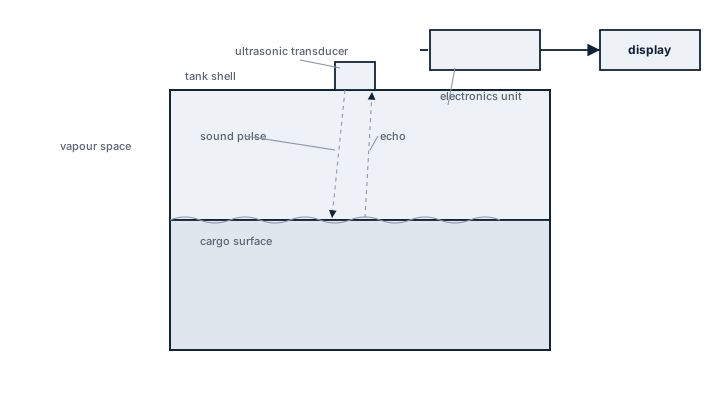
Legend
- display
- tank shell
- ultrasonic transducer
- electronics unit
- vapour space
- sound pulse
- echo
- cargo surface
Main Components
Transducer
Piezoelectric element that both sends the pulse and listens for the return echo, mounted at the top of the tank clear of any obstruction in its beam path.
Electronics Housing
Processes the echo timing into a level value and applies temperature compensation for the speed of sound in the vapour space.
Read the full guide
Mounting and Stilling Arrangement
Some installations use a stilling pipe to keep the beam path clear of turbulence, foam or structural obstructions such as ladders and heating coils.
Output and Display
4-20 mA or digital output to the tank monitoring system, plus a local display at the gauge head on most installations.
Selection and Sizing
- Beam angle and range: matched to tank height and diameter so the beam clears internal obstructions across the full measuring range.
- Vapour space conditions: temperature and expected vapour composition, since both affect the speed of sound the gauge assumes.
- Surface condition: foam, heavy turbulence or a sloped surface all degrade the echo and push toward radar or servo instead.
- Process connection: flange rating suited to the tank's design pressure, particularly relevant on pressurised or heated tanks.
Regulations and Class
Ultrasonic gauges on ballast, fresh water and similar non-cargo tanks are typically accepted as general tank monitoring instruments without a specific IMO regulation attached to the gauge type itself; where they are fitted on cargo tanks, class and flag requirements for accurate gauging and, where relevant, independent overfill alarms under MARPOL Annex I/II still apply to the overall gauging arrangement, not to the ultrasonic principle alone. Surveys typically check function against a manual sounding rather than a specific certification of the gauge type.
Typical Faults
- Foam or heavy vapour on the liquid surface — echo scattered or absorbed, gauge reads erratically or freezes on the last valid value.
- Transducer face fouled by condensation or residue — weak echo return, intermittent readings.
- Beam obstructed by an internal ladder, pipe or filling arm — false echo reflected off the obstruction instead of the liquid.
- Temperature compensation not updated for a cargo or vapour change — systematic offset in the reported level.
What to Look for in a Supplier
- Beam angle and stated range genuinely suited to the tank geometry, not a generic best-case figure from the datasheet.
- Temperature compensation range covering the tank's actual service conditions.
- Housing rated for the deck or tank top environment, including washdown and weather exposure where fitted externally.
Cross-check an ultrasonic reading against a manual sounding whenever the tank atmosphere changes significantly, such as after gas-freeing or a cargo change — the gauge does not know the vapour composition changed unless it is told.
Models in this type.
The best-documented model of each manufacturer first, then the next — 10 of 10 models in Ultrasonic Level Gauge. Every row links to full specifications, documents and service notes.
Manufacturers.
All 7 manufacturers with models of Ultrasonic Level Gauge. Names with a manufacturer page open it; the others open a search across the full library.
All manufacturersAlso in Cargo Level & Temperature Gauging.
The other equipment types in this category.
One request. A person reads it and replies by e-mail.
Tell us the manufacturer, the model and what you need — a part, a service call, a second opinion. A person reads every request and replies by e-mail.
No details at hand? A photo of the rating plate or the part is enough — simply attach it to the request.
Three things people ask first.
Is Ultrasonic Level Gauge data free?
Yes. Every model page, every guide and every datasheet for this type is readable without an account. An account adds saved searches and requests, nothing is taken away.
My model is missing — what now?
Send us the nameplate. We identify it by hand, add it to the library, and if you need a part or a service, the request is already on our desk.
Can you source a Ultrasonic Level Gauge part?
Yes. Tell us the manufacturer, the model and what you need — a person reads every request and replies by e-mail.