What to check on a Float Level Switch.
A float level switch is a point-level device, not a continuous gauge: a float rides on the liquid surface, and when it reaches a fixed position it trips a magnetic reed switch or a mechanical microswitch through a sealed tube or a hinged arm. It gives one bit of information — liquid present or absent at that height — rather than a full column reading. That simplicity is the reason it survives as an independent overfill or low-level alarm even on tanks already fitted with a servo or radar gauge…
What Makes This Type Different
A float level switch is a point-level device, not a continuous gauge: a float rides on the liquid surface, and when it reaches a fixed position it trips a magnetic reed switch or a mechanical microswitch through a sealed tube or a hinged arm. It gives one bit of information — liquid present or absent at that height — rather than a full column reading. That simplicity is the reason it survives as an independent overfill or low-level alarm even on tanks already fitted with a servo or radar gauge: the switch has no shared electronics with the primary instrument, so a fault in one system does not blind the other.
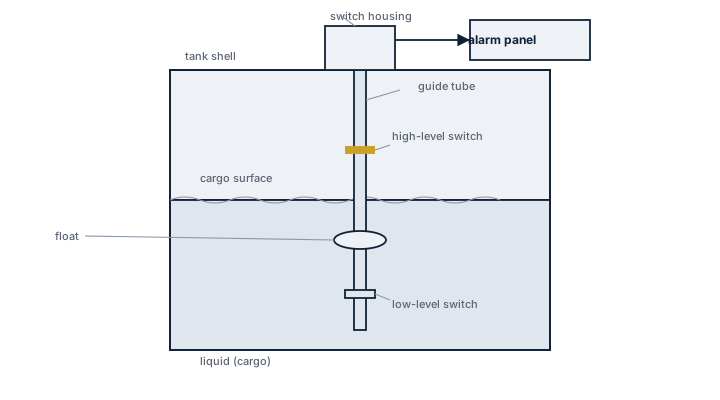
Main Components
Float
Sealed stainless steel or plastic float sized for the specific gravity of the cargo it will see — a float calibrated for seawater will sit differently, or not trip at all, in a lighter cargo such as gasoline.
Guide Tube or Stem
Keeps the float travelling in a straight line so it cannot jam against the tank wall or an internal structure as the level rises and falls.
Switch Mechanism
Reed switch actuated by a magnet in the float, with no mechanical linkage through the tank wall, or a mechanical microswitch on a pivot arm; the reed type is preferred in cargo tanks because it needs no moving seal at the pressure boundary.
Housing and Cable Entry
Pressure-rated housing at the tank penetration, with the cable gland certified for the tank's hazardous area classification.
Selection and Sizing
- Specific gravity range: the float must be matched to the lightest and heaviest cargo the tank will carry, or it will under- or over-read the trip point.
- Trip point: fixed at the design stage — high-high alarm, high alarm, low alarm — and not something adjusted casually once installed.
- Pressure and temperature rating: must match the tank's design conditions, especially on gas carriers or heated cargo tanks.
- Material compatibility: stainless grade or elastomer seals suited to the cargo chemistry, checked against the cargo's compatibility list.
Regulations and Class
On oil and chemical tankers, an independent high-level alarm separate from the main gauging system is required under overfill protection provisions linked to MARPOL Annex I/II and reinforced by class rules and the ship's cargo operations manual; float switches are one accepted means of providing that independent signal. Class surveys check that the alarm actually trips at the set point during a functional test, not just that the wiring reads continuity.
Typical Faults
- Float stuck in guide tube due to wax or sludge build-up — alarm never trips even though the tank is overfilling.
- Reed switch degraded by repeated cycling — intermittent or false alarms that crews learn to ignore, which defeats the purpose of the alarm.
- Float punctured or waterlogged — loss of buoyancy, switch trips late or not at all.
- Wrong float fitted after a spares mix-up — trip point shifts because the float's specific gravity no longer matches the cargo.
- Cable gland leaking at the tank penetration — moisture ingress into the switch housing, corrosion of contacts.
What to Look for in a Supplier
- Float material and specific gravity rating stated for the actual cargo range, not a generic water-service default.
- Certification for the tank's hazardous area zone and gas group.
- Documented trip-point repeatability, since this is a safety alarm, not a rough indication.
Test the float switch by physically raising the float during tank cleaning, not only by checking continuity at the terminal box — a switch that reads correctly on the bench can still be jammed by sludge in service.