What to check on a Ozone-Based BWMS.
An ozone BWMS generates ozone (O3) on board, usually from ambient air or oxygen-enriched air passed through a corona discharge or UV generator, and injects it into the ballast water stream during uptake. Ozone is a strong oxidiser that ruptures cell membranes and destroys DNA of organisms and pathogens within seconds of contact, then decomposes back to oxygen relatively quickly, which is the main argument for it over electrochlorination: there is no persistent active substance to neutralise before discharge, and no bulk chemical storage on board. It sits alongside UV…
What makes this type
An ozone BWMS generates ozone (O3) on board, usually from ambient air or oxygen-enriched air passed through a corona discharge or UV generator, and injects it into the ballast water stream during uptake. Ozone is a strong oxidiser that ruptures cell membranes and destroys DNA of organisms and pathogens within seconds of contact, then decomposes back to oxygen relatively quickly, which is the main argument for it over electrochlorination: there is no persistent active substance to neutralise before discharge, and no bulk chemical storage on board. It sits alongside UV and electrochlorination as one of the three dominant treatment mechanisms in the type-approved BWMS market, distinguished by working through gas injection and short-lived oxidation rather than UV dose or chlorine residual.
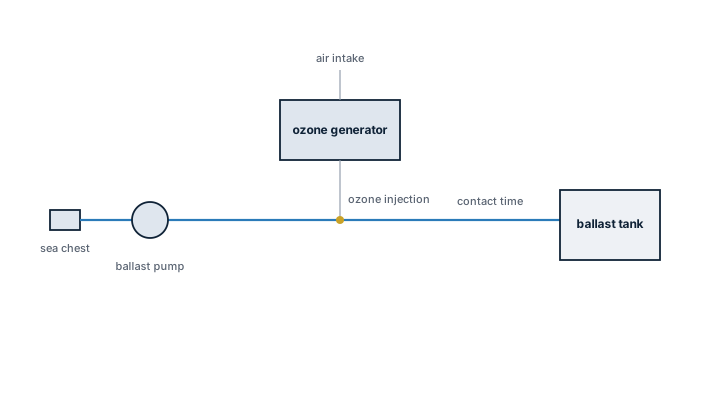
Main components
Ozone generator
Corona discharge cells or UV lamps that convert oxygen into ozone; corona discharge units need a dried, oil-free feed gas and typically an oxygen concentrator upstream to lift efficiency.
Gas injection / venturi system
Injects ozone gas into the ballast line, usually through a venturi or diffuser, sized to dissolve the gas into the water flow at the treatment rate.
Contact / reaction tank or in-line contactor
Gives the ozone dwell time to oxidise organisms before the water reaches the ballast tank, either as a dedicated vessel or extended in-line contact length.
Off-gas destruct unit
Breaks down any ozone that does not dissolve into the water before it vents to atmosphere, since ozone is toxic to crew at low concentrations.
Control and monitoring system
Meters ozone dose against flow rate and, on some systems, residual oxidant sensors to confirm treatment before the ballast pump run is logged complete.
Selection / Sizing
- Ballast pump capacity in cubic metres per hour sets the required ozone generation rate and injection system size.
- Feed gas source: dedicated air compressor and dryer, or oxygen concentrator, changes both power draw and generator footprint.
- Power consumption is comparatively high per cubic metre treated versus UV, a factor in newbuild electrical load studies.
- Available space for the off-gas destruct unit and any contact tank, which UV systems generally do not need.
- Type approval basin: confirm the system holds IMO BWMS Code type approval, or US Coast Guard approval if the ship trades to US waters.
Regulations / Class
Ozone BWMS must hold type approval under the IMO BWM Convention's BWMS Code, and ships trading to US waters need separate USCG type approval since the US did not adopt the IMO scheme directly. Discharge must meet the D-2 ballast water performance standard for organism concentration. Because ozone is a toxic and oxidising gas, the installation is also subject to the ship's gas detection and ventilation arrangements around the treatment room, and class societies review the off-gas destruct arrangement as part of system approval, not as an optional extra.
Typical faults
| Fault | Consequence |
|---|---|
| Corona discharge cell fouling from moisture in the feed gas | Falling ozone output, under-dosing that risks failing the D-2 discharge standard |
| Oxygen concentrator membrane or sieve bed degradation | Reduced feed gas purity, forcing the generator to work harder for the same ozone yield |
| Off-gas destruct catalyst exhaustion | Ozone vents closer to raw concentration, a personnel exposure hazard in the treatment space |
| Venturi injector fouling or cavitation wear | Poor gas-to-liquid mixing, uneven dosing across the ballast flow |
| High water temperature or turbidity during uptake | Ozone demand rises sharply, and the system may not reach dose under worst-case water quality |
What to look for in a supplier
- Type approval certificate covering the actual operating envelope of the ship's trading area, including cold and turbid water performance data.
- Documented power consumption figures at full ballast rate, checked against the ship's available generator capacity.
- Service network for the corona discharge cells and any oxygen concentrator media, since these are the parts with the shortest service life.
- Clear ozone exposure safety documentation for the treatment room, including sensor placement and alarm setpoints.
Ozone systems lose dosing margin fast in warm, organically loaded port water; if the ship regularly ballasts in such conditions, check the type approval test data covered those conditions rather than only clean seawater trials.