"> UV-Based BWTS - Equipment Database

UV-Based BWTS

medium 32 models total

UV ballast water systems disable organisms by damaging their DNA with ultraviolet light rather than killing with chemicals, which keeps discharge chemically neutral but makes treatment performance highly sensitive to water clarity.

Read more — UV-Based BWTS explained

What makes this type

UV-based ballast water treatment passes ballast water through a chamber fitted with UV lamps that damage the DNA of organisms and micro-organisms enough to stop them reproducing, without adding any chemical to the water. That is the main appeal over electrolysis or chemical dosing systems: there is no active substance to neutralise before discharge, no chemical to store or dose, and simpler paperwork around the ship's biocide handling. The trade-off is that UV effectiveness depends heavily on how much the water blocks light, so turbid coastal or estuarine water with high suspended solids and dissolved organic matter reduces the dose organisms actually receive.
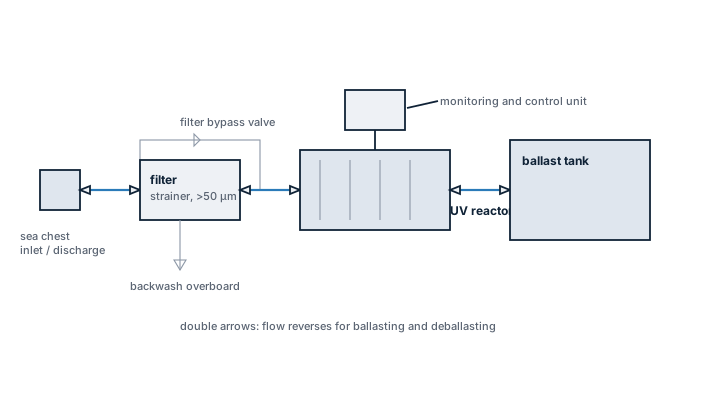
UV-based ballast water treatment system
Process schema of a UV ballast water treatment train between the sea chest and the ballast tank: filter, filter bypass valve, UV reactor with lamps and monitoring unit, with flow reversing between ballasting and deballasting.

Main components

Filtration stage

A self-cleaning screen filter, typically 40 to 50 microns, removes larger organisms and sediment ahead of the UV chamber, both protecting the lamps from fouling and improving UV transmittance through the remaining water.

UV reactor chamber

Water flows past medium or low pressure UV lamps housed in quartz sleeves; dose is a function of flow rate, lamp output and how clean the quartz sleeves are, and most systems throttle flow automatically if UV transmittance drops too low to guarantee dose.

UV sensors and control system

Sensors monitor lamp intensity and water UV transmittance in real time, and the control system logs treatment data and can reduce flow rate or alarm if the required dose cannot be delivered.

Wiper or cleaning mechanism

Mechanical or ultrasonic wipers keep the quartz sleeves around the lamps free of biofouling and scale, since fouled sleeves are the main cause of dose failure over time.

Selection and sizing

Systems are sized against the ship's maximum ballast pump capacity, expressed in cubic metres per hour, and must treat at that full rated flow, not a reduced rate. Operators trading mainly in clear open ocean water get more reliable performance from UV systems than those regularly ballasting in turbid, high-sediment ports, which is a genuine factor in choosing UV over electrolysis for a given trading pattern.

Regulations and class

  • The IMO Ballast Water Management Convention requires an approved BWTS on essentially all seagoing ships as of the 2024 compliance deadline.
  • Type approval follows the BWMS Code, tested under IMO Resolution MEPC.279(70) or its successor, confirming the system meets the D-2 discharge standard for organism concentration.
  • Commissioning testing on installation, and periodic performance verification thereafter, confirms the system still meets D-2 in service, not just at type approval.
  • Port state control checks UV lamp hour logs and system alarms as part of ballast water record book review.

Typical faults

  • Fouled or scaled quartz sleeves reduce UV transmittance to organisms, allowing viable organisms through even though the lamps appear to be working.
  • Lamp end-of-life dimming below rated output goes unnoticed if intensity sensors are not checked against manufacturer calibration.
  • Filter backwash valve sticking causes pressure drop across the filter, throttling flow and slowing ballasting operations.
  • Turbid water at intake exceeds the design UV transmittance range, triggering automatic flow reduction and extending ballasting time.
  • Control system data logging failures create gaps in the ballast water record book that port state control treats as a compliance issue.

What to look for in a supplier

  • Type approval certificate current under the applicable BWMS Code revision, valid for the vessel's flag.
  • Documented UV transmittance range the system is designed to handle, checked against the ship's actual trading routes.
  • Spare lamp and quartz sleeve availability and lamp replacement intervals stated clearly, since lamps are a recurring running cost.
  • Service support able to reach the ship's ports of call for commissioning and periodic verification testing.

Compare UV transmittance readings against the system's rated range before every ballasting operation in a new or unfamiliar port, since that single figure predicts more about treatment success than any other reading on the panel.

9 manufacturers · 32 models

Alfa Laval

8
Alfa Laval Alfa Laval PureBallast 3.1 Compact
Alfa Laval PureBallast 3.1 Compact
250 m³/h · Ballast water
Treatment Type
uv
Capacity (m³/h)
250
IMO Type Approval
ja
Uscg type approved
ja
Technical Specifications
Durchflussbereich
PureBallast 3 Ultra: 42–3000 m³/h (konfigurierbar); PureBallast 3 Compact Flex: 32–1000 m³/h
Filtration
50 µm membrane filter for ballast water intake; automatic backflush with minimal flow rate
Uv-reaktoren
Mehrere Reaktorgrößen (300 m³/h, 600 m³/h, 1000 m³/h) parallel bis 3000 m³/h; synthetische Quarzlampensleeves mit erweitertem Spektrum
Stromverbrauch
170 m³/h: 11 kW (optimal); 1000 m³/h: 52 kW (optimal); PureBallast 3 Ultra: 19% weniger als PureBallast 3
Betriebsdruck
Nominal 6 bar (optional bis 10 bar möglich)
Stromversorgung
400–440 VAC, 50/60 Hz
Zertifizierungen
IMO Typ-Approbation (revidiert G8); USCG Typ-Approbation Nr. 162.060 Serie (gültig bis Sept. 2026)
CIP (Cleaning-In-Place)
Integrated in the UV reactor module; automated cleaning after ballast/deballast; approx. 25 min per reactor
Product Lines
  • PureBallast 3 Ultra (Generation 3 Ultra)
  • PureBallast 3 Std & Ex (Standard/Ex)
  • PureBallast 3.1 Compact
  • PureBallast 3.2 Compact Flex
  • PureBallast 3.0 Flow (300 m³/h, 1000 m³/h)
Common Failures & Inspection Points
  • Area: UV lamp operating hours and performance
    Check: Inspection of UV lamp operating hours (maintenance every 1,500 operating hours or every 12 months); measurement of UV intensity/transmittance using UV sensor; inspection for wear and contamination of quartz lamp sleeves by visual inspection (discoloration, deposits). Check after 1 month of operation, then every 3 months or as needed. UV lamp should be replaced when performance falls below 80%.
  • Area: Filter condition and differential pressure
    Check: Annual inspection requirement of the 50 µm membrane filter; inspection of differential pressure (pressure transducer); visual inspection for wear, cracks or deposits; inspection of automatic backflushing functionality (backflushing with small throughput portion). Evaluate filter as wear part; replacement if pressure drop > 6 bar or wear.
  • Area: Flow meter and pressure transducer calibration
    Check: Annual calibration of flow meter (Flow Meter), pressure transmitter (Pressure Transmitter) and temperature transmitter required. Comparison against external reference measuring instruments over various flow and temperature ranges to be performed. Calibration to be documented. If sensor is faulty: ballast water discharge is prohibited.
  • Area: CIP System (Cleaning-In-Place) function and pH control
    Check: Inspection of CIP liquid pH value (target value to be documented); CIP fluid exchange required if pH value drops to 3 or monthly, whichever occurs first. Inspection of all CIP connections, valves and power cables for damage and leaks. Test of automated CIP cycle after ballast/deballast (approx. 25 min).
  • Area: UV reactor housing tightness and corrosion
    Check: Visual inspection for corrosion, erosion and wear on reactor housing and all metallic components; inspection of all sealing integrity of the reactor, quartz lamp sleeves and sensors; inspection of connections and fasteners for wear and loosening; inspection for leaks or seawater ingress into the reactor.
  • Area: System flow and operating parameters within nominal range
    Check: Verification that actual flow rate is within the rated range of the configured reactor; measurement of current operating pressure (should be ≤ 6 bar nominal, optionally up to 10 bar); inspection of UV lamp current consumption against manufacturer specifications (e.g. 52 kW optimal for 1000 m³/h reactor); inspection of ballast water temperature (sensor function). Parameters should be compared with the technical data sheet of the installed configuration.

Type-universal inspection/maintenance points for Ballast Water Treatment Systems (Alfa Laval, Mega-Swarm 2026-06). Per-model specs not auto-filled.

PureBallast 3.1 UV BWTS — IMO and USCG approved
Alfa Laval Alfa Laval PureBallast 3.1 Ex 300
Alfa Laval PureBallast 3.1 Ex 300
300 m³/h · Ballast water
Treatment Type
uv
Capacity (m³/h)
300
IMO Type Approval
ja
Uscg type approved
ja
Technical Specifications
Durchflussbereich
PureBallast 3 Ultra: 42–3000 m³/h (konfigurierbar); PureBallast 3 Compact Flex: 32–1000 m³/h
Filtration
50 µm membrane filter for ballast water intake; automatic backflush with minimal flow rate
Uv-reaktoren
Mehrere Reaktorgrößen (300 m³/h, 600 m³/h, 1000 m³/h) parallel bis 3000 m³/h; synthetische Quarzlampensleeves mit erweitertem Spektrum
Stromverbrauch
170 m³/h: 11 kW (optimal); 1000 m³/h: 52 kW (optimal); PureBallast 3 Ultra: 19% weniger als PureBallast 3
Betriebsdruck
Nominal 6 bar (optional bis 10 bar möglich)
Stromversorgung
400–440 VAC, 50/60 Hz
Zertifizierungen
IMO Typ-Approbation (revidiert G8); USCG Typ-Approbation Nr. 162.060 Serie (gültig bis Sept. 2026)
CIP (Cleaning-In-Place)
Integrated in the UV reactor module; automated cleaning after ballast/deballast; approx. 25 min per reactor
Product Lines
  • PureBallast 3 Ultra (Generation 3 Ultra)
  • PureBallast 3 Std & Ex (Standard/Ex)
  • PureBallast 3.1 Compact
  • PureBallast 3.2 Compact Flex
  • PureBallast 3.0 Flow (300 m³/h, 1000 m³/h)
Common Failures & Inspection Points
  • Area: UV lamp operating hours and performance
    Check: Inspection of UV lamp operating hours (maintenance every 1,500 operating hours or every 12 months); measurement of UV intensity/transmittance using UV sensor; inspection for wear and contamination of quartz lamp sleeves by visual inspection (discoloration, deposits). Check after 1 month of operation, then every 3 months or as needed. UV lamp should be replaced when performance falls below 80%.
  • Area: Filter condition and differential pressure
    Check: Annual inspection requirement of the 50 µm membrane filter; inspection of differential pressure (pressure transducer); visual inspection for wear, cracks or deposits; inspection of automatic backflushing functionality (backflushing with small throughput portion). Evaluate filter as wear part; replacement if pressure drop > 6 bar or wear.
  • Area: Flow meter and pressure transducer calibration
    Check: Annual calibration of flow meter (Flow Meter), pressure transmitter (Pressure Transmitter) and temperature transmitter required. Comparison against external reference measuring instruments over various flow and temperature ranges to be performed. Calibration to be documented. If sensor is faulty: ballast water discharge is prohibited.
  • Area: CIP System (Cleaning-In-Place) function and pH control
    Check: Inspection of CIP liquid pH value (target value to be documented); CIP fluid exchange required if pH value drops to 3 or monthly, whichever occurs first. Inspection of all CIP connections, valves and power cables for damage and leaks. Test of automated CIP cycle after ballast/deballast (approx. 25 min).
  • Area: UV reactor housing tightness and corrosion
    Check: Visual inspection for corrosion, erosion and wear on reactor housing and all metallic components; inspection of all sealing integrity of the reactor, quartz lamp sleeves and sensors; inspection of connections and fasteners for wear and loosening; inspection for leaks or seawater ingress into the reactor.
  • Area: System flow and operating parameters within nominal range
    Check: Verification that actual flow rate is within the rated range of the configured reactor; measurement of current operating pressure (should be ≤ 6 bar nominal, optionally up to 10 bar); inspection of UV lamp current consumption against manufacturer specifications (e.g. 52 kW optimal for 1000 m³/h reactor); inspection of ballast water temperature (sensor function). Parameters should be compared with the technical data sheet of the installed configuration.

Type-universal inspection/maintenance points for Ballast Water Treatment Systems (Alfa Laval, Mega-Swarm 2026-06). Per-model specs not auto-filled.

PureBallast 3.1 UV BWTS — IMO and USCG approved
Alfa Laval Alfa Laval PureBallast 3.1 Ex 500
Alfa Laval PureBallast 3.1 Ex 500
500 m³/h · Ballast water
Treatment Type
uv
Capacity (m³/h)
500
IMO Type Approval
ja
Uscg type approved
ja
Technical Specifications
Durchflussbereich
PureBallast 3 Ultra: 42–3000 m³/h (konfigurierbar); PureBallast 3 Compact Flex: 32–1000 m³/h
Filtration
50 µm membrane filter for ballast water intake; automatic backflush with minimal flow rate
Uv-reaktoren
Mehrere Reaktorgrößen (300 m³/h, 600 m³/h, 1000 m³/h) parallel bis 3000 m³/h; synthetische Quarzlampensleeves mit erweitertem Spektrum
Stromverbrauch
170 m³/h: 11 kW (optimal); 1000 m³/h: 52 kW (optimal); PureBallast 3 Ultra: 19% weniger als PureBallast 3
Betriebsdruck
Nominal 6 bar (optional bis 10 bar möglich)
Stromversorgung
400–440 VAC, 50/60 Hz
Zertifizierungen
IMO Typ-Approbation (revidiert G8); USCG Typ-Approbation Nr. 162.060 Serie (gültig bis Sept. 2026)
CIP (Cleaning-In-Place)
Integrated in the UV reactor module; automated cleaning after ballast/deballast; approx. 25 min per reactor
Product Lines
  • PureBallast 3 Ultra (Generation 3 Ultra)
  • PureBallast 3 Std & Ex (Standard/Ex)
  • PureBallast 3.1 Compact
  • PureBallast 3.2 Compact Flex
  • PureBallast 3.0 Flow (300 m³/h, 1000 m³/h)
Common Failures & Inspection Points
  • Area: UV lamp operating hours and performance
    Check: Inspection of UV lamp operating hours (maintenance every 1,500 operating hours or every 12 months); measurement of UV intensity/transmittance using UV sensor; inspection for wear and contamination of quartz lamp sleeves by visual inspection (discoloration, deposits). Check after 1 month of operation, then every 3 months or as needed. UV lamp should be replaced when performance falls below 80%.
  • Area: Filter condition and differential pressure
    Check: Annual inspection requirement of the 50 µm membrane filter; inspection of differential pressure (pressure transducer); visual inspection for wear, cracks or deposits; inspection of automatic backflushing functionality (backflushing with small throughput portion). Evaluate filter as wear part; replacement if pressure drop > 6 bar or wear.
  • Area: Flow meter and pressure transducer calibration
    Check: Annual calibration of flow meter (Flow Meter), pressure transmitter (Pressure Transmitter) and temperature transmitter required. Comparison against external reference measuring instruments over various flow and temperature ranges to be performed. Calibration to be documented. If sensor is faulty: ballast water discharge is prohibited.
  • Area: CIP System (Cleaning-In-Place) function and pH control
    Check: Inspection of CIP liquid pH value (target value to be documented); CIP fluid exchange required if pH value drops to 3 or monthly, whichever occurs first. Inspection of all CIP connections, valves and power cables for damage and leaks. Test of automated CIP cycle after ballast/deballast (approx. 25 min).
  • Area: UV reactor housing tightness and corrosion
    Check: Visual inspection for corrosion, erosion and wear on reactor housing and all metallic components; inspection of all sealing integrity of the reactor, quartz lamp sleeves and sensors; inspection of connections and fasteners for wear and loosening; inspection for leaks or seawater ingress into the reactor.
  • Area: System flow and operating parameters within nominal range
    Check: Verification that actual flow rate is within the rated range of the configured reactor; measurement of current operating pressure (should be ≤ 6 bar nominal, optionally up to 10 bar); inspection of UV lamp current consumption against manufacturer specifications (e.g. 52 kW optimal for 1000 m³/h reactor); inspection of ballast water temperature (sensor function). Parameters should be compared with the technical data sheet of the installed configuration.

Type-universal inspection/maintenance points for Ballast Water Treatment Systems (Alfa Laval, Mega-Swarm 2026-06). Per-model specs not auto-filled.

PureBallast 3.1 UV BWTS — IMO and USCG approved
Alfa Laval Alfa Laval PureBallast 3.1 Ex 750
Alfa Laval PureBallast 3.1 Ex 750
750 m³/h · Ballast water
Treatment Type
uv
Capacity (m³/h)
750
IMO Type Approval
ja
Uscg type approved
ja
Technical Specifications
Durchflussbereich
PureBallast 3 Ultra: 42–3000 m³/h (konfigurierbar); PureBallast 3 Compact Flex: 32–1000 m³/h
Filtration
50 µm membrane filter for ballast water intake; automatic backflush with minimal flow rate
Uv-reaktoren
Mehrere Reaktorgrößen (300 m³/h, 600 m³/h, 1000 m³/h) parallel bis 3000 m³/h; synthetische Quarzlampensleeves mit erweitertem Spektrum
Stromverbrauch
170 m³/h: 11 kW (optimal); 1000 m³/h: 52 kW (optimal); PureBallast 3 Ultra: 19% weniger als PureBallast 3
Betriebsdruck
Nominal 6 bar (optional bis 10 bar möglich)
Stromversorgung
400–440 VAC, 50/60 Hz
Zertifizierungen
IMO Typ-Approbation (revidiert G8); USCG Typ-Approbation Nr. 162.060 Serie (gültig bis Sept. 2026)
CIP (Cleaning-In-Place)
Integrated in the UV reactor module; automated cleaning after ballast/deballast; approx. 25 min per reactor
Product Lines
  • PureBallast 3 Ultra (Generation 3 Ultra)
  • PureBallast 3 Std & Ex (Standard/Ex)
  • PureBallast 3.1 Compact
  • PureBallast 3.2 Compact Flex
  • PureBallast 3.0 Flow (300 m³/h, 1000 m³/h)
Common Failures & Inspection Points
  • Area: UV lamp operating hours and performance
    Check: Inspection of UV lamp operating hours (maintenance every 1,500 operating hours or every 12 months); measurement of UV intensity/transmittance using UV sensor; inspection for wear and contamination of quartz lamp sleeves by visual inspection (discoloration, deposits). Check after 1 month of operation, then every 3 months or as needed. UV lamp should be replaced when performance falls below 80%.
  • Area: Filter condition and differential pressure
    Check: Annual inspection requirement of the 50 µm membrane filter; inspection of differential pressure (pressure transducer); visual inspection for wear, cracks or deposits; inspection of automatic backflushing functionality (backflushing with small throughput portion). Evaluate filter as wear part; replacement if pressure drop > 6 bar or wear.
  • Area: Flow meter and pressure transducer calibration
    Check: Annual calibration of flow meter (Flow Meter), pressure transmitter (Pressure Transmitter) and temperature transmitter required. Comparison against external reference measuring instruments over various flow and temperature ranges to be performed. Calibration to be documented. If sensor is faulty: ballast water discharge is prohibited.
  • Area: CIP System (Cleaning-In-Place) function and pH control
    Check: Inspection of CIP liquid pH value (target value to be documented); CIP fluid exchange required if pH value drops to 3 or monthly, whichever occurs first. Inspection of all CIP connections, valves and power cables for damage and leaks. Test of automated CIP cycle after ballast/deballast (approx. 25 min).
  • Area: UV reactor housing tightness and corrosion
    Check: Visual inspection for corrosion, erosion and wear on reactor housing and all metallic components; inspection of all sealing integrity of the reactor, quartz lamp sleeves and sensors; inspection of connections and fasteners for wear and loosening; inspection for leaks or seawater ingress into the reactor.
  • Area: System flow and operating parameters within nominal range
    Check: Verification that actual flow rate is within the rated range of the configured reactor; measurement of current operating pressure (should be ≤ 6 bar nominal, optionally up to 10 bar); inspection of UV lamp current consumption against manufacturer specifications (e.g. 52 kW optimal for 1000 m³/h reactor); inspection of ballast water temperature (sensor function). Parameters should be compared with the technical data sheet of the installed configuration.

Type-universal inspection/maintenance points for Ballast Water Treatment Systems (Alfa Laval, Mega-Swarm 2026-06). Per-model specs not auto-filled.

PureBallast 3.1 UV BWTS — IMO and USCG approved
Alfa Laval Alfa Laval PureBallast 3.1 Ex 1000
Alfa Laval PureBallast 3.1 Ex 1000
1000 m³/h · Ballast water
Treatment Type
uv
Capacity (m³/h)
1000
IMO Type Approval
ja
Uscg type approved
ja
Technical Specifications
Durchflussbereich
PureBallast 3 Ultra: 42–3000 m³/h (konfigurierbar); PureBallast 3 Compact Flex: 32–1000 m³/h
Filtration
50 µm membrane filter for ballast water intake; automatic backflush with minimal flow rate
Uv-reaktoren
Mehrere Reaktorgrößen (300 m³/h, 600 m³/h, 1000 m³/h) parallel bis 3000 m³/h; synthetische Quarzlampensleeves mit erweitertem Spektrum
Stromverbrauch
170 m³/h: 11 kW (optimal); 1000 m³/h: 52 kW (optimal); PureBallast 3 Ultra: 19% weniger als PureBallast 3
Betriebsdruck
Nominal 6 bar (optional bis 10 bar möglich)
Stromversorgung
400–440 VAC, 50/60 Hz
Zertifizierungen
IMO Typ-Approbation (revidiert G8); USCG Typ-Approbation Nr. 162.060 Serie (gültig bis Sept. 2026)
CIP (Cleaning-In-Place)
Integrated in the UV reactor module; automated cleaning after ballast/deballast; approx. 25 min per reactor
Product Lines
  • PureBallast 3 Ultra (Generation 3 Ultra)
  • PureBallast 3 Std & Ex (Standard/Ex)
  • PureBallast 3.1 Compact
  • PureBallast 3.2 Compact Flex
  • PureBallast 3.0 Flow (300 m³/h, 1000 m³/h)
Common Failures & Inspection Points
  • Area: UV lamp operating hours and performance
    Check: Inspection of UV lamp operating hours (maintenance every 1,500 operating hours or every 12 months); measurement of UV intensity/transmittance using UV sensor; inspection for wear and contamination of quartz lamp sleeves by visual inspection (discoloration, deposits). Check after 1 month of operation, then every 3 months or as needed. UV lamp should be replaced when performance falls below 80%.
  • Area: Filter condition and differential pressure
    Check: Annual inspection requirement of the 50 µm membrane filter; inspection of differential pressure (pressure transducer); visual inspection for wear, cracks or deposits; inspection of automatic backflushing functionality (backflushing with small throughput portion). Evaluate filter as wear part; replacement if pressure drop > 6 bar or wear.
  • Area: Flow meter and pressure transducer calibration
    Check: Annual calibration of flow meter (Flow Meter), pressure transmitter (Pressure Transmitter) and temperature transmitter required. Comparison against external reference measuring instruments over various flow and temperature ranges to be performed. Calibration to be documented. If sensor is faulty: ballast water discharge is prohibited.
  • Area: CIP System (Cleaning-In-Place) function and pH control
    Check: Inspection of CIP liquid pH value (target value to be documented); CIP fluid exchange required if pH value drops to 3 or monthly, whichever occurs first. Inspection of all CIP connections, valves and power cables for damage and leaks. Test of automated CIP cycle after ballast/deballast (approx. 25 min).
  • Area: UV reactor housing tightness and corrosion
    Check: Visual inspection for corrosion, erosion and wear on reactor housing and all metallic components; inspection of all sealing integrity of the reactor, quartz lamp sleeves and sensors; inspection of connections and fasteners for wear and loosening; inspection for leaks or seawater ingress into the reactor.
  • Area: System flow and operating parameters within nominal range
    Check: Verification that actual flow rate is within the rated range of the configured reactor; measurement of current operating pressure (should be ≤ 6 bar nominal, optionally up to 10 bar); inspection of UV lamp current consumption against manufacturer specifications (e.g. 52 kW optimal for 1000 m³/h reactor); inspection of ballast water temperature (sensor function). Parameters should be compared with the technical data sheet of the installed configuration.

Type-universal inspection/maintenance points for Ballast Water Treatment Systems (Alfa Laval, Mega-Swarm 2026-06). Per-model specs not auto-filled.

PureBallast 3.1 UV BWTS — IMO and USCG approved
Alfa Laval Alfa Laval PureBallast 3.1 Ex 1500
Alfa Laval PureBallast 3.1 Ex 1500
1500 m³/h · Ballast water
Treatment Type
uv
Capacity (m³/h)
1500
IMO Type Approval
ja
Uscg type approved
ja
Technical Specifications
Durchflussbereich
PureBallast 3 Ultra: 42–3000 m³/h (konfigurierbar); PureBallast 3 Compact Flex: 32–1000 m³/h
Filtration
50 µm membrane filter for ballast water intake; automatic backflush with minimal flow rate
Uv-reaktoren
Mehrere Reaktorgrößen (300 m³/h, 600 m³/h, 1000 m³/h) parallel bis 3000 m³/h; synthetische Quarzlampensleeves mit erweitertem Spektrum
Stromverbrauch
170 m³/h: 11 kW (optimal); 1000 m³/h: 52 kW (optimal); PureBallast 3 Ultra: 19% weniger als PureBallast 3
Betriebsdruck
Nominal 6 bar (optional bis 10 bar möglich)
Stromversorgung
400–440 VAC, 50/60 Hz
Zertifizierungen
IMO Typ-Approbation (revidiert G8); USCG Typ-Approbation Nr. 162.060 Serie (gültig bis Sept. 2026)
CIP (Cleaning-In-Place)
Integrated in the UV reactor module; automated cleaning after ballast/deballast; approx. 25 min per reactor
Product Lines
  • PureBallast 3 Ultra (Generation 3 Ultra)
  • PureBallast 3 Std & Ex (Standard/Ex)
  • PureBallast 3.1 Compact
  • PureBallast 3.2 Compact Flex
  • PureBallast 3.0 Flow (300 m³/h, 1000 m³/h)
Common Failures & Inspection Points
  • Area: UV lamp operating hours and performance
    Check: Inspection of UV lamp operating hours (maintenance every 1,500 operating hours or every 12 months); measurement of UV intensity/transmittance using UV sensor; inspection for wear and contamination of quartz lamp sleeves by visual inspection (discoloration, deposits). Check after 1 month of operation, then every 3 months or as needed. UV lamp should be replaced when performance falls below 80%.
  • Area: Filter condition and differential pressure
    Check: Annual inspection requirement of the 50 µm membrane filter; inspection of differential pressure (pressure transducer); visual inspection for wear, cracks or deposits; inspection of automatic backflushing functionality (backflushing with small throughput portion). Evaluate filter as wear part; replacement if pressure drop > 6 bar or wear.
  • Area: Flow meter and pressure transducer calibration
    Check: Annual calibration of flow meter (Flow Meter), pressure transmitter (Pressure Transmitter) and temperature transmitter required. Comparison against external reference measuring instruments over various flow and temperature ranges to be performed. Calibration to be documented. If sensor is faulty: ballast water discharge is prohibited.
  • Area: CIP System (Cleaning-In-Place) function and pH control
    Check: Inspection of CIP liquid pH value (target value to be documented); CIP fluid exchange required if pH value drops to 3 or monthly, whichever occurs first. Inspection of all CIP connections, valves and power cables for damage and leaks. Test of automated CIP cycle after ballast/deballast (approx. 25 min).
  • Area: UV reactor housing tightness and corrosion
    Check: Visual inspection for corrosion, erosion and wear on reactor housing and all metallic components; inspection of all sealing integrity of the reactor, quartz lamp sleeves and sensors; inspection of connections and fasteners for wear and loosening; inspection for leaks or seawater ingress into the reactor.
  • Area: System flow and operating parameters within nominal range
    Check: Verification that actual flow rate is within the rated range of the configured reactor; measurement of current operating pressure (should be ≤ 6 bar nominal, optionally up to 10 bar); inspection of UV lamp current consumption against manufacturer specifications (e.g. 52 kW optimal for 1000 m³/h reactor); inspection of ballast water temperature (sensor function). Parameters should be compared with the technical data sheet of the installed configuration.

Type-universal inspection/maintenance points for Ballast Water Treatment Systems (Alfa Laval, Mega-Swarm 2026-06). Per-model specs not auto-filled.

PureBallast 3.1 UV BWTS — IMO and USCG approved
Alfa Laval Alfa Laval PureBallast 3.1 Ex 2500
Alfa Laval PureBallast 3.1 Ex 2500
2500 m³/h · Ballast water
Treatment Type
uv
Capacity (m³/h)
2500
IMO Type Approval
ja
Uscg type approved
ja
Technical Specifications
Durchflussbereich
PureBallast 3 Ultra: 42–3000 m³/h (konfigurierbar); PureBallast 3 Compact Flex: 32–1000 m³/h
Filtration
50 µm membrane filter for ballast water intake; automatic backflush with minimal flow rate
Uv-reaktoren
Mehrere Reaktorgrößen (300 m³/h, 600 m³/h, 1000 m³/h) parallel bis 3000 m³/h; synthetische Quarzlampensleeves mit erweitertem Spektrum
Stromverbrauch
170 m³/h: 11 kW (optimal); 1000 m³/h: 52 kW (optimal); PureBallast 3 Ultra: 19% weniger als PureBallast 3
Betriebsdruck
Nominal 6 bar (optional bis 10 bar möglich)
Stromversorgung
400–440 VAC, 50/60 Hz
Zertifizierungen
IMO Typ-Approbation (revidiert G8); USCG Typ-Approbation Nr. 162.060 Serie (gültig bis Sept. 2026)
CIP (Cleaning-In-Place)
Integrated in the UV reactor module; automated cleaning after ballast/deballast; approx. 25 min per reactor
Product Lines
  • PureBallast 3 Ultra (Generation 3 Ultra)
  • PureBallast 3 Std & Ex (Standard/Ex)
  • PureBallast 3.1 Compact
  • PureBallast 3.2 Compact Flex
  • PureBallast 3.0 Flow (300 m³/h, 1000 m³/h)
Common Failures & Inspection Points
  • Area: UV lamp operating hours and performance
    Check: Inspection of UV lamp operating hours (maintenance every 1,500 operating hours or every 12 months); measurement of UV intensity/transmittance using UV sensor; inspection for wear and contamination of quartz lamp sleeves by visual inspection (discoloration, deposits). Check after 1 month of operation, then every 3 months or as needed. UV lamp should be replaced when performance falls below 80%.
  • Area: Filter condition and differential pressure
    Check: Annual inspection requirement of the 50 µm membrane filter; inspection of differential pressure (pressure transducer); visual inspection for wear, cracks or deposits; inspection of automatic backflushing functionality (backflushing with small throughput portion). Evaluate filter as wear part; replacement if pressure drop > 6 bar or wear.
  • Area: Flow meter and pressure transducer calibration
    Check: Annual calibration of flow meter (Flow Meter), pressure transmitter (Pressure Transmitter) and temperature transmitter required. Comparison against external reference measuring instruments over various flow and temperature ranges to be performed. Calibration to be documented. If sensor is faulty: ballast water discharge is prohibited.
  • Area: CIP System (Cleaning-In-Place) function and pH control
    Check: Inspection of CIP liquid pH value (target value to be documented); CIP fluid exchange required if pH value drops to 3 or monthly, whichever occurs first. Inspection of all CIP connections, valves and power cables for damage and leaks. Test of automated CIP cycle after ballast/deballast (approx. 25 min).
  • Area: UV reactor housing tightness and corrosion
    Check: Visual inspection for corrosion, erosion and wear on reactor housing and all metallic components; inspection of all sealing integrity of the reactor, quartz lamp sleeves and sensors; inspection of connections and fasteners for wear and loosening; inspection for leaks or seawater ingress into the reactor.
  • Area: System flow and operating parameters within nominal range
    Check: Verification that actual flow rate is within the rated range of the configured reactor; measurement of current operating pressure (should be ≤ 6 bar nominal, optionally up to 10 bar); inspection of UV lamp current consumption against manufacturer specifications (e.g. 52 kW optimal for 1000 m³/h reactor); inspection of ballast water temperature (sensor function). Parameters should be compared with the technical data sheet of the installed configuration.

Type-universal inspection/maintenance points for Ballast Water Treatment Systems (Alfa Laval, Mega-Swarm 2026-06). Per-model specs not auto-filled.

PureBallast 3.1 UV BWTS — IMO and USCG approved
Alfa Laval Alfa Laval PureBallast 3.1 Ex 3000
Alfa Laval PureBallast 3.1 Ex 3000
3000 m³/h · Ballast water
Treatment Type
uv
Capacity (m³/h)
3000
IMO Type Approval
ja
Uscg type approved
ja
Technical Specifications
Durchflussbereich
PureBallast 3 Ultra: 42–3000 m³/h (konfigurierbar); PureBallast 3 Compact Flex: 32–1000 m³/h
Filtration
50 µm membrane filter for ballast water intake; automatic backflush with minimal flow rate
Uv-reaktoren
Mehrere Reaktorgrößen (300 m³/h, 600 m³/h, 1000 m³/h) parallel bis 3000 m³/h; synthetische Quarzlampensleeves mit erweitertem Spektrum
Stromverbrauch
170 m³/h: 11 kW (optimal); 1000 m³/h: 52 kW (optimal); PureBallast 3 Ultra: 19% weniger als PureBallast 3
Betriebsdruck
Nominal 6 bar (optional bis 10 bar möglich)
Stromversorgung
400–440 VAC, 50/60 Hz
Zertifizierungen
IMO Typ-Approbation (revidiert G8); USCG Typ-Approbation Nr. 162.060 Serie (gültig bis Sept. 2026)
CIP (Cleaning-In-Place)
Integrated in the UV reactor module; automated cleaning after ballast/deballast; approx. 25 min per reactor
Product Lines
  • PureBallast 3 Ultra (Generation 3 Ultra)
  • PureBallast 3 Std & Ex (Standard/Ex)
  • PureBallast 3.1 Compact
  • PureBallast 3.2 Compact Flex
  • PureBallast 3.0 Flow (300 m³/h, 1000 m³/h)
Common Failures & Inspection Points
  • Area: UV lamp operating hours and performance
    Check: Inspection of UV lamp operating hours (maintenance every 1,500 operating hours or every 12 months); measurement of UV intensity/transmittance using UV sensor; inspection for wear and contamination of quartz lamp sleeves by visual inspection (discoloration, deposits). Check after 1 month of operation, then every 3 months or as needed. UV lamp should be replaced when performance falls below 80%.
  • Area: Filter condition and differential pressure
    Check: Annual inspection requirement of the 50 µm membrane filter; inspection of differential pressure (pressure transducer); visual inspection for wear, cracks or deposits; inspection of automatic backflushing functionality (backflushing with small throughput portion). Evaluate filter as wear part; replacement if pressure drop > 6 bar or wear.
  • Area: Flow meter and pressure transducer calibration
    Check: Annual calibration of flow meter (Flow Meter), pressure transmitter (Pressure Transmitter) and temperature transmitter required. Comparison against external reference measuring instruments over various flow and temperature ranges to be performed. Calibration to be documented. If sensor is faulty: ballast water discharge is prohibited.
  • Area: CIP System (Cleaning-In-Place) function and pH control
    Check: Inspection of CIP liquid pH value (target value to be documented); CIP fluid exchange required if pH value drops to 3 or monthly, whichever occurs first. Inspection of all CIP connections, valves and power cables for damage and leaks. Test of automated CIP cycle after ballast/deballast (approx. 25 min).
  • Area: UV reactor housing tightness and corrosion
    Check: Visual inspection for corrosion, erosion and wear on reactor housing and all metallic components; inspection of all sealing integrity of the reactor, quartz lamp sleeves and sensors; inspection of connections and fasteners for wear and loosening; inspection for leaks or seawater ingress into the reactor.
  • Area: System flow and operating parameters within nominal range
    Check: Verification that actual flow rate is within the rated range of the configured reactor; measurement of current operating pressure (should be ≤ 6 bar nominal, optionally up to 10 bar); inspection of UV lamp current consumption against manufacturer specifications (e.g. 52 kW optimal for 1000 m³/h reactor); inspection of ballast water temperature (sensor function). Parameters should be compared with the technical data sheet of the installed configuration.

Type-universal inspection/maintenance points for Ballast Water Treatment Systems (Alfa Laval, Mega-Swarm 2026-06). Per-model specs not auto-filled.

PureBallast 3.1 UV BWTS — IMO and USCG approved

Optimarin

8
Optimarin Optimarin Ballast System OBS
Optimarin Ballast System OBS
variable · Ballast Water Treatment · UV BWTS
Type
uv
USCG Approved
ja
Origin
Norway
Common Failures & Inspection Points
  • UV lamp failure
  • Filter element blockage
  • Control system error
Service: Norwegian manufacturer. First USCG-approved UV BWTS. Lamp life ~12000 hrs.
Spare Parts: Optimarin: UV-Lampen an Bord vorhalten (2 Sätze). Filterelemente: 1 Satz. Lead time: 2-4 Wochen.
Strengths
  • First USCG‑approved UV ballast water treatment system, demonstrating regulatory acceptance
  • Chemical‑free operation eliminates the need for dosing equipment and handling hazardous chemicals
  • Long UV lamp service life (~12 000 hrs) reduces replacement frequency and operating cost
  • Compact, modular design facilitates installation on new builds and retrofits with limited space
  • Built‑in performance monitoring and alarm functions simplify compliance reporting
Weaknesses
  • UV efficacy drops in highly turbid or colored ballast water; a pre‑filtration stage is mandatory
  • Lamp failure disables treatment until the lamp is replaced, requiring vigilant maintenance schedules
  • Electrical power demand can be higher than some chemical‑based systems, impacting ship’s energy budget
  • Maximum flow capacity is lower than large mechanical BWTS, limiting suitability for very high‑throughput vessels
Typical Vessels: Container shipsBulk carriersTankers (product and crude)Cruise linersOffshore supply vessels
Certifications: IMO D-2USCG Type Approval
Decision Guide: Choose if: the vessel needs a proven, chemical‑free solution that meets IMO D‑2 and USCG requirements, has moderate ballast water turbidity, and space is at a premium. Avoid if: the ship regularly handles highly turbid or heavily colored ballast water, requires very high flow rates beyond the system’s rating, or seeks the lowest possible power consumption.
Use Cases: Optimarin OBS is commonly installed on medium‑size commercial vessels (5 000–30 000 dwt) during new‑build construction or as a retrofit to achieve compliance with the Ballast Water Management Convention. It is favored where space constraints and the desire for chemical‑free operation are key drivers.
Optimarin Ballast System OBS 300 unverified
300 m³/h · Ballast water
Treatment Type
uv
Capacity (m³/h)
300
IMO Type Approval
ja
Uscg type approved
ja
Common Failures & Inspection Points
  • Fouling or exhausted treatment media can reduce treatment effectiveness, seen as deteriorating outlet-water quality or rising differential pressure
  • Dosing-pump or chemical-feed faults can interrupt treatment, noticed as unstable readings, low dosing indication or quality alarms
  • Blocked strainers or restricted piping can reduce flow, seen as low throughput or abnormal pump loading
  • Sensor drift or contamination can give incorrect control feedback, noticed as implausible readings or unnecessary alarms
  • Valve, seal or hose leakage can cause loss of treatment fluid or water, seen as wetness around the skid and inability to maintain normal operation
Service: Check water quality indicators, strainers, dosing points, media condition, pumps, valves, sensors and leak tightness. Confirm the unit changes state correctly between service, regeneration, flushing or standby modes where fitted. For chemical concentration, flow limits or replacement criteria not stated in the source entry, refer to the manufacturer documentation for the exact figure.
Spare Parts: Carry the maker-recommended filter elements or treatment consumables, dosing-pump service parts, seals, hoses, sensor consumables and common electrical fuses.
Use Cases: Applied to potable-water production and conditioning, domestic-water systems and other shipboard water services on merchant, passenger and offshore vessels.
Optimarin UV BWTS — chemical-free
Optimarin Ballast System OBS 500 unverified
500 m³/h · Ballast water
Treatment Type
uv
Capacity (m³/h)
500
IMO Type Approval
ja
Uscg type approved
ja
Common Failures & Inspection Points
  • Fouling or exhausted treatment media can reduce treatment effectiveness, seen as deteriorating outlet-water quality or rising differential pressure
  • Dosing-pump or chemical-feed faults can interrupt treatment, noticed as unstable readings, low dosing indication or quality alarms
  • Blocked strainers or restricted piping can reduce flow, seen as low throughput or abnormal pump loading
  • Sensor drift or contamination can give incorrect control feedback, noticed as implausible readings or unnecessary alarms
  • Valve, seal or hose leakage can cause loss of treatment fluid or water, seen as wetness around the skid and inability to maintain normal operation
Service: Check water quality indicators, strainers, dosing points, media condition, pumps, valves, sensors and leak tightness. Confirm the unit changes state correctly between service, regeneration, flushing or standby modes where fitted. For chemical concentration, flow limits or replacement criteria not stated in the source entry, refer to the manufacturer documentation for the exact figure.
Spare Parts: Carry the maker-recommended filter elements or treatment consumables, dosing-pump service parts, seals, hoses, sensor consumables and common electrical fuses.
Use Cases: Applied to potable-water production and conditioning, domestic-water systems and other shipboard water services on merchant, passenger and offshore vessels.
Optimarin UV BWTS — chemical-free
Optimarin Ballast System OBS 750 unverified
750 m³/h · Ballast water
Treatment Type
uv
Capacity (m³/h)
750
IMO Type Approval
ja
Uscg type approved
ja
Common Failures & Inspection Points
  • Fouling or exhausted treatment media can reduce treatment effectiveness, seen as deteriorating outlet-water quality or rising differential pressure
  • Dosing-pump or chemical-feed faults can interrupt treatment, noticed as unstable readings, low dosing indication or quality alarms
  • Blocked strainers or restricted piping can reduce flow, seen as low throughput or abnormal pump loading
  • Sensor drift or contamination can give incorrect control feedback, noticed as implausible readings or unnecessary alarms
  • Valve, seal or hose leakage can cause loss of treatment fluid or water, seen as wetness around the skid and inability to maintain normal operation
Service: Check water quality indicators, strainers, dosing points, media condition, pumps, valves, sensors and leak tightness. Confirm the unit changes state correctly between service, regeneration, flushing or standby modes where fitted. For chemical concentration, flow limits or replacement criteria not stated in the source entry, refer to the manufacturer documentation for the exact figure.
Spare Parts: Carry the maker-recommended filter elements or treatment consumables, dosing-pump service parts, seals, hoses, sensor consumables and common electrical fuses.
Use Cases: Applied to potable-water production and conditioning, domestic-water systems and other shipboard water services on merchant, passenger and offshore vessels.
Optimarin UV BWTS — chemical-free
Optimarin Ballast System OBS 1000 unverified
1000 m³/h · Ballast water
Treatment Type
uv
Capacity (m³/h)
1000
IMO Type Approval
ja
Uscg type approved
ja
Common Failures & Inspection Points
  • Fouling or exhausted treatment media can reduce treatment effectiveness, seen as deteriorating outlet-water quality or rising differential pressure
  • Dosing-pump or chemical-feed faults can interrupt treatment, noticed as unstable readings, low dosing indication or quality alarms
  • Blocked strainers or restricted piping can reduce flow, seen as low throughput or abnormal pump loading
  • Sensor drift or contamination can give incorrect control feedback, noticed as implausible readings or unnecessary alarms
  • Valve, seal or hose leakage can cause loss of treatment fluid or water, seen as wetness around the skid and inability to maintain normal operation
Service: Check water quality indicators, strainers, dosing points, media condition, pumps, valves, sensors and leak tightness. Confirm the unit changes state correctly between service, regeneration, flushing or standby modes where fitted. For chemical concentration, flow limits or replacement criteria not stated in the source entry, refer to the manufacturer documentation for the exact figure.
Spare Parts: Carry the maker-recommended filter elements or treatment consumables, dosing-pump service parts, seals, hoses, sensor consumables and common electrical fuses.
Use Cases: Applied to potable-water production and conditioning, domestic-water systems and other shipboard water services on merchant, passenger and offshore vessels.
Optimarin UV BWTS — chemical-free
Optimarin Ballast System OBS 1500 unverified
1500 m³/h · Ballast water
Treatment Type
uv
Capacity (m³/h)
1500
IMO Type Approval
ja
Uscg type approved
ja
Common Failures & Inspection Points
  • Fouling or exhausted treatment media can reduce treatment effectiveness, seen as deteriorating outlet-water quality or rising differential pressure
  • Dosing-pump or chemical-feed faults can interrupt treatment, noticed as unstable readings, low dosing indication or quality alarms
  • Blocked strainers or restricted piping can reduce flow, seen as low throughput or abnormal pump loading
  • Sensor drift or contamination can give incorrect control feedback, noticed as implausible readings or unnecessary alarms
  • Valve, seal or hose leakage can cause loss of treatment fluid or water, seen as wetness around the skid and inability to maintain normal operation
Service: Check water quality indicators, strainers, dosing points, media condition, pumps, valves, sensors and leak tightness. Confirm the unit changes state correctly between service, regeneration, flushing or standby modes where fitted. For chemical concentration, flow limits or replacement criteria not stated in the source entry, refer to the manufacturer documentation for the exact figure.
Spare Parts: Carry the maker-recommended filter elements or treatment consumables, dosing-pump service parts, seals, hoses, sensor consumables and common electrical fuses.
Use Cases: Applied to potable-water production and conditioning, domestic-water systems and other shipboard water services on merchant, passenger and offshore vessels.
Optimarin UV BWTS — chemical-free
Optimarin Ballast System OBS 2000 unverified
2000 m³/h · Ballast water
Treatment Type
uv
Capacity (m³/h)
2000
IMO Type Approval
ja
Uscg type approved
ja
Common Failures & Inspection Points
  • Fouling or exhausted treatment media can reduce treatment effectiveness, seen as deteriorating outlet-water quality or rising differential pressure
  • Dosing-pump or chemical-feed faults can interrupt treatment, noticed as unstable readings, low dosing indication or quality alarms
  • Blocked strainers or restricted piping can reduce flow, seen as low throughput or abnormal pump loading
  • Sensor drift or contamination can give incorrect control feedback, noticed as implausible readings or unnecessary alarms
  • Valve, seal or hose leakage can cause loss of treatment fluid or water, seen as wetness around the skid and inability to maintain normal operation
Service: Check water quality indicators, strainers, dosing points, media condition, pumps, valves, sensors and leak tightness. Confirm the unit changes state correctly between service, regeneration, flushing or standby modes where fitted. For chemical concentration, flow limits or replacement criteria not stated in the source entry, refer to the manufacturer documentation for the exact figure.
Spare Parts: Carry the maker-recommended filter elements or treatment consumables, dosing-pump service parts, seals, hoses, sensor consumables and common electrical fuses.
Use Cases: Applied to potable-water production and conditioning, domestic-water systems and other shipboard water services on merchant, passenger and offshore vessels.
Optimarin UV BWTS — chemical-free
Optimarin Ballast System OBS 3000 unverified
3000 m³/h · Ballast water
Treatment Type
uv
Capacity (m³/h)
3000
IMO Type Approval
ja
Uscg type approved
ja
Common Failures & Inspection Points
  • Fouling or exhausted treatment media can reduce treatment effectiveness, seen as deteriorating outlet-water quality or rising differential pressure
  • Dosing-pump or chemical-feed faults can interrupt treatment, noticed as unstable readings, low dosing indication or quality alarms
  • Blocked strainers or restricted piping can reduce flow, seen as low throughput or abnormal pump loading
  • Sensor drift or contamination can give incorrect control feedback, noticed as implausible readings or unnecessary alarms
  • Valve, seal or hose leakage can cause loss of treatment fluid or water, seen as wetness around the skid and inability to maintain normal operation
Service: Check water quality indicators, strainers, dosing points, media condition, pumps, valves, sensors and leak tightness. Confirm the unit changes state correctly between service, regeneration, flushing or standby modes where fitted. For chemical concentration, flow limits or replacement criteria not stated in the source entry, refer to the manufacturer documentation for the exact figure.
Spare Parts: Carry the maker-recommended filter elements or treatment consumables, dosing-pump service parts, seals, hoses, sensor consumables and common electrical fuses.
Use Cases: Applied to potable-water production and conditioning, domestic-water systems and other shipboard water services on merchant, passenger and offshore vessels.
Optimarin UV BWTS — chemical-free

Wärtsilä

6
Wärtsilä AQUARIUS UV BWTS
AQUARIUS UV BWTS
variable · Ballast Water Treatment · UV‑based ballast water treatment system
Type
filtration_uv
IMO Approved
ja
Technical Specifications
Filtration
40 Mikron Rückspülfilter mit automatischer Selbstreinigung, Differenzdrucksensor triggert automatischen Reinigungszyklus, modernes Manta-Filtersystem mit OneMotion-Scanner
UV-Technologie (Aquarius UV)
Mitteldruck-UV-Reaktor mit selbstreinigendem Quarzschlauch, mechanischer Wischer zur Leistungsverwaltung, 2-stufiger Prozess (Filtration + UV-Bestrahlung)
EC-Technologie (Aquarius EC)
Seitenstrom-Elektro-Chlorierung, statischer Mischer für Desinfektionsmittel-Injektion, maximale Dosierung 10 ppm Chlor im Ballastwasser
Zulassungen
IMO Typ-Zulassung (MEPC.300(72) ab 2019), USCG Typ-Zulassung, ATEX/IECEx für Aquarius UVX (Zone 1 IIC T4)
Betrieb
Fully automatic, minimal crew interaction (annual maintenance + monitoring only), user-friendly operation
Product Lines
  • Aquarius UV
  • Aquarius EC (Electro-Chlorination)
  • Aquarius UVX (Zone 1 IIC T4 hazardous area)
Common Failures & Inspection Points
  • Area: UV lamp power loss due to ageing and wear
    Check: Quarterly cleaning of quartz tubes, annual visual inspection of UV lamps, verification of UV intensity measurements by calibrated sensors, documentation of operating hours
  • Area: Filter differential pressure rise due to dirt deposits and sensor failure
    Check: Differential pressure sensor functional test (should automatically trigger backflush cycle at approx. 0.3 bar), visual inspection of filter element for damage/blockage, verification of differential pressure after backflushing (should reach < 0.1 bar)
  • Area: UV intensity sensor miscalibration and malfunction
    Check: Annual sensor calibration (preferably by manufacturer), metric verification of measured UV intensity against reference values, isolation test of sensor against environmental influence, verification of alarm thresholds and signal transmission
  • Area: Electrochlorination cell (EC systems) - wear and chemical effectiveness
    Check: Verification of total residual chlorine (TRO) after treatment (must remain ≤ 0.1 mg/L), visual condition of EC cell for corrosion/wear, verification of static mixers for blockage, measurement of voltage ratios at EC electrodes
  • Area: Automatic backflush valves and hydraulic malfunction
    Check: Functional test of automatic backflush valves (should respond reliably to sensor signal), visual inspection of all hydraulic lines and connections for leaks, verification of pump pressure regulator, flow rate verification against manufacturer specification
  • Area: Certification and conformity documentation
    Check: Verification of valid type approval certificates (IMO MEPC.300(72), USCG), control of ballast water record book with current entries, verification of conducted biological commissioning tests (required from 01.06.2022), verification of maintenance protocols and service records

Type-universal inspection/maintenance points for Ballast Water Treatment Systems (Wärtsilä, Mega-Schwarm 2026-06). Per-model-specs not auto-filled.

Service: Filtration + UV combination. UV lamp replacement at ~9000 hours.
Spare Parts: Wärtsilä: UV-Lampen an Bord vorhalten (2 Sätze). Filterelemente: 1 Satz. Lead time: 2-4 Wochen.
Strengths
  • Integrated 40 µm filtration and UV disinfection in one compact package
  • Self‑cleaning quartz sleeve and automatic backwash reduce manual maintenance
  • Full IMO MEPC.300(72) type approval and USCG certification ensure global compliance
  • ATEX/IECEx certified version (UVX) allows installation in hazardous zones (Zone 1 IIC T4)
  • Minimal crew interaction – only periodic cleaning, lamp replacement (~9 000 h) and annual checks
Weaknesses
  • UV lamp life limited to ~9 000 operating hours; replacement adds recurring cost
  • Performance can drop in highly turbid or coloured ballast water unless pre‑filtration is optimal
  • Requires regular quartz‑tube cleaning and differential‑pressure sensor calibration
  • Higher upfront capital cost compared with simple chlorination‑only systems
  • Complex hydraulic back‑flush system may need specialist troubleshooting
Typical Vessels: Oil tankerChemical tankerBulk carrierContainer shipCruise linerOffshore supply vessel
Certifications: IMO MEPC.300(72) Type Approval (D‑2)USCG Type ApprovalATEX/IECEx Zone 1 IIC T4 (Aquarius UVX)
Decision Guide: Choose if you need a low‑maintenance, fully automated BWTS that meets IMO D‑2 and USCG rules, especially on vessels operating in hazardous zones or where crew time is at a premium. Avoid if budget constraints are dominant, the vessel regularly takes highly turbid ballast water, or space for the back‑wash filter system is limited.
Use Cases: Commonly installed on newbuilds and retrofits of large ocean‑going tankers, bulk carriers and cruise ships to satisfy global ballast‑water regulations. Operators favour it where a single‑unit solution (filtration + UV) simplifies certification paperwork and reduces crew workload, particularly in regions with strict USCG enforcement or ATEX requirements.
[08.08.2026] Datenblattlink entfernt (fehler 404): https://www.wartsila.com/docs/default-source/product-files/bwms-files/brochure-o-aquarius-uv.pdf
Wärtsilä Wärtsilä Aquarius UV 250
Wärtsilä Aquarius UV 250
250 m³/h · Ballast water
Treatment Type
uv
Capacity (m³/h)
250
IMO Type Approval
ja
Technical Specifications
Filtration
40 Mikron Rückspülfilter mit automatischer Selbstreinigung, Differenzdrucksensor triggert automatischen Reinigungszyklus, modernes Manta-Filtersystem mit OneMotion-Scanner
UV-Technologie (Aquarius UV)
Mitteldruck-UV-Reaktor mit selbstreinigendem Quarzschlauch, mechanischer Wischer zur Leistungsverwaltung, 2-stufiger Prozess (Filtration + UV-Bestrahlung)
EC-Technologie (Aquarius EC)
Seitenstrom-Elektro-Chlorierung, statischer Mischer für Desinfektionsmittel-Injektion, maximale Dosierung 10 ppm Chlor im Ballastwasser
Zulassungen
IMO Typ-Zulassung (MEPC.300(72) ab 2019), USCG Typ-Zulassung, ATEX/IECEx für Aquarius UVX (Zone 1 IIC T4)
Betrieb
Fully automatic, minimal crew interaction (annual maintenance + monitoring only), user-friendly operation
Product Lines
  • Aquarius UV
  • Aquarius EC (Electro-Chlorination)
  • Aquarius UVX (Zone 1 IIC T4 hazardous area)
Common Failures & Inspection Points
  • Area: UV lamp power loss due to ageing and wear
    Check: Quarterly cleaning of quartz tubes, annual visual inspection of UV lamps, verification of UV intensity measurements by calibrated sensors, documentation of operating hours
  • Area: Filter differential pressure rise due to dirt deposits and sensor failure
    Check: Differential pressure sensor functional test (should automatically trigger backflush cycle at approx. 0.3 bar), visual inspection of filter element for damage/blockage, verification of differential pressure after backflushing (should reach < 0.1 bar)
  • Area: UV intensity sensor miscalibration and malfunction
    Check: Annual sensor calibration (preferably by manufacturer), metric verification of measured UV intensity against reference values, isolation test of sensor against environmental influence, verification of alarm thresholds and signal transmission
  • Area: Electrochlorination cell (EC systems) - wear and chemical effectiveness
    Check: Verification of total residual chlorine (TRO) after treatment (must remain ≤ 0.1 mg/L), visual condition of EC cell for corrosion/wear, verification of static mixers for blockage, measurement of voltage ratios at EC electrodes
  • Area: Automatic backflush valves and hydraulic malfunction
    Check: Functional test of automatic backflush valves (should respond reliably to sensor signal), visual inspection of all hydraulic lines and connections for leaks, verification of pump pressure regulator, flow rate verification against manufacturer specification
  • Area: Certification and conformity documentation
    Check: Verification of valid type approval certificates (IMO MEPC.300(72), USCG), control of ballast water record book with current entries, verification of conducted biological commissioning tests (required from 01.06.2022), verification of maintenance protocols and service records

Type-universal inspection/maintenance points for Ballast Water Treatment Systems (Wärtsilä, Mega-Schwarm 2026-06). Per-model-specs not auto-filled.

Aquarius UV ballast water treatment system [08.08.2026] Datenblattlink entfernt (fehler 404): https://www.wartsila.com/docs/default-source/product-files/bwms-files/brochure-o-aquarius-uv.pdf
Wärtsilä Wärtsilä Aquarius UV 500
Wärtsilä Aquarius UV 500
500 m³/h · Ballast water
Treatment Type
uv
Capacity (m³/h)
500
IMO Type Approval
ja
Technical Specifications
Filtration
40 Mikron Rückspülfilter mit automatischer Selbstreinigung, Differenzdrucksensor triggert automatischen Reinigungszyklus, modernes Manta-Filtersystem mit OneMotion-Scanner
UV-Technologie (Aquarius UV)
Mitteldruck-UV-Reaktor mit selbstreinigendem Quarzschlauch, mechanischer Wischer zur Leistungsverwaltung, 2-stufiger Prozess (Filtration + UV-Bestrahlung)
EC-Technologie (Aquarius EC)
Seitenstrom-Elektro-Chlorierung, statischer Mischer für Desinfektionsmittel-Injektion, maximale Dosierung 10 ppm Chlor im Ballastwasser
Zulassungen
IMO Typ-Zulassung (MEPC.300(72) ab 2019), USCG Typ-Zulassung, ATEX/IECEx für Aquarius UVX (Zone 1 IIC T4)
Betrieb
Fully automatic, minimal crew interaction (annual maintenance + monitoring only), user-friendly operation
Product Lines
  • Aquarius UV
  • Aquarius EC (Electro-Chlorination)
  • Aquarius UVX (Zone 1 IIC T4 hazardous area)
Common Failures & Inspection Points
  • Area: UV lamp power loss due to ageing and wear
    Check: Quarterly cleaning of quartz tubes, annual visual inspection of UV lamps, verification of UV intensity measurements by calibrated sensors, documentation of operating hours
  • Area: Filter differential pressure rise due to dirt deposits and sensor failure
    Check: Differential pressure sensor functional test (should automatically trigger backflush cycle at approx. 0.3 bar), visual inspection of filter element for damage/blockage, verification of differential pressure after backflushing (should reach < 0.1 bar)
  • Area: UV intensity sensor miscalibration and malfunction
    Check: Annual sensor calibration (preferably by manufacturer), metric verification of measured UV intensity against reference values, isolation test of sensor against environmental influence, verification of alarm thresholds and signal transmission
  • Area: Electrochlorination cell (EC systems) - wear and chemical effectiveness
    Check: Verification of total residual chlorine (TRO) after treatment (must remain ≤ 0.1 mg/L), visual condition of EC cell for corrosion/wear, verification of static mixers for blockage, measurement of voltage ratios at EC electrodes
  • Area: Automatic backflush valves and hydraulic malfunction
    Check: Functional test of automatic backflush valves (should respond reliably to sensor signal), visual inspection of all hydraulic lines and connections for leaks, verification of pump pressure regulator, flow rate verification against manufacturer specification
  • Area: Certification and conformity documentation
    Check: Verification of valid type approval certificates (IMO MEPC.300(72), USCG), control of ballast water record book with current entries, verification of conducted biological commissioning tests (required from 01.06.2022), verification of maintenance protocols and service records

Type-universal inspection/maintenance points for Ballast Water Treatment Systems (Wärtsilä, Mega-Schwarm 2026-06). Per-model-specs not auto-filled.

Aquarius UV ballast water treatment system [08.08.2026] Datenblattlink entfernt (fehler 404): https://www.wartsila.com/docs/default-source/product-files/bwms-files/brochure-o-aquarius-uv.pdf
Wärtsilä Wärtsilä Aquarius UV 1000
Wärtsilä Aquarius UV 1000
1000 m³/h · Ballast water
Treatment Type
uv
Capacity (m³/h)
1000
IMO Type Approval
ja
Technical Specifications
Filtration
40 Mikron Rückspülfilter mit automatischer Selbstreinigung, Differenzdrucksensor triggert automatischen Reinigungszyklus, modernes Manta-Filtersystem mit OneMotion-Scanner
UV-Technologie (Aquarius UV)
Mitteldruck-UV-Reaktor mit selbstreinigendem Quarzschlauch, mechanischer Wischer zur Leistungsverwaltung, 2-stufiger Prozess (Filtration + UV-Bestrahlung)
EC-Technologie (Aquarius EC)
Seitenstrom-Elektro-Chlorierung, statischer Mischer für Desinfektionsmittel-Injektion, maximale Dosierung 10 ppm Chlor im Ballastwasser
Zulassungen
IMO Typ-Zulassung (MEPC.300(72) ab 2019), USCG Typ-Zulassung, ATEX/IECEx für Aquarius UVX (Zone 1 IIC T4)
Betrieb
Fully automatic, minimal crew interaction (annual maintenance + monitoring only), user-friendly operation
Product Lines
  • Aquarius UV
  • Aquarius EC (Electro-Chlorination)
  • Aquarius UVX (Zone 1 IIC T4 hazardous area)
Common Failures & Inspection Points
  • Area: UV lamp power loss due to ageing and wear
    Check: Quarterly cleaning of quartz tubes, annual visual inspection of UV lamps, verification of UV intensity measurements by calibrated sensors, documentation of operating hours
  • Area: Filter differential pressure rise due to dirt deposits and sensor failure
    Check: Differential pressure sensor functional test (should automatically trigger backflush cycle at approx. 0.3 bar), visual inspection of filter element for damage/blockage, verification of differential pressure after backflushing (should reach < 0.1 bar)
  • Area: UV intensity sensor miscalibration and malfunction
    Check: Annual sensor calibration (preferably by manufacturer), metric verification of measured UV intensity against reference values, isolation test of sensor against environmental influence, verification of alarm thresholds and signal transmission
  • Area: Electrochlorination cell (EC systems) - wear and chemical effectiveness
    Check: Verification of total residual chlorine (TRO) after treatment (must remain ≤ 0.1 mg/L), visual condition of EC cell for corrosion/wear, verification of static mixers for blockage, measurement of voltage ratios at EC electrodes
  • Area: Automatic backflush valves and hydraulic malfunction
    Check: Functional test of automatic backflush valves (should respond reliably to sensor signal), visual inspection of all hydraulic lines and connections for leaks, verification of pump pressure regulator, flow rate verification against manufacturer specification
  • Area: Certification and conformity documentation
    Check: Verification of valid type approval certificates (IMO MEPC.300(72), USCG), control of ballast water record book with current entries, verification of conducted biological commissioning tests (required from 01.06.2022), verification of maintenance protocols and service records

Type-universal inspection/maintenance points for Ballast Water Treatment Systems (Wärtsilä, Mega-Schwarm 2026-06). Per-model-specs not auto-filled.

Aquarius UV ballast water treatment system [08.08.2026] Datenblattlink entfernt (fehler 404): https://www.wartsila.com/docs/default-source/product-files/bwms-files/brochure-o-aquarius-uv.pdf
Wärtsilä Wärtsilä Aquarius UV 1500
Wärtsilä Aquarius UV 1500
1500 m³/h · Ballast water
Treatment Type
uv
Capacity (m³/h)
1500
IMO Type Approval
ja
Technical Specifications
Filtration
40 Mikron Rückspülfilter mit automatischer Selbstreinigung, Differenzdrucksensor triggert automatischen Reinigungszyklus, modernes Manta-Filtersystem mit OneMotion-Scanner
UV-Technologie (Aquarius UV)
Mitteldruck-UV-Reaktor mit selbstreinigendem Quarzschlauch, mechanischer Wischer zur Leistungsverwaltung, 2-stufiger Prozess (Filtration + UV-Bestrahlung)
EC-Technologie (Aquarius EC)
Seitenstrom-Elektro-Chlorierung, statischer Mischer für Desinfektionsmittel-Injektion, maximale Dosierung 10 ppm Chlor im Ballastwasser
Zulassungen
IMO Typ-Zulassung (MEPC.300(72) ab 2019), USCG Typ-Zulassung, ATEX/IECEx für Aquarius UVX (Zone 1 IIC T4)
Betrieb
Fully automatic, minimal crew interaction (annual maintenance + monitoring only), user-friendly operation
Product Lines
  • Aquarius UV
  • Aquarius EC (Electro-Chlorination)
  • Aquarius UVX (Zone 1 IIC T4 hazardous area)
Common Failures & Inspection Points
  • Area: UV lamp power loss due to ageing and wear
    Check: Quarterly cleaning of quartz tubes, annual visual inspection of UV lamps, verification of UV intensity measurements by calibrated sensors, documentation of operating hours
  • Area: Filter differential pressure rise due to dirt deposits and sensor failure
    Check: Differential pressure sensor functional test (should automatically trigger backflush cycle at approx. 0.3 bar), visual inspection of filter element for damage/blockage, verification of differential pressure after backflushing (should reach < 0.1 bar)
  • Area: UV intensity sensor miscalibration and malfunction
    Check: Annual sensor calibration (preferably by manufacturer), metric verification of measured UV intensity against reference values, isolation test of sensor against environmental influence, verification of alarm thresholds and signal transmission
  • Area: Electrochlorination cell (EC systems) - wear and chemical effectiveness
    Check: Verification of total residual chlorine (TRO) after treatment (must remain ≤ 0.1 mg/L), visual condition of EC cell for corrosion/wear, verification of static mixers for blockage, measurement of voltage ratios at EC electrodes
  • Area: Automatic backflush valves and hydraulic malfunction
    Check: Functional test of automatic backflush valves (should respond reliably to sensor signal), visual inspection of all hydraulic lines and connections for leaks, verification of pump pressure regulator, flow rate verification against manufacturer specification
  • Area: Certification and conformity documentation
    Check: Verification of valid type approval certificates (IMO MEPC.300(72), USCG), control of ballast water record book with current entries, verification of conducted biological commissioning tests (required from 01.06.2022), verification of maintenance protocols and service records

Type-universal inspection/maintenance points for Ballast Water Treatment Systems (Wärtsilä, Mega-Schwarm 2026-06). Per-model-specs not auto-filled.

Aquarius UV ballast water treatment system [08.08.2026] Datenblattlink entfernt (fehler 404): https://www.wartsila.com/docs/default-source/product-files/bwms-files/brochure-o-aquarius-uv.pdf
Wärtsilä Wärtsilä Aquarius UV 3000
Wärtsilä Aquarius UV 3000
3000 m³/h · Ballast water
Treatment Type
uv
Capacity (m³/h)
3000
IMO Type Approval
ja
Technical Specifications
Filtration
40 Mikron Rückspülfilter mit automatischer Selbstreinigung, Differenzdrucksensor triggert automatischen Reinigungszyklus, modernes Manta-Filtersystem mit OneMotion-Scanner
UV-Technologie (Aquarius UV)
Mitteldruck-UV-Reaktor mit selbstreinigendem Quarzschlauch, mechanischer Wischer zur Leistungsverwaltung, 2-stufiger Prozess (Filtration + UV-Bestrahlung)
EC-Technologie (Aquarius EC)
Seitenstrom-Elektro-Chlorierung, statischer Mischer für Desinfektionsmittel-Injektion, maximale Dosierung 10 ppm Chlor im Ballastwasser
Zulassungen
IMO Typ-Zulassung (MEPC.300(72) ab 2019), USCG Typ-Zulassung, ATEX/IECEx für Aquarius UVX (Zone 1 IIC T4)
Betrieb
Fully automatic, minimal crew interaction (annual maintenance + monitoring only), user-friendly operation
Product Lines
  • Aquarius UV
  • Aquarius EC (Electro-Chlorination)
  • Aquarius UVX (Zone 1 IIC T4 hazardous area)
Common Failures & Inspection Points
  • Area: UV lamp power loss due to ageing and wear
    Check: Quarterly cleaning of quartz tubes, annual visual inspection of UV lamps, verification of UV intensity measurements by calibrated sensors, documentation of operating hours
  • Area: Filter differential pressure rise due to dirt deposits and sensor failure
    Check: Differential pressure sensor functional test (should automatically trigger backflush cycle at approx. 0.3 bar), visual inspection of filter element for damage/blockage, verification of differential pressure after backflushing (should reach < 0.1 bar)
  • Area: UV intensity sensor miscalibration and malfunction
    Check: Annual sensor calibration (preferably by manufacturer), metric verification of measured UV intensity against reference values, isolation test of sensor against environmental influence, verification of alarm thresholds and signal transmission
  • Area: Electrochlorination cell (EC systems) - wear and chemical effectiveness
    Check: Verification of total residual chlorine (TRO) after treatment (must remain ≤ 0.1 mg/L), visual condition of EC cell for corrosion/wear, verification of static mixers for blockage, measurement of voltage ratios at EC electrodes
  • Area: Automatic backflush valves and hydraulic malfunction
    Check: Functional test of automatic backflush valves (should respond reliably to sensor signal), visual inspection of all hydraulic lines and connections for leaks, verification of pump pressure regulator, flow rate verification against manufacturer specification
  • Area: Certification and conformity documentation
    Check: Verification of valid type approval certificates (IMO MEPC.300(72), USCG), control of ballast water record book with current entries, verification of conducted biological commissioning tests (required from 01.06.2022), verification of maintenance protocols and service records

Type-universal inspection/maintenance points for Ballast Water Treatment Systems (Wärtsilä, Mega-Schwarm 2026-06). Per-model-specs not auto-filled.

Aquarius UV ballast water treatment system [08.08.2026] Datenblattlink entfernt (fehler 404): https://www.wartsila.com/docs/default-source/product-files/bwms-files/brochure-o-aquarius-uv.pdf

Trojan Marinex

4
Trojan Marinex TrojanUV3000Plus 300 unverified
300 m³/h · Ballast water
Treatment Type
uv
Capacity (m³/h)
300
IMO Type Approval
ja
Uscg type approved
ja
Common Failures & Inspection Points
  • Fouling or exhausted treatment media can reduce treatment effectiveness, seen as deteriorating outlet-water quality or rising differential pressure
  • Dosing-pump or chemical-feed faults can interrupt treatment, noticed as unstable readings, low dosing indication or quality alarms
  • Blocked strainers or restricted piping can reduce flow, seen as low throughput or abnormal pump loading
  • Sensor drift or contamination can give incorrect control feedback, noticed as implausible readings or unnecessary alarms
  • Valve, seal or hose leakage can cause loss of treatment fluid or water, seen as wetness around the skid and inability to maintain normal operation
Service: Check water quality indicators, strainers, dosing points, media condition, pumps, valves, sensors and leak tightness. Confirm the unit changes state correctly between service, regeneration, flushing or standby modes where fitted. For chemical concentration, flow limits or replacement criteria not stated in the source entry, refer to the manufacturer documentation for the exact figure.
Spare Parts: Carry the maker-recommended filter elements or treatment consumables, dosing-pump service parts, seals, hoses, sensor consumables and common electrical fuses.
Use Cases: Applied to potable-water production and conditioning, domestic-water systems and other shipboard water services on merchant, passenger and offshore vessels.
TrojanUV3000Plus BWTS — UV treatment
Trojan Marinex TrojanUV3000Plus 750 unverified
750 m³/h · Ballast water
Treatment Type
uv
Capacity (m³/h)
750
IMO Type Approval
ja
Uscg type approved
ja
Common Failures & Inspection Points
  • Fouling or exhausted treatment media can reduce treatment effectiveness, seen as deteriorating outlet-water quality or rising differential pressure
  • Dosing-pump or chemical-feed faults can interrupt treatment, noticed as unstable readings, low dosing indication or quality alarms
  • Blocked strainers or restricted piping can reduce flow, seen as low throughput or abnormal pump loading
  • Sensor drift or contamination can give incorrect control feedback, noticed as implausible readings or unnecessary alarms
  • Valve, seal or hose leakage can cause loss of treatment fluid or water, seen as wetness around the skid and inability to maintain normal operation
Service: Check water quality indicators, strainers, dosing points, media condition, pumps, valves, sensors and leak tightness. Confirm the unit changes state correctly between service, regeneration, flushing or standby modes where fitted. For chemical concentration, flow limits or replacement criteria not stated in the source entry, refer to the manufacturer documentation for the exact figure.
Spare Parts: Carry the maker-recommended filter elements or treatment consumables, dosing-pump service parts, seals, hoses, sensor consumables and common electrical fuses.
Use Cases: Applied to potable-water production and conditioning, domestic-water systems and other shipboard water services on merchant, passenger and offshore vessels.
TrojanUV3000Plus BWTS — UV treatment
Trojan Marinex TrojanUV3000Plus 1500 unverified
1500 m³/h · Ballast water
Treatment Type
uv
Capacity (m³/h)
1500
IMO Type Approval
ja
Uscg type approved
ja
Common Failures & Inspection Points
  • Fouling or exhausted treatment media can reduce treatment effectiveness, seen as deteriorating outlet-water quality or rising differential pressure
  • Dosing-pump or chemical-feed faults can interrupt treatment, noticed as unstable readings, low dosing indication or quality alarms
  • Blocked strainers or restricted piping can reduce flow, seen as low throughput or abnormal pump loading
  • Sensor drift or contamination can give incorrect control feedback, noticed as implausible readings or unnecessary alarms
  • Valve, seal or hose leakage can cause loss of treatment fluid or water, seen as wetness around the skid and inability to maintain normal operation
Service: Check water quality indicators, strainers, dosing points, media condition, pumps, valves, sensors and leak tightness. Confirm the unit changes state correctly between service, regeneration, flushing or standby modes where fitted. For chemical concentration, flow limits or replacement criteria not stated in the source entry, refer to the manufacturer documentation for the exact figure.
Spare Parts: Carry the maker-recommended filter elements or treatment consumables, dosing-pump service parts, seals, hoses, sensor consumables and common electrical fuses.
Use Cases: Applied to potable-water production and conditioning, domestic-water systems and other shipboard water services on merchant, passenger and offshore vessels.
TrojanUV3000Plus BWTS — UV treatment
Trojan Marinex TrojanUV3000Plus 3000 unverified
3000 m³/h · Ballast water
Treatment Type
uv
Capacity (m³/h)
3000
IMO Type Approval
ja
Uscg type approved
ja
Common Failures & Inspection Points
  • Fouling or exhausted treatment media can reduce treatment effectiveness, seen as deteriorating outlet-water quality or rising differential pressure
  • Dosing-pump or chemical-feed faults can interrupt treatment, noticed as unstable readings, low dosing indication or quality alarms
  • Blocked strainers or restricted piping can reduce flow, seen as low throughput or abnormal pump loading
  • Sensor drift or contamination can give incorrect control feedback, noticed as implausible readings or unnecessary alarms
  • Valve, seal or hose leakage can cause loss of treatment fluid or water, seen as wetness around the skid and inability to maintain normal operation
Service: Check water quality indicators, strainers, dosing points, media condition, pumps, valves, sensors and leak tightness. Confirm the unit changes state correctly between service, regeneration, flushing or standby modes where fitted. For chemical concentration, flow limits or replacement criteria not stated in the source entry, refer to the manufacturer documentation for the exact figure.
Spare Parts: Carry the maker-recommended filter elements or treatment consumables, dosing-pump service parts, seals, hoses, sensor consumables and common electrical fuses.
Use Cases: Applied to potable-water production and conditioning, domestic-water systems and other shipboard water services on merchant, passenger and offshore vessels.
TrojanUV3000Plus BWTS — UV treatment

Headway Technology Group (Qingdao)

2
OceanGuard® Ballast Water Management System (HMT-50~4000)
· UV BWMS
Model Number
TAP00001HN
Strengths
  • High treatment efficiency (>99.9%) for a wide range of contaminants
  • Compact design suitable for smaller vessels (50-4000 m³/h capacity)
  • Low operating costs due to energy-efficient UV lamps
  • Easy maintenance and minimal downtime required
Weaknesses
  • Potential for UV lamp degradation over time, requiring replacement
  • May not be effective against certain types of pathogens or pollutants
  • Requires regular calibration and monitoring to ensure optimal performance
Typical Vessels: TankersBulk CarriersGeneral Cargo Ships
Certifications: IMO D-2 Type ApprovalUSCG Type Approval ( pending )DNV GL Type Approval
Decision Guide: Choose if: You require a compact, energy-efficient UV-based BWMS for smaller vessels. Avoid if: You need a system with high flow rates (>4000 m³/h) or are concerned about potential UV lamp degradation.
Use Cases: Typically deployed on vessels operating in coastal waters or regions with strict ballast water regulations, such as the US and EU.
OceanGuard Ballast Water Management System
Model Number
TAA00003AU

COSCO SHIPPING Heavy Industry Technology (Weihai)

1
Blue Ocean Shield Ballast Water Management System
Model Number
TAA00003F1

Hyde Marine

1
Hyde Marine Hyde Guardian BWTS
Hyde Guardian BWTS
variable · Ballast Water Treatment · filtration + UV ballast water treatment
Type
filtration_uv
IMO Approved
ja
Common Failures & Inspection Points
  • Filter backwash failure
  • UV lamp burnout
  • Control system error
Service: Filtration + UV dual treatment
Spare Parts: Hyde Marine: UV-Lampen an Bord vorhalten (2 Sätze). Filterelemente: 1 Satz. Lead time: 2-4 Wochen.
Strengths
  • Dual‑stage (filter then UV) provides high removal efficiency for both organisms and planktonic life stages
  • Chemical‑free operation – no biocides required, reducing environmental impact and handling costs
  • IMO D-2 approved, simplifying compliance with the Ballast Water Management Convention
  • Compact footprint compared with larger electro‑chemical systems, easing installation on medium‑size vessels
Weaknesses
  • Reported filter backwash failures can lead to downtime if not properly maintained
  • UV lamps have a finite life and require scheduled replacement, adding operational cost
  • Control system complexity may generate error codes that need specialist troubleshooting
  • Higher electrical power demand than some low‑energy electro‑chemical alternatives
Typical Vessels: Container shipsBulk carriersTankers (up to ~80,000 dwt)Cruise vesselsOffshore supply vessels
Certifications: IMO D-2
Decision Guide: Choose if: you need a proven chemical‑free solution for medium‑size cargo or passenger ships, have space for a combined filter/UV package, and value IMO D-2 compliance. Avoid if: the vessel requires very high flow rates beyond the system’s rating, or operational reliability of backwash filtration is critical without access to specialist support.
Use Cases: Typically installed on new builds or retrofitted vessels that must meet the Ballast Water Management Convention, especially where operators prefer a low‑chemical, dual‑stage approach for compliance and environmental stewardship.

SUZHOU JIREN HIGH-TECH MATERIALS

1
JC9411 Epoxy Ballast Tank Paint
Model Number
TAK0000217

Trojan (Danaher)

1
Trojan (Danaher) Trojan Marinex BWTS
Trojan Marinex BWTS
variable · Ballast Water Treatment · UV ballast water treatment
Type
uv
IMO Approved
ja
Common Failures & Inspection Points
  • UV lamp degradation
  • Quartz sleeve cracking
  • Sensor fouling
Service: Canadian UV specialist. UV lamp replacement schedule.
Spare Parts: Trojan (Danaher): UV-Lampen an Bord vorhalten (2 Sätze). Filterelemente: 1 Satz. Lead time: 2-4 Wochen.
Strengths
  • Chemical‑free disinfection – no residuals in discharged water
  • Compact footprint suitable for vessels with limited space
  • IMO D‑2 type approval ensures compliance with the Ballast Water Management Convention
  • Low operating cost after initial installation; only lamp and sleeve replacements required
  • Fast treatment cycle – can handle typical ballast flow rates on medium‑size ships
Weaknesses
  • Effectiveness drops sharply if inlet water turbidity exceeds design limits; requires reliable pre‑filtration
  • UV lamps and quartz sleeves have a finite life (usually 12 000–18 000 h) and must be replaced on schedule
  • Power consumption is higher than some chemical systems, impacting vessel energy budget
  • Initial capital cost can be higher than simpler chlorination units
  • Sensors and optical windows are prone to fouling in high‑organic or scaling waters, increasing maintenance
Typical Vessels: Container shipBulk carrierProduct tankerCruise linerOffshore supply vessel
Certifications: IMO D-2
Decision Guide: Choose if: the vessel operates in waters with low to moderate turbidity, prefers a chemical‑free solution, has space for a compact unit and can accommodate scheduled lamp/sleeve replacements. Avoid if: ballast water is consistently high in suspended solids or organic load beyond pre‑treatment capacity, power availability is limited, or upfront budget constraints dominate the selection.
Use Cases: The Marinex UV system is commonly installed on newbuilds and retrofits where space is at a premium and operators seek a zero‑chemical ballast water solution—e.g., container ships transiting US ports, cruise vessels with strict environmental policies, and offshore supply ships operating in regulated regions.