Marine Generator / Alternator
The alternator is the electrical half of a genset — the engine only supplies rotating torque, and everything about frequency stability, voltage regulation, and parallel operation with other sets happens inside this machine and its regulator.
Read more — Marine Generator / Alternator explained ▾
What makes this type
A marine alternator converts the mechanical rotation delivered by its prime mover (usually a diesel engine, sometimes a steam turbine or shaft-driven power take-off) into three-phase AC power at a fixed frequency. What distinguishes marine alternators from ashore industrial generators is that they must run stably in parallel with one another on a floating, isolated grid with no shore-side stiffness to fall back on — the ship's switchboard is the entire grid. Getting two alternators to share both real load (kW, set by engine governors) and reactive load (kVAr, set by the AVRs) correctly, without one machine hunting or motoring the other, is the defining engineering problem of marine power generation and is why alternator and governor tuning is treated as a matched system, not independent components.
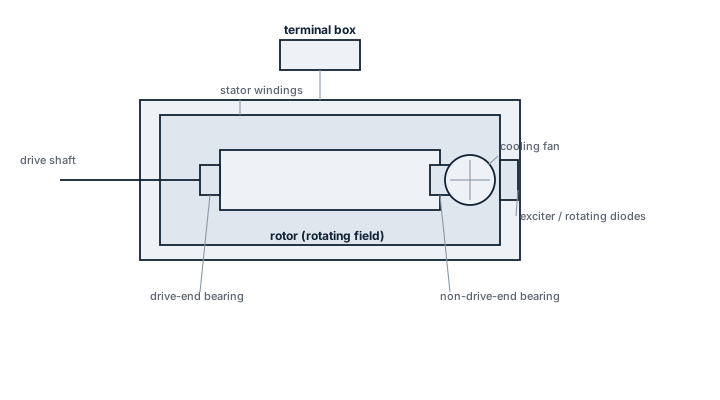
Main components
Stator and rotor
The stator carries the output windings; the rotor carries the field winding, excited either by a rotating exciter (brushless, standard on modern ships) or by slip rings and brushes on older designs.
Automatic Voltage Regulator (AVR)
Senses terminal voltage and adjusts field excitation to hold it constant as load changes; it also carries out reactive load sharing between paralleled alternators through droop or cross-current compensation wiring.
Bearings and cooling
Air- or water-air-cooled depending on rating; bearing insulation is used on larger machines to prevent stray shaft currents from pitting the bearings.
Protection relays
Over/under voltage, over/under frequency, reverse power, and differential protection sit between the alternator and the switchboard and are what actually trips a unit off the bus during a fault.
Selection / Sizing
Rated in kVA at a stated power factor (commonly 0.8 lagging), which sets both the real power (kW) and reactive power (kVAr) the machine can deliver — a common sizing mistake is checking kW against the load list without checking whether the load's actual power factor pushes reactive demand past what the alternator can supply. Insulation class and temperature rise class (typically class F insulation with class B temperature rise, giving a service margin) affect how hard the machine can be run continuously versus how much thermal headroom is left for overload conditions like a large motor starting.
Regulations / Class
Class rules (IACS members' unified requirements) set short-circuit withstand and protection coordination requirements for switchboard-connected generators, and require type testing of the alternator including temperature rise and short-circuit tests. IEC 60092 series standards govern marine electrical installations broadly, and class surveys confirm protection relay settings match the approved switchboard studies at each renewal.
Typical faults
- AVR drift or failure — voltage instability that shows up first as difficulty sharing reactive load when paralleling with another set.
- Bearing pitting from stray shaft currents — on larger machines without proper shaft grounding brushes, current finds a path through the bearings and erodes the races over time.
- Insulation degradation from moisture — a common issue after long idle periods in humid engine rooms; megger testing before starting a long-idle set catches this before it causes a ground fault.
- Exciter diode failure — on brushless machines, a failed rotating rectifier diode causes ripple in the field current and erratic voltage output.
- Reverse power trips during load transfer — often a symptom of governor response lag rather than the alternator itself, but it looks like an alternator fault on the switchboard alarm.
What to look for in a supplier
- Type-test certificates covering short-circuit withstand and temperature rise for the specific frame size, not just a data sheet.
- AVR and governor compatibility confirmed for parallel operation with the ship's existing sets, if this is a replacement or addition to an existing switchboard.
- Insulation class and service factor documented, matched to the engine room's actual ambient temperature range.
- Protection relay coordination study included or supportable, since a mismatched relay setting is a common cause of nuisance trips after installation.
Megger the windings before starting any generator that has sat idle more than a few weeks in a humid engine room — a ground fault on load is a far worse day than a five-minute insulation test beforehand.
10 manufacturers · 1384 models
ABB
378- Leistungsbereich LV
- 14 kVA - 5000 kVA; Spannungen 380-690 V (50/60 Hz)
- Leistungsbereich HV
- bis 63 MVA; Spannungen bis 15 kV (50/60 Hz)
- Rahmengroessen
- LV: 180-630; HV: 500-2500; Pedestal: 1250-2500
- Isolationssystem
- VPI (vacuum pressure impregnation) class H/F for stator and rotor
- Wicklung
- Polyester-imid resin with high dielectric and moisture resistance
- Kuehlung
- Doppel-Axialventilatoren, Wasser-/Luftkuehlung moeglich; Umgebungsbereich -20°C bis +45°C, Hoehe bis 1000m
- Lagerung
- Sealed-for-life (frame <400) or re-lubricated (frame 450); pedal bearing design for larger frames
- Avr-system
- UNITROL 1000 series or GEN06/GEN08 AVR; 100 kVA - 80 MVA; U/Hz, UEL, OEL limiter
- Schutzstandard
- IEC 60034-18-32 fuer Isolationsalterung; IEEE Std 117-1974; Klassifizierungsgesellschaften zertifiziert
- AMG Synchronous Generator Series (14 kVA - 2600 kVA LV; up to 63 MVA HV)
- LV Standard Marine Generators (400-5000 kVA, Frame 400-630)
- LV Modular Marine Generators (560-2400 kVA, Frame 400-450)
- HV Pedestal Bearing Generators (up to 60 MVA, Frame 1250-2500)
- Shaft Generators (Permanent Magnet, up to 4 MW)
- Area: Winding insulation condition deteriorated by moisture, contamination, thermal aging or mechanical damage.Check: Insulation resistance (IR) test with megohmmeter (Megger): apply DC voltage approx. 500V between winding and ground. Measure leakage current. Minimum requirements per maritime regulations: >2 MΩ (up to 5A); >1 MΩ (10A); >100 kΩ (100A); >25 kΩ (>200A). Normalize measured values to 40°C (IEEE 43-2013). Perform trend analysis over time. Disconnect AVR before test (DAR method). Check surface, generator and environment for dryness before test (maritime humidity).
- Area: Winding damaged or fatigue-cracked by moisture, salt corrosion, vibration in marine environment.Check: Visually inspect operating condition of footings and bearing shells; check bearing lubrication and temperature (document D-end and N-end separately); measure surface temperatures with thermometer or IR camera. Measure operating vibration (mm/sec or µm); record deviating values. For regreasing bearings, top up grease per manufacturer specification. Check tightness of bearing shields against salt water and moisture.
- Area: Stator winding damaged by aging or moisture ingress due to inadequate VPI quality.Check: Visual inspection of winding for cracks, burn marks, discoloration, loose connections. Perform resistance measurement of insulating material. Perform tan-delta & capacitance measurements (partial discharge analysis) to detect lamination or corona damage (ABB Ability LEAP program). Assess insulation system condition (VPI impregnation). Measurement duration approx. 4-6 hours.
- Area: AVR (UNITROL 1000/GEN series) malfunction due to moisture, salt corrosion or aging; voltage regulation faulty.Check: Visually inspect AVR units for corrosion, moisture ingress, loose contacts (salt water environment). Check voltage output on AVR display or meter. Perform AVR test program: verify setpoint voltage, test response to load change, test UEL/OEL (under-/overexcitation limiter) function. Check wiring and connectors for corrosion. Solvent cleaning if necessary. Secure replacement AVR unit.
- Area: Cooling inadequate: air flow blocked, fan fouled/damaged, water cooling leaking or corroded.Check: Inspect fan blades for salt deposits, corrosion, mechanical damage. Clean air channels and cooling flanges (remove salt spray deposits). Check water cooler for leaks, corrosion, mineral deposits (for water-cooled variants). Measure temperature rise during operation: stator winding U/T1, V/T2, W/T3; bearing shells D-end and N-end. Document ambient temperature. Should be >5°C, relative humidity <75%; keep machine temperature >= dew point. Clear cooling before restart.
- Area: Commissioning faulty: bolts not correctly tightened, cable connections leaking/corroded, bearings not lubricated, overall condition not certified.Check: Perform torque check on fastening bolts (manufacturer specification); loosen/reposition if necessary. Inspect power cable connections for visible corrosion, loose contact, deformation. Verify bearing lubrication before start (regreasable bearings). Consult commissioning report from Annex 5 of AMG Manual. Verify all settings again on site. Perform voltage/current measurements. Test safety devices. Complete and sign commissioning test protocol.
Type—universal inspection/service points for power generation (ABB Marine, Mega-Swarm 2026-06). Per-model specs not auto-filled.
- High insulation class (H) provides excellent thermal endurance in hot marine environments.
- Dual axial fans allow flexible air or water cooling, improving reliability across temperature ranges (-20 °C to +45 °C).
- Sealed‑for‑life bearing option for frames <400 reduces routine maintenance.
- Vacuum pressure impregnated (VPI) winding system gives superior moisture resistance and dielectric strength.
- Broad power range compatibility within ABB’s AMG series simplifies spares and upgrades.
- IP23 rating only protects against solid objects >12.5 mm and limited water ingress; not suitable for heavy spray zones (IP55+ preferred).
- Moisture‑sensitive insulation still requires regular IR and partial‑discharge testing to avoid degradation.
- Larger frame sizes (>400) need greasable bearings, adding periodic lubrication tasks.
- AVR units (UNITROL/GEN series) can be prone to corrosion in harsh salt environments if not regularly inspected.
- Leistungsbereich LV
- 14 kVA - 5000 kVA; Spannungen 380-690 V (50/60 Hz)
- Leistungsbereich HV
- bis 63 MVA; Spannungen bis 15 kV (50/60 Hz)
- Rahmengroessen
- LV: 180-630; HV: 500-2500; Pedestal: 1250-2500
- Isolationssystem
- VPI (vacuum pressure impregnation) class H/F for stator and rotor
- Wicklung
- Polyester-imid resin with high dielectric and moisture resistance
- Kuehlung
- Doppel-Axialventilatoren, Wasser-/Luftkuehlung moeglich; Umgebungsbereich -20°C bis +45°C, Hoehe bis 1000m
- Lagerung
- Sealed-for-life (frame <400) or re-lubricated (frame 450); pedal bearing design for larger frames
- Avr-system
- UNITROL 1000 series or GEN06/GEN08 AVR; 100 kVA - 80 MVA; U/Hz, UEL, OEL limiter
- Schutzstandard
- IEC 60034-18-32 fuer Isolationsalterung; IEEE Std 117-1974; Klassifizierungsgesellschaften zertifiziert
- AMG Synchronous Generator Series (14 kVA - 2600 kVA LV; up to 63 MVA HV)
- LV Standard Marine Generators (400-5000 kVA, Frame 400-630)
- LV Modular Marine Generators (560-2400 kVA, Frame 400-450)
- HV Pedestal Bearing Generators (up to 60 MVA, Frame 1250-2500)
- Shaft Generators (Permanent Magnet, up to 4 MW)
- Area: Winding insulation condition deteriorated by moisture, contamination, thermal aging or mechanical damage.Check: Insulation resistance (IR) test with megohmmeter (Megger): apply DC voltage approx. 500V between winding and ground. Measure leakage current. Minimum requirements per maritime regulations: >2 MΩ (up to 5A); >1 MΩ (10A); >100 kΩ (100A); >25 kΩ (>200A). Normalize measured values to 40°C (IEEE 43-2013). Perform trend analysis over time. Disconnect AVR before test (DAR method). Check surface, generator and environment for dryness before test (maritime humidity).
- Area: Winding damaged or fatigue-cracked by moisture, salt corrosion, vibration in marine environment.Check: Visually inspect operating condition of footings and bearing shells; check bearing lubrication and temperature (document D-end and N-end separately); measure surface temperatures with thermometer or IR camera. Measure operating vibration (mm/sec or µm); record deviating values. For regreasing bearings, top up grease per manufacturer specification. Check tightness of bearing shields against salt water and moisture.
- Area: Stator winding damaged by aging or moisture ingress due to inadequate VPI quality.Check: Visual inspection of winding for cracks, burn marks, discoloration, loose connections. Perform resistance measurement of insulating material. Perform tan-delta & capacitance measurements (partial discharge analysis) to detect lamination or corona damage (ABB Ability LEAP program). Assess insulation system condition (VPI impregnation). Measurement duration approx. 4-6 hours.
- Area: AVR (UNITROL 1000/GEN series) malfunction due to moisture, salt corrosion or aging; voltage regulation faulty.Check: Visually inspect AVR units for corrosion, moisture ingress, loose contacts (salt water environment). Check voltage output on AVR display or meter. Perform AVR test program: verify setpoint voltage, test response to load change, test UEL/OEL (under-/overexcitation limiter) function. Check wiring and connectors for corrosion. Solvent cleaning if necessary. Secure replacement AVR unit.
- Area: Cooling inadequate: air flow blocked, fan fouled/damaged, water cooling leaking or corroded.Check: Inspect fan blades for salt deposits, corrosion, mechanical damage. Clean air channels and cooling flanges (remove salt spray deposits). Check water cooler for leaks, corrosion, mineral deposits (for water-cooled variants). Measure temperature rise during operation: stator winding U/T1, V/T2, W/T3; bearing shells D-end and N-end. Document ambient temperature. Should be >5°C, relative humidity <75%; keep machine temperature >= dew point. Clear cooling before restart.
- Area: Commissioning faulty: bolts not correctly tightened, cable connections leaking/corroded, bearings not lubricated, overall condition not certified.Check: Perform torque check on fastening bolts (manufacturer specification); loosen/reposition if necessary. Inspect power cable connections for visible corrosion, loose contact, deformation. Verify bearing lubrication before start (regreasable bearings). Consult commissioning report from Annex 5 of AMG Manual. Verify all settings again on site. Perform voltage/current measurements. Test safety devices. Complete and sign commissioning test protocol.
Type—universal inspection/service points for power generation (ABB Marine, Mega-Swarm 2026-06). Per-model specs not auto-filled.
- Class‑H VPI insulation provides excellent moisture resistance and long life in harsh marine environments
- IP44 enclosure protects against splashing water and salt spray while allowing easy access for maintenance
- Dual axial fan design offers flexible air or water cooling to suit different installation spaces
- Sealed‑for‑life bearings (frame <400) reduce routine lubrication requirements
- Compatible with ABB UNITROL 1000/GEN AVR families for precise voltage regulation and overload protection
- 200 kVA output may be insufficient for larger vessels that require higher auxiliary power
- IP44 rating does not protect against dust ingress; environments demanding IP65 or higher need a different model
- VPI windings still require regular insulation resistance testing to detect moisture ingress early
- Cooling performance depends on clean fan blades and unobstructed airflow; fouling can lead to overheating
- Initial acquisition cost is higher than some low‑cost competitors due to premium materials and certification
- Leistungsbereich LV
- 14 kVA - 5000 kVA; Spannungen 380-690 V (50/60 Hz)
- Leistungsbereich HV
- bis 63 MVA; Spannungen bis 15 kV (50/60 Hz)
- Rahmengroessen
- LV: 180-630; HV: 500-2500; Pedestal: 1250-2500
- Isolationssystem
- VPI (vacuum pressure impregnation) class H/F for stator and rotor
- Wicklung
- Polyester-imid resin with high dielectric and moisture resistance
- Kuehlung
- Doppel-Axialventilatoren, Wasser-/Luftkuehlung moeglich; Umgebungsbereich -20°C bis +45°C, Hoehe bis 1000m
- Lagerung
- Sealed-for-life (frame <400) or re-lubricated (frame 450); pedal bearing design for larger frames
- Avr-system
- UNITROL 1000 series or GEN06/GEN08 AVR; 100 kVA - 80 MVA; U/Hz, UEL, OEL limiter
- Schutzstandard
- IEC 60034-18-32 fuer Isolationsalterung; IEEE Std 117-1974; Klassifizierungsgesellschaften zertifiziert
- AMG Synchronous Generator Series (14 kVA - 2600 kVA LV; up to 63 MVA HV)
- LV Standard Marine Generators (400-5000 kVA, Frame 400-630)
- LV Modular Marine Generators (560-2400 kVA, Frame 400-450)
- HV Pedestal Bearing Generators (up to 60 MVA, Frame 1250-2500)
- Shaft Generators (Permanent Magnet, up to 4 MW)
- Area: Winding insulation condition deteriorated by moisture, contamination, thermal aging or mechanical damage.Check: Insulation resistance (IR) test with megohmmeter (Megger): apply DC voltage approx. 500V between winding and ground. Measure leakage current. Minimum requirements per maritime regulations: >2 MΩ (up to 5A); >1 MΩ (10A); >100 kΩ (100A); >25 kΩ (>200A). Normalize measured values to 40°C (IEEE 43-2013). Perform trend analysis over time. Disconnect AVR before test (DAR method). Check surface, generator and environment for dryness before test (maritime humidity).
- Area: Winding damaged or fatigue-cracked by moisture, salt corrosion, vibration in marine environment.Check: Visually inspect operating condition of footings and bearing shells; check bearing lubrication and temperature (document D-end and N-end separately); measure surface temperatures with thermometer or IR camera. Measure operating vibration (mm/sec or µm); record deviating values. For regreasing bearings, top up grease per manufacturer specification. Check tightness of bearing shields against salt water and moisture.
- Area: Stator winding damaged by aging or moisture ingress due to inadequate VPI quality.Check: Visual inspection of winding for cracks, burn marks, discoloration, loose connections. Perform resistance measurement of insulating material. Perform tan-delta & capacitance measurements (partial discharge analysis) to detect lamination or corona damage (ABB Ability LEAP program). Assess insulation system condition (VPI impregnation). Measurement duration approx. 4-6 hours.
- Area: AVR (UNITROL 1000/GEN series) malfunction due to moisture, salt corrosion or aging; voltage regulation faulty.Check: Visually inspect AVR units for corrosion, moisture ingress, loose contacts (salt water environment). Check voltage output on AVR display or meter. Perform AVR test program: verify setpoint voltage, test response to load change, test UEL/OEL (under-/overexcitation limiter) function. Check wiring and connectors for corrosion. Solvent cleaning if necessary. Secure replacement AVR unit.
- Area: Cooling inadequate: air flow blocked, fan fouled/damaged, water cooling leaking or corroded.Check: Inspect fan blades for salt deposits, corrosion, mechanical damage. Clean air channels and cooling flanges (remove salt spray deposits). Check water cooler for leaks, corrosion, mineral deposits (for water-cooled variants). Measure temperature rise during operation: stator winding U/T1, V/T2, W/T3; bearing shells D-end and N-end. Document ambient temperature. Should be >5°C, relative humidity <75%; keep machine temperature >= dew point. Clear cooling before restart.
- Area: Commissioning faulty: bolts not correctly tightened, cable connections leaking/corroded, bearings not lubricated, overall condition not certified.Check: Perform torque check on fastening bolts (manufacturer specification); loosen/reposition if necessary. Inspect power cable connections for visible corrosion, loose contact, deformation. Verify bearing lubrication before start (regreasable bearings). Consult commissioning report from Annex 5 of AMG Manual. Verify all settings again on site. Perform voltage/current measurements. Test safety devices. Complete and sign commissioning test protocol.
Type—universal inspection/service points for power generation (ABB Marine, Mega-Swarm 2026-06). Per-model specs not auto-filled.
- Class H VPI insulated windings give excellent thermal endurance and moisture resistance.
- IP55 sealed enclosure protects against salt spray and dust, suitable for offshore conditions.
- Dual‑axial fan cooling with optional water‑air hybrid provides flexible temperature management.
- Robust UNITROL 1000/GEN AVR series offers precise voltage regulation and built‑in over/under‑excitation limits.
- Sealed‑for‑life bearings (frame <400) reduce routine lubrication tasks.
- Power rating limited to 200 kVA – not suitable for large main‑propulsion auxiliary loads.
- VPI windings require careful moisture monitoring; insulation testing is mandatory during overhauls.
- Dual‑fan cooling demands regular cleaning of blades and ducts in salty environments.
- If greasable bearings are fitted (frame 450), periodic re‑greasing adds maintenance overhead.
- Physical size (frame 400) may be restrictive on vessels with tight engine‑room space.
- Leistungsbereich LV
- 14 kVA - 5000 kVA; Spannungen 380-690 V (50/60 Hz)
- Leistungsbereich HV
- bis 63 MVA; Spannungen bis 15 kV (50/60 Hz)
- Rahmengroessen
- LV: 180-630; HV: 500-2500; Pedestal: 1250-2500
- Isolationssystem
- VPI (vacuum pressure impregnation) class H/F for stator and rotor
- Wicklung
- Polyester-imid resin with high dielectric and moisture resistance
- Kuehlung
- Doppel-Axialventilatoren, Wasser-/Luftkuehlung moeglich; Umgebungsbereich -20°C bis +45°C, Hoehe bis 1000m
- Lagerung
- Sealed-for-life (frame <400) or re-lubricated (frame 450); pedal bearing design for larger frames
- Avr-system
- UNITROL 1000 series or GEN06/GEN08 AVR; 100 kVA - 80 MVA; U/Hz, UEL, OEL limiter
- Schutzstandard
- IEC 60034-18-32 fuer Isolationsalterung; IEEE Std 117-1974; Klassifizierungsgesellschaften zertifiziert
- AMG Synchronous Generator Series (14 kVA - 2600 kVA LV; up to 63 MVA HV)
- LV Standard Marine Generators (400-5000 kVA, Frame 400-630)
- LV Modular Marine Generators (560-2400 kVA, Frame 400-450)
- HV Pedestal Bearing Generators (up to 60 MVA, Frame 1250-2500)
- Shaft Generators (Permanent Magnet, up to 4 MW)
- Area: Winding insulation condition deteriorated by moisture, contamination, thermal aging or mechanical damage.Check: Insulation resistance (IR) test with megohmmeter (Megger): apply DC voltage approx. 500V between winding and ground. Measure leakage current. Minimum requirements per maritime regulations: >2 MΩ (up to 5A); >1 MΩ (10A); >100 kΩ (100A); >25 kΩ (>200A). Normalize measured values to 40°C (IEEE 43-2013). Perform trend analysis over time. Disconnect AVR before test (DAR method). Check surface, generator and environment for dryness before test (maritime humidity).
- Area: Winding damaged or fatigue-cracked by moisture, salt corrosion, vibration in marine environment.Check: Visually inspect operating condition of footings and bearing shells; check bearing lubrication and temperature (document D-end and N-end separately); measure surface temperatures with thermometer or IR camera. Measure operating vibration (mm/sec or µm); record deviating values. For regreasing bearings, top up grease per manufacturer specification. Check tightness of bearing shields against salt water and moisture.
- Area: Stator winding damaged by aging or moisture ingress due to inadequate VPI quality.Check: Visual inspection of winding for cracks, burn marks, discoloration, loose connections. Perform resistance measurement of insulating material. Perform tan-delta & capacitance measurements (partial discharge analysis) to detect lamination or corona damage (ABB Ability LEAP program). Assess insulation system condition (VPI impregnation). Measurement duration approx. 4-6 hours.
- Area: AVR (UNITROL 1000/GEN series) malfunction due to moisture, salt corrosion or aging; voltage regulation faulty.Check: Visually inspect AVR units for corrosion, moisture ingress, loose contacts (salt water environment). Check voltage output on AVR display or meter. Perform AVR test program: verify setpoint voltage, test response to load change, test UEL/OEL (under-/overexcitation limiter) function. Check wiring and connectors for corrosion. Solvent cleaning if necessary. Secure replacement AVR unit.
- Area: Cooling inadequate: air flow blocked, fan fouled/damaged, water cooling leaking or corroded.Check: Inspect fan blades for salt deposits, corrosion, mechanical damage. Clean air channels and cooling flanges (remove salt spray deposits). Check water cooler for leaks, corrosion, mineral deposits (for water-cooled variants). Measure temperature rise during operation: stator winding U/T1, V/T2, W/T3; bearing shells D-end and N-end. Document ambient temperature. Should be >5°C, relative humidity <75%; keep machine temperature >= dew point. Clear cooling before restart.
- Area: Commissioning faulty: bolts not correctly tightened, cable connections leaking/corroded, bearings not lubricated, overall condition not certified.Check: Perform torque check on fastening bolts (manufacturer specification); loosen/reposition if necessary. Inspect power cable connections for visible corrosion, loose contact, deformation. Verify bearing lubrication before start (regreasable bearings). Consult commissioning report from Annex 5 of AMG Manual. Verify all settings again on site. Perform voltage/current measurements. Test safety devices. Complete and sign commissioning test protocol.
Type—universal inspection/service points for power generation (ABB Marine, Mega-Swarm 2026-06). Per-model specs not auto-filled.
- High insulation class (H) with VPI vacuum pressure impregnation for long life in salty environments
- Dual axial fan cooling provides flexible air or water cooling and operates from –20 °C to +45 °C
- Integrated UNITROL AVR series offers precise voltage regulation and built‑in under/over‑excitation limiters
- Sealed‑for‑life bearing option (frame <400) reduces routine lubrication maintenance
- Proven ABB Marine product line with extensive field service support and condition monitoring tools
- IP23 rating only protects against limited splashing; not suitable for areas with direct water jet exposure
- Requires regular insulation resistance testing and vibration monitoring to detect moisture ingress
- Physical footprint and weight are larger than some compact diesel‑generator alternatives of similar power
- Cooling performance depends on clean airflow; salt deposits can degrade fan efficiency if not maintained
- Advanced AVR units add complexity to troubleshooting and may need specialist spares
- Leistungsbereich LV
- 14 kVA - 5000 kVA; Spannungen 380-690 V (50/60 Hz)
- Leistungsbereich HV
- bis 63 MVA; Spannungen bis 15 kV (50/60 Hz)
- Rahmengroessen
- LV: 180-630; HV: 500-2500; Pedestal: 1250-2500
- Isolationssystem
- VPI (vacuum pressure impregnation) class H/F for stator and rotor
- Wicklung
- Polyester-imid resin with high dielectric and moisture resistance
- Kuehlung
- Doppel-Axialventilatoren, Wasser-/Luftkuehlung moeglich; Umgebungsbereich -20°C bis +45°C, Hoehe bis 1000m
- Lagerung
- Sealed-for-life (frame <400) or re-lubricated (frame 450); pedal bearing design for larger frames
- Avr-system
- UNITROL 1000 series or GEN06/GEN08 AVR; 100 kVA - 80 MVA; U/Hz, UEL, OEL limiter
- Schutzstandard
- IEC 60034-18-32 fuer Isolationsalterung; IEEE Std 117-1974; Klassifizierungsgesellschaften zertifiziert
- AMG Synchronous Generator Series (14 kVA - 2600 kVA LV; up to 63 MVA HV)
- LV Standard Marine Generators (400-5000 kVA, Frame 400-630)
- LV Modular Marine Generators (560-2400 kVA, Frame 400-450)
- HV Pedestal Bearing Generators (up to 60 MVA, Frame 1250-2500)
- Shaft Generators (Permanent Magnet, up to 4 MW)
- Area: Winding insulation condition deteriorated by moisture, contamination, thermal aging or mechanical damage.Check: Insulation resistance (IR) test with megohmmeter (Megger): apply DC voltage approx. 500V between winding and ground. Measure leakage current. Minimum requirements per maritime regulations: >2 MΩ (up to 5A); >1 MΩ (10A); >100 kΩ (100A); >25 kΩ (>200A). Normalize measured values to 40°C (IEEE 43-2013). Perform trend analysis over time. Disconnect AVR before test (DAR method). Check surface, generator and environment for dryness before test (maritime humidity).
- Area: Winding damaged or fatigue-cracked by moisture, salt corrosion, vibration in marine environment.Check: Visually inspect operating condition of footings and bearing shells; check bearing lubrication and temperature (document D-end and N-end separately); measure surface temperatures with thermometer or IR camera. Measure operating vibration (mm/sec or µm); record deviating values. For regreasing bearings, top up grease per manufacturer specification. Check tightness of bearing shields against salt water and moisture.
- Area: Stator winding damaged by aging or moisture ingress due to inadequate VPI quality.Check: Visual inspection of winding for cracks, burn marks, discoloration, loose connections. Perform resistance measurement of insulating material. Perform tan-delta & capacitance measurements (partial discharge analysis) to detect lamination or corona damage (ABB Ability LEAP program). Assess insulation system condition (VPI impregnation). Measurement duration approx. 4-6 hours.
- Area: AVR (UNITROL 1000/GEN series) malfunction due to moisture, salt corrosion or aging; voltage regulation faulty.Check: Visually inspect AVR units for corrosion, moisture ingress, loose contacts (salt water environment). Check voltage output on AVR display or meter. Perform AVR test program: verify setpoint voltage, test response to load change, test UEL/OEL (under-/overexcitation limiter) function. Check wiring and connectors for corrosion. Solvent cleaning if necessary. Secure replacement AVR unit.
- Area: Cooling inadequate: air flow blocked, fan fouled/damaged, water cooling leaking or corroded.Check: Inspect fan blades for salt deposits, corrosion, mechanical damage. Clean air channels and cooling flanges (remove salt spray deposits). Check water cooler for leaks, corrosion, mineral deposits (for water-cooled variants). Measure temperature rise during operation: stator winding U/T1, V/T2, W/T3; bearing shells D-end and N-end. Document ambient temperature. Should be >5°C, relative humidity <75%; keep machine temperature >= dew point. Clear cooling before restart.
- Area: Commissioning faulty: bolts not correctly tightened, cable connections leaking/corroded, bearings not lubricated, overall condition not certified.Check: Perform torque check on fastening bolts (manufacturer specification); loosen/reposition if necessary. Inspect power cable connections for visible corrosion, loose contact, deformation. Verify bearing lubrication before start (regreasable bearings). Consult commissioning report from Annex 5 of AMG Manual. Verify all settings again on site. Perform voltage/current measurements. Test safety devices. Complete and sign commissioning test protocol.
Type—universal inspection/service points for power generation (ABB Marine, Mega-Swarm 2026-06). Per-model specs not auto-filled.
- Class‑H VPI‑impregnated windings provide high thermal endurance and moisture resistance
- IP44 sealed enclosure protects against splashing seawater and dust ingress
- Dual axial fans with optional water‑cooling give flexible cooling for varied ambient conditions
- Sealed‑for‑life bearings (frame <400) reduce routine maintenance intervals
- Modular LV series design allows easy integration into standard 400 V shipboard power systems
- 200 kVA rating may be undersized for larger vessels requiring higher auxiliary power
- IP44 does not protect against high‑pressure water jets or full submersion (lower than IP55/66)
- Bearing lubrication must be checked on frames ≥450, adding periodic maintenance tasks
- Moisture‑sensitive insulation still requires regular IR and megger testing in marine service
- Physical footprint can be significant for small engine rooms; detailed dimensions not publicly listed
- Leistungsbereich LV
- 14 kVA - 5000 kVA; Spannungen 380-690 V (50/60 Hz)
- Leistungsbereich HV
- bis 63 MVA; Spannungen bis 15 kV (50/60 Hz)
- Rahmengroessen
- LV: 180-630; HV: 500-2500; Pedestal: 1250-2500
- Isolationssystem
- VPI (vacuum pressure impregnation) class H/F for stator and rotor
- Wicklung
- Polyester-imid resin with high dielectric and moisture resistance
- Kuehlung
- Doppel-Axialventilatoren, Wasser-/Luftkuehlung moeglich; Umgebungsbereich -20°C bis +45°C, Hoehe bis 1000m
- Lagerung
- Sealed-for-life (frame <400) or re-lubricated (frame 450); pedal bearing design for larger frames
- Avr-system
- UNITROL 1000 series or GEN06/GEN08 AVR; 100 kVA - 80 MVA; U/Hz, UEL, OEL limiter
- Schutzstandard
- IEC 60034-18-32 fuer Isolationsalterung; IEEE Std 117-1974; Klassifizierungsgesellschaften zertifiziert
- AMG Synchronous Generator Series (14 kVA - 2600 kVA LV; up to 63 MVA HV)
- LV Standard Marine Generators (400-5000 kVA, Frame 400-630)
- LV Modular Marine Generators (560-2400 kVA, Frame 400-450)
- HV Pedestal Bearing Generators (up to 60 MVA, Frame 1250-2500)
- Shaft Generators (Permanent Magnet, up to 4 MW)
- Area: Winding insulation condition deteriorated by moisture, contamination, thermal aging or mechanical damage.Check: Insulation resistance (IR) test with megohmmeter (Megger): apply DC voltage approx. 500V between winding and ground. Measure leakage current. Minimum requirements per maritime regulations: >2 MΩ (up to 5A); >1 MΩ (10A); >100 kΩ (100A); >25 kΩ (>200A). Normalize measured values to 40°C (IEEE 43-2013). Perform trend analysis over time. Disconnect AVR before test (DAR method). Check surface, generator and environment for dryness before test (maritime humidity).
- Area: Winding damaged or fatigue-cracked by moisture, salt corrosion, vibration in marine environment.Check: Visually inspect operating condition of footings and bearing shells; check bearing lubrication and temperature (document D-end and N-end separately); measure surface temperatures with thermometer or IR camera. Measure operating vibration (mm/sec or µm); record deviating values. For regreasing bearings, top up grease per manufacturer specification. Check tightness of bearing shields against salt water and moisture.
- Area: Stator winding damaged by aging or moisture ingress due to inadequate VPI quality.Check: Visual inspection of winding for cracks, burn marks, discoloration, loose connections. Perform resistance measurement of insulating material. Perform tan-delta & capacitance measurements (partial discharge analysis) to detect lamination or corona damage (ABB Ability LEAP program). Assess insulation system condition (VPI impregnation). Measurement duration approx. 4-6 hours.
- Area: AVR (UNITROL 1000/GEN series) malfunction due to moisture, salt corrosion or aging; voltage regulation faulty.Check: Visually inspect AVR units for corrosion, moisture ingress, loose contacts (salt water environment). Check voltage output on AVR display or meter. Perform AVR test program: verify setpoint voltage, test response to load change, test UEL/OEL (under-/overexcitation limiter) function. Check wiring and connectors for corrosion. Solvent cleaning if necessary. Secure replacement AVR unit.
- Area: Cooling inadequate: air flow blocked, fan fouled/damaged, water cooling leaking or corroded.Check: Inspect fan blades for salt deposits, corrosion, mechanical damage. Clean air channels and cooling flanges (remove salt spray deposits). Check water cooler for leaks, corrosion, mineral deposits (for water-cooled variants). Measure temperature rise during operation: stator winding U/T1, V/T2, W/T3; bearing shells D-end and N-end. Document ambient temperature. Should be >5°C, relative humidity <75%; keep machine temperature >= dew point. Clear cooling before restart.
- Area: Commissioning faulty: bolts not correctly tightened, cable connections leaking/corroded, bearings not lubricated, overall condition not certified.Check: Perform torque check on fastening bolts (manufacturer specification); loosen/reposition if necessary. Inspect power cable connections for visible corrosion, loose contact, deformation. Verify bearing lubrication before start (regreasable bearings). Consult commissioning report from Annex 5 of AMG Manual. Verify all settings again on site. Perform voltage/current measurements. Test safety devices. Complete and sign commissioning test protocol.
Type—universal inspection/service points for power generation (ABB Marine, Mega-Swarm 2026-06). Per-model specs not auto-filled.
- Class‑H VPI‑impregnated windings give high thermal endurance and moisture resistance.
- IP55 sealed enclosure protects against dust and water spray in harsh marine environments.
- Dual axial fans allow flexible air or water cooling, suitable for a wide temperature range (-20 °C to +45 °C).
- Integrated UNITROL AVR series provides precise voltage regulation and built‑in under/over‑excitation limiters.
- Modular frame sizes (400–630) enable installation on many vessel layouts.
- Requires regular insulation resistance and moisture testing to prevent dielectric degradation.
- Bearings on frames <450 kg are sealed‑for‑life, larger frames need periodic greasing and inspection.
- 200 kVA output may be insufficient for high‑power main‑propulsion or large hotel‑load ships.
- IP55 rating does not protect against full submersion; additional splash guards may be needed in heavy spray zones.
- Physical size and weight can limit placement on small hulls or retrofits.
- Leistungsbereich LV
- 14 kVA - 5000 kVA; Spannungen 380-690 V (50/60 Hz)
- Leistungsbereich HV
- bis 63 MVA; Spannungen bis 15 kV (50/60 Hz)
- Rahmengroessen
- LV: 180-630; HV: 500-2500; Pedestal: 1250-2500
- Isolationssystem
- VPI (vacuum pressure impregnation) class H/F for stator and rotor
- Wicklung
- Polyester-imid resin with high dielectric and moisture resistance
- Kuehlung
- Doppel-Axialventilatoren, Wasser-/Luftkuehlung moeglich; Umgebungsbereich -20°C bis +45°C, Hoehe bis 1000m
- Lagerung
- Sealed-for-life (frame <400) or re-lubricated (frame 450); pedal bearing design for larger frames
- Avr-system
- UNITROL 1000 series or GEN06/GEN08 AVR; 100 kVA - 80 MVA; U/Hz, UEL, OEL limiter
- Schutzstandard
- IEC 60034-18-32 fuer Isolationsalterung; IEEE Std 117-1974; Klassifizierungsgesellschaften zertifiziert
- AMG Synchronous Generator Series (14 kVA - 2600 kVA LV; up to 63 MVA HV)
- LV Standard Marine Generators (400-5000 kVA, Frame 400-630)
- LV Modular Marine Generators (560-2400 kVA, Frame 400-450)
- HV Pedestal Bearing Generators (up to 60 MVA, Frame 1250-2500)
- Shaft Generators (Permanent Magnet, up to 4 MW)
- Area: Winding insulation condition deteriorated by moisture, contamination, thermal aging or mechanical damage.Check: Insulation resistance (IR) test with megohmmeter (Megger): apply DC voltage approx. 500V between winding and ground. Measure leakage current. Minimum requirements per maritime regulations: >2 MΩ (up to 5A); >1 MΩ (10A); >100 kΩ (100A); >25 kΩ (>200A). Normalize measured values to 40°C (IEEE 43-2013). Perform trend analysis over time. Disconnect AVR before test (DAR method). Check surface, generator and environment for dryness before test (maritime humidity).
- Area: Winding damaged or fatigue-cracked by moisture, salt corrosion, vibration in marine environment.Check: Visually inspect operating condition of footings and bearing shells; check bearing lubrication and temperature (document D-end and N-end separately); measure surface temperatures with thermometer or IR camera. Measure operating vibration (mm/sec or µm); record deviating values. For regreasing bearings, top up grease per manufacturer specification. Check tightness of bearing shields against salt water and moisture.
- Area: Stator winding damaged by aging or moisture ingress due to inadequate VPI quality.Check: Visual inspection of winding for cracks, burn marks, discoloration, loose connections. Perform resistance measurement of insulating material. Perform tan-delta & capacitance measurements (partial discharge analysis) to detect lamination or corona damage (ABB Ability LEAP program). Assess insulation system condition (VPI impregnation). Measurement duration approx. 4-6 hours.
- Area: AVR (UNITROL 1000/GEN series) malfunction due to moisture, salt corrosion or aging; voltage regulation faulty.Check: Visually inspect AVR units for corrosion, moisture ingress, loose contacts (salt water environment). Check voltage output on AVR display or meter. Perform AVR test program: verify setpoint voltage, test response to load change, test UEL/OEL (under-/overexcitation limiter) function. Check wiring and connectors for corrosion. Solvent cleaning if necessary. Secure replacement AVR unit.
- Area: Cooling inadequate: air flow blocked, fan fouled/damaged, water cooling leaking or corroded.Check: Inspect fan blades for salt deposits, corrosion, mechanical damage. Clean air channels and cooling flanges (remove salt spray deposits). Check water cooler for leaks, corrosion, mineral deposits (for water-cooled variants). Measure temperature rise during operation: stator winding U/T1, V/T2, W/T3; bearing shells D-end and N-end. Document ambient temperature. Should be >5°C, relative humidity <75%; keep machine temperature >= dew point. Clear cooling before restart.
- Area: Commissioning faulty: bolts not correctly tightened, cable connections leaking/corroded, bearings not lubricated, overall condition not certified.Check: Perform torque check on fastening bolts (manufacturer specification); loosen/reposition if necessary. Inspect power cable connections for visible corrosion, loose contact, deformation. Verify bearing lubrication before start (regreasable bearings). Consult commissioning report from Annex 5 of AMG Manual. Verify all settings again on site. Perform voltage/current measurements. Test safety devices. Complete and sign commissioning test protocol.
Type—universal inspection/service points for power generation (ABB Marine, Mega-Swarm 2026-06). Per-model specs not auto-filled.
- Class‑H vacuum‑pressure‑impregnated insulation gives long life even at high temperatures.
- IP23 rating with robust enclosure suitable for typical shipboard spray environments.
- Dual axial fans and optional water‑cooling provide wide ambient temperature range (‑20 °C to +45 °C).
- Sealed‑for‑life bearings on frames <400 reduce routine lubrication tasks.
- Compatible with ABB UNITROL 1000 or GEN06/GEN08 AVR families for precise voltage regulation.
- IP23 only protects against splashing; harsher environments may require additional shielding.
- Moisture ingress can degrade insulation, demanding regular IR and partial‑discharge testing.
- Frames ≥450 use greasable bearings, increasing maintenance compared with sealed units.
- Physical size and weight are sizable for small vessels or retrofits.
- Cooling performance depends on unobstructed airflow; fouling of fans can cause overheating.
- Leistungsbereich LV
- 14 kVA - 5000 kVA; Spannungen 380-690 V (50/60 Hz)
- Leistungsbereich HV
- bis 63 MVA; Spannungen bis 15 kV (50/60 Hz)
- Rahmengroessen
- LV: 180-630; HV: 500-2500; Pedestal: 1250-2500
- Isolationssystem
- VPI (vacuum pressure impregnation) class H/F for stator and rotor
- Wicklung
- Polyester-imid resin with high dielectric and moisture resistance
- Kuehlung
- Doppel-Axialventilatoren, Wasser-/Luftkuehlung moeglich; Umgebungsbereich -20°C bis +45°C, Hoehe bis 1000m
- Lagerung
- Sealed-for-life (frame <400) or re-lubricated (frame 450); pedal bearing design for larger frames
- Avr-system
- UNITROL 1000 series or GEN06/GEN08 AVR; 100 kVA - 80 MVA; U/Hz, UEL, OEL limiter
- Schutzstandard
- IEC 60034-18-32 fuer Isolationsalterung; IEEE Std 117-1974; Klassifizierungsgesellschaften zertifiziert
- AMG Synchronous Generator Series (14 kVA - 2600 kVA LV; up to 63 MVA HV)
- LV Standard Marine Generators (400-5000 kVA, Frame 400-630)
- LV Modular Marine Generators (560-2400 kVA, Frame 400-450)
- HV Pedestal Bearing Generators (up to 60 MVA, Frame 1250-2500)
- Shaft Generators (Permanent Magnet, up to 4 MW)
- Area: Winding insulation condition deteriorated by moisture, contamination, thermal aging or mechanical damage.Check: Insulation resistance (IR) test with megohmmeter (Megger): apply DC voltage approx. 500V between winding and ground. Measure leakage current. Minimum requirements per maritime regulations: >2 MΩ (up to 5A); >1 MΩ (10A); >100 kΩ (100A); >25 kΩ (>200A). Normalize measured values to 40°C (IEEE 43-2013). Perform trend analysis over time. Disconnect AVR before test (DAR method). Check surface, generator and environment for dryness before test (maritime humidity).
- Area: Winding damaged or fatigue-cracked by moisture, salt corrosion, vibration in marine environment.Check: Visually inspect operating condition of footings and bearing shells; check bearing lubrication and temperature (document D-end and N-end separately); measure surface temperatures with thermometer or IR camera. Measure operating vibration (mm/sec or µm); record deviating values. For regreasing bearings, top up grease per manufacturer specification. Check tightness of bearing shields against salt water and moisture.
- Area: Stator winding damaged by aging or moisture ingress due to inadequate VPI quality.Check: Visual inspection of winding for cracks, burn marks, discoloration, loose connections. Perform resistance measurement of insulating material. Perform tan-delta & capacitance measurements (partial discharge analysis) to detect lamination or corona damage (ABB Ability LEAP program). Assess insulation system condition (VPI impregnation). Measurement duration approx. 4-6 hours.
- Area: AVR (UNITROL 1000/GEN series) malfunction due to moisture, salt corrosion or aging; voltage regulation faulty.Check: Visually inspect AVR units for corrosion, moisture ingress, loose contacts (salt water environment). Check voltage output on AVR display or meter. Perform AVR test program: verify setpoint voltage, test response to load change, test UEL/OEL (under-/overexcitation limiter) function. Check wiring and connectors for corrosion. Solvent cleaning if necessary. Secure replacement AVR unit.
- Area: Cooling inadequate: air flow blocked, fan fouled/damaged, water cooling leaking or corroded.Check: Inspect fan blades for salt deposits, corrosion, mechanical damage. Clean air channels and cooling flanges (remove salt spray deposits). Check water cooler for leaks, corrosion, mineral deposits (for water-cooled variants). Measure temperature rise during operation: stator winding U/T1, V/T2, W/T3; bearing shells D-end and N-end. Document ambient temperature. Should be >5°C, relative humidity <75%; keep machine temperature >= dew point. Clear cooling before restart.
- Area: Commissioning faulty: bolts not correctly tightened, cable connections leaking/corroded, bearings not lubricated, overall condition not certified.Check: Perform torque check on fastening bolts (manufacturer specification); loosen/reposition if necessary. Inspect power cable connections for visible corrosion, loose contact, deformation. Verify bearing lubrication before start (regreasable bearings). Consult commissioning report from Annex 5 of AMG Manual. Verify all settings again on site. Perform voltage/current measurements. Test safety devices. Complete and sign commissioning test protocol.
Type—universal inspection/service points for power generation (ABB Marine, Mega-Swarm 2026-06). Per-model specs not auto-filled.
- 200 kVA rating matches the auxiliary power needs of medium‑size vessels without oversizing
- Class‑H VPI insulated windings give high thermal endurance in hot, humid marine environments
- IP44 enclosure protects against splashing seawater and dust while allowing easy access for maintenance
- Designed to integrate with ABB UNITROL AVR systems for precise voltage regulation and protection
- Part of ABB’s AMG series – modular design simplifies installation and spare‑part logistics
- Limited to 440 V/50 Hz; additional transformers may be required for vessels operating on 60 Hz or higher voltages
- IP44 is only splash‑proof, not fully sealed against immersion (e.g., IP66 would be preferable in harsh spray zones)
- Cooling relies on axial fans; performance can degrade in very high ambient temperatures or when airflow is obstructed
- Requires regular insulation resistance and partial‑discharge testing to guard against moisture ingress
- No built‑in redundancy – a single unit failure impacts auxiliary power unless a backup generator is installed
- Leistungsbereich LV
- 14 kVA - 5000 kVA; Spannungen 380-690 V (50/60 Hz)
- Leistungsbereich HV
- bis 63 MVA; Spannungen bis 15 kV (50/60 Hz)
- Rahmengroessen
- LV: 180-630; HV: 500-2500; Pedestal: 1250-2500
- Isolationssystem
- VPI (vacuum pressure impregnation) class H/F for stator and rotor
- Wicklung
- Polyester-imid resin with high dielectric and moisture resistance
- Kuehlung
- Doppel-Axialventilatoren, Wasser-/Luftkuehlung moeglich; Umgebungsbereich -20°C bis +45°C, Hoehe bis 1000m
- Lagerung
- Sealed-for-life (frame <400) or re-lubricated (frame 450); pedal bearing design for larger frames
- Avr-system
- UNITROL 1000 series or GEN06/GEN08 AVR; 100 kVA - 80 MVA; U/Hz, UEL, OEL limiter
- Schutzstandard
- IEC 60034-18-32 fuer Isolationsalterung; IEEE Std 117-1974; Klassifizierungsgesellschaften zertifiziert
- AMG Synchronous Generator Series (14 kVA - 2600 kVA LV; up to 63 MVA HV)
- LV Standard Marine Generators (400-5000 kVA, Frame 400-630)
- LV Modular Marine Generators (560-2400 kVA, Frame 400-450)
- HV Pedestal Bearing Generators (up to 60 MVA, Frame 1250-2500)
- Shaft Generators (Permanent Magnet, up to 4 MW)
- Area: Winding insulation condition deteriorated by moisture, contamination, thermal aging or mechanical damage.Check: Insulation resistance (IR) test with megohmmeter (Megger): apply DC voltage approx. 500V between winding and ground. Measure leakage current. Minimum requirements per maritime regulations: >2 MΩ (up to 5A); >1 MΩ (10A); >100 kΩ (100A); >25 kΩ (>200A). Normalize measured values to 40°C (IEEE 43-2013). Perform trend analysis over time. Disconnect AVR before test (DAR method). Check surface, generator and environment for dryness before test (maritime humidity).
- Area: Winding damaged or fatigue-cracked by moisture, salt corrosion, vibration in marine environment.Check: Visually inspect operating condition of footings and bearing shells; check bearing lubrication and temperature (document D-end and N-end separately); measure surface temperatures with thermometer or IR camera. Measure operating vibration (mm/sec or µm); record deviating values. For regreasing bearings, top up grease per manufacturer specification. Check tightness of bearing shields against salt water and moisture.
- Area: Stator winding damaged by aging or moisture ingress due to inadequate VPI quality.Check: Visual inspection of winding for cracks, burn marks, discoloration, loose connections. Perform resistance measurement of insulating material. Perform tan-delta & capacitance measurements (partial discharge analysis) to detect lamination or corona damage (ABB Ability LEAP program). Assess insulation system condition (VPI impregnation). Measurement duration approx. 4-6 hours.
- Area: AVR (UNITROL 1000/GEN series) malfunction due to moisture, salt corrosion or aging; voltage regulation faulty.Check: Visually inspect AVR units for corrosion, moisture ingress, loose contacts (salt water environment). Check voltage output on AVR display or meter. Perform AVR test program: verify setpoint voltage, test response to load change, test UEL/OEL (under-/overexcitation limiter) function. Check wiring and connectors for corrosion. Solvent cleaning if necessary. Secure replacement AVR unit.
- Area: Cooling inadequate: air flow blocked, fan fouled/damaged, water cooling leaking or corroded.Check: Inspect fan blades for salt deposits, corrosion, mechanical damage. Clean air channels and cooling flanges (remove salt spray deposits). Check water cooler for leaks, corrosion, mineral deposits (for water-cooled variants). Measure temperature rise during operation: stator winding U/T1, V/T2, W/T3; bearing shells D-end and N-end. Document ambient temperature. Should be >5°C, relative humidity <75%; keep machine temperature >= dew point. Clear cooling before restart.
- Area: Commissioning faulty: bolts not correctly tightened, cable connections leaking/corroded, bearings not lubricated, overall condition not certified.Check: Perform torque check on fastening bolts (manufacturer specification); loosen/reposition if necessary. Inspect power cable connections for visible corrosion, loose contact, deformation. Verify bearing lubrication before start (regreasable bearings). Consult commissioning report from Annex 5 of AMG Manual. Verify all settings again on site. Perform voltage/current measurements. Test safety devices. Complete and sign commissioning test protocol.
Type—universal inspection/service points for power generation (ABB Marine, Mega-Swarm 2026-06). Per-model specs not auto-filled.
- Class H VPI insulation allows operation in harsh thermal environments up to +45 °C.
- IP55 rating protects against dust ingress and water spray, ideal for salty sea‑air conditions.
- Integrated ABB UNITROL/GEN AVR options give precise voltage regulation and built‑in under/over‑excitation limits.
- Standard LV frame (400‑630) fits medium‑size vessels without extensive structural modifications.
- ABB global service network provides spare parts and condition monitoring (Ability LEAP).
- Relatively high initial capital cost compared with lower‑spec generators from budget manufacturers.
- Fixed 440 V output limits flexibility for vessels requiring different voltage levels or higher power ratings.
- Requires regular insulation resistance and partial discharge testing to maintain Class H performance in marine humidity.
- Cooling system must be carefully maintained (air‑flow clearances, optional water cooling) to avoid overheating in tropical climates.
- Leistungsbereich LV
- 14 kVA - 5000 kVA; Spannungen 380-690 V (50/60 Hz)
- Leistungsbereich HV
- bis 63 MVA; Spannungen bis 15 kV (50/60 Hz)
- Rahmengroessen
- LV: 180-630; HV: 500-2500; Pedestal: 1250-2500
- Isolationssystem
- VPI (vacuum pressure impregnation) class H/F for stator and rotor
- Wicklung
- Polyester-imid resin with high dielectric and moisture resistance
- Kuehlung
- Doppel-Axialventilatoren, Wasser-/Luftkuehlung moeglich; Umgebungsbereich -20°C bis +45°C, Hoehe bis 1000m
- Lagerung
- Sealed-for-life (frame <400) or re-lubricated (frame 450); pedal bearing design for larger frames
- Avr-system
- UNITROL 1000 series or GEN06/GEN08 AVR; 100 kVA - 80 MVA; U/Hz, UEL, OEL limiter
- Schutzstandard
- IEC 60034-18-32 fuer Isolationsalterung; IEEE Std 117-1974; Klassifizierungsgesellschaften zertifiziert
- AMG Synchronous Generator Series (14 kVA - 2600 kVA LV; up to 63 MVA HV)
- LV Standard Marine Generators (400-5000 kVA, Frame 400-630)
- LV Modular Marine Generators (560-2400 kVA, Frame 400-450)
- HV Pedestal Bearing Generators (up to 60 MVA, Frame 1250-2500)
- Shaft Generators (Permanent Magnet, up to 4 MW)
- Area: Winding insulation condition deteriorated by moisture, contamination, thermal aging or mechanical damage.Check: Insulation resistance (IR) test with megohmmeter (Megger): apply DC voltage approx. 500V between winding and ground. Measure leakage current. Minimum requirements per maritime regulations: >2 MΩ (up to 5A); >1 MΩ (10A); >100 kΩ (100A); >25 kΩ (>200A). Normalize measured values to 40°C (IEEE 43-2013). Perform trend analysis over time. Disconnect AVR before test (DAR method). Check surface, generator and environment for dryness before test (maritime humidity).
- Area: Winding damaged or fatigue-cracked by moisture, salt corrosion, vibration in marine environment.Check: Visually inspect operating condition of footings and bearing shells; check bearing lubrication and temperature (document D-end and N-end separately); measure surface temperatures with thermometer or IR camera. Measure operating vibration (mm/sec or µm); record deviating values. For regreasing bearings, top up grease per manufacturer specification. Check tightness of bearing shields against salt water and moisture.
- Area: Stator winding damaged by aging or moisture ingress due to inadequate VPI quality.Check: Visual inspection of winding for cracks, burn marks, discoloration, loose connections. Perform resistance measurement of insulating material. Perform tan-delta & capacitance measurements (partial discharge analysis) to detect lamination or corona damage (ABB Ability LEAP program). Assess insulation system condition (VPI impregnation). Measurement duration approx. 4-6 hours.
- Area: AVR (UNITROL 1000/GEN series) malfunction due to moisture, salt corrosion or aging; voltage regulation faulty.Check: Visually inspect AVR units for corrosion, moisture ingress, loose contacts (salt water environment). Check voltage output on AVR display or meter. Perform AVR test program: verify setpoint voltage, test response to load change, test UEL/OEL (under-/overexcitation limiter) function. Check wiring and connectors for corrosion. Solvent cleaning if necessary. Secure replacement AVR unit.
- Area: Cooling inadequate: air flow blocked, fan fouled/damaged, water cooling leaking or corroded.Check: Inspect fan blades for salt deposits, corrosion, mechanical damage. Clean air channels and cooling flanges (remove salt spray deposits). Check water cooler for leaks, corrosion, mineral deposits (for water-cooled variants). Measure temperature rise during operation: stator winding U/T1, V/T2, W/T3; bearing shells D-end and N-end. Document ambient temperature. Should be >5°C, relative humidity <75%; keep machine temperature >= dew point. Clear cooling before restart.
- Area: Commissioning faulty: bolts not correctly tightened, cable connections leaking/corroded, bearings not lubricated, overall condition not certified.Check: Perform torque check on fastening bolts (manufacturer specification); loosen/reposition if necessary. Inspect power cable connections for visible corrosion, loose contact, deformation. Verify bearing lubrication before start (regreasable bearings). Consult commissioning report from Annex 5 of AMG Manual. Verify all settings again on site. Perform voltage/current measurements. Test safety devices. Complete and sign commissioning test protocol.
Type—universal inspection/service points for power generation (ABB Marine, Mega-Swarm 2026-06). Per-model specs not auto-filled.
- Robust VPI (vacuum pressure impregnation) insulation system (Class H) gives high dielectric strength and moisture resistance.
- Dual‑mode cooling (axial fans with optional water‑cooling) supports operation from –20 °C to +45 °C and altitudes up to 1 000 m.
- Sealed‑for‑life bearing option for frames <400 reduces routine lubrication maintenance.
- Wide power range within ABB’s AMG series allows common spares and proven field support worldwide.
- Integrated UNITROL/GEN AVR provides automatic voltage regulation with under/over‑excitation limiters.
- IP23 rating only protects against solid objects >12.5 mm; not suitable for harsh dust‑tight or splash‑proof environments requiring IP55/IP68.
- Frames ≥450 require greasable bearings, adding periodic maintenance compared with fully sealed units.
- Physical size and weight are typical of LV generators (frame 400–630) and may limit installation on very small vessels.
- VPI system must be inspected for moisture ingress; failure can lead to costly winding repairs.
- Limited to low‑voltage applications (≤690 V); not applicable where medium‑voltage generation is required.
- Leistungsbereich LV
- 14 kVA - 5000 kVA; Spannungen 380-690 V (50/60 Hz)
- Leistungsbereich HV
- bis 63 MVA; Spannungen bis 15 kV (50/60 Hz)
- Rahmengroessen
- LV: 180-630; HV: 500-2500; Pedestal: 1250-2500
- Isolationssystem
- VPI (vacuum pressure impregnation) class H/F for stator and rotor
- Wicklung
- Polyester-imid resin with high dielectric and moisture resistance
- Kuehlung
- Doppel-Axialventilatoren, Wasser-/Luftkuehlung moeglich; Umgebungsbereich -20°C bis +45°C, Hoehe bis 1000m
- Lagerung
- Sealed-for-life (frame <400) or re-lubricated (frame 450); pedal bearing design for larger frames
- Avr-system
- UNITROL 1000 series or GEN06/GEN08 AVR; 100 kVA - 80 MVA; U/Hz, UEL, OEL limiter
- Schutzstandard
- IEC 60034-18-32 fuer Isolationsalterung; IEEE Std 117-1974; Klassifizierungsgesellschaften zertifiziert
- AMG Synchronous Generator Series (14 kVA - 2600 kVA LV; up to 63 MVA HV)
- LV Standard Marine Generators (400-5000 kVA, Frame 400-630)
- LV Modular Marine Generators (560-2400 kVA, Frame 400-450)
- HV Pedestal Bearing Generators (up to 60 MVA, Frame 1250-2500)
- Shaft Generators (Permanent Magnet, up to 4 MW)
- Area: Winding insulation condition deteriorated by moisture, contamination, thermal aging or mechanical damage.Check: Insulation resistance (IR) test with megohmmeter (Megger): apply DC voltage approx. 500V between winding and ground. Measure leakage current. Minimum requirements per maritime regulations: >2 MΩ (up to 5A); >1 MΩ (10A); >100 kΩ (100A); >25 kΩ (>200A). Normalize measured values to 40°C (IEEE 43-2013). Perform trend analysis over time. Disconnect AVR before test (DAR method). Check surface, generator and environment for dryness before test (maritime humidity).
- Area: Winding damaged or fatigue-cracked by moisture, salt corrosion, vibration in marine environment.Check: Visually inspect operating condition of footings and bearing shells; check bearing lubrication and temperature (document D-end and N-end separately); measure surface temperatures with thermometer or IR camera. Measure operating vibration (mm/sec or µm); record deviating values. For regreasing bearings, top up grease per manufacturer specification. Check tightness of bearing shields against salt water and moisture.
- Area: Stator winding damaged by aging or moisture ingress due to inadequate VPI quality.Check: Visual inspection of winding for cracks, burn marks, discoloration, loose connections. Perform resistance measurement of insulating material. Perform tan-delta & capacitance measurements (partial discharge analysis) to detect lamination or corona damage (ABB Ability LEAP program). Assess insulation system condition (VPI impregnation). Measurement duration approx. 4-6 hours.
- Area: AVR (UNITROL 1000/GEN series) malfunction due to moisture, salt corrosion or aging; voltage regulation faulty.Check: Visually inspect AVR units for corrosion, moisture ingress, loose contacts (salt water environment). Check voltage output on AVR display or meter. Perform AVR test program: verify setpoint voltage, test response to load change, test UEL/OEL (under-/overexcitation limiter) function. Check wiring and connectors for corrosion. Solvent cleaning if necessary. Secure replacement AVR unit.
- Area: Cooling inadequate: air flow blocked, fan fouled/damaged, water cooling leaking or corroded.Check: Inspect fan blades for salt deposits, corrosion, mechanical damage. Clean air channels and cooling flanges (remove salt spray deposits). Check water cooler for leaks, corrosion, mineral deposits (for water-cooled variants). Measure temperature rise during operation: stator winding U/T1, V/T2, W/T3; bearing shells D-end and N-end. Document ambient temperature. Should be >5°C, relative humidity <75%; keep machine temperature >= dew point. Clear cooling before restart.
- Area: Commissioning faulty: bolts not correctly tightened, cable connections leaking/corroded, bearings not lubricated, overall condition not certified.Check: Perform torque check on fastening bolts (manufacturer specification); loosen/reposition if necessary. Inspect power cable connections for visible corrosion, loose contact, deformation. Verify bearing lubrication before start (regreasable bearings). Consult commissioning report from Annex 5 of AMG Manual. Verify all settings again on site. Perform voltage/current measurements. Test safety devices. Complete and sign commissioning test protocol.
Type—universal inspection/service points for power generation (ABB Marine, Mega-Swarm 2026-06). Per-model specs not auto-filled.
- Class H insulation allows operation up to +180 °C ambient temperature.
- IP44 sealed enclosure protects against salt spray and moisture ingress.
- Compact frame size suitable for limited engine‑room spaces on medium‑size vessels.
- Dual axial fan design permits air or water cooling depending on installation needs.
- ABB UNITROL AVR provides reliable voltage regulation with under/over‑excitation limits.
- Fixed 440 V output may require step‑down transformer for vessels standardized on 380 V systems.
- IP44 rating does not protect against total dust ingress (IP65 would be higher).
- Single‑unit power rating of 200 kVA limits use on larger ships requiring >500 kVA auxiliary power.
- Moisture‑sensitive insulation demands regular IR testing and maintenance.
- No built‑in redundancy; failure of the unit impacts ship’s electrical supply.
- Leistungsbereich LV
- 14 kVA - 5000 kVA; Spannungen 380-690 V (50/60 Hz)
- Leistungsbereich HV
- bis 63 MVA; Spannungen bis 15 kV (50/60 Hz)
- Rahmengroessen
- LV: 180-630; HV: 500-2500; Pedestal: 1250-2500
- Isolationssystem
- VPI (vacuum pressure impregnation) class H/F for stator and rotor
- Wicklung
- Polyester-imid resin with high dielectric and moisture resistance
- Kuehlung
- Doppel-Axialventilatoren, Wasser-/Luftkuehlung moeglich; Umgebungsbereich -20°C bis +45°C, Hoehe bis 1000m
- Lagerung
- Sealed-for-life (frame <400) or re-lubricated (frame 450); pedal bearing design for larger frames
- Avr-system
- UNITROL 1000 series or GEN06/GEN08 AVR; 100 kVA - 80 MVA; U/Hz, UEL, OEL limiter
- Schutzstandard
- IEC 60034-18-32 fuer Isolationsalterung; IEEE Std 117-1974; Klassifizierungsgesellschaften zertifiziert
- AMG Synchronous Generator Series (14 kVA - 2600 kVA LV; up to 63 MVA HV)
- LV Standard Marine Generators (400-5000 kVA, Frame 400-630)
- LV Modular Marine Generators (560-2400 kVA, Frame 400-450)
- HV Pedestal Bearing Generators (up to 60 MVA, Frame 1250-2500)
- Shaft Generators (Permanent Magnet, up to 4 MW)
- Area: Winding insulation condition deteriorated by moisture, contamination, thermal aging or mechanical damage.Check: Insulation resistance (IR) test with megohmmeter (Megger): apply DC voltage approx. 500V between winding and ground. Measure leakage current. Minimum requirements per maritime regulations: >2 MΩ (up to 5A); >1 MΩ (10A); >100 kΩ (100A); >25 kΩ (>200A). Normalize measured values to 40°C (IEEE 43-2013). Perform trend analysis over time. Disconnect AVR before test (DAR method). Check surface, generator and environment for dryness before test (maritime humidity).
- Area: Winding damaged or fatigue-cracked by moisture, salt corrosion, vibration in marine environment.Check: Visually inspect operating condition of footings and bearing shells; check bearing lubrication and temperature (document D-end and N-end separately); measure surface temperatures with thermometer or IR camera. Measure operating vibration (mm/sec or µm); record deviating values. For regreasing bearings, top up grease per manufacturer specification. Check tightness of bearing shields against salt water and moisture.
- Area: Stator winding damaged by aging or moisture ingress due to inadequate VPI quality.Check: Visual inspection of winding for cracks, burn marks, discoloration, loose connections. Perform resistance measurement of insulating material. Perform tan-delta & capacitance measurements (partial discharge analysis) to detect lamination or corona damage (ABB Ability LEAP program). Assess insulation system condition (VPI impregnation). Measurement duration approx. 4-6 hours.
- Area: AVR (UNITROL 1000/GEN series) malfunction due to moisture, salt corrosion or aging; voltage regulation faulty.Check: Visually inspect AVR units for corrosion, moisture ingress, loose contacts (salt water environment). Check voltage output on AVR display or meter. Perform AVR test program: verify setpoint voltage, test response to load change, test UEL/OEL (under-/overexcitation limiter) function. Check wiring and connectors for corrosion. Solvent cleaning if necessary. Secure replacement AVR unit.
- Area: Cooling inadequate: air flow blocked, fan fouled/damaged, water cooling leaking or corroded.Check: Inspect fan blades for salt deposits, corrosion, mechanical damage. Clean air channels and cooling flanges (remove salt spray deposits). Check water cooler for leaks, corrosion, mineral deposits (for water-cooled variants). Measure temperature rise during operation: stator winding U/T1, V/T2, W/T3; bearing shells D-end and N-end. Document ambient temperature. Should be >5°C, relative humidity <75%; keep machine temperature >= dew point. Clear cooling before restart.
- Area: Commissioning faulty: bolts not correctly tightened, cable connections leaking/corroded, bearings not lubricated, overall condition not certified.Check: Perform torque check on fastening bolts (manufacturer specification); loosen/reposition if necessary. Inspect power cable connections for visible corrosion, loose contact, deformation. Verify bearing lubrication before start (regreasable bearings). Consult commissioning report from Annex 5 of AMG Manual. Verify all settings again on site. Perform voltage/current measurements. Test safety devices. Complete and sign commissioning test protocol.
Type—universal inspection/service points for power generation (ABB Marine, Mega-Swarm 2026-06). Per-model specs not auto-filled.
- Robust VPI (vacuum pressure impregnation) insulation system – Class H suitable for high temperature operation
- IP55 rated enclosure protects against dust and water spray in harsh marine environments
- Dual axial fans with optional water‑cooling give flexible cooling options from -20 °C to +45 °C
- Integrated UNITROL 1000 or GEN06/GEN08 AVR provides precise voltage regulation and under/over‑excitation protection
- Complies with IEC 60034-18-32 and IEEE Std 117‑1974, facilitating classification society approvals
- IP55 rating may be insufficient for zones requiring full waterproofing (e.g., IP66/IP67)
- Fixed 440 V output limits use on vessels standardized on 6.3 kV or other voltage levels without a transformer
- Bearing lubrication requires periodic inspection and re‑greasing for frames ≥450, adding maintenance effort
- Moisture sensitivity of the windings demands regular insulation resistance testing
- Physical size is larger than some newer high‑efficiency compact generators in the same power class
- Leistungsbereich LV
- 14 kVA - 5000 kVA; Spannungen 380-690 V (50/60 Hz)
- Leistungsbereich HV
- bis 63 MVA; Spannungen bis 15 kV (50/60 Hz)
- Rahmengroessen
- LV: 180-630; HV: 500-2500; Pedestal: 1250-2500
- Isolationssystem
- VPI (vacuum pressure impregnation) class H/F for stator and rotor
- Wicklung
- Polyester-imid resin with high dielectric and moisture resistance
- Kuehlung
- Doppel-Axialventilatoren, Wasser-/Luftkuehlung moeglich; Umgebungsbereich -20°C bis +45°C, Hoehe bis 1000m
- Lagerung
- Sealed-for-life (frame <400) or re-lubricated (frame 450); pedal bearing design for larger frames
- Avr-system
- UNITROL 1000 series or GEN06/GEN08 AVR; 100 kVA - 80 MVA; U/Hz, UEL, OEL limiter
- Schutzstandard
- IEC 60034-18-32 fuer Isolationsalterung; IEEE Std 117-1974; Klassifizierungsgesellschaften zertifiziert
- AMG Synchronous Generator Series (14 kVA - 2600 kVA LV; up to 63 MVA HV)
- LV Standard Marine Generators (400-5000 kVA, Frame 400-630)
- LV Modular Marine Generators (560-2400 kVA, Frame 400-450)
- HV Pedestal Bearing Generators (up to 60 MVA, Frame 1250-2500)
- Shaft Generators (Permanent Magnet, up to 4 MW)
- Area: Winding insulation condition deteriorated by moisture, contamination, thermal aging or mechanical damage.Check: Insulation resistance (IR) test with megohmmeter (Megger): apply DC voltage approx. 500V between winding and ground. Measure leakage current. Minimum requirements per maritime regulations: >2 MΩ (up to 5A); >1 MΩ (10A); >100 kΩ (100A); >25 kΩ (>200A). Normalize measured values to 40°C (IEEE 43-2013). Perform trend analysis over time. Disconnect AVR before test (DAR method). Check surface, generator and environment for dryness before test (maritime humidity).
- Area: Winding damaged or fatigue-cracked by moisture, salt corrosion, vibration in marine environment.Check: Visually inspect operating condition of footings and bearing shells; check bearing lubrication and temperature (document D-end and N-end separately); measure surface temperatures with thermometer or IR camera. Measure operating vibration (mm/sec or µm); record deviating values. For regreasing bearings, top up grease per manufacturer specification. Check tightness of bearing shields against salt water and moisture.
- Area: Stator winding damaged by aging or moisture ingress due to inadequate VPI quality.Check: Visual inspection of winding for cracks, burn marks, discoloration, loose connections. Perform resistance measurement of insulating material. Perform tan-delta & capacitance measurements (partial discharge analysis) to detect lamination or corona damage (ABB Ability LEAP program). Assess insulation system condition (VPI impregnation). Measurement duration approx. 4-6 hours.
- Area: AVR (UNITROL 1000/GEN series) malfunction due to moisture, salt corrosion or aging; voltage regulation faulty.Check: Visually inspect AVR units for corrosion, moisture ingress, loose contacts (salt water environment). Check voltage output on AVR display or meter. Perform AVR test program: verify setpoint voltage, test response to load change, test UEL/OEL (under-/overexcitation limiter) function. Check wiring and connectors for corrosion. Solvent cleaning if necessary. Secure replacement AVR unit.
- Area: Cooling inadequate: air flow blocked, fan fouled/damaged, water cooling leaking or corroded.Check: Inspect fan blades for salt deposits, corrosion, mechanical damage. Clean air channels and cooling flanges (remove salt spray deposits). Check water cooler for leaks, corrosion, mineral deposits (for water-cooled variants). Measure temperature rise during operation: stator winding U/T1, V/T2, W/T3; bearing shells D-end and N-end. Document ambient temperature. Should be >5°C, relative humidity <75%; keep machine temperature >= dew point. Clear cooling before restart.
- Area: Commissioning faulty: bolts not correctly tightened, cable connections leaking/corroded, bearings not lubricated, overall condition not certified.Check: Perform torque check on fastening bolts (manufacturer specification); loosen/reposition if necessary. Inspect power cable connections for visible corrosion, loose contact, deformation. Verify bearing lubrication before start (regreasable bearings). Consult commissioning report from Annex 5 of AMG Manual. Verify all settings again on site. Perform voltage/current measurements. Test safety devices. Complete and sign commissioning test protocol.
Type—universal inspection/service points for power generation (ABB Marine, Mega-Swarm 2026-06). Per-model specs not auto-filled.
- High power density for the 200 kVA class with compact frame sizes (400–630).
- Robust VPI (vacuum pressure impregnation) H‑class insulation offering excellent moisture and thermal resistance.
- Dual cooling options – axial fans plus optional water‑cooling – suitable for a wide ambient temperature range (-20 °C to +45 °C).
- Sealed‑for‑life bearing option on frames <400 reduces maintenance intervals.
- Designed to meet IEC 60034‑18‑32 and IEEE Std 117‑1974, facilitating classification approval.
- IP23 rating only protects against solid objects >12.5 mm; not dust‑tight or fully splash‑proof for harsh spray zones.
- Frames ≥450 require greasable bearings, increasing routine maintenance workload.
- Fixed output voltage of 690 V may necessitate step‑up transformers for vessels requiring higher bus voltages.
- Size and weight are comparable to other 200 kVA generators; installation space can be a constraint on very tight engine rooms.
- Performance degrades if cooling airflow is obstructed or if ambient humidity exceeds design limits.
- Leistungsbereich LV
- 14 kVA - 5000 kVA; Spannungen 380-690 V (50/60 Hz)
- Leistungsbereich HV
- bis 63 MVA; Spannungen bis 15 kV (50/60 Hz)
- Rahmengroessen
- LV: 180-630; HV: 500-2500; Pedestal: 1250-2500
- Isolationssystem
- VPI (vacuum pressure impregnation) class H/F for stator and rotor
- Wicklung
- Polyester-imid resin with high dielectric and moisture resistance
- Kuehlung
- Doppel-Axialventilatoren, Wasser-/Luftkuehlung moeglich; Umgebungsbereich -20°C bis +45°C, Hoehe bis 1000m
- Lagerung
- Sealed-for-life (frame <400) or re-lubricated (frame 450); pedal bearing design for larger frames
- Avr-system
- UNITROL 1000 series or GEN06/GEN08 AVR; 100 kVA - 80 MVA; U/Hz, UEL, OEL limiter
- Schutzstandard
- IEC 60034-18-32 fuer Isolationsalterung; IEEE Std 117-1974; Klassifizierungsgesellschaften zertifiziert
- AMG Synchronous Generator Series (14 kVA - 2600 kVA LV; up to 63 MVA HV)
- LV Standard Marine Generators (400-5000 kVA, Frame 400-630)
- LV Modular Marine Generators (560-2400 kVA, Frame 400-450)
- HV Pedestal Bearing Generators (up to 60 MVA, Frame 1250-2500)
- Shaft Generators (Permanent Magnet, up to 4 MW)
- Area: Winding insulation condition deteriorated by moisture, contamination, thermal aging or mechanical damage.Check: Insulation resistance (IR) test with megohmmeter (Megger): apply DC voltage approx. 500V between winding and ground. Measure leakage current. Minimum requirements per maritime regulations: >2 MΩ (up to 5A); >1 MΩ (10A); >100 kΩ (100A); >25 kΩ (>200A). Normalize measured values to 40°C (IEEE 43-2013). Perform trend analysis over time. Disconnect AVR before test (DAR method). Check surface, generator and environment for dryness before test (maritime humidity).
- Area: Winding damaged or fatigue-cracked by moisture, salt corrosion, vibration in marine environment.Check: Visually inspect operating condition of footings and bearing shells; check bearing lubrication and temperature (document D-end and N-end separately); measure surface temperatures with thermometer or IR camera. Measure operating vibration (mm/sec or µm); record deviating values. For regreasing bearings, top up grease per manufacturer specification. Check tightness of bearing shields against salt water and moisture.
- Area: Stator winding damaged by aging or moisture ingress due to inadequate VPI quality.Check: Visual inspection of winding for cracks, burn marks, discoloration, loose connections. Perform resistance measurement of insulating material. Perform tan-delta & capacitance measurements (partial discharge analysis) to detect lamination or corona damage (ABB Ability LEAP program). Assess insulation system condition (VPI impregnation). Measurement duration approx. 4-6 hours.
- Area: AVR (UNITROL 1000/GEN series) malfunction due to moisture, salt corrosion or aging; voltage regulation faulty.Check: Visually inspect AVR units for corrosion, moisture ingress, loose contacts (salt water environment). Check voltage output on AVR display or meter. Perform AVR test program: verify setpoint voltage, test response to load change, test UEL/OEL (under-/overexcitation limiter) function. Check wiring and connectors for corrosion. Solvent cleaning if necessary. Secure replacement AVR unit.
- Area: Cooling inadequate: air flow blocked, fan fouled/damaged, water cooling leaking or corroded.Check: Inspect fan blades for salt deposits, corrosion, mechanical damage. Clean air channels and cooling flanges (remove salt spray deposits). Check water cooler for leaks, corrosion, mineral deposits (for water-cooled variants). Measure temperature rise during operation: stator winding U/T1, V/T2, W/T3; bearing shells D-end and N-end. Document ambient temperature. Should be >5°C, relative humidity <75%; keep machine temperature >= dew point. Clear cooling before restart.
- Area: Commissioning faulty: bolts not correctly tightened, cable connections leaking/corroded, bearings not lubricated, overall condition not certified.Check: Perform torque check on fastening bolts (manufacturer specification); loosen/reposition if necessary. Inspect power cable connections for visible corrosion, loose contact, deformation. Verify bearing lubrication before start (regreasable bearings). Consult commissioning report from Annex 5 of AMG Manual. Verify all settings again on site. Perform voltage/current measurements. Test safety devices. Complete and sign commissioning test protocol.
Type—universal inspection/service points for power generation (ABB Marine, Mega-Swarm 2026-06). Per-model specs not auto-filled.
- High insulation class H (VPI) provides excellent resistance to moisture and salt corrosion
- Sealed‑for‑life bearing design reduces maintenance intervals
- IP44 enclosure balances protection against splashing water with easy access for inspection
- Compact LV frame (400–630) fits medium‑size vessel engine rooms
- Compatible with ABB UNITROL AVR series for precise voltage regulation
- Limited to low‑voltage 690 V output; not suitable where higher distribution voltages are required
- IP44 rating does not protect against dust ingress, requiring regular cleaning in harsh marine environments
- Cooling relies on axial fans; performance can degrade if airflow is obstructed by salt deposits
- Weight and footprint are comparable to other 200 kVA units – may be restrictive on very space‑constrained vessels
- Requires dedicated AVR unit (UNITROL) for full protection, adding extra cost and integration effort
- Leistungsbereich LV
- 14 kVA - 5000 kVA; Spannungen 380-690 V (50/60 Hz)
- Leistungsbereich HV
- bis 63 MVA; Spannungen bis 15 kV (50/60 Hz)
- Rahmengroessen
- LV: 180-630; HV: 500-2500; Pedestal: 1250-2500
- Isolationssystem
- VPI (vacuum pressure impregnation) class H/F for stator and rotor
- Wicklung
- Polyester-imid resin with high dielectric and moisture resistance
- Kuehlung
- Doppel-Axialventilatoren, Wasser-/Luftkuehlung moeglich; Umgebungsbereich -20°C bis +45°C, Hoehe bis 1000m
- Lagerung
- Sealed-for-life (frame <400) or re-lubricated (frame 450); pedal bearing design for larger frames
- Avr-system
- UNITROL 1000 series or GEN06/GEN08 AVR; 100 kVA - 80 MVA; U/Hz, UEL, OEL limiter
- Schutzstandard
- IEC 60034-18-32 fuer Isolationsalterung; IEEE Std 117-1974; Klassifizierungsgesellschaften zertifiziert
- AMG Synchronous Generator Series (14 kVA - 2600 kVA LV; up to 63 MVA HV)
- LV Standard Marine Generators (400-5000 kVA, Frame 400-630)
- LV Modular Marine Generators (560-2400 kVA, Frame 400-450)
- HV Pedestal Bearing Generators (up to 60 MVA, Frame 1250-2500)
- Shaft Generators (Permanent Magnet, up to 4 MW)
- Area: Winding insulation condition deteriorated by moisture, contamination, thermal aging or mechanical damage.Check: Insulation resistance (IR) test with megohmmeter (Megger): apply DC voltage approx. 500V between winding and ground. Measure leakage current. Minimum requirements per maritime regulations: >2 MΩ (up to 5A); >1 MΩ (10A); >100 kΩ (100A); >25 kΩ (>200A). Normalize measured values to 40°C (IEEE 43-2013). Perform trend analysis over time. Disconnect AVR before test (DAR method). Check surface, generator and environment for dryness before test (maritime humidity).
- Area: Winding damaged or fatigue-cracked by moisture, salt corrosion, vibration in marine environment.Check: Visually inspect operating condition of footings and bearing shells; check bearing lubrication and temperature (document D-end and N-end separately); measure surface temperatures with thermometer or IR camera. Measure operating vibration (mm/sec or µm); record deviating values. For regreasing bearings, top up grease per manufacturer specification. Check tightness of bearing shields against salt water and moisture.
- Area: Stator winding damaged by aging or moisture ingress due to inadequate VPI quality.Check: Visual inspection of winding for cracks, burn marks, discoloration, loose connections. Perform resistance measurement of insulating material. Perform tan-delta & capacitance measurements (partial discharge analysis) to detect lamination or corona damage (ABB Ability LEAP program). Assess insulation system condition (VPI impregnation). Measurement duration approx. 4-6 hours.
- Area: AVR (UNITROL 1000/GEN series) malfunction due to moisture, salt corrosion or aging; voltage regulation faulty.Check: Visually inspect AVR units for corrosion, moisture ingress, loose contacts (salt water environment). Check voltage output on AVR display or meter. Perform AVR test program: verify setpoint voltage, test response to load change, test UEL/OEL (under-/overexcitation limiter) function. Check wiring and connectors for corrosion. Solvent cleaning if necessary. Secure replacement AVR unit.
- Area: Cooling inadequate: air flow blocked, fan fouled/damaged, water cooling leaking or corroded.Check: Inspect fan blades for salt deposits, corrosion, mechanical damage. Clean air channels and cooling flanges (remove salt spray deposits). Check water cooler for leaks, corrosion, mineral deposits (for water-cooled variants). Measure temperature rise during operation: stator winding U/T1, V/T2, W/T3; bearing shells D-end and N-end. Document ambient temperature. Should be >5°C, relative humidity <75%; keep machine temperature >= dew point. Clear cooling before restart.
- Area: Commissioning faulty: bolts not correctly tightened, cable connections leaking/corroded, bearings not lubricated, overall condition not certified.Check: Perform torque check on fastening bolts (manufacturer specification); loosen/reposition if necessary. Inspect power cable connections for visible corrosion, loose contact, deformation. Verify bearing lubrication before start (regreasable bearings). Consult commissioning report from Annex 5 of AMG Manual. Verify all settings again on site. Perform voltage/current measurements. Test safety devices. Complete and sign commissioning test protocol.
Type—universal inspection/service points for power generation (ABB Marine, Mega-Swarm 2026-06). Per-model specs not auto-filled.
- IP55 sealed enclosure protects against dust and water spray, suitable for corrosive sea air.
- Class H VPI‑impregnated windings provide high temperature tolerance and long insulation life.
- Dual axial fans with optional water cooling give flexible thermal management from –20 °C to +45 °C.
- Integrated UNITROL 1000/GEN AVR series offers precise voltage regulation and overload protection.
- Modular frame sizes (400‑630) allow installation on a wide range of vessel layouts.
- Requires regular bearing inspection or greasing unless a sealed‑for‑life version is specified.
- Designed for 50 Hz operation only; not directly compatible with vessels standardising on 60 Hz.
- Large physical footprint compared with compact diesel‑engine generator sets of similar rating.
- Moisture sensitivity of the high‑class insulation demands strict humidity control during maintenance.
- Initial acquisition cost is higher than basic low‑spec generators.
- Leistungsbereich LV
- 14 kVA - 5000 kVA; Spannungen 380-690 V (50/60 Hz)
- Leistungsbereich HV
- bis 63 MVA; Spannungen bis 15 kV (50/60 Hz)
- Rahmengroessen
- LV: 180-630; HV: 500-2500; Pedestal: 1250-2500
- Isolationssystem
- VPI (vacuum pressure impregnation) class H/F for stator and rotor
- Wicklung
- Polyester-imid resin with high dielectric and moisture resistance
- Kuehlung
- Doppel-Axialventilatoren, Wasser-/Luftkuehlung moeglich; Umgebungsbereich -20°C bis +45°C, Hoehe bis 1000m
- Lagerung
- Sealed-for-life (frame <400) or re-lubricated (frame 450); pedal bearing design for larger frames
- Avr-system
- UNITROL 1000 series or GEN06/GEN08 AVR; 100 kVA - 80 MVA; U/Hz, UEL, OEL limiter
- Schutzstandard
- IEC 60034-18-32 fuer Isolationsalterung; IEEE Std 117-1974; Klassifizierungsgesellschaften zertifiziert
- AMG Synchronous Generator Series (14 kVA - 2600 kVA LV; up to 63 MVA HV)
- LV Standard Marine Generators (400-5000 kVA, Frame 400-630)
- LV Modular Marine Generators (560-2400 kVA, Frame 400-450)
- HV Pedestal Bearing Generators (up to 60 MVA, Frame 1250-2500)
- Shaft Generators (Permanent Magnet, up to 4 MW)
- Area: Winding insulation condition deteriorated by moisture, contamination, thermal aging or mechanical damage.Check: Insulation resistance (IR) test with megohmmeter (Megger): apply DC voltage approx. 500V between winding and ground. Measure leakage current. Minimum requirements per maritime regulations: >2 MΩ (up to 5A); >1 MΩ (10A); >100 kΩ (100A); >25 kΩ (>200A). Normalize measured values to 40°C (IEEE 43-2013). Perform trend analysis over time. Disconnect AVR before test (DAR method). Check surface, generator and environment for dryness before test (maritime humidity).
- Area: Winding damaged or fatigue-cracked by moisture, salt corrosion, vibration in marine environment.Check: Visually inspect operating condition of footings and bearing shells; check bearing lubrication and temperature (document D-end and N-end separately); measure surface temperatures with thermometer or IR camera. Measure operating vibration (mm/sec or µm); record deviating values. For regreasing bearings, top up grease per manufacturer specification. Check tightness of bearing shields against salt water and moisture.
- Area: Stator winding damaged by aging or moisture ingress due to inadequate VPI quality.Check: Visual inspection of winding for cracks, burn marks, discoloration, loose connections. Perform resistance measurement of insulating material. Perform tan-delta & capacitance measurements (partial discharge analysis) to detect lamination or corona damage (ABB Ability LEAP program). Assess insulation system condition (VPI impregnation). Measurement duration approx. 4-6 hours.
- Area: AVR (UNITROL 1000/GEN series) malfunction due to moisture, salt corrosion or aging; voltage regulation faulty.Check: Visually inspect AVR units for corrosion, moisture ingress, loose contacts (salt water environment). Check voltage output on AVR display or meter. Perform AVR test program: verify setpoint voltage, test response to load change, test UEL/OEL (under-/overexcitation limiter) function. Check wiring and connectors for corrosion. Solvent cleaning if necessary. Secure replacement AVR unit.
- Area: Cooling inadequate: air flow blocked, fan fouled/damaged, water cooling leaking or corroded.Check: Inspect fan blades for salt deposits, corrosion, mechanical damage. Clean air channels and cooling flanges (remove salt spray deposits). Check water cooler for leaks, corrosion, mineral deposits (for water-cooled variants). Measure temperature rise during operation: stator winding U/T1, V/T2, W/T3; bearing shells D-end and N-end. Document ambient temperature. Should be >5°C, relative humidity <75%; keep machine temperature >= dew point. Clear cooling before restart.
- Area: Commissioning faulty: bolts not correctly tightened, cable connections leaking/corroded, bearings not lubricated, overall condition not certified.Check: Perform torque check on fastening bolts (manufacturer specification); loosen/reposition if necessary. Inspect power cable connections for visible corrosion, loose contact, deformation. Verify bearing lubrication before start (regreasable bearings). Consult commissioning report from Annex 5 of AMG Manual. Verify all settings again on site. Perform voltage/current measurements. Test safety devices. Complete and sign commissioning test protocol.
Type—universal inspection/service points for power generation (ABB Marine, Mega-Swarm 2026-06). Per-model specs not auto-filled.
- High temperature Class H VPI insulated windings provide excellent durability in hot marine environments
- Dual axial fans allow flexible air‑ or water‑cooled operation, improving cooling efficiency
- Integrated UNITROL AVR offers precise voltage regulation and built‑in under/over‑excitation protection
- Standardised frame sizes (400–630) simplify spare parts logistics and installation on a wide range of vessels
- ABB global service network ensures rapid technical support and availability of certified spares
- IP23 rating only protects against limited solid objects and water spray; not suitable for heavily splashed or flooded compartments
- 200 kVA output may be insufficient for larger ships that require >500 kVA auxiliary power
- Dual‑fan arrangement can generate higher acoustic noise compared with single‑stage designs
- Maintenance of VPI insulated windings requires strict moisture control and periodic insulation testing
- Bearing lubrication (sealed‑for‑life or greasable) adds a maintenance task not present on fully sealed generators
- Leistungsbereich LV
- 14 kVA - 5000 kVA; Spannungen 380-690 V (50/60 Hz)
- Leistungsbereich HV
- bis 63 MVA; Spannungen bis 15 kV (50/60 Hz)
- Rahmengroessen
- LV: 180-630; HV: 500-2500; Pedestal: 1250-2500
- Isolationssystem
- VPI (vacuum pressure impregnation) class H/F for stator and rotor
- Wicklung
- Polyester-imid resin with high dielectric and moisture resistance
- Kuehlung
- Doppel-Axialventilatoren, Wasser-/Luftkuehlung moeglich; Umgebungsbereich -20°C bis +45°C, Hoehe bis 1000m
- Lagerung
- Sealed-for-life (frame <400) or re-lubricated (frame 450); pedal bearing design for larger frames
- Avr-system
- UNITROL 1000 series or GEN06/GEN08 AVR; 100 kVA - 80 MVA; U/Hz, UEL, OEL limiter
- Schutzstandard
- IEC 60034-18-32 fuer Isolationsalterung; IEEE Std 117-1974; Klassifizierungsgesellschaften zertifiziert
- AMG Synchronous Generator Series (14 kVA - 2600 kVA LV; up to 63 MVA HV)
- LV Standard Marine Generators (400-5000 kVA, Frame 400-630)
- LV Modular Marine Generators (560-2400 kVA, Frame 400-450)
- HV Pedestal Bearing Generators (up to 60 MVA, Frame 1250-2500)
- Shaft Generators (Permanent Magnet, up to 4 MW)
- Area: Winding insulation condition deteriorated by moisture, contamination, thermal aging or mechanical damage.Check: Insulation resistance (IR) test with megohmmeter (Megger): apply DC voltage approx. 500V between winding and ground. Measure leakage current. Minimum requirements per maritime regulations: >2 MΩ (up to 5A); >1 MΩ (10A); >100 kΩ (100A); >25 kΩ (>200A). Normalize measured values to 40°C (IEEE 43-2013). Perform trend analysis over time. Disconnect AVR before test (DAR method). Check surface, generator and environment for dryness before test (maritime humidity).
- Area: Winding damaged or fatigue-cracked by moisture, salt corrosion, vibration in marine environment.Check: Visually inspect operating condition of footings and bearing shells; check bearing lubrication and temperature (document D-end and N-end separately); measure surface temperatures with thermometer or IR camera. Measure operating vibration (mm/sec or µm); record deviating values. For regreasing bearings, top up grease per manufacturer specification. Check tightness of bearing shields against salt water and moisture.
- Area: Stator winding damaged by aging or moisture ingress due to inadequate VPI quality.Check: Visual inspection of winding for cracks, burn marks, discoloration, loose connections. Perform resistance measurement of insulating material. Perform tan-delta & capacitance measurements (partial discharge analysis) to detect lamination or corona damage (ABB Ability LEAP program). Assess insulation system condition (VPI impregnation). Measurement duration approx. 4-6 hours.
- Area: AVR (UNITROL 1000/GEN series) malfunction due to moisture, salt corrosion or aging; voltage regulation faulty.Check: Visually inspect AVR units for corrosion, moisture ingress, loose contacts (salt water environment). Check voltage output on AVR display or meter. Perform AVR test program: verify setpoint voltage, test response to load change, test UEL/OEL (under-/overexcitation limiter) function. Check wiring and connectors for corrosion. Solvent cleaning if necessary. Secure replacement AVR unit.
- Area: Cooling inadequate: air flow blocked, fan fouled/damaged, water cooling leaking or corroded.Check: Inspect fan blades for salt deposits, corrosion, mechanical damage. Clean air channels and cooling flanges (remove salt spray deposits). Check water cooler for leaks, corrosion, mineral deposits (for water-cooled variants). Measure temperature rise during operation: stator winding U/T1, V/T2, W/T3; bearing shells D-end and N-end. Document ambient temperature. Should be >5°C, relative humidity <75%; keep machine temperature >= dew point. Clear cooling before restart.
- Area: Commissioning faulty: bolts not correctly tightened, cable connections leaking/corroded, bearings not lubricated, overall condition not certified.Check: Perform torque check on fastening bolts (manufacturer specification); loosen/reposition if necessary. Inspect power cable connections for visible corrosion, loose contact, deformation. Verify bearing lubrication before start (regreasable bearings). Consult commissioning report from Annex 5 of AMG Manual. Verify all settings again on site. Perform voltage/current measurements. Test safety devices. Complete and sign commissioning test protocol.
Type—universal inspection/service points for power generation (ABB Marine, Mega-Swarm 2026-06). Per-model specs not auto-filled.
- High power density (200 kVA) in a compact IP44 frame suitable for most auxiliary spaces.
- Class H VPI insulated windings give excellent thermal endurance and moisture resistance.
- Dual‑axial fan design with optional water‑cooling provides flexible cooling for hot climates or DP operations.
- Sealed‑for‑life bearings on frames <400 reduce routine lubrication tasks.
- Compliant with IEC 60034‑18‑32 and IEEE Std 117, facilitating classification society approvals.
- IP44 rating offers only limited protection against water ingress; not suitable for fully wet deck installations.
- Requires regular insulation resistance testing in marine environments to guard against moisture‑induced degradation.
- Dual‑fan cooling can generate higher acoustic noise compared with single‑fan or oil‑cooled units.
- Maximum terminal voltage 690 V may necessitate step‑up transformers on vessels that standardise on higher voltages.
- AVR (UNITROL) units need careful corrosion protection and periodic calibration.
- Leistungsbereich LV
- 14 kVA - 5000 kVA; Spannungen 380-690 V (50/60 Hz)
- Leistungsbereich HV
- bis 63 MVA; Spannungen bis 15 kV (50/60 Hz)
- Rahmengroessen
- LV: 180-630; HV: 500-2500; Pedestal: 1250-2500
- Isolationssystem
- VPI (vacuum pressure impregnation) class H/F for stator and rotor
- Wicklung
- Polyester-imid resin with high dielectric and moisture resistance
- Kuehlung
- Doppel-Axialventilatoren, Wasser-/Luftkuehlung moeglich; Umgebungsbereich -20°C bis +45°C, Hoehe bis 1000m
- Lagerung
- Sealed-for-life (frame <400) or re-lubricated (frame 450); pedal bearing design for larger frames
- Avr-system
- UNITROL 1000 series or GEN06/GEN08 AVR; 100 kVA - 80 MVA; U/Hz, UEL, OEL limiter
- Schutzstandard
- IEC 60034-18-32 fuer Isolationsalterung; IEEE Std 117-1974; Klassifizierungsgesellschaften zertifiziert
- AMG Synchronous Generator Series (14 kVA - 2600 kVA LV; up to 63 MVA HV)
- LV Standard Marine Generators (400-5000 kVA, Frame 400-630)
- LV Modular Marine Generators (560-2400 kVA, Frame 400-450)
- HV Pedestal Bearing Generators (up to 60 MVA, Frame 1250-2500)
- Shaft Generators (Permanent Magnet, up to 4 MW)
- Area: Winding insulation condition deteriorated by moisture, contamination, thermal aging or mechanical damage.Check: Insulation resistance (IR) test with megohmmeter (Megger): apply DC voltage approx. 500V between winding and ground. Measure leakage current. Minimum requirements per maritime regulations: >2 MΩ (up to 5A); >1 MΩ (10A); >100 kΩ (100A); >25 kΩ (>200A). Normalize measured values to 40°C (IEEE 43-2013). Perform trend analysis over time. Disconnect AVR before test (DAR method). Check surface, generator and environment for dryness before test (maritime humidity).
- Area: Winding damaged or fatigue-cracked by moisture, salt corrosion, vibration in marine environment.Check: Visually inspect operating condition of footings and bearing shells; check bearing lubrication and temperature (document D-end and N-end separately); measure surface temperatures with thermometer or IR camera. Measure operating vibration (mm/sec or µm); record deviating values. For regreasing bearings, top up grease per manufacturer specification. Check tightness of bearing shields against salt water and moisture.
- Area: Stator winding damaged by aging or moisture ingress due to inadequate VPI quality.Check: Visual inspection of winding for cracks, burn marks, discoloration, loose connections. Perform resistance measurement of insulating material. Perform tan-delta & capacitance measurements (partial discharge analysis) to detect lamination or corona damage (ABB Ability LEAP program). Assess insulation system condition (VPI impregnation). Measurement duration approx. 4-6 hours.
- Area: AVR (UNITROL 1000/GEN series) malfunction due to moisture, salt corrosion or aging; voltage regulation faulty.Check: Visually inspect AVR units for corrosion, moisture ingress, loose contacts (salt water environment). Check voltage output on AVR display or meter. Perform AVR test program: verify setpoint voltage, test response to load change, test UEL/OEL (under-/overexcitation limiter) function. Check wiring and connectors for corrosion. Solvent cleaning if necessary. Secure replacement AVR unit.
- Area: Cooling inadequate: air flow blocked, fan fouled/damaged, water cooling leaking or corroded.Check: Inspect fan blades for salt deposits, corrosion, mechanical damage. Clean air channels and cooling flanges (remove salt spray deposits). Check water cooler for leaks, corrosion, mineral deposits (for water-cooled variants). Measure temperature rise during operation: stator winding U/T1, V/T2, W/T3; bearing shells D-end and N-end. Document ambient temperature. Should be >5°C, relative humidity <75%; keep machine temperature >= dew point. Clear cooling before restart.
- Area: Commissioning faulty: bolts not correctly tightened, cable connections leaking/corroded, bearings not lubricated, overall condition not certified.Check: Perform torque check on fastening bolts (manufacturer specification); loosen/reposition if necessary. Inspect power cable connections for visible corrosion, loose contact, deformation. Verify bearing lubrication before start (regreasable bearings). Consult commissioning report from Annex 5 of AMG Manual. Verify all settings again on site. Perform voltage/current measurements. Test safety devices. Complete and sign commissioning test protocol.
Type—universal inspection/service points for power generation (ABB Marine, Mega-Swarm 2026-06). Per-model specs not auto-filled.
- High insulation class H with VPI vacuum pressure impregnation provides excellent moisture resistance.
- IP55 rated enclosure protects against dust and water spray in harsh marine environments.
- Dual axial fan cooling with optional water‑cooling offers flexibility for hot or humid climates.
- Sealed‑for‑life bearings (frame <400) reduce routine maintenance intervals.
- Integrated UNITROL AVR series delivers precise voltage regulation and built‑in overload protection.
- 200 kVA output may be insufficient for larger vessels that require higher auxiliary power.
- Marine humidity necessitates regular insulation resistance testing to avoid dielectric degradation.
- Cooling effectiveness depends on clean airflow; fouling of fans or ducts can lead to overheating.
- Regreaseable bearing designs (frames ≥450) still demand periodic lubrication checks.
- Single‑unit configuration provides no inherent redundancy; a failure impacts power availability.
- Leistungsbereich LV
- 14 kVA - 5000 kVA; Spannungen 380-690 V (50/60 Hz)
- Leistungsbereich HV
- bis 63 MVA; Spannungen bis 15 kV (50/60 Hz)
- Rahmengroessen
- LV: 180-630; HV: 500-2500; Pedestal: 1250-2500
- Isolationssystem
- VPI (vacuum pressure impregnation) class H/F for stator and rotor
- Wicklung
- Polyester-imid resin with high dielectric and moisture resistance
- Kuehlung
- Doppel-Axialventilatoren, Wasser-/Luftkuehlung moeglich; Umgebungsbereich -20°C bis +45°C, Hoehe bis 1000m
- Lagerung
- Sealed-for-life (frame <400) or re-lubricated (frame 450); pedal bearing design for larger frames
- Avr-system
- UNITROL 1000 series or GEN06/GEN08 AVR; 100 kVA - 80 MVA; U/Hz, UEL, OEL limiter
- Schutzstandard
- IEC 60034-18-32 fuer Isolationsalterung; IEEE Std 117-1974; Klassifizierungsgesellschaften zertifiziert
- AMG Synchronous Generator Series (14 kVA - 2600 kVA LV; up to 63 MVA HV)
- LV Standard Marine Generators (400-5000 kVA, Frame 400-630)
- LV Modular Marine Generators (560-2400 kVA, Frame 400-450)
- HV Pedestal Bearing Generators (up to 60 MVA, Frame 1250-2500)
- Shaft Generators (Permanent Magnet, up to 4 MW)
- Area: Winding insulation condition deteriorated by moisture, contamination, thermal aging or mechanical damage.Check: Insulation resistance (IR) test with megohmmeter (Megger): apply DC voltage approx. 500V between winding and ground. Measure leakage current. Minimum requirements per maritime regulations: >2 MΩ (up to 5A); >1 MΩ (10A); >100 kΩ (100A); >25 kΩ (>200A). Normalize measured values to 40°C (IEEE 43-2013). Perform trend analysis over time. Disconnect AVR before test (DAR method). Check surface, generator and environment for dryness before test (maritime humidity).
- Area: Winding damaged or fatigue-cracked by moisture, salt corrosion, vibration in marine environment.Check: Visually inspect operating condition of footings and bearing shells; check bearing lubrication and temperature (document D-end and N-end separately); measure surface temperatures with thermometer or IR camera. Measure operating vibration (mm/sec or µm); record deviating values. For regreasing bearings, top up grease per manufacturer specification. Check tightness of bearing shields against salt water and moisture.
- Area: Stator winding damaged by aging or moisture ingress due to inadequate VPI quality.Check: Visual inspection of winding for cracks, burn marks, discoloration, loose connections. Perform resistance measurement of insulating material. Perform tan-delta & capacitance measurements (partial discharge analysis) to detect lamination or corona damage (ABB Ability LEAP program). Assess insulation system condition (VPI impregnation). Measurement duration approx. 4-6 hours.
- Area: AVR (UNITROL 1000/GEN series) malfunction due to moisture, salt corrosion or aging; voltage regulation faulty.Check: Visually inspect AVR units for corrosion, moisture ingress, loose contacts (salt water environment). Check voltage output on AVR display or meter. Perform AVR test program: verify setpoint voltage, test response to load change, test UEL/OEL (under-/overexcitation limiter) function. Check wiring and connectors for corrosion. Solvent cleaning if necessary. Secure replacement AVR unit.
- Area: Cooling inadequate: air flow blocked, fan fouled/damaged, water cooling leaking or corroded.Check: Inspect fan blades for salt deposits, corrosion, mechanical damage. Clean air channels and cooling flanges (remove salt spray deposits). Check water cooler for leaks, corrosion, mineral deposits (for water-cooled variants). Measure temperature rise during operation: stator winding U/T1, V/T2, W/T3; bearing shells D-end and N-end. Document ambient temperature. Should be >5°C, relative humidity <75%; keep machine temperature >= dew point. Clear cooling before restart.
- Area: Commissioning faulty: bolts not correctly tightened, cable connections leaking/corroded, bearings not lubricated, overall condition not certified.Check: Perform torque check on fastening bolts (manufacturer specification); loosen/reposition if necessary. Inspect power cable connections for visible corrosion, loose contact, deformation. Verify bearing lubrication before start (regreasable bearings). Consult commissioning report from Annex 5 of AMG Manual. Verify all settings again on site. Perform voltage/current measurements. Test safety devices. Complete and sign commissioning test protocol.
Type—universal inspection/service points for power generation (ABB Marine, Mega-Swarm 2026-06). Per-model specs not auto-filled.
- Class H VPI insulated windings give high thermal endurance and moisture resistance.
- Dual axial fans allow air‑cooling or optional water‑cooling for flexible installation conditions.
- Integrated UNITROL AVR provides precise voltage regulation with under/over‑excitation limits.
- Sealed‑for‑life bearing option (frame <400) reduces routine lubrication maintenance.
- Standardised ABB product line ensures worldwide support and spare‑part availability.
- IP23 rating only protects against dripping water; not suitable for harsh deck exposure without additional shielding.
- Large physical footprint (frame 400‑630 mm) may limit use on space‑constrained vessels.
- VPI insulation requires regular IR/megger testing to detect moisture ingress in marine environments.
- Four‑pole design limits maximum speed range compared with high‑speed alternatives.
- Requires skilled personnel for AVR tuning and bearing inspection.
- Leistungsbereich LV
- 14 kVA - 5000 kVA; Spannungen 380-690 V (50/60 Hz)
- Leistungsbereich HV
- bis 63 MVA; Spannungen bis 15 kV (50/60 Hz)
- Rahmengroessen
- LV: 180-630; HV: 500-2500; Pedestal: 1250-2500
- Isolationssystem
- VPI (vacuum pressure impregnation) class H/F for stator and rotor
- Wicklung
- Polyester-imid resin with high dielectric and moisture resistance
- Kuehlung
- Doppel-Axialventilatoren, Wasser-/Luftkuehlung moeglich; Umgebungsbereich -20°C bis +45°C, Hoehe bis 1000m
- Lagerung
- Sealed-for-life (frame <400) or re-lubricated (frame 450); pedal bearing design for larger frames
- Avr-system
- UNITROL 1000 series or GEN06/GEN08 AVR; 100 kVA - 80 MVA; U/Hz, UEL, OEL limiter
- Schutzstandard
- IEC 60034-18-32 fuer Isolationsalterung; IEEE Std 117-1974; Klassifizierungsgesellschaften zertifiziert
- AMG Synchronous Generator Series (14 kVA - 2600 kVA LV; up to 63 MVA HV)
- LV Standard Marine Generators (400-5000 kVA, Frame 400-630)
- LV Modular Marine Generators (560-2400 kVA, Frame 400-450)
- HV Pedestal Bearing Generators (up to 60 MVA, Frame 1250-2500)
- Shaft Generators (Permanent Magnet, up to 4 MW)
- Area: Winding insulation condition deteriorated by moisture, contamination, thermal aging or mechanical damage.Check: Insulation resistance (IR) test with megohmmeter (Megger): apply DC voltage approx. 500V between winding and ground. Measure leakage current. Minimum requirements per maritime regulations: >2 MΩ (up to 5A); >1 MΩ (10A); >100 kΩ (100A); >25 kΩ (>200A). Normalize measured values to 40°C (IEEE 43-2013). Perform trend analysis over time. Disconnect AVR before test (DAR method). Check surface, generator and environment for dryness before test (maritime humidity).
- Area: Winding damaged or fatigue-cracked by moisture, salt corrosion, vibration in marine environment.Check: Visually inspect operating condition of footings and bearing shells; check bearing lubrication and temperature (document D-end and N-end separately); measure surface temperatures with thermometer or IR camera. Measure operating vibration (mm/sec or µm); record deviating values. For regreasing bearings, top up grease per manufacturer specification. Check tightness of bearing shields against salt water and moisture.
- Area: Stator winding damaged by aging or moisture ingress due to inadequate VPI quality.Check: Visual inspection of winding for cracks, burn marks, discoloration, loose connections. Perform resistance measurement of insulating material. Perform tan-delta & capacitance measurements (partial discharge analysis) to detect lamination or corona damage (ABB Ability LEAP program). Assess insulation system condition (VPI impregnation). Measurement duration approx. 4-6 hours.
- Area: AVR (UNITROL 1000/GEN series) malfunction due to moisture, salt corrosion or aging; voltage regulation faulty.Check: Visually inspect AVR units for corrosion, moisture ingress, loose contacts (salt water environment). Check voltage output on AVR display or meter. Perform AVR test program: verify setpoint voltage, test response to load change, test UEL/OEL (under-/overexcitation limiter) function. Check wiring and connectors for corrosion. Solvent cleaning if necessary. Secure replacement AVR unit.
- Area: Cooling inadequate: air flow blocked, fan fouled/damaged, water cooling leaking or corroded.Check: Inspect fan blades for salt deposits, corrosion, mechanical damage. Clean air channels and cooling flanges (remove salt spray deposits). Check water cooler for leaks, corrosion, mineral deposits (for water-cooled variants). Measure temperature rise during operation: stator winding U/T1, V/T2, W/T3; bearing shells D-end and N-end. Document ambient temperature. Should be >5°C, relative humidity <75%; keep machine temperature >= dew point. Clear cooling before restart.
- Area: Commissioning faulty: bolts not correctly tightened, cable connections leaking/corroded, bearings not lubricated, overall condition not certified.Check: Perform torque check on fastening bolts (manufacturer specification); loosen/reposition if necessary. Inspect power cable connections for visible corrosion, loose contact, deformation. Verify bearing lubrication before start (regreasable bearings). Consult commissioning report from Annex 5 of AMG Manual. Verify all settings again on site. Perform voltage/current measurements. Test safety devices. Complete and sign commissioning test protocol.
Type—universal inspection/service points for power generation (ABB Marine, Mega-Swarm 2026-06). Per-model specs not auto-filled.
- Class‑H vacuum pressure impregnated windings give excellent moisture resistance and long life in salty atmospheres.
- IP44 rating protects against splashing water, suitable for deck‑mounted installations.
- Integrated UNITROL/GEN AVR provides robust voltage regulation with under/over‑excitation limits.
- Dual cooling options (axial fans plus optional water‑cooling) allow operation from –20 °C to +45 °C and up to 1000 m altitude.
- Modular frame sizes (400–630) enable flexible mounting on a wide range of vessel layouts.
- IP44 is not fully dust‑tight; additional sealing may be required in very dusty compartments.
- Frames ≥450 require periodic bearing re‑greasing, increasing maintenance effort compared with sealed‑for‑life units.
- Maximum terminal voltage of 400 V may necessitate a step‑up transformer for vessels standardising on higher bus voltages.
- Physical footprint and weight are relatively large for small craft, limiting installation space.
- Repair of VPI‑impregnated windings is costly if severe insulation damage occurs.
- Leistungsbereich LV
- 14 kVA - 5000 kVA; Spannungen 380-690 V (50/60 Hz)
- Leistungsbereich HV
- bis 63 MVA; Spannungen bis 15 kV (50/60 Hz)
- Rahmengroessen
- LV: 180-630; HV: 500-2500; Pedestal: 1250-2500
- Isolationssystem
- VPI (vacuum pressure impregnation) class H/F for stator and rotor
- Wicklung
- Polyester-imid resin with high dielectric and moisture resistance
- Kuehlung
- Doppel-Axialventilatoren, Wasser-/Luftkuehlung moeglich; Umgebungsbereich -20°C bis +45°C, Hoehe bis 1000m
- Lagerung
- Sealed-for-life (frame <400) or re-lubricated (frame 450); pedal bearing design for larger frames
- Avr-system
- UNITROL 1000 series or GEN06/GEN08 AVR; 100 kVA - 80 MVA; U/Hz, UEL, OEL limiter
- Schutzstandard
- IEC 60034-18-32 fuer Isolationsalterung; IEEE Std 117-1974; Klassifizierungsgesellschaften zertifiziert
- AMG Synchronous Generator Series (14 kVA - 2600 kVA LV; up to 63 MVA HV)
- LV Standard Marine Generators (400-5000 kVA, Frame 400-630)
- LV Modular Marine Generators (560-2400 kVA, Frame 400-450)
- HV Pedestal Bearing Generators (up to 60 MVA, Frame 1250-2500)
- Shaft Generators (Permanent Magnet, up to 4 MW)
- Area: Winding insulation condition deteriorated by moisture, contamination, thermal aging or mechanical damage.Check: Insulation resistance (IR) test with megohmmeter (Megger): apply DC voltage approx. 500V between winding and ground. Measure leakage current. Minimum requirements per maritime regulations: >2 MΩ (up to 5A); >1 MΩ (10A); >100 kΩ (100A); >25 kΩ (>200A). Normalize measured values to 40°C (IEEE 43-2013). Perform trend analysis over time. Disconnect AVR before test (DAR method). Check surface, generator and environment for dryness before test (maritime humidity).
- Area: Winding damaged or fatigue-cracked by moisture, salt corrosion, vibration in marine environment.Check: Visually inspect operating condition of footings and bearing shells; check bearing lubrication and temperature (document D-end and N-end separately); measure surface temperatures with thermometer or IR camera. Measure operating vibration (mm/sec or µm); record deviating values. For regreasing bearings, top up grease per manufacturer specification. Check tightness of bearing shields against salt water and moisture.
- Area: Stator winding damaged by aging or moisture ingress due to inadequate VPI quality.Check: Visual inspection of winding for cracks, burn marks, discoloration, loose connections. Perform resistance measurement of insulating material. Perform tan-delta & capacitance measurements (partial discharge analysis) to detect lamination or corona damage (ABB Ability LEAP program). Assess insulation system condition (VPI impregnation). Measurement duration approx. 4-6 hours.
- Area: AVR (UNITROL 1000/GEN series) malfunction due to moisture, salt corrosion or aging; voltage regulation faulty.Check: Visually inspect AVR units for corrosion, moisture ingress, loose contacts (salt water environment). Check voltage output on AVR display or meter. Perform AVR test program: verify setpoint voltage, test response to load change, test UEL/OEL (under-/overexcitation limiter) function. Check wiring and connectors for corrosion. Solvent cleaning if necessary. Secure replacement AVR unit.
- Area: Cooling inadequate: air flow blocked, fan fouled/damaged, water cooling leaking or corroded.Check: Inspect fan blades for salt deposits, corrosion, mechanical damage. Clean air channels and cooling flanges (remove salt spray deposits). Check water cooler for leaks, corrosion, mineral deposits (for water-cooled variants). Measure temperature rise during operation: stator winding U/T1, V/T2, W/T3; bearing shells D-end and N-end. Document ambient temperature. Should be >5°C, relative humidity <75%; keep machine temperature >= dew point. Clear cooling before restart.
- Area: Commissioning faulty: bolts not correctly tightened, cable connections leaking/corroded, bearings not lubricated, overall condition not certified.Check: Perform torque check on fastening bolts (manufacturer specification); loosen/reposition if necessary. Inspect power cable connections for visible corrosion, loose contact, deformation. Verify bearing lubrication before start (regreasable bearings). Consult commissioning report from Annex 5 of AMG Manual. Verify all settings again on site. Perform voltage/current measurements. Test safety devices. Complete and sign commissioning test protocol.
Type—universal inspection/service points for power generation (ABB Marine, Mega-Swarm 2026-06). Per-model specs not auto-filled.
- Robust IP55 housing protects against dust and water spray in harsh marine environments
- Class‑H VPI‑impregnated windings give excellent thermal ageing resistance
- Integrated UNITROL AVR series provides stable voltage regulation with UEL/OEL protection
- Dual axial‑fan cooling (air or optional water) maintains temperature up to +45 °C ambient
- Standardised frame size (≈400) allows straightforward installation and spare‑parts compatibility
- Fixed 400 V output may require step‑up transformers for vessels operating at higher bus voltages
- IP55 is not fully watertight (e.g., not IP68), so additional sealing may be needed in extreme spray zones
- Size and weight are larger than compact diesel generators used on very small craft
- Maintenance of VPI insulation and sealed‑for‑life bearings demands specialised testing equipment
- Performance can degrade if ambient temperature exceeds the 45 °C design limit without supplemental cooling
- Leistungsbereich LV
- 14 kVA - 5000 kVA; Spannungen 380-690 V (50/60 Hz)
- Leistungsbereich HV
- bis 63 MVA; Spannungen bis 15 kV (50/60 Hz)
- Rahmengroessen
- LV: 180-630; HV: 500-2500; Pedestal: 1250-2500
- Isolationssystem
- VPI (vacuum pressure impregnation) class H/F for stator and rotor
- Wicklung
- Polyester-imid resin with high dielectric and moisture resistance
- Kuehlung
- Doppel-Axialventilatoren, Wasser-/Luftkuehlung moeglich; Umgebungsbereich -20°C bis +45°C, Hoehe bis 1000m
- Lagerung
- Sealed-for-life (frame <400) or re-lubricated (frame 450); pedal bearing design for larger frames
- Avr-system
- UNITROL 1000 series or GEN06/GEN08 AVR; 100 kVA - 80 MVA; U/Hz, UEL, OEL limiter
- Schutzstandard
- IEC 60034-18-32 fuer Isolationsalterung; IEEE Std 117-1974; Klassifizierungsgesellschaften zertifiziert
- AMG Synchronous Generator Series (14 kVA - 2600 kVA LV; up to 63 MVA HV)
- LV Standard Marine Generators (400-5000 kVA, Frame 400-630)
- LV Modular Marine Generators (560-2400 kVA, Frame 400-450)
- HV Pedestal Bearing Generators (up to 60 MVA, Frame 1250-2500)
- Shaft Generators (Permanent Magnet, up to 4 MW)
- Area: Winding insulation condition deteriorated by moisture, contamination, thermal aging or mechanical damage.Check: Insulation resistance (IR) test with megohmmeter (Megger): apply DC voltage approx. 500V between winding and ground. Measure leakage current. Minimum requirements per maritime regulations: >2 MΩ (up to 5A); >1 MΩ (10A); >100 kΩ (100A); >25 kΩ (>200A). Normalize measured values to 40°C (IEEE 43-2013). Perform trend analysis over time. Disconnect AVR before test (DAR method). Check surface, generator and environment for dryness before test (maritime humidity).
- Area: Winding damaged or fatigue-cracked by moisture, salt corrosion, vibration in marine environment.Check: Visually inspect operating condition of footings and bearing shells; check bearing lubrication and temperature (document D-end and N-end separately); measure surface temperatures with thermometer or IR camera. Measure operating vibration (mm/sec or µm); record deviating values. For regreasing bearings, top up grease per manufacturer specification. Check tightness of bearing shields against salt water and moisture.
- Area: Stator winding damaged by aging or moisture ingress due to inadequate VPI quality.Check: Visual inspection of winding for cracks, burn marks, discoloration, loose connections. Perform resistance measurement of insulating material. Perform tan-delta & capacitance measurements (partial discharge analysis) to detect lamination or corona damage (ABB Ability LEAP program). Assess insulation system condition (VPI impregnation). Measurement duration approx. 4-6 hours.
- Area: AVR (UNITROL 1000/GEN series) malfunction due to moisture, salt corrosion or aging; voltage regulation faulty.Check: Visually inspect AVR units for corrosion, moisture ingress, loose contacts (salt water environment). Check voltage output on AVR display or meter. Perform AVR test program: verify setpoint voltage, test response to load change, test UEL/OEL (under-/overexcitation limiter) function. Check wiring and connectors for corrosion. Solvent cleaning if necessary. Secure replacement AVR unit.
- Area: Cooling inadequate: air flow blocked, fan fouled/damaged, water cooling leaking or corroded.Check: Inspect fan blades for salt deposits, corrosion, mechanical damage. Clean air channels and cooling flanges (remove salt spray deposits). Check water cooler for leaks, corrosion, mineral deposits (for water-cooled variants). Measure temperature rise during operation: stator winding U/T1, V/T2, W/T3; bearing shells D-end and N-end. Document ambient temperature. Should be >5°C, relative humidity <75%; keep machine temperature >= dew point. Clear cooling before restart.
- Area: Commissioning faulty: bolts not correctly tightened, cable connections leaking/corroded, bearings not lubricated, overall condition not certified.Check: Perform torque check on fastening bolts (manufacturer specification); loosen/reposition if necessary. Inspect power cable connections for visible corrosion, loose contact, deformation. Verify bearing lubrication before start (regreasable bearings). Consult commissioning report from Annex 5 of AMG Manual. Verify all settings again on site. Perform voltage/current measurements. Test safety devices. Complete and sign commissioning test protocol.
Type—universal inspection/service points for power generation (ABB Marine, Mega-Swarm 2026-06). Per-model specs not auto-filled.
- High insulation class (H) provides excellent thermal endurance in hot engine rooms.
- Modular AMG series design simplifies installation and integration on various vessel layouts.
- Dual‑axial fan system allows air or water cooling, giving flexibility for different ambient conditions.
- Vacuum pressure impregnated (VPI) winding gives strong moisture resistance and long life.
- Four‑pole construction delivers stable 60 Hz output with low vibration.
- IP23 enclosure protects only against solid objects >12.5 mm and water spray; not fully sealed for harsh salt‑water exposure.
- Maximum output of 250 kVA may be insufficient for larger vessels that require higher auxiliary power.
- Fan‑based cooling can become a maintenance point if blades accumulate salt or debris.
- Moisture ingress into the winding still requires regular insulation resistance testing.
- Physical footprint may demand dedicated space and proper ventilation in confined engine rooms.
- Leistungsbereich LV
- 14 kVA - 5000 kVA; Spannungen 380-690 V (50/60 Hz)
- Leistungsbereich HV
- bis 63 MVA; Spannungen bis 15 kV (50/60 Hz)
- Rahmengroessen
- LV: 180-630; HV: 500-2500; Pedestal: 1250-2500
- Isolationssystem
- VPI (vacuum pressure impregnation) class H/F for stator and rotor
- Wicklung
- Polyester-imid resin with high dielectric and moisture resistance
- Kuehlung
- Doppel-Axialventilatoren, Wasser-/Luftkuehlung moeglich; Umgebungsbereich -20°C bis +45°C, Hoehe bis 1000m
- Lagerung
- Sealed-for-life (frame <400) or re-lubricated (frame 450); pedal bearing design for larger frames
- Avr-system
- UNITROL 1000 series or GEN06/GEN08 AVR; 100 kVA - 80 MVA; U/Hz, UEL, OEL limiter
- Schutzstandard
- IEC 60034-18-32 fuer Isolationsalterung; IEEE Std 117-1974; Klassifizierungsgesellschaften zertifiziert
- AMG Synchronous Generator Series (14 kVA - 2600 kVA LV; up to 63 MVA HV)
- LV Standard Marine Generators (400-5000 kVA, Frame 400-630)
- LV Modular Marine Generators (560-2400 kVA, Frame 400-450)
- HV Pedestal Bearing Generators (up to 60 MVA, Frame 1250-2500)
- Shaft Generators (Permanent Magnet, up to 4 MW)
- Area: Winding insulation condition deteriorated by moisture, contamination, thermal aging or mechanical damage.Check: Insulation resistance (IR) test with megohmmeter (Megger): apply DC voltage approx. 500V between winding and ground. Measure leakage current. Minimum requirements per maritime regulations: >2 MΩ (up to 5A); >1 MΩ (10A); >100 kΩ (100A); >25 kΩ (>200A). Normalize measured values to 40°C (IEEE 43-2013). Perform trend analysis over time. Disconnect AVR before test (DAR method). Check surface, generator and environment for dryness before test (maritime humidity).
- Area: Winding damaged or fatigue-cracked by moisture, salt corrosion, vibration in marine environment.Check: Visually inspect operating condition of footings and bearing shells; check bearing lubrication and temperature (document D-end and N-end separately); measure surface temperatures with thermometer or IR camera. Measure operating vibration (mm/sec or µm); record deviating values. For regreasing bearings, top up grease per manufacturer specification. Check tightness of bearing shields against salt water and moisture.
- Area: Stator winding damaged by aging or moisture ingress due to inadequate VPI quality.Check: Visual inspection of winding for cracks, burn marks, discoloration, loose connections. Perform resistance measurement of insulating material. Perform tan-delta & capacitance measurements (partial discharge analysis) to detect lamination or corona damage (ABB Ability LEAP program). Assess insulation system condition (VPI impregnation). Measurement duration approx. 4-6 hours.
- Area: AVR (UNITROL 1000/GEN series) malfunction due to moisture, salt corrosion or aging; voltage regulation faulty.Check: Visually inspect AVR units for corrosion, moisture ingress, loose contacts (salt water environment). Check voltage output on AVR display or meter. Perform AVR test program: verify setpoint voltage, test response to load change, test UEL/OEL (under-/overexcitation limiter) function. Check wiring and connectors for corrosion. Solvent cleaning if necessary. Secure replacement AVR unit.
- Area: Cooling inadequate: air flow blocked, fan fouled/damaged, water cooling leaking or corroded.Check: Inspect fan blades for salt deposits, corrosion, mechanical damage. Clean air channels and cooling flanges (remove salt spray deposits). Check water cooler for leaks, corrosion, mineral deposits (for water-cooled variants). Measure temperature rise during operation: stator winding U/T1, V/T2, W/T3; bearing shells D-end and N-end. Document ambient temperature. Should be >5°C, relative humidity <75%; keep machine temperature >= dew point. Clear cooling before restart.
- Area: Commissioning faulty: bolts not correctly tightened, cable connections leaking/corroded, bearings not lubricated, overall condition not certified.Check: Perform torque check on fastening bolts (manufacturer specification); loosen/reposition if necessary. Inspect power cable connections for visible corrosion, loose contact, deformation. Verify bearing lubrication before start (regreasable bearings). Consult commissioning report from Annex 5 of AMG Manual. Verify all settings again on site. Perform voltage/current measurements. Test safety devices. Complete and sign commissioning test protocol.
Type—universal inspection/service points for power generation (ABB Marine, Mega-Swarm 2026-06). Per-model specs not auto-filled.
- Class H VPI insulated windings provide high thermal endurance and moisture resistance.
- Dual axial fans give flexible air or water cooling for a wide ambient temperature range (-20 °C to +45 °C).
- Integrated UNITROL AVR (1000 series) offers robust voltage regulation with under/over‑excitation limits.
- IP44 enclosure protects against splashing seawater and salt spray, suitable for harsh marine environments.
- Standardised 400 V output matches common shipboard distribution systems, simplifying integration.
- IP44 rating is only splash‑proof; not dust‑tight (IP66) which may be required in some compartments.
- 250 kVA rating limits use on larger vessels that need higher auxiliary power or multiple generators.
- Cooling fans can generate noticeable noise and require regular cleaning of salt deposits.
- Maintenance of Class H VPI insulation demands strict moisture control during inspections.
- Physical size and weight are relatively large for small workboats, affecting installation space.
- Leistungsbereich LV
- 14 kVA - 5000 kVA; Spannungen 380-690 V (50/60 Hz)
- Leistungsbereich HV
- bis 63 MVA; Spannungen bis 15 kV (50/60 Hz)
- Rahmengroessen
- LV: 180-630; HV: 500-2500; Pedestal: 1250-2500
- Isolationssystem
- VPI (vacuum pressure impregnation) class H/F for stator and rotor
- Wicklung
- Polyester-imid resin with high dielectric and moisture resistance
- Kuehlung
- Doppel-Axialventilatoren, Wasser-/Luftkuehlung moeglich; Umgebungsbereich -20°C bis +45°C, Hoehe bis 1000m
- Lagerung
- Sealed-for-life (frame <400) or re-lubricated (frame 450); pedal bearing design for larger frames
- Avr-system
- UNITROL 1000 series or GEN06/GEN08 AVR; 100 kVA - 80 MVA; U/Hz, UEL, OEL limiter
- Schutzstandard
- IEC 60034-18-32 fuer Isolationsalterung; IEEE Std 117-1974; Klassifizierungsgesellschaften zertifiziert
- AMG Synchronous Generator Series (14 kVA - 2600 kVA LV; up to 63 MVA HV)
- LV Standard Marine Generators (400-5000 kVA, Frame 400-630)
- LV Modular Marine Generators (560-2400 kVA, Frame 400-450)
- HV Pedestal Bearing Generators (up to 60 MVA, Frame 1250-2500)
- Shaft Generators (Permanent Magnet, up to 4 MW)
- Area: Winding insulation condition deteriorated by moisture, contamination, thermal aging or mechanical damage.Check: Insulation resistance (IR) test with megohmmeter (Megger): apply DC voltage approx. 500V between winding and ground. Measure leakage current. Minimum requirements per maritime regulations: >2 MΩ (up to 5A); >1 MΩ (10A); >100 kΩ (100A); >25 kΩ (>200A). Normalize measured values to 40°C (IEEE 43-2013). Perform trend analysis over time. Disconnect AVR before test (DAR method). Check surface, generator and environment for dryness before test (maritime humidity).
- Area: Winding damaged or fatigue-cracked by moisture, salt corrosion, vibration in marine environment.Check: Visually inspect operating condition of footings and bearing shells; check bearing lubrication and temperature (document D-end and N-end separately); measure surface temperatures with thermometer or IR camera. Measure operating vibration (mm/sec or µm); record deviating values. For regreasing bearings, top up grease per manufacturer specification. Check tightness of bearing shields against salt water and moisture.
- Area: Stator winding damaged by aging or moisture ingress due to inadequate VPI quality.Check: Visual inspection of winding for cracks, burn marks, discoloration, loose connections. Perform resistance measurement of insulating material. Perform tan-delta & capacitance measurements (partial discharge analysis) to detect lamination or corona damage (ABB Ability LEAP program). Assess insulation system condition (VPI impregnation). Measurement duration approx. 4-6 hours.
- Area: AVR (UNITROL 1000/GEN series) malfunction due to moisture, salt corrosion or aging; voltage regulation faulty.Check: Visually inspect AVR units for corrosion, moisture ingress, loose contacts (salt water environment). Check voltage output on AVR display or meter. Perform AVR test program: verify setpoint voltage, test response to load change, test UEL/OEL (under-/overexcitation limiter) function. Check wiring and connectors for corrosion. Solvent cleaning if necessary. Secure replacement AVR unit.
- Area: Cooling inadequate: air flow blocked, fan fouled/damaged, water cooling leaking or corroded.Check: Inspect fan blades for salt deposits, corrosion, mechanical damage. Clean air channels and cooling flanges (remove salt spray deposits). Check water cooler for leaks, corrosion, mineral deposits (for water-cooled variants). Measure temperature rise during operation: stator winding U/T1, V/T2, W/T3; bearing shells D-end and N-end. Document ambient temperature. Should be >5°C, relative humidity <75%; keep machine temperature >= dew point. Clear cooling before restart.
- Area: Commissioning faulty: bolts not correctly tightened, cable connections leaking/corroded, bearings not lubricated, overall condition not certified.Check: Perform torque check on fastening bolts (manufacturer specification); loosen/reposition if necessary. Inspect power cable connections for visible corrosion, loose contact, deformation. Verify bearing lubrication before start (regreasable bearings). Consult commissioning report from Annex 5 of AMG Manual. Verify all settings again on site. Perform voltage/current measurements. Test safety devices. Complete and sign commissioning test protocol.
Type—universal inspection/service points for power generation (ABB Marine, Mega-Swarm 2026-06). Per-model specs not auto-filled.
- High insulation class H (VPI) provides excellent moisture resistance in harsh marine environments
- IP55 sealed enclosure protects against salt spray and dust ingress
- Sealed‑for‑life bearing design (frame <400) reduces routine maintenance
- Dual axial fan cooling allows both air‑only and water‑cooled configurations for flexible installation
- Integrated ABB UNITROL/GEN AVR options give precise voltage regulation and built‑in over/under‑excitation protection
- 250 kVA rating may be insufficient for larger vessels requiring higher auxiliary power
- Sealed bearings cannot be re‑lubricated on‑site if a failure occurs, requiring replacement
- Double axial fans can generate noticeable noise in confined machinery spaces
- Requires regular insulation resistance testing due to marine humidity and salt exposure
- Physical size of the LV frame (400–630 mm) may limit placement in tight engine rooms
- Leistungsbereich LV
- 14 kVA - 5000 kVA; Spannungen 380-690 V (50/60 Hz)
- Leistungsbereich HV
- bis 63 MVA; Spannungen bis 15 kV (50/60 Hz)
- Rahmengroessen
- LV: 180-630; HV: 500-2500; Pedestal: 1250-2500
- Isolationssystem
- VPI (vacuum pressure impregnation) class H/F for stator and rotor
- Wicklung
- Polyester-imid resin with high dielectric and moisture resistance
- Kuehlung
- Doppel-Axialventilatoren, Wasser-/Luftkuehlung moeglich; Umgebungsbereich -20°C bis +45°C, Hoehe bis 1000m
- Lagerung
- Sealed-for-life (frame <400) or re-lubricated (frame 450); pedal bearing design for larger frames
- Avr-system
- UNITROL 1000 series or GEN06/GEN08 AVR; 100 kVA - 80 MVA; U/Hz, UEL, OEL limiter
- Schutzstandard
- IEC 60034-18-32 fuer Isolationsalterung; IEEE Std 117-1974; Klassifizierungsgesellschaften zertifiziert
- AMG Synchronous Generator Series (14 kVA - 2600 kVA LV; up to 63 MVA HV)
- LV Standard Marine Generators (400-5000 kVA, Frame 400-630)
- LV Modular Marine Generators (560-2400 kVA, Frame 400-450)
- HV Pedestal Bearing Generators (up to 60 MVA, Frame 1250-2500)
- Shaft Generators (Permanent Magnet, up to 4 MW)
- Area: Winding insulation condition deteriorated by moisture, contamination, thermal aging or mechanical damage.Check: Insulation resistance (IR) test with megohmmeter (Megger): apply DC voltage approx. 500V between winding and ground. Measure leakage current. Minimum requirements per maritime regulations: >2 MΩ (up to 5A); >1 MΩ (10A); >100 kΩ (100A); >25 kΩ (>200A). Normalize measured values to 40°C (IEEE 43-2013). Perform trend analysis over time. Disconnect AVR before test (DAR method). Check surface, generator and environment for dryness before test (maritime humidity).
- Area: Winding damaged or fatigue-cracked by moisture, salt corrosion, vibration in marine environment.Check: Visually inspect operating condition of footings and bearing shells; check bearing lubrication and temperature (document D-end and N-end separately); measure surface temperatures with thermometer or IR camera. Measure operating vibration (mm/sec or µm); record deviating values. For regreasing bearings, top up grease per manufacturer specification. Check tightness of bearing shields against salt water and moisture.
- Area: Stator winding damaged by aging or moisture ingress due to inadequate VPI quality.Check: Visual inspection of winding for cracks, burn marks, discoloration, loose connections. Perform resistance measurement of insulating material. Perform tan-delta & capacitance measurements (partial discharge analysis) to detect lamination or corona damage (ABB Ability LEAP program). Assess insulation system condition (VPI impregnation). Measurement duration approx. 4-6 hours.
- Area: AVR (UNITROL 1000/GEN series) malfunction due to moisture, salt corrosion or aging; voltage regulation faulty.Check: Visually inspect AVR units for corrosion, moisture ingress, loose contacts (salt water environment). Check voltage output on AVR display or meter. Perform AVR test program: verify setpoint voltage, test response to load change, test UEL/OEL (under-/overexcitation limiter) function. Check wiring and connectors for corrosion. Solvent cleaning if necessary. Secure replacement AVR unit.
- Area: Cooling inadequate: air flow blocked, fan fouled/damaged, water cooling leaking or corroded.Check: Inspect fan blades for salt deposits, corrosion, mechanical damage. Clean air channels and cooling flanges (remove salt spray deposits). Check water cooler for leaks, corrosion, mineral deposits (for water-cooled variants). Measure temperature rise during operation: stator winding U/T1, V/T2, W/T3; bearing shells D-end and N-end. Document ambient temperature. Should be >5°C, relative humidity <75%; keep machine temperature >= dew point. Clear cooling before restart.
- Area: Commissioning faulty: bolts not correctly tightened, cable connections leaking/corroded, bearings not lubricated, overall condition not certified.Check: Perform torque check on fastening bolts (manufacturer specification); loosen/reposition if necessary. Inspect power cable connections for visible corrosion, loose contact, deformation. Verify bearing lubrication before start (regreasable bearings). Consult commissioning report from Annex 5 of AMG Manual. Verify all settings again on site. Perform voltage/current measurements. Test safety devices. Complete and sign commissioning test protocol.
Type—universal inspection/service points for power generation (ABB Marine, Mega-Swarm 2026-06). Per-model specs not auto-filled.
- High insulation class H allows operation up to +180 °C ambient temperature.
- Vacuum pressure impregnated (VPI) stator/rotor gives excellent moisture resistance and long life.
- Dual axial‑fan cooling can be configured for air or water cooling, providing flexibility in different climate zones.
- Sealed‑for‑life bearing option (frames <400) reduces routine lubrication maintenance.
- Compatible with ABB UNITROL 1000 series AVR, offering precise voltage regulation and protection limits.
- IP23 enclosure protects only against limited water spray; not suitable for heavily splashed or flooded compartments.
- Physical size and weight are considerable for small vessels where space is at a premium.
- Moisture ingress can still affect insulation over time, requiring regular IR and partial‑discharge testing.
- Cooling performance depends on clean airflow; fan fouling in salty environments demands frequent inspection.
- AVR units are sensitive to corrosion and may need additional protective measures in harsh marine atmospheres.
- Leistungsbereich LV
- 14 kVA - 5000 kVA; Spannungen 380-690 V (50/60 Hz)
- Leistungsbereich HV
- bis 63 MVA; Spannungen bis 15 kV (50/60 Hz)
- Rahmengroessen
- LV: 180-630; HV: 500-2500; Pedestal: 1250-2500
- Isolationssystem
- VPI (vacuum pressure impregnation) class H/F for stator and rotor
- Wicklung
- Polyester-imid resin with high dielectric and moisture resistance
- Kuehlung
- Doppel-Axialventilatoren, Wasser-/Luftkuehlung moeglich; Umgebungsbereich -20°C bis +45°C, Hoehe bis 1000m
- Lagerung
- Sealed-for-life (frame <400) or re-lubricated (frame 450); pedal bearing design for larger frames
- Avr-system
- UNITROL 1000 series or GEN06/GEN08 AVR; 100 kVA - 80 MVA; U/Hz, UEL, OEL limiter
- Schutzstandard
- IEC 60034-18-32 fuer Isolationsalterung; IEEE Std 117-1974; Klassifizierungsgesellschaften zertifiziert
- AMG Synchronous Generator Series (14 kVA - 2600 kVA LV; up to 63 MVA HV)
- LV Standard Marine Generators (400-5000 kVA, Frame 400-630)
- LV Modular Marine Generators (560-2400 kVA, Frame 400-450)
- HV Pedestal Bearing Generators (up to 60 MVA, Frame 1250-2500)
- Shaft Generators (Permanent Magnet, up to 4 MW)
- Area: Winding insulation condition deteriorated by moisture, contamination, thermal aging or mechanical damage.Check: Insulation resistance (IR) test with megohmmeter (Megger): apply DC voltage approx. 500V between winding and ground. Measure leakage current. Minimum requirements per maritime regulations: >2 MΩ (up to 5A); >1 MΩ (10A); >100 kΩ (100A); >25 kΩ (>200A). Normalize measured values to 40°C (IEEE 43-2013). Perform trend analysis over time. Disconnect AVR before test (DAR method). Check surface, generator and environment for dryness before test (maritime humidity).
- Area: Winding damaged or fatigue-cracked by moisture, salt corrosion, vibration in marine environment.Check: Visually inspect operating condition of footings and bearing shells; check bearing lubrication and temperature (document D-end and N-end separately); measure surface temperatures with thermometer or IR camera. Measure operating vibration (mm/sec or µm); record deviating values. For regreasing bearings, top up grease per manufacturer specification. Check tightness of bearing shields against salt water and moisture.
- Area: Stator winding damaged by aging or moisture ingress due to inadequate VPI quality.Check: Visual inspection of winding for cracks, burn marks, discoloration, loose connections. Perform resistance measurement of insulating material. Perform tan-delta & capacitance measurements (partial discharge analysis) to detect lamination or corona damage (ABB Ability LEAP program). Assess insulation system condition (VPI impregnation). Measurement duration approx. 4-6 hours.
- Area: AVR (UNITROL 1000/GEN series) malfunction due to moisture, salt corrosion or aging; voltage regulation faulty.Check: Visually inspect AVR units for corrosion, moisture ingress, loose contacts (salt water environment). Check voltage output on AVR display or meter. Perform AVR test program: verify setpoint voltage, test response to load change, test UEL/OEL (under-/overexcitation limiter) function. Check wiring and connectors for corrosion. Solvent cleaning if necessary. Secure replacement AVR unit.
- Area: Cooling inadequate: air flow blocked, fan fouled/damaged, water cooling leaking or corroded.Check: Inspect fan blades for salt deposits, corrosion, mechanical damage. Clean air channels and cooling flanges (remove salt spray deposits). Check water cooler for leaks, corrosion, mineral deposits (for water-cooled variants). Measure temperature rise during operation: stator winding U/T1, V/T2, W/T3; bearing shells D-end and N-end. Document ambient temperature. Should be >5°C, relative humidity <75%; keep machine temperature >= dew point. Clear cooling before restart.
- Area: Commissioning faulty: bolts not correctly tightened, cable connections leaking/corroded, bearings not lubricated, overall condition not certified.Check: Perform torque check on fastening bolts (manufacturer specification); loosen/reposition if necessary. Inspect power cable connections for visible corrosion, loose contact, deformation. Verify bearing lubrication before start (regreasable bearings). Consult commissioning report from Annex 5 of AMG Manual. Verify all settings again on site. Perform voltage/current measurements. Test safety devices. Complete and sign commissioning test protocol.
Type—universal inspection/service points for power generation (ABB Marine, Mega-Swarm 2026-06). Per-model specs not auto-filled.
- High thermal‑class H insulation with VPI (vacuum pressure impregnation) gives excellent moisture resistance in harsh marine environments.
- Integrated UNITROL or GEN AVR options provide precise voltage regulation and built‑in under/over‑excitation protection.
- IP44 enclosure protects against splashing water and dust, allowing flexible placement on deck or in engine rooms.
- Proven ABB service network and spare‑parts availability worldwide.
- Dual cooling capability (air‑only or air/water) adapts to vessel climate and installation constraints.
- Physical size and weight are significant for a 250 kVA unit, limiting use on small vessels with tight space allowances.
- Requires regular bearing lubrication (sealed‑for‑life up to frame 400, greasable above) and strict moisture‑control inspections.
- IP44 rating does not protect against full immersion; additional sealing may be needed in heavy spray zones.
- Nominal 440 V output often requires a step‑up transformer for vessels standardising on higher bus voltages.
- Initial capital cost is higher than comparable low‑cost diesel generators from lesser‑known OEMs.
- Leistungsbereich LV
- 14 kVA - 5000 kVA; Spannungen 380-690 V (50/60 Hz)
- Leistungsbereich HV
- bis 63 MVA; Spannungen bis 15 kV (50/60 Hz)
- Rahmengroessen
- LV: 180-630; HV: 500-2500; Pedestal: 1250-2500
- Isolationssystem
- VPI (vacuum pressure impregnation) class H/F for stator and rotor
- Wicklung
- Polyester-imid resin with high dielectric and moisture resistance
- Kuehlung
- Doppel-Axialventilatoren, Wasser-/Luftkuehlung moeglich; Umgebungsbereich -20°C bis +45°C, Hoehe bis 1000m
- Lagerung
- Sealed-for-life (frame <400) or re-lubricated (frame 450); pedal bearing design for larger frames
- Avr-system
- UNITROL 1000 series or GEN06/GEN08 AVR; 100 kVA - 80 MVA; U/Hz, UEL, OEL limiter
- Schutzstandard
- IEC 60034-18-32 fuer Isolationsalterung; IEEE Std 117-1974; Klassifizierungsgesellschaften zertifiziert
- AMG Synchronous Generator Series (14 kVA - 2600 kVA LV; up to 63 MVA HV)
- LV Standard Marine Generators (400-5000 kVA, Frame 400-630)
- LV Modular Marine Generators (560-2400 kVA, Frame 400-450)
- HV Pedestal Bearing Generators (up to 60 MVA, Frame 1250-2500)
- Shaft Generators (Permanent Magnet, up to 4 MW)
- Area: Winding insulation condition deteriorated by moisture, contamination, thermal aging or mechanical damage.Check: Insulation resistance (IR) test with megohmmeter (Megger): apply DC voltage approx. 500V between winding and ground. Measure leakage current. Minimum requirements per maritime regulations: >2 MΩ (up to 5A); >1 MΩ (10A); >100 kΩ (100A); >25 kΩ (>200A). Normalize measured values to 40°C (IEEE 43-2013). Perform trend analysis over time. Disconnect AVR before test (DAR method). Check surface, generator and environment for dryness before test (maritime humidity).
- Area: Winding damaged or fatigue-cracked by moisture, salt corrosion, vibration in marine environment.Check: Visually inspect operating condition of footings and bearing shells; check bearing lubrication and temperature (document D-end and N-end separately); measure surface temperatures with thermometer or IR camera. Measure operating vibration (mm/sec or µm); record deviating values. For regreasing bearings, top up grease per manufacturer specification. Check tightness of bearing shields against salt water and moisture.
- Area: Stator winding damaged by aging or moisture ingress due to inadequate VPI quality.Check: Visual inspection of winding for cracks, burn marks, discoloration, loose connections. Perform resistance measurement of insulating material. Perform tan-delta & capacitance measurements (partial discharge analysis) to detect lamination or corona damage (ABB Ability LEAP program). Assess insulation system condition (VPI impregnation). Measurement duration approx. 4-6 hours.
- Area: AVR (UNITROL 1000/GEN series) malfunction due to moisture, salt corrosion or aging; voltage regulation faulty.Check: Visually inspect AVR units for corrosion, moisture ingress, loose contacts (salt water environment). Check voltage output on AVR display or meter. Perform AVR test program: verify setpoint voltage, test response to load change, test UEL/OEL (under-/overexcitation limiter) function. Check wiring and connectors for corrosion. Solvent cleaning if necessary. Secure replacement AVR unit.
- Area: Cooling inadequate: air flow blocked, fan fouled/damaged, water cooling leaking or corroded.Check: Inspect fan blades for salt deposits, corrosion, mechanical damage. Clean air channels and cooling flanges (remove salt spray deposits). Check water cooler for leaks, corrosion, mineral deposits (for water-cooled variants). Measure temperature rise during operation: stator winding U/T1, V/T2, W/T3; bearing shells D-end and N-end. Document ambient temperature. Should be >5°C, relative humidity <75%; keep machine temperature >= dew point. Clear cooling before restart.
- Area: Commissioning faulty: bolts not correctly tightened, cable connections leaking/corroded, bearings not lubricated, overall condition not certified.Check: Perform torque check on fastening bolts (manufacturer specification); loosen/reposition if necessary. Inspect power cable connections for visible corrosion, loose contact, deformation. Verify bearing lubrication before start (regreasable bearings). Consult commissioning report from Annex 5 of AMG Manual. Verify all settings again on site. Perform voltage/current measurements. Test safety devices. Complete and sign commissioning test protocol.
Type—universal inspection/service points for power generation (ABB Marine, Mega-Swarm 2026-06). Per-model specs not auto-filled.
- High insulation class (H) allows operation up to +180 °C ambient temperature.
- IP55 sealed enclosure provides protection against salt spray and water ingress.
- Integrated ABB UNITROL AVR offers precise voltage regulation and built‑in under/over‑excitation limits.
- Modular frame design (LV series) simplifies installation and maintenance on a wide range of vessels.
- Proven reliability with VPI vacuum pressure impregnation insulation system.
- Limited to 250 kVA; not suitable for large main‑propulsion applications requiring >1 MW.
- Weight and footprint are higher than comparable diesel‑engine driven generators of the same rating.
- Requires skilled personnel for VPI‑type winding inspection and partial‑discharge testing.
- Cooling is dependent on clean airflow; fouling in marine environments can reduce performance if not maintained.
- Leistungsbereich LV
- 14 kVA - 5000 kVA; Spannungen 380-690 V (50/60 Hz)
- Leistungsbereich HV
- bis 63 MVA; Spannungen bis 15 kV (50/60 Hz)
- Rahmengroessen
- LV: 180-630; HV: 500-2500; Pedestal: 1250-2500
- Isolationssystem
- VPI (vacuum pressure impregnation) class H/F for stator and rotor
- Wicklung
- Polyester-imid resin with high dielectric and moisture resistance
- Kuehlung
- Doppel-Axialventilatoren, Wasser-/Luftkuehlung moeglich; Umgebungsbereich -20°C bis +45°C, Hoehe bis 1000m
- Lagerung
- Sealed-for-life (frame <400) or re-lubricated (frame 450); pedal bearing design for larger frames
- Avr-system
- UNITROL 1000 series or GEN06/GEN08 AVR; 100 kVA - 80 MVA; U/Hz, UEL, OEL limiter
- Schutzstandard
- IEC 60034-18-32 fuer Isolationsalterung; IEEE Std 117-1974; Klassifizierungsgesellschaften zertifiziert
- AMG Synchronous Generator Series (14 kVA - 2600 kVA LV; up to 63 MVA HV)
- LV Standard Marine Generators (400-5000 kVA, Frame 400-630)
- LV Modular Marine Generators (560-2400 kVA, Frame 400-450)
- HV Pedestal Bearing Generators (up to 60 MVA, Frame 1250-2500)
- Shaft Generators (Permanent Magnet, up to 4 MW)
- Area: Winding insulation condition deteriorated by moisture, contamination, thermal aging or mechanical damage.Check: Insulation resistance (IR) test with megohmmeter (Megger): apply DC voltage approx. 500V between winding and ground. Measure leakage current. Minimum requirements per maritime regulations: >2 MΩ (up to 5A); >1 MΩ (10A); >100 kΩ (100A); >25 kΩ (>200A). Normalize measured values to 40°C (IEEE 43-2013). Perform trend analysis over time. Disconnect AVR before test (DAR method). Check surface, generator and environment for dryness before test (maritime humidity).
- Area: Winding damaged or fatigue-cracked by moisture, salt corrosion, vibration in marine environment.Check: Visually inspect operating condition of footings and bearing shells; check bearing lubrication and temperature (document D-end and N-end separately); measure surface temperatures with thermometer or IR camera. Measure operating vibration (mm/sec or µm); record deviating values. For regreasing bearings, top up grease per manufacturer specification. Check tightness of bearing shields against salt water and moisture.
- Area: Stator winding damaged by aging or moisture ingress due to inadequate VPI quality.Check: Visual inspection of winding for cracks, burn marks, discoloration, loose connections. Perform resistance measurement of insulating material. Perform tan-delta & capacitance measurements (partial discharge analysis) to detect lamination or corona damage (ABB Ability LEAP program). Assess insulation system condition (VPI impregnation). Measurement duration approx. 4-6 hours.
- Area: AVR (UNITROL 1000/GEN series) malfunction due to moisture, salt corrosion or aging; voltage regulation faulty.Check: Visually inspect AVR units for corrosion, moisture ingress, loose contacts (salt water environment). Check voltage output on AVR display or meter. Perform AVR test program: verify setpoint voltage, test response to load change, test UEL/OEL (under-/overexcitation limiter) function. Check wiring and connectors for corrosion. Solvent cleaning if necessary. Secure replacement AVR unit.
- Area: Cooling inadequate: air flow blocked, fan fouled/damaged, water cooling leaking or corroded.Check: Inspect fan blades for salt deposits, corrosion, mechanical damage. Clean air channels and cooling flanges (remove salt spray deposits). Check water cooler for leaks, corrosion, mineral deposits (for water-cooled variants). Measure temperature rise during operation: stator winding U/T1, V/T2, W/T3; bearing shells D-end and N-end. Document ambient temperature. Should be >5°C, relative humidity <75%; keep machine temperature >= dew point. Clear cooling before restart.
- Area: Commissioning faulty: bolts not correctly tightened, cable connections leaking/corroded, bearings not lubricated, overall condition not certified.Check: Perform torque check on fastening bolts (manufacturer specification); loosen/reposition if necessary. Inspect power cable connections for visible corrosion, loose contact, deformation. Verify bearing lubrication before start (regreasable bearings). Consult commissioning report from Annex 5 of AMG Manual. Verify all settings again on site. Perform voltage/current measurements. Test safety devices. Complete and sign commissioning test protocol.
Type—universal inspection/service points for power generation (ABB Marine, Mega-Swarm 2026-06). Per-model specs not auto-filled.
- Class H vacuum‑pressure‑impregnated (VPI) stator/rotor insulation gives high thermal endurance and moisture resistance.
- Dual axial fans with optional water‑cooling provide flexible cooling for a wide ambient temperature range (-20 °C to +45 °C).
- Sealed‑for‑life bearing option (frame <400) reduces maintenance intervals on board.
- Integrated ABB UNITROL 1000 series AVR offers precise voltage regulation and built‑in under/over‑excitation protection.
- Standardised dimensions and mounting compatible with most marine auxiliary engine rooms.
- IP23 rating only protects against solid objects >12.5 mm; it is not fully splash‑proof like higher IP ratings.
- Fixed 440 V output may require step‑up transformers for vessels that standardise on 690 V distribution systems.
- Large physical footprint compared with newer compact diesel‑generator sets of similar rating.
- Moisture ingress can still affect insulation over time; regular megger and PD testing is mandatory.
- Requires dedicated AVR unit and associated wiring, adding to initial installation complexity.
- Leistungsbereich LV
- 14 kVA - 5000 kVA; Spannungen 380-690 V (50/60 Hz)
- Leistungsbereich HV
- bis 63 MVA; Spannungen bis 15 kV (50/60 Hz)
- Rahmengroessen
- LV: 180-630; HV: 500-2500; Pedestal: 1250-2500
- Isolationssystem
- VPI (vacuum pressure impregnation) class H/F for stator and rotor
- Wicklung
- Polyester-imid resin with high dielectric and moisture resistance
- Kuehlung
- Doppel-Axialventilatoren, Wasser-/Luftkuehlung moeglich; Umgebungsbereich -20°C bis +45°C, Hoehe bis 1000m
- Lagerung
- Sealed-for-life (frame <400) or re-lubricated (frame 450); pedal bearing design for larger frames
- Avr-system
- UNITROL 1000 series or GEN06/GEN08 AVR; 100 kVA - 80 MVA; U/Hz, UEL, OEL limiter
- Schutzstandard
- IEC 60034-18-32 fuer Isolationsalterung; IEEE Std 117-1974; Klassifizierungsgesellschaften zertifiziert
- AMG Synchronous Generator Series (14 kVA - 2600 kVA LV; up to 63 MVA HV)
- LV Standard Marine Generators (400-5000 kVA, Frame 400-630)
- LV Modular Marine Generators (560-2400 kVA, Frame 400-450)
- HV Pedestal Bearing Generators (up to 60 MVA, Frame 1250-2500)
- Shaft Generators (Permanent Magnet, up to 4 MW)
- Area: Winding insulation condition deteriorated by moisture, contamination, thermal aging or mechanical damage.Check: Insulation resistance (IR) test with megohmmeter (Megger): apply DC voltage approx. 500V between winding and ground. Measure leakage current. Minimum requirements per maritime regulations: >2 MΩ (up to 5A); >1 MΩ (10A); >100 kΩ (100A); >25 kΩ (>200A). Normalize measured values to 40°C (IEEE 43-2013). Perform trend analysis over time. Disconnect AVR before test (DAR method). Check surface, generator and environment for dryness before test (maritime humidity).
- Area: Winding damaged or fatigue-cracked by moisture, salt corrosion, vibration in marine environment.Check: Visually inspect operating condition of footings and bearing shells; check bearing lubrication and temperature (document D-end and N-end separately); measure surface temperatures with thermometer or IR camera. Measure operating vibration (mm/sec or µm); record deviating values. For regreasing bearings, top up grease per manufacturer specification. Check tightness of bearing shields against salt water and moisture.
- Area: Stator winding damaged by aging or moisture ingress due to inadequate VPI quality.Check: Visual inspection of winding for cracks, burn marks, discoloration, loose connections. Perform resistance measurement of insulating material. Perform tan-delta & capacitance measurements (partial discharge analysis) to detect lamination or corona damage (ABB Ability LEAP program). Assess insulation system condition (VPI impregnation). Measurement duration approx. 4-6 hours.
- Area: AVR (UNITROL 1000/GEN series) malfunction due to moisture, salt corrosion or aging; voltage regulation faulty.Check: Visually inspect AVR units for corrosion, moisture ingress, loose contacts (salt water environment). Check voltage output on AVR display or meter. Perform AVR test program: verify setpoint voltage, test response to load change, test UEL/OEL (under-/overexcitation limiter) function. Check wiring and connectors for corrosion. Solvent cleaning if necessary. Secure replacement AVR unit.
- Area: Cooling inadequate: air flow blocked, fan fouled/damaged, water cooling leaking or corroded.Check: Inspect fan blades for salt deposits, corrosion, mechanical damage. Clean air channels and cooling flanges (remove salt spray deposits). Check water cooler for leaks, corrosion, mineral deposits (for water-cooled variants). Measure temperature rise during operation: stator winding U/T1, V/T2, W/T3; bearing shells D-end and N-end. Document ambient temperature. Should be >5°C, relative humidity <75%; keep machine temperature >= dew point. Clear cooling before restart.
- Area: Commissioning faulty: bolts not correctly tightened, cable connections leaking/corroded, bearings not lubricated, overall condition not certified.Check: Perform torque check on fastening bolts (manufacturer specification); loosen/reposition if necessary. Inspect power cable connections for visible corrosion, loose contact, deformation. Verify bearing lubrication before start (regreasable bearings). Consult commissioning report from Annex 5 of AMG Manual. Verify all settings again on site. Perform voltage/current measurements. Test safety devices. Complete and sign commissioning test protocol.
Type—universal inspection/service points for power generation (ABB Marine, Mega-Swarm 2026-06). Per-model specs not auto-filled.
- Robust VPI (vacuum pressure impregnation) insulation class H provides high dielectric strength and moisture resistance
- Integrated UNITROL AVR offers precise voltage regulation and built‑in under/over‑excitation protection
- Dual cooling options (air‑only or air/water) allow adaptation to vessel layout and climate
- IP44 rating protects against splashing water and limited dust ingress, suitable for deck installations
- Standardised frame sizes (400–630) simplify replacement and spare‑parts logistics
- Physical footprint and weight are relatively large for a 250 kVA unit, limiting installation on small vessels
- IP44 does not provide full dust tightness; additional sealing may be required in very harsh environments
- Requires regular moisture and insulation resistance testing to prevent humidity‑induced degradation
- Output voltage (440 V) often needs step‑up transformation for higher‑voltage shipboard distribution
- Maintenance of sealed‑for‑life bearings demands specialized tools and trained personnel
- Leistungsbereich LV
- 14 kVA - 5000 kVA; Spannungen 380-690 V (50/60 Hz)
- Leistungsbereich HV
- bis 63 MVA; Spannungen bis 15 kV (50/60 Hz)
- Rahmengroessen
- LV: 180-630; HV: 500-2500; Pedestal: 1250-2500
- Isolationssystem
- VPI (vacuum pressure impregnation) class H/F for stator and rotor
- Wicklung
- Polyester-imid resin with high dielectric and moisture resistance
- Kuehlung
- Doppel-Axialventilatoren, Wasser-/Luftkuehlung moeglich; Umgebungsbereich -20°C bis +45°C, Hoehe bis 1000m
- Lagerung
- Sealed-for-life (frame <400) or re-lubricated (frame 450); pedal bearing design for larger frames
- Avr-system
- UNITROL 1000 series or GEN06/GEN08 AVR; 100 kVA - 80 MVA; U/Hz, UEL, OEL limiter
- Schutzstandard
- IEC 60034-18-32 fuer Isolationsalterung; IEEE Std 117-1974; Klassifizierungsgesellschaften zertifiziert
- AMG Synchronous Generator Series (14 kVA - 2600 kVA LV; up to 63 MVA HV)
- LV Standard Marine Generators (400-5000 kVA, Frame 400-630)
- LV Modular Marine Generators (560-2400 kVA, Frame 400-450)
- HV Pedestal Bearing Generators (up to 60 MVA, Frame 1250-2500)
- Shaft Generators (Permanent Magnet, up to 4 MW)
- Area: Winding insulation condition deteriorated by moisture, contamination, thermal aging or mechanical damage.Check: Insulation resistance (IR) test with megohmmeter (Megger): apply DC voltage approx. 500V between winding and ground. Measure leakage current. Minimum requirements per maritime regulations: >2 MΩ (up to 5A); >1 MΩ (10A); >100 kΩ (100A); >25 kΩ (>200A). Normalize measured values to 40°C (IEEE 43-2013). Perform trend analysis over time. Disconnect AVR before test (DAR method). Check surface, generator and environment for dryness before test (maritime humidity).
- Area: Winding damaged or fatigue-cracked by moisture, salt corrosion, vibration in marine environment.Check: Visually inspect operating condition of footings and bearing shells; check bearing lubrication and temperature (document D-end and N-end separately); measure surface temperatures with thermometer or IR camera. Measure operating vibration (mm/sec or µm); record deviating values. For regreasing bearings, top up grease per manufacturer specification. Check tightness of bearing shields against salt water and moisture.
- Area: Stator winding damaged by aging or moisture ingress due to inadequate VPI quality.Check: Visual inspection of winding for cracks, burn marks, discoloration, loose connections. Perform resistance measurement of insulating material. Perform tan-delta & capacitance measurements (partial discharge analysis) to detect lamination or corona damage (ABB Ability LEAP program). Assess insulation system condition (VPI impregnation). Measurement duration approx. 4-6 hours.
- Area: AVR (UNITROL 1000/GEN series) malfunction due to moisture, salt corrosion or aging; voltage regulation faulty.Check: Visually inspect AVR units for corrosion, moisture ingress, loose contacts (salt water environment). Check voltage output on AVR display or meter. Perform AVR test program: verify setpoint voltage, test response to load change, test UEL/OEL (under-/overexcitation limiter) function. Check wiring and connectors for corrosion. Solvent cleaning if necessary. Secure replacement AVR unit.
- Area: Cooling inadequate: air flow blocked, fan fouled/damaged, water cooling leaking or corroded.Check: Inspect fan blades for salt deposits, corrosion, mechanical damage. Clean air channels and cooling flanges (remove salt spray deposits). Check water cooler for leaks, corrosion, mineral deposits (for water-cooled variants). Measure temperature rise during operation: stator winding U/T1, V/T2, W/T3; bearing shells D-end and N-end. Document ambient temperature. Should be >5°C, relative humidity <75%; keep machine temperature >= dew point. Clear cooling before restart.
- Area: Commissioning faulty: bolts not correctly tightened, cable connections leaking/corroded, bearings not lubricated, overall condition not certified.Check: Perform torque check on fastening bolts (manufacturer specification); loosen/reposition if necessary. Inspect power cable connections for visible corrosion, loose contact, deformation. Verify bearing lubrication before start (regreasable bearings). Consult commissioning report from Annex 5 of AMG Manual. Verify all settings again on site. Perform voltage/current measurements. Test safety devices. Complete and sign commissioning test protocol.
Type—universal inspection/service points for power generation (ABB Marine, Mega-Swarm 2026-06). Per-model specs not auto-filled.
- High temperature class H insulation allows operation up to +180 °C ambient conditions.
- IP55 enclosure provides robust protection against dust and water spray, ideal for salt‑water exposure.
- Integrated UNITROL AVR (1000 series) offers precise voltage regulation and built‑in under/over‑excitation limiters.
- Standard 4‑pole design delivers stable 60 Hz output compatible with US‑type vessels and shore power systems.
- Modular frame sizes (400–630) simplify installation and spare‑part logistics across the ABB AMG product line.
- Fixed 60 Hz frequency limits use on vessels that require 50 Hz or dual‑frequency capability without a converter.
- Size and weight of the LV frame (≈400‑630 mm) may be restrictive for very space‑constrained installations.
- Requires regular bearing greasing or sealed‑for‑life maintenance; failure to monitor can lead to premature wear in high‑vibration applications.
- AVR units are sensitive to moisture and salt corrosion, demanding strict enclosure sealing and periodic testing.
- No built‑in water‑cooling option for the 250 kVA rating; relies solely on axial fans which may be less effective in extreme ambient heat.
- Leistungsbereich LV
- 14 kVA - 5000 kVA; Spannungen 380-690 V (50/60 Hz)
- Leistungsbereich HV
- bis 63 MVA; Spannungen bis 15 kV (50/60 Hz)
- Rahmengroessen
- LV: 180-630; HV: 500-2500; Pedestal: 1250-2500
- Isolationssystem
- VPI (vacuum pressure impregnation) class H/F for stator and rotor
- Wicklung
- Polyester-imid resin with high dielectric and moisture resistance
- Kuehlung
- Doppel-Axialventilatoren, Wasser-/Luftkuehlung moeglich; Umgebungsbereich -20°C bis +45°C, Hoehe bis 1000m
- Lagerung
- Sealed-for-life (frame <400) or re-lubricated (frame 450); pedal bearing design for larger frames
- Avr-system
- UNITROL 1000 series or GEN06/GEN08 AVR; 100 kVA - 80 MVA; U/Hz, UEL, OEL limiter
- Schutzstandard
- IEC 60034-18-32 fuer Isolationsalterung; IEEE Std 117-1974; Klassifizierungsgesellschaften zertifiziert
- AMG Synchronous Generator Series (14 kVA - 2600 kVA LV; up to 63 MVA HV)
- LV Standard Marine Generators (400-5000 kVA, Frame 400-630)
- LV Modular Marine Generators (560-2400 kVA, Frame 400-450)
- HV Pedestal Bearing Generators (up to 60 MVA, Frame 1250-2500)
- Shaft Generators (Permanent Magnet, up to 4 MW)
- Area: Winding insulation condition deteriorated by moisture, contamination, thermal aging or mechanical damage.Check: Insulation resistance (IR) test with megohmmeter (Megger): apply DC voltage approx. 500V between winding and ground. Measure leakage current. Minimum requirements per maritime regulations: >2 MΩ (up to 5A); >1 MΩ (10A); >100 kΩ (100A); >25 kΩ (>200A). Normalize measured values to 40°C (IEEE 43-2013). Perform trend analysis over time. Disconnect AVR before test (DAR method). Check surface, generator and environment for dryness before test (maritime humidity).
- Area: Winding damaged or fatigue-cracked by moisture, salt corrosion, vibration in marine environment.Check: Visually inspect operating condition of footings and bearing shells; check bearing lubrication and temperature (document D-end and N-end separately); measure surface temperatures with thermometer or IR camera. Measure operating vibration (mm/sec or µm); record deviating values. For regreasing bearings, top up grease per manufacturer specification. Check tightness of bearing shields against salt water and moisture.
- Area: Stator winding damaged by aging or moisture ingress due to inadequate VPI quality.Check: Visual inspection of winding for cracks, burn marks, discoloration, loose connections. Perform resistance measurement of insulating material. Perform tan-delta & capacitance measurements (partial discharge analysis) to detect lamination or corona damage (ABB Ability LEAP program). Assess insulation system condition (VPI impregnation). Measurement duration approx. 4-6 hours.
- Area: AVR (UNITROL 1000/GEN series) malfunction due to moisture, salt corrosion or aging; voltage regulation faulty.Check: Visually inspect AVR units for corrosion, moisture ingress, loose contacts (salt water environment). Check voltage output on AVR display or meter. Perform AVR test program: verify setpoint voltage, test response to load change, test UEL/OEL (under-/overexcitation limiter) function. Check wiring and connectors for corrosion. Solvent cleaning if necessary. Secure replacement AVR unit.
- Area: Cooling inadequate: air flow blocked, fan fouled/damaged, water cooling leaking or corroded.Check: Inspect fan blades for salt deposits, corrosion, mechanical damage. Clean air channels and cooling flanges (remove salt spray deposits). Check water cooler for leaks, corrosion, mineral deposits (for water-cooled variants). Measure temperature rise during operation: stator winding U/T1, V/T2, W/T3; bearing shells D-end and N-end. Document ambient temperature. Should be >5°C, relative humidity <75%; keep machine temperature >= dew point. Clear cooling before restart.
- Area: Commissioning faulty: bolts not correctly tightened, cable connections leaking/corroded, bearings not lubricated, overall condition not certified.Check: Perform torque check on fastening bolts (manufacturer specification); loosen/reposition if necessary. Inspect power cable connections for visible corrosion, loose contact, deformation. Verify bearing lubrication before start (regreasable bearings). Consult commissioning report from Annex 5 of AMG Manual. Verify all settings again on site. Perform voltage/current measurements. Test safety devices. Complete and sign commissioning test protocol.
Type—universal inspection/service points for power generation (ABB Marine, Mega-Swarm 2026-06). Per-model specs not auto-filled.
- High temperature Class H insulation allows operation in hot climates up to +45 °C.
- Dual axial fans provide effective air‑cooling; optional water‑cooling expands installation flexibility.
- VPI (vacuum pressure impregnation) stator and rotor give excellent moisture resistance and dielectric strength.
- Standardised ABB UNITROL AVR units deliver precise voltage regulation and built‑in under/over‑excitation limits.
- Modular frame sizes (LV series) simplify replacement and spare‑part logistics.
- IP23 rating protects only against solid objects >12.5 mm and water spray; additional sealing may be required in harsh marine environments.
- Maintenance intensive – regular insulation resistance, partial discharge and bearing temperature checks are mandatory.
- Four‑pole design runs at 1500 rpm (50 Hz), which can increase bearing wear compared with lower‑speed units.
- Not a hybrid‑ready generator; integration with battery or fuel‑cell systems requires extra conversion equipment.
- Leistungsbereich LV
- 14 kVA - 5000 kVA; Spannungen 380-690 V (50/60 Hz)
- Leistungsbereich HV
- bis 63 MVA; Spannungen bis 15 kV (50/60 Hz)
- Rahmengroessen
- LV: 180-630; HV: 500-2500; Pedestal: 1250-2500
- Isolationssystem
- VPI (vacuum pressure impregnation) class H/F for stator and rotor
- Wicklung
- Polyester-imid resin with high dielectric and moisture resistance
- Kuehlung
- Doppel-Axialventilatoren, Wasser-/Luftkuehlung moeglich; Umgebungsbereich -20°C bis +45°C, Hoehe bis 1000m
- Lagerung
- Sealed-for-life (frame <400) or re-lubricated (frame 450); pedal bearing design for larger frames
- Avr-system
- UNITROL 1000 series or GEN06/GEN08 AVR; 100 kVA - 80 MVA; U/Hz, UEL, OEL limiter
- Schutzstandard
- IEC 60034-18-32 fuer Isolationsalterung; IEEE Std 117-1974; Klassifizierungsgesellschaften zertifiziert
- AMG Synchronous Generator Series (14 kVA - 2600 kVA LV; up to 63 MVA HV)
- LV Standard Marine Generators (400-5000 kVA, Frame 400-630)
- LV Modular Marine Generators (560-2400 kVA, Frame 400-450)
- HV Pedestal Bearing Generators (up to 60 MVA, Frame 1250-2500)
- Shaft Generators (Permanent Magnet, up to 4 MW)
- Area: Winding insulation condition deteriorated by moisture, contamination, thermal aging or mechanical damage.Check: Insulation resistance (IR) test with megohmmeter (Megger): apply DC voltage approx. 500V between winding and ground. Measure leakage current. Minimum requirements per maritime regulations: >2 MΩ (up to 5A); >1 MΩ (10A); >100 kΩ (100A); >25 kΩ (>200A). Normalize measured values to 40°C (IEEE 43-2013). Perform trend analysis over time. Disconnect AVR before test (DAR method). Check surface, generator and environment for dryness before test (maritime humidity).
- Area: Winding damaged or fatigue-cracked by moisture, salt corrosion, vibration in marine environment.Check: Visually inspect operating condition of footings and bearing shells; check bearing lubrication and temperature (document D-end and N-end separately); measure surface temperatures with thermometer or IR camera. Measure operating vibration (mm/sec or µm); record deviating values. For regreasing bearings, top up grease per manufacturer specification. Check tightness of bearing shields against salt water and moisture.
- Area: Stator winding damaged by aging or moisture ingress due to inadequate VPI quality.Check: Visual inspection of winding for cracks, burn marks, discoloration, loose connections. Perform resistance measurement of insulating material. Perform tan-delta & capacitance measurements (partial discharge analysis) to detect lamination or corona damage (ABB Ability LEAP program). Assess insulation system condition (VPI impregnation). Measurement duration approx. 4-6 hours.
- Area: AVR (UNITROL 1000/GEN series) malfunction due to moisture, salt corrosion or aging; voltage regulation faulty.Check: Visually inspect AVR units for corrosion, moisture ingress, loose contacts (salt water environment). Check voltage output on AVR display or meter. Perform AVR test program: verify setpoint voltage, test response to load change, test UEL/OEL (under-/overexcitation limiter) function. Check wiring and connectors for corrosion. Solvent cleaning if necessary. Secure replacement AVR unit.
- Area: Cooling inadequate: air flow blocked, fan fouled/damaged, water cooling leaking or corroded.Check: Inspect fan blades for salt deposits, corrosion, mechanical damage. Clean air channels and cooling flanges (remove salt spray deposits). Check water cooler for leaks, corrosion, mineral deposits (for water-cooled variants). Measure temperature rise during operation: stator winding U/T1, V/T2, W/T3; bearing shells D-end and N-end. Document ambient temperature. Should be >5°C, relative humidity <75%; keep machine temperature >= dew point. Clear cooling before restart.
- Area: Commissioning faulty: bolts not correctly tightened, cable connections leaking/corroded, bearings not lubricated, overall condition not certified.Check: Perform torque check on fastening bolts (manufacturer specification); loosen/reposition if necessary. Inspect power cable connections for visible corrosion, loose contact, deformation. Verify bearing lubrication before start (regreasable bearings). Consult commissioning report from Annex 5 of AMG Manual. Verify all settings again on site. Perform voltage/current measurements. Test safety devices. Complete and sign commissioning test protocol.
Type—universal inspection/service points for power generation (ABB Marine, Mega-Swarm 2026-06). Per-model specs not auto-filled.
- VPI (vacuum pressure impregnation) H‑class insulation provides high moisture resistance and long life in harsh marine environments
- Dual axial fans allow flexible air or water cooling to suit vessel installation constraints
- Integrated UNITROL/GEN AVR options give precise voltage regulation with under/over‑excitation protection
- Sealed‑for‑life bearings (frame <400) reduce maintenance intervals
- IP44 rating permits deck‑mounting while protecting against splashing saltwater
- IP44 does not protect against total dust ingress; additional sealing may be required in dusty compartments
- Low‑voltage output (690 V) often necessitates a step‑up transformer for ships with higher bus voltages
- Physical size and weight are relatively large for a 250 kVA unit, impacting space‑critical installations
- Frames ≥450 require periodic bearing greasing, adding maintenance effort
- Performance can degrade if cooling airflow is obstructed by salt deposits
- Leistungsbereich LV
- 14 kVA - 5000 kVA; Spannungen 380-690 V (50/60 Hz)
- Leistungsbereich HV
- bis 63 MVA; Spannungen bis 15 kV (50/60 Hz)
- Rahmengroessen
- LV: 180-630; HV: 500-2500; Pedestal: 1250-2500
- Isolationssystem
- VPI (vacuum pressure impregnation) class H/F for stator and rotor
- Wicklung
- Polyester-imid resin with high dielectric and moisture resistance
- Kuehlung
- Doppel-Axialventilatoren, Wasser-/Luftkuehlung moeglich; Umgebungsbereich -20°C bis +45°C, Hoehe bis 1000m
- Lagerung
- Sealed-for-life (frame <400) or re-lubricated (frame 450); pedal bearing design for larger frames
- Avr-system
- UNITROL 1000 series or GEN06/GEN08 AVR; 100 kVA - 80 MVA; U/Hz, UEL, OEL limiter
- Schutzstandard
- IEC 60034-18-32 fuer Isolationsalterung; IEEE Std 117-1974; Klassifizierungsgesellschaften zertifiziert
- AMG Synchronous Generator Series (14 kVA - 2600 kVA LV; up to 63 MVA HV)
- LV Standard Marine Generators (400-5000 kVA, Frame 400-630)
- LV Modular Marine Generators (560-2400 kVA, Frame 400-450)
- HV Pedestal Bearing Generators (up to 60 MVA, Frame 1250-2500)
- Shaft Generators (Permanent Magnet, up to 4 MW)
- Area: Winding insulation condition deteriorated by moisture, contamination, thermal aging or mechanical damage.Check: Insulation resistance (IR) test with megohmmeter (Megger): apply DC voltage approx. 500V between winding and ground. Measure leakage current. Minimum requirements per maritime regulations: >2 MΩ (up to 5A); >1 MΩ (10A); >100 kΩ (100A); >25 kΩ (>200A). Normalize measured values to 40°C (IEEE 43-2013). Perform trend analysis over time. Disconnect AVR before test (DAR method). Check surface, generator and environment for dryness before test (maritime humidity).
- Area: Winding damaged or fatigue-cracked by moisture, salt corrosion, vibration in marine environment.Check: Visually inspect operating condition of footings and bearing shells; check bearing lubrication and temperature (document D-end and N-end separately); measure surface temperatures with thermometer or IR camera. Measure operating vibration (mm/sec or µm); record deviating values. For regreasing bearings, top up grease per manufacturer specification. Check tightness of bearing shields against salt water and moisture.
- Area: Stator winding damaged by aging or moisture ingress due to inadequate VPI quality.Check: Visual inspection of winding for cracks, burn marks, discoloration, loose connections. Perform resistance measurement of insulating material. Perform tan-delta & capacitance measurements (partial discharge analysis) to detect lamination or corona damage (ABB Ability LEAP program). Assess insulation system condition (VPI impregnation). Measurement duration approx. 4-6 hours.
- Area: AVR (UNITROL 1000/GEN series) malfunction due to moisture, salt corrosion or aging; voltage regulation faulty.Check: Visually inspect AVR units for corrosion, moisture ingress, loose contacts (salt water environment). Check voltage output on AVR display or meter. Perform AVR test program: verify setpoint voltage, test response to load change, test UEL/OEL (under-/overexcitation limiter) function. Check wiring and connectors for corrosion. Solvent cleaning if necessary. Secure replacement AVR unit.
- Area: Cooling inadequate: air flow blocked, fan fouled/damaged, water cooling leaking or corroded.Check: Inspect fan blades for salt deposits, corrosion, mechanical damage. Clean air channels and cooling flanges (remove salt spray deposits). Check water cooler for leaks, corrosion, mineral deposits (for water-cooled variants). Measure temperature rise during operation: stator winding U/T1, V/T2, W/T3; bearing shells D-end and N-end. Document ambient temperature. Should be >5°C, relative humidity <75%; keep machine temperature >= dew point. Clear cooling before restart.
- Area: Commissioning faulty: bolts not correctly tightened, cable connections leaking/corroded, bearings not lubricated, overall condition not certified.Check: Perform torque check on fastening bolts (manufacturer specification); loosen/reposition if necessary. Inspect power cable connections for visible corrosion, loose contact, deformation. Verify bearing lubrication before start (regreasable bearings). Consult commissioning report from Annex 5 of AMG Manual. Verify all settings again on site. Perform voltage/current measurements. Test safety devices. Complete and sign commissioning test protocol.
Type—universal inspection/service points for power generation (ABB Marine, Mega-Swarm 2026-06). Per-model specs not auto-filled.
- Robust IP55 enclosure protects against dust and water jets, suitable for harsh sea conditions.
- Class H VPI‑impregnated windings give excellent thermal ageing resistance up to 180 °C.
- Dual axial‑fan cooling (air or optional water) covers a wide ambient temperature range (-20 °C to +45 °C).
- Integrated UNITROL AVR series offers precise voltage regulation and built‑in under/over‑excitation limits.
- Sealed‑for‑life bearing option reduces routine maintenance for frames <400.
- Maximum output of 250 kVA may be insufficient for larger vessels requiring higher auxiliary power.
- Winding insulation must be regularly inspected for moisture ingress in marine environments.
- If non‑sealed bearings are fitted, periodic greasing and temperature monitoring are required.
- Physical size and weight are relatively large for small craft or retrofits with limited space.
- Cooling system performance depends on clean air pathways; fouling can lead to overheating.
- Leistungsbereich LV
- 14 kVA - 5000 kVA; Spannungen 380-690 V (50/60 Hz)
- Leistungsbereich HV
- bis 63 MVA; Spannungen bis 15 kV (50/60 Hz)
- Rahmengroessen
- LV: 180-630; HV: 500-2500; Pedestal: 1250-2500
- Isolationssystem
- VPI (vacuum pressure impregnation) class H/F for stator and rotor
- Wicklung
- Polyester-imid resin with high dielectric and moisture resistance
- Kuehlung
- Doppel-Axialventilatoren, Wasser-/Luftkuehlung moeglich; Umgebungsbereich -20°C bis +45°C, Hoehe bis 1000m
- Lagerung
- Sealed-for-life (frame <400) or re-lubricated (frame 450); pedal bearing design for larger frames
- Avr-system
- UNITROL 1000 series or GEN06/GEN08 AVR; 100 kVA - 80 MVA; U/Hz, UEL, OEL limiter
- Schutzstandard
- IEC 60034-18-32 fuer Isolationsalterung; IEEE Std 117-1974; Klassifizierungsgesellschaften zertifiziert
- AMG Synchronous Generator Series (14 kVA - 2600 kVA LV; up to 63 MVA HV)
- LV Standard Marine Generators (400-5000 kVA, Frame 400-630)
- LV Modular Marine Generators (560-2400 kVA, Frame 400-450)
- HV Pedestal Bearing Generators (up to 60 MVA, Frame 1250-2500)
- Shaft Generators (Permanent Magnet, up to 4 MW)
- Area: Winding insulation condition deteriorated by moisture, contamination, thermal aging or mechanical damage.Check: Insulation resistance (IR) test with megohmmeter (Megger): apply DC voltage approx. 500V between winding and ground. Measure leakage current. Minimum requirements per maritime regulations: >2 MΩ (up to 5A); >1 MΩ (10A); >100 kΩ (100A); >25 kΩ (>200A). Normalize measured values to 40°C (IEEE 43-2013). Perform trend analysis over time. Disconnect AVR before test (DAR method). Check surface, generator and environment for dryness before test (maritime humidity).
- Area: Winding damaged or fatigue-cracked by moisture, salt corrosion, vibration in marine environment.Check: Visually inspect operating condition of footings and bearing shells; check bearing lubrication and temperature (document D-end and N-end separately); measure surface temperatures with thermometer or IR camera. Measure operating vibration (mm/sec or µm); record deviating values. For regreasing bearings, top up grease per manufacturer specification. Check tightness of bearing shields against salt water and moisture.
- Area: Stator winding damaged by aging or moisture ingress due to inadequate VPI quality.Check: Visual inspection of winding for cracks, burn marks, discoloration, loose connections. Perform resistance measurement of insulating material. Perform tan-delta & capacitance measurements (partial discharge analysis) to detect lamination or corona damage (ABB Ability LEAP program). Assess insulation system condition (VPI impregnation). Measurement duration approx. 4-6 hours.
- Area: AVR (UNITROL 1000/GEN series) malfunction due to moisture, salt corrosion or aging; voltage regulation faulty.Check: Visually inspect AVR units for corrosion, moisture ingress, loose contacts (salt water environment). Check voltage output on AVR display or meter. Perform AVR test program: verify setpoint voltage, test response to load change, test UEL/OEL (under-/overexcitation limiter) function. Check wiring and connectors for corrosion. Solvent cleaning if necessary. Secure replacement AVR unit.
- Area: Cooling inadequate: air flow blocked, fan fouled/damaged, water cooling leaking or corroded.Check: Inspect fan blades for salt deposits, corrosion, mechanical damage. Clean air channels and cooling flanges (remove salt spray deposits). Check water cooler for leaks, corrosion, mineral deposits (for water-cooled variants). Measure temperature rise during operation: stator winding U/T1, V/T2, W/T3; bearing shells D-end and N-end. Document ambient temperature. Should be >5°C, relative humidity <75%; keep machine temperature >= dew point. Clear cooling before restart.
- Area: Commissioning faulty: bolts not correctly tightened, cable connections leaking/corroded, bearings not lubricated, overall condition not certified.Check: Perform torque check on fastening bolts (manufacturer specification); loosen/reposition if necessary. Inspect power cable connections for visible corrosion, loose contact, deformation. Verify bearing lubrication before start (regreasable bearings). Consult commissioning report from Annex 5 of AMG Manual. Verify all settings again on site. Perform voltage/current measurements. Test safety devices. Complete and sign commissioning test protocol.
Type—universal inspection/service points for power generation (ABB Marine, Mega-Swarm 2026-06). Per-model specs not auto-filled.
- High thermal‑grade H‑class VPI insulation gives excellent moisture resistance and long service life in harsh marine environments.
- Integrated UNITROL or GEN AVR options provide precise voltage regulation and built‑in under/over‑excitation protection.
- Dual cooling capability (air‑flow with axial fans, optional water‑cooling) adapts to a wide ambient temperature range (-20 °C to +45 °C).
- Modular frame sizes (LV 180–630 mm) simplify installation and allow retrofits on existing vessels.
- ABB’s global service network and proven track record for marine power generation.
- IP23 rating limits protection against dust ingress; not suitable for compartments with heavy spray or direct seawater exposure without additional shielding.
- Physical footprint and weight are relatively large for a 250 kVA unit, impacting space‑critical vessels.
- Requires skilled personnel for VPI insulation testing and AVR calibration; maintenance intervals can be tighter than lower‑rated generators.
- Standard output voltage of 690 V may necessitate step‑up transformers on ships that operate at higher bus voltages.
- Bearing lubrication options (sealed‑for‑life vs. greasable) add complexity to commissioning decisions.
- Leistungsbereich LV
- 14 kVA - 5000 kVA; Spannungen 380-690 V (50/60 Hz)
- Leistungsbereich HV
- bis 63 MVA; Spannungen bis 15 kV (50/60 Hz)
- Rahmengroessen
- LV: 180-630; HV: 500-2500; Pedestal: 1250-2500
- Isolationssystem
- VPI (vacuum pressure impregnation) class H/F for stator and rotor
- Wicklung
- Polyester-imid resin with high dielectric and moisture resistance
- Kuehlung
- Doppel-Axialventilatoren, Wasser-/Luftkuehlung moeglich; Umgebungsbereich -20°C bis +45°C, Hoehe bis 1000m
- Lagerung
- Sealed-for-life (frame <400) or re-lubricated (frame 450); pedal bearing design for larger frames
- Avr-system
- UNITROL 1000 series or GEN06/GEN08 AVR; 100 kVA - 80 MVA; U/Hz, UEL, OEL limiter
- Schutzstandard
- IEC 60034-18-32 fuer Isolationsalterung; IEEE Std 117-1974; Klassifizierungsgesellschaften zertifiziert
- AMG Synchronous Generator Series (14 kVA - 2600 kVA LV; up to 63 MVA HV)
- LV Standard Marine Generators (400-5000 kVA, Frame 400-630)
- LV Modular Marine Generators (560-2400 kVA, Frame 400-450)
- HV Pedestal Bearing Generators (up to 60 MVA, Frame 1250-2500)
- Shaft Generators (Permanent Magnet, up to 4 MW)
- Area: Winding insulation condition deteriorated by moisture, contamination, thermal aging or mechanical damage.Check: Insulation resistance (IR) test with megohmmeter (Megger): apply DC voltage approx. 500V between winding and ground. Measure leakage current. Minimum requirements per maritime regulations: >2 MΩ (up to 5A); >1 MΩ (10A); >100 kΩ (100A); >25 kΩ (>200A). Normalize measured values to 40°C (IEEE 43-2013). Perform trend analysis over time. Disconnect AVR before test (DAR method). Check surface, generator and environment for dryness before test (maritime humidity).
- Area: Winding damaged or fatigue-cracked by moisture, salt corrosion, vibration in marine environment.Check: Visually inspect operating condition of footings and bearing shells; check bearing lubrication and temperature (document D-end and N-end separately); measure surface temperatures with thermometer or IR camera. Measure operating vibration (mm/sec or µm); record deviating values. For regreasing bearings, top up grease per manufacturer specification. Check tightness of bearing shields against salt water and moisture.
- Area: Stator winding damaged by aging or moisture ingress due to inadequate VPI quality.Check: Visual inspection of winding for cracks, burn marks, discoloration, loose connections. Perform resistance measurement of insulating material. Perform tan-delta & capacitance measurements (partial discharge analysis) to detect lamination or corona damage (ABB Ability LEAP program). Assess insulation system condition (VPI impregnation). Measurement duration approx. 4-6 hours.
- Area: AVR (UNITROL 1000/GEN series) malfunction due to moisture, salt corrosion or aging; voltage regulation faulty.Check: Visually inspect AVR units for corrosion, moisture ingress, loose contacts (salt water environment). Check voltage output on AVR display or meter. Perform AVR test program: verify setpoint voltage, test response to load change, test UEL/OEL (under-/overexcitation limiter) function. Check wiring and connectors for corrosion. Solvent cleaning if necessary. Secure replacement AVR unit.
- Area: Cooling inadequate: air flow blocked, fan fouled/damaged, water cooling leaking or corroded.Check: Inspect fan blades for salt deposits, corrosion, mechanical damage. Clean air channels and cooling flanges (remove salt spray deposits). Check water cooler for leaks, corrosion, mineral deposits (for water-cooled variants). Measure temperature rise during operation: stator winding U/T1, V/T2, W/T3; bearing shells D-end and N-end. Document ambient temperature. Should be >5°C, relative humidity <75%; keep machine temperature >= dew point. Clear cooling before restart.
- Area: Commissioning faulty: bolts not correctly tightened, cable connections leaking/corroded, bearings not lubricated, overall condition not certified.Check: Perform torque check on fastening bolts (manufacturer specification); loosen/reposition if necessary. Inspect power cable connections for visible corrosion, loose contact, deformation. Verify bearing lubrication before start (regreasable bearings). Consult commissioning report from Annex 5 of AMG Manual. Verify all settings again on site. Perform voltage/current measurements. Test safety devices. Complete and sign commissioning test protocol.
Type—universal inspection/service points for power generation (ABB Marine, Mega-Swarm 2026-06). Per-model specs not auto-filled.
- Robust vacuum pressure impregnation (VPI) insulation class H provides high dielectric strength and moisture resistance.
- Dual cooling options (dual axial fans with optional water‑cooling) allow operation in a wide ambient temperature range (-20 °C to +45 °C).
- Sealed‑for‑life bearing design (frame <400) reduces maintenance intervals on board.
- IP44 rating protects against splashing water and dust, suitable for deck‑mounted installations.
- Complies with IEC 60034‑18‑32 and IEEE 117 standards, facilitating class approvals.
- Relatively large physical footprint compared with newer compact generator sets of similar power.
- IP44 does not provide full enclosure protection; additional shielding may be required in spray‑heavy zones.
- Requires periodic insulation resistance testing (Megger) due to marine humidity exposure.
- Maximum voltage limited to 690 V low‑voltage bus, unsuitable for vessels standardising on higher LV levels (e.g., 440 V three‑phase).
- Initial capital cost is higher than comparable diesel engine generators of lower rating.
- Leistungsbereich LV
- 14 kVA - 5000 kVA; Spannungen 380-690 V (50/60 Hz)
- Leistungsbereich HV
- bis 63 MVA; Spannungen bis 15 kV (50/60 Hz)
- Rahmengroessen
- LV: 180-630; HV: 500-2500; Pedestal: 1250-2500
- Isolationssystem
- VPI (vacuum pressure impregnation) class H/F for stator and rotor
- Wicklung
- Polyester-imid resin with high dielectric and moisture resistance
- Kuehlung
- Doppel-Axialventilatoren, Wasser-/Luftkuehlung moeglich; Umgebungsbereich -20°C bis +45°C, Hoehe bis 1000m
- Lagerung
- Sealed-for-life (frame <400) or re-lubricated (frame 450); pedal bearing design for larger frames
- Avr-system
- UNITROL 1000 series or GEN06/GEN08 AVR; 100 kVA - 80 MVA; U/Hz, UEL, OEL limiter
- Schutzstandard
- IEC 60034-18-32 fuer Isolationsalterung; IEEE Std 117-1974; Klassifizierungsgesellschaften zertifiziert
- AMG Synchronous Generator Series (14 kVA - 2600 kVA LV; up to 63 MVA HV)
- LV Standard Marine Generators (400-5000 kVA, Frame 400-630)
- LV Modular Marine Generators (560-2400 kVA, Frame 400-450)
- HV Pedestal Bearing Generators (up to 60 MVA, Frame 1250-2500)
- Shaft Generators (Permanent Magnet, up to 4 MW)
- Area: Winding insulation condition deteriorated by moisture, contamination, thermal aging or mechanical damage.Check: Insulation resistance (IR) test with megohmmeter (Megger): apply DC voltage approx. 500V between winding and ground. Measure leakage current. Minimum requirements per maritime regulations: >2 MΩ (up to 5A); >1 MΩ (10A); >100 kΩ (100A); >25 kΩ (>200A). Normalize measured values to 40°C (IEEE 43-2013). Perform trend analysis over time. Disconnect AVR before test (DAR method). Check surface, generator and environment for dryness before test (maritime humidity).
- Area: Winding damaged or fatigue-cracked by moisture, salt corrosion, vibration in marine environment.Check: Visually inspect operating condition of footings and bearing shells; check bearing lubrication and temperature (document D-end and N-end separately); measure surface temperatures with thermometer or IR camera. Measure operating vibration (mm/sec or µm); record deviating values. For regreasing bearings, top up grease per manufacturer specification. Check tightness of bearing shields against salt water and moisture.
- Area: Stator winding damaged by aging or moisture ingress due to inadequate VPI quality.Check: Visual inspection of winding for cracks, burn marks, discoloration, loose connections. Perform resistance measurement of insulating material. Perform tan-delta & capacitance measurements (partial discharge analysis) to detect lamination or corona damage (ABB Ability LEAP program). Assess insulation system condition (VPI impregnation). Measurement duration approx. 4-6 hours.
- Area: AVR (UNITROL 1000/GEN series) malfunction due to moisture, salt corrosion or aging; voltage regulation faulty.Check: Visually inspect AVR units for corrosion, moisture ingress, loose contacts (salt water environment). Check voltage output on AVR display or meter. Perform AVR test program: verify setpoint voltage, test response to load change, test UEL/OEL (under-/overexcitation limiter) function. Check wiring and connectors for corrosion. Solvent cleaning if necessary. Secure replacement AVR unit.
- Area: Cooling inadequate: air flow blocked, fan fouled/damaged, water cooling leaking or corroded.Check: Inspect fan blades for salt deposits, corrosion, mechanical damage. Clean air channels and cooling flanges (remove salt spray deposits). Check water cooler for leaks, corrosion, mineral deposits (for water-cooled variants). Measure temperature rise during operation: stator winding U/T1, V/T2, W/T3; bearing shells D-end and N-end. Document ambient temperature. Should be >5°C, relative humidity <75%; keep machine temperature >= dew point. Clear cooling before restart.
- Area: Commissioning faulty: bolts not correctly tightened, cable connections leaking/corroded, bearings not lubricated, overall condition not certified.Check: Perform torque check on fastening bolts (manufacturer specification); loosen/reposition if necessary. Inspect power cable connections for visible corrosion, loose contact, deformation. Verify bearing lubrication before start (regreasable bearings). Consult commissioning report from Annex 5 of AMG Manual. Verify all settings again on site. Perform voltage/current measurements. Test safety devices. Complete and sign commissioning test protocol.
Type—universal inspection/service points for power generation (ABB Marine, Mega-Swarm 2026-06). Per-model specs not auto-filled.
- High thermal capability (Class H) allowing operation in hot climates up to +45 °C.
- IP55 sealed enclosure protects against salt spray, dust and splashing water.
- Flexible cooling options – dual axial fans with optional water‑cooling for improved temperature control.
- Integrated ABB UNITROL AVR series provides precise voltage regulation and built‑in under/over‑excitation protection.
- Widely supported by ABB service network and compatible with major classification society standards.
- Physical size and weight are significant; may limit installation on smaller vessels or retrofits.
- Bearings on frames ≥450 require periodic greasing, increasing maintenance effort.
- Only medium‑voltage output (690 V); ships requiring low‑voltage (380–440 V) distribution need additional step‑down gear.
- Initial capital cost is higher than comparable non‑ABB units of the same rating.
- Requires careful handling of VPI‑impregnated windings during inspection to avoid moisture ingress.
- Leistungsbereich LV
- 14 kVA - 5000 kVA; Spannungen 380-690 V (50/60 Hz)
- Leistungsbereich HV
- bis 63 MVA; Spannungen bis 15 kV (50/60 Hz)
- Rahmengroessen
- LV: 180-630; HV: 500-2500; Pedestal: 1250-2500
- Isolationssystem
- VPI (vacuum pressure impregnation) class H/F for stator and rotor
- Wicklung
- Polyester-imid resin with high dielectric and moisture resistance
- Kuehlung
- Doppel-Axialventilatoren, Wasser-/Luftkuehlung moeglich; Umgebungsbereich -20°C bis +45°C, Hoehe bis 1000m
- Lagerung
- Sealed-for-life (frame <400) or re-lubricated (frame 450); pedal bearing design for larger frames
- Avr-system
- UNITROL 1000 series or GEN06/GEN08 AVR; 100 kVA - 80 MVA; U/Hz, UEL, OEL limiter
- Schutzstandard
- IEC 60034-18-32 fuer Isolationsalterung; IEEE Std 117-1974; Klassifizierungsgesellschaften zertifiziert
- AMG Synchronous Generator Series (14 kVA - 2600 kVA LV; up to 63 MVA HV)
- LV Standard Marine Generators (400-5000 kVA, Frame 400-630)
- LV Modular Marine Generators (560-2400 kVA, Frame 400-450)
- HV Pedestal Bearing Generators (up to 60 MVA, Frame 1250-2500)
- Shaft Generators (Permanent Magnet, up to 4 MW)
- Area: Winding insulation condition deteriorated by moisture, contamination, thermal aging or mechanical damage.Check: Insulation resistance (IR) test with megohmmeter (Megger): apply DC voltage approx. 500V between winding and ground. Measure leakage current. Minimum requirements per maritime regulations: >2 MΩ (up to 5A); >1 MΩ (10A); >100 kΩ (100A); >25 kΩ (>200A). Normalize measured values to 40°C (IEEE 43-2013). Perform trend analysis over time. Disconnect AVR before test (DAR method). Check surface, generator and environment for dryness before test (maritime humidity).
- Area: Winding damaged or fatigue-cracked by moisture, salt corrosion, vibration in marine environment.Check: Visually inspect operating condition of footings and bearing shells; check bearing lubrication and temperature (document D-end and N-end separately); measure surface temperatures with thermometer or IR camera. Measure operating vibration (mm/sec or µm); record deviating values. For regreasing bearings, top up grease per manufacturer specification. Check tightness of bearing shields against salt water and moisture.
- Area: Stator winding damaged by aging or moisture ingress due to inadequate VPI quality.Check: Visual inspection of winding for cracks, burn marks, discoloration, loose connections. Perform resistance measurement of insulating material. Perform tan-delta & capacitance measurements (partial discharge analysis) to detect lamination or corona damage (ABB Ability LEAP program). Assess insulation system condition (VPI impregnation). Measurement duration approx. 4-6 hours.
- Area: AVR (UNITROL 1000/GEN series) malfunction due to moisture, salt corrosion or aging; voltage regulation faulty.Check: Visually inspect AVR units for corrosion, moisture ingress, loose contacts (salt water environment). Check voltage output on AVR display or meter. Perform AVR test program: verify setpoint voltage, test response to load change, test UEL/OEL (under-/overexcitation limiter) function. Check wiring and connectors for corrosion. Solvent cleaning if necessary. Secure replacement AVR unit.
- Area: Cooling inadequate: air flow blocked, fan fouled/damaged, water cooling leaking or corroded.Check: Inspect fan blades for salt deposits, corrosion, mechanical damage. Clean air channels and cooling flanges (remove salt spray deposits). Check water cooler for leaks, corrosion, mineral deposits (for water-cooled variants). Measure temperature rise during operation: stator winding U/T1, V/T2, W/T3; bearing shells D-end and N-end. Document ambient temperature. Should be >5°C, relative humidity <75%; keep machine temperature >= dew point. Clear cooling before restart.
- Area: Commissioning faulty: bolts not correctly tightened, cable connections leaking/corroded, bearings not lubricated, overall condition not certified.Check: Perform torque check on fastening bolts (manufacturer specification); loosen/reposition if necessary. Inspect power cable connections for visible corrosion, loose contact, deformation. Verify bearing lubrication before start (regreasable bearings). Consult commissioning report from Annex 5 of AMG Manual. Verify all settings again on site. Perform voltage/current measurements. Test safety devices. Complete and sign commissioning test protocol.
Type—universal inspection/service points for power generation (ABB Marine, Mega-Swarm 2026-06). Per-model specs not auto-filled.
- High insulation class H provides excellent thermal endurance for continuous operation.
- Vacuum pressure impregnated (VPI) stator and rotor windings give superior moisture resistance in salty environments.
- Compact IP23 enclosure fits standard engine‑room spaces while protecting against splashing water.
- Integrated UNITROL AVR series offers precise voltage regulation and built‑in under/over‑excitation limiters.
- ABB’s extensive service network and condition monitoring (LEAP) simplify maintenance.
- IP23 rating limits use to protected indoor spaces; not suitable for exposed outdoor installations.
- Maximum output of 315 kVA may be insufficient for larger vessels requiring higher auxiliary power.
- Standard cooling relies on axial fans; performance can degrade if airflow is obstructed by salt deposits.
- Bearing lubrication is sealed‑for‑life only up to frame 400; larger frames require periodic greasing.
- AVR units must be isolated during insulation testing, adding procedural steps.
- Leistungsbereich LV
- 14 kVA - 5000 kVA; Spannungen 380-690 V (50/60 Hz)
- Leistungsbereich HV
- bis 63 MVA; Spannungen bis 15 kV (50/60 Hz)
- Rahmengroessen
- LV: 180-630; HV: 500-2500; Pedestal: 1250-2500
- Isolationssystem
- VPI (vacuum pressure impregnation) class H/F for stator and rotor
- Wicklung
- Polyester-imid resin with high dielectric and moisture resistance
- Kuehlung
- Doppel-Axialventilatoren, Wasser-/Luftkuehlung moeglich; Umgebungsbereich -20°C bis +45°C, Hoehe bis 1000m
- Lagerung
- Sealed-for-life (frame <400) or re-lubricated (frame 450); pedal bearing design for larger frames
- Avr-system
- UNITROL 1000 series or GEN06/GEN08 AVR; 100 kVA - 80 MVA; U/Hz, UEL, OEL limiter
- Schutzstandard
- IEC 60034-18-32 fuer Isolationsalterung; IEEE Std 117-1974; Klassifizierungsgesellschaften zertifiziert
- AMG Synchronous Generator Series (14 kVA - 2600 kVA LV; up to 63 MVA HV)
- LV Standard Marine Generators (400-5000 kVA, Frame 400-630)
- LV Modular Marine Generators (560-2400 kVA, Frame 400-450)
- HV Pedestal Bearing Generators (up to 60 MVA, Frame 1250-2500)
- Shaft Generators (Permanent Magnet, up to 4 MW)
- Area: Winding insulation condition deteriorated by moisture, contamination, thermal aging or mechanical damage.Check: Insulation resistance (IR) test with megohmmeter (Megger): apply DC voltage approx. 500V between winding and ground. Measure leakage current. Minimum requirements per maritime regulations: >2 MΩ (up to 5A); >1 MΩ (10A); >100 kΩ (100A); >25 kΩ (>200A). Normalize measured values to 40°C (IEEE 43-2013). Perform trend analysis over time. Disconnect AVR before test (DAR method). Check surface, generator and environment for dryness before test (maritime humidity).
- Area: Winding damaged or fatigue-cracked by moisture, salt corrosion, vibration in marine environment.Check: Visually inspect operating condition of footings and bearing shells; check bearing lubrication and temperature (document D-end and N-end separately); measure surface temperatures with thermometer or IR camera. Measure operating vibration (mm/sec or µm); record deviating values. For regreasing bearings, top up grease per manufacturer specification. Check tightness of bearing shields against salt water and moisture.
- Area: Stator winding damaged by aging or moisture ingress due to inadequate VPI quality.Check: Visual inspection of winding for cracks, burn marks, discoloration, loose connections. Perform resistance measurement of insulating material. Perform tan-delta & capacitance measurements (partial discharge analysis) to detect lamination or corona damage (ABB Ability LEAP program). Assess insulation system condition (VPI impregnation). Measurement duration approx. 4-6 hours.
- Area: AVR (UNITROL 1000/GEN series) malfunction due to moisture, salt corrosion or aging; voltage regulation faulty.Check: Visually inspect AVR units for corrosion, moisture ingress, loose contacts (salt water environment). Check voltage output on AVR display or meter. Perform AVR test program: verify setpoint voltage, test response to load change, test UEL/OEL (under-/overexcitation limiter) function. Check wiring and connectors for corrosion. Solvent cleaning if necessary. Secure replacement AVR unit.
- Area: Cooling inadequate: air flow blocked, fan fouled/damaged, water cooling leaking or corroded.Check: Inspect fan blades for salt deposits, corrosion, mechanical damage. Clean air channels and cooling flanges (remove salt spray deposits). Check water cooler for leaks, corrosion, mineral deposits (for water-cooled variants). Measure temperature rise during operation: stator winding U/T1, V/T2, W/T3; bearing shells D-end and N-end. Document ambient temperature. Should be >5°C, relative humidity <75%; keep machine temperature >= dew point. Clear cooling before restart.
- Area: Commissioning faulty: bolts not correctly tightened, cable connections leaking/corroded, bearings not lubricated, overall condition not certified.Check: Perform torque check on fastening bolts (manufacturer specification); loosen/reposition if necessary. Inspect power cable connections for visible corrosion, loose contact, deformation. Verify bearing lubrication before start (regreasable bearings). Consult commissioning report from Annex 5 of AMG Manual. Verify all settings again on site. Perform voltage/current measurements. Test safety devices. Complete and sign commissioning test protocol.
Type—universal inspection/service points for power generation (ABB Marine, Mega-Swarm 2026-06). Per-model specs not auto-filled.
- High insulation class H (VPI vacuum pressure impregnation) gives excellent moisture resistance and long life in salty atmospheres.
- IP44 enclosure protects against splashing water and dust, suitable for deck‑mount installations.
- Integrated UNITROL AVR provides precise voltage regulation with under/over‑excitation limits.
- Modular frame design (400 series) eases installation and future upgrades.
- Sealed‑for‑life bearings on frames < 400 reduce routine maintenance.
- Physical footprint and weight are relatively large for a 315 kVA unit, limiting placement in tight engine rooms.
- Air‑only cooling may be insufficient in very high ambient temperatures without supplemental water cooling.
- Requires regular insulation resistance testing (Megger) to monitor moisture ingress.
- Initial capital cost is higher than comparable low‑cost diesel generators.
- Vibration monitoring and bearing temperature checks are mandatory for frames ≥ 450.
- Leistungsbereich LV
- 14 kVA - 5000 kVA; Spannungen 380-690 V (50/60 Hz)
- Leistungsbereich HV
- bis 63 MVA; Spannungen bis 15 kV (50/60 Hz)
- Rahmengroessen
- LV: 180-630; HV: 500-2500; Pedestal: 1250-2500
- Isolationssystem
- VPI (vacuum pressure impregnation) class H/F for stator and rotor
- Wicklung
- Polyester-imid resin with high dielectric and moisture resistance
- Kuehlung
- Doppel-Axialventilatoren, Wasser-/Luftkuehlung moeglich; Umgebungsbereich -20°C bis +45°C, Hoehe bis 1000m
- Lagerung
- Sealed-for-life (frame <400) or re-lubricated (frame 450); pedal bearing design for larger frames
- Avr-system
- UNITROL 1000 series or GEN06/GEN08 AVR; 100 kVA - 80 MVA; U/Hz, UEL, OEL limiter
- Schutzstandard
- IEC 60034-18-32 fuer Isolationsalterung; IEEE Std 117-1974; Klassifizierungsgesellschaften zertifiziert
- AMG Synchronous Generator Series (14 kVA - 2600 kVA LV; up to 63 MVA HV)
- LV Standard Marine Generators (400-5000 kVA, Frame 400-630)
- LV Modular Marine Generators (560-2400 kVA, Frame 400-450)
- HV Pedestal Bearing Generators (up to 60 MVA, Frame 1250-2500)
- Shaft Generators (Permanent Magnet, up to 4 MW)
- Area: Winding insulation condition deteriorated by moisture, contamination, thermal aging or mechanical damage.Check: Insulation resistance (IR) test with megohmmeter (Megger): apply DC voltage approx. 500V between winding and ground. Measure leakage current. Minimum requirements per maritime regulations: >2 MΩ (up to 5A); >1 MΩ (10A); >100 kΩ (100A); >25 kΩ (>200A). Normalize measured values to 40°C (IEEE 43-2013). Perform trend analysis over time. Disconnect AVR before test (DAR method). Check surface, generator and environment for dryness before test (maritime humidity).
- Area: Winding damaged or fatigue-cracked by moisture, salt corrosion, vibration in marine environment.Check: Visually inspect operating condition of footings and bearing shells; check bearing lubrication and temperature (document D-end and N-end separately); measure surface temperatures with thermometer or IR camera. Measure operating vibration (mm/sec or µm); record deviating values. For regreasing bearings, top up grease per manufacturer specification. Check tightness of bearing shields against salt water and moisture.
- Area: Stator winding damaged by aging or moisture ingress due to inadequate VPI quality.Check: Visual inspection of winding for cracks, burn marks, discoloration, loose connections. Perform resistance measurement of insulating material. Perform tan-delta & capacitance measurements (partial discharge analysis) to detect lamination or corona damage (ABB Ability LEAP program). Assess insulation system condition (VPI impregnation). Measurement duration approx. 4-6 hours.
- Area: AVR (UNITROL 1000/GEN series) malfunction due to moisture, salt corrosion or aging; voltage regulation faulty.Check: Visually inspect AVR units for corrosion, moisture ingress, loose contacts (salt water environment). Check voltage output on AVR display or meter. Perform AVR test program: verify setpoint voltage, test response to load change, test UEL/OEL (under-/overexcitation limiter) function. Check wiring and connectors for corrosion. Solvent cleaning if necessary. Secure replacement AVR unit.
- Area: Cooling inadequate: air flow blocked, fan fouled/damaged, water cooling leaking or corroded.Check: Inspect fan blades for salt deposits, corrosion, mechanical damage. Clean air channels and cooling flanges (remove salt spray deposits). Check water cooler for leaks, corrosion, mineral deposits (for water-cooled variants). Measure temperature rise during operation: stator winding U/T1, V/T2, W/T3; bearing shells D-end and N-end. Document ambient temperature. Should be >5°C, relative humidity <75%; keep machine temperature >= dew point. Clear cooling before restart.
- Area: Commissioning faulty: bolts not correctly tightened, cable connections leaking/corroded, bearings not lubricated, overall condition not certified.Check: Perform torque check on fastening bolts (manufacturer specification); loosen/reposition if necessary. Inspect power cable connections for visible corrosion, loose contact, deformation. Verify bearing lubrication before start (regreasable bearings). Consult commissioning report from Annex 5 of AMG Manual. Verify all settings again on site. Perform voltage/current measurements. Test safety devices. Complete and sign commissioning test protocol.
Type—universal inspection/service points for power generation (ABB Marine, Mega-Swarm 2026-06). Per-model specs not auto-filled.
- Class H VPI insulated windings give high thermal endurance and moisture resistance.
- IP55 sealed enclosure protects against dust and water spray in harsh sea environments.
- Dual‑axial fan cooling can be configured for air or water, allowing flexible installation.
- Sealed‑for‑life bearings (frame <400) reduce routine lubrication maintenance.
- Broad LV power range (14–5000 kVA) means the same platform can be scaled to larger units if needed.
- Standard model is limited to 50 Hz operation; vessels requiring 60 Hz must select a different variant.
- Large physical footprint and weight typical of frame‑400 generators may restrict placement on smaller hulls.
- AVR (UNITROL) units require specialised service tools and periodic moisture checks, adding maintenance overhead.
- Initial capital cost is higher than basic low‑cost alternators due to high‑grade insulation and IP rating.
- Bearing temperature monitoring is mandatory for frames ≥450, increasing sensor and inspection requirements.
- Leistungsbereich LV
- 14 kVA - 5000 kVA; Spannungen 380-690 V (50/60 Hz)
- Leistungsbereich HV
- bis 63 MVA; Spannungen bis 15 kV (50/60 Hz)
- Rahmengroessen
- LV: 180-630; HV: 500-2500; Pedestal: 1250-2500
- Isolationssystem
- VPI (vacuum pressure impregnation) class H/F for stator and rotor
- Wicklung
- Polyester-imid resin with high dielectric and moisture resistance
- Kuehlung
- Doppel-Axialventilatoren, Wasser-/Luftkuehlung moeglich; Umgebungsbereich -20°C bis +45°C, Hoehe bis 1000m
- Lagerung
- Sealed-for-life (frame <400) or re-lubricated (frame 450); pedal bearing design for larger frames
- Avr-system
- UNITROL 1000 series or GEN06/GEN08 AVR; 100 kVA - 80 MVA; U/Hz, UEL, OEL limiter
- Schutzstandard
- IEC 60034-18-32 fuer Isolationsalterung; IEEE Std 117-1974; Klassifizierungsgesellschaften zertifiziert
- AMG Synchronous Generator Series (14 kVA - 2600 kVA LV; up to 63 MVA HV)
- LV Standard Marine Generators (400-5000 kVA, Frame 400-630)
- LV Modular Marine Generators (560-2400 kVA, Frame 400-450)
- HV Pedestal Bearing Generators (up to 60 MVA, Frame 1250-2500)
- Shaft Generators (Permanent Magnet, up to 4 MW)
- Area: Winding insulation condition deteriorated by moisture, contamination, thermal aging or mechanical damage.Check: Insulation resistance (IR) test with megohmmeter (Megger): apply DC voltage approx. 500V between winding and ground. Measure leakage current. Minimum requirements per maritime regulations: >2 MΩ (up to 5A); >1 MΩ (10A); >100 kΩ (100A); >25 kΩ (>200A). Normalize measured values to 40°C (IEEE 43-2013). Perform trend analysis over time. Disconnect AVR before test (DAR method). Check surface, generator and environment for dryness before test (maritime humidity).
- Area: Winding damaged or fatigue-cracked by moisture, salt corrosion, vibration in marine environment.Check: Visually inspect operating condition of footings and bearing shells; check bearing lubrication and temperature (document D-end and N-end separately); measure surface temperatures with thermometer or IR camera. Measure operating vibration (mm/sec or µm); record deviating values. For regreasing bearings, top up grease per manufacturer specification. Check tightness of bearing shields against salt water and moisture.
- Area: Stator winding damaged by aging or moisture ingress due to inadequate VPI quality.Check: Visual inspection of winding for cracks, burn marks, discoloration, loose connections. Perform resistance measurement of insulating material. Perform tan-delta & capacitance measurements (partial discharge analysis) to detect lamination or corona damage (ABB Ability LEAP program). Assess insulation system condition (VPI impregnation). Measurement duration approx. 4-6 hours.
- Area: AVR (UNITROL 1000/GEN series) malfunction due to moisture, salt corrosion or aging; voltage regulation faulty.Check: Visually inspect AVR units for corrosion, moisture ingress, loose contacts (salt water environment). Check voltage output on AVR display or meter. Perform AVR test program: verify setpoint voltage, test response to load change, test UEL/OEL (under-/overexcitation limiter) function. Check wiring and connectors for corrosion. Solvent cleaning if necessary. Secure replacement AVR unit.
- Area: Cooling inadequate: air flow blocked, fan fouled/damaged, water cooling leaking or corroded.Check: Inspect fan blades for salt deposits, corrosion, mechanical damage. Clean air channels and cooling flanges (remove salt spray deposits). Check water cooler for leaks, corrosion, mineral deposits (for water-cooled variants). Measure temperature rise during operation: stator winding U/T1, V/T2, W/T3; bearing shells D-end and N-end. Document ambient temperature. Should be >5°C, relative humidity <75%; keep machine temperature >= dew point. Clear cooling before restart.
- Area: Commissioning faulty: bolts not correctly tightened, cable connections leaking/corroded, bearings not lubricated, overall condition not certified.Check: Perform torque check on fastening bolts (manufacturer specification); loosen/reposition if necessary. Inspect power cable connections for visible corrosion, loose contact, deformation. Verify bearing lubrication before start (regreasable bearings). Consult commissioning report from Annex 5 of AMG Manual. Verify all settings again on site. Perform voltage/current measurements. Test safety devices. Complete and sign commissioning test protocol.
Type—universal inspection/service points for power generation (ABB Marine, Mega-Swarm 2026-06). Per-model specs not auto-filled.
- Class H insulation allows operation up to 180 °C ambient, extending service life in hot climates.
- Dual axial‑fan cooling provides flexible air or water‑cooled configurations for varied installation spaces.
- Integrated ABB UNITROL/GEN AVR options give precise voltage regulation and built‑in under/over‑excitation protection.
- Sealed‑for‑life bearing design (frame <400) reduces routine lubrication maintenance.
- Fully compliant with IEC 60034‑18‑32 and IEEE Std 117, facilitating class approvals from DNV GL and ABS.
- IP23 rating only protects against solid objects >12.5 mm; it is not splash‑proof for heavy spray zones.
- Fixed 400 V output may require step‑up transformers on vessels that standardise on higher bus voltages (e.g., 6.3 kV).
- Physical footprint of a frame‑400 generator can be large for small vessel engine rooms.
- VPI (vacuum pressure impregnation) insulation requires specialised megger and partial‑discharge testing for condition monitoring.
- Fan noise levels can be significant unless additional acoustic treatment is installed.
- Leistungsbereich LV
- 14 kVA - 5000 kVA; Spannungen 380-690 V (50/60 Hz)
- Leistungsbereich HV
- bis 63 MVA; Spannungen bis 15 kV (50/60 Hz)
- Rahmengroessen
- LV: 180-630; HV: 500-2500; Pedestal: 1250-2500
- Isolationssystem
- VPI (vacuum pressure impregnation) class H/F for stator and rotor
- Wicklung
- Polyester-imid resin with high dielectric and moisture resistance
- Kuehlung
- Doppel-Axialventilatoren, Wasser-/Luftkuehlung moeglich; Umgebungsbereich -20°C bis +45°C, Hoehe bis 1000m
- Lagerung
- Sealed-for-life (frame <400) or re-lubricated (frame 450); pedal bearing design for larger frames
- Avr-system
- UNITROL 1000 series or GEN06/GEN08 AVR; 100 kVA - 80 MVA; U/Hz, UEL, OEL limiter
- Schutzstandard
- IEC 60034-18-32 fuer Isolationsalterung; IEEE Std 117-1974; Klassifizierungsgesellschaften zertifiziert
- AMG Synchronous Generator Series (14 kVA - 2600 kVA LV; up to 63 MVA HV)
- LV Standard Marine Generators (400-5000 kVA, Frame 400-630)
- LV Modular Marine Generators (560-2400 kVA, Frame 400-450)
- HV Pedestal Bearing Generators (up to 60 MVA, Frame 1250-2500)
- Shaft Generators (Permanent Magnet, up to 4 MW)
- Area: Winding insulation condition deteriorated by moisture, contamination, thermal aging or mechanical damage.Check: Insulation resistance (IR) test with megohmmeter (Megger): apply DC voltage approx. 500V between winding and ground. Measure leakage current. Minimum requirements per maritime regulations: >2 MΩ (up to 5A); >1 MΩ (10A); >100 kΩ (100A); >25 kΩ (>200A). Normalize measured values to 40°C (IEEE 43-2013). Perform trend analysis over time. Disconnect AVR before test (DAR method). Check surface, generator and environment for dryness before test (maritime humidity).
- Area: Winding damaged or fatigue-cracked by moisture, salt corrosion, vibration in marine environment.Check: Visually inspect operating condition of footings and bearing shells; check bearing lubrication and temperature (document D-end and N-end separately); measure surface temperatures with thermometer or IR camera. Measure operating vibration (mm/sec or µm); record deviating values. For regreasing bearings, top up grease per manufacturer specification. Check tightness of bearing shields against salt water and moisture.
- Area: Stator winding damaged by aging or moisture ingress due to inadequate VPI quality.Check: Visual inspection of winding for cracks, burn marks, discoloration, loose connections. Perform resistance measurement of insulating material. Perform tan-delta & capacitance measurements (partial discharge analysis) to detect lamination or corona damage (ABB Ability LEAP program). Assess insulation system condition (VPI impregnation). Measurement duration approx. 4-6 hours.
- Area: AVR (UNITROL 1000/GEN series) malfunction due to moisture, salt corrosion or aging; voltage regulation faulty.Check: Visually inspect AVR units for corrosion, moisture ingress, loose contacts (salt water environment). Check voltage output on AVR display or meter. Perform AVR test program: verify setpoint voltage, test response to load change, test UEL/OEL (under-/overexcitation limiter) function. Check wiring and connectors for corrosion. Solvent cleaning if necessary. Secure replacement AVR unit.
- Area: Cooling inadequate: air flow blocked, fan fouled/damaged, water cooling leaking or corroded.Check: Inspect fan blades for salt deposits, corrosion, mechanical damage. Clean air channels and cooling flanges (remove salt spray deposits). Check water cooler for leaks, corrosion, mineral deposits (for water-cooled variants). Measure temperature rise during operation: stator winding U/T1, V/T2, W/T3; bearing shells D-end and N-end. Document ambient temperature. Should be >5°C, relative humidity <75%; keep machine temperature >= dew point. Clear cooling before restart.
- Area: Commissioning faulty: bolts not correctly tightened, cable connections leaking/corroded, bearings not lubricated, overall condition not certified.Check: Perform torque check on fastening bolts (manufacturer specification); loosen/reposition if necessary. Inspect power cable connections for visible corrosion, loose contact, deformation. Verify bearing lubrication before start (regreasable bearings). Consult commissioning report from Annex 5 of AMG Manual. Verify all settings again on site. Perform voltage/current measurements. Test safety devices. Complete and sign commissioning test protocol.
Type—universal inspection/service points for power generation (ABB Marine, Mega-Swarm 2026-06). Per-model specs not auto-filled.
- High insulation class H and VPI vacuum‑pressure impregnation gives excellent moisture resistance.
- Sealed‑for‑life bearing design (frame <400) reduces routine maintenance intervals.
- Integrated UNITROL AVR provides stable voltage regulation and built‑in under/over‑excitation protection.
- Dual cooling options (double axial fans with optional water‑air spray) suit a wide ambient temperature range (-20 °C to +45 °C).
- Complies with IEC 60034‑18‑32 and DNV class requirements, facilitating classification approval.
- IP44 rating only protects against splashing water; not suitable for areas prone to heavy spray or immersion.
- Fixed 400 V output may require step‑up transformers on vessels that operate at higher bus voltages.
- Fan‑driven air cooling can be less efficient in very hot, high‑humidity climates, potentially limiting continuous rating.
- Size and weight of a 315 kVA LV generator limit installation on small craft or space‑constrained engine rooms.
- Insulation monitoring and regular megger testing are mandatory to detect moisture ingress, adding inspection workload.
- Leistungsbereich LV
- 14 kVA - 5000 kVA; Spannungen 380-690 V (50/60 Hz)
- Leistungsbereich HV
- bis 63 MVA; Spannungen bis 15 kV (50/60 Hz)
- Rahmengroessen
- LV: 180-630; HV: 500-2500; Pedestal: 1250-2500
- Isolationssystem
- VPI (vacuum pressure impregnation) class H/F for stator and rotor
- Wicklung
- Polyester-imid resin with high dielectric and moisture resistance
- Kuehlung
- Doppel-Axialventilatoren, Wasser-/Luftkuehlung moeglich; Umgebungsbereich -20°C bis +45°C, Hoehe bis 1000m
- Lagerung
- Sealed-for-life (frame <400) or re-lubricated (frame 450); pedal bearing design for larger frames
- Avr-system
- UNITROL 1000 series or GEN06/GEN08 AVR; 100 kVA - 80 MVA; U/Hz, UEL, OEL limiter
- Schutzstandard
- IEC 60034-18-32 fuer Isolationsalterung; IEEE Std 117-1974; Klassifizierungsgesellschaften zertifiziert
- AMG Synchronous Generator Series (14 kVA - 2600 kVA LV; up to 63 MVA HV)
- LV Standard Marine Generators (400-5000 kVA, Frame 400-630)
- LV Modular Marine Generators (560-2400 kVA, Frame 400-450)
- HV Pedestal Bearing Generators (up to 60 MVA, Frame 1250-2500)
- Shaft Generators (Permanent Magnet, up to 4 MW)
- Area: Winding insulation condition deteriorated by moisture, contamination, thermal aging or mechanical damage.Check: Insulation resistance (IR) test with megohmmeter (Megger): apply DC voltage approx. 500V between winding and ground. Measure leakage current. Minimum requirements per maritime regulations: >2 MΩ (up to 5A); >1 MΩ (10A); >100 kΩ (100A); >25 kΩ (>200A). Normalize measured values to 40°C (IEEE 43-2013). Perform trend analysis over time. Disconnect AVR before test (DAR method). Check surface, generator and environment for dryness before test (maritime humidity).
- Area: Winding damaged or fatigue-cracked by moisture, salt corrosion, vibration in marine environment.Check: Visually inspect operating condition of footings and bearing shells; check bearing lubrication and temperature (document D-end and N-end separately); measure surface temperatures with thermometer or IR camera. Measure operating vibration (mm/sec or µm); record deviating values. For regreasing bearings, top up grease per manufacturer specification. Check tightness of bearing shields against salt water and moisture.
- Area: Stator winding damaged by aging or moisture ingress due to inadequate VPI quality.Check: Visual inspection of winding for cracks, burn marks, discoloration, loose connections. Perform resistance measurement of insulating material. Perform tan-delta & capacitance measurements (partial discharge analysis) to detect lamination or corona damage (ABB Ability LEAP program). Assess insulation system condition (VPI impregnation). Measurement duration approx. 4-6 hours.
- Area: AVR (UNITROL 1000/GEN series) malfunction due to moisture, salt corrosion or aging; voltage regulation faulty.Check: Visually inspect AVR units for corrosion, moisture ingress, loose contacts (salt water environment). Check voltage output on AVR display or meter. Perform AVR test program: verify setpoint voltage, test response to load change, test UEL/OEL (under-/overexcitation limiter) function. Check wiring and connectors for corrosion. Solvent cleaning if necessary. Secure replacement AVR unit.
- Area: Cooling inadequate: air flow blocked, fan fouled/damaged, water cooling leaking or corroded.Check: Inspect fan blades for salt deposits, corrosion, mechanical damage. Clean air channels and cooling flanges (remove salt spray deposits). Check water cooler for leaks, corrosion, mineral deposits (for water-cooled variants). Measure temperature rise during operation: stator winding U/T1, V/T2, W/T3; bearing shells D-end and N-end. Document ambient temperature. Should be >5°C, relative humidity <75%; keep machine temperature >= dew point. Clear cooling before restart.
- Area: Commissioning faulty: bolts not correctly tightened, cable connections leaking/corroded, bearings not lubricated, overall condition not certified.Check: Perform torque check on fastening bolts (manufacturer specification); loosen/reposition if necessary. Inspect power cable connections for visible corrosion, loose contact, deformation. Verify bearing lubrication before start (regreasable bearings). Consult commissioning report from Annex 5 of AMG Manual. Verify all settings again on site. Perform voltage/current measurements. Test safety devices. Complete and sign commissioning test protocol.
Type—universal inspection/service points for power generation (ABB Marine, Mega-Swarm 2026-06). Per-model specs not auto-filled.
- Class‑H vacuum pressure impregnated (VPI) insulation gives high thermal endurance and moisture resistance.
- IP55 sealed enclosure protects against salt spray and dust while allowing adequate ventilation.
- Dual axial fans provide flexible air‑cooling; water‑cooling can be added for hot climates.
- Sealed‑for‑life bearing option reduces maintenance intervals on frames < 400.
- Wide operating temperature range (‑20 °C to +45 °C) and altitude capability up to 1 000 m.
- Rated at only 315 kVA – may be undersized for high‑power vessels or future load growth.
- Class‑H insulation, while robust, is sensitive to moisture ingress; requires strict humidity monitoring.
- IP55 rating does not allow full submersion; unsuitable for applications needing IP68 protection.
- External cooling water system must be installed for extreme ambient temperatures, adding complexity.
- Limited frame size (400) restricts upgrade path to higher power without replacing the unit.
- Leistungsbereich LV
- 14 kVA - 5000 kVA; Spannungen 380-690 V (50/60 Hz)
- Leistungsbereich HV
- bis 63 MVA; Spannungen bis 15 kV (50/60 Hz)
- Rahmengroessen
- LV: 180-630; HV: 500-2500; Pedestal: 1250-2500
- Isolationssystem
- VPI (vacuum pressure impregnation) class H/F for stator and rotor
- Wicklung
- Polyester-imid resin with high dielectric and moisture resistance
- Kuehlung
- Doppel-Axialventilatoren, Wasser-/Luftkuehlung moeglich; Umgebungsbereich -20°C bis +45°C, Hoehe bis 1000m
- Lagerung
- Sealed-for-life (frame <400) or re-lubricated (frame 450); pedal bearing design for larger frames
- Avr-system
- UNITROL 1000 series or GEN06/GEN08 AVR; 100 kVA - 80 MVA; U/Hz, UEL, OEL limiter
- Schutzstandard
- IEC 60034-18-32 fuer Isolationsalterung; IEEE Std 117-1974; Klassifizierungsgesellschaften zertifiziert
- AMG Synchronous Generator Series (14 kVA - 2600 kVA LV; up to 63 MVA HV)
- LV Standard Marine Generators (400-5000 kVA, Frame 400-630)
- LV Modular Marine Generators (560-2400 kVA, Frame 400-450)
- HV Pedestal Bearing Generators (up to 60 MVA, Frame 1250-2500)
- Shaft Generators (Permanent Magnet, up to 4 MW)
- Area: Winding insulation condition deteriorated by moisture, contamination, thermal aging or mechanical damage.Check: Insulation resistance (IR) test with megohmmeter (Megger): apply DC voltage approx. 500V between winding and ground. Measure leakage current. Minimum requirements per maritime regulations: >2 MΩ (up to 5A); >1 MΩ (10A); >100 kΩ (100A); >25 kΩ (>200A). Normalize measured values to 40°C (IEEE 43-2013). Perform trend analysis over time. Disconnect AVR before test (DAR method). Check surface, generator and environment for dryness before test (maritime humidity).
- Area: Winding damaged or fatigue-cracked by moisture, salt corrosion, vibration in marine environment.Check: Visually inspect operating condition of footings and bearing shells; check bearing lubrication and temperature (document D-end and N-end separately); measure surface temperatures with thermometer or IR camera. Measure operating vibration (mm/sec or µm); record deviating values. For regreasing bearings, top up grease per manufacturer specification. Check tightness of bearing shields against salt water and moisture.
- Area: Stator winding damaged by aging or moisture ingress due to inadequate VPI quality.Check: Visual inspection of winding for cracks, burn marks, discoloration, loose connections. Perform resistance measurement of insulating material. Perform tan-delta & capacitance measurements (partial discharge analysis) to detect lamination or corona damage (ABB Ability LEAP program). Assess insulation system condition (VPI impregnation). Measurement duration approx. 4-6 hours.
- Area: AVR (UNITROL 1000/GEN series) malfunction due to moisture, salt corrosion or aging; voltage regulation faulty.Check: Visually inspect AVR units for corrosion, moisture ingress, loose contacts (salt water environment). Check voltage output on AVR display or meter. Perform AVR test program: verify setpoint voltage, test response to load change, test UEL/OEL (under-/overexcitation limiter) function. Check wiring and connectors for corrosion. Solvent cleaning if necessary. Secure replacement AVR unit.
- Area: Cooling inadequate: air flow blocked, fan fouled/damaged, water cooling leaking or corroded.Check: Inspect fan blades for salt deposits, corrosion, mechanical damage. Clean air channels and cooling flanges (remove salt spray deposits). Check water cooler for leaks, corrosion, mineral deposits (for water-cooled variants). Measure temperature rise during operation: stator winding U/T1, V/T2, W/T3; bearing shells D-end and N-end. Document ambient temperature. Should be >5°C, relative humidity <75%; keep machine temperature >= dew point. Clear cooling before restart.
- Area: Commissioning faulty: bolts not correctly tightened, cable connections leaking/corroded, bearings not lubricated, overall condition not certified.Check: Perform torque check on fastening bolts (manufacturer specification); loosen/reposition if necessary. Inspect power cable connections for visible corrosion, loose contact, deformation. Verify bearing lubrication before start (regreasable bearings). Consult commissioning report from Annex 5 of AMG Manual. Verify all settings again on site. Perform voltage/current measurements. Test safety devices. Complete and sign commissioning test protocol.
Type—universal inspection/service points for power generation (ABB Marine, Mega-Swarm 2026-06). Per-model specs not auto-filled.
- Class‑H vacuum pressure impregnated (VPI) stator and rotor provide excellent thermal endurance and moisture resistance.
- Integrated UNITROL or GEN AVR options give precise voltage regulation and built‑in under/over‑excitation protection.
- Dual cooling capability – axial fans for air cooling and optional water‑cooling – allows operation in a wide ambient temperature range (‑20 °C to +45 °C).
- Modular frame sizes (LV standard series) simplify installation and spare‑part logistics across ABB’s product line.
- Proven ABB marine pedigree with extensive field service experience and condition‑monitoring tools (ABB Ability LEAP).
- IP23 rating only protects against solid objects >12.5 mm; the unit is not water‑tight and needs additional splash protection in heavy spray zones.
- 440 V output may require step‑up transformers on vessels that standardise on 690 V busbars, adding cost and space.
- Physical footprint and weight are larger than comparable diesel generators of the same kVA rating, impacting tight engine‑room layouts.
- Maintenance of VPI insulation and bearing greasing requires skilled personnel and regular condition monitoring.
- Ventilator blades can accumulate salt deposits; cleaning intervals are higher than for fully sealed units.
- Leistungsbereich LV
- 14 kVA - 5000 kVA; Spannungen 380-690 V (50/60 Hz)
- Leistungsbereich HV
- bis 63 MVA; Spannungen bis 15 kV (50/60 Hz)
- Rahmengroessen
- LV: 180-630; HV: 500-2500; Pedestal: 1250-2500
- Isolationssystem
- VPI (vacuum pressure impregnation) class H/F for stator and rotor
- Wicklung
- Polyester-imid resin with high dielectric and moisture resistance
- Kuehlung
- Doppel-Axialventilatoren, Wasser-/Luftkuehlung moeglich; Umgebungsbereich -20°C bis +45°C, Hoehe bis 1000m
- Lagerung
- Sealed-for-life (frame <400) or re-lubricated (frame 450); pedal bearing design for larger frames
- Avr-system
- UNITROL 1000 series or GEN06/GEN08 AVR; 100 kVA - 80 MVA; U/Hz, UEL, OEL limiter
- Schutzstandard
- IEC 60034-18-32 fuer Isolationsalterung; IEEE Std 117-1974; Klassifizierungsgesellschaften zertifiziert
- AMG Synchronous Generator Series (14 kVA - 2600 kVA LV; up to 63 MVA HV)
- LV Standard Marine Generators (400-5000 kVA, Frame 400-630)
- LV Modular Marine Generators (560-2400 kVA, Frame 400-450)
- HV Pedestal Bearing Generators (up to 60 MVA, Frame 1250-2500)
- Shaft Generators (Permanent Magnet, up to 4 MW)
- Area: Winding insulation condition deteriorated by moisture, contamination, thermal aging or mechanical damage.Check: Insulation resistance (IR) test with megohmmeter (Megger): apply DC voltage approx. 500V between winding and ground. Measure leakage current. Minimum requirements per maritime regulations: >2 MΩ (up to 5A); >1 MΩ (10A); >100 kΩ (100A); >25 kΩ (>200A). Normalize measured values to 40°C (IEEE 43-2013). Perform trend analysis over time. Disconnect AVR before test (DAR method). Check surface, generator and environment for dryness before test (maritime humidity).
- Area: Winding damaged or fatigue-cracked by moisture, salt corrosion, vibration in marine environment.Check: Visually inspect operating condition of footings and bearing shells; check bearing lubrication and temperature (document D-end and N-end separately); measure surface temperatures with thermometer or IR camera. Measure operating vibration (mm/sec or µm); record deviating values. For regreasing bearings, top up grease per manufacturer specification. Check tightness of bearing shields against salt water and moisture.
- Area: Stator winding damaged by aging or moisture ingress due to inadequate VPI quality.Check: Visual inspection of winding for cracks, burn marks, discoloration, loose connections. Perform resistance measurement of insulating material. Perform tan-delta & capacitance measurements (partial discharge analysis) to detect lamination or corona damage (ABB Ability LEAP program). Assess insulation system condition (VPI impregnation). Measurement duration approx. 4-6 hours.
- Area: AVR (UNITROL 1000/GEN series) malfunction due to moisture, salt corrosion or aging; voltage regulation faulty.Check: Visually inspect AVR units for corrosion, moisture ingress, loose contacts (salt water environment). Check voltage output on AVR display or meter. Perform AVR test program: verify setpoint voltage, test response to load change, test UEL/OEL (under-/overexcitation limiter) function. Check wiring and connectors for corrosion. Solvent cleaning if necessary. Secure replacement AVR unit.
- Area: Cooling inadequate: air flow blocked, fan fouled/damaged, water cooling leaking or corroded.Check: Inspect fan blades for salt deposits, corrosion, mechanical damage. Clean air channels and cooling flanges (remove salt spray deposits). Check water cooler for leaks, corrosion, mineral deposits (for water-cooled variants). Measure temperature rise during operation: stator winding U/T1, V/T2, W/T3; bearing shells D-end and N-end. Document ambient temperature. Should be >5°C, relative humidity <75%; keep machine temperature >= dew point. Clear cooling before restart.
- Area: Commissioning faulty: bolts not correctly tightened, cable connections leaking/corroded, bearings not lubricated, overall condition not certified.Check: Perform torque check on fastening bolts (manufacturer specification); loosen/reposition if necessary. Inspect power cable connections for visible corrosion, loose contact, deformation. Verify bearing lubrication before start (regreasable bearings). Consult commissioning report from Annex 5 of AMG Manual. Verify all settings again on site. Perform voltage/current measurements. Test safety devices. Complete and sign commissioning test protocol.
Type—universal inspection/service points for power generation (ABB Marine, Mega-Swarm 2026-06). Per-model specs not auto-filled.
- High insulation class H with VPI (vacuum pressure impregnation) provides excellent moisture resistance in harsh marine environments.
- Dual axial fans allow flexible air or water cooling and maintain temperature stability from –20 °C to +45 °C up to 1000 m altitude.
- Sealed‑for‑life bearing option (frame <400) reduces maintenance intervals compared with greased bearings.
- Compliant with IEC 60034‑18‑32 and IEEE Std 117, facilitating class approvals and insurance acceptance.
- Modular frame sizes (LV 180‑630 mm) enable installation in confined engine rooms.
- IP44 rating only protects against splashing water; not suitable for dusty or fully sealed compartments where IP66 is required.
- Fixed 440 V output may require additional step‑up transformers for vessels standardising on higher bus voltages.
- Requires regular insulation resistance and partial discharge testing to monitor moisture ingress in the stator windings.
- Size and weight are comparable to other 300 kVA generators, limiting use on very small craft with strict space constraints.
- AVR (UNITROL) units need careful corrosion protection; failure can lead to voltage regulation issues.
- Leistungsbereich LV
- 14 kVA - 5000 kVA; Spannungen 380-690 V (50/60 Hz)
- Leistungsbereich HV
- bis 63 MVA; Spannungen bis 15 kV (50/60 Hz)
- Rahmengroessen
- LV: 180-630; HV: 500-2500; Pedestal: 1250-2500
- Isolationssystem
- VPI (vacuum pressure impregnation) class H/F for stator and rotor
- Wicklung
- Polyester-imid resin with high dielectric and moisture resistance
- Kuehlung
- Doppel-Axialventilatoren, Wasser-/Luftkuehlung moeglich; Umgebungsbereich -20°C bis +45°C, Hoehe bis 1000m
- Lagerung
- Sealed-for-life (frame <400) or re-lubricated (frame 450); pedal bearing design for larger frames
- Avr-system
- UNITROL 1000 series or GEN06/GEN08 AVR; 100 kVA - 80 MVA; U/Hz, UEL, OEL limiter
- Schutzstandard
- IEC 60034-18-32 fuer Isolationsalterung; IEEE Std 117-1974; Klassifizierungsgesellschaften zertifiziert
- AMG Synchronous Generator Series (14 kVA - 2600 kVA LV; up to 63 MVA HV)
- LV Standard Marine Generators (400-5000 kVA, Frame 400-630)
- LV Modular Marine Generators (560-2400 kVA, Frame 400-450)
- HV Pedestal Bearing Generators (up to 60 MVA, Frame 1250-2500)
- Shaft Generators (Permanent Magnet, up to 4 MW)
- Area: Winding insulation condition deteriorated by moisture, contamination, thermal aging or mechanical damage.Check: Insulation resistance (IR) test with megohmmeter (Megger): apply DC voltage approx. 500V between winding and ground. Measure leakage current. Minimum requirements per maritime regulations: >2 MΩ (up to 5A); >1 MΩ (10A); >100 kΩ (100A); >25 kΩ (>200A). Normalize measured values to 40°C (IEEE 43-2013). Perform trend analysis over time. Disconnect AVR before test (DAR method). Check surface, generator and environment for dryness before test (maritime humidity).
- Area: Winding damaged or fatigue-cracked by moisture, salt corrosion, vibration in marine environment.Check: Visually inspect operating condition of footings and bearing shells; check bearing lubrication and temperature (document D-end and N-end separately); measure surface temperatures with thermometer or IR camera. Measure operating vibration (mm/sec or µm); record deviating values. For regreasing bearings, top up grease per manufacturer specification. Check tightness of bearing shields against salt water and moisture.
- Area: Stator winding damaged by aging or moisture ingress due to inadequate VPI quality.Check: Visual inspection of winding for cracks, burn marks, discoloration, loose connections. Perform resistance measurement of insulating material. Perform tan-delta & capacitance measurements (partial discharge analysis) to detect lamination or corona damage (ABB Ability LEAP program). Assess insulation system condition (VPI impregnation). Measurement duration approx. 4-6 hours.
- Area: AVR (UNITROL 1000/GEN series) malfunction due to moisture, salt corrosion or aging; voltage regulation faulty.Check: Visually inspect AVR units for corrosion, moisture ingress, loose contacts (salt water environment). Check voltage output on AVR display or meter. Perform AVR test program: verify setpoint voltage, test response to load change, test UEL/OEL (under-/overexcitation limiter) function. Check wiring and connectors for corrosion. Solvent cleaning if necessary. Secure replacement AVR unit.
- Area: Cooling inadequate: air flow blocked, fan fouled/damaged, water cooling leaking or corroded.Check: Inspect fan blades for salt deposits, corrosion, mechanical damage. Clean air channels and cooling flanges (remove salt spray deposits). Check water cooler for leaks, corrosion, mineral deposits (for water-cooled variants). Measure temperature rise during operation: stator winding U/T1, V/T2, W/T3; bearing shells D-end and N-end. Document ambient temperature. Should be >5°C, relative humidity <75%; keep machine temperature >= dew point. Clear cooling before restart.
- Area: Commissioning faulty: bolts not correctly tightened, cable connections leaking/corroded, bearings not lubricated, overall condition not certified.Check: Perform torque check on fastening bolts (manufacturer specification); loosen/reposition if necessary. Inspect power cable connections for visible corrosion, loose contact, deformation. Verify bearing lubrication before start (regreasable bearings). Consult commissioning report from Annex 5 of AMG Manual. Verify all settings again on site. Perform voltage/current measurements. Test safety devices. Complete and sign commissioning test protocol.
Type—universal inspection/service points for power generation (ABB Marine, Mega-Swarm 2026-06). Per-model specs not auto-filled.
- Robust IP55 sealed enclosure resists salt spray and dust.
- Class H insulation allows continuous operation up to +180 °C ambient.
- Integrated ABB UNITROL/GEN AVR provides precise voltage regulation and protection limits (UEL/OEL).
- Modular frame design compatible with both air‑ and water‑cooled configurations.
- Sealed‑for‑life bearings on frames <400 reduce routine lubrication requirements.
- Physical size and weight are significant for vessels with limited machinery space.
- Only 50 Hz output; not directly suitable for regions or equipment requiring 60 Hz without a frequency converter.
- Requires skilled personnel for VPI insulation inspection and AVR troubleshooting.
- Initial capital cost is higher than many conventional diesel generator sets of similar rating.
- Cooling performance depends on clean airflow; fouled fans can quickly degrade output.
- Leistungsbereich LV
- 14 kVA - 5000 kVA; Spannungen 380-690 V (50/60 Hz)
- Leistungsbereich HV
- bis 63 MVA; Spannungen bis 15 kV (50/60 Hz)
- Rahmengroessen
- LV: 180-630; HV: 500-2500; Pedestal: 1250-2500
- Isolationssystem
- VPI (vacuum pressure impregnation) class H/F for stator and rotor
- Wicklung
- Polyester-imid resin with high dielectric and moisture resistance
- Kuehlung
- Doppel-Axialventilatoren, Wasser-/Luftkuehlung moeglich; Umgebungsbereich -20°C bis +45°C, Hoehe bis 1000m
- Lagerung
- Sealed-for-life (frame <400) or re-lubricated (frame 450); pedal bearing design for larger frames
- Avr-system
- UNITROL 1000 series or GEN06/GEN08 AVR; 100 kVA - 80 MVA; U/Hz, UEL, OEL limiter
- Schutzstandard
- IEC 60034-18-32 fuer Isolationsalterung; IEEE Std 117-1974; Klassifizierungsgesellschaften zertifiziert
- AMG Synchronous Generator Series (14 kVA - 2600 kVA LV; up to 63 MVA HV)
- LV Standard Marine Generators (400-5000 kVA, Frame 400-630)
- LV Modular Marine Generators (560-2400 kVA, Frame 400-450)
- HV Pedestal Bearing Generators (up to 60 MVA, Frame 1250-2500)
- Shaft Generators (Permanent Magnet, up to 4 MW)
- Area: Winding insulation condition deteriorated by moisture, contamination, thermal aging or mechanical damage.Check: Insulation resistance (IR) test with megohmmeter (Megger): apply DC voltage approx. 500V between winding and ground. Measure leakage current. Minimum requirements per maritime regulations: >2 MΩ (up to 5A); >1 MΩ (10A); >100 kΩ (100A); >25 kΩ (>200A). Normalize measured values to 40°C (IEEE 43-2013). Perform trend analysis over time. Disconnect AVR before test (DAR method). Check surface, generator and environment for dryness before test (maritime humidity).
- Area: Winding damaged or fatigue-cracked by moisture, salt corrosion, vibration in marine environment.Check: Visually inspect operating condition of footings and bearing shells; check bearing lubrication and temperature (document D-end and N-end separately); measure surface temperatures with thermometer or IR camera. Measure operating vibration (mm/sec or µm); record deviating values. For regreasing bearings, top up grease per manufacturer specification. Check tightness of bearing shields against salt water and moisture.
- Area: Stator winding damaged by aging or moisture ingress due to inadequate VPI quality.Check: Visual inspection of winding for cracks, burn marks, discoloration, loose connections. Perform resistance measurement of insulating material. Perform tan-delta & capacitance measurements (partial discharge analysis) to detect lamination or corona damage (ABB Ability LEAP program). Assess insulation system condition (VPI impregnation). Measurement duration approx. 4-6 hours.
- Area: AVR (UNITROL 1000/GEN series) malfunction due to moisture, salt corrosion or aging; voltage regulation faulty.Check: Visually inspect AVR units for corrosion, moisture ingress, loose contacts (salt water environment). Check voltage output on AVR display or meter. Perform AVR test program: verify setpoint voltage, test response to load change, test UEL/OEL (under-/overexcitation limiter) function. Check wiring and connectors for corrosion. Solvent cleaning if necessary. Secure replacement AVR unit.
- Area: Cooling inadequate: air flow blocked, fan fouled/damaged, water cooling leaking or corroded.Check: Inspect fan blades for salt deposits, corrosion, mechanical damage. Clean air channels and cooling flanges (remove salt spray deposits). Check water cooler for leaks, corrosion, mineral deposits (for water-cooled variants). Measure temperature rise during operation: stator winding U/T1, V/T2, W/T3; bearing shells D-end and N-end. Document ambient temperature. Should be >5°C, relative humidity <75%; keep machine temperature >= dew point. Clear cooling before restart.
- Area: Commissioning faulty: bolts not correctly tightened, cable connections leaking/corroded, bearings not lubricated, overall condition not certified.Check: Perform torque check on fastening bolts (manufacturer specification); loosen/reposition if necessary. Inspect power cable connections for visible corrosion, loose contact, deformation. Verify bearing lubrication before start (regreasable bearings). Consult commissioning report from Annex 5 of AMG Manual. Verify all settings again on site. Perform voltage/current measurements. Test safety devices. Complete and sign commissioning test protocol.
Type—universal inspection/service points for power generation (ABB Marine, Mega-Swarm 2026-06). Per-model specs not auto-filled.
- High insulation class (H) provides excellent thermal endurance in hot marine environments.
- Compact IP23 enclosure suitable for typical engine‑room layouts while still offering protection against solid foreign objects.
- Standard ABB UNITROL AVR integration enables precise voltage regulation and under/over‑excitation limiting.
- Dual cooling options (air‑only or air/water) give flexibility for vessels with limited coolant supply.
- Proven ABB reliability and worldwide service network simplifies maintenance and spare‑part logistics.
- IP23 rating does not protect against water ingress; additional sealing may be required in very wet compartments.
- Rated at only 315 kVA, it may be undersized for larger tankers or cruise ships that need >500 kVA auxiliary power.
- Moisture‑sensitive VPI insulation demands regular IR and partial‑discharge testing to avoid premature aging.
- Cooling performance can drop if air flow is obstructed by salt deposits; routine cleaning is mandatory.
- Optional AVR adds complexity and may require separate spare parts inventory.
- Leistungsbereich LV
- 14 kVA - 5000 kVA; Spannungen 380-690 V (50/60 Hz)
- Leistungsbereich HV
- bis 63 MVA; Spannungen bis 15 kV (50/60 Hz)
- Rahmengroessen
- LV: 180-630; HV: 500-2500; Pedestal: 1250-2500
- Isolationssystem
- VPI (vacuum pressure impregnation) class H/F for stator and rotor
- Wicklung
- Polyester-imid resin with high dielectric and moisture resistance
- Kuehlung
- Doppel-Axialventilatoren, Wasser-/Luftkuehlung moeglich; Umgebungsbereich -20°C bis +45°C, Hoehe bis 1000m
- Lagerung
- Sealed-for-life (frame <400) or re-lubricated (frame 450); pedal bearing design for larger frames
- Avr-system
- UNITROL 1000 series or GEN06/GEN08 AVR; 100 kVA - 80 MVA; U/Hz, UEL, OEL limiter
- Schutzstandard
- IEC 60034-18-32 fuer Isolationsalterung; IEEE Std 117-1974; Klassifizierungsgesellschaften zertifiziert
- AMG Synchronous Generator Series (14 kVA - 2600 kVA LV; up to 63 MVA HV)
- LV Standard Marine Generators (400-5000 kVA, Frame 400-630)
- LV Modular Marine Generators (560-2400 kVA, Frame 400-450)
- HV Pedestal Bearing Generators (up to 60 MVA, Frame 1250-2500)
- Shaft Generators (Permanent Magnet, up to 4 MW)
- Area: Winding insulation condition deteriorated by moisture, contamination, thermal aging or mechanical damage.Check: Insulation resistance (IR) test with megohmmeter (Megger): apply DC voltage approx. 500V between winding and ground. Measure leakage current. Minimum requirements per maritime regulations: >2 MΩ (up to 5A); >1 MΩ (10A); >100 kΩ (100A); >25 kΩ (>200A). Normalize measured values to 40°C (IEEE 43-2013). Perform trend analysis over time. Disconnect AVR before test (DAR method). Check surface, generator and environment for dryness before test (maritime humidity).
- Area: Winding damaged or fatigue-cracked by moisture, salt corrosion, vibration in marine environment.Check: Visually inspect operating condition of footings and bearing shells; check bearing lubrication and temperature (document D-end and N-end separately); measure surface temperatures with thermometer or IR camera. Measure operating vibration (mm/sec or µm); record deviating values. For regreasing bearings, top up grease per manufacturer specification. Check tightness of bearing shields against salt water and moisture.
- Area: Stator winding damaged by aging or moisture ingress due to inadequate VPI quality.Check: Visual inspection of winding for cracks, burn marks, discoloration, loose connections. Perform resistance measurement of insulating material. Perform tan-delta & capacitance measurements (partial discharge analysis) to detect lamination or corona damage (ABB Ability LEAP program). Assess insulation system condition (VPI impregnation). Measurement duration approx. 4-6 hours.
- Area: AVR (UNITROL 1000/GEN series) malfunction due to moisture, salt corrosion or aging; voltage regulation faulty.Check: Visually inspect AVR units for corrosion, moisture ingress, loose contacts (salt water environment). Check voltage output on AVR display or meter. Perform AVR test program: verify setpoint voltage, test response to load change, test UEL/OEL (under-/overexcitation limiter) function. Check wiring and connectors for corrosion. Solvent cleaning if necessary. Secure replacement AVR unit.
- Area: Cooling inadequate: air flow blocked, fan fouled/damaged, water cooling leaking or corroded.Check: Inspect fan blades for salt deposits, corrosion, mechanical damage. Clean air channels and cooling flanges (remove salt spray deposits). Check water cooler for leaks, corrosion, mineral deposits (for water-cooled variants). Measure temperature rise during operation: stator winding U/T1, V/T2, W/T3; bearing shells D-end and N-end. Document ambient temperature. Should be >5°C, relative humidity <75%; keep machine temperature >= dew point. Clear cooling before restart.
- Area: Commissioning faulty: bolts not correctly tightened, cable connections leaking/corroded, bearings not lubricated, overall condition not certified.Check: Perform torque check on fastening bolts (manufacturer specification); loosen/reposition if necessary. Inspect power cable connections for visible corrosion, loose contact, deformation. Verify bearing lubrication before start (regreasable bearings). Consult commissioning report from Annex 5 of AMG Manual. Verify all settings again on site. Perform voltage/current measurements. Test safety devices. Complete and sign commissioning test protocol.
Type—universal inspection/service points for power generation (ABB Marine, Mega-Swarm 2026-06). Per-model specs not auto-filled.
- High insulation class (H) tolerates elevated operating temperatures and reduces risk of winding failure.
- IP44 rating provides solid protection against splashing water and dust in typical marine environments.
- Dual‑axial fan cooling with optional water‑cooling gives flexibility for varied ambient conditions.
- Vacuum pressure impregnated (VPI) stator/rotor construction enhances moisture resistance and longevity.
- Sealed‑for‑life bearing option simplifies maintenance on frames <400.
- IP44 is not fully watertight; deeper immersion or heavy spray areas may require additional protection.
- Fixed 440 V output may need step‑up transformers for vessels standardized on higher bus voltages (e.g., 6.3 kV).
- Physical footprint of frame 400–630 can be large for small craft with limited engine‑room space.
- Cooling performance depends on clean airflow; salt‑laden fouling can degrade fan efficiency if not regularly cleaned.
- Requires periodic insulation resistance and moisture checks to prevent VPI degradation in harsh sea air.
- Leistungsbereich LV
- 14 kVA - 5000 kVA; Spannungen 380-690 V (50/60 Hz)
- Leistungsbereich HV
- bis 63 MVA; Spannungen bis 15 kV (50/60 Hz)
- Rahmengroessen
- LV: 180-630; HV: 500-2500; Pedestal: 1250-2500
- Isolationssystem
- VPI (vacuum pressure impregnation) class H/F for stator and rotor
- Wicklung
- Polyester-imid resin with high dielectric and moisture resistance
- Kuehlung
- Doppel-Axialventilatoren, Wasser-/Luftkuehlung moeglich; Umgebungsbereich -20°C bis +45°C, Hoehe bis 1000m
- Lagerung
- Sealed-for-life (frame <400) or re-lubricated (frame 450); pedal bearing design for larger frames
- Avr-system
- UNITROL 1000 series or GEN06/GEN08 AVR; 100 kVA - 80 MVA; U/Hz, UEL, OEL limiter
- Schutzstandard
- IEC 60034-18-32 fuer Isolationsalterung; IEEE Std 117-1974; Klassifizierungsgesellschaften zertifiziert
- AMG Synchronous Generator Series (14 kVA - 2600 kVA LV; up to 63 MVA HV)
- LV Standard Marine Generators (400-5000 kVA, Frame 400-630)
- LV Modular Marine Generators (560-2400 kVA, Frame 400-450)
- HV Pedestal Bearing Generators (up to 60 MVA, Frame 1250-2500)
- Shaft Generators (Permanent Magnet, up to 4 MW)
- Area: Winding insulation condition deteriorated by moisture, contamination, thermal aging or mechanical damage.Check: Insulation resistance (IR) test with megohmmeter (Megger): apply DC voltage approx. 500V between winding and ground. Measure leakage current. Minimum requirements per maritime regulations: >2 MΩ (up to 5A); >1 MΩ (10A); >100 kΩ (100A); >25 kΩ (>200A). Normalize measured values to 40°C (IEEE 43-2013). Perform trend analysis over time. Disconnect AVR before test (DAR method). Check surface, generator and environment for dryness before test (maritime humidity).
- Area: Winding damaged or fatigue-cracked by moisture, salt corrosion, vibration in marine environment.Check: Visually inspect operating condition of footings and bearing shells; check bearing lubrication and temperature (document D-end and N-end separately); measure surface temperatures with thermometer or IR camera. Measure operating vibration (mm/sec or µm); record deviating values. For regreasing bearings, top up grease per manufacturer specification. Check tightness of bearing shields against salt water and moisture.
- Area: Stator winding damaged by aging or moisture ingress due to inadequate VPI quality.Check: Visual inspection of winding for cracks, burn marks, discoloration, loose connections. Perform resistance measurement of insulating material. Perform tan-delta & capacitance measurements (partial discharge analysis) to detect lamination or corona damage (ABB Ability LEAP program). Assess insulation system condition (VPI impregnation). Measurement duration approx. 4-6 hours.
- Area: AVR (UNITROL 1000/GEN series) malfunction due to moisture, salt corrosion or aging; voltage regulation faulty.Check: Visually inspect AVR units for corrosion, moisture ingress, loose contacts (salt water environment). Check voltage output on AVR display or meter. Perform AVR test program: verify setpoint voltage, test response to load change, test UEL/OEL (under-/overexcitation limiter) function. Check wiring and connectors for corrosion. Solvent cleaning if necessary. Secure replacement AVR unit.
- Area: Cooling inadequate: air flow blocked, fan fouled/damaged, water cooling leaking or corroded.Check: Inspect fan blades for salt deposits, corrosion, mechanical damage. Clean air channels and cooling flanges (remove salt spray deposits). Check water cooler for leaks, corrosion, mineral deposits (for water-cooled variants). Measure temperature rise during operation: stator winding U/T1, V/T2, W/T3; bearing shells D-end and N-end. Document ambient temperature. Should be >5°C, relative humidity <75%; keep machine temperature >= dew point. Clear cooling before restart.
- Area: Commissioning faulty: bolts not correctly tightened, cable connections leaking/corroded, bearings not lubricated, overall condition not certified.Check: Perform torque check on fastening bolts (manufacturer specification); loosen/reposition if necessary. Inspect power cable connections for visible corrosion, loose contact, deformation. Verify bearing lubrication before start (regreasable bearings). Consult commissioning report from Annex 5 of AMG Manual. Verify all settings again on site. Perform voltage/current measurements. Test safety devices. Complete and sign commissioning test protocol.
Type—universal inspection/service points for power generation (ABB Marine, Mega-Swarm 2026-06). Per-model specs not auto-filled.
- Class H VPI insulated windings provide high thermal endurance for harsh sea conditions
- IP55 sealed enclosure protects against dust and splashing seawater
- Dual‑mode cooling (air or water) allows installation flexibility on various vessel layouts
- Integrated UNITROL 1000/GEN AVR series delivers precise voltage regulation and built‑in over/under‑excitation limits
- Standardised bearing options (sealed‑for‑life or greasable) reduce maintenance intervals
- Physical size and weight are relatively large for a 315 kVA unit, impacting tight engine‑room layouts
- Requires regular insulation resistance and partial‑discharge testing in marine humidity environments
- AVR units need periodic calibration; corrosion of contacts can affect voltage regulation if not inspected
- Fixed 60 Hz frequency – not suitable where dual 50/60 Hz capability is required
- Higher initial capital cost compared with lower‑specification generators
- Leistungsbereich LV
- 14 kVA - 5000 kVA; Spannungen 380-690 V (50/60 Hz)
- Leistungsbereich HV
- bis 63 MVA; Spannungen bis 15 kV (50/60 Hz)
- Rahmengroessen
- LV: 180-630; HV: 500-2500; Pedestal: 1250-2500
- Isolationssystem
- VPI (vacuum pressure impregnation) class H/F for stator and rotor
- Wicklung
- Polyester-imid resin with high dielectric and moisture resistance
- Kuehlung
- Doppel-Axialventilatoren, Wasser-/Luftkuehlung moeglich; Umgebungsbereich -20°C bis +45°C, Hoehe bis 1000m
- Lagerung
- Sealed-for-life (frame <400) or re-lubricated (frame 450); pedal bearing design for larger frames
- Avr-system
- UNITROL 1000 series or GEN06/GEN08 AVR; 100 kVA - 80 MVA; U/Hz, UEL, OEL limiter
- Schutzstandard
- IEC 60034-18-32 fuer Isolationsalterung; IEEE Std 117-1974; Klassifizierungsgesellschaften zertifiziert
- AMG Synchronous Generator Series (14 kVA - 2600 kVA LV; up to 63 MVA HV)
- LV Standard Marine Generators (400-5000 kVA, Frame 400-630)
- LV Modular Marine Generators (560-2400 kVA, Frame 400-450)
- HV Pedestal Bearing Generators (up to 60 MVA, Frame 1250-2500)
- Shaft Generators (Permanent Magnet, up to 4 MW)
- Area: Winding insulation condition deteriorated by moisture, contamination, thermal aging or mechanical damage.Check: Insulation resistance (IR) test with megohmmeter (Megger): apply DC voltage approx. 500V between winding and ground. Measure leakage current. Minimum requirements per maritime regulations: >2 MΩ (up to 5A); >1 MΩ (10A); >100 kΩ (100A); >25 kΩ (>200A). Normalize measured values to 40°C (IEEE 43-2013). Perform trend analysis over time. Disconnect AVR before test (DAR method). Check surface, generator and environment for dryness before test (maritime humidity).
- Area: Winding damaged or fatigue-cracked by moisture, salt corrosion, vibration in marine environment.Check: Visually inspect operating condition of footings and bearing shells; check bearing lubrication and temperature (document D-end and N-end separately); measure surface temperatures with thermometer or IR camera. Measure operating vibration (mm/sec or µm); record deviating values. For regreasing bearings, top up grease per manufacturer specification. Check tightness of bearing shields against salt water and moisture.
- Area: Stator winding damaged by aging or moisture ingress due to inadequate VPI quality.Check: Visual inspection of winding for cracks, burn marks, discoloration, loose connections. Perform resistance measurement of insulating material. Perform tan-delta & capacitance measurements (partial discharge analysis) to detect lamination or corona damage (ABB Ability LEAP program). Assess insulation system condition (VPI impregnation). Measurement duration approx. 4-6 hours.
- Area: AVR (UNITROL 1000/GEN series) malfunction due to moisture, salt corrosion or aging; voltage regulation faulty.Check: Visually inspect AVR units for corrosion, moisture ingress, loose contacts (salt water environment). Check voltage output on AVR display or meter. Perform AVR test program: verify setpoint voltage, test response to load change, test UEL/OEL (under-/overexcitation limiter) function. Check wiring and connectors for corrosion. Solvent cleaning if necessary. Secure replacement AVR unit.
- Area: Cooling inadequate: air flow blocked, fan fouled/damaged, water cooling leaking or corroded.Check: Inspect fan blades for salt deposits, corrosion, mechanical damage. Clean air channels and cooling flanges (remove salt spray deposits). Check water cooler for leaks, corrosion, mineral deposits (for water-cooled variants). Measure temperature rise during operation: stator winding U/T1, V/T2, W/T3; bearing shells D-end and N-end. Document ambient temperature. Should be >5°C, relative humidity <75%; keep machine temperature >= dew point. Clear cooling before restart.
- Area: Commissioning faulty: bolts not correctly tightened, cable connections leaking/corroded, bearings not lubricated, overall condition not certified.Check: Perform torque check on fastening bolts (manufacturer specification); loosen/reposition if necessary. Inspect power cable connections for visible corrosion, loose contact, deformation. Verify bearing lubrication before start (regreasable bearings). Consult commissioning report from Annex 5 of AMG Manual. Verify all settings again on site. Perform voltage/current measurements. Test safety devices. Complete and sign commissioning test protocol.
Type—universal inspection/service points for power generation (ABB Marine, Mega-Swarm 2026-06). Per-model specs not auto-filled.
- Class‑H VPI insulation gives high thermal endurance and moisture resistance.
- Dual axial fans allow flexible air or water cooling for a wide ambient temperature range (-20 °C to +45 °C).
- IP23 enclosure protects against splashing and dust in typical marine environments.
- Sealed‑for‑life bearing option reduces routine maintenance intervals.
- ABB’s global service network ensures ready availability of spares and technical support.
- IP23 rating does not protect against heavy water ingress; additional shielding may be required in harsh spray zones.
- Fixed 690 V output limits direct integration with high‑voltage distribution systems without a step‑up transformer.
- Physical size and weight of a 315 kVA unit can be restrictive on space‑constrained installations.
- Moisture sensitivity of the windings necessitates regular insulation resistance testing.
- Not rated for ambient temperatures below –20 °C or above +45 °C.
- Leistungsbereich LV
- 14 kVA - 5000 kVA; Spannungen 380-690 V (50/60 Hz)
- Leistungsbereich HV
- bis 63 MVA; Spannungen bis 15 kV (50/60 Hz)
- Rahmengroessen
- LV: 180-630; HV: 500-2500; Pedestal: 1250-2500
- Isolationssystem
- VPI (vacuum pressure impregnation) class H/F for stator and rotor
- Wicklung
- Polyester-imid resin with high dielectric and moisture resistance
- Kuehlung
- Doppel-Axialventilatoren, Wasser-/Luftkuehlung moeglich; Umgebungsbereich -20°C bis +45°C, Hoehe bis 1000m
- Lagerung
- Sealed-for-life (frame <400) or re-lubricated (frame 450); pedal bearing design for larger frames
- Avr-system
- UNITROL 1000 series or GEN06/GEN08 AVR; 100 kVA - 80 MVA; U/Hz, UEL, OEL limiter
- Schutzstandard
- IEC 60034-18-32 fuer Isolationsalterung; IEEE Std 117-1974; Klassifizierungsgesellschaften zertifiziert
- AMG Synchronous Generator Series (14 kVA - 2600 kVA LV; up to 63 MVA HV)
- LV Standard Marine Generators (400-5000 kVA, Frame 400-630)
- LV Modular Marine Generators (560-2400 kVA, Frame 400-450)
- HV Pedestal Bearing Generators (up to 60 MVA, Frame 1250-2500)
- Shaft Generators (Permanent Magnet, up to 4 MW)
- Area: Winding insulation condition deteriorated by moisture, contamination, thermal aging or mechanical damage.Check: Insulation resistance (IR) test with megohmmeter (Megger): apply DC voltage approx. 500V between winding and ground. Measure leakage current. Minimum requirements per maritime regulations: >2 MΩ (up to 5A); >1 MΩ (10A); >100 kΩ (100A); >25 kΩ (>200A). Normalize measured values to 40°C (IEEE 43-2013). Perform trend analysis over time. Disconnect AVR before test (DAR method). Check surface, generator and environment for dryness before test (maritime humidity).
- Area: Winding damaged or fatigue-cracked by moisture, salt corrosion, vibration in marine environment.Check: Visually inspect operating condition of footings and bearing shells; check bearing lubrication and temperature (document D-end and N-end separately); measure surface temperatures with thermometer or IR camera. Measure operating vibration (mm/sec or µm); record deviating values. For regreasing bearings, top up grease per manufacturer specification. Check tightness of bearing shields against salt water and moisture.
- Area: Stator winding damaged by aging or moisture ingress due to inadequate VPI quality.Check: Visual inspection of winding for cracks, burn marks, discoloration, loose connections. Perform resistance measurement of insulating material. Perform tan-delta & capacitance measurements (partial discharge analysis) to detect lamination or corona damage (ABB Ability LEAP program). Assess insulation system condition (VPI impregnation). Measurement duration approx. 4-6 hours.
- Area: AVR (UNITROL 1000/GEN series) malfunction due to moisture, salt corrosion or aging; voltage regulation faulty.Check: Visually inspect AVR units for corrosion, moisture ingress, loose contacts (salt water environment). Check voltage output on AVR display or meter. Perform AVR test program: verify setpoint voltage, test response to load change, test UEL/OEL (under-/overexcitation limiter) function. Check wiring and connectors for corrosion. Solvent cleaning if necessary. Secure replacement AVR unit.
- Area: Cooling inadequate: air flow blocked, fan fouled/damaged, water cooling leaking or corroded.Check: Inspect fan blades for salt deposits, corrosion, mechanical damage. Clean air channels and cooling flanges (remove salt spray deposits). Check water cooler for leaks, corrosion, mineral deposits (for water-cooled variants). Measure temperature rise during operation: stator winding U/T1, V/T2, W/T3; bearing shells D-end and N-end. Document ambient temperature. Should be >5°C, relative humidity <75%; keep machine temperature >= dew point. Clear cooling before restart.
- Area: Commissioning faulty: bolts not correctly tightened, cable connections leaking/corroded, bearings not lubricated, overall condition not certified.Check: Perform torque check on fastening bolts (manufacturer specification); loosen/reposition if necessary. Inspect power cable connections for visible corrosion, loose contact, deformation. Verify bearing lubrication before start (regreasable bearings). Consult commissioning report from Annex 5 of AMG Manual. Verify all settings again on site. Perform voltage/current measurements. Test safety devices. Complete and sign commissioning test protocol.
Type—universal inspection/service points for power generation (ABB Marine, Mega-Swarm 2026-06). Per-model specs not auto-filled.
- High insulation class (H) with vacuum pressure impregnation gives excellent moisture resistance and long life.
- Dual axial fans allow flexible air or water cooling, supporting operation from –20 °C to +45 °C and up to 1000 m altitude.
- Sealed‑for‑life bearing option reduces maintenance intervals for frames <400; re‑greasable bearings available for larger frames.
- Integrated UNITROL/GEN AVR families provide precise voltage regulation, under/over‑excitation protection and easy tuning.
- IP44 enclosure meets marine ingress protection requirements while allowing straightforward access for inspection.
- IP44 rating provides limited dust protection; additional sealing may be required in high‑spray areas.
- Physical footprint is sizable for a 315 kVA unit, potentially limiting installation on vessels with tight engine‑room space.
- Requires careful moisture control during insulation testing; humidity can affect IR test results and long‑term reliability.
- Complex cooling system (air or water) adds auxiliary piping and maintenance tasks compared to self‑cooled units.
- Higher initial capital cost than smaller, less robust generators.
- Leistungsbereich LV
- 14 kVA - 5000 kVA; Spannungen 380-690 V (50/60 Hz)
- Leistungsbereich HV
- bis 63 MVA; Spannungen bis 15 kV (50/60 Hz)
- Rahmengroessen
- LV: 180-630; HV: 500-2500; Pedestal: 1250-2500
- Isolationssystem
- VPI (vacuum pressure impregnation) class H/F for stator and rotor
- Wicklung
- Polyester-imid resin with high dielectric and moisture resistance
- Kuehlung
- Doppel-Axialventilatoren, Wasser-/Luftkuehlung moeglich; Umgebungsbereich -20°C bis +45°C, Hoehe bis 1000m
- Lagerung
- Sealed-for-life (frame <400) or re-lubricated (frame 450); pedal bearing design for larger frames
- Avr-system
- UNITROL 1000 series or GEN06/GEN08 AVR; 100 kVA - 80 MVA; U/Hz, UEL, OEL limiter
- Schutzstandard
- IEC 60034-18-32 fuer Isolationsalterung; IEEE Std 117-1974; Klassifizierungsgesellschaften zertifiziert
- AMG Synchronous Generator Series (14 kVA - 2600 kVA LV; up to 63 MVA HV)
- LV Standard Marine Generators (400-5000 kVA, Frame 400-630)
- LV Modular Marine Generators (560-2400 kVA, Frame 400-450)
- HV Pedestal Bearing Generators (up to 60 MVA, Frame 1250-2500)
- Shaft Generators (Permanent Magnet, up to 4 MW)
- Area: Winding insulation condition deteriorated by moisture, contamination, thermal aging or mechanical damage.Check: Insulation resistance (IR) test with megohmmeter (Megger): apply DC voltage approx. 500V between winding and ground. Measure leakage current. Minimum requirements per maritime regulations: >2 MΩ (up to 5A); >1 MΩ (10A); >100 kΩ (100A); >25 kΩ (>200A). Normalize measured values to 40°C (IEEE 43-2013). Perform trend analysis over time. Disconnect AVR before test (DAR method). Check surface, generator and environment for dryness before test (maritime humidity).
- Area: Winding damaged or fatigue-cracked by moisture, salt corrosion, vibration in marine environment.Check: Visually inspect operating condition of footings and bearing shells; check bearing lubrication and temperature (document D-end and N-end separately); measure surface temperatures with thermometer or IR camera. Measure operating vibration (mm/sec or µm); record deviating values. For regreasing bearings, top up grease per manufacturer specification. Check tightness of bearing shields against salt water and moisture.
- Area: Stator winding damaged by aging or moisture ingress due to inadequate VPI quality.Check: Visual inspection of winding for cracks, burn marks, discoloration, loose connections. Perform resistance measurement of insulating material. Perform tan-delta & capacitance measurements (partial discharge analysis) to detect lamination or corona damage (ABB Ability LEAP program). Assess insulation system condition (VPI impregnation). Measurement duration approx. 4-6 hours.
- Area: AVR (UNITROL 1000/GEN series) malfunction due to moisture, salt corrosion or aging; voltage regulation faulty.Check: Visually inspect AVR units for corrosion, moisture ingress, loose contacts (salt water environment). Check voltage output on AVR display or meter. Perform AVR test program: verify setpoint voltage, test response to load change, test UEL/OEL (under-/overexcitation limiter) function. Check wiring and connectors for corrosion. Solvent cleaning if necessary. Secure replacement AVR unit.
- Area: Cooling inadequate: air flow blocked, fan fouled/damaged, water cooling leaking or corroded.Check: Inspect fan blades for salt deposits, corrosion, mechanical damage. Clean air channels and cooling flanges (remove salt spray deposits). Check water cooler for leaks, corrosion, mineral deposits (for water-cooled variants). Measure temperature rise during operation: stator winding U/T1, V/T2, W/T3; bearing shells D-end and N-end. Document ambient temperature. Should be >5°C, relative humidity <75%; keep machine temperature >= dew point. Clear cooling before restart.
- Area: Commissioning faulty: bolts not correctly tightened, cable connections leaking/corroded, bearings not lubricated, overall condition not certified.Check: Perform torque check on fastening bolts (manufacturer specification); loosen/reposition if necessary. Inspect power cable connections for visible corrosion, loose contact, deformation. Verify bearing lubrication before start (regreasable bearings). Consult commissioning report from Annex 5 of AMG Manual. Verify all settings again on site. Perform voltage/current measurements. Test safety devices. Complete and sign commissioning test protocol.
Type—universal inspection/service points for power generation (ABB Marine, Mega-Swarm 2026-06). Per-model specs not auto-filled.
- High insulation class H (vacuum pressure impregnated) gives excellent thermal endurance and moisture resistance.
- IP55 enclosure protects against dust ingress and water jets, suitable for exposed deck installations.
- Dual axial fans provide flexible air‑cooling; optional water‑cooling available for high ambient temperatures.
- Integrated UNITROL 1000 or GEN06/GEN08 AVR offers precise voltage regulation with under/over‑excitation limits.
- Sealed‑for‑life bearing option (frame <400) reduces routine maintenance on smaller frames.
- Limited to low‑voltage range; not suitable for vessels requiring >5 MW or high‑voltage generators.
- VPI insulation, while robust, still requires periodic megger and partial‑discharge testing in salty environments.
- Dual‑fan cooling may be less effective on very hot, humid routes without supplemental water‑cooling.
- Weight and footprint are larger than compact diesel gensets of comparable rating, impacting space‑critical vessels.
- AVR units add complexity; specialist service support is required for troubleshooting or firmware updates.
- Leistungsbereich LV
- 14 kVA - 5000 kVA; Spannungen 380-690 V (50/60 Hz)
- Leistungsbereich HV
- bis 63 MVA; Spannungen bis 15 kV (50/60 Hz)
- Rahmengroessen
- LV: 180-630; HV: 500-2500; Pedestal: 1250-2500
- Isolationssystem
- VPI (vacuum pressure impregnation) class H/F for stator and rotor
- Wicklung
- Polyester-imid resin with high dielectric and moisture resistance
- Kuehlung
- Doppel-Axialventilatoren, Wasser-/Luftkuehlung moeglich; Umgebungsbereich -20°C bis +45°C, Hoehe bis 1000m
- Lagerung
- Sealed-for-life (frame <400) or re-lubricated (frame 450); pedal bearing design for larger frames
- Avr-system
- UNITROL 1000 series or GEN06/GEN08 AVR; 100 kVA - 80 MVA; U/Hz, UEL, OEL limiter
- Schutzstandard
- IEC 60034-18-32 fuer Isolationsalterung; IEEE Std 117-1974; Klassifizierungsgesellschaften zertifiziert
- AMG Synchronous Generator Series (14 kVA - 2600 kVA LV; up to 63 MVA HV)
- LV Standard Marine Generators (400-5000 kVA, Frame 400-630)
- LV Modular Marine Generators (560-2400 kVA, Frame 400-450)
- HV Pedestal Bearing Generators (up to 60 MVA, Frame 1250-2500)
- Shaft Generators (Permanent Magnet, up to 4 MW)
- Area: Winding insulation condition deteriorated by moisture, contamination, thermal aging or mechanical damage.Check: Insulation resistance (IR) test with megohmmeter (Megger): apply DC voltage approx. 500V between winding and ground. Measure leakage current. Minimum requirements per maritime regulations: >2 MΩ (up to 5A); >1 MΩ (10A); >100 kΩ (100A); >25 kΩ (>200A). Normalize measured values to 40°C (IEEE 43-2013). Perform trend analysis over time. Disconnect AVR before test (DAR method). Check surface, generator and environment for dryness before test (maritime humidity).
- Area: Winding damaged or fatigue-cracked by moisture, salt corrosion, vibration in marine environment.Check: Visually inspect operating condition of footings and bearing shells; check bearing lubrication and temperature (document D-end and N-end separately); measure surface temperatures with thermometer or IR camera. Measure operating vibration (mm/sec or µm); record deviating values. For regreasing bearings, top up grease per manufacturer specification. Check tightness of bearing shields against salt water and moisture.
- Area: Stator winding damaged by aging or moisture ingress due to inadequate VPI quality.Check: Visual inspection of winding for cracks, burn marks, discoloration, loose connections. Perform resistance measurement of insulating material. Perform tan-delta & capacitance measurements (partial discharge analysis) to detect lamination or corona damage (ABB Ability LEAP program). Assess insulation system condition (VPI impregnation). Measurement duration approx. 4-6 hours.
- Area: AVR (UNITROL 1000/GEN series) malfunction due to moisture, salt corrosion or aging; voltage regulation faulty.Check: Visually inspect AVR units for corrosion, moisture ingress, loose contacts (salt water environment). Check voltage output on AVR display or meter. Perform AVR test program: verify setpoint voltage, test response to load change, test UEL/OEL (under-/overexcitation limiter) function. Check wiring and connectors for corrosion. Solvent cleaning if necessary. Secure replacement AVR unit.
- Area: Cooling inadequate: air flow blocked, fan fouled/damaged, water cooling leaking or corroded.Check: Inspect fan blades for salt deposits, corrosion, mechanical damage. Clean air channels and cooling flanges (remove salt spray deposits). Check water cooler for leaks, corrosion, mineral deposits (for water-cooled variants). Measure temperature rise during operation: stator winding U/T1, V/T2, W/T3; bearing shells D-end and N-end. Document ambient temperature. Should be >5°C, relative humidity <75%; keep machine temperature >= dew point. Clear cooling before restart.
- Area: Commissioning faulty: bolts not correctly tightened, cable connections leaking/corroded, bearings not lubricated, overall condition not certified.Check: Perform torque check on fastening bolts (manufacturer specification); loosen/reposition if necessary. Inspect power cable connections for visible corrosion, loose contact, deformation. Verify bearing lubrication before start (regreasable bearings). Consult commissioning report from Annex 5 of AMG Manual. Verify all settings again on site. Perform voltage/current measurements. Test safety devices. Complete and sign commissioning test protocol.
Type—universal inspection/service points for power generation (ABB Marine, Mega-Swarm 2026-06). Per-model specs not auto-filled.
- Class H VPI (vacuum pressure impregnation) insulation gives high thermal endurance and moisture resistance.
- Dual‑axial fan arrangement allows flexible air or water cooling to suit vessel climate conditions.
- Integrated ABB UNITROL/GEN AVR options provide precise voltage regulation and built‑in under/over‑excitation limits.
- IP23 rating protects against solid objects >12.5 mm and spray, suitable for most engine‑room environments.
- Standardised frame sizes (400–630) simplify replacement and spare‑parts logistics within ABB’s global service network.
- IP23 is not fully sealed; additional protective measures may be required in highly corrosive or splash‑prone areas.
- Only 690 V, 60 Hz output – vessels operating on 50 Hz or higher voltage busbars will need a transformer or different model.
- Physical footprint and weight are relatively large for a 315 kVA unit, limiting installation in tight engine rooms.
- Moisture‑sensitive VPI insulation demands regular IR testing and partial‑discharge monitoring to avoid premature aging.
- Requires dedicated AVR (UNITROL/GEN) which adds complexity to commissioning and spare‑part inventory.
- Leistungsbereich LV
- 14 kVA - 5000 kVA; Spannungen 380-690 V (50/60 Hz)
- Leistungsbereich HV
- bis 63 MVA; Spannungen bis 15 kV (50/60 Hz)
- Rahmengroessen
- LV: 180-630; HV: 500-2500; Pedestal: 1250-2500
- Isolationssystem
- VPI (vacuum pressure impregnation) class H/F for stator and rotor
- Wicklung
- Polyester-imid resin with high dielectric and moisture resistance
- Kuehlung
- Doppel-Axialventilatoren, Wasser-/Luftkuehlung moeglich; Umgebungsbereich -20°C bis +45°C, Hoehe bis 1000m
- Lagerung
- Sealed-for-life (frame <400) or re-lubricated (frame 450); pedal bearing design for larger frames
- Avr-system
- UNITROL 1000 series or GEN06/GEN08 AVR; 100 kVA - 80 MVA; U/Hz, UEL, OEL limiter
- Schutzstandard
- IEC 60034-18-32 fuer Isolationsalterung; IEEE Std 117-1974; Klassifizierungsgesellschaften zertifiziert
- AMG Synchronous Generator Series (14 kVA - 2600 kVA LV; up to 63 MVA HV)
- LV Standard Marine Generators (400-5000 kVA, Frame 400-630)
- LV Modular Marine Generators (560-2400 kVA, Frame 400-450)
- HV Pedestal Bearing Generators (up to 60 MVA, Frame 1250-2500)
- Shaft Generators (Permanent Magnet, up to 4 MW)
- Area: Winding insulation condition deteriorated by moisture, contamination, thermal aging or mechanical damage.Check: Insulation resistance (IR) test with megohmmeter (Megger): apply DC voltage approx. 500V between winding and ground. Measure leakage current. Minimum requirements per maritime regulations: >2 MΩ (up to 5A); >1 MΩ (10A); >100 kΩ (100A); >25 kΩ (>200A). Normalize measured values to 40°C (IEEE 43-2013). Perform trend analysis over time. Disconnect AVR before test (DAR method). Check surface, generator and environment for dryness before test (maritime humidity).
- Area: Winding damaged or fatigue-cracked by moisture, salt corrosion, vibration in marine environment.Check: Visually inspect operating condition of footings and bearing shells; check bearing lubrication and temperature (document D-end and N-end separately); measure surface temperatures with thermometer or IR camera. Measure operating vibration (mm/sec or µm); record deviating values. For regreasing bearings, top up grease per manufacturer specification. Check tightness of bearing shields against salt water and moisture.
- Area: Stator winding damaged by aging or moisture ingress due to inadequate VPI quality.Check: Visual inspection of winding for cracks, burn marks, discoloration, loose connections. Perform resistance measurement of insulating material. Perform tan-delta & capacitance measurements (partial discharge analysis) to detect lamination or corona damage (ABB Ability LEAP program). Assess insulation system condition (VPI impregnation). Measurement duration approx. 4-6 hours.
- Area: AVR (UNITROL 1000/GEN series) malfunction due to moisture, salt corrosion or aging; voltage regulation faulty.Check: Visually inspect AVR units for corrosion, moisture ingress, loose contacts (salt water environment). Check voltage output on AVR display or meter. Perform AVR test program: verify setpoint voltage, test response to load change, test UEL/OEL (under-/overexcitation limiter) function. Check wiring and connectors for corrosion. Solvent cleaning if necessary. Secure replacement AVR unit.
- Area: Cooling inadequate: air flow blocked, fan fouled/damaged, water cooling leaking or corroded.Check: Inspect fan blades for salt deposits, corrosion, mechanical damage. Clean air channels and cooling flanges (remove salt spray deposits). Check water cooler for leaks, corrosion, mineral deposits (for water-cooled variants). Measure temperature rise during operation: stator winding U/T1, V/T2, W/T3; bearing shells D-end and N-end. Document ambient temperature. Should be >5°C, relative humidity <75%; keep machine temperature >= dew point. Clear cooling before restart.
- Area: Commissioning faulty: bolts not correctly tightened, cable connections leaking/corroded, bearings not lubricated, overall condition not certified.Check: Perform torque check on fastening bolts (manufacturer specification); loosen/reposition if necessary. Inspect power cable connections for visible corrosion, loose contact, deformation. Verify bearing lubrication before start (regreasable bearings). Consult commissioning report from Annex 5 of AMG Manual. Verify all settings again on site. Perform voltage/current measurements. Test safety devices. Complete and sign commissioning test protocol.
Type—universal inspection/service points for power generation (ABB Marine, Mega-Swarm 2026-06). Per-model specs not auto-filled.
- High insulation class H with vacuum pressure impregnation (VPI) gives excellent moisture resistance in harsh sea environments.
- Integrated UNITROL/GEN AVR provides precise voltage regulation, under‑/over‑excitation limiting and easy field adjustment.
- Dual cooling options (axial fans + optional water‑cooling) allow operation from –20 °C to +45 °C and up to 1000 m altitude.
- Sealed‑for‑life bearing design (frame <400) reduces maintenance intervals on typical merchant vessels.
- Standardised frame sizes (LV 180‑630) simplify spare‑parts logistics across ABB’s marine generator product line.
- IP44 rating protects against splashing water only; additional enclosure may be required for dusty or heavily sprayed areas.
- Maximum terminal voltage of 690 V limits direct integration with high‑voltage shipboard distribution without step‑up transformers.
- Large physical footprint compared with newer compact permanent‑magnet generators, affecting space‑constrained vessels.
- Moisture‑sensitive VPI insulation still requires regular IR and partial‑discharge testing to avoid hidden degradation.
- Water‑cooling variant adds complexity (pumps, heat exchangers) and potential corrosion points.
- Leistungsbereich LV
- 14 kVA - 5000 kVA; Spannungen 380-690 V (50/60 Hz)
- Leistungsbereich HV
- bis 63 MVA; Spannungen bis 15 kV (50/60 Hz)
- Rahmengroessen
- LV: 180-630; HV: 500-2500; Pedestal: 1250-2500
- Isolationssystem
- VPI (vacuum pressure impregnation) class H/F for stator and rotor
- Wicklung
- Polyester-imid resin with high dielectric and moisture resistance
- Kuehlung
- Doppel-Axialventilatoren, Wasser-/Luftkuehlung moeglich; Umgebungsbereich -20°C bis +45°C, Hoehe bis 1000m
- Lagerung
- Sealed-for-life (frame <400) or re-lubricated (frame 450); pedal bearing design for larger frames
- Avr-system
- UNITROL 1000 series or GEN06/GEN08 AVR; 100 kVA - 80 MVA; U/Hz, UEL, OEL limiter
- Schutzstandard
- IEC 60034-18-32 fuer Isolationsalterung; IEEE Std 117-1974; Klassifizierungsgesellschaften zertifiziert
- AMG Synchronous Generator Series (14 kVA - 2600 kVA LV; up to 63 MVA HV)
- LV Standard Marine Generators (400-5000 kVA, Frame 400-630)
- LV Modular Marine Generators (560-2400 kVA, Frame 400-450)
- HV Pedestal Bearing Generators (up to 60 MVA, Frame 1250-2500)
- Shaft Generators (Permanent Magnet, up to 4 MW)
- Area: Winding insulation condition deteriorated by moisture, contamination, thermal aging or mechanical damage.Check: Insulation resistance (IR) test with megohmmeter (Megger): apply DC voltage approx. 500V between winding and ground. Measure leakage current. Minimum requirements per maritime regulations: >2 MΩ (up to 5A); >1 MΩ (10A); >100 kΩ (100A); >25 kΩ (>200A). Normalize measured values to 40°C (IEEE 43-2013). Perform trend analysis over time. Disconnect AVR before test (DAR method). Check surface, generator and environment for dryness before test (maritime humidity).
- Area: Winding damaged or fatigue-cracked by moisture, salt corrosion, vibration in marine environment.Check: Visually inspect operating condition of footings and bearing shells; check bearing lubrication and temperature (document D-end and N-end separately); measure surface temperatures with thermometer or IR camera. Measure operating vibration (mm/sec or µm); record deviating values. For regreasing bearings, top up grease per manufacturer specification. Check tightness of bearing shields against salt water and moisture.
- Area: Stator winding damaged by aging or moisture ingress due to inadequate VPI quality.Check: Visual inspection of winding for cracks, burn marks, discoloration, loose connections. Perform resistance measurement of insulating material. Perform tan-delta & capacitance measurements (partial discharge analysis) to detect lamination or corona damage (ABB Ability LEAP program). Assess insulation system condition (VPI impregnation). Measurement duration approx. 4-6 hours.
- Area: AVR (UNITROL 1000/GEN series) malfunction due to moisture, salt corrosion or aging; voltage regulation faulty.Check: Visually inspect AVR units for corrosion, moisture ingress, loose contacts (salt water environment). Check voltage output on AVR display or meter. Perform AVR test program: verify setpoint voltage, test response to load change, test UEL/OEL (under-/overexcitation limiter) function. Check wiring and connectors for corrosion. Solvent cleaning if necessary. Secure replacement AVR unit.
- Area: Cooling inadequate: air flow blocked, fan fouled/damaged, water cooling leaking or corroded.Check: Inspect fan blades for salt deposits, corrosion, mechanical damage. Clean air channels and cooling flanges (remove salt spray deposits). Check water cooler for leaks, corrosion, mineral deposits (for water-cooled variants). Measure temperature rise during operation: stator winding U/T1, V/T2, W/T3; bearing shells D-end and N-end. Document ambient temperature. Should be >5°C, relative humidity <75%; keep machine temperature >= dew point. Clear cooling before restart.
- Area: Commissioning faulty: bolts not correctly tightened, cable connections leaking/corroded, bearings not lubricated, overall condition not certified.Check: Perform torque check on fastening bolts (manufacturer specification); loosen/reposition if necessary. Inspect power cable connections for visible corrosion, loose contact, deformation. Verify bearing lubrication before start (regreasable bearings). Consult commissioning report from Annex 5 of AMG Manual. Verify all settings again on site. Perform voltage/current measurements. Test safety devices. Complete and sign commissioning test protocol.
Type—universal inspection/service points for power generation (ABB Marine, Mega-Swarm 2026-06). Per-model specs not auto-filled.
- Class H insulation allows operation up to +180 °C ambient temperature, extending service life in hot climates.
- IP55 enclosure provides solid protection against dust and water jets, ideal for salt‑water exposure.
- Dual axial‑fan cooling with optional water‑cooling gives flexible thermal management for varied installation spaces.
- Integrated UNITROL AVR (U/Hz, UEL/OEL) delivers precise voltage regulation and overload protection.
- ABB global service network and proven track record simplify spare‑parts logistics and maintenance.
- Physical footprint and weight are larger than low‑power alternatives, requiring ample machinery space.
- VPI (Vacuum Pressure Impregnation) insulation demands strict moisture control during inspection; failure to keep dry can accelerate aging.
- Limited to 690 V bus voltage – not suitable for vessels standardising on higher medium‑voltage platforms (>6 kV).
- Higher initial capital cost compared with generic off‑the‑shelf generators of similar rating.
- Leistungsbereich LV
- 14 kVA - 5000 kVA; Spannungen 380-690 V (50/60 Hz)
- Leistungsbereich HV
- bis 63 MVA; Spannungen bis 15 kV (50/60 Hz)
- Rahmengroessen
- LV: 180-630; HV: 500-2500; Pedestal: 1250-2500
- Isolationssystem
- VPI (vacuum pressure impregnation) class H/F for stator and rotor
- Wicklung
- Polyester-imid resin with high dielectric and moisture resistance
- Kuehlung
- Doppel-Axialventilatoren, Wasser-/Luftkuehlung moeglich; Umgebungsbereich -20°C bis +45°C, Hoehe bis 1000m
- Lagerung
- Sealed-for-life (frame <400) or re-lubricated (frame 450); pedal bearing design for larger frames
- Avr-system
- UNITROL 1000 series or GEN06/GEN08 AVR; 100 kVA - 80 MVA; U/Hz, UEL, OEL limiter
- Schutzstandard
- IEC 60034-18-32 fuer Isolationsalterung; IEEE Std 117-1974; Klassifizierungsgesellschaften zertifiziert
- AMG Synchronous Generator Series (14 kVA - 2600 kVA LV; up to 63 MVA HV)
- LV Standard Marine Generators (400-5000 kVA, Frame 400-630)
- LV Modular Marine Generators (560-2400 kVA, Frame 400-450)
- HV Pedestal Bearing Generators (up to 60 MVA, Frame 1250-2500)
- Shaft Generators (Permanent Magnet, up to 4 MW)
- Area: Winding insulation condition deteriorated by moisture, contamination, thermal aging or mechanical damage.Check: Insulation resistance (IR) test with megohmmeter (Megger): apply DC voltage approx. 500V between winding and ground. Measure leakage current. Minimum requirements per maritime regulations: >2 MΩ (up to 5A); >1 MΩ (10A); >100 kΩ (100A); >25 kΩ (>200A). Normalize measured values to 40°C (IEEE 43-2013). Perform trend analysis over time. Disconnect AVR before test (DAR method). Check surface, generator and environment for dryness before test (maritime humidity).
- Area: Winding damaged or fatigue-cracked by moisture, salt corrosion, vibration in marine environment.Check: Visually inspect operating condition of footings and bearing shells; check bearing lubrication and temperature (document D-end and N-end separately); measure surface temperatures with thermometer or IR camera. Measure operating vibration (mm/sec or µm); record deviating values. For regreasing bearings, top up grease per manufacturer specification. Check tightness of bearing shields against salt water and moisture.
- Area: Stator winding damaged by aging or moisture ingress due to inadequate VPI quality.Check: Visual inspection of winding for cracks, burn marks, discoloration, loose connections. Perform resistance measurement of insulating material. Perform tan-delta & capacitance measurements (partial discharge analysis) to detect lamination or corona damage (ABB Ability LEAP program). Assess insulation system condition (VPI impregnation). Measurement duration approx. 4-6 hours.
- Area: AVR (UNITROL 1000/GEN series) malfunction due to moisture, salt corrosion or aging; voltage regulation faulty.Check: Visually inspect AVR units for corrosion, moisture ingress, loose contacts (salt water environment). Check voltage output on AVR display or meter. Perform AVR test program: verify setpoint voltage, test response to load change, test UEL/OEL (under-/overexcitation limiter) function. Check wiring and connectors for corrosion. Solvent cleaning if necessary. Secure replacement AVR unit.
- Area: Cooling inadequate: air flow blocked, fan fouled/damaged, water cooling leaking or corroded.Check: Inspect fan blades for salt deposits, corrosion, mechanical damage. Clean air channels and cooling flanges (remove salt spray deposits). Check water cooler for leaks, corrosion, mineral deposits (for water-cooled variants). Measure temperature rise during operation: stator winding U/T1, V/T2, W/T3; bearing shells D-end and N-end. Document ambient temperature. Should be >5°C, relative humidity <75%; keep machine temperature >= dew point. Clear cooling before restart.
- Area: Commissioning faulty: bolts not correctly tightened, cable connections leaking/corroded, bearings not lubricated, overall condition not certified.Check: Perform torque check on fastening bolts (manufacturer specification); loosen/reposition if necessary. Inspect power cable connections for visible corrosion, loose contact, deformation. Verify bearing lubrication before start (regreasable bearings). Consult commissioning report from Annex 5 of AMG Manual. Verify all settings again on site. Perform voltage/current measurements. Test safety devices. Complete and sign commissioning test protocol.
Type—universal inspection/service points for power generation (ABB Marine, Mega-Swarm 2026-06). Per-model specs not auto-filled.
- High insulation class (H) with vacuum pressure impregnation gives excellent moisture resistance and long life.
- Dual axial fan design provides flexible air‑ or water‑cooled operation over a wide ambient temperature range (-20 °C to +45 °C).
- Integrated UNITROL/GEN AVR system offers built‑in voltage, frequency and excitation limits for stable grid support.
- Sealed‑for‑life bearing option (frame <400) reduces maintenance intervals on board.
- Modular frame size (400 series) fits standard marine engine rooms and allows straightforward installation.
- IP23 enclosure protects only against solid objects >12.5 mm; it is not water‑tight, limiting use in very wet or spray‑prone locations.
- Fixed 400 V output may require step‑up transformers for vessels that standardise on higher bus voltages (e.g., 660 V).
- Maximum continuous rating of 355 kVA may be insufficient for larger DP‑oriented vessels requiring >500 kVA auxiliary power.
- Bearing lubrication is sealed‑for‑life only up to frame 400; larger frames need periodic greasing, adding maintenance effort.
- Leistungsbereich LV
- 14 kVA - 5000 kVA; Spannungen 380-690 V (50/60 Hz)
- Leistungsbereich HV
- bis 63 MVA; Spannungen bis 15 kV (50/60 Hz)
- Rahmengroessen
- LV: 180-630; HV: 500-2500; Pedestal: 1250-2500
- Isolationssystem
- VPI (vacuum pressure impregnation) class H/F for stator and rotor
- Wicklung
- Polyester-imid resin with high dielectric and moisture resistance
- Kuehlung
- Doppel-Axialventilatoren, Wasser-/Luftkuehlung moeglich; Umgebungsbereich -20°C bis +45°C, Hoehe bis 1000m
- Lagerung
- Sealed-for-life (frame <400) or re-lubricated (frame 450); pedal bearing design for larger frames
- Avr-system
- UNITROL 1000 series or GEN06/GEN08 AVR; 100 kVA - 80 MVA; U/Hz, UEL, OEL limiter
- Schutzstandard
- IEC 60034-18-32 fuer Isolationsalterung; IEEE Std 117-1974; Klassifizierungsgesellschaften zertifiziert
- AMG Synchronous Generator Series (14 kVA - 2600 kVA LV; up to 63 MVA HV)
- LV Standard Marine Generators (400-5000 kVA, Frame 400-630)
- LV Modular Marine Generators (560-2400 kVA, Frame 400-450)
- HV Pedestal Bearing Generators (up to 60 MVA, Frame 1250-2500)
- Shaft Generators (Permanent Magnet, up to 4 MW)
- Area: Winding insulation condition deteriorated by moisture, contamination, thermal aging or mechanical damage.Check: Insulation resistance (IR) test with megohmmeter (Megger): apply DC voltage approx. 500V between winding and ground. Measure leakage current. Minimum requirements per maritime regulations: >2 MΩ (up to 5A); >1 MΩ (10A); >100 kΩ (100A); >25 kΩ (>200A). Normalize measured values to 40°C (IEEE 43-2013). Perform trend analysis over time. Disconnect AVR before test (DAR method). Check surface, generator and environment for dryness before test (maritime humidity).
- Area: Winding damaged or fatigue-cracked by moisture, salt corrosion, vibration in marine environment.Check: Visually inspect operating condition of footings and bearing shells; check bearing lubrication and temperature (document D-end and N-end separately); measure surface temperatures with thermometer or IR camera. Measure operating vibration (mm/sec or µm); record deviating values. For regreasing bearings, top up grease per manufacturer specification. Check tightness of bearing shields against salt water and moisture.
- Area: Stator winding damaged by aging or moisture ingress due to inadequate VPI quality.Check: Visual inspection of winding for cracks, burn marks, discoloration, loose connections. Perform resistance measurement of insulating material. Perform tan-delta & capacitance measurements (partial discharge analysis) to detect lamination or corona damage (ABB Ability LEAP program). Assess insulation system condition (VPI impregnation). Measurement duration approx. 4-6 hours.
- Area: AVR (UNITROL 1000/GEN series) malfunction due to moisture, salt corrosion or aging; voltage regulation faulty.Check: Visually inspect AVR units for corrosion, moisture ingress, loose contacts (salt water environment). Check voltage output on AVR display or meter. Perform AVR test program: verify setpoint voltage, test response to load change, test UEL/OEL (under-/overexcitation limiter) function. Check wiring and connectors for corrosion. Solvent cleaning if necessary. Secure replacement AVR unit.
- Area: Cooling inadequate: air flow blocked, fan fouled/damaged, water cooling leaking or corroded.Check: Inspect fan blades for salt deposits, corrosion, mechanical damage. Clean air channels and cooling flanges (remove salt spray deposits). Check water cooler for leaks, corrosion, mineral deposits (for water-cooled variants). Measure temperature rise during operation: stator winding U/T1, V/T2, W/T3; bearing shells D-end and N-end. Document ambient temperature. Should be >5°C, relative humidity <75%; keep machine temperature >= dew point. Clear cooling before restart.
- Area: Commissioning faulty: bolts not correctly tightened, cable connections leaking/corroded, bearings not lubricated, overall condition not certified.Check: Perform torque check on fastening bolts (manufacturer specification); loosen/reposition if necessary. Inspect power cable connections for visible corrosion, loose contact, deformation. Verify bearing lubrication before start (regreasable bearings). Consult commissioning report from Annex 5 of AMG Manual. Verify all settings again on site. Perform voltage/current measurements. Test safety devices. Complete and sign commissioning test protocol.
Type—universal inspection/service points for power generation (ABB Marine, Mega-Swarm 2026-06). Per-model specs not auto-filled.
- High thermal rating (Class H) allows operation in hot marine climates.
- Robust IP44 enclosure protects against splashing water and salt spray typical of shipboard environments.
- Vacuum‑pressure‑impregnated (VPI) windings give excellent moisture resistance and long insulation life.
- Integrated UNITROL/GEN AVR options provide built‑in voltage, under‑excitation and over‑excitation protection.
- Sealed‑for‑life bearings on frames <400 kN reduce routine lubrication requirements.
- IP44 rating does not protect against full dust ingress; additional sealing may be required in very dusty compartments.
- Requires regular insulation resistance and partial‑discharge testing to monitor moisture ingress in the VPI system.
- Physical size and weight are relatively large for a 355 kVA unit, limiting installation in tight engine rooms.
- Only rated for 50 Hz operation; not suitable for vessels that standardise on 60 Hz electrical systems.
- Advanced AVR options add complexity to commissioning and spare‑part logistics.
- Leistungsbereich LV
- 14 kVA - 5000 kVA; Spannungen 380-690 V (50/60 Hz)
- Leistungsbereich HV
- bis 63 MVA; Spannungen bis 15 kV (50/60 Hz)
- Rahmengroessen
- LV: 180-630; HV: 500-2500; Pedestal: 1250-2500
- Isolationssystem
- VPI (vacuum pressure impregnation) class H/F for stator and rotor
- Wicklung
- Polyester-imid resin with high dielectric and moisture resistance
- Kuehlung
- Doppel-Axialventilatoren, Wasser-/Luftkuehlung moeglich; Umgebungsbereich -20°C bis +45°C, Hoehe bis 1000m
- Lagerung
- Sealed-for-life (frame <400) or re-lubricated (frame 450); pedal bearing design for larger frames
- Avr-system
- UNITROL 1000 series or GEN06/GEN08 AVR; 100 kVA - 80 MVA; U/Hz, UEL, OEL limiter
- Schutzstandard
- IEC 60034-18-32 fuer Isolationsalterung; IEEE Std 117-1974; Klassifizierungsgesellschaften zertifiziert
- AMG Synchronous Generator Series (14 kVA - 2600 kVA LV; up to 63 MVA HV)
- LV Standard Marine Generators (400-5000 kVA, Frame 400-630)
- LV Modular Marine Generators (560-2400 kVA, Frame 400-450)
- HV Pedestal Bearing Generators (up to 60 MVA, Frame 1250-2500)
- Shaft Generators (Permanent Magnet, up to 4 MW)
- Area: Winding insulation condition deteriorated by moisture, contamination, thermal aging or mechanical damage.Check: Insulation resistance (IR) test with megohmmeter (Megger): apply DC voltage approx. 500V between winding and ground. Measure leakage current. Minimum requirements per maritime regulations: >2 MΩ (up to 5A); >1 MΩ (10A); >100 kΩ (100A); >25 kΩ (>200A). Normalize measured values to 40°C (IEEE 43-2013). Perform trend analysis over time. Disconnect AVR before test (DAR method). Check surface, generator and environment for dryness before test (maritime humidity).
- Area: Winding damaged or fatigue-cracked by moisture, salt corrosion, vibration in marine environment.Check: Visually inspect operating condition of footings and bearing shells; check bearing lubrication and temperature (document D-end and N-end separately); measure surface temperatures with thermometer or IR camera. Measure operating vibration (mm/sec or µm); record deviating values. For regreasing bearings, top up grease per manufacturer specification. Check tightness of bearing shields against salt water and moisture.
- Area: Stator winding damaged by aging or moisture ingress due to inadequate VPI quality.Check: Visual inspection of winding for cracks, burn marks, discoloration, loose connections. Perform resistance measurement of insulating material. Perform tan-delta & capacitance measurements (partial discharge analysis) to detect lamination or corona damage (ABB Ability LEAP program). Assess insulation system condition (VPI impregnation). Measurement duration approx. 4-6 hours.
- Area: AVR (UNITROL 1000/GEN series) malfunction due to moisture, salt corrosion or aging; voltage regulation faulty.Check: Visually inspect AVR units for corrosion, moisture ingress, loose contacts (salt water environment). Check voltage output on AVR display or meter. Perform AVR test program: verify setpoint voltage, test response to load change, test UEL/OEL (under-/overexcitation limiter) function. Check wiring and connectors for corrosion. Solvent cleaning if necessary. Secure replacement AVR unit.
- Area: Cooling inadequate: air flow blocked, fan fouled/damaged, water cooling leaking or corroded.Check: Inspect fan blades for salt deposits, corrosion, mechanical damage. Clean air channels and cooling flanges (remove salt spray deposits). Check water cooler for leaks, corrosion, mineral deposits (for water-cooled variants). Measure temperature rise during operation: stator winding U/T1, V/T2, W/T3; bearing shells D-end and N-end. Document ambient temperature. Should be >5°C, relative humidity <75%; keep machine temperature >= dew point. Clear cooling before restart.
- Area: Commissioning faulty: bolts not correctly tightened, cable connections leaking/corroded, bearings not lubricated, overall condition not certified.Check: Perform torque check on fastening bolts (manufacturer specification); loosen/reposition if necessary. Inspect power cable connections for visible corrosion, loose contact, deformation. Verify bearing lubrication before start (regreasable bearings). Consult commissioning report from Annex 5 of AMG Manual. Verify all settings again on site. Perform voltage/current measurements. Test safety devices. Complete and sign commissioning test protocol.
Type—universal inspection/service points for power generation (ABB Marine, Mega-Swarm 2026-06). Per-model specs not auto-filled.
- High environmental protection (IP55) suitable for harsh salt‑water conditions
- Class H VPI insulation provides excellent thermal endurance and moisture resistance
- Dual axial fans allow flexible air or water cooling, improving installation flexibility
- Sealed‑for‑life bearing option reduces maintenance intervals on frames <400
- Compact frame size (LV series) fits vessels with limited engine‑room space
- Limited to 355 kVA; not suitable for high‑power main‑propulsion or large cargo ships
- Only 50 Hz rating in the listed configuration – may require a separate 60 Hz variant for some fleets
- VPI insulation, while robust, demands strict moisture control during installation and service
- No integrated AVR; an external ABB UNITROL unit is required for voltage regulation
- Weight and dimensions are not publicly disclosed, requiring detailed OEM data before layout planning
- Leistungsbereich LV
- 14 kVA - 5000 kVA; Spannungen 380-690 V (50/60 Hz)
- Leistungsbereich HV
- bis 63 MVA; Spannungen bis 15 kV (50/60 Hz)
- Rahmengroessen
- LV: 180-630; HV: 500-2500; Pedestal: 1250-2500
- Isolationssystem
- VPI (vacuum pressure impregnation) class H/F for stator and rotor
- Wicklung
- Polyester-imid resin with high dielectric and moisture resistance
- Kuehlung
- Doppel-Axialventilatoren, Wasser-/Luftkuehlung moeglich; Umgebungsbereich -20°C bis +45°C, Hoehe bis 1000m
- Lagerung
- Sealed-for-life (frame <400) or re-lubricated (frame 450); pedal bearing design for larger frames
- Avr-system
- UNITROL 1000 series or GEN06/GEN08 AVR; 100 kVA - 80 MVA; U/Hz, UEL, OEL limiter
- Schutzstandard
- IEC 60034-18-32 fuer Isolationsalterung; IEEE Std 117-1974; Klassifizierungsgesellschaften zertifiziert
- AMG Synchronous Generator Series (14 kVA - 2600 kVA LV; up to 63 MVA HV)
- LV Standard Marine Generators (400-5000 kVA, Frame 400-630)
- LV Modular Marine Generators (560-2400 kVA, Frame 400-450)
- HV Pedestal Bearing Generators (up to 60 MVA, Frame 1250-2500)
- Shaft Generators (Permanent Magnet, up to 4 MW)
- Area: Winding insulation condition deteriorated by moisture, contamination, thermal aging or mechanical damage.Check: Insulation resistance (IR) test with megohmmeter (Megger): apply DC voltage approx. 500V between winding and ground. Measure leakage current. Minimum requirements per maritime regulations: >2 MΩ (up to 5A); >1 MΩ (10A); >100 kΩ (100A); >25 kΩ (>200A). Normalize measured values to 40°C (IEEE 43-2013). Perform trend analysis over time. Disconnect AVR before test (DAR method). Check surface, generator and environment for dryness before test (maritime humidity).
- Area: Winding damaged or fatigue-cracked by moisture, salt corrosion, vibration in marine environment.Check: Visually inspect operating condition of footings and bearing shells; check bearing lubrication and temperature (document D-end and N-end separately); measure surface temperatures with thermometer or IR camera. Measure operating vibration (mm/sec or µm); record deviating values. For regreasing bearings, top up grease per manufacturer specification. Check tightness of bearing shields against salt water and moisture.
- Area: Stator winding damaged by aging or moisture ingress due to inadequate VPI quality.Check: Visual inspection of winding for cracks, burn marks, discoloration, loose connections. Perform resistance measurement of insulating material. Perform tan-delta & capacitance measurements (partial discharge analysis) to detect lamination or corona damage (ABB Ability LEAP program). Assess insulation system condition (VPI impregnation). Measurement duration approx. 4-6 hours.
- Area: AVR (UNITROL 1000/GEN series) malfunction due to moisture, salt corrosion or aging; voltage regulation faulty.Check: Visually inspect AVR units for corrosion, moisture ingress, loose contacts (salt water environment). Check voltage output on AVR display or meter. Perform AVR test program: verify setpoint voltage, test response to load change, test UEL/OEL (under-/overexcitation limiter) function. Check wiring and connectors for corrosion. Solvent cleaning if necessary. Secure replacement AVR unit.
- Area: Cooling inadequate: air flow blocked, fan fouled/damaged, water cooling leaking or corroded.Check: Inspect fan blades for salt deposits, corrosion, mechanical damage. Clean air channels and cooling flanges (remove salt spray deposits). Check water cooler for leaks, corrosion, mineral deposits (for water-cooled variants). Measure temperature rise during operation: stator winding U/T1, V/T2, W/T3; bearing shells D-end and N-end. Document ambient temperature. Should be >5°C, relative humidity <75%; keep machine temperature >= dew point. Clear cooling before restart.
- Area: Commissioning faulty: bolts not correctly tightened, cable connections leaking/corroded, bearings not lubricated, overall condition not certified.Check: Perform torque check on fastening bolts (manufacturer specification); loosen/reposition if necessary. Inspect power cable connections for visible corrosion, loose contact, deformation. Verify bearing lubrication before start (regreasable bearings). Consult commissioning report from Annex 5 of AMG Manual. Verify all settings again on site. Perform voltage/current measurements. Test safety devices. Complete and sign commissioning test protocol.
Type—universal inspection/service points for power generation (ABB Marine, Mega-Swarm 2026-06). Per-model specs not auto-filled.
- Class H VPI‑impregnated windings give excellent thermal and moisture resistance for harsh sea conditions.
- Double axial fans provide flexible air or water cooling options to match vessel installation constraints.
- Integrated UNITROL AVR (1000 series) delivers precise voltage, frequency and over/under‑excitation protection.
- Modular LV frame sizes (400–630) simplify spares management and allow retrofits on a wide range of ships.
- IP23 enclosure protects against spray and dust while keeping the unit compact for typical auxiliary spaces.
- IP23 is not fully sealed; prolonged exposure to heavy salt spray may require additional protective measures.
- Larger frame versions use greasable bearings, increasing routine maintenance compared with sealed‑for‑life units.
- Cooling performance depends on unobstructed airflow; fouling of fan blades can quickly raise winding temperatures.
- Fixed 400 V output may need step‑up transformers for vessels standardized on higher bus voltages (e.g., 660 V).
- Physical dimensions and weight are not published in the public data, making space planning less straightforward.
- Leistungsbereich LV
- 14 kVA - 5000 kVA; Spannungen 380-690 V (50/60 Hz)
- Leistungsbereich HV
- bis 63 MVA; Spannungen bis 15 kV (50/60 Hz)
- Rahmengroessen
- LV: 180-630; HV: 500-2500; Pedestal: 1250-2500
- Isolationssystem
- VPI (vacuum pressure impregnation) class H/F for stator and rotor
- Wicklung
- Polyester-imid resin with high dielectric and moisture resistance
- Kuehlung
- Doppel-Axialventilatoren, Wasser-/Luftkuehlung moeglich; Umgebungsbereich -20°C bis +45°C, Hoehe bis 1000m
- Lagerung
- Sealed-for-life (frame <400) or re-lubricated (frame 450); pedal bearing design for larger frames
- Avr-system
- UNITROL 1000 series or GEN06/GEN08 AVR; 100 kVA - 80 MVA; U/Hz, UEL, OEL limiter
- Schutzstandard
- IEC 60034-18-32 fuer Isolationsalterung; IEEE Std 117-1974; Klassifizierungsgesellschaften zertifiziert
- AMG Synchronous Generator Series (14 kVA - 2600 kVA LV; up to 63 MVA HV)
- LV Standard Marine Generators (400-5000 kVA, Frame 400-630)
- LV Modular Marine Generators (560-2400 kVA, Frame 400-450)
- HV Pedestal Bearing Generators (up to 60 MVA, Frame 1250-2500)
- Shaft Generators (Permanent Magnet, up to 4 MW)
- Area: Winding insulation condition deteriorated by moisture, contamination, thermal aging or mechanical damage.Check: Insulation resistance (IR) test with megohmmeter (Megger): apply DC voltage approx. 500V between winding and ground. Measure leakage current. Minimum requirements per maritime regulations: >2 MΩ (up to 5A); >1 MΩ (10A); >100 kΩ (100A); >25 kΩ (>200A). Normalize measured values to 40°C (IEEE 43-2013). Perform trend analysis over time. Disconnect AVR before test (DAR method). Check surface, generator and environment for dryness before test (maritime humidity).
- Area: Winding damaged or fatigue-cracked by moisture, salt corrosion, vibration in marine environment.Check: Visually inspect operating condition of footings and bearing shells; check bearing lubrication and temperature (document D-end and N-end separately); measure surface temperatures with thermometer or IR camera. Measure operating vibration (mm/sec or µm); record deviating values. For regreasing bearings, top up grease per manufacturer specification. Check tightness of bearing shields against salt water and moisture.
- Area: Stator winding damaged by aging or moisture ingress due to inadequate VPI quality.Check: Visual inspection of winding for cracks, burn marks, discoloration, loose connections. Perform resistance measurement of insulating material. Perform tan-delta & capacitance measurements (partial discharge analysis) to detect lamination or corona damage (ABB Ability LEAP program). Assess insulation system condition (VPI impregnation). Measurement duration approx. 4-6 hours.
- Area: AVR (UNITROL 1000/GEN series) malfunction due to moisture, salt corrosion or aging; voltage regulation faulty.Check: Visually inspect AVR units for corrosion, moisture ingress, loose contacts (salt water environment). Check voltage output on AVR display or meter. Perform AVR test program: verify setpoint voltage, test response to load change, test UEL/OEL (under-/overexcitation limiter) function. Check wiring and connectors for corrosion. Solvent cleaning if necessary. Secure replacement AVR unit.
- Area: Cooling inadequate: air flow blocked, fan fouled/damaged, water cooling leaking or corroded.Check: Inspect fan blades for salt deposits, corrosion, mechanical damage. Clean air channels and cooling flanges (remove salt spray deposits). Check water cooler for leaks, corrosion, mineral deposits (for water-cooled variants). Measure temperature rise during operation: stator winding U/T1, V/T2, W/T3; bearing shells D-end and N-end. Document ambient temperature. Should be >5°C, relative humidity <75%; keep machine temperature >= dew point. Clear cooling before restart.
- Area: Commissioning faulty: bolts not correctly tightened, cable connections leaking/corroded, bearings not lubricated, overall condition not certified.Check: Perform torque check on fastening bolts (manufacturer specification); loosen/reposition if necessary. Inspect power cable connections for visible corrosion, loose contact, deformation. Verify bearing lubrication before start (regreasable bearings). Consult commissioning report from Annex 5 of AMG Manual. Verify all settings again on site. Perform voltage/current measurements. Test safety devices. Complete and sign commissioning test protocol.
Type—universal inspection/service points for power generation (ABB Marine, Mega-Swarm 2026-06). Per-model specs not auto-filled.
- Robust VPI (vacuum pressure impregnation) insulation class H for high thermal endurance in salty environments
- Dual axial fans allow flexible air or water cooling, maintaining temperature up to +45 °C ambient
- IP44 enclosure provides protection against splashing and limited ingress of dust/salt spray
- Sealed‑for‑life bearings on frames <400 reduce maintenance intervals
- Compliant with IEC 60034‑18‑32 and IEEE Std 117‑1974, facilitating classification society approval
- IP44 rating is not fully dust‑tight (IP66 would be required for harsher spray zones)
- Limited to low‑voltage (400 V) output; unsuitable where shipboard medium‑voltage distribution (>690 V) is required
- Frames ≥450 require periodic greasing of bearings, increasing maintenance effort
- Physical footprint can be large for vessels with restricted machinery spaces
- Requires careful moisture control during insulation testing to avoid false readings
- Leistungsbereich LV
- 14 kVA - 5000 kVA; Spannungen 380-690 V (50/60 Hz)
- Leistungsbereich HV
- bis 63 MVA; Spannungen bis 15 kV (50/60 Hz)
- Rahmengroessen
- LV: 180-630; HV: 500-2500; Pedestal: 1250-2500
- Isolationssystem
- VPI (vacuum pressure impregnation) class H/F for stator and rotor
- Wicklung
- Polyester-imid resin with high dielectric and moisture resistance
- Kuehlung
- Doppel-Axialventilatoren, Wasser-/Luftkuehlung moeglich; Umgebungsbereich -20°C bis +45°C, Hoehe bis 1000m
- Lagerung
- Sealed-for-life (frame <400) or re-lubricated (frame 450); pedal bearing design for larger frames
- Avr-system
- UNITROL 1000 series or GEN06/GEN08 AVR; 100 kVA - 80 MVA; U/Hz, UEL, OEL limiter
- Schutzstandard
- IEC 60034-18-32 fuer Isolationsalterung; IEEE Std 117-1974; Klassifizierungsgesellschaften zertifiziert
- AMG Synchronous Generator Series (14 kVA - 2600 kVA LV; up to 63 MVA HV)
- LV Standard Marine Generators (400-5000 kVA, Frame 400-630)
- LV Modular Marine Generators (560-2400 kVA, Frame 400-450)
- HV Pedestal Bearing Generators (up to 60 MVA, Frame 1250-2500)
- Shaft Generators (Permanent Magnet, up to 4 MW)
- Area: Winding insulation condition deteriorated by moisture, contamination, thermal aging or mechanical damage.Check: Insulation resistance (IR) test with megohmmeter (Megger): apply DC voltage approx. 500V between winding and ground. Measure leakage current. Minimum requirements per maritime regulations: >2 MΩ (up to 5A); >1 MΩ (10A); >100 kΩ (100A); >25 kΩ (>200A). Normalize measured values to 40°C (IEEE 43-2013). Perform trend analysis over time. Disconnect AVR before test (DAR method). Check surface, generator and environment for dryness before test (maritime humidity).
- Area: Winding damaged or fatigue-cracked by moisture, salt corrosion, vibration in marine environment.Check: Visually inspect operating condition of footings and bearing shells; check bearing lubrication and temperature (document D-end and N-end separately); measure surface temperatures with thermometer or IR camera. Measure operating vibration (mm/sec or µm); record deviating values. For regreasing bearings, top up grease per manufacturer specification. Check tightness of bearing shields against salt water and moisture.
- Area: Stator winding damaged by aging or moisture ingress due to inadequate VPI quality.Check: Visual inspection of winding for cracks, burn marks, discoloration, loose connections. Perform resistance measurement of insulating material. Perform tan-delta & capacitance measurements (partial discharge analysis) to detect lamination or corona damage (ABB Ability LEAP program). Assess insulation system condition (VPI impregnation). Measurement duration approx. 4-6 hours.
- Area: AVR (UNITROL 1000/GEN series) malfunction due to moisture, salt corrosion or aging; voltage regulation faulty.Check: Visually inspect AVR units for corrosion, moisture ingress, loose contacts (salt water environment). Check voltage output on AVR display or meter. Perform AVR test program: verify setpoint voltage, test response to load change, test UEL/OEL (under-/overexcitation limiter) function. Check wiring and connectors for corrosion. Solvent cleaning if necessary. Secure replacement AVR unit.
- Area: Cooling inadequate: air flow blocked, fan fouled/damaged, water cooling leaking or corroded.Check: Inspect fan blades for salt deposits, corrosion, mechanical damage. Clean air channels and cooling flanges (remove salt spray deposits). Check water cooler for leaks, corrosion, mineral deposits (for water-cooled variants). Measure temperature rise during operation: stator winding U/T1, V/T2, W/T3; bearing shells D-end and N-end. Document ambient temperature. Should be >5°C, relative humidity <75%; keep machine temperature >= dew point. Clear cooling before restart.
- Area: Commissioning faulty: bolts not correctly tightened, cable connections leaking/corroded, bearings not lubricated, overall condition not certified.Check: Perform torque check on fastening bolts (manufacturer specification); loosen/reposition if necessary. Inspect power cable connections for visible corrosion, loose contact, deformation. Verify bearing lubrication before start (regreasable bearings). Consult commissioning report from Annex 5 of AMG Manual. Verify all settings again on site. Perform voltage/current measurements. Test safety devices. Complete and sign commissioning test protocol.
Type—universal inspection/service points for power generation (ABB Marine, Mega-Swarm 2026-06). Per-model specs not auto-filled.
- Class H VPI‑impregnated windings provide high thermal endurance and moisture resistance
- IP55 sealed enclosure protects against salt spray and dust in harsh maritime environments
- Integrated ABB UNITROL/GEN AVR series offers precise voltage regulation and built‑in under/over‑excitation limits
- Dual axial fans allow flexible air or water cooling for a wide ambient temperature range (-20 °C to +45 °C)
- Standardised frame (355) enables sealed‑for‑life bearing design, reducing routine lubrication needs
- Relatively large footprint and weight compared with compact diesel generators of similar rating
- Fixed 400 V output may require step‑up transformers for vessels that standardise on higher bus voltages
- Requires periodic insulation testing (Megger, tan‑delta) to monitor moisture ingress in the windings
- Bearing inspection and possible re‑greasing are still needed for frames above 450, increasing maintenance planning
- Initial capital cost is higher than comparable low‑tech alternators
- Leistungsbereich LV
- 14 kVA - 5000 kVA; Spannungen 380-690 V (50/60 Hz)
- Leistungsbereich HV
- bis 63 MVA; Spannungen bis 15 kV (50/60 Hz)
- Rahmengroessen
- LV: 180-630; HV: 500-2500; Pedestal: 1250-2500
- Isolationssystem
- VPI (vacuum pressure impregnation) class H/F for stator and rotor
- Wicklung
- Polyester-imid resin with high dielectric and moisture resistance
- Kuehlung
- Doppel-Axialventilatoren, Wasser-/Luftkuehlung moeglich; Umgebungsbereich -20°C bis +45°C, Hoehe bis 1000m
- Lagerung
- Sealed-for-life (frame <400) or re-lubricated (frame 450); pedal bearing design for larger frames
- Avr-system
- UNITROL 1000 series or GEN06/GEN08 AVR; 100 kVA - 80 MVA; U/Hz, UEL, OEL limiter
- Schutzstandard
- IEC 60034-18-32 fuer Isolationsalterung; IEEE Std 117-1974; Klassifizierungsgesellschaften zertifiziert
- AMG Synchronous Generator Series (14 kVA - 2600 kVA LV; up to 63 MVA HV)
- LV Standard Marine Generators (400-5000 kVA, Frame 400-630)
- LV Modular Marine Generators (560-2400 kVA, Frame 400-450)
- HV Pedestal Bearing Generators (up to 60 MVA, Frame 1250-2500)
- Shaft Generators (Permanent Magnet, up to 4 MW)
- Area: Winding insulation condition deteriorated by moisture, contamination, thermal aging or mechanical damage.Check: Insulation resistance (IR) test with megohmmeter (Megger): apply DC voltage approx. 500V between winding and ground. Measure leakage current. Minimum requirements per maritime regulations: >2 MΩ (up to 5A); >1 MΩ (10A); >100 kΩ (100A); >25 kΩ (>200A). Normalize measured values to 40°C (IEEE 43-2013). Perform trend analysis over time. Disconnect AVR before test (DAR method). Check surface, generator and environment for dryness before test (maritime humidity).
- Area: Winding damaged or fatigue-cracked by moisture, salt corrosion, vibration in marine environment.Check: Visually inspect operating condition of footings and bearing shells; check bearing lubrication and temperature (document D-end and N-end separately); measure surface temperatures with thermometer or IR camera. Measure operating vibration (mm/sec or µm); record deviating values. For regreasing bearings, top up grease per manufacturer specification. Check tightness of bearing shields against salt water and moisture.
- Area: Stator winding damaged by aging or moisture ingress due to inadequate VPI quality.Check: Visual inspection of winding for cracks, burn marks, discoloration, loose connections. Perform resistance measurement of insulating material. Perform tan-delta & capacitance measurements (partial discharge analysis) to detect lamination or corona damage (ABB Ability LEAP program). Assess insulation system condition (VPI impregnation). Measurement duration approx. 4-6 hours.
- Area: AVR (UNITROL 1000/GEN series) malfunction due to moisture, salt corrosion or aging; voltage regulation faulty.Check: Visually inspect AVR units for corrosion, moisture ingress, loose contacts (salt water environment). Check voltage output on AVR display or meter. Perform AVR test program: verify setpoint voltage, test response to load change, test UEL/OEL (under-/overexcitation limiter) function. Check wiring and connectors for corrosion. Solvent cleaning if necessary. Secure replacement AVR unit.
- Area: Cooling inadequate: air flow blocked, fan fouled/damaged, water cooling leaking or corroded.Check: Inspect fan blades for salt deposits, corrosion, mechanical damage. Clean air channels and cooling flanges (remove salt spray deposits). Check water cooler for leaks, corrosion, mineral deposits (for water-cooled variants). Measure temperature rise during operation: stator winding U/T1, V/T2, W/T3; bearing shells D-end and N-end. Document ambient temperature. Should be >5°C, relative humidity <75%; keep machine temperature >= dew point. Clear cooling before restart.
- Area: Commissioning faulty: bolts not correctly tightened, cable connections leaking/corroded, bearings not lubricated, overall condition not certified.Check: Perform torque check on fastening bolts (manufacturer specification); loosen/reposition if necessary. Inspect power cable connections for visible corrosion, loose contact, deformation. Verify bearing lubrication before start (regreasable bearings). Consult commissioning report from Annex 5 of AMG Manual. Verify all settings again on site. Perform voltage/current measurements. Test safety devices. Complete and sign commissioning test protocol.
Type—universal inspection/service points for power generation (ABB Marine, Mega-Swarm 2026-06). Per-model specs not auto-filled.
- Class H insulation tolerates high ambient temperatures and thermal cycling
- Modular VPI (vacuum pressure impregnation) winding gives excellent moisture resistance
- Dual cooling options (air‑flow or water‑cooled) adapt to vessel layout
- Integrated UNITROL/GEN AVR provides robust voltage regulation and protection limits
- IP23 rating allows deck installation with minimal additional sealing
- IP23 does not protect against direct water spray; extra shielding needed in harsh sea spray zones
- Output voltage limited to 440 V, requiring step‑up transformers for higher‑voltage ship systems
- Relatively heavy frame for the power rating, impacting space‑critical installations
- Moisture ingress can still degrade insulation; requires regular IR and PD testing
- Cooling performance depends on unobstructed airflow or clean water circuits
- Leistungsbereich LV
- 14 kVA - 5000 kVA; Spannungen 380-690 V (50/60 Hz)
- Leistungsbereich HV
- bis 63 MVA; Spannungen bis 15 kV (50/60 Hz)
- Rahmengroessen
- LV: 180-630; HV: 500-2500; Pedestal: 1250-2500
- Isolationssystem
- VPI (vacuum pressure impregnation) class H/F for stator and rotor
- Wicklung
- Polyester-imid resin with high dielectric and moisture resistance
- Kuehlung
- Doppel-Axialventilatoren, Wasser-/Luftkuehlung moeglich; Umgebungsbereich -20°C bis +45°C, Hoehe bis 1000m
- Lagerung
- Sealed-for-life (frame <400) or re-lubricated (frame 450); pedal bearing design for larger frames
- Avr-system
- UNITROL 1000 series or GEN06/GEN08 AVR; 100 kVA - 80 MVA; U/Hz, UEL, OEL limiter
- Schutzstandard
- IEC 60034-18-32 fuer Isolationsalterung; IEEE Std 117-1974; Klassifizierungsgesellschaften zertifiziert
- AMG Synchronous Generator Series (14 kVA - 2600 kVA LV; up to 63 MVA HV)
- LV Standard Marine Generators (400-5000 kVA, Frame 400-630)
- LV Modular Marine Generators (560-2400 kVA, Frame 400-450)
- HV Pedestal Bearing Generators (up to 60 MVA, Frame 1250-2500)
- Shaft Generators (Permanent Magnet, up to 4 MW)
- Area: Winding insulation condition deteriorated by moisture, contamination, thermal aging or mechanical damage.Check: Insulation resistance (IR) test with megohmmeter (Megger): apply DC voltage approx. 500V between winding and ground. Measure leakage current. Minimum requirements per maritime regulations: >2 MΩ (up to 5A); >1 MΩ (10A); >100 kΩ (100A); >25 kΩ (>200A). Normalize measured values to 40°C (IEEE 43-2013). Perform trend analysis over time. Disconnect AVR before test (DAR method). Check surface, generator and environment for dryness before test (maritime humidity).
- Area: Winding damaged or fatigue-cracked by moisture, salt corrosion, vibration in marine environment.Check: Visually inspect operating condition of footings and bearing shells; check bearing lubrication and temperature (document D-end and N-end separately); measure surface temperatures with thermometer or IR camera. Measure operating vibration (mm/sec or µm); record deviating values. For regreasing bearings, top up grease per manufacturer specification. Check tightness of bearing shields against salt water and moisture.
- Area: Stator winding damaged by aging or moisture ingress due to inadequate VPI quality.Check: Visual inspection of winding for cracks, burn marks, discoloration, loose connections. Perform resistance measurement of insulating material. Perform tan-delta & capacitance measurements (partial discharge analysis) to detect lamination or corona damage (ABB Ability LEAP program). Assess insulation system condition (VPI impregnation). Measurement duration approx. 4-6 hours.
- Area: AVR (UNITROL 1000/GEN series) malfunction due to moisture, salt corrosion or aging; voltage regulation faulty.Check: Visually inspect AVR units for corrosion, moisture ingress, loose contacts (salt water environment). Check voltage output on AVR display or meter. Perform AVR test program: verify setpoint voltage, test response to load change, test UEL/OEL (under-/overexcitation limiter) function. Check wiring and connectors for corrosion. Solvent cleaning if necessary. Secure replacement AVR unit.
- Area: Cooling inadequate: air flow blocked, fan fouled/damaged, water cooling leaking or corroded.Check: Inspect fan blades for salt deposits, corrosion, mechanical damage. Clean air channels and cooling flanges (remove salt spray deposits). Check water cooler for leaks, corrosion, mineral deposits (for water-cooled variants). Measure temperature rise during operation: stator winding U/T1, V/T2, W/T3; bearing shells D-end and N-end. Document ambient temperature. Should be >5°C, relative humidity <75%; keep machine temperature >= dew point. Clear cooling before restart.
- Area: Commissioning faulty: bolts not correctly tightened, cable connections leaking/corroded, bearings not lubricated, overall condition not certified.Check: Perform torque check on fastening bolts (manufacturer specification); loosen/reposition if necessary. Inspect power cable connections for visible corrosion, loose contact, deformation. Verify bearing lubrication before start (regreasable bearings). Consult commissioning report from Annex 5 of AMG Manual. Verify all settings again on site. Perform voltage/current measurements. Test safety devices. Complete and sign commissioning test protocol.
Type—universal inspection/service points for power generation (ABB Marine, Mega-Swarm 2026-06). Per-model specs not auto-filled.
- Class H VPI insulated windings give excellent thermal endurance in harsh sea‑water environments.
- Dual axial fans provide flexible air‑cooling; water‑cooling can be added for high ambient temperatures.
- Sealed‑for‑life bearing option (frame <400) reduces routine maintenance intervals.
- UNITROL AVR series offers built‑in voltage, frequency and over/under‑excitation protection.
- Standardised LV frame sizes (400–630) simplify integration with existing ABB marine generator platforms.
- IP44 rating only protects against splashing; not suitable for fully enclosed or heavily spray‑exposed locations without additional shielding.
- Fixed 440 V output may require step‑up/down transformers on vessels that standardise on 690 V LV systems.
- Bearing greasing is required on larger frames (≥450), adding periodic maintenance tasks.
- Maximum ambient temperature rating (+45 °C) can be limiting for tropical operations without supplemental cooling.
- Physical dimensions and weight are not published in the public data, requiring a site‑specific fit check.
- Leistungsbereich LV
- 14 kVA - 5000 kVA; Spannungen 380-690 V (50/60 Hz)
- Leistungsbereich HV
- bis 63 MVA; Spannungen bis 15 kV (50/60 Hz)
- Rahmengroessen
- LV: 180-630; HV: 500-2500; Pedestal: 1250-2500
- Isolationssystem
- VPI (vacuum pressure impregnation) class H/F for stator and rotor
- Wicklung
- Polyester-imid resin with high dielectric and moisture resistance
- Kuehlung
- Doppel-Axialventilatoren, Wasser-/Luftkuehlung moeglich; Umgebungsbereich -20°C bis +45°C, Hoehe bis 1000m
- Lagerung
- Sealed-for-life (frame <400) or re-lubricated (frame 450); pedal bearing design for larger frames
- Avr-system
- UNITROL 1000 series or GEN06/GEN08 AVR; 100 kVA - 80 MVA; U/Hz, UEL, OEL limiter
- Schutzstandard
- IEC 60034-18-32 fuer Isolationsalterung; IEEE Std 117-1974; Klassifizierungsgesellschaften zertifiziert
- AMG Synchronous Generator Series (14 kVA - 2600 kVA LV; up to 63 MVA HV)
- LV Standard Marine Generators (400-5000 kVA, Frame 400-630)
- LV Modular Marine Generators (560-2400 kVA, Frame 400-450)
- HV Pedestal Bearing Generators (up to 60 MVA, Frame 1250-2500)
- Shaft Generators (Permanent Magnet, up to 4 MW)
- Area: Winding insulation condition deteriorated by moisture, contamination, thermal aging or mechanical damage.Check: Insulation resistance (IR) test with megohmmeter (Megger): apply DC voltage approx. 500V between winding and ground. Measure leakage current. Minimum requirements per maritime regulations: >2 MΩ (up to 5A); >1 MΩ (10A); >100 kΩ (100A); >25 kΩ (>200A). Normalize measured values to 40°C (IEEE 43-2013). Perform trend analysis over time. Disconnect AVR before test (DAR method). Check surface, generator and environment for dryness before test (maritime humidity).
- Area: Winding damaged or fatigue-cracked by moisture, salt corrosion, vibration in marine environment.Check: Visually inspect operating condition of footings and bearing shells; check bearing lubrication and temperature (document D-end and N-end separately); measure surface temperatures with thermometer or IR camera. Measure operating vibration (mm/sec or µm); record deviating values. For regreasing bearings, top up grease per manufacturer specification. Check tightness of bearing shields against salt water and moisture.
- Area: Stator winding damaged by aging or moisture ingress due to inadequate VPI quality.Check: Visual inspection of winding for cracks, burn marks, discoloration, loose connections. Perform resistance measurement of insulating material. Perform tan-delta & capacitance measurements (partial discharge analysis) to detect lamination or corona damage (ABB Ability LEAP program). Assess insulation system condition (VPI impregnation). Measurement duration approx. 4-6 hours.
- Area: AVR (UNITROL 1000/GEN series) malfunction due to moisture, salt corrosion or aging; voltage regulation faulty.Check: Visually inspect AVR units for corrosion, moisture ingress, loose contacts (salt water environment). Check voltage output on AVR display or meter. Perform AVR test program: verify setpoint voltage, test response to load change, test UEL/OEL (under-/overexcitation limiter) function. Check wiring and connectors for corrosion. Solvent cleaning if necessary. Secure replacement AVR unit.
- Area: Cooling inadequate: air flow blocked, fan fouled/damaged, water cooling leaking or corroded.Check: Inspect fan blades for salt deposits, corrosion, mechanical damage. Clean air channels and cooling flanges (remove salt spray deposits). Check water cooler for leaks, corrosion, mineral deposits (for water-cooled variants). Measure temperature rise during operation: stator winding U/T1, V/T2, W/T3; bearing shells D-end and N-end. Document ambient temperature. Should be >5°C, relative humidity <75%; keep machine temperature >= dew point. Clear cooling before restart.
- Area: Commissioning faulty: bolts not correctly tightened, cable connections leaking/corroded, bearings not lubricated, overall condition not certified.Check: Perform torque check on fastening bolts (manufacturer specification); loosen/reposition if necessary. Inspect power cable connections for visible corrosion, loose contact, deformation. Verify bearing lubrication before start (regreasable bearings). Consult commissioning report from Annex 5 of AMG Manual. Verify all settings again on site. Perform voltage/current measurements. Test safety devices. Complete and sign commissioning test protocol.
Type—universal inspection/service points for power generation (ABB Marine, Mega-Swarm 2026-06). Per-model specs not auto-filled.
- Robust IP55 sealed enclosure protects against salt spray and dust.
- Class H VPI (vacuum pressure impregnation) insulation offers high thermal endurance and moisture resistance.
- Dual axial‑fan cooling allows flexible air or water‑cooled operation across a wide ambient temperature range (-20 °C to +45 °C).
- Compliant with IEC 60034‑18‑32 and widely accepted by major classification societies (DNV, ABS, LR).
- Modular frame sizes (400–630) enable integration into standard marine generator rooms.
- Relatively large footprint and weight compared with compact diesel generators of similar rating.
- Frames ≥450 require periodic bearing re‑greasing, increasing maintenance effort.
- Insulation condition must be closely monitored for moisture ingress; regular IR and megger testing is mandatory.
- Requires a separate AVR (UNITROL 1000 or GEN series) which adds to system complexity and cost.
- Fixed 440 V output may limit compatibility with vessels that standardise on other voltage levels.
- Leistungsbereich LV
- 14 kVA - 5000 kVA; Spannungen 380-690 V (50/60 Hz)
- Leistungsbereich HV
- bis 63 MVA; Spannungen bis 15 kV (50/60 Hz)
- Rahmengroessen
- LV: 180-630; HV: 500-2500; Pedestal: 1250-2500
- Isolationssystem
- VPI (vacuum pressure impregnation) class H/F for stator and rotor
- Wicklung
- Polyester-imid resin with high dielectric and moisture resistance
- Kuehlung
- Doppel-Axialventilatoren, Wasser-/Luftkuehlung moeglich; Umgebungsbereich -20°C bis +45°C, Hoehe bis 1000m
- Lagerung
- Sealed-for-life (frame <400) or re-lubricated (frame 450); pedal bearing design for larger frames
- Avr-system
- UNITROL 1000 series or GEN06/GEN08 AVR; 100 kVA - 80 MVA; U/Hz, UEL, OEL limiter
- Schutzstandard
- IEC 60034-18-32 fuer Isolationsalterung; IEEE Std 117-1974; Klassifizierungsgesellschaften zertifiziert
- AMG Synchronous Generator Series (14 kVA - 2600 kVA LV; up to 63 MVA HV)
- LV Standard Marine Generators (400-5000 kVA, Frame 400-630)
- LV Modular Marine Generators (560-2400 kVA, Frame 400-450)
- HV Pedestal Bearing Generators (up to 60 MVA, Frame 1250-2500)
- Shaft Generators (Permanent Magnet, up to 4 MW)
- Area: Winding insulation condition deteriorated by moisture, contamination, thermal aging or mechanical damage.Check: Insulation resistance (IR) test with megohmmeter (Megger): apply DC voltage approx. 500V between winding and ground. Measure leakage current. Minimum requirements per maritime regulations: >2 MΩ (up to 5A); >1 MΩ (10A); >100 kΩ (100A); >25 kΩ (>200A). Normalize measured values to 40°C (IEEE 43-2013). Perform trend analysis over time. Disconnect AVR before test (DAR method). Check surface, generator and environment for dryness before test (maritime humidity).
- Area: Winding damaged or fatigue-cracked by moisture, salt corrosion, vibration in marine environment.Check: Visually inspect operating condition of footings and bearing shells; check bearing lubrication and temperature (document D-end and N-end separately); measure surface temperatures with thermometer or IR camera. Measure operating vibration (mm/sec or µm); record deviating values. For regreasing bearings, top up grease per manufacturer specification. Check tightness of bearing shields against salt water and moisture.
- Area: Stator winding damaged by aging or moisture ingress due to inadequate VPI quality.Check: Visual inspection of winding for cracks, burn marks, discoloration, loose connections. Perform resistance measurement of insulating material. Perform tan-delta & capacitance measurements (partial discharge analysis) to detect lamination or corona damage (ABB Ability LEAP program). Assess insulation system condition (VPI impregnation). Measurement duration approx. 4-6 hours.
- Area: AVR (UNITROL 1000/GEN series) malfunction due to moisture, salt corrosion or aging; voltage regulation faulty.Check: Visually inspect AVR units for corrosion, moisture ingress, loose contacts (salt water environment). Check voltage output on AVR display or meter. Perform AVR test program: verify setpoint voltage, test response to load change, test UEL/OEL (under-/overexcitation limiter) function. Check wiring and connectors for corrosion. Solvent cleaning if necessary. Secure replacement AVR unit.
- Area: Cooling inadequate: air flow blocked, fan fouled/damaged, water cooling leaking or corroded.Check: Inspect fan blades for salt deposits, corrosion, mechanical damage. Clean air channels and cooling flanges (remove salt spray deposits). Check water cooler for leaks, corrosion, mineral deposits (for water-cooled variants). Measure temperature rise during operation: stator winding U/T1, V/T2, W/T3; bearing shells D-end and N-end. Document ambient temperature. Should be >5°C, relative humidity <75%; keep machine temperature >= dew point. Clear cooling before restart.
- Area: Commissioning faulty: bolts not correctly tightened, cable connections leaking/corroded, bearings not lubricated, overall condition not certified.Check: Perform torque check on fastening bolts (manufacturer specification); loosen/reposition if necessary. Inspect power cable connections for visible corrosion, loose contact, deformation. Verify bearing lubrication before start (regreasable bearings). Consult commissioning report from Annex 5 of AMG Manual. Verify all settings again on site. Perform voltage/current measurements. Test safety devices. Complete and sign commissioning test protocol.
Type—universal inspection/service points for power generation (ABB Marine, Mega-Swarm 2026-06). Per-model specs not auto-filled.
- Class H VPI insulated windings give excellent thermal endurance and moisture resistance.
- Dual axial fans allow air‑cooling or optional water‑cooling, supporting operation from –20 °C to +45 °C.
- Sealed‑for‑life bearings (frame <400) reduce routine greasing intervals; larger frames have serviceable bearings.
- Modular frame sizes (180–630 mm) fit a wide range of vessel engine rooms.
- Integrated UNITROL or GEN AVR provides robust voltage, frequency and over/under‑excitation control.
- IP23 rating only protects against solid objects >12.5 mm and limited water spray; not suitable for direct immersion zones.
- Large physical footprint compared with compact diesel gensets of similar power, limiting use on small vessels.
- Moisture‑sensitive insulation requires regular IR and partial‑discharge testing to avoid hidden degradation.
- Cooling performance depends on clean airflow; fan fouling in salty environments can cause overheating if not maintained.
- Requires skilled marine electrical personnel for AVR tuning and bearing inspection.
- Leistungsbereich LV
- 14 kVA - 5000 kVA; Spannungen 380-690 V (50/60 Hz)
- Leistungsbereich HV
- bis 63 MVA; Spannungen bis 15 kV (50/60 Hz)
- Rahmengroessen
- LV: 180-630; HV: 500-2500; Pedestal: 1250-2500
- Isolationssystem
- VPI (vacuum pressure impregnation) class H/F for stator and rotor
- Wicklung
- Polyester-imid resin with high dielectric and moisture resistance
- Kuehlung
- Doppel-Axialventilatoren, Wasser-/Luftkuehlung moeglich; Umgebungsbereich -20°C bis +45°C, Hoehe bis 1000m
- Lagerung
- Sealed-for-life (frame <400) or re-lubricated (frame 450); pedal bearing design for larger frames
- Avr-system
- UNITROL 1000 series or GEN06/GEN08 AVR; 100 kVA - 80 MVA; U/Hz, UEL, OEL limiter
- Schutzstandard
- IEC 60034-18-32 fuer Isolationsalterung; IEEE Std 117-1974; Klassifizierungsgesellschaften zertifiziert
- AMG Synchronous Generator Series (14 kVA - 2600 kVA LV; up to 63 MVA HV)
- LV Standard Marine Generators (400-5000 kVA, Frame 400-630)
- LV Modular Marine Generators (560-2400 kVA, Frame 400-450)
- HV Pedestal Bearing Generators (up to 60 MVA, Frame 1250-2500)
- Shaft Generators (Permanent Magnet, up to 4 MW)
- Area: Winding insulation condition deteriorated by moisture, contamination, thermal aging or mechanical damage.Check: Insulation resistance (IR) test with megohmmeter (Megger): apply DC voltage approx. 500V between winding and ground. Measure leakage current. Minimum requirements per maritime regulations: >2 MΩ (up to 5A); >1 MΩ (10A); >100 kΩ (100A); >25 kΩ (>200A). Normalize measured values to 40°C (IEEE 43-2013). Perform trend analysis over time. Disconnect AVR before test (DAR method). Check surface, generator and environment for dryness before test (maritime humidity).
- Area: Winding damaged or fatigue-cracked by moisture, salt corrosion, vibration in marine environment.Check: Visually inspect operating condition of footings and bearing shells; check bearing lubrication and temperature (document D-end and N-end separately); measure surface temperatures with thermometer or IR camera. Measure operating vibration (mm/sec or µm); record deviating values. For regreasing bearings, top up grease per manufacturer specification. Check tightness of bearing shields against salt water and moisture.
- Area: Stator winding damaged by aging or moisture ingress due to inadequate VPI quality.Check: Visual inspection of winding for cracks, burn marks, discoloration, loose connections. Perform resistance measurement of insulating material. Perform tan-delta & capacitance measurements (partial discharge analysis) to detect lamination or corona damage (ABB Ability LEAP program). Assess insulation system condition (VPI impregnation). Measurement duration approx. 4-6 hours.
- Area: AVR (UNITROL 1000/GEN series) malfunction due to moisture, salt corrosion or aging; voltage regulation faulty.Check: Visually inspect AVR units for corrosion, moisture ingress, loose contacts (salt water environment). Check voltage output on AVR display or meter. Perform AVR test program: verify setpoint voltage, test response to load change, test UEL/OEL (under-/overexcitation limiter) function. Check wiring and connectors for corrosion. Solvent cleaning if necessary. Secure replacement AVR unit.
- Area: Cooling inadequate: air flow blocked, fan fouled/damaged, water cooling leaking or corroded.Check: Inspect fan blades for salt deposits, corrosion, mechanical damage. Clean air channels and cooling flanges (remove salt spray deposits). Check water cooler for leaks, corrosion, mineral deposits (for water-cooled variants). Measure temperature rise during operation: stator winding U/T1, V/T2, W/T3; bearing shells D-end and N-end. Document ambient temperature. Should be >5°C, relative humidity <75%; keep machine temperature >= dew point. Clear cooling before restart.
- Area: Commissioning faulty: bolts not correctly tightened, cable connections leaking/corroded, bearings not lubricated, overall condition not certified.Check: Perform torque check on fastening bolts (manufacturer specification); loosen/reposition if necessary. Inspect power cable connections for visible corrosion, loose contact, deformation. Verify bearing lubrication before start (regreasable bearings). Consult commissioning report from Annex 5 of AMG Manual. Verify all settings again on site. Perform voltage/current measurements. Test safety devices. Complete and sign commissioning test protocol.
Type—universal inspection/service points for power generation (ABB Marine, Mega-Swarm 2026-06). Per-model specs not auto-filled.
- High insulation class (H) and VPI vacuum pressure impregnation gives excellent dielectric strength in salty environments
- Dual axial‑fan cooling provides flexible air or water cooling for a wide ambient temperature range (-20 °C to +45 °C)
- Integrated UNITROL AVR (1000 series) offers precise voltage regulation with under/over‑excitation limiters
- Sealed‑for‑life bearings on frames <400 reduce routine greasing intervals
- IP44 enclosure protects against splashing water and dust, suitable for deck‑mounted installations
- Physical footprint and weight are substantial; may require dedicated machinery space
- Requires regular vibration, bearing temperature and insulation resistance monitoring to avoid premature failures
- IP44 rating does not protect against full immersion, limiting placement in areas prone to flooding
- Fixed 440 V output may need step‑up transformers for vessels standardized on higher bus voltages
- Maintenance of VPI insulation (partial discharge testing) needs specialised equipment and trained personnel
- Leistungsbereich LV
- 14 kVA - 5000 kVA; Spannungen 380-690 V (50/60 Hz)
- Leistungsbereich HV
- bis 63 MVA; Spannungen bis 15 kV (50/60 Hz)
- Rahmengroessen
- LV: 180-630; HV: 500-2500; Pedestal: 1250-2500
- Isolationssystem
- VPI (vacuum pressure impregnation) class H/F for stator and rotor
- Wicklung
- Polyester-imid resin with high dielectric and moisture resistance
- Kuehlung
- Doppel-Axialventilatoren, Wasser-/Luftkuehlung moeglich; Umgebungsbereich -20°C bis +45°C, Hoehe bis 1000m
- Lagerung
- Sealed-for-life (frame <400) or re-lubricated (frame 450); pedal bearing design for larger frames
- Avr-system
- UNITROL 1000 series or GEN06/GEN08 AVR; 100 kVA - 80 MVA; U/Hz, UEL, OEL limiter
- Schutzstandard
- IEC 60034-18-32 fuer Isolationsalterung; IEEE Std 117-1974; Klassifizierungsgesellschaften zertifiziert
- AMG Synchronous Generator Series (14 kVA - 2600 kVA LV; up to 63 MVA HV)
- LV Standard Marine Generators (400-5000 kVA, Frame 400-630)
- LV Modular Marine Generators (560-2400 kVA, Frame 400-450)
- HV Pedestal Bearing Generators (up to 60 MVA, Frame 1250-2500)
- Shaft Generators (Permanent Magnet, up to 4 MW)
- Area: Winding insulation condition deteriorated by moisture, contamination, thermal aging or mechanical damage.Check: Insulation resistance (IR) test with megohmmeter (Megger): apply DC voltage approx. 500V between winding and ground. Measure leakage current. Minimum requirements per maritime regulations: >2 MΩ (up to 5A); >1 MΩ (10A); >100 kΩ (100A); >25 kΩ (>200A). Normalize measured values to 40°C (IEEE 43-2013). Perform trend analysis over time. Disconnect AVR before test (DAR method). Check surface, generator and environment for dryness before test (maritime humidity).
- Area: Winding damaged or fatigue-cracked by moisture, salt corrosion, vibration in marine environment.Check: Visually inspect operating condition of footings and bearing shells; check bearing lubrication and temperature (document D-end and N-end separately); measure surface temperatures with thermometer or IR camera. Measure operating vibration (mm/sec or µm); record deviating values. For regreasing bearings, top up grease per manufacturer specification. Check tightness of bearing shields against salt water and moisture.
- Area: Stator winding damaged by aging or moisture ingress due to inadequate VPI quality.Check: Visual inspection of winding for cracks, burn marks, discoloration, loose connections. Perform resistance measurement of insulating material. Perform tan-delta & capacitance measurements (partial discharge analysis) to detect lamination or corona damage (ABB Ability LEAP program). Assess insulation system condition (VPI impregnation). Measurement duration approx. 4-6 hours.
- Area: AVR (UNITROL 1000/GEN series) malfunction due to moisture, salt corrosion or aging; voltage regulation faulty.Check: Visually inspect AVR units for corrosion, moisture ingress, loose contacts (salt water environment). Check voltage output on AVR display or meter. Perform AVR test program: verify setpoint voltage, test response to load change, test UEL/OEL (under-/overexcitation limiter) function. Check wiring and connectors for corrosion. Solvent cleaning if necessary. Secure replacement AVR unit.
- Area: Cooling inadequate: air flow blocked, fan fouled/damaged, water cooling leaking or corroded.Check: Inspect fan blades for salt deposits, corrosion, mechanical damage. Clean air channels and cooling flanges (remove salt spray deposits). Check water cooler for leaks, corrosion, mineral deposits (for water-cooled variants). Measure temperature rise during operation: stator winding U/T1, V/T2, W/T3; bearing shells D-end and N-end. Document ambient temperature. Should be >5°C, relative humidity <75%; keep machine temperature >= dew point. Clear cooling before restart.
- Area: Commissioning faulty: bolts not correctly tightened, cable connections leaking/corroded, bearings not lubricated, overall condition not certified.Check: Perform torque check on fastening bolts (manufacturer specification); loosen/reposition if necessary. Inspect power cable connections for visible corrosion, loose contact, deformation. Verify bearing lubrication before start (regreasable bearings). Consult commissioning report from Annex 5 of AMG Manual. Verify all settings again on site. Perform voltage/current measurements. Test safety devices. Complete and sign commissioning test protocol.
Type—universal inspection/service points for power generation (ABB Marine, Mega-Swarm 2026-06). Per-model specs not auto-filled.
- Class H VPI insulation provides excellent moisture resistance and long life in harsh marine environments
- IP55 enclosure protects against salt spray and dust, reducing corrosion risk
- Dual axial fan cooling (air or water) offers flexible installation for varied ambient conditions
- Integrated UNITROL AVR delivers precise voltage regulation with under/over‑excitation limits
- Sealed‑for‑life bearings on frames <400 simplify maintenance and improve reliability
- Relatively large footprint (frame 400–630 mm) may limit installation space on smaller vessels
- Standard output is 440 V; additional transformers are required for other shipboard voltage systems
- Periodic insulation resistance and partial‑discharge testing are mandatory due to high humidity exposure
- AVR units can be sensitive to salt corrosion and may need protective enclosures in very aggressive environments
- Maximum ambient temperature +45 °C limits use in extreme tropical conditions without supplemental cooling
- Leistungsbereich LV
- 14 kVA - 5000 kVA; Spannungen 380-690 V (50/60 Hz)
- Leistungsbereich HV
- bis 63 MVA; Spannungen bis 15 kV (50/60 Hz)
- Rahmengroessen
- LV: 180-630; HV: 500-2500; Pedestal: 1250-2500
- Isolationssystem
- VPI (vacuum pressure impregnation) class H/F for stator and rotor
- Wicklung
- Polyester-imid resin with high dielectric and moisture resistance
- Kuehlung
- Doppel-Axialventilatoren, Wasser-/Luftkuehlung moeglich; Umgebungsbereich -20°C bis +45°C, Hoehe bis 1000m
- Lagerung
- Sealed-for-life (frame <400) or re-lubricated (frame 450); pedal bearing design for larger frames
- Avr-system
- UNITROL 1000 series or GEN06/GEN08 AVR; 100 kVA - 80 MVA; U/Hz, UEL, OEL limiter
- Schutzstandard
- IEC 60034-18-32 fuer Isolationsalterung; IEEE Std 117-1974; Klassifizierungsgesellschaften zertifiziert
- AMG Synchronous Generator Series (14 kVA - 2600 kVA LV; up to 63 MVA HV)
- LV Standard Marine Generators (400-5000 kVA, Frame 400-630)
- LV Modular Marine Generators (560-2400 kVA, Frame 400-450)
- HV Pedestal Bearing Generators (up to 60 MVA, Frame 1250-2500)
- Shaft Generators (Permanent Magnet, up to 4 MW)
- Area: Winding insulation condition deteriorated by moisture, contamination, thermal aging or mechanical damage.Check: Insulation resistance (IR) test with megohmmeter (Megger): apply DC voltage approx. 500V between winding and ground. Measure leakage current. Minimum requirements per maritime regulations: >2 MΩ (up to 5A); >1 MΩ (10A); >100 kΩ (100A); >25 kΩ (>200A). Normalize measured values to 40°C (IEEE 43-2013). Perform trend analysis over time. Disconnect AVR before test (DAR method). Check surface, generator and environment for dryness before test (maritime humidity).
- Area: Winding damaged or fatigue-cracked by moisture, salt corrosion, vibration in marine environment.Check: Visually inspect operating condition of footings and bearing shells; check bearing lubrication and temperature (document D-end and N-end separately); measure surface temperatures with thermometer or IR camera. Measure operating vibration (mm/sec or µm); record deviating values. For regreasing bearings, top up grease per manufacturer specification. Check tightness of bearing shields against salt water and moisture.
- Area: Stator winding damaged by aging or moisture ingress due to inadequate VPI quality.Check: Visual inspection of winding for cracks, burn marks, discoloration, loose connections. Perform resistance measurement of insulating material. Perform tan-delta & capacitance measurements (partial discharge analysis) to detect lamination or corona damage (ABB Ability LEAP program). Assess insulation system condition (VPI impregnation). Measurement duration approx. 4-6 hours.
- Area: AVR (UNITROL 1000/GEN series) malfunction due to moisture, salt corrosion or aging; voltage regulation faulty.Check: Visually inspect AVR units for corrosion, moisture ingress, loose contacts (salt water environment). Check voltage output on AVR display or meter. Perform AVR test program: verify setpoint voltage, test response to load change, test UEL/OEL (under-/overexcitation limiter) function. Check wiring and connectors for corrosion. Solvent cleaning if necessary. Secure replacement AVR unit.
- Area: Cooling inadequate: air flow blocked, fan fouled/damaged, water cooling leaking or corroded.Check: Inspect fan blades for salt deposits, corrosion, mechanical damage. Clean air channels and cooling flanges (remove salt spray deposits). Check water cooler for leaks, corrosion, mineral deposits (for water-cooled variants). Measure temperature rise during operation: stator winding U/T1, V/T2, W/T3; bearing shells D-end and N-end. Document ambient temperature. Should be >5°C, relative humidity <75%; keep machine temperature >= dew point. Clear cooling before restart.
- Area: Commissioning faulty: bolts not correctly tightened, cable connections leaking/corroded, bearings not lubricated, overall condition not certified.Check: Perform torque check on fastening bolts (manufacturer specification); loosen/reposition if necessary. Inspect power cable connections for visible corrosion, loose contact, deformation. Verify bearing lubrication before start (regreasable bearings). Consult commissioning report from Annex 5 of AMG Manual. Verify all settings again on site. Perform voltage/current measurements. Test safety devices. Complete and sign commissioning test protocol.
Type—universal inspection/service points for power generation (ABB Marine, Mega-Swarm 2026-06). Per-model specs not auto-filled.
- H‑class (Class H) VPI vacuum‑pressure impregnated windings provide high thermal endurance in humid marine environments.
- Dual axial fans enable either air‑only or water‑assisted cooling, extending the operating temperature range from –20 °C to +45 °C.
- Integrated ABB UNITROL 1000 AVR delivers precise voltage regulation with built‑in under/over‑excitation limits.
- Sealed‑for‑life bearing option (frames <400) reduces routine maintenance requirements.
- Modular frame sizes (180–630 mm) allow flexible installation on a variety of vessel layouts.
- IP23 rating only protects against limited water spray; not suitable for washdown or heavily splashed areas.
- Fixed 690 V output may necessitate additional step‑up transformers for vessels that operate at higher bus voltages.
- H‑class insulation requires regular IR and partial discharge testing to maintain reliability.
- Weight and footprint are relatively large compared with compact diesel generators of similar rating.
- No built‑in exhaust after‑treatment; external noise mitigation measures are required.
- Leistungsbereich LV
- 14 kVA - 5000 kVA; Spannungen 380-690 V (50/60 Hz)
- Leistungsbereich HV
- bis 63 MVA; Spannungen bis 15 kV (50/60 Hz)
- Rahmengroessen
- LV: 180-630; HV: 500-2500; Pedestal: 1250-2500
- Isolationssystem
- VPI (vacuum pressure impregnation) class H/F for stator and rotor
- Wicklung
- Polyester-imid resin with high dielectric and moisture resistance
- Kuehlung
- Doppel-Axialventilatoren, Wasser-/Luftkuehlung moeglich; Umgebungsbereich -20°C bis +45°C, Hoehe bis 1000m
- Lagerung
- Sealed-for-life (frame <400) or re-lubricated (frame 450); pedal bearing design for larger frames
- Avr-system
- UNITROL 1000 series or GEN06/GEN08 AVR; 100 kVA - 80 MVA; U/Hz, UEL, OEL limiter
- Schutzstandard
- IEC 60034-18-32 fuer Isolationsalterung; IEEE Std 117-1974; Klassifizierungsgesellschaften zertifiziert
- AMG Synchronous Generator Series (14 kVA - 2600 kVA LV; up to 63 MVA HV)
- LV Standard Marine Generators (400-5000 kVA, Frame 400-630)
- LV Modular Marine Generators (560-2400 kVA, Frame 400-450)
- HV Pedestal Bearing Generators (up to 60 MVA, Frame 1250-2500)
- Shaft Generators (Permanent Magnet, up to 4 MW)
- Area: Winding insulation condition deteriorated by moisture, contamination, thermal aging or mechanical damage.Check: Insulation resistance (IR) test with megohmmeter (Megger): apply DC voltage approx. 500V between winding and ground. Measure leakage current. Minimum requirements per maritime regulations: >2 MΩ (up to 5A); >1 MΩ (10A); >100 kΩ (100A); >25 kΩ (>200A). Normalize measured values to 40°C (IEEE 43-2013). Perform trend analysis over time. Disconnect AVR before test (DAR method). Check surface, generator and environment for dryness before test (maritime humidity).
- Area: Winding damaged or fatigue-cracked by moisture, salt corrosion, vibration in marine environment.Check: Visually inspect operating condition of footings and bearing shells; check bearing lubrication and temperature (document D-end and N-end separately); measure surface temperatures with thermometer or IR camera. Measure operating vibration (mm/sec or µm); record deviating values. For regreasing bearings, top up grease per manufacturer specification. Check tightness of bearing shields against salt water and moisture.
- Area: Stator winding damaged by aging or moisture ingress due to inadequate VPI quality.Check: Visual inspection of winding for cracks, burn marks, discoloration, loose connections. Perform resistance measurement of insulating material. Perform tan-delta & capacitance measurements (partial discharge analysis) to detect lamination or corona damage (ABB Ability LEAP program). Assess insulation system condition (VPI impregnation). Measurement duration approx. 4-6 hours.
- Area: AVR (UNITROL 1000/GEN series) malfunction due to moisture, salt corrosion or aging; voltage regulation faulty.Check: Visually inspect AVR units for corrosion, moisture ingress, loose contacts (salt water environment). Check voltage output on AVR display or meter. Perform AVR test program: verify setpoint voltage, test response to load change, test UEL/OEL (under-/overexcitation limiter) function. Check wiring and connectors for corrosion. Solvent cleaning if necessary. Secure replacement AVR unit.
- Area: Cooling inadequate: air flow blocked, fan fouled/damaged, water cooling leaking or corroded.Check: Inspect fan blades for salt deposits, corrosion, mechanical damage. Clean air channels and cooling flanges (remove salt spray deposits). Check water cooler for leaks, corrosion, mineral deposits (for water-cooled variants). Measure temperature rise during operation: stator winding U/T1, V/T2, W/T3; bearing shells D-end and N-end. Document ambient temperature. Should be >5°C, relative humidity <75%; keep machine temperature >= dew point. Clear cooling before restart.
- Area: Commissioning faulty: bolts not correctly tightened, cable connections leaking/corroded, bearings not lubricated, overall condition not certified.Check: Perform torque check on fastening bolts (manufacturer specification); loosen/reposition if necessary. Inspect power cable connections for visible corrosion, loose contact, deformation. Verify bearing lubrication before start (regreasable bearings). Consult commissioning report from Annex 5 of AMG Manual. Verify all settings again on site. Perform voltage/current measurements. Test safety devices. Complete and sign commissioning test protocol.
Type—universal inspection/service points for power generation (ABB Marine, Mega-Swarm 2026-06). Per-model specs not auto-filled.
- Class H VPI insulation provides high moisture resistance and long life in salty atmospheres.
- Integrated UNITROL AVR offers precise voltage regulation with built‑in under/over‑excitation limits.
- Dual axial fans enable air or water cooling, suitable for ambient temperatures from –20 °C to +45 °C up to 1000 m altitude.
- Sealed‑for‑life bearing design (frame <400) reduces routine lubrication and maintenance intervals.
- Compact LV frame size fits a wide range of engine‑room layouts on medium‑size vessels.
- Fixed 690 V output may require step‑up/step‑down transformers for vessels standardized on other voltages.
- IP44 rating protects against splashing but not full immersion, limiting placement in extremely wet zones.
- Physical footprint and weight are larger than high‑speed diesel generators of comparable power.
- Requires specialised personnel for VPI insulation testing and AVR diagnostics.
- Higher initial capital cost compared with basic low‑cost alternators.
- Leistungsbereich LV
- 14 kVA - 5000 kVA; Spannungen 380-690 V (50/60 Hz)
- Leistungsbereich HV
- bis 63 MVA; Spannungen bis 15 kV (50/60 Hz)
- Rahmengroessen
- LV: 180-630; HV: 500-2500; Pedestal: 1250-2500
- Isolationssystem
- VPI (vacuum pressure impregnation) class H/F for stator and rotor
- Wicklung
- Polyester-imid resin with high dielectric and moisture resistance
- Kuehlung
- Doppel-Axialventilatoren, Wasser-/Luftkuehlung moeglich; Umgebungsbereich -20°C bis +45°C, Hoehe bis 1000m
- Lagerung
- Sealed-for-life (frame <400) or re-lubricated (frame 450); pedal bearing design for larger frames
- Avr-system
- UNITROL 1000 series or GEN06/GEN08 AVR; 100 kVA - 80 MVA; U/Hz, UEL, OEL limiter
- Schutzstandard
- IEC 60034-18-32 fuer Isolationsalterung; IEEE Std 117-1974; Klassifizierungsgesellschaften zertifiziert
- AMG Synchronous Generator Series (14 kVA - 2600 kVA LV; up to 63 MVA HV)
- LV Standard Marine Generators (400-5000 kVA, Frame 400-630)
- LV Modular Marine Generators (560-2400 kVA, Frame 400-450)
- HV Pedestal Bearing Generators (up to 60 MVA, Frame 1250-2500)
- Shaft Generators (Permanent Magnet, up to 4 MW)
- Area: Winding insulation condition deteriorated by moisture, contamination, thermal aging or mechanical damage.Check: Insulation resistance (IR) test with megohmmeter (Megger): apply DC voltage approx. 500V between winding and ground. Measure leakage current. Minimum requirements per maritime regulations: >2 MΩ (up to 5A); >1 MΩ (10A); >100 kΩ (100A); >25 kΩ (>200A). Normalize measured values to 40°C (IEEE 43-2013). Perform trend analysis over time. Disconnect AVR before test (DAR method). Check surface, generator and environment for dryness before test (maritime humidity).
- Area: Winding damaged or fatigue-cracked by moisture, salt corrosion, vibration in marine environment.Check: Visually inspect operating condition of footings and bearing shells; check bearing lubrication and temperature (document D-end and N-end separately); measure surface temperatures with thermometer or IR camera. Measure operating vibration (mm/sec or µm); record deviating values. For regreasing bearings, top up grease per manufacturer specification. Check tightness of bearing shields against salt water and moisture.
- Area: Stator winding damaged by aging or moisture ingress due to inadequate VPI quality.Check: Visual inspection of winding for cracks, burn marks, discoloration, loose connections. Perform resistance measurement of insulating material. Perform tan-delta & capacitance measurements (partial discharge analysis) to detect lamination or corona damage (ABB Ability LEAP program). Assess insulation system condition (VPI impregnation). Measurement duration approx. 4-6 hours.
- Area: AVR (UNITROL 1000/GEN series) malfunction due to moisture, salt corrosion or aging; voltage regulation faulty.Check: Visually inspect AVR units for corrosion, moisture ingress, loose contacts (salt water environment). Check voltage output on AVR display or meter. Perform AVR test program: verify setpoint voltage, test response to load change, test UEL/OEL (under-/overexcitation limiter) function. Check wiring and connectors for corrosion. Solvent cleaning if necessary. Secure replacement AVR unit.
- Area: Cooling inadequate: air flow blocked, fan fouled/damaged, water cooling leaking or corroded.Check: Inspect fan blades for salt deposits, corrosion, mechanical damage. Clean air channels and cooling flanges (remove salt spray deposits). Check water cooler for leaks, corrosion, mineral deposits (for water-cooled variants). Measure temperature rise during operation: stator winding U/T1, V/T2, W/T3; bearing shells D-end and N-end. Document ambient temperature. Should be >5°C, relative humidity <75%; keep machine temperature >= dew point. Clear cooling before restart.
- Area: Commissioning faulty: bolts not correctly tightened, cable connections leaking/corroded, bearings not lubricated, overall condition not certified.Check: Perform torque check on fastening bolts (manufacturer specification); loosen/reposition if necessary. Inspect power cable connections for visible corrosion, loose contact, deformation. Verify bearing lubrication before start (regreasable bearings). Consult commissioning report from Annex 5 of AMG Manual. Verify all settings again on site. Perform voltage/current measurements. Test safety devices. Complete and sign commissioning test protocol.
Type—universal inspection/service points for power generation (ABB Marine, Mega-Swarm 2026-06). Per-model specs not auto-filled.
- Robust IP55 enclosure protects against dust and water spray in marine environments
- Class H vacuum pressure impregnation (VPI) insulation offers high thermal endurance and moisture resistance
- Dual axial fans provide flexible air‑cooling; optional water cooling for hot climates
- Integrated UNITROL or GEN AVR series delivers precise voltage regulation with UEL/OEL limiters
- Sealed‑for‑life bearing option reduces maintenance intervals for frame 355
- Relatively large footprint and weight compared with compact diesel generators of similar rating
- Requires regular insulation resistance testing (Megger, tan‑delta) to monitor moisture ingress
- Higher initial capital cost than lower‑rated or simpler generator sets
- Complex commissioning procedure; AVR must be isolated for certain tests
- Fixed 690 V output may need additional transformers for vessels standardising on other voltages
- Leistungsbereich LV
- 14 kVA - 5000 kVA; Spannungen 380-690 V (50/60 Hz)
- Leistungsbereich HV
- bis 63 MVA; Spannungen bis 15 kV (50/60 Hz)
- Rahmengroessen
- LV: 180-630; HV: 500-2500; Pedestal: 1250-2500
- Isolationssystem
- VPI (vacuum pressure impregnation) class H/F for stator and rotor
- Wicklung
- Polyester-imid resin with high dielectric and moisture resistance
- Kuehlung
- Doppel-Axialventilatoren, Wasser-/Luftkuehlung moeglich; Umgebungsbereich -20°C bis +45°C, Hoehe bis 1000m
- Lagerung
- Sealed-for-life (frame <400) or re-lubricated (frame 450); pedal bearing design for larger frames
- Avr-system
- UNITROL 1000 series or GEN06/GEN08 AVR; 100 kVA - 80 MVA; U/Hz, UEL, OEL limiter
- Schutzstandard
- IEC 60034-18-32 fuer Isolationsalterung; IEEE Std 117-1974; Klassifizierungsgesellschaften zertifiziert
- AMG Synchronous Generator Series (14 kVA - 2600 kVA LV; up to 63 MVA HV)
- LV Standard Marine Generators (400-5000 kVA, Frame 400-630)
- LV Modular Marine Generators (560-2400 kVA, Frame 400-450)
- HV Pedestal Bearing Generators (up to 60 MVA, Frame 1250-2500)
- Shaft Generators (Permanent Magnet, up to 4 MW)
- Area: Winding insulation condition deteriorated by moisture, contamination, thermal aging or mechanical damage.Check: Insulation resistance (IR) test with megohmmeter (Megger): apply DC voltage approx. 500V between winding and ground. Measure leakage current. Minimum requirements per maritime regulations: >2 MΩ (up to 5A); >1 MΩ (10A); >100 kΩ (100A); >25 kΩ (>200A). Normalize measured values to 40°C (IEEE 43-2013). Perform trend analysis over time. Disconnect AVR before test (DAR method). Check surface, generator and environment for dryness before test (maritime humidity).
- Area: Winding damaged or fatigue-cracked by moisture, salt corrosion, vibration in marine environment.Check: Visually inspect operating condition of footings and bearing shells; check bearing lubrication and temperature (document D-end and N-end separately); measure surface temperatures with thermometer or IR camera. Measure operating vibration (mm/sec or µm); record deviating values. For regreasing bearings, top up grease per manufacturer specification. Check tightness of bearing shields against salt water and moisture.
- Area: Stator winding damaged by aging or moisture ingress due to inadequate VPI quality.Check: Visual inspection of winding for cracks, burn marks, discoloration, loose connections. Perform resistance measurement of insulating material. Perform tan-delta & capacitance measurements (partial discharge analysis) to detect lamination or corona damage (ABB Ability LEAP program). Assess insulation system condition (VPI impregnation). Measurement duration approx. 4-6 hours.
- Area: AVR (UNITROL 1000/GEN series) malfunction due to moisture, salt corrosion or aging; voltage regulation faulty.Check: Visually inspect AVR units for corrosion, moisture ingress, loose contacts (salt water environment). Check voltage output on AVR display or meter. Perform AVR test program: verify setpoint voltage, test response to load change, test UEL/OEL (under-/overexcitation limiter) function. Check wiring and connectors for corrosion. Solvent cleaning if necessary. Secure replacement AVR unit.
- Area: Cooling inadequate: air flow blocked, fan fouled/damaged, water cooling leaking or corroded.Check: Inspect fan blades for salt deposits, corrosion, mechanical damage. Clean air channels and cooling flanges (remove salt spray deposits). Check water cooler for leaks, corrosion, mineral deposits (for water-cooled variants). Measure temperature rise during operation: stator winding U/T1, V/T2, W/T3; bearing shells D-end and N-end. Document ambient temperature. Should be >5°C, relative humidity <75%; keep machine temperature >= dew point. Clear cooling before restart.
- Area: Commissioning faulty: bolts not correctly tightened, cable connections leaking/corroded, bearings not lubricated, overall condition not certified.Check: Perform torque check on fastening bolts (manufacturer specification); loosen/reposition if necessary. Inspect power cable connections for visible corrosion, loose contact, deformation. Verify bearing lubrication before start (regreasable bearings). Consult commissioning report from Annex 5 of AMG Manual. Verify all settings again on site. Perform voltage/current measurements. Test safety devices. Complete and sign commissioning test protocol.
Type—universal inspection/service points for power generation (ABB Marine, Mega-Swarm 2026-06). Per-model specs not auto-filled.
- Class H VPI insulation provides high thermal endurance for harsh marine environments.
- IP23 enclosure allows compact deck installation while protecting against solid foreign objects.
- Dual‑mode cooling (air and optional water) gives flexibility for varied ambient conditions.
- Integrated UNITROL/GEN AVR options with UEL/OEL limiters ensure stable voltage regulation under load changes.
- Sealed‑for‑life bearing design (frame <400) reduces routine lubrication maintenance.
- IP23 offers no protection against water ingress; not suitable for wet‑bay or exposed locations.
- Physical size and weight are significant for vessels with limited auxiliary space.
- Requires regular insulation resistance and partial‑discharge testing to monitor moisture ingress.
- Higher initial capital cost compared with basic low‑spec generators.
- Maintenance of dual‑fan system can be labor‑intensive in salt‑laden atmospheres.
- Leistungsbereich LV
- 14 kVA - 5000 kVA; Spannungen 380-690 V (50/60 Hz)
- Leistungsbereich HV
- bis 63 MVA; Spannungen bis 15 kV (50/60 Hz)
- Rahmengroessen
- LV: 180-630; HV: 500-2500; Pedestal: 1250-2500
- Isolationssystem
- VPI (vacuum pressure impregnation) class H/F for stator and rotor
- Wicklung
- Polyester-imid resin with high dielectric and moisture resistance
- Kuehlung
- Doppel-Axialventilatoren, Wasser-/Luftkuehlung moeglich; Umgebungsbereich -20°C bis +45°C, Hoehe bis 1000m
- Lagerung
- Sealed-for-life (frame <400) or re-lubricated (frame 450); pedal bearing design for larger frames
- Avr-system
- UNITROL 1000 series or GEN06/GEN08 AVR; 100 kVA - 80 MVA; U/Hz, UEL, OEL limiter
- Schutzstandard
- IEC 60034-18-32 fuer Isolationsalterung; IEEE Std 117-1974; Klassifizierungsgesellschaften zertifiziert
- AMG Synchronous Generator Series (14 kVA - 2600 kVA LV; up to 63 MVA HV)
- LV Standard Marine Generators (400-5000 kVA, Frame 400-630)
- LV Modular Marine Generators (560-2400 kVA, Frame 400-450)
- HV Pedestal Bearing Generators (up to 60 MVA, Frame 1250-2500)
- Shaft Generators (Permanent Magnet, up to 4 MW)
- Area: Winding insulation condition deteriorated by moisture, contamination, thermal aging or mechanical damage.Check: Insulation resistance (IR) test with megohmmeter (Megger): apply DC voltage approx. 500V between winding and ground. Measure leakage current. Minimum requirements per maritime regulations: >2 MΩ (up to 5A); >1 MΩ (10A); >100 kΩ (100A); >25 kΩ (>200A). Normalize measured values to 40°C (IEEE 43-2013). Perform trend analysis over time. Disconnect AVR before test (DAR method). Check surface, generator and environment for dryness before test (maritime humidity).
- Area: Winding damaged or fatigue-cracked by moisture, salt corrosion, vibration in marine environment.Check: Visually inspect operating condition of footings and bearing shells; check bearing lubrication and temperature (document D-end and N-end separately); measure surface temperatures with thermometer or IR camera. Measure operating vibration (mm/sec or µm); record deviating values. For regreasing bearings, top up grease per manufacturer specification. Check tightness of bearing shields against salt water and moisture.
- Area: Stator winding damaged by aging or moisture ingress due to inadequate VPI quality.Check: Visual inspection of winding for cracks, burn marks, discoloration, loose connections. Perform resistance measurement of insulating material. Perform tan-delta & capacitance measurements (partial discharge analysis) to detect lamination or corona damage (ABB Ability LEAP program). Assess insulation system condition (VPI impregnation). Measurement duration approx. 4-6 hours.
- Area: AVR (UNITROL 1000/GEN series) malfunction due to moisture, salt corrosion or aging; voltage regulation faulty.Check: Visually inspect AVR units for corrosion, moisture ingress, loose contacts (salt water environment). Check voltage output on AVR display or meter. Perform AVR test program: verify setpoint voltage, test response to load change, test UEL/OEL (under-/overexcitation limiter) function. Check wiring and connectors for corrosion. Solvent cleaning if necessary. Secure replacement AVR unit.
- Area: Cooling inadequate: air flow blocked, fan fouled/damaged, water cooling leaking or corroded.Check: Inspect fan blades for salt deposits, corrosion, mechanical damage. Clean air channels and cooling flanges (remove salt spray deposits). Check water cooler for leaks, corrosion, mineral deposits (for water-cooled variants). Measure temperature rise during operation: stator winding U/T1, V/T2, W/T3; bearing shells D-end and N-end. Document ambient temperature. Should be >5°C, relative humidity <75%; keep machine temperature >= dew point. Clear cooling before restart.
- Area: Commissioning faulty: bolts not correctly tightened, cable connections leaking/corroded, bearings not lubricated, overall condition not certified.Check: Perform torque check on fastening bolts (manufacturer specification); loosen/reposition if necessary. Inspect power cable connections for visible corrosion, loose contact, deformation. Verify bearing lubrication before start (regreasable bearings). Consult commissioning report from Annex 5 of AMG Manual. Verify all settings again on site. Perform voltage/current measurements. Test safety devices. Complete and sign commissioning test protocol.
Type—universal inspection/service points for power generation (ABB Marine, Mega-Swarm 2026-06). Per-model specs not auto-filled.
- High thermal class (H) allows operation up to +180 °C ambient, extending service life in hot climates.
- Dual axial‑fan cooling provides flexible air or water cooling options for varied installation spaces.
- IP44 enclosure protects against splashing water and dust, suitable for exposed deck installations.
- Integrated UNITROL AVR series offers precise voltage regulation with under/over‑excitation limits.
- Standardised frame sizes (400–630) simplify replacement and spare parts logistics.
- Maximum output of 355 kVA may be insufficient for larger vessels requiring multiple high‑power gensets.
- IP44 rating does not protect against direct water jets; additional sealing needed in very wet locations.
- Four‑pole design limits rotational speed options, potentially affecting shaft space on compact engine rooms.
- Requires regular insulation resistance testing (Megger) due to Class H winding susceptibility to moisture ingress.
- No built‑in exhaust gas cleaning; separate SCR/DPF systems are needed for emission‑controlled zones.
- Leistungsbereich LV
- 14 kVA - 5000 kVA; Spannungen 380-690 V (50/60 Hz)
- Leistungsbereich HV
- bis 63 MVA; Spannungen bis 15 kV (50/60 Hz)
- Rahmengroessen
- LV: 180-630; HV: 500-2500; Pedestal: 1250-2500
- Isolationssystem
- VPI (vacuum pressure impregnation) class H/F for stator and rotor
- Wicklung
- Polyester-imid resin with high dielectric and moisture resistance
- Kuehlung
- Doppel-Axialventilatoren, Wasser-/Luftkuehlung moeglich; Umgebungsbereich -20°C bis +45°C, Hoehe bis 1000m
- Lagerung
- Sealed-for-life (frame <400) or re-lubricated (frame 450); pedal bearing design for larger frames
- Avr-system
- UNITROL 1000 series or GEN06/GEN08 AVR; 100 kVA - 80 MVA; U/Hz, UEL, OEL limiter
- Schutzstandard
- IEC 60034-18-32 fuer Isolationsalterung; IEEE Std 117-1974; Klassifizierungsgesellschaften zertifiziert
- AMG Synchronous Generator Series (14 kVA - 2600 kVA LV; up to 63 MVA HV)
- LV Standard Marine Generators (400-5000 kVA, Frame 400-630)
- LV Modular Marine Generators (560-2400 kVA, Frame 400-450)
- HV Pedestal Bearing Generators (up to 60 MVA, Frame 1250-2500)
- Shaft Generators (Permanent Magnet, up to 4 MW)
- Area: Winding insulation condition deteriorated by moisture, contamination, thermal aging or mechanical damage.Check: Insulation resistance (IR) test with megohmmeter (Megger): apply DC voltage approx. 500V between winding and ground. Measure leakage current. Minimum requirements per maritime regulations: >2 MΩ (up to 5A); >1 MΩ (10A); >100 kΩ (100A); >25 kΩ (>200A). Normalize measured values to 40°C (IEEE 43-2013). Perform trend analysis over time. Disconnect AVR before test (DAR method). Check surface, generator and environment for dryness before test (maritime humidity).
- Area: Winding damaged or fatigue-cracked by moisture, salt corrosion, vibration in marine environment.Check: Visually inspect operating condition of footings and bearing shells; check bearing lubrication and temperature (document D-end and N-end separately); measure surface temperatures with thermometer or IR camera. Measure operating vibration (mm/sec or µm); record deviating values. For regreasing bearings, top up grease per manufacturer specification. Check tightness of bearing shields against salt water and moisture.
- Area: Stator winding damaged by aging or moisture ingress due to inadequate VPI quality.Check: Visual inspection of winding for cracks, burn marks, discoloration, loose connections. Perform resistance measurement of insulating material. Perform tan-delta & capacitance measurements (partial discharge analysis) to detect lamination or corona damage (ABB Ability LEAP program). Assess insulation system condition (VPI impregnation). Measurement duration approx. 4-6 hours.
- Area: AVR (UNITROL 1000/GEN series) malfunction due to moisture, salt corrosion or aging; voltage regulation faulty.Check: Visually inspect AVR units for corrosion, moisture ingress, loose contacts (salt water environment). Check voltage output on AVR display or meter. Perform AVR test program: verify setpoint voltage, test response to load change, test UEL/OEL (under-/overexcitation limiter) function. Check wiring and connectors for corrosion. Solvent cleaning if necessary. Secure replacement AVR unit.
- Area: Cooling inadequate: air flow blocked, fan fouled/damaged, water cooling leaking or corroded.Check: Inspect fan blades for salt deposits, corrosion, mechanical damage. Clean air channels and cooling flanges (remove salt spray deposits). Check water cooler for leaks, corrosion, mineral deposits (for water-cooled variants). Measure temperature rise during operation: stator winding U/T1, V/T2, W/T3; bearing shells D-end and N-end. Document ambient temperature. Should be >5°C, relative humidity <75%; keep machine temperature >= dew point. Clear cooling before restart.
- Area: Commissioning faulty: bolts not correctly tightened, cable connections leaking/corroded, bearings not lubricated, overall condition not certified.Check: Perform torque check on fastening bolts (manufacturer specification); loosen/reposition if necessary. Inspect power cable connections for visible corrosion, loose contact, deformation. Verify bearing lubrication before start (regreasable bearings). Consult commissioning report from Annex 5 of AMG Manual. Verify all settings again on site. Perform voltage/current measurements. Test safety devices. Complete and sign commissioning test protocol.
Type—universal inspection/service points for power generation (ABB Marine, Mega-Swarm 2026-06). Per-model specs not auto-filled.
- Robust IP55 sealed enclosure suitable for harsh marine environments
- Class H vacuum pressure impregnated (VPI) stator and rotor provide high insulation life and moisture resistance
- Dual axial fans allow flexible air‑ or water‑cooled operation, extending service range from –20 °C to +45 °C
- Integrated UNITROL/GEN AVR options with UEL/OEL limiters give precise voltage regulation and protection
- Modular frame sizes (400–630) simplify installation on a wide variety of vessel layouts
- Limited to 690 V low‑voltage bus; ships requiring higher bus voltages need step‑up transformers
- Only available in 60 Hz version, unsuitable for vessels standardized on 50 Hz without frequency conversion
- Weight and footprint are significant (exact values not published), which may be restrictive on space‑constrained platforms
- VPI insulation requires careful moisture control during maintenance; improper handling can reduce lifespan
- Cooling performance depends on clean fan blades and unobstructed airflow; fouling in salt environments demands frequent checks
- Leistungsbereich LV
- 14 kVA - 5000 kVA; Spannungen 380-690 V (50/60 Hz)
- Leistungsbereich HV
- bis 63 MVA; Spannungen bis 15 kV (50/60 Hz)
- Rahmengroessen
- LV: 180-630; HV: 500-2500; Pedestal: 1250-2500
- Isolationssystem
- VPI (vacuum pressure impregnation) class H/F for stator and rotor
- Wicklung
- Polyester-imid resin with high dielectric and moisture resistance
- Kuehlung
- Doppel-Axialventilatoren, Wasser-/Luftkuehlung moeglich; Umgebungsbereich -20°C bis +45°C, Hoehe bis 1000m
- Lagerung
- Sealed-for-life (frame <400) or re-lubricated (frame 450); pedal bearing design for larger frames
- Avr-system
- UNITROL 1000 series or GEN06/GEN08 AVR; 100 kVA - 80 MVA; U/Hz, UEL, OEL limiter
- Schutzstandard
- IEC 60034-18-32 fuer Isolationsalterung; IEEE Std 117-1974; Klassifizierungsgesellschaften zertifiziert
- AMG Synchronous Generator Series (14 kVA - 2600 kVA LV; up to 63 MVA HV)
- LV Standard Marine Generators (400-5000 kVA, Frame 400-630)
- LV Modular Marine Generators (560-2400 kVA, Frame 400-450)
- HV Pedestal Bearing Generators (up to 60 MVA, Frame 1250-2500)
- Shaft Generators (Permanent Magnet, up to 4 MW)
- Area: Winding insulation condition deteriorated by moisture, contamination, thermal aging or mechanical damage.Check: Insulation resistance (IR) test with megohmmeter (Megger): apply DC voltage approx. 500V between winding and ground. Measure leakage current. Minimum requirements per maritime regulations: >2 MΩ (up to 5A); >1 MΩ (10A); >100 kΩ (100A); >25 kΩ (>200A). Normalize measured values to 40°C (IEEE 43-2013). Perform trend analysis over time. Disconnect AVR before test (DAR method). Check surface, generator and environment for dryness before test (maritime humidity).
- Area: Winding damaged or fatigue-cracked by moisture, salt corrosion, vibration in marine environment.Check: Visually inspect operating condition of footings and bearing shells; check bearing lubrication and temperature (document D-end and N-end separately); measure surface temperatures with thermometer or IR camera. Measure operating vibration (mm/sec or µm); record deviating values. For regreasing bearings, top up grease per manufacturer specification. Check tightness of bearing shields against salt water and moisture.
- Area: Stator winding damaged by aging or moisture ingress due to inadequate VPI quality.Check: Visual inspection of winding for cracks, burn marks, discoloration, loose connections. Perform resistance measurement of insulating material. Perform tan-delta & capacitance measurements (partial discharge analysis) to detect lamination or corona damage (ABB Ability LEAP program). Assess insulation system condition (VPI impregnation). Measurement duration approx. 4-6 hours.
- Area: AVR (UNITROL 1000/GEN series) malfunction due to moisture, salt corrosion or aging; voltage regulation faulty.Check: Visually inspect AVR units for corrosion, moisture ingress, loose contacts (salt water environment). Check voltage output on AVR display or meter. Perform AVR test program: verify setpoint voltage, test response to load change, test UEL/OEL (under-/overexcitation limiter) function. Check wiring and connectors for corrosion. Solvent cleaning if necessary. Secure replacement AVR unit.
- Area: Cooling inadequate: air flow blocked, fan fouled/damaged, water cooling leaking or corroded.Check: Inspect fan blades for salt deposits, corrosion, mechanical damage. Clean air channels and cooling flanges (remove salt spray deposits). Check water cooler for leaks, corrosion, mineral deposits (for water-cooled variants). Measure temperature rise during operation: stator winding U/T1, V/T2, W/T3; bearing shells D-end and N-end. Document ambient temperature. Should be >5°C, relative humidity <75%; keep machine temperature >= dew point. Clear cooling before restart.
- Area: Commissioning faulty: bolts not correctly tightened, cable connections leaking/corroded, bearings not lubricated, overall condition not certified.Check: Perform torque check on fastening bolts (manufacturer specification); loosen/reposition if necessary. Inspect power cable connections for visible corrosion, loose contact, deformation. Verify bearing lubrication before start (regreasable bearings). Consult commissioning report from Annex 5 of AMG Manual. Verify all settings again on site. Perform voltage/current measurements. Test safety devices. Complete and sign commissioning test protocol.
Type—universal inspection/service points for power generation (ABB Marine, Mega-Swarm 2026-06). Per-model specs not auto-filled.
- Class H VPI insulated windings provide high thermal endurance in harsh marine environments
- Dual axial fan cooling allows flexible air‑ or water‑cooled operation over a wide ambient temperature range
- Integrated ABB UNITROL/GEN AVR series offers precise voltage regulation and built‑in under/over‑excitation protection
- Sealed‑for‑life bearings (frame 400) reduce maintenance intervals compared with greased units
- Modular frame size 400 fits standard marine generator rooms and aligns with common auxiliary power layouts
- IP23 rating protects only against solid objects >12.5 mm, not against water spray or immersion, limiting placement in wet zones
- Fixed 400 V output may require step‑up transformers for vessels standardising on higher bus voltages (e.g., 6.6 kV)
- Physical size and weight of a 400 kVA frame can be restrictive on small vessel engine rooms
- Cooling relies on fan performance; efficiency drops in high ambient temperature or fouled airflow paths
- Periodic insulation resistance and partial‑discharge testing are mandatory to detect moisture ingress
- Leistungsbereich LV
- 14 kVA - 5000 kVA; Spannungen 380-690 V (50/60 Hz)
- Leistungsbereich HV
- bis 63 MVA; Spannungen bis 15 kV (50/60 Hz)
- Rahmengroessen
- LV: 180-630; HV: 500-2500; Pedestal: 1250-2500
- Isolationssystem
- VPI (vacuum pressure impregnation) class H/F for stator and rotor
- Wicklung
- Polyester-imid resin with high dielectric and moisture resistance
- Kuehlung
- Doppel-Axialventilatoren, Wasser-/Luftkuehlung moeglich; Umgebungsbereich -20°C bis +45°C, Hoehe bis 1000m
- Lagerung
- Sealed-for-life (frame <400) or re-lubricated (frame 450); pedal bearing design for larger frames
- Avr-system
- UNITROL 1000 series or GEN06/GEN08 AVR; 100 kVA - 80 MVA; U/Hz, UEL, OEL limiter
- Schutzstandard
- IEC 60034-18-32 fuer Isolationsalterung; IEEE Std 117-1974; Klassifizierungsgesellschaften zertifiziert
- AMG Synchronous Generator Series (14 kVA - 2600 kVA LV; up to 63 MVA HV)
- LV Standard Marine Generators (400-5000 kVA, Frame 400-630)
- LV Modular Marine Generators (560-2400 kVA, Frame 400-450)
- HV Pedestal Bearing Generators (up to 60 MVA, Frame 1250-2500)
- Shaft Generators (Permanent Magnet, up to 4 MW)
- Area: Winding insulation condition deteriorated by moisture, contamination, thermal aging or mechanical damage.Check: Insulation resistance (IR) test with megohmmeter (Megger): apply DC voltage approx. 500V between winding and ground. Measure leakage current. Minimum requirements per maritime regulations: >2 MΩ (up to 5A); >1 MΩ (10A); >100 kΩ (100A); >25 kΩ (>200A). Normalize measured values to 40°C (IEEE 43-2013). Perform trend analysis over time. Disconnect AVR before test (DAR method). Check surface, generator and environment for dryness before test (maritime humidity).
- Area: Winding damaged or fatigue-cracked by moisture, salt corrosion, vibration in marine environment.Check: Visually inspect operating condition of footings and bearing shells; check bearing lubrication and temperature (document D-end and N-end separately); measure surface temperatures with thermometer or IR camera. Measure operating vibration (mm/sec or µm); record deviating values. For regreasing bearings, top up grease per manufacturer specification. Check tightness of bearing shields against salt water and moisture.
- Area: Stator winding damaged by aging or moisture ingress due to inadequate VPI quality.Check: Visual inspection of winding for cracks, burn marks, discoloration, loose connections. Perform resistance measurement of insulating material. Perform tan-delta & capacitance measurements (partial discharge analysis) to detect lamination or corona damage (ABB Ability LEAP program). Assess insulation system condition (VPI impregnation). Measurement duration approx. 4-6 hours.
- Area: AVR (UNITROL 1000/GEN series) malfunction due to moisture, salt corrosion or aging; voltage regulation faulty.Check: Visually inspect AVR units for corrosion, moisture ingress, loose contacts (salt water environment). Check voltage output on AVR display or meter. Perform AVR test program: verify setpoint voltage, test response to load change, test UEL/OEL (under-/overexcitation limiter) function. Check wiring and connectors for corrosion. Solvent cleaning if necessary. Secure replacement AVR unit.
- Area: Cooling inadequate: air flow blocked, fan fouled/damaged, water cooling leaking or corroded.Check: Inspect fan blades for salt deposits, corrosion, mechanical damage. Clean air channels and cooling flanges (remove salt spray deposits). Check water cooler for leaks, corrosion, mineral deposits (for water-cooled variants). Measure temperature rise during operation: stator winding U/T1, V/T2, W/T3; bearing shells D-end and N-end. Document ambient temperature. Should be >5°C, relative humidity <75%; keep machine temperature >= dew point. Clear cooling before restart.
- Area: Commissioning faulty: bolts not correctly tightened, cable connections leaking/corroded, bearings not lubricated, overall condition not certified.Check: Perform torque check on fastening bolts (manufacturer specification); loosen/reposition if necessary. Inspect power cable connections for visible corrosion, loose contact, deformation. Verify bearing lubrication before start (regreasable bearings). Consult commissioning report from Annex 5 of AMG Manual. Verify all settings again on site. Perform voltage/current measurements. Test safety devices. Complete and sign commissioning test protocol.
Type—universal inspection/service points for power generation (ABB Marine, Mega-Swarm 2026-06). Per-model specs not auto-filled.
- Class H VPI insulation provides high thermal endurance in harsh marine environments
- IP44 enclosure protects against splashing water and dust while allowing easy access for maintenance
- Dual cooling options (air‑only or air‑water) give flexibility for different vessel layouts
- Integrated UNITROL AVR series offers precise voltage regulation with under/over‑excitation limits
- Sealed‑for‑life bearing option up to frame 400 reduces routine lubrication requirements
- IP44 is not fully dust‑tight (IP65) – may require additional sealing in very dusty compartments
- Frame size and weight are relatively large for a 400 kVA unit, impacting installation space
- Standard model operates at 50 Hz only; vessels requiring 60 Hz need a different variant
- Water‑cooled version depends on a reliable seawater supply and filtration system
- Frames above 450 require greased bearings and periodic re‑greasing, increasing maintenance
- Leistungsbereich LV
- 14 kVA - 5000 kVA; Spannungen 380-690 V (50/60 Hz)
- Leistungsbereich HV
- bis 63 MVA; Spannungen bis 15 kV (50/60 Hz)
- Rahmengroessen
- LV: 180-630; HV: 500-2500; Pedestal: 1250-2500
- Isolationssystem
- VPI (vacuum pressure impregnation) class H/F for stator and rotor
- Wicklung
- Polyester-imid resin with high dielectric and moisture resistance
- Kuehlung
- Doppel-Axialventilatoren, Wasser-/Luftkuehlung moeglich; Umgebungsbereich -20°C bis +45°C, Hoehe bis 1000m
- Lagerung
- Sealed-for-life (frame <400) or re-lubricated (frame 450); pedal bearing design for larger frames
- Avr-system
- UNITROL 1000 series or GEN06/GEN08 AVR; 100 kVA - 80 MVA; U/Hz, UEL, OEL limiter
- Schutzstandard
- IEC 60034-18-32 fuer Isolationsalterung; IEEE Std 117-1974; Klassifizierungsgesellschaften zertifiziert
- AMG Synchronous Generator Series (14 kVA - 2600 kVA LV; up to 63 MVA HV)
- LV Standard Marine Generators (400-5000 kVA, Frame 400-630)
- LV Modular Marine Generators (560-2400 kVA, Frame 400-450)
- HV Pedestal Bearing Generators (up to 60 MVA, Frame 1250-2500)
- Shaft Generators (Permanent Magnet, up to 4 MW)
- Area: Winding insulation condition deteriorated by moisture, contamination, thermal aging or mechanical damage.Check: Insulation resistance (IR) test with megohmmeter (Megger): apply DC voltage approx. 500V between winding and ground. Measure leakage current. Minimum requirements per maritime regulations: >2 MΩ (up to 5A); >1 MΩ (10A); >100 kΩ (100A); >25 kΩ (>200A). Normalize measured values to 40°C (IEEE 43-2013). Perform trend analysis over time. Disconnect AVR before test (DAR method). Check surface, generator and environment for dryness before test (maritime humidity).
- Area: Winding damaged or fatigue-cracked by moisture, salt corrosion, vibration in marine environment.Check: Visually inspect operating condition of footings and bearing shells; check bearing lubrication and temperature (document D-end and N-end separately); measure surface temperatures with thermometer or IR camera. Measure operating vibration (mm/sec or µm); record deviating values. For regreasing bearings, top up grease per manufacturer specification. Check tightness of bearing shields against salt water and moisture.
- Area: Stator winding damaged by aging or moisture ingress due to inadequate VPI quality.Check: Visual inspection of winding for cracks, burn marks, discoloration, loose connections. Perform resistance measurement of insulating material. Perform tan-delta & capacitance measurements (partial discharge analysis) to detect lamination or corona damage (ABB Ability LEAP program). Assess insulation system condition (VPI impregnation). Measurement duration approx. 4-6 hours.
- Area: AVR (UNITROL 1000/GEN series) malfunction due to moisture, salt corrosion or aging; voltage regulation faulty.Check: Visually inspect AVR units for corrosion, moisture ingress, loose contacts (salt water environment). Check voltage output on AVR display or meter. Perform AVR test program: verify setpoint voltage, test response to load change, test UEL/OEL (under-/overexcitation limiter) function. Check wiring and connectors for corrosion. Solvent cleaning if necessary. Secure replacement AVR unit.
- Area: Cooling inadequate: air flow blocked, fan fouled/damaged, water cooling leaking or corroded.Check: Inspect fan blades for salt deposits, corrosion, mechanical damage. Clean air channels and cooling flanges (remove salt spray deposits). Check water cooler for leaks, corrosion, mineral deposits (for water-cooled variants). Measure temperature rise during operation: stator winding U/T1, V/T2, W/T3; bearing shells D-end and N-end. Document ambient temperature. Should be >5°C, relative humidity <75%; keep machine temperature >= dew point. Clear cooling before restart.
- Area: Commissioning faulty: bolts not correctly tightened, cable connections leaking/corroded, bearings not lubricated, overall condition not certified.Check: Perform torque check on fastening bolts (manufacturer specification); loosen/reposition if necessary. Inspect power cable connections for visible corrosion, loose contact, deformation. Verify bearing lubrication before start (regreasable bearings). Consult commissioning report from Annex 5 of AMG Manual. Verify all settings again on site. Perform voltage/current measurements. Test safety devices. Complete and sign commissioning test protocol.
Type—universal inspection/service points for power generation (ABB Marine, Mega-Swarm 2026-06). Per-model specs not auto-filled.
- Robust IP55 enclosure suitable for harsh salt‑water environments
- Class H VPI insulated windings provide high thermal endurance
- Dual cooling options (air or water) give flexibility for installation conditions
- Integrated UNITROL AVR with under/over‑excitation limiters ensures stable voltage regulation
- Sealed‑for‑life bearing design reduces routine maintenance
- Physical footprint and weight are relatively large for a 400 kVA unit, requiring dedicated space
- Requires skilled personnel for insulation testing (IR, tan‑delta) and VPI condition monitoring
- Water‑cooled variant adds plumbing complexity and potential leak points
- Higher initial capital cost compared with basic diesel generators of similar rating
- Fixed 50 Hz frequency may not suit vessels standardized on 60 Hz
- Leistungsbereich LV
- 14 kVA - 5000 kVA; Spannungen 380-690 V (50/60 Hz)
- Leistungsbereich HV
- bis 63 MVA; Spannungen bis 15 kV (50/60 Hz)
- Rahmengroessen
- LV: 180-630; HV: 500-2500; Pedestal: 1250-2500
- Isolationssystem
- VPI (vacuum pressure impregnation) class H/F for stator and rotor
- Wicklung
- Polyester-imid resin with high dielectric and moisture resistance
- Kuehlung
- Doppel-Axialventilatoren, Wasser-/Luftkuehlung moeglich; Umgebungsbereich -20°C bis +45°C, Hoehe bis 1000m
- Lagerung
- Sealed-for-life (frame <400) or re-lubricated (frame 450); pedal bearing design for larger frames
- Avr-system
- UNITROL 1000 series or GEN06/GEN08 AVR; 100 kVA - 80 MVA; U/Hz, UEL, OEL limiter
- Schutzstandard
- IEC 60034-18-32 fuer Isolationsalterung; IEEE Std 117-1974; Klassifizierungsgesellschaften zertifiziert
- AMG Synchronous Generator Series (14 kVA - 2600 kVA LV; up to 63 MVA HV)
- LV Standard Marine Generators (400-5000 kVA, Frame 400-630)
- LV Modular Marine Generators (560-2400 kVA, Frame 400-450)
- HV Pedestal Bearing Generators (up to 60 MVA, Frame 1250-2500)
- Shaft Generators (Permanent Magnet, up to 4 MW)
- Area: Winding insulation condition deteriorated by moisture, contamination, thermal aging or mechanical damage.Check: Insulation resistance (IR) test with megohmmeter (Megger): apply DC voltage approx. 500V between winding and ground. Measure leakage current. Minimum requirements per maritime regulations: >2 MΩ (up to 5A); >1 MΩ (10A); >100 kΩ (100A); >25 kΩ (>200A). Normalize measured values to 40°C (IEEE 43-2013). Perform trend analysis over time. Disconnect AVR before test (DAR method). Check surface, generator and environment for dryness before test (maritime humidity).
- Area: Winding damaged or fatigue-cracked by moisture, salt corrosion, vibration in marine environment.Check: Visually inspect operating condition of footings and bearing shells; check bearing lubrication and temperature (document D-end and N-end separately); measure surface temperatures with thermometer or IR camera. Measure operating vibration (mm/sec or µm); record deviating values. For regreasing bearings, top up grease per manufacturer specification. Check tightness of bearing shields against salt water and moisture.
- Area: Stator winding damaged by aging or moisture ingress due to inadequate VPI quality.Check: Visual inspection of winding for cracks, burn marks, discoloration, loose connections. Perform resistance measurement of insulating material. Perform tan-delta & capacitance measurements (partial discharge analysis) to detect lamination or corona damage (ABB Ability LEAP program). Assess insulation system condition (VPI impregnation). Measurement duration approx. 4-6 hours.
- Area: AVR (UNITROL 1000/GEN series) malfunction due to moisture, salt corrosion or aging; voltage regulation faulty.Check: Visually inspect AVR units for corrosion, moisture ingress, loose contacts (salt water environment). Check voltage output on AVR display or meter. Perform AVR test program: verify setpoint voltage, test response to load change, test UEL/OEL (under-/overexcitation limiter) function. Check wiring and connectors for corrosion. Solvent cleaning if necessary. Secure replacement AVR unit.
- Area: Cooling inadequate: air flow blocked, fan fouled/damaged, water cooling leaking or corroded.Check: Inspect fan blades for salt deposits, corrosion, mechanical damage. Clean air channels and cooling flanges (remove salt spray deposits). Check water cooler for leaks, corrosion, mineral deposits (for water-cooled variants). Measure temperature rise during operation: stator winding U/T1, V/T2, W/T3; bearing shells D-end and N-end. Document ambient temperature. Should be >5°C, relative humidity <75%; keep machine temperature >= dew point. Clear cooling before restart.
- Area: Commissioning faulty: bolts not correctly tightened, cable connections leaking/corroded, bearings not lubricated, overall condition not certified.Check: Perform torque check on fastening bolts (manufacturer specification); loosen/reposition if necessary. Inspect power cable connections for visible corrosion, loose contact, deformation. Verify bearing lubrication before start (regreasable bearings). Consult commissioning report from Annex 5 of AMG Manual. Verify all settings again on site. Perform voltage/current measurements. Test safety devices. Complete and sign commissioning test protocol.
Type—universal inspection/service points for power generation (ABB Marine, Mega-Swarm 2026-06). Per-model specs not auto-filled.
- Class H VPI insulated windings provide excellent thermal and moisture resistance.
- Dual axial fan cooling allows both air‑ and water‑cooled operation, extending service in hot climates.
- Modular frame sizes (LV standard series) simplify installation on a wide range of vessel layouts.
- Integrated UNITROL/GEN AVR options give precise voltage regulation and built‑in under/over‑excitation protection.
- Proven compliance with IEC 60034‑18‑32 and IEEE Std 117‑1974 for insulation ageing and safety.
- IP23 rating offers limited protection against direct water ingress; additional sealing may be required in very wet zones.
- Frames below 400 kW use sealed‑for‑life bearings, but larger frames (e.g., 450) need periodic greasing, increasing maintenance effort.
- Physical size and weight are relatively large for vessels with constrained engine‑room space.
- Performance can be affected by moisture ingress into the VPI system if not regularly inspected.
- Requires dedicated AVR unit; failure of the AVR may necessitate a full generator shutdown.
- Leistungsbereich LV
- 14 kVA - 5000 kVA; Spannungen 380-690 V (50/60 Hz)
- Leistungsbereich HV
- bis 63 MVA; Spannungen bis 15 kV (50/60 Hz)
- Rahmengroessen
- LV: 180-630; HV: 500-2500; Pedestal: 1250-2500
- Isolationssystem
- VPI (vacuum pressure impregnation) class H/F for stator and rotor
- Wicklung
- Polyester-imid resin with high dielectric and moisture resistance
- Kuehlung
- Doppel-Axialventilatoren, Wasser-/Luftkuehlung moeglich; Umgebungsbereich -20°C bis +45°C, Hoehe bis 1000m
- Lagerung
- Sealed-for-life (frame <400) or re-lubricated (frame 450); pedal bearing design for larger frames
- Avr-system
- UNITROL 1000 series or GEN06/GEN08 AVR; 100 kVA - 80 MVA; U/Hz, UEL, OEL limiter
- Schutzstandard
- IEC 60034-18-32 fuer Isolationsalterung; IEEE Std 117-1974; Klassifizierungsgesellschaften zertifiziert
- AMG Synchronous Generator Series (14 kVA - 2600 kVA LV; up to 63 MVA HV)
- LV Standard Marine Generators (400-5000 kVA, Frame 400-630)
- LV Modular Marine Generators (560-2400 kVA, Frame 400-450)
- HV Pedestal Bearing Generators (up to 60 MVA, Frame 1250-2500)
- Shaft Generators (Permanent Magnet, up to 4 MW)
- Area: Winding insulation condition deteriorated by moisture, contamination, thermal aging or mechanical damage.Check: Insulation resistance (IR) test with megohmmeter (Megger): apply DC voltage approx. 500V between winding and ground. Measure leakage current. Minimum requirements per maritime regulations: >2 MΩ (up to 5A); >1 MΩ (10A); >100 kΩ (100A); >25 kΩ (>200A). Normalize measured values to 40°C (IEEE 43-2013). Perform trend analysis over time. Disconnect AVR before test (DAR method). Check surface, generator and environment for dryness before test (maritime humidity).
- Area: Winding damaged or fatigue-cracked by moisture, salt corrosion, vibration in marine environment.Check: Visually inspect operating condition of footings and bearing shells; check bearing lubrication and temperature (document D-end and N-end separately); measure surface temperatures with thermometer or IR camera. Measure operating vibration (mm/sec or µm); record deviating values. For regreasing bearings, top up grease per manufacturer specification. Check tightness of bearing shields against salt water and moisture.
- Area: Stator winding damaged by aging or moisture ingress due to inadequate VPI quality.Check: Visual inspection of winding for cracks, burn marks, discoloration, loose connections. Perform resistance measurement of insulating material. Perform tan-delta & capacitance measurements (partial discharge analysis) to detect lamination or corona damage (ABB Ability LEAP program). Assess insulation system condition (VPI impregnation). Measurement duration approx. 4-6 hours.
- Area: AVR (UNITROL 1000/GEN series) malfunction due to moisture, salt corrosion or aging; voltage regulation faulty.Check: Visually inspect AVR units for corrosion, moisture ingress, loose contacts (salt water environment). Check voltage output on AVR display or meter. Perform AVR test program: verify setpoint voltage, test response to load change, test UEL/OEL (under-/overexcitation limiter) function. Check wiring and connectors for corrosion. Solvent cleaning if necessary. Secure replacement AVR unit.
- Area: Cooling inadequate: air flow blocked, fan fouled/damaged, water cooling leaking or corroded.Check: Inspect fan blades for salt deposits, corrosion, mechanical damage. Clean air channels and cooling flanges (remove salt spray deposits). Check water cooler for leaks, corrosion, mineral deposits (for water-cooled variants). Measure temperature rise during operation: stator winding U/T1, V/T2, W/T3; bearing shells D-end and N-end. Document ambient temperature. Should be >5°C, relative humidity <75%; keep machine temperature >= dew point. Clear cooling before restart.
- Area: Commissioning faulty: bolts not correctly tightened, cable connections leaking/corroded, bearings not lubricated, overall condition not certified.Check: Perform torque check on fastening bolts (manufacturer specification); loosen/reposition if necessary. Inspect power cable connections for visible corrosion, loose contact, deformation. Verify bearing lubrication before start (regreasable bearings). Consult commissioning report from Annex 5 of AMG Manual. Verify all settings again on site. Perform voltage/current measurements. Test safety devices. Complete and sign commissioning test protocol.
Type—universal inspection/service points for power generation (ABB Marine, Mega-Swarm 2026-06). Per-model specs not auto-filled.
- Class H vacuum pressure impregnated (VPI) stator and rotor provide excellent moisture resistance and long insulation life.
- Sealed‑for‑life bearing design (frame <400) reduces maintenance intervals in harsh sea conditions.
- Dual axial fan cooling allows flexible air or water‑cooled operation, suitable for ambient temperatures –20 °C to +45 °C.
- Integrated UNITROL AVR options (1000 series or GEN06/GEN08) give precise voltage regulation and built‑in over/under‑excitation protection.
- IP44 rating protects against splashing water and dust while keeping the unit compact for LV applications.
- Output limited to 400 V; higher system voltages require additional step‑up transformers.
- IP44 is only splash‑proof, not fully watertight (e.g., IP68), limiting placement in heavily spray‑exposed locations.
- Frames ≥450 use re‑greasable bearings, increasing routine maintenance compared with sealed‑for‑life units.
- Physical size and weight are relatively large for small craft or retrofits where space is at a premium.
- Requires careful moisture control during insulation testing to avoid false negatives.
- Leistungsbereich LV
- 14 kVA - 5000 kVA; Spannungen 380-690 V (50/60 Hz)
- Leistungsbereich HV
- bis 63 MVA; Spannungen bis 15 kV (50/60 Hz)
- Rahmengroessen
- LV: 180-630; HV: 500-2500; Pedestal: 1250-2500
- Isolationssystem
- VPI (vacuum pressure impregnation) class H/F for stator and rotor
- Wicklung
- Polyester-imid resin with high dielectric and moisture resistance
- Kuehlung
- Doppel-Axialventilatoren, Wasser-/Luftkuehlung moeglich; Umgebungsbereich -20°C bis +45°C, Hoehe bis 1000m
- Lagerung
- Sealed-for-life (frame <400) or re-lubricated (frame 450); pedal bearing design for larger frames
- Avr-system
- UNITROL 1000 series or GEN06/GEN08 AVR; 100 kVA - 80 MVA; U/Hz, UEL, OEL limiter
- Schutzstandard
- IEC 60034-18-32 fuer Isolationsalterung; IEEE Std 117-1974; Klassifizierungsgesellschaften zertifiziert
- AMG Synchronous Generator Series (14 kVA - 2600 kVA LV; up to 63 MVA HV)
- LV Standard Marine Generators (400-5000 kVA, Frame 400-630)
- LV Modular Marine Generators (560-2400 kVA, Frame 400-450)
- HV Pedestal Bearing Generators (up to 60 MVA, Frame 1250-2500)
- Shaft Generators (Permanent Magnet, up to 4 MW)
- Area: Winding insulation condition deteriorated by moisture, contamination, thermal aging or mechanical damage.Check: Insulation resistance (IR) test with megohmmeter (Megger): apply DC voltage approx. 500V between winding and ground. Measure leakage current. Minimum requirements per maritime regulations: >2 MΩ (up to 5A); >1 MΩ (10A); >100 kΩ (100A); >25 kΩ (>200A). Normalize measured values to 40°C (IEEE 43-2013). Perform trend analysis over time. Disconnect AVR before test (DAR method). Check surface, generator and environment for dryness before test (maritime humidity).
- Area: Winding damaged or fatigue-cracked by moisture, salt corrosion, vibration in marine environment.Check: Visually inspect operating condition of footings and bearing shells; check bearing lubrication and temperature (document D-end and N-end separately); measure surface temperatures with thermometer or IR camera. Measure operating vibration (mm/sec or µm); record deviating values. For regreasing bearings, top up grease per manufacturer specification. Check tightness of bearing shields against salt water and moisture.
- Area: Stator winding damaged by aging or moisture ingress due to inadequate VPI quality.Check: Visual inspection of winding for cracks, burn marks, discoloration, loose connections. Perform resistance measurement of insulating material. Perform tan-delta & capacitance measurements (partial discharge analysis) to detect lamination or corona damage (ABB Ability LEAP program). Assess insulation system condition (VPI impregnation). Measurement duration approx. 4-6 hours.
- Area: AVR (UNITROL 1000/GEN series) malfunction due to moisture, salt corrosion or aging; voltage regulation faulty.Check: Visually inspect AVR units for corrosion, moisture ingress, loose contacts (salt water environment). Check voltage output on AVR display or meter. Perform AVR test program: verify setpoint voltage, test response to load change, test UEL/OEL (under-/overexcitation limiter) function. Check wiring and connectors for corrosion. Solvent cleaning if necessary. Secure replacement AVR unit.
- Area: Cooling inadequate: air flow blocked, fan fouled/damaged, water cooling leaking or corroded.Check: Inspect fan blades for salt deposits, corrosion, mechanical damage. Clean air channels and cooling flanges (remove salt spray deposits). Check water cooler for leaks, corrosion, mineral deposits (for water-cooled variants). Measure temperature rise during operation: stator winding U/T1, V/T2, W/T3; bearing shells D-end and N-end. Document ambient temperature. Should be >5°C, relative humidity <75%; keep machine temperature >= dew point. Clear cooling before restart.
- Area: Commissioning faulty: bolts not correctly tightened, cable connections leaking/corroded, bearings not lubricated, overall condition not certified.Check: Perform torque check on fastening bolts (manufacturer specification); loosen/reposition if necessary. Inspect power cable connections for visible corrosion, loose contact, deformation. Verify bearing lubrication before start (regreasable bearings). Consult commissioning report from Annex 5 of AMG Manual. Verify all settings again on site. Perform voltage/current measurements. Test safety devices. Complete and sign commissioning test protocol.
Type—universal inspection/service points for power generation (ABB Marine, Mega-Swarm 2026-06). Per-model specs not auto-filled.
- IP55 protected enclosure resists salt spray and dust, suitable for harsh marine environments
- Class H VPI insulation offers excellent thermal ageing resistance up to 180 °C
- Integrated UNITROL or GEN AVR options give precise voltage regulation and built‑in under/over‑excitation limits
- Dual axial fan design allows flexible air‑ or water‑cooled operation, improving cooling efficiency in varied climates
- Standardised frame sizes (400–630) simplify replacement and spare‑parts logistics
- Relatively large footprint and weight may limit installation on small vessels or retrofits
- Requires regular insulation resistance testing to detect moisture ingress common in marine service
- Bearing lubrication is either sealed‑for‑life (up to frame 400) or requires periodic greasing, adding maintenance tasks
- Fixed 400 V output may need step‑up transformers for ships that operate at higher distribution voltages
- Water‑cooled variant adds complexity and potential leak points if not properly maintained
- Leistungsbereich LV
- 14 kVA - 5000 kVA; Spannungen 380-690 V (50/60 Hz)
- Leistungsbereich HV
- bis 63 MVA; Spannungen bis 15 kV (50/60 Hz)
- Rahmengroessen
- LV: 180-630; HV: 500-2500; Pedestal: 1250-2500
- Isolationssystem
- VPI (vacuum pressure impregnation) class H/F for stator and rotor
- Wicklung
- Polyester-imid resin with high dielectric and moisture resistance
- Kuehlung
- Doppel-Axialventilatoren, Wasser-/Luftkuehlung moeglich; Umgebungsbereich -20°C bis +45°C, Hoehe bis 1000m
- Lagerung
- Sealed-for-life (frame <400) or re-lubricated (frame 450); pedal bearing design for larger frames
- Avr-system
- UNITROL 1000 series or GEN06/GEN08 AVR; 100 kVA - 80 MVA; U/Hz, UEL, OEL limiter
- Schutzstandard
- IEC 60034-18-32 fuer Isolationsalterung; IEEE Std 117-1974; Klassifizierungsgesellschaften zertifiziert
- AMG Synchronous Generator Series (14 kVA - 2600 kVA LV; up to 63 MVA HV)
- LV Standard Marine Generators (400-5000 kVA, Frame 400-630)
- LV Modular Marine Generators (560-2400 kVA, Frame 400-450)
- HV Pedestal Bearing Generators (up to 60 MVA, Frame 1250-2500)
- Shaft Generators (Permanent Magnet, up to 4 MW)
- Area: Winding insulation condition deteriorated by moisture, contamination, thermal aging or mechanical damage.Check: Insulation resistance (IR) test with megohmmeter (Megger): apply DC voltage approx. 500V between winding and ground. Measure leakage current. Minimum requirements per maritime regulations: >2 MΩ (up to 5A); >1 MΩ (10A); >100 kΩ (100A); >25 kΩ (>200A). Normalize measured values to 40°C (IEEE 43-2013). Perform trend analysis over time. Disconnect AVR before test (DAR method). Check surface, generator and environment for dryness before test (maritime humidity).
- Area: Winding damaged or fatigue-cracked by moisture, salt corrosion, vibration in marine environment.Check: Visually inspect operating condition of footings and bearing shells; check bearing lubrication and temperature (document D-end and N-end separately); measure surface temperatures with thermometer or IR camera. Measure operating vibration (mm/sec or µm); record deviating values. For regreasing bearings, top up grease per manufacturer specification. Check tightness of bearing shields against salt water and moisture.
- Area: Stator winding damaged by aging or moisture ingress due to inadequate VPI quality.Check: Visual inspection of winding for cracks, burn marks, discoloration, loose connections. Perform resistance measurement of insulating material. Perform tan-delta & capacitance measurements (partial discharge analysis) to detect lamination or corona damage (ABB Ability LEAP program). Assess insulation system condition (VPI impregnation). Measurement duration approx. 4-6 hours.
- Area: AVR (UNITROL 1000/GEN series) malfunction due to moisture, salt corrosion or aging; voltage regulation faulty.Check: Visually inspect AVR units for corrosion, moisture ingress, loose contacts (salt water environment). Check voltage output on AVR display or meter. Perform AVR test program: verify setpoint voltage, test response to load change, test UEL/OEL (under-/overexcitation limiter) function. Check wiring and connectors for corrosion. Solvent cleaning if necessary. Secure replacement AVR unit.
- Area: Cooling inadequate: air flow blocked, fan fouled/damaged, water cooling leaking or corroded.Check: Inspect fan blades for salt deposits, corrosion, mechanical damage. Clean air channels and cooling flanges (remove salt spray deposits). Check water cooler for leaks, corrosion, mineral deposits (for water-cooled variants). Measure temperature rise during operation: stator winding U/T1, V/T2, W/T3; bearing shells D-end and N-end. Document ambient temperature. Should be >5°C, relative humidity <75%; keep machine temperature >= dew point. Clear cooling before restart.
- Area: Commissioning faulty: bolts not correctly tightened, cable connections leaking/corroded, bearings not lubricated, overall condition not certified.Check: Perform torque check on fastening bolts (manufacturer specification); loosen/reposition if necessary. Inspect power cable connections for visible corrosion, loose contact, deformation. Verify bearing lubrication before start (regreasable bearings). Consult commissioning report from Annex 5 of AMG Manual. Verify all settings again on site. Perform voltage/current measurements. Test safety devices. Complete and sign commissioning test protocol.
Type—universal inspection/service points for power generation (ABB Marine, Mega-Swarm 2026-06). Per-model specs not auto-filled.
- VPI (vacuum pressure impregnation) H‑class insulation provides excellent moisture resistance in harsh marine environments
- Dual axial fans allow flexible air or water cooling to suit vessel layout and ambient conditions
- IP23 enclosure gives splash protection while keeping the unit compact for deck installation
- Integrated UNITROL AVR series offers precise voltage regulation and built‑in under/over‑excitation limits
- ABB global service network and proven track record in offshore and merchant vessels
- IP23 rating is only splash‑proof; not suitable where full dust/water ingress protection (e.g., IP55/IP68) is required
- Large footprint and weight typical of a frame‑400 generator may limit installation on space‑constrained ships
- Cooling performance depends on unobstructed airflow; fouling of fan blades in salty environments can reduce output
- Regular insulation resistance testing and bearing lubrication are mandatory to avoid moisture‑induced failures
- Fixed 440 V nominal voltage may require additional step‑up/down transformers for vessels with different bus standards
- Leistungsbereich LV
- 14 kVA - 5000 kVA; Spannungen 380-690 V (50/60 Hz)
- Leistungsbereich HV
- bis 63 MVA; Spannungen bis 15 kV (50/60 Hz)
- Rahmengroessen
- LV: 180-630; HV: 500-2500; Pedestal: 1250-2500
- Isolationssystem
- VPI (vacuum pressure impregnation) class H/F for stator and rotor
- Wicklung
- Polyester-imid resin with high dielectric and moisture resistance
- Kuehlung
- Doppel-Axialventilatoren, Wasser-/Luftkuehlung moeglich; Umgebungsbereich -20°C bis +45°C, Hoehe bis 1000m
- Lagerung
- Sealed-for-life (frame <400) or re-lubricated (frame 450); pedal bearing design for larger frames
- Avr-system
- UNITROL 1000 series or GEN06/GEN08 AVR; 100 kVA - 80 MVA; U/Hz, UEL, OEL limiter
- Schutzstandard
- IEC 60034-18-32 fuer Isolationsalterung; IEEE Std 117-1974; Klassifizierungsgesellschaften zertifiziert
- AMG Synchronous Generator Series (14 kVA - 2600 kVA LV; up to 63 MVA HV)
- LV Standard Marine Generators (400-5000 kVA, Frame 400-630)
- LV Modular Marine Generators (560-2400 kVA, Frame 400-450)
- HV Pedestal Bearing Generators (up to 60 MVA, Frame 1250-2500)
- Shaft Generators (Permanent Magnet, up to 4 MW)
- Area: Winding insulation condition deteriorated by moisture, contamination, thermal aging or mechanical damage.Check: Insulation resistance (IR) test with megohmmeter (Megger): apply DC voltage approx. 500V between winding and ground. Measure leakage current. Minimum requirements per maritime regulations: >2 MΩ (up to 5A); >1 MΩ (10A); >100 kΩ (100A); >25 kΩ (>200A). Normalize measured values to 40°C (IEEE 43-2013). Perform trend analysis over time. Disconnect AVR before test (DAR method). Check surface, generator and environment for dryness before test (maritime humidity).
- Area: Winding damaged or fatigue-cracked by moisture, salt corrosion, vibration in marine environment.Check: Visually inspect operating condition of footings and bearing shells; check bearing lubrication and temperature (document D-end and N-end separately); measure surface temperatures with thermometer or IR camera. Measure operating vibration (mm/sec or µm); record deviating values. For regreasing bearings, top up grease per manufacturer specification. Check tightness of bearing shields against salt water and moisture.
- Area: Stator winding damaged by aging or moisture ingress due to inadequate VPI quality.Check: Visual inspection of winding for cracks, burn marks, discoloration, loose connections. Perform resistance measurement of insulating material. Perform tan-delta & capacitance measurements (partial discharge analysis) to detect lamination or corona damage (ABB Ability LEAP program). Assess insulation system condition (VPI impregnation). Measurement duration approx. 4-6 hours.
- Area: AVR (UNITROL 1000/GEN series) malfunction due to moisture, salt corrosion or aging; voltage regulation faulty.Check: Visually inspect AVR units for corrosion, moisture ingress, loose contacts (salt water environment). Check voltage output on AVR display or meter. Perform AVR test program: verify setpoint voltage, test response to load change, test UEL/OEL (under-/overexcitation limiter) function. Check wiring and connectors for corrosion. Solvent cleaning if necessary. Secure replacement AVR unit.
- Area: Cooling inadequate: air flow blocked, fan fouled/damaged, water cooling leaking or corroded.Check: Inspect fan blades for salt deposits, corrosion, mechanical damage. Clean air channels and cooling flanges (remove salt spray deposits). Check water cooler for leaks, corrosion, mineral deposits (for water-cooled variants). Measure temperature rise during operation: stator winding U/T1, V/T2, W/T3; bearing shells D-end and N-end. Document ambient temperature. Should be >5°C, relative humidity <75%; keep machine temperature >= dew point. Clear cooling before restart.
- Area: Commissioning faulty: bolts not correctly tightened, cable connections leaking/corroded, bearings not lubricated, overall condition not certified.Check: Perform torque check on fastening bolts (manufacturer specification); loosen/reposition if necessary. Inspect power cable connections for visible corrosion, loose contact, deformation. Verify bearing lubrication before start (regreasable bearings). Consult commissioning report from Annex 5 of AMG Manual. Verify all settings again on site. Perform voltage/current measurements. Test safety devices. Complete and sign commissioning test protocol.
Type—universal inspection/service points for power generation (ABB Marine, Mega-Swarm 2026-06). Per-model specs not auto-filled.
- High thermal class (H) allows operation in harsh temperature environments up to +45 °C.
- IP44 rating provides protection against splashing water and limited dust, suitable for deck‑mounted installations.
- Integrated UNITROL/GEN AVR options give precise voltage regulation and built‑in under/over‑excitation limiters.
- Dual axial fan cooling can be configured for air‑ or water‑cooled operation, enhancing flexibility on different vessel layouts.
- Standardised frame sizes (400–630) simplify spare‑parts logistics and allow interchangeability within ABB’s AMG series.
- IP44 enclosure is not fully sealed; additional protective measures are required in very wet or spray‑heavy zones.
- Class H insulation limits continuous operation above +45 °C, which may require supplemental cooling on high‑load vessels.
- Four‑pole design results in a relatively large physical footprint compared with compact permanent‑magnet alternatives.
- Requires regular insulation resistance and partial‑discharge testing to monitor VPI (vacuum pressure impregnation) condition in marine humidity.
- AVR units (UNITROL 1000/GEN series) need periodic desiccant replacement to avoid moisture‑induced drift.
- Leistungsbereich LV
- 14 kVA - 5000 kVA; Spannungen 380-690 V (50/60 Hz)
- Leistungsbereich HV
- bis 63 MVA; Spannungen bis 15 kV (50/60 Hz)
- Rahmengroessen
- LV: 180-630; HV: 500-2500; Pedestal: 1250-2500
- Isolationssystem
- VPI (vacuum pressure impregnation) class H/F for stator and rotor
- Wicklung
- Polyester-imid resin with high dielectric and moisture resistance
- Kuehlung
- Doppel-Axialventilatoren, Wasser-/Luftkuehlung moeglich; Umgebungsbereich -20°C bis +45°C, Hoehe bis 1000m
- Lagerung
- Sealed-for-life (frame <400) or re-lubricated (frame 450); pedal bearing design for larger frames
- Avr-system
- UNITROL 1000 series or GEN06/GEN08 AVR; 100 kVA - 80 MVA; U/Hz, UEL, OEL limiter
- Schutzstandard
- IEC 60034-18-32 fuer Isolationsalterung; IEEE Std 117-1974; Klassifizierungsgesellschaften zertifiziert
- AMG Synchronous Generator Series (14 kVA - 2600 kVA LV; up to 63 MVA HV)
- LV Standard Marine Generators (400-5000 kVA, Frame 400-630)
- LV Modular Marine Generators (560-2400 kVA, Frame 400-450)
- HV Pedestal Bearing Generators (up to 60 MVA, Frame 1250-2500)
- Shaft Generators (Permanent Magnet, up to 4 MW)
- Area: Winding insulation condition deteriorated by moisture, contamination, thermal aging or mechanical damage.Check: Insulation resistance (IR) test with megohmmeter (Megger): apply DC voltage approx. 500V between winding and ground. Measure leakage current. Minimum requirements per maritime regulations: >2 MΩ (up to 5A); >1 MΩ (10A); >100 kΩ (100A); >25 kΩ (>200A). Normalize measured values to 40°C (IEEE 43-2013). Perform trend analysis over time. Disconnect AVR before test (DAR method). Check surface, generator and environment for dryness before test (maritime humidity).
- Area: Winding damaged or fatigue-cracked by moisture, salt corrosion, vibration in marine environment.Check: Visually inspect operating condition of footings and bearing shells; check bearing lubrication and temperature (document D-end and N-end separately); measure surface temperatures with thermometer or IR camera. Measure operating vibration (mm/sec or µm); record deviating values. For regreasing bearings, top up grease per manufacturer specification. Check tightness of bearing shields against salt water and moisture.
- Area: Stator winding damaged by aging or moisture ingress due to inadequate VPI quality.Check: Visual inspection of winding for cracks, burn marks, discoloration, loose connections. Perform resistance measurement of insulating material. Perform tan-delta & capacitance measurements (partial discharge analysis) to detect lamination or corona damage (ABB Ability LEAP program). Assess insulation system condition (VPI impregnation). Measurement duration approx. 4-6 hours.
- Area: AVR (UNITROL 1000/GEN series) malfunction due to moisture, salt corrosion or aging; voltage regulation faulty.Check: Visually inspect AVR units for corrosion, moisture ingress, loose contacts (salt water environment). Check voltage output on AVR display or meter. Perform AVR test program: verify setpoint voltage, test response to load change, test UEL/OEL (under-/overexcitation limiter) function. Check wiring and connectors for corrosion. Solvent cleaning if necessary. Secure replacement AVR unit.
- Area: Cooling inadequate: air flow blocked, fan fouled/damaged, water cooling leaking or corroded.Check: Inspect fan blades for salt deposits, corrosion, mechanical damage. Clean air channels and cooling flanges (remove salt spray deposits). Check water cooler for leaks, corrosion, mineral deposits (for water-cooled variants). Measure temperature rise during operation: stator winding U/T1, V/T2, W/T3; bearing shells D-end and N-end. Document ambient temperature. Should be >5°C, relative humidity <75%; keep machine temperature >= dew point. Clear cooling before restart.
- Area: Commissioning faulty: bolts not correctly tightened, cable connections leaking/corroded, bearings not lubricated, overall condition not certified.Check: Perform torque check on fastening bolts (manufacturer specification); loosen/reposition if necessary. Inspect power cable connections for visible corrosion, loose contact, deformation. Verify bearing lubrication before start (regreasable bearings). Consult commissioning report from Annex 5 of AMG Manual. Verify all settings again on site. Perform voltage/current measurements. Test safety devices. Complete and sign commissioning test protocol.
Type—universal inspection/service points for power generation (ABB Marine, Mega-Swarm 2026-06). Per-model specs not auto-filled.
- Class H vacuum‑pressure‑impregnated (VPI) stator and rotor insulation gives excellent moisture resistance and long life in harsh marine environments
- IP55 sealed enclosure protects against salt spray and dust, reducing maintenance frequency
- Sealed‑for‑life bearings (frame <400) eliminate routine greasing and improve reliability
- Flexible cooling options – axial fans for air cooling or optional water‑cooling – allow adaptation to vessel layout
- Integrated UNITROL 1000 series AVR with UEL/OEL limiters provides stable voltage regulation and built‑in protection
- Fixed 440 V output may require step‑up transformers on vessels that operate at higher LV bus voltages (e.g., 6.3 kV)
- Physical footprint larger than compact diesel generators of similar rating, impacting space‑constrained engine rooms
- Water‑cooled variant adds complexity with additional piping and corrosion‑control requirements
- Higher initial capital cost compared with lower‑specification generators
- Requires strict moisture control during installation to preserve VPI insulation performance
- Leistungsbereich LV
- 14 kVA - 5000 kVA; Spannungen 380-690 V (50/60 Hz)
- Leistungsbereich HV
- bis 63 MVA; Spannungen bis 15 kV (50/60 Hz)
- Rahmengroessen
- LV: 180-630; HV: 500-2500; Pedestal: 1250-2500
- Isolationssystem
- VPI (vacuum pressure impregnation) class H/F for stator and rotor
- Wicklung
- Polyester-imid resin with high dielectric and moisture resistance
- Kuehlung
- Doppel-Axialventilatoren, Wasser-/Luftkuehlung moeglich; Umgebungsbereich -20°C bis +45°C, Hoehe bis 1000m
- Lagerung
- Sealed-for-life (frame <400) or re-lubricated (frame 450); pedal bearing design for larger frames
- Avr-system
- UNITROL 1000 series or GEN06/GEN08 AVR; 100 kVA - 80 MVA; U/Hz, UEL, OEL limiter
- Schutzstandard
- IEC 60034-18-32 fuer Isolationsalterung; IEEE Std 117-1974; Klassifizierungsgesellschaften zertifiziert
- AMG Synchronous Generator Series (14 kVA - 2600 kVA LV; up to 63 MVA HV)
- LV Standard Marine Generators (400-5000 kVA, Frame 400-630)
- LV Modular Marine Generators (560-2400 kVA, Frame 400-450)
- HV Pedestal Bearing Generators (up to 60 MVA, Frame 1250-2500)
- Shaft Generators (Permanent Magnet, up to 4 MW)
- Area: Winding insulation condition deteriorated by moisture, contamination, thermal aging or mechanical damage.Check: Insulation resistance (IR) test with megohmmeter (Megger): apply DC voltage approx. 500V between winding and ground. Measure leakage current. Minimum requirements per maritime regulations: >2 MΩ (up to 5A); >1 MΩ (10A); >100 kΩ (100A); >25 kΩ (>200A). Normalize measured values to 40°C (IEEE 43-2013). Perform trend analysis over time. Disconnect AVR before test (DAR method). Check surface, generator and environment for dryness before test (maritime humidity).
- Area: Winding damaged or fatigue-cracked by moisture, salt corrosion, vibration in marine environment.Check: Visually inspect operating condition of footings and bearing shells; check bearing lubrication and temperature (document D-end and N-end separately); measure surface temperatures with thermometer or IR camera. Measure operating vibration (mm/sec or µm); record deviating values. For regreasing bearings, top up grease per manufacturer specification. Check tightness of bearing shields against salt water and moisture.
- Area: Stator winding damaged by aging or moisture ingress due to inadequate VPI quality.Check: Visual inspection of winding for cracks, burn marks, discoloration, loose connections. Perform resistance measurement of insulating material. Perform tan-delta & capacitance measurements (partial discharge analysis) to detect lamination or corona damage (ABB Ability LEAP program). Assess insulation system condition (VPI impregnation). Measurement duration approx. 4-6 hours.
- Area: AVR (UNITROL 1000/GEN series) malfunction due to moisture, salt corrosion or aging; voltage regulation faulty.Check: Visually inspect AVR units for corrosion, moisture ingress, loose contacts (salt water environment). Check voltage output on AVR display or meter. Perform AVR test program: verify setpoint voltage, test response to load change, test UEL/OEL (under-/overexcitation limiter) function. Check wiring and connectors for corrosion. Solvent cleaning if necessary. Secure replacement AVR unit.
- Area: Cooling inadequate: air flow blocked, fan fouled/damaged, water cooling leaking or corroded.Check: Inspect fan blades for salt deposits, corrosion, mechanical damage. Clean air channels and cooling flanges (remove salt spray deposits). Check water cooler for leaks, corrosion, mineral deposits (for water-cooled variants). Measure temperature rise during operation: stator winding U/T1, V/T2, W/T3; bearing shells D-end and N-end. Document ambient temperature. Should be >5°C, relative humidity <75%; keep machine temperature >= dew point. Clear cooling before restart.
- Area: Commissioning faulty: bolts not correctly tightened, cable connections leaking/corroded, bearings not lubricated, overall condition not certified.Check: Perform torque check on fastening bolts (manufacturer specification); loosen/reposition if necessary. Inspect power cable connections for visible corrosion, loose contact, deformation. Verify bearing lubrication before start (regreasable bearings). Consult commissioning report from Annex 5 of AMG Manual. Verify all settings again on site. Perform voltage/current measurements. Test safety devices. Complete and sign commissioning test protocol.
Type—universal inspection/service points for power generation (ABB Marine, Mega-Swarm 2026-06). Per-model specs not auto-filled.
- Class H VPI insulated windings give excellent thermal endurance and moisture resistance
- Dual axial fans provide flexible air or water cooling for a wide ambient temperature range (-20 °C to +45 °C)
- Sealed‑for‑life bearings on frames <400 reduce maintenance intervals
- Integrated UNITROL AVR options (1000 series, GEN06/GEN08) deliver precise voltage regulation and protection limits
- Broad voltage compatibility (380–690 V) allows installation on many shipboard power systems
- IP23 rating only protects against splashing; not suitable for dusty or heavily spray‑exposed locations
- Maximum continuous output of 400 kVA may be insufficient for larger vessels requiring higher hotel load capacity
- Moisture‑sensitive insulation still requires regular IR and partial‑discharge testing in marine environments
- Cooling performance can degrade if axial fans become fouled with salt deposits, demanding frequent cleaning
- Larger frame versions (>400) need greasable bearings, increasing maintenance effort
- Leistungsbereich LV
- 14 kVA - 5000 kVA; Spannungen 380-690 V (50/60 Hz)
- Leistungsbereich HV
- bis 63 MVA; Spannungen bis 15 kV (50/60 Hz)
- Rahmengroessen
- LV: 180-630; HV: 500-2500; Pedestal: 1250-2500
- Isolationssystem
- VPI (vacuum pressure impregnation) class H/F for stator and rotor
- Wicklung
- Polyester-imid resin with high dielectric and moisture resistance
- Kuehlung
- Doppel-Axialventilatoren, Wasser-/Luftkuehlung moeglich; Umgebungsbereich -20°C bis +45°C, Hoehe bis 1000m
- Lagerung
- Sealed-for-life (frame <400) or re-lubricated (frame 450); pedal bearing design for larger frames
- Avr-system
- UNITROL 1000 series or GEN06/GEN08 AVR; 100 kVA - 80 MVA; U/Hz, UEL, OEL limiter
- Schutzstandard
- IEC 60034-18-32 fuer Isolationsalterung; IEEE Std 117-1974; Klassifizierungsgesellschaften zertifiziert
- AMG Synchronous Generator Series (14 kVA - 2600 kVA LV; up to 63 MVA HV)
- LV Standard Marine Generators (400-5000 kVA, Frame 400-630)
- LV Modular Marine Generators (560-2400 kVA, Frame 400-450)
- HV Pedestal Bearing Generators (up to 60 MVA, Frame 1250-2500)
- Shaft Generators (Permanent Magnet, up to 4 MW)
- Area: Winding insulation condition deteriorated by moisture, contamination, thermal aging or mechanical damage.Check: Insulation resistance (IR) test with megohmmeter (Megger): apply DC voltage approx. 500V between winding and ground. Measure leakage current. Minimum requirements per maritime regulations: >2 MΩ (up to 5A); >1 MΩ (10A); >100 kΩ (100A); >25 kΩ (>200A). Normalize measured values to 40°C (IEEE 43-2013). Perform trend analysis over time. Disconnect AVR before test (DAR method). Check surface, generator and environment for dryness before test (maritime humidity).
- Area: Winding damaged or fatigue-cracked by moisture, salt corrosion, vibration in marine environment.Check: Visually inspect operating condition of footings and bearing shells; check bearing lubrication and temperature (document D-end and N-end separately); measure surface temperatures with thermometer or IR camera. Measure operating vibration (mm/sec or µm); record deviating values. For regreasing bearings, top up grease per manufacturer specification. Check tightness of bearing shields against salt water and moisture.
- Area: Stator winding damaged by aging or moisture ingress due to inadequate VPI quality.Check: Visual inspection of winding for cracks, burn marks, discoloration, loose connections. Perform resistance measurement of insulating material. Perform tan-delta & capacitance measurements (partial discharge analysis) to detect lamination or corona damage (ABB Ability LEAP program). Assess insulation system condition (VPI impregnation). Measurement duration approx. 4-6 hours.
- Area: AVR (UNITROL 1000/GEN series) malfunction due to moisture, salt corrosion or aging; voltage regulation faulty.Check: Visually inspect AVR units for corrosion, moisture ingress, loose contacts (salt water environment). Check voltage output on AVR display or meter. Perform AVR test program: verify setpoint voltage, test response to load change, test UEL/OEL (under-/overexcitation limiter) function. Check wiring and connectors for corrosion. Solvent cleaning if necessary. Secure replacement AVR unit.
- Area: Cooling inadequate: air flow blocked, fan fouled/damaged, water cooling leaking or corroded.Check: Inspect fan blades for salt deposits, corrosion, mechanical damage. Clean air channels and cooling flanges (remove salt spray deposits). Check water cooler for leaks, corrosion, mineral deposits (for water-cooled variants). Measure temperature rise during operation: stator winding U/T1, V/T2, W/T3; bearing shells D-end and N-end. Document ambient temperature. Should be >5°C, relative humidity <75%; keep machine temperature >= dew point. Clear cooling before restart.
- Area: Commissioning faulty: bolts not correctly tightened, cable connections leaking/corroded, bearings not lubricated, overall condition not certified.Check: Perform torque check on fastening bolts (manufacturer specification); loosen/reposition if necessary. Inspect power cable connections for visible corrosion, loose contact, deformation. Verify bearing lubrication before start (regreasable bearings). Consult commissioning report from Annex 5 of AMG Manual. Verify all settings again on site. Perform voltage/current measurements. Test safety devices. Complete and sign commissioning test protocol.
Type—universal inspection/service points for power generation (ABB Marine, Mega-Swarm 2026-06). Per-model specs not auto-filled.
- High temperature Class H insulation allows operation in hot climates up to +45 °C.
- Vacuum pressure impregnated (VPI) windings provide excellent moisture resistance and long life.
- Modular frame (400 series) fits standard marine engine rooms and supports both air‑ and water‑cooled variants.
- Integrated UNITROL AVR offers precise voltage regulation with under/over‑excitation limits.
- Designed to meet IEC 60034‑18‑32 ageing standards and widely supported by ABB service network.
- IP44 rating only protects against splashing water; not suitable for fully sealed compartments exposed to heavy spray.
- Frame 400 size results in a relatively large footprint and weight compared with newer compact generators.
- Bearing lubrication may require periodic greasing (non‑sealed bearings on some frames).
- Fixed 60 Hz frequency limits use on vessels that operate exclusively at 50 Hz without a converter.
- Cooling performance depends on adequate airflow or water flow; hot ambient conditions can raise winding temperatures.
- Leistungsbereich LV
- 14 kVA - 5000 kVA; Spannungen 380-690 V (50/60 Hz)
- Leistungsbereich HV
- bis 63 MVA; Spannungen bis 15 kV (50/60 Hz)
- Rahmengroessen
- LV: 180-630; HV: 500-2500; Pedestal: 1250-2500
- Isolationssystem
- VPI (vacuum pressure impregnation) class H/F for stator and rotor
- Wicklung
- Polyester-imid resin with high dielectric and moisture resistance
- Kuehlung
- Doppel-Axialventilatoren, Wasser-/Luftkuehlung moeglich; Umgebungsbereich -20°C bis +45°C, Hoehe bis 1000m
- Lagerung
- Sealed-for-life (frame <400) or re-lubricated (frame 450); pedal bearing design for larger frames
- Avr-system
- UNITROL 1000 series or GEN06/GEN08 AVR; 100 kVA - 80 MVA; U/Hz, UEL, OEL limiter
- Schutzstandard
- IEC 60034-18-32 fuer Isolationsalterung; IEEE Std 117-1974; Klassifizierungsgesellschaften zertifiziert
- AMG Synchronous Generator Series (14 kVA - 2600 kVA LV; up to 63 MVA HV)
- LV Standard Marine Generators (400-5000 kVA, Frame 400-630)
- LV Modular Marine Generators (560-2400 kVA, Frame 400-450)
- HV Pedestal Bearing Generators (up to 60 MVA, Frame 1250-2500)
- Shaft Generators (Permanent Magnet, up to 4 MW)
- Area: Winding insulation condition deteriorated by moisture, contamination, thermal aging or mechanical damage.Check: Insulation resistance (IR) test with megohmmeter (Megger): apply DC voltage approx. 500V between winding and ground. Measure leakage current. Minimum requirements per maritime regulations: >2 MΩ (up to 5A); >1 MΩ (10A); >100 kΩ (100A); >25 kΩ (>200A). Normalize measured values to 40°C (IEEE 43-2013). Perform trend analysis over time. Disconnect AVR before test (DAR method). Check surface, generator and environment for dryness before test (maritime humidity).
- Area: Winding damaged or fatigue-cracked by moisture, salt corrosion, vibration in marine environment.Check: Visually inspect operating condition of footings and bearing shells; check bearing lubrication and temperature (document D-end and N-end separately); measure surface temperatures with thermometer or IR camera. Measure operating vibration (mm/sec or µm); record deviating values. For regreasing bearings, top up grease per manufacturer specification. Check tightness of bearing shields against salt water and moisture.
- Area: Stator winding damaged by aging or moisture ingress due to inadequate VPI quality.Check: Visual inspection of winding for cracks, burn marks, discoloration, loose connections. Perform resistance measurement of insulating material. Perform tan-delta & capacitance measurements (partial discharge analysis) to detect lamination or corona damage (ABB Ability LEAP program). Assess insulation system condition (VPI impregnation). Measurement duration approx. 4-6 hours.
- Area: AVR (UNITROL 1000/GEN series) malfunction due to moisture, salt corrosion or aging; voltage regulation faulty.Check: Visually inspect AVR units for corrosion, moisture ingress, loose contacts (salt water environment). Check voltage output on AVR display or meter. Perform AVR test program: verify setpoint voltage, test response to load change, test UEL/OEL (under-/overexcitation limiter) function. Check wiring and connectors for corrosion. Solvent cleaning if necessary. Secure replacement AVR unit.
- Area: Cooling inadequate: air flow blocked, fan fouled/damaged, water cooling leaking or corroded.Check: Inspect fan blades for salt deposits, corrosion, mechanical damage. Clean air channels and cooling flanges (remove salt spray deposits). Check water cooler for leaks, corrosion, mineral deposits (for water-cooled variants). Measure temperature rise during operation: stator winding U/T1, V/T2, W/T3; bearing shells D-end and N-end. Document ambient temperature. Should be >5°C, relative humidity <75%; keep machine temperature >= dew point. Clear cooling before restart.
- Area: Commissioning faulty: bolts not correctly tightened, cable connections leaking/corroded, bearings not lubricated, overall condition not certified.Check: Perform torque check on fastening bolts (manufacturer specification); loosen/reposition if necessary. Inspect power cable connections for visible corrosion, loose contact, deformation. Verify bearing lubrication before start (regreasable bearings). Consult commissioning report from Annex 5 of AMG Manual. Verify all settings again on site. Perform voltage/current measurements. Test safety devices. Complete and sign commissioning test protocol.
Type—universal inspection/service points for power generation (ABB Marine, Mega-Swarm 2026-06). Per-model specs not auto-filled.
- IP55 protection suitable for harsh salt‑water environments
- Class H VPI (vacuum pressure impregnation) insulation gives excellent thermal endurance
- Integrated UNITROL/GEN AVR options provide precise voltage regulation and overload protection
- Flexible cooling – air‑only or combined air/water – adapts to vessel space constraints
- Sealed‑for‑life bearings on frames <400 reduce routine lubrication requirements
- Maximum output limited to 400 kVA; not suitable for vessels requiring larger auxiliary power
- Weight and footprint of a Frame 400 unit can be significant for small craft
- VPI insulation is sensitive to moisture ingress; requires strict humidity control during maintenance
- Air‑only cooling may be insufficient in very high ambient temperatures without supplemental water cooling
- Initial capital cost higher than comparable low‑cost, non‑ABB alternatives
- Leistungsbereich LV
- 14 kVA - 5000 kVA; Spannungen 380-690 V (50/60 Hz)
- Leistungsbereich HV
- bis 63 MVA; Spannungen bis 15 kV (50/60 Hz)
- Rahmengroessen
- LV: 180-630; HV: 500-2500; Pedestal: 1250-2500
- Isolationssystem
- VPI (vacuum pressure impregnation) class H/F for stator and rotor
- Wicklung
- Polyester-imid resin with high dielectric and moisture resistance
- Kuehlung
- Doppel-Axialventilatoren, Wasser-/Luftkuehlung moeglich; Umgebungsbereich -20°C bis +45°C, Hoehe bis 1000m
- Lagerung
- Sealed-for-life (frame <400) or re-lubricated (frame 450); pedal bearing design for larger frames
- Avr-system
- UNITROL 1000 series or GEN06/GEN08 AVR; 100 kVA - 80 MVA; U/Hz, UEL, OEL limiter
- Schutzstandard
- IEC 60034-18-32 fuer Isolationsalterung; IEEE Std 117-1974; Klassifizierungsgesellschaften zertifiziert
- AMG Synchronous Generator Series (14 kVA - 2600 kVA LV; up to 63 MVA HV)
- LV Standard Marine Generators (400-5000 kVA, Frame 400-630)
- LV Modular Marine Generators (560-2400 kVA, Frame 400-450)
- HV Pedestal Bearing Generators (up to 60 MVA, Frame 1250-2500)
- Shaft Generators (Permanent Magnet, up to 4 MW)
- Area: Winding insulation condition deteriorated by moisture, contamination, thermal aging or mechanical damage.Check: Insulation resistance (IR) test with megohmmeter (Megger): apply DC voltage approx. 500V between winding and ground. Measure leakage current. Minimum requirements per maritime regulations: >2 MΩ (up to 5A); >1 MΩ (10A); >100 kΩ (100A); >25 kΩ (>200A). Normalize measured values to 40°C (IEEE 43-2013). Perform trend analysis over time. Disconnect AVR before test (DAR method). Check surface, generator and environment for dryness before test (maritime humidity).
- Area: Winding damaged or fatigue-cracked by moisture, salt corrosion, vibration in marine environment.Check: Visually inspect operating condition of footings and bearing shells; check bearing lubrication and temperature (document D-end and N-end separately); measure surface temperatures with thermometer or IR camera. Measure operating vibration (mm/sec or µm); record deviating values. For regreasing bearings, top up grease per manufacturer specification. Check tightness of bearing shields against salt water and moisture.
- Area: Stator winding damaged by aging or moisture ingress due to inadequate VPI quality.Check: Visual inspection of winding for cracks, burn marks, discoloration, loose connections. Perform resistance measurement of insulating material. Perform tan-delta & capacitance measurements (partial discharge analysis) to detect lamination or corona damage (ABB Ability LEAP program). Assess insulation system condition (VPI impregnation). Measurement duration approx. 4-6 hours.
- Area: AVR (UNITROL 1000/GEN series) malfunction due to moisture, salt corrosion or aging; voltage regulation faulty.Check: Visually inspect AVR units for corrosion, moisture ingress, loose contacts (salt water environment). Check voltage output on AVR display or meter. Perform AVR test program: verify setpoint voltage, test response to load change, test UEL/OEL (under-/overexcitation limiter) function. Check wiring and connectors for corrosion. Solvent cleaning if necessary. Secure replacement AVR unit.
- Area: Cooling inadequate: air flow blocked, fan fouled/damaged, water cooling leaking or corroded.Check: Inspect fan blades for salt deposits, corrosion, mechanical damage. Clean air channels and cooling flanges (remove salt spray deposits). Check water cooler for leaks, corrosion, mineral deposits (for water-cooled variants). Measure temperature rise during operation: stator winding U/T1, V/T2, W/T3; bearing shells D-end and N-end. Document ambient temperature. Should be >5°C, relative humidity <75%; keep machine temperature >= dew point. Clear cooling before restart.
- Area: Commissioning faulty: bolts not correctly tightened, cable connections leaking/corroded, bearings not lubricated, overall condition not certified.Check: Perform torque check on fastening bolts (manufacturer specification); loosen/reposition if necessary. Inspect power cable connections for visible corrosion, loose contact, deformation. Verify bearing lubrication before start (regreasable bearings). Consult commissioning report from Annex 5 of AMG Manual. Verify all settings again on site. Perform voltage/current measurements. Test safety devices. Complete and sign commissioning test protocol.
Type—universal inspection/service points for power generation (ABB Marine, Mega-Swarm 2026-06). Per-model specs not auto-filled.
- Compact LV frame (400‑630) suitable for typical ship engine rooms
- Class‑H VPI‑impregnated windings give high thermal endurance and moisture resistance
- Dual axial fans with optional water‑cooling allow flexible cooling strategies up to +45 °C ambient
- Integrated UNITROL AVR provides precise voltage regulation and under/over‑excitation protection
- ABB’s proven marine‑grade design meets IEC 60034‑18‑32 and IEEE Std 117 standards
- IP23 rating only protects against solid objects >12.5 mm; not fully splash‑proof for harsh spray zones
- Frames below 450 require periodic bearing greasing – higher maintenance than sealed‑for‑life units
- Physical size and weight can be limiting on small vessels or retrofits with tight spaces
- Cooling performance depends on adequate airflow; hot climates may need supplemental water cooling
- AVR electronics are sensitive to salt‑mist corrosion and must be inspected regularly
- Leistungsbereich LV
- 14 kVA - 5000 kVA; Spannungen 380-690 V (50/60 Hz)
- Leistungsbereich HV
- bis 63 MVA; Spannungen bis 15 kV (50/60 Hz)
- Rahmengroessen
- LV: 180-630; HV: 500-2500; Pedestal: 1250-2500
- Isolationssystem
- VPI (vacuum pressure impregnation) class H/F for stator and rotor
- Wicklung
- Polyester-imid resin with high dielectric and moisture resistance
- Kuehlung
- Doppel-Axialventilatoren, Wasser-/Luftkuehlung moeglich; Umgebungsbereich -20°C bis +45°C, Hoehe bis 1000m
- Lagerung
- Sealed-for-life (frame <400) or re-lubricated (frame 450); pedal bearing design for larger frames
- Avr-system
- UNITROL 1000 series or GEN06/GEN08 AVR; 100 kVA - 80 MVA; U/Hz, UEL, OEL limiter
- Schutzstandard
- IEC 60034-18-32 fuer Isolationsalterung; IEEE Std 117-1974; Klassifizierungsgesellschaften zertifiziert
- AMG Synchronous Generator Series (14 kVA - 2600 kVA LV; up to 63 MVA HV)
- LV Standard Marine Generators (400-5000 kVA, Frame 400-630)
- LV Modular Marine Generators (560-2400 kVA, Frame 400-450)
- HV Pedestal Bearing Generators (up to 60 MVA, Frame 1250-2500)
- Shaft Generators (Permanent Magnet, up to 4 MW)
- Area: Winding insulation condition deteriorated by moisture, contamination, thermal aging or mechanical damage.Check: Insulation resistance (IR) test with megohmmeter (Megger): apply DC voltage approx. 500V between winding and ground. Measure leakage current. Minimum requirements per maritime regulations: >2 MΩ (up to 5A); >1 MΩ (10A); >100 kΩ (100A); >25 kΩ (>200A). Normalize measured values to 40°C (IEEE 43-2013). Perform trend analysis over time. Disconnect AVR before test (DAR method). Check surface, generator and environment for dryness before test (maritime humidity).
- Area: Winding damaged or fatigue-cracked by moisture, salt corrosion, vibration in marine environment.Check: Visually inspect operating condition of footings and bearing shells; check bearing lubrication and temperature (document D-end and N-end separately); measure surface temperatures with thermometer or IR camera. Measure operating vibration (mm/sec or µm); record deviating values. For regreasing bearings, top up grease per manufacturer specification. Check tightness of bearing shields against salt water and moisture.
- Area: Stator winding damaged by aging or moisture ingress due to inadequate VPI quality.Check: Visual inspection of winding for cracks, burn marks, discoloration, loose connections. Perform resistance measurement of insulating material. Perform tan-delta & capacitance measurements (partial discharge analysis) to detect lamination or corona damage (ABB Ability LEAP program). Assess insulation system condition (VPI impregnation). Measurement duration approx. 4-6 hours.
- Area: AVR (UNITROL 1000/GEN series) malfunction due to moisture, salt corrosion or aging; voltage regulation faulty.Check: Visually inspect AVR units for corrosion, moisture ingress, loose contacts (salt water environment). Check voltage output on AVR display or meter. Perform AVR test program: verify setpoint voltage, test response to load change, test UEL/OEL (under-/overexcitation limiter) function. Check wiring and connectors for corrosion. Solvent cleaning if necessary. Secure replacement AVR unit.
- Area: Cooling inadequate: air flow blocked, fan fouled/damaged, water cooling leaking or corroded.Check: Inspect fan blades for salt deposits, corrosion, mechanical damage. Clean air channels and cooling flanges (remove salt spray deposits). Check water cooler for leaks, corrosion, mineral deposits (for water-cooled variants). Measure temperature rise during operation: stator winding U/T1, V/T2, W/T3; bearing shells D-end and N-end. Document ambient temperature. Should be >5°C, relative humidity <75%; keep machine temperature >= dew point. Clear cooling before restart.
- Area: Commissioning faulty: bolts not correctly tightened, cable connections leaking/corroded, bearings not lubricated, overall condition not certified.Check: Perform torque check on fastening bolts (manufacturer specification); loosen/reposition if necessary. Inspect power cable connections for visible corrosion, loose contact, deformation. Verify bearing lubrication before start (regreasable bearings). Consult commissioning report from Annex 5 of AMG Manual. Verify all settings again on site. Perform voltage/current measurements. Test safety devices. Complete and sign commissioning test protocol.
Type—universal inspection/service points for power generation (ABB Marine, Mega-Swarm 2026-06). Per-model specs not auto-filled.
- Compact LV rating (400 kVA) fits a wide range of auxiliary power applications.
- Robust VPI (vacuum pressure impregnation) H‑class insulation provides high thermal endurance and moisture resistance.
- Dual axial fans with optional water cooling ensure adequate temperature control from –20 °C to +45 °C.
- Sealed‑for‑life bearings on frames ≤400 reduce routine maintenance intervals.
- Integrated UNITROL AVR series offers precise voltage regulation and built‑in over/under‑excitation protection.
- IP44 rating only protects against splashing water; not suitable for fully enclosed or high‑pressure washdown zones.
- Cooling performance may be marginal in ambient temperatures above the design limit of +45 °C.
- Insulation health must be monitored regularly (Megger, PD tests) due to marine humidity and salt exposure.
- Bearing lubrication on larger frames (>400) still requires periodic greasing.
- Fixed 690 V output limits flexibility for vessels standardising on 440/660 V systems.
- Leistungsbereich LV
- 14 kVA - 5000 kVA; Spannungen 380-690 V (50/60 Hz)
- Leistungsbereich HV
- bis 63 MVA; Spannungen bis 15 kV (50/60 Hz)
- Rahmengroessen
- LV: 180-630; HV: 500-2500; Pedestal: 1250-2500
- Isolationssystem
- VPI (vacuum pressure impregnation) class H/F for stator and rotor
- Wicklung
- Polyester-imid resin with high dielectric and moisture resistance
- Kuehlung
- Doppel-Axialventilatoren, Wasser-/Luftkuehlung moeglich; Umgebungsbereich -20°C bis +45°C, Hoehe bis 1000m
- Lagerung
- Sealed-for-life (frame <400) or re-lubricated (frame 450); pedal bearing design for larger frames
- Avr-system
- UNITROL 1000 series or GEN06/GEN08 AVR; 100 kVA - 80 MVA; U/Hz, UEL, OEL limiter
- Schutzstandard
- IEC 60034-18-32 fuer Isolationsalterung; IEEE Std 117-1974; Klassifizierungsgesellschaften zertifiziert
- AMG Synchronous Generator Series (14 kVA - 2600 kVA LV; up to 63 MVA HV)
- LV Standard Marine Generators (400-5000 kVA, Frame 400-630)
- LV Modular Marine Generators (560-2400 kVA, Frame 400-450)
- HV Pedestal Bearing Generators (up to 60 MVA, Frame 1250-2500)
- Shaft Generators (Permanent Magnet, up to 4 MW)
- Area: Winding insulation condition deteriorated by moisture, contamination, thermal aging or mechanical damage.Check: Insulation resistance (IR) test with megohmmeter (Megger): apply DC voltage approx. 500V between winding and ground. Measure leakage current. Minimum requirements per maritime regulations: >2 MΩ (up to 5A); >1 MΩ (10A); >100 kΩ (100A); >25 kΩ (>200A). Normalize measured values to 40°C (IEEE 43-2013). Perform trend analysis over time. Disconnect AVR before test (DAR method). Check surface, generator and environment for dryness before test (maritime humidity).
- Area: Winding damaged or fatigue-cracked by moisture, salt corrosion, vibration in marine environment.Check: Visually inspect operating condition of footings and bearing shells; check bearing lubrication and temperature (document D-end and N-end separately); measure surface temperatures with thermometer or IR camera. Measure operating vibration (mm/sec or µm); record deviating values. For regreasing bearings, top up grease per manufacturer specification. Check tightness of bearing shields against salt water and moisture.
- Area: Stator winding damaged by aging or moisture ingress due to inadequate VPI quality.Check: Visual inspection of winding for cracks, burn marks, discoloration, loose connections. Perform resistance measurement of insulating material. Perform tan-delta & capacitance measurements (partial discharge analysis) to detect lamination or corona damage (ABB Ability LEAP program). Assess insulation system condition (VPI impregnation). Measurement duration approx. 4-6 hours.
- Area: AVR (UNITROL 1000/GEN series) malfunction due to moisture, salt corrosion or aging; voltage regulation faulty.Check: Visually inspect AVR units for corrosion, moisture ingress, loose contacts (salt water environment). Check voltage output on AVR display or meter. Perform AVR test program: verify setpoint voltage, test response to load change, test UEL/OEL (under-/overexcitation limiter) function. Check wiring and connectors for corrosion. Solvent cleaning if necessary. Secure replacement AVR unit.
- Area: Cooling inadequate: air flow blocked, fan fouled/damaged, water cooling leaking or corroded.Check: Inspect fan blades for salt deposits, corrosion, mechanical damage. Clean air channels and cooling flanges (remove salt spray deposits). Check water cooler for leaks, corrosion, mineral deposits (for water-cooled variants). Measure temperature rise during operation: stator winding U/T1, V/T2, W/T3; bearing shells D-end and N-end. Document ambient temperature. Should be >5°C, relative humidity <75%; keep machine temperature >= dew point. Clear cooling before restart.
- Area: Commissioning faulty: bolts not correctly tightened, cable connections leaking/corroded, bearings not lubricated, overall condition not certified.Check: Perform torque check on fastening bolts (manufacturer specification); loosen/reposition if necessary. Inspect power cable connections for visible corrosion, loose contact, deformation. Verify bearing lubrication before start (regreasable bearings). Consult commissioning report from Annex 5 of AMG Manual. Verify all settings again on site. Perform voltage/current measurements. Test safety devices. Complete and sign commissioning test protocol.
Type—universal inspection/service points for power generation (ABB Marine, Mega-Swarm 2026-06). Per-model specs not auto-filled.
- IP55 sealed enclosure resists salt spray and dust, extending service life in harsh marine environments
- Class H VPI insulation provides high thermal endurance and resistance to moisture ingress
- Dual‑axial fan cooling can be configured for air or water cooling, offering flexibility for different ship layouts
- Integrated UNITROL/GEN AVR options give precise voltage regulation and built‑in under/over‑excitation protection
- Standardised frame sizes (400–630) simplify installation and spare‑parts logistics
- Large physical footprint and weight require substantial engine room space and robust mounting structures
- Bearings on frames >400 are not sealed for life, necessitating periodic greasing and inspection
- Only 690 V output; higher ship voltages need step‑up transformers, adding cost and losses
- Requires skilled personnel for insulation testing (Megger, tan‑delta) and AVR calibration
- Initial capital outlay is higher than smaller diesel generators of comparable rating
- Leistungsbereich LV
- 14 kVA - 5000 kVA; Spannungen 380-690 V (50/60 Hz)
- Leistungsbereich HV
- bis 63 MVA; Spannungen bis 15 kV (50/60 Hz)
- Rahmengroessen
- LV: 180-630; HV: 500-2500; Pedestal: 1250-2500
- Isolationssystem
- VPI (vacuum pressure impregnation) class H/F for stator and rotor
- Wicklung
- Polyester-imid resin with high dielectric and moisture resistance
- Kuehlung
- Doppel-Axialventilatoren, Wasser-/Luftkuehlung moeglich; Umgebungsbereich -20°C bis +45°C, Hoehe bis 1000m
- Lagerung
- Sealed-for-life (frame <400) or re-lubricated (frame 450); pedal bearing design for larger frames
- Avr-system
- UNITROL 1000 series or GEN06/GEN08 AVR; 100 kVA - 80 MVA; U/Hz, UEL, OEL limiter
- Schutzstandard
- IEC 60034-18-32 fuer Isolationsalterung; IEEE Std 117-1974; Klassifizierungsgesellschaften zertifiziert
- AMG Synchronous Generator Series (14 kVA - 2600 kVA LV; up to 63 MVA HV)
- LV Standard Marine Generators (400-5000 kVA, Frame 400-630)
- LV Modular Marine Generators (560-2400 kVA, Frame 400-450)
- HV Pedestal Bearing Generators (up to 60 MVA, Frame 1250-2500)
- Shaft Generators (Permanent Magnet, up to 4 MW)
- Area: Winding insulation condition deteriorated by moisture, contamination, thermal aging or mechanical damage.Check: Insulation resistance (IR) test with megohmmeter (Megger): apply DC voltage approx. 500V between winding and ground. Measure leakage current. Minimum requirements per maritime regulations: >2 MΩ (up to 5A); >1 MΩ (10A); >100 kΩ (100A); >25 kΩ (>200A). Normalize measured values to 40°C (IEEE 43-2013). Perform trend analysis over time. Disconnect AVR before test (DAR method). Check surface, generator and environment for dryness before test (maritime humidity).
- Area: Winding damaged or fatigue-cracked by moisture, salt corrosion, vibration in marine environment.Check: Visually inspect operating condition of footings and bearing shells; check bearing lubrication and temperature (document D-end and N-end separately); measure surface temperatures with thermometer or IR camera. Measure operating vibration (mm/sec or µm); record deviating values. For regreasing bearings, top up grease per manufacturer specification. Check tightness of bearing shields against salt water and moisture.
- Area: Stator winding damaged by aging or moisture ingress due to inadequate VPI quality.Check: Visual inspection of winding for cracks, burn marks, discoloration, loose connections. Perform resistance measurement of insulating material. Perform tan-delta & capacitance measurements (partial discharge analysis) to detect lamination or corona damage (ABB Ability LEAP program). Assess insulation system condition (VPI impregnation). Measurement duration approx. 4-6 hours.
- Area: AVR (UNITROL 1000/GEN series) malfunction due to moisture, salt corrosion or aging; voltage regulation faulty.Check: Visually inspect AVR units for corrosion, moisture ingress, loose contacts (salt water environment). Check voltage output on AVR display or meter. Perform AVR test program: verify setpoint voltage, test response to load change, test UEL/OEL (under-/overexcitation limiter) function. Check wiring and connectors for corrosion. Solvent cleaning if necessary. Secure replacement AVR unit.
- Area: Cooling inadequate: air flow blocked, fan fouled/damaged, water cooling leaking or corroded.Check: Inspect fan blades for salt deposits, corrosion, mechanical damage. Clean air channels and cooling flanges (remove salt spray deposits). Check water cooler for leaks, corrosion, mineral deposits (for water-cooled variants). Measure temperature rise during operation: stator winding U/T1, V/T2, W/T3; bearing shells D-end and N-end. Document ambient temperature. Should be >5°C, relative humidity <75%; keep machine temperature >= dew point. Clear cooling before restart.
- Area: Commissioning faulty: bolts not correctly tightened, cable connections leaking/corroded, bearings not lubricated, overall condition not certified.Check: Perform torque check on fastening bolts (manufacturer specification); loosen/reposition if necessary. Inspect power cable connections for visible corrosion, loose contact, deformation. Verify bearing lubrication before start (regreasable bearings). Consult commissioning report from Annex 5 of AMG Manual. Verify all settings again on site. Perform voltage/current measurements. Test safety devices. Complete and sign commissioning test protocol.
Type—universal inspection/service points for power generation (ABB Marine, Mega-Swarm 2026-06). Per-model specs not auto-filled.
- High power density – 400 kVA in a compact LV frame (400 series)
- Robust VPI H‑class insulation provides excellent moisture resistance and long life
- Dual axial fan cooling allows flexible air or water‑cooled operation
- Integrated ABB UNITROL/GEN AVR options give precise voltage regulation and protection limits
- Widely supported by ABB’s global service network and spare‑parts logistics
- IP23 rating only protects against solid objects >12.5 mm and water spray; additional sealing may be required in harsh marine environments
- Physical footprint and weight are significant for a 400 kVA unit, limiting installation on space‑constrained vessels
- Regular insulation testing (megger, tan‑delta) is mandatory to detect moisture ingress
- Bearing lubrication requires periodic inspection; some frames use sealed‑for‑life bearings but others need greasing
- Initial capital cost is higher than comparable low‑spec generators from non‑maritime OEMs
- Leistungsbereich LV
- 14 kVA - 5000 kVA; Spannungen 380-690 V (50/60 Hz)
- Leistungsbereich HV
- bis 63 MVA; Spannungen bis 15 kV (50/60 Hz)
- Rahmengroessen
- LV: 180-630; HV: 500-2500; Pedestal: 1250-2500
- Isolationssystem
- VPI (vacuum pressure impregnation) class H/F for stator and rotor
- Wicklung
- Polyester-imid resin with high dielectric and moisture resistance
- Kuehlung
- Doppel-Axialventilatoren, Wasser-/Luftkuehlung moeglich; Umgebungsbereich -20°C bis +45°C, Hoehe bis 1000m
- Lagerung
- Sealed-for-life (frame <400) or re-lubricated (frame 450); pedal bearing design for larger frames
- Avr-system
- UNITROL 1000 series or GEN06/GEN08 AVR; 100 kVA - 80 MVA; U/Hz, UEL, OEL limiter
- Schutzstandard
- IEC 60034-18-32 fuer Isolationsalterung; IEEE Std 117-1974; Klassifizierungsgesellschaften zertifiziert
- AMG Synchronous Generator Series (14 kVA - 2600 kVA LV; up to 63 MVA HV)
- LV Standard Marine Generators (400-5000 kVA, Frame 400-630)
- LV Modular Marine Generators (560-2400 kVA, Frame 400-450)
- HV Pedestal Bearing Generators (up to 60 MVA, Frame 1250-2500)
- Shaft Generators (Permanent Magnet, up to 4 MW)
- Area: Winding insulation condition deteriorated by moisture, contamination, thermal aging or mechanical damage.Check: Insulation resistance (IR) test with megohmmeter (Megger): apply DC voltage approx. 500V between winding and ground. Measure leakage current. Minimum requirements per maritime regulations: >2 MΩ (up to 5A); >1 MΩ (10A); >100 kΩ (100A); >25 kΩ (>200A). Normalize measured values to 40°C (IEEE 43-2013). Perform trend analysis over time. Disconnect AVR before test (DAR method). Check surface, generator and environment for dryness before test (maritime humidity).
- Area: Winding damaged or fatigue-cracked by moisture, salt corrosion, vibration in marine environment.Check: Visually inspect operating condition of footings and bearing shells; check bearing lubrication and temperature (document D-end and N-end separately); measure surface temperatures with thermometer or IR camera. Measure operating vibration (mm/sec or µm); record deviating values. For regreasing bearings, top up grease per manufacturer specification. Check tightness of bearing shields against salt water and moisture.
- Area: Stator winding damaged by aging or moisture ingress due to inadequate VPI quality.Check: Visual inspection of winding for cracks, burn marks, discoloration, loose connections. Perform resistance measurement of insulating material. Perform tan-delta & capacitance measurements (partial discharge analysis) to detect lamination or corona damage (ABB Ability LEAP program). Assess insulation system condition (VPI impregnation). Measurement duration approx. 4-6 hours.
- Area: AVR (UNITROL 1000/GEN series) malfunction due to moisture, salt corrosion or aging; voltage regulation faulty.Check: Visually inspect AVR units for corrosion, moisture ingress, loose contacts (salt water environment). Check voltage output on AVR display or meter. Perform AVR test program: verify setpoint voltage, test response to load change, test UEL/OEL (under-/overexcitation limiter) function. Check wiring and connectors for corrosion. Solvent cleaning if necessary. Secure replacement AVR unit.
- Area: Cooling inadequate: air flow blocked, fan fouled/damaged, water cooling leaking or corroded.Check: Inspect fan blades for salt deposits, corrosion, mechanical damage. Clean air channels and cooling flanges (remove salt spray deposits). Check water cooler for leaks, corrosion, mineral deposits (for water-cooled variants). Measure temperature rise during operation: stator winding U/T1, V/T2, W/T3; bearing shells D-end and N-end. Document ambient temperature. Should be >5°C, relative humidity <75%; keep machine temperature >= dew point. Clear cooling before restart.
- Area: Commissioning faulty: bolts not correctly tightened, cable connections leaking/corroded, bearings not lubricated, overall condition not certified.Check: Perform torque check on fastening bolts (manufacturer specification); loosen/reposition if necessary. Inspect power cable connections for visible corrosion, loose contact, deformation. Verify bearing lubrication before start (regreasable bearings). Consult commissioning report from Annex 5 of AMG Manual. Verify all settings again on site. Perform voltage/current measurements. Test safety devices. Complete and sign commissioning test protocol.
Type—universal inspection/service points for power generation (ABB Marine, Mega-Swarm 2026-06). Per-model specs not auto-filled.
- High power output in a compact LV frame (400 kVA, Frame 400) suitable for many vessel classes
- Robust IP44 enclosure and Class‑H VPI insulation resist moisture and salt corrosion
- Dual axial fans provide flexible air‑cooling; water‑cooling option available for hot climates
- Integrated UNITROL/GEN AVR series with UEL/OEL protection simplifies voltage regulation
- Standardised ABB modular platform eases spares logistics and field service
- IP44 rating limits protection against heavy spray or immersion; not suitable for extreme wet‑deck locations
- Maximum terminal voltage of 690 V may require step‑up transformers on vessels that standardise on higher bus voltages
- Bearing lubrication is not sealed‑for‑life for the larger frame sizes, requiring periodic greasing
- Cooling performance can be marginal in very high ambient temperatures (>45 °C) without water‑cooling retrofit
- Physical size and weight are comparable to other 400 kVA generators; limited advantage for space‑critical installations
- Leistungsbereich LV
- 14 kVA - 5000 kVA; Spannungen 380-690 V (50/60 Hz)
- Leistungsbereich HV
- bis 63 MVA; Spannungen bis 15 kV (50/60 Hz)
- Rahmengroessen
- LV: 180-630; HV: 500-2500; Pedestal: 1250-2500
- Isolationssystem
- VPI (vacuum pressure impregnation) class H/F for stator and rotor
- Wicklung
- Polyester-imid resin with high dielectric and moisture resistance
- Kuehlung
- Doppel-Axialventilatoren, Wasser-/Luftkuehlung moeglich; Umgebungsbereich -20°C bis +45°C, Hoehe bis 1000m
- Lagerung
- Sealed-for-life (frame <400) or re-lubricated (frame 450); pedal bearing design for larger frames
- Avr-system
- UNITROL 1000 series or GEN06/GEN08 AVR; 100 kVA - 80 MVA; U/Hz, UEL, OEL limiter
- Schutzstandard
- IEC 60034-18-32 fuer Isolationsalterung; IEEE Std 117-1974; Klassifizierungsgesellschaften zertifiziert
- AMG Synchronous Generator Series (14 kVA - 2600 kVA LV; up to 63 MVA HV)
- LV Standard Marine Generators (400-5000 kVA, Frame 400-630)
- LV Modular Marine Generators (560-2400 kVA, Frame 400-450)
- HV Pedestal Bearing Generators (up to 60 MVA, Frame 1250-2500)
- Shaft Generators (Permanent Magnet, up to 4 MW)
- Area: Winding insulation condition deteriorated by moisture, contamination, thermal aging or mechanical damage.Check: Insulation resistance (IR) test with megohmmeter (Megger): apply DC voltage approx. 500V between winding and ground. Measure leakage current. Minimum requirements per maritime regulations: >2 MΩ (up to 5A); >1 MΩ (10A); >100 kΩ (100A); >25 kΩ (>200A). Normalize measured values to 40°C (IEEE 43-2013). Perform trend analysis over time. Disconnect AVR before test (DAR method). Check surface, generator and environment for dryness before test (maritime humidity).
- Area: Winding damaged or fatigue-cracked by moisture, salt corrosion, vibration in marine environment.Check: Visually inspect operating condition of footings and bearing shells; check bearing lubrication and temperature (document D-end and N-end separately); measure surface temperatures with thermometer or IR camera. Measure operating vibration (mm/sec or µm); record deviating values. For regreasing bearings, top up grease per manufacturer specification. Check tightness of bearing shields against salt water and moisture.
- Area: Stator winding damaged by aging or moisture ingress due to inadequate VPI quality.Check: Visual inspection of winding for cracks, burn marks, discoloration, loose connections. Perform resistance measurement of insulating material. Perform tan-delta & capacitance measurements (partial discharge analysis) to detect lamination or corona damage (ABB Ability LEAP program). Assess insulation system condition (VPI impregnation). Measurement duration approx. 4-6 hours.
- Area: AVR (UNITROL 1000/GEN series) malfunction due to moisture, salt corrosion or aging; voltage regulation faulty.Check: Visually inspect AVR units for corrosion, moisture ingress, loose contacts (salt water environment). Check voltage output on AVR display or meter. Perform AVR test program: verify setpoint voltage, test response to load change, test UEL/OEL (under-/overexcitation limiter) function. Check wiring and connectors for corrosion. Solvent cleaning if necessary. Secure replacement AVR unit.
- Area: Cooling inadequate: air flow blocked, fan fouled/damaged, water cooling leaking or corroded.Check: Inspect fan blades for salt deposits, corrosion, mechanical damage. Clean air channels and cooling flanges (remove salt spray deposits). Check water cooler for leaks, corrosion, mineral deposits (for water-cooled variants). Measure temperature rise during operation: stator winding U/T1, V/T2, W/T3; bearing shells D-end and N-end. Document ambient temperature. Should be >5°C, relative humidity <75%; keep machine temperature >= dew point. Clear cooling before restart.
- Area: Commissioning faulty: bolts not correctly tightened, cable connections leaking/corroded, bearings not lubricated, overall condition not certified.Check: Perform torque check on fastening bolts (manufacturer specification); loosen/reposition if necessary. Inspect power cable connections for visible corrosion, loose contact, deformation. Verify bearing lubrication before start (regreasable bearings). Consult commissioning report from Annex 5 of AMG Manual. Verify all settings again on site. Perform voltage/current measurements. Test safety devices. Complete and sign commissioning test protocol.
Type—universal inspection/service points for power generation (ABB Marine, Mega-Swarm 2026-06). Per-model specs not auto-filled.
- Class H VPI insulated windings give excellent thermal endurance and moisture resistance.
- IP55 enclosure protects against salt spray and dust, suitable for offshore service.
- Dual axial fans with optional water‑cooling provide flexible cooling for a wide ambient temperature range (-20 °C to +45 °C).
- Integrated ABB UNITROL 1000/GEN AVR series offers precise voltage regulation and built‑in under/over‑excitation limits.
- Sealed‑for‑life bearing design (frame <400) reduces maintenance intervals.
- Maximum output of 400 kVA may be insufficient for larger vessels requiring higher auxiliary power.
- Double‑fan arrangement can generate higher acoustic noise compared with single‑fan or water‑cooled designs.
- Sealed‑for‑life bearings limit on‑site re‑lubrication; replacement requires factory service.
- Class H insulation still demands regular IR and partial‑discharge testing in humid marine conditions.
- Initial capital cost is higher than basic low‑spec generators.
- Leistungsbereich LV
- 14 kVA - 5000 kVA; Spannungen 380-690 V (50/60 Hz)
- Leistungsbereich HV
- bis 63 MVA; Spannungen bis 15 kV (50/60 Hz)
- Rahmengroessen
- LV: 180-630; HV: 500-2500; Pedestal: 1250-2500
- Isolationssystem
- VPI (vacuum pressure impregnation) class H/F for stator and rotor
- Wicklung
- Polyester-imid resin with high dielectric and moisture resistance
- Kuehlung
- Doppel-Axialventilatoren, Wasser-/Luftkuehlung moeglich; Umgebungsbereich -20°C bis +45°C, Hoehe bis 1000m
- Lagerung
- Sealed-for-life (frame <400) or re-lubricated (frame 450); pedal bearing design for larger frames
- Avr-system
- UNITROL 1000 series or GEN06/GEN08 AVR; 100 kVA - 80 MVA; U/Hz, UEL, OEL limiter
- Schutzstandard
- IEC 60034-18-32 fuer Isolationsalterung; IEEE Std 117-1974; Klassifizierungsgesellschaften zertifiziert
- AMG Synchronous Generator Series (14 kVA - 2600 kVA LV; up to 63 MVA HV)
- LV Standard Marine Generators (400-5000 kVA, Frame 400-630)
- LV Modular Marine Generators (560-2400 kVA, Frame 400-450)
- HV Pedestal Bearing Generators (up to 60 MVA, Frame 1250-2500)
- Shaft Generators (Permanent Magnet, up to 4 MW)
- Area: Winding insulation condition deteriorated by moisture, contamination, thermal aging or mechanical damage.Check: Insulation resistance (IR) test with megohmmeter (Megger): apply DC voltage approx. 500V between winding and ground. Measure leakage current. Minimum requirements per maritime regulations: >2 MΩ (up to 5A); >1 MΩ (10A); >100 kΩ (100A); >25 kΩ (>200A). Normalize measured values to 40°C (IEEE 43-2013). Perform trend analysis over time. Disconnect AVR before test (DAR method). Check surface, generator and environment for dryness before test (maritime humidity).
- Area: Winding damaged or fatigue-cracked by moisture, salt corrosion, vibration in marine environment.Check: Visually inspect operating condition of footings and bearing shells; check bearing lubrication and temperature (document D-end and N-end separately); measure surface temperatures with thermometer or IR camera. Measure operating vibration (mm/sec or µm); record deviating values. For regreasing bearings, top up grease per manufacturer specification. Check tightness of bearing shields against salt water and moisture.
- Area: Stator winding damaged by aging or moisture ingress due to inadequate VPI quality.Check: Visual inspection of winding for cracks, burn marks, discoloration, loose connections. Perform resistance measurement of insulating material. Perform tan-delta & capacitance measurements (partial discharge analysis) to detect lamination or corona damage (ABB Ability LEAP program). Assess insulation system condition (VPI impregnation). Measurement duration approx. 4-6 hours.
- Area: AVR (UNITROL 1000/GEN series) malfunction due to moisture, salt corrosion or aging; voltage regulation faulty.Check: Visually inspect AVR units for corrosion, moisture ingress, loose contacts (salt water environment). Check voltage output on AVR display or meter. Perform AVR test program: verify setpoint voltage, test response to load change, test UEL/OEL (under-/overexcitation limiter) function. Check wiring and connectors for corrosion. Solvent cleaning if necessary. Secure replacement AVR unit.
- Area: Cooling inadequate: air flow blocked, fan fouled/damaged, water cooling leaking or corroded.Check: Inspect fan blades for salt deposits, corrosion, mechanical damage. Clean air channels and cooling flanges (remove salt spray deposits). Check water cooler for leaks, corrosion, mineral deposits (for water-cooled variants). Measure temperature rise during operation: stator winding U/T1, V/T2, W/T3; bearing shells D-end and N-end. Document ambient temperature. Should be >5°C, relative humidity <75%; keep machine temperature >= dew point. Clear cooling before restart.
- Area: Commissioning faulty: bolts not correctly tightened, cable connections leaking/corroded, bearings not lubricated, overall condition not certified.Check: Perform torque check on fastening bolts (manufacturer specification); loosen/reposition if necessary. Inspect power cable connections for visible corrosion, loose contact, deformation. Verify bearing lubrication before start (regreasable bearings). Consult commissioning report from Annex 5 of AMG Manual. Verify all settings again on site. Perform voltage/current measurements. Test safety devices. Complete and sign commissioning test protocol.
Type—universal inspection/service points for power generation (ABB Marine, Mega-Swarm 2026-06). Per-model specs not auto-filled.
- High thermal‑grade (Class H) VPI insulation gives excellent durability in hot, humid marine environments.
- Modular frame design (400 series) simplifies installation and aligns with standard shipboard spaces.
- Dual axial fan cooling provides flexible air‑ or water‑cooled operation for a wide ambient temperature range (-20 °C to +45 °C).
- Integrated UNITROL AVR system offers precise voltage regulation and built‑in under/over‑excitation protection.
- Widely certified (IMO D‑2, DNV GL, ABS) facilitating class approval and insurance processes.
- IP23 enclosure only protects against dust; additional sealing or splash guards are required in heavy spray zones.
- Physical size and weight of a 450 kVA frame can be restrictive on vessels with limited engine‑room space.
- Maintenance intensive VPI insulation requires regular IR, tan‑delta and partial‑discharge testing to avoid hidden degradation.
- Cooling performance depends on unobstructed airflow; fouling of the axial fans is a common operational issue.
- Standard bearing design (sealed‑for‑life up to frame 400) may need greasing or replacement sooner than newer oil‑free alternatives.
- Leistungsbereich LV
- 14 kVA - 5000 kVA; Spannungen 380-690 V (50/60 Hz)
- Leistungsbereich HV
- bis 63 MVA; Spannungen bis 15 kV (50/60 Hz)
- Rahmengroessen
- LV: 180-630; HV: 500-2500; Pedestal: 1250-2500
- Isolationssystem
- VPI (vacuum pressure impregnation) class H/F for stator and rotor
- Wicklung
- Polyester-imid resin with high dielectric and moisture resistance
- Kuehlung
- Doppel-Axialventilatoren, Wasser-/Luftkuehlung moeglich; Umgebungsbereich -20°C bis +45°C, Hoehe bis 1000m
- Lagerung
- Sealed-for-life (frame <400) or re-lubricated (frame 450); pedal bearing design for larger frames
- Avr-system
- UNITROL 1000 series or GEN06/GEN08 AVR; 100 kVA - 80 MVA; U/Hz, UEL, OEL limiter
- Schutzstandard
- IEC 60034-18-32 fuer Isolationsalterung; IEEE Std 117-1974; Klassifizierungsgesellschaften zertifiziert
- AMG Synchronous Generator Series (14 kVA - 2600 kVA LV; up to 63 MVA HV)
- LV Standard Marine Generators (400-5000 kVA, Frame 400-630)
- LV Modular Marine Generators (560-2400 kVA, Frame 400-450)
- HV Pedestal Bearing Generators (up to 60 MVA, Frame 1250-2500)
- Shaft Generators (Permanent Magnet, up to 4 MW)
- Area: Winding insulation condition deteriorated by moisture, contamination, thermal aging or mechanical damage.Check: Insulation resistance (IR) test with megohmmeter (Megger): apply DC voltage approx. 500V between winding and ground. Measure leakage current. Minimum requirements per maritime regulations: >2 MΩ (up to 5A); >1 MΩ (10A); >100 kΩ (100A); >25 kΩ (>200A). Normalize measured values to 40°C (IEEE 43-2013). Perform trend analysis over time. Disconnect AVR before test (DAR method). Check surface, generator and environment for dryness before test (maritime humidity).
- Area: Winding damaged or fatigue-cracked by moisture, salt corrosion, vibration in marine environment.Check: Visually inspect operating condition of footings and bearing shells; check bearing lubrication and temperature (document D-end and N-end separately); measure surface temperatures with thermometer or IR camera. Measure operating vibration (mm/sec or µm); record deviating values. For regreasing bearings, top up grease per manufacturer specification. Check tightness of bearing shields against salt water and moisture.
- Area: Stator winding damaged by aging or moisture ingress due to inadequate VPI quality.Check: Visual inspection of winding for cracks, burn marks, discoloration, loose connections. Perform resistance measurement of insulating material. Perform tan-delta & capacitance measurements (partial discharge analysis) to detect lamination or corona damage (ABB Ability LEAP program). Assess insulation system condition (VPI impregnation). Measurement duration approx. 4-6 hours.
- Area: AVR (UNITROL 1000/GEN series) malfunction due to moisture, salt corrosion or aging; voltage regulation faulty.Check: Visually inspect AVR units for corrosion, moisture ingress, loose contacts (salt water environment). Check voltage output on AVR display or meter. Perform AVR test program: verify setpoint voltage, test response to load change, test UEL/OEL (under-/overexcitation limiter) function. Check wiring and connectors for corrosion. Solvent cleaning if necessary. Secure replacement AVR unit.
- Area: Cooling inadequate: air flow blocked, fan fouled/damaged, water cooling leaking or corroded.Check: Inspect fan blades for salt deposits, corrosion, mechanical damage. Clean air channels and cooling flanges (remove salt spray deposits). Check water cooler for leaks, corrosion, mineral deposits (for water-cooled variants). Measure temperature rise during operation: stator winding U/T1, V/T2, W/T3; bearing shells D-end and N-end. Document ambient temperature. Should be >5°C, relative humidity <75%; keep machine temperature >= dew point. Clear cooling before restart.
- Area: Commissioning faulty: bolts not correctly tightened, cable connections leaking/corroded, bearings not lubricated, overall condition not certified.Check: Perform torque check on fastening bolts (manufacturer specification); loosen/reposition if necessary. Inspect power cable connections for visible corrosion, loose contact, deformation. Verify bearing lubrication before start (regreasable bearings). Consult commissioning report from Annex 5 of AMG Manual. Verify all settings again on site. Perform voltage/current measurements. Test safety devices. Complete and sign commissioning test protocol.
Type—universal inspection/service points for power generation (ABB Marine, Mega-Swarm 2026-06). Per-model specs not auto-filled.
- High insulation class (H) with VPI vacuum pressure impregnation gives excellent moisture resistance.
- IP44 enclosure protects against splashing water and dust in typical ship engine rooms.
- Dual‑axial fan cooling allows both air‑only and optional water‑cooled operation, extending operating temperature range (-20 °C to +45 °C).
- Modular frame sizes (400–630) simplify installation on a wide variety of vessel layouts.
- Integrated UNITROL/GEN AVR provides automatic voltage regulation with under/over‑excitation limits.
- Footprint and weight are relatively large for the 450 kVA rating, limiting use in space‑constrained installations.
- IP44 does not protect against full immersion; additional sealing may be required in heavily sprayed areas.
- Maintenance intensive – regular insulation resistance, tan‑delta and vibration monitoring are mandatory in marine service.
- Maximum output voltage of 400 V may require step‑up transformers for vessels that standardise on higher bus voltages.
- Optional water‑cooling adds complexity and potential leak points.
- Leistungsbereich LV
- 14 kVA - 5000 kVA; Spannungen 380-690 V (50/60 Hz)
- Leistungsbereich HV
- bis 63 MVA; Spannungen bis 15 kV (50/60 Hz)
- Rahmengroessen
- LV: 180-630; HV: 500-2500; Pedestal: 1250-2500
- Isolationssystem
- VPI (vacuum pressure impregnation) class H/F for stator and rotor
- Wicklung
- Polyester-imid resin with high dielectric and moisture resistance
- Kuehlung
- Doppel-Axialventilatoren, Wasser-/Luftkuehlung moeglich; Umgebungsbereich -20°C bis +45°C, Hoehe bis 1000m
- Lagerung
- Sealed-for-life (frame <400) or re-lubricated (frame 450); pedal bearing design for larger frames
- Avr-system
- UNITROL 1000 series or GEN06/GEN08 AVR; 100 kVA - 80 MVA; U/Hz, UEL, OEL limiter
- Schutzstandard
- IEC 60034-18-32 fuer Isolationsalterung; IEEE Std 117-1974; Klassifizierungsgesellschaften zertifiziert
- AMG Synchronous Generator Series (14 kVA - 2600 kVA LV; up to 63 MVA HV)
- LV Standard Marine Generators (400-5000 kVA, Frame 400-630)
- LV Modular Marine Generators (560-2400 kVA, Frame 400-450)
- HV Pedestal Bearing Generators (up to 60 MVA, Frame 1250-2500)
- Shaft Generators (Permanent Magnet, up to 4 MW)
- Area: Winding insulation condition deteriorated by moisture, contamination, thermal aging or mechanical damage.Check: Insulation resistance (IR) test with megohmmeter (Megger): apply DC voltage approx. 500V between winding and ground. Measure leakage current. Minimum requirements per maritime regulations: >2 MΩ (up to 5A); >1 MΩ (10A); >100 kΩ (100A); >25 kΩ (>200A). Normalize measured values to 40°C (IEEE 43-2013). Perform trend analysis over time. Disconnect AVR before test (DAR method). Check surface, generator and environment for dryness before test (maritime humidity).
- Area: Winding damaged or fatigue-cracked by moisture, salt corrosion, vibration in marine environment.Check: Visually inspect operating condition of footings and bearing shells; check bearing lubrication and temperature (document D-end and N-end separately); measure surface temperatures with thermometer or IR camera. Measure operating vibration (mm/sec or µm); record deviating values. For regreasing bearings, top up grease per manufacturer specification. Check tightness of bearing shields against salt water and moisture.
- Area: Stator winding damaged by aging or moisture ingress due to inadequate VPI quality.Check: Visual inspection of winding for cracks, burn marks, discoloration, loose connections. Perform resistance measurement of insulating material. Perform tan-delta & capacitance measurements (partial discharge analysis) to detect lamination or corona damage (ABB Ability LEAP program). Assess insulation system condition (VPI impregnation). Measurement duration approx. 4-6 hours.
- Area: AVR (UNITROL 1000/GEN series) malfunction due to moisture, salt corrosion or aging; voltage regulation faulty.Check: Visually inspect AVR units for corrosion, moisture ingress, loose contacts (salt water environment). Check voltage output on AVR display or meter. Perform AVR test program: verify setpoint voltage, test response to load change, test UEL/OEL (under-/overexcitation limiter) function. Check wiring and connectors for corrosion. Solvent cleaning if necessary. Secure replacement AVR unit.
- Area: Cooling inadequate: air flow blocked, fan fouled/damaged, water cooling leaking or corroded.Check: Inspect fan blades for salt deposits, corrosion, mechanical damage. Clean air channels and cooling flanges (remove salt spray deposits). Check water cooler for leaks, corrosion, mineral deposits (for water-cooled variants). Measure temperature rise during operation: stator winding U/T1, V/T2, W/T3; bearing shells D-end and N-end. Document ambient temperature. Should be >5°C, relative humidity <75%; keep machine temperature >= dew point. Clear cooling before restart.
- Area: Commissioning faulty: bolts not correctly tightened, cable connections leaking/corroded, bearings not lubricated, overall condition not certified.Check: Perform torque check on fastening bolts (manufacturer specification); loosen/reposition if necessary. Inspect power cable connections for visible corrosion, loose contact, deformation. Verify bearing lubrication before start (regreasable bearings). Consult commissioning report from Annex 5 of AMG Manual. Verify all settings again on site. Perform voltage/current measurements. Test safety devices. Complete and sign commissioning test protocol.
Type—universal inspection/service points for power generation (ABB Marine, Mega-Swarm 2026-06). Per-model specs not auto-filled.
- Robust IP55 sealed enclosure suitable for harsh salt‑water environments
- Class H VPI insulated windings provide high thermal endurance and long life
- Dual axial fans allow flexible air or water cooling for a wide ambient range (-20 °C to +45 °C)
- Integrated ABB UNITROL/GEN AVR options give precise voltage regulation and protection limits
- Sealed‑for‑life bearing design (frame <400) reduces routine maintenance
- Large frame size (Frame 450) may limit installation space on smaller vessels
- Insulation condition must be monitored regularly (Megger, PD tests) to avoid moisture‑related failures
- Standard output voltage is 400 V; higher ship voltages require step‑up transformers
- Initial capital cost is higher than basic low‑cost alternators
- Water‑cooled variants need additional plumbing and leak‑prevention checks
- Leistungsbereich LV
- 14 kVA - 5000 kVA; Spannungen 380-690 V (50/60 Hz)
- Leistungsbereich HV
- bis 63 MVA; Spannungen bis 15 kV (50/60 Hz)
- Rahmengroessen
- LV: 180-630; HV: 500-2500; Pedestal: 1250-2500
- Isolationssystem
- VPI (vacuum pressure impregnation) class H/F for stator and rotor
- Wicklung
- Polyester-imid resin with high dielectric and moisture resistance
- Kuehlung
- Doppel-Axialventilatoren, Wasser-/Luftkuehlung moeglich; Umgebungsbereich -20°C bis +45°C, Hoehe bis 1000m
- Lagerung
- Sealed-for-life (frame <400) or re-lubricated (frame 450); pedal bearing design for larger frames
- Avr-system
- UNITROL 1000 series or GEN06/GEN08 AVR; 100 kVA - 80 MVA; U/Hz, UEL, OEL limiter
- Schutzstandard
- IEC 60034-18-32 fuer Isolationsalterung; IEEE Std 117-1974; Klassifizierungsgesellschaften zertifiziert
- AMG Synchronous Generator Series (14 kVA - 2600 kVA LV; up to 63 MVA HV)
- LV Standard Marine Generators (400-5000 kVA, Frame 400-630)
- LV Modular Marine Generators (560-2400 kVA, Frame 400-450)
- HV Pedestal Bearing Generators (up to 60 MVA, Frame 1250-2500)
- Shaft Generators (Permanent Magnet, up to 4 MW)
- Area: Winding insulation condition deteriorated by moisture, contamination, thermal aging or mechanical damage.Check: Insulation resistance (IR) test with megohmmeter (Megger): apply DC voltage approx. 500V between winding and ground. Measure leakage current. Minimum requirements per maritime regulations: >2 MΩ (up to 5A); >1 MΩ (10A); >100 kΩ (100A); >25 kΩ (>200A). Normalize measured values to 40°C (IEEE 43-2013). Perform trend analysis over time. Disconnect AVR before test (DAR method). Check surface, generator and environment for dryness before test (maritime humidity).
- Area: Winding damaged or fatigue-cracked by moisture, salt corrosion, vibration in marine environment.Check: Visually inspect operating condition of footings and bearing shells; check bearing lubrication and temperature (document D-end and N-end separately); measure surface temperatures with thermometer or IR camera. Measure operating vibration (mm/sec or µm); record deviating values. For regreasing bearings, top up grease per manufacturer specification. Check tightness of bearing shields against salt water and moisture.
- Area: Stator winding damaged by aging or moisture ingress due to inadequate VPI quality.Check: Visual inspection of winding for cracks, burn marks, discoloration, loose connections. Perform resistance measurement of insulating material. Perform tan-delta & capacitance measurements (partial discharge analysis) to detect lamination or corona damage (ABB Ability LEAP program). Assess insulation system condition (VPI impregnation). Measurement duration approx. 4-6 hours.
- Area: AVR (UNITROL 1000/GEN series) malfunction due to moisture, salt corrosion or aging; voltage regulation faulty.Check: Visually inspect AVR units for corrosion, moisture ingress, loose contacts (salt water environment). Check voltage output on AVR display or meter. Perform AVR test program: verify setpoint voltage, test response to load change, test UEL/OEL (under-/overexcitation limiter) function. Check wiring and connectors for corrosion. Solvent cleaning if necessary. Secure replacement AVR unit.
- Area: Cooling inadequate: air flow blocked, fan fouled/damaged, water cooling leaking or corroded.Check: Inspect fan blades for salt deposits, corrosion, mechanical damage. Clean air channels and cooling flanges (remove salt spray deposits). Check water cooler for leaks, corrosion, mineral deposits (for water-cooled variants). Measure temperature rise during operation: stator winding U/T1, V/T2, W/T3; bearing shells D-end and N-end. Document ambient temperature. Should be >5°C, relative humidity <75%; keep machine temperature >= dew point. Clear cooling before restart.
- Area: Commissioning faulty: bolts not correctly tightened, cable connections leaking/corroded, bearings not lubricated, overall condition not certified.Check: Perform torque check on fastening bolts (manufacturer specification); loosen/reposition if necessary. Inspect power cable connections for visible corrosion, loose contact, deformation. Verify bearing lubrication before start (regreasable bearings). Consult commissioning report from Annex 5 of AMG Manual. Verify all settings again on site. Perform voltage/current measurements. Test safety devices. Complete and sign commissioning test protocol.
Type—universal inspection/service points for power generation (ABB Marine, Mega-Swarm 2026-06). Per-model specs not auto-filled.
- H‑class VPI insulation gives excellent resistance to moisture, salt and thermal ageing.
- Dual axial fans allow flexible air‑ or water‑cooling configurations to match shipboard cooling systems.
- Compact frame size for a 450 kVA unit fits medium‑size vessels without requiring large pedestals.
- Sealed‑for‑life bearing option (frame <400) reduces routine maintenance; greasable version available for higher frames.
- ABB UNITROL AVR series provides robust voltage regulation with under/over‑excitation protection.
- IP23 rating only protects against splashing, not full dust/water ingress in harsh spray zones.
- Fixed 400 V output may need step‑up transformers on vessels standardized on higher voltages.
- Greasable bearing version (frame 450) requires periodic re‑greasing, increasing maintenance effort.
- Dual fan arrangement can generate higher acoustic noise compared with fully water‑cooled units.
- Designed for 60 Hz operation; not directly compatible with 50 Hz ship power systems without conversion.
- Leistungsbereich LV
- 14 kVA - 5000 kVA; Spannungen 380-690 V (50/60 Hz)
- Leistungsbereich HV
- bis 63 MVA; Spannungen bis 15 kV (50/60 Hz)
- Rahmengroessen
- LV: 180-630; HV: 500-2500; Pedestal: 1250-2500
- Isolationssystem
- VPI (vacuum pressure impregnation) class H/F for stator and rotor
- Wicklung
- Polyester-imid resin with high dielectric and moisture resistance
- Kuehlung
- Doppel-Axialventilatoren, Wasser-/Luftkuehlung moeglich; Umgebungsbereich -20°C bis +45°C, Hoehe bis 1000m
- Lagerung
- Sealed-for-life (frame <400) or re-lubricated (frame 450); pedal bearing design for larger frames
- Avr-system
- UNITROL 1000 series or GEN06/GEN08 AVR; 100 kVA - 80 MVA; U/Hz, UEL, OEL limiter
- Schutzstandard
- IEC 60034-18-32 fuer Isolationsalterung; IEEE Std 117-1974; Klassifizierungsgesellschaften zertifiziert
- AMG Synchronous Generator Series (14 kVA - 2600 kVA LV; up to 63 MVA HV)
- LV Standard Marine Generators (400-5000 kVA, Frame 400-630)
- LV Modular Marine Generators (560-2400 kVA, Frame 400-450)
- HV Pedestal Bearing Generators (up to 60 MVA, Frame 1250-2500)
- Shaft Generators (Permanent Magnet, up to 4 MW)
- Area: Winding insulation condition deteriorated by moisture, contamination, thermal aging or mechanical damage.Check: Insulation resistance (IR) test with megohmmeter (Megger): apply DC voltage approx. 500V between winding and ground. Measure leakage current. Minimum requirements per maritime regulations: >2 MΩ (up to 5A); >1 MΩ (10A); >100 kΩ (100A); >25 kΩ (>200A). Normalize measured values to 40°C (IEEE 43-2013). Perform trend analysis over time. Disconnect AVR before test (DAR method). Check surface, generator and environment for dryness before test (maritime humidity).
- Area: Winding damaged or fatigue-cracked by moisture, salt corrosion, vibration in marine environment.Check: Visually inspect operating condition of footings and bearing shells; check bearing lubrication and temperature (document D-end and N-end separately); measure surface temperatures with thermometer or IR camera. Measure operating vibration (mm/sec or µm); record deviating values. For regreasing bearings, top up grease per manufacturer specification. Check tightness of bearing shields against salt water and moisture.
- Area: Stator winding damaged by aging or moisture ingress due to inadequate VPI quality.Check: Visual inspection of winding for cracks, burn marks, discoloration, loose connections. Perform resistance measurement of insulating material. Perform tan-delta & capacitance measurements (partial discharge analysis) to detect lamination or corona damage (ABB Ability LEAP program). Assess insulation system condition (VPI impregnation). Measurement duration approx. 4-6 hours.
- Area: AVR (UNITROL 1000/GEN series) malfunction due to moisture, salt corrosion or aging; voltage regulation faulty.Check: Visually inspect AVR units for corrosion, moisture ingress, loose contacts (salt water environment). Check voltage output on AVR display or meter. Perform AVR test program: verify setpoint voltage, test response to load change, test UEL/OEL (under-/overexcitation limiter) function. Check wiring and connectors for corrosion. Solvent cleaning if necessary. Secure replacement AVR unit.
- Area: Cooling inadequate: air flow blocked, fan fouled/damaged, water cooling leaking or corroded.Check: Inspect fan blades for salt deposits, corrosion, mechanical damage. Clean air channels and cooling flanges (remove salt spray deposits). Check water cooler for leaks, corrosion, mineral deposits (for water-cooled variants). Measure temperature rise during operation: stator winding U/T1, V/T2, W/T3; bearing shells D-end and N-end. Document ambient temperature. Should be >5°C, relative humidity <75%; keep machine temperature >= dew point. Clear cooling before restart.
- Area: Commissioning faulty: bolts not correctly tightened, cable connections leaking/corroded, bearings not lubricated, overall condition not certified.Check: Perform torque check on fastening bolts (manufacturer specification); loosen/reposition if necessary. Inspect power cable connections for visible corrosion, loose contact, deformation. Verify bearing lubrication before start (regreasable bearings). Consult commissioning report from Annex 5 of AMG Manual. Verify all settings again on site. Perform voltage/current measurements. Test safety devices. Complete and sign commissioning test protocol.
Type—universal inspection/service points for power generation (ABB Marine, Mega-Swarm 2026-06). Per-model specs not auto-filled.
- Class‑H VPI insulation allows operation up to +180 °C with excellent moisture resistance.
- Dual axial fan design provides flexible air or water cooling for a wide ambient temperature range (-20 °C to +45 °C).
- Integrated UNITROL AVR system delivers precise voltage regulation and built‑in under/over‑excitation protection.
- IP44 enclosure protects against splashing seawater and salt spray, reducing corrosion risk.
- Modular frame (400 series) simplifies installation and maintenance on various vessel layouts.
- IP44 rating does not protect against full submersion; additional sealing may be required in very wet compartments.
- Large physical footprint and weight can limit placement on smaller vessels.
- Bearings on the 450‑frame are re‑lubricatable, requiring periodic maintenance checks.
- Standard output voltage (400 V) may necessitate step‑up transformers for ships operating at higher distribution voltages.
- Sensitive to moisture ingress; strict humidity control and regular insulation testing are mandatory.
- Leistungsbereich LV
- 14 kVA - 5000 kVA; Spannungen 380-690 V (50/60 Hz)
- Leistungsbereich HV
- bis 63 MVA; Spannungen bis 15 kV (50/60 Hz)
- Rahmengroessen
- LV: 180-630; HV: 500-2500; Pedestal: 1250-2500
- Isolationssystem
- VPI (vacuum pressure impregnation) class H/F for stator and rotor
- Wicklung
- Polyester-imid resin with high dielectric and moisture resistance
- Kuehlung
- Doppel-Axialventilatoren, Wasser-/Luftkuehlung moeglich; Umgebungsbereich -20°C bis +45°C, Hoehe bis 1000m
- Lagerung
- Sealed-for-life (frame <400) or re-lubricated (frame 450); pedal bearing design for larger frames
- Avr-system
- UNITROL 1000 series or GEN06/GEN08 AVR; 100 kVA - 80 MVA; U/Hz, UEL, OEL limiter
- Schutzstandard
- IEC 60034-18-32 fuer Isolationsalterung; IEEE Std 117-1974; Klassifizierungsgesellschaften zertifiziert
- AMG Synchronous Generator Series (14 kVA - 2600 kVA LV; up to 63 MVA HV)
- LV Standard Marine Generators (400-5000 kVA, Frame 400-630)
- LV Modular Marine Generators (560-2400 kVA, Frame 400-450)
- HV Pedestal Bearing Generators (up to 60 MVA, Frame 1250-2500)
- Shaft Generators (Permanent Magnet, up to 4 MW)
- Area: Winding insulation condition deteriorated by moisture, contamination, thermal aging or mechanical damage.Check: Insulation resistance (IR) test with megohmmeter (Megger): apply DC voltage approx. 500V between winding and ground. Measure leakage current. Minimum requirements per maritime regulations: >2 MΩ (up to 5A); >1 MΩ (10A); >100 kΩ (100A); >25 kΩ (>200A). Normalize measured values to 40°C (IEEE 43-2013). Perform trend analysis over time. Disconnect AVR before test (DAR method). Check surface, generator and environment for dryness before test (maritime humidity).
- Area: Winding damaged or fatigue-cracked by moisture, salt corrosion, vibration in marine environment.Check: Visually inspect operating condition of footings and bearing shells; check bearing lubrication and temperature (document D-end and N-end separately); measure surface temperatures with thermometer or IR camera. Measure operating vibration (mm/sec or µm); record deviating values. For regreasing bearings, top up grease per manufacturer specification. Check tightness of bearing shields against salt water and moisture.
- Area: Stator winding damaged by aging or moisture ingress due to inadequate VPI quality.Check: Visual inspection of winding for cracks, burn marks, discoloration, loose connections. Perform resistance measurement of insulating material. Perform tan-delta & capacitance measurements (partial discharge analysis) to detect lamination or corona damage (ABB Ability LEAP program). Assess insulation system condition (VPI impregnation). Measurement duration approx. 4-6 hours.
- Area: AVR (UNITROL 1000/GEN series) malfunction due to moisture, salt corrosion or aging; voltage regulation faulty.Check: Visually inspect AVR units for corrosion, moisture ingress, loose contacts (salt water environment). Check voltage output on AVR display or meter. Perform AVR test program: verify setpoint voltage, test response to load change, test UEL/OEL (under-/overexcitation limiter) function. Check wiring and connectors for corrosion. Solvent cleaning if necessary. Secure replacement AVR unit.
- Area: Cooling inadequate: air flow blocked, fan fouled/damaged, water cooling leaking or corroded.Check: Inspect fan blades for salt deposits, corrosion, mechanical damage. Clean air channels and cooling flanges (remove salt spray deposits). Check water cooler for leaks, corrosion, mineral deposits (for water-cooled variants). Measure temperature rise during operation: stator winding U/T1, V/T2, W/T3; bearing shells D-end and N-end. Document ambient temperature. Should be >5°C, relative humidity <75%; keep machine temperature >= dew point. Clear cooling before restart.
- Area: Commissioning faulty: bolts not correctly tightened, cable connections leaking/corroded, bearings not lubricated, overall condition not certified.Check: Perform torque check on fastening bolts (manufacturer specification); loosen/reposition if necessary. Inspect power cable connections for visible corrosion, loose contact, deformation. Verify bearing lubrication before start (regreasable bearings). Consult commissioning report from Annex 5 of AMG Manual. Verify all settings again on site. Perform voltage/current measurements. Test safety devices. Complete and sign commissioning test protocol.
Type—universal inspection/service points for power generation (ABB Marine, Mega-Swarm 2026-06). Per-model specs not auto-filled.
- IP55 sealed enclosure resists salt spray and moisture, ideal for harsh marine environments
- Class H VPI insulated windings provide excellent thermal endurance and long service life
- Dual cooling options (air‑flow with twin axial fans or optional water‑cooling) give flexibility in installation
- Integrated UNITROL AVR offers precise voltage regulation and built‑in under/over‑excitation protection
- Modular frame design simplifies on‑site installation and future capacity upgrades
- Frame 450 bearings are greasable, requiring periodic lubrication checks unlike sealed‑for‑life units
- Designed for 60 Hz operation only, limiting use on vessels standardized to 50 Hz systems
- Large physical footprint and weight may be restrictive on smaller hulls or retrofits
- Insulation condition must be closely monitored; moisture ingress can degrade VPI performance over time
- Requires skilled personnel for routine IR‑testing, bearing temperature monitoring and AVR diagnostics
- Leistungsbereich LV
- 14 kVA - 5000 kVA; Spannungen 380-690 V (50/60 Hz)
- Leistungsbereich HV
- bis 63 MVA; Spannungen bis 15 kV (50/60 Hz)
- Rahmengroessen
- LV: 180-630; HV: 500-2500; Pedestal: 1250-2500
- Isolationssystem
- VPI (vacuum pressure impregnation) class H/F for stator and rotor
- Wicklung
- Polyester-imid resin with high dielectric and moisture resistance
- Kuehlung
- Doppel-Axialventilatoren, Wasser-/Luftkuehlung moeglich; Umgebungsbereich -20°C bis +45°C, Hoehe bis 1000m
- Lagerung
- Sealed-for-life (frame <400) or re-lubricated (frame 450); pedal bearing design for larger frames
- Avr-system
- UNITROL 1000 series or GEN06/GEN08 AVR; 100 kVA - 80 MVA; U/Hz, UEL, OEL limiter
- Schutzstandard
- IEC 60034-18-32 fuer Isolationsalterung; IEEE Std 117-1974; Klassifizierungsgesellschaften zertifiziert
- AMG Synchronous Generator Series (14 kVA - 2600 kVA LV; up to 63 MVA HV)
- LV Standard Marine Generators (400-5000 kVA, Frame 400-630)
- LV Modular Marine Generators (560-2400 kVA, Frame 400-450)
- HV Pedestal Bearing Generators (up to 60 MVA, Frame 1250-2500)
- Shaft Generators (Permanent Magnet, up to 4 MW)
- Area: Winding insulation condition deteriorated by moisture, contamination, thermal aging or mechanical damage.Check: Insulation resistance (IR) test with megohmmeter (Megger): apply DC voltage approx. 500V between winding and ground. Measure leakage current. Minimum requirements per maritime regulations: >2 MΩ (up to 5A); >1 MΩ (10A); >100 kΩ (100A); >25 kΩ (>200A). Normalize measured values to 40°C (IEEE 43-2013). Perform trend analysis over time. Disconnect AVR before test (DAR method). Check surface, generator and environment for dryness before test (maritime humidity).
- Area: Winding damaged or fatigue-cracked by moisture, salt corrosion, vibration in marine environment.Check: Visually inspect operating condition of footings and bearing shells; check bearing lubrication and temperature (document D-end and N-end separately); measure surface temperatures with thermometer or IR camera. Measure operating vibration (mm/sec or µm); record deviating values. For regreasing bearings, top up grease per manufacturer specification. Check tightness of bearing shields against salt water and moisture.
- Area: Stator winding damaged by aging or moisture ingress due to inadequate VPI quality.Check: Visual inspection of winding for cracks, burn marks, discoloration, loose connections. Perform resistance measurement of insulating material. Perform tan-delta & capacitance measurements (partial discharge analysis) to detect lamination or corona damage (ABB Ability LEAP program). Assess insulation system condition (VPI impregnation). Measurement duration approx. 4-6 hours.
- Area: AVR (UNITROL 1000/GEN series) malfunction due to moisture, salt corrosion or aging; voltage regulation faulty.Check: Visually inspect AVR units for corrosion, moisture ingress, loose contacts (salt water environment). Check voltage output on AVR display or meter. Perform AVR test program: verify setpoint voltage, test response to load change, test UEL/OEL (under-/overexcitation limiter) function. Check wiring and connectors for corrosion. Solvent cleaning if necessary. Secure replacement AVR unit.
- Area: Cooling inadequate: air flow blocked, fan fouled/damaged, water cooling leaking or corroded.Check: Inspect fan blades for salt deposits, corrosion, mechanical damage. Clean air channels and cooling flanges (remove salt spray deposits). Check water cooler for leaks, corrosion, mineral deposits (for water-cooled variants). Measure temperature rise during operation: stator winding U/T1, V/T2, W/T3; bearing shells D-end and N-end. Document ambient temperature. Should be >5°C, relative humidity <75%; keep machine temperature >= dew point. Clear cooling before restart.
- Area: Commissioning faulty: bolts not correctly tightened, cable connections leaking/corroded, bearings not lubricated, overall condition not certified.Check: Perform torque check on fastening bolts (manufacturer specification); loosen/reposition if necessary. Inspect power cable connections for visible corrosion, loose contact, deformation. Verify bearing lubrication before start (regreasable bearings). Consult commissioning report from Annex 5 of AMG Manual. Verify all settings again on site. Perform voltage/current measurements. Test safety devices. Complete and sign commissioning test protocol.
Type—universal inspection/service points for power generation (ABB Marine, Mega-Swarm 2026-06). Per-model specs not auto-filled.
- High short‑circuit rating and robust Class H VPI insulation suitable for harsh marine environments
- Dual axial‑fan cooling with optional water‑cooling provides flexibility across climate zones
- Integrated UNITROL/GEN AVR options enable precise voltage regulation and built‑in under/over‑excitation protection
- Sealed‑for‑life bearing option (frame <400) reduces maintenance intervals
- Designed to IEC 60034‑18‑32, IEEE 117‑1974 and DNV standards for reliability and classification
- IP23 rating offers limited protection against water ingress; additional splash‑proofing may be required in heavy spray zones
- Fixed 50 Hz frequency limits use on vessels standardized on 60 Hz without a converter
- Frame size and weight are relatively large for the 450 kVA output, impacting installation space on smaller ships
- Bearing lubrication is required for non‑sealed units, adding routine maintenance tasks
- Cooling performance can degrade in high ambient temperature (>45 °C) or when airflow paths become fouled with salt deposits
- Leistungsbereich LV
- 14 kVA - 5000 kVA; Spannungen 380-690 V (50/60 Hz)
- Leistungsbereich HV
- bis 63 MVA; Spannungen bis 15 kV (50/60 Hz)
- Rahmengroessen
- LV: 180-630; HV: 500-2500; Pedestal: 1250-2500
- Isolationssystem
- VPI (vacuum pressure impregnation) class H/F for stator and rotor
- Wicklung
- Polyester-imid resin with high dielectric and moisture resistance
- Kuehlung
- Doppel-Axialventilatoren, Wasser-/Luftkuehlung moeglich; Umgebungsbereich -20°C bis +45°C, Hoehe bis 1000m
- Lagerung
- Sealed-for-life (frame <400) or re-lubricated (frame 450); pedal bearing design for larger frames
- Avr-system
- UNITROL 1000 series or GEN06/GEN08 AVR; 100 kVA - 80 MVA; U/Hz, UEL, OEL limiter
- Schutzstandard
- IEC 60034-18-32 fuer Isolationsalterung; IEEE Std 117-1974; Klassifizierungsgesellschaften zertifiziert
- AMG Synchronous Generator Series (14 kVA - 2600 kVA LV; up to 63 MVA HV)
- LV Standard Marine Generators (400-5000 kVA, Frame 400-630)
- LV Modular Marine Generators (560-2400 kVA, Frame 400-450)
- HV Pedestal Bearing Generators (up to 60 MVA, Frame 1250-2500)
- Shaft Generators (Permanent Magnet, up to 4 MW)
- Area: Winding insulation condition deteriorated by moisture, contamination, thermal aging or mechanical damage.Check: Insulation resistance (IR) test with megohmmeter (Megger): apply DC voltage approx. 500V between winding and ground. Measure leakage current. Minimum requirements per maritime regulations: >2 MΩ (up to 5A); >1 MΩ (10A); >100 kΩ (100A); >25 kΩ (>200A). Normalize measured values to 40°C (IEEE 43-2013). Perform trend analysis over time. Disconnect AVR before test (DAR method). Check surface, generator and environment for dryness before test (maritime humidity).
- Area: Winding damaged or fatigue-cracked by moisture, salt corrosion, vibration in marine environment.Check: Visually inspect operating condition of footings and bearing shells; check bearing lubrication and temperature (document D-end and N-end separately); measure surface temperatures with thermometer or IR camera. Measure operating vibration (mm/sec or µm); record deviating values. For regreasing bearings, top up grease per manufacturer specification. Check tightness of bearing shields against salt water and moisture.
- Area: Stator winding damaged by aging or moisture ingress due to inadequate VPI quality.Check: Visual inspection of winding for cracks, burn marks, discoloration, loose connections. Perform resistance measurement of insulating material. Perform tan-delta & capacitance measurements (partial discharge analysis) to detect lamination or corona damage (ABB Ability LEAP program). Assess insulation system condition (VPI impregnation). Measurement duration approx. 4-6 hours.
- Area: AVR (UNITROL 1000/GEN series) malfunction due to moisture, salt corrosion or aging; voltage regulation faulty.Check: Visually inspect AVR units for corrosion, moisture ingress, loose contacts (salt water environment). Check voltage output on AVR display or meter. Perform AVR test program: verify setpoint voltage, test response to load change, test UEL/OEL (under-/overexcitation limiter) function. Check wiring and connectors for corrosion. Solvent cleaning if necessary. Secure replacement AVR unit.
- Area: Cooling inadequate: air flow blocked, fan fouled/damaged, water cooling leaking or corroded.Check: Inspect fan blades for salt deposits, corrosion, mechanical damage. Clean air channels and cooling flanges (remove salt spray deposits). Check water cooler for leaks, corrosion, mineral deposits (for water-cooled variants). Measure temperature rise during operation: stator winding U/T1, V/T2, W/T3; bearing shells D-end and N-end. Document ambient temperature. Should be >5°C, relative humidity <75%; keep machine temperature >= dew point. Clear cooling before restart.
- Area: Commissioning faulty: bolts not correctly tightened, cable connections leaking/corroded, bearings not lubricated, overall condition not certified.Check: Perform torque check on fastening bolts (manufacturer specification); loosen/reposition if necessary. Inspect power cable connections for visible corrosion, loose contact, deformation. Verify bearing lubrication before start (regreasable bearings). Consult commissioning report from Annex 5 of AMG Manual. Verify all settings again on site. Perform voltage/current measurements. Test safety devices. Complete and sign commissioning test protocol.
Type—universal inspection/service points for power generation (ABB Marine, Mega-Swarm 2026-06). Per-model specs not auto-filled.
- Robust VPI (vacuum pressure impregnation) insulation class H provides high dielectric strength and moisture resistance.
- IP44 enclosure tolerates splashing water and salt spray typical of marine environments.
- Dual axial fans allow flexible air‑cooling and optional water cooling for a wide ambient temperature range (-20 °C to +45 °C).
- Integrated compatibility with ABB UNITROL 1000/GEN AVR series simplifies voltage regulation and protection (UEL/OEL).
- Standardised frame size (450) enables interchangeable parts across ABB’s LV generator family.
- IP44 is not dust‑tight; additional sealing may be required for extreme exposure.
- Frame 450 bearings are regreaseable, requiring periodic lubrication and inspection.
- Generator weight and footprint are relatively large for vessels with strict space constraints.
- Cooling relies on ambient airflow; performance can degrade in very hot or poorly ventilated engine rooms.
- Limited to low‑voltage range (380–690 V); not suitable where medium‑ or high‑voltage generators are required.
- Leistungsbereich LV
- 14 kVA - 5000 kVA; Spannungen 380-690 V (50/60 Hz)
- Leistungsbereich HV
- bis 63 MVA; Spannungen bis 15 kV (50/60 Hz)
- Rahmengroessen
- LV: 180-630; HV: 500-2500; Pedestal: 1250-2500
- Isolationssystem
- VPI (vacuum pressure impregnation) class H/F for stator and rotor
- Wicklung
- Polyester-imid resin with high dielectric and moisture resistance
- Kuehlung
- Doppel-Axialventilatoren, Wasser-/Luftkuehlung moeglich; Umgebungsbereich -20°C bis +45°C, Hoehe bis 1000m
- Lagerung
- Sealed-for-life (frame <400) or re-lubricated (frame 450); pedal bearing design for larger frames
- Avr-system
- UNITROL 1000 series or GEN06/GEN08 AVR; 100 kVA - 80 MVA; U/Hz, UEL, OEL limiter
- Schutzstandard
- IEC 60034-18-32 fuer Isolationsalterung; IEEE Std 117-1974; Klassifizierungsgesellschaften zertifiziert
- AMG Synchronous Generator Series (14 kVA - 2600 kVA LV; up to 63 MVA HV)
- LV Standard Marine Generators (400-5000 kVA, Frame 400-630)
- LV Modular Marine Generators (560-2400 kVA, Frame 400-450)
- HV Pedestal Bearing Generators (up to 60 MVA, Frame 1250-2500)
- Shaft Generators (Permanent Magnet, up to 4 MW)
- Area: Winding insulation condition deteriorated by moisture, contamination, thermal aging or mechanical damage.Check: Insulation resistance (IR) test with megohmmeter (Megger): apply DC voltage approx. 500V between winding and ground. Measure leakage current. Minimum requirements per maritime regulations: >2 MΩ (up to 5A); >1 MΩ (10A); >100 kΩ (100A); >25 kΩ (>200A). Normalize measured values to 40°C (IEEE 43-2013). Perform trend analysis over time. Disconnect AVR before test (DAR method). Check surface, generator and environment for dryness before test (maritime humidity).
- Area: Winding damaged or fatigue-cracked by moisture, salt corrosion, vibration in marine environment.Check: Visually inspect operating condition of footings and bearing shells; check bearing lubrication and temperature (document D-end and N-end separately); measure surface temperatures with thermometer or IR camera. Measure operating vibration (mm/sec or µm); record deviating values. For regreasing bearings, top up grease per manufacturer specification. Check tightness of bearing shields against salt water and moisture.
- Area: Stator winding damaged by aging or moisture ingress due to inadequate VPI quality.Check: Visual inspection of winding for cracks, burn marks, discoloration, loose connections. Perform resistance measurement of insulating material. Perform tan-delta & capacitance measurements (partial discharge analysis) to detect lamination or corona damage (ABB Ability LEAP program). Assess insulation system condition (VPI impregnation). Measurement duration approx. 4-6 hours.
- Area: AVR (UNITROL 1000/GEN series) malfunction due to moisture, salt corrosion or aging; voltage regulation faulty.Check: Visually inspect AVR units for corrosion, moisture ingress, loose contacts (salt water environment). Check voltage output on AVR display or meter. Perform AVR test program: verify setpoint voltage, test response to load change, test UEL/OEL (under-/overexcitation limiter) function. Check wiring and connectors for corrosion. Solvent cleaning if necessary. Secure replacement AVR unit.
- Area: Cooling inadequate: air flow blocked, fan fouled/damaged, water cooling leaking or corroded.Check: Inspect fan blades for salt deposits, corrosion, mechanical damage. Clean air channels and cooling flanges (remove salt spray deposits). Check water cooler for leaks, corrosion, mineral deposits (for water-cooled variants). Measure temperature rise during operation: stator winding U/T1, V/T2, W/T3; bearing shells D-end and N-end. Document ambient temperature. Should be >5°C, relative humidity <75%; keep machine temperature >= dew point. Clear cooling before restart.
- Area: Commissioning faulty: bolts not correctly tightened, cable connections leaking/corroded, bearings not lubricated, overall condition not certified.Check: Perform torque check on fastening bolts (manufacturer specification); loosen/reposition if necessary. Inspect power cable connections for visible corrosion, loose contact, deformation. Verify bearing lubrication before start (regreasable bearings). Consult commissioning report from Annex 5 of AMG Manual. Verify all settings again on site. Perform voltage/current measurements. Test safety devices. Complete and sign commissioning test protocol.
Type—universal inspection/service points for power generation (ABB Marine, Mega-Swarm 2026-06). Per-model specs not auto-filled.
- IP55 sealed enclosure provides strong protection against salt spray and dust.
- Class H VPI insulated windings give high thermal endurance and longer service life.
- Dual‑axial fan cooling can be configured for air or water, allowing flexible installation in varied ambient conditions.
- Integrated ABB UNITROL/GEN AVR options deliver precise voltage regulation and built‑in under/over‑excitation protection.
- Standardised frame sizes (400–630) simplify replacement and spare‑parts logistics.
- Physical size and weight are relatively large for a 450 kVA unit, limiting installation in space‑constrained vessels.
- Requires skilled personnel for VPI insulation inspection and bearing maintenance; routine testing is more demanding than low‑voltage generators.
- Output voltage of 440 V may need step‑up transformation on ships that standardise on higher bus voltages.
- Initial capital cost is higher than comparable non‑ABB or lower‑spec generators.
- Leistungsbereich LV
- 14 kVA - 5000 kVA; Spannungen 380-690 V (50/60 Hz)
- Leistungsbereich HV
- bis 63 MVA; Spannungen bis 15 kV (50/60 Hz)
- Rahmengroessen
- LV: 180-630; HV: 500-2500; Pedestal: 1250-2500
- Isolationssystem
- VPI (vacuum pressure impregnation) class H/F for stator and rotor
- Wicklung
- Polyester-imid resin with high dielectric and moisture resistance
- Kuehlung
- Doppel-Axialventilatoren, Wasser-/Luftkuehlung moeglich; Umgebungsbereich -20°C bis +45°C, Hoehe bis 1000m
- Lagerung
- Sealed-for-life (frame <400) or re-lubricated (frame 450); pedal bearing design for larger frames
- Avr-system
- UNITROL 1000 series or GEN06/GEN08 AVR; 100 kVA - 80 MVA; U/Hz, UEL, OEL limiter
- Schutzstandard
- IEC 60034-18-32 fuer Isolationsalterung; IEEE Std 117-1974; Klassifizierungsgesellschaften zertifiziert
- AMG Synchronous Generator Series (14 kVA - 2600 kVA LV; up to 63 MVA HV)
- LV Standard Marine Generators (400-5000 kVA, Frame 400-630)
- LV Modular Marine Generators (560-2400 kVA, Frame 400-450)
- HV Pedestal Bearing Generators (up to 60 MVA, Frame 1250-2500)
- Shaft Generators (Permanent Magnet, up to 4 MW)
- Area: Winding insulation condition deteriorated by moisture, contamination, thermal aging or mechanical damage.Check: Insulation resistance (IR) test with megohmmeter (Megger): apply DC voltage approx. 500V between winding and ground. Measure leakage current. Minimum requirements per maritime regulations: >2 MΩ (up to 5A); >1 MΩ (10A); >100 kΩ (100A); >25 kΩ (>200A). Normalize measured values to 40°C (IEEE 43-2013). Perform trend analysis over time. Disconnect AVR before test (DAR method). Check surface, generator and environment for dryness before test (maritime humidity).
- Area: Winding damaged or fatigue-cracked by moisture, salt corrosion, vibration in marine environment.Check: Visually inspect operating condition of footings and bearing shells; check bearing lubrication and temperature (document D-end and N-end separately); measure surface temperatures with thermometer or IR camera. Measure operating vibration (mm/sec or µm); record deviating values. For regreasing bearings, top up grease per manufacturer specification. Check tightness of bearing shields against salt water and moisture.
- Area: Stator winding damaged by aging or moisture ingress due to inadequate VPI quality.Check: Visual inspection of winding for cracks, burn marks, discoloration, loose connections. Perform resistance measurement of insulating material. Perform tan-delta & capacitance measurements (partial discharge analysis) to detect lamination or corona damage (ABB Ability LEAP program). Assess insulation system condition (VPI impregnation). Measurement duration approx. 4-6 hours.
- Area: AVR (UNITROL 1000/GEN series) malfunction due to moisture, salt corrosion or aging; voltage regulation faulty.Check: Visually inspect AVR units for corrosion, moisture ingress, loose contacts (salt water environment). Check voltage output on AVR display or meter. Perform AVR test program: verify setpoint voltage, test response to load change, test UEL/OEL (under-/overexcitation limiter) function. Check wiring and connectors for corrosion. Solvent cleaning if necessary. Secure replacement AVR unit.
- Area: Cooling inadequate: air flow blocked, fan fouled/damaged, water cooling leaking or corroded.Check: Inspect fan blades for salt deposits, corrosion, mechanical damage. Clean air channels and cooling flanges (remove salt spray deposits). Check water cooler for leaks, corrosion, mineral deposits (for water-cooled variants). Measure temperature rise during operation: stator winding U/T1, V/T2, W/T3; bearing shells D-end and N-end. Document ambient temperature. Should be >5°C, relative humidity <75%; keep machine temperature >= dew point. Clear cooling before restart.
- Area: Commissioning faulty: bolts not correctly tightened, cable connections leaking/corroded, bearings not lubricated, overall condition not certified.Check: Perform torque check on fastening bolts (manufacturer specification); loosen/reposition if necessary. Inspect power cable connections for visible corrosion, loose contact, deformation. Verify bearing lubrication before start (regreasable bearings). Consult commissioning report from Annex 5 of AMG Manual. Verify all settings again on site. Perform voltage/current measurements. Test safety devices. Complete and sign commissioning test protocol.
Type—universal inspection/service points for power generation (ABB Marine, Mega-Swarm 2026-06). Per-model specs not auto-filled.
- High‑temperature class H insulation allows operation up to 180 °C ambient winding temperature.
- Dual axial‑fan cooling provides flexible air or water cooling options for varied shipboard environments.
- Integrated ABB UNITROL AVR (1000 series) gives precise voltage regulation and built‑in under/over‑excitation limits.
- Modular frame design (IP23) simplifies installation on deck or in engine rooms with limited space.
- Proven compliance with IEC 60034‑18‑32 and IEEE Std 117, facilitating classification society approval.
- IP23 rating only protects against solid objects >12.5 mm and water spray; additional sealing may be required for harsh marine exposure.
- Fixed 60 Hz output – not suitable for vessels that need dual‑frequency (50/60 Hz) capability.
- 450 kVA size still requires a dedicated footprint and heavy foundations compared with compact diesel generators.
- Requires regular insulation resistance, tan‑delta and vibration monitoring to prevent moisture‑induced winding degradation.
- No built‑in redundancy; a single unit must be paired with another generator for full emergency power compliance.
- Leistungsbereich LV
- 14 kVA - 5000 kVA; Spannungen 380-690 V (50/60 Hz)
- Leistungsbereich HV
- bis 63 MVA; Spannungen bis 15 kV (50/60 Hz)
- Rahmengroessen
- LV: 180-630; HV: 500-2500; Pedestal: 1250-2500
- Isolationssystem
- VPI (vacuum pressure impregnation) class H/F for stator and rotor
- Wicklung
- Polyester-imid resin with high dielectric and moisture resistance
- Kuehlung
- Doppel-Axialventilatoren, Wasser-/Luftkuehlung moeglich; Umgebungsbereich -20°C bis +45°C, Hoehe bis 1000m
- Lagerung
- Sealed-for-life (frame <400) or re-lubricated (frame 450); pedal bearing design for larger frames
- Avr-system
- UNITROL 1000 series or GEN06/GEN08 AVR; 100 kVA - 80 MVA; U/Hz, UEL, OEL limiter
- Schutzstandard
- IEC 60034-18-32 fuer Isolationsalterung; IEEE Std 117-1974; Klassifizierungsgesellschaften zertifiziert
- AMG Synchronous Generator Series (14 kVA - 2600 kVA LV; up to 63 MVA HV)
- LV Standard Marine Generators (400-5000 kVA, Frame 400-630)
- LV Modular Marine Generators (560-2400 kVA, Frame 400-450)
- HV Pedestal Bearing Generators (up to 60 MVA, Frame 1250-2500)
- Shaft Generators (Permanent Magnet, up to 4 MW)
- Area: Winding insulation condition deteriorated by moisture, contamination, thermal aging or mechanical damage.Check: Insulation resistance (IR) test with megohmmeter (Megger): apply DC voltage approx. 500V between winding and ground. Measure leakage current. Minimum requirements per maritime regulations: >2 MΩ (up to 5A); >1 MΩ (10A); >100 kΩ (100A); >25 kΩ (>200A). Normalize measured values to 40°C (IEEE 43-2013). Perform trend analysis over time. Disconnect AVR before test (DAR method). Check surface, generator and environment for dryness before test (maritime humidity).
- Area: Winding damaged or fatigue-cracked by moisture, salt corrosion, vibration in marine environment.Check: Visually inspect operating condition of footings and bearing shells; check bearing lubrication and temperature (document D-end and N-end separately); measure surface temperatures with thermometer or IR camera. Measure operating vibration (mm/sec or µm); record deviating values. For regreasing bearings, top up grease per manufacturer specification. Check tightness of bearing shields against salt water and moisture.
- Area: Stator winding damaged by aging or moisture ingress due to inadequate VPI quality.Check: Visual inspection of winding for cracks, burn marks, discoloration, loose connections. Perform resistance measurement of insulating material. Perform tan-delta & capacitance measurements (partial discharge analysis) to detect lamination or corona damage (ABB Ability LEAP program). Assess insulation system condition (VPI impregnation). Measurement duration approx. 4-6 hours.
- Area: AVR (UNITROL 1000/GEN series) malfunction due to moisture, salt corrosion or aging; voltage regulation faulty.Check: Visually inspect AVR units for corrosion, moisture ingress, loose contacts (salt water environment). Check voltage output on AVR display or meter. Perform AVR test program: verify setpoint voltage, test response to load change, test UEL/OEL (under-/overexcitation limiter) function. Check wiring and connectors for corrosion. Solvent cleaning if necessary. Secure replacement AVR unit.
- Area: Cooling inadequate: air flow blocked, fan fouled/damaged, water cooling leaking or corroded.Check: Inspect fan blades for salt deposits, corrosion, mechanical damage. Clean air channels and cooling flanges (remove salt spray deposits). Check water cooler for leaks, corrosion, mineral deposits (for water-cooled variants). Measure temperature rise during operation: stator winding U/T1, V/T2, W/T3; bearing shells D-end and N-end. Document ambient temperature. Should be >5°C, relative humidity <75%; keep machine temperature >= dew point. Clear cooling before restart.
- Area: Commissioning faulty: bolts not correctly tightened, cable connections leaking/corroded, bearings not lubricated, overall condition not certified.Check: Perform torque check on fastening bolts (manufacturer specification); loosen/reposition if necessary. Inspect power cable connections for visible corrosion, loose contact, deformation. Verify bearing lubrication before start (regreasable bearings). Consult commissioning report from Annex 5 of AMG Manual. Verify all settings again on site. Perform voltage/current measurements. Test safety devices. Complete and sign commissioning test protocol.
Type—universal inspection/service points for power generation (ABB Marine, Mega-Swarm 2026-06). Per-model specs not auto-filled.
- High insulation class (H) tolerates elevated temperatures and harsh marine conditions.
- IP44 enclosure protects against splashing water and limited dust ingress, suitable for most engine‑room environments.
- Modular LV frame (≈450 kVA) allows straightforward integration and spare‑part commonality across ABB’s AMG series.
- Dual axial fans with optional water‑cooling provide flexible cooling strategies for varied ambient conditions.
- Integrated UNITROL AVR options (1000 series) give precise voltage regulation and built‑in over/under‑excitation protection.
- Limited to low‑voltage range; not suitable where >690 V or high‑voltage (HV) generators are required.
- IP44 does not provide full dust‑tight protection, so additional sealing may be needed in very dusty compartments.
- Bearings on the 450 kVA frame are after‑greasable, requiring periodic maintenance unlike sealed‑for‑life units.
- Moisture ingress can degrade VPI insulation; regular megger and partial‑discharge testing is mandatory.
- Cooling performance depends on clean fan blades and unobstructed airflow; salt buildup can cause overheating if not managed.
- Leistungsbereich LV
- 14 kVA - 5000 kVA; Spannungen 380-690 V (50/60 Hz)
- Leistungsbereich HV
- bis 63 MVA; Spannungen bis 15 kV (50/60 Hz)
- Rahmengroessen
- LV: 180-630; HV: 500-2500; Pedestal: 1250-2500
- Isolationssystem
- VPI (vacuum pressure impregnation) class H/F for stator and rotor
- Wicklung
- Polyester-imid resin with high dielectric and moisture resistance
- Kuehlung
- Doppel-Axialventilatoren, Wasser-/Luftkuehlung moeglich; Umgebungsbereich -20°C bis +45°C, Hoehe bis 1000m
- Lagerung
- Sealed-for-life (frame <400) or re-lubricated (frame 450); pedal bearing design for larger frames
- Avr-system
- UNITROL 1000 series or GEN06/GEN08 AVR; 100 kVA - 80 MVA; U/Hz, UEL, OEL limiter
- Schutzstandard
- IEC 60034-18-32 fuer Isolationsalterung; IEEE Std 117-1974; Klassifizierungsgesellschaften zertifiziert
- AMG Synchronous Generator Series (14 kVA - 2600 kVA LV; up to 63 MVA HV)
- LV Standard Marine Generators (400-5000 kVA, Frame 400-630)
- LV Modular Marine Generators (560-2400 kVA, Frame 400-450)
- HV Pedestal Bearing Generators (up to 60 MVA, Frame 1250-2500)
- Shaft Generators (Permanent Magnet, up to 4 MW)
- Area: Winding insulation condition deteriorated by moisture, contamination, thermal aging or mechanical damage.Check: Insulation resistance (IR) test with megohmmeter (Megger): apply DC voltage approx. 500V between winding and ground. Measure leakage current. Minimum requirements per maritime regulations: >2 MΩ (up to 5A); >1 MΩ (10A); >100 kΩ (100A); >25 kΩ (>200A). Normalize measured values to 40°C (IEEE 43-2013). Perform trend analysis over time. Disconnect AVR before test (DAR method). Check surface, generator and environment for dryness before test (maritime humidity).
- Area: Winding damaged or fatigue-cracked by moisture, salt corrosion, vibration in marine environment.Check: Visually inspect operating condition of footings and bearing shells; check bearing lubrication and temperature (document D-end and N-end separately); measure surface temperatures with thermometer or IR camera. Measure operating vibration (mm/sec or µm); record deviating values. For regreasing bearings, top up grease per manufacturer specification. Check tightness of bearing shields against salt water and moisture.
- Area: Stator winding damaged by aging or moisture ingress due to inadequate VPI quality.Check: Visual inspection of winding for cracks, burn marks, discoloration, loose connections. Perform resistance measurement of insulating material. Perform tan-delta & capacitance measurements (partial discharge analysis) to detect lamination or corona damage (ABB Ability LEAP program). Assess insulation system condition (VPI impregnation). Measurement duration approx. 4-6 hours.
- Area: AVR (UNITROL 1000/GEN series) malfunction due to moisture, salt corrosion or aging; voltage regulation faulty.Check: Visually inspect AVR units for corrosion, moisture ingress, loose contacts (salt water environment). Check voltage output on AVR display or meter. Perform AVR test program: verify setpoint voltage, test response to load change, test UEL/OEL (under-/overexcitation limiter) function. Check wiring and connectors for corrosion. Solvent cleaning if necessary. Secure replacement AVR unit.
- Area: Cooling inadequate: air flow blocked, fan fouled/damaged, water cooling leaking or corroded.Check: Inspect fan blades for salt deposits, corrosion, mechanical damage. Clean air channels and cooling flanges (remove salt spray deposits). Check water cooler for leaks, corrosion, mineral deposits (for water-cooled variants). Measure temperature rise during operation: stator winding U/T1, V/T2, W/T3; bearing shells D-end and N-end. Document ambient temperature. Should be >5°C, relative humidity <75%; keep machine temperature >= dew point. Clear cooling before restart.
- Area: Commissioning faulty: bolts not correctly tightened, cable connections leaking/corroded, bearings not lubricated, overall condition not certified.Check: Perform torque check on fastening bolts (manufacturer specification); loosen/reposition if necessary. Inspect power cable connections for visible corrosion, loose contact, deformation. Verify bearing lubrication before start (regreasable bearings). Consult commissioning report from Annex 5 of AMG Manual. Verify all settings again on site. Perform voltage/current measurements. Test safety devices. Complete and sign commissioning test protocol.
Type—universal inspection/service points for power generation (ABB Marine, Mega-Swarm 2026-06). Per-model specs not auto-filled.
- Class H VPI insulated windings give excellent resistance to moisture, salt and thermal ageing
- IP55 sealed enclosure protects against spray and dust in marine service
- Dual axial fans provide flexible air‑cooling; optional water‑cooling expands operating envelope
- Integrated UNITROL/GEN AVR series offers precise voltage regulation and overload protection
- Complies with IEC 60034‑18‑32, IEEE 117 and major classification society standards
- Frame 450 size may be bulky for very small vessels or retrofits
- Requires regular insulation resistance testing to monitor moisture ingress
- Water‑cooling option adds complexity and maintenance of coolant circuits
- Designed for 60 Hz operation; not optimal where 50 Hz is mandatory without derating
- After‑fettable bearings (frame ≥450) need periodic greasing, increasing service workload
- Leistungsbereich LV
- 14 kVA - 5000 kVA; Spannungen 380-690 V (50/60 Hz)
- Leistungsbereich HV
- bis 63 MVA; Spannungen bis 15 kV (50/60 Hz)
- Rahmengroessen
- LV: 180-630; HV: 500-2500; Pedestal: 1250-2500
- Isolationssystem
- VPI (vacuum pressure impregnation) class H/F for stator and rotor
- Wicklung
- Polyester-imid resin with high dielectric and moisture resistance
- Kuehlung
- Doppel-Axialventilatoren, Wasser-/Luftkuehlung moeglich; Umgebungsbereich -20°C bis +45°C, Hoehe bis 1000m
- Lagerung
- Sealed-for-life (frame <400) or re-lubricated (frame 450); pedal bearing design for larger frames
- Avr-system
- UNITROL 1000 series or GEN06/GEN08 AVR; 100 kVA - 80 MVA; U/Hz, UEL, OEL limiter
- Schutzstandard
- IEC 60034-18-32 fuer Isolationsalterung; IEEE Std 117-1974; Klassifizierungsgesellschaften zertifiziert
- AMG Synchronous Generator Series (14 kVA - 2600 kVA LV; up to 63 MVA HV)
- LV Standard Marine Generators (400-5000 kVA, Frame 400-630)
- LV Modular Marine Generators (560-2400 kVA, Frame 400-450)
- HV Pedestal Bearing Generators (up to 60 MVA, Frame 1250-2500)
- Shaft Generators (Permanent Magnet, up to 4 MW)
- Area: Winding insulation condition deteriorated by moisture, contamination, thermal aging or mechanical damage.Check: Insulation resistance (IR) test with megohmmeter (Megger): apply DC voltage approx. 500V between winding and ground. Measure leakage current. Minimum requirements per maritime regulations: >2 MΩ (up to 5A); >1 MΩ (10A); >100 kΩ (100A); >25 kΩ (>200A). Normalize measured values to 40°C (IEEE 43-2013). Perform trend analysis over time. Disconnect AVR before test (DAR method). Check surface, generator and environment for dryness before test (maritime humidity).
- Area: Winding damaged or fatigue-cracked by moisture, salt corrosion, vibration in marine environment.Check: Visually inspect operating condition of footings and bearing shells; check bearing lubrication and temperature (document D-end and N-end separately); measure surface temperatures with thermometer or IR camera. Measure operating vibration (mm/sec or µm); record deviating values. For regreasing bearings, top up grease per manufacturer specification. Check tightness of bearing shields against salt water and moisture.
- Area: Stator winding damaged by aging or moisture ingress due to inadequate VPI quality.Check: Visual inspection of winding for cracks, burn marks, discoloration, loose connections. Perform resistance measurement of insulating material. Perform tan-delta & capacitance measurements (partial discharge analysis) to detect lamination or corona damage (ABB Ability LEAP program). Assess insulation system condition (VPI impregnation). Measurement duration approx. 4-6 hours.
- Area: AVR (UNITROL 1000/GEN series) malfunction due to moisture, salt corrosion or aging; voltage regulation faulty.Check: Visually inspect AVR units for corrosion, moisture ingress, loose contacts (salt water environment). Check voltage output on AVR display or meter. Perform AVR test program: verify setpoint voltage, test response to load change, test UEL/OEL (under-/overexcitation limiter) function. Check wiring and connectors for corrosion. Solvent cleaning if necessary. Secure replacement AVR unit.
- Area: Cooling inadequate: air flow blocked, fan fouled/damaged, water cooling leaking or corroded.Check: Inspect fan blades for salt deposits, corrosion, mechanical damage. Clean air channels and cooling flanges (remove salt spray deposits). Check water cooler for leaks, corrosion, mineral deposits (for water-cooled variants). Measure temperature rise during operation: stator winding U/T1, V/T2, W/T3; bearing shells D-end and N-end. Document ambient temperature. Should be >5°C, relative humidity <75%; keep machine temperature >= dew point. Clear cooling before restart.
- Area: Commissioning faulty: bolts not correctly tightened, cable connections leaking/corroded, bearings not lubricated, overall condition not certified.Check: Perform torque check on fastening bolts (manufacturer specification); loosen/reposition if necessary. Inspect power cable connections for visible corrosion, loose contact, deformation. Verify bearing lubrication before start (regreasable bearings). Consult commissioning report from Annex 5 of AMG Manual. Verify all settings again on site. Perform voltage/current measurements. Test safety devices. Complete and sign commissioning test protocol.
Type—universal inspection/service points for power generation (ABB Marine, Mega-Swarm 2026-06). Per-model specs not auto-filled.
- Class H vacuum pressure impregnation (VPI) insulation provides high thermal endurance and moisture resistance.
- Dual axial fan cooling allows operation with air or water cooling to suit diverse climate zones.
- Integrated UNITROL/GEN AVR options give precise voltage regulation and built‑in under/over‑excitation protection.
- Sealed‑for‑life bearing design for frames <400 kVA reduces maintenance; greasable bearings are specified for the 450 kVA frame with clear lubrication intervals.
- Meets IEC 60034‑18‑32 aging standards and is widely accepted by classification societies.
- IP23 rating only protects against splashing water; not suitable for harsh dust or spray environments without additional shielding.
- Greaseable bearing on the 0450 frame requires periodic re‑greasing, increasing maintenance compared with fully sealed units.
- Physical footprint and weight are relatively large for a 450 kVA unit, impacting space‑critical installations.
- Limited to 690 V low‑voltage bus; ships requiring higher voltage distribution need step‑up transformers.
- Moisture ingress can degrade insulation if ventilation ducts are not kept clean in salty environments.
- Leistungsbereich LV
- 14 kVA - 5000 kVA; Spannungen 380-690 V (50/60 Hz)
- Leistungsbereich HV
- bis 63 MVA; Spannungen bis 15 kV (50/60 Hz)
- Rahmengroessen
- LV: 180-630; HV: 500-2500; Pedestal: 1250-2500
- Isolationssystem
- VPI (vacuum pressure impregnation) class H/F for stator and rotor
- Wicklung
- Polyester-imid resin with high dielectric and moisture resistance
- Kuehlung
- Doppel-Axialventilatoren, Wasser-/Luftkuehlung moeglich; Umgebungsbereich -20°C bis +45°C, Hoehe bis 1000m
- Lagerung
- Sealed-for-life (frame <400) or re-lubricated (frame 450); pedal bearing design for larger frames
- Avr-system
- UNITROL 1000 series or GEN06/GEN08 AVR; 100 kVA - 80 MVA; U/Hz, UEL, OEL limiter
- Schutzstandard
- IEC 60034-18-32 fuer Isolationsalterung; IEEE Std 117-1974; Klassifizierungsgesellschaften zertifiziert
- AMG Synchronous Generator Series (14 kVA - 2600 kVA LV; up to 63 MVA HV)
- LV Standard Marine Generators (400-5000 kVA, Frame 400-630)
- LV Modular Marine Generators (560-2400 kVA, Frame 400-450)
- HV Pedestal Bearing Generators (up to 60 MVA, Frame 1250-2500)
- Shaft Generators (Permanent Magnet, up to 4 MW)
- Area: Winding insulation condition deteriorated by moisture, contamination, thermal aging or mechanical damage.Check: Insulation resistance (IR) test with megohmmeter (Megger): apply DC voltage approx. 500V between winding and ground. Measure leakage current. Minimum requirements per maritime regulations: >2 MΩ (up to 5A); >1 MΩ (10A); >100 kΩ (100A); >25 kΩ (>200A). Normalize measured values to 40°C (IEEE 43-2013). Perform trend analysis over time. Disconnect AVR before test (DAR method). Check surface, generator and environment for dryness before test (maritime humidity).
- Area: Winding damaged or fatigue-cracked by moisture, salt corrosion, vibration in marine environment.Check: Visually inspect operating condition of footings and bearing shells; check bearing lubrication and temperature (document D-end and N-end separately); measure surface temperatures with thermometer or IR camera. Measure operating vibration (mm/sec or µm); record deviating values. For regreasing bearings, top up grease per manufacturer specification. Check tightness of bearing shields against salt water and moisture.
- Area: Stator winding damaged by aging or moisture ingress due to inadequate VPI quality.Check: Visual inspection of winding for cracks, burn marks, discoloration, loose connections. Perform resistance measurement of insulating material. Perform tan-delta & capacitance measurements (partial discharge analysis) to detect lamination or corona damage (ABB Ability LEAP program). Assess insulation system condition (VPI impregnation). Measurement duration approx. 4-6 hours.
- Area: AVR (UNITROL 1000/GEN series) malfunction due to moisture, salt corrosion or aging; voltage regulation faulty.Check: Visually inspect AVR units for corrosion, moisture ingress, loose contacts (salt water environment). Check voltage output on AVR display or meter. Perform AVR test program: verify setpoint voltage, test response to load change, test UEL/OEL (under-/overexcitation limiter) function. Check wiring and connectors for corrosion. Solvent cleaning if necessary. Secure replacement AVR unit.
- Area: Cooling inadequate: air flow blocked, fan fouled/damaged, water cooling leaking or corroded.Check: Inspect fan blades for salt deposits, corrosion, mechanical damage. Clean air channels and cooling flanges (remove salt spray deposits). Check water cooler for leaks, corrosion, mineral deposits (for water-cooled variants). Measure temperature rise during operation: stator winding U/T1, V/T2, W/T3; bearing shells D-end and N-end. Document ambient temperature. Should be >5°C, relative humidity <75%; keep machine temperature >= dew point. Clear cooling before restart.
- Area: Commissioning faulty: bolts not correctly tightened, cable connections leaking/corroded, bearings not lubricated, overall condition not certified.Check: Perform torque check on fastening bolts (manufacturer specification); loosen/reposition if necessary. Inspect power cable connections for visible corrosion, loose contact, deformation. Verify bearing lubrication before start (regreasable bearings). Consult commissioning report from Annex 5 of AMG Manual. Verify all settings again on site. Perform voltage/current measurements. Test safety devices. Complete and sign commissioning test protocol.
Type—universal inspection/service points for power generation (ABB Marine, Mega-Swarm 2026-06). Per-model specs not auto-filled.
- Robust VPI (vacuum pressure impregnation) insulation system (Class H) for high temperature tolerance
- Dual axial fans allow flexible air‑cooling or optional water‑cooling for hot climates
- IP44 rating provides protection against splashing seawater and dust in typical engine rooms
- Sealed‑for‑life bearing option reduces routine maintenance on frames ≤400; after‑greasable bearings available for larger frames
- Complies with IEC 60034‑18‑32 and IEEE Std 117, facilitating classification society approvals
- IP44 is not fully dust‑tight (IP66/67 would be required for harsher exposure)
- Frames above 400 require after‑greasing of bearings, adding periodic maintenance tasks
- Physical footprint and weight are sizable for vessels with limited engine‑room space
- Fixed 690 V output may need additional transformers on ships standardized on 440 V or higher voltages
- AVR (UNITROL) units must be regularly inspected for corrosion in salty environments
- Leistungsbereich LV
- 14 kVA - 5000 kVA; Spannungen 380-690 V (50/60 Hz)
- Leistungsbereich HV
- bis 63 MVA; Spannungen bis 15 kV (50/60 Hz)
- Rahmengroessen
- LV: 180-630; HV: 500-2500; Pedestal: 1250-2500
- Isolationssystem
- VPI (vacuum pressure impregnation) class H/F for stator and rotor
- Wicklung
- Polyester-imid resin with high dielectric and moisture resistance
- Kuehlung
- Doppel-Axialventilatoren, Wasser-/Luftkuehlung moeglich; Umgebungsbereich -20°C bis +45°C, Hoehe bis 1000m
- Lagerung
- Sealed-for-life (frame <400) or re-lubricated (frame 450); pedal bearing design for larger frames
- Avr-system
- UNITROL 1000 series or GEN06/GEN08 AVR; 100 kVA - 80 MVA; U/Hz, UEL, OEL limiter
- Schutzstandard
- IEC 60034-18-32 fuer Isolationsalterung; IEEE Std 117-1974; Klassifizierungsgesellschaften zertifiziert
- AMG Synchronous Generator Series (14 kVA - 2600 kVA LV; up to 63 MVA HV)
- LV Standard Marine Generators (400-5000 kVA, Frame 400-630)
- LV Modular Marine Generators (560-2400 kVA, Frame 400-450)
- HV Pedestal Bearing Generators (up to 60 MVA, Frame 1250-2500)
- Shaft Generators (Permanent Magnet, up to 4 MW)
- Area: Winding insulation condition deteriorated by moisture, contamination, thermal aging or mechanical damage.Check: Insulation resistance (IR) test with megohmmeter (Megger): apply DC voltage approx. 500V between winding and ground. Measure leakage current. Minimum requirements per maritime regulations: >2 MΩ (up to 5A); >1 MΩ (10A); >100 kΩ (100A); >25 kΩ (>200A). Normalize measured values to 40°C (IEEE 43-2013). Perform trend analysis over time. Disconnect AVR before test (DAR method). Check surface, generator and environment for dryness before test (maritime humidity).
- Area: Winding damaged or fatigue-cracked by moisture, salt corrosion, vibration in marine environment.Check: Visually inspect operating condition of footings and bearing shells; check bearing lubrication and temperature (document D-end and N-end separately); measure surface temperatures with thermometer or IR camera. Measure operating vibration (mm/sec or µm); record deviating values. For regreasing bearings, top up grease per manufacturer specification. Check tightness of bearing shields against salt water and moisture.
- Area: Stator winding damaged by aging or moisture ingress due to inadequate VPI quality.Check: Visual inspection of winding for cracks, burn marks, discoloration, loose connections. Perform resistance measurement of insulating material. Perform tan-delta & capacitance measurements (partial discharge analysis) to detect lamination or corona damage (ABB Ability LEAP program). Assess insulation system condition (VPI impregnation). Measurement duration approx. 4-6 hours.
- Area: AVR (UNITROL 1000/GEN series) malfunction due to moisture, salt corrosion or aging; voltage regulation faulty.Check: Visually inspect AVR units for corrosion, moisture ingress, loose contacts (salt water environment). Check voltage output on AVR display or meter. Perform AVR test program: verify setpoint voltage, test response to load change, test UEL/OEL (under-/overexcitation limiter) function. Check wiring and connectors for corrosion. Solvent cleaning if necessary. Secure replacement AVR unit.
- Area: Cooling inadequate: air flow blocked, fan fouled/damaged, water cooling leaking or corroded.Check: Inspect fan blades for salt deposits, corrosion, mechanical damage. Clean air channels and cooling flanges (remove salt spray deposits). Check water cooler for leaks, corrosion, mineral deposits (for water-cooled variants). Measure temperature rise during operation: stator winding U/T1, V/T2, W/T3; bearing shells D-end and N-end. Document ambient temperature. Should be >5°C, relative humidity <75%; keep machine temperature >= dew point. Clear cooling before restart.
- Area: Commissioning faulty: bolts not correctly tightened, cable connections leaking/corroded, bearings not lubricated, overall condition not certified.Check: Perform torque check on fastening bolts (manufacturer specification); loosen/reposition if necessary. Inspect power cable connections for visible corrosion, loose contact, deformation. Verify bearing lubrication before start (regreasable bearings). Consult commissioning report from Annex 5 of AMG Manual. Verify all settings again on site. Perform voltage/current measurements. Test safety devices. Complete and sign commissioning test protocol.
Type—universal inspection/service points for power generation (ABB Marine, Mega-Swarm 2026-06). Per-model specs not auto-filled.
- High temperature Class H insulation allows operation up to +180 °C ambient conditions.
- IP55 sealed enclosure protects against dust and water spray in harsh marine environments.
- VPI (vacuum pressure impregnation) stator/rotor construction gives excellent dielectric strength and moisture resistance.
- Flexible cooling options – dual axial fans with optional water‑cooling – suit a wide range of ambient temperatures.
- Integrated UNITROL or GEN AVR series provides precise voltage regulation and built‑in under/over‑excitation limits.
- Large physical footprint (frame 400–630 mm) may limit installation in space‑constrained engine rooms.
- Weight is substantial; handling requires crane equipment and careful alignment during commissioning.
- Maintenance intensive – bearing greasing, insulation resistance testing and AVR inspection are required at regular intervals.
- Output voltage limited to 690 V; higher shipboard voltages need step‑up transformers, adding cost and losses.
- Sensitive to moisture ingress; strict humidity control and periodic IR/megger testing are mandatory.
- Leistungsbereich LV
- 14 kVA - 5000 kVA; Spannungen 380-690 V (50/60 Hz)
- Leistungsbereich HV
- bis 63 MVA; Spannungen bis 15 kV (50/60 Hz)
- Rahmengroessen
- LV: 180-630; HV: 500-2500; Pedestal: 1250-2500
- Isolationssystem
- VPI (vacuum pressure impregnation) class H/F for stator and rotor
- Wicklung
- Polyester-imid resin with high dielectric and moisture resistance
- Kuehlung
- Doppel-Axialventilatoren, Wasser-/Luftkuehlung moeglich; Umgebungsbereich -20°C bis +45°C, Hoehe bis 1000m
- Lagerung
- Sealed-for-life (frame <400) or re-lubricated (frame 450); pedal bearing design for larger frames
- Avr-system
- UNITROL 1000 series or GEN06/GEN08 AVR; 100 kVA - 80 MVA; U/Hz, UEL, OEL limiter
- Schutzstandard
- IEC 60034-18-32 fuer Isolationsalterung; IEEE Std 117-1974; Klassifizierungsgesellschaften zertifiziert
- AMG Synchronous Generator Series (14 kVA - 2600 kVA LV; up to 63 MVA HV)
- LV Standard Marine Generators (400-5000 kVA, Frame 400-630)
- LV Modular Marine Generators (560-2400 kVA, Frame 400-450)
- HV Pedestal Bearing Generators (up to 60 MVA, Frame 1250-2500)
- Shaft Generators (Permanent Magnet, up to 4 MW)
- Area: Winding insulation condition deteriorated by moisture, contamination, thermal aging or mechanical damage.Check: Insulation resistance (IR) test with megohmmeter (Megger): apply DC voltage approx. 500V between winding and ground. Measure leakage current. Minimum requirements per maritime regulations: >2 MΩ (up to 5A); >1 MΩ (10A); >100 kΩ (100A); >25 kΩ (>200A). Normalize measured values to 40°C (IEEE 43-2013). Perform trend analysis over time. Disconnect AVR before test (DAR method). Check surface, generator and environment for dryness before test (maritime humidity).
- Area: Winding damaged or fatigue-cracked by moisture, salt corrosion, vibration in marine environment.Check: Visually inspect operating condition of footings and bearing shells; check bearing lubrication and temperature (document D-end and N-end separately); measure surface temperatures with thermometer or IR camera. Measure operating vibration (mm/sec or µm); record deviating values. For regreasing bearings, top up grease per manufacturer specification. Check tightness of bearing shields against salt water and moisture.
- Area: Stator winding damaged by aging or moisture ingress due to inadequate VPI quality.Check: Visual inspection of winding for cracks, burn marks, discoloration, loose connections. Perform resistance measurement of insulating material. Perform tan-delta & capacitance measurements (partial discharge analysis) to detect lamination or corona damage (ABB Ability LEAP program). Assess insulation system condition (VPI impregnation). Measurement duration approx. 4-6 hours.
- Area: AVR (UNITROL 1000/GEN series) malfunction due to moisture, salt corrosion or aging; voltage regulation faulty.Check: Visually inspect AVR units for corrosion, moisture ingress, loose contacts (salt water environment). Check voltage output on AVR display or meter. Perform AVR test program: verify setpoint voltage, test response to load change, test UEL/OEL (under-/overexcitation limiter) function. Check wiring and connectors for corrosion. Solvent cleaning if necessary. Secure replacement AVR unit.
- Area: Cooling inadequate: air flow blocked, fan fouled/damaged, water cooling leaking or corroded.Check: Inspect fan blades for salt deposits, corrosion, mechanical damage. Clean air channels and cooling flanges (remove salt spray deposits). Check water cooler for leaks, corrosion, mineral deposits (for water-cooled variants). Measure temperature rise during operation: stator winding U/T1, V/T2, W/T3; bearing shells D-end and N-end. Document ambient temperature. Should be >5°C, relative humidity <75%; keep machine temperature >= dew point. Clear cooling before restart.
- Area: Commissioning faulty: bolts not correctly tightened, cable connections leaking/corroded, bearings not lubricated, overall condition not certified.Check: Perform torque check on fastening bolts (manufacturer specification); loosen/reposition if necessary. Inspect power cable connections for visible corrosion, loose contact, deformation. Verify bearing lubrication before start (regreasable bearings). Consult commissioning report from Annex 5 of AMG Manual. Verify all settings again on site. Perform voltage/current measurements. Test safety devices. Complete and sign commissioning test protocol.
Type—universal inspection/service points for power generation (ABB Marine, Mega-Swarm 2026-06). Per-model specs not auto-filled.
- Class H vacuum pressure impregnated (VPI) insulation provides high moisture resistance and long life in salty environments
- Dual axial fans with optional water‑cooling give flexible cooling for a wide ambient temperature range (-20 °C to +45 °C)
- Integrated ABB UNITROL 1000/GEN AVR series offers precise voltage regulation and built‑in under/over‑excitation protection
- IP23 enclosure is compact yet protects against solid objects and spray, suitable for deck‑mounted installations
- Standardised frame sizes (400–630) simplify spare‑parts logistics across ABB’s marine product line
- IP23 rating does not protect against heavy water ingress; additional sealing may be required in very wet decks
- Physical footprint is relatively large for vessels with limited machinery space
- Bearings on frames ≥450 require periodic greasing, adding to maintenance workload
- Higher initial cost compared with basic low‑cost diesel generators of similar kVA rating
- Requires dedicated excitation system (AVR) and proper grounding; improper commissioning can lead to voltage instability
- Leistungsbereich LV
- 14 kVA - 5000 kVA; Spannungen 380-690 V (50/60 Hz)
- Leistungsbereich HV
- bis 63 MVA; Spannungen bis 15 kV (50/60 Hz)
- Rahmengroessen
- LV: 180-630; HV: 500-2500; Pedestal: 1250-2500
- Isolationssystem
- VPI (vacuum pressure impregnation) class H/F for stator and rotor
- Wicklung
- Polyester-imid resin with high dielectric and moisture resistance
- Kuehlung
- Doppel-Axialventilatoren, Wasser-/Luftkuehlung moeglich; Umgebungsbereich -20°C bis +45°C, Hoehe bis 1000m
- Lagerung
- Sealed-for-life (frame <400) or re-lubricated (frame 450); pedal bearing design for larger frames
- Avr-system
- UNITROL 1000 series or GEN06/GEN08 AVR; 100 kVA - 80 MVA; U/Hz, UEL, OEL limiter
- Schutzstandard
- IEC 60034-18-32 fuer Isolationsalterung; IEEE Std 117-1974; Klassifizierungsgesellschaften zertifiziert
- AMG Synchronous Generator Series (14 kVA - 2600 kVA LV; up to 63 MVA HV)
- LV Standard Marine Generators (400-5000 kVA, Frame 400-630)
- LV Modular Marine Generators (560-2400 kVA, Frame 400-450)
- HV Pedestal Bearing Generators (up to 60 MVA, Frame 1250-2500)
- Shaft Generators (Permanent Magnet, up to 4 MW)
- Area: Winding insulation condition deteriorated by moisture, contamination, thermal aging or mechanical damage.Check: Insulation resistance (IR) test with megohmmeter (Megger): apply DC voltage approx. 500V between winding and ground. Measure leakage current. Minimum requirements per maritime regulations: >2 MΩ (up to 5A); >1 MΩ (10A); >100 kΩ (100A); >25 kΩ (>200A). Normalize measured values to 40°C (IEEE 43-2013). Perform trend analysis over time. Disconnect AVR before test (DAR method). Check surface, generator and environment for dryness before test (maritime humidity).
- Area: Winding damaged or fatigue-cracked by moisture, salt corrosion, vibration in marine environment.Check: Visually inspect operating condition of footings and bearing shells; check bearing lubrication and temperature (document D-end and N-end separately); measure surface temperatures with thermometer or IR camera. Measure operating vibration (mm/sec or µm); record deviating values. For regreasing bearings, top up grease per manufacturer specification. Check tightness of bearing shields against salt water and moisture.
- Area: Stator winding damaged by aging or moisture ingress due to inadequate VPI quality.Check: Visual inspection of winding for cracks, burn marks, discoloration, loose connections. Perform resistance measurement of insulating material. Perform tan-delta & capacitance measurements (partial discharge analysis) to detect lamination or corona damage (ABB Ability LEAP program). Assess insulation system condition (VPI impregnation). Measurement duration approx. 4-6 hours.
- Area: AVR (UNITROL 1000/GEN series) malfunction due to moisture, salt corrosion or aging; voltage regulation faulty.Check: Visually inspect AVR units for corrosion, moisture ingress, loose contacts (salt water environment). Check voltage output on AVR display or meter. Perform AVR test program: verify setpoint voltage, test response to load change, test UEL/OEL (under-/overexcitation limiter) function. Check wiring and connectors for corrosion. Solvent cleaning if necessary. Secure replacement AVR unit.
- Area: Cooling inadequate: air flow blocked, fan fouled/damaged, water cooling leaking or corroded.Check: Inspect fan blades for salt deposits, corrosion, mechanical damage. Clean air channels and cooling flanges (remove salt spray deposits). Check water cooler for leaks, corrosion, mineral deposits (for water-cooled variants). Measure temperature rise during operation: stator winding U/T1, V/T2, W/T3; bearing shells D-end and N-end. Document ambient temperature. Should be >5°C, relative humidity <75%; keep machine temperature >= dew point. Clear cooling before restart.
- Area: Commissioning faulty: bolts not correctly tightened, cable connections leaking/corroded, bearings not lubricated, overall condition not certified.Check: Perform torque check on fastening bolts (manufacturer specification); loosen/reposition if necessary. Inspect power cable connections for visible corrosion, loose contact, deformation. Verify bearing lubrication before start (regreasable bearings). Consult commissioning report from Annex 5 of AMG Manual. Verify all settings again on site. Perform voltage/current measurements. Test safety devices. Complete and sign commissioning test protocol.
Type—universal inspection/service points for power generation (ABB Marine, Mega-Swarm 2026-06). Per-model specs not auto-filled.
- VPI vacuum‑pressure impregnated stator/rotor gives excellent moisture resistance and high thermal rating (Class H).
- Dual axial‑fan cooling allows air or water cooling to match shipboard environmental conditions.
- Integrated UNITROL AVR series provides precise voltage regulation with under/over‑excitation limits.
- ABB’s proven marine pedigree – widely installed on tankers, bulk carriers and offshore support vessels.
- Sealed‑for‑life bearing option (frame <400) reduces routine maintenance; regreaseable bearings available for frame 450.
- IP44 rating only protects against splashing water; not suitable for fully exposed spray‑zone installations without additional protection.
- Frame 450 units require periodic bearing re‑greasing, increasing maintenance workload compared with sealed‑for‑life designs.
- Physical size and weight are substantial for vessels with limited engine‑room space (exact dimensions not disclosed).
- Limited to 690 V output; ships requiring higher LV bus voltages need step‑up transformers or different generator series.
- Moisture control is critical – insulation resistance must be monitored regularly to avoid degradation in humid marine atmospheres.
- Leistungsbereich LV
- 14 kVA - 5000 kVA; Spannungen 380-690 V (50/60 Hz)
- Leistungsbereich HV
- bis 63 MVA; Spannungen bis 15 kV (50/60 Hz)
- Rahmengroessen
- LV: 180-630; HV: 500-2500; Pedestal: 1250-2500
- Isolationssystem
- VPI (vacuum pressure impregnation) class H/F for stator and rotor
- Wicklung
- Polyester-imid resin with high dielectric and moisture resistance
- Kuehlung
- Doppel-Axialventilatoren, Wasser-/Luftkuehlung moeglich; Umgebungsbereich -20°C bis +45°C, Hoehe bis 1000m
- Lagerung
- Sealed-for-life (frame <400) or re-lubricated (frame 450); pedal bearing design for larger frames
- Avr-system
- UNITROL 1000 series or GEN06/GEN08 AVR; 100 kVA - 80 MVA; U/Hz, UEL, OEL limiter
- Schutzstandard
- IEC 60034-18-32 fuer Isolationsalterung; IEEE Std 117-1974; Klassifizierungsgesellschaften zertifiziert
- AMG Synchronous Generator Series (14 kVA - 2600 kVA LV; up to 63 MVA HV)
- LV Standard Marine Generators (400-5000 kVA, Frame 400-630)
- LV Modular Marine Generators (560-2400 kVA, Frame 400-450)
- HV Pedestal Bearing Generators (up to 60 MVA, Frame 1250-2500)
- Shaft Generators (Permanent Magnet, up to 4 MW)
- Area: Winding insulation condition deteriorated by moisture, contamination, thermal aging or mechanical damage.Check: Insulation resistance (IR) test with megohmmeter (Megger): apply DC voltage approx. 500V between winding and ground. Measure leakage current. Minimum requirements per maritime regulations: >2 MΩ (up to 5A); >1 MΩ (10A); >100 kΩ (100A); >25 kΩ (>200A). Normalize measured values to 40°C (IEEE 43-2013). Perform trend analysis over time. Disconnect AVR before test (DAR method). Check surface, generator and environment for dryness before test (maritime humidity).
- Area: Winding damaged or fatigue-cracked by moisture, salt corrosion, vibration in marine environment.Check: Visually inspect operating condition of footings and bearing shells; check bearing lubrication and temperature (document D-end and N-end separately); measure surface temperatures with thermometer or IR camera. Measure operating vibration (mm/sec or µm); record deviating values. For regreasing bearings, top up grease per manufacturer specification. Check tightness of bearing shields against salt water and moisture.
- Area: Stator winding damaged by aging or moisture ingress due to inadequate VPI quality.Check: Visual inspection of winding for cracks, burn marks, discoloration, loose connections. Perform resistance measurement of insulating material. Perform tan-delta & capacitance measurements (partial discharge analysis) to detect lamination or corona damage (ABB Ability LEAP program). Assess insulation system condition (VPI impregnation). Measurement duration approx. 4-6 hours.
- Area: AVR (UNITROL 1000/GEN series) malfunction due to moisture, salt corrosion or aging; voltage regulation faulty.Check: Visually inspect AVR units for corrosion, moisture ingress, loose contacts (salt water environment). Check voltage output on AVR display or meter. Perform AVR test program: verify setpoint voltage, test response to load change, test UEL/OEL (under-/overexcitation limiter) function. Check wiring and connectors for corrosion. Solvent cleaning if necessary. Secure replacement AVR unit.
- Area: Cooling inadequate: air flow blocked, fan fouled/damaged, water cooling leaking or corroded.Check: Inspect fan blades for salt deposits, corrosion, mechanical damage. Clean air channels and cooling flanges (remove salt spray deposits). Check water cooler for leaks, corrosion, mineral deposits (for water-cooled variants). Measure temperature rise during operation: stator winding U/T1, V/T2, W/T3; bearing shells D-end and N-end. Document ambient temperature. Should be >5°C, relative humidity <75%; keep machine temperature >= dew point. Clear cooling before restart.
- Area: Commissioning faulty: bolts not correctly tightened, cable connections leaking/corroded, bearings not lubricated, overall condition not certified.Check: Perform torque check on fastening bolts (manufacturer specification); loosen/reposition if necessary. Inspect power cable connections for visible corrosion, loose contact, deformation. Verify bearing lubrication before start (regreasable bearings). Consult commissioning report from Annex 5 of AMG Manual. Verify all settings again on site. Perform voltage/current measurements. Test safety devices. Complete and sign commissioning test protocol.
Type—universal inspection/service points for power generation (ABB Marine, Mega-Swarm 2026-06). Per-model specs not auto-filled.
- High efficiency and robust VPI (vacuum pressure impregnation) insulation class H for long service life in humid marine environments
- IP55 sealed enclosure resists salt spray and dust, reducing corrosion risk
- Integrated UNITROL 1000 AVR provides precise voltage regulation and built‑in under/over‑excitation protection
- Modular design compatible with ABB AMG LV series allows easy installation and future scaling
- Sealed‑for‑life or greasable bearing options lower routine maintenance requirements
- Physical size and weight are significant for a 450 kVA unit, limiting suitability on small vessels
- Limited to low‑voltage (≤690 V) applications; not appropriate where high‑voltage shipboard distribution is required
- Initial capital cost higher than comparable diesel alternators of the same rating
- Requires skilled personnel for VPI insulation monitoring and AVR diagnostics
- Dedicated ventilation space needed to maintain cooling airflow
- Leistungsbereich LV
- 14 kVA - 5000 kVA; Spannungen 380-690 V (50/60 Hz)
- Leistungsbereich HV
- bis 63 MVA; Spannungen bis 15 kV (50/60 Hz)
- Rahmengroessen
- LV: 180-630; HV: 500-2500; Pedestal: 1250-2500
- Isolationssystem
- VPI (vacuum pressure impregnation) class H/F for stator and rotor
- Wicklung
- Polyester-imid resin with high dielectric and moisture resistance
- Kuehlung
- Doppel-Axialventilatoren, Wasser-/Luftkuehlung moeglich; Umgebungsbereich -20°C bis +45°C, Hoehe bis 1000m
- Lagerung
- Sealed-for-life (frame <400) or re-lubricated (frame 450); pedal bearing design for larger frames
- Avr-system
- UNITROL 1000 series or GEN06/GEN08 AVR; 100 kVA - 80 MVA; U/Hz, UEL, OEL limiter
- Schutzstandard
- IEC 60034-18-32 fuer Isolationsalterung; IEEE Std 117-1974; Klassifizierungsgesellschaften zertifiziert
- AMG Synchronous Generator Series (14 kVA - 2600 kVA LV; up to 63 MVA HV)
- LV Standard Marine Generators (400-5000 kVA, Frame 400-630)
- LV Modular Marine Generators (560-2400 kVA, Frame 400-450)
- HV Pedestal Bearing Generators (up to 60 MVA, Frame 1250-2500)
- Shaft Generators (Permanent Magnet, up to 4 MW)
- Area: Winding insulation condition deteriorated by moisture, contamination, thermal aging or mechanical damage.Check: Insulation resistance (IR) test with megohmmeter (Megger): apply DC voltage approx. 500V between winding and ground. Measure leakage current. Minimum requirements per maritime regulations: >2 MΩ (up to 5A); >1 MΩ (10A); >100 kΩ (100A); >25 kΩ (>200A). Normalize measured values to 40°C (IEEE 43-2013). Perform trend analysis over time. Disconnect AVR before test (DAR method). Check surface, generator and environment for dryness before test (maritime humidity).
- Area: Winding damaged or fatigue-cracked by moisture, salt corrosion, vibration in marine environment.Check: Visually inspect operating condition of footings and bearing shells; check bearing lubrication and temperature (document D-end and N-end separately); measure surface temperatures with thermometer or IR camera. Measure operating vibration (mm/sec or µm); record deviating values. For regreasing bearings, top up grease per manufacturer specification. Check tightness of bearing shields against salt water and moisture.
- Area: Stator winding damaged by aging or moisture ingress due to inadequate VPI quality.Check: Visual inspection of winding for cracks, burn marks, discoloration, loose connections. Perform resistance measurement of insulating material. Perform tan-delta & capacitance measurements (partial discharge analysis) to detect lamination or corona damage (ABB Ability LEAP program). Assess insulation system condition (VPI impregnation). Measurement duration approx. 4-6 hours.
- Area: AVR (UNITROL 1000/GEN series) malfunction due to moisture, salt corrosion or aging; voltage regulation faulty.Check: Visually inspect AVR units for corrosion, moisture ingress, loose contacts (salt water environment). Check voltage output on AVR display or meter. Perform AVR test program: verify setpoint voltage, test response to load change, test UEL/OEL (under-/overexcitation limiter) function. Check wiring and connectors for corrosion. Solvent cleaning if necessary. Secure replacement AVR unit.
- Area: Cooling inadequate: air flow blocked, fan fouled/damaged, water cooling leaking or corroded.Check: Inspect fan blades for salt deposits, corrosion, mechanical damage. Clean air channels and cooling flanges (remove salt spray deposits). Check water cooler for leaks, corrosion, mineral deposits (for water-cooled variants). Measure temperature rise during operation: stator winding U/T1, V/T2, W/T3; bearing shells D-end and N-end. Document ambient temperature. Should be >5°C, relative humidity <75%; keep machine temperature >= dew point. Clear cooling before restart.
- Area: Commissioning faulty: bolts not correctly tightened, cable connections leaking/corroded, bearings not lubricated, overall condition not certified.Check: Perform torque check on fastening bolts (manufacturer specification); loosen/reposition if necessary. Inspect power cable connections for visible corrosion, loose contact, deformation. Verify bearing lubrication before start (regreasable bearings). Consult commissioning report from Annex 5 of AMG Manual. Verify all settings again on site. Perform voltage/current measurements. Test safety devices. Complete and sign commissioning test protocol.
Type—universal inspection/service points for power generation (ABB Marine, Mega-Swarm 2026-06). Per-model specs not auto-filled.
- High power output (500 kVA) in a compact frame suitable for medium‑size ships
- Class‑H vacuum‑pressure‑impregnated insulation provides excellent thermal endurance and moisture resistance
- Dual axial fan arrangement allows flexible air or water cooling for varied operating climates
- Integrated UNITROL/GEN AVR series offers precise voltage regulation and built‑in under/over‑excitation protection
- Standardised mounting and wiring interfaces simplify installation and replacement
- IP23 rating only protects against splashing water; not suitable for heavily spray‑exposed locations without additional shielding
- Bearing lubrication is required for frames ≥450 mm, increasing maintenance compared with sealed‑for‑life designs
- Maximum ambient temperature limited to +45 °C, restricting use in extreme tropical or desert conditions
- Large physical footprint relative to lower‑power modular generators; may require dedicated generator room space
- Inspection and testing of insulation must be performed regularly due to sensitivity to marine humidity
- Leistungsbereich LV
- 14 kVA - 5000 kVA; Spannungen 380-690 V (50/60 Hz)
- Leistungsbereich HV
- bis 63 MVA; Spannungen bis 15 kV (50/60 Hz)
- Rahmengroessen
- LV: 180-630; HV: 500-2500; Pedestal: 1250-2500
- Isolationssystem
- VPI (vacuum pressure impregnation) class H/F for stator and rotor
- Wicklung
- Polyester-imid resin with high dielectric and moisture resistance
- Kuehlung
- Doppel-Axialventilatoren, Wasser-/Luftkuehlung moeglich; Umgebungsbereich -20°C bis +45°C, Hoehe bis 1000m
- Lagerung
- Sealed-for-life (frame <400) or re-lubricated (frame 450); pedal bearing design for larger frames
- Avr-system
- UNITROL 1000 series or GEN06/GEN08 AVR; 100 kVA - 80 MVA; U/Hz, UEL, OEL limiter
- Schutzstandard
- IEC 60034-18-32 fuer Isolationsalterung; IEEE Std 117-1974; Klassifizierungsgesellschaften zertifiziert
- AMG Synchronous Generator Series (14 kVA - 2600 kVA LV; up to 63 MVA HV)
- LV Standard Marine Generators (400-5000 kVA, Frame 400-630)
- LV Modular Marine Generators (560-2400 kVA, Frame 400-450)
- HV Pedestal Bearing Generators (up to 60 MVA, Frame 1250-2500)
- Shaft Generators (Permanent Magnet, up to 4 MW)
- Area: Winding insulation condition deteriorated by moisture, contamination, thermal aging or mechanical damage.Check: Insulation resistance (IR) test with megohmmeter (Megger): apply DC voltage approx. 500V between winding and ground. Measure leakage current. Minimum requirements per maritime regulations: >2 MΩ (up to 5A); >1 MΩ (10A); >100 kΩ (100A); >25 kΩ (>200A). Normalize measured values to 40°C (IEEE 43-2013). Perform trend analysis over time. Disconnect AVR before test (DAR method). Check surface, generator and environment for dryness before test (maritime humidity).
- Area: Winding damaged or fatigue-cracked by moisture, salt corrosion, vibration in marine environment.Check: Visually inspect operating condition of footings and bearing shells; check bearing lubrication and temperature (document D-end and N-end separately); measure surface temperatures with thermometer or IR camera. Measure operating vibration (mm/sec or µm); record deviating values. For regreasing bearings, top up grease per manufacturer specification. Check tightness of bearing shields against salt water and moisture.
- Area: Stator winding damaged by aging or moisture ingress due to inadequate VPI quality.Check: Visual inspection of winding for cracks, burn marks, discoloration, loose connections. Perform resistance measurement of insulating material. Perform tan-delta & capacitance measurements (partial discharge analysis) to detect lamination or corona damage (ABB Ability LEAP program). Assess insulation system condition (VPI impregnation). Measurement duration approx. 4-6 hours.
- Area: AVR (UNITROL 1000/GEN series) malfunction due to moisture, salt corrosion or aging; voltage regulation faulty.Check: Visually inspect AVR units for corrosion, moisture ingress, loose contacts (salt water environment). Check voltage output on AVR display or meter. Perform AVR test program: verify setpoint voltage, test response to load change, test UEL/OEL (under-/overexcitation limiter) function. Check wiring and connectors for corrosion. Solvent cleaning if necessary. Secure replacement AVR unit.
- Area: Cooling inadequate: air flow blocked, fan fouled/damaged, water cooling leaking or corroded.Check: Inspect fan blades for salt deposits, corrosion, mechanical damage. Clean air channels and cooling flanges (remove salt spray deposits). Check water cooler for leaks, corrosion, mineral deposits (for water-cooled variants). Measure temperature rise during operation: stator winding U/T1, V/T2, W/T3; bearing shells D-end and N-end. Document ambient temperature. Should be >5°C, relative humidity <75%; keep machine temperature >= dew point. Clear cooling before restart.
- Area: Commissioning faulty: bolts not correctly tightened, cable connections leaking/corroded, bearings not lubricated, overall condition not certified.Check: Perform torque check on fastening bolts (manufacturer specification); loosen/reposition if necessary. Inspect power cable connections for visible corrosion, loose contact, deformation. Verify bearing lubrication before start (regreasable bearings). Consult commissioning report from Annex 5 of AMG Manual. Verify all settings again on site. Perform voltage/current measurements. Test safety devices. Complete and sign commissioning test protocol.
Type—universal inspection/service points for power generation (ABB Marine, Mega-Swarm 2026-06). Per-model specs not auto-filled.
- Robust VPI (vacuum pressure impregnation) insulation system – Class H suitable for high temperature operation
- IP44 rated housing protects against splashing and limited dust in harsh marine environments
- Dual axial fans with optional water‑cooling give flexible cooling options from -20 °C to +45 °C
- Integrated ABB UNITROL AVR (1000 series) provides precise voltage regulation and built‑in under/over‑excitation limits
- Widely supported by ABB service network and condition‑monitoring tools (ABB Ability LEAP)
- Fixed 400 V output may require step‑up transformers for vessels that operate on higher bus voltages
- IP44 does not protect against full immersion or heavy dust ingress – additional sealing may be needed in very wet compartments
- Maintenance intensive: VPI insulation requires regular IR and partial‑discharge testing, bearing greasing is required for non‑sealed frames
- Only 50 Hz design; ships standardized on 60 Hz would need frequency conversion equipment
- Physical size and weight are substantial (exact figures not published), limiting installation in confined spaces
- Leistungsbereich LV
- 14 kVA - 5000 kVA; Spannungen 380-690 V (50/60 Hz)
- Leistungsbereich HV
- bis 63 MVA; Spannungen bis 15 kV (50/60 Hz)
- Rahmengroessen
- LV: 180-630; HV: 500-2500; Pedestal: 1250-2500
- Isolationssystem
- VPI (vacuum pressure impregnation) class H/F for stator and rotor
- Wicklung
- Polyester-imid resin with high dielectric and moisture resistance
- Kuehlung
- Doppel-Axialventilatoren, Wasser-/Luftkuehlung moeglich; Umgebungsbereich -20°C bis +45°C, Hoehe bis 1000m
- Lagerung
- Sealed-for-life (frame <400) or re-lubricated (frame 450); pedal bearing design for larger frames
- Avr-system
- UNITROL 1000 series or GEN06/GEN08 AVR; 100 kVA - 80 MVA; U/Hz, UEL, OEL limiter
- Schutzstandard
- IEC 60034-18-32 fuer Isolationsalterung; IEEE Std 117-1974; Klassifizierungsgesellschaften zertifiziert
- AMG Synchronous Generator Series (14 kVA - 2600 kVA LV; up to 63 MVA HV)
- LV Standard Marine Generators (400-5000 kVA, Frame 400-630)
- LV Modular Marine Generators (560-2400 kVA, Frame 400-450)
- HV Pedestal Bearing Generators (up to 60 MVA, Frame 1250-2500)
- Shaft Generators (Permanent Magnet, up to 4 MW)
- Area: Winding insulation condition deteriorated by moisture, contamination, thermal aging or mechanical damage.Check: Insulation resistance (IR) test with megohmmeter (Megger): apply DC voltage approx. 500V between winding and ground. Measure leakage current. Minimum requirements per maritime regulations: >2 MΩ (up to 5A); >1 MΩ (10A); >100 kΩ (100A); >25 kΩ (>200A). Normalize measured values to 40°C (IEEE 43-2013). Perform trend analysis over time. Disconnect AVR before test (DAR method). Check surface, generator and environment for dryness before test (maritime humidity).
- Area: Winding damaged or fatigue-cracked by moisture, salt corrosion, vibration in marine environment.Check: Visually inspect operating condition of footings and bearing shells; check bearing lubrication and temperature (document D-end and N-end separately); measure surface temperatures with thermometer or IR camera. Measure operating vibration (mm/sec or µm); record deviating values. For regreasing bearings, top up grease per manufacturer specification. Check tightness of bearing shields against salt water and moisture.
- Area: Stator winding damaged by aging or moisture ingress due to inadequate VPI quality.Check: Visual inspection of winding for cracks, burn marks, discoloration, loose connections. Perform resistance measurement of insulating material. Perform tan-delta & capacitance measurements (partial discharge analysis) to detect lamination or corona damage (ABB Ability LEAP program). Assess insulation system condition (VPI impregnation). Measurement duration approx. 4-6 hours.
- Area: AVR (UNITROL 1000/GEN series) malfunction due to moisture, salt corrosion or aging; voltage regulation faulty.Check: Visually inspect AVR units for corrosion, moisture ingress, loose contacts (salt water environment). Check voltage output on AVR display or meter. Perform AVR test program: verify setpoint voltage, test response to load change, test UEL/OEL (under-/overexcitation limiter) function. Check wiring and connectors for corrosion. Solvent cleaning if necessary. Secure replacement AVR unit.
- Area: Cooling inadequate: air flow blocked, fan fouled/damaged, water cooling leaking or corroded.Check: Inspect fan blades for salt deposits, corrosion, mechanical damage. Clean air channels and cooling flanges (remove salt spray deposits). Check water cooler for leaks, corrosion, mineral deposits (for water-cooled variants). Measure temperature rise during operation: stator winding U/T1, V/T2, W/T3; bearing shells D-end and N-end. Document ambient temperature. Should be >5°C, relative humidity <75%; keep machine temperature >= dew point. Clear cooling before restart.
- Area: Commissioning faulty: bolts not correctly tightened, cable connections leaking/corroded, bearings not lubricated, overall condition not certified.Check: Perform torque check on fastening bolts (manufacturer specification); loosen/reposition if necessary. Inspect power cable connections for visible corrosion, loose contact, deformation. Verify bearing lubrication before start (regreasable bearings). Consult commissioning report from Annex 5 of AMG Manual. Verify all settings again on site. Perform voltage/current measurements. Test safety devices. Complete and sign commissioning test protocol.
Type—universal inspection/service points for power generation (ABB Marine, Mega-Swarm 2026-06). Per-model specs not auto-filled.
- Robust IP55 sealed enclosure protects against salt spray and dust.
- VPI H‑class insulation provides high thermal endurance and moisture resistance.
- Dual cooling options (double axial fans with optional water‑cooling) suit a wide temperature range (-20 °C to +45 °C).
- Integrated UNITROL 1000 series AVR offers built‑in under/over‑excitation limiters for stable voltage control.
- Sealed‑for‑life bearing design (frame <400) reduces routine maintenance.
- Fixed 400 V output may require additional step‑up transformers on vessels that standardise on higher voltages.
- Frame size 500 can be bulky for space‑constrained installations.
- Requires regular insulation resistance and partial discharge testing in humid marine climates.
- Not a variable‑speed or hybrid‑compatible generator, limiting use on diesel‑electric or LNG‑powered ships.
- Leistungsbereich LV
- 14 kVA - 5000 kVA; Spannungen 380-690 V (50/60 Hz)
- Leistungsbereich HV
- bis 63 MVA; Spannungen bis 15 kV (50/60 Hz)
- Rahmengroessen
- LV: 180-630; HV: 500-2500; Pedestal: 1250-2500
- Isolationssystem
- VPI (vacuum pressure impregnation) class H/F for stator and rotor
- Wicklung
- Polyester-imid resin with high dielectric and moisture resistance
- Kuehlung
- Doppel-Axialventilatoren, Wasser-/Luftkuehlung moeglich; Umgebungsbereich -20°C bis +45°C, Hoehe bis 1000m
- Lagerung
- Sealed-for-life (frame <400) or re-lubricated (frame 450); pedal bearing design for larger frames
- Avr-system
- UNITROL 1000 series or GEN06/GEN08 AVR; 100 kVA - 80 MVA; U/Hz, UEL, OEL limiter
- Schutzstandard
- IEC 60034-18-32 fuer Isolationsalterung; IEEE Std 117-1974; Klassifizierungsgesellschaften zertifiziert
- AMG Synchronous Generator Series (14 kVA - 2600 kVA LV; up to 63 MVA HV)
- LV Standard Marine Generators (400-5000 kVA, Frame 400-630)
- LV Modular Marine Generators (560-2400 kVA, Frame 400-450)
- HV Pedestal Bearing Generators (up to 60 MVA, Frame 1250-2500)
- Shaft Generators (Permanent Magnet, up to 4 MW)
- Area: Winding insulation condition deteriorated by moisture, contamination, thermal aging or mechanical damage.Check: Insulation resistance (IR) test with megohmmeter (Megger): apply DC voltage approx. 500V between winding and ground. Measure leakage current. Minimum requirements per maritime regulations: >2 MΩ (up to 5A); >1 MΩ (10A); >100 kΩ (100A); >25 kΩ (>200A). Normalize measured values to 40°C (IEEE 43-2013). Perform trend analysis over time. Disconnect AVR before test (DAR method). Check surface, generator and environment for dryness before test (maritime humidity).
- Area: Winding damaged or fatigue-cracked by moisture, salt corrosion, vibration in marine environment.Check: Visually inspect operating condition of footings and bearing shells; check bearing lubrication and temperature (document D-end and N-end separately); measure surface temperatures with thermometer or IR camera. Measure operating vibration (mm/sec or µm); record deviating values. For regreasing bearings, top up grease per manufacturer specification. Check tightness of bearing shields against salt water and moisture.
- Area: Stator winding damaged by aging or moisture ingress due to inadequate VPI quality.Check: Visual inspection of winding for cracks, burn marks, discoloration, loose connections. Perform resistance measurement of insulating material. Perform tan-delta & capacitance measurements (partial discharge analysis) to detect lamination or corona damage (ABB Ability LEAP program). Assess insulation system condition (VPI impregnation). Measurement duration approx. 4-6 hours.
- Area: AVR (UNITROL 1000/GEN series) malfunction due to moisture, salt corrosion or aging; voltage regulation faulty.Check: Visually inspect AVR units for corrosion, moisture ingress, loose contacts (salt water environment). Check voltage output on AVR display or meter. Perform AVR test program: verify setpoint voltage, test response to load change, test UEL/OEL (under-/overexcitation limiter) function. Check wiring and connectors for corrosion. Solvent cleaning if necessary. Secure replacement AVR unit.
- Area: Cooling inadequate: air flow blocked, fan fouled/damaged, water cooling leaking or corroded.Check: Inspect fan blades for salt deposits, corrosion, mechanical damage. Clean air channels and cooling flanges (remove salt spray deposits). Check water cooler for leaks, corrosion, mineral deposits (for water-cooled variants). Measure temperature rise during operation: stator winding U/T1, V/T2, W/T3; bearing shells D-end and N-end. Document ambient temperature. Should be >5°C, relative humidity <75%; keep machine temperature >= dew point. Clear cooling before restart.
- Area: Commissioning faulty: bolts not correctly tightened, cable connections leaking/corroded, bearings not lubricated, overall condition not certified.Check: Perform torque check on fastening bolts (manufacturer specification); loosen/reposition if necessary. Inspect power cable connections for visible corrosion, loose contact, deformation. Verify bearing lubrication before start (regreasable bearings). Consult commissioning report from Annex 5 of AMG Manual. Verify all settings again on site. Perform voltage/current measurements. Test safety devices. Complete and sign commissioning test protocol.
Type—universal inspection/service points for power generation (ABB Marine, Mega-Swarm 2026-06). Per-model specs not auto-filled.
- High power output (500 kVA) in a compact LV frame suitable for medium‑size vessels
- Robust VPI (vacuum pressure impregnation) insulation class H for excellent thermal endurance
- Flexible cooling options – double axial fans with optional water‑cooling
- Integrated UNITROL AVR series providing precise voltage regulation and protection limits
- ABB global service network and proven marine reliability
- IP23 rating offers limited water ingress protection; not suitable for fully wet locations
- Frame size and weight can be substantial for vessels with tight space constraints
- Bearings may require periodic greasing (non‑sealed frames) increasing maintenance effort
- Initial capital cost is higher than basic low‑spec generators
- Requires skilled personnel for insulation testing and AVR diagnostics
- Leistungsbereich LV
- 14 kVA - 5000 kVA; Spannungen 380-690 V (50/60 Hz)
- Leistungsbereich HV
- bis 63 MVA; Spannungen bis 15 kV (50/60 Hz)
- Rahmengroessen
- LV: 180-630; HV: 500-2500; Pedestal: 1250-2500
- Isolationssystem
- VPI (vacuum pressure impregnation) class H/F for stator and rotor
- Wicklung
- Polyester-imid resin with high dielectric and moisture resistance
- Kuehlung
- Doppel-Axialventilatoren, Wasser-/Luftkuehlung moeglich; Umgebungsbereich -20°C bis +45°C, Hoehe bis 1000m
- Lagerung
- Sealed-for-life (frame <400) or re-lubricated (frame 450); pedal bearing design for larger frames
- Avr-system
- UNITROL 1000 series or GEN06/GEN08 AVR; 100 kVA - 80 MVA; U/Hz, UEL, OEL limiter
- Schutzstandard
- IEC 60034-18-32 fuer Isolationsalterung; IEEE Std 117-1974; Klassifizierungsgesellschaften zertifiziert
- AMG Synchronous Generator Series (14 kVA - 2600 kVA LV; up to 63 MVA HV)
- LV Standard Marine Generators (400-5000 kVA, Frame 400-630)
- LV Modular Marine Generators (560-2400 kVA, Frame 400-450)
- HV Pedestal Bearing Generators (up to 60 MVA, Frame 1250-2500)
- Shaft Generators (Permanent Magnet, up to 4 MW)
- Area: Winding insulation condition deteriorated by moisture, contamination, thermal aging or mechanical damage.Check: Insulation resistance (IR) test with megohmmeter (Megger): apply DC voltage approx. 500V between winding and ground. Measure leakage current. Minimum requirements per maritime regulations: >2 MΩ (up to 5A); >1 MΩ (10A); >100 kΩ (100A); >25 kΩ (>200A). Normalize measured values to 40°C (IEEE 43-2013). Perform trend analysis over time. Disconnect AVR before test (DAR method). Check surface, generator and environment for dryness before test (maritime humidity).
- Area: Winding damaged or fatigue-cracked by moisture, salt corrosion, vibration in marine environment.Check: Visually inspect operating condition of footings and bearing shells; check bearing lubrication and temperature (document D-end and N-end separately); measure surface temperatures with thermometer or IR camera. Measure operating vibration (mm/sec or µm); record deviating values. For regreasing bearings, top up grease per manufacturer specification. Check tightness of bearing shields against salt water and moisture.
- Area: Stator winding damaged by aging or moisture ingress due to inadequate VPI quality.Check: Visual inspection of winding for cracks, burn marks, discoloration, loose connections. Perform resistance measurement of insulating material. Perform tan-delta & capacitance measurements (partial discharge analysis) to detect lamination or corona damage (ABB Ability LEAP program). Assess insulation system condition (VPI impregnation). Measurement duration approx. 4-6 hours.
- Area: AVR (UNITROL 1000/GEN series) malfunction due to moisture, salt corrosion or aging; voltage regulation faulty.Check: Visually inspect AVR units for corrosion, moisture ingress, loose contacts (salt water environment). Check voltage output on AVR display or meter. Perform AVR test program: verify setpoint voltage, test response to load change, test UEL/OEL (under-/overexcitation limiter) function. Check wiring and connectors for corrosion. Solvent cleaning if necessary. Secure replacement AVR unit.
- Area: Cooling inadequate: air flow blocked, fan fouled/damaged, water cooling leaking or corroded.Check: Inspect fan blades for salt deposits, corrosion, mechanical damage. Clean air channels and cooling flanges (remove salt spray deposits). Check water cooler for leaks, corrosion, mineral deposits (for water-cooled variants). Measure temperature rise during operation: stator winding U/T1, V/T2, W/T3; bearing shells D-end and N-end. Document ambient temperature. Should be >5°C, relative humidity <75%; keep machine temperature >= dew point. Clear cooling before restart.
- Area: Commissioning faulty: bolts not correctly tightened, cable connections leaking/corroded, bearings not lubricated, overall condition not certified.Check: Perform torque check on fastening bolts (manufacturer specification); loosen/reposition if necessary. Inspect power cable connections for visible corrosion, loose contact, deformation. Verify bearing lubrication before start (regreasable bearings). Consult commissioning report from Annex 5 of AMG Manual. Verify all settings again on site. Perform voltage/current measurements. Test safety devices. Complete and sign commissioning test protocol.
Type—universal inspection/service points for power generation (ABB Marine, Mega-Swarm 2026-06). Per-model specs not auto-filled.
- Class H VPI insulated windings give high thermal endurance and moisture resistance
- IP44 enclosure balances protection against splashing with ease of maintenance
- Dual axial‑fan cooling (air or optional water) provides flexible temperature control in varied climates
- Integrated UNITROL AVR series offers precise voltage regulation and built‑in under/over‑excitation limits
- Compact LV frame range (400–630) fits vessels with limited engine‑room space
- IP44 does not protect against full water ingress; additional shielding may be required in heavy spray zones
- Efficiency drops at low load levels typical of small vessels, making the unit less optimal for <30 % loading
- Bearing lubrication is either sealed‑for‑life (frame <400) or requires periodic greasing, adding maintenance tasks
- 500 kVA output may be oversized for vessels that only need 200–300 kVA, increasing capital cost and space usage
- Requires regular insulation resistance testing to guard against moisture‑induced degradation
- Leistungsbereich LV
- 14 kVA - 5000 kVA; Spannungen 380-690 V (50/60 Hz)
- Leistungsbereich HV
- bis 63 MVA; Spannungen bis 15 kV (50/60 Hz)
- Rahmengroessen
- LV: 180-630; HV: 500-2500; Pedestal: 1250-2500
- Isolationssystem
- VPI (vacuum pressure impregnation) class H/F for stator and rotor
- Wicklung
- Polyester-imid resin with high dielectric and moisture resistance
- Kuehlung
- Doppel-Axialventilatoren, Wasser-/Luftkuehlung moeglich; Umgebungsbereich -20°C bis +45°C, Hoehe bis 1000m
- Lagerung
- Sealed-for-life (frame <400) or re-lubricated (frame 450); pedal bearing design for larger frames
- Avr-system
- UNITROL 1000 series or GEN06/GEN08 AVR; 100 kVA - 80 MVA; U/Hz, UEL, OEL limiter
- Schutzstandard
- IEC 60034-18-32 fuer Isolationsalterung; IEEE Std 117-1974; Klassifizierungsgesellschaften zertifiziert
- AMG Synchronous Generator Series (14 kVA - 2600 kVA LV; up to 63 MVA HV)
- LV Standard Marine Generators (400-5000 kVA, Frame 400-630)
- LV Modular Marine Generators (560-2400 kVA, Frame 400-450)
- HV Pedestal Bearing Generators (up to 60 MVA, Frame 1250-2500)
- Shaft Generators (Permanent Magnet, up to 4 MW)
- Area: Winding insulation condition deteriorated by moisture, contamination, thermal aging or mechanical damage.Check: Insulation resistance (IR) test with megohmmeter (Megger): apply DC voltage approx. 500V between winding and ground. Measure leakage current. Minimum requirements per maritime regulations: >2 MΩ (up to 5A); >1 MΩ (10A); >100 kΩ (100A); >25 kΩ (>200A). Normalize measured values to 40°C (IEEE 43-2013). Perform trend analysis over time. Disconnect AVR before test (DAR method). Check surface, generator and environment for dryness before test (maritime humidity).
- Area: Winding damaged or fatigue-cracked by moisture, salt corrosion, vibration in marine environment.Check: Visually inspect operating condition of footings and bearing shells; check bearing lubrication and temperature (document D-end and N-end separately); measure surface temperatures with thermometer or IR camera. Measure operating vibration (mm/sec or µm); record deviating values. For regreasing bearings, top up grease per manufacturer specification. Check tightness of bearing shields against salt water and moisture.
- Area: Stator winding damaged by aging or moisture ingress due to inadequate VPI quality.Check: Visual inspection of winding for cracks, burn marks, discoloration, loose connections. Perform resistance measurement of insulating material. Perform tan-delta & capacitance measurements (partial discharge analysis) to detect lamination or corona damage (ABB Ability LEAP program). Assess insulation system condition (VPI impregnation). Measurement duration approx. 4-6 hours.
- Area: AVR (UNITROL 1000/GEN series) malfunction due to moisture, salt corrosion or aging; voltage regulation faulty.Check: Visually inspect AVR units for corrosion, moisture ingress, loose contacts (salt water environment). Check voltage output on AVR display or meter. Perform AVR test program: verify setpoint voltage, test response to load change, test UEL/OEL (under-/overexcitation limiter) function. Check wiring and connectors for corrosion. Solvent cleaning if necessary. Secure replacement AVR unit.
- Area: Cooling inadequate: air flow blocked, fan fouled/damaged, water cooling leaking or corroded.Check: Inspect fan blades for salt deposits, corrosion, mechanical damage. Clean air channels and cooling flanges (remove salt spray deposits). Check water cooler for leaks, corrosion, mineral deposits (for water-cooled variants). Measure temperature rise during operation: stator winding U/T1, V/T2, W/T3; bearing shells D-end and N-end. Document ambient temperature. Should be >5°C, relative humidity <75%; keep machine temperature >= dew point. Clear cooling before restart.
- Area: Commissioning faulty: bolts not correctly tightened, cable connections leaking/corroded, bearings not lubricated, overall condition not certified.Check: Perform torque check on fastening bolts (manufacturer specification); loosen/reposition if necessary. Inspect power cable connections for visible corrosion, loose contact, deformation. Verify bearing lubrication before start (regreasable bearings). Consult commissioning report from Annex 5 of AMG Manual. Verify all settings again on site. Perform voltage/current measurements. Test safety devices. Complete and sign commissioning test protocol.
Type—universal inspection/service points for power generation (ABB Marine, Mega-Swarm 2026-06). Per-model specs not auto-filled.
- Robust IP55 housing protects against salt spray and dust in harsh sea environments.
- Class H vacuum‑pressure impregnation (VPI) insulation provides excellent thermal endurance and moisture resistance.
- Integrated UNITROL AVR system offers precise voltage regulation with under/over‑excitation protection.
- Dual axial fans allow flexible air or water cooling, extending operation from –20 °C to +45 °C up to 1000 m altitude.
- Fixed 400 V output may require step‑up transformers for vessels that operate at higher bus voltages.
- Size and weight of a 500 kVA frame can be limiting on space‑constrained installations.
- Only 60 Hz frequency; not directly suitable for ships standardized on 50 Hz without conversion.
- Sealed‑for‑life bearings are limited to frames <400, so larger frames need periodic greasing and inspection.
- Leistungsbereich LV
- 14 kVA - 5000 kVA; Spannungen 380-690 V (50/60 Hz)
- Leistungsbereich HV
- bis 63 MVA; Spannungen bis 15 kV (50/60 Hz)
- Rahmengroessen
- LV: 180-630; HV: 500-2500; Pedestal: 1250-2500
- Isolationssystem
- VPI (vacuum pressure impregnation) class H/F for stator and rotor
- Wicklung
- Polyester-imid resin with high dielectric and moisture resistance
- Kuehlung
- Doppel-Axialventilatoren, Wasser-/Luftkuehlung moeglich; Umgebungsbereich -20°C bis +45°C, Hoehe bis 1000m
- Lagerung
- Sealed-for-life (frame <400) or re-lubricated (frame 450); pedal bearing design for larger frames
- Avr-system
- UNITROL 1000 series or GEN06/GEN08 AVR; 100 kVA - 80 MVA; U/Hz, UEL, OEL limiter
- Schutzstandard
- IEC 60034-18-32 fuer Isolationsalterung; IEEE Std 117-1974; Klassifizierungsgesellschaften zertifiziert
- AMG Synchronous Generator Series (14 kVA - 2600 kVA LV; up to 63 MVA HV)
- LV Standard Marine Generators (400-5000 kVA, Frame 400-630)
- LV Modular Marine Generators (560-2400 kVA, Frame 400-450)
- HV Pedestal Bearing Generators (up to 60 MVA, Frame 1250-2500)
- Shaft Generators (Permanent Magnet, up to 4 MW)
- Area: Winding insulation condition deteriorated by moisture, contamination, thermal aging or mechanical damage.Check: Insulation resistance (IR) test with megohmmeter (Megger): apply DC voltage approx. 500V between winding and ground. Measure leakage current. Minimum requirements per maritime regulations: >2 MΩ (up to 5A); >1 MΩ (10A); >100 kΩ (100A); >25 kΩ (>200A). Normalize measured values to 40°C (IEEE 43-2013). Perform trend analysis over time. Disconnect AVR before test (DAR method). Check surface, generator and environment for dryness before test (maritime humidity).
- Area: Winding damaged or fatigue-cracked by moisture, salt corrosion, vibration in marine environment.Check: Visually inspect operating condition of footings and bearing shells; check bearing lubrication and temperature (document D-end and N-end separately); measure surface temperatures with thermometer or IR camera. Measure operating vibration (mm/sec or µm); record deviating values. For regreasing bearings, top up grease per manufacturer specification. Check tightness of bearing shields against salt water and moisture.
- Area: Stator winding damaged by aging or moisture ingress due to inadequate VPI quality.Check: Visual inspection of winding for cracks, burn marks, discoloration, loose connections. Perform resistance measurement of insulating material. Perform tan-delta & capacitance measurements (partial discharge analysis) to detect lamination or corona damage (ABB Ability LEAP program). Assess insulation system condition (VPI impregnation). Measurement duration approx. 4-6 hours.
- Area: AVR (UNITROL 1000/GEN series) malfunction due to moisture, salt corrosion or aging; voltage regulation faulty.Check: Visually inspect AVR units for corrosion, moisture ingress, loose contacts (salt water environment). Check voltage output on AVR display or meter. Perform AVR test program: verify setpoint voltage, test response to load change, test UEL/OEL (under-/overexcitation limiter) function. Check wiring and connectors for corrosion. Solvent cleaning if necessary. Secure replacement AVR unit.
- Area: Cooling inadequate: air flow blocked, fan fouled/damaged, water cooling leaking or corroded.Check: Inspect fan blades for salt deposits, corrosion, mechanical damage. Clean air channels and cooling flanges (remove salt spray deposits). Check water cooler for leaks, corrosion, mineral deposits (for water-cooled variants). Measure temperature rise during operation: stator winding U/T1, V/T2, W/T3; bearing shells D-end and N-end. Document ambient temperature. Should be >5°C, relative humidity <75%; keep machine temperature >= dew point. Clear cooling before restart.
- Area: Commissioning faulty: bolts not correctly tightened, cable connections leaking/corroded, bearings not lubricated, overall condition not certified.Check: Perform torque check on fastening bolts (manufacturer specification); loosen/reposition if necessary. Inspect power cable connections for visible corrosion, loose contact, deformation. Verify bearing lubrication before start (regreasable bearings). Consult commissioning report from Annex 5 of AMG Manual. Verify all settings again on site. Perform voltage/current measurements. Test safety devices. Complete and sign commissioning test protocol.
Type—universal inspection/service points for power generation (ABB Marine, Mega-Swarm 2026-06). Per-model specs not auto-filled.
- High‑temperature H‑class VPI insulation provides excellent durability in hot, humid maritime environments.
- Dual axial fans allow flexible air or water cooling for a wide ambient temperature range (-20 °C to +45 °C).
- Comes with ABB UNITROL 1000 series AVR offering precise voltage regulation and built‑in under/over‑excitation limits.
- IP23 enclosure protects against splashing water and solid objects >12.5 mm, suitable for deck installations.
- Sealed‑for‑life bearing option (frame <400) reduces maintenance intervals.
- IP23 rating does not protect against dust ingress or heavy spray; additional protection may be required in harsh sea spray zones.
- Fixed 50 Hz frequency limits use on vessels operating primarily at 60 Hz without a frequency converter.
- Physical size and weight of a 500 kVA frame can be restrictive for smaller vessel engine rooms.
- Requires regular insulation resistance testing (Megger) to monitor moisture ingress typical for marine service.
- Cooling performance depends on unobstructed airflow; fan fouling by salt deposits can reduce efficiency.
- Leistungsbereich LV
- 14 kVA - 5000 kVA; Spannungen 380-690 V (50/60 Hz)
- Leistungsbereich HV
- bis 63 MVA; Spannungen bis 15 kV (50/60 Hz)
- Rahmengroessen
- LV: 180-630; HV: 500-2500; Pedestal: 1250-2500
- Isolationssystem
- VPI (vacuum pressure impregnation) class H/F for stator and rotor
- Wicklung
- Polyester-imid resin with high dielectric and moisture resistance
- Kuehlung
- Doppel-Axialventilatoren, Wasser-/Luftkuehlung moeglich; Umgebungsbereich -20°C bis +45°C, Hoehe bis 1000m
- Lagerung
- Sealed-for-life (frame <400) or re-lubricated (frame 450); pedal bearing design for larger frames
- Avr-system
- UNITROL 1000 series or GEN06/GEN08 AVR; 100 kVA - 80 MVA; U/Hz, UEL, OEL limiter
- Schutzstandard
- IEC 60034-18-32 fuer Isolationsalterung; IEEE Std 117-1974; Klassifizierungsgesellschaften zertifiziert
- AMG Synchronous Generator Series (14 kVA - 2600 kVA LV; up to 63 MVA HV)
- LV Standard Marine Generators (400-5000 kVA, Frame 400-630)
- LV Modular Marine Generators (560-2400 kVA, Frame 400-450)
- HV Pedestal Bearing Generators (up to 60 MVA, Frame 1250-2500)
- Shaft Generators (Permanent Magnet, up to 4 MW)
- Area: Winding insulation condition deteriorated by moisture, contamination, thermal aging or mechanical damage.Check: Insulation resistance (IR) test with megohmmeter (Megger): apply DC voltage approx. 500V between winding and ground. Measure leakage current. Minimum requirements per maritime regulations: >2 MΩ (up to 5A); >1 MΩ (10A); >100 kΩ (100A); >25 kΩ (>200A). Normalize measured values to 40°C (IEEE 43-2013). Perform trend analysis over time. Disconnect AVR before test (DAR method). Check surface, generator and environment for dryness before test (maritime humidity).
- Area: Winding damaged or fatigue-cracked by moisture, salt corrosion, vibration in marine environment.Check: Visually inspect operating condition of footings and bearing shells; check bearing lubrication and temperature (document D-end and N-end separately); measure surface temperatures with thermometer or IR camera. Measure operating vibration (mm/sec or µm); record deviating values. For regreasing bearings, top up grease per manufacturer specification. Check tightness of bearing shields against salt water and moisture.
- Area: Stator winding damaged by aging or moisture ingress due to inadequate VPI quality.Check: Visual inspection of winding for cracks, burn marks, discoloration, loose connections. Perform resistance measurement of insulating material. Perform tan-delta & capacitance measurements (partial discharge analysis) to detect lamination or corona damage (ABB Ability LEAP program). Assess insulation system condition (VPI impregnation). Measurement duration approx. 4-6 hours.
- Area: AVR (UNITROL 1000/GEN series) malfunction due to moisture, salt corrosion or aging; voltage regulation faulty.Check: Visually inspect AVR units for corrosion, moisture ingress, loose contacts (salt water environment). Check voltage output on AVR display or meter. Perform AVR test program: verify setpoint voltage, test response to load change, test UEL/OEL (under-/overexcitation limiter) function. Check wiring and connectors for corrosion. Solvent cleaning if necessary. Secure replacement AVR unit.
- Area: Cooling inadequate: air flow blocked, fan fouled/damaged, water cooling leaking or corroded.Check: Inspect fan blades for salt deposits, corrosion, mechanical damage. Clean air channels and cooling flanges (remove salt spray deposits). Check water cooler for leaks, corrosion, mineral deposits (for water-cooled variants). Measure temperature rise during operation: stator winding U/T1, V/T2, W/T3; bearing shells D-end and N-end. Document ambient temperature. Should be >5°C, relative humidity <75%; keep machine temperature >= dew point. Clear cooling before restart.
- Area: Commissioning faulty: bolts not correctly tightened, cable connections leaking/corroded, bearings not lubricated, overall condition not certified.Check: Perform torque check on fastening bolts (manufacturer specification); loosen/reposition if necessary. Inspect power cable connections for visible corrosion, loose contact, deformation. Verify bearing lubrication before start (regreasable bearings). Consult commissioning report from Annex 5 of AMG Manual. Verify all settings again on site. Perform voltage/current measurements. Test safety devices. Complete and sign commissioning test protocol.
Type—universal inspection/service points for power generation (ABB Marine, Mega-Swarm 2026-06). Per-model specs not auto-filled.
- High continuous output of 500 kVA suitable for large merchant vessels
- Class‑H VPI insulated windings provide excellent thermal endurance in harsh marine environments
- IP44 enclosure protects against splashing water and salt spray while allowing easy access for maintenance
- Optional UNITROL or GEN AVR units give precise voltage regulation and built‑in under/over‑excitation protection
- Dual cooling options (axial fans with optional water‑cooling) adapt to varying ambient temperatures
- IP44 rating is not fully sealed; additional protective measures needed in very wet or spray‑heavy zones
- Physical size and weight of a 500 kVA frame may limit installation on smaller vessels or retrofits
- Maintenance‑intensive insulation monitoring (megger, tan‑delta) required to avoid moisture‑related degradation
- Cooling fans can accumulate salt deposits, requiring regular cleaning to maintain airflow
- Requires compatible drive engine speed and coupling; not a drop‑in solution for all propulsion arrangements
- Leistungsbereich LV
- 14 kVA - 5000 kVA; Spannungen 380-690 V (50/60 Hz)
- Leistungsbereich HV
- bis 63 MVA; Spannungen bis 15 kV (50/60 Hz)
- Rahmengroessen
- LV: 180-630; HV: 500-2500; Pedestal: 1250-2500
- Isolationssystem
- VPI (vacuum pressure impregnation) class H/F for stator and rotor
- Wicklung
- Polyester-imid resin with high dielectric and moisture resistance
- Kuehlung
- Doppel-Axialventilatoren, Wasser-/Luftkuehlung moeglich; Umgebungsbereich -20°C bis +45°C, Hoehe bis 1000m
- Lagerung
- Sealed-for-life (frame <400) or re-lubricated (frame 450); pedal bearing design for larger frames
- Avr-system
- UNITROL 1000 series or GEN06/GEN08 AVR; 100 kVA - 80 MVA; U/Hz, UEL, OEL limiter
- Schutzstandard
- IEC 60034-18-32 fuer Isolationsalterung; IEEE Std 117-1974; Klassifizierungsgesellschaften zertifiziert
- AMG Synchronous Generator Series (14 kVA - 2600 kVA LV; up to 63 MVA HV)
- LV Standard Marine Generators (400-5000 kVA, Frame 400-630)
- LV Modular Marine Generators (560-2400 kVA, Frame 400-450)
- HV Pedestal Bearing Generators (up to 60 MVA, Frame 1250-2500)
- Shaft Generators (Permanent Magnet, up to 4 MW)
- Area: Winding insulation condition deteriorated by moisture, contamination, thermal aging or mechanical damage.Check: Insulation resistance (IR) test with megohmmeter (Megger): apply DC voltage approx. 500V between winding and ground. Measure leakage current. Minimum requirements per maritime regulations: >2 MΩ (up to 5A); >1 MΩ (10A); >100 kΩ (100A); >25 kΩ (>200A). Normalize measured values to 40°C (IEEE 43-2013). Perform trend analysis over time. Disconnect AVR before test (DAR method). Check surface, generator and environment for dryness before test (maritime humidity).
- Area: Winding damaged or fatigue-cracked by moisture, salt corrosion, vibration in marine environment.Check: Visually inspect operating condition of footings and bearing shells; check bearing lubrication and temperature (document D-end and N-end separately); measure surface temperatures with thermometer or IR camera. Measure operating vibration (mm/sec or µm); record deviating values. For regreasing bearings, top up grease per manufacturer specification. Check tightness of bearing shields against salt water and moisture.
- Area: Stator winding damaged by aging or moisture ingress due to inadequate VPI quality.Check: Visual inspection of winding for cracks, burn marks, discoloration, loose connections. Perform resistance measurement of insulating material. Perform tan-delta & capacitance measurements (partial discharge analysis) to detect lamination or corona damage (ABB Ability LEAP program). Assess insulation system condition (VPI impregnation). Measurement duration approx. 4-6 hours.
- Area: AVR (UNITROL 1000/GEN series) malfunction due to moisture, salt corrosion or aging; voltage regulation faulty.Check: Visually inspect AVR units for corrosion, moisture ingress, loose contacts (salt water environment). Check voltage output on AVR display or meter. Perform AVR test program: verify setpoint voltage, test response to load change, test UEL/OEL (under-/overexcitation limiter) function. Check wiring and connectors for corrosion. Solvent cleaning if necessary. Secure replacement AVR unit.
- Area: Cooling inadequate: air flow blocked, fan fouled/damaged, water cooling leaking or corroded.Check: Inspect fan blades for salt deposits, corrosion, mechanical damage. Clean air channels and cooling flanges (remove salt spray deposits). Check water cooler for leaks, corrosion, mineral deposits (for water-cooled variants). Measure temperature rise during operation: stator winding U/T1, V/T2, W/T3; bearing shells D-end and N-end. Document ambient temperature. Should be >5°C, relative humidity <75%; keep machine temperature >= dew point. Clear cooling before restart.
- Area: Commissioning faulty: bolts not correctly tightened, cable connections leaking/corroded, bearings not lubricated, overall condition not certified.Check: Perform torque check on fastening bolts (manufacturer specification); loosen/reposition if necessary. Inspect power cable connections for visible corrosion, loose contact, deformation. Verify bearing lubrication before start (regreasable bearings). Consult commissioning report from Annex 5 of AMG Manual. Verify all settings again on site. Perform voltage/current measurements. Test safety devices. Complete and sign commissioning test protocol.
Type—universal inspection/service points for power generation (ABB Marine, Mega-Swarm 2026-06). Per-model specs not auto-filled.
- IP55 protection suitable for harsh marine environments
- Class‑H VPI insulated windings give high thermal endurance
- Dual axial fan design allows air or water cooling flexibility
- Integrated UNITROL AVR series provides robust voltage regulation and overload protection
- Sealed‑for‑life bearing option reduces maintenance on lower frame sizes
- Relatively large footprint (frame 400‑630) may require dedicated generator room
- Moisture ingress can degrade insulation; requires regular IR and megger testing
- Regreasing bearing versions need periodic lubrication checks
- Fixed 440 V output may need additional transformers for vessels with different bus voltages
- Complex commissioning procedures demand skilled personnel
- Leistungsbereich LV
- 14 kVA - 5000 kVA; Spannungen 380-690 V (50/60 Hz)
- Leistungsbereich HV
- bis 63 MVA; Spannungen bis 15 kV (50/60 Hz)
- Rahmengroessen
- LV: 180-630; HV: 500-2500; Pedestal: 1250-2500
- Isolationssystem
- VPI (vacuum pressure impregnation) class H/F for stator and rotor
- Wicklung
- Polyester-imid resin with high dielectric and moisture resistance
- Kuehlung
- Doppel-Axialventilatoren, Wasser-/Luftkuehlung moeglich; Umgebungsbereich -20°C bis +45°C, Hoehe bis 1000m
- Lagerung
- Sealed-for-life (frame <400) or re-lubricated (frame 450); pedal bearing design for larger frames
- Avr-system
- UNITROL 1000 series or GEN06/GEN08 AVR; 100 kVA - 80 MVA; U/Hz, UEL, OEL limiter
- Schutzstandard
- IEC 60034-18-32 fuer Isolationsalterung; IEEE Std 117-1974; Klassifizierungsgesellschaften zertifiziert
- AMG Synchronous Generator Series (14 kVA - 2600 kVA LV; up to 63 MVA HV)
- LV Standard Marine Generators (400-5000 kVA, Frame 400-630)
- LV Modular Marine Generators (560-2400 kVA, Frame 400-450)
- HV Pedestal Bearing Generators (up to 60 MVA, Frame 1250-2500)
- Shaft Generators (Permanent Magnet, up to 4 MW)
- Area: Winding insulation condition deteriorated by moisture, contamination, thermal aging or mechanical damage.Check: Insulation resistance (IR) test with megohmmeter (Megger): apply DC voltage approx. 500V between winding and ground. Measure leakage current. Minimum requirements per maritime regulations: >2 MΩ (up to 5A); >1 MΩ (10A); >100 kΩ (100A); >25 kΩ (>200A). Normalize measured values to 40°C (IEEE 43-2013). Perform trend analysis over time. Disconnect AVR before test (DAR method). Check surface, generator and environment for dryness before test (maritime humidity).
- Area: Winding damaged or fatigue-cracked by moisture, salt corrosion, vibration in marine environment.Check: Visually inspect operating condition of footings and bearing shells; check bearing lubrication and temperature (document D-end and N-end separately); measure surface temperatures with thermometer or IR camera. Measure operating vibration (mm/sec or µm); record deviating values. For regreasing bearings, top up grease per manufacturer specification. Check tightness of bearing shields against salt water and moisture.
- Area: Stator winding damaged by aging or moisture ingress due to inadequate VPI quality.Check: Visual inspection of winding for cracks, burn marks, discoloration, loose connections. Perform resistance measurement of insulating material. Perform tan-delta & capacitance measurements (partial discharge analysis) to detect lamination or corona damage (ABB Ability LEAP program). Assess insulation system condition (VPI impregnation). Measurement duration approx. 4-6 hours.
- Area: AVR (UNITROL 1000/GEN series) malfunction due to moisture, salt corrosion or aging; voltage regulation faulty.Check: Visually inspect AVR units for corrosion, moisture ingress, loose contacts (salt water environment). Check voltage output on AVR display or meter. Perform AVR test program: verify setpoint voltage, test response to load change, test UEL/OEL (under-/overexcitation limiter) function. Check wiring and connectors for corrosion. Solvent cleaning if necessary. Secure replacement AVR unit.
- Area: Cooling inadequate: air flow blocked, fan fouled/damaged, water cooling leaking or corroded.Check: Inspect fan blades for salt deposits, corrosion, mechanical damage. Clean air channels and cooling flanges (remove salt spray deposits). Check water cooler for leaks, corrosion, mineral deposits (for water-cooled variants). Measure temperature rise during operation: stator winding U/T1, V/T2, W/T3; bearing shells D-end and N-end. Document ambient temperature. Should be >5°C, relative humidity <75%; keep machine temperature >= dew point. Clear cooling before restart.
- Area: Commissioning faulty: bolts not correctly tightened, cable connections leaking/corroded, bearings not lubricated, overall condition not certified.Check: Perform torque check on fastening bolts (manufacturer specification); loosen/reposition if necessary. Inspect power cable connections for visible corrosion, loose contact, deformation. Verify bearing lubrication before start (regreasable bearings). Consult commissioning report from Annex 5 of AMG Manual. Verify all settings again on site. Perform voltage/current measurements. Test safety devices. Complete and sign commissioning test protocol.
Type—universal inspection/service points for power generation (ABB Marine, Mega-Swarm 2026-06). Per-model specs not auto-filled.
- High continuous output of 500 kVA suitable for large auxiliary loads
- Robust Class H VPI insulation provides excellent thermal endurance and moisture resistance
- Dual‑axial fan design allows flexible air or water cooling to match vessel climate conditions
- Sealed‑for‑life bearing option reduces maintenance intervals on frames <400
- Standard ABB AVR (UNITROL 1000/GEN) integration for precise voltage regulation
- IP23 rating protects against dust and spray only; not fully watertight in heavy sea spray zones
- Large physical footprint typical of LV frame 500‑630 series may limit installation space on smaller vessels
- Requires regular insulation resistance testing to monitor moisture ingress in marine environment
- AVR units are sensitive to corrosion and must be inspected frequently in saltwater atmospheres
- Higher initial cost compared with basic low‑power diesel generators
- Leistungsbereich LV
- 14 kVA - 5000 kVA; Spannungen 380-690 V (50/60 Hz)
- Leistungsbereich HV
- bis 63 MVA; Spannungen bis 15 kV (50/60 Hz)
- Rahmengroessen
- LV: 180-630; HV: 500-2500; Pedestal: 1250-2500
- Isolationssystem
- VPI (vacuum pressure impregnation) class H/F for stator and rotor
- Wicklung
- Polyester-imid resin with high dielectric and moisture resistance
- Kuehlung
- Doppel-Axialventilatoren, Wasser-/Luftkuehlung moeglich; Umgebungsbereich -20°C bis +45°C, Hoehe bis 1000m
- Lagerung
- Sealed-for-life (frame <400) or re-lubricated (frame 450); pedal bearing design for larger frames
- Avr-system
- UNITROL 1000 series or GEN06/GEN08 AVR; 100 kVA - 80 MVA; U/Hz, UEL, OEL limiter
- Schutzstandard
- IEC 60034-18-32 fuer Isolationsalterung; IEEE Std 117-1974; Klassifizierungsgesellschaften zertifiziert
- AMG Synchronous Generator Series (14 kVA - 2600 kVA LV; up to 63 MVA HV)
- LV Standard Marine Generators (400-5000 kVA, Frame 400-630)
- LV Modular Marine Generators (560-2400 kVA, Frame 400-450)
- HV Pedestal Bearing Generators (up to 60 MVA, Frame 1250-2500)
- Shaft Generators (Permanent Magnet, up to 4 MW)
- Area: Winding insulation condition deteriorated by moisture, contamination, thermal aging or mechanical damage.Check: Insulation resistance (IR) test with megohmmeter (Megger): apply DC voltage approx. 500V between winding and ground. Measure leakage current. Minimum requirements per maritime regulations: >2 MΩ (up to 5A); >1 MΩ (10A); >100 kΩ (100A); >25 kΩ (>200A). Normalize measured values to 40°C (IEEE 43-2013). Perform trend analysis over time. Disconnect AVR before test (DAR method). Check surface, generator and environment for dryness before test (maritime humidity).
- Area: Winding damaged or fatigue-cracked by moisture, salt corrosion, vibration in marine environment.Check: Visually inspect operating condition of footings and bearing shells; check bearing lubrication and temperature (document D-end and N-end separately); measure surface temperatures with thermometer or IR camera. Measure operating vibration (mm/sec or µm); record deviating values. For regreasing bearings, top up grease per manufacturer specification. Check tightness of bearing shields against salt water and moisture.
- Area: Stator winding damaged by aging or moisture ingress due to inadequate VPI quality.Check: Visual inspection of winding for cracks, burn marks, discoloration, loose connections. Perform resistance measurement of insulating material. Perform tan-delta & capacitance measurements (partial discharge analysis) to detect lamination or corona damage (ABB Ability LEAP program). Assess insulation system condition (VPI impregnation). Measurement duration approx. 4-6 hours.
- Area: AVR (UNITROL 1000/GEN series) malfunction due to moisture, salt corrosion or aging; voltage regulation faulty.Check: Visually inspect AVR units for corrosion, moisture ingress, loose contacts (salt water environment). Check voltage output on AVR display or meter. Perform AVR test program: verify setpoint voltage, test response to load change, test UEL/OEL (under-/overexcitation limiter) function. Check wiring and connectors for corrosion. Solvent cleaning if necessary. Secure replacement AVR unit.
- Area: Cooling inadequate: air flow blocked, fan fouled/damaged, water cooling leaking or corroded.Check: Inspect fan blades for salt deposits, corrosion, mechanical damage. Clean air channels and cooling flanges (remove salt spray deposits). Check water cooler for leaks, corrosion, mineral deposits (for water-cooled variants). Measure temperature rise during operation: stator winding U/T1, V/T2, W/T3; bearing shells D-end and N-end. Document ambient temperature. Should be >5°C, relative humidity <75%; keep machine temperature >= dew point. Clear cooling before restart.
- Area: Commissioning faulty: bolts not correctly tightened, cable connections leaking/corroded, bearings not lubricated, overall condition not certified.Check: Perform torque check on fastening bolts (manufacturer specification); loosen/reposition if necessary. Inspect power cable connections for visible corrosion, loose contact, deformation. Verify bearing lubrication before start (regreasable bearings). Consult commissioning report from Annex 5 of AMG Manual. Verify all settings again on site. Perform voltage/current measurements. Test safety devices. Complete and sign commissioning test protocol.
Type—universal inspection/service points for power generation (ABB Marine, Mega-Swarm 2026-06). Per-model specs not auto-filled.
- High power rating (500 kVA) in a compact LV frame suitable for most auxiliary applications
- Dual axial fans with optional water cooling provide flexible thermal management from –20 °C to +45 °C
- VPI‑treated stator and rotor insulation (class H) gives excellent resistance to moisture, salt and thermal ageing
- Standardised AVR options (UNITROL 1000 series or GEN06/GEN08) enable precise voltage regulation and under/over‑excitation protection
- Broad voltage range (380–690 V) allows integration on vessels with different distribution systems
- IP44 rating protects against splashing water only; not suitable for fully sealed compartments exposed to heavy spray or immersion
- Physical size and weight are significant for a 500 kVA unit, limiting installation in very space‑constrained engine rooms
- Requires skilled maintenance (insulation testing, bearing greasing) and regular vibration/temperature monitoring
- Fixed 60 Hz frequency may be incompatible with vessels that operate on 50 Hz electrical systems
- Initial capital cost is higher than some low‑cost alternatives from non‑marine‑specific manufacturers
- Leistungsbereich LV
- 14 kVA - 5000 kVA; Spannungen 380-690 V (50/60 Hz)
- Leistungsbereich HV
- bis 63 MVA; Spannungen bis 15 kV (50/60 Hz)
- Rahmengroessen
- LV: 180-630; HV: 500-2500; Pedestal: 1250-2500
- Isolationssystem
- VPI (vacuum pressure impregnation) class H/F for stator and rotor
- Wicklung
- Polyester-imid resin with high dielectric and moisture resistance
- Kuehlung
- Doppel-Axialventilatoren, Wasser-/Luftkuehlung moeglich; Umgebungsbereich -20°C bis +45°C, Hoehe bis 1000m
- Lagerung
- Sealed-for-life (frame <400) or re-lubricated (frame 450); pedal bearing design for larger frames
- Avr-system
- UNITROL 1000 series or GEN06/GEN08 AVR; 100 kVA - 80 MVA; U/Hz, UEL, OEL limiter
- Schutzstandard
- IEC 60034-18-32 fuer Isolationsalterung; IEEE Std 117-1974; Klassifizierungsgesellschaften zertifiziert
- AMG Synchronous Generator Series (14 kVA - 2600 kVA LV; up to 63 MVA HV)
- LV Standard Marine Generators (400-5000 kVA, Frame 400-630)
- LV Modular Marine Generators (560-2400 kVA, Frame 400-450)
- HV Pedestal Bearing Generators (up to 60 MVA, Frame 1250-2500)
- Shaft Generators (Permanent Magnet, up to 4 MW)
- Area: Winding insulation condition deteriorated by moisture, contamination, thermal aging or mechanical damage.Check: Insulation resistance (IR) test with megohmmeter (Megger): apply DC voltage approx. 500V between winding and ground. Measure leakage current. Minimum requirements per maritime regulations: >2 MΩ (up to 5A); >1 MΩ (10A); >100 kΩ (100A); >25 kΩ (>200A). Normalize measured values to 40°C (IEEE 43-2013). Perform trend analysis over time. Disconnect AVR before test (DAR method). Check surface, generator and environment for dryness before test (maritime humidity).
- Area: Winding damaged or fatigue-cracked by moisture, salt corrosion, vibration in marine environment.Check: Visually inspect operating condition of footings and bearing shells; check bearing lubrication and temperature (document D-end and N-end separately); measure surface temperatures with thermometer or IR camera. Measure operating vibration (mm/sec or µm); record deviating values. For regreasing bearings, top up grease per manufacturer specification. Check tightness of bearing shields against salt water and moisture.
- Area: Stator winding damaged by aging or moisture ingress due to inadequate VPI quality.Check: Visual inspection of winding for cracks, burn marks, discoloration, loose connections. Perform resistance measurement of insulating material. Perform tan-delta & capacitance measurements (partial discharge analysis) to detect lamination or corona damage (ABB Ability LEAP program). Assess insulation system condition (VPI impregnation). Measurement duration approx. 4-6 hours.
- Area: AVR (UNITROL 1000/GEN series) malfunction due to moisture, salt corrosion or aging; voltage regulation faulty.Check: Visually inspect AVR units for corrosion, moisture ingress, loose contacts (salt water environment). Check voltage output on AVR display or meter. Perform AVR test program: verify setpoint voltage, test response to load change, test UEL/OEL (under-/overexcitation limiter) function. Check wiring and connectors for corrosion. Solvent cleaning if necessary. Secure replacement AVR unit.
- Area: Cooling inadequate: air flow blocked, fan fouled/damaged, water cooling leaking or corroded.Check: Inspect fan blades for salt deposits, corrosion, mechanical damage. Clean air channels and cooling flanges (remove salt spray deposits). Check water cooler for leaks, corrosion, mineral deposits (for water-cooled variants). Measure temperature rise during operation: stator winding U/T1, V/T2, W/T3; bearing shells D-end and N-end. Document ambient temperature. Should be >5°C, relative humidity <75%; keep machine temperature >= dew point. Clear cooling before restart.
- Area: Commissioning faulty: bolts not correctly tightened, cable connections leaking/corroded, bearings not lubricated, overall condition not certified.Check: Perform torque check on fastening bolts (manufacturer specification); loosen/reposition if necessary. Inspect power cable connections for visible corrosion, loose contact, deformation. Verify bearing lubrication before start (regreasable bearings). Consult commissioning report from Annex 5 of AMG Manual. Verify all settings again on site. Perform voltage/current measurements. Test safety devices. Complete and sign commissioning test protocol.
Type—universal inspection/service points for power generation (ABB Marine, Mega-Swarm 2026-06). Per-model specs not auto-filled.
- High insulation class (H) and robust VPI system gives excellent dielectric strength in harsh marine environments
- IP55 sealed enclosure protects against salt spray, dust and splashing water
- Dual‑axial fan design allows flexible air or water cooling to suit vessel layout
- Integrated ABB UNITROL/GEN AVR series provides precise voltage regulation and built‑in under/over‑excitation protection
- ABB global service network and proven track record for reliability on commercial vessels
- Fixed 440 V output may require step‑up transformers for ships that operate at higher bus voltages
- Physical size and weight of a 500 kVA frame can be limiting on space‑constrained hulls
- Requires regular insulation resistance (IR) testing and vibration monitoring to prevent moisture‑related degradation
- Only rated for 60 Hz; a separate 50 Hz variant is needed for vessels operating on 50 Hz grids
- Initial capital cost higher than some low‑cost Chinese alternatives
- Leistungsbereich LV
- 14 kVA - 5000 kVA; Spannungen 380-690 V (50/60 Hz)
- Leistungsbereich HV
- bis 63 MVA; Spannungen bis 15 kV (50/60 Hz)
- Rahmengroessen
- LV: 180-630; HV: 500-2500; Pedestal: 1250-2500
- Isolationssystem
- VPI (vacuum pressure impregnation) class H/F for stator and rotor
- Wicklung
- Polyester-imid resin with high dielectric and moisture resistance
- Kuehlung
- Doppel-Axialventilatoren, Wasser-/Luftkuehlung moeglich; Umgebungsbereich -20°C bis +45°C, Hoehe bis 1000m
- Lagerung
- Sealed-for-life (frame <400) or re-lubricated (frame 450); pedal bearing design for larger frames
- Avr-system
- UNITROL 1000 series or GEN06/GEN08 AVR; 100 kVA - 80 MVA; U/Hz, UEL, OEL limiter
- Schutzstandard
- IEC 60034-18-32 fuer Isolationsalterung; IEEE Std 117-1974; Klassifizierungsgesellschaften zertifiziert
- AMG Synchronous Generator Series (14 kVA - 2600 kVA LV; up to 63 MVA HV)
- LV Standard Marine Generators (400-5000 kVA, Frame 400-630)
- LV Modular Marine Generators (560-2400 kVA, Frame 400-450)
- HV Pedestal Bearing Generators (up to 60 MVA, Frame 1250-2500)
- Shaft Generators (Permanent Magnet, up to 4 MW)
- Area: Winding insulation condition deteriorated by moisture, contamination, thermal aging or mechanical damage.Check: Insulation resistance (IR) test with megohmmeter (Megger): apply DC voltage approx. 500V between winding and ground. Measure leakage current. Minimum requirements per maritime regulations: >2 MΩ (up to 5A); >1 MΩ (10A); >100 kΩ (100A); >25 kΩ (>200A). Normalize measured values to 40°C (IEEE 43-2013). Perform trend analysis over time. Disconnect AVR before test (DAR method). Check surface, generator and environment for dryness before test (maritime humidity).
- Area: Winding damaged or fatigue-cracked by moisture, salt corrosion, vibration in marine environment.Check: Visually inspect operating condition of footings and bearing shells; check bearing lubrication and temperature (document D-end and N-end separately); measure surface temperatures with thermometer or IR camera. Measure operating vibration (mm/sec or µm); record deviating values. For regreasing bearings, top up grease per manufacturer specification. Check tightness of bearing shields against salt water and moisture.
- Area: Stator winding damaged by aging or moisture ingress due to inadequate VPI quality.Check: Visual inspection of winding for cracks, burn marks, discoloration, loose connections. Perform resistance measurement of insulating material. Perform tan-delta & capacitance measurements (partial discharge analysis) to detect lamination or corona damage (ABB Ability LEAP program). Assess insulation system condition (VPI impregnation). Measurement duration approx. 4-6 hours.
- Area: AVR (UNITROL 1000/GEN series) malfunction due to moisture, salt corrosion or aging; voltage regulation faulty.Check: Visually inspect AVR units for corrosion, moisture ingress, loose contacts (salt water environment). Check voltage output on AVR display or meter. Perform AVR test program: verify setpoint voltage, test response to load change, test UEL/OEL (under-/overexcitation limiter) function. Check wiring and connectors for corrosion. Solvent cleaning if necessary. Secure replacement AVR unit.
- Area: Cooling inadequate: air flow blocked, fan fouled/damaged, water cooling leaking or corroded.Check: Inspect fan blades for salt deposits, corrosion, mechanical damage. Clean air channels and cooling flanges (remove salt spray deposits). Check water cooler for leaks, corrosion, mineral deposits (for water-cooled variants). Measure temperature rise during operation: stator winding U/T1, V/T2, W/T3; bearing shells D-end and N-end. Document ambient temperature. Should be >5°C, relative humidity <75%; keep machine temperature >= dew point. Clear cooling before restart.
- Area: Commissioning faulty: bolts not correctly tightened, cable connections leaking/corroded, bearings not lubricated, overall condition not certified.Check: Perform torque check on fastening bolts (manufacturer specification); loosen/reposition if necessary. Inspect power cable connections for visible corrosion, loose contact, deformation. Verify bearing lubrication before start (regreasable bearings). Consult commissioning report from Annex 5 of AMG Manual. Verify all settings again on site. Perform voltage/current measurements. Test safety devices. Complete and sign commissioning test protocol.
Type—universal inspection/service points for power generation (ABB Marine, Mega-Swarm 2026-06). Per-model specs not auto-filled.
- High thermal class H insulation (VPI) gives excellent durability in hot, humid marine environments
- Dual cooling options – axial fans with optional water‑cooling – allow operation from -20 °C to +45 °C
- Integrated ABB UNITROL AVR provides precise voltage regulation and built‑in under/over‑excitation limits
- IP23 enclosure meets marine splash‑proof requirements while keeping the unit compact for engine rooms
- Widely supported by ABB’s global service network and approved by major classification societies
- IP23 offers only splash protection; not suitable where dust‑tight (IP54+) enclosures are required
- Fixed 690 V low‑voltage output limits use on vessels that standardise on higher voltages (e.g., 11 kV)
- Four‑pole, 50 Hz design may need a different model for 60 Hz applications without redesign
- Large bearing housing requires regular lubrication checks and can be heavy for small craft
- VPI insulation inspection is specialised; degradation due to moisture must be closely monitored
- Leistungsbereich LV
- 14 kVA - 5000 kVA; Spannungen 380-690 V (50/60 Hz)
- Leistungsbereich HV
- bis 63 MVA; Spannungen bis 15 kV (50/60 Hz)
- Rahmengroessen
- LV: 180-630; HV: 500-2500; Pedestal: 1250-2500
- Isolationssystem
- VPI (vacuum pressure impregnation) class H/F for stator and rotor
- Wicklung
- Polyester-imid resin with high dielectric and moisture resistance
- Kuehlung
- Doppel-Axialventilatoren, Wasser-/Luftkuehlung moeglich; Umgebungsbereich -20°C bis +45°C, Hoehe bis 1000m
- Lagerung
- Sealed-for-life (frame <400) or re-lubricated (frame 450); pedal bearing design for larger frames
- Avr-system
- UNITROL 1000 series or GEN06/GEN08 AVR; 100 kVA - 80 MVA; U/Hz, UEL, OEL limiter
- Schutzstandard
- IEC 60034-18-32 fuer Isolationsalterung; IEEE Std 117-1974; Klassifizierungsgesellschaften zertifiziert
- AMG Synchronous Generator Series (14 kVA - 2600 kVA LV; up to 63 MVA HV)
- LV Standard Marine Generators (400-5000 kVA, Frame 400-630)
- LV Modular Marine Generators (560-2400 kVA, Frame 400-450)
- HV Pedestal Bearing Generators (up to 60 MVA, Frame 1250-2500)
- Shaft Generators (Permanent Magnet, up to 4 MW)
- Area: Winding insulation condition deteriorated by moisture, contamination, thermal aging or mechanical damage.Check: Insulation resistance (IR) test with megohmmeter (Megger): apply DC voltage approx. 500V between winding and ground. Measure leakage current. Minimum requirements per maritime regulations: >2 MΩ (up to 5A); >1 MΩ (10A); >100 kΩ (100A); >25 kΩ (>200A). Normalize measured values to 40°C (IEEE 43-2013). Perform trend analysis over time. Disconnect AVR before test (DAR method). Check surface, generator and environment for dryness before test (maritime humidity).
- Area: Winding damaged or fatigue-cracked by moisture, salt corrosion, vibration in marine environment.Check: Visually inspect operating condition of footings and bearing shells; check bearing lubrication and temperature (document D-end and N-end separately); measure surface temperatures with thermometer or IR camera. Measure operating vibration (mm/sec or µm); record deviating values. For regreasing bearings, top up grease per manufacturer specification. Check tightness of bearing shields against salt water and moisture.
- Area: Stator winding damaged by aging or moisture ingress due to inadequate VPI quality.Check: Visual inspection of winding for cracks, burn marks, discoloration, loose connections. Perform resistance measurement of insulating material. Perform tan-delta & capacitance measurements (partial discharge analysis) to detect lamination or corona damage (ABB Ability LEAP program). Assess insulation system condition (VPI impregnation). Measurement duration approx. 4-6 hours.
- Area: AVR (UNITROL 1000/GEN series) malfunction due to moisture, salt corrosion or aging; voltage regulation faulty.Check: Visually inspect AVR units for corrosion, moisture ingress, loose contacts (salt water environment). Check voltage output on AVR display or meter. Perform AVR test program: verify setpoint voltage, test response to load change, test UEL/OEL (under-/overexcitation limiter) function. Check wiring and connectors for corrosion. Solvent cleaning if necessary. Secure replacement AVR unit.
- Area: Cooling inadequate: air flow blocked, fan fouled/damaged, water cooling leaking or corroded.Check: Inspect fan blades for salt deposits, corrosion, mechanical damage. Clean air channels and cooling flanges (remove salt spray deposits). Check water cooler for leaks, corrosion, mineral deposits (for water-cooled variants). Measure temperature rise during operation: stator winding U/T1, V/T2, W/T3; bearing shells D-end and N-end. Document ambient temperature. Should be >5°C, relative humidity <75%; keep machine temperature >= dew point. Clear cooling before restart.
- Area: Commissioning faulty: bolts not correctly tightened, cable connections leaking/corroded, bearings not lubricated, overall condition not certified.Check: Perform torque check on fastening bolts (manufacturer specification); loosen/reposition if necessary. Inspect power cable connections for visible corrosion, loose contact, deformation. Verify bearing lubrication before start (regreasable bearings). Consult commissioning report from Annex 5 of AMG Manual. Verify all settings again on site. Perform voltage/current measurements. Test safety devices. Complete and sign commissioning test protocol.
Type—universal inspection/service points for power generation (ABB Marine, Mega-Swarm 2026-06). Per-model specs not auto-filled.
- High insulation class (H) with vacuum pressure impregnation (VPI) for superior moisture resistance
- Dual cooling options – air‑cooled with twin axial fans or optional water‑cooling – suitable for a wide ambient temperature range
- Sealed‑for‑life bearing design (frame <400) reduces maintenance intervals
- IP44 enclosure provides splash protection in corrosive marine atmospheres
- Integrated UNITROL/GEN AVR options enable precise voltage regulation and overload protection
- Large physical footprint and weight typical of 500 kVA generators may limit installation on space‑constrained vessels
- IP44 rating does not protect against dust ingress; additional sealing may be required in very harsh environments
- Requires regular insulation resistance testing (Megger) to monitor VPI condition, adding inspection workload
- Fixed voltage output (690 V) may necessitate step‑up/step‑down transformers for vessels with different bus voltages
- Initial capital cost is higher than lower‑rated or less robust alternatives
- Leistungsbereich LV
- 14 kVA - 5000 kVA; Spannungen 380-690 V (50/60 Hz)
- Leistungsbereich HV
- bis 63 MVA; Spannungen bis 15 kV (50/60 Hz)
- Rahmengroessen
- LV: 180-630; HV: 500-2500; Pedestal: 1250-2500
- Isolationssystem
- VPI (vacuum pressure impregnation) class H/F for stator and rotor
- Wicklung
- Polyester-imid resin with high dielectric and moisture resistance
- Kuehlung
- Doppel-Axialventilatoren, Wasser-/Luftkuehlung moeglich; Umgebungsbereich -20°C bis +45°C, Hoehe bis 1000m
- Lagerung
- Sealed-for-life (frame <400) or re-lubricated (frame 450); pedal bearing design for larger frames
- Avr-system
- UNITROL 1000 series or GEN06/GEN08 AVR; 100 kVA - 80 MVA; U/Hz, UEL, OEL limiter
- Schutzstandard
- IEC 60034-18-32 fuer Isolationsalterung; IEEE Std 117-1974; Klassifizierungsgesellschaften zertifiziert
- AMG Synchronous Generator Series (14 kVA - 2600 kVA LV; up to 63 MVA HV)
- LV Standard Marine Generators (400-5000 kVA, Frame 400-630)
- LV Modular Marine Generators (560-2400 kVA, Frame 400-450)
- HV Pedestal Bearing Generators (up to 60 MVA, Frame 1250-2500)
- Shaft Generators (Permanent Magnet, up to 4 MW)
- Area: Winding insulation condition deteriorated by moisture, contamination, thermal aging or mechanical damage.Check: Insulation resistance (IR) test with megohmmeter (Megger): apply DC voltage approx. 500V between winding and ground. Measure leakage current. Minimum requirements per maritime regulations: >2 MΩ (up to 5A); >1 MΩ (10A); >100 kΩ (100A); >25 kΩ (>200A). Normalize measured values to 40°C (IEEE 43-2013). Perform trend analysis over time. Disconnect AVR before test (DAR method). Check surface, generator and environment for dryness before test (maritime humidity).
- Area: Winding damaged or fatigue-cracked by moisture, salt corrosion, vibration in marine environment.Check: Visually inspect operating condition of footings and bearing shells; check bearing lubrication and temperature (document D-end and N-end separately); measure surface temperatures with thermometer or IR camera. Measure operating vibration (mm/sec or µm); record deviating values. For regreasing bearings, top up grease per manufacturer specification. Check tightness of bearing shields against salt water and moisture.
- Area: Stator winding damaged by aging or moisture ingress due to inadequate VPI quality.Check: Visual inspection of winding for cracks, burn marks, discoloration, loose connections. Perform resistance measurement of insulating material. Perform tan-delta & capacitance measurements (partial discharge analysis) to detect lamination or corona damage (ABB Ability LEAP program). Assess insulation system condition (VPI impregnation). Measurement duration approx. 4-6 hours.
- Area: AVR (UNITROL 1000/GEN series) malfunction due to moisture, salt corrosion or aging; voltage regulation faulty.Check: Visually inspect AVR units for corrosion, moisture ingress, loose contacts (salt water environment). Check voltage output on AVR display or meter. Perform AVR test program: verify setpoint voltage, test response to load change, test UEL/OEL (under-/overexcitation limiter) function. Check wiring and connectors for corrosion. Solvent cleaning if necessary. Secure replacement AVR unit.
- Area: Cooling inadequate: air flow blocked, fan fouled/damaged, water cooling leaking or corroded.Check: Inspect fan blades for salt deposits, corrosion, mechanical damage. Clean air channels and cooling flanges (remove salt spray deposits). Check water cooler for leaks, corrosion, mineral deposits (for water-cooled variants). Measure temperature rise during operation: stator winding U/T1, V/T2, W/T3; bearing shells D-end and N-end. Document ambient temperature. Should be >5°C, relative humidity <75%; keep machine temperature >= dew point. Clear cooling before restart.
- Area: Commissioning faulty: bolts not correctly tightened, cable connections leaking/corroded, bearings not lubricated, overall condition not certified.Check: Perform torque check on fastening bolts (manufacturer specification); loosen/reposition if necessary. Inspect power cable connections for visible corrosion, loose contact, deformation. Verify bearing lubrication before start (regreasable bearings). Consult commissioning report from Annex 5 of AMG Manual. Verify all settings again on site. Perform voltage/current measurements. Test safety devices. Complete and sign commissioning test protocol.
Type—universal inspection/service points for power generation (ABB Marine, Mega-Swarm 2026-06). Per-model specs not auto-filled.
- High insulation class (H) and VPI winding technology give excellent thermal endurance and moisture resistance in harsh marine environments.
- IP55 enclosure protects against dust and water jets, reducing maintenance caused by salt‑water ingress.
- Sealed‑for‑life bearing design (frame <400) eliminates routine greasing and extends service intervals.
- Dual axial fans provide flexible air cooling; optional water‑cooling allows operation in high ambient temperatures up to +45 °C.
- Integrated UNITROL/GEN AVR series offers precise voltage regulation with under/over‑excitation limiters.
- Fixed 690 V output limits direct integration into low‑voltage (380 V) distribution without a step‑down transformer, adding cost for some vessel power systems.
- Large physical footprint (frame 400–630) may require substantial engine‑room space on smaller ships.
- H‑class insulation and VPI process increase initial purchase price compared with lower‑class generators.
- Maintenance of the dual‑fan system demands regular cleaning to prevent salt‑crystal buildup, especially in tropical routes.
- AVR units are sensitive to moisture; additional sealing or climate control may be required in very humid compartments.
- Leistungsbereich LV
- 14 kVA - 5000 kVA; Spannungen 380-690 V (50/60 Hz)
- Leistungsbereich HV
- bis 63 MVA; Spannungen bis 15 kV (50/60 Hz)
- Rahmengroessen
- LV: 180-630; HV: 500-2500; Pedestal: 1250-2500
- Isolationssystem
- VPI (vacuum pressure impregnation) class H/F for stator and rotor
- Wicklung
- Polyester-imid resin with high dielectric and moisture resistance
- Kuehlung
- Doppel-Axialventilatoren, Wasser-/Luftkuehlung moeglich; Umgebungsbereich -20°C bis +45°C, Hoehe bis 1000m
- Lagerung
- Sealed-for-life (frame <400) or re-lubricated (frame 450); pedal bearing design for larger frames
- Avr-system
- UNITROL 1000 series or GEN06/GEN08 AVR; 100 kVA - 80 MVA; U/Hz, UEL, OEL limiter
- Schutzstandard
- IEC 60034-18-32 fuer Isolationsalterung; IEEE Std 117-1974; Klassifizierungsgesellschaften zertifiziert
- AMG Synchronous Generator Series (14 kVA - 2600 kVA LV; up to 63 MVA HV)
- LV Standard Marine Generators (400-5000 kVA, Frame 400-630)
- LV Modular Marine Generators (560-2400 kVA, Frame 400-450)
- HV Pedestal Bearing Generators (up to 60 MVA, Frame 1250-2500)
- Shaft Generators (Permanent Magnet, up to 4 MW)
- Area: Winding insulation condition deteriorated by moisture, contamination, thermal aging or mechanical damage.Check: Insulation resistance (IR) test with megohmmeter (Megger): apply DC voltage approx. 500V between winding and ground. Measure leakage current. Minimum requirements per maritime regulations: >2 MΩ (up to 5A); >1 MΩ (10A); >100 kΩ (100A); >25 kΩ (>200A). Normalize measured values to 40°C (IEEE 43-2013). Perform trend analysis over time. Disconnect AVR before test (DAR method). Check surface, generator and environment for dryness before test (maritime humidity).
- Area: Winding damaged or fatigue-cracked by moisture, salt corrosion, vibration in marine environment.Check: Visually inspect operating condition of footings and bearing shells; check bearing lubrication and temperature (document D-end and N-end separately); measure surface temperatures with thermometer or IR camera. Measure operating vibration (mm/sec or µm); record deviating values. For regreasing bearings, top up grease per manufacturer specification. Check tightness of bearing shields against salt water and moisture.
- Area: Stator winding damaged by aging or moisture ingress due to inadequate VPI quality.Check: Visual inspection of winding for cracks, burn marks, discoloration, loose connections. Perform resistance measurement of insulating material. Perform tan-delta & capacitance measurements (partial discharge analysis) to detect lamination or corona damage (ABB Ability LEAP program). Assess insulation system condition (VPI impregnation). Measurement duration approx. 4-6 hours.
- Area: AVR (UNITROL 1000/GEN series) malfunction due to moisture, salt corrosion or aging; voltage regulation faulty.Check: Visually inspect AVR units for corrosion, moisture ingress, loose contacts (salt water environment). Check voltage output on AVR display or meter. Perform AVR test program: verify setpoint voltage, test response to load change, test UEL/OEL (under-/overexcitation limiter) function. Check wiring and connectors for corrosion. Solvent cleaning if necessary. Secure replacement AVR unit.
- Area: Cooling inadequate: air flow blocked, fan fouled/damaged, water cooling leaking or corroded.Check: Inspect fan blades for salt deposits, corrosion, mechanical damage. Clean air channels and cooling flanges (remove salt spray deposits). Check water cooler for leaks, corrosion, mineral deposits (for water-cooled variants). Measure temperature rise during operation: stator winding U/T1, V/T2, W/T3; bearing shells D-end and N-end. Document ambient temperature. Should be >5°C, relative humidity <75%; keep machine temperature >= dew point. Clear cooling before restart.
- Area: Commissioning faulty: bolts not correctly tightened, cable connections leaking/corroded, bearings not lubricated, overall condition not certified.Check: Perform torque check on fastening bolts (manufacturer specification); loosen/reposition if necessary. Inspect power cable connections for visible corrosion, loose contact, deformation. Verify bearing lubrication before start (regreasable bearings). Consult commissioning report from Annex 5 of AMG Manual. Verify all settings again on site. Perform voltage/current measurements. Test safety devices. Complete and sign commissioning test protocol.
Type—universal inspection/service points for power generation (ABB Marine, Mega-Swarm 2026-06). Per-model specs not auto-filled.
- High power output (500 kVA) in a compact LV frame (400–630) suitable for many ship classes
- Robust VPI insulation (class H/F) provides excellent moisture resistance and long life
- Flexible cooling options – dual axial fans with optional water‑cooling for hot climates
- Sealed‑for‑life bearings on frames <400 kN·m reduce maintenance intervals
- ABB Ability LEAP condition monitoring integration enables predictive maintenance
- IP23 rating offers limited protection against water spray; additional sealing may be required in harsh marine environments
- Physical size and weight are significant for a 500 kVA unit, impacting engine‑room layout
- Initial capital cost is higher than many competing manufacturers
- Requires skilled personnel for AVR (UNITROL) tuning and periodic insulation testing
- Ventilation ducts can accumulate salt deposits, demanding regular cleaning
- Leistungsbereich LV
- 14 kVA - 5000 kVA; Spannungen 380-690 V (50/60 Hz)
- Leistungsbereich HV
- bis 63 MVA; Spannungen bis 15 kV (50/60 Hz)
- Rahmengroessen
- LV: 180-630; HV: 500-2500; Pedestal: 1250-2500
- Isolationssystem
- VPI (vacuum pressure impregnation) class H/F for stator and rotor
- Wicklung
- Polyester-imid resin with high dielectric and moisture resistance
- Kuehlung
- Doppel-Axialventilatoren, Wasser-/Luftkuehlung moeglich; Umgebungsbereich -20°C bis +45°C, Hoehe bis 1000m
- Lagerung
- Sealed-for-life (frame <400) or re-lubricated (frame 450); pedal bearing design for larger frames
- Avr-system
- UNITROL 1000 series or GEN06/GEN08 AVR; 100 kVA - 80 MVA; U/Hz, UEL, OEL limiter
- Schutzstandard
- IEC 60034-18-32 fuer Isolationsalterung; IEEE Std 117-1974; Klassifizierungsgesellschaften zertifiziert
- AMG Synchronous Generator Series (14 kVA - 2600 kVA LV; up to 63 MVA HV)
- LV Standard Marine Generators (400-5000 kVA, Frame 400-630)
- LV Modular Marine Generators (560-2400 kVA, Frame 400-450)
- HV Pedestal Bearing Generators (up to 60 MVA, Frame 1250-2500)
- Shaft Generators (Permanent Magnet, up to 4 MW)
- Area: Winding insulation condition deteriorated by moisture, contamination, thermal aging or mechanical damage.Check: Insulation resistance (IR) test with megohmmeter (Megger): apply DC voltage approx. 500V between winding and ground. Measure leakage current. Minimum requirements per maritime regulations: >2 MΩ (up to 5A); >1 MΩ (10A); >100 kΩ (100A); >25 kΩ (>200A). Normalize measured values to 40°C (IEEE 43-2013). Perform trend analysis over time. Disconnect AVR before test (DAR method). Check surface, generator and environment for dryness before test (maritime humidity).
- Area: Winding damaged or fatigue-cracked by moisture, salt corrosion, vibration in marine environment.Check: Visually inspect operating condition of footings and bearing shells; check bearing lubrication and temperature (document D-end and N-end separately); measure surface temperatures with thermometer or IR camera. Measure operating vibration (mm/sec or µm); record deviating values. For regreasing bearings, top up grease per manufacturer specification. Check tightness of bearing shields against salt water and moisture.
- Area: Stator winding damaged by aging or moisture ingress due to inadequate VPI quality.Check: Visual inspection of winding for cracks, burn marks, discoloration, loose connections. Perform resistance measurement of insulating material. Perform tan-delta & capacitance measurements (partial discharge analysis) to detect lamination or corona damage (ABB Ability LEAP program). Assess insulation system condition (VPI impregnation). Measurement duration approx. 4-6 hours.
- Area: AVR (UNITROL 1000/GEN series) malfunction due to moisture, salt corrosion or aging; voltage regulation faulty.Check: Visually inspect AVR units for corrosion, moisture ingress, loose contacts (salt water environment). Check voltage output on AVR display or meter. Perform AVR test program: verify setpoint voltage, test response to load change, test UEL/OEL (under-/overexcitation limiter) function. Check wiring and connectors for corrosion. Solvent cleaning if necessary. Secure replacement AVR unit.
- Area: Cooling inadequate: air flow blocked, fan fouled/damaged, water cooling leaking or corroded.Check: Inspect fan blades for salt deposits, corrosion, mechanical damage. Clean air channels and cooling flanges (remove salt spray deposits). Check water cooler for leaks, corrosion, mineral deposits (for water-cooled variants). Measure temperature rise during operation: stator winding U/T1, V/T2, W/T3; bearing shells D-end and N-end. Document ambient temperature. Should be >5°C, relative humidity <75%; keep machine temperature >= dew point. Clear cooling before restart.
- Area: Commissioning faulty: bolts not correctly tightened, cable connections leaking/corroded, bearings not lubricated, overall condition not certified.Check: Perform torque check on fastening bolts (manufacturer specification); loosen/reposition if necessary. Inspect power cable connections for visible corrosion, loose contact, deformation. Verify bearing lubrication before start (regreasable bearings). Consult commissioning report from Annex 5 of AMG Manual. Verify all settings again on site. Perform voltage/current measurements. Test safety devices. Complete and sign commissioning test protocol.
Type—universal inspection/service points for power generation (ABB Marine, Mega-Swarm 2026-06). Per-model specs not auto-filled.
- High insulation class H with VPI (vacuum pressure impregnation) provides excellent moisture resistance and thermal endurance.
- Flexible cooling – dual axial fans plus optional water‑cooling – suitable for ambient temperatures from -20 °C to +45 °C.
- Integrated ABB UNITROL AVR series offers precise voltage regulation with built‑in under/over‑excitation limits.
- Compact LV frame (400–630) simplifies installation on medium‑size vessels while meeting class society standards.
- Compliance with IEC 60034‑18‑32 and IEEE Std 117‑1974 ensures long service life in harsh marine environments.
- IP44 rating only protects against splashing water; not suitable for fully sealed compartments exposed to heavy spray or immersion.
- Physical size and weight of a 500 kVA unit may be restrictive on small vessels with limited engine‑room space.
- Maintenance of VPI‑impregnated windings requires specialized testing (megger, partial discharge) and skilled personnel.
- Dual‑fan cooling can generate higher acoustic noise compared with water‑cooled alternatives.
- Replacement parts for the specific AVR unit may have longer lead times.
- Leistungsbereich LV
- 14 kVA - 5000 kVA; Spannungen 380-690 V (50/60 Hz)
- Leistungsbereich HV
- bis 63 MVA; Spannungen bis 15 kV (50/60 Hz)
- Rahmengroessen
- LV: 180-630; HV: 500-2500; Pedestal: 1250-2500
- Isolationssystem
- VPI (vacuum pressure impregnation) class H/F for stator and rotor
- Wicklung
- Polyester-imid resin with high dielectric and moisture resistance
- Kuehlung
- Doppel-Axialventilatoren, Wasser-/Luftkuehlung moeglich; Umgebungsbereich -20°C bis +45°C, Hoehe bis 1000m
- Lagerung
- Sealed-for-life (frame <400) or re-lubricated (frame 450); pedal bearing design for larger frames
- Avr-system
- UNITROL 1000 series or GEN06/GEN08 AVR; 100 kVA - 80 MVA; U/Hz, UEL, OEL limiter
- Schutzstandard
- IEC 60034-18-32 fuer Isolationsalterung; IEEE Std 117-1974; Klassifizierungsgesellschaften zertifiziert
- AMG Synchronous Generator Series (14 kVA - 2600 kVA LV; up to 63 MVA HV)
- LV Standard Marine Generators (400-5000 kVA, Frame 400-630)
- LV Modular Marine Generators (560-2400 kVA, Frame 400-450)
- HV Pedestal Bearing Generators (up to 60 MVA, Frame 1250-2500)
- Shaft Generators (Permanent Magnet, up to 4 MW)
- Area: Winding insulation condition deteriorated by moisture, contamination, thermal aging or mechanical damage.Check: Insulation resistance (IR) test with megohmmeter (Megger): apply DC voltage approx. 500V between winding and ground. Measure leakage current. Minimum requirements per maritime regulations: >2 MΩ (up to 5A); >1 MΩ (10A); >100 kΩ (100A); >25 kΩ (>200A). Normalize measured values to 40°C (IEEE 43-2013). Perform trend analysis over time. Disconnect AVR before test (DAR method). Check surface, generator and environment for dryness before test (maritime humidity).
- Area: Winding damaged or fatigue-cracked by moisture, salt corrosion, vibration in marine environment.Check: Visually inspect operating condition of footings and bearing shells; check bearing lubrication and temperature (document D-end and N-end separately); measure surface temperatures with thermometer or IR camera. Measure operating vibration (mm/sec or µm); record deviating values. For regreasing bearings, top up grease per manufacturer specification. Check tightness of bearing shields against salt water and moisture.
- Area: Stator winding damaged by aging or moisture ingress due to inadequate VPI quality.Check: Visual inspection of winding for cracks, burn marks, discoloration, loose connections. Perform resistance measurement of insulating material. Perform tan-delta & capacitance measurements (partial discharge analysis) to detect lamination or corona damage (ABB Ability LEAP program). Assess insulation system condition (VPI impregnation). Measurement duration approx. 4-6 hours.
- Area: AVR (UNITROL 1000/GEN series) malfunction due to moisture, salt corrosion or aging; voltage regulation faulty.Check: Visually inspect AVR units for corrosion, moisture ingress, loose contacts (salt water environment). Check voltage output on AVR display or meter. Perform AVR test program: verify setpoint voltage, test response to load change, test UEL/OEL (under-/overexcitation limiter) function. Check wiring and connectors for corrosion. Solvent cleaning if necessary. Secure replacement AVR unit.
- Area: Cooling inadequate: air flow blocked, fan fouled/damaged, water cooling leaking or corroded.Check: Inspect fan blades for salt deposits, corrosion, mechanical damage. Clean air channels and cooling flanges (remove salt spray deposits). Check water cooler for leaks, corrosion, mineral deposits (for water-cooled variants). Measure temperature rise during operation: stator winding U/T1, V/T2, W/T3; bearing shells D-end and N-end. Document ambient temperature. Should be >5°C, relative humidity <75%; keep machine temperature >= dew point. Clear cooling before restart.
- Area: Commissioning faulty: bolts not correctly tightened, cable connections leaking/corroded, bearings not lubricated, overall condition not certified.Check: Perform torque check on fastening bolts (manufacturer specification); loosen/reposition if necessary. Inspect power cable connections for visible corrosion, loose contact, deformation. Verify bearing lubrication before start (regreasable bearings). Consult commissioning report from Annex 5 of AMG Manual. Verify all settings again on site. Perform voltage/current measurements. Test safety devices. Complete and sign commissioning test protocol.
Type—universal inspection/service points for power generation (ABB Marine, Mega-Swarm 2026-06). Per-model specs not auto-filled.
- IP55 protection suitable for harsh marine environments with salt spray.
- Class H VPI insulation provides high temperature tolerance and long service life.
- Integrated UNITROL AVR (1000 series) offers precise voltage regulation and built‑in under/over‑excitation limits.
- Dual axial fans allow flexible air or water cooling to match vessel installation constraints.
- Complies with IEC 60034‑18‑32 and IEEE 117‑1974, facilitating classification society approval.
- Physical size and weight are substantial for a 500 kVA unit, requiring ample engine room space.
- Bearings on frames ≥450 are not sealed‑for‑life and need periodic greasing or re‑greasing.
- VPI insulation performance can degrade if moisture ingress occurs; requires diligent inspection.
- Only 690 V output – higher voltage ships must use step‑up transformers, adding cost and losses.
- Initial capital cost is high compared with lower‑rated generators.
- Leistungsbereich LV
- 14 kVA - 5000 kVA; Spannungen 380-690 V (50/60 Hz)
- Leistungsbereich HV
- bis 63 MVA; Spannungen bis 15 kV (50/60 Hz)
- Rahmengroessen
- LV: 180-630; HV: 500-2500; Pedestal: 1250-2500
- Isolationssystem
- VPI (vacuum pressure impregnation) class H/F for stator and rotor
- Wicklung
- Polyester-imid resin with high dielectric and moisture resistance
- Kuehlung
- Doppel-Axialventilatoren, Wasser-/Luftkuehlung moeglich; Umgebungsbereich -20°C bis +45°C, Hoehe bis 1000m
- Lagerung
- Sealed-for-life (frame <400) or re-lubricated (frame 450); pedal bearing design for larger frames
- Avr-system
- UNITROL 1000 series or GEN06/GEN08 AVR; 100 kVA - 80 MVA; U/Hz, UEL, OEL limiter
- Schutzstandard
- IEC 60034-18-32 fuer Isolationsalterung; IEEE Std 117-1974; Klassifizierungsgesellschaften zertifiziert
- AMG Synchronous Generator Series (14 kVA - 2600 kVA LV; up to 63 MVA HV)
- LV Standard Marine Generators (400-5000 kVA, Frame 400-630)
- LV Modular Marine Generators (560-2400 kVA, Frame 400-450)
- HV Pedestal Bearing Generators (up to 60 MVA, Frame 1250-2500)
- Shaft Generators (Permanent Magnet, up to 4 MW)
- Area: Winding insulation condition deteriorated by moisture, contamination, thermal aging or mechanical damage.Check: Insulation resistance (IR) test with megohmmeter (Megger): apply DC voltage approx. 500V between winding and ground. Measure leakage current. Minimum requirements per maritime regulations: >2 MΩ (up to 5A); >1 MΩ (10A); >100 kΩ (100A); >25 kΩ (>200A). Normalize measured values to 40°C (IEEE 43-2013). Perform trend analysis over time. Disconnect AVR before test (DAR method). Check surface, generator and environment for dryness before test (maritime humidity).
- Area: Winding damaged or fatigue-cracked by moisture, salt corrosion, vibration in marine environment.Check: Visually inspect operating condition of footings and bearing shells; check bearing lubrication and temperature (document D-end and N-end separately); measure surface temperatures with thermometer or IR camera. Measure operating vibration (mm/sec or µm); record deviating values. For regreasing bearings, top up grease per manufacturer specification. Check tightness of bearing shields against salt water and moisture.
- Area: Stator winding damaged by aging or moisture ingress due to inadequate VPI quality.Check: Visual inspection of winding for cracks, burn marks, discoloration, loose connections. Perform resistance measurement of insulating material. Perform tan-delta & capacitance measurements (partial discharge analysis) to detect lamination or corona damage (ABB Ability LEAP program). Assess insulation system condition (VPI impregnation). Measurement duration approx. 4-6 hours.
- Area: AVR (UNITROL 1000/GEN series) malfunction due to moisture, salt corrosion or aging; voltage regulation faulty.Check: Visually inspect AVR units for corrosion, moisture ingress, loose contacts (salt water environment). Check voltage output on AVR display or meter. Perform AVR test program: verify setpoint voltage, test response to load change, test UEL/OEL (under-/overexcitation limiter) function. Check wiring and connectors for corrosion. Solvent cleaning if necessary. Secure replacement AVR unit.
- Area: Cooling inadequate: air flow blocked, fan fouled/damaged, water cooling leaking or corroded.Check: Inspect fan blades for salt deposits, corrosion, mechanical damage. Clean air channels and cooling flanges (remove salt spray deposits). Check water cooler for leaks, corrosion, mineral deposits (for water-cooled variants). Measure temperature rise during operation: stator winding U/T1, V/T2, W/T3; bearing shells D-end and N-end. Document ambient temperature. Should be >5°C, relative humidity <75%; keep machine temperature >= dew point. Clear cooling before restart.
- Area: Commissioning faulty: bolts not correctly tightened, cable connections leaking/corroded, bearings not lubricated, overall condition not certified.Check: Perform torque check on fastening bolts (manufacturer specification); loosen/reposition if necessary. Inspect power cable connections for visible corrosion, loose contact, deformation. Verify bearing lubrication before start (regreasable bearings). Consult commissioning report from Annex 5 of AMG Manual. Verify all settings again on site. Perform voltage/current measurements. Test safety devices. Complete and sign commissioning test protocol.
Type—universal inspection/service points for power generation (ABB Marine, Mega-Swarm 2026-06). Per-model specs not auto-filled.
- High power output (560 kVA) in a compact LV frame suitable for deck installation
- Robust VPI‑sealed stator/rotor with Class H insulation for high temperature tolerance
- Dual axial fan cooling allows air or water‑cooled operation, enhancing flexibility
- Integrated UNITROL AVR provides precise voltage regulation and built‑in under/over‑excitation limits
- ABB global service network and proven marine track record
- IP23 rating protects only against solid objects >12.5 mm; not dust‑tight, limiting use in very harsh environments
- Fixed 400 V output may require step‑up transformers for vessels that standardise on higher LV levels
- Size and weight of a 560 kVA frame can be restrictive on small or space‑constrained vessels
- Requires regular insulation testing (Megger, tan‑delta) due to marine humidity and salt exposure
- Cooling performance depends on clean airflow; fan fouling by salt deposits can reduce capacity
- Leistungsbereich LV
- 14 kVA - 5000 kVA; Spannungen 380-690 V (50/60 Hz)
- Leistungsbereich HV
- bis 63 MVA; Spannungen bis 15 kV (50/60 Hz)
- Rahmengroessen
- LV: 180-630; HV: 500-2500; Pedestal: 1250-2500
- Isolationssystem
- VPI (vacuum pressure impregnation) class H/F for stator and rotor
- Wicklung
- Polyester-imid resin with high dielectric and moisture resistance
- Kuehlung
- Doppel-Axialventilatoren, Wasser-/Luftkuehlung moeglich; Umgebungsbereich -20°C bis +45°C, Hoehe bis 1000m
- Lagerung
- Sealed-for-life (frame <400) or re-lubricated (frame 450); pedal bearing design for larger frames
- Avr-system
- UNITROL 1000 series or GEN06/GEN08 AVR; 100 kVA - 80 MVA; U/Hz, UEL, OEL limiter
- Schutzstandard
- IEC 60034-18-32 fuer Isolationsalterung; IEEE Std 117-1974; Klassifizierungsgesellschaften zertifiziert
- AMG Synchronous Generator Series (14 kVA - 2600 kVA LV; up to 63 MVA HV)
- LV Standard Marine Generators (400-5000 kVA, Frame 400-630)
- LV Modular Marine Generators (560-2400 kVA, Frame 400-450)
- HV Pedestal Bearing Generators (up to 60 MVA, Frame 1250-2500)
- Shaft Generators (Permanent Magnet, up to 4 MW)
- Area: Winding insulation condition deteriorated by moisture, contamination, thermal aging or mechanical damage.Check: Insulation resistance (IR) test with megohmmeter (Megger): apply DC voltage approx. 500V between winding and ground. Measure leakage current. Minimum requirements per maritime regulations: >2 MΩ (up to 5A); >1 MΩ (10A); >100 kΩ (100A); >25 kΩ (>200A). Normalize measured values to 40°C (IEEE 43-2013). Perform trend analysis over time. Disconnect AVR before test (DAR method). Check surface, generator and environment for dryness before test (maritime humidity).
- Area: Winding damaged or fatigue-cracked by moisture, salt corrosion, vibration in marine environment.Check: Visually inspect operating condition of footings and bearing shells; check bearing lubrication and temperature (document D-end and N-end separately); measure surface temperatures with thermometer or IR camera. Measure operating vibration (mm/sec or µm); record deviating values. For regreasing bearings, top up grease per manufacturer specification. Check tightness of bearing shields against salt water and moisture.
- Area: Stator winding damaged by aging or moisture ingress due to inadequate VPI quality.Check: Visual inspection of winding for cracks, burn marks, discoloration, loose connections. Perform resistance measurement of insulating material. Perform tan-delta & capacitance measurements (partial discharge analysis) to detect lamination or corona damage (ABB Ability LEAP program). Assess insulation system condition (VPI impregnation). Measurement duration approx. 4-6 hours.
- Area: AVR (UNITROL 1000/GEN series) malfunction due to moisture, salt corrosion or aging; voltage regulation faulty.Check: Visually inspect AVR units for corrosion, moisture ingress, loose contacts (salt water environment). Check voltage output on AVR display or meter. Perform AVR test program: verify setpoint voltage, test response to load change, test UEL/OEL (under-/overexcitation limiter) function. Check wiring and connectors for corrosion. Solvent cleaning if necessary. Secure replacement AVR unit.
- Area: Cooling inadequate: air flow blocked, fan fouled/damaged, water cooling leaking or corroded.Check: Inspect fan blades for salt deposits, corrosion, mechanical damage. Clean air channels and cooling flanges (remove salt spray deposits). Check water cooler for leaks, corrosion, mineral deposits (for water-cooled variants). Measure temperature rise during operation: stator winding U/T1, V/T2, W/T3; bearing shells D-end and N-end. Document ambient temperature. Should be >5°C, relative humidity <75%; keep machine temperature >= dew point. Clear cooling before restart.
- Area: Commissioning faulty: bolts not correctly tightened, cable connections leaking/corroded, bearings not lubricated, overall condition not certified.Check: Perform torque check on fastening bolts (manufacturer specification); loosen/reposition if necessary. Inspect power cable connections for visible corrosion, loose contact, deformation. Verify bearing lubrication before start (regreasable bearings). Consult commissioning report from Annex 5 of AMG Manual. Verify all settings again on site. Perform voltage/current measurements. Test safety devices. Complete and sign commissioning test protocol.
Type—universal inspection/service points for power generation (ABB Marine, Mega-Swarm 2026-06). Per-model specs not auto-filled.
- High temperature class H insulation allows operation up to +180 °C ambient conditions.
- VPI (vacuum pressure impregnation) stator/rotor construction provides excellent moisture resistance.
- Dual‑axial fan cooling can be configured for air or water cooling, enhancing flexibility in installation.
- Integrated UNITROL or GEN AVR options give precise voltage regulation and built‑in over/under‑excitation limits.
- Modular frame (400–450) simplifies transport, handling and future capacity upgrades.
- IP44 rating only protects against splashing water; not suitable for heavily sprayed or dusty compartments without additional shielding.
- Frames above 400 kVA require greasable bearings, increasing maintenance compared with sealed‑for‑life units.
- Physical footprint is relatively large for a 560 kVA unit, limiting placement on space‑constrained vessels.
- Cooling performance depends on clean fan blades and unobstructed airflow; fouling can quickly degrade efficiency.
- Requires regular insulation resistance testing to monitor moisture ingress in the high‑class winding.
- Leistungsbereich LV
- 14 kVA - 5000 kVA; Spannungen 380-690 V (50/60 Hz)
- Leistungsbereich HV
- bis 63 MVA; Spannungen bis 15 kV (50/60 Hz)
- Rahmengroessen
- LV: 180-630; HV: 500-2500; Pedestal: 1250-2500
- Isolationssystem
- VPI (vacuum pressure impregnation) class H/F for stator and rotor
- Wicklung
- Polyester-imid resin with high dielectric and moisture resistance
- Kuehlung
- Doppel-Axialventilatoren, Wasser-/Luftkuehlung moeglich; Umgebungsbereich -20°C bis +45°C, Hoehe bis 1000m
- Lagerung
- Sealed-for-life (frame <400) or re-lubricated (frame 450); pedal bearing design for larger frames
- Avr-system
- UNITROL 1000 series or GEN06/GEN08 AVR; 100 kVA - 80 MVA; U/Hz, UEL, OEL limiter
- Schutzstandard
- IEC 60034-18-32 fuer Isolationsalterung; IEEE Std 117-1974; Klassifizierungsgesellschaften zertifiziert
- AMG Synchronous Generator Series (14 kVA - 2600 kVA LV; up to 63 MVA HV)
- LV Standard Marine Generators (400-5000 kVA, Frame 400-630)
- LV Modular Marine Generators (560-2400 kVA, Frame 400-450)
- HV Pedestal Bearing Generators (up to 60 MVA, Frame 1250-2500)
- Shaft Generators (Permanent Magnet, up to 4 MW)
- Area: Winding insulation condition deteriorated by moisture, contamination, thermal aging or mechanical damage.Check: Insulation resistance (IR) test with megohmmeter (Megger): apply DC voltage approx. 500V between winding and ground. Measure leakage current. Minimum requirements per maritime regulations: >2 MΩ (up to 5A); >1 MΩ (10A); >100 kΩ (100A); >25 kΩ (>200A). Normalize measured values to 40°C (IEEE 43-2013). Perform trend analysis over time. Disconnect AVR before test (DAR method). Check surface, generator and environment for dryness before test (maritime humidity).
- Area: Winding damaged or fatigue-cracked by moisture, salt corrosion, vibration in marine environment.Check: Visually inspect operating condition of footings and bearing shells; check bearing lubrication and temperature (document D-end and N-end separately); measure surface temperatures with thermometer or IR camera. Measure operating vibration (mm/sec or µm); record deviating values. For regreasing bearings, top up grease per manufacturer specification. Check tightness of bearing shields against salt water and moisture.
- Area: Stator winding damaged by aging or moisture ingress due to inadequate VPI quality.Check: Visual inspection of winding for cracks, burn marks, discoloration, loose connections. Perform resistance measurement of insulating material. Perform tan-delta & capacitance measurements (partial discharge analysis) to detect lamination or corona damage (ABB Ability LEAP program). Assess insulation system condition (VPI impregnation). Measurement duration approx. 4-6 hours.
- Area: AVR (UNITROL 1000/GEN series) malfunction due to moisture, salt corrosion or aging; voltage regulation faulty.Check: Visually inspect AVR units for corrosion, moisture ingress, loose contacts (salt water environment). Check voltage output on AVR display or meter. Perform AVR test program: verify setpoint voltage, test response to load change, test UEL/OEL (under-/overexcitation limiter) function. Check wiring and connectors for corrosion. Solvent cleaning if necessary. Secure replacement AVR unit.
- Area: Cooling inadequate: air flow blocked, fan fouled/damaged, water cooling leaking or corroded.Check: Inspect fan blades for salt deposits, corrosion, mechanical damage. Clean air channels and cooling flanges (remove salt spray deposits). Check water cooler for leaks, corrosion, mineral deposits (for water-cooled variants). Measure temperature rise during operation: stator winding U/T1, V/T2, W/T3; bearing shells D-end and N-end. Document ambient temperature. Should be >5°C, relative humidity <75%; keep machine temperature >= dew point. Clear cooling before restart.
- Area: Commissioning faulty: bolts not correctly tightened, cable connections leaking/corroded, bearings not lubricated, overall condition not certified.Check: Perform torque check on fastening bolts (manufacturer specification); loosen/reposition if necessary. Inspect power cable connections for visible corrosion, loose contact, deformation. Verify bearing lubrication before start (regreasable bearings). Consult commissioning report from Annex 5 of AMG Manual. Verify all settings again on site. Perform voltage/current measurements. Test safety devices. Complete and sign commissioning test protocol.
Type—universal inspection/service points for power generation (ABB Marine, Mega-Swarm 2026-06). Per-model specs not auto-filled.
- IP55 sealed enclosure protects against dust and water spray in harsh marine environments
- Class H VPI‑impregnated windings give excellent thermal endurance and long service life
- Dual cooling options (air‑axial fans or water‑cooled) allow flexible installation on various vessel layouts
- Integrated UNITROL 1000/GEN AVR provides precise voltage regulation with under/over‑excitation limits
- ABB global support network and proven class approvals simplify maintenance and compliance
- Designed for 50 Hz operation only – not suitable where 60 Hz is required
- Physical size (frame 400) may be restrictive in vessels with limited generator room
- Requires regular bearing lubrication checks and fan cleaning to avoid moisture‑induced failures
- Higher initial capital cost compared with lower‑spec generators from budget manufacturers
- Complex VPI insulation inspection demands specialised testing equipment
- Leistungsbereich LV
- 14 kVA - 5000 kVA; Spannungen 380-690 V (50/60 Hz)
- Leistungsbereich HV
- bis 63 MVA; Spannungen bis 15 kV (50/60 Hz)
- Rahmengroessen
- LV: 180-630; HV: 500-2500; Pedestal: 1250-2500
- Isolationssystem
- VPI (vacuum pressure impregnation) class H/F for stator and rotor
- Wicklung
- Polyester-imid resin with high dielectric and moisture resistance
- Kuehlung
- Doppel-Axialventilatoren, Wasser-/Luftkuehlung moeglich; Umgebungsbereich -20°C bis +45°C, Hoehe bis 1000m
- Lagerung
- Sealed-for-life (frame <400) or re-lubricated (frame 450); pedal bearing design for larger frames
- Avr-system
- UNITROL 1000 series or GEN06/GEN08 AVR; 100 kVA - 80 MVA; U/Hz, UEL, OEL limiter
- Schutzstandard
- IEC 60034-18-32 fuer Isolationsalterung; IEEE Std 117-1974; Klassifizierungsgesellschaften zertifiziert
- AMG Synchronous Generator Series (14 kVA - 2600 kVA LV; up to 63 MVA HV)
- LV Standard Marine Generators (400-5000 kVA, Frame 400-630)
- LV Modular Marine Generators (560-2400 kVA, Frame 400-450)
- HV Pedestal Bearing Generators (up to 60 MVA, Frame 1250-2500)
- Shaft Generators (Permanent Magnet, up to 4 MW)
- Area: Winding insulation condition deteriorated by moisture, contamination, thermal aging or mechanical damage.Check: Insulation resistance (IR) test with megohmmeter (Megger): apply DC voltage approx. 500V between winding and ground. Measure leakage current. Minimum requirements per maritime regulations: >2 MΩ (up to 5A); >1 MΩ (10A); >100 kΩ (100A); >25 kΩ (>200A). Normalize measured values to 40°C (IEEE 43-2013). Perform trend analysis over time. Disconnect AVR before test (DAR method). Check surface, generator and environment for dryness before test (maritime humidity).
- Area: Winding damaged or fatigue-cracked by moisture, salt corrosion, vibration in marine environment.Check: Visually inspect operating condition of footings and bearing shells; check bearing lubrication and temperature (document D-end and N-end separately); measure surface temperatures with thermometer or IR camera. Measure operating vibration (mm/sec or µm); record deviating values. For regreasing bearings, top up grease per manufacturer specification. Check tightness of bearing shields against salt water and moisture.
- Area: Stator winding damaged by aging or moisture ingress due to inadequate VPI quality.Check: Visual inspection of winding for cracks, burn marks, discoloration, loose connections. Perform resistance measurement of insulating material. Perform tan-delta & capacitance measurements (partial discharge analysis) to detect lamination or corona damage (ABB Ability LEAP program). Assess insulation system condition (VPI impregnation). Measurement duration approx. 4-6 hours.
- Area: AVR (UNITROL 1000/GEN series) malfunction due to moisture, salt corrosion or aging; voltage regulation faulty.Check: Visually inspect AVR units for corrosion, moisture ingress, loose contacts (salt water environment). Check voltage output on AVR display or meter. Perform AVR test program: verify setpoint voltage, test response to load change, test UEL/OEL (under-/overexcitation limiter) function. Check wiring and connectors for corrosion. Solvent cleaning if necessary. Secure replacement AVR unit.
- Area: Cooling inadequate: air flow blocked, fan fouled/damaged, water cooling leaking or corroded.Check: Inspect fan blades for salt deposits, corrosion, mechanical damage. Clean air channels and cooling flanges (remove salt spray deposits). Check water cooler for leaks, corrosion, mineral deposits (for water-cooled variants). Measure temperature rise during operation: stator winding U/T1, V/T2, W/T3; bearing shells D-end and N-end. Document ambient temperature. Should be >5°C, relative humidity <75%; keep machine temperature >= dew point. Clear cooling before restart.
- Area: Commissioning faulty: bolts not correctly tightened, cable connections leaking/corroded, bearings not lubricated, overall condition not certified.Check: Perform torque check on fastening bolts (manufacturer specification); loosen/reposition if necessary. Inspect power cable connections for visible corrosion, loose contact, deformation. Verify bearing lubrication before start (regreasable bearings). Consult commissioning report from Annex 5 of AMG Manual. Verify all settings again on site. Perform voltage/current measurements. Test safety devices. Complete and sign commissioning test protocol.
Type—universal inspection/service points for power generation (ABB Marine, Mega-Swarm 2026-06). Per-model specs not auto-filled.
- Class H VPI insulated windings provide high thermal endurance and moisture resistance.
- Dual axial fans with optional water‑cooling give flexible cooling for varied operating climates.
- Integrated UNITROL AVR offers precise voltage regulation and built‑in under/over‑excitation protection.
- ABB global service network ensures spare‑part availability and field support.
- Modular frame (560) fits standard low‑voltage generator rooms on medium‑size vessels.
- IP23 rating only protects against solid objects >12.5 mm; additional sealing may be required in harsh spray environments.
- Physical footprint and weight are sizable for a 560 kVA unit, limiting installation in space‑constrained ships.
- Sealed‑for‑life bearings are limited to frames <400; this model may require greased bearings and periodic re‑greasing.
- Initial capital cost is higher than many generic off‑brand generators of similar rating.
- Regular insulation resistance testing is mandatory due to marine humidity exposure.
- Leistungsbereich LV
- 14 kVA - 5000 kVA; Spannungen 380-690 V (50/60 Hz)
- Leistungsbereich HV
- bis 63 MVA; Spannungen bis 15 kV (50/60 Hz)
- Rahmengroessen
- LV: 180-630; HV: 500-2500; Pedestal: 1250-2500
- Isolationssystem
- VPI (vacuum pressure impregnation) class H/F for stator and rotor
- Wicklung
- Polyester-imid resin with high dielectric and moisture resistance
- Kuehlung
- Doppel-Axialventilatoren, Wasser-/Luftkuehlung moeglich; Umgebungsbereich -20°C bis +45°C, Hoehe bis 1000m
- Lagerung
- Sealed-for-life (frame <400) or re-lubricated (frame 450); pedal bearing design for larger frames
- Avr-system
- UNITROL 1000 series or GEN06/GEN08 AVR; 100 kVA - 80 MVA; U/Hz, UEL, OEL limiter
- Schutzstandard
- IEC 60034-18-32 fuer Isolationsalterung; IEEE Std 117-1974; Klassifizierungsgesellschaften zertifiziert
- AMG Synchronous Generator Series (14 kVA - 2600 kVA LV; up to 63 MVA HV)
- LV Standard Marine Generators (400-5000 kVA, Frame 400-630)
- LV Modular Marine Generators (560-2400 kVA, Frame 400-450)
- HV Pedestal Bearing Generators (up to 60 MVA, Frame 1250-2500)
- Shaft Generators (Permanent Magnet, up to 4 MW)
- Area: Winding insulation condition deteriorated by moisture, contamination, thermal aging or mechanical damage.Check: Insulation resistance (IR) test with megohmmeter (Megger): apply DC voltage approx. 500V between winding and ground. Measure leakage current. Minimum requirements per maritime regulations: >2 MΩ (up to 5A); >1 MΩ (10A); >100 kΩ (100A); >25 kΩ (>200A). Normalize measured values to 40°C (IEEE 43-2013). Perform trend analysis over time. Disconnect AVR before test (DAR method). Check surface, generator and environment for dryness before test (maritime humidity).
- Area: Winding damaged or fatigue-cracked by moisture, salt corrosion, vibration in marine environment.Check: Visually inspect operating condition of footings and bearing shells; check bearing lubrication and temperature (document D-end and N-end separately); measure surface temperatures with thermometer or IR camera. Measure operating vibration (mm/sec or µm); record deviating values. For regreasing bearings, top up grease per manufacturer specification. Check tightness of bearing shields against salt water and moisture.
- Area: Stator winding damaged by aging or moisture ingress due to inadequate VPI quality.Check: Visual inspection of winding for cracks, burn marks, discoloration, loose connections. Perform resistance measurement of insulating material. Perform tan-delta & capacitance measurements (partial discharge analysis) to detect lamination or corona damage (ABB Ability LEAP program). Assess insulation system condition (VPI impregnation). Measurement duration approx. 4-6 hours.
- Area: AVR (UNITROL 1000/GEN series) malfunction due to moisture, salt corrosion or aging; voltage regulation faulty.Check: Visually inspect AVR units for corrosion, moisture ingress, loose contacts (salt water environment). Check voltage output on AVR display or meter. Perform AVR test program: verify setpoint voltage, test response to load change, test UEL/OEL (under-/overexcitation limiter) function. Check wiring and connectors for corrosion. Solvent cleaning if necessary. Secure replacement AVR unit.
- Area: Cooling inadequate: air flow blocked, fan fouled/damaged, water cooling leaking or corroded.Check: Inspect fan blades for salt deposits, corrosion, mechanical damage. Clean air channels and cooling flanges (remove salt spray deposits). Check water cooler for leaks, corrosion, mineral deposits (for water-cooled variants). Measure temperature rise during operation: stator winding U/T1, V/T2, W/T3; bearing shells D-end and N-end. Document ambient temperature. Should be >5°C, relative humidity <75%; keep machine temperature >= dew point. Clear cooling before restart.
- Area: Commissioning faulty: bolts not correctly tightened, cable connections leaking/corroded, bearings not lubricated, overall condition not certified.Check: Perform torque check on fastening bolts (manufacturer specification); loosen/reposition if necessary. Inspect power cable connections for visible corrosion, loose contact, deformation. Verify bearing lubrication before start (regreasable bearings). Consult commissioning report from Annex 5 of AMG Manual. Verify all settings again on site. Perform voltage/current measurements. Test safety devices. Complete and sign commissioning test protocol.
Type—universal inspection/service points for power generation (ABB Marine, Mega-Swarm 2026-06). Per-model specs not auto-filled.
- High power density (560 kVA) in a compact LV frame suitable for medium‑size vessels
- Class H insulation and VPI vacuum pressure impregnation provide excellent moisture resistance and long service life
- IP44 enclosure protects against splashing seawater while allowing easy access for maintenance
- Flexible cooling options – dual axial fans with optional water‑cooling – adapt to varying ambient conditions
- Integrated UNITROL AVR (1000 series) offers precise voltage regulation and built‑in under/over‑excitation protection
- IP44 rating does not protect against dust ingress; harsher environments may require IP65 units
- Fixed 400 V output may necessitate step‑up transformers for vessels that operate on higher bus voltages
- Large cooling fans can be prone to salt‑crystal buildup, requiring regular cleaning
- Insulation monitoring is critical in marine service – periodic megger and PD testing add maintenance workload
- Weight and footprint are larger than low‑power diesel generators, limiting installation on very small craft
- Leistungsbereich LV
- 14 kVA - 5000 kVA; Spannungen 380-690 V (50/60 Hz)
- Leistungsbereich HV
- bis 63 MVA; Spannungen bis 15 kV (50/60 Hz)
- Rahmengroessen
- LV: 180-630; HV: 500-2500; Pedestal: 1250-2500
- Isolationssystem
- VPI (vacuum pressure impregnation) class H/F for stator and rotor
- Wicklung
- Polyester-imid resin with high dielectric and moisture resistance
- Kuehlung
- Doppel-Axialventilatoren, Wasser-/Luftkuehlung moeglich; Umgebungsbereich -20°C bis +45°C, Hoehe bis 1000m
- Lagerung
- Sealed-for-life (frame <400) or re-lubricated (frame 450); pedal bearing design for larger frames
- Avr-system
- UNITROL 1000 series or GEN06/GEN08 AVR; 100 kVA - 80 MVA; U/Hz, UEL, OEL limiter
- Schutzstandard
- IEC 60034-18-32 fuer Isolationsalterung; IEEE Std 117-1974; Klassifizierungsgesellschaften zertifiziert
- AMG Synchronous Generator Series (14 kVA - 2600 kVA LV; up to 63 MVA HV)
- LV Standard Marine Generators (400-5000 kVA, Frame 400-630)
- LV Modular Marine Generators (560-2400 kVA, Frame 400-450)
- HV Pedestal Bearing Generators (up to 60 MVA, Frame 1250-2500)
- Shaft Generators (Permanent Magnet, up to 4 MW)
- Area: Winding insulation condition deteriorated by moisture, contamination, thermal aging or mechanical damage.Check: Insulation resistance (IR) test with megohmmeter (Megger): apply DC voltage approx. 500V between winding and ground. Measure leakage current. Minimum requirements per maritime regulations: >2 MΩ (up to 5A); >1 MΩ (10A); >100 kΩ (100A); >25 kΩ (>200A). Normalize measured values to 40°C (IEEE 43-2013). Perform trend analysis over time. Disconnect AVR before test (DAR method). Check surface, generator and environment for dryness before test (maritime humidity).
- Area: Winding damaged or fatigue-cracked by moisture, salt corrosion, vibration in marine environment.Check: Visually inspect operating condition of footings and bearing shells; check bearing lubrication and temperature (document D-end and N-end separately); measure surface temperatures with thermometer or IR camera. Measure operating vibration (mm/sec or µm); record deviating values. For regreasing bearings, top up grease per manufacturer specification. Check tightness of bearing shields against salt water and moisture.
- Area: Stator winding damaged by aging or moisture ingress due to inadequate VPI quality.Check: Visual inspection of winding for cracks, burn marks, discoloration, loose connections. Perform resistance measurement of insulating material. Perform tan-delta & capacitance measurements (partial discharge analysis) to detect lamination or corona damage (ABB Ability LEAP program). Assess insulation system condition (VPI impregnation). Measurement duration approx. 4-6 hours.
- Area: AVR (UNITROL 1000/GEN series) malfunction due to moisture, salt corrosion or aging; voltage regulation faulty.Check: Visually inspect AVR units for corrosion, moisture ingress, loose contacts (salt water environment). Check voltage output on AVR display or meter. Perform AVR test program: verify setpoint voltage, test response to load change, test UEL/OEL (under-/overexcitation limiter) function. Check wiring and connectors for corrosion. Solvent cleaning if necessary. Secure replacement AVR unit.
- Area: Cooling inadequate: air flow blocked, fan fouled/damaged, water cooling leaking or corroded.Check: Inspect fan blades for salt deposits, corrosion, mechanical damage. Clean air channels and cooling flanges (remove salt spray deposits). Check water cooler for leaks, corrosion, mineral deposits (for water-cooled variants). Measure temperature rise during operation: stator winding U/T1, V/T2, W/T3; bearing shells D-end and N-end. Document ambient temperature. Should be >5°C, relative humidity <75%; keep machine temperature >= dew point. Clear cooling before restart.
- Area: Commissioning faulty: bolts not correctly tightened, cable connections leaking/corroded, bearings not lubricated, overall condition not certified.Check: Perform torque check on fastening bolts (manufacturer specification); loosen/reposition if necessary. Inspect power cable connections for visible corrosion, loose contact, deformation. Verify bearing lubrication before start (regreasable bearings). Consult commissioning report from Annex 5 of AMG Manual. Verify all settings again on site. Perform voltage/current measurements. Test safety devices. Complete and sign commissioning test protocol.
Type—universal inspection/service points for power generation (ABB Marine, Mega-Swarm 2026-06). Per-model specs not auto-filled.
- Robust IP55 enclosure suitable for harsh marine environments
- Class H insulation allows operation up to +180 °C ambient temperature
- Dual‑axial fan cooling with optional water‑cooling gives flexible thermal management
- Integrated UNITROL AVR (1000 series) provides precise voltage regulation and protection limits
- VPI vacuum pressure impregnated windings give high dielectric strength and moisture resistance
- Relatively large footprint and weight for a 560 kVA unit, impacting space‑critical vessels
- Requires skilled maintenance (IR testing, bearing greasing, AVR diagnostics) to preserve reliability
- Standard rating is 60 Hz only; vessels requiring 50 Hz must use a different model or frequency converter
- Higher initial capital cost compared with basic low‑cost alternators
- Sensitive to moisture ingress if seals are compromised – regular inspection mandatory
- Leistungsbereich LV
- 14 kVA - 5000 kVA; Spannungen 380-690 V (50/60 Hz)
- Leistungsbereich HV
- bis 63 MVA; Spannungen bis 15 kV (50/60 Hz)
- Rahmengroessen
- LV: 180-630; HV: 500-2500; Pedestal: 1250-2500
- Isolationssystem
- VPI (vacuum pressure impregnation) class H/F for stator and rotor
- Wicklung
- Polyester-imid resin with high dielectric and moisture resistance
- Kuehlung
- Doppel-Axialventilatoren, Wasser-/Luftkuehlung moeglich; Umgebungsbereich -20°C bis +45°C, Hoehe bis 1000m
- Lagerung
- Sealed-for-life (frame <400) or re-lubricated (frame 450); pedal bearing design for larger frames
- Avr-system
- UNITROL 1000 series or GEN06/GEN08 AVR; 100 kVA - 80 MVA; U/Hz, UEL, OEL limiter
- Schutzstandard
- IEC 60034-18-32 fuer Isolationsalterung; IEEE Std 117-1974; Klassifizierungsgesellschaften zertifiziert
- AMG Synchronous Generator Series (14 kVA - 2600 kVA LV; up to 63 MVA HV)
- LV Standard Marine Generators (400-5000 kVA, Frame 400-630)
- LV Modular Marine Generators (560-2400 kVA, Frame 400-450)
- HV Pedestal Bearing Generators (up to 60 MVA, Frame 1250-2500)
- Shaft Generators (Permanent Magnet, up to 4 MW)
- Area: Winding insulation condition deteriorated by moisture, contamination, thermal aging or mechanical damage.Check: Insulation resistance (IR) test with megohmmeter (Megger): apply DC voltage approx. 500V between winding and ground. Measure leakage current. Minimum requirements per maritime regulations: >2 MΩ (up to 5A); >1 MΩ (10A); >100 kΩ (100A); >25 kΩ (>200A). Normalize measured values to 40°C (IEEE 43-2013). Perform trend analysis over time. Disconnect AVR before test (DAR method). Check surface, generator and environment for dryness before test (maritime humidity).
- Area: Winding damaged or fatigue-cracked by moisture, salt corrosion, vibration in marine environment.Check: Visually inspect operating condition of footings and bearing shells; check bearing lubrication and temperature (document D-end and N-end separately); measure surface temperatures with thermometer or IR camera. Measure operating vibration (mm/sec or µm); record deviating values. For regreasing bearings, top up grease per manufacturer specification. Check tightness of bearing shields against salt water and moisture.
- Area: Stator winding damaged by aging or moisture ingress due to inadequate VPI quality.Check: Visual inspection of winding for cracks, burn marks, discoloration, loose connections. Perform resistance measurement of insulating material. Perform tan-delta & capacitance measurements (partial discharge analysis) to detect lamination or corona damage (ABB Ability LEAP program). Assess insulation system condition (VPI impregnation). Measurement duration approx. 4-6 hours.
- Area: AVR (UNITROL 1000/GEN series) malfunction due to moisture, salt corrosion or aging; voltage regulation faulty.Check: Visually inspect AVR units for corrosion, moisture ingress, loose contacts (salt water environment). Check voltage output on AVR display or meter. Perform AVR test program: verify setpoint voltage, test response to load change, test UEL/OEL (under-/overexcitation limiter) function. Check wiring and connectors for corrosion. Solvent cleaning if necessary. Secure replacement AVR unit.
- Area: Cooling inadequate: air flow blocked, fan fouled/damaged, water cooling leaking or corroded.Check: Inspect fan blades for salt deposits, corrosion, mechanical damage. Clean air channels and cooling flanges (remove salt spray deposits). Check water cooler for leaks, corrosion, mineral deposits (for water-cooled variants). Measure temperature rise during operation: stator winding U/T1, V/T2, W/T3; bearing shells D-end and N-end. Document ambient temperature. Should be >5°C, relative humidity <75%; keep machine temperature >= dew point. Clear cooling before restart.
- Area: Commissioning faulty: bolts not correctly tightened, cable connections leaking/corroded, bearings not lubricated, overall condition not certified.Check: Perform torque check on fastening bolts (manufacturer specification); loosen/reposition if necessary. Inspect power cable connections for visible corrosion, loose contact, deformation. Verify bearing lubrication before start (regreasable bearings). Consult commissioning report from Annex 5 of AMG Manual. Verify all settings again on site. Perform voltage/current measurements. Test safety devices. Complete and sign commissioning test protocol.
Type—universal inspection/service points for power generation (ABB Marine, Mega-Swarm 2026-06). Per-model specs not auto-filled.
- High power output (560 kVA) in a compact LV frame series (400–630).
- Class H insulation permits operation up to +180 °C ambient, extending service life in hot climates.
- Dual axial fans allow flexible air‑ or water‑cooling configurations for varied engine‑room layouts.
- Integrated UNITROL AVR (1000 series) provides precise voltage regulation with UEL/OEL protection.
- IP23 enclosure is suitable for typical engine‑room environments while still allowing easy access for maintenance.
- IP23 rating only protects against solid objects >12.5 mm; additional sealing may be required in heavy spray zones.
- VPI (vacuum pressure impregnation) insulation can be sensitive to moisture ingress, demanding regular IR and PD testing.
- Bearings are sealed‑for‑life only up to frame 400; larger frames need periodic greasing, increasing maintenance workload.
- Single‑unit design offers no inherent redundancy – a failure results in total loss of that generator’s capacity.
- Physical dimensions and weight are larger than some compact diesel‑driven alternators with integrated control packages.
- Leistungsbereich LV
- 14 kVA - 5000 kVA; Spannungen 380-690 V (50/60 Hz)
- Leistungsbereich HV
- bis 63 MVA; Spannungen bis 15 kV (50/60 Hz)
- Rahmengroessen
- LV: 180-630; HV: 500-2500; Pedestal: 1250-2500
- Isolationssystem
- VPI (vacuum pressure impregnation) class H/F for stator and rotor
- Wicklung
- Polyester-imid resin with high dielectric and moisture resistance
- Kuehlung
- Doppel-Axialventilatoren, Wasser-/Luftkuehlung moeglich; Umgebungsbereich -20°C bis +45°C, Hoehe bis 1000m
- Lagerung
- Sealed-for-life (frame <400) or re-lubricated (frame 450); pedal bearing design for larger frames
- Avr-system
- UNITROL 1000 series or GEN06/GEN08 AVR; 100 kVA - 80 MVA; U/Hz, UEL, OEL limiter
- Schutzstandard
- IEC 60034-18-32 fuer Isolationsalterung; IEEE Std 117-1974; Klassifizierungsgesellschaften zertifiziert
- AMG Synchronous Generator Series (14 kVA - 2600 kVA LV; up to 63 MVA HV)
- LV Standard Marine Generators (400-5000 kVA, Frame 400-630)
- LV Modular Marine Generators (560-2400 kVA, Frame 400-450)
- HV Pedestal Bearing Generators (up to 60 MVA, Frame 1250-2500)
- Shaft Generators (Permanent Magnet, up to 4 MW)
- Area: Winding insulation condition deteriorated by moisture, contamination, thermal aging or mechanical damage.Check: Insulation resistance (IR) test with megohmmeter (Megger): apply DC voltage approx. 500V between winding and ground. Measure leakage current. Minimum requirements per maritime regulations: >2 MΩ (up to 5A); >1 MΩ (10A); >100 kΩ (100A); >25 kΩ (>200A). Normalize measured values to 40°C (IEEE 43-2013). Perform trend analysis over time. Disconnect AVR before test (DAR method). Check surface, generator and environment for dryness before test (maritime humidity).
- Area: Winding damaged or fatigue-cracked by moisture, salt corrosion, vibration in marine environment.Check: Visually inspect operating condition of footings and bearing shells; check bearing lubrication and temperature (document D-end and N-end separately); measure surface temperatures with thermometer or IR camera. Measure operating vibration (mm/sec or µm); record deviating values. For regreasing bearings, top up grease per manufacturer specification. Check tightness of bearing shields against salt water and moisture.
- Area: Stator winding damaged by aging or moisture ingress due to inadequate VPI quality.Check: Visual inspection of winding for cracks, burn marks, discoloration, loose connections. Perform resistance measurement of insulating material. Perform tan-delta & capacitance measurements (partial discharge analysis) to detect lamination or corona damage (ABB Ability LEAP program). Assess insulation system condition (VPI impregnation). Measurement duration approx. 4-6 hours.
- Area: AVR (UNITROL 1000/GEN series) malfunction due to moisture, salt corrosion or aging; voltage regulation faulty.Check: Visually inspect AVR units for corrosion, moisture ingress, loose contacts (salt water environment). Check voltage output on AVR display or meter. Perform AVR test program: verify setpoint voltage, test response to load change, test UEL/OEL (under-/overexcitation limiter) function. Check wiring and connectors for corrosion. Solvent cleaning if necessary. Secure replacement AVR unit.
- Area: Cooling inadequate: air flow blocked, fan fouled/damaged, water cooling leaking or corroded.Check: Inspect fan blades for salt deposits, corrosion, mechanical damage. Clean air channels and cooling flanges (remove salt spray deposits). Check water cooler for leaks, corrosion, mineral deposits (for water-cooled variants). Measure temperature rise during operation: stator winding U/T1, V/T2, W/T3; bearing shells D-end and N-end. Document ambient temperature. Should be >5°C, relative humidity <75%; keep machine temperature >= dew point. Clear cooling before restart.
- Area: Commissioning faulty: bolts not correctly tightened, cable connections leaking/corroded, bearings not lubricated, overall condition not certified.Check: Perform torque check on fastening bolts (manufacturer specification); loosen/reposition if necessary. Inspect power cable connections for visible corrosion, loose contact, deformation. Verify bearing lubrication before start (regreasable bearings). Consult commissioning report from Annex 5 of AMG Manual. Verify all settings again on site. Perform voltage/current measurements. Test safety devices. Complete and sign commissioning test protocol.
Type—universal inspection/service points for power generation (ABB Marine, Mega-Swarm 2026-06). Per-model specs not auto-filled.
- High reliability with Class H VPI insulation resistant to moisture and thermal ageing
- Dual‑axial fan system allows air or water cooling for flexible installation in varied climates
- Sealed‑for‑life bearings (frame <400) reduce routine maintenance compared with greased units
- UNITROL 1000 series AVR provides precise voltage regulation and built‑in over/under‑excitation limits
- IP44 enclosure meets typical marine exposure to splashing and salt spray
- IP44 rating does not protect against heavy dust ingress; additional sealing may be required in dusty environments
- Fixed 440 V output may need step‑up transformers for vessels standardising on higher bus voltages
- Physical footprint is sizable for a 560 kVA unit, impacting space‑critical installations
- Moisture‑sensitive VPI insulation still requires regular IR and partial‑discharge testing in humid climates
- Cooling performance can be limited in very high ambient temperatures without water‑cooling retrofit
- Leistungsbereich LV
- 14 kVA - 5000 kVA; Spannungen 380-690 V (50/60 Hz)
- Leistungsbereich HV
- bis 63 MVA; Spannungen bis 15 kV (50/60 Hz)
- Rahmengroessen
- LV: 180-630; HV: 500-2500; Pedestal: 1250-2500
- Isolationssystem
- VPI (vacuum pressure impregnation) class H/F for stator and rotor
- Wicklung
- Polyester-imid resin with high dielectric and moisture resistance
- Kuehlung
- Doppel-Axialventilatoren, Wasser-/Luftkuehlung moeglich; Umgebungsbereich -20°C bis +45°C, Hoehe bis 1000m
- Lagerung
- Sealed-for-life (frame <400) or re-lubricated (frame 450); pedal bearing design for larger frames
- Avr-system
- UNITROL 1000 series or GEN06/GEN08 AVR; 100 kVA - 80 MVA; U/Hz, UEL, OEL limiter
- Schutzstandard
- IEC 60034-18-32 fuer Isolationsalterung; IEEE Std 117-1974; Klassifizierungsgesellschaften zertifiziert
- AMG Synchronous Generator Series (14 kVA - 2600 kVA LV; up to 63 MVA HV)
- LV Standard Marine Generators (400-5000 kVA, Frame 400-630)
- LV Modular Marine Generators (560-2400 kVA, Frame 400-450)
- HV Pedestal Bearing Generators (up to 60 MVA, Frame 1250-2500)
- Shaft Generators (Permanent Magnet, up to 4 MW)
- Area: Winding insulation condition deteriorated by moisture, contamination, thermal aging or mechanical damage.Check: Insulation resistance (IR) test with megohmmeter (Megger): apply DC voltage approx. 500V between winding and ground. Measure leakage current. Minimum requirements per maritime regulations: >2 MΩ (up to 5A); >1 MΩ (10A); >100 kΩ (100A); >25 kΩ (>200A). Normalize measured values to 40°C (IEEE 43-2013). Perform trend analysis over time. Disconnect AVR before test (DAR method). Check surface, generator and environment for dryness before test (maritime humidity).
- Area: Winding damaged or fatigue-cracked by moisture, salt corrosion, vibration in marine environment.Check: Visually inspect operating condition of footings and bearing shells; check bearing lubrication and temperature (document D-end and N-end separately); measure surface temperatures with thermometer or IR camera. Measure operating vibration (mm/sec or µm); record deviating values. For regreasing bearings, top up grease per manufacturer specification. Check tightness of bearing shields against salt water and moisture.
- Area: Stator winding damaged by aging or moisture ingress due to inadequate VPI quality.Check: Visual inspection of winding for cracks, burn marks, discoloration, loose connections. Perform resistance measurement of insulating material. Perform tan-delta & capacitance measurements (partial discharge analysis) to detect lamination or corona damage (ABB Ability LEAP program). Assess insulation system condition (VPI impregnation). Measurement duration approx. 4-6 hours.
- Area: AVR (UNITROL 1000/GEN series) malfunction due to moisture, salt corrosion or aging; voltage regulation faulty.Check: Visually inspect AVR units for corrosion, moisture ingress, loose contacts (salt water environment). Check voltage output on AVR display or meter. Perform AVR test program: verify setpoint voltage, test response to load change, test UEL/OEL (under-/overexcitation limiter) function. Check wiring and connectors for corrosion. Solvent cleaning if necessary. Secure replacement AVR unit.
- Area: Cooling inadequate: air flow blocked, fan fouled/damaged, water cooling leaking or corroded.Check: Inspect fan blades for salt deposits, corrosion, mechanical damage. Clean air channels and cooling flanges (remove salt spray deposits). Check water cooler for leaks, corrosion, mineral deposits (for water-cooled variants). Measure temperature rise during operation: stator winding U/T1, V/T2, W/T3; bearing shells D-end and N-end. Document ambient temperature. Should be >5°C, relative humidity <75%; keep machine temperature >= dew point. Clear cooling before restart.
- Area: Commissioning faulty: bolts not correctly tightened, cable connections leaking/corroded, bearings not lubricated, overall condition not certified.Check: Perform torque check on fastening bolts (manufacturer specification); loosen/reposition if necessary. Inspect power cable connections for visible corrosion, loose contact, deformation. Verify bearing lubrication before start (regreasable bearings). Consult commissioning report from Annex 5 of AMG Manual. Verify all settings again on site. Perform voltage/current measurements. Test safety devices. Complete and sign commissioning test protocol.
Type—universal inspection/service points for power generation (ABB Marine, Mega-Swarm 2026-06). Per-model specs not auto-filled.
- Class H VPI insulated windings give excellent moisture resistance and long service life in harsh marine environments.
- IP55 sealed enclosure protects against salt spray, dust and splashing water, reducing maintenance frequency.
- Dual axial fans with optional water‑cooling provide flexible cooling for a wide ambient temperature range (‑20 °C to +45 °C).
- Integrated UNITROL AVR delivers precise voltage regulation and built‑in under/over‑excitation protection.
- Sealed‑for‑life bearing design (frame <400) eliminates routine greasing and improves reliability.
- Fixed‑speed synchronous operation limits efficiency on vessels that could benefit from variable‑speed generation.
- Weight and footprint are relatively high compared with newer oil‑free or permanent‑magnet alternatives.
- Requires regular insulation resistance testing (Megger) to monitor moisture ingress, adding inspection workload.
- Only 50 Hz version is standard; a 60 Hz variant must be ordered separately.
- Cooling performance may be marginal in very high ambient temperatures without water‑cooling retrofit.
- Leistungsbereich LV
- 14 kVA - 5000 kVA; Spannungen 380-690 V (50/60 Hz)
- Leistungsbereich HV
- bis 63 MVA; Spannungen bis 15 kV (50/60 Hz)
- Rahmengroessen
- LV: 180-630; HV: 500-2500; Pedestal: 1250-2500
- Isolationssystem
- VPI (vacuum pressure impregnation) class H/F for stator and rotor
- Wicklung
- Polyester-imid resin with high dielectric and moisture resistance
- Kuehlung
- Doppel-Axialventilatoren, Wasser-/Luftkuehlung moeglich; Umgebungsbereich -20°C bis +45°C, Hoehe bis 1000m
- Lagerung
- Sealed-for-life (frame <400) or re-lubricated (frame 450); pedal bearing design for larger frames
- Avr-system
- UNITROL 1000 series or GEN06/GEN08 AVR; 100 kVA - 80 MVA; U/Hz, UEL, OEL limiter
- Schutzstandard
- IEC 60034-18-32 fuer Isolationsalterung; IEEE Std 117-1974; Klassifizierungsgesellschaften zertifiziert
- AMG Synchronous Generator Series (14 kVA - 2600 kVA LV; up to 63 MVA HV)
- LV Standard Marine Generators (400-5000 kVA, Frame 400-630)
- LV Modular Marine Generators (560-2400 kVA, Frame 400-450)
- HV Pedestal Bearing Generators (up to 60 MVA, Frame 1250-2500)
- Shaft Generators (Permanent Magnet, up to 4 MW)
- Area: Winding insulation condition deteriorated by moisture, contamination, thermal aging or mechanical damage.Check: Insulation resistance (IR) test with megohmmeter (Megger): apply DC voltage approx. 500V between winding and ground. Measure leakage current. Minimum requirements per maritime regulations: >2 MΩ (up to 5A); >1 MΩ (10A); >100 kΩ (100A); >25 kΩ (>200A). Normalize measured values to 40°C (IEEE 43-2013). Perform trend analysis over time. Disconnect AVR before test (DAR method). Check surface, generator and environment for dryness before test (maritime humidity).
- Area: Winding damaged or fatigue-cracked by moisture, salt corrosion, vibration in marine environment.Check: Visually inspect operating condition of footings and bearing shells; check bearing lubrication and temperature (document D-end and N-end separately); measure surface temperatures with thermometer or IR camera. Measure operating vibration (mm/sec or µm); record deviating values. For regreasing bearings, top up grease per manufacturer specification. Check tightness of bearing shields against salt water and moisture.
- Area: Stator winding damaged by aging or moisture ingress due to inadequate VPI quality.Check: Visual inspection of winding for cracks, burn marks, discoloration, loose connections. Perform resistance measurement of insulating material. Perform tan-delta & capacitance measurements (partial discharge analysis) to detect lamination or corona damage (ABB Ability LEAP program). Assess insulation system condition (VPI impregnation). Measurement duration approx. 4-6 hours.
- Area: AVR (UNITROL 1000/GEN series) malfunction due to moisture, salt corrosion or aging; voltage regulation faulty.Check: Visually inspect AVR units for corrosion, moisture ingress, loose contacts (salt water environment). Check voltage output on AVR display or meter. Perform AVR test program: verify setpoint voltage, test response to load change, test UEL/OEL (under-/overexcitation limiter) function. Check wiring and connectors for corrosion. Solvent cleaning if necessary. Secure replacement AVR unit.
- Area: Cooling inadequate: air flow blocked, fan fouled/damaged, water cooling leaking or corroded.Check: Inspect fan blades for salt deposits, corrosion, mechanical damage. Clean air channels and cooling flanges (remove salt spray deposits). Check water cooler for leaks, corrosion, mineral deposits (for water-cooled variants). Measure temperature rise during operation: stator winding U/T1, V/T2, W/T3; bearing shells D-end and N-end. Document ambient temperature. Should be >5°C, relative humidity <75%; keep machine temperature >= dew point. Clear cooling before restart.
- Area: Commissioning faulty: bolts not correctly tightened, cable connections leaking/corroded, bearings not lubricated, overall condition not certified.Check: Perform torque check on fastening bolts (manufacturer specification); loosen/reposition if necessary. Inspect power cable connections for visible corrosion, loose contact, deformation. Verify bearing lubrication before start (regreasable bearings). Consult commissioning report from Annex 5 of AMG Manual. Verify all settings again on site. Perform voltage/current measurements. Test safety devices. Complete and sign commissioning test protocol.
Type—universal inspection/service points for power generation (ABB Marine, Mega-Swarm 2026-06). Per-model specs not auto-filled.
- High insulation class H (VPI) provides excellent thermal endurance in harsh marine environments
- IP23 enclosure allows deck‑mounting while protecting against dust and limited splashing
- Flexible cooling options – dual axial fans with optional water‑cooling – adapt to varying ambient conditions
- Sealed‑for‑life bearings (frame <400) reduce routine lubrication maintenance
- Integrated ABB UNITROL AVR system offers precise voltage regulation and built‑in under/over‑excitation protection
- IP23 rating does not protect against heavy water ingress; unsuitable for fully wet locations
- Physical footprint and weight are relatively large compared to compact diesel generators of similar output
- Requires skilled personnel for VPI insulation testing and AVR diagnostics
- Only 60 Hz version; vessels standardized on 50 Hz would need a different model
- Optional water‑cooling adds complexity and potential leak points
- Leistungsbereich LV
- 14 kVA - 5000 kVA; Spannungen 380-690 V (50/60 Hz)
- Leistungsbereich HV
- bis 63 MVA; Spannungen bis 15 kV (50/60 Hz)
- Rahmengroessen
- LV: 180-630; HV: 500-2500; Pedestal: 1250-2500
- Isolationssystem
- VPI (vacuum pressure impregnation) class H/F for stator and rotor
- Wicklung
- Polyester-imid resin with high dielectric and moisture resistance
- Kuehlung
- Doppel-Axialventilatoren, Wasser-/Luftkuehlung moeglich; Umgebungsbereich -20°C bis +45°C, Hoehe bis 1000m
- Lagerung
- Sealed-for-life (frame <400) or re-lubricated (frame 450); pedal bearing design for larger frames
- Avr-system
- UNITROL 1000 series or GEN06/GEN08 AVR; 100 kVA - 80 MVA; U/Hz, UEL, OEL limiter
- Schutzstandard
- IEC 60034-18-32 fuer Isolationsalterung; IEEE Std 117-1974; Klassifizierungsgesellschaften zertifiziert
- AMG Synchronous Generator Series (14 kVA - 2600 kVA LV; up to 63 MVA HV)
- LV Standard Marine Generators (400-5000 kVA, Frame 400-630)
- LV Modular Marine Generators (560-2400 kVA, Frame 400-450)
- HV Pedestal Bearing Generators (up to 60 MVA, Frame 1250-2500)
- Shaft Generators (Permanent Magnet, up to 4 MW)
- Area: Winding insulation condition deteriorated by moisture, contamination, thermal aging or mechanical damage.Check: Insulation resistance (IR) test with megohmmeter (Megger): apply DC voltage approx. 500V between winding and ground. Measure leakage current. Minimum requirements per maritime regulations: >2 MΩ (up to 5A); >1 MΩ (10A); >100 kΩ (100A); >25 kΩ (>200A). Normalize measured values to 40°C (IEEE 43-2013). Perform trend analysis over time. Disconnect AVR before test (DAR method). Check surface, generator and environment for dryness before test (maritime humidity).
- Area: Winding damaged or fatigue-cracked by moisture, salt corrosion, vibration in marine environment.Check: Visually inspect operating condition of footings and bearing shells; check bearing lubrication and temperature (document D-end and N-end separately); measure surface temperatures with thermometer or IR camera. Measure operating vibration (mm/sec or µm); record deviating values. For regreasing bearings, top up grease per manufacturer specification. Check tightness of bearing shields against salt water and moisture.
- Area: Stator winding damaged by aging or moisture ingress due to inadequate VPI quality.Check: Visual inspection of winding for cracks, burn marks, discoloration, loose connections. Perform resistance measurement of insulating material. Perform tan-delta & capacitance measurements (partial discharge analysis) to detect lamination or corona damage (ABB Ability LEAP program). Assess insulation system condition (VPI impregnation). Measurement duration approx. 4-6 hours.
- Area: AVR (UNITROL 1000/GEN series) malfunction due to moisture, salt corrosion or aging; voltage regulation faulty.Check: Visually inspect AVR units for corrosion, moisture ingress, loose contacts (salt water environment). Check voltage output on AVR display or meter. Perform AVR test program: verify setpoint voltage, test response to load change, test UEL/OEL (under-/overexcitation limiter) function. Check wiring and connectors for corrosion. Solvent cleaning if necessary. Secure replacement AVR unit.
- Area: Cooling inadequate: air flow blocked, fan fouled/damaged, water cooling leaking or corroded.Check: Inspect fan blades for salt deposits, corrosion, mechanical damage. Clean air channels and cooling flanges (remove salt spray deposits). Check water cooler for leaks, corrosion, mineral deposits (for water-cooled variants). Measure temperature rise during operation: stator winding U/T1, V/T2, W/T3; bearing shells D-end and N-end. Document ambient temperature. Should be >5°C, relative humidity <75%; keep machine temperature >= dew point. Clear cooling before restart.
- Area: Commissioning faulty: bolts not correctly tightened, cable connections leaking/corroded, bearings not lubricated, overall condition not certified.Check: Perform torque check on fastening bolts (manufacturer specification); loosen/reposition if necessary. Inspect power cable connections for visible corrosion, loose contact, deformation. Verify bearing lubrication before start (regreasable bearings). Consult commissioning report from Annex 5 of AMG Manual. Verify all settings again on site. Perform voltage/current measurements. Test safety devices. Complete and sign commissioning test protocol.
Type—universal inspection/service points for power generation (ABB Marine, Mega-Swarm 2026-06). Per-model specs not auto-filled.
- High power density in the LV (400–690 V) range – 560 kVA in a compact frame.
- Robust VPI (vacuum pressure impregnation) H‑class insulation for long life in humid, salty environments.
- Dual cooling options (double axial fans with optional water‑cooling) to suit varied ambient conditions.
- Integrated ABB UNITROL AVR series provides precise voltage regulation and built‑in under/over‑excitation protection.
- Widely supported by ABB’s global service network and spare parts logistics.
- IP44 enclosure offers only limited ingress protection; not suitable for fully sealed compartments exposed to heavy spray or immersion.
- Fixed 440 V output may require step‑up transformers on vessels that standardise on higher distribution voltages (e.g., 6.6 kV).
- Physical footprint and weight typical of LV generators can limit installation space on smaller vessels.
- Requires regular moisture and insulation monitoring to prevent degradation of the VPI system in marine service.
- Cooling performance may be constrained in very high ambient temperatures without supplemental water‑cooling.
- Leistungsbereich LV
- 14 kVA - 5000 kVA; Spannungen 380-690 V (50/60 Hz)
- Leistungsbereich HV
- bis 63 MVA; Spannungen bis 15 kV (50/60 Hz)
- Rahmengroessen
- LV: 180-630; HV: 500-2500; Pedestal: 1250-2500
- Isolationssystem
- VPI (vacuum pressure impregnation) class H/F for stator and rotor
- Wicklung
- Polyester-imid resin with high dielectric and moisture resistance
- Kuehlung
- Doppel-Axialventilatoren, Wasser-/Luftkuehlung moeglich; Umgebungsbereich -20°C bis +45°C, Hoehe bis 1000m
- Lagerung
- Sealed-for-life (frame <400) or re-lubricated (frame 450); pedal bearing design for larger frames
- Avr-system
- UNITROL 1000 series or GEN06/GEN08 AVR; 100 kVA - 80 MVA; U/Hz, UEL, OEL limiter
- Schutzstandard
- IEC 60034-18-32 fuer Isolationsalterung; IEEE Std 117-1974; Klassifizierungsgesellschaften zertifiziert
- AMG Synchronous Generator Series (14 kVA - 2600 kVA LV; up to 63 MVA HV)
- LV Standard Marine Generators (400-5000 kVA, Frame 400-630)
- LV Modular Marine Generators (560-2400 kVA, Frame 400-450)
- HV Pedestal Bearing Generators (up to 60 MVA, Frame 1250-2500)
- Shaft Generators (Permanent Magnet, up to 4 MW)
- Area: Winding insulation condition deteriorated by moisture, contamination, thermal aging or mechanical damage.Check: Insulation resistance (IR) test with megohmmeter (Megger): apply DC voltage approx. 500V between winding and ground. Measure leakage current. Minimum requirements per maritime regulations: >2 MΩ (up to 5A); >1 MΩ (10A); >100 kΩ (100A); >25 kΩ (>200A). Normalize measured values to 40°C (IEEE 43-2013). Perform trend analysis over time. Disconnect AVR before test (DAR method). Check surface, generator and environment for dryness before test (maritime humidity).
- Area: Winding damaged or fatigue-cracked by moisture, salt corrosion, vibration in marine environment.Check: Visually inspect operating condition of footings and bearing shells; check bearing lubrication and temperature (document D-end and N-end separately); measure surface temperatures with thermometer or IR camera. Measure operating vibration (mm/sec or µm); record deviating values. For regreasing bearings, top up grease per manufacturer specification. Check tightness of bearing shields against salt water and moisture.
- Area: Stator winding damaged by aging or moisture ingress due to inadequate VPI quality.Check: Visual inspection of winding for cracks, burn marks, discoloration, loose connections. Perform resistance measurement of insulating material. Perform tan-delta & capacitance measurements (partial discharge analysis) to detect lamination or corona damage (ABB Ability LEAP program). Assess insulation system condition (VPI impregnation). Measurement duration approx. 4-6 hours.
- Area: AVR (UNITROL 1000/GEN series) malfunction due to moisture, salt corrosion or aging; voltage regulation faulty.Check: Visually inspect AVR units for corrosion, moisture ingress, loose contacts (salt water environment). Check voltage output on AVR display or meter. Perform AVR test program: verify setpoint voltage, test response to load change, test UEL/OEL (under-/overexcitation limiter) function. Check wiring and connectors for corrosion. Solvent cleaning if necessary. Secure replacement AVR unit.
- Area: Cooling inadequate: air flow blocked, fan fouled/damaged, water cooling leaking or corroded.Check: Inspect fan blades for salt deposits, corrosion, mechanical damage. Clean air channels and cooling flanges (remove salt spray deposits). Check water cooler for leaks, corrosion, mineral deposits (for water-cooled variants). Measure temperature rise during operation: stator winding U/T1, V/T2, W/T3; bearing shells D-end and N-end. Document ambient temperature. Should be >5°C, relative humidity <75%; keep machine temperature >= dew point. Clear cooling before restart.
- Area: Commissioning faulty: bolts not correctly tightened, cable connections leaking/corroded, bearings not lubricated, overall condition not certified.Check: Perform torque check on fastening bolts (manufacturer specification); loosen/reposition if necessary. Inspect power cable connections for visible corrosion, loose contact, deformation. Verify bearing lubrication before start (regreasable bearings). Consult commissioning report from Annex 5 of AMG Manual. Verify all settings again on site. Perform voltage/current measurements. Test safety devices. Complete and sign commissioning test protocol.
Type—universal inspection/service points for power generation (ABB Marine, Mega-Swarm 2026-06). Per-model specs not auto-filled.
- High insulation class H and VPI vacuum‑pressure‑impregnation give excellent thermal endurance and moisture resistance.
- IP55 sealed enclosure protects against salt spray and dust, suitable for offshore and high‑humidity operations.
- Dual axial fan design allows flexible air or water cooling, maintaining temperature stability over -20 °C to +45 °C ambient range.
- Integrated ABB UNITROL 1000/GEN AVR series provides precise voltage regulation with UEL/OEL protection.
- Sealed‑for‑life bearings (frame <400) reduce routine maintenance and downtime.
- Physical footprint and weight are larger than comparable diesel engines of similar rating, impacting space‑critical installations.
- Requires skilled personnel for AVR tuning and periodic insulation testing (Megger, PD analysis).
- Standard output voltage is 440 V; ships using higher medium‑voltage distribution may need additional step‑up transformers.
- Initial capital cost is higher than basic low‑cost generators of similar kVA rating.
- Leistungsbereich LV
- 14 kVA - 5000 kVA; Spannungen 380-690 V (50/60 Hz)
- Leistungsbereich HV
- bis 63 MVA; Spannungen bis 15 kV (50/60 Hz)
- Rahmengroessen
- LV: 180-630; HV: 500-2500; Pedestal: 1250-2500
- Isolationssystem
- VPI (vacuum pressure impregnation) class H/F for stator and rotor
- Wicklung
- Polyester-imid resin with high dielectric and moisture resistance
- Kuehlung
- Doppel-Axialventilatoren, Wasser-/Luftkuehlung moeglich; Umgebungsbereich -20°C bis +45°C, Hoehe bis 1000m
- Lagerung
- Sealed-for-life (frame <400) or re-lubricated (frame 450); pedal bearing design for larger frames
- Avr-system
- UNITROL 1000 series or GEN06/GEN08 AVR; 100 kVA - 80 MVA; U/Hz, UEL, OEL limiter
- Schutzstandard
- IEC 60034-18-32 fuer Isolationsalterung; IEEE Std 117-1974; Klassifizierungsgesellschaften zertifiziert
- AMG Synchronous Generator Series (14 kVA - 2600 kVA LV; up to 63 MVA HV)
- LV Standard Marine Generators (400-5000 kVA, Frame 400-630)
- LV Modular Marine Generators (560-2400 kVA, Frame 400-450)
- HV Pedestal Bearing Generators (up to 60 MVA, Frame 1250-2500)
- Shaft Generators (Permanent Magnet, up to 4 MW)
- Area: Winding insulation condition deteriorated by moisture, contamination, thermal aging or mechanical damage.Check: Insulation resistance (IR) test with megohmmeter (Megger): apply DC voltage approx. 500V between winding and ground. Measure leakage current. Minimum requirements per maritime regulations: >2 MΩ (up to 5A); >1 MΩ (10A); >100 kΩ (100A); >25 kΩ (>200A). Normalize measured values to 40°C (IEEE 43-2013). Perform trend analysis over time. Disconnect AVR before test (DAR method). Check surface, generator and environment for dryness before test (maritime humidity).
- Area: Winding damaged or fatigue-cracked by moisture, salt corrosion, vibration in marine environment.Check: Visually inspect operating condition of footings and bearing shells; check bearing lubrication and temperature (document D-end and N-end separately); measure surface temperatures with thermometer or IR camera. Measure operating vibration (mm/sec or µm); record deviating values. For regreasing bearings, top up grease per manufacturer specification. Check tightness of bearing shields against salt water and moisture.
- Area: Stator winding damaged by aging or moisture ingress due to inadequate VPI quality.Check: Visual inspection of winding for cracks, burn marks, discoloration, loose connections. Perform resistance measurement of insulating material. Perform tan-delta & capacitance measurements (partial discharge analysis) to detect lamination or corona damage (ABB Ability LEAP program). Assess insulation system condition (VPI impregnation). Measurement duration approx. 4-6 hours.
- Area: AVR (UNITROL 1000/GEN series) malfunction due to moisture, salt corrosion or aging; voltage regulation faulty.Check: Visually inspect AVR units for corrosion, moisture ingress, loose contacts (salt water environment). Check voltage output on AVR display or meter. Perform AVR test program: verify setpoint voltage, test response to load change, test UEL/OEL (under-/overexcitation limiter) function. Check wiring and connectors for corrosion. Solvent cleaning if necessary. Secure replacement AVR unit.
- Area: Cooling inadequate: air flow blocked, fan fouled/damaged, water cooling leaking or corroded.Check: Inspect fan blades for salt deposits, corrosion, mechanical damage. Clean air channels and cooling flanges (remove salt spray deposits). Check water cooler for leaks, corrosion, mineral deposits (for water-cooled variants). Measure temperature rise during operation: stator winding U/T1, V/T2, W/T3; bearing shells D-end and N-end. Document ambient temperature. Should be >5°C, relative humidity <75%; keep machine temperature >= dew point. Clear cooling before restart.
- Area: Commissioning faulty: bolts not correctly tightened, cable connections leaking/corroded, bearings not lubricated, overall condition not certified.Check: Perform torque check on fastening bolts (manufacturer specification); loosen/reposition if necessary. Inspect power cable connections for visible corrosion, loose contact, deformation. Verify bearing lubrication before start (regreasable bearings). Consult commissioning report from Annex 5 of AMG Manual. Verify all settings again on site. Perform voltage/current measurements. Test safety devices. Complete and sign commissioning test protocol.
Type—universal inspection/service points for power generation (ABB Marine, Mega-Swarm 2026-06). Per-model specs not auto-filled.
- High power output (560 kVA) at a relatively low voltage (690 V) suitable for auxiliary power distribution
- Robust H‑class VPI insulation system with proven resistance to moisture and thermal ageing
- Modular frame sizes (400–630 series) allow flexible installation on various vessel layouts
- Integrated AVR options (UNITROL 1000, GEN06/GEN08) provide precise voltage regulation and protection limits
- IP23 enclosure meets marine deck‑mount standards while allowing easy access for inspection
- IP23 rating does not protect against water jets or heavy dust; additional sealing may be required in harsh environments
- Physical size and weight are substantial, limiting use on vessels with tight space constraints
- Requires regular bearing lubrication (sealed‑for‑life up to frame 400, greasable thereafter)
- Cooling performance depends on clean airflow or water circuit; fouling can lead to overheating
- Higher voltage step‑up transformers may be needed for shipboard distribution beyond 690 V
- Leistungsbereich LV
- 14 kVA - 5000 kVA; Spannungen 380-690 V (50/60 Hz)
- Leistungsbereich HV
- bis 63 MVA; Spannungen bis 15 kV (50/60 Hz)
- Rahmengroessen
- LV: 180-630; HV: 500-2500; Pedestal: 1250-2500
- Isolationssystem
- VPI (vacuum pressure impregnation) class H/F for stator and rotor
- Wicklung
- Polyester-imid resin with high dielectric and moisture resistance
- Kuehlung
- Doppel-Axialventilatoren, Wasser-/Luftkuehlung moeglich; Umgebungsbereich -20°C bis +45°C, Hoehe bis 1000m
- Lagerung
- Sealed-for-life (frame <400) or re-lubricated (frame 450); pedal bearing design for larger frames
- Avr-system
- UNITROL 1000 series or GEN06/GEN08 AVR; 100 kVA - 80 MVA; U/Hz, UEL, OEL limiter
- Schutzstandard
- IEC 60034-18-32 fuer Isolationsalterung; IEEE Std 117-1974; Klassifizierungsgesellschaften zertifiziert
- AMG Synchronous Generator Series (14 kVA - 2600 kVA LV; up to 63 MVA HV)
- LV Standard Marine Generators (400-5000 kVA, Frame 400-630)
- LV Modular Marine Generators (560-2400 kVA, Frame 400-450)
- HV Pedestal Bearing Generators (up to 60 MVA, Frame 1250-2500)
- Shaft Generators (Permanent Magnet, up to 4 MW)
- Area: Winding insulation condition deteriorated by moisture, contamination, thermal aging or mechanical damage.Check: Insulation resistance (IR) test with megohmmeter (Megger): apply DC voltage approx. 500V between winding and ground. Measure leakage current. Minimum requirements per maritime regulations: >2 MΩ (up to 5A); >1 MΩ (10A); >100 kΩ (100A); >25 kΩ (>200A). Normalize measured values to 40°C (IEEE 43-2013). Perform trend analysis over time. Disconnect AVR before test (DAR method). Check surface, generator and environment for dryness before test (maritime humidity).
- Area: Winding damaged or fatigue-cracked by moisture, salt corrosion, vibration in marine environment.Check: Visually inspect operating condition of footings and bearing shells; check bearing lubrication and temperature (document D-end and N-end separately); measure surface temperatures with thermometer or IR camera. Measure operating vibration (mm/sec or µm); record deviating values. For regreasing bearings, top up grease per manufacturer specification. Check tightness of bearing shields against salt water and moisture.
- Area: Stator winding damaged by aging or moisture ingress due to inadequate VPI quality.Check: Visual inspection of winding for cracks, burn marks, discoloration, loose connections. Perform resistance measurement of insulating material. Perform tan-delta & capacitance measurements (partial discharge analysis) to detect lamination or corona damage (ABB Ability LEAP program). Assess insulation system condition (VPI impregnation). Measurement duration approx. 4-6 hours.
- Area: AVR (UNITROL 1000/GEN series) malfunction due to moisture, salt corrosion or aging; voltage regulation faulty.Check: Visually inspect AVR units for corrosion, moisture ingress, loose contacts (salt water environment). Check voltage output on AVR display or meter. Perform AVR test program: verify setpoint voltage, test response to load change, test UEL/OEL (under-/overexcitation limiter) function. Check wiring and connectors for corrosion. Solvent cleaning if necessary. Secure replacement AVR unit.
- Area: Cooling inadequate: air flow blocked, fan fouled/damaged, water cooling leaking or corroded.Check: Inspect fan blades for salt deposits, corrosion, mechanical damage. Clean air channels and cooling flanges (remove salt spray deposits). Check water cooler for leaks, corrosion, mineral deposits (for water-cooled variants). Measure temperature rise during operation: stator winding U/T1, V/T2, W/T3; bearing shells D-end and N-end. Document ambient temperature. Should be >5°C, relative humidity <75%; keep machine temperature >= dew point. Clear cooling before restart.
- Area: Commissioning faulty: bolts not correctly tightened, cable connections leaking/corroded, bearings not lubricated, overall condition not certified.Check: Perform torque check on fastening bolts (manufacturer specification); loosen/reposition if necessary. Inspect power cable connections for visible corrosion, loose contact, deformation. Verify bearing lubrication before start (regreasable bearings). Consult commissioning report from Annex 5 of AMG Manual. Verify all settings again on site. Perform voltage/current measurements. Test safety devices. Complete and sign commissioning test protocol.
Type—universal inspection/service points for power generation (ABB Marine, Mega-Swarm 2026-06). Per-model specs not auto-filled.
- High power output (560 kVA) in a compact LV frame suitable for medium‑size vessels
- Class H vacuum‑pressure‑impregnated insulation gives excellent thermal endurance and moisture resistance
- Dual axial fans with optional water cooling allow operation from –20 °C to +45 °C
- Integrated UNITROL/GEN AVR series provides precise voltage regulation and built‑in under/over‑excitation protection
- Compliance with IEC 60034‑18‑32 and IEEE Std 117‑1974 ensures long service life in harsh marine environments
- IP44 rating only protects against splashing water; not suitable for fully exposed wet locations without additional shielding
- Physical size and weight require a dedicated generator room and heavy‑duty foundations
- Maintenance of VPI insulated windings demands specialized testing (megger, partial discharge) and skilled personnel
- Fixed 690 V output may need step‑up transformers for ships standardising on higher bus voltages
- Bearing lubrication options (sealed‑for‑life or greasable) add complexity to long‑term maintenance planning
- Leistungsbereich LV
- 14 kVA - 5000 kVA; Spannungen 380-690 V (50/60 Hz)
- Leistungsbereich HV
- bis 63 MVA; Spannungen bis 15 kV (50/60 Hz)
- Rahmengroessen
- LV: 180-630; HV: 500-2500; Pedestal: 1250-2500
- Isolationssystem
- VPI (vacuum pressure impregnation) class H/F for stator and rotor
- Wicklung
- Polyester-imid resin with high dielectric and moisture resistance
- Kuehlung
- Doppel-Axialventilatoren, Wasser-/Luftkuehlung moeglich; Umgebungsbereich -20°C bis +45°C, Hoehe bis 1000m
- Lagerung
- Sealed-for-life (frame <400) or re-lubricated (frame 450); pedal bearing design for larger frames
- Avr-system
- UNITROL 1000 series or GEN06/GEN08 AVR; 100 kVA - 80 MVA; U/Hz, UEL, OEL limiter
- Schutzstandard
- IEC 60034-18-32 fuer Isolationsalterung; IEEE Std 117-1974; Klassifizierungsgesellschaften zertifiziert
- AMG Synchronous Generator Series (14 kVA - 2600 kVA LV; up to 63 MVA HV)
- LV Standard Marine Generators (400-5000 kVA, Frame 400-630)
- LV Modular Marine Generators (560-2400 kVA, Frame 400-450)
- HV Pedestal Bearing Generators (up to 60 MVA, Frame 1250-2500)
- Shaft Generators (Permanent Magnet, up to 4 MW)
- Area: Winding insulation condition deteriorated by moisture, contamination, thermal aging or mechanical damage.Check: Insulation resistance (IR) test with megohmmeter (Megger): apply DC voltage approx. 500V between winding and ground. Measure leakage current. Minimum requirements per maritime regulations: >2 MΩ (up to 5A); >1 MΩ (10A); >100 kΩ (100A); >25 kΩ (>200A). Normalize measured values to 40°C (IEEE 43-2013). Perform trend analysis over time. Disconnect AVR before test (DAR method). Check surface, generator and environment for dryness before test (maritime humidity).
- Area: Winding damaged or fatigue-cracked by moisture, salt corrosion, vibration in marine environment.Check: Visually inspect operating condition of footings and bearing shells; check bearing lubrication and temperature (document D-end and N-end separately); measure surface temperatures with thermometer or IR camera. Measure operating vibration (mm/sec or µm); record deviating values. For regreasing bearings, top up grease per manufacturer specification. Check tightness of bearing shields against salt water and moisture.
- Area: Stator winding damaged by aging or moisture ingress due to inadequate VPI quality.Check: Visual inspection of winding for cracks, burn marks, discoloration, loose connections. Perform resistance measurement of insulating material. Perform tan-delta & capacitance measurements (partial discharge analysis) to detect lamination or corona damage (ABB Ability LEAP program). Assess insulation system condition (VPI impregnation). Measurement duration approx. 4-6 hours.
- Area: AVR (UNITROL 1000/GEN series) malfunction due to moisture, salt corrosion or aging; voltage regulation faulty.Check: Visually inspect AVR units for corrosion, moisture ingress, loose contacts (salt water environment). Check voltage output on AVR display or meter. Perform AVR test program: verify setpoint voltage, test response to load change, test UEL/OEL (under-/overexcitation limiter) function. Check wiring and connectors for corrosion. Solvent cleaning if necessary. Secure replacement AVR unit.
- Area: Cooling inadequate: air flow blocked, fan fouled/damaged, water cooling leaking or corroded.Check: Inspect fan blades for salt deposits, corrosion, mechanical damage. Clean air channels and cooling flanges (remove salt spray deposits). Check water cooler for leaks, corrosion, mineral deposits (for water-cooled variants). Measure temperature rise during operation: stator winding U/T1, V/T2, W/T3; bearing shells D-end and N-end. Document ambient temperature. Should be >5°C, relative humidity <75%; keep machine temperature >= dew point. Clear cooling before restart.
- Area: Commissioning faulty: bolts not correctly tightened, cable connections leaking/corroded, bearings not lubricated, overall condition not certified.Check: Perform torque check on fastening bolts (manufacturer specification); loosen/reposition if necessary. Inspect power cable connections for visible corrosion, loose contact, deformation. Verify bearing lubrication before start (regreasable bearings). Consult commissioning report from Annex 5 of AMG Manual. Verify all settings again on site. Perform voltage/current measurements. Test safety devices. Complete and sign commissioning test protocol.
Type—universal inspection/service points for power generation (ABB Marine, Mega-Swarm 2026-06). Per-model specs not auto-filled.
- High temperature Class H VPI insulated windings suitable for harsh marine climates
- IP55 enclosure provides robust protection against dust and water spray
- Dual axial‑fan cooling allows flexible air or water cooling options
- Integrated ABB UNITROL/GEN AVR families give precise voltage regulation and overload protection
- Modular frame (400–450) simplifies installation and future upgrades
- Large physical footprint compared with compact diesel‑engine driven alternators of similar rating
- Moisture sensitivity of the insulation requires diligent humidity control and regular IR testing
- Water‑cooled variant adds complexity and maintenance for coolant circuits
- Higher upfront capital cost than lower‑rated or simpler generator sets
- Requires skilled personnel for VPI winding inspection and AVR troubleshooting
- Leistungsbereich LV
- 14 kVA - 5000 kVA; Spannungen 380-690 V (50/60 Hz)
- Leistungsbereich HV
- bis 63 MVA; Spannungen bis 15 kV (50/60 Hz)
- Rahmengroessen
- LV: 180-630; HV: 500-2500; Pedestal: 1250-2500
- Isolationssystem
- VPI (vacuum pressure impregnation) class H/F for stator and rotor
- Wicklung
- Polyester-imid resin with high dielectric and moisture resistance
- Kuehlung
- Doppel-Axialventilatoren, Wasser-/Luftkuehlung moeglich; Umgebungsbereich -20°C bis +45°C, Hoehe bis 1000m
- Lagerung
- Sealed-for-life (frame <400) or re-lubricated (frame 450); pedal bearing design for larger frames
- Avr-system
- UNITROL 1000 series or GEN06/GEN08 AVR; 100 kVA - 80 MVA; U/Hz, UEL, OEL limiter
- Schutzstandard
- IEC 60034-18-32 fuer Isolationsalterung; IEEE Std 117-1974; Klassifizierungsgesellschaften zertifiziert
- AMG Synchronous Generator Series (14 kVA - 2600 kVA LV; up to 63 MVA HV)
- LV Standard Marine Generators (400-5000 kVA, Frame 400-630)
- LV Modular Marine Generators (560-2400 kVA, Frame 400-450)
- HV Pedestal Bearing Generators (up to 60 MVA, Frame 1250-2500)
- Shaft Generators (Permanent Magnet, up to 4 MW)
- Area: Winding insulation condition deteriorated by moisture, contamination, thermal aging or mechanical damage.Check: Insulation resistance (IR) test with megohmmeter (Megger): apply DC voltage approx. 500V between winding and ground. Measure leakage current. Minimum requirements per maritime regulations: >2 MΩ (up to 5A); >1 MΩ (10A); >100 kΩ (100A); >25 kΩ (>200A). Normalize measured values to 40°C (IEEE 43-2013). Perform trend analysis over time. Disconnect AVR before test (DAR method). Check surface, generator and environment for dryness before test (maritime humidity).
- Area: Winding damaged or fatigue-cracked by moisture, salt corrosion, vibration in marine environment.Check: Visually inspect operating condition of footings and bearing shells; check bearing lubrication and temperature (document D-end and N-end separately); measure surface temperatures with thermometer or IR camera. Measure operating vibration (mm/sec or µm); record deviating values. For regreasing bearings, top up grease per manufacturer specification. Check tightness of bearing shields against salt water and moisture.
- Area: Stator winding damaged by aging or moisture ingress due to inadequate VPI quality.Check: Visual inspection of winding for cracks, burn marks, discoloration, loose connections. Perform resistance measurement of insulating material. Perform tan-delta & capacitance measurements (partial discharge analysis) to detect lamination or corona damage (ABB Ability LEAP program). Assess insulation system condition (VPI impregnation). Measurement duration approx. 4-6 hours.
- Area: AVR (UNITROL 1000/GEN series) malfunction due to moisture, salt corrosion or aging; voltage regulation faulty.Check: Visually inspect AVR units for corrosion, moisture ingress, loose contacts (salt water environment). Check voltage output on AVR display or meter. Perform AVR test program: verify setpoint voltage, test response to load change, test UEL/OEL (under-/overexcitation limiter) function. Check wiring and connectors for corrosion. Solvent cleaning if necessary. Secure replacement AVR unit.
- Area: Cooling inadequate: air flow blocked, fan fouled/damaged, water cooling leaking or corroded.Check: Inspect fan blades for salt deposits, corrosion, mechanical damage. Clean air channels and cooling flanges (remove salt spray deposits). Check water cooler for leaks, corrosion, mineral deposits (for water-cooled variants). Measure temperature rise during operation: stator winding U/T1, V/T2, W/T3; bearing shells D-end and N-end. Document ambient temperature. Should be >5°C, relative humidity <75%; keep machine temperature >= dew point. Clear cooling before restart.
- Area: Commissioning faulty: bolts not correctly tightened, cable connections leaking/corroded, bearings not lubricated, overall condition not certified.Check: Perform torque check on fastening bolts (manufacturer specification); loosen/reposition if necessary. Inspect power cable connections for visible corrosion, loose contact, deformation. Verify bearing lubrication before start (regreasable bearings). Consult commissioning report from Annex 5 of AMG Manual. Verify all settings again on site. Perform voltage/current measurements. Test safety devices. Complete and sign commissioning test protocol.
Type—universal inspection/service points for power generation (ABB Marine, Mega-Swarm 2026-06). Per-model specs not auto-filled.
- High power density in the 560 kVA class with compact frame (400–450 series)
- VPI (vacuum pressure impregnation) H‑class insulation offers excellent moisture resistance and long life
- Sealed‑for‑life bearing option reduces maintenance intervals
- Dual cooling capability – axial fans for air cooling or optional water‑cooling for hot climates
- Integrated ABB UNITROL AVR series provides precise voltage regulation and built‑in under/over‑excitation protection
- IP23 rating only protects against solid objects >12.5 mm; not suitable for harshly dusty or spray‑prone installations without additional shielding
- Limited to low‑voltage (≤690 V) output – higher system voltages require step‑up transformers
- Physical size and weight are typical for 560 kVA generators, which may be a constraint on space‑limited vessels
- Requires regular insulation resistance testing in marine humidity environments
- Air‑cooling fans need periodic cleaning to prevent salt‑crystal buildup
- Leistungsbereich LV
- 14 kVA - 5000 kVA; Spannungen 380-690 V (50/60 Hz)
- Leistungsbereich HV
- bis 63 MVA; Spannungen bis 15 kV (50/60 Hz)
- Rahmengroessen
- LV: 180-630; HV: 500-2500; Pedestal: 1250-2500
- Isolationssystem
- VPI (vacuum pressure impregnation) class H/F for stator and rotor
- Wicklung
- Polyester-imid resin with high dielectric and moisture resistance
- Kuehlung
- Doppel-Axialventilatoren, Wasser-/Luftkuehlung moeglich; Umgebungsbereich -20°C bis +45°C, Hoehe bis 1000m
- Lagerung
- Sealed-for-life (frame <400) or re-lubricated (frame 450); pedal bearing design for larger frames
- Avr-system
- UNITROL 1000 series or GEN06/GEN08 AVR; 100 kVA - 80 MVA; U/Hz, UEL, OEL limiter
- Schutzstandard
- IEC 60034-18-32 fuer Isolationsalterung; IEEE Std 117-1974; Klassifizierungsgesellschaften zertifiziert
- AMG Synchronous Generator Series (14 kVA - 2600 kVA LV; up to 63 MVA HV)
- LV Standard Marine Generators (400-5000 kVA, Frame 400-630)
- LV Modular Marine Generators (560-2400 kVA, Frame 400-450)
- HV Pedestal Bearing Generators (up to 60 MVA, Frame 1250-2500)
- Shaft Generators (Permanent Magnet, up to 4 MW)
- Area: Winding insulation condition deteriorated by moisture, contamination, thermal aging or mechanical damage.Check: Insulation resistance (IR) test with megohmmeter (Megger): apply DC voltage approx. 500V between winding and ground. Measure leakage current. Minimum requirements per maritime regulations: >2 MΩ (up to 5A); >1 MΩ (10A); >100 kΩ (100A); >25 kΩ (>200A). Normalize measured values to 40°C (IEEE 43-2013). Perform trend analysis over time. Disconnect AVR before test (DAR method). Check surface, generator and environment for dryness before test (maritime humidity).
- Area: Winding damaged or fatigue-cracked by moisture, salt corrosion, vibration in marine environment.Check: Visually inspect operating condition of footings and bearing shells; check bearing lubrication and temperature (document D-end and N-end separately); measure surface temperatures with thermometer or IR camera. Measure operating vibration (mm/sec or µm); record deviating values. For regreasing bearings, top up grease per manufacturer specification. Check tightness of bearing shields against salt water and moisture.
- Area: Stator winding damaged by aging or moisture ingress due to inadequate VPI quality.Check: Visual inspection of winding for cracks, burn marks, discoloration, loose connections. Perform resistance measurement of insulating material. Perform tan-delta & capacitance measurements (partial discharge analysis) to detect lamination or corona damage (ABB Ability LEAP program). Assess insulation system condition (VPI impregnation). Measurement duration approx. 4-6 hours.
- Area: AVR (UNITROL 1000/GEN series) malfunction due to moisture, salt corrosion or aging; voltage regulation faulty.Check: Visually inspect AVR units for corrosion, moisture ingress, loose contacts (salt water environment). Check voltage output on AVR display or meter. Perform AVR test program: verify setpoint voltage, test response to load change, test UEL/OEL (under-/overexcitation limiter) function. Check wiring and connectors for corrosion. Solvent cleaning if necessary. Secure replacement AVR unit.
- Area: Cooling inadequate: air flow blocked, fan fouled/damaged, water cooling leaking or corroded.Check: Inspect fan blades for salt deposits, corrosion, mechanical damage. Clean air channels and cooling flanges (remove salt spray deposits). Check water cooler for leaks, corrosion, mineral deposits (for water-cooled variants). Measure temperature rise during operation: stator winding U/T1, V/T2, W/T3; bearing shells D-end and N-end. Document ambient temperature. Should be >5°C, relative humidity <75%; keep machine temperature >= dew point. Clear cooling before restart.
- Area: Commissioning faulty: bolts not correctly tightened, cable connections leaking/corroded, bearings not lubricated, overall condition not certified.Check: Perform torque check on fastening bolts (manufacturer specification); loosen/reposition if necessary. Inspect power cable connections for visible corrosion, loose contact, deformation. Verify bearing lubrication before start (regreasable bearings). Consult commissioning report from Annex 5 of AMG Manual. Verify all settings again on site. Perform voltage/current measurements. Test safety devices. Complete and sign commissioning test protocol.
Type—universal inspection/service points for power generation (ABB Marine, Mega-Swarm 2026-06). Per-model specs not auto-filled.
- High power rating (560 kVA) in a compact LV frame with IP44 protection.
- Class H VPI vacuum pressure impregnation insulation provides excellent moisture resistance and long life.
- Dual cooling options (air‑flow or water‑cooled) allow flexible installation on vessels with limited ventilation.
- Integrated ABB UNITROL/GEN AVR families give precise voltage regulation and built‑in under/over‑excitation limits.
- Sealed‑for‑life bearing option reduces routine maintenance intervals.
- IP44 rating does not protect against high‑pressure water jets; additional shielding may be required in spray zones.
- Output voltage limited to 690 V, so ships needing higher bus voltages must use step‑up transformers.
- Initial capital cost is higher than comparable diesel gensets of similar kVA.
- Large physical footprint and weight compared with some compact generator sets; requires dedicated space and ventilation.
- Maintenance of VPI insulation and AVR units demands specialized ABB service support.
- Leistungsbereich LV
- 14 kVA - 5000 kVA; Spannungen 380-690 V (50/60 Hz)
- Leistungsbereich HV
- bis 63 MVA; Spannungen bis 15 kV (50/60 Hz)
- Rahmengroessen
- LV: 180-630; HV: 500-2500; Pedestal: 1250-2500
- Isolationssystem
- VPI (vacuum pressure impregnation) class H/F for stator and rotor
- Wicklung
- Polyester-imid resin with high dielectric and moisture resistance
- Kuehlung
- Doppel-Axialventilatoren, Wasser-/Luftkuehlung moeglich; Umgebungsbereich -20°C bis +45°C, Hoehe bis 1000m
- Lagerung
- Sealed-for-life (frame <400) or re-lubricated (frame 450); pedal bearing design for larger frames
- Avr-system
- UNITROL 1000 series or GEN06/GEN08 AVR; 100 kVA - 80 MVA; U/Hz, UEL, OEL limiter
- Schutzstandard
- IEC 60034-18-32 fuer Isolationsalterung; IEEE Std 117-1974; Klassifizierungsgesellschaften zertifiziert
- AMG Synchronous Generator Series (14 kVA - 2600 kVA LV; up to 63 MVA HV)
- LV Standard Marine Generators (400-5000 kVA, Frame 400-630)
- LV Modular Marine Generators (560-2400 kVA, Frame 400-450)
- HV Pedestal Bearing Generators (up to 60 MVA, Frame 1250-2500)
- Shaft Generators (Permanent Magnet, up to 4 MW)
- Area: Winding insulation condition deteriorated by moisture, contamination, thermal aging or mechanical damage.Check: Insulation resistance (IR) test with megohmmeter (Megger): apply DC voltage approx. 500V between winding and ground. Measure leakage current. Minimum requirements per maritime regulations: >2 MΩ (up to 5A); >1 MΩ (10A); >100 kΩ (100A); >25 kΩ (>200A). Normalize measured values to 40°C (IEEE 43-2013). Perform trend analysis over time. Disconnect AVR before test (DAR method). Check surface, generator and environment for dryness before test (maritime humidity).
- Area: Winding damaged or fatigue-cracked by moisture, salt corrosion, vibration in marine environment.Check: Visually inspect operating condition of footings and bearing shells; check bearing lubrication and temperature (document D-end and N-end separately); measure surface temperatures with thermometer or IR camera. Measure operating vibration (mm/sec or µm); record deviating values. For regreasing bearings, top up grease per manufacturer specification. Check tightness of bearing shields against salt water and moisture.
- Area: Stator winding damaged by aging or moisture ingress due to inadequate VPI quality.Check: Visual inspection of winding for cracks, burn marks, discoloration, loose connections. Perform resistance measurement of insulating material. Perform tan-delta & capacitance measurements (partial discharge analysis) to detect lamination or corona damage (ABB Ability LEAP program). Assess insulation system condition (VPI impregnation). Measurement duration approx. 4-6 hours.
- Area: AVR (UNITROL 1000/GEN series) malfunction due to moisture, salt corrosion or aging; voltage regulation faulty.Check: Visually inspect AVR units for corrosion, moisture ingress, loose contacts (salt water environment). Check voltage output on AVR display or meter. Perform AVR test program: verify setpoint voltage, test response to load change, test UEL/OEL (under-/overexcitation limiter) function. Check wiring and connectors for corrosion. Solvent cleaning if necessary. Secure replacement AVR unit.
- Area: Cooling inadequate: air flow blocked, fan fouled/damaged, water cooling leaking or corroded.Check: Inspect fan blades for salt deposits, corrosion, mechanical damage. Clean air channels and cooling flanges (remove salt spray deposits). Check water cooler for leaks, corrosion, mineral deposits (for water-cooled variants). Measure temperature rise during operation: stator winding U/T1, V/T2, W/T3; bearing shells D-end and N-end. Document ambient temperature. Should be >5°C, relative humidity <75%; keep machine temperature >= dew point. Clear cooling before restart.
- Area: Commissioning faulty: bolts not correctly tightened, cable connections leaking/corroded, bearings not lubricated, overall condition not certified.Check: Perform torque check on fastening bolts (manufacturer specification); loosen/reposition if necessary. Inspect power cable connections for visible corrosion, loose contact, deformation. Verify bearing lubrication before start (regreasable bearings). Consult commissioning report from Annex 5 of AMG Manual. Verify all settings again on site. Perform voltage/current measurements. Test safety devices. Complete and sign commissioning test protocol.
Type—universal inspection/service points for power generation (ABB Marine, Mega-Swarm 2026-06). Per-model specs not auto-filled.
- High power rating (560 kVA) in a compact LV frame suitable for medium‑size vessels
- IP55 protection and vacuum pressure impregnated (VPI) Class H insulation resist moisture, salt and high temperature
- Dual axial fans provide flexible air‑cooling; water‑cooling option available for hot climates
- Integrated UNITROL or GEN AVR series offers precise voltage regulation and overload protection
- Designed to meet IEC 60034‑18‑32 and IEEE Std 117‑1974 standards, facilitating classification society approval
- Physical footprint larger than comparable diesel generators of the same rating, impacting space‑constrained installations
- Requires diligent moisture and insulation monitoring (IR tests, PD analysis) in marine service
- Bearing lubrication is sealed‑for‑life only on lower frames; higher frames need periodic greasing
- Limited to low‑voltage output (380‑690 V); vessels preferring high‑voltage distribution may need additional step‑up gear
- Initial capital cost higher than standard marine diesel generators
- Leistungsbereich LV
- 14 kVA - 5000 kVA; Spannungen 380-690 V (50/60 Hz)
- Leistungsbereich HV
- bis 63 MVA; Spannungen bis 15 kV (50/60 Hz)
- Rahmengroessen
- LV: 180-630; HV: 500-2500; Pedestal: 1250-2500
- Isolationssystem
- VPI (vacuum pressure impregnation) class H/F for stator and rotor
- Wicklung
- Polyester-imid resin with high dielectric and moisture resistance
- Kuehlung
- Doppel-Axialventilatoren, Wasser-/Luftkuehlung moeglich; Umgebungsbereich -20°C bis +45°C, Hoehe bis 1000m
- Lagerung
- Sealed-for-life (frame <400) or re-lubricated (frame 450); pedal bearing design for larger frames
- Avr-system
- UNITROL 1000 series or GEN06/GEN08 AVR; 100 kVA - 80 MVA; U/Hz, UEL, OEL limiter
- Schutzstandard
- IEC 60034-18-32 fuer Isolationsalterung; IEEE Std 117-1974; Klassifizierungsgesellschaften zertifiziert
- AMG Synchronous Generator Series (14 kVA - 2600 kVA LV; up to 63 MVA HV)
- LV Standard Marine Generators (400-5000 kVA, Frame 400-630)
- LV Modular Marine Generators (560-2400 kVA, Frame 400-450)
- HV Pedestal Bearing Generators (up to 60 MVA, Frame 1250-2500)
- Shaft Generators (Permanent Magnet, up to 4 MW)
- Area: Winding insulation condition deteriorated by moisture, contamination, thermal aging or mechanical damage.Check: Insulation resistance (IR) test with megohmmeter (Megger): apply DC voltage approx. 500V between winding and ground. Measure leakage current. Minimum requirements per maritime regulations: >2 MΩ (up to 5A); >1 MΩ (10A); >100 kΩ (100A); >25 kΩ (>200A). Normalize measured values to 40°C (IEEE 43-2013). Perform trend analysis over time. Disconnect AVR before test (DAR method). Check surface, generator and environment for dryness before test (maritime humidity).
- Area: Winding damaged or fatigue-cracked by moisture, salt corrosion, vibration in marine environment.Check: Visually inspect operating condition of footings and bearing shells; check bearing lubrication and temperature (document D-end and N-end separately); measure surface temperatures with thermometer or IR camera. Measure operating vibration (mm/sec or µm); record deviating values. For regreasing bearings, top up grease per manufacturer specification. Check tightness of bearing shields against salt water and moisture.
- Area: Stator winding damaged by aging or moisture ingress due to inadequate VPI quality.Check: Visual inspection of winding for cracks, burn marks, discoloration, loose connections. Perform resistance measurement of insulating material. Perform tan-delta & capacitance measurements (partial discharge analysis) to detect lamination or corona damage (ABB Ability LEAP program). Assess insulation system condition (VPI impregnation). Measurement duration approx. 4-6 hours.
- Area: AVR (UNITROL 1000/GEN series) malfunction due to moisture, salt corrosion or aging; voltage regulation faulty.Check: Visually inspect AVR units for corrosion, moisture ingress, loose contacts (salt water environment). Check voltage output on AVR display or meter. Perform AVR test program: verify setpoint voltage, test response to load change, test UEL/OEL (under-/overexcitation limiter) function. Check wiring and connectors for corrosion. Solvent cleaning if necessary. Secure replacement AVR unit.
- Area: Cooling inadequate: air flow blocked, fan fouled/damaged, water cooling leaking or corroded.Check: Inspect fan blades for salt deposits, corrosion, mechanical damage. Clean air channels and cooling flanges (remove salt spray deposits). Check water cooler for leaks, corrosion, mineral deposits (for water-cooled variants). Measure temperature rise during operation: stator winding U/T1, V/T2, W/T3; bearing shells D-end and N-end. Document ambient temperature. Should be >5°C, relative humidity <75%; keep machine temperature >= dew point. Clear cooling before restart.
- Area: Commissioning faulty: bolts not correctly tightened, cable connections leaking/corroded, bearings not lubricated, overall condition not certified.Check: Perform torque check on fastening bolts (manufacturer specification); loosen/reposition if necessary. Inspect power cable connections for visible corrosion, loose contact, deformation. Verify bearing lubrication before start (regreasable bearings). Consult commissioning report from Annex 5 of AMG Manual. Verify all settings again on site. Perform voltage/current measurements. Test safety devices. Complete and sign commissioning test protocol.
Type—universal inspection/service points for power generation (ABB Marine, Mega-Swarm 2026-06). Per-model specs not auto-filled.
- High power output (630 kVA) in a compact LV frame suitable for large merchant vessels
- Robust VPI (vacuum pressure impregnation) Class H insulation provides excellent moisture resistance and long life
- Dual‑axial fan design allows optional water cooling, extending operation to hot climates and high altitudes
- Integrated ABB UNITROL AVR (1000 series) delivers precise voltage regulation and built‑in under/over‑excitation protection
- Proven compliance with IEC 60034‑18‑32 and IEEE Std 117‑1974 standards for marine generators
- IP23 rating only protects against solid objects >12.5 mm and water spray; additional sealing may be required in harsh salt‑spray areas
- After‑fettable bearings (frame 630) need periodic lubrication checks, increasing maintenance compared with sealed‑for‑life designs
- Physical footprint and weight are significant for a 630 kVA unit, limiting installation on space‑constrained vessels
- Moisture ingress can degrade insulation; rigorous IR and partial discharge testing is mandatory
- Initial capital cost is higher than generic non‑ABB generators of similar rating
- Leistungsbereich LV
- 14 kVA - 5000 kVA; Spannungen 380-690 V (50/60 Hz)
- Leistungsbereich HV
- bis 63 MVA; Spannungen bis 15 kV (50/60 Hz)
- Rahmengroessen
- LV: 180-630; HV: 500-2500; Pedestal: 1250-2500
- Isolationssystem
- VPI (vacuum pressure impregnation) class H/F for stator and rotor
- Wicklung
- Polyester-imid resin with high dielectric and moisture resistance
- Kuehlung
- Doppel-Axialventilatoren, Wasser-/Luftkuehlung moeglich; Umgebungsbereich -20°C bis +45°C, Hoehe bis 1000m
- Lagerung
- Sealed-for-life (frame <400) or re-lubricated (frame 450); pedal bearing design for larger frames
- Avr-system
- UNITROL 1000 series or GEN06/GEN08 AVR; 100 kVA - 80 MVA; U/Hz, UEL, OEL limiter
- Schutzstandard
- IEC 60034-18-32 fuer Isolationsalterung; IEEE Std 117-1974; Klassifizierungsgesellschaften zertifiziert
- AMG Synchronous Generator Series (14 kVA - 2600 kVA LV; up to 63 MVA HV)
- LV Standard Marine Generators (400-5000 kVA, Frame 400-630)
- LV Modular Marine Generators (560-2400 kVA, Frame 400-450)
- HV Pedestal Bearing Generators (up to 60 MVA, Frame 1250-2500)
- Shaft Generators (Permanent Magnet, up to 4 MW)
- Area: Winding insulation condition deteriorated by moisture, contamination, thermal aging or mechanical damage.Check: Insulation resistance (IR) test with megohmmeter (Megger): apply DC voltage approx. 500V between winding and ground. Measure leakage current. Minimum requirements per maritime regulations: >2 MΩ (up to 5A); >1 MΩ (10A); >100 kΩ (100A); >25 kΩ (>200A). Normalize measured values to 40°C (IEEE 43-2013). Perform trend analysis over time. Disconnect AVR before test (DAR method). Check surface, generator and environment for dryness before test (maritime humidity).
- Area: Winding damaged or fatigue-cracked by moisture, salt corrosion, vibration in marine environment.Check: Visually inspect operating condition of footings and bearing shells; check bearing lubrication and temperature (document D-end and N-end separately); measure surface temperatures with thermometer or IR camera. Measure operating vibration (mm/sec or µm); record deviating values. For regreasing bearings, top up grease per manufacturer specification. Check tightness of bearing shields against salt water and moisture.
- Area: Stator winding damaged by aging or moisture ingress due to inadequate VPI quality.Check: Visual inspection of winding for cracks, burn marks, discoloration, loose connections. Perform resistance measurement of insulating material. Perform tan-delta & capacitance measurements (partial discharge analysis) to detect lamination or corona damage (ABB Ability LEAP program). Assess insulation system condition (VPI impregnation). Measurement duration approx. 4-6 hours.
- Area: AVR (UNITROL 1000/GEN series) malfunction due to moisture, salt corrosion or aging; voltage regulation faulty.Check: Visually inspect AVR units for corrosion, moisture ingress, loose contacts (salt water environment). Check voltage output on AVR display or meter. Perform AVR test program: verify setpoint voltage, test response to load change, test UEL/OEL (under-/overexcitation limiter) function. Check wiring and connectors for corrosion. Solvent cleaning if necessary. Secure replacement AVR unit.
- Area: Cooling inadequate: air flow blocked, fan fouled/damaged, water cooling leaking or corroded.Check: Inspect fan blades for salt deposits, corrosion, mechanical damage. Clean air channels and cooling flanges (remove salt spray deposits). Check water cooler for leaks, corrosion, mineral deposits (for water-cooled variants). Measure temperature rise during operation: stator winding U/T1, V/T2, W/T3; bearing shells D-end and N-end. Document ambient temperature. Should be >5°C, relative humidity <75%; keep machine temperature >= dew point. Clear cooling before restart.
- Area: Commissioning faulty: bolts not correctly tightened, cable connections leaking/corroded, bearings not lubricated, overall condition not certified.Check: Perform torque check on fastening bolts (manufacturer specification); loosen/reposition if necessary. Inspect power cable connections for visible corrosion, loose contact, deformation. Verify bearing lubrication before start (regreasable bearings). Consult commissioning report from Annex 5 of AMG Manual. Verify all settings again on site. Perform voltage/current measurements. Test safety devices. Complete and sign commissioning test protocol.
Type—universal inspection/service points for power generation (ABB Marine, Mega-Swarm 2026-06). Per-model specs not auto-filled.
- High power rating (630 kVA) in a compact LV frame (400–630) suitable for many ship classes
- Class H VPI‑impregnated stator and rotor insulation gives excellent thermal and moisture resistance
- Integrated UNITROL AVR series provides automatic voltage regulation with UEL/OEL limiters
- Dual axial fans allow flexible air or water cooling to match operating climate
- Standardised mounting and wiring simplifies installation and spare‑part logistics
- IP44 rating protects against splashing water only; not suitable for areas exposed to heavy spray without additional shielding
- Cooling system (fans, optional water circuit) requires regular cleaning in salty environments
- Insulation testing is mandatory at short intervals because moisture ingress can degrade performance
- Physical footprint may be large for small vessels or retro‑fit projects
- Initial acquisition cost is higher than comparable low‑power diesel generators
- Leistungsbereich LV
- 14 kVA - 5000 kVA; Spannungen 380-690 V (50/60 Hz)
- Leistungsbereich HV
- bis 63 MVA; Spannungen bis 15 kV (50/60 Hz)
- Rahmengroessen
- LV: 180-630; HV: 500-2500; Pedestal: 1250-2500
- Isolationssystem
- VPI (vacuum pressure impregnation) class H/F for stator and rotor
- Wicklung
- Polyester-imid resin with high dielectric and moisture resistance
- Kuehlung
- Doppel-Axialventilatoren, Wasser-/Luftkuehlung moeglich; Umgebungsbereich -20°C bis +45°C, Hoehe bis 1000m
- Lagerung
- Sealed-for-life (frame <400) or re-lubricated (frame 450); pedal bearing design for larger frames
- Avr-system
- UNITROL 1000 series or GEN06/GEN08 AVR; 100 kVA - 80 MVA; U/Hz, UEL, OEL limiter
- Schutzstandard
- IEC 60034-18-32 fuer Isolationsalterung; IEEE Std 117-1974; Klassifizierungsgesellschaften zertifiziert
- AMG Synchronous Generator Series (14 kVA - 2600 kVA LV; up to 63 MVA HV)
- LV Standard Marine Generators (400-5000 kVA, Frame 400-630)
- LV Modular Marine Generators (560-2400 kVA, Frame 400-450)
- HV Pedestal Bearing Generators (up to 60 MVA, Frame 1250-2500)
- Shaft Generators (Permanent Magnet, up to 4 MW)
- Area: Winding insulation condition deteriorated by moisture, contamination, thermal aging or mechanical damage.Check: Insulation resistance (IR) test with megohmmeter (Megger): apply DC voltage approx. 500V between winding and ground. Measure leakage current. Minimum requirements per maritime regulations: >2 MΩ (up to 5A); >1 MΩ (10A); >100 kΩ (100A); >25 kΩ (>200A). Normalize measured values to 40°C (IEEE 43-2013). Perform trend analysis over time. Disconnect AVR before test (DAR method). Check surface, generator and environment for dryness before test (maritime humidity).
- Area: Winding damaged or fatigue-cracked by moisture, salt corrosion, vibration in marine environment.Check: Visually inspect operating condition of footings and bearing shells; check bearing lubrication and temperature (document D-end and N-end separately); measure surface temperatures with thermometer or IR camera. Measure operating vibration (mm/sec or µm); record deviating values. For regreasing bearings, top up grease per manufacturer specification. Check tightness of bearing shields against salt water and moisture.
- Area: Stator winding damaged by aging or moisture ingress due to inadequate VPI quality.Check: Visual inspection of winding for cracks, burn marks, discoloration, loose connections. Perform resistance measurement of insulating material. Perform tan-delta & capacitance measurements (partial discharge analysis) to detect lamination or corona damage (ABB Ability LEAP program). Assess insulation system condition (VPI impregnation). Measurement duration approx. 4-6 hours.
- Area: AVR (UNITROL 1000/GEN series) malfunction due to moisture, salt corrosion or aging; voltage regulation faulty.Check: Visually inspect AVR units for corrosion, moisture ingress, loose contacts (salt water environment). Check voltage output on AVR display or meter. Perform AVR test program: verify setpoint voltage, test response to load change, test UEL/OEL (under-/overexcitation limiter) function. Check wiring and connectors for corrosion. Solvent cleaning if necessary. Secure replacement AVR unit.
- Area: Cooling inadequate: air flow blocked, fan fouled/damaged, water cooling leaking or corroded.Check: Inspect fan blades for salt deposits, corrosion, mechanical damage. Clean air channels and cooling flanges (remove salt spray deposits). Check water cooler for leaks, corrosion, mineral deposits (for water-cooled variants). Measure temperature rise during operation: stator winding U/T1, V/T2, W/T3; bearing shells D-end and N-end. Document ambient temperature. Should be >5°C, relative humidity <75%; keep machine temperature >= dew point. Clear cooling before restart.
- Area: Commissioning faulty: bolts not correctly tightened, cable connections leaking/corroded, bearings not lubricated, overall condition not certified.Check: Perform torque check on fastening bolts (manufacturer specification); loosen/reposition if necessary. Inspect power cable connections for visible corrosion, loose contact, deformation. Verify bearing lubrication before start (regreasable bearings). Consult commissioning report from Annex 5 of AMG Manual. Verify all settings again on site. Perform voltage/current measurements. Test safety devices. Complete and sign commissioning test protocol.
Type—universal inspection/service points for power generation (ABB Marine, Mega-Swarm 2026-06). Per-model specs not auto-filled.
- Robust IP55 protection suitable for salt‑water exposure
- Class H insulation allows operation up to +180 °C ambient temperature
- Integrated ABB UNITROL AVR options provide precise voltage regulation and overload protection
- Modular frame (630) enables flexible installation on large vessels
- VPI vacuum pressure impregnated windings give high dielectric strength and moisture resistance
- Large physical footprint and weight typical of a Frame 630 unit, requiring ample machinery space
- Requires diligent moisture‑control and regular insulation testing in marine service
- Complex cooling options (dual axial fans or water‑air) increase installation and maintenance effort
- Higher initial capital cost compared with lower‑rated generators
- Maintenance demands skilled personnel for bearing lubrication and AVR servicing
- Leistungsbereich LV
- 14 kVA - 5000 kVA; Spannungen 380-690 V (50/60 Hz)
- Leistungsbereich HV
- bis 63 MVA; Spannungen bis 15 kV (50/60 Hz)
- Rahmengroessen
- LV: 180-630; HV: 500-2500; Pedestal: 1250-2500
- Isolationssystem
- VPI (vacuum pressure impregnation) class H/F for stator and rotor
- Wicklung
- Polyester-imid resin with high dielectric and moisture resistance
- Kuehlung
- Doppel-Axialventilatoren, Wasser-/Luftkuehlung moeglich; Umgebungsbereich -20°C bis +45°C, Hoehe bis 1000m
- Lagerung
- Sealed-for-life (frame <400) or re-lubricated (frame 450); pedal bearing design for larger frames
- Avr-system
- UNITROL 1000 series or GEN06/GEN08 AVR; 100 kVA - 80 MVA; U/Hz, UEL, OEL limiter
- Schutzstandard
- IEC 60034-18-32 fuer Isolationsalterung; IEEE Std 117-1974; Klassifizierungsgesellschaften zertifiziert
- AMG Synchronous Generator Series (14 kVA - 2600 kVA LV; up to 63 MVA HV)
- LV Standard Marine Generators (400-5000 kVA, Frame 400-630)
- LV Modular Marine Generators (560-2400 kVA, Frame 400-450)
- HV Pedestal Bearing Generators (up to 60 MVA, Frame 1250-2500)
- Shaft Generators (Permanent Magnet, up to 4 MW)
- Area: Winding insulation condition deteriorated by moisture, contamination, thermal aging or mechanical damage.Check: Insulation resistance (IR) test with megohmmeter (Megger): apply DC voltage approx. 500V between winding and ground. Measure leakage current. Minimum requirements per maritime regulations: >2 MΩ (up to 5A); >1 MΩ (10A); >100 kΩ (100A); >25 kΩ (>200A). Normalize measured values to 40°C (IEEE 43-2013). Perform trend analysis over time. Disconnect AVR before test (DAR method). Check surface, generator and environment for dryness before test (maritime humidity).
- Area: Winding damaged or fatigue-cracked by moisture, salt corrosion, vibration in marine environment.Check: Visually inspect operating condition of footings and bearing shells; check bearing lubrication and temperature (document D-end and N-end separately); measure surface temperatures with thermometer or IR camera. Measure operating vibration (mm/sec or µm); record deviating values. For regreasing bearings, top up grease per manufacturer specification. Check tightness of bearing shields against salt water and moisture.
- Area: Stator winding damaged by aging or moisture ingress due to inadequate VPI quality.Check: Visual inspection of winding for cracks, burn marks, discoloration, loose connections. Perform resistance measurement of insulating material. Perform tan-delta & capacitance measurements (partial discharge analysis) to detect lamination or corona damage (ABB Ability LEAP program). Assess insulation system condition (VPI impregnation). Measurement duration approx. 4-6 hours.
- Area: AVR (UNITROL 1000/GEN series) malfunction due to moisture, salt corrosion or aging; voltage regulation faulty.Check: Visually inspect AVR units for corrosion, moisture ingress, loose contacts (salt water environment). Check voltage output on AVR display or meter. Perform AVR test program: verify setpoint voltage, test response to load change, test UEL/OEL (under-/overexcitation limiter) function. Check wiring and connectors for corrosion. Solvent cleaning if necessary. Secure replacement AVR unit.
- Area: Cooling inadequate: air flow blocked, fan fouled/damaged, water cooling leaking or corroded.Check: Inspect fan blades for salt deposits, corrosion, mechanical damage. Clean air channels and cooling flanges (remove salt spray deposits). Check water cooler for leaks, corrosion, mineral deposits (for water-cooled variants). Measure temperature rise during operation: stator winding U/T1, V/T2, W/T3; bearing shells D-end and N-end. Document ambient temperature. Should be >5°C, relative humidity <75%; keep machine temperature >= dew point. Clear cooling before restart.
- Area: Commissioning faulty: bolts not correctly tightened, cable connections leaking/corroded, bearings not lubricated, overall condition not certified.Check: Perform torque check on fastening bolts (manufacturer specification); loosen/reposition if necessary. Inspect power cable connections for visible corrosion, loose contact, deformation. Verify bearing lubrication before start (regreasable bearings). Consult commissioning report from Annex 5 of AMG Manual. Verify all settings again on site. Perform voltage/current measurements. Test safety devices. Complete and sign commissioning test protocol.
Type—universal inspection/service points for power generation (ABB Marine, Mega-Swarm 2026-06). Per-model specs not auto-filled.
- High power rating (630 kVA) in a compact LV frame suitable for medium‑size vessels
- Robust VPI (vacuum pressure impregnation) insulation class H offering excellent moisture resistance and thermal endurance
- Integrated ABB UNITROL or GEN AVR options provide precise voltage regulation and built‑in under/over‑excitation protection
- Dual cooling capability (axial fans with optional water‑cooling) adapts to varied ship layouts and ambient conditions
- Sealed‑for‑life bearing option available for frames ≤400, reducing maintenance on smaller units
- IP23 rating only protects against solid objects >12.5 mm; not fully dust‑tight or splash‑proof in harsh spray zones
- Requires regular insulation resistance and partial discharge testing due to marine humidity exposure
- Physical footprint and weight are significant for a 630 kVA unit, demanding dedicated generator room space
- Cooling performance depends on unobstructed airflow; fouling of axial fans can lead to overheating if not maintained
- Standard output is 400 V LV; vessels needing higher voltage must install step‑up transformers
- Leistungsbereich LV
- 14 kVA - 5000 kVA; Spannungen 380-690 V (50/60 Hz)
- Leistungsbereich HV
- bis 63 MVA; Spannungen bis 15 kV (50/60 Hz)
- Rahmengroessen
- LV: 180-630; HV: 500-2500; Pedestal: 1250-2500
- Isolationssystem
- VPI (vacuum pressure impregnation) class H/F for stator and rotor
- Wicklung
- Polyester-imid resin with high dielectric and moisture resistance
- Kuehlung
- Doppel-Axialventilatoren, Wasser-/Luftkuehlung moeglich; Umgebungsbereich -20°C bis +45°C, Hoehe bis 1000m
- Lagerung
- Sealed-for-life (frame <400) or re-lubricated (frame 450); pedal bearing design for larger frames
- Avr-system
- UNITROL 1000 series or GEN06/GEN08 AVR; 100 kVA - 80 MVA; U/Hz, UEL, OEL limiter
- Schutzstandard
- IEC 60034-18-32 fuer Isolationsalterung; IEEE Std 117-1974; Klassifizierungsgesellschaften zertifiziert
- AMG Synchronous Generator Series (14 kVA - 2600 kVA LV; up to 63 MVA HV)
- LV Standard Marine Generators (400-5000 kVA, Frame 400-630)
- LV Modular Marine Generators (560-2400 kVA, Frame 400-450)
- HV Pedestal Bearing Generators (up to 60 MVA, Frame 1250-2500)
- Shaft Generators (Permanent Magnet, up to 4 MW)
- Area: Winding insulation condition deteriorated by moisture, contamination, thermal aging or mechanical damage.Check: Insulation resistance (IR) test with megohmmeter (Megger): apply DC voltage approx. 500V between winding and ground. Measure leakage current. Minimum requirements per maritime regulations: >2 MΩ (up to 5A); >1 MΩ (10A); >100 kΩ (100A); >25 kΩ (>200A). Normalize measured values to 40°C (IEEE 43-2013). Perform trend analysis over time. Disconnect AVR before test (DAR method). Check surface, generator and environment for dryness before test (maritime humidity).
- Area: Winding damaged or fatigue-cracked by moisture, salt corrosion, vibration in marine environment.Check: Visually inspect operating condition of footings and bearing shells; check bearing lubrication and temperature (document D-end and N-end separately); measure surface temperatures with thermometer or IR camera. Measure operating vibration (mm/sec or µm); record deviating values. For regreasing bearings, top up grease per manufacturer specification. Check tightness of bearing shields against salt water and moisture.
- Area: Stator winding damaged by aging or moisture ingress due to inadequate VPI quality.Check: Visual inspection of winding for cracks, burn marks, discoloration, loose connections. Perform resistance measurement of insulating material. Perform tan-delta & capacitance measurements (partial discharge analysis) to detect lamination or corona damage (ABB Ability LEAP program). Assess insulation system condition (VPI impregnation). Measurement duration approx. 4-6 hours.
- Area: AVR (UNITROL 1000/GEN series) malfunction due to moisture, salt corrosion or aging; voltage regulation faulty.Check: Visually inspect AVR units for corrosion, moisture ingress, loose contacts (salt water environment). Check voltage output on AVR display or meter. Perform AVR test program: verify setpoint voltage, test response to load change, test UEL/OEL (under-/overexcitation limiter) function. Check wiring and connectors for corrosion. Solvent cleaning if necessary. Secure replacement AVR unit.
- Area: Cooling inadequate: air flow blocked, fan fouled/damaged, water cooling leaking or corroded.Check: Inspect fan blades for salt deposits, corrosion, mechanical damage. Clean air channels and cooling flanges (remove salt spray deposits). Check water cooler for leaks, corrosion, mineral deposits (for water-cooled variants). Measure temperature rise during operation: stator winding U/T1, V/T2, W/T3; bearing shells D-end and N-end. Document ambient temperature. Should be >5°C, relative humidity <75%; keep machine temperature >= dew point. Clear cooling before restart.
- Area: Commissioning faulty: bolts not correctly tightened, cable connections leaking/corroded, bearings not lubricated, overall condition not certified.Check: Perform torque check on fastening bolts (manufacturer specification); loosen/reposition if necessary. Inspect power cable connections for visible corrosion, loose contact, deformation. Verify bearing lubrication before start (regreasable bearings). Consult commissioning report from Annex 5 of AMG Manual. Verify all settings again on site. Perform voltage/current measurements. Test safety devices. Complete and sign commissioning test protocol.
Type—universal inspection/service points for power generation (ABB Marine, Mega-Swarm 2026-06). Per-model specs not auto-filled.
- High power output (630 kVA) in a compact LV frame 630 package
- VPI (vacuum pressure impregnation) H‑class insulation provides excellent moisture resistance and long life
- Dual cooling options – axial fans with optional water‑cooling – allow operation from -20 °C to +45 °C
- Integrated UNITROL/GEN AVR series offers precise voltage regulation and under/over‑excitation protection
- IP44 enclosure meets deck‑mounted requirements for splash and dust protection
- IP44 rating does not protect against full immersion; additional shielding needed in very wet locations
- Frame 630 bearings are greasable, requiring periodic lubrication checks unlike sealed‑for‑life designs
- Fixed 400 V output may require step‑up transformers for vessels that standardise on higher bus voltages
- Physical size and weight limit installation on small craft or confined engine rooms
- Cooling performance depends on clean air paths; fouling of axial fans can quickly reduce thermal margin
- Leistungsbereich LV
- 14 kVA - 5000 kVA; Spannungen 380-690 V (50/60 Hz)
- Leistungsbereich HV
- bis 63 MVA; Spannungen bis 15 kV (50/60 Hz)
- Rahmengroessen
- LV: 180-630; HV: 500-2500; Pedestal: 1250-2500
- Isolationssystem
- VPI (vacuum pressure impregnation) class H/F for stator and rotor
- Wicklung
- Polyester-imid resin with high dielectric and moisture resistance
- Kuehlung
- Doppel-Axialventilatoren, Wasser-/Luftkuehlung moeglich; Umgebungsbereich -20°C bis +45°C, Hoehe bis 1000m
- Lagerung
- Sealed-for-life (frame <400) or re-lubricated (frame 450); pedal bearing design for larger frames
- Avr-system
- UNITROL 1000 series or GEN06/GEN08 AVR; 100 kVA - 80 MVA; U/Hz, UEL, OEL limiter
- Schutzstandard
- IEC 60034-18-32 fuer Isolationsalterung; IEEE Std 117-1974; Klassifizierungsgesellschaften zertifiziert
- AMG Synchronous Generator Series (14 kVA - 2600 kVA LV; up to 63 MVA HV)
- LV Standard Marine Generators (400-5000 kVA, Frame 400-630)
- LV Modular Marine Generators (560-2400 kVA, Frame 400-450)
- HV Pedestal Bearing Generators (up to 60 MVA, Frame 1250-2500)
- Shaft Generators (Permanent Magnet, up to 4 MW)
- Area: Winding insulation condition deteriorated by moisture, contamination, thermal aging or mechanical damage.Check: Insulation resistance (IR) test with megohmmeter (Megger): apply DC voltage approx. 500V between winding and ground. Measure leakage current. Minimum requirements per maritime regulations: >2 MΩ (up to 5A); >1 MΩ (10A); >100 kΩ (100A); >25 kΩ (>200A). Normalize measured values to 40°C (IEEE 43-2013). Perform trend analysis over time. Disconnect AVR before test (DAR method). Check surface, generator and environment for dryness before test (maritime humidity).
- Area: Winding damaged or fatigue-cracked by moisture, salt corrosion, vibration in marine environment.Check: Visually inspect operating condition of footings and bearing shells; check bearing lubrication and temperature (document D-end and N-end separately); measure surface temperatures with thermometer or IR camera. Measure operating vibration (mm/sec or µm); record deviating values. For regreasing bearings, top up grease per manufacturer specification. Check tightness of bearing shields against salt water and moisture.
- Area: Stator winding damaged by aging or moisture ingress due to inadequate VPI quality.Check: Visual inspection of winding for cracks, burn marks, discoloration, loose connections. Perform resistance measurement of insulating material. Perform tan-delta & capacitance measurements (partial discharge analysis) to detect lamination or corona damage (ABB Ability LEAP program). Assess insulation system condition (VPI impregnation). Measurement duration approx. 4-6 hours.
- Area: AVR (UNITROL 1000/GEN series) malfunction due to moisture, salt corrosion or aging; voltage regulation faulty.Check: Visually inspect AVR units for corrosion, moisture ingress, loose contacts (salt water environment). Check voltage output on AVR display or meter. Perform AVR test program: verify setpoint voltage, test response to load change, test UEL/OEL (under-/overexcitation limiter) function. Check wiring and connectors for corrosion. Solvent cleaning if necessary. Secure replacement AVR unit.
- Area: Cooling inadequate: air flow blocked, fan fouled/damaged, water cooling leaking or corroded.Check: Inspect fan blades for salt deposits, corrosion, mechanical damage. Clean air channels and cooling flanges (remove salt spray deposits). Check water cooler for leaks, corrosion, mineral deposits (for water-cooled variants). Measure temperature rise during operation: stator winding U/T1, V/T2, W/T3; bearing shells D-end and N-end. Document ambient temperature. Should be >5°C, relative humidity <75%; keep machine temperature >= dew point. Clear cooling before restart.
- Area: Commissioning faulty: bolts not correctly tightened, cable connections leaking/corroded, bearings not lubricated, overall condition not certified.Check: Perform torque check on fastening bolts (manufacturer specification); loosen/reposition if necessary. Inspect power cable connections for visible corrosion, loose contact, deformation. Verify bearing lubrication before start (regreasable bearings). Consult commissioning report from Annex 5 of AMG Manual. Verify all settings again on site. Perform voltage/current measurements. Test safety devices. Complete and sign commissioning test protocol.
Type—universal inspection/service points for power generation (ABB Marine, Mega-Swarm 2026-06). Per-model specs not auto-filled.
- IP55 sealed enclosure provides excellent protection against salt spray and dust.
- Class H vacuum‑pressure‑impregnated (VPI) insulation gives high thermal endurance and moisture resistance.
- Integrated ABB UNITROL or GEN AVR options enable precise voltage regulation and built‑in under/over‑excitation limits.
- Dual axial fan cooling allows flexible air‑or water‑cooled operation for a wide ambient temperature range (-20 °C to +45 °C).
- Sealed‑for‑life bearings (frame <400) reduce maintenance intervals and improve reliability.
- Physical size and weight of the frame‑630 unit may be restrictive on vessels with limited engine‑room space.
- Limited to low‑voltage (LV) range; not suitable for ships requiring >5 MVA or high‑voltage generators.
- Moisture ingress can still affect insulation over time, requiring regular IR and PD testing.
- Cooling performance depends on clean airflow; fouled fans or blocked ducts reduce efficiency.
- Higher initial capital cost compared with basic open‑type marine alternators.
- Leistungsbereich LV
- 14 kVA - 5000 kVA; Spannungen 380-690 V (50/60 Hz)
- Leistungsbereich HV
- bis 63 MVA; Spannungen bis 15 kV (50/60 Hz)
- Rahmengroessen
- LV: 180-630; HV: 500-2500; Pedestal: 1250-2500
- Isolationssystem
- VPI (vacuum pressure impregnation) class H/F for stator and rotor
- Wicklung
- Polyester-imid resin with high dielectric and moisture resistance
- Kuehlung
- Doppel-Axialventilatoren, Wasser-/Luftkuehlung moeglich; Umgebungsbereich -20°C bis +45°C, Hoehe bis 1000m
- Lagerung
- Sealed-for-life (frame <400) or re-lubricated (frame 450); pedal bearing design for larger frames
- Avr-system
- UNITROL 1000 series or GEN06/GEN08 AVR; 100 kVA - 80 MVA; U/Hz, UEL, OEL limiter
- Schutzstandard
- IEC 60034-18-32 fuer Isolationsalterung; IEEE Std 117-1974; Klassifizierungsgesellschaften zertifiziert
- AMG Synchronous Generator Series (14 kVA - 2600 kVA LV; up to 63 MVA HV)
- LV Standard Marine Generators (400-5000 kVA, Frame 400-630)
- LV Modular Marine Generators (560-2400 kVA, Frame 400-450)
- HV Pedestal Bearing Generators (up to 60 MVA, Frame 1250-2500)
- Shaft Generators (Permanent Magnet, up to 4 MW)
- Area: Winding insulation condition deteriorated by moisture, contamination, thermal aging or mechanical damage.Check: Insulation resistance (IR) test with megohmmeter (Megger): apply DC voltage approx. 500V between winding and ground. Measure leakage current. Minimum requirements per maritime regulations: >2 MΩ (up to 5A); >1 MΩ (10A); >100 kΩ (100A); >25 kΩ (>200A). Normalize measured values to 40°C (IEEE 43-2013). Perform trend analysis over time. Disconnect AVR before test (DAR method). Check surface, generator and environment for dryness before test (maritime humidity).
- Area: Winding damaged or fatigue-cracked by moisture, salt corrosion, vibration in marine environment.Check: Visually inspect operating condition of footings and bearing shells; check bearing lubrication and temperature (document D-end and N-end separately); measure surface temperatures with thermometer or IR camera. Measure operating vibration (mm/sec or µm); record deviating values. For regreasing bearings, top up grease per manufacturer specification. Check tightness of bearing shields against salt water and moisture.
- Area: Stator winding damaged by aging or moisture ingress due to inadequate VPI quality.Check: Visual inspection of winding for cracks, burn marks, discoloration, loose connections. Perform resistance measurement of insulating material. Perform tan-delta & capacitance measurements (partial discharge analysis) to detect lamination or corona damage (ABB Ability LEAP program). Assess insulation system condition (VPI impregnation). Measurement duration approx. 4-6 hours.
- Area: AVR (UNITROL 1000/GEN series) malfunction due to moisture, salt corrosion or aging; voltage regulation faulty.Check: Visually inspect AVR units for corrosion, moisture ingress, loose contacts (salt water environment). Check voltage output on AVR display or meter. Perform AVR test program: verify setpoint voltage, test response to load change, test UEL/OEL (under-/overexcitation limiter) function. Check wiring and connectors for corrosion. Solvent cleaning if necessary. Secure replacement AVR unit.
- Area: Cooling inadequate: air flow blocked, fan fouled/damaged, water cooling leaking or corroded.Check: Inspect fan blades for salt deposits, corrosion, mechanical damage. Clean air channels and cooling flanges (remove salt spray deposits). Check water cooler for leaks, corrosion, mineral deposits (for water-cooled variants). Measure temperature rise during operation: stator winding U/T1, V/T2, W/T3; bearing shells D-end and N-end. Document ambient temperature. Should be >5°C, relative humidity <75%; keep machine temperature >= dew point. Clear cooling before restart.
- Area: Commissioning faulty: bolts not correctly tightened, cable connections leaking/corroded, bearings not lubricated, overall condition not certified.Check: Perform torque check on fastening bolts (manufacturer specification); loosen/reposition if necessary. Inspect power cable connections for visible corrosion, loose contact, deformation. Verify bearing lubrication before start (regreasable bearings). Consult commissioning report from Annex 5 of AMG Manual. Verify all settings again on site. Perform voltage/current measurements. Test safety devices. Complete and sign commissioning test protocol.
Type—universal inspection/service points for power generation (ABB Marine, Mega-Swarm 2026-06). Per-model specs not auto-filled.
- High power output (630 kVA) in a compact LV frame (400–630) suitable for medium‑size ships
- VPI (vacuum pressure impregnation) insulation class H/F provides excellent moisture resistance and thermal endurance
- Dual axial fans allow flexible air or water cooling, maintaining temperature up to +45 °C ambient
- Sealed‑for‑life bearing option (frame <400) reduces maintenance intervals
- Compatible with ABB UNITROL 1000 series AVR for precise voltage regulation and protection
- IP23 rating only protects against splashing water; not suitable for fully dust‑tight or sub‑sea installations
- Standard frequency is 50 Hz – operation at 60 Hz requires a converter or dedicated variant
- Large physical footprint and weight typical of frame 630 units may limit installation space on smaller vessels
- Requires regular insulation resistance testing (Megger) due to marine humidity exposure
- Cooling performance depends on clean fan blades; salt‑spray fouling can reduce efficiency
- Leistungsbereich LV
- 14 kVA - 5000 kVA; Spannungen 380-690 V (50/60 Hz)
- Leistungsbereich HV
- bis 63 MVA; Spannungen bis 15 kV (50/60 Hz)
- Rahmengroessen
- LV: 180-630; HV: 500-2500; Pedestal: 1250-2500
- Isolationssystem
- VPI (vacuum pressure impregnation) class H/F for stator and rotor
- Wicklung
- Polyester-imid resin with high dielectric and moisture resistance
- Kuehlung
- Doppel-Axialventilatoren, Wasser-/Luftkuehlung moeglich; Umgebungsbereich -20°C bis +45°C, Hoehe bis 1000m
- Lagerung
- Sealed-for-life (frame <400) or re-lubricated (frame 450); pedal bearing design for larger frames
- Avr-system
- UNITROL 1000 series or GEN06/GEN08 AVR; 100 kVA - 80 MVA; U/Hz, UEL, OEL limiter
- Schutzstandard
- IEC 60034-18-32 fuer Isolationsalterung; IEEE Std 117-1974; Klassifizierungsgesellschaften zertifiziert
- AMG Synchronous Generator Series (14 kVA - 2600 kVA LV; up to 63 MVA HV)
- LV Standard Marine Generators (400-5000 kVA, Frame 400-630)
- LV Modular Marine Generators (560-2400 kVA, Frame 400-450)
- HV Pedestal Bearing Generators (up to 60 MVA, Frame 1250-2500)
- Shaft Generators (Permanent Magnet, up to 4 MW)
- Area: Winding insulation condition deteriorated by moisture, contamination, thermal aging or mechanical damage.Check: Insulation resistance (IR) test with megohmmeter (Megger): apply DC voltage approx. 500V between winding and ground. Measure leakage current. Minimum requirements per maritime regulations: >2 MΩ (up to 5A); >1 MΩ (10A); >100 kΩ (100A); >25 kΩ (>200A). Normalize measured values to 40°C (IEEE 43-2013). Perform trend analysis over time. Disconnect AVR before test (DAR method). Check surface, generator and environment for dryness before test (maritime humidity).
- Area: Winding damaged or fatigue-cracked by moisture, salt corrosion, vibration in marine environment.Check: Visually inspect operating condition of footings and bearing shells; check bearing lubrication and temperature (document D-end and N-end separately); measure surface temperatures with thermometer or IR camera. Measure operating vibration (mm/sec or µm); record deviating values. For regreasing bearings, top up grease per manufacturer specification. Check tightness of bearing shields against salt water and moisture.
- Area: Stator winding damaged by aging or moisture ingress due to inadequate VPI quality.Check: Visual inspection of winding for cracks, burn marks, discoloration, loose connections. Perform resistance measurement of insulating material. Perform tan-delta & capacitance measurements (partial discharge analysis) to detect lamination or corona damage (ABB Ability LEAP program). Assess insulation system condition (VPI impregnation). Measurement duration approx. 4-6 hours.
- Area: AVR (UNITROL 1000/GEN series) malfunction due to moisture, salt corrosion or aging; voltage regulation faulty.Check: Visually inspect AVR units for corrosion, moisture ingress, loose contacts (salt water environment). Check voltage output on AVR display or meter. Perform AVR test program: verify setpoint voltage, test response to load change, test UEL/OEL (under-/overexcitation limiter) function. Check wiring and connectors for corrosion. Solvent cleaning if necessary. Secure replacement AVR unit.
- Area: Cooling inadequate: air flow blocked, fan fouled/damaged, water cooling leaking or corroded.Check: Inspect fan blades for salt deposits, corrosion, mechanical damage. Clean air channels and cooling flanges (remove salt spray deposits). Check water cooler for leaks, corrosion, mineral deposits (for water-cooled variants). Measure temperature rise during operation: stator winding U/T1, V/T2, W/T3; bearing shells D-end and N-end. Document ambient temperature. Should be >5°C, relative humidity <75%; keep machine temperature >= dew point. Clear cooling before restart.
- Area: Commissioning faulty: bolts not correctly tightened, cable connections leaking/corroded, bearings not lubricated, overall condition not certified.Check: Perform torque check on fastening bolts (manufacturer specification); loosen/reposition if necessary. Inspect power cable connections for visible corrosion, loose contact, deformation. Verify bearing lubrication before start (regreasable bearings). Consult commissioning report from Annex 5 of AMG Manual. Verify all settings again on site. Perform voltage/current measurements. Test safety devices. Complete and sign commissioning test protocol.
Type—universal inspection/service points for power generation (ABB Marine, Mega-Swarm 2026-06). Per-model specs not auto-filled.
- High power output (630 kVA) in a compact frame suitable for large merchant vessels
- Robust VPI insulation class H offering excellent thermal endurance in harsh marine environments
- Integrated UNITROL AVR provides automatic voltage regulation, under/over‑excitation protection and easy tuning
- Dual cooling options (air‑only or air‑water) allow flexibility for different installation spaces and ambient conditions
- ABB global support network and proven service history for the AMG series
- IP44 rating limits protection against water ingress; not suitable for locations exposed to direct spray or immersion
- Frame 630 bearings are greasable, requiring periodic lubrication checks unlike sealed‑for‑life designs
- Fixed 50 Hz frequency may require conversion equipment on vessels operating on 60 Hz grids
- Physical size and weight can be a constraint in space‑limited engine rooms
- Moisture sensitivity of the VPI insulation demands strict humidity control during storage and maintenance
- Leistungsbereich LV
- 14 kVA - 5000 kVA; Spannungen 380-690 V (50/60 Hz)
- Leistungsbereich HV
- bis 63 MVA; Spannungen bis 15 kV (50/60 Hz)
- Rahmengroessen
- LV: 180-630; HV: 500-2500; Pedestal: 1250-2500
- Isolationssystem
- VPI (vacuum pressure impregnation) class H/F for stator and rotor
- Wicklung
- Polyester-imid resin with high dielectric and moisture resistance
- Kuehlung
- Doppel-Axialventilatoren, Wasser-/Luftkuehlung moeglich; Umgebungsbereich -20°C bis +45°C, Hoehe bis 1000m
- Lagerung
- Sealed-for-life (frame <400) or re-lubricated (frame 450); pedal bearing design for larger frames
- Avr-system
- UNITROL 1000 series or GEN06/GEN08 AVR; 100 kVA - 80 MVA; U/Hz, UEL, OEL limiter
- Schutzstandard
- IEC 60034-18-32 fuer Isolationsalterung; IEEE Std 117-1974; Klassifizierungsgesellschaften zertifiziert
- AMG Synchronous Generator Series (14 kVA - 2600 kVA LV; up to 63 MVA HV)
- LV Standard Marine Generators (400-5000 kVA, Frame 400-630)
- LV Modular Marine Generators (560-2400 kVA, Frame 400-450)
- HV Pedestal Bearing Generators (up to 60 MVA, Frame 1250-2500)
- Shaft Generators (Permanent Magnet, up to 4 MW)
- Area: Winding insulation condition deteriorated by moisture, contamination, thermal aging or mechanical damage.Check: Insulation resistance (IR) test with megohmmeter (Megger): apply DC voltage approx. 500V between winding and ground. Measure leakage current. Minimum requirements per maritime regulations: >2 MΩ (up to 5A); >1 MΩ (10A); >100 kΩ (100A); >25 kΩ (>200A). Normalize measured values to 40°C (IEEE 43-2013). Perform trend analysis over time. Disconnect AVR before test (DAR method). Check surface, generator and environment for dryness before test (maritime humidity).
- Area: Winding damaged or fatigue-cracked by moisture, salt corrosion, vibration in marine environment.Check: Visually inspect operating condition of footings and bearing shells; check bearing lubrication and temperature (document D-end and N-end separately); measure surface temperatures with thermometer or IR camera. Measure operating vibration (mm/sec or µm); record deviating values. For regreasing bearings, top up grease per manufacturer specification. Check tightness of bearing shields against salt water and moisture.
- Area: Stator winding damaged by aging or moisture ingress due to inadequate VPI quality.Check: Visual inspection of winding for cracks, burn marks, discoloration, loose connections. Perform resistance measurement of insulating material. Perform tan-delta & capacitance measurements (partial discharge analysis) to detect lamination or corona damage (ABB Ability LEAP program). Assess insulation system condition (VPI impregnation). Measurement duration approx. 4-6 hours.
- Area: AVR (UNITROL 1000/GEN series) malfunction due to moisture, salt corrosion or aging; voltage regulation faulty.Check: Visually inspect AVR units for corrosion, moisture ingress, loose contacts (salt water environment). Check voltage output on AVR display or meter. Perform AVR test program: verify setpoint voltage, test response to load change, test UEL/OEL (under-/overexcitation limiter) function. Check wiring and connectors for corrosion. Solvent cleaning if necessary. Secure replacement AVR unit.
- Area: Cooling inadequate: air flow blocked, fan fouled/damaged, water cooling leaking or corroded.Check: Inspect fan blades for salt deposits, corrosion, mechanical damage. Clean air channels and cooling flanges (remove salt spray deposits). Check water cooler for leaks, corrosion, mineral deposits (for water-cooled variants). Measure temperature rise during operation: stator winding U/T1, V/T2, W/T3; bearing shells D-end and N-end. Document ambient temperature. Should be >5°C, relative humidity <75%; keep machine temperature >= dew point. Clear cooling before restart.
- Area: Commissioning faulty: bolts not correctly tightened, cable connections leaking/corroded, bearings not lubricated, overall condition not certified.Check: Perform torque check on fastening bolts (manufacturer specification); loosen/reposition if necessary. Inspect power cable connections for visible corrosion, loose contact, deformation. Verify bearing lubrication before start (regreasable bearings). Consult commissioning report from Annex 5 of AMG Manual. Verify all settings again on site. Perform voltage/current measurements. Test safety devices. Complete and sign commissioning test protocol.
Type—universal inspection/service points for power generation (ABB Marine, Mega-Swarm 2026-06). Per-model specs not auto-filled.
- High power output (630 kVA) in a compact frame suitable for large vessels
- IP55 sealed enclosure protects against salt spray and harsh marine environments
- Class H VPI insulation provides excellent thermal endurance and moisture resistance
- Dual cooling options (double‑axial fans with optional water‑cooling) allow operation in hot climates
- Integrated UNITROL 1000/GEN AVR series with UEL/OEL limiters for stable voltage regulation
- Large physical footprint requires dedicated generator room and structural support
- Double‑axial fan arrangement can generate higher acoustic noise levels
- Water‑cooling variant adds complexity (pumps, hoses) and potential leak points
- Requires regular insulation resistance and partial‑discharge testing in marine humidity
- Designed for 50 Hz only; not directly suitable for vessels standardized on 60 Hz
- Leistungsbereich LV
- 14 kVA - 5000 kVA; Spannungen 380-690 V (50/60 Hz)
- Leistungsbereich HV
- bis 63 MVA; Spannungen bis 15 kV (50/60 Hz)
- Rahmengroessen
- LV: 180-630; HV: 500-2500; Pedestal: 1250-2500
- Isolationssystem
- VPI (vacuum pressure impregnation) class H/F for stator and rotor
- Wicklung
- Polyester-imid resin with high dielectric and moisture resistance
- Kuehlung
- Doppel-Axialventilatoren, Wasser-/Luftkuehlung moeglich; Umgebungsbereich -20°C bis +45°C, Hoehe bis 1000m
- Lagerung
- Sealed-for-life (frame <400) or re-lubricated (frame 450); pedal bearing design for larger frames
- Avr-system
- UNITROL 1000 series or GEN06/GEN08 AVR; 100 kVA - 80 MVA; U/Hz, UEL, OEL limiter
- Schutzstandard
- IEC 60034-18-32 fuer Isolationsalterung; IEEE Std 117-1974; Klassifizierungsgesellschaften zertifiziert
- AMG Synchronous Generator Series (14 kVA - 2600 kVA LV; up to 63 MVA HV)
- LV Standard Marine Generators (400-5000 kVA, Frame 400-630)
- LV Modular Marine Generators (560-2400 kVA, Frame 400-450)
- HV Pedestal Bearing Generators (up to 60 MVA, Frame 1250-2500)
- Shaft Generators (Permanent Magnet, up to 4 MW)
- Area: Winding insulation condition deteriorated by moisture, contamination, thermal aging or mechanical damage.Check: Insulation resistance (IR) test with megohmmeter (Megger): apply DC voltage approx. 500V between winding and ground. Measure leakage current. Minimum requirements per maritime regulations: >2 MΩ (up to 5A); >1 MΩ (10A); >100 kΩ (100A); >25 kΩ (>200A). Normalize measured values to 40°C (IEEE 43-2013). Perform trend analysis over time. Disconnect AVR before test (DAR method). Check surface, generator and environment for dryness before test (maritime humidity).
- Area: Winding damaged or fatigue-cracked by moisture, salt corrosion, vibration in marine environment.Check: Visually inspect operating condition of footings and bearing shells; check bearing lubrication and temperature (document D-end and N-end separately); measure surface temperatures with thermometer or IR camera. Measure operating vibration (mm/sec or µm); record deviating values. For regreasing bearings, top up grease per manufacturer specification. Check tightness of bearing shields against salt water and moisture.
- Area: Stator winding damaged by aging or moisture ingress due to inadequate VPI quality.Check: Visual inspection of winding for cracks, burn marks, discoloration, loose connections. Perform resistance measurement of insulating material. Perform tan-delta & capacitance measurements (partial discharge analysis) to detect lamination or corona damage (ABB Ability LEAP program). Assess insulation system condition (VPI impregnation). Measurement duration approx. 4-6 hours.
- Area: AVR (UNITROL 1000/GEN series) malfunction due to moisture, salt corrosion or aging; voltage regulation faulty.Check: Visually inspect AVR units for corrosion, moisture ingress, loose contacts (salt water environment). Check voltage output on AVR display or meter. Perform AVR test program: verify setpoint voltage, test response to load change, test UEL/OEL (under-/overexcitation limiter) function. Check wiring and connectors for corrosion. Solvent cleaning if necessary. Secure replacement AVR unit.
- Area: Cooling inadequate: air flow blocked, fan fouled/damaged, water cooling leaking or corroded.Check: Inspect fan blades for salt deposits, corrosion, mechanical damage. Clean air channels and cooling flanges (remove salt spray deposits). Check water cooler for leaks, corrosion, mineral deposits (for water-cooled variants). Measure temperature rise during operation: stator winding U/T1, V/T2, W/T3; bearing shells D-end and N-end. Document ambient temperature. Should be >5°C, relative humidity <75%; keep machine temperature >= dew point. Clear cooling before restart.
- Area: Commissioning faulty: bolts not correctly tightened, cable connections leaking/corroded, bearings not lubricated, overall condition not certified.Check: Perform torque check on fastening bolts (manufacturer specification); loosen/reposition if necessary. Inspect power cable connections for visible corrosion, loose contact, deformation. Verify bearing lubrication before start (regreasable bearings). Consult commissioning report from Annex 5 of AMG Manual. Verify all settings again on site. Perform voltage/current measurements. Test safety devices. Complete and sign commissioning test protocol.
Type—universal inspection/service points for power generation (ABB Marine, Mega-Swarm 2026-06). Per-model specs not auto-filled.
- High insulation class (H) tolerates elevated operating temperatures.
- ABB’s VPI (vacuum pressure impregnation) stator/rotor provides excellent moisture resistance for marine environments.
- Integrated UNITROL or GEN AVR options give precise voltage regulation and built‑in under/over‑excitation protection.
- Broad service network and proven track record in commercial fleets.
- Modular LV frame (400‑630) allows straightforward installation and future up‑rating.
- IP23 enclosure offers limited protection against water ingress; not suitable for harsh spray zones without additional shielding.
- Physical footprint is larger than compact diesel‑generator sets of similar rating.
- Bearings may require periodic greasing (non‑sealed frames) increasing maintenance workload.
- Requires separate cooling system design (air or water), adding to installation complexity.
- Limited to 60 Hz operation; not directly compatible with 50 Hz vessels without derating.
- Leistungsbereich LV
- 14 kVA - 5000 kVA; Spannungen 380-690 V (50/60 Hz)
- Leistungsbereich HV
- bis 63 MVA; Spannungen bis 15 kV (50/60 Hz)
- Rahmengroessen
- LV: 180-630; HV: 500-2500; Pedestal: 1250-2500
- Isolationssystem
- VPI (vacuum pressure impregnation) class H/F for stator and rotor
- Wicklung
- Polyester-imid resin with high dielectric and moisture resistance
- Kuehlung
- Doppel-Axialventilatoren, Wasser-/Luftkuehlung moeglich; Umgebungsbereich -20°C bis +45°C, Hoehe bis 1000m
- Lagerung
- Sealed-for-life (frame <400) or re-lubricated (frame 450); pedal bearing design for larger frames
- Avr-system
- UNITROL 1000 series or GEN06/GEN08 AVR; 100 kVA - 80 MVA; U/Hz, UEL, OEL limiter
- Schutzstandard
- IEC 60034-18-32 fuer Isolationsalterung; IEEE Std 117-1974; Klassifizierungsgesellschaften zertifiziert
- AMG Synchronous Generator Series (14 kVA - 2600 kVA LV; up to 63 MVA HV)
- LV Standard Marine Generators (400-5000 kVA, Frame 400-630)
- LV Modular Marine Generators (560-2400 kVA, Frame 400-450)
- HV Pedestal Bearing Generators (up to 60 MVA, Frame 1250-2500)
- Shaft Generators (Permanent Magnet, up to 4 MW)
- Area: Winding insulation condition deteriorated by moisture, contamination, thermal aging or mechanical damage.Check: Insulation resistance (IR) test with megohmmeter (Megger): apply DC voltage approx. 500V between winding and ground. Measure leakage current. Minimum requirements per maritime regulations: >2 MΩ (up to 5A); >1 MΩ (10A); >100 kΩ (100A); >25 kΩ (>200A). Normalize measured values to 40°C (IEEE 43-2013). Perform trend analysis over time. Disconnect AVR before test (DAR method). Check surface, generator and environment for dryness before test (maritime humidity).
- Area: Winding damaged or fatigue-cracked by moisture, salt corrosion, vibration in marine environment.Check: Visually inspect operating condition of footings and bearing shells; check bearing lubrication and temperature (document D-end and N-end separately); measure surface temperatures with thermometer or IR camera. Measure operating vibration (mm/sec or µm); record deviating values. For regreasing bearings, top up grease per manufacturer specification. Check tightness of bearing shields against salt water and moisture.
- Area: Stator winding damaged by aging or moisture ingress due to inadequate VPI quality.Check: Visual inspection of winding for cracks, burn marks, discoloration, loose connections. Perform resistance measurement of insulating material. Perform tan-delta & capacitance measurements (partial discharge analysis) to detect lamination or corona damage (ABB Ability LEAP program). Assess insulation system condition (VPI impregnation). Measurement duration approx. 4-6 hours.
- Area: AVR (UNITROL 1000/GEN series) malfunction due to moisture, salt corrosion or aging; voltage regulation faulty.Check: Visually inspect AVR units for corrosion, moisture ingress, loose contacts (salt water environment). Check voltage output on AVR display or meter. Perform AVR test program: verify setpoint voltage, test response to load change, test UEL/OEL (under-/overexcitation limiter) function. Check wiring and connectors for corrosion. Solvent cleaning if necessary. Secure replacement AVR unit.
- Area: Cooling inadequate: air flow blocked, fan fouled/damaged, water cooling leaking or corroded.Check: Inspect fan blades for salt deposits, corrosion, mechanical damage. Clean air channels and cooling flanges (remove salt spray deposits). Check water cooler for leaks, corrosion, mineral deposits (for water-cooled variants). Measure temperature rise during operation: stator winding U/T1, V/T2, W/T3; bearing shells D-end and N-end. Document ambient temperature. Should be >5°C, relative humidity <75%; keep machine temperature >= dew point. Clear cooling before restart.
- Area: Commissioning faulty: bolts not correctly tightened, cable connections leaking/corroded, bearings not lubricated, overall condition not certified.Check: Perform torque check on fastening bolts (manufacturer specification); loosen/reposition if necessary. Inspect power cable connections for visible corrosion, loose contact, deformation. Verify bearing lubrication before start (regreasable bearings). Consult commissioning report from Annex 5 of AMG Manual. Verify all settings again on site. Perform voltage/current measurements. Test safety devices. Complete and sign commissioning test protocol.
Type—universal inspection/service points for power generation (ABB Marine, Mega-Swarm 2026-06). Per-model specs not auto-filled.
- High power rating (630 kVA) in a compact LV frame (400‑630 series)
- Robust IP44 enclosure suitable for splash‑proof marine environments
- Class H insulation allows operation up to +45 °C ambient temperature
- Dual cooling options (air‑only or air/water) give flexibility for installation constraints
- Integrated ABB UNITROL/GEN AVR families provide precise voltage regulation and built‑in under/over‑excitation protection
- IP44 only protects against splashing water; not suitable where full immersion protection (e.g., IP66) is required
- 440 V output may need step‑up transformation for vessels standardising on higher bus voltages
- Large physical footprint and weight typical of LV frame 630 generators can limit installation in space‑constrained hulls
- Requires regular insulation resistance testing and bearing monitoring due to marine humidity and vibration exposure
- Maintenance of dual‑fan cooling system adds periodic cleaning workload
- Leistungsbereich LV
- 14 kVA - 5000 kVA; Spannungen 380-690 V (50/60 Hz)
- Leistungsbereich HV
- bis 63 MVA; Spannungen bis 15 kV (50/60 Hz)
- Rahmengroessen
- LV: 180-630; HV: 500-2500; Pedestal: 1250-2500
- Isolationssystem
- VPI (vacuum pressure impregnation) class H/F for stator and rotor
- Wicklung
- Polyester-imid resin with high dielectric and moisture resistance
- Kuehlung
- Doppel-Axialventilatoren, Wasser-/Luftkuehlung moeglich; Umgebungsbereich -20°C bis +45°C, Hoehe bis 1000m
- Lagerung
- Sealed-for-life (frame <400) or re-lubricated (frame 450); pedal bearing design for larger frames
- Avr-system
- UNITROL 1000 series or GEN06/GEN08 AVR; 100 kVA - 80 MVA; U/Hz, UEL, OEL limiter
- Schutzstandard
- IEC 60034-18-32 fuer Isolationsalterung; IEEE Std 117-1974; Klassifizierungsgesellschaften zertifiziert
- AMG Synchronous Generator Series (14 kVA - 2600 kVA LV; up to 63 MVA HV)
- LV Standard Marine Generators (400-5000 kVA, Frame 400-630)
- LV Modular Marine Generators (560-2400 kVA, Frame 400-450)
- HV Pedestal Bearing Generators (up to 60 MVA, Frame 1250-2500)
- Shaft Generators (Permanent Magnet, up to 4 MW)
- Area: Winding insulation condition deteriorated by moisture, contamination, thermal aging or mechanical damage.Check: Insulation resistance (IR) test with megohmmeter (Megger): apply DC voltage approx. 500V between winding and ground. Measure leakage current. Minimum requirements per maritime regulations: >2 MΩ (up to 5A); >1 MΩ (10A); >100 kΩ (100A); >25 kΩ (>200A). Normalize measured values to 40°C (IEEE 43-2013). Perform trend analysis over time. Disconnect AVR before test (DAR method). Check surface, generator and environment for dryness before test (maritime humidity).
- Area: Winding damaged or fatigue-cracked by moisture, salt corrosion, vibration in marine environment.Check: Visually inspect operating condition of footings and bearing shells; check bearing lubrication and temperature (document D-end and N-end separately); measure surface temperatures with thermometer or IR camera. Measure operating vibration (mm/sec or µm); record deviating values. For regreasing bearings, top up grease per manufacturer specification. Check tightness of bearing shields against salt water and moisture.
- Area: Stator winding damaged by aging or moisture ingress due to inadequate VPI quality.Check: Visual inspection of winding for cracks, burn marks, discoloration, loose connections. Perform resistance measurement of insulating material. Perform tan-delta & capacitance measurements (partial discharge analysis) to detect lamination or corona damage (ABB Ability LEAP program). Assess insulation system condition (VPI impregnation). Measurement duration approx. 4-6 hours.
- Area: AVR (UNITROL 1000/GEN series) malfunction due to moisture, salt corrosion or aging; voltage regulation faulty.Check: Visually inspect AVR units for corrosion, moisture ingress, loose contacts (salt water environment). Check voltage output on AVR display or meter. Perform AVR test program: verify setpoint voltage, test response to load change, test UEL/OEL (under-/overexcitation limiter) function. Check wiring and connectors for corrosion. Solvent cleaning if necessary. Secure replacement AVR unit.
- Area: Cooling inadequate: air flow blocked, fan fouled/damaged, water cooling leaking or corroded.Check: Inspect fan blades for salt deposits, corrosion, mechanical damage. Clean air channels and cooling flanges (remove salt spray deposits). Check water cooler for leaks, corrosion, mineral deposits (for water-cooled variants). Measure temperature rise during operation: stator winding U/T1, V/T2, W/T3; bearing shells D-end and N-end. Document ambient temperature. Should be >5°C, relative humidity <75%; keep machine temperature >= dew point. Clear cooling before restart.
- Area: Commissioning faulty: bolts not correctly tightened, cable connections leaking/corroded, bearings not lubricated, overall condition not certified.Check: Perform torque check on fastening bolts (manufacturer specification); loosen/reposition if necessary. Inspect power cable connections for visible corrosion, loose contact, deformation. Verify bearing lubrication before start (regreasable bearings). Consult commissioning report from Annex 5 of AMG Manual. Verify all settings again on site. Perform voltage/current measurements. Test safety devices. Complete and sign commissioning test protocol.
Type—universal inspection/service points for power generation (ABB Marine, Mega-Swarm 2026-06). Per-model specs not auto-filled.
- High power rating (630 kVA) in a compact frame (630) suitable for LV marine applications
- Robust IP55 sealed enclosure protects against salt spray and harsh weather
- Class‑H VPI insulation provides long life and resistance to moisture and thermal ageing
- Dual axial‑fan cooling allows air or water cooling, extending operation range from –20 °C to +45 °C
- ABB global service network and ABB Ability condition‑monitoring integration for predictive maintenance
- Relatively large footprint and weight compared with smaller modular generators; may limit installation on space‑constrained vessels
- Requires skilled personnel for VPI insulation inspection and AVR (UNITROL) servicing
- Designed for 60 Hz operation only – not ideal for regions or ships standardising on 50 Hz
- Initial capital cost higher than basic diesel alternators of similar rating
- Cooling performance depends on clean fan blades; salt‑laden environments demand frequent cleaning
- Leistungsbereich LV
- 14 kVA - 5000 kVA; Spannungen 380-690 V (50/60 Hz)
- Leistungsbereich HV
- bis 63 MVA; Spannungen bis 15 kV (50/60 Hz)
- Rahmengroessen
- LV: 180-630; HV: 500-2500; Pedestal: 1250-2500
- Isolationssystem
- VPI (vacuum pressure impregnation) class H/F for stator and rotor
- Wicklung
- Polyester-imid resin with high dielectric and moisture resistance
- Kuehlung
- Doppel-Axialventilatoren, Wasser-/Luftkuehlung moeglich; Umgebungsbereich -20°C bis +45°C, Hoehe bis 1000m
- Lagerung
- Sealed-for-life (frame <400) or re-lubricated (frame 450); pedal bearing design for larger frames
- Avr-system
- UNITROL 1000 series or GEN06/GEN08 AVR; 100 kVA - 80 MVA; U/Hz, UEL, OEL limiter
- Schutzstandard
- IEC 60034-18-32 fuer Isolationsalterung; IEEE Std 117-1974; Klassifizierungsgesellschaften zertifiziert
- AMG Synchronous Generator Series (14 kVA - 2600 kVA LV; up to 63 MVA HV)
- LV Standard Marine Generators (400-5000 kVA, Frame 400-630)
- LV Modular Marine Generators (560-2400 kVA, Frame 400-450)
- HV Pedestal Bearing Generators (up to 60 MVA, Frame 1250-2500)
- Shaft Generators (Permanent Magnet, up to 4 MW)
- Area: Winding insulation condition deteriorated by moisture, contamination, thermal aging or mechanical damage.Check: Insulation resistance (IR) test with megohmmeter (Megger): apply DC voltage approx. 500V between winding and ground. Measure leakage current. Minimum requirements per maritime regulations: >2 MΩ (up to 5A); >1 MΩ (10A); >100 kΩ (100A); >25 kΩ (>200A). Normalize measured values to 40°C (IEEE 43-2013). Perform trend analysis over time. Disconnect AVR before test (DAR method). Check surface, generator and environment for dryness before test (maritime humidity).
- Area: Winding damaged or fatigue-cracked by moisture, salt corrosion, vibration in marine environment.Check: Visually inspect operating condition of footings and bearing shells; check bearing lubrication and temperature (document D-end and N-end separately); measure surface temperatures with thermometer or IR camera. Measure operating vibration (mm/sec or µm); record deviating values. For regreasing bearings, top up grease per manufacturer specification. Check tightness of bearing shields against salt water and moisture.
- Area: Stator winding damaged by aging or moisture ingress due to inadequate VPI quality.Check: Visual inspection of winding for cracks, burn marks, discoloration, loose connections. Perform resistance measurement of insulating material. Perform tan-delta & capacitance measurements (partial discharge analysis) to detect lamination or corona damage (ABB Ability LEAP program). Assess insulation system condition (VPI impregnation). Measurement duration approx. 4-6 hours.
- Area: AVR (UNITROL 1000/GEN series) malfunction due to moisture, salt corrosion or aging; voltage regulation faulty.Check: Visually inspect AVR units for corrosion, moisture ingress, loose contacts (salt water environment). Check voltage output on AVR display or meter. Perform AVR test program: verify setpoint voltage, test response to load change, test UEL/OEL (under-/overexcitation limiter) function. Check wiring and connectors for corrosion. Solvent cleaning if necessary. Secure replacement AVR unit.
- Area: Cooling inadequate: air flow blocked, fan fouled/damaged, water cooling leaking or corroded.Check: Inspect fan blades for salt deposits, corrosion, mechanical damage. Clean air channels and cooling flanges (remove salt spray deposits). Check water cooler for leaks, corrosion, mineral deposits (for water-cooled variants). Measure temperature rise during operation: stator winding U/T1, V/T2, W/T3; bearing shells D-end and N-end. Document ambient temperature. Should be >5°C, relative humidity <75%; keep machine temperature >= dew point. Clear cooling before restart.
- Area: Commissioning faulty: bolts not correctly tightened, cable connections leaking/corroded, bearings not lubricated, overall condition not certified.Check: Perform torque check on fastening bolts (manufacturer specification); loosen/reposition if necessary. Inspect power cable connections for visible corrosion, loose contact, deformation. Verify bearing lubrication before start (regreasable bearings). Consult commissioning report from Annex 5 of AMG Manual. Verify all settings again on site. Perform voltage/current measurements. Test safety devices. Complete and sign commissioning test protocol.
Type—universal inspection/service points for power generation (ABB Marine, Mega-Swarm 2026-06). Per-model specs not auto-filled.
- High power output (630 kVA) in a compact 690 V package suitable for medium‑voltage shipboard distribution
- H‑class insulation and VPI vacuum‑pressure impregnation provide good thermal endurance and resistance to moisture
- Integrated UNITROL AVR series offers precise voltage regulation and built‑in under/over‑excitation limits
- Dual axial fan cooling with optional water‑cooling gives flexibility for varied ambient conditions
- ABB global service network and proven condition‑monitoring tools (LEAP, Ability) simplify maintenance
- IP23 enclosure protects only against solid objects >12.5 mm; additional sealing may be required in harsh salt‑spray areas
- Large physical footprint and weight compared with lower‑power modular units can limit installation on smaller vessels
- H‑class insulation is sensitive to prolonged moisture ingress – requires regular IR and PD testing
- Four‑pole design limits speed range; not optimal for high‑speed diesel sets that prefer 2‑pole generators
- AVR complexity adds extra spares inventory and diagnostic effort
- Leistungsbereich LV
- 14 kVA - 5000 kVA; Spannungen 380-690 V (50/60 Hz)
- Leistungsbereich HV
- bis 63 MVA; Spannungen bis 15 kV (50/60 Hz)
- Rahmengroessen
- LV: 180-630; HV: 500-2500; Pedestal: 1250-2500
- Isolationssystem
- VPI (vacuum pressure impregnation) class H/F for stator and rotor
- Wicklung
- Polyester-imid resin with high dielectric and moisture resistance
- Kuehlung
- Doppel-Axialventilatoren, Wasser-/Luftkuehlung moeglich; Umgebungsbereich -20°C bis +45°C, Hoehe bis 1000m
- Lagerung
- Sealed-for-life (frame <400) or re-lubricated (frame 450); pedal bearing design for larger frames
- Avr-system
- UNITROL 1000 series or GEN06/GEN08 AVR; 100 kVA - 80 MVA; U/Hz, UEL, OEL limiter
- Schutzstandard
- IEC 60034-18-32 fuer Isolationsalterung; IEEE Std 117-1974; Klassifizierungsgesellschaften zertifiziert
- AMG Synchronous Generator Series (14 kVA - 2600 kVA LV; up to 63 MVA HV)
- LV Standard Marine Generators (400-5000 kVA, Frame 400-630)
- LV Modular Marine Generators (560-2400 kVA, Frame 400-450)
- HV Pedestal Bearing Generators (up to 60 MVA, Frame 1250-2500)
- Shaft Generators (Permanent Magnet, up to 4 MW)
- Area: Winding insulation condition deteriorated by moisture, contamination, thermal aging or mechanical damage.Check: Insulation resistance (IR) test with megohmmeter (Megger): apply DC voltage approx. 500V between winding and ground. Measure leakage current. Minimum requirements per maritime regulations: >2 MΩ (up to 5A); >1 MΩ (10A); >100 kΩ (100A); >25 kΩ (>200A). Normalize measured values to 40°C (IEEE 43-2013). Perform trend analysis over time. Disconnect AVR before test (DAR method). Check surface, generator and environment for dryness before test (maritime humidity).
- Area: Winding damaged or fatigue-cracked by moisture, salt corrosion, vibration in marine environment.Check: Visually inspect operating condition of footings and bearing shells; check bearing lubrication and temperature (document D-end and N-end separately); measure surface temperatures with thermometer or IR camera. Measure operating vibration (mm/sec or µm); record deviating values. For regreasing bearings, top up grease per manufacturer specification. Check tightness of bearing shields against salt water and moisture.
- Area: Stator winding damaged by aging or moisture ingress due to inadequate VPI quality.Check: Visual inspection of winding for cracks, burn marks, discoloration, loose connections. Perform resistance measurement of insulating material. Perform tan-delta & capacitance measurements (partial discharge analysis) to detect lamination or corona damage (ABB Ability LEAP program). Assess insulation system condition (VPI impregnation). Measurement duration approx. 4-6 hours.
- Area: AVR (UNITROL 1000/GEN series) malfunction due to moisture, salt corrosion or aging; voltage regulation faulty.Check: Visually inspect AVR units for corrosion, moisture ingress, loose contacts (salt water environment). Check voltage output on AVR display or meter. Perform AVR test program: verify setpoint voltage, test response to load change, test UEL/OEL (under-/overexcitation limiter) function. Check wiring and connectors for corrosion. Solvent cleaning if necessary. Secure replacement AVR unit.
- Area: Cooling inadequate: air flow blocked, fan fouled/damaged, water cooling leaking or corroded.Check: Inspect fan blades for salt deposits, corrosion, mechanical damage. Clean air channels and cooling flanges (remove salt spray deposits). Check water cooler for leaks, corrosion, mineral deposits (for water-cooled variants). Measure temperature rise during operation: stator winding U/T1, V/T2, W/T3; bearing shells D-end and N-end. Document ambient temperature. Should be >5°C, relative humidity <75%; keep machine temperature >= dew point. Clear cooling before restart.
- Area: Commissioning faulty: bolts not correctly tightened, cable connections leaking/corroded, bearings not lubricated, overall condition not certified.Check: Perform torque check on fastening bolts (manufacturer specification); loosen/reposition if necessary. Inspect power cable connections for visible corrosion, loose contact, deformation. Verify bearing lubrication before start (regreasable bearings). Consult commissioning report from Annex 5 of AMG Manual. Verify all settings again on site. Perform voltage/current measurements. Test safety devices. Complete and sign commissioning test protocol.
Type—universal inspection/service points for power generation (ABB Marine, Mega-Swarm 2026-06). Per-model specs not auto-filled.
- Robust Class H insulation with VPI vacuum pressure impregnation for long life in humid marine environments
- Dual axial fans and optional water‑cooling provide flexible cooling for a wide ambient temperature range (-20 °C to +45 °C)
- Compact LV frame (630) integrates well into standard engine rooms without requiring high‑voltage step‑up equipment
- ABB’s UNITROL AVR series offers precise voltage regulation and built‑in under/over‑excitation protection
- Proven compliance with IEC 60034‑18‑32 and IEEE Std 117‑1974 standards
- IP44 rating protects against splashing only; additional sealing may be required in heavily sprayed areas
- Relatively large footprint compared with newer modular or high‑speed generator sets
- Bearing maintenance (regreasing) is needed for frames above 450, increasing service intervals
- Fixed 690 V output may require transformers to match higher shipboard voltage levels
- Initial capital cost can be higher than comparable low‑cost Chinese or Indian alternatives
- Leistungsbereich LV
- 14 kVA - 5000 kVA; Spannungen 380-690 V (50/60 Hz)
- Leistungsbereich HV
- bis 63 MVA; Spannungen bis 15 kV (50/60 Hz)
- Rahmengroessen
- LV: 180-630; HV: 500-2500; Pedestal: 1250-2500
- Isolationssystem
- VPI (vacuum pressure impregnation) class H/F for stator and rotor
- Wicklung
- Polyester-imid resin with high dielectric and moisture resistance
- Kuehlung
- Doppel-Axialventilatoren, Wasser-/Luftkuehlung moeglich; Umgebungsbereich -20°C bis +45°C, Hoehe bis 1000m
- Lagerung
- Sealed-for-life (frame <400) or re-lubricated (frame 450); pedal bearing design for larger frames
- Avr-system
- UNITROL 1000 series or GEN06/GEN08 AVR; 100 kVA - 80 MVA; U/Hz, UEL, OEL limiter
- Schutzstandard
- IEC 60034-18-32 fuer Isolationsalterung; IEEE Std 117-1974; Klassifizierungsgesellschaften zertifiziert
- AMG Synchronous Generator Series (14 kVA - 2600 kVA LV; up to 63 MVA HV)
- LV Standard Marine Generators (400-5000 kVA, Frame 400-630)
- LV Modular Marine Generators (560-2400 kVA, Frame 400-450)
- HV Pedestal Bearing Generators (up to 60 MVA, Frame 1250-2500)
- Shaft Generators (Permanent Magnet, up to 4 MW)
- Area: Winding insulation condition deteriorated by moisture, contamination, thermal aging or mechanical damage.Check: Insulation resistance (IR) test with megohmmeter (Megger): apply DC voltage approx. 500V between winding and ground. Measure leakage current. Minimum requirements per maritime regulations: >2 MΩ (up to 5A); >1 MΩ (10A); >100 kΩ (100A); >25 kΩ (>200A). Normalize measured values to 40°C (IEEE 43-2013). Perform trend analysis over time. Disconnect AVR before test (DAR method). Check surface, generator and environment for dryness before test (maritime humidity).
- Area: Winding damaged or fatigue-cracked by moisture, salt corrosion, vibration in marine environment.Check: Visually inspect operating condition of footings and bearing shells; check bearing lubrication and temperature (document D-end and N-end separately); measure surface temperatures with thermometer or IR camera. Measure operating vibration (mm/sec or µm); record deviating values. For regreasing bearings, top up grease per manufacturer specification. Check tightness of bearing shields against salt water and moisture.
- Area: Stator winding damaged by aging or moisture ingress due to inadequate VPI quality.Check: Visual inspection of winding for cracks, burn marks, discoloration, loose connections. Perform resistance measurement of insulating material. Perform tan-delta & capacitance measurements (partial discharge analysis) to detect lamination or corona damage (ABB Ability LEAP program). Assess insulation system condition (VPI impregnation). Measurement duration approx. 4-6 hours.
- Area: AVR (UNITROL 1000/GEN series) malfunction due to moisture, salt corrosion or aging; voltage regulation faulty.Check: Visually inspect AVR units for corrosion, moisture ingress, loose contacts (salt water environment). Check voltage output on AVR display or meter. Perform AVR test program: verify setpoint voltage, test response to load change, test UEL/OEL (under-/overexcitation limiter) function. Check wiring and connectors for corrosion. Solvent cleaning if necessary. Secure replacement AVR unit.
- Area: Cooling inadequate: air flow blocked, fan fouled/damaged, water cooling leaking or corroded.Check: Inspect fan blades for salt deposits, corrosion, mechanical damage. Clean air channels and cooling flanges (remove salt spray deposits). Check water cooler for leaks, corrosion, mineral deposits (for water-cooled variants). Measure temperature rise during operation: stator winding U/T1, V/T2, W/T3; bearing shells D-end and N-end. Document ambient temperature. Should be >5°C, relative humidity <75%; keep machine temperature >= dew point. Clear cooling before restart.
- Area: Commissioning faulty: bolts not correctly tightened, cable connections leaking/corroded, bearings not lubricated, overall condition not certified.Check: Perform torque check on fastening bolts (manufacturer specification); loosen/reposition if necessary. Inspect power cable connections for visible corrosion, loose contact, deformation. Verify bearing lubrication before start (regreasable bearings). Consult commissioning report from Annex 5 of AMG Manual. Verify all settings again on site. Perform voltage/current measurements. Test safety devices. Complete and sign commissioning test protocol.
Type—universal inspection/service points for power generation (ABB Marine, Mega-Swarm 2026-06). Per-model specs not auto-filled.
- IP55 rated housing provides excellent protection against dust and water spray in harsh marine environments.
- Class H vacuum pressure impregnated (VPI) stator and rotor insulation gives long service life and high thermal endurance.
- Dual cooling options – double axial fans with optional water‑cooling – allow operation from -20 °C to +45 °C and at altitudes up to 1000 m.
- Integrated UNITROL 1000 series AVR offers built‑in under/over‑excitation limiters and precise voltage regulation.
- Modular frame sizes (400–630) simplify installation on a wide range of vessel layouts.
- Physical footprint and weight are significant for LV generators, requiring dedicated machinery space.
- Sealed‑for‑life bearings (frames <400) cannot be re‑greased; maintenance must rely on replacement rather than refurbishment.
- Air‑cooling fans can generate high noise levels, potentially needing additional acoustic treatment.
- Moisture ingress remains a critical failure point; regular insulation resistance testing is mandatory.
- Initial capital cost is higher than smaller diesel‑alternator sets of comparable power.
- Leistungsbereich LV
- 14 kVA - 5000 kVA; Spannungen 380-690 V (50/60 Hz)
- Leistungsbereich HV
- bis 63 MVA; Spannungen bis 15 kV (50/60 Hz)
- Rahmengroessen
- LV: 180-630; HV: 500-2500; Pedestal: 1250-2500
- Isolationssystem
- VPI (vacuum pressure impregnation) class H/F for stator and rotor
- Wicklung
- Polyester-imid resin with high dielectric and moisture resistance
- Kuehlung
- Doppel-Axialventilatoren, Wasser-/Luftkuehlung moeglich; Umgebungsbereich -20°C bis +45°C, Hoehe bis 1000m
- Lagerung
- Sealed-for-life (frame <400) or re-lubricated (frame 450); pedal bearing design for larger frames
- Avr-system
- UNITROL 1000 series or GEN06/GEN08 AVR; 100 kVA - 80 MVA; U/Hz, UEL, OEL limiter
- Schutzstandard
- IEC 60034-18-32 fuer Isolationsalterung; IEEE Std 117-1974; Klassifizierungsgesellschaften zertifiziert
- AMG Synchronous Generator Series (14 kVA - 2600 kVA LV; up to 63 MVA HV)
- LV Standard Marine Generators (400-5000 kVA, Frame 400-630)
- LV Modular Marine Generators (560-2400 kVA, Frame 400-450)
- HV Pedestal Bearing Generators (up to 60 MVA, Frame 1250-2500)
- Shaft Generators (Permanent Magnet, up to 4 MW)
- Area: Winding insulation condition deteriorated by moisture, contamination, thermal aging or mechanical damage.Check: Insulation resistance (IR) test with megohmmeter (Megger): apply DC voltage approx. 500V between winding and ground. Measure leakage current. Minimum requirements per maritime regulations: >2 MΩ (up to 5A); >1 MΩ (10A); >100 kΩ (100A); >25 kΩ (>200A). Normalize measured values to 40°C (IEEE 43-2013). Perform trend analysis over time. Disconnect AVR before test (DAR method). Check surface, generator and environment for dryness before test (maritime humidity).
- Area: Winding damaged or fatigue-cracked by moisture, salt corrosion, vibration in marine environment.Check: Visually inspect operating condition of footings and bearing shells; check bearing lubrication and temperature (document D-end and N-end separately); measure surface temperatures with thermometer or IR camera. Measure operating vibration (mm/sec or µm); record deviating values. For regreasing bearings, top up grease per manufacturer specification. Check tightness of bearing shields against salt water and moisture.
- Area: Stator winding damaged by aging or moisture ingress due to inadequate VPI quality.Check: Visual inspection of winding for cracks, burn marks, discoloration, loose connections. Perform resistance measurement of insulating material. Perform tan-delta & capacitance measurements (partial discharge analysis) to detect lamination or corona damage (ABB Ability LEAP program). Assess insulation system condition (VPI impregnation). Measurement duration approx. 4-6 hours.
- Area: AVR (UNITROL 1000/GEN series) malfunction due to moisture, salt corrosion or aging; voltage regulation faulty.Check: Visually inspect AVR units for corrosion, moisture ingress, loose contacts (salt water environment). Check voltage output on AVR display or meter. Perform AVR test program: verify setpoint voltage, test response to load change, test UEL/OEL (under-/overexcitation limiter) function. Check wiring and connectors for corrosion. Solvent cleaning if necessary. Secure replacement AVR unit.
- Area: Cooling inadequate: air flow blocked, fan fouled/damaged, water cooling leaking or corroded.Check: Inspect fan blades for salt deposits, corrosion, mechanical damage. Clean air channels and cooling flanges (remove salt spray deposits). Check water cooler for leaks, corrosion, mineral deposits (for water-cooled variants). Measure temperature rise during operation: stator winding U/T1, V/T2, W/T3; bearing shells D-end and N-end. Document ambient temperature. Should be >5°C, relative humidity <75%; keep machine temperature >= dew point. Clear cooling before restart.
- Area: Commissioning faulty: bolts not correctly tightened, cable connections leaking/corroded, bearings not lubricated, overall condition not certified.Check: Perform torque check on fastening bolts (manufacturer specification); loosen/reposition if necessary. Inspect power cable connections for visible corrosion, loose contact, deformation. Verify bearing lubrication before start (regreasable bearings). Consult commissioning report from Annex 5 of AMG Manual. Verify all settings again on site. Perform voltage/current measurements. Test safety devices. Complete and sign commissioning test protocol.
Type—universal inspection/service points for power generation (ABB Marine, Mega-Swarm 2026-06). Per-model specs not auto-filled.
- High power output (630 kVA) in a compact LV frame suitable for 600‑800 V shipboard systems
- Robust VPI (vacuum pressure impregnation) insulation class H provides excellent thermal and moisture resistance
- Integrated UNITROL AVR series offers precise voltage regulation with UEL/OEL protection
- Dual cooling options (axial fans and optional water‑cooling) allow operation from –20 °C to +45 °C up to 1000 m altitude
- ABB global service network and proven track record on commercial vessels
- IP23 rating only protects against splash; not suitable for harsh wash‑down or fully watertight compartments
- Frame 630 bearings are after‑greasable, requiring periodic lubrication checks
- Physical footprint and weight are significant compared with lower‑power units, limiting installation in space‑constrained areas
- Maintenance of VPI insulation demands strict moisture control and regular IR testing
- Higher initial cost relative to generic non‑ABB generators
- Leistungsbereich LV
- 14 kVA - 5000 kVA; Spannungen 380-690 V (50/60 Hz)
- Leistungsbereich HV
- bis 63 MVA; Spannungen bis 15 kV (50/60 Hz)
- Rahmengroessen
- LV: 180-630; HV: 500-2500; Pedestal: 1250-2500
- Isolationssystem
- VPI (vacuum pressure impregnation) class H/F for stator and rotor
- Wicklung
- Polyester-imid resin with high dielectric and moisture resistance
- Kuehlung
- Doppel-Axialventilatoren, Wasser-/Luftkuehlung moeglich; Umgebungsbereich -20°C bis +45°C, Hoehe bis 1000m
- Lagerung
- Sealed-for-life (frame <400) or re-lubricated (frame 450); pedal bearing design for larger frames
- Avr-system
- UNITROL 1000 series or GEN06/GEN08 AVR; 100 kVA - 80 MVA; U/Hz, UEL, OEL limiter
- Schutzstandard
- IEC 60034-18-32 fuer Isolationsalterung; IEEE Std 117-1974; Klassifizierungsgesellschaften zertifiziert
- AMG Synchronous Generator Series (14 kVA - 2600 kVA LV; up to 63 MVA HV)
- LV Standard Marine Generators (400-5000 kVA, Frame 400-630)
- LV Modular Marine Generators (560-2400 kVA, Frame 400-450)
- HV Pedestal Bearing Generators (up to 60 MVA, Frame 1250-2500)
- Shaft Generators (Permanent Magnet, up to 4 MW)
- Area: Winding insulation condition deteriorated by moisture, contamination, thermal aging or mechanical damage.Check: Insulation resistance (IR) test with megohmmeter (Megger): apply DC voltage approx. 500V between winding and ground. Measure leakage current. Minimum requirements per maritime regulations: >2 MΩ (up to 5A); >1 MΩ (10A); >100 kΩ (100A); >25 kΩ (>200A). Normalize measured values to 40°C (IEEE 43-2013). Perform trend analysis over time. Disconnect AVR before test (DAR method). Check surface, generator and environment for dryness before test (maritime humidity).
- Area: Winding damaged or fatigue-cracked by moisture, salt corrosion, vibration in marine environment.Check: Visually inspect operating condition of footings and bearing shells; check bearing lubrication and temperature (document D-end and N-end separately); measure surface temperatures with thermometer or IR camera. Measure operating vibration (mm/sec or µm); record deviating values. For regreasing bearings, top up grease per manufacturer specification. Check tightness of bearing shields against salt water and moisture.
- Area: Stator winding damaged by aging or moisture ingress due to inadequate VPI quality.Check: Visual inspection of winding for cracks, burn marks, discoloration, loose connections. Perform resistance measurement of insulating material. Perform tan-delta & capacitance measurements (partial discharge analysis) to detect lamination or corona damage (ABB Ability LEAP program). Assess insulation system condition (VPI impregnation). Measurement duration approx. 4-6 hours.
- Area: AVR (UNITROL 1000/GEN series) malfunction due to moisture, salt corrosion or aging; voltage regulation faulty.Check: Visually inspect AVR units for corrosion, moisture ingress, loose contacts (salt water environment). Check voltage output on AVR display or meter. Perform AVR test program: verify setpoint voltage, test response to load change, test UEL/OEL (under-/overexcitation limiter) function. Check wiring and connectors for corrosion. Solvent cleaning if necessary. Secure replacement AVR unit.
- Area: Cooling inadequate: air flow blocked, fan fouled/damaged, water cooling leaking or corroded.Check: Inspect fan blades for salt deposits, corrosion, mechanical damage. Clean air channels and cooling flanges (remove salt spray deposits). Check water cooler for leaks, corrosion, mineral deposits (for water-cooled variants). Measure temperature rise during operation: stator winding U/T1, V/T2, W/T3; bearing shells D-end and N-end. Document ambient temperature. Should be >5°C, relative humidity <75%; keep machine temperature >= dew point. Clear cooling before restart.
- Area: Commissioning faulty: bolts not correctly tightened, cable connections leaking/corroded, bearings not lubricated, overall condition not certified.Check: Perform torque check on fastening bolts (manufacturer specification); loosen/reposition if necessary. Inspect power cable connections for visible corrosion, loose contact, deformation. Verify bearing lubrication before start (regreasable bearings). Consult commissioning report from Annex 5 of AMG Manual. Verify all settings again on site. Perform voltage/current measurements. Test safety devices. Complete and sign commissioning test protocol.
Type—universal inspection/service points for power generation (ABB Marine, Mega-Swarm 2026-06). Per-model specs not auto-filled.
- High insulation class H with vacuum pressure impregnated windings for superior thermal endurance
- Dual cooling options (axial fans or water‑cooled) allow operation in a wide ambient temperature range (-20 °C to +45 °C)
- Integrated UNITROL AVR series provides automatic voltage regulation with under/over‑excitation limiters
- Sealed‑for‑life bearings on frames <400 reduce maintenance intervals
- ABB global service network and proven condition monitoring (LEAP) tools
- IP44 rating protects against splashing water only; not suitable for dusty or heavily contaminated compartments
- Physical footprint and weight are significant for a 630 kVA unit, requiring dedicated machinery space
- Moisture ingress can degrade insulation; regular IR and partial‑discharge testing is mandatory
- AVR units (UNITROL) are sensitive to corrosion in harsh salt environments and may need frequent inspection
- Maximum output limited to 690 V; ships requiring higher bus voltages must add step‑up transformers
- Leistungsbereich LV
- 14 kVA - 5000 kVA; Spannungen 380-690 V (50/60 Hz)
- Leistungsbereich HV
- bis 63 MVA; Spannungen bis 15 kV (50/60 Hz)
- Rahmengroessen
- LV: 180-630; HV: 500-2500; Pedestal: 1250-2500
- Isolationssystem
- VPI (vacuum pressure impregnation) class H/F for stator and rotor
- Wicklung
- Polyester-imid resin with high dielectric and moisture resistance
- Kuehlung
- Doppel-Axialventilatoren, Wasser-/Luftkuehlung moeglich; Umgebungsbereich -20°C bis +45°C, Hoehe bis 1000m
- Lagerung
- Sealed-for-life (frame <400) or re-lubricated (frame 450); pedal bearing design for larger frames
- Avr-system
- UNITROL 1000 series or GEN06/GEN08 AVR; 100 kVA - 80 MVA; U/Hz, UEL, OEL limiter
- Schutzstandard
- IEC 60034-18-32 fuer Isolationsalterung; IEEE Std 117-1974; Klassifizierungsgesellschaften zertifiziert
- AMG Synchronous Generator Series (14 kVA - 2600 kVA LV; up to 63 MVA HV)
- LV Standard Marine Generators (400-5000 kVA, Frame 400-630)
- LV Modular Marine Generators (560-2400 kVA, Frame 400-450)
- HV Pedestal Bearing Generators (up to 60 MVA, Frame 1250-2500)
- Shaft Generators (Permanent Magnet, up to 4 MW)
- Area: Winding insulation condition deteriorated by moisture, contamination, thermal aging or mechanical damage.Check: Insulation resistance (IR) test with megohmmeter (Megger): apply DC voltage approx. 500V between winding and ground. Measure leakage current. Minimum requirements per maritime regulations: >2 MΩ (up to 5A); >1 MΩ (10A); >100 kΩ (100A); >25 kΩ (>200A). Normalize measured values to 40°C (IEEE 43-2013). Perform trend analysis over time. Disconnect AVR before test (DAR method). Check surface, generator and environment for dryness before test (maritime humidity).
- Area: Winding damaged or fatigue-cracked by moisture, salt corrosion, vibration in marine environment.Check: Visually inspect operating condition of footings and bearing shells; check bearing lubrication and temperature (document D-end and N-end separately); measure surface temperatures with thermometer or IR camera. Measure operating vibration (mm/sec or µm); record deviating values. For regreasing bearings, top up grease per manufacturer specification. Check tightness of bearing shields against salt water and moisture.
- Area: Stator winding damaged by aging or moisture ingress due to inadequate VPI quality.Check: Visual inspection of winding for cracks, burn marks, discoloration, loose connections. Perform resistance measurement of insulating material. Perform tan-delta & capacitance measurements (partial discharge analysis) to detect lamination or corona damage (ABB Ability LEAP program). Assess insulation system condition (VPI impregnation). Measurement duration approx. 4-6 hours.
- Area: AVR (UNITROL 1000/GEN series) malfunction due to moisture, salt corrosion or aging; voltage regulation faulty.Check: Visually inspect AVR units for corrosion, moisture ingress, loose contacts (salt water environment). Check voltage output on AVR display or meter. Perform AVR test program: verify setpoint voltage, test response to load change, test UEL/OEL (under-/overexcitation limiter) function. Check wiring and connectors for corrosion. Solvent cleaning if necessary. Secure replacement AVR unit.
- Area: Cooling inadequate: air flow blocked, fan fouled/damaged, water cooling leaking or corroded.Check: Inspect fan blades for salt deposits, corrosion, mechanical damage. Clean air channels and cooling flanges (remove salt spray deposits). Check water cooler for leaks, corrosion, mineral deposits (for water-cooled variants). Measure temperature rise during operation: stator winding U/T1, V/T2, W/T3; bearing shells D-end and N-end. Document ambient temperature. Should be >5°C, relative humidity <75%; keep machine temperature >= dew point. Clear cooling before restart.
- Area: Commissioning faulty: bolts not correctly tightened, cable connections leaking/corroded, bearings not lubricated, overall condition not certified.Check: Perform torque check on fastening bolts (manufacturer specification); loosen/reposition if necessary. Inspect power cable connections for visible corrosion, loose contact, deformation. Verify bearing lubrication before start (regreasable bearings). Consult commissioning report from Annex 5 of AMG Manual. Verify all settings again on site. Perform voltage/current measurements. Test safety devices. Complete and sign commissioning test protocol.
Type—universal inspection/service points for power generation (ABB Marine, Mega-Swarm 2026-06). Per-model specs not auto-filled.
- High power output (630 kVA) in a compact LV frame (400‑630) suitable for auxiliary power plants.
- Robust IP55 enclosure and Class H VPI insulated windings resist harsh salt‑water environments and high operating temperatures.
- Dual cooling options (axial fans or water‑cooled) provide flexibility for different installation layouts.
- Integrated UNITROL AVR series delivers precise voltage regulation with under/over‑excitation protection.
- Sealed‑for‑life bearings on frames <400 reduce routine lubrication maintenance.
- Large physical footprint and weight compared with newer high‑speed generator designs, limiting installation in space‑constrained vessels.
- Requires regular insulation resistance and partial‑discharge testing to guard against moisture ingress common in marine service.
- Operating voltage limited to 690 V; higher‑voltage shipboard distribution systems need step‑up transformers.
- AVR tuning and firmware updates may be required for optimal performance, adding complexity to commissioning.
- Leistungsbereich LV
- 14 kVA - 5000 kVA; Spannungen 380-690 V (50/60 Hz)
- Leistungsbereich HV
- bis 63 MVA; Spannungen bis 15 kV (50/60 Hz)
- Rahmengroessen
- LV: 180-630; HV: 500-2500; Pedestal: 1250-2500
- Isolationssystem
- VPI (vacuum pressure impregnation) class H/F for stator and rotor
- Wicklung
- Polyester-imid resin with high dielectric and moisture resistance
- Kuehlung
- Doppel-Axialventilatoren, Wasser-/Luftkuehlung moeglich; Umgebungsbereich -20°C bis +45°C, Hoehe bis 1000m
- Lagerung
- Sealed-for-life (frame <400) or re-lubricated (frame 450); pedal bearing design for larger frames
- Avr-system
- UNITROL 1000 series or GEN06/GEN08 AVR; 100 kVA - 80 MVA; U/Hz, UEL, OEL limiter
- Schutzstandard
- IEC 60034-18-32 fuer Isolationsalterung; IEEE Std 117-1974; Klassifizierungsgesellschaften zertifiziert
- AMG Synchronous Generator Series (14 kVA - 2600 kVA LV; up to 63 MVA HV)
- LV Standard Marine Generators (400-5000 kVA, Frame 400-630)
- LV Modular Marine Generators (560-2400 kVA, Frame 400-450)
- HV Pedestal Bearing Generators (up to 60 MVA, Frame 1250-2500)
- Shaft Generators (Permanent Magnet, up to 4 MW)
- Area: Winding insulation condition deteriorated by moisture, contamination, thermal aging or mechanical damage.Check: Insulation resistance (IR) test with megohmmeter (Megger): apply DC voltage approx. 500V between winding and ground. Measure leakage current. Minimum requirements per maritime regulations: >2 MΩ (up to 5A); >1 MΩ (10A); >100 kΩ (100A); >25 kΩ (>200A). Normalize measured values to 40°C (IEEE 43-2013). Perform trend analysis over time. Disconnect AVR before test (DAR method). Check surface, generator and environment for dryness before test (maritime humidity).
- Area: Winding damaged or fatigue-cracked by moisture, salt corrosion, vibration in marine environment.Check: Visually inspect operating condition of footings and bearing shells; check bearing lubrication and temperature (document D-end and N-end separately); measure surface temperatures with thermometer or IR camera. Measure operating vibration (mm/sec or µm); record deviating values. For regreasing bearings, top up grease per manufacturer specification. Check tightness of bearing shields against salt water and moisture.
- Area: Stator winding damaged by aging or moisture ingress due to inadequate VPI quality.Check: Visual inspection of winding for cracks, burn marks, discoloration, loose connections. Perform resistance measurement of insulating material. Perform tan-delta & capacitance measurements (partial discharge analysis) to detect lamination or corona damage (ABB Ability LEAP program). Assess insulation system condition (VPI impregnation). Measurement duration approx. 4-6 hours.
- Area: AVR (UNITROL 1000/GEN series) malfunction due to moisture, salt corrosion or aging; voltage regulation faulty.Check: Visually inspect AVR units for corrosion, moisture ingress, loose contacts (salt water environment). Check voltage output on AVR display or meter. Perform AVR test program: verify setpoint voltage, test response to load change, test UEL/OEL (under-/overexcitation limiter) function. Check wiring and connectors for corrosion. Solvent cleaning if necessary. Secure replacement AVR unit.
- Area: Cooling inadequate: air flow blocked, fan fouled/damaged, water cooling leaking or corroded.Check: Inspect fan blades for salt deposits, corrosion, mechanical damage. Clean air channels and cooling flanges (remove salt spray deposits). Check water cooler for leaks, corrosion, mineral deposits (for water-cooled variants). Measure temperature rise during operation: stator winding U/T1, V/T2, W/T3; bearing shells D-end and N-end. Document ambient temperature. Should be >5°C, relative humidity <75%; keep machine temperature >= dew point. Clear cooling before restart.
- Area: Commissioning faulty: bolts not correctly tightened, cable connections leaking/corroded, bearings not lubricated, overall condition not certified.Check: Perform torque check on fastening bolts (manufacturer specification); loosen/reposition if necessary. Inspect power cable connections for visible corrosion, loose contact, deformation. Verify bearing lubrication before start (regreasable bearings). Consult commissioning report from Annex 5 of AMG Manual. Verify all settings again on site. Perform voltage/current measurements. Test safety devices. Complete and sign commissioning test protocol.
Type—universal inspection/service points for power generation (ABB Marine, Mega-Swarm 2026-06). Per-model specs not auto-filled.
- High power rating (710 kVA) in a standard 400 V LV platform
- Vacuum pressure impregnated (VPI) H‑class insulation provides excellent thermal and moisture resistance
- Dual axial fans allow flexible air or water cooling for varied installation conditions
- Compliant with IEC 60034‑18‑32 and IEEE Std 117, facilitating classification society approvals
- Modular design with interchangeable AVR units (UNITROL 1000 series) simplifies integration
- IP23 enclosure offers limited protection against water ingress; not suitable for harsh spray zones without additional shielding
- Bearing lubrication may be required on frames >400, increasing maintenance workload
- Physical footprint is relatively large compared with compact low‑power generators
- Sensitive to moisture in the stator winding – regular insulation resistance testing mandatory
- Requires skilled personnel for AVR tuning and VPI condition monitoring
- Leistungsbereich LV
- 14 kVA - 5000 kVA; Spannungen 380-690 V (50/60 Hz)
- Leistungsbereich HV
- bis 63 MVA; Spannungen bis 15 kV (50/60 Hz)
- Rahmengroessen
- LV: 180-630; HV: 500-2500; Pedestal: 1250-2500
- Isolationssystem
- VPI (vacuum pressure impregnation) class H/F for stator and rotor
- Wicklung
- Polyester-imid resin with high dielectric and moisture resistance
- Kuehlung
- Doppel-Axialventilatoren, Wasser-/Luftkuehlung moeglich; Umgebungsbereich -20°C bis +45°C, Hoehe bis 1000m
- Lagerung
- Sealed-for-life (frame <400) or re-lubricated (frame 450); pedal bearing design for larger frames
- Avr-system
- UNITROL 1000 series or GEN06/GEN08 AVR; 100 kVA - 80 MVA; U/Hz, UEL, OEL limiter
- Schutzstandard
- IEC 60034-18-32 fuer Isolationsalterung; IEEE Std 117-1974; Klassifizierungsgesellschaften zertifiziert
- AMG Synchronous Generator Series (14 kVA - 2600 kVA LV; up to 63 MVA HV)
- LV Standard Marine Generators (400-5000 kVA, Frame 400-630)
- LV Modular Marine Generators (560-2400 kVA, Frame 400-450)
- HV Pedestal Bearing Generators (up to 60 MVA, Frame 1250-2500)
- Shaft Generators (Permanent Magnet, up to 4 MW)
- Area: Winding insulation condition deteriorated by moisture, contamination, thermal aging or mechanical damage.Check: Insulation resistance (IR) test with megohmmeter (Megger): apply DC voltage approx. 500V between winding and ground. Measure leakage current. Minimum requirements per maritime regulations: >2 MΩ (up to 5A); >1 MΩ (10A); >100 kΩ (100A); >25 kΩ (>200A). Normalize measured values to 40°C (IEEE 43-2013). Perform trend analysis over time. Disconnect AVR before test (DAR method). Check surface, generator and environment for dryness before test (maritime humidity).
- Area: Winding damaged or fatigue-cracked by moisture, salt corrosion, vibration in marine environment.Check: Visually inspect operating condition of footings and bearing shells; check bearing lubrication and temperature (document D-end and N-end separately); measure surface temperatures with thermometer or IR camera. Measure operating vibration (mm/sec or µm); record deviating values. For regreasing bearings, top up grease per manufacturer specification. Check tightness of bearing shields against salt water and moisture.
- Area: Stator winding damaged by aging or moisture ingress due to inadequate VPI quality.Check: Visual inspection of winding for cracks, burn marks, discoloration, loose connections. Perform resistance measurement of insulating material. Perform tan-delta & capacitance measurements (partial discharge analysis) to detect lamination or corona damage (ABB Ability LEAP program). Assess insulation system condition (VPI impregnation). Measurement duration approx. 4-6 hours.
- Area: AVR (UNITROL 1000/GEN series) malfunction due to moisture, salt corrosion or aging; voltage regulation faulty.Check: Visually inspect AVR units for corrosion, moisture ingress, loose contacts (salt water environment). Check voltage output on AVR display or meter. Perform AVR test program: verify setpoint voltage, test response to load change, test UEL/OEL (under-/overexcitation limiter) function. Check wiring and connectors for corrosion. Solvent cleaning if necessary. Secure replacement AVR unit.
- Area: Cooling inadequate: air flow blocked, fan fouled/damaged, water cooling leaking or corroded.Check: Inspect fan blades for salt deposits, corrosion, mechanical damage. Clean air channels and cooling flanges (remove salt spray deposits). Check water cooler for leaks, corrosion, mineral deposits (for water-cooled variants). Measure temperature rise during operation: stator winding U/T1, V/T2, W/T3; bearing shells D-end and N-end. Document ambient temperature. Should be >5°C, relative humidity <75%; keep machine temperature >= dew point. Clear cooling before restart.
- Area: Commissioning faulty: bolts not correctly tightened, cable connections leaking/corroded, bearings not lubricated, overall condition not certified.Check: Perform torque check on fastening bolts (manufacturer specification); loosen/reposition if necessary. Inspect power cable connections for visible corrosion, loose contact, deformation. Verify bearing lubrication before start (regreasable bearings). Consult commissioning report from Annex 5 of AMG Manual. Verify all settings again on site. Perform voltage/current measurements. Test safety devices. Complete and sign commissioning test protocol.
Type—universal inspection/service points for power generation (ABB Marine, Mega-Swarm 2026-06). Per-model specs not auto-filled.
- High thermal endurance thanks to Class H vacuum‑pressure‑impregnated (VPI) insulation
- Sealed‑for‑life bearing option reduces routine maintenance
- Double axial fans provide robust air cooling and optional water‑cooling for hot climates
- IP44 enclosure offers protection against splashing seawater and dust in typical engine rooms
- Standardised AVR options (UNITROL 1000, GEN06/GEN08) enable precise voltage regulation
- IP44 rating does not protect against heavy water ingress or full dust exposure; additional sealing may be required in harsh environments
- Cooling performance depends on unobstructed airflow; fouling of fan blades can cause overheating
- Frames <400 use sealed bearings that cannot be serviced, limiting refurbishment options
- Fixed 50 Hz frequency may not suit vessels standardising on 60 Hz systems
- Physical size and weight require dedicated generator room space and adequate ventilation
- Leistungsbereich LV
- 14 kVA - 5000 kVA; Spannungen 380-690 V (50/60 Hz)
- Leistungsbereich HV
- bis 63 MVA; Spannungen bis 15 kV (50/60 Hz)
- Rahmengroessen
- LV: 180-630; HV: 500-2500; Pedestal: 1250-2500
- Isolationssystem
- VPI (vacuum pressure impregnation) class H/F for stator and rotor
- Wicklung
- Polyester-imid resin with high dielectric and moisture resistance
- Kuehlung
- Doppel-Axialventilatoren, Wasser-/Luftkuehlung moeglich; Umgebungsbereich -20°C bis +45°C, Hoehe bis 1000m
- Lagerung
- Sealed-for-life (frame <400) or re-lubricated (frame 450); pedal bearing design for larger frames
- Avr-system
- UNITROL 1000 series or GEN06/GEN08 AVR; 100 kVA - 80 MVA; U/Hz, UEL, OEL limiter
- Schutzstandard
- IEC 60034-18-32 fuer Isolationsalterung; IEEE Std 117-1974; Klassifizierungsgesellschaften zertifiziert
- AMG Synchronous Generator Series (14 kVA - 2600 kVA LV; up to 63 MVA HV)
- LV Standard Marine Generators (400-5000 kVA, Frame 400-630)
- LV Modular Marine Generators (560-2400 kVA, Frame 400-450)
- HV Pedestal Bearing Generators (up to 60 MVA, Frame 1250-2500)
- Shaft Generators (Permanent Magnet, up to 4 MW)
- Area: Winding insulation condition deteriorated by moisture, contamination, thermal aging or mechanical damage.Check: Insulation resistance (IR) test with megohmmeter (Megger): apply DC voltage approx. 500V between winding and ground. Measure leakage current. Minimum requirements per maritime regulations: >2 MΩ (up to 5A); >1 MΩ (10A); >100 kΩ (100A); >25 kΩ (>200A). Normalize measured values to 40°C (IEEE 43-2013). Perform trend analysis over time. Disconnect AVR before test (DAR method). Check surface, generator and environment for dryness before test (maritime humidity).
- Area: Winding damaged or fatigue-cracked by moisture, salt corrosion, vibration in marine environment.Check: Visually inspect operating condition of footings and bearing shells; check bearing lubrication and temperature (document D-end and N-end separately); measure surface temperatures with thermometer or IR camera. Measure operating vibration (mm/sec or µm); record deviating values. For regreasing bearings, top up grease per manufacturer specification. Check tightness of bearing shields against salt water and moisture.
- Area: Stator winding damaged by aging or moisture ingress due to inadequate VPI quality.Check: Visual inspection of winding for cracks, burn marks, discoloration, loose connections. Perform resistance measurement of insulating material. Perform tan-delta & capacitance measurements (partial discharge analysis) to detect lamination or corona damage (ABB Ability LEAP program). Assess insulation system condition (VPI impregnation). Measurement duration approx. 4-6 hours.
- Area: AVR (UNITROL 1000/GEN series) malfunction due to moisture, salt corrosion or aging; voltage regulation faulty.Check: Visually inspect AVR units for corrosion, moisture ingress, loose contacts (salt water environment). Check voltage output on AVR display or meter. Perform AVR test program: verify setpoint voltage, test response to load change, test UEL/OEL (under-/overexcitation limiter) function. Check wiring and connectors for corrosion. Solvent cleaning if necessary. Secure replacement AVR unit.
- Area: Cooling inadequate: air flow blocked, fan fouled/damaged, water cooling leaking or corroded.Check: Inspect fan blades for salt deposits, corrosion, mechanical damage. Clean air channels and cooling flanges (remove salt spray deposits). Check water cooler for leaks, corrosion, mineral deposits (for water-cooled variants). Measure temperature rise during operation: stator winding U/T1, V/T2, W/T3; bearing shells D-end and N-end. Document ambient temperature. Should be >5°C, relative humidity <75%; keep machine temperature >= dew point. Clear cooling before restart.
- Area: Commissioning faulty: bolts not correctly tightened, cable connections leaking/corroded, bearings not lubricated, overall condition not certified.Check: Perform torque check on fastening bolts (manufacturer specification); loosen/reposition if necessary. Inspect power cable connections for visible corrosion, loose contact, deformation. Verify bearing lubrication before start (regreasable bearings). Consult commissioning report from Annex 5 of AMG Manual. Verify all settings again on site. Perform voltage/current measurements. Test safety devices. Complete and sign commissioning test protocol.
Type—universal inspection/service points for power generation (ABB Marine, Mega-Swarm 2026-06). Per-model specs not auto-filled.
- IP55 protection suitable for harsh salt‑water environments
- Class H VPI‑impregnated windings give high thermal endurance and long life
- Integrated UNITROL AVR provides automatic voltage regulation with under/over‑excitation limits
- Dual cooling options (double axial fans, optional water‑cooling) allow flexible installation
- Modular frame sizes (400–630 mm) fit a wide range of vessel engine rooms
- Relatively large footprint compared with compact diesel gensets of similar rating
- Requires skilled maintenance for sealed‑for‑life bearings and insulation testing
- Designed for 50 Hz operation; vessels operating on 60 Hz need frequency conversion or a different model
- Initial capital cost higher than standard low‑speed diesel generators
- Fans can accumulate salt deposits, increasing inspection and cleaning workload
- Leistungsbereich LV
- 14 kVA - 5000 kVA; Spannungen 380-690 V (50/60 Hz)
- Leistungsbereich HV
- bis 63 MVA; Spannungen bis 15 kV (50/60 Hz)
- Rahmengroessen
- LV: 180-630; HV: 500-2500; Pedestal: 1250-2500
- Isolationssystem
- VPI (vacuum pressure impregnation) class H/F for stator and rotor
- Wicklung
- Polyester-imid resin with high dielectric and moisture resistance
- Kuehlung
- Doppel-Axialventilatoren, Wasser-/Luftkuehlung moeglich; Umgebungsbereich -20°C bis +45°C, Hoehe bis 1000m
- Lagerung
- Sealed-for-life (frame <400) or re-lubricated (frame 450); pedal bearing design for larger frames
- Avr-system
- UNITROL 1000 series or GEN06/GEN08 AVR; 100 kVA - 80 MVA; U/Hz, UEL, OEL limiter
- Schutzstandard
- IEC 60034-18-32 fuer Isolationsalterung; IEEE Std 117-1974; Klassifizierungsgesellschaften zertifiziert
- AMG Synchronous Generator Series (14 kVA - 2600 kVA LV; up to 63 MVA HV)
- LV Standard Marine Generators (400-5000 kVA, Frame 400-630)
- LV Modular Marine Generators (560-2400 kVA, Frame 400-450)
- HV Pedestal Bearing Generators (up to 60 MVA, Frame 1250-2500)
- Shaft Generators (Permanent Magnet, up to 4 MW)
- Area: Winding insulation condition deteriorated by moisture, contamination, thermal aging or mechanical damage.Check: Insulation resistance (IR) test with megohmmeter (Megger): apply DC voltage approx. 500V between winding and ground. Measure leakage current. Minimum requirements per maritime regulations: >2 MΩ (up to 5A); >1 MΩ (10A); >100 kΩ (100A); >25 kΩ (>200A). Normalize measured values to 40°C (IEEE 43-2013). Perform trend analysis over time. Disconnect AVR before test (DAR method). Check surface, generator and environment for dryness before test (maritime humidity).
- Area: Winding damaged or fatigue-cracked by moisture, salt corrosion, vibration in marine environment.Check: Visually inspect operating condition of footings and bearing shells; check bearing lubrication and temperature (document D-end and N-end separately); measure surface temperatures with thermometer or IR camera. Measure operating vibration (mm/sec or µm); record deviating values. For regreasing bearings, top up grease per manufacturer specification. Check tightness of bearing shields against salt water and moisture.
- Area: Stator winding damaged by aging or moisture ingress due to inadequate VPI quality.Check: Visual inspection of winding for cracks, burn marks, discoloration, loose connections. Perform resistance measurement of insulating material. Perform tan-delta & capacitance measurements (partial discharge analysis) to detect lamination or corona damage (ABB Ability LEAP program). Assess insulation system condition (VPI impregnation). Measurement duration approx. 4-6 hours.
- Area: AVR (UNITROL 1000/GEN series) malfunction due to moisture, salt corrosion or aging; voltage regulation faulty.Check: Visually inspect AVR units for corrosion, moisture ingress, loose contacts (salt water environment). Check voltage output on AVR display or meter. Perform AVR test program: verify setpoint voltage, test response to load change, test UEL/OEL (under-/overexcitation limiter) function. Check wiring and connectors for corrosion. Solvent cleaning if necessary. Secure replacement AVR unit.
- Area: Cooling inadequate: air flow blocked, fan fouled/damaged, water cooling leaking or corroded.Check: Inspect fan blades for salt deposits, corrosion, mechanical damage. Clean air channels and cooling flanges (remove salt spray deposits). Check water cooler for leaks, corrosion, mineral deposits (for water-cooled variants). Measure temperature rise during operation: stator winding U/T1, V/T2, W/T3; bearing shells D-end and N-end. Document ambient temperature. Should be >5°C, relative humidity <75%; keep machine temperature >= dew point. Clear cooling before restart.
- Area: Commissioning faulty: bolts not correctly tightened, cable connections leaking/corroded, bearings not lubricated, overall condition not certified.Check: Perform torque check on fastening bolts (manufacturer specification); loosen/reposition if necessary. Inspect power cable connections for visible corrosion, loose contact, deformation. Verify bearing lubrication before start (regreasable bearings). Consult commissioning report from Annex 5 of AMG Manual. Verify all settings again on site. Perform voltage/current measurements. Test safety devices. Complete and sign commissioning test protocol.
Type—universal inspection/service points for power generation (ABB Marine, Mega-Swarm 2026-06). Per-model specs not auto-filled.
- High power output (710 kVA) in a compact LV frame (400‑630) suitable for medium‑size vessels
- Class‑H vacuum pressure impregnation (VPI) insulation provides excellent thermal and moisture resistance
- Modular AVR options (UNITROL 1000 series or GEN06/GEN08) allow precise voltage regulation and protection limits
- Flexible cooling – dual axial fans with optional water‑air hybrid – adapts to a wide ambient temperature range
- Sealed‑for‑life bearing option for frames <400 reduces maintenance intervals
- IP23 enclosure offers limited dust protection; not suitable for harshly contaminated engine rooms without additional shielding
- Fixed 400 V output may require step‑up transformers on vessels that standardise on higher bus voltages
- Size and weight are comparable to other 700 kVA generators, limiting installation in very space‑constrained ships
- Moisture ingress can degrade insulation; requires regular IR and partial‑discharge testing
- Cooling performance depends on clean airflow; fan fouling in salty environments must be monitored
- Leistungsbereich LV
- 14 kVA - 5000 kVA; Spannungen 380-690 V (50/60 Hz)
- Leistungsbereich HV
- bis 63 MVA; Spannungen bis 15 kV (50/60 Hz)
- Rahmengroessen
- LV: 180-630; HV: 500-2500; Pedestal: 1250-2500
- Isolationssystem
- VPI (vacuum pressure impregnation) class H/F for stator and rotor
- Wicklung
- Polyester-imid resin with high dielectric and moisture resistance
- Kuehlung
- Doppel-Axialventilatoren, Wasser-/Luftkuehlung moeglich; Umgebungsbereich -20°C bis +45°C, Hoehe bis 1000m
- Lagerung
- Sealed-for-life (frame <400) or re-lubricated (frame 450); pedal bearing design for larger frames
- Avr-system
- UNITROL 1000 series or GEN06/GEN08 AVR; 100 kVA - 80 MVA; U/Hz, UEL, OEL limiter
- Schutzstandard
- IEC 60034-18-32 fuer Isolationsalterung; IEEE Std 117-1974; Klassifizierungsgesellschaften zertifiziert
- AMG Synchronous Generator Series (14 kVA - 2600 kVA LV; up to 63 MVA HV)
- LV Standard Marine Generators (400-5000 kVA, Frame 400-630)
- LV Modular Marine Generators (560-2400 kVA, Frame 400-450)
- HV Pedestal Bearing Generators (up to 60 MVA, Frame 1250-2500)
- Shaft Generators (Permanent Magnet, up to 4 MW)
- Area: Winding insulation condition deteriorated by moisture, contamination, thermal aging or mechanical damage.Check: Insulation resistance (IR) test with megohmmeter (Megger): apply DC voltage approx. 500V between winding and ground. Measure leakage current. Minimum requirements per maritime regulations: >2 MΩ (up to 5A); >1 MΩ (10A); >100 kΩ (100A); >25 kΩ (>200A). Normalize measured values to 40°C (IEEE 43-2013). Perform trend analysis over time. Disconnect AVR before test (DAR method). Check surface, generator and environment for dryness before test (maritime humidity).
- Area: Winding damaged or fatigue-cracked by moisture, salt corrosion, vibration in marine environment.Check: Visually inspect operating condition of footings and bearing shells; check bearing lubrication and temperature (document D-end and N-end separately); measure surface temperatures with thermometer or IR camera. Measure operating vibration (mm/sec or µm); record deviating values. For regreasing bearings, top up grease per manufacturer specification. Check tightness of bearing shields against salt water and moisture.
- Area: Stator winding damaged by aging or moisture ingress due to inadequate VPI quality.Check: Visual inspection of winding for cracks, burn marks, discoloration, loose connections. Perform resistance measurement of insulating material. Perform tan-delta & capacitance measurements (partial discharge analysis) to detect lamination or corona damage (ABB Ability LEAP program). Assess insulation system condition (VPI impregnation). Measurement duration approx. 4-6 hours.
- Area: AVR (UNITROL 1000/GEN series) malfunction due to moisture, salt corrosion or aging; voltage regulation faulty.Check: Visually inspect AVR units for corrosion, moisture ingress, loose contacts (salt water environment). Check voltage output on AVR display or meter. Perform AVR test program: verify setpoint voltage, test response to load change, test UEL/OEL (under-/overexcitation limiter) function. Check wiring and connectors for corrosion. Solvent cleaning if necessary. Secure replacement AVR unit.
- Area: Cooling inadequate: air flow blocked, fan fouled/damaged, water cooling leaking or corroded.Check: Inspect fan blades for salt deposits, corrosion, mechanical damage. Clean air channels and cooling flanges (remove salt spray deposits). Check water cooler for leaks, corrosion, mineral deposits (for water-cooled variants). Measure temperature rise during operation: stator winding U/T1, V/T2, W/T3; bearing shells D-end and N-end. Document ambient temperature. Should be >5°C, relative humidity <75%; keep machine temperature >= dew point. Clear cooling before restart.
- Area: Commissioning faulty: bolts not correctly tightened, cable connections leaking/corroded, bearings not lubricated, overall condition not certified.Check: Perform torque check on fastening bolts (manufacturer specification); loosen/reposition if necessary. Inspect power cable connections for visible corrosion, loose contact, deformation. Verify bearing lubrication before start (regreasable bearings). Consult commissioning report from Annex 5 of AMG Manual. Verify all settings again on site. Perform voltage/current measurements. Test safety devices. Complete and sign commissioning test protocol.
Type—universal inspection/service points for power generation (ABB Marine, Mega-Swarm 2026-06). Per-model specs not auto-filled.
- High power output (710 kVA) in a compact LV frame (400–630) suitable for many shipboard applications
- Robust H‑class VPI insulation provides excellent moisture resistance and thermal ageing performance
- Dual axial fan design allows flexible air or water cooling, extending operating temperature range (-20 °C to +45 °C)
- Standard IP44 rating permits safe installation in deck environments with splash protection
- Integrated UNITROL AVR options give precise voltage regulation and built‑in under/over‑excitation limiters
- IP44 only protects against splashing water; not adequate for fully exposed, high‑spray locations without additional shielding
- Large physical footprint of frame 400–630 may be restrictive on vessels with limited generator room
- Bearings require periodic inspection and greasing (unless sealed‑for‑life version is specified)
- AVR units add complexity to commissioning and maintenance procedures
- Initial acquisition cost is higher than comparable low‑cost diesel engine‑generator sets
- Leistungsbereich LV
- 14 kVA - 5000 kVA; Spannungen 380-690 V (50/60 Hz)
- Leistungsbereich HV
- bis 63 MVA; Spannungen bis 15 kV (50/60 Hz)
- Rahmengroessen
- LV: 180-630; HV: 500-2500; Pedestal: 1250-2500
- Isolationssystem
- VPI (vacuum pressure impregnation) class H/F for stator and rotor
- Wicklung
- Polyester-imid resin with high dielectric and moisture resistance
- Kuehlung
- Doppel-Axialventilatoren, Wasser-/Luftkuehlung moeglich; Umgebungsbereich -20°C bis +45°C, Hoehe bis 1000m
- Lagerung
- Sealed-for-life (frame <400) or re-lubricated (frame 450); pedal bearing design for larger frames
- Avr-system
- UNITROL 1000 series or GEN06/GEN08 AVR; 100 kVA - 80 MVA; U/Hz, UEL, OEL limiter
- Schutzstandard
- IEC 60034-18-32 fuer Isolationsalterung; IEEE Std 117-1974; Klassifizierungsgesellschaften zertifiziert
- AMG Synchronous Generator Series (14 kVA - 2600 kVA LV; up to 63 MVA HV)
- LV Standard Marine Generators (400-5000 kVA, Frame 400-630)
- LV Modular Marine Generators (560-2400 kVA, Frame 400-450)
- HV Pedestal Bearing Generators (up to 60 MVA, Frame 1250-2500)
- Shaft Generators (Permanent Magnet, up to 4 MW)
- Area: Winding insulation condition deteriorated by moisture, contamination, thermal aging or mechanical damage.Check: Insulation resistance (IR) test with megohmmeter (Megger): apply DC voltage approx. 500V between winding and ground. Measure leakage current. Minimum requirements per maritime regulations: >2 MΩ (up to 5A); >1 MΩ (10A); >100 kΩ (100A); >25 kΩ (>200A). Normalize measured values to 40°C (IEEE 43-2013). Perform trend analysis over time. Disconnect AVR before test (DAR method). Check surface, generator and environment for dryness before test (maritime humidity).
- Area: Winding damaged or fatigue-cracked by moisture, salt corrosion, vibration in marine environment.Check: Visually inspect operating condition of footings and bearing shells; check bearing lubrication and temperature (document D-end and N-end separately); measure surface temperatures with thermometer or IR camera. Measure operating vibration (mm/sec or µm); record deviating values. For regreasing bearings, top up grease per manufacturer specification. Check tightness of bearing shields against salt water and moisture.
- Area: Stator winding damaged by aging or moisture ingress due to inadequate VPI quality.Check: Visual inspection of winding for cracks, burn marks, discoloration, loose connections. Perform resistance measurement of insulating material. Perform tan-delta & capacitance measurements (partial discharge analysis) to detect lamination or corona damage (ABB Ability LEAP program). Assess insulation system condition (VPI impregnation). Measurement duration approx. 4-6 hours.
- Area: AVR (UNITROL 1000/GEN series) malfunction due to moisture, salt corrosion or aging; voltage regulation faulty.Check: Visually inspect AVR units for corrosion, moisture ingress, loose contacts (salt water environment). Check voltage output on AVR display or meter. Perform AVR test program: verify setpoint voltage, test response to load change, test UEL/OEL (under-/overexcitation limiter) function. Check wiring and connectors for corrosion. Solvent cleaning if necessary. Secure replacement AVR unit.
- Area: Cooling inadequate: air flow blocked, fan fouled/damaged, water cooling leaking or corroded.Check: Inspect fan blades for salt deposits, corrosion, mechanical damage. Clean air channels and cooling flanges (remove salt spray deposits). Check water cooler for leaks, corrosion, mineral deposits (for water-cooled variants). Measure temperature rise during operation: stator winding U/T1, V/T2, W/T3; bearing shells D-end and N-end. Document ambient temperature. Should be >5°C, relative humidity <75%; keep machine temperature >= dew point. Clear cooling before restart.
- Area: Commissioning faulty: bolts not correctly tightened, cable connections leaking/corroded, bearings not lubricated, overall condition not certified.Check: Perform torque check on fastening bolts (manufacturer specification); loosen/reposition if necessary. Inspect power cable connections for visible corrosion, loose contact, deformation. Verify bearing lubrication before start (regreasable bearings). Consult commissioning report from Annex 5 of AMG Manual. Verify all settings again on site. Perform voltage/current measurements. Test safety devices. Complete and sign commissioning test protocol.
Type—universal inspection/service points for power generation (ABB Marine, Mega-Swarm 2026-06). Per-model specs not auto-filled.
- IP55 sealed enclosure provides protection against salt spray and dust.
- Class H insulation allows operation up to +180 °C, enhancing thermal reliability.
- VPI (vacuum pressure impregnation) stator/rotor construction gives excellent moisture resistance and long life.
- Dual axial‑fan cooling with optional water‑air hybrid keeps temperatures stable in a wide ambient range (-20 °C to +45 °C).
- Integrated ABB UNITROL 1000 or GEN06/GEN08 AVR offers precise voltage regulation and built‑in under/over‑excitation limits.
- Physical size (frame 400) requires substantial engine room space and heavy foundations.
- Maintenance of insulation resistance is critical; frequent megger testing is needed in marine humidity.
- Air‑flow cooling can be degraded by salt deposits, requiring regular cleaning.
- Bearings may need periodic greasing unless a sealed‑for‑life version is specified.
- Fixed 400 V output may require step‑up transformers for higher shipboard bus voltages.
- Leistungsbereich LV
- 14 kVA - 5000 kVA; Spannungen 380-690 V (50/60 Hz)
- Leistungsbereich HV
- bis 63 MVA; Spannungen bis 15 kV (50/60 Hz)
- Rahmengroessen
- LV: 180-630; HV: 500-2500; Pedestal: 1250-2500
- Isolationssystem
- VPI (vacuum pressure impregnation) class H/F for stator and rotor
- Wicklung
- Polyester-imid resin with high dielectric and moisture resistance
- Kuehlung
- Doppel-Axialventilatoren, Wasser-/Luftkuehlung moeglich; Umgebungsbereich -20°C bis +45°C, Hoehe bis 1000m
- Lagerung
- Sealed-for-life (frame <400) or re-lubricated (frame 450); pedal bearing design for larger frames
- Avr-system
- UNITROL 1000 series or GEN06/GEN08 AVR; 100 kVA - 80 MVA; U/Hz, UEL, OEL limiter
- Schutzstandard
- IEC 60034-18-32 fuer Isolationsalterung; IEEE Std 117-1974; Klassifizierungsgesellschaften zertifiziert
- AMG Synchronous Generator Series (14 kVA - 2600 kVA LV; up to 63 MVA HV)
- LV Standard Marine Generators (400-5000 kVA, Frame 400-630)
- LV Modular Marine Generators (560-2400 kVA, Frame 400-450)
- HV Pedestal Bearing Generators (up to 60 MVA, Frame 1250-2500)
- Shaft Generators (Permanent Magnet, up to 4 MW)
- Area: Winding insulation condition deteriorated by moisture, contamination, thermal aging or mechanical damage.Check: Insulation resistance (IR) test with megohmmeter (Megger): apply DC voltage approx. 500V between winding and ground. Measure leakage current. Minimum requirements per maritime regulations: >2 MΩ (up to 5A); >1 MΩ (10A); >100 kΩ (100A); >25 kΩ (>200A). Normalize measured values to 40°C (IEEE 43-2013). Perform trend analysis over time. Disconnect AVR before test (DAR method). Check surface, generator and environment for dryness before test (maritime humidity).
- Area: Winding damaged or fatigue-cracked by moisture, salt corrosion, vibration in marine environment.Check: Visually inspect operating condition of footings and bearing shells; check bearing lubrication and temperature (document D-end and N-end separately); measure surface temperatures with thermometer or IR camera. Measure operating vibration (mm/sec or µm); record deviating values. For regreasing bearings, top up grease per manufacturer specification. Check tightness of bearing shields against salt water and moisture.
- Area: Stator winding damaged by aging or moisture ingress due to inadequate VPI quality.Check: Visual inspection of winding for cracks, burn marks, discoloration, loose connections. Perform resistance measurement of insulating material. Perform tan-delta & capacitance measurements (partial discharge analysis) to detect lamination or corona damage (ABB Ability LEAP program). Assess insulation system condition (VPI impregnation). Measurement duration approx. 4-6 hours.
- Area: AVR (UNITROL 1000/GEN series) malfunction due to moisture, salt corrosion or aging; voltage regulation faulty.Check: Visually inspect AVR units for corrosion, moisture ingress, loose contacts (salt water environment). Check voltage output on AVR display or meter. Perform AVR test program: verify setpoint voltage, test response to load change, test UEL/OEL (under-/overexcitation limiter) function. Check wiring and connectors for corrosion. Solvent cleaning if necessary. Secure replacement AVR unit.
- Area: Cooling inadequate: air flow blocked, fan fouled/damaged, water cooling leaking or corroded.Check: Inspect fan blades for salt deposits, corrosion, mechanical damage. Clean air channels and cooling flanges (remove salt spray deposits). Check water cooler for leaks, corrosion, mineral deposits (for water-cooled variants). Measure temperature rise during operation: stator winding U/T1, V/T2, W/T3; bearing shells D-end and N-end. Document ambient temperature. Should be >5°C, relative humidity <75%; keep machine temperature >= dew point. Clear cooling before restart.
- Area: Commissioning faulty: bolts not correctly tightened, cable connections leaking/corroded, bearings not lubricated, overall condition not certified.Check: Perform torque check on fastening bolts (manufacturer specification); loosen/reposition if necessary. Inspect power cable connections for visible corrosion, loose contact, deformation. Verify bearing lubrication before start (regreasable bearings). Consult commissioning report from Annex 5 of AMG Manual. Verify all settings again on site. Perform voltage/current measurements. Test safety devices. Complete and sign commissioning test protocol.
Type—universal inspection/service points for power generation (ABB Marine, Mega-Swarm 2026-06). Per-model specs not auto-filled.
- High power rating (710 kVA) in a compact frame suitable for medium‑size vessels
- Class H vacuum pressure impregnated (VPI) insulation provides excellent thermal endurance and moisture resistance
- Integrated ABB UNITROL AVR system offers precise voltage regulation and built‑in under/over‑excitation protection
- IP23 enclosure meets marine splash‑proof requirements while allowing easy access for maintenance
- Proven track record with global classification societies and extensive after‑sales support
- IP23 rating does not protect against dust ingress; unsuitable for extremely harsh or dusty environments
- Fixed 440 V output may require additional transformers on vessels standardized on higher bus voltages (e.g., 690 V)
- Cooling relies on axial fans that can become fouled by salt deposits, demanding regular cleaning
- Large physical footprint compared with newer high‑speed diesel generators of similar rating
- Bearing lubrication is sealed‑for‑life only up to frame 400; higher frames need periodic greasing
- Leistungsbereich LV
- 14 kVA - 5000 kVA; Spannungen 380-690 V (50/60 Hz)
- Leistungsbereich HV
- bis 63 MVA; Spannungen bis 15 kV (50/60 Hz)
- Rahmengroessen
- LV: 180-630; HV: 500-2500; Pedestal: 1250-2500
- Isolationssystem
- VPI (vacuum pressure impregnation) class H/F for stator and rotor
- Wicklung
- Polyester-imid resin with high dielectric and moisture resistance
- Kuehlung
- Doppel-Axialventilatoren, Wasser-/Luftkuehlung moeglich; Umgebungsbereich -20°C bis +45°C, Hoehe bis 1000m
- Lagerung
- Sealed-for-life (frame <400) or re-lubricated (frame 450); pedal bearing design for larger frames
- Avr-system
- UNITROL 1000 series or GEN06/GEN08 AVR; 100 kVA - 80 MVA; U/Hz, UEL, OEL limiter
- Schutzstandard
- IEC 60034-18-32 fuer Isolationsalterung; IEEE Std 117-1974; Klassifizierungsgesellschaften zertifiziert
- AMG Synchronous Generator Series (14 kVA - 2600 kVA LV; up to 63 MVA HV)
- LV Standard Marine Generators (400-5000 kVA, Frame 400-630)
- LV Modular Marine Generators (560-2400 kVA, Frame 400-450)
- HV Pedestal Bearing Generators (up to 60 MVA, Frame 1250-2500)
- Shaft Generators (Permanent Magnet, up to 4 MW)
- Area: Winding insulation condition deteriorated by moisture, contamination, thermal aging or mechanical damage.Check: Insulation resistance (IR) test with megohmmeter (Megger): apply DC voltage approx. 500V between winding and ground. Measure leakage current. Minimum requirements per maritime regulations: >2 MΩ (up to 5A); >1 MΩ (10A); >100 kΩ (100A); >25 kΩ (>200A). Normalize measured values to 40°C (IEEE 43-2013). Perform trend analysis over time. Disconnect AVR before test (DAR method). Check surface, generator and environment for dryness before test (maritime humidity).
- Area: Winding damaged or fatigue-cracked by moisture, salt corrosion, vibration in marine environment.Check: Visually inspect operating condition of footings and bearing shells; check bearing lubrication and temperature (document D-end and N-end separately); measure surface temperatures with thermometer or IR camera. Measure operating vibration (mm/sec or µm); record deviating values. For regreasing bearings, top up grease per manufacturer specification. Check tightness of bearing shields against salt water and moisture.
- Area: Stator winding damaged by aging or moisture ingress due to inadequate VPI quality.Check: Visual inspection of winding for cracks, burn marks, discoloration, loose connections. Perform resistance measurement of insulating material. Perform tan-delta & capacitance measurements (partial discharge analysis) to detect lamination or corona damage (ABB Ability LEAP program). Assess insulation system condition (VPI impregnation). Measurement duration approx. 4-6 hours.
- Area: AVR (UNITROL 1000/GEN series) malfunction due to moisture, salt corrosion or aging; voltage regulation faulty.Check: Visually inspect AVR units for corrosion, moisture ingress, loose contacts (salt water environment). Check voltage output on AVR display or meter. Perform AVR test program: verify setpoint voltage, test response to load change, test UEL/OEL (under-/overexcitation limiter) function. Check wiring and connectors for corrosion. Solvent cleaning if necessary. Secure replacement AVR unit.
- Area: Cooling inadequate: air flow blocked, fan fouled/damaged, water cooling leaking or corroded.Check: Inspect fan blades for salt deposits, corrosion, mechanical damage. Clean air channels and cooling flanges (remove salt spray deposits). Check water cooler for leaks, corrosion, mineral deposits (for water-cooled variants). Measure temperature rise during operation: stator winding U/T1, V/T2, W/T3; bearing shells D-end and N-end. Document ambient temperature. Should be >5°C, relative humidity <75%; keep machine temperature >= dew point. Clear cooling before restart.
- Area: Commissioning faulty: bolts not correctly tightened, cable connections leaking/corroded, bearings not lubricated, overall condition not certified.Check: Perform torque check on fastening bolts (manufacturer specification); loosen/reposition if necessary. Inspect power cable connections for visible corrosion, loose contact, deformation. Verify bearing lubrication before start (regreasable bearings). Consult commissioning report from Annex 5 of AMG Manual. Verify all settings again on site. Perform voltage/current measurements. Test safety devices. Complete and sign commissioning test protocol.
Type—universal inspection/service points for power generation (ABB Marine, Mega-Swarm 2026-06). Per-model specs not auto-filled.
- Class H vacuum pressure impregnated (VPI) stator/rotor insulation provides high dielectric strength and moisture resistance
- Dual axial fans allow flexible air‑ or water‑cooling for a wide ambient temperature range (-20 °C to +45 °C)
- Integrated UNITROL 1000 or GEN06/GEN08 AVR options give precise voltage regulation and built‑in under/over‑excitation protection
- Sealed‑for‑life bearings (frames <400) reduce maintenance; greasable bearings available for larger frames
- Meets IEC 60034‑18‑32 insulation ageing standard and IEEE 117‑1974, facilitating class approvals
- IP44 rating only protects against splashing water; not suitable for fully dust‑tight or sub‑sea installations
- Low‑voltage output (440 V) may require step‑up transformers for vessels with high‑voltage distribution systems
- Large physical footprint compared to compact diesel generators of similar power, limiting installation on small hulls
- Moisture ingress remains a critical failure mode; requires regular IR and partial discharge testing
- Cooling performance depends on unobstructed airflow; fouling of fan blades can lead to overheating
- Leistungsbereich LV
- 14 kVA - 5000 kVA; Spannungen 380-690 V (50/60 Hz)
- Leistungsbereich HV
- bis 63 MVA; Spannungen bis 15 kV (50/60 Hz)
- Rahmengroessen
- LV: 180-630; HV: 500-2500; Pedestal: 1250-2500
- Isolationssystem
- VPI (vacuum pressure impregnation) class H/F for stator and rotor
- Wicklung
- Polyester-imid resin with high dielectric and moisture resistance
- Kuehlung
- Doppel-Axialventilatoren, Wasser-/Luftkuehlung moeglich; Umgebungsbereich -20°C bis +45°C, Hoehe bis 1000m
- Lagerung
- Sealed-for-life (frame <400) or re-lubricated (frame 450); pedal bearing design for larger frames
- Avr-system
- UNITROL 1000 series or GEN06/GEN08 AVR; 100 kVA - 80 MVA; U/Hz, UEL, OEL limiter
- Schutzstandard
- IEC 60034-18-32 fuer Isolationsalterung; IEEE Std 117-1974; Klassifizierungsgesellschaften zertifiziert
- AMG Synchronous Generator Series (14 kVA - 2600 kVA LV; up to 63 MVA HV)
- LV Standard Marine Generators (400-5000 kVA, Frame 400-630)
- LV Modular Marine Generators (560-2400 kVA, Frame 400-450)
- HV Pedestal Bearing Generators (up to 60 MVA, Frame 1250-2500)
- Shaft Generators (Permanent Magnet, up to 4 MW)
- Area: Winding insulation condition deteriorated by moisture, contamination, thermal aging or mechanical damage.Check: Insulation resistance (IR) test with megohmmeter (Megger): apply DC voltage approx. 500V between winding and ground. Measure leakage current. Minimum requirements per maritime regulations: >2 MΩ (up to 5A); >1 MΩ (10A); >100 kΩ (100A); >25 kΩ (>200A). Normalize measured values to 40°C (IEEE 43-2013). Perform trend analysis over time. Disconnect AVR before test (DAR method). Check surface, generator and environment for dryness before test (maritime humidity).
- Area: Winding damaged or fatigue-cracked by moisture, salt corrosion, vibration in marine environment.Check: Visually inspect operating condition of footings and bearing shells; check bearing lubrication and temperature (document D-end and N-end separately); measure surface temperatures with thermometer or IR camera. Measure operating vibration (mm/sec or µm); record deviating values. For regreasing bearings, top up grease per manufacturer specification. Check tightness of bearing shields against salt water and moisture.
- Area: Stator winding damaged by aging or moisture ingress due to inadequate VPI quality.Check: Visual inspection of winding for cracks, burn marks, discoloration, loose connections. Perform resistance measurement of insulating material. Perform tan-delta & capacitance measurements (partial discharge analysis) to detect lamination or corona damage (ABB Ability LEAP program). Assess insulation system condition (VPI impregnation). Measurement duration approx. 4-6 hours.
- Area: AVR (UNITROL 1000/GEN series) malfunction due to moisture, salt corrosion or aging; voltage regulation faulty.Check: Visually inspect AVR units for corrosion, moisture ingress, loose contacts (salt water environment). Check voltage output on AVR display or meter. Perform AVR test program: verify setpoint voltage, test response to load change, test UEL/OEL (under-/overexcitation limiter) function. Check wiring and connectors for corrosion. Solvent cleaning if necessary. Secure replacement AVR unit.
- Area: Cooling inadequate: air flow blocked, fan fouled/damaged, water cooling leaking or corroded.Check: Inspect fan blades for salt deposits, corrosion, mechanical damage. Clean air channels and cooling flanges (remove salt spray deposits). Check water cooler for leaks, corrosion, mineral deposits (for water-cooled variants). Measure temperature rise during operation: stator winding U/T1, V/T2, W/T3; bearing shells D-end and N-end. Document ambient temperature. Should be >5°C, relative humidity <75%; keep machine temperature >= dew point. Clear cooling before restart.
- Area: Commissioning faulty: bolts not correctly tightened, cable connections leaking/corroded, bearings not lubricated, overall condition not certified.Check: Perform torque check on fastening bolts (manufacturer specification); loosen/reposition if necessary. Inspect power cable connections for visible corrosion, loose contact, deformation. Verify bearing lubrication before start (regreasable bearings). Consult commissioning report from Annex 5 of AMG Manual. Verify all settings again on site. Perform voltage/current measurements. Test safety devices. Complete and sign commissioning test protocol.
Type—universal inspection/service points for power generation (ABB Marine, Mega-Swarm 2026-06). Per-model specs not auto-filled.
- Robust IP55 protection suitable for harsh salt‑water environments
- H‑class insulation allows operation up to +180 °C ambient temperature
- Dual cooling options (air‑axial fans and optional water cooling) increase flexibility in hot climates
- Compatible with ABB UNITROL 1000 or GEN series AVR systems for precise voltage regulation
- Proven ABB reliability and extensive service network worldwide
- Relatively large footprint and weight compared with compact diesel‑generator sets of similar rating
- Requires skilled personnel for VPI insulation inspection and bearing maintenance
- Fixed 50 Hz frequency may limit use on vessels standardized on 60 Hz systems
- Initial capital cost higher than some competing manufacturers
- Leistungsbereich LV
- 14 kVA - 5000 kVA; Spannungen 380-690 V (50/60 Hz)
- Leistungsbereich HV
- bis 63 MVA; Spannungen bis 15 kV (50/60 Hz)
- Rahmengroessen
- LV: 180-630; HV: 500-2500; Pedestal: 1250-2500
- Isolationssystem
- VPI (vacuum pressure impregnation) class H/F for stator and rotor
- Wicklung
- Polyester-imid resin with high dielectric and moisture resistance
- Kuehlung
- Doppel-Axialventilatoren, Wasser-/Luftkuehlung moeglich; Umgebungsbereich -20°C bis +45°C, Hoehe bis 1000m
- Lagerung
- Sealed-for-life (frame <400) or re-lubricated (frame 450); pedal bearing design for larger frames
- Avr-system
- UNITROL 1000 series or GEN06/GEN08 AVR; 100 kVA - 80 MVA; U/Hz, UEL, OEL limiter
- Schutzstandard
- IEC 60034-18-32 fuer Isolationsalterung; IEEE Std 117-1974; Klassifizierungsgesellschaften zertifiziert
- AMG Synchronous Generator Series (14 kVA - 2600 kVA LV; up to 63 MVA HV)
- LV Standard Marine Generators (400-5000 kVA, Frame 400-630)
- LV Modular Marine Generators (560-2400 kVA, Frame 400-450)
- HV Pedestal Bearing Generators (up to 60 MVA, Frame 1250-2500)
- Shaft Generators (Permanent Magnet, up to 4 MW)
- Area: Winding insulation condition deteriorated by moisture, contamination, thermal aging or mechanical damage.Check: Insulation resistance (IR) test with megohmmeter (Megger): apply DC voltage approx. 500V between winding and ground. Measure leakage current. Minimum requirements per maritime regulations: >2 MΩ (up to 5A); >1 MΩ (10A); >100 kΩ (100A); >25 kΩ (>200A). Normalize measured values to 40°C (IEEE 43-2013). Perform trend analysis over time. Disconnect AVR before test (DAR method). Check surface, generator and environment for dryness before test (maritime humidity).
- Area: Winding damaged or fatigue-cracked by moisture, salt corrosion, vibration in marine environment.Check: Visually inspect operating condition of footings and bearing shells; check bearing lubrication and temperature (document D-end and N-end separately); measure surface temperatures with thermometer or IR camera. Measure operating vibration (mm/sec or µm); record deviating values. For regreasing bearings, top up grease per manufacturer specification. Check tightness of bearing shields against salt water and moisture.
- Area: Stator winding damaged by aging or moisture ingress due to inadequate VPI quality.Check: Visual inspection of winding for cracks, burn marks, discoloration, loose connections. Perform resistance measurement of insulating material. Perform tan-delta & capacitance measurements (partial discharge analysis) to detect lamination or corona damage (ABB Ability LEAP program). Assess insulation system condition (VPI impregnation). Measurement duration approx. 4-6 hours.
- Area: AVR (UNITROL 1000/GEN series) malfunction due to moisture, salt corrosion or aging; voltage regulation faulty.Check: Visually inspect AVR units for corrosion, moisture ingress, loose contacts (salt water environment). Check voltage output on AVR display or meter. Perform AVR test program: verify setpoint voltage, test response to load change, test UEL/OEL (under-/overexcitation limiter) function. Check wiring and connectors for corrosion. Solvent cleaning if necessary. Secure replacement AVR unit.
- Area: Cooling inadequate: air flow blocked, fan fouled/damaged, water cooling leaking or corroded.Check: Inspect fan blades for salt deposits, corrosion, mechanical damage. Clean air channels and cooling flanges (remove salt spray deposits). Check water cooler for leaks, corrosion, mineral deposits (for water-cooled variants). Measure temperature rise during operation: stator winding U/T1, V/T2, W/T3; bearing shells D-end and N-end. Document ambient temperature. Should be >5°C, relative humidity <75%; keep machine temperature >= dew point. Clear cooling before restart.
- Area: Commissioning faulty: bolts not correctly tightened, cable connections leaking/corroded, bearings not lubricated, overall condition not certified.Check: Perform torque check on fastening bolts (manufacturer specification); loosen/reposition if necessary. Inspect power cable connections for visible corrosion, loose contact, deformation. Verify bearing lubrication before start (regreasable bearings). Consult commissioning report from Annex 5 of AMG Manual. Verify all settings again on site. Perform voltage/current measurements. Test safety devices. Complete and sign commissioning test protocol.
Type—universal inspection/service points for power generation (ABB Marine, Mega-Swarm 2026-06). Per-model specs not auto-filled.
- High power output (710 kVA) in a compact frame suitable for medium‑large vessels
- Class H VPI insulation provides excellent resistance to moisture, salt and thermal ageing
- Integrated UNITROL AVR offers precise voltage control and built‑in under/over‑excitation limits
- Dual cooling options (air‑axial fans or water‑cooled) allow flexibility for different installation spaces
- Sealed‑for‑life bearings (frame <400) reduce routine lubrication maintenance
- IP23 rating protects only against solid objects >12.5 mm; not dust‑tight and limited splash protection
- Fixed 440 V output may require step‑up transformers for vessels that operate at higher bus voltages
- Physical size and weight are substantial, limiting suitability for small or space‑constrained ships
- VPI system requires specialised inspection (partial discharge testing) to verify insulation health
- Initial capital cost is higher than lower‑rated generators from some competitors
- Leistungsbereich LV
- 14 kVA - 5000 kVA; Spannungen 380-690 V (50/60 Hz)
- Leistungsbereich HV
- bis 63 MVA; Spannungen bis 15 kV (50/60 Hz)
- Rahmengroessen
- LV: 180-630; HV: 500-2500; Pedestal: 1250-2500
- Isolationssystem
- VPI (vacuum pressure impregnation) class H/F for stator and rotor
- Wicklung
- Polyester-imid resin with high dielectric and moisture resistance
- Kuehlung
- Doppel-Axialventilatoren, Wasser-/Luftkuehlung moeglich; Umgebungsbereich -20°C bis +45°C, Hoehe bis 1000m
- Lagerung
- Sealed-for-life (frame <400) or re-lubricated (frame 450); pedal bearing design for larger frames
- Avr-system
- UNITROL 1000 series or GEN06/GEN08 AVR; 100 kVA - 80 MVA; U/Hz, UEL, OEL limiter
- Schutzstandard
- IEC 60034-18-32 fuer Isolationsalterung; IEEE Std 117-1974; Klassifizierungsgesellschaften zertifiziert
- AMG Synchronous Generator Series (14 kVA - 2600 kVA LV; up to 63 MVA HV)
- LV Standard Marine Generators (400-5000 kVA, Frame 400-630)
- LV Modular Marine Generators (560-2400 kVA, Frame 400-450)
- HV Pedestal Bearing Generators (up to 60 MVA, Frame 1250-2500)
- Shaft Generators (Permanent Magnet, up to 4 MW)
- Area: Winding insulation condition deteriorated by moisture, contamination, thermal aging or mechanical damage.Check: Insulation resistance (IR) test with megohmmeter (Megger): apply DC voltage approx. 500V between winding and ground. Measure leakage current. Minimum requirements per maritime regulations: >2 MΩ (up to 5A); >1 MΩ (10A); >100 kΩ (100A); >25 kΩ (>200A). Normalize measured values to 40°C (IEEE 43-2013). Perform trend analysis over time. Disconnect AVR before test (DAR method). Check surface, generator and environment for dryness before test (maritime humidity).
- Area: Winding damaged or fatigue-cracked by moisture, salt corrosion, vibration in marine environment.Check: Visually inspect operating condition of footings and bearing shells; check bearing lubrication and temperature (document D-end and N-end separately); measure surface temperatures with thermometer or IR camera. Measure operating vibration (mm/sec or µm); record deviating values. For regreasing bearings, top up grease per manufacturer specification. Check tightness of bearing shields against salt water and moisture.
- Area: Stator winding damaged by aging or moisture ingress due to inadequate VPI quality.Check: Visual inspection of winding for cracks, burn marks, discoloration, loose connections. Perform resistance measurement of insulating material. Perform tan-delta & capacitance measurements (partial discharge analysis) to detect lamination or corona damage (ABB Ability LEAP program). Assess insulation system condition (VPI impregnation). Measurement duration approx. 4-6 hours.
- Area: AVR (UNITROL 1000/GEN series) malfunction due to moisture, salt corrosion or aging; voltage regulation faulty.Check: Visually inspect AVR units for corrosion, moisture ingress, loose contacts (salt water environment). Check voltage output on AVR display or meter. Perform AVR test program: verify setpoint voltage, test response to load change, test UEL/OEL (under-/overexcitation limiter) function. Check wiring and connectors for corrosion. Solvent cleaning if necessary. Secure replacement AVR unit.
- Area: Cooling inadequate: air flow blocked, fan fouled/damaged, water cooling leaking or corroded.Check: Inspect fan blades for salt deposits, corrosion, mechanical damage. Clean air channels and cooling flanges (remove salt spray deposits). Check water cooler for leaks, corrosion, mineral deposits (for water-cooled variants). Measure temperature rise during operation: stator winding U/T1, V/T2, W/T3; bearing shells D-end and N-end. Document ambient temperature. Should be >5°C, relative humidity <75%; keep machine temperature >= dew point. Clear cooling before restart.
- Area: Commissioning faulty: bolts not correctly tightened, cable connections leaking/corroded, bearings not lubricated, overall condition not certified.Check: Perform torque check on fastening bolts (manufacturer specification); loosen/reposition if necessary. Inspect power cable connections for visible corrosion, loose contact, deformation. Verify bearing lubrication before start (regreasable bearings). Consult commissioning report from Annex 5 of AMG Manual. Verify all settings again on site. Perform voltage/current measurements. Test safety devices. Complete and sign commissioning test protocol.
Type—universal inspection/service points for power generation (ABB Marine, Mega-Swarm 2026-06). Per-model specs not auto-filled.
- High power output (710 kVA) in a compact frame suitable for medium‑size vessels
- Robust class H VPI insulated windings with proven ageing resistance (IEC 60034‑18‑32)
- Integrated ABB UNITROL AVR provides precise voltage regulation and protection limits
- IP44 enclosure offers good protection against spray and dust while allowing easy deck installation
- Dual axial fans enable both air‑only and water‑air hybrid cooling for varied operating climates
- IP44 rating is not fully sealed (e.g., IP55), so additional sealing may be required in harsh spray zones
- Bearings on frames ≥450 require periodic greasing, increasing maintenance effort compared to sealed‑for‑life designs
- Fixed 60 Hz frequency limits use on vessels standardized on 50 Hz systems
- Large physical footprint and weight (not specified) can restrict installation in space‑constrained engine rooms
- Higher initial capital cost relative to basic low‑cost generators
- Leistungsbereich LV
- 14 kVA - 5000 kVA; Spannungen 380-690 V (50/60 Hz)
- Leistungsbereich HV
- bis 63 MVA; Spannungen bis 15 kV (50/60 Hz)
- Rahmengroessen
- LV: 180-630; HV: 500-2500; Pedestal: 1250-2500
- Isolationssystem
- VPI (vacuum pressure impregnation) class H/F for stator and rotor
- Wicklung
- Polyester-imid resin with high dielectric and moisture resistance
- Kuehlung
- Doppel-Axialventilatoren, Wasser-/Luftkuehlung moeglich; Umgebungsbereich -20°C bis +45°C, Hoehe bis 1000m
- Lagerung
- Sealed-for-life (frame <400) or re-lubricated (frame 450); pedal bearing design for larger frames
- Avr-system
- UNITROL 1000 series or GEN06/GEN08 AVR; 100 kVA - 80 MVA; U/Hz, UEL, OEL limiter
- Schutzstandard
- IEC 60034-18-32 fuer Isolationsalterung; IEEE Std 117-1974; Klassifizierungsgesellschaften zertifiziert
- AMG Synchronous Generator Series (14 kVA - 2600 kVA LV; up to 63 MVA HV)
- LV Standard Marine Generators (400-5000 kVA, Frame 400-630)
- LV Modular Marine Generators (560-2400 kVA, Frame 400-450)
- HV Pedestal Bearing Generators (up to 60 MVA, Frame 1250-2500)
- Shaft Generators (Permanent Magnet, up to 4 MW)
- Area: Winding insulation condition deteriorated by moisture, contamination, thermal aging or mechanical damage.Check: Insulation resistance (IR) test with megohmmeter (Megger): apply DC voltage approx. 500V between winding and ground. Measure leakage current. Minimum requirements per maritime regulations: >2 MΩ (up to 5A); >1 MΩ (10A); >100 kΩ (100A); >25 kΩ (>200A). Normalize measured values to 40°C (IEEE 43-2013). Perform trend analysis over time. Disconnect AVR before test (DAR method). Check surface, generator and environment for dryness before test (maritime humidity).
- Area: Winding damaged or fatigue-cracked by moisture, salt corrosion, vibration in marine environment.Check: Visually inspect operating condition of footings and bearing shells; check bearing lubrication and temperature (document D-end and N-end separately); measure surface temperatures with thermometer or IR camera. Measure operating vibration (mm/sec or µm); record deviating values. For regreasing bearings, top up grease per manufacturer specification. Check tightness of bearing shields against salt water and moisture.
- Area: Stator winding damaged by aging or moisture ingress due to inadequate VPI quality.Check: Visual inspection of winding for cracks, burn marks, discoloration, loose connections. Perform resistance measurement of insulating material. Perform tan-delta & capacitance measurements (partial discharge analysis) to detect lamination or corona damage (ABB Ability LEAP program). Assess insulation system condition (VPI impregnation). Measurement duration approx. 4-6 hours.
- Area: AVR (UNITROL 1000/GEN series) malfunction due to moisture, salt corrosion or aging; voltage regulation faulty.Check: Visually inspect AVR units for corrosion, moisture ingress, loose contacts (salt water environment). Check voltage output on AVR display or meter. Perform AVR test program: verify setpoint voltage, test response to load change, test UEL/OEL (under-/overexcitation limiter) function. Check wiring and connectors for corrosion. Solvent cleaning if necessary. Secure replacement AVR unit.
- Area: Cooling inadequate: air flow blocked, fan fouled/damaged, water cooling leaking or corroded.Check: Inspect fan blades for salt deposits, corrosion, mechanical damage. Clean air channels and cooling flanges (remove salt spray deposits). Check water cooler for leaks, corrosion, mineral deposits (for water-cooled variants). Measure temperature rise during operation: stator winding U/T1, V/T2, W/T3; bearing shells D-end and N-end. Document ambient temperature. Should be >5°C, relative humidity <75%; keep machine temperature >= dew point. Clear cooling before restart.
- Area: Commissioning faulty: bolts not correctly tightened, cable connections leaking/corroded, bearings not lubricated, overall condition not certified.Check: Perform torque check on fastening bolts (manufacturer specification); loosen/reposition if necessary. Inspect power cable connections for visible corrosion, loose contact, deformation. Verify bearing lubrication before start (regreasable bearings). Consult commissioning report from Annex 5 of AMG Manual. Verify all settings again on site. Perform voltage/current measurements. Test safety devices. Complete and sign commissioning test protocol.
Type—universal inspection/service points for power generation (ABB Marine, Mega-Swarm 2026-06). Per-model specs not auto-filled.
- Robust IP55 sealed enclosure suitable for salty and humid conditions
- High insulation class H with VPI (vacuum pressure impregnation) for excellent thermal endurance
- Dual axial fans allow optional air or water cooling, extending operating range to +45 °C
- Integrated ABB UNITROL AVR series provides precise voltage regulation and protection limits
- Modular frame sizes (400‑630) enable flexible installation on a variety of vessel layouts
- Physical size and weight are significant for a 710 kVA unit, requiring ample engine‑room space
- Requires skilled maintenance (VPI insulation testing, bearing greasing) to preserve reliability
- Designed for 60 Hz operation only; vessels standardized on 50 Hz would need a different model
- Cooling performance depends on clean airflow or water circuits; fouling can quickly degrade output
- Initial capital cost is higher than smaller diesel‑alternator sets
- Leistungsbereich LV
- 14 kVA - 5000 kVA; Spannungen 380-690 V (50/60 Hz)
- Leistungsbereich HV
- bis 63 MVA; Spannungen bis 15 kV (50/60 Hz)
- Rahmengroessen
- LV: 180-630; HV: 500-2500; Pedestal: 1250-2500
- Isolationssystem
- VPI (vacuum pressure impregnation) class H/F for stator and rotor
- Wicklung
- Polyester-imid resin with high dielectric and moisture resistance
- Kuehlung
- Doppel-Axialventilatoren, Wasser-/Luftkuehlung moeglich; Umgebungsbereich -20°C bis +45°C, Hoehe bis 1000m
- Lagerung
- Sealed-for-life (frame <400) or re-lubricated (frame 450); pedal bearing design for larger frames
- Avr-system
- UNITROL 1000 series or GEN06/GEN08 AVR; 100 kVA - 80 MVA; U/Hz, UEL, OEL limiter
- Schutzstandard
- IEC 60034-18-32 fuer Isolationsalterung; IEEE Std 117-1974; Klassifizierungsgesellschaften zertifiziert
- AMG Synchronous Generator Series (14 kVA - 2600 kVA LV; up to 63 MVA HV)
- LV Standard Marine Generators (400-5000 kVA, Frame 400-630)
- LV Modular Marine Generators (560-2400 kVA, Frame 400-450)
- HV Pedestal Bearing Generators (up to 60 MVA, Frame 1250-2500)
- Shaft Generators (Permanent Magnet, up to 4 MW)
- Area: Winding insulation condition deteriorated by moisture, contamination, thermal aging or mechanical damage.Check: Insulation resistance (IR) test with megohmmeter (Megger): apply DC voltage approx. 500V between winding and ground. Measure leakage current. Minimum requirements per maritime regulations: >2 MΩ (up to 5A); >1 MΩ (10A); >100 kΩ (100A); >25 kΩ (>200A). Normalize measured values to 40°C (IEEE 43-2013). Perform trend analysis over time. Disconnect AVR before test (DAR method). Check surface, generator and environment for dryness before test (maritime humidity).
- Area: Winding damaged or fatigue-cracked by moisture, salt corrosion, vibration in marine environment.Check: Visually inspect operating condition of footings and bearing shells; check bearing lubrication and temperature (document D-end and N-end separately); measure surface temperatures with thermometer or IR camera. Measure operating vibration (mm/sec or µm); record deviating values. For regreasing bearings, top up grease per manufacturer specification. Check tightness of bearing shields against salt water and moisture.
- Area: Stator winding damaged by aging or moisture ingress due to inadequate VPI quality.Check: Visual inspection of winding for cracks, burn marks, discoloration, loose connections. Perform resistance measurement of insulating material. Perform tan-delta & capacitance measurements (partial discharge analysis) to detect lamination or corona damage (ABB Ability LEAP program). Assess insulation system condition (VPI impregnation). Measurement duration approx. 4-6 hours.
- Area: AVR (UNITROL 1000/GEN series) malfunction due to moisture, salt corrosion or aging; voltage regulation faulty.Check: Visually inspect AVR units for corrosion, moisture ingress, loose contacts (salt water environment). Check voltage output on AVR display or meter. Perform AVR test program: verify setpoint voltage, test response to load change, test UEL/OEL (under-/overexcitation limiter) function. Check wiring and connectors for corrosion. Solvent cleaning if necessary. Secure replacement AVR unit.
- Area: Cooling inadequate: air flow blocked, fan fouled/damaged, water cooling leaking or corroded.Check: Inspect fan blades for salt deposits, corrosion, mechanical damage. Clean air channels and cooling flanges (remove salt spray deposits). Check water cooler for leaks, corrosion, mineral deposits (for water-cooled variants). Measure temperature rise during operation: stator winding U/T1, V/T2, W/T3; bearing shells D-end and N-end. Document ambient temperature. Should be >5°C, relative humidity <75%; keep machine temperature >= dew point. Clear cooling before restart.
- Area: Commissioning faulty: bolts not correctly tightened, cable connections leaking/corroded, bearings not lubricated, overall condition not certified.Check: Perform torque check on fastening bolts (manufacturer specification); loosen/reposition if necessary. Inspect power cable connections for visible corrosion, loose contact, deformation. Verify bearing lubrication before start (regreasable bearings). Consult commissioning report from Annex 5 of AMG Manual. Verify all settings again on site. Perform voltage/current measurements. Test safety devices. Complete and sign commissioning test protocol.
Type—universal inspection/service points for power generation (ABB Marine, Mega-Swarm 2026-06). Per-model specs not auto-filled.
- High continuous output (710 kVA) in the LV range suitable for main hotel load or emergency power.
- Robust VPI (vacuum pressure impregnation) Class H insulation provides excellent thermal endurance and moisture resistance.
- Dual‑axial fan design allows flexible air‑ or water‑cooled operation, improving cooling efficiency in varied climates.
- Integrated ABB UNITROL 1000/GEN AVR family offers precise voltage regulation and built‑in under/over‑excitation protection.
- Standardised frame sizes (400–630) simplify installation and spare‑part logistics across the fleet.
- IP23 rating only protects against solid objects >12.5 mm; it is not fully sealed against water spray, limiting placement in harshly exposed deck locations.
- Bearings on frames <400 are sealed‑for‑life, but larger frames (450 and above) require periodic greasing and monitoring.
- Physical footprint of a 710 kVA unit can be sizable for vessels with limited engine‑room space.
- VPI insulation, while durable, is sensitive to prolonged moisture ingress; strict humidity control during maintenance is required.
- Leistungsbereich LV
- 14 kVA - 5000 kVA; Spannungen 380-690 V (50/60 Hz)
- Leistungsbereich HV
- bis 63 MVA; Spannungen bis 15 kV (50/60 Hz)
- Rahmengroessen
- LV: 180-630; HV: 500-2500; Pedestal: 1250-2500
- Isolationssystem
- VPI (vacuum pressure impregnation) class H/F for stator and rotor
- Wicklung
- Polyester-imid resin with high dielectric and moisture resistance
- Kuehlung
- Doppel-Axialventilatoren, Wasser-/Luftkuehlung moeglich; Umgebungsbereich -20°C bis +45°C, Hoehe bis 1000m
- Lagerung
- Sealed-for-life (frame <400) or re-lubricated (frame 450); pedal bearing design for larger frames
- Avr-system
- UNITROL 1000 series or GEN06/GEN08 AVR; 100 kVA - 80 MVA; U/Hz, UEL, OEL limiter
- Schutzstandard
- IEC 60034-18-32 fuer Isolationsalterung; IEEE Std 117-1974; Klassifizierungsgesellschaften zertifiziert
- AMG Synchronous Generator Series (14 kVA - 2600 kVA LV; up to 63 MVA HV)
- LV Standard Marine Generators (400-5000 kVA, Frame 400-630)
- LV Modular Marine Generators (560-2400 kVA, Frame 400-450)
- HV Pedestal Bearing Generators (up to 60 MVA, Frame 1250-2500)
- Shaft Generators (Permanent Magnet, up to 4 MW)
- Area: Winding insulation condition deteriorated by moisture, contamination, thermal aging or mechanical damage.Check: Insulation resistance (IR) test with megohmmeter (Megger): apply DC voltage approx. 500V between winding and ground. Measure leakage current. Minimum requirements per maritime regulations: >2 MΩ (up to 5A); >1 MΩ (10A); >100 kΩ (100A); >25 kΩ (>200A). Normalize measured values to 40°C (IEEE 43-2013). Perform trend analysis over time. Disconnect AVR before test (DAR method). Check surface, generator and environment for dryness before test (maritime humidity).
- Area: Winding damaged or fatigue-cracked by moisture, salt corrosion, vibration in marine environment.Check: Visually inspect operating condition of footings and bearing shells; check bearing lubrication and temperature (document D-end and N-end separately); measure surface temperatures with thermometer or IR camera. Measure operating vibration (mm/sec or µm); record deviating values. For regreasing bearings, top up grease per manufacturer specification. Check tightness of bearing shields against salt water and moisture.
- Area: Stator winding damaged by aging or moisture ingress due to inadequate VPI quality.Check: Visual inspection of winding for cracks, burn marks, discoloration, loose connections. Perform resistance measurement of insulating material. Perform tan-delta & capacitance measurements (partial discharge analysis) to detect lamination or corona damage (ABB Ability LEAP program). Assess insulation system condition (VPI impregnation). Measurement duration approx. 4-6 hours.
- Area: AVR (UNITROL 1000/GEN series) malfunction due to moisture, salt corrosion or aging; voltage regulation faulty.Check: Visually inspect AVR units for corrosion, moisture ingress, loose contacts (salt water environment). Check voltage output on AVR display or meter. Perform AVR test program: verify setpoint voltage, test response to load change, test UEL/OEL (under-/overexcitation limiter) function. Check wiring and connectors for corrosion. Solvent cleaning if necessary. Secure replacement AVR unit.
- Area: Cooling inadequate: air flow blocked, fan fouled/damaged, water cooling leaking or corroded.Check: Inspect fan blades for salt deposits, corrosion, mechanical damage. Clean air channels and cooling flanges (remove salt spray deposits). Check water cooler for leaks, corrosion, mineral deposits (for water-cooled variants). Measure temperature rise during operation: stator winding U/T1, V/T2, W/T3; bearing shells D-end and N-end. Document ambient temperature. Should be >5°C, relative humidity <75%; keep machine temperature >= dew point. Clear cooling before restart.
- Area: Commissioning faulty: bolts not correctly tightened, cable connections leaking/corroded, bearings not lubricated, overall condition not certified.Check: Perform torque check on fastening bolts (manufacturer specification); loosen/reposition if necessary. Inspect power cable connections for visible corrosion, loose contact, deformation. Verify bearing lubrication before start (regreasable bearings). Consult commissioning report from Annex 5 of AMG Manual. Verify all settings again on site. Perform voltage/current measurements. Test safety devices. Complete and sign commissioning test protocol.
Type—universal inspection/service points for power generation (ABB Marine, Mega-Swarm 2026-06). Per-model specs not auto-filled.
- High power output (710 kVA) suitable for large auxiliary power plants
- Robust VPI insulation class H provides excellent thermal endurance
- Dual‑axial fan design allows flexible air or water cooling in harsh environments
- IP44 enclosure protects against splashing salt spray while allowing easy access for maintenance
- ABB’s proven service network and condition monitoring (LEAP) tools
- IP44 rating is only splash‑proof; not suitable where full dust/water ingress protection (e.g., IP66) is required
- Greaseable bearings on frame 710 require periodic re‑greasing, increasing maintenance effort
- Physical footprint and weight are large compared with compact diesel generators of similar rating
- Requires dedicated cooling ducting or water‑cooling loop; installation complexity can be high
- Initial capital cost is higher than many conventional low‑speed diesel gensets
- Leistungsbereich LV
- 14 kVA - 5000 kVA; Spannungen 380-690 V (50/60 Hz)
- Leistungsbereich HV
- bis 63 MVA; Spannungen bis 15 kV (50/60 Hz)
- Rahmengroessen
- LV: 180-630; HV: 500-2500; Pedestal: 1250-2500
- Isolationssystem
- VPI (vacuum pressure impregnation) class H/F for stator and rotor
- Wicklung
- Polyester-imid resin with high dielectric and moisture resistance
- Kuehlung
- Doppel-Axialventilatoren, Wasser-/Luftkuehlung moeglich; Umgebungsbereich -20°C bis +45°C, Hoehe bis 1000m
- Lagerung
- Sealed-for-life (frame <400) or re-lubricated (frame 450); pedal bearing design for larger frames
- Avr-system
- UNITROL 1000 series or GEN06/GEN08 AVR; 100 kVA - 80 MVA; U/Hz, UEL, OEL limiter
- Schutzstandard
- IEC 60034-18-32 fuer Isolationsalterung; IEEE Std 117-1974; Klassifizierungsgesellschaften zertifiziert
- AMG Synchronous Generator Series (14 kVA - 2600 kVA LV; up to 63 MVA HV)
- LV Standard Marine Generators (400-5000 kVA, Frame 400-630)
- LV Modular Marine Generators (560-2400 kVA, Frame 400-450)
- HV Pedestal Bearing Generators (up to 60 MVA, Frame 1250-2500)
- Shaft Generators (Permanent Magnet, up to 4 MW)
- Area: Winding insulation condition deteriorated by moisture, contamination, thermal aging or mechanical damage.Check: Insulation resistance (IR) test with megohmmeter (Megger): apply DC voltage approx. 500V between winding and ground. Measure leakage current. Minimum requirements per maritime regulations: >2 MΩ (up to 5A); >1 MΩ (10A); >100 kΩ (100A); >25 kΩ (>200A). Normalize measured values to 40°C (IEEE 43-2013). Perform trend analysis over time. Disconnect AVR before test (DAR method). Check surface, generator and environment for dryness before test (maritime humidity).
- Area: Winding damaged or fatigue-cracked by moisture, salt corrosion, vibration in marine environment.Check: Visually inspect operating condition of footings and bearing shells; check bearing lubrication and temperature (document D-end and N-end separately); measure surface temperatures with thermometer or IR camera. Measure operating vibration (mm/sec or µm); record deviating values. For regreasing bearings, top up grease per manufacturer specification. Check tightness of bearing shields against salt water and moisture.
- Area: Stator winding damaged by aging or moisture ingress due to inadequate VPI quality.Check: Visual inspection of winding for cracks, burn marks, discoloration, loose connections. Perform resistance measurement of insulating material. Perform tan-delta & capacitance measurements (partial discharge analysis) to detect lamination or corona damage (ABB Ability LEAP program). Assess insulation system condition (VPI impregnation). Measurement duration approx. 4-6 hours.
- Area: AVR (UNITROL 1000/GEN series) malfunction due to moisture, salt corrosion or aging; voltage regulation faulty.Check: Visually inspect AVR units for corrosion, moisture ingress, loose contacts (salt water environment). Check voltage output on AVR display or meter. Perform AVR test program: verify setpoint voltage, test response to load change, test UEL/OEL (under-/overexcitation limiter) function. Check wiring and connectors for corrosion. Solvent cleaning if necessary. Secure replacement AVR unit.
- Area: Cooling inadequate: air flow blocked, fan fouled/damaged, water cooling leaking or corroded.Check: Inspect fan blades for salt deposits, corrosion, mechanical damage. Clean air channels and cooling flanges (remove salt spray deposits). Check water cooler for leaks, corrosion, mineral deposits (for water-cooled variants). Measure temperature rise during operation: stator winding U/T1, V/T2, W/T3; bearing shells D-end and N-end. Document ambient temperature. Should be >5°C, relative humidity <75%; keep machine temperature >= dew point. Clear cooling before restart.
- Area: Commissioning faulty: bolts not correctly tightened, cable connections leaking/corroded, bearings not lubricated, overall condition not certified.Check: Perform torque check on fastening bolts (manufacturer specification); loosen/reposition if necessary. Inspect power cable connections for visible corrosion, loose contact, deformation. Verify bearing lubrication before start (regreasable bearings). Consult commissioning report from Annex 5 of AMG Manual. Verify all settings again on site. Perform voltage/current measurements. Test safety devices. Complete and sign commissioning test protocol.
Type—universal inspection/service points for power generation (ABB Marine, Mega-Swarm 2026-06). Per-model specs not auto-filled.
- Robust IP55 enclosure protects against salt spray and water ingress.
- Class H VPI insulation provides excellent thermal endurance and moisture resistance.
- Integrated UNITROL AVR (1000 series) offers precise voltage regulation with under/over‑excitation limits.
- Dual axial fans give flexible air or water cooling for a wide ambient temperature range (-20 °C to +45 °C).
- Sealed‑for‑life bearings on frames <400 reduce routine lubrication requirements.
- Large physical footprint and high weight compared with newer compact generator concepts.
- Frames ≥450 require periodic bearing re‑greasing, adding maintenance effort.
- Designed for 50 Hz; a separate 60 Hz version is required for vessels operating on that frequency.
- Sensitive to moisture ingress in the stator winding – strict humidity control and regular insulation testing are mandatory.
- Higher initial capital cost relative to smaller or modular generator sets.
- Leistungsbereich LV
- 14 kVA - 5000 kVA; Spannungen 380-690 V (50/60 Hz)
- Leistungsbereich HV
- bis 63 MVA; Spannungen bis 15 kV (50/60 Hz)
- Rahmengroessen
- LV: 180-630; HV: 500-2500; Pedestal: 1250-2500
- Isolationssystem
- VPI (vacuum pressure impregnation) class H/F for stator and rotor
- Wicklung
- Polyester-imid resin with high dielectric and moisture resistance
- Kuehlung
- Doppel-Axialventilatoren, Wasser-/Luftkuehlung moeglich; Umgebungsbereich -20°C bis +45°C, Hoehe bis 1000m
- Lagerung
- Sealed-for-life (frame <400) or re-lubricated (frame 450); pedal bearing design for larger frames
- Avr-system
- UNITROL 1000 series or GEN06/GEN08 AVR; 100 kVA - 80 MVA; U/Hz, UEL, OEL limiter
- Schutzstandard
- IEC 60034-18-32 fuer Isolationsalterung; IEEE Std 117-1974; Klassifizierungsgesellschaften zertifiziert
- AMG Synchronous Generator Series (14 kVA - 2600 kVA LV; up to 63 MVA HV)
- LV Standard Marine Generators (400-5000 kVA, Frame 400-630)
- LV Modular Marine Generators (560-2400 kVA, Frame 400-450)
- HV Pedestal Bearing Generators (up to 60 MVA, Frame 1250-2500)
- Shaft Generators (Permanent Magnet, up to 4 MW)
- Area: Winding insulation condition deteriorated by moisture, contamination, thermal aging or mechanical damage.Check: Insulation resistance (IR) test with megohmmeter (Megger): apply DC voltage approx. 500V between winding and ground. Measure leakage current. Minimum requirements per maritime regulations: >2 MΩ (up to 5A); >1 MΩ (10A); >100 kΩ (100A); >25 kΩ (>200A). Normalize measured values to 40°C (IEEE 43-2013). Perform trend analysis over time. Disconnect AVR before test (DAR method). Check surface, generator and environment for dryness before test (maritime humidity).
- Area: Winding damaged or fatigue-cracked by moisture, salt corrosion, vibration in marine environment.Check: Visually inspect operating condition of footings and bearing shells; check bearing lubrication and temperature (document D-end and N-end separately); measure surface temperatures with thermometer or IR camera. Measure operating vibration (mm/sec or µm); record deviating values. For regreasing bearings, top up grease per manufacturer specification. Check tightness of bearing shields against salt water and moisture.
- Area: Stator winding damaged by aging or moisture ingress due to inadequate VPI quality.Check: Visual inspection of winding for cracks, burn marks, discoloration, loose connections. Perform resistance measurement of insulating material. Perform tan-delta & capacitance measurements (partial discharge analysis) to detect lamination or corona damage (ABB Ability LEAP program). Assess insulation system condition (VPI impregnation). Measurement duration approx. 4-6 hours.
- Area: AVR (UNITROL 1000/GEN series) malfunction due to moisture, salt corrosion or aging; voltage regulation faulty.Check: Visually inspect AVR units for corrosion, moisture ingress, loose contacts (salt water environment). Check voltage output on AVR display or meter. Perform AVR test program: verify setpoint voltage, test response to load change, test UEL/OEL (under-/overexcitation limiter) function. Check wiring and connectors for corrosion. Solvent cleaning if necessary. Secure replacement AVR unit.
- Area: Cooling inadequate: air flow blocked, fan fouled/damaged, water cooling leaking or corroded.Check: Inspect fan blades for salt deposits, corrosion, mechanical damage. Clean air channels and cooling flanges (remove salt spray deposits). Check water cooler for leaks, corrosion, mineral deposits (for water-cooled variants). Measure temperature rise during operation: stator winding U/T1, V/T2, W/T3; bearing shells D-end and N-end. Document ambient temperature. Should be >5°C, relative humidity <75%; keep machine temperature >= dew point. Clear cooling before restart.
- Area: Commissioning faulty: bolts not correctly tightened, cable connections leaking/corroded, bearings not lubricated, overall condition not certified.Check: Perform torque check on fastening bolts (manufacturer specification); loosen/reposition if necessary. Inspect power cable connections for visible corrosion, loose contact, deformation. Verify bearing lubrication before start (regreasable bearings). Consult commissioning report from Annex 5 of AMG Manual. Verify all settings again on site. Perform voltage/current measurements. Test safety devices. Complete and sign commissioning test protocol.
Type—universal inspection/service points for power generation (ABB Marine, Mega-Swarm 2026-06). Per-model specs not auto-filled.
- High power output (710 kVA) in a compact LV frame suitable for many auxiliary applications
- Class‑H VPI insulation provides excellent thermal endurance and moisture resistance
- Dual cooling options (air‑only or air/water) allow adaptation to vessel climate conditions
- Integrated UNITROL AVR series offers precise voltage regulation and overload protection
- Proven ABB reliability with extensive service network and condition monitoring tools
- IP23 enclosure protects against splashing water only; not suitable for fully sealed compartments
- Large physical footprint compared with newer compact generator concepts
- Requires diligent moisture control to prevent insulation degradation in tropical climates
- Fixed 690 V output may need step‑up transformers for vessels operating at higher bus voltages
- Higher upfront capital cost relative to basic low‑cost alternatives
- Leistungsbereich LV
- 14 kVA - 5000 kVA; Spannungen 380-690 V (50/60 Hz)
- Leistungsbereich HV
- bis 63 MVA; Spannungen bis 15 kV (50/60 Hz)
- Rahmengroessen
- LV: 180-630; HV: 500-2500; Pedestal: 1250-2500
- Isolationssystem
- VPI (vacuum pressure impregnation) class H/F for stator and rotor
- Wicklung
- Polyester-imid resin with high dielectric and moisture resistance
- Kuehlung
- Doppel-Axialventilatoren, Wasser-/Luftkuehlung moeglich; Umgebungsbereich -20°C bis +45°C, Hoehe bis 1000m
- Lagerung
- Sealed-for-life (frame <400) or re-lubricated (frame 450); pedal bearing design for larger frames
- Avr-system
- UNITROL 1000 series or GEN06/GEN08 AVR; 100 kVA - 80 MVA; U/Hz, UEL, OEL limiter
- Schutzstandard
- IEC 60034-18-32 fuer Isolationsalterung; IEEE Std 117-1974; Klassifizierungsgesellschaften zertifiziert
- AMG Synchronous Generator Series (14 kVA - 2600 kVA LV; up to 63 MVA HV)
- LV Standard Marine Generators (400-5000 kVA, Frame 400-630)
- LV Modular Marine Generators (560-2400 kVA, Frame 400-450)
- HV Pedestal Bearing Generators (up to 60 MVA, Frame 1250-2500)
- Shaft Generators (Permanent Magnet, up to 4 MW)
- Area: Winding insulation condition deteriorated by moisture, contamination, thermal aging or mechanical damage.Check: Insulation resistance (IR) test with megohmmeter (Megger): apply DC voltage approx. 500V between winding and ground. Measure leakage current. Minimum requirements per maritime regulations: >2 MΩ (up to 5A); >1 MΩ (10A); >100 kΩ (100A); >25 kΩ (>200A). Normalize measured values to 40°C (IEEE 43-2013). Perform trend analysis over time. Disconnect AVR before test (DAR method). Check surface, generator and environment for dryness before test (maritime humidity).
- Area: Winding damaged or fatigue-cracked by moisture, salt corrosion, vibration in marine environment.Check: Visually inspect operating condition of footings and bearing shells; check bearing lubrication and temperature (document D-end and N-end separately); measure surface temperatures with thermometer or IR camera. Measure operating vibration (mm/sec or µm); record deviating values. For regreasing bearings, top up grease per manufacturer specification. Check tightness of bearing shields against salt water and moisture.
- Area: Stator winding damaged by aging or moisture ingress due to inadequate VPI quality.Check: Visual inspection of winding for cracks, burn marks, discoloration, loose connections. Perform resistance measurement of insulating material. Perform tan-delta & capacitance measurements (partial discharge analysis) to detect lamination or corona damage (ABB Ability LEAP program). Assess insulation system condition (VPI impregnation). Measurement duration approx. 4-6 hours.
- Area: AVR (UNITROL 1000/GEN series) malfunction due to moisture, salt corrosion or aging; voltage regulation faulty.Check: Visually inspect AVR units for corrosion, moisture ingress, loose contacts (salt water environment). Check voltage output on AVR display or meter. Perform AVR test program: verify setpoint voltage, test response to load change, test UEL/OEL (under-/overexcitation limiter) function. Check wiring and connectors for corrosion. Solvent cleaning if necessary. Secure replacement AVR unit.
- Area: Cooling inadequate: air flow blocked, fan fouled/damaged, water cooling leaking or corroded.Check: Inspect fan blades for salt deposits, corrosion, mechanical damage. Clean air channels and cooling flanges (remove salt spray deposits). Check water cooler for leaks, corrosion, mineral deposits (for water-cooled variants). Measure temperature rise during operation: stator winding U/T1, V/T2, W/T3; bearing shells D-end and N-end. Document ambient temperature. Should be >5°C, relative humidity <75%; keep machine temperature >= dew point. Clear cooling before restart.
- Area: Commissioning faulty: bolts not correctly tightened, cable connections leaking/corroded, bearings not lubricated, overall condition not certified.Check: Perform torque check on fastening bolts (manufacturer specification); loosen/reposition if necessary. Inspect power cable connections for visible corrosion, loose contact, deformation. Verify bearing lubrication before start (regreasable bearings). Consult commissioning report from Annex 5 of AMG Manual. Verify all settings again on site. Perform voltage/current measurements. Test safety devices. Complete and sign commissioning test protocol.
Type—universal inspection/service points for power generation (ABB Marine, Mega-Swarm 2026-06). Per-model specs not auto-filled.
- High power density in a compact LV frame (400–630 series) suitable for medium‑size vessels
- Robust H‑class VPI insulation provides excellent thermal endurance and moisture resistance
- Integrated UNITROL AVR system offers precise voltage regulation with UEL/OEL protection
- Flexible cooling options (dual axial fans, optional water‑cooling) adapt to varied ambient conditions
- Fully compliant with IEC 60034‑18‑32, IEEE 117 and widely accepted class society approvals
- Limited to 690 V output; vessels requiring higher bus voltages need step‑up transformers
- IP44 rating protects against splashing water only – not fully sealed against heavy spray or immersion
- Physical footprint and weight are significant for small craft or retrofits with tight space constraints
- Maintenance of VPI insulation and bearing lubrication requires skilled personnel and periodic testing
- Initial acquisition cost is higher than basic low‑spec generators
- Leistungsbereich LV
- 14 kVA - 5000 kVA; Spannungen 380-690 V (50/60 Hz)
- Leistungsbereich HV
- bis 63 MVA; Spannungen bis 15 kV (50/60 Hz)
- Rahmengroessen
- LV: 180-630; HV: 500-2500; Pedestal: 1250-2500
- Isolationssystem
- VPI (vacuum pressure impregnation) class H/F for stator and rotor
- Wicklung
- Polyester-imid resin with high dielectric and moisture resistance
- Kuehlung
- Doppel-Axialventilatoren, Wasser-/Luftkuehlung moeglich; Umgebungsbereich -20°C bis +45°C, Hoehe bis 1000m
- Lagerung
- Sealed-for-life (frame <400) or re-lubricated (frame 450); pedal bearing design for larger frames
- Avr-system
- UNITROL 1000 series or GEN06/GEN08 AVR; 100 kVA - 80 MVA; U/Hz, UEL, OEL limiter
- Schutzstandard
- IEC 60034-18-32 fuer Isolationsalterung; IEEE Std 117-1974; Klassifizierungsgesellschaften zertifiziert
- AMG Synchronous Generator Series (14 kVA - 2600 kVA LV; up to 63 MVA HV)
- LV Standard Marine Generators (400-5000 kVA, Frame 400-630)
- LV Modular Marine Generators (560-2400 kVA, Frame 400-450)
- HV Pedestal Bearing Generators (up to 60 MVA, Frame 1250-2500)
- Shaft Generators (Permanent Magnet, up to 4 MW)
- Area: Winding insulation condition deteriorated by moisture, contamination, thermal aging or mechanical damage.Check: Insulation resistance (IR) test with megohmmeter (Megger): apply DC voltage approx. 500V between winding and ground. Measure leakage current. Minimum requirements per maritime regulations: >2 MΩ (up to 5A); >1 MΩ (10A); >100 kΩ (100A); >25 kΩ (>200A). Normalize measured values to 40°C (IEEE 43-2013). Perform trend analysis over time. Disconnect AVR before test (DAR method). Check surface, generator and environment for dryness before test (maritime humidity).
- Area: Winding damaged or fatigue-cracked by moisture, salt corrosion, vibration in marine environment.Check: Visually inspect operating condition of footings and bearing shells; check bearing lubrication and temperature (document D-end and N-end separately); measure surface temperatures with thermometer or IR camera. Measure operating vibration (mm/sec or µm); record deviating values. For regreasing bearings, top up grease per manufacturer specification. Check tightness of bearing shields against salt water and moisture.
- Area: Stator winding damaged by aging or moisture ingress due to inadequate VPI quality.Check: Visual inspection of winding for cracks, burn marks, discoloration, loose connections. Perform resistance measurement of insulating material. Perform tan-delta & capacitance measurements (partial discharge analysis) to detect lamination or corona damage (ABB Ability LEAP program). Assess insulation system condition (VPI impregnation). Measurement duration approx. 4-6 hours.
- Area: AVR (UNITROL 1000/GEN series) malfunction due to moisture, salt corrosion or aging; voltage regulation faulty.Check: Visually inspect AVR units for corrosion, moisture ingress, loose contacts (salt water environment). Check voltage output on AVR display or meter. Perform AVR test program: verify setpoint voltage, test response to load change, test UEL/OEL (under-/overexcitation limiter) function. Check wiring and connectors for corrosion. Solvent cleaning if necessary. Secure replacement AVR unit.
- Area: Cooling inadequate: air flow blocked, fan fouled/damaged, water cooling leaking or corroded.Check: Inspect fan blades for salt deposits, corrosion, mechanical damage. Clean air channels and cooling flanges (remove salt spray deposits). Check water cooler for leaks, corrosion, mineral deposits (for water-cooled variants). Measure temperature rise during operation: stator winding U/T1, V/T2, W/T3; bearing shells D-end and N-end. Document ambient temperature. Should be >5°C, relative humidity <75%; keep machine temperature >= dew point. Clear cooling before restart.
- Area: Commissioning faulty: bolts not correctly tightened, cable connections leaking/corroded, bearings not lubricated, overall condition not certified.Check: Perform torque check on fastening bolts (manufacturer specification); loosen/reposition if necessary. Inspect power cable connections for visible corrosion, loose contact, deformation. Verify bearing lubrication before start (regreasable bearings). Consult commissioning report from Annex 5 of AMG Manual. Verify all settings again on site. Perform voltage/current measurements. Test safety devices. Complete and sign commissioning test protocol.
Type—universal inspection/service points for power generation (ABB Marine, Mega-Swarm 2026-06). Per-model specs not auto-filled.
- High power output (710 kVA) in a compact LV frame suitable for most auxiliary power plants
- IP55 sealed enclosure protects against salt spray, dust and splashing water
- Class‑H VPI insulation provides excellent thermal endurance up to +180 °C
- Dual axial fans allow flexible air or water cooling and operate from –20 °C to +45 °C
- Integrated UNITROL AVR (1000 series) offers precise voltage regulation with UEL/OEL protection
- Physical size and weight are significant for vessels with limited engine‑room space
- Requires regular insulation testing (Megger, tan‑delta) to monitor moisture ingress in marine service
- Standard cooling is air‑forced; hot climates may need additional water‑cooling provisions
- Only 60 Hz version – not directly interchangeable with 50 Hz fleets without rewinding or derating
- Leistungsbereich LV
- 14 kVA - 5000 kVA; Spannungen 380-690 V (50/60 Hz)
- Leistungsbereich HV
- bis 63 MVA; Spannungen bis 15 kV (50/60 Hz)
- Rahmengroessen
- LV: 180-630; HV: 500-2500; Pedestal: 1250-2500
- Isolationssystem
- VPI (vacuum pressure impregnation) class H/F for stator and rotor
- Wicklung
- Polyester-imid resin with high dielectric and moisture resistance
- Kuehlung
- Doppel-Axialventilatoren, Wasser-/Luftkuehlung moeglich; Umgebungsbereich -20°C bis +45°C, Hoehe bis 1000m
- Lagerung
- Sealed-for-life (frame <400) or re-lubricated (frame 450); pedal bearing design for larger frames
- Avr-system
- UNITROL 1000 series or GEN06/GEN08 AVR; 100 kVA - 80 MVA; U/Hz, UEL, OEL limiter
- Schutzstandard
- IEC 60034-18-32 fuer Isolationsalterung; IEEE Std 117-1974; Klassifizierungsgesellschaften zertifiziert
- AMG Synchronous Generator Series (14 kVA - 2600 kVA LV; up to 63 MVA HV)
- LV Standard Marine Generators (400-5000 kVA, Frame 400-630)
- LV Modular Marine Generators (560-2400 kVA, Frame 400-450)
- HV Pedestal Bearing Generators (up to 60 MVA, Frame 1250-2500)
- Shaft Generators (Permanent Magnet, up to 4 MW)
- Area: Winding insulation condition deteriorated by moisture, contamination, thermal aging or mechanical damage.Check: Insulation resistance (IR) test with megohmmeter (Megger): apply DC voltage approx. 500V between winding and ground. Measure leakage current. Minimum requirements per maritime regulations: >2 MΩ (up to 5A); >1 MΩ (10A); >100 kΩ (100A); >25 kΩ (>200A). Normalize measured values to 40°C (IEEE 43-2013). Perform trend analysis over time. Disconnect AVR before test (DAR method). Check surface, generator and environment for dryness before test (maritime humidity).
- Area: Winding damaged or fatigue-cracked by moisture, salt corrosion, vibration in marine environment.Check: Visually inspect operating condition of footings and bearing shells; check bearing lubrication and temperature (document D-end and N-end separately); measure surface temperatures with thermometer or IR camera. Measure operating vibration (mm/sec or µm); record deviating values. For regreasing bearings, top up grease per manufacturer specification. Check tightness of bearing shields against salt water and moisture.
- Area: Stator winding damaged by aging or moisture ingress due to inadequate VPI quality.Check: Visual inspection of winding for cracks, burn marks, discoloration, loose connections. Perform resistance measurement of insulating material. Perform tan-delta & capacitance measurements (partial discharge analysis) to detect lamination or corona damage (ABB Ability LEAP program). Assess insulation system condition (VPI impregnation). Measurement duration approx. 4-6 hours.
- Area: AVR (UNITROL 1000/GEN series) malfunction due to moisture, salt corrosion or aging; voltage regulation faulty.Check: Visually inspect AVR units for corrosion, moisture ingress, loose contacts (salt water environment). Check voltage output on AVR display or meter. Perform AVR test program: verify setpoint voltage, test response to load change, test UEL/OEL (under-/overexcitation limiter) function. Check wiring and connectors for corrosion. Solvent cleaning if necessary. Secure replacement AVR unit.
- Area: Cooling inadequate: air flow blocked, fan fouled/damaged, water cooling leaking or corroded.Check: Inspect fan blades for salt deposits, corrosion, mechanical damage. Clean air channels and cooling flanges (remove salt spray deposits). Check water cooler for leaks, corrosion, mineral deposits (for water-cooled variants). Measure temperature rise during operation: stator winding U/T1, V/T2, W/T3; bearing shells D-end and N-end. Document ambient temperature. Should be >5°C, relative humidity <75%; keep machine temperature >= dew point. Clear cooling before restart.
- Area: Commissioning faulty: bolts not correctly tightened, cable connections leaking/corroded, bearings not lubricated, overall condition not certified.Check: Perform torque check on fastening bolts (manufacturer specification); loosen/reposition if necessary. Inspect power cable connections for visible corrosion, loose contact, deformation. Verify bearing lubrication before start (regreasable bearings). Consult commissioning report from Annex 5 of AMG Manual. Verify all settings again on site. Perform voltage/current measurements. Test safety devices. Complete and sign commissioning test protocol.
Type—universal inspection/service points for power generation (ABB Marine, Mega-Swarm 2026-06). Per-model specs not auto-filled.
- High power output (800 kVA) in a compact LV frame suitable for many vessel sizes
- Class H VPI insulated windings give excellent thermal endurance and moisture resistance
- Integrated UNITROL AVR provides stable voltage regulation and built‑in under/over‑excitation limits
- Sealed‑for‑life bearing design (frame <400) reduces routine lubrication maintenance
- Proven ABB Marine product line with extensive field service support
- IP23 rating only protects against limited water ingress; additional sealing may be required in heavy spray zones
- Axial fan cooling can lose efficiency if salt deposits are not regularly cleaned
- Insulation condition must be monitored closely (partial‑discharge, IR testing) due to marine humidity exposure
- Physical size and weight are relatively large for vessels with tight space constraints
- Not suitable for high‑voltage (>690 V) or ultra‑high‑power (>1 MVA) applications
- Leistungsbereich LV
- 14 kVA - 5000 kVA; Spannungen 380-690 V (50/60 Hz)
- Leistungsbereich HV
- bis 63 MVA; Spannungen bis 15 kV (50/60 Hz)
- Rahmengroessen
- LV: 180-630; HV: 500-2500; Pedestal: 1250-2500
- Isolationssystem
- VPI (vacuum pressure impregnation) class H/F for stator and rotor
- Wicklung
- Polyester-imid resin with high dielectric and moisture resistance
- Kuehlung
- Doppel-Axialventilatoren, Wasser-/Luftkuehlung moeglich; Umgebungsbereich -20°C bis +45°C, Hoehe bis 1000m
- Lagerung
- Sealed-for-life (frame <400) or re-lubricated (frame 450); pedal bearing design for larger frames
- Avr-system
- UNITROL 1000 series or GEN06/GEN08 AVR; 100 kVA - 80 MVA; U/Hz, UEL, OEL limiter
- Schutzstandard
- IEC 60034-18-32 fuer Isolationsalterung; IEEE Std 117-1974; Klassifizierungsgesellschaften zertifiziert
- AMG Synchronous Generator Series (14 kVA - 2600 kVA LV; up to 63 MVA HV)
- LV Standard Marine Generators (400-5000 kVA, Frame 400-630)
- LV Modular Marine Generators (560-2400 kVA, Frame 400-450)
- HV Pedestal Bearing Generators (up to 60 MVA, Frame 1250-2500)
- Shaft Generators (Permanent Magnet, up to 4 MW)
- Area: Winding insulation condition deteriorated by moisture, contamination, thermal aging or mechanical damage.Check: Insulation resistance (IR) test with megohmmeter (Megger): apply DC voltage approx. 500V between winding and ground. Measure leakage current. Minimum requirements per maritime regulations: >2 MΩ (up to 5A); >1 MΩ (10A); >100 kΩ (100A); >25 kΩ (>200A). Normalize measured values to 40°C (IEEE 43-2013). Perform trend analysis over time. Disconnect AVR before test (DAR method). Check surface, generator and environment for dryness before test (maritime humidity).
- Area: Winding damaged or fatigue-cracked by moisture, salt corrosion, vibration in marine environment.Check: Visually inspect operating condition of footings and bearing shells; check bearing lubrication and temperature (document D-end and N-end separately); measure surface temperatures with thermometer or IR camera. Measure operating vibration (mm/sec or µm); record deviating values. For regreasing bearings, top up grease per manufacturer specification. Check tightness of bearing shields against salt water and moisture.
- Area: Stator winding damaged by aging or moisture ingress due to inadequate VPI quality.Check: Visual inspection of winding for cracks, burn marks, discoloration, loose connections. Perform resistance measurement of insulating material. Perform tan-delta & capacitance measurements (partial discharge analysis) to detect lamination or corona damage (ABB Ability LEAP program). Assess insulation system condition (VPI impregnation). Measurement duration approx. 4-6 hours.
- Area: AVR (UNITROL 1000/GEN series) malfunction due to moisture, salt corrosion or aging; voltage regulation faulty.Check: Visually inspect AVR units for corrosion, moisture ingress, loose contacts (salt water environment). Check voltage output on AVR display or meter. Perform AVR test program: verify setpoint voltage, test response to load change, test UEL/OEL (under-/overexcitation limiter) function. Check wiring and connectors for corrosion. Solvent cleaning if necessary. Secure replacement AVR unit.
- Area: Cooling inadequate: air flow blocked, fan fouled/damaged, water cooling leaking or corroded.Check: Inspect fan blades for salt deposits, corrosion, mechanical damage. Clean air channels and cooling flanges (remove salt spray deposits). Check water cooler for leaks, corrosion, mineral deposits (for water-cooled variants). Measure temperature rise during operation: stator winding U/T1, V/T2, W/T3; bearing shells D-end and N-end. Document ambient temperature. Should be >5°C, relative humidity <75%; keep machine temperature >= dew point. Clear cooling before restart.
- Area: Commissioning faulty: bolts not correctly tightened, cable connections leaking/corroded, bearings not lubricated, overall condition not certified.Check: Perform torque check on fastening bolts (manufacturer specification); loosen/reposition if necessary. Inspect power cable connections for visible corrosion, loose contact, deformation. Verify bearing lubrication before start (regreasable bearings). Consult commissioning report from Annex 5 of AMG Manual. Verify all settings again on site. Perform voltage/current measurements. Test safety devices. Complete and sign commissioning test protocol.
Type—universal inspection/service points for power generation (ABB Marine, Mega-Swarm 2026-06). Per-model specs not auto-filled.
- High power output (800 kVA) in a compact frame suitable for medium‑size vessels
- Class H VPI insulated windings provide excellent thermal endurance
- IP44 rating protects against splashing and dust in harsh marine environments
- Dual axial fan design allows flexible air or water cooling options
- Integrated UNITROL AVR with UEL/OEL limiters ensures stable voltage regulation
- Requires regular moisture/insulation resistance testing due to marine humidity exposure
- IP44 does not protect against full submersion; additional sealing may be needed in very wet areas
- Large physical footprint and weight can limit installation on small vessels
- Cooling performance depends on clean airflow; fouled fans reduce efficiency
- Maintenance of VPI insulation and sealed‑for‑life bearings demands skilled personnel
- Leistungsbereich LV
- 14 kVA - 5000 kVA; Spannungen 380-690 V (50/60 Hz)
- Leistungsbereich HV
- bis 63 MVA; Spannungen bis 15 kV (50/60 Hz)
- Rahmengroessen
- LV: 180-630; HV: 500-2500; Pedestal: 1250-2500
- Isolationssystem
- VPI (vacuum pressure impregnation) class H/F for stator and rotor
- Wicklung
- Polyester-imid resin with high dielectric and moisture resistance
- Kuehlung
- Doppel-Axialventilatoren, Wasser-/Luftkuehlung moeglich; Umgebungsbereich -20°C bis +45°C, Hoehe bis 1000m
- Lagerung
- Sealed-for-life (frame <400) or re-lubricated (frame 450); pedal bearing design for larger frames
- Avr-system
- UNITROL 1000 series or GEN06/GEN08 AVR; 100 kVA - 80 MVA; U/Hz, UEL, OEL limiter
- Schutzstandard
- IEC 60034-18-32 fuer Isolationsalterung; IEEE Std 117-1974; Klassifizierungsgesellschaften zertifiziert
- AMG Synchronous Generator Series (14 kVA - 2600 kVA LV; up to 63 MVA HV)
- LV Standard Marine Generators (400-5000 kVA, Frame 400-630)
- LV Modular Marine Generators (560-2400 kVA, Frame 400-450)
- HV Pedestal Bearing Generators (up to 60 MVA, Frame 1250-2500)
- Shaft Generators (Permanent Magnet, up to 4 MW)
- Area: Winding insulation condition deteriorated by moisture, contamination, thermal aging or mechanical damage.Check: Insulation resistance (IR) test with megohmmeter (Megger): apply DC voltage approx. 500V between winding and ground. Measure leakage current. Minimum requirements per maritime regulations: >2 MΩ (up to 5A); >1 MΩ (10A); >100 kΩ (100A); >25 kΩ (>200A). Normalize measured values to 40°C (IEEE 43-2013). Perform trend analysis over time. Disconnect AVR before test (DAR method). Check surface, generator and environment for dryness before test (maritime humidity).
- Area: Winding damaged or fatigue-cracked by moisture, salt corrosion, vibration in marine environment.Check: Visually inspect operating condition of footings and bearing shells; check bearing lubrication and temperature (document D-end and N-end separately); measure surface temperatures with thermometer or IR camera. Measure operating vibration (mm/sec or µm); record deviating values. For regreasing bearings, top up grease per manufacturer specification. Check tightness of bearing shields against salt water and moisture.
- Area: Stator winding damaged by aging or moisture ingress due to inadequate VPI quality.Check: Visual inspection of winding for cracks, burn marks, discoloration, loose connections. Perform resistance measurement of insulating material. Perform tan-delta & capacitance measurements (partial discharge analysis) to detect lamination or corona damage (ABB Ability LEAP program). Assess insulation system condition (VPI impregnation). Measurement duration approx. 4-6 hours.
- Area: AVR (UNITROL 1000/GEN series) malfunction due to moisture, salt corrosion or aging; voltage regulation faulty.Check: Visually inspect AVR units for corrosion, moisture ingress, loose contacts (salt water environment). Check voltage output on AVR display or meter. Perform AVR test program: verify setpoint voltage, test response to load change, test UEL/OEL (under-/overexcitation limiter) function. Check wiring and connectors for corrosion. Solvent cleaning if necessary. Secure replacement AVR unit.
- Area: Cooling inadequate: air flow blocked, fan fouled/damaged, water cooling leaking or corroded.Check: Inspect fan blades for salt deposits, corrosion, mechanical damage. Clean air channels and cooling flanges (remove salt spray deposits). Check water cooler for leaks, corrosion, mineral deposits (for water-cooled variants). Measure temperature rise during operation: stator winding U/T1, V/T2, W/T3; bearing shells D-end and N-end. Document ambient temperature. Should be >5°C, relative humidity <75%; keep machine temperature >= dew point. Clear cooling before restart.
- Area: Commissioning faulty: bolts not correctly tightened, cable connections leaking/corroded, bearings not lubricated, overall condition not certified.Check: Perform torque check on fastening bolts (manufacturer specification); loosen/reposition if necessary. Inspect power cable connections for visible corrosion, loose contact, deformation. Verify bearing lubrication before start (regreasable bearings). Consult commissioning report from Annex 5 of AMG Manual. Verify all settings again on site. Perform voltage/current measurements. Test safety devices. Complete and sign commissioning test protocol.
Type—universal inspection/service points for power generation (ABB Marine, Mega-Swarm 2026-06). Per-model specs not auto-filled.
- IP55 sealed enclosure resists salt spray and dust, ideal for harsh marine environments
- Class H VPI‑impregnated windings give excellent thermal endurance and long service life
- Dual cooling options (air‑only or air/water) allow adaptation to vessel HVAC constraints
- Integrated UNITROL 1000/GEN AVR provides precise voltage regulation with UEL/OEL protection
- Standardised bearing designs (sealed‑for‑life up to frame 400) reduce routine lubrication needs
- Physical footprint and weight are significant for vessels with limited engine‑room space
- Fixed 400 V output may require step‑up transformers on ships that operate at higher bus voltages
- Maintenance of VPI windings and sealed bearings demands specialised marine‑qualified personnel
- Initial capital cost is higher than lower‑rated or less robust generators
- Requires dedicated ventilation to keep inlet air within –20 °C to +45 °C design limits
- Leistungsbereich LV
- 14 kVA - 5000 kVA; Spannungen 380-690 V (50/60 Hz)
- Leistungsbereich HV
- bis 63 MVA; Spannungen bis 15 kV (50/60 Hz)
- Rahmengroessen
- LV: 180-630; HV: 500-2500; Pedestal: 1250-2500
- Isolationssystem
- VPI (vacuum pressure impregnation) class H/F for stator and rotor
- Wicklung
- Polyester-imid resin with high dielectric and moisture resistance
- Kuehlung
- Doppel-Axialventilatoren, Wasser-/Luftkuehlung moeglich; Umgebungsbereich -20°C bis +45°C, Hoehe bis 1000m
- Lagerung
- Sealed-for-life (frame <400) or re-lubricated (frame 450); pedal bearing design for larger frames
- Avr-system
- UNITROL 1000 series or GEN06/GEN08 AVR; 100 kVA - 80 MVA; U/Hz, UEL, OEL limiter
- Schutzstandard
- IEC 60034-18-32 fuer Isolationsalterung; IEEE Std 117-1974; Klassifizierungsgesellschaften zertifiziert
- AMG Synchronous Generator Series (14 kVA - 2600 kVA LV; up to 63 MVA HV)
- LV Standard Marine Generators (400-5000 kVA, Frame 400-630)
- LV Modular Marine Generators (560-2400 kVA, Frame 400-450)
- HV Pedestal Bearing Generators (up to 60 MVA, Frame 1250-2500)
- Shaft Generators (Permanent Magnet, up to 4 MW)
- Area: Winding insulation condition deteriorated by moisture, contamination, thermal aging or mechanical damage.Check: Insulation resistance (IR) test with megohmmeter (Megger): apply DC voltage approx. 500V between winding and ground. Measure leakage current. Minimum requirements per maritime regulations: >2 MΩ (up to 5A); >1 MΩ (10A); >100 kΩ (100A); >25 kΩ (>200A). Normalize measured values to 40°C (IEEE 43-2013). Perform trend analysis over time. Disconnect AVR before test (DAR method). Check surface, generator and environment for dryness before test (maritime humidity).
- Area: Winding damaged or fatigue-cracked by moisture, salt corrosion, vibration in marine environment.Check: Visually inspect operating condition of footings and bearing shells; check bearing lubrication and temperature (document D-end and N-end separately); measure surface temperatures with thermometer or IR camera. Measure operating vibration (mm/sec or µm); record deviating values. For regreasing bearings, top up grease per manufacturer specification. Check tightness of bearing shields against salt water and moisture.
- Area: Stator winding damaged by aging or moisture ingress due to inadequate VPI quality.Check: Visual inspection of winding for cracks, burn marks, discoloration, loose connections. Perform resistance measurement of insulating material. Perform tan-delta & capacitance measurements (partial discharge analysis) to detect lamination or corona damage (ABB Ability LEAP program). Assess insulation system condition (VPI impregnation). Measurement duration approx. 4-6 hours.
- Area: AVR (UNITROL 1000/GEN series) malfunction due to moisture, salt corrosion or aging; voltage regulation faulty.Check: Visually inspect AVR units for corrosion, moisture ingress, loose contacts (salt water environment). Check voltage output on AVR display or meter. Perform AVR test program: verify setpoint voltage, test response to load change, test UEL/OEL (under-/overexcitation limiter) function. Check wiring and connectors for corrosion. Solvent cleaning if necessary. Secure replacement AVR unit.
- Area: Cooling inadequate: air flow blocked, fan fouled/damaged, water cooling leaking or corroded.Check: Inspect fan blades for salt deposits, corrosion, mechanical damage. Clean air channels and cooling flanges (remove salt spray deposits). Check water cooler for leaks, corrosion, mineral deposits (for water-cooled variants). Measure temperature rise during operation: stator winding U/T1, V/T2, W/T3; bearing shells D-end and N-end. Document ambient temperature. Should be >5°C, relative humidity <75%; keep machine temperature >= dew point. Clear cooling before restart.
- Area: Commissioning faulty: bolts not correctly tightened, cable connections leaking/corroded, bearings not lubricated, overall condition not certified.Check: Perform torque check on fastening bolts (manufacturer specification); loosen/reposition if necessary. Inspect power cable connections for visible corrosion, loose contact, deformation. Verify bearing lubrication before start (regreasable bearings). Consult commissioning report from Annex 5 of AMG Manual. Verify all settings again on site. Perform voltage/current measurements. Test safety devices. Complete and sign commissioning test protocol.
Type—universal inspection/service points for power generation (ABB Marine, Mega-Swarm 2026-06). Per-model specs not auto-filled.
- High power density – 800 kVA in a compact LV frame (800) suitable for medium‑size vessels
- VPI H‑class insulation provides excellent thermal endurance and moisture resistance
- Dual axial‑fan cooling allows operation with air or water cooling depending on ship layout
- Integrated ABB UNITROL/GEN AVR options simplify voltage regulation and protection
- Sealed‑for‑life bearing design (frame <400) reduces routine lubrication requirements
- IP23 enclosure offers limited protection against splashing water; not suitable for harsh wet‑deck locations without additional shielding
- Large physical footprint compared with newer high‑speed permanent‑magnet generators
- Requires regular insulation resistance and partial‑discharge testing in marine environments
- Maintenance of axial fans and bearing seals can be labour‑intensive on older installations
- Weight and mounting provisions may exceed limits on vessels with strict space/weight constraints
- Leistungsbereich LV
- 14 kVA - 5000 kVA; Spannungen 380-690 V (50/60 Hz)
- Leistungsbereich HV
- bis 63 MVA; Spannungen bis 15 kV (50/60 Hz)
- Rahmengroessen
- LV: 180-630; HV: 500-2500; Pedestal: 1250-2500
- Isolationssystem
- VPI (vacuum pressure impregnation) class H/F for stator and rotor
- Wicklung
- Polyester-imid resin with high dielectric and moisture resistance
- Kuehlung
- Doppel-Axialventilatoren, Wasser-/Luftkuehlung moeglich; Umgebungsbereich -20°C bis +45°C, Hoehe bis 1000m
- Lagerung
- Sealed-for-life (frame <400) or re-lubricated (frame 450); pedal bearing design for larger frames
- Avr-system
- UNITROL 1000 series or GEN06/GEN08 AVR; 100 kVA - 80 MVA; U/Hz, UEL, OEL limiter
- Schutzstandard
- IEC 60034-18-32 fuer Isolationsalterung; IEEE Std 117-1974; Klassifizierungsgesellschaften zertifiziert
- AMG Synchronous Generator Series (14 kVA - 2600 kVA LV; up to 63 MVA HV)
- LV Standard Marine Generators (400-5000 kVA, Frame 400-630)
- LV Modular Marine Generators (560-2400 kVA, Frame 400-450)
- HV Pedestal Bearing Generators (up to 60 MVA, Frame 1250-2500)
- Shaft Generators (Permanent Magnet, up to 4 MW)
- Area: Winding insulation condition deteriorated by moisture, contamination, thermal aging or mechanical damage.Check: Insulation resistance (IR) test with megohmmeter (Megger): apply DC voltage approx. 500V between winding and ground. Measure leakage current. Minimum requirements per maritime regulations: >2 MΩ (up to 5A); >1 MΩ (10A); >100 kΩ (100A); >25 kΩ (>200A). Normalize measured values to 40°C (IEEE 43-2013). Perform trend analysis over time. Disconnect AVR before test (DAR method). Check surface, generator and environment for dryness before test (maritime humidity).
- Area: Winding damaged or fatigue-cracked by moisture, salt corrosion, vibration in marine environment.Check: Visually inspect operating condition of footings and bearing shells; check bearing lubrication and temperature (document D-end and N-end separately); measure surface temperatures with thermometer or IR camera. Measure operating vibration (mm/sec or µm); record deviating values. For regreasing bearings, top up grease per manufacturer specification. Check tightness of bearing shields against salt water and moisture.
- Area: Stator winding damaged by aging or moisture ingress due to inadequate VPI quality.Check: Visual inspection of winding for cracks, burn marks, discoloration, loose connections. Perform resistance measurement of insulating material. Perform tan-delta & capacitance measurements (partial discharge analysis) to detect lamination or corona damage (ABB Ability LEAP program). Assess insulation system condition (VPI impregnation). Measurement duration approx. 4-6 hours.
- Area: AVR (UNITROL 1000/GEN series) malfunction due to moisture, salt corrosion or aging; voltage regulation faulty.Check: Visually inspect AVR units for corrosion, moisture ingress, loose contacts (salt water environment). Check voltage output on AVR display or meter. Perform AVR test program: verify setpoint voltage, test response to load change, test UEL/OEL (under-/overexcitation limiter) function. Check wiring and connectors for corrosion. Solvent cleaning if necessary. Secure replacement AVR unit.
- Area: Cooling inadequate: air flow blocked, fan fouled/damaged, water cooling leaking or corroded.Check: Inspect fan blades for salt deposits, corrosion, mechanical damage. Clean air channels and cooling flanges (remove salt spray deposits). Check water cooler for leaks, corrosion, mineral deposits (for water-cooled variants). Measure temperature rise during operation: stator winding U/T1, V/T2, W/T3; bearing shells D-end and N-end. Document ambient temperature. Should be >5°C, relative humidity <75%; keep machine temperature >= dew point. Clear cooling before restart.
- Area: Commissioning faulty: bolts not correctly tightened, cable connections leaking/corroded, bearings not lubricated, overall condition not certified.Check: Perform torque check on fastening bolts (manufacturer specification); loosen/reposition if necessary. Inspect power cable connections for visible corrosion, loose contact, deformation. Verify bearing lubrication before start (regreasable bearings). Consult commissioning report from Annex 5 of AMG Manual. Verify all settings again on site. Perform voltage/current measurements. Test safety devices. Complete and sign commissioning test protocol.
Type—universal inspection/service points for power generation (ABB Marine, Mega-Swarm 2026-06). Per-model specs not auto-filled.
- High short‑circuit rating and robust Class H VPI insulation suitable for harsh sea‑water environments
- Flexible cooling options (dual axial fans with optional water‑cooling) allow operation from –20 °C to +45 °C
- Sealed‑for‑life bearings on frames <400 reduce maintenance intervals; larger frames have greasable bearings for extended service life
- Standard 400 V output matches most shipboard distribution systems and integrates with ABB UNITROL AVR series for precise voltage regulation
- Proven ABB brand reputation and global support network
- IP44 rating provides only limited protection against dust ingress; not suitable for areas exposed to heavy spray without additional shielding
- Physical footprint and weight are significant compared to compact diesel generators, limiting installation on smaller vessels
- Frames ≥450 require periodic bearing re‑greasing, increasing maintenance effort
- Only 60 Hz version available – not directly compatible with 50 Hz regional grids without a frequency converter
- Higher capital cost relative to basic low‑cost generator sets
- Leistungsbereich LV
- 14 kVA - 5000 kVA; Spannungen 380-690 V (50/60 Hz)
- Leistungsbereich HV
- bis 63 MVA; Spannungen bis 15 kV (50/60 Hz)
- Rahmengroessen
- LV: 180-630; HV: 500-2500; Pedestal: 1250-2500
- Isolationssystem
- VPI (vacuum pressure impregnation) class H/F for stator and rotor
- Wicklung
- Polyester-imid resin with high dielectric and moisture resistance
- Kuehlung
- Doppel-Axialventilatoren, Wasser-/Luftkuehlung moeglich; Umgebungsbereich -20°C bis +45°C, Hoehe bis 1000m
- Lagerung
- Sealed-for-life (frame <400) or re-lubricated (frame 450); pedal bearing design for larger frames
- Avr-system
- UNITROL 1000 series or GEN06/GEN08 AVR; 100 kVA - 80 MVA; U/Hz, UEL, OEL limiter
- Schutzstandard
- IEC 60034-18-32 fuer Isolationsalterung; IEEE Std 117-1974; Klassifizierungsgesellschaften zertifiziert
- AMG Synchronous Generator Series (14 kVA - 2600 kVA LV; up to 63 MVA HV)
- LV Standard Marine Generators (400-5000 kVA, Frame 400-630)
- LV Modular Marine Generators (560-2400 kVA, Frame 400-450)
- HV Pedestal Bearing Generators (up to 60 MVA, Frame 1250-2500)
- Shaft Generators (Permanent Magnet, up to 4 MW)
- Area: Winding insulation condition deteriorated by moisture, contamination, thermal aging or mechanical damage.Check: Insulation resistance (IR) test with megohmmeter (Megger): apply DC voltage approx. 500V between winding and ground. Measure leakage current. Minimum requirements per maritime regulations: >2 MΩ (up to 5A); >1 MΩ (10A); >100 kΩ (100A); >25 kΩ (>200A). Normalize measured values to 40°C (IEEE 43-2013). Perform trend analysis over time. Disconnect AVR before test (DAR method). Check surface, generator and environment for dryness before test (maritime humidity).
- Area: Winding damaged or fatigue-cracked by moisture, salt corrosion, vibration in marine environment.Check: Visually inspect operating condition of footings and bearing shells; check bearing lubrication and temperature (document D-end and N-end separately); measure surface temperatures with thermometer or IR camera. Measure operating vibration (mm/sec or µm); record deviating values. For regreasing bearings, top up grease per manufacturer specification. Check tightness of bearing shields against salt water and moisture.
- Area: Stator winding damaged by aging or moisture ingress due to inadequate VPI quality.Check: Visual inspection of winding for cracks, burn marks, discoloration, loose connections. Perform resistance measurement of insulating material. Perform tan-delta & capacitance measurements (partial discharge analysis) to detect lamination or corona damage (ABB Ability LEAP program). Assess insulation system condition (VPI impregnation). Measurement duration approx. 4-6 hours.
- Area: AVR (UNITROL 1000/GEN series) malfunction due to moisture, salt corrosion or aging; voltage regulation faulty.Check: Visually inspect AVR units for corrosion, moisture ingress, loose contacts (salt water environment). Check voltage output on AVR display or meter. Perform AVR test program: verify setpoint voltage, test response to load change, test UEL/OEL (under-/overexcitation limiter) function. Check wiring and connectors for corrosion. Solvent cleaning if necessary. Secure replacement AVR unit.
- Area: Cooling inadequate: air flow blocked, fan fouled/damaged, water cooling leaking or corroded.Check: Inspect fan blades for salt deposits, corrosion, mechanical damage. Clean air channels and cooling flanges (remove salt spray deposits). Check water cooler for leaks, corrosion, mineral deposits (for water-cooled variants). Measure temperature rise during operation: stator winding U/T1, V/T2, W/T3; bearing shells D-end and N-end. Document ambient temperature. Should be >5°C, relative humidity <75%; keep machine temperature >= dew point. Clear cooling before restart.
- Area: Commissioning faulty: bolts not correctly tightened, cable connections leaking/corroded, bearings not lubricated, overall condition not certified.Check: Perform torque check on fastening bolts (manufacturer specification); loosen/reposition if necessary. Inspect power cable connections for visible corrosion, loose contact, deformation. Verify bearing lubrication before start (regreasable bearings). Consult commissioning report from Annex 5 of AMG Manual. Verify all settings again on site. Perform voltage/current measurements. Test safety devices. Complete and sign commissioning test protocol.
Type—universal inspection/service points for power generation (ABB Marine, Mega-Swarm 2026-06). Per-model specs not auto-filled.
- High continuous output (800 kVA) suitable for large auxiliary power demands
- IP55 sealed enclosure resists salt spray and moisture ingress
- Class H VPI‑impregnated windings provide excellent thermal and moisture resistance
- Dual axial fan cooling with optional water‑cooling gives flexible temperature management
- Integrated UNITROL AVR (1000 series) offers precise voltage regulation and protection limits
- Large physical footprint and weight typical of high‑power frame sizes (requires substantial engine room space)
- Bearings may be sealed‑for‑life only up to frame 400; larger frames need periodic greasing, increasing maintenance
- Initial capital cost is higher than lower‑rated or non‑ABB alternatives
- Requires careful commissioning and regular vibration/temperature monitoring to avoid premature bearing wear
- Fixed 400 V output may necessitate additional transformers for vessels standardising on higher voltages
- Leistungsbereich LV
- 14 kVA - 5000 kVA; Spannungen 380-690 V (50/60 Hz)
- Leistungsbereich HV
- bis 63 MVA; Spannungen bis 15 kV (50/60 Hz)
- Rahmengroessen
- LV: 180-630; HV: 500-2500; Pedestal: 1250-2500
- Isolationssystem
- VPI (vacuum pressure impregnation) class H/F for stator and rotor
- Wicklung
- Polyester-imid resin with high dielectric and moisture resistance
- Kuehlung
- Doppel-Axialventilatoren, Wasser-/Luftkuehlung moeglich; Umgebungsbereich -20°C bis +45°C, Hoehe bis 1000m
- Lagerung
- Sealed-for-life (frame <400) or re-lubricated (frame 450); pedal bearing design for larger frames
- Avr-system
- UNITROL 1000 series or GEN06/GEN08 AVR; 100 kVA - 80 MVA; U/Hz, UEL, OEL limiter
- Schutzstandard
- IEC 60034-18-32 fuer Isolationsalterung; IEEE Std 117-1974; Klassifizierungsgesellschaften zertifiziert
- AMG Synchronous Generator Series (14 kVA - 2600 kVA LV; up to 63 MVA HV)
- LV Standard Marine Generators (400-5000 kVA, Frame 400-630)
- LV Modular Marine Generators (560-2400 kVA, Frame 400-450)
- HV Pedestal Bearing Generators (up to 60 MVA, Frame 1250-2500)
- Shaft Generators (Permanent Magnet, up to 4 MW)
- Area: Winding insulation condition deteriorated by moisture, contamination, thermal aging or mechanical damage.Check: Insulation resistance (IR) test with megohmmeter (Megger): apply DC voltage approx. 500V between winding and ground. Measure leakage current. Minimum requirements per maritime regulations: >2 MΩ (up to 5A); >1 MΩ (10A); >100 kΩ (100A); >25 kΩ (>200A). Normalize measured values to 40°C (IEEE 43-2013). Perform trend analysis over time. Disconnect AVR before test (DAR method). Check surface, generator and environment for dryness before test (maritime humidity).
- Area: Winding damaged or fatigue-cracked by moisture, salt corrosion, vibration in marine environment.Check: Visually inspect operating condition of footings and bearing shells; check bearing lubrication and temperature (document D-end and N-end separately); measure surface temperatures with thermometer or IR camera. Measure operating vibration (mm/sec or µm); record deviating values. For regreasing bearings, top up grease per manufacturer specification. Check tightness of bearing shields against salt water and moisture.
- Area: Stator winding damaged by aging or moisture ingress due to inadequate VPI quality.Check: Visual inspection of winding for cracks, burn marks, discoloration, loose connections. Perform resistance measurement of insulating material. Perform tan-delta & capacitance measurements (partial discharge analysis) to detect lamination or corona damage (ABB Ability LEAP program). Assess insulation system condition (VPI impregnation). Measurement duration approx. 4-6 hours.
- Area: AVR (UNITROL 1000/GEN series) malfunction due to moisture, salt corrosion or aging; voltage regulation faulty.Check: Visually inspect AVR units for corrosion, moisture ingress, loose contacts (salt water environment). Check voltage output on AVR display or meter. Perform AVR test program: verify setpoint voltage, test response to load change, test UEL/OEL (under-/overexcitation limiter) function. Check wiring and connectors for corrosion. Solvent cleaning if necessary. Secure replacement AVR unit.
- Area: Cooling inadequate: air flow blocked, fan fouled/damaged, water cooling leaking or corroded.Check: Inspect fan blades for salt deposits, corrosion, mechanical damage. Clean air channels and cooling flanges (remove salt spray deposits). Check water cooler for leaks, corrosion, mineral deposits (for water-cooled variants). Measure temperature rise during operation: stator winding U/T1, V/T2, W/T3; bearing shells D-end and N-end. Document ambient temperature. Should be >5°C, relative humidity <75%; keep machine temperature >= dew point. Clear cooling before restart.
- Area: Commissioning faulty: bolts not correctly tightened, cable connections leaking/corroded, bearings not lubricated, overall condition not certified.Check: Perform torque check on fastening bolts (manufacturer specification); loosen/reposition if necessary. Inspect power cable connections for visible corrosion, loose contact, deformation. Verify bearing lubrication before start (regreasable bearings). Consult commissioning report from Annex 5 of AMG Manual. Verify all settings again on site. Perform voltage/current measurements. Test safety devices. Complete and sign commissioning test protocol.
Type—universal inspection/service points for power generation (ABB Marine, Mega-Swarm 2026-06). Per-model specs not auto-filled.
- High short‑circuit capacity typical of synchronous machines, providing robust grid support
- Class H VPI insulated windings give excellent thermal endurance and moisture resistance
- Dual axial fans with optional water‑cooling allow flexible cooling in varied climates
- Integrated UNITROL or GEN AVR options simplify voltage regulation and protection
- Sealed‑for‑life bearings on frames <400 reduce maintenance, while larger frames are re‑greasable
- IP23 enclosure offers limited protection against dust and water ingress compared with higher IP ratings
- Cooling relies on ambient airflow; performance can degrade in very hot or high‑humidity environments
- Re‑greasable bearings on larger frames require periodic maintenance
- Physical footprint is larger than newer permanent‑magnet or hybrid generators of similar rating
- Standard output 440 V/50 Hz may need step‑down transformers for vessels using other voltage/frequency standards
- Leistungsbereich LV
- 14 kVA - 5000 kVA; Spannungen 380-690 V (50/60 Hz)
- Leistungsbereich HV
- bis 63 MVA; Spannungen bis 15 kV (50/60 Hz)
- Rahmengroessen
- LV: 180-630; HV: 500-2500; Pedestal: 1250-2500
- Isolationssystem
- VPI (vacuum pressure impregnation) class H/F for stator and rotor
- Wicklung
- Polyester-imid resin with high dielectric and moisture resistance
- Kuehlung
- Doppel-Axialventilatoren, Wasser-/Luftkuehlung moeglich; Umgebungsbereich -20°C bis +45°C, Hoehe bis 1000m
- Lagerung
- Sealed-for-life (frame <400) or re-lubricated (frame 450); pedal bearing design for larger frames
- Avr-system
- UNITROL 1000 series or GEN06/GEN08 AVR; 100 kVA - 80 MVA; U/Hz, UEL, OEL limiter
- Schutzstandard
- IEC 60034-18-32 fuer Isolationsalterung; IEEE Std 117-1974; Klassifizierungsgesellschaften zertifiziert
- AMG Synchronous Generator Series (14 kVA - 2600 kVA LV; up to 63 MVA HV)
- LV Standard Marine Generators (400-5000 kVA, Frame 400-630)
- LV Modular Marine Generators (560-2400 kVA, Frame 400-450)
- HV Pedestal Bearing Generators (up to 60 MVA, Frame 1250-2500)
- Shaft Generators (Permanent Magnet, up to 4 MW)
- Area: Winding insulation condition deteriorated by moisture, contamination, thermal aging or mechanical damage.Check: Insulation resistance (IR) test with megohmmeter (Megger): apply DC voltage approx. 500V between winding and ground. Measure leakage current. Minimum requirements per maritime regulations: >2 MΩ (up to 5A); >1 MΩ (10A); >100 kΩ (100A); >25 kΩ (>200A). Normalize measured values to 40°C (IEEE 43-2013). Perform trend analysis over time. Disconnect AVR before test (DAR method). Check surface, generator and environment for dryness before test (maritime humidity).
- Area: Winding damaged or fatigue-cracked by moisture, salt corrosion, vibration in marine environment.Check: Visually inspect operating condition of footings and bearing shells; check bearing lubrication and temperature (document D-end and N-end separately); measure surface temperatures with thermometer or IR camera. Measure operating vibration (mm/sec or µm); record deviating values. For regreasing bearings, top up grease per manufacturer specification. Check tightness of bearing shields against salt water and moisture.
- Area: Stator winding damaged by aging or moisture ingress due to inadequate VPI quality.Check: Visual inspection of winding for cracks, burn marks, discoloration, loose connections. Perform resistance measurement of insulating material. Perform tan-delta & capacitance measurements (partial discharge analysis) to detect lamination or corona damage (ABB Ability LEAP program). Assess insulation system condition (VPI impregnation). Measurement duration approx. 4-6 hours.
- Area: AVR (UNITROL 1000/GEN series) malfunction due to moisture, salt corrosion or aging; voltage regulation faulty.Check: Visually inspect AVR units for corrosion, moisture ingress, loose contacts (salt water environment). Check voltage output on AVR display or meter. Perform AVR test program: verify setpoint voltage, test response to load change, test UEL/OEL (under-/overexcitation limiter) function. Check wiring and connectors for corrosion. Solvent cleaning if necessary. Secure replacement AVR unit.
- Area: Cooling inadequate: air flow blocked, fan fouled/damaged, water cooling leaking or corroded.Check: Inspect fan blades for salt deposits, corrosion, mechanical damage. Clean air channels and cooling flanges (remove salt spray deposits). Check water cooler for leaks, corrosion, mineral deposits (for water-cooled variants). Measure temperature rise during operation: stator winding U/T1, V/T2, W/T3; bearing shells D-end and N-end. Document ambient temperature. Should be >5°C, relative humidity <75%; keep machine temperature >= dew point. Clear cooling before restart.
- Area: Commissioning faulty: bolts not correctly tightened, cable connections leaking/corroded, bearings not lubricated, overall condition not certified.Check: Perform torque check on fastening bolts (manufacturer specification); loosen/reposition if necessary. Inspect power cable connections for visible corrosion, loose contact, deformation. Verify bearing lubrication before start (regreasable bearings). Consult commissioning report from Annex 5 of AMG Manual. Verify all settings again on site. Perform voltage/current measurements. Test safety devices. Complete and sign commissioning test protocol.
Type—universal inspection/service points for power generation (ABB Marine, Mega-Swarm 2026-06). Per-model specs not auto-filled.
- High thermal endurance thanks to class‑H VPI insulation, suitable for hot climates
- Sealed‑for‑life or regreaseable bearing design reduces routine maintenance
- IP44 enclosure protects against splashing water and salt spray typical on ships
- Dual axial fans provide flexible air cooling; optional water‑cooling available
- Proven ABB UNITROL AVR integration for precise voltage regulation
- Physical footprint and weight are significant for vessels with limited machinery space
- Requires skilled personnel for VPI insulation inspection and bearing monitoring
- IP44 is not dust‑tight; additional sealing may be needed in very dusty compartments
- Initial capital cost higher than comparable low‑speed diesel‑engine generators
- Dependence on separate AVR unit adds complexity to the control system
- Leistungsbereich LV
- 14 kVA - 5000 kVA; Spannungen 380-690 V (50/60 Hz)
- Leistungsbereich HV
- bis 63 MVA; Spannungen bis 15 kV (50/60 Hz)
- Rahmengroessen
- LV: 180-630; HV: 500-2500; Pedestal: 1250-2500
- Isolationssystem
- VPI (vacuum pressure impregnation) class H/F for stator and rotor
- Wicklung
- Polyester-imid resin with high dielectric and moisture resistance
- Kuehlung
- Doppel-Axialventilatoren, Wasser-/Luftkuehlung moeglich; Umgebungsbereich -20°C bis +45°C, Hoehe bis 1000m
- Lagerung
- Sealed-for-life (frame <400) or re-lubricated (frame 450); pedal bearing design for larger frames
- Avr-system
- UNITROL 1000 series or GEN06/GEN08 AVR; 100 kVA - 80 MVA; U/Hz, UEL, OEL limiter
- Schutzstandard
- IEC 60034-18-32 fuer Isolationsalterung; IEEE Std 117-1974; Klassifizierungsgesellschaften zertifiziert
- AMG Synchronous Generator Series (14 kVA - 2600 kVA LV; up to 63 MVA HV)
- LV Standard Marine Generators (400-5000 kVA, Frame 400-630)
- LV Modular Marine Generators (560-2400 kVA, Frame 400-450)
- HV Pedestal Bearing Generators (up to 60 MVA, Frame 1250-2500)
- Shaft Generators (Permanent Magnet, up to 4 MW)
- Area: Winding insulation condition deteriorated by moisture, contamination, thermal aging or mechanical damage.Check: Insulation resistance (IR) test with megohmmeter (Megger): apply DC voltage approx. 500V between winding and ground. Measure leakage current. Minimum requirements per maritime regulations: >2 MΩ (up to 5A); >1 MΩ (10A); >100 kΩ (100A); >25 kΩ (>200A). Normalize measured values to 40°C (IEEE 43-2013). Perform trend analysis over time. Disconnect AVR before test (DAR method). Check surface, generator and environment for dryness before test (maritime humidity).
- Area: Winding damaged or fatigue-cracked by moisture, salt corrosion, vibration in marine environment.Check: Visually inspect operating condition of footings and bearing shells; check bearing lubrication and temperature (document D-end and N-end separately); measure surface temperatures with thermometer or IR camera. Measure operating vibration (mm/sec or µm); record deviating values. For regreasing bearings, top up grease per manufacturer specification. Check tightness of bearing shields against salt water and moisture.
- Area: Stator winding damaged by aging or moisture ingress due to inadequate VPI quality.Check: Visual inspection of winding for cracks, burn marks, discoloration, loose connections. Perform resistance measurement of insulating material. Perform tan-delta & capacitance measurements (partial discharge analysis) to detect lamination or corona damage (ABB Ability LEAP program). Assess insulation system condition (VPI impregnation). Measurement duration approx. 4-6 hours.
- Area: AVR (UNITROL 1000/GEN series) malfunction due to moisture, salt corrosion or aging; voltage regulation faulty.Check: Visually inspect AVR units for corrosion, moisture ingress, loose contacts (salt water environment). Check voltage output on AVR display or meter. Perform AVR test program: verify setpoint voltage, test response to load change, test UEL/OEL (under-/overexcitation limiter) function. Check wiring and connectors for corrosion. Solvent cleaning if necessary. Secure replacement AVR unit.
- Area: Cooling inadequate: air flow blocked, fan fouled/damaged, water cooling leaking or corroded.Check: Inspect fan blades for salt deposits, corrosion, mechanical damage. Clean air channels and cooling flanges (remove salt spray deposits). Check water cooler for leaks, corrosion, mineral deposits (for water-cooled variants). Measure temperature rise during operation: stator winding U/T1, V/T2, W/T3; bearing shells D-end and N-end. Document ambient temperature. Should be >5°C, relative humidity <75%; keep machine temperature >= dew point. Clear cooling before restart.
- Area: Commissioning faulty: bolts not correctly tightened, cable connections leaking/corroded, bearings not lubricated, overall condition not certified.Check: Perform torque check on fastening bolts (manufacturer specification); loosen/reposition if necessary. Inspect power cable connections for visible corrosion, loose contact, deformation. Verify bearing lubrication before start (regreasable bearings). Consult commissioning report from Annex 5 of AMG Manual. Verify all settings again on site. Perform voltage/current measurements. Test safety devices. Complete and sign commissioning test protocol.
Type—universal inspection/service points for power generation (ABB Marine, Mega-Swarm 2026-06). Per-model specs not auto-filled.
- High power density – 800 kVA in a compact LV frame (400‑630) suitable for large vessels
- Robust IP55 enclosure and H‑class vacuum pressure impregnation insulation resist corrosion and moisture ingress
- Integrated UNITROL AVR with UEL/OEL limits provides stable voltage regulation under varying loads
- Dual axial fans with optional water‑cooling give flexible cooling options for tropical or high‑temperature environments
- Sealed‑for‑life bearing option reduces routine lubrication maintenance
- Large physical footprint and weight compared with newer compact generator sets
- Requires skilled inspection of VPI insulation and periodic IR/megger testing to verify winding health
- Standard model is limited to 50 Hz operation; vessels requiring 60 Hz need a different variant
- Bearing temperature monitoring is critical – non‑sealed bearings still need regular greasing
- Initial capital cost higher than basic diesel generators of similar rating
- Leistungsbereich LV
- 14 kVA - 5000 kVA; Spannungen 380-690 V (50/60 Hz)
- Leistungsbereich HV
- bis 63 MVA; Spannungen bis 15 kV (50/60 Hz)
- Rahmengroessen
- LV: 180-630; HV: 500-2500; Pedestal: 1250-2500
- Isolationssystem
- VPI (vacuum pressure impregnation) class H/F for stator and rotor
- Wicklung
- Polyester-imid resin with high dielectric and moisture resistance
- Kuehlung
- Doppel-Axialventilatoren, Wasser-/Luftkuehlung moeglich; Umgebungsbereich -20°C bis +45°C, Hoehe bis 1000m
- Lagerung
- Sealed-for-life (frame <400) or re-lubricated (frame 450); pedal bearing design for larger frames
- Avr-system
- UNITROL 1000 series or GEN06/GEN08 AVR; 100 kVA - 80 MVA; U/Hz, UEL, OEL limiter
- Schutzstandard
- IEC 60034-18-32 fuer Isolationsalterung; IEEE Std 117-1974; Klassifizierungsgesellschaften zertifiziert
- AMG Synchronous Generator Series (14 kVA - 2600 kVA LV; up to 63 MVA HV)
- LV Standard Marine Generators (400-5000 kVA, Frame 400-630)
- LV Modular Marine Generators (560-2400 kVA, Frame 400-450)
- HV Pedestal Bearing Generators (up to 60 MVA, Frame 1250-2500)
- Shaft Generators (Permanent Magnet, up to 4 MW)
- Area: Winding insulation condition deteriorated by moisture, contamination, thermal aging or mechanical damage.Check: Insulation resistance (IR) test with megohmmeter (Megger): apply DC voltage approx. 500V between winding and ground. Measure leakage current. Minimum requirements per maritime regulations: >2 MΩ (up to 5A); >1 MΩ (10A); >100 kΩ (100A); >25 kΩ (>200A). Normalize measured values to 40°C (IEEE 43-2013). Perform trend analysis over time. Disconnect AVR before test (DAR method). Check surface, generator and environment for dryness before test (maritime humidity).
- Area: Winding damaged or fatigue-cracked by moisture, salt corrosion, vibration in marine environment.Check: Visually inspect operating condition of footings and bearing shells; check bearing lubrication and temperature (document D-end and N-end separately); measure surface temperatures with thermometer or IR camera. Measure operating vibration (mm/sec or µm); record deviating values. For regreasing bearings, top up grease per manufacturer specification. Check tightness of bearing shields against salt water and moisture.
- Area: Stator winding damaged by aging or moisture ingress due to inadequate VPI quality.Check: Visual inspection of winding for cracks, burn marks, discoloration, loose connections. Perform resistance measurement of insulating material. Perform tan-delta & capacitance measurements (partial discharge analysis) to detect lamination or corona damage (ABB Ability LEAP program). Assess insulation system condition (VPI impregnation). Measurement duration approx. 4-6 hours.
- Area: AVR (UNITROL 1000/GEN series) malfunction due to moisture, salt corrosion or aging; voltage regulation faulty.Check: Visually inspect AVR units for corrosion, moisture ingress, loose contacts (salt water environment). Check voltage output on AVR display or meter. Perform AVR test program: verify setpoint voltage, test response to load change, test UEL/OEL (under-/overexcitation limiter) function. Check wiring and connectors for corrosion. Solvent cleaning if necessary. Secure replacement AVR unit.
- Area: Cooling inadequate: air flow blocked, fan fouled/damaged, water cooling leaking or corroded.Check: Inspect fan blades for salt deposits, corrosion, mechanical damage. Clean air channels and cooling flanges (remove salt spray deposits). Check water cooler for leaks, corrosion, mineral deposits (for water-cooled variants). Measure temperature rise during operation: stator winding U/T1, V/T2, W/T3; bearing shells D-end and N-end. Document ambient temperature. Should be >5°C, relative humidity <75%; keep machine temperature >= dew point. Clear cooling before restart.
- Area: Commissioning faulty: bolts not correctly tightened, cable connections leaking/corroded, bearings not lubricated, overall condition not certified.Check: Perform torque check on fastening bolts (manufacturer specification); loosen/reposition if necessary. Inspect power cable connections for visible corrosion, loose contact, deformation. Verify bearing lubrication before start (regreasable bearings). Consult commissioning report from Annex 5 of AMG Manual. Verify all settings again on site. Perform voltage/current measurements. Test safety devices. Complete and sign commissioning test protocol.
Type—universal inspection/service points for power generation (ABB Marine, Mega-Swarm 2026-06). Per-model specs not auto-filled.
- High power output (800 kVA) in a compact LV frame suitable for many vessel sizes
- Class H insulation (180 °C) provides excellent thermal endurance and reliability
- Flexible cooling options – axial fans with optional water‑cooling – adapt to ambient conditions
- Integrated ABB UNITROL/GEN AVR families give precise voltage regulation and protection limits
- Proven ABB service network and condition monitoring (ABB Ability LEAP) for predictive maintenance
- IP23 rating only protects against limited splashing; additional shielding needed in wet deck locations
- Physical size and weight may be restrictive on smaller vessels or retrofits
- Frames below 400 require sealed‑for‑life bearings, while larger frames need periodic greasing
- VPI insulation quality must be monitored; moisture ingress can degrade performance over time
- Standard cooling fans can become fouled by salt deposits, requiring regular cleaning
- Leistungsbereich LV
- 14 kVA - 5000 kVA; Spannungen 380-690 V (50/60 Hz)
- Leistungsbereich HV
- bis 63 MVA; Spannungen bis 15 kV (50/60 Hz)
- Rahmengroessen
- LV: 180-630; HV: 500-2500; Pedestal: 1250-2500
- Isolationssystem
- VPI (vacuum pressure impregnation) class H/F for stator and rotor
- Wicklung
- Polyester-imid resin with high dielectric and moisture resistance
- Kuehlung
- Doppel-Axialventilatoren, Wasser-/Luftkuehlung moeglich; Umgebungsbereich -20°C bis +45°C, Hoehe bis 1000m
- Lagerung
- Sealed-for-life (frame <400) or re-lubricated (frame 450); pedal bearing design for larger frames
- Avr-system
- UNITROL 1000 series or GEN06/GEN08 AVR; 100 kVA - 80 MVA; U/Hz, UEL, OEL limiter
- Schutzstandard
- IEC 60034-18-32 fuer Isolationsalterung; IEEE Std 117-1974; Klassifizierungsgesellschaften zertifiziert
- AMG Synchronous Generator Series (14 kVA - 2600 kVA LV; up to 63 MVA HV)
- LV Standard Marine Generators (400-5000 kVA, Frame 400-630)
- LV Modular Marine Generators (560-2400 kVA, Frame 400-450)
- HV Pedestal Bearing Generators (up to 60 MVA, Frame 1250-2500)
- Shaft Generators (Permanent Magnet, up to 4 MW)
- Area: Winding insulation condition deteriorated by moisture, contamination, thermal aging or mechanical damage.Check: Insulation resistance (IR) test with megohmmeter (Megger): apply DC voltage approx. 500V between winding and ground. Measure leakage current. Minimum requirements per maritime regulations: >2 MΩ (up to 5A); >1 MΩ (10A); >100 kΩ (100A); >25 kΩ (>200A). Normalize measured values to 40°C (IEEE 43-2013). Perform trend analysis over time. Disconnect AVR before test (DAR method). Check surface, generator and environment for dryness before test (maritime humidity).
- Area: Winding damaged or fatigue-cracked by moisture, salt corrosion, vibration in marine environment.Check: Visually inspect operating condition of footings and bearing shells; check bearing lubrication and temperature (document D-end and N-end separately); measure surface temperatures with thermometer or IR camera. Measure operating vibration (mm/sec or µm); record deviating values. For regreasing bearings, top up grease per manufacturer specification. Check tightness of bearing shields against salt water and moisture.
- Area: Stator winding damaged by aging or moisture ingress due to inadequate VPI quality.Check: Visual inspection of winding for cracks, burn marks, discoloration, loose connections. Perform resistance measurement of insulating material. Perform tan-delta & capacitance measurements (partial discharge analysis) to detect lamination or corona damage (ABB Ability LEAP program). Assess insulation system condition (VPI impregnation). Measurement duration approx. 4-6 hours.
- Area: AVR (UNITROL 1000/GEN series) malfunction due to moisture, salt corrosion or aging; voltage regulation faulty.Check: Visually inspect AVR units for corrosion, moisture ingress, loose contacts (salt water environment). Check voltage output on AVR display or meter. Perform AVR test program: verify setpoint voltage, test response to load change, test UEL/OEL (under-/overexcitation limiter) function. Check wiring and connectors for corrosion. Solvent cleaning if necessary. Secure replacement AVR unit.
- Area: Cooling inadequate: air flow blocked, fan fouled/damaged, water cooling leaking or corroded.Check: Inspect fan blades for salt deposits, corrosion, mechanical damage. Clean air channels and cooling flanges (remove salt spray deposits). Check water cooler for leaks, corrosion, mineral deposits (for water-cooled variants). Measure temperature rise during operation: stator winding U/T1, V/T2, W/T3; bearing shells D-end and N-end. Document ambient temperature. Should be >5°C, relative humidity <75%; keep machine temperature >= dew point. Clear cooling before restart.
- Area: Commissioning faulty: bolts not correctly tightened, cable connections leaking/corroded, bearings not lubricated, overall condition not certified.Check: Perform torque check on fastening bolts (manufacturer specification); loosen/reposition if necessary. Inspect power cable connections for visible corrosion, loose contact, deformation. Verify bearing lubrication before start (regreasable bearings). Consult commissioning report from Annex 5 of AMG Manual. Verify all settings again on site. Perform voltage/current measurements. Test safety devices. Complete and sign commissioning test protocol.
Type—universal inspection/service points for power generation (ABB Marine, Mega-Swarm 2026-06). Per-model specs not auto-filled.
- High insulation class (H) tolerates ambient temperatures up to +45 °C, reducing risk of thermal ageing.
- Dual cooling options (air‑flow and optional water‑cooling) provide flexibility for different vessel layouts.
- Sealed‑for‑life bearings (frame ≤400) lower routine maintenance requirements in corrosive marine environments.
- Integrated UNITROL or GEN AVR families give precise voltage regulation and built‑in under/over‑excitation protection.
- Complies with IEC 60034‑18‑32 and is classed by major societies, facilitating installation approvals.
- IP44 rating protects against splashing water only; not suitable for areas exposed to heavy spray or direct immersion.
- Physical footprint and weight are significant for small vessels where space and mass budgets are tight.
- Requires periodic insulation resistance and partial‑discharge testing to verify VPI condition, adding inspection overhead.
- Initial capital cost is higher than lower‑rated generators of comparable size.
- Only 60 Hz operation; ships standardising on 50 Hz would need a different model.
- Leistungsbereich LV
- 14 kVA - 5000 kVA; Spannungen 380-690 V (50/60 Hz)
- Leistungsbereich HV
- bis 63 MVA; Spannungen bis 15 kV (50/60 Hz)
- Rahmengroessen
- LV: 180-630; HV: 500-2500; Pedestal: 1250-2500
- Isolationssystem
- VPI (vacuum pressure impregnation) class H/F for stator and rotor
- Wicklung
- Polyester-imid resin with high dielectric and moisture resistance
- Kuehlung
- Doppel-Axialventilatoren, Wasser-/Luftkuehlung moeglich; Umgebungsbereich -20°C bis +45°C, Hoehe bis 1000m
- Lagerung
- Sealed-for-life (frame <400) or re-lubricated (frame 450); pedal bearing design for larger frames
- Avr-system
- UNITROL 1000 series or GEN06/GEN08 AVR; 100 kVA - 80 MVA; U/Hz, UEL, OEL limiter
- Schutzstandard
- IEC 60034-18-32 fuer Isolationsalterung; IEEE Std 117-1974; Klassifizierungsgesellschaften zertifiziert
- AMG Synchronous Generator Series (14 kVA - 2600 kVA LV; up to 63 MVA HV)
- LV Standard Marine Generators (400-5000 kVA, Frame 400-630)
- LV Modular Marine Generators (560-2400 kVA, Frame 400-450)
- HV Pedestal Bearing Generators (up to 60 MVA, Frame 1250-2500)
- Shaft Generators (Permanent Magnet, up to 4 MW)
- Area: Winding insulation condition deteriorated by moisture, contamination, thermal aging or mechanical damage.Check: Insulation resistance (IR) test with megohmmeter (Megger): apply DC voltage approx. 500V between winding and ground. Measure leakage current. Minimum requirements per maritime regulations: >2 MΩ (up to 5A); >1 MΩ (10A); >100 kΩ (100A); >25 kΩ (>200A). Normalize measured values to 40°C (IEEE 43-2013). Perform trend analysis over time. Disconnect AVR before test (DAR method). Check surface, generator and environment for dryness before test (maritime humidity).
- Area: Winding damaged or fatigue-cracked by moisture, salt corrosion, vibration in marine environment.Check: Visually inspect operating condition of footings and bearing shells; check bearing lubrication and temperature (document D-end and N-end separately); measure surface temperatures with thermometer or IR camera. Measure operating vibration (mm/sec or µm); record deviating values. For regreasing bearings, top up grease per manufacturer specification. Check tightness of bearing shields against salt water and moisture.
- Area: Stator winding damaged by aging or moisture ingress due to inadequate VPI quality.Check: Visual inspection of winding for cracks, burn marks, discoloration, loose connections. Perform resistance measurement of insulating material. Perform tan-delta & capacitance measurements (partial discharge analysis) to detect lamination or corona damage (ABB Ability LEAP program). Assess insulation system condition (VPI impregnation). Measurement duration approx. 4-6 hours.
- Area: AVR (UNITROL 1000/GEN series) malfunction due to moisture, salt corrosion or aging; voltage regulation faulty.Check: Visually inspect AVR units for corrosion, moisture ingress, loose contacts (salt water environment). Check voltage output on AVR display or meter. Perform AVR test program: verify setpoint voltage, test response to load change, test UEL/OEL (under-/overexcitation limiter) function. Check wiring and connectors for corrosion. Solvent cleaning if necessary. Secure replacement AVR unit.
- Area: Cooling inadequate: air flow blocked, fan fouled/damaged, water cooling leaking or corroded.Check: Inspect fan blades for salt deposits, corrosion, mechanical damage. Clean air channels and cooling flanges (remove salt spray deposits). Check water cooler for leaks, corrosion, mineral deposits (for water-cooled variants). Measure temperature rise during operation: stator winding U/T1, V/T2, W/T3; bearing shells D-end and N-end. Document ambient temperature. Should be >5°C, relative humidity <75%; keep machine temperature >= dew point. Clear cooling before restart.
- Area: Commissioning faulty: bolts not correctly tightened, cable connections leaking/corroded, bearings not lubricated, overall condition not certified.Check: Perform torque check on fastening bolts (manufacturer specification); loosen/reposition if necessary. Inspect power cable connections for visible corrosion, loose contact, deformation. Verify bearing lubrication before start (regreasable bearings). Consult commissioning report from Annex 5 of AMG Manual. Verify all settings again on site. Perform voltage/current measurements. Test safety devices. Complete and sign commissioning test protocol.
Type—universal inspection/service points for power generation (ABB Marine, Mega-Swarm 2026-06). Per-model specs not auto-filled.
- High power output (800 kVA) in a single unit, suitable for large auxiliary loads
- IP55 sealed enclosure resists salt spray and dust, ideal for harsh marine environments
- Class H insulation allows operation up to +180 °C, extending service life under heavy load
- Flexible cooling options (dual axial fans with optional water‑cooling) adapt to ambient conditions
- Integrated ABB UNITROL/GEN AVR provides precise voltage regulation and built‑in over/under‑excitation protection
- Physical size and weight are substantial; may limit installation on smaller vessels or retrofits
- Requires regular insulation testing (Megger, PD) to monitor moisture ingress typical of marine service
- Maintenance demands skilled personnel for VPI‑type winding inspection and bearing servicing
- Standard output is 440 V; higher shipboard voltages need step‑up transformers adding cost and space
- Initial capital expense is higher than lower‑rated generators
- Leistungsbereich LV
- 14 kVA - 5000 kVA; Spannungen 380-690 V (50/60 Hz)
- Leistungsbereich HV
- bis 63 MVA; Spannungen bis 15 kV (50/60 Hz)
- Rahmengroessen
- LV: 180-630; HV: 500-2500; Pedestal: 1250-2500
- Isolationssystem
- VPI (vacuum pressure impregnation) class H/F for stator and rotor
- Wicklung
- Polyester-imid resin with high dielectric and moisture resistance
- Kuehlung
- Doppel-Axialventilatoren, Wasser-/Luftkuehlung moeglich; Umgebungsbereich -20°C bis +45°C, Hoehe bis 1000m
- Lagerung
- Sealed-for-life (frame <400) or re-lubricated (frame 450); pedal bearing design for larger frames
- Avr-system
- UNITROL 1000 series or GEN06/GEN08 AVR; 100 kVA - 80 MVA; U/Hz, UEL, OEL limiter
- Schutzstandard
- IEC 60034-18-32 fuer Isolationsalterung; IEEE Std 117-1974; Klassifizierungsgesellschaften zertifiziert
- AMG Synchronous Generator Series (14 kVA - 2600 kVA LV; up to 63 MVA HV)
- LV Standard Marine Generators (400-5000 kVA, Frame 400-630)
- LV Modular Marine Generators (560-2400 kVA, Frame 400-450)
- HV Pedestal Bearing Generators (up to 60 MVA, Frame 1250-2500)
- Shaft Generators (Permanent Magnet, up to 4 MW)
- Area: Winding insulation condition deteriorated by moisture, contamination, thermal aging or mechanical damage.Check: Insulation resistance (IR) test with megohmmeter (Megger): apply DC voltage approx. 500V between winding and ground. Measure leakage current. Minimum requirements per maritime regulations: >2 MΩ (up to 5A); >1 MΩ (10A); >100 kΩ (100A); >25 kΩ (>200A). Normalize measured values to 40°C (IEEE 43-2013). Perform trend analysis over time. Disconnect AVR before test (DAR method). Check surface, generator and environment for dryness before test (maritime humidity).
- Area: Winding damaged or fatigue-cracked by moisture, salt corrosion, vibration in marine environment.Check: Visually inspect operating condition of footings and bearing shells; check bearing lubrication and temperature (document D-end and N-end separately); measure surface temperatures with thermometer or IR camera. Measure operating vibration (mm/sec or µm); record deviating values. For regreasing bearings, top up grease per manufacturer specification. Check tightness of bearing shields against salt water and moisture.
- Area: Stator winding damaged by aging or moisture ingress due to inadequate VPI quality.Check: Visual inspection of winding for cracks, burn marks, discoloration, loose connections. Perform resistance measurement of insulating material. Perform tan-delta & capacitance measurements (partial discharge analysis) to detect lamination or corona damage (ABB Ability LEAP program). Assess insulation system condition (VPI impregnation). Measurement duration approx. 4-6 hours.
- Area: AVR (UNITROL 1000/GEN series) malfunction due to moisture, salt corrosion or aging; voltage regulation faulty.Check: Visually inspect AVR units for corrosion, moisture ingress, loose contacts (salt water environment). Check voltage output on AVR display or meter. Perform AVR test program: verify setpoint voltage, test response to load change, test UEL/OEL (under-/overexcitation limiter) function. Check wiring and connectors for corrosion. Solvent cleaning if necessary. Secure replacement AVR unit.
- Area: Cooling inadequate: air flow blocked, fan fouled/damaged, water cooling leaking or corroded.Check: Inspect fan blades for salt deposits, corrosion, mechanical damage. Clean air channels and cooling flanges (remove salt spray deposits). Check water cooler for leaks, corrosion, mineral deposits (for water-cooled variants). Measure temperature rise during operation: stator winding U/T1, V/T2, W/T3; bearing shells D-end and N-end. Document ambient temperature. Should be >5°C, relative humidity <75%; keep machine temperature >= dew point. Clear cooling before restart.
- Area: Commissioning faulty: bolts not correctly tightened, cable connections leaking/corroded, bearings not lubricated, overall condition not certified.Check: Perform torque check on fastening bolts (manufacturer specification); loosen/reposition if necessary. Inspect power cable connections for visible corrosion, loose contact, deformation. Verify bearing lubrication before start (regreasable bearings). Consult commissioning report from Annex 5 of AMG Manual. Verify all settings again on site. Perform voltage/current measurements. Test safety devices. Complete and sign commissioning test protocol.
Type—universal inspection/service points for power generation (ABB Marine, Mega-Swarm 2026-06). Per-model specs not auto-filled.
- High continuous output (800 kVA) in a compact LV frame (400–630 series)
- VPI vacuum pressure impregnation with insulation class H provides excellent moisture resistance and long life
- Dual cooling options – axial fans for air cooling or optional water‑cooled jackets – suited to varied climate zones
- Integrated ABB UNITROL/GEN AVR families offering precise voltage regulation and built‑in under/over‑excitation protection
- Widely accepted by major classification societies (DNV, ABS, LR) and compliant with IEC 60034‑18‑32
- IP23 rating only protects against splash; not suitable for environments requiring full dust/water ingress protection (e.g., IP55+)
- Large footprint compared with newer compact generator sets, impacting tight engine‑room layouts
- Standard bearing design requires periodic greasing or monitoring unless a sealed‑for‑life version is specified
- Output voltage limited to 690 V; higher shipboard voltages need step‑up transformers, adding cost and losses
- Initial capital cost higher than some competing manufacturers for the same power class
- Leistungsbereich LV
- 14 kVA - 5000 kVA; Spannungen 380-690 V (50/60 Hz)
- Leistungsbereich HV
- bis 63 MVA; Spannungen bis 15 kV (50/60 Hz)
- Rahmengroessen
- LV: 180-630; HV: 500-2500; Pedestal: 1250-2500
- Isolationssystem
- VPI (vacuum pressure impregnation) class H/F for stator and rotor
- Wicklung
- Polyester-imid resin with high dielectric and moisture resistance
- Kuehlung
- Doppel-Axialventilatoren, Wasser-/Luftkuehlung moeglich; Umgebungsbereich -20°C bis +45°C, Hoehe bis 1000m
- Lagerung
- Sealed-for-life (frame <400) or re-lubricated (frame 450); pedal bearing design for larger frames
- Avr-system
- UNITROL 1000 series or GEN06/GEN08 AVR; 100 kVA - 80 MVA; U/Hz, UEL, OEL limiter
- Schutzstandard
- IEC 60034-18-32 fuer Isolationsalterung; IEEE Std 117-1974; Klassifizierungsgesellschaften zertifiziert
- AMG Synchronous Generator Series (14 kVA - 2600 kVA LV; up to 63 MVA HV)
- LV Standard Marine Generators (400-5000 kVA, Frame 400-630)
- LV Modular Marine Generators (560-2400 kVA, Frame 400-450)
- HV Pedestal Bearing Generators (up to 60 MVA, Frame 1250-2500)
- Shaft Generators (Permanent Magnet, up to 4 MW)
- Area: Winding insulation condition deteriorated by moisture, contamination, thermal aging or mechanical damage.Check: Insulation resistance (IR) test with megohmmeter (Megger): apply DC voltage approx. 500V between winding and ground. Measure leakage current. Minimum requirements per maritime regulations: >2 MΩ (up to 5A); >1 MΩ (10A); >100 kΩ (100A); >25 kΩ (>200A). Normalize measured values to 40°C (IEEE 43-2013). Perform trend analysis over time. Disconnect AVR before test (DAR method). Check surface, generator and environment for dryness before test (maritime humidity).
- Area: Winding damaged or fatigue-cracked by moisture, salt corrosion, vibration in marine environment.Check: Visually inspect operating condition of footings and bearing shells; check bearing lubrication and temperature (document D-end and N-end separately); measure surface temperatures with thermometer or IR camera. Measure operating vibration (mm/sec or µm); record deviating values. For regreasing bearings, top up grease per manufacturer specification. Check tightness of bearing shields against salt water and moisture.
- Area: Stator winding damaged by aging or moisture ingress due to inadequate VPI quality.Check: Visual inspection of winding for cracks, burn marks, discoloration, loose connections. Perform resistance measurement of insulating material. Perform tan-delta & capacitance measurements (partial discharge analysis) to detect lamination or corona damage (ABB Ability LEAP program). Assess insulation system condition (VPI impregnation). Measurement duration approx. 4-6 hours.
- Area: AVR (UNITROL 1000/GEN series) malfunction due to moisture, salt corrosion or aging; voltage regulation faulty.Check: Visually inspect AVR units for corrosion, moisture ingress, loose contacts (salt water environment). Check voltage output on AVR display or meter. Perform AVR test program: verify setpoint voltage, test response to load change, test UEL/OEL (under-/overexcitation limiter) function. Check wiring and connectors for corrosion. Solvent cleaning if necessary. Secure replacement AVR unit.
- Area: Cooling inadequate: air flow blocked, fan fouled/damaged, water cooling leaking or corroded.Check: Inspect fan blades for salt deposits, corrosion, mechanical damage. Clean air channels and cooling flanges (remove salt spray deposits). Check water cooler for leaks, corrosion, mineral deposits (for water-cooled variants). Measure temperature rise during operation: stator winding U/T1, V/T2, W/T3; bearing shells D-end and N-end. Document ambient temperature. Should be >5°C, relative humidity <75%; keep machine temperature >= dew point. Clear cooling before restart.
- Area: Commissioning faulty: bolts not correctly tightened, cable connections leaking/corroded, bearings not lubricated, overall condition not certified.Check: Perform torque check on fastening bolts (manufacturer specification); loosen/reposition if necessary. Inspect power cable connections for visible corrosion, loose contact, deformation. Verify bearing lubrication before start (regreasable bearings). Consult commissioning report from Annex 5 of AMG Manual. Verify all settings again on site. Perform voltage/current measurements. Test safety devices. Complete and sign commissioning test protocol.
Type—universal inspection/service points for power generation (ABB Marine, Mega-Swarm 2026-06). Per-model specs not auto-filled.
- High insulation class (H) with vacuum pressure impregnation gives excellent moisture resistance and long life.
- Flexible cooling options – dual axial fans with optional water‑cooling – suitable for a wide ambient temperature range (-20 °C to +45 °C).
- Integrated UNITROL or GEN AVR series provides precise voltage regulation and built‑in under/over‑excitation limits.
- Standard IEC 60034‑18‑32 compliance ensures predictable insulation ageing and suitability for classification societies.
- Modular frame (LV standard) simplifies installation and future upgrades.
- IP44 rating may require additional shielding in heavy spray zones or open deck installations.
- Physical footprint and weight are considerable for an 800 kVA unit, limiting use on vessels with tight machinery spaces.
- Maintenance‑intensive: VPI insulation demands regular moisture/IR testing and bearing lubrication checks.
- Requires skilled personnel for AVR programming and partial‑discharge diagnostics.
- Cooling performance can degrade if fan blades become salt‑laden; frequent cleaning is mandatory.
- Leistungsbereich LV
- 14 kVA - 5000 kVA; Spannungen 380-690 V (50/60 Hz)
- Leistungsbereich HV
- bis 63 MVA; Spannungen bis 15 kV (50/60 Hz)
- Rahmengroessen
- LV: 180-630; HV: 500-2500; Pedestal: 1250-2500
- Isolationssystem
- VPI (vacuum pressure impregnation) class H/F for stator and rotor
- Wicklung
- Polyester-imid resin with high dielectric and moisture resistance
- Kuehlung
- Doppel-Axialventilatoren, Wasser-/Luftkuehlung moeglich; Umgebungsbereich -20°C bis +45°C, Hoehe bis 1000m
- Lagerung
- Sealed-for-life (frame <400) or re-lubricated (frame 450); pedal bearing design for larger frames
- Avr-system
- UNITROL 1000 series or GEN06/GEN08 AVR; 100 kVA - 80 MVA; U/Hz, UEL, OEL limiter
- Schutzstandard
- IEC 60034-18-32 fuer Isolationsalterung; IEEE Std 117-1974; Klassifizierungsgesellschaften zertifiziert
- AMG Synchronous Generator Series (14 kVA - 2600 kVA LV; up to 63 MVA HV)
- LV Standard Marine Generators (400-5000 kVA, Frame 400-630)
- LV Modular Marine Generators (560-2400 kVA, Frame 400-450)
- HV Pedestal Bearing Generators (up to 60 MVA, Frame 1250-2500)
- Shaft Generators (Permanent Magnet, up to 4 MW)
- Area: Winding insulation condition deteriorated by moisture, contamination, thermal aging or mechanical damage.Check: Insulation resistance (IR) test with megohmmeter (Megger): apply DC voltage approx. 500V between winding and ground. Measure leakage current. Minimum requirements per maritime regulations: >2 MΩ (up to 5A); >1 MΩ (10A); >100 kΩ (100A); >25 kΩ (>200A). Normalize measured values to 40°C (IEEE 43-2013). Perform trend analysis over time. Disconnect AVR before test (DAR method). Check surface, generator and environment for dryness before test (maritime humidity).
- Area: Winding damaged or fatigue-cracked by moisture, salt corrosion, vibration in marine environment.Check: Visually inspect operating condition of footings and bearing shells; check bearing lubrication and temperature (document D-end and N-end separately); measure surface temperatures with thermometer or IR camera. Measure operating vibration (mm/sec or µm); record deviating values. For regreasing bearings, top up grease per manufacturer specification. Check tightness of bearing shields against salt water and moisture.
- Area: Stator winding damaged by aging or moisture ingress due to inadequate VPI quality.Check: Visual inspection of winding for cracks, burn marks, discoloration, loose connections. Perform resistance measurement of insulating material. Perform tan-delta & capacitance measurements (partial discharge analysis) to detect lamination or corona damage (ABB Ability LEAP program). Assess insulation system condition (VPI impregnation). Measurement duration approx. 4-6 hours.
- Area: AVR (UNITROL 1000/GEN series) malfunction due to moisture, salt corrosion or aging; voltage regulation faulty.Check: Visually inspect AVR units for corrosion, moisture ingress, loose contacts (salt water environment). Check voltage output on AVR display or meter. Perform AVR test program: verify setpoint voltage, test response to load change, test UEL/OEL (under-/overexcitation limiter) function. Check wiring and connectors for corrosion. Solvent cleaning if necessary. Secure replacement AVR unit.
- Area: Cooling inadequate: air flow blocked, fan fouled/damaged, water cooling leaking or corroded.Check: Inspect fan blades for salt deposits, corrosion, mechanical damage. Clean air channels and cooling flanges (remove salt spray deposits). Check water cooler for leaks, corrosion, mineral deposits (for water-cooled variants). Measure temperature rise during operation: stator winding U/T1, V/T2, W/T3; bearing shells D-end and N-end. Document ambient temperature. Should be >5°C, relative humidity <75%; keep machine temperature >= dew point. Clear cooling before restart.
- Area: Commissioning faulty: bolts not correctly tightened, cable connections leaking/corroded, bearings not lubricated, overall condition not certified.Check: Perform torque check on fastening bolts (manufacturer specification); loosen/reposition if necessary. Inspect power cable connections for visible corrosion, loose contact, deformation. Verify bearing lubrication before start (regreasable bearings). Consult commissioning report from Annex 5 of AMG Manual. Verify all settings again on site. Perform voltage/current measurements. Test safety devices. Complete and sign commissioning test protocol.
Type—universal inspection/service points for power generation (ABB Marine, Mega-Swarm 2026-06). Per-model specs not auto-filled.
- High continuous output of 800 kVA suitable for large hotel‑load applications
- IP55 sealed enclosure protects against salt spray and dust in harsh marine environments
- Class‑H VPI insulation provides excellent thermal endurance up to +45 °C ambient
- Dual axial fans with optional water‑cooling give flexible cooling options and stable temperature control
- Sealed‑for‑life bearing design (frame <400) reduces routine maintenance
- Fixed synchronous speed limits fuel‑efficiency optimisation compared with variable‑speed gensets
- Large physical footprint and weight may restrict installation on space‑constrained vessels
- Requires a dedicated 50 Hz supply; not directly compatible with 60 Hz regions without transformer or frequency conversion
- Higher capital cost than lower‑rated generators of the same family
- Complex AVR (UNITROL) system adds diagnostic and spare‑part considerations
- Leistungsbereich LV
- 14 kVA - 5000 kVA; Spannungen 380-690 V (50/60 Hz)
- Leistungsbereich HV
- bis 63 MVA; Spannungen bis 15 kV (50/60 Hz)
- Rahmengroessen
- LV: 180-630; HV: 500-2500; Pedestal: 1250-2500
- Isolationssystem
- VPI (vacuum pressure impregnation) class H/F for stator and rotor
- Wicklung
- Polyester-imid resin with high dielectric and moisture resistance
- Kuehlung
- Doppel-Axialventilatoren, Wasser-/Luftkuehlung moeglich; Umgebungsbereich -20°C bis +45°C, Hoehe bis 1000m
- Lagerung
- Sealed-for-life (frame <400) or re-lubricated (frame 450); pedal bearing design for larger frames
- Avr-system
- UNITROL 1000 series or GEN06/GEN08 AVR; 100 kVA - 80 MVA; U/Hz, UEL, OEL limiter
- Schutzstandard
- IEC 60034-18-32 fuer Isolationsalterung; IEEE Std 117-1974; Klassifizierungsgesellschaften zertifiziert
- AMG Synchronous Generator Series (14 kVA - 2600 kVA LV; up to 63 MVA HV)
- LV Standard Marine Generators (400-5000 kVA, Frame 400-630)
- LV Modular Marine Generators (560-2400 kVA, Frame 400-450)
- HV Pedestal Bearing Generators (up to 60 MVA, Frame 1250-2500)
- Shaft Generators (Permanent Magnet, up to 4 MW)
- Area: Winding insulation condition deteriorated by moisture, contamination, thermal aging or mechanical damage.Check: Insulation resistance (IR) test with megohmmeter (Megger): apply DC voltage approx. 500V between winding and ground. Measure leakage current. Minimum requirements per maritime regulations: >2 MΩ (up to 5A); >1 MΩ (10A); >100 kΩ (100A); >25 kΩ (>200A). Normalize measured values to 40°C (IEEE 43-2013). Perform trend analysis over time. Disconnect AVR before test (DAR method). Check surface, generator and environment for dryness before test (maritime humidity).
- Area: Winding damaged or fatigue-cracked by moisture, salt corrosion, vibration in marine environment.Check: Visually inspect operating condition of footings and bearing shells; check bearing lubrication and temperature (document D-end and N-end separately); measure surface temperatures with thermometer or IR camera. Measure operating vibration (mm/sec or µm); record deviating values. For regreasing bearings, top up grease per manufacturer specification. Check tightness of bearing shields against salt water and moisture.
- Area: Stator winding damaged by aging or moisture ingress due to inadequate VPI quality.Check: Visual inspection of winding for cracks, burn marks, discoloration, loose connections. Perform resistance measurement of insulating material. Perform tan-delta & capacitance measurements (partial discharge analysis) to detect lamination or corona damage (ABB Ability LEAP program). Assess insulation system condition (VPI impregnation). Measurement duration approx. 4-6 hours.
- Area: AVR (UNITROL 1000/GEN series) malfunction due to moisture, salt corrosion or aging; voltage regulation faulty.Check: Visually inspect AVR units for corrosion, moisture ingress, loose contacts (salt water environment). Check voltage output on AVR display or meter. Perform AVR test program: verify setpoint voltage, test response to load change, test UEL/OEL (under-/overexcitation limiter) function. Check wiring and connectors for corrosion. Solvent cleaning if necessary. Secure replacement AVR unit.
- Area: Cooling inadequate: air flow blocked, fan fouled/damaged, water cooling leaking or corroded.Check: Inspect fan blades for salt deposits, corrosion, mechanical damage. Clean air channels and cooling flanges (remove salt spray deposits). Check water cooler for leaks, corrosion, mineral deposits (for water-cooled variants). Measure temperature rise during operation: stator winding U/T1, V/T2, W/T3; bearing shells D-end and N-end. Document ambient temperature. Should be >5°C, relative humidity <75%; keep machine temperature >= dew point. Clear cooling before restart.
- Area: Commissioning faulty: bolts not correctly tightened, cable connections leaking/corroded, bearings not lubricated, overall condition not certified.Check: Perform torque check on fastening bolts (manufacturer specification); loosen/reposition if necessary. Inspect power cable connections for visible corrosion, loose contact, deformation. Verify bearing lubrication before start (regreasable bearings). Consult commissioning report from Annex 5 of AMG Manual. Verify all settings again on site. Perform voltage/current measurements. Test safety devices. Complete and sign commissioning test protocol.
Type—universal inspection/service points for power generation (ABB Marine, Mega-Swarm 2026-06). Per-model specs not auto-filled.
- High power output (800 kVA) in a compact frame suitable for medium‑size vessels
- Class H VPI insulation provides excellent thermal endurance and moisture resistance
- Dual axial fan design allows flexible air or water cooling for varied operating climates
- ABB’s proven AMG series offers extensive field support and condition‑monitoring tools (e.g., ABB Ability LEAP)
- IP23 enclosure is splash‑proof, meeting typical deck‑mount requirements
- IP23 rating only protects against splashing; not dust‑tight or submersible
- Bearings are greased (non‑sealed) for frames above 400, requiring regular lubrication checks
- Fixed 690 V output may need step‑up transformers on ships that standardise on higher bus voltages
- Physical footprint and weight are larger than low‑power auxiliary sets, limiting installation in tight spaces
- Requires external AVR (UNITROL series) integration for voltage regulation
- Leistungsbereich LV
- 14 kVA - 5000 kVA; Spannungen 380-690 V (50/60 Hz)
- Leistungsbereich HV
- bis 63 MVA; Spannungen bis 15 kV (50/60 Hz)
- Rahmengroessen
- LV: 180-630; HV: 500-2500; Pedestal: 1250-2500
- Isolationssystem
- VPI (vacuum pressure impregnation) class H/F for stator and rotor
- Wicklung
- Polyester-imid resin with high dielectric and moisture resistance
- Kuehlung
- Doppel-Axialventilatoren, Wasser-/Luftkuehlung moeglich; Umgebungsbereich -20°C bis +45°C, Hoehe bis 1000m
- Lagerung
- Sealed-for-life (frame <400) or re-lubricated (frame 450); pedal bearing design for larger frames
- Avr-system
- UNITROL 1000 series or GEN06/GEN08 AVR; 100 kVA - 80 MVA; U/Hz, UEL, OEL limiter
- Schutzstandard
- IEC 60034-18-32 fuer Isolationsalterung; IEEE Std 117-1974; Klassifizierungsgesellschaften zertifiziert
- AMG Synchronous Generator Series (14 kVA - 2600 kVA LV; up to 63 MVA HV)
- LV Standard Marine Generators (400-5000 kVA, Frame 400-630)
- LV Modular Marine Generators (560-2400 kVA, Frame 400-450)
- HV Pedestal Bearing Generators (up to 60 MVA, Frame 1250-2500)
- Shaft Generators (Permanent Magnet, up to 4 MW)
- Area: Winding insulation condition deteriorated by moisture, contamination, thermal aging or mechanical damage.Check: Insulation resistance (IR) test with megohmmeter (Megger): apply DC voltage approx. 500V between winding and ground. Measure leakage current. Minimum requirements per maritime regulations: >2 MΩ (up to 5A); >1 MΩ (10A); >100 kΩ (100A); >25 kΩ (>200A). Normalize measured values to 40°C (IEEE 43-2013). Perform trend analysis over time. Disconnect AVR before test (DAR method). Check surface, generator and environment for dryness before test (maritime humidity).
- Area: Winding damaged or fatigue-cracked by moisture, salt corrosion, vibration in marine environment.Check: Visually inspect operating condition of footings and bearing shells; check bearing lubrication and temperature (document D-end and N-end separately); measure surface temperatures with thermometer or IR camera. Measure operating vibration (mm/sec or µm); record deviating values. For regreasing bearings, top up grease per manufacturer specification. Check tightness of bearing shields against salt water and moisture.
- Area: Stator winding damaged by aging or moisture ingress due to inadequate VPI quality.Check: Visual inspection of winding for cracks, burn marks, discoloration, loose connections. Perform resistance measurement of insulating material. Perform tan-delta & capacitance measurements (partial discharge analysis) to detect lamination or corona damage (ABB Ability LEAP program). Assess insulation system condition (VPI impregnation). Measurement duration approx. 4-6 hours.
- Area: AVR (UNITROL 1000/GEN series) malfunction due to moisture, salt corrosion or aging; voltage regulation faulty.Check: Visually inspect AVR units for corrosion, moisture ingress, loose contacts (salt water environment). Check voltage output on AVR display or meter. Perform AVR test program: verify setpoint voltage, test response to load change, test UEL/OEL (under-/overexcitation limiter) function. Check wiring and connectors for corrosion. Solvent cleaning if necessary. Secure replacement AVR unit.
- Area: Cooling inadequate: air flow blocked, fan fouled/damaged, water cooling leaking or corroded.Check: Inspect fan blades for salt deposits, corrosion, mechanical damage. Clean air channels and cooling flanges (remove salt spray deposits). Check water cooler for leaks, corrosion, mineral deposits (for water-cooled variants). Measure temperature rise during operation: stator winding U/T1, V/T2, W/T3; bearing shells D-end and N-end. Document ambient temperature. Should be >5°C, relative humidity <75%; keep machine temperature >= dew point. Clear cooling before restart.
- Area: Commissioning faulty: bolts not correctly tightened, cable connections leaking/corroded, bearings not lubricated, overall condition not certified.Check: Perform torque check on fastening bolts (manufacturer specification); loosen/reposition if necessary. Inspect power cable connections for visible corrosion, loose contact, deformation. Verify bearing lubrication before start (regreasable bearings). Consult commissioning report from Annex 5 of AMG Manual. Verify all settings again on site. Perform voltage/current measurements. Test safety devices. Complete and sign commissioning test protocol.
Type—universal inspection/service points for power generation (ABB Marine, Mega-Swarm 2026-06). Per-model specs not auto-filled.
- High power output (800 kVA) in a relatively small footprint for LV marine applications
- Class H insulation and VPI construction provide excellent thermal endurance and moisture resistance
- Dual cooling options (air‑only or air/water) allow adaptation to shipboard HVAC constraints
- Integrated UNITROL/GEN AVR series offers precise voltage regulation with under/over‑excitation limits
- Sealed‑for‑life bearings on frames <400 reduce routine greasing intervals
- IP44 rating limits exposure to direct water jets; additional shielding needed in wet deck areas
- Large physical dimensions may restrict installation on vessels with tight engine‑room space
- Maintenance of VPI insulated windings requires regular insulation resistance testing and moisture control
- Cooling fans are prone to salt‑crystal buildup, demanding frequent cleaning in marine environments
- Higher initial cost compared with simpler low‑power diesel generators
- Leistungsbereich LV
- 14 kVA - 5000 kVA; Spannungen 380-690 V (50/60 Hz)
- Leistungsbereich HV
- bis 63 MVA; Spannungen bis 15 kV (50/60 Hz)
- Rahmengroessen
- LV: 180-630; HV: 500-2500; Pedestal: 1250-2500
- Isolationssystem
- VPI (vacuum pressure impregnation) class H/F for stator and rotor
- Wicklung
- Polyester-imid resin with high dielectric and moisture resistance
- Kuehlung
- Doppel-Axialventilatoren, Wasser-/Luftkuehlung moeglich; Umgebungsbereich -20°C bis +45°C, Hoehe bis 1000m
- Lagerung
- Sealed-for-life (frame <400) or re-lubricated (frame 450); pedal bearing design for larger frames
- Avr-system
- UNITROL 1000 series or GEN06/GEN08 AVR; 100 kVA - 80 MVA; U/Hz, UEL, OEL limiter
- Schutzstandard
- IEC 60034-18-32 fuer Isolationsalterung; IEEE Std 117-1974; Klassifizierungsgesellschaften zertifiziert
- AMG Synchronous Generator Series (14 kVA - 2600 kVA LV; up to 63 MVA HV)
- LV Standard Marine Generators (400-5000 kVA, Frame 400-630)
- LV Modular Marine Generators (560-2400 kVA, Frame 400-450)
- HV Pedestal Bearing Generators (up to 60 MVA, Frame 1250-2500)
- Shaft Generators (Permanent Magnet, up to 4 MW)
- Area: Winding insulation condition deteriorated by moisture, contamination, thermal aging or mechanical damage.Check: Insulation resistance (IR) test with megohmmeter (Megger): apply DC voltage approx. 500V between winding and ground. Measure leakage current. Minimum requirements per maritime regulations: >2 MΩ (up to 5A); >1 MΩ (10A); >100 kΩ (100A); >25 kΩ (>200A). Normalize measured values to 40°C (IEEE 43-2013). Perform trend analysis over time. Disconnect AVR before test (DAR method). Check surface, generator and environment for dryness before test (maritime humidity).
- Area: Winding damaged or fatigue-cracked by moisture, salt corrosion, vibration in marine environment.Check: Visually inspect operating condition of footings and bearing shells; check bearing lubrication and temperature (document D-end and N-end separately); measure surface temperatures with thermometer or IR camera. Measure operating vibration (mm/sec or µm); record deviating values. For regreasing bearings, top up grease per manufacturer specification. Check tightness of bearing shields against salt water and moisture.
- Area: Stator winding damaged by aging or moisture ingress due to inadequate VPI quality.Check: Visual inspection of winding for cracks, burn marks, discoloration, loose connections. Perform resistance measurement of insulating material. Perform tan-delta & capacitance measurements (partial discharge analysis) to detect lamination or corona damage (ABB Ability LEAP program). Assess insulation system condition (VPI impregnation). Measurement duration approx. 4-6 hours.
- Area: AVR (UNITROL 1000/GEN series) malfunction due to moisture, salt corrosion or aging; voltage regulation faulty.Check: Visually inspect AVR units for corrosion, moisture ingress, loose contacts (salt water environment). Check voltage output on AVR display or meter. Perform AVR test program: verify setpoint voltage, test response to load change, test UEL/OEL (under-/overexcitation limiter) function. Check wiring and connectors for corrosion. Solvent cleaning if necessary. Secure replacement AVR unit.
- Area: Cooling inadequate: air flow blocked, fan fouled/damaged, water cooling leaking or corroded.Check: Inspect fan blades for salt deposits, corrosion, mechanical damage. Clean air channels and cooling flanges (remove salt spray deposits). Check water cooler for leaks, corrosion, mineral deposits (for water-cooled variants). Measure temperature rise during operation: stator winding U/T1, V/T2, W/T3; bearing shells D-end and N-end. Document ambient temperature. Should be >5°C, relative humidity <75%; keep machine temperature >= dew point. Clear cooling before restart.
- Area: Commissioning faulty: bolts not correctly tightened, cable connections leaking/corroded, bearings not lubricated, overall condition not certified.Check: Perform torque check on fastening bolts (manufacturer specification); loosen/reposition if necessary. Inspect power cable connections for visible corrosion, loose contact, deformation. Verify bearing lubrication before start (regreasable bearings). Consult commissioning report from Annex 5 of AMG Manual. Verify all settings again on site. Perform voltage/current measurements. Test safety devices. Complete and sign commissioning test protocol.
Type—universal inspection/service points for power generation (ABB Marine, Mega-Swarm 2026-06). Per-model specs not auto-filled.
- High power output (800 kVA) in a compact LV frame suitable for auxiliary power plants
- IP55 sealed enclosure protects against salt spray and dust, extending service life in harsh marine environments
- Class‑H VPI insulation system offers excellent thermal endurance and moisture resistance
- Flexible cooling options (dual axial fans with optional water‑cooling) allow operation from –20 °C to +45 °C up to 1000 m altitude
- Integrated UNITROL/GEN AVR families provide precise voltage regulation and built‑in under/over‑excitation limits
- Physical size and weight are significant for vessels with limited engine‑room space
- Maintenance of VPI insulation and sealed‑for‑life bearings requires specialized testing (megger, PD) and trained personnel
- Only 690 V output; higher shipboard voltages need step‑up transformers adding cost and losses
- Initial acquisition price is high compared with conventional diesel‑engine gensets of similar rating
- Sensitive to moisture ingress; improper ventilation can accelerate insulation ageing
- Leistungsbereich LV
- 14 kVA - 5000 kVA; Spannungen 380-690 V (50/60 Hz)
- Leistungsbereich HV
- bis 63 MVA; Spannungen bis 15 kV (50/60 Hz)
- Rahmengroessen
- LV: 180-630; HV: 500-2500; Pedestal: 1250-2500
- Isolationssystem
- VPI (vacuum pressure impregnation) class H/F for stator and rotor
- Wicklung
- Polyester-imid resin with high dielectric and moisture resistance
- Kuehlung
- Doppel-Axialventilatoren, Wasser-/Luftkuehlung moeglich; Umgebungsbereich -20°C bis +45°C, Hoehe bis 1000m
- Lagerung
- Sealed-for-life (frame <400) or re-lubricated (frame 450); pedal bearing design for larger frames
- Avr-system
- UNITROL 1000 series or GEN06/GEN08 AVR; 100 kVA - 80 MVA; U/Hz, UEL, OEL limiter
- Schutzstandard
- IEC 60034-18-32 fuer Isolationsalterung; IEEE Std 117-1974; Klassifizierungsgesellschaften zertifiziert
- AMG Synchronous Generator Series (14 kVA - 2600 kVA LV; up to 63 MVA HV)
- LV Standard Marine Generators (400-5000 kVA, Frame 400-630)
- LV Modular Marine Generators (560-2400 kVA, Frame 400-450)
- HV Pedestal Bearing Generators (up to 60 MVA, Frame 1250-2500)
- Shaft Generators (Permanent Magnet, up to 4 MW)
- Area: Winding insulation condition deteriorated by moisture, contamination, thermal aging or mechanical damage.Check: Insulation resistance (IR) test with megohmmeter (Megger): apply DC voltage approx. 500V between winding and ground. Measure leakage current. Minimum requirements per maritime regulations: >2 MΩ (up to 5A); >1 MΩ (10A); >100 kΩ (100A); >25 kΩ (>200A). Normalize measured values to 40°C (IEEE 43-2013). Perform trend analysis over time. Disconnect AVR before test (DAR method). Check surface, generator and environment for dryness before test (maritime humidity).
- Area: Winding damaged or fatigue-cracked by moisture, salt corrosion, vibration in marine environment.Check: Visually inspect operating condition of footings and bearing shells; check bearing lubrication and temperature (document D-end and N-end separately); measure surface temperatures with thermometer or IR camera. Measure operating vibration (mm/sec or µm); record deviating values. For regreasing bearings, top up grease per manufacturer specification. Check tightness of bearing shields against salt water and moisture.
- Area: Stator winding damaged by aging or moisture ingress due to inadequate VPI quality.Check: Visual inspection of winding for cracks, burn marks, discoloration, loose connections. Perform resistance measurement of insulating material. Perform tan-delta & capacitance measurements (partial discharge analysis) to detect lamination or corona damage (ABB Ability LEAP program). Assess insulation system condition (VPI impregnation). Measurement duration approx. 4-6 hours.
- Area: AVR (UNITROL 1000/GEN series) malfunction due to moisture, salt corrosion or aging; voltage regulation faulty.Check: Visually inspect AVR units for corrosion, moisture ingress, loose contacts (salt water environment). Check voltage output on AVR display or meter. Perform AVR test program: verify setpoint voltage, test response to load change, test UEL/OEL (under-/overexcitation limiter) function. Check wiring and connectors for corrosion. Solvent cleaning if necessary. Secure replacement AVR unit.
- Area: Cooling inadequate: air flow blocked, fan fouled/damaged, water cooling leaking or corroded.Check: Inspect fan blades for salt deposits, corrosion, mechanical damage. Clean air channels and cooling flanges (remove salt spray deposits). Check water cooler for leaks, corrosion, mineral deposits (for water-cooled variants). Measure temperature rise during operation: stator winding U/T1, V/T2, W/T3; bearing shells D-end and N-end. Document ambient temperature. Should be >5°C, relative humidity <75%; keep machine temperature >= dew point. Clear cooling before restart.
- Area: Commissioning faulty: bolts not correctly tightened, cable connections leaking/corroded, bearings not lubricated, overall condition not certified.Check: Perform torque check on fastening bolts (manufacturer specification); loosen/reposition if necessary. Inspect power cable connections for visible corrosion, loose contact, deformation. Verify bearing lubrication before start (regreasable bearings). Consult commissioning report from Annex 5 of AMG Manual. Verify all settings again on site. Perform voltage/current measurements. Test safety devices. Complete and sign commissioning test protocol.
Type—universal inspection/service points for power generation (ABB Marine, Mega-Swarm 2026-06). Per-model specs not auto-filled.
- High temperature‑class H insulation allows operation in hot climates up to +45 °C.
- VPI (vacuum pressure impregnation) insulation system provides excellent moisture resistance and dielectric strength.
- Dual axial fans with optional water‑cooling give flexible cooling for varied ambient conditions.
- Sealed‑for‑life bearing option reduces maintenance on frames <400, improving availability.
- Standard 400 V output matches most shipboard distribution systems, simplifying integration.
- IP23 rating only protects against splashing; not suitable for areas with direct water jet exposure.
- Fixed 400 V terminal voltage may require step‑up transformers on vessels that operate at higher bus voltages.
- Large physical footprint and weight compared with newer compact generator sets of similar power.
- Moisture ingress can still affect winding insulation; requires regular IR testing and PD monitoring.
- Cooling performance depends on clean airflow; fan fouling in salty environments must be inspected frequently.
- Leistungsbereich LV
- 14 kVA - 5000 kVA; Spannungen 380-690 V (50/60 Hz)
- Leistungsbereich HV
- bis 63 MVA; Spannungen bis 15 kV (50/60 Hz)
- Rahmengroessen
- LV: 180-630; HV: 500-2500; Pedestal: 1250-2500
- Isolationssystem
- VPI (vacuum pressure impregnation) class H/F for stator and rotor
- Wicklung
- Polyester-imid resin with high dielectric and moisture resistance
- Kuehlung
- Doppel-Axialventilatoren, Wasser-/Luftkuehlung moeglich; Umgebungsbereich -20°C bis +45°C, Hoehe bis 1000m
- Lagerung
- Sealed-for-life (frame <400) or re-lubricated (frame 450); pedal bearing design for larger frames
- Avr-system
- UNITROL 1000 series or GEN06/GEN08 AVR; 100 kVA - 80 MVA; U/Hz, UEL, OEL limiter
- Schutzstandard
- IEC 60034-18-32 fuer Isolationsalterung; IEEE Std 117-1974; Klassifizierungsgesellschaften zertifiziert
- AMG Synchronous Generator Series (14 kVA - 2600 kVA LV; up to 63 MVA HV)
- LV Standard Marine Generators (400-5000 kVA, Frame 400-630)
- LV Modular Marine Generators (560-2400 kVA, Frame 400-450)
- HV Pedestal Bearing Generators (up to 60 MVA, Frame 1250-2500)
- Shaft Generators (Permanent Magnet, up to 4 MW)
- Area: Winding insulation condition deteriorated by moisture, contamination, thermal aging or mechanical damage.Check: Insulation resistance (IR) test with megohmmeter (Megger): apply DC voltage approx. 500V between winding and ground. Measure leakage current. Minimum requirements per maritime regulations: >2 MΩ (up to 5A); >1 MΩ (10A); >100 kΩ (100A); >25 kΩ (>200A). Normalize measured values to 40°C (IEEE 43-2013). Perform trend analysis over time. Disconnect AVR before test (DAR method). Check surface, generator and environment for dryness before test (maritime humidity).
- Area: Winding damaged or fatigue-cracked by moisture, salt corrosion, vibration in marine environment.Check: Visually inspect operating condition of footings and bearing shells; check bearing lubrication and temperature (document D-end and N-end separately); measure surface temperatures with thermometer or IR camera. Measure operating vibration (mm/sec or µm); record deviating values. For regreasing bearings, top up grease per manufacturer specification. Check tightness of bearing shields against salt water and moisture.
- Area: Stator winding damaged by aging or moisture ingress due to inadequate VPI quality.Check: Visual inspection of winding for cracks, burn marks, discoloration, loose connections. Perform resistance measurement of insulating material. Perform tan-delta & capacitance measurements (partial discharge analysis) to detect lamination or corona damage (ABB Ability LEAP program). Assess insulation system condition (VPI impregnation). Measurement duration approx. 4-6 hours.
- Area: AVR (UNITROL 1000/GEN series) malfunction due to moisture, salt corrosion or aging; voltage regulation faulty.Check: Visually inspect AVR units for corrosion, moisture ingress, loose contacts (salt water environment). Check voltage output on AVR display or meter. Perform AVR test program: verify setpoint voltage, test response to load change, test UEL/OEL (under-/overexcitation limiter) function. Check wiring and connectors for corrosion. Solvent cleaning if necessary. Secure replacement AVR unit.
- Area: Cooling inadequate: air flow blocked, fan fouled/damaged, water cooling leaking or corroded.Check: Inspect fan blades for salt deposits, corrosion, mechanical damage. Clean air channels and cooling flanges (remove salt spray deposits). Check water cooler for leaks, corrosion, mineral deposits (for water-cooled variants). Measure temperature rise during operation: stator winding U/T1, V/T2, W/T3; bearing shells D-end and N-end. Document ambient temperature. Should be >5°C, relative humidity <75%; keep machine temperature >= dew point. Clear cooling before restart.
- Area: Commissioning faulty: bolts not correctly tightened, cable connections leaking/corroded, bearings not lubricated, overall condition not certified.Check: Perform torque check on fastening bolts (manufacturer specification); loosen/reposition if necessary. Inspect power cable connections for visible corrosion, loose contact, deformation. Verify bearing lubrication before start (regreasable bearings). Consult commissioning report from Annex 5 of AMG Manual. Verify all settings again on site. Perform voltage/current measurements. Test safety devices. Complete and sign commissioning test protocol.
Type—universal inspection/service points for power generation (ABB Marine, Mega-Swarm 2026-06). Per-model specs not auto-filled.
- High insulation class (H) and VPI vacuum pressure impregnation gives excellent moisture resistance and long life.
- Integrated UNITROL AVR provides precise voltage regulation and built‑in under/over‑excitation protection.
- Dual cooling options (axial fans or water‑cooled) allow adaptation to varying ambient conditions.
- Sealed‑for‑life bearings on frames <400 reduce routine maintenance intervals.
- Modular design fits the 14 kVA–5 MW LV product line, simplifying spares management.
- IP44 rating offers only limited protection against splashing water and dust; harsher environments may require higher IP ratings.
- Physical size and weight are relatively large for vessels with tight space constraints.
- Designed for 50 Hz operation; ships standardized on 60 Hz would need a different model.
- VPI insulation inspection requires specialized equipment and trained personnel.
- Initial capital cost is higher than basic low‑cost alternators.
- Leistungsbereich LV
- 14 kVA - 5000 kVA; Spannungen 380-690 V (50/60 Hz)
- Leistungsbereich HV
- bis 63 MVA; Spannungen bis 15 kV (50/60 Hz)
- Rahmengroessen
- LV: 180-630; HV: 500-2500; Pedestal: 1250-2500
- Isolationssystem
- VPI (vacuum pressure impregnation) class H/F for stator and rotor
- Wicklung
- Polyester-imid resin with high dielectric and moisture resistance
- Kuehlung
- Doppel-Axialventilatoren, Wasser-/Luftkuehlung moeglich; Umgebungsbereich -20°C bis +45°C, Hoehe bis 1000m
- Lagerung
- Sealed-for-life (frame <400) or re-lubricated (frame 450); pedal bearing design for larger frames
- Avr-system
- UNITROL 1000 series or GEN06/GEN08 AVR; 100 kVA - 80 MVA; U/Hz, UEL, OEL limiter
- Schutzstandard
- IEC 60034-18-32 fuer Isolationsalterung; IEEE Std 117-1974; Klassifizierungsgesellschaften zertifiziert
- AMG Synchronous Generator Series (14 kVA - 2600 kVA LV; up to 63 MVA HV)
- LV Standard Marine Generators (400-5000 kVA, Frame 400-630)
- LV Modular Marine Generators (560-2400 kVA, Frame 400-450)
- HV Pedestal Bearing Generators (up to 60 MVA, Frame 1250-2500)
- Shaft Generators (Permanent Magnet, up to 4 MW)
- Area: Winding insulation condition deteriorated by moisture, contamination, thermal aging or mechanical damage.Check: Insulation resistance (IR) test with megohmmeter (Megger): apply DC voltage approx. 500V between winding and ground. Measure leakage current. Minimum requirements per maritime regulations: >2 MΩ (up to 5A); >1 MΩ (10A); >100 kΩ (100A); >25 kΩ (>200A). Normalize measured values to 40°C (IEEE 43-2013). Perform trend analysis over time. Disconnect AVR before test (DAR method). Check surface, generator and environment for dryness before test (maritime humidity).
- Area: Winding damaged or fatigue-cracked by moisture, salt corrosion, vibration in marine environment.Check: Visually inspect operating condition of footings and bearing shells; check bearing lubrication and temperature (document D-end and N-end separately); measure surface temperatures with thermometer or IR camera. Measure operating vibration (mm/sec or µm); record deviating values. For regreasing bearings, top up grease per manufacturer specification. Check tightness of bearing shields against salt water and moisture.
- Area: Stator winding damaged by aging or moisture ingress due to inadequate VPI quality.Check: Visual inspection of winding for cracks, burn marks, discoloration, loose connections. Perform resistance measurement of insulating material. Perform tan-delta & capacitance measurements (partial discharge analysis) to detect lamination or corona damage (ABB Ability LEAP program). Assess insulation system condition (VPI impregnation). Measurement duration approx. 4-6 hours.
- Area: AVR (UNITROL 1000/GEN series) malfunction due to moisture, salt corrosion or aging; voltage regulation faulty.Check: Visually inspect AVR units for corrosion, moisture ingress, loose contacts (salt water environment). Check voltage output on AVR display or meter. Perform AVR test program: verify setpoint voltage, test response to load change, test UEL/OEL (under-/overexcitation limiter) function. Check wiring and connectors for corrosion. Solvent cleaning if necessary. Secure replacement AVR unit.
- Area: Cooling inadequate: air flow blocked, fan fouled/damaged, water cooling leaking or corroded.Check: Inspect fan blades for salt deposits, corrosion, mechanical damage. Clean air channels and cooling flanges (remove salt spray deposits). Check water cooler for leaks, corrosion, mineral deposits (for water-cooled variants). Measure temperature rise during operation: stator winding U/T1, V/T2, W/T3; bearing shells D-end and N-end. Document ambient temperature. Should be >5°C, relative humidity <75%; keep machine temperature >= dew point. Clear cooling before restart.
- Area: Commissioning faulty: bolts not correctly tightened, cable connections leaking/corroded, bearings not lubricated, overall condition not certified.Check: Perform torque check on fastening bolts (manufacturer specification); loosen/reposition if necessary. Inspect power cable connections for visible corrosion, loose contact, deformation. Verify bearing lubrication before start (regreasable bearings). Consult commissioning report from Annex 5 of AMG Manual. Verify all settings again on site. Perform voltage/current measurements. Test safety devices. Complete and sign commissioning test protocol.
Type—universal inspection/service points for power generation (ABB Marine, Mega-Swarm 2026-06). Per-model specs not auto-filled.
- Robust IP55 housing protects against dust and water spray in harsh marine environments.
- VPI (vacuum pressure impregnation) H‑class insulation provides high dielectric strength and moisture resistance.
- Dual axial fan cooling allows flexible air‑ or water‑cooled operation to match vessel layout.
- Integrated UNITROL AVR offers precise voltage regulation with under/over‑excitation protection.
- Sealed‑for‑life bearing options reduce maintenance intervals for frames below 400.
- Maximum output of 900 kVA may be insufficient for large vessels requiring >1 MW auxiliary power.
- Double axial fans can generate higher acoustic noise compared with low‑speed blower designs.
- VPI insulation, while durable, still requires regular IR and partial discharge testing in salty environments.
- Initial capital cost is higher than basic open‑frame generators of similar rating.
- Large physical footprint (LV frame 400–630) may limit installation space on compact vessels.
- Leistungsbereich LV
- 14 kVA - 5000 kVA; Spannungen 380-690 V (50/60 Hz)
- Leistungsbereich HV
- bis 63 MVA; Spannungen bis 15 kV (50/60 Hz)
- Rahmengroessen
- LV: 180-630; HV: 500-2500; Pedestal: 1250-2500
- Isolationssystem
- VPI (vacuum pressure impregnation) class H/F for stator and rotor
- Wicklung
- Polyester-imid resin with high dielectric and moisture resistance
- Kuehlung
- Doppel-Axialventilatoren, Wasser-/Luftkuehlung moeglich; Umgebungsbereich -20°C bis +45°C, Hoehe bis 1000m
- Lagerung
- Sealed-for-life (frame <400) or re-lubricated (frame 450); pedal bearing design for larger frames
- Avr-system
- UNITROL 1000 series or GEN06/GEN08 AVR; 100 kVA - 80 MVA; U/Hz, UEL, OEL limiter
- Schutzstandard
- IEC 60034-18-32 fuer Isolationsalterung; IEEE Std 117-1974; Klassifizierungsgesellschaften zertifiziert
- AMG Synchronous Generator Series (14 kVA - 2600 kVA LV; up to 63 MVA HV)
- LV Standard Marine Generators (400-5000 kVA, Frame 400-630)
- LV Modular Marine Generators (560-2400 kVA, Frame 400-450)
- HV Pedestal Bearing Generators (up to 60 MVA, Frame 1250-2500)
- Shaft Generators (Permanent Magnet, up to 4 MW)
- Area: Winding insulation condition deteriorated by moisture, contamination, thermal aging or mechanical damage.Check: Insulation resistance (IR) test with megohmmeter (Megger): apply DC voltage approx. 500V between winding and ground. Measure leakage current. Minimum requirements per maritime regulations: >2 MΩ (up to 5A); >1 MΩ (10A); >100 kΩ (100A); >25 kΩ (>200A). Normalize measured values to 40°C (IEEE 43-2013). Perform trend analysis over time. Disconnect AVR before test (DAR method). Check surface, generator and environment for dryness before test (maritime humidity).
- Area: Winding damaged or fatigue-cracked by moisture, salt corrosion, vibration in marine environment.Check: Visually inspect operating condition of footings and bearing shells; check bearing lubrication and temperature (document D-end and N-end separately); measure surface temperatures with thermometer or IR camera. Measure operating vibration (mm/sec or µm); record deviating values. For regreasing bearings, top up grease per manufacturer specification. Check tightness of bearing shields against salt water and moisture.
- Area: Stator winding damaged by aging or moisture ingress due to inadequate VPI quality.Check: Visual inspection of winding for cracks, burn marks, discoloration, loose connections. Perform resistance measurement of insulating material. Perform tan-delta & capacitance measurements (partial discharge analysis) to detect lamination or corona damage (ABB Ability LEAP program). Assess insulation system condition (VPI impregnation). Measurement duration approx. 4-6 hours.
- Area: AVR (UNITROL 1000/GEN series) malfunction due to moisture, salt corrosion or aging; voltage regulation faulty.Check: Visually inspect AVR units for corrosion, moisture ingress, loose contacts (salt water environment). Check voltage output on AVR display or meter. Perform AVR test program: verify setpoint voltage, test response to load change, test UEL/OEL (under-/overexcitation limiter) function. Check wiring and connectors for corrosion. Solvent cleaning if necessary. Secure replacement AVR unit.
- Area: Cooling inadequate: air flow blocked, fan fouled/damaged, water cooling leaking or corroded.Check: Inspect fan blades for salt deposits, corrosion, mechanical damage. Clean air channels and cooling flanges (remove salt spray deposits). Check water cooler for leaks, corrosion, mineral deposits (for water-cooled variants). Measure temperature rise during operation: stator winding U/T1, V/T2, W/T3; bearing shells D-end and N-end. Document ambient temperature. Should be >5°C, relative humidity <75%; keep machine temperature >= dew point. Clear cooling before restart.
- Area: Commissioning faulty: bolts not correctly tightened, cable connections leaking/corroded, bearings not lubricated, overall condition not certified.Check: Perform torque check on fastening bolts (manufacturer specification); loosen/reposition if necessary. Inspect power cable connections for visible corrosion, loose contact, deformation. Verify bearing lubrication before start (regreasable bearings). Consult commissioning report from Annex 5 of AMG Manual. Verify all settings again on site. Perform voltage/current measurements. Test safety devices. Complete and sign commissioning test protocol.
Type—universal inspection/service points for power generation (ABB Marine, Mega-Swarm 2026-06). Per-model specs not auto-filled.
- High power output (900 kVA) in a compact LV frame suitable for most merchant vessels
- Class H vacuum‑pressure‑impregnated insulation provides excellent thermal endurance and moisture resistance
- Integrated UNITROL AVR offers precise voltage regulation with under/over‑excitation protection
- Dual axial fan design allows both air‑ and water‑cooled operation, enhancing flexibility in hot climates
- ABB’s global service network and proven track record reduce life‑cycle cost
- IP23 rating only protects against splash; not suitable for heavily dusty or spray‑prone compartments without additional shielding
- Fixed 400 V output may require step‑up transformers for vessels that operate at higher bus voltages
- Size and weight of the LV frame (400–630) can be restrictive on smaller ships or retrofits
- Moisture ingress remains a critical maintenance point; regular insulation resistance testing is mandatory
- Cooling performance depends on unobstructed airflow, which can be limited in confined engine rooms
- Leistungsbereich LV
- 14 kVA - 5000 kVA; Spannungen 380-690 V (50/60 Hz)
- Leistungsbereich HV
- bis 63 MVA; Spannungen bis 15 kV (50/60 Hz)
- Rahmengroessen
- LV: 180-630; HV: 500-2500; Pedestal: 1250-2500
- Isolationssystem
- VPI (vacuum pressure impregnation) class H/F for stator and rotor
- Wicklung
- Polyester-imid resin with high dielectric and moisture resistance
- Kuehlung
- Doppel-Axialventilatoren, Wasser-/Luftkuehlung moeglich; Umgebungsbereich -20°C bis +45°C, Hoehe bis 1000m
- Lagerung
- Sealed-for-life (frame <400) or re-lubricated (frame 450); pedal bearing design for larger frames
- Avr-system
- UNITROL 1000 series or GEN06/GEN08 AVR; 100 kVA - 80 MVA; U/Hz, UEL, OEL limiter
- Schutzstandard
- IEC 60034-18-32 fuer Isolationsalterung; IEEE Std 117-1974; Klassifizierungsgesellschaften zertifiziert
- AMG Synchronous Generator Series (14 kVA - 2600 kVA LV; up to 63 MVA HV)
- LV Standard Marine Generators (400-5000 kVA, Frame 400-630)
- LV Modular Marine Generators (560-2400 kVA, Frame 400-450)
- HV Pedestal Bearing Generators (up to 60 MVA, Frame 1250-2500)
- Shaft Generators (Permanent Magnet, up to 4 MW)
- Area: Winding insulation condition deteriorated by moisture, contamination, thermal aging or mechanical damage.Check: Insulation resistance (IR) test with megohmmeter (Megger): apply DC voltage approx. 500V between winding and ground. Measure leakage current. Minimum requirements per maritime regulations: >2 MΩ (up to 5A); >1 MΩ (10A); >100 kΩ (100A); >25 kΩ (>200A). Normalize measured values to 40°C (IEEE 43-2013). Perform trend analysis over time. Disconnect AVR before test (DAR method). Check surface, generator and environment for dryness before test (maritime humidity).
- Area: Winding damaged or fatigue-cracked by moisture, salt corrosion, vibration in marine environment.Check: Visually inspect operating condition of footings and bearing shells; check bearing lubrication and temperature (document D-end and N-end separately); measure surface temperatures with thermometer or IR camera. Measure operating vibration (mm/sec or µm); record deviating values. For regreasing bearings, top up grease per manufacturer specification. Check tightness of bearing shields against salt water and moisture.
- Area: Stator winding damaged by aging or moisture ingress due to inadequate VPI quality.Check: Visual inspection of winding for cracks, burn marks, discoloration, loose connections. Perform resistance measurement of insulating material. Perform tan-delta & capacitance measurements (partial discharge analysis) to detect lamination or corona damage (ABB Ability LEAP program). Assess insulation system condition (VPI impregnation). Measurement duration approx. 4-6 hours.
- Area: AVR (UNITROL 1000/GEN series) malfunction due to moisture, salt corrosion or aging; voltage regulation faulty.Check: Visually inspect AVR units for corrosion, moisture ingress, loose contacts (salt water environment). Check voltage output on AVR display or meter. Perform AVR test program: verify setpoint voltage, test response to load change, test UEL/OEL (under-/overexcitation limiter) function. Check wiring and connectors for corrosion. Solvent cleaning if necessary. Secure replacement AVR unit.
- Area: Cooling inadequate: air flow blocked, fan fouled/damaged, water cooling leaking or corroded.Check: Inspect fan blades for salt deposits, corrosion, mechanical damage. Clean air channels and cooling flanges (remove salt spray deposits). Check water cooler for leaks, corrosion, mineral deposits (for water-cooled variants). Measure temperature rise during operation: stator winding U/T1, V/T2, W/T3; bearing shells D-end and N-end. Document ambient temperature. Should be >5°C, relative humidity <75%; keep machine temperature >= dew point. Clear cooling before restart.
- Area: Commissioning faulty: bolts not correctly tightened, cable connections leaking/corroded, bearings not lubricated, overall condition not certified.Check: Perform torque check on fastening bolts (manufacturer specification); loosen/reposition if necessary. Inspect power cable connections for visible corrosion, loose contact, deformation. Verify bearing lubrication before start (regreasable bearings). Consult commissioning report from Annex 5 of AMG Manual. Verify all settings again on site. Perform voltage/current measurements. Test safety devices. Complete and sign commissioning test protocol.
Type—universal inspection/service points for power generation (ABB Marine, Mega-Swarm 2026-06). Per-model specs not auto-filled.
- High insulation class (H) with VPI vacuum pressure impregnation gives excellent moisture resistance and thermal capability.
- Dual axial fan cooling with optional water‑cooling provides flexible temperature management in varied climates.
- Sealed‑for‑life bearing option for frames <400 reduces maintenance; re‑greasable bearings available for larger frames.
- Integrated UNITROL AVR series (1000, GEN06/GEN08) offers precise voltage regulation and built‑in under/over‑excitation limits.
- Modular product line allows common spares across ABB’s LV generator families.
- IP44 rating protects only against splashing water; not suitable for environments requiring full dust/water tightness (e.g., IP66).
- Fixed 400 V output may require step‑up transformers on vessels that standardise on higher bus voltages.
- Larger frame versions need periodic bearing re‑greasing, increasing scheduled maintenance effort.
- Physical dimensions and weight are substantial for small craft; installation space must be planned carefully.
- Leistungsbereich LV
- 14 kVA - 5000 kVA; Spannungen 380-690 V (50/60 Hz)
- Leistungsbereich HV
- bis 63 MVA; Spannungen bis 15 kV (50/60 Hz)
- Rahmengroessen
- LV: 180-630; HV: 500-2500; Pedestal: 1250-2500
- Isolationssystem
- VPI (vacuum pressure impregnation) class H/F for stator and rotor
- Wicklung
- Polyester-imid resin with high dielectric and moisture resistance
- Kuehlung
- Doppel-Axialventilatoren, Wasser-/Luftkuehlung moeglich; Umgebungsbereich -20°C bis +45°C, Hoehe bis 1000m
- Lagerung
- Sealed-for-life (frame <400) or re-lubricated (frame 450); pedal bearing design for larger frames
- Avr-system
- UNITROL 1000 series or GEN06/GEN08 AVR; 100 kVA - 80 MVA; U/Hz, UEL, OEL limiter
- Schutzstandard
- IEC 60034-18-32 fuer Isolationsalterung; IEEE Std 117-1974; Klassifizierungsgesellschaften zertifiziert
- AMG Synchronous Generator Series (14 kVA - 2600 kVA LV; up to 63 MVA HV)
- LV Standard Marine Generators (400-5000 kVA, Frame 400-630)
- LV Modular Marine Generators (560-2400 kVA, Frame 400-450)
- HV Pedestal Bearing Generators (up to 60 MVA, Frame 1250-2500)
- Shaft Generators (Permanent Magnet, up to 4 MW)
- Area: Winding insulation condition deteriorated by moisture, contamination, thermal aging or mechanical damage.Check: Insulation resistance (IR) test with megohmmeter (Megger): apply DC voltage approx. 500V between winding and ground. Measure leakage current. Minimum requirements per maritime regulations: >2 MΩ (up to 5A); >1 MΩ (10A); >100 kΩ (100A); >25 kΩ (>200A). Normalize measured values to 40°C (IEEE 43-2013). Perform trend analysis over time. Disconnect AVR before test (DAR method). Check surface, generator and environment for dryness before test (maritime humidity).
- Area: Winding damaged or fatigue-cracked by moisture, salt corrosion, vibration in marine environment.Check: Visually inspect operating condition of footings and bearing shells; check bearing lubrication and temperature (document D-end and N-end separately); measure surface temperatures with thermometer or IR camera. Measure operating vibration (mm/sec or µm); record deviating values. For regreasing bearings, top up grease per manufacturer specification. Check tightness of bearing shields against salt water and moisture.
- Area: Stator winding damaged by aging or moisture ingress due to inadequate VPI quality.Check: Visual inspection of winding for cracks, burn marks, discoloration, loose connections. Perform resistance measurement of insulating material. Perform tan-delta & capacitance measurements (partial discharge analysis) to detect lamination or corona damage (ABB Ability LEAP program). Assess insulation system condition (VPI impregnation). Measurement duration approx. 4-6 hours.
- Area: AVR (UNITROL 1000/GEN series) malfunction due to moisture, salt corrosion or aging; voltage regulation faulty.Check: Visually inspect AVR units for corrosion, moisture ingress, loose contacts (salt water environment). Check voltage output on AVR display or meter. Perform AVR test program: verify setpoint voltage, test response to load change, test UEL/OEL (under-/overexcitation limiter) function. Check wiring and connectors for corrosion. Solvent cleaning if necessary. Secure replacement AVR unit.
- Area: Cooling inadequate: air flow blocked, fan fouled/damaged, water cooling leaking or corroded.Check: Inspect fan blades for salt deposits, corrosion, mechanical damage. Clean air channels and cooling flanges (remove salt spray deposits). Check water cooler for leaks, corrosion, mineral deposits (for water-cooled variants). Measure temperature rise during operation: stator winding U/T1, V/T2, W/T3; bearing shells D-end and N-end. Document ambient temperature. Should be >5°C, relative humidity <75%; keep machine temperature >= dew point. Clear cooling before restart.
- Area: Commissioning faulty: bolts not correctly tightened, cable connections leaking/corroded, bearings not lubricated, overall condition not certified.Check: Perform torque check on fastening bolts (manufacturer specification); loosen/reposition if necessary. Inspect power cable connections for visible corrosion, loose contact, deformation. Verify bearing lubrication before start (regreasable bearings). Consult commissioning report from Annex 5 of AMG Manual. Verify all settings again on site. Perform voltage/current measurements. Test safety devices. Complete and sign commissioning test protocol.
Type—universal inspection/service points for power generation (ABB Marine, Mega-Swarm 2026-06). Per-model specs not auto-filled.
- IP55 sealed enclosure protects against salt spray and dust.
- Class‑H VPI insulated windings give high thermal endurance (up to 180 °C).
- Integrated UNITROL AVR provides automatic voltage regulation and protection limits.
- Dual axial fan cooling allows flexible air or water‑cooled operation.
- Sealed‑for‑life bearings (frame <400) reduce routine maintenance.
- Large physical footprint and weight require substantial engine room space.
- Requires regular insulation resistance and vibration monitoring to detect moisture ingress.
- Water‑cooled variant adds complexity with coolant piping and potential leaks.
- Initial capital cost is higher than lower‑rated alternatives.
- Only 60 Hz version; not suitable for vessels requiring 50 Hz operation.
- Leistungsbereich LV
- 14 kVA - 5000 kVA; Spannungen 380-690 V (50/60 Hz)
- Leistungsbereich HV
- bis 63 MVA; Spannungen bis 15 kV (50/60 Hz)
- Rahmengroessen
- LV: 180-630; HV: 500-2500; Pedestal: 1250-2500
- Isolationssystem
- VPI (vacuum pressure impregnation) class H/F for stator and rotor
- Wicklung
- Polyester-imid resin with high dielectric and moisture resistance
- Kuehlung
- Doppel-Axialventilatoren, Wasser-/Luftkuehlung moeglich; Umgebungsbereich -20°C bis +45°C, Hoehe bis 1000m
- Lagerung
- Sealed-for-life (frame <400) or re-lubricated (frame 450); pedal bearing design for larger frames
- Avr-system
- UNITROL 1000 series or GEN06/GEN08 AVR; 100 kVA - 80 MVA; U/Hz, UEL, OEL limiter
- Schutzstandard
- IEC 60034-18-32 fuer Isolationsalterung; IEEE Std 117-1974; Klassifizierungsgesellschaften zertifiziert
- AMG Synchronous Generator Series (14 kVA - 2600 kVA LV; up to 63 MVA HV)
- LV Standard Marine Generators (400-5000 kVA, Frame 400-630)
- LV Modular Marine Generators (560-2400 kVA, Frame 400-450)
- HV Pedestal Bearing Generators (up to 60 MVA, Frame 1250-2500)
- Shaft Generators (Permanent Magnet, up to 4 MW)
- Area: Winding insulation condition deteriorated by moisture, contamination, thermal aging or mechanical damage.Check: Insulation resistance (IR) test with megohmmeter (Megger): apply DC voltage approx. 500V between winding and ground. Measure leakage current. Minimum requirements per maritime regulations: >2 MΩ (up to 5A); >1 MΩ (10A); >100 kΩ (100A); >25 kΩ (>200A). Normalize measured values to 40°C (IEEE 43-2013). Perform trend analysis over time. Disconnect AVR before test (DAR method). Check surface, generator and environment for dryness before test (maritime humidity).
- Area: Winding damaged or fatigue-cracked by moisture, salt corrosion, vibration in marine environment.Check: Visually inspect operating condition of footings and bearing shells; check bearing lubrication and temperature (document D-end and N-end separately); measure surface temperatures with thermometer or IR camera. Measure operating vibration (mm/sec or µm); record deviating values. For regreasing bearings, top up grease per manufacturer specification. Check tightness of bearing shields against salt water and moisture.
- Area: Stator winding damaged by aging or moisture ingress due to inadequate VPI quality.Check: Visual inspection of winding for cracks, burn marks, discoloration, loose connections. Perform resistance measurement of insulating material. Perform tan-delta & capacitance measurements (partial discharge analysis) to detect lamination or corona damage (ABB Ability LEAP program). Assess insulation system condition (VPI impregnation). Measurement duration approx. 4-6 hours.
- Area: AVR (UNITROL 1000/GEN series) malfunction due to moisture, salt corrosion or aging; voltage regulation faulty.Check: Visually inspect AVR units for corrosion, moisture ingress, loose contacts (salt water environment). Check voltage output on AVR display or meter. Perform AVR test program: verify setpoint voltage, test response to load change, test UEL/OEL (under-/overexcitation limiter) function. Check wiring and connectors for corrosion. Solvent cleaning if necessary. Secure replacement AVR unit.
- Area: Cooling inadequate: air flow blocked, fan fouled/damaged, water cooling leaking or corroded.Check: Inspect fan blades for salt deposits, corrosion, mechanical damage. Clean air channels and cooling flanges (remove salt spray deposits). Check water cooler for leaks, corrosion, mineral deposits (for water-cooled variants). Measure temperature rise during operation: stator winding U/T1, V/T2, W/T3; bearing shells D-end and N-end. Document ambient temperature. Should be >5°C, relative humidity <75%; keep machine temperature >= dew point. Clear cooling before restart.
- Area: Commissioning faulty: bolts not correctly tightened, cable connections leaking/corroded, bearings not lubricated, overall condition not certified.Check: Perform torque check on fastening bolts (manufacturer specification); loosen/reposition if necessary. Inspect power cable connections for visible corrosion, loose contact, deformation. Verify bearing lubrication before start (regreasable bearings). Consult commissioning report from Annex 5 of AMG Manual. Verify all settings again on site. Perform voltage/current measurements. Test safety devices. Complete and sign commissioning test protocol.
Type—universal inspection/service points for power generation (ABB Marine, Mega-Swarm 2026-06). Per-model specs not auto-filled.
- Robust VPI (vacuum pressure impregnation) H‑class insulation provides high dielectric strength and moisture resistance.
- Dual cooling options (air‑flow via twin axial fans, optional water‑cooling) allow operation in a wide ambient temperature range (-20 °C to +45 °C).
- Integrated UNITROL AVR delivers precise voltage regulation with under/over‑excitation limiters.
- Sealed‑for‑life bearing design (frame <400) reduces maintenance intervals compared with greased bearings.
- Broad voltage compatibility (380–690 V, 50/60 Hz) fits most low‑voltage shipboard distribution systems.
- IP23 rating only protects against limited water spray; not suitable for areas with direct seawater exposure.
- Large frame size (approx. 400 series) may require significant installation space on smaller vessels.
- Moisture ingress can still affect insulation over time, necessitating regular IR and PD testing.
- No built‑in redundancy; a single unit must be paired with an additional generator for critical emergency power.
- Cooling performance depends on clean fan blades; salt‑spray fouling can reduce airflow if not maintained.
- Leistungsbereich LV
- 14 kVA - 5000 kVA; Spannungen 380-690 V (50/60 Hz)
- Leistungsbereich HV
- bis 63 MVA; Spannungen bis 15 kV (50/60 Hz)
- Rahmengroessen
- LV: 180-630; HV: 500-2500; Pedestal: 1250-2500
- Isolationssystem
- VPI (vacuum pressure impregnation) class H/F for stator and rotor
- Wicklung
- Polyester-imid resin with high dielectric and moisture resistance
- Kuehlung
- Doppel-Axialventilatoren, Wasser-/Luftkuehlung moeglich; Umgebungsbereich -20°C bis +45°C, Hoehe bis 1000m
- Lagerung
- Sealed-for-life (frame <400) or re-lubricated (frame 450); pedal bearing design for larger frames
- Avr-system
- UNITROL 1000 series or GEN06/GEN08 AVR; 100 kVA - 80 MVA; U/Hz, UEL, OEL limiter
- Schutzstandard
- IEC 60034-18-32 fuer Isolationsalterung; IEEE Std 117-1974; Klassifizierungsgesellschaften zertifiziert
- AMG Synchronous Generator Series (14 kVA - 2600 kVA LV; up to 63 MVA HV)
- LV Standard Marine Generators (400-5000 kVA, Frame 400-630)
- LV Modular Marine Generators (560-2400 kVA, Frame 400-450)
- HV Pedestal Bearing Generators (up to 60 MVA, Frame 1250-2500)
- Shaft Generators (Permanent Magnet, up to 4 MW)
- Area: Winding insulation condition deteriorated by moisture, contamination, thermal aging or mechanical damage.Check: Insulation resistance (IR) test with megohmmeter (Megger): apply DC voltage approx. 500V between winding and ground. Measure leakage current. Minimum requirements per maritime regulations: >2 MΩ (up to 5A); >1 MΩ (10A); >100 kΩ (100A); >25 kΩ (>200A). Normalize measured values to 40°C (IEEE 43-2013). Perform trend analysis over time. Disconnect AVR before test (DAR method). Check surface, generator and environment for dryness before test (maritime humidity).
- Area: Winding damaged or fatigue-cracked by moisture, salt corrosion, vibration in marine environment.Check: Visually inspect operating condition of footings and bearing shells; check bearing lubrication and temperature (document D-end and N-end separately); measure surface temperatures with thermometer or IR camera. Measure operating vibration (mm/sec or µm); record deviating values. For regreasing bearings, top up grease per manufacturer specification. Check tightness of bearing shields against salt water and moisture.
- Area: Stator winding damaged by aging or moisture ingress due to inadequate VPI quality.Check: Visual inspection of winding for cracks, burn marks, discoloration, loose connections. Perform resistance measurement of insulating material. Perform tan-delta & capacitance measurements (partial discharge analysis) to detect lamination or corona damage (ABB Ability LEAP program). Assess insulation system condition (VPI impregnation). Measurement duration approx. 4-6 hours.
- Area: AVR (UNITROL 1000/GEN series) malfunction due to moisture, salt corrosion or aging; voltage regulation faulty.Check: Visually inspect AVR units for corrosion, moisture ingress, loose contacts (salt water environment). Check voltage output on AVR display or meter. Perform AVR test program: verify setpoint voltage, test response to load change, test UEL/OEL (under-/overexcitation limiter) function. Check wiring and connectors for corrosion. Solvent cleaning if necessary. Secure replacement AVR unit.
- Area: Cooling inadequate: air flow blocked, fan fouled/damaged, water cooling leaking or corroded.Check: Inspect fan blades for salt deposits, corrosion, mechanical damage. Clean air channels and cooling flanges (remove salt spray deposits). Check water cooler for leaks, corrosion, mineral deposits (for water-cooled variants). Measure temperature rise during operation: stator winding U/T1, V/T2, W/T3; bearing shells D-end and N-end. Document ambient temperature. Should be >5°C, relative humidity <75%; keep machine temperature >= dew point. Clear cooling before restart.
- Area: Commissioning faulty: bolts not correctly tightened, cable connections leaking/corroded, bearings not lubricated, overall condition not certified.Check: Perform torque check on fastening bolts (manufacturer specification); loosen/reposition if necessary. Inspect power cable connections for visible corrosion, loose contact, deformation. Verify bearing lubrication before start (regreasable bearings). Consult commissioning report from Annex 5 of AMG Manual. Verify all settings again on site. Perform voltage/current measurements. Test safety devices. Complete and sign commissioning test protocol.
Type—universal inspection/service points for power generation (ABB Marine, Mega-Swarm 2026-06). Per-model specs not auto-filled.
- Robust Class H VPI (vacuum pressure impregnation) insulation gives high dielectric strength and long life in humid marine environments.
- IP44 enclosure protects against splashing water and dust, suitable for typical engine‑room conditions.
- Dual cooling options (air‑only or air/water) allow flexible installation on vessels with limited airflow or dedicated coolant loops.
- Integrated ABB UNITROL AVR series provides precise voltage regulation and built‑in under/over‑excitation limiters.
- Sealed‑for‑life bearings (frame <400) reduce routine lubrication maintenance.
- Physical size and weight are substantial for a 900 kVA unit, limiting fit on small or space‑constrained vessels.
- Output voltage limited to 440 V; ships requiring higher distribution voltages need step‑up transformers, adding cost and losses.
- IP44 rating does not protect against full immersion; additional waterproofing may be required in heavily sprayed areas.
- VPI insulation must be periodically inspected (megger, tan‑delta) to detect moisture ingress, demanding skilled testing personnel.
- Initial capital cost is higher than comparable low‑voltage diesel generators of similar kVA.
- Leistungsbereich LV
- 14 kVA - 5000 kVA; Spannungen 380-690 V (50/60 Hz)
- Leistungsbereich HV
- bis 63 MVA; Spannungen bis 15 kV (50/60 Hz)
- Rahmengroessen
- LV: 180-630; HV: 500-2500; Pedestal: 1250-2500
- Isolationssystem
- VPI (vacuum pressure impregnation) class H/F for stator and rotor
- Wicklung
- Polyester-imid resin with high dielectric and moisture resistance
- Kuehlung
- Doppel-Axialventilatoren, Wasser-/Luftkuehlung moeglich; Umgebungsbereich -20°C bis +45°C, Hoehe bis 1000m
- Lagerung
- Sealed-for-life (frame <400) or re-lubricated (frame 450); pedal bearing design for larger frames
- Avr-system
- UNITROL 1000 series or GEN06/GEN08 AVR; 100 kVA - 80 MVA; U/Hz, UEL, OEL limiter
- Schutzstandard
- IEC 60034-18-32 fuer Isolationsalterung; IEEE Std 117-1974; Klassifizierungsgesellschaften zertifiziert
- AMG Synchronous Generator Series (14 kVA - 2600 kVA LV; up to 63 MVA HV)
- LV Standard Marine Generators (400-5000 kVA, Frame 400-630)
- LV Modular Marine Generators (560-2400 kVA, Frame 400-450)
- HV Pedestal Bearing Generators (up to 60 MVA, Frame 1250-2500)
- Shaft Generators (Permanent Magnet, up to 4 MW)
- Area: Winding insulation condition deteriorated by moisture, contamination, thermal aging or mechanical damage.Check: Insulation resistance (IR) test with megohmmeter (Megger): apply DC voltage approx. 500V between winding and ground. Measure leakage current. Minimum requirements per maritime regulations: >2 MΩ (up to 5A); >1 MΩ (10A); >100 kΩ (100A); >25 kΩ (>200A). Normalize measured values to 40°C (IEEE 43-2013). Perform trend analysis over time. Disconnect AVR before test (DAR method). Check surface, generator and environment for dryness before test (maritime humidity).
- Area: Winding damaged or fatigue-cracked by moisture, salt corrosion, vibration in marine environment.Check: Visually inspect operating condition of footings and bearing shells; check bearing lubrication and temperature (document D-end and N-end separately); measure surface temperatures with thermometer or IR camera. Measure operating vibration (mm/sec or µm); record deviating values. For regreasing bearings, top up grease per manufacturer specification. Check tightness of bearing shields against salt water and moisture.
- Area: Stator winding damaged by aging or moisture ingress due to inadequate VPI quality.Check: Visual inspection of winding for cracks, burn marks, discoloration, loose connections. Perform resistance measurement of insulating material. Perform tan-delta & capacitance measurements (partial discharge analysis) to detect lamination or corona damage (ABB Ability LEAP program). Assess insulation system condition (VPI impregnation). Measurement duration approx. 4-6 hours.
- Area: AVR (UNITROL 1000/GEN series) malfunction due to moisture, salt corrosion or aging; voltage regulation faulty.Check: Visually inspect AVR units for corrosion, moisture ingress, loose contacts (salt water environment). Check voltage output on AVR display or meter. Perform AVR test program: verify setpoint voltage, test response to load change, test UEL/OEL (under-/overexcitation limiter) function. Check wiring and connectors for corrosion. Solvent cleaning if necessary. Secure replacement AVR unit.
- Area: Cooling inadequate: air flow blocked, fan fouled/damaged, water cooling leaking or corroded.Check: Inspect fan blades for salt deposits, corrosion, mechanical damage. Clean air channels and cooling flanges (remove salt spray deposits). Check water cooler for leaks, corrosion, mineral deposits (for water-cooled variants). Measure temperature rise during operation: stator winding U/T1, V/T2, W/T3; bearing shells D-end and N-end. Document ambient temperature. Should be >5°C, relative humidity <75%; keep machine temperature >= dew point. Clear cooling before restart.
- Area: Commissioning faulty: bolts not correctly tightened, cable connections leaking/corroded, bearings not lubricated, overall condition not certified.Check: Perform torque check on fastening bolts (manufacturer specification); loosen/reposition if necessary. Inspect power cable connections for visible corrosion, loose contact, deformation. Verify bearing lubrication before start (regreasable bearings). Consult commissioning report from Annex 5 of AMG Manual. Verify all settings again on site. Perform voltage/current measurements. Test safety devices. Complete and sign commissioning test protocol.
Type—universal inspection/service points for power generation (ABB Marine, Mega-Swarm 2026-06). Per-model specs not auto-filled.
- High power output (900 kVA) in a compact frame suitable for medium‑size vessels.
- IP55 sealed enclosure protects against salt spray, dust and splashing water.
- Class H VPI insulation gives excellent thermal endurance and moisture resistance.
- Dual axial fan design allows flexible air or water cooling depending on installation constraints.
- Integration with ABB UNITROL AVR series provides precise voltage regulation and built‑in over/under‑excitation protection.
- Physical size and weight may be excessive for small craft or retrofits.
- Requires skilled personnel for insulation testing (IR, tan‑delta) and bearing maintenance on non‑sealed units.
- Designed for 50 Hz operation; using at 60 Hz requires derating of power output.
- Initial capital cost is higher than basic diesel generators without advanced AVR or VPI features.
- Regular inspection of cooling fans and seals is mandatory to prevent performance loss in corrosive environments.
- Leistungsbereich LV
- 14 kVA - 5000 kVA; Spannungen 380-690 V (50/60 Hz)
- Leistungsbereich HV
- bis 63 MVA; Spannungen bis 15 kV (50/60 Hz)
- Rahmengroessen
- LV: 180-630; HV: 500-2500; Pedestal: 1250-2500
- Isolationssystem
- VPI (vacuum pressure impregnation) class H/F for stator and rotor
- Wicklung
- Polyester-imid resin with high dielectric and moisture resistance
- Kuehlung
- Doppel-Axialventilatoren, Wasser-/Luftkuehlung moeglich; Umgebungsbereich -20°C bis +45°C, Hoehe bis 1000m
- Lagerung
- Sealed-for-life (frame <400) or re-lubricated (frame 450); pedal bearing design for larger frames
- Avr-system
- UNITROL 1000 series or GEN06/GEN08 AVR; 100 kVA - 80 MVA; U/Hz, UEL, OEL limiter
- Schutzstandard
- IEC 60034-18-32 fuer Isolationsalterung; IEEE Std 117-1974; Klassifizierungsgesellschaften zertifiziert
- AMG Synchronous Generator Series (14 kVA - 2600 kVA LV; up to 63 MVA HV)
- LV Standard Marine Generators (400-5000 kVA, Frame 400-630)
- LV Modular Marine Generators (560-2400 kVA, Frame 400-450)
- HV Pedestal Bearing Generators (up to 60 MVA, Frame 1250-2500)
- Shaft Generators (Permanent Magnet, up to 4 MW)
- Area: Winding insulation condition deteriorated by moisture, contamination, thermal aging or mechanical damage.Check: Insulation resistance (IR) test with megohmmeter (Megger): apply DC voltage approx. 500V between winding and ground. Measure leakage current. Minimum requirements per maritime regulations: >2 MΩ (up to 5A); >1 MΩ (10A); >100 kΩ (100A); >25 kΩ (>200A). Normalize measured values to 40°C (IEEE 43-2013). Perform trend analysis over time. Disconnect AVR before test (DAR method). Check surface, generator and environment for dryness before test (maritime humidity).
- Area: Winding damaged or fatigue-cracked by moisture, salt corrosion, vibration in marine environment.Check: Visually inspect operating condition of footings and bearing shells; check bearing lubrication and temperature (document D-end and N-end separately); measure surface temperatures with thermometer or IR camera. Measure operating vibration (mm/sec or µm); record deviating values. For regreasing bearings, top up grease per manufacturer specification. Check tightness of bearing shields against salt water and moisture.
- Area: Stator winding damaged by aging or moisture ingress due to inadequate VPI quality.Check: Visual inspection of winding for cracks, burn marks, discoloration, loose connections. Perform resistance measurement of insulating material. Perform tan-delta & capacitance measurements (partial discharge analysis) to detect lamination or corona damage (ABB Ability LEAP program). Assess insulation system condition (VPI impregnation). Measurement duration approx. 4-6 hours.
- Area: AVR (UNITROL 1000/GEN series) malfunction due to moisture, salt corrosion or aging; voltage regulation faulty.Check: Visually inspect AVR units for corrosion, moisture ingress, loose contacts (salt water environment). Check voltage output on AVR display or meter. Perform AVR test program: verify setpoint voltage, test response to load change, test UEL/OEL (under-/overexcitation limiter) function. Check wiring and connectors for corrosion. Solvent cleaning if necessary. Secure replacement AVR unit.
- Area: Cooling inadequate: air flow blocked, fan fouled/damaged, water cooling leaking or corroded.Check: Inspect fan blades for salt deposits, corrosion, mechanical damage. Clean air channels and cooling flanges (remove salt spray deposits). Check water cooler for leaks, corrosion, mineral deposits (for water-cooled variants). Measure temperature rise during operation: stator winding U/T1, V/T2, W/T3; bearing shells D-end and N-end. Document ambient temperature. Should be >5°C, relative humidity <75%; keep machine temperature >= dew point. Clear cooling before restart.
- Area: Commissioning faulty: bolts not correctly tightened, cable connections leaking/corroded, bearings not lubricated, overall condition not certified.Check: Perform torque check on fastening bolts (manufacturer specification); loosen/reposition if necessary. Inspect power cable connections for visible corrosion, loose contact, deformation. Verify bearing lubrication before start (regreasable bearings). Consult commissioning report from Annex 5 of AMG Manual. Verify all settings again on site. Perform voltage/current measurements. Test safety devices. Complete and sign commissioning test protocol.
Type—universal inspection/service points for power generation (ABB Marine, Mega-Swarm 2026-06). Per-model specs not auto-filled.
- High thermal endurance with Class H VPI insulation, reducing risk of winding failure in hot or humid conditions
- Integrated ABB UNITROL AVR options provide precise voltage regulation and built‑in under/over‑excitation protection
- Dual axial fan cooling allows flexible air‑only operation up to +45 °C ambient without external water cooling
- ABB’s global service network and Ability LEAP condition‑monitoring tools enable predictive maintenance
- Modular frame design (LV standard series) simplifies installation and alignment on a variety of vessel layouts
- IP23 rating protects against splashing water only; not suitable for areas prone to heavy spray or immersion without additional shielding
- Requires regular insulation resistance and moisture testing due to sensitivity of VPI windings in marine atmospheres
- Physical footprint and weight are relatively large for a 900 kVA unit, limiting placement on space‑constrained vessels
- Designed for 60 Hz operation only; not directly interchangeable with dual‑frequency (50/60 Hz) fleets
- Higher upfront capital cost compared with basic low‑cost alternators lacking advanced AVR and monitoring features
- Leistungsbereich LV
- 14 kVA - 5000 kVA; Spannungen 380-690 V (50/60 Hz)
- Leistungsbereich HV
- bis 63 MVA; Spannungen bis 15 kV (50/60 Hz)
- Rahmengroessen
- LV: 180-630; HV: 500-2500; Pedestal: 1250-2500
- Isolationssystem
- VPI (vacuum pressure impregnation) class H/F for stator and rotor
- Wicklung
- Polyester-imid resin with high dielectric and moisture resistance
- Kuehlung
- Doppel-Axialventilatoren, Wasser-/Luftkuehlung moeglich; Umgebungsbereich -20°C bis +45°C, Hoehe bis 1000m
- Lagerung
- Sealed-for-life (frame <400) or re-lubricated (frame 450); pedal bearing design for larger frames
- Avr-system
- UNITROL 1000 series or GEN06/GEN08 AVR; 100 kVA - 80 MVA; U/Hz, UEL, OEL limiter
- Schutzstandard
- IEC 60034-18-32 fuer Isolationsalterung; IEEE Std 117-1974; Klassifizierungsgesellschaften zertifiziert
- AMG Synchronous Generator Series (14 kVA - 2600 kVA LV; up to 63 MVA HV)
- LV Standard Marine Generators (400-5000 kVA, Frame 400-630)
- LV Modular Marine Generators (560-2400 kVA, Frame 400-450)
- HV Pedestal Bearing Generators (up to 60 MVA, Frame 1250-2500)
- Shaft Generators (Permanent Magnet, up to 4 MW)
- Area: Winding insulation condition deteriorated by moisture, contamination, thermal aging or mechanical damage.Check: Insulation resistance (IR) test with megohmmeter (Megger): apply DC voltage approx. 500V between winding and ground. Measure leakage current. Minimum requirements per maritime regulations: >2 MΩ (up to 5A); >1 MΩ (10A); >100 kΩ (100A); >25 kΩ (>200A). Normalize measured values to 40°C (IEEE 43-2013). Perform trend analysis over time. Disconnect AVR before test (DAR method). Check surface, generator and environment for dryness before test (maritime humidity).
- Area: Winding damaged or fatigue-cracked by moisture, salt corrosion, vibration in marine environment.Check: Visually inspect operating condition of footings and bearing shells; check bearing lubrication and temperature (document D-end and N-end separately); measure surface temperatures with thermometer or IR camera. Measure operating vibration (mm/sec or µm); record deviating values. For regreasing bearings, top up grease per manufacturer specification. Check tightness of bearing shields against salt water and moisture.
- Area: Stator winding damaged by aging or moisture ingress due to inadequate VPI quality.Check: Visual inspection of winding for cracks, burn marks, discoloration, loose connections. Perform resistance measurement of insulating material. Perform tan-delta & capacitance measurements (partial discharge analysis) to detect lamination or corona damage (ABB Ability LEAP program). Assess insulation system condition (VPI impregnation). Measurement duration approx. 4-6 hours.
- Area: AVR (UNITROL 1000/GEN series) malfunction due to moisture, salt corrosion or aging; voltage regulation faulty.Check: Visually inspect AVR units for corrosion, moisture ingress, loose contacts (salt water environment). Check voltage output on AVR display or meter. Perform AVR test program: verify setpoint voltage, test response to load change, test UEL/OEL (under-/overexcitation limiter) function. Check wiring and connectors for corrosion. Solvent cleaning if necessary. Secure replacement AVR unit.
- Area: Cooling inadequate: air flow blocked, fan fouled/damaged, water cooling leaking or corroded.Check: Inspect fan blades for salt deposits, corrosion, mechanical damage. Clean air channels and cooling flanges (remove salt spray deposits). Check water cooler for leaks, corrosion, mineral deposits (for water-cooled variants). Measure temperature rise during operation: stator winding U/T1, V/T2, W/T3; bearing shells D-end and N-end. Document ambient temperature. Should be >5°C, relative humidity <75%; keep machine temperature >= dew point. Clear cooling before restart.
- Area: Commissioning faulty: bolts not correctly tightened, cable connections leaking/corroded, bearings not lubricated, overall condition not certified.Check: Perform torque check on fastening bolts (manufacturer specification); loosen/reposition if necessary. Inspect power cable connections for visible corrosion, loose contact, deformation. Verify bearing lubrication before start (regreasable bearings). Consult commissioning report from Annex 5 of AMG Manual. Verify all settings again on site. Perform voltage/current measurements. Test safety devices. Complete and sign commissioning test protocol.
Type—universal inspection/service points for power generation (ABB Marine, Mega-Swarm 2026-06). Per-model specs not auto-filled.
- High power output (900 kVA) in a compact LV frame suitable for medium‑size vessels
- Class H VPI insulated windings give excellent thermal endurance and moisture resistance
- Dual cooling options (air‑only or air/water) allow adaptation to hot climates
- Integrated UNITROL/GEN AVR series provides precise voltage regulation and overload protection
- Modular product line enables easy spares compatibility with other ABB AMG generators
- IP44 rating only protects against splashing; additional sealing may be required in harsh salt‑spray environments
- Frames below 400 are sealed‑for‑life, but larger frames need periodic bearing greasing and inspection
- Physical footprint can be large for vessels with limited engine‑room space
- Requires skilled maintenance for VPI insulation monitoring (megger, PD testing)
- Initial capital cost is higher than lower‑rated generators
- Leistungsbereich LV
- 14 kVA - 5000 kVA; Spannungen 380-690 V (50/60 Hz)
- Leistungsbereich HV
- bis 63 MVA; Spannungen bis 15 kV (50/60 Hz)
- Rahmengroessen
- LV: 180-630; HV: 500-2500; Pedestal: 1250-2500
- Isolationssystem
- VPI (vacuum pressure impregnation) class H/F for stator and rotor
- Wicklung
- Polyester-imid resin with high dielectric and moisture resistance
- Kuehlung
- Doppel-Axialventilatoren, Wasser-/Luftkuehlung moeglich; Umgebungsbereich -20°C bis +45°C, Hoehe bis 1000m
- Lagerung
- Sealed-for-life (frame <400) or re-lubricated (frame 450); pedal bearing design for larger frames
- Avr-system
- UNITROL 1000 series or GEN06/GEN08 AVR; 100 kVA - 80 MVA; U/Hz, UEL, OEL limiter
- Schutzstandard
- IEC 60034-18-32 fuer Isolationsalterung; IEEE Std 117-1974; Klassifizierungsgesellschaften zertifiziert
- AMG Synchronous Generator Series (14 kVA - 2600 kVA LV; up to 63 MVA HV)
- LV Standard Marine Generators (400-5000 kVA, Frame 400-630)
- LV Modular Marine Generators (560-2400 kVA, Frame 400-450)
- HV Pedestal Bearing Generators (up to 60 MVA, Frame 1250-2500)
- Shaft Generators (Permanent Magnet, up to 4 MW)
- Area: Winding insulation condition deteriorated by moisture, contamination, thermal aging or mechanical damage.Check: Insulation resistance (IR) test with megohmmeter (Megger): apply DC voltage approx. 500V between winding and ground. Measure leakage current. Minimum requirements per maritime regulations: >2 MΩ (up to 5A); >1 MΩ (10A); >100 kΩ (100A); >25 kΩ (>200A). Normalize measured values to 40°C (IEEE 43-2013). Perform trend analysis over time. Disconnect AVR before test (DAR method). Check surface, generator and environment for dryness before test (maritime humidity).
- Area: Winding damaged or fatigue-cracked by moisture, salt corrosion, vibration in marine environment.Check: Visually inspect operating condition of footings and bearing shells; check bearing lubrication and temperature (document D-end and N-end separately); measure surface temperatures with thermometer or IR camera. Measure operating vibration (mm/sec or µm); record deviating values. For regreasing bearings, top up grease per manufacturer specification. Check tightness of bearing shields against salt water and moisture.
- Area: Stator winding damaged by aging or moisture ingress due to inadequate VPI quality.Check: Visual inspection of winding for cracks, burn marks, discoloration, loose connections. Perform resistance measurement of insulating material. Perform tan-delta & capacitance measurements (partial discharge analysis) to detect lamination or corona damage (ABB Ability LEAP program). Assess insulation system condition (VPI impregnation). Measurement duration approx. 4-6 hours.
- Area: AVR (UNITROL 1000/GEN series) malfunction due to moisture, salt corrosion or aging; voltage regulation faulty.Check: Visually inspect AVR units for corrosion, moisture ingress, loose contacts (salt water environment). Check voltage output on AVR display or meter. Perform AVR test program: verify setpoint voltage, test response to load change, test UEL/OEL (under-/overexcitation limiter) function. Check wiring and connectors for corrosion. Solvent cleaning if necessary. Secure replacement AVR unit.
- Area: Cooling inadequate: air flow blocked, fan fouled/damaged, water cooling leaking or corroded.Check: Inspect fan blades for salt deposits, corrosion, mechanical damage. Clean air channels and cooling flanges (remove salt spray deposits). Check water cooler for leaks, corrosion, mineral deposits (for water-cooled variants). Measure temperature rise during operation: stator winding U/T1, V/T2, W/T3; bearing shells D-end and N-end. Document ambient temperature. Should be >5°C, relative humidity <75%; keep machine temperature >= dew point. Clear cooling before restart.
- Area: Commissioning faulty: bolts not correctly tightened, cable connections leaking/corroded, bearings not lubricated, overall condition not certified.Check: Perform torque check on fastening bolts (manufacturer specification); loosen/reposition if necessary. Inspect power cable connections for visible corrosion, loose contact, deformation. Verify bearing lubrication before start (regreasable bearings). Consult commissioning report from Annex 5 of AMG Manual. Verify all settings again on site. Perform voltage/current measurements. Test safety devices. Complete and sign commissioning test protocol.
Type—universal inspection/service points for power generation (ABB Marine, Mega-Swarm 2026-06). Per-model specs not auto-filled.
- Robust IP55 sealed enclosure protects against salt spray and dust in harsh marine environments
- Class‑H vacuum pressure impregnated (VPI) stator/rotor insulation provides excellent thermal endurance and moisture resistance
- Dual cooling options (axial fans with optional water‑cooling) allow flexible installation in confined engine rooms
- Integrated ABB UNITROL AVR series offers precise voltage regulation and built‑in under/over‑excitation protection
- Proven track record on US‑flagged vessels; complies with IEC 60034‑18‑32 and IEEE 117 standards
- Fixed 440 V output may require step‑up transformers for ships that operate at higher distribution voltages
- Physical footprint and weight are relatively large for a 900 kVA unit, impacting engine‑room layout
- Requires diligent moisture monitoring of the VPI insulation to avoid degradation in high‑humidity zones
- Only rated for 60 Hz operation; not suitable for vessels standardized on 50 Hz systems
- Initial capital cost is higher than comparable low‑speed diesel generators
- Leistungsbereich LV
- 14 kVA - 5000 kVA; Spannungen 380-690 V (50/60 Hz)
- Leistungsbereich HV
- bis 63 MVA; Spannungen bis 15 kV (50/60 Hz)
- Rahmengroessen
- LV: 180-630; HV: 500-2500; Pedestal: 1250-2500
- Isolationssystem
- VPI (vacuum pressure impregnation) class H/F for stator and rotor
- Wicklung
- Polyester-imid resin with high dielectric and moisture resistance
- Kuehlung
- Doppel-Axialventilatoren, Wasser-/Luftkuehlung moeglich; Umgebungsbereich -20°C bis +45°C, Hoehe bis 1000m
- Lagerung
- Sealed-for-life (frame <400) or re-lubricated (frame 450); pedal bearing design for larger frames
- Avr-system
- UNITROL 1000 series or GEN06/GEN08 AVR; 100 kVA - 80 MVA; U/Hz, UEL, OEL limiter
- Schutzstandard
- IEC 60034-18-32 fuer Isolationsalterung; IEEE Std 117-1974; Klassifizierungsgesellschaften zertifiziert
- AMG Synchronous Generator Series (14 kVA - 2600 kVA LV; up to 63 MVA HV)
- LV Standard Marine Generators (400-5000 kVA, Frame 400-630)
- LV Modular Marine Generators (560-2400 kVA, Frame 400-450)
- HV Pedestal Bearing Generators (up to 60 MVA, Frame 1250-2500)
- Shaft Generators (Permanent Magnet, up to 4 MW)
- Area: Winding insulation condition deteriorated by moisture, contamination, thermal aging or mechanical damage.Check: Insulation resistance (IR) test with megohmmeter (Megger): apply DC voltage approx. 500V between winding and ground. Measure leakage current. Minimum requirements per maritime regulations: >2 MΩ (up to 5A); >1 MΩ (10A); >100 kΩ (100A); >25 kΩ (>200A). Normalize measured values to 40°C (IEEE 43-2013). Perform trend analysis over time. Disconnect AVR before test (DAR method). Check surface, generator and environment for dryness before test (maritime humidity).
- Area: Winding damaged or fatigue-cracked by moisture, salt corrosion, vibration in marine environment.Check: Visually inspect operating condition of footings and bearing shells; check bearing lubrication and temperature (document D-end and N-end separately); measure surface temperatures with thermometer or IR camera. Measure operating vibration (mm/sec or µm); record deviating values. For regreasing bearings, top up grease per manufacturer specification. Check tightness of bearing shields against salt water and moisture.
- Area: Stator winding damaged by aging or moisture ingress due to inadequate VPI quality.Check: Visual inspection of winding for cracks, burn marks, discoloration, loose connections. Perform resistance measurement of insulating material. Perform tan-delta & capacitance measurements (partial discharge analysis) to detect lamination or corona damage (ABB Ability LEAP program). Assess insulation system condition (VPI impregnation). Measurement duration approx. 4-6 hours.
- Area: AVR (UNITROL 1000/GEN series) malfunction due to moisture, salt corrosion or aging; voltage regulation faulty.Check: Visually inspect AVR units for corrosion, moisture ingress, loose contacts (salt water environment). Check voltage output on AVR display or meter. Perform AVR test program: verify setpoint voltage, test response to load change, test UEL/OEL (under-/overexcitation limiter) function. Check wiring and connectors for corrosion. Solvent cleaning if necessary. Secure replacement AVR unit.
- Area: Cooling inadequate: air flow blocked, fan fouled/damaged, water cooling leaking or corroded.Check: Inspect fan blades for salt deposits, corrosion, mechanical damage. Clean air channels and cooling flanges (remove salt spray deposits). Check water cooler for leaks, corrosion, mineral deposits (for water-cooled variants). Measure temperature rise during operation: stator winding U/T1, V/T2, W/T3; bearing shells D-end and N-end. Document ambient temperature. Should be >5°C, relative humidity <75%; keep machine temperature >= dew point. Clear cooling before restart.
- Area: Commissioning faulty: bolts not correctly tightened, cable connections leaking/corroded, bearings not lubricated, overall condition not certified.Check: Perform torque check on fastening bolts (manufacturer specification); loosen/reposition if necessary. Inspect power cable connections for visible corrosion, loose contact, deformation. Verify bearing lubrication before start (regreasable bearings). Consult commissioning report from Annex 5 of AMG Manual. Verify all settings again on site. Perform voltage/current measurements. Test safety devices. Complete and sign commissioning test protocol.
Type—universal inspection/service points for power generation (ABB Marine, Mega-Swarm 2026-06). Per-model specs not auto-filled.
- High power density in a compact LV frame (400–630) suitable for medium‑size vessels
- Class H VPI insulation provides excellent moisture and thermal resistance for harsh marine environments
- Integrated UNITROL 1000 series AVR offers precise voltage regulation and built‑in under/over‑excitation protection
- Dual cooling options (air‑only or air/water) allow flexible installation in confined engine rooms
- ABB global service network and proven field history reduce life‑cycle risk
- IP23 enclosure only protects against splash; not dust‑tight, limiting placement in very dusty compartments
- Fixed 50 Hz frequency – a separate unit is required for vessels operating on 60 Hz or dual‑frequency systems
- Bearing lubrication may be non‑sealed (frame ≥450) requiring periodic greasing and inspection
- Maximum voltage limited to 690 V LV; higher‑voltage busbars need step‑up transformers, adding cost and space
- Size and weight typical of frame 400–630 can be substantial for small craft or retrofits
- Leistungsbereich LV
- 14 kVA - 5000 kVA; Spannungen 380-690 V (50/60 Hz)
- Leistungsbereich HV
- bis 63 MVA; Spannungen bis 15 kV (50/60 Hz)
- Rahmengroessen
- LV: 180-630; HV: 500-2500; Pedestal: 1250-2500
- Isolationssystem
- VPI (vacuum pressure impregnation) class H/F for stator and rotor
- Wicklung
- Polyester-imid resin with high dielectric and moisture resistance
- Kuehlung
- Doppel-Axialventilatoren, Wasser-/Luftkuehlung moeglich; Umgebungsbereich -20°C bis +45°C, Hoehe bis 1000m
- Lagerung
- Sealed-for-life (frame <400) or re-lubricated (frame 450); pedal bearing design for larger frames
- Avr-system
- UNITROL 1000 series or GEN06/GEN08 AVR; 100 kVA - 80 MVA; U/Hz, UEL, OEL limiter
- Schutzstandard
- IEC 60034-18-32 fuer Isolationsalterung; IEEE Std 117-1974; Klassifizierungsgesellschaften zertifiziert
- AMG Synchronous Generator Series (14 kVA - 2600 kVA LV; up to 63 MVA HV)
- LV Standard Marine Generators (400-5000 kVA, Frame 400-630)
- LV Modular Marine Generators (560-2400 kVA, Frame 400-450)
- HV Pedestal Bearing Generators (up to 60 MVA, Frame 1250-2500)
- Shaft Generators (Permanent Magnet, up to 4 MW)
- Area: Winding insulation condition deteriorated by moisture, contamination, thermal aging or mechanical damage.Check: Insulation resistance (IR) test with megohmmeter (Megger): apply DC voltage approx. 500V between winding and ground. Measure leakage current. Minimum requirements per maritime regulations: >2 MΩ (up to 5A); >1 MΩ (10A); >100 kΩ (100A); >25 kΩ (>200A). Normalize measured values to 40°C (IEEE 43-2013). Perform trend analysis over time. Disconnect AVR before test (DAR method). Check surface, generator and environment for dryness before test (maritime humidity).
- Area: Winding damaged or fatigue-cracked by moisture, salt corrosion, vibration in marine environment.Check: Visually inspect operating condition of footings and bearing shells; check bearing lubrication and temperature (document D-end and N-end separately); measure surface temperatures with thermometer or IR camera. Measure operating vibration (mm/sec or µm); record deviating values. For regreasing bearings, top up grease per manufacturer specification. Check tightness of bearing shields against salt water and moisture.
- Area: Stator winding damaged by aging or moisture ingress due to inadequate VPI quality.Check: Visual inspection of winding for cracks, burn marks, discoloration, loose connections. Perform resistance measurement of insulating material. Perform tan-delta & capacitance measurements (partial discharge analysis) to detect lamination or corona damage (ABB Ability LEAP program). Assess insulation system condition (VPI impregnation). Measurement duration approx. 4-6 hours.
- Area: AVR (UNITROL 1000/GEN series) malfunction due to moisture, salt corrosion or aging; voltage regulation faulty.Check: Visually inspect AVR units for corrosion, moisture ingress, loose contacts (salt water environment). Check voltage output on AVR display or meter. Perform AVR test program: verify setpoint voltage, test response to load change, test UEL/OEL (under-/overexcitation limiter) function. Check wiring and connectors for corrosion. Solvent cleaning if necessary. Secure replacement AVR unit.
- Area: Cooling inadequate: air flow blocked, fan fouled/damaged, water cooling leaking or corroded.Check: Inspect fan blades for salt deposits, corrosion, mechanical damage. Clean air channels and cooling flanges (remove salt spray deposits). Check water cooler for leaks, corrosion, mineral deposits (for water-cooled variants). Measure temperature rise during operation: stator winding U/T1, V/T2, W/T3; bearing shells D-end and N-end. Document ambient temperature. Should be >5°C, relative humidity <75%; keep machine temperature >= dew point. Clear cooling before restart.
- Area: Commissioning faulty: bolts not correctly tightened, cable connections leaking/corroded, bearings not lubricated, overall condition not certified.Check: Perform torque check on fastening bolts (manufacturer specification); loosen/reposition if necessary. Inspect power cable connections for visible corrosion, loose contact, deformation. Verify bearing lubrication before start (regreasable bearings). Consult commissioning report from Annex 5 of AMG Manual. Verify all settings again on site. Perform voltage/current measurements. Test safety devices. Complete and sign commissioning test protocol.
Type—universal inspection/service points for power generation (ABB Marine, Mega-Swarm 2026-06). Per-model specs not auto-filled.
- High power output (900 kVA) in a compact LV frame suitable for most auxiliary plant layouts.
- Robust VPI vacuum pressure impregnated stator/rotor insulation (Class H) gives excellent thermal and moisture resistance.
- Flexible cooling options – dual axial fans with optional water‑cooling – allow operation from -20 °C to +45 °C.
- Integrated ABB UNITROL AVR series provides precise voltage regulation and built‑in under/over‑excitation limits.
- Standard marine enclosure (IP44) and compliance with IEC 60034‑18‑32 and IEEE 117‑1974 for long‑term reliability.
- Relatively large footprint and weight compared with newer high‑speed generator designs, limiting installation in space‑constrained vessels.
- Output voltage limited to 690 V; higher shipboard voltages require additional step‑up transformers.
- IP44 rating protects against splashing water only – not suitable for areas exposed to direct jet spray or immersion.
- Maintenance intensive bearings and cooling fans demand regular inspection in harsh salt‑water environments.
- Initial capital cost is higher than basic low‑power generators of comparable kVA.
- Leistungsbereich LV
- 14 kVA - 5000 kVA; Spannungen 380-690 V (50/60 Hz)
- Leistungsbereich HV
- bis 63 MVA; Spannungen bis 15 kV (50/60 Hz)
- Rahmengroessen
- LV: 180-630; HV: 500-2500; Pedestal: 1250-2500
- Isolationssystem
- VPI (vacuum pressure impregnation) class H/F for stator and rotor
- Wicklung
- Polyester-imid resin with high dielectric and moisture resistance
- Kuehlung
- Doppel-Axialventilatoren, Wasser-/Luftkuehlung moeglich; Umgebungsbereich -20°C bis +45°C, Hoehe bis 1000m
- Lagerung
- Sealed-for-life (frame <400) or re-lubricated (frame 450); pedal bearing design for larger frames
- Avr-system
- UNITROL 1000 series or GEN06/GEN08 AVR; 100 kVA - 80 MVA; U/Hz, UEL, OEL limiter
- Schutzstandard
- IEC 60034-18-32 fuer Isolationsalterung; IEEE Std 117-1974; Klassifizierungsgesellschaften zertifiziert
- AMG Synchronous Generator Series (14 kVA - 2600 kVA LV; up to 63 MVA HV)
- LV Standard Marine Generators (400-5000 kVA, Frame 400-630)
- LV Modular Marine Generators (560-2400 kVA, Frame 400-450)
- HV Pedestal Bearing Generators (up to 60 MVA, Frame 1250-2500)
- Shaft Generators (Permanent Magnet, up to 4 MW)
- Area: Winding insulation condition deteriorated by moisture, contamination, thermal aging or mechanical damage.Check: Insulation resistance (IR) test with megohmmeter (Megger): apply DC voltage approx. 500V between winding and ground. Measure leakage current. Minimum requirements per maritime regulations: >2 MΩ (up to 5A); >1 MΩ (10A); >100 kΩ (100A); >25 kΩ (>200A). Normalize measured values to 40°C (IEEE 43-2013). Perform trend analysis over time. Disconnect AVR before test (DAR method). Check surface, generator and environment for dryness before test (maritime humidity).
- Area: Winding damaged or fatigue-cracked by moisture, salt corrosion, vibration in marine environment.Check: Visually inspect operating condition of footings and bearing shells; check bearing lubrication and temperature (document D-end and N-end separately); measure surface temperatures with thermometer or IR camera. Measure operating vibration (mm/sec or µm); record deviating values. For regreasing bearings, top up grease per manufacturer specification. Check tightness of bearing shields against salt water and moisture.
- Area: Stator winding damaged by aging or moisture ingress due to inadequate VPI quality.Check: Visual inspection of winding for cracks, burn marks, discoloration, loose connections. Perform resistance measurement of insulating material. Perform tan-delta & capacitance measurements (partial discharge analysis) to detect lamination or corona damage (ABB Ability LEAP program). Assess insulation system condition (VPI impregnation). Measurement duration approx. 4-6 hours.
- Area: AVR (UNITROL 1000/GEN series) malfunction due to moisture, salt corrosion or aging; voltage regulation faulty.Check: Visually inspect AVR units for corrosion, moisture ingress, loose contacts (salt water environment). Check voltage output on AVR display or meter. Perform AVR test program: verify setpoint voltage, test response to load change, test UEL/OEL (under-/overexcitation limiter) function. Check wiring and connectors for corrosion. Solvent cleaning if necessary. Secure replacement AVR unit.
- Area: Cooling inadequate: air flow blocked, fan fouled/damaged, water cooling leaking or corroded.Check: Inspect fan blades for salt deposits, corrosion, mechanical damage. Clean air channels and cooling flanges (remove salt spray deposits). Check water cooler for leaks, corrosion, mineral deposits (for water-cooled variants). Measure temperature rise during operation: stator winding U/T1, V/T2, W/T3; bearing shells D-end and N-end. Document ambient temperature. Should be >5°C, relative humidity <75%; keep machine temperature >= dew point. Clear cooling before restart.
- Area: Commissioning faulty: bolts not correctly tightened, cable connections leaking/corroded, bearings not lubricated, overall condition not certified.Check: Perform torque check on fastening bolts (manufacturer specification); loosen/reposition if necessary. Inspect power cable connections for visible corrosion, loose contact, deformation. Verify bearing lubrication before start (regreasable bearings). Consult commissioning report from Annex 5 of AMG Manual. Verify all settings again on site. Perform voltage/current measurements. Test safety devices. Complete and sign commissioning test protocol.
Type—universal inspection/service points for power generation (ABB Marine, Mega-Swarm 2026-06). Per-model specs not auto-filled.
- High power output (900 kVA) in a compact frame suitable for LV marine applications
- Robust IP55 enclosure and Class H VPI insulation provide excellent resistance to salt‑water corrosion and thermal ageing
- Flexible cooling options (dual axial fans or water‑cooled) allow operation from –20 °C to +45 °C at altitudes up to 1000 m
- Integrated UNITROL/GEN AVR series delivers precise voltage regulation with under/over‑excitation protection
- Sealed‑for‑life bearing option (frames <400) reduces routine lubrication maintenance
- Requires regular insulation resistance and partial‑discharge testing to detect moisture ingress in the VPI system
- Physical footprint and weight are larger than low‑power diesel generators, limiting installation on space‑constrained vessels
- Initial capital cost is higher than comparable medium‑speed diesel sets of similar rating
- Maintenance personnel must be trained on ABB-specific AVR units and bearing inspection procedures
- Operating voltage limited to 690 V; ships with lower bus voltages need additional step‑up transformers
- Leistungsbereich LV
- 14 kVA - 5000 kVA; Spannungen 380-690 V (50/60 Hz)
- Leistungsbereich HV
- bis 63 MVA; Spannungen bis 15 kV (50/60 Hz)
- Rahmengroessen
- LV: 180-630; HV: 500-2500; Pedestal: 1250-2500
- Isolationssystem
- VPI (vacuum pressure impregnation) class H/F for stator and rotor
- Wicklung
- Polyester-imid resin with high dielectric and moisture resistance
- Kuehlung
- Doppel-Axialventilatoren, Wasser-/Luftkuehlung moeglich; Umgebungsbereich -20°C bis +45°C, Hoehe bis 1000m
- Lagerung
- Sealed-for-life (frame <400) or re-lubricated (frame 450); pedal bearing design for larger frames
- Avr-system
- UNITROL 1000 series or GEN06/GEN08 AVR; 100 kVA - 80 MVA; U/Hz, UEL, OEL limiter
- Schutzstandard
- IEC 60034-18-32 fuer Isolationsalterung; IEEE Std 117-1974; Klassifizierungsgesellschaften zertifiziert
- AMG Synchronous Generator Series (14 kVA - 2600 kVA LV; up to 63 MVA HV)
- LV Standard Marine Generators (400-5000 kVA, Frame 400-630)
- LV Modular Marine Generators (560-2400 kVA, Frame 400-450)
- HV Pedestal Bearing Generators (up to 60 MVA, Frame 1250-2500)
- Shaft Generators (Permanent Magnet, up to 4 MW)
- Area: Winding insulation condition deteriorated by moisture, contamination, thermal aging or mechanical damage.Check: Insulation resistance (IR) test with megohmmeter (Megger): apply DC voltage approx. 500V between winding and ground. Measure leakage current. Minimum requirements per maritime regulations: >2 MΩ (up to 5A); >1 MΩ (10A); >100 kΩ (100A); >25 kΩ (>200A). Normalize measured values to 40°C (IEEE 43-2013). Perform trend analysis over time. Disconnect AVR before test (DAR method). Check surface, generator and environment for dryness before test (maritime humidity).
- Area: Winding damaged or fatigue-cracked by moisture, salt corrosion, vibration in marine environment.Check: Visually inspect operating condition of footings and bearing shells; check bearing lubrication and temperature (document D-end and N-end separately); measure surface temperatures with thermometer or IR camera. Measure operating vibration (mm/sec or µm); record deviating values. For regreasing bearings, top up grease per manufacturer specification. Check tightness of bearing shields against salt water and moisture.
- Area: Stator winding damaged by aging or moisture ingress due to inadequate VPI quality.Check: Visual inspection of winding for cracks, burn marks, discoloration, loose connections. Perform resistance measurement of insulating material. Perform tan-delta & capacitance measurements (partial discharge analysis) to detect lamination or corona damage (ABB Ability LEAP program). Assess insulation system condition (VPI impregnation). Measurement duration approx. 4-6 hours.
- Area: AVR (UNITROL 1000/GEN series) malfunction due to moisture, salt corrosion or aging; voltage regulation faulty.Check: Visually inspect AVR units for corrosion, moisture ingress, loose contacts (salt water environment). Check voltage output on AVR display or meter. Perform AVR test program: verify setpoint voltage, test response to load change, test UEL/OEL (under-/overexcitation limiter) function. Check wiring and connectors for corrosion. Solvent cleaning if necessary. Secure replacement AVR unit.
- Area: Cooling inadequate: air flow blocked, fan fouled/damaged, water cooling leaking or corroded.Check: Inspect fan blades for salt deposits, corrosion, mechanical damage. Clean air channels and cooling flanges (remove salt spray deposits). Check water cooler for leaks, corrosion, mineral deposits (for water-cooled variants). Measure temperature rise during operation: stator winding U/T1, V/T2, W/T3; bearing shells D-end and N-end. Document ambient temperature. Should be >5°C, relative humidity <75%; keep machine temperature >= dew point. Clear cooling before restart.
- Area: Commissioning faulty: bolts not correctly tightened, cable connections leaking/corroded, bearings not lubricated, overall condition not certified.Check: Perform torque check on fastening bolts (manufacturer specification); loosen/reposition if necessary. Inspect power cable connections for visible corrosion, loose contact, deformation. Verify bearing lubrication before start (regreasable bearings). Consult commissioning report from Annex 5 of AMG Manual. Verify all settings again on site. Perform voltage/current measurements. Test safety devices. Complete and sign commissioning test protocol.
Type—universal inspection/service points for power generation (ABB Marine, Mega-Swarm 2026-06). Per-model specs not auto-filled.
- High power output (900 kVA) in a compact LV frame suitable for many ship classes
- VPI (vacuum pressure impregnation) Class H insulation provides excellent moisture resistance and long life
- Dual‑mode cooling (axial fans with optional water spray) allows operation from –20 °C to +45 °C and up to 1000 m altitude
- Integrated UNITROL/GEN AVR options give precise voltage regulation and built‑in under/over‑excitation protection
- Meets IEC 60034‑18‑32 and IEEE Std 117, facilitating classification approval (IMO D‑2, DNV, ABS)
- IP23 enclosure only protects against dripping water; additional sealing required for harsh spray environments
- Frames ≥450 require greasable bearings, increasing maintenance effort compared with sealed‑for‑life units
- Large physical footprint and weight may limit installation on smaller vessels or retrofits
- Cooling fans are prone to salt fouling and need regular inspection in marine service
- Complex wiring and AVR integration demand skilled technicians for commissioning and troubleshooting
- Leistungsbereich LV
- 14 kVA - 5000 kVA; Spannungen 380-690 V (50/60 Hz)
- Leistungsbereich HV
- bis 63 MVA; Spannungen bis 15 kV (50/60 Hz)
- Rahmengroessen
- LV: 180-630; HV: 500-2500; Pedestal: 1250-2500
- Isolationssystem
- VPI (vacuum pressure impregnation) class H/F for stator and rotor
- Wicklung
- Polyester-imid resin with high dielectric and moisture resistance
- Kuehlung
- Doppel-Axialventilatoren, Wasser-/Luftkuehlung moeglich; Umgebungsbereich -20°C bis +45°C, Hoehe bis 1000m
- Lagerung
- Sealed-for-life (frame <400) or re-lubricated (frame 450); pedal bearing design for larger frames
- Avr-system
- UNITROL 1000 series or GEN06/GEN08 AVR; 100 kVA - 80 MVA; U/Hz, UEL, OEL limiter
- Schutzstandard
- IEC 60034-18-32 fuer Isolationsalterung; IEEE Std 117-1974; Klassifizierungsgesellschaften zertifiziert
- AMG Synchronous Generator Series (14 kVA - 2600 kVA LV; up to 63 MVA HV)
- LV Standard Marine Generators (400-5000 kVA, Frame 400-630)
- LV Modular Marine Generators (560-2400 kVA, Frame 400-450)
- HV Pedestal Bearing Generators (up to 60 MVA, Frame 1250-2500)
- Shaft Generators (Permanent Magnet, up to 4 MW)
- Area: Winding insulation condition deteriorated by moisture, contamination, thermal aging or mechanical damage.Check: Insulation resistance (IR) test with megohmmeter (Megger): apply DC voltage approx. 500V between winding and ground. Measure leakage current. Minimum requirements per maritime regulations: >2 MΩ (up to 5A); >1 MΩ (10A); >100 kΩ (100A); >25 kΩ (>200A). Normalize measured values to 40°C (IEEE 43-2013). Perform trend analysis over time. Disconnect AVR before test (DAR method). Check surface, generator and environment for dryness before test (maritime humidity).
- Area: Winding damaged or fatigue-cracked by moisture, salt corrosion, vibration in marine environment.Check: Visually inspect operating condition of footings and bearing shells; check bearing lubrication and temperature (document D-end and N-end separately); measure surface temperatures with thermometer or IR camera. Measure operating vibration (mm/sec or µm); record deviating values. For regreasing bearings, top up grease per manufacturer specification. Check tightness of bearing shields against salt water and moisture.
- Area: Stator winding damaged by aging or moisture ingress due to inadequate VPI quality.Check: Visual inspection of winding for cracks, burn marks, discoloration, loose connections. Perform resistance measurement of insulating material. Perform tan-delta & capacitance measurements (partial discharge analysis) to detect lamination or corona damage (ABB Ability LEAP program). Assess insulation system condition (VPI impregnation). Measurement duration approx. 4-6 hours.
- Area: AVR (UNITROL 1000/GEN series) malfunction due to moisture, salt corrosion or aging; voltage regulation faulty.Check: Visually inspect AVR units for corrosion, moisture ingress, loose contacts (salt water environment). Check voltage output on AVR display or meter. Perform AVR test program: verify setpoint voltage, test response to load change, test UEL/OEL (under-/overexcitation limiter) function. Check wiring and connectors for corrosion. Solvent cleaning if necessary. Secure replacement AVR unit.
- Area: Cooling inadequate: air flow blocked, fan fouled/damaged, water cooling leaking or corroded.Check: Inspect fan blades for salt deposits, corrosion, mechanical damage. Clean air channels and cooling flanges (remove salt spray deposits). Check water cooler for leaks, corrosion, mineral deposits (for water-cooled variants). Measure temperature rise during operation: stator winding U/T1, V/T2, W/T3; bearing shells D-end and N-end. Document ambient temperature. Should be >5°C, relative humidity <75%; keep machine temperature >= dew point. Clear cooling before restart.
- Area: Commissioning faulty: bolts not correctly tightened, cable connections leaking/corroded, bearings not lubricated, overall condition not certified.Check: Perform torque check on fastening bolts (manufacturer specification); loosen/reposition if necessary. Inspect power cable connections for visible corrosion, loose contact, deformation. Verify bearing lubrication before start (regreasable bearings). Consult commissioning report from Annex 5 of AMG Manual. Verify all settings again on site. Perform voltage/current measurements. Test safety devices. Complete and sign commissioning test protocol.
Type—universal inspection/service points for power generation (ABB Marine, Mega-Swarm 2026-06). Per-model specs not auto-filled.
- Robust VPI (vacuum pressure impregnation) insulation class H provides high thermal endurance in marine conditions
- IP44 enclosure resists salt spray and moisture, suitable for deck‑mounted installations
- Integrated UNITROL AVR offers precise voltage regulation and built‑in under/over‑excitation limits
- Dual cooling options (air‑only or air/water) allow adaptation to vessel HVAC layouts
- Proven ABB service network and condition monitoring (LEAP) simplify lifecycle management
- Physical size and weight are significant; requires dedicated machinery space and heavy foundations
- Bearings may be sealed‑for‑life only on lower frames, requiring periodic greasing on larger frames
- Initial capital cost is higher than comparable low‑cost diesel gensets
- Maintenance demands skilled personnel for insulation testing and AVR servicing
- Limited to 690 V output; vessels standardising on higher medium‑voltage levels may need step‑up transformers
- Leistungsbereich LV
- 14 kVA - 5000 kVA; Spannungen 380-690 V (50/60 Hz)
- Leistungsbereich HV
- bis 63 MVA; Spannungen bis 15 kV (50/60 Hz)
- Rahmengroessen
- LV: 180-630; HV: 500-2500; Pedestal: 1250-2500
- Isolationssystem
- VPI (vacuum pressure impregnation) class H/F for stator and rotor
- Wicklung
- Polyester-imid resin with high dielectric and moisture resistance
- Kuehlung
- Doppel-Axialventilatoren, Wasser-/Luftkuehlung moeglich; Umgebungsbereich -20°C bis +45°C, Hoehe bis 1000m
- Lagerung
- Sealed-for-life (frame <400) or re-lubricated (frame 450); pedal bearing design for larger frames
- Avr-system
- UNITROL 1000 series or GEN06/GEN08 AVR; 100 kVA - 80 MVA; U/Hz, UEL, OEL limiter
- Schutzstandard
- IEC 60034-18-32 fuer Isolationsalterung; IEEE Std 117-1974; Klassifizierungsgesellschaften zertifiziert
- AMG Synchronous Generator Series (14 kVA - 2600 kVA LV; up to 63 MVA HV)
- LV Standard Marine Generators (400-5000 kVA, Frame 400-630)
- LV Modular Marine Generators (560-2400 kVA, Frame 400-450)
- HV Pedestal Bearing Generators (up to 60 MVA, Frame 1250-2500)
- Shaft Generators (Permanent Magnet, up to 4 MW)
- Area: Winding insulation condition deteriorated by moisture, contamination, thermal aging or mechanical damage.Check: Insulation resistance (IR) test with megohmmeter (Megger): apply DC voltage approx. 500V between winding and ground. Measure leakage current. Minimum requirements per maritime regulations: >2 MΩ (up to 5A); >1 MΩ (10A); >100 kΩ (100A); >25 kΩ (>200A). Normalize measured values to 40°C (IEEE 43-2013). Perform trend analysis over time. Disconnect AVR before test (DAR method). Check surface, generator and environment for dryness before test (maritime humidity).
- Area: Winding damaged or fatigue-cracked by moisture, salt corrosion, vibration in marine environment.Check: Visually inspect operating condition of footings and bearing shells; check bearing lubrication and temperature (document D-end and N-end separately); measure surface temperatures with thermometer or IR camera. Measure operating vibration (mm/sec or µm); record deviating values. For regreasing bearings, top up grease per manufacturer specification. Check tightness of bearing shields against salt water and moisture.
- Area: Stator winding damaged by aging or moisture ingress due to inadequate VPI quality.Check: Visual inspection of winding for cracks, burn marks, discoloration, loose connections. Perform resistance measurement of insulating material. Perform tan-delta & capacitance measurements (partial discharge analysis) to detect lamination or corona damage (ABB Ability LEAP program). Assess insulation system condition (VPI impregnation). Measurement duration approx. 4-6 hours.
- Area: AVR (UNITROL 1000/GEN series) malfunction due to moisture, salt corrosion or aging; voltage regulation faulty.Check: Visually inspect AVR units for corrosion, moisture ingress, loose contacts (salt water environment). Check voltage output on AVR display or meter. Perform AVR test program: verify setpoint voltage, test response to load change, test UEL/OEL (under-/overexcitation limiter) function. Check wiring and connectors for corrosion. Solvent cleaning if necessary. Secure replacement AVR unit.
- Area: Cooling inadequate: air flow blocked, fan fouled/damaged, water cooling leaking or corroded.Check: Inspect fan blades for salt deposits, corrosion, mechanical damage. Clean air channels and cooling flanges (remove salt spray deposits). Check water cooler for leaks, corrosion, mineral deposits (for water-cooled variants). Measure temperature rise during operation: stator winding U/T1, V/T2, W/T3; bearing shells D-end and N-end. Document ambient temperature. Should be >5°C, relative humidity <75%; keep machine temperature >= dew point. Clear cooling before restart.
- Area: Commissioning faulty: bolts not correctly tightened, cable connections leaking/corroded, bearings not lubricated, overall condition not certified.Check: Perform torque check on fastening bolts (manufacturer specification); loosen/reposition if necessary. Inspect power cable connections for visible corrosion, loose contact, deformation. Verify bearing lubrication before start (regreasable bearings). Consult commissioning report from Annex 5 of AMG Manual. Verify all settings again on site. Perform voltage/current measurements. Test safety devices. Complete and sign commissioning test protocol.
Type—universal inspection/service points for power generation (ABB Marine, Mega-Swarm 2026-06). Per-model specs not auto-filled.
- High power output (900 kVA) in a compact LV frame suitable for medium‑size ships
- Robust IP55 protection against dust and water spray, ideal for corrosive sea environments
- Class H VPI insulation provides excellent thermal endurance and moisture resistance
- Dual cooling options (air‑only or air/water) allow flexible installation on vessels with limited space
- Integrated UNITROL AVR series offers precise voltage regulation and built‑in under/over‑excitation protection
- Large physical footprint and weight compared with newer compact generator technologies
- Requires regular moisture‑related insulation testing (Megger, PD) to maintain Class H performance
- Standard cooling relies on axial fans; high ambient temperatures may demand additional water‑cooling retrofit
- No built‑in redundancy; a single unit failure impacts auxiliary power unless paired with another set
- Maintenance personnel must be trained on ABB-specific VPI and AVR systems
- Leistungsbereich LV
- 14 kVA - 5000 kVA; Spannungen 380-690 V (50/60 Hz)
- Leistungsbereich HV
- bis 63 MVA; Spannungen bis 15 kV (50/60 Hz)
- Rahmengroessen
- LV: 180-630; HV: 500-2500; Pedestal: 1250-2500
- Isolationssystem
- VPI (vacuum pressure impregnation) class H/F for stator and rotor
- Wicklung
- Polyester-imid resin with high dielectric and moisture resistance
- Kuehlung
- Doppel-Axialventilatoren, Wasser-/Luftkuehlung moeglich; Umgebungsbereich -20°C bis +45°C, Hoehe bis 1000m
- Lagerung
- Sealed-for-life (frame <400) or re-lubricated (frame 450); pedal bearing design for larger frames
- Avr-system
- UNITROL 1000 series or GEN06/GEN08 AVR; 100 kVA - 80 MVA; U/Hz, UEL, OEL limiter
- Schutzstandard
- IEC 60034-18-32 fuer Isolationsalterung; IEEE Std 117-1974; Klassifizierungsgesellschaften zertifiziert
- AMG Synchronous Generator Series (14 kVA - 2600 kVA LV; up to 63 MVA HV)
- LV Standard Marine Generators (400-5000 kVA, Frame 400-630)
- LV Modular Marine Generators (560-2400 kVA, Frame 400-450)
- HV Pedestal Bearing Generators (up to 60 MVA, Frame 1250-2500)
- Shaft Generators (Permanent Magnet, up to 4 MW)
- Area: Winding insulation condition deteriorated by moisture, contamination, thermal aging or mechanical damage.Check: Insulation resistance (IR) test with megohmmeter (Megger): apply DC voltage approx. 500V between winding and ground. Measure leakage current. Minimum requirements per maritime regulations: >2 MΩ (up to 5A); >1 MΩ (10A); >100 kΩ (100A); >25 kΩ (>200A). Normalize measured values to 40°C (IEEE 43-2013). Perform trend analysis over time. Disconnect AVR before test (DAR method). Check surface, generator and environment for dryness before test (maritime humidity).
- Area: Winding damaged or fatigue-cracked by moisture, salt corrosion, vibration in marine environment.Check: Visually inspect operating condition of footings and bearing shells; check bearing lubrication and temperature (document D-end and N-end separately); measure surface temperatures with thermometer or IR camera. Measure operating vibration (mm/sec or µm); record deviating values. For regreasing bearings, top up grease per manufacturer specification. Check tightness of bearing shields against salt water and moisture.
- Area: Stator winding damaged by aging or moisture ingress due to inadequate VPI quality.Check: Visual inspection of winding for cracks, burn marks, discoloration, loose connections. Perform resistance measurement of insulating material. Perform tan-delta & capacitance measurements (partial discharge analysis) to detect lamination or corona damage (ABB Ability LEAP program). Assess insulation system condition (VPI impregnation). Measurement duration approx. 4-6 hours.
- Area: AVR (UNITROL 1000/GEN series) malfunction due to moisture, salt corrosion or aging; voltage regulation faulty.Check: Visually inspect AVR units for corrosion, moisture ingress, loose contacts (salt water environment). Check voltage output on AVR display or meter. Perform AVR test program: verify setpoint voltage, test response to load change, test UEL/OEL (under-/overexcitation limiter) function. Check wiring and connectors for corrosion. Solvent cleaning if necessary. Secure replacement AVR unit.
- Area: Cooling inadequate: air flow blocked, fan fouled/damaged, water cooling leaking or corroded.Check: Inspect fan blades for salt deposits, corrosion, mechanical damage. Clean air channels and cooling flanges (remove salt spray deposits). Check water cooler for leaks, corrosion, mineral deposits (for water-cooled variants). Measure temperature rise during operation: stator winding U/T1, V/T2, W/T3; bearing shells D-end and N-end. Document ambient temperature. Should be >5°C, relative humidity <75%; keep machine temperature >= dew point. Clear cooling before restart.
- Area: Commissioning faulty: bolts not correctly tightened, cable connections leaking/corroded, bearings not lubricated, overall condition not certified.Check: Perform torque check on fastening bolts (manufacturer specification); loosen/reposition if necessary. Inspect power cable connections for visible corrosion, loose contact, deformation. Verify bearing lubrication before start (regreasable bearings). Consult commissioning report from Annex 5 of AMG Manual. Verify all settings again on site. Perform voltage/current measurements. Test safety devices. Complete and sign commissioning test protocol.
Type—universal inspection/service points for power generation (ABB Marine, Mega-Swarm 2026-06). Per-model specs not auto-filled.
- High power output (1000 kVA) suitable for large vessel auxiliaries
- H‑class VPI insulated windings provide excellent moisture and thermal resistance
- Integrated UNITROL AVR system with UEL/OEL limits ensures stable voltage regulation
- Dual cooling options (air‑axial fans or water‑cooled) adapt to varied climate conditions
- Modular frame sizes (400–630 kVA range) simplify installation and future upgrades
- IP23 rating only protects against splash; not suitable for heavily contaminated or dusty compartments
- Large physical footprint and weight require substantial deck space and structural support
- Maintenance intensive – regular insulation resistance, bearing temperature and vibration checks are mandatory
- Water‑cooled variant adds complexity (pumps, heat exchangers) and potential leak points
- Higher initial capital cost compared with lower‑rated generators
- Leistungsbereich LV
- 14 kVA - 5000 kVA; Spannungen 380-690 V (50/60 Hz)
- Leistungsbereich HV
- bis 63 MVA; Spannungen bis 15 kV (50/60 Hz)
- Rahmengroessen
- LV: 180-630; HV: 500-2500; Pedestal: 1250-2500
- Isolationssystem
- VPI (vacuum pressure impregnation) class H/F for stator and rotor
- Wicklung
- Polyester-imid resin with high dielectric and moisture resistance
- Kuehlung
- Doppel-Axialventilatoren, Wasser-/Luftkuehlung moeglich; Umgebungsbereich -20°C bis +45°C, Hoehe bis 1000m
- Lagerung
- Sealed-for-life (frame <400) or re-lubricated (frame 450); pedal bearing design for larger frames
- Avr-system
- UNITROL 1000 series or GEN06/GEN08 AVR; 100 kVA - 80 MVA; U/Hz, UEL, OEL limiter
- Schutzstandard
- IEC 60034-18-32 fuer Isolationsalterung; IEEE Std 117-1974; Klassifizierungsgesellschaften zertifiziert
- AMG Synchronous Generator Series (14 kVA - 2600 kVA LV; up to 63 MVA HV)
- LV Standard Marine Generators (400-5000 kVA, Frame 400-630)
- LV Modular Marine Generators (560-2400 kVA, Frame 400-450)
- HV Pedestal Bearing Generators (up to 60 MVA, Frame 1250-2500)
- Shaft Generators (Permanent Magnet, up to 4 MW)
- Area: Winding insulation condition deteriorated by moisture, contamination, thermal aging or mechanical damage.Check: Insulation resistance (IR) test with megohmmeter (Megger): apply DC voltage approx. 500V between winding and ground. Measure leakage current. Minimum requirements per maritime regulations: >2 MΩ (up to 5A); >1 MΩ (10A); >100 kΩ (100A); >25 kΩ (>200A). Normalize measured values to 40°C (IEEE 43-2013). Perform trend analysis over time. Disconnect AVR before test (DAR method). Check surface, generator and environment for dryness before test (maritime humidity).
- Area: Winding damaged or fatigue-cracked by moisture, salt corrosion, vibration in marine environment.Check: Visually inspect operating condition of footings and bearing shells; check bearing lubrication and temperature (document D-end and N-end separately); measure surface temperatures with thermometer or IR camera. Measure operating vibration (mm/sec or µm); record deviating values. For regreasing bearings, top up grease per manufacturer specification. Check tightness of bearing shields against salt water and moisture.
- Area: Stator winding damaged by aging or moisture ingress due to inadequate VPI quality.Check: Visual inspection of winding for cracks, burn marks, discoloration, loose connections. Perform resistance measurement of insulating material. Perform tan-delta & capacitance measurements (partial discharge analysis) to detect lamination or corona damage (ABB Ability LEAP program). Assess insulation system condition (VPI impregnation). Measurement duration approx. 4-6 hours.
- Area: AVR (UNITROL 1000/GEN series) malfunction due to moisture, salt corrosion or aging; voltage regulation faulty.Check: Visually inspect AVR units for corrosion, moisture ingress, loose contacts (salt water environment). Check voltage output on AVR display or meter. Perform AVR test program: verify setpoint voltage, test response to load change, test UEL/OEL (under-/overexcitation limiter) function. Check wiring and connectors for corrosion. Solvent cleaning if necessary. Secure replacement AVR unit.
- Area: Cooling inadequate: air flow blocked, fan fouled/damaged, water cooling leaking or corroded.Check: Inspect fan blades for salt deposits, corrosion, mechanical damage. Clean air channels and cooling flanges (remove salt spray deposits). Check water cooler for leaks, corrosion, mineral deposits (for water-cooled variants). Measure temperature rise during operation: stator winding U/T1, V/T2, W/T3; bearing shells D-end and N-end. Document ambient temperature. Should be >5°C, relative humidity <75%; keep machine temperature >= dew point. Clear cooling before restart.
- Area: Commissioning faulty: bolts not correctly tightened, cable connections leaking/corroded, bearings not lubricated, overall condition not certified.Check: Perform torque check on fastening bolts (manufacturer specification); loosen/reposition if necessary. Inspect power cable connections for visible corrosion, loose contact, deformation. Verify bearing lubrication before start (regreasable bearings). Consult commissioning report from Annex 5 of AMG Manual. Verify all settings again on site. Perform voltage/current measurements. Test safety devices. Complete and sign commissioning test protocol.
Type—universal inspection/service points for power generation (ABB Marine, Mega-Swarm 2026-06). Per-model specs not auto-filled.
- Class‑H vacuum pressure impregnation (VPI) insulation provides excellent moisture resistance and long life.
- Integrated UNITROL AVR series offers precise voltage regulation with under/over‑excitation protection.
- Dual cooling options (axial fans + optional water‑cooling) allow operation in a wide ambient temperature range (-20 °C to +45 °C).
- Sealed‑for‑life bearing design reduces routine maintenance intervals.
- IP44 rating protects against splashing water and salt spray, suitable for harsh marine environments.
- Large frame size (400–630 mm) results in a significant footprint and weight, limiting installation on space‑constrained vessels.
- High initial capital cost compared with lower‑rated generators or diesel sets of similar power.
- Requires regular insulation resistance testing to monitor moisture ingress, adding inspection workload.
- Complex cooling system may need additional filtration and periodic cleaning in salt‑laden air.
- Standard 400 V output may require step‑up transformers for vessels that operate on higher bus voltages.
- Leistungsbereich LV
- 14 kVA - 5000 kVA; Spannungen 380-690 V (50/60 Hz)
- Leistungsbereich HV
- bis 63 MVA; Spannungen bis 15 kV (50/60 Hz)
- Rahmengroessen
- LV: 180-630; HV: 500-2500; Pedestal: 1250-2500
- Isolationssystem
- VPI (vacuum pressure impregnation) class H/F for stator and rotor
- Wicklung
- Polyester-imid resin with high dielectric and moisture resistance
- Kuehlung
- Doppel-Axialventilatoren, Wasser-/Luftkuehlung moeglich; Umgebungsbereich -20°C bis +45°C, Hoehe bis 1000m
- Lagerung
- Sealed-for-life (frame <400) or re-lubricated (frame 450); pedal bearing design for larger frames
- Avr-system
- UNITROL 1000 series or GEN06/GEN08 AVR; 100 kVA - 80 MVA; U/Hz, UEL, OEL limiter
- Schutzstandard
- IEC 60034-18-32 fuer Isolationsalterung; IEEE Std 117-1974; Klassifizierungsgesellschaften zertifiziert
- AMG Synchronous Generator Series (14 kVA - 2600 kVA LV; up to 63 MVA HV)
- LV Standard Marine Generators (400-5000 kVA, Frame 400-630)
- LV Modular Marine Generators (560-2400 kVA, Frame 400-450)
- HV Pedestal Bearing Generators (up to 60 MVA, Frame 1250-2500)
- Shaft Generators (Permanent Magnet, up to 4 MW)
- Area: Winding insulation condition deteriorated by moisture, contamination, thermal aging or mechanical damage.Check: Insulation resistance (IR) test with megohmmeter (Megger): apply DC voltage approx. 500V between winding and ground. Measure leakage current. Minimum requirements per maritime regulations: >2 MΩ (up to 5A); >1 MΩ (10A); >100 kΩ (100A); >25 kΩ (>200A). Normalize measured values to 40°C (IEEE 43-2013). Perform trend analysis over time. Disconnect AVR before test (DAR method). Check surface, generator and environment for dryness before test (maritime humidity).
- Area: Winding damaged or fatigue-cracked by moisture, salt corrosion, vibration in marine environment.Check: Visually inspect operating condition of footings and bearing shells; check bearing lubrication and temperature (document D-end and N-end separately); measure surface temperatures with thermometer or IR camera. Measure operating vibration (mm/sec or µm); record deviating values. For regreasing bearings, top up grease per manufacturer specification. Check tightness of bearing shields against salt water and moisture.
- Area: Stator winding damaged by aging or moisture ingress due to inadequate VPI quality.Check: Visual inspection of winding for cracks, burn marks, discoloration, loose connections. Perform resistance measurement of insulating material. Perform tan-delta & capacitance measurements (partial discharge analysis) to detect lamination or corona damage (ABB Ability LEAP program). Assess insulation system condition (VPI impregnation). Measurement duration approx. 4-6 hours.
- Area: AVR (UNITROL 1000/GEN series) malfunction due to moisture, salt corrosion or aging; voltage regulation faulty.Check: Visually inspect AVR units for corrosion, moisture ingress, loose contacts (salt water environment). Check voltage output on AVR display or meter. Perform AVR test program: verify setpoint voltage, test response to load change, test UEL/OEL (under-/overexcitation limiter) function. Check wiring and connectors for corrosion. Solvent cleaning if necessary. Secure replacement AVR unit.
- Area: Cooling inadequate: air flow blocked, fan fouled/damaged, water cooling leaking or corroded.Check: Inspect fan blades for salt deposits, corrosion, mechanical damage. Clean air channels and cooling flanges (remove salt spray deposits). Check water cooler for leaks, corrosion, mineral deposits (for water-cooled variants). Measure temperature rise during operation: stator winding U/T1, V/T2, W/T3; bearing shells D-end and N-end. Document ambient temperature. Should be >5°C, relative humidity <75%; keep machine temperature >= dew point. Clear cooling before restart.
- Area: Commissioning faulty: bolts not correctly tightened, cable connections leaking/corroded, bearings not lubricated, overall condition not certified.Check: Perform torque check on fastening bolts (manufacturer specification); loosen/reposition if necessary. Inspect power cable connections for visible corrosion, loose contact, deformation. Verify bearing lubrication before start (regreasable bearings). Consult commissioning report from Annex 5 of AMG Manual. Verify all settings again on site. Perform voltage/current measurements. Test safety devices. Complete and sign commissioning test protocol.
Type—universal inspection/service points for power generation (ABB Marine, Mega-Swarm 2026-06). Per-model specs not auto-filled.
- IP55 sealed enclosure provides excellent protection against salt spray and dust.
- Class H VPI insulation offers high thermal endurance and long service life in harsh marine climates.
- Dual axial fans with optional water‑cooling give flexible cooling options for a wide ambient temperature range (-20 °C to +45 °C).
- Integrated ABB UNITROL AVR (1000 series) delivers precise voltage regulation and built‑in under/over‑excitation protection.
- Compatibility with ABB Ability LEAP condition‑monitoring platform enables predictive maintenance.
- Physical footprint and weight are large compared to compact diesel‑engine generators of similar rating.
- Frames ≥450 kW require re‑greasable bearings, increasing routine maintenance effort.
- Standard model is limited to 50 Hz; a separate version is needed for 60 Hz applications.
- Initial capital cost is higher than many conventional marine alternators.
- Requires strict moisture control during insulation testing to meet Class H criteria.
- Leistungsbereich LV
- 14 kVA - 5000 kVA; Spannungen 380-690 V (50/60 Hz)
- Leistungsbereich HV
- bis 63 MVA; Spannungen bis 15 kV (50/60 Hz)
- Rahmengroessen
- LV: 180-630; HV: 500-2500; Pedestal: 1250-2500
- Isolationssystem
- VPI (vacuum pressure impregnation) class H/F for stator and rotor
- Wicklung
- Polyester-imid resin with high dielectric and moisture resistance
- Kuehlung
- Doppel-Axialventilatoren, Wasser-/Luftkuehlung moeglich; Umgebungsbereich -20°C bis +45°C, Hoehe bis 1000m
- Lagerung
- Sealed-for-life (frame <400) or re-lubricated (frame 450); pedal bearing design for larger frames
- Avr-system
- UNITROL 1000 series or GEN06/GEN08 AVR; 100 kVA - 80 MVA; U/Hz, UEL, OEL limiter
- Schutzstandard
- IEC 60034-18-32 fuer Isolationsalterung; IEEE Std 117-1974; Klassifizierungsgesellschaften zertifiziert
- AMG Synchronous Generator Series (14 kVA - 2600 kVA LV; up to 63 MVA HV)
- LV Standard Marine Generators (400-5000 kVA, Frame 400-630)
- LV Modular Marine Generators (560-2400 kVA, Frame 400-450)
- HV Pedestal Bearing Generators (up to 60 MVA, Frame 1250-2500)
- Shaft Generators (Permanent Magnet, up to 4 MW)
- Area: Winding insulation condition deteriorated by moisture, contamination, thermal aging or mechanical damage.Check: Insulation resistance (IR) test with megohmmeter (Megger): apply DC voltage approx. 500V between winding and ground. Measure leakage current. Minimum requirements per maritime regulations: >2 MΩ (up to 5A); >1 MΩ (10A); >100 kΩ (100A); >25 kΩ (>200A). Normalize measured values to 40°C (IEEE 43-2013). Perform trend analysis over time. Disconnect AVR before test (DAR method). Check surface, generator and environment for dryness before test (maritime humidity).
- Area: Winding damaged or fatigue-cracked by moisture, salt corrosion, vibration in marine environment.Check: Visually inspect operating condition of footings and bearing shells; check bearing lubrication and temperature (document D-end and N-end separately); measure surface temperatures with thermometer or IR camera. Measure operating vibration (mm/sec or µm); record deviating values. For regreasing bearings, top up grease per manufacturer specification. Check tightness of bearing shields against salt water and moisture.
- Area: Stator winding damaged by aging or moisture ingress due to inadequate VPI quality.Check: Visual inspection of winding for cracks, burn marks, discoloration, loose connections. Perform resistance measurement of insulating material. Perform tan-delta & capacitance measurements (partial discharge analysis) to detect lamination or corona damage (ABB Ability LEAP program). Assess insulation system condition (VPI impregnation). Measurement duration approx. 4-6 hours.
- Area: AVR (UNITROL 1000/GEN series) malfunction due to moisture, salt corrosion or aging; voltage regulation faulty.Check: Visually inspect AVR units for corrosion, moisture ingress, loose contacts (salt water environment). Check voltage output on AVR display or meter. Perform AVR test program: verify setpoint voltage, test response to load change, test UEL/OEL (under-/overexcitation limiter) function. Check wiring and connectors for corrosion. Solvent cleaning if necessary. Secure replacement AVR unit.
- Area: Cooling inadequate: air flow blocked, fan fouled/damaged, water cooling leaking or corroded.Check: Inspect fan blades for salt deposits, corrosion, mechanical damage. Clean air channels and cooling flanges (remove salt spray deposits). Check water cooler for leaks, corrosion, mineral deposits (for water-cooled variants). Measure temperature rise during operation: stator winding U/T1, V/T2, W/T3; bearing shells D-end and N-end. Document ambient temperature. Should be >5°C, relative humidity <75%; keep machine temperature >= dew point. Clear cooling before restart.
- Area: Commissioning faulty: bolts not correctly tightened, cable connections leaking/corroded, bearings not lubricated, overall condition not certified.Check: Perform torque check on fastening bolts (manufacturer specification); loosen/reposition if necessary. Inspect power cable connections for visible corrosion, loose contact, deformation. Verify bearing lubrication before start (regreasable bearings). Consult commissioning report from Annex 5 of AMG Manual. Verify all settings again on site. Perform voltage/current measurements. Test safety devices. Complete and sign commissioning test protocol.
Type—universal inspection/service points for power generation (ABB Marine, Mega-Swarm 2026-06). Per-model specs not auto-filled.
- High continuous output of 1000 kVA at 400 V suitable for large hotel loads
- Robust VPI (vacuum pressure impregnation) insulation system, Class H, offering excellent moisture resistance
- Dual axial‑fan cooling provides flexible air or water cooling options for varied operating climates
- Integrated ABB UNITROL AVR series enables precise voltage regulation and built‑in under/over‑excitation protection
- Proven ABB reliability with extensive global service network
- IP23 rating limits protection against direct water ingress; not suitable for harsh spray zones without additional shielding
- Large footprint and weight require dedicated generator room and heavy‑duty foundations
- Bearing lubrication may be greased (non sealed‑for‑life) on this frame size, requiring periodic maintenance
- Initial capital cost is higher than many generic offshore generators
- Requires specialized ABB‑trained personnel for AVR tuning and condition monitoring
- Leistungsbereich LV
- 14 kVA - 5000 kVA; Spannungen 380-690 V (50/60 Hz)
- Leistungsbereich HV
- bis 63 MVA; Spannungen bis 15 kV (50/60 Hz)
- Rahmengroessen
- LV: 180-630; HV: 500-2500; Pedestal: 1250-2500
- Isolationssystem
- VPI (vacuum pressure impregnation) class H/F for stator and rotor
- Wicklung
- Polyester-imid resin with high dielectric and moisture resistance
- Kuehlung
- Doppel-Axialventilatoren, Wasser-/Luftkuehlung moeglich; Umgebungsbereich -20°C bis +45°C, Hoehe bis 1000m
- Lagerung
- Sealed-for-life (frame <400) or re-lubricated (frame 450); pedal bearing design for larger frames
- Avr-system
- UNITROL 1000 series or GEN06/GEN08 AVR; 100 kVA - 80 MVA; U/Hz, UEL, OEL limiter
- Schutzstandard
- IEC 60034-18-32 fuer Isolationsalterung; IEEE Std 117-1974; Klassifizierungsgesellschaften zertifiziert
- AMG Synchronous Generator Series (14 kVA - 2600 kVA LV; up to 63 MVA HV)
- LV Standard Marine Generators (400-5000 kVA, Frame 400-630)
- LV Modular Marine Generators (560-2400 kVA, Frame 400-450)
- HV Pedestal Bearing Generators (up to 60 MVA, Frame 1250-2500)
- Shaft Generators (Permanent Magnet, up to 4 MW)
- Area: Winding insulation condition deteriorated by moisture, contamination, thermal aging or mechanical damage.Check: Insulation resistance (IR) test with megohmmeter (Megger): apply DC voltage approx. 500V between winding and ground. Measure leakage current. Minimum requirements per maritime regulations: >2 MΩ (up to 5A); >1 MΩ (10A); >100 kΩ (100A); >25 kΩ (>200A). Normalize measured values to 40°C (IEEE 43-2013). Perform trend analysis over time. Disconnect AVR before test (DAR method). Check surface, generator and environment for dryness before test (maritime humidity).
- Area: Winding damaged or fatigue-cracked by moisture, salt corrosion, vibration in marine environment.Check: Visually inspect operating condition of footings and bearing shells; check bearing lubrication and temperature (document D-end and N-end separately); measure surface temperatures with thermometer or IR camera. Measure operating vibration (mm/sec or µm); record deviating values. For regreasing bearings, top up grease per manufacturer specification. Check tightness of bearing shields against salt water and moisture.
- Area: Stator winding damaged by aging or moisture ingress due to inadequate VPI quality.Check: Visual inspection of winding for cracks, burn marks, discoloration, loose connections. Perform resistance measurement of insulating material. Perform tan-delta & capacitance measurements (partial discharge analysis) to detect lamination or corona damage (ABB Ability LEAP program). Assess insulation system condition (VPI impregnation). Measurement duration approx. 4-6 hours.
- Area: AVR (UNITROL 1000/GEN series) malfunction due to moisture, salt corrosion or aging; voltage regulation faulty.Check: Visually inspect AVR units for corrosion, moisture ingress, loose contacts (salt water environment). Check voltage output on AVR display or meter. Perform AVR test program: verify setpoint voltage, test response to load change, test UEL/OEL (under-/overexcitation limiter) function. Check wiring and connectors for corrosion. Solvent cleaning if necessary. Secure replacement AVR unit.
- Area: Cooling inadequate: air flow blocked, fan fouled/damaged, water cooling leaking or corroded.Check: Inspect fan blades for salt deposits, corrosion, mechanical damage. Clean air channels and cooling flanges (remove salt spray deposits). Check water cooler for leaks, corrosion, mineral deposits (for water-cooled variants). Measure temperature rise during operation: stator winding U/T1, V/T2, W/T3; bearing shells D-end and N-end. Document ambient temperature. Should be >5°C, relative humidity <75%; keep machine temperature >= dew point. Clear cooling before restart.
- Area: Commissioning faulty: bolts not correctly tightened, cable connections leaking/corroded, bearings not lubricated, overall condition not certified.Check: Perform torque check on fastening bolts (manufacturer specification); loosen/reposition if necessary. Inspect power cable connections for visible corrosion, loose contact, deformation. Verify bearing lubrication before start (regreasable bearings). Consult commissioning report from Annex 5 of AMG Manual. Verify all settings again on site. Perform voltage/current measurements. Test safety devices. Complete and sign commissioning test protocol.
Type—universal inspection/service points for power generation (ABB Marine, Mega-Swarm 2026-06). Per-model specs not auto-filled.
- High power output (1000 kVA) in a compact LV frame suitable for large auxiliary power plants
- Class‑H insulation and IP44 enclosure provide strong resistance to heat, moisture and salt spray
- Integrated ABB UNITROL AVR options give precise voltage regulation and built‑in over/under‑excitation protection
- Flexibility of air‑ or water‑cooled configurations allows adaptation to vessel cooling schemes
- ABB global service network and proven track record in marine applications
- IP44 protects only against splashing water; not fully sealed for sub‑mersion or heavy spray zones
- Physical size and weight require dedicated generator room and reinforced foundations
- Insulation health must be monitored regularly (megger, PD) due to marine humidity and salt exposure
- Higher initial capital cost compared with smaller modular generators
- Requires skilled personnel for VPI‑based winding inspection and bearing maintenance
- Leistungsbereich LV
- 14 kVA - 5000 kVA; Spannungen 380-690 V (50/60 Hz)
- Leistungsbereich HV
- bis 63 MVA; Spannungen bis 15 kV (50/60 Hz)
- Rahmengroessen
- LV: 180-630; HV: 500-2500; Pedestal: 1250-2500
- Isolationssystem
- VPI (vacuum pressure impregnation) class H/F for stator and rotor
- Wicklung
- Polyester-imid resin with high dielectric and moisture resistance
- Kuehlung
- Doppel-Axialventilatoren, Wasser-/Luftkuehlung moeglich; Umgebungsbereich -20°C bis +45°C, Hoehe bis 1000m
- Lagerung
- Sealed-for-life (frame <400) or re-lubricated (frame 450); pedal bearing design for larger frames
- Avr-system
- UNITROL 1000 series or GEN06/GEN08 AVR; 100 kVA - 80 MVA; U/Hz, UEL, OEL limiter
- Schutzstandard
- IEC 60034-18-32 fuer Isolationsalterung; IEEE Std 117-1974; Klassifizierungsgesellschaften zertifiziert
- AMG Synchronous Generator Series (14 kVA - 2600 kVA LV; up to 63 MVA HV)
- LV Standard Marine Generators (400-5000 kVA, Frame 400-630)
- LV Modular Marine Generators (560-2400 kVA, Frame 400-450)
- HV Pedestal Bearing Generators (up to 60 MVA, Frame 1250-2500)
- Shaft Generators (Permanent Magnet, up to 4 MW)
- Area: Winding insulation condition deteriorated by moisture, contamination, thermal aging or mechanical damage.Check: Insulation resistance (IR) test with megohmmeter (Megger): apply DC voltage approx. 500V between winding and ground. Measure leakage current. Minimum requirements per maritime regulations: >2 MΩ (up to 5A); >1 MΩ (10A); >100 kΩ (100A); >25 kΩ (>200A). Normalize measured values to 40°C (IEEE 43-2013). Perform trend analysis over time. Disconnect AVR before test (DAR method). Check surface, generator and environment for dryness before test (maritime humidity).
- Area: Winding damaged or fatigue-cracked by moisture, salt corrosion, vibration in marine environment.Check: Visually inspect operating condition of footings and bearing shells; check bearing lubrication and temperature (document D-end and N-end separately); measure surface temperatures with thermometer or IR camera. Measure operating vibration (mm/sec or µm); record deviating values. For regreasing bearings, top up grease per manufacturer specification. Check tightness of bearing shields against salt water and moisture.
- Area: Stator winding damaged by aging or moisture ingress due to inadequate VPI quality.Check: Visual inspection of winding for cracks, burn marks, discoloration, loose connections. Perform resistance measurement of insulating material. Perform tan-delta & capacitance measurements (partial discharge analysis) to detect lamination or corona damage (ABB Ability LEAP program). Assess insulation system condition (VPI impregnation). Measurement duration approx. 4-6 hours.
- Area: AVR (UNITROL 1000/GEN series) malfunction due to moisture, salt corrosion or aging; voltage regulation faulty.Check: Visually inspect AVR units for corrosion, moisture ingress, loose contacts (salt water environment). Check voltage output on AVR display or meter. Perform AVR test program: verify setpoint voltage, test response to load change, test UEL/OEL (under-/overexcitation limiter) function. Check wiring and connectors for corrosion. Solvent cleaning if necessary. Secure replacement AVR unit.
- Area: Cooling inadequate: air flow blocked, fan fouled/damaged, water cooling leaking or corroded.Check: Inspect fan blades for salt deposits, corrosion, mechanical damage. Clean air channels and cooling flanges (remove salt spray deposits). Check water cooler for leaks, corrosion, mineral deposits (for water-cooled variants). Measure temperature rise during operation: stator winding U/T1, V/T2, W/T3; bearing shells D-end and N-end. Document ambient temperature. Should be >5°C, relative humidity <75%; keep machine temperature >= dew point. Clear cooling before restart.
- Area: Commissioning faulty: bolts not correctly tightened, cable connections leaking/corroded, bearings not lubricated, overall condition not certified.Check: Perform torque check on fastening bolts (manufacturer specification); loosen/reposition if necessary. Inspect power cable connections for visible corrosion, loose contact, deformation. Verify bearing lubrication before start (regreasable bearings). Consult commissioning report from Annex 5 of AMG Manual. Verify all settings again on site. Perform voltage/current measurements. Test safety devices. Complete and sign commissioning test protocol.
Type—universal inspection/service points for power generation (ABB Marine, Mega-Swarm 2026-06). Per-model specs not auto-filled.
- High power density – 1000 kVA in a single frame suitable for large auxiliary loads
- IP55 sealed enclosure protects against spray and dust in harsh sea conditions
- Class‑H VPI insulated windings give excellent thermal endurance up to +180 °C
- Dual axial fans provide flexible air or water cooling options
- Integrated ABB UNITROL AVR series offers precise voltage regulation and built‑in under/over‑excitation limits
- Large physical footprint and weight may limit installation on space‑constrained vessels
- Standard bearing design (non‑sealed) requires periodic greasing and condition monitoring
- Fixed 400 V output may need step‑up transformers for ships that operate at higher bus voltages
- Advanced AVR units increase initial cost and require specialised spares
- Maintenance of VPI insulated windings demands strict moisture control during inspections
- Leistungsbereich LV
- 14 kVA - 5000 kVA; Spannungen 380-690 V (50/60 Hz)
- Leistungsbereich HV
- bis 63 MVA; Spannungen bis 15 kV (50/60 Hz)
- Rahmengroessen
- LV: 180-630; HV: 500-2500; Pedestal: 1250-2500
- Isolationssystem
- VPI (vacuum pressure impregnation) class H/F for stator and rotor
- Wicklung
- Polyester-imid resin with high dielectric and moisture resistance
- Kuehlung
- Doppel-Axialventilatoren, Wasser-/Luftkuehlung moeglich; Umgebungsbereich -20°C bis +45°C, Hoehe bis 1000m
- Lagerung
- Sealed-for-life (frame <400) or re-lubricated (frame 450); pedal bearing design for larger frames
- Avr-system
- UNITROL 1000 series or GEN06/GEN08 AVR; 100 kVA - 80 MVA; U/Hz, UEL, OEL limiter
- Schutzstandard
- IEC 60034-18-32 fuer Isolationsalterung; IEEE Std 117-1974; Klassifizierungsgesellschaften zertifiziert
- AMG Synchronous Generator Series (14 kVA - 2600 kVA LV; up to 63 MVA HV)
- LV Standard Marine Generators (400-5000 kVA, Frame 400-630)
- LV Modular Marine Generators (560-2400 kVA, Frame 400-450)
- HV Pedestal Bearing Generators (up to 60 MVA, Frame 1250-2500)
- Shaft Generators (Permanent Magnet, up to 4 MW)
- Area: Winding insulation condition deteriorated by moisture, contamination, thermal aging or mechanical damage.Check: Insulation resistance (IR) test with megohmmeter (Megger): apply DC voltage approx. 500V between winding and ground. Measure leakage current. Minimum requirements per maritime regulations: >2 MΩ (up to 5A); >1 MΩ (10A); >100 kΩ (100A); >25 kΩ (>200A). Normalize measured values to 40°C (IEEE 43-2013). Perform trend analysis over time. Disconnect AVR before test (DAR method). Check surface, generator and environment for dryness before test (maritime humidity).
- Area: Winding damaged or fatigue-cracked by moisture, salt corrosion, vibration in marine environment.Check: Visually inspect operating condition of footings and bearing shells; check bearing lubrication and temperature (document D-end and N-end separately); measure surface temperatures with thermometer or IR camera. Measure operating vibration (mm/sec or µm); record deviating values. For regreasing bearings, top up grease per manufacturer specification. Check tightness of bearing shields against salt water and moisture.
- Area: Stator winding damaged by aging or moisture ingress due to inadequate VPI quality.Check: Visual inspection of winding for cracks, burn marks, discoloration, loose connections. Perform resistance measurement of insulating material. Perform tan-delta & capacitance measurements (partial discharge analysis) to detect lamination or corona damage (ABB Ability LEAP program). Assess insulation system condition (VPI impregnation). Measurement duration approx. 4-6 hours.
- Area: AVR (UNITROL 1000/GEN series) malfunction due to moisture, salt corrosion or aging; voltage regulation faulty.Check: Visually inspect AVR units for corrosion, moisture ingress, loose contacts (salt water environment). Check voltage output on AVR display or meter. Perform AVR test program: verify setpoint voltage, test response to load change, test UEL/OEL (under-/overexcitation limiter) function. Check wiring and connectors for corrosion. Solvent cleaning if necessary. Secure replacement AVR unit.
- Area: Cooling inadequate: air flow blocked, fan fouled/damaged, water cooling leaking or corroded.Check: Inspect fan blades for salt deposits, corrosion, mechanical damage. Clean air channels and cooling flanges (remove salt spray deposits). Check water cooler for leaks, corrosion, mineral deposits (for water-cooled variants). Measure temperature rise during operation: stator winding U/T1, V/T2, W/T3; bearing shells D-end and N-end. Document ambient temperature. Should be >5°C, relative humidity <75%; keep machine temperature >= dew point. Clear cooling before restart.
- Area: Commissioning faulty: bolts not correctly tightened, cable connections leaking/corroded, bearings not lubricated, overall condition not certified.Check: Perform torque check on fastening bolts (manufacturer specification); loosen/reposition if necessary. Inspect power cable connections for visible corrosion, loose contact, deformation. Verify bearing lubrication before start (regreasable bearings). Consult commissioning report from Annex 5 of AMG Manual. Verify all settings again on site. Perform voltage/current measurements. Test safety devices. Complete and sign commissioning test protocol.
Type—universal inspection/service points for power generation (ABB Marine, Mega-Swarm 2026-06). Per-model specs not auto-filled.
- High power rating (1000 kVA) in a single unit reduces the need for multiple generators.
- Class H VPI‑insulated windings provide excellent thermal endurance and moisture resistance.
- Integrated UNITROL AVR system offers precise voltage regulation and built‑in under/over‑excitation limits.
- Dual cooling options (air‑flow or water‑cooled) allow adaptation to varied ambient conditions.
- Sealed‑for‑life bearings on frames <400 simplify maintenance and improve reliability.
- IP23 rating protects against splashing water only; not suitable for heavily spray‑prone locations without additional shielding.
- Physical size and weight require dedicated generator room space and robust mounting structures.
- Voltage output (440 V) may need step‑up transformation for vessels operating on higher bus voltages.
- Maintenance of VPI‑insulated windings demands specialized testing equipment (Megger, PD analysis).
- Cooling performance can be limited in very high ambient temperatures (>45 °C) without supplemental water cooling.
- Leistungsbereich LV
- 14 kVA - 5000 kVA; Spannungen 380-690 V (50/60 Hz)
- Leistungsbereich HV
- bis 63 MVA; Spannungen bis 15 kV (50/60 Hz)
- Rahmengroessen
- LV: 180-630; HV: 500-2500; Pedestal: 1250-2500
- Isolationssystem
- VPI (vacuum pressure impregnation) class H/F for stator and rotor
- Wicklung
- Polyester-imid resin with high dielectric and moisture resistance
- Kuehlung
- Doppel-Axialventilatoren, Wasser-/Luftkuehlung moeglich; Umgebungsbereich -20°C bis +45°C, Hoehe bis 1000m
- Lagerung
- Sealed-for-life (frame <400) or re-lubricated (frame 450); pedal bearing design for larger frames
- Avr-system
- UNITROL 1000 series or GEN06/GEN08 AVR; 100 kVA - 80 MVA; U/Hz, UEL, OEL limiter
- Schutzstandard
- IEC 60034-18-32 fuer Isolationsalterung; IEEE Std 117-1974; Klassifizierungsgesellschaften zertifiziert
- AMG Synchronous Generator Series (14 kVA - 2600 kVA LV; up to 63 MVA HV)
- LV Standard Marine Generators (400-5000 kVA, Frame 400-630)
- LV Modular Marine Generators (560-2400 kVA, Frame 400-450)
- HV Pedestal Bearing Generators (up to 60 MVA, Frame 1250-2500)
- Shaft Generators (Permanent Magnet, up to 4 MW)
- Area: Winding insulation condition deteriorated by moisture, contamination, thermal aging or mechanical damage.Check: Insulation resistance (IR) test with megohmmeter (Megger): apply DC voltage approx. 500V between winding and ground. Measure leakage current. Minimum requirements per maritime regulations: >2 MΩ (up to 5A); >1 MΩ (10A); >100 kΩ (100A); >25 kΩ (>200A). Normalize measured values to 40°C (IEEE 43-2013). Perform trend analysis over time. Disconnect AVR before test (DAR method). Check surface, generator and environment for dryness before test (maritime humidity).
- Area: Winding damaged or fatigue-cracked by moisture, salt corrosion, vibration in marine environment.Check: Visually inspect operating condition of footings and bearing shells; check bearing lubrication and temperature (document D-end and N-end separately); measure surface temperatures with thermometer or IR camera. Measure operating vibration (mm/sec or µm); record deviating values. For regreasing bearings, top up grease per manufacturer specification. Check tightness of bearing shields against salt water and moisture.
- Area: Stator winding damaged by aging or moisture ingress due to inadequate VPI quality.Check: Visual inspection of winding for cracks, burn marks, discoloration, loose connections. Perform resistance measurement of insulating material. Perform tan-delta & capacitance measurements (partial discharge analysis) to detect lamination or corona damage (ABB Ability LEAP program). Assess insulation system condition (VPI impregnation). Measurement duration approx. 4-6 hours.
- Area: AVR (UNITROL 1000/GEN series) malfunction due to moisture, salt corrosion or aging; voltage regulation faulty.Check: Visually inspect AVR units for corrosion, moisture ingress, loose contacts (salt water environment). Check voltage output on AVR display or meter. Perform AVR test program: verify setpoint voltage, test response to load change, test UEL/OEL (under-/overexcitation limiter) function. Check wiring and connectors for corrosion. Solvent cleaning if necessary. Secure replacement AVR unit.
- Area: Cooling inadequate: air flow blocked, fan fouled/damaged, water cooling leaking or corroded.Check: Inspect fan blades for salt deposits, corrosion, mechanical damage. Clean air channels and cooling flanges (remove salt spray deposits). Check water cooler for leaks, corrosion, mineral deposits (for water-cooled variants). Measure temperature rise during operation: stator winding U/T1, V/T2, W/T3; bearing shells D-end and N-end. Document ambient temperature. Should be >5°C, relative humidity <75%; keep machine temperature >= dew point. Clear cooling before restart.
- Area: Commissioning faulty: bolts not correctly tightened, cable connections leaking/corroded, bearings not lubricated, overall condition not certified.Check: Perform torque check on fastening bolts (manufacturer specification); loosen/reposition if necessary. Inspect power cable connections for visible corrosion, loose contact, deformation. Verify bearing lubrication before start (regreasable bearings). Consult commissioning report from Annex 5 of AMG Manual. Verify all settings again on site. Perform voltage/current measurements. Test safety devices. Complete and sign commissioning test protocol.
Type—universal inspection/service points for power generation (ABB Marine, Mega-Swarm 2026-06). Per-model specs not auto-filled.
- High continuous output of 1000 kVA suitable for large vessel hotel loads.
- Robust IP44 sealed enclosure and Class H insulation resist moisture, salt spray and high temperatures.
- Dual axial fans with optional water‑cooling provide flexible thermal management from –20 °C to +45 °C.
- Integrated UNITROL AVR (1000 series) delivers precise voltage regulation and built‑in under/over‑excitation protection.
- Sealed‑for‑life bearing option for frames ≤400 reduces routine lubrication maintenance.
- Large physical footprint requires a dedicated generator room, limiting suitability for space‑constrained vessels.
- IP44 rating only protects against splashing water; additional shielding is needed in heavy spray zones.
- Frames ≥450 use greasable bearings, increasing periodic maintenance effort.
- Marine humidity demands regular insulation monitoring (megger, partial discharge tests).
- Higher upfront capital cost and ABB service contracts compared with some competing brands.
- Leistungsbereich LV
- 14 kVA - 5000 kVA; Spannungen 380-690 V (50/60 Hz)
- Leistungsbereich HV
- bis 63 MVA; Spannungen bis 15 kV (50/60 Hz)
- Rahmengroessen
- LV: 180-630; HV: 500-2500; Pedestal: 1250-2500
- Isolationssystem
- VPI (vacuum pressure impregnation) class H/F for stator and rotor
- Wicklung
- Polyester-imid resin with high dielectric and moisture resistance
- Kuehlung
- Doppel-Axialventilatoren, Wasser-/Luftkuehlung moeglich; Umgebungsbereich -20°C bis +45°C, Hoehe bis 1000m
- Lagerung
- Sealed-for-life (frame <400) or re-lubricated (frame 450); pedal bearing design for larger frames
- Avr-system
- UNITROL 1000 series or GEN06/GEN08 AVR; 100 kVA - 80 MVA; U/Hz, UEL, OEL limiter
- Schutzstandard
- IEC 60034-18-32 fuer Isolationsalterung; IEEE Std 117-1974; Klassifizierungsgesellschaften zertifiziert
- AMG Synchronous Generator Series (14 kVA - 2600 kVA LV; up to 63 MVA HV)
- LV Standard Marine Generators (400-5000 kVA, Frame 400-630)
- LV Modular Marine Generators (560-2400 kVA, Frame 400-450)
- HV Pedestal Bearing Generators (up to 60 MVA, Frame 1250-2500)
- Shaft Generators (Permanent Magnet, up to 4 MW)
- Area: Winding insulation condition deteriorated by moisture, contamination, thermal aging or mechanical damage.Check: Insulation resistance (IR) test with megohmmeter (Megger): apply DC voltage approx. 500V between winding and ground. Measure leakage current. Minimum requirements per maritime regulations: >2 MΩ (up to 5A); >1 MΩ (10A); >100 kΩ (100A); >25 kΩ (>200A). Normalize measured values to 40°C (IEEE 43-2013). Perform trend analysis over time. Disconnect AVR before test (DAR method). Check surface, generator and environment for dryness before test (maritime humidity).
- Area: Winding damaged or fatigue-cracked by moisture, salt corrosion, vibration in marine environment.Check: Visually inspect operating condition of footings and bearing shells; check bearing lubrication and temperature (document D-end and N-end separately); measure surface temperatures with thermometer or IR camera. Measure operating vibration (mm/sec or µm); record deviating values. For regreasing bearings, top up grease per manufacturer specification. Check tightness of bearing shields against salt water and moisture.
- Area: Stator winding damaged by aging or moisture ingress due to inadequate VPI quality.Check: Visual inspection of winding for cracks, burn marks, discoloration, loose connections. Perform resistance measurement of insulating material. Perform tan-delta & capacitance measurements (partial discharge analysis) to detect lamination or corona damage (ABB Ability LEAP program). Assess insulation system condition (VPI impregnation). Measurement duration approx. 4-6 hours.
- Area: AVR (UNITROL 1000/GEN series) malfunction due to moisture, salt corrosion or aging; voltage regulation faulty.Check: Visually inspect AVR units for corrosion, moisture ingress, loose contacts (salt water environment). Check voltage output on AVR display or meter. Perform AVR test program: verify setpoint voltage, test response to load change, test UEL/OEL (under-/overexcitation limiter) function. Check wiring and connectors for corrosion. Solvent cleaning if necessary. Secure replacement AVR unit.
- Area: Cooling inadequate: air flow blocked, fan fouled/damaged, water cooling leaking or corroded.Check: Inspect fan blades for salt deposits, corrosion, mechanical damage. Clean air channels and cooling flanges (remove salt spray deposits). Check water cooler for leaks, corrosion, mineral deposits (for water-cooled variants). Measure temperature rise during operation: stator winding U/T1, V/T2, W/T3; bearing shells D-end and N-end. Document ambient temperature. Should be >5°C, relative humidity <75%; keep machine temperature >= dew point. Clear cooling before restart.
- Area: Commissioning faulty: bolts not correctly tightened, cable connections leaking/corroded, bearings not lubricated, overall condition not certified.Check: Perform torque check on fastening bolts (manufacturer specification); loosen/reposition if necessary. Inspect power cable connections for visible corrosion, loose contact, deformation. Verify bearing lubrication before start (regreasable bearings). Consult commissioning report from Annex 5 of AMG Manual. Verify all settings again on site. Perform voltage/current measurements. Test safety devices. Complete and sign commissioning test protocol.
Type—universal inspection/service points for power generation (ABB Marine, Mega-Swarm 2026-06). Per-model specs not auto-filled.
- High power density (1000 kVA) suitable for large auxiliary power plants on ocean-going vessels.
- IP55 sealed enclosure protects against salt spray, dust and water ingress, extending service intervals.
- Class‑H VPI vacuum pressure impregnation insulation provides excellent thermal endurance and moisture resistance.
- Dual axial fan cooling allows flexible air or water‑cooled operation across a wide ambient temperature range (-20 °C to +45 °C).
- Integrated UNITROL AVR series offers precise voltage regulation with under/over‑excitation protection.
- Physical size and weight are substantial; installation requires ample engine‑room space and heavy‑duty foundations.
- Four‑pole design limits rotational speed to ~1500 rpm, which may be incompatible with high‑speed prime‑movers without a gearbox.
- Maintenance of sealed bearings (especially on larger frames) can be more demanding than open‑type bearings.
- Requires regular insulation resistance testing (Megger) and partial‑discharge monitoring to detect moisture ingress.
- Initial capital cost is higher than lower‑rated generators or alternative diesel‑alternator sets.
- Leistungsbereich LV
- 14 kVA - 5000 kVA; Spannungen 380-690 V (50/60 Hz)
- Leistungsbereich HV
- bis 63 MVA; Spannungen bis 15 kV (50/60 Hz)
- Rahmengroessen
- LV: 180-630; HV: 500-2500; Pedestal: 1250-2500
- Isolationssystem
- VPI (vacuum pressure impregnation) class H/F for stator and rotor
- Wicklung
- Polyester-imid resin with high dielectric and moisture resistance
- Kuehlung
- Doppel-Axialventilatoren, Wasser-/Luftkuehlung moeglich; Umgebungsbereich -20°C bis +45°C, Hoehe bis 1000m
- Lagerung
- Sealed-for-life (frame <400) or re-lubricated (frame 450); pedal bearing design for larger frames
- Avr-system
- UNITROL 1000 series or GEN06/GEN08 AVR; 100 kVA - 80 MVA; U/Hz, UEL, OEL limiter
- Schutzstandard
- IEC 60034-18-32 fuer Isolationsalterung; IEEE Std 117-1974; Klassifizierungsgesellschaften zertifiziert
- AMG Synchronous Generator Series (14 kVA - 2600 kVA LV; up to 63 MVA HV)
- LV Standard Marine Generators (400-5000 kVA, Frame 400-630)
- LV Modular Marine Generators (560-2400 kVA, Frame 400-450)
- HV Pedestal Bearing Generators (up to 60 MVA, Frame 1250-2500)
- Shaft Generators (Permanent Magnet, up to 4 MW)
- Area: Winding insulation condition deteriorated by moisture, contamination, thermal aging or mechanical damage.Check: Insulation resistance (IR) test with megohmmeter (Megger): apply DC voltage approx. 500V between winding and ground. Measure leakage current. Minimum requirements per maritime regulations: >2 MΩ (up to 5A); >1 MΩ (10A); >100 kΩ (100A); >25 kΩ (>200A). Normalize measured values to 40°C (IEEE 43-2013). Perform trend analysis over time. Disconnect AVR before test (DAR method). Check surface, generator and environment for dryness before test (maritime humidity).
- Area: Winding damaged or fatigue-cracked by moisture, salt corrosion, vibration in marine environment.Check: Visually inspect operating condition of footings and bearing shells; check bearing lubrication and temperature (document D-end and N-end separately); measure surface temperatures with thermometer or IR camera. Measure operating vibration (mm/sec or µm); record deviating values. For regreasing bearings, top up grease per manufacturer specification. Check tightness of bearing shields against salt water and moisture.
- Area: Stator winding damaged by aging or moisture ingress due to inadequate VPI quality.Check: Visual inspection of winding for cracks, burn marks, discoloration, loose connections. Perform resistance measurement of insulating material. Perform tan-delta & capacitance measurements (partial discharge analysis) to detect lamination or corona damage (ABB Ability LEAP program). Assess insulation system condition (VPI impregnation). Measurement duration approx. 4-6 hours.
- Area: AVR (UNITROL 1000/GEN series) malfunction due to moisture, salt corrosion or aging; voltage regulation faulty.Check: Visually inspect AVR units for corrosion, moisture ingress, loose contacts (salt water environment). Check voltage output on AVR display or meter. Perform AVR test program: verify setpoint voltage, test response to load change, test UEL/OEL (under-/overexcitation limiter) function. Check wiring and connectors for corrosion. Solvent cleaning if necessary. Secure replacement AVR unit.
- Area: Cooling inadequate: air flow blocked, fan fouled/damaged, water cooling leaking or corroded.Check: Inspect fan blades for salt deposits, corrosion, mechanical damage. Clean air channels and cooling flanges (remove salt spray deposits). Check water cooler for leaks, corrosion, mineral deposits (for water-cooled variants). Measure temperature rise during operation: stator winding U/T1, V/T2, W/T3; bearing shells D-end and N-end. Document ambient temperature. Should be >5°C, relative humidity <75%; keep machine temperature >= dew point. Clear cooling before restart.
- Area: Commissioning faulty: bolts not correctly tightened, cable connections leaking/corroded, bearings not lubricated, overall condition not certified.Check: Perform torque check on fastening bolts (manufacturer specification); loosen/reposition if necessary. Inspect power cable connections for visible corrosion, loose contact, deformation. Verify bearing lubrication before start (regreasable bearings). Consult commissioning report from Annex 5 of AMG Manual. Verify all settings again on site. Perform voltage/current measurements. Test safety devices. Complete and sign commissioning test protocol.
Type—universal inspection/service points for power generation (ABB Marine, Mega-Swarm 2026-06). Per-model specs not auto-filled.
- High power output (1 MVA) in a compact LV frame suitable for most merchant vessels
- Class‑H VPI insulated windings provide excellent moisture resistance and long service life
- Dual axial fan cooling allows flexible air or water cooling to match climate conditions
- ABB global support network and proven field experience on large tankers and cruise ships
- Integrated UNITROL AVR series offers precise voltage regulation with UEL/OEL protection
- IP23 enclosure only protects against splash; not suitable for exposed deck locations in heavy spray environments
- Requires regular bearing lubrication (sealed‑for‑life only on frames <400), adding maintenance workload
- Fixed 440 V output may need additional transformers to match vessel bus voltages of 415 V or 690 V
- Physical size and weight are significant; installation space must be allocated in engine room
- Cooling performance can be limited in very high ambient temperatures (>45 °C) without water‑cooling option
- Leistungsbereich LV
- 14 kVA - 5000 kVA; Spannungen 380-690 V (50/60 Hz)
- Leistungsbereich HV
- bis 63 MVA; Spannungen bis 15 kV (50/60 Hz)
- Rahmengroessen
- LV: 180-630; HV: 500-2500; Pedestal: 1250-2500
- Isolationssystem
- VPI (vacuum pressure impregnation) class H/F for stator and rotor
- Wicklung
- Polyester-imid resin with high dielectric and moisture resistance
- Kuehlung
- Doppel-Axialventilatoren, Wasser-/Luftkuehlung moeglich; Umgebungsbereich -20°C bis +45°C, Hoehe bis 1000m
- Lagerung
- Sealed-for-life (frame <400) or re-lubricated (frame 450); pedal bearing design for larger frames
- Avr-system
- UNITROL 1000 series or GEN06/GEN08 AVR; 100 kVA - 80 MVA; U/Hz, UEL, OEL limiter
- Schutzstandard
- IEC 60034-18-32 fuer Isolationsalterung; IEEE Std 117-1974; Klassifizierungsgesellschaften zertifiziert
- AMG Synchronous Generator Series (14 kVA - 2600 kVA LV; up to 63 MVA HV)
- LV Standard Marine Generators (400-5000 kVA, Frame 400-630)
- LV Modular Marine Generators (560-2400 kVA, Frame 400-450)
- HV Pedestal Bearing Generators (up to 60 MVA, Frame 1250-2500)
- Shaft Generators (Permanent Magnet, up to 4 MW)
- Area: Winding insulation condition deteriorated by moisture, contamination, thermal aging or mechanical damage.Check: Insulation resistance (IR) test with megohmmeter (Megger): apply DC voltage approx. 500V between winding and ground. Measure leakage current. Minimum requirements per maritime regulations: >2 MΩ (up to 5A); >1 MΩ (10A); >100 kΩ (100A); >25 kΩ (>200A). Normalize measured values to 40°C (IEEE 43-2013). Perform trend analysis over time. Disconnect AVR before test (DAR method). Check surface, generator and environment for dryness before test (maritime humidity).
- Area: Winding damaged or fatigue-cracked by moisture, salt corrosion, vibration in marine environment.Check: Visually inspect operating condition of footings and bearing shells; check bearing lubrication and temperature (document D-end and N-end separately); measure surface temperatures with thermometer or IR camera. Measure operating vibration (mm/sec or µm); record deviating values. For regreasing bearings, top up grease per manufacturer specification. Check tightness of bearing shields against salt water and moisture.
- Area: Stator winding damaged by aging or moisture ingress due to inadequate VPI quality.Check: Visual inspection of winding for cracks, burn marks, discoloration, loose connections. Perform resistance measurement of insulating material. Perform tan-delta & capacitance measurements (partial discharge analysis) to detect lamination or corona damage (ABB Ability LEAP program). Assess insulation system condition (VPI impregnation). Measurement duration approx. 4-6 hours.
- Area: AVR (UNITROL 1000/GEN series) malfunction due to moisture, salt corrosion or aging; voltage regulation faulty.Check: Visually inspect AVR units for corrosion, moisture ingress, loose contacts (salt water environment). Check voltage output on AVR display or meter. Perform AVR test program: verify setpoint voltage, test response to load change, test UEL/OEL (under-/overexcitation limiter) function. Check wiring and connectors for corrosion. Solvent cleaning if necessary. Secure replacement AVR unit.
- Area: Cooling inadequate: air flow blocked, fan fouled/damaged, water cooling leaking or corroded.Check: Inspect fan blades for salt deposits, corrosion, mechanical damage. Clean air channels and cooling flanges (remove salt spray deposits). Check water cooler for leaks, corrosion, mineral deposits (for water-cooled variants). Measure temperature rise during operation: stator winding U/T1, V/T2, W/T3; bearing shells D-end and N-end. Document ambient temperature. Should be >5°C, relative humidity <75%; keep machine temperature >= dew point. Clear cooling before restart.
- Area: Commissioning faulty: bolts not correctly tightened, cable connections leaking/corroded, bearings not lubricated, overall condition not certified.Check: Perform torque check on fastening bolts (manufacturer specification); loosen/reposition if necessary. Inspect power cable connections for visible corrosion, loose contact, deformation. Verify bearing lubrication before start (regreasable bearings). Consult commissioning report from Annex 5 of AMG Manual. Verify all settings again on site. Perform voltage/current measurements. Test safety devices. Complete and sign commissioning test protocol.
Type—universal inspection/service points for power generation (ABB Marine, Mega-Swarm 2026-06). Per-model specs not auto-filled.
- Robust VPI (vacuum pressure impregnation) insulation class H provides high thermal endurance in harsh marine environments
- Dual axial‑fan air cooling can be complemented by optional water cooling, allowing operation from –20 °C to +45 °C
- IP44 enclosure offers protection against splashing water and dust while still permitting easy deck installation
- ABB global service network and proven ABB Ability condition monitoring tools simplify maintenance and diagnostics
- Standardised bearing designs (sealed‑for‑life or greasable) reduce downtime during overhauls
- IP44 rating is not fully dust‑tight; additional sealing may be required for very harsh spray zones
- Physical footprint and weight are significant for a 1 MVA unit, limiting installation in space‑constrained vessels
- Requires regular bearing inspection (greasable frames) unless the sealed‑for‑life option is selected
- Only 60 Hz version; vessels operating on 50 Hz would need a different model
- Cooling performance can be marginal in tropical ambient temperatures above 35 °C without supplemental water cooling
- Leistungsbereich LV
- 14 kVA - 5000 kVA; Spannungen 380-690 V (50/60 Hz)
- Leistungsbereich HV
- bis 63 MVA; Spannungen bis 15 kV (50/60 Hz)
- Rahmengroessen
- LV: 180-630; HV: 500-2500; Pedestal: 1250-2500
- Isolationssystem
- VPI (vacuum pressure impregnation) class H/F for stator and rotor
- Wicklung
- Polyester-imid resin with high dielectric and moisture resistance
- Kuehlung
- Doppel-Axialventilatoren, Wasser-/Luftkuehlung moeglich; Umgebungsbereich -20°C bis +45°C, Hoehe bis 1000m
- Lagerung
- Sealed-for-life (frame <400) or re-lubricated (frame 450); pedal bearing design for larger frames
- Avr-system
- UNITROL 1000 series or GEN06/GEN08 AVR; 100 kVA - 80 MVA; U/Hz, UEL, OEL limiter
- Schutzstandard
- IEC 60034-18-32 fuer Isolationsalterung; IEEE Std 117-1974; Klassifizierungsgesellschaften zertifiziert
- AMG Synchronous Generator Series (14 kVA - 2600 kVA LV; up to 63 MVA HV)
- LV Standard Marine Generators (400-5000 kVA, Frame 400-630)
- LV Modular Marine Generators (560-2400 kVA, Frame 400-450)
- HV Pedestal Bearing Generators (up to 60 MVA, Frame 1250-2500)
- Shaft Generators (Permanent Magnet, up to 4 MW)
- Area: Winding insulation condition deteriorated by moisture, contamination, thermal aging or mechanical damage.Check: Insulation resistance (IR) test with megohmmeter (Megger): apply DC voltage approx. 500V between winding and ground. Measure leakage current. Minimum requirements per maritime regulations: >2 MΩ (up to 5A); >1 MΩ (10A); >100 kΩ (100A); >25 kΩ (>200A). Normalize measured values to 40°C (IEEE 43-2013). Perform trend analysis over time. Disconnect AVR before test (DAR method). Check surface, generator and environment for dryness before test (maritime humidity).
- Area: Winding damaged or fatigue-cracked by moisture, salt corrosion, vibration in marine environment.Check: Visually inspect operating condition of footings and bearing shells; check bearing lubrication and temperature (document D-end and N-end separately); measure surface temperatures with thermometer or IR camera. Measure operating vibration (mm/sec or µm); record deviating values. For regreasing bearings, top up grease per manufacturer specification. Check tightness of bearing shields against salt water and moisture.
- Area: Stator winding damaged by aging or moisture ingress due to inadequate VPI quality.Check: Visual inspection of winding for cracks, burn marks, discoloration, loose connections. Perform resistance measurement of insulating material. Perform tan-delta & capacitance measurements (partial discharge analysis) to detect lamination or corona damage (ABB Ability LEAP program). Assess insulation system condition (VPI impregnation). Measurement duration approx. 4-6 hours.
- Area: AVR (UNITROL 1000/GEN series) malfunction due to moisture, salt corrosion or aging; voltage regulation faulty.Check: Visually inspect AVR units for corrosion, moisture ingress, loose contacts (salt water environment). Check voltage output on AVR display or meter. Perform AVR test program: verify setpoint voltage, test response to load change, test UEL/OEL (under-/overexcitation limiter) function. Check wiring and connectors for corrosion. Solvent cleaning if necessary. Secure replacement AVR unit.
- Area: Cooling inadequate: air flow blocked, fan fouled/damaged, water cooling leaking or corroded.Check: Inspect fan blades for salt deposits, corrosion, mechanical damage. Clean air channels and cooling flanges (remove salt spray deposits). Check water cooler for leaks, corrosion, mineral deposits (for water-cooled variants). Measure temperature rise during operation: stator winding U/T1, V/T2, W/T3; bearing shells D-end and N-end. Document ambient temperature. Should be >5°C, relative humidity <75%; keep machine temperature >= dew point. Clear cooling before restart.
- Area: Commissioning faulty: bolts not correctly tightened, cable connections leaking/corroded, bearings not lubricated, overall condition not certified.Check: Perform torque check on fastening bolts (manufacturer specification); loosen/reposition if necessary. Inspect power cable connections for visible corrosion, loose contact, deformation. Verify bearing lubrication before start (regreasable bearings). Consult commissioning report from Annex 5 of AMG Manual. Verify all settings again on site. Perform voltage/current measurements. Test safety devices. Complete and sign commissioning test protocol.
Type—universal inspection/service points for power generation (ABB Marine, Mega-Swarm 2026-06). Per-model specs not auto-filled.
- High power output (1 MVA) suitable for large vessel hotel loads or emergency power
- IP55 protection and Class‑H insulation give excellent resistance to moisture, salt spray and high temperatures
- Dual axial‑fan cooling with optional water‑cooling provides flexible thermal management up to +45 °C ambient
- Integrated UNITROL AVR (1000 series) offers precise voltage regulation and built‑in under/over‑excitation limits
- Designed to IEC 60034‑18‑32 and IEEE Std 117‑1974 standards; widely accepted by classification societies
- Large physical footprint and weight require substantial engine room space (exact dimensions not disclosed)
- Requires regular insulation resistance, tan‑delta and bearing temperature monitoring in marine service
- Frames below 400 need sealed‑for‑life bearings; larger frames still need periodic greasing and re‑inspection
- Complex commissioning checklist; mis‑tightened fasteners or corroded connections can lead to early failures
- Higher upfront cost compared with lower‑rated generators or diesel sets of similar power
- Leistungsbereich LV
- 14 kVA - 5000 kVA; Spannungen 380-690 V (50/60 Hz)
- Leistungsbereich HV
- bis 63 MVA; Spannungen bis 15 kV (50/60 Hz)
- Rahmengroessen
- LV: 180-630; HV: 500-2500; Pedestal: 1250-2500
- Isolationssystem
- VPI (vacuum pressure impregnation) class H/F for stator and rotor
- Wicklung
- Polyester-imid resin with high dielectric and moisture resistance
- Kuehlung
- Doppel-Axialventilatoren, Wasser-/Luftkuehlung moeglich; Umgebungsbereich -20°C bis +45°C, Hoehe bis 1000m
- Lagerung
- Sealed-for-life (frame <400) or re-lubricated (frame 450); pedal bearing design for larger frames
- Avr-system
- UNITROL 1000 series or GEN06/GEN08 AVR; 100 kVA - 80 MVA; U/Hz, UEL, OEL limiter
- Schutzstandard
- IEC 60034-18-32 fuer Isolationsalterung; IEEE Std 117-1974; Klassifizierungsgesellschaften zertifiziert
- AMG Synchronous Generator Series (14 kVA - 2600 kVA LV; up to 63 MVA HV)
- LV Standard Marine Generators (400-5000 kVA, Frame 400-630)
- LV Modular Marine Generators (560-2400 kVA, Frame 400-450)
- HV Pedestal Bearing Generators (up to 60 MVA, Frame 1250-2500)
- Shaft Generators (Permanent Magnet, up to 4 MW)
- Area: Winding insulation condition deteriorated by moisture, contamination, thermal aging or mechanical damage.Check: Insulation resistance (IR) test with megohmmeter (Megger): apply DC voltage approx. 500V between winding and ground. Measure leakage current. Minimum requirements per maritime regulations: >2 MΩ (up to 5A); >1 MΩ (10A); >100 kΩ (100A); >25 kΩ (>200A). Normalize measured values to 40°C (IEEE 43-2013). Perform trend analysis over time. Disconnect AVR before test (DAR method). Check surface, generator and environment for dryness before test (maritime humidity).
- Area: Winding damaged or fatigue-cracked by moisture, salt corrosion, vibration in marine environment.Check: Visually inspect operating condition of footings and bearing shells; check bearing lubrication and temperature (document D-end and N-end separately); measure surface temperatures with thermometer or IR camera. Measure operating vibration (mm/sec or µm); record deviating values. For regreasing bearings, top up grease per manufacturer specification. Check tightness of bearing shields against salt water and moisture.
- Area: Stator winding damaged by aging or moisture ingress due to inadequate VPI quality.Check: Visual inspection of winding for cracks, burn marks, discoloration, loose connections. Perform resistance measurement of insulating material. Perform tan-delta & capacitance measurements (partial discharge analysis) to detect lamination or corona damage (ABB Ability LEAP program). Assess insulation system condition (VPI impregnation). Measurement duration approx. 4-6 hours.
- Area: AVR (UNITROL 1000/GEN series) malfunction due to moisture, salt corrosion or aging; voltage regulation faulty.Check: Visually inspect AVR units for corrosion, moisture ingress, loose contacts (salt water environment). Check voltage output on AVR display or meter. Perform AVR test program: verify setpoint voltage, test response to load change, test UEL/OEL (under-/overexcitation limiter) function. Check wiring and connectors for corrosion. Solvent cleaning if necessary. Secure replacement AVR unit.
- Area: Cooling inadequate: air flow blocked, fan fouled/damaged, water cooling leaking or corroded.Check: Inspect fan blades for salt deposits, corrosion, mechanical damage. Clean air channels and cooling flanges (remove salt spray deposits). Check water cooler for leaks, corrosion, mineral deposits (for water-cooled variants). Measure temperature rise during operation: stator winding U/T1, V/T2, W/T3; bearing shells D-end and N-end. Document ambient temperature. Should be >5°C, relative humidity <75%; keep machine temperature >= dew point. Clear cooling before restart.
- Area: Commissioning faulty: bolts not correctly tightened, cable connections leaking/corroded, bearings not lubricated, overall condition not certified.Check: Perform torque check on fastening bolts (manufacturer specification); loosen/reposition if necessary. Inspect power cable connections for visible corrosion, loose contact, deformation. Verify bearing lubrication before start (regreasable bearings). Consult commissioning report from Annex 5 of AMG Manual. Verify all settings again on site. Perform voltage/current measurements. Test safety devices. Complete and sign commissioning test protocol.
Type—universal inspection/service points for power generation (ABB Marine, Mega-Swarm 2026-06). Per-model specs not auto-filled.
- High power output (1 MVA) at standard 690 V medium voltage simplifies integration with ship electrical systems.
- Class‑H VPI insulated windings provide excellent thermal endurance and moisture resistance for marine environments.
- Integrated UNITROL 1000 AVR offers automatic voltage regulation with under/over‑excitation limiters.
- Dual cooling options (axial fans or water‑cooled) allow flexible installation in varied engine rooms.
- Sealed‑for‑life bearings on frames <400 reduce routine lubrication maintenance.
- IP23 rating protects only against spray; additional shielding may be required in heavily splashed areas.
- Physical size and weight are substantial, limiting suitability for small vessels or tight engine‑room spaces.
- Moisture ingress can still affect insulation over time; regular IR and partial‑discharge testing is mandatory.
- Cooling performance depends on unobstructed airflow; fouling of fans can lead to overheating.
- Higher initial cost compared with lower‑rated generators from some competitors.
- Leistungsbereich LV
- 14 kVA - 5000 kVA; Spannungen 380-690 V (50/60 Hz)
- Leistungsbereich HV
- bis 63 MVA; Spannungen bis 15 kV (50/60 Hz)
- Rahmengroessen
- LV: 180-630; HV: 500-2500; Pedestal: 1250-2500
- Isolationssystem
- VPI (vacuum pressure impregnation) class H/F for stator and rotor
- Wicklung
- Polyester-imid resin with high dielectric and moisture resistance
- Kuehlung
- Doppel-Axialventilatoren, Wasser-/Luftkuehlung moeglich; Umgebungsbereich -20°C bis +45°C, Hoehe bis 1000m
- Lagerung
- Sealed-for-life (frame <400) or re-lubricated (frame 450); pedal bearing design for larger frames
- Avr-system
- UNITROL 1000 series or GEN06/GEN08 AVR; 100 kVA - 80 MVA; U/Hz, UEL, OEL limiter
- Schutzstandard
- IEC 60034-18-32 fuer Isolationsalterung; IEEE Std 117-1974; Klassifizierungsgesellschaften zertifiziert
- AMG Synchronous Generator Series (14 kVA - 2600 kVA LV; up to 63 MVA HV)
- LV Standard Marine Generators (400-5000 kVA, Frame 400-630)
- LV Modular Marine Generators (560-2400 kVA, Frame 400-450)
- HV Pedestal Bearing Generators (up to 60 MVA, Frame 1250-2500)
- Shaft Generators (Permanent Magnet, up to 4 MW)
- Area: Winding insulation condition deteriorated by moisture, contamination, thermal aging or mechanical damage.Check: Insulation resistance (IR) test with megohmmeter (Megger): apply DC voltage approx. 500V between winding and ground. Measure leakage current. Minimum requirements per maritime regulations: >2 MΩ (up to 5A); >1 MΩ (10A); >100 kΩ (100A); >25 kΩ (>200A). Normalize measured values to 40°C (IEEE 43-2013). Perform trend analysis over time. Disconnect AVR before test (DAR method). Check surface, generator and environment for dryness before test (maritime humidity).
- Area: Winding damaged or fatigue-cracked by moisture, salt corrosion, vibration in marine environment.Check: Visually inspect operating condition of footings and bearing shells; check bearing lubrication and temperature (document D-end and N-end separately); measure surface temperatures with thermometer or IR camera. Measure operating vibration (mm/sec or µm); record deviating values. For regreasing bearings, top up grease per manufacturer specification. Check tightness of bearing shields against salt water and moisture.
- Area: Stator winding damaged by aging or moisture ingress due to inadequate VPI quality.Check: Visual inspection of winding for cracks, burn marks, discoloration, loose connections. Perform resistance measurement of insulating material. Perform tan-delta & capacitance measurements (partial discharge analysis) to detect lamination or corona damage (ABB Ability LEAP program). Assess insulation system condition (VPI impregnation). Measurement duration approx. 4-6 hours.
- Area: AVR (UNITROL 1000/GEN series) malfunction due to moisture, salt corrosion or aging; voltage regulation faulty.Check: Visually inspect AVR units for corrosion, moisture ingress, loose contacts (salt water environment). Check voltage output on AVR display or meter. Perform AVR test program: verify setpoint voltage, test response to load change, test UEL/OEL (under-/overexcitation limiter) function. Check wiring and connectors for corrosion. Solvent cleaning if necessary. Secure replacement AVR unit.
- Area: Cooling inadequate: air flow blocked, fan fouled/damaged, water cooling leaking or corroded.Check: Inspect fan blades for salt deposits, corrosion, mechanical damage. Clean air channels and cooling flanges (remove salt spray deposits). Check water cooler for leaks, corrosion, mineral deposits (for water-cooled variants). Measure temperature rise during operation: stator winding U/T1, V/T2, W/T3; bearing shells D-end and N-end. Document ambient temperature. Should be >5°C, relative humidity <75%; keep machine temperature >= dew point. Clear cooling before restart.
- Area: Commissioning faulty: bolts not correctly tightened, cable connections leaking/corroded, bearings not lubricated, overall condition not certified.Check: Perform torque check on fastening bolts (manufacturer specification); loosen/reposition if necessary. Inspect power cable connections for visible corrosion, loose contact, deformation. Verify bearing lubrication before start (regreasable bearings). Consult commissioning report from Annex 5 of AMG Manual. Verify all settings again on site. Perform voltage/current measurements. Test safety devices. Complete and sign commissioning test protocol.
Type—universal inspection/service points for power generation (ABB Marine, Mega-Swarm 2026-06). Per-model specs not auto-filled.
- High power rating (1000 kVA) suitable for large ship service loads
- Class H insulation and VPI construction provide excellent thermal endurance
- Dual axial fans with optional water‑cooling give flexible cooling in hot or humid climates
- IP44 enclosure protects against splashing water and dust, allowing deck‑mount installations
- Modular frame sizes (400‑630) simplify installation and future upgrades
- IP44 is not fully sealed; additional shielding may be required in heavy spray zones
- Large footprint and weight demand significant space and structural support
- Moisture‑sensitive insulation requires regular IR testing and condition monitoring
- AVR (UNITROL 1000/GEN) units need extra corrosion protection, increasing maintenance effort
- Bearing options (sealed‑for‑life vs greasable) can limit retrofit flexibility
- Leistungsbereich LV
- 14 kVA - 5000 kVA; Spannungen 380-690 V (50/60 Hz)
- Leistungsbereich HV
- bis 63 MVA; Spannungen bis 15 kV (50/60 Hz)
- Rahmengroessen
- LV: 180-630; HV: 500-2500; Pedestal: 1250-2500
- Isolationssystem
- VPI (vacuum pressure impregnation) class H/F for stator and rotor
- Wicklung
- Polyester-imid resin with high dielectric and moisture resistance
- Kuehlung
- Doppel-Axialventilatoren, Wasser-/Luftkuehlung moeglich; Umgebungsbereich -20°C bis +45°C, Hoehe bis 1000m
- Lagerung
- Sealed-for-life (frame <400) or re-lubricated (frame 450); pedal bearing design for larger frames
- Avr-system
- UNITROL 1000 series or GEN06/GEN08 AVR; 100 kVA - 80 MVA; U/Hz, UEL, OEL limiter
- Schutzstandard
- IEC 60034-18-32 fuer Isolationsalterung; IEEE Std 117-1974; Klassifizierungsgesellschaften zertifiziert
- AMG Synchronous Generator Series (14 kVA - 2600 kVA LV; up to 63 MVA HV)
- LV Standard Marine Generators (400-5000 kVA, Frame 400-630)
- LV Modular Marine Generators (560-2400 kVA, Frame 400-450)
- HV Pedestal Bearing Generators (up to 60 MVA, Frame 1250-2500)
- Shaft Generators (Permanent Magnet, up to 4 MW)
- Area: Winding insulation condition deteriorated by moisture, contamination, thermal aging or mechanical damage.Check: Insulation resistance (IR) test with megohmmeter (Megger): apply DC voltage approx. 500V between winding and ground. Measure leakage current. Minimum requirements per maritime regulations: >2 MΩ (up to 5A); >1 MΩ (10A); >100 kΩ (100A); >25 kΩ (>200A). Normalize measured values to 40°C (IEEE 43-2013). Perform trend analysis over time. Disconnect AVR before test (DAR method). Check surface, generator and environment for dryness before test (maritime humidity).
- Area: Winding damaged or fatigue-cracked by moisture, salt corrosion, vibration in marine environment.Check: Visually inspect operating condition of footings and bearing shells; check bearing lubrication and temperature (document D-end and N-end separately); measure surface temperatures with thermometer or IR camera. Measure operating vibration (mm/sec or µm); record deviating values. For regreasing bearings, top up grease per manufacturer specification. Check tightness of bearing shields against salt water and moisture.
- Area: Stator winding damaged by aging or moisture ingress due to inadequate VPI quality.Check: Visual inspection of winding for cracks, burn marks, discoloration, loose connections. Perform resistance measurement of insulating material. Perform tan-delta & capacitance measurements (partial discharge analysis) to detect lamination or corona damage (ABB Ability LEAP program). Assess insulation system condition (VPI impregnation). Measurement duration approx. 4-6 hours.
- Area: AVR (UNITROL 1000/GEN series) malfunction due to moisture, salt corrosion or aging; voltage regulation faulty.Check: Visually inspect AVR units for corrosion, moisture ingress, loose contacts (salt water environment). Check voltage output on AVR display or meter. Perform AVR test program: verify setpoint voltage, test response to load change, test UEL/OEL (under-/overexcitation limiter) function. Check wiring and connectors for corrosion. Solvent cleaning if necessary. Secure replacement AVR unit.
- Area: Cooling inadequate: air flow blocked, fan fouled/damaged, water cooling leaking or corroded.Check: Inspect fan blades for salt deposits, corrosion, mechanical damage. Clean air channels and cooling flanges (remove salt spray deposits). Check water cooler for leaks, corrosion, mineral deposits (for water-cooled variants). Measure temperature rise during operation: stator winding U/T1, V/T2, W/T3; bearing shells D-end and N-end. Document ambient temperature. Should be >5°C, relative humidity <75%; keep machine temperature >= dew point. Clear cooling before restart.
- Area: Commissioning faulty: bolts not correctly tightened, cable connections leaking/corroded, bearings not lubricated, overall condition not certified.Check: Perform torque check on fastening bolts (manufacturer specification); loosen/reposition if necessary. Inspect power cable connections for visible corrosion, loose contact, deformation. Verify bearing lubrication before start (regreasable bearings). Consult commissioning report from Annex 5 of AMG Manual. Verify all settings again on site. Perform voltage/current measurements. Test safety devices. Complete and sign commissioning test protocol.
Type—universal inspection/service points for power generation (ABB Marine, Mega-Swarm 2026-06). Per-model specs not auto-filled.
- Robust IP55 housing protects against dust and water spray in harsh marine environments
- Class H vacuum pressure impregnated (VPI) stator and rotor provide excellent insulation life and moisture resistance
- Integrated UNITROL AVR offers precise voltage regulation with under/over‑excitation limits
- Dual axial fan cooling allows flexible air or water cooling for a wide ambient temperature range
- Sealed‑for‑life bearings on frames <400 reduce maintenance intervals
- Large physical footprint and weight may limit installation in space‑constrained vessels
- Requires regular insulation testing (Megger, tan‑delta) to monitor moisture ingress
- Cooling performance depends on clean airflow; fouled fans can cause overheating
- Higher initial capital cost compared with conventional diesel‑engine gensets of similar rating
- Maintenance of VPI system and AVR demands specialised training
- Leistungsbereich LV
- 14 kVA - 5000 kVA; Spannungen 380-690 V (50/60 Hz)
- Leistungsbereich HV
- bis 63 MVA; Spannungen bis 15 kV (50/60 Hz)
- Rahmengroessen
- LV: 180-630; HV: 500-2500; Pedestal: 1250-2500
- Isolationssystem
- VPI (vacuum pressure impregnation) class H/F for stator and rotor
- Wicklung
- Polyester-imid resin with high dielectric and moisture resistance
- Kuehlung
- Doppel-Axialventilatoren, Wasser-/Luftkuehlung moeglich; Umgebungsbereich -20°C bis +45°C, Hoehe bis 1000m
- Lagerung
- Sealed-for-life (frame <400) or re-lubricated (frame 450); pedal bearing design for larger frames
- Avr-system
- UNITROL 1000 series or GEN06/GEN08 AVR; 100 kVA - 80 MVA; U/Hz, UEL, OEL limiter
- Schutzstandard
- IEC 60034-18-32 fuer Isolationsalterung; IEEE Std 117-1974; Klassifizierungsgesellschaften zertifiziert
- AMG Synchronous Generator Series (14 kVA - 2600 kVA LV; up to 63 MVA HV)
- LV Standard Marine Generators (400-5000 kVA, Frame 400-630)
- LV Modular Marine Generators (560-2400 kVA, Frame 400-450)
- HV Pedestal Bearing Generators (up to 60 MVA, Frame 1250-2500)
- Shaft Generators (Permanent Magnet, up to 4 MW)
- Area: Winding insulation condition deteriorated by moisture, contamination, thermal aging or mechanical damage.Check: Insulation resistance (IR) test with megohmmeter (Megger): apply DC voltage approx. 500V between winding and ground. Measure leakage current. Minimum requirements per maritime regulations: >2 MΩ (up to 5A); >1 MΩ (10A); >100 kΩ (100A); >25 kΩ (>200A). Normalize measured values to 40°C (IEEE 43-2013). Perform trend analysis over time. Disconnect AVR before test (DAR method). Check surface, generator and environment for dryness before test (maritime humidity).
- Area: Winding damaged or fatigue-cracked by moisture, salt corrosion, vibration in marine environment.Check: Visually inspect operating condition of footings and bearing shells; check bearing lubrication and temperature (document D-end and N-end separately); measure surface temperatures with thermometer or IR camera. Measure operating vibration (mm/sec or µm); record deviating values. For regreasing bearings, top up grease per manufacturer specification. Check tightness of bearing shields against salt water and moisture.
- Area: Stator winding damaged by aging or moisture ingress due to inadequate VPI quality.Check: Visual inspection of winding for cracks, burn marks, discoloration, loose connections. Perform resistance measurement of insulating material. Perform tan-delta & capacitance measurements (partial discharge analysis) to detect lamination or corona damage (ABB Ability LEAP program). Assess insulation system condition (VPI impregnation). Measurement duration approx. 4-6 hours.
- Area: AVR (UNITROL 1000/GEN series) malfunction due to moisture, salt corrosion or aging; voltage regulation faulty.Check: Visually inspect AVR units for corrosion, moisture ingress, loose contacts (salt water environment). Check voltage output on AVR display or meter. Perform AVR test program: verify setpoint voltage, test response to load change, test UEL/OEL (under-/overexcitation limiter) function. Check wiring and connectors for corrosion. Solvent cleaning if necessary. Secure replacement AVR unit.
- Area: Cooling inadequate: air flow blocked, fan fouled/damaged, water cooling leaking or corroded.Check: Inspect fan blades for salt deposits, corrosion, mechanical damage. Clean air channels and cooling flanges (remove salt spray deposits). Check water cooler for leaks, corrosion, mineral deposits (for water-cooled variants). Measure temperature rise during operation: stator winding U/T1, V/T2, W/T3; bearing shells D-end and N-end. Document ambient temperature. Should be >5°C, relative humidity <75%; keep machine temperature >= dew point. Clear cooling before restart.
- Area: Commissioning faulty: bolts not correctly tightened, cable connections leaking/corroded, bearings not lubricated, overall condition not certified.Check: Perform torque check on fastening bolts (manufacturer specification); loosen/reposition if necessary. Inspect power cable connections for visible corrosion, loose contact, deformation. Verify bearing lubrication before start (regreasable bearings). Consult commissioning report from Annex 5 of AMG Manual. Verify all settings again on site. Perform voltage/current measurements. Test safety devices. Complete and sign commissioning test protocol.
Type—universal inspection/service points for power generation (ABB Marine, Mega-Swarm 2026-06). Per-model specs not auto-filled.
- High continuous output of 1000 kVA in a compact LV frame (400–630) suitable for most auxiliary power plants.
- Class H VPI insulated windings provide excellent thermal endurance and moisture resistance for harsh sea conditions.
- Dual cooling options (axial fans with optional water‑cooling) allow flexible installation on deck or in engine rooms.
- Integrated ABB UNITROL AVR series offers precise voltage regulation, under/over‑excitation limiting and remote monitoring via ABB Ability.
- Proven ABB service network and extensive documentation simplify commissioning and lifecycle maintenance.
- IP23 rating protects against splashing only; not suitable for dusty or fully sealed compartments without additional shielding.
- Large physical footprint and weight require dedicated space and heavy‑duty foundations.
- Bearing lubrication is either sealed‑for‑life (frame <400) or requires periodic greasing, adding maintenance effort on larger frames.
- Requires 690 V bus system; not directly compatible with higher‑voltage (>11 kV) shipboard distribution without step‑down gear.
- Advanced AVR options increase initial cost and may need specialized spares.
- Leistungsbereich LV
- 14 kVA - 5000 kVA; Spannungen 380-690 V (50/60 Hz)
- Leistungsbereich HV
- bis 63 MVA; Spannungen bis 15 kV (50/60 Hz)
- Rahmengroessen
- LV: 180-630; HV: 500-2500; Pedestal: 1250-2500
- Isolationssystem
- VPI (vacuum pressure impregnation) class H/F for stator and rotor
- Wicklung
- Polyester-imid resin with high dielectric and moisture resistance
- Kuehlung
- Doppel-Axialventilatoren, Wasser-/Luftkuehlung moeglich; Umgebungsbereich -20°C bis +45°C, Hoehe bis 1000m
- Lagerung
- Sealed-for-life (frame <400) or re-lubricated (frame 450); pedal bearing design for larger frames
- Avr-system
- UNITROL 1000 series or GEN06/GEN08 AVR; 100 kVA - 80 MVA; U/Hz, UEL, OEL limiter
- Schutzstandard
- IEC 60034-18-32 fuer Isolationsalterung; IEEE Std 117-1974; Klassifizierungsgesellschaften zertifiziert
- AMG Synchronous Generator Series (14 kVA - 2600 kVA LV; up to 63 MVA HV)
- LV Standard Marine Generators (400-5000 kVA, Frame 400-630)
- LV Modular Marine Generators (560-2400 kVA, Frame 400-450)
- HV Pedestal Bearing Generators (up to 60 MVA, Frame 1250-2500)
- Shaft Generators (Permanent Magnet, up to 4 MW)
- Area: Winding insulation condition deteriorated by moisture, contamination, thermal aging or mechanical damage.Check: Insulation resistance (IR) test with megohmmeter (Megger): apply DC voltage approx. 500V between winding and ground. Measure leakage current. Minimum requirements per maritime regulations: >2 MΩ (up to 5A); >1 MΩ (10A); >100 kΩ (100A); >25 kΩ (>200A). Normalize measured values to 40°C (IEEE 43-2013). Perform trend analysis over time. Disconnect AVR before test (DAR method). Check surface, generator and environment for dryness before test (maritime humidity).
- Area: Winding damaged or fatigue-cracked by moisture, salt corrosion, vibration in marine environment.Check: Visually inspect operating condition of footings and bearing shells; check bearing lubrication and temperature (document D-end and N-end separately); measure surface temperatures with thermometer or IR camera. Measure operating vibration (mm/sec or µm); record deviating values. For regreasing bearings, top up grease per manufacturer specification. Check tightness of bearing shields against salt water and moisture.
- Area: Stator winding damaged by aging or moisture ingress due to inadequate VPI quality.Check: Visual inspection of winding for cracks, burn marks, discoloration, loose connections. Perform resistance measurement of insulating material. Perform tan-delta & capacitance measurements (partial discharge analysis) to detect lamination or corona damage (ABB Ability LEAP program). Assess insulation system condition (VPI impregnation). Measurement duration approx. 4-6 hours.
- Area: AVR (UNITROL 1000/GEN series) malfunction due to moisture, salt corrosion or aging; voltage regulation faulty.Check: Visually inspect AVR units for corrosion, moisture ingress, loose contacts (salt water environment). Check voltage output on AVR display or meter. Perform AVR test program: verify setpoint voltage, test response to load change, test UEL/OEL (under-/overexcitation limiter) function. Check wiring and connectors for corrosion. Solvent cleaning if necessary. Secure replacement AVR unit.
- Area: Cooling inadequate: air flow blocked, fan fouled/damaged, water cooling leaking or corroded.Check: Inspect fan blades for salt deposits, corrosion, mechanical damage. Clean air channels and cooling flanges (remove salt spray deposits). Check water cooler for leaks, corrosion, mineral deposits (for water-cooled variants). Measure temperature rise during operation: stator winding U/T1, V/T2, W/T3; bearing shells D-end and N-end. Document ambient temperature. Should be >5°C, relative humidity <75%; keep machine temperature >= dew point. Clear cooling before restart.
- Area: Commissioning faulty: bolts not correctly tightened, cable connections leaking/corroded, bearings not lubricated, overall condition not certified.Check: Perform torque check on fastening bolts (manufacturer specification); loosen/reposition if necessary. Inspect power cable connections for visible corrosion, loose contact, deformation. Verify bearing lubrication before start (regreasable bearings). Consult commissioning report from Annex 5 of AMG Manual. Verify all settings again on site. Perform voltage/current measurements. Test safety devices. Complete and sign commissioning test protocol.
Type—universal inspection/service points for power generation (ABB Marine, Mega-Swarm 2026-06). Per-model specs not auto-filled.
- High continuous output of 1 MVA suitable for large vessels
- Class H insulation and VPI vacuum pressure impregnation provide excellent thermal endurance
- Dual axial fans allow flexible air‑ or water‑cooled operation in a wide ambient range (-20 °C to +45 °C)
- IP44 enclosure offers protection against splashing saltwater while still allowing easy access for maintenance
- Integrated UNITROL AVR series delivers precise voltage regulation and built‑in under/over‑excitation limits
- Large physical footprint and weight require substantial engine‑room space and robust mounting structures
- IP44 rating is not fully sealed against heavy spray or immersion, limiting use in extreme wash‑down zones
- Maintenance of VPI‑impregnated windings demands specialized testing (megger, tan‑delta) and skilled personnel
- Four‑pole design limits rotational speed options; may require a dedicated drive system to match ship engine RPM
- Initial capital cost is higher than comparable low‑voltage diesel generators
- Leistungsbereich LV
- 14 kVA - 5000 kVA; Spannungen 380-690 V (50/60 Hz)
- Leistungsbereich HV
- bis 63 MVA; Spannungen bis 15 kV (50/60 Hz)
- Rahmengroessen
- LV: 180-630; HV: 500-2500; Pedestal: 1250-2500
- Isolationssystem
- VPI (vacuum pressure impregnation) class H/F for stator and rotor
- Wicklung
- Polyester-imid resin with high dielectric and moisture resistance
- Kuehlung
- Doppel-Axialventilatoren, Wasser-/Luftkuehlung moeglich; Umgebungsbereich -20°C bis +45°C, Hoehe bis 1000m
- Lagerung
- Sealed-for-life (frame <400) or re-lubricated (frame 450); pedal bearing design for larger frames
- Avr-system
- UNITROL 1000 series or GEN06/GEN08 AVR; 100 kVA - 80 MVA; U/Hz, UEL, OEL limiter
- Schutzstandard
- IEC 60034-18-32 fuer Isolationsalterung; IEEE Std 117-1974; Klassifizierungsgesellschaften zertifiziert
- AMG Synchronous Generator Series (14 kVA - 2600 kVA LV; up to 63 MVA HV)
- LV Standard Marine Generators (400-5000 kVA, Frame 400-630)
- LV Modular Marine Generators (560-2400 kVA, Frame 400-450)
- HV Pedestal Bearing Generators (up to 60 MVA, Frame 1250-2500)
- Shaft Generators (Permanent Magnet, up to 4 MW)
- Area: Winding insulation condition deteriorated by moisture, contamination, thermal aging or mechanical damage.Check: Insulation resistance (IR) test with megohmmeter (Megger): apply DC voltage approx. 500V between winding and ground. Measure leakage current. Minimum requirements per maritime regulations: >2 MΩ (up to 5A); >1 MΩ (10A); >100 kΩ (100A); >25 kΩ (>200A). Normalize measured values to 40°C (IEEE 43-2013). Perform trend analysis over time. Disconnect AVR before test (DAR method). Check surface, generator and environment for dryness before test (maritime humidity).
- Area: Winding damaged or fatigue-cracked by moisture, salt corrosion, vibration in marine environment.Check: Visually inspect operating condition of footings and bearing shells; check bearing lubrication and temperature (document D-end and N-end separately); measure surface temperatures with thermometer or IR camera. Measure operating vibration (mm/sec or µm); record deviating values. For regreasing bearings, top up grease per manufacturer specification. Check tightness of bearing shields against salt water and moisture.
- Area: Stator winding damaged by aging or moisture ingress due to inadequate VPI quality.Check: Visual inspection of winding for cracks, burn marks, discoloration, loose connections. Perform resistance measurement of insulating material. Perform tan-delta & capacitance measurements (partial discharge analysis) to detect lamination or corona damage (ABB Ability LEAP program). Assess insulation system condition (VPI impregnation). Measurement duration approx. 4-6 hours.
- Area: AVR (UNITROL 1000/GEN series) malfunction due to moisture, salt corrosion or aging; voltage regulation faulty.Check: Visually inspect AVR units for corrosion, moisture ingress, loose contacts (salt water environment). Check voltage output on AVR display or meter. Perform AVR test program: verify setpoint voltage, test response to load change, test UEL/OEL (under-/overexcitation limiter) function. Check wiring and connectors for corrosion. Solvent cleaning if necessary. Secure replacement AVR unit.
- Area: Cooling inadequate: air flow blocked, fan fouled/damaged, water cooling leaking or corroded.Check: Inspect fan blades for salt deposits, corrosion, mechanical damage. Clean air channels and cooling flanges (remove salt spray deposits). Check water cooler for leaks, corrosion, mineral deposits (for water-cooled variants). Measure temperature rise during operation: stator winding U/T1, V/T2, W/T3; bearing shells D-end and N-end. Document ambient temperature. Should be >5°C, relative humidity <75%; keep machine temperature >= dew point. Clear cooling before restart.
- Area: Commissioning faulty: bolts not correctly tightened, cable connections leaking/corroded, bearings not lubricated, overall condition not certified.Check: Perform torque check on fastening bolts (manufacturer specification); loosen/reposition if necessary. Inspect power cable connections for visible corrosion, loose contact, deformation. Verify bearing lubrication before start (regreasable bearings). Consult commissioning report from Annex 5 of AMG Manual. Verify all settings again on site. Perform voltage/current measurements. Test safety devices. Complete and sign commissioning test protocol.
Type—universal inspection/service points for power generation (ABB Marine, Mega-Swarm 2026-06). Per-model specs not auto-filled.
- IP55 sealed enclosure resists salt spray and dust, suitable for harsh offshore environments
- Class H VPI‑impregnated windings provide excellent thermal endurance up to +180 °C
- Integrated UNITROL 1000 AVR offers built‑in voltage regulation, under/over‑excitation protection and load sharing
- Dual cooling options (axial fans with optional water‑cooling) allow flexible installation on deck or in engine rooms
- Standardised dimensions (frame 400–630) fit common marine generator bays
- Large physical footprint and weight require dedicated space and heavy‑duty foundations
- Maintenance of sealed bearings and VPI insulation demands specialised tools and trained personnel
- Fixed 690 V output may need step‑up transformers for vessels that operate on higher bus voltages
- Higher initial capital cost compared with lower‑rated generators
- Sensitivity to moisture ingress if seals are not regularly inspected
- Leistungsbereich LV
- 14 kVA - 5000 kVA; Spannungen 380-690 V (50/60 Hz)
- Leistungsbereich HV
- bis 63 MVA; Spannungen bis 15 kV (50/60 Hz)
- Rahmengroessen
- LV: 180-630; HV: 500-2500; Pedestal: 1250-2500
- Isolationssystem
- VPI (vacuum pressure impregnation) class H/F for stator and rotor
- Wicklung
- Polyester-imid resin with high dielectric and moisture resistance
- Kuehlung
- Doppel-Axialventilatoren, Wasser-/Luftkuehlung moeglich; Umgebungsbereich -20°C bis +45°C, Hoehe bis 1000m
- Lagerung
- Sealed-for-life (frame <400) or re-lubricated (frame 450); pedal bearing design for larger frames
- Avr-system
- UNITROL 1000 series or GEN06/GEN08 AVR; 100 kVA - 80 MVA; U/Hz, UEL, OEL limiter
- Schutzstandard
- IEC 60034-18-32 fuer Isolationsalterung; IEEE Std 117-1974; Klassifizierungsgesellschaften zertifiziert
- AMG Synchronous Generator Series (14 kVA - 2600 kVA LV; up to 63 MVA HV)
- LV Standard Marine Generators (400-5000 kVA, Frame 400-630)
- LV Modular Marine Generators (560-2400 kVA, Frame 400-450)
- HV Pedestal Bearing Generators (up to 60 MVA, Frame 1250-2500)
- Shaft Generators (Permanent Magnet, up to 4 MW)
- Area: Winding insulation condition deteriorated by moisture, contamination, thermal aging or mechanical damage.Check: Insulation resistance (IR) test with megohmmeter (Megger): apply DC voltage approx. 500V between winding and ground. Measure leakage current. Minimum requirements per maritime regulations: >2 MΩ (up to 5A); >1 MΩ (10A); >100 kΩ (100A); >25 kΩ (>200A). Normalize measured values to 40°C (IEEE 43-2013). Perform trend analysis over time. Disconnect AVR before test (DAR method). Check surface, generator and environment for dryness before test (maritime humidity).
- Area: Winding damaged or fatigue-cracked by moisture, salt corrosion, vibration in marine environment.Check: Visually inspect operating condition of footings and bearing shells; check bearing lubrication and temperature (document D-end and N-end separately); measure surface temperatures with thermometer or IR camera. Measure operating vibration (mm/sec or µm); record deviating values. For regreasing bearings, top up grease per manufacturer specification. Check tightness of bearing shields against salt water and moisture.
- Area: Stator winding damaged by aging or moisture ingress due to inadequate VPI quality.Check: Visual inspection of winding for cracks, burn marks, discoloration, loose connections. Perform resistance measurement of insulating material. Perform tan-delta & capacitance measurements (partial discharge analysis) to detect lamination or corona damage (ABB Ability LEAP program). Assess insulation system condition (VPI impregnation). Measurement duration approx. 4-6 hours.
- Area: AVR (UNITROL 1000/GEN series) malfunction due to moisture, salt corrosion or aging; voltage regulation faulty.Check: Visually inspect AVR units for corrosion, moisture ingress, loose contacts (salt water environment). Check voltage output on AVR display or meter. Perform AVR test program: verify setpoint voltage, test response to load change, test UEL/OEL (under-/overexcitation limiter) function. Check wiring and connectors for corrosion. Solvent cleaning if necessary. Secure replacement AVR unit.
- Area: Cooling inadequate: air flow blocked, fan fouled/damaged, water cooling leaking or corroded.Check: Inspect fan blades for salt deposits, corrosion, mechanical damage. Clean air channels and cooling flanges (remove salt spray deposits). Check water cooler for leaks, corrosion, mineral deposits (for water-cooled variants). Measure temperature rise during operation: stator winding U/T1, V/T2, W/T3; bearing shells D-end and N-end. Document ambient temperature. Should be >5°C, relative humidity <75%; keep machine temperature >= dew point. Clear cooling before restart.
- Area: Commissioning faulty: bolts not correctly tightened, cable connections leaking/corroded, bearings not lubricated, overall condition not certified.Check: Perform torque check on fastening bolts (manufacturer specification); loosen/reposition if necessary. Inspect power cable connections for visible corrosion, loose contact, deformation. Verify bearing lubrication before start (regreasable bearings). Consult commissioning report from Annex 5 of AMG Manual. Verify all settings again on site. Perform voltage/current measurements. Test safety devices. Complete and sign commissioning test protocol.
Type—universal inspection/service points for power generation (ABB Marine, Mega-Swarm 2026-06). Per-model specs not auto-filled.
- High power output (1120 kVA) in a compact LV frame (400‑630) suitable for large auxiliary plants
- VPI vacuum pressure impregnation, Class H insulation provides excellent thermal endurance and moisture resistance
- Sealed‑for‑life or greasable bearing options reduce maintenance intervals
- Dual axial fans with optional water cooling give flexible temperature control in tropical or high‑load conditions
- Integrated ABB UNITROL/GEN AVR families enable precise voltage regulation and built‑in under/over‑excitation protection
- IP23 enclosure offers limited protection against heavy spray or immersion; extra sealing may be required for extreme weather
- Physical size and weight of a frame‑400 unit can limit installation in vessels with tight machinery spaces
- Double‑fan arrangement can generate higher acoustic noise compared with single‑fan designs
- Requires regular insulation resistance and partial‑discharge testing to maintain Class H integrity
- Optional water‑cooling system adds complexity, piping, and potential corrosion points
- Leistungsbereich LV
- 14 kVA - 5000 kVA; Spannungen 380-690 V (50/60 Hz)
- Leistungsbereich HV
- bis 63 MVA; Spannungen bis 15 kV (50/60 Hz)
- Rahmengroessen
- LV: 180-630; HV: 500-2500; Pedestal: 1250-2500
- Isolationssystem
- VPI (vacuum pressure impregnation) class H/F for stator and rotor
- Wicklung
- Polyester-imid resin with high dielectric and moisture resistance
- Kuehlung
- Doppel-Axialventilatoren, Wasser-/Luftkuehlung moeglich; Umgebungsbereich -20°C bis +45°C, Hoehe bis 1000m
- Lagerung
- Sealed-for-life (frame <400) or re-lubricated (frame 450); pedal bearing design for larger frames
- Avr-system
- UNITROL 1000 series or GEN06/GEN08 AVR; 100 kVA - 80 MVA; U/Hz, UEL, OEL limiter
- Schutzstandard
- IEC 60034-18-32 fuer Isolationsalterung; IEEE Std 117-1974; Klassifizierungsgesellschaften zertifiziert
- AMG Synchronous Generator Series (14 kVA - 2600 kVA LV; up to 63 MVA HV)
- LV Standard Marine Generators (400-5000 kVA, Frame 400-630)
- LV Modular Marine Generators (560-2400 kVA, Frame 400-450)
- HV Pedestal Bearing Generators (up to 60 MVA, Frame 1250-2500)
- Shaft Generators (Permanent Magnet, up to 4 MW)
- Area: Winding insulation condition deteriorated by moisture, contamination, thermal aging or mechanical damage.Check: Insulation resistance (IR) test with megohmmeter (Megger): apply DC voltage approx. 500V between winding and ground. Measure leakage current. Minimum requirements per maritime regulations: >2 MΩ (up to 5A); >1 MΩ (10A); >100 kΩ (100A); >25 kΩ (>200A). Normalize measured values to 40°C (IEEE 43-2013). Perform trend analysis over time. Disconnect AVR before test (DAR method). Check surface, generator and environment for dryness before test (maritime humidity).
- Area: Winding damaged or fatigue-cracked by moisture, salt corrosion, vibration in marine environment.Check: Visually inspect operating condition of footings and bearing shells; check bearing lubrication and temperature (document D-end and N-end separately); measure surface temperatures with thermometer or IR camera. Measure operating vibration (mm/sec or µm); record deviating values. For regreasing bearings, top up grease per manufacturer specification. Check tightness of bearing shields against salt water and moisture.
- Area: Stator winding damaged by aging or moisture ingress due to inadequate VPI quality.Check: Visual inspection of winding for cracks, burn marks, discoloration, loose connections. Perform resistance measurement of insulating material. Perform tan-delta & capacitance measurements (partial discharge analysis) to detect lamination or corona damage (ABB Ability LEAP program). Assess insulation system condition (VPI impregnation). Measurement duration approx. 4-6 hours.
- Area: AVR (UNITROL 1000/GEN series) malfunction due to moisture, salt corrosion or aging; voltage regulation faulty.Check: Visually inspect AVR units for corrosion, moisture ingress, loose contacts (salt water environment). Check voltage output on AVR display or meter. Perform AVR test program: verify setpoint voltage, test response to load change, test UEL/OEL (under-/overexcitation limiter) function. Check wiring and connectors for corrosion. Solvent cleaning if necessary. Secure replacement AVR unit.
- Area: Cooling inadequate: air flow blocked, fan fouled/damaged, water cooling leaking or corroded.Check: Inspect fan blades for salt deposits, corrosion, mechanical damage. Clean air channels and cooling flanges (remove salt spray deposits). Check water cooler for leaks, corrosion, mineral deposits (for water-cooled variants). Measure temperature rise during operation: stator winding U/T1, V/T2, W/T3; bearing shells D-end and N-end. Document ambient temperature. Should be >5°C, relative humidity <75%; keep machine temperature >= dew point. Clear cooling before restart.
- Area: Commissioning faulty: bolts not correctly tightened, cable connections leaking/corroded, bearings not lubricated, overall condition not certified.Check: Perform torque check on fastening bolts (manufacturer specification); loosen/reposition if necessary. Inspect power cable connections for visible corrosion, loose contact, deformation. Verify bearing lubrication before start (regreasable bearings). Consult commissioning report from Annex 5 of AMG Manual. Verify all settings again on site. Perform voltage/current measurements. Test safety devices. Complete and sign commissioning test protocol.
Type—universal inspection/service points for power generation (ABB Marine, Mega-Swarm 2026-06). Per-model specs not auto-filled.
- High power output (1120 kVA) in a single LV unit suitable for large vessels
- Robust VPI insulation (class H) gives long life in humid, salty environments
- Flexible cooling – double‑axial fans with optional water‑cooling for hot climates
- Integrated ABB UNITROL/GEN AVR families provide precise voltage regulation and protection functions
- Designed to meet IEC 60034‑18‑32 and IEEE 117 standards, facilitating class approvals
- Physical size and weight are substantial; requires dedicated generator room space
- IP44 rating protects against splashing water only – not suitable for fully immersed locations
- Requires regular fan and bearing inspection to avoid vibration or corrosion issues
- Fixed 400 V output may need step‑up transformers on vessels that standardise on higher bus voltages
- Higher capital cost compared with smaller diesel gensets of equivalent rating
- Leistungsbereich LV
- 14 kVA - 5000 kVA; Spannungen 380-690 V (50/60 Hz)
- Leistungsbereich HV
- bis 63 MVA; Spannungen bis 15 kV (50/60 Hz)
- Rahmengroessen
- LV: 180-630; HV: 500-2500; Pedestal: 1250-2500
- Isolationssystem
- VPI (vacuum pressure impregnation) class H/F for stator and rotor
- Wicklung
- Polyester-imid resin with high dielectric and moisture resistance
- Kuehlung
- Doppel-Axialventilatoren, Wasser-/Luftkuehlung moeglich; Umgebungsbereich -20°C bis +45°C, Hoehe bis 1000m
- Lagerung
- Sealed-for-life (frame <400) or re-lubricated (frame 450); pedal bearing design for larger frames
- Avr-system
- UNITROL 1000 series or GEN06/GEN08 AVR; 100 kVA - 80 MVA; U/Hz, UEL, OEL limiter
- Schutzstandard
- IEC 60034-18-32 fuer Isolationsalterung; IEEE Std 117-1974; Klassifizierungsgesellschaften zertifiziert
- AMG Synchronous Generator Series (14 kVA - 2600 kVA LV; up to 63 MVA HV)
- LV Standard Marine Generators (400-5000 kVA, Frame 400-630)
- LV Modular Marine Generators (560-2400 kVA, Frame 400-450)
- HV Pedestal Bearing Generators (up to 60 MVA, Frame 1250-2500)
- Shaft Generators (Permanent Magnet, up to 4 MW)
- Area: Winding insulation condition deteriorated by moisture, contamination, thermal aging or mechanical damage.Check: Insulation resistance (IR) test with megohmmeter (Megger): apply DC voltage approx. 500V between winding and ground. Measure leakage current. Minimum requirements per maritime regulations: >2 MΩ (up to 5A); >1 MΩ (10A); >100 kΩ (100A); >25 kΩ (>200A). Normalize measured values to 40°C (IEEE 43-2013). Perform trend analysis over time. Disconnect AVR before test (DAR method). Check surface, generator and environment for dryness before test (maritime humidity).
- Area: Winding damaged or fatigue-cracked by moisture, salt corrosion, vibration in marine environment.Check: Visually inspect operating condition of footings and bearing shells; check bearing lubrication and temperature (document D-end and N-end separately); measure surface temperatures with thermometer or IR camera. Measure operating vibration (mm/sec or µm); record deviating values. For regreasing bearings, top up grease per manufacturer specification. Check tightness of bearing shields against salt water and moisture.
- Area: Stator winding damaged by aging or moisture ingress due to inadequate VPI quality.Check: Visual inspection of winding for cracks, burn marks, discoloration, loose connections. Perform resistance measurement of insulating material. Perform tan-delta & capacitance measurements (partial discharge analysis) to detect lamination or corona damage (ABB Ability LEAP program). Assess insulation system condition (VPI impregnation). Measurement duration approx. 4-6 hours.
- Area: AVR (UNITROL 1000/GEN series) malfunction due to moisture, salt corrosion or aging; voltage regulation faulty.Check: Visually inspect AVR units for corrosion, moisture ingress, loose contacts (salt water environment). Check voltage output on AVR display or meter. Perform AVR test program: verify setpoint voltage, test response to load change, test UEL/OEL (under-/overexcitation limiter) function. Check wiring and connectors for corrosion. Solvent cleaning if necessary. Secure replacement AVR unit.
- Area: Cooling inadequate: air flow blocked, fan fouled/damaged, water cooling leaking or corroded.Check: Inspect fan blades for salt deposits, corrosion, mechanical damage. Clean air channels and cooling flanges (remove salt spray deposits). Check water cooler for leaks, corrosion, mineral deposits (for water-cooled variants). Measure temperature rise during operation: stator winding U/T1, V/T2, W/T3; bearing shells D-end and N-end. Document ambient temperature. Should be >5°C, relative humidity <75%; keep machine temperature >= dew point. Clear cooling before restart.
- Area: Commissioning faulty: bolts not correctly tightened, cable connections leaking/corroded, bearings not lubricated, overall condition not certified.Check: Perform torque check on fastening bolts (manufacturer specification); loosen/reposition if necessary. Inspect power cable connections for visible corrosion, loose contact, deformation. Verify bearing lubrication before start (regreasable bearings). Consult commissioning report from Annex 5 of AMG Manual. Verify all settings again on site. Perform voltage/current measurements. Test safety devices. Complete and sign commissioning test protocol.
Type—universal inspection/service points for power generation (ABB Marine, Mega-Swarm 2026-06). Per-model specs not auto-filled.
- High power output (1120 kVA) suitable for large ship hotel loads and propulsion auxiliaries
- IP55 sealed enclosure provides strong protection against salt spray and dust
- Class H insulation and VPI vacuum‑pressure impregnation give excellent thermal endurance in harsh marine climates
- Dual axial fans allow flexible air or water cooling configurations
- Integrated UNITROL 1000/GEN AVR series offers precise voltage regulation and built‑in under/over‑excitation limits
- Large physical footprint and weight require ample engine‑room space
- Requires regular insulation resistance and partial‑discharge testing to maintain Class H performance in salty environments
- Cooling system must be carefully maintained (ventilator cleaning, water‑cooler checks) to avoid overheating
- Initial capital cost is higher than lower‑rated generators
- Standard rating limited to 400 V/50 Hz; a separate variant needed for 60 Hz applications
- Leistungsbereich LV
- 14 kVA - 5000 kVA; Spannungen 380-690 V (50/60 Hz)
- Leistungsbereich HV
- bis 63 MVA; Spannungen bis 15 kV (50/60 Hz)
- Rahmengroessen
- LV: 180-630; HV: 500-2500; Pedestal: 1250-2500
- Isolationssystem
- VPI (vacuum pressure impregnation) class H/F for stator and rotor
- Wicklung
- Polyester-imid resin with high dielectric and moisture resistance
- Kuehlung
- Doppel-Axialventilatoren, Wasser-/Luftkuehlung moeglich; Umgebungsbereich -20°C bis +45°C, Hoehe bis 1000m
- Lagerung
- Sealed-for-life (frame <400) or re-lubricated (frame 450); pedal bearing design for larger frames
- Avr-system
- UNITROL 1000 series or GEN06/GEN08 AVR; 100 kVA - 80 MVA; U/Hz, UEL, OEL limiter
- Schutzstandard
- IEC 60034-18-32 fuer Isolationsalterung; IEEE Std 117-1974; Klassifizierungsgesellschaften zertifiziert
- AMG Synchronous Generator Series (14 kVA - 2600 kVA LV; up to 63 MVA HV)
- LV Standard Marine Generators (400-5000 kVA, Frame 400-630)
- LV Modular Marine Generators (560-2400 kVA, Frame 400-450)
- HV Pedestal Bearing Generators (up to 60 MVA, Frame 1250-2500)
- Shaft Generators (Permanent Magnet, up to 4 MW)
- Area: Winding insulation condition deteriorated by moisture, contamination, thermal aging or mechanical damage.Check: Insulation resistance (IR) test with megohmmeter (Megger): apply DC voltage approx. 500V between winding and ground. Measure leakage current. Minimum requirements per maritime regulations: >2 MΩ (up to 5A); >1 MΩ (10A); >100 kΩ (100A); >25 kΩ (>200A). Normalize measured values to 40°C (IEEE 43-2013). Perform trend analysis over time. Disconnect AVR before test (DAR method). Check surface, generator and environment for dryness before test (maritime humidity).
- Area: Winding damaged or fatigue-cracked by moisture, salt corrosion, vibration in marine environment.Check: Visually inspect operating condition of footings and bearing shells; check bearing lubrication and temperature (document D-end and N-end separately); measure surface temperatures with thermometer or IR camera. Measure operating vibration (mm/sec or µm); record deviating values. For regreasing bearings, top up grease per manufacturer specification. Check tightness of bearing shields against salt water and moisture.
- Area: Stator winding damaged by aging or moisture ingress due to inadequate VPI quality.Check: Visual inspection of winding for cracks, burn marks, discoloration, loose connections. Perform resistance measurement of insulating material. Perform tan-delta & capacitance measurements (partial discharge analysis) to detect lamination or corona damage (ABB Ability LEAP program). Assess insulation system condition (VPI impregnation). Measurement duration approx. 4-6 hours.
- Area: AVR (UNITROL 1000/GEN series) malfunction due to moisture, salt corrosion or aging; voltage regulation faulty.Check: Visually inspect AVR units for corrosion, moisture ingress, loose contacts (salt water environment). Check voltage output on AVR display or meter. Perform AVR test program: verify setpoint voltage, test response to load change, test UEL/OEL (under-/overexcitation limiter) function. Check wiring and connectors for corrosion. Solvent cleaning if necessary. Secure replacement AVR unit.
- Area: Cooling inadequate: air flow blocked, fan fouled/damaged, water cooling leaking or corroded.Check: Inspect fan blades for salt deposits, corrosion, mechanical damage. Clean air channels and cooling flanges (remove salt spray deposits). Check water cooler for leaks, corrosion, mineral deposits (for water-cooled variants). Measure temperature rise during operation: stator winding U/T1, V/T2, W/T3; bearing shells D-end and N-end. Document ambient temperature. Should be >5°C, relative humidity <75%; keep machine temperature >= dew point. Clear cooling before restart.
- Area: Commissioning faulty: bolts not correctly tightened, cable connections leaking/corroded, bearings not lubricated, overall condition not certified.Check: Perform torque check on fastening bolts (manufacturer specification); loosen/reposition if necessary. Inspect power cable connections for visible corrosion, loose contact, deformation. Verify bearing lubrication before start (regreasable bearings). Consult commissioning report from Annex 5 of AMG Manual. Verify all settings again on site. Perform voltage/current measurements. Test safety devices. Complete and sign commissioning test protocol.
Type—universal inspection/service points for power generation (ABB Marine, Mega-Swarm 2026-06). Per-model specs not auto-filled.
- High continuous output (1120 kVA) suitable for large hotel‑load requirements.
- Class H (180 °C) insulation provides extended thermal life and reliability.
- Vacuum pressure impregnated (VPI) windings resist moisture ingress and corrosion in marine environments.
- Dual axial fans with optional water‑cooling give flexible cooling options for varied operating climates.
- ABB UNITROL AVR series offers built‑in UEL/OEL protection and proven voltage regulation.
- IP23 enclosure only protects against large solid objects; not fully splash‑proof, requiring extra sealing in harsh spray zones.
- Large physical footprint (frame 400‑630) can limit installation in confined engine rooms.
- Non‑sealed bearing designs need periodic lubrication and inspection, increasing maintenance effort.
- Separate AVR unit adds integration complexity compared with integrated solutions.
- Limited to 400 V systems; not directly compatible with vessels standardising on higher voltages (e.g., 660 V).
- Leistungsbereich LV
- 14 kVA - 5000 kVA; Spannungen 380-690 V (50/60 Hz)
- Leistungsbereich HV
- bis 63 MVA; Spannungen bis 15 kV (50/60 Hz)
- Rahmengroessen
- LV: 180-630; HV: 500-2500; Pedestal: 1250-2500
- Isolationssystem
- VPI (vacuum pressure impregnation) class H/F for stator and rotor
- Wicklung
- Polyester-imid resin with high dielectric and moisture resistance
- Kuehlung
- Doppel-Axialventilatoren, Wasser-/Luftkuehlung moeglich; Umgebungsbereich -20°C bis +45°C, Hoehe bis 1000m
- Lagerung
- Sealed-for-life (frame <400) or re-lubricated (frame 450); pedal bearing design for larger frames
- Avr-system
- UNITROL 1000 series or GEN06/GEN08 AVR; 100 kVA - 80 MVA; U/Hz, UEL, OEL limiter
- Schutzstandard
- IEC 60034-18-32 fuer Isolationsalterung; IEEE Std 117-1974; Klassifizierungsgesellschaften zertifiziert
- AMG Synchronous Generator Series (14 kVA - 2600 kVA LV; up to 63 MVA HV)
- LV Standard Marine Generators (400-5000 kVA, Frame 400-630)
- LV Modular Marine Generators (560-2400 kVA, Frame 400-450)
- HV Pedestal Bearing Generators (up to 60 MVA, Frame 1250-2500)
- Shaft Generators (Permanent Magnet, up to 4 MW)
- Area: Winding insulation condition deteriorated by moisture, contamination, thermal aging or mechanical damage.Check: Insulation resistance (IR) test with megohmmeter (Megger): apply DC voltage approx. 500V between winding and ground. Measure leakage current. Minimum requirements per maritime regulations: >2 MΩ (up to 5A); >1 MΩ (10A); >100 kΩ (100A); >25 kΩ (>200A). Normalize measured values to 40°C (IEEE 43-2013). Perform trend analysis over time. Disconnect AVR before test (DAR method). Check surface, generator and environment for dryness before test (maritime humidity).
- Area: Winding damaged or fatigue-cracked by moisture, salt corrosion, vibration in marine environment.Check: Visually inspect operating condition of footings and bearing shells; check bearing lubrication and temperature (document D-end and N-end separately); measure surface temperatures with thermometer or IR camera. Measure operating vibration (mm/sec or µm); record deviating values. For regreasing bearings, top up grease per manufacturer specification. Check tightness of bearing shields against salt water and moisture.
- Area: Stator winding damaged by aging or moisture ingress due to inadequate VPI quality.Check: Visual inspection of winding for cracks, burn marks, discoloration, loose connections. Perform resistance measurement of insulating material. Perform tan-delta & capacitance measurements (partial discharge analysis) to detect lamination or corona damage (ABB Ability LEAP program). Assess insulation system condition (VPI impregnation). Measurement duration approx. 4-6 hours.
- Area: AVR (UNITROL 1000/GEN series) malfunction due to moisture, salt corrosion or aging; voltage regulation faulty.Check: Visually inspect AVR units for corrosion, moisture ingress, loose contacts (salt water environment). Check voltage output on AVR display or meter. Perform AVR test program: verify setpoint voltage, test response to load change, test UEL/OEL (under-/overexcitation limiter) function. Check wiring and connectors for corrosion. Solvent cleaning if necessary. Secure replacement AVR unit.
- Area: Cooling inadequate: air flow blocked, fan fouled/damaged, water cooling leaking or corroded.Check: Inspect fan blades for salt deposits, corrosion, mechanical damage. Clean air channels and cooling flanges (remove salt spray deposits). Check water cooler for leaks, corrosion, mineral deposits (for water-cooled variants). Measure temperature rise during operation: stator winding U/T1, V/T2, W/T3; bearing shells D-end and N-end. Document ambient temperature. Should be >5°C, relative humidity <75%; keep machine temperature >= dew point. Clear cooling before restart.
- Area: Commissioning faulty: bolts not correctly tightened, cable connections leaking/corroded, bearings not lubricated, overall condition not certified.Check: Perform torque check on fastening bolts (manufacturer specification); loosen/reposition if necessary. Inspect power cable connections for visible corrosion, loose contact, deformation. Verify bearing lubrication before start (regreasable bearings). Consult commissioning report from Annex 5 of AMG Manual. Verify all settings again on site. Perform voltage/current measurements. Test safety devices. Complete and sign commissioning test protocol.
Type—universal inspection/service points for power generation (ABB Marine, Mega-Swarm 2026-06). Per-model specs not auto-filled.
- High power output (1.12 MVA) in a compact frame suitable for large vessels
- Class H vacuum‑pressure‑impregnated winding provides excellent thermal endurance
- IP44 enclosure offers splash protection and corrosion‑resistant housing for harsh sea environments
- Dual cooling options (axial fans + optional water spray) allow flexible installation and load handling
- Integrated UNITROL AVR series gives precise voltage regulation and built‑in under/over‑excitation limits
- IP44 rating does not protect against dust ingress; additional sealing may be required in very dusty compartments
- Large physical size and weight increase installation space and handling requirements
- Requires regular insulation resistance testing due to moisture sensitivity of marine environments
- Only rated for 60 Hz operation, limiting use on vessels that operate on a 50 Hz grid
- Complex AVR system may need specialist support for troubleshooting or firmware updates
- Leistungsbereich LV
- 14 kVA - 5000 kVA; Spannungen 380-690 V (50/60 Hz)
- Leistungsbereich HV
- bis 63 MVA; Spannungen bis 15 kV (50/60 Hz)
- Rahmengroessen
- LV: 180-630; HV: 500-2500; Pedestal: 1250-2500
- Isolationssystem
- VPI (vacuum pressure impregnation) class H/F for stator and rotor
- Wicklung
- Polyester-imid resin with high dielectric and moisture resistance
- Kuehlung
- Doppel-Axialventilatoren, Wasser-/Luftkuehlung moeglich; Umgebungsbereich -20°C bis +45°C, Hoehe bis 1000m
- Lagerung
- Sealed-for-life (frame <400) or re-lubricated (frame 450); pedal bearing design for larger frames
- Avr-system
- UNITROL 1000 series or GEN06/GEN08 AVR; 100 kVA - 80 MVA; U/Hz, UEL, OEL limiter
- Schutzstandard
- IEC 60034-18-32 fuer Isolationsalterung; IEEE Std 117-1974; Klassifizierungsgesellschaften zertifiziert
- AMG Synchronous Generator Series (14 kVA - 2600 kVA LV; up to 63 MVA HV)
- LV Standard Marine Generators (400-5000 kVA, Frame 400-630)
- LV Modular Marine Generators (560-2400 kVA, Frame 400-450)
- HV Pedestal Bearing Generators (up to 60 MVA, Frame 1250-2500)
- Shaft Generators (Permanent Magnet, up to 4 MW)
- Area: Winding insulation condition deteriorated by moisture, contamination, thermal aging or mechanical damage.Check: Insulation resistance (IR) test with megohmmeter (Megger): apply DC voltage approx. 500V between winding and ground. Measure leakage current. Minimum requirements per maritime regulations: >2 MΩ (up to 5A); >1 MΩ (10A); >100 kΩ (100A); >25 kΩ (>200A). Normalize measured values to 40°C (IEEE 43-2013). Perform trend analysis over time. Disconnect AVR before test (DAR method). Check surface, generator and environment for dryness before test (maritime humidity).
- Area: Winding damaged or fatigue-cracked by moisture, salt corrosion, vibration in marine environment.Check: Visually inspect operating condition of footings and bearing shells; check bearing lubrication and temperature (document D-end and N-end separately); measure surface temperatures with thermometer or IR camera. Measure operating vibration (mm/sec or µm); record deviating values. For regreasing bearings, top up grease per manufacturer specification. Check tightness of bearing shields against salt water and moisture.
- Area: Stator winding damaged by aging or moisture ingress due to inadequate VPI quality.Check: Visual inspection of winding for cracks, burn marks, discoloration, loose connections. Perform resistance measurement of insulating material. Perform tan-delta & capacitance measurements (partial discharge analysis) to detect lamination or corona damage (ABB Ability LEAP program). Assess insulation system condition (VPI impregnation). Measurement duration approx. 4-6 hours.
- Area: AVR (UNITROL 1000/GEN series) malfunction due to moisture, salt corrosion or aging; voltage regulation faulty.Check: Visually inspect AVR units for corrosion, moisture ingress, loose contacts (salt water environment). Check voltage output on AVR display or meter. Perform AVR test program: verify setpoint voltage, test response to load change, test UEL/OEL (under-/overexcitation limiter) function. Check wiring and connectors for corrosion. Solvent cleaning if necessary. Secure replacement AVR unit.
- Area: Cooling inadequate: air flow blocked, fan fouled/damaged, water cooling leaking or corroded.Check: Inspect fan blades for salt deposits, corrosion, mechanical damage. Clean air channels and cooling flanges (remove salt spray deposits). Check water cooler for leaks, corrosion, mineral deposits (for water-cooled variants). Measure temperature rise during operation: stator winding U/T1, V/T2, W/T3; bearing shells D-end and N-end. Document ambient temperature. Should be >5°C, relative humidity <75%; keep machine temperature >= dew point. Clear cooling before restart.
- Area: Commissioning faulty: bolts not correctly tightened, cable connections leaking/corroded, bearings not lubricated, overall condition not certified.Check: Perform torque check on fastening bolts (manufacturer specification); loosen/reposition if necessary. Inspect power cable connections for visible corrosion, loose contact, deformation. Verify bearing lubrication before start (regreasable bearings). Consult commissioning report from Annex 5 of AMG Manual. Verify all settings again on site. Perform voltage/current measurements. Test safety devices. Complete and sign commissioning test protocol.
Type—universal inspection/service points for power generation (ABB Marine, Mega-Swarm 2026-06). Per-model specs not auto-filled.
- High power output (1120 kVA) in a single unit reduces the number of generators needed on large vessels.
- IP55 enclosure and VPI (vacuum pressure impregnation) insulation class H provide excellent resistance to salt, moisture and high ambient temperatures.
- Integrated UNITROL AVR system offers precise voltage regulation with under/over‑excitation protection.
- Modular design fits both low‑voltage (LV) and high‑voltage (HV) product lines, allowing flexible installation on new builds or retrofits.
- Meets IEC 60034‑18‑32 and IEEE Std 117‑1974 standards for insulation ageing and class‑society certification.
- Physical size and weight are substantial; may be unsuitable for vessels with limited engine‑room space.
- Bearings on frames ≥450 require periodic greasing or re‑lubrication, adding maintenance workload.
- Cooling performance depends on adequate airflow or water‑cooling circuits; blockage can lead to overheating.
- Complex AVR tuning and VPI insulation diagnostics demand specialised engineering support.
- Higher upfront capital cost compared with smaller, lower‑rated generators.
- Leistungsbereich LV
- 14 kVA - 5000 kVA; Spannungen 380-690 V (50/60 Hz)
- Leistungsbereich HV
- bis 63 MVA; Spannungen bis 15 kV (50/60 Hz)
- Rahmengroessen
- LV: 180-630; HV: 500-2500; Pedestal: 1250-2500
- Isolationssystem
- VPI (vacuum pressure impregnation) class H/F for stator and rotor
- Wicklung
- Polyester-imid resin with high dielectric and moisture resistance
- Kuehlung
- Doppel-Axialventilatoren, Wasser-/Luftkuehlung moeglich; Umgebungsbereich -20°C bis +45°C, Hoehe bis 1000m
- Lagerung
- Sealed-for-life (frame <400) or re-lubricated (frame 450); pedal bearing design for larger frames
- Avr-system
- UNITROL 1000 series or GEN06/GEN08 AVR; 100 kVA - 80 MVA; U/Hz, UEL, OEL limiter
- Schutzstandard
- IEC 60034-18-32 fuer Isolationsalterung; IEEE Std 117-1974; Klassifizierungsgesellschaften zertifiziert
- AMG Synchronous Generator Series (14 kVA - 2600 kVA LV; up to 63 MVA HV)
- LV Standard Marine Generators (400-5000 kVA, Frame 400-630)
- LV Modular Marine Generators (560-2400 kVA, Frame 400-450)
- HV Pedestal Bearing Generators (up to 60 MVA, Frame 1250-2500)
- Shaft Generators (Permanent Magnet, up to 4 MW)
- Area: Winding insulation condition deteriorated by moisture, contamination, thermal aging or mechanical damage.Check: Insulation resistance (IR) test with megohmmeter (Megger): apply DC voltage approx. 500V between winding and ground. Measure leakage current. Minimum requirements per maritime regulations: >2 MΩ (up to 5A); >1 MΩ (10A); >100 kΩ (100A); >25 kΩ (>200A). Normalize measured values to 40°C (IEEE 43-2013). Perform trend analysis over time. Disconnect AVR before test (DAR method). Check surface, generator and environment for dryness before test (maritime humidity).
- Area: Winding damaged or fatigue-cracked by moisture, salt corrosion, vibration in marine environment.Check: Visually inspect operating condition of footings and bearing shells; check bearing lubrication and temperature (document D-end and N-end separately); measure surface temperatures with thermometer or IR camera. Measure operating vibration (mm/sec or µm); record deviating values. For regreasing bearings, top up grease per manufacturer specification. Check tightness of bearing shields against salt water and moisture.
- Area: Stator winding damaged by aging or moisture ingress due to inadequate VPI quality.Check: Visual inspection of winding for cracks, burn marks, discoloration, loose connections. Perform resistance measurement of insulating material. Perform tan-delta & capacitance measurements (partial discharge analysis) to detect lamination or corona damage (ABB Ability LEAP program). Assess insulation system condition (VPI impregnation). Measurement duration approx. 4-6 hours.
- Area: AVR (UNITROL 1000/GEN series) malfunction due to moisture, salt corrosion or aging; voltage regulation faulty.Check: Visually inspect AVR units for corrosion, moisture ingress, loose contacts (salt water environment). Check voltage output on AVR display or meter. Perform AVR test program: verify setpoint voltage, test response to load change, test UEL/OEL (under-/overexcitation limiter) function. Check wiring and connectors for corrosion. Solvent cleaning if necessary. Secure replacement AVR unit.
- Area: Cooling inadequate: air flow blocked, fan fouled/damaged, water cooling leaking or corroded.Check: Inspect fan blades for salt deposits, corrosion, mechanical damage. Clean air channels and cooling flanges (remove salt spray deposits). Check water cooler for leaks, corrosion, mineral deposits (for water-cooled variants). Measure temperature rise during operation: stator winding U/T1, V/T2, W/T3; bearing shells D-end and N-end. Document ambient temperature. Should be >5°C, relative humidity <75%; keep machine temperature >= dew point. Clear cooling before restart.
- Area: Commissioning faulty: bolts not correctly tightened, cable connections leaking/corroded, bearings not lubricated, overall condition not certified.Check: Perform torque check on fastening bolts (manufacturer specification); loosen/reposition if necessary. Inspect power cable connections for visible corrosion, loose contact, deformation. Verify bearing lubrication before start (regreasable bearings). Consult commissioning report from Annex 5 of AMG Manual. Verify all settings again on site. Perform voltage/current measurements. Test safety devices. Complete and sign commissioning test protocol.
Type—universal inspection/service points for power generation (ABB Marine, Mega-Swarm 2026-06). Per-model specs not auto-filled.
- High continuous output of 1 120 kVA suitable for medium‑size vessels
- Class‑H VPI insulation provides excellent thermal endurance and moisture resistance
- Integrated UNITROL AVR delivers precise voltage regulation and built‑in under/over‑excitation limits
- Dual axial fans allow flexible air or water cooling, maintaining performance in hot climates
- IP23 enclosure meets typical marine environmental requirements while allowing easy access for maintenance
- IP23 rating offers limited protection against water ingress; not ideal for exposed spray zones without additional shielding
- Physical size and weight can be restrictive on vessels with tight machinery spaces
- Periodic insulation resistance testing is required to monitor moisture‑induced degradation
- Larger frame versions require greasable bearings, increasing routine maintenance effort
- Higher capital cost compared with smaller auxiliary generators
- Leistungsbereich LV
- 14 kVA - 5000 kVA; Spannungen 380-690 V (50/60 Hz)
- Leistungsbereich HV
- bis 63 MVA; Spannungen bis 15 kV (50/60 Hz)
- Rahmengroessen
- LV: 180-630; HV: 500-2500; Pedestal: 1250-2500
- Isolationssystem
- VPI (vacuum pressure impregnation) class H/F for stator and rotor
- Wicklung
- Polyester-imid resin with high dielectric and moisture resistance
- Kuehlung
- Doppel-Axialventilatoren, Wasser-/Luftkuehlung moeglich; Umgebungsbereich -20°C bis +45°C, Hoehe bis 1000m
- Lagerung
- Sealed-for-life (frame <400) or re-lubricated (frame 450); pedal bearing design for larger frames
- Avr-system
- UNITROL 1000 series or GEN06/GEN08 AVR; 100 kVA - 80 MVA; U/Hz, UEL, OEL limiter
- Schutzstandard
- IEC 60034-18-32 fuer Isolationsalterung; IEEE Std 117-1974; Klassifizierungsgesellschaften zertifiziert
- AMG Synchronous Generator Series (14 kVA - 2600 kVA LV; up to 63 MVA HV)
- LV Standard Marine Generators (400-5000 kVA, Frame 400-630)
- LV Modular Marine Generators (560-2400 kVA, Frame 400-450)
- HV Pedestal Bearing Generators (up to 60 MVA, Frame 1250-2500)
- Shaft Generators (Permanent Magnet, up to 4 MW)
- Area: Winding insulation condition deteriorated by moisture, contamination, thermal aging or mechanical damage.Check: Insulation resistance (IR) test with megohmmeter (Megger): apply DC voltage approx. 500V between winding and ground. Measure leakage current. Minimum requirements per maritime regulations: >2 MΩ (up to 5A); >1 MΩ (10A); >100 kΩ (100A); >25 kΩ (>200A). Normalize measured values to 40°C (IEEE 43-2013). Perform trend analysis over time. Disconnect AVR before test (DAR method). Check surface, generator and environment for dryness before test (maritime humidity).
- Area: Winding damaged or fatigue-cracked by moisture, salt corrosion, vibration in marine environment.Check: Visually inspect operating condition of footings and bearing shells; check bearing lubrication and temperature (document D-end and N-end separately); measure surface temperatures with thermometer or IR camera. Measure operating vibration (mm/sec or µm); record deviating values. For regreasing bearings, top up grease per manufacturer specification. Check tightness of bearing shields against salt water and moisture.
- Area: Stator winding damaged by aging or moisture ingress due to inadequate VPI quality.Check: Visual inspection of winding for cracks, burn marks, discoloration, loose connections. Perform resistance measurement of insulating material. Perform tan-delta & capacitance measurements (partial discharge analysis) to detect lamination or corona damage (ABB Ability LEAP program). Assess insulation system condition (VPI impregnation). Measurement duration approx. 4-6 hours.
- Area: AVR (UNITROL 1000/GEN series) malfunction due to moisture, salt corrosion or aging; voltage regulation faulty.Check: Visually inspect AVR units for corrosion, moisture ingress, loose contacts (salt water environment). Check voltage output on AVR display or meter. Perform AVR test program: verify setpoint voltage, test response to load change, test UEL/OEL (under-/overexcitation limiter) function. Check wiring and connectors for corrosion. Solvent cleaning if necessary. Secure replacement AVR unit.
- Area: Cooling inadequate: air flow blocked, fan fouled/damaged, water cooling leaking or corroded.Check: Inspect fan blades for salt deposits, corrosion, mechanical damage. Clean air channels and cooling flanges (remove salt spray deposits). Check water cooler for leaks, corrosion, mineral deposits (for water-cooled variants). Measure temperature rise during operation: stator winding U/T1, V/T2, W/T3; bearing shells D-end and N-end. Document ambient temperature. Should be >5°C, relative humidity <75%; keep machine temperature >= dew point. Clear cooling before restart.
- Area: Commissioning faulty: bolts not correctly tightened, cable connections leaking/corroded, bearings not lubricated, overall condition not certified.Check: Perform torque check on fastening bolts (manufacturer specification); loosen/reposition if necessary. Inspect power cable connections for visible corrosion, loose contact, deformation. Verify bearing lubrication before start (regreasable bearings). Consult commissioning report from Annex 5 of AMG Manual. Verify all settings again on site. Perform voltage/current measurements. Test safety devices. Complete and sign commissioning test protocol.
Type—universal inspection/service points for power generation (ABB Marine, Mega-Swarm 2026-06). Per-model specs not auto-filled.
- High power output (1120 kVA) in a compact LV frame suitable for main‑auxiliary applications
- Robust VPI H‑class insulation and IP44 enclosure resist moisture, salt and thermal aging
- Flexible cooling options (dual axial fans with optional water‑cooling) for varied climate zones
- Sealed‑for‑life or greasable bearing designs minimise routine maintenance intervals
- Integrated ABB UNITROL/GEN AVR families provide precise voltage regulation and overload protection
- IP44 rating offers limited dust protection; not suitable for extremely harsh spray zones without additional shielding
- Physical size and weight require dedicated generator room and heavy‑duty foundations
- Requires skilled personnel for VPI insulation testing and AVR diagnostics
- Water‑cooling variant adds plumbing complexity and potential leak points
- Designed for 50 Hz operation; vessels standardising on 60 Hz would need a different model
- Leistungsbereich LV
- 14 kVA - 5000 kVA; Spannungen 380-690 V (50/60 Hz)
- Leistungsbereich HV
- bis 63 MVA; Spannungen bis 15 kV (50/60 Hz)
- Rahmengroessen
- LV: 180-630; HV: 500-2500; Pedestal: 1250-2500
- Isolationssystem
- VPI (vacuum pressure impregnation) class H/F for stator and rotor
- Wicklung
- Polyester-imid resin with high dielectric and moisture resistance
- Kuehlung
- Doppel-Axialventilatoren, Wasser-/Luftkuehlung moeglich; Umgebungsbereich -20°C bis +45°C, Hoehe bis 1000m
- Lagerung
- Sealed-for-life (frame <400) or re-lubricated (frame 450); pedal bearing design for larger frames
- Avr-system
- UNITROL 1000 series or GEN06/GEN08 AVR; 100 kVA - 80 MVA; U/Hz, UEL, OEL limiter
- Schutzstandard
- IEC 60034-18-32 fuer Isolationsalterung; IEEE Std 117-1974; Klassifizierungsgesellschaften zertifiziert
- AMG Synchronous Generator Series (14 kVA - 2600 kVA LV; up to 63 MVA HV)
- LV Standard Marine Generators (400-5000 kVA, Frame 400-630)
- LV Modular Marine Generators (560-2400 kVA, Frame 400-450)
- HV Pedestal Bearing Generators (up to 60 MVA, Frame 1250-2500)
- Shaft Generators (Permanent Magnet, up to 4 MW)
- Area: Winding insulation condition deteriorated by moisture, contamination, thermal aging or mechanical damage.Check: Insulation resistance (IR) test with megohmmeter (Megger): apply DC voltage approx. 500V between winding and ground. Measure leakage current. Minimum requirements per maritime regulations: >2 MΩ (up to 5A); >1 MΩ (10A); >100 kΩ (100A); >25 kΩ (>200A). Normalize measured values to 40°C (IEEE 43-2013). Perform trend analysis over time. Disconnect AVR before test (DAR method). Check surface, generator and environment for dryness before test (maritime humidity).
- Area: Winding damaged or fatigue-cracked by moisture, salt corrosion, vibration in marine environment.Check: Visually inspect operating condition of footings and bearing shells; check bearing lubrication and temperature (document D-end and N-end separately); measure surface temperatures with thermometer or IR camera. Measure operating vibration (mm/sec or µm); record deviating values. For regreasing bearings, top up grease per manufacturer specification. Check tightness of bearing shields against salt water and moisture.
- Area: Stator winding damaged by aging or moisture ingress due to inadequate VPI quality.Check: Visual inspection of winding for cracks, burn marks, discoloration, loose connections. Perform resistance measurement of insulating material. Perform tan-delta & capacitance measurements (partial discharge analysis) to detect lamination or corona damage (ABB Ability LEAP program). Assess insulation system condition (VPI impregnation). Measurement duration approx. 4-6 hours.
- Area: AVR (UNITROL 1000/GEN series) malfunction due to moisture, salt corrosion or aging; voltage regulation faulty.Check: Visually inspect AVR units for corrosion, moisture ingress, loose contacts (salt water environment). Check voltage output on AVR display or meter. Perform AVR test program: verify setpoint voltage, test response to load change, test UEL/OEL (under-/overexcitation limiter) function. Check wiring and connectors for corrosion. Solvent cleaning if necessary. Secure replacement AVR unit.
- Area: Cooling inadequate: air flow blocked, fan fouled/damaged, water cooling leaking or corroded.Check: Inspect fan blades for salt deposits, corrosion, mechanical damage. Clean air channels and cooling flanges (remove salt spray deposits). Check water cooler for leaks, corrosion, mineral deposits (for water-cooled variants). Measure temperature rise during operation: stator winding U/T1, V/T2, W/T3; bearing shells D-end and N-end. Document ambient temperature. Should be >5°C, relative humidity <75%; keep machine temperature >= dew point. Clear cooling before restart.
- Area: Commissioning faulty: bolts not correctly tightened, cable connections leaking/corroded, bearings not lubricated, overall condition not certified.Check: Perform torque check on fastening bolts (manufacturer specification); loosen/reposition if necessary. Inspect power cable connections for visible corrosion, loose contact, deformation. Verify bearing lubrication before start (regreasable bearings). Consult commissioning report from Annex 5 of AMG Manual. Verify all settings again on site. Perform voltage/current measurements. Test safety devices. Complete and sign commissioning test protocol.
Type—universal inspection/service points for power generation (ABB Marine, Mega-Swarm 2026-06). Per-model specs not auto-filled.
- IP55 enclosure provides excellent resistance to salt spray and dust in harsh marine environments
- Class H VPI (vacuum pressure impregnation) insulation gives superior thermal endurance and moisture resistance
- Dual cooling options (air‑flow or water‑cooled) allow flexible installation in confined engine rooms
- Integrated UNITROL AVR with UEL/OEL limits ensures stable voltage regulation under varying loads
- Modular frame sizes (400–630) and sealed‑for‑life bearing options reduce on‑board footprint and maintenance
- Large physical size and weight limit suitability for smaller vessels or retrofits
- Initial capital cost is higher than lower‑rated generators
- Requires skilled personnel for VPI insulation testing and periodic partial‑discharge monitoring
- Standard version operates at 50 Hz only; a separate 60 Hz variant must be ordered if required
- Complex cooling system may need additional filtration and water‑treatment infrastructure
- Leistungsbereich LV
- 14 kVA - 5000 kVA; Spannungen 380-690 V (50/60 Hz)
- Leistungsbereich HV
- bis 63 MVA; Spannungen bis 15 kV (50/60 Hz)
- Rahmengroessen
- LV: 180-630; HV: 500-2500; Pedestal: 1250-2500
- Isolationssystem
- VPI (vacuum pressure impregnation) class H/F for stator and rotor
- Wicklung
- Polyester-imid resin with high dielectric and moisture resistance
- Kuehlung
- Doppel-Axialventilatoren, Wasser-/Luftkuehlung moeglich; Umgebungsbereich -20°C bis +45°C, Hoehe bis 1000m
- Lagerung
- Sealed-for-life (frame <400) or re-lubricated (frame 450); pedal bearing design for larger frames
- Avr-system
- UNITROL 1000 series or GEN06/GEN08 AVR; 100 kVA - 80 MVA; U/Hz, UEL, OEL limiter
- Schutzstandard
- IEC 60034-18-32 fuer Isolationsalterung; IEEE Std 117-1974; Klassifizierungsgesellschaften zertifiziert
- AMG Synchronous Generator Series (14 kVA - 2600 kVA LV; up to 63 MVA HV)
- LV Standard Marine Generators (400-5000 kVA, Frame 400-630)
- LV Modular Marine Generators (560-2400 kVA, Frame 400-450)
- HV Pedestal Bearing Generators (up to 60 MVA, Frame 1250-2500)
- Shaft Generators (Permanent Magnet, up to 4 MW)
- Area: Winding insulation condition deteriorated by moisture, contamination, thermal aging or mechanical damage.Check: Insulation resistance (IR) test with megohmmeter (Megger): apply DC voltage approx. 500V between winding and ground. Measure leakage current. Minimum requirements per maritime regulations: >2 MΩ (up to 5A); >1 MΩ (10A); >100 kΩ (100A); >25 kΩ (>200A). Normalize measured values to 40°C (IEEE 43-2013). Perform trend analysis over time. Disconnect AVR before test (DAR method). Check surface, generator and environment for dryness before test (maritime humidity).
- Area: Winding damaged or fatigue-cracked by moisture, salt corrosion, vibration in marine environment.Check: Visually inspect operating condition of footings and bearing shells; check bearing lubrication and temperature (document D-end and N-end separately); measure surface temperatures with thermometer or IR camera. Measure operating vibration (mm/sec or µm); record deviating values. For regreasing bearings, top up grease per manufacturer specification. Check tightness of bearing shields against salt water and moisture.
- Area: Stator winding damaged by aging or moisture ingress due to inadequate VPI quality.Check: Visual inspection of winding for cracks, burn marks, discoloration, loose connections. Perform resistance measurement of insulating material. Perform tan-delta & capacitance measurements (partial discharge analysis) to detect lamination or corona damage (ABB Ability LEAP program). Assess insulation system condition (VPI impregnation). Measurement duration approx. 4-6 hours.
- Area: AVR (UNITROL 1000/GEN series) malfunction due to moisture, salt corrosion or aging; voltage regulation faulty.Check: Visually inspect AVR units for corrosion, moisture ingress, loose contacts (salt water environment). Check voltage output on AVR display or meter. Perform AVR test program: verify setpoint voltage, test response to load change, test UEL/OEL (under-/overexcitation limiter) function. Check wiring and connectors for corrosion. Solvent cleaning if necessary. Secure replacement AVR unit.
- Area: Cooling inadequate: air flow blocked, fan fouled/damaged, water cooling leaking or corroded.Check: Inspect fan blades for salt deposits, corrosion, mechanical damage. Clean air channels and cooling flanges (remove salt spray deposits). Check water cooler for leaks, corrosion, mineral deposits (for water-cooled variants). Measure temperature rise during operation: stator winding U/T1, V/T2, W/T3; bearing shells D-end and N-end. Document ambient temperature. Should be >5°C, relative humidity <75%; keep machine temperature >= dew point. Clear cooling before restart.
- Area: Commissioning faulty: bolts not correctly tightened, cable connections leaking/corroded, bearings not lubricated, overall condition not certified.Check: Perform torque check on fastening bolts (manufacturer specification); loosen/reposition if necessary. Inspect power cable connections for visible corrosion, loose contact, deformation. Verify bearing lubrication before start (regreasable bearings). Consult commissioning report from Annex 5 of AMG Manual. Verify all settings again on site. Perform voltage/current measurements. Test safety devices. Complete and sign commissioning test protocol.
Type—universal inspection/service points for power generation (ABB Marine, Mega-Swarm 2026-06). Per-model specs not auto-filled.
- High power output (1.12 MVA) suitable for large auxiliary or emergency power sets.
- Vacuum pressure impregnated (VPI) H‑class insulation provides excellent thermal endurance and moisture resistance.
- Dual axial fan design with optional water‑cooling gives flexible cooling for a wide ambient temperature range (-20 °C to +45 °C).
- Sealed‑for‑life bearing option reduces maintenance intervals on frames below 400 kN·m.
- ABB’s proven AVR families (UNITROL 1000, GEN06/GEN08) integrated for stable voltage regulation.
- IP23 rating only protects against solid objects >12.5 mm and limited water ingress; not suitable for harsh spray‑down zones without additional shielding.
- Large physical footprint and weight typical of >1 MVA generators may limit installation on space‑constrained vessels.
- Requires regular insulation monitoring (Megger, PD) in marine humidity to avoid premature winding degradation.
- Optional water‑cooling adds complexity and potential for leaks if not properly maintained.
- AVR units must be isolated during insulation testing, adding procedural steps.
- Leistungsbereich LV
- 14 kVA - 5000 kVA; Spannungen 380-690 V (50/60 Hz)
- Leistungsbereich HV
- bis 63 MVA; Spannungen bis 15 kV (50/60 Hz)
- Rahmengroessen
- LV: 180-630; HV: 500-2500; Pedestal: 1250-2500
- Isolationssystem
- VPI (vacuum pressure impregnation) class H/F for stator and rotor
- Wicklung
- Polyester-imid resin with high dielectric and moisture resistance
- Kuehlung
- Doppel-Axialventilatoren, Wasser-/Luftkuehlung moeglich; Umgebungsbereich -20°C bis +45°C, Hoehe bis 1000m
- Lagerung
- Sealed-for-life (frame <400) or re-lubricated (frame 450); pedal bearing design for larger frames
- Avr-system
- UNITROL 1000 series or GEN06/GEN08 AVR; 100 kVA - 80 MVA; U/Hz, UEL, OEL limiter
- Schutzstandard
- IEC 60034-18-32 fuer Isolationsalterung; IEEE Std 117-1974; Klassifizierungsgesellschaften zertifiziert
- AMG Synchronous Generator Series (14 kVA - 2600 kVA LV; up to 63 MVA HV)
- LV Standard Marine Generators (400-5000 kVA, Frame 400-630)
- LV Modular Marine Generators (560-2400 kVA, Frame 400-450)
- HV Pedestal Bearing Generators (up to 60 MVA, Frame 1250-2500)
- Shaft Generators (Permanent Magnet, up to 4 MW)
- Area: Winding insulation condition deteriorated by moisture, contamination, thermal aging or mechanical damage.Check: Insulation resistance (IR) test with megohmmeter (Megger): apply DC voltage approx. 500V between winding and ground. Measure leakage current. Minimum requirements per maritime regulations: >2 MΩ (up to 5A); >1 MΩ (10A); >100 kΩ (100A); >25 kΩ (>200A). Normalize measured values to 40°C (IEEE 43-2013). Perform trend analysis over time. Disconnect AVR before test (DAR method). Check surface, generator and environment for dryness before test (maritime humidity).
- Area: Winding damaged or fatigue-cracked by moisture, salt corrosion, vibration in marine environment.Check: Visually inspect operating condition of footings and bearing shells; check bearing lubrication and temperature (document D-end and N-end separately); measure surface temperatures with thermometer or IR camera. Measure operating vibration (mm/sec or µm); record deviating values. For regreasing bearings, top up grease per manufacturer specification. Check tightness of bearing shields against salt water and moisture.
- Area: Stator winding damaged by aging or moisture ingress due to inadequate VPI quality.Check: Visual inspection of winding for cracks, burn marks, discoloration, loose connections. Perform resistance measurement of insulating material. Perform tan-delta & capacitance measurements (partial discharge analysis) to detect lamination or corona damage (ABB Ability LEAP program). Assess insulation system condition (VPI impregnation). Measurement duration approx. 4-6 hours.
- Area: AVR (UNITROL 1000/GEN series) malfunction due to moisture, salt corrosion or aging; voltage regulation faulty.Check: Visually inspect AVR units for corrosion, moisture ingress, loose contacts (salt water environment). Check voltage output on AVR display or meter. Perform AVR test program: verify setpoint voltage, test response to load change, test UEL/OEL (under-/overexcitation limiter) function. Check wiring and connectors for corrosion. Solvent cleaning if necessary. Secure replacement AVR unit.
- Area: Cooling inadequate: air flow blocked, fan fouled/damaged, water cooling leaking or corroded.Check: Inspect fan blades for salt deposits, corrosion, mechanical damage. Clean air channels and cooling flanges (remove salt spray deposits). Check water cooler for leaks, corrosion, mineral deposits (for water-cooled variants). Measure temperature rise during operation: stator winding U/T1, V/T2, W/T3; bearing shells D-end and N-end. Document ambient temperature. Should be >5°C, relative humidity <75%; keep machine temperature >= dew point. Clear cooling before restart.
- Area: Commissioning faulty: bolts not correctly tightened, cable connections leaking/corroded, bearings not lubricated, overall condition not certified.Check: Perform torque check on fastening bolts (manufacturer specification); loosen/reposition if necessary. Inspect power cable connections for visible corrosion, loose contact, deformation. Verify bearing lubrication before start (regreasable bearings). Consult commissioning report from Annex 5 of AMG Manual. Verify all settings again on site. Perform voltage/current measurements. Test safety devices. Complete and sign commissioning test protocol.
Type—universal inspection/service points for power generation (ABB Marine, Mega-Swarm 2026-06). Per-model specs not auto-filled.
- High power output (1120 kVA) suitable for large vessel hotel loads and propulsion auxiliaries
- Robust VPI H‑class insulation provides excellent moisture and thermal resistance
- Flexible cooling options (dual axial fans with optional water‑cooling) adapt to a wide ambient temperature range
- Integrated UNITROL AVR series offers precise voltage regulation and built‑in under/over‑excitation protection
- IP44 enclosure meets marine environmental requirements for dust and splash protection
- Large physical footprint and weight demand substantial installation space and structural support
- Maintenance intensive – requires regular insulation resistance, bearing temperature and vibration monitoring
- IP44 provides only limited sealing; harsher environments may call for higher IP ratings
- Water‑cooled variant adds complexity (pumps, heat exchangers, corrosion control)
- Requires skilled personnel for VPI insulation testing and AVR troubleshooting
- Leistungsbereich LV
- 14 kVA - 5000 kVA; Spannungen 380-690 V (50/60 Hz)
- Leistungsbereich HV
- bis 63 MVA; Spannungen bis 15 kV (50/60 Hz)
- Rahmengroessen
- LV: 180-630; HV: 500-2500; Pedestal: 1250-2500
- Isolationssystem
- VPI (vacuum pressure impregnation) class H/F for stator and rotor
- Wicklung
- Polyester-imid resin with high dielectric and moisture resistance
- Kuehlung
- Doppel-Axialventilatoren, Wasser-/Luftkuehlung moeglich; Umgebungsbereich -20°C bis +45°C, Hoehe bis 1000m
- Lagerung
- Sealed-for-life (frame <400) or re-lubricated (frame 450); pedal bearing design for larger frames
- Avr-system
- UNITROL 1000 series or GEN06/GEN08 AVR; 100 kVA - 80 MVA; U/Hz, UEL, OEL limiter
- Schutzstandard
- IEC 60034-18-32 fuer Isolationsalterung; IEEE Std 117-1974; Klassifizierungsgesellschaften zertifiziert
- AMG Synchronous Generator Series (14 kVA - 2600 kVA LV; up to 63 MVA HV)
- LV Standard Marine Generators (400-5000 kVA, Frame 400-630)
- LV Modular Marine Generators (560-2400 kVA, Frame 400-450)
- HV Pedestal Bearing Generators (up to 60 MVA, Frame 1250-2500)
- Shaft Generators (Permanent Magnet, up to 4 MW)
- Area: Winding insulation condition deteriorated by moisture, contamination, thermal aging or mechanical damage.Check: Insulation resistance (IR) test with megohmmeter (Megger): apply DC voltage approx. 500V between winding and ground. Measure leakage current. Minimum requirements per maritime regulations: >2 MΩ (up to 5A); >1 MΩ (10A); >100 kΩ (100A); >25 kΩ (>200A). Normalize measured values to 40°C (IEEE 43-2013). Perform trend analysis over time. Disconnect AVR before test (DAR method). Check surface, generator and environment for dryness before test (maritime humidity).
- Area: Winding damaged or fatigue-cracked by moisture, salt corrosion, vibration in marine environment.Check: Visually inspect operating condition of footings and bearing shells; check bearing lubrication and temperature (document D-end and N-end separately); measure surface temperatures with thermometer or IR camera. Measure operating vibration (mm/sec or µm); record deviating values. For regreasing bearings, top up grease per manufacturer specification. Check tightness of bearing shields against salt water and moisture.
- Area: Stator winding damaged by aging or moisture ingress due to inadequate VPI quality.Check: Visual inspection of winding for cracks, burn marks, discoloration, loose connections. Perform resistance measurement of insulating material. Perform tan-delta & capacitance measurements (partial discharge analysis) to detect lamination or corona damage (ABB Ability LEAP program). Assess insulation system condition (VPI impregnation). Measurement duration approx. 4-6 hours.
- Area: AVR (UNITROL 1000/GEN series) malfunction due to moisture, salt corrosion or aging; voltage regulation faulty.Check: Visually inspect AVR units for corrosion, moisture ingress, loose contacts (salt water environment). Check voltage output on AVR display or meter. Perform AVR test program: verify setpoint voltage, test response to load change, test UEL/OEL (under-/overexcitation limiter) function. Check wiring and connectors for corrosion. Solvent cleaning if necessary. Secure replacement AVR unit.
- Area: Cooling inadequate: air flow blocked, fan fouled/damaged, water cooling leaking or corroded.Check: Inspect fan blades for salt deposits, corrosion, mechanical damage. Clean air channels and cooling flanges (remove salt spray deposits). Check water cooler for leaks, corrosion, mineral deposits (for water-cooled variants). Measure temperature rise during operation: stator winding U/T1, V/T2, W/T3; bearing shells D-end and N-end. Document ambient temperature. Should be >5°C, relative humidity <75%; keep machine temperature >= dew point. Clear cooling before restart.
- Area: Commissioning faulty: bolts not correctly tightened, cable connections leaking/corroded, bearings not lubricated, overall condition not certified.Check: Perform torque check on fastening bolts (manufacturer specification); loosen/reposition if necessary. Inspect power cable connections for visible corrosion, loose contact, deformation. Verify bearing lubrication before start (regreasable bearings). Consult commissioning report from Annex 5 of AMG Manual. Verify all settings again on site. Perform voltage/current measurements. Test safety devices. Complete and sign commissioning test protocol.
Type—universal inspection/service points for power generation (ABB Marine, Mega-Swarm 2026-06). Per-model specs not auto-filled.
- High continuous output (1120 kVA) suitable for large vessels' main auxiliary power needs
- Robust IP55 sealed enclosure protects against salt spray, dust and splashing water
- Class H insulation allows operation up to 180 °C rotor temperature, extending service life in hot climates
- Dual axial‑fan cooling can be configured for air or water cooling, offering flexibility for different installation spaces
- Integrated UNITROL AVR (1000 series) provides precise voltage regulation and built‑in under/over‑excitation protection
- Large physical footprint and weight require substantial engine room space and structural support
- Fixed 60 Hz speed limits use on vessels that operate at variable frequency or low‑speed generators
- Moisture‑sensitive insulation demands regular IR testing and strict humidity control during maintenance
- Nominal voltage of 440 V may necessitate step‑up transformers for ships standardized on higher bus voltages
- Complex bearing lubrication (sealed‑for‑life or greasable) adds to commissioning and inspection workload
- Leistungsbereich LV
- 14 kVA - 5000 kVA; Spannungen 380-690 V (50/60 Hz)
- Leistungsbereich HV
- bis 63 MVA; Spannungen bis 15 kV (50/60 Hz)
- Rahmengroessen
- LV: 180-630; HV: 500-2500; Pedestal: 1250-2500
- Isolationssystem
- VPI (vacuum pressure impregnation) class H/F for stator and rotor
- Wicklung
- Polyester-imid resin with high dielectric and moisture resistance
- Kuehlung
- Doppel-Axialventilatoren, Wasser-/Luftkuehlung moeglich; Umgebungsbereich -20°C bis +45°C, Hoehe bis 1000m
- Lagerung
- Sealed-for-life (frame <400) or re-lubricated (frame 450); pedal bearing design for larger frames
- Avr-system
- UNITROL 1000 series or GEN06/GEN08 AVR; 100 kVA - 80 MVA; U/Hz, UEL, OEL limiter
- Schutzstandard
- IEC 60034-18-32 fuer Isolationsalterung; IEEE Std 117-1974; Klassifizierungsgesellschaften zertifiziert
- AMG Synchronous Generator Series (14 kVA - 2600 kVA LV; up to 63 MVA HV)
- LV Standard Marine Generators (400-5000 kVA, Frame 400-630)
- LV Modular Marine Generators (560-2400 kVA, Frame 400-450)
- HV Pedestal Bearing Generators (up to 60 MVA, Frame 1250-2500)
- Shaft Generators (Permanent Magnet, up to 4 MW)
- Area: Winding insulation condition deteriorated by moisture, contamination, thermal aging or mechanical damage.Check: Insulation resistance (IR) test with megohmmeter (Megger): apply DC voltage approx. 500V between winding and ground. Measure leakage current. Minimum requirements per maritime regulations: >2 MΩ (up to 5A); >1 MΩ (10A); >100 kΩ (100A); >25 kΩ (>200A). Normalize measured values to 40°C (IEEE 43-2013). Perform trend analysis over time. Disconnect AVR before test (DAR method). Check surface, generator and environment for dryness before test (maritime humidity).
- Area: Winding damaged or fatigue-cracked by moisture, salt corrosion, vibration in marine environment.Check: Visually inspect operating condition of footings and bearing shells; check bearing lubrication and temperature (document D-end and N-end separately); measure surface temperatures with thermometer or IR camera. Measure operating vibration (mm/sec or µm); record deviating values. For regreasing bearings, top up grease per manufacturer specification. Check tightness of bearing shields against salt water and moisture.
- Area: Stator winding damaged by aging or moisture ingress due to inadequate VPI quality.Check: Visual inspection of winding for cracks, burn marks, discoloration, loose connections. Perform resistance measurement of insulating material. Perform tan-delta & capacitance measurements (partial discharge analysis) to detect lamination or corona damage (ABB Ability LEAP program). Assess insulation system condition (VPI impregnation). Measurement duration approx. 4-6 hours.
- Area: AVR (UNITROL 1000/GEN series) malfunction due to moisture, salt corrosion or aging; voltage regulation faulty.Check: Visually inspect AVR units for corrosion, moisture ingress, loose contacts (salt water environment). Check voltage output on AVR display or meter. Perform AVR test program: verify setpoint voltage, test response to load change, test UEL/OEL (under-/overexcitation limiter) function. Check wiring and connectors for corrosion. Solvent cleaning if necessary. Secure replacement AVR unit.
- Area: Cooling inadequate: air flow blocked, fan fouled/damaged, water cooling leaking or corroded.Check: Inspect fan blades for salt deposits, corrosion, mechanical damage. Clean air channels and cooling flanges (remove salt spray deposits). Check water cooler for leaks, corrosion, mineral deposits (for water-cooled variants). Measure temperature rise during operation: stator winding U/T1, V/T2, W/T3; bearing shells D-end and N-end. Document ambient temperature. Should be >5°C, relative humidity <75%; keep machine temperature >= dew point. Clear cooling before restart.
- Area: Commissioning faulty: bolts not correctly tightened, cable connections leaking/corroded, bearings not lubricated, overall condition not certified.Check: Perform torque check on fastening bolts (manufacturer specification); loosen/reposition if necessary. Inspect power cable connections for visible corrosion, loose contact, deformation. Verify bearing lubrication before start (regreasable bearings). Consult commissioning report from Annex 5 of AMG Manual. Verify all settings again on site. Perform voltage/current measurements. Test safety devices. Complete and sign commissioning test protocol.
Type—universal inspection/service points for power generation (ABB Marine, Mega-Swarm 2026-06). Per-model specs not auto-filled.
- High continuous output (1.12 MVA) suitable for main hotel load or propulsion auxiliaries
- Robust Class H VPI insulation gives excellent moisture and thermal resistance
- Dual axial‑fan cooling allows air‑ or water‑cooled operation across a wide ambient range
- Integrated UNITROL AVR provides precise voltage regulation and built‑in under/over‑excitation limits
- Sealed‑for‑life bearings on frames <400 reduce routine lubrication requirements
- IP23 enclosure offers limited protection against heavy spray or immersion, requiring careful placement in dry compartments
- Large physical footprint and weight demand dedicated generator room space and structural support
- Maintenance of VPI windings still requires periodic insulation resistance testing and moisture control
- Higher initial capital cost compared with lower‑rated marine alternators
- Requires skilled personnel for commissioning and condition monitoring (e.g., partial discharge analysis)
- Leistungsbereich LV
- 14 kVA - 5000 kVA; Spannungen 380-690 V (50/60 Hz)
- Leistungsbereich HV
- bis 63 MVA; Spannungen bis 15 kV (50/60 Hz)
- Rahmengroessen
- LV: 180-630; HV: 500-2500; Pedestal: 1250-2500
- Isolationssystem
- VPI (vacuum pressure impregnation) class H/F for stator and rotor
- Wicklung
- Polyester-imid resin with high dielectric and moisture resistance
- Kuehlung
- Doppel-Axialventilatoren, Wasser-/Luftkuehlung moeglich; Umgebungsbereich -20°C bis +45°C, Hoehe bis 1000m
- Lagerung
- Sealed-for-life (frame <400) or re-lubricated (frame 450); pedal bearing design for larger frames
- Avr-system
- UNITROL 1000 series or GEN06/GEN08 AVR; 100 kVA - 80 MVA; U/Hz, UEL, OEL limiter
- Schutzstandard
- IEC 60034-18-32 fuer Isolationsalterung; IEEE Std 117-1974; Klassifizierungsgesellschaften zertifiziert
- AMG Synchronous Generator Series (14 kVA - 2600 kVA LV; up to 63 MVA HV)
- LV Standard Marine Generators (400-5000 kVA, Frame 400-630)
- LV Modular Marine Generators (560-2400 kVA, Frame 400-450)
- HV Pedestal Bearing Generators (up to 60 MVA, Frame 1250-2500)
- Shaft Generators (Permanent Magnet, up to 4 MW)
- Area: Winding insulation condition deteriorated by moisture, contamination, thermal aging or mechanical damage.Check: Insulation resistance (IR) test with megohmmeter (Megger): apply DC voltage approx. 500V between winding and ground. Measure leakage current. Minimum requirements per maritime regulations: >2 MΩ (up to 5A); >1 MΩ (10A); >100 kΩ (100A); >25 kΩ (>200A). Normalize measured values to 40°C (IEEE 43-2013). Perform trend analysis over time. Disconnect AVR before test (DAR method). Check surface, generator and environment for dryness before test (maritime humidity).
- Area: Winding damaged or fatigue-cracked by moisture, salt corrosion, vibration in marine environment.Check: Visually inspect operating condition of footings and bearing shells; check bearing lubrication and temperature (document D-end and N-end separately); measure surface temperatures with thermometer or IR camera. Measure operating vibration (mm/sec or µm); record deviating values. For regreasing bearings, top up grease per manufacturer specification. Check tightness of bearing shields against salt water and moisture.
- Area: Stator winding damaged by aging or moisture ingress due to inadequate VPI quality.Check: Visual inspection of winding for cracks, burn marks, discoloration, loose connections. Perform resistance measurement of insulating material. Perform tan-delta & capacitance measurements (partial discharge analysis) to detect lamination or corona damage (ABB Ability LEAP program). Assess insulation system condition (VPI impregnation). Measurement duration approx. 4-6 hours.
- Area: AVR (UNITROL 1000/GEN series) malfunction due to moisture, salt corrosion or aging; voltage regulation faulty.Check: Visually inspect AVR units for corrosion, moisture ingress, loose contacts (salt water environment). Check voltage output on AVR display or meter. Perform AVR test program: verify setpoint voltage, test response to load change, test UEL/OEL (under-/overexcitation limiter) function. Check wiring and connectors for corrosion. Solvent cleaning if necessary. Secure replacement AVR unit.
- Area: Cooling inadequate: air flow blocked, fan fouled/damaged, water cooling leaking or corroded.Check: Inspect fan blades for salt deposits, corrosion, mechanical damage. Clean air channels and cooling flanges (remove salt spray deposits). Check water cooler for leaks, corrosion, mineral deposits (for water-cooled variants). Measure temperature rise during operation: stator winding U/T1, V/T2, W/T3; bearing shells D-end and N-end. Document ambient temperature. Should be >5°C, relative humidity <75%; keep machine temperature >= dew point. Clear cooling before restart.
- Area: Commissioning faulty: bolts not correctly tightened, cable connections leaking/corroded, bearings not lubricated, overall condition not certified.Check: Perform torque check on fastening bolts (manufacturer specification); loosen/reposition if necessary. Inspect power cable connections for visible corrosion, loose contact, deformation. Verify bearing lubrication before start (regreasable bearings). Consult commissioning report from Annex 5 of AMG Manual. Verify all settings again on site. Perform voltage/current measurements. Test safety devices. Complete and sign commissioning test protocol.
Type—universal inspection/service points for power generation (ABB Marine, Mega-Swarm 2026-06). Per-model specs not auto-filled.
- High continuous output (1.12 MVA) suitable for large hotel‑load or DP applications
- VPI (vacuum pressure impregnation) Class H insulation provides excellent moisture resistance and thermal endurance
- IP44 enclosure tolerates harsh marine spray and dust while allowing easy access for maintenance
- Dual cooling options (air‑flow with axial fans, optional water‑cooling) adapt to varied ambient conditions
- Integrated UNITROL AVR system offers precise voltage regulation and built‑in under/over‑excitation protection
- Large physical footprint and weight require dedicated generator room space
- Maintenance intensive – bearing greasing, insulation testing and fan cleaning are mandatory on a regular schedule
- Sensitive to moisture ingress; insulation resistance must be monitored frequently in tropical or high‑humidity service
- Requires skilled electrical crew for megger/partial‑discharge diagnostics and AVR commissioning
- Fixed 690 V output limits compatibility with vessels that standardise on higher voltage (e.g., 11 kV) auxiliary systems
- Leistungsbereich LV
- 14 kVA - 5000 kVA; Spannungen 380-690 V (50/60 Hz)
- Leistungsbereich HV
- bis 63 MVA; Spannungen bis 15 kV (50/60 Hz)
- Rahmengroessen
- LV: 180-630; HV: 500-2500; Pedestal: 1250-2500
- Isolationssystem
- VPI (vacuum pressure impregnation) class H/F for stator and rotor
- Wicklung
- Polyester-imid resin with high dielectric and moisture resistance
- Kuehlung
- Doppel-Axialventilatoren, Wasser-/Luftkuehlung moeglich; Umgebungsbereich -20°C bis +45°C, Hoehe bis 1000m
- Lagerung
- Sealed-for-life (frame <400) or re-lubricated (frame 450); pedal bearing design for larger frames
- Avr-system
- UNITROL 1000 series or GEN06/GEN08 AVR; 100 kVA - 80 MVA; U/Hz, UEL, OEL limiter
- Schutzstandard
- IEC 60034-18-32 fuer Isolationsalterung; IEEE Std 117-1974; Klassifizierungsgesellschaften zertifiziert
- AMG Synchronous Generator Series (14 kVA - 2600 kVA LV; up to 63 MVA HV)
- LV Standard Marine Generators (400-5000 kVA, Frame 400-630)
- LV Modular Marine Generators (560-2400 kVA, Frame 400-450)
- HV Pedestal Bearing Generators (up to 60 MVA, Frame 1250-2500)
- Shaft Generators (Permanent Magnet, up to 4 MW)
- Area: Winding insulation condition deteriorated by moisture, contamination, thermal aging or mechanical damage.Check: Insulation resistance (IR) test with megohmmeter (Megger): apply DC voltage approx. 500V between winding and ground. Measure leakage current. Minimum requirements per maritime regulations: >2 MΩ (up to 5A); >1 MΩ (10A); >100 kΩ (100A); >25 kΩ (>200A). Normalize measured values to 40°C (IEEE 43-2013). Perform trend analysis over time. Disconnect AVR before test (DAR method). Check surface, generator and environment for dryness before test (maritime humidity).
- Area: Winding damaged or fatigue-cracked by moisture, salt corrosion, vibration in marine environment.Check: Visually inspect operating condition of footings and bearing shells; check bearing lubrication and temperature (document D-end and N-end separately); measure surface temperatures with thermometer or IR camera. Measure operating vibration (mm/sec or µm); record deviating values. For regreasing bearings, top up grease per manufacturer specification. Check tightness of bearing shields against salt water and moisture.
- Area: Stator winding damaged by aging or moisture ingress due to inadequate VPI quality.Check: Visual inspection of winding for cracks, burn marks, discoloration, loose connections. Perform resistance measurement of insulating material. Perform tan-delta & capacitance measurements (partial discharge analysis) to detect lamination or corona damage (ABB Ability LEAP program). Assess insulation system condition (VPI impregnation). Measurement duration approx. 4-6 hours.
- Area: AVR (UNITROL 1000/GEN series) malfunction due to moisture, salt corrosion or aging; voltage regulation faulty.Check: Visually inspect AVR units for corrosion, moisture ingress, loose contacts (salt water environment). Check voltage output on AVR display or meter. Perform AVR test program: verify setpoint voltage, test response to load change, test UEL/OEL (under-/overexcitation limiter) function. Check wiring and connectors for corrosion. Solvent cleaning if necessary. Secure replacement AVR unit.
- Area: Cooling inadequate: air flow blocked, fan fouled/damaged, water cooling leaking or corroded.Check: Inspect fan blades for salt deposits, corrosion, mechanical damage. Clean air channels and cooling flanges (remove salt spray deposits). Check water cooler for leaks, corrosion, mineral deposits (for water-cooled variants). Measure temperature rise during operation: stator winding U/T1, V/T2, W/T3; bearing shells D-end and N-end. Document ambient temperature. Should be >5°C, relative humidity <75%; keep machine temperature >= dew point. Clear cooling before restart.
- Area: Commissioning faulty: bolts not correctly tightened, cable connections leaking/corroded, bearings not lubricated, overall condition not certified.Check: Perform torque check on fastening bolts (manufacturer specification); loosen/reposition if necessary. Inspect power cable connections for visible corrosion, loose contact, deformation. Verify bearing lubrication before start (regreasable bearings). Consult commissioning report from Annex 5 of AMG Manual. Verify all settings again on site. Perform voltage/current measurements. Test safety devices. Complete and sign commissioning test protocol.
Type—universal inspection/service points for power generation (ABB Marine, Mega-Swarm 2026-06). Per-model specs not auto-filled.
- High power output (1120 kVA) in a single unit reduces the number of generators required.
- IP55 sealed enclosure protects against dust and water spray, suitable for harsh marine environments.
- Class H insulation and VPI vacuum‑pressure impregnation give excellent thermal endurance up to 180 °C.
- Dual axial fans with optional water cooling provide flexible cooling options for a wide ambient temperature range (-20 °C to +45 °C).
- Integrated UNITROL AVR series offers built‑in voltage, under/over‑excitation and frequency regulation.
- Physical size and weight are large; installation requires substantial space and heavy‑lift capability.
- Maintenance of the VPI insulation system demands specialised testing (megger, PD) and skilled personnel.
- Only compatible with 690 V bus systems; vessels standardising on lower voltages (e.g., 440 V) would need additional conversion equipment.
- Cooling performance can be limited in very hot or high‑humidity climates if airflow is obstructed.
- AVR units are sensitive to moisture and salt corrosion, requiring rigorous sealing and periodic inspection.
- Leistungsbereich LV
- 14 kVA - 5000 kVA; Spannungen 380-690 V (50/60 Hz)
- Leistungsbereich HV
- bis 63 MVA; Spannungen bis 15 kV (50/60 Hz)
- Rahmengroessen
- LV: 180-630; HV: 500-2500; Pedestal: 1250-2500
- Isolationssystem
- VPI (vacuum pressure impregnation) class H/F for stator and rotor
- Wicklung
- Polyester-imid resin with high dielectric and moisture resistance
- Kuehlung
- Doppel-Axialventilatoren, Wasser-/Luftkuehlung moeglich; Umgebungsbereich -20°C bis +45°C, Hoehe bis 1000m
- Lagerung
- Sealed-for-life (frame <400) or re-lubricated (frame 450); pedal bearing design for larger frames
- Avr-system
- UNITROL 1000 series or GEN06/GEN08 AVR; 100 kVA - 80 MVA; U/Hz, UEL, OEL limiter
- Schutzstandard
- IEC 60034-18-32 fuer Isolationsalterung; IEEE Std 117-1974; Klassifizierungsgesellschaften zertifiziert
- AMG Synchronous Generator Series (14 kVA - 2600 kVA LV; up to 63 MVA HV)
- LV Standard Marine Generators (400-5000 kVA, Frame 400-630)
- LV Modular Marine Generators (560-2400 kVA, Frame 400-450)
- HV Pedestal Bearing Generators (up to 60 MVA, Frame 1250-2500)
- Shaft Generators (Permanent Magnet, up to 4 MW)
- Area: Winding insulation condition deteriorated by moisture, contamination, thermal aging or mechanical damage.Check: Insulation resistance (IR) test with megohmmeter (Megger): apply DC voltage approx. 500V between winding and ground. Measure leakage current. Minimum requirements per maritime regulations: >2 MΩ (up to 5A); >1 MΩ (10A); >100 kΩ (100A); >25 kΩ (>200A). Normalize measured values to 40°C (IEEE 43-2013). Perform trend analysis over time. Disconnect AVR before test (DAR method). Check surface, generator and environment for dryness before test (maritime humidity).
- Area: Winding damaged or fatigue-cracked by moisture, salt corrosion, vibration in marine environment.Check: Visually inspect operating condition of footings and bearing shells; check bearing lubrication and temperature (document D-end and N-end separately); measure surface temperatures with thermometer or IR camera. Measure operating vibration (mm/sec or µm); record deviating values. For regreasing bearings, top up grease per manufacturer specification. Check tightness of bearing shields against salt water and moisture.
- Area: Stator winding damaged by aging or moisture ingress due to inadequate VPI quality.Check: Visual inspection of winding for cracks, burn marks, discoloration, loose connections. Perform resistance measurement of insulating material. Perform tan-delta & capacitance measurements (partial discharge analysis) to detect lamination or corona damage (ABB Ability LEAP program). Assess insulation system condition (VPI impregnation). Measurement duration approx. 4-6 hours.
- Area: AVR (UNITROL 1000/GEN series) malfunction due to moisture, salt corrosion or aging; voltage regulation faulty.Check: Visually inspect AVR units for corrosion, moisture ingress, loose contacts (salt water environment). Check voltage output on AVR display or meter. Perform AVR test program: verify setpoint voltage, test response to load change, test UEL/OEL (under-/overexcitation limiter) function. Check wiring and connectors for corrosion. Solvent cleaning if necessary. Secure replacement AVR unit.
- Area: Cooling inadequate: air flow blocked, fan fouled/damaged, water cooling leaking or corroded.Check: Inspect fan blades for salt deposits, corrosion, mechanical damage. Clean air channels and cooling flanges (remove salt spray deposits). Check water cooler for leaks, corrosion, mineral deposits (for water-cooled variants). Measure temperature rise during operation: stator winding U/T1, V/T2, W/T3; bearing shells D-end and N-end. Document ambient temperature. Should be >5°C, relative humidity <75%; keep machine temperature >= dew point. Clear cooling before restart.
- Area: Commissioning faulty: bolts not correctly tightened, cable connections leaking/corroded, bearings not lubricated, overall condition not certified.Check: Perform torque check on fastening bolts (manufacturer specification); loosen/reposition if necessary. Inspect power cable connections for visible corrosion, loose contact, deformation. Verify bearing lubrication before start (regreasable bearings). Consult commissioning report from Annex 5 of AMG Manual. Verify all settings again on site. Perform voltage/current measurements. Test safety devices. Complete and sign commissioning test protocol.
Type—universal inspection/service points for power generation (ABB Marine, Mega-Swarm 2026-06). Per-model specs not auto-filled.
- High output (1.12 MVA) in a compact LV frame suitable for deck‑mounted installation
- Class H VPI insulation provides excellent moisture and thermal resistance for harsh sea environments
- Dual axial fans enable flexible air or water cooling, maintaining temperature up to +45 °C ambient
- Integrated UNITROL AVR series offers precise voltage regulation with under/over‑excitation protection
- Standard IP23 enclosure meets marine splash‑proof requirements while allowing easy access for maintenance
- IP23 provides only splash protection; not dust‑tight, requiring careful placement in salty spray zones
- Large physical footprint and weight (exact figures not disclosed) may limit installation on space‑constrained vessels
- Fixed 690 V output often requires step‑up transformers for ships operating at higher bus voltages
- Frames below 400 require sealed‑for‑life bearings; larger frames need regular greasing, increasing maintenance effort
- Performance can degrade if cooling airflow is obstructed or if VPI insulation becomes contaminated by moisture
- Leistungsbereich LV
- 14 kVA - 5000 kVA; Spannungen 380-690 V (50/60 Hz)
- Leistungsbereich HV
- bis 63 MVA; Spannungen bis 15 kV (50/60 Hz)
- Rahmengroessen
- LV: 180-630; HV: 500-2500; Pedestal: 1250-2500
- Isolationssystem
- VPI (vacuum pressure impregnation) class H/F for stator and rotor
- Wicklung
- Polyester-imid resin with high dielectric and moisture resistance
- Kuehlung
- Doppel-Axialventilatoren, Wasser-/Luftkuehlung moeglich; Umgebungsbereich -20°C bis +45°C, Hoehe bis 1000m
- Lagerung
- Sealed-for-life (frame <400) or re-lubricated (frame 450); pedal bearing design for larger frames
- Avr-system
- UNITROL 1000 series or GEN06/GEN08 AVR; 100 kVA - 80 MVA; U/Hz, UEL, OEL limiter
- Schutzstandard
- IEC 60034-18-32 fuer Isolationsalterung; IEEE Std 117-1974; Klassifizierungsgesellschaften zertifiziert
- AMG Synchronous Generator Series (14 kVA - 2600 kVA LV; up to 63 MVA HV)
- LV Standard Marine Generators (400-5000 kVA, Frame 400-630)
- LV Modular Marine Generators (560-2400 kVA, Frame 400-450)
- HV Pedestal Bearing Generators (up to 60 MVA, Frame 1250-2500)
- Shaft Generators (Permanent Magnet, up to 4 MW)
- Area: Winding insulation condition deteriorated by moisture, contamination, thermal aging or mechanical damage.Check: Insulation resistance (IR) test with megohmmeter (Megger): apply DC voltage approx. 500V between winding and ground. Measure leakage current. Minimum requirements per maritime regulations: >2 MΩ (up to 5A); >1 MΩ (10A); >100 kΩ (100A); >25 kΩ (>200A). Normalize measured values to 40°C (IEEE 43-2013). Perform trend analysis over time. Disconnect AVR before test (DAR method). Check surface, generator and environment for dryness before test (maritime humidity).
- Area: Winding damaged or fatigue-cracked by moisture, salt corrosion, vibration in marine environment.Check: Visually inspect operating condition of footings and bearing shells; check bearing lubrication and temperature (document D-end and N-end separately); measure surface temperatures with thermometer or IR camera. Measure operating vibration (mm/sec or µm); record deviating values. For regreasing bearings, top up grease per manufacturer specification. Check tightness of bearing shields against salt water and moisture.
- Area: Stator winding damaged by aging or moisture ingress due to inadequate VPI quality.Check: Visual inspection of winding for cracks, burn marks, discoloration, loose connections. Perform resistance measurement of insulating material. Perform tan-delta & capacitance measurements (partial discharge analysis) to detect lamination or corona damage (ABB Ability LEAP program). Assess insulation system condition (VPI impregnation). Measurement duration approx. 4-6 hours.
- Area: AVR (UNITROL 1000/GEN series) malfunction due to moisture, salt corrosion or aging; voltage regulation faulty.Check: Visually inspect AVR units for corrosion, moisture ingress, loose contacts (salt water environment). Check voltage output on AVR display or meter. Perform AVR test program: verify setpoint voltage, test response to load change, test UEL/OEL (under-/overexcitation limiter) function. Check wiring and connectors for corrosion. Solvent cleaning if necessary. Secure replacement AVR unit.
- Area: Cooling inadequate: air flow blocked, fan fouled/damaged, water cooling leaking or corroded.Check: Inspect fan blades for salt deposits, corrosion, mechanical damage. Clean air channels and cooling flanges (remove salt spray deposits). Check water cooler for leaks, corrosion, mineral deposits (for water-cooled variants). Measure temperature rise during operation: stator winding U/T1, V/T2, W/T3; bearing shells D-end and N-end. Document ambient temperature. Should be >5°C, relative humidity <75%; keep machine temperature >= dew point. Clear cooling before restart.
- Area: Commissioning faulty: bolts not correctly tightened, cable connections leaking/corroded, bearings not lubricated, overall condition not certified.Check: Perform torque check on fastening bolts (manufacturer specification); loosen/reposition if necessary. Inspect power cable connections for visible corrosion, loose contact, deformation. Verify bearing lubrication before start (regreasable bearings). Consult commissioning report from Annex 5 of AMG Manual. Verify all settings again on site. Perform voltage/current measurements. Test safety devices. Complete and sign commissioning test protocol.
Type—universal inspection/service points for power generation (ABB Marine, Mega-Swarm 2026-06). Per-model specs not auto-filled.
- High power output (1120 kVA) in a compact LV frame suitable for large ship auxiliaries
- Class‑H vacuum pressure impregnated (VPI) stator/rotor insulation gives excellent thermal and moisture resistance
- Flexible cooling options – dual axial fans with optional water‑cooling for operation up to +45 °C ambient
- Sealed‑for‑life bearing design (frame <400) reduces routine lubrication maintenance
- ABB’s proven UNITROL 1000 series AVR provides precise voltage regulation and built‑in under/over‑excitation limits
- Physical size and weight are substantial; installation requires adequate space and handling equipment
- IP44 rating protects against splashing water only – not dust tight, so additional sealing may be needed in very harsh environments
- Requires regular insulation resistance testing (Megger) to monitor moisture ingress typical for marine VPI units
- Limited to 690 V output; ships needing higher bus voltages must use step‑up transformers
- AVR tuning and diagnostics demand trained personnel familiar with ABB UNITROL systems
- Leistungsbereich LV
- 14 kVA - 5000 kVA; Spannungen 380-690 V (50/60 Hz)
- Leistungsbereich HV
- bis 63 MVA; Spannungen bis 15 kV (50/60 Hz)
- Rahmengroessen
- LV: 180-630; HV: 500-2500; Pedestal: 1250-2500
- Isolationssystem
- VPI (vacuum pressure impregnation) class H/F for stator and rotor
- Wicklung
- Polyester-imid resin with high dielectric and moisture resistance
- Kuehlung
- Doppel-Axialventilatoren, Wasser-/Luftkuehlung moeglich; Umgebungsbereich -20°C bis +45°C, Hoehe bis 1000m
- Lagerung
- Sealed-for-life (frame <400) or re-lubricated (frame 450); pedal bearing design for larger frames
- Avr-system
- UNITROL 1000 series or GEN06/GEN08 AVR; 100 kVA - 80 MVA; U/Hz, UEL, OEL limiter
- Schutzstandard
- IEC 60034-18-32 fuer Isolationsalterung; IEEE Std 117-1974; Klassifizierungsgesellschaften zertifiziert
- AMG Synchronous Generator Series (14 kVA - 2600 kVA LV; up to 63 MVA HV)
- LV Standard Marine Generators (400-5000 kVA, Frame 400-630)
- LV Modular Marine Generators (560-2400 kVA, Frame 400-450)
- HV Pedestal Bearing Generators (up to 60 MVA, Frame 1250-2500)
- Shaft Generators (Permanent Magnet, up to 4 MW)
- Area: Winding insulation condition deteriorated by moisture, contamination, thermal aging or mechanical damage.Check: Insulation resistance (IR) test with megohmmeter (Megger): apply DC voltage approx. 500V between winding and ground. Measure leakage current. Minimum requirements per maritime regulations: >2 MΩ (up to 5A); >1 MΩ (10A); >100 kΩ (100A); >25 kΩ (>200A). Normalize measured values to 40°C (IEEE 43-2013). Perform trend analysis over time. Disconnect AVR before test (DAR method). Check surface, generator and environment for dryness before test (maritime humidity).
- Area: Winding damaged or fatigue-cracked by moisture, salt corrosion, vibration in marine environment.Check: Visually inspect operating condition of footings and bearing shells; check bearing lubrication and temperature (document D-end and N-end separately); measure surface temperatures with thermometer or IR camera. Measure operating vibration (mm/sec or µm); record deviating values. For regreasing bearings, top up grease per manufacturer specification. Check tightness of bearing shields against salt water and moisture.
- Area: Stator winding damaged by aging or moisture ingress due to inadequate VPI quality.Check: Visual inspection of winding for cracks, burn marks, discoloration, loose connections. Perform resistance measurement of insulating material. Perform tan-delta & capacitance measurements (partial discharge analysis) to detect lamination or corona damage (ABB Ability LEAP program). Assess insulation system condition (VPI impregnation). Measurement duration approx. 4-6 hours.
- Area: AVR (UNITROL 1000/GEN series) malfunction due to moisture, salt corrosion or aging; voltage regulation faulty.Check: Visually inspect AVR units for corrosion, moisture ingress, loose contacts (salt water environment). Check voltage output on AVR display or meter. Perform AVR test program: verify setpoint voltage, test response to load change, test UEL/OEL (under-/overexcitation limiter) function. Check wiring and connectors for corrosion. Solvent cleaning if necessary. Secure replacement AVR unit.
- Area: Cooling inadequate: air flow blocked, fan fouled/damaged, water cooling leaking or corroded.Check: Inspect fan blades for salt deposits, corrosion, mechanical damage. Clean air channels and cooling flanges (remove salt spray deposits). Check water cooler for leaks, corrosion, mineral deposits (for water-cooled variants). Measure temperature rise during operation: stator winding U/T1, V/T2, W/T3; bearing shells D-end and N-end. Document ambient temperature. Should be >5°C, relative humidity <75%; keep machine temperature >= dew point. Clear cooling before restart.
- Area: Commissioning faulty: bolts not correctly tightened, cable connections leaking/corroded, bearings not lubricated, overall condition not certified.Check: Perform torque check on fastening bolts (manufacturer specification); loosen/reposition if necessary. Inspect power cable connections for visible corrosion, loose contact, deformation. Verify bearing lubrication before start (regreasable bearings). Consult commissioning report from Annex 5 of AMG Manual. Verify all settings again on site. Perform voltage/current measurements. Test safety devices. Complete and sign commissioning test protocol.
Type—universal inspection/service points for power generation (ABB Marine, Mega-Swarm 2026-06). Per-model specs not auto-filled.
- High power output (1120 kVA) suitable for large vessel auxiliary or emergency generation
- IP55 sealed enclosure resists salt spray, dust and water ingress
- Class‑H vacuum pressure impregnation (VPI) insulation provides excellent thermal endurance
- Dual cooling options (air‑flow with axial fans and optional water‑cooling) adapt to varied ambient conditions
- Integrated UNITROL/GEN AVR series offers precise voltage regulation and built‑in under/over‑excitation protection
- Large physical footprint and high weight require substantial engine‑room space
- Bearings may be sealed‑for‑life only on lower frames; higher frames need periodic greasing, increasing maintenance effort
- Insulation performance can degrade if moisture penetrates the VPI system – strict humidity control needed during storage and operation
- Fixed 690 V output may require step‑up transformers for vessels standardized on higher voltages
- Higher initial capital cost compared with lower‑rated generators
- Leistungsbereich LV
- 14 kVA - 5000 kVA; Spannungen 380-690 V (50/60 Hz)
- Leistungsbereich HV
- bis 63 MVA; Spannungen bis 15 kV (50/60 Hz)
- Rahmengroessen
- LV: 180-630; HV: 500-2500; Pedestal: 1250-2500
- Isolationssystem
- VPI (vacuum pressure impregnation) class H/F for stator and rotor
- Wicklung
- Polyester-imid resin with high dielectric and moisture resistance
- Kuehlung
- Doppel-Axialventilatoren, Wasser-/Luftkuehlung moeglich; Umgebungsbereich -20°C bis +45°C, Hoehe bis 1000m
- Lagerung
- Sealed-for-life (frame <400) or re-lubricated (frame 450); pedal bearing design for larger frames
- Avr-system
- UNITROL 1000 series or GEN06/GEN08 AVR; 100 kVA - 80 MVA; U/Hz, UEL, OEL limiter
- Schutzstandard
- IEC 60034-18-32 fuer Isolationsalterung; IEEE Std 117-1974; Klassifizierungsgesellschaften zertifiziert
- AMG Synchronous Generator Series (14 kVA - 2600 kVA LV; up to 63 MVA HV)
- LV Standard Marine Generators (400-5000 kVA, Frame 400-630)
- LV Modular Marine Generators (560-2400 kVA, Frame 400-450)
- HV Pedestal Bearing Generators (up to 60 MVA, Frame 1250-2500)
- Shaft Generators (Permanent Magnet, up to 4 MW)
- Area: Winding insulation condition deteriorated by moisture, contamination, thermal aging or mechanical damage.Check: Insulation resistance (IR) test with megohmmeter (Megger): apply DC voltage approx. 500V between winding and ground. Measure leakage current. Minimum requirements per maritime regulations: >2 MΩ (up to 5A); >1 MΩ (10A); >100 kΩ (100A); >25 kΩ (>200A). Normalize measured values to 40°C (IEEE 43-2013). Perform trend analysis over time. Disconnect AVR before test (DAR method). Check surface, generator and environment for dryness before test (maritime humidity).
- Area: Winding damaged or fatigue-cracked by moisture, salt corrosion, vibration in marine environment.Check: Visually inspect operating condition of footings and bearing shells; check bearing lubrication and temperature (document D-end and N-end separately); measure surface temperatures with thermometer or IR camera. Measure operating vibration (mm/sec or µm); record deviating values. For regreasing bearings, top up grease per manufacturer specification. Check tightness of bearing shields against salt water and moisture.
- Area: Stator winding damaged by aging or moisture ingress due to inadequate VPI quality.Check: Visual inspection of winding for cracks, burn marks, discoloration, loose connections. Perform resistance measurement of insulating material. Perform tan-delta & capacitance measurements (partial discharge analysis) to detect lamination or corona damage (ABB Ability LEAP program). Assess insulation system condition (VPI impregnation). Measurement duration approx. 4-6 hours.
- Area: AVR (UNITROL 1000/GEN series) malfunction due to moisture, salt corrosion or aging; voltage regulation faulty.Check: Visually inspect AVR units for corrosion, moisture ingress, loose contacts (salt water environment). Check voltage output on AVR display or meter. Perform AVR test program: verify setpoint voltage, test response to load change, test UEL/OEL (under-/overexcitation limiter) function. Check wiring and connectors for corrosion. Solvent cleaning if necessary. Secure replacement AVR unit.
- Area: Cooling inadequate: air flow blocked, fan fouled/damaged, water cooling leaking or corroded.Check: Inspect fan blades for salt deposits, corrosion, mechanical damage. Clean air channels and cooling flanges (remove salt spray deposits). Check water cooler for leaks, corrosion, mineral deposits (for water-cooled variants). Measure temperature rise during operation: stator winding U/T1, V/T2, W/T3; bearing shells D-end and N-end. Document ambient temperature. Should be >5°C, relative humidity <75%; keep machine temperature >= dew point. Clear cooling before restart.
- Area: Commissioning faulty: bolts not correctly tightened, cable connections leaking/corroded, bearings not lubricated, overall condition not certified.Check: Perform torque check on fastening bolts (manufacturer specification); loosen/reposition if necessary. Inspect power cable connections for visible corrosion, loose contact, deformation. Verify bearing lubrication before start (regreasable bearings). Consult commissioning report from Annex 5 of AMG Manual. Verify all settings again on site. Perform voltage/current measurements. Test safety devices. Complete and sign commissioning test protocol.
Type—universal inspection/service points for power generation (ABB Marine, Mega-Swarm 2026-06). Per-model specs not auto-filled.
- High power output (1.25 MVA) in a single unit reduces plant footprint compared with multiple smaller generators.
- Insulation class H and VPI vacuum‑pressure‑impregnated windings give excellent thermal endurance and moisture resistance.
- Integrated UNITROL AVR provides automatic voltage regulation, under/over‑excitation limiting and load‑share capability.
- Modular cooling (dual axial fans with optional water‑cooling) adapts to a wide ambient temperature range (-20 °C to +45 °C).
- Certified by major classification societies (DNV GL, ABS) and complies with IEC 60034‑18‑32 and IEEE Std 117.
- IP23 enclosure protects only against solid objects >12.5 mm and spray; not suitable for directly wet locations.
- Large physical size and weight require substantial installation space and handling equipment.
- Bearing maintenance can be intensive on the larger frame sizes (pedal‑type bearings may need greasing).
- Moisture ingress remains a critical failure mode; regular insulation resistance and PD testing are mandatory.
- Higher initial capital cost compared with conventional diesel‑engine generators of similar rating.
- Leistungsbereich LV
- 14 kVA - 5000 kVA; Spannungen 380-690 V (50/60 Hz)
- Leistungsbereich HV
- bis 63 MVA; Spannungen bis 15 kV (50/60 Hz)
- Rahmengroessen
- LV: 180-630; HV: 500-2500; Pedestal: 1250-2500
- Isolationssystem
- VPI (vacuum pressure impregnation) class H/F for stator and rotor
- Wicklung
- Polyester-imid resin with high dielectric and moisture resistance
- Kuehlung
- Doppel-Axialventilatoren, Wasser-/Luftkuehlung moeglich; Umgebungsbereich -20°C bis +45°C, Hoehe bis 1000m
- Lagerung
- Sealed-for-life (frame <400) or re-lubricated (frame 450); pedal bearing design for larger frames
- Avr-system
- UNITROL 1000 series or GEN06/GEN08 AVR; 100 kVA - 80 MVA; U/Hz, UEL, OEL limiter
- Schutzstandard
- IEC 60034-18-32 fuer Isolationsalterung; IEEE Std 117-1974; Klassifizierungsgesellschaften zertifiziert
- AMG Synchronous Generator Series (14 kVA - 2600 kVA LV; up to 63 MVA HV)
- LV Standard Marine Generators (400-5000 kVA, Frame 400-630)
- LV Modular Marine Generators (560-2400 kVA, Frame 400-450)
- HV Pedestal Bearing Generators (up to 60 MVA, Frame 1250-2500)
- Shaft Generators (Permanent Magnet, up to 4 MW)
- Area: Winding insulation condition deteriorated by moisture, contamination, thermal aging or mechanical damage.Check: Insulation resistance (IR) test with megohmmeter (Megger): apply DC voltage approx. 500V between winding and ground. Measure leakage current. Minimum requirements per maritime regulations: >2 MΩ (up to 5A); >1 MΩ (10A); >100 kΩ (100A); >25 kΩ (>200A). Normalize measured values to 40°C (IEEE 43-2013). Perform trend analysis over time. Disconnect AVR before test (DAR method). Check surface, generator and environment for dryness before test (maritime humidity).
- Area: Winding damaged or fatigue-cracked by moisture, salt corrosion, vibration in marine environment.Check: Visually inspect operating condition of footings and bearing shells; check bearing lubrication and temperature (document D-end and N-end separately); measure surface temperatures with thermometer or IR camera. Measure operating vibration (mm/sec or µm); record deviating values. For regreasing bearings, top up grease per manufacturer specification. Check tightness of bearing shields against salt water and moisture.
- Area: Stator winding damaged by aging or moisture ingress due to inadequate VPI quality.Check: Visual inspection of winding for cracks, burn marks, discoloration, loose connections. Perform resistance measurement of insulating material. Perform tan-delta & capacitance measurements (partial discharge analysis) to detect lamination or corona damage (ABB Ability LEAP program). Assess insulation system condition (VPI impregnation). Measurement duration approx. 4-6 hours.
- Area: AVR (UNITROL 1000/GEN series) malfunction due to moisture, salt corrosion or aging; voltage regulation faulty.Check: Visually inspect AVR units for corrosion, moisture ingress, loose contacts (salt water environment). Check voltage output on AVR display or meter. Perform AVR test program: verify setpoint voltage, test response to load change, test UEL/OEL (under-/overexcitation limiter) function. Check wiring and connectors for corrosion. Solvent cleaning if necessary. Secure replacement AVR unit.
- Area: Cooling inadequate: air flow blocked, fan fouled/damaged, water cooling leaking or corroded.Check: Inspect fan blades for salt deposits, corrosion, mechanical damage. Clean air channels and cooling flanges (remove salt spray deposits). Check water cooler for leaks, corrosion, mineral deposits (for water-cooled variants). Measure temperature rise during operation: stator winding U/T1, V/T2, W/T3; bearing shells D-end and N-end. Document ambient temperature. Should be >5°C, relative humidity <75%; keep machine temperature >= dew point. Clear cooling before restart.
- Area: Commissioning faulty: bolts not correctly tightened, cable connections leaking/corroded, bearings not lubricated, overall condition not certified.Check: Perform torque check on fastening bolts (manufacturer specification); loosen/reposition if necessary. Inspect power cable connections for visible corrosion, loose contact, deformation. Verify bearing lubrication before start (regreasable bearings). Consult commissioning report from Annex 5 of AMG Manual. Verify all settings again on site. Perform voltage/current measurements. Test safety devices. Complete and sign commissioning test protocol.
Type—universal inspection/service points for power generation (ABB Marine, Mega-Swarm 2026-06). Per-model specs not auto-filled.
- High power output (1.25 MVA) suitable for main hotel load or emergency supply
- Class H VPI insulated windings provide excellent thermal endurance in hot marine environments
- Dual cooling options (air‑flow and optional water spray) give flexibility for different installation spaces
- Integrated UNITROL AVR series offers precise voltage regulation with under/over‑excitation protection
- Sealed‑for‑life bearings on frames <400 reduce routine lubrication maintenance
- Large physical footprint and weight may limit installation in space‑constrained engine rooms
- IP44 rating protects against splashing only; additional sealing is required in heavily sprayed zones
- Standard model operates at 50 Hz – a separate 60 Hz version must be ordered if required
- Initial capital cost is higher than lower‑rated generators from competing manufacturers
- Routine moisture and insulation testing are critical to avoid humidity‑induced winding degradation
- Leistungsbereich LV
- 14 kVA - 5000 kVA; Spannungen 380-690 V (50/60 Hz)
- Leistungsbereich HV
- bis 63 MVA; Spannungen bis 15 kV (50/60 Hz)
- Rahmengroessen
- LV: 180-630; HV: 500-2500; Pedestal: 1250-2500
- Isolationssystem
- VPI (vacuum pressure impregnation) class H/F for stator and rotor
- Wicklung
- Polyester-imid resin with high dielectric and moisture resistance
- Kuehlung
- Doppel-Axialventilatoren, Wasser-/Luftkuehlung moeglich; Umgebungsbereich -20°C bis +45°C, Hoehe bis 1000m
- Lagerung
- Sealed-for-life (frame <400) or re-lubricated (frame 450); pedal bearing design for larger frames
- Avr-system
- UNITROL 1000 series or GEN06/GEN08 AVR; 100 kVA - 80 MVA; U/Hz, UEL, OEL limiter
- Schutzstandard
- IEC 60034-18-32 fuer Isolationsalterung; IEEE Std 117-1974; Klassifizierungsgesellschaften zertifiziert
- AMG Synchronous Generator Series (14 kVA - 2600 kVA LV; up to 63 MVA HV)
- LV Standard Marine Generators (400-5000 kVA, Frame 400-630)
- LV Modular Marine Generators (560-2400 kVA, Frame 400-450)
- HV Pedestal Bearing Generators (up to 60 MVA, Frame 1250-2500)
- Shaft Generators (Permanent Magnet, up to 4 MW)
- Area: Winding insulation condition deteriorated by moisture, contamination, thermal aging or mechanical damage.Check: Insulation resistance (IR) test with megohmmeter (Megger): apply DC voltage approx. 500V between winding and ground. Measure leakage current. Minimum requirements per maritime regulations: >2 MΩ (up to 5A); >1 MΩ (10A); >100 kΩ (100A); >25 kΩ (>200A). Normalize measured values to 40°C (IEEE 43-2013). Perform trend analysis over time. Disconnect AVR before test (DAR method). Check surface, generator and environment for dryness before test (maritime humidity).
- Area: Winding damaged or fatigue-cracked by moisture, salt corrosion, vibration in marine environment.Check: Visually inspect operating condition of footings and bearing shells; check bearing lubrication and temperature (document D-end and N-end separately); measure surface temperatures with thermometer or IR camera. Measure operating vibration (mm/sec or µm); record deviating values. For regreasing bearings, top up grease per manufacturer specification. Check tightness of bearing shields against salt water and moisture.
- Area: Stator winding damaged by aging or moisture ingress due to inadequate VPI quality.Check: Visual inspection of winding for cracks, burn marks, discoloration, loose connections. Perform resistance measurement of insulating material. Perform tan-delta & capacitance measurements (partial discharge analysis) to detect lamination or corona damage (ABB Ability LEAP program). Assess insulation system condition (VPI impregnation). Measurement duration approx. 4-6 hours.
- Area: AVR (UNITROL 1000/GEN series) malfunction due to moisture, salt corrosion or aging; voltage regulation faulty.Check: Visually inspect AVR units for corrosion, moisture ingress, loose contacts (salt water environment). Check voltage output on AVR display or meter. Perform AVR test program: verify setpoint voltage, test response to load change, test UEL/OEL (under-/overexcitation limiter) function. Check wiring and connectors for corrosion. Solvent cleaning if necessary. Secure replacement AVR unit.
- Area: Cooling inadequate: air flow blocked, fan fouled/damaged, water cooling leaking or corroded.Check: Inspect fan blades for salt deposits, corrosion, mechanical damage. Clean air channels and cooling flanges (remove salt spray deposits). Check water cooler for leaks, corrosion, mineral deposits (for water-cooled variants). Measure temperature rise during operation: stator winding U/T1, V/T2, W/T3; bearing shells D-end and N-end. Document ambient temperature. Should be >5°C, relative humidity <75%; keep machine temperature >= dew point. Clear cooling before restart.
- Area: Commissioning faulty: bolts not correctly tightened, cable connections leaking/corroded, bearings not lubricated, overall condition not certified.Check: Perform torque check on fastening bolts (manufacturer specification); loosen/reposition if necessary. Inspect power cable connections for visible corrosion, loose contact, deformation. Verify bearing lubrication before start (regreasable bearings). Consult commissioning report from Annex 5 of AMG Manual. Verify all settings again on site. Perform voltage/current measurements. Test safety devices. Complete and sign commissioning test protocol.
Type—universal inspection/service points for power generation (ABB Marine, Mega-Swarm 2026-06). Per-model specs not auto-filled.
- High power output (1.25 MVA) in a single unit reduces the need for multiple generators.
- IP55 enclosure and vacuum pressure impregnated (VPI) windings give excellent resistance to salt spray, moisture and mechanical shock.
- Dual‑axial fan cooling provides flexible air or water cooling options for varied installation spaces.
- H‑class insulation allows operation up to 180 °C, extending service life in high‑temperature zones.
- Compliant with IEC 60034‑18‑32 and IEEE Std 117‑1974, facilitating classification approval.
- Large physical size and weight typical of a frame‑1250 unit may limit installation on smaller vessels.
- Requires regular insulation resistance testing (Megger) due to moisture sensitivity in marine service.
- Greaseable bearing design for this frame size entails periodic re‑greasing and condition monitoring.
- AVR integration (UNITROL 1000/GEN series) adds complexity to commissioning and fault diagnostics.
- Fixed 400 V output may necessitate additional step‑up transformers for higher bus voltages.
- Leistungsbereich LV
- 14 kVA - 5000 kVA; Spannungen 380-690 V (50/60 Hz)
- Leistungsbereich HV
- bis 63 MVA; Spannungen bis 15 kV (50/60 Hz)
- Rahmengroessen
- LV: 180-630; HV: 500-2500; Pedestal: 1250-2500
- Isolationssystem
- VPI (vacuum pressure impregnation) class H/F for stator and rotor
- Wicklung
- Polyester-imid resin with high dielectric and moisture resistance
- Kuehlung
- Doppel-Axialventilatoren, Wasser-/Luftkuehlung moeglich; Umgebungsbereich -20°C bis +45°C, Hoehe bis 1000m
- Lagerung
- Sealed-for-life (frame <400) or re-lubricated (frame 450); pedal bearing design for larger frames
- Avr-system
- UNITROL 1000 series or GEN06/GEN08 AVR; 100 kVA - 80 MVA; U/Hz, UEL, OEL limiter
- Schutzstandard
- IEC 60034-18-32 fuer Isolationsalterung; IEEE Std 117-1974; Klassifizierungsgesellschaften zertifiziert
- AMG Synchronous Generator Series (14 kVA - 2600 kVA LV; up to 63 MVA HV)
- LV Standard Marine Generators (400-5000 kVA, Frame 400-630)
- LV Modular Marine Generators (560-2400 kVA, Frame 400-450)
- HV Pedestal Bearing Generators (up to 60 MVA, Frame 1250-2500)
- Shaft Generators (Permanent Magnet, up to 4 MW)
- Area: Winding insulation condition deteriorated by moisture, contamination, thermal aging or mechanical damage.Check: Insulation resistance (IR) test with megohmmeter (Megger): apply DC voltage approx. 500V between winding and ground. Measure leakage current. Minimum requirements per maritime regulations: >2 MΩ (up to 5A); >1 MΩ (10A); >100 kΩ (100A); >25 kΩ (>200A). Normalize measured values to 40°C (IEEE 43-2013). Perform trend analysis over time. Disconnect AVR before test (DAR method). Check surface, generator and environment for dryness before test (maritime humidity).
- Area: Winding damaged or fatigue-cracked by moisture, salt corrosion, vibration in marine environment.Check: Visually inspect operating condition of footings and bearing shells; check bearing lubrication and temperature (document D-end and N-end separately); measure surface temperatures with thermometer or IR camera. Measure operating vibration (mm/sec or µm); record deviating values. For regreasing bearings, top up grease per manufacturer specification. Check tightness of bearing shields against salt water and moisture.
- Area: Stator winding damaged by aging or moisture ingress due to inadequate VPI quality.Check: Visual inspection of winding for cracks, burn marks, discoloration, loose connections. Perform resistance measurement of insulating material. Perform tan-delta & capacitance measurements (partial discharge analysis) to detect lamination or corona damage (ABB Ability LEAP program). Assess insulation system condition (VPI impregnation). Measurement duration approx. 4-6 hours.
- Area: AVR (UNITROL 1000/GEN series) malfunction due to moisture, salt corrosion or aging; voltage regulation faulty.Check: Visually inspect AVR units for corrosion, moisture ingress, loose contacts (salt water environment). Check voltage output on AVR display or meter. Perform AVR test program: verify setpoint voltage, test response to load change, test UEL/OEL (under-/overexcitation limiter) function. Check wiring and connectors for corrosion. Solvent cleaning if necessary. Secure replacement AVR unit.
- Area: Cooling inadequate: air flow blocked, fan fouled/damaged, water cooling leaking or corroded.Check: Inspect fan blades for salt deposits, corrosion, mechanical damage. Clean air channels and cooling flanges (remove salt spray deposits). Check water cooler for leaks, corrosion, mineral deposits (for water-cooled variants). Measure temperature rise during operation: stator winding U/T1, V/T2, W/T3; bearing shells D-end and N-end. Document ambient temperature. Should be >5°C, relative humidity <75%; keep machine temperature >= dew point. Clear cooling before restart.
- Area: Commissioning faulty: bolts not correctly tightened, cable connections leaking/corroded, bearings not lubricated, overall condition not certified.Check: Perform torque check on fastening bolts (manufacturer specification); loosen/reposition if necessary. Inspect power cable connections for visible corrosion, loose contact, deformation. Verify bearing lubrication before start (regreasable bearings). Consult commissioning report from Annex 5 of AMG Manual. Verify all settings again on site. Perform voltage/current measurements. Test safety devices. Complete and sign commissioning test protocol.
Type—universal inspection/service points for power generation (ABB Marine, Mega-Swarm 2026-06). Per-model specs not auto-filled.
- High power output (1 250 kVA) in a single unit reduces the number of generators needed
- Class H VPI insulation provides excellent thermal endurance and moisture resistance
- Flexible cooling options – double axial fans with optional water‑cooling for varied climate conditions
- Sealed‑for‑life bearings on frames <400 minimise routine lubrication and maintenance
- Integrated UNITROL AVR series (1000, GEN06/GEN08) offers precise voltage regulation and protection functions
- IP23 enclosure only protects against limited splashing; not suitable for harsh spray zones without additional shielding
- Physical footprint is large; requires dedicated generator room and adequate ventilation space
- VPI insulation inspection demands specialised megohmmeter testing and partial‑discharge analysis
- Initial capital cost is higher than lower‑rated or modular alternatives
- Requires skilled personnel for bearing monitoring and AVR troubleshooting in marine environments
- Leistungsbereich LV
- 14 kVA - 5000 kVA; Spannungen 380-690 V (50/60 Hz)
- Leistungsbereich HV
- bis 63 MVA; Spannungen bis 15 kV (50/60 Hz)
- Rahmengroessen
- LV: 180-630; HV: 500-2500; Pedestal: 1250-2500
- Isolationssystem
- VPI (vacuum pressure impregnation) class H/F for stator and rotor
- Wicklung
- Polyester-imid resin with high dielectric and moisture resistance
- Kuehlung
- Doppel-Axialventilatoren, Wasser-/Luftkuehlung moeglich; Umgebungsbereich -20°C bis +45°C, Hoehe bis 1000m
- Lagerung
- Sealed-for-life (frame <400) or re-lubricated (frame 450); pedal bearing design for larger frames
- Avr-system
- UNITROL 1000 series or GEN06/GEN08 AVR; 100 kVA - 80 MVA; U/Hz, UEL, OEL limiter
- Schutzstandard
- IEC 60034-18-32 fuer Isolationsalterung; IEEE Std 117-1974; Klassifizierungsgesellschaften zertifiziert
- AMG Synchronous Generator Series (14 kVA - 2600 kVA LV; up to 63 MVA HV)
- LV Standard Marine Generators (400-5000 kVA, Frame 400-630)
- LV Modular Marine Generators (560-2400 kVA, Frame 400-450)
- HV Pedestal Bearing Generators (up to 60 MVA, Frame 1250-2500)
- Shaft Generators (Permanent Magnet, up to 4 MW)
- Area: Winding insulation condition deteriorated by moisture, contamination, thermal aging or mechanical damage.Check: Insulation resistance (IR) test with megohmmeter (Megger): apply DC voltage approx. 500V between winding and ground. Measure leakage current. Minimum requirements per maritime regulations: >2 MΩ (up to 5A); >1 MΩ (10A); >100 kΩ (100A); >25 kΩ (>200A). Normalize measured values to 40°C (IEEE 43-2013). Perform trend analysis over time. Disconnect AVR before test (DAR method). Check surface, generator and environment for dryness before test (maritime humidity).
- Area: Winding damaged or fatigue-cracked by moisture, salt corrosion, vibration in marine environment.Check: Visually inspect operating condition of footings and bearing shells; check bearing lubrication and temperature (document D-end and N-end separately); measure surface temperatures with thermometer or IR camera. Measure operating vibration (mm/sec or µm); record deviating values. For regreasing bearings, top up grease per manufacturer specification. Check tightness of bearing shields against salt water and moisture.
- Area: Stator winding damaged by aging or moisture ingress due to inadequate VPI quality.Check: Visual inspection of winding for cracks, burn marks, discoloration, loose connections. Perform resistance measurement of insulating material. Perform tan-delta & capacitance measurements (partial discharge analysis) to detect lamination or corona damage (ABB Ability LEAP program). Assess insulation system condition (VPI impregnation). Measurement duration approx. 4-6 hours.
- Area: AVR (UNITROL 1000/GEN series) malfunction due to moisture, salt corrosion or aging; voltage regulation faulty.Check: Visually inspect AVR units for corrosion, moisture ingress, loose contacts (salt water environment). Check voltage output on AVR display or meter. Perform AVR test program: verify setpoint voltage, test response to load change, test UEL/OEL (under-/overexcitation limiter) function. Check wiring and connectors for corrosion. Solvent cleaning if necessary. Secure replacement AVR unit.
- Area: Cooling inadequate: air flow blocked, fan fouled/damaged, water cooling leaking or corroded.Check: Inspect fan blades for salt deposits, corrosion, mechanical damage. Clean air channels and cooling flanges (remove salt spray deposits). Check water cooler for leaks, corrosion, mineral deposits (for water-cooled variants). Measure temperature rise during operation: stator winding U/T1, V/T2, W/T3; bearing shells D-end and N-end. Document ambient temperature. Should be >5°C, relative humidity <75%; keep machine temperature >= dew point. Clear cooling before restart.
- Area: Commissioning faulty: bolts not correctly tightened, cable connections leaking/corroded, bearings not lubricated, overall condition not certified.Check: Perform torque check on fastening bolts (manufacturer specification); loosen/reposition if necessary. Inspect power cable connections for visible corrosion, loose contact, deformation. Verify bearing lubrication before start (regreasable bearings). Consult commissioning report from Annex 5 of AMG Manual. Verify all settings again on site. Perform voltage/current measurements. Test safety devices. Complete and sign commissioning test protocol.
Type—universal inspection/service points for power generation (ABB Marine, Mega-Swarm 2026-06). Per-model specs not auto-filled.
- High continuous output (1 250 kVA) suitable for large auxiliary power demands
- Robust IP44 enclosure provides protection against splashing water and dust in harsh sea environments
- Class‑H insulation and VPI vacuum pressure impregnation give excellent thermal endurance and moisture resistance
- Integrated UNITROL or GEN AVR options enable precise voltage regulation and built‑in under/over‑excitation limits
- Dual axial fans allow flexible air‑cooling, with optional water‑cooling for hot climates
- Large physical footprint (frame ≥400) requires substantial engine room space and heavy foundations
- IP44 rating does not protect against full immersion; additional sealing may be needed in very wet compartments
- Maintenance of VPI‑impregnated windings demands specialized testing equipment (Megger, PD analysis)
- Higher initial capital cost compared with lower‑rated generators or diesel‑alternator sets
- Requires skilled personnel for AVR configuration and periodic insulation monitoring
- Leistungsbereich LV
- 14 kVA - 5000 kVA; Spannungen 380-690 V (50/60 Hz)
- Leistungsbereich HV
- bis 63 MVA; Spannungen bis 15 kV (50/60 Hz)
- Rahmengroessen
- LV: 180-630; HV: 500-2500; Pedestal: 1250-2500
- Isolationssystem
- VPI (vacuum pressure impregnation) class H/F for stator and rotor
- Wicklung
- Polyester-imid resin with high dielectric and moisture resistance
- Kuehlung
- Doppel-Axialventilatoren, Wasser-/Luftkuehlung moeglich; Umgebungsbereich -20°C bis +45°C, Hoehe bis 1000m
- Lagerung
- Sealed-for-life (frame <400) or re-lubricated (frame 450); pedal bearing design for larger frames
- Avr-system
- UNITROL 1000 series or GEN06/GEN08 AVR; 100 kVA - 80 MVA; U/Hz, UEL, OEL limiter
- Schutzstandard
- IEC 60034-18-32 fuer Isolationsalterung; IEEE Std 117-1974; Klassifizierungsgesellschaften zertifiziert
- AMG Synchronous Generator Series (14 kVA - 2600 kVA LV; up to 63 MVA HV)
- LV Standard Marine Generators (400-5000 kVA, Frame 400-630)
- LV Modular Marine Generators (560-2400 kVA, Frame 400-450)
- HV Pedestal Bearing Generators (up to 60 MVA, Frame 1250-2500)
- Shaft Generators (Permanent Magnet, up to 4 MW)
- Area: Winding insulation condition deteriorated by moisture, contamination, thermal aging or mechanical damage.Check: Insulation resistance (IR) test with megohmmeter (Megger): apply DC voltage approx. 500V between winding and ground. Measure leakage current. Minimum requirements per maritime regulations: >2 MΩ (up to 5A); >1 MΩ (10A); >100 kΩ (100A); >25 kΩ (>200A). Normalize measured values to 40°C (IEEE 43-2013). Perform trend analysis over time. Disconnect AVR before test (DAR method). Check surface, generator and environment for dryness before test (maritime humidity).
- Area: Winding damaged or fatigue-cracked by moisture, salt corrosion, vibration in marine environment.Check: Visually inspect operating condition of footings and bearing shells; check bearing lubrication and temperature (document D-end and N-end separately); measure surface temperatures with thermometer or IR camera. Measure operating vibration (mm/sec or µm); record deviating values. For regreasing bearings, top up grease per manufacturer specification. Check tightness of bearing shields against salt water and moisture.
- Area: Stator winding damaged by aging or moisture ingress due to inadequate VPI quality.Check: Visual inspection of winding for cracks, burn marks, discoloration, loose connections. Perform resistance measurement of insulating material. Perform tan-delta & capacitance measurements (partial discharge analysis) to detect lamination or corona damage (ABB Ability LEAP program). Assess insulation system condition (VPI impregnation). Measurement duration approx. 4-6 hours.
- Area: AVR (UNITROL 1000/GEN series) malfunction due to moisture, salt corrosion or aging; voltage regulation faulty.Check: Visually inspect AVR units for corrosion, moisture ingress, loose contacts (salt water environment). Check voltage output on AVR display or meter. Perform AVR test program: verify setpoint voltage, test response to load change, test UEL/OEL (under-/overexcitation limiter) function. Check wiring and connectors for corrosion. Solvent cleaning if necessary. Secure replacement AVR unit.
- Area: Cooling inadequate: air flow blocked, fan fouled/damaged, water cooling leaking or corroded.Check: Inspect fan blades for salt deposits, corrosion, mechanical damage. Clean air channels and cooling flanges (remove salt spray deposits). Check water cooler for leaks, corrosion, mineral deposits (for water-cooled variants). Measure temperature rise during operation: stator winding U/T1, V/T2, W/T3; bearing shells D-end and N-end. Document ambient temperature. Should be >5°C, relative humidity <75%; keep machine temperature >= dew point. Clear cooling before restart.
- Area: Commissioning faulty: bolts not correctly tightened, cable connections leaking/corroded, bearings not lubricated, overall condition not certified.Check: Perform torque check on fastening bolts (manufacturer specification); loosen/reposition if necessary. Inspect power cable connections for visible corrosion, loose contact, deformation. Verify bearing lubrication before start (regreasable bearings). Consult commissioning report from Annex 5 of AMG Manual. Verify all settings again on site. Perform voltage/current measurements. Test safety devices. Complete and sign commissioning test protocol.
Type—universal inspection/service points for power generation (ABB Marine, Mega-Swarm 2026-06). Per-model specs not auto-filled.
- High power output (1250 kVA) in a compact LV frame series.
- H‑class insulation (Class H) permits operation up to 180 °C, giving good overload capability.
- IP55 enclosure safeguards against dust and water ingress, suitable for salt‑water exposure.
- Dual axial fan cooling with optional water‑cooling adapts to a wide range of ambient conditions.
- Integrated UNITROL AVR series delivers precise voltage regulation with built‑in UEL/OEL limiters.
- Bearings on frames ≥450 require periodic re‑greasing, increasing maintenance workload.
- Physical footprint is larger than newer compact diesel generators of similar rating.
- Moisture sensitivity demands rigorous insulation testing and moisture control procedures.
- Higher upfront capital cost compared with smaller or modular generator sets.
- Requires dedicated ventilation space and cooling ducting on board.
- Leistungsbereich LV
- 14 kVA - 5000 kVA; Spannungen 380-690 V (50/60 Hz)
- Leistungsbereich HV
- bis 63 MVA; Spannungen bis 15 kV (50/60 Hz)
- Rahmengroessen
- LV: 180-630; HV: 500-2500; Pedestal: 1250-2500
- Isolationssystem
- VPI (vacuum pressure impregnation) class H/F for stator and rotor
- Wicklung
- Polyester-imid resin with high dielectric and moisture resistance
- Kuehlung
- Doppel-Axialventilatoren, Wasser-/Luftkuehlung moeglich; Umgebungsbereich -20°C bis +45°C, Hoehe bis 1000m
- Lagerung
- Sealed-for-life (frame <400) or re-lubricated (frame 450); pedal bearing design for larger frames
- Avr-system
- UNITROL 1000 series or GEN06/GEN08 AVR; 100 kVA - 80 MVA; U/Hz, UEL, OEL limiter
- Schutzstandard
- IEC 60034-18-32 fuer Isolationsalterung; IEEE Std 117-1974; Klassifizierungsgesellschaften zertifiziert
- AMG Synchronous Generator Series (14 kVA - 2600 kVA LV; up to 63 MVA HV)
- LV Standard Marine Generators (400-5000 kVA, Frame 400-630)
- LV Modular Marine Generators (560-2400 kVA, Frame 400-450)
- HV Pedestal Bearing Generators (up to 60 MVA, Frame 1250-2500)
- Shaft Generators (Permanent Magnet, up to 4 MW)
- Area: Winding insulation condition deteriorated by moisture, contamination, thermal aging or mechanical damage.Check: Insulation resistance (IR) test with megohmmeter (Megger): apply DC voltage approx. 500V between winding and ground. Measure leakage current. Minimum requirements per maritime regulations: >2 MΩ (up to 5A); >1 MΩ (10A); >100 kΩ (100A); >25 kΩ (>200A). Normalize measured values to 40°C (IEEE 43-2013). Perform trend analysis over time. Disconnect AVR before test (DAR method). Check surface, generator and environment for dryness before test (maritime humidity).
- Area: Winding damaged or fatigue-cracked by moisture, salt corrosion, vibration in marine environment.Check: Visually inspect operating condition of footings and bearing shells; check bearing lubrication and temperature (document D-end and N-end separately); measure surface temperatures with thermometer or IR camera. Measure operating vibration (mm/sec or µm); record deviating values. For regreasing bearings, top up grease per manufacturer specification. Check tightness of bearing shields against salt water and moisture.
- Area: Stator winding damaged by aging or moisture ingress due to inadequate VPI quality.Check: Visual inspection of winding for cracks, burn marks, discoloration, loose connections. Perform resistance measurement of insulating material. Perform tan-delta & capacitance measurements (partial discharge analysis) to detect lamination or corona damage (ABB Ability LEAP program). Assess insulation system condition (VPI impregnation). Measurement duration approx. 4-6 hours.
- Area: AVR (UNITROL 1000/GEN series) malfunction due to moisture, salt corrosion or aging; voltage regulation faulty.Check: Visually inspect AVR units for corrosion, moisture ingress, loose contacts (salt water environment). Check voltage output on AVR display or meter. Perform AVR test program: verify setpoint voltage, test response to load change, test UEL/OEL (under-/overexcitation limiter) function. Check wiring and connectors for corrosion. Solvent cleaning if necessary. Secure replacement AVR unit.
- Area: Cooling inadequate: air flow blocked, fan fouled/damaged, water cooling leaking or corroded.Check: Inspect fan blades for salt deposits, corrosion, mechanical damage. Clean air channels and cooling flanges (remove salt spray deposits). Check water cooler for leaks, corrosion, mineral deposits (for water-cooled variants). Measure temperature rise during operation: stator winding U/T1, V/T2, W/T3; bearing shells D-end and N-end. Document ambient temperature. Should be >5°C, relative humidity <75%; keep machine temperature >= dew point. Clear cooling before restart.
- Area: Commissioning faulty: bolts not correctly tightened, cable connections leaking/corroded, bearings not lubricated, overall condition not certified.Check: Perform torque check on fastening bolts (manufacturer specification); loosen/reposition if necessary. Inspect power cable connections for visible corrosion, loose contact, deformation. Verify bearing lubrication before start (regreasable bearings). Consult commissioning report from Annex 5 of AMG Manual. Verify all settings again on site. Perform voltage/current measurements. Test safety devices. Complete and sign commissioning test protocol.
Type—universal inspection/service points for power generation (ABB Marine, Mega-Swarm 2026-06). Per-model specs not auto-filled.
- High power output (1.25 MVA) in a compact LV frame suitable for auxiliary plant layouts.
- Class H vacuum‑pressure‑impregnated insulation provides excellent thermal endurance and moisture resistance.
- Dual cooling options (air‑flow via double axial fans or water‑cooled) allow adaptation to ship climate conditions.
- Integrated UNITROL 1000 series AVR gives precise voltage regulation and built‑in under/over‑excitation protection.
- Sealed‑for‑life bearing design reduces routine maintenance intervals.
- IP23 enclosure only protects against solid objects >12.5 mm and water spray; not suitable for harsh wash‑down areas requiring IP55 or higher.
- Large frame size (≈frame 1250) may limit installation on vessels with tight machinery spaces.
- Moisture ingress can still affect insulation over time; requires regular IR and partial‑discharge testing.
- Cooling performance depends on clean fan blades and unobstructed airflow; fouling in marine environments must be managed.
- Higher initial capital cost compared with basic low‑spec generators of similar rating.
- Leistungsbereich LV
- 14 kVA - 5000 kVA; Spannungen 380-690 V (50/60 Hz)
- Leistungsbereich HV
- bis 63 MVA; Spannungen bis 15 kV (50/60 Hz)
- Rahmengroessen
- LV: 180-630; HV: 500-2500; Pedestal: 1250-2500
- Isolationssystem
- VPI (vacuum pressure impregnation) class H/F for stator and rotor
- Wicklung
- Polyester-imid resin with high dielectric and moisture resistance
- Kuehlung
- Doppel-Axialventilatoren, Wasser-/Luftkuehlung moeglich; Umgebungsbereich -20°C bis +45°C, Hoehe bis 1000m
- Lagerung
- Sealed-for-life (frame <400) or re-lubricated (frame 450); pedal bearing design for larger frames
- Avr-system
- UNITROL 1000 series or GEN06/GEN08 AVR; 100 kVA - 80 MVA; U/Hz, UEL, OEL limiter
- Schutzstandard
- IEC 60034-18-32 fuer Isolationsalterung; IEEE Std 117-1974; Klassifizierungsgesellschaften zertifiziert
- AMG Synchronous Generator Series (14 kVA - 2600 kVA LV; up to 63 MVA HV)
- LV Standard Marine Generators (400-5000 kVA, Frame 400-630)
- LV Modular Marine Generators (560-2400 kVA, Frame 400-450)
- HV Pedestal Bearing Generators (up to 60 MVA, Frame 1250-2500)
- Shaft Generators (Permanent Magnet, up to 4 MW)
- Area: Winding insulation condition deteriorated by moisture, contamination, thermal aging or mechanical damage.Check: Insulation resistance (IR) test with megohmmeter (Megger): apply DC voltage approx. 500V between winding and ground. Measure leakage current. Minimum requirements per maritime regulations: >2 MΩ (up to 5A); >1 MΩ (10A); >100 kΩ (100A); >25 kΩ (>200A). Normalize measured values to 40°C (IEEE 43-2013). Perform trend analysis over time. Disconnect AVR before test (DAR method). Check surface, generator and environment for dryness before test (maritime humidity).
- Area: Winding damaged or fatigue-cracked by moisture, salt corrosion, vibration in marine environment.Check: Visually inspect operating condition of footings and bearing shells; check bearing lubrication and temperature (document D-end and N-end separately); measure surface temperatures with thermometer or IR camera. Measure operating vibration (mm/sec or µm); record deviating values. For regreasing bearings, top up grease per manufacturer specification. Check tightness of bearing shields against salt water and moisture.
- Area: Stator winding damaged by aging or moisture ingress due to inadequate VPI quality.Check: Visual inspection of winding for cracks, burn marks, discoloration, loose connections. Perform resistance measurement of insulating material. Perform tan-delta & capacitance measurements (partial discharge analysis) to detect lamination or corona damage (ABB Ability LEAP program). Assess insulation system condition (VPI impregnation). Measurement duration approx. 4-6 hours.
- Area: AVR (UNITROL 1000/GEN series) malfunction due to moisture, salt corrosion or aging; voltage regulation faulty.Check: Visually inspect AVR units for corrosion, moisture ingress, loose contacts (salt water environment). Check voltage output on AVR display or meter. Perform AVR test program: verify setpoint voltage, test response to load change, test UEL/OEL (under-/overexcitation limiter) function. Check wiring and connectors for corrosion. Solvent cleaning if necessary. Secure replacement AVR unit.
- Area: Cooling inadequate: air flow blocked, fan fouled/damaged, water cooling leaking or corroded.Check: Inspect fan blades for salt deposits, corrosion, mechanical damage. Clean air channels and cooling flanges (remove salt spray deposits). Check water cooler for leaks, corrosion, mineral deposits (for water-cooled variants). Measure temperature rise during operation: stator winding U/T1, V/T2, W/T3; bearing shells D-end and N-end. Document ambient temperature. Should be >5°C, relative humidity <75%; keep machine temperature >= dew point. Clear cooling before restart.
- Area: Commissioning faulty: bolts not correctly tightened, cable connections leaking/corroded, bearings not lubricated, overall condition not certified.Check: Perform torque check on fastening bolts (manufacturer specification); loosen/reposition if necessary. Inspect power cable connections for visible corrosion, loose contact, deformation. Verify bearing lubrication before start (regreasable bearings). Consult commissioning report from Annex 5 of AMG Manual. Verify all settings again on site. Perform voltage/current measurements. Test safety devices. Complete and sign commissioning test protocol.
Type—universal inspection/service points for power generation (ABB Marine, Mega-Swarm 2026-06). Per-model specs not auto-filled.
- High power rating (1.25 MVA) in a compact LV frame suitable for large vessels
- Robust VPI H‑class insulation provides excellent moisture and thermal resistance
- Flexible cooling – double axial fans with optional water‑cooling for hot climates
- Integrated UNITROL AVR (U/Hz, UEL/OEL) gives precise voltage regulation and protection
- IP44 enclosure meets marine environmental requirements (dust & splash proof)
- Physical size and weight require dedicated generator room and structural support
- Bearings are not sealed‑for‑life on the largest frames; they need periodic greasing or monitoring
- Insulation performance can degrade if moisture ingress occurs – requires strict humidity control during maintenance
- Higher upfront cost compared with standard diesel gensets of similar kVA
- Requires skilled personnel for VPI insulation testing and AVR calibration
- Leistungsbereich LV
- 14 kVA - 5000 kVA; Spannungen 380-690 V (50/60 Hz)
- Leistungsbereich HV
- bis 63 MVA; Spannungen bis 15 kV (50/60 Hz)
- Rahmengroessen
- LV: 180-630; HV: 500-2500; Pedestal: 1250-2500
- Isolationssystem
- VPI (vacuum pressure impregnation) class H/F for stator and rotor
- Wicklung
- Polyester-imid resin with high dielectric and moisture resistance
- Kuehlung
- Doppel-Axialventilatoren, Wasser-/Luftkuehlung moeglich; Umgebungsbereich -20°C bis +45°C, Hoehe bis 1000m
- Lagerung
- Sealed-for-life (frame <400) or re-lubricated (frame 450); pedal bearing design for larger frames
- Avr-system
- UNITROL 1000 series or GEN06/GEN08 AVR; 100 kVA - 80 MVA; U/Hz, UEL, OEL limiter
- Schutzstandard
- IEC 60034-18-32 fuer Isolationsalterung; IEEE Std 117-1974; Klassifizierungsgesellschaften zertifiziert
- AMG Synchronous Generator Series (14 kVA - 2600 kVA LV; up to 63 MVA HV)
- LV Standard Marine Generators (400-5000 kVA, Frame 400-630)
- LV Modular Marine Generators (560-2400 kVA, Frame 400-450)
- HV Pedestal Bearing Generators (up to 60 MVA, Frame 1250-2500)
- Shaft Generators (Permanent Magnet, up to 4 MW)
- Area: Winding insulation condition deteriorated by moisture, contamination, thermal aging or mechanical damage.Check: Insulation resistance (IR) test with megohmmeter (Megger): apply DC voltage approx. 500V between winding and ground. Measure leakage current. Minimum requirements per maritime regulations: >2 MΩ (up to 5A); >1 MΩ (10A); >100 kΩ (100A); >25 kΩ (>200A). Normalize measured values to 40°C (IEEE 43-2013). Perform trend analysis over time. Disconnect AVR before test (DAR method). Check surface, generator and environment for dryness before test (maritime humidity).
- Area: Winding damaged or fatigue-cracked by moisture, salt corrosion, vibration in marine environment.Check: Visually inspect operating condition of footings and bearing shells; check bearing lubrication and temperature (document D-end and N-end separately); measure surface temperatures with thermometer or IR camera. Measure operating vibration (mm/sec or µm); record deviating values. For regreasing bearings, top up grease per manufacturer specification. Check tightness of bearing shields against salt water and moisture.
- Area: Stator winding damaged by aging or moisture ingress due to inadequate VPI quality.Check: Visual inspection of winding for cracks, burn marks, discoloration, loose connections. Perform resistance measurement of insulating material. Perform tan-delta & capacitance measurements (partial discharge analysis) to detect lamination or corona damage (ABB Ability LEAP program). Assess insulation system condition (VPI impregnation). Measurement duration approx. 4-6 hours.
- Area: AVR (UNITROL 1000/GEN series) malfunction due to moisture, salt corrosion or aging; voltage regulation faulty.Check: Visually inspect AVR units for corrosion, moisture ingress, loose contacts (salt water environment). Check voltage output on AVR display or meter. Perform AVR test program: verify setpoint voltage, test response to load change, test UEL/OEL (under-/overexcitation limiter) function. Check wiring and connectors for corrosion. Solvent cleaning if necessary. Secure replacement AVR unit.
- Area: Cooling inadequate: air flow blocked, fan fouled/damaged, water cooling leaking or corroded.Check: Inspect fan blades for salt deposits, corrosion, mechanical damage. Clean air channels and cooling flanges (remove salt spray deposits). Check water cooler for leaks, corrosion, mineral deposits (for water-cooled variants). Measure temperature rise during operation: stator winding U/T1, V/T2, W/T3; bearing shells D-end and N-end. Document ambient temperature. Should be >5°C, relative humidity <75%; keep machine temperature >= dew point. Clear cooling before restart.
- Area: Commissioning faulty: bolts not correctly tightened, cable connections leaking/corroded, bearings not lubricated, overall condition not certified.Check: Perform torque check on fastening bolts (manufacturer specification); loosen/reposition if necessary. Inspect power cable connections for visible corrosion, loose contact, deformation. Verify bearing lubrication before start (regreasable bearings). Consult commissioning report from Annex 5 of AMG Manual. Verify all settings again on site. Perform voltage/current measurements. Test safety devices. Complete and sign commissioning test protocol.
Type—universal inspection/service points for power generation (ABB Marine, Mega-Swarm 2026-06). Per-model specs not auto-filled.
- High continuous output (1250 kVA) in a compact LV frame (400–630) suitable for large ships
- Robust IP55 enclosure and H‑class VPI insulation provide excellent resistance to salt, moisture and thermal ageing
- Flexible cooling options (dual axial fans with optional water‑cooling) allow operation from –20 °C to +45 °C
- Integrated UNITROL AVR (U/Hz, UEL/OEL) delivers stable voltage regulation and built‑in protection limits
- ABB’s modular product line enables easy scaling and compatibility with other ABB marine power systems
- Large physical footprint and high weight require dedicated generator room and heavy foundations
- Maintenance of VPI insulation and sealed‑for‑life bearings demands specialized testing (Megger, PD) and skilled personnel
- Standard version is fixed at 50 Hz only; dual‑frequency variants are not offered for this model
- Cooling fans can accumulate salt deposits in harsh marine environments, increasing inspection frequency
- Higher initial capital cost compared with some lower‑rated competitors
- Leistungsbereich LV
- 14 kVA - 5000 kVA; Spannungen 380-690 V (50/60 Hz)
- Leistungsbereich HV
- bis 63 MVA; Spannungen bis 15 kV (50/60 Hz)
- Rahmengroessen
- LV: 180-630; HV: 500-2500; Pedestal: 1250-2500
- Isolationssystem
- VPI (vacuum pressure impregnation) class H/F for stator and rotor
- Wicklung
- Polyester-imid resin with high dielectric and moisture resistance
- Kuehlung
- Doppel-Axialventilatoren, Wasser-/Luftkuehlung moeglich; Umgebungsbereich -20°C bis +45°C, Hoehe bis 1000m
- Lagerung
- Sealed-for-life (frame <400) or re-lubricated (frame 450); pedal bearing design for larger frames
- Avr-system
- UNITROL 1000 series or GEN06/GEN08 AVR; 100 kVA - 80 MVA; U/Hz, UEL, OEL limiter
- Schutzstandard
- IEC 60034-18-32 fuer Isolationsalterung; IEEE Std 117-1974; Klassifizierungsgesellschaften zertifiziert
- AMG Synchronous Generator Series (14 kVA - 2600 kVA LV; up to 63 MVA HV)
- LV Standard Marine Generators (400-5000 kVA, Frame 400-630)
- LV Modular Marine Generators (560-2400 kVA, Frame 400-450)
- HV Pedestal Bearing Generators (up to 60 MVA, Frame 1250-2500)
- Shaft Generators (Permanent Magnet, up to 4 MW)
- Area: Winding insulation condition deteriorated by moisture, contamination, thermal aging or mechanical damage.Check: Insulation resistance (IR) test with megohmmeter (Megger): apply DC voltage approx. 500V between winding and ground. Measure leakage current. Minimum requirements per maritime regulations: >2 MΩ (up to 5A); >1 MΩ (10A); >100 kΩ (100A); >25 kΩ (>200A). Normalize measured values to 40°C (IEEE 43-2013). Perform trend analysis over time. Disconnect AVR before test (DAR method). Check surface, generator and environment for dryness before test (maritime humidity).
- Area: Winding damaged or fatigue-cracked by moisture, salt corrosion, vibration in marine environment.Check: Visually inspect operating condition of footings and bearing shells; check bearing lubrication and temperature (document D-end and N-end separately); measure surface temperatures with thermometer or IR camera. Measure operating vibration (mm/sec or µm); record deviating values. For regreasing bearings, top up grease per manufacturer specification. Check tightness of bearing shields against salt water and moisture.
- Area: Stator winding damaged by aging or moisture ingress due to inadequate VPI quality.Check: Visual inspection of winding for cracks, burn marks, discoloration, loose connections. Perform resistance measurement of insulating material. Perform tan-delta & capacitance measurements (partial discharge analysis) to detect lamination or corona damage (ABB Ability LEAP program). Assess insulation system condition (VPI impregnation). Measurement duration approx. 4-6 hours.
- Area: AVR (UNITROL 1000/GEN series) malfunction due to moisture, salt corrosion or aging; voltage regulation faulty.Check: Visually inspect AVR units for corrosion, moisture ingress, loose contacts (salt water environment). Check voltage output on AVR display or meter. Perform AVR test program: verify setpoint voltage, test response to load change, test UEL/OEL (under-/overexcitation limiter) function. Check wiring and connectors for corrosion. Solvent cleaning if necessary. Secure replacement AVR unit.
- Area: Cooling inadequate: air flow blocked, fan fouled/damaged, water cooling leaking or corroded.Check: Inspect fan blades for salt deposits, corrosion, mechanical damage. Clean air channels and cooling flanges (remove salt spray deposits). Check water cooler for leaks, corrosion, mineral deposits (for water-cooled variants). Measure temperature rise during operation: stator winding U/T1, V/T2, W/T3; bearing shells D-end and N-end. Document ambient temperature. Should be >5°C, relative humidity <75%; keep machine temperature >= dew point. Clear cooling before restart.
- Area: Commissioning faulty: bolts not correctly tightened, cable connections leaking/corroded, bearings not lubricated, overall condition not certified.Check: Perform torque check on fastening bolts (manufacturer specification); loosen/reposition if necessary. Inspect power cable connections for visible corrosion, loose contact, deformation. Verify bearing lubrication before start (regreasable bearings). Consult commissioning report from Annex 5 of AMG Manual. Verify all settings again on site. Perform voltage/current measurements. Test safety devices. Complete and sign commissioning test protocol.
Type—universal inspection/service points for power generation (ABB Marine, Mega-Swarm 2026-06). Per-model specs not auto-filled.
- High power output (1.25 MVA) in a compact LV frame suitable for many vessel sizes
- Class H vacuum pressure impregnated (VPI) stator and rotor insulation gives excellent thermal endurance and moisture resistance
- Dual axial‑fan cooling allows air or water‑cooled operation, adaptable to shipboard ventilation conditions
- Integrated UNITROL AVR series provides precise voltage regulation with under/over‑excitation protection
- Sealed‑for‑life bearings on frames <400 reduce routine lubrication maintenance
- IP23 rating only protects against solid objects >12.5 mm and water spray; not suitable for areas exposed to direct sea water ingress
- Large physical dimensions and weight may limit installation in space‑constrained engine rooms
- VPI insulation, while robust, still requires regular megger and partial‑discharge testing in humid marine environments
- Cooling performance depends on unobstructed airflow; fan fouling by salt deposits can cause overheating
- Higher initial capital cost compared with lower‑rated or simpler diesel generators
- Leistungsbereich LV
- 14 kVA - 5000 kVA; Spannungen 380-690 V (50/60 Hz)
- Leistungsbereich HV
- bis 63 MVA; Spannungen bis 15 kV (50/60 Hz)
- Rahmengroessen
- LV: 180-630; HV: 500-2500; Pedestal: 1250-2500
- Isolationssystem
- VPI (vacuum pressure impregnation) class H/F for stator and rotor
- Wicklung
- Polyester-imid resin with high dielectric and moisture resistance
- Kuehlung
- Doppel-Axialventilatoren, Wasser-/Luftkuehlung moeglich; Umgebungsbereich -20°C bis +45°C, Hoehe bis 1000m
- Lagerung
- Sealed-for-life (frame <400) or re-lubricated (frame 450); pedal bearing design for larger frames
- Avr-system
- UNITROL 1000 series or GEN06/GEN08 AVR; 100 kVA - 80 MVA; U/Hz, UEL, OEL limiter
- Schutzstandard
- IEC 60034-18-32 fuer Isolationsalterung; IEEE Std 117-1974; Klassifizierungsgesellschaften zertifiziert
- AMG Synchronous Generator Series (14 kVA - 2600 kVA LV; up to 63 MVA HV)
- LV Standard Marine Generators (400-5000 kVA, Frame 400-630)
- LV Modular Marine Generators (560-2400 kVA, Frame 400-450)
- HV Pedestal Bearing Generators (up to 60 MVA, Frame 1250-2500)
- Shaft Generators (Permanent Magnet, up to 4 MW)
- Area: Winding insulation condition deteriorated by moisture, contamination, thermal aging or mechanical damage.Check: Insulation resistance (IR) test with megohmmeter (Megger): apply DC voltage approx. 500V between winding and ground. Measure leakage current. Minimum requirements per maritime regulations: >2 MΩ (up to 5A); >1 MΩ (10A); >100 kΩ (100A); >25 kΩ (>200A). Normalize measured values to 40°C (IEEE 43-2013). Perform trend analysis over time. Disconnect AVR before test (DAR method). Check surface, generator and environment for dryness before test (maritime humidity).
- Area: Winding damaged or fatigue-cracked by moisture, salt corrosion, vibration in marine environment.Check: Visually inspect operating condition of footings and bearing shells; check bearing lubrication and temperature (document D-end and N-end separately); measure surface temperatures with thermometer or IR camera. Measure operating vibration (mm/sec or µm); record deviating values. For regreasing bearings, top up grease per manufacturer specification. Check tightness of bearing shields against salt water and moisture.
- Area: Stator winding damaged by aging or moisture ingress due to inadequate VPI quality.Check: Visual inspection of winding for cracks, burn marks, discoloration, loose connections. Perform resistance measurement of insulating material. Perform tan-delta & capacitance measurements (partial discharge analysis) to detect lamination or corona damage (ABB Ability LEAP program). Assess insulation system condition (VPI impregnation). Measurement duration approx. 4-6 hours.
- Area: AVR (UNITROL 1000/GEN series) malfunction due to moisture, salt corrosion or aging; voltage regulation faulty.Check: Visually inspect AVR units for corrosion, moisture ingress, loose contacts (salt water environment). Check voltage output on AVR display or meter. Perform AVR test program: verify setpoint voltage, test response to load change, test UEL/OEL (under-/overexcitation limiter) function. Check wiring and connectors for corrosion. Solvent cleaning if necessary. Secure replacement AVR unit.
- Area: Cooling inadequate: air flow blocked, fan fouled/damaged, water cooling leaking or corroded.Check: Inspect fan blades for salt deposits, corrosion, mechanical damage. Clean air channels and cooling flanges (remove salt spray deposits). Check water cooler for leaks, corrosion, mineral deposits (for water-cooled variants). Measure temperature rise during operation: stator winding U/T1, V/T2, W/T3; bearing shells D-end and N-end. Document ambient temperature. Should be >5°C, relative humidity <75%; keep machine temperature >= dew point. Clear cooling before restart.
- Area: Commissioning faulty: bolts not correctly tightened, cable connections leaking/corroded, bearings not lubricated, overall condition not certified.Check: Perform torque check on fastening bolts (manufacturer specification); loosen/reposition if necessary. Inspect power cable connections for visible corrosion, loose contact, deformation. Verify bearing lubrication before start (regreasable bearings). Consult commissioning report from Annex 5 of AMG Manual. Verify all settings again on site. Perform voltage/current measurements. Test safety devices. Complete and sign commissioning test protocol.
Type—universal inspection/service points for power generation (ABB Marine, Mega-Swarm 2026-06). Per-model specs not auto-filled.
- High power output (1 250 kVA) in a compact LV frame suitable for large vessels
- IP44 enclosure protects against splashing and limited dust, ideal for harsh marine environments
- VPI H‑class insulation system offers superior moisture resistance and long life
- Dual cooling options – double axial fans with optional water‑cooling – allow operation from -20 °C to +45 °C
- Integrated ABB UNITROL 1000/GEN AVR provides precise voltage regulation and built‑in under/over‑excitation limits
- Physical size and weight are substantial; installation requires ample machinery space
- Bearings are sealed‑for‑life only up to frame 400; larger frames need periodic greasing and monitoring
- IP44 does not protect against heavy dust or full immersion, limiting use in extreme exposure zones
- Designed for 60 Hz operation; vessels requiring 50 Hz may need a different model
- Maintenance of VPI insulation demands strict humidity control during inspections
- Leistungsbereich LV
- 14 kVA - 5000 kVA; Spannungen 380-690 V (50/60 Hz)
- Leistungsbereich HV
- bis 63 MVA; Spannungen bis 15 kV (50/60 Hz)
- Rahmengroessen
- LV: 180-630; HV: 500-2500; Pedestal: 1250-2500
- Isolationssystem
- VPI (vacuum pressure impregnation) class H/F for stator and rotor
- Wicklung
- Polyester-imid resin with high dielectric and moisture resistance
- Kuehlung
- Doppel-Axialventilatoren, Wasser-/Luftkuehlung moeglich; Umgebungsbereich -20°C bis +45°C, Hoehe bis 1000m
- Lagerung
- Sealed-for-life (frame <400) or re-lubricated (frame 450); pedal bearing design for larger frames
- Avr-system
- UNITROL 1000 series or GEN06/GEN08 AVR; 100 kVA - 80 MVA; U/Hz, UEL, OEL limiter
- Schutzstandard
- IEC 60034-18-32 fuer Isolationsalterung; IEEE Std 117-1974; Klassifizierungsgesellschaften zertifiziert
- AMG Synchronous Generator Series (14 kVA - 2600 kVA LV; up to 63 MVA HV)
- LV Standard Marine Generators (400-5000 kVA, Frame 400-630)
- LV Modular Marine Generators (560-2400 kVA, Frame 400-450)
- HV Pedestal Bearing Generators (up to 60 MVA, Frame 1250-2500)
- Shaft Generators (Permanent Magnet, up to 4 MW)
- Area: Winding insulation condition deteriorated by moisture, contamination, thermal aging or mechanical damage.Check: Insulation resistance (IR) test with megohmmeter (Megger): apply DC voltage approx. 500V between winding and ground. Measure leakage current. Minimum requirements per maritime regulations: >2 MΩ (up to 5A); >1 MΩ (10A); >100 kΩ (100A); >25 kΩ (>200A). Normalize measured values to 40°C (IEEE 43-2013). Perform trend analysis over time. Disconnect AVR before test (DAR method). Check surface, generator and environment for dryness before test (maritime humidity).
- Area: Winding damaged or fatigue-cracked by moisture, salt corrosion, vibration in marine environment.Check: Visually inspect operating condition of footings and bearing shells; check bearing lubrication and temperature (document D-end and N-end separately); measure surface temperatures with thermometer or IR camera. Measure operating vibration (mm/sec or µm); record deviating values. For regreasing bearings, top up grease per manufacturer specification. Check tightness of bearing shields against salt water and moisture.
- Area: Stator winding damaged by aging or moisture ingress due to inadequate VPI quality.Check: Visual inspection of winding for cracks, burn marks, discoloration, loose connections. Perform resistance measurement of insulating material. Perform tan-delta & capacitance measurements (partial discharge analysis) to detect lamination or corona damage (ABB Ability LEAP program). Assess insulation system condition (VPI impregnation). Measurement duration approx. 4-6 hours.
- Area: AVR (UNITROL 1000/GEN series) malfunction due to moisture, salt corrosion or aging; voltage regulation faulty.Check: Visually inspect AVR units for corrosion, moisture ingress, loose contacts (salt water environment). Check voltage output on AVR display or meter. Perform AVR test program: verify setpoint voltage, test response to load change, test UEL/OEL (under-/overexcitation limiter) function. Check wiring and connectors for corrosion. Solvent cleaning if necessary. Secure replacement AVR unit.
- Area: Cooling inadequate: air flow blocked, fan fouled/damaged, water cooling leaking or corroded.Check: Inspect fan blades for salt deposits, corrosion, mechanical damage. Clean air channels and cooling flanges (remove salt spray deposits). Check water cooler for leaks, corrosion, mineral deposits (for water-cooled variants). Measure temperature rise during operation: stator winding U/T1, V/T2, W/T3; bearing shells D-end and N-end. Document ambient temperature. Should be >5°C, relative humidity <75%; keep machine temperature >= dew point. Clear cooling before restart.
- Area: Commissioning faulty: bolts not correctly tightened, cable connections leaking/corroded, bearings not lubricated, overall condition not certified.Check: Perform torque check on fastening bolts (manufacturer specification); loosen/reposition if necessary. Inspect power cable connections for visible corrosion, loose contact, deformation. Verify bearing lubrication before start (regreasable bearings). Consult commissioning report from Annex 5 of AMG Manual. Verify all settings again on site. Perform voltage/current measurements. Test safety devices. Complete and sign commissioning test protocol.
Type—universal inspection/service points for power generation (ABB Marine, Mega-Swarm 2026-06). Per-model specs not auto-filled.
- High power output (1 250 kVA) suitable for large vessels and offshore platforms
- IP55 enclosure provides robust protection against dust and water spray
- Class‑H VPI insulated windings give excellent thermal endurance and moisture resistance
- Flexible cooling options (dual axial fans with optional water‑cooling) adapt to varied installation spaces
- Integrated UNITROL 1000/GEN AVR series offers precise voltage regulation and built‑in over/under‑excitation limits
- Large physical size and weight demand substantial engine‑room space and structural support
- Initial capital cost is higher than lower‑rated or less robust alternatives
- Maintenance of high‑temperature Class‑H insulation requires specialized testing (megger, tan‑delta) and skilled personnel
- Designed for 60 Hz operation only; vessels standardized on 50 Hz would need a different model
- Ventilation requirements are strict to maintain the IP55 rating, increasing auxiliary system complexity
- Leistungsbereich LV
- 14 kVA - 5000 kVA; Spannungen 380-690 V (50/60 Hz)
- Leistungsbereich HV
- bis 63 MVA; Spannungen bis 15 kV (50/60 Hz)
- Rahmengroessen
- LV: 180-630; HV: 500-2500; Pedestal: 1250-2500
- Isolationssystem
- VPI (vacuum pressure impregnation) class H/F for stator and rotor
- Wicklung
- Polyester-imid resin with high dielectric and moisture resistance
- Kuehlung
- Doppel-Axialventilatoren, Wasser-/Luftkuehlung moeglich; Umgebungsbereich -20°C bis +45°C, Hoehe bis 1000m
- Lagerung
- Sealed-for-life (frame <400) or re-lubricated (frame 450); pedal bearing design for larger frames
- Avr-system
- UNITROL 1000 series or GEN06/GEN08 AVR; 100 kVA - 80 MVA; U/Hz, UEL, OEL limiter
- Schutzstandard
- IEC 60034-18-32 fuer Isolationsalterung; IEEE Std 117-1974; Klassifizierungsgesellschaften zertifiziert
- AMG Synchronous Generator Series (14 kVA - 2600 kVA LV; up to 63 MVA HV)
- LV Standard Marine Generators (400-5000 kVA, Frame 400-630)
- LV Modular Marine Generators (560-2400 kVA, Frame 400-450)
- HV Pedestal Bearing Generators (up to 60 MVA, Frame 1250-2500)
- Shaft Generators (Permanent Magnet, up to 4 MW)
- Area: Winding insulation condition deteriorated by moisture, contamination, thermal aging or mechanical damage.Check: Insulation resistance (IR) test with megohmmeter (Megger): apply DC voltage approx. 500V between winding and ground. Measure leakage current. Minimum requirements per maritime regulations: >2 MΩ (up to 5A); >1 MΩ (10A); >100 kΩ (100A); >25 kΩ (>200A). Normalize measured values to 40°C (IEEE 43-2013). Perform trend analysis over time. Disconnect AVR before test (DAR method). Check surface, generator and environment for dryness before test (maritime humidity).
- Area: Winding damaged or fatigue-cracked by moisture, salt corrosion, vibration in marine environment.Check: Visually inspect operating condition of footings and bearing shells; check bearing lubrication and temperature (document D-end and N-end separately); measure surface temperatures with thermometer or IR camera. Measure operating vibration (mm/sec or µm); record deviating values. For regreasing bearings, top up grease per manufacturer specification. Check tightness of bearing shields against salt water and moisture.
- Area: Stator winding damaged by aging or moisture ingress due to inadequate VPI quality.Check: Visual inspection of winding for cracks, burn marks, discoloration, loose connections. Perform resistance measurement of insulating material. Perform tan-delta & capacitance measurements (partial discharge analysis) to detect lamination or corona damage (ABB Ability LEAP program). Assess insulation system condition (VPI impregnation). Measurement duration approx. 4-6 hours.
- Area: AVR (UNITROL 1000/GEN series) malfunction due to moisture, salt corrosion or aging; voltage regulation faulty.Check: Visually inspect AVR units for corrosion, moisture ingress, loose contacts (salt water environment). Check voltage output on AVR display or meter. Perform AVR test program: verify setpoint voltage, test response to load change, test UEL/OEL (under-/overexcitation limiter) function. Check wiring and connectors for corrosion. Solvent cleaning if necessary. Secure replacement AVR unit.
- Area: Cooling inadequate: air flow blocked, fan fouled/damaged, water cooling leaking or corroded.Check: Inspect fan blades for salt deposits, corrosion, mechanical damage. Clean air channels and cooling flanges (remove salt spray deposits). Check water cooler for leaks, corrosion, mineral deposits (for water-cooled variants). Measure temperature rise during operation: stator winding U/T1, V/T2, W/T3; bearing shells D-end and N-end. Document ambient temperature. Should be >5°C, relative humidity <75%; keep machine temperature >= dew point. Clear cooling before restart.
- Area: Commissioning faulty: bolts not correctly tightened, cable connections leaking/corroded, bearings not lubricated, overall condition not certified.Check: Perform torque check on fastening bolts (manufacturer specification); loosen/reposition if necessary. Inspect power cable connections for visible corrosion, loose contact, deformation. Verify bearing lubrication before start (regreasable bearings). Consult commissioning report from Annex 5 of AMG Manual. Verify all settings again on site. Perform voltage/current measurements. Test safety devices. Complete and sign commissioning test protocol.
Type—universal inspection/service points for power generation (ABB Marine, Mega-Swarm 2026-06). Per-model specs not auto-filled.
- High power output (1.25 MW) in a single unit reduces the number of generators needed
- VPI (vacuum pressure impregnation) insulation class H provides excellent moisture resistance and long life in salty environments
- Dual axial‑fan cooling allows flexible air or water cooling to suit vessel layout
- Integrated ABB UNITROL 1000/GEN AVR family offers precise voltage regulation and built‑in under/over‑excitation protection
- IP23 enclosure meets marine deck installation standards while allowing easy access for maintenance
- Large physical footprint and weight require substantial space and structural support
- Bearings on frame sizes >450 need periodic greasing or re‑lubrication, increasing maintenance effort
- IP23 is only splash‑proof; additional sealing may be required in harsh spray zones
- Fixed 690 V output may necessitate step‑up transformers for vessels that operate at higher bus voltages
- Higher initial capital cost compared with smaller modular generator sets
- Leistungsbereich LV
- 14 kVA - 5000 kVA; Spannungen 380-690 V (50/60 Hz)
- Leistungsbereich HV
- bis 63 MVA; Spannungen bis 15 kV (50/60 Hz)
- Rahmengroessen
- LV: 180-630; HV: 500-2500; Pedestal: 1250-2500
- Isolationssystem
- VPI (vacuum pressure impregnation) class H/F for stator and rotor
- Wicklung
- Polyester-imid resin with high dielectric and moisture resistance
- Kuehlung
- Doppel-Axialventilatoren, Wasser-/Luftkuehlung moeglich; Umgebungsbereich -20°C bis +45°C, Hoehe bis 1000m
- Lagerung
- Sealed-for-life (frame <400) or re-lubricated (frame 450); pedal bearing design for larger frames
- Avr-system
- UNITROL 1000 series or GEN06/GEN08 AVR; 100 kVA - 80 MVA; U/Hz, UEL, OEL limiter
- Schutzstandard
- IEC 60034-18-32 fuer Isolationsalterung; IEEE Std 117-1974; Klassifizierungsgesellschaften zertifiziert
- AMG Synchronous Generator Series (14 kVA - 2600 kVA LV; up to 63 MVA HV)
- LV Standard Marine Generators (400-5000 kVA, Frame 400-630)
- LV Modular Marine Generators (560-2400 kVA, Frame 400-450)
- HV Pedestal Bearing Generators (up to 60 MVA, Frame 1250-2500)
- Shaft Generators (Permanent Magnet, up to 4 MW)
- Area: Winding insulation condition deteriorated by moisture, contamination, thermal aging or mechanical damage.Check: Insulation resistance (IR) test with megohmmeter (Megger): apply DC voltage approx. 500V between winding and ground. Measure leakage current. Minimum requirements per maritime regulations: >2 MΩ (up to 5A); >1 MΩ (10A); >100 kΩ (100A); >25 kΩ (>200A). Normalize measured values to 40°C (IEEE 43-2013). Perform trend analysis over time. Disconnect AVR before test (DAR method). Check surface, generator and environment for dryness before test (maritime humidity).
- Area: Winding damaged or fatigue-cracked by moisture, salt corrosion, vibration in marine environment.Check: Visually inspect operating condition of footings and bearing shells; check bearing lubrication and temperature (document D-end and N-end separately); measure surface temperatures with thermometer or IR camera. Measure operating vibration (mm/sec or µm); record deviating values. For regreasing bearings, top up grease per manufacturer specification. Check tightness of bearing shields against salt water and moisture.
- Area: Stator winding damaged by aging or moisture ingress due to inadequate VPI quality.Check: Visual inspection of winding for cracks, burn marks, discoloration, loose connections. Perform resistance measurement of insulating material. Perform tan-delta & capacitance measurements (partial discharge analysis) to detect lamination or corona damage (ABB Ability LEAP program). Assess insulation system condition (VPI impregnation). Measurement duration approx. 4-6 hours.
- Area: AVR (UNITROL 1000/GEN series) malfunction due to moisture, salt corrosion or aging; voltage regulation faulty.Check: Visually inspect AVR units for corrosion, moisture ingress, loose contacts (salt water environment). Check voltage output on AVR display or meter. Perform AVR test program: verify setpoint voltage, test response to load change, test UEL/OEL (under-/overexcitation limiter) function. Check wiring and connectors for corrosion. Solvent cleaning if necessary. Secure replacement AVR unit.
- Area: Cooling inadequate: air flow blocked, fan fouled/damaged, water cooling leaking or corroded.Check: Inspect fan blades for salt deposits, corrosion, mechanical damage. Clean air channels and cooling flanges (remove salt spray deposits). Check water cooler for leaks, corrosion, mineral deposits (for water-cooled variants). Measure temperature rise during operation: stator winding U/T1, V/T2, W/T3; bearing shells D-end and N-end. Document ambient temperature. Should be >5°C, relative humidity <75%; keep machine temperature >= dew point. Clear cooling before restart.
- Area: Commissioning faulty: bolts not correctly tightened, cable connections leaking/corroded, bearings not lubricated, overall condition not certified.Check: Perform torque check on fastening bolts (manufacturer specification); loosen/reposition if necessary. Inspect power cable connections for visible corrosion, loose contact, deformation. Verify bearing lubrication before start (regreasable bearings). Consult commissioning report from Annex 5 of AMG Manual. Verify all settings again on site. Perform voltage/current measurements. Test safety devices. Complete and sign commissioning test protocol.
Type—universal inspection/service points for power generation (ABB Marine, Mega-Swarm 2026-06). Per-model specs not auto-filled.
- High power output (1 250 kVA) in a single unit reduces the need for multiple generators.
- Robust VPI H‑class insulation and sealed‑for‑life bearings provide long service life in salty, humid conditions.
- Flexible cooling options (dual axial fans with optional water‑cooling) handle a wide ambient temperature range (-20 °C to +45 °C).
- Integrated ABB UNITROL 1000/GEN AVR series offers precise voltage regulation and built‑in under/over‑excitation protection.
- Meets IEC 60034‑18‑32, IEEE Std 117‑1974 and is certified by major classification societies (DNV, ABS, LR).
- Large physical footprint (frame size ≥1250 mm) may limit installation on space‑constrained vessels.
- IP44 rating protects against splashing only; additional sealing required in dust‑heavy or fully submersible areas.
- Requires periodic VPI insulation testing and bearing inspections to maintain reliability.
- Fixed 690 V output necessitates step‑up transformers for ships that operate at higher bus voltages.
- Water‑cooling variant adds complexity (pumps, piping) and potential leak points.
- Leistungsbereich LV
- 14 kVA - 5000 kVA; Spannungen 380-690 V (50/60 Hz)
- Leistungsbereich HV
- bis 63 MVA; Spannungen bis 15 kV (50/60 Hz)
- Rahmengroessen
- LV: 180-630; HV: 500-2500; Pedestal: 1250-2500
- Isolationssystem
- VPI (vacuum pressure impregnation) class H/F for stator and rotor
- Wicklung
- Polyester-imid resin with high dielectric and moisture resistance
- Kuehlung
- Doppel-Axialventilatoren, Wasser-/Luftkuehlung moeglich; Umgebungsbereich -20°C bis +45°C, Hoehe bis 1000m
- Lagerung
- Sealed-for-life (frame <400) or re-lubricated (frame 450); pedal bearing design for larger frames
- Avr-system
- UNITROL 1000 series or GEN06/GEN08 AVR; 100 kVA - 80 MVA; U/Hz, UEL, OEL limiter
- Schutzstandard
- IEC 60034-18-32 fuer Isolationsalterung; IEEE Std 117-1974; Klassifizierungsgesellschaften zertifiziert
- AMG Synchronous Generator Series (14 kVA - 2600 kVA LV; up to 63 MVA HV)
- LV Standard Marine Generators (400-5000 kVA, Frame 400-630)
- LV Modular Marine Generators (560-2400 kVA, Frame 400-450)
- HV Pedestal Bearing Generators (up to 60 MVA, Frame 1250-2500)
- Shaft Generators (Permanent Magnet, up to 4 MW)
- Area: Winding insulation condition deteriorated by moisture, contamination, thermal aging or mechanical damage.Check: Insulation resistance (IR) test with megohmmeter (Megger): apply DC voltage approx. 500V between winding and ground. Measure leakage current. Minimum requirements per maritime regulations: >2 MΩ (up to 5A); >1 MΩ (10A); >100 kΩ (100A); >25 kΩ (>200A). Normalize measured values to 40°C (IEEE 43-2013). Perform trend analysis over time. Disconnect AVR before test (DAR method). Check surface, generator and environment for dryness before test (maritime humidity).
- Area: Winding damaged or fatigue-cracked by moisture, salt corrosion, vibration in marine environment.Check: Visually inspect operating condition of footings and bearing shells; check bearing lubrication and temperature (document D-end and N-end separately); measure surface temperatures with thermometer or IR camera. Measure operating vibration (mm/sec or µm); record deviating values. For regreasing bearings, top up grease per manufacturer specification. Check tightness of bearing shields against salt water and moisture.
- Area: Stator winding damaged by aging or moisture ingress due to inadequate VPI quality.Check: Visual inspection of winding for cracks, burn marks, discoloration, loose connections. Perform resistance measurement of insulating material. Perform tan-delta & capacitance measurements (partial discharge analysis) to detect lamination or corona damage (ABB Ability LEAP program). Assess insulation system condition (VPI impregnation). Measurement duration approx. 4-6 hours.
- Area: AVR (UNITROL 1000/GEN series) malfunction due to moisture, salt corrosion or aging; voltage regulation faulty.Check: Visually inspect AVR units for corrosion, moisture ingress, loose contacts (salt water environment). Check voltage output on AVR display or meter. Perform AVR test program: verify setpoint voltage, test response to load change, test UEL/OEL (under-/overexcitation limiter) function. Check wiring and connectors for corrosion. Solvent cleaning if necessary. Secure replacement AVR unit.
- Area: Cooling inadequate: air flow blocked, fan fouled/damaged, water cooling leaking or corroded.Check: Inspect fan blades for salt deposits, corrosion, mechanical damage. Clean air channels and cooling flanges (remove salt spray deposits). Check water cooler for leaks, corrosion, mineral deposits (for water-cooled variants). Measure temperature rise during operation: stator winding U/T1, V/T2, W/T3; bearing shells D-end and N-end. Document ambient temperature. Should be >5°C, relative humidity <75%; keep machine temperature >= dew point. Clear cooling before restart.
- Area: Commissioning faulty: bolts not correctly tightened, cable connections leaking/corroded, bearings not lubricated, overall condition not certified.Check: Perform torque check on fastening bolts (manufacturer specification); loosen/reposition if necessary. Inspect power cable connections for visible corrosion, loose contact, deformation. Verify bearing lubrication before start (regreasable bearings). Consult commissioning report from Annex 5 of AMG Manual. Verify all settings again on site. Perform voltage/current measurements. Test safety devices. Complete and sign commissioning test protocol.
Type—universal inspection/service points for power generation (ABB Marine, Mega-Swarm 2026-06). Per-model specs not auto-filled.
- High power output (1.25 MVA) suitable for large vessels and offshore platforms
- Robust IP55 enclosure and Class‑H insulation withstands salt spray, humidity and temperatures up to +180 °C
- Vacuum pressure impregnated (VPI) windings give excellent moisture resistance and long life
- Dual axial fans provide flexible air‑cooling; water‑cooling can be added if required
- Integrated UNITROL/GEN AVR series offers precise voltage regulation and built‑in under/over‑excitation protection
- Large physical size and weight increase installation space and handling requirements
- Requires skilled personnel for VPI‑winding inspection, bearing greasing (regreaseable frames) and AVR diagnostics
- Fixed 690 V output may need additional transformers for vessels operating on different bus voltages
- Sealed‑for‑life bearings are only available on frames <400; larger frames need periodic re‑greasing, adding maintenance effort
- Initial capital cost is higher than lower‑rated or diesel‑engine driven generators
- Leistungsbereich LV
- 14 kVA - 5000 kVA; Spannungen 380-690 V (50/60 Hz)
- Leistungsbereich HV
- bis 63 MVA; Spannungen bis 15 kV (50/60 Hz)
- Rahmengroessen
- LV: 180-630; HV: 500-2500; Pedestal: 1250-2500
- Isolationssystem
- VPI (vacuum pressure impregnation) class H/F for stator and rotor
- Wicklung
- Polyester-imid resin with high dielectric and moisture resistance
- Kuehlung
- Doppel-Axialventilatoren, Wasser-/Luftkuehlung moeglich; Umgebungsbereich -20°C bis +45°C, Hoehe bis 1000m
- Lagerung
- Sealed-for-life (frame <400) or re-lubricated (frame 450); pedal bearing design for larger frames
- Avr-system
- UNITROL 1000 series or GEN06/GEN08 AVR; 100 kVA - 80 MVA; U/Hz, UEL, OEL limiter
- Schutzstandard
- IEC 60034-18-32 fuer Isolationsalterung; IEEE Std 117-1974; Klassifizierungsgesellschaften zertifiziert
- AMG Synchronous Generator Series (14 kVA - 2600 kVA LV; up to 63 MVA HV)
- LV Standard Marine Generators (400-5000 kVA, Frame 400-630)
- LV Modular Marine Generators (560-2400 kVA, Frame 400-450)
- HV Pedestal Bearing Generators (up to 60 MVA, Frame 1250-2500)
- Shaft Generators (Permanent Magnet, up to 4 MW)
- Area: Winding insulation condition deteriorated by moisture, contamination, thermal aging or mechanical damage.Check: Insulation resistance (IR) test with megohmmeter (Megger): apply DC voltage approx. 500V between winding and ground. Measure leakage current. Minimum requirements per maritime regulations: >2 MΩ (up to 5A); >1 MΩ (10A); >100 kΩ (100A); >25 kΩ (>200A). Normalize measured values to 40°C (IEEE 43-2013). Perform trend analysis over time. Disconnect AVR before test (DAR method). Check surface, generator and environment for dryness before test (maritime humidity).
- Area: Winding damaged or fatigue-cracked by moisture, salt corrosion, vibration in marine environment.Check: Visually inspect operating condition of footings and bearing shells; check bearing lubrication and temperature (document D-end and N-end separately); measure surface temperatures with thermometer or IR camera. Measure operating vibration (mm/sec or µm); record deviating values. For regreasing bearings, top up grease per manufacturer specification. Check tightness of bearing shields against salt water and moisture.
- Area: Stator winding damaged by aging or moisture ingress due to inadequate VPI quality.Check: Visual inspection of winding for cracks, burn marks, discoloration, loose connections. Perform resistance measurement of insulating material. Perform tan-delta & capacitance measurements (partial discharge analysis) to detect lamination or corona damage (ABB Ability LEAP program). Assess insulation system condition (VPI impregnation). Measurement duration approx. 4-6 hours.
- Area: AVR (UNITROL 1000/GEN series) malfunction due to moisture, salt corrosion or aging; voltage regulation faulty.Check: Visually inspect AVR units for corrosion, moisture ingress, loose contacts (salt water environment). Check voltage output on AVR display or meter. Perform AVR test program: verify setpoint voltage, test response to load change, test UEL/OEL (under-/overexcitation limiter) function. Check wiring and connectors for corrosion. Solvent cleaning if necessary. Secure replacement AVR unit.
- Area: Cooling inadequate: air flow blocked, fan fouled/damaged, water cooling leaking or corroded.Check: Inspect fan blades for salt deposits, corrosion, mechanical damage. Clean air channels and cooling flanges (remove salt spray deposits). Check water cooler for leaks, corrosion, mineral deposits (for water-cooled variants). Measure temperature rise during operation: stator winding U/T1, V/T2, W/T3; bearing shells D-end and N-end. Document ambient temperature. Should be >5°C, relative humidity <75%; keep machine temperature >= dew point. Clear cooling before restart.
- Area: Commissioning faulty: bolts not correctly tightened, cable connections leaking/corroded, bearings not lubricated, overall condition not certified.Check: Perform torque check on fastening bolts (manufacturer specification); loosen/reposition if necessary. Inspect power cable connections for visible corrosion, loose contact, deformation. Verify bearing lubrication before start (regreasable bearings). Consult commissioning report from Annex 5 of AMG Manual. Verify all settings again on site. Perform voltage/current measurements. Test safety devices. Complete and sign commissioning test protocol.
Type—universal inspection/service points for power generation (ABB Marine, Mega-Swarm 2026-06). Per-model specs not auto-filled.
- High power output (1.25 MVA) in a single unit reduces the number of generators required.
- VPI (vacuum pressure impregnation) insulation class H provides excellent moisture resistance and long life in harsh marine environments.
- Sealed‑for‑life bearing option minimizes routine lubrication and extends maintenance intervals.
- Dual cooling capability (air‑only or air/water) allows adaptation to vessel layout and ambient conditions.
- Designed to IEC 60034‑18‑32 and IEEE 117 standards, facilitating class approval by major societies.
- IP23 enclosure only protects against limited dust and water spray; not suitable for fully wet locations without additional protection.
- Large physical footprint and weight require substantial engine‑room space and handling equipment.
- Requires regular insulation testing (Megger, tan‑delta) to monitor H‑class winding health.
- Complex AVR (UNITROL 1000/GEN series) may need specialist troubleshooting in case of fault.
- Higher initial capital cost compared with lower‑power modular units.
- Leistungsbereich LV
- 14 kVA - 5000 kVA; Spannungen 380-690 V (50/60 Hz)
- Leistungsbereich HV
- bis 63 MVA; Spannungen bis 15 kV (50/60 Hz)
- Rahmengroessen
- LV: 180-630; HV: 500-2500; Pedestal: 1250-2500
- Isolationssystem
- VPI (vacuum pressure impregnation) class H/F for stator and rotor
- Wicklung
- Polyester-imid resin with high dielectric and moisture resistance
- Kuehlung
- Doppel-Axialventilatoren, Wasser-/Luftkuehlung moeglich; Umgebungsbereich -20°C bis +45°C, Hoehe bis 1000m
- Lagerung
- Sealed-for-life (frame <400) or re-lubricated (frame 450); pedal bearing design for larger frames
- Avr-system
- UNITROL 1000 series or GEN06/GEN08 AVR; 100 kVA - 80 MVA; U/Hz, UEL, OEL limiter
- Schutzstandard
- IEC 60034-18-32 fuer Isolationsalterung; IEEE Std 117-1974; Klassifizierungsgesellschaften zertifiziert
- AMG Synchronous Generator Series (14 kVA - 2600 kVA LV; up to 63 MVA HV)
- LV Standard Marine Generators (400-5000 kVA, Frame 400-630)
- LV Modular Marine Generators (560-2400 kVA, Frame 400-450)
- HV Pedestal Bearing Generators (up to 60 MVA, Frame 1250-2500)
- Shaft Generators (Permanent Magnet, up to 4 MW)
- Area: Winding insulation condition deteriorated by moisture, contamination, thermal aging or mechanical damage.Check: Insulation resistance (IR) test with megohmmeter (Megger): apply DC voltage approx. 500V between winding and ground. Measure leakage current. Minimum requirements per maritime regulations: >2 MΩ (up to 5A); >1 MΩ (10A); >100 kΩ (100A); >25 kΩ (>200A). Normalize measured values to 40°C (IEEE 43-2013). Perform trend analysis over time. Disconnect AVR before test (DAR method). Check surface, generator and environment for dryness before test (maritime humidity).
- Area: Winding damaged or fatigue-cracked by moisture, salt corrosion, vibration in marine environment.Check: Visually inspect operating condition of footings and bearing shells; check bearing lubrication and temperature (document D-end and N-end separately); measure surface temperatures with thermometer or IR camera. Measure operating vibration (mm/sec or µm); record deviating values. For regreasing bearings, top up grease per manufacturer specification. Check tightness of bearing shields against salt water and moisture.
- Area: Stator winding damaged by aging or moisture ingress due to inadequate VPI quality.Check: Visual inspection of winding for cracks, burn marks, discoloration, loose connections. Perform resistance measurement of insulating material. Perform tan-delta & capacitance measurements (partial discharge analysis) to detect lamination or corona damage (ABB Ability LEAP program). Assess insulation system condition (VPI impregnation). Measurement duration approx. 4-6 hours.
- Area: AVR (UNITROL 1000/GEN series) malfunction due to moisture, salt corrosion or aging; voltage regulation faulty.Check: Visually inspect AVR units for corrosion, moisture ingress, loose contacts (salt water environment). Check voltage output on AVR display or meter. Perform AVR test program: verify setpoint voltage, test response to load change, test UEL/OEL (under-/overexcitation limiter) function. Check wiring and connectors for corrosion. Solvent cleaning if necessary. Secure replacement AVR unit.
- Area: Cooling inadequate: air flow blocked, fan fouled/damaged, water cooling leaking or corroded.Check: Inspect fan blades for salt deposits, corrosion, mechanical damage. Clean air channels and cooling flanges (remove salt spray deposits). Check water cooler for leaks, corrosion, mineral deposits (for water-cooled variants). Measure temperature rise during operation: stator winding U/T1, V/T2, W/T3; bearing shells D-end and N-end. Document ambient temperature. Should be >5°C, relative humidity <75%; keep machine temperature >= dew point. Clear cooling before restart.
- Area: Commissioning faulty: bolts not correctly tightened, cable connections leaking/corroded, bearings not lubricated, overall condition not certified.Check: Perform torque check on fastening bolts (manufacturer specification); loosen/reposition if necessary. Inspect power cable connections for visible corrosion, loose contact, deformation. Verify bearing lubrication before start (regreasable bearings). Consult commissioning report from Annex 5 of AMG Manual. Verify all settings again on site. Perform voltage/current measurements. Test safety devices. Complete and sign commissioning test protocol.
Type—universal inspection/service points for power generation (ABB Marine, Mega-Swarm 2026-06). Per-model specs not auto-filled.
- High 1 250 kVA output in a compact low‑voltage frame suitable for major auxiliaries
- Class‑H vacuum‑pressure‑impregnated insulation provides excellent moisture resistance and long service life
- Dual axial fan cooling with optional water‑cooling adapts to a wide ambient temperature range
- Integrated UNITROL AVR (U/Hz, UEL/OEL) ensures stable voltage regulation under load changes
- Sealed‑for‑life bearing design reduces routine maintenance intervals
- IP44 enclosure only protects against splashing; not ideal for fully exposed wet locations
- Physical size and weight may limit installation on smaller or space‑constrained vessels
- Fan‑based cooling can generate higher acoustic noise compared with pure water‑cooled units
- Requires rigorous insulation testing in humid marine environments to avoid moisture‑related failures
- Higher initial capital cost relative to lower‑rated generators
- Leistungsbereich LV
- 14 kVA - 5000 kVA; Spannungen 380-690 V (50/60 Hz)
- Leistungsbereich HV
- bis 63 MVA; Spannungen bis 15 kV (50/60 Hz)
- Rahmengroessen
- LV: 180-630; HV: 500-2500; Pedestal: 1250-2500
- Isolationssystem
- VPI (vacuum pressure impregnation) class H/F for stator and rotor
- Wicklung
- Polyester-imid resin with high dielectric and moisture resistance
- Kuehlung
- Doppel-Axialventilatoren, Wasser-/Luftkuehlung moeglich; Umgebungsbereich -20°C bis +45°C, Hoehe bis 1000m
- Lagerung
- Sealed-for-life (frame <400) or re-lubricated (frame 450); pedal bearing design for larger frames
- Avr-system
- UNITROL 1000 series or GEN06/GEN08 AVR; 100 kVA - 80 MVA; U/Hz, UEL, OEL limiter
- Schutzstandard
- IEC 60034-18-32 fuer Isolationsalterung; IEEE Std 117-1974; Klassifizierungsgesellschaften zertifiziert
- AMG Synchronous Generator Series (14 kVA - 2600 kVA LV; up to 63 MVA HV)
- LV Standard Marine Generators (400-5000 kVA, Frame 400-630)
- LV Modular Marine Generators (560-2400 kVA, Frame 400-450)
- HV Pedestal Bearing Generators (up to 60 MVA, Frame 1250-2500)
- Shaft Generators (Permanent Magnet, up to 4 MW)
- Area: Winding insulation condition deteriorated by moisture, contamination, thermal aging or mechanical damage.Check: Insulation resistance (IR) test with megohmmeter (Megger): apply DC voltage approx. 500V between winding and ground. Measure leakage current. Minimum requirements per maritime regulations: >2 MΩ (up to 5A); >1 MΩ (10A); >100 kΩ (100A); >25 kΩ (>200A). Normalize measured values to 40°C (IEEE 43-2013). Perform trend analysis over time. Disconnect AVR before test (DAR method). Check surface, generator and environment for dryness before test (maritime humidity).
- Area: Winding damaged or fatigue-cracked by moisture, salt corrosion, vibration in marine environment.Check: Visually inspect operating condition of footings and bearing shells; check bearing lubrication and temperature (document D-end and N-end separately); measure surface temperatures with thermometer or IR camera. Measure operating vibration (mm/sec or µm); record deviating values. For regreasing bearings, top up grease per manufacturer specification. Check tightness of bearing shields against salt water and moisture.
- Area: Stator winding damaged by aging or moisture ingress due to inadequate VPI quality.Check: Visual inspection of winding for cracks, burn marks, discoloration, loose connections. Perform resistance measurement of insulating material. Perform tan-delta & capacitance measurements (partial discharge analysis) to detect lamination or corona damage (ABB Ability LEAP program). Assess insulation system condition (VPI impregnation). Measurement duration approx. 4-6 hours.
- Area: AVR (UNITROL 1000/GEN series) malfunction due to moisture, salt corrosion or aging; voltage regulation faulty.Check: Visually inspect AVR units for corrosion, moisture ingress, loose contacts (salt water environment). Check voltage output on AVR display or meter. Perform AVR test program: verify setpoint voltage, test response to load change, test UEL/OEL (under-/overexcitation limiter) function. Check wiring and connectors for corrosion. Solvent cleaning if necessary. Secure replacement AVR unit.
- Area: Cooling inadequate: air flow blocked, fan fouled/damaged, water cooling leaking or corroded.Check: Inspect fan blades for salt deposits, corrosion, mechanical damage. Clean air channels and cooling flanges (remove salt spray deposits). Check water cooler for leaks, corrosion, mineral deposits (for water-cooled variants). Measure temperature rise during operation: stator winding U/T1, V/T2, W/T3; bearing shells D-end and N-end. Document ambient temperature. Should be >5°C, relative humidity <75%; keep machine temperature >= dew point. Clear cooling before restart.
- Area: Commissioning faulty: bolts not correctly tightened, cable connections leaking/corroded, bearings not lubricated, overall condition not certified.Check: Perform torque check on fastening bolts (manufacturer specification); loosen/reposition if necessary. Inspect power cable connections for visible corrosion, loose contact, deformation. Verify bearing lubrication before start (regreasable bearings). Consult commissioning report from Annex 5 of AMG Manual. Verify all settings again on site. Perform voltage/current measurements. Test safety devices. Complete and sign commissioning test protocol.
Type—universal inspection/service points for power generation (ABB Marine, Mega-Swarm 2026-06). Per-model specs not auto-filled.
- Class H insulation allows operation up to 180 °C ambient temperature, extending service life in hot climates.
- IP55 sealed enclosure protects against salt spray and dust, reducing corrosion risk.
- Dual cooling capability (air‑flow or water‑cooled) provides flexibility for different installation spaces.
- Integrated UNITROL AVR with under/over‑excitation limits ensures stable voltage regulation under varying loads.
- Modular frame design simplifies replacement and aligns with ABB’s standard spare parts inventory.
- Requires an external prime mover; not a complete generator‑set, increasing overall system footprint.
- Large physical size and weight compared with compact diesel generator sets of similar rating.
- Class H insulation is sensitive to moisture ingress; rigorous sealing and regular IR testing are mandatory.
- Maintenance of the AVR and sealed bearings can be more demanding than for simpler brushless alternators.
- Limited to 690 V output, so ships needing higher bus voltages must add step‑up transformers.
- Leistungsbereich LV
- 14 kVA - 5000 kVA; Spannungen 380-690 V (50/60 Hz)
- Leistungsbereich HV
- bis 63 MVA; Spannungen bis 15 kV (50/60 Hz)
- Rahmengroessen
- LV: 180-630; HV: 500-2500; Pedestal: 1250-2500
- Isolationssystem
- VPI (vacuum pressure impregnation) class H/F for stator and rotor
- Wicklung
- Polyester-imid resin with high dielectric and moisture resistance
- Kuehlung
- Doppel-Axialventilatoren, Wasser-/Luftkuehlung moeglich; Umgebungsbereich -20°C bis +45°C, Hoehe bis 1000m
- Lagerung
- Sealed-for-life (frame <400) or re-lubricated (frame 450); pedal bearing design for larger frames
- Avr-system
- UNITROL 1000 series or GEN06/GEN08 AVR; 100 kVA - 80 MVA; U/Hz, UEL, OEL limiter
- Schutzstandard
- IEC 60034-18-32 fuer Isolationsalterung; IEEE Std 117-1974; Klassifizierungsgesellschaften zertifiziert
- AMG Synchronous Generator Series (14 kVA - 2600 kVA LV; up to 63 MVA HV)
- LV Standard Marine Generators (400-5000 kVA, Frame 400-630)
- LV Modular Marine Generators (560-2400 kVA, Frame 400-450)
- HV Pedestal Bearing Generators (up to 60 MVA, Frame 1250-2500)
- Shaft Generators (Permanent Magnet, up to 4 MW)
- Area: Winding insulation condition deteriorated by moisture, contamination, thermal aging or mechanical damage.Check: Insulation resistance (IR) test with megohmmeter (Megger): apply DC voltage approx. 500V between winding and ground. Measure leakage current. Minimum requirements per maritime regulations: >2 MΩ (up to 5A); >1 MΩ (10A); >100 kΩ (100A); >25 kΩ (>200A). Normalize measured values to 40°C (IEEE 43-2013). Perform trend analysis over time. Disconnect AVR before test (DAR method). Check surface, generator and environment for dryness before test (maritime humidity).
- Area: Winding damaged or fatigue-cracked by moisture, salt corrosion, vibration in marine environment.Check: Visually inspect operating condition of footings and bearing shells; check bearing lubrication and temperature (document D-end and N-end separately); measure surface temperatures with thermometer or IR camera. Measure operating vibration (mm/sec or µm); record deviating values. For regreasing bearings, top up grease per manufacturer specification. Check tightness of bearing shields against salt water and moisture.
- Area: Stator winding damaged by aging or moisture ingress due to inadequate VPI quality.Check: Visual inspection of winding for cracks, burn marks, discoloration, loose connections. Perform resistance measurement of insulating material. Perform tan-delta & capacitance measurements (partial discharge analysis) to detect lamination or corona damage (ABB Ability LEAP program). Assess insulation system condition (VPI impregnation). Measurement duration approx. 4-6 hours.
- Area: AVR (UNITROL 1000/GEN series) malfunction due to moisture, salt corrosion or aging; voltage regulation faulty.Check: Visually inspect AVR units for corrosion, moisture ingress, loose contacts (salt water environment). Check voltage output on AVR display or meter. Perform AVR test program: verify setpoint voltage, test response to load change, test UEL/OEL (under-/overexcitation limiter) function. Check wiring and connectors for corrosion. Solvent cleaning if necessary. Secure replacement AVR unit.
- Area: Cooling inadequate: air flow blocked, fan fouled/damaged, water cooling leaking or corroded.Check: Inspect fan blades for salt deposits, corrosion, mechanical damage. Clean air channels and cooling flanges (remove salt spray deposits). Check water cooler for leaks, corrosion, mineral deposits (for water-cooled variants). Measure temperature rise during operation: stator winding U/T1, V/T2, W/T3; bearing shells D-end and N-end. Document ambient temperature. Should be >5°C, relative humidity <75%; keep machine temperature >= dew point. Clear cooling before restart.
- Area: Commissioning faulty: bolts not correctly tightened, cable connections leaking/corroded, bearings not lubricated, overall condition not certified.Check: Perform torque check on fastening bolts (manufacturer specification); loosen/reposition if necessary. Inspect power cable connections for visible corrosion, loose contact, deformation. Verify bearing lubrication before start (regreasable bearings). Consult commissioning report from Annex 5 of AMG Manual. Verify all settings again on site. Perform voltage/current measurements. Test safety devices. Complete and sign commissioning test protocol.
Type—universal inspection/service points for power generation (ABB Marine, Mega-Swarm 2026-06). Per-model specs not auto-filled.
- High short‑circuit rating thanks to Class H insulation (VPI vacuum pressure impregnation)
- Dual axial fans provide flexible air‑cooling and optional water‑cooling for a wide ambient range (-20 °C to +45 °C)
- Sealed‑for‑life bearing option (frames <400) reduces maintenance intervals
- Modular frame sizes (180–630 mm) allow installation in confined engine rooms
- Complies with IEC 60034‑18‑32 and IEEE Std 117‑1974, facilitating class society approvals
- IP23 enclosure offers only splash protection; not suitable for dusty or heavily sprayed environments without additional shielding
- Frames ≥450 require greasable bearings, increasing routine maintenance effort
- Limited to low‑voltage (≤690 V) applications; unsuitable where medium‑voltage generators are required
- Moisture sensitivity of the VPI insulation demands strict humidity control during testing and operation
- Physical footprint can be large for vessels with very tight space constraints
- Leistungsbereich LV
- 14 kVA - 5000 kVA; Spannungen 380-690 V (50/60 Hz)
- Leistungsbereich HV
- bis 63 MVA; Spannungen bis 15 kV (50/60 Hz)
- Rahmengroessen
- LV: 180-630; HV: 500-2500; Pedestal: 1250-2500
- Isolationssystem
- VPI (vacuum pressure impregnation) class H/F for stator and rotor
- Wicklung
- Polyester-imid resin with high dielectric and moisture resistance
- Kuehlung
- Doppel-Axialventilatoren, Wasser-/Luftkuehlung moeglich; Umgebungsbereich -20°C bis +45°C, Hoehe bis 1000m
- Lagerung
- Sealed-for-life (frame <400) or re-lubricated (frame 450); pedal bearing design for larger frames
- Avr-system
- UNITROL 1000 series or GEN06/GEN08 AVR; 100 kVA - 80 MVA; U/Hz, UEL, OEL limiter
- Schutzstandard
- IEC 60034-18-32 fuer Isolationsalterung; IEEE Std 117-1974; Klassifizierungsgesellschaften zertifiziert
- AMG Synchronous Generator Series (14 kVA - 2600 kVA LV; up to 63 MVA HV)
- LV Standard Marine Generators (400-5000 kVA, Frame 400-630)
- LV Modular Marine Generators (560-2400 kVA, Frame 400-450)
- HV Pedestal Bearing Generators (up to 60 MVA, Frame 1250-2500)
- Shaft Generators (Permanent Magnet, up to 4 MW)
- Area: Winding insulation condition deteriorated by moisture, contamination, thermal aging or mechanical damage.Check: Insulation resistance (IR) test with megohmmeter (Megger): apply DC voltage approx. 500V between winding and ground. Measure leakage current. Minimum requirements per maritime regulations: >2 MΩ (up to 5A); >1 MΩ (10A); >100 kΩ (100A); >25 kΩ (>200A). Normalize measured values to 40°C (IEEE 43-2013). Perform trend analysis over time. Disconnect AVR before test (DAR method). Check surface, generator and environment for dryness before test (maritime humidity).
- Area: Winding damaged or fatigue-cracked by moisture, salt corrosion, vibration in marine environment.Check: Visually inspect operating condition of footings and bearing shells; check bearing lubrication and temperature (document D-end and N-end separately); measure surface temperatures with thermometer or IR camera. Measure operating vibration (mm/sec or µm); record deviating values. For regreasing bearings, top up grease per manufacturer specification. Check tightness of bearing shields against salt water and moisture.
- Area: Stator winding damaged by aging or moisture ingress due to inadequate VPI quality.Check: Visual inspection of winding for cracks, burn marks, discoloration, loose connections. Perform resistance measurement of insulating material. Perform tan-delta & capacitance measurements (partial discharge analysis) to detect lamination or corona damage (ABB Ability LEAP program). Assess insulation system condition (VPI impregnation). Measurement duration approx. 4-6 hours.
- Area: AVR (UNITROL 1000/GEN series) malfunction due to moisture, salt corrosion or aging; voltage regulation faulty.Check: Visually inspect AVR units for corrosion, moisture ingress, loose contacts (salt water environment). Check voltage output on AVR display or meter. Perform AVR test program: verify setpoint voltage, test response to load change, test UEL/OEL (under-/overexcitation limiter) function. Check wiring and connectors for corrosion. Solvent cleaning if necessary. Secure replacement AVR unit.
- Area: Cooling inadequate: air flow blocked, fan fouled/damaged, water cooling leaking or corroded.Check: Inspect fan blades for salt deposits, corrosion, mechanical damage. Clean air channels and cooling flanges (remove salt spray deposits). Check water cooler for leaks, corrosion, mineral deposits (for water-cooled variants). Measure temperature rise during operation: stator winding U/T1, V/T2, W/T3; bearing shells D-end and N-end. Document ambient temperature. Should be >5°C, relative humidity <75%; keep machine temperature >= dew point. Clear cooling before restart.
- Area: Commissioning faulty: bolts not correctly tightened, cable connections leaking/corroded, bearings not lubricated, overall condition not certified.Check: Perform torque check on fastening bolts (manufacturer specification); loosen/reposition if necessary. Inspect power cable connections for visible corrosion, loose contact, deformation. Verify bearing lubrication before start (regreasable bearings). Consult commissioning report from Annex 5 of AMG Manual. Verify all settings again on site. Perform voltage/current measurements. Test safety devices. Complete and sign commissioning test protocol.
Type—universal inspection/service points for power generation (ABB Marine, Mega-Swarm 2026-06). Per-model specs not auto-filled.
- High power output (1.4 MVA) in a compact LV frame suitable for large vessels
- Class H VPI insulation system gives excellent moisture and temperature resistance
- IP44 enclosure protects against splashing seawater and dust, ideal for harsh marine environments
- Flexible cooling options (dual axial fans with optional water‑cooling) allow operation from –20 °C to +45 °C
- Integrated UNITROL or GEN AVR series provides precise voltage regulation and built‑in under/over‑excitation limits
- Large physical footprint and weight compared with smaller diesel‑alternator sets (exact figures not published)
- Requires regular insulation resistance and partial‑discharge testing to manage moisture ingress
- IP44 rating does not protect against full immersion; additional sealing may be needed in spray‑zone installations
- Maintenance of sealed‑for‑life bearings still demands periodic vibration and temperature monitoring
- Not suitable for high‑voltage (HV) bus applications without step‑down transformers
- Leistungsbereich LV
- 14 kVA - 5000 kVA; Spannungen 380-690 V (50/60 Hz)
- Leistungsbereich HV
- bis 63 MVA; Spannungen bis 15 kV (50/60 Hz)
- Rahmengroessen
- LV: 180-630; HV: 500-2500; Pedestal: 1250-2500
- Isolationssystem
- VPI (vacuum pressure impregnation) class H/F for stator and rotor
- Wicklung
- Polyester-imid resin with high dielectric and moisture resistance
- Kuehlung
- Doppel-Axialventilatoren, Wasser-/Luftkuehlung moeglich; Umgebungsbereich -20°C bis +45°C, Hoehe bis 1000m
- Lagerung
- Sealed-for-life (frame <400) or re-lubricated (frame 450); pedal bearing design for larger frames
- Avr-system
- UNITROL 1000 series or GEN06/GEN08 AVR; 100 kVA - 80 MVA; U/Hz, UEL, OEL limiter
- Schutzstandard
- IEC 60034-18-32 fuer Isolationsalterung; IEEE Std 117-1974; Klassifizierungsgesellschaften zertifiziert
- AMG Synchronous Generator Series (14 kVA - 2600 kVA LV; up to 63 MVA HV)
- LV Standard Marine Generators (400-5000 kVA, Frame 400-630)
- LV Modular Marine Generators (560-2400 kVA, Frame 400-450)
- HV Pedestal Bearing Generators (up to 60 MVA, Frame 1250-2500)
- Shaft Generators (Permanent Magnet, up to 4 MW)
- Area: Winding insulation condition deteriorated by moisture, contamination, thermal aging or mechanical damage.Check: Insulation resistance (IR) test with megohmmeter (Megger): apply DC voltage approx. 500V between winding and ground. Measure leakage current. Minimum requirements per maritime regulations: >2 MΩ (up to 5A); >1 MΩ (10A); >100 kΩ (100A); >25 kΩ (>200A). Normalize measured values to 40°C (IEEE 43-2013). Perform trend analysis over time. Disconnect AVR before test (DAR method). Check surface, generator and environment for dryness before test (maritime humidity).
- Area: Winding damaged or fatigue-cracked by moisture, salt corrosion, vibration in marine environment.Check: Visually inspect operating condition of footings and bearing shells; check bearing lubrication and temperature (document D-end and N-end separately); measure surface temperatures with thermometer or IR camera. Measure operating vibration (mm/sec or µm); record deviating values. For regreasing bearings, top up grease per manufacturer specification. Check tightness of bearing shields against salt water and moisture.
- Area: Stator winding damaged by aging or moisture ingress due to inadequate VPI quality.Check: Visual inspection of winding for cracks, burn marks, discoloration, loose connections. Perform resistance measurement of insulating material. Perform tan-delta & capacitance measurements (partial discharge analysis) to detect lamination or corona damage (ABB Ability LEAP program). Assess insulation system condition (VPI impregnation). Measurement duration approx. 4-6 hours.
- Area: AVR (UNITROL 1000/GEN series) malfunction due to moisture, salt corrosion or aging; voltage regulation faulty.Check: Visually inspect AVR units for corrosion, moisture ingress, loose contacts (salt water environment). Check voltage output on AVR display or meter. Perform AVR test program: verify setpoint voltage, test response to load change, test UEL/OEL (under-/overexcitation limiter) function. Check wiring and connectors for corrosion. Solvent cleaning if necessary. Secure replacement AVR unit.
- Area: Cooling inadequate: air flow blocked, fan fouled/damaged, water cooling leaking or corroded.Check: Inspect fan blades for salt deposits, corrosion, mechanical damage. Clean air channels and cooling flanges (remove salt spray deposits). Check water cooler for leaks, corrosion, mineral deposits (for water-cooled variants). Measure temperature rise during operation: stator winding U/T1, V/T2, W/T3; bearing shells D-end and N-end. Document ambient temperature. Should be >5°C, relative humidity <75%; keep machine temperature >= dew point. Clear cooling before restart.
- Area: Commissioning faulty: bolts not correctly tightened, cable connections leaking/corroded, bearings not lubricated, overall condition not certified.Check: Perform torque check on fastening bolts (manufacturer specification); loosen/reposition if necessary. Inspect power cable connections for visible corrosion, loose contact, deformation. Verify bearing lubrication before start (regreasable bearings). Consult commissioning report from Annex 5 of AMG Manual. Verify all settings again on site. Perform voltage/current measurements. Test safety devices. Complete and sign commissioning test protocol.
Type—universal inspection/service points for power generation (ABB Marine, Mega-Swarm 2026-06). Per-model specs not auto-filled.
- Robust IP55 housing protects against salt spray and dust in harsh marine environments.
- Class‑H VPI (vacuum pressure impregnation) insulation provides high thermal endurance and moisture resistance.
- Integrated UNITROL AVR offers precise voltage regulation with under/over‑excitation limiters.
- Dual axial fan cooling allows flexible air or water cooling configurations.
- Sealed‑for‑life bearings (frame <400) reduce routine lubrication requirements.
- Fixed 400 V nominal output may require step‑up transformers for vessels standardising on higher bus voltages.
- Large physical footprint compared with smaller diesel‑driven alternators of similar rating.
- Requires periodic insulation testing (megger, tan‑delta) to monitor moisture ingress in the VPI system.
- Higher upfront capital cost relative to conventional low‑speed diesel generators.
- Complex AVR electronics demand careful handling and may need specialist service support.
- Leistungsbereich LV
- 14 kVA - 5000 kVA; Spannungen 380-690 V (50/60 Hz)
- Leistungsbereich HV
- bis 63 MVA; Spannungen bis 15 kV (50/60 Hz)
- Rahmengroessen
- LV: 180-630; HV: 500-2500; Pedestal: 1250-2500
- Isolationssystem
- VPI (vacuum pressure impregnation) class H/F for stator and rotor
- Wicklung
- Polyester-imid resin with high dielectric and moisture resistance
- Kuehlung
- Doppel-Axialventilatoren, Wasser-/Luftkuehlung moeglich; Umgebungsbereich -20°C bis +45°C, Hoehe bis 1000m
- Lagerung
- Sealed-for-life (frame <400) or re-lubricated (frame 450); pedal bearing design for larger frames
- Avr-system
- UNITROL 1000 series or GEN06/GEN08 AVR; 100 kVA - 80 MVA; U/Hz, UEL, OEL limiter
- Schutzstandard
- IEC 60034-18-32 fuer Isolationsalterung; IEEE Std 117-1974; Klassifizierungsgesellschaften zertifiziert
- AMG Synchronous Generator Series (14 kVA - 2600 kVA LV; up to 63 MVA HV)
- LV Standard Marine Generators (400-5000 kVA, Frame 400-630)
- LV Modular Marine Generators (560-2400 kVA, Frame 400-450)
- HV Pedestal Bearing Generators (up to 60 MVA, Frame 1250-2500)
- Shaft Generators (Permanent Magnet, up to 4 MW)
- Area: Winding insulation condition deteriorated by moisture, contamination, thermal aging or mechanical damage.Check: Insulation resistance (IR) test with megohmmeter (Megger): apply DC voltage approx. 500V between winding and ground. Measure leakage current. Minimum requirements per maritime regulations: >2 MΩ (up to 5A); >1 MΩ (10A); >100 kΩ (100A); >25 kΩ (>200A). Normalize measured values to 40°C (IEEE 43-2013). Perform trend analysis over time. Disconnect AVR before test (DAR method). Check surface, generator and environment for dryness before test (maritime humidity).
- Area: Winding damaged or fatigue-cracked by moisture, salt corrosion, vibration in marine environment.Check: Visually inspect operating condition of footings and bearing shells; check bearing lubrication and temperature (document D-end and N-end separately); measure surface temperatures with thermometer or IR camera. Measure operating vibration (mm/sec or µm); record deviating values. For regreasing bearings, top up grease per manufacturer specification. Check tightness of bearing shields against salt water and moisture.
- Area: Stator winding damaged by aging or moisture ingress due to inadequate VPI quality.Check: Visual inspection of winding for cracks, burn marks, discoloration, loose connections. Perform resistance measurement of insulating material. Perform tan-delta & capacitance measurements (partial discharge analysis) to detect lamination or corona damage (ABB Ability LEAP program). Assess insulation system condition (VPI impregnation). Measurement duration approx. 4-6 hours.
- Area: AVR (UNITROL 1000/GEN series) malfunction due to moisture, salt corrosion or aging; voltage regulation faulty.Check: Visually inspect AVR units for corrosion, moisture ingress, loose contacts (salt water environment). Check voltage output on AVR display or meter. Perform AVR test program: verify setpoint voltage, test response to load change, test UEL/OEL (under-/overexcitation limiter) function. Check wiring and connectors for corrosion. Solvent cleaning if necessary. Secure replacement AVR unit.
- Area: Cooling inadequate: air flow blocked, fan fouled/damaged, water cooling leaking or corroded.Check: Inspect fan blades for salt deposits, corrosion, mechanical damage. Clean air channels and cooling flanges (remove salt spray deposits). Check water cooler for leaks, corrosion, mineral deposits (for water-cooled variants). Measure temperature rise during operation: stator winding U/T1, V/T2, W/T3; bearing shells D-end and N-end. Document ambient temperature. Should be >5°C, relative humidity <75%; keep machine temperature >= dew point. Clear cooling before restart.
- Area: Commissioning faulty: bolts not correctly tightened, cable connections leaking/corroded, bearings not lubricated, overall condition not certified.Check: Perform torque check on fastening bolts (manufacturer specification); loosen/reposition if necessary. Inspect power cable connections for visible corrosion, loose contact, deformation. Verify bearing lubrication before start (regreasable bearings). Consult commissioning report from Annex 5 of AMG Manual. Verify all settings again on site. Perform voltage/current measurements. Test safety devices. Complete and sign commissioning test protocol.
Type—universal inspection/service points for power generation (ABB Marine, Mega-Swarm 2026-06). Per-model specs not auto-filled.
- High power output (1.4 MVA) in a compact LV frame (400–630) suitable for large vessels
- Class H insulation and VPI vacuum pressure impregnation provide excellent thermal endurance and moisture resistance
- Dual axial fans allow flexible air‑ or water‑cooled operation, extending service life in hot climates
- Integrated UNITROL AVR series offers precise voltage regulation with under/over‑excitation protection
- ABB’s extensive field support and condition‑monitoring tools (LEAP) simplify maintenance
- IP23 rating limits use to protected engine‑room environments; not suitable for exposed or high‑humidity locations
- Bearing lubrication may be manual (non‑sealed frames), increasing routine maintenance effort
- Large physical footprint and weight compared with newer compact permanent‑magnet generators
- Requires regular insulation testing (Megger, PD) to detect moisture ingress in marine service
- Cooling performance depends on clean fan blades; salt‑spray fouling can reduce airflow
- Leistungsbereich LV
- 14 kVA - 5000 kVA; Spannungen 380-690 V (50/60 Hz)
- Leistungsbereich HV
- bis 63 MVA; Spannungen bis 15 kV (50/60 Hz)
- Rahmengroessen
- LV: 180-630; HV: 500-2500; Pedestal: 1250-2500
- Isolationssystem
- VPI (vacuum pressure impregnation) class H/F for stator and rotor
- Wicklung
- Polyester-imid resin with high dielectric and moisture resistance
- Kuehlung
- Doppel-Axialventilatoren, Wasser-/Luftkuehlung moeglich; Umgebungsbereich -20°C bis +45°C, Hoehe bis 1000m
- Lagerung
- Sealed-for-life (frame <400) or re-lubricated (frame 450); pedal bearing design for larger frames
- Avr-system
- UNITROL 1000 series or GEN06/GEN08 AVR; 100 kVA - 80 MVA; U/Hz, UEL, OEL limiter
- Schutzstandard
- IEC 60034-18-32 fuer Isolationsalterung; IEEE Std 117-1974; Klassifizierungsgesellschaften zertifiziert
- AMG Synchronous Generator Series (14 kVA - 2600 kVA LV; up to 63 MVA HV)
- LV Standard Marine Generators (400-5000 kVA, Frame 400-630)
- LV Modular Marine Generators (560-2400 kVA, Frame 400-450)
- HV Pedestal Bearing Generators (up to 60 MVA, Frame 1250-2500)
- Shaft Generators (Permanent Magnet, up to 4 MW)
- Area: Winding insulation condition deteriorated by moisture, contamination, thermal aging or mechanical damage.Check: Insulation resistance (IR) test with megohmmeter (Megger): apply DC voltage approx. 500V between winding and ground. Measure leakage current. Minimum requirements per maritime regulations: >2 MΩ (up to 5A); >1 MΩ (10A); >100 kΩ (100A); >25 kΩ (>200A). Normalize measured values to 40°C (IEEE 43-2013). Perform trend analysis over time. Disconnect AVR before test (DAR method). Check surface, generator and environment for dryness before test (maritime humidity).
- Area: Winding damaged or fatigue-cracked by moisture, salt corrosion, vibration in marine environment.Check: Visually inspect operating condition of footings and bearing shells; check bearing lubrication and temperature (document D-end and N-end separately); measure surface temperatures with thermometer or IR camera. Measure operating vibration (mm/sec or µm); record deviating values. For regreasing bearings, top up grease per manufacturer specification. Check tightness of bearing shields against salt water and moisture.
- Area: Stator winding damaged by aging or moisture ingress due to inadequate VPI quality.Check: Visual inspection of winding for cracks, burn marks, discoloration, loose connections. Perform resistance measurement of insulating material. Perform tan-delta & capacitance measurements (partial discharge analysis) to detect lamination or corona damage (ABB Ability LEAP program). Assess insulation system condition (VPI impregnation). Measurement duration approx. 4-6 hours.
- Area: AVR (UNITROL 1000/GEN series) malfunction due to moisture, salt corrosion or aging; voltage regulation faulty.Check: Visually inspect AVR units for corrosion, moisture ingress, loose contacts (salt water environment). Check voltage output on AVR display or meter. Perform AVR test program: verify setpoint voltage, test response to load change, test UEL/OEL (under-/overexcitation limiter) function. Check wiring and connectors for corrosion. Solvent cleaning if necessary. Secure replacement AVR unit.
- Area: Cooling inadequate: air flow blocked, fan fouled/damaged, water cooling leaking or corroded.Check: Inspect fan blades for salt deposits, corrosion, mechanical damage. Clean air channels and cooling flanges (remove salt spray deposits). Check water cooler for leaks, corrosion, mineral deposits (for water-cooled variants). Measure temperature rise during operation: stator winding U/T1, V/T2, W/T3; bearing shells D-end and N-end. Document ambient temperature. Should be >5°C, relative humidity <75%; keep machine temperature >= dew point. Clear cooling before restart.
- Area: Commissioning faulty: bolts not correctly tightened, cable connections leaking/corroded, bearings not lubricated, overall condition not certified.Check: Perform torque check on fastening bolts (manufacturer specification); loosen/reposition if necessary. Inspect power cable connections for visible corrosion, loose contact, deformation. Verify bearing lubrication before start (regreasable bearings). Consult commissioning report from Annex 5 of AMG Manual. Verify all settings again on site. Perform voltage/current measurements. Test safety devices. Complete and sign commissioning test protocol.
Type—universal inspection/service points for power generation (ABB Marine, Mega-Swarm 2026-06). Per-model specs not auto-filled.
- High output (1.4 MVA) in a compact LV frame suitable for many vessel sizes
- IP44 rating provides protection against splashing water and dust in harsh marine environments
- Class H VPI‑impregnated windings give excellent thermal endurance and moisture resistance
- Dual axial fans with optional water‑cooling allow flexible cooling strategies up to +45 °C ambient
- Integrated UNITROL AVR series (U/Hz, UEL/OEL) delivers precise voltage regulation and overload protection
- IP44 does not protect against heavy ingress of dust or direct water jets; higher IP ratings are required for some applications
- Large physical footprint may demand dedicated generator room space on smaller vessels
- Bearing lubrication (greasable frames ≥450) requires periodic maintenance and monitoring
- Moisture‑sensitive insulation demands regular megger/partial‑discharge testing to avoid premature aging
- Cooling performance can be limited in very hot climates unless water‑cooling is installed
- Leistungsbereich LV
- 14 kVA - 5000 kVA; Spannungen 380-690 V (50/60 Hz)
- Leistungsbereich HV
- bis 63 MVA; Spannungen bis 15 kV (50/60 Hz)
- Rahmengroessen
- LV: 180-630; HV: 500-2500; Pedestal: 1250-2500
- Isolationssystem
- VPI (vacuum pressure impregnation) class H/F for stator and rotor
- Wicklung
- Polyester-imid resin with high dielectric and moisture resistance
- Kuehlung
- Doppel-Axialventilatoren, Wasser-/Luftkuehlung moeglich; Umgebungsbereich -20°C bis +45°C, Hoehe bis 1000m
- Lagerung
- Sealed-for-life (frame <400) or re-lubricated (frame 450); pedal bearing design for larger frames
- Avr-system
- UNITROL 1000 series or GEN06/GEN08 AVR; 100 kVA - 80 MVA; U/Hz, UEL, OEL limiter
- Schutzstandard
- IEC 60034-18-32 fuer Isolationsalterung; IEEE Std 117-1974; Klassifizierungsgesellschaften zertifiziert
- AMG Synchronous Generator Series (14 kVA - 2600 kVA LV; up to 63 MVA HV)
- LV Standard Marine Generators (400-5000 kVA, Frame 400-630)
- LV Modular Marine Generators (560-2400 kVA, Frame 400-450)
- HV Pedestal Bearing Generators (up to 60 MVA, Frame 1250-2500)
- Shaft Generators (Permanent Magnet, up to 4 MW)
- Area: Winding insulation condition deteriorated by moisture, contamination, thermal aging or mechanical damage.Check: Insulation resistance (IR) test with megohmmeter (Megger): apply DC voltage approx. 500V between winding and ground. Measure leakage current. Minimum requirements per maritime regulations: >2 MΩ (up to 5A); >1 MΩ (10A); >100 kΩ (100A); >25 kΩ (>200A). Normalize measured values to 40°C (IEEE 43-2013). Perform trend analysis over time. Disconnect AVR before test (DAR method). Check surface, generator and environment for dryness before test (maritime humidity).
- Area: Winding damaged or fatigue-cracked by moisture, salt corrosion, vibration in marine environment.Check: Visually inspect operating condition of footings and bearing shells; check bearing lubrication and temperature (document D-end and N-end separately); measure surface temperatures with thermometer or IR camera. Measure operating vibration (mm/sec or µm); record deviating values. For regreasing bearings, top up grease per manufacturer specification. Check tightness of bearing shields against salt water and moisture.
- Area: Stator winding damaged by aging or moisture ingress due to inadequate VPI quality.Check: Visual inspection of winding for cracks, burn marks, discoloration, loose connections. Perform resistance measurement of insulating material. Perform tan-delta & capacitance measurements (partial discharge analysis) to detect lamination or corona damage (ABB Ability LEAP program). Assess insulation system condition (VPI impregnation). Measurement duration approx. 4-6 hours.
- Area: AVR (UNITROL 1000/GEN series) malfunction due to moisture, salt corrosion or aging; voltage regulation faulty.Check: Visually inspect AVR units for corrosion, moisture ingress, loose contacts (salt water environment). Check voltage output on AVR display or meter. Perform AVR test program: verify setpoint voltage, test response to load change, test UEL/OEL (under-/overexcitation limiter) function. Check wiring and connectors for corrosion. Solvent cleaning if necessary. Secure replacement AVR unit.
- Area: Cooling inadequate: air flow blocked, fan fouled/damaged, water cooling leaking or corroded.Check: Inspect fan blades for salt deposits, corrosion, mechanical damage. Clean air channels and cooling flanges (remove salt spray deposits). Check water cooler for leaks, corrosion, mineral deposits (for water-cooled variants). Measure temperature rise during operation: stator winding U/T1, V/T2, W/T3; bearing shells D-end and N-end. Document ambient temperature. Should be >5°C, relative humidity <75%; keep machine temperature >= dew point. Clear cooling before restart.
- Area: Commissioning faulty: bolts not correctly tightened, cable connections leaking/corroded, bearings not lubricated, overall condition not certified.Check: Perform torque check on fastening bolts (manufacturer specification); loosen/reposition if necessary. Inspect power cable connections for visible corrosion, loose contact, deformation. Verify bearing lubrication before start (regreasable bearings). Consult commissioning report from Annex 5 of AMG Manual. Verify all settings again on site. Perform voltage/current measurements. Test safety devices. Complete and sign commissioning test protocol.
Type—universal inspection/service points for power generation (ABB Marine, Mega-Swarm 2026-06). Per-model specs not auto-filled.
- High thermal endurance thanks to Class H VPI insulation, suitable for harsh marine climates.
- IP55 sealed enclosure protects against dust and water spray, reducing corrosion risk.
- Modular design allows easy integration into LV (400‑5000 kVA) power systems and optional air or water cooling.
- Sealed‑for‑life bearing option (frame 400) lowers maintenance intervals.
- Complies with IEC 60034‑18‑32 and IEEE Std 117‑1974, facilitating class society approvals.
- Large physical footprint compared with compact diesel generators of similar rating.
- Requires skilled personnel for AVR (UNITROL 1000/GEN) tuning and insulation testing.
- Only 60 Hz operation; not suitable where dual‑frequency (50/60 Hz) capability is required.
- Initial capital cost higher than lower‑rated alternatives.
- Insulation condition must be monitored regularly in high‑humidity, salt‑laden environments.
- Leistungsbereich LV
- 14 kVA - 5000 kVA; Spannungen 380-690 V (50/60 Hz)
- Leistungsbereich HV
- bis 63 MVA; Spannungen bis 15 kV (50/60 Hz)
- Rahmengroessen
- LV: 180-630; HV: 500-2500; Pedestal: 1250-2500
- Isolationssystem
- VPI (vacuum pressure impregnation) class H/F for stator and rotor
- Wicklung
- Polyester-imid resin with high dielectric and moisture resistance
- Kuehlung
- Doppel-Axialventilatoren, Wasser-/Luftkuehlung moeglich; Umgebungsbereich -20°C bis +45°C, Hoehe bis 1000m
- Lagerung
- Sealed-for-life (frame <400) or re-lubricated (frame 450); pedal bearing design for larger frames
- Avr-system
- UNITROL 1000 series or GEN06/GEN08 AVR; 100 kVA - 80 MVA; U/Hz, UEL, OEL limiter
- Schutzstandard
- IEC 60034-18-32 fuer Isolationsalterung; IEEE Std 117-1974; Klassifizierungsgesellschaften zertifiziert
- AMG Synchronous Generator Series (14 kVA - 2600 kVA LV; up to 63 MVA HV)
- LV Standard Marine Generators (400-5000 kVA, Frame 400-630)
- LV Modular Marine Generators (560-2400 kVA, Frame 400-450)
- HV Pedestal Bearing Generators (up to 60 MVA, Frame 1250-2500)
- Shaft Generators (Permanent Magnet, up to 4 MW)
- Area: Winding insulation condition deteriorated by moisture, contamination, thermal aging or mechanical damage.Check: Insulation resistance (IR) test with megohmmeter (Megger): apply DC voltage approx. 500V between winding and ground. Measure leakage current. Minimum requirements per maritime regulations: >2 MΩ (up to 5A); >1 MΩ (10A); >100 kΩ (100A); >25 kΩ (>200A). Normalize measured values to 40°C (IEEE 43-2013). Perform trend analysis over time. Disconnect AVR before test (DAR method). Check surface, generator and environment for dryness before test (maritime humidity).
- Area: Winding damaged or fatigue-cracked by moisture, salt corrosion, vibration in marine environment.Check: Visually inspect operating condition of footings and bearing shells; check bearing lubrication and temperature (document D-end and N-end separately); measure surface temperatures with thermometer or IR camera. Measure operating vibration (mm/sec or µm); record deviating values. For regreasing bearings, top up grease per manufacturer specification. Check tightness of bearing shields against salt water and moisture.
- Area: Stator winding damaged by aging or moisture ingress due to inadequate VPI quality.Check: Visual inspection of winding for cracks, burn marks, discoloration, loose connections. Perform resistance measurement of insulating material. Perform tan-delta & capacitance measurements (partial discharge analysis) to detect lamination or corona damage (ABB Ability LEAP program). Assess insulation system condition (VPI impregnation). Measurement duration approx. 4-6 hours.
- Area: AVR (UNITROL 1000/GEN series) malfunction due to moisture, salt corrosion or aging; voltage regulation faulty.Check: Visually inspect AVR units for corrosion, moisture ingress, loose contacts (salt water environment). Check voltage output on AVR display or meter. Perform AVR test program: verify setpoint voltage, test response to load change, test UEL/OEL (under-/overexcitation limiter) function. Check wiring and connectors for corrosion. Solvent cleaning if necessary. Secure replacement AVR unit.
- Area: Cooling inadequate: air flow blocked, fan fouled/damaged, water cooling leaking or corroded.Check: Inspect fan blades for salt deposits, corrosion, mechanical damage. Clean air channels and cooling flanges (remove salt spray deposits). Check water cooler for leaks, corrosion, mineral deposits (for water-cooled variants). Measure temperature rise during operation: stator winding U/T1, V/T2, W/T3; bearing shells D-end and N-end. Document ambient temperature. Should be >5°C, relative humidity <75%; keep machine temperature >= dew point. Clear cooling before restart.
- Area: Commissioning faulty: bolts not correctly tightened, cable connections leaking/corroded, bearings not lubricated, overall condition not certified.Check: Perform torque check on fastening bolts (manufacturer specification); loosen/reposition if necessary. Inspect power cable connections for visible corrosion, loose contact, deformation. Verify bearing lubrication before start (regreasable bearings). Consult commissioning report from Annex 5 of AMG Manual. Verify all settings again on site. Perform voltage/current measurements. Test safety devices. Complete and sign commissioning test protocol.
Type—universal inspection/service points for power generation (ABB Marine, Mega-Swarm 2026-06). Per-model specs not auto-filled.
- High power output (1.4 MVA) in a relatively compact frame for LV applications.
- Class H VPI insulated windings give excellent thermal endurance and corrosion resistance.
- Dual‑fan design allows optional water cooling for hot climates or high load duty.
- Integrated UNITROL AVR provides precise voltage regulation and built‑in under/over‑excitation limits.
- Widely supported by ABB’s global service network and complies with IEC 60034‑18‑32 / IEEE 117 standards.
- IP23 rating only protects against large solid objects; not dust‑tight or fully splash‑proof for harsh spray zones.
- Fixed 440 V output may require step‑up transformers on vessels that operate at higher LV bus voltages.
- Large frame (LV standard series) can be heavy and occupy significant engine‑room space.
- Marine humidity demands regular insulation resistance testing to avoid moisture‑induced degradation.
- Optional water‑cooling system adds complexity and maintenance requirements.
- Leistungsbereich LV
- 14 kVA - 5000 kVA; Spannungen 380-690 V (50/60 Hz)
- Leistungsbereich HV
- bis 63 MVA; Spannungen bis 15 kV (50/60 Hz)
- Rahmengroessen
- LV: 180-630; HV: 500-2500; Pedestal: 1250-2500
- Isolationssystem
- VPI (vacuum pressure impregnation) class H/F for stator and rotor
- Wicklung
- Polyester-imid resin with high dielectric and moisture resistance
- Kuehlung
- Doppel-Axialventilatoren, Wasser-/Luftkuehlung moeglich; Umgebungsbereich -20°C bis +45°C, Hoehe bis 1000m
- Lagerung
- Sealed-for-life (frame <400) or re-lubricated (frame 450); pedal bearing design for larger frames
- Avr-system
- UNITROL 1000 series or GEN06/GEN08 AVR; 100 kVA - 80 MVA; U/Hz, UEL, OEL limiter
- Schutzstandard
- IEC 60034-18-32 fuer Isolationsalterung; IEEE Std 117-1974; Klassifizierungsgesellschaften zertifiziert
- AMG Synchronous Generator Series (14 kVA - 2600 kVA LV; up to 63 MVA HV)
- LV Standard Marine Generators (400-5000 kVA, Frame 400-630)
- LV Modular Marine Generators (560-2400 kVA, Frame 400-450)
- HV Pedestal Bearing Generators (up to 60 MVA, Frame 1250-2500)
- Shaft Generators (Permanent Magnet, up to 4 MW)
- Area: Winding insulation condition deteriorated by moisture, contamination, thermal aging or mechanical damage.Check: Insulation resistance (IR) test with megohmmeter (Megger): apply DC voltage approx. 500V between winding and ground. Measure leakage current. Minimum requirements per maritime regulations: >2 MΩ (up to 5A); >1 MΩ (10A); >100 kΩ (100A); >25 kΩ (>200A). Normalize measured values to 40°C (IEEE 43-2013). Perform trend analysis over time. Disconnect AVR before test (DAR method). Check surface, generator and environment for dryness before test (maritime humidity).
- Area: Winding damaged or fatigue-cracked by moisture, salt corrosion, vibration in marine environment.Check: Visually inspect operating condition of footings and bearing shells; check bearing lubrication and temperature (document D-end and N-end separately); measure surface temperatures with thermometer or IR camera. Measure operating vibration (mm/sec or µm); record deviating values. For regreasing bearings, top up grease per manufacturer specification. Check tightness of bearing shields against salt water and moisture.
- Area: Stator winding damaged by aging or moisture ingress due to inadequate VPI quality.Check: Visual inspection of winding for cracks, burn marks, discoloration, loose connections. Perform resistance measurement of insulating material. Perform tan-delta & capacitance measurements (partial discharge analysis) to detect lamination or corona damage (ABB Ability LEAP program). Assess insulation system condition (VPI impregnation). Measurement duration approx. 4-6 hours.
- Area: AVR (UNITROL 1000/GEN series) malfunction due to moisture, salt corrosion or aging; voltage regulation faulty.Check: Visually inspect AVR units for corrosion, moisture ingress, loose contacts (salt water environment). Check voltage output on AVR display or meter. Perform AVR test program: verify setpoint voltage, test response to load change, test UEL/OEL (under-/overexcitation limiter) function. Check wiring and connectors for corrosion. Solvent cleaning if necessary. Secure replacement AVR unit.
- Area: Cooling inadequate: air flow blocked, fan fouled/damaged, water cooling leaking or corroded.Check: Inspect fan blades for salt deposits, corrosion, mechanical damage. Clean air channels and cooling flanges (remove salt spray deposits). Check water cooler for leaks, corrosion, mineral deposits (for water-cooled variants). Measure temperature rise during operation: stator winding U/T1, V/T2, W/T3; bearing shells D-end and N-end. Document ambient temperature. Should be >5°C, relative humidity <75%; keep machine temperature >= dew point. Clear cooling before restart.
- Area: Commissioning faulty: bolts not correctly tightened, cable connections leaking/corroded, bearings not lubricated, overall condition not certified.Check: Perform torque check on fastening bolts (manufacturer specification); loosen/reposition if necessary. Inspect power cable connections for visible corrosion, loose contact, deformation. Verify bearing lubrication before start (regreasable bearings). Consult commissioning report from Annex 5 of AMG Manual. Verify all settings again on site. Perform voltage/current measurements. Test safety devices. Complete and sign commissioning test protocol.
Type—universal inspection/service points for power generation (ABB Marine, Mega-Swarm 2026-06). Per-model specs not auto-filled.
- High power output (1.4 MVA) in a compact LV frame (400‑630) suitable for medium‑size vessels
- VPI (vacuum pressure impregnation) insulation class H provides excellent moisture resistance and long life
- Dual axial fans with optional water cooling give flexible thermal management in hot or humid climates
- Sealed‑for‑life bearings on frames <400 reduce maintenance intervals
- Integrated UNITROL AVR series offers precise voltage regulation and built‑in under/over‑excitation protection
- Physical footprint and weight are significant; installation requires ample engine room space
- Frames ≥450 use greasable bearings, increasing routine lubrication workload
- IP44 rating protects against splashing but may be insufficient for heavy spray zones without additional shielding
- Fixed 440 V output may require step‑up transformers on vessels that standardise on higher bus voltages
- Cooling performance depends on clean airflow; fan fouling in salty environments can reduce capacity
- Leistungsbereich LV
- 14 kVA - 5000 kVA; Spannungen 380-690 V (50/60 Hz)
- Leistungsbereich HV
- bis 63 MVA; Spannungen bis 15 kV (50/60 Hz)
- Rahmengroessen
- LV: 180-630; HV: 500-2500; Pedestal: 1250-2500
- Isolationssystem
- VPI (vacuum pressure impregnation) class H/F for stator and rotor
- Wicklung
- Polyester-imid resin with high dielectric and moisture resistance
- Kuehlung
- Doppel-Axialventilatoren, Wasser-/Luftkuehlung moeglich; Umgebungsbereich -20°C bis +45°C, Hoehe bis 1000m
- Lagerung
- Sealed-for-life (frame <400) or re-lubricated (frame 450); pedal bearing design for larger frames
- Avr-system
- UNITROL 1000 series or GEN06/GEN08 AVR; 100 kVA - 80 MVA; U/Hz, UEL, OEL limiter
- Schutzstandard
- IEC 60034-18-32 fuer Isolationsalterung; IEEE Std 117-1974; Klassifizierungsgesellschaften zertifiziert
- AMG Synchronous Generator Series (14 kVA - 2600 kVA LV; up to 63 MVA HV)
- LV Standard Marine Generators (400-5000 kVA, Frame 400-630)
- LV Modular Marine Generators (560-2400 kVA, Frame 400-450)
- HV Pedestal Bearing Generators (up to 60 MVA, Frame 1250-2500)
- Shaft Generators (Permanent Magnet, up to 4 MW)
- Area: Winding insulation condition deteriorated by moisture, contamination, thermal aging or mechanical damage.Check: Insulation resistance (IR) test with megohmmeter (Megger): apply DC voltage approx. 500V between winding and ground. Measure leakage current. Minimum requirements per maritime regulations: >2 MΩ (up to 5A); >1 MΩ (10A); >100 kΩ (100A); >25 kΩ (>200A). Normalize measured values to 40°C (IEEE 43-2013). Perform trend analysis over time. Disconnect AVR before test (DAR method). Check surface, generator and environment for dryness before test (maritime humidity).
- Area: Winding damaged or fatigue-cracked by moisture, salt corrosion, vibration in marine environment.Check: Visually inspect operating condition of footings and bearing shells; check bearing lubrication and temperature (document D-end and N-end separately); measure surface temperatures with thermometer or IR camera. Measure operating vibration (mm/sec or µm); record deviating values. For regreasing bearings, top up grease per manufacturer specification. Check tightness of bearing shields against salt water and moisture.
- Area: Stator winding damaged by aging or moisture ingress due to inadequate VPI quality.Check: Visual inspection of winding for cracks, burn marks, discoloration, loose connections. Perform resistance measurement of insulating material. Perform tan-delta & capacitance measurements (partial discharge analysis) to detect lamination or corona damage (ABB Ability LEAP program). Assess insulation system condition (VPI impregnation). Measurement duration approx. 4-6 hours.
- Area: AVR (UNITROL 1000/GEN series) malfunction due to moisture, salt corrosion or aging; voltage regulation faulty.Check: Visually inspect AVR units for corrosion, moisture ingress, loose contacts (salt water environment). Check voltage output on AVR display or meter. Perform AVR test program: verify setpoint voltage, test response to load change, test UEL/OEL (under-/overexcitation limiter) function. Check wiring and connectors for corrosion. Solvent cleaning if necessary. Secure replacement AVR unit.
- Area: Cooling inadequate: air flow blocked, fan fouled/damaged, water cooling leaking or corroded.Check: Inspect fan blades for salt deposits, corrosion, mechanical damage. Clean air channels and cooling flanges (remove salt spray deposits). Check water cooler for leaks, corrosion, mineral deposits (for water-cooled variants). Measure temperature rise during operation: stator winding U/T1, V/T2, W/T3; bearing shells D-end and N-end. Document ambient temperature. Should be >5°C, relative humidity <75%; keep machine temperature >= dew point. Clear cooling before restart.
- Area: Commissioning faulty: bolts not correctly tightened, cable connections leaking/corroded, bearings not lubricated, overall condition not certified.Check: Perform torque check on fastening bolts (manufacturer specification); loosen/reposition if necessary. Inspect power cable connections for visible corrosion, loose contact, deformation. Verify bearing lubrication before start (regreasable bearings). Consult commissioning report from Annex 5 of AMG Manual. Verify all settings again on site. Perform voltage/current measurements. Test safety devices. Complete and sign commissioning test protocol.
Type—universal inspection/service points for power generation (ABB Marine, Mega-Swarm 2026-06). Per-model specs not auto-filled.
- Class H insulation allows operation in high ambient temperatures up to +200 °C.
- IP55 sealed enclosure provides strong protection against salt spray and dust.
- Dual axial‑fan cooling with optional water‑cooling gives flexible thermal management for a wide temperature range (-20 °C to +45 °C).
- Integrated UNITROL 1000/GEN AVR series delivers precise voltage regulation, under/over‑excitation limiting and fault protection.
- Modular frame sizes (LV 400‑630) fit standard engine rooms and simplify installation.
- Physical size and weight are larger than compact diesel generators of similar power, impacting space‑critical vessels.
- Bearings on frames < 400 require periodic greasing; not a sealed‑for‑life unit in all configurations.
- Output voltage limited to 440 V, so additional step‑up transformers are needed for high‑voltage bus systems.
- Air‑flow cooling is sensitive to salt fouling; regular cleaning of fan blades and ducts is mandatory.
- Initial capital cost is higher than lower‑rated generators or hybrid alternatives.
- Leistungsbereich LV
- 14 kVA - 5000 kVA; Spannungen 380-690 V (50/60 Hz)
- Leistungsbereich HV
- bis 63 MVA; Spannungen bis 15 kV (50/60 Hz)
- Rahmengroessen
- LV: 180-630; HV: 500-2500; Pedestal: 1250-2500
- Isolationssystem
- VPI (vacuum pressure impregnation) class H/F for stator and rotor
- Wicklung
- Polyester-imid resin with high dielectric and moisture resistance
- Kuehlung
- Doppel-Axialventilatoren, Wasser-/Luftkuehlung moeglich; Umgebungsbereich -20°C bis +45°C, Hoehe bis 1000m
- Lagerung
- Sealed-for-life (frame <400) or re-lubricated (frame 450); pedal bearing design for larger frames
- Avr-system
- UNITROL 1000 series or GEN06/GEN08 AVR; 100 kVA - 80 MVA; U/Hz, UEL, OEL limiter
- Schutzstandard
- IEC 60034-18-32 fuer Isolationsalterung; IEEE Std 117-1974; Klassifizierungsgesellschaften zertifiziert
- AMG Synchronous Generator Series (14 kVA - 2600 kVA LV; up to 63 MVA HV)
- LV Standard Marine Generators (400-5000 kVA, Frame 400-630)
- LV Modular Marine Generators (560-2400 kVA, Frame 400-450)
- HV Pedestal Bearing Generators (up to 60 MVA, Frame 1250-2500)
- Shaft Generators (Permanent Magnet, up to 4 MW)
- Area: Winding insulation condition deteriorated by moisture, contamination, thermal aging or mechanical damage.Check: Insulation resistance (IR) test with megohmmeter (Megger): apply DC voltage approx. 500V between winding and ground. Measure leakage current. Minimum requirements per maritime regulations: >2 MΩ (up to 5A); >1 MΩ (10A); >100 kΩ (100A); >25 kΩ (>200A). Normalize measured values to 40°C (IEEE 43-2013). Perform trend analysis over time. Disconnect AVR before test (DAR method). Check surface, generator and environment for dryness before test (maritime humidity).
- Area: Winding damaged or fatigue-cracked by moisture, salt corrosion, vibration in marine environment.Check: Visually inspect operating condition of footings and bearing shells; check bearing lubrication and temperature (document D-end and N-end separately); measure surface temperatures with thermometer or IR camera. Measure operating vibration (mm/sec or µm); record deviating values. For regreasing bearings, top up grease per manufacturer specification. Check tightness of bearing shields against salt water and moisture.
- Area: Stator winding damaged by aging or moisture ingress due to inadequate VPI quality.Check: Visual inspection of winding for cracks, burn marks, discoloration, loose connections. Perform resistance measurement of insulating material. Perform tan-delta & capacitance measurements (partial discharge analysis) to detect lamination or corona damage (ABB Ability LEAP program). Assess insulation system condition (VPI impregnation). Measurement duration approx. 4-6 hours.
- Area: AVR (UNITROL 1000/GEN series) malfunction due to moisture, salt corrosion or aging; voltage regulation faulty.Check: Visually inspect AVR units for corrosion, moisture ingress, loose contacts (salt water environment). Check voltage output on AVR display or meter. Perform AVR test program: verify setpoint voltage, test response to load change, test UEL/OEL (under-/overexcitation limiter) function. Check wiring and connectors for corrosion. Solvent cleaning if necessary. Secure replacement AVR unit.
- Area: Cooling inadequate: air flow blocked, fan fouled/damaged, water cooling leaking or corroded.Check: Inspect fan blades for salt deposits, corrosion, mechanical damage. Clean air channels and cooling flanges (remove salt spray deposits). Check water cooler for leaks, corrosion, mineral deposits (for water-cooled variants). Measure temperature rise during operation: stator winding U/T1, V/T2, W/T3; bearing shells D-end and N-end. Document ambient temperature. Should be >5°C, relative humidity <75%; keep machine temperature >= dew point. Clear cooling before restart.
- Area: Commissioning faulty: bolts not correctly tightened, cable connections leaking/corroded, bearings not lubricated, overall condition not certified.Check: Perform torque check on fastening bolts (manufacturer specification); loosen/reposition if necessary. Inspect power cable connections for visible corrosion, loose contact, deformation. Verify bearing lubrication before start (regreasable bearings). Consult commissioning report from Annex 5 of AMG Manual. Verify all settings again on site. Perform voltage/current measurements. Test safety devices. Complete and sign commissioning test protocol.
Type—universal inspection/service points for power generation (ABB Marine, Mega-Swarm 2026-06). Per-model specs not auto-filled.
- High 1 400 kVA output suitable for large vessel auxiliaries
- Class H VPI insulation offers excellent thermal endurance and moisture resistance
- Dual axial fans with optional water‑cooling adapt to a wide ambient temperature range (-20 °C to +45 °C)
- Integrated UNITROL AVR series provides precise voltage regulation and built‑in under/over‑excitation limits
- ABB global service network and LEAP condition‑monitoring enable predictive maintenance
- IP23 enclosure only protects against large solid objects; additional sealing may be required in harsh marine environments
- Physical size and weight are substantial, limiting installation on space‑constrained vessels
- VPI insulation is moisture‑sensitive, necessitating regular IR testing and humidity control
- Bearing lubrication (sealed‑for‑life or greasable) requires careful monitoring to avoid premature wear
- Higher upfront capital cost compared with some lower‑priced alternatives
- Leistungsbereich LV
- 14 kVA - 5000 kVA; Spannungen 380-690 V (50/60 Hz)
- Leistungsbereich HV
- bis 63 MVA; Spannungen bis 15 kV (50/60 Hz)
- Rahmengroessen
- LV: 180-630; HV: 500-2500; Pedestal: 1250-2500
- Isolationssystem
- VPI (vacuum pressure impregnation) class H/F for stator and rotor
- Wicklung
- Polyester-imid resin with high dielectric and moisture resistance
- Kuehlung
- Doppel-Axialventilatoren, Wasser-/Luftkuehlung moeglich; Umgebungsbereich -20°C bis +45°C, Hoehe bis 1000m
- Lagerung
- Sealed-for-life (frame <400) or re-lubricated (frame 450); pedal bearing design for larger frames
- Avr-system
- UNITROL 1000 series or GEN06/GEN08 AVR; 100 kVA - 80 MVA; U/Hz, UEL, OEL limiter
- Schutzstandard
- IEC 60034-18-32 fuer Isolationsalterung; IEEE Std 117-1974; Klassifizierungsgesellschaften zertifiziert
- AMG Synchronous Generator Series (14 kVA - 2600 kVA LV; up to 63 MVA HV)
- LV Standard Marine Generators (400-5000 kVA, Frame 400-630)
- LV Modular Marine Generators (560-2400 kVA, Frame 400-450)
- HV Pedestal Bearing Generators (up to 60 MVA, Frame 1250-2500)
- Shaft Generators (Permanent Magnet, up to 4 MW)
- Area: Winding insulation condition deteriorated by moisture, contamination, thermal aging or mechanical damage.Check: Insulation resistance (IR) test with megohmmeter (Megger): apply DC voltage approx. 500V between winding and ground. Measure leakage current. Minimum requirements per maritime regulations: >2 MΩ (up to 5A); >1 MΩ (10A); >100 kΩ (100A); >25 kΩ (>200A). Normalize measured values to 40°C (IEEE 43-2013). Perform trend analysis over time. Disconnect AVR before test (DAR method). Check surface, generator and environment for dryness before test (maritime humidity).
- Area: Winding damaged or fatigue-cracked by moisture, salt corrosion, vibration in marine environment.Check: Visually inspect operating condition of footings and bearing shells; check bearing lubrication and temperature (document D-end and N-end separately); measure surface temperatures with thermometer or IR camera. Measure operating vibration (mm/sec or µm); record deviating values. For regreasing bearings, top up grease per manufacturer specification. Check tightness of bearing shields against salt water and moisture.
- Area: Stator winding damaged by aging or moisture ingress due to inadequate VPI quality.Check: Visual inspection of winding for cracks, burn marks, discoloration, loose connections. Perform resistance measurement of insulating material. Perform tan-delta & capacitance measurements (partial discharge analysis) to detect lamination or corona damage (ABB Ability LEAP program). Assess insulation system condition (VPI impregnation). Measurement duration approx. 4-6 hours.
- Area: AVR (UNITROL 1000/GEN series) malfunction due to moisture, salt corrosion or aging; voltage regulation faulty.Check: Visually inspect AVR units for corrosion, moisture ingress, loose contacts (salt water environment). Check voltage output on AVR display or meter. Perform AVR test program: verify setpoint voltage, test response to load change, test UEL/OEL (under-/overexcitation limiter) function. Check wiring and connectors for corrosion. Solvent cleaning if necessary. Secure replacement AVR unit.
- Area: Cooling inadequate: air flow blocked, fan fouled/damaged, water cooling leaking or corroded.Check: Inspect fan blades for salt deposits, corrosion, mechanical damage. Clean air channels and cooling flanges (remove salt spray deposits). Check water cooler for leaks, corrosion, mineral deposits (for water-cooled variants). Measure temperature rise during operation: stator winding U/T1, V/T2, W/T3; bearing shells D-end and N-end. Document ambient temperature. Should be >5°C, relative humidity <75%; keep machine temperature >= dew point. Clear cooling before restart.
- Area: Commissioning faulty: bolts not correctly tightened, cable connections leaking/corroded, bearings not lubricated, overall condition not certified.Check: Perform torque check on fastening bolts (manufacturer specification); loosen/reposition if necessary. Inspect power cable connections for visible corrosion, loose contact, deformation. Verify bearing lubrication before start (regreasable bearings). Consult commissioning report from Annex 5 of AMG Manual. Verify all settings again on site. Perform voltage/current measurements. Test safety devices. Complete and sign commissioning test protocol.
Type—universal inspection/service points for power generation (ABB Marine, Mega-Swarm 2026-06). Per-model specs not auto-filled.
- High power output (1.4 MVA) in a compact LV frame suitable for main‑auxiliary applications
- Robust IP44 enclosure and Class H insulation resist harsh marine humidity and temperature up to +45 °C
- Flexible cooling options – dual axial fans with optional water‑cooling – for varied installation layouts
- Integrated ABB UNITROL/GEN AVR families offering precise voltage regulation and protection functions (UEL/OEL)
- ABB global service network and condition‑monitoring tools (LEAP) simplify maintenance
- Physical size and weight require dedicated machinery space and heavy‑duty foundations
- IP44 rating protects against splashing only; full immersion or extreme spray zones need additional shielding
- Insulation health must be monitored regularly (megger, tan‑delta) because moisture ingress is a known failure mode
- Bearings may be sealed‑for‑life or greasable – the latter demands periodic inspection and re‑greasing
- Higher initial capital cost compared with lower‑rated alternatives
- Leistungsbereich LV
- 14 kVA - 5000 kVA; Spannungen 380-690 V (50/60 Hz)
- Leistungsbereich HV
- bis 63 MVA; Spannungen bis 15 kV (50/60 Hz)
- Rahmengroessen
- LV: 180-630; HV: 500-2500; Pedestal: 1250-2500
- Isolationssystem
- VPI (vacuum pressure impregnation) class H/F for stator and rotor
- Wicklung
- Polyester-imid resin with high dielectric and moisture resistance
- Kuehlung
- Doppel-Axialventilatoren, Wasser-/Luftkuehlung moeglich; Umgebungsbereich -20°C bis +45°C, Hoehe bis 1000m
- Lagerung
- Sealed-for-life (frame <400) or re-lubricated (frame 450); pedal bearing design for larger frames
- Avr-system
- UNITROL 1000 series or GEN06/GEN08 AVR; 100 kVA - 80 MVA; U/Hz, UEL, OEL limiter
- Schutzstandard
- IEC 60034-18-32 fuer Isolationsalterung; IEEE Std 117-1974; Klassifizierungsgesellschaften zertifiziert
- AMG Synchronous Generator Series (14 kVA - 2600 kVA LV; up to 63 MVA HV)
- LV Standard Marine Generators (400-5000 kVA, Frame 400-630)
- LV Modular Marine Generators (560-2400 kVA, Frame 400-450)
- HV Pedestal Bearing Generators (up to 60 MVA, Frame 1250-2500)
- Shaft Generators (Permanent Magnet, up to 4 MW)
- Area: Winding insulation condition deteriorated by moisture, contamination, thermal aging or mechanical damage.Check: Insulation resistance (IR) test with megohmmeter (Megger): apply DC voltage approx. 500V between winding and ground. Measure leakage current. Minimum requirements per maritime regulations: >2 MΩ (up to 5A); >1 MΩ (10A); >100 kΩ (100A); >25 kΩ (>200A). Normalize measured values to 40°C (IEEE 43-2013). Perform trend analysis over time. Disconnect AVR before test (DAR method). Check surface, generator and environment for dryness before test (maritime humidity).
- Area: Winding damaged or fatigue-cracked by moisture, salt corrosion, vibration in marine environment.Check: Visually inspect operating condition of footings and bearing shells; check bearing lubrication and temperature (document D-end and N-end separately); measure surface temperatures with thermometer or IR camera. Measure operating vibration (mm/sec or µm); record deviating values. For regreasing bearings, top up grease per manufacturer specification. Check tightness of bearing shields against salt water and moisture.
- Area: Stator winding damaged by aging or moisture ingress due to inadequate VPI quality.Check: Visual inspection of winding for cracks, burn marks, discoloration, loose connections. Perform resistance measurement of insulating material. Perform tan-delta & capacitance measurements (partial discharge analysis) to detect lamination or corona damage (ABB Ability LEAP program). Assess insulation system condition (VPI impregnation). Measurement duration approx. 4-6 hours.
- Area: AVR (UNITROL 1000/GEN series) malfunction due to moisture, salt corrosion or aging; voltage regulation faulty.Check: Visually inspect AVR units for corrosion, moisture ingress, loose contacts (salt water environment). Check voltage output on AVR display or meter. Perform AVR test program: verify setpoint voltage, test response to load change, test UEL/OEL (under-/overexcitation limiter) function. Check wiring and connectors for corrosion. Solvent cleaning if necessary. Secure replacement AVR unit.
- Area: Cooling inadequate: air flow blocked, fan fouled/damaged, water cooling leaking or corroded.Check: Inspect fan blades for salt deposits, corrosion, mechanical damage. Clean air channels and cooling flanges (remove salt spray deposits). Check water cooler for leaks, corrosion, mineral deposits (for water-cooled variants). Measure temperature rise during operation: stator winding U/T1, V/T2, W/T3; bearing shells D-end and N-end. Document ambient temperature. Should be >5°C, relative humidity <75%; keep machine temperature >= dew point. Clear cooling before restart.
- Area: Commissioning faulty: bolts not correctly tightened, cable connections leaking/corroded, bearings not lubricated, overall condition not certified.Check: Perform torque check on fastening bolts (manufacturer specification); loosen/reposition if necessary. Inspect power cable connections for visible corrosion, loose contact, deformation. Verify bearing lubrication before start (regreasable bearings). Consult commissioning report from Annex 5 of AMG Manual. Verify all settings again on site. Perform voltage/current measurements. Test safety devices. Complete and sign commissioning test protocol.
Type—universal inspection/service points for power generation (ABB Marine, Mega-Swarm 2026-06). Per-model specs not auto-filled.
- High power rating (1 400 kVA) in a single unit reduces the number of generators needed on large vessels.
- IP55 sealed enclosure and VPI (vacuum pressure impregnation) insulation class H provide excellent resistance to moisture, salt spray and thermal ageing.
- Flexible cooling options – dual axial fans with optional water‑cooling – allow adaptation to varied ambient conditions.
- Integrated UNITROL or GEN AVR series offers precise voltage regulation, under/over‑excitation protection and load sharing capability.
- Standardised frame sizes (LV 400–630) simplify installation and spare‑parts logistics across ABB’s marine product line.
- Physical size and weight are substantial; installation requires ample engine‑room space and robust foundations.
- Maintenance of Class H VPI insulation demands regular moisture control and periodic IR/megger testing to avoid hidden degradation.
- Designed for 60 Hz operation only, limiting suitability for vessels that standardise on 50 Hz systems.
- Requires dedicated cooling system design (fans or water‑cooling) which adds complexity and auxiliary power consumption.
- Advanced AVR units increase initial cost and may need specialised spares and firmware updates.
- Leistungsbereich LV
- 14 kVA - 5000 kVA; Spannungen 380-690 V (50/60 Hz)
- Leistungsbereich HV
- bis 63 MVA; Spannungen bis 15 kV (50/60 Hz)
- Rahmengroessen
- LV: 180-630; HV: 500-2500; Pedestal: 1250-2500
- Isolationssystem
- VPI (vacuum pressure impregnation) class H/F for stator and rotor
- Wicklung
- Polyester-imid resin with high dielectric and moisture resistance
- Kuehlung
- Doppel-Axialventilatoren, Wasser-/Luftkuehlung moeglich; Umgebungsbereich -20°C bis +45°C, Hoehe bis 1000m
- Lagerung
- Sealed-for-life (frame <400) or re-lubricated (frame 450); pedal bearing design for larger frames
- Avr-system
- UNITROL 1000 series or GEN06/GEN08 AVR; 100 kVA - 80 MVA; U/Hz, UEL, OEL limiter
- Schutzstandard
- IEC 60034-18-32 fuer Isolationsalterung; IEEE Std 117-1974; Klassifizierungsgesellschaften zertifiziert
- AMG Synchronous Generator Series (14 kVA - 2600 kVA LV; up to 63 MVA HV)
- LV Standard Marine Generators (400-5000 kVA, Frame 400-630)
- LV Modular Marine Generators (560-2400 kVA, Frame 400-450)
- HV Pedestal Bearing Generators (up to 60 MVA, Frame 1250-2500)
- Shaft Generators (Permanent Magnet, up to 4 MW)
- Area: Winding insulation condition deteriorated by moisture, contamination, thermal aging or mechanical damage.Check: Insulation resistance (IR) test with megohmmeter (Megger): apply DC voltage approx. 500V between winding and ground. Measure leakage current. Minimum requirements per maritime regulations: >2 MΩ (up to 5A); >1 MΩ (10A); >100 kΩ (100A); >25 kΩ (>200A). Normalize measured values to 40°C (IEEE 43-2013). Perform trend analysis over time. Disconnect AVR before test (DAR method). Check surface, generator and environment for dryness before test (maritime humidity).
- Area: Winding damaged or fatigue-cracked by moisture, salt corrosion, vibration in marine environment.Check: Visually inspect operating condition of footings and bearing shells; check bearing lubrication and temperature (document D-end and N-end separately); measure surface temperatures with thermometer or IR camera. Measure operating vibration (mm/sec or µm); record deviating values. For regreasing bearings, top up grease per manufacturer specification. Check tightness of bearing shields against salt water and moisture.
- Area: Stator winding damaged by aging or moisture ingress due to inadequate VPI quality.Check: Visual inspection of winding for cracks, burn marks, discoloration, loose connections. Perform resistance measurement of insulating material. Perform tan-delta & capacitance measurements (partial discharge analysis) to detect lamination or corona damage (ABB Ability LEAP program). Assess insulation system condition (VPI impregnation). Measurement duration approx. 4-6 hours.
- Area: AVR (UNITROL 1000/GEN series) malfunction due to moisture, salt corrosion or aging; voltage regulation faulty.Check: Visually inspect AVR units for corrosion, moisture ingress, loose contacts (salt water environment). Check voltage output on AVR display or meter. Perform AVR test program: verify setpoint voltage, test response to load change, test UEL/OEL (under-/overexcitation limiter) function. Check wiring and connectors for corrosion. Solvent cleaning if necessary. Secure replacement AVR unit.
- Area: Cooling inadequate: air flow blocked, fan fouled/damaged, water cooling leaking or corroded.Check: Inspect fan blades for salt deposits, corrosion, mechanical damage. Clean air channels and cooling flanges (remove salt spray deposits). Check water cooler for leaks, corrosion, mineral deposits (for water-cooled variants). Measure temperature rise during operation: stator winding U/T1, V/T2, W/T3; bearing shells D-end and N-end. Document ambient temperature. Should be >5°C, relative humidity <75%; keep machine temperature >= dew point. Clear cooling before restart.
- Area: Commissioning faulty: bolts not correctly tightened, cable connections leaking/corroded, bearings not lubricated, overall condition not certified.Check: Perform torque check on fastening bolts (manufacturer specification); loosen/reposition if necessary. Inspect power cable connections for visible corrosion, loose contact, deformation. Verify bearing lubrication before start (regreasable bearings). Consult commissioning report from Annex 5 of AMG Manual. Verify all settings again on site. Perform voltage/current measurements. Test safety devices. Complete and sign commissioning test protocol.
Type—universal inspection/service points for power generation (ABB Marine, Mega-Swarm 2026-06). Per-model specs not auto-filled.
- High power output (1.4 MVA) in a compact LV frame suitable for large merchant vessels
- Class H VPI insulation provides excellent thermal endurance and resistance to moisture ingress
- Dual axial‑fan cooling allows flexible air or water cooling configurations for varied climate zones
- Integrated ABB UNITROL AVR series offers precise voltage regulation with under/over‑excitation protection
- Sealed‑for‑life bearing option reduces routine lubrication maintenance on frames <400
- IP23 rating protects only against solid objects >12.5 mm and water spray; additional sealing may be required in harsh marine environments
- Large physical footprint compared with newer high‑speed generator designs, limiting installation space on smaller vessels
- VPI insulation performance can degrade if moisture penetrates the enclosure, requiring regular IR and partial‑discharge testing
- Cooling effectiveness limited to ambient temperatures –20 °C to +45 °C; extreme hot climates may need supplemental cooling
- Requires skilled personnel for insulation diagnostics (Megger, tan‑delta) and AVR tuning
- Leistungsbereich LV
- 14 kVA - 5000 kVA; Spannungen 380-690 V (50/60 Hz)
- Leistungsbereich HV
- bis 63 MVA; Spannungen bis 15 kV (50/60 Hz)
- Rahmengroessen
- LV: 180-630; HV: 500-2500; Pedestal: 1250-2500
- Isolationssystem
- VPI (vacuum pressure impregnation) class H/F for stator and rotor
- Wicklung
- Polyester-imid resin with high dielectric and moisture resistance
- Kuehlung
- Doppel-Axialventilatoren, Wasser-/Luftkuehlung moeglich; Umgebungsbereich -20°C bis +45°C, Hoehe bis 1000m
- Lagerung
- Sealed-for-life (frame <400) or re-lubricated (frame 450); pedal bearing design for larger frames
- Avr-system
- UNITROL 1000 series or GEN06/GEN08 AVR; 100 kVA - 80 MVA; U/Hz, UEL, OEL limiter
- Schutzstandard
- IEC 60034-18-32 fuer Isolationsalterung; IEEE Std 117-1974; Klassifizierungsgesellschaften zertifiziert
- AMG Synchronous Generator Series (14 kVA - 2600 kVA LV; up to 63 MVA HV)
- LV Standard Marine Generators (400-5000 kVA, Frame 400-630)
- LV Modular Marine Generators (560-2400 kVA, Frame 400-450)
- HV Pedestal Bearing Generators (up to 60 MVA, Frame 1250-2500)
- Shaft Generators (Permanent Magnet, up to 4 MW)
- Area: Winding insulation condition deteriorated by moisture, contamination, thermal aging or mechanical damage.Check: Insulation resistance (IR) test with megohmmeter (Megger): apply DC voltage approx. 500V between winding and ground. Measure leakage current. Minimum requirements per maritime regulations: >2 MΩ (up to 5A); >1 MΩ (10A); >100 kΩ (100A); >25 kΩ (>200A). Normalize measured values to 40°C (IEEE 43-2013). Perform trend analysis over time. Disconnect AVR before test (DAR method). Check surface, generator and environment for dryness before test (maritime humidity).
- Area: Winding damaged or fatigue-cracked by moisture, salt corrosion, vibration in marine environment.Check: Visually inspect operating condition of footings and bearing shells; check bearing lubrication and temperature (document D-end and N-end separately); measure surface temperatures with thermometer or IR camera. Measure operating vibration (mm/sec or µm); record deviating values. For regreasing bearings, top up grease per manufacturer specification. Check tightness of bearing shields against salt water and moisture.
- Area: Stator winding damaged by aging or moisture ingress due to inadequate VPI quality.Check: Visual inspection of winding for cracks, burn marks, discoloration, loose connections. Perform resistance measurement of insulating material. Perform tan-delta & capacitance measurements (partial discharge analysis) to detect lamination or corona damage (ABB Ability LEAP program). Assess insulation system condition (VPI impregnation). Measurement duration approx. 4-6 hours.
- Area: AVR (UNITROL 1000/GEN series) malfunction due to moisture, salt corrosion or aging; voltage regulation faulty.Check: Visually inspect AVR units for corrosion, moisture ingress, loose contacts (salt water environment). Check voltage output on AVR display or meter. Perform AVR test program: verify setpoint voltage, test response to load change, test UEL/OEL (under-/overexcitation limiter) function. Check wiring and connectors for corrosion. Solvent cleaning if necessary. Secure replacement AVR unit.
- Area: Cooling inadequate: air flow blocked, fan fouled/damaged, water cooling leaking or corroded.Check: Inspect fan blades for salt deposits, corrosion, mechanical damage. Clean air channels and cooling flanges (remove salt spray deposits). Check water cooler for leaks, corrosion, mineral deposits (for water-cooled variants). Measure temperature rise during operation: stator winding U/T1, V/T2, W/T3; bearing shells D-end and N-end. Document ambient temperature. Should be >5°C, relative humidity <75%; keep machine temperature >= dew point. Clear cooling before restart.
- Area: Commissioning faulty: bolts not correctly tightened, cable connections leaking/corroded, bearings not lubricated, overall condition not certified.Check: Perform torque check on fastening bolts (manufacturer specification); loosen/reposition if necessary. Inspect power cable connections for visible corrosion, loose contact, deformation. Verify bearing lubrication before start (regreasable bearings). Consult commissioning report from Annex 5 of AMG Manual. Verify all settings again on site. Perform voltage/current measurements. Test safety devices. Complete and sign commissioning test protocol.
Type—universal inspection/service points for power generation (ABB Marine, Mega-Swarm 2026-06). Per-model specs not auto-filled.
- High power output (1.4 MVA) in a compact LV frame suitable for large merchant vessels
- IP44 enclosure provides robust protection against splashing seawater and dust
- Flexible cooling options (dual axial fans with optional water‑cooling) allow operation in varied climates
- Sealed‑for‑life or greasable bearing designs reduce routine maintenance intervals
- Integrated UNITROL 1000 series AVR delivers precise voltage, frequency and over/under‑excitation protection
- IP44 rating does not protect against full immersion; additional shielding may be required in heavy spray zones
- Physical size and weight are significant for vessels with limited machinery space
- Insulation (VPI H‑class) is sensitive to moisture ingress; requires regular megger and PD testing
- Altitude limitation of 1 000 m, although rarely an issue at sea, restricts use on high‑altitude inland installations
- Initial capital cost higher than lower‑rated generators
- Leistungsbereich LV
- 14 kVA - 5000 kVA; Spannungen 380-690 V (50/60 Hz)
- Leistungsbereich HV
- bis 63 MVA; Spannungen bis 15 kV (50/60 Hz)
- Rahmengroessen
- LV: 180-630; HV: 500-2500; Pedestal: 1250-2500
- Isolationssystem
- VPI (vacuum pressure impregnation) class H/F for stator and rotor
- Wicklung
- Polyester-imid resin with high dielectric and moisture resistance
- Kuehlung
- Doppel-Axialventilatoren, Wasser-/Luftkuehlung moeglich; Umgebungsbereich -20°C bis +45°C, Hoehe bis 1000m
- Lagerung
- Sealed-for-life (frame <400) or re-lubricated (frame 450); pedal bearing design for larger frames
- Avr-system
- UNITROL 1000 series or GEN06/GEN08 AVR; 100 kVA - 80 MVA; U/Hz, UEL, OEL limiter
- Schutzstandard
- IEC 60034-18-32 fuer Isolationsalterung; IEEE Std 117-1974; Klassifizierungsgesellschaften zertifiziert
- AMG Synchronous Generator Series (14 kVA - 2600 kVA LV; up to 63 MVA HV)
- LV Standard Marine Generators (400-5000 kVA, Frame 400-630)
- LV Modular Marine Generators (560-2400 kVA, Frame 400-450)
- HV Pedestal Bearing Generators (up to 60 MVA, Frame 1250-2500)
- Shaft Generators (Permanent Magnet, up to 4 MW)
- Area: Winding insulation condition deteriorated by moisture, contamination, thermal aging or mechanical damage.Check: Insulation resistance (IR) test with megohmmeter (Megger): apply DC voltage approx. 500V between winding and ground. Measure leakage current. Minimum requirements per maritime regulations: >2 MΩ (up to 5A); >1 MΩ (10A); >100 kΩ (100A); >25 kΩ (>200A). Normalize measured values to 40°C (IEEE 43-2013). Perform trend analysis over time. Disconnect AVR before test (DAR method). Check surface, generator and environment for dryness before test (maritime humidity).
- Area: Winding damaged or fatigue-cracked by moisture, salt corrosion, vibration in marine environment.Check: Visually inspect operating condition of footings and bearing shells; check bearing lubrication and temperature (document D-end and N-end separately); measure surface temperatures with thermometer or IR camera. Measure operating vibration (mm/sec or µm); record deviating values. For regreasing bearings, top up grease per manufacturer specification. Check tightness of bearing shields against salt water and moisture.
- Area: Stator winding damaged by aging or moisture ingress due to inadequate VPI quality.Check: Visual inspection of winding for cracks, burn marks, discoloration, loose connections. Perform resistance measurement of insulating material. Perform tan-delta & capacitance measurements (partial discharge analysis) to detect lamination or corona damage (ABB Ability LEAP program). Assess insulation system condition (VPI impregnation). Measurement duration approx. 4-6 hours.
- Area: AVR (UNITROL 1000/GEN series) malfunction due to moisture, salt corrosion or aging; voltage regulation faulty.Check: Visually inspect AVR units for corrosion, moisture ingress, loose contacts (salt water environment). Check voltage output on AVR display or meter. Perform AVR test program: verify setpoint voltage, test response to load change, test UEL/OEL (under-/overexcitation limiter) function. Check wiring and connectors for corrosion. Solvent cleaning if necessary. Secure replacement AVR unit.
- Area: Cooling inadequate: air flow blocked, fan fouled/damaged, water cooling leaking or corroded.Check: Inspect fan blades for salt deposits, corrosion, mechanical damage. Clean air channels and cooling flanges (remove salt spray deposits). Check water cooler for leaks, corrosion, mineral deposits (for water-cooled variants). Measure temperature rise during operation: stator winding U/T1, V/T2, W/T3; bearing shells D-end and N-end. Document ambient temperature. Should be >5°C, relative humidity <75%; keep machine temperature >= dew point. Clear cooling before restart.
- Area: Commissioning faulty: bolts not correctly tightened, cable connections leaking/corroded, bearings not lubricated, overall condition not certified.Check: Perform torque check on fastening bolts (manufacturer specification); loosen/reposition if necessary. Inspect power cable connections for visible corrosion, loose contact, deformation. Verify bearing lubrication before start (regreasable bearings). Consult commissioning report from Annex 5 of AMG Manual. Verify all settings again on site. Perform voltage/current measurements. Test safety devices. Complete and sign commissioning test protocol.
Type—universal inspection/service points for power generation (ABB Marine, Mega-Swarm 2026-06). Per-model specs not auto-filled.
- High power output (1.4 MVA) in a compact LV frame suitable for shipboard installation
- Robust IP55 sealed enclosure protects against salt spray and dust
- Class H VPI insulation provides excellent thermal endurance and moisture resistance
- Flexible cooling options (dual axial fans with optional water‑cooling) for varied climate zones
- Integrated ABB UNITROL or GEN AVR series offering precise voltage regulation and protection functions
- Large physical footprint and weight compared with smaller modular generators
- Requires skilled personnel for VPI insulation inspection and bearing maintenance
- Fixed 690 V output may need step‑up transformers for vessels standardising on higher bus voltages
- Air‑cooling performance can be limited in very hot, high‑humidity environments without water‑cooling retrofit
- Higher capital cost relative to lower‑rated or non‑ABB alternatives
- Leistungsbereich LV
- 14 kVA - 5000 kVA; Spannungen 380-690 V (50/60 Hz)
- Leistungsbereich HV
- bis 63 MVA; Spannungen bis 15 kV (50/60 Hz)
- Rahmengroessen
- LV: 180-630; HV: 500-2500; Pedestal: 1250-2500
- Isolationssystem
- VPI (vacuum pressure impregnation) class H/F for stator and rotor
- Wicklung
- Polyester-imid resin with high dielectric and moisture resistance
- Kuehlung
- Doppel-Axialventilatoren, Wasser-/Luftkuehlung moeglich; Umgebungsbereich -20°C bis +45°C, Hoehe bis 1000m
- Lagerung
- Sealed-for-life (frame <400) or re-lubricated (frame 450); pedal bearing design for larger frames
- Avr-system
- UNITROL 1000 series or GEN06/GEN08 AVR; 100 kVA - 80 MVA; U/Hz, UEL, OEL limiter
- Schutzstandard
- IEC 60034-18-32 fuer Isolationsalterung; IEEE Std 117-1974; Klassifizierungsgesellschaften zertifiziert
- AMG Synchronous Generator Series (14 kVA - 2600 kVA LV; up to 63 MVA HV)
- LV Standard Marine Generators (400-5000 kVA, Frame 400-630)
- LV Modular Marine Generators (560-2400 kVA, Frame 400-450)
- HV Pedestal Bearing Generators (up to 60 MVA, Frame 1250-2500)
- Shaft Generators (Permanent Magnet, up to 4 MW)
- Area: Winding insulation condition deteriorated by moisture, contamination, thermal aging or mechanical damage.Check: Insulation resistance (IR) test with megohmmeter (Megger): apply DC voltage approx. 500V between winding and ground. Measure leakage current. Minimum requirements per maritime regulations: >2 MΩ (up to 5A); >1 MΩ (10A); >100 kΩ (100A); >25 kΩ (>200A). Normalize measured values to 40°C (IEEE 43-2013). Perform trend analysis over time. Disconnect AVR before test (DAR method). Check surface, generator and environment for dryness before test (maritime humidity).
- Area: Winding damaged or fatigue-cracked by moisture, salt corrosion, vibration in marine environment.Check: Visually inspect operating condition of footings and bearing shells; check bearing lubrication and temperature (document D-end and N-end separately); measure surface temperatures with thermometer or IR camera. Measure operating vibration (mm/sec or µm); record deviating values. For regreasing bearings, top up grease per manufacturer specification. Check tightness of bearing shields against salt water and moisture.
- Area: Stator winding damaged by aging or moisture ingress due to inadequate VPI quality.Check: Visual inspection of winding for cracks, burn marks, discoloration, loose connections. Perform resistance measurement of insulating material. Perform tan-delta & capacitance measurements (partial discharge analysis) to detect lamination or corona damage (ABB Ability LEAP program). Assess insulation system condition (VPI impregnation). Measurement duration approx. 4-6 hours.
- Area: AVR (UNITROL 1000/GEN series) malfunction due to moisture, salt corrosion or aging; voltage regulation faulty.Check: Visually inspect AVR units for corrosion, moisture ingress, loose contacts (salt water environment). Check voltage output on AVR display or meter. Perform AVR test program: verify setpoint voltage, test response to load change, test UEL/OEL (under-/overexcitation limiter) function. Check wiring and connectors for corrosion. Solvent cleaning if necessary. Secure replacement AVR unit.
- Area: Cooling inadequate: air flow blocked, fan fouled/damaged, water cooling leaking or corroded.Check: Inspect fan blades for salt deposits, corrosion, mechanical damage. Clean air channels and cooling flanges (remove salt spray deposits). Check water cooler for leaks, corrosion, mineral deposits (for water-cooled variants). Measure temperature rise during operation: stator winding U/T1, V/T2, W/T3; bearing shells D-end and N-end. Document ambient temperature. Should be >5°C, relative humidity <75%; keep machine temperature >= dew point. Clear cooling before restart.
- Area: Commissioning faulty: bolts not correctly tightened, cable connections leaking/corroded, bearings not lubricated, overall condition not certified.Check: Perform torque check on fastening bolts (manufacturer specification); loosen/reposition if necessary. Inspect power cable connections for visible corrosion, loose contact, deformation. Verify bearing lubrication before start (regreasable bearings). Consult commissioning report from Annex 5 of AMG Manual. Verify all settings again on site. Perform voltage/current measurements. Test safety devices. Complete and sign commissioning test protocol.
Type—universal inspection/service points for power generation (ABB Marine, Mega-Swarm 2026-06). Per-model specs not auto-filled.
- High continuous output (1.4 MVA) suitable for large auxiliary power plants
- Robust VPI vacuum pressure impregnation insulation (Class H) gives long life in humid marine environments
- Dual cooling options (air‑axial fans or water‑cooled) allow flexible installation
- Sealed‑for‑life bearing design on frames <400 reduces routine lubrication needs
- Integrated UNITROL AVR series provides precise voltage regulation and overload protection
- IP23 rating only protects against solid objects >12.5 mm; not suitable for direct exposure to heavy spray or immersion
- Physical footprint is large compared to compact diesel generators of similar power
- Requires skilled personnel for insulation testing and bearing inspection during maintenance
- Initial capital cost is higher than lower‑rated alternatives
- Cooling performance depends on unobstructed airflow; fouling can quickly degrade efficiency
- Leistungsbereich LV
- 14 kVA - 5000 kVA; Spannungen 380-690 V (50/60 Hz)
- Leistungsbereich HV
- bis 63 MVA; Spannungen bis 15 kV (50/60 Hz)
- Rahmengroessen
- LV: 180-630; HV: 500-2500; Pedestal: 1250-2500
- Isolationssystem
- VPI (vacuum pressure impregnation) class H/F for stator and rotor
- Wicklung
- Polyester-imid resin with high dielectric and moisture resistance
- Kuehlung
- Doppel-Axialventilatoren, Wasser-/Luftkuehlung moeglich; Umgebungsbereich -20°C bis +45°C, Hoehe bis 1000m
- Lagerung
- Sealed-for-life (frame <400) or re-lubricated (frame 450); pedal bearing design for larger frames
- Avr-system
- UNITROL 1000 series or GEN06/GEN08 AVR; 100 kVA - 80 MVA; U/Hz, UEL, OEL limiter
- Schutzstandard
- IEC 60034-18-32 fuer Isolationsalterung; IEEE Std 117-1974; Klassifizierungsgesellschaften zertifiziert
- AMG Synchronous Generator Series (14 kVA - 2600 kVA LV; up to 63 MVA HV)
- LV Standard Marine Generators (400-5000 kVA, Frame 400-630)
- LV Modular Marine Generators (560-2400 kVA, Frame 400-450)
- HV Pedestal Bearing Generators (up to 60 MVA, Frame 1250-2500)
- Shaft Generators (Permanent Magnet, up to 4 MW)
- Area: Winding insulation condition deteriorated by moisture, contamination, thermal aging or mechanical damage.Check: Insulation resistance (IR) test with megohmmeter (Megger): apply DC voltage approx. 500V between winding and ground. Measure leakage current. Minimum requirements per maritime regulations: >2 MΩ (up to 5A); >1 MΩ (10A); >100 kΩ (100A); >25 kΩ (>200A). Normalize measured values to 40°C (IEEE 43-2013). Perform trend analysis over time. Disconnect AVR before test (DAR method). Check surface, generator and environment for dryness before test (maritime humidity).
- Area: Winding damaged or fatigue-cracked by moisture, salt corrosion, vibration in marine environment.Check: Visually inspect operating condition of footings and bearing shells; check bearing lubrication and temperature (document D-end and N-end separately); measure surface temperatures with thermometer or IR camera. Measure operating vibration (mm/sec or µm); record deviating values. For regreasing bearings, top up grease per manufacturer specification. Check tightness of bearing shields against salt water and moisture.
- Area: Stator winding damaged by aging or moisture ingress due to inadequate VPI quality.Check: Visual inspection of winding for cracks, burn marks, discoloration, loose connections. Perform resistance measurement of insulating material. Perform tan-delta & capacitance measurements (partial discharge analysis) to detect lamination or corona damage (ABB Ability LEAP program). Assess insulation system condition (VPI impregnation). Measurement duration approx. 4-6 hours.
- Area: AVR (UNITROL 1000/GEN series) malfunction due to moisture, salt corrosion or aging; voltage regulation faulty.Check: Visually inspect AVR units for corrosion, moisture ingress, loose contacts (salt water environment). Check voltage output on AVR display or meter. Perform AVR test program: verify setpoint voltage, test response to load change, test UEL/OEL (under-/overexcitation limiter) function. Check wiring and connectors for corrosion. Solvent cleaning if necessary. Secure replacement AVR unit.
- Area: Cooling inadequate: air flow blocked, fan fouled/damaged, water cooling leaking or corroded.Check: Inspect fan blades for salt deposits, corrosion, mechanical damage. Clean air channels and cooling flanges (remove salt spray deposits). Check water cooler for leaks, corrosion, mineral deposits (for water-cooled variants). Measure temperature rise during operation: stator winding U/T1, V/T2, W/T3; bearing shells D-end and N-end. Document ambient temperature. Should be >5°C, relative humidity <75%; keep machine temperature >= dew point. Clear cooling before restart.
- Area: Commissioning faulty: bolts not correctly tightened, cable connections leaking/corroded, bearings not lubricated, overall condition not certified.Check: Perform torque check on fastening bolts (manufacturer specification); loosen/reposition if necessary. Inspect power cable connections for visible corrosion, loose contact, deformation. Verify bearing lubrication before start (regreasable bearings). Consult commissioning report from Annex 5 of AMG Manual. Verify all settings again on site. Perform voltage/current measurements. Test safety devices. Complete and sign commissioning test protocol.
Type—universal inspection/service points for power generation (ABB Marine, Mega-Swarm 2026-06). Per-model specs not auto-filled.
- Class H vacuum‑pressure‑impregnated (VPI) stator/rotor provides excellent moisture resistance and long insulation life.
- IP44 enclosure protects against splashing water and salt spray, suitable for harsh maritime environments.
- Sealed‑for‑life bearing design (frame <400) reduces routine maintenance intervals.
- Dual axial fans allow flexible air or water cooling to maintain temperature in a wide ambient range (-20 °C to +45 °C).
- Integrated with ABB UNITROL AVR series for precise voltage regulation and built‑in under/over‑excitation protection.
- IP44 rating does not protect against total dust ingress; additional sealing may be required in dusty compartments.
- Physical size and weight are relatively large for a 1.4 MVA unit, impacting installation space on smaller vessels.
- Requires regular insulation resistance and partial‑discharge testing to monitor VPI condition in salty environments.
- Cooling performance can be limited if airflow is obstructed; water‑cooled variant adds complexity and maintenance.
- Not suitable for high‑voltage (>11 kV) shipboard distribution without step‑up transformers.
- Leistungsbereich LV
- 14 kVA - 5000 kVA; Spannungen 380-690 V (50/60 Hz)
- Leistungsbereich HV
- bis 63 MVA; Spannungen bis 15 kV (50/60 Hz)
- Rahmengroessen
- LV: 180-630; HV: 500-2500; Pedestal: 1250-2500
- Isolationssystem
- VPI (vacuum pressure impregnation) class H/F for stator and rotor
- Wicklung
- Polyester-imid resin with high dielectric and moisture resistance
- Kuehlung
- Doppel-Axialventilatoren, Wasser-/Luftkuehlung moeglich; Umgebungsbereich -20°C bis +45°C, Hoehe bis 1000m
- Lagerung
- Sealed-for-life (frame <400) or re-lubricated (frame 450); pedal bearing design for larger frames
- Avr-system
- UNITROL 1000 series or GEN06/GEN08 AVR; 100 kVA - 80 MVA; U/Hz, UEL, OEL limiter
- Schutzstandard
- IEC 60034-18-32 fuer Isolationsalterung; IEEE Std 117-1974; Klassifizierungsgesellschaften zertifiziert
- AMG Synchronous Generator Series (14 kVA - 2600 kVA LV; up to 63 MVA HV)
- LV Standard Marine Generators (400-5000 kVA, Frame 400-630)
- LV Modular Marine Generators (560-2400 kVA, Frame 400-450)
- HV Pedestal Bearing Generators (up to 60 MVA, Frame 1250-2500)
- Shaft Generators (Permanent Magnet, up to 4 MW)
- Area: Winding insulation condition deteriorated by moisture, contamination, thermal aging or mechanical damage.Check: Insulation resistance (IR) test with megohmmeter (Megger): apply DC voltage approx. 500V between winding and ground. Measure leakage current. Minimum requirements per maritime regulations: >2 MΩ (up to 5A); >1 MΩ (10A); >100 kΩ (100A); >25 kΩ (>200A). Normalize measured values to 40°C (IEEE 43-2013). Perform trend analysis over time. Disconnect AVR before test (DAR method). Check surface, generator and environment for dryness before test (maritime humidity).
- Area: Winding damaged or fatigue-cracked by moisture, salt corrosion, vibration in marine environment.Check: Visually inspect operating condition of footings and bearing shells; check bearing lubrication and temperature (document D-end and N-end separately); measure surface temperatures with thermometer or IR camera. Measure operating vibration (mm/sec or µm); record deviating values. For regreasing bearings, top up grease per manufacturer specification. Check tightness of bearing shields against salt water and moisture.
- Area: Stator winding damaged by aging or moisture ingress due to inadequate VPI quality.Check: Visual inspection of winding for cracks, burn marks, discoloration, loose connections. Perform resistance measurement of insulating material. Perform tan-delta & capacitance measurements (partial discharge analysis) to detect lamination or corona damage (ABB Ability LEAP program). Assess insulation system condition (VPI impregnation). Measurement duration approx. 4-6 hours.
- Area: AVR (UNITROL 1000/GEN series) malfunction due to moisture, salt corrosion or aging; voltage regulation faulty.Check: Visually inspect AVR units for corrosion, moisture ingress, loose contacts (salt water environment). Check voltage output on AVR display or meter. Perform AVR test program: verify setpoint voltage, test response to load change, test UEL/OEL (under-/overexcitation limiter) function. Check wiring and connectors for corrosion. Solvent cleaning if necessary. Secure replacement AVR unit.
- Area: Cooling inadequate: air flow blocked, fan fouled/damaged, water cooling leaking or corroded.Check: Inspect fan blades for salt deposits, corrosion, mechanical damage. Clean air channels and cooling flanges (remove salt spray deposits). Check water cooler for leaks, corrosion, mineral deposits (for water-cooled variants). Measure temperature rise during operation: stator winding U/T1, V/T2, W/T3; bearing shells D-end and N-end. Document ambient temperature. Should be >5°C, relative humidity <75%; keep machine temperature >= dew point. Clear cooling before restart.
- Area: Commissioning faulty: bolts not correctly tightened, cable connections leaking/corroded, bearings not lubricated, overall condition not certified.Check: Perform torque check on fastening bolts (manufacturer specification); loosen/reposition if necessary. Inspect power cable connections for visible corrosion, loose contact, deformation. Verify bearing lubrication before start (regreasable bearings). Consult commissioning report from Annex 5 of AMG Manual. Verify all settings again on site. Perform voltage/current measurements. Test safety devices. Complete and sign commissioning test protocol.
Type—universal inspection/service points for power generation (ABB Marine, Mega-Swarm 2026-06). Per-model specs not auto-filled.
- High power output (1.4 MVA) in a compact LV frame (380‑690 V)
- IP55 sealed enclosure protects against dust, water jets and salt spray
- Class H insulation allows operation up to 180 °C, suitable for hot climates
- Flexible cooling options – air or water – to match vessel installation constraints
- Integrated ABB UNITROL AVR series provides precise voltage regulation and protection
- Large physical footprint and weight typical of frame 400‑630 units
- Requires regular insulation monitoring (megger, tan‑delta) in marine humidity
- Higher upfront capital cost compared with smaller or lower‑spec generators
- Maintenance demands skilled personnel for VPI‑type winding inspection and bearing servicing
- Cooling system must be kept free of salt deposits; otherwise performance degrades
- Leistungsbereich LV
- 14 kVA - 5000 kVA; Spannungen 380-690 V (50/60 Hz)
- Leistungsbereich HV
- bis 63 MVA; Spannungen bis 15 kV (50/60 Hz)
- Rahmengroessen
- LV: 180-630; HV: 500-2500; Pedestal: 1250-2500
- Isolationssystem
- VPI (vacuum pressure impregnation) class H/F for stator and rotor
- Wicklung
- Polyester-imid resin with high dielectric and moisture resistance
- Kuehlung
- Doppel-Axialventilatoren, Wasser-/Luftkuehlung moeglich; Umgebungsbereich -20°C bis +45°C, Hoehe bis 1000m
- Lagerung
- Sealed-for-life (frame <400) or re-lubricated (frame 450); pedal bearing design for larger frames
- Avr-system
- UNITROL 1000 series or GEN06/GEN08 AVR; 100 kVA - 80 MVA; U/Hz, UEL, OEL limiter
- Schutzstandard
- IEC 60034-18-32 fuer Isolationsalterung; IEEE Std 117-1974; Klassifizierungsgesellschaften zertifiziert
- AMG Synchronous Generator Series (14 kVA - 2600 kVA LV; up to 63 MVA HV)
- LV Standard Marine Generators (400-5000 kVA, Frame 400-630)
- LV Modular Marine Generators (560-2400 kVA, Frame 400-450)
- HV Pedestal Bearing Generators (up to 60 MVA, Frame 1250-2500)
- Shaft Generators (Permanent Magnet, up to 4 MW)
- Area: Winding insulation condition deteriorated by moisture, contamination, thermal aging or mechanical damage.Check: Insulation resistance (IR) test with megohmmeter (Megger): apply DC voltage approx. 500V between winding and ground. Measure leakage current. Minimum requirements per maritime regulations: >2 MΩ (up to 5A); >1 MΩ (10A); >100 kΩ (100A); >25 kΩ (>200A). Normalize measured values to 40°C (IEEE 43-2013). Perform trend analysis over time. Disconnect AVR before test (DAR method). Check surface, generator and environment for dryness before test (maritime humidity).
- Area: Winding damaged or fatigue-cracked by moisture, salt corrosion, vibration in marine environment.Check: Visually inspect operating condition of footings and bearing shells; check bearing lubrication and temperature (document D-end and N-end separately); measure surface temperatures with thermometer or IR camera. Measure operating vibration (mm/sec or µm); record deviating values. For regreasing bearings, top up grease per manufacturer specification. Check tightness of bearing shields against salt water and moisture.
- Area: Stator winding damaged by aging or moisture ingress due to inadequate VPI quality.Check: Visual inspection of winding for cracks, burn marks, discoloration, loose connections. Perform resistance measurement of insulating material. Perform tan-delta & capacitance measurements (partial discharge analysis) to detect lamination or corona damage (ABB Ability LEAP program). Assess insulation system condition (VPI impregnation). Measurement duration approx. 4-6 hours.
- Area: AVR (UNITROL 1000/GEN series) malfunction due to moisture, salt corrosion or aging; voltage regulation faulty.Check: Visually inspect AVR units for corrosion, moisture ingress, loose contacts (salt water environment). Check voltage output on AVR display or meter. Perform AVR test program: verify setpoint voltage, test response to load change, test UEL/OEL (under-/overexcitation limiter) function. Check wiring and connectors for corrosion. Solvent cleaning if necessary. Secure replacement AVR unit.
- Area: Cooling inadequate: air flow blocked, fan fouled/damaged, water cooling leaking or corroded.Check: Inspect fan blades for salt deposits, corrosion, mechanical damage. Clean air channels and cooling flanges (remove salt spray deposits). Check water cooler for leaks, corrosion, mineral deposits (for water-cooled variants). Measure temperature rise during operation: stator winding U/T1, V/T2, W/T3; bearing shells D-end and N-end. Document ambient temperature. Should be >5°C, relative humidity <75%; keep machine temperature >= dew point. Clear cooling before restart.
- Area: Commissioning faulty: bolts not correctly tightened, cable connections leaking/corroded, bearings not lubricated, overall condition not certified.Check: Perform torque check on fastening bolts (manufacturer specification); loosen/reposition if necessary. Inspect power cable connections for visible corrosion, loose contact, deformation. Verify bearing lubrication before start (regreasable bearings). Consult commissioning report from Annex 5 of AMG Manual. Verify all settings again on site. Perform voltage/current measurements. Test safety devices. Complete and sign commissioning test protocol.
Type—universal inspection/service points for power generation (ABB Marine, Mega-Swarm 2026-06). Per-model specs not auto-filled.
- High power output (1600 kVA) at low voltage simplifies integration with standard ship bus systems.
- H‑class vacuum pressure impregnated (VPI) insulation provides excellent moisture resistance and long service life.
- Sealed‑for‑life or easily re‑greasable bearings reduce routine maintenance intervals.
- Dual axial fans allow flexible air‑cooling, with optional water‑cooling for hot climates.
- Integrated UNITROL AVR offers precise voltage regulation with under/over‑excitation protection.
- IP23 rating protects only against solid objects >12.5 mm; additional sealing may be required in very harsh salt‑spray areas.
- 400 V output may necessitate step‑up transformers for vessels that operate on higher bus voltages.
- Physical footprint and weight are sizable for small craft or retrofits with limited engine‑room space.
- Cooling performance depends on ambient airflow; blockage or fouling of fans can lead to overheating.
- Larger frame sizes (>400) require re‑greasable bearings, adding periodic maintenance tasks.
- Leistungsbereich LV
- 14 kVA - 5000 kVA; Spannungen 380-690 V (50/60 Hz)
- Leistungsbereich HV
- bis 63 MVA; Spannungen bis 15 kV (50/60 Hz)
- Rahmengroessen
- LV: 180-630; HV: 500-2500; Pedestal: 1250-2500
- Isolationssystem
- VPI (vacuum pressure impregnation) class H/F for stator and rotor
- Wicklung
- Polyester-imid resin with high dielectric and moisture resistance
- Kuehlung
- Doppel-Axialventilatoren, Wasser-/Luftkuehlung moeglich; Umgebungsbereich -20°C bis +45°C, Hoehe bis 1000m
- Lagerung
- Sealed-for-life (frame <400) or re-lubricated (frame 450); pedal bearing design for larger frames
- Avr-system
- UNITROL 1000 series or GEN06/GEN08 AVR; 100 kVA - 80 MVA; U/Hz, UEL, OEL limiter
- Schutzstandard
- IEC 60034-18-32 fuer Isolationsalterung; IEEE Std 117-1974; Klassifizierungsgesellschaften zertifiziert
- AMG Synchronous Generator Series (14 kVA - 2600 kVA LV; up to 63 MVA HV)
- LV Standard Marine Generators (400-5000 kVA, Frame 400-630)
- LV Modular Marine Generators (560-2400 kVA, Frame 400-450)
- HV Pedestal Bearing Generators (up to 60 MVA, Frame 1250-2500)
- Shaft Generators (Permanent Magnet, up to 4 MW)
- Area: Winding insulation condition deteriorated by moisture, contamination, thermal aging or mechanical damage.Check: Insulation resistance (IR) test with megohmmeter (Megger): apply DC voltage approx. 500V between winding and ground. Measure leakage current. Minimum requirements per maritime regulations: >2 MΩ (up to 5A); >1 MΩ (10A); >100 kΩ (100A); >25 kΩ (>200A). Normalize measured values to 40°C (IEEE 43-2013). Perform trend analysis over time. Disconnect AVR before test (DAR method). Check surface, generator and environment for dryness before test (maritime humidity).
- Area: Winding damaged or fatigue-cracked by moisture, salt corrosion, vibration in marine environment.Check: Visually inspect operating condition of footings and bearing shells; check bearing lubrication and temperature (document D-end and N-end separately); measure surface temperatures with thermometer or IR camera. Measure operating vibration (mm/sec or µm); record deviating values. For regreasing bearings, top up grease per manufacturer specification. Check tightness of bearing shields against salt water and moisture.
- Area: Stator winding damaged by aging or moisture ingress due to inadequate VPI quality.Check: Visual inspection of winding for cracks, burn marks, discoloration, loose connections. Perform resistance measurement of insulating material. Perform tan-delta & capacitance measurements (partial discharge analysis) to detect lamination or corona damage (ABB Ability LEAP program). Assess insulation system condition (VPI impregnation). Measurement duration approx. 4-6 hours.
- Area: AVR (UNITROL 1000/GEN series) malfunction due to moisture, salt corrosion or aging; voltage regulation faulty.Check: Visually inspect AVR units for corrosion, moisture ingress, loose contacts (salt water environment). Check voltage output on AVR display or meter. Perform AVR test program: verify setpoint voltage, test response to load change, test UEL/OEL (under-/overexcitation limiter) function. Check wiring and connectors for corrosion. Solvent cleaning if necessary. Secure replacement AVR unit.
- Area: Cooling inadequate: air flow blocked, fan fouled/damaged, water cooling leaking or corroded.Check: Inspect fan blades for salt deposits, corrosion, mechanical damage. Clean air channels and cooling flanges (remove salt spray deposits). Check water cooler for leaks, corrosion, mineral deposits (for water-cooled variants). Measure temperature rise during operation: stator winding U/T1, V/T2, W/T3; bearing shells D-end and N-end. Document ambient temperature. Should be >5°C, relative humidity <75%; keep machine temperature >= dew point. Clear cooling before restart.
- Area: Commissioning faulty: bolts not correctly tightened, cable connections leaking/corroded, bearings not lubricated, overall condition not certified.Check: Perform torque check on fastening bolts (manufacturer specification); loosen/reposition if necessary. Inspect power cable connections for visible corrosion, loose contact, deformation. Verify bearing lubrication before start (regreasable bearings). Consult commissioning report from Annex 5 of AMG Manual. Verify all settings again on site. Perform voltage/current measurements. Test safety devices. Complete and sign commissioning test protocol.
Type—universal inspection/service points for power generation (ABB Marine, Mega-Swarm 2026-06). Per-model specs not auto-filled.
- High power output (1 600 kVA) in a compact low‑voltage frame suitable for large auxiliary sets.
- VPI insulation class H/F provides excellent thermal endurance and moisture resistance in salty environments.
- Dual axial fans with optional water‑cooling give flexible cooling for tropical or high‑load conditions.
- Integrated UNITROL 1000 AVR offers automatic voltage regulation, under/over‑excitation protection and easy tuning.
- Sealed‑for‑life bearing option (frames <400 kVA) reduces maintenance intervals.
- IP44 rating only protects against splashing; not suitable for fully exposed wet locations without additional shielding.
- Physical footprint is larger than newer high‑speed diesel generators of comparable rating.
- Requires regular insulation resistance and partial discharge monitoring in salty marine atmosphere.
- Bearing greasing required on larger frames (≥450 kVA) adds maintenance workload.
- Limited to 400 V system; vessels standardising on 690 V or higher need step‑down equipment.
- Leistungsbereich LV
- 14 kVA - 5000 kVA; Spannungen 380-690 V (50/60 Hz)
- Leistungsbereich HV
- bis 63 MVA; Spannungen bis 15 kV (50/60 Hz)
- Rahmengroessen
- LV: 180-630; HV: 500-2500; Pedestal: 1250-2500
- Isolationssystem
- VPI (vacuum pressure impregnation) class H/F for stator and rotor
- Wicklung
- Polyester-imid resin with high dielectric and moisture resistance
- Kuehlung
- Doppel-Axialventilatoren, Wasser-/Luftkuehlung moeglich; Umgebungsbereich -20°C bis +45°C, Hoehe bis 1000m
- Lagerung
- Sealed-for-life (frame <400) or re-lubricated (frame 450); pedal bearing design for larger frames
- Avr-system
- UNITROL 1000 series or GEN06/GEN08 AVR; 100 kVA - 80 MVA; U/Hz, UEL, OEL limiter
- Schutzstandard
- IEC 60034-18-32 fuer Isolationsalterung; IEEE Std 117-1974; Klassifizierungsgesellschaften zertifiziert
- AMG Synchronous Generator Series (14 kVA - 2600 kVA LV; up to 63 MVA HV)
- LV Standard Marine Generators (400-5000 kVA, Frame 400-630)
- LV Modular Marine Generators (560-2400 kVA, Frame 400-450)
- HV Pedestal Bearing Generators (up to 60 MVA, Frame 1250-2500)
- Shaft Generators (Permanent Magnet, up to 4 MW)
- Area: Winding insulation condition deteriorated by moisture, contamination, thermal aging or mechanical damage.Check: Insulation resistance (IR) test with megohmmeter (Megger): apply DC voltage approx. 500V between winding and ground. Measure leakage current. Minimum requirements per maritime regulations: >2 MΩ (up to 5A); >1 MΩ (10A); >100 kΩ (100A); >25 kΩ (>200A). Normalize measured values to 40°C (IEEE 43-2013). Perform trend analysis over time. Disconnect AVR before test (DAR method). Check surface, generator and environment for dryness before test (maritime humidity).
- Area: Winding damaged or fatigue-cracked by moisture, salt corrosion, vibration in marine environment.Check: Visually inspect operating condition of footings and bearing shells; check bearing lubrication and temperature (document D-end and N-end separately); measure surface temperatures with thermometer or IR camera. Measure operating vibration (mm/sec or µm); record deviating values. For regreasing bearings, top up grease per manufacturer specification. Check tightness of bearing shields against salt water and moisture.
- Area: Stator winding damaged by aging or moisture ingress due to inadequate VPI quality.Check: Visual inspection of winding for cracks, burn marks, discoloration, loose connections. Perform resistance measurement of insulating material. Perform tan-delta & capacitance measurements (partial discharge analysis) to detect lamination or corona damage (ABB Ability LEAP program). Assess insulation system condition (VPI impregnation). Measurement duration approx. 4-6 hours.
- Area: AVR (UNITROL 1000/GEN series) malfunction due to moisture, salt corrosion or aging; voltage regulation faulty.Check: Visually inspect AVR units for corrosion, moisture ingress, loose contacts (salt water environment). Check voltage output on AVR display or meter. Perform AVR test program: verify setpoint voltage, test response to load change, test UEL/OEL (under-/overexcitation limiter) function. Check wiring and connectors for corrosion. Solvent cleaning if necessary. Secure replacement AVR unit.
- Area: Cooling inadequate: air flow blocked, fan fouled/damaged, water cooling leaking or corroded.Check: Inspect fan blades for salt deposits, corrosion, mechanical damage. Clean air channels and cooling flanges (remove salt spray deposits). Check water cooler for leaks, corrosion, mineral deposits (for water-cooled variants). Measure temperature rise during operation: stator winding U/T1, V/T2, W/T3; bearing shells D-end and N-end. Document ambient temperature. Should be >5°C, relative humidity <75%; keep machine temperature >= dew point. Clear cooling before restart.
- Area: Commissioning faulty: bolts not correctly tightened, cable connections leaking/corroded, bearings not lubricated, overall condition not certified.Check: Perform torque check on fastening bolts (manufacturer specification); loosen/reposition if necessary. Inspect power cable connections for visible corrosion, loose contact, deformation. Verify bearing lubrication before start (regreasable bearings). Consult commissioning report from Annex 5 of AMG Manual. Verify all settings again on site. Perform voltage/current measurements. Test safety devices. Complete and sign commissioning test protocol.
Type—universal inspection/service points for power generation (ABB Marine, Mega-Swarm 2026-06). Per-model specs not auto-filled.
- High power output (1.6 MVA) in a compact LV frame (400–630)
- IP55 sealed enclosure resists salt spray and moisture
- Class‑H VPI insulation provides excellent thermal ageing resistance
- Flexible cooling – double axial fans with optional water‑air hybrid
- Integrated UNITROL/GEN AVR options for precise voltage regulation
- Fixed 50 Hz frequency limits use on vessels requiring 60 Hz systems
- Large physical footprint and weight compared with diesel alternators of similar rating
- Requires rigorous moisture‑control inspections due to high insulation class
- Maintenance of bearing lubrication (sealed‑for‑life or re‑greasable) adds complexity
- Leistungsbereich LV
- 14 kVA - 5000 kVA; Spannungen 380-690 V (50/60 Hz)
- Leistungsbereich HV
- bis 63 MVA; Spannungen bis 15 kV (50/60 Hz)
- Rahmengroessen
- LV: 180-630; HV: 500-2500; Pedestal: 1250-2500
- Isolationssystem
- VPI (vacuum pressure impregnation) class H/F for stator and rotor
- Wicklung
- Polyester-imid resin with high dielectric and moisture resistance
- Kuehlung
- Doppel-Axialventilatoren, Wasser-/Luftkuehlung moeglich; Umgebungsbereich -20°C bis +45°C, Hoehe bis 1000m
- Lagerung
- Sealed-for-life (frame <400) or re-lubricated (frame 450); pedal bearing design for larger frames
- Avr-system
- UNITROL 1000 series or GEN06/GEN08 AVR; 100 kVA - 80 MVA; U/Hz, UEL, OEL limiter
- Schutzstandard
- IEC 60034-18-32 fuer Isolationsalterung; IEEE Std 117-1974; Klassifizierungsgesellschaften zertifiziert
- AMG Synchronous Generator Series (14 kVA - 2600 kVA LV; up to 63 MVA HV)
- LV Standard Marine Generators (400-5000 kVA, Frame 400-630)
- LV Modular Marine Generators (560-2400 kVA, Frame 400-450)
- HV Pedestal Bearing Generators (up to 60 MVA, Frame 1250-2500)
- Shaft Generators (Permanent Magnet, up to 4 MW)
- Area: Winding insulation condition deteriorated by moisture, contamination, thermal aging or mechanical damage.Check: Insulation resistance (IR) test with megohmmeter (Megger): apply DC voltage approx. 500V between winding and ground. Measure leakage current. Minimum requirements per maritime regulations: >2 MΩ (up to 5A); >1 MΩ (10A); >100 kΩ (100A); >25 kΩ (>200A). Normalize measured values to 40°C (IEEE 43-2013). Perform trend analysis over time. Disconnect AVR before test (DAR method). Check surface, generator and environment for dryness before test (maritime humidity).
- Area: Winding damaged or fatigue-cracked by moisture, salt corrosion, vibration in marine environment.Check: Visually inspect operating condition of footings and bearing shells; check bearing lubrication and temperature (document D-end and N-end separately); measure surface temperatures with thermometer or IR camera. Measure operating vibration (mm/sec or µm); record deviating values. For regreasing bearings, top up grease per manufacturer specification. Check tightness of bearing shields against salt water and moisture.
- Area: Stator winding damaged by aging or moisture ingress due to inadequate VPI quality.Check: Visual inspection of winding for cracks, burn marks, discoloration, loose connections. Perform resistance measurement of insulating material. Perform tan-delta & capacitance measurements (partial discharge analysis) to detect lamination or corona damage (ABB Ability LEAP program). Assess insulation system condition (VPI impregnation). Measurement duration approx. 4-6 hours.
- Area: AVR (UNITROL 1000/GEN series) malfunction due to moisture, salt corrosion or aging; voltage regulation faulty.Check: Visually inspect AVR units for corrosion, moisture ingress, loose contacts (salt water environment). Check voltage output on AVR display or meter. Perform AVR test program: verify setpoint voltage, test response to load change, test UEL/OEL (under-/overexcitation limiter) function. Check wiring and connectors for corrosion. Solvent cleaning if necessary. Secure replacement AVR unit.
- Area: Cooling inadequate: air flow blocked, fan fouled/damaged, water cooling leaking or corroded.Check: Inspect fan blades for salt deposits, corrosion, mechanical damage. Clean air channels and cooling flanges (remove salt spray deposits). Check water cooler for leaks, corrosion, mineral deposits (for water-cooled variants). Measure temperature rise during operation: stator winding U/T1, V/T2, W/T3; bearing shells D-end and N-end. Document ambient temperature. Should be >5°C, relative humidity <75%; keep machine temperature >= dew point. Clear cooling before restart.
- Area: Commissioning faulty: bolts not correctly tightened, cable connections leaking/corroded, bearings not lubricated, overall condition not certified.Check: Perform torque check on fastening bolts (manufacturer specification); loosen/reposition if necessary. Inspect power cable connections for visible corrosion, loose contact, deformation. Verify bearing lubrication before start (regreasable bearings). Consult commissioning report from Annex 5 of AMG Manual. Verify all settings again on site. Perform voltage/current measurements. Test safety devices. Complete and sign commissioning test protocol.
Type—universal inspection/service points for power generation (ABB Marine, Mega-Swarm 2026-06). Per-model specs not auto-filled.
- High continuous output of 1 600 kVA in a single unit, reducing the number of generators needed.
- Robust VPI (vacuum pressure impregnation) insulation class H provides excellent moisture and thermal resistance.
- Dual cooling options (axial fans with optional water‑cooling) allow operation from –20 °C to +45 °C.
- Integrated UNITROL AVR (1000 series) offers precise voltage regulation and built‑in under/over‑excitation limiters.
- Sealed‑for‑life bearing option for frames <400 simplifies maintenance.
- IP23 enclosure protects against splash only; not suitable for heavily dusty or spray‑prone compartments.
- Large physical footprint (frame 400–630) may require significant engine‑room space and structural support.
- Requires regular insulation resistance testing (Megger, tan‑delta) due to marine humidity exposure.
- Higher initial capital cost compared with lower‑rated generators or diesel‑alternator sets.
- Only 60 Hz design; not a dual‑frequency unit for vessels that operate on both 50 Hz and 60 Hz systems.
- Leistungsbereich LV
- 14 kVA - 5000 kVA; Spannungen 380-690 V (50/60 Hz)
- Leistungsbereich HV
- bis 63 MVA; Spannungen bis 15 kV (50/60 Hz)
- Rahmengroessen
- LV: 180-630; HV: 500-2500; Pedestal: 1250-2500
- Isolationssystem
- VPI (vacuum pressure impregnation) class H/F for stator and rotor
- Wicklung
- Polyester-imid resin with high dielectric and moisture resistance
- Kuehlung
- Doppel-Axialventilatoren, Wasser-/Luftkuehlung moeglich; Umgebungsbereich -20°C bis +45°C, Hoehe bis 1000m
- Lagerung
- Sealed-for-life (frame <400) or re-lubricated (frame 450); pedal bearing design for larger frames
- Avr-system
- UNITROL 1000 series or GEN06/GEN08 AVR; 100 kVA - 80 MVA; U/Hz, UEL, OEL limiter
- Schutzstandard
- IEC 60034-18-32 fuer Isolationsalterung; IEEE Std 117-1974; Klassifizierungsgesellschaften zertifiziert
- AMG Synchronous Generator Series (14 kVA - 2600 kVA LV; up to 63 MVA HV)
- LV Standard Marine Generators (400-5000 kVA, Frame 400-630)
- LV Modular Marine Generators (560-2400 kVA, Frame 400-450)
- HV Pedestal Bearing Generators (up to 60 MVA, Frame 1250-2500)
- Shaft Generators (Permanent Magnet, up to 4 MW)
- Area: Winding insulation condition deteriorated by moisture, contamination, thermal aging or mechanical damage.Check: Insulation resistance (IR) test with megohmmeter (Megger): apply DC voltage approx. 500V between winding and ground. Measure leakage current. Minimum requirements per maritime regulations: >2 MΩ (up to 5A); >1 MΩ (10A); >100 kΩ (100A); >25 kΩ (>200A). Normalize measured values to 40°C (IEEE 43-2013). Perform trend analysis over time. Disconnect AVR before test (DAR method). Check surface, generator and environment for dryness before test (maritime humidity).
- Area: Winding damaged or fatigue-cracked by moisture, salt corrosion, vibration in marine environment.Check: Visually inspect operating condition of footings and bearing shells; check bearing lubrication and temperature (document D-end and N-end separately); measure surface temperatures with thermometer or IR camera. Measure operating vibration (mm/sec or µm); record deviating values. For regreasing bearings, top up grease per manufacturer specification. Check tightness of bearing shields against salt water and moisture.
- Area: Stator winding damaged by aging or moisture ingress due to inadequate VPI quality.Check: Visual inspection of winding for cracks, burn marks, discoloration, loose connections. Perform resistance measurement of insulating material. Perform tan-delta & capacitance measurements (partial discharge analysis) to detect lamination or corona damage (ABB Ability LEAP program). Assess insulation system condition (VPI impregnation). Measurement duration approx. 4-6 hours.
- Area: AVR (UNITROL 1000/GEN series) malfunction due to moisture, salt corrosion or aging; voltage regulation faulty.Check: Visually inspect AVR units for corrosion, moisture ingress, loose contacts (salt water environment). Check voltage output on AVR display or meter. Perform AVR test program: verify setpoint voltage, test response to load change, test UEL/OEL (under-/overexcitation limiter) function. Check wiring and connectors for corrosion. Solvent cleaning if necessary. Secure replacement AVR unit.
- Area: Cooling inadequate: air flow blocked, fan fouled/damaged, water cooling leaking or corroded.Check: Inspect fan blades for salt deposits, corrosion, mechanical damage. Clean air channels and cooling flanges (remove salt spray deposits). Check water cooler for leaks, corrosion, mineral deposits (for water-cooled variants). Measure temperature rise during operation: stator winding U/T1, V/T2, W/T3; bearing shells D-end and N-end. Document ambient temperature. Should be >5°C, relative humidity <75%; keep machine temperature >= dew point. Clear cooling before restart.
- Area: Commissioning faulty: bolts not correctly tightened, cable connections leaking/corroded, bearings not lubricated, overall condition not certified.Check: Perform torque check on fastening bolts (manufacturer specification); loosen/reposition if necessary. Inspect power cable connections for visible corrosion, loose contact, deformation. Verify bearing lubrication before start (regreasable bearings). Consult commissioning report from Annex 5 of AMG Manual. Verify all settings again on site. Perform voltage/current measurements. Test safety devices. Complete and sign commissioning test protocol.
Type—universal inspection/service points for power generation (ABB Marine, Mega-Swarm 2026-06). Per-model specs not auto-filled.
- High power output (1.6 MVA) in a compact LV frame suitable for auxiliary plant layouts.
- Robust VPI H‑class insulation system with excellent moisture resistance, extending service life in salty atmospheres.
- Dual axial fans with optional water‑cooling provide flexible cooling for temperatures from –20 °C to +45 °C.
- Integrated UNITROL AVR (U/Hz, UEL/OEL) delivers precise voltage regulation and built‑in protection limits.
- Sealed‑for‑life bearing option reduces routine lubrication tasks and downtime.
- IP44 rating protects against splashing only; not suitable for areas with direct water jet exposure.
- Physical size and weight are significant, requiring dedicated space and reinforced mounting structures.
- Maintenance of VPI insulation and AVR units demands specialized training and diagnostic equipment.
- Standard output voltage (400 V) may require step‑up transformers on vessels that operate at higher bus voltages.
- Initial capital cost is higher than lower‑rated generators of comparable size.
- Leistungsbereich LV
- 14 kVA - 5000 kVA; Spannungen 380-690 V (50/60 Hz)
- Leistungsbereich HV
- bis 63 MVA; Spannungen bis 15 kV (50/60 Hz)
- Rahmengroessen
- LV: 180-630; HV: 500-2500; Pedestal: 1250-2500
- Isolationssystem
- VPI (vacuum pressure impregnation) class H/F for stator and rotor
- Wicklung
- Polyester-imid resin with high dielectric and moisture resistance
- Kuehlung
- Doppel-Axialventilatoren, Wasser-/Luftkuehlung moeglich; Umgebungsbereich -20°C bis +45°C, Hoehe bis 1000m
- Lagerung
- Sealed-for-life (frame <400) or re-lubricated (frame 450); pedal bearing design for larger frames
- Avr-system
- UNITROL 1000 series or GEN06/GEN08 AVR; 100 kVA - 80 MVA; U/Hz, UEL, OEL limiter
- Schutzstandard
- IEC 60034-18-32 fuer Isolationsalterung; IEEE Std 117-1974; Klassifizierungsgesellschaften zertifiziert
- AMG Synchronous Generator Series (14 kVA - 2600 kVA LV; up to 63 MVA HV)
- LV Standard Marine Generators (400-5000 kVA, Frame 400-630)
- LV Modular Marine Generators (560-2400 kVA, Frame 400-450)
- HV Pedestal Bearing Generators (up to 60 MVA, Frame 1250-2500)
- Shaft Generators (Permanent Magnet, up to 4 MW)
- Area: Winding insulation condition deteriorated by moisture, contamination, thermal aging or mechanical damage.Check: Insulation resistance (IR) test with megohmmeter (Megger): apply DC voltage approx. 500V between winding and ground. Measure leakage current. Minimum requirements per maritime regulations: >2 MΩ (up to 5A); >1 MΩ (10A); >100 kΩ (100A); >25 kΩ (>200A). Normalize measured values to 40°C (IEEE 43-2013). Perform trend analysis over time. Disconnect AVR before test (DAR method). Check surface, generator and environment for dryness before test (maritime humidity).
- Area: Winding damaged or fatigue-cracked by moisture, salt corrosion, vibration in marine environment.Check: Visually inspect operating condition of footings and bearing shells; check bearing lubrication and temperature (document D-end and N-end separately); measure surface temperatures with thermometer or IR camera. Measure operating vibration (mm/sec or µm); record deviating values. For regreasing bearings, top up grease per manufacturer specification. Check tightness of bearing shields against salt water and moisture.
- Area: Stator winding damaged by aging or moisture ingress due to inadequate VPI quality.Check: Visual inspection of winding for cracks, burn marks, discoloration, loose connections. Perform resistance measurement of insulating material. Perform tan-delta & capacitance measurements (partial discharge analysis) to detect lamination or corona damage (ABB Ability LEAP program). Assess insulation system condition (VPI impregnation). Measurement duration approx. 4-6 hours.
- Area: AVR (UNITROL 1000/GEN series) malfunction due to moisture, salt corrosion or aging; voltage regulation faulty.Check: Visually inspect AVR units for corrosion, moisture ingress, loose contacts (salt water environment). Check voltage output on AVR display or meter. Perform AVR test program: verify setpoint voltage, test response to load change, test UEL/OEL (under-/overexcitation limiter) function. Check wiring and connectors for corrosion. Solvent cleaning if necessary. Secure replacement AVR unit.
- Area: Cooling inadequate: air flow blocked, fan fouled/damaged, water cooling leaking or corroded.Check: Inspect fan blades for salt deposits, corrosion, mechanical damage. Clean air channels and cooling flanges (remove salt spray deposits). Check water cooler for leaks, corrosion, mineral deposits (for water-cooled variants). Measure temperature rise during operation: stator winding U/T1, V/T2, W/T3; bearing shells D-end and N-end. Document ambient temperature. Should be >5°C, relative humidity <75%; keep machine temperature >= dew point. Clear cooling before restart.
- Area: Commissioning faulty: bolts not correctly tightened, cable connections leaking/corroded, bearings not lubricated, overall condition not certified.Check: Perform torque check on fastening bolts (manufacturer specification); loosen/reposition if necessary. Inspect power cable connections for visible corrosion, loose contact, deformation. Verify bearing lubrication before start (regreasable bearings). Consult commissioning report from Annex 5 of AMG Manual. Verify all settings again on site. Perform voltage/current measurements. Test safety devices. Complete and sign commissioning test protocol.
Type—universal inspection/service points for power generation (ABB Marine, Mega-Swarm 2026-06). Per-model specs not auto-filled.
- High power output (1.6 MVA) suitable for large vessels and offshore platforms
- Robust IP55 housing protects against salt spray and dust
- Class‑H insulation allows operation up to +180 °C ambient temperature
- Dual cooling options (air‑flow or water‑cooled) give flexibility for different installation layouts
- Integrated UNITROL AVR with under/over‑excitation limiters ensures stable voltage regulation
- Large physical footprint and weight typical of high‑capacity generators (requires ample engine room space)
- Complex VPI insulation system demands regular megger and partial‑discharge testing
- Cooling system must be kept clean; fouling can quickly degrade performance
- Requires skilled personnel for bearing greasing/re‑greasing and AVR maintenance
- Standard output voltage 400 V may need step‑up transformation for vessels that operate at higher bus voltages
- Leistungsbereich LV
- 14 kVA - 5000 kVA; Spannungen 380-690 V (50/60 Hz)
- Leistungsbereich HV
- bis 63 MVA; Spannungen bis 15 kV (50/60 Hz)
- Rahmengroessen
- LV: 180-630; HV: 500-2500; Pedestal: 1250-2500
- Isolationssystem
- VPI (vacuum pressure impregnation) class H/F for stator and rotor
- Wicklung
- Polyester-imid resin with high dielectric and moisture resistance
- Kuehlung
- Doppel-Axialventilatoren, Wasser-/Luftkuehlung moeglich; Umgebungsbereich -20°C bis +45°C, Hoehe bis 1000m
- Lagerung
- Sealed-for-life (frame <400) or re-lubricated (frame 450); pedal bearing design for larger frames
- Avr-system
- UNITROL 1000 series or GEN06/GEN08 AVR; 100 kVA - 80 MVA; U/Hz, UEL, OEL limiter
- Schutzstandard
- IEC 60034-18-32 fuer Isolationsalterung; IEEE Std 117-1974; Klassifizierungsgesellschaften zertifiziert
- AMG Synchronous Generator Series (14 kVA - 2600 kVA LV; up to 63 MVA HV)
- LV Standard Marine Generators (400-5000 kVA, Frame 400-630)
- LV Modular Marine Generators (560-2400 kVA, Frame 400-450)
- HV Pedestal Bearing Generators (up to 60 MVA, Frame 1250-2500)
- Shaft Generators (Permanent Magnet, up to 4 MW)
- Area: Winding insulation condition deteriorated by moisture, contamination, thermal aging or mechanical damage.Check: Insulation resistance (IR) test with megohmmeter (Megger): apply DC voltage approx. 500V between winding and ground. Measure leakage current. Minimum requirements per maritime regulations: >2 MΩ (up to 5A); >1 MΩ (10A); >100 kΩ (100A); >25 kΩ (>200A). Normalize measured values to 40°C (IEEE 43-2013). Perform trend analysis over time. Disconnect AVR before test (DAR method). Check surface, generator and environment for dryness before test (maritime humidity).
- Area: Winding damaged or fatigue-cracked by moisture, salt corrosion, vibration in marine environment.Check: Visually inspect operating condition of footings and bearing shells; check bearing lubrication and temperature (document D-end and N-end separately); measure surface temperatures with thermometer or IR camera. Measure operating vibration (mm/sec or µm); record deviating values. For regreasing bearings, top up grease per manufacturer specification. Check tightness of bearing shields against salt water and moisture.
- Area: Stator winding damaged by aging or moisture ingress due to inadequate VPI quality.Check: Visual inspection of winding for cracks, burn marks, discoloration, loose connections. Perform resistance measurement of insulating material. Perform tan-delta & capacitance measurements (partial discharge analysis) to detect lamination or corona damage (ABB Ability LEAP program). Assess insulation system condition (VPI impregnation). Measurement duration approx. 4-6 hours.
- Area: AVR (UNITROL 1000/GEN series) malfunction due to moisture, salt corrosion or aging; voltage regulation faulty.Check: Visually inspect AVR units for corrosion, moisture ingress, loose contacts (salt water environment). Check voltage output on AVR display or meter. Perform AVR test program: verify setpoint voltage, test response to load change, test UEL/OEL (under-/overexcitation limiter) function. Check wiring and connectors for corrosion. Solvent cleaning if necessary. Secure replacement AVR unit.
- Area: Cooling inadequate: air flow blocked, fan fouled/damaged, water cooling leaking or corroded.Check: Inspect fan blades for salt deposits, corrosion, mechanical damage. Clean air channels and cooling flanges (remove salt spray deposits). Check water cooler for leaks, corrosion, mineral deposits (for water-cooled variants). Measure temperature rise during operation: stator winding U/T1, V/T2, W/T3; bearing shells D-end and N-end. Document ambient temperature. Should be >5°C, relative humidity <75%; keep machine temperature >= dew point. Clear cooling before restart.
- Area: Commissioning faulty: bolts not correctly tightened, cable connections leaking/corroded, bearings not lubricated, overall condition not certified.Check: Perform torque check on fastening bolts (manufacturer specification); loosen/reposition if necessary. Inspect power cable connections for visible corrosion, loose contact, deformation. Verify bearing lubrication before start (regreasable bearings). Consult commissioning report from Annex 5 of AMG Manual. Verify all settings again on site. Perform voltage/current measurements. Test safety devices. Complete and sign commissioning test protocol.
Type—universal inspection/service points for power generation (ABB Marine, Mega-Swarm 2026-06). Per-model specs not auto-filled.
- High power output (1.6 MW) in a compact LV frame suitable for medium‑size vessels
- VPI H‑class insulation provides excellent moisture resistance and long life in harsh marine environments
- Dual axial fan cooling allows flexible air‑ or water‑cooled operation, improving thermal performance
- Integrated UNITROL AVR (1000 series) with UEL/OEL limits ensures stable voltage regulation under load changes
- Sealed‑for‑life bearing options reduce maintenance intervals
- IP23 enclosure offers limited protection against water ingress; not suitable for heavily splashed or flooded compartments
- Large physical footprint and weight compared with newer compact generator sets
- Requires regular insulation resistance (Megger) testing and partial discharge monitoring to maintain H‑class condition
- Cooling performance depends on clean fan blades and unobstructed airflow; fouling can quickly degrade efficiency
- Standard bearing lubrication may need periodic greasing for frames ≥450, increasing service effort
- Leistungsbereich LV
- 14 kVA - 5000 kVA; Spannungen 380-690 V (50/60 Hz)
- Leistungsbereich HV
- bis 63 MVA; Spannungen bis 15 kV (50/60 Hz)
- Rahmengroessen
- LV: 180-630; HV: 500-2500; Pedestal: 1250-2500
- Isolationssystem
- VPI (vacuum pressure impregnation) class H/F for stator and rotor
- Wicklung
- Polyester-imid resin with high dielectric and moisture resistance
- Kuehlung
- Doppel-Axialventilatoren, Wasser-/Luftkuehlung moeglich; Umgebungsbereich -20°C bis +45°C, Hoehe bis 1000m
- Lagerung
- Sealed-for-life (frame <400) or re-lubricated (frame 450); pedal bearing design for larger frames
- Avr-system
- UNITROL 1000 series or GEN06/GEN08 AVR; 100 kVA - 80 MVA; U/Hz, UEL, OEL limiter
- Schutzstandard
- IEC 60034-18-32 fuer Isolationsalterung; IEEE Std 117-1974; Klassifizierungsgesellschaften zertifiziert
- AMG Synchronous Generator Series (14 kVA - 2600 kVA LV; up to 63 MVA HV)
- LV Standard Marine Generators (400-5000 kVA, Frame 400-630)
- LV Modular Marine Generators (560-2400 kVA, Frame 400-450)
- HV Pedestal Bearing Generators (up to 60 MVA, Frame 1250-2500)
- Shaft Generators (Permanent Magnet, up to 4 MW)
- Area: Winding insulation condition deteriorated by moisture, contamination, thermal aging or mechanical damage.Check: Insulation resistance (IR) test with megohmmeter (Megger): apply DC voltage approx. 500V between winding and ground. Measure leakage current. Minimum requirements per maritime regulations: >2 MΩ (up to 5A); >1 MΩ (10A); >100 kΩ (100A); >25 kΩ (>200A). Normalize measured values to 40°C (IEEE 43-2013). Perform trend analysis over time. Disconnect AVR before test (DAR method). Check surface, generator and environment for dryness before test (maritime humidity).
- Area: Winding damaged or fatigue-cracked by moisture, salt corrosion, vibration in marine environment.Check: Visually inspect operating condition of footings and bearing shells; check bearing lubrication and temperature (document D-end and N-end separately); measure surface temperatures with thermometer or IR camera. Measure operating vibration (mm/sec or µm); record deviating values. For regreasing bearings, top up grease per manufacturer specification. Check tightness of bearing shields against salt water and moisture.
- Area: Stator winding damaged by aging or moisture ingress due to inadequate VPI quality.Check: Visual inspection of winding for cracks, burn marks, discoloration, loose connections. Perform resistance measurement of insulating material. Perform tan-delta & capacitance measurements (partial discharge analysis) to detect lamination or corona damage (ABB Ability LEAP program). Assess insulation system condition (VPI impregnation). Measurement duration approx. 4-6 hours.
- Area: AVR (UNITROL 1000/GEN series) malfunction due to moisture, salt corrosion or aging; voltage regulation faulty.Check: Visually inspect AVR units for corrosion, moisture ingress, loose contacts (salt water environment). Check voltage output on AVR display or meter. Perform AVR test program: verify setpoint voltage, test response to load change, test UEL/OEL (under-/overexcitation limiter) function. Check wiring and connectors for corrosion. Solvent cleaning if necessary. Secure replacement AVR unit.
- Area: Cooling inadequate: air flow blocked, fan fouled/damaged, water cooling leaking or corroded.Check: Inspect fan blades for salt deposits, corrosion, mechanical damage. Clean air channels and cooling flanges (remove salt spray deposits). Check water cooler for leaks, corrosion, mineral deposits (for water-cooled variants). Measure temperature rise during operation: stator winding U/T1, V/T2, W/T3; bearing shells D-end and N-end. Document ambient temperature. Should be >5°C, relative humidity <75%; keep machine temperature >= dew point. Clear cooling before restart.
- Area: Commissioning faulty: bolts not correctly tightened, cable connections leaking/corroded, bearings not lubricated, overall condition not certified.Check: Perform torque check on fastening bolts (manufacturer specification); loosen/reposition if necessary. Inspect power cable connections for visible corrosion, loose contact, deformation. Verify bearing lubrication before start (regreasable bearings). Consult commissioning report from Annex 5 of AMG Manual. Verify all settings again on site. Perform voltage/current measurements. Test safety devices. Complete and sign commissioning test protocol.
Type—universal inspection/service points for power generation (ABB Marine, Mega-Swarm 2026-06). Per-model specs not auto-filled.
- High power output (1.6 MVA) in a compact LV frame (400–630) suitable for main‑auxiliary sets
- Class H VPI insulation provides excellent moisture and thermal resistance for harsh sea conditions
- Dual axial fans allow flexible air or water cooling, extending operating temperature range (-20 °C to +45 °C)
- ABB Ability LEAP condition monitoring integration enables predictive maintenance
- Globally recognised ABB service network and spare‑parts availability
- Large physical footprint and weight require substantial engine‑room space
- IP44 rating may need additional shielding in spray‑zone or high‑salinity environments
- Designed for 50 Hz only; vessels operating on 60 Hz would need a different model
- Requires skilled personnel for VPI insulation testing and bearing greasing procedures
- Higher capital cost compared with lower‑rated generators
- Leistungsbereich LV
- 14 kVA - 5000 kVA; Spannungen 380-690 V (50/60 Hz)
- Leistungsbereich HV
- bis 63 MVA; Spannungen bis 15 kV (50/60 Hz)
- Rahmengroessen
- LV: 180-630; HV: 500-2500; Pedestal: 1250-2500
- Isolationssystem
- VPI (vacuum pressure impregnation) class H/F for stator and rotor
- Wicklung
- Polyester-imid resin with high dielectric and moisture resistance
- Kuehlung
- Doppel-Axialventilatoren, Wasser-/Luftkuehlung moeglich; Umgebungsbereich -20°C bis +45°C, Hoehe bis 1000m
- Lagerung
- Sealed-for-life (frame <400) or re-lubricated (frame 450); pedal bearing design for larger frames
- Avr-system
- UNITROL 1000 series or GEN06/GEN08 AVR; 100 kVA - 80 MVA; U/Hz, UEL, OEL limiter
- Schutzstandard
- IEC 60034-18-32 fuer Isolationsalterung; IEEE Std 117-1974; Klassifizierungsgesellschaften zertifiziert
- AMG Synchronous Generator Series (14 kVA - 2600 kVA LV; up to 63 MVA HV)
- LV Standard Marine Generators (400-5000 kVA, Frame 400-630)
- LV Modular Marine Generators (560-2400 kVA, Frame 400-450)
- HV Pedestal Bearing Generators (up to 60 MVA, Frame 1250-2500)
- Shaft Generators (Permanent Magnet, up to 4 MW)
- Area: Winding insulation condition deteriorated by moisture, contamination, thermal aging or mechanical damage.Check: Insulation resistance (IR) test with megohmmeter (Megger): apply DC voltage approx. 500V between winding and ground. Measure leakage current. Minimum requirements per maritime regulations: >2 MΩ (up to 5A); >1 MΩ (10A); >100 kΩ (100A); >25 kΩ (>200A). Normalize measured values to 40°C (IEEE 43-2013). Perform trend analysis over time. Disconnect AVR before test (DAR method). Check surface, generator and environment for dryness before test (maritime humidity).
- Area: Winding damaged or fatigue-cracked by moisture, salt corrosion, vibration in marine environment.Check: Visually inspect operating condition of footings and bearing shells; check bearing lubrication and temperature (document D-end and N-end separately); measure surface temperatures with thermometer or IR camera. Measure operating vibration (mm/sec or µm); record deviating values. For regreasing bearings, top up grease per manufacturer specification. Check tightness of bearing shields against salt water and moisture.
- Area: Stator winding damaged by aging or moisture ingress due to inadequate VPI quality.Check: Visual inspection of winding for cracks, burn marks, discoloration, loose connections. Perform resistance measurement of insulating material. Perform tan-delta & capacitance measurements (partial discharge analysis) to detect lamination or corona damage (ABB Ability LEAP program). Assess insulation system condition (VPI impregnation). Measurement duration approx. 4-6 hours.
- Area: AVR (UNITROL 1000/GEN series) malfunction due to moisture, salt corrosion or aging; voltage regulation faulty.Check: Visually inspect AVR units for corrosion, moisture ingress, loose contacts (salt water environment). Check voltage output on AVR display or meter. Perform AVR test program: verify setpoint voltage, test response to load change, test UEL/OEL (under-/overexcitation limiter) function. Check wiring and connectors for corrosion. Solvent cleaning if necessary. Secure replacement AVR unit.
- Area: Cooling inadequate: air flow blocked, fan fouled/damaged, water cooling leaking or corroded.Check: Inspect fan blades for salt deposits, corrosion, mechanical damage. Clean air channels and cooling flanges (remove salt spray deposits). Check water cooler for leaks, corrosion, mineral deposits (for water-cooled variants). Measure temperature rise during operation: stator winding U/T1, V/T2, W/T3; bearing shells D-end and N-end. Document ambient temperature. Should be >5°C, relative humidity <75%; keep machine temperature >= dew point. Clear cooling before restart.
- Area: Commissioning faulty: bolts not correctly tightened, cable connections leaking/corroded, bearings not lubricated, overall condition not certified.Check: Perform torque check on fastening bolts (manufacturer specification); loosen/reposition if necessary. Inspect power cable connections for visible corrosion, loose contact, deformation. Verify bearing lubrication before start (regreasable bearings). Consult commissioning report from Annex 5 of AMG Manual. Verify all settings again on site. Perform voltage/current measurements. Test safety devices. Complete and sign commissioning test protocol.
Type—universal inspection/service points for power generation (ABB Marine, Mega-Swarm 2026-06). Per-model specs not auto-filled.
- High power density – 1.6 MVA in a single frame suitable for large auxiliary power plants.
- IP55 sealed enclosure protects against salt spray, dust and splashing water, extending service intervals.
- VPI (vacuum pressure impregnation) insulation class H provides excellent moisture resistance and thermal ageing performance.
- Dual axial fans with optional water‑cooling give flexible cooling solutions for ambient temperatures –20 °C to +45 °C.
- Sealed‑for‑life bearings on frames <400 reduce maintenance compared with greased units.
- Fixed 50 Hz frequency limits use on vessels standardized on 60 Hz auxiliary systems.
- Physical size and weight are larger than low‑power modular generators, requiring ample engine‑room space.
- Standard bearing design (non‑regreaseable) on frames ≥450 may need periodic greasing in high‑vibration applications.
- Requires dedicated AVR (UNITROL 1000 or GEN series); failure of the AVR can affect voltage regulation across the whole plant.
- Cooling performance depends on clean airflow; fouling of axial fans in salty environments increases temperature rise.
- Leistungsbereich LV
- 14 kVA - 5000 kVA; Spannungen 380-690 V (50/60 Hz)
- Leistungsbereich HV
- bis 63 MVA; Spannungen bis 15 kV (50/60 Hz)
- Rahmengroessen
- LV: 180-630; HV: 500-2500; Pedestal: 1250-2500
- Isolationssystem
- VPI (vacuum pressure impregnation) class H/F for stator and rotor
- Wicklung
- Polyester-imid resin with high dielectric and moisture resistance
- Kuehlung
- Doppel-Axialventilatoren, Wasser-/Luftkuehlung moeglich; Umgebungsbereich -20°C bis +45°C, Hoehe bis 1000m
- Lagerung
- Sealed-for-life (frame <400) or re-lubricated (frame 450); pedal bearing design for larger frames
- Avr-system
- UNITROL 1000 series or GEN06/GEN08 AVR; 100 kVA - 80 MVA; U/Hz, UEL, OEL limiter
- Schutzstandard
- IEC 60034-18-32 fuer Isolationsalterung; IEEE Std 117-1974; Klassifizierungsgesellschaften zertifiziert
- AMG Synchronous Generator Series (14 kVA - 2600 kVA LV; up to 63 MVA HV)
- LV Standard Marine Generators (400-5000 kVA, Frame 400-630)
- LV Modular Marine Generators (560-2400 kVA, Frame 400-450)
- HV Pedestal Bearing Generators (up to 60 MVA, Frame 1250-2500)
- Shaft Generators (Permanent Magnet, up to 4 MW)
- Area: Winding insulation condition deteriorated by moisture, contamination, thermal aging or mechanical damage.Check: Insulation resistance (IR) test with megohmmeter (Megger): apply DC voltage approx. 500V between winding and ground. Measure leakage current. Minimum requirements per maritime regulations: >2 MΩ (up to 5A); >1 MΩ (10A); >100 kΩ (100A); >25 kΩ (>200A). Normalize measured values to 40°C (IEEE 43-2013). Perform trend analysis over time. Disconnect AVR before test (DAR method). Check surface, generator and environment for dryness before test (maritime humidity).
- Area: Winding damaged or fatigue-cracked by moisture, salt corrosion, vibration in marine environment.Check: Visually inspect operating condition of footings and bearing shells; check bearing lubrication and temperature (document D-end and N-end separately); measure surface temperatures with thermometer or IR camera. Measure operating vibration (mm/sec or µm); record deviating values. For regreasing bearings, top up grease per manufacturer specification. Check tightness of bearing shields against salt water and moisture.
- Area: Stator winding damaged by aging or moisture ingress due to inadequate VPI quality.Check: Visual inspection of winding for cracks, burn marks, discoloration, loose connections. Perform resistance measurement of insulating material. Perform tan-delta & capacitance measurements (partial discharge analysis) to detect lamination or corona damage (ABB Ability LEAP program). Assess insulation system condition (VPI impregnation). Measurement duration approx. 4-6 hours.
- Area: AVR (UNITROL 1000/GEN series) malfunction due to moisture, salt corrosion or aging; voltage regulation faulty.Check: Visually inspect AVR units for corrosion, moisture ingress, loose contacts (salt water environment). Check voltage output on AVR display or meter. Perform AVR test program: verify setpoint voltage, test response to load change, test UEL/OEL (under-/overexcitation limiter) function. Check wiring and connectors for corrosion. Solvent cleaning if necessary. Secure replacement AVR unit.
- Area: Cooling inadequate: air flow blocked, fan fouled/damaged, water cooling leaking or corroded.Check: Inspect fan blades for salt deposits, corrosion, mechanical damage. Clean air channels and cooling flanges (remove salt spray deposits). Check water cooler for leaks, corrosion, mineral deposits (for water-cooled variants). Measure temperature rise during operation: stator winding U/T1, V/T2, W/T3; bearing shells D-end and N-end. Document ambient temperature. Should be >5°C, relative humidity <75%; keep machine temperature >= dew point. Clear cooling before restart.
- Area: Commissioning faulty: bolts not correctly tightened, cable connections leaking/corroded, bearings not lubricated, overall condition not certified.Check: Perform torque check on fastening bolts (manufacturer specification); loosen/reposition if necessary. Inspect power cable connections for visible corrosion, loose contact, deformation. Verify bearing lubrication before start (regreasable bearings). Consult commissioning report from Annex 5 of AMG Manual. Verify all settings again on site. Perform voltage/current measurements. Test safety devices. Complete and sign commissioning test protocol.
Type—universal inspection/service points for power generation (ABB Marine, Mega-Swarm 2026-06). Per-model specs not auto-filled.
- High continuous output (1.6 MVA) suitable for large auxiliary power plants
- Class H VPI insulated windings provide excellent thermal endurance
- Dual axial fans with optional water‑cooling give flexible cooling options
- Integrated UNITROL AVR series offers precise voltage regulation and protection limits
- Modular frame sizes (LV 400‑630) simplify installation on a variety of vessel layouts
- IP23 enclosure is only splash‑proof; not suitable for harshly exposed deck locations requiring higher ingress protection
- Large physical footprint compared with compact diesel‑generator sets of similar rating
- Bearings may require periodic greasing (non‑sealed frames) adding maintenance workload
- Insulation performance can degrade if moisture penetrates, demanding strict humidity control during operation and storage
- Requires skilled personnel for AVR tuning and partial‑discharge monitoring
- Leistungsbereich LV
- 14 kVA - 5000 kVA; Spannungen 380-690 V (50/60 Hz)
- Leistungsbereich HV
- bis 63 MVA; Spannungen bis 15 kV (50/60 Hz)
- Rahmengroessen
- LV: 180-630; HV: 500-2500; Pedestal: 1250-2500
- Isolationssystem
- VPI (vacuum pressure impregnation) class H/F for stator and rotor
- Wicklung
- Polyester-imid resin with high dielectric and moisture resistance
- Kuehlung
- Doppel-Axialventilatoren, Wasser-/Luftkuehlung moeglich; Umgebungsbereich -20°C bis +45°C, Hoehe bis 1000m
- Lagerung
- Sealed-for-life (frame <400) or re-lubricated (frame 450); pedal bearing design for larger frames
- Avr-system
- UNITROL 1000 series or GEN06/GEN08 AVR; 100 kVA - 80 MVA; U/Hz, UEL, OEL limiter
- Schutzstandard
- IEC 60034-18-32 fuer Isolationsalterung; IEEE Std 117-1974; Klassifizierungsgesellschaften zertifiziert
- AMG Synchronous Generator Series (14 kVA - 2600 kVA LV; up to 63 MVA HV)
- LV Standard Marine Generators (400-5000 kVA, Frame 400-630)
- LV Modular Marine Generators (560-2400 kVA, Frame 400-450)
- HV Pedestal Bearing Generators (up to 60 MVA, Frame 1250-2500)
- Shaft Generators (Permanent Magnet, up to 4 MW)
- Area: Winding insulation condition deteriorated by moisture, contamination, thermal aging or mechanical damage.Check: Insulation resistance (IR) test with megohmmeter (Megger): apply DC voltage approx. 500V between winding and ground. Measure leakage current. Minimum requirements per maritime regulations: >2 MΩ (up to 5A); >1 MΩ (10A); >100 kΩ (100A); >25 kΩ (>200A). Normalize measured values to 40°C (IEEE 43-2013). Perform trend analysis over time. Disconnect AVR before test (DAR method). Check surface, generator and environment for dryness before test (maritime humidity).
- Area: Winding damaged or fatigue-cracked by moisture, salt corrosion, vibration in marine environment.Check: Visually inspect operating condition of footings and bearing shells; check bearing lubrication and temperature (document D-end and N-end separately); measure surface temperatures with thermometer or IR camera. Measure operating vibration (mm/sec or µm); record deviating values. For regreasing bearings, top up grease per manufacturer specification. Check tightness of bearing shields against salt water and moisture.
- Area: Stator winding damaged by aging or moisture ingress due to inadequate VPI quality.Check: Visual inspection of winding for cracks, burn marks, discoloration, loose connections. Perform resistance measurement of insulating material. Perform tan-delta & capacitance measurements (partial discharge analysis) to detect lamination or corona damage (ABB Ability LEAP program). Assess insulation system condition (VPI impregnation). Measurement duration approx. 4-6 hours.
- Area: AVR (UNITROL 1000/GEN series) malfunction due to moisture, salt corrosion or aging; voltage regulation faulty.Check: Visually inspect AVR units for corrosion, moisture ingress, loose contacts (salt water environment). Check voltage output on AVR display or meter. Perform AVR test program: verify setpoint voltage, test response to load change, test UEL/OEL (under-/overexcitation limiter) function. Check wiring and connectors for corrosion. Solvent cleaning if necessary. Secure replacement AVR unit.
- Area: Cooling inadequate: air flow blocked, fan fouled/damaged, water cooling leaking or corroded.Check: Inspect fan blades for salt deposits, corrosion, mechanical damage. Clean air channels and cooling flanges (remove salt spray deposits). Check water cooler for leaks, corrosion, mineral deposits (for water-cooled variants). Measure temperature rise during operation: stator winding U/T1, V/T2, W/T3; bearing shells D-end and N-end. Document ambient temperature. Should be >5°C, relative humidity <75%; keep machine temperature >= dew point. Clear cooling before restart.
- Area: Commissioning faulty: bolts not correctly tightened, cable connections leaking/corroded, bearings not lubricated, overall condition not certified.Check: Perform torque check on fastening bolts (manufacturer specification); loosen/reposition if necessary. Inspect power cable connections for visible corrosion, loose contact, deformation. Verify bearing lubrication before start (regreasable bearings). Consult commissioning report from Annex 5 of AMG Manual. Verify all settings again on site. Perform voltage/current measurements. Test safety devices. Complete and sign commissioning test protocol.
Type—universal inspection/service points for power generation (ABB Marine, Mega-Swarm 2026-06). Per-model specs not auto-filled.
- High power output (1.6 MVA) in a single unit reduces the number of gensets required
- IP44 enclosure and VPI‑impregnated H‑class insulation give strong resistance to moisture, salt and high temperature
- Dual axial fans with optional water‑cooling provide flexible cooling for varied climate zones
- Integrated UNITROL/GEN AVR series offers precise voltage regulation and overload protection
- Standardised frame sizes (LV 400‑630) simplify installation and spare‑parts logistics
- Physical size and weight are substantial; requires dedicated machinery space and heavy‑duty foundations
- Maintenance of sealed‑for‑life or greasable bearings demands skilled personnel and regular vibration/temperature monitoring
- IP44 rating protects against splashing only – additional sealing may be needed in very wet compartments
- Initial capital cost is higher than smaller, modular generator sets
- Requires external cooling system integration if water‑cooling is selected
- Leistungsbereich LV
- 14 kVA - 5000 kVA; Spannungen 380-690 V (50/60 Hz)
- Leistungsbereich HV
- bis 63 MVA; Spannungen bis 15 kV (50/60 Hz)
- Rahmengroessen
- LV: 180-630; HV: 500-2500; Pedestal: 1250-2500
- Isolationssystem
- VPI (vacuum pressure impregnation) class H/F for stator and rotor
- Wicklung
- Polyester-imid resin with high dielectric and moisture resistance
- Kuehlung
- Doppel-Axialventilatoren, Wasser-/Luftkuehlung moeglich; Umgebungsbereich -20°C bis +45°C, Hoehe bis 1000m
- Lagerung
- Sealed-for-life (frame <400) or re-lubricated (frame 450); pedal bearing design for larger frames
- Avr-system
- UNITROL 1000 series or GEN06/GEN08 AVR; 100 kVA - 80 MVA; U/Hz, UEL, OEL limiter
- Schutzstandard
- IEC 60034-18-32 fuer Isolationsalterung; IEEE Std 117-1974; Klassifizierungsgesellschaften zertifiziert
- AMG Synchronous Generator Series (14 kVA - 2600 kVA LV; up to 63 MVA HV)
- LV Standard Marine Generators (400-5000 kVA, Frame 400-630)
- LV Modular Marine Generators (560-2400 kVA, Frame 400-450)
- HV Pedestal Bearing Generators (up to 60 MVA, Frame 1250-2500)
- Shaft Generators (Permanent Magnet, up to 4 MW)
- Area: Winding insulation condition deteriorated by moisture, contamination, thermal aging or mechanical damage.Check: Insulation resistance (IR) test with megohmmeter (Megger): apply DC voltage approx. 500V between winding and ground. Measure leakage current. Minimum requirements per maritime regulations: >2 MΩ (up to 5A); >1 MΩ (10A); >100 kΩ (100A); >25 kΩ (>200A). Normalize measured values to 40°C (IEEE 43-2013). Perform trend analysis over time. Disconnect AVR before test (DAR method). Check surface, generator and environment for dryness before test (maritime humidity).
- Area: Winding damaged or fatigue-cracked by moisture, salt corrosion, vibration in marine environment.Check: Visually inspect operating condition of footings and bearing shells; check bearing lubrication and temperature (document D-end and N-end separately); measure surface temperatures with thermometer or IR camera. Measure operating vibration (mm/sec or µm); record deviating values. For regreasing bearings, top up grease per manufacturer specification. Check tightness of bearing shields against salt water and moisture.
- Area: Stator winding damaged by aging or moisture ingress due to inadequate VPI quality.Check: Visual inspection of winding for cracks, burn marks, discoloration, loose connections. Perform resistance measurement of insulating material. Perform tan-delta & capacitance measurements (partial discharge analysis) to detect lamination or corona damage (ABB Ability LEAP program). Assess insulation system condition (VPI impregnation). Measurement duration approx. 4-6 hours.
- Area: AVR (UNITROL 1000/GEN series) malfunction due to moisture, salt corrosion or aging; voltage regulation faulty.Check: Visually inspect AVR units for corrosion, moisture ingress, loose contacts (salt water environment). Check voltage output on AVR display or meter. Perform AVR test program: verify setpoint voltage, test response to load change, test UEL/OEL (under-/overexcitation limiter) function. Check wiring and connectors for corrosion. Solvent cleaning if necessary. Secure replacement AVR unit.
- Area: Cooling inadequate: air flow blocked, fan fouled/damaged, water cooling leaking or corroded.Check: Inspect fan blades for salt deposits, corrosion, mechanical damage. Clean air channels and cooling flanges (remove salt spray deposits). Check water cooler for leaks, corrosion, mineral deposits (for water-cooled variants). Measure temperature rise during operation: stator winding U/T1, V/T2, W/T3; bearing shells D-end and N-end. Document ambient temperature. Should be >5°C, relative humidity <75%; keep machine temperature >= dew point. Clear cooling before restart.
- Area: Commissioning faulty: bolts not correctly tightened, cable connections leaking/corroded, bearings not lubricated, overall condition not certified.Check: Perform torque check on fastening bolts (manufacturer specification); loosen/reposition if necessary. Inspect power cable connections for visible corrosion, loose contact, deformation. Verify bearing lubrication before start (regreasable bearings). Consult commissioning report from Annex 5 of AMG Manual. Verify all settings again on site. Perform voltage/current measurements. Test safety devices. Complete and sign commissioning test protocol.
Type—universal inspection/service points for power generation (ABB Marine, Mega-Swarm 2026-06). Per-model specs not auto-filled.
- High continuous output (1.6 MVA) suitable for large ship service loads
- Robust IP55 sealed enclosure resists salt spray and dust
- Class H VPI insulation provides excellent thermal endurance and moisture resistance
- Dual axial‑fan cooling allows flexible air or water‑cooled operation
- Compatible with ABB UNITROL 1000/GEN AVR families for precise voltage regulation
- Large physical footprint and high weight limit installation in space‑constrained vessels
- Requires regular insulation resistance and partial‑discharge testing to manage moisture risk
- Maintenance of dual fans and sealed bearings demands skilled personnel
- Initial capital cost is higher than lower‑rated generators
- Only 60 Hz frequency; not directly suitable for 50 Hz‑only fleets without a converter
- Leistungsbereich LV
- 14 kVA - 5000 kVA; Spannungen 380-690 V (50/60 Hz)
- Leistungsbereich HV
- bis 63 MVA; Spannungen bis 15 kV (50/60 Hz)
- Rahmengroessen
- LV: 180-630; HV: 500-2500; Pedestal: 1250-2500
- Isolationssystem
- VPI (vacuum pressure impregnation) class H/F for stator and rotor
- Wicklung
- Polyester-imid resin with high dielectric and moisture resistance
- Kuehlung
- Doppel-Axialventilatoren, Wasser-/Luftkuehlung moeglich; Umgebungsbereich -20°C bis +45°C, Hoehe bis 1000m
- Lagerung
- Sealed-for-life (frame <400) or re-lubricated (frame 450); pedal bearing design for larger frames
- Avr-system
- UNITROL 1000 series or GEN06/GEN08 AVR; 100 kVA - 80 MVA; U/Hz, UEL, OEL limiter
- Schutzstandard
- IEC 60034-18-32 fuer Isolationsalterung; IEEE Std 117-1974; Klassifizierungsgesellschaften zertifiziert
- AMG Synchronous Generator Series (14 kVA - 2600 kVA LV; up to 63 MVA HV)
- LV Standard Marine Generators (400-5000 kVA, Frame 400-630)
- LV Modular Marine Generators (560-2400 kVA, Frame 400-450)
- HV Pedestal Bearing Generators (up to 60 MVA, Frame 1250-2500)
- Shaft Generators (Permanent Magnet, up to 4 MW)
- Area: Winding insulation condition deteriorated by moisture, contamination, thermal aging or mechanical damage.Check: Insulation resistance (IR) test with megohmmeter (Megger): apply DC voltage approx. 500V between winding and ground. Measure leakage current. Minimum requirements per maritime regulations: >2 MΩ (up to 5A); >1 MΩ (10A); >100 kΩ (100A); >25 kΩ (>200A). Normalize measured values to 40°C (IEEE 43-2013). Perform trend analysis over time. Disconnect AVR before test (DAR method). Check surface, generator and environment for dryness before test (maritime humidity).
- Area: Winding damaged or fatigue-cracked by moisture, salt corrosion, vibration in marine environment.Check: Visually inspect operating condition of footings and bearing shells; check bearing lubrication and temperature (document D-end and N-end separately); measure surface temperatures with thermometer or IR camera. Measure operating vibration (mm/sec or µm); record deviating values. For regreasing bearings, top up grease per manufacturer specification. Check tightness of bearing shields against salt water and moisture.
- Area: Stator winding damaged by aging or moisture ingress due to inadequate VPI quality.Check: Visual inspection of winding for cracks, burn marks, discoloration, loose connections. Perform resistance measurement of insulating material. Perform tan-delta & capacitance measurements (partial discharge analysis) to detect lamination or corona damage (ABB Ability LEAP program). Assess insulation system condition (VPI impregnation). Measurement duration approx. 4-6 hours.
- Area: AVR (UNITROL 1000/GEN series) malfunction due to moisture, salt corrosion or aging; voltage regulation faulty.Check: Visually inspect AVR units for corrosion, moisture ingress, loose contacts (salt water environment). Check voltage output on AVR display or meter. Perform AVR test program: verify setpoint voltage, test response to load change, test UEL/OEL (under-/overexcitation limiter) function. Check wiring and connectors for corrosion. Solvent cleaning if necessary. Secure replacement AVR unit.
- Area: Cooling inadequate: air flow blocked, fan fouled/damaged, water cooling leaking or corroded.Check: Inspect fan blades for salt deposits, corrosion, mechanical damage. Clean air channels and cooling flanges (remove salt spray deposits). Check water cooler for leaks, corrosion, mineral deposits (for water-cooled variants). Measure temperature rise during operation: stator winding U/T1, V/T2, W/T3; bearing shells D-end and N-end. Document ambient temperature. Should be >5°C, relative humidity <75%; keep machine temperature >= dew point. Clear cooling before restart.
- Area: Commissioning faulty: bolts not correctly tightened, cable connections leaking/corroded, bearings not lubricated, overall condition not certified.Check: Perform torque check on fastening bolts (manufacturer specification); loosen/reposition if necessary. Inspect power cable connections for visible corrosion, loose contact, deformation. Verify bearing lubrication before start (regreasable bearings). Consult commissioning report from Annex 5 of AMG Manual. Verify all settings again on site. Perform voltage/current measurements. Test safety devices. Complete and sign commissioning test protocol.
Type—universal inspection/service points for power generation (ABB Marine, Mega-Swarm 2026-06). Per-model specs not auto-filled.
- High power output (1.6 MVA) in a compact LV frame suitable for large vessels
- Class‑H vacuum pressure impregnation (VPI) insulation provides excellent moisture resistance and long life
- Dual cooling options (axial fans with optional water spray) allow operation from –20 °C to +45 °C
- Integrated ABB UNITROL or GEN AVR families give precise voltage regulation and built‑in over/under‑excitation protection
- Sealed‑for‑life bearing option for frames <400 reduces maintenance intervals
- IP23 rating protects only against solid objects >12.5 mm; no water ingress protection, requiring careful installation in wet areas
- Large physical footprint and weight compared with medium‑speed diesel generators of similar rating
- Frames ≥450 require greasable bearings and periodic re‑lubrication, increasing maintenance effort
- Low‑voltage output (≤690 V) may need step‑up transformers for vessels that standardise on higher distribution voltages
- Higher initial capital cost than comparable medium‑speed diesel gensets
- Leistungsbereich LV
- 14 kVA - 5000 kVA; Spannungen 380-690 V (50/60 Hz)
- Leistungsbereich HV
- bis 63 MVA; Spannungen bis 15 kV (50/60 Hz)
- Rahmengroessen
- LV: 180-630; HV: 500-2500; Pedestal: 1250-2500
- Isolationssystem
- VPI (vacuum pressure impregnation) class H/F for stator and rotor
- Wicklung
- Polyester-imid resin with high dielectric and moisture resistance
- Kuehlung
- Doppel-Axialventilatoren, Wasser-/Luftkuehlung moeglich; Umgebungsbereich -20°C bis +45°C, Hoehe bis 1000m
- Lagerung
- Sealed-for-life (frame <400) or re-lubricated (frame 450); pedal bearing design for larger frames
- Avr-system
- UNITROL 1000 series or GEN06/GEN08 AVR; 100 kVA - 80 MVA; U/Hz, UEL, OEL limiter
- Schutzstandard
- IEC 60034-18-32 fuer Isolationsalterung; IEEE Std 117-1974; Klassifizierungsgesellschaften zertifiziert
- AMG Synchronous Generator Series (14 kVA - 2600 kVA LV; up to 63 MVA HV)
- LV Standard Marine Generators (400-5000 kVA, Frame 400-630)
- LV Modular Marine Generators (560-2400 kVA, Frame 400-450)
- HV Pedestal Bearing Generators (up to 60 MVA, Frame 1250-2500)
- Shaft Generators (Permanent Magnet, up to 4 MW)
- Area: Winding insulation condition deteriorated by moisture, contamination, thermal aging or mechanical damage.Check: Insulation resistance (IR) test with megohmmeter (Megger): apply DC voltage approx. 500V between winding and ground. Measure leakage current. Minimum requirements per maritime regulations: >2 MΩ (up to 5A); >1 MΩ (10A); >100 kΩ (100A); >25 kΩ (>200A). Normalize measured values to 40°C (IEEE 43-2013). Perform trend analysis over time. Disconnect AVR before test (DAR method). Check surface, generator and environment for dryness before test (maritime humidity).
- Area: Winding damaged or fatigue-cracked by moisture, salt corrosion, vibration in marine environment.Check: Visually inspect operating condition of footings and bearing shells; check bearing lubrication and temperature (document D-end and N-end separately); measure surface temperatures with thermometer or IR camera. Measure operating vibration (mm/sec or µm); record deviating values. For regreasing bearings, top up grease per manufacturer specification. Check tightness of bearing shields against salt water and moisture.
- Area: Stator winding damaged by aging or moisture ingress due to inadequate VPI quality.Check: Visual inspection of winding for cracks, burn marks, discoloration, loose connections. Perform resistance measurement of insulating material. Perform tan-delta & capacitance measurements (partial discharge analysis) to detect lamination or corona damage (ABB Ability LEAP program). Assess insulation system condition (VPI impregnation). Measurement duration approx. 4-6 hours.
- Area: AVR (UNITROL 1000/GEN series) malfunction due to moisture, salt corrosion or aging; voltage regulation faulty.Check: Visually inspect AVR units for corrosion, moisture ingress, loose contacts (salt water environment). Check voltage output on AVR display or meter. Perform AVR test program: verify setpoint voltage, test response to load change, test UEL/OEL (under-/overexcitation limiter) function. Check wiring and connectors for corrosion. Solvent cleaning if necessary. Secure replacement AVR unit.
- Area: Cooling inadequate: air flow blocked, fan fouled/damaged, water cooling leaking or corroded.Check: Inspect fan blades for salt deposits, corrosion, mechanical damage. Clean air channels and cooling flanges (remove salt spray deposits). Check water cooler for leaks, corrosion, mineral deposits (for water-cooled variants). Measure temperature rise during operation: stator winding U/T1, V/T2, W/T3; bearing shells D-end and N-end. Document ambient temperature. Should be >5°C, relative humidity <75%; keep machine temperature >= dew point. Clear cooling before restart.
- Area: Commissioning faulty: bolts not correctly tightened, cable connections leaking/corroded, bearings not lubricated, overall condition not certified.Check: Perform torque check on fastening bolts (manufacturer specification); loosen/reposition if necessary. Inspect power cable connections for visible corrosion, loose contact, deformation. Verify bearing lubrication before start (regreasable bearings). Consult commissioning report from Annex 5 of AMG Manual. Verify all settings again on site. Perform voltage/current measurements. Test safety devices. Complete and sign commissioning test protocol.
Type—universal inspection/service points for power generation (ABB Marine, Mega-Swarm 2026-06). Per-model specs not auto-filled.
- High power output (1.6 MVA) suitable for large vessel auxiliaries
- Marine‑grade VPI insulated windings (Class H) for long life in humid, salty environments
- Dual axial fan cooling with optional water‑cooling provides flexibility across climate zones
- Sealed‑for‑life bearings on frames <400 and greasable options for larger frames reduce maintenance intervals
- Integrated UNITROL or GEN AVR series offers precise voltage regulation and overload protection
- IP44 enclosure only protects against splashing water; not dust‑tight, requiring careful placement in harsh spray zones
- Physical size and weight are substantial, limiting installation on smaller vessels
- Frames ≥450 require periodic bearing re‑greasing, adding maintenance effort
- Fixed 690 V output may need step‑up transformers for ships standardising on higher bus voltages
- Complex AVR integration can increase commissioning time and spare‑part inventory
- Leistungsbereich LV
- 14 kVA - 5000 kVA; Spannungen 380-690 V (50/60 Hz)
- Leistungsbereich HV
- bis 63 MVA; Spannungen bis 15 kV (50/60 Hz)
- Rahmengroessen
- LV: 180-630; HV: 500-2500; Pedestal: 1250-2500
- Isolationssystem
- VPI (vacuum pressure impregnation) class H/F for stator and rotor
- Wicklung
- Polyester-imid resin with high dielectric and moisture resistance
- Kuehlung
- Doppel-Axialventilatoren, Wasser-/Luftkuehlung moeglich; Umgebungsbereich -20°C bis +45°C, Hoehe bis 1000m
- Lagerung
- Sealed-for-life (frame <400) or re-lubricated (frame 450); pedal bearing design for larger frames
- Avr-system
- UNITROL 1000 series or GEN06/GEN08 AVR; 100 kVA - 80 MVA; U/Hz, UEL, OEL limiter
- Schutzstandard
- IEC 60034-18-32 fuer Isolationsalterung; IEEE Std 117-1974; Klassifizierungsgesellschaften zertifiziert
- AMG Synchronous Generator Series (14 kVA - 2600 kVA LV; up to 63 MVA HV)
- LV Standard Marine Generators (400-5000 kVA, Frame 400-630)
- LV Modular Marine Generators (560-2400 kVA, Frame 400-450)
- HV Pedestal Bearing Generators (up to 60 MVA, Frame 1250-2500)
- Shaft Generators (Permanent Magnet, up to 4 MW)
- Area: Winding insulation condition deteriorated by moisture, contamination, thermal aging or mechanical damage.Check: Insulation resistance (IR) test with megohmmeter (Megger): apply DC voltage approx. 500V between winding and ground. Measure leakage current. Minimum requirements per maritime regulations: >2 MΩ (up to 5A); >1 MΩ (10A); >100 kΩ (100A); >25 kΩ (>200A). Normalize measured values to 40°C (IEEE 43-2013). Perform trend analysis over time. Disconnect AVR before test (DAR method). Check surface, generator and environment for dryness before test (maritime humidity).
- Area: Winding damaged or fatigue-cracked by moisture, salt corrosion, vibration in marine environment.Check: Visually inspect operating condition of footings and bearing shells; check bearing lubrication and temperature (document D-end and N-end separately); measure surface temperatures with thermometer or IR camera. Measure operating vibration (mm/sec or µm); record deviating values. For regreasing bearings, top up grease per manufacturer specification. Check tightness of bearing shields against salt water and moisture.
- Area: Stator winding damaged by aging or moisture ingress due to inadequate VPI quality.Check: Visual inspection of winding for cracks, burn marks, discoloration, loose connections. Perform resistance measurement of insulating material. Perform tan-delta & capacitance measurements (partial discharge analysis) to detect lamination or corona damage (ABB Ability LEAP program). Assess insulation system condition (VPI impregnation). Measurement duration approx. 4-6 hours.
- Area: AVR (UNITROL 1000/GEN series) malfunction due to moisture, salt corrosion or aging; voltage regulation faulty.Check: Visually inspect AVR units for corrosion, moisture ingress, loose contacts (salt water environment). Check voltage output on AVR display or meter. Perform AVR test program: verify setpoint voltage, test response to load change, test UEL/OEL (under-/overexcitation limiter) function. Check wiring and connectors for corrosion. Solvent cleaning if necessary. Secure replacement AVR unit.
- Area: Cooling inadequate: air flow blocked, fan fouled/damaged, water cooling leaking or corroded.Check: Inspect fan blades for salt deposits, corrosion, mechanical damage. Clean air channels and cooling flanges (remove salt spray deposits). Check water cooler for leaks, corrosion, mineral deposits (for water-cooled variants). Measure temperature rise during operation: stator winding U/T1, V/T2, W/T3; bearing shells D-end and N-end. Document ambient temperature. Should be >5°C, relative humidity <75%; keep machine temperature >= dew point. Clear cooling before restart.
- Area: Commissioning faulty: bolts not correctly tightened, cable connections leaking/corroded, bearings not lubricated, overall condition not certified.Check: Perform torque check on fastening bolts (manufacturer specification); loosen/reposition if necessary. Inspect power cable connections for visible corrosion, loose contact, deformation. Verify bearing lubrication before start (regreasable bearings). Consult commissioning report from Annex 5 of AMG Manual. Verify all settings again on site. Perform voltage/current measurements. Test safety devices. Complete and sign commissioning test protocol.
Type—universal inspection/service points for power generation (ABB Marine, Mega-Swarm 2026-06). Per-model specs not auto-filled.
- High power output (1.6 MVA) at standard 690 V three‑phase voltage
- IP55 enclosure provides robust protection against dust and water spray in harsh marine environments
- H‑class VPI insulation offers excellent thermal endurance and moisture resistance
- Flexible cooling options (dual axial fans with optional water‑cooling) allow operation from –20 °C to +45 °C
- Integrated UNITROL/GEN AVR series provides precise voltage regulation and overload protection
- Large physical footprint and weight require substantial installation space and structural support
- Requires regular insulation resistance testing and vibration monitoring due to moisture‑sensitive windings
- Complex cooling system may need additional plumbing for water‑cooled variants
- Maintenance of sealed‑for‑life or greased bearings demands skilled personnel and scheduled downtime
- Higher initial capital cost compared with lower‑rated generators
- Leistungsbereich LV
- 14 kVA - 5000 kVA; Spannungen 380-690 V (50/60 Hz)
- Leistungsbereich HV
- bis 63 MVA; Spannungen bis 15 kV (50/60 Hz)
- Rahmengroessen
- LV: 180-630; HV: 500-2500; Pedestal: 1250-2500
- Isolationssystem
- VPI (vacuum pressure impregnation) class H/F for stator and rotor
- Wicklung
- Polyester-imid resin with high dielectric and moisture resistance
- Kuehlung
- Doppel-Axialventilatoren, Wasser-/Luftkuehlung moeglich; Umgebungsbereich -20°C bis +45°C, Hoehe bis 1000m
- Lagerung
- Sealed-for-life (frame <400) or re-lubricated (frame 450); pedal bearing design for larger frames
- Avr-system
- UNITROL 1000 series or GEN06/GEN08 AVR; 100 kVA - 80 MVA; U/Hz, UEL, OEL limiter
- Schutzstandard
- IEC 60034-18-32 fuer Isolationsalterung; IEEE Std 117-1974; Klassifizierungsgesellschaften zertifiziert
- AMG Synchronous Generator Series (14 kVA - 2600 kVA LV; up to 63 MVA HV)
- LV Standard Marine Generators (400-5000 kVA, Frame 400-630)
- LV Modular Marine Generators (560-2400 kVA, Frame 400-450)
- HV Pedestal Bearing Generators (up to 60 MVA, Frame 1250-2500)
- Shaft Generators (Permanent Magnet, up to 4 MW)
- Area: Winding insulation condition deteriorated by moisture, contamination, thermal aging or mechanical damage.Check: Insulation resistance (IR) test with megohmmeter (Megger): apply DC voltage approx. 500V between winding and ground. Measure leakage current. Minimum requirements per maritime regulations: >2 MΩ (up to 5A); >1 MΩ (10A); >100 kΩ (100A); >25 kΩ (>200A). Normalize measured values to 40°C (IEEE 43-2013). Perform trend analysis over time. Disconnect AVR before test (DAR method). Check surface, generator and environment for dryness before test (maritime humidity).
- Area: Winding damaged or fatigue-cracked by moisture, salt corrosion, vibration in marine environment.Check: Visually inspect operating condition of footings and bearing shells; check bearing lubrication and temperature (document D-end and N-end separately); measure surface temperatures with thermometer or IR camera. Measure operating vibration (mm/sec or µm); record deviating values. For regreasing bearings, top up grease per manufacturer specification. Check tightness of bearing shields against salt water and moisture.
- Area: Stator winding damaged by aging or moisture ingress due to inadequate VPI quality.Check: Visual inspection of winding for cracks, burn marks, discoloration, loose connections. Perform resistance measurement of insulating material. Perform tan-delta & capacitance measurements (partial discharge analysis) to detect lamination or corona damage (ABB Ability LEAP program). Assess insulation system condition (VPI impregnation). Measurement duration approx. 4-6 hours.
- Area: AVR (UNITROL 1000/GEN series) malfunction due to moisture, salt corrosion or aging; voltage regulation faulty.Check: Visually inspect AVR units for corrosion, moisture ingress, loose contacts (salt water environment). Check voltage output on AVR display or meter. Perform AVR test program: verify setpoint voltage, test response to load change, test UEL/OEL (under-/overexcitation limiter) function. Check wiring and connectors for corrosion. Solvent cleaning if necessary. Secure replacement AVR unit.
- Area: Cooling inadequate: air flow blocked, fan fouled/damaged, water cooling leaking or corroded.Check: Inspect fan blades for salt deposits, corrosion, mechanical damage. Clean air channels and cooling flanges (remove salt spray deposits). Check water cooler for leaks, corrosion, mineral deposits (for water-cooled variants). Measure temperature rise during operation: stator winding U/T1, V/T2, W/T3; bearing shells D-end and N-end. Document ambient temperature. Should be >5°C, relative humidity <75%; keep machine temperature >= dew point. Clear cooling before restart.
- Area: Commissioning faulty: bolts not correctly tightened, cable connections leaking/corroded, bearings not lubricated, overall condition not certified.Check: Perform torque check on fastening bolts (manufacturer specification); loosen/reposition if necessary. Inspect power cable connections for visible corrosion, loose contact, deformation. Verify bearing lubrication before start (regreasable bearings). Consult commissioning report from Annex 5 of AMG Manual. Verify all settings again on site. Perform voltage/current measurements. Test safety devices. Complete and sign commissioning test protocol.
Type—universal inspection/service points for power generation (ABB Marine, Mega-Swarm 2026-06). Per-model specs not auto-filled.
- High power output (1.6 MW) in a single unit reduces the number of generators needed on large vessels.
- Class H VPI insulated windings provide excellent thermal endurance for continuous operation up to +180 °C.
- Dual axial‑fan cooling allows flexible air or water‑cooled configurations, suitable for varied climate zones.
- Integrated ABB UNITROL AVR series (1000/GEN) offers precise voltage regulation and built‑in under/over‑excitation protection.
- Sealed‑for‑life bearing option (frames <400) minimizes maintenance intervals in harsh marine environments.
- IP23 rating protects only against solid objects >12.5 mm; not dust‑tight or fully splash‑proof, requiring careful placement away from direct spray.
- Large physical footprint and weight may limit installation on vessels with constrained engine‑room space.
- Moisture ingress can degrade insulation; regular IR testing and humidity control are mandatory.
- Dual‑fan system can be less efficient in very high ambient temperatures compared to water‑cooled dedicated units.
- Requires compatible ABB power management (AVR, monitoring) for full performance; retro‑fit on non‑ABB systems may add complexity.
- Leistungsbereich LV
- 14 kVA - 5000 kVA; Spannungen 380-690 V (50/60 Hz)
- Leistungsbereich HV
- bis 63 MVA; Spannungen bis 15 kV (50/60 Hz)
- Rahmengroessen
- LV: 180-630; HV: 500-2500; Pedestal: 1250-2500
- Isolationssystem
- VPI (vacuum pressure impregnation) class H/F for stator and rotor
- Wicklung
- Polyester-imid resin with high dielectric and moisture resistance
- Kuehlung
- Doppel-Axialventilatoren, Wasser-/Luftkuehlung moeglich; Umgebungsbereich -20°C bis +45°C, Hoehe bis 1000m
- Lagerung
- Sealed-for-life (frame <400) or re-lubricated (frame 450); pedal bearing design for larger frames
- Avr-system
- UNITROL 1000 series or GEN06/GEN08 AVR; 100 kVA - 80 MVA; U/Hz, UEL, OEL limiter
- Schutzstandard
- IEC 60034-18-32 fuer Isolationsalterung; IEEE Std 117-1974; Klassifizierungsgesellschaften zertifiziert
- AMG Synchronous Generator Series (14 kVA - 2600 kVA LV; up to 63 MVA HV)
- LV Standard Marine Generators (400-5000 kVA, Frame 400-630)
- LV Modular Marine Generators (560-2400 kVA, Frame 400-450)
- HV Pedestal Bearing Generators (up to 60 MVA, Frame 1250-2500)
- Shaft Generators (Permanent Magnet, up to 4 MW)
- Area: Winding insulation condition deteriorated by moisture, contamination, thermal aging or mechanical damage.Check: Insulation resistance (IR) test with megohmmeter (Megger): apply DC voltage approx. 500V between winding and ground. Measure leakage current. Minimum requirements per maritime regulations: >2 MΩ (up to 5A); >1 MΩ (10A); >100 kΩ (100A); >25 kΩ (>200A). Normalize measured values to 40°C (IEEE 43-2013). Perform trend analysis over time. Disconnect AVR before test (DAR method). Check surface, generator and environment for dryness before test (maritime humidity).
- Area: Winding damaged or fatigue-cracked by moisture, salt corrosion, vibration in marine environment.Check: Visually inspect operating condition of footings and bearing shells; check bearing lubrication and temperature (document D-end and N-end separately); measure surface temperatures with thermometer or IR camera. Measure operating vibration (mm/sec or µm); record deviating values. For regreasing bearings, top up grease per manufacturer specification. Check tightness of bearing shields against salt water and moisture.
- Area: Stator winding damaged by aging or moisture ingress due to inadequate VPI quality.Check: Visual inspection of winding for cracks, burn marks, discoloration, loose connections. Perform resistance measurement of insulating material. Perform tan-delta & capacitance measurements (partial discharge analysis) to detect lamination or corona damage (ABB Ability LEAP program). Assess insulation system condition (VPI impregnation). Measurement duration approx. 4-6 hours.
- Area: AVR (UNITROL 1000/GEN series) malfunction due to moisture, salt corrosion or aging; voltage regulation faulty.Check: Visually inspect AVR units for corrosion, moisture ingress, loose contacts (salt water environment). Check voltage output on AVR display or meter. Perform AVR test program: verify setpoint voltage, test response to load change, test UEL/OEL (under-/overexcitation limiter) function. Check wiring and connectors for corrosion. Solvent cleaning if necessary. Secure replacement AVR unit.
- Area: Cooling inadequate: air flow blocked, fan fouled/damaged, water cooling leaking or corroded.Check: Inspect fan blades for salt deposits, corrosion, mechanical damage. Clean air channels and cooling flanges (remove salt spray deposits). Check water cooler for leaks, corrosion, mineral deposits (for water-cooled variants). Measure temperature rise during operation: stator winding U/T1, V/T2, W/T3; bearing shells D-end and N-end. Document ambient temperature. Should be >5°C, relative humidity <75%; keep machine temperature >= dew point. Clear cooling before restart.
- Area: Commissioning faulty: bolts not correctly tightened, cable connections leaking/corroded, bearings not lubricated, overall condition not certified.Check: Perform torque check on fastening bolts (manufacturer specification); loosen/reposition if necessary. Inspect power cable connections for visible corrosion, loose contact, deformation. Verify bearing lubrication before start (regreasable bearings). Consult commissioning report from Annex 5 of AMG Manual. Verify all settings again on site. Perform voltage/current measurements. Test safety devices. Complete and sign commissioning test protocol.
Type—universal inspection/service points for power generation (ABB Marine, Mega-Swarm 2026-06). Per-model specs not auto-filled.
- High power output (1.6 MVA) in a compact LV frame suitable for large vessels
- Class H vacuum pressure impregnated (VPI) stator/rotor insulation gives excellent moisture resistance and long life
- IP44 enclosure protects against salt spray while allowing easy access for maintenance
- Flexible cooling options – dual axial fans with optional water‑cooling – to suit varied climate zones
- Integrated UNITROL or GEN AVR series provides precise voltage regulation and built‑in under/over‑excitation protection
- Physical size and weight are substantial; installation requires significant space and structural support
- Frames ≥450 kW need greasable bearings, increasing routine maintenance compared with sealed‑for‑life units
- IP44 rating is not fully watertight for heavy spray zones (requires additional shielding in D‑zone)
- Only 690 V output; higher shipboard voltages require step‑up transformers, adding cost and losses
- Initial capital expense is high relative to smaller auxiliary generators
- Leistungsbereich LV
- 14 kVA - 5000 kVA; Spannungen 380-690 V (50/60 Hz)
- Leistungsbereich HV
- bis 63 MVA; Spannungen bis 15 kV (50/60 Hz)
- Rahmengroessen
- LV: 180-630; HV: 500-2500; Pedestal: 1250-2500
- Isolationssystem
- VPI (vacuum pressure impregnation) class H/F for stator and rotor
- Wicklung
- Polyester-imid resin with high dielectric and moisture resistance
- Kuehlung
- Doppel-Axialventilatoren, Wasser-/Luftkuehlung moeglich; Umgebungsbereich -20°C bis +45°C, Hoehe bis 1000m
- Lagerung
- Sealed-for-life (frame <400) or re-lubricated (frame 450); pedal bearing design for larger frames
- Avr-system
- UNITROL 1000 series or GEN06/GEN08 AVR; 100 kVA - 80 MVA; U/Hz, UEL, OEL limiter
- Schutzstandard
- IEC 60034-18-32 fuer Isolationsalterung; IEEE Std 117-1974; Klassifizierungsgesellschaften zertifiziert
- AMG Synchronous Generator Series (14 kVA - 2600 kVA LV; up to 63 MVA HV)
- LV Standard Marine Generators (400-5000 kVA, Frame 400-630)
- LV Modular Marine Generators (560-2400 kVA, Frame 400-450)
- HV Pedestal Bearing Generators (up to 60 MVA, Frame 1250-2500)
- Shaft Generators (Permanent Magnet, up to 4 MW)
- Area: Winding insulation condition deteriorated by moisture, contamination, thermal aging or mechanical damage.Check: Insulation resistance (IR) test with megohmmeter (Megger): apply DC voltage approx. 500V between winding and ground. Measure leakage current. Minimum requirements per maritime regulations: >2 MΩ (up to 5A); >1 MΩ (10A); >100 kΩ (100A); >25 kΩ (>200A). Normalize measured values to 40°C (IEEE 43-2013). Perform trend analysis over time. Disconnect AVR before test (DAR method). Check surface, generator and environment for dryness before test (maritime humidity).
- Area: Winding damaged or fatigue-cracked by moisture, salt corrosion, vibration in marine environment.Check: Visually inspect operating condition of footings and bearing shells; check bearing lubrication and temperature (document D-end and N-end separately); measure surface temperatures with thermometer or IR camera. Measure operating vibration (mm/sec or µm); record deviating values. For regreasing bearings, top up grease per manufacturer specification. Check tightness of bearing shields against salt water and moisture.
- Area: Stator winding damaged by aging or moisture ingress due to inadequate VPI quality.Check: Visual inspection of winding for cracks, burn marks, discoloration, loose connections. Perform resistance measurement of insulating material. Perform tan-delta & capacitance measurements (partial discharge analysis) to detect lamination or corona damage (ABB Ability LEAP program). Assess insulation system condition (VPI impregnation). Measurement duration approx. 4-6 hours.
- Area: AVR (UNITROL 1000/GEN series) malfunction due to moisture, salt corrosion or aging; voltage regulation faulty.Check: Visually inspect AVR units for corrosion, moisture ingress, loose contacts (salt water environment). Check voltage output on AVR display or meter. Perform AVR test program: verify setpoint voltage, test response to load change, test UEL/OEL (under-/overexcitation limiter) function. Check wiring and connectors for corrosion. Solvent cleaning if necessary. Secure replacement AVR unit.
- Area: Cooling inadequate: air flow blocked, fan fouled/damaged, water cooling leaking or corroded.Check: Inspect fan blades for salt deposits, corrosion, mechanical damage. Clean air channels and cooling flanges (remove salt spray deposits). Check water cooler for leaks, corrosion, mineral deposits (for water-cooled variants). Measure temperature rise during operation: stator winding U/T1, V/T2, W/T3; bearing shells D-end and N-end. Document ambient temperature. Should be >5°C, relative humidity <75%; keep machine temperature >= dew point. Clear cooling before restart.
- Area: Commissioning faulty: bolts not correctly tightened, cable connections leaking/corroded, bearings not lubricated, overall condition not certified.Check: Perform torque check on fastening bolts (manufacturer specification); loosen/reposition if necessary. Inspect power cable connections for visible corrosion, loose contact, deformation. Verify bearing lubrication before start (regreasable bearings). Consult commissioning report from Annex 5 of AMG Manual. Verify all settings again on site. Perform voltage/current measurements. Test safety devices. Complete and sign commissioning test protocol.
Type—universal inspection/service points for power generation (ABB Marine, Mega-Swarm 2026-06). Per-model specs not auto-filled.
- High power output (1.6 MVA) in a compact LV frame (400–630) suitable for large vessels
- Robust Class‑H VPI insulation offering excellent thermal and moisture resistance
- IP55 sealed enclosure protects against salt spray, dust and splashing water
- Dual axial fans provide flexible air‑ or water‑cooled operation over –20 °C to +45 °C
- Complies with IEC 60034‑18‑32, IEEE Std 117 and major classification societies
- Physical size and weight are significant; installation requires ample engine‑room space
- Bearings on frames <400 are sealed‑for‑life only; larger frames need periodic greasing
- Sensitive to moisture ingress – insulation resistance must be monitored regularly
- Requires dedicated cooling system (air or water) and associated ducting/piping
- Higher initial cost compared with lower‑power diesel generators
- Leistungsbereich LV
- 14 kVA - 5000 kVA; Spannungen 380-690 V (50/60 Hz)
- Leistungsbereich HV
- bis 63 MVA; Spannungen bis 15 kV (50/60 Hz)
- Rahmengroessen
- LV: 180-630; HV: 500-2500; Pedestal: 1250-2500
- Isolationssystem
- VPI (vacuum pressure impregnation) class H/F for stator and rotor
- Wicklung
- Polyester-imid resin with high dielectric and moisture resistance
- Kuehlung
- Doppel-Axialventilatoren, Wasser-/Luftkuehlung moeglich; Umgebungsbereich -20°C bis +45°C, Hoehe bis 1000m
- Lagerung
- Sealed-for-life (frame <400) or re-lubricated (frame 450); pedal bearing design for larger frames
- Avr-system
- UNITROL 1000 series or GEN06/GEN08 AVR; 100 kVA - 80 MVA; U/Hz, UEL, OEL limiter
- Schutzstandard
- IEC 60034-18-32 fuer Isolationsalterung; IEEE Std 117-1974; Klassifizierungsgesellschaften zertifiziert
- AMG Synchronous Generator Series (14 kVA - 2600 kVA LV; up to 63 MVA HV)
- LV Standard Marine Generators (400-5000 kVA, Frame 400-630)
- LV Modular Marine Generators (560-2400 kVA, Frame 400-450)
- HV Pedestal Bearing Generators (up to 60 MVA, Frame 1250-2500)
- Shaft Generators (Permanent Magnet, up to 4 MW)
- Area: Winding insulation condition deteriorated by moisture, contamination, thermal aging or mechanical damage.Check: Insulation resistance (IR) test with megohmmeter (Megger): apply DC voltage approx. 500V between winding and ground. Measure leakage current. Minimum requirements per maritime regulations: >2 MΩ (up to 5A); >1 MΩ (10A); >100 kΩ (100A); >25 kΩ (>200A). Normalize measured values to 40°C (IEEE 43-2013). Perform trend analysis over time. Disconnect AVR before test (DAR method). Check surface, generator and environment for dryness before test (maritime humidity).
- Area: Winding damaged or fatigue-cracked by moisture, salt corrosion, vibration in marine environment.Check: Visually inspect operating condition of footings and bearing shells; check bearing lubrication and temperature (document D-end and N-end separately); measure surface temperatures with thermometer or IR camera. Measure operating vibration (mm/sec or µm); record deviating values. For regreasing bearings, top up grease per manufacturer specification. Check tightness of bearing shields against salt water and moisture.
- Area: Stator winding damaged by aging or moisture ingress due to inadequate VPI quality.Check: Visual inspection of winding for cracks, burn marks, discoloration, loose connections. Perform resistance measurement of insulating material. Perform tan-delta & capacitance measurements (partial discharge analysis) to detect lamination or corona damage (ABB Ability LEAP program). Assess insulation system condition (VPI impregnation). Measurement duration approx. 4-6 hours.
- Area: AVR (UNITROL 1000/GEN series) malfunction due to moisture, salt corrosion or aging; voltage regulation faulty.Check: Visually inspect AVR units for corrosion, moisture ingress, loose contacts (salt water environment). Check voltage output on AVR display or meter. Perform AVR test program: verify setpoint voltage, test response to load change, test UEL/OEL (under-/overexcitation limiter) function. Check wiring and connectors for corrosion. Solvent cleaning if necessary. Secure replacement AVR unit.
- Area: Cooling inadequate: air flow blocked, fan fouled/damaged, water cooling leaking or corroded.Check: Inspect fan blades for salt deposits, corrosion, mechanical damage. Clean air channels and cooling flanges (remove salt spray deposits). Check water cooler for leaks, corrosion, mineral deposits (for water-cooled variants). Measure temperature rise during operation: stator winding U/T1, V/T2, W/T3; bearing shells D-end and N-end. Document ambient temperature. Should be >5°C, relative humidity <75%; keep machine temperature >= dew point. Clear cooling before restart.
- Area: Commissioning faulty: bolts not correctly tightened, cable connections leaking/corroded, bearings not lubricated, overall condition not certified.Check: Perform torque check on fastening bolts (manufacturer specification); loosen/reposition if necessary. Inspect power cable connections for visible corrosion, loose contact, deformation. Verify bearing lubrication before start (regreasable bearings). Consult commissioning report from Annex 5 of AMG Manual. Verify all settings again on site. Perform voltage/current measurements. Test safety devices. Complete and sign commissioning test protocol.
Type—universal inspection/service points for power generation (ABB Marine, Mega-Swarm 2026-06). Per-model specs not auto-filled.
- High power output (1.8 MVA) in a compact LV frame suitable for medium‑voltage shipboard distribution
- VPI H‑class insulation provides excellent moisture resistance and long service life in salty environments
- Integrated UNITROL AVR offers precise voltage regulation, under/over‑excitation protection and easy tuning
- Dual cooling options (axial fans + optional water jacket) allow adaptation to tropical or temperate climates
- Sealed‑for‑life bearing design reduces routine lubrication tasks and extends maintenance intervals
- IP23 enclosure protects only against solid objects >12 mm and spray; not fully watertight for heavy splashing zones
- Physical size and weight are significant, limiting installation on smaller vessels or confined engine rooms
- Requires skilled personnel for VPI insulation testing and periodic partial‑discharge monitoring
- Noise level of the axial fans can be high unless additional acoustic treatment is applied
- Initial capital cost is higher than many competing low‑cost generators of similar rating
- Leistungsbereich LV
- 14 kVA - 5000 kVA; Spannungen 380-690 V (50/60 Hz)
- Leistungsbereich HV
- bis 63 MVA; Spannungen bis 15 kV (50/60 Hz)
- Rahmengroessen
- LV: 180-630; HV: 500-2500; Pedestal: 1250-2500
- Isolationssystem
- VPI (vacuum pressure impregnation) class H/F for stator and rotor
- Wicklung
- Polyester-imid resin with high dielectric and moisture resistance
- Kuehlung
- Doppel-Axialventilatoren, Wasser-/Luftkuehlung moeglich; Umgebungsbereich -20°C bis +45°C, Hoehe bis 1000m
- Lagerung
- Sealed-for-life (frame <400) or re-lubricated (frame 450); pedal bearing design for larger frames
- Avr-system
- UNITROL 1000 series or GEN06/GEN08 AVR; 100 kVA - 80 MVA; U/Hz, UEL, OEL limiter
- Schutzstandard
- IEC 60034-18-32 fuer Isolationsalterung; IEEE Std 117-1974; Klassifizierungsgesellschaften zertifiziert
- AMG Synchronous Generator Series (14 kVA - 2600 kVA LV; up to 63 MVA HV)
- LV Standard Marine Generators (400-5000 kVA, Frame 400-630)
- LV Modular Marine Generators (560-2400 kVA, Frame 400-450)
- HV Pedestal Bearing Generators (up to 60 MVA, Frame 1250-2500)
- Shaft Generators (Permanent Magnet, up to 4 MW)
- Area: Winding insulation condition deteriorated by moisture, contamination, thermal aging or mechanical damage.Check: Insulation resistance (IR) test with megohmmeter (Megger): apply DC voltage approx. 500V between winding and ground. Measure leakage current. Minimum requirements per maritime regulations: >2 MΩ (up to 5A); >1 MΩ (10A); >100 kΩ (100A); >25 kΩ (>200A). Normalize measured values to 40°C (IEEE 43-2013). Perform trend analysis over time. Disconnect AVR before test (DAR method). Check surface, generator and environment for dryness before test (maritime humidity).
- Area: Winding damaged or fatigue-cracked by moisture, salt corrosion, vibration in marine environment.Check: Visually inspect operating condition of footings and bearing shells; check bearing lubrication and temperature (document D-end and N-end separately); measure surface temperatures with thermometer or IR camera. Measure operating vibration (mm/sec or µm); record deviating values. For regreasing bearings, top up grease per manufacturer specification. Check tightness of bearing shields against salt water and moisture.
- Area: Stator winding damaged by aging or moisture ingress due to inadequate VPI quality.Check: Visual inspection of winding for cracks, burn marks, discoloration, loose connections. Perform resistance measurement of insulating material. Perform tan-delta & capacitance measurements (partial discharge analysis) to detect lamination or corona damage (ABB Ability LEAP program). Assess insulation system condition (VPI impregnation). Measurement duration approx. 4-6 hours.
- Area: AVR (UNITROL 1000/GEN series) malfunction due to moisture, salt corrosion or aging; voltage regulation faulty.Check: Visually inspect AVR units for corrosion, moisture ingress, loose contacts (salt water environment). Check voltage output on AVR display or meter. Perform AVR test program: verify setpoint voltage, test response to load change, test UEL/OEL (under-/overexcitation limiter) function. Check wiring and connectors for corrosion. Solvent cleaning if necessary. Secure replacement AVR unit.
- Area: Cooling inadequate: air flow blocked, fan fouled/damaged, water cooling leaking or corroded.Check: Inspect fan blades for salt deposits, corrosion, mechanical damage. Clean air channels and cooling flanges (remove salt spray deposits). Check water cooler for leaks, corrosion, mineral deposits (for water-cooled variants). Measure temperature rise during operation: stator winding U/T1, V/T2, W/T3; bearing shells D-end and N-end. Document ambient temperature. Should be >5°C, relative humidity <75%; keep machine temperature >= dew point. Clear cooling before restart.
- Area: Commissioning faulty: bolts not correctly tightened, cable connections leaking/corroded, bearings not lubricated, overall condition not certified.Check: Perform torque check on fastening bolts (manufacturer specification); loosen/reposition if necessary. Inspect power cable connections for visible corrosion, loose contact, deformation. Verify bearing lubrication before start (regreasable bearings). Consult commissioning report from Annex 5 of AMG Manual. Verify all settings again on site. Perform voltage/current measurements. Test safety devices. Complete and sign commissioning test protocol.
Type—universal inspection/service points for power generation (ABB Marine, Mega-Swarm 2026-06). Per-model specs not auto-filled.
- High power output (1.8 MVA) in a compact LV frame suitable for 400 V shipboard systems
- Vacuum pressure impregnated (VPI) insulation class H provides excellent moisture and thermal resistance
- Dual axial fan design allows air‑ or water‑cooled operation, enhancing flexibility in installation
- IP44 enclosure protects against splashing and dust, meeting harsh marine environment requirements
- Integrated UNITROL/GEN AVR options with UEL/OEL limiters give precise voltage regulation
- Physical size and weight are significant; requires ample engine‑room space
- IP44 rating does not protect against full immersion, limiting placement in areas prone to flooding
- Cooling performance depends on unobstructed airflow; fouling of fans can reduce efficiency
- Maintenance of VPI insulation demands regular moisture and partial‑discharge monitoring
- Higher initial capital cost compared with lower‑rated generators
- Leistungsbereich LV
- 14 kVA - 5000 kVA; Spannungen 380-690 V (50/60 Hz)
- Leistungsbereich HV
- bis 63 MVA; Spannungen bis 15 kV (50/60 Hz)
- Rahmengroessen
- LV: 180-630; HV: 500-2500; Pedestal: 1250-2500
- Isolationssystem
- VPI (vacuum pressure impregnation) class H/F for stator and rotor
- Wicklung
- Polyester-imid resin with high dielectric and moisture resistance
- Kuehlung
- Doppel-Axialventilatoren, Wasser-/Luftkuehlung moeglich; Umgebungsbereich -20°C bis +45°C, Hoehe bis 1000m
- Lagerung
- Sealed-for-life (frame <400) or re-lubricated (frame 450); pedal bearing design for larger frames
- Avr-system
- UNITROL 1000 series or GEN06/GEN08 AVR; 100 kVA - 80 MVA; U/Hz, UEL, OEL limiter
- Schutzstandard
- IEC 60034-18-32 fuer Isolationsalterung; IEEE Std 117-1974; Klassifizierungsgesellschaften zertifiziert
- AMG Synchronous Generator Series (14 kVA - 2600 kVA LV; up to 63 MVA HV)
- LV Standard Marine Generators (400-5000 kVA, Frame 400-630)
- LV Modular Marine Generators (560-2400 kVA, Frame 400-450)
- HV Pedestal Bearing Generators (up to 60 MVA, Frame 1250-2500)
- Shaft Generators (Permanent Magnet, up to 4 MW)
- Area: Winding insulation condition deteriorated by moisture, contamination, thermal aging or mechanical damage.Check: Insulation resistance (IR) test with megohmmeter (Megger): apply DC voltage approx. 500V between winding and ground. Measure leakage current. Minimum requirements per maritime regulations: >2 MΩ (up to 5A); >1 MΩ (10A); >100 kΩ (100A); >25 kΩ (>200A). Normalize measured values to 40°C (IEEE 43-2013). Perform trend analysis over time. Disconnect AVR before test (DAR method). Check surface, generator and environment for dryness before test (maritime humidity).
- Area: Winding damaged or fatigue-cracked by moisture, salt corrosion, vibration in marine environment.Check: Visually inspect operating condition of footings and bearing shells; check bearing lubrication and temperature (document D-end and N-end separately); measure surface temperatures with thermometer or IR camera. Measure operating vibration (mm/sec or µm); record deviating values. For regreasing bearings, top up grease per manufacturer specification. Check tightness of bearing shields against salt water and moisture.
- Area: Stator winding damaged by aging or moisture ingress due to inadequate VPI quality.Check: Visual inspection of winding for cracks, burn marks, discoloration, loose connections. Perform resistance measurement of insulating material. Perform tan-delta & capacitance measurements (partial discharge analysis) to detect lamination or corona damage (ABB Ability LEAP program). Assess insulation system condition (VPI impregnation). Measurement duration approx. 4-6 hours.
- Area: AVR (UNITROL 1000/GEN series) malfunction due to moisture, salt corrosion or aging; voltage regulation faulty.Check: Visually inspect AVR units for corrosion, moisture ingress, loose contacts (salt water environment). Check voltage output on AVR display or meter. Perform AVR test program: verify setpoint voltage, test response to load change, test UEL/OEL (under-/overexcitation limiter) function. Check wiring and connectors for corrosion. Solvent cleaning if necessary. Secure replacement AVR unit.
- Area: Cooling inadequate: air flow blocked, fan fouled/damaged, water cooling leaking or corroded.Check: Inspect fan blades for salt deposits, corrosion, mechanical damage. Clean air channels and cooling flanges (remove salt spray deposits). Check water cooler for leaks, corrosion, mineral deposits (for water-cooled variants). Measure temperature rise during operation: stator winding U/T1, V/T2, W/T3; bearing shells D-end and N-end. Document ambient temperature. Should be >5°C, relative humidity <75%; keep machine temperature >= dew point. Clear cooling before restart.
- Area: Commissioning faulty: bolts not correctly tightened, cable connections leaking/corroded, bearings not lubricated, overall condition not certified.Check: Perform torque check on fastening bolts (manufacturer specification); loosen/reposition if necessary. Inspect power cable connections for visible corrosion, loose contact, deformation. Verify bearing lubrication before start (regreasable bearings). Consult commissioning report from Annex 5 of AMG Manual. Verify all settings again on site. Perform voltage/current measurements. Test safety devices. Complete and sign commissioning test protocol.
Type—universal inspection/service points for power generation (ABB Marine, Mega-Swarm 2026-06). Per-model specs not auto-filled.
- High continuous power output (1800 kVA) suitable for large ship auxiliaries
- Robust IP55 enclosure resists dust and water ingress in harsh marine environments
- VPI H‑class insulation provides excellent thermal endurance and moisture resistance
- Modular frame sizes (400–630) allow flexible installation layouts
- Integrated double‑axial fan cooling with optional water‑cooling for reliable temperature control
- Large physical footprint may limit placement on vessels with tight engine‑room space
- Sealed‑for‑life bearings reduce routine maintenance but require specialized handling if replacement is needed
- Higher capital cost compared with lower‑rated or non‑ABB alternatives
- Fixed 50 Hz frequency limits use on ships requiring dual‑frequency capability
- Complex VPI insulation system demands thorough testing and qualified personnel for condition monitoring
- Leistungsbereich LV
- 14 kVA - 5000 kVA; Spannungen 380-690 V (50/60 Hz)
- Leistungsbereich HV
- bis 63 MVA; Spannungen bis 15 kV (50/60 Hz)
- Rahmengroessen
- LV: 180-630; HV: 500-2500; Pedestal: 1250-2500
- Isolationssystem
- VPI (vacuum pressure impregnation) class H/F for stator and rotor
- Wicklung
- Polyester-imid resin with high dielectric and moisture resistance
- Kuehlung
- Doppel-Axialventilatoren, Wasser-/Luftkuehlung moeglich; Umgebungsbereich -20°C bis +45°C, Hoehe bis 1000m
- Lagerung
- Sealed-for-life (frame <400) or re-lubricated (frame 450); pedal bearing design for larger frames
- Avr-system
- UNITROL 1000 series or GEN06/GEN08 AVR; 100 kVA - 80 MVA; U/Hz, UEL, OEL limiter
- Schutzstandard
- IEC 60034-18-32 fuer Isolationsalterung; IEEE Std 117-1974; Klassifizierungsgesellschaften zertifiziert
- AMG Synchronous Generator Series (14 kVA - 2600 kVA LV; up to 63 MVA HV)
- LV Standard Marine Generators (400-5000 kVA, Frame 400-630)
- LV Modular Marine Generators (560-2400 kVA, Frame 400-450)
- HV Pedestal Bearing Generators (up to 60 MVA, Frame 1250-2500)
- Shaft Generators (Permanent Magnet, up to 4 MW)
- Area: Winding insulation condition deteriorated by moisture, contamination, thermal aging or mechanical damage.Check: Insulation resistance (IR) test with megohmmeter (Megger): apply DC voltage approx. 500V between winding and ground. Measure leakage current. Minimum requirements per maritime regulations: >2 MΩ (up to 5A); >1 MΩ (10A); >100 kΩ (100A); >25 kΩ (>200A). Normalize measured values to 40°C (IEEE 43-2013). Perform trend analysis over time. Disconnect AVR before test (DAR method). Check surface, generator and environment for dryness before test (maritime humidity).
- Area: Winding damaged or fatigue-cracked by moisture, salt corrosion, vibration in marine environment.Check: Visually inspect operating condition of footings and bearing shells; check bearing lubrication and temperature (document D-end and N-end separately); measure surface temperatures with thermometer or IR camera. Measure operating vibration (mm/sec or µm); record deviating values. For regreasing bearings, top up grease per manufacturer specification. Check tightness of bearing shields against salt water and moisture.
- Area: Stator winding damaged by aging or moisture ingress due to inadequate VPI quality.Check: Visual inspection of winding for cracks, burn marks, discoloration, loose connections. Perform resistance measurement of insulating material. Perform tan-delta & capacitance measurements (partial discharge analysis) to detect lamination or corona damage (ABB Ability LEAP program). Assess insulation system condition (VPI impregnation). Measurement duration approx. 4-6 hours.
- Area: AVR (UNITROL 1000/GEN series) malfunction due to moisture, salt corrosion or aging; voltage regulation faulty.Check: Visually inspect AVR units for corrosion, moisture ingress, loose contacts (salt water environment). Check voltage output on AVR display or meter. Perform AVR test program: verify setpoint voltage, test response to load change, test UEL/OEL (under-/overexcitation limiter) function. Check wiring and connectors for corrosion. Solvent cleaning if necessary. Secure replacement AVR unit.
- Area: Cooling inadequate: air flow blocked, fan fouled/damaged, water cooling leaking or corroded.Check: Inspect fan blades for salt deposits, corrosion, mechanical damage. Clean air channels and cooling flanges (remove salt spray deposits). Check water cooler for leaks, corrosion, mineral deposits (for water-cooled variants). Measure temperature rise during operation: stator winding U/T1, V/T2, W/T3; bearing shells D-end and N-end. Document ambient temperature. Should be >5°C, relative humidity <75%; keep machine temperature >= dew point. Clear cooling before restart.
- Area: Commissioning faulty: bolts not correctly tightened, cable connections leaking/corroded, bearings not lubricated, overall condition not certified.Check: Perform torque check on fastening bolts (manufacturer specification); loosen/reposition if necessary. Inspect power cable connections for visible corrosion, loose contact, deformation. Verify bearing lubrication before start (regreasable bearings). Consult commissioning report from Annex 5 of AMG Manual. Verify all settings again on site. Perform voltage/current measurements. Test safety devices. Complete and sign commissioning test protocol.
Type—universal inspection/service points for power generation (ABB Marine, Mega-Swarm 2026-06). Per-model specs not auto-filled.
- High continuous output of 1.8 MVA in a compact LV frame (400‑630) suitable for medium‑large vessels
- VPI (vacuum pressure impregnation) H‑class insulation provides excellent moisture resistance and long life
- Sealed‑for‑life bearing option reduces routine maintenance on the lower frames
- Dual cooling capability (axial fans with optional water spray) allows operation in a wide ambient temperature range (-20 °C to +45 °C)
- ABB global service network and integrated UNITROL AVR series simplify commissioning and field support
- IP23 rating protects only against solid objects >12.5 mm; no protection against water spray or immersion
- Limited to low‑voltage (400 V) output – additional step‑up transformers are required for high‑voltage ship systems
- Large physical footprint compared with newer compact permanent‑magnet generators of similar rating
- Moisture ingress can still degrade insulation; regular IR and partial‑discharge testing is mandatory
- Bearing lubrication (when not sealed‑for‑life) requires periodic greasing and monitoring
- Leistungsbereich LV
- 14 kVA - 5000 kVA; Spannungen 380-690 V (50/60 Hz)
- Leistungsbereich HV
- bis 63 MVA; Spannungen bis 15 kV (50/60 Hz)
- Rahmengroessen
- LV: 180-630; HV: 500-2500; Pedestal: 1250-2500
- Isolationssystem
- VPI (vacuum pressure impregnation) class H/F for stator and rotor
- Wicklung
- Polyester-imid resin with high dielectric and moisture resistance
- Kuehlung
- Doppel-Axialventilatoren, Wasser-/Luftkuehlung moeglich; Umgebungsbereich -20°C bis +45°C, Hoehe bis 1000m
- Lagerung
- Sealed-for-life (frame <400) or re-lubricated (frame 450); pedal bearing design for larger frames
- Avr-system
- UNITROL 1000 series or GEN06/GEN08 AVR; 100 kVA - 80 MVA; U/Hz, UEL, OEL limiter
- Schutzstandard
- IEC 60034-18-32 fuer Isolationsalterung; IEEE Std 117-1974; Klassifizierungsgesellschaften zertifiziert
- AMG Synchronous Generator Series (14 kVA - 2600 kVA LV; up to 63 MVA HV)
- LV Standard Marine Generators (400-5000 kVA, Frame 400-630)
- LV Modular Marine Generators (560-2400 kVA, Frame 400-450)
- HV Pedestal Bearing Generators (up to 60 MVA, Frame 1250-2500)
- Shaft Generators (Permanent Magnet, up to 4 MW)
- Area: Winding insulation condition deteriorated by moisture, contamination, thermal aging or mechanical damage.Check: Insulation resistance (IR) test with megohmmeter (Megger): apply DC voltage approx. 500V between winding and ground. Measure leakage current. Minimum requirements per maritime regulations: >2 MΩ (up to 5A); >1 MΩ (10A); >100 kΩ (100A); >25 kΩ (>200A). Normalize measured values to 40°C (IEEE 43-2013). Perform trend analysis over time. Disconnect AVR before test (DAR method). Check surface, generator and environment for dryness before test (maritime humidity).
- Area: Winding damaged or fatigue-cracked by moisture, salt corrosion, vibration in marine environment.Check: Visually inspect operating condition of footings and bearing shells; check bearing lubrication and temperature (document D-end and N-end separately); measure surface temperatures with thermometer or IR camera. Measure operating vibration (mm/sec or µm); record deviating values. For regreasing bearings, top up grease per manufacturer specification. Check tightness of bearing shields against salt water and moisture.
- Area: Stator winding damaged by aging or moisture ingress due to inadequate VPI quality.Check: Visual inspection of winding for cracks, burn marks, discoloration, loose connections. Perform resistance measurement of insulating material. Perform tan-delta & capacitance measurements (partial discharge analysis) to detect lamination or corona damage (ABB Ability LEAP program). Assess insulation system condition (VPI impregnation). Measurement duration approx. 4-6 hours.
- Area: AVR (UNITROL 1000/GEN series) malfunction due to moisture, salt corrosion or aging; voltage regulation faulty.Check: Visually inspect AVR units for corrosion, moisture ingress, loose contacts (salt water environment). Check voltage output on AVR display or meter. Perform AVR test program: verify setpoint voltage, test response to load change, test UEL/OEL (under-/overexcitation limiter) function. Check wiring and connectors for corrosion. Solvent cleaning if necessary. Secure replacement AVR unit.
- Area: Cooling inadequate: air flow blocked, fan fouled/damaged, water cooling leaking or corroded.Check: Inspect fan blades for salt deposits, corrosion, mechanical damage. Clean air channels and cooling flanges (remove salt spray deposits). Check water cooler for leaks, corrosion, mineral deposits (for water-cooled variants). Measure temperature rise during operation: stator winding U/T1, V/T2, W/T3; bearing shells D-end and N-end. Document ambient temperature. Should be >5°C, relative humidity <75%; keep machine temperature >= dew point. Clear cooling before restart.
- Area: Commissioning faulty: bolts not correctly tightened, cable connections leaking/corroded, bearings not lubricated, overall condition not certified.Check: Perform torque check on fastening bolts (manufacturer specification); loosen/reposition if necessary. Inspect power cable connections for visible corrosion, loose contact, deformation. Verify bearing lubrication before start (regreasable bearings). Consult commissioning report from Annex 5 of AMG Manual. Verify all settings again on site. Perform voltage/current measurements. Test safety devices. Complete and sign commissioning test protocol.
Type—universal inspection/service points for power generation (ABB Marine, Mega-Swarm 2026-06). Per-model specs not auto-filled.
- High continuous output of 1800 kVA in a compact LV frame size (180 series).
- IP44 enclosure protects against splashing water and dust, meeting typical shipboard exposure levels.
- Insulation class H with VPI vacuum‑pressure‑impregnation provides excellent thermal endurance and moisture resistance.
- Sealed‑for‑life bearing design reduces routine lubrication maintenance tasks.
- Integrated UNITROL AVR series delivers precise voltage regulation with built‑in over/under excitation limits.
- IP44 rating does not guard against full immersion or heavy dust ingress, requiring additional sealing in very wet compartments.
- Dual axial fan cooling can accumulate salt deposits, increasing inspection and cleaning workload.
- Physical footprint is larger than comparable high‑voltage generators of similar power, limiting installation flexibility on space‑constrained vessels.
- Insulation health monitoring (IR tests, PD analysis) demands skilled personnel and specialized equipment.
- Not optimal for ships that standardise on higher distribution voltages such as 660 V.
- Leistungsbereich LV
- 14 kVA - 5000 kVA; Spannungen 380-690 V (50/60 Hz)
- Leistungsbereich HV
- bis 63 MVA; Spannungen bis 15 kV (50/60 Hz)
- Rahmengroessen
- LV: 180-630; HV: 500-2500; Pedestal: 1250-2500
- Isolationssystem
- VPI (vacuum pressure impregnation) class H/F for stator and rotor
- Wicklung
- Polyester-imid resin with high dielectric and moisture resistance
- Kuehlung
- Doppel-Axialventilatoren, Wasser-/Luftkuehlung moeglich; Umgebungsbereich -20°C bis +45°C, Hoehe bis 1000m
- Lagerung
- Sealed-for-life (frame <400) or re-lubricated (frame 450); pedal bearing design for larger frames
- Avr-system
- UNITROL 1000 series or GEN06/GEN08 AVR; 100 kVA - 80 MVA; U/Hz, UEL, OEL limiter
- Schutzstandard
- IEC 60034-18-32 fuer Isolationsalterung; IEEE Std 117-1974; Klassifizierungsgesellschaften zertifiziert
- AMG Synchronous Generator Series (14 kVA - 2600 kVA LV; up to 63 MVA HV)
- LV Standard Marine Generators (400-5000 kVA, Frame 400-630)
- LV Modular Marine Generators (560-2400 kVA, Frame 400-450)
- HV Pedestal Bearing Generators (up to 60 MVA, Frame 1250-2500)
- Shaft Generators (Permanent Magnet, up to 4 MW)
- Area: Winding insulation condition deteriorated by moisture, contamination, thermal aging or mechanical damage.Check: Insulation resistance (IR) test with megohmmeter (Megger): apply DC voltage approx. 500V between winding and ground. Measure leakage current. Minimum requirements per maritime regulations: >2 MΩ (up to 5A); >1 MΩ (10A); >100 kΩ (100A); >25 kΩ (>200A). Normalize measured values to 40°C (IEEE 43-2013). Perform trend analysis over time. Disconnect AVR before test (DAR method). Check surface, generator and environment for dryness before test (maritime humidity).
- Area: Winding damaged or fatigue-cracked by moisture, salt corrosion, vibration in marine environment.Check: Visually inspect operating condition of footings and bearing shells; check bearing lubrication and temperature (document D-end and N-end separately); measure surface temperatures with thermometer or IR camera. Measure operating vibration (mm/sec or µm); record deviating values. For regreasing bearings, top up grease per manufacturer specification. Check tightness of bearing shields against salt water and moisture.
- Area: Stator winding damaged by aging or moisture ingress due to inadequate VPI quality.Check: Visual inspection of winding for cracks, burn marks, discoloration, loose connections. Perform resistance measurement of insulating material. Perform tan-delta & capacitance measurements (partial discharge analysis) to detect lamination or corona damage (ABB Ability LEAP program). Assess insulation system condition (VPI impregnation). Measurement duration approx. 4-6 hours.
- Area: AVR (UNITROL 1000/GEN series) malfunction due to moisture, salt corrosion or aging; voltage regulation faulty.Check: Visually inspect AVR units for corrosion, moisture ingress, loose contacts (salt water environment). Check voltage output on AVR display or meter. Perform AVR test program: verify setpoint voltage, test response to load change, test UEL/OEL (under-/overexcitation limiter) function. Check wiring and connectors for corrosion. Solvent cleaning if necessary. Secure replacement AVR unit.
- Area: Cooling inadequate: air flow blocked, fan fouled/damaged, water cooling leaking or corroded.Check: Inspect fan blades for salt deposits, corrosion, mechanical damage. Clean air channels and cooling flanges (remove salt spray deposits). Check water cooler for leaks, corrosion, mineral deposits (for water-cooled variants). Measure temperature rise during operation: stator winding U/T1, V/T2, W/T3; bearing shells D-end and N-end. Document ambient temperature. Should be >5°C, relative humidity <75%; keep machine temperature >= dew point. Clear cooling before restart.
- Area: Commissioning faulty: bolts not correctly tightened, cable connections leaking/corroded, bearings not lubricated, overall condition not certified.Check: Perform torque check on fastening bolts (manufacturer specification); loosen/reposition if necessary. Inspect power cable connections for visible corrosion, loose contact, deformation. Verify bearing lubrication before start (regreasable bearings). Consult commissioning report from Annex 5 of AMG Manual. Verify all settings again on site. Perform voltage/current measurements. Test safety devices. Complete and sign commissioning test protocol.
Type—universal inspection/service points for power generation (ABB Marine, Mega-Swarm 2026-06). Per-model specs not auto-filled.
- High power output (1.8 MVA) in a compact LV frame (400–630)
- Robust IP55 housing protects against salt spray and dust
- Class H VPI insulation provides excellent thermal aging resistance
- Flexible cooling options (dual axial fans, optional water‑cooling)
- Integrated ABB UNITROL/GEN AVR families with UEL/OEL protection
- Large physical footprint and weight compared with smaller auxiliary sets
- Requires specialised VPI insulation testing and regular moisture monitoring
- Fixed 60 Hz frequency limits use on vessels standardising on 50 Hz
- Maintenance of dual‑fan cooling system can be labour‑intensive in harsh marine environments
- Leistungsbereich LV
- 14 kVA - 5000 kVA; Spannungen 380-690 V (50/60 Hz)
- Leistungsbereich HV
- bis 63 MVA; Spannungen bis 15 kV (50/60 Hz)
- Rahmengroessen
- LV: 180-630; HV: 500-2500; Pedestal: 1250-2500
- Isolationssystem
- VPI (vacuum pressure impregnation) class H/F for stator and rotor
- Wicklung
- Polyester-imid resin with high dielectric and moisture resistance
- Kuehlung
- Doppel-Axialventilatoren, Wasser-/Luftkuehlung moeglich; Umgebungsbereich -20°C bis +45°C, Hoehe bis 1000m
- Lagerung
- Sealed-for-life (frame <400) or re-lubricated (frame 450); pedal bearing design for larger frames
- Avr-system
- UNITROL 1000 series or GEN06/GEN08 AVR; 100 kVA - 80 MVA; U/Hz, UEL, OEL limiter
- Schutzstandard
- IEC 60034-18-32 fuer Isolationsalterung; IEEE Std 117-1974; Klassifizierungsgesellschaften zertifiziert
- AMG Synchronous Generator Series (14 kVA - 2600 kVA LV; up to 63 MVA HV)
- LV Standard Marine Generators (400-5000 kVA, Frame 400-630)
- LV Modular Marine Generators (560-2400 kVA, Frame 400-450)
- HV Pedestal Bearing Generators (up to 60 MVA, Frame 1250-2500)
- Shaft Generators (Permanent Magnet, up to 4 MW)
- Area: Winding insulation condition deteriorated by moisture, contamination, thermal aging or mechanical damage.Check: Insulation resistance (IR) test with megohmmeter (Megger): apply DC voltage approx. 500V between winding and ground. Measure leakage current. Minimum requirements per maritime regulations: >2 MΩ (up to 5A); >1 MΩ (10A); >100 kΩ (100A); >25 kΩ (>200A). Normalize measured values to 40°C (IEEE 43-2013). Perform trend analysis over time. Disconnect AVR before test (DAR method). Check surface, generator and environment for dryness before test (maritime humidity).
- Area: Winding damaged or fatigue-cracked by moisture, salt corrosion, vibration in marine environment.Check: Visually inspect operating condition of footings and bearing shells; check bearing lubrication and temperature (document D-end and N-end separately); measure surface temperatures with thermometer or IR camera. Measure operating vibration (mm/sec or µm); record deviating values. For regreasing bearings, top up grease per manufacturer specification. Check tightness of bearing shields against salt water and moisture.
- Area: Stator winding damaged by aging or moisture ingress due to inadequate VPI quality.Check: Visual inspection of winding for cracks, burn marks, discoloration, loose connections. Perform resistance measurement of insulating material. Perform tan-delta & capacitance measurements (partial discharge analysis) to detect lamination or corona damage (ABB Ability LEAP program). Assess insulation system condition (VPI impregnation). Measurement duration approx. 4-6 hours.
- Area: AVR (UNITROL 1000/GEN series) malfunction due to moisture, salt corrosion or aging; voltage regulation faulty.Check: Visually inspect AVR units for corrosion, moisture ingress, loose contacts (salt water environment). Check voltage output on AVR display or meter. Perform AVR test program: verify setpoint voltage, test response to load change, test UEL/OEL (under-/overexcitation limiter) function. Check wiring and connectors for corrosion. Solvent cleaning if necessary. Secure replacement AVR unit.
- Area: Cooling inadequate: air flow blocked, fan fouled/damaged, water cooling leaking or corroded.Check: Inspect fan blades for salt deposits, corrosion, mechanical damage. Clean air channels and cooling flanges (remove salt spray deposits). Check water cooler for leaks, corrosion, mineral deposits (for water-cooled variants). Measure temperature rise during operation: stator winding U/T1, V/T2, W/T3; bearing shells D-end and N-end. Document ambient temperature. Should be >5°C, relative humidity <75%; keep machine temperature >= dew point. Clear cooling before restart.
- Area: Commissioning faulty: bolts not correctly tightened, cable connections leaking/corroded, bearings not lubricated, overall condition not certified.Check: Perform torque check on fastening bolts (manufacturer specification); loosen/reposition if necessary. Inspect power cable connections for visible corrosion, loose contact, deformation. Verify bearing lubrication before start (regreasable bearings). Consult commissioning report from Annex 5 of AMG Manual. Verify all settings again on site. Perform voltage/current measurements. Test safety devices. Complete and sign commissioning test protocol.
Type—universal inspection/service points for power generation (ABB Marine, Mega-Swarm 2026-06). Per-model specs not auto-filled.
- High power output (1.8 MVA) suitable for main auxiliary loads on large ships
- Robust VPI (vacuum pressure impregnation) insulation class H provides excellent moisture resistance and long life
- Flexible cooling options – dual axial fans with optional water‑cooling – adapt to varied ambient conditions
- Sealed‑for‑life bearing design for frames <400 reduces maintenance intervals
- Compliant with IEC 60034‑18‑32 and IEEE Std 117‑1974, facilitating class society approvals
- IP23 rating offers limited protection against water ingress; additional splash guards may be required in harsh marine environments
- Frame size and weight are substantial, impacting installation space on smaller vessels
- Only 50 Hz frequency – not directly compatible with vessels standardized on 60 Hz without a converter
- Regreaseable bearings (frame 450) still need periodic lubrication checks
- Higher initial capital cost compared with lower‑rated generators
- Leistungsbereich LV
- 14 kVA - 5000 kVA; Spannungen 380-690 V (50/60 Hz)
- Leistungsbereich HV
- bis 63 MVA; Spannungen bis 15 kV (50/60 Hz)
- Rahmengroessen
- LV: 180-630; HV: 500-2500; Pedestal: 1250-2500
- Isolationssystem
- VPI (vacuum pressure impregnation) class H/F for stator and rotor
- Wicklung
- Polyester-imid resin with high dielectric and moisture resistance
- Kuehlung
- Doppel-Axialventilatoren, Wasser-/Luftkuehlung moeglich; Umgebungsbereich -20°C bis +45°C, Hoehe bis 1000m
- Lagerung
- Sealed-for-life (frame <400) or re-lubricated (frame 450); pedal bearing design for larger frames
- Avr-system
- UNITROL 1000 series or GEN06/GEN08 AVR; 100 kVA - 80 MVA; U/Hz, UEL, OEL limiter
- Schutzstandard
- IEC 60034-18-32 fuer Isolationsalterung; IEEE Std 117-1974; Klassifizierungsgesellschaften zertifiziert
- AMG Synchronous Generator Series (14 kVA - 2600 kVA LV; up to 63 MVA HV)
- LV Standard Marine Generators (400-5000 kVA, Frame 400-630)
- LV Modular Marine Generators (560-2400 kVA, Frame 400-450)
- HV Pedestal Bearing Generators (up to 60 MVA, Frame 1250-2500)
- Shaft Generators (Permanent Magnet, up to 4 MW)
- Area: Winding insulation condition deteriorated by moisture, contamination, thermal aging or mechanical damage.Check: Insulation resistance (IR) test with megohmmeter (Megger): apply DC voltage approx. 500V between winding and ground. Measure leakage current. Minimum requirements per maritime regulations: >2 MΩ (up to 5A); >1 MΩ (10A); >100 kΩ (100A); >25 kΩ (>200A). Normalize measured values to 40°C (IEEE 43-2013). Perform trend analysis over time. Disconnect AVR before test (DAR method). Check surface, generator and environment for dryness before test (maritime humidity).
- Area: Winding damaged or fatigue-cracked by moisture, salt corrosion, vibration in marine environment.Check: Visually inspect operating condition of footings and bearing shells; check bearing lubrication and temperature (document D-end and N-end separately); measure surface temperatures with thermometer or IR camera. Measure operating vibration (mm/sec or µm); record deviating values. For regreasing bearings, top up grease per manufacturer specification. Check tightness of bearing shields against salt water and moisture.
- Area: Stator winding damaged by aging or moisture ingress due to inadequate VPI quality.Check: Visual inspection of winding for cracks, burn marks, discoloration, loose connections. Perform resistance measurement of insulating material. Perform tan-delta & capacitance measurements (partial discharge analysis) to detect lamination or corona damage (ABB Ability LEAP program). Assess insulation system condition (VPI impregnation). Measurement duration approx. 4-6 hours.
- Area: AVR (UNITROL 1000/GEN series) malfunction due to moisture, salt corrosion or aging; voltage regulation faulty.Check: Visually inspect AVR units for corrosion, moisture ingress, loose contacts (salt water environment). Check voltage output on AVR display or meter. Perform AVR test program: verify setpoint voltage, test response to load change, test UEL/OEL (under-/overexcitation limiter) function. Check wiring and connectors for corrosion. Solvent cleaning if necessary. Secure replacement AVR unit.
- Area: Cooling inadequate: air flow blocked, fan fouled/damaged, water cooling leaking or corroded.Check: Inspect fan blades for salt deposits, corrosion, mechanical damage. Clean air channels and cooling flanges (remove salt spray deposits). Check water cooler for leaks, corrosion, mineral deposits (for water-cooled variants). Measure temperature rise during operation: stator winding U/T1, V/T2, W/T3; bearing shells D-end and N-end. Document ambient temperature. Should be >5°C, relative humidity <75%; keep machine temperature >= dew point. Clear cooling before restart.
- Area: Commissioning faulty: bolts not correctly tightened, cable connections leaking/corroded, bearings not lubricated, overall condition not certified.Check: Perform torque check on fastening bolts (manufacturer specification); loosen/reposition if necessary. Inspect power cable connections for visible corrosion, loose contact, deformation. Verify bearing lubrication before start (regreasable bearings). Consult commissioning report from Annex 5 of AMG Manual. Verify all settings again on site. Perform voltage/current measurements. Test safety devices. Complete and sign commissioning test protocol.
Type—universal inspection/service points for power generation (ABB Marine, Mega-Swarm 2026-06). Per-model specs not auto-filled.
- High continuous output (1 800 kVA) in a compact LV frame suitable for medium‑size vessels
- Robust IP44 enclosure and class H VPI insulation resist moisture, salt and thermal ageing
- Flexible cooling options (dual axial fans with optional water‑cooling) for varied climate zones
- Integrated ABB UNITROL AVR provides precise voltage regulation and protection functions
- Broad ABB service network and proven compliance with IEC 60034‑18‑32 and IEEE 117 standards
- IP44 rating offers limited dust protection; not suitable for the most severe spray zones without additional shielding
- Bearing lubrication may require periodic greasing on frames ≥450, increasing maintenance effort
- Fixed 440 V output may need step‑up transformers for vessels that operate at higher distribution voltages
- Physical footprint and weight are significant for ships with tight machinery spaces
- Performance can degrade if moisture infiltrates the VPI insulation – requires diligent humidity control
- Leistungsbereich LV
- 14 kVA - 5000 kVA; Spannungen 380-690 V (50/60 Hz)
- Leistungsbereich HV
- bis 63 MVA; Spannungen bis 15 kV (50/60 Hz)
- Rahmengroessen
- LV: 180-630; HV: 500-2500; Pedestal: 1250-2500
- Isolationssystem
- VPI (vacuum pressure impregnation) class H/F for stator and rotor
- Wicklung
- Polyester-imid resin with high dielectric and moisture resistance
- Kuehlung
- Doppel-Axialventilatoren, Wasser-/Luftkuehlung moeglich; Umgebungsbereich -20°C bis +45°C, Hoehe bis 1000m
- Lagerung
- Sealed-for-life (frame <400) or re-lubricated (frame 450); pedal bearing design for larger frames
- Avr-system
- UNITROL 1000 series or GEN06/GEN08 AVR; 100 kVA - 80 MVA; U/Hz, UEL, OEL limiter
- Schutzstandard
- IEC 60034-18-32 fuer Isolationsalterung; IEEE Std 117-1974; Klassifizierungsgesellschaften zertifiziert
- AMG Synchronous Generator Series (14 kVA - 2600 kVA LV; up to 63 MVA HV)
- LV Standard Marine Generators (400-5000 kVA, Frame 400-630)
- LV Modular Marine Generators (560-2400 kVA, Frame 400-450)
- HV Pedestal Bearing Generators (up to 60 MVA, Frame 1250-2500)
- Shaft Generators (Permanent Magnet, up to 4 MW)
- Area: Winding insulation condition deteriorated by moisture, contamination, thermal aging or mechanical damage.Check: Insulation resistance (IR) test with megohmmeter (Megger): apply DC voltage approx. 500V between winding and ground. Measure leakage current. Minimum requirements per maritime regulations: >2 MΩ (up to 5A); >1 MΩ (10A); >100 kΩ (100A); >25 kΩ (>200A). Normalize measured values to 40°C (IEEE 43-2013). Perform trend analysis over time. Disconnect AVR before test (DAR method). Check surface, generator and environment for dryness before test (maritime humidity).
- Area: Winding damaged or fatigue-cracked by moisture, salt corrosion, vibration in marine environment.Check: Visually inspect operating condition of footings and bearing shells; check bearing lubrication and temperature (document D-end and N-end separately); measure surface temperatures with thermometer or IR camera. Measure operating vibration (mm/sec or µm); record deviating values. For regreasing bearings, top up grease per manufacturer specification. Check tightness of bearing shields against salt water and moisture.
- Area: Stator winding damaged by aging or moisture ingress due to inadequate VPI quality.Check: Visual inspection of winding for cracks, burn marks, discoloration, loose connections. Perform resistance measurement of insulating material. Perform tan-delta & capacitance measurements (partial discharge analysis) to detect lamination or corona damage (ABB Ability LEAP program). Assess insulation system condition (VPI impregnation). Measurement duration approx. 4-6 hours.
- Area: AVR (UNITROL 1000/GEN series) malfunction due to moisture, salt corrosion or aging; voltage regulation faulty.Check: Visually inspect AVR units for corrosion, moisture ingress, loose contacts (salt water environment). Check voltage output on AVR display or meter. Perform AVR test program: verify setpoint voltage, test response to load change, test UEL/OEL (under-/overexcitation limiter) function. Check wiring and connectors for corrosion. Solvent cleaning if necessary. Secure replacement AVR unit.
- Area: Cooling inadequate: air flow blocked, fan fouled/damaged, water cooling leaking or corroded.Check: Inspect fan blades for salt deposits, corrosion, mechanical damage. Clean air channels and cooling flanges (remove salt spray deposits). Check water cooler for leaks, corrosion, mineral deposits (for water-cooled variants). Measure temperature rise during operation: stator winding U/T1, V/T2, W/T3; bearing shells D-end and N-end. Document ambient temperature. Should be >5°C, relative humidity <75%; keep machine temperature >= dew point. Clear cooling before restart.
- Area: Commissioning faulty: bolts not correctly tightened, cable connections leaking/corroded, bearings not lubricated, overall condition not certified.Check: Perform torque check on fastening bolts (manufacturer specification); loosen/reposition if necessary. Inspect power cable connections for visible corrosion, loose contact, deformation. Verify bearing lubrication before start (regreasable bearings). Consult commissioning report from Annex 5 of AMG Manual. Verify all settings again on site. Perform voltage/current measurements. Test safety devices. Complete and sign commissioning test protocol.
Type—universal inspection/service points for power generation (ABB Marine, Mega-Swarm 2026-06). Per-model specs not auto-filled.
- High power rating (1.8 MVA) in a compact LV frame suitable for 400–5000 kVA range
- Robust IP55 enclosure protects against salt spray and dust
- Class H VPI insulation provides excellent thermal endurance and moisture resistance
- Dual axial‑fan cooling allows flexible air or water cooling for varied climates
- Integrated UNITROL/GEN AVR options give precise voltage regulation and overload protection
- Fixed 440 V output may require step‑up transformers on vessels that standardise on higher bus voltages
- Large physical footprint compared with newer high‑speed generator designs
- Requires regular insulation monitoring (Megger, PD) in harsh marine environments
- Initial capital cost is higher than lower‑rated generators
- Heavy bearing assemblies demand careful handling during installation
- Leistungsbereich LV
- 14 kVA - 5000 kVA; Spannungen 380-690 V (50/60 Hz)
- Leistungsbereich HV
- bis 63 MVA; Spannungen bis 15 kV (50/60 Hz)
- Rahmengroessen
- LV: 180-630; HV: 500-2500; Pedestal: 1250-2500
- Isolationssystem
- VPI (vacuum pressure impregnation) class H/F for stator and rotor
- Wicklung
- Polyester-imid resin with high dielectric and moisture resistance
- Kuehlung
- Doppel-Axialventilatoren, Wasser-/Luftkuehlung moeglich; Umgebungsbereich -20°C bis +45°C, Hoehe bis 1000m
- Lagerung
- Sealed-for-life (frame <400) or re-lubricated (frame 450); pedal bearing design for larger frames
- Avr-system
- UNITROL 1000 series or GEN06/GEN08 AVR; 100 kVA - 80 MVA; U/Hz, UEL, OEL limiter
- Schutzstandard
- IEC 60034-18-32 fuer Isolationsalterung; IEEE Std 117-1974; Klassifizierungsgesellschaften zertifiziert
- AMG Synchronous Generator Series (14 kVA - 2600 kVA LV; up to 63 MVA HV)
- LV Standard Marine Generators (400-5000 kVA, Frame 400-630)
- LV Modular Marine Generators (560-2400 kVA, Frame 400-450)
- HV Pedestal Bearing Generators (up to 60 MVA, Frame 1250-2500)
- Shaft Generators (Permanent Magnet, up to 4 MW)
- Area: Winding insulation condition deteriorated by moisture, contamination, thermal aging or mechanical damage.Check: Insulation resistance (IR) test with megohmmeter (Megger): apply DC voltage approx. 500V between winding and ground. Measure leakage current. Minimum requirements per maritime regulations: >2 MΩ (up to 5A); >1 MΩ (10A); >100 kΩ (100A); >25 kΩ (>200A). Normalize measured values to 40°C (IEEE 43-2013). Perform trend analysis over time. Disconnect AVR before test (DAR method). Check surface, generator and environment for dryness before test (maritime humidity).
- Area: Winding damaged or fatigue-cracked by moisture, salt corrosion, vibration in marine environment.Check: Visually inspect operating condition of footings and bearing shells; check bearing lubrication and temperature (document D-end and N-end separately); measure surface temperatures with thermometer or IR camera. Measure operating vibration (mm/sec or µm); record deviating values. For regreasing bearings, top up grease per manufacturer specification. Check tightness of bearing shields against salt water and moisture.
- Area: Stator winding damaged by aging or moisture ingress due to inadequate VPI quality.Check: Visual inspection of winding for cracks, burn marks, discoloration, loose connections. Perform resistance measurement of insulating material. Perform tan-delta & capacitance measurements (partial discharge analysis) to detect lamination or corona damage (ABB Ability LEAP program). Assess insulation system condition (VPI impregnation). Measurement duration approx. 4-6 hours.
- Area: AVR (UNITROL 1000/GEN series) malfunction due to moisture, salt corrosion or aging; voltage regulation faulty.Check: Visually inspect AVR units for corrosion, moisture ingress, loose contacts (salt water environment). Check voltage output on AVR display or meter. Perform AVR test program: verify setpoint voltage, test response to load change, test UEL/OEL (under-/overexcitation limiter) function. Check wiring and connectors for corrosion. Solvent cleaning if necessary. Secure replacement AVR unit.
- Area: Cooling inadequate: air flow blocked, fan fouled/damaged, water cooling leaking or corroded.Check: Inspect fan blades for salt deposits, corrosion, mechanical damage. Clean air channels and cooling flanges (remove salt spray deposits). Check water cooler for leaks, corrosion, mineral deposits (for water-cooled variants). Measure temperature rise during operation: stator winding U/T1, V/T2, W/T3; bearing shells D-end and N-end. Document ambient temperature. Should be >5°C, relative humidity <75%; keep machine temperature >= dew point. Clear cooling before restart.
- Area: Commissioning faulty: bolts not correctly tightened, cable connections leaking/corroded, bearings not lubricated, overall condition not certified.Check: Perform torque check on fastening bolts (manufacturer specification); loosen/reposition if necessary. Inspect power cable connections for visible corrosion, loose contact, deformation. Verify bearing lubrication before start (regreasable bearings). Consult commissioning report from Annex 5 of AMG Manual. Verify all settings again on site. Perform voltage/current measurements. Test safety devices. Complete and sign commissioning test protocol.
Type—universal inspection/service points for power generation (ABB Marine, Mega-Swarm 2026-06). Per-model specs not auto-filled.
- High power output (1.8 MVA) in a compact LV frame (400–630) suitable for large vessels
- H‑class insulation and VPI vacuum pressure impregnation give excellent thermal endurance and moisture resistance
- Integrated UNITROL AVR provides precise voltage regulation and built‑in under/over‑excitation limiters
- Dual cooling options (air‑only or water‑assisted) allow adaptation to varying ambient conditions
- Sealed‑for‑life bearings on frames <400 reduce routine lubrication maintenance
- IP23 enclosure only protects against solid objects >12.5 mm; additional sealing may be required in harsh salt‑spray areas
- Large physical footprint and weight compared with smaller modular gensets, impacting deck space allocation
- Requires regular insulation resistance testing (Megger) due to moisture sensitivity of marine environments
- Fixed 60 Hz frequency limits use on vessels that operate on 50 Hz power systems without a converter
- Initial capital cost is higher than lower‑rated generators or diesel‑engine integrated sets
- Leistungsbereich LV
- 14 kVA - 5000 kVA; Spannungen 380-690 V (50/60 Hz)
- Leistungsbereich HV
- bis 63 MVA; Spannungen bis 15 kV (50/60 Hz)
- Rahmengroessen
- LV: 180-630; HV: 500-2500; Pedestal: 1250-2500
- Isolationssystem
- VPI (vacuum pressure impregnation) class H/F for stator and rotor
- Wicklung
- Polyester-imid resin with high dielectric and moisture resistance
- Kuehlung
- Doppel-Axialventilatoren, Wasser-/Luftkuehlung moeglich; Umgebungsbereich -20°C bis +45°C, Hoehe bis 1000m
- Lagerung
- Sealed-for-life (frame <400) or re-lubricated (frame 450); pedal bearing design for larger frames
- Avr-system
- UNITROL 1000 series or GEN06/GEN08 AVR; 100 kVA - 80 MVA; U/Hz, UEL, OEL limiter
- Schutzstandard
- IEC 60034-18-32 fuer Isolationsalterung; IEEE Std 117-1974; Klassifizierungsgesellschaften zertifiziert
- AMG Synchronous Generator Series (14 kVA - 2600 kVA LV; up to 63 MVA HV)
- LV Standard Marine Generators (400-5000 kVA, Frame 400-630)
- LV Modular Marine Generators (560-2400 kVA, Frame 400-450)
- HV Pedestal Bearing Generators (up to 60 MVA, Frame 1250-2500)
- Shaft Generators (Permanent Magnet, up to 4 MW)
- Area: Winding insulation condition deteriorated by moisture, contamination, thermal aging or mechanical damage.Check: Insulation resistance (IR) test with megohmmeter (Megger): apply DC voltage approx. 500V between winding and ground. Measure leakage current. Minimum requirements per maritime regulations: >2 MΩ (up to 5A); >1 MΩ (10A); >100 kΩ (100A); >25 kΩ (>200A). Normalize measured values to 40°C (IEEE 43-2013). Perform trend analysis over time. Disconnect AVR before test (DAR method). Check surface, generator and environment for dryness before test (maritime humidity).
- Area: Winding damaged or fatigue-cracked by moisture, salt corrosion, vibration in marine environment.Check: Visually inspect operating condition of footings and bearing shells; check bearing lubrication and temperature (document D-end and N-end separately); measure surface temperatures with thermometer or IR camera. Measure operating vibration (mm/sec or µm); record deviating values. For regreasing bearings, top up grease per manufacturer specification. Check tightness of bearing shields against salt water and moisture.
- Area: Stator winding damaged by aging or moisture ingress due to inadequate VPI quality.Check: Visual inspection of winding for cracks, burn marks, discoloration, loose connections. Perform resistance measurement of insulating material. Perform tan-delta & capacitance measurements (partial discharge analysis) to detect lamination or corona damage (ABB Ability LEAP program). Assess insulation system condition (VPI impregnation). Measurement duration approx. 4-6 hours.
- Area: AVR (UNITROL 1000/GEN series) malfunction due to moisture, salt corrosion or aging; voltage regulation faulty.Check: Visually inspect AVR units for corrosion, moisture ingress, loose contacts (salt water environment). Check voltage output on AVR display or meter. Perform AVR test program: verify setpoint voltage, test response to load change, test UEL/OEL (under-/overexcitation limiter) function. Check wiring and connectors for corrosion. Solvent cleaning if necessary. Secure replacement AVR unit.
- Area: Cooling inadequate: air flow blocked, fan fouled/damaged, water cooling leaking or corroded.Check: Inspect fan blades for salt deposits, corrosion, mechanical damage. Clean air channels and cooling flanges (remove salt spray deposits). Check water cooler for leaks, corrosion, mineral deposits (for water-cooled variants). Measure temperature rise during operation: stator winding U/T1, V/T2, W/T3; bearing shells D-end and N-end. Document ambient temperature. Should be >5°C, relative humidity <75%; keep machine temperature >= dew point. Clear cooling before restart.
- Area: Commissioning faulty: bolts not correctly tightened, cable connections leaking/corroded, bearings not lubricated, overall condition not certified.Check: Perform torque check on fastening bolts (manufacturer specification); loosen/reposition if necessary. Inspect power cable connections for visible corrosion, loose contact, deformation. Verify bearing lubrication before start (regreasable bearings). Consult commissioning report from Annex 5 of AMG Manual. Verify all settings again on site. Perform voltage/current measurements. Test safety devices. Complete and sign commissioning test protocol.
Type—universal inspection/service points for power generation (ABB Marine, Mega-Swarm 2026-06). Per-model specs not auto-filled.
- High power output (1.8 MVA) in a compact frame (400–630 series) for medium‑size vessels
- VPI (vacuum pressure impregnation) insulation class H provides excellent moisture and corrosion resistance
- Integrated UNITROL AVR system offers precise voltage regulation and built‑in under/over‑excitation protection
- Dual axial fan cooling with optional water‑cooling gives flexibility for different ambient conditions
- Sealed‑for‑life bearing option reduces maintenance intervals
- IP44 rating protects only against splashing water; not suitable for fully immersed installations
- Requires external step‑up transformer if ship electrical system operates above 440 V
- Large physical footprint and weight may limit installation space on smaller vessels
- Moisture ingress can still degrade insulation over time, demanding regular IR testing
- Higher initial capital cost compared with lower‑rated generators
- Leistungsbereich LV
- 14 kVA - 5000 kVA; Spannungen 380-690 V (50/60 Hz)
- Leistungsbereich HV
- bis 63 MVA; Spannungen bis 15 kV (50/60 Hz)
- Rahmengroessen
- LV: 180-630; HV: 500-2500; Pedestal: 1250-2500
- Isolationssystem
- VPI (vacuum pressure impregnation) class H/F for stator and rotor
- Wicklung
- Polyester-imid resin with high dielectric and moisture resistance
- Kuehlung
- Doppel-Axialventilatoren, Wasser-/Luftkuehlung moeglich; Umgebungsbereich -20°C bis +45°C, Hoehe bis 1000m
- Lagerung
- Sealed-for-life (frame <400) or re-lubricated (frame 450); pedal bearing design for larger frames
- Avr-system
- UNITROL 1000 series or GEN06/GEN08 AVR; 100 kVA - 80 MVA; U/Hz, UEL, OEL limiter
- Schutzstandard
- IEC 60034-18-32 fuer Isolationsalterung; IEEE Std 117-1974; Klassifizierungsgesellschaften zertifiziert
- AMG Synchronous Generator Series (14 kVA - 2600 kVA LV; up to 63 MVA HV)
- LV Standard Marine Generators (400-5000 kVA, Frame 400-630)
- LV Modular Marine Generators (560-2400 kVA, Frame 400-450)
- HV Pedestal Bearing Generators (up to 60 MVA, Frame 1250-2500)
- Shaft Generators (Permanent Magnet, up to 4 MW)
- Area: Winding insulation condition deteriorated by moisture, contamination, thermal aging or mechanical damage.Check: Insulation resistance (IR) test with megohmmeter (Megger): apply DC voltage approx. 500V between winding and ground. Measure leakage current. Minimum requirements per maritime regulations: >2 MΩ (up to 5A); >1 MΩ (10A); >100 kΩ (100A); >25 kΩ (>200A). Normalize measured values to 40°C (IEEE 43-2013). Perform trend analysis over time. Disconnect AVR before test (DAR method). Check surface, generator and environment for dryness before test (maritime humidity).
- Area: Winding damaged or fatigue-cracked by moisture, salt corrosion, vibration in marine environment.Check: Visually inspect operating condition of footings and bearing shells; check bearing lubrication and temperature (document D-end and N-end separately); measure surface temperatures with thermometer or IR camera. Measure operating vibration (mm/sec or µm); record deviating values. For regreasing bearings, top up grease per manufacturer specification. Check tightness of bearing shields against salt water and moisture.
- Area: Stator winding damaged by aging or moisture ingress due to inadequate VPI quality.Check: Visual inspection of winding for cracks, burn marks, discoloration, loose connections. Perform resistance measurement of insulating material. Perform tan-delta & capacitance measurements (partial discharge analysis) to detect lamination or corona damage (ABB Ability LEAP program). Assess insulation system condition (VPI impregnation). Measurement duration approx. 4-6 hours.
- Area: AVR (UNITROL 1000/GEN series) malfunction due to moisture, salt corrosion or aging; voltage regulation faulty.Check: Visually inspect AVR units for corrosion, moisture ingress, loose contacts (salt water environment). Check voltage output on AVR display or meter. Perform AVR test program: verify setpoint voltage, test response to load change, test UEL/OEL (under-/overexcitation limiter) function. Check wiring and connectors for corrosion. Solvent cleaning if necessary. Secure replacement AVR unit.
- Area: Cooling inadequate: air flow blocked, fan fouled/damaged, water cooling leaking or corroded.Check: Inspect fan blades for salt deposits, corrosion, mechanical damage. Clean air channels and cooling flanges (remove salt spray deposits). Check water cooler for leaks, corrosion, mineral deposits (for water-cooled variants). Measure temperature rise during operation: stator winding U/T1, V/T2, W/T3; bearing shells D-end and N-end. Document ambient temperature. Should be >5°C, relative humidity <75%; keep machine temperature >= dew point. Clear cooling before restart.
- Area: Commissioning faulty: bolts not correctly tightened, cable connections leaking/corroded, bearings not lubricated, overall condition not certified.Check: Perform torque check on fastening bolts (manufacturer specification); loosen/reposition if necessary. Inspect power cable connections for visible corrosion, loose contact, deformation. Verify bearing lubrication before start (regreasable bearings). Consult commissioning report from Annex 5 of AMG Manual. Verify all settings again on site. Perform voltage/current measurements. Test safety devices. Complete and sign commissioning test protocol.
Type—universal inspection/service points for power generation (ABB Marine, Mega-Swarm 2026-06). Per-model specs not auto-filled.
- High continuous power output (1.8 MVA) suitable for large shipboard loads
- Robust IP55 sealed enclosure protects against salt spray and dust
- Class H VPI insulation provides excellent thermal endurance in harsh marine environments
- Flexible cooling options (dual axial fans with optional water‑cooling) allow operation from –20 °C to +45 °C
- Integrated ABB UNITROL/GEN AVR series offers precise voltage regulation and built‑in under/over‑excitation protection
- Large physical footprint and weight require substantial engine room space
- Only 60 Hz frequency; vessels standardized on 50 Hz would need additional conversion equipment
- Maintenance of VPI insulation and sealed bearings demands specialised testing (megger, PD) and skilled personnel
- Higher initial capital cost compared with lower‑rated generators
- Fixed voltage rating (440 V) may necessitate step‑up transformers for higher bus voltages
- Leistungsbereich LV
- 14 kVA - 5000 kVA; Spannungen 380-690 V (50/60 Hz)
- Leistungsbereich HV
- bis 63 MVA; Spannungen bis 15 kV (50/60 Hz)
- Rahmengroessen
- LV: 180-630; HV: 500-2500; Pedestal: 1250-2500
- Isolationssystem
- VPI (vacuum pressure impregnation) class H/F for stator and rotor
- Wicklung
- Polyester-imid resin with high dielectric and moisture resistance
- Kuehlung
- Doppel-Axialventilatoren, Wasser-/Luftkuehlung moeglich; Umgebungsbereich -20°C bis +45°C, Hoehe bis 1000m
- Lagerung
- Sealed-for-life (frame <400) or re-lubricated (frame 450); pedal bearing design for larger frames
- Avr-system
- UNITROL 1000 series or GEN06/GEN08 AVR; 100 kVA - 80 MVA; U/Hz, UEL, OEL limiter
- Schutzstandard
- IEC 60034-18-32 fuer Isolationsalterung; IEEE Std 117-1974; Klassifizierungsgesellschaften zertifiziert
- AMG Synchronous Generator Series (14 kVA - 2600 kVA LV; up to 63 MVA HV)
- LV Standard Marine Generators (400-5000 kVA, Frame 400-630)
- LV Modular Marine Generators (560-2400 kVA, Frame 400-450)
- HV Pedestal Bearing Generators (up to 60 MVA, Frame 1250-2500)
- Shaft Generators (Permanent Magnet, up to 4 MW)
- Area: Winding insulation condition deteriorated by moisture, contamination, thermal aging or mechanical damage.Check: Insulation resistance (IR) test with megohmmeter (Megger): apply DC voltage approx. 500V between winding and ground. Measure leakage current. Minimum requirements per maritime regulations: >2 MΩ (up to 5A); >1 MΩ (10A); >100 kΩ (100A); >25 kΩ (>200A). Normalize measured values to 40°C (IEEE 43-2013). Perform trend analysis over time. Disconnect AVR before test (DAR method). Check surface, generator and environment for dryness before test (maritime humidity).
- Area: Winding damaged or fatigue-cracked by moisture, salt corrosion, vibration in marine environment.Check: Visually inspect operating condition of footings and bearing shells; check bearing lubrication and temperature (document D-end and N-end separately); measure surface temperatures with thermometer or IR camera. Measure operating vibration (mm/sec or µm); record deviating values. For regreasing bearings, top up grease per manufacturer specification. Check tightness of bearing shields against salt water and moisture.
- Area: Stator winding damaged by aging or moisture ingress due to inadequate VPI quality.Check: Visual inspection of winding for cracks, burn marks, discoloration, loose connections. Perform resistance measurement of insulating material. Perform tan-delta & capacitance measurements (partial discharge analysis) to detect lamination or corona damage (ABB Ability LEAP program). Assess insulation system condition (VPI impregnation). Measurement duration approx. 4-6 hours.
- Area: AVR (UNITROL 1000/GEN series) malfunction due to moisture, salt corrosion or aging; voltage regulation faulty.Check: Visually inspect AVR units for corrosion, moisture ingress, loose contacts (salt water environment). Check voltage output on AVR display or meter. Perform AVR test program: verify setpoint voltage, test response to load change, test UEL/OEL (under-/overexcitation limiter) function. Check wiring and connectors for corrosion. Solvent cleaning if necessary. Secure replacement AVR unit.
- Area: Cooling inadequate: air flow blocked, fan fouled/damaged, water cooling leaking or corroded.Check: Inspect fan blades for salt deposits, corrosion, mechanical damage. Clean air channels and cooling flanges (remove salt spray deposits). Check water cooler for leaks, corrosion, mineral deposits (for water-cooled variants). Measure temperature rise during operation: stator winding U/T1, V/T2, W/T3; bearing shells D-end and N-end. Document ambient temperature. Should be >5°C, relative humidity <75%; keep machine temperature >= dew point. Clear cooling before restart.
- Area: Commissioning faulty: bolts not correctly tightened, cable connections leaking/corroded, bearings not lubricated, overall condition not certified.Check: Perform torque check on fastening bolts (manufacturer specification); loosen/reposition if necessary. Inspect power cable connections for visible corrosion, loose contact, deformation. Verify bearing lubrication before start (regreasable bearings). Consult commissioning report from Annex 5 of AMG Manual. Verify all settings again on site. Perform voltage/current measurements. Test safety devices. Complete and sign commissioning test protocol.
Type—universal inspection/service points for power generation (ABB Marine, Mega-Swarm 2026-06). Per-model specs not auto-filled.
- High continuous output of 1.8 MW in the LV range, covering many auxiliary power needs.
- Robust class H VPI insulation system provides excellent moisture and thermal resistance for marine environments.
- Flexible cooling options (air‑only or water‑cooled) allow adaptation to vessel layout and climate.
- Integrated ABB UNITROL AVR with under/over‑excitation limiters ensures stable voltage regulation.
- Proven ABB reliability and extensive service network worldwide.
- IP23 enclosure offers limited protection against direct water spray; additional sealing may be required in harsh weather zones.
- Physical size and weight are substantial for smaller vessels or retrofits with space constraints.
- Moisture‑sensitive insulation still requires regular IR testing and partial‑discharge monitoring.
- Dual axial fans can generate noticeable noise at full load.
- Maintenance of the VPI system and AVR may need specialized ABB service personnel.
- Leistungsbereich LV
- 14 kVA - 5000 kVA; Spannungen 380-690 V (50/60 Hz)
- Leistungsbereich HV
- bis 63 MVA; Spannungen bis 15 kV (50/60 Hz)
- Rahmengroessen
- LV: 180-630; HV: 500-2500; Pedestal: 1250-2500
- Isolationssystem
- VPI (vacuum pressure impregnation) class H/F for stator and rotor
- Wicklung
- Polyester-imid resin with high dielectric and moisture resistance
- Kuehlung
- Doppel-Axialventilatoren, Wasser-/Luftkuehlung moeglich; Umgebungsbereich -20°C bis +45°C, Hoehe bis 1000m
- Lagerung
- Sealed-for-life (frame <400) or re-lubricated (frame 450); pedal bearing design for larger frames
- Avr-system
- UNITROL 1000 series or GEN06/GEN08 AVR; 100 kVA - 80 MVA; U/Hz, UEL, OEL limiter
- Schutzstandard
- IEC 60034-18-32 fuer Isolationsalterung; IEEE Std 117-1974; Klassifizierungsgesellschaften zertifiziert
- AMG Synchronous Generator Series (14 kVA - 2600 kVA LV; up to 63 MVA HV)
- LV Standard Marine Generators (400-5000 kVA, Frame 400-630)
- LV Modular Marine Generators (560-2400 kVA, Frame 400-450)
- HV Pedestal Bearing Generators (up to 60 MVA, Frame 1250-2500)
- Shaft Generators (Permanent Magnet, up to 4 MW)
- Area: Winding insulation condition deteriorated by moisture, contamination, thermal aging or mechanical damage.Check: Insulation resistance (IR) test with megohmmeter (Megger): apply DC voltage approx. 500V between winding and ground. Measure leakage current. Minimum requirements per maritime regulations: >2 MΩ (up to 5A); >1 MΩ (10A); >100 kΩ (100A); >25 kΩ (>200A). Normalize measured values to 40°C (IEEE 43-2013). Perform trend analysis over time. Disconnect AVR before test (DAR method). Check surface, generator and environment for dryness before test (maritime humidity).
- Area: Winding damaged or fatigue-cracked by moisture, salt corrosion, vibration in marine environment.Check: Visually inspect operating condition of footings and bearing shells; check bearing lubrication and temperature (document D-end and N-end separately); measure surface temperatures with thermometer or IR camera. Measure operating vibration (mm/sec or µm); record deviating values. For regreasing bearings, top up grease per manufacturer specification. Check tightness of bearing shields against salt water and moisture.
- Area: Stator winding damaged by aging or moisture ingress due to inadequate VPI quality.Check: Visual inspection of winding for cracks, burn marks, discoloration, loose connections. Perform resistance measurement of insulating material. Perform tan-delta & capacitance measurements (partial discharge analysis) to detect lamination or corona damage (ABB Ability LEAP program). Assess insulation system condition (VPI impregnation). Measurement duration approx. 4-6 hours.
- Area: AVR (UNITROL 1000/GEN series) malfunction due to moisture, salt corrosion or aging; voltage regulation faulty.Check: Visually inspect AVR units for corrosion, moisture ingress, loose contacts (salt water environment). Check voltage output on AVR display or meter. Perform AVR test program: verify setpoint voltage, test response to load change, test UEL/OEL (under-/overexcitation limiter) function. Check wiring and connectors for corrosion. Solvent cleaning if necessary. Secure replacement AVR unit.
- Area: Cooling inadequate: air flow blocked, fan fouled/damaged, water cooling leaking or corroded.Check: Inspect fan blades for salt deposits, corrosion, mechanical damage. Clean air channels and cooling flanges (remove salt spray deposits). Check water cooler for leaks, corrosion, mineral deposits (for water-cooled variants). Measure temperature rise during operation: stator winding U/T1, V/T2, W/T3; bearing shells D-end and N-end. Document ambient temperature. Should be >5°C, relative humidity <75%; keep machine temperature >= dew point. Clear cooling before restart.
- Area: Commissioning faulty: bolts not correctly tightened, cable connections leaking/corroded, bearings not lubricated, overall condition not certified.Check: Perform torque check on fastening bolts (manufacturer specification); loosen/reposition if necessary. Inspect power cable connections for visible corrosion, loose contact, deformation. Verify bearing lubrication before start (regreasable bearings). Consult commissioning report from Annex 5 of AMG Manual. Verify all settings again on site. Perform voltage/current measurements. Test safety devices. Complete and sign commissioning test protocol.
Type—universal inspection/service points for power generation (ABB Marine, Mega-Swarm 2026-06). Per-model specs not auto-filled.
- High output (1.8 MVA) at standard 690 V three‑phase suitable for large vessel auxiliaries
- H‑class vacuum pressure impregnation (VPI) insulation provides excellent thermal and moisture resistance
- Dual axial fan design with optional water‑cooling gives flexible cooling in varied climates
- IP44 enclosure protects against splashing water while allowing easy access for maintenance
- Sealed‑for‑life bearing option reduces routine lubrication requirements
- IP44 rating is not fully dust‑tight; unsuitable for locations with heavy spray or immersion risk
- Large physical footprint and weight may limit installation in space‑constrained engine rooms
- Requires regular insulation resistance and partial‑discharge testing to monitor moisture ingress
- Advanced AVR (UNITROL 1000/GEN series) adds complexity to troubleshooting
- Maintenance of dual fans and optional water‑cooling circuit demands skilled personnel
- Leistungsbereich LV
- 14 kVA - 5000 kVA; Spannungen 380-690 V (50/60 Hz)
- Leistungsbereich HV
- bis 63 MVA; Spannungen bis 15 kV (50/60 Hz)
- Rahmengroessen
- LV: 180-630; HV: 500-2500; Pedestal: 1250-2500
- Isolationssystem
- VPI (vacuum pressure impregnation) class H/F for stator and rotor
- Wicklung
- Polyester-imid resin with high dielectric and moisture resistance
- Kuehlung
- Doppel-Axialventilatoren, Wasser-/Luftkuehlung moeglich; Umgebungsbereich -20°C bis +45°C, Hoehe bis 1000m
- Lagerung
- Sealed-for-life (frame <400) or re-lubricated (frame 450); pedal bearing design for larger frames
- Avr-system
- UNITROL 1000 series or GEN06/GEN08 AVR; 100 kVA - 80 MVA; U/Hz, UEL, OEL limiter
- Schutzstandard
- IEC 60034-18-32 fuer Isolationsalterung; IEEE Std 117-1974; Klassifizierungsgesellschaften zertifiziert
- AMG Synchronous Generator Series (14 kVA - 2600 kVA LV; up to 63 MVA HV)
- LV Standard Marine Generators (400-5000 kVA, Frame 400-630)
- LV Modular Marine Generators (560-2400 kVA, Frame 400-450)
- HV Pedestal Bearing Generators (up to 60 MVA, Frame 1250-2500)
- Shaft Generators (Permanent Magnet, up to 4 MW)
- Area: Winding insulation condition deteriorated by moisture, contamination, thermal aging or mechanical damage.Check: Insulation resistance (IR) test with megohmmeter (Megger): apply DC voltage approx. 500V between winding and ground. Measure leakage current. Minimum requirements per maritime regulations: >2 MΩ (up to 5A); >1 MΩ (10A); >100 kΩ (100A); >25 kΩ (>200A). Normalize measured values to 40°C (IEEE 43-2013). Perform trend analysis over time. Disconnect AVR before test (DAR method). Check surface, generator and environment for dryness before test (maritime humidity).
- Area: Winding damaged or fatigue-cracked by moisture, salt corrosion, vibration in marine environment.Check: Visually inspect operating condition of footings and bearing shells; check bearing lubrication and temperature (document D-end and N-end separately); measure surface temperatures with thermometer or IR camera. Measure operating vibration (mm/sec or µm); record deviating values. For regreasing bearings, top up grease per manufacturer specification. Check tightness of bearing shields against salt water and moisture.
- Area: Stator winding damaged by aging or moisture ingress due to inadequate VPI quality.Check: Visual inspection of winding for cracks, burn marks, discoloration, loose connections. Perform resistance measurement of insulating material. Perform tan-delta & capacitance measurements (partial discharge analysis) to detect lamination or corona damage (ABB Ability LEAP program). Assess insulation system condition (VPI impregnation). Measurement duration approx. 4-6 hours.
- Area: AVR (UNITROL 1000/GEN series) malfunction due to moisture, salt corrosion or aging; voltage regulation faulty.Check: Visually inspect AVR units for corrosion, moisture ingress, loose contacts (salt water environment). Check voltage output on AVR display or meter. Perform AVR test program: verify setpoint voltage, test response to load change, test UEL/OEL (under-/overexcitation limiter) function. Check wiring and connectors for corrosion. Solvent cleaning if necessary. Secure replacement AVR unit.
- Area: Cooling inadequate: air flow blocked, fan fouled/damaged, water cooling leaking or corroded.Check: Inspect fan blades for salt deposits, corrosion, mechanical damage. Clean air channels and cooling flanges (remove salt spray deposits). Check water cooler for leaks, corrosion, mineral deposits (for water-cooled variants). Measure temperature rise during operation: stator winding U/T1, V/T2, W/T3; bearing shells D-end and N-end. Document ambient temperature. Should be >5°C, relative humidity <75%; keep machine temperature >= dew point. Clear cooling before restart.
- Area: Commissioning faulty: bolts not correctly tightened, cable connections leaking/corroded, bearings not lubricated, overall condition not certified.Check: Perform torque check on fastening bolts (manufacturer specification); loosen/reposition if necessary. Inspect power cable connections for visible corrosion, loose contact, deformation. Verify bearing lubrication before start (regreasable bearings). Consult commissioning report from Annex 5 of AMG Manual. Verify all settings again on site. Perform voltage/current measurements. Test safety devices. Complete and sign commissioning test protocol.
Type—universal inspection/service points for power generation (ABB Marine, Mega-Swarm 2026-06). Per-model specs not auto-filled.
- High power output (1800 kVA) suitable for large ship auxiliaries
- Robust IP55 enclosure protects against salt spray and dust
- Class H VPI insulation provides excellent thermal endurance and moisture resistance
- Flexible cooling options (dual axial fans, optional water‑cooling) for a wide ambient temperature range
- Integrated ABB UNITROL AVR series offers precise voltage regulation and built‑in over/under‑excitation protection
- Large physical footprint and weight require substantial engine‑room space
- Requires skilled maintenance of VPI insulation system and bearing lubrication
- Higher capital cost compared with lower‑rated generators or diesel‑engine gensets
- Fixed 690 V output may need step‑up transformers for vessels operating at higher bus voltages
- Complex commissioning procedures; must verify AVR settings and insulation resistance before start‑up
- Leistungsbereich LV
- 14 kVA - 5000 kVA; Spannungen 380-690 V (50/60 Hz)
- Leistungsbereich HV
- bis 63 MVA; Spannungen bis 15 kV (50/60 Hz)
- Rahmengroessen
- LV: 180-630; HV: 500-2500; Pedestal: 1250-2500
- Isolationssystem
- VPI (vacuum pressure impregnation) class H/F for stator and rotor
- Wicklung
- Polyester-imid resin with high dielectric and moisture resistance
- Kuehlung
- Doppel-Axialventilatoren, Wasser-/Luftkuehlung moeglich; Umgebungsbereich -20°C bis +45°C, Hoehe bis 1000m
- Lagerung
- Sealed-for-life (frame <400) or re-lubricated (frame 450); pedal bearing design for larger frames
- Avr-system
- UNITROL 1000 series or GEN06/GEN08 AVR; 100 kVA - 80 MVA; U/Hz, UEL, OEL limiter
- Schutzstandard
- IEC 60034-18-32 fuer Isolationsalterung; IEEE Std 117-1974; Klassifizierungsgesellschaften zertifiziert
- AMG Synchronous Generator Series (14 kVA - 2600 kVA LV; up to 63 MVA HV)
- LV Standard Marine Generators (400-5000 kVA, Frame 400-630)
- LV Modular Marine Generators (560-2400 kVA, Frame 400-450)
- HV Pedestal Bearing Generators (up to 60 MVA, Frame 1250-2500)
- Shaft Generators (Permanent Magnet, up to 4 MW)
- Area: Winding insulation condition deteriorated by moisture, contamination, thermal aging or mechanical damage.Check: Insulation resistance (IR) test with megohmmeter (Megger): apply DC voltage approx. 500V between winding and ground. Measure leakage current. Minimum requirements per maritime regulations: >2 MΩ (up to 5A); >1 MΩ (10A); >100 kΩ (100A); >25 kΩ (>200A). Normalize measured values to 40°C (IEEE 43-2013). Perform trend analysis over time. Disconnect AVR before test (DAR method). Check surface, generator and environment for dryness before test (maritime humidity).
- Area: Winding damaged or fatigue-cracked by moisture, salt corrosion, vibration in marine environment.Check: Visually inspect operating condition of footings and bearing shells; check bearing lubrication and temperature (document D-end and N-end separately); measure surface temperatures with thermometer or IR camera. Measure operating vibration (mm/sec or µm); record deviating values. For regreasing bearings, top up grease per manufacturer specification. Check tightness of bearing shields against salt water and moisture.
- Area: Stator winding damaged by aging or moisture ingress due to inadequate VPI quality.Check: Visual inspection of winding for cracks, burn marks, discoloration, loose connections. Perform resistance measurement of insulating material. Perform tan-delta & capacitance measurements (partial discharge analysis) to detect lamination or corona damage (ABB Ability LEAP program). Assess insulation system condition (VPI impregnation). Measurement duration approx. 4-6 hours.
- Area: AVR (UNITROL 1000/GEN series) malfunction due to moisture, salt corrosion or aging; voltage regulation faulty.Check: Visually inspect AVR units for corrosion, moisture ingress, loose contacts (salt water environment). Check voltage output on AVR display or meter. Perform AVR test program: verify setpoint voltage, test response to load change, test UEL/OEL (under-/overexcitation limiter) function. Check wiring and connectors for corrosion. Solvent cleaning if necessary. Secure replacement AVR unit.
- Area: Cooling inadequate: air flow blocked, fan fouled/damaged, water cooling leaking or corroded.Check: Inspect fan blades for salt deposits, corrosion, mechanical damage. Clean air channels and cooling flanges (remove salt spray deposits). Check water cooler for leaks, corrosion, mineral deposits (for water-cooled variants). Measure temperature rise during operation: stator winding U/T1, V/T2, W/T3; bearing shells D-end and N-end. Document ambient temperature. Should be >5°C, relative humidity <75%; keep machine temperature >= dew point. Clear cooling before restart.
- Area: Commissioning faulty: bolts not correctly tightened, cable connections leaking/corroded, bearings not lubricated, overall condition not certified.Check: Perform torque check on fastening bolts (manufacturer specification); loosen/reposition if necessary. Inspect power cable connections for visible corrosion, loose contact, deformation. Verify bearing lubrication before start (regreasable bearings). Consult commissioning report from Annex 5 of AMG Manual. Verify all settings again on site. Perform voltage/current measurements. Test safety devices. Complete and sign commissioning test protocol.
Type—universal inspection/service points for power generation (ABB Marine, Mega-Swarm 2026-06). Per-model specs not auto-filled.
- High power output (1800 kVA) in a compact LV frame suitable for many vessel types
- Robust VPI (vacuum pressure impregnation) H‑class insulation provides excellent moisture and thermal resistance
- Integrated UNITROL AVR series offers precise voltage regulation and built‑in under/over‑excitation protection
- Dual cooling options (air‑only or water‑cooled) allow flexibility for different installation spaces
- Sealed‑for‑life bearings on frames <400 reduce routine lubrication requirements
- IP23 rating protects only against solid objects >12.5 mm; not fully dust‑tight in harsh spray zones
- Designed for 60 Hz operation – vessels standardized on 50 Hz may need frequency conversion equipment
- Large frame (typically 400–630) can impose weight and space penalties on smaller ships
- VPI insulation requires careful moisture control during maintenance; failure can lead to costly rewinding
- Initial capital cost is higher than basic low‑spec generators
- Leistungsbereich LV
- 14 kVA - 5000 kVA; Spannungen 380-690 V (50/60 Hz)
- Leistungsbereich HV
- bis 63 MVA; Spannungen bis 15 kV (50/60 Hz)
- Rahmengroessen
- LV: 180-630; HV: 500-2500; Pedestal: 1250-2500
- Isolationssystem
- VPI (vacuum pressure impregnation) class H/F for stator and rotor
- Wicklung
- Polyester-imid resin with high dielectric and moisture resistance
- Kuehlung
- Doppel-Axialventilatoren, Wasser-/Luftkuehlung moeglich; Umgebungsbereich -20°C bis +45°C, Hoehe bis 1000m
- Lagerung
- Sealed-for-life (frame <400) or re-lubricated (frame 450); pedal bearing design for larger frames
- Avr-system
- UNITROL 1000 series or GEN06/GEN08 AVR; 100 kVA - 80 MVA; U/Hz, UEL, OEL limiter
- Schutzstandard
- IEC 60034-18-32 fuer Isolationsalterung; IEEE Std 117-1974; Klassifizierungsgesellschaften zertifiziert
- AMG Synchronous Generator Series (14 kVA - 2600 kVA LV; up to 63 MVA HV)
- LV Standard Marine Generators (400-5000 kVA, Frame 400-630)
- LV Modular Marine Generators (560-2400 kVA, Frame 400-450)
- HV Pedestal Bearing Generators (up to 60 MVA, Frame 1250-2500)
- Shaft Generators (Permanent Magnet, up to 4 MW)
- Area: Winding insulation condition deteriorated by moisture, contamination, thermal aging or mechanical damage.Check: Insulation resistance (IR) test with megohmmeter (Megger): apply DC voltage approx. 500V between winding and ground. Measure leakage current. Minimum requirements per maritime regulations: >2 MΩ (up to 5A); >1 MΩ (10A); >100 kΩ (100A); >25 kΩ (>200A). Normalize measured values to 40°C (IEEE 43-2013). Perform trend analysis over time. Disconnect AVR before test (DAR method). Check surface, generator and environment for dryness before test (maritime humidity).
- Area: Winding damaged or fatigue-cracked by moisture, salt corrosion, vibration in marine environment.Check: Visually inspect operating condition of footings and bearing shells; check bearing lubrication and temperature (document D-end and N-end separately); measure surface temperatures with thermometer or IR camera. Measure operating vibration (mm/sec or µm); record deviating values. For regreasing bearings, top up grease per manufacturer specification. Check tightness of bearing shields against salt water and moisture.
- Area: Stator winding damaged by aging or moisture ingress due to inadequate VPI quality.Check: Visual inspection of winding for cracks, burn marks, discoloration, loose connections. Perform resistance measurement of insulating material. Perform tan-delta & capacitance measurements (partial discharge analysis) to detect lamination or corona damage (ABB Ability LEAP program). Assess insulation system condition (VPI impregnation). Measurement duration approx. 4-6 hours.
- Area: AVR (UNITROL 1000/GEN series) malfunction due to moisture, salt corrosion or aging; voltage regulation faulty.Check: Visually inspect AVR units for corrosion, moisture ingress, loose contacts (salt water environment). Check voltage output on AVR display or meter. Perform AVR test program: verify setpoint voltage, test response to load change, test UEL/OEL (under-/overexcitation limiter) function. Check wiring and connectors for corrosion. Solvent cleaning if necessary. Secure replacement AVR unit.
- Area: Cooling inadequate: air flow blocked, fan fouled/damaged, water cooling leaking or corroded.Check: Inspect fan blades for salt deposits, corrosion, mechanical damage. Clean air channels and cooling flanges (remove salt spray deposits). Check water cooler for leaks, corrosion, mineral deposits (for water-cooled variants). Measure temperature rise during operation: stator winding U/T1, V/T2, W/T3; bearing shells D-end and N-end. Document ambient temperature. Should be >5°C, relative humidity <75%; keep machine temperature >= dew point. Clear cooling before restart.
- Area: Commissioning faulty: bolts not correctly tightened, cable connections leaking/corroded, bearings not lubricated, overall condition not certified.Check: Perform torque check on fastening bolts (manufacturer specification); loosen/reposition if necessary. Inspect power cable connections for visible corrosion, loose contact, deformation. Verify bearing lubrication before start (regreasable bearings). Consult commissioning report from Annex 5 of AMG Manual. Verify all settings again on site. Perform voltage/current measurements. Test safety devices. Complete and sign commissioning test protocol.
Type—universal inspection/service points for power generation (ABB Marine, Mega-Swarm 2026-06). Per-model specs not auto-filled.
- High power output (1.8 MVA) in a compact LV frame suitable for many vessel sizes
- Class‑H VPI insulation provides excellent thermal endurance and moisture resistance
- IP44 enclosure protects against splashing water and dust, meeting typical shipboard environments
- Dual cooling options (axial fans or optional water‑cooling) allow adaptation to ambient temperature ranges from –20 °C to +45 °C
- Integrated UNITROL/GEN AVR families give precise voltage regulation and built‑in under/over‑excitation limits
- IP44 is only splash‑proof; not suitable for areas with direct exposure to heavy spray or immersion
- Maximum terminal voltage of 690 V may require step‑up transformers on vessels that operate at higher bus voltages
- Large physical footprint and weight demand dedicated engine‑room space and robust mounting
- Sealed‑for‑life bearings (frame <400) limit in‑service re‑greasing options, increasing reliance on initial quality
- Moisture ingress can still affect insulation if ventilation ducts are not kept clean; requires regular IR testing
- Leistungsbereich LV
- 14 kVA - 5000 kVA; Spannungen 380-690 V (50/60 Hz)
- Leistungsbereich HV
- bis 63 MVA; Spannungen bis 15 kV (50/60 Hz)
- Rahmengroessen
- LV: 180-630; HV: 500-2500; Pedestal: 1250-2500
- Isolationssystem
- VPI (vacuum pressure impregnation) class H/F for stator and rotor
- Wicklung
- Polyester-imid resin with high dielectric and moisture resistance
- Kuehlung
- Doppel-Axialventilatoren, Wasser-/Luftkuehlung moeglich; Umgebungsbereich -20°C bis +45°C, Hoehe bis 1000m
- Lagerung
- Sealed-for-life (frame <400) or re-lubricated (frame 450); pedal bearing design for larger frames
- Avr-system
- UNITROL 1000 series or GEN06/GEN08 AVR; 100 kVA - 80 MVA; U/Hz, UEL, OEL limiter
- Schutzstandard
- IEC 60034-18-32 fuer Isolationsalterung; IEEE Std 117-1974; Klassifizierungsgesellschaften zertifiziert
- AMG Synchronous Generator Series (14 kVA - 2600 kVA LV; up to 63 MVA HV)
- LV Standard Marine Generators (400-5000 kVA, Frame 400-630)
- LV Modular Marine Generators (560-2400 kVA, Frame 400-450)
- HV Pedestal Bearing Generators (up to 60 MVA, Frame 1250-2500)
- Shaft Generators (Permanent Magnet, up to 4 MW)
- Area: Winding insulation condition deteriorated by moisture, contamination, thermal aging or mechanical damage.Check: Insulation resistance (IR) test with megohmmeter (Megger): apply DC voltage approx. 500V between winding and ground. Measure leakage current. Minimum requirements per maritime regulations: >2 MΩ (up to 5A); >1 MΩ (10A); >100 kΩ (100A); >25 kΩ (>200A). Normalize measured values to 40°C (IEEE 43-2013). Perform trend analysis over time. Disconnect AVR before test (DAR method). Check surface, generator and environment for dryness before test (maritime humidity).
- Area: Winding damaged or fatigue-cracked by moisture, salt corrosion, vibration in marine environment.Check: Visually inspect operating condition of footings and bearing shells; check bearing lubrication and temperature (document D-end and N-end separately); measure surface temperatures with thermometer or IR camera. Measure operating vibration (mm/sec or µm); record deviating values. For regreasing bearings, top up grease per manufacturer specification. Check tightness of bearing shields against salt water and moisture.
- Area: Stator winding damaged by aging or moisture ingress due to inadequate VPI quality.Check: Visual inspection of winding for cracks, burn marks, discoloration, loose connections. Perform resistance measurement of insulating material. Perform tan-delta & capacitance measurements (partial discharge analysis) to detect lamination or corona damage (ABB Ability LEAP program). Assess insulation system condition (VPI impregnation). Measurement duration approx. 4-6 hours.
- Area: AVR (UNITROL 1000/GEN series) malfunction due to moisture, salt corrosion or aging; voltage regulation faulty.Check: Visually inspect AVR units for corrosion, moisture ingress, loose contacts (salt water environment). Check voltage output on AVR display or meter. Perform AVR test program: verify setpoint voltage, test response to load change, test UEL/OEL (under-/overexcitation limiter) function. Check wiring and connectors for corrosion. Solvent cleaning if necessary. Secure replacement AVR unit.
- Area: Cooling inadequate: air flow blocked, fan fouled/damaged, water cooling leaking or corroded.Check: Inspect fan blades for salt deposits, corrosion, mechanical damage. Clean air channels and cooling flanges (remove salt spray deposits). Check water cooler for leaks, corrosion, mineral deposits (for water-cooled variants). Measure temperature rise during operation: stator winding U/T1, V/T2, W/T3; bearing shells D-end and N-end. Document ambient temperature. Should be >5°C, relative humidity <75%; keep machine temperature >= dew point. Clear cooling before restart.
- Area: Commissioning faulty: bolts not correctly tightened, cable connections leaking/corroded, bearings not lubricated, overall condition not certified.Check: Perform torque check on fastening bolts (manufacturer specification); loosen/reposition if necessary. Inspect power cable connections for visible corrosion, loose contact, deformation. Verify bearing lubrication before start (regreasable bearings). Consult commissioning report from Annex 5 of AMG Manual. Verify all settings again on site. Perform voltage/current measurements. Test safety devices. Complete and sign commissioning test protocol.
Type—universal inspection/service points for power generation (ABB Marine, Mega-Swarm 2026-06). Per-model specs not auto-filled.
- High continuous output of 1.8 MVA in a compact LV frame (400‑630) suitable for large vessels
- IP55 sealed enclosure provides excellent protection against salt spray and dust
- VPI (vacuum pressure impregnation) H‑class insulation gives long life and high dielectric strength
- Integrated UNITROL AVR series offers precise voltage regulation with UEL/OEL limits
- Dual axial fans allow flexible air or water cooling for a wide ambient temperature range
- Requires auxiliary step‑up transformer if ship power system is >690 V, adding cost and space
- Large physical footprint and weight (exact figures not disclosed) may limit installation in confined engine rooms
- Maintenance of VPI insulation and moisture monitoring is critical; failure can lead to costly downtime
- Sealed‑for‑life bearings are only available on frames <400; larger frames need re‑greasing, increasing service intervals
- Leistungsbereich LV
- 14 kVA - 5000 kVA; Spannungen 380-690 V (50/60 Hz)
- Leistungsbereich HV
- bis 63 MVA; Spannungen bis 15 kV (50/60 Hz)
- Rahmengroessen
- LV: 180-630; HV: 500-2500; Pedestal: 1250-2500
- Isolationssystem
- VPI (vacuum pressure impregnation) class H/F for stator and rotor
- Wicklung
- Polyester-imid resin with high dielectric and moisture resistance
- Kuehlung
- Doppel-Axialventilatoren, Wasser-/Luftkuehlung moeglich; Umgebungsbereich -20°C bis +45°C, Hoehe bis 1000m
- Lagerung
- Sealed-for-life (frame <400) or re-lubricated (frame 450); pedal bearing design for larger frames
- Avr-system
- UNITROL 1000 series or GEN06/GEN08 AVR; 100 kVA - 80 MVA; U/Hz, UEL, OEL limiter
- Schutzstandard
- IEC 60034-18-32 fuer Isolationsalterung; IEEE Std 117-1974; Klassifizierungsgesellschaften zertifiziert
- AMG Synchronous Generator Series (14 kVA - 2600 kVA LV; up to 63 MVA HV)
- LV Standard Marine Generators (400-5000 kVA, Frame 400-630)
- LV Modular Marine Generators (560-2400 kVA, Frame 400-450)
- HV Pedestal Bearing Generators (up to 60 MVA, Frame 1250-2500)
- Shaft Generators (Permanent Magnet, up to 4 MW)
- Area: Winding insulation condition deteriorated by moisture, contamination, thermal aging or mechanical damage.Check: Insulation resistance (IR) test with megohmmeter (Megger): apply DC voltage approx. 500V between winding and ground. Measure leakage current. Minimum requirements per maritime regulations: >2 MΩ (up to 5A); >1 MΩ (10A); >100 kΩ (100A); >25 kΩ (>200A). Normalize measured values to 40°C (IEEE 43-2013). Perform trend analysis over time. Disconnect AVR before test (DAR method). Check surface, generator and environment for dryness before test (maritime humidity).
- Area: Winding damaged or fatigue-cracked by moisture, salt corrosion, vibration in marine environment.Check: Visually inspect operating condition of footings and bearing shells; check bearing lubrication and temperature (document D-end and N-end separately); measure surface temperatures with thermometer or IR camera. Measure operating vibration (mm/sec or µm); record deviating values. For regreasing bearings, top up grease per manufacturer specification. Check tightness of bearing shields against salt water and moisture.
- Area: Stator winding damaged by aging or moisture ingress due to inadequate VPI quality.Check: Visual inspection of winding for cracks, burn marks, discoloration, loose connections. Perform resistance measurement of insulating material. Perform tan-delta & capacitance measurements (partial discharge analysis) to detect lamination or corona damage (ABB Ability LEAP program). Assess insulation system condition (VPI impregnation). Measurement duration approx. 4-6 hours.
- Area: AVR (UNITROL 1000/GEN series) malfunction due to moisture, salt corrosion or aging; voltage regulation faulty.Check: Visually inspect AVR units for corrosion, moisture ingress, loose contacts (salt water environment). Check voltage output on AVR display or meter. Perform AVR test program: verify setpoint voltage, test response to load change, test UEL/OEL (under-/overexcitation limiter) function. Check wiring and connectors for corrosion. Solvent cleaning if necessary. Secure replacement AVR unit.
- Area: Cooling inadequate: air flow blocked, fan fouled/damaged, water cooling leaking or corroded.Check: Inspect fan blades for salt deposits, corrosion, mechanical damage. Clean air channels and cooling flanges (remove salt spray deposits). Check water cooler for leaks, corrosion, mineral deposits (for water-cooled variants). Measure temperature rise during operation: stator winding U/T1, V/T2, W/T3; bearing shells D-end and N-end. Document ambient temperature. Should be >5°C, relative humidity <75%; keep machine temperature >= dew point. Clear cooling before restart.
- Area: Commissioning faulty: bolts not correctly tightened, cable connections leaking/corroded, bearings not lubricated, overall condition not certified.Check: Perform torque check on fastening bolts (manufacturer specification); loosen/reposition if necessary. Inspect power cable connections for visible corrosion, loose contact, deformation. Verify bearing lubrication before start (regreasable bearings). Consult commissioning report from Annex 5 of AMG Manual. Verify all settings again on site. Perform voltage/current measurements. Test safety devices. Complete and sign commissioning test protocol.
Type—universal inspection/service points for power generation (ABB Marine, Mega-Swarm 2026-06). Per-model specs not auto-filled.
- High continuous output of 2000 kVA at the standard 400 V LV bus simplifies integration with existing ship electrical systems.
- Class H VPI insulation provides excellent resistance to moisture, salt and thermal ageing, extending service life in harsh marine environments.
- Integrated ABB UNITROL AVR options (GEN06/GEN08) give precise voltage regulation and built‑in under/over‑excitation protection.
- Modular frame sizes (400–630) allow flexible installation on a wide range of vessel layouts.
- ABB’s global service network offers proven spare‑part availability and condition‑monitoring tools (e.g., ABB Ability LEAP).
- IP23 rating only protects against water spray; the unit is not fully dust‑tight, limiting use in extremely corrosive or splash‑heavy zones.
- Low‑voltage output (400 V) may require step‑up transformers for vessels that operate on higher bus voltages, adding cost and space.
- Physical size and weight of a 2 MW frame can be substantial, impacting deck space allocation on smaller ships.
- Maintenance of VPI sealed windings demands specialized testing equipment and trained personnel.
- Cooling relies on axial fans; performance can degrade if inlet/outlet passages become fouled with salt deposits.
- Leistungsbereich LV
- 14 kVA - 5000 kVA; Spannungen 380-690 V (50/60 Hz)
- Leistungsbereich HV
- bis 63 MVA; Spannungen bis 15 kV (50/60 Hz)
- Rahmengroessen
- LV: 180-630; HV: 500-2500; Pedestal: 1250-2500
- Isolationssystem
- VPI (vacuum pressure impregnation) class H/F for stator and rotor
- Wicklung
- Polyester-imid resin with high dielectric and moisture resistance
- Kuehlung
- Doppel-Axialventilatoren, Wasser-/Luftkuehlung moeglich; Umgebungsbereich -20°C bis +45°C, Hoehe bis 1000m
- Lagerung
- Sealed-for-life (frame <400) or re-lubricated (frame 450); pedal bearing design for larger frames
- Avr-system
- UNITROL 1000 series or GEN06/GEN08 AVR; 100 kVA - 80 MVA; U/Hz, UEL, OEL limiter
- Schutzstandard
- IEC 60034-18-32 fuer Isolationsalterung; IEEE Std 117-1974; Klassifizierungsgesellschaften zertifiziert
- AMG Synchronous Generator Series (14 kVA - 2600 kVA LV; up to 63 MVA HV)
- LV Standard Marine Generators (400-5000 kVA, Frame 400-630)
- LV Modular Marine Generators (560-2400 kVA, Frame 400-450)
- HV Pedestal Bearing Generators (up to 60 MVA, Frame 1250-2500)
- Shaft Generators (Permanent Magnet, up to 4 MW)
- Area: Winding insulation condition deteriorated by moisture, contamination, thermal aging or mechanical damage.Check: Insulation resistance (IR) test with megohmmeter (Megger): apply DC voltage approx. 500V between winding and ground. Measure leakage current. Minimum requirements per maritime regulations: >2 MΩ (up to 5A); >1 MΩ (10A); >100 kΩ (100A); >25 kΩ (>200A). Normalize measured values to 40°C (IEEE 43-2013). Perform trend analysis over time. Disconnect AVR before test (DAR method). Check surface, generator and environment for dryness before test (maritime humidity).
- Area: Winding damaged or fatigue-cracked by moisture, salt corrosion, vibration in marine environment.Check: Visually inspect operating condition of footings and bearing shells; check bearing lubrication and temperature (document D-end and N-end separately); measure surface temperatures with thermometer or IR camera. Measure operating vibration (mm/sec or µm); record deviating values. For regreasing bearings, top up grease per manufacturer specification. Check tightness of bearing shields against salt water and moisture.
- Area: Stator winding damaged by aging or moisture ingress due to inadequate VPI quality.Check: Visual inspection of winding for cracks, burn marks, discoloration, loose connections. Perform resistance measurement of insulating material. Perform tan-delta & capacitance measurements (partial discharge analysis) to detect lamination or corona damage (ABB Ability LEAP program). Assess insulation system condition (VPI impregnation). Measurement duration approx. 4-6 hours.
- Area: AVR (UNITROL 1000/GEN series) malfunction due to moisture, salt corrosion or aging; voltage regulation faulty.Check: Visually inspect AVR units for corrosion, moisture ingress, loose contacts (salt water environment). Check voltage output on AVR display or meter. Perform AVR test program: verify setpoint voltage, test response to load change, test UEL/OEL (under-/overexcitation limiter) function. Check wiring and connectors for corrosion. Solvent cleaning if necessary. Secure replacement AVR unit.
- Area: Cooling inadequate: air flow blocked, fan fouled/damaged, water cooling leaking or corroded.Check: Inspect fan blades for salt deposits, corrosion, mechanical damage. Clean air channels and cooling flanges (remove salt spray deposits). Check water cooler for leaks, corrosion, mineral deposits (for water-cooled variants). Measure temperature rise during operation: stator winding U/T1, V/T2, W/T3; bearing shells D-end and N-end. Document ambient temperature. Should be >5°C, relative humidity <75%; keep machine temperature >= dew point. Clear cooling before restart.
- Area: Commissioning faulty: bolts not correctly tightened, cable connections leaking/corroded, bearings not lubricated, overall condition not certified.Check: Perform torque check on fastening bolts (manufacturer specification); loosen/reposition if necessary. Inspect power cable connections for visible corrosion, loose contact, deformation. Verify bearing lubrication before start (regreasable bearings). Consult commissioning report from Annex 5 of AMG Manual. Verify all settings again on site. Perform voltage/current measurements. Test safety devices. Complete and sign commissioning test protocol.
Type—universal inspection/service points for power generation (ABB Marine, Mega-Swarm 2026-06). Per-model specs not auto-filled.
- High power output (2 MVA) in a single unit reduces the number of generators needed.
- Class H vacuum‑pressure‑impregnated insulation provides excellent thermal endurance for harsh marine environments.
- IP44 enclosure offers protection against splashing water and dust while allowing easier access for maintenance.
- Integrated UNITROL AVR with UEL/OEL limiters ensures stable voltage regulation under varying loads.
- ABB global service network and proven track record simplify spare‑parts logistics and support.
- Large physical footprint (frame 400–630) may be restrictive on vessels with limited engine‑room space.
- IP44 rating is only splash‑proof; additional shielding may be required in heavy spray zones.
- Maintenance of VPI insulated windings demands specialized testing equipment and trained personnel.
- Higher initial capital cost compared with lower‑rated or non‑ABB alternatives.
- Cooling relies on axial fans that can accumulate salt deposits, requiring regular cleaning.
- Leistungsbereich LV
- 14 kVA - 5000 kVA; Spannungen 380-690 V (50/60 Hz)
- Leistungsbereich HV
- bis 63 MVA; Spannungen bis 15 kV (50/60 Hz)
- Rahmengroessen
- LV: 180-630; HV: 500-2500; Pedestal: 1250-2500
- Isolationssystem
- VPI (vacuum pressure impregnation) class H/F for stator and rotor
- Wicklung
- Polyester-imid resin with high dielectric and moisture resistance
- Kuehlung
- Doppel-Axialventilatoren, Wasser-/Luftkuehlung moeglich; Umgebungsbereich -20°C bis +45°C, Hoehe bis 1000m
- Lagerung
- Sealed-for-life (frame <400) or re-lubricated (frame 450); pedal bearing design for larger frames
- Avr-system
- UNITROL 1000 series or GEN06/GEN08 AVR; 100 kVA - 80 MVA; U/Hz, UEL, OEL limiter
- Schutzstandard
- IEC 60034-18-32 fuer Isolationsalterung; IEEE Std 117-1974; Klassifizierungsgesellschaften zertifiziert
- AMG Synchronous Generator Series (14 kVA - 2600 kVA LV; up to 63 MVA HV)
- LV Standard Marine Generators (400-5000 kVA, Frame 400-630)
- LV Modular Marine Generators (560-2400 kVA, Frame 400-450)
- HV Pedestal Bearing Generators (up to 60 MVA, Frame 1250-2500)
- Shaft Generators (Permanent Magnet, up to 4 MW)
- Area: Winding insulation condition deteriorated by moisture, contamination, thermal aging or mechanical damage.Check: Insulation resistance (IR) test with megohmmeter (Megger): apply DC voltage approx. 500V between winding and ground. Measure leakage current. Minimum requirements per maritime regulations: >2 MΩ (up to 5A); >1 MΩ (10A); >100 kΩ (100A); >25 kΩ (>200A). Normalize measured values to 40°C (IEEE 43-2013). Perform trend analysis over time. Disconnect AVR before test (DAR method). Check surface, generator and environment for dryness before test (maritime humidity).
- Area: Winding damaged or fatigue-cracked by moisture, salt corrosion, vibration in marine environment.Check: Visually inspect operating condition of footings and bearing shells; check bearing lubrication and temperature (document D-end and N-end separately); measure surface temperatures with thermometer or IR camera. Measure operating vibration (mm/sec or µm); record deviating values. For regreasing bearings, top up grease per manufacturer specification. Check tightness of bearing shields against salt water and moisture.
- Area: Stator winding damaged by aging or moisture ingress due to inadequate VPI quality.Check: Visual inspection of winding for cracks, burn marks, discoloration, loose connections. Perform resistance measurement of insulating material. Perform tan-delta & capacitance measurements (partial discharge analysis) to detect lamination or corona damage (ABB Ability LEAP program). Assess insulation system condition (VPI impregnation). Measurement duration approx. 4-6 hours.
- Area: AVR (UNITROL 1000/GEN series) malfunction due to moisture, salt corrosion or aging; voltage regulation faulty.Check: Visually inspect AVR units for corrosion, moisture ingress, loose contacts (salt water environment). Check voltage output on AVR display or meter. Perform AVR test program: verify setpoint voltage, test response to load change, test UEL/OEL (under-/overexcitation limiter) function. Check wiring and connectors for corrosion. Solvent cleaning if necessary. Secure replacement AVR unit.
- Area: Cooling inadequate: air flow blocked, fan fouled/damaged, water cooling leaking or corroded.Check: Inspect fan blades for salt deposits, corrosion, mechanical damage. Clean air channels and cooling flanges (remove salt spray deposits). Check water cooler for leaks, corrosion, mineral deposits (for water-cooled variants). Measure temperature rise during operation: stator winding U/T1, V/T2, W/T3; bearing shells D-end and N-end. Document ambient temperature. Should be >5°C, relative humidity <75%; keep machine temperature >= dew point. Clear cooling before restart.
- Area: Commissioning faulty: bolts not correctly tightened, cable connections leaking/corroded, bearings not lubricated, overall condition not certified.Check: Perform torque check on fastening bolts (manufacturer specification); loosen/reposition if necessary. Inspect power cable connections for visible corrosion, loose contact, deformation. Verify bearing lubrication before start (regreasable bearings). Consult commissioning report from Annex 5 of AMG Manual. Verify all settings again on site. Perform voltage/current measurements. Test safety devices. Complete and sign commissioning test protocol.
Type—universal inspection/service points for power generation (ABB Marine, Mega-Swarm 2026-06). Per-model specs not auto-filled.
- High continuous output of 2000 kVA at low voltage (400 V) suitable for heavy hotel and propulsion‑auxiliary loads.
- IP55 sealed enclosure protects against salt spray, dust and splashing water, extending service life in harsh marine environments.
- Vacuum pressure impregnated (VPI) H‑class insulation provides excellent moisture resistance and long thermal ageing life.
- Integrated UNITROL AVR series offers precise voltage regulation with under/over‑excitation protection.
- Dual axial fan cooling (air or optional water‑cooled) gives flexible installation in confined engine rooms.
- Large physical footprint and high weight require substantial space and structural support on board.
- Bearings are sealed‑for‑life only up to frame 400; larger frames need periodic greasing, increasing maintenance effort.
- Designed for 50 Hz operation only – not suitable where 60 Hz standard is required without frequency conversion.
- Sensitive to moisture ingress in the VPI system; requires strict humidity control and regular insulation testing.
- Leistungsbereich LV
- 14 kVA - 5000 kVA; Spannungen 380-690 V (50/60 Hz)
- Leistungsbereich HV
- bis 63 MVA; Spannungen bis 15 kV (50/60 Hz)
- Rahmengroessen
- LV: 180-630; HV: 500-2500; Pedestal: 1250-2500
- Isolationssystem
- VPI (vacuum pressure impregnation) class H/F for stator and rotor
- Wicklung
- Polyester-imid resin with high dielectric and moisture resistance
- Kuehlung
- Doppel-Axialventilatoren, Wasser-/Luftkuehlung moeglich; Umgebungsbereich -20°C bis +45°C, Hoehe bis 1000m
- Lagerung
- Sealed-for-life (frame <400) or re-lubricated (frame 450); pedal bearing design for larger frames
- Avr-system
- UNITROL 1000 series or GEN06/GEN08 AVR; 100 kVA - 80 MVA; U/Hz, UEL, OEL limiter
- Schutzstandard
- IEC 60034-18-32 fuer Isolationsalterung; IEEE Std 117-1974; Klassifizierungsgesellschaften zertifiziert
- AMG Synchronous Generator Series (14 kVA - 2600 kVA LV; up to 63 MVA HV)
- LV Standard Marine Generators (400-5000 kVA, Frame 400-630)
- LV Modular Marine Generators (560-2400 kVA, Frame 400-450)
- HV Pedestal Bearing Generators (up to 60 MVA, Frame 1250-2500)
- Shaft Generators (Permanent Magnet, up to 4 MW)
- Area: Winding insulation condition deteriorated by moisture, contamination, thermal aging or mechanical damage.Check: Insulation resistance (IR) test with megohmmeter (Megger): apply DC voltage approx. 500V between winding and ground. Measure leakage current. Minimum requirements per maritime regulations: >2 MΩ (up to 5A); >1 MΩ (10A); >100 kΩ (100A); >25 kΩ (>200A). Normalize measured values to 40°C (IEEE 43-2013). Perform trend analysis over time. Disconnect AVR before test (DAR method). Check surface, generator and environment for dryness before test (maritime humidity).
- Area: Winding damaged or fatigue-cracked by moisture, salt corrosion, vibration in marine environment.Check: Visually inspect operating condition of footings and bearing shells; check bearing lubrication and temperature (document D-end and N-end separately); measure surface temperatures with thermometer or IR camera. Measure operating vibration (mm/sec or µm); record deviating values. For regreasing bearings, top up grease per manufacturer specification. Check tightness of bearing shields against salt water and moisture.
- Area: Stator winding damaged by aging or moisture ingress due to inadequate VPI quality.Check: Visual inspection of winding for cracks, burn marks, discoloration, loose connections. Perform resistance measurement of insulating material. Perform tan-delta & capacitance measurements (partial discharge analysis) to detect lamination or corona damage (ABB Ability LEAP program). Assess insulation system condition (VPI impregnation). Measurement duration approx. 4-6 hours.
- Area: AVR (UNITROL 1000/GEN series) malfunction due to moisture, salt corrosion or aging; voltage regulation faulty.Check: Visually inspect AVR units for corrosion, moisture ingress, loose contacts (salt water environment). Check voltage output on AVR display or meter. Perform AVR test program: verify setpoint voltage, test response to load change, test UEL/OEL (under-/overexcitation limiter) function. Check wiring and connectors for corrosion. Solvent cleaning if necessary. Secure replacement AVR unit.
- Area: Cooling inadequate: air flow blocked, fan fouled/damaged, water cooling leaking or corroded.Check: Inspect fan blades for salt deposits, corrosion, mechanical damage. Clean air channels and cooling flanges (remove salt spray deposits). Check water cooler for leaks, corrosion, mineral deposits (for water-cooled variants). Measure temperature rise during operation: stator winding U/T1, V/T2, W/T3; bearing shells D-end and N-end. Document ambient temperature. Should be >5°C, relative humidity <75%; keep machine temperature >= dew point. Clear cooling before restart.
- Area: Commissioning faulty: bolts not correctly tightened, cable connections leaking/corroded, bearings not lubricated, overall condition not certified.Check: Perform torque check on fastening bolts (manufacturer specification); loosen/reposition if necessary. Inspect power cable connections for visible corrosion, loose contact, deformation. Verify bearing lubrication before start (regreasable bearings). Consult commissioning report from Annex 5 of AMG Manual. Verify all settings again on site. Perform voltage/current measurements. Test safety devices. Complete and sign commissioning test protocol.
Type—universal inspection/service points for power generation (ABB Marine, Mega-Swarm 2026-06). Per-model specs not auto-filled.
- High continuous output of 2000 kVA in a compact LV frame (400–630) suitable for large vessels
- Robust VPI (vacuum pressure impregnation) insulation system, class H, offering excellent moisture resistance and long life
- Flexible cooling options – dual axial fans with optional water‑cooling – allowing operation from -20 °C to +45 °C up to 1000 m altitude
- Integrated UNITROL or GEN AVR series providing precise voltage regulation and built‑in under/over‑excitation limiters
- Sealed‑for‑life bearing design (frames <400) reduces routine maintenance
- IP23 rating only protects against solid objects >12.5 mm; additional environmental sealing may be required in harsh salt spray areas
- Large physical footprint and weight compared with newer compact generator sets, impacting space‑constrained installations
- Requires regular insulation resistance testing (Megger) and partial discharge monitoring to maintain class H performance
- Air‑cooling effectiveness can degrade if inlet filters become fouled by salt deposits, necessitating frequent cleaning
- Higher initial capital cost relative to smaller 500–1000 kVA units
- Leistungsbereich LV
- 14 kVA - 5000 kVA; Spannungen 380-690 V (50/60 Hz)
- Leistungsbereich HV
- bis 63 MVA; Spannungen bis 15 kV (50/60 Hz)
- Rahmengroessen
- LV: 180-630; HV: 500-2500; Pedestal: 1250-2500
- Isolationssystem
- VPI (vacuum pressure impregnation) class H/F for stator and rotor
- Wicklung
- Polyester-imid resin with high dielectric and moisture resistance
- Kuehlung
- Doppel-Axialventilatoren, Wasser-/Luftkuehlung moeglich; Umgebungsbereich -20°C bis +45°C, Hoehe bis 1000m
- Lagerung
- Sealed-for-life (frame <400) or re-lubricated (frame 450); pedal bearing design for larger frames
- Avr-system
- UNITROL 1000 series or GEN06/GEN08 AVR; 100 kVA - 80 MVA; U/Hz, UEL, OEL limiter
- Schutzstandard
- IEC 60034-18-32 fuer Isolationsalterung; IEEE Std 117-1974; Klassifizierungsgesellschaften zertifiziert
- AMG Synchronous Generator Series (14 kVA - 2600 kVA LV; up to 63 MVA HV)
- LV Standard Marine Generators (400-5000 kVA, Frame 400-630)
- LV Modular Marine Generators (560-2400 kVA, Frame 400-450)
- HV Pedestal Bearing Generators (up to 60 MVA, Frame 1250-2500)
- Shaft Generators (Permanent Magnet, up to 4 MW)
- Area: Winding insulation condition deteriorated by moisture, contamination, thermal aging or mechanical damage.Check: Insulation resistance (IR) test with megohmmeter (Megger): apply DC voltage approx. 500V between winding and ground. Measure leakage current. Minimum requirements per maritime regulations: >2 MΩ (up to 5A); >1 MΩ (10A); >100 kΩ (100A); >25 kΩ (>200A). Normalize measured values to 40°C (IEEE 43-2013). Perform trend analysis over time. Disconnect AVR before test (DAR method). Check surface, generator and environment for dryness before test (maritime humidity).
- Area: Winding damaged or fatigue-cracked by moisture, salt corrosion, vibration in marine environment.Check: Visually inspect operating condition of footings and bearing shells; check bearing lubrication and temperature (document D-end and N-end separately); measure surface temperatures with thermometer or IR camera. Measure operating vibration (mm/sec or µm); record deviating values. For regreasing bearings, top up grease per manufacturer specification. Check tightness of bearing shields against salt water and moisture.
- Area: Stator winding damaged by aging or moisture ingress due to inadequate VPI quality.Check: Visual inspection of winding for cracks, burn marks, discoloration, loose connections. Perform resistance measurement of insulating material. Perform tan-delta & capacitance measurements (partial discharge analysis) to detect lamination or corona damage (ABB Ability LEAP program). Assess insulation system condition (VPI impregnation). Measurement duration approx. 4-6 hours.
- Area: AVR (UNITROL 1000/GEN series) malfunction due to moisture, salt corrosion or aging; voltage regulation faulty.Check: Visually inspect AVR units for corrosion, moisture ingress, loose contacts (salt water environment). Check voltage output on AVR display or meter. Perform AVR test program: verify setpoint voltage, test response to load change, test UEL/OEL (under-/overexcitation limiter) function. Check wiring and connectors for corrosion. Solvent cleaning if necessary. Secure replacement AVR unit.
- Area: Cooling inadequate: air flow blocked, fan fouled/damaged, water cooling leaking or corroded.Check: Inspect fan blades for salt deposits, corrosion, mechanical damage. Clean air channels and cooling flanges (remove salt spray deposits). Check water cooler for leaks, corrosion, mineral deposits (for water-cooled variants). Measure temperature rise during operation: stator winding U/T1, V/T2, W/T3; bearing shells D-end and N-end. Document ambient temperature. Should be >5°C, relative humidity <75%; keep machine temperature >= dew point. Clear cooling before restart.
- Area: Commissioning faulty: bolts not correctly tightened, cable connections leaking/corroded, bearings not lubricated, overall condition not certified.Check: Perform torque check on fastening bolts (manufacturer specification); loosen/reposition if necessary. Inspect power cable connections for visible corrosion, loose contact, deformation. Verify bearing lubrication before start (regreasable bearings). Consult commissioning report from Annex 5 of AMG Manual. Verify all settings again on site. Perform voltage/current measurements. Test safety devices. Complete and sign commissioning test protocol.
Type—universal inspection/service points for power generation (ABB Marine, Mega-Swarm 2026-06). Per-model specs not auto-filled.
- High power output (2 MW) in a compact LV frame suitable for 400 V shipboard systems
- VPI (vacuum pressure impregnation) H‑class insulation provides excellent moisture resistance and long life
- IP44 enclosure protects against splashing water and dust, ideal for harsh marine environments
- Flexible cooling options (dual axial fans with optional water‑cooling) allow operation from –20 °C to +45 °C
- Sealed‑for‑life bearings on frames <400 reduce maintenance intervals
- Physical size and weight are significant; installation requires ample engine room space
- IP44 does not protect against full immersion, so additional sealing may be needed in very wet compartments
- Frames ≥450 kg require periodic bearing re‑greasing, increasing maintenance effort
- Only 400 V output; vessels needing higher voltage must use step‑up transformers
- Initial capital cost is high compared with smaller auxiliary generators
- Leistungsbereich LV
- 14 kVA - 5000 kVA; Spannungen 380-690 V (50/60 Hz)
- Leistungsbereich HV
- bis 63 MVA; Spannungen bis 15 kV (50/60 Hz)
- Rahmengroessen
- LV: 180-630; HV: 500-2500; Pedestal: 1250-2500
- Isolationssystem
- VPI (vacuum pressure impregnation) class H/F for stator and rotor
- Wicklung
- Polyester-imid resin with high dielectric and moisture resistance
- Kuehlung
- Doppel-Axialventilatoren, Wasser-/Luftkuehlung moeglich; Umgebungsbereich -20°C bis +45°C, Hoehe bis 1000m
- Lagerung
- Sealed-for-life (frame <400) or re-lubricated (frame 450); pedal bearing design for larger frames
- Avr-system
- UNITROL 1000 series or GEN06/GEN08 AVR; 100 kVA - 80 MVA; U/Hz, UEL, OEL limiter
- Schutzstandard
- IEC 60034-18-32 fuer Isolationsalterung; IEEE Std 117-1974; Klassifizierungsgesellschaften zertifiziert
- AMG Synchronous Generator Series (14 kVA - 2600 kVA LV; up to 63 MVA HV)
- LV Standard Marine Generators (400-5000 kVA, Frame 400-630)
- LV Modular Marine Generators (560-2400 kVA, Frame 400-450)
- HV Pedestal Bearing Generators (up to 60 MVA, Frame 1250-2500)
- Shaft Generators (Permanent Magnet, up to 4 MW)
- Area: Winding insulation condition deteriorated by moisture, contamination, thermal aging or mechanical damage.Check: Insulation resistance (IR) test with megohmmeter (Megger): apply DC voltage approx. 500V between winding and ground. Measure leakage current. Minimum requirements per maritime regulations: >2 MΩ (up to 5A); >1 MΩ (10A); >100 kΩ (100A); >25 kΩ (>200A). Normalize measured values to 40°C (IEEE 43-2013). Perform trend analysis over time. Disconnect AVR before test (DAR method). Check surface, generator and environment for dryness before test (maritime humidity).
- Area: Winding damaged or fatigue-cracked by moisture, salt corrosion, vibration in marine environment.Check: Visually inspect operating condition of footings and bearing shells; check bearing lubrication and temperature (document D-end and N-end separately); measure surface temperatures with thermometer or IR camera. Measure operating vibration (mm/sec or µm); record deviating values. For regreasing bearings, top up grease per manufacturer specification. Check tightness of bearing shields against salt water and moisture.
- Area: Stator winding damaged by aging or moisture ingress due to inadequate VPI quality.Check: Visual inspection of winding for cracks, burn marks, discoloration, loose connections. Perform resistance measurement of insulating material. Perform tan-delta & capacitance measurements (partial discharge analysis) to detect lamination or corona damage (ABB Ability LEAP program). Assess insulation system condition (VPI impregnation). Measurement duration approx. 4-6 hours.
- Area: AVR (UNITROL 1000/GEN series) malfunction due to moisture, salt corrosion or aging; voltage regulation faulty.Check: Visually inspect AVR units for corrosion, moisture ingress, loose contacts (salt water environment). Check voltage output on AVR display or meter. Perform AVR test program: verify setpoint voltage, test response to load change, test UEL/OEL (under-/overexcitation limiter) function. Check wiring and connectors for corrosion. Solvent cleaning if necessary. Secure replacement AVR unit.
- Area: Cooling inadequate: air flow blocked, fan fouled/damaged, water cooling leaking or corroded.Check: Inspect fan blades for salt deposits, corrosion, mechanical damage. Clean air channels and cooling flanges (remove salt spray deposits). Check water cooler for leaks, corrosion, mineral deposits (for water-cooled variants). Measure temperature rise during operation: stator winding U/T1, V/T2, W/T3; bearing shells D-end and N-end. Document ambient temperature. Should be >5°C, relative humidity <75%; keep machine temperature >= dew point. Clear cooling before restart.
- Area: Commissioning faulty: bolts not correctly tightened, cable connections leaking/corroded, bearings not lubricated, overall condition not certified.Check: Perform torque check on fastening bolts (manufacturer specification); loosen/reposition if necessary. Inspect power cable connections for visible corrosion, loose contact, deformation. Verify bearing lubrication before start (regreasable bearings). Consult commissioning report from Annex 5 of AMG Manual. Verify all settings again on site. Perform voltage/current measurements. Test safety devices. Complete and sign commissioning test protocol.
Type—universal inspection/service points for power generation (ABB Marine, Mega-Swarm 2026-06). Per-model specs not auto-filled.
- High continuous output of 2 MVA suitable for main or emergency power on large ships
- IP55-rated enclosure protects against dust and water jets in harsh sea environments
- Class H insulation permits operation up to 180 °C, enhancing thermal durability
- Dual axial fans allow flexible air‑cooling (water cooling optional) for efficient heat removal
- Integrated UNITROL AVR provides precise voltage regulation with under/over‑excitation limits
- Large physical footprint (frame 400–630) may restrict installation in confined engine rooms
- Higher frame sizes require greasable bearings, increasing maintenance effort compared to sealed‑for‑life units
- Fixed 4‑pole 60 Hz speed is unsuitable for variable‑speed propulsion or hybrid applications
- Relatively high capital cost and weight versus smaller generator sets
- AVR electronics are moisture‑sensitive; requires careful sealing and periodic inspection
- Leistungsbereich LV
- 14 kVA - 5000 kVA; Spannungen 380-690 V (50/60 Hz)
- Leistungsbereich HV
- bis 63 MVA; Spannungen bis 15 kV (50/60 Hz)
- Rahmengroessen
- LV: 180-630; HV: 500-2500; Pedestal: 1250-2500
- Isolationssystem
- VPI (vacuum pressure impregnation) class H/F for stator and rotor
- Wicklung
- Polyester-imid resin with high dielectric and moisture resistance
- Kuehlung
- Doppel-Axialventilatoren, Wasser-/Luftkuehlung moeglich; Umgebungsbereich -20°C bis +45°C, Hoehe bis 1000m
- Lagerung
- Sealed-for-life (frame <400) or re-lubricated (frame 450); pedal bearing design for larger frames
- Avr-system
- UNITROL 1000 series or GEN06/GEN08 AVR; 100 kVA - 80 MVA; U/Hz, UEL, OEL limiter
- Schutzstandard
- IEC 60034-18-32 fuer Isolationsalterung; IEEE Std 117-1974; Klassifizierungsgesellschaften zertifiziert
- AMG Synchronous Generator Series (14 kVA - 2600 kVA LV; up to 63 MVA HV)
- LV Standard Marine Generators (400-5000 kVA, Frame 400-630)
- LV Modular Marine Generators (560-2400 kVA, Frame 400-450)
- HV Pedestal Bearing Generators (up to 60 MVA, Frame 1250-2500)
- Shaft Generators (Permanent Magnet, up to 4 MW)
- Area: Winding insulation condition deteriorated by moisture, contamination, thermal aging or mechanical damage.Check: Insulation resistance (IR) test with megohmmeter (Megger): apply DC voltage approx. 500V between winding and ground. Measure leakage current. Minimum requirements per maritime regulations: >2 MΩ (up to 5A); >1 MΩ (10A); >100 kΩ (100A); >25 kΩ (>200A). Normalize measured values to 40°C (IEEE 43-2013). Perform trend analysis over time. Disconnect AVR before test (DAR method). Check surface, generator and environment for dryness before test (maritime humidity).
- Area: Winding damaged or fatigue-cracked by moisture, salt corrosion, vibration in marine environment.Check: Visually inspect operating condition of footings and bearing shells; check bearing lubrication and temperature (document D-end and N-end separately); measure surface temperatures with thermometer or IR camera. Measure operating vibration (mm/sec or µm); record deviating values. For regreasing bearings, top up grease per manufacturer specification. Check tightness of bearing shields against salt water and moisture.
- Area: Stator winding damaged by aging or moisture ingress due to inadequate VPI quality.Check: Visual inspection of winding for cracks, burn marks, discoloration, loose connections. Perform resistance measurement of insulating material. Perform tan-delta & capacitance measurements (partial discharge analysis) to detect lamination or corona damage (ABB Ability LEAP program). Assess insulation system condition (VPI impregnation). Measurement duration approx. 4-6 hours.
- Area: AVR (UNITROL 1000/GEN series) malfunction due to moisture, salt corrosion or aging; voltage regulation faulty.Check: Visually inspect AVR units for corrosion, moisture ingress, loose contacts (salt water environment). Check voltage output on AVR display or meter. Perform AVR test program: verify setpoint voltage, test response to load change, test UEL/OEL (under-/overexcitation limiter) function. Check wiring and connectors for corrosion. Solvent cleaning if necessary. Secure replacement AVR unit.
- Area: Cooling inadequate: air flow blocked, fan fouled/damaged, water cooling leaking or corroded.Check: Inspect fan blades for salt deposits, corrosion, mechanical damage. Clean air channels and cooling flanges (remove salt spray deposits). Check water cooler for leaks, corrosion, mineral deposits (for water-cooled variants). Measure temperature rise during operation: stator winding U/T1, V/T2, W/T3; bearing shells D-end and N-end. Document ambient temperature. Should be >5°C, relative humidity <75%; keep machine temperature >= dew point. Clear cooling before restart.
- Area: Commissioning faulty: bolts not correctly tightened, cable connections leaking/corroded, bearings not lubricated, overall condition not certified.Check: Perform torque check on fastening bolts (manufacturer specification); loosen/reposition if necessary. Inspect power cable connections for visible corrosion, loose contact, deformation. Verify bearing lubrication before start (regreasable bearings). Consult commissioning report from Annex 5 of AMG Manual. Verify all settings again on site. Perform voltage/current measurements. Test safety devices. Complete and sign commissioning test protocol.
Type—universal inspection/service points for power generation (ABB Marine, Mega-Swarm 2026-06). Per-model specs not auto-filled.
- High continuous power output (2 MVA) suitable for large ship service loads
- Robust VPI (vacuum pressure impregnation) insulation class H provides excellent moisture resistance and thermal endurance
- Flexible cooling options – dual axial fans with optional water‑cooling – allowing operation in a wide ambient temperature range
- Integrated UNITROL or GEN AVR families offering precise voltage regulation and over/under‑excitation protection
- Sealed‑for‑life bearing design (frame <400) reduces maintenance intervals
- IP23 rating only protects against solid objects >12.5 mm and water spray; not suitable for areas with direct jet spray or immersion risk
- Physical size and weight require dedicated engine‑room space and heavy‑floor support structures
- Moisture ingress can still affect winding insulation over time, demanding regular IR/megger testing
- Cooling performance depends on clean airflow; fouling of axial fans in salty marine environments can cause overheating
- Initial capital cost is higher than comparable diesel‑engine gensets of similar rating
- Leistungsbereich LV
- 14 kVA - 5000 kVA; Spannungen 380-690 V (50/60 Hz)
- Leistungsbereich HV
- bis 63 MVA; Spannungen bis 15 kV (50/60 Hz)
- Rahmengroessen
- LV: 180-630; HV: 500-2500; Pedestal: 1250-2500
- Isolationssystem
- VPI (vacuum pressure impregnation) class H/F for stator and rotor
- Wicklung
- Polyester-imid resin with high dielectric and moisture resistance
- Kuehlung
- Doppel-Axialventilatoren, Wasser-/Luftkuehlung moeglich; Umgebungsbereich -20°C bis +45°C, Hoehe bis 1000m
- Lagerung
- Sealed-for-life (frame <400) or re-lubricated (frame 450); pedal bearing design for larger frames
- Avr-system
- UNITROL 1000 series or GEN06/GEN08 AVR; 100 kVA - 80 MVA; U/Hz, UEL, OEL limiter
- Schutzstandard
- IEC 60034-18-32 fuer Isolationsalterung; IEEE Std 117-1974; Klassifizierungsgesellschaften zertifiziert
- AMG Synchronous Generator Series (14 kVA - 2600 kVA LV; up to 63 MVA HV)
- LV Standard Marine Generators (400-5000 kVA, Frame 400-630)
- LV Modular Marine Generators (560-2400 kVA, Frame 400-450)
- HV Pedestal Bearing Generators (up to 60 MVA, Frame 1250-2500)
- Shaft Generators (Permanent Magnet, up to 4 MW)
- Area: Winding insulation condition deteriorated by moisture, contamination, thermal aging or mechanical damage.Check: Insulation resistance (IR) test with megohmmeter (Megger): apply DC voltage approx. 500V between winding and ground. Measure leakage current. Minimum requirements per maritime regulations: >2 MΩ (up to 5A); >1 MΩ (10A); >100 kΩ (100A); >25 kΩ (>200A). Normalize measured values to 40°C (IEEE 43-2013). Perform trend analysis over time. Disconnect AVR before test (DAR method). Check surface, generator and environment for dryness before test (maritime humidity).
- Area: Winding damaged or fatigue-cracked by moisture, salt corrosion, vibration in marine environment.Check: Visually inspect operating condition of footings and bearing shells; check bearing lubrication and temperature (document D-end and N-end separately); measure surface temperatures with thermometer or IR camera. Measure operating vibration (mm/sec or µm); record deviating values. For regreasing bearings, top up grease per manufacturer specification. Check tightness of bearing shields against salt water and moisture.
- Area: Stator winding damaged by aging or moisture ingress due to inadequate VPI quality.Check: Visual inspection of winding for cracks, burn marks, discoloration, loose connections. Perform resistance measurement of insulating material. Perform tan-delta & capacitance measurements (partial discharge analysis) to detect lamination or corona damage (ABB Ability LEAP program). Assess insulation system condition (VPI impregnation). Measurement duration approx. 4-6 hours.
- Area: AVR (UNITROL 1000/GEN series) malfunction due to moisture, salt corrosion or aging; voltage regulation faulty.Check: Visually inspect AVR units for corrosion, moisture ingress, loose contacts (salt water environment). Check voltage output on AVR display or meter. Perform AVR test program: verify setpoint voltage, test response to load change, test UEL/OEL (under-/overexcitation limiter) function. Check wiring and connectors for corrosion. Solvent cleaning if necessary. Secure replacement AVR unit.
- Area: Cooling inadequate: air flow blocked, fan fouled/damaged, water cooling leaking or corroded.Check: Inspect fan blades for salt deposits, corrosion, mechanical damage. Clean air channels and cooling flanges (remove salt spray deposits). Check water cooler for leaks, corrosion, mineral deposits (for water-cooled variants). Measure temperature rise during operation: stator winding U/T1, V/T2, W/T3; bearing shells D-end and N-end. Document ambient temperature. Should be >5°C, relative humidity <75%; keep machine temperature >= dew point. Clear cooling before restart.
- Area: Commissioning faulty: bolts not correctly tightened, cable connections leaking/corroded, bearings not lubricated, overall condition not certified.Check: Perform torque check on fastening bolts (manufacturer specification); loosen/reposition if necessary. Inspect power cable connections for visible corrosion, loose contact, deformation. Verify bearing lubrication before start (regreasable bearings). Consult commissioning report from Annex 5 of AMG Manual. Verify all settings again on site. Perform voltage/current measurements. Test safety devices. Complete and sign commissioning test protocol.
Type—universal inspection/service points for power generation (ABB Marine, Mega-Swarm 2026-06). Per-model specs not auto-filled.
- High continuous power output (2 MW) in a compact LV frame (400–630) suitable for large merchant vessels
- Robust VPI vacuum pressure impregnation insulation (class H) gives excellent moisture and corrosion resistance
- Sealed‑for‑life or greasable bearing options reduce routine lubrication requirements
- Integrated UNITROL AVR series provides precise voltage regulation with under/over‑excitation limits
- Dual cooling capability (air‑only or air/water) allows adaptation to different shipboard layouts
- Large physical footprint and weight compared with smaller auxiliary generators; installation space must be planned
- Requires skilled marine‑electrical personnel for insulation testing and bearing monitoring
- Standard model is fixed at 50 Hz – not directly suitable for vessels that operate on 60 Hz systems without a frequency converter
- Initial capital cost is higher than lower‑rated generators due to high‑grade materials and certification level
- IP44 enclosure protects against splashing but still needs careful sealing in very salty or wet deck environments
- Leistungsbereich LV
- 14 kVA - 5000 kVA; Spannungen 380-690 V (50/60 Hz)
- Leistungsbereich HV
- bis 63 MVA; Spannungen bis 15 kV (50/60 Hz)
- Rahmengroessen
- LV: 180-630; HV: 500-2500; Pedestal: 1250-2500
- Isolationssystem
- VPI (vacuum pressure impregnation) class H/F for stator and rotor
- Wicklung
- Polyester-imid resin with high dielectric and moisture resistance
- Kuehlung
- Doppel-Axialventilatoren, Wasser-/Luftkuehlung moeglich; Umgebungsbereich -20°C bis +45°C, Hoehe bis 1000m
- Lagerung
- Sealed-for-life (frame <400) or re-lubricated (frame 450); pedal bearing design for larger frames
- Avr-system
- UNITROL 1000 series or GEN06/GEN08 AVR; 100 kVA - 80 MVA; U/Hz, UEL, OEL limiter
- Schutzstandard
- IEC 60034-18-32 fuer Isolationsalterung; IEEE Std 117-1974; Klassifizierungsgesellschaften zertifiziert
- AMG Synchronous Generator Series (14 kVA - 2600 kVA LV; up to 63 MVA HV)
- LV Standard Marine Generators (400-5000 kVA, Frame 400-630)
- LV Modular Marine Generators (560-2400 kVA, Frame 400-450)
- HV Pedestal Bearing Generators (up to 60 MVA, Frame 1250-2500)
- Shaft Generators (Permanent Magnet, up to 4 MW)
- Area: Winding insulation condition deteriorated by moisture, contamination, thermal aging or mechanical damage.Check: Insulation resistance (IR) test with megohmmeter (Megger): apply DC voltage approx. 500V between winding and ground. Measure leakage current. Minimum requirements per maritime regulations: >2 MΩ (up to 5A); >1 MΩ (10A); >100 kΩ (100A); >25 kΩ (>200A). Normalize measured values to 40°C (IEEE 43-2013). Perform trend analysis over time. Disconnect AVR before test (DAR method). Check surface, generator and environment for dryness before test (maritime humidity).
- Area: Winding damaged or fatigue-cracked by moisture, salt corrosion, vibration in marine environment.Check: Visually inspect operating condition of footings and bearing shells; check bearing lubrication and temperature (document D-end and N-end separately); measure surface temperatures with thermometer or IR camera. Measure operating vibration (mm/sec or µm); record deviating values. For regreasing bearings, top up grease per manufacturer specification. Check tightness of bearing shields against salt water and moisture.
- Area: Stator winding damaged by aging or moisture ingress due to inadequate VPI quality.Check: Visual inspection of winding for cracks, burn marks, discoloration, loose connections. Perform resistance measurement of insulating material. Perform tan-delta & capacitance measurements (partial discharge analysis) to detect lamination or corona damage (ABB Ability LEAP program). Assess insulation system condition (VPI impregnation). Measurement duration approx. 4-6 hours.
- Area: AVR (UNITROL 1000/GEN series) malfunction due to moisture, salt corrosion or aging; voltage regulation faulty.Check: Visually inspect AVR units for corrosion, moisture ingress, loose contacts (salt water environment). Check voltage output on AVR display or meter. Perform AVR test program: verify setpoint voltage, test response to load change, test UEL/OEL (under-/overexcitation limiter) function. Check wiring and connectors for corrosion. Solvent cleaning if necessary. Secure replacement AVR unit.
- Area: Cooling inadequate: air flow blocked, fan fouled/damaged, water cooling leaking or corroded.Check: Inspect fan blades for salt deposits, corrosion, mechanical damage. Clean air channels and cooling flanges (remove salt spray deposits). Check water cooler for leaks, corrosion, mineral deposits (for water-cooled variants). Measure temperature rise during operation: stator winding U/T1, V/T2, W/T3; bearing shells D-end and N-end. Document ambient temperature. Should be >5°C, relative humidity <75%; keep machine temperature >= dew point. Clear cooling before restart.
- Area: Commissioning faulty: bolts not correctly tightened, cable connections leaking/corroded, bearings not lubricated, overall condition not certified.Check: Perform torque check on fastening bolts (manufacturer specification); loosen/reposition if necessary. Inspect power cable connections for visible corrosion, loose contact, deformation. Verify bearing lubrication before start (regreasable bearings). Consult commissioning report from Annex 5 of AMG Manual. Verify all settings again on site. Perform voltage/current measurements. Test safety devices. Complete and sign commissioning test protocol.
Type—universal inspection/service points for power generation (ABB Marine, Mega-Swarm 2026-06). Per-model specs not auto-filled.
- High continuous output of 2000 kVA in a compact LV frame (400–630) suitable for large ship auxiliaries
- IP55 sealed enclosure provides excellent protection against salt spray and moisture
- Class‑H VPI insulated windings give superior thermal endurance up to +180 °C
- Dual cooling options (axial fans with optional water‑cooling) allow operation in hot climates
- Integrated UNITROL or GEN AVR series offers precise voltage regulation and built‑in over/under‑excitation protection
- Physical size and weight are significant; installation requires ample engine‑room space
- Large generators need regular insulation resistance and partial‑discharge monitoring in marine environments
- Higher initial capital cost compared with lower‑rated units
- Frames ≥450 require greasable bearings, adding maintenance tasks versus sealed‑for‑life designs
- Standard output voltage 440 V may necessitate step‑up transformers for some shipboard distribution schemes
- Leistungsbereich LV
- 14 kVA - 5000 kVA; Spannungen 380-690 V (50/60 Hz)
- Leistungsbereich HV
- bis 63 MVA; Spannungen bis 15 kV (50/60 Hz)
- Rahmengroessen
- LV: 180-630; HV: 500-2500; Pedestal: 1250-2500
- Isolationssystem
- VPI (vacuum pressure impregnation) class H/F for stator and rotor
- Wicklung
- Polyester-imid resin with high dielectric and moisture resistance
- Kuehlung
- Doppel-Axialventilatoren, Wasser-/Luftkuehlung moeglich; Umgebungsbereich -20°C bis +45°C, Hoehe bis 1000m
- Lagerung
- Sealed-for-life (frame <400) or re-lubricated (frame 450); pedal bearing design for larger frames
- Avr-system
- UNITROL 1000 series or GEN06/GEN08 AVR; 100 kVA - 80 MVA; U/Hz, UEL, OEL limiter
- Schutzstandard
- IEC 60034-18-32 fuer Isolationsalterung; IEEE Std 117-1974; Klassifizierungsgesellschaften zertifiziert
- AMG Synchronous Generator Series (14 kVA - 2600 kVA LV; up to 63 MVA HV)
- LV Standard Marine Generators (400-5000 kVA, Frame 400-630)
- LV Modular Marine Generators (560-2400 kVA, Frame 400-450)
- HV Pedestal Bearing Generators (up to 60 MVA, Frame 1250-2500)
- Shaft Generators (Permanent Magnet, up to 4 MW)
- Area: Winding insulation condition deteriorated by moisture, contamination, thermal aging or mechanical damage.Check: Insulation resistance (IR) test with megohmmeter (Megger): apply DC voltage approx. 500V between winding and ground. Measure leakage current. Minimum requirements per maritime regulations: >2 MΩ (up to 5A); >1 MΩ (10A); >100 kΩ (100A); >25 kΩ (>200A). Normalize measured values to 40°C (IEEE 43-2013). Perform trend analysis over time. Disconnect AVR before test (DAR method). Check surface, generator and environment for dryness before test (maritime humidity).
- Area: Winding damaged or fatigue-cracked by moisture, salt corrosion, vibration in marine environment.Check: Visually inspect operating condition of footings and bearing shells; check bearing lubrication and temperature (document D-end and N-end separately); measure surface temperatures with thermometer or IR camera. Measure operating vibration (mm/sec or µm); record deviating values. For regreasing bearings, top up grease per manufacturer specification. Check tightness of bearing shields against salt water and moisture.
- Area: Stator winding damaged by aging or moisture ingress due to inadequate VPI quality.Check: Visual inspection of winding for cracks, burn marks, discoloration, loose connections. Perform resistance measurement of insulating material. Perform tan-delta & capacitance measurements (partial discharge analysis) to detect lamination or corona damage (ABB Ability LEAP program). Assess insulation system condition (VPI impregnation). Measurement duration approx. 4-6 hours.
- Area: AVR (UNITROL 1000/GEN series) malfunction due to moisture, salt corrosion or aging; voltage regulation faulty.Check: Visually inspect AVR units for corrosion, moisture ingress, loose contacts (salt water environment). Check voltage output on AVR display or meter. Perform AVR test program: verify setpoint voltage, test response to load change, test UEL/OEL (under-/overexcitation limiter) function. Check wiring and connectors for corrosion. Solvent cleaning if necessary. Secure replacement AVR unit.
- Area: Cooling inadequate: air flow blocked, fan fouled/damaged, water cooling leaking or corroded.Check: Inspect fan blades for salt deposits, corrosion, mechanical damage. Clean air channels and cooling flanges (remove salt spray deposits). Check water cooler for leaks, corrosion, mineral deposits (for water-cooled variants). Measure temperature rise during operation: stator winding U/T1, V/T2, W/T3; bearing shells D-end and N-end. Document ambient temperature. Should be >5°C, relative humidity <75%; keep machine temperature >= dew point. Clear cooling before restart.
- Area: Commissioning faulty: bolts not correctly tightened, cable connections leaking/corroded, bearings not lubricated, overall condition not certified.Check: Perform torque check on fastening bolts (manufacturer specification); loosen/reposition if necessary. Inspect power cable connections for visible corrosion, loose contact, deformation. Verify bearing lubrication before start (regreasable bearings). Consult commissioning report from Annex 5 of AMG Manual. Verify all settings again on site. Perform voltage/current measurements. Test safety devices. Complete and sign commissioning test protocol.
Type—universal inspection/service points for power generation (ABB Marine, Mega-Swarm 2026-06). Per-model specs not auto-filled.
- High continuous output (2000 kVA) in a compact LV frame (400–630) suitable for shipboard installation
- Class‑H vacuum pressure impregnation (VPI) insulation provides excellent moisture and thermal resistance
- Dual cooling options (axial fans with optional water‑cooling) allow operation from –20 °C to +45 °C
- Integrated UNITROL/GEN AVR series delivers precise voltage regulation and built‑in under/over‑excitation protection
- Sealed‑for‑life bearings on frames <400 reduce routine lubrication requirements
- IP23 rating only protects against water spray; not suitable for areas with heavy splashing or dust exposure without additional shielding
- Large physical footprint may limit installation in vessels with tight machinery spaces
- VPI insulation inspection and partial‑discharge testing require specialised equipment and trained personnel
- Higher upfront capital cost compared with conventional diesel gensets of similar rating
- Single‑unit design limits redundancy unless a second generator is installed
- Leistungsbereich LV
- 14 kVA - 5000 kVA; Spannungen 380-690 V (50/60 Hz)
- Leistungsbereich HV
- bis 63 MVA; Spannungen bis 15 kV (50/60 Hz)
- Rahmengroessen
- LV: 180-630; HV: 500-2500; Pedestal: 1250-2500
- Isolationssystem
- VPI (vacuum pressure impregnation) class H/F for stator and rotor
- Wicklung
- Polyester-imid resin with high dielectric and moisture resistance
- Kuehlung
- Doppel-Axialventilatoren, Wasser-/Luftkuehlung moeglich; Umgebungsbereich -20°C bis +45°C, Hoehe bis 1000m
- Lagerung
- Sealed-for-life (frame <400) or re-lubricated (frame 450); pedal bearing design for larger frames
- Avr-system
- UNITROL 1000 series or GEN06/GEN08 AVR; 100 kVA - 80 MVA; U/Hz, UEL, OEL limiter
- Schutzstandard
- IEC 60034-18-32 fuer Isolationsalterung; IEEE Std 117-1974; Klassifizierungsgesellschaften zertifiziert
- AMG Synchronous Generator Series (14 kVA - 2600 kVA LV; up to 63 MVA HV)
- LV Standard Marine Generators (400-5000 kVA, Frame 400-630)
- LV Modular Marine Generators (560-2400 kVA, Frame 400-450)
- HV Pedestal Bearing Generators (up to 60 MVA, Frame 1250-2500)
- Shaft Generators (Permanent Magnet, up to 4 MW)
- Area: Winding insulation condition deteriorated by moisture, contamination, thermal aging or mechanical damage.Check: Insulation resistance (IR) test with megohmmeter (Megger): apply DC voltage approx. 500V between winding and ground. Measure leakage current. Minimum requirements per maritime regulations: >2 MΩ (up to 5A); >1 MΩ (10A); >100 kΩ (100A); >25 kΩ (>200A). Normalize measured values to 40°C (IEEE 43-2013). Perform trend analysis over time. Disconnect AVR before test (DAR method). Check surface, generator and environment for dryness before test (maritime humidity).
- Area: Winding damaged or fatigue-cracked by moisture, salt corrosion, vibration in marine environment.Check: Visually inspect operating condition of footings and bearing shells; check bearing lubrication and temperature (document D-end and N-end separately); measure surface temperatures with thermometer or IR camera. Measure operating vibration (mm/sec or µm); record deviating values. For regreasing bearings, top up grease per manufacturer specification. Check tightness of bearing shields against salt water and moisture.
- Area: Stator winding damaged by aging or moisture ingress due to inadequate VPI quality.Check: Visual inspection of winding for cracks, burn marks, discoloration, loose connections. Perform resistance measurement of insulating material. Perform tan-delta & capacitance measurements (partial discharge analysis) to detect lamination or corona damage (ABB Ability LEAP program). Assess insulation system condition (VPI impregnation). Measurement duration approx. 4-6 hours.
- Area: AVR (UNITROL 1000/GEN series) malfunction due to moisture, salt corrosion or aging; voltage regulation faulty.Check: Visually inspect AVR units for corrosion, moisture ingress, loose contacts (salt water environment). Check voltage output on AVR display or meter. Perform AVR test program: verify setpoint voltage, test response to load change, test UEL/OEL (under-/overexcitation limiter) function. Check wiring and connectors for corrosion. Solvent cleaning if necessary. Secure replacement AVR unit.
- Area: Cooling inadequate: air flow blocked, fan fouled/damaged, water cooling leaking or corroded.Check: Inspect fan blades for salt deposits, corrosion, mechanical damage. Clean air channels and cooling flanges (remove salt spray deposits). Check water cooler for leaks, corrosion, mineral deposits (for water-cooled variants). Measure temperature rise during operation: stator winding U/T1, V/T2, W/T3; bearing shells D-end and N-end. Document ambient temperature. Should be >5°C, relative humidity <75%; keep machine temperature >= dew point. Clear cooling before restart.
- Area: Commissioning faulty: bolts not correctly tightened, cable connections leaking/corroded, bearings not lubricated, overall condition not certified.Check: Perform torque check on fastening bolts (manufacturer specification); loosen/reposition if necessary. Inspect power cable connections for visible corrosion, loose contact, deformation. Verify bearing lubrication before start (regreasable bearings). Consult commissioning report from Annex 5 of AMG Manual. Verify all settings again on site. Perform voltage/current measurements. Test safety devices. Complete and sign commissioning test protocol.
Type—universal inspection/service points for power generation (ABB Marine, Mega-Swarm 2026-06). Per-model specs not auto-filled.
- High power density (2 MW) suitable for large auxiliary power demands
- Class‑H VPI insulation provides excellent thermal endurance and moisture resistance
- Dual cooling options (air‑flow with axial fans or water‑cooled) increase installation flexibility
- IP44 rating protects against splashing water and dust in harsh marine environments
- Integrated UNITROL AVR series offers precise voltage regulation and built‑in over/under‑excitation limits
- Physical size and weight require substantial engine room space and mounting structure
- IP44 protection is limited to splash resistance; not suitable for fully exposed or heavily sprayed locations without additional shielding
- Requires regular insulation testing (Megger, PD) due to high moisture sensitivity of marine environments
- Bearing lubrication may be sealed‑for‑life only on lower frame sizes; higher frames need periodic greasing
- Initial cost is higher than comparable low‑power diesel generators
- Leistungsbereich LV
- 14 kVA - 5000 kVA; Spannungen 380-690 V (50/60 Hz)
- Leistungsbereich HV
- bis 63 MVA; Spannungen bis 15 kV (50/60 Hz)
- Rahmengroessen
- LV: 180-630; HV: 500-2500; Pedestal: 1250-2500
- Isolationssystem
- VPI (vacuum pressure impregnation) class H/F for stator and rotor
- Wicklung
- Polyester-imid resin with high dielectric and moisture resistance
- Kuehlung
- Doppel-Axialventilatoren, Wasser-/Luftkuehlung moeglich; Umgebungsbereich -20°C bis +45°C, Hoehe bis 1000m
- Lagerung
- Sealed-for-life (frame <400) or re-lubricated (frame 450); pedal bearing design for larger frames
- Avr-system
- UNITROL 1000 series or GEN06/GEN08 AVR; 100 kVA - 80 MVA; U/Hz, UEL, OEL limiter
- Schutzstandard
- IEC 60034-18-32 fuer Isolationsalterung; IEEE Std 117-1974; Klassifizierungsgesellschaften zertifiziert
- AMG Synchronous Generator Series (14 kVA - 2600 kVA LV; up to 63 MVA HV)
- LV Standard Marine Generators (400-5000 kVA, Frame 400-630)
- LV Modular Marine Generators (560-2400 kVA, Frame 400-450)
- HV Pedestal Bearing Generators (up to 60 MVA, Frame 1250-2500)
- Shaft Generators (Permanent Magnet, up to 4 MW)
- Area: Winding insulation condition deteriorated by moisture, contamination, thermal aging or mechanical damage.Check: Insulation resistance (IR) test with megohmmeter (Megger): apply DC voltage approx. 500V between winding and ground. Measure leakage current. Minimum requirements per maritime regulations: >2 MΩ (up to 5A); >1 MΩ (10A); >100 kΩ (100A); >25 kΩ (>200A). Normalize measured values to 40°C (IEEE 43-2013). Perform trend analysis over time. Disconnect AVR before test (DAR method). Check surface, generator and environment for dryness before test (maritime humidity).
- Area: Winding damaged or fatigue-cracked by moisture, salt corrosion, vibration in marine environment.Check: Visually inspect operating condition of footings and bearing shells; check bearing lubrication and temperature (document D-end and N-end separately); measure surface temperatures with thermometer or IR camera. Measure operating vibration (mm/sec or µm); record deviating values. For regreasing bearings, top up grease per manufacturer specification. Check tightness of bearing shields against salt water and moisture.
- Area: Stator winding damaged by aging or moisture ingress due to inadequate VPI quality.Check: Visual inspection of winding for cracks, burn marks, discoloration, loose connections. Perform resistance measurement of insulating material. Perform tan-delta & capacitance measurements (partial discharge analysis) to detect lamination or corona damage (ABB Ability LEAP program). Assess insulation system condition (VPI impregnation). Measurement duration approx. 4-6 hours.
- Area: AVR (UNITROL 1000/GEN series) malfunction due to moisture, salt corrosion or aging; voltage regulation faulty.Check: Visually inspect AVR units for corrosion, moisture ingress, loose contacts (salt water environment). Check voltage output on AVR display or meter. Perform AVR test program: verify setpoint voltage, test response to load change, test UEL/OEL (under-/overexcitation limiter) function. Check wiring and connectors for corrosion. Solvent cleaning if necessary. Secure replacement AVR unit.
- Area: Cooling inadequate: air flow blocked, fan fouled/damaged, water cooling leaking or corroded.Check: Inspect fan blades for salt deposits, corrosion, mechanical damage. Clean air channels and cooling flanges (remove salt spray deposits). Check water cooler for leaks, corrosion, mineral deposits (for water-cooled variants). Measure temperature rise during operation: stator winding U/T1, V/T2, W/T3; bearing shells D-end and N-end. Document ambient temperature. Should be >5°C, relative humidity <75%; keep machine temperature >= dew point. Clear cooling before restart.
- Area: Commissioning faulty: bolts not correctly tightened, cable connections leaking/corroded, bearings not lubricated, overall condition not certified.Check: Perform torque check on fastening bolts (manufacturer specification); loosen/reposition if necessary. Inspect power cable connections for visible corrosion, loose contact, deformation. Verify bearing lubrication before start (regreasable bearings). Consult commissioning report from Annex 5 of AMG Manual. Verify all settings again on site. Perform voltage/current measurements. Test safety devices. Complete and sign commissioning test protocol.
Type—universal inspection/service points for power generation (ABB Marine, Mega-Swarm 2026-06). Per-model specs not auto-filled.
- High power density (2 MVA) in the low‑voltage LV range suitable for auxiliary power on large vessels
- IP55 enclosure and VPI (vacuum pressure impregnation) winding system give excellent resistance to salt spray, moisture and thermal ageing
- Class H insulation allows operation up to 180 °C, extending service life under heavy load cycles
- Dual axial fan design permits air‑ or water‑cooled configurations for flexible installation
- Integrated ABB UNITROL/GEN AVR series with UEL/OEL limiters and optional remote monitoring via ABB Ability LEAP
- Large physical footprint and weight compared with compact diesel generators of similar rating
- Higher upfront capital cost; VPI winding repair is specialised and expensive
- Requires skilled maintenance personnel for insulation testing, bearing greasing and AVR calibration
- Fixed 440 V output may need step‑up transformers on vessels that standardise on higher bus voltages
- Sensitive to seal degradation – regular IP55 integrity checks are mandatory
- Leistungsbereich LV
- 14 kVA - 5000 kVA; Spannungen 380-690 V (50/60 Hz)
- Leistungsbereich HV
- bis 63 MVA; Spannungen bis 15 kV (50/60 Hz)
- Rahmengroessen
- LV: 180-630; HV: 500-2500; Pedestal: 1250-2500
- Isolationssystem
- VPI (vacuum pressure impregnation) class H/F for stator and rotor
- Wicklung
- Polyester-imid resin with high dielectric and moisture resistance
- Kuehlung
- Doppel-Axialventilatoren, Wasser-/Luftkuehlung moeglich; Umgebungsbereich -20°C bis +45°C, Hoehe bis 1000m
- Lagerung
- Sealed-for-life (frame <400) or re-lubricated (frame 450); pedal bearing design for larger frames
- Avr-system
- UNITROL 1000 series or GEN06/GEN08 AVR; 100 kVA - 80 MVA; U/Hz, UEL, OEL limiter
- Schutzstandard
- IEC 60034-18-32 fuer Isolationsalterung; IEEE Std 117-1974; Klassifizierungsgesellschaften zertifiziert
- AMG Synchronous Generator Series (14 kVA - 2600 kVA LV; up to 63 MVA HV)
- LV Standard Marine Generators (400-5000 kVA, Frame 400-630)
- LV Modular Marine Generators (560-2400 kVA, Frame 400-450)
- HV Pedestal Bearing Generators (up to 60 MVA, Frame 1250-2500)
- Shaft Generators (Permanent Magnet, up to 4 MW)
- Area: Winding insulation condition deteriorated by moisture, contamination, thermal aging or mechanical damage.Check: Insulation resistance (IR) test with megohmmeter (Megger): apply DC voltage approx. 500V between winding and ground. Measure leakage current. Minimum requirements per maritime regulations: >2 MΩ (up to 5A); >1 MΩ (10A); >100 kΩ (100A); >25 kΩ (>200A). Normalize measured values to 40°C (IEEE 43-2013). Perform trend analysis over time. Disconnect AVR before test (DAR method). Check surface, generator and environment for dryness before test (maritime humidity).
- Area: Winding damaged or fatigue-cracked by moisture, salt corrosion, vibration in marine environment.Check: Visually inspect operating condition of footings and bearing shells; check bearing lubrication and temperature (document D-end and N-end separately); measure surface temperatures with thermometer or IR camera. Measure operating vibration (mm/sec or µm); record deviating values. For regreasing bearings, top up grease per manufacturer specification. Check tightness of bearing shields against salt water and moisture.
- Area: Stator winding damaged by aging or moisture ingress due to inadequate VPI quality.Check: Visual inspection of winding for cracks, burn marks, discoloration, loose connections. Perform resistance measurement of insulating material. Perform tan-delta & capacitance measurements (partial discharge analysis) to detect lamination or corona damage (ABB Ability LEAP program). Assess insulation system condition (VPI impregnation). Measurement duration approx. 4-6 hours.
- Area: AVR (UNITROL 1000/GEN series) malfunction due to moisture, salt corrosion or aging; voltage regulation faulty.Check: Visually inspect AVR units for corrosion, moisture ingress, loose contacts (salt water environment). Check voltage output on AVR display or meter. Perform AVR test program: verify setpoint voltage, test response to load change, test UEL/OEL (under-/overexcitation limiter) function. Check wiring and connectors for corrosion. Solvent cleaning if necessary. Secure replacement AVR unit.
- Area: Cooling inadequate: air flow blocked, fan fouled/damaged, water cooling leaking or corroded.Check: Inspect fan blades for salt deposits, corrosion, mechanical damage. Clean air channels and cooling flanges (remove salt spray deposits). Check water cooler for leaks, corrosion, mineral deposits (for water-cooled variants). Measure temperature rise during operation: stator winding U/T1, V/T2, W/T3; bearing shells D-end and N-end. Document ambient temperature. Should be >5°C, relative humidity <75%; keep machine temperature >= dew point. Clear cooling before restart.
- Area: Commissioning faulty: bolts not correctly tightened, cable connections leaking/corroded, bearings not lubricated, overall condition not certified.Check: Perform torque check on fastening bolts (manufacturer specification); loosen/reposition if necessary. Inspect power cable connections for visible corrosion, loose contact, deformation. Verify bearing lubrication before start (regreasable bearings). Consult commissioning report from Annex 5 of AMG Manual. Verify all settings again on site. Perform voltage/current measurements. Test safety devices. Complete and sign commissioning test protocol.
Type—universal inspection/service points for power generation (ABB Marine, Mega-Swarm 2026-06). Per-model specs not auto-filled.
- High power density – 2 MW output in a compact LV frame (400–630) suitable for large vessels
- Robust VPI vacuum‑pressure‑impregnated stator/rotor insulation (Class H) for long life in hot, humid marine environments
- Dual cooling options (air‑only or air‑water) allow flexibility for deck‑mounted installations
- Integrated ABB UNITROL AVR series provides precise voltage regulation and built‑in under/over‑excitation protection
- Standardised IEC‑compliant design simplifies certification and spare‑parts logistics
- IP23 rating only protects against solid objects >12.5 mm; additional sealing may be required in spray‑water or highly corrosive zones
- Physical footprint of a frame 400–630 can limit installation space on smaller vessels
- Bearings require periodic greasing (unless frame <400 sealed for life), adding maintenance effort
- Fixed 690 V output may need step‑up transformers for ships that operate at higher bus voltages
- Initial capital cost is higher than comparable low‑power generators
- Leistungsbereich LV
- 14 kVA - 5000 kVA; Spannungen 380-690 V (50/60 Hz)
- Leistungsbereich HV
- bis 63 MVA; Spannungen bis 15 kV (50/60 Hz)
- Rahmengroessen
- LV: 180-630; HV: 500-2500; Pedestal: 1250-2500
- Isolationssystem
- VPI (vacuum pressure impregnation) class H/F for stator and rotor
- Wicklung
- Polyester-imid resin with high dielectric and moisture resistance
- Kuehlung
- Doppel-Axialventilatoren, Wasser-/Luftkuehlung moeglich; Umgebungsbereich -20°C bis +45°C, Hoehe bis 1000m
- Lagerung
- Sealed-for-life (frame <400) or re-lubricated (frame 450); pedal bearing design for larger frames
- Avr-system
- UNITROL 1000 series or GEN06/GEN08 AVR; 100 kVA - 80 MVA; U/Hz, UEL, OEL limiter
- Schutzstandard
- IEC 60034-18-32 fuer Isolationsalterung; IEEE Std 117-1974; Klassifizierungsgesellschaften zertifiziert
- AMG Synchronous Generator Series (14 kVA - 2600 kVA LV; up to 63 MVA HV)
- LV Standard Marine Generators (400-5000 kVA, Frame 400-630)
- LV Modular Marine Generators (560-2400 kVA, Frame 400-450)
- HV Pedestal Bearing Generators (up to 60 MVA, Frame 1250-2500)
- Shaft Generators (Permanent Magnet, up to 4 MW)
- Area: Winding insulation condition deteriorated by moisture, contamination, thermal aging or mechanical damage.Check: Insulation resistance (IR) test with megohmmeter (Megger): apply DC voltage approx. 500V between winding and ground. Measure leakage current. Minimum requirements per maritime regulations: >2 MΩ (up to 5A); >1 MΩ (10A); >100 kΩ (100A); >25 kΩ (>200A). Normalize measured values to 40°C (IEEE 43-2013). Perform trend analysis over time. Disconnect AVR before test (DAR method). Check surface, generator and environment for dryness before test (maritime humidity).
- Area: Winding damaged or fatigue-cracked by moisture, salt corrosion, vibration in marine environment.Check: Visually inspect operating condition of footings and bearing shells; check bearing lubrication and temperature (document D-end and N-end separately); measure surface temperatures with thermometer or IR camera. Measure operating vibration (mm/sec or µm); record deviating values. For regreasing bearings, top up grease per manufacturer specification. Check tightness of bearing shields against salt water and moisture.
- Area: Stator winding damaged by aging or moisture ingress due to inadequate VPI quality.Check: Visual inspection of winding for cracks, burn marks, discoloration, loose connections. Perform resistance measurement of insulating material. Perform tan-delta & capacitance measurements (partial discharge analysis) to detect lamination or corona damage (ABB Ability LEAP program). Assess insulation system condition (VPI impregnation). Measurement duration approx. 4-6 hours.
- Area: AVR (UNITROL 1000/GEN series) malfunction due to moisture, salt corrosion or aging; voltage regulation faulty.Check: Visually inspect AVR units for corrosion, moisture ingress, loose contacts (salt water environment). Check voltage output on AVR display or meter. Perform AVR test program: verify setpoint voltage, test response to load change, test UEL/OEL (under-/overexcitation limiter) function. Check wiring and connectors for corrosion. Solvent cleaning if necessary. Secure replacement AVR unit.
- Area: Cooling inadequate: air flow blocked, fan fouled/damaged, water cooling leaking or corroded.Check: Inspect fan blades for salt deposits, corrosion, mechanical damage. Clean air channels and cooling flanges (remove salt spray deposits). Check water cooler for leaks, corrosion, mineral deposits (for water-cooled variants). Measure temperature rise during operation: stator winding U/T1, V/T2, W/T3; bearing shells D-end and N-end. Document ambient temperature. Should be >5°C, relative humidity <75%; keep machine temperature >= dew point. Clear cooling before restart.
- Area: Commissioning faulty: bolts not correctly tightened, cable connections leaking/corroded, bearings not lubricated, overall condition not certified.Check: Perform torque check on fastening bolts (manufacturer specification); loosen/reposition if necessary. Inspect power cable connections for visible corrosion, loose contact, deformation. Verify bearing lubrication before start (regreasable bearings). Consult commissioning report from Annex 5 of AMG Manual. Verify all settings again on site. Perform voltage/current measurements. Test safety devices. Complete and sign commissioning test protocol.
Type—universal inspection/service points for power generation (ABB Marine, Mega-Swarm 2026-06). Per-model specs not auto-filled.
- High power output (2000 kVA) in a relatively compact frame (400–630 series)
- Robust VPI insulation system class H/F suitable for harsh marine humidity and temperature ranges
- Dual‑axial fan cooling with optional water‑air configuration provides flexible thermal management
- Integrated ABB UNITROL AVR (1000 series) offers precise voltage regulation and protection functions
- Widely supported by ABB service network and condition‑monitoring tools (ABB Ability LEAP)
- IP44 rating only protects against splashing; additional sealing may be required in heavy spray zones
- Physical size and weight demand dedicated generator room space and reinforced foundations
- Maintenance of VPI insulation and sealed bearings requires specialised training and tooling
- Fixed 690 V/50 Hz output – operation at 60 Hz would need derating or additional conversion equipment
- Higher capital cost compared with simpler diesel‑engine driven generators of similar rating
- Leistungsbereich LV
- 14 kVA - 5000 kVA; Spannungen 380-690 V (50/60 Hz)
- Leistungsbereich HV
- bis 63 MVA; Spannungen bis 15 kV (50/60 Hz)
- Rahmengroessen
- LV: 180-630; HV: 500-2500; Pedestal: 1250-2500
- Isolationssystem
- VPI (vacuum pressure impregnation) class H/F for stator and rotor
- Wicklung
- Polyester-imid resin with high dielectric and moisture resistance
- Kuehlung
- Doppel-Axialventilatoren, Wasser-/Luftkuehlung moeglich; Umgebungsbereich -20°C bis +45°C, Hoehe bis 1000m
- Lagerung
- Sealed-for-life (frame <400) or re-lubricated (frame 450); pedal bearing design for larger frames
- Avr-system
- UNITROL 1000 series or GEN06/GEN08 AVR; 100 kVA - 80 MVA; U/Hz, UEL, OEL limiter
- Schutzstandard
- IEC 60034-18-32 fuer Isolationsalterung; IEEE Std 117-1974; Klassifizierungsgesellschaften zertifiziert
- AMG Synchronous Generator Series (14 kVA - 2600 kVA LV; up to 63 MVA HV)
- LV Standard Marine Generators (400-5000 kVA, Frame 400-630)
- LV Modular Marine Generators (560-2400 kVA, Frame 400-450)
- HV Pedestal Bearing Generators (up to 60 MVA, Frame 1250-2500)
- Shaft Generators (Permanent Magnet, up to 4 MW)
- Area: Winding insulation condition deteriorated by moisture, contamination, thermal aging or mechanical damage.Check: Insulation resistance (IR) test with megohmmeter (Megger): apply DC voltage approx. 500V between winding and ground. Measure leakage current. Minimum requirements per maritime regulations: >2 MΩ (up to 5A); >1 MΩ (10A); >100 kΩ (100A); >25 kΩ (>200A). Normalize measured values to 40°C (IEEE 43-2013). Perform trend analysis over time. Disconnect AVR before test (DAR method). Check surface, generator and environment for dryness before test (maritime humidity).
- Area: Winding damaged or fatigue-cracked by moisture, salt corrosion, vibration in marine environment.Check: Visually inspect operating condition of footings and bearing shells; check bearing lubrication and temperature (document D-end and N-end separately); measure surface temperatures with thermometer or IR camera. Measure operating vibration (mm/sec or µm); record deviating values. For regreasing bearings, top up grease per manufacturer specification. Check tightness of bearing shields against salt water and moisture.
- Area: Stator winding damaged by aging or moisture ingress due to inadequate VPI quality.Check: Visual inspection of winding for cracks, burn marks, discoloration, loose connections. Perform resistance measurement of insulating material. Perform tan-delta & capacitance measurements (partial discharge analysis) to detect lamination or corona damage (ABB Ability LEAP program). Assess insulation system condition (VPI impregnation). Measurement duration approx. 4-6 hours.
- Area: AVR (UNITROL 1000/GEN series) malfunction due to moisture, salt corrosion or aging; voltage regulation faulty.Check: Visually inspect AVR units for corrosion, moisture ingress, loose contacts (salt water environment). Check voltage output on AVR display or meter. Perform AVR test program: verify setpoint voltage, test response to load change, test UEL/OEL (under-/overexcitation limiter) function. Check wiring and connectors for corrosion. Solvent cleaning if necessary. Secure replacement AVR unit.
- Area: Cooling inadequate: air flow blocked, fan fouled/damaged, water cooling leaking or corroded.Check: Inspect fan blades for salt deposits, corrosion, mechanical damage. Clean air channels and cooling flanges (remove salt spray deposits). Check water cooler for leaks, corrosion, mineral deposits (for water-cooled variants). Measure temperature rise during operation: stator winding U/T1, V/T2, W/T3; bearing shells D-end and N-end. Document ambient temperature. Should be >5°C, relative humidity <75%; keep machine temperature >= dew point. Clear cooling before restart.
- Area: Commissioning faulty: bolts not correctly tightened, cable connections leaking/corroded, bearings not lubricated, overall condition not certified.Check: Perform torque check on fastening bolts (manufacturer specification); loosen/reposition if necessary. Inspect power cable connections for visible corrosion, loose contact, deformation. Verify bearing lubrication before start (regreasable bearings). Consult commissioning report from Annex 5 of AMG Manual. Verify all settings again on site. Perform voltage/current measurements. Test safety devices. Complete and sign commissioning test protocol.
Type—universal inspection/service points for power generation (ABB Marine, Mega-Swarm 2026-06). Per-model specs not auto-filled.
- High power output (2000 kVA) suitable for main‑auxiliary applications on large ships
- Robust IP55 enclosure and Class H VPI insulation provide excellent resistance to salt, moisture and thermal ageing
- Flexible cooling options (dual axial fans with optional water‑cooling) allow operation in a wide ambient temperature range
- Integrated ABB UNITROL or GEN AVR families deliver precise voltage regulation and built‑in under/over‑excitation protection
- ABB global service network and proven field record simplify maintenance and spare‑parts logistics
- Large physical footprint and weight require substantial engine‑room space and structural support
- Maintenance intensity is higher than for lower‑power generators; regular insulation resistance, bearing temperature and vibration monitoring are mandatory
- Requires dedicated cooling infrastructure (air ducts or water circuit) which adds complexity on retrofit projects
- Initial capital cost is relatively high compared with smaller diesel generator sets
- Four‑pole design limits rotational speed options, potentially affecting coupling arrangements
- Leistungsbereich LV
- 14 kVA - 5000 kVA; Spannungen 380-690 V (50/60 Hz)
- Leistungsbereich HV
- bis 63 MVA; Spannungen bis 15 kV (50/60 Hz)
- Rahmengroessen
- LV: 180-630; HV: 500-2500; Pedestal: 1250-2500
- Isolationssystem
- VPI (vacuum pressure impregnation) class H/F for stator and rotor
- Wicklung
- Polyester-imid resin with high dielectric and moisture resistance
- Kuehlung
- Doppel-Axialventilatoren, Wasser-/Luftkuehlung moeglich; Umgebungsbereich -20°C bis +45°C, Hoehe bis 1000m
- Lagerung
- Sealed-for-life (frame <400) or re-lubricated (frame 450); pedal bearing design for larger frames
- Avr-system
- UNITROL 1000 series or GEN06/GEN08 AVR; 100 kVA - 80 MVA; U/Hz, UEL, OEL limiter
- Schutzstandard
- IEC 60034-18-32 fuer Isolationsalterung; IEEE Std 117-1974; Klassifizierungsgesellschaften zertifiziert
- AMG Synchronous Generator Series (14 kVA - 2600 kVA LV; up to 63 MVA HV)
- LV Standard Marine Generators (400-5000 kVA, Frame 400-630)
- LV Modular Marine Generators (560-2400 kVA, Frame 400-450)
- HV Pedestal Bearing Generators (up to 60 MVA, Frame 1250-2500)
- Shaft Generators (Permanent Magnet, up to 4 MW)
- Area: Winding insulation condition deteriorated by moisture, contamination, thermal aging or mechanical damage.Check: Insulation resistance (IR) test with megohmmeter (Megger): apply DC voltage approx. 500V between winding and ground. Measure leakage current. Minimum requirements per maritime regulations: >2 MΩ (up to 5A); >1 MΩ (10A); >100 kΩ (100A); >25 kΩ (>200A). Normalize measured values to 40°C (IEEE 43-2013). Perform trend analysis over time. Disconnect AVR before test (DAR method). Check surface, generator and environment for dryness before test (maritime humidity).
- Area: Winding damaged or fatigue-cracked by moisture, salt corrosion, vibration in marine environment.Check: Visually inspect operating condition of footings and bearing shells; check bearing lubrication and temperature (document D-end and N-end separately); measure surface temperatures with thermometer or IR camera. Measure operating vibration (mm/sec or µm); record deviating values. For regreasing bearings, top up grease per manufacturer specification. Check tightness of bearing shields against salt water and moisture.
- Area: Stator winding damaged by aging or moisture ingress due to inadequate VPI quality.Check: Visual inspection of winding for cracks, burn marks, discoloration, loose connections. Perform resistance measurement of insulating material. Perform tan-delta & capacitance measurements (partial discharge analysis) to detect lamination or corona damage (ABB Ability LEAP program). Assess insulation system condition (VPI impregnation). Measurement duration approx. 4-6 hours.
- Area: AVR (UNITROL 1000/GEN series) malfunction due to moisture, salt corrosion or aging; voltage regulation faulty.Check: Visually inspect AVR units for corrosion, moisture ingress, loose contacts (salt water environment). Check voltage output on AVR display or meter. Perform AVR test program: verify setpoint voltage, test response to load change, test UEL/OEL (under-/overexcitation limiter) function. Check wiring and connectors for corrosion. Solvent cleaning if necessary. Secure replacement AVR unit.
- Area: Cooling inadequate: air flow blocked, fan fouled/damaged, water cooling leaking or corroded.Check: Inspect fan blades for salt deposits, corrosion, mechanical damage. Clean air channels and cooling flanges (remove salt spray deposits). Check water cooler for leaks, corrosion, mineral deposits (for water-cooled variants). Measure temperature rise during operation: stator winding U/T1, V/T2, W/T3; bearing shells D-end and N-end. Document ambient temperature. Should be >5°C, relative humidity <75%; keep machine temperature >= dew point. Clear cooling before restart.
- Area: Commissioning faulty: bolts not correctly tightened, cable connections leaking/corroded, bearings not lubricated, overall condition not certified.Check: Perform torque check on fastening bolts (manufacturer specification); loosen/reposition if necessary. Inspect power cable connections for visible corrosion, loose contact, deformation. Verify bearing lubrication before start (regreasable bearings). Consult commissioning report from Annex 5 of AMG Manual. Verify all settings again on site. Perform voltage/current measurements. Test safety devices. Complete and sign commissioning test protocol.
Type—universal inspection/service points for power generation (ABB Marine, Mega-Swarm 2026-06). Per-model specs not auto-filled.
- High continuous output of 2000 kVA suitable for large auxiliary power plants
- Robust H‑class VPI insulation provides excellent thermal endurance and moisture resistance
- Dual axial fan design allows both air‑ and water‑cooled configurations, increasing flexibility in installation
- Integrated UNITROL AVR series offers precise voltage regulation and built‑in under/over‑excitation protection
- DNV‑GL and ABS classification approvals simplify class society acceptance
- IP23 enclosure only protects against limited water spray; additional sealing may be required for harsh marine exposure
- Large physical footprint (frame 400–630) and high weight limit installation in space‑constrained vessels
- Cooling performance depends on fan cleanliness; salt deposition can reduce airflow and require frequent maintenance
- Insulation condition must be monitored regularly due to moisture ingress risk in marine environments
- Leistungsbereich LV
- 14 kVA - 5000 kVA; Spannungen 380-690 V (50/60 Hz)
- Leistungsbereich HV
- bis 63 MVA; Spannungen bis 15 kV (50/60 Hz)
- Rahmengroessen
- LV: 180-630; HV: 500-2500; Pedestal: 1250-2500
- Isolationssystem
- VPI (vacuum pressure impregnation) class H/F for stator and rotor
- Wicklung
- Polyester-imid resin with high dielectric and moisture resistance
- Kuehlung
- Doppel-Axialventilatoren, Wasser-/Luftkuehlung moeglich; Umgebungsbereich -20°C bis +45°C, Hoehe bis 1000m
- Lagerung
- Sealed-for-life (frame <400) or re-lubricated (frame 450); pedal bearing design for larger frames
- Avr-system
- UNITROL 1000 series or GEN06/GEN08 AVR; 100 kVA - 80 MVA; U/Hz, UEL, OEL limiter
- Schutzstandard
- IEC 60034-18-32 fuer Isolationsalterung; IEEE Std 117-1974; Klassifizierungsgesellschaften zertifiziert
- AMG Synchronous Generator Series (14 kVA - 2600 kVA LV; up to 63 MVA HV)
- LV Standard Marine Generators (400-5000 kVA, Frame 400-630)
- LV Modular Marine Generators (560-2400 kVA, Frame 400-450)
- HV Pedestal Bearing Generators (up to 60 MVA, Frame 1250-2500)
- Shaft Generators (Permanent Magnet, up to 4 MW)
- Area: Winding insulation condition deteriorated by moisture, contamination, thermal aging or mechanical damage.Check: Insulation resistance (IR) test with megohmmeter (Megger): apply DC voltage approx. 500V between winding and ground. Measure leakage current. Minimum requirements per maritime regulations: >2 MΩ (up to 5A); >1 MΩ (10A); >100 kΩ (100A); >25 kΩ (>200A). Normalize measured values to 40°C (IEEE 43-2013). Perform trend analysis over time. Disconnect AVR before test (DAR method). Check surface, generator and environment for dryness before test (maritime humidity).
- Area: Winding damaged or fatigue-cracked by moisture, salt corrosion, vibration in marine environment.Check: Visually inspect operating condition of footings and bearing shells; check bearing lubrication and temperature (document D-end and N-end separately); measure surface temperatures with thermometer or IR camera. Measure operating vibration (mm/sec or µm); record deviating values. For regreasing bearings, top up grease per manufacturer specification. Check tightness of bearing shields against salt water and moisture.
- Area: Stator winding damaged by aging or moisture ingress due to inadequate VPI quality.Check: Visual inspection of winding for cracks, burn marks, discoloration, loose connections. Perform resistance measurement of insulating material. Perform tan-delta & capacitance measurements (partial discharge analysis) to detect lamination or corona damage (ABB Ability LEAP program). Assess insulation system condition (VPI impregnation). Measurement duration approx. 4-6 hours.
- Area: AVR (UNITROL 1000/GEN series) malfunction due to moisture, salt corrosion or aging; voltage regulation faulty.Check: Visually inspect AVR units for corrosion, moisture ingress, loose contacts (salt water environment). Check voltage output on AVR display or meter. Perform AVR test program: verify setpoint voltage, test response to load change, test UEL/OEL (under-/overexcitation limiter) function. Check wiring and connectors for corrosion. Solvent cleaning if necessary. Secure replacement AVR unit.
- Area: Cooling inadequate: air flow blocked, fan fouled/damaged, water cooling leaking or corroded.Check: Inspect fan blades for salt deposits, corrosion, mechanical damage. Clean air channels and cooling flanges (remove salt spray deposits). Check water cooler for leaks, corrosion, mineral deposits (for water-cooled variants). Measure temperature rise during operation: stator winding U/T1, V/T2, W/T3; bearing shells D-end and N-end. Document ambient temperature. Should be >5°C, relative humidity <75%; keep machine temperature >= dew point. Clear cooling before restart.
- Area: Commissioning faulty: bolts not correctly tightened, cable connections leaking/corroded, bearings not lubricated, overall condition not certified.Check: Perform torque check on fastening bolts (manufacturer specification); loosen/reposition if necessary. Inspect power cable connections for visible corrosion, loose contact, deformation. Verify bearing lubrication before start (regreasable bearings). Consult commissioning report from Annex 5 of AMG Manual. Verify all settings again on site. Perform voltage/current measurements. Test safety devices. Complete and sign commissioning test protocol.
Type—universal inspection/service points for power generation (ABB Marine, Mega-Swarm 2026-06). Per-model specs not auto-filled.
- High continuous power output (2 MW) suitable for large auxiliary loads
- Robust IP44 enclosure protects against splashing salt water in marine service
- Class‑H insulation and VPI vacuum pressure impregnation give excellent thermal endurance and moisture resistance
- Integrated UNITROL AVR provides precise voltage regulation and built‑in under/over‑excitation limits
- Air‑ or water‑cooled options allow flexibility for different installation spaces
- Large physical footprint and weight require dedicated generator room and heavy foundations
- IP44 rating does not protect against full immersion; additional sealing may be needed in very wet compartments
- Standard bearing design (non‑sealed) demands regular lubrication checks and possible re‑greasing
- Cooling fans are exposed to salty air and can suffer corrosion if not cleaned regularly
- Output voltage limited to 690 V, requiring step‑up transformers for vessels that operate at higher bus voltages
- Leistungsbereich LV
- 14 kVA - 5000 kVA; Spannungen 380-690 V (50/60 Hz)
- Leistungsbereich HV
- bis 63 MVA; Spannungen bis 15 kV (50/60 Hz)
- Rahmengroessen
- LV: 180-630; HV: 500-2500; Pedestal: 1250-2500
- Isolationssystem
- VPI (vacuum pressure impregnation) class H/F for stator and rotor
- Wicklung
- Polyester-imid resin with high dielectric and moisture resistance
- Kuehlung
- Doppel-Axialventilatoren, Wasser-/Luftkuehlung moeglich; Umgebungsbereich -20°C bis +45°C, Hoehe bis 1000m
- Lagerung
- Sealed-for-life (frame <400) or re-lubricated (frame 450); pedal bearing design for larger frames
- Avr-system
- UNITROL 1000 series or GEN06/GEN08 AVR; 100 kVA - 80 MVA; U/Hz, UEL, OEL limiter
- Schutzstandard
- IEC 60034-18-32 fuer Isolationsalterung; IEEE Std 117-1974; Klassifizierungsgesellschaften zertifiziert
- AMG Synchronous Generator Series (14 kVA - 2600 kVA LV; up to 63 MVA HV)
- LV Standard Marine Generators (400-5000 kVA, Frame 400-630)
- LV Modular Marine Generators (560-2400 kVA, Frame 400-450)
- HV Pedestal Bearing Generators (up to 60 MVA, Frame 1250-2500)
- Shaft Generators (Permanent Magnet, up to 4 MW)
- Area: Winding insulation condition deteriorated by moisture, contamination, thermal aging or mechanical damage.Check: Insulation resistance (IR) test with megohmmeter (Megger): apply DC voltage approx. 500V between winding and ground. Measure leakage current. Minimum requirements per maritime regulations: >2 MΩ (up to 5A); >1 MΩ (10A); >100 kΩ (100A); >25 kΩ (>200A). Normalize measured values to 40°C (IEEE 43-2013). Perform trend analysis over time. Disconnect AVR before test (DAR method). Check surface, generator and environment for dryness before test (maritime humidity).
- Area: Winding damaged or fatigue-cracked by moisture, salt corrosion, vibration in marine environment.Check: Visually inspect operating condition of footings and bearing shells; check bearing lubrication and temperature (document D-end and N-end separately); measure surface temperatures with thermometer or IR camera. Measure operating vibration (mm/sec or µm); record deviating values. For regreasing bearings, top up grease per manufacturer specification. Check tightness of bearing shields against salt water and moisture.
- Area: Stator winding damaged by aging or moisture ingress due to inadequate VPI quality.Check: Visual inspection of winding for cracks, burn marks, discoloration, loose connections. Perform resistance measurement of insulating material. Perform tan-delta & capacitance measurements (partial discharge analysis) to detect lamination or corona damage (ABB Ability LEAP program). Assess insulation system condition (VPI impregnation). Measurement duration approx. 4-6 hours.
- Area: AVR (UNITROL 1000/GEN series) malfunction due to moisture, salt corrosion or aging; voltage regulation faulty.Check: Visually inspect AVR units for corrosion, moisture ingress, loose contacts (salt water environment). Check voltage output on AVR display or meter. Perform AVR test program: verify setpoint voltage, test response to load change, test UEL/OEL (under-/overexcitation limiter) function. Check wiring and connectors for corrosion. Solvent cleaning if necessary. Secure replacement AVR unit.
- Area: Cooling inadequate: air flow blocked, fan fouled/damaged, water cooling leaking or corroded.Check: Inspect fan blades for salt deposits, corrosion, mechanical damage. Clean air channels and cooling flanges (remove salt spray deposits). Check water cooler for leaks, corrosion, mineral deposits (for water-cooled variants). Measure temperature rise during operation: stator winding U/T1, V/T2, W/T3; bearing shells D-end and N-end. Document ambient temperature. Should be >5°C, relative humidity <75%; keep machine temperature >= dew point. Clear cooling before restart.
- Area: Commissioning faulty: bolts not correctly tightened, cable connections leaking/corroded, bearings not lubricated, overall condition not certified.Check: Perform torque check on fastening bolts (manufacturer specification); loosen/reposition if necessary. Inspect power cable connections for visible corrosion, loose contact, deformation. Verify bearing lubrication before start (regreasable bearings). Consult commissioning report from Annex 5 of AMG Manual. Verify all settings again on site. Perform voltage/current measurements. Test safety devices. Complete and sign commissioning test protocol.
Type—universal inspection/service points for power generation (ABB Marine, Mega-Swarm 2026-06). Per-model specs not auto-filled.
- High insulation class (H) and VPI winding technology gives excellent thermal endurance and moisture resistance.
- IP55 enclosure provides robust protection against salt spray and dust in harsh marine environments.
- Dual cooling options (axial fans + optional water‑cooling) allow operation from –20 °C to +45 °C up to 1000 m altitude.
- Integrated UNITROL AVR series delivers precise voltage regulation with under/over‑excitation limiters.
- Modular frame sizes (400–630) simplify installation and spare‑part logistics.
- Physical size and weight are significant for a 2 MW unit, requiring ample engine‑room space.
- Maintenance of VPI insulated windings demands specialized testing (megger, tan‑delta) and skilled personnel.
- Standard output voltage is 690 V; ships that operate at higher voltages need step‑up transformers.
- Initial capital cost is higher than lower‑spec generators due to high‑class materials and AVR.
- Sealed‑for‑life bearings are limited to frames <400; larger frames require periodic re‑greasing.
- Leistungsbereich LV
- 14 kVA - 5000 kVA; Spannungen 380-690 V (50/60 Hz)
- Leistungsbereich HV
- bis 63 MVA; Spannungen bis 15 kV (50/60 Hz)
- Rahmengroessen
- LV: 180-630; HV: 500-2500; Pedestal: 1250-2500
- Isolationssystem
- VPI (vacuum pressure impregnation) class H/F for stator and rotor
- Wicklung
- Polyester-imid resin with high dielectric and moisture resistance
- Kuehlung
- Doppel-Axialventilatoren, Wasser-/Luftkuehlung moeglich; Umgebungsbereich -20°C bis +45°C, Hoehe bis 1000m
- Lagerung
- Sealed-for-life (frame <400) or re-lubricated (frame 450); pedal bearing design for larger frames
- Avr-system
- UNITROL 1000 series or GEN06/GEN08 AVR; 100 kVA - 80 MVA; U/Hz, UEL, OEL limiter
- Schutzstandard
- IEC 60034-18-32 fuer Isolationsalterung; IEEE Std 117-1974; Klassifizierungsgesellschaften zertifiziert
- AMG Synchronous Generator Series (14 kVA - 2600 kVA LV; up to 63 MVA HV)
- LV Standard Marine Generators (400-5000 kVA, Frame 400-630)
- LV Modular Marine Generators (560-2400 kVA, Frame 400-450)
- HV Pedestal Bearing Generators (up to 60 MVA, Frame 1250-2500)
- Shaft Generators (Permanent Magnet, up to 4 MW)
- Area: Winding insulation condition deteriorated by moisture, contamination, thermal aging or mechanical damage.Check: Insulation resistance (IR) test with megohmmeter (Megger): apply DC voltage approx. 500V between winding and ground. Measure leakage current. Minimum requirements per maritime regulations: >2 MΩ (up to 5A); >1 MΩ (10A); >100 kΩ (100A); >25 kΩ (>200A). Normalize measured values to 40°C (IEEE 43-2013). Perform trend analysis over time. Disconnect AVR before test (DAR method). Check surface, generator and environment for dryness before test (maritime humidity).
- Area: Winding damaged or fatigue-cracked by moisture, salt corrosion, vibration in marine environment.Check: Visually inspect operating condition of footings and bearing shells; check bearing lubrication and temperature (document D-end and N-end separately); measure surface temperatures with thermometer or IR camera. Measure operating vibration (mm/sec or µm); record deviating values. For regreasing bearings, top up grease per manufacturer specification. Check tightness of bearing shields against salt water and moisture.
- Area: Stator winding damaged by aging or moisture ingress due to inadequate VPI quality.Check: Visual inspection of winding for cracks, burn marks, discoloration, loose connections. Perform resistance measurement of insulating material. Perform tan-delta & capacitance measurements (partial discharge analysis) to detect lamination or corona damage (ABB Ability LEAP program). Assess insulation system condition (VPI impregnation). Measurement duration approx. 4-6 hours.
- Area: AVR (UNITROL 1000/GEN series) malfunction due to moisture, salt corrosion or aging; voltage regulation faulty.Check: Visually inspect AVR units for corrosion, moisture ingress, loose contacts (salt water environment). Check voltage output on AVR display or meter. Perform AVR test program: verify setpoint voltage, test response to load change, test UEL/OEL (under-/overexcitation limiter) function. Check wiring and connectors for corrosion. Solvent cleaning if necessary. Secure replacement AVR unit.
- Area: Cooling inadequate: air flow blocked, fan fouled/damaged, water cooling leaking or corroded.Check: Inspect fan blades for salt deposits, corrosion, mechanical damage. Clean air channels and cooling flanges (remove salt spray deposits). Check water cooler for leaks, corrosion, mineral deposits (for water-cooled variants). Measure temperature rise during operation: stator winding U/T1, V/T2, W/T3; bearing shells D-end and N-end. Document ambient temperature. Should be >5°C, relative humidity <75%; keep machine temperature >= dew point. Clear cooling before restart.
- Area: Commissioning faulty: bolts not correctly tightened, cable connections leaking/corroded, bearings not lubricated, overall condition not certified.Check: Perform torque check on fastening bolts (manufacturer specification); loosen/reposition if necessary. Inspect power cable connections for visible corrosion, loose contact, deformation. Verify bearing lubrication before start (regreasable bearings). Consult commissioning report from Annex 5 of AMG Manual. Verify all settings again on site. Perform voltage/current measurements. Test safety devices. Complete and sign commissioning test protocol.
Type—universal inspection/service points for power generation (ABB Marine, Mega-Swarm 2026-06). Per-model specs not auto-filled.
- High power output (2.25 MVA) in a compact LV frame (400‑630) suitable for large vessels
- VPI H‑class insulation provides excellent moisture and thermal resistance for marine environments
- Flexible cooling options (dual axial fans, optional water‑cooling) allow operation from –20 °C to +45 °C up to 1000 m altitude
- Integrated UNITROL 1000/GEN AVR series with under/over‑excitation limiters ensures stable voltage regulation
- Sealed‑for‑life bearing option reduces maintenance for frames <400
- IP23 enclosure offers limited protection against direct water spray; additional shielding may be required in wet deck areas
- Large physical footprint and weight compared with equivalent diesel generators can impact space planning
- Requires specialized insulation testing (Megger, PD) and skilled personnel for routine maintenance
- No built‑in redundancy; a single unit failure impacts ship’s auxiliary power unless duplicated
- Higher initial capital cost relative to lower‑rated marine generators
- Leistungsbereich LV
- 14 kVA - 5000 kVA; Spannungen 380-690 V (50/60 Hz)
- Leistungsbereich HV
- bis 63 MVA; Spannungen bis 15 kV (50/60 Hz)
- Rahmengroessen
- LV: 180-630; HV: 500-2500; Pedestal: 1250-2500
- Isolationssystem
- VPI (vacuum pressure impregnation) class H/F for stator and rotor
- Wicklung
- Polyester-imid resin with high dielectric and moisture resistance
- Kuehlung
- Doppel-Axialventilatoren, Wasser-/Luftkuehlung moeglich; Umgebungsbereich -20°C bis +45°C, Hoehe bis 1000m
- Lagerung
- Sealed-for-life (frame <400) or re-lubricated (frame 450); pedal bearing design for larger frames
- Avr-system
- UNITROL 1000 series or GEN06/GEN08 AVR; 100 kVA - 80 MVA; U/Hz, UEL, OEL limiter
- Schutzstandard
- IEC 60034-18-32 fuer Isolationsalterung; IEEE Std 117-1974; Klassifizierungsgesellschaften zertifiziert
- AMG Synchronous Generator Series (14 kVA - 2600 kVA LV; up to 63 MVA HV)
- LV Standard Marine Generators (400-5000 kVA, Frame 400-630)
- LV Modular Marine Generators (560-2400 kVA, Frame 400-450)
- HV Pedestal Bearing Generators (up to 60 MVA, Frame 1250-2500)
- Shaft Generators (Permanent Magnet, up to 4 MW)
- Area: Winding insulation condition deteriorated by moisture, contamination, thermal aging or mechanical damage.Check: Insulation resistance (IR) test with megohmmeter (Megger): apply DC voltage approx. 500V between winding and ground. Measure leakage current. Minimum requirements per maritime regulations: >2 MΩ (up to 5A); >1 MΩ (10A); >100 kΩ (100A); >25 kΩ (>200A). Normalize measured values to 40°C (IEEE 43-2013). Perform trend analysis over time. Disconnect AVR before test (DAR method). Check surface, generator and environment for dryness before test (maritime humidity).
- Area: Winding damaged or fatigue-cracked by moisture, salt corrosion, vibration in marine environment.Check: Visually inspect operating condition of footings and bearing shells; check bearing lubrication and temperature (document D-end and N-end separately); measure surface temperatures with thermometer or IR camera. Measure operating vibration (mm/sec or µm); record deviating values. For regreasing bearings, top up grease per manufacturer specification. Check tightness of bearing shields against salt water and moisture.
- Area: Stator winding damaged by aging or moisture ingress due to inadequate VPI quality.Check: Visual inspection of winding for cracks, burn marks, discoloration, loose connections. Perform resistance measurement of insulating material. Perform tan-delta & capacitance measurements (partial discharge analysis) to detect lamination or corona damage (ABB Ability LEAP program). Assess insulation system condition (VPI impregnation). Measurement duration approx. 4-6 hours.
- Area: AVR (UNITROL 1000/GEN series) malfunction due to moisture, salt corrosion or aging; voltage regulation faulty.Check: Visually inspect AVR units for corrosion, moisture ingress, loose contacts (salt water environment). Check voltage output on AVR display or meter. Perform AVR test program: verify setpoint voltage, test response to load change, test UEL/OEL (under-/overexcitation limiter) function. Check wiring and connectors for corrosion. Solvent cleaning if necessary. Secure replacement AVR unit.
- Area: Cooling inadequate: air flow blocked, fan fouled/damaged, water cooling leaking or corroded.Check: Inspect fan blades for salt deposits, corrosion, mechanical damage. Clean air channels and cooling flanges (remove salt spray deposits). Check water cooler for leaks, corrosion, mineral deposits (for water-cooled variants). Measure temperature rise during operation: stator winding U/T1, V/T2, W/T3; bearing shells D-end and N-end. Document ambient temperature. Should be >5°C, relative humidity <75%; keep machine temperature >= dew point. Clear cooling before restart.
- Area: Commissioning faulty: bolts not correctly tightened, cable connections leaking/corroded, bearings not lubricated, overall condition not certified.Check: Perform torque check on fastening bolts (manufacturer specification); loosen/reposition if necessary. Inspect power cable connections for visible corrosion, loose contact, deformation. Verify bearing lubrication before start (regreasable bearings). Consult commissioning report from Annex 5 of AMG Manual. Verify all settings again on site. Perform voltage/current measurements. Test safety devices. Complete and sign commissioning test protocol.
Type—universal inspection/service points for power generation (ABB Marine, Mega-Swarm 2026-06). Per-model specs not auto-filled.
- High continuous output of 2 250 kVA suitable for large ship hotel loads or propulsion auxiliaries
- Vacuum pressure impregnated (VPI) H‑class winding provides excellent thermal and moisture resistance
- Dual axial fans with optional water‑cooling allow flexible cooling in a wide ambient temperature range (-20 °C to +45 °C)
- Integrated UNITROL 1000/GEN AVR offers UEL/OEL protection and precise voltage regulation
- Standardised frame sizes (400–630) simplify installation and spare‑parts logistics
- IP44 rating provides limited dust protection; additional sealing may be required in very harsh environments
- Large physical footprint and weight demand dedicated machinery space and heavy foundations
- Maintenance intensive – regular insulation resistance, partial discharge and bearing temperature monitoring are mandatory
- Cooling performance can be marginal in hot tropical climates without supplemental water‑cooling
- Requires skilled personnel for commissioning and periodic AVR calibration
- Leistungsbereich LV
- 14 kVA - 5000 kVA; Spannungen 380-690 V (50/60 Hz)
- Leistungsbereich HV
- bis 63 MVA; Spannungen bis 15 kV (50/60 Hz)
- Rahmengroessen
- LV: 180-630; HV: 500-2500; Pedestal: 1250-2500
- Isolationssystem
- VPI (vacuum pressure impregnation) class H/F for stator and rotor
- Wicklung
- Polyester-imid resin with high dielectric and moisture resistance
- Kuehlung
- Doppel-Axialventilatoren, Wasser-/Luftkuehlung moeglich; Umgebungsbereich -20°C bis +45°C, Hoehe bis 1000m
- Lagerung
- Sealed-for-life (frame <400) or re-lubricated (frame 450); pedal bearing design for larger frames
- Avr-system
- UNITROL 1000 series or GEN06/GEN08 AVR; 100 kVA - 80 MVA; U/Hz, UEL, OEL limiter
- Schutzstandard
- IEC 60034-18-32 fuer Isolationsalterung; IEEE Std 117-1974; Klassifizierungsgesellschaften zertifiziert
- AMG Synchronous Generator Series (14 kVA - 2600 kVA LV; up to 63 MVA HV)
- LV Standard Marine Generators (400-5000 kVA, Frame 400-630)
- LV Modular Marine Generators (560-2400 kVA, Frame 400-450)
- HV Pedestal Bearing Generators (up to 60 MVA, Frame 1250-2500)
- Shaft Generators (Permanent Magnet, up to 4 MW)
- Area: Winding insulation condition deteriorated by moisture, contamination, thermal aging or mechanical damage.Check: Insulation resistance (IR) test with megohmmeter (Megger): apply DC voltage approx. 500V between winding and ground. Measure leakage current. Minimum requirements per maritime regulations: >2 MΩ (up to 5A); >1 MΩ (10A); >100 kΩ (100A); >25 kΩ (>200A). Normalize measured values to 40°C (IEEE 43-2013). Perform trend analysis over time. Disconnect AVR before test (DAR method). Check surface, generator and environment for dryness before test (maritime humidity).
- Area: Winding damaged or fatigue-cracked by moisture, salt corrosion, vibration in marine environment.Check: Visually inspect operating condition of footings and bearing shells; check bearing lubrication and temperature (document D-end and N-end separately); measure surface temperatures with thermometer or IR camera. Measure operating vibration (mm/sec or µm); record deviating values. For regreasing bearings, top up grease per manufacturer specification. Check tightness of bearing shields against salt water and moisture.
- Area: Stator winding damaged by aging or moisture ingress due to inadequate VPI quality.Check: Visual inspection of winding for cracks, burn marks, discoloration, loose connections. Perform resistance measurement of insulating material. Perform tan-delta & capacitance measurements (partial discharge analysis) to detect lamination or corona damage (ABB Ability LEAP program). Assess insulation system condition (VPI impregnation). Measurement duration approx. 4-6 hours.
- Area: AVR (UNITROL 1000/GEN series) malfunction due to moisture, salt corrosion or aging; voltage regulation faulty.Check: Visually inspect AVR units for corrosion, moisture ingress, loose contacts (salt water environment). Check voltage output on AVR display or meter. Perform AVR test program: verify setpoint voltage, test response to load change, test UEL/OEL (under-/overexcitation limiter) function. Check wiring and connectors for corrosion. Solvent cleaning if necessary. Secure replacement AVR unit.
- Area: Cooling inadequate: air flow blocked, fan fouled/damaged, water cooling leaking or corroded.Check: Inspect fan blades for salt deposits, corrosion, mechanical damage. Clean air channels and cooling flanges (remove salt spray deposits). Check water cooler for leaks, corrosion, mineral deposits (for water-cooled variants). Measure temperature rise during operation: stator winding U/T1, V/T2, W/T3; bearing shells D-end and N-end. Document ambient temperature. Should be >5°C, relative humidity <75%; keep machine temperature >= dew point. Clear cooling before restart.
- Area: Commissioning faulty: bolts not correctly tightened, cable connections leaking/corroded, bearings not lubricated, overall condition not certified.Check: Perform torque check on fastening bolts (manufacturer specification); loosen/reposition if necessary. Inspect power cable connections for visible corrosion, loose contact, deformation. Verify bearing lubrication before start (regreasable bearings). Consult commissioning report from Annex 5 of AMG Manual. Verify all settings again on site. Perform voltage/current measurements. Test safety devices. Complete and sign commissioning test protocol.
Type—universal inspection/service points for power generation (ABB Marine, Mega-Swarm 2026-06). Per-model specs not auto-filled.
- High power output (2.25 MW) suitable for large auxiliary power plants on ocean‑going vessels
- Robust IP55 sealed enclosure protects against salt spray and dust
- Class H VPI insulated windings provide excellent thermal endurance and longevity
- Integrated UNITROL AVR series offers precise voltage regulation and built‑in over/under‑excitation protection
- Dual axial fan cooling allows flexible air or water‑cooled operation in a wide ambient temperature range
- Large physical footprint and high weight require substantial engine room space and handling equipment
- Requires regular insulation resistance and partial discharge testing to monitor moisture ingress
- Standard version is fixed at 50 Hz; not suitable for vessels that need dual‑frequency capability
- Maintenance of sealed‑for‑life bearings (frame <400) or greasable bearings (larger frames) demands skilled technicians
- Cooling performance can be limited in very high ambient temperatures without supplemental water cooling
- Leistungsbereich LV
- 14 kVA - 5000 kVA; Spannungen 380-690 V (50/60 Hz)
- Leistungsbereich HV
- bis 63 MVA; Spannungen bis 15 kV (50/60 Hz)
- Rahmengroessen
- LV: 180-630; HV: 500-2500; Pedestal: 1250-2500
- Isolationssystem
- VPI (vacuum pressure impregnation) class H/F for stator and rotor
- Wicklung
- Polyester-imid resin with high dielectric and moisture resistance
- Kuehlung
- Doppel-Axialventilatoren, Wasser-/Luftkuehlung moeglich; Umgebungsbereich -20°C bis +45°C, Hoehe bis 1000m
- Lagerung
- Sealed-for-life (frame <400) or re-lubricated (frame 450); pedal bearing design for larger frames
- Avr-system
- UNITROL 1000 series or GEN06/GEN08 AVR; 100 kVA - 80 MVA; U/Hz, UEL, OEL limiter
- Schutzstandard
- IEC 60034-18-32 fuer Isolationsalterung; IEEE Std 117-1974; Klassifizierungsgesellschaften zertifiziert
- AMG Synchronous Generator Series (14 kVA - 2600 kVA LV; up to 63 MVA HV)
- LV Standard Marine Generators (400-5000 kVA, Frame 400-630)
- LV Modular Marine Generators (560-2400 kVA, Frame 400-450)
- HV Pedestal Bearing Generators (up to 60 MVA, Frame 1250-2500)
- Shaft Generators (Permanent Magnet, up to 4 MW)
- Area: Winding insulation condition deteriorated by moisture, contamination, thermal aging or mechanical damage.Check: Insulation resistance (IR) test with megohmmeter (Megger): apply DC voltage approx. 500V between winding and ground. Measure leakage current. Minimum requirements per maritime regulations: >2 MΩ (up to 5A); >1 MΩ (10A); >100 kΩ (100A); >25 kΩ (>200A). Normalize measured values to 40°C (IEEE 43-2013). Perform trend analysis over time. Disconnect AVR before test (DAR method). Check surface, generator and environment for dryness before test (maritime humidity).
- Area: Winding damaged or fatigue-cracked by moisture, salt corrosion, vibration in marine environment.Check: Visually inspect operating condition of footings and bearing shells; check bearing lubrication and temperature (document D-end and N-end separately); measure surface temperatures with thermometer or IR camera. Measure operating vibration (mm/sec or µm); record deviating values. For regreasing bearings, top up grease per manufacturer specification. Check tightness of bearing shields against salt water and moisture.
- Area: Stator winding damaged by aging or moisture ingress due to inadequate VPI quality.Check: Visual inspection of winding for cracks, burn marks, discoloration, loose connections. Perform resistance measurement of insulating material. Perform tan-delta & capacitance measurements (partial discharge analysis) to detect lamination or corona damage (ABB Ability LEAP program). Assess insulation system condition (VPI impregnation). Measurement duration approx. 4-6 hours.
- Area: AVR (UNITROL 1000/GEN series) malfunction due to moisture, salt corrosion or aging; voltage regulation faulty.Check: Visually inspect AVR units for corrosion, moisture ingress, loose contacts (salt water environment). Check voltage output on AVR display or meter. Perform AVR test program: verify setpoint voltage, test response to load change, test UEL/OEL (under-/overexcitation limiter) function. Check wiring and connectors for corrosion. Solvent cleaning if necessary. Secure replacement AVR unit.
- Area: Cooling inadequate: air flow blocked, fan fouled/damaged, water cooling leaking or corroded.Check: Inspect fan blades for salt deposits, corrosion, mechanical damage. Clean air channels and cooling flanges (remove salt spray deposits). Check water cooler for leaks, corrosion, mineral deposits (for water-cooled variants). Measure temperature rise during operation: stator winding U/T1, V/T2, W/T3; bearing shells D-end and N-end. Document ambient temperature. Should be >5°C, relative humidity <75%; keep machine temperature >= dew point. Clear cooling before restart.
- Area: Commissioning faulty: bolts not correctly tightened, cable connections leaking/corroded, bearings not lubricated, overall condition not certified.Check: Perform torque check on fastening bolts (manufacturer specification); loosen/reposition if necessary. Inspect power cable connections for visible corrosion, loose contact, deformation. Verify bearing lubrication before start (regreasable bearings). Consult commissioning report from Annex 5 of AMG Manual. Verify all settings again on site. Perform voltage/current measurements. Test safety devices. Complete and sign commissioning test protocol.
Type—universal inspection/service points for power generation (ABB Marine, Mega-Swarm 2026-06). Per-model specs not auto-filled.
- High power output (2.25 MVA) in a compact LV frame suitable for large auxiliary power plants
- Robust H‑class VPI insulation provides excellent moisture resistance and long service life in harsh marine environments
- Dual axial fan cooling allows flexible air or water‑cooled operation, extending applicability to varied climate zones
- Standardised UNITROL 1000/GEN AVR series offers integrated voltage/frequency control with under/over‑excitation protection
- Sealed‑for‑life bearing options reduce maintenance intervals for frames up to 400 kVA
- IP23 rating limits protection against direct water ingress; not ideal for generators exposed to heavy spray or immersion zones
- Bearing lubrication is re‑greasable only on larger frame sizes (≥450), increasing periodic maintenance effort
- Size and weight are substantial compared to lower‑power modular units, requiring dedicated engine room space
- Requires careful AVR isolation during insulation testing, adding procedural complexity for condition monitoring
- Standard cooling relies on adequate airflow; fouling of axial fans in salt‑laden environments can degrade performance if not regularly cleaned
- Leistungsbereich LV
- 14 kVA - 5000 kVA; Spannungen 380-690 V (50/60 Hz)
- Leistungsbereich HV
- bis 63 MVA; Spannungen bis 15 kV (50/60 Hz)
- Rahmengroessen
- LV: 180-630; HV: 500-2500; Pedestal: 1250-2500
- Isolationssystem
- VPI (vacuum pressure impregnation) class H/F for stator and rotor
- Wicklung
- Polyester-imid resin with high dielectric and moisture resistance
- Kuehlung
- Doppel-Axialventilatoren, Wasser-/Luftkuehlung moeglich; Umgebungsbereich -20°C bis +45°C, Hoehe bis 1000m
- Lagerung
- Sealed-for-life (frame <400) or re-lubricated (frame 450); pedal bearing design for larger frames
- Avr-system
- UNITROL 1000 series or GEN06/GEN08 AVR; 100 kVA - 80 MVA; U/Hz, UEL, OEL limiter
- Schutzstandard
- IEC 60034-18-32 fuer Isolationsalterung; IEEE Std 117-1974; Klassifizierungsgesellschaften zertifiziert
- AMG Synchronous Generator Series (14 kVA - 2600 kVA LV; up to 63 MVA HV)
- LV Standard Marine Generators (400-5000 kVA, Frame 400-630)
- LV Modular Marine Generators (560-2400 kVA, Frame 400-450)
- HV Pedestal Bearing Generators (up to 60 MVA, Frame 1250-2500)
- Shaft Generators (Permanent Magnet, up to 4 MW)
- Area: Winding insulation condition deteriorated by moisture, contamination, thermal aging or mechanical damage.Check: Insulation resistance (IR) test with megohmmeter (Megger): apply DC voltage approx. 500V between winding and ground. Measure leakage current. Minimum requirements per maritime regulations: >2 MΩ (up to 5A); >1 MΩ (10A); >100 kΩ (100A); >25 kΩ (>200A). Normalize measured values to 40°C (IEEE 43-2013). Perform trend analysis over time. Disconnect AVR before test (DAR method). Check surface, generator and environment for dryness before test (maritime humidity).
- Area: Winding damaged or fatigue-cracked by moisture, salt corrosion, vibration in marine environment.Check: Visually inspect operating condition of footings and bearing shells; check bearing lubrication and temperature (document D-end and N-end separately); measure surface temperatures with thermometer or IR camera. Measure operating vibration (mm/sec or µm); record deviating values. For regreasing bearings, top up grease per manufacturer specification. Check tightness of bearing shields against salt water and moisture.
- Area: Stator winding damaged by aging or moisture ingress due to inadequate VPI quality.Check: Visual inspection of winding for cracks, burn marks, discoloration, loose connections. Perform resistance measurement of insulating material. Perform tan-delta & capacitance measurements (partial discharge analysis) to detect lamination or corona damage (ABB Ability LEAP program). Assess insulation system condition (VPI impregnation). Measurement duration approx. 4-6 hours.
- Area: AVR (UNITROL 1000/GEN series) malfunction due to moisture, salt corrosion or aging; voltage regulation faulty.Check: Visually inspect AVR units for corrosion, moisture ingress, loose contacts (salt water environment). Check voltage output on AVR display or meter. Perform AVR test program: verify setpoint voltage, test response to load change, test UEL/OEL (under-/overexcitation limiter) function. Check wiring and connectors for corrosion. Solvent cleaning if necessary. Secure replacement AVR unit.
- Area: Cooling inadequate: air flow blocked, fan fouled/damaged, water cooling leaking or corroded.Check: Inspect fan blades for salt deposits, corrosion, mechanical damage. Clean air channels and cooling flanges (remove salt spray deposits). Check water cooler for leaks, corrosion, mineral deposits (for water-cooled variants). Measure temperature rise during operation: stator winding U/T1, V/T2, W/T3; bearing shells D-end and N-end. Document ambient temperature. Should be >5°C, relative humidity <75%; keep machine temperature >= dew point. Clear cooling before restart.
- Area: Commissioning faulty: bolts not correctly tightened, cable connections leaking/corroded, bearings not lubricated, overall condition not certified.Check: Perform torque check on fastening bolts (manufacturer specification); loosen/reposition if necessary. Inspect power cable connections for visible corrosion, loose contact, deformation. Verify bearing lubrication before start (regreasable bearings). Consult commissioning report from Annex 5 of AMG Manual. Verify all settings again on site. Perform voltage/current measurements. Test safety devices. Complete and sign commissioning test protocol.
Type—universal inspection/service points for power generation (ABB Marine, Mega-Swarm 2026-06). Per-model specs not auto-filled.
- High power output (2.25 MVA) in a compact frame suitable for large vessels
- VPI (vacuum pressure impregnation) H‑class insulation gives excellent moisture resistance and thermal ageing performance
- IP44 enclosure protects against splashing water and dust, meeting typical shipboard environmental requirements
- Flexible cooling options – dual axial fans with optional water‑cooling – allow operation from -20 °C to +45 °C
- Integrated ABB UNITROL 1000 or GEN06/GEN08 AVR provides precise voltage regulation and built‑in under/over‑excitation limits
- Physical size and weight are substantial; installation requires dedicated generator room space
- IP44 rating may be insufficient in areas exposed to heavy spray, requiring additional shielding
- Initial capital cost is higher than comparable low‑cost alternatives
- Maintenance of VPI insulation demands specialized testing (megger, tan‑delta) and skilled personnel
- Standard output voltage is 400 V; ships needing higher bus voltages must add step‑up transformers
- Leistungsbereich LV
- 14 kVA - 5000 kVA; Spannungen 380-690 V (50/60 Hz)
- Leistungsbereich HV
- bis 63 MVA; Spannungen bis 15 kV (50/60 Hz)
- Rahmengroessen
- LV: 180-630; HV: 500-2500; Pedestal: 1250-2500
- Isolationssystem
- VPI (vacuum pressure impregnation) class H/F for stator and rotor
- Wicklung
- Polyester-imid resin with high dielectric and moisture resistance
- Kuehlung
- Doppel-Axialventilatoren, Wasser-/Luftkuehlung moeglich; Umgebungsbereich -20°C bis +45°C, Hoehe bis 1000m
- Lagerung
- Sealed-for-life (frame <400) or re-lubricated (frame 450); pedal bearing design for larger frames
- Avr-system
- UNITROL 1000 series or GEN06/GEN08 AVR; 100 kVA - 80 MVA; U/Hz, UEL, OEL limiter
- Schutzstandard
- IEC 60034-18-32 fuer Isolationsalterung; IEEE Std 117-1974; Klassifizierungsgesellschaften zertifiziert
- AMG Synchronous Generator Series (14 kVA - 2600 kVA LV; up to 63 MVA HV)
- LV Standard Marine Generators (400-5000 kVA, Frame 400-630)
- LV Modular Marine Generators (560-2400 kVA, Frame 400-450)
- HV Pedestal Bearing Generators (up to 60 MVA, Frame 1250-2500)
- Shaft Generators (Permanent Magnet, up to 4 MW)
- Area: Winding insulation condition deteriorated by moisture, contamination, thermal aging or mechanical damage.Check: Insulation resistance (IR) test with megohmmeter (Megger): apply DC voltage approx. 500V between winding and ground. Measure leakage current. Minimum requirements per maritime regulations: >2 MΩ (up to 5A); >1 MΩ (10A); >100 kΩ (100A); >25 kΩ (>200A). Normalize measured values to 40°C (IEEE 43-2013). Perform trend analysis over time. Disconnect AVR before test (DAR method). Check surface, generator and environment for dryness before test (maritime humidity).
- Area: Winding damaged or fatigue-cracked by moisture, salt corrosion, vibration in marine environment.Check: Visually inspect operating condition of footings and bearing shells; check bearing lubrication and temperature (document D-end and N-end separately); measure surface temperatures with thermometer or IR camera. Measure operating vibration (mm/sec or µm); record deviating values. For regreasing bearings, top up grease per manufacturer specification. Check tightness of bearing shields against salt water and moisture.
- Area: Stator winding damaged by aging or moisture ingress due to inadequate VPI quality.Check: Visual inspection of winding for cracks, burn marks, discoloration, loose connections. Perform resistance measurement of insulating material. Perform tan-delta & capacitance measurements (partial discharge analysis) to detect lamination or corona damage (ABB Ability LEAP program). Assess insulation system condition (VPI impregnation). Measurement duration approx. 4-6 hours.
- Area: AVR (UNITROL 1000/GEN series) malfunction due to moisture, salt corrosion or aging; voltage regulation faulty.Check: Visually inspect AVR units for corrosion, moisture ingress, loose contacts (salt water environment). Check voltage output on AVR display or meter. Perform AVR test program: verify setpoint voltage, test response to load change, test UEL/OEL (under-/overexcitation limiter) function. Check wiring and connectors for corrosion. Solvent cleaning if necessary. Secure replacement AVR unit.
- Area: Cooling inadequate: air flow blocked, fan fouled/damaged, water cooling leaking or corroded.Check: Inspect fan blades for salt deposits, corrosion, mechanical damage. Clean air channels and cooling flanges (remove salt spray deposits). Check water cooler for leaks, corrosion, mineral deposits (for water-cooled variants). Measure temperature rise during operation: stator winding U/T1, V/T2, W/T3; bearing shells D-end and N-end. Document ambient temperature. Should be >5°C, relative humidity <75%; keep machine temperature >= dew point. Clear cooling before restart.
- Area: Commissioning faulty: bolts not correctly tightened, cable connections leaking/corroded, bearings not lubricated, overall condition not certified.Check: Perform torque check on fastening bolts (manufacturer specification); loosen/reposition if necessary. Inspect power cable connections for visible corrosion, loose contact, deformation. Verify bearing lubrication before start (regreasable bearings). Consult commissioning report from Annex 5 of AMG Manual. Verify all settings again on site. Perform voltage/current measurements. Test safety devices. Complete and sign commissioning test protocol.
Type—universal inspection/service points for power generation (ABB Marine, Mega-Swarm 2026-06). Per-model specs not auto-filled.
- High continuous output (2.25 MW) suitable for large hotel loads and emergency power
- IP55 sealed enclosure protects against salt spray and harsh marine environment
- VPI‑impregnated H‑class insulation provides excellent moisture resistance and long life
- Dual axial fans with optional water‑cooling give flexible cooling options for varied climates
- ABB’s proven reliability and global service network
- Large physical footprint and weight compared with lower‑rated units
- Requires skilled maintenance (insulation testing, bearing monitoring) to preserve performance
- Fixed 60 Hz frequency may not suit vessels standardized on 50 Hz
- Initial capital cost is higher than basic low‑power generators
- Leistungsbereich LV
- 14 kVA - 5000 kVA; Spannungen 380-690 V (50/60 Hz)
- Leistungsbereich HV
- bis 63 MVA; Spannungen bis 15 kV (50/60 Hz)
- Rahmengroessen
- LV: 180-630; HV: 500-2500; Pedestal: 1250-2500
- Isolationssystem
- VPI (vacuum pressure impregnation) class H/F for stator and rotor
- Wicklung
- Polyester-imid resin with high dielectric and moisture resistance
- Kuehlung
- Doppel-Axialventilatoren, Wasser-/Luftkuehlung moeglich; Umgebungsbereich -20°C bis +45°C, Hoehe bis 1000m
- Lagerung
- Sealed-for-life (frame <400) or re-lubricated (frame 450); pedal bearing design for larger frames
- Avr-system
- UNITROL 1000 series or GEN06/GEN08 AVR; 100 kVA - 80 MVA; U/Hz, UEL, OEL limiter
- Schutzstandard
- IEC 60034-18-32 fuer Isolationsalterung; IEEE Std 117-1974; Klassifizierungsgesellschaften zertifiziert
- AMG Synchronous Generator Series (14 kVA - 2600 kVA LV; up to 63 MVA HV)
- LV Standard Marine Generators (400-5000 kVA, Frame 400-630)
- LV Modular Marine Generators (560-2400 kVA, Frame 400-450)
- HV Pedestal Bearing Generators (up to 60 MVA, Frame 1250-2500)
- Shaft Generators (Permanent Magnet, up to 4 MW)
- Area: Winding insulation condition deteriorated by moisture, contamination, thermal aging or mechanical damage.Check: Insulation resistance (IR) test with megohmmeter (Megger): apply DC voltage approx. 500V between winding and ground. Measure leakage current. Minimum requirements per maritime regulations: >2 MΩ (up to 5A); >1 MΩ (10A); >100 kΩ (100A); >25 kΩ (>200A). Normalize measured values to 40°C (IEEE 43-2013). Perform trend analysis over time. Disconnect AVR before test (DAR method). Check surface, generator and environment for dryness before test (maritime humidity).
- Area: Winding damaged or fatigue-cracked by moisture, salt corrosion, vibration in marine environment.Check: Visually inspect operating condition of footings and bearing shells; check bearing lubrication and temperature (document D-end and N-end separately); measure surface temperatures with thermometer or IR camera. Measure operating vibration (mm/sec or µm); record deviating values. For regreasing bearings, top up grease per manufacturer specification. Check tightness of bearing shields against salt water and moisture.
- Area: Stator winding damaged by aging or moisture ingress due to inadequate VPI quality.Check: Visual inspection of winding for cracks, burn marks, discoloration, loose connections. Perform resistance measurement of insulating material. Perform tan-delta & capacitance measurements (partial discharge analysis) to detect lamination or corona damage (ABB Ability LEAP program). Assess insulation system condition (VPI impregnation). Measurement duration approx. 4-6 hours.
- Area: AVR (UNITROL 1000/GEN series) malfunction due to moisture, salt corrosion or aging; voltage regulation faulty.Check: Visually inspect AVR units for corrosion, moisture ingress, loose contacts (salt water environment). Check voltage output on AVR display or meter. Perform AVR test program: verify setpoint voltage, test response to load change, test UEL/OEL (under-/overexcitation limiter) function. Check wiring and connectors for corrosion. Solvent cleaning if necessary. Secure replacement AVR unit.
- Area: Cooling inadequate: air flow blocked, fan fouled/damaged, water cooling leaking or corroded.Check: Inspect fan blades for salt deposits, corrosion, mechanical damage. Clean air channels and cooling flanges (remove salt spray deposits). Check water cooler for leaks, corrosion, mineral deposits (for water-cooled variants). Measure temperature rise during operation: stator winding U/T1, V/T2, W/T3; bearing shells D-end and N-end. Document ambient temperature. Should be >5°C, relative humidity <75%; keep machine temperature >= dew point. Clear cooling before restart.
- Area: Commissioning faulty: bolts not correctly tightened, cable connections leaking/corroded, bearings not lubricated, overall condition not certified.Check: Perform torque check on fastening bolts (manufacturer specification); loosen/reposition if necessary. Inspect power cable connections for visible corrosion, loose contact, deformation. Verify bearing lubrication before start (regreasable bearings). Consult commissioning report from Annex 5 of AMG Manual. Verify all settings again on site. Perform voltage/current measurements. Test safety devices. Complete and sign commissioning test protocol.
Type—universal inspection/service points for power generation (ABB Marine, Mega-Swarm 2026-06). Per-model specs not auto-filled.
- High continuous output of 2.25 MVA suitable for large vessel auxiliary power needs
- Class H VPI insulated windings provide excellent thermal endurance and moisture resistance
- Dual axial fan design allows flexible air‑ or water‑cooling configurations
- Integrated UNITROL/GEN AVR options give precise voltage regulation and overload protection
- Designed for operation from –20 °C to +45 °C up to 1 000 m altitude, meeting a wide climate envelope
- IP23 rating only protects against limited water spray; not suitable for heavy‑spray zones without additional shielding
- Large frame (LV series 400–630) requires considerable installation space and structural support
- Moisture‑sensitive insulation demands regular IR and partial‑discharge testing to avoid hidden degradation
- Air‑cooling alone may be insufficient in hot tropical climates, potentially requiring auxiliary water cooling
- Heavy overall mass (typical for 2 250 kVA units) can impact vessel weight budgeting
- Leistungsbereich LV
- 14 kVA - 5000 kVA; Spannungen 380-690 V (50/60 Hz)
- Leistungsbereich HV
- bis 63 MVA; Spannungen bis 15 kV (50/60 Hz)
- Rahmengroessen
- LV: 180-630; HV: 500-2500; Pedestal: 1250-2500
- Isolationssystem
- VPI (vacuum pressure impregnation) class H/F for stator and rotor
- Wicklung
- Polyester-imid resin with high dielectric and moisture resistance
- Kuehlung
- Doppel-Axialventilatoren, Wasser-/Luftkuehlung moeglich; Umgebungsbereich -20°C bis +45°C, Hoehe bis 1000m
- Lagerung
- Sealed-for-life (frame <400) or re-lubricated (frame 450); pedal bearing design for larger frames
- Avr-system
- UNITROL 1000 series or GEN06/GEN08 AVR; 100 kVA - 80 MVA; U/Hz, UEL, OEL limiter
- Schutzstandard
- IEC 60034-18-32 fuer Isolationsalterung; IEEE Std 117-1974; Klassifizierungsgesellschaften zertifiziert
- AMG Synchronous Generator Series (14 kVA - 2600 kVA LV; up to 63 MVA HV)
- LV Standard Marine Generators (400-5000 kVA, Frame 400-630)
- LV Modular Marine Generators (560-2400 kVA, Frame 400-450)
- HV Pedestal Bearing Generators (up to 60 MVA, Frame 1250-2500)
- Shaft Generators (Permanent Magnet, up to 4 MW)
- Area: Winding insulation condition deteriorated by moisture, contamination, thermal aging or mechanical damage.Check: Insulation resistance (IR) test with megohmmeter (Megger): apply DC voltage approx. 500V between winding and ground. Measure leakage current. Minimum requirements per maritime regulations: >2 MΩ (up to 5A); >1 MΩ (10A); >100 kΩ (100A); >25 kΩ (>200A). Normalize measured values to 40°C (IEEE 43-2013). Perform trend analysis over time. Disconnect AVR before test (DAR method). Check surface, generator and environment for dryness before test (maritime humidity).
- Area: Winding damaged or fatigue-cracked by moisture, salt corrosion, vibration in marine environment.Check: Visually inspect operating condition of footings and bearing shells; check bearing lubrication and temperature (document D-end and N-end separately); measure surface temperatures with thermometer or IR camera. Measure operating vibration (mm/sec or µm); record deviating values. For regreasing bearings, top up grease per manufacturer specification. Check tightness of bearing shields against salt water and moisture.
- Area: Stator winding damaged by aging or moisture ingress due to inadequate VPI quality.Check: Visual inspection of winding for cracks, burn marks, discoloration, loose connections. Perform resistance measurement of insulating material. Perform tan-delta & capacitance measurements (partial discharge analysis) to detect lamination or corona damage (ABB Ability LEAP program). Assess insulation system condition (VPI impregnation). Measurement duration approx. 4-6 hours.
- Area: AVR (UNITROL 1000/GEN series) malfunction due to moisture, salt corrosion or aging; voltage regulation faulty.Check: Visually inspect AVR units for corrosion, moisture ingress, loose contacts (salt water environment). Check voltage output on AVR display or meter. Perform AVR test program: verify setpoint voltage, test response to load change, test UEL/OEL (under-/overexcitation limiter) function. Check wiring and connectors for corrosion. Solvent cleaning if necessary. Secure replacement AVR unit.
- Area: Cooling inadequate: air flow blocked, fan fouled/damaged, water cooling leaking or corroded.Check: Inspect fan blades for salt deposits, corrosion, mechanical damage. Clean air channels and cooling flanges (remove salt spray deposits). Check water cooler for leaks, corrosion, mineral deposits (for water-cooled variants). Measure temperature rise during operation: stator winding U/T1, V/T2, W/T3; bearing shells D-end and N-end. Document ambient temperature. Should be >5°C, relative humidity <75%; keep machine temperature >= dew point. Clear cooling before restart.
- Area: Commissioning faulty: bolts not correctly tightened, cable connections leaking/corroded, bearings not lubricated, overall condition not certified.Check: Perform torque check on fastening bolts (manufacturer specification); loosen/reposition if necessary. Inspect power cable connections for visible corrosion, loose contact, deformation. Verify bearing lubrication before start (regreasable bearings). Consult commissioning report from Annex 5 of AMG Manual. Verify all settings again on site. Perform voltage/current measurements. Test safety devices. Complete and sign commissioning test protocol.
Type—universal inspection/service points for power generation (ABB Marine, Mega-Swarm 2026-06). Per-model specs not auto-filled.
- High power output (2.25 MVA) in a compact LV frame suitable for large vessels
- H‑class VPI insulation provides excellent moisture resistance and long service life in salty environments
- IP44 enclosure protects against splashing water and dust, meeting typical marine installation requirements
- Dual axial fans with optional water cooling allow operation from –20 °C to +45 °C and up to 1000 m altitude
- Sealed‑for‑life or greasable bearing options reduce routine maintenance intervals
- Physical footprint and weight are significant; may limit installation in space‑constrained engine rooms
- IP44 protection is not sufficient for fully exposed locations that require IP65 or higher
- Dual fan system can generate noticeable acoustic noise, requiring additional silencing measures
- Requires skilled personnel for AVR (UNITROL 1000/GEN) tuning and periodic insulation testing
- Initial capital cost is higher than lower‑rated generators of the same series
- Leistungsbereich LV
- 14 kVA - 5000 kVA; Spannungen 380-690 V (50/60 Hz)
- Leistungsbereich HV
- bis 63 MVA; Spannungen bis 15 kV (50/60 Hz)
- Rahmengroessen
- LV: 180-630; HV: 500-2500; Pedestal: 1250-2500
- Isolationssystem
- VPI (vacuum pressure impregnation) class H/F for stator and rotor
- Wicklung
- Polyester-imid resin with high dielectric and moisture resistance
- Kuehlung
- Doppel-Axialventilatoren, Wasser-/Luftkuehlung moeglich; Umgebungsbereich -20°C bis +45°C, Hoehe bis 1000m
- Lagerung
- Sealed-for-life (frame <400) or re-lubricated (frame 450); pedal bearing design for larger frames
- Avr-system
- UNITROL 1000 series or GEN06/GEN08 AVR; 100 kVA - 80 MVA; U/Hz, UEL, OEL limiter
- Schutzstandard
- IEC 60034-18-32 fuer Isolationsalterung; IEEE Std 117-1974; Klassifizierungsgesellschaften zertifiziert
- AMG Synchronous Generator Series (14 kVA - 2600 kVA LV; up to 63 MVA HV)
- LV Standard Marine Generators (400-5000 kVA, Frame 400-630)
- LV Modular Marine Generators (560-2400 kVA, Frame 400-450)
- HV Pedestal Bearing Generators (up to 60 MVA, Frame 1250-2500)
- Shaft Generators (Permanent Magnet, up to 4 MW)
- Area: Winding insulation condition deteriorated by moisture, contamination, thermal aging or mechanical damage.Check: Insulation resistance (IR) test with megohmmeter (Megger): apply DC voltage approx. 500V between winding and ground. Measure leakage current. Minimum requirements per maritime regulations: >2 MΩ (up to 5A); >1 MΩ (10A); >100 kΩ (100A); >25 kΩ (>200A). Normalize measured values to 40°C (IEEE 43-2013). Perform trend analysis over time. Disconnect AVR before test (DAR method). Check surface, generator and environment for dryness before test (maritime humidity).
- Area: Winding damaged or fatigue-cracked by moisture, salt corrosion, vibration in marine environment.Check: Visually inspect operating condition of footings and bearing shells; check bearing lubrication and temperature (document D-end and N-end separately); measure surface temperatures with thermometer or IR camera. Measure operating vibration (mm/sec or µm); record deviating values. For regreasing bearings, top up grease per manufacturer specification. Check tightness of bearing shields against salt water and moisture.
- Area: Stator winding damaged by aging or moisture ingress due to inadequate VPI quality.Check: Visual inspection of winding for cracks, burn marks, discoloration, loose connections. Perform resistance measurement of insulating material. Perform tan-delta & capacitance measurements (partial discharge analysis) to detect lamination or corona damage (ABB Ability LEAP program). Assess insulation system condition (VPI impregnation). Measurement duration approx. 4-6 hours.
- Area: AVR (UNITROL 1000/GEN series) malfunction due to moisture, salt corrosion or aging; voltage regulation faulty.Check: Visually inspect AVR units for corrosion, moisture ingress, loose contacts (salt water environment). Check voltage output on AVR display or meter. Perform AVR test program: verify setpoint voltage, test response to load change, test UEL/OEL (under-/overexcitation limiter) function. Check wiring and connectors for corrosion. Solvent cleaning if necessary. Secure replacement AVR unit.
- Area: Cooling inadequate: air flow blocked, fan fouled/damaged, water cooling leaking or corroded.Check: Inspect fan blades for salt deposits, corrosion, mechanical damage. Clean air channels and cooling flanges (remove salt spray deposits). Check water cooler for leaks, corrosion, mineral deposits (for water-cooled variants). Measure temperature rise during operation: stator winding U/T1, V/T2, W/T3; bearing shells D-end and N-end. Document ambient temperature. Should be >5°C, relative humidity <75%; keep machine temperature >= dew point. Clear cooling before restart.
- Area: Commissioning faulty: bolts not correctly tightened, cable connections leaking/corroded, bearings not lubricated, overall condition not certified.Check: Perform torque check on fastening bolts (manufacturer specification); loosen/reposition if necessary. Inspect power cable connections for visible corrosion, loose contact, deformation. Verify bearing lubrication before start (regreasable bearings). Consult commissioning report from Annex 5 of AMG Manual. Verify all settings again on site. Perform voltage/current measurements. Test safety devices. Complete and sign commissioning test protocol.
Type—universal inspection/service points for power generation (ABB Marine, Mega-Swarm 2026-06). Per-model specs not auto-filled.
- High continuous power output of 2 250 kVA suitable for large auxiliary or propulsion loads
- Robust IP55 enclosure protects against salt spray and dust in harsh maritime environments
- Class H VPI insulation provides excellent thermal endurance and moisture resistance
- Flexible cooling options (dual axial fans with optional water‑cooling) allow operation from –20 °C to +45 °C
- Integrated ABB UNITROL or GEN AVR families give precise voltage regulation and built‑in over/under‑excitation protection
- Large physical footprint and high weight require dedicated generator room space
- Standard rating is 50 Hz only; vessels operating on 60 Hz need a different model
- Complex cooling system (air or water) adds installation and maintenance effort
- Requires skilled personnel for VPI insulation testing and bearing lubrication procedures
- Higher initial capital cost compared with lower‑power modular generators
- Leistungsbereich LV
- 14 kVA - 5000 kVA; Spannungen 380-690 V (50/60 Hz)
- Leistungsbereich HV
- bis 63 MVA; Spannungen bis 15 kV (50/60 Hz)
- Rahmengroessen
- LV: 180-630; HV: 500-2500; Pedestal: 1250-2500
- Isolationssystem
- VPI (vacuum pressure impregnation) class H/F for stator and rotor
- Wicklung
- Polyester-imid resin with high dielectric and moisture resistance
- Kuehlung
- Doppel-Axialventilatoren, Wasser-/Luftkuehlung moeglich; Umgebungsbereich -20°C bis +45°C, Hoehe bis 1000m
- Lagerung
- Sealed-for-life (frame <400) or re-lubricated (frame 450); pedal bearing design for larger frames
- Avr-system
- UNITROL 1000 series or GEN06/GEN08 AVR; 100 kVA - 80 MVA; U/Hz, UEL, OEL limiter
- Schutzstandard
- IEC 60034-18-32 fuer Isolationsalterung; IEEE Std 117-1974; Klassifizierungsgesellschaften zertifiziert
- AMG Synchronous Generator Series (14 kVA - 2600 kVA LV; up to 63 MVA HV)
- LV Standard Marine Generators (400-5000 kVA, Frame 400-630)
- LV Modular Marine Generators (560-2400 kVA, Frame 400-450)
- HV Pedestal Bearing Generators (up to 60 MVA, Frame 1250-2500)
- Shaft Generators (Permanent Magnet, up to 4 MW)
- Area: Winding insulation condition deteriorated by moisture, contamination, thermal aging or mechanical damage.Check: Insulation resistance (IR) test with megohmmeter (Megger): apply DC voltage approx. 500V between winding and ground. Measure leakage current. Minimum requirements per maritime regulations: >2 MΩ (up to 5A); >1 MΩ (10A); >100 kΩ (100A); >25 kΩ (>200A). Normalize measured values to 40°C (IEEE 43-2013). Perform trend analysis over time. Disconnect AVR before test (DAR method). Check surface, generator and environment for dryness before test (maritime humidity).
- Area: Winding damaged or fatigue-cracked by moisture, salt corrosion, vibration in marine environment.Check: Visually inspect operating condition of footings and bearing shells; check bearing lubrication and temperature (document D-end and N-end separately); measure surface temperatures with thermometer or IR camera. Measure operating vibration (mm/sec or µm); record deviating values. For regreasing bearings, top up grease per manufacturer specification. Check tightness of bearing shields against salt water and moisture.
- Area: Stator winding damaged by aging or moisture ingress due to inadequate VPI quality.Check: Visual inspection of winding for cracks, burn marks, discoloration, loose connections. Perform resistance measurement of insulating material. Perform tan-delta & capacitance measurements (partial discharge analysis) to detect lamination or corona damage (ABB Ability LEAP program). Assess insulation system condition (VPI impregnation). Measurement duration approx. 4-6 hours.
- Area: AVR (UNITROL 1000/GEN series) malfunction due to moisture, salt corrosion or aging; voltage regulation faulty.Check: Visually inspect AVR units for corrosion, moisture ingress, loose contacts (salt water environment). Check voltage output on AVR display or meter. Perform AVR test program: verify setpoint voltage, test response to load change, test UEL/OEL (under-/overexcitation limiter) function. Check wiring and connectors for corrosion. Solvent cleaning if necessary. Secure replacement AVR unit.
- Area: Cooling inadequate: air flow blocked, fan fouled/damaged, water cooling leaking or corroded.Check: Inspect fan blades for salt deposits, corrosion, mechanical damage. Clean air channels and cooling flanges (remove salt spray deposits). Check water cooler for leaks, corrosion, mineral deposits (for water-cooled variants). Measure temperature rise during operation: stator winding U/T1, V/T2, W/T3; bearing shells D-end and N-end. Document ambient temperature. Should be >5°C, relative humidity <75%; keep machine temperature >= dew point. Clear cooling before restart.
- Area: Commissioning faulty: bolts not correctly tightened, cable connections leaking/corroded, bearings not lubricated, overall condition not certified.Check: Perform torque check on fastening bolts (manufacturer specification); loosen/reposition if necessary. Inspect power cable connections for visible corrosion, loose contact, deformation. Verify bearing lubrication before start (regreasable bearings). Consult commissioning report from Annex 5 of AMG Manual. Verify all settings again on site. Perform voltage/current measurements. Test safety devices. Complete and sign commissioning test protocol.
Type—universal inspection/service points for power generation (ABB Marine, Mega-Swarm 2026-06). Per-model specs not auto-filled.
- High continuous output (2.25 MVA) in a compact LV frame suitable for large vessels
- VPI H‑class insulation provides excellent moisture and thermal resistance
- Flexible cooling options (dual axial fans with optional water‑cooling) for varied climate zones
- Integrated ABB UNITROL/GEN AVR families offering precise voltage regulation and protection limits
- Designed to IEC 60034‑18‑32, IEEE 117 and major class society standards
- IP23 enclosure only protects against solid objects >12.5 mm; not dust‑tight or fully splash‑proof
- Limited to low‑voltage (380‑690 V) – additional step‑up transformers required for higher shipboard voltages
- Physical size and weight are substantial, limiting installation on smaller vessels
- Moisture‑sensitive VPI insulation demands regular IR/partial‑discharge testing in marine environments
- Cooling performance depends on clean airflow; fouling of fans can reduce rating
- Leistungsbereich LV
- 14 kVA - 5000 kVA; Spannungen 380-690 V (50/60 Hz)
- Leistungsbereich HV
- bis 63 MVA; Spannungen bis 15 kV (50/60 Hz)
- Rahmengroessen
- LV: 180-630; HV: 500-2500; Pedestal: 1250-2500
- Isolationssystem
- VPI (vacuum pressure impregnation) class H/F for stator and rotor
- Wicklung
- Polyester-imid resin with high dielectric and moisture resistance
- Kuehlung
- Doppel-Axialventilatoren, Wasser-/Luftkuehlung moeglich; Umgebungsbereich -20°C bis +45°C, Hoehe bis 1000m
- Lagerung
- Sealed-for-life (frame <400) or re-lubricated (frame 450); pedal bearing design for larger frames
- Avr-system
- UNITROL 1000 series or GEN06/GEN08 AVR; 100 kVA - 80 MVA; U/Hz, UEL, OEL limiter
- Schutzstandard
- IEC 60034-18-32 fuer Isolationsalterung; IEEE Std 117-1974; Klassifizierungsgesellschaften zertifiziert
- AMG Synchronous Generator Series (14 kVA - 2600 kVA LV; up to 63 MVA HV)
- LV Standard Marine Generators (400-5000 kVA, Frame 400-630)
- LV Modular Marine Generators (560-2400 kVA, Frame 400-450)
- HV Pedestal Bearing Generators (up to 60 MVA, Frame 1250-2500)
- Shaft Generators (Permanent Magnet, up to 4 MW)
- Area: Winding insulation condition deteriorated by moisture, contamination, thermal aging or mechanical damage.Check: Insulation resistance (IR) test with megohmmeter (Megger): apply DC voltage approx. 500V between winding and ground. Measure leakage current. Minimum requirements per maritime regulations: >2 MΩ (up to 5A); >1 MΩ (10A); >100 kΩ (100A); >25 kΩ (>200A). Normalize measured values to 40°C (IEEE 43-2013). Perform trend analysis over time. Disconnect AVR before test (DAR method). Check surface, generator and environment for dryness before test (maritime humidity).
- Area: Winding damaged or fatigue-cracked by moisture, salt corrosion, vibration in marine environment.Check: Visually inspect operating condition of footings and bearing shells; check bearing lubrication and temperature (document D-end and N-end separately); measure surface temperatures with thermometer or IR camera. Measure operating vibration (mm/sec or µm); record deviating values. For regreasing bearings, top up grease per manufacturer specification. Check tightness of bearing shields against salt water and moisture.
- Area: Stator winding damaged by aging or moisture ingress due to inadequate VPI quality.Check: Visual inspection of winding for cracks, burn marks, discoloration, loose connections. Perform resistance measurement of insulating material. Perform tan-delta & capacitance measurements (partial discharge analysis) to detect lamination or corona damage (ABB Ability LEAP program). Assess insulation system condition (VPI impregnation). Measurement duration approx. 4-6 hours.
- Area: AVR (UNITROL 1000/GEN series) malfunction due to moisture, salt corrosion or aging; voltage regulation faulty.Check: Visually inspect AVR units for corrosion, moisture ingress, loose contacts (salt water environment). Check voltage output on AVR display or meter. Perform AVR test program: verify setpoint voltage, test response to load change, test UEL/OEL (under-/overexcitation limiter) function. Check wiring and connectors for corrosion. Solvent cleaning if necessary. Secure replacement AVR unit.
- Area: Cooling inadequate: air flow blocked, fan fouled/damaged, water cooling leaking or corroded.Check: Inspect fan blades for salt deposits, corrosion, mechanical damage. Clean air channels and cooling flanges (remove salt spray deposits). Check water cooler for leaks, corrosion, mineral deposits (for water-cooled variants). Measure temperature rise during operation: stator winding U/T1, V/T2, W/T3; bearing shells D-end and N-end. Document ambient temperature. Should be >5°C, relative humidity <75%; keep machine temperature >= dew point. Clear cooling before restart.
- Area: Commissioning faulty: bolts not correctly tightened, cable connections leaking/corroded, bearings not lubricated, overall condition not certified.Check: Perform torque check on fastening bolts (manufacturer specification); loosen/reposition if necessary. Inspect power cable connections for visible corrosion, loose contact, deformation. Verify bearing lubrication before start (regreasable bearings). Consult commissioning report from Annex 5 of AMG Manual. Verify all settings again on site. Perform voltage/current measurements. Test safety devices. Complete and sign commissioning test protocol.
Type—universal inspection/service points for power generation (ABB Marine, Mega-Swarm 2026-06). Per-model specs not auto-filled.
- High power output (2.25 MVA) in a compact LV frame suitable for auxiliary power plants.
- Robust IP44 enclosure and VPI‑sealed stator/rotor provide excellent resistance to salt spray and moisture.
- Class H insulation allows operation up to 180 °C, extending service life under high thermal loads.
- Integrated ABB UNITROL AVR options (1000 series) give precise voltage regulation and built‑in over/under‑excitation protection.
- Standardised mounting frames (400–630) simplify installation on a wide range of vessel types.
- Large physical footprint and weight compared with medium‑speed diesel generators of similar rating; may require dedicated machinery space.
- Cooling relies on axial fans or water‑cooled jackets – blockage or fouling can quickly lead to overheating if not maintained.
- IP44 protects against splashing but not full dust ingress; additional sealing may be needed in very dusty compartments.
- Maintenance of VPI insulation and moisture‑sensitive bearings demands regular IR testing and bearing temperature monitoring.
- Fixed 440 V output may require step‑up transformers for vessels that standardise on higher bus voltages.
- Leistungsbereich LV
- 14 kVA - 5000 kVA; Spannungen 380-690 V (50/60 Hz)
- Leistungsbereich HV
- bis 63 MVA; Spannungen bis 15 kV (50/60 Hz)
- Rahmengroessen
- LV: 180-630; HV: 500-2500; Pedestal: 1250-2500
- Isolationssystem
- VPI (vacuum pressure impregnation) class H/F for stator and rotor
- Wicklung
- Polyester-imid resin with high dielectric and moisture resistance
- Kuehlung
- Doppel-Axialventilatoren, Wasser-/Luftkuehlung moeglich; Umgebungsbereich -20°C bis +45°C, Hoehe bis 1000m
- Lagerung
- Sealed-for-life (frame <400) or re-lubricated (frame 450); pedal bearing design for larger frames
- Avr-system
- UNITROL 1000 series or GEN06/GEN08 AVR; 100 kVA - 80 MVA; U/Hz, UEL, OEL limiter
- Schutzstandard
- IEC 60034-18-32 fuer Isolationsalterung; IEEE Std 117-1974; Klassifizierungsgesellschaften zertifiziert
- AMG Synchronous Generator Series (14 kVA - 2600 kVA LV; up to 63 MVA HV)
- LV Standard Marine Generators (400-5000 kVA, Frame 400-630)
- LV Modular Marine Generators (560-2400 kVA, Frame 400-450)
- HV Pedestal Bearing Generators (up to 60 MVA, Frame 1250-2500)
- Shaft Generators (Permanent Magnet, up to 4 MW)
- Area: Winding insulation condition deteriorated by moisture, contamination, thermal aging or mechanical damage.Check: Insulation resistance (IR) test with megohmmeter (Megger): apply DC voltage approx. 500V between winding and ground. Measure leakage current. Minimum requirements per maritime regulations: >2 MΩ (up to 5A); >1 MΩ (10A); >100 kΩ (100A); >25 kΩ (>200A). Normalize measured values to 40°C (IEEE 43-2013). Perform trend analysis over time. Disconnect AVR before test (DAR method). Check surface, generator and environment for dryness before test (maritime humidity).
- Area: Winding damaged or fatigue-cracked by moisture, salt corrosion, vibration in marine environment.Check: Visually inspect operating condition of footings and bearing shells; check bearing lubrication and temperature (document D-end and N-end separately); measure surface temperatures with thermometer or IR camera. Measure operating vibration (mm/sec or µm); record deviating values. For regreasing bearings, top up grease per manufacturer specification. Check tightness of bearing shields against salt water and moisture.
- Area: Stator winding damaged by aging or moisture ingress due to inadequate VPI quality.Check: Visual inspection of winding for cracks, burn marks, discoloration, loose connections. Perform resistance measurement of insulating material. Perform tan-delta & capacitance measurements (partial discharge analysis) to detect lamination or corona damage (ABB Ability LEAP program). Assess insulation system condition (VPI impregnation). Measurement duration approx. 4-6 hours.
- Area: AVR (UNITROL 1000/GEN series) malfunction due to moisture, salt corrosion or aging; voltage regulation faulty.Check: Visually inspect AVR units for corrosion, moisture ingress, loose contacts (salt water environment). Check voltage output on AVR display or meter. Perform AVR test program: verify setpoint voltage, test response to load change, test UEL/OEL (under-/overexcitation limiter) function. Check wiring and connectors for corrosion. Solvent cleaning if necessary. Secure replacement AVR unit.
- Area: Cooling inadequate: air flow blocked, fan fouled/damaged, water cooling leaking or corroded.Check: Inspect fan blades for salt deposits, corrosion, mechanical damage. Clean air channels and cooling flanges (remove salt spray deposits). Check water cooler for leaks, corrosion, mineral deposits (for water-cooled variants). Measure temperature rise during operation: stator winding U/T1, V/T2, W/T3; bearing shells D-end and N-end. Document ambient temperature. Should be >5°C, relative humidity <75%; keep machine temperature >= dew point. Clear cooling before restart.
- Area: Commissioning faulty: bolts not correctly tightened, cable connections leaking/corroded, bearings not lubricated, overall condition not certified.Check: Perform torque check on fastening bolts (manufacturer specification); loosen/reposition if necessary. Inspect power cable connections for visible corrosion, loose contact, deformation. Verify bearing lubrication before start (regreasable bearings). Consult commissioning report from Annex 5 of AMG Manual. Verify all settings again on site. Perform voltage/current measurements. Test safety devices. Complete and sign commissioning test protocol.
Type—universal inspection/service points for power generation (ABB Marine, Mega-Swarm 2026-06). Per-model specs not auto-filled.
- High power density (2.25 MW) suitable for large auxiliary power plants
- Robust IP55 housing and Class‑H VPI insulation resist corrosion and moisture
- Integrated UNITROL AVR series provides precise voltage regulation and protection limits
- Dual axial fans with optional water‑cooling give flexible cooling options
- Sealed‑for‑life bearings (frame <400) reduce routine lubrication tasks
- Large physical footprint and weight compared with modular diesel sets of similar rating
- Requires skilled personnel for VPI insulation testing and bearing inspection
- Fixed 440 V output may need step‑up transformers for ships that operate on higher LV levels
- Initial capital cost is higher than comparable low‑power generators
- Cooling performance depends on clean air flow; fouling in salt environments can cause overheating
- Leistungsbereich LV
- 14 kVA - 5000 kVA; Spannungen 380-690 V (50/60 Hz)
- Leistungsbereich HV
- bis 63 MVA; Spannungen bis 15 kV (50/60 Hz)
- Rahmengroessen
- LV: 180-630; HV: 500-2500; Pedestal: 1250-2500
- Isolationssystem
- VPI (vacuum pressure impregnation) class H/F for stator and rotor
- Wicklung
- Polyester-imid resin with high dielectric and moisture resistance
- Kuehlung
- Doppel-Axialventilatoren, Wasser-/Luftkuehlung moeglich; Umgebungsbereich -20°C bis +45°C, Hoehe bis 1000m
- Lagerung
- Sealed-for-life (frame <400) or re-lubricated (frame 450); pedal bearing design for larger frames
- Avr-system
- UNITROL 1000 series or GEN06/GEN08 AVR; 100 kVA - 80 MVA; U/Hz, UEL, OEL limiter
- Schutzstandard
- IEC 60034-18-32 fuer Isolationsalterung; IEEE Std 117-1974; Klassifizierungsgesellschaften zertifiziert
- AMG Synchronous Generator Series (14 kVA - 2600 kVA LV; up to 63 MVA HV)
- LV Standard Marine Generators (400-5000 kVA, Frame 400-630)
- LV Modular Marine Generators (560-2400 kVA, Frame 400-450)
- HV Pedestal Bearing Generators (up to 60 MVA, Frame 1250-2500)
- Shaft Generators (Permanent Magnet, up to 4 MW)
- Area: Winding insulation condition deteriorated by moisture, contamination, thermal aging or mechanical damage.Check: Insulation resistance (IR) test with megohmmeter (Megger): apply DC voltage approx. 500V between winding and ground. Measure leakage current. Minimum requirements per maritime regulations: >2 MΩ (up to 5A); >1 MΩ (10A); >100 kΩ (100A); >25 kΩ (>200A). Normalize measured values to 40°C (IEEE 43-2013). Perform trend analysis over time. Disconnect AVR before test (DAR method). Check surface, generator and environment for dryness before test (maritime humidity).
- Area: Winding damaged or fatigue-cracked by moisture, salt corrosion, vibration in marine environment.Check: Visually inspect operating condition of footings and bearing shells; check bearing lubrication and temperature (document D-end and N-end separately); measure surface temperatures with thermometer or IR camera. Measure operating vibration (mm/sec or µm); record deviating values. For regreasing bearings, top up grease per manufacturer specification. Check tightness of bearing shields against salt water and moisture.
- Area: Stator winding damaged by aging or moisture ingress due to inadequate VPI quality.Check: Visual inspection of winding for cracks, burn marks, discoloration, loose connections. Perform resistance measurement of insulating material. Perform tan-delta & capacitance measurements (partial discharge analysis) to detect lamination or corona damage (ABB Ability LEAP program). Assess insulation system condition (VPI impregnation). Measurement duration approx. 4-6 hours.
- Area: AVR (UNITROL 1000/GEN series) malfunction due to moisture, salt corrosion or aging; voltage regulation faulty.Check: Visually inspect AVR units for corrosion, moisture ingress, loose contacts (salt water environment). Check voltage output on AVR display or meter. Perform AVR test program: verify setpoint voltage, test response to load change, test UEL/OEL (under-/overexcitation limiter) function. Check wiring and connectors for corrosion. Solvent cleaning if necessary. Secure replacement AVR unit.
- Area: Cooling inadequate: air flow blocked, fan fouled/damaged, water cooling leaking or corroded.Check: Inspect fan blades for salt deposits, corrosion, mechanical damage. Clean air channels and cooling flanges (remove salt spray deposits). Check water cooler for leaks, corrosion, mineral deposits (for water-cooled variants). Measure temperature rise during operation: stator winding U/T1, V/T2, W/T3; bearing shells D-end and N-end. Document ambient temperature. Should be >5°C, relative humidity <75%; keep machine temperature >= dew point. Clear cooling before restart.
- Area: Commissioning faulty: bolts not correctly tightened, cable connections leaking/corroded, bearings not lubricated, overall condition not certified.Check: Perform torque check on fastening bolts (manufacturer specification); loosen/reposition if necessary. Inspect power cable connections for visible corrosion, loose contact, deformation. Verify bearing lubrication before start (regreasable bearings). Consult commissioning report from Annex 5 of AMG Manual. Verify all settings again on site. Perform voltage/current measurements. Test safety devices. Complete and sign commissioning test protocol.
Type—universal inspection/service points for power generation (ABB Marine, Mega-Swarm 2026-06). Per-model specs not auto-filled.
- High power output (2.25 MVA) in a compact LV frame suitable for 690 V shipboard distribution
- Robust Class‑H VPI insulation system offering excellent moisture and thermal resistance
- Dual axial‑fan cooling with optional water‑cooling, allowing operation from –20 °C to +45 °C and up to 1 000 m altitude
- Integrated ABB UNITROL/GEN AVR options for precise voltage regulation and protection (UEL/OEL)
- Widely supported by ABB’s global service network and condition‑monitoring tools (LEAP)
- IP23 rating provides only splash protection; not suitable for harshly dusty or fully sealed compartments
- LV output (690 V) may require step‑up transformers on vessels that standardise on higher bus voltages
- Large physical footprint and weight compared with newer high‑speed diesel generators of similar rating
- Maintenance‑intensive insulation testing required in marine humidity environments
- Cooling performance can degrade if axial fans become fouled by salt deposits
- Leistungsbereich LV
- 14 kVA - 5000 kVA; Spannungen 380-690 V (50/60 Hz)
- Leistungsbereich HV
- bis 63 MVA; Spannungen bis 15 kV (50/60 Hz)
- Rahmengroessen
- LV: 180-630; HV: 500-2500; Pedestal: 1250-2500
- Isolationssystem
- VPI (vacuum pressure impregnation) class H/F for stator and rotor
- Wicklung
- Polyester-imid resin with high dielectric and moisture resistance
- Kuehlung
- Doppel-Axialventilatoren, Wasser-/Luftkuehlung moeglich; Umgebungsbereich -20°C bis +45°C, Hoehe bis 1000m
- Lagerung
- Sealed-for-life (frame <400) or re-lubricated (frame 450); pedal bearing design for larger frames
- Avr-system
- UNITROL 1000 series or GEN06/GEN08 AVR; 100 kVA - 80 MVA; U/Hz, UEL, OEL limiter
- Schutzstandard
- IEC 60034-18-32 fuer Isolationsalterung; IEEE Std 117-1974; Klassifizierungsgesellschaften zertifiziert
- AMG Synchronous Generator Series (14 kVA - 2600 kVA LV; up to 63 MVA HV)
- LV Standard Marine Generators (400-5000 kVA, Frame 400-630)
- LV Modular Marine Generators (560-2400 kVA, Frame 400-450)
- HV Pedestal Bearing Generators (up to 60 MVA, Frame 1250-2500)
- Shaft Generators (Permanent Magnet, up to 4 MW)
- Area: Winding insulation condition deteriorated by moisture, contamination, thermal aging or mechanical damage.Check: Insulation resistance (IR) test with megohmmeter (Megger): apply DC voltage approx. 500V between winding and ground. Measure leakage current. Minimum requirements per maritime regulations: >2 MΩ (up to 5A); >1 MΩ (10A); >100 kΩ (100A); >25 kΩ (>200A). Normalize measured values to 40°C (IEEE 43-2013). Perform trend analysis over time. Disconnect AVR before test (DAR method). Check surface, generator and environment for dryness before test (maritime humidity).
- Area: Winding damaged or fatigue-cracked by moisture, salt corrosion, vibration in marine environment.Check: Visually inspect operating condition of footings and bearing shells; check bearing lubrication and temperature (document D-end and N-end separately); measure surface temperatures with thermometer or IR camera. Measure operating vibration (mm/sec or µm); record deviating values. For regreasing bearings, top up grease per manufacturer specification. Check tightness of bearing shields against salt water and moisture.
- Area: Stator winding damaged by aging or moisture ingress due to inadequate VPI quality.Check: Visual inspection of winding for cracks, burn marks, discoloration, loose connections. Perform resistance measurement of insulating material. Perform tan-delta & capacitance measurements (partial discharge analysis) to detect lamination or corona damage (ABB Ability LEAP program). Assess insulation system condition (VPI impregnation). Measurement duration approx. 4-6 hours.
- Area: AVR (UNITROL 1000/GEN series) malfunction due to moisture, salt corrosion or aging; voltage regulation faulty.Check: Visually inspect AVR units for corrosion, moisture ingress, loose contacts (salt water environment). Check voltage output on AVR display or meter. Perform AVR test program: verify setpoint voltage, test response to load change, test UEL/OEL (under-/overexcitation limiter) function. Check wiring and connectors for corrosion. Solvent cleaning if necessary. Secure replacement AVR unit.
- Area: Cooling inadequate: air flow blocked, fan fouled/damaged, water cooling leaking or corroded.Check: Inspect fan blades for salt deposits, corrosion, mechanical damage. Clean air channels and cooling flanges (remove salt spray deposits). Check water cooler for leaks, corrosion, mineral deposits (for water-cooled variants). Measure temperature rise during operation: stator winding U/T1, V/T2, W/T3; bearing shells D-end and N-end. Document ambient temperature. Should be >5°C, relative humidity <75%; keep machine temperature >= dew point. Clear cooling before restart.
- Area: Commissioning faulty: bolts not correctly tightened, cable connections leaking/corroded, bearings not lubricated, overall condition not certified.Check: Perform torque check on fastening bolts (manufacturer specification); loosen/reposition if necessary. Inspect power cable connections for visible corrosion, loose contact, deformation. Verify bearing lubrication before start (regreasable bearings). Consult commissioning report from Annex 5 of AMG Manual. Verify all settings again on site. Perform voltage/current measurements. Test safety devices. Complete and sign commissioning test protocol.
Type—universal inspection/service points for power generation (ABB Marine, Mega-Swarm 2026-06). Per-model specs not auto-filled.
- High power output (2 250 kVA) in a compact LV frame suitable for main‑auxiliary plant.
- Class H vacuum pressure impregnation (VPI) insulation provides excellent moisture resistance and long service life.
- Dual axial fan cooling allows flexible air or water‑cooled operation, supporting a wide ambient temperature range (-20 °C to +45 °C).
- IP44 enclosure protects against splashing seawater and dust, meeting typical marine installation requirements.
- Integrated UNITROL/GEN AVR options give precise voltage regulation and built‑in under/over‑excitation protection.
- Weight and footprint are substantial; installation requires adequate deck space and structural support.
- IP44 rating does not protect against full immersion, so additional sealing may be needed in spray‑zone applications.
- Requires regular insulation resistance testing (Megger) due to moisture sensitivity of high‑class VPI windings.
- Standard output voltage is 690 V; higher system voltages need step‑up transformers, adding cost and losses.
- Bearing maintenance can be intensive on frames >400 unless sealed‑for‑life units are specified.
- Leistungsbereich LV
- 14 kVA - 5000 kVA; Spannungen 380-690 V (50/60 Hz)
- Leistungsbereich HV
- bis 63 MVA; Spannungen bis 15 kV (50/60 Hz)
- Rahmengroessen
- LV: 180-630; HV: 500-2500; Pedestal: 1250-2500
- Isolationssystem
- VPI (vacuum pressure impregnation) class H/F for stator and rotor
- Wicklung
- Polyester-imid resin with high dielectric and moisture resistance
- Kuehlung
- Doppel-Axialventilatoren, Wasser-/Luftkuehlung moeglich; Umgebungsbereich -20°C bis +45°C, Hoehe bis 1000m
- Lagerung
- Sealed-for-life (frame <400) or re-lubricated (frame 450); pedal bearing design for larger frames
- Avr-system
- UNITROL 1000 series or GEN06/GEN08 AVR; 100 kVA - 80 MVA; U/Hz, UEL, OEL limiter
- Schutzstandard
- IEC 60034-18-32 fuer Isolationsalterung; IEEE Std 117-1974; Klassifizierungsgesellschaften zertifiziert
- AMG Synchronous Generator Series (14 kVA - 2600 kVA LV; up to 63 MVA HV)
- LV Standard Marine Generators (400-5000 kVA, Frame 400-630)
- LV Modular Marine Generators (560-2400 kVA, Frame 400-450)
- HV Pedestal Bearing Generators (up to 60 MVA, Frame 1250-2500)
- Shaft Generators (Permanent Magnet, up to 4 MW)
- Area: Winding insulation condition deteriorated by moisture, contamination, thermal aging or mechanical damage.Check: Insulation resistance (IR) test with megohmmeter (Megger): apply DC voltage approx. 500V between winding and ground. Measure leakage current. Minimum requirements per maritime regulations: >2 MΩ (up to 5A); >1 MΩ (10A); >100 kΩ (100A); >25 kΩ (>200A). Normalize measured values to 40°C (IEEE 43-2013). Perform trend analysis over time. Disconnect AVR before test (DAR method). Check surface, generator and environment for dryness before test (maritime humidity).
- Area: Winding damaged or fatigue-cracked by moisture, salt corrosion, vibration in marine environment.Check: Visually inspect operating condition of footings and bearing shells; check bearing lubrication and temperature (document D-end and N-end separately); measure surface temperatures with thermometer or IR camera. Measure operating vibration (mm/sec or µm); record deviating values. For regreasing bearings, top up grease per manufacturer specification. Check tightness of bearing shields against salt water and moisture.
- Area: Stator winding damaged by aging or moisture ingress due to inadequate VPI quality.Check: Visual inspection of winding for cracks, burn marks, discoloration, loose connections. Perform resistance measurement of insulating material. Perform tan-delta & capacitance measurements (partial discharge analysis) to detect lamination or corona damage (ABB Ability LEAP program). Assess insulation system condition (VPI impregnation). Measurement duration approx. 4-6 hours.
- Area: AVR (UNITROL 1000/GEN series) malfunction due to moisture, salt corrosion or aging; voltage regulation faulty.Check: Visually inspect AVR units for corrosion, moisture ingress, loose contacts (salt water environment). Check voltage output on AVR display or meter. Perform AVR test program: verify setpoint voltage, test response to load change, test UEL/OEL (under-/overexcitation limiter) function. Check wiring and connectors for corrosion. Solvent cleaning if necessary. Secure replacement AVR unit.
- Area: Cooling inadequate: air flow blocked, fan fouled/damaged, water cooling leaking or corroded.Check: Inspect fan blades for salt deposits, corrosion, mechanical damage. Clean air channels and cooling flanges (remove salt spray deposits). Check water cooler for leaks, corrosion, mineral deposits (for water-cooled variants). Measure temperature rise during operation: stator winding U/T1, V/T2, W/T3; bearing shells D-end and N-end. Document ambient temperature. Should be >5°C, relative humidity <75%; keep machine temperature >= dew point. Clear cooling before restart.
- Area: Commissioning faulty: bolts not correctly tightened, cable connections leaking/corroded, bearings not lubricated, overall condition not certified.Check: Perform torque check on fastening bolts (manufacturer specification); loosen/reposition if necessary. Inspect power cable connections for visible corrosion, loose contact, deformation. Verify bearing lubrication before start (regreasable bearings). Consult commissioning report from Annex 5 of AMG Manual. Verify all settings again on site. Perform voltage/current measurements. Test safety devices. Complete and sign commissioning test protocol.
Type—universal inspection/service points for power generation (ABB Marine, Mega-Swarm 2026-06). Per-model specs not auto-filled.
- High continuous output (2 250 kVA) in a compact LV frame (400‑630) suitable for large vessels
- IP55 sealed enclosure provides excellent protection against salt spray and dust
- H‑class VPI insulation gives long life and high thermal capability
- Flexible cooling options – double axial fans with optional water‑cooling for hot climates
- Integrated UNITROL/GEN AVR series with built‑in under/over‑excitation limiters
- Large physical footprint and weight compared with smaller modular generators
- Requires skilled maintenance (insulation testing, bearing monitoring) to preserve H‑class life
- Double axial fans can generate higher acoustic noise in confined engine rooms
- Designed for 50 Hz operation only – not directly suitable for vessels standardized on 60 Hz
- Initial capital cost is higher than lower‑rated or less robust alternatives
- Leistungsbereich LV
- 14 kVA - 5000 kVA; Spannungen 380-690 V (50/60 Hz)
- Leistungsbereich HV
- bis 63 MVA; Spannungen bis 15 kV (50/60 Hz)
- Rahmengroessen
- LV: 180-630; HV: 500-2500; Pedestal: 1250-2500
- Isolationssystem
- VPI (vacuum pressure impregnation) class H/F for stator and rotor
- Wicklung
- Polyester-imid resin with high dielectric and moisture resistance
- Kuehlung
- Doppel-Axialventilatoren, Wasser-/Luftkuehlung moeglich; Umgebungsbereich -20°C bis +45°C, Hoehe bis 1000m
- Lagerung
- Sealed-for-life (frame <400) or re-lubricated (frame 450); pedal bearing design for larger frames
- Avr-system
- UNITROL 1000 series or GEN06/GEN08 AVR; 100 kVA - 80 MVA; U/Hz, UEL, OEL limiter
- Schutzstandard
- IEC 60034-18-32 fuer Isolationsalterung; IEEE Std 117-1974; Klassifizierungsgesellschaften zertifiziert
- AMG Synchronous Generator Series (14 kVA - 2600 kVA LV; up to 63 MVA HV)
- LV Standard Marine Generators (400-5000 kVA, Frame 400-630)
- LV Modular Marine Generators (560-2400 kVA, Frame 400-450)
- HV Pedestal Bearing Generators (up to 60 MVA, Frame 1250-2500)
- Shaft Generators (Permanent Magnet, up to 4 MW)
- Area: Winding insulation condition deteriorated by moisture, contamination, thermal aging or mechanical damage.Check: Insulation resistance (IR) test with megohmmeter (Megger): apply DC voltage approx. 500V between winding and ground. Measure leakage current. Minimum requirements per maritime regulations: >2 MΩ (up to 5A); >1 MΩ (10A); >100 kΩ (100A); >25 kΩ (>200A). Normalize measured values to 40°C (IEEE 43-2013). Perform trend analysis over time. Disconnect AVR before test (DAR method). Check surface, generator and environment for dryness before test (maritime humidity).
- Area: Winding damaged or fatigue-cracked by moisture, salt corrosion, vibration in marine environment.Check: Visually inspect operating condition of footings and bearing shells; check bearing lubrication and temperature (document D-end and N-end separately); measure surface temperatures with thermometer or IR camera. Measure operating vibration (mm/sec or µm); record deviating values. For regreasing bearings, top up grease per manufacturer specification. Check tightness of bearing shields against salt water and moisture.
- Area: Stator winding damaged by aging or moisture ingress due to inadequate VPI quality.Check: Visual inspection of winding for cracks, burn marks, discoloration, loose connections. Perform resistance measurement of insulating material. Perform tan-delta & capacitance measurements (partial discharge analysis) to detect lamination or corona damage (ABB Ability LEAP program). Assess insulation system condition (VPI impregnation). Measurement duration approx. 4-6 hours.
- Area: AVR (UNITROL 1000/GEN series) malfunction due to moisture, salt corrosion or aging; voltage regulation faulty.Check: Visually inspect AVR units for corrosion, moisture ingress, loose contacts (salt water environment). Check voltage output on AVR display or meter. Perform AVR test program: verify setpoint voltage, test response to load change, test UEL/OEL (under-/overexcitation limiter) function. Check wiring and connectors for corrosion. Solvent cleaning if necessary. Secure replacement AVR unit.
- Area: Cooling inadequate: air flow blocked, fan fouled/damaged, water cooling leaking or corroded.Check: Inspect fan blades for salt deposits, corrosion, mechanical damage. Clean air channels and cooling flanges (remove salt spray deposits). Check water cooler for leaks, corrosion, mineral deposits (for water-cooled variants). Measure temperature rise during operation: stator winding U/T1, V/T2, W/T3; bearing shells D-end and N-end. Document ambient temperature. Should be >5°C, relative humidity <75%; keep machine temperature >= dew point. Clear cooling before restart.
- Area: Commissioning faulty: bolts not correctly tightened, cable connections leaking/corroded, bearings not lubricated, overall condition not certified.Check: Perform torque check on fastening bolts (manufacturer specification); loosen/reposition if necessary. Inspect power cable connections for visible corrosion, loose contact, deformation. Verify bearing lubrication before start (regreasable bearings). Consult commissioning report from Annex 5 of AMG Manual. Verify all settings again on site. Perform voltage/current measurements. Test safety devices. Complete and sign commissioning test protocol.
Type—universal inspection/service points for power generation (ABB Marine, Mega-Swarm 2026-06). Per-model specs not auto-filled.
- High continuous output (2.25 MVA) suitable for main hotel load or emergency power on large ships
- Robust IP23 enclosure tolerates harsh marine environments while allowing easy access for maintenance
- Class H insulation and VPI vacuum‑pressure impregnation provide excellent thermal endurance and moisture resistance
- Dual axial fan cooling offers flexibility between air‑only and water‑cooled configurations
- Integrated UNITROL AVR series delivers precise voltage regulation with under/over‑excitation protection
- Large physical footprint and high weight require substantial engine room space and structural support
- IP23 rating does not protect against total dust ingress; additional sealing may be needed in very dusty installations
- Requires skilled personnel for insulation testing (Megger, tan‑delta) and bearing maintenance
- Cooling performance can be limited in tropical ambient temperatures above 45 °C without supplemental water cooling
- Initial capital cost is higher than smaller modular generators of comparable rating
- Leistungsbereich LV
- 14 kVA - 5000 kVA; Spannungen 380-690 V (50/60 Hz)
- Leistungsbereich HV
- bis 63 MVA; Spannungen bis 15 kV (50/60 Hz)
- Rahmengroessen
- LV: 180-630; HV: 500-2500; Pedestal: 1250-2500
- Isolationssystem
- VPI (vacuum pressure impregnation) class H/F for stator and rotor
- Wicklung
- Polyester-imid resin with high dielectric and moisture resistance
- Kuehlung
- Doppel-Axialventilatoren, Wasser-/Luftkuehlung moeglich; Umgebungsbereich -20°C bis +45°C, Hoehe bis 1000m
- Lagerung
- Sealed-for-life (frame <400) or re-lubricated (frame 450); pedal bearing design for larger frames
- Avr-system
- UNITROL 1000 series or GEN06/GEN08 AVR; 100 kVA - 80 MVA; U/Hz, UEL, OEL limiter
- Schutzstandard
- IEC 60034-18-32 fuer Isolationsalterung; IEEE Std 117-1974; Klassifizierungsgesellschaften zertifiziert
- AMG Synchronous Generator Series (14 kVA - 2600 kVA LV; up to 63 MVA HV)
- LV Standard Marine Generators (400-5000 kVA, Frame 400-630)
- LV Modular Marine Generators (560-2400 kVA, Frame 400-450)
- HV Pedestal Bearing Generators (up to 60 MVA, Frame 1250-2500)
- Shaft Generators (Permanent Magnet, up to 4 MW)
- Area: Winding insulation condition deteriorated by moisture, contamination, thermal aging or mechanical damage.Check: Insulation resistance (IR) test with megohmmeter (Megger): apply DC voltage approx. 500V between winding and ground. Measure leakage current. Minimum requirements per maritime regulations: >2 MΩ (up to 5A); >1 MΩ (10A); >100 kΩ (100A); >25 kΩ (>200A). Normalize measured values to 40°C (IEEE 43-2013). Perform trend analysis over time. Disconnect AVR before test (DAR method). Check surface, generator and environment for dryness before test (maritime humidity).
- Area: Winding damaged or fatigue-cracked by moisture, salt corrosion, vibration in marine environment.Check: Visually inspect operating condition of footings and bearing shells; check bearing lubrication and temperature (document D-end and N-end separately); measure surface temperatures with thermometer or IR camera. Measure operating vibration (mm/sec or µm); record deviating values. For regreasing bearings, top up grease per manufacturer specification. Check tightness of bearing shields against salt water and moisture.
- Area: Stator winding damaged by aging or moisture ingress due to inadequate VPI quality.Check: Visual inspection of winding for cracks, burn marks, discoloration, loose connections. Perform resistance measurement of insulating material. Perform tan-delta & capacitance measurements (partial discharge analysis) to detect lamination or corona damage (ABB Ability LEAP program). Assess insulation system condition (VPI impregnation). Measurement duration approx. 4-6 hours.
- Area: AVR (UNITROL 1000/GEN series) malfunction due to moisture, salt corrosion or aging; voltage regulation faulty.Check: Visually inspect AVR units for corrosion, moisture ingress, loose contacts (salt water environment). Check voltage output on AVR display or meter. Perform AVR test program: verify setpoint voltage, test response to load change, test UEL/OEL (under-/overexcitation limiter) function. Check wiring and connectors for corrosion. Solvent cleaning if necessary. Secure replacement AVR unit.
- Area: Cooling inadequate: air flow blocked, fan fouled/damaged, water cooling leaking or corroded.Check: Inspect fan blades for salt deposits, corrosion, mechanical damage. Clean air channels and cooling flanges (remove salt spray deposits). Check water cooler for leaks, corrosion, mineral deposits (for water-cooled variants). Measure temperature rise during operation: stator winding U/T1, V/T2, W/T3; bearing shells D-end and N-end. Document ambient temperature. Should be >5°C, relative humidity <75%; keep machine temperature >= dew point. Clear cooling before restart.
- Area: Commissioning faulty: bolts not correctly tightened, cable connections leaking/corroded, bearings not lubricated, overall condition not certified.Check: Perform torque check on fastening bolts (manufacturer specification); loosen/reposition if necessary. Inspect power cable connections for visible corrosion, loose contact, deformation. Verify bearing lubrication before start (regreasable bearings). Consult commissioning report from Annex 5 of AMG Manual. Verify all settings again on site. Perform voltage/current measurements. Test safety devices. Complete and sign commissioning test protocol.
Type—universal inspection/service points for power generation (ABB Marine, Mega-Swarm 2026-06). Per-model specs not auto-filled.
- High power output (2.25 MVA) in a compact LV frame (400–630) suitable for medium‑size vessels
- Class H insulation allows operation up to +180 °C ambient and provides excellent thermal endurance
- IP44 enclosure protects against splashing water and salt spray, meeting harsh marine conditions
- Optional dual‑axial fan or water‑cooled variants give flexible cooling solutions
- Integrated ABB UNITROL AVR series (1000/GEN) offers precise voltage regulation and built‑in over/under‑excitation protection
- IP44 rating does not protect against heavy dust ingress; higher IP ratings are required for very dusty environments
- Physical footprint may be large for vessels with limited engine‑room space
- Requires regular insulation resistance testing due to moisture and salt exposure in marine service
- Sealed‑for‑life bearings are only available on frames <400; larger frames need periodic greasing
- Maximum continuous output is 2.25 MVA, so not suitable for ships needing >3 MVA auxiliary power
- Leistungsbereich LV
- 14 kVA - 5000 kVA; Spannungen 380-690 V (50/60 Hz)
- Leistungsbereich HV
- bis 63 MVA; Spannungen bis 15 kV (50/60 Hz)
- Rahmengroessen
- LV: 180-630; HV: 500-2500; Pedestal: 1250-2500
- Isolationssystem
- VPI (vacuum pressure impregnation) class H/F for stator and rotor
- Wicklung
- Polyester-imid resin with high dielectric and moisture resistance
- Kuehlung
- Doppel-Axialventilatoren, Wasser-/Luftkuehlung moeglich; Umgebungsbereich -20°C bis +45°C, Hoehe bis 1000m
- Lagerung
- Sealed-for-life (frame <400) or re-lubricated (frame 450); pedal bearing design for larger frames
- Avr-system
- UNITROL 1000 series or GEN06/GEN08 AVR; 100 kVA - 80 MVA; U/Hz, UEL, OEL limiter
- Schutzstandard
- IEC 60034-18-32 fuer Isolationsalterung; IEEE Std 117-1974; Klassifizierungsgesellschaften zertifiziert
- AMG Synchronous Generator Series (14 kVA - 2600 kVA LV; up to 63 MVA HV)
- LV Standard Marine Generators (400-5000 kVA, Frame 400-630)
- LV Modular Marine Generators (560-2400 kVA, Frame 400-450)
- HV Pedestal Bearing Generators (up to 60 MVA, Frame 1250-2500)
- Shaft Generators (Permanent Magnet, up to 4 MW)
- Area: Winding insulation condition deteriorated by moisture, contamination, thermal aging or mechanical damage.Check: Insulation resistance (IR) test with megohmmeter (Megger): apply DC voltage approx. 500V between winding and ground. Measure leakage current. Minimum requirements per maritime regulations: >2 MΩ (up to 5A); >1 MΩ (10A); >100 kΩ (100A); >25 kΩ (>200A). Normalize measured values to 40°C (IEEE 43-2013). Perform trend analysis over time. Disconnect AVR before test (DAR method). Check surface, generator and environment for dryness before test (maritime humidity).
- Area: Winding damaged or fatigue-cracked by moisture, salt corrosion, vibration in marine environment.Check: Visually inspect operating condition of footings and bearing shells; check bearing lubrication and temperature (document D-end and N-end separately); measure surface temperatures with thermometer or IR camera. Measure operating vibration (mm/sec or µm); record deviating values. For regreasing bearings, top up grease per manufacturer specification. Check tightness of bearing shields against salt water and moisture.
- Area: Stator winding damaged by aging or moisture ingress due to inadequate VPI quality.Check: Visual inspection of winding for cracks, burn marks, discoloration, loose connections. Perform resistance measurement of insulating material. Perform tan-delta & capacitance measurements (partial discharge analysis) to detect lamination or corona damage (ABB Ability LEAP program). Assess insulation system condition (VPI impregnation). Measurement duration approx. 4-6 hours.
- Area: AVR (UNITROL 1000/GEN series) malfunction due to moisture, salt corrosion or aging; voltage regulation faulty.Check: Visually inspect AVR units for corrosion, moisture ingress, loose contacts (salt water environment). Check voltage output on AVR display or meter. Perform AVR test program: verify setpoint voltage, test response to load change, test UEL/OEL (under-/overexcitation limiter) function. Check wiring and connectors for corrosion. Solvent cleaning if necessary. Secure replacement AVR unit.
- Area: Cooling inadequate: air flow blocked, fan fouled/damaged, water cooling leaking or corroded.Check: Inspect fan blades for salt deposits, corrosion, mechanical damage. Clean air channels and cooling flanges (remove salt spray deposits). Check water cooler for leaks, corrosion, mineral deposits (for water-cooled variants). Measure temperature rise during operation: stator winding U/T1, V/T2, W/T3; bearing shells D-end and N-end. Document ambient temperature. Should be >5°C, relative humidity <75%; keep machine temperature >= dew point. Clear cooling before restart.
- Area: Commissioning faulty: bolts not correctly tightened, cable connections leaking/corroded, bearings not lubricated, overall condition not certified.Check: Perform torque check on fastening bolts (manufacturer specification); loosen/reposition if necessary. Inspect power cable connections for visible corrosion, loose contact, deformation. Verify bearing lubrication before start (regreasable bearings). Consult commissioning report from Annex 5 of AMG Manual. Verify all settings again on site. Perform voltage/current measurements. Test safety devices. Complete and sign commissioning test protocol.
Type—universal inspection/service points for power generation (ABB Marine, Mega-Swarm 2026-06). Per-model specs not auto-filled.
- High power output (2.25 MVA) in a compact frame suitable for large auxiliary sets
- IP55 enclosure provides robust protection against salt spray and dust
- Class‑H insulation allows operation up to +180 °C, extending service life in hot climates
- Dual cooling options (axial fans with optional water‑cooling) give flexibility for different installation spaces
- Integrated ABB UNITROL AVR series offers precise voltage regulation and built‑in under/over‑excitation protection
- Physical size and weight are substantial; requires ample engine room space and heavy foundations
- Maintenance demands skilled personnel for VPI insulation checks, bearing greasing and AVR servicing
- Fixed 690 V output may require additional step‑up transformers on vessels that standardise on higher bus voltages
- Initial capital cost is higher than lower‑rated generators of the same family
- Leistungsbereich LV
- 14 kVA - 5000 kVA; Spannungen 380-690 V (50/60 Hz)
- Leistungsbereich HV
- bis 63 MVA; Spannungen bis 15 kV (50/60 Hz)
- Rahmengroessen
- LV: 180-630; HV: 500-2500; Pedestal: 1250-2500
- Isolationssystem
- VPI (vacuum pressure impregnation) class H/F for stator and rotor
- Wicklung
- Polyester-imid resin with high dielectric and moisture resistance
- Kuehlung
- Doppel-Axialventilatoren, Wasser-/Luftkuehlung moeglich; Umgebungsbereich -20°C bis +45°C, Hoehe bis 1000m
- Lagerung
- Sealed-for-life (frame <400) or re-lubricated (frame 450); pedal bearing design for larger frames
- Avr-system
- UNITROL 1000 series or GEN06/GEN08 AVR; 100 kVA - 80 MVA; U/Hz, UEL, OEL limiter
- Schutzstandard
- IEC 60034-18-32 fuer Isolationsalterung; IEEE Std 117-1974; Klassifizierungsgesellschaften zertifiziert
- AMG Synchronous Generator Series (14 kVA - 2600 kVA LV; up to 63 MVA HV)
- LV Standard Marine Generators (400-5000 kVA, Frame 400-630)
- LV Modular Marine Generators (560-2400 kVA, Frame 400-450)
- HV Pedestal Bearing Generators (up to 60 MVA, Frame 1250-2500)
- Shaft Generators (Permanent Magnet, up to 4 MW)
- Area: Winding insulation condition deteriorated by moisture, contamination, thermal aging or mechanical damage.Check: Insulation resistance (IR) test with megohmmeter (Megger): apply DC voltage approx. 500V between winding and ground. Measure leakage current. Minimum requirements per maritime regulations: >2 MΩ (up to 5A); >1 MΩ (10A); >100 kΩ (100A); >25 kΩ (>200A). Normalize measured values to 40°C (IEEE 43-2013). Perform trend analysis over time. Disconnect AVR before test (DAR method). Check surface, generator and environment for dryness before test (maritime humidity).
- Area: Winding damaged or fatigue-cracked by moisture, salt corrosion, vibration in marine environment.Check: Visually inspect operating condition of footings and bearing shells; check bearing lubrication and temperature (document D-end and N-end separately); measure surface temperatures with thermometer or IR camera. Measure operating vibration (mm/sec or µm); record deviating values. For regreasing bearings, top up grease per manufacturer specification. Check tightness of bearing shields against salt water and moisture.
- Area: Stator winding damaged by aging or moisture ingress due to inadequate VPI quality.Check: Visual inspection of winding for cracks, burn marks, discoloration, loose connections. Perform resistance measurement of insulating material. Perform tan-delta & capacitance measurements (partial discharge analysis) to detect lamination or corona damage (ABB Ability LEAP program). Assess insulation system condition (VPI impregnation). Measurement duration approx. 4-6 hours.
- Area: AVR (UNITROL 1000/GEN series) malfunction due to moisture, salt corrosion or aging; voltage regulation faulty.Check: Visually inspect AVR units for corrosion, moisture ingress, loose contacts (salt water environment). Check voltage output on AVR display or meter. Perform AVR test program: verify setpoint voltage, test response to load change, test UEL/OEL (under-/overexcitation limiter) function. Check wiring and connectors for corrosion. Solvent cleaning if necessary. Secure replacement AVR unit.
- Area: Cooling inadequate: air flow blocked, fan fouled/damaged, water cooling leaking or corroded.Check: Inspect fan blades for salt deposits, corrosion, mechanical damage. Clean air channels and cooling flanges (remove salt spray deposits). Check water cooler for leaks, corrosion, mineral deposits (for water-cooled variants). Measure temperature rise during operation: stator winding U/T1, V/T2, W/T3; bearing shells D-end and N-end. Document ambient temperature. Should be >5°C, relative humidity <75%; keep machine temperature >= dew point. Clear cooling before restart.
- Area: Commissioning faulty: bolts not correctly tightened, cable connections leaking/corroded, bearings not lubricated, overall condition not certified.Check: Perform torque check on fastening bolts (manufacturer specification); loosen/reposition if necessary. Inspect power cable connections for visible corrosion, loose contact, deformation. Verify bearing lubrication before start (regreasable bearings). Consult commissioning report from Annex 5 of AMG Manual. Verify all settings again on site. Perform voltage/current measurements. Test safety devices. Complete and sign commissioning test protocol.
Type—universal inspection/service points for power generation (ABB Marine, Mega-Swarm 2026-06). Per-model specs not auto-filled.
- High continuous output (2.5 MVA) in a compact LV frame suitable for large merchant vessels
- Robust class‑H vacuum pressure impregnated (VPI) insulation offering excellent moisture resistance and thermal aging performance
- Flexible cooling options – dual axial fans with optional water‑cooling – to suit varied climate zones
- Integrated ABB UNITROL/GEN AVR families provide precise voltage regulation and built‑in under/over‑excitation protection
- Sealed‑for‑life bearing option (frames <400) reduces routine lubrication maintenance
- IP23 rating protects only against solid objects >12.5 mm and water spray; additional sealing may be required in very wet or splash‑prone spaces
- Large physical footprint and weight demand dedicated generator room and structural support
- Class‑H insulation still requires regular megohm testing to monitor moisture ingress in marine environments
- Bearings on larger frames (≥450) are greasable, adding periodic maintenance tasks
- Limited to low‑voltage 400 V systems; higher voltage shipboard schemes need step‑up transformers or a different generator series
- Leistungsbereich LV
- 14 kVA - 5000 kVA; Spannungen 380-690 V (50/60 Hz)
- Leistungsbereich HV
- bis 63 MVA; Spannungen bis 15 kV (50/60 Hz)
- Rahmengroessen
- LV: 180-630; HV: 500-2500; Pedestal: 1250-2500
- Isolationssystem
- VPI (vacuum pressure impregnation) class H/F for stator and rotor
- Wicklung
- Polyester-imid resin with high dielectric and moisture resistance
- Kuehlung
- Doppel-Axialventilatoren, Wasser-/Luftkuehlung moeglich; Umgebungsbereich -20°C bis +45°C, Hoehe bis 1000m
- Lagerung
- Sealed-for-life (frame <400) or re-lubricated (frame 450); pedal bearing design for larger frames
- Avr-system
- UNITROL 1000 series or GEN06/GEN08 AVR; 100 kVA - 80 MVA; U/Hz, UEL, OEL limiter
- Schutzstandard
- IEC 60034-18-32 fuer Isolationsalterung; IEEE Std 117-1974; Klassifizierungsgesellschaften zertifiziert
- AMG Synchronous Generator Series (14 kVA - 2600 kVA LV; up to 63 MVA HV)
- LV Standard Marine Generators (400-5000 kVA, Frame 400-630)
- LV Modular Marine Generators (560-2400 kVA, Frame 400-450)
- HV Pedestal Bearing Generators (up to 60 MVA, Frame 1250-2500)
- Shaft Generators (Permanent Magnet, up to 4 MW)
- Area: Winding insulation condition deteriorated by moisture, contamination, thermal aging or mechanical damage.Check: Insulation resistance (IR) test with megohmmeter (Megger): apply DC voltage approx. 500V between winding and ground. Measure leakage current. Minimum requirements per maritime regulations: >2 MΩ (up to 5A); >1 MΩ (10A); >100 kΩ (100A); >25 kΩ (>200A). Normalize measured values to 40°C (IEEE 43-2013). Perform trend analysis over time. Disconnect AVR before test (DAR method). Check surface, generator and environment for dryness before test (maritime humidity).
- Area: Winding damaged or fatigue-cracked by moisture, salt corrosion, vibration in marine environment.Check: Visually inspect operating condition of footings and bearing shells; check bearing lubrication and temperature (document D-end and N-end separately); measure surface temperatures with thermometer or IR camera. Measure operating vibration (mm/sec or µm); record deviating values. For regreasing bearings, top up grease per manufacturer specification. Check tightness of bearing shields against salt water and moisture.
- Area: Stator winding damaged by aging or moisture ingress due to inadequate VPI quality.Check: Visual inspection of winding for cracks, burn marks, discoloration, loose connections. Perform resistance measurement of insulating material. Perform tan-delta & capacitance measurements (partial discharge analysis) to detect lamination or corona damage (ABB Ability LEAP program). Assess insulation system condition (VPI impregnation). Measurement duration approx. 4-6 hours.
- Area: AVR (UNITROL 1000/GEN series) malfunction due to moisture, salt corrosion or aging; voltage regulation faulty.Check: Visually inspect AVR units for corrosion, moisture ingress, loose contacts (salt water environment). Check voltage output on AVR display or meter. Perform AVR test program: verify setpoint voltage, test response to load change, test UEL/OEL (under-/overexcitation limiter) function. Check wiring and connectors for corrosion. Solvent cleaning if necessary. Secure replacement AVR unit.
- Area: Cooling inadequate: air flow blocked, fan fouled/damaged, water cooling leaking or corroded.Check: Inspect fan blades for salt deposits, corrosion, mechanical damage. Clean air channels and cooling flanges (remove salt spray deposits). Check water cooler for leaks, corrosion, mineral deposits (for water-cooled variants). Measure temperature rise during operation: stator winding U/T1, V/T2, W/T3; bearing shells D-end and N-end. Document ambient temperature. Should be >5°C, relative humidity <75%; keep machine temperature >= dew point. Clear cooling before restart.
- Area: Commissioning faulty: bolts not correctly tightened, cable connections leaking/corroded, bearings not lubricated, overall condition not certified.Check: Perform torque check on fastening bolts (manufacturer specification); loosen/reposition if necessary. Inspect power cable connections for visible corrosion, loose contact, deformation. Verify bearing lubrication before start (regreasable bearings). Consult commissioning report from Annex 5 of AMG Manual. Verify all settings again on site. Perform voltage/current measurements. Test safety devices. Complete and sign commissioning test protocol.
Type—universal inspection/service points for power generation (ABB Marine, Mega-Swarm 2026-06). Per-model specs not auto-filled.
- High power density – up to 2.5 MVA in a single frame suitable for large ships
- Robust marine‑grade protection (IP44) and class H insulation for high temperature operation
- VPI vacuum pressure impregnated windings give excellent moisture resistance and long life
- Flexible cooling options (dual axial fans, optional water‑cooling) for varied installation conditions
- Integrated ABB UNITROL AVR series provides precise voltage regulation and overload protection
- Physical size and weight may exceed space allowances on smaller vessels or retrofits
- IP44 rating protects against splashing only; full enclosure not provided for harsh spray zones
- Maintenance of VPI‑impregnated windings requires specialized testing (megger, PD) and skilled personnel
- Sealed‑for‑life bearings are limited to frames <400; larger frames need greased bearings with regular inspection
- Initial capital cost is higher than lower‑power or diesel‑engine integrated gensets
- Leistungsbereich LV
- 14 kVA - 5000 kVA; Spannungen 380-690 V (50/60 Hz)
- Leistungsbereich HV
- bis 63 MVA; Spannungen bis 15 kV (50/60 Hz)
- Rahmengroessen
- LV: 180-630; HV: 500-2500; Pedestal: 1250-2500
- Isolationssystem
- VPI (vacuum pressure impregnation) class H/F for stator and rotor
- Wicklung
- Polyester-imid resin with high dielectric and moisture resistance
- Kuehlung
- Doppel-Axialventilatoren, Wasser-/Luftkuehlung moeglich; Umgebungsbereich -20°C bis +45°C, Hoehe bis 1000m
- Lagerung
- Sealed-for-life (frame <400) or re-lubricated (frame 450); pedal bearing design for larger frames
- Avr-system
- UNITROL 1000 series or GEN06/GEN08 AVR; 100 kVA - 80 MVA; U/Hz, UEL, OEL limiter
- Schutzstandard
- IEC 60034-18-32 fuer Isolationsalterung; IEEE Std 117-1974; Klassifizierungsgesellschaften zertifiziert
- AMG Synchronous Generator Series (14 kVA - 2600 kVA LV; up to 63 MVA HV)
- LV Standard Marine Generators (400-5000 kVA, Frame 400-630)
- LV Modular Marine Generators (560-2400 kVA, Frame 400-450)
- HV Pedestal Bearing Generators (up to 60 MVA, Frame 1250-2500)
- Shaft Generators (Permanent Magnet, up to 4 MW)
- Area: Winding insulation condition deteriorated by moisture, contamination, thermal aging or mechanical damage.Check: Insulation resistance (IR) test with megohmmeter (Megger): apply DC voltage approx. 500V between winding and ground. Measure leakage current. Minimum requirements per maritime regulations: >2 MΩ (up to 5A); >1 MΩ (10A); >100 kΩ (100A); >25 kΩ (>200A). Normalize measured values to 40°C (IEEE 43-2013). Perform trend analysis over time. Disconnect AVR before test (DAR method). Check surface, generator and environment for dryness before test (maritime humidity).
- Area: Winding damaged or fatigue-cracked by moisture, salt corrosion, vibration in marine environment.Check: Visually inspect operating condition of footings and bearing shells; check bearing lubrication and temperature (document D-end and N-end separately); measure surface temperatures with thermometer or IR camera. Measure operating vibration (mm/sec or µm); record deviating values. For regreasing bearings, top up grease per manufacturer specification. Check tightness of bearing shields against salt water and moisture.
- Area: Stator winding damaged by aging or moisture ingress due to inadequate VPI quality.Check: Visual inspection of winding for cracks, burn marks, discoloration, loose connections. Perform resistance measurement of insulating material. Perform tan-delta & capacitance measurements (partial discharge analysis) to detect lamination or corona damage (ABB Ability LEAP program). Assess insulation system condition (VPI impregnation). Measurement duration approx. 4-6 hours.
- Area: AVR (UNITROL 1000/GEN series) malfunction due to moisture, salt corrosion or aging; voltage regulation faulty.Check: Visually inspect AVR units for corrosion, moisture ingress, loose contacts (salt water environment). Check voltage output on AVR display or meter. Perform AVR test program: verify setpoint voltage, test response to load change, test UEL/OEL (under-/overexcitation limiter) function. Check wiring and connectors for corrosion. Solvent cleaning if necessary. Secure replacement AVR unit.
- Area: Cooling inadequate: air flow blocked, fan fouled/damaged, water cooling leaking or corroded.Check: Inspect fan blades for salt deposits, corrosion, mechanical damage. Clean air channels and cooling flanges (remove salt spray deposits). Check water cooler for leaks, corrosion, mineral deposits (for water-cooled variants). Measure temperature rise during operation: stator winding U/T1, V/T2, W/T3; bearing shells D-end and N-end. Document ambient temperature. Should be >5°C, relative humidity <75%; keep machine temperature >= dew point. Clear cooling before restart.
- Area: Commissioning faulty: bolts not correctly tightened, cable connections leaking/corroded, bearings not lubricated, overall condition not certified.Check: Perform torque check on fastening bolts (manufacturer specification); loosen/reposition if necessary. Inspect power cable connections for visible corrosion, loose contact, deformation. Verify bearing lubrication before start (regreasable bearings). Consult commissioning report from Annex 5 of AMG Manual. Verify all settings again on site. Perform voltage/current measurements. Test safety devices. Complete and sign commissioning test protocol.
Type—universal inspection/service points for power generation (ABB Marine, Mega-Swarm 2026-06). Per-model specs not auto-filled.
- High power rating (2.5 MVA) in a compact LV frame suitable for shipboard installation
- IP55 sealed enclosure protects against salt spray and harsh marine environment
- Class‑H VPI insulation provides excellent thermal endurance and moisture resistance
- Dual axial fans allow both air‑cooling and optional water‑cooling for versatile operating climates
- Integrated UNITROL/GEN AVR series offers precise voltage regulation and built‑in over/under‑excitation protection
- Large physical footprint and weight compared with lower‑rated generators, impacting space‑critical vessels
- Maintenance of sealed‑for‑life bearings still requires periodic inspection; larger frames need greasable bearings
- Standard output voltage (400 V) may require step‑up transformers for ships that operate at higher bus voltages
- Water‑cooling option adds plumbing complexity and potential leak points
- Initial capital cost is higher than basic open‑frame generators of similar rating
- Leistungsbereich LV
- 14 kVA - 5000 kVA; Spannungen 380-690 V (50/60 Hz)
- Leistungsbereich HV
- bis 63 MVA; Spannungen bis 15 kV (50/60 Hz)
- Rahmengroessen
- LV: 180-630; HV: 500-2500; Pedestal: 1250-2500
- Isolationssystem
- VPI (vacuum pressure impregnation) class H/F for stator and rotor
- Wicklung
- Polyester-imid resin with high dielectric and moisture resistance
- Kuehlung
- Doppel-Axialventilatoren, Wasser-/Luftkuehlung moeglich; Umgebungsbereich -20°C bis +45°C, Hoehe bis 1000m
- Lagerung
- Sealed-for-life (frame <400) or re-lubricated (frame 450); pedal bearing design for larger frames
- Avr-system
- UNITROL 1000 series or GEN06/GEN08 AVR; 100 kVA - 80 MVA; U/Hz, UEL, OEL limiter
- Schutzstandard
- IEC 60034-18-32 fuer Isolationsalterung; IEEE Std 117-1974; Klassifizierungsgesellschaften zertifiziert
- AMG Synchronous Generator Series (14 kVA - 2600 kVA LV; up to 63 MVA HV)
- LV Standard Marine Generators (400-5000 kVA, Frame 400-630)
- LV Modular Marine Generators (560-2400 kVA, Frame 400-450)
- HV Pedestal Bearing Generators (up to 60 MVA, Frame 1250-2500)
- Shaft Generators (Permanent Magnet, up to 4 MW)
- Area: Winding insulation condition deteriorated by moisture, contamination, thermal aging or mechanical damage.Check: Insulation resistance (IR) test with megohmmeter (Megger): apply DC voltage approx. 500V between winding and ground. Measure leakage current. Minimum requirements per maritime regulations: >2 MΩ (up to 5A); >1 MΩ (10A); >100 kΩ (100A); >25 kΩ (>200A). Normalize measured values to 40°C (IEEE 43-2013). Perform trend analysis over time. Disconnect AVR before test (DAR method). Check surface, generator and environment for dryness before test (maritime humidity).
- Area: Winding damaged or fatigue-cracked by moisture, salt corrosion, vibration in marine environment.Check: Visually inspect operating condition of footings and bearing shells; check bearing lubrication and temperature (document D-end and N-end separately); measure surface temperatures with thermometer or IR camera. Measure operating vibration (mm/sec or µm); record deviating values. For regreasing bearings, top up grease per manufacturer specification. Check tightness of bearing shields against salt water and moisture.
- Area: Stator winding damaged by aging or moisture ingress due to inadequate VPI quality.Check: Visual inspection of winding for cracks, burn marks, discoloration, loose connections. Perform resistance measurement of insulating material. Perform tan-delta & capacitance measurements (partial discharge analysis) to detect lamination or corona damage (ABB Ability LEAP program). Assess insulation system condition (VPI impregnation). Measurement duration approx. 4-6 hours.
- Area: AVR (UNITROL 1000/GEN series) malfunction due to moisture, salt corrosion or aging; voltage regulation faulty.Check: Visually inspect AVR units for corrosion, moisture ingress, loose contacts (salt water environment). Check voltage output on AVR display or meter. Perform AVR test program: verify setpoint voltage, test response to load change, test UEL/OEL (under-/overexcitation limiter) function. Check wiring and connectors for corrosion. Solvent cleaning if necessary. Secure replacement AVR unit.
- Area: Cooling inadequate: air flow blocked, fan fouled/damaged, water cooling leaking or corroded.Check: Inspect fan blades for salt deposits, corrosion, mechanical damage. Clean air channels and cooling flanges (remove salt spray deposits). Check water cooler for leaks, corrosion, mineral deposits (for water-cooled variants). Measure temperature rise during operation: stator winding U/T1, V/T2, W/T3; bearing shells D-end and N-end. Document ambient temperature. Should be >5°C, relative humidity <75%; keep machine temperature >= dew point. Clear cooling before restart.
- Area: Commissioning faulty: bolts not correctly tightened, cable connections leaking/corroded, bearings not lubricated, overall condition not certified.Check: Perform torque check on fastening bolts (manufacturer specification); loosen/reposition if necessary. Inspect power cable connections for visible corrosion, loose contact, deformation. Verify bearing lubrication before start (regreasable bearings). Consult commissioning report from Annex 5 of AMG Manual. Verify all settings again on site. Perform voltage/current measurements. Test safety devices. Complete and sign commissioning test protocol.
Type—universal inspection/service points for power generation (ABB Marine, Mega-Swarm 2026-06). Per-model specs not auto-filled.
- High power output (2.5 MVA) in a compact LV frame suitable for large vessels
- VPI H‑class insulation provides excellent moisture resistance and long life
- Dual cooling options (air‑only or water‑assisted) allow flexibility in installation
- Integrated UNITROL AVR with UEL/OEL limits ensures stable voltage under load changes
- Sealed‑for‑life bearing option reduces routine maintenance for frames <400
- IP23 enclosure offers only splash protection; not dust‑tight or fully watertight
- Size and weight are substantial, requiring dedicated engine room space
- Requires regular insulation testing (Megger, PD) due to marine humidity exposure
- Initial capital cost is higher than comparable low‑power generators
- Limited to LV applications – unsuitable for vessels needing HV (>690 V) generation
- Leistungsbereich LV
- 14 kVA - 5000 kVA; Spannungen 380-690 V (50/60 Hz)
- Leistungsbereich HV
- bis 63 MVA; Spannungen bis 15 kV (50/60 Hz)
- Rahmengroessen
- LV: 180-630; HV: 500-2500; Pedestal: 1250-2500
- Isolationssystem
- VPI (vacuum pressure impregnation) class H/F for stator and rotor
- Wicklung
- Polyester-imid resin with high dielectric and moisture resistance
- Kuehlung
- Doppel-Axialventilatoren, Wasser-/Luftkuehlung moeglich; Umgebungsbereich -20°C bis +45°C, Hoehe bis 1000m
- Lagerung
- Sealed-for-life (frame <400) or re-lubricated (frame 450); pedal bearing design for larger frames
- Avr-system
- UNITROL 1000 series or GEN06/GEN08 AVR; 100 kVA - 80 MVA; U/Hz, UEL, OEL limiter
- Schutzstandard
- IEC 60034-18-32 fuer Isolationsalterung; IEEE Std 117-1974; Klassifizierungsgesellschaften zertifiziert
- AMG Synchronous Generator Series (14 kVA - 2600 kVA LV; up to 63 MVA HV)
- LV Standard Marine Generators (400-5000 kVA, Frame 400-630)
- LV Modular Marine Generators (560-2400 kVA, Frame 400-450)
- HV Pedestal Bearing Generators (up to 60 MVA, Frame 1250-2500)
- Shaft Generators (Permanent Magnet, up to 4 MW)
- Area: Winding insulation condition deteriorated by moisture, contamination, thermal aging or mechanical damage.Check: Insulation resistance (IR) test with megohmmeter (Megger): apply DC voltage approx. 500V between winding and ground. Measure leakage current. Minimum requirements per maritime regulations: >2 MΩ (up to 5A); >1 MΩ (10A); >100 kΩ (100A); >25 kΩ (>200A). Normalize measured values to 40°C (IEEE 43-2013). Perform trend analysis over time. Disconnect AVR before test (DAR method). Check surface, generator and environment for dryness before test (maritime humidity).
- Area: Winding damaged or fatigue-cracked by moisture, salt corrosion, vibration in marine environment.Check: Visually inspect operating condition of footings and bearing shells; check bearing lubrication and temperature (document D-end and N-end separately); measure surface temperatures with thermometer or IR camera. Measure operating vibration (mm/sec or µm); record deviating values. For regreasing bearings, top up grease per manufacturer specification. Check tightness of bearing shields against salt water and moisture.
- Area: Stator winding damaged by aging or moisture ingress due to inadequate VPI quality.Check: Visual inspection of winding for cracks, burn marks, discoloration, loose connections. Perform resistance measurement of insulating material. Perform tan-delta & capacitance measurements (partial discharge analysis) to detect lamination or corona damage (ABB Ability LEAP program). Assess insulation system condition (VPI impregnation). Measurement duration approx. 4-6 hours.
- Area: AVR (UNITROL 1000/GEN series) malfunction due to moisture, salt corrosion or aging; voltage regulation faulty.Check: Visually inspect AVR units for corrosion, moisture ingress, loose contacts (salt water environment). Check voltage output on AVR display or meter. Perform AVR test program: verify setpoint voltage, test response to load change, test UEL/OEL (under-/overexcitation limiter) function. Check wiring and connectors for corrosion. Solvent cleaning if necessary. Secure replacement AVR unit.
- Area: Cooling inadequate: air flow blocked, fan fouled/damaged, water cooling leaking or corroded.Check: Inspect fan blades for salt deposits, corrosion, mechanical damage. Clean air channels and cooling flanges (remove salt spray deposits). Check water cooler for leaks, corrosion, mineral deposits (for water-cooled variants). Measure temperature rise during operation: stator winding U/T1, V/T2, W/T3; bearing shells D-end and N-end. Document ambient temperature. Should be >5°C, relative humidity <75%; keep machine temperature >= dew point. Clear cooling before restart.
- Area: Commissioning faulty: bolts not correctly tightened, cable connections leaking/corroded, bearings not lubricated, overall condition not certified.Check: Perform torque check on fastening bolts (manufacturer specification); loosen/reposition if necessary. Inspect power cable connections for visible corrosion, loose contact, deformation. Verify bearing lubrication before start (regreasable bearings). Consult commissioning report from Annex 5 of AMG Manual. Verify all settings again on site. Perform voltage/current measurements. Test safety devices. Complete and sign commissioning test protocol.
Type—universal inspection/service points for power generation (ABB Marine, Mega-Swarm 2026-06). Per-model specs not auto-filled.
- High power output (2.5 MVA) in a compact LV frame suitable for shipboard installation
- VPI (vacuum pressure impregnation) H‑class insulation provides excellent moisture resistance and long life in salty environments
- Dual cooling options (axial fans with optional water spray) allow operation from –20 °C to +45 °C and up to 1000 m altitude
- Integrated UNITROL AVR delivers precise voltage regulation, under/over‑excitation protection and fault ride‑through
- Sealed‑for‑life bearing option (frame <400) reduces routine lubrication maintenance
- IP44 rating protects against splashing water only; additional sealing may be required in heavy spray zones
- Physical footprint and weight are significant for vessels with tight machinery spaces
- Requires a step‑up transformer to supply standard shipboard distribution voltages above 400 V
- Advanced insulation testing (partial discharge, tan‑delta) is needed periodically, adding inspection complexity
- Initial capital cost is higher than basic low‑cost alternators
- Leistungsbereich LV
- 14 kVA - 5000 kVA; Spannungen 380-690 V (50/60 Hz)
- Leistungsbereich HV
- bis 63 MVA; Spannungen bis 15 kV (50/60 Hz)
- Rahmengroessen
- LV: 180-630; HV: 500-2500; Pedestal: 1250-2500
- Isolationssystem
- VPI (vacuum pressure impregnation) class H/F for stator and rotor
- Wicklung
- Polyester-imid resin with high dielectric and moisture resistance
- Kuehlung
- Doppel-Axialventilatoren, Wasser-/Luftkuehlung moeglich; Umgebungsbereich -20°C bis +45°C, Hoehe bis 1000m
- Lagerung
- Sealed-for-life (frame <400) or re-lubricated (frame 450); pedal bearing design for larger frames
- Avr-system
- UNITROL 1000 series or GEN06/GEN08 AVR; 100 kVA - 80 MVA; U/Hz, UEL, OEL limiter
- Schutzstandard
- IEC 60034-18-32 fuer Isolationsalterung; IEEE Std 117-1974; Klassifizierungsgesellschaften zertifiziert
- AMG Synchronous Generator Series (14 kVA - 2600 kVA LV; up to 63 MVA HV)
- LV Standard Marine Generators (400-5000 kVA, Frame 400-630)
- LV Modular Marine Generators (560-2400 kVA, Frame 400-450)
- HV Pedestal Bearing Generators (up to 60 MVA, Frame 1250-2500)
- Shaft Generators (Permanent Magnet, up to 4 MW)
- Area: Winding insulation condition deteriorated by moisture, contamination, thermal aging or mechanical damage.Check: Insulation resistance (IR) test with megohmmeter (Megger): apply DC voltage approx. 500V between winding and ground. Measure leakage current. Minimum requirements per maritime regulations: >2 MΩ (up to 5A); >1 MΩ (10A); >100 kΩ (100A); >25 kΩ (>200A). Normalize measured values to 40°C (IEEE 43-2013). Perform trend analysis over time. Disconnect AVR before test (DAR method). Check surface, generator and environment for dryness before test (maritime humidity).
- Area: Winding damaged or fatigue-cracked by moisture, salt corrosion, vibration in marine environment.Check: Visually inspect operating condition of footings and bearing shells; check bearing lubrication and temperature (document D-end and N-end separately); measure surface temperatures with thermometer or IR camera. Measure operating vibration (mm/sec or µm); record deviating values. For regreasing bearings, top up grease per manufacturer specification. Check tightness of bearing shields against salt water and moisture.
- Area: Stator winding damaged by aging or moisture ingress due to inadequate VPI quality.Check: Visual inspection of winding for cracks, burn marks, discoloration, loose connections. Perform resistance measurement of insulating material. Perform tan-delta & capacitance measurements (partial discharge analysis) to detect lamination or corona damage (ABB Ability LEAP program). Assess insulation system condition (VPI impregnation). Measurement duration approx. 4-6 hours.
- Area: AVR (UNITROL 1000/GEN series) malfunction due to moisture, salt corrosion or aging; voltage regulation faulty.Check: Visually inspect AVR units for corrosion, moisture ingress, loose contacts (salt water environment). Check voltage output on AVR display or meter. Perform AVR test program: verify setpoint voltage, test response to load change, test UEL/OEL (under-/overexcitation limiter) function. Check wiring and connectors for corrosion. Solvent cleaning if necessary. Secure replacement AVR unit.
- Area: Cooling inadequate: air flow blocked, fan fouled/damaged, water cooling leaking or corroded.Check: Inspect fan blades for salt deposits, corrosion, mechanical damage. Clean air channels and cooling flanges (remove salt spray deposits). Check water cooler for leaks, corrosion, mineral deposits (for water-cooled variants). Measure temperature rise during operation: stator winding U/T1, V/T2, W/T3; bearing shells D-end and N-end. Document ambient temperature. Should be >5°C, relative humidity <75%; keep machine temperature >= dew point. Clear cooling before restart.
- Area: Commissioning faulty: bolts not correctly tightened, cable connections leaking/corroded, bearings not lubricated, overall condition not certified.Check: Perform torque check on fastening bolts (manufacturer specification); loosen/reposition if necessary. Inspect power cable connections for visible corrosion, loose contact, deformation. Verify bearing lubrication before start (regreasable bearings). Consult commissioning report from Annex 5 of AMG Manual. Verify all settings again on site. Perform voltage/current measurements. Test safety devices. Complete and sign commissioning test protocol.
Type—universal inspection/service points for power generation (ABB Marine, Mega-Swarm 2026-06). Per-model specs not auto-filled.
- High continuous power output (2.5 MVA) suitable for large auxiliary or emergency loads
- IP55 sealed enclosure resists salt spray and dust, ideal for offshore service
- Class H VPI‑impregnated winding provides excellent thermal endurance and insulation life
- Dual axial fans with optional water cooling give flexible cooling options
- ABB UNITROL 1000/GEN AVR family offers precise voltage regulation and built‑in over/under‑excitation protection
- Large physical footprint and weight may limit installation on space‑constrained vessels
- Frames above 450 kVA require greased bearings, increasing maintenance effort compared with sealed‑for‑life units
- Cooling system complexity (air or water) adds auxiliary piping and control requirements
- Standard output voltage of 400 V may necessitate step‑up transformers for ships using higher bus voltages
- Higher upfront capital cost relative to lower‑rated generators from competing manufacturers
- Leistungsbereich LV
- 14 kVA - 5000 kVA; Spannungen 380-690 V (50/60 Hz)
- Leistungsbereich HV
- bis 63 MVA; Spannungen bis 15 kV (50/60 Hz)
- Rahmengroessen
- LV: 180-630; HV: 500-2500; Pedestal: 1250-2500
- Isolationssystem
- VPI (vacuum pressure impregnation) class H/F for stator and rotor
- Wicklung
- Polyester-imid resin with high dielectric and moisture resistance
- Kuehlung
- Doppel-Axialventilatoren, Wasser-/Luftkuehlung moeglich; Umgebungsbereich -20°C bis +45°C, Hoehe bis 1000m
- Lagerung
- Sealed-for-life (frame <400) or re-lubricated (frame 450); pedal bearing design for larger frames
- Avr-system
- UNITROL 1000 series or GEN06/GEN08 AVR; 100 kVA - 80 MVA; U/Hz, UEL, OEL limiter
- Schutzstandard
- IEC 60034-18-32 fuer Isolationsalterung; IEEE Std 117-1974; Klassifizierungsgesellschaften zertifiziert
- AMG Synchronous Generator Series (14 kVA - 2600 kVA LV; up to 63 MVA HV)
- LV Standard Marine Generators (400-5000 kVA, Frame 400-630)
- LV Modular Marine Generators (560-2400 kVA, Frame 400-450)
- HV Pedestal Bearing Generators (up to 60 MVA, Frame 1250-2500)
- Shaft Generators (Permanent Magnet, up to 4 MW)
- Area: Winding insulation condition deteriorated by moisture, contamination, thermal aging or mechanical damage.Check: Insulation resistance (IR) test with megohmmeter (Megger): apply DC voltage approx. 500V between winding and ground. Measure leakage current. Minimum requirements per maritime regulations: >2 MΩ (up to 5A); >1 MΩ (10A); >100 kΩ (100A); >25 kΩ (>200A). Normalize measured values to 40°C (IEEE 43-2013). Perform trend analysis over time. Disconnect AVR before test (DAR method). Check surface, generator and environment for dryness before test (maritime humidity).
- Area: Winding damaged or fatigue-cracked by moisture, salt corrosion, vibration in marine environment.Check: Visually inspect operating condition of footings and bearing shells; check bearing lubrication and temperature (document D-end and N-end separately); measure surface temperatures with thermometer or IR camera. Measure operating vibration (mm/sec or µm); record deviating values. For regreasing bearings, top up grease per manufacturer specification. Check tightness of bearing shields against salt water and moisture.
- Area: Stator winding damaged by aging or moisture ingress due to inadequate VPI quality.Check: Visual inspection of winding for cracks, burn marks, discoloration, loose connections. Perform resistance measurement of insulating material. Perform tan-delta & capacitance measurements (partial discharge analysis) to detect lamination or corona damage (ABB Ability LEAP program). Assess insulation system condition (VPI impregnation). Measurement duration approx. 4-6 hours.
- Area: AVR (UNITROL 1000/GEN series) malfunction due to moisture, salt corrosion or aging; voltage regulation faulty.Check: Visually inspect AVR units for corrosion, moisture ingress, loose contacts (salt water environment). Check voltage output on AVR display or meter. Perform AVR test program: verify setpoint voltage, test response to load change, test UEL/OEL (under-/overexcitation limiter) function. Check wiring and connectors for corrosion. Solvent cleaning if necessary. Secure replacement AVR unit.
- Area: Cooling inadequate: air flow blocked, fan fouled/damaged, water cooling leaking or corroded.Check: Inspect fan blades for salt deposits, corrosion, mechanical damage. Clean air channels and cooling flanges (remove salt spray deposits). Check water cooler for leaks, corrosion, mineral deposits (for water-cooled variants). Measure temperature rise during operation: stator winding U/T1, V/T2, W/T3; bearing shells D-end and N-end. Document ambient temperature. Should be >5°C, relative humidity <75%; keep machine temperature >= dew point. Clear cooling before restart.
- Area: Commissioning faulty: bolts not correctly tightened, cable connections leaking/corroded, bearings not lubricated, overall condition not certified.Check: Perform torque check on fastening bolts (manufacturer specification); loosen/reposition if necessary. Inspect power cable connections for visible corrosion, loose contact, deformation. Verify bearing lubrication before start (regreasable bearings). Consult commissioning report from Annex 5 of AMG Manual. Verify all settings again on site. Perform voltage/current measurements. Test safety devices. Complete and sign commissioning test protocol.
Type—universal inspection/service points for power generation (ABB Marine, Mega-Swarm 2026-06). Per-model specs not auto-filled.
- High continuous output of 2500 kVA suitable for large vessels
- Class‑H VPI insulated windings provide excellent thermal endurance
- Dual axial fans with optional water cooling give flexible cooling options
- Integrated UNITROL/GEN AVR series offers precise voltage regulation and protection limits
- Modular frame sizes (LV 400‑630) allow installation on a range of hull layouts
- IP23 rating only protects against large solid objects; not dust‑tight or splash‑proof for harsh spray zones
- Large physical footprint and weight require substantial space and structural support
- Maintenance intensive: insulation resistance, bearing lubrication and AVR checks are mandatory in marine service
- Cooling performance can be limited in very hot climates without water‑cooling retrofit
- Higher initial cost compared with lower‑power diesel generator sets
- Leistungsbereich LV
- 14 kVA - 5000 kVA; Spannungen 380-690 V (50/60 Hz)
- Leistungsbereich HV
- bis 63 MVA; Spannungen bis 15 kV (50/60 Hz)
- Rahmengroessen
- LV: 180-630; HV: 500-2500; Pedestal: 1250-2500
- Isolationssystem
- VPI (vacuum pressure impregnation) class H/F for stator and rotor
- Wicklung
- Polyester-imid resin with high dielectric and moisture resistance
- Kuehlung
- Doppel-Axialventilatoren, Wasser-/Luftkuehlung moeglich; Umgebungsbereich -20°C bis +45°C, Hoehe bis 1000m
- Lagerung
- Sealed-for-life (frame <400) or re-lubricated (frame 450); pedal bearing design for larger frames
- Avr-system
- UNITROL 1000 series or GEN06/GEN08 AVR; 100 kVA - 80 MVA; U/Hz, UEL, OEL limiter
- Schutzstandard
- IEC 60034-18-32 fuer Isolationsalterung; IEEE Std 117-1974; Klassifizierungsgesellschaften zertifiziert
- AMG Synchronous Generator Series (14 kVA - 2600 kVA LV; up to 63 MVA HV)
- LV Standard Marine Generators (400-5000 kVA, Frame 400-630)
- LV Modular Marine Generators (560-2400 kVA, Frame 400-450)
- HV Pedestal Bearing Generators (up to 60 MVA, Frame 1250-2500)
- Shaft Generators (Permanent Magnet, up to 4 MW)
- Area: Winding insulation condition deteriorated by moisture, contamination, thermal aging or mechanical damage.Check: Insulation resistance (IR) test with megohmmeter (Megger): apply DC voltage approx. 500V between winding and ground. Measure leakage current. Minimum requirements per maritime regulations: >2 MΩ (up to 5A); >1 MΩ (10A); >100 kΩ (100A); >25 kΩ (>200A). Normalize measured values to 40°C (IEEE 43-2013). Perform trend analysis over time. Disconnect AVR before test (DAR method). Check surface, generator and environment for dryness before test (maritime humidity).
- Area: Winding damaged or fatigue-cracked by moisture, salt corrosion, vibration in marine environment.Check: Visually inspect operating condition of footings and bearing shells; check bearing lubrication and temperature (document D-end and N-end separately); measure surface temperatures with thermometer or IR camera. Measure operating vibration (mm/sec or µm); record deviating values. For regreasing bearings, top up grease per manufacturer specification. Check tightness of bearing shields against salt water and moisture.
- Area: Stator winding damaged by aging or moisture ingress due to inadequate VPI quality.Check: Visual inspection of winding for cracks, burn marks, discoloration, loose connections. Perform resistance measurement of insulating material. Perform tan-delta & capacitance measurements (partial discharge analysis) to detect lamination or corona damage (ABB Ability LEAP program). Assess insulation system condition (VPI impregnation). Measurement duration approx. 4-6 hours.
- Area: AVR (UNITROL 1000/GEN series) malfunction due to moisture, salt corrosion or aging; voltage regulation faulty.Check: Visually inspect AVR units for corrosion, moisture ingress, loose contacts (salt water environment). Check voltage output on AVR display or meter. Perform AVR test program: verify setpoint voltage, test response to load change, test UEL/OEL (under-/overexcitation limiter) function. Check wiring and connectors for corrosion. Solvent cleaning if necessary. Secure replacement AVR unit.
- Area: Cooling inadequate: air flow blocked, fan fouled/damaged, water cooling leaking or corroded.Check: Inspect fan blades for salt deposits, corrosion, mechanical damage. Clean air channels and cooling flanges (remove salt spray deposits). Check water cooler for leaks, corrosion, mineral deposits (for water-cooled variants). Measure temperature rise during operation: stator winding U/T1, V/T2, W/T3; bearing shells D-end and N-end. Document ambient temperature. Should be >5°C, relative humidity <75%; keep machine temperature >= dew point. Clear cooling before restart.
- Area: Commissioning faulty: bolts not correctly tightened, cable connections leaking/corroded, bearings not lubricated, overall condition not certified.Check: Perform torque check on fastening bolts (manufacturer specification); loosen/reposition if necessary. Inspect power cable connections for visible corrosion, loose contact, deformation. Verify bearing lubrication before start (regreasable bearings). Consult commissioning report from Annex 5 of AMG Manual. Verify all settings again on site. Perform voltage/current measurements. Test safety devices. Complete and sign commissioning test protocol.
Type—universal inspection/service points for power generation (ABB Marine, Mega-Swarm 2026-06). Per-model specs not auto-filled.
- High power output (2 500 kVA) suitable for large auxiliary loads
- VPI vacuum‑pressure impregnated windings with Class‑H insulation give excellent thermal endurance
- IP44 enclosure protects against splashing seawater and dust, ideal for deck‑mounted installations
- Flexible cooling options (dual axial fans or water‑cooled) allow adaptation to shipboard ventilation conditions
- Integrated ABB UNITROL/GEN AVR families provide precise voltage regulation and built‑in over/under‑excitation protection
- Large physical footprint and weight require substantial installation space and structural support
- IP44 rating does not protect against full immersion; additional sealing may be needed in very wet compartments
- Maintenance of sealed‑for‑life bearings still demands periodic vibration and temperature monitoring
- Standard output voltage (440 V) often requires step‑up transformers for high‑voltage ship grids
- Higher initial capital cost compared with lower‑rated or non‑ABB alternatives
- Leistungsbereich LV
- 14 kVA - 5000 kVA; Spannungen 380-690 V (50/60 Hz)
- Leistungsbereich HV
- bis 63 MVA; Spannungen bis 15 kV (50/60 Hz)
- Rahmengroessen
- LV: 180-630; HV: 500-2500; Pedestal: 1250-2500
- Isolationssystem
- VPI (vacuum pressure impregnation) class H/F for stator and rotor
- Wicklung
- Polyester-imid resin with high dielectric and moisture resistance
- Kuehlung
- Doppel-Axialventilatoren, Wasser-/Luftkuehlung moeglich; Umgebungsbereich -20°C bis +45°C, Hoehe bis 1000m
- Lagerung
- Sealed-for-life (frame <400) or re-lubricated (frame 450); pedal bearing design for larger frames
- Avr-system
- UNITROL 1000 series or GEN06/GEN08 AVR; 100 kVA - 80 MVA; U/Hz, UEL, OEL limiter
- Schutzstandard
- IEC 60034-18-32 fuer Isolationsalterung; IEEE Std 117-1974; Klassifizierungsgesellschaften zertifiziert
- AMG Synchronous Generator Series (14 kVA - 2600 kVA LV; up to 63 MVA HV)
- LV Standard Marine Generators (400-5000 kVA, Frame 400-630)
- LV Modular Marine Generators (560-2400 kVA, Frame 400-450)
- HV Pedestal Bearing Generators (up to 60 MVA, Frame 1250-2500)
- Shaft Generators (Permanent Magnet, up to 4 MW)
- Area: Winding insulation condition deteriorated by moisture, contamination, thermal aging or mechanical damage.Check: Insulation resistance (IR) test with megohmmeter (Megger): apply DC voltage approx. 500V between winding and ground. Measure leakage current. Minimum requirements per maritime regulations: >2 MΩ (up to 5A); >1 MΩ (10A); >100 kΩ (100A); >25 kΩ (>200A). Normalize measured values to 40°C (IEEE 43-2013). Perform trend analysis over time. Disconnect AVR before test (DAR method). Check surface, generator and environment for dryness before test (maritime humidity).
- Area: Winding damaged or fatigue-cracked by moisture, salt corrosion, vibration in marine environment.Check: Visually inspect operating condition of footings and bearing shells; check bearing lubrication and temperature (document D-end and N-end separately); measure surface temperatures with thermometer or IR camera. Measure operating vibration (mm/sec or µm); record deviating values. For regreasing bearings, top up grease per manufacturer specification. Check tightness of bearing shields against salt water and moisture.
- Area: Stator winding damaged by aging or moisture ingress due to inadequate VPI quality.Check: Visual inspection of winding for cracks, burn marks, discoloration, loose connections. Perform resistance measurement of insulating material. Perform tan-delta & capacitance measurements (partial discharge analysis) to detect lamination or corona damage (ABB Ability LEAP program). Assess insulation system condition (VPI impregnation). Measurement duration approx. 4-6 hours.
- Area: AVR (UNITROL 1000/GEN series) malfunction due to moisture, salt corrosion or aging; voltage regulation faulty.Check: Visually inspect AVR units for corrosion, moisture ingress, loose contacts (salt water environment). Check voltage output on AVR display or meter. Perform AVR test program: verify setpoint voltage, test response to load change, test UEL/OEL (under-/overexcitation limiter) function. Check wiring and connectors for corrosion. Solvent cleaning if necessary. Secure replacement AVR unit.
- Area: Cooling inadequate: air flow blocked, fan fouled/damaged, water cooling leaking or corroded.Check: Inspect fan blades for salt deposits, corrosion, mechanical damage. Clean air channels and cooling flanges (remove salt spray deposits). Check water cooler for leaks, corrosion, mineral deposits (for water-cooled variants). Measure temperature rise during operation: stator winding U/T1, V/T2, W/T3; bearing shells D-end and N-end. Document ambient temperature. Should be >5°C, relative humidity <75%; keep machine temperature >= dew point. Clear cooling before restart.
- Area: Commissioning faulty: bolts not correctly tightened, cable connections leaking/corroded, bearings not lubricated, overall condition not certified.Check: Perform torque check on fastening bolts (manufacturer specification); loosen/reposition if necessary. Inspect power cable connections for visible corrosion, loose contact, deformation. Verify bearing lubrication before start (regreasable bearings). Consult commissioning report from Annex 5 of AMG Manual. Verify all settings again on site. Perform voltage/current measurements. Test safety devices. Complete and sign commissioning test protocol.
Type—universal inspection/service points for power generation (ABB Marine, Mega-Swarm 2026-06). Per-model specs not auto-filled.
- IP55 sealed enclosure resists salt spray and dust, extending service life in corrosive marine atmospheres.
- Class H insulation allows operation up to +180 °C hot‑spot temperature, suitable for high ambient temperatures (+45 °C) and altitude (up to 1000 m).
- Dual axial‑fan cooling with optional water/air configuration provides flexible thermal management.
- Integrated UNITROL AVR (U/Hz, UEL/OEL) delivers stable voltage regulation across load variations.
- Modular frame sizes (400–630 mm) and bearing options (sealed‑for‑life or greasable) simplify installation on a range of vessel layouts.
- Large physical footprint and weight require substantial engine‑room space and robust mounting structures.
- Maintenance of the VPI‑impregnated windings demands specialized insulation testing equipment and skilled personnel.
- Dual‑fan cooling system is sensitive to blockage by salt deposits; regular cleaning is mandatory.
- Higher upfront capital cost compared with lower‑power or less heavily protected generators.
- Bearing lubrication must be monitored on greasable frames (≥450 mm), adding routine maintenance tasks.
- Leistungsbereich LV
- 14 kVA - 5000 kVA; Spannungen 380-690 V (50/60 Hz)
- Leistungsbereich HV
- bis 63 MVA; Spannungen bis 15 kV (50/60 Hz)
- Rahmengroessen
- LV: 180-630; HV: 500-2500; Pedestal: 1250-2500
- Isolationssystem
- VPI (vacuum pressure impregnation) class H/F for stator and rotor
- Wicklung
- Polyester-imid resin with high dielectric and moisture resistance
- Kuehlung
- Doppel-Axialventilatoren, Wasser-/Luftkuehlung moeglich; Umgebungsbereich -20°C bis +45°C, Hoehe bis 1000m
- Lagerung
- Sealed-for-life (frame <400) or re-lubricated (frame 450); pedal bearing design for larger frames
- Avr-system
- UNITROL 1000 series or GEN06/GEN08 AVR; 100 kVA - 80 MVA; U/Hz, UEL, OEL limiter
- Schutzstandard
- IEC 60034-18-32 fuer Isolationsalterung; IEEE Std 117-1974; Klassifizierungsgesellschaften zertifiziert
- AMG Synchronous Generator Series (14 kVA - 2600 kVA LV; up to 63 MVA HV)
- LV Standard Marine Generators (400-5000 kVA, Frame 400-630)
- LV Modular Marine Generators (560-2400 kVA, Frame 400-450)
- HV Pedestal Bearing Generators (up to 60 MVA, Frame 1250-2500)
- Shaft Generators (Permanent Magnet, up to 4 MW)
- Area: Winding insulation condition deteriorated by moisture, contamination, thermal aging or mechanical damage.Check: Insulation resistance (IR) test with megohmmeter (Megger): apply DC voltage approx. 500V between winding and ground. Measure leakage current. Minimum requirements per maritime regulations: >2 MΩ (up to 5A); >1 MΩ (10A); >100 kΩ (100A); >25 kΩ (>200A). Normalize measured values to 40°C (IEEE 43-2013). Perform trend analysis over time. Disconnect AVR before test (DAR method). Check surface, generator and environment for dryness before test (maritime humidity).
- Area: Winding damaged or fatigue-cracked by moisture, salt corrosion, vibration in marine environment.Check: Visually inspect operating condition of footings and bearing shells; check bearing lubrication and temperature (document D-end and N-end separately); measure surface temperatures with thermometer or IR camera. Measure operating vibration (mm/sec or µm); record deviating values. For regreasing bearings, top up grease per manufacturer specification. Check tightness of bearing shields against salt water and moisture.
- Area: Stator winding damaged by aging or moisture ingress due to inadequate VPI quality.Check: Visual inspection of winding for cracks, burn marks, discoloration, loose connections. Perform resistance measurement of insulating material. Perform tan-delta & capacitance measurements (partial discharge analysis) to detect lamination or corona damage (ABB Ability LEAP program). Assess insulation system condition (VPI impregnation). Measurement duration approx. 4-6 hours.
- Area: AVR (UNITROL 1000/GEN series) malfunction due to moisture, salt corrosion or aging; voltage regulation faulty.Check: Visually inspect AVR units for corrosion, moisture ingress, loose contacts (salt water environment). Check voltage output on AVR display or meter. Perform AVR test program: verify setpoint voltage, test response to load change, test UEL/OEL (under-/overexcitation limiter) function. Check wiring and connectors for corrosion. Solvent cleaning if necessary. Secure replacement AVR unit.
- Area: Cooling inadequate: air flow blocked, fan fouled/damaged, water cooling leaking or corroded.Check: Inspect fan blades for salt deposits, corrosion, mechanical damage. Clean air channels and cooling flanges (remove salt spray deposits). Check water cooler for leaks, corrosion, mineral deposits (for water-cooled variants). Measure temperature rise during operation: stator winding U/T1, V/T2, W/T3; bearing shells D-end and N-end. Document ambient temperature. Should be >5°C, relative humidity <75%; keep machine temperature >= dew point. Clear cooling before restart.
- Area: Commissioning faulty: bolts not correctly tightened, cable connections leaking/corroded, bearings not lubricated, overall condition not certified.Check: Perform torque check on fastening bolts (manufacturer specification); loosen/reposition if necessary. Inspect power cable connections for visible corrosion, loose contact, deformation. Verify bearing lubrication before start (regreasable bearings). Consult commissioning report from Annex 5 of AMG Manual. Verify all settings again on site. Perform voltage/current measurements. Test safety devices. Complete and sign commissioning test protocol.
Type—universal inspection/service points for power generation (ABB Marine, Mega-Swarm 2026-06). Per-model specs not auto-filled.
- High power output (2.5 MVA) in a compact frame suitable for large vessels
- Class H VPI insulated windings allow operation at elevated temperatures and improve longevity
- Flexible cooling options – axial fans with optional water‑cooling – adapt to varied ambient conditions
- Integrated UNITROL AVR series provides precise voltage regulation and built‑in under/over‑excitation limits
- Modular frame sizes (LV standard 400–5000 kVA) simplify installation and spare‑part logistics
- IP23 rating only protects against solid objects >12.5 mm and water spray; not fully watertight for harsh marine exposure
- Large physical footprint and weight require substantial deck space and structural support
- Some frame sizes (e.g., Frame 450) need periodic bearing greasing, increasing maintenance effort
- Higher initial capital cost compared with lower‑rated generators or diesel‑alternator sets
- Designed for 60 Hz systems only; not directly compatible with vessels operating on 50 Hz without redesign
- Leistungsbereich LV
- 14 kVA - 5000 kVA; Spannungen 380-690 V (50/60 Hz)
- Leistungsbereich HV
- bis 63 MVA; Spannungen bis 15 kV (50/60 Hz)
- Rahmengroessen
- LV: 180-630; HV: 500-2500; Pedestal: 1250-2500
- Isolationssystem
- VPI (vacuum pressure impregnation) class H/F for stator and rotor
- Wicklung
- Polyester-imid resin with high dielectric and moisture resistance
- Kuehlung
- Doppel-Axialventilatoren, Wasser-/Luftkuehlung moeglich; Umgebungsbereich -20°C bis +45°C, Hoehe bis 1000m
- Lagerung
- Sealed-for-life (frame <400) or re-lubricated (frame 450); pedal bearing design for larger frames
- Avr-system
- UNITROL 1000 series or GEN06/GEN08 AVR; 100 kVA - 80 MVA; U/Hz, UEL, OEL limiter
- Schutzstandard
- IEC 60034-18-32 fuer Isolationsalterung; IEEE Std 117-1974; Klassifizierungsgesellschaften zertifiziert
- AMG Synchronous Generator Series (14 kVA - 2600 kVA LV; up to 63 MVA HV)
- LV Standard Marine Generators (400-5000 kVA, Frame 400-630)
- LV Modular Marine Generators (560-2400 kVA, Frame 400-450)
- HV Pedestal Bearing Generators (up to 60 MVA, Frame 1250-2500)
- Shaft Generators (Permanent Magnet, up to 4 MW)
- Area: Winding insulation condition deteriorated by moisture, contamination, thermal aging or mechanical damage.Check: Insulation resistance (IR) test with megohmmeter (Megger): apply DC voltage approx. 500V between winding and ground. Measure leakage current. Minimum requirements per maritime regulations: >2 MΩ (up to 5A); >1 MΩ (10A); >100 kΩ (100A); >25 kΩ (>200A). Normalize measured values to 40°C (IEEE 43-2013). Perform trend analysis over time. Disconnect AVR before test (DAR method). Check surface, generator and environment for dryness before test (maritime humidity).
- Area: Winding damaged or fatigue-cracked by moisture, salt corrosion, vibration in marine environment.Check: Visually inspect operating condition of footings and bearing shells; check bearing lubrication and temperature (document D-end and N-end separately); measure surface temperatures with thermometer or IR camera. Measure operating vibration (mm/sec or µm); record deviating values. For regreasing bearings, top up grease per manufacturer specification. Check tightness of bearing shields against salt water and moisture.
- Area: Stator winding damaged by aging or moisture ingress due to inadequate VPI quality.Check: Visual inspection of winding for cracks, burn marks, discoloration, loose connections. Perform resistance measurement of insulating material. Perform tan-delta & capacitance measurements (partial discharge analysis) to detect lamination or corona damage (ABB Ability LEAP program). Assess insulation system condition (VPI impregnation). Measurement duration approx. 4-6 hours.
- Area: AVR (UNITROL 1000/GEN series) malfunction due to moisture, salt corrosion or aging; voltage regulation faulty.Check: Visually inspect AVR units for corrosion, moisture ingress, loose contacts (salt water environment). Check voltage output on AVR display or meter. Perform AVR test program: verify setpoint voltage, test response to load change, test UEL/OEL (under-/overexcitation limiter) function. Check wiring and connectors for corrosion. Solvent cleaning if necessary. Secure replacement AVR unit.
- Area: Cooling inadequate: air flow blocked, fan fouled/damaged, water cooling leaking or corroded.Check: Inspect fan blades for salt deposits, corrosion, mechanical damage. Clean air channels and cooling flanges (remove salt spray deposits). Check water cooler for leaks, corrosion, mineral deposits (for water-cooled variants). Measure temperature rise during operation: stator winding U/T1, V/T2, W/T3; bearing shells D-end and N-end. Document ambient temperature. Should be >5°C, relative humidity <75%; keep machine temperature >= dew point. Clear cooling before restart.
- Area: Commissioning faulty: bolts not correctly tightened, cable connections leaking/corroded, bearings not lubricated, overall condition not certified.Check: Perform torque check on fastening bolts (manufacturer specification); loosen/reposition if necessary. Inspect power cable connections for visible corrosion, loose contact, deformation. Verify bearing lubrication before start (regreasable bearings). Consult commissioning report from Annex 5 of AMG Manual. Verify all settings again on site. Perform voltage/current measurements. Test safety devices. Complete and sign commissioning test protocol.
Type—universal inspection/service points for power generation (ABB Marine, Mega-Swarm 2026-06). Per-model specs not auto-filled.
- High continuous output of 2.5 MW suitable for large hotel‑load or DP auxiliaries
- VPI (vacuum pressure impregnation) insulation class H provides excellent moisture resistance and long life in salty environments
- Dual axial fans allow flexible air‑cooling; water‑cooling option available for hot climates
- Integrated UNITROL AVR with UEL/OEL limits ensures stable voltage regulation under load changes
- Designed to IEC 60034‑18‑32 and IEEE Std 117 standards, giving proven compliance with classification societies
- IP44 enclosure protects against splashing water only; not suitable for fully exposed spray zones without additional shielding
- Large physical footprint and weight require dedicated generator room and heavy foundations
- Bearings on frames above 450 kW are greased, demanding periodic re‑greasing and maintenance
- Higher initial capital cost compared with lower‑power modular generators
- Fixed 440 V output may need step‑up transformers for vessels standardized on higher bus voltages
- Leistungsbereich LV
- 14 kVA - 5000 kVA; Spannungen 380-690 V (50/60 Hz)
- Leistungsbereich HV
- bis 63 MVA; Spannungen bis 15 kV (50/60 Hz)
- Rahmengroessen
- LV: 180-630; HV: 500-2500; Pedestal: 1250-2500
- Isolationssystem
- VPI (vacuum pressure impregnation) class H/F for stator and rotor
- Wicklung
- Polyester-imid resin with high dielectric and moisture resistance
- Kuehlung
- Doppel-Axialventilatoren, Wasser-/Luftkuehlung moeglich; Umgebungsbereich -20°C bis +45°C, Hoehe bis 1000m
- Lagerung
- Sealed-for-life (frame <400) or re-lubricated (frame 450); pedal bearing design for larger frames
- Avr-system
- UNITROL 1000 series or GEN06/GEN08 AVR; 100 kVA - 80 MVA; U/Hz, UEL, OEL limiter
- Schutzstandard
- IEC 60034-18-32 fuer Isolationsalterung; IEEE Std 117-1974; Klassifizierungsgesellschaften zertifiziert
- AMG Synchronous Generator Series (14 kVA - 2600 kVA LV; up to 63 MVA HV)
- LV Standard Marine Generators (400-5000 kVA, Frame 400-630)
- LV Modular Marine Generators (560-2400 kVA, Frame 400-450)
- HV Pedestal Bearing Generators (up to 60 MVA, Frame 1250-2500)
- Shaft Generators (Permanent Magnet, up to 4 MW)
- Area: Winding insulation condition deteriorated by moisture, contamination, thermal aging or mechanical damage.Check: Insulation resistance (IR) test with megohmmeter (Megger): apply DC voltage approx. 500V between winding and ground. Measure leakage current. Minimum requirements per maritime regulations: >2 MΩ (up to 5A); >1 MΩ (10A); >100 kΩ (100A); >25 kΩ (>200A). Normalize measured values to 40°C (IEEE 43-2013). Perform trend analysis over time. Disconnect AVR before test (DAR method). Check surface, generator and environment for dryness before test (maritime humidity).
- Area: Winding damaged or fatigue-cracked by moisture, salt corrosion, vibration in marine environment.Check: Visually inspect operating condition of footings and bearing shells; check bearing lubrication and temperature (document D-end and N-end separately); measure surface temperatures with thermometer or IR camera. Measure operating vibration (mm/sec or µm); record deviating values. For regreasing bearings, top up grease per manufacturer specification. Check tightness of bearing shields against salt water and moisture.
- Area: Stator winding damaged by aging or moisture ingress due to inadequate VPI quality.Check: Visual inspection of winding for cracks, burn marks, discoloration, loose connections. Perform resistance measurement of insulating material. Perform tan-delta & capacitance measurements (partial discharge analysis) to detect lamination or corona damage (ABB Ability LEAP program). Assess insulation system condition (VPI impregnation). Measurement duration approx. 4-6 hours.
- Area: AVR (UNITROL 1000/GEN series) malfunction due to moisture, salt corrosion or aging; voltage regulation faulty.Check: Visually inspect AVR units for corrosion, moisture ingress, loose contacts (salt water environment). Check voltage output on AVR display or meter. Perform AVR test program: verify setpoint voltage, test response to load change, test UEL/OEL (under-/overexcitation limiter) function. Check wiring and connectors for corrosion. Solvent cleaning if necessary. Secure replacement AVR unit.
- Area: Cooling inadequate: air flow blocked, fan fouled/damaged, water cooling leaking or corroded.Check: Inspect fan blades for salt deposits, corrosion, mechanical damage. Clean air channels and cooling flanges (remove salt spray deposits). Check water cooler for leaks, corrosion, mineral deposits (for water-cooled variants). Measure temperature rise during operation: stator winding U/T1, V/T2, W/T3; bearing shells D-end and N-end. Document ambient temperature. Should be >5°C, relative humidity <75%; keep machine temperature >= dew point. Clear cooling before restart.
- Area: Commissioning faulty: bolts not correctly tightened, cable connections leaking/corroded, bearings not lubricated, overall condition not certified.Check: Perform torque check on fastening bolts (manufacturer specification); loosen/reposition if necessary. Inspect power cable connections for visible corrosion, loose contact, deformation. Verify bearing lubrication before start (regreasable bearings). Consult commissioning report from Annex 5 of AMG Manual. Verify all settings again on site. Perform voltage/current measurements. Test safety devices. Complete and sign commissioning test protocol.
Type—universal inspection/service points for power generation (ABB Marine, Mega-Swarm 2026-06). Per-model specs not auto-filled.
- High power output (2.5 MVA) in a compact frame suitable for LV marine applications
- IP55 sealed enclosure protects against dust and water spray in harsh sea environments
- Class‑H VPI insulation provides excellent thermal endurance and moisture resistance
- Dual axial‑fan cooling allows flexible air or water cooling depending on installation
- Integrated UNITROL/GEN AVR series offers precise voltage regulation and protection functions
- Physical size and weight are significant; may limit use in vessels with tight machinery spaces
- Maintenance of the VPI insulation system requires specialized testing (megger, PD) and skilled personnel
- Standard output is 440 V; higher shipboard voltages need additional step‑up transformers
- Initial capital cost is higher than lower‑rated generators from some competitors
- Cooling performance can be affected by extreme ambient temperatures or blocked airflow
- Leistungsbereich LV
- 14 kVA - 5000 kVA; Spannungen 380-690 V (50/60 Hz)
- Leistungsbereich HV
- bis 63 MVA; Spannungen bis 15 kV (50/60 Hz)
- Rahmengroessen
- LV: 180-630; HV: 500-2500; Pedestal: 1250-2500
- Isolationssystem
- VPI (vacuum pressure impregnation) class H/F for stator and rotor
- Wicklung
- Polyester-imid resin with high dielectric and moisture resistance
- Kuehlung
- Doppel-Axialventilatoren, Wasser-/Luftkuehlung moeglich; Umgebungsbereich -20°C bis +45°C, Hoehe bis 1000m
- Lagerung
- Sealed-for-life (frame <400) or re-lubricated (frame 450); pedal bearing design for larger frames
- Avr-system
- UNITROL 1000 series or GEN06/GEN08 AVR; 100 kVA - 80 MVA; U/Hz, UEL, OEL limiter
- Schutzstandard
- IEC 60034-18-32 fuer Isolationsalterung; IEEE Std 117-1974; Klassifizierungsgesellschaften zertifiziert
- AMG Synchronous Generator Series (14 kVA - 2600 kVA LV; up to 63 MVA HV)
- LV Standard Marine Generators (400-5000 kVA, Frame 400-630)
- LV Modular Marine Generators (560-2400 kVA, Frame 400-450)
- HV Pedestal Bearing Generators (up to 60 MVA, Frame 1250-2500)
- Shaft Generators (Permanent Magnet, up to 4 MW)
- Area: Winding insulation condition deteriorated by moisture, contamination, thermal aging or mechanical damage.Check: Insulation resistance (IR) test with megohmmeter (Megger): apply DC voltage approx. 500V between winding and ground. Measure leakage current. Minimum requirements per maritime regulations: >2 MΩ (up to 5A); >1 MΩ (10A); >100 kΩ (100A); >25 kΩ (>200A). Normalize measured values to 40°C (IEEE 43-2013). Perform trend analysis over time. Disconnect AVR before test (DAR method). Check surface, generator and environment for dryness before test (maritime humidity).
- Area: Winding damaged or fatigue-cracked by moisture, salt corrosion, vibration in marine environment.Check: Visually inspect operating condition of footings and bearing shells; check bearing lubrication and temperature (document D-end and N-end separately); measure surface temperatures with thermometer or IR camera. Measure operating vibration (mm/sec or µm); record deviating values. For regreasing bearings, top up grease per manufacturer specification. Check tightness of bearing shields against salt water and moisture.
- Area: Stator winding damaged by aging or moisture ingress due to inadequate VPI quality.Check: Visual inspection of winding for cracks, burn marks, discoloration, loose connections. Perform resistance measurement of insulating material. Perform tan-delta & capacitance measurements (partial discharge analysis) to detect lamination or corona damage (ABB Ability LEAP program). Assess insulation system condition (VPI impregnation). Measurement duration approx. 4-6 hours.
- Area: AVR (UNITROL 1000/GEN series) malfunction due to moisture, salt corrosion or aging; voltage regulation faulty.Check: Visually inspect AVR units for corrosion, moisture ingress, loose contacts (salt water environment). Check voltage output on AVR display or meter. Perform AVR test program: verify setpoint voltage, test response to load change, test UEL/OEL (under-/overexcitation limiter) function. Check wiring and connectors for corrosion. Solvent cleaning if necessary. Secure replacement AVR unit.
- Area: Cooling inadequate: air flow blocked, fan fouled/damaged, water cooling leaking or corroded.Check: Inspect fan blades for salt deposits, corrosion, mechanical damage. Clean air channels and cooling flanges (remove salt spray deposits). Check water cooler for leaks, corrosion, mineral deposits (for water-cooled variants). Measure temperature rise during operation: stator winding U/T1, V/T2, W/T3; bearing shells D-end and N-end. Document ambient temperature. Should be >5°C, relative humidity <75%; keep machine temperature >= dew point. Clear cooling before restart.
- Area: Commissioning faulty: bolts not correctly tightened, cable connections leaking/corroded, bearings not lubricated, overall condition not certified.Check: Perform torque check on fastening bolts (manufacturer specification); loosen/reposition if necessary. Inspect power cable connections for visible corrosion, loose contact, deformation. Verify bearing lubrication before start (regreasable bearings). Consult commissioning report from Annex 5 of AMG Manual. Verify all settings again on site. Perform voltage/current measurements. Test safety devices. Complete and sign commissioning test protocol.
Type—universal inspection/service points for power generation (ABB Marine, Mega-Swarm 2026-06). Per-model specs not auto-filled.
- High power output (2.5 MVA) in a compact frame suitable for LV marine installations
- Class H VPI insulation provides excellent resistance to moisture and thermal ageing
- Dual cooling options (axial fans with optional water‑cooling) allow operation in hot or humid climates
- Integrated ABB UNITROL 1000/GEN AVR series offers precise voltage regulation and protection functions
- Proven ABB service network and condition monitoring (ABB Ability LEAP) for predictive maintenance
- IP23 enclosure gives limited protection against water ingress; not suitable for harsh spray zones without additional shielding
- Large physical footprint and weight compared with smaller generator sets, impacting space‑critical vessels
- Bearings may require periodic greasing (non‑sealed frames) increasing maintenance workload
- Complex VPI insulation system demands specialised testing (partial discharge, tan‑delta) for condition assessment
- Higher capital cost relative to conventional diesel generators of similar rating
- Leistungsbereich LV
- 14 kVA - 5000 kVA; Spannungen 380-690 V (50/60 Hz)
- Leistungsbereich HV
- bis 63 MVA; Spannungen bis 15 kV (50/60 Hz)
- Rahmengroessen
- LV: 180-630; HV: 500-2500; Pedestal: 1250-2500
- Isolationssystem
- VPI (vacuum pressure impregnation) class H/F for stator and rotor
- Wicklung
- Polyester-imid resin with high dielectric and moisture resistance
- Kuehlung
- Doppel-Axialventilatoren, Wasser-/Luftkuehlung moeglich; Umgebungsbereich -20°C bis +45°C, Hoehe bis 1000m
- Lagerung
- Sealed-for-life (frame <400) or re-lubricated (frame 450); pedal bearing design for larger frames
- Avr-system
- UNITROL 1000 series or GEN06/GEN08 AVR; 100 kVA - 80 MVA; U/Hz, UEL, OEL limiter
- Schutzstandard
- IEC 60034-18-32 fuer Isolationsalterung; IEEE Std 117-1974; Klassifizierungsgesellschaften zertifiziert
- AMG Synchronous Generator Series (14 kVA - 2600 kVA LV; up to 63 MVA HV)
- LV Standard Marine Generators (400-5000 kVA, Frame 400-630)
- LV Modular Marine Generators (560-2400 kVA, Frame 400-450)
- HV Pedestal Bearing Generators (up to 60 MVA, Frame 1250-2500)
- Shaft Generators (Permanent Magnet, up to 4 MW)
- Area: Winding insulation condition deteriorated by moisture, contamination, thermal aging or mechanical damage.Check: Insulation resistance (IR) test with megohmmeter (Megger): apply DC voltage approx. 500V between winding and ground. Measure leakage current. Minimum requirements per maritime regulations: >2 MΩ (up to 5A); >1 MΩ (10A); >100 kΩ (100A); >25 kΩ (>200A). Normalize measured values to 40°C (IEEE 43-2013). Perform trend analysis over time. Disconnect AVR before test (DAR method). Check surface, generator and environment for dryness before test (maritime humidity).
- Area: Winding damaged or fatigue-cracked by moisture, salt corrosion, vibration in marine environment.Check: Visually inspect operating condition of footings and bearing shells; check bearing lubrication and temperature (document D-end and N-end separately); measure surface temperatures with thermometer or IR camera. Measure operating vibration (mm/sec or µm); record deviating values. For regreasing bearings, top up grease per manufacturer specification. Check tightness of bearing shields against salt water and moisture.
- Area: Stator winding damaged by aging or moisture ingress due to inadequate VPI quality.Check: Visual inspection of winding for cracks, burn marks, discoloration, loose connections. Perform resistance measurement of insulating material. Perform tan-delta & capacitance measurements (partial discharge analysis) to detect lamination or corona damage (ABB Ability LEAP program). Assess insulation system condition (VPI impregnation). Measurement duration approx. 4-6 hours.
- Area: AVR (UNITROL 1000/GEN series) malfunction due to moisture, salt corrosion or aging; voltage regulation faulty.Check: Visually inspect AVR units for corrosion, moisture ingress, loose contacts (salt water environment). Check voltage output on AVR display or meter. Perform AVR test program: verify setpoint voltage, test response to load change, test UEL/OEL (under-/overexcitation limiter) function. Check wiring and connectors for corrosion. Solvent cleaning if necessary. Secure replacement AVR unit.
- Area: Cooling inadequate: air flow blocked, fan fouled/damaged, water cooling leaking or corroded.Check: Inspect fan blades for salt deposits, corrosion, mechanical damage. Clean air channels and cooling flanges (remove salt spray deposits). Check water cooler for leaks, corrosion, mineral deposits (for water-cooled variants). Measure temperature rise during operation: stator winding U/T1, V/T2, W/T3; bearing shells D-end and N-end. Document ambient temperature. Should be >5°C, relative humidity <75%; keep machine temperature >= dew point. Clear cooling before restart.
- Area: Commissioning faulty: bolts not correctly tightened, cable connections leaking/corroded, bearings not lubricated, overall condition not certified.Check: Perform torque check on fastening bolts (manufacturer specification); loosen/reposition if necessary. Inspect power cable connections for visible corrosion, loose contact, deformation. Verify bearing lubrication before start (regreasable bearings). Consult commissioning report from Annex 5 of AMG Manual. Verify all settings again on site. Perform voltage/current measurements. Test safety devices. Complete and sign commissioning test protocol.
Type—universal inspection/service points for power generation (ABB Marine, Mega-Swarm 2026-06). Per-model specs not auto-filled.
- High power output (2.5 MVA) in a compact LV frame suitable for shipboard installation
- Class H vacuum pressure impregnation (VPI) insulation provides excellent moisture and thermal resistance
- Dual cooling options (air‑flow with axial fans or water‑cooled) allow adaptation to varying ambient conditions
- Integrated UNITROL AVR system offers precise voltage regulation and built‑in under/over‑excitation protection
- IEC 60034‑18‑32 compliant design ensures long insulation life in harsh marine environments
- Large physical footprint and weight require substantial deck space and structural support
- Bearings are not sealed‑for‑life on the highest frame sizes, necessitating periodic greasing and inspection
- IP44 rating limits use to protected compartments; additional sealing needed for exposed locations
- Maintenance intensive: insulation resistance testing and vibration monitoring are mandatory in saltwater service
- Initial capital cost is higher than smaller, lower‑power generators
- Leistungsbereich LV
- 14 kVA - 5000 kVA; Spannungen 380-690 V (50/60 Hz)
- Leistungsbereich HV
- bis 63 MVA; Spannungen bis 15 kV (50/60 Hz)
- Rahmengroessen
- LV: 180-630; HV: 500-2500; Pedestal: 1250-2500
- Isolationssystem
- VPI (vacuum pressure impregnation) class H/F for stator and rotor
- Wicklung
- Polyester-imid resin with high dielectric and moisture resistance
- Kuehlung
- Doppel-Axialventilatoren, Wasser-/Luftkuehlung moeglich; Umgebungsbereich -20°C bis +45°C, Hoehe bis 1000m
- Lagerung
- Sealed-for-life (frame <400) or re-lubricated (frame 450); pedal bearing design for larger frames
- Avr-system
- UNITROL 1000 series or GEN06/GEN08 AVR; 100 kVA - 80 MVA; U/Hz, UEL, OEL limiter
- Schutzstandard
- IEC 60034-18-32 fuer Isolationsalterung; IEEE Std 117-1974; Klassifizierungsgesellschaften zertifiziert
- AMG Synchronous Generator Series (14 kVA - 2600 kVA LV; up to 63 MVA HV)
- LV Standard Marine Generators (400-5000 kVA, Frame 400-630)
- LV Modular Marine Generators (560-2400 kVA, Frame 400-450)
- HV Pedestal Bearing Generators (up to 60 MVA, Frame 1250-2500)
- Shaft Generators (Permanent Magnet, up to 4 MW)
- Area: Winding insulation condition deteriorated by moisture, contamination, thermal aging or mechanical damage.Check: Insulation resistance (IR) test with megohmmeter (Megger): apply DC voltage approx. 500V between winding and ground. Measure leakage current. Minimum requirements per maritime regulations: >2 MΩ (up to 5A); >1 MΩ (10A); >100 kΩ (100A); >25 kΩ (>200A). Normalize measured values to 40°C (IEEE 43-2013). Perform trend analysis over time. Disconnect AVR before test (DAR method). Check surface, generator and environment for dryness before test (maritime humidity).
- Area: Winding damaged or fatigue-cracked by moisture, salt corrosion, vibration in marine environment.Check: Visually inspect operating condition of footings and bearing shells; check bearing lubrication and temperature (document D-end and N-end separately); measure surface temperatures with thermometer or IR camera. Measure operating vibration (mm/sec or µm); record deviating values. For regreasing bearings, top up grease per manufacturer specification. Check tightness of bearing shields against salt water and moisture.
- Area: Stator winding damaged by aging or moisture ingress due to inadequate VPI quality.Check: Visual inspection of winding for cracks, burn marks, discoloration, loose connections. Perform resistance measurement of insulating material. Perform tan-delta & capacitance measurements (partial discharge analysis) to detect lamination or corona damage (ABB Ability LEAP program). Assess insulation system condition (VPI impregnation). Measurement duration approx. 4-6 hours.
- Area: AVR (UNITROL 1000/GEN series) malfunction due to moisture, salt corrosion or aging; voltage regulation faulty.Check: Visually inspect AVR units for corrosion, moisture ingress, loose contacts (salt water environment). Check voltage output on AVR display or meter. Perform AVR test program: verify setpoint voltage, test response to load change, test UEL/OEL (under-/overexcitation limiter) function. Check wiring and connectors for corrosion. Solvent cleaning if necessary. Secure replacement AVR unit.
- Area: Cooling inadequate: air flow blocked, fan fouled/damaged, water cooling leaking or corroded.Check: Inspect fan blades for salt deposits, corrosion, mechanical damage. Clean air channels and cooling flanges (remove salt spray deposits). Check water cooler for leaks, corrosion, mineral deposits (for water-cooled variants). Measure temperature rise during operation: stator winding U/T1, V/T2, W/T3; bearing shells D-end and N-end. Document ambient temperature. Should be >5°C, relative humidity <75%; keep machine temperature >= dew point. Clear cooling before restart.
- Area: Commissioning faulty: bolts not correctly tightened, cable connections leaking/corroded, bearings not lubricated, overall condition not certified.Check: Perform torque check on fastening bolts (manufacturer specification); loosen/reposition if necessary. Inspect power cable connections for visible corrosion, loose contact, deformation. Verify bearing lubrication before start (regreasable bearings). Consult commissioning report from Annex 5 of AMG Manual. Verify all settings again on site. Perform voltage/current measurements. Test safety devices. Complete and sign commissioning test protocol.
Type—universal inspection/service points for power generation (ABB Marine, Mega-Swarm 2026-06). Per-model specs not auto-filled.
- High continuous output (2.5 MVA) suitable for large hotel‑load or emergency power requirements
- IP55 sealed enclosure and Class H insulation provide strong resistance to salt, moisture and high ambient temperatures
- Flexible cooling options (dual axial fans with optional water‑cooling) allow operation in a wide temperature range
- Integrated ABB UNITROL AVR series offers precise voltage regulation and built‑in under/over‑excitation protection
- ABB global service network and proven field experience simplify maintenance and spare‑parts logistics
- Large physical footprint (frame 400–630) may limit installation in space‑constrained engine rooms
- Heavy weight typical of high‑power LV generators increases handling and structural requirements
- Requires diligent moisture‑control inspections because VPI insulation can be vulnerable to ingress if seals degrade
- Water‑cooling variant adds complexity (pumps, heat exchangers) and potential leak points
- Higher capital cost compared with smaller or lower‑spec marine alternators
- Leistungsbereich LV
- 14 kVA - 5000 kVA; Spannungen 380-690 V (50/60 Hz)
- Leistungsbereich HV
- bis 63 MVA; Spannungen bis 15 kV (50/60 Hz)
- Rahmengroessen
- LV: 180-630; HV: 500-2500; Pedestal: 1250-2500
- Isolationssystem
- VPI (vacuum pressure impregnation) class H/F for stator and rotor
- Wicklung
- Polyester-imid resin with high dielectric and moisture resistance
- Kuehlung
- Doppel-Axialventilatoren, Wasser-/Luftkuehlung moeglich; Umgebungsbereich -20°C bis +45°C, Hoehe bis 1000m
- Lagerung
- Sealed-for-life (frame <400) or re-lubricated (frame 450); pedal bearing design for larger frames
- Avr-system
- UNITROL 1000 series or GEN06/GEN08 AVR; 100 kVA - 80 MVA; U/Hz, UEL, OEL limiter
- Schutzstandard
- IEC 60034-18-32 fuer Isolationsalterung; IEEE Std 117-1974; Klassifizierungsgesellschaften zertifiziert
- AMG Synchronous Generator Series (14 kVA - 2600 kVA LV; up to 63 MVA HV)
- LV Standard Marine Generators (400-5000 kVA, Frame 400-630)
- LV Modular Marine Generators (560-2400 kVA, Frame 400-450)
- HV Pedestal Bearing Generators (up to 60 MVA, Frame 1250-2500)
- Shaft Generators (Permanent Magnet, up to 4 MW)
- Area: Winding insulation condition deteriorated by moisture, contamination, thermal aging or mechanical damage.Check: Insulation resistance (IR) test with megohmmeter (Megger): apply DC voltage approx. 500V between winding and ground. Measure leakage current. Minimum requirements per maritime regulations: >2 MΩ (up to 5A); >1 MΩ (10A); >100 kΩ (100A); >25 kΩ (>200A). Normalize measured values to 40°C (IEEE 43-2013). Perform trend analysis over time. Disconnect AVR before test (DAR method). Check surface, generator and environment for dryness before test (maritime humidity).
- Area: Winding damaged or fatigue-cracked by moisture, salt corrosion, vibration in marine environment.Check: Visually inspect operating condition of footings and bearing shells; check bearing lubrication and temperature (document D-end and N-end separately); measure surface temperatures with thermometer or IR camera. Measure operating vibration (mm/sec or µm); record deviating values. For regreasing bearings, top up grease per manufacturer specification. Check tightness of bearing shields against salt water and moisture.
- Area: Stator winding damaged by aging or moisture ingress due to inadequate VPI quality.Check: Visual inspection of winding for cracks, burn marks, discoloration, loose connections. Perform resistance measurement of insulating material. Perform tan-delta & capacitance measurements (partial discharge analysis) to detect lamination or corona damage (ABB Ability LEAP program). Assess insulation system condition (VPI impregnation). Measurement duration approx. 4-6 hours.
- Area: AVR (UNITROL 1000/GEN series) malfunction due to moisture, salt corrosion or aging; voltage regulation faulty.Check: Visually inspect AVR units for corrosion, moisture ingress, loose contacts (salt water environment). Check voltage output on AVR display or meter. Perform AVR test program: verify setpoint voltage, test response to load change, test UEL/OEL (under-/overexcitation limiter) function. Check wiring and connectors for corrosion. Solvent cleaning if necessary. Secure replacement AVR unit.
- Area: Cooling inadequate: air flow blocked, fan fouled/damaged, water cooling leaking or corroded.Check: Inspect fan blades for salt deposits, corrosion, mechanical damage. Clean air channels and cooling flanges (remove salt spray deposits). Check water cooler for leaks, corrosion, mineral deposits (for water-cooled variants). Measure temperature rise during operation: stator winding U/T1, V/T2, W/T3; bearing shells D-end and N-end. Document ambient temperature. Should be >5°C, relative humidity <75%; keep machine temperature >= dew point. Clear cooling before restart.
- Area: Commissioning faulty: bolts not correctly tightened, cable connections leaking/corroded, bearings not lubricated, overall condition not certified.Check: Perform torque check on fastening bolts (manufacturer specification); loosen/reposition if necessary. Inspect power cable connections for visible corrosion, loose contact, deformation. Verify bearing lubrication before start (regreasable bearings). Consult commissioning report from Annex 5 of AMG Manual. Verify all settings again on site. Perform voltage/current measurements. Test safety devices. Complete and sign commissioning test protocol.
Type—universal inspection/service points for power generation (ABB Marine, Mega-Swarm 2026-06). Per-model specs not auto-filled.
- High thermal capability – Class H/VPI insulation allows operation up to +180 °C hot‑spot temperature.
- Flexible cooling – optional double axial fans or water‑cooled circuit for a wide ambient range (-20 °C to +45 °C).
- IP23 splash‑proof enclosure suitable for deck installation while protecting against salt spray.
- Integrated UNITROL AVR options (1000 series) provide precise voltage regulation and overload protection.
- Compliant with IEC 60034‑18‑32, IEEE 117‑1974 and major classification societies, simplifying approval processes.
- Large footprint and high weight; requires substantial installation space and structural support.
- Bearings for frames >400 are greasable, demanding regular maintenance and skilled personnel.
- IP23 offers only splash protection – not dust‑tight – limiting use in highly contaminated environments.
- Fixed 690 V output may necessitate step‑up transformers on vessels that operate at higher bus voltages.
- Higher initial capital cost compared with lower‑power or modular generator sets.
- Leistungsbereich LV
- 14 kVA - 5000 kVA; Spannungen 380-690 V (50/60 Hz)
- Leistungsbereich HV
- bis 63 MVA; Spannungen bis 15 kV (50/60 Hz)
- Rahmengroessen
- LV: 180-630; HV: 500-2500; Pedestal: 1250-2500
- Isolationssystem
- VPI (vacuum pressure impregnation) class H/F for stator and rotor
- Wicklung
- Polyester-imid resin with high dielectric and moisture resistance
- Kuehlung
- Doppel-Axialventilatoren, Wasser-/Luftkuehlung moeglich; Umgebungsbereich -20°C bis +45°C, Hoehe bis 1000m
- Lagerung
- Sealed-for-life (frame <400) or re-lubricated (frame 450); pedal bearing design for larger frames
- Avr-system
- UNITROL 1000 series or GEN06/GEN08 AVR; 100 kVA - 80 MVA; U/Hz, UEL, OEL limiter
- Schutzstandard
- IEC 60034-18-32 fuer Isolationsalterung; IEEE Std 117-1974; Klassifizierungsgesellschaften zertifiziert
- AMG Synchronous Generator Series (14 kVA - 2600 kVA LV; up to 63 MVA HV)
- LV Standard Marine Generators (400-5000 kVA, Frame 400-630)
- LV Modular Marine Generators (560-2400 kVA, Frame 400-450)
- HV Pedestal Bearing Generators (up to 60 MVA, Frame 1250-2500)
- Shaft Generators (Permanent Magnet, up to 4 MW)
- Area: Winding insulation condition deteriorated by moisture, contamination, thermal aging or mechanical damage.Check: Insulation resistance (IR) test with megohmmeter (Megger): apply DC voltage approx. 500V between winding and ground. Measure leakage current. Minimum requirements per maritime regulations: >2 MΩ (up to 5A); >1 MΩ (10A); >100 kΩ (100A); >25 kΩ (>200A). Normalize measured values to 40°C (IEEE 43-2013). Perform trend analysis over time. Disconnect AVR before test (DAR method). Check surface, generator and environment for dryness before test (maritime humidity).
- Area: Winding damaged or fatigue-cracked by moisture, salt corrosion, vibration in marine environment.Check: Visually inspect operating condition of footings and bearing shells; check bearing lubrication and temperature (document D-end and N-end separately); measure surface temperatures with thermometer or IR camera. Measure operating vibration (mm/sec or µm); record deviating values. For regreasing bearings, top up grease per manufacturer specification. Check tightness of bearing shields against salt water and moisture.
- Area: Stator winding damaged by aging or moisture ingress due to inadequate VPI quality.Check: Visual inspection of winding for cracks, burn marks, discoloration, loose connections. Perform resistance measurement of insulating material. Perform tan-delta & capacitance measurements (partial discharge analysis) to detect lamination or corona damage (ABB Ability LEAP program). Assess insulation system condition (VPI impregnation). Measurement duration approx. 4-6 hours.
- Area: AVR (UNITROL 1000/GEN series) malfunction due to moisture, salt corrosion or aging; voltage regulation faulty.Check: Visually inspect AVR units for corrosion, moisture ingress, loose contacts (salt water environment). Check voltage output on AVR display or meter. Perform AVR test program: verify setpoint voltage, test response to load change, test UEL/OEL (under-/overexcitation limiter) function. Check wiring and connectors for corrosion. Solvent cleaning if necessary. Secure replacement AVR unit.
- Area: Cooling inadequate: air flow blocked, fan fouled/damaged, water cooling leaking or corroded.Check: Inspect fan blades for salt deposits, corrosion, mechanical damage. Clean air channels and cooling flanges (remove salt spray deposits). Check water cooler for leaks, corrosion, mineral deposits (for water-cooled variants). Measure temperature rise during operation: stator winding U/T1, V/T2, W/T3; bearing shells D-end and N-end. Document ambient temperature. Should be >5°C, relative humidity <75%; keep machine temperature >= dew point. Clear cooling before restart.
- Area: Commissioning faulty: bolts not correctly tightened, cable connections leaking/corroded, bearings not lubricated, overall condition not certified.Check: Perform torque check on fastening bolts (manufacturer specification); loosen/reposition if necessary. Inspect power cable connections for visible corrosion, loose contact, deformation. Verify bearing lubrication before start (regreasable bearings). Consult commissioning report from Annex 5 of AMG Manual. Verify all settings again on site. Perform voltage/current measurements. Test safety devices. Complete and sign commissioning test protocol.
Type—universal inspection/service points for power generation (ABB Marine, Mega-Swarm 2026-06). Per-model specs not auto-filled.
- High continuous output of 2500 kVA suitable for main ship service loads
- IP44 sealed enclosure provides protection against splashing seawater and dust in harsh marine environments
- Class‑H VPI insulation offers excellent thermal endurance and moisture resistance
- Flexible cooling options (dual axial fans with optional water‑cooling) allow operation from –20 °C to +45 °C and up to 1000 m altitude
- Integrated UNITROL or GEN AVR families give precise voltage regulation and built‑in under/over‑excitation protection
- Large physical footprint and weight typical of high‑power generators may limit installation space on smaller vessels
- IP44 rating does not protect against full immersion; additional sealing may be required in heavy spray zones
- Maintenance intensive – insulation resistance, bearing temperature and vibration must be monitored regularly to avoid moisture‑induced failures
- Fixed 690 V output may require step‑up transformers for ships that operate on higher voltage distribution systems
- Fan‑based cooling can be compromised by salt deposits; regular cleaning is mandatory
- Leistungsbereich LV
- 14 kVA - 5000 kVA; Spannungen 380-690 V (50/60 Hz)
- Leistungsbereich HV
- bis 63 MVA; Spannungen bis 15 kV (50/60 Hz)
- Rahmengroessen
- LV: 180-630; HV: 500-2500; Pedestal: 1250-2500
- Isolationssystem
- VPI (vacuum pressure impregnation) class H/F for stator and rotor
- Wicklung
- Polyester-imid resin with high dielectric and moisture resistance
- Kuehlung
- Doppel-Axialventilatoren, Wasser-/Luftkuehlung moeglich; Umgebungsbereich -20°C bis +45°C, Hoehe bis 1000m
- Lagerung
- Sealed-for-life (frame <400) or re-lubricated (frame 450); pedal bearing design for larger frames
- Avr-system
- UNITROL 1000 series or GEN06/GEN08 AVR; 100 kVA - 80 MVA; U/Hz, UEL, OEL limiter
- Schutzstandard
- IEC 60034-18-32 fuer Isolationsalterung; IEEE Std 117-1974; Klassifizierungsgesellschaften zertifiziert
- AMG Synchronous Generator Series (14 kVA - 2600 kVA LV; up to 63 MVA HV)
- LV Standard Marine Generators (400-5000 kVA, Frame 400-630)
- LV Modular Marine Generators (560-2400 kVA, Frame 400-450)
- HV Pedestal Bearing Generators (up to 60 MVA, Frame 1250-2500)
- Shaft Generators (Permanent Magnet, up to 4 MW)
- Area: Winding insulation condition deteriorated by moisture, contamination, thermal aging or mechanical damage.Check: Insulation resistance (IR) test with megohmmeter (Megger): apply DC voltage approx. 500V between winding and ground. Measure leakage current. Minimum requirements per maritime regulations: >2 MΩ (up to 5A); >1 MΩ (10A); >100 kΩ (100A); >25 kΩ (>200A). Normalize measured values to 40°C (IEEE 43-2013). Perform trend analysis over time. Disconnect AVR before test (DAR method). Check surface, generator and environment for dryness before test (maritime humidity).
- Area: Winding damaged or fatigue-cracked by moisture, salt corrosion, vibration in marine environment.Check: Visually inspect operating condition of footings and bearing shells; check bearing lubrication and temperature (document D-end and N-end separately); measure surface temperatures with thermometer or IR camera. Measure operating vibration (mm/sec or µm); record deviating values. For regreasing bearings, top up grease per manufacturer specification. Check tightness of bearing shields against salt water and moisture.
- Area: Stator winding damaged by aging or moisture ingress due to inadequate VPI quality.Check: Visual inspection of winding for cracks, burn marks, discoloration, loose connections. Perform resistance measurement of insulating material. Perform tan-delta & capacitance measurements (partial discharge analysis) to detect lamination or corona damage (ABB Ability LEAP program). Assess insulation system condition (VPI impregnation). Measurement duration approx. 4-6 hours.
- Area: AVR (UNITROL 1000/GEN series) malfunction due to moisture, salt corrosion or aging; voltage regulation faulty.Check: Visually inspect AVR units for corrosion, moisture ingress, loose contacts (salt water environment). Check voltage output on AVR display or meter. Perform AVR test program: verify setpoint voltage, test response to load change, test UEL/OEL (under-/overexcitation limiter) function. Check wiring and connectors for corrosion. Solvent cleaning if necessary. Secure replacement AVR unit.
- Area: Cooling inadequate: air flow blocked, fan fouled/damaged, water cooling leaking or corroded.Check: Inspect fan blades for salt deposits, corrosion, mechanical damage. Clean air channels and cooling flanges (remove salt spray deposits). Check water cooler for leaks, corrosion, mineral deposits (for water-cooled variants). Measure temperature rise during operation: stator winding U/T1, V/T2, W/T3; bearing shells D-end and N-end. Document ambient temperature. Should be >5°C, relative humidity <75%; keep machine temperature >= dew point. Clear cooling before restart.
- Area: Commissioning faulty: bolts not correctly tightened, cable connections leaking/corroded, bearings not lubricated, overall condition not certified.Check: Perform torque check on fastening bolts (manufacturer specification); loosen/reposition if necessary. Inspect power cable connections for visible corrosion, loose contact, deformation. Verify bearing lubrication before start (regreasable bearings). Consult commissioning report from Annex 5 of AMG Manual. Verify all settings again on site. Perform voltage/current measurements. Test safety devices. Complete and sign commissioning test protocol.
Type—universal inspection/service points for power generation (ABB Marine, Mega-Swarm 2026-06). Per-model specs not auto-filled.
- High power output (2.5 MVA) in a compact LV frame suitable for large vessels
- IP55 sealed enclosure resists salt spray, dust and moisture
- Class H VPI insulation provides excellent thermal endurance and longevity
- Flexible cooling options (dual axial fans with optional water‑cooling) for varied climate zones
- Integrated ABB UNITROL/GEN AVR series offering precise voltage regulation and protection limits
- Large physical footprint and weight compared with medium‑size generators (requires adequate space)
- Requires skilled maintenance of VPI insulation and bearing lubrication to avoid moisture‑related failures
- LV output (690 V) may need step‑up transformation for ships that operate on higher bus voltages
- Initial capital cost is higher than basic low‑cost alternatives
Leroy-Somer
204- High efficiency (≈95%) reduces fuel consumption for auxiliary power.
- Robust cast‑iron frame and insulation class H tolerate high operating temperatures.
- Compact IP23 enclosure fits indoor engine rooms while protecting against solid objects.
- Short‑time overload capability up to 150% of rated load.
- Proven reliability from a long‑standing marine generator manufacturer.
- 75 kVA rating may be insufficient for larger vessels or high hotel loads.
- IP23 protection does not guard against water spray; unsuitable for exposed installations.
- Relatively heavy compared with modern aluminium‑cased generators.
- Requires a dedicated 400 V three‑phase supply and associated control gear.
- Spare parts availability can be limited in remote ports.
- High insulation class (H) provides excellent temperature resistance and longer service life.
- Compact IP23 enclosure fits well in limited engine‑room spaces while protecting against dust and light spray.
- Standard 400 V/60 Hz output matches most shipboard electrical systems, simplifying integration.
- Four‑pole design yields a moderate rotational speed (1500 rpm) reducing wear on bearings and improving reliability.
- IP23 rating is not suitable for exposed or wet locations; requires dry, ventilated installation.
- 75 kVA output may be insufficient for larger vessels with high hotel‑load demands.
- Limited to 60 Hz operation, making it unsuitable for ships that operate on 50 Hz systems without a frequency converter.
- No built‑in automatic voltage regulator (AVR) information; external AVR may be required.
- Proven Leroy‑Somer reliability and global support network
- Compact IP23 enclosure suitable for typical engine room environments
- Class H insulation allows operation at elevated temperatures up to ~180 °C
- Four‑pole design provides stable frequency and good torque characteristics
- 75 kVA rating matches the auxiliary power demand of many offshore supply and coastal vessels
- Limited to 440 V / 50 Hz – not directly compatible with 60 Hz or higher voltage systems
- IP23 protection is only splash‑proof; harsher marine conditions may require IP55+ enclosures
- Power output may be insufficient for larger tankers, cruise ships or vessels with high‑power DP requirements
- External exciter (if brushless) adds a component that must be maintained separately
- Weight and size are higher than some newer compact permanent‑magnet generators
- High efficiency and robust class‑H insulation suitable for elevated temperature environments
- Compact IP23 enclosure saves space in confined engine‑room layouts
- Four‑pole design provides smooth torque at the typical low speeds of marine prime movers
- Proven Leroy‑Somer reliability with a long service history in maritime applications
- IP23 rating offers limited protection against water and fine dust; additional sealing may be required for harsh sea‑water exposure
- Fixed 60 Hz output limits use on vessels that operate on 50 Hz power systems
- No built‑in cooling fan; relies on external ventilation which must be properly designed
- Class H insulation tolerates high ambient temperatures and continuous overloads
- IP23 enclosure protects against splashing water and dust, suitable for most engine‑room locations
- Four‑pole design delivers stable 50 Hz output at the standard 690 V bus voltage
- Compact footprint fits into limited engine‑room spaces on medium‑size vessels
- Leroy‑Somer’s global service network ensures spare parts and technical support
- IP23 rating may be inadequate for areas exposed to heavy spray or direct immersion, requiring additional protection
- Maximum output of 75 kVA limits use on larger ships with higher auxiliary power demand
- External cooling system is required; the unit does not include an integrated water‑cooling package
- If a brushless version is needed, it may require an extra exciter generator increasing overall cost and space
- High efficiency and robust construction typical of Leroy‑Somer marine units
- Compact size with a 4‑pole design delivering stable 60 Hz output
- H‑class insulation provides good thermal endurance for overload periods
- IP23 enclosure suitable for indoor installation in engine rooms or generator compartments
- Proven reliability and long service life in commercial fleets
- IP23 rating offers limited protection against water spray; not ideal for exposed locations
- Fixed 690 V output may require additional transformers for vessels using other voltage levels
- Noise level can be moderate; may need acoustic treatment in passenger‑focused ships
- Designed for 60 Hz only, unsuitable for regions or vessels requiring 50 Hz operation
- Class‑H insulation allows higher operating temperatures and longer life
- Brushless design eliminates rotor brushes, reducing maintenance intervals
- Compact IP23 enclosure suitable for typical engine room installations
- Four‑pole construction provides stable 50 Hz output with low vibration
- Proven Leroy‑Somer reliability and worldwide service network
- IP23 rating only protects against splashing water, not full immersion
- Requires an external exciter unit for brushless operation
- Fixed 400 V output may need step‑up/step‑down gear for vessels using other voltages
- Designed for 50 Hz markets; not directly compatible with 60 Hz systems
- Weight and dimensions can be significant for small craft
- High efficiency (≈95%) reduces fuel consumption for auxiliary power.
- Class H insulation tolerates elevated ambient temperatures common on ships.
- Brushless design gives low vibration and reduced maintenance intervals.
- Modular construction simplifies installation, alignment and field servicing.
- Leroy‑Somer’s long‑standing reputation for reliability in marine environments.
- IP23 rating offers limited protection against water ingress; not fully splash‑proof.
- Physical size is larger than some modern high‑speed generators of similar power.
- Designed for a single frequency (60 Hz) – not suitable where dual‑frequency capability is required.
- May require an external forced‑air or liquid cooling system in hot climates.
- Initial purchase price can be higher than generic, non‑branded alternatives.
- Compact size relative to its 100 kVA rating, easing installation in limited engine rooms
- Class‑H insulation provides good thermal margin and reliability under continuous load
- Standard 4‑pole design gives stable voltage and frequency with low vibration
- IP23 enclosure is sufficient for typical indoor shipboard environments while keeping cost down
- Proven Leroy‑Somer reputation for durability and long service intervals
- IP23 protection does not guard against heavy water spray or salt‑water immersion; unsuitable for exposed deck installations
- Fixed 440 V/50 Hz output limits use on vessels requiring 60 Hz or other voltage configurations without a transformer
- Weight and dimensions are higher than some modern compact brushless generators of similar power
- No built‑in automatic cooling system – relies on external ventilation, which must be properly designed
- Limited overload capability compared with newer high‑efficiency models
- High insulation class H allows operation at elevated temperatures
- Brushless design reduces maintenance and improves reliability
- Compact, low‑profile construction suitable for deck or engine‑room installation
- IP23 enclosure provides splash protection while keeping the unit lightweight
- Proven Leroy‑Somer brand reputation in marine power applications
- IP23 rating offers only limited ingress protection; not suitable for harsh, dusty environments
- Designed for 60 Hz operation only – unsuitable for vessels requiring 50 Hz systems
- External cooling system required (water‑cooled or forced air), adding auxiliary components
- Single‑unit design provides no built‑in redundancy
- High thermal rating (class H) allows operation in hot engine‑room environments.
- IP23 enclosure provides protection against splashing water while keeping the unit compact for confined spaces.
- Four‑pole design delivers stable 50 Hz output suitable for most shipboard electrical systems.
- Proven Leroy‑Somer brand reputation for reliability and long service intervals.
- Standard 690 V three‑phase output matches common marine distribution voltages, simplifying integration.
- Relatively heavy construction compared with newer lightweight aluminium‑frame generators.
- Fixed 690 V rating limits flexibility if a vessel requires higher voltage busbars.
- IP23 protection is not dust‑tight; additional sealing may be needed in very dusty or corrosive environments.
- May require specific cooling arrangements (forced air) that add to installation complexity.
- Higher upfront cost than some low‑cost Asian alternatives.
- Brushless design eliminates the need for regular brush replacement, reducing maintenance costs.
- Compact, lightweight construction fits well in limited engine‑room spaces.
- Class H insulation provides good thermal tolerance up to 180 °C for short overload periods.
- Four‑pole configuration delivers smooth output with low vibration, suitable for sensitive shipboard equipment.
- IP23 enclosure only protects against solid objects >12.5 mm and water spray; not suitable for harsh wet environments without additional protection.
- Fixed 690 V rating may require step‑down transformers for vessels that operate on lower distribution voltages.
- Maximum continuous power of 100 kVA limits use on larger ships that need higher auxiliary capacity.
- Class H insulation, while robust, is lower than Class F or Class N alternatives used in some high‑temperature applications.
- High temperature Class H insulation allows operation in harsh thermal environments
- Compact design relative to its 125 kVA rating, saving space on smaller vessels
- Proven Leroy‑Somer brand reputation for durability and low maintenance
- Four‑pole construction provides stable voltage and frequency output
- Suitable for both primary and standby power applications
- IP23 enclosure offers only splash protection; not suitable for fully wet or corrosive compartments
- Fixed 400 V/50 Hz output may require transformers or converters for vessels operating on 60 Hz systems
- Limited power rating (125 kVA) restricts use on larger ships that need higher generation capacity
- No integrated control panel; additional instrumentation required
- Weight and mounting dimensions are not specified, potentially requiring structural assessment
- High efficiency (typically >95%) reduces fuel consumption for auxiliary loads
- Compact modular construction fits confined engine‑room spaces
- Class H insulation allows operation in high ambient temperature zones
- Robust design with proven Leroy‑Somer reliability and long service intervals
- Standard overload rating (often 150% for up to 30 min) supports peak demand
- IP23 enclosure provides limited protection against water spray; not suitable for harsh wet‑deck exposure
- Fixed 400 V output may require additional transformers on vessels that standardise on higher voltages
- External cooling system is required, adding piping and maintenance complexity
- Relatively heavy for its power class, affecting weight‑budget on smaller vessels
- Spare parts availability can be limited in remote ports compared with more common brands
- High thermal capability with class H insulation allowing operation at elevated temperatures
- Robust four‑pole design delivering stable 50 Hz output
- Compact IP23 enclosure suitable for deck‑mounted installations where only splash protection is required
- Proven Leroy‑Somer reliability and widespread service network
- Standardised mounting and brush/ bearing arrangement simplifies routine maintenance
- IP23 rating provides only splash protection; not suitable for dusty or highly corrosive environments
- Limited to 125 kVA – may be undersized for larger vessels or high‑power demand scenarios
- No built‑in digital monitoring or remote diagnostics; requires external control system
- Relatively heavy compared with newer lightweight aluminium‑frame generators
- Requires separate cooling arrangement (air‑forced) in hot climates
- Standard 125 kVA rating matches many medium‑size vessel aux‑power requirements
- Insulation class H allows operation in high‑temperature engine rooms
- 4‑pole design runs at 1800 rpm on typical 60 Hz marine diesel engines, simplifying coupling
- Proven Leroy‑Somer brand with global service network
- IP23 enclosure provides only limited protection against water spray; additional housing may be required in harsh environments
- Designed for 60 Hz operation only – not suitable for vessels requiring 50 Hz power systems
- No integrated cooling system (air‑cooled), so heat removal depends on engine‑room ventilation
- Relatively large footprint compared with newer compact generator sets
- Compact size and high power density suitable for medium‑size vessels
- Insulation class H provides good thermal tolerance and reliability
- 4‑pole design runs at 1500 rpm on a 50 Hz system, matching common main engine speeds
- IP23 enclosure offers protection against splashing water typical of engine rooms
- Proven Leroy‑Somer reputation for durability and low maintenance
- IP23 rating does not protect against dust or heavy spray; unsuitable for harsher environments
- Fixed 690 V output may require additional transformers for vessels standardized on other voltages
- No integrated control panel – requires separate governor/monitoring equipment
- Limited to 125 kVA, so not appropriate for large tankers or high‑power demand ships
- High efficiency (typically >94%) reduces fuel consumption for auxiliary power.
- Robust construction with Class H insulation suitable for high ambient temperatures.
- Compact footprint for a 125 kVA unit, easing installation in limited engine‑room space.
- Integrated overload capability (up to 150 % for short periods) provides operational flexibility.
- Standardized 690 V three‑phase output matches common marine distribution systems.
- IP23 enclosure offers only protection against solid objects; additional sealing may be required in wet or spray environments.
- Maximum continuous rating of 125 kVA limits use on larger vessels that need higher auxiliary power.
- Weight is relatively high compared with newer lightweight permanent‑magnet generators.
- Requires regular brush and bearing maintenance typical of brushed synchronous machines.
- Limited to 60 Hz operation; not directly suitable for regions or vessels requiring 50 Hz without a frequency converter.
- Brushless construction eliminates the need for regular brush maintenance, increasing reliability.
- Insulation class H allows operation at higher temperatures, suitable for harsh marine environments.
- Compact size relative to its 150 kVA output fits well in limited engine‑room spaces.
- Standard 400 V/50 Hz output matches most shipboard electrical systems, simplifying integration.
- Four‑pole design provides stable voltage and frequency at the rated speed.
- IP23 enclosure offers only limited protection against water ingress; not suitable for heavily spray‑exposed locations.
- Fixed 50 Hz frequency limits use on vessels that operate on 60 Hz systems without a converter.
- 150 kVA may be undersized for larger vessels requiring higher auxiliary power capacity.
- Brushless units still require an external exciter or permanent magnet rotor, adding system complexity.
- No built‑in emission control features; compliance depends on the prime mover (engine) attached.
- High insulation class H provides good thermal tolerance in harsh marine environments
- Compact footprint suitable for limited engine‑room space
- Four‑pole design delivers smooth output with low vibration
- Proven Leroy‑Somer reliability and ease of routine maintenance
- IP23 enclosure offers only basic protection; additional shielding may be required in spray‑prone areas
- 150 kVA rating limits use to vessels with modest auxiliary power demand
- No built‑in sound attenuation; external muffling may be needed for noise‑sensitive installations
- Robust construction with H‑class insulation allowing high temperature operation
- IP23 enclosure provides splash protection suitable for typical engine rooms
- Four‑pole design ensures stable 50 Hz output and good voltage regulation
- 150 kVA rating matches the auxiliary power needs of many medium‑size vessels
- Leroy‑Somer brand reputation for reliability and long service life
- IP23 is only splash‑proof; additional sealing may be required in harsh, dusty environments
- Fixed 440 V/50 Hz output limits flexibility for vessels operating on 60 Hz systems
- Physical size and weight can be a constraint for retrofit projects with limited space
- May require an external automatic voltage regulator if not supplied as factory option
- 150 kVA rating fits medium‑size vessel auxiliary loads without oversizing
- Insulation class H allows operation in high‑temperature engine rooms
- Compact Leroy‑Somer design with proven field reliability
- Four‑pole construction provides a stable 1800 rpm speed at 60 Hz
- IP23 enclosure offers only limited protection against water spray, restricting installation to sheltered spaces
- Designed for 60 Hz systems; not directly compatible with vessels that standardise on 50 Hz
- Requires an external cooling system or dedicated ventilation in hot climates
- No integrated automatic voltage regulator – a separate AVR must be supplied
- High thermal tolerance with Class H insulation allowing operation in hot engine rooms
- Compact, air‑cooled design reduces space and weight compared to water‑cooled units
- Proven reliability from Leroy‑Somer’s long history in marine power equipment
- Standard 690 V output matches most shipboard distribution systems without need for extensive rewiring
- IP23 rating provides limited protection against moisture and dust; not suitable for harsh, wet environments without additional shielding
- Fixed speed (1500 rpm at 50 Hz) requires a direct‑coupled prime mover; cannot be used with variable‑speed drives
- No integrated control panel – separate governor/controller required
- Limited to 690 V output; vessels needing higher bus voltages must add step‑up transformers
- Compact size for its 150 kVA rating, saving engine room space
- Class H insulation allows higher operating temperatures and longer life
- Brushless design reduces maintenance intervals and eliminates brush wear
- Four‑pole construction provides good low‑speed torque characteristics with typical marine diesel engines
- Proven Leroy‑Somer reliability in many commercial fleets
- IP23 enclosure offers only limited protection against water ingress; additional shielding is required for harsh sea conditions
- Fixed 60 Hz frequency limits use in regions or vessels that standardise on 50 Hz
- 150 kVA may be undersized for larger tankers, cruise ships or high‑power emergency systems
- Requires a dedicated cooling fan and ventilation system, adding to installation complexity
- Limited to standard marine voltage; not directly compatible with low‑voltage DC bus applications
- High efficiency (≈95% at rated load) typical of Leroy‑Somer designs
- Class H insulation permits operation in ambient temperatures up to 180 °C
- Compact footprint for a 175 kVA rating, suitable for limited engine‑room space
- Robust cast‑iron frame with IP23 protection against dust and accidental contact
- Four‑pole construction provides stable frequency and low vibration
- IP23 enclosure offers only limited moisture protection; not ideal for wet locations without extra shielding
- Relatively heavy compared with newer lightweight aluminium or composite alternators of similar rating
- Fixed 400 V output may require step‑up transformers on vessels using higher distribution voltages
- No built‑in cooling fan; relies on external forced‑air system, adding installation complexity
- Limited to 50 Hz operation, unsuitable for markets requiring 60 Hz without redesign
- High insulation class (H) suitable for harsh marine temperature ranges
- Robust four‑pole design provides good low‑speed torque compatibility with many diesel prime movers
- IP23 enclosure offers protection against splashing water and dust while allowing easy access for maintenance
- Proven Leroy‑Somer brand reputation for reliability in marine environments
- Relatively large physical footprint compared with compact, high‑speed alternators of similar rating
- Standard IP23 rating may be insufficient for heavily exposed deck installations without additional shielding
- Limited to 175 kVA; not suitable where higher auxiliary power is required
- Requires a compatible diesel engine and control system – not a turnkey generator set
- Class H insulation allows operation in high ambient temperatures typical of engine rooms.
- IP23 enclosure provides protection against solid objects and spray water, suitable for standard marine environments.
- Direct‑drive at 1500 rpm (4‑pole, 50 Hz) gives good efficiency and low mechanical wear.
- Leroy‑Somer reputation for reliability and long service life in maritime applications.
- Compact footprint compared with equivalent rated generators from many competitors.
- IP23 rating is not splash‑proof against high‑pressure water jets; may require additional shielding in harsh weather decks.
- No integrated control or monitoring package – external governor and protection system are required.
- Weight and dimensions are typical for a 175 kVA unit, which can be limiting on smaller vessels with tight space constraints.
- Fixed 440 V output may need step‑up/step‑down transformers for ships using other voltage standards.
- Limited to 50 Hz; not directly suitable for vessels operating on 60 Hz systems without frequency conversion.
- High power density – 175 kVA in a relatively compact footprint for auxiliary power applications.
- Class‑H insulation allows operation at elevated temperatures, improving reliability in hot climates.
- Brushless construction reduces maintenance intervals and eliminates brush wear issues.
- Proven Leroy‑Somer brand reputation with worldwide service network and spare parts availability.
- Standard 60 Hz output matches most shore‑power and shipboard electrical systems.
- IP23 enclosure provides only splash protection; not suitable for harsh, wet deck environments without additional shielding.
- Air‑cooled version may struggle in very high ambient temperatures unless supplemental cooling is added.
- Relatively heavy for its power rating compared with newer lightweight aluminum‑frame generators.
- Noise level can be higher than modern low‑speed, water‑cooled alternatives.
- Robust Leroy‑Somer construction with proven reliability in marine environments
- Class H insulation allows operation at elevated temperatures typical of engine rooms
- Standard 4‑pole design matches common 1500 rpm diesel prime movers (50 Hz)
- IP23 enclosure provides splash protection while keeping the unit compact for confined spaces
- Modular mounting facilitates routine maintenance and quick replacement
- IP23 rating offers only splash protection; not suitable where dust‑tight or higher ingress protection is required
- No integrated control/generator set package – external governor and monitoring system needed
- Weight and dimensions are relatively high compared with some compact, low‑cost alternatives
- Limited to 690 V output; vessels requiring higher voltage may need additional step‑up transformers
- Initial purchase price is typically above generic off‑brand units
- High power output (175 kVA) suitable for medium‑to‑large ship hotel loads
- Class H insulation allows operation at elevated temperatures, improving durability
- Compact 4‑pole design matches standard 1800 rpm diesel prime movers for 60 Hz generation
- IP23 enclosure is adequate for protected deck or engine‑room installations and reduces corrosion risk
- IP23 rating does not protect against water jets or heavy spray; unsuitable for exposed outdoor mounting without additional shielding
- Brush‑type construction (typical of Leroy‑Somer alternators) requires periodic maintenance
- Physical size may be limiting on vessels with tight auxiliary spaces
- Limited to 690 V systems; not directly compatible with lower‑voltage shipboard distribution without step‑down transformers
- High thermal class (H) insulation allows operation at elevated temperatures typical of engine‑room environments.
- IP23 enclosure provides splash protection suitable for standard marine machinery spaces.
- Four‑pole design matches the 1500 rpm speed of most low‑speed marine diesel engines, simplifying coupling.
- Leroy‑Somer’s reputation for durability translates to long service intervals and proven field reliability.
- 200 kVA rating fits a wide range of medium‑size vessels without requiring oversized equipment.
- IP23 protection is not dust‑tight; additional sealing may be required in harsher compartments.
- Fixed 400 V output may necessitate step‑up transformers for ships that standardise on higher bus voltages.
- Physical size and weight are larger than modern high‑speed, compact generators of comparable rating.
- The LSA series does not integrate a built‑in digital control system; an external controller is needed for advanced monitoring.
- Limited to 50 Hz operation; not directly suitable for vessels requiring 60 Hz without frequency conversion.
- High efficiency (typically >95%) reducing fuel consumption
- Robust cast‑iron frame and Class H insulation for long service life
- Integrated voltage regulation/exciter provides stable output under varying loads
- Compact footprint suitable for medium‑size engine rooms
- Good overload capability (often 150% for short periods)
- IP23 enclosure offers limited protection against water ingress; not fully splash‑proof
- Designed for 60 Hz only, unsuitable where 50 Hz is required
- May require external cooling water or forced ventilation at continuous full load
- Relatively heavy compared with newer lightweight aluminum designs
- Spare‑parts logistics can be slower in remote ports
- Proven reliability from extensive marine service history
- Brushless design reduces maintenance and downtime
- Compact size relative to its 200 kVA rating, easing installation in limited spaces
- Robust H‑class insulation suitable for high temperature environments
- Standard 440 V/50 Hz output matches most European‑type ship electrical systems
- IP23 enclosure provides only splash protection; not suitable for harsh wet‑deck exposure without additional shielding
- Fixed 50 Hz frequency limits use on vessels operating on 60 Hz power grids
- Weight is higher than newer high‑speed generator designs, affecting weight‑critical installations
- External cooling may be required at sustained full load in hot climates
- Limited voltage flexibility (no 660 V or low‑voltage options) compared with some competitors
- Brushless design eliminates regular brush maintenance and reduces downtime.
- H‑class insulation provides high thermal capability and long service life under heavy loads.
- Compact IP23 enclosure fits well in limited engine‑room spaces while protecting against dust.
- Robust 4‑pole construction delivers stable voltage and frequency at 60 Hz.
- Widely supported by Leroy‑Somer spare‑parts network for quick repairs.
- IP23 rating offers only basic protection; not suitable for wet or spray‑prone locations without additional shielding.
- Designed for 60 Hz operation, limiting use on vessels that standardise on 50 Hz systems.
- Requires an external cooling system (air‑forced) which adds to installation complexity.
- Higher upfront cost compared with smaller, lower‑rated alternators.
- Physical size and weight may be restrictive on very small craft.
- High efficiency typical of synchronous machines (≈95% at rated load)
- Class H insulation allows operation in high ambient temperatures common on vessels
- Compact frame size for a 200 kVA rating, facilitating installation in limited engine‑room space
- Robust IP23 enclosure provides protection against splashing water and dust in marine environments
- IP23 rating does not protect against heavy spray or submersion; additional shielding may be required in harsh weather decks
- Four‑pole design limits maximum speed to ~1500 rpm, requiring a suitable prime mover gearbox on some vessels
- Standard Leroy‑Somer control package may need customization for integration with modern ship automation systems
- High insulation class H provides excellent temperature tolerance and reliability
- Compact 4‑pole design suited to standard 690 V three‑phase shipboard distribution
- Proven Leroy‑Somer brand reputation for durability in marine environments
- Integrated IP23 enclosure offers adequate protection against splashing water typical of engine rooms
- IP23 rating does not protect against heavy spray or dust; unsuitable for exposed deck installations
- Fixed 60 Hz frequency limits use on vessels that operate on 50 Hz systems
- External cooling system may be required in high‑load conditions, adding installation complexity
- Weight and dimensions are relatively large for a 200 kVA unit, impacting space allocation
- Proven Leroy‑Somer brand with long service history in marine applications
- Class H insulation allows higher operating temperatures and longer life
- Compact 4‑pole construction provides stable 50 Hz output at 200 kVA
- IP23 enclosure offers protection against water spray, suitable for most deck installations
- IP23 rating does not protect against heavy splashing or immersion; may need additional shielding in harsh environments
- Designed only for 400 V/50 Hz – unsuitable for vessels requiring 60 Hz or different voltage levels
- External cooling may be required in high‑load continuous operation, adding to installation complexity
- Physical size and weight are larger than newer compact generator sets based on modern inverter technology
- Brushless design eliminates brushes and slip rings, resulting in very low maintenance requirements.
- Class H insulation allows operation at higher temperatures without derating the machine.
- Compact footprint for its power rating, facilitating installation on medium‑size vessels.
- Proven Leroy‑Somer brand with a long service record in marine applications.
- Standard 400 V three‑phase output matches most shipboard distribution systems.
- IP23 enclosure only protects against splash; additional protection may be needed in harsh offshore environments.
- Fixed 60 Hz frequency limits use on vessels that operate on 50 Hz power grids.
- No integrated control panel – requires separate controller and monitoring equipment.
- Weight and size are higher than some newer, high‑speed generator sets of comparable rating.
- Proven Leroy‑Somer reliability with over 30 years of service in marine environments
- Compact size relative to its 200 kVA rating, facilitating installation in limited engine rooms
- Class H insulation allows operation at higher temperatures and improves durability
- Standard 440 V/50 Hz output matches most shipboard electrical systems, simplifying integration
- Four‑pole design provides stable 1500 rpm operation with good overload capability
- IP23 enclosure offers only limited protection against water spray; additional housing may be required for harsh marine exposure
- No built‑in sound attenuation – external muffling needed to meet noise regulations on some vessels
- Maximum rating of 200 kVA may be insufficient for larger ships that require higher auxiliary power
- Requires separate cooling system (air or water) as the unit is not self‑cooled
- Brushless construction reduces maintenance and eliminates spark risk in hazardous atmospheres.
- High efficiency typical of Leroy‑Somer designs, leading to lower fuel consumption for the prime mover.
- Compact footprint relative to its 200 kVA rating, suitable for vessels with limited engine‑room space.
- Class‑H insulation allows operation in high ambient temperature zones common on tropical routes.
- IP23 enclosure provides only basic protection; not fully splash‑proof for harsh marine environments.
- Fixed 440 V output may require additional transformers to match vessels standardized on 690 V systems.
- Maximum rating of 200 kVA limits use on larger ships that need higher auxiliary power capacity.
- External exciter required for some installations, adding complexity compared with fully integrated units.
- High efficiency typical of Leroy‑Somer designs (often >95% at rated load)
- Class H insulation permits operation at elevated temperatures, improving reliability in hot climates
- Compact LSA series footprint suitable for limited engine‑room space
- Proven brand reputation and long service history in marine applications
- Compatible with standard shipboard voltage regulation packages
- IP23 enclosure offers only basic protection against splashing; not fully splash‑proof for harsh weather exposure
- Fixed 690 V output may require additional transformers or converters on vessels that use different bus voltages
- Designed for 50 Hz only, limiting use on ships that operate at 60 Hz without frequency conversion
- Requires external cooling fans in high ambient temperature zones to maintain optimal operating temperature
- Proven Leroy‑Somer reliability and long service life
- High efficiency operation typical of the LSA series
- Compact, cast‑iron construction suitable for deck or engine‑room installation
- H‑class insulation allows higher temperature margins
- Four‑pole design matches standard 1500 rpm marine drive speeds
- IP23 enclosure provides only splash protection; not dust‑tight
- Relatively heavy due to cast‑iron frame, limiting installation in weight‑critical spaces
- Fixed 690 V output limits flexibility for vessels requiring other voltage levels
- Requires external cooling system on high‑load operation
- Designed for 60 Hz systems only; not directly suitable for 50 Hz markets
- High efficiency typical of low‑speed synchronous design (≈94% at rated load)
- Robust Class H insulation allows operation up to 180 °C, extending service life in hot climates
- Compact IP23 deck‑mounted enclosure saves space compared with larger open‑frame units
- Four‑pole construction provides standard 1500 rpm speed for 50 Hz systems, simplifying coupling to existing gearboxes
- Proven Leroy‑Somer brand reputation for reliability and worldwide service support
- IP23 rating offers limited protection against water jets; not suitable for harsh wet‑deck exposure without additional shielding
- Fixed 400 V output may require step‑up transformers on vessels that operate at higher distribution voltages (e.g., 660 V)
- Weight is relatively high for the power class, which can affect weight‑critical installations
- No integrated brushless exciter; requires separate excitation system and associated maintenance
- Limited to 4 poles – not optimal for low‑speed diesel engines that run below 1200 rpm
- Class H insulation allows operation in high ambient temperatures up to 180 °C.
- Compact footprint with a robust cast‑iron frame suitable for limited engine‑room space.
- Proven reliability from extensive service history on offshore and merchant vessels.
- Standard 400 V/60 Hz output matches most modern shipboard electrical systems.
- Four‑pole design provides good voltage regulation at 1800 rpm.
- IP23 rating offers only limited protection against water spray; not ideal for harsh, wet deck environments.
- Relatively heavy compared with newer lightweight aluminum‑housing units.
- Fixed speed (1800 rpm) limits flexibility for variable‑speed propulsion integration.
- Requires forced ventilation or dedicated cooling system to maintain temperature limits.
- High thermal class (H) allows operation in hot engine rooms without derating
- Robust 4‑pole design provides stable frequency at low speeds, matching many marine diesel sets
- Standard 440 V/50 Hz output fits most European‑type ship electrical systems
- Proven Leroy‑Somer brand reputation for durability and long service intervals
- IP23 enclosure simplifies installation in confined engine‑room spaces
- IP23 rating offers limited protection against water ingress; not suitable for exposed or wet locations
- 250 kVA may be undersized for larger vessels requiring multiple high‑capacity auxiliaries
- Physical size and weight are relatively large compared with modern compact, oil‑free alternatives
- No built‑in automatic voltage regulator (AVR) – requires separate control unit
- Limited to 50 Hz operation; not directly compatible with 60 Hz markets without redesign
- High efficiency typical of Leroy‑Somer brushless designs
- Class‑H insulation allows reliable operation in hot engine‑room environments
- Compact IP23 enclosure saves space while protecting against large debris
- Four‑pole construction delivers stable 60 Hz output under varying loads
- Widely recognized brand reputation for durability and low maintenance
- IP23 rating does not protect against fine dust or water ingress, limiting placement options
- 250 kVA may be insufficient for larger vessels that require higher total generation capacity
- Single‑unit output may necessitate parallel installation to meet redundancy requirements
- Spare parts and service support can be limited in remote ports compared with more common manufacturers
- No integrated automatic voltage regulator; an external AVR is required
- High efficiency brushless design reduces maintenance and improves reliability
- Insulation class H allows operation in elevated temperature environments
- Compact IP23 enclosure suitable for typical engine‑room installations
- Proven Leroy‑Somer brand reputation for marine power equipment
- Four‑pole construction provides stable 50 Hz output at medium speeds
- IP23 rating offers limited protection against water ingress; not ideal for very wet or spray‑prone areas
- Fixed 690 V output may require additional transformers for vessels needing different voltage levels
- Physical size and weight are larger than newer integrated generator‑set solutions
- Air‑cooled design can be less effective in extremely hot climates without supplemental cooling
- High efficiency typical of Leroy‑Somer designs, reducing fuel consumption
- Brushless construction (where applicable) minimizes wear and maintenance
- IP23 enclosure protects against splashing water and dust, suitable for most engine rooms
- H‑class insulation allows operation at elevated temperatures
- Broad compatibility with medium‑speed diesel prime movers
- IP23 rating is not fully sealed; unsuitable for areas exposed to heavy spray or immersion
- Fixed 690 V output may require additional transformers for vessels using higher voltage distribution systems
- Initial acquisition cost can be higher than generic off‑the‑shelf generators
- Integration may demand specific Leroy‑Somer control electronics
- Physical size and weight are typical of 250 kVA units, limiting installation in very tight spaces
- Brushless design eliminates the need for regular brush maintenance, reducing downtime.
- High insulation class H allows operation in elevated temperature environments typical on ships.
- Robust IP23 enclosure provides protection against dust and limited water spray while keeping the unit compact.
- Proven Leroy‑Somer reputation for durability and long service life in marine applications.
- Standard 400 V/50 Hz output matches most shipboard distribution systems, simplifying integration.
- IP23 rating offers only moderate protection; harsher marine spray conditions may require a higher IP rating.
- Fixed 4‑pole design ties the alternator to 1500 rpm for 50 Hz operation, limiting flexibility for variable‑speed drives.
- No dual‑frequency (60 Hz) capability, so unsuitable for vessels operating in regions with 60 Hz standards without a frequency converter.
- External cooling system is required, adding installation complexity and space requirements.
- High efficiency (≈95%) and good overload capability typical of Leroy‑Somer designs
- Brushless construction reduces maintenance intervals and eliminates brush wear
- Compact footprint for a 300 kVA unit, easing installation in limited engine‑room spaces
- Class H insulation allows operation up to 180 °C, enhancing thermal robustness
- Standard 4‑pole design provides stable frequency at fixed shaft speeds
- IP23 enclosure offers only protection against solid objects >12.5 mm; not fully splash‑proof for harsh marine environments
- Fixed 60 Hz output limits use on vessels that require dual‑frequency (50/60 Hz) capability
- External exciter/control system may be required, adding to wiring complexity
- Weight can be significant compared with newer lightweight permanent‑magnet alternatives
- No built‑in redundancy; a separate emergency generator is still needed for safety compliance
- High thermal capability thanks to Class H insulation, allowing operation in hot engine rooms
- Robust IP23 enclosure provides protection against dust and water spray typical of marine environments
- Proven Leroy‑Somer reliability with a long service history in the maritime sector
- Standard 440 V/50 Hz output matches most shipboard electrical systems, simplifying integration
- Compact LSA series design facilitates installation in limited engine‑room space
- IP23 rating does not protect against heavy splashing or immersion; additional shielding may be required in harsh weather conditions
- No built‑in electronic governor/control unit – an external control system is needed for speed regulation and load sharing
- Fixed 4‑pole design limits operating speed to 1500 rpm at 50 Hz, which may not suit vessels that prefer higher‑speed generators
- Weight and dimensions are comparable to older marine alternators; newer compact units may be lighter
- High power output (300 kVA) in a relatively compact footprint, saving engine‑room space.
- Class H insulation allows operation at elevated temperatures common in marine environments.
- Four‑pole design runs at 1500 rpm on 60 Hz systems, matching many shipboard prime‑mover speeds and reducing gear wear.
- IP23 enclosure provides splash protection while keeping the unit lightweight and easy to service.
- Leroy‑Somer reputation for reliability and long service intervals in marine applications.
- IP23 rating offers only limited protection against dust and water ingress; not suitable for harsh, wet‑deck installations.
- No built‑in automatic voltage regulator (AVR) – a separate control unit is required for full load regulation.
- Class H insulation demands careful temperature monitoring to avoid overheating in confined spaces.
- Fixed 440 V output may require additional transformers or converters on vessels standardized on other voltages.
- High thermal capability (insulation class H) allowing reliable operation in hot engine rooms.
- Proven Leroy‑Somer reliability with long service life in marine environments.
- Four‑pole design provides stable frequency and lower vibration compared to higher‑speed units.
- IP23 enclosure offers basic protection against dust and water spray, suitable for most shipboard installations.
- Standard 690 V output matches common three‑phase ship power systems, simplifying integration.
- IP23 rating does not protect against heavy splashing or immersion; additional shielding may be required in harsh wet zones.
- Physical size and weight are typical for a 300 kVA unit, which can limit placement on vessels with tight space constraints.
- Requires an external cooling system (forced air) that adds to installation complexity.
- Limited voltage flexibility – may need step‑down transformers for vessels operating at lower voltages.
- No integrated control panel; separate governor and monitoring equipment are needed.
- High power density – 300 kVA in a relatively compact footprint
- Class‑H insulation provides good thermal margin and reliability
- IP23 enclosure offers protection against splashing water while allowing easy access for maintenance
- Robust construction suited to harsh marine environments
- Good overload capability typical of Leroy‑Somer designs
- Limited to a single voltage/frequency (690 V, 60 Hz) – not suitable for vessels requiring dual‑frequency or higher voltage options
- Cooling relies on forced air; performance can degrade in very hot ambient conditions
- Weight and mounting requirements may be significant for smaller vessels
- No built‑in redundancy – a failure would affect the entire service power supply
- High continuous output of 350 kVA suitable for medium‑size vessel hotel loads
- IP23 enclosure provides protection against splashing water and solid objects common in engine rooms
- Class H insulation tolerates elevated operating temperatures, enhancing reliability
- Four‑pole design ensures stable frequency and lower vibration compared with two‑pole units
- Leroy‑Somer’s global service network simplifies spare‑parts logistics and maintenance
- IP23 rating does not protect against dust or heavy water ingress; unsuitable for harsher environments without additional shielding
- Fixed 400 V/50 Hz output limits use on vessels that operate on 60 Hz systems
- Physical size and weight are typical of high‑power generators, requiring ample engine‑room space
- May require a dedicated cooling system (forced air or water) not included in the base unit
- Initial capital cost can be higher than comparable generic brands
- Robust cast‑iron frame provides high vibration resistance and long service life
- Class H insulation permits operation at elevated temperatures up to 180 °C
- IP23 enclosure is splash‑proof, suitable for typical engine‑room environments
- Four‑pole design delivers stable 1500 rpm output when coupled to a 60 Hz prime mover
- Standard 400 V/60 Hz rating matches most US‑registered vessels and auxiliary systems
- Limited to 60 Hz operation; not suitable for vessels that run on 50 Hz power grids
- IP23 protection does not guard against dust ingress, requiring careful placement
- Physical footprint can be large for small craft or retro‑fit projects
- No integral cooling fan – external ventilation or water cooling must be provided
- Fixed 400 V output may require additional transformers for higher voltage applications
- High efficiency and robust construction typical of Leroy‑Somer designs
- Class H insulation allows operation in high ambient temperature zones
- Proven overload capability (typically 110% for short periods)
- Direct coupling to medium‑speed diesel engines simplifies installation
- Long service life with low routine maintenance requirements
- IP23 enclosure provides limited protection against water ingress, unsuitable for harsh wet environments without additional shielding
- Physical size and weight are relatively large for vessels with tight engine‑room space constraints
- Designed for 50 Hz systems only; not directly compatible with 60 Hz markets without re‑engineering
- Requires a dedicated cooling‑water circuit, adding complexity to the plant layout
- Initial acquisition cost is higher than some low‑cost Asian alternatives
- 350 kVA output suitable for medium‑size vessel service loads
- IP23 splash‑proof enclosure meets typical marine environmental requirements
- H‑class insulation provides high thermal tolerance and long life
- Four‑pole construction ensures stable 60 Hz operation
- Leroy‑Somer reputation for robust, low‑maintenance generators
- IP23 rating does not protect against dust ingress, requiring additional ventilation
- Designed for 60 Hz only, unsuitable for vessels operating on 50 Hz power systems
- May require a dedicated cooling water circuit, adding installation complexity
- High efficiency typical of low‑speed synchronous design (>95% at rated load)
- Class H insulation allows operation up to 180 °C, extending service life in hot engine rooms
- Robust IP23 enclosure suitable for standard marine environments while keeping size compact
- Proven Leroy‑Somer brand reputation for reliability and long‑term support
- Four‑pole design provides stable voltage and frequency at constant engine speed
- IP23 rating offers limited protection against water spray; not suitable for harsh wet locations without additional shielding
- Relatively heavy compared with newer oil‑free or permanent‑magnet generators of similar power
- Single‑frequency (50 Hz) only – not ideal for vessels that require dual 50/60 Hz capability
- Requires external cooling fan or forced ventilation in high ambient temperatures
- Fixed speed operation ties the alternator to a constant engine RPM, limiting flexibility
- High efficiency (≈95%) typical of Leroy‑Somer LSA series
- Proven reliability with long service history in marine applications
- Modular construction simplifies installation and maintenance
- Brushless synchronous design reduces wear and extends MTBF
- Standard 690 V output compatible with most shipboard electrical systems
- IP23 enclosure offers limited protection against water ingress; not suitable for harsh wet environments without additional shielding
- Requires an external cooling system (water pump, heat exchangers), adding complexity and maintenance
- Physical size and weight are larger than newer compact generator sets of similar rating
- Single‑frequency (60 Hz) only – not suited for vessels needing dual‑frequency capability
- Insulation class H limits maximum operating temperature compared with higher‑class alternatives
- High thermal capability with Class H insulation allowing robust operation in demanding environments
- Compact four‑pole construction (1500 rpm at 50 Hz) suitable for limited engine‑room space
- Proven reliability of Leroy‑Somer marine series with long service life
- IP23 enclosure provides basic protection against dust and splashing water, adequate for most auxiliary rooms
- Standard 400 V output matches common shipboard distribution systems
- IP23 rating does not protect against heavy spray or immersion; additional sealing may be required in harsh climates
- Requires an external cooling system (air‑forced) which adds to installation complexity
- Separate exciter unit is needed for the brushless design, increasing parts count
- Weight and mounting dimensions are relatively high for a 400 kVA unit (exact data not disclosed)
- Limited to 400 V; vessels needing higher voltage may need step‑up transformers
- Compact footprint and relatively low weight compared with low‑speed alternatives of the same rating
- Robust IP23 enclosure suitable for indoor engine‑room environments
- Class H insulation allows operation at higher temperatures, reducing cooling system size
- Four‑pole design provides good voltage regulation and reduced harmonic content
- Widely supported service network from Leroy‑Somer/Nidec
- IP23 rating offers limited protection against water spray; not suitable for exposed or wet‑deck locations
- Designed for 400 V/60 Hz only – not directly compatible with 50 Hz or higher‑voltage shipboard systems without transformers
- Requires an external diesel engine coupling; not a complete generator set
- High‑speed operation may lead to higher bearing wear compared with low‑speed, direct‑drive units
- Proven reliability of the Leroy‑Somer LSA series in commercial fleets
- Insulation class H allows operation at elevated temperatures (up to ~180 °C)
- Standard 440 V/50 Hz output matches most marine electrical systems
- Modular construction simplifies installation and routine maintenance
- Robust IP23 enclosure protects against dust and light spray, suitable for deck‑mounted installations
- IP23 rating does not protect against heavy water ingress or immersion
- Relatively large physical size compared with newer compact generator sets
- No integrated low‑noise acoustic treatment; may require additional silencing measures
- Single‑frequency (50 Hz) only – not suitable for vessels requiring 60 Hz capability
- Requires an external governor/control unit for speed regulation
- High efficiency (≈96%) and low fuel consumption when paired with a diesel engine
- Robust class‑H insulation suitable for high temperature marine environments
- Compact IP23 enclosure provides protection against splashing water while allowing easy access for maintenance
- Standard 4‑pole design yields stable 60 Hz output with reduced vibration
- Widely accepted by classification societies, simplifying installation approval
- IP23 rating does not protect against dust ingress; unsuitable for harsh offshore spray zones without additional shielding
- Fixed voltage (440 V) limits flexibility for vessels requiring 415 V or other standards without transformer conversion
- No built‑in exhaust gas cleaning; emissions depend entirely on the coupled engine
- Limited to 400 kVA – may be undersized for large cruise ships or high‑power hotel loads
- Compact footprint relative to its 400 kVA rating, easing installation in limited engine‑room spaces.
- IP23 enclosure protects against splashing water and dust while allowing easy access for maintenance.
- Class H insulation permits operation at higher ambient temperatures common on board vessels.
- Proven reliability of the Leroy‑Somer LSA series with long service intervals and robust mechanical design.
- Integrated cooling system (air‑forced) suited to typical marine diesel set operating conditions.
- IP23 rating is not fully sealed; unsuitable for environments requiring higher ingress protection (e.g., wet decks).
- Requires an external exciter unit, adding complexity compared with self‑excited generators.
- Relatively high initial capital cost versus lower‑rated or less robust alternatives.
- Weight and mounting dimensions are significant; may demand reinforced foundations in smaller vessels.
- High continuous output (400 kVA) suitable for demanding hotel and emergency loads.
- Class‑H insulation allows operation in high‑temperature environments with good thermal endurance.
- Low‑speed (4‑pole) design reduces mechanical stress on the prime mover and extends bearing life.
- Proven Leroy‑Somer brand reputation for reliability and long service intervals.
- IP23 enclosure provides basic protection against dust and splash water typical of engine rooms.
- IP23 rating offers limited ingress protection; not suitable for harsh, wet deck installations without additional shielding.
- Relatively heavy construction compared with newer compact generator sets.
- Fixed 690 V output limits flexibility for vessels that standardise on other voltage levels (e.g., 440 V).
- Requires external control and monitoring equipment – no integrated automation panel supplied.
- Maintenance intervals are longer than some modern oil‑free or permanent‑magnet designs.
- High insulation class H allows operation at elevated temperatures without derating.
- Brushless design eliminates brush wear, reducing routine maintenance.
- Compact layout for its power rating fits well in limited engine‑room spaces.
- Leroy‑Somer reputation for reliability and long service life in marine environments.
- Standard 4‑pole construction provides 1500 rpm at 50 Hz, matching most ship propulsion gearboxes.
- IP23 rating only protects against splash; not suitable for areas exposed to heavy spray or immersion.
- External forced‑air cooling may be required in high ambient temperature zones.
- Fixed 400 V/50 Hz output limits use on vessels that operate on 60 Hz systems.
- No integrated control panel – a separate governor/controller is needed.
- High efficiency (~95%) and robust class‑H insulation allowing operation in high‑temperature engine rooms
- Proven reliability from a long‑standing marine generator brand (Leroy‑Somer)
- Compact, air‑cooled IP23 enclosure suitable for typical shipboard installations
- Standard 400 V/60 Hz output matches most US‑registered vessel electrical systems
- Direct coupling to medium‑speed diesel engines without need for gear reduction
- IP23 rating provides only splash protection; not suitable for harsh wet‑deck or explosion‑prone areas
- Fixed 4‑pole speed (1800 rpm at 60 Hz) limits use with variable‑speed prime movers
- Requires external excitation system; no built‑in exciter in this basic model
- Weight and dimensions are relatively high for the power rating, affecting installation space
- No integrated sound‑attenuation features – may need additional acoustic treatment
- High continuous output of 450 kVA suitable for medium‑size vessel hotel loads
- Class H insulation provides good thermal endurance
- Proven Leroy‑Somer reliability with a long service history in marine applications
- Standard 4‑pole design offers stable voltage and frequency characteristics
- Modular construction simplifies installation and routine maintenance
- IP23 rating only protects against solid objects >12.5 mm and water spray; additional protection may be required in harsh environments
- Fixed 50 Hz frequency limits use on vessels operating with 60 Hz systems
- Physical size and weight are larger than newer high‑speed generator sets, impacting space‑critical installations
- No built‑in sound attenuation; external muffling may be needed for noise‑sensitive areas
- Limited to 440 V output; step‑up/down transformers required for other voltage levels
- High insulation class H allows operation in elevated temperature zones
- Robust 4‑pole construction provides stable 60 Hz output with low vibration
- Proven Leroy‑Somer reliability and long service intervals
- Modular design simplifies installation and routine maintenance
- IP23 enclosure is suitable for protected indoor engine‑room locations
- IP23 rating offers limited protection against water spray; not suited for exposed or wet locations
- Only a 60 Hz version – unsuitable where 50 Hz power standards are required
- Physical size and weight typical of 450 kVA units may demand dedicated space in compact engine rooms
- Requires a separate prime‑mover (diesel engine) – overall system cost can be higher than integrated generator sets
- Standard 4‑pole design (1500 rpm) gives high efficiency and low vibration.
- Brush‑less construction reduces maintenance intervals.
- Robust H‑class insulation allows operation in high‑temperature environments.
- Compact size for a 450 kVA unit, facilitating installation in limited engine‑room space.
- Widely accepted by classification societies, easing approval processes.
- IP23 enclosure provides only limited protection against water spray; not suitable for exposed deck installations.
- Relatively heavy compared with newer high‑speed compact generators of similar rating.
- Requires an external cooling system (air or liquid) which adds to installation complexity.
- Single‑unit design offers no built‑in redundancy; a second unit is needed for critical backup.
- Control and protection gear are not integrated, requiring separate auxiliary equipment.
- High efficiency (≈95%) reduces fuel consumption
- Low rotational speed (1500 rpm) results in reduced vibration and noise
- Robust IP23 enclosure protects against splashing water and dust in engine rooms
- Class‑H insulation allows operation at elevated temperatures typical of marine environments
- Proven Leroy‑Somer design with widespread service network for spare parts
- Physical size and weight larger than comparable high‑speed units, impacting installation space
- Requires dedicated ventilation to maintain temperature limits due to enclosed design
- Fixed 690 V output may limit compatibility with vessels using alternative voltage systems
- Higher upfront cost relative to generic industrial alternators of similar rating
- External excitation control needed for some installations
- High insulation class H allows operation in elevated temperature environments.
- Proven Leroy‑Somer reliability with extensive service history on commercial vessels.
- Modular construction simplifies installation and routine maintenance aboard ship.
- Four‑pole design provides stable 1500 rpm operation at 50 Hz, matching standard marine power systems.
- IP23 enclosure offers limited protection against water ingress; not ideal for harsh spray zones.
- Fixed speed (1500 rpm) may reduce fuel efficiency when used as a main generator on variable‑speed diesel sets.
- Physical size and weight are typical of 500 kVA units, requiring substantial engine room space.
- High thermal capability (class H) allowing operation in hot engine rooms.
- Compact design relative to its 500 kVA rating, saving space on board.
- Proven reliability from Leroy‑Somer’s long maritime heritage.
- Standard 400 V/60 Hz output matches many US‑flagged vessel power systems.
- Straightforward maintenance with accessible brush and bearing arrangements.
- IP23 enclosure provides limited protection against water spray; not suitable for exposed deck installations.
- Requires an external cooling system (air or water) to maintain temperature limits.
- Designed for 60 Hz only, limiting use on vessels that operate on 50 Hz grids.
- Physical footprint larger than newer high‑speed generator sets of comparable power.
- Spare parts may be less readily available in regions where Leroy‑Somer has limited service network.
- 500 kVA output matches the standard medium‑size vessel power requirement
- H‑class insulation permits higher operating temperatures and improves durability
- IP23 enclosure provides adequate protection for typical engine‑room environments
- Four‑pole design delivers stable 50 Hz frequency compatible with most shipboard electrical systems
- Leroy‑Somer’s global service network simplifies maintenance and spare‑parts logistics
- IP23 rating does not protect against full water immersion, limiting placement in very wet areas
- Physical dimensions are larger than some newer compact generator sets of similar power
- Requires an external cooling system (air or water) to maintain temperature limits
- Single‑frequency design (50 Hz only) may be unsuitable for vessels that need dual‑frequency capability
- Weight can be substantial, affecting installation planning
- High power output (500 kVA) suitable for large auxiliary plants
- Class‑H insulation allows operation at elevated temperatures
- IP23 rating provides protection against dust and water spray typical of engine rooms
- 4‑pole design matches low‑speed diesel engines (≈1800 rpm at 60 Hz)
- Leroy‑Somer reputation for reliability and long service life
- IP23 is not fully watertight; additional sealing may be required in harsh marine environments
- Large physical size and weight typical of 500 kVA units can limit installation space
- Designed for 60 Hz only – unsuitable for vessels operating on 50 Hz systems without frequency conversion
- May require external forced‑air cooling, adding complexity to the installation
- Initial capital cost is higher than some generic competitors
- Class H insulation tolerates high operating temperatures, enhancing reliability under heavy loads.
- Four‑pole (1500 rpm) design matches directly with medium‑speed diesel engines, reducing the need for reduction gearing.
- Proven Leroy‑Somer reputation for long service life and low maintenance intervals.
- IP23 enclosure is adequate for typical engine‑room environments while allowing easy access for inspection.
- Standard 690 V output fits most existing ship electrical distribution systems.
- IP23 rating offers limited protection against water spray; not suitable for exposed or harsh external installations.
- Physical size and weight are relatively large compared to newer compact, high‑speed generators.
- Class H insulation requires effective cooling management to avoid overheating in confined spaces.
- Fixed 690 V output may require additional transformers for vessels operating on lower voltage busbars.
- No built‑in advanced sound attenuation; auxiliary silencing measures are needed.
- High efficiency and stable voltage regulation at 690 V three‑phase busbars
- Class‑H insulation permits operation up to 180 °C, enhancing thermal durability
- Compact footprint for a 500 kVA unit, saving engine‑room space
- Proven Leroy‑Somer reliability with long service life in marine environments
- Standard 4‑pole design simplifies integration with existing control and protection systems
- IP23 enclosure offers limited protection against water spray; not suitable for exposed deck installations
- Requires an external forced‑air cooling system, adding auxiliary components
- Only available in 60 Hz; vessels operating on 50 Hz would need a different model
- Relatively heavy compared with newer lightweight aluminum‑frame generators
- High efficiency brushless design reduces maintenance needs
- Class H insulation allows operation in elevated ambient temperatures
- Proven Leroy‑Somer reliability with a long service history in marine applications
- Compact footprint for a 500 kVA rating, easing installation in engine rooms
- Standard 400 V output matches most shipboard auxiliary bus systems
- IP23 enclosure offers limited protection against water ingress; not suitable for wet locations without additional shielding
- Fixed 50 Hz frequency limits use on vessels operating on 60 Hz grids
- Weight and size are still significant compared with newer lightweight generator sets
- Requires a dedicated cooling system (air‑forced or water‑cooled) to maintain temperature limits
- No built‑in power factor correction; external equipment may be needed for reactive load compensation
- High continuous output of 500 kVA suitable for medium‑size vessels' hotel and emergency loads.
- Class H insulation allows operation at elevated temperatures, improving reliability in hot climates.
- Robust IP23 enclosure provides protection against dust and limited water spray while keeping the unit compact for deck installation.
- Four‑pole design runs at 1500 rpm on 60 Hz systems, enabling direct coupling to standard marine drive gear without excessive speed reduction.
- Leroy‑Somer’s global service network simplifies spare‑parts logistics and maintenance support.
- IP23 rating is not fully splash‑proof; additional shielding may be required in harsh sea spray environments.
- Designed for 60 Hz operation only, limiting use on vessels that standardise on 50 Hz power systems.
- Physical size and weight are typical of a 500 kVA unit, requiring dedicated space and structural support on board.
- If the model uses brushed excitation, periodic brush inspection and replacement add to maintenance workload.
- Air‑forced cooling depends on adequate ventilation; poor airflow can reduce thermal margin.
- High continuous output of 500 kVA suitable for large auxiliary loads
- H‑class insulation allows operation in elevated temperature environments
- Proven Leroy‑Somer reliability and long service life in maritime applications
- Four‑pole design provides stable frequency and low vibration
- Modular mounting facilitates integration into existing generator rooms
- IP23 enclosure only protects against splashing water; not dust‑tight or fully sealed
- Fixed 440 V/50 Hz rating limits flexibility for vessels operating on other standards (e.g., 60 Hz)
- Physical size and weight may be restrictive for smaller craft or retrofits
- Requires dedicated cooling system, adding to installation complexity
- Higher upfront cost compared with generic low‑priced alternatives
- High thermal capability with Class H insulation allowing higher operating temperatures.
- Proven Leroy‑Somer brand reputation for reliability in marine environments.
- Four‑pole construction provides stable 1500 rpm operation at 60 Hz, matching common diesel engine speeds.
- IP23 enclosure suitable for protected deck or machinery‑room installations.
- Compact footprint relative to comparable 500 kVA generators, easing integration into existing spaces.
- IP23 rating offers limited protection against water ingress; not suited for exposed outdoor mounting.
- Weight and dimensions are typical of large marine alternators, requiring robust support structures.
- Only available in 60 Hz version, limiting use on vessels standardized to 50 Hz systems.
- Requires a dedicated brushless exciter set, adding complexity to the drive system.
- High power density – 500 kVA in a relatively compact footprint.
- Class H insulation allows operation at elevated temperatures, improving reliability in hot engine rooms.
- Robust low‑speed design provides longer bearing life and lower maintenance intervals.
- Proven track record in marine auxiliary applications with good overload capability.
- IP23 enclosure is only splash‑proof; the unit must be installed in a protected space or equipped with additional sealing.
- Requires an external cooling water circuit, adding complexity to installation.
- Weight and mounting requirements may demand reinforced deck structures on smaller vessels.
- Noise level can be higher than fully enclosed, sound‑treated generators.
- High efficiency (≈95%) reduces fuel consumption
- Brushless design minimises maintenance and downtime
- Robust cast‑iron frame provides long service life in harsh marine environments
- Integrated forced‑air cooling allows continuous operation at rated load
- 110 % overload capability for short periods supports peak demand
- IP23 enclosure only protects against dust and limited water spray; additional protection may be required in wet decks
- Fixed 690 V output often necessitates a step‑down transformer to match standard ship voltages (440/415 V)
- Heavy cast‑iron construction adds weight, impacting vessel weight budgeting
- Requires precise alignment with the driving engine, increasing installation complexity
- Designed for 4‑pole speed (1500 rpm at 60 Hz), unsuitable for low‑speed engines without gear reduction
- High insulation class H allows operation in elevated temperature zones
- Proven reliability of Leroy‑Somer’s LSA series with extensive service history
- Brushless design reduces maintenance and eliminates brush wear
- Four‑pole construction provides stable 1500 rpm synchronous speed at 50 Hz
- Compact for its power rating, fitting typical engine‑room layouts
- IP23 enclosure offers only splash protection; additional sealing may be required in harsh marine environments
- Fixed synchronous speed limits flexibility for variable‑speed applications
- External cooling system is needed, adding to installation complexity
- Size and weight are substantial compared with newer high‑efficiency units of similar rating
- High efficiency and good overload capability (typically 110% for short periods)
- Robust mechanical design with proven sea‑going reliability
- Compatible with a wide range of marine prime movers (diesel, gas)
- Compact footprint relative to its 600 kVA rating
- Standard insulation class H provides thermal resilience
- IP23 enclosure offers only limited protection against water ingress and dust; not suitable for harsh wet locations without additional shielding
- Older design lacks integrated digital monitoring (requires external instrumentation)
- Weight and size are higher than newer compact, high‑speed generators of the same rating
- Requires periodic bearing lubrication and alignment checks
- High insulation class (H) allows operation in elevated temperature zones typical of engine rooms.
- Standard 440 V/50 Hz output matches most existing ship electrical distribution systems, simplifying integration.
- Compact footprint for a 600 kVA unit, saving valuable space in machinery spaces.
- Reputable Leroy‑Somer brand known for durability and long service life in marine environments.
- IP23 enclosure provides basic protection against dust and spray, suitable when housed within a protected compartment.
- IP23 rating may be insufficient for direct exposure to harsh sea‑spray; additional protective housing is often required.
- Limited to 50 Hz operation only – not suitable for vessels that require dual‑frequency (60 Hz) capability.
- Maximum output of 600 kVA may be undersized for large cruise ships or high‑power offshore platforms.
- Air‑cooled design can be less effective in very hot ambient conditions without supplemental cooling.
- High continuous output (600 kVA) suitable for large auxiliary power demands
- Class‑H insulation tolerates elevated operating temperatures typical of engine rooms
- Low‑speed 4‑pole design (1500 rpm at 60 Hz) reduces mechanical wear and improves reliability
- Proven Leroy‑Somer brand reputation for durability in marine environments
- IP23 enclosure provides adequate protection against splashing water and accidental contact
- IP23 rating offers limited dust protection; not suitable for extremely harsh or corrosive compartments
- Designed for 60 Hz operation only, limiting use on vessels that require 50 Hz power systems
- Large physical size may demand significant installation space and structural support
- External cooling system required in high‑load conditions, adding complexity
- No integrated sound attenuation; additional muffling may be needed for noise‑sensitive areas
- High power density – delivers 600 kVA in a relatively compact footprint for a 690 V system.
- Class‑H insulation allows operation at elevated temperatures, improving reliability in hot engine rooms.
- Standard 4‑pole design provides stable 1500 rpm operation at 50 Hz, matching common marine electrical systems.
- Leroy‑Somer reputation for robust construction and long service intervals.
- IP23 enclosure only protects against solid objects >12.5 mm and water spray; unsuitable for exposed or harsh wet locations.
- High‑speed operation can generate more acoustic noise and may require additional sound insulation.
- Requires dedicated ventilation and cooling space, increasing installation complexity on cramped engine rooms.
- Fixed 690 V output may need step‑up/step‑down transformers for vessels using different bus voltages.
- High continuous output (600 kVA) suitable for hotel and emergency loads
- Class‑H insulation allows operation at elevated temperatures with good thermal endurance
- Low‑speed 4‑pole design reduces mechanical wear and extends bearing life
- Robust IP23 enclosure provides protection against dust and spray in typical deck installations
- Leroy‑Somer reputation for reliability and long service intervals
- IP23 rating does not protect against heavy water ingress; additional shielding may be required in harsh environments
- Physical size and weight are considerable, impacting installation space and handling
- Requires external governor/control panel – no integrated automation package supplied
- Fixed 690 V output may need step‑down transformers for vessels standardising on lower voltages
- Limited to 4 poles; higher pole counts could offer smoother torque at very low speeds
- High continuous output (700 kVA) suitable for main auxiliary power needs
- Class‑H insulation allows operation at elevated temperatures without derating
- Brushless construction reduces maintenance and improves reliability
- Standard 4‑pole, 1500 rpm speed matches 50 Hz systems, simplifying integration
- Proven Leroy‑Somer brand with extensive service network in the maritime sector
- IP23 rating provides only limited protection against water ingress; additional shielding may be required in harsh marine environments
- Physical size and weight are substantial for a 700 kVA unit, impacting installation space
- Fixed‑speed operation limits flexibility for variable‑speed propulsion or hybrid concepts
- Requires an external exciter set for brushless excitation, adding complexity to the generator set
- Cooling is typically air‑forced; performance can be constrained in very hot ambient conditions
- High power output (700 kVA) in a relatively compact footprint
- Class H insulation allows operation at elevated temperatures
- Robust IP23 enclosure suitable for typical engine‑room spray conditions
- Four‑pole design provides stable 60 Hz frequency with low vibration
- Widely used in marine auxiliary sets, offering proven reliability
- IP23 rating offers only splash protection; not suitable for harsh wash‑down environments requiring higher IP ratings
- Designed for 400 V/60 Hz – not directly compatible with 50 Hz or lower‑voltage ship systems without re‑engineering
- Physical size and weight may demand dedicated generator room space on smaller vessels
- Higher initial capital cost compared with lower‑rated marine alternators
- Requires external cooling system in high ambient temperature zones
- High efficiency (≈94% at rated load) reducing fuel consumption
- Robust cast‑iron frame with IP23 enclosure suitable for marine environments
- Proven Leroy‑Somer brand reputation for long service life and low maintenance
- Four‑pole design provides good overload capability (typically 110% for 30 min)
- Standard insulation class H allows operation up to 180 °C hot spot temperature
- Relatively heavy compared with newer lightweight aluminum‑frame generators of similar rating
- Requires external cooling system (forced air or water) adding installation complexity
- Brushes (if brushed design) need periodic inspection and replacement
- Limited to 50 Hz operation; not directly suitable for vessels requiring 60 Hz without a frequency converter
- Initial capital cost higher than some competing Asian manufacturers
- High continuous output of 700 kVA suitable for large vessel hotel‑load and propulsion auxiliaries
- Class H insulation tolerates elevated operating temperatures, enhancing durability
- Proven Leroy‑Somer reputation for reliability and long service intervals
- Four‑pole design provides stable 60 Hz frequency at moderate rotational speed (1800 rpm)
- Modular construction allows relatively straightforward maintenance and part replacement
- IP23 enclosure offers limited protection against water ingress; additional shielding may be required in harsh marine environments
- Physical size and weight are larger than high‑speed, compact generators of comparable rating
- Fixed 60 Hz output limits use on vessels that operate on 50 Hz systems without a frequency converter
- Requires adequate cooling ventilation to maintain Class H insulation performance
- High power density – 700 kVA in a compact footprint for its rating
- Insulation class H allows operation at elevated temperatures, improving reliability in hot engine rooms
- Four‑pole design provides stable 50 Hz output with low harmonic distortion
- Proven Leroy‑Somer mechanical robustness and long service intervals
- Standard 690 V bus voltage matches most marine electrical architectures
- IP23 enclosure offers only limited protection against water ingress; may require additional shielding in harsh sea environments
- Designed for 50 Hz only – not suitable where dual‑frequency (50/60 Hz) capability is required
- Physical size and weight can be significant, impacting installation space on smaller vessels
- External cooling system needed, adding complexity to the plant layout
- Higher initial capital cost compared with some lower‑rated competitors
- High power density in a compact IP23 enclosure suitable for shipboard installation
- Insulation class H provides excellent thermal endurance for harsh marine environments
- Four‑pole design yields low vibration and stable 60 Hz output
- Proven reliability from Leroy‑Somer, widely adopted in diesel‑electric propulsion systems
- Standard 690 V bus compatibility simplifies integration with existing shipboard electrical distribution
- IP23 rating offers limited protection against dust and water; additional shielding may be required in wet areas
- Fixed synchronous speed limits use with variable‑speed prime movers unless coupled to power electronics
- Relatively heavy compared with newer lightweight alternatives such as permanent‑magnet generators
- If brushed, requires periodic brush inspection and replacement
- Size may restrict installation on vessels with tight space constraints
- Brushless design eliminates slip rings, reducing maintenance intervals
- High insulation class (H) provides excellent thermal endurance for overload periods
- Standard 400 V/50 Hz output matches most shipboard electrical systems
- Robust IP23 enclosure offers protection against dust and splashing water in engine rooms
- Large physical size may require significant installation space
- Requires dedicated cooling‑water system for continuous operation
- Fixed voltage/frequency limits flexibility for vessels using alternative standards (e.g., 60 Hz)
- External excitation system needed, adding to auxiliary equipment count
- High power density – 800 kVA in a relatively compact footprint for its class
- Class H insulation allows operation up to 180 °C, enhancing thermal robustness
- Proven Leroy‑Somer reliability with long service history on commercial vessels
- Standard 4‑pole design provides good voltage regulation and low harmonic distortion
- IP23 enclosure simplifies installation while protecting against solid foreign objects
- IP23 rating offers limited protection against water spray; additional shielding may be required in harsh marine environments
- Designed for 60 Hz only, unsuitable for vessels that need dual‑frequency (50/60 Hz) capability
- Physical size and weight can be a constraint on smaller ships or retrofits
- If brush‑type, requires periodic brush inspection/replacement (common on many synchronous generators)
- Noise and vibration levels are typical of high‑speed alternators and may need acoustic mitigation
- High continuous power output (800 kVA) suitable for large hotel and propulsion‑auxiliary loads
- Robust Leroy‑Somer brand reputation with long service life in marine environments
- Class H insulation permits operation at elevated temperatures, reducing cooling requirements
- IP23 enclosure provides basic protection against dust and water spray while allowing easy access for maintenance
- IP23 rating is not splash‑proof; additional shielding may be required in harsh sea conditions
- Physical size and weight typical of an 800 kVA generator can limit installation space on smaller vessels
- Requires regular brush/commutator inspection if the model is brushed (not confirmed as brushless)
- Cooling system must be adequately sized to maintain Class H temperature limits in hot climates
- High overload capability (typically 110% for up to 30 minutes)
- Robust construction with Class H insulation for elevated temperature service
- Modular design simplifies installation and routine maintenance
- Broad compatibility with medium‑speed diesel prime movers
- High efficiency at rated load (~95%)
- Heavy weight and large footprint limit use in space‑constrained installations
- Requires forced ventilation due to IP23 enclosure rating
- Designed for 60 Hz only, not suitable where dual 50/60 Hz operation is required
- Higher upfront cost compared with smaller auxiliary generators
- High efficiency synchronous design with proven Leroy‑Somer reliability
- Class H insulation allows operation up to 180 °C, extending service life in harsh marine environments
- Compact footprint relative to its 800 kVA rating, facilitating installation in limited engine rooms
- Modular construction simplifies routine maintenance and part replacement
- Standard 690 V output matches the common shipboard bus voltage, enabling easy integration
- IP23 enclosure provides only basic protection against solid objects; not dust‑tight or water‑resistant for harsh exposure
- Relatively heavy cast‑iron construction compared with newer lightweight aluminium designs
- Designed exclusively for 50 Hz systems; unsuitable for vessels requiring 60 Hz power
- Requires an external forced‑air cooling system, adding auxiliary equipment and complexity
- Optimal performance often tied to Leroy‑Somer diesel engines, limiting flexibility with other prime movers
- High power output (800 kVA) suitable for main auxiliary loads on large ships
- Robust H‑class insulation allows operation at elevated temperatures
- Four‑pole low‑speed design reduces mechanical wear and improves reliability
- IP23 enclosure provides basic protection against dust and spray in marine engine rooms
- Established Leroy‑Somer brand reputation for durability and service support
- Large physical size and weight require significant installation space
- IP23 rating is not fully watertight; additional sealing may be needed in harsh environments
- Fixed 690 V output may necessitate step‑up/down transformers for some shipboard systems
- Higher initial capital cost compared with smaller or lower‑rated generators
- Maintenance of the brushless exciter system still required at scheduled intervals
- High continuous output of 900 kVA suitable for large auxiliary power demands
- Class‑H insulation allows operation at elevated temperatures, enhancing reliability
- IP23 enclosure provides basic protection against dust and water spray while keeping the unit compact
- Four‑pole design yields a synchronous speed of 1500 rpm at 50 Hz, matching standard marine prime movers
- Proven Leroy‑Somer brand reputation for durability in harsh marine environments
- IP23 rating is not fully sealed; additional protection may be required in very wet or corrosive spaces
- Requires an external cooling system (air or water) which adds to installation complexity
- Limited to 50 Hz operation, making it unsuitable for vessels that standardise on 60 Hz systems
- Physical size and weight are typical of high‑power alternators, potentially constraining placement in tight engine rooms
- High power density – 900 kVA in a single unit meets the needs of large auxiliaries or main generators on medium‑size ships.
- Insulation class H provides excellent thermal endurance and reliability under continuous load.
- Four‑pole design gives stable voltage regulation at 60 Hz, suitable for US‑flagged vessels.
- Proven Leroy‑Somer brand reputation for durability and low maintenance in marine environments.
- IP23 enclosure offers only limited protection against water ingress; additional shielding or ventilation may be required in harsh sea conditions.
- Designed exclusively for 60 Hz operation – not suitable for vessels standardized on 50 Hz systems.
- Physical size and weight are considerable, requiring adequate space and structural support in the engine room.
- Requires a dedicated brushless exciter system and associated control gear, adding to installation complexity.
- High power output (900 kVA) in a compact footprint for 50 Hz systems
- Class H insulation allows operation in high ambient temperature zones
- Proven Leroy‑Somer reliability with long service intervals
- Modular construction simplifies installation and on‑board maintenance
- IP23 enclosure provides splash protection suitable for typical engine rooms
- IP23 rating does not protect against dust or heavy water ingress; unsuitable for harsh external locations
- Fixed 4‑pole design limits use to constant‑speed applications (no variable‑speed capability)
- Physical size and weight may restrict placement in vessels with tight engine‑room space
- Requires an external cooling system, adding to installation complexity
- Higher upfront cost compared with generic off‑the‑shelf alternators
- Proven marine‑grade design with extensive service history in commercial shipping
- Integrated automatic voltage regulator and protection relays for plug‑and‑play installation
- High thermal class (H) insulation allows operation at elevated temperatures
- Compact footprint relative to its 900 kVA rating, easing space planning on large vessels
- IP23 enclosure provides limited protection against water spray; additional shielding may be required in wet locations
- Only a 60 Hz version is offered, requiring frequency conversion for vessels standardized on 50 Hz
- Physical size and weight are substantial, making it unsuitable for small craft or tight engine‑room spaces
- Initial capital cost is higher than generic industrial generators of similar rating
- High efficiency (typically >94%) resulting in lower fuel consumption for the prime mover.
- Robust cast‑iron frame and class H insulation provide long service life under harsh marine conditions.
- Modular design allows easy on‑site assembly, alignment and maintenance.
- Integrated forced‑air cooling system meets IP23 requirements while keeping operating temperature within limits.
- Proven overload capability (up to 110% for 30 min) suitable for peak power demands.
- Large physical size and weight require substantial engine room space and handling equipment.
- IP23 enclosure is not fully sealed; additional protection may be needed in highly corrosive or wet environments.
- Fixed 690 V output may necessitate step‑up/step‑down transformers for vessels using different voltage standards.
- Initial capital cost is higher than smaller, lower‑rated generators.
- High power density – 900 kVA in a compact footprint
- Class H insulation allows operation at elevated temperatures
- Robust IP23 enclosure suitable for typical shipboard environments
- Proven Leroy‑Somer reliability and long service life
- Standard 690 V output matches common marine distribution systems
- IP23 rating offers limited protection against dust and water ingress in harsh climates
- Requires forced ventilation and may need additional cooling water provisions
- Fixed 690 V output may require transformers for vessels using higher bus voltages
- Noise level can be higher than low‑speed, water‑cooled generators
- High power density – delivers 1 MVA in a relatively compact frame
- H‑class insulation provides robust thermal endurance
- Stable 50 Hz output at 1500 rpm thanks to the 4‑pole design
- IP23 enclosure suitable for indoor engine rooms with adequate ventilation
- Standard 400 V three‑phase output matches common marine distribution systems
- Open frame (IP23) requires good ventilation; not suited for harsh external environments
- Fixed 400 V rating limits use where higher voltage is required without additional transformers
- No built‑in cooling system – relies on external air or water cooling circuits
- Physical size and weight are relatively large compared with low‑speed generators of the same power
- Only rated for 50 Hz operation, unsuitable for vessels that require 60 Hz
- Compact size and high power density suitable for vessels with limited engine room space
- Class H insulation permits operation at elevated temperatures, enhancing reliability in hot climates
- Proven Leroy‑Somer brand reputation for durability and ease of maintenance
- Standard 400 V/60 Hz output matches most US‑type shipboard electrical systems
- IP23 enclosure only protects against solid objects >12.5 mm and water spray; additional protection may be required in harsh marine environments
- High rotational speed demands precise engine speed control, increasing wear on the prime mover compared with low‑speed generators
- Noise and vibration levels are higher than those of low‑speed, large‑diameter alternators
- Limited to 60 Hz operation; not directly compatible with vessels standardized on 50 Hz
- High power density – 1000 kVA in a relatively compact footprint
- Class H insulation allows operation at elevated temperatures
- Proven Leroy‑Somer reliability with extensive service history on large vessels
- Standard 440 V, 50 Hz output matches most shipboard electrical systems
- 4‑pole design provides stable frequency and lower vibration
- IP23 enclosure offers limited protection against water ingress; additional shielding may be required in harsh marine environments
- High rotational speed can increase bearing wear compared with low‑speed generators
- Designed for 50 Hz markets only – not directly compatible with 60 Hz installations without rewinding
- Requires precise maintenance of cooling and lubrication systems to sustain performance
- High continuous power output (1 MVA) suitable for large vessel hotel loads or propulsion auxiliaries
- H‑class insulation allows operation at elevated temperatures, improving reliability in harsh marine environments
- Proven Leroy‑Somer design with a long service history and low maintenance requirements
- Modular construction simplifies installation and future upgrades
- IP23 rating provides adequate protection for deck‑mounted installations while allowing easy access for inspection
- Relatively large footprint and weight compared with smaller auxiliary units, impacting space‑critical vessels
- IP23 enclosure is not fully sealed; additional ventilation or protective measures are needed in harsh weather conditions
- Designed for 60 Hz operation only, limiting suitability for vessels standardized on 50 Hz power systems
- Higher initial capital cost than lower‑rated generators from some competitors
- Requires external cooling system (forced air or water) to maintain temperature limits
- High power output (1000 kVA) in a compact footprint suitable for large vessels
- Class H insulation allows operation at elevated temperatures, improving reliability in harsh marine environments
- Proven Leroy‑Somer design with extensive service history on commercial ships
- Standard 690 V, 50 Hz output matches most shipboard electrical systems without need for frequency conversion
- Modular construction facilitates installation and maintenance
- IP23 enclosure provides limited protection against dust and water ingress compared to higher IP ratings
- Fixed 4‑pole design ties the machine to a specific shaft speed (typically 1500 rpm at 50 Hz)
- Requires external cooling system for continuous full‑load operation
- Voltage rating of 690 V may necessitate step‑up transformers for vessels requiring higher distribution voltages
- High power density – 1000 kVA in a compact footprint compared with older generators of similar rating.
- Robust construction with Class H insulation, allowing operation in harsh marine temperature environments.
- Standard 690 V three‑phase output matches most shipboard distribution systems, simplifying integration.
- Four‑pole design provides good voltage regulation and low harmonic distortion.
- Proven Leroy‑Somer brand reputation for reliability and long service life.
- IP23 enclosure offers limited protection against water ingress; not suitable for exposed deck installations without additional shielding.
- Brushless design still requires an external exciter unit, adding to system complexity and space requirements.
- Relatively heavy compared with newer permanent‑magnet machines of similar output.
- Operates only at 60 Hz, limiting use on vessels standardized on 50 Hz systems.
- Noise and vibration levels are higher than low‑speed, large‑diameter generators.
- High continuous power output (1 MVA) in a compact footprint for its class
- Class‑H insulation allows operation up to 180 °C, enhancing thermal robustness
- Standard 400 V/50 Hz rating matches most international shipboard electrical systems
- Proven Leroy‑Somer brand reputation for reliability and long service life
- IP23 enclosure provides protection against solid objects and limited water spray
- IP23 rating is not fully watertight; additional sealing may be required in harsh marine environments
- Large physical size and weight compared with newer lightweight generator sets (exact figures unavailable)
- Requires regular maintenance of brush‑type exciter if not a fully brushless version
- Limited to 50 Hz operation – unsuitable for vessels requiring 60 Hz systems
- 1 MW output suitable for large auxiliary power demands
- Insulation class H provides temperature margin and extended life
- Direct‑coupled design at 1800 rpm eliminates need for reduction gear
- Proven Leroy‑Somer reliability with extensive service network
- IP23 enclosure offers limited protection; may require additional housing in harsh environments
- Not low‑speed; unsuitable for direct coupling to very slow‑speed main engines without gearbox
- Single‑unit design lacks built‑in redundancy, so failure impacts power availability
- 400 V output may need conversion for vessels standardized on other voltages
- High power output (1 MVA) in a compact frame suitable for main‑auxiliary applications
- H‑class insulation allows operation at elevated temperatures, improving reliability in hot engine rooms
- Proven Leroy‑Somer design with long service history and easy access to spare parts
- IP23 enclosure provides splash protection while keeping the unit relatively lightweight for its rating
- Four‑pole construction matches 1500 rpm diesel engines directly, eliminating need for gear reduction
- IP23 rating offers only limited dust protection; not suitable for harsh dusty environments without additional shielding
- Physical size and weight can be a constraint on vessels with tight engine‑room space
- Requires external excitation system (separate exciter), adding to installation complexity
- Fixed 440 V output may need step‑up transformers for ships standardising on higher voltages (e.g., 660 V)
- Cooling relies on adequate seawater flow; fouling can reduce performance if not maintained
- High power density – 1 000 kVA in a relatively small footprint for engine‑room installation
- Class H insulation allows operation up to 180 °C, enhancing thermal robustness
- Four‑pole design provides low vibration and smoother output waveform
- Standard 440 V/60 Hz rating matches most US‑type marine power systems
- Proven Leroy‑Somer reliability with a long service history in offshore vessels
- IP23 open enclosure offers limited protection against water spray; not suitable for exposed deck installations
- Requires external cooling and regular maintenance of brushes/commutator
- Fixed 60 Hz frequency – not directly compatible with vessels standardized on 50 Hz
- Weight and mounting dimensions can be substantial compared with newer lightweight permanent‑magnet units
- No built‑in redundancy; a separate emergency generator is still required
- High continuous output of 1 MVA suitable for main auxiliary power needs
- H‑class insulation allows operation at elevated temperatures with improved reliability
- IP23 enclosure provides protection against dust and limited water ingress, meeting typical shipboard conditions
- Four‑pole design ensures stable frequency and low vibration levels
- Leroy‑Somer’s modular construction simplifies installation and routine maintenance
- Enclosure is only IP23; not fully sealed against heavy spray or immersion, limiting use in harsh wet zones
- Physical size and weight are substantial, requiring dedicated space in the machinery room
- Single‑frequency (50 Hz) design may be unsuitable for vessels that need 60 Hz compatibility without a frequency converter
- External cooling system is required, adding to installation complexity
- Capital cost is higher than some lower‑rated or generic generator sets
- High power output of 1000 kVA in a single unit
- H‑class insulation allows operation up to 180 °C ambient temperature
- IP23 enclosure provides protection against splashing water and solid objects larger than 12.5 mm, suitable for typical shipboard environments
- Four‑pole design matches standard 690 V/60 Hz diesel engine speeds (1800 rpm)
- Leroy‑Somer’s modular construction simplifies maintenance and reduces downtime
- Relatively heavy and bulky compared with newer compact generator sets (exact weight not specified)
- IP23 rating does not protect against fine dust or full immersion
- Limited to 60 Hz operation, unsuitable for vessels standardized on 50 Hz power systems
- Relies on forced‑air cooling; may be less effective in very high ambient temperatures
- Requires external transformers if voltage levels other than 690 V are needed
- High power output (1250 kVA) in a compact footprint for large vessels
- Brushless design reduces maintenance and improves reliability
- Class H insulation tolerates high operating temperatures
- IP23 enclosure protects against solid foreign objects, suitable for typical engine‑room conditions
- Standard 400 V/50 Hz output matches most shipboard electrical systems
- IP23 rating offers limited protection against water ingress; extra sealing may be required in very wet environments
- Physical size and weight can be restrictive on smaller vessels or retrofits
- Single‑frequency (50 Hz) only – not suitable for ships requiring dual‑frequency capability
- Requires an external cooling system (air‑forced or water‑cooled), adding to installation complexity
- Higher upfront cost compared with lower‑rated generators
- High continuous power output (1250 kVA) suitable for large vessels' auxiliary loads
- Class‑H insulation allows operation at elevated temperatures, enhancing reliability in engine rooms
- Four‑pole design provides stable 60 Hz frequency with low vibration
- Leroy‑Somer reputation for robust mechanical construction and long service life
- IP23 enclosure offers only splash protection; additional sealing may be required in harsh environments
- Large physical size and weight can limit installation flexibility on smaller ships
- No integrated control or governor system – requires separate auxiliary equipment
- High continuous output of 1250 kVA suitable for large auxiliary power sets
- Class H insulation allows operation at elevated temperatures
- Standard 440 V/50 Hz rating matches most marine diesel engines in Europe and Asia
- Proven Leroy‑Somer reliability and worldwide service network
- Modular construction simplifies installation and routine maintenance
- IP23 enclosure provides only splash protection; not dust‑tight or fully watertight
- Designed for 50 Hz operation only, limiting use in 60 Hz markets
- Physical size and weight are typical of high‑power units, requiring ample engine‑room space
- Voltage rating fixed at 440 V, may need step‑up/down transformers for other shipboard voltages
- High continuous output (1250 kVA) suitable for large vessel service loads
- Robust Class H insulation permits operation in elevated temperature environments
- Compact modular construction eases installation in confined engine rooms
- IP23 enclosure provides protection against splashing water and limited dust ingress
- Extensive global spare‑parts support from Leroy‑Somer/Nidec
- IP23 rating does not protect against full dust or heavy spray exposure; additional shielding may be required in harsh conditions
- 60 Hz design limits applicability on vessels standardized to 50 Hz without frequency conversion equipment
- Large power rating results in higher initial cost and greater weight compared with lower‑rated generators
- Requires an external cooling system (air or oil), adding installation complexity
- Four‑pole configuration may offer less rotational inertia for smoothing rapid load fluctuations
- High power density – delivers 1250 kVA in a single unit, reducing the number of generators needed.
- Robust construction with Class H insulation, suitable for continuous operation at elevated temperatures.
- Proven reliability from Leroy‑Somer’s long track record in marine propulsion and auxiliary power systems.
- Standard shipboard voltage (690 V) and 4‑pole design simplify integration with existing electrical distribution networks.
- IP23 enclosure provides adequate protection against dust and limited splashing while allowing easy access for maintenance.
- Enclosure rating IP23 is not fully splash‑proof; additional shielding may be required in heavy spray environments.
- Physical size and weight are substantial, potentially limiting installation space on smaller vessels.
- Fixed 50 Hz output – not suitable for vessels that operate on 60 Hz systems without a frequency converter.
- External cooling system is required, adding complexity to the installation.
- Higher upfront capital cost compared with lower‑rated generators from some competitors.
- High continuous power output (1250 kVA) suitable for large vessel auxiliaries
- Class H insulation allows operation in high‑temperature environments
- Modular construction simplifies installation and maintenance on board
- Broad compatibility with diesel, gas or hybrid prime movers
- Proven track record in cruise ships and offshore vessels
- IP23 rating offers limited protection against water ingress; additional sealing may be required for harsh marine climates
- Designed for 60 Hz only, unsuitable for vessels operating on 50 Hz power systems
- Physical size and weight demand ample engine‑room space
- Noise and vibration levels may need extra mitigation measures in passenger ships
- Higher upfront cost compared with lower‑rated alternators
- High efficiency and proven reliability from a reputable OEM
- Class‑H insulation tolerates elevated operating temperatures
- Standard 400 V/50 Hz output matches most shipboard distribution systems
- Compact IP23 enclosure suitable for engine‑room installation
- Global after‑sales support and spare‑parts network
- Physical size and weight are substantial compared with lower‑rated units
- IP23 provides limited protection against dust and water ingress
- Designed for 50 Hz; not directly compatible with 60 Hz regions without a frequency converter
- Higher upfront cost than many low‑cost alternatives
- High power output (1500 kVA) suitable for large ship service loads
- Class H insulation allows operation at elevated temperatures
- Standard 400 V three‑phase interface simplifies integration with existing shipboard distribution
- Proven Leroy‑Somer reputation for reliability and long service life
- Open IP23 enclosure eases maintenance access in engine rooms
- Open IP23 housing requires adequate ventilation and may be unsuitable for harsh, wet environments
- Heavy construction increases overall weight compared with more compact sealed units
- No built‑in control or governor; external drive system required
- Designed for 60 Hz only – not directly compatible with vessels standardized on 50 Hz
- Limited redundancy options without additional parallel units
- High power output (1500 kVA) in a single unit reduces the number of generator sets required.
- Class H insulation permits continuous operation at elevated temperatures, enhancing reliability in hot climates.
- IP23 enclosure provides splash protection suitable for typical shipboard environments while allowing easy access for maintenance.
- Proven Leroy‑Somer design known for low maintenance and long service intervals.
- Standard 440 V/50 Hz output matches most existing marine distribution systems.
- IP23 rating offers only splash protection; not dust‑tight or fully sealed against harsh weather.
- Designed solely for 50 Hz operation, limiting use on vessels that require dual‑frequency capability.
- Physical size and weight are relatively large compared with newer compact generator technologies.
- Requires an external cooling system or dedicated ventilation to manage heat dissipation.
- May need additional sound attenuation measures for noise‑sensitive installations.
- Large continuous power output (1500 kVA) suitable for main or auxiliary generation on large vessels
- Class H insulation allows operation at elevated temperatures, improving reliability in hot climates
- IP23 enclosure provides protection against splashing water and dust while allowing easy access for maintenance
- Four‑pole design yields a relatively low rotational speed, reducing mechanical stress and extending bearing life
- Proven Leroy‑Somer brand reputation for durability and long service intervals
- Physical size and weight are substantial; may be unsuitable for vessels with tight engine‑room constraints
- Fixed 60 Hz frequency limits use on ships that require variable‑frequency drives or 50 Hz operation without additional conversion equipment
- IP23 rating does not protect against direct water ingress, so extra sealing is needed in very wet compartments
- Higher initial capital cost compared with smaller, lower‑rated generators from competing manufacturers
- High power output (1500 kVA) suitable for large vessel service loads
- Class‑H insulation allows operation at elevated temperatures, enhancing reliability
- Robust 4‑pole design provides stable 50 Hz voltage with low harmonic distortion
- IP23 enclosure offers protection against dust and water spray while allowing easy access for maintenance
- Proven track record in major fleets; compatible with standard marine diesel engine drives
- IP23 rating is not fully watertight; additional sealing may be required in harsh wet environments
- Large physical size and weight increase installation space and handling requirements
- Requires a dedicated cooling water system to maintain temperature limits
- Fixed 690 V output may need step‑down transformers for vessels using lower distribution voltages
- Efficiency drops at low part‑load operation, potentially increasing fuel consumption when used as an emergency generator
- High power output (1500 kVA) in a single unit reduces the number of generators needed on large vessels
- Class‑H insulation permits operation at elevated temperatures, improving reliability in hot engine rooms
- Brushless design lowers maintenance intervals and eliminates brush wear issues
- Four‑pole construction provides 1500 rpm operation at 60 Hz, matching standard marine drive speeds
- IP23 rating offers protection against dust and water spray while keeping the unit compact
- Physical size and weight are substantial; installation may require significant space and structural support
- IP23 enclosure is not fully watertight (e.g., not suitable for heavy spray zones without additional shielding)
- Requires a dedicated cooling system to manage heat at high load, adding complexity
- Higher initial capital cost compared with smaller auxiliary generators
- Limited voltage flexibility – 690 V may need step‑up/step‑down transformers for some shipboard distribution schemes
- High continuous power output (1.75 MVA) suitable for large hotel loads
- Robust construction with class H insulation for high temperature operation
- Proven reliability from extensive service in the maritime sector
- Modular design that eases installation and maintenance on deck
- Integrated cooling system compatible with shipboard air‑cooled loops
- Large physical size and weight, requiring substantial space and structural support
- IP23 enclosure provides limited protection against water ingress; not suitable for harsh wet‑deck environments without additional shielding
- Designed for a single frequency (50 Hz); not ideal where dual‑frequency capability is required
- Higher initial capital cost compared with lower‑rated generators
- High power density – delivers 1750 kVA in a relatively compact footprint.
- Class H insulation allows reliable operation at elevated temperatures.
- Four‑pole design provides good voltage regulation and low harmonic distortion.
- IP23 enclosure offers protection against splashing water while allowing easy access for maintenance.
- Proven Leroy‑Somer brand reputation for durability and service support.
- IP23 rating is not fully dust‑tight; unsuitable for extremely harsh marine environments without additional sealing.
- Limited to 400 V output – may require step‑up transformers for vessels standardising on higher bus voltages.
- No built‑in redundancy; a single unit failure impacts auxiliary power unless paired with another generator.
- Requires regular brush and bearing maintenance typical of high‑speed alternators.
- High continuous power output (1750 kVA) suitable for large vessel main generators
- Class H insulation tolerates elevated temperatures common in engine rooms
- IP23 enclosure provides adequate protection against dust and water spray for typical shipboard installations
- Four‑pole design ensures stable 50 Hz frequency at the standard 1500 rpm speed
- Leroy‑Somer reputation for long service life and proven reliability in marine environments
- Physical size and weight are substantial, requiring dedicated generator room space
- IP23 rating is only moderate; additional shielding may be needed in harsher wet zones
- Fixed speed operation (1500 rpm) limits compatibility with variable‑speed propulsion systems
- Output voltage limited to 440 V three‑phase, often necessitating step‑up transformers for higher distribution voltages
- No built‑in redundancy; a second unit is required for critical power continuity
- High power output (1750 kVA) suitable for large auxiliary loads
- Class‑H insulation provides good thermal endurance in harsh marine environments
- Proven Leroy‑Somer reliability and low maintenance design
- Standard 4‑pole construction gives stable 60 Hz operation at 1800 rpm
- Compact integrated alternator layout simplifies installation on engine rooms
- IP23 enclosure offers limited protection against water ingress; may need additional shielding in wet zones
- Fixed 440 V/60 Hz output limits flexibility for vessels that operate on 50 Hz or different voltage levels
- Physical size and weight can be a constraint on smaller ships or retrofits
- No built‑in redundancy; a single unit failure impacts full auxiliary power capacity
- Requires external cooling system in high ambient temperature conditions
- High continuous power (1.75 MVA) with robust 4‑pole design suitable for large diesel engine drives
- Class H insulation provides thermal resilience up to 180 °C, supporting overload operation
- Modular construction and standardised mounting simplify installation and maintenance on board
- Proven reliability in long‑haul tankers and container ships with documented service life >20 000 h
- Integrated cooling system (air‑forced) meets marine environmental requirements
- Large physical footprint and weight demand considerable engine‑room space
- IP23 enclosure offers limited protection against water ingress, unsuitable for harsh spray zones
- Designed only for 50 Hz systems; not directly compatible with 60 Hz markets without redesign
- Spare parts are specific to Leroy‑Somer LSA series and may have longer lead times
- Initial capital cost is higher than some competing low‑speed alternator families
- Large continuous output (1750 kVA) suitable for main auxiliary power on large vessels
- H‑class insulation allows operation at elevated temperatures, improving reliability in hot climates
- Proven Leroy‑Somer design with a long service history in marine applications
- Modular construction simplifies routine maintenance and part replacement
- Standard 690 V shipboard voltage matches most existing distribution systems
- IP23 enclosure provides only limited protection against dust and water spray; additional sealing may be required for harsh environments
- Designed exclusively for 60 Hz operation, limiting use on vessels that require 50 Hz power
- Physical size and weight are substantial, affecting installation space and handling
- Requires an external excitation system, adding complexity to the control arrangement
- Higher initial capital cost compared with some lower‑rated or generic alternators
- High 2 MW output suitable for large auxiliary power demands
- H‑class insulation permits operation at elevated temperatures and extends service life
- IP23 enclosure protects against water spray typical of engine rooms
- Four‑pole design ensures stable 50 Hz frequency with low vibration
- Backed by Leroy‑Somer’s global service network and proven reliability
- Large physical footprint may require extensive installation space
- Requires an external cooling system (air or water), adding complexity
- Fixed 400 V output limits flexibility for vessels needing higher distribution voltages
- Higher initial capital cost compared with smaller generators
- Periodic maintenance of the exciter and bearings is still required
- High continuous power output (2 MW) suitable for large vessel auxiliary loads
- H‑class insulation allows operation at elevated temperatures, improving reliability in hot engine rooms
- Standard 4‑pole design runs at 1 500 rpm on 60 Hz systems, matching common marine prime mover speeds
- Proven Leroy‑Somer reputation for durability and low maintenance intervals
- Modular construction simplifies installation and future upgrades
- IP23 enclosure provides only splash protection; not suitable for dusty or highly corrosive environments without additional shielding
- Oil‑lubricated cooling system adds complexity and requires regular oil management
- Fixed 400 V output may require step‑up transformers for vessels that standardise on higher voltages (e.g., 660 V)
- Physical size and weight are substantial, impacting space allocation in smaller ships
- No integrated control package; external governor/automation required
- High power output (2 MVA) in a compact footprint for its class
- Robust cast‑iron frame and Class H insulation suitable for continuous operation
- Proven Leroy‑Somer brand reputation for reliability and long service life
- Modular design allows easy on‑site maintenance and part replacement
- Standard 440 V/50 Hz output matches most European‑type shipboard electrical systems
- IP23 enclosure provides limited protection against water spray; not ideal for exposed deck installations
- Fixed 440 V rating may require step‑up transformers on vessels that standardise on higher bus voltages (e.g., 690 V)
- External cooling system required, adding to installation complexity
- Weight and size are substantial; handling requires adequate lifting equipment
- Limited availability of spare parts in regions without Leroy‑Somer service network
- High power output (2 MW) suitable for main hotel and emergency loads on large ships
- Class H insulation allows operation at elevated temperatures, improving reliability in hot engine rooms
- IP23 enclosure provides protection against water spray while allowing easy access for maintenance
- Four‑pole design runs at 1500 rpm on a 60 Hz system, matching standard marine diesel engine speeds
- Proven Leroy‑Somer brand with extensive service network and spare parts availability
- Large physical footprint and heavy construction may limit installation space on smaller vessels
- IP23 rating does not protect against dust ingress; additional sealing may be required in harsh environments
- Fixed 440 V output may need step‑up/down transformers for vessels with different voltage standards
- Higher initial capital cost compared with lower‑rated generators
- Requires skilled personnel for periodic inspection and winding maintenance
- High power output (2 MVA) suitable for main or auxiliary generation on large vessels
- Class‑H insulation allows operation at elevated temperatures, improving reliability in hot engine rooms
- Standard shipboard voltage (690 V) and frequency (50 Hz) simplify integration with existing electrical systems
- Proven Leroy‑Somer design known for mechanical robustness and long service life
- Modular construction eases installation and maintenance
- IP23 enclosure provides only splash protection; not suitable for areas requiring higher dust/immersion ratings (e.g., IP55)
- Physical size and weight are substantial, demanding ample engine‑room space
- Designed exclusively for 50 Hz operation – not compatible with vessels that require dual‑frequency capability
- Requires dedicated cooling system to maintain class‑H temperature limits
- May need specific control gear from Leroy‑Somer, limiting flexibility with third‑party controllers
- Very high continuous power output (2 MVA) suitable for large ship auxiliaries
- Robust class‑H insulation allowing operation at elevated temperatures
- Standard 690 V three‑phase output matches most modern marine electrical systems
- Modular construction simplifies installation and routine maintenance
- Proven Leroy‑Somer brand with long service history in marine applications
- Large physical size and weight require significant engine room space
- IP23 enclosure provides only splash protection; additional sealing may be needed for harsh environments
- Designed for 60 Hz operation – a separate 50 Hz version is required for some regions
- Requires dedicated cooling system (air‑forced or water‑cooled) adding to complexity
- Higher acoustic level compared with low‑speed, low‑vibration generators
- High continuous power output (2 MW) suitable for large vessels
- Robust class H insulation and IP23 enclosure for harsh marine environments
- Proven reliability with low maintenance intervals
- Modular design facilitates installation and future upgrades
- Good overload capability typical of Leroy‑Somer alternators
- Large physical size and weight require substantial engine room space
- IP23 rating offers limited protection against direct water ingress, needing careful placement
- Fixed 400 V output may necessitate additional transformers for higher voltage systems
- Initial capital cost is relatively high compared with smaller generators
- Proven reliability of Leroy‑Somer LSA series in demanding marine environments
- High continuous power output (2 MVA) suitable for large auxiliary or propulsion loads
- Robust four‑pole construction with class H insulation for thermal endurance up to 180 °C
- Modular design that simplifies installation and routine maintenance
- Good overload capability typical of LSA generators (often 110% for short periods)
- IP23 enclosure offers limited protection against water ingress, unsuitable for wet‑deck installations
- Large physical size and weight may restrict placement on vessels with tight engine‑room space
- Fixed 400 V output may require additional step‑up transformers for ships standardising on higher voltages (e.g., 660 V)
- Class H insulation limits maximum temperature, requiring careful cooling system design in high‑load scenarios
- Higher upfront capital cost compared with some lower‑power alternatives
- High power output (2 MVA) in a single compact unit
- Robust IP23 enclosure suitable for protected engine‑room locations
- Insulation class H allows operation at elevated temperatures
- Proven Leroy‑Somer reliability and long service intervals
- Direct 50 Hz output matches standard ship electrical systems, eliminating frequency conversion
- IP23 rating provides only splash protection; not suitable for harsh, dusty environments
- Large physical size and weight may limit installation in space‑constrained vessels
- Requires forced ventilation or water cooling to maintain temperature limits
- Fixed 440 V output may need additional transformers for ships using different bus voltages
- Maintenance requires skilled personnel familiar with high‑power synchronous machines
- High continuous output of 2 MW suitable for large vessel hotel loads or propulsion auxiliaries
- Proven Leroy‑Somer reliability with long service life in harsh marine environments
- Class H insulation allows operation at elevated temperatures without derating
- Standard 4‑pole construction gives a synchronous speed of 1800 rpm, compatible with common shipboard gearboxes
- Modular design facilitates on‑site maintenance and part replacement
- IP23 rating provides only splash protection; not suitable for dusty or highly corrosive compartments without additional shielding
- Large physical footprint and weight may limit installation in space‑constrained engine rooms
- Designed for 60 Hz systems only – requires frequency conversion on vessels operating at 50 Hz
- No integrated control panel; separate governor/controller must be supplied
- High insulation class H demands careful cooling management to avoid overheating
- 2000 kVA output matches the standard 690 V shipboard bus for high‑capacity ships
- H‑class insulation provides excellent thermal endurance and reliability
- Robust IP23 enclosure offers splash protection suitable for typical engine‑room environments
- Four‑pole design yields smoother voltage and frequency stability under load variations
- Leroy‑Somer reputation for long service life and worldwide support
- IP23 rating does not protect against dust or heavy water ingress; additional sealing may be required in harsh climates
- Physical size and weight are substantial, demanding ample engine‑room space and robust mounting structures
- Designed for a single frequency (50 Hz); not suitable where dual‑frequency (50/60 Hz) capability is needed
- Requires dedicated cooling system integration; improper cooling can reduce efficiency
- Higher initial capital cost compared with lower‑rated generators
- Very high power output (2 MVA) in a single unit reduces the number of generators required.
- Four‑pole design provides stable 60 Hz operation with low vibration, suitable for sensitive shipboard equipment.
- Robust construction and proven Leroy‑Somer reliability, backed by decades of marine service history.
- Standard 690 V bus voltage matches most existing ship electrical architectures, simplifying integration.
- IP23 enclosure allows easy visual inspection while still protecting against splashing water.
- Large physical size and weight demand significant installation space and structural support.
- IP23 rating is only splash‑proof; additional shielding or a fully enclosed version may be required for harsh marine environments.
- Designed exclusively for 60 Hz operation, limiting use on vessels that run on 50 Hz systems.
- External cooling system (often water‑cooled) adds complexity and maintenance requirements.
- Higher initial capital cost compared with smaller modular generator sets.
- High continuous power output (2500 kVA) suitable for demanding shipboard loads
- Robust four‑pole design runs at standard 1500 rpm on 50 Hz systems, matching common marine prime‑mover speeds
- Insulation class H allows operation at elevated temperatures, improving reliability in hot engine rooms
- IP23 enclosure provides splash protection while keeping the unit relatively compact for its power rating
- IP23 rating is only splash‑proof; not dust‑tight or fully sealed against harsh marine environments
- 400 V output may require additional step‑up transformers for vessels that standardise on higher voltages (e.g., 660 V)
- Large physical size and weight typical of a 2500 kVA generator demand significant installation space
- No integrated control or governor system – requires separate auxiliary equipment
- High output (2500 kVA) in a compact 4‑pole design suitable for 60 Hz systems
- Insulation class H allows operation at elevated temperatures, improving reliability in hot engine rooms
- IP23 enclosure provides protection against dust and solid objects, suitable for sheltered deck installations
- Proven Leroy‑Somer brand reputation for durability and long service intervals
- Standard 400 V three‑phase output matches most shipboard distribution systems
- IP23 rating offers limited water ingress protection; not ideal for exposed or wet locations without additional shielding
- Physical size and weight are substantial, requiring dedicated space and strong mounting structures
- Requires regular brush/commutator maintenance if the specific unit is not brush‑less
- Higher initial cost compared with some lower‑rated generators from competing manufacturers
- High continuous power output (2500 kVA) suitable for large vessel electrical loads
- Brushless design reduces routine maintenance and improves reliability
- Insulation class H allows operation at elevated temperatures typical of marine engine rooms
- IP23 enclosure provides protection against splashing water and dust in harsh sea environments
- 4‑pole construction runs at 1500 rpm (50 Hz), lowering mechanical stress on bearings
- Large physical footprint and weight require substantial installation space and structural support
- Higher upfront capital cost compared with lower‑rated generators
- IP23 rating is not fully sealed; additional ventilation or protective measures may be needed in very wet compartments
- Designed for 50 Hz only, limiting use on vessels standardized to 60 Hz without frequency conversion
- Requires skilled personnel for commissioning and periodic condition monitoring
- High power rating (2.5 MVA) suitable for large ship auxiliaries
- Class H insulation allows operation at elevated temperatures, improving reliability in hot engine rooms
- Standard 4‑pole design gives 1 500 rpm at 60 Hz, matching common marine diesel prime‑movers
- Proven Leroy‑Somer brand with long service history in the maritime sector
- IP23 enclosure provides only limited protection against water spray; not ideal for wet‑deck installations
- Fixed 440 V output may require additional transformers for vessels standardising on other voltages (e.g., 690 V)
- Physical size and weight are substantial, requiring significant engine‑room space
- Requires a dedicated cooling fan system, adding to auxiliary power consumption
- High continuous power output (2.5 MVA) suitable for large ship service‑load demands
- Robust low‑speed design (4‑pole) reduces mechanical stress and extends bearing life
- Insulation class H provides excellent thermal endurance for overload periods
- Proven track record in marine applications with Leroy‑Somer’s long‑standing reliability
- Standard 690 V three‑phase output matches most shipboard distribution systems
- Large physical size and weight require substantial engine‑room space
- IP23 enclosure only protects against solid objects >12.5 mm; not fully splash‑proof, so location must be dry
- Fixed 690 V rating may need step‑up transformers for vessels that operate at higher distribution voltages
- Higher initial capital cost compared with smaller or modular generator sets
- High power output (2500 kVA) in a single unit reduces the number of generators required.
- H‑class insulation allows operation at elevated temperatures, improving reliability in hot engine rooms.
- Four‑pole design provides standard 1800 rpm speed for 60 Hz systems, simplifying integration with existing marine drives.
- Proven Leroy‑Somer brand reputation and widespread service network worldwide.
- IMO D‑2 classification ensures compliance with international marine electrical equipment standards.
- IP23 enclosure offers only limited protection against water spray; not suitable for exposed wet‑zone installations.
- Large physical size and weight may restrict fit on smaller vessels or retrofits.
- Requires an external excitation system (brushless exciter) and associated control gear, adding complexity.
- Continuous operation at full load often needs forced‑air or water cooling upgrades.
- Higher initial capital cost compared with lower‑rated alternatives.
- High continuous power output (3000 kVA) suitable for main or emergency generation on large ships
- Class‑H insulation provides excellent thermal endurance and reliability
- Standard 400 V three‑phase output matches common shipboard distribution systems
- Proven track record with Leroy‑Somer’s global service network, simplifying spare‑parts logistics
- IP23 enclosure offers protection against dust and limited water ingress while allowing easy access for maintenance
- Physical size and weight are substantial; may require dedicated generator room space
- Enclosure IP23 is not fully splash‑proof – additional weather‑proofing needed in harsh marine environments
- Designed for 50 Hz operation only, limiting use on vessels that standardise on 60 Hz
- External cooling system required (air or water), adding auxiliary components and maintenance points
- Higher initial capital cost compared with smaller, lower‑rated generators
- High continuous power output (3000 kVA) suitable for large vessel hotel loads
- Proven Leroy‑Somer reliability and long service life with class‑H insulation
- Compact IP23 enclosure simplifies installation in engine rooms
- Brushless design reduces maintenance intervals and eliminates brush wear
- Standard 4‑pole, 400 V/60 Hz interface matches most marine diesel engines
- IP23 rating provides limited protection against water ingress; additional sealing may be required for wet deck locations
- Physical size and weight are substantial, impacting space‑critical installations
- Fixed 400 V output may require step‑up/down transformers for vessels using other voltage standards
- Higher initial capital cost compared with lower‑rated generators
- High power rating (3000 kVA) in a relatively compact footprint
- Insulation class H provides tolerance to elevated operating temperatures
- Robust 4‑pole design ensures stable frequency and low vibration
- IP23 enclosure offers protection against dust and splashing water typical of engine rooms
- Proven Leroy‑Somer reliability with long service intervals
- Heavy dead‑weight compared with newer lightweight generator sets (exact weight not published)
- Fixed 50 Hz output – unsuitable for vessels requiring 60 Hz or dual‑frequency capability
- IP23 rating does not protect against direct water ingress, limiting placement in harsher wet zones
- Efficiency drops noticeably at low load, leading to higher fuel consumption when partially loaded
- Requires dedicated forced‑air cooling system and associated maintenance
- High continuous output of 3000 kVA suitable for large vessel hotel loads
- Class H insulation permits operation at elevated ambient temperatures
- Four‑pole construction ensures stable 60 Hz frequency with low vibration
- IP23 enclosure offers protection against splash and dust, meeting typical marine standards
- Leroy‑Somer’s global service network facilitates maintenance and spare parts availability
- IP23 rating is not fully sealed; unsuitable for areas exposed to heavy spray or saltwater immersion
- Designed for 60 Hz systems only – may require derating or conversion for 50 Hz markets
- Physical size and weight can be limiting on vessels with constrained engine‑room space
- Requires dedicated cooling system (air‑forced) which adds auxiliary power consumption
- Initial capital cost is higher than some competing lower‑rated generators
- High output (3 MVA) in a single unit reduces the number of generators needed
- Class H insulation tolerates high operating temperatures, enhancing durability
- Robust IP23 enclosure protects against dust and splashing water typical on ships
- Low rotational speed matches directly with marine propulsion gearboxes, lowering mechanical stress
- Leroy‑Somer reputation for long‑term reliability and worldwide service support
- Physical size and weight are substantial, requiring significant engine‑room space
- IP23 rating offers limited protection against heavy water ingress compared with higher IP classes
- Efficiency drops noticeably at low partial loads, common in variable ship power profiles
- Fixed 690 V output may need additional conversion equipment for vessels using different bus voltages
- Maintenance of brush‑type versions can be more frequent than fully brushless designs
- High continuous power output (3 MVA) suitable for large vessels' auxiliary loads
- Class H insulation permits operation at elevated temperatures, enhancing reliability in hot climates
- Integrated brush‑less excitation reduces maintenance and improves lifespan
- IP23 enclosure provides protection against dust and limited splashing while allowing easy access for service
- Standard 690 V three‑phase output matches common marine electrical systems
- Physical size and weight are substantial, requiring dedicated generator room space
- IP23 rating is not fully splash‑proof; additional sealing may be needed in harsh sea conditions
- Designed for 60 Hz only; a separate 50 Hz version must be sourced for markets that require it
- Requires forced cooling (air or water) and associated auxiliary equipment
- Initial capital cost is higher than smaller, lower‑power alternatives
- High continuous output of 1.6 MVA suitable for main or auxiliary generation on large vessels
- Class‑H insulation allows operation in elevated temperature zones typical of engine rooms
- Robust 4‑pole design provides stable frequency and low vibration at 1500 rpm (50 Hz)
- IP23 enclosure protects against splashing water while allowing easy access for maintenance
- IP23 rating is not splash‑proof for harsh open‑deck exposure; additional protection needed in wet locations
- Relatively large footprint and weight compared with compact, oil‑free generators of similar power
- Standard 400 V output may require step‑up/down transformers for vessels using other voltage levels
- No built‑in redundancy; a second unit is required for critical load continuity
- Very high apparent power (1.6 MVA) in a single unit, reducing the number of generators needed
- Class H insulation provides excellent thermal endurance and reliability under continuous load
- Four‑pole design gives good low‑rpm performance suitable for marine drive shafts
- Proven Leroy‑Somer reputation for durability and long service intervals
- IP23 enclosure offers only limited protection against water spray; not suited for harsh wet environments without additional shielding
- Designed for 60 Hz operation only, limiting use on vessels that operate on 50 Hz power systems
- Physical size and weight are substantial (exact figures unavailable), requiring significant installation space
- Requires a dedicated cooling system (air‑forced or water‑cooled) which adds complexity
- High efficiency (≈95%) reduces fuel consumption for auxiliary power.
- Class H insulation allows operation at elevated temperatures and improves durability.
- Robust cast‑iron frame and IP23 enclosure provide good protection against the harsh marine environment.
- Four‑pole design gives smooth torque and low vibration, suitable for continuous operation.
- Proven Leroy‑Somer reputation for reliability and long service intervals.
- IP23 rating offers limited protection against water ingress; not suitable for wet‑bay installations requiring higher IP.
- Physical size and weight are relatively large for the power rating, demanding ample engine‑room space.
- Designed for 50 Hz only – not directly compatible with vessels that operate on 60 Hz systems.
- Initial capital cost is higher than some competing low‑speed generators of similar output.
- Requires external exciter system (brushless configuration) which adds to installation complexity.
- High power output (1600 kVA) suitable for large ship service loads
- Robust Leroy‑Somer brand reputation and proven field reliability
- Insulation class H allows operation at elevated temperatures
- 4‑pole design provides stable frequency at 60 Hz
- IP23 enclosure offers basic splash protection while keeping cooling simple
- IP23 rating may be insufficient for heavily sprayed or wet deck areas; higher IP ratings are preferred in harsh environments
- Relatively large physical size and weight typical of high‑output alternators (no exact data available)
- No integrated digital control system – requires external governor/monitoring package
- Limited to 440 V output, which may need step‑up/down conversion for some ship electrical architectures
- Efficiency and emissions performance may be lower than newer low‑speed or permanent‑magnet designs
- H‑class insulation permits operation at elevated temperatures, extending service life under heavy loads
- Compact modular construction eases deck installation and routine maintenance
- Proven reliability with long intervals between overhauls when matched to standard marine diesel engines
- High efficiency (≈96%) reduces fuel consumption and emissions
- Integrated vibration‑damping mounts minimise hull stress and improve crew comfort
- IP23 enclosure offers limited protection against water ingress; additional sealing may be required in harsh environments
- Large physical size and weight demand substantial structural support and space allocation
- If equipped with brushed rotors, regular brush inspection and replacement are necessary
- Fixed 690 V output may require step‑up/down transformers for vessels operating on different voltage systems
- Higher initial capital cost compared with smaller or lower‑rated generators
- High continuous power output (1600 kVA) suitable for main propulsion or heavy hotel loads
- Insulation class H provides excellent thermal endurance and reliability
- Proven Leroy‑Somer design with long service history in marine applications
- Modular construction allows relatively easy on‑site maintenance and part replacement
- IP23 enclosure meets typical shipboard environmental requirements while keeping cost moderate
- Physical size and weight are substantial, limiting installation in space‑constrained vessels
- Rated only for 60 Hz operation; not directly usable on 50 Hz fleets without rewinding
- IP23 protection is not fully splash‑proof, requiring careful placement away from direct water exposure
- Higher upfront capital cost compared with some lower‑power alternatives
- Requires skilled personnel for periodic inspection and maintenance of the synchronous machine
- High power density – 2000 kVA in a single unit suitable for main or emergency generation on large vessels.
- Class H insulation allows operation at elevated temperatures, improving reliability in harsh marine environments.
- IP23 enclosure provides protection against splashing water and dust while allowing easy access for maintenance.
- Four‑pole design delivers stable 50 Hz output with low vibration, beneficial for sensitive onboard equipment.
- Proven Leroy‑Somer brand reputation for durability and long service intervals.
- Fixed‑speed synchronous operation limits flexibility compared to variable‑speed diesel‑generator sets.
- IP23 rating is not fully watertight; unsuitable for locations exposed to heavy spray or immersion.
- Physical size and weight can be a constraint on vessels with limited engine‑room space.
- No built‑in power electronics (e.g., harmonic filters), requiring additional auxiliary equipment for compliance in some jurisdictions.
- Limited availability of spare parts in remote ports compared with more common manufacturers.
- High continuous output of 2000 kVA suitable for large hotel and propulsion loads
- Class H insulation allows operation at elevated temperatures, enhancing reliability in harsh marine environments
- IP23 enclosure provides protection against solid objects and water spray typical on deck installations
- Four‑pole design yields a synchronous speed of 1800 rpm at 60 Hz, matching standard marine drive requirements
- Leroy‑Somer reputation for robust construction and long service intervals
- Physical size and weight are substantial; may be limiting on vessels with tight machinery spaces
- IP23 rating is not fully watertight (e.g., no protection against immersion), requiring careful placement or additional shielding
- Fixed 400 V output may necessitate step‑up/step‑down transformers for ships standardized on other voltages
- Maintenance of brush‑type exciter (if equipped) adds periodic service tasks
- 2000 kVA output meets the high power demand of large ships
- Class H insulation permits higher operating temperatures and longer service life
- IP23 enclosure protects against splashing water and dust in shipboard environments
- Four‑pole design provides stable 50 Hz frequency with low vibration
- Leroy‑Somer reputation for reliability and straightforward maintenance
- Large physical size and weight can limit installation space
- Requires dedicated cooling system, increasing maintenance effort
- Fixed 50 Hz output is unsuitable for vessels that need dual‑frequency capability
- Higher initial capital cost compared with lower‑rated generators
- Needs robust vibration isolation due to high power rating
- High power density – 2 MW output in a compact IP23 enclosure
- Class H insulation allows operation up to 180 °C, extending service life in hot engine rooms
- Four‑pole design provides good low‑speed performance matched to typical marine diesel engines
- Proven Leroy‑Somer reputation for reliability and long‑term parts support
- IP23 rating limits protection against water ingress; not suitable for exposed deck installations
- Requires a dedicated cooling system (forced air or liquid) – adds installation complexity
- Large physical size may restrict fit in smaller vessels or retrofits with limited space
- Standard 60 Hz version is less common on vessels operating primarily at 50 Hz
- 2000 kVA output provides ample auxiliary power for large ships
- Class‑H insulation tolerates high operating temperatures, enhancing reliability
- Proven Leroy‑Somer design with a long service history in the maritime sector
- Modular construction simplifies installation and routine maintenance
- Standard 690 V/50 Hz output matches most shipboard electrical systems
- IP23 enclosure offers limited protection against water spray; not suitable for harsh wet‑deck environments without additional shielding
- Large physical size and weight require significant space and structural support
- Fixed 690 V output may need step‑down transformers for vessels using lower distribution voltages
- Requires skilled personnel for commissioning and periodic overhauls
- Higher initial capital cost compared with smaller, low‑power generators
- High continuous power output (≈1800 kW at PF 0.9) suitable for large vessels
- H‑class insulation permits higher temperature operation and longer life
- Proven reliability from extensive service in cruise ships and offshore platforms
- Modular construction simplifies installation and routine maintenance
- Designed for 60 Hz systems common in US and many modern fleets
- Large physical footprint and weight require substantial engine‑room space
- IP23 rating offers limited protection against water ingress; extra shielding needed in wet zones
- Only compatible with 690 V/60 Hz, not suitable for vessels operating on 50 Hz grids
- Requires skilled personnel for alignment and periodic inspection
- Higher upfront capital cost compared to lower‑rated alternatives
- High power density (2500 kVA at 400 V) suitable for large shipboard loads
- H‑class insulation tolerates elevated operating temperatures
- IP23 enclosure protects against dust and limited splashing, fitting typical engine‑room environments
- Modular design simplifies installation and routine maintenance
- Direct compatibility with standard 400 V ship electrical distribution systems
- Low voltage requires large‑section cabling for high currents, increasing installation cost
- IP23 rating may be inadequate in harsh offshore spray zones without additional protection
- Physical size and weight demand considerable engine‑room space
- Requires regular oil lubrication and bearing upkeep (if equipped with oil‑lubricated bearings)
- Limited to 50 Hz operation; not suitable for vessels standardized on 60 Hz
- High continuous power rating (2.5 MVA) suitable for main‑auxiliary applications
- Robust Class H insulation allows operation in harsh temperature environments
- Four‑pole design provides stable frequency and low vibration
- Proven Leroy‑Somer brand with extensive service network in the marine sector
- IP23 enclosure offers protection against dust and limited water spray while allowing easy access for maintenance
- Large physical size and weight may require significant space allocation on board
- IP23 rating is not fully splash‑proof; additional sealing may be needed in wet areas
- Designed for 60 Hz systems only – derating required for 50 Hz markets
- Higher upfront cost compared with some competing manufacturers
- Requires external cooling system (air or water) which adds complexity
- High continuous power output (2500 kVA) suitable for large vessel service loads
- H‑class insulation allows operation at elevated temperatures, enhancing reliability in harsh marine environments
- Four‑pole design provides stable frequency and good efficiency at the standard 50 Hz shipboard frequency
- IP23 splash‑proof enclosure protects against water ingress while allowing easy access for maintenance
- Leroy‑Somer reputation for long‑life mechanical robustness and proven service support
- IP23 rating offers only limited protection against dust and heavy splashing; not suitable for extremely harsh exposure zones
- Fixed 440 V output may require additional transformers or converters on vessels that operate at different voltage levels
- Physical size and weight are substantial, impacting installation space and handling requirements
- If the unit is brushed (not confirmed), it will need regular brush inspection/replacement
- Limited availability of spare parts in remote ports compared with more widely stocked global brands
- High continuous power output (2500 kVA) suitable for large ship hotel loads
- Robust four‑pole design with Class H insulation for reliable operation in hot marine environments
- Standard 440 V/60 Hz output matches most vessel electrical systems, simplifying integration
- Proven Leroy‑Somer reliability and worldwide service network
- Built‑in forced‑air cooling (IP23) provides effective temperature control under load
- IP23 enclosure offers limited protection against water ingress; additional sealing may be required for harsh sea‑water exposure
- Physical size and weight are relatively large compared with newer compact generator sets
- Requires regular maintenance of the exciter/rotor assembly despite brushless design
- Fixed 440 V output limits flexibility for vessels that operate on higher voltage platforms (e.g., 660 V)
- Only available at 60 Hz, not suitable for ships standardized on 50 Hz
- High power output (2500 kVA) at standard shipboard voltage 690 V, suitable for large vessels
- Class‑H insulation allows operation at elevated temperatures, enhancing reliability
- Modular design simplifies installation and routine maintenance on deck or in engine rooms
- 4‑pole construction provides 1500 rpm at 50 Hz, enabling direct‑drive configurations without gear reduction
- Leroy‑Somer reputation for long‑life bearings and low vibration levels
- IP23 enclosure offers limited protection against water ingress; additional housing may be required in harsh environments
- Physical size and weight are substantial, restricting use on vessels with tight space constraints
- Higher initial capital cost compared with some lower‑rated or generic alternators
- Only 50 Hz frequency option; not suitable for vessels requiring 60 Hz without a converter
- Requires dedicated cooling and ventilation system to maintain class‑H temperature limits
- High power output (2.5 MVA) suitable for large ship hotel and propulsion loads
- Robust IP23 enclosure provides splash protection in harsh marine environments
- Class H insulation permits operation at elevated temperatures, enhancing reliability
- Four‑pole design delivers stable 60 Hz frequency with low vibration
- Leroy‑Somer brand reputation for durability and long service life
- IP23 rating offers only splash protection; not dust‑tight or fully sealed against harsh weather
- Physical size and weight are substantial, requiring dedicated space and mounting provisions
- Limited to 60 Hz operation, making it unsuitable for vessels standardized on 50 Hz systems
- Requires conventional brush/rotor maintenance (if brushed) or a separate exciter unit, adding complexity
- Higher upfront capital cost compared with smaller auxiliary generators
- High power density – delivers 3 MW in a relatively compact footprint compared with low‑speed units.
- Robust H‑class insulation allows operation at elevated temperatures, improving reliability in hot climates.
- Four‑pole design provides stable 50 Hz output suitable for most European‑type shipboard electrical systems.
- IP23 enclosure offers splash protection while keeping the unit lightweight and easier to install.
- IP23 rating does not protect against dust ingress or heavy spray, limiting use in very harsh marine environments.
- Fixed 400 V output may require additional transformers for vessels standardising on higher bus voltages (e.g., 660 V).
- High current (≈4.3 kA line) demands oversized cabling and connectors, increasing installation cost.
- Designed for 50 Hz only – not suitable where dual‑frequency (50/60 Hz) capability is required.
- High power output (3 MVA) in a compact footprint for 4‑pole design
- Robust H‑class insulation suitable for high temperature operation
- Standard 400 V/60 Hz rating matches most ship service electrical systems
- Proven reliability with decades of service on commercial vessels
- IP23 enclosure allows easy access for routine maintenance
- IP23 rating limits installation to dry, well‑ventilated spaces; not suitable for harsh marine exposure
- No integrated control or monitoring package – requires external governor and protection system
- Relatively heavy compared with newer low‑speed, high‑efficiency generators
- Older design may lack the latest IEC 61800‑type power quality features
- High power output (3 MVA) suitable for main propulsion or large auxiliary loads
- Brushless design reduces maintenance intervals and eliminates spark‑related hazards
- Class H insulation permits operation at elevated temperatures, enhancing reliability in hot climates
- IP23 enclosure provides protection against solid foreign objects and water spray typical on deck installations
- Proven Leroy‑Somer reputation for durability and long service life
- Large physical footprint and weight require substantial installation space and structural support
- Requires dedicated cooling system (forced air or liquid) to maintain temperature limits
- Designed for 50 Hz markets only; not directly compatible with 60 Hz regions without redesign
- Higher initial capital cost compared with lower‑rated alternators
- Integration may need specific Leroy‑Somer control and monitoring electronics
- High continuous output (3 MVA) suitable for main hotel and emergency loads on large ships
- Class H insulation allows operation at elevated temperatures with good thermal endurance
- IP23 enclosure provides adequate protection against splashing water in engine rooms while allowing easy access for maintenance
- Four‑pole, 1800 rpm design reduces mechanical wear compared with high‑speed units
- Leroy‑Somer’s long track record of reliability and worldwide service support
- Large physical footprint and weight require substantial engine‑room space
- IP23 rating is not dust‑tight; additional sealing may be needed in harsher environments
- Fixed 440 V output may necessitate step‑up transformers for vessels standardising on higher distribution voltages (e.g., 6.6 kV)
- Higher initial capital cost compared with smaller, modular generator sets
- Cooling requirements are significant; inadequate ventilation can limit overload capability
- High power output (3 MVA) suitable for large hotel loads or multiple propulsion auxiliaries
- Insulation class H allows operation in elevated ambient temperatures common on tropical routes
- Robust four‑pole design provides stable frequency and low vibration
- IP23 enclosure offers protection against splashing water while allowing easy access for maintenance
- Proven Leroy‑Somer reputation for reliability and long service intervals
- Relatively large physical footprint compared with newer compact generator sets
- IP23 rating requires adequate ventilation; not fully dust‑tight in harsh marine environments
- Standard efficiency (~92 %) is lower than some modern high‑efficiency models that use advanced cooling
- Fixed 690 V output may require additional step‑down transformers for vessels with different voltage standards
- Limited to four poles – not optimal for ultra‑low‑speed applications where slower speeds are desired
- Low rotational speed (1500 rpm) matches many diesel main engines – no reduction gear required
- Class‑H insulation tolerates high ambient temperatures and overload periods
- Robust IP23 enclosure provides protection against splashing water and dust in engine rooms
- High short‑circuit rating suitable for emergency power applications
- Proven Leroy‑Somer reputation for reliability and long service intervals
- Physical size and weight are larger than high‑speed alternatives, impacting space‑critical installations
- Requires dedicated cooling water system; improper flow can limit output
- Only rated for 60 Hz – not suitable for vessels operating on a 50 Hz grid
- IP23 protection is limited against direct water ingress; additional sealing may be needed in harsh wet zones
- High power output (2500 kVA) suitable for main or auxiliary ship service
- Class‑H insulation allows operation at elevated temperatures, extending lifespan
- Robust cast‑iron frame and IP23 enclosure provide good mechanical protection in dry spaces
- Brushless design reduces maintenance intervals and improves reliability
- Four‑pole construction gives stable 50 Hz output across a wide engine speed range
- IP23 rating limits use to dry compartments; not suitable for exposed or wet locations
- Large physical size and weight can restrict installation in space‑constrained vessels
- Higher initial capital cost compared with lower‑power alternatives
- Requires skilled personnel for commissioning and periodic inspection
- Fixed 400 V output may necessitate additional transformers on ships that standardise on higher voltages
- High power output (2500 kVA) in a compact IP23 enclosure suitable for engine‑room installation
- Insulation class H provides excellent thermal endurance for continuous operation
- Standard 400 V/60 Hz rating matches common US‑type shipboard distribution systems
- Proven Leroy‑Somer reliability and global service network
- Four‑pole design yields stable voltage and frequency characteristics
- IP23 protection limits resistance to water spray; not suitable for harsh wet‑deck environments without additional shielding
- Designed for 60 Hz only, limiting use on vessels that operate on a 50 Hz system
- High rotational speed (1800 rpm) may require more robust cooling and bearing arrangements
- Physical size and weight are significant compared with lower‑power units, impacting installation space
- May need dedicated control gear compatible with Leroy‑Somer’s excitation system
- 2500 kVA output provides ample capacity for large vessel service loads
- Robust cast‑iron construction and H‑class insulation give high reliability and long life
- Four‑pole design ensures stable 50 Hz operation with good overload capability
- Proven Leroy‑Somer brand with extensive global support and spare parts network
- Typically certified to DNV/ABS marine standards, facilitating class approval
- IP23 enclosure offers only protection against solid objects; not suitable for wet or corrosive environments without additional shielding
- Designed for 50 Hz systems only – unsuitable for vessels operating on a 60 Hz grid
- Large physical size and weight may limit installation in space‑constrained engine rooms
- H‑class insulation limits maximum temperature to 180 °C, requiring careful thermal management
- May require external cooling (air or water) which adds auxiliary system complexity
- High power rating (2500 kVA) suitable for large ship hotel loads and propulsion auxiliaries.
- Class H insulation permits operation at elevated temperatures up to ~180 °C, enhancing durability in hot climates.
- Four‑pole construction provides stable frequency and lower vibration compared with two‑pole units.
- IP23 enclosure offers splash protection while allowing easy access for routine maintenance.
- Leroy‑Somer’s long track record of reliability and low total‑ownership cost.
- Physical size and weight are substantial; requires generous engine‑room space and robust mounting.
- IP23 rating is only splash‑proof, not dust‑tight – additional protection may be needed in harsh environments.
- 60 Hz version limits applicability to regions or fleets that standardise on 50 Hz power systems.
- Higher cooling‑water flow demand can increase auxiliary pump sizing and maintenance.
- Initial capital cost is typically higher than some competing lower‑power units.
- Very high power density (2.5 MVA) suitable for main auxiliary sets on large ships
- Robust four‑pole construction with Class H insulation for reliable operation up to 180 °C
- IP23 enclosure provides adequate protection for shipboard ventilation while allowing easy access for maintenance
- Standard 690 V output matches common marine distribution systems, simplifying integration
- Proven Leroy‑Somer design with extensive field service history and optional remote monitoring
- Large physical size and weight require substantial engine room space and strong mounting structures
- IP23 rating does not protect against direct water spray; additional sealing may be needed in harsh environments
- Fixed 690 V output may necessitate step‑up transformers for vessels that operate on higher bus voltages
- Requires a 1500 rpm drive (4‑pole, 50 Hz) limiting compatibility with slower or faster engine speeds
- High power output (2500 kVA) in a relatively compact frame size.
- H‑class insulation allows continuous operation up to 180 °C, improving thermal reliability.
- IP23 enclosure protects against dust and limited water ingress, suitable for typical engine‑room environments.
- Four‑pole design runs at 1800 rpm, reducing bearing wear and mechanical stress compared with higher‑speed machines.
- Leroy‑Somer’s modular construction simplifies routine maintenance and spare‑part logistics.
- IP23 rating may be inadequate for harsher marine zones where IP55 or higher is preferred.
- Physical size and weight can restrict installation on vessels with limited generator‑room space.
- Requires an external cooling system; not a self‑ventilated unit.
- Designed for 60 Hz systems only, limiting use on vessels standardized to 50 Hz without additional conversion equipment.
- No integrated excitation controller – a separate exciter set is needed.
- Brushless design eliminates the need for regular commutator maintenance.
- High efficiency (≈95%) and robust construction suited to continuous operation on large vessels.
- Standard 4‑pole, 1500 rpm speed matches most marine diesel prime movers without gear reduction.
- Class H insulation allows operation in high‑temperature engine rooms.
- Modular mounting options simplify integration into existing generator sets.
- IP23 enclosure provides only limited protection against water spray; additional sealing may be required for very harsh environments.
- Physical size and weight are substantial, requiring dedicated space and structural support.
- Fixed 400 V output may necessitate step‑up transformers for vessels that standardise on higher bus voltages.
- Initial capital cost is higher than smaller, lower‑rated alternators.
- High power output (3000 kVA) suitable for large vessel hotel loads and propulsion auxiliaries
- Class H insulation allows operation at elevated temperatures, enhancing reliability in hot climates
- Proven Leroy‑Somer design with a long service history and widespread parts availability
- Modular construction simplifies installation and routine maintenance on board
- Standard 4‑pole configuration provides stable 60 Hz output compatible with most shipboard electrical systems
- IP23 rating offers only splash protection; not ideal for dusty or highly corrosive environments without additional shielding
- Relatively large footprint compared with newer compact generator designs, affecting space‑critical vessels
- Requires an external control/ governor package – the unit is supplied as a bare alternator
- Fixed 400 V output may necessitate step‑up/down transformers for vessels standardized on other voltages (e.g., 660 V)
- Weight and cooling water requirements can increase auxiliary system complexity
- High continuous output of 3 MVA suitable for large vessel service loads
- Insulation class H provides good thermal tolerance and reliability
- Standard 440 V/50 Hz rating matches most diesel engine drives without complex gearing
- Robust construction from Leroy‑Somer, a well‑known marine generator supplier
- Compact footprint for its power class, facilitating installation in confined engine rooms
- IP23 enclosure offers limited protection against dust and water splashes; additional shielding may be required in harsh environments
- Fixed 440 V output may need step‑up transformers for vessels operating at higher distribution voltages
- No integrated control or monitoring package – requires external governor/automation system
- Designed for 1500 rpm operation (4‑pole, 50 Hz); not suitable for low‑speed prime‑mover applications
- Weight and mounting requirements are typical of large alternators and may demand reinforced foundations
- High continuous power output (3 MVA) suitable for large hotel loads and propulsion auxiliaries
- Robust class H insulation and IP23 enclosure provide durability in harsh marine environments
- Proven Leroy‑Somer brand with long service history and wide parts support
- Modular construction allows relatively easy on‑board maintenance and overhauls
- Compatible with standard marine control and protection systems
- Heavy and bulky; requires substantial mounting space and structural reinforcement
- IP23 enclosure needs forced ventilation, adding complexity to cooling system design
- Rated only for 60 Hz – would need derating or redesign for 50 Hz markets
- Higher upfront capital cost compared with some competing manufacturers
- Limited overload capability beyond the standard 10% short‑term rating
- High power output (3000 kVA) in a single unit reduces the number of generators required on large vessels.
- Class‑H insulation allows operation at elevated temperatures, improving reliability in hot engine rooms.
- Standard 690 V/50 Hz rating matches most marine electrical distribution systems, simplifying integration.
- Leroy‑Somer’s global service network provides spare parts and technical support worldwide.
- IP23 enclosure only protects against water spray; additional sealing may be needed for harsher environments.
- Physical size and weight are substantial, requiring dedicated space and robust mounting structures.
- Fixed 4‑pole design runs at 1500 rpm (50 Hz), which may necessitate gear reduction for slower shaft speeds.
- High power output (3 MVA) in a compact 4‑pole design suitable for large auxiliary sets
- Class H insulation allows operation at elevated temperatures, improving reliability in hot engine rooms
- Proven Leroy‑Somer brand reputation for durability and low maintenance on marine installations
- IP23 enclosure provides splash protection while keeping the unit relatively lightweight for its class
- IP23 rating is only splash‑proof; not suitable where dust‑tight or higher ingress protection (e.g., IP55) is required
- Physical size and weight demand dedicated generator room space on board
- Designed for fixed 60 Hz operation – not ideal for vessels that require 50 Hz or variable‑speed drive compatibility
- If brush‑type, periodic brush inspection/replacement adds to maintenance workload
- High power output (3500 kVA) in a single unit reduces the number of generators needed.
- Class H insulation allows operation at elevated temperatures, improving durability in harsh shipboard environments.
- IP23 enclosure provides protection against splashing water and limited dust ingress suitable for typical engine rooms.
- Four‑pole design runs at 1500 rpm on 50 Hz systems, matching standard marine shaft speeds and simplifying coupling to prime movers.
- Proven Leroy‑Somer reputation for reliability and long service intervals.
- Relatively large footprint and weight compared with newer compact generator technologies.
- IP23 rating is not fully dust‑tight; additional sealing may be required in very dusty compartments.
- If brush‑type, requires periodic brush inspection/replacement versus brushless alternatives.
- Fixed 400 V output may need step‑up transformers for vessels operating at higher bus voltages.
- Efficiency slightly lower than modern permanent‑magnet or high‑speed diesel‑generator sets.
- High power density – 3500 kVA in a relatively compact footprint
- Class‑H insulation allows operation up to 180 °C, enhancing thermal robustness
- Four‑pole design provides stable 60 Hz output with low vibration
- IP23 enclosure is suitable for protected engine rooms and reduces maintenance needs
- Leroy‑Somer reputation for reliability and long service life in marine applications
- IP23 rating offers limited protection against water ingress; not ideal for exposed or wet locations without additional shielding
- High‑speed design may generate higher acoustic noise compared with low‑speed generators
- Requires a compatible high‑speed diesel engine; not suited for low‑rpm propulsion drives
- Standard cooling relies on forced air; performance can drop in very hot ambient conditions
- High continuous output of 3.5 MVA suitable for large vessel auxiliaries
- Class H insulation provides excellent thermal tolerance and longevity
- Proven Leroy‑Somer brand reputation for reliability in harsh marine environments
- Modular construction allows relatively easy on‑site maintenance and part replacement
- Standard 440 V/50 Hz rating matches most international shipboard electrical systems
- IP23 enclosure offers only limited protection against water spray; additional shielding may be required in very wet or corrosive areas
- Physical size and weight are substantial, limiting installation flexibility on smaller vessels
- Designed for 50 Hz operation only – not suitable where dual‑frequency (60 Hz) capability is needed
- If brush‑type, requires periodic inspection and replacement
- High power output (3.5 MVA) in a single unit reduces the number of generators needed.
- Class H insulation provides excellent thermal endurance for continuous operation.
- Four‑pole design yields low vibration and smoother torque on the driven engine.
- IP23 enclosure is suitable for typical engine‑room environments while allowing easy access for maintenance.
- Widely accepted ABS and DNV type approvals simplify classification approval processes.
- Rated only for 60 Hz; not directly usable in regions standardising on 50 Hz without derating or rewinding.
- IP23 protection is not fully splash‑proof, requiring careful placement away from direct water exposure.
- External cooling system required, adding to installation complexity and space requirements.
- Relatively heavy for its power class (exact weight not disclosed), impacting overall vessel weight budgeting.
- Higher upfront capital cost compared with lower‑rated or less robust alternatives.
- Class H insulation allows operation at elevated temperatures, enhancing durability.
- Robust 4‑pole design provides stable voltage and frequency under varying loads.
- IP23 enclosure offers protection against splashing water and dust typical of shipboard environments.
- Widely accepted by classification societies, facilitating type approval and installation.
- Standard 690 V output matches common marine bus systems, simplifying integration.
- Large physical footprint and weight require substantial engine‑room space.
- IP23 rating limits protection against direct water ingress; may need additional cooling arrangements in harsh climates.
- Efficiency drops at low load levels, making it less suitable for vessels with highly variable power demand.
- Higher upfront capital cost compared to smaller or modular generator sets.
- High power output (3500 kVA) suitable for large hotel and propulsion loads
- Robust IP23 enclosure provides protection against dust and water spray typical of shipboard environments
- Insulation class H allows operation at elevated temperatures, enhancing reliability in hot engine rooms
- Designed for easy parallel operation with other generators to meet peak demand
- Proven Leroy‑Somer design with long service history on commercial vessels
- IP23 rating is not fully watertight; more exposed than higher IP (e.g., IP54) units
- Physical size and weight are larger than newer compact generator sets, impacting installation space
- Requires a dedicated prime‑mover engine; cannot operate as a standalone diesel set
- Fixed 60 Hz frequency limits use on vessels that standardise on 50 Hz systems
- Overload capability is limited by the synchronous design compared with some modern inverter‑driven generators
Mecc Alte
162- High efficiency design reduces fuel consumption
- Compact footprint suitable for limited engine‑room space
- Low noise operation typical of the ECO series
- H‑class insulation allows higher operating temperatures
- Four‑pole construction provides stable 1500 rpm output at 50 Hz
- IP23 enclosure is only splash‑proof; not suitable for harsh outdoor exposure
- Power rating (50 kVA) may be insufficient for larger vessels or high hotel loads
- Limited marine certification information; may require additional approval for classed ships
- Cooling capacity can be challenged in very hot climates without auxiliary ventilation
- High efficiency and low fuel consumption due to optimized design
- Compact size with IP23 enclosure fits limited engine‑room spaces
- Robust Class H insulation allows operation in high‑temperature environments
- Four‑pole construction provides stable frequency and reduced vibration
- Proven MeccAlte reliability with long service intervals
- Maximum output of only 50 kVA may be insufficient for larger vessels or heavy hotel loads
- IP23 rating protects against splashing water only; not suitable for exposed deck installations
- Designed for 60 Hz systems, limiting use on vessels standardized to 50 Hz
- No built‑in redundancy; a single unit must be protected by an external backup system
- High efficiency (~95%) reduces fuel consumption
- Compact size and lightweight design saves valuable space onboard
- Low acoustic noise level suitable for passenger areas
- Robust Class H insulation allows operation in high ambient temperatures
- Integrated voltage regulator simplifies installation and maintenance
- Limited to 50 kVA, unsuitable for larger vessels requiring higher power
- IP23 enclosure provides only limited protection against water ingress
- May need external cooling or ventilation in very hot climates
- Higher upfront cost compared with generic off‑the‑shelf alternators
- Small footprint and lightweight design suitable for tight engine rooms or dry‑space installations
- High fuel efficiency thanks to an electronic governor and optimized winding geometry
- Integrated control panel with built‑in diagnostics reduces wiring complexity
- Robust 4‑pole construction provides stable voltage and frequency under varying loads
- Insulation class H allows operation in higher ambient temperature zones
- IP23 enclosure offers only protection against solid objects; not suitable for wet or spray‑exposed locations without additional shielding
- Maximum output of 50 kVA limits use on larger vessels with high hotel‑load demands
- Single‑unit design provides no built‑in redundancy; a failure means loss of auxiliary power until repaired
- Limited to 60 Hz operation, which may require frequency conversion for vessels standardized on 50 Hz
- Maintenance intervals are typical for brush‑type alternators; not an oil‑free or permanent‑magnet design
- Compact size and relatively low weight for a 50 kVA unit (ECO series design).
- Insulation class H allows operation up to 180 °C, suitable for harsh thermal environments.
- IP23 enclosure protects against dust and water spray typical of engine‑room conditions.
- Four‑pole construction provides stable 50 Hz output at the standard marine voltage of 690 V.
- Mecc Alte reputation for robust, long‑life construction and easy maintenance.
- IP23 rating is not fully watertight; additional protection needed in very wet or corrosive spaces.
- Fixed synchronous speed limits flexibility compared with variable‑speed generators.
- No integrated control/generator set package – requires external governor and monitoring system.
- Limited to 690 V output, so a step‑up transformer is required for higher‑voltage ship systems.
- May be heavier than newer oil‑free or permanent‑magnet alternatives of similar rating.
- High efficiency (~95%) resulting in lower fuel consumption
- Compact size and low weight suitable for space‑constrained engine rooms
- Robust H‑class insulation allowing operation up to 180 °C ambient
- Low vibration and noise due to brush‑less design
- IP23 enclosure provides protection against dust and limited splashing, suitable for protected installations
- Limited power output (50 kVA) not adequate for large vessels or high hotel loads
- IP23 rating means it must be installed in a dry, ventilated space; unsuitable for exposed deck mounting
- Single‑unit configuration offers limited redundancy without an additional set
- Spare parts and service network may be less extensive in remote regions
- High efficiency (≈95%) reduces fuel consumption and emissions
- Compact IP23 enclosure saves valuable engine‑room space
- Robust H‑class insulation provides long service life in harsh marine environments
- Four‑pole design offers smooth output with low vibration
- Standard 400 V/50 Hz interface matches most shipboard electrical systems
- Limited power rating (60 kVA) may be insufficient for larger vessels or high hotel loads
- IP23 enclosure is not splash‑proof; unsuitable for exposed deck installations
- No built‑in redundancy – a second unit required for critical emergency power
- Weight and dimensions are higher than some oil‑free screw generators of similar rating
- Compact size suitable for limited engine‑room space
- High thermal class (H) allows operation in hot climates
- Four‑pole design provides stable voltage and frequency output
- Robust IP23 enclosure offers protection against splashing water and dust
- Widely supported by MeccAlte service network for spare parts and maintenance
- IP23 rating is not splash‑proof for heavy rain or immersion, limiting use in extreme wet zones
- Maximum output of 60 kVA may be insufficient for larger vessels with high hotel loads
- No integrated sound‑attenuation enclosure; additional muffling may be required for noise‑sensitive applications
- Limited to 400 V systems – not directly compatible with higher‑voltage shipboard grids without step‑up transformers
- High efficiency (≈95%) reduces fuel consumption and emissions.
- Compact size and low weight simplify installation in space‑constrained engine rooms.
- Robust class H insulation allows operation up to 180 °C, extending service life.
- Four‑pole design provides good overload capability (up to 150% for short periods).
- Optional integrated control panel simplifies monitoring and remote diagnostics.
- IP23 enclosure offers limited protection against water ingress; not suitable for heavy spray zones without additional shielding.
- Fixed 50 Hz output limits use in regions or vessels that require 60 Hz power.
- Maximum continuous rating of 60 kVA may be insufficient for larger hotel‑load ships.
- External cooling system required in high ambient temperature conditions, adding complexity.
- Spare parts and service network are less widespread than some major OEMs (e.g., Caterpillar).
- Compact size and relatively low weight for a 60 kVA unit, easing installation in limited engine rooms.
- Class H insulation allows operation at higher temperatures without derating.
- Four‑pole construction provides stable frequency output under varying loads.
- Oil‑lubricated bearings give long service intervals and simple maintenance.
- IP23 enclosure offers basic protection against splashing water, suitable for most marine environments.
- IP23 rating does not protect against dust or heavy spray; unsuitable for harsh offshore exposure without additional shielding.
- Maximum output of 60 kVA limits use on larger vessels that require higher auxiliary power.
- Oil‑lubricated design generates heat and may need external cooling in continuous high‑load operation.
- Noise level can be moderate; may require acoustic insulation in passenger areas.
- No built‑in exhaust after‑treatment, so compliance with strict emission zones may need extra equipment.
- High power density – 60 kVA in a relatively small IP23 enclosure
- Class H insulation allows operation up to 180 °C, enhancing durability in hot climates
- Four‑pole design provides stable 50 Hz output with low vibration
- Optimised for fuel efficiency and reduced emissions, suitable for IMO Tier II compliance environments
- Standard 690 V bus voltage matches most marine auxiliary power systems
- IP23 rating offers limited protection against water ingress; not suited for harsh wet‑deck installations
- Maximum continuous output of 60 kVA may be insufficient for larger vessels requiring higher auxiliary loads
- No built‑in redundancy; a single unit failure disables the entire auxiliary power source
- Limited to 50 Hz operation, making it unsuitable for vessels that require 60 Hz systems
- High thermal efficiency (insulation class H) reduces fuel consumption.
- Compact size and IP23 enclosure suit vessels with limited engine‑room space.
- Four‑pole design provides smooth output at standard 60 Hz frequency.
- Robust construction suitable for continuous auxiliary operation.
- IP23 rating offers only limited protection against water ingress; additional housing may be required in harsh environments.
- Maximum output of 60 kVA may be insufficient for larger vessels or high‑power emergency loads.
- Fixed 690 V output may necessitate step‑up/step‑down transformers on some shipboard systems.
- Limited to 4 poles; not optimized for low‑frequency (50 Hz) markets without rewinding.
- Compact size suitable for limited engine room space
- Class‑H insulation allows operation at elevated temperatures
- IP23 enclosure provides protection against dust and spray, adequate for most deck‑level installations
- Four‑pole design delivers stable 50 Hz output with low vibration
- High efficiency core design reduces fuel consumption of the driven diesel engine
- 75 kVA rating may be insufficient for larger vessels or high hotel loads
- IP23 is not fully watertight; unsuitable for harsh wet‑deck environments without additional protection
- Limited power output restricts simultaneous operation of multiple heavy deck machines
- May require a dedicated cooling system in very hot climates
- Spare parts and service network can be less extensive than for larger OEM generators
- High efficiency (up to ~95%) reduces fuel consumption and emissions
- Integrated control panel with automatic voltage regulation simplifies installation and operation
- Compact footprint and IP23 enclosure suit deck or engine‑room mounting where space is limited
- Insulation class H provides reliable performance in high‑temperature environments
- Four‑pole design ensures smooth output and low vibration
- Maximum output of 75 kVA limits use on larger ships requiring higher hotel load capacity
- IP23 protection only guards against splashing water; not suitable for harsh, wet‑deck exposure without additional shielding
- Fixed 60 Hz frequency – not a dual‑frequency unit, so unsuitable for vessels operating primarily at 50 Hz
- Higher initial purchase price compared with generic industrial alternators of similar rating
- External cooling may be required in very hot climates to maintain optimal temperature
- Compact footprint suitable for limited engine‑room space
- High insulation class H provides good thermal margin
- Brush‑less design reduces maintenance and improves reliability
- Four‑pole construction gives stable frequency at 50 Hz
- IP23 enclosure protects against splashing water in typical marine environments
- IP23 rating offers only splash protection; not suitable for harsh, dusty or heavily sprayed areas
- Maximum output of 75 kVA may be insufficient for larger vessels or high hotel‑load demands
- Requires separate cooling system (air‑cooled) in hot climates
- Limited to 50 Hz operation – not directly compatible with 60 Hz shore power without conversion
- High efficiency (typical >92%) reduces fuel consumption for auxiliary loads
- Compact IP23 enclosure saves valuable engine room space
- Insulation class H allows operation in high‑temperature environments
- Four‑pole design provides good low‑speed performance and reduced vibration
- Standard 440 V output matches common marine distribution systems
- IP23 rating offers only limited protection against water and dust; not suitable for harsh wet decks without additional shielding
- 60 Hz version limits use to vessels with US‑type electrical systems
- Maximum continuous power of 75 kVA may be insufficient for larger ships or high‑power emergency requirements
- Open enclosure requires adequate ventilation and may generate higher acoustic noise compared with fully sealed units
- High efficiency (≈95%) resulting in lower fuel consumption
- Compact size and low weight compared with equivalent‑rated generators
- Robust class‑H insulation suitable for marine temperature ranges
- IP23 enclosure simplifies installation while protecting against solid objects
- Standard 4‑pole design provides stable 50 Hz output
- Maximum output of 75 kVA limits use on larger ships or high‑power hotel loads
- IP23 rating offers limited protection against water spray; additional shielding may be required in harsh environments
- Requires an external diesel engine – no integrated prime mover supplied
- Limited to 690 V system voltage, not directly compatible with 440 V shipboard standards without transformer
- Compact footprint – suited for limited engine‑room space
- IP23 splash‑proof enclosure allows safe deck or engine‑room installation in wet environments
- Insulation class H permits operation at higher ambient temperatures without derating
- Four‑pole design provides smooth output at the standard 60 Hz frequency used in North America
- Low maintenance brushless construction (typical of Mecc Alte ECO series)
- IP23 offers only splash protection; not dust‑tight for harsh offshore environments
- Fixed 60 Hz output limits use on vessels that require 50 Hz auxiliary power
- 75 kVA rating may be insufficient for larger ships with high hotel loads or multiple deck machines
- No integrated acoustic silencing – additional mufflers may be required to meet noise regulations
- Limited publicly documented type‑approval certifications; verification needed before class society approval
- High efficiency (≈95%) reduces fuel consumption
- Compact size and low weight simplify installation in limited spaces
- Robust H‑class insulation allows operation at higher temperatures
- Integrated voltage regulator provides stable output without extra equipment
- ABS and DNV type approvals ensure compliance with major classification societies
- IP23 rating only protects against splash; not suitable for harsh, wet environments without additional housing
- Maximum output of 80 kVA limits use on larger vessels requiring higher auxiliary power
- Four‑pole design fixed at 50 Hz may need conversion for 60 Hz markets
- External cooling or ventilation may be required in hot climates
- Limited to 400 V system; not directly compatible with higher voltage shipboard grids
- High efficiency design reduces fuel consumption
- Compact footprint suitable for limited engine‑room space
- Class‑H insulation provides good thermal tolerance
- Integrated control panel simplifies installation and monitoring
- Robust construction typical of Mecc Alte marine units
- IP23 enclosure offers only limited protection against splashing water; not fully weatherproof
- Fixed 400 V output may require step‑up/down gear for vessels with different bus voltages
- No built‑in redundancy or paralleling capability; additional generators needed for critical loads
- Noise attenuation is modest; external silencing may be required in noise‑sensitive installations
- Compact footprint and light weight compared with equivalent‑rated generators
- Class H insulation allows higher operating temperatures and longer service life
- Four‑pole design provides stable frequency and low vibration
- IP23 enclosure offers protection against splashing water, suitable for typical engine rooms
- High efficiency reduces fuel consumption and emissions
- IP23 rating does not protect against dust ingress; unsuitable for harsh dusty environments
- Limited to 50 Hz operation – not directly compatible with vessels requiring 60 Hz power systems
- Maximum output of 80 kVA may be insufficient for larger ships or high‑power hotel loads
- No integrated automatic voltage regulator (AVR) – requires separate AVR unit for precise voltage control
- High efficiency (≈95%) reduces fuel consumption and emissions
- Compact footprint fits confined engine rooms on small to medium vessels
- Robust 4‑pole design delivers stable 60 Hz output under varying loads
- Class H insulation permits higher operating temperatures, extending service life
- Available with integrated control panels compatible with standard marine automation systems
- IP23 enclosure provides only splash protection; additional shielding may be required in harsh sea conditions
- 80 kVA rating limits use to auxiliary or standby power on larger ships
- Brush‑type construction can demand more frequent maintenance than brushless alternatives
- Noise level can be relatively high without dedicated acoustic insulation
- Weight-to-power ratio is higher compared with some modern diesel‑generator sets
- High efficiency (up to ~96%) reduces fuel consumption and emissions
- Compact IP23 enclosure saves valuable engine‑room space
- Robust H‑class insulation suitable for high temperature operation
- Four‑pole design provides stable 50 Hz output with low vibration
- Directly compatible with standard medium‑speed marine diesel engines
- IP23 rating offers limited protection against water spray; not suitable for harsh wet environments without additional shielding
- Fixed 690 V output may require step‑up transformers on vessels that operate at higher bus voltages
- Maximum continuous power of 80 kVA limits use on larger ships requiring higher auxiliary capacity
- No built‑in automatic voltage regulator (AVR) – requires external control unit
- High thermal class (H) allows operation in hot engine rooms without derating
- Compact IP23 enclosure saves deck space on small to medium vessels
- Four‑pole design provides smooth voltage and frequency output
- Low fuel consumption thanks to optimized winding and magnetic design
- Standard 690 V/60 Hz matches most US‑type marine electrical systems
- IP23 rating offers limited protection against water spray; additional shielding may be required in harsh environments
- Only 80 kVA – unsuitable for large vessels or high‑power hotel loads
- Designed for 60 Hz only; not directly compatible with 50 Hz installations without a frequency converter
- No built‑in acoustic enclosure, so noise mitigation may be needed on quiet platforms
- High efficiency design reduces fuel consumption of the driven engine
- Compact IP23 enclosure fits tight deck or machinery‑room spaces
- Class H insulation allows higher operating temperatures and longer service life
- Four‑pole construction provides stable 50 Hz output with low vibration
- Standardized 400 V interface matches most shipboard electrical systems
- IP23 rating offers only limited protection against water ingress; not suitable for exposed wet locations
- Single frequency (50 Hz) limits use on vessels that require 60 Hz or dual‑frequency capability
- Noise level is higher than fully insulated, sound‑proofed generators and may need additional acoustic treatment
- Maximum output of 100 kVA may be insufficient for larger ships with high hotel load demand
- External cooling system required; no built‑in fan or water‑cooling package
- Compact size and low weight suitable for space‑constrained engine rooms
- Brushless design reduces maintenance intervals and eliminates brush wear
- Class H insulation allows higher operating temperatures, improving reliability in warm climates
- Four‑pole construction provides good voltage regulation at 60 Hz
- IP23 enclosure offers basic protection against splashing water
- Maximum output of 100 kVA may be insufficient for larger vessels or high hotel loads
- IP23 rating does not protect against dust ingress or heavy spray, limiting use in harsh marine environments
- Limited overload capability compared with higher‑rated generators
- May require external cooling or ventilation in very hot conditions
- Control and protection gear are typically supplied separately, adding integration effort
- High efficiency (≈95%) reduces fuel consumption for auxiliary power.
- Compact size and relatively low weight for a 100 kVA unit, saving valuable engine‑room space.
- Class H insulation permits higher operating temperatures and improves reliability in hot climates.
- Balanced rotor design gives low vibration and noise levels, beneficial for crew comfort.
- Standard 4‑pole 1500 rpm speed matches common marine diesel prime movers, simplifying integration.
- IP23 enclosure is only splash‑proof; additional protection needed in harsh wet or corrosive environments.
- Fixed 50 Hz output limits use on vessels that operate on a 60 Hz electrical system without frequency conversion.
- Designed for constant speed operation; not suited to variable‑speed or hybrid propulsion schemes.
- Forced‑air cooling requires regular filter cleaning and can be a maintenance point.
- Spare parts distribution may be less extensive than larger OEM brands, potentially affecting lead times.
- Compact footprint suitable for space‑constrained engine rooms
- High thermal efficiency reduces fuel consumption and emissions
- Integrated control system simplifies installation and operation
- Class H insulation allows reliable operation in marine temperature ranges
- Standard 440 V output matches common shipboard distribution systems
- IP23 enclosure provides limited protection against water ingress; not ideal for harsh wet environments
- Fixed 100 kVA rating may be undersized for larger vessels with high hotel loads
- Four‑pole design limits flexibility in frequency conversion (fixed at 60 Hz)
- Limited documentation publicly available, requiring direct manufacturer liaison for detailed specs
- Brushless design eliminates regular brush maintenance and improves reliability
- Compact ECO28 frame fits well in confined engine rooms or aft spaces
- Insulation class H allows operation in high‑temperature environments typical on vessels
- Four‑pole construction provides stable frequency and good overload capability
- IP23 enclosure protects against dust and limited water spray, suitable for most marine conditions
- IP23 rating is not fully watertight; additional shielding may be required in heavy spray areas
- No integrated acoustic insulation – external mufflers or enclosures are needed to meet noise limits
- 690 V output may require a step‑down transformer for ships that standardise on 400 V distribution
- Maximum 100 kVA rating can be insufficient for larger vessels with high peak hotel loads
- Requires an external cooling system (air or water) – not a self‑contained unit
- High efficiency (~95%) reduces fuel consumption for auxiliary loads.
- Brush‑less design eliminates regular brush maintenance and extends service intervals.
- Robust Class H insulation allows operation in high ambient temperature zones.
- Compact IP23 enclosure fits well into limited engine‑room spaces while protecting against splashing water.
- Four‑pole construction provides stable 60 Hz output with low vibration.
- IP23 rating does not protect against dust ingress; unsuitable for very harsh marine environments without additional sealing.
- Air‑cooled design may limit continuous duty in extremely hot climates without supplemental cooling.
- Fixed 690 V output may require step‑up/step‑down transformers for vessels standardized on other voltage levels.
- Single unit provides no inherent redundancy; a failure requires standby generator or rapid replacement.
- Weight is relatively high compared with newer lightweight aluminum‑frame generators of similar rating.
- Compact footprint (ECO series) suitable for vessels with limited engine‑room space
- Insulation class H allows higher operating temperatures and improves durability
- IP23 enclosure provides protection against splashing water and dust in typical shipboard environments
- Four‑pole design delivers stable 50 Hz output at the rated voltage
- Mecc Alte reputation for robust construction and long service intervals
- IP23 rating is only splash‑proof; harsher marine conditions may require a higher IP enclosure or additional sealing
- Fixed 400 V output limits flexibility for vessels that operate on different bus voltages without step‑down/up transformers
- May need an external cooling system in high ambient temperature zones, as the unit does not include built‑in forced ventilation
- No integrated automatic voltage regulator (AVR) is specified; a separate AVR may be required for tight voltage control
- High efficiency reduces fuel consumption and emissions
- Compact size suitable for limited engine room space
- Robust H‑class insulation allows operation at elevated temperatures
- Low acoustic noise compared with older designs
- Mecc Alte’s proven marine reliability and service network
- IP23 enclosure offers only limited water protection; not suited for harsh wet environments without additional shielding
- Maximum output of 100 kVA may be insufficient for larger vessels or high‑power demand scenarios
- Four‑pole design fixes the operating speed, limiting flexibility with different prime movers
- May require an external cooling system in hot climates
- Initial purchase price is higher than basic non‑certified generators
- Compact size and relatively low weight for a 100 kVA unit, saving valuable engine‑room space
- High thermal efficiency (~95% at rated load) reduces fuel consumption and emissions
- H‑class insulation allows operation at elevated temperatures, improving reliability in hot climates
- IP23 enclosure provides protection against solid foreign objects, suitable for protected deck or engine‑room installations
- Brushless excitation system minimizes maintenance and extends service intervals
- IP23 rating does not protect against water spray; requires a dry, sheltered mounting location
- Fixed 50 Hz output – unsuitable for vessels that operate on 60 Hz without a frequency converter
- Single‑unit design offers limited redundancy compared with twin‑generator arrangements
- Maximum continuous output of 100 kVA may be insufficient for larger vessels requiring higher auxiliary power
- No built‑in sound attenuation; additional muffling may be needed to meet crew comfort standards
- High efficiency (≈95%) reduces fuel consumption and emissions
- Compact footprint suitable for limited engine room space
- Class‑H insulation tolerates higher ambient temperatures
- Integrated control panel with remote monitoring capability
- Proven reliability from MeccAlte’s long‑standing marine portfolio
- IP23 enclosure limits exposure to harsh weather; not suitable for outdoor mounting without additional protection
- Limited to 440 V/60 Hz – not directly compatible with vessels requiring 50 Hz or higher voltage systems
- Maximum output of 100 kVA may be insufficient for larger ships’ auxiliary loads
- No built‑in fuel treatment system; requires separate filtration for low‑sulphur fuels
- Spare‑parts availability can depend on regional dealer network
- High efficiency with low fuel consumption due to modern brushless design
- Compact footprint suitable for limited engine room space
- Class H insulation allows operation at elevated temperatures, enhancing reliability
- IP23 enclosure provides protection against dust and accidental contact in typical marine installations
- IP23 rating does not protect against water ingress; the unit must be installed in a dry location
- Fixed 690 V output may require additional step‑up transformers for vessels standardising on higher bus voltages
- Limited overload capability compared with larger, purpose‑built generators
- High efficiency (up to ~96%) reduces fuel consumption
- Compact size suitable for vessels with limited engine‑room space
- H‑class insulation allows higher operating temperatures and longer life
- Robust mechanical design with low maintenance requirements
- Standard 690 V output matches most shipboard distribution systems
- IP23 enclosure provides only splash protection; not suitable for very harsh wet or dusty environments
- Fixed 690 V rating may require additional transformers for vessels using different bus voltages
- Maximum continuous power of 100 kVA limits use on larger ships that need higher auxiliary capacity
- Initial purchase price can be higher than basic low‑efficiency alternatives
- High power density – 125 kVA in a relatively small footprint (ECO series design)
- Class H insulation allows operation up to 180 °C, improving thermal margin
- Four‑pole construction provides good voltage regulation at 50 Hz
- IP23 enclosure offers protection against splashing water while keeping the unit lightweight
- Designed for low fuel consumption when driven by diesel engines
- IP23 rating is not suitable for harsh, spray‑heavy environments; higher IP ratings are required for many offshore applications
- Limited to 50 Hz operation – not directly compatible with vessels that use 60 Hz auxiliary systems
- No built‑in redundancy; a single unit must be paired with another generator for critical loads
- Maintenance access can be constrained on very tight engine‑room layouts
- High efficiency (up to ~95%) reduces fuel consumption
- Compact IP23 enclosure suitable for deck or engine‑room mounting
- Brushless design lowers maintenance and improves reliability
- Class H insulation permits higher operating temperatures
- Four‑pole construction provides stable 60 Hz output
- 125 kVA rating may be insufficient for larger ships or high‑power auxiliaries
- IP23 protection does not guard against water spray; unsuitable for harsh wet locations
- External cooling fan required in hot climates, adding to auxiliary power load
- Initial purchase price higher than basic generic alternators
- Spare parts and service network may be limited outside Europe
- High efficiency and low specific fuel consumption for auxiliary power
- Compact footprint and integrated control panel simplify installation on limited spaces
- Class H insulation allows operation at elevated temperatures, enhancing reliability
- IP23 enclosure is suitable for protected indoor or deck‑house locations
- Designed for easy maintenance with accessible components
- IP23 rating provides only limited protection against water and dust; not suited for harsh outdoor exposure
- May require additional after‑treatment to meet the latest Euro VI emission limits on some vessels
- Noise level is moderate; may need extra acoustic insulation in noise‑sensitive areas
- Fixed 50 Hz output limits use on vessels that operate on 60 Hz systems without a frequency converter
- High efficiency core design reduces fuel consumption at rated load
- Compact footprint (IP23) suitable for limited engine‑room space
- Class H insulation allows operation in hot climates without derating
- Four‑pole construction provides stable 60 Hz output with low vibration
- Integrated control panel simplifies start‑up, monitoring and maintenance
- IP23 rating offers only limited protection against water spray; not suitable for harsh weather‑exposed installations
- Maximum output of 125 kVA may be insufficient for larger vessels or high‑power hotel loads
- External cooling system required in very hot ambient conditions, adding installation complexity
- Weight and mounting dimensions can be significant for small craft with tight weight budgets
- High efficiency (~95%) reduces fuel consumption of the driven engine.
- Brushless construction lowers maintenance requirements and improves reliability.
- Compact footprint fits well in limited engine‑room spaces on small to medium vessels.
- Robust 4‑pole design provides stable 50 Hz output for standard marine electrical systems.
- Complies with IEC/ISO standards, facilitating integration into certified generator sets.
- IP23 enclosure gives only limited protection against water ingress; additional sealing may be required in wet environments.
- 125 kVA rating is insufficient for large vessels or high‑power demand applications.
- Class H insulation limits maximum temperature to 180 °C, necessitating careful cooling in hot climates.
- Typically supplied without an integrated automatic voltage regulator, requiring a separate AVR unit.
- Fixed 690 V three‑phase output may not match systems that use higher distribution voltages.
- Brushless construction eliminates the need for regular brush maintenance.
- Low‑speed (1500 rpm) operation reduces mechanical stress on the prime mover.
- Class H insulation allows higher operating temperatures and improves reliability.
- Compact IP23 enclosure fits well in confined engine‑room spaces.
- Four‑pole design provides stable 60 Hz output at standard marine voltage.
- IP23 rating offers only splash protection; not suitable for harsh, dusty or wet environments without additional shielding.
- 125 kVA may be undersized for large vessels requiring higher auxiliary power capacity.
- Limited to 690 V; ships with 440 V or 11 kV distribution systems will need transformers.
- Single‑unit design provides no built-in redundancy; a failure requires standby generator.
- No integrated fuel‑oil separator; separate filtration may be required for some installations.
- High power density – delivers 150 kVA in a relatively small footprint
- Class H insulation permits operation at elevated temperatures
- Brush‑less construction reduces routine maintenance and improves reliability
- IP23 enclosure is adequate for typical engine‑room environments
- Four‑pole design matches standard low‑speed marine diesel engines
- Only IP23 protection; may need additional shielding in harsh or wet conditions
- Fixed 400 V/50 Hz output – no dual‑frequency option
- No built‑in redundancy; a separate AVR is required for voltage regulation
- Weight can be higher than newer lightweight aluminium alternators
- High efficiency (up to ~95%) reduces fuel consumption and emissions
- Compact size and low weight save valuable engine room space
- Brush‑less construction lowers maintenance intervals
- Class H insulation tolerates elevated operating temperatures
- Integrated control system provides automatic voltage regulation and fault diagnostics
- IP23 enclosure offers limited protection against water ingress; additional sealing may be required in harsh marine environments
- Maximum output of 150 kVA may be insufficient for larger vessels or high‑power auxiliary loads
- Air‑cooled version can generate noticeable noise compared with liquid‑cooled alternatives
- Standard model does not include built‑in redundancy features (e.g., dual windings) found on some higher‑end generators
- Spare parts and service support are regionally concentrated, potentially affecting lead times
- High efficiency (up to ~95%) reduces fuel consumption on board.
- Compact footprint and relatively low weight compared with other 150 kVA generators.
- Class H insulation allows operation at elevated temperatures (up to 180 °C).
- Integrated control panel with built‑in protection functions (overload, over/under voltage, frequency monitoring).
- Meets IMO Tier II emission limits for diesel generators of this size.
- IP23 enclosure is only splash‑proof; the unit must be installed in a protected space.
- 150 kVA output may be insufficient for larger vessels or high‑power auxiliary loads.
- Noise level can be moderate to high without additional acoustic enclosures.
- Diesel‑only fuel source limits use in hybrid or LNG‑powered ships.
- Spare‑parts logistics are strongest in Europe; availability may be limited elsewhere.
- High efficiency (≈95%) reduces fuel consumption for auxiliary loads.
- Compact IP23 enclosure saves space in engine rooms.
- Class H insulation allows operation at elevated temperatures.
- Four‑pole design provides stable 60 Hz output with low vibration.
- Integrated voltage regulator simplifies installation and maintenance.
- Maximum rating of 150 kVA may be insufficient for larger ships or high‑power hotel loads.
- IP23 protection does not guard against water ingress; unsuitable for wet locations without additional shielding.
- Limited redundancy – a single unit must be backed up by an extra generator for critical applications.
- External cooling may be required in hot climates, adding to system complexity.
- Spare parts and service network can be less extensive than those of larger OEMs.
- High insulation class H allows operation in elevated temperature environments
- Compact size suitable for limited engine room space
- Standard 690 V three‑phase output matches common marine generator sets
- Four‑pole design provides stable frequency at 50 Hz
- Proven MeccAlte reliability with long service life
- IP23 enclosure offers only limited protection against water and dust; additional sealing may be required for harsh sea conditions
- Maximum continuous rating of 150 kVA limits use on larger vessels or high‑power applications
- Requires external cooling/ventilation to maintain temperature within class H limits
- No built‑in harmonic filtering, so downstream power quality equipment may be needed
- Compact size and high power density suitable for vessels with limited space
- Class H insulation allows operation at higher temperatures, improving reliability in hot climates
- Standard 690 V output matches common shipboard distribution systems
- Four‑pole design provides stable frequency at 60 Hz with proven mechanical robustness
- IP23 enclosure offers limited protection against water ingress; not suitable for harsh wet environments without additional shielding
- High‑speed operation can lead to increased bearing wear compared with low‑speed generators
- No integrated control panel – requires separate governor and monitoring equipment
- Limited to 150 kVA, so may be undersized for vessels with large hotel loads or propulsion assist needs
- High efficiency (~95%) reduces fuel consumption for auxiliary power.
- Brush‑less design lowers maintenance requirements and improves reliability.
- Compact IP23 enclosure saves space in engine rooms while protecting against splashing water.
- Class H insulation allows operation at elevated temperatures up to 180 °C.
- Four‑pole construction delivers stable 50 Hz output suitable for most shipboard electrical systems.
- IP23 rating provides only splash protection; not suitable for dusty or heavily sprayed environments without additional shielding.
- May require an external cooling system in very high ambient temperature conditions.
- Short‑circuit current rating is lower than larger generators, limiting use on vessels with very high peak loads.
- No integrated fire‑suppression system; auxiliary safety equipment must be installed separately.
- Compact IP23 enclosure saves valuable engine‑room space
- Brushless design provides low maintenance and high reliability
- High efficiency (≈95%) reduces fuel consumption and emissions
- Class H insulation allows operation at elevated temperatures
- Integrated control panel simplifies installation and monitoring
- IP23 rating offers limited protection against dust and water ingress; not suitable for harsh, wet environments without additional shielding
- Maximum output of 175 kVA may be insufficient for larger vessels with high hotel loads
- Requires external cooling (air or water) in hot climates
- Higher upfront cost compared to basic non‑brushless generators of similar rating
- Designed for 60 Hz only; not directly interchangeable on 50 Hz systems without derating
- High thermal efficiency reduces fuel consumption
- Compact footprint suitable for limited engine room space
- H‑class insulation allows operation at elevated temperatures
- Four‑pole design provides smooth, low‑ripple output
- IP23 enclosure offers protection against water spray and accidental contact
- IP23 rating does not protect against dust or heavy splashing; unsuitable for harsh offshore exposure without additional shielding
- Limited to 50 Hz operation, which may restrict use in regions requiring 60 Hz
- Maximum output of 175 kVA may require multiple units on larger vessels
- Air‑cooled version can be noisier than water‑cooled alternatives
- No integrated sound attenuation enclosure; additional silencing measures may be needed
- High thermal efficiency (≈95%) reduces fuel consumption.
- Compact footprint and relatively low weight simplify installation on space‑constrained vessels.
- Robust H‑class insulation provides good temperature tolerance.
- Integrated automatic voltage regulator ensures stable output without external devices.
- Four‑pole design offers smooth torque and lower vibration.
- IP23 enclosure only protects against solid objects >12.5 mm; no protection against water spray or immersion.
- Maximum continuous rating of 175 kVA limits use on larger vessels requiring higher power reserves.
- Noise level can be higher than larger, slower‑running generators, potentially needing additional acoustic treatment.
- Limited overload duration compared with heavier‑duty units.
- May require auxiliary cooling in very high ambient temperatures.
- High efficiency (≈95%) reduces fuel consumption for auxiliary loads
- Compact footprint fits into confined engine‑room spaces
- H‑class insulation allows operation at elevated temperatures
- Integrated voltage regulator simplifies installation and commissioning
- Brushless design (where applicable) lowers maintenance requirements
- IP23 enclosure offers only limited protection against water ingress
- External cooling water system required, adding piping complexity
- Weight is relatively high compared with newer permanent‑magnet units of similar rating
- Designed for 50 Hz markets only; not directly compatible with 60 Hz regions without derating
- No built‑in redundancy; a second unit needed for full emergency power compliance
- High insulation class H allows operation at elevated temperatures without derating.
- Compact footprint suitable for limited engine‑room space.
- Four‑pole design delivers stable 60 Hz output at 1500 rpm, matching US‑type main engines.
- IP23 enclosure protects against solid objects and spray water, adequate for typical engine‑room environments.
- Proven Mecc Alte reputation for durability and low maintenance.
- IP23 rating offers only splash protection; not suitable for harsh corrosive or high‑spray areas where IP55+ is required.
- Fixed 690 V output may require additional transformers for vessels standardized on other voltages.
- No built‑in automatic voltage regulator (AVR) – an external AVR must be specified for full load regulation.
- Power rating (175 kVA) may be insufficient for larger ships with high hotel loads or DP requirements.
- High thermal efficiency (≈95%) reduces fuel consumption and emissions.
- Class H insulation permits operation at elevated temperatures without derating.
- Compact footprint and low rotational speed lower vibration and noise levels.
- Integrated control panel simplifies installation and monitoring.
- Standard 400 V/50 Hz output matches most European‑type ship electrical systems.
- IP23 enclosure provides only limited protection against water ingress; not ideal for harsh, wet deck environments.
- Maximum rating of 200 kVA limits use on larger vessels requiring higher power reserves.
- Fixed 400 V output may require additional transformers for ships using 660 V or other voltage schemes.
- Low‑speed design can result in a larger diameter rotor compared with high‑speed alternatives.
- High efficiency design reduces fuel consumption for auxiliary loads.
- Compact footprint (IP23) saves space in engine rooms of medium‑size vessels.
- Class‑H insulation allows operation at elevated temperatures, enhancing durability.
- Four‑pole construction provides stable 60 Hz output suitable for US/Asian markets.
- Widely accepted by classification societies, facilitating installation approvals.
- IP23 rating only protects against splashing water; not suitable for harsh spray or dust environments.
- Requires an external cooling system (water‑cooled), adding complexity to the installation.
- Limited to 400 V output; may need additional transformers for vessels requiring higher bus voltages.
- No integrated engine; a separate prime mover must be supplied, increasing overall system size.
- Maximum continuous rating of 200 kVA may be insufficient for larger vessel auxiliary power demands.
- High efficiency (≈95%) reduces fuel consumption and emissions
- Compact, low‑profile design saves engine‑room space
- Class H insulation allows higher temperature operation for better reliability
- Integrated digital control panel simplifies start‑up, monitoring and protection
- Four‑pole construction provides stable 50 Hz output suitable for most European‑type vessels
- IP23 enclosure offers only limited dust protection; not suited for harsh external environments
- Fixed 440 V/50 Hz rating limits use on vessels requiring 60 Hz or other voltage configurations
- May require separate cooling system in high ambient temperature conditions
- Initial purchase price is higher than comparable conventional generators
- Spare‑parts logistics can be slower outside the European market
- High efficiency brushless design reduces maintenance and downtime
- Compact IP23 enclosure fits well in limited engine‑room spaces
- Class‑H insulation allows higher temperature operation and longer life
- Four‑pole construction provides stable 1500 rpm operation at 60 Hz
- Proven Italian engineering with a reputation for reliability
- IP23 rating offers limited protection against heavy water ingress; may need extra shielding in wet environments
- 200 kVA output may be undersized for larger vessels or high‑power emergency requirements
- Weight can be higher than some modern lightweight alternatives
- Limited to 60 Hz systems, not directly suitable for 50 Hz regions without redesign
- Spare parts availability depends on regional MeccAlte service network
- High efficiency (≈94%) reduces fuel consumption for auxiliary loads
- Compact IP23 enclosure saves valuable engine room space
- Robust Class H insulation allows operation in high ambient temperatures
- Four‑pole design provides stable 50 Hz output at 690 V
- Standardized control interface compatible with most shipboard power management systems
- Maximum rating of 200 kVA limits use on vessels requiring larger auxiliary sets (>250 kVA)
- IP23 enclosure offers only limited protection against water ingress; extra shielding may be needed in harsh sea conditions
- Air‑cooled design can be sensitive to very high ambient temperatures or restricted airflow
- Spare parts and service support are region‑dependent, potentially increasing lead times outside Europe
- No built‑in redundancy; a second unit is required for critical emergency power
- High efficiency (up to ~95%) reduces fuel consumption
- Compact footprint suitable for limited engine‑room space
- Insulation class H allows operation at elevated temperatures
- Low vibration and noise due to brushless design
- Integrated voltage regulation simplifies installation
- IP23 enclosure offers only basic protection against splashing water, not dust or heavy spray
- Maximum output of 200 kVA may be insufficient for larger vessels requiring higher auxiliary power
- Requires external cooling in very hot climates to maintain temperature limits
- Standard voltage 690 V may need step‑down transformers for systems using other nominal voltages
- High thermal efficiency (≈96%) reduces fuel consumption and emissions.
- Class H insulation permits operation at elevated temperatures, extending service life.
- Compact IP23 enclosure saves space in engine rooms while providing splash protection.
- Four‑pole design gives stable 50 Hz output suitable for most shipboard electrical systems.
- Robust construction with proven MeccAlte reliability and low vibration levels.
- IP23 rating offers only limited protection; not suitable for harsh, dusty or fully sealed environments.
- Maximum voltage of 400 V may require step‑up/down transformers on vessels using higher distribution voltages.
- 250 kVA output limits use to auxiliary rather than main propulsion power on larger ships.
- Air‑cooled version can be sensitive to extreme ambient temperatures without additional cooling measures.
- Spare parts and service network are strongest in Europe; availability may be slower in remote regions.
- High efficiency (~95%) reduces fuel consumption
- Compact size and low weight suit vessels with limited engine‑room space
- Class H insulation allows reliable operation in hotter climates
- IP23 enclosure provides adequate protection against splashing water for most deck installations
- Integrated control panel simplifies monitoring and maintenance
- IP23 rating is not fully splash‑proof; unsuitable for harsh wet‑deck environments requiring IP66 or higher
- Limited to 400 V output – may need step‑up transformers for vessels standardising on 660 V systems
- Noise level higher than newer low‑noise generator designs
- Spare‑parts network less extensive in regions where MeccAlte has limited representation
- Power density lower than some competing 250 kVA units from larger OEMs (e.g., Caterpillar, MAN)
- High thermal efficiency (≈95%) reduces fuel consumption
- Compact footprint and modular design eases installation in limited engine rooms
- Robust H‑class insulation provides good temperature tolerance and longevity
- Integrated cooling system maintains stable operation under continuous load
- IP23 enclosure offers adequate protection for typical marine environments while allowing easy access for maintenance
- IP23 rating does not protect against heavy spray or immersion; additional shielding may be required in harsh weather zones
- Brush‑type construction requires periodic inspection and replacement
- Weight is relatively high compared to newer oil‑free screw generators of similar power
- Fixed 50 Hz output limits use on vessels operating on 60 Hz shore power without a frequency converter
- Limited to four poles; higher pole counts for lower speed applications are not available in this model
- High efficiency (~95%) reduces fuel consumption and emissions
- Compact footprint and low weight compared with comparable cast‑iron generators
- Integrated voltage regulator simplifies installation and maintenance
- Low noise and vibration levels, suitable for passenger areas
- Corrosion‑resistant housing (insulation class H) meets marine durability requirements
- IP23 enclosure provides limited protection; requires well‑ventilated, dry locations
- Designed for 60 Hz only – not directly usable on vessels requiring 50 Hz power
- 250 kVA may be insufficient for larger ships that need higher auxiliary capacity
- Open design can be prone to ingress of water spray in harsh weather zones
- May require an external cooling system in high ambient temperature conditions
- Brush‑less design eliminates wear parts and reduces maintenance intervals
- Compact footprint suitable for limited engine‑room space
- Class H insulation allows operation at higher temperatures, improving reliability in hot climates
- IP23 enclosure provides splash protection while keeping the unit lightweight
- Four‑pole construction delivers stable 50 Hz output with good voltage regulation
- IP23 rating does not protect against heavy spray or dust; unsuitable for harsh exposure without additional shielding
- Maximum continuous power of 250 kVA may be insufficient for larger vessels requiring higher redundancy
- External cooling system (air‑forced) is required, adding auxiliary components
- Higher initial purchase price compared with basic open‑frame generators
- High thermal efficiency (typically >95%) reduces fuel consumption for auxiliary loads
- Brush‑less construction minimises routine maintenance and extends service intervals
- Compact, low‑speed (1500 rpm) design fits well in confined engine‑room spaces
- Robust IP23 enclosure provides protection against dust and limited water spray
- Standard 690 V three‑phase output matches most marine electrical distribution systems
- IP23 rating does not protect against heavy splashing or immersion, limiting placement in wet zones
- Fixed 690 V output may require additional transformers for vessels using lower voltage standards
- External cooling system is required; integration can add complexity compared to fully self‑cooled units
- Weight and size are larger than newer high‑speed generators of equivalent rating
- Single unit provides no built‑in redundancy; a second generator is needed for critical loads
- High thermal efficiency resulting in lower fuel consumption
- Brush‑free design reduces maintenance intervals and downtime
- Compact size and IP23 enclosure suited for deck or engine‑room mounting where space is limited
- Class H insulation allows operation at elevated temperatures with good reliability
- Four‑pole construction provides stable frequency output under varying loads
- IP23 rating offers only limited protection against water spray; not suitable for harsh wet‑deck environments without additional shielding
- Maximum voltage of 400 V may require step‑up transformers for vessels that standardise on higher distribution voltages
- Single‑unit power output (250 kVA) limits use on larger ships that need multiple high‑capacity generators
- Initial purchase cost can be higher than comparable non‑brushless units
- External cooling system may be required in hot climates, adding installation complexity
- High efficiency (≈95%) reduces fuel consumption and emissions
- Compact footprint suitable for limited engine‑room space
- Class H insulation permits operation at elevated temperatures
- Low acoustic noise thanks to optimized rotor and bearing design
- Integrated control panel simplifies installation and monitoring
- IP23 enclosure offers only limited splash protection; not fully watertight
- Designed for 60 Hz only – unsuitable where dual‑frequency capability is required
- Requires an external cooling‑water pump, adding system complexity
- Relatively high weight for its power rating compared with newer lightweight units
- Vibration isolation may be needed on smaller vessels
- High efficiency (up to ~96%) reduces fuel consumption and emissions.
- Brush‑free design lowers maintenance intervals and operating costs.
- Compact, modular construction fits limited engine‑room spaces.
- Class H insulation allows operation at elevated temperatures typical of shipboard environments.
- IP23 enclosure provides protection against solid objects and water spray while allowing easy access for service.
- Limited to 440 V/50 Hz; not suitable for vessels requiring 60 Hz or higher voltage systems.
- 250 kVA output may be insufficient for large ship auxiliary power demands.
- IP23 rating is not fully sealed against harsh marine ingress, requiring additional protective measures in very wet areas.
- External cooling system required for prolonged full‑load operation.
- High electrical efficiency (≈95%) reduces fuel consumption.
- Compact IP23 enclosure saves space in engine rooms.
- Class H insulation permits operation at elevated temperatures.
- Integrated voltage regulator and control panel simplify installation and commissioning.
- Low noise and vibration levels improve crew comfort.
- IP23 rating provides limited protection against water ingress; not suitable for harsh wet environments without additional shielding.
- Designed for 60 Hz only, limiting use on vessels requiring 50 Hz systems.
- Maximum continuous output of 250 kVA may be insufficient for larger ships or high‑power auxiliaries.
- External cooling may be required for prolonged full‑load operation.
- Single unit design offers limited redundancy compared with twin‑generator setups.
- Four‑pole construction provides stable frequency and low vibration
- Class H insulation allows operation at higher ambient temperatures
- Compact IP23 enclosure simplifies installation in limited spaces
- Standard 690 V output matches common shipboard three‑phase distribution systems
- Proven Mecc Alte brand reputation for durability in marine environments
- IP23 rating offers only splash protection; not suitable for harsh dusty or wet compartments
- Fixed 50 Hz design limits use on vessels requiring 60 Hz power
- Physical size may be larger than newer high‑speed generator sets of similar rating
- No integrated control panel – requires separate governor/controller installation
- Compact size and low weight compared with comparable synchronous generators
- High efficiency (typical >95%) reduces fuel consumption for auxiliary loads
- Four‑pole design provides good voltage regulation at 690 V
- IP23 enclosure suitable for protected engine rooms while allowing easy access for maintenance
- Insulation class H gives a high temperature tolerance and longer service life
- IP23 rating offers limited protection against water spray; not ideal for exposed deck installations
- Maximum output of 250 kVA may be insufficient for larger vessels requiring multiple large auxiliaries
- No built‑in sound attenuation; additional muffling may be required in noise‑sensitive areas
- Requires a separate exciter system (brushless design) which adds to initial cost
- Delivers 300 kVA in a relatively compact footprint suitable for medium‑size vessels.
- Class H insulation permits operation at elevated ambient temperatures, improving reliability in hot climates.
- IP23 enclosure provides splash protection for deck‑mounted installations.
- Four‑pole construction ensures stable 50 Hz frequency with low vibration.
- Modular design allows straightforward routine maintenance and quick part replacement.
- IP23 rating does not protect against dust or heavy water ingress, limiting use in harsh environments.
- Fixed 400 V output may require additional transformers for vessels that operate on different bus voltages.
- Weight is higher than some newer compact diesel‑electric units, impacting space allocation.
- No integrated digital control system; a separate governor/controller must be installed.
- Optimised for 50 Hz operation only – not directly suitable for 60 Hz markets without derating.
- High efficiency brushless design reduces maintenance intervals
- Compact footprint suitable for limited engine‑room space
- Class‑H insulation allows operation in high ambient temperature zones
- Robust 4‑pole construction provides good overload capability (up to 110 % for short periods)
- Standard 400 V output matches most marine auxiliary distribution systems
- IP23 rating offers limited protection against water spray; not ideal for exposed deck installations
- Only rated for 60 Hz operation, unsuitable for vessels requiring 50 Hz power grids
- Maximum continuous voltage of 400 V may require step‑up/down transformers on some ships
- Weight can be significant for very small workboats where space and displacement are critical
- Spare parts logistics depend on regional Mecc Alte dealer network
- High insulation class H permits reliable operation at elevated temperatures typical of engine rooms.
- Four‑pole design provides stable 50 Hz output and good voltage regulation.
- Compact IP23 enclosure is suited for protected indoor locations, saving valuable space.
- Reputable MeccAlte build quality offers long service life with standard marine maintenance intervals.
- IP23 rating does not protect against direct water spray or immersion; unsuitable for exposed deck installations.
- No integrated fire‑suppression system – requires external safety equipment.
- Limited to indoor mounting, which may constrain placement on vessels with tight engine‑room layouts.
- Brushless design eliminates brush wear and reduces routine maintenance intervals.
- Compact IP23 enclosure saves valuable engine room space while protecting against dust and solid objects.
- Insulation class H allows operation in high ambient temperature environments typical of tropical routes.
- Four‑pole construction provides stable voltage and frequency under varying load conditions.
- Integrated voltage regulator (when fitted) simplifies installation and improves power quality.
- IP23 rating offers limited protection against water ingress; additional sealing may be required in very wet environments.
- Maximum output of 300 kVA may be insufficient for larger vessels or high‑power auxiliary loads.
- Cooling is typically air‑forced; on hot days supplemental cooling may be needed to keep temperatures within class H limits.
- Noise level is moderate; acoustic insulation might be required for passenger‑comfort applications.
- Standard model does not include built‑in emission control (e.g., SCR); compliance depends on the prime mover.
- High efficiency (~95%) reduces fuel consumption and emissions.
- Compact modular construction fits confined engine rooms.
- Class H insulation tolerates temperatures up to 180 °C, extending service life.
- IP23 enclosure protects against dust and limited water spray typical of machinery spaces.
- Low vibration design and easy access for routine maintenance.
- IP23 rating does not protect against heavy water spray; additional shielding may be required in wet locations.
- Fixed 690 V output limits use on vessels that standardise on lower voltages (e.g., 440/660 V).
- Short‑duration overload capability requires careful load management.
- Relatively high weight can complicate installation on smaller craft.
- External cooling may be needed in very hot ambient conditions.
- High efficiency brushless design reduces maintenance and extends service intervals
- Compact size relative to its 300 kVA rating saves installation space
- Robust class‑H insulation allows operation in high‑temperature engine rooms
- Standard 690 V output matches most marine diesel generator sets for easy integration
- Four‑pole construction provides good overload capability and stable voltage regulation
- IP23 enclosure only protects against solid objects >12.5 mm; not suitable for exposed wet locations without additional shielding
- Fixed 690 V output limits flexibility if a vessel requires alternative voltage levels
- Requires external control panel and protection devices – not a turnkey generator set
- Weight and mounting dimensions are relatively high for small craft (exact data unavailable)
- No built‑in redundancy; a single unit failure impacts auxiliary power unless duplicated
- High power density suitable for medium‑size vessels
- Insulation class H allows operation in elevated temperature environments
- Compact footprint simplifies installation in confined engine rooms
- Standard 400 V/50 Hz output matches most European‑type ship electrical systems
- Proven Mecc Alte reputation for reliability and low maintenance
- IP23 enclosure provides limited protection against water spray; not suitable for harsh wet‑deck exposure without additional shielding
- Designed for 50 Hz markets only – unsuitable where 60 Hz is required
- Requires an external cooling system (air or liquid) to maintain temperature limits
- No integrated engine; must be paired with a compatible diesel prime mover, adding system complexity
- High efficiency design reduces fuel consumption and emissions
- Compact footprint suitable for limited engine‑room space
- Robust Class H insulation allows operation at elevated temperatures
- Standard 4‑pole construction provides stable frequency output
- Integrated control options (remote monitoring, automatic voltage regulation) are available
- IP23 rating offers only limited protection against water spray and dust; not suitable for harsh wet environments without additional shielding
- Designed for 60 Hz systems only – unsuitable where 50 Hz is required
- External cooling or ventilation may be needed in high‑temperature installations
- Weight can be significant for vessels with strict weight‑distribution limits (exact figure unavailable)
- Limited to 400 V output; higher voltage requirements need step‑up transformers
- High thermal efficiency and low specific fuel consumption for its class
- Compact footprint with a robust IP23 enclosure suitable for typical shipboard environments
- Four‑pole design provides good overload capability (up to 110 % for short periods)
- Insulation class H allows operation in high ambient temperature zones
- Widely accepted by major classification societies, simplifying installation approval
- IP23 rating offers limited protection against water ingress; not ideal for harsh wet‑deck applications
- Noise and vibration levels are moderate and may require additional acoustic treatment on noise‑sensitive vessels
- Diesel fuel requirement limits use where low‑emission or LNG hybrid solutions are mandated
- Weight and mounting dimensions are typical of medium generators, which can be a constraint in very space‑restricted installations
- Compact footprint suitable for space‑constrained engine rooms
- H‑class insulation allows higher temperature operation and longer service life
- Four‑pole construction provides stable frequency and low vibration
- IP23 enclosure offers basic protection against dust and splashing in typical marine environments
- Brushless design reduces maintenance intervals
- IP23 rating does not protect against heavy spray or immersion, requiring additional shielding in harsh weather decks
- No built‑in sound attenuation; may need external mufflers for noise‑sensitive vessels
- Designed for 60 Hz only – not suitable where dual‑frequency (50/60 Hz) capability is required
- Weight and mounting dimensions can be substantial compared with smaller auxiliary generators
- Requires an external cooling system; not a self‑cooled unit
- Robust cast‑iron frame provides long service life and resistance to vibration.
- High efficiency (~95 %) reduces fuel consumption for auxiliary power.
- Integrated cooling system allows continuous operation at rated load.
- Class H insulation supports higher temperature operation, extending lifespan.
- IP23 enclosure is suitable for protected engine‑room environments.
- IP23 rating offers limited protection against water ingress; additional sealing may be required in harsh marine conditions.
- Relatively heavy due to cast‑iron construction, impacting weight‑critical vessels.
- Fixed 690 V/50 Hz output limits use on vessels requiring 60 Hz or lower voltage systems without transformers.
- Physical size may be restrictive for small craft with limited engine‑room space.
- High power output (350 kVA) suitable for medium‑size vessels
- H‑class insulation allows operation in high ambient temperature zones
- Four‑pole design provides stable frequency and reduced vibration
- IP23 enclosure protects against splashing water typical of engine rooms
- Standard 690 V three‑phase output matches common shipboard distribution systems
- Only 60 Hz rating limits use on vessels requiring 50 Hz power (e.g., many European ships)
- IP23 protection is not dust‑tight; additional sealing may be needed in harsh environments
- Physical size and weight are typical of high‑power generators, restricting installation on small craft
- Requires a dedicated cooling water system and exhaust arrangement
- Maintenance intervals are comparable to other diesel generators – no built‑in redundancy
- High efficiency core design reduces fuel consumption for mid‑size shipboard loads.
- Compact IP23 enclosure saves space in engine rooms while still protecting against dust and water spray.
- Integrated control panel with automatic voltage regulation simplifies operation and monitoring.
- Four‑pole construction provides stable frequency and lower harmonic distortion.
- Insulation class H allows safe operation at elevated ambient temperatures typical on vessels.
- IP23 rating offers limited protection; not suitable for harsh, spray‑heavy environments without additional shielding.
- Fixed 400 V/50 Hz output limits flexibility for vessels that require 60 Hz or alternative voltage configurations.
- Typical diesel generator maintenance (oil changes, filter replacement) is still required at regular intervals.
- Noise level is moderate; may need extra acoustic insulation on noise‑sensitive ships.
- Weight and mounting dimensions can be substantial compared with newer hybrid or electric alternatives.
- High thermal efficiency (up to ~92%) reducing fuel consumption
- Compact footprint with IP23 enclosure suitable for typical engine rooms
- Class H insulation allows operation up to 180 °C ambient temperature
- Integrated digital control panel simplifies monitoring and fault diagnostics
- Meets Euro III/IV emission standards, beneficial for regulated waters
- IP23 rating provides limited protection against water spray; not suitable for exposed deck installations
- Fixed 400 V output may require additional transformers for vessels with different bus voltages
- Noise level can be high without supplemental silencing measures
- Weight and dimensions are relatively large compared with newer hybrid or gas‑turbine alternatives
- High power density – 400 kVA in a relatively compact footprint (IP23)
- Class‑H insulation allows reliable operation at elevated ambient temperatures
- Four‑pole design provides stable 50 Hz output with low vibration
- Robust construction suited for continuous marine service
- IP23 enclosure offers limited protection against water ingress; not suitable for harsh wet‑deck environments
- No built‑in explosion‑proof rating, limiting use in hazardous zones
- Weight and dimensions are higher than some newer lightweight aluminum alternatives
- Standard 440 V output may require step‑down transformers for vessels using lower voltage distribution
- High efficiency core design delivering stable 400 kVA output at 60 Hz
- Compact footprint with robust cast‑iron housing suitable for limited engine rooms
- H‑class insulation allows operation up to 180 °C, extending service life in hot climates
- IP23 rating provides protection against dust and water spray typical of marine environments
- Four‑pole construction gives good low‑speed torque characteristics when coupled to diesel engines
- IP23 enclosure is not fully watertight; unsuitable for areas exposed to heavy splashing or immersion
- Limited to 440 V output, which may require step‑up transformers on vessels standardising on 690 V systems
- Requires external diesel engine coupling – no integrated prime mover, adding installation complexity
- Noise and vibration levels are higher than newer low‑speed, high‑efficiency generator sets
- Weight can be significant for small craft or retrofits where space and displacement are critical
- Integrated digital control system (ECO) simplifies installation and monitoring
- High efficiency (~95%) reduces fuel consumption at rated load
- Compact footprint and low weight compared with conventional generators of similar rating
- Robust construction with Class H insulation suitable for high‑temperature environments
- Low vibration and noise levels, beneficial for passenger comfort
- IP23 enclosure limits use to protected engine rooms; not suitable for exposed deck mounting
- Fixed 690 V output may require additional transformers for vessels standardising on other voltages
- Initial purchase price higher than basic open‑type generators of the same power
- Requires dedicated cooling water system; cannot be air‑cooled in all installations
- Spare parts and service network less widespread in some remote regions
- High thermal efficiency (up to ~38% at rated load) reducing fuel consumption
- Compact footprint and low weight for space‑constrained installations
- Euro III/IV compliant emissions, suitable for emission‑controlled zones
- Class H insulation allows operation in high ambient temperatures
- Standard remote monitoring interface available for condition‑based maintenance
- IP23 enclosure provides limited protection against water spray; not ideal for harsh marine exposure without additional shielding
- Maximum output of 400 kVA may be insufficient for larger vessels with high hotel loads
- Initial purchase price can be higher than generic, non‑certified generators
- Sound levels may require extra acoustic insulation in noise‑sensitive applications
- High continuous output of 500 kVA in a relatively compact footprint
- Class‑H insulation permits operation at elevated temperatures, improving reliability in hot climates
- IP23 enclosure provides splash protection suitable for deck‑mounted installations
- Four‑pole design ensures stable 50 Hz frequency under varying loads
- MeccAlte’s reputation for robust construction and long service intervals
- Enclosure is only IP23, not fully dust‑tight or rain‑proof; additional shielding may be required in harsh weather
- Weight can be significant for vessels with strict weight‑distribution limits
- Noise level typical of conventional diesel generators; may need acoustic insulation on passenger ships
- Limited to 400 V/50 Hz – conversion needed for vessels operating on other voltage/frequency standards
- Maintenance intervals still required for fuel and oil systems despite improved design
- High efficiency thanks to optimized winding and Class H insulation
- Compact footprint with IP23 enclosure suitable for deck installation
- Four‑pole design provides stable frequency at 60 Hz under variable loads
- Robust construction delivers low vibration and long service intervals
- Direct compatibility with standard 400 V three‑phase shipboard distribution
- IP23 rating only protects against solid objects >12.5 mm and water spray; requires shelter in harsh weather
- No integrated control or monitoring system – external governor/panel required
- Fixed 60 Hz output may need conversion for vessels operating on 50 Hz systems
- Maximum output of 500 kVA limits use on larger ships requiring >1 MW auxiliary power
- Weight and exact dimensions are not published, potentially limiting installation on small vessels
- High efficiency brushless design reduces maintenance (no brushes to replace).
- Class‑H insulation allows operation in high ambient temperature environments.
- Compact IP23 enclosure saves space in engine rooms while providing protection against solid objects.
- Proven reliability with a long service history on many vessel classes.
- Standard 4‑pole construction provides stable 50 Hz output suitable for most shipboard loads.
- IP23 rating does not protect against water ingress; additional sealing may be required in wet locations.
- Maximum output of 500 kVA limits use on larger vessels that need higher generator capacity.
- Air‑cooled design can be less efficient than liquid‑cooled units in very hot climates.
- Relatively heavy compared with newer high‑speed, lightweight generators.
- Single unit provides limited redundancy; multiple units are needed for critical power continuity.
- High efficiency and low maintenance due to brush‑less design
- Compact footprint suitable for limited engine room space
- Robust Class H insulation allows operation in high ambient temperatures
- Integrated overload capability up to 110% for short periods
- Standard marine voltage (440 V) compatible with most shipboard distribution systems
- IP23 enclosure provides limited protection against water spray; not suitable for harsh wet environments without additional shielding
- Fixed 440 V output may require step‑up transformers on vessels that operate at higher bus voltages
- Relatively heavy compared with newer lightweight aluminum‑frame generators
- Single‑unit design limits redundancy unless paired with another unit
- High efficiency design typical of the ECO series reduces fuel consumption.
- Insulation class H allows operation in high‑temperature engine rooms.
- Robust IP23 enclosure provides splash protection suitable for most marine environments.
- Four‑pole construction matches standard 1500 rpm shaft speeds at 50 Hz, simplifying integration with common diesel engines.
- Reputable Mecc Alte brand offers proven field service and spare‑part availability.
- IP23 rating does not protect against dust ingress or immersion, limiting use in harsher compartments.
- No integrated control panel; requires external governor/monitoring system.
- Physical size is larger than newer compact generators of similar power, affecting installation space.
- Fixed voltage (690 V) may require additional step‑up/down equipment for vessels with different bus voltages.
- Insulation class H provides high thermal endurance for continuous operation
- Four‑pole design delivers stable 60 Hz output at the common 1800 rpm engine speed
- IP23 splash‑proof enclosure is suited to typical engine‑room environments
- Mecc Alte’s modular construction simplifies routine maintenance and part replacement
- Proven reliability in a wide range of commercial vessels
- IP23 rating offers only limited protection against dust and water ingress compared with higher IP classes
- Standard 690 V output may require additional transformers for vessels using different bus voltages
- Physical size and weight are larger than some newer high‑efficiency compact generators
- No integrated automatic voltage regulator; a separate AVR is required
- Limited built‑in monitoring features compared with modern digital generator sets
- Brushless design eliminates the need for regular commutator maintenance.
- High efficiency (≈95%) reduces fuel consumption for auxiliary power.
- Class H insulation permits operation at elevated temperatures, enhancing durability in hot engine rooms.
- Compact footprint and IP23 enclosure suit typical marine engine room layouts.
- Four‑pole construction provides stable 50 Hz output with low vibration.
- IP23 rating offers limited protection against water ingress; additional shielding may be required in very wet environments.
- Fixed 400 V/50 Hz output limits use on vessels that operate on 60 Hz or higher voltage systems.
- Maximum continuous power of 500 kVA may be insufficient for larger ships requiring multiple high‑capacity generators.
- Weight and mounting dimensions are not specified, potentially affecting installation planning.
- Compact size relative to its 500 kVA rating, saving engine‑room space
- Class H insulation allows operation at higher temperatures without derating
- IP23 enclosure provides basic protection against dust and light spray, suitable for typical marine environments
- Four‑pole design runs at 1500 rpm on a 60 Hz system, matching standard diesel prime movers
- MeccAlte’s reputation for robust construction and long service intervals
- IP23 rating does not protect against heavy water spray or immersion, limiting placement in very wet zones
- Fixed 400 V output may require additional transformers on vessels standardized on 440 V/690 V systems
- Weight is comparable to other mid‑size generators; no significant weight savings over competing brands
- No built‑in redundancy features (e.g., dual windings) – a separate unit needed for full redundancy
- Limited documentation publicly available, requiring direct manufacturer liaison for detailed installation data
- High thermal efficiency (up to ~96%) reduces fuel consumption
- Compact footprint and modular construction eases installation in engine rooms
- H‑class insulation provides excellent temperature tolerance and reliability
- IP23 enclosure protects against splashing water while allowing easy access for maintenance
- Low vibration design improves crew comfort and prolongs service life
- IP23 rating is not fully dust‑tight; additional sealing may be required in harsh environments
- Fixed 440 V output may need step‑up/down transformers for vessels with different voltage standards
- Initial acquisition cost is higher than generic, lower‑spec alternators
- Requires a compatible diesel engine and control system to achieve advertised emissions performance
- High thermal efficiency reduces fuel consumption on long voyages
- Compact IP23 enclosure saves space in engine rooms of medium‑size vessels
- Insulation class H provides good temperature tolerance and durability
- Four‑pole design offers stable voltage regulation at 60 Hz
- Widely supported by MeccAlte (Caterpillar) service network worldwide
- IP23 rating limits exposure to harsh weather; additional housing may be required for outdoor installations
- Designed for 60 Hz only – not suitable for vessels operating on 50 Hz grids without a frequency converter
- Noise level can be higher than fully insulated generators, often needing extra acoustic treatment
- Maximum continuous output of 500 kVA may be insufficient for larger vessel main‑propulsion loads
- Compact size and low weight relative to its 500 kVA rating, easing installation in limited engine rooms
- Class H insulation allows operation at higher temperatures, improving reliability in warm climates
- Four‑pole design provides stable 50 Hz output with reduced harmonic distortion
- Integrated electronic regulation for precise voltage/frequency control and quick load acceptance
- Designed for low emissions (ECO series) meeting modern environmental regulations
- IP23 enclosure offers only limited protection against water ingress; additional shielding may be required in harsh marine environments
- Requires a separate diesel engine coupling – the unit is not a complete generator set, adding to overall system cost and space
- Fixed 690 V output limits flexibility for vessels that standardise on other voltage levels (e.g., 440 V)
- Maintenance access can be constrained by the compact layout in tight engine rooms
- Brush‑less design eliminates slip‑ring wear and reduces maintenance intervals.
- High efficiency (>95 %) lowers fuel consumption for the coupled diesel engine.
- Compact, low‑profile IP23 enclosure saves valuable engine‑room space.
- Class H insulation permits operation at elevated temperatures (up to 180 °C).
- Four‑pole construction provides stable 60 Hz output at standard marine speeds.
- Fixed voltage of 690 V limits flexibility for vessels that standardise on lower voltages.
- IP23 rating protects against water spray only; not dust‑tight, requiring clean engine‑room conditions.
- Relatively heavy for its power class compared with newer lightweight aluminium‑frame generators.
- Enclosure is not explosion‑proof, so unsuitable for hazardous‑area installations without additional protection.
- Limited to 1500/1800 rpm operation; may need speed reduction gear if paired with slower engines.
- Up to ~95% thermal efficiency reduces fuel consumption and CO₂ emissions
- Compact, modular design fits tight engine‑room spaces
- Insulation class H provides excellent temperature tolerance for harsh marine environments
- IP23 enclosure suitable for protected deck or indoor installation while allowing easy access for maintenance
- Built-in compliance with IMO Tier III emission limits when equipped with after‑treatment
- IP23 rating does not protect against direct water ingress; requires shelter in exposed locations
- Fixed 400 V/50 Hz output may need step‑up/down transformers for vessels using other voltage standards
- Higher upfront capital cost compared with lower‑efficiency competitors
- Noise level is moderate and may require additional acoustic insulation on noisy platforms
- Requires diesel fuel logistics; not suitable for pure electric or LNG‑only ships
- High efficiency (ECO series) reduces fuel consumption and emissions
- Robust H‑class insulation suitable for high temperature environments
- Compact IP23 enclosure saves space in engine rooms
- Low‑maintenance brushless design eliminates slip rings and brushes
- Integrated control panel compatible with common marine automation systems
- Fixed 400 V output limits use on vessels standardized on higher bus voltages (e.g., 660 V)
- Requires external cooling water system; not self‑cooled
- Relatively high weight for the power rating can restrict installation options
- Single unit provides no redundancy; failure disables all hotel load
- Limited global service network may affect spare‑parts availability in some regions
- Up to ~96% efficiency reduces fuel consumption
- Compact footprint relative to its 600 kVA rating saves engine‑room space
- Class H insulation permits operation at elevated temperatures (up to 180 °C)
- IP23 enclosure suitable for deck‑mounted installation with limited spray exposure
- Proven reliability backed by MeccAlte/Caterpillar global service network
- IP23 provides only limited water ingress protection; not ideal for harsh wet environments without extra shielding
- Requires regular brush/commutator maintenance (if brushed type)
- Weight and size remain significant compared with newer oil‑free screw generators of similar power
- External cooling system is required, adding installation complexity
- Limited built‑in automation; often needs a separate control panel
- Compact 4‑pole design delivering 600 kVA in a relatively small footprint
- Class H insulation allows operation at elevated temperatures, improving reliability in hot climates
- IP23 enclosure provides protection against splashing water while allowing easy access for maintenance
- Four‑pole construction yields smoother output voltage and lower harmonic distortion
- Proven MeccAlte brand reputation for durability and low lifecycle cost
- IP23 rating is not fully dust‑tight; unsuitable for environments with heavy particulate ingress
- Weight and dimensions are higher than some modern oil‑free screw generators of comparable power
- Requires a dedicated cooling system (air or water) to maintain class H temperature limits
- Limited to 440 V output; vessels requiring 690 V or other standard voltages need additional transformers
- High thermal efficiency (ECO series) reduces fuel consumption
- Robust cast‑iron frame and insulation class H allow operation at elevated temperatures
- IP23 enclosure suitable for protected deck installations while providing easy access for maintenance
- Four‑pole design delivers stable 50 Hz output with low vibration
- Standard 690 V bus voltage matches most marine distribution systems
- IP23 rating offers limited protection against water ingress; not suited for harsh, wet deck environments without additional shielding
- Physical size and weight are typical for a 600 kVA unit, requiring dedicated space and structural support
- Brushless exciter still requires periodic inspection of bearings and cooling system
- No built‑in redundancy; a single failure impacts full auxiliary power capacity
- Limited to 50 Hz operation, not directly compatible with vessels that require 60 Hz without frequency conversion
- High continuous output of 600 kVA suitable for most auxiliary loads on mid‑size ships
- Insulation class H provides reliable operation at elevated temperatures
- Compact ECO40 series footprint eases installation in limited engine‑room space
- IP23 enclosure protects against solid objects and water spray, sufficient for deck‑mounted applications
- Mecc Alte’s long track record of marine reliability and modular maintenance access
- IP23 rating does not meet higher ingress protection (e.g., IP55) required in harsh wet environments
- Designed for 60 Hz only, limiting use on vessels that operate on 50 Hz systems
- Typical diesel‑driven generator weight can be substantial, affecting ballast calculations
- May need an external cooling system depending on installation conditions
- Fuel consumption is higher than newer high‑efficiency or hybrid generator sets
- High thermal efficiency with ECO emission‑reduction technology (Tier II compliant).
- Compact footprint and integrated control panel simplify installation on deck spaces.
- Insulation class H allows operation at elevated temperatures, enhancing reliability in hot climates.
- 4‑pole construction provides stable voltage and frequency output for sensitive shipboard loads.
- Standard 400 V/50 Hz output matches most auxiliary power systems on European‑type vessels.
- IP23 enclosure only protects against solid objects >12.5 mm and spray; not suitable for harsh, fully exposed marine environments without additional shielding.
- Fixed voltage/frequency limits flexibility for vessels requiring 660 V or 60 Hz systems.
- Weight and size are typical of a 700 kVA set, which may be restrictive on smaller vessels with limited space.
- Air‑cooled design can be less effective in very high ambient temperatures, potentially increasing fuel consumption.
- Single‑unit configuration provides no built‑in redundancy; additional sets required for critical redundancy.
- High thermal rating (Class H) allows operation at elevated temperatures with reduced cooling requirements
- Compact footprint and relatively low weight compared with comparable 700 kVA units, saving valuable deck space
- Four‑pole design provides stable voltage and frequency under varying load conditions
- IP23 enclosure is suitable for typical marine deck environments while keeping the unit accessible for maintenance
- Modular construction simplifies installation and routine servicing
- IP23 protection only guards against splashing water; not dust‑tight, limiting use in harsher compartments
- Designed for 60 Hz operation – a separate 50 Hz version is required for markets outside North America
- Initial purchase price can be higher than basic low‑efficiency competitors
- Maximum output of 700 kVA may be insufficient for very large vessels that require >1 MW auxiliary power
- Requires a dedicated cooling system (forced air or water) to maintain the high efficiency rating
- High efficiency design reduces fuel consumption and emissions.
- Brushless construction lowers maintenance requirements and improves reliability.
- Insulation class H allows operation at elevated temperatures typical of marine environments.
- IP23 enclosure provides protection against solid foreign objects, suitable for deck‑mounted installations.
- Four‑pole configuration matches 1500 rpm diesel prime movers common on many vessels.
- IP23 rating does not protect against water spray; additional sealing may be required in harsh weather.
- Physical size and weight are considerable for a 700 kVA unit, impacting installation space.
- Requires an external cooling system (air or oil) to maintain temperature limits.
- Not optimized for ultra‑compact or weight‑critical applications such as high‑speed ferries.
- High power density – 700 kVA in a relatively compact footprint
- Class H insulation allows operation at elevated temperatures, improving reliability
- Four‑pole design provides stable frequency and low vibration
- Modular construction simplifies installation and maintenance on board
- Proven MeccAlte brand reputation for marine durability
- IP23 rating offers only limited water protection; additional shielding may be required in harsh spray environments
- Physical size and weight can be a constraint for smaller vessels or retrofits
- Diesel‑fuel dependence – not suitable where LNG or hybrid power is mandated
- Initial acquisition cost higher than lower‑rated generators
- May require auxiliary sound‑proofing to meet strict noise regulations
- High power density – 700 kVA in a relatively compact footprint
- Class H insulation allows operation at elevated temperatures
- IP23 enclosure suitable for deck‑mounted installations with limited exposure to spray
- Four‑pole design provides stable 50 Hz output and good torque characteristics
- Integrated control system simplifies start‑up, monitoring and fault diagnostics
- IP23 protection is not sufficient for harsh marine environments requiring higher ingress protection (e.g., IP55)
- Emissions compliance may require additional after‑treatment equipment to meet IMO Tier III standards
- Fixed 690 V/50 Hz output limits use on vessels that operate on 60 Hz systems
- Weight and mounting requirements can be significant for smaller vessels
- Cooling system must be sized appropriately; inadequate ventilation reduces efficiency
- High continuous output (700 kVA) suitable for main propulsion or hotel load on large ships
- Brushless design reduces maintenance intervals and eliminates brush wear
- Class H insulation allows operation in high‑temperature engine rooms
- Compact, open IP23 enclosure simplifies installation and cooling in confined spaces
- Widely supported by MeccAlte service network with proven field reliability
- Open IP23 enclosure provides limited protection against dust and water ingress; not suitable for harsh external environments
- Single‑frequency (60 Hz) only – not ideal where dual‑frequency capability is required
- Relatively large physical size and weight compared with newer high‑density generators (requires adequate engine‑room space)
- Requires an external cooling system or forced ventilation to maintain temperature limits
- No built‑in redundancy; a failure would impact the primary power source unless paired with another unit
- H‑class insulation allows higher temperature operation and improves power density
- Compact size relative to its 800 kVA rating saves valuable engine‑room space
- IP23 enclosure protects against dust and spray, suitable for most marine environments
- Four‑pole design gives good low‑speed torque characteristics for direct coupling with diesel engines
- Low fuel consumption thanks to the ECO series efficiency optimisation
- IP23 rating does not protect against heavy splashing or immersion; additional shielding may be required in harsh sea conditions
- Designed for 50 Hz only, limiting use on vessels that operate on 60 Hz systems
- Higher initial purchase price compared with standard IEC‑type alternators of similar power
- Requires adequate ventilation to maintain the high operating temperatures permitted by H‑class insulation
- Compact footprint with 4‑pole design (1500 rpm at 60 Hz) suitable for limited engine‑room space
- Class H insulation allows operation at elevated temperatures, improving reliability in hot climates
- IP23 enclosure provides basic protection against dust and spray while keeping the unit lightweight
- Brushless construction reduces wear and maintenance intervals compared with brushed generators
- Rated 800 kVA meets the power demand of medium‑size vessels for hotel load and emergency supply
- IP23 rating is not fully sealed; additional housing may be required for harsh marine exposure
- Limited to 60 Hz markets, making it unsuitable for vessels operating primarily on 50 Hz systems
- External cooling system is needed for continuous full‑load operation, adding installation complexity
- Higher initial purchase price than basic low‑efficiency alternators of similar rating
- Physical size may still be large for very small craft or retrofits with severe space constraints
- High efficiency (up to ~96%) reduces fuel consumption and emissions
- Compact modular construction saves space in engine rooms
- H‑class insulation permits higher temperature operation and longer life
- Robust 4‑pole design provides stable frequency at 50 Hz
- IP23 enclosure suitable for typical marine environments with spray protection
- IP23 rating offers limited protection against heavy splashing or dust; additional shielding may be required in harsh conditions
- Designed for 50 Hz only – not directly compatible with vessels that operate on 60 Hz systems
- Initial purchase cost can be higher than standard low‑efficiency generators
- Requires dedicated cooling system integration, adding installation complexity
- High efficiency and low fuel consumption thanks to modern design
- Compact IP23 enclosure suitable for limited engine‑room space
- Class H insulation allows operation at elevated temperatures
- Four‑pole construction provides stable frequency and reduced vibration
- Integrated protection relays simplify installation and commissioning
- Fixed 60 Hz output limits use on vessels standardized on 50 Hz systems
- Single generator unit – no built‑in redundancy for critical loads
- IP23 rating offers limited protection against water ingress in harsh marine environments
- Requires compatible diesel engine speed range; may need a dedicated prime mover
- Very high efficiency (up to ~96%) reducing fuel consumption
- Brushless design gives low maintenance and long service life
- Compact for its power class, easing installation in engine rooms
- Robust construction with insulation class H suitable for high temperature operation
- IMO D‑2 type approval ensures compliance with international marine standards
- IP23 enclosure offers limited protection against water spray; not ideal for exposed deck locations
- Physical size and weight are larger than newer ultra‑compact generator sets
- Fixed 50 Hz output – not suitable where dual‑frequency (50/60 Hz) capability is required
- Requires adequate ventilation to maintain cooling performance
- High power output (800 kVA) suitable for large ship electrical loads
- Class H insulation allows operation at elevated temperatures, improving reliability in hot engine rooms
- Four‑pole construction provides stable frequency and lower vibration compared with two‑pole designs
- IP23 enclosure offers basic protection against dust and limited splashing, meeting typical marine auxiliary standards
- Mecc Alte’s long heritage in marine generators gives proven field support and spare‑parts availability
- IP23 rating does not protect against heavy water spray or immersion; additional shielding may be required in harsh weather decks
- Physical size and weight are substantial for an 800 kVA unit, limiting installation on vessels with tight engine‑room space
- Traditional brush‑type construction can demand more frequent maintenance than newer brushless designs
- Efficiency is lower than some modern electronically controlled diesel generators of comparable rating
- No built‑in sound attenuation; external mufflers or acoustic enclosures are needed to meet noise regulations
- High power density – 1 MVA in a relatively compact footprint
- Insulation class H allows operation at elevated temperatures typical on ships
- Four‑pole design provides stable 50 Hz output for standard vessel electrical systems
- IP23 enclosure offers splash protection suitable for most engine‑room environments
- Proven Mecc Alte reputation for reliability and ease of maintenance
- IP23 rating does not protect against dust or heavy water ingress; unsuitable for harsh offshore exposure without additional shielding
- Fixed 400 V/50 Hz output limits flexibility for vessels requiring 60 Hz or different voltage levels
- Size and weight are larger than newer ultra‑compact generator sets, which may be a constraint in tight engine‑room layouts
- Requires dedicated cooling water system; not a self‑ventilated unit
- Provides 1000 kVA at 400 V 60 Hz, suitable for large hotel‑load applications
- Meets IMO Tier III emission standards, reducing NOx in ECAs
- H‑class insulation allows operation at higher temperatures and improves reliability
- Four‑pole design ensures stable voltage and frequency under varying loads
- Compact IP23 enclosure fits typical engine‑room spaces while allowing easy maintenance
- IP23 rating offers limited protection against water ingress; additional shielding may be required in harsh environments
- Designed for 60 Hz only, not suitable for vessels that need dual 50/60 Hz capability
- Higher initial purchase price compared with standard non‑Tier III generators
- Requires dedicated cooling‑water system integration, adding installation complexity
- Weight and dimensions are substantial; may impact weight‑budget on smaller ships
- High power output (1 MVA) suitable for large vessel auxiliary loads
- H‑class insulation provides reliable operation at elevated temperatures
- Compact IP23 enclosure fits typical engine‑room spaces while protecting against splashing water
- Four‑pole design ensures stable 50 Hz frequency under varying load conditions
- Mecc Alte’s long‑standing reputation for durability and low maintenance
- IP23 rating is only splash‑proof; not fully dust‑ or watertight for harsh environments
- Physical size and weight can be significant, requiring ample engine‑room space
- Single‑frequency (50 Hz) design limits use on vessels that require dual‑frequency capability
- May need an external cooling system in high ambient temperature zones
- Initial capital cost is higher than lower‑rated generators
- High power density – 1 MVA output in a relatively compact footprint
- Class H insulation allows operation at elevated temperatures without derating
- Built‑in AVR provides stable voltage and reduces auxiliary control equipment
- IP23 enclosure protects against splashing water, suitable for typical engine‑room environments
- Four‑pole design ensures smooth 60 Hz output with low ripple
- IP23 rating offers only splash protection; not dust‑tight or fully sealed for harsh marine exposure
- Single‑frequency (60 Hz) – not suitable where dual 50/60 Hz capability is required
- Requires dedicated ventilation/cooling system; not a self‑cooled unit
- Physical size may still be limiting on very small vessels or retrofits
- Standard model does not include integrated sound‑proofing, so additional muffling may be needed
- High power density – delivers 1 MVA in a relatively compact footprint.
- Class H insulation permits continuous operation up to 180 °C, enhancing reliability under load variations.
- IP23 enclosure protects against splashing water while allowing easy access for routine maintenance.
- Four‑pole construction provides stable 50 Hz output with low harmonic distortion.
- Broad compatibility with medium‑speed diesel engines and ease of integration into dual‑generator arrangements.
- IP23 rating offers limited protection against heavy spray or salt‑water immersion; additional shielding may be required in harsh environments.
- Cooling relies on forced ventilation; performance can degrade if airflow is restricted.
- Single‑unit configuration means loss of power unless a redundant generator set is installed.
- Not directly suitable for vessels that operate on 60 Hz systems without frequency conversion equipment.
- Spare parts and service support may be regionally variable, affecting lead times for repairs.
- Rated 1000 kVA at 690 V suitable for main or auxiliary shipboard power systems
- H‑class insulation allows operation up to 180 °C, enhancing durability
- Compact IP23 enclosure saves space in engine rooms while protecting against splash water
- Four‑pole design delivers stable 60 Hz output with low vibration
- Integrated control system simplifies monitoring and reduces auxiliary equipment
- IP23 provides limited protection; not fully watertight for heavy spray zones
- 690 V output may require additional step‑down transformers for low‑voltage loads
- Higher initial capital cost compared with generic alternators of similar rating
- Requires dedicated cooling water system and regular maintenance of bearings
- Spare‑part logistics can be region‑specific, affecting lead times
- High thermal efficiency (ECO series) reduces fuel consumption and CO₂ emissions
- Class H insulation permits higher operating temperatures and longer service life
- Compact, deck‑mountable IP23 enclosure saves space in engine rooms
- Four‑pole design provides stable frequency with reduced vibration
- Integrated control panel simplifies monitoring and remote operation
- Diesel‑only fuel source – no hybrid or renewable option
- IP23 rating offers limited protection against water jets and spray
- Heavy unit (typical for 1 MVA generators) may affect weight distribution
- Requires external cooling system on some installations
- Fixed 400 V output may need step‑up transformers for higher voltage ship systems
- High efficiency (low fuel consumption) for a 1000 kVA rating
- Robust H‑class insulation allowing operation at elevated temperatures
- Compact, low‑profile design suited to limited engine‑room space
- Four‑pole construction provides stable frequency and reduced vibration
- IP23 enclosure offers protection against splash water and solid debris
- IP23 rating does not protect against heavy splashing or immersion; may need additional shielding in harsh environments
- Designed for 60 Hz only, limiting use on vessels requiring 50 Hz power systems
- Physical size and weight can be substantial for smaller craft
- Requires dedicated cooling system (forced air or water) which adds installation complexity
- Higher upfront cost compared with basic commercial‑grade generators
- High power output (1000 kVA) in a relatively compact footprint for its rating
- Insulation class H enables operation in elevated ambient temperatures up to ~180 °C
- Four‑pole design delivers stable 50 Hz frequency suitable for most European‑type vessels
- Established Mecc Alte brand reputation and global service support network
- IP23 enclosure protects against splashing water and dust, fitting typical engine‑room environments
- IP23 rating does not protect against heavy spray or direct seawater exposure, limiting placement options
- Fixed 50 Hz output may require frequency conversion on vessels that operate on a 60 Hz system
- Physical size and weight are larger than newer high‑efficiency generators of comparable power
- Requires regular oil‑lubricated bearing maintenance (no oil‑free design)
- May need an external automatic voltage regulator if not supplied as standard
- High efficiency design (ECO series) reduces fuel consumption
- Brush‑less construction lowers maintenance intervals
- Class H insulation permits operation at elevated temperatures
- Compact modular layout simplifies installation in limited engine‑room spaces
- Four‑pole configuration provides stable frequency and low vibration
- IP23 enclosure offers only splash protection; not suitable for harsh spray zones without additional shielding
- Fixed 60 Hz output limits use on vessels that standardise on 50 Hz systems
- Physical size may be larger than newer high‑power‑density generators of similar rating
- Higher initial capital cost compared with basic industrial alternators
- Very high electrical efficiency (up to ~98%) reducing fuel consumption
- Compact modular construction saves installation space
- Class H insulation allows operation at elevated temperatures
- Integrated control system with remote monitoring capabilities
- Designed for IMO Tier III emissions compliance when paired with after‑treatment
- IP23 rating offers only splash protection, not full dust‑tight sealing
- Provided as an alternator only – requires a separate prime mover (diesel engine)
- Fixed 690 V output may need additional transformers for vessels requiring different voltages
- Higher upfront cost compared with standard marine generators
- Physical size may still be large for small craft or retrofits with limited space
- Very high electrical efficiency (≈96%) reducing fuel consumption
- Compact IP23 enclosure suitable for deck or engine‑room installation
- H‑class insulation provides long thermal life and low maintenance
- Four‑pole design gives stable voltage at 60 Hz with good overload capability
- Integrated control panel compatible with common ship automation systems
- Limited to 690 V/60 Hz – not directly suitable for 50 Hz or lower‑voltage ship grids without transformers
- Requires forced ventilation; enclosure is not fully weather‑tight (IP23)
- Higher upfront capital cost compared with basic alternators of similar rating
- Physical size and weight may be restrictive on vessels with tight space constraints
- Brushless design eliminates regular maintenance of brushes and slip rings.
- High insulation class (H) provides good temperature tolerance and reliability.
- Compact footprint suitable for vessels with limited engine‑room space.
- Four‑pole construction gives stable voltage and frequency at varying loads.
- Standard 400 V output matches most shipboard distribution systems.
- IP23 enclosure offers only protection against solid objects >12.5 mm, not dust or water ingress; unsuitable for harsh marine environments without additional shielding.
- Limited to 400 V – higher‑voltage ships must use step‑up transformers.
- Noise level is typical for air‑cooled generators and may require extra acoustic insulation on noise‑sensitive vessels.
- Weight can be significant for small craft, affecting overall payload capacity.
- High power output (1250 kVA) suitable for main ship service loads
- Brushless design reduces maintenance and improves reliability
- Class‑H insulation allows operation at elevated temperatures
- Compact IP23 enclosure saves space in engine rooms
- Four‑pole construction provides good overload capability
- IP23 rating offers limited protection against water ingress; not ideal for harsh, wet environments
- Designed for 60 Hz systems only, limiting use on vessels standardized to 50 Hz
- Relatively high initial cost compared with lower‑spec alternatives
- Requires a dedicated diesel engine coupling and cooling system integration
- Weight and size may still be significant for smaller vessels
- Brushless design eliminates the need for regular brush maintenance, reducing downtime.
- High efficiency (typically >94%) lowers fuel consumption for auxiliary power.
- Insulation class H allows operation at elevated temperatures, enhancing reliability in hot engine rooms.
- Compact IP23 enclosure fits into confined spaces while still providing basic protection against dust and solid objects.
- Proven track record in large commercial vessels with strong after‑sales support from MeccAlte.
- IP23 rating offers limited protection against water ingress; additional sealing may be required for wet environments.
- Large 1250 kVA output results in a heavy unit, impacting overall weight budget of the installation.
- Fixed 440 V output may necessitate step‑up/step‑down transformers for vessels with different voltage standards.
- Requires skilled personnel for proper alignment and commissioning due to its high power rating.
- Cooling is air‑cooled; in very hot climates supplemental cooling might be needed.
- High power density – 1250 kVA in a compact footprint suitable for shipboard engine rooms
- Class H insulation allows operation at elevated temperatures without derating
- IP23 rating provides adequate splash protection for typical indoor marine environments
- Four‑pole design gives stable 60 Hz output with low harmonic distortion
- Proven MeccAlte reliability and straightforward maintenance (brushless exciter)
- Limited to 60 Hz operation – not suitable for vessels standardized on 50 Hz systems
- IP23 enclosure does not protect against dust or heavy water ingress; requires a dry, ventilated space
- Physical size and weight may be excessive for small craft or retrofit projects with tight spaces
- Requires dedicated cooling (forced air or liquid) to manage heat at full load
- Higher upfront cost compared with lower‑rated or generic alternators
- H‑class insulation allows higher temperature operation and longer life
- Brush‑less design reduces maintenance intervals
- Compact size relative to its 1.25 MW rating, suitable for medium‑size vessels
- IP23 enclosure provides protection against splashing water in typical engine rooms
- Four‑pole construction delivers stable 50 Hz output with good overload capability
- Limited to 50 Hz operation; not directly usable on 60 Hz ship systems
- IP23 rating is not fully dust‑tight, requiring careful placement in harsh environments
- Physical footprint may still be large for vessels with very tight engine‑room space
- Initial acquisition cost can be higher than lower‑efficiency competitors
- Requires dedicated cooling water system integration
- Very high efficiency (typically >95%) reducing fuel consumption and emissions
- Robust H‑class insulation allowing higher temperature operation and longer service life
- Compact footprint for a 1250 kVA rating, saving valuable engine‑room space
- Integrated control and monitoring system compatible with common ship automation platforms
- Proven reliability of MeccAlte’s marine‑grade design and low maintenance intervals
- IP23 enclosure provides limited protection against water spray; requires careful placement in dry zones
- Relatively heavy for its power class, impacting weight budgeting on smaller vessels
- Fixed 690 V output may not match ships that standardise on higher voltage busbars (e.g., 11 kV)
- Initial purchase price can be higher than basic alternators without the high‑efficiency features
- Requires a dedicated cooling system (water‑cooled) and associated piping
- 1500 kVA output provides ample auxiliary power for large ships
- Class H insulation allows operation at elevated temperatures and improves durability
- Compact footprint relative to its rating, facilitating deck installation
- ECO series design meets low‑emission standards (Euro VI/MARPOL Annex VI)
- Proven track record of reliability in long‑haul marine applications
- IP23 enclosure offers limited protection against dust and water ingress; not suitable for harsh, wet environments without additional shielding
- Noise level higher than newer fully enclosed (e.g., IP55) generator sets
- Fixed 50 Hz frequency limits use to regions with 50 Hz power systems
- Weight can be substantial, requiring reinforced mounting structures
- Limited integration options for modern digital control and remote monitoring without retrofit
- Brushless design eliminates wear parts, reducing maintenance intervals
- High overload capability (typically 110% of rated load for short periods)
- Compact modular layout simplifies installation in engine rooms
- Class‑H insulation allows operation in high ambient temperature zones
- Standard marine enclosure (IP23) provides protection against splashing water and dust
- Physical size and weight are significant for a 1500 kVA unit, requiring ample space
- Requires dedicated cooling system (forced air or liquid) to maintain temperature limits
- Fixed 60 Hz output may limit use on vessels that operate at 50 Hz regions without frequency converters
- Integration with ship's control and protection systems can be complex if not using MeccAlte’s own controller suite
- Compact footprint relative to its 1500 kVA rating, saving engine room space
- Robust cast‑iron construction with H‑class insulation for long life and low maintenance
- Four‑pole design provides good overload capability (up to 110% for short periods)
- Standard 440 V/50 Hz output matches most European‑type ship electrical systems
- IP23 enclosure simplifies integration in dry engine rooms while allowing easy inspection
- Open‑frame IP23 rating offers limited protection against water spray and dust; additional shielding may be required in harsh environments
- Designed for 50 Hz only, unsuitable for vessels operating on 60 Hz systems without a frequency converter
- Weight and size are still considerable compared with newer lightweight aluminum‑housing generators
- Requires external cooling (air or water) which adds auxiliary piping and maintenance
- High power density delivering 1500 kVA in a relatively compact footprint
- Class‑H insulation permits continuous operation at elevated temperatures (up to ~180 °C)
- IP23 enclosure protects against splashing water and dust, suitable for engine‑room environments
- Four‑pole design ensures stable 60 Hz output at standard marine engine speeds
- MeccAlte’s proven reliability and low‑maintenance design
- Only a single frequency (60 Hz) – not suited for vessels requiring dual‑frequency systems
- IP23 rating is not fully sealed; additional protection may be needed in heavy spray zones
- Physical size and weight can be larger than ultra‑compact alternatives, affecting installation space
- Requires compatible engine coupling and alignment due to specific mounting dimensions
- Spare parts availability may vary by region compared with more widely stocked brands
- High continuous power output (1500 kVA) suitable for large vessel service loads.
- Class H insulation permits operation up to 180 °C, improving reliability in hot or demanding environments.
- Compact IP23 enclosure protects against splashing water while keeping the unit relatively space‑efficient.
- Four‑pole construction delivers stable 50 Hz frequency with reduced vibration and mechanical stress.
- Mecc‑Alte’s reputation for robust engineering results in low routine maintenance requirements.
- IP23 rating only guards against splashing; not adequate for fully exposed or high‑spray locations where IP44+ is preferred.
- The 1500 kVA rating may be oversized for smaller ships, leading to lower load factors and higher fuel consumption per kW generated.
- Designed exclusively for 50 Hz operation; vessels requiring 60 Hz would need additional frequency conversion equipment.
- Physical dimensions and weight are substantial, potentially limiting installation options in confined engine rooms.
- High power output (1500 kVA) suitable for demanding hotel or cargo‑handling loads
- H‑class insulation provides excellent thermal tolerance and long service life
- Four‑pole design delivers stable frequency at 60 Hz with good efficiency
- IP23 enclosure protects against dust and spray, meeting typical deck‑room requirements
- Proven Mecc Alte brand reputation for reliability in marine environments
- IP23 rating does not protect against heavy water ingress; unsuitable for exposed wet‑deck installations
- Large physical size and weight may require substantial mounting space and structural support
- Fixed 60 Hz frequency limits use on vessels operating primarily at 50 Hz regions
- No built‑in cooling system; relies on external ventilation which must be properly designed
- Higher initial cost compared with lower‑rated generators
- High power output (1500 kVA) suitable for large vessels' main or auxiliary generation needs
- Class H insulation allows operation at elevated temperatures, improving reliability in hot engine rooms
- Four‑pole design provides stable 50 Hz frequency with low vibration
- Proven Italian engineering reputation for durability and long service life
- Standardized dimensions compatible with many existing marine generator sets
- IP23 enclosure offers only splash protection; not ideal for areas exposed to heavy spray or flooding
- Large physical size and weight may limit installation in space‑constrained engine rooms
- Requires external cooling system (air or water) which adds complexity
- No built‑in redundancy features; depends on auxiliary systems for fault tolerance
- Limited to 50 Hz markets – not directly suitable for 60 Hz regions without redesign
- High power output (1500 kVA) in a compact footprint suitable for medium‑size vessels
- Class H insulation allows operation at elevated temperatures typical of engine rooms
- Modular construction simplifies installation, alignment and routine maintenance
- Standard 400 V/60 Hz output matches most modern shipboard electrical distribution systems
- IP23 enclosure provides only limited protection against water and dust; not ideal for exposed deck locations
- Designed exclusively for 60 Hz operation, limiting suitability on vessels that run primarily on 50 Hz grids
- Requires an external diesel engine or prime mover – it is not a complete generator set
- Physical size may be larger than integrated genset packages that combine engine and alternator in one housing
- High power output (1500 kVA) in a relatively compact footprint
- Robust four‑pole construction provides stable frequency and low vibration
- Insulation class H allows operation at elevated temperatures, enhancing reliability
- IP23 enclosure suitable for deck‑mounted installations with standard marine spray protection
- Mecc Alte’s reputation for durable, low‑maintenance generators
- IP23 rating offers limited protection against harsh weather; additional shielding may be required for exposed locations
- Large physical size and weight compared with some newer high‑efficiency units
- Designed for 50 Hz markets only – not directly suitable for vessels operating on 60 Hz systems
- Higher upfront cost relative to basic low‑power alternatives
- Requires a dedicated cooling system (air‑forced) which adds complexity
- High efficiency (≈95% at rated load) reduces fuel consumption and emissions
- H‑class insulation permits operation at elevated temperatures, extending service life
- Brushless design lowers maintenance intervals and eliminates brush wear
- Compact footprint for a 1.5 MVA unit compared with conventional alternators
- IP23 enclosure provides adequate protection against splashing water and dust in typical engine rooms
- IP23 is not fully sealed; additional protective measures may be needed in harsh marine environments
- Large physical size and weight can limit installation on vessels with constrained generator spaces
- Only available at 60 Hz, making it unsuitable for ships standardized on 50 Hz systems
- Higher upfront capital cost relative to lower‑rated or less efficient alternatives
- H‑class insulation permits higher operating temperatures and longer service intervals
- Compact footprint relative to its 1500 kVA rating, saving deck space
- Robust IP23 enclosure suitable for protected deck installations
- Four‑pole design provides good voltage regulation at 50 Hz
- Proven reliability in long‑haul commercial fleets
- IP23 protection is not fully sealed; unsuitable for harsh, wet‑deck exposure without additional shielding
- Relatively heavy compared with newer lightweight aluminium‑frame generators
- Brush‑type construction (if applicable) requires periodic maintenance
- Fixed 690 V/50 Hz output limits flexibility for vessels operating on 60 Hz systems
- Limited integration options for modern digital control platforms without retrofit
- 1500 kVA output provides ample auxiliary power for large ships
- Insulation class H allows operation in high‑temperature engine rooms
- Four‑pole design gives stable 60 Hz frequency with low vibration
- IP23 enclosure is robust against dust and limited splashing, suitable for marine environments
- Proven MeccAlte brand known for reliability and easy maintenance
- Large physical size and weight may limit installation in space‑constrained vessels
- IP23 rating does not protect against strong water jets or submersion
- Single‑frequency (60 Hz) only; not suitable where dual‑frequency is required
- Higher initial capital cost compared with generic off‑shore generators
- Requires dedicated cooling water system and regular oil changes
- High efficiency (~95%) reduces fuel consumption and emissions.
- Compact, space‑saving design relative to its 2 MW rating.
- Class H insulation permits higher operating temperatures and longer service life.
- IP23 enclosure protects against splashing water while allowing easy maintenance access.
- Designed for direct coupling with a wide range of marine diesel engines up to 2000 kW.
- IP23 rating is only splash‑proof; not fully dust‑tight, which may require extra protection in dusty environments.
- Fixed 4‑pole speed (1500 rpm at 50 Hz) limits use in variable‑speed or low‑speed applications.
- No built‑in redundancy or parallel operation features; external control gear is required for paralleling sets.
- Air‑cooled design may be less effective in very hot climates without additional cooling measures.
- High power density – delivers 2 MVA in a relatively compact footprint (ECO series).
- H‑class insulation permits operation at elevated temperatures, improving reliability in hot climates.
- Four‑pole construction provides stable frequency and low vibration, suitable for sensitive shipboard loads.
- Proven Mecc Alte brand reputation with extensive service network in Europe and North America.
- IP23 enclosure allows easy integration into existing engine rooms while still protecting against dust and incidental water spray.
- IP23 rating may require additional protective housing for harsh marine environments or open deck installations.
- Designed for 60 Hz systems only – not suitable for vessels operating on 50 Hz grids without frequency conversion.
- No built‑in exhaust after‑treatment; compliance with IMO Tier III emissions must be verified per installation.
- Limited published data on weight and dimensions can complicate detailed space planning.
- Higher initial cost compared with some low‑speed diesel generators of similar rating.
- High continuous power output (2 000 kVA) suitable for large hotel loads
- Four‑pole construction gives stable frequency and lower vibration
- Class H insulation allows higher operating temperatures, improving reliability in harsh marine environments
- IP23 enclosure provides protection against dust and limited water ingress, suitable for deck installations
- Relatively large physical size and weight may limit installation space on smaller vessels
- IP23 rating does not protect against heavy spray or immersion, requiring careful placement
- Brush‑type excitation system requires periodic maintenance and brush replacement
- Designed for 50 Hz operation only; not directly compatible with 60 Hz shipboard systems
- High power density – 2000 kVA in a relatively compact footprint
- Robust 4‑pole construction with class H insulation for reliable operation up to 180 °C
- IP23 enclosure provides basic protection against splashing and dust while allowing easy access for maintenance
- Designed for 60 Hz systems, matching US‑flagged vessel power standards
- Proven MeccAlte reputation for durability and long service intervals
- IP23 rating offers limited ingress protection; not suitable for harsh offshore spray zones without additional shielding
- Class H insulation limits ambient temperature margin compared with newer class F/H+ designs
- Noise level can be higher than low‑speed, insulated generators used on passenger vessels
- No integrated exhaust after‑treatment – may require external solutions to meet the latest emission rules
- Eco series design delivers up to 5% lower fuel consumption compared with standard generators of similar size
- H‑class insulation permits operation at higher temperatures, extending service life in hot engine rooms
- Compact IP23 enclosure fits typical auxiliary generator spaces while protecting against splashing water
- Proven reliability from MeccAlte’s long maritime heritage and extensive field support network
- Standard 690 V output matches most shipboard distribution systems, simplifying integration
- Physical size and weight are larger than newer lightweight aluminum‑frame generators of comparable rating
- IP23 protection does not guard against dust ingress; additional sealing may be required in harsh environments
- Requires an external cooling system (air or water) which adds to installation complexity
- Fixed 690 V output may need step‑up/step‑down transformers for vessels with non‑standard bus voltages
- Initial purchase price is higher than generic, non‑type‑approved units
- Brushless design eliminates regular brush maintenance and reduces downtime.
- High efficiency (typical >95%) lowers fuel consumption for auxiliary generation.
- Insulation class H permits operation at elevated temperatures, enhancing reliability in hot climates.
- Compact IP23 enclosure suitable for deck‑mounted installations with limited space.
- Four‑pole construction delivers stable 60 Hz output with low vibration.
- IP23 rating offers only limited protection against water and dust; additional shielding may be required in harsh marine environments.
- Designed for 60 Hz systems, making it unsuitable for vessels standardized on 50 Hz power.
- Large 2000 kVA output can be oversized for small or medium‑size ships, leading to unnecessary weight and space usage.
- Requires a dedicated cooling water system; improper integration can affect performance.
- High power output (2500 kVA) suitable for large hotel loads and cargo handling equipment
- Insulation class H provides good thermal endurance and reliability
- Four‑pole design offers stable voltage regulation at 50 Hz
- Mecc Alte reputation for robust construction and long service life
- Standard IP23 enclosure meets typical marine auxiliary room requirements
- IP23 rating only protects against solid objects >12.5 mm and water spray; not suitable for harsh, wet environments without additional protection
- Designed for 50 Hz operation only – not directly compatible with 60 Hz systems
- Physical size and weight can be significant, requiring ample engine‑room space
- May require regular brush maintenance if not a fully brushless design (model‑specific details unavailable)
- Limited to fixed voltage 400 V; flexibility for other bus configurations is reduced
- Very high power output (2500 kVA) in a compact footprint
- H‑class insulation allows operation at elevated temperatures
- Four‑pole design ensures stable 60 Hz frequency under load
- IP23 enclosure provides protection against splashing and dust ingress typical of engine rooms
- Proven reliability from MeccAlte’s long marine heritage
- IP23 rating is not splash‑proof for heavy spray; higher IP ratings require additional housing
- Designed only for 60 Hz systems – unsuitable for vessels standardized on 50 Hz
- Large power rating entails significant weight and requires robust mounting structures
- External cooling system may be needed in high ambient temperature zones
- Initial acquisition cost is higher than lower‑rated alternatives
- High power output (2.5 MVA) in a compact footprint for large vessels
- H‑class insulation provides excellent thermal endurance and reliability
- Four‑pole design matches standard 1500 rpm marine prime‑mover speeds at 50 Hz
- IP23 rating is adequate for dry, ventilated engine‑room environments
- Proven European manufacturer with long service history in marine applications
- IP23 enclosure offers only splash protection; not suitable for dusty or harsh external locations
- No integrated control panel – requires separate governor and monitoring system
- Designed for 50 Hz operation only, limiting use on vessels requiring 60 Hz power
- Physical size and weight are typical of high‑power alternators, demanding adequate space and support structure
- May require additional cooling or ventilation in high ambient temperature zones
- High power density – 2500 kVA in a compact footprint
- Robust class H insulation allows operation at elevated temperatures
- Four‑pole design provides smooth output and lower vibration
- IP23 enclosure suitable for protected deck or engine‑room installations
- Proven track record from MeccAlte with extensive service network
- IP23 protection is limited; not fully dust‑tight or splash‑proof for harsh environments
- Designed for 60 Hz only – unsuitable where 50 Hz standards are required
- Typical brushed design requires periodic brush inspection/replacement
- Noise and vibration levels higher than some low‑speed, oil‑free alternatives
- Weight and mounting requirements may be demanding on smaller vessels
- H‑class (Class H) insulation allows higher temperature operation and longer service life
- Compact, modular design that fits standard 690 V shipboard bus systems
- High efficiency (≈96 %) reduces fuel consumption for auxiliary power
- Robust IP23 enclosure provides protection against dust and limited water spray typical of engine rooms
- Low maintenance with brushless construction and proven Mecc Alte reliability
- IP23 rating does not protect against heavy water ingress; additional shielding may be required in very wet environments
- Designed for 50 Hz only, limiting use on vessels that operate on a 60 Hz power system
- Physical size and weight are larger than some integrated diesel‑generator sets of comparable kVA
- Higher upfront cost compared with basic alternators lacking H‑class insulation
- High power density – 2500 kVA in a compact footprint suitable for large vessels
- Class H insulation allows operation up to 180 °C, enhancing reliability in hot engine rooms
- Four‑pole design provides stable 60 Hz output with low harmonic distortion
- IP23 enclosure balances protection against splashing water while keeping cooling efficiency high
- Proven MeccAlte brand reputation for durability and long service intervals
- IP23 rating offers limited protection against dust and heavy spray; not ideal for exposed deck installations
- Weight and size are still substantial compared to newer lightweight aluminum‑frame generators
- Standard cooling relies on forced air; may require additional ventilation in confined spaces
- Limited built‑in monitoring features – external control system often needed for condition monitoring
Stamford/Cummins
156
- High power density – delivers 100 kVA in a relatively small footprint
- Built‑in automatic voltage regulator and remote monitoring capability
- Cummins global service network ensures parts availability and support
- Insulation class H provides good thermal endurance for continuous operation
- Standard 4‑pole design runs at 1500 rpm, compatible with most marine drive systems
- IP23 enclosure offers limited protection against water ingress; not suitable for harsh wet decks without additional shielding
- Noise level is moderate and may require acoustic treatment in passenger areas
- Designed for 50 Hz operation only – not a direct fit for vessels requiring 60 Hz power
- Ventilation requirements can increase installation complexity on tightly‑packed engine rooms
- Maximum output limited to 100 kVA, which may be insufficient for larger vessel loads
- High power density – delivers 100 kVA in a relatively small footprint.
- Brush‑less design reduces routine maintenance and improves reliability.
- Standard marine enclosure (IP23) suitable for deck or engine‑room installation.
- Insulation class H provides good thermal endurance for continuous operation.
- Widely supported by Cummins service network and spare parts availability.
- Only rated for 60 Hz; not directly usable on vessels requiring 50 Hz power without a frequency converter.
- Noise and vibration levels higher than low‑speed, large‑diameter generators.
- Limited overload capability compared with larger marine gensets.
- External cooling system may be required in hot climates, adding complexity.
- Enclosure IP23 offers limited protection against water ingress; not suitable for harsh wet‑deck exposure.
- Compact footprint suitable for space‑constrained engine rooms
- Proven Cummins reliability with extensive service network
- Integrated control panel simplifies operation and monitoring
- High overload capability (up to 110 % for short periods)
- Meets modern emission standards (Euro III/IV) out of the box
- Higher fuel consumption at low loads compared with medium‑speed units
- Increased noise and vibration typical of high‑speed engines
- Requires regular oil changes and quality diesel to avoid wear
- Limited redundancy when installed as a single generator on larger ships
- Enclosure IP23 offers limited protection against water ingress in harsh environments
- Compact footprint – suitable for vessels with limited engine‑room space
- Integrated control system provides automatic voltage regulation and fault diagnostics
- Meets modern emissions standards (EPA Tier 2/3) for reduced exhaust impact
- Proven reliability of Cummins engine combined with Stamford alternator design
- Quick start‑up time, ideal for emergency power or frequent cycling
- Higher fuel consumption at low loads compared with medium‑speed generators
- Noise and vibration levels are greater than slower‑running sets
- Limited to 100 kVA – not adequate as primary power source on larger ships
- Requires fresh‑water cooling system, adding plumbing complexity
- Single‑unit redundancy may be insufficient for critical vessels without an additional set
- Compact footprint and low weight compared with larger low‑speed gensets – ideal for vessels with limited engine‑room space
- Standard 690 V three‑phase output matches most marine electrical distribution systems, simplifying integration
- Cummins/Stamford reputation for reliability and worldwide service support
- High efficiency at rated load (≈38%–40% thermal efficiency) reduces fuel consumption
- Simple maintenance access with open IP23 enclosure for routine inspections
- Open IP23 enclosure provides limited protection against harsh weather or salt spray; additional shielding may be required in corrosive environments
- Maximum continuous output of 100 kVA may be insufficient for larger vessels or high‑power hotel loads
- Noise level can be higher than low‑speed, water‑cooled gensets, often necessitating acoustic enclosures
- Limited redundancy – a single unit must meet all auxiliary demand unless paired with another set
- Cooling relies on engine coolant system; improper integration can affect performance in extreme ambient temperatures
- Compact footprint suitable for vessels with limited machinery space
- High efficiency at rated load, reducing fuel consumption
- Robust Class H insulation allows operation in high ambient temperatures
- Proven Cummins/Stamford reliability and global service network
- Standard 690 V three‑phase output matches most marine distribution systems
- IP23 enclosure provides only limited dust protection; not fully sealed against water ingress
- Noise level higher than low‑speed, large‑bore generators, may require additional acoustic treatment
- Maximum continuous power of 100 kVA limits use on larger vessels or high‑density hotel loads
- High‑speed engine has shorter overhaul intervals compared with low‑speed alternatives
- High power density – delivers 125 kVA in a relatively small footprint.
- Class H insulation allows operation at elevated temperatures, improving reliability in hot climates.
- IP23 enclosure provides adequate protection for typical shipboard environments while keeping the unit lightweight.
- Four‑pole design gives good voltage regulation and low harmonic distortion.
- Widely supported by Cummins service network, simplifying spares and maintenance.
- IP23 rating is insufficient for harsh corrosive or splash‑zone installations; higher IP ratings are required in those areas.
- Limited to 50 Hz operation – not suitable for vessels that need 60 Hz power systems.
- Being a high‑speed unit, it may have shorter service intervals compared with low‑speed generators of similar rating.
- No built‑in dual‑fuel capability; requires diesel fuel only.
- High power density – delivers 125 kVA in a relatively small footprint, useful where space is limited.
- Brush‑less design reduces routine maintenance and improves reliability.
- Insulation class H allows operation at higher ambient temperatures without derating.
- IP23 splash‑proof enclosure is suitable for deck‑mounted installations exposed to sea spray.
- Global Cummins service network provides spare parts and technical support.
- IP23 rating does not protect against dust or heavy ingress, limiting placement in harsh environments.
- 60 Hz output requires frequency conversion on vessels standardized on 50 Hz systems.
- High‑speed diesel engines have higher specific fuel consumption at low loads compared with low‑speed generators.
- Noise and vibration levels are greater than those of larger, slower‑running units.
- Limited redundancy – a single unit must be sized correctly for peak hotel load.
- Compact footprint and relatively low weight for a 125 kVA unit
- High efficiency with class H insulation allowing operation in warm climates
- Proven reliability from Cummins‑Stamford integration and widespread service network
- Built‑in voltage regulator simplifies installation and reduces auxiliary equipment
- Standard 440 V output matches most marine distribution systems
- IP23 enclosure offers limited protection against water spray; not suitable for harsh, wet deck installations
- Maximum continuous power of 125 kVA may be insufficient for larger vessels or high‑load scenarios
- Single‑unit design provides no inherent redundancy; a second generator is required for critical loads
- Noise level can be higher than low‑speed alternatives, requiring additional acoustic insulation on small craft
- Overload capability limited to short periods; sustained overload may reduce service life
- Proven Cummins/Stamford reliability with extensive fleet experience
- Class H insulation allows operation in high ambient temperature zones
- Compact 4‑pole construction fits limited engine‑room spaces
- Integrated control and monitoring compatible with Cummins engines
- Standard 440 V/60 Hz output matches most shipboard distribution systems
- IP23 enclosure offers only limited protection against water ingress; extra sealing may be required in harsh marine climates
- 125 kVA rating may be undersized for larger vessels or high‑power emergency loads
- Weight and mounting dimensions are relatively large compared with newer lightweight alternator designs
- Requires a compatible Cummins prime mover; flexibility with other engine brands is limited
- Proven reliability with decades of service in the maritime sector
- High overload capability (typically 150 % for short periods)
- Compact footprint suitable for limited engine room space
- Integrated control and monitoring compatible with common ship automation systems
- Class H insulation allows operation up to 180 °C, extending service life
- IP23 enclosure provides only limited protection against water ingress; not suitable for harsh wet‑deck installations
- Maximum output of 125 kVA may be insufficient for larger vessels requiring higher hotel load capacity
- Weight and size are greater than some newer lightweight generator sets
- Requires regular oil maintenance (oil‑lubricated bearings) unlike oil‑free alternatives
- Limited to 690 V nominal; not directly compatible with systems that use higher voltage standards without step‑down gear
- High efficiency (~95%) and good power density for its size
- Proven reliability on a wide range of US‑flag vessels (60 Hz systems)
- Direct compatibility with Cummins engine control systems and standard 690 V bus
- Low vibration and noise due to brushless design
- Simple maintenance – no brushes, built‑in voltage regulator
- IP23 enclosure offers limited protection against water spray; may need additional shielding in harsh environments
- Maximum output of 125 kVA can be undersized for larger vessels or high‑hotel‑load ships
- Designed for 60 Hz only – not suitable for 50 Hz fleets without a frequency converter
- Cooling relies on ambient airflow; installation must ensure adequate ventilation
- Proven reliability with decades of service in the maritime sector
- Compact footprint relative to its 150 kVA rating, easing installation in confined engine rooms
- High insulation class (H) allows operation in harsh temperature environments
- Robust IP23 enclosure protects against splashing water and dust while permitting easy access for maintenance
- Standardized interface with Cummins diesel engines simplifies integration and spare‑parts logistics
- IP23 rating is not fully weather‑proof; a protected shelter is required for outdoor mounting
- Fixed 400 V/50 Hz output may require additional transformers or converters on vessels operating at 60 Hz or different voltages
- Noise and vibration levels are higher than newer electronically controlled generators, requiring acoustic insulation in sensitive spaces
- Overload capability is limited to short‑duration bursts; sustained loads above rating demand derating of other ship systems
- Requires a matching Cummins engine model for optimal performance, limiting flexibility with alternative prime movers
- Insulation class H provides high temperature tolerance and longer service life.
- Four‑pole construction gives smoother output voltage and reduced vibration.
- Compact, integrated design fits well in limited engine‑room spaces.
- Stamford/Cummins brand reputation for reliability and worldwide support.
- IP23 enclosure offers only basic protection against dust and splashing; not suitable for harsh wet environments without additional shielding.
- 150 kVA may be insufficient for larger vessels with high hotel‑load demands.
- Fixed 60 Hz output limits use on ships that operate on 50 Hz systems unless a frequency converter is added.
- High insulation class (H) allows operation in elevated ambient temperatures.
- Compact IP23 enclosure saves space in engine rooms while providing splash protection.
- Four‑pole design delivers stable voltage and frequency under varying loads.
- Cummins/Stamford reputation for reliability and worldwide service support.
- Integrated control panel compatible with common marine automation systems.
- IP23 rating is not fully weather‑proof; unsuitable for exposed deck installations.
- 150 kVA output may be undersized for larger vessels or high hotel‑load ships.
- Single‑engine configuration provides no built‑in redundancy; a second set is required for critical missions.
- Noise and vibration levels are typical of medium‑speed diesel units, requiring additional mitigation in noise‑sensitive areas.
- High power density – delivers 150 kVA in a relatively small envelope, saving space on board.
- Integrated electronic governor and remote monitoring simplify operation and maintenance.
- Meets IMO Tier 2 emission standards, offering lower NOx and particulates than older units.
- ABS type‑approved design provides recognized marine safety compliance.
- Four‑pole construction gives smooth output with low harmonic distortion.
- IP23 enclosure limits protection against water spray; additional shielding required for harsh exposure.
- Designed for 60 Hz only – not directly suitable for vessels operating on 50 Hz without a frequency converter.
- Fuel consumption higher than low‑speed, larger‑capacity gensets when delivering the same power.
- Noise level moderate; may need extra acoustic insulation in passenger‑focused vessels.
- Maximum continuous rating of 150 kVA limits use on very large ships that require >200 kVA auxiliary power.
- High efficiency (≈95%) and H‑class insulation allow operation at elevated temperatures.
- Robust IP23 enclosure suitable for typical engine‑room environments.
- Proven reliability with long service intervals and extensive fleet experience.
- Compact footprint for a 150 kVA unit, easing installation in confined spaces.
- Broad compatibility with standard marine diesel prime movers.
- Relatively heavy compared with newer lightweight alternator designs.
- Fixed 690 V/50 Hz output limits use on vessels requiring 60 Hz or different voltage levels.
- IP23 rating offers limited protection against water ingress; not suitable for wet‑area mounting.
- No integrated power‑factor correction, requiring external equipment for PF improvement.
- Speed tied to engine RPM (typically 1500 rpm), reducing flexibility with variable‑speed drives.
- Compact footprint suitable for vessels with limited engine‑room space
- Insulation class H allows operation at higher ambient temperatures
- IP23 enclosure provides protection against splashing water while remaining serviceable
- Designed to meet modern emission standards (e.g., EPA Tier 2/IMO NOx Tier II)
- Fast start‑up and high power density for rapid load response
- Higher fuel consumption at part‑load compared with medium‑speed alternatives
- IP23 rating is not fully weather‑tight; additional shelter may be required in harsh environments
- Limited to 60 Hz operation, unsuitable for vessels requiring 50 Hz power systems
- High‑speed operation results in higher wear and more frequent maintenance intervals
- High power density – delivers 175 kVA in a relatively small footprint, ideal for vessels with limited engine‑room space.
- Integrated Cummins control system provides automatic start/stop, load sharing and remote monitoring.
- Meets IMO Tier III emissions (when equipped with the optional after‑treatment), allowing operation in Emission Control Areas.
- Proven reliability of Cummins Stamford engines with extensive service network worldwide.
- Optional sound‑proof enclosure reduces noise to acceptable levels for crew comfort.
- Higher fuel consumption per kW compared with medium‑speed or low‑speed generators of similar output.
- Noise and vibration are greater than low‑speed alternatives, requiring additional mitigation measures.
- Maximum continuous rating limited to 175 kVA – unsuitable for vessels needing larger auxiliary power.
- Requires regular oil and coolant maintenance typical of high‑speed diesel engines.
- High thermal efficiency and low specific fuel consumption typical of the HC4 series
- Compact, IP23 enclosure suitable for confined engine‑room spaces
- Robust H‑class insulation allowing reliable operation in harsh marine environments
- Four‑pole design provides stable 60 Hz output with reduced vibration
- Modular construction simplifies installation and routine maintenance
- IP23 rating offers limited protection against water ingress; not suitable for exposed outdoor mounting
- Maximum continuous power of 175 kVA may be insufficient for larger vessels requiring higher auxiliary loads
- Standard configuration does not include built‑in sound attenuation; additional silencing may be required
- Requires diesel fuel handling infrastructure and regular oil changes
- Compact footprint and relatively low weight compared with low‑speed gensets of similar rating
- Integrated Cummins control system provides automatic load sharing and remote monitoring
- Fuel‑efficient operation meeting modern emission standards (EPA Tier II/III) for auxiliary power
- Proven reliability on a wide range of commercial vessels; easy access for routine maintenance
- Standard 440 V three‑phase output matches most shipboard distribution systems
- Higher operating speed leads to greater noise and vibration than low‑speed alternatives
- Limited overload capability (typically 110% for short periods) compared with larger gensets
- Requires high‑quality diesel fuel; sensitivity to contaminants can affect service intervals
- May need additional acoustic insulation in passenger‑oriented vessels
- Maximum continuous rating of 175 kVA may be insufficient for large hotel‑load ships
- High power density – delivers 175 kVA in a compact footprint compared with low‑speed gensets.
- Proven Cummins/Stamford reliability with extensive service network worldwide.
- Fast start‑up (under 10 seconds to rated load) suitable for emergency and hotel loads.
- Class H insulation allows operation in high ambient temperature environments.
- Higher acoustic noise level than low‑speed, larger‑displacement generators; may require additional sound attenuation on passenger vessels.
- Diesel fuel consumption rises sharply at full load; less efficient for continuous 100 % operation.
- Single‑engine design provides limited redundancy – a second unit is needed for critical redundancy.
- IP23 enclosure offers only protection against solid objects >12.5 mm; not suitable for harsh wash‑down or splash zones.
- Proven reliability on a wide range of commercial vessels
- High overload capability (up to 150% for short periods)
- Class H insulation allows operation in hot engine rooms
- Compact modular construction simplifies installation and maintenance
- Integrated Cummins control system offers basic monitoring and protection
- IP23 enclosure requires adequate ventilation; not suited for extremely corrosive environments without extra protection
- Control electronics are less advanced than newer digital generators (limited remote diagnostics)
- Physical size and weight larger than some modern compact alternatives
- Fixed 690 V output may require additional transformers for vessels standardising on other voltages
- High power density – 175 kVA in a relatively small footprint
- Robust, proven Cummins/Stamford construction with low maintenance intervals
- Direct‑coupled to diesel engines; no gearbox required
- Standard 690 V/60 Hz output matches most US‑flagged vessel electrical systems
- Open IP23 enclosure – not suitable for harsh, wet deck installations without additional protection
- Designed for 60 Hz only; unsuitable where 50 Hz is required
- Higher acoustic noise compared with fully enclosed models
- Cooling performance can be limited in very hot climates and may need supplemental ventilation
- High efficiency and robust 4‑pole design for stable output at 50 Hz
- Proven reliability with extensive service history in commercial fleets
- Modular construction simplifies installation and routine maintenance
- Direct compatibility with Cummins diesel engines commonly used on vessels
- IP23 enclosure provides basic protection while allowing easy access for servicing
- IP23 rating limits use in harsh, wet or corrosive environments without additional shielding
- Requires a dedicated cooling‑water system; not fully self‑contained
- Single frequency (50 Hz) may be unsuitable for vessels that need dual‑frequency capability
- Physical size and weight are significant, impacting engine‑room layout planning
- Control and protection electronics often supplied as separate packages, adding integration effort
- Proven Cummins/Stamford reliability with decades of service in the maritime sector
- Compact footprint and integrated mounting options for limited engine room spaces
- High overload capability (typically 110 % for 30 min) suitable for peak hotel loads
- Class H insulation allows operation in high‑temperature machinery spaces
- Standardized electrical interface simplifies integration with common marine diesel engines
- IP23 enclosure limits use to protected, dry locations; not suitable for exposed outdoor installations
- Maximum output of 200 kVA may be insufficient for larger vessels or high‑power hotel loads
- Requires external cooling air flow management; improper ventilation can reduce lifespan
- Weight and size are still significant compared with newer lightweight permanent‑magnet generators
- Proven reliability with decades of service in commercial fleets
- High overload capability (up to 110 % for short periods)
- Compact footprint relative to power output, easing installation in tight engine rooms
- Standard ABS/DNV/LR approvals simplify class approval processes
- Direct‑drive design reduces mechanical losses and maintenance on the drive train
- Relatively heavy (≈ 7–8 t) compared with newer inverter‑driven gensets of similar rating
- Fixed‑speed operation limits fuel‑efficiency optimisation at part load
- Noise level higher than modern low‑speed, variable‑speed generators
- No built‑in emissions control; additional after‑treatment required for Tier III compliance
- Requires an external cooling water pump and dedicated ventilation
- Proven Cummins service network and parts availability worldwide
- High insulation class H allows operation in elevated temperature environments
- Compact, marine‑grade design with IP23 protection suitable for typical engine rooms
- Four‑pole construction provides stable 60 Hz output with low ripple
- Integrated control panel simplifies monitoring and maintenance
- IP23 rating does not protect against heavy spray or dust; unsuitable for exposed deck locations
- 200 kVA may be insufficient for larger vessels requiring higher auxiliary power
- External cooling water system required, adding installation complexity
- Noise level moderate; additional silencing may be needed for passenger‑area installations
- Compact footprint thanks to high‑speed design, saving valuable engine‑room space
- Insulation class H provides tolerance to higher operating temperatures and improves reliability
- Four‑pole construction delivers stable frequency output at 50 Hz
- IP23 enclosure offers splash protection suitable for typical marine engine‑room environments
- Cummins/Stamford brand reputation for durability and extensive service network
- Limited to 200 kVA – may be undersized for larger vessels or high‑power demand scenarios
- IP23 rating does not protect against dust ingress; harsher environments may require IP65 or higher
- High‑speed operation can lead to increased bearing wear compared with low‑speed alternators
- Requires a 690 V bus system; ships using 440 V or 11 kV distribution will need additional conversion equipment
- Maintenance intervals are shorter than for slower, larger‑diameter generators
- Compact size suitable for vessels with limited engine‑room space
- Proven Cummins/Stamford reliability with a long service history in marine fleets
- Integrated Power Management System simplifies monitoring and load sharing
- High overload capability (up to 125 % for short periods) for peak demand events
- Meets IMO D‑2 and USCG type‑approval standards, facilitating class approval
- Higher operating speed generates more noise and vibration than low‑speed generators
- Requires high‑quality fuel; sensitivity to contaminated diesel can increase maintenance
- Fixed 690 V output limits flexibility for vessels that use alternative voltage systems
- Cooling system must be properly sized; inadequate cooling can reduce lifespan
- Proven track record on a wide range of commercial vessels – extensive field experience and spare‑parts support.
- High overload capability (up to 125 % for short periods) useful during peak load transients.
- Robust cast‑iron construction gives long service life and excellent vibration damping.
- Standard 400 V output matches most marine distribution systems, simplifying integration.
- H‑class insulation provides good thermal margin and resistance to hot‑spot ageing.
- IP23 enclosure offers limited protection against dust and water ingress; not suitable for harsh offshore exposure without additional shielding.
- Cast‑iron frame makes the unit heavier than comparable aluminium‑cased generators, affecting installation space and weight budgeting.
- Fixed 400 V rating limits flexibility if a vessel requires higher voltage busbars (e.g., 660 V).
- Four‑pole design runs at 1500 rpm; not optimal for high‑speed engine applications where compactness is critical.
- High power density – delivers 200 kVA in a relatively small footprint.
- Integrated Cummins control system with remote monitoring capability.
- Proven reliability of the Stamford engine family, widely used in marine service.
- Meets current MARPOL Annex VI emission limits for low‑speed diesel generators.
- Higher fuel consumption per kW compared with medium‑speed engines of similar rating.
- Noise and vibration levels are greater than slower‑running alternatives.
- IP23 enclosure provides only splash protection; not suitable for harsh dusty or corrosive environments without additional shielding.
- Maximum output limited to 200 kVA – unsuitable for larger vessels requiring higher generation capacity.
- Robust Cummins engineering with proven field reliability
- High efficiency (≈38% at rated load) reducing fuel consumption
- Integrated control panel and diagnostics simplify operation and maintenance
- Modular construction allows quick on‑site replacement of major components
- H‑class insulation provides good thermal tolerance for continuous operation
- IP23 enclosure limits protection against heavy spray or saltwater immersion; requires sheltered installation
- Fixed 440 V/50 Hz output – not suitable for vessels that need dual‑frequency or higher voltage options
- Physical footprint and weight are relatively large for a 200 kVA unit, impacting tight engine‑room layouts
- May require an external cooling water system in hot climates
- High power‑to‑size ratio – compact footprint compared with low‑speed generators of similar rating.
- Brushless construction reduces routine maintenance and improves reliability.
- Integrated forced‑air cooling provides consistent temperature control under overload conditions.
- Robust insulation class H allows operation in high ambient temperature environments.
- Standard 4‑pole design matches common 60 Hz shipboard distribution systems.
- IP23 enclosure offers limited protection against water ingress; additional weatherproofing may be required for exposed installations.
- High rotational speed can increase bearing wear and demands precise alignment with the prime mover.
- Designed for 60 Hz only – not suitable for vessels requiring 50 Hz power without a frequency converter.
- Limited overload duration compared with low‑speed, heavy‑frame alternators.
- High power density – 200 kVA in a relatively small footprint
- Cummins reputation for reliability and worldwide service support
- Insulation class H allows operation at elevated ambient temperatures
- Four‑pole design gives stable voltage and frequency at 50 Hz
- Standard 690 V output matches most marine distribution systems
- IP23 enclosure provides only splash protection; not suitable for harsh wet environments without additional shielding
- High‑speed engine typically consumes more fuel than low‑speed alternatives for the same power rating
- Higher acoustic noise level compared with slower‑running generators
- Maintenance intervals are shorter than those of permanent‑magnet or low‑speed gensets
- Limited to 690 V; vessels requiring higher voltage (e.g., 11 kV) need step‑up transformers
- Compact footprint for 200 kVA output – useful where space is limited
- Proven Cummins/Stamford reliability with worldwide service network
- Integrated control panel and automatic voltage regulator simplifies installation
- Class‑H insulation tolerates high temperature operation
- Standard 690 V, 60 Hz output matches most modern ship electrical systems
- High‑speed design results in higher fuel consumption compared with medium/low‑speed alternatives
- IP23 enclosure provides only limited protection against water ingress; additional shielding may be required for harsh environments
- Fixed 690 V, 60 Hz output – not suitable for vessels that operate on 50 Hz or lower voltage systems
- Overload capability is limited to short periods; continuous overload may reduce engine life
- High thermal efficiency (Class H insulation) allowing longer run times without overheating
- Robust IP23 enclosure protects against splashing water and dust typical on deck installations
- Integrated control panel with built-in protection functions (over‑/under‑voltage, over‑frequency, oil pressure)
- Proven Cummins/Stamford reliability with a long service history in commercial fleets
- Standard 400 V three‑phase output matches most shipboard distribution systems
- Relatively heavy and bulky compared with newer compact inverter‑driven generators
- Fixed 400 V/50 Hz rating limits flexibility for vessels that operate on 60 Hz or higher voltage systems
- Requires regular oil change and periodic brush inspection despite being brushless (exciter brushes)
- IP23 rating does not protect against full immersion; additional shielding needed in very wet locations
- Compact footprint and high power density for limited engine room space
- Integrated Cummins PowerCommand control system with remote monitoring
- Fast start‑up time (typically under 10 seconds) for emergency power
- Global Cummins service network and proven reliability in marine service
- Optional Tier III emissions package available for low‑NOx operation
- Higher specific fuel consumption compared with medium‑speed gensets of similar rating
- Increased noise and vibration levels typical of high‑speed engines
- Shorter maintenance intervals than low‑speed units, requiring more frequent servicing
- Limited to 60 Hz output; not directly suitable for vessels that require 50 Hz without conversion
- High power density – delivers 250 kVA in a relatively small footprint.
- Integrated control and protection system simplifies commissioning and monitoring.
- Meets IMO Tier II (MARPOL Annex VI) emissions, suitable for regulated waters.
- Proven reliability with Cummins’ global service network.
- High‑speed operation results in higher acoustic noise compared with low‑speed generators.
- IP23 enclosure provides limited protection; additional shielding needed in harsh environments.
- Maintenance intervals (bearings, brushes) are shorter than for low‑speed units.
- Fixed 440 V/50 Hz output limits flexibility for vessels requiring other voltage/frequency configurations.
- High power density – 250 kVA in a relatively compact footprint
- Proven Cummins/Stamford reliability with extensive service network
- Class H insulation allows operation up to 180 °C, enhancing durability
- Integrated control panel and diagnostics simplify installation and monitoring
- Standard 4‑pole design provides stable voltage and frequency output
- IP23 enclosure offers limited protection against water ingress; not suitable for harsh wet environments without additional shielding
- Noise level higher than low‑speed, water‑cooled generators, may require extra acoustic treatment
- Single‑unit configuration limits redundancy for critical emergency power applications
- Only 60 Hz rating – unsuitable for vessels requiring 50 Hz systems
- High power density – 250 kVA in a compact footprint suitable for medium‑size vessels
- Class H insulation provides excellent thermal endurance for continuous operation
- Four‑pole design gives stable frequency and low harmonic distortion
- IP23 enclosure balances protection against splashing water with easy access for maintenance
- Widely supported by Cummins service network, simplifying spare parts logistics
- Enclosure is only IP23; not suitable for locations requiring full dust‑tight or explosion‑proof ratings
- Fixed 690 V output limits flexibility where lower voltage distribution is preferred
- No built‑in emission control package – engine emissions must be addressed separately
- Requires a dedicated cooling system; integration can add to installation complexity
- High power density – 250 kVA in a relatively small footprint
- Proven reliability of the Cummins Stamford HC series with extensive service network
- Integrated control and monitoring system simplifies installation and operation
- Four‑pole design provides good voltage regulation under varying loads
- Standard 690 V/60 Hz output matches most marine auxiliary power systems
- IP23 enclosure offers limited protection against water spray; not suitable for harsh weather exposure without additional shielding
- Designed for 60 Hz only – unsuitable for vessels requiring 50 Hz or dual‑frequency capability
- Brush wear requires periodic inspection and replacement, adding maintenance tasks
- Noise level is moderate; may need acoustic insulation in passenger‑focused areas
- Cooling capacity can be a constraint in very hot climates without supplemental ventilation
- High power density – delivers 315 kVA in a compact footprint suitable for space‑constrained engine rooms.
- Standard 400 V/50 Hz output matches most marine distribution systems, simplifying integration.
- Proven Cummins/Stamford reliability with a long service history on commercial vessels.
- IP23 enclosure provides basic protection while allowing easy access for routine maintenance.
- Higher fuel consumption and noise level compared with medium‑speed generators of similar rating.
- Shorter overhaul intervals (typically every 2 000–3 000 h) increase lifecycle maintenance costs.
- Limited to open‑type IP23 enclosure – not suitable for harsh, wet environments without additional shielding.
- May require emission after‑treatment kits to meet strict EU Stage V or US EPA Tier 4 standards.
- High power density – 315 kVA in a compact footprint suitable for space‑constrained vessels
- Robust IP23 enclosure provides protection against splash and dust in marine environments
- Insulation class H allows operation at elevated temperatures typical on ships
- Four‑pole design gives good voltage regulation and low harmonic distortion
- Widely supported by Cummins service network, simplifying spares and maintenance
- High‑speed operation can lead to higher noise levels compared with medium‑speed gensets
- Designed for 60 Hz only – not directly compatible with vessels requiring 50 Hz power systems
- IP23 rating does not protect against full water ingress; additional sealing may be needed in harsh wet areas
- Maintenance intervals are shorter than low‑speed generators due to higher RPM
- Limited voltage flexibility (400 V nominal) may require step‑up/down transformers for some applications
- High power density – delivers 315 kVA in a relatively small footprint (IP23 enclosure).
- Fast start‑up and load acceptance, suitable for emergency and peak‑load applications.
- Standard insulation class H provides good thermal endurance for marine environments.
- Four‑pole design yields stable 50 Hz output with low harmonic distortion.
- Higher operating RPM compared with low‑speed generators leads to increased noise and vibration.
- Maintenance intervals are shorter than those of low‑speed, heavy‑fuel engines.
- Limited to 440 V/50 Hz; not directly compatible with vessels requiring 60 Hz or higher voltage systems without transformer.
- Emission compliance may require additional after‑treatment (e.g., SCR) for IMO Tier II/III.
- High power density – delivers 315 kVA in a relatively compact footprint.
- Robust H‑class insulation allows operation at elevated temperatures.
- Standard 440 V/60 Hz output matches most US‑registered vessel electrical systems.
- Proven Cummins integration – compatible with a wide range of Cummins prime movers.
- IP23 enclosure provides limited water ingress protection; not suitable for harsh wet‑deck environments.
- Designed for 60 Hz only, limiting use on vessels requiring 50 Hz systems.
- Four‑pole high‑speed design may have higher fuel consumption than low‑speed alternatives of similar rating.
- Physical size and mounting requirements can be restrictive on very space‑constrained installations.
- High power density suitable for large auxiliary power plants
- Brushless design reduces maintenance and improves reliability
- Class‑H insulation permits operation at elevated temperatures
- Standard 690 V, 50 Hz output matches most marine electrical systems
- Compact footprint compared with older low‑speed alternators
- IP23 enclosure offers limited protection against water ingress; not suitable for harsh wet locations without additional shielding
- Single‑frequency (50 Hz) design limits use on vessels requiring dual‑frequency capability
- Requires adequate forced‑air cooling; performance degrades in poorly ventilated spaces
- Coupling must be matched to a Cummins/Stamford engine or compatible drive, limiting flexibility
- High power density for its class – 315 kVA in a compact footprint
- Robust IP23 enclosure and Class‑H insulation suitable for harsh marine environments
- Proven reliability with Cummins global service network and spare parts availability
- Integrated cooling system (air‑forced) reduces auxiliary pump requirements
- Relatively heavy compared with newer high‑speed generator sets of similar output
- Fixed speed (1500 rpm at 60 Hz) limits flexibility for variable‑speed propulsion schemes
- Requires periodic brush inspection/maintenance if not fully brushless, adding service intervals
- Compact footprint and high power density compared with low‑speed generators of similar rating
- Fast start‑up (under 10 seconds) for emergency power or load changes
- Integrated Cummins PowerCommand control system provides automated monitoring, protection and remote diagnostics
- Broad service network worldwide thanks to Cummins/Stamford dealer support
- Meets IMO Tier II emission limits in most operating profiles
- Higher specific fuel consumption than low‑speed gensets of equivalent output
- Noise and vibration levels are greater, requiring additional acoustic insulation on board
- IP23 enclosure is not fully weather‑proof; extra shielding needed for exposure to sea spray or harsh environments
- Limited voltage flexibility – 400 V/50 Hz only, so a transformer is required for vessels using other standards
- Single‑engine design provides less redundancy than twin‑engine auxiliary power arrangements
- High power density – compact footprint for a 350 kVA output
- Integrated electronic control system with automatic voltage regulation and quick start (<10 s)
- Proven Cummins engine reliability with easy access for routine maintenance
- Meets IMO Tier II emission limits when equipped with appropriate after‑treatment
- Fast response suitable for auxiliary or emergency power applications
- IP23 enclosure offers limited protection; additional shielding needed in harsh marine environments
- Higher acoustic noise compared with low‑speed generators, may require extra insulation
- Designed for 60 Hz only – not compatible with vessels standardized on 50 Hz systems
- High‑speed operation results in more frequent overhauls than slow‑speed units
- Maximum output of 350 kVA limits use on large vessels that need >1 MW auxiliary power
- Proven reliability from Cummins' long‑standing marine portfolio
- Compact footprint relative to its 350 kVA rating, easing installation in limited spaces
- Insulation class H allows operation at higher ambient temperatures typical of engine rooms
- IP23 enclosure provides protection against solid foreign objects and limited moisture, suitable for deck‑mounted applications
- Low harmonic distortion meets most vessel power quality standards
- Power rating (350 kVA) may be insufficient for larger vessels requiring high auxiliary loads
- IP23 is not fully watertight; additional splash protection needed in harsh marine environments
- Typical diesel‑engine maintenance intervals (oil change, filter replacement) add operational downtime
- Noise level is moderate and may require acoustic treatment on passenger ships
- Weight and mounting requirements can be significant for small craft
- Proven Cummins/Stamford reliability with extensive service network
- Compact, modular design simplifies installation and maintenance
- High efficiency fuel consumption for medium‑size power loads
- Integrated control system enables parallel operation and remote monitoring
- Class H insulation allows higher temperature operation
- IP23 enclosure offers limited protection against water spray; not suitable for harsh wet environments without additional shielding
- Fixed 440 V/60 Hz output limits use on vessels requiring 50 Hz or higher voltage systems
- Relatively heavy compared with newer lightweight generator sets
- May require auxiliary cooling in very high ambient temperatures
- High 350 kVA output in a relatively compact footprint for its class
- Class H insulation permits operation at higher temperatures, improving reliability
- Four‑pole construction provides smoother voltage and frequency stability
- IP23 enclosure protects against splashing water and dust, suitable for typical ship engine rooms
- Backed by Cummins' global service network and spare parts availability
- IP23 rating is not fully sealed; additional protection may be required in harsh marine environments
- Physical size and weight are comparable to other 350 kVA units, limiting suitability for smaller vessels
- Requires an external cooling system, adding installation complexity
- Fixed 690 V output may need step‑up/step‑down conversion on ships with different bus voltages
- Compact footprint for a 350 kVA rating thanks to the high‑speed design
- Robust IP23 enclosure suitable for typical engine‑room environments
- Class H insulation allows operation at elevated temperatures
- Proven track record in commercial vessels with extensive field service support
- Standard 690 V/60 Hz output matches most marine distribution systems
- Higher fuel consumption per kW compared with low‑speed, large‑diameter gensets
- Limited to 690 V; vessels requiring higher bus voltages need a step‑up transformer
- IP23 rating does not protect against heavy water spray or immersion
- Four‑pole design limits maximum speed to ~1800 rpm, which may affect acoustic signature
- High power output (400 kVA) suitable for large merchant ships
- Robust four‑pole design provides stable frequency and low vibration
- Class H insulation allows operation at higher temperatures, extending service life
- IP23 enclosure protects against splashing water in engine rooms
- Widely supported global after‑sales network from Cummins
- IP23 rating offers only splash protection; not suitable for harsh dusty or corrosive environments without additional shielding
- Physical size and weight can be limiting on vessels with tight machinery spaces
- Single‑frequency (50 Hz) design may require separate units for dual‑frequency fleets
- Diesel‑fuel driven, so emissions control and fuel handling are required
- Maintenance intervals typical of medium‑speed diesel generators (oil changes, filter replacements)
- High power density – 400 kVA in a compact footprint suitable for space‑constrained engine rooms
- Proven Cummins/Stamford reliability with extensive service network worldwide
- Integrated digital control system (Stamford Power Control) for easy monitoring and load sharing
- Standardized 400 V/60 Hz output matches most auxiliary power distribution systems on U.S.‑flag vessels
- Approved by major classification societies, simplifying installation approvals
- High‑speed design (≈1800 rpm) leads to higher fuel consumption than low‑speed gensets of similar rating
- IP23 enclosure limits use in exposed or wet deck locations; requires a protected space
- Noise and vibration levels are greater than those of larger, slower‑running generators
- Limited to 400 V/60 Hz – not directly suitable for vessels requiring 50 Hz or higher voltage systems without step‑up transformers
- Maintenance intervals are shorter than low‑speed units due to higher operating speeds
- Proven Cummins reliability with extensive global service network
- Compact footprint and high power density suitable for space‑constrained installations
- Standard 440 V three‑phase output matches most shipboard distribution systems
- Integrated control panel with automatic voltage regulation (AVR)
- ABS/DNV‑GL type approvals simplify classification approval
- Higher specific fuel consumption compared with low‑speed or medium‑speed gensets
- Noise and vibration levels are relatively high; may require additional soundproofing
- IP23 enclosure offers limited protection against water ingress, unsuitable for harsh exposure without extra shielding
- Diesel‑only fuel system – no dual‑fuel capability for LNG or alternative fuels
- Four‑pole design limits flexibility in frequency conversion for 60 Hz markets
- Proven Cummins reliability and global service network
- Compact footprint suitable for space‑constrained engine rooms
- Insulation class H allows operation in high ambient temperatures
- Integrated control package simplifies installation and monitoring
- Limited to 60 Hz operation, not ideal for vessels requiring 50 Hz
- Higher specific fuel consumption compared with low‑speed gensets of similar rating
- IP23 enclosure provides only splash protection; not suitable for harsh dusty or salty environments without additional shielding
- May require larger cooling system than lower‑speed alternatives
- High power density – 400 kVA in a relatively small footprint thanks to the HC5 high‑speed design
- Robust insulation class H suitable for harsh marine temperature excursions
- Four‑pole construction provides stable 50 Hz output with low harmonic distortion
- IP23 enclosure offers protection against splashing water and limited dust, adequate for most engine rooms
- Cummins/Stamford global support network simplifies spare parts logistics
- High‑speed operation can lead to higher fuel consumption compared with medium‑speed alternatives of similar rating
- IP23 rating limits use in environments with heavy water spray or immersion risk; not suitable for exposed deck installations
- Limited redundancy – a single unit must be sized carefully to meet peak load, otherwise auxiliary gensets are required
- Noise and vibration levels higher than low‑speed generators, may require additional acoustic insulation
- High power output (400 kVA) suitable for medium‑size vessels' hotel and auxiliary loads
- Insulation class H provides robust thermal tolerance for harsh marine environments
- Four‑pole construction ensures stable frequency and lower vibration at 60 Hz
- Proven Stamford/Cummins brand reputation for reliability and service support worldwide
- IP23 enclosure offers only limited protection against water spray; not suitable for heavily exposed or dust‑laden spaces
- Diesel fuel consumption and emissions may be higher than newer hybrid or LNG‑based generators
- Physical size and weight are typical of high‑power diesel gensets, requiring substantial engine room space
- No built‑in emission control package (e.g., SCR) unless retrofitted
- High power output (400 kVA) suitable for medium‑large ships' hotel and propulsion auxiliaries
- Robust Class H insulation tolerates high ambient temperatures
- IP23 enclosure provides splash protection while allowing easy access for maintenance
- Proven Cummins/Stamford reliability with extensive service network
- Four‑pole design ensures stable 50 Hz frequency under varying loads
- IP23 rating is only splash‑proof; additional sealing may be required in dusty or harsh marine environments
- Physical size and weight are larger than newer compact generator sets, impacting installation space
- Single‑frequency (50 Hz) only – not suitable for vessels requiring dual‑frequency capability
- Typically paired with a Cummins engine; integration with non‑Cummins prime movers can be more complex
- Higher upfront cost compared to generic OEM alternators of similar rating
- High power density – 400 kVA in a relatively small footprint
- Brush‑less design reduces maintenance intervals
- Integrated Cummins control system with standard marine interfaces
- Proven reliability from widespread use on commercial ships
- Four‑pole construction provides stable voltage regulation
- High‑speed operation (≈1800 rpm) generates more noise than low‑speed units
- IP23 enclosure offers limited protection against water spray, unsuitable for exposed deck locations
- Overload capability is lower than that of larger low‑speed generators
- Higher rotational speed can increase bearing wear and cooling demand
- High power density – 400 kVA in a compact alternator footprint for its class
- Proven reliability of the Cummins Stamford HCI5 series with long service intervals
- Integrated control and monitoring system compatible with most ship automation platforms
- Approved by major classification societies (ABS, DNV‑GL) for marine installation
- Four‑pole design provides stable 50 Hz output suitable for large hotel loads
- IP23 enclosure offers limited protection against water spray; not suitable for harsh wet decks without additional shielding
- Physical size and weight are substantial, requiring dedicated engine room space and heavy foundations
- Requires an external cooling system (air‑to‑water) which adds complexity to the installation
- Only supplied in 50 Hz version – not directly usable on vessels standardized on 60 Hz
- Higher initial capital cost compared with lower‑rated generators from generic OEMs
- Compact integrated engine‑alternator design reduces footprint on board
- Proven Cummins/Stamford reliability with extensive service network
- Class H insulation allows operation at higher temperatures
- Standard 440 V, 60 Hz output matches most existing shipboard electrical systems
- IP23 enclosure provides splash protection suitable for typical engine rooms
- IP23 rating offers only limited dust and water ingress protection; not suitable for harsh exposure areas
- Higher fuel consumption compared with newer low‑speed or hybrid gensets of similar power
- Noise level is moderate; may require additional acoustic insulation in passenger vessels
- Fixed voltage/frequency (440 V, 60 Hz) limits flexibility for ships using other standards without transformers
- Weight and mounting requirements can be substantial for smaller vessels
- High insulation class H allows operation in hot engine rooms.
- Compact 4‑pole design provides stable 1500 rpm output at 50 Hz.
- Proven Cummins reliability and long service intervals.
- IP23 enclosure protects against dust and spray, suitable for typical shipboard environments.
- Standard 690 V rating matches most marine distribution systems.
- IP23 protection is not splash‑proof; unsuitable for harsh wet locations without additional shielding.
- Fixed speed (1500 rpm) limits flexibility for variable‑speed applications.
- Requires regular brush inspection/replacement if the model uses brushed rotors.
- 400 kVA may be undersized for large cruise or offshore vessels requiring higher hotel loads.
- High power density – delivers 400 kVA in a relatively small footprint, saving valuable engine room space.
- Integrated brushless design reduces maintenance intervals and eliminates the need for regular brush replacement.
- Standard 690 V three‑phase output matches most modern marine electrical distribution systems, simplifying integration.
- Proven Cummins/Stamford reliability with extensive service network worldwide.
- Class H insulation allows operation at higher temperatures, enhancing durability in hot climates.
- Higher fuel consumption at part load compared with slower‑speed, low‑rpm generators.
- IP23 enclosure provides limited protection against water ingress; extra sealing may be required for very wet environments.
- Limited overload capability (typically 110 % for 30 min) relative to some competing models that offer higher short‑term ratings.
- Vibration levels can be higher due to the high rotational speed, necessitating careful mounting and monitoring.
- May not meet the most stringent emission standards without additional after‑treatment equipment.
- High power density – delivers 500 kVA in a relatively compact footprint compared to low‑speed units.
- H‑class insulation provides excellent thermal endurance and reliability under continuous operation.
- Integrated air‑cooling system (IP23) suited for typical engine‑room environments, reducing auxiliary cooling requirements.
- Proven track record with Cummins marine engines; easy electrical integration and common control interfaces.
- High efficiency (~95 %) leading to lower fuel consumption for auxiliary power.
- Enclosure IP23 is not dust‑tight or splash‑proof, limiting use in harsh external locations.
- Higher acoustic noise level than low‑speed, water‑cooled generators; may require additional sound insulation.
- Fixed 400 V/50 Hz output – not ideal for vessels standardising on 660 V or 60 Hz systems without transformers.
- Requires specific Cummins control electronics; retrofits on non‑Cummins setups can be more complex.
- Weight is higher than comparable low‑speed, water‑cooled units of similar rating.
- High power density – delivers 500 kVA in a relatively small footprint, saving valuable deck space.
- Robust ABS/DNV‑approved construction with IP23 enclosure suitable for marine environments.
- Standard 400 V/60 Hz output matches most shipboard electrical systems, simplifying integration.
- Proven Cummins service network worldwide ensures spare parts availability and technical support.
- Four‑pole design provides stable voltage regulation under varying load conditions.
- Higher acoustic noise level compared with low‑speed or medium‑speed gensets of similar rating.
- Fuel consumption rises sharply at light loads; not optimal for vessels with highly variable power demand.
- Limited overload capability (typically 110 % for short periods) may restrict peak‑shaving applications.
- Requires regular oil and filter changes due to high engine speed, increasing maintenance intervals.
- IP23 enclosure offers limited protection against heavy spray or immersion; not suited for exposed outdoor installations.
- High power output (500 kVA) in a single unit reduces the number of generators needed for medium‑size vessels.
- Class‑H insulation allows operation at elevated temperatures, improving reliability in warm climates.
- IP23 rating provides protection against dust and light water spray, suitable for typical deck environments.
- Cummins/Stamford brand reputation ensures wide service network and spare‑parts availability worldwide.
- Four‑pole design delivers stable 50 Hz output compatible with most international shipboard electrical systems.
- IP23 enclosure is not fully sealed against heavy spray or immersion, limiting placement in harsh weather‑exposed locations.
- 440 V nominal voltage may require additional step‑up/down transformers for vessels standardized on 415 V or other voltages.
- Physical size and weight are typical of a 500 kVA unit, requiring substantial installation space and structural support.
- Fuel consumption can be relatively high when operating at low loads, affecting overall efficiency.
- No built‑in exhaust after‑treatment; compliance with emission control areas may need auxiliary scrubbers or selective catalytic reduction.
- Compact footprint and high power density compared with low‑speed generators of the same rating
- Proven Cummins/Stamford reliability and worldwide service network
- Four‑pole design provides stable voltage and frequency output for hotel loads
- IP23 enclosure offers protection against dust and limited splashing, suitable for most engine rooms
- Class H insulation allows operation in high ambient temperature zones
- Higher rotational speed (≈1800 rpm) leads to increased bearing wear and may require more frequent maintenance than low‑speed units
- IP23 rating does not protect against heavy water ingress; additional sealing may be needed in very wet environments
- Fixed 440 V/60 Hz output limits flexibility for vessels that operate on 50 Hz or other voltage levels
- Oil‑lubricated bearings demand regular oil analysis and change intervals
- High power density – 500 kVA in a relatively compact footprint
- Robust Cummins engineering with long service life and low maintenance intervals
- Integrated control and protection features compatible with standard shipboard automation systems
- Four‑pole design provides stable 50 Hz output at 1500 rpm, matching most marine engines
- IP23 enclosure suitable for engine‑room environments where ventilation is available
- IP23 rating offers limited protection against water ingress; not ideal for harsh, wet locations without additional shielding
- Fixed 690 V output may require step‑up transformers on vessels using higher voltage distribution systems
- Air cooling requires adequate airflow and can be noisier than liquid‑cooled alternatives
- Weight and mounting dimensions are relatively high compared with newer lightweight composite designs (exact figures not publicly disclosed)
- Limited to four poles; cannot be reconfigured for 60 Hz operation without speed change
- High power output (500 kVA) in a compact footprint for auxiliary plant
- Class H insulation allows continuous operation at temperatures up to ~180 °C
- IP23 enclosure provides protection against dust and water spray typical of engine‑room environments
- Four‑pole design delivers stable 60 Hz frequency with low vibration
- Widely supported by Cummins service network, simplifying spares and maintenance
- IP23 rating is not fully sealed; unsuitable for harsh marine exposure requiring IP55 or higher
- Fixed 60 Hz output – not directly compatible with vessels standardized on 50 Hz without rewinding
- Physical size and weight can be limiting on smaller ships or retrofits
- Requires dedicated cooling fans, adding to auxiliary power consumption and noise
- No built‑in redundancy; a single unit failure impacts all hotel loads unless paired with another generator
- High power density – delivers 600 kVA in a relatively small footprint thanks to its high‑speed design.
- Integrated control and protection system (Cummins PowerCommand) simplifies operation and monitoring.
- Robust insulation class H and IP23 enclosure provide good resistance to heat and marine environment exposure.
- Fast start‑up time (typically <30 s) suitable for emergency power applications.
- Proven Cummins/Stamford service network worldwide, facilitating spare parts and technical support.
- Higher fuel consumption per kW compared with low‑speed generators of similar rating.
- Noise and vibration levels are greater than those of slower‑running units; may require additional acoustic insulation.
- IP23 enclosure offers limited protection against water ingress – not suitable for exposed deck installations without extra shielding.
- Limited redundancy if only a single unit is installed; many operators pair two units for 24 / 7 operation.
- Maintenance intervals are shorter than low‑speed alternatives, increasing planned downtime.
- High continuous power rating (600 kVA) suitable for large ship service loads
- Class‑H insulation allows operation in high ambient temperature environments
- Four‑pole construction provides smooth 60 Hz voltage and frequency stability
- Proven Cummins/Stamford after‑sales support network worldwide
- Modular design simplifies installation and maintenance in engine rooms
- IP23 enclosure offers limited protection against dust and water spray; not suitable for exposed deck installations
- Physical size and weight are substantial, requiring dedicated space and structural support
- Fuel consumption at full load is higher than newer low‑speed or hybrid gensets
- Requires an external cooling system to maintain optimum operating temperature
- No built‑in redundancy; a second unit is needed for critical power continuity
- High power output (600 kVA) in a compact footprint suitable for medium‑to‑large ships
- Robust Class H insulation allows operation at elevated temperatures, improving reliability in hot climates
- Four‑pole design provides stable 50 Hz frequency with low harmonic distortion
- Proven Cummins/Stamford brand reputation for durability and long service intervals
- IP23 enclosure offers protection against splashing water while allowing easy access for maintenance
- IP23 rating does not protect against dust or heavy spray, requiring additional shielding in harsh environments
- External cooling system may be needed for continuous full‑load operation, adding complexity
- Noise level can be relatively high compared with newer low‑speed generator sets
- Weight and mounting requirements are significant; retrofits on smaller vessels may be challenging
- High insulation class H allows operation in elevated ambient temperatures
- Cummins reputation for reliability and extensive service network
- Integrated control panel simplifies monitoring and load management
- Approved by major classification societies (e.g., ABS, DNV)
- Four‑pole design provides stable 60 Hz output suitable for most shipboard loads
- Physical size and weight are larger than low‑speed or gas turbine alternatives
- Fuel consumption is higher compared with newer Tier III‑compliant engines without after‑treatment
- Emissions may not meet the latest strict environmental regulations without additional scrubbers
- Single‑engine configuration offers limited redundancy for critical power needs
- Maintenance intervals are typical of medium‑speed diesel (e.g., oil changes every 500 h)
- Proven reliability from Cummins/Stamford heritage
- High power density suitable for main‑ship generation
- Integrated control system compatible with Cummins engines
- Class H insulation allows operation in high ambient temperatures
- IP23 enclosure provides protection against splashing water and dust
- Large physical footprint and weight limit installation in space‑constrained vessels
- Designed for 50 Hz only – not suitable for ships requiring 60 Hz power
- IP23 rating is not fully sealed; additional ventilation may be needed in harsh marine environments
- Higher initial capital cost compared with some low‑cost generic alternators
- High power density – delivers 600 kVA in a relatively compact footprint compared with low‑speed units.
- Proven reliability of the Cummins Stamford line with extensive service history worldwide.
- Integrated control and monitoring system simplifies operation and fault diagnostics.
- Class H insulation allows stable performance at elevated temperatures typical on board.
- IP23 enclosure provides protection against splashing water while allowing easy access for maintenance.
- Higher rotational speed (≈1800 rpm) results in greater acoustic noise than low‑speed generators.
- Fuel consumption is higher at part‑load compared with slower‑running alternatives.
- More frequent overhauls are typical for high‑speed units due to increased wear.
- Limited redundancy if installed as a single set; vessels requiring multiple independent sources may need additional units.
- High power density – 700 kVA in a relatively small footprint suitable for medium‑size vessels
- Proven Cummins/Stamford reliability with extensive service network worldwide
- Integrated control and protection system (Stamford Power Control) simplifies installation and operation
- Insulation class H provides good thermal endurance for continuous marine duty
- Standard marine certifications (ABS, DNV‑GL) streamline classification approval
- Higher specific fuel consumption than medium‑speed or low‑speed generators at full load
- Noise and vibration levels are greater than slower‑running gensets, requiring additional mitigation on passenger vessels
- Maintenance intervals are shorter than for low‑speed units, increasing planned downtime
- Single‑unit design limits redundancy unless a second set is installed
- IP23 enclosure offers limited protection against water ingress; not suitable for harsh wet‑deck locations
- High power density – delivers 700 kVA in a relatively small footprint (IP23 enclosure).
- Proven Cummins reliability with integrated control system for easy monitoring and diagnostics.
- Fast start‑up and load acceptance, suitable for both main and emergency power applications.
- Standard 400 V/60 Hz output matches most shipboard electrical systems without need for transformers.
- Higher fuel consumption per kW compared with low‑speed, water‑cooled generators of similar rating.
- Increased acoustic noise due to high rotational speed; may require additional sound insulation on quiet vessels.
- Limited to 400 V/60 Hz – not directly compatible with ships that operate on 50 Hz or higher voltage systems without conversion equipment.
- High power density suitable for medium‑size vessels
- H‑class insulation allows operation at elevated temperatures
- Compact IP23 enclosure fits standard engine‑room layouts
- Proven reliability from the Cummins/Stamford product line
- Integrated control and protection features compatible with common ship automation systems
- Open‑top IP23 design requires adequate ventilation and may be vulnerable to water ingress in harsh environments
- High‑speed operation can result in higher fuel consumption compared with low‑speed gensets of similar rating
- Single‑frequency (50 Hz) output limits use on vessels that require 60 Hz power without additional conversion equipment
- Maintenance of the brushless exciter still required at scheduled intervals
- Physical size may be restrictive for small craft or retrofits with limited engine‑room space
- High power density suitable for medium‑size vessels (≈700 kVA)
- H‑class insulation provides excellent thermal endurance and overload capability
- Compact IP23 enclosure fits standard engine‑room spaces while protecting against splashing water
- Four‑pole design delivers stable 60 Hz output with low harmonic distortion
- Cummins Stamford reputation for durability and worldwide service support
- IP23 rating is not dust‑tight; unsuitable for highly contaminated or explosive atmospheres
- Fixed 440 V output may require step‑up/down transformers for vessels with different bus voltages
- Weight and footprint are typical of high‑speed diesel gensets, limiting installation in very tight spaces
- No built‑in exhaust after‑treatment (e.g., SCR) listed; emissions compliance may need external solutions
- Proven Cummins/Stamford reliability with extensive global service network
- Integrated control system (Comms) simplifies installation and monitoring
- Compact footprint for a 700 kVA unit, suitable for vessels with limited engine‑room space
- Class H insulation allows operation in high ambient temperature zones
- Higher fuel consumption compared with low‑speed or dual‑fuel generators of similar rating
- Relatively large vibration levels typical of high‑speed units; may require additional isolation mounts
- Single‑engine configuration limits redundancy unless paired with another set
- Compact 4‑pole design delivers 700 kVA in a relatively small footprint (IP23 enclosure).
- Insulation class H provides good thermal endurance and reliability at continuous load.
- Widely accepted by classification societies, facilitating installation on new builds and retrofits.
- Robust Cummins engine platform with proven service support and spare‑parts availability worldwide.
- Integrated control system offers remote monitoring and automated load management.
- Fixed‑speed operation can be less fuel‑efficient at low loads compared with variable‑speed gensets.
- Noise and vibration levels are higher than newer low‑speed or hybrid alternatives.
- Requires regular oil changes and diesel maintenance typical of high‑speed engines.
- Limited to 60 Hz; not directly suitable for vessels that operate on 50 Hz without a frequency converter.
- Compact footprint thanks to high‑speed (≈1800 rpm) operation, saving valuable engine‑room space
- Proven Cummins/Stamford reliability with extensive global service network
- Integrated control and protection system that meets IMO D‑2 safety requirements
- Good fuel efficiency at rated load for a generator of this size
- Higher operating speed leads to increased wear and noise compared with low‑speed units
- IP23 enclosure provides limited protection against water ingress; additional ventilation or splash guards may be required
- Limited overload capability relative to larger, slower‑speed generators
- Insulation class H (max 180 °C) requires diligent cooling management in hot climates
- Compact footprint thanks to high‑speed engine design
- Integrated control and monitoring system (Power Management System) simplifies operation
- Class H insulation permits higher operating temperatures and improves reliability
- IP23 enclosure provides easy access for routine maintenance in sheltered spaces
- Proven track record on a wide range of merchant vessels
- Higher fuel consumption and noise compared with low‑speed generators of similar rating
- IP23 rating is not fully weather‑proof; requires protected installation area
- Limited overload capability (typically 110 % for short periods only)
- May require additional cooling water pump arrangements on some installations
- Spare‑parts logistics can be slower in regions where Cummins service network is limited
- Proven reliability of Cummins Stamford marine gensets with a long service history worldwide.
- Integrated control and automatic voltage regulation (AVR) simplifies installation and operation.
- Robust IP23 enclosure and Class H insulation provide durability in harsh marine environments.
- Extensive global after‑sales support and spare‑parts network from Cummins.
- Modular design allows easy coupling with a range of diesel engines, including heavy‑fuel options.
- Relatively large footprint and weight compared with high‑speed or low‑speed alternatives for the same power rating.
- Standard emissions compliance may not meet Tier III without additional after‑treatment packages.
- Maintenance intervals typical of medium‑speed diesel engines (oil changes, injector service) add operational cost.
- Four‑pole design limits operating speed to 1500 rpm, which can affect generator size on space‑constrained vessels.
- Compact size and high power density – fits tight engine‑room spaces
- Cummins global support network and widely available spare parts
- Integrated digital controller with remote monitoring capability
- Meets modern emission standards (EPA Tier 2/3) for low‑NOx operation
- Proven reliability on a wide range of commercial vessels
- Higher fuel consumption compared with low‑speed, medium‑speed alternatives
- Noise and vibration levels are higher; often requires additional soundproofing
- IP23 enclosure provides limited protection against water spray and dust
- Designed for 60 Hz only – not suitable for vessels requiring 50 Hz power
- Higher operating speed (1800 rpm) can increase wear on bearings and couplings
- 700 kVA output in a relatively compact footprint for its class
- Class H insulation permits operation at elevated temperatures, enhancing reliability
- IP23 enclosure protects against splashing water and limited dust ingress suitable for marine environments
- Four‑pole design ensures stable frequency and smooth power delivery
- Supported by Cummins Stamford’s global service network and proven marine track record
- IP23 rating offers less protection than higher IP enclosures (e.g., IP55), limiting use in harsh spray zones
- Fixed 690 V, 50 Hz output may not match vessels requiring 60 Hz or lower voltage systems without transformers
- Size and weight can be substantial, impacting installation space on smaller ships
- Standard model lacks built‑in emission after‑treatment; additional equipment may be needed for strict NOx limits
- Requires regular maintenance of cooling and ventilation to sustain Class H temperature ratings
- High power density – delivers 700 kVA in a relatively small footprint compared with medium‑speed units.
- Integrated electronic governor and protection panel simplifies installation and commissioning.
- Proven reliability of the Cummins HCI series with robust Class H insulation for long service life.
- Standard 690 V output matches most marine distribution systems, reducing need for step‑up transformers.
- Modular construction allows quick on‑site maintenance and parts replacement.
- Higher operating speed results in greater fuel consumption and noise compared with medium‑speed generators of similar rating.
- IP23 enclosure provides limited protection against water ingress; additional shielding is required for harsh wet environments.
- Limited overload capability beyond the rated 700 kVA – not suited for vessels that need frequent high‑load excursions.
- Weight and mounting requirements can be demanding on smaller hulls or retrofits.
- High power output (800 kVA) in a compact footprint suitable for medium‑size vessels
- Proven Cummins/Stamford reliability with extensive global service network
- Insulation class H allows operation at elevated temperatures
- Four‑pole design provides stable frequency and good load sharing
- Standard 400 V, 50 Hz output matches most shipboard electrical systems
- IP23 enclosure offers limited protection against water ingress; not ideal for harsh weather‑exposed locations
- Fuel consumption higher than low‑speed (slow‑running) generators of comparable rating
- Noise and vibration levels are moderate, may require additional mitigation on passenger vessels
- Fixed voltage/frequency limits flexibility for vessels that need 60 Hz or variable voltage configurations
- Weight and mounting requirements can be significant for small craft
- High power density – compact footprint for 800 kVA output
- Fast start‑up time (typically <5 seconds) for rapid availability of ship service power
- Integrated Cummins PowerCommand control system with remote monitoring capabilities
- Proven reliability on a wide range of commercial vessels
- Standard marine enclosure (IP23) suitable for engine‑room environments
- Higher specific fuel consumption compared with low‑speed generators of similar rating
- Increased noise and vibration levels typical of high‑speed diesel sets
- Requires more frequent maintenance intervals (oil, filters, valve adjustments)
- Limited to 400 V output; additional step‑up transformers needed for higher voltage distribution
- Cooling water flow must be carefully managed in confined engine rooms
- High power output (800 kVA) in a compact footprint suitable for large auxiliary power plants
- Class H insulation allows reliable operation at elevated temperatures common on board
- Proven Cummins/Stamford service network and spare‑parts availability worldwide
- Four‑pole design provides stable 50 Hz frequency with low vibration
- IP23 enclosure offers protection against splashing water while allowing easy access for maintenance
- Enclosure is only IP23, not fully dust‑tight; may require additional shielding in very harsh environments
- Fixed 440 V output limits use on vessels that standardise on 660 V or 415 V systems without transformer conversion
- Weight and size are typical for an 800 kVA unit, which can be a constraint in space‑limited engine rooms
- Designed for 50 Hz; not directly compatible with 60 Hz fleets without rewinding or frequency conversion
- High insulation class (H) permits operation at elevated ambient temperatures without derating.
- Four‑pole design provides stable frequency and lower vibration compared with two‑pole units of similar rating.
- Cummins global service network ensures parts availability and technical support worldwide.
- Compact footprint for an 800 kVA set, suitable for medium‑size auxiliary spaces on vessels.
- Proven Stamford series reputation for durability in harsh marine environments.
- IP23 enclosure offers only limited protection against water spray; not suitable for heavily exposed deck locations without additional shielding.
- Diesel engine fuel consumption is higher at part load compared with newer low‑speed or hybrid alternatives.
- Noise and vibration levels are typical of high‑speed diesel generators, requiring acoustic treatment in passenger areas.
- Maintenance intervals (oil changes, filter replacements) are more frequent than for low‑speed marine engines.
- Physical size may still be restrictive on smaller vessels that require tighter space allocations.
- High power output (800 kVA) in a relatively compact footprint
- Class H insulation allows operation at elevated temperatures
- Proven Cummins/Stamford reliability and global support network
- Four‑pole design provides stable 50 Hz frequency under varying loads
- IP23 enclosure suitable for typical engine‑room environments
- IP23 rating offers limited protection against water ingress; not suitable for harsh wet locations
- Designed for 50 Hz only, limiting use on vessels requiring 60 Hz systems
- Requires dedicated cooling system and space allocation in the machinery space
- Weight and installation dimensions can be substantial for smaller vessels
- High power density – 800 kVA in a relatively compact footprint suitable for vessels with limited engine‑room space.
- Proven reliability from Cummins/Stamford heritage, with robust 4‑pole design and Class H insulation for long service life.
- Integrated control and protection system that meets modern automation standards (e.g., IEC 61850 compatibility).
- Meets major classification society approvals (ABS, DNV‑GL, LR) and USCG type approval for emergency power.
- Standard 690 V/60 Hz output aligns with most existing shipboard electrical distribution systems.
- Higher specific fuel consumption at part load compared with slower‑speed gensets, reducing efficiency on vessels with low average loads.
- Noise and vibration levels are greater than low‑speed alternatives; may require additional acoustic insulation.
- Fixed voltage/frequency (690 V/60 Hz) limits flexibility for ships that operate on 50 Hz or variable frequency systems.
- Maintenance intervals typical of high‑speed engines – more frequent oil changes, filter replacements, and wear monitoring.
- Weight and mounting requirements can be substantial; not ideal for vessels with strict weight‑distribution constraints.
- High power density – delivers 900 kVA in a relatively small footprint compared with medium‑speed units.
- Integrated Cummins PowerCommand control system provides automatic load sharing and remote monitoring.
- Proven reliability of the Stamford HCI series with extensive service history on merchant ships.
- Meets IMO Tier II emission limits without additional after‑treatment for most operating profiles.
- Standard IP23 enclosure offers protection against splashing water while keeping weight low.
- Higher rotational speed (≈1500 rpm) results in greater noise and vibration than medium/low‑speed alternatives.
- Accelerated wear on bearings and turbocharger may increase scheduled maintenance intervals.
- Limited to 400 V three‑phase output; additional transformers are required for vessels using other voltage levels.
- Cooling system must be carefully sized for continuous full‑load operation in hot climates.
- Not ideal for ultra‑long endurance missions where low‑speed engines provide better fuel economy.
- High efficiency (~95%) and low specific fuel consumption for its size class
- Compact footprint with integrated control panel simplifies installation
- Proven reliability with a long service history in merchant fleets
- Standard marine interface (400 V, 60 Hz, 4‑pole) matches most ship electrical systems
- ABS and DNV approvals provide recognized classification compliance
- IP23 enclosure limits use to protected engine rooms; not suitable for exposed deck mounting
- Fixed 400 V/60 Hz output may require step‑down or conversion on vessels using other voltages
- Weight and size are larger than newer low‑speed, high‑efficiency alternatives
- Single‑unit design offers limited redundancy without an additional generator set
- High power density – 900 kVA in a relatively small footprint compared with low‑speed units
- Robust Cummins/Stamford service network worldwide, simplifying spare‑parts logistics and maintenance
- IP23 enclosure provides protection against splashing water while allowing easy access for inspection
- Insulation class H gives good thermal endurance for continuous operation at rated load
- Higher rotational speed (typically 1800 rpm) results in increased noise and vibration versus low‑speed generators
- Shorter overhaul intervals; high‑speed engines generally require more frequent maintenance
- Limited overload capability – not suited for short‑term peak loads beyond the rated 900 kVA
- May not meet the latest Tier III/IV emission standards without additional after‑treatment
- High power density – 900 kVA in a compact IP23 enclosure suitable for limited engine‑room space
- Class H insulation allows operation at elevated temperatures with good thermal margin
- Four‑pole design provides stable voltage and frequency under varying loads
- Cummins service network offers worldwide parts support and proven field reliability
- Meets modern emission standards (EPA Tier 2/IMO Phase II) for reduced exhaust pollutants
- IP23 enclosure is only splash‑proof; not ideal for vessels operating in heavy spray or dust environments
- Designed for 60 Hz operation only, limiting use on ships that require 50 Hz power systems
- Medium‑speed engines typically have higher fuel consumption than low‑speed alternatives of similar rating
- Regular maintenance intervals required to sustain performance and emissions compliance
- Initial capital cost can be higher than comparable non‑Cummins units
- High power density – 900 kVA in a compact footprint for its class
- Proven Cummins reliability and extensive service network worldwide
- Class H insulation allows operation in hot engine rooms without derating
- Integrated control system with remote monitoring capability
- IP23 enclosure provides protection against splashing water and dust on deck
- Physical size and weight are larger than low‑speed alternatives, requiring substantial installation space
- Standard diesel exhaust emissions may not meet Tier III requirements without after‑treatment
- Noise level is moderate; additional acoustic insulation often required for passenger vessels
- Requires regular oil and filter changes typical of medium‑speed engines
- High power density – compact size for 900 kVA output
- Integrated control and monitoring system simplifies operation
- Proven Cummins reliability with worldwide service network
- Optional sound‑attenuation enclosure available
- Meets modern emission standards (Tier 3/EU Stage III) in most configurations
- Higher fuel consumption than medium/low‑speed generators of similar rating
- Noise level higher without additional acoustic treatment
- IP23 enclosure offers limited protection against water spray
- Fixed 690 V output may require step‑up transformers for vessels using higher voltages
- Maintenance intervals are shorter than low‑speed alternatives
- High power output (1 MVA) in a compact footprint for auxiliary power needs
- Brushless design reduces maintenance and improves reliability
- Insulation class H allows operation at elevated temperatures
- IP23 enclosure provides splash protection suitable for deck‑mounted installations
- Four‑pole construction delivers stable 50 Hz output
- IP23 rating offers only limited dust protection; not suitable for harsh, dusty environments
- Single‑frequency (50 Hz) design limits use on vessels requiring dual‑frequency capability
- Requires an external exciter and cooling system, adding to installation complexity
- Large physical size may demand dedicated machinery space
- High power output (1000 kVA) suitable for large ship hotel loads
- Class H insulation allows operation at elevated temperatures
- Four‑pole design provides stable frequency and lower vibration
- IP23 enclosure offers splash protection while keeping size manageable
- Stamford alternator reputation for reliability combined with Cummins engine support
- Enclosure IP23 is not dust‑tight, requiring careful placement in harsh environments
- Designed for 60 Hz only – unsuitable for vessels standardized on 50 Hz
- Physical footprint and weight are substantial, limiting installation space
- Maintenance intervals typical of large diesel generators (oil changes, brush inspections)
- Requires a dedicated 400 V three‑phase supply infrastructure
- High power output (1000 kVA) in a single unit reduces the number of generators needed
- Brushless design provides low maintenance and high reliability
- Integrated Cummins Power Generation Control System simplifies monitoring and load sharing
- Low vibration and noise levels improve crew comfort
- Modular construction eases installation and future upgrades
- Large physical size and weight may limit placement on space‑constrained vessels
- IP23 enclosure offers only limited protection; additional shielding is required in harsh marine environments
- Fixed 50 Hz output – not suitable for ships that require dual‑frequency or 60 Hz power
- Requires a dedicated cooling water system, adding to installation complexity
- Single large unit reduces redundancy compared with multiple smaller generators
- High power density – 1000 kVA in a compact 4‑pole design
- Brushless construction reduces maintenance and improves reliability
- Class H insulation allows operation at elevated temperatures
- IP23 enclosure provides protection against splashing water while allowing easy access for service
- Proven track record on major commercial vessels with robust overload capability
- Requires a dedicated cooling‑water system; performance drops if flow is inadequate
- Limited to 60 Hz operation, unsuitable for regions standardising on 50 Hz without frequency conversion
- Relatively high initial capital cost compared with lower‑rated units
- Large physical size and weight may be restrictive in space‑constrained installations
- Needs integration with a compatible engine control system for optimal performance
- High power output (1 MVA) in a relatively compact footprint compared to low‑speed gensets
- Class H insulation allows reliable operation at elevated temperatures typical on ships
- Integrated Cummins control system with built-in protection and monitoring functions
- Proven Cummins/Stamford reliability and worldwide service network
- IP23 enclosure protects against splashing water, suitable for most engine‑room environments
- IP23 rating does not protect against dust or heavy spray; unsuitable for harsh offshore exposure without additional shielding
- Higher fuel consumption at full load than newer low‑speed or hybrid generator sets
- Single‑unit design offers limited redundancy unless paired with another set
- Weight and dimensions are substantial, requiring dedicated space in the engine room
- High power output (1 MW) suitable for main propulsion or hotel load on large ships
- Insulation class H gives strong thermal endurance and reliability under continuous operation
- Four‑pole design provides stable voltage regulation at 60 Hz
- Proven Cummins/Stamford brand reputation for durability and service support
- Compact footprint relative to its rating, easing installation in engine rooms
- IP23 enclosure only protects against splashing; not suitable for harsh external or wet‑deck locations without additional shielding
- Fixed 60 Hz frequency limits use on vessels operating under 50 Hz standards (e.g., many European flags)
- 690 V output may require step‑down transformers for equipment that expects lower voltages
- No built‑in redundancy; a single unit failure impacts full power availability unless paired with another set
- High power density – delivers 1250 kVA in a relatively small footprint compared with low‑speed gensets.
- Proven reliability of the Cummins/Stamford HCI series with extensive service network worldwide.
- Integrated control and monitoring system simplifies operation and fault diagnostics.
- Fast start‑up time, suitable for both main auxiliary and emergency power applications.
- Standard 4‑pole design provides stable voltage and frequency under varying loads.
- Higher specific fuel consumption than low‑speed (1500 rpm) generators of comparable rating.
- Noise level can be higher; may require additional acoustic insulation on passenger vessels.
- Limited overload capability – typically 110 % for 30 min, less than some competing models.
- Maintenance intervals are shorter due to high‑speed operation.
- Requires a dedicated cooling system (air‑forced) that adds to installation complexity.
- High power density – 1250 kVA in a relatively compact footprint
- Modular construction simplifies installation and routine maintenance
- Robust IP23 enclosure provides protection against dust and water spray typical of shipboard environments
- Class‑H insulation permits higher operating temperatures, enhancing reliability under heavy loads
- Integrated with Cummins PowerCommand remote monitoring for real‑time performance tracking
- High‑speed engine has higher specific fuel consumption compared to medium‑speed alternatives
- Noise and vibration levels are greater than low‑speed generators, requiring additional mitigation on noise‑sensitive vessels
- Limited to 60 Hz operation; not suitable for vessels standardized on 50 Hz systems without a frequency converter
- IP23 rating does not protect against immersion, so extra sealing may be needed in harsh marine spray zones
- Emissions compliance is typically Tier 2/EPA‑IV; newer Tier 4/Stage V requirements may need additional after‑treatment
- High power density – 1250 kVA in a relatively compact footprint compared with low‑speed gensets
- Proven Cummins/Stamford reliability and worldwide service network
- Four‑pole design provides stable 50 Hz output under varying load conditions
- Modular construction allows quick on‑board replacement and routine maintenance
- Integrated control panel compatible with common ship automation systems
- IP23 enclosure offers limited protection against water spray; additional shielding needed in harsh marine environments
- Higher fuel consumption than newer low‑speed, Tier III compliant generators of similar rating
- Noise and vibration levels are higher than insulated low‑speed alternatives
- Requires regular oil changes and scheduled maintenance typical of high‑speed diesel engines
- Physical size may still be restrictive on smaller vessels with limited engine‑room space
- High continuous power output (1250 kVA) suitable for main hotel load or propulsion auxiliaries
- Brushless design reduces routine maintenance and improves reliability
- Class H insulation allows operation at elevated temperatures without derating
- IP23 enclosure provides adequate protection against dust and spray in typical engine‑room environments
- Widely recognized Cummins/Stamford brand reputation for durability and service support
- Enclosure rating IP23 does not protect against heavy water ingress; unsuitable for exposed deck installations
- Physical size and weight require substantial engine‑room space and robust mounting structures
- Single frequency (60 Hz) limits use on vessels that operate on 50 Hz power systems without a converter
- Fixed voltage of 440 V may necessitate additional transformers for vessels with different distribution voltages
- Higher initial capital cost compared with smaller, lower‑rated generators
- High power density suitable for large vessels requiring >1 MW of auxiliary power
- Robust four‑pole construction provides stable voltage and frequency under varying loads
- Proven Cummins/Stamford reliability with extensive service network worldwide
- IP23 enclosure offers protection against splashing water while allowing easy access for maintenance
- Relatively large footprint and weight compared with newer compact generator sets
- Standard emission rating may not meet the strictest Tier III or IMO‑2020 requirements without after‑treatment
- Requires regular oil changes and scheduled inspections typical of medium‑speed diesel engines
- High power density – 1250 kVA in a compact footprint compared with lower‑speed units
- Insulation class H allows operation up to 180 °C, enhancing thermal robustness
- Four‑pole design provides stable 60 Hz output at 1500 rpm, matching common marine standards
- Proven Cummins/Stamford reliability and widespread service network
- Integrated control system (Power Management System) simplifies monitoring and load sharing
- IP23 enclosure offers limited protection against water ingress; not suitable for harsh external environments
- High‑speed operation can result in higher specific fuel consumption versus medium‑speed generators of similar rating
- Physical size and weight may require dedicated engine‑room space and robust mounting
- Requires regular brush maintenance if a brushed exciter is fitted (common on this series)
- Limited to 690 V output; additional transformers needed for vessels standardising on higher voltages
- High power output (1.25 MVA) in a compact footprint suitable for medium‑size vessels
- Brush‑less construction reduces maintenance intervals and downtime
- Class H insulation allows operation at elevated temperatures typical of engine rooms
- Integrated control panel simplifies installation and monitoring
- Proven Cummins/Stamford reliability with extensive service network
- IP23 enclosure provides only limited protection against water ingress; not ideal for harsh, spray‑heavy environments
- High‑speed design can be less efficient at low load factors compared with low‑speed generators
- Requires dedicated cooling system and ventilation space in the engine room
- May need additional sound attenuation measures for noise‑sensitive vessels
- High power density – 1250 kVA in a relatively compact footprint compared with slower‑speed units.
- Robust enclosure (IP23) suitable for typical marine engine rooms.
- Standard insulation class H provides good thermal tolerance and reliability.
- Widely supported service network from Cummins, simplifying spare parts logistics.
- Higher operating speed can lead to increased wear on bearings and may require more frequent maintenance than low‑speed generators.
- Noise level is higher than that of slower‑speed, insulated units; additional soundproofing may be needed in noise‑sensitive vessels.
- Limited redundancy if installed as a single source – many operators pair it with an identical set for critical loads.
- High power density – 1250 kVA in a relatively compact footprint
- Robust 4‑pole design with IP23 enclosure suitable for harsh marine environments
- Integrated Cummins Power Generation Control System simplifies monitoring and load sharing
- Proven reliability on cruise ships, container vessels and offshore platforms
- Wide global service network from Cummins
- Higher fuel consumption compared with newer low‑speed or hybrid gensets
- Standard emission level; Tier III compliance requires additional after‑treatment packages
- Noise and vibration levels are higher than some low‑speed alternatives
- Fixed speed (1800 rpm) limits flexibility for variable‑speed propulsion integration
- High power density – 1250 kVA in a relatively compact footprint compared with older low‑speed units.
- Integrated digital controller provides automatic voltage regulation, fault diagnostics and remote monitoring.
- Proven Cummins/Stamford reliability record on a wide range of merchant vessels.
- Standard 4‑pole design runs at 1500 rpm for 60 Hz systems, matching most medium‑speed diesel engines.
- Insulation class H allows operation in high‑temperature engine rooms.
- IP23 enclosure offers only drip‑proof protection; not suitable for areas with heavy spray or saltwater immersion.
- Designed exclusively for 60 Hz – a separate model is required for 50 Hz vessels.
- Requires adequate ventilation and cooling airflow; installation space must accommodate large inlet/outlet ducts.
- If the unit uses brushed excitation, periodic brush inspection/replacement adds maintenance overhead.
- Initial capital cost is higher than comparable low‑speed, lower‑output alternators.
- High power output (1.25 MVA) in a relatively compact footprint for medium‑speed gensets
- Robust IP23 enclosure suitable for deck or engine‑room installation with good protection against dust and splashing water
- Insulation class H permits operation at elevated ambient temperatures common on tropical vessels
- Cummins Stamford global service network provides rapid spare‑parts availability and proven field support
- Four‑pole design ensures stable 50 Hz frequency under varying load conditions
- Significant weight compared with low‑speed, high‑efficiency alternatives – may impact vessel weight budgeting
- Requires dedicated cooling‑water system and exhaust routing, adding installation complexity
- Fixed 690 V output may necessitate step‑up transformers for vessels that operate at higher bus voltages
- Noise and vibration levels are higher than newer low‑speed or hybrid generator sets
- Initial capital cost can be higher than comparable smaller‑rated units
- High power output (1250 kVA) in a compact footprint suitable for limited engine‑room space
- Proven Cummins/Stamford reliability and extensive service network worldwide
- Integrated control system with automatic voltage regulation and load sharing capabilities
- Class H insulation allows operation at elevated temperatures typical of marine environments
- Standard 690 V three‑phase output matches most shipboard distribution systems
- Open IP23 enclosure provides limited protection against harsh weather or salt spray; not ideal for exposed deck installations
- Noise and vibration levels higher than fully enclosed generator sets, requiring additional acoustic mitigation
- Requires regular maintenance of brushes and bearings typical of high‑speed alternators
- Physical size and weight may be restrictive on vessels with very tight engine‑room constraints
- May need supplemental emission control equipment to meet the latest Tier 3/4 standards
- High power density – delivers 1500 kVA in a relatively small footprint.
- Insulation class H allows operation at elevated temperatures with good durability.
- Four‑pole design provides stable voltage and frequency output under varying loads.
- Proven reliability on a wide range of commercial vessels; extensive Cummins service network.
- Integrated control panel simplifies installation and monitoring.
- IP23 enclosure is only splash‑proof; the unit must be installed in a protected space.
- Higher specific fuel consumption at low loads compared with slower‑speed generators.
- Noise level can be higher than low‑speed, insulated gensets, requiring additional acoustic treatment.
- Limited overload rating (typically 110 % for 30 min) may not suit extreme peak‑load scenarios.
- May require after‑treatment to meet Tier III emission limits in Emission Control Areas.
- Compact footprint for its 1.5 MW rating, saving valuable engine room space
- Proven Cummins reliability and long service intervals
- Integrated automatic voltage regulator reduces auxiliary wiring and simplifies installation
- Class H insulation allows operation in high‑temperature environments typical of marine engines
- IP23 enclosure provides protection against splashing water while allowing easy access for maintenance
- Maximum output limited to 1500 kVA; not suitable for vessels requiring larger auxiliary power plants
- Fuel consumption at full load is higher than newer low‑speed, high‑efficiency gensets
- Noise level can be significant without additional acoustic insulation
- Maintenance still requires periodic brush inspection despite being a brushless design (exciter brushes)
- Standard IP23 rating may need upgrading to higher protection levels for harsh offshore conditions
- High continuous output (1500 kVA) suitable for large vessel hotel loads
- Class H insulation allows operation at elevated temperatures
- IP23 enclosure provides protection against dust and splashing water typical on deck installations
- Four‑pole design ensures stable 50 Hz frequency under varying load conditions
- Cummins/Stamford reputation for reliability and worldwide service support
- Large physical footprint and high weight may limit installation in space‑constrained vessels
- Standard 50 Hz output only; not directly compatible with 60 Hz ship systems without conversion
- Requires regular diesel fuel handling and scheduled maintenance intervals
- Enclosure rating IP23 is lower than fully sealed (IP65) units, limiting use in harsh spray zones
- High continuous power output (1500 kVA) suitable for large vessels
- Robust Class H insulation allows operation in high‑temperature engine rooms
- Proven Cummins service network worldwide, simplifying maintenance and parts supply
- Designed to meet IMO D‑2 and major classification society standards (ABS, DNV GL)
- Four‑pole construction provides good voltage regulation and low harmonic distortion
- IP23 enclosure offers limited protection against water ingress; not suitable for wet locations without additional shielding
- Relatively large footprint and weight compared with newer compact generator technologies
- Standard emission rating may not meet Tier III requirements in Emission Control Areas without after‑treatment
- Single‑unit design limits redundancy unless paired with another set
- Fuel consumption is higher than modern high‑efficiency, low‑speed diesel generators
- High power output (1500 kVA) in a single unit reduces the number of generators needed on large vessels
- Class‑H insulation allows reliable operation at elevated temperatures typical of engine rooms
- Proven Cummins/Stamford brand reputation and worldwide service network
- Four‑pole design provides stable 50 Hz frequency with low harmonic distortion
- IP23 enclosure offers basic protection against water spray while keeping the unit relatively lightweight
- IP23 rating does not protect against heavy splashing or immersion; additional shielding may be required in harsh environments
- Large physical footprint and weight compared with newer compact, electronically controlled gensets of similar rating
- Typically a brushed rotor – requires periodic brush inspection/replacement
- Limited emission control features relative to modern low‑NOx engines equipped with electronic fuel management
- Higher initial capital cost than some competing manufacturers for the same power class
- High power output (1500 kVA) in a relatively compact footprint for its class
- Class‑H insulation allows reliable operation at elevated temperatures
- Four‑pole design delivers stable 60 Hz frequency suitable for most ship systems
- Cummins/Stamford reputation for durability and worldwide service support
- IP23 enclosure provides protection against splashing water and dust in marine environments
- Physical size and weight can be a limitation on vessels with tight machinery spaces
- Fixed 690 V/60 Hz output limits flexibility for ships requiring other voltage/frequency configurations
- Standard diesel engine emissions may not meet the latest Tier‑III or IMO NOx standards without additional after‑treatment
- Noise and vibration levels typical of high‑speed diesel generators may require extra acoustic insulation
- Maintenance intervals are comparable to other high‑power marine gensets, requiring regular scheduled overhauls
- High power density – 1750 kVA in a compact footprint suitable for engine‑room installation
- Insulation class H allows operation up to 180 °C ambient, enhancing reliability in hot climates
- Standard 4‑pole design provides stable frequency and low harmonic distortion
- IP23 enclosure meets typical marine engine‑room protection requirements while allowing easy access for maintenance
- Widely supported by Cummins service network and spare‑parts availability
- Only a single frequency (50 Hz) – not suitable where dual‑frequency capability is required
- IP23 rating offers limited protection against water ingress; additional sealing may be needed in very wet environments
- Fuel consumption rises noticeably at low load, reducing efficiency for vessels with highly variable power demand
- Air‑cooled design (if applicable) can generate significant noise and requires adequate ventilation space
- High power density – 1 750 kVA in a compact footprint compared with low‑speed generators of similar rating.
- Class H insulation permits operation at elevated temperatures, improving reliability in hot engine rooms.
- Integrated Cummins Power Generation Control System provides automatic voltage regulation and fault diagnostics.
- IP23 enclosure offers splash protection while allowing easy access for routine maintenance.
- Proven Cummins/Stamford brand reputation with extensive service network worldwide.
- Enclosure rating IP23 is not dust‑tight; unsuitable for environments requiring higher ingress protection.
- Designed only for 400 V/60 Hz systems – not directly compatible with vessels that operate on 50 Hz or other voltages.
- High‑speed design results in higher fuel consumption per kW compared with low‑speed, high‑efficiency generators.
- Requires regular oil and bearing maintenance typical of high‑speed alternators.
- Physical size and weight may be limiting for vessels with very tight engine‑room space.
- High power output in a relatively compact footprint for its class
- Integrated Cummins engine offers good fuel efficiency and low emissions
- Proven reliability on commercial vessels with extensive service network
- IP23 enclosure is suitable for standard engine‑room installations
- Four‑pole design provides stable frequency under varying loads
- IP23 rating offers limited protection against water ingress; not suitable for exposed locations
- Physical size and weight may be restrictive on vessels with tight machinery spaces
- Higher initial capital cost compared with smaller generator sets
- Noise and vibration levels typical of high‑output diesel generators require adequate isolation
- Cooling system demands can increase auxiliary power consumption
- High power output (1750 kVA) suitable for heavy hotel and cargo loads
- Proven Cummins/Stamford reliability with extensive service network
- Modular design allows relatively quick installation and maintenance
- Insulation class H tolerates high operating temperatures
- IP23 open‑type enclosure simplifies cooling in well‑ventilated engine rooms
- Open IP23 enclosure requires adequate ventilation and may be unsuitable for harsh environments
- Large physical footprint and weight demand ample machinery space
- Higher fuel consumption at part load compared with newer low‑speed units
- Single‑frequency (60 Hz) only; not suitable where dual 50/60 Hz capability is required
- External cooling system may be needed in hot climates
- High power density – 1750 kVA in a compact footprint
- Class H insulation provides good thermal endurance
- Standard 690 V shipboard voltage simplifies integration with existing distribution systems
- Proven Cummins/Stamford brand support and spare‑parts network
- IP23 enclosure offers splash protection suitable for most engine‑room environments
- IP23 rating does not protect against dust ingress; unsuitable for harsh, dusty compartments
- Fixed 50 Hz output – no dual‑frequency capability for vessels requiring both 50 Hz and 60 Hz power
- High rotational speed can lead to higher bearing wear compared with low‑speed alternators
- Requires dedicated cooling system; integration may be more complex on older ships
- Limited to 4‑pole design, which may not meet specific harmonic requirements for some modern propulsion systems
- Proven Cummins/Stamford reliability with a long service history in marine auxiliaries
- Modular construction allows quick removal and replacement of the alternator for maintenance
- High thermal efficiency (≈95 %) reduces fuel consumption on continuous operation
- IP23 enclosure provides protection against splashing water while allowing easy access for inspection
- Insulation class H enables operation in high ambient temperature zones
- Large physical footprint and weight require substantial engine‑room space
- Designed for 60 Hz only – not suitable for vessels standardized on 50 Hz systems
- Standard configuration runs on diesel fuel only; dual‑fuel capability requires optional packages
- May need additional after‑treatment (e.g., SCR) to meet the latest IMO Tier III emission limits
- Initial capital cost is higher than comparable low‑speed generators of similar rating
- High thermal efficiency (~90% at rated load) resulting in lower fuel consumption
- Proven reliability with extensive service network from Cummins/Stamford
- Modular design allows easy access for routine maintenance and parts replacement
- Integrated control system provides automatic voltage regulation and fault diagnostics
- Suitable for 400 V three‑phase shipboard distribution systems
- IP23 enclosure offers limited protection against water spray; requires sheltered installation
- Physical size and weight are larger than newer compact low‑speed or hybrid gensets
- Noise level is higher than low‑speed generators, may need additional acoustic insulation on passenger vessels
- Only available in 50 Hz version, limiting use on ships requiring 60 Hz power
- H‑class insulation demands careful cooling management to avoid overheating
- High power density (2000 kVA) suitable for large vessel hotel loads
- Proven reliability with extensive service network worldwide
- Integrated control system with remote monitoring capability
- Class H insulation allows operation in high ambient temperatures
- IP23 enclosure provides protection against splashing water and dust
- Large footprint and weight require dedicated generator room
- Designed for 60 Hz only – not directly compatible with 50 Hz systems without a frequency converter
- Higher initial capital cost compared with smaller gensets
- Noise level can be significant; may need additional acoustic insulation
- Fuel consumption rises sharply at low load if not operated near design point
- High power output (2000 kVA) in a single unit reduces the number of gensets required.
- Class H insulation allows operation at elevated temperatures, improving reliability in hot engine‑room environments.
- Proven Cummins/Stamford brand reputation for durability and service support worldwide.
- Integrated control package compatible with common marine automation systems (e.g., NMEA 2000, IEC 61850).
- IP23 enclosure provides adequate protection against dust and water spray while allowing easy access for maintenance.
- Large physical footprint and weight may require significant space allocation in the engine room.
- Enclosure IP23 is not fully sealed; unsuitable for highly corrosive or splash‑prone areas without additional protection.
- Optimised for 50 Hz operation only – not directly interchangeable with 60 Hz fleets.
- Fuel consumption rises sharply at low load, making it less efficient for vessels with widely varying power demand.
- Requires a dedicated cooling system (air‑forced or water‑cooled) that adds to installation complexity.
- High continuous power output (2 MW) suitable for hotel loads and DP systems
- Proven reliability with Cummins/Stamford engineering heritage
- Modular design allows easy installation and maintenance access
- IP23 enclosure protects against splashing in harsh marine environments
- Meets IMO Tier II emissions and typical classification society approvals
- Large physical footprint and weight compared with newer hybrid or gas‑turbine alternatives
- Fuel consumption rises sharply at low load, reducing efficiency for intermittent use
- Noise and vibration levels higher than some modern low‑speed engines
- Limited to 60 Hz operation; not directly compatible with vessels standardized on 50 Hz
- Requires regular oil changes and scheduled overhauls typical of high‑speed diesel sets
- High power output (2000 kVA) in a relatively compact footprint for main propulsion or hotel load support
- Four‑pole design provides stable 50 Hz frequency with low vibration
- IP23 enclosure protects against dust and incidental splashes, suitable for protected engine‑room locations
- Insulation class H allows operation at elevated temperatures up to 180 °C
- Global Cummins/Stamford service network ensures parts availability and technical support
- IP23 rating is not adequate for exposed wet areas; requires dry installation space
- Physical size and weight may restrict placement on smaller vessels or retrofits
- Brushless configuration needs a separate exciter, adding to system complexity
- Rated only for 50 Hz operation; using in 60 Hz markets would require derating or redesign
- Higher capital cost compared with lower‑rated generators
- High power density – 2000 kVA in a relatively compact footprint.
- Class H insulation tolerates high ambient temperatures common in engine rooms.
- Four‑pole design provides smooth, low‑vibration operation at 60 Hz.
- Widely supported by Cummins global service network and spare parts availability.
- Standard 690 V output matches most marine distribution systems.
- IP23 enclosure offers limited protection against water ingress; not suited for harsh, wet environments without additional shielding.
- Higher fuel consumption at part‑load compared with low‑speed generators of similar rating.
- Noise and vibration levels are greater than low‑speed, large‑diameter alternators.
- Cooling system requires adequate airflow; installation constraints may be tighter on cramped engine rooms.
- Robust Cummins Stamford engineering with proven field reliability
- Integrated control and monitoring system simplifies operation and diagnostics
- High power density suitable for vessels with limited engine‑room space
- Class‑approved (ABS) for marine installation, meeting IMO emission standards
- Fast start‑up and load acceptance for auxiliary power needs
- Relatively high fuel consumption at part‑load compared with medium‑speed units
- Noise and vibration levels higher than low‑speed generators, requiring additional mitigation
- Large physical footprint and weight may limit installation on smaller vessels
- Maintenance intervals (oil change, filter service) are frequent for high‑speed engines
- High power output (2000 kVA) in a compact footprint for 400 V/60 Hz systems
- Brushless design reduces routine maintenance and improves reliability
- Class H insulation permits operation at elevated temperatures, enhancing durability
- IP23 enclosure provides protection against splashing water and dust typical on ships
- Widely used and supported by Cummins service network worldwide
- Fixed 400 V/60 Hz rating limits flexibility for vessels operating on 50 Hz or different voltages
- Requires dedicated cooling‑water system and space for the IP23 enclosure
- Initial capital cost is higher than smaller, lower‑power generators
- Heavy and bulky compared with newer high‑speed generator sets (weight not specified)
- Specialised service training needed for Cummins/Stamford alternators
- High power output (2 MVA) in a single compact unit
- Integrated control and protection system reduces wiring complexity
- Proven reliability with extensive service network worldwide
- Class H insulation allows operation up to 180 °C, extending lifespan in harsh marine environments
- IP23 enclosure provides adequate protection against splashing water while allowing easy access for maintenance
- Relatively large footprint and weight compared with low‑speed generators of similar rating
- Fuel consumption rises sharply at part‑load; efficiency is best near rated output
- Requires regular brushless exciter maintenance (bearing inspection, cooling checks)
- Single‑unit design limits redundancy unless paired with a parallel set
- Standard 440 V/50 Hz may need step‑down transformers for vessels using 60 Hz systems
- High power density – delivers 2 MVA in a relatively compact footprint.
- Proven reliability on large commercial vessels and naval auxiliaries.
- Integrated control system compatible with Cummins engine sets for seamless operation.
- Modular design simplifies installation, alignment and routine maintenance.
- Standard 60 Hz output matches US‑flagged vessel requirements.
- IP23 enclosure limits exposure to harsh weather; additional shielding needed in wet decks.
- Large physical size and weight may require substantial structural support.
- Higher fuel consumption when paired with older low‑efficiency prime movers.
- Requires regular bearing and brush inspections due to high rotational speed.
- Limited to 4‑pole operation, which can produce higher vibration at certain loads.
- Compact IP23 enclosure suitable for engine rooms with limited space
- Class H insulation allows operation up to 180 °C, enhancing durability
- Four‑pole design provides stable 50 Hz output with low harmonic distortion
- Integrated control and protection system simplifies installation and commissioning
- Widely supported global service network from Cummins
- Higher specific fuel consumption compared with newer low‑speed or hybrid gensets
- Noise and vibration levels are greater than some low‑speed alternatives, requiring additional acoustic treatment
- Routine maintenance intervals (oil change, filter replacement) are relatively short for high‑speed units
- Limited redundancy if only a single unit is installed on board
- Compact footprint – suitable for vessels with limited engine‑room space
- Fast start‑up and load acceptance, ideal for hotel‑load fluctuations
- Proven Cummins/Stamford reliability with extensive service network
- Modular design simplifies installation and maintenance
- Higher specific fuel consumption compared with low‑speed gensets of similar rating
- IP23 enclosure provides limited protection against water ingress; not suited for harsh, wet deck environments
- Noise and vibration levels higher than low‑speed alternatives, may require additional acoustic treatment
- Requires regular oil changes and more frequent maintenance intervals
- High power density – delivers 2500 kVA in a relatively small footprint, saving valuable engine‑room space.
- Proven reliability with Cummins Stamford’s long service history on commercial vessels.
- Integrated electronic control (Cummins Power Generation Control) simplifies start‑up, load sharing and monitoring.
- Class H insulation allows operation at elevated temperatures, improving durability in hot climates.
- Standard 400 V/50 Hz output matches most shipboard electrical distribution systems.
- Higher fuel consumption compared with slower‑speed generators of similar rating.
- Noise level is greater than low‑speed alternatives; may require additional acoustic insulation.
- IP23 enclosure provides limited protection against water ingress, necessitating careful ventilation and drainage design.
- Maintenance intervals are shorter than some low‑speed gensets due to higher rotational speed.
- High power output (2.5 MVA) suitable for medium‑large vessels' auxiliary loads
- Robust Class H insulation allowing operation in high‑temperature engine rooms
- IP23 enclosure provides protection against splashing water and dust typical of engine spaces
- Cummins reputation for reliability and worldwide service support
- Integrated control package compatible with common ship power management systems
- Physical size and weight are substantial, requiring dedicated space in the machinery room
- Limited to 60 Hz operation – not suitable for vessels standardized on 50 Hz
- Requires high‑quality diesel fuel and regular maintenance of the high‑speed engine
- Cooling system must be sized for the full 2.5 MVA load, adding complexity
- High power density – delivers 2.5 MVA in a compact footprint compared with slower‑speed units
- Proven Cummins/Stamford service network worldwide, simplifying spares and maintenance contracts
- IP23 enclosure offers protection against splashing water while allowing easy access for routine servicing
- Insulation class H provides excellent thermal endurance for continuous operation at high loads
- Standard integration with Cummins Power Generation Control System (PGCS) enables remote monitoring and automated load sharing
- Relatively high fuel consumption at part‑load compared with medium‑speed or dual‑fuel alternatives
- Noise level can be significant; additional acoustic insulation may be required for passenger vessels
- Physical size and weight are larger than low‑speed, high‑efficiency generators of similar rating
- Requires regular oil changes and filter maintenance typical of high‑speed diesel engines
- Emission compliance may need after‑treatment (e.g., SCR) to meet the latest IMO Tier III limits
- High power rating (2.5 MVA) suitable for main propulsion auxiliary or hotel load on large ships
- Robust H‑class insulation allowing reliable operation in high temperature environments
- Proven track record with major shipowners and classification societies
- Modular design facilitates installation, maintenance and future upgrades
- Available with integrated remote monitoring and control interfaces
- Large physical footprint and weight require substantial engine‑room space
- Optimised for 60 Hz; not ideal for vessels operating primarily on 50 Hz power systems without conversion
- Fuel consumption rises sharply at low load percentages, reducing efficiency in part‑load operation
- Requires a dedicated cooling water system and regular oil maintenance intervals
- Higher initial capital cost compared with smaller, lower‑output generators
- High power density – 2.5 MVA in a relatively compact footprint
- Class H insulation allows operation at elevated temperatures typical of engine rooms
- Standard 690 V, 50 Hz output matches most marine electrical systems and simplifies integration
- Proven track record on a wide range of commercial vessels, offering strong reliability data
- IP23 enclosure provides adequate protection against splashing water while allowing easy access for maintenance
- IP23 rating is not dust‑tight; unsuitable for environments requiring higher ingress protection (e.g., IP55)
- Noise and vibration levels are higher than newer low‑speed, low‑rpm generators
- Requires external cooling or ventilation in hot climates to maintain temperature limits
- Limited to 50 Hz operation – not directly compatible with vessels that use 60 Hz systems
- High power density – 2500 kVA in a compact footprint thanks to 1800 rpm operation.
- Proven reliability with extensive service history on large commercial vessels.
- Direct compatibility with Cummins Stamford diesel engines and standard 690 V shipboard bus systems.
- IP23 enclosure suitable for typical engine‑room environments while allowing easy access for maintenance.
- Insulation class H provides tolerance to elevated operating temperatures.
- IP23 rating offers limited protection against water ingress; not ideal for harsh external installations.
- High rotational speed can generate more vibration and acoustic noise compared with low‑speed units.
- Designed for 60 Hz only – requires derating or a different model for 50 Hz markets.
- Requires regular brush/rotor maintenance (if brushed) and cooling system upkeep.
- Limited to standard 690 V bus; conversion to other voltages adds complexity.
- High power rating (3 MVA) suitable for large vessel service loads
- Robust IP23 enclosure provides protection against dust and splash water
- Insulation class H allows operation in high ambient temperatures
- Four‑pole design ensures stable frequency and smooth torque characteristics
- Cummins/Stamford heritage of proven reliability and widespread support network
- Relatively large footprint and weight require dedicated engine room space
- IP23 rating is not fully watertight; additional shielding may be needed in harsh marine environments
- Standard output voltage of 400 V may necessitate step‑up/down transformers for some shipboard distribution schemes
- Maintenance intervals typical of high‑output diesel generators (oil changes, brush inspections) can impact availability
- Integrated Cummins engine and Stamford alternator platform with a long service record in marine applications
- High power output (3 MW) suitable for main propulsion or large auxiliary loads
- Insulation class H provides good thermal endurance for continuous operation
- Standard 400 V, 60 Hz output matches most North‑American and Asian shipboard electrical systems
- IP23 enclosure offers limited protection against water ingress; not suitable for harsh wet‑deck environments without additional shielding
- Fuel consumption is relatively high at part‑load compared with medium‑speed or low‑speed generators of similar rating
- Designed for 60 Hz markets only – unsuitable where 50 Hz is required without a frequency converter
- Physical size and weight are substantial, requiring dedicated engine room space
- High power output (3 MVA) in a single unit reduces the number of generators needed
- Insulation class H provides reliable operation at elevated temperatures
- Standard 440 V/50 Hz rating matches most shipboard electrical systems
- Proven Cummins/Stamford brand reputation and global service network
- Compact IP23 enclosure suitable for protected engine‑room installations
- IP23 offers only drip‑proof protection; not suitable for harsh, wet environments without additional shielding
- Brush‑type construction requires periodic inspection and replacement
- Noise and vibration levels are higher than newer diesel‑electric or hybrid solutions
- Physical size and weight can be a limitation on vessels with tight engine‑room space
- Emissions compliance may require after‑treatment to meet the latest IMO Tier III standards
- High power output (3 MVA) suitable for large ship service loads
- Four‑pole design reduces vibration and improves frequency stability
- Insulation class H allows operation at elevated temperatures
- Proven Cummins/Stamford reliability with extensive global support
- IP23 enclosure provides splash protection while allowing easy maintenance
- IP23 rating is not dust‑tight; additional sealing may be required in harsh environments
- Large physical footprint and weight can limit installation space on smaller vessels
- Fixed 60 Hz output may require frequency conversion for regions or ships that operate at 50 Hz only
- Fuel consumption is higher at low load compared with newer, more efficient gensets
- Standard diesel fuel requirement; not compatible with alternative fuels without modification
- High power density – 3000 kVA in a relatively compact footprint for its class
- Cummins global service network and proven engine reliability
- H‑class insulation permits operation at elevated temperatures
- IP23 enclosure suitable for dry‑room installation while allowing easy access for maintenance
- Integrated control system compatible with most ship automation platforms
- Fuel consumption higher than low‑speed or hybrid alternatives of similar rating
- IP23 protection is not fully sealed; unsuitable for wet‑room environments without additional shielding
- Large single unit may limit redundancy on vessels that require multiple independent generators
- Weight and mounting requirements can be demanding on smaller hulls
- Very high output (3 MVA) suitable for large ship hotel‑load and propulsion assist.
- Class H insulation allows operation at elevated temperatures with good durability.
- Robust IP23 enclosure provides protection against splash water while allowing easy access for maintenance.
- Four‑pole design ensures stable 60 Hz frequency under varying loads.
- Cummins/Stamford brand reputation offers extensive global support and spare‑parts availability.
- IP23 rating is not dust‑tight; unsuitable for environments requiring higher ingress protection (e.g., IP55).
- Physical size and weight are large, demanding significant engine‑room space.
- Fixed 690 V output may require additional transformers for vessels using different bus voltages.
- Fuel consumption can be relatively high at part‑load compared with newer low‑speed or hybrid generators.
Siemens
120- Proven Siemens reliability and long service life
- Compact IP23 enclosure suitable for limited engine‑room space
- Class‑H insulation provides high thermal tolerance
- Four‑pole design gives stable frequency at 50 Hz
- Integrated control interface compatible with common ship management systems
- Limited to 100 kVA – not suitable for vessels requiring higher auxiliary power
- IP23 rating offers only limited protection against water ingress; unsuitable for very wet environments
- No built‑in emission after‑treatment, so compliance depends on the prime mover engine
- Spare parts may require Siemens‑specific inventory
- Compact 4‑pole design delivers stable 60 Hz output in limited engine room spaces
- High‑temperature H‑class insulation allows reliable operation under elevated ambient temperatures
- IP23 enclosure provides protection against dust and splashing water, suitable for indoor installation
- Siemens proven reliability and long service intervals reduce downtime
- Integrated control interface compatible with common ship automation systems
- Limited to 400 V output; may require step‑up/down transformers for vessels with different bus voltages
- IP23 rating does not protect against heavy spray or immersion, restricting placement in harsh wet zones
- No built‑in redundancy; a single unit must be paired with another generator for critical emergency power
- Higher initial capital cost compared with some low‑cost generic alternators
- High insulation class H suitable for elevated temperature environments
- Compact IP23 enclosure saves space in engine rooms
- Four‑pole design yields standard 1500 rpm speed at 50 Hz, matching common marine diesel engines
- Siemens brand reputation ensures strong after‑sales support and spare parts availability
- Integrated control interface compatible with most ship automation systems
- IP23 rating offers limited protection against water ingress; must be installed in a dry location
- Maximum output of 100 kVA may be insufficient for larger vessels or high hotel loads
- Fixed 440 V output requires additional transformers for ships using different voltage standards
- No built‑in sound attenuation, so extra muffling may be needed in noise‑sensitive installations
- Detailed weight and dimensions are not publicly disclosed, complicating layout planning
- Class H insulation permits continuous operation at elevated temperatures (up to ~180 °C).
- Compact IP23 enclosure fits well in confined engine‑room spaces while providing basic protection against dust and splashing water.
- Siemens reputation for reliability and low maintenance intervals on marine generators.
- Four‑pole design delivers stable 60 Hz frequency with reduced vibration.
- Standard control interface integrates easily with common ship power management systems.
- Fixed 440 V output may require additional transformers for vessels using different bus voltages (e.g., 415 V or 690 V).
- IP23 rating offers limited protection; not suitable for exposed outdoor or high‑humidity installations.
- Maximum 100 kVA output can be undersized for larger ships that need higher auxiliary power capacity.
- Spare‑part availability may be constrained in remote regions without a local Siemens service hub.
- High power density and proven Siemens reliability
- Class H insulation allows operation in high ambient temperatures
- IP23 enclosure suitable for protected deck installations
- Four‑pole design reduces vibration and improves load handling
- Straightforward integration with diesel prime movers
- Limited to 690 V/50 Hz – not directly compatible with 60 Hz systems
- IP23 provides only limited protection against water ingress; additional shielding may be required in harsh environments
- Supplied as an alternator only – a separate engine is needed for a complete generator set
- Higher upfront cost typical of premium Siemens equipment
- Single unit offers no built‑in redundancy
- High thermal rating (Class H) allows reliable operation in hot engine rooms.
- Compact, low‑profile design suited to limited machinery spaces.
- Integrated brushless excitation reduces maintenance and improves reliability.
- Siemens global service network provides strong after‑sales support and spare parts availability.
- Standard 690 V output matches common shipboard distribution systems.
- IP23 enclosure offers only splash protection; not suitable for heavily contaminated or dusty environments without additional shielding.
- Fixed 690 V rating limits flexibility for vessels that standardise on higher voltages (e.g., 440 V/660 V dual‑rated systems).
- Four‑pole design requires 1800 rpm at 60 Hz, which may not align with slower‑speed diesel engines without a gearbox.
- Weight and dimensions are typical for a 100 kVA marine alternator but can be significant in very small vessels.
- No built‑in sound attenuation; additional acoustic insulation may be required for passenger ships.
- High reliability with Siemens proven marine heritage
- Integrated protection and monitoring system reduces wiring complexity
- Robust IP23 enclosure suitable for typical engine‑room environments
- Insulation class H provides good thermal endurance
- Four‑pole design gives stable frequency at 50 Hz
- Relatively heavy for its power rating, impacting space‑weight allocation
- Initial capital cost higher than many generic OEM alternatives
- Requires skilled personnel for commissioning and maintenance
- Limited to 400 V output; additional step‑down transformers may be needed for lower‑voltage loads
- High thermal endurance thanks to Class H insulation
- Compact IP23 enclosure suitable for confined engine rooms
- Integrated control and remote monitoring options from Siemens
- Proven reliability with a global service network
- Standard 400 V/60 Hz output matches most US‑type vessel electrical systems
- IP23 rating provides only splash protection; not dust‑tight
- Fixed 400 V/60 Hz may not suit vessels requiring 50 Hz or higher voltage platforms
- Physical size can be larger than low‑speed, high‑power alternatives for the same kVA
- Initial acquisition cost is typically higher than generic OEM units
- Requires skilled maintenance personnel familiar with Siemens control systems
- High efficiency (≈95%) reduces fuel consumption for the coupled diesel engine
- Brush‑free design lowers maintenance intervals and improves reliability
- Compact, modular layout fits well in limited engine‑room spaces
- Proven track record on a wide range of commercial vessels
- Integrated control interface compatible with common ship automation systems
- IP23 enclosure provides only protection against solid objects; not suitable for wet or corrosive environments without additional shielding
- Fixed 440 V/50 Hz output may require step‑up/down transformers on vessels that operate at other voltages or frequencies
- Requires a separate diesel engine coupling, adding to overall system weight and space requirements
- Initial purchase price is higher than some generic off‑the‑shelf generators of similar rating
- High power density – delivers 150 kVA in a compact footprint suitable for limited engine‑room space.
- Class H insulation allows operation at elevated temperatures, enhancing reliability in harsh marine environments.
- IP23 enclosure provides protection against splashing water and dust while keeping the unit lightweight.
- Four‑pole design yields standard 1500 rpm speed for 60 Hz operation, simplifying coupling with common diesel engines.
- Integrated brushless exciter reduces maintenance compared to brushed designs.
- IP23 rating is not fully sealed; additional protection may be required in very wet or dusty compartments.
- Requires an external cooling water system for optimal temperature control.
- Limited voltage flexibility – fixed at 440 V, which may not match all vessel electrical architectures.
- Higher upfront cost relative to generic low‑speed generators of similar rating.
- Spare parts and service expertise are tied to Siemens dealer network, potentially limiting availability in remote ports.
- High thermal tolerance thanks to Class H insulation
- Compact footprint suitable for space‑constrained engine rooms
- Robust Siemens build quality with long service life
- Four‑pole design delivers stable 50 Hz output at 690 V
- Standard 690 V bus voltage matches most marine auxiliary systems
- IP23 rating offers limited protection against dust and water ingress
- Maximum output of 150 kVA may be insufficient for larger vessels or high‑power hotel loads
- Requires external cooling system in hot climates
- Weight and dimensions are relatively high for the power rating, affecting installation flexibility
- Compact footprint suitable for tight engine‑room spaces
- Class‑H insulation allows operation at higher temperatures, improving reliability in hot climates
- Four‑pole design provides stable frequency at 60 Hz with good overload capability
- IP23 enclosure protects against dust and splashing water while allowing easy access for maintenance
- Siemens’ integrated control interface simplifies monitoring and fault diagnostics
- Higher upfront cost compared with standard diesel generator sets of similar rating
- Requires skilled personnel for periodic brushless exciter maintenance
- Fixed 690 V output may need additional transformers for vessels using different bus voltages
- Weight and mounting requirements can be significant for smaller craft
- High efficiency (≈95%) reduces fuel consumption
- Robust class‑H insulation suitable for harsh marine environments
- Compact, modular design simplifies installation on a variety of vessels
- Proven reliability with extensive service network from Siemens Marine
- Integrated control interface compatible with Siemens engine and power management systems
- Fixed 400 V/50 Hz output limits use on vessels requiring 60 Hz or higher voltage platforms
- Relatively heavy for its power rating compared with some lightweight aluminum‑frame alternatives
- Requires dedicated cooling water system and precise shaft alignment
- Limited overload duration (typically 110% for 30 min) may be insufficient for short‑term peak loads
- High efficiency typical of Siemens marine generators
- Compact footprint suitable for limited engine‑room space
- IP23 enclosure protects against dust and splashing, ideal for protected compartments
- Class‑H insulation permits operation at elevated temperatures
- IP23 rating is not adequate for exposure to harsh weather or direct seawater spray
- Fixed 60 Hz frequency limits use in regions where 50 Hz is standard
- No integrated sound‑attenuation enclosure; additional silencing may be required
- Limited power output (200 kVA) may be insufficient for larger vessels
- High temperature tolerance (Class H) suitable for continuous operation in hot climates
- Compact IP23 enclosure reduces installation space on deck or in engine rooms
- Four‑pole design provides stable frequency output at 50 Hz
- Siemens brand reputation offers extensive service network and spare parts availability
- IP23 rating does not protect against heavy water spray; additional shielding may be required in wet areas
- Single‑frequency (50 Hz) limits use on vessels that require dual‑frequency capability
- Typical weight of a 200 kVA marine alternator is substantial, affecting overall vessel weight budget
- May need an external cooling system or dedicated ventilation to maintain Class‑H insulation limits
- High efficiency and robust Class‑H insulation suitable for hot engine rooms
- Compact footprint with an IP23 splash‑proof enclosure, saving valuable space
- Four‑pole design provides stable voltage and frequency output at 60 Hz
- Siemens proven reliability and extensive service network worldwide
- Limited to 60 Hz operation; not suitable for vessels requiring 50 Hz power systems
- IP23 rating offers only splash protection, not full dust or water ingress protection
- Maximum output of 200 kVA may be insufficient for larger ships with higher auxiliary loads
- Requires regular brush and bearing maintenance typical of synchronous machines
- High thermal endurance (Class H insulation) allows operation in hot engine rooms.
- Compact footprint and low weight compared with comparable output machines, saving valuable space on board.
- Integrated Siemens control system provides automated start‑stop, load sharing and fault diagnostics.
- Proven reliability from extensive marine service history; low vibration and noise levels when properly mounted.
- IP23 enclosure offers only limited protection against dust and water ingress; additional housing may be required for harsh environments.
- Standard output voltage (690 V) may need step‑up/down conversion for vessels with different distribution voltages.
- Initial acquisition cost is higher than some generic OEM alternatives.
- Compact size and high power density suitable for limited engine room space
- Insulation class H provides tolerance to elevated operating temperatures
- Four‑pole design yields standard 1500 rpm speed at 60 Hz, simplifying coupling with diesel engines
- IP23 enclosure offers basic protection against dust and splashing water while keeping weight low
- IP23 rating does not protect against strong water jets or immersion, limiting use in very wet locations
- Maximum output of 200 kVA may be insufficient for larger vessels requiring higher hotel load capacity
- High‑speed operation can generate more acoustic noise compared with low‑speed generators
- Requires active cooling (fans) which adds maintenance items
- High efficiency (≈96%) reduces fuel consumption of the coupled diesel engine
- Compact footprint and low weight for a 250 kVA unit, easing installation in space‑constrained vessels
- Robust class H insulation allows operation in harsh temperature environments
- Standard 4‑pole design provides good overload capability (up to 150% for short periods)
- Siemens after‑sales support and proven service network worldwide
- IP23 enclosure offers limited protection against water spray; not suitable for exposed deck installations
- Fixed 400 V output may require additional transformers for vessels using higher bus voltages
- Limited to 4 poles, so rotational speed is relatively high compared with low‑speed alternatives
- No built‑in redundancy; a second unit is required for true N+1 backup
- High efficiency (~95%) reduces fuel consumption
- Robust Class‑H insulation allows operation in high temperature environments
- Integrated Siemens control system (SISHIP) enables remote monitoring and diagnostics
- Proven reliability with extensive service network worldwide
- Compact IP23 enclosure saves space on crowded engine rooms
- Higher upfront cost compared with generic low‑cost alternatives
- Requires skilled personnel for installation and maintenance of the control system
- Standard cooling water system may need modification for some vessel layouts
- Limited to 4‑pole, fixed‑speed operation (typically 1500 rpm)
- Spare parts inventory can be larger due to proprietary components
- Siemens brand reputation ensures high reliability and worldwide service support
- Compact footprint suitable for vessels with limited engine‑room space
- Class H insulation permits higher operating temperatures, extending life in harsh marine environments
- IP23 enclosure protects against splashing water while allowing easy access for maintenance
- Integrated control interface compatible with common ship automation systems
- Fixed 440 V/50 Hz output – not suitable for vessels requiring dual‑frequency or 60 Hz operation
- Power rating (250 kVA) may be insufficient for larger ships, necessitating multiple units
- IP23 protection is lower than fully dust‑tight enclosures (e.g., IP55), limiting use in very harsh spray zones
- Initial capital cost typically higher than comparable non‑European alternatives
- Class‑H insulation allows operation in high ambient temperatures typical of engine rooms
- Compact IP23 enclosure saves space while providing adequate protection against splashing water
- Brushless design reduces maintenance intervals and eliminates brush wear issues
- Siemens brand offers extensive global support, spare‑parts network and proven reliability
- Four‑pole construction provides good voltage regulation at 60 Hz
- Only available in 60 Hz; not suitable for vessels requiring 50 Hz power systems
- Initial purchase price is higher than many generic OEM alternators of similar rating
- Physical dimensions are larger than some low‑profile competitors, limiting installation in very tight spaces
- Requires Siemens‑compatible control and monitoring electronics for optimal performance
- Spare‑part lead times can be longer if the vessel operates far from major Siemens service hubs
- High power density – delivers 250 kVA in a relatively small footprint
- Robust class‑H insulation suitable for harsh marine environments
- Integrated Siemens control system simplifies monitoring and diagnostics
- Proven reliability with extensive service network worldwide
- Requires a high‑speed diesel engine, which may increase fuel consumption compared with low‑speed gensets
- IP23 enclosure offers limited protection against water spray; not suitable for exposed deck installations
- Fixed 690 V output limits use on vessels that standardise on higher bus voltages
- Brushless design eliminates slip‑rings and reduces maintenance intervals
- Class H insulation permits higher operating temperatures and improves reliability
- Compact IP23 enclosure suitable for typical shipboard engine rooms
- Four‑pole construction provides stable frequency output at 60 Hz
- Siemens brand reputation ensures strong after‑sales support and spare‑parts availability
- IP23 rating offers limited protection against water ingress; additional sealing may be required in wet locations
- Only rated for 60 Hz – not directly compatible with vessels standardized on 50 Hz systems
- Higher capital cost compared with lower‑priced generic generators
- Physical size and weight are substantial for a 250 kVA unit (exact figures not disclosed)
- Requires an external prime mover (diesel engine) – no integrated engine package
- High efficiency (≈95% at rated load)
- Insulation class H suitable for high temperature environments
- Compact IP23 enclosure saves space in engine rooms
- Integrated control interface compatible with Siemens SISHIP automation systems
- Proven reliability with long service intervals
- IP23 offers limited protection against water ingress; not ideal for harsh wet zones
- Fixed 400 V output may require additional transformers for higher‑voltage ship systems
- Relatively heavy due to robust cast‑iron construction
- Higher upfront cost compared with generic low‑cost alternators
- Requires Siemens‑specific spare parts and service network
- High insulation class (H) allows operation in elevated temperature environments
- Compact footprint suitable for space‑constrained engine rooms
- Four‑pole construction provides good voltage regulation at 60 Hz
- IP23 enclosure offers protection against splashing water and dust while allowing easy access for maintenance
- Siemens reputation for reliability and long service life
- Limited to 400 V output; not suitable where higher bus voltages (e.g., 660 V) are required
- IP23 rating does not protect against heavy spray or immersion, limiting use in very wet locations
- No built‑in sound attenuation; additional muffling may be needed for noise‑sensitive vessels
- Weight and dimensions are typical of conventional alternators – not a lightweight solution for ultra‑light designs
- High thermal rating (Class H) allows operation in hot climates.
- Compact 4‑pole construction gives good power density for its size.
- IP23 enclosure provides protection against dust and limited water ingress, suitable for most engine rooms.
- Siemens global support network ensures spare parts availability and service expertise.
- Standard 50 Hz output matches most shore‑side and shipboard electrical systems.
- Fixed 440 V/50 Hz rating limits flexibility for vessels requiring dual‑frequency or higher voltage solutions.
- IP23 rating does not protect against heavy spray or immersion, requiring careful placement.
- Relatively high weight compared with newer lightweight aluminum‑frame alternatives.
- No built‑in exhaust after‑treatment; emissions depend on the prime mover engine.
- Limited to diesel‑driven applications; not directly compatible with LNG or dual‑fuel setups.
- High thermal tolerance (Class H) suitable for hot engine rooms
- Compact 4‑pole design provides stable voltage at 60 Hz
- Siemens brand reliability with extensive global service network
- IP23 enclosure protects against dust and spray, ideal for indoor installation
- Standard 440 V output matches common shipboard distribution systems
- IP23 rating does not protect against heavy splashing or seawater exposure; additional shielding may be required
- Limited to 60 Hz operation – unsuitable for vessels standardized on 50 Hz
- No built‑in exhaust silencing; auxiliary muffler needed for noise‑sensitive areas
- Fixed 315 kVA rating may be oversized for small craft or undersized for large carriers
- High insulation class (H) provides excellent thermal endurance for continuous operation.
- Robust marine‑grade construction with IP23 protection against dust and splashing water.
- Siemens reputation for reliability and long service intervals in harsh sea environments.
- Four‑pole design delivers smooth torque and lower vibration compared with two‑pole units.
- Relatively large footprint and weight typical of cast‑iron frame alternators (exact figures not provided).
- Limited to 690 V/50 Hz; not directly compatible with vessels requiring 60 Hz or different voltage levels.
- No built‑in sound attenuation; additional acoustic insulation may be required for passenger ships.
- High continuous output of 315 kVA suitable for medium‑size vessels
- Class H insulation allows operation in high‑temperature engine rooms
- IP23 splash‑proof enclosure protects against sea spray while permitting easy deck installation
- Integrated with Siemens control and monitoring systems for simplified commissioning
- Fixed 690 V output may require additional transformers for vessels standardising on other voltages
- IP23 rating does not provide full dust protection, limiting placement in very harsh environments
- Physical size and weight are typical of a 300 kVA unit, which can be restrictive on smaller hulls
- High short‑circuit rating typical of Siemens designs, providing robust fault capability
- Insulation class H allows operation in high ambient temperature zones
- Standard 4‑pole construction gives good low‑speed torque and stable voltage regulation
- IP23 enclosure is common for indoor engine‑room installations, simplifying integration
- IP23 rating offers limited protection against water ingress; not suitable for exposed deck mounting
- Fixed 400 V/50 Hz output limits use in regions requiring 60 Hz or higher voltage systems
- Weight and dimensions are comparable to other mid‑size generators, so space savings are modest
- May require periodic brush inspection/replacement if the model uses brushed excitation
- High efficiency and stable voltage regulation typical of Siemens designs
- H‑class insulation provides excellent thermal endurance
- IP23 enclosure offers protection against splash water and dust in shipboard environments
- Four‑pole construction yields low vibration and noise levels
- Widely supported by Siemens service network for spare parts and maintenance
- Relatively large footprint and weight compared with newer compact generator sets
- Fixed 400 V output may require additional transformers for vessels needing higher bus voltages
- Requires skilled personnel for commissioning and periodic over‑haul
- IP23 rating does not protect against heavy water ingress; unsuitable for wet deck installations
- High thermal class (H) allows a compact design for the 400 kVA rating
- Proven Siemens reliability and long service life in harsh marine environments
- Integrated control interface compatible with common ship automation systems
- Low vibration and noise due to balanced rotor construction
- IP23 enclosure suitable for protected deck installations
- IP23 rating means the unit must be sheltered from direct exposure to spray or seawater
- Fixed 440 V/50 Hz output may require step‑up/down transformers for vessels with different voltage standards
- Relatively heavy compared with some newer oil‑free screw generators of similar power
- Requires a dedicated cooling water circuit; performance can be affected by fouling if not maintained
- High power density for its rating, delivering 400 kVA in a relatively compact footprint
- Class H insulation permits operation up to 180 °C, extending service life and reducing cooling requirements
- IP23 enclosure protects against splashing water and dust, suitable for most engine‑room locations
- Four‑pole design provides stable 60 Hz output with low vibration
- Backed by Siemens worldwide service network and proven spare‑parts logistics
- Fixed 60 Hz frequency limits use on vessels standardized to 50 Hz without a converter
- IP23 rating may be insufficient for heavy spray zones, requiring additional protective measures
- Physical size and weight are larger than some modern compact diesel generators of similar output
- Requires an external exciter system, adding complexity compared with fully integrated brushless units
- Availability of specific spare parts can be constrained in remote ports
- High efficiency and proven Siemens reliability for marine service
- Compact footprint suitable for limited engine‑room space
- Class H insulation allows operation at elevated temperatures
- Integrated control/exciter reduces wiring complexity and maintenance
- Standard 690 V output matches common shipboard distribution systems
- IP23 enclosure provides only limited protection against water ingress; not suitable for harsh wet‑deck locations
- 400 kVA rating may be undersized for large vessels requiring >1 MW auxiliary power
- Requires dedicated cooling system and proper ventilation in the engine room
- Higher upfront cost compared with lower‑priced generic generators
- Limited to 4‑pole design, which fixes speed at 1500 rpm (50 Hz) – not adaptable for variable‑speed applications
- High power density – 400 kVA in a relatively small footprint
- Robust Class H insulation allows operation at elevated temperatures
- Compact IP23 enclosure simplifies installation in confined engine rooms
- Siemens control and monitoring system offers advanced diagnostics
- Proven reliability with extensive service network worldwide
- IP23 rating limits direct exposure to harsh weather; requires protected location
- Higher fuel consumption compared with low‑speed generators of similar output
- Noise and vibration levels are higher than slower‑running units
- Single‑unit design may need redundancy planning for critical vessels
- Standard 690 V output may require step‑up transformers for some high‑voltage distribution schemes
- High insulation class H allows operation in elevated temperature environments
- Compact footprint with IP23 enclosure suitable for typical engine room layouts
- Proven Siemens reliability and global after‑sales support network
- Integrated control interface compatible with common ship automation systems
- Good efficiency (~94 %) reducing fuel consumption
- IP23 rating provides limited protection against water ingress; not suited for harsh wet environments
- Fixed 400 V output may require additional transformers on vessels using higher bus voltages
- Physical size and weight are substantial compared with newer lightweight alternatives
- Four‑pole design limits maximum speed range, affecting flexibility in some propulsion schemes
- Brushless design eliminates wear parts, reducing maintenance intervals.
- H‑class insulation allows operation at higher temperatures and improves reliability.
- IMO Type Approval (formerly D‑2) ensures compliance with international safety standards.
- Compact footprint relative to power output, suitable for medium‑size vessels.
- Four‑pole construction provides stable voltage regulation under varying loads.
- IP23 enclosure offers limited protection against water ingress; not suited for harsh weather‑exposed installations without additional shielding.
- Fixed 400 V/60 Hz output may require step‑up/down transformers on vessels using different bus voltages or frequencies.
- Higher initial capital cost compared with basic low‑cost diesel generators of similar rating.
- Physical size and weight are larger than newer compact modular generator sets, limiting installation flexibility.
- High efficiency (>95%) and low fuel consumption when paired with diesel engines
- Compact, IP23 enclosure suitable for limited engine‑room space
- Class H insulation allows operation in high ambient temperature zones
- Integrated Siemens control/monitoring interface simplifies installation and maintenance
- Proven reliability on a wide range of commercial vessels
- Fixed 440 V output may require additional transformers for ships standardising on higher voltages
- Requires external cooling water system; no built‑in fan or oil cooling
- Brush‑less design still needs an exciter and governor, adding to system complexity
- Weight is comparable to conventional marine alternators – not a lightweight solution
- High insulation class (H) allows reliable operation in hot engine rooms.
- Compact 4‑pole design provides good power density for auxiliary applications.
- Siemens proven reliability and global service network simplify maintenance.
- Standard 440 V/60 Hz output matches most shipboard electrical systems without need for conversion.
- IP23 enclosure offers limited protection against water ingress; not suitable for exposed deck installations.
- Fixed voltage/frequency limits flexibility for vessels requiring dual‑frequency or variable voltage solutions.
- Weight and dimensions are typical of a 500 kVA unit, which may be restrictive on very space‑constrained platforms.
- Insulation class H provides high temperature tolerance and long service life
- IP23 enclosure offers basic protection against dust and water spray, suitable for most engine rooms
- Four‑pole construction ensures stable frequency output at 50 Hz
- Modular design simplifies installation and maintenance on board
- Siemens brand reputation delivers extensive after‑sales support and spare‑parts availability
- IP23 rating may be insufficient for areas exposed to heavy spray or flooding; additional shielding could be required
- Maximum output of 500 kVA limits use on large vessels that need >1 MVA auxiliary power
- Fixed 690 V output may necessitate step‑up/step‑down transformers for vessels with different bus voltages
- Higher initial capital cost compared with generic, non‑branded generators
- Insulation class H allows operation at elevated temperatures, enhancing reliability in harsh engine‑room environments.
- Compact IP23 enclosure fits typical engine‑room spaces while providing basic protection against dust and splashing water.
- Four‑pole design delivers stable 60 Hz output with good torque characteristics for auxiliary power applications.
- Seamless integration with Siemens SISHIP control and monitoring systems simplifies installation and operation.
- Proven Siemens brand reputation for durability and long service intervals.
- IP23 rating offers limited protection; additional shielding may be required in wet or corrosive areas.
- Designed for 60 Hz only, making it unsuitable for vessels standardized on 50 Hz without frequency conversion equipment.
- 690 V output often necessitates step‑down transformers to supply common shipboard voltages, adding cost and space requirements.
- Physical size and weight are larger than some competing compact generators of similar rating.
- Brushless rotor configuration is not confirmed for this exact model; maintenance expectations may vary.
- High efficiency and robust Siemens engineering reputation
- Class H insulation allows operation at elevated temperatures
- Compact IP23 enclosure suitable for typical engine room layouts
- Integrated control interface compatible with common ship automation systems
- Proven reliability in large commercial vessels
- Requires a separate prime‑mover (diesel or gas engine) – not a turnkey set
- IP23 provides limited protection against dust and water ingress compared with higher IP ratings
- Fixed 400 V/50 Hz output may need conversion for vessels operating on 60 Hz systems
- Weight and mounting requirements can be substantial for smaller ships
- High thermal capability with Class H insulation allowing robust operation under heavy load
- Proven Siemens reliability and long service life in marine environments
- Four‑pole design provides stable voltage and frequency at 60 Hz
- IP23 enclosure offers basic protection against dust and water spray, suitable for most engine rooms
- Relatively large physical footprint and weight compared with newer compact designs
- IP23 rating is not fully sealed; additional protective measures may be required in harsh or wet spaces
- Optimised for 60 Hz – vessels operating on 50 Hz would need frequency conversion or a different model
- Higher upfront cost typical of premium‑brand marine generators
- High efficiency (≈94 % at rated load) reduces fuel consumption for auxiliary power.
- Robust IP23 enclosure and Class H insulation provide good protection against the harsh marine environment.
- Integrated Siemens excitation system allows fast voltage recovery after load changes.
- 150 % overload capability for up to 30 minutes supports peak hotel‑load demands.
- Widely supported by Siemens service network, simplifying spare‑parts logistics.
- IP23 rating does not protect against heavy water spray or dust ingress in the most severe conditions.
- Designed for 50 Hz operation only; unsuitable for vessels requiring 60 Hz power systems.
- Initial purchase price is higher than many generic alternators of similar rating.
- Requires skilled personnel for excitation‑system tuning and periodic maintenance.
- Physical size may be limiting on very space‑constrained engine rooms.
- High insulation class H provides excellent thermal endurance and reliability in harsh marine environments.
- Four‑pole construction yields 1500 rpm at 60 Hz, matching standard marine engine speeds for direct coupling.
- Siemens brand reputation ensures proven performance and extensive after‑sales support worldwide.
- IP23 enclosure offers splash protection while allowing easy access for maintenance.
- Compact footprint relative to its 630 kVA rating saves valuable space in engine rooms.
- IP23 rating does not protect against dust or heavy water ingress; additional shielding may be required in very wet areas.
- Weight and dimensions are substantial compared to newer lightweight alternatives, impacting installation flexibility.
- Fixed 440 V output limits compatibility with vessels that standardise on other voltage levels without a transformer.
- Higher upfront capital cost typical of Siemens marine generators.
- Requires dedicated cooling system (air or water) which adds complexity to the plant layout.
- High efficiency (>95%) with low fuel consumption
- Robust H‑class insulation allows operation at elevated temperatures
- Compact size and integrated control system reduce installation space
- Brushless design minimises maintenance intervals
- Proven Siemens after‑sales support and spare‑parts network
- IP23 enclosure provides limited protection against water ingress; not suitable for harsh wet environments without additional shielding
- Fixed 690 V/50 Hz output limits use on vessels requiring 60 Hz or higher voltage systems
- Relatively high capital cost compared with generic OEM generators
- Requires a compatible diesel engine coupling, adding system complexity
- Weight and dimensions are typical for the power class but may be restrictive in space‑constrained installations
- Compact footprint thanks to high‑speed operation, saving valuable deck space
- Class H insulation allows higher temperature operation and longer service life
- IP23 enclosure suitable for protected deck installations while reducing corrosion risk
- Proven Siemens reliability with extensive global support and spare parts network
- Integrated control interface compatible with common marine power management systems
- Requires a high‑speed diesel engine coupling, which may increase vibration and noise compared with low‑speed generators
- IP23 rating is not fully weather‑proof; additional shelter needed for exposed locations
- Designed for 60 Hz operation only, limiting use in regions where 50 Hz is standard
- Higher rotational speed can lead to increased maintenance of bearings and couplings
- High thermal capability (Class H) suitable for hot ambient conditions
- Integrated excitation and protection system reduces wiring complexity
- Proven Siemens reliability with extensive service network
- Good overload rating typical of 1FC2 series units
- Standardised mounting and coupling options simplify installation
- IP23 enclosure offers limited protection against water ingress; not suitable for harsh wet‑deck environments without additional shielding
- Physical footprint larger than newer compact, high‑speed alternatives
- Requires external cooling water circuit, adding piping complexity
- Higher upfront capital cost compared with some OEM competitors
- High power density – 800 kVA in a compact footprint suitable for modern engine rooms
- Class H insulation allows operation in high ambient temperatures and under overload conditions
- IP23 enclosure provides splash protection while still permitting easy access for maintenance
- Siemens global support network and proven field reliability on many commercial fleets
- Four‑pole design gives stable frequency with low vibration
- IP23 rating is not fully weather‑proof; additional shielding needed for exposed deck installations
- Relatively heavy construction may require reinforced foundations in smaller vessels
- Fixed 400 V/60 Hz output limits flexibility for ships that operate on 50 Hz or higher voltages
- Higher upfront cost compared with generic off‑brand alternators of similar rating
- Requires a dedicated cooling system (forced air or water) to maintain class H temperature limits
- High continuous power output of 800 kVA suitable for large vessels
- Robust IP23 enclosure provides splash protection in harsh marine environments
- Class H insulation permits higher operating temperatures and improves durability
- Integrated Siemens control and monitoring system simplifies installation and maintenance
- Proven track record on a variety of commercial ships
- IP23 rating does not protect against dust or heavy water ingress; unsuitable for extreme exposure zones
- Designed for 440 V/50 Hz only, limiting use in regions requiring 60 Hz systems
- Physical size and weight are larger than some compact, low‑speed generator alternatives
- Requires dedicated cooling water system and associated piping
- Higher initial capital cost compared with basic non‑Siemens generators
- High power output (800 kVA) suitable for medium‑size vessels
- Class H insulation allows operation at elevated temperatures
- IP23 enclosure provides protection against splashing water in typical engine rooms
- Siemens brand reputation for reliability and global service support
- Four‑pole design gives stable 60 Hz output with low vibration
- Enclosure rating IP23 does not protect against dust ingress or heavy spray
- Designed only for 60 Hz operation – not suitable where dual 50/60 Hz is required
- Physical size and weight are substantial; may limit installation space on smaller vessels
- Spare parts and maintenance expertise are tied to Siemens dealer network
- High efficiency (up to ~96%) reducing fuel consumption
- Compact modular design suitable for limited engine room space
- Integrated Siemens SISHIP control system for easy monitoring and diagnostics
- Robust IP23 enclosure offers good protection against moisture and dust
- Rated overload capability of 150 % for short‑duration peaks
- Relatively large physical footprint and weight compared with lower‑rated units
- Standard output voltage of 690 V may require step‑up/down transformers on vessels using other voltages
- Higher initial capital cost than many conventional alternators of similar rating
- Requires specialized Siemens spare parts and service expertise
- Optimised for 50 Hz markets; not directly compatible with 60 Hz installations without redesign
- High power output (800 kVA) suitable for large vessel auxiliary or main generators
- Class H insulation allows reliable operation at elevated temperatures
- Four‑pole design provides stable frequency control at 60 Hz
- IP23 enclosure offers protection against dust and limited water ingress typical of engine rooms
- Siemens reputation for durability and long service life
- IP23 rating does not protect against heavy splashing or immersion, requiring additional shielding in wet areas
- Large physical size and weight may limit installation on vessels with constrained machinery spaces
- Requires dedicated cooling system to maintain temperature limits
- Higher upfront cost compared with smaller, lower‑power alternators
- High efficiency (≈96% at rated load) reduces fuel consumption
- H‑class insulation allows operation in high ambient temperatures
- Compact IP23 enclosure suited to confined engine‑room spaces
- Proven Siemens reliability with a global service network
- Modular design simplifies installation and routine maintenance
- Relatively heavy and bulky compared with newer compact diesel‑generator sets
- Requires an external cooling water system and regular brush inspection (if brushed)
- IP23 rating offers limited protection against dust and fine particles
- Higher upfront capital cost than some competing brands
- Fixed 400 V output may need additional transformers for higher‑voltage bus systems
- High power output (1 MW) suitable for medium‑large vessels' auxiliary loads
- H‑class insulation allows operation in hotter engine rooms
- Four‑pole design provides stable voltage and frequency at 60 Hz
- Proven Siemens reliability and support network
- Compact footprint relative to comparable 1000 kVA generators
- IP23 rating offers limited protection against water ingress in very harsh marine environments
- Designed for 60 Hz only – not suitable for vessels requiring 50 Hz power systems
- Weight and size may be restrictive on smaller ships or retrofits
- Requires a dedicated cooling‑water system and regular maintenance of the exciter unit
- Higher initial capital cost compared with some low‑cost competitors
- High continuous output of 1 MVA in a compact footprint suitable for large vessels
- Class‑H insulation tolerates high ambient temperatures typical of engine rooms
- Four‑pole design provides stable frequency and low harmonic distortion at 50 Hz
- Siemens global service network offers proven reliability and spare‑part availability
- Integrated control system compatible with common ship automation platforms
- IP23 enclosure only protects against limited water ingress; additional sealing may be required in very wet environments
- Fixed synchronous speed reduces flexibility compared with variable‑speed gensets for fuel‑efficiency optimisation
- Requires an external cooling circuit, adding to installation complexity
- Higher upfront capital cost than many generic OEM generators of similar rating
- Physical size and weight can be significant on vessels with tight space constraints
- High thermal capability (Class H insulation) allows operation at elevated temperatures, improving load margin.
- Compact footprint due to high‑speed design – valuable where space is limited on board.
- Proven Siemens reliability and global after‑sales support network.
- Integrated digital control interface compatible with common ship automation systems.
- Four‑pole construction provides good voltage regulation across the 440 V bus.
- IP23 enclosure offers only protection against solid objects larger than 12.5 mm; additional shielding is required in harsh marine environments.
- Designed for 60 Hz operation – not directly suitable for vessels standardized on 50 Hz without frequency conversion.
- Requires a compatible high‑speed diesel engine; retrofitting to slower engines can be complex and costly.
- Initial capital cost is higher than many conventional low‑speed generators of similar rating.
- Maintenance personnel need specific training on Siemens brushless alternator technology.
- High power output (1 MVA) in a compact, modular package
- Insulation class H provides excellent thermal endurance for harsh marine environments
- Four‑pole design yields low rotational speed (1500 rpm at 50 Hz), reducing bearing wear
- Siemens global service network ensures rapid spare‑part availability and technical support
- IP23 enclosure meets typical shipboard exposure requirements while allowing easy access for maintenance
- Physical size and weight are substantial compared to smaller auxiliary generators
- IP23 rating does not protect against fine dust ingress; higher IP ratings may be required in some compartments
- Standard output voltage (690 V) often necessitates step‑up transformers for high‑voltage distribution systems
- Initial capital cost is higher than many generic or low‑cost alternatives
- If brush‑type, periodic brush inspection/replacement adds to maintenance workload
- High power output (1 MVA) suitable for large hotel and propulsion‑auxiliary loads
- Class H insulation provides excellent thermal endurance for continuous operation
- Robust IP23 enclosure offers protection against dust and splashing in typical engine‑room environments
- Four‑pole design yields stable 60 Hz frequency with low vibration
- Siemens reputation for reliability and long service life
- IP23 rating does not protect against water ingress from heavy spray or flooding; additional shielding may be required in harsh climates
- Designed for 60 Hz only, limiting use on vessels standardized to 50 Hz regions
- Physical size and weight are substantial, impacting engine‑room layout and installation planning
- Requires regular brush and bearing maintenance typical of large synchronous machines
- Higher initial capital cost compared with lower‑rated or generic alternators
- High thermal endurance thanks to Class H insulation, allowing continuous operation in hot climates.
- Compact IP23 enclosure provides splash protection while keeping the unit relatively small for its power rating.
- Four‑pole design delivers stable 50 Hz output with low harmonic distortion, suitable for sensitive shipboard equipment.
- Siemens’ integrated control and monitoring system simplifies installation and reduces maintenance downtime.
- Proven reliability in a wide range of vessel classes, backed by Siemens’ long marine service history.
- IP23 rating offers only splash protection; not dust‑tight or suitable for harsh spray zones without additional shielding.
- Fixed 400 V output may require step‑up/down transformers on vessels that operate at different bus voltages.
- Cast‑iron construction adds weight, which can be a limitation in vessels with strict weight budgets.
- Standard version does not include built‑in exhaust after‑treatment; additional equipment needed for Tier III emission zones.
- Single‑unit configuration provides limited redundancy compared to twin‑generator arrangements.
- High insulation class H allows operation in elevated temperature environments
- Proven Siemens reliability and long service life
- Compact IP23 enclosure suitable for typical engine room installations
- Standardized 400 V three‑phase output matches most shipboard distribution systems
- Compatible with Siemens control and monitoring packages
- IP23 rating provides limited protection against water ingress; not suited for harsh wet locations without additional shielding
- Single unit – no built‑in redundancy, requiring a second generator for critical redundancy
- Higher upfront cost compared with generic low‑cost alternatives
- External cooling may be required in very high ambient temperatures
- Compact 4‑pole design suitable for limited engine room space
- Insulation class H provides high thermal endurance
- Integrated control interface compatible with common ship automation systems
- IP23 enclosure offers protection against dust and splashing water
- Limited to 440 V output; may require step‑up/down transformers for vessels using other voltages
- IP23 rating does not protect against heavy spray or immersion, restricting placement in harsh wet zones
- No built‑in redundancy; a single unit must be paired with an additional generator for critical loads
- High insulation class H allows operation in elevated temperature environments
- Robust IP23 enclosure provides protection against dust and limited moisture ingress typical of deck installations
- Siemens brand reputation for reliability and extensive global service network
- Four‑pole construction delivers smooth power output with reduced ripple, suitable for sensitive shipboard loads
- Standard 60 Hz rating matches US and many Asian vessel electrical systems
- IP23 rating offers limited water protection; not ideal for harsh wet deck locations requiring higher ingress protection
- Designed for 60 Hz only – unsuitable for vessels standardized on 50 Hz without frequency conversion
- Physical size and weight are typical of medium‑size generators, which may limit placement in tight engine rooms
- Higher initial capital cost compared with some lower‑priced generic alternatives
- High efficiency (~95%) reduces fuel consumption for auxiliary loads
- Robust Class H insulation allows reliable operation at elevated temperatures
- Compact modular design fits into limited engine‑room spaces
- Integrated with Siemens SIRIUS control system for easy monitoring and diagnostics
- Proven track record of reliability in commercial fleets
- IP23 enclosure offers only limited protection against water ingress; additional housing may be required in harsh environments
- 200 kVA output may be insufficient for larger vessels with high hotel loads
- Requires Siemens‑specific control interface, limiting flexibility with third‑party automation systems
- Higher initial capital cost compared with some lower‑priced alternatives
- Relatively heavy construction versus newer lightweight generator technologies
- High insulation class H provides excellent thermal endurance.
- Compact footprint for a 200 kVA rating, easing installation in engine rooms.
- Brushless construction reduces wear and maintenance intervals.
- Siemens control interface integrates easily with existing ship power management systems.
- Proven reliability from extensive service history on commercial vessels.
- IP23 enclosure offers limited protection against water ingress compared to higher IP ratings.
- Designed for 60 Hz only; not suitable for vessels requiring dual‑frequency capability.
- Weight may be higher than some competing units of similar power output.
- Requires Siemens‑specific control and monitoring equipment, limiting flexibility with third‑party systems.
- Initial acquisition cost can be higher than generic alternatives.
- High efficiency (>95%) typical of Siemens designs, reducing fuel consumption.
- Compact footprint with a four‑pole layout suitable for limited engine‑room space.
- Class H insulation permits operation up to 180 °C, enhancing durability under heavy loads.
- Proven reliability backed by Siemens' long marine service history.
- Compatible with both shaft‑driven and diesel‑engine driven prime movers.
- IP23 enclosure offers limited protection against dust and water ingress; additional sealing may be required in very harsh environments.
- Fixed 400 V/50 Hz output limits use on vessels that standardise on 60 Hz or higher voltages without a transformer.
- Physical size and weight are larger than some low‑speed, high‑power alternatives, impacting installation space.
- Requires regular inspection of cooling and bearing systems to maintain performance.
- Higher upfront cost compared with generic off‑the‑shelf generators.
- High power output (315 kVA) in a compact footprint suitable for large commercial vessels
- Insulation class H provides robust thermal tolerance and long service life
- Siemens brand reputation ensures strong after‑sales support and spare‑parts availability
- Four‑pole design delivers stable 60 Hz frequency with low vibration
- IP23 enclosure meets typical shipboard environmental requirements while allowing easy maintenance access
- IP23 protection is only splash‑proof; not suitable for harsh, wet locations that require higher ingress rating (e.g., IP55)
- Fixed 400 V/60 Hz output may limit compatibility with vessels standardized on 440 V or 50 Hz systems
- Brushless designs can be more complex to service if internal faults occur
- Initial acquisition cost is generally higher than generic off‑brand units
- High efficiency and low maintenance thanks to brushless construction
- Insulation class H allows operation at elevated temperatures
- Compact, integrated design suitable for medium‑size auxiliary power rooms
- Four‑pole configuration provides stable voltage and frequency output
- IP23 enclosure offers protection against dust and limited water spray
- IP23 rating does not protect against heavy splashing or immersion; may need additional shielding in wet areas
- Fixed 440 V/50 Hz output may require transformers for vessels using other standards (e.g., 60 Hz or different voltages)
- 315 kVA may be insufficient as a single source on larger ships, requiring multiple units
- No built‑in redundancy; failure of the coupled diesel engine disables power
- High thermal endurance with Class H insulation allowing robust operation under load spikes
- Compact 4‑pole construction reduces footprint compared to larger multi‑pole units
- Siemens control electronics provide precise voltage regulation and built‑in diagnostics
- IP23 enclosure is adequate for typical deck‑house installations while keeping cost lower than fully sealed enclosures
- IP23 protection does not guard against heavy spray or dust; additional shielding may be required in harsh environments
- Maximum output of 315 kVA limits use on vessels with larger hotel‑load demands
- Weight and mounting requirements can be substantial for small craft (exact figures unavailable)
- May need a dedicated cooling system if installed in confined spaces
- High insulation class H allows operation in elevated temperature zones typical of engine rooms.
- Standard 690 V/50 Hz output matches most existing shipboard electrical distribution systems, simplifying integration.
- Siemens’ proven marine reputation provides extensive after‑sales support and spare‑part availability.
- Compact IP23 enclosure fits confined spaces while protecting against dust and spray.
- Robust design suitable for continuous operation as a main or emergency auxiliary power source.
- IP23 rating offers limited protection; not suitable for areas with heavy water exposure or corrosive atmospheres.
- Fixed‑speed (1500 rpm) operation limits efficiency when variable‑speed drives are desired.
- Physical size and weight can be larger than newer high‑efficiency, compact generators.
- If the unit uses brushed exciter technology, periodic brush maintenance is required.
- No built‑in power‑electronic control; external converters may be needed for advanced load management.
- High efficiency (≈95%) reduces fuel consumption for auxiliary loads.
- IP23 enclosure provides protection against splashing water in engine rooms.
- H‑class insulation allows operation at elevated temperatures typical of marine environments.
- Integrated digital control panel simplifies monitoring and remote diagnostics.
- Siemens worldwide service network ensures rapid spare‑part availability and technical support.
- Physical size and weight are relatively large for a 315 kVA unit, limiting installation in tight spaces.
- Initial capital cost is higher than many non‑OEM alternatives.
- Requires skilled personnel for routine maintenance of the diesel‑driven prime mover and generator bearings.
- Limited low‑speed performance; not ideal for vessels that run generators at very low RPM for extended periods.
- Standard IP23 rating does not protect against full immersion, so additional sealing may be needed in high‑spray areas.
- High thermal rating (Class H) allows reliable operation in hot engine‑room environments.
- Compact 4‑pole design provides good voltage regulation at 50 Hz shipboard standards.
- IP23 enclosure protects against splashing water and dust, suitable for typical marine machinery spaces.
- Siemens reputation for long‑life winding insulation and low maintenance intervals.
- Fixed 400 V output may require additional transformers for vessels that operate on different bus voltages.
- IP23 rating does not protect against direct water ingress; unsuitable for exposed outdoor installations.
- No built‑in emission control or dual‑fuel capability – requires separate exhaust treatment if needed.
- Class H insulation tolerates high ambient temperatures typical of engine rooms
- Compact IP23 enclosure saves space while protecting against splashing water and dust
- Brush‑less design reduces maintenance intervals and eliminates brush wear
- Integrated control interface compatible with Siemens marine power management systems
- Proven Siemens reliability and global after‑sales support
- Fixed 60 Hz output limits use on vessels that operate on 50 Hz grids
- External cooling water system required, adding piping complexity
- Physical size larger than some newer modular genset packages
- Higher upfront capital cost compared with basic low‑cost alternatives
- No built‑in exhaust after‑treatment; emissions depend on the prime mover
- High power density – delivers 400 kVA in a relatively small footprint
- Brush‑less design reduces routine maintenance and improves reliability
- Integrated Siemens control system enables easy monitoring and remote diagnostics
- Typical efficiency above 94 % lowers fuel consumption for auxiliary loads
- IP23 enclosure provides protection against splash water while allowing easy access
- High rotational speed can generate more vibration and acoustic noise than low‑speed units
- Requires precise cooling system design; fouling of the air‑cooler can affect performance
- Limited to standard 50 Hz/60 Hz operation – not suitable for vessels needing variable frequency drives without additional equipment
- Spare parts inventory may be less common in regions where low‑speed generators dominate
- High power output (400 kVA) suitable for medium‑size vessels
- IP23 enclosure provides protection against splashing water and solid objects common on deck
- Class H insulation allows operation at elevated temperatures, enhancing reliability in hot engine rooms
- Four‑pole design ensures stable 60 Hz frequency under varying loads
- Siemens global service network offers extensive spare parts availability and technical support
- IP23 rating is not dust‑tight; additional sealing may be required for very harsh environments
- Fixed 440 V output may need transformers or converters on vessels with different voltage standards
- Initial capital cost can be higher than comparable generators from lower‑priced manufacturers
- Maintenance intervals typical of oil‑lubricated diesel generators (oil change, bearing inspection) add operational downtime
- High efficiency operation (≈95%) reduces fuel consumption for auxiliary power.
- Robust IP23 enclosure and Class H insulation tolerate harsh marine environments and high temperatures.
- Integrated Siemens control and monitoring system simplifies installation and maintenance.
- Proven reliability with extensive global service network from Siemens Marine.
- Four‑pole design provides stable voltage and frequency output.
- Physical size and weight are larger than newer compact modular generators, limiting fit on space‑constrained vessels.
- Standard 690 V output may require additional transformers for ships using higher system voltages.
- IP23 enclosure requires dedicated ventilation to prevent overheating in confined engine rooms.
- Initial procurement cost is typically higher than comparable generic brands.
- Spare parts lead time can be longer if not stocked locally.
- High power density suitable for medium‑size vessels
- H‑class insulation provides good thermal endurance
- Four‑pole construction gives stable frequency output at 60 Hz
- IP23 enclosure offers protection against splashing water and dust
- Designed for 60 Hz systems only – not suitable for 50 Hz fleets
- Requires specialized Siemens spares and service support
- Initial acquisition cost is higher than some generic alternatives
- Proven Siemens reliability and service network
- Compact IP23 enclosure suitable for typical engine rooms
- Class H insulation allows operation at higher temperatures
- Four‑pole design provides stable frequency output
- Standard 500 kVA rating matches many medium‑size vessel power plans
- IP23 protection only guards against splashing, not dust or heavy water ingress
- Fixed 400 V output may require additional transformers for vessels needing higher bus voltages
- Weight and footprint can be significant compared with newer lightweight gensets
- Emission standards depend on the specific diesel engine; older versions may not meet Tier III requirements
- High power density suitable for medium‑size vessel auxiliaries
- Class H insulation allows operation in elevated ambient temperatures
- Robust IP23 enclosure provides protection against splashing water and dust
- Siemens brand reputation ensures wide service network and spare parts availability
- Four‑pole design delivers stable frequency with lower vibration
- IP23 rating does not protect against full immersion; unsuitable for harsh wet‑deck installations
- Fixed 400 V/60 Hz output limits use on vessels standardized on 50 Hz systems
- May require dedicated cooling system integration, adding installation complexity
- Initial capital cost is higher than some generic OEM alternatives
- Weight and footprint are typical of a 500 kVA unit, which can be restrictive in space‑constrained engine rooms
- Proven Siemens reliability and global after‑sales support network
- Class H insulation allows operation in high ambient temperature zones
- Four‑pole construction provides stable 1500 rpm speed at 50 Hz, reducing vibration
- Modular design simplifies installation and routine maintenance
- Integrated control panel compatible with common ship automation systems
- IP23 enclosure offers limited protection against splashing water; additional shielding may be required in harsh marine environments
- Physical size and weight are substantial, demanding dedicated generator room space
- Higher upfront cost compared with many regional manufacturers
- Standard model does not include built‑in acoustic silencing – external mufflers are needed for noise‑sensitive vessels
- Limited flexibility for low‑speed diesel engines without a separate coupling arrangement
- High insulation class H provides excellent thermal tolerance and reliability
- Siemens reputation for robust engineering and global support network
- Standard 60 Hz frequency matches most US and international vessel electrical systems
- Compact IP23 enclosure suitable for typical engine‑room installations
- 500 kVA rating fits a wide range of medium‑size commercial vessels
- IP23 protection is limited against water ingress; additional sealing may be required in harsh marine environments
- 440 V output may need conversion for ships that operate on different voltage levels
- 4‑pole low‑speed design results in a larger physical size compared with high‑speed alternatives
- Potentially higher acquisition and spare‑part cost due to Siemens branding
- High insulation class (H) provides excellent temperature tolerance and longevity.
- Compact 4‑pole design delivers 1500 rpm operation at 50 Hz, fitting standard marine engine speeds.
- Siemens brand reputation ensures proven reliability and worldwide service support.
- IP23 enclosure offers protection against dust and limited water spray typical of many engine rooms.
- Standard 690 V output matches common three‑phase shipboard distribution systems.
- IP23 rating may be insufficient for areas exposed to heavy sea spray or washdown; additional shielding can be required.
- Brush‑type rotor (if equipped) entails periodic maintenance and replacement costs.
- Higher upfront cost compared with generic low‑cost generators of similar rating.
- Requires 690 V three‑phase supply infrastructure, limiting retrofit flexibility on vessels with different voltage standards.
- Cooling system must be properly sized; inadequate cooling can reduce efficiency under high load.
- High insulation class (H) allows operation in elevated temperature zones typical of engine rooms.
- Brushless design reduces maintenance intervals and eliminates brush wear issues.
- Compact IP23 enclosure saves space while providing adequate protection against splashing water.
- Four‑pole construction delivers stable voltage and frequency under varying load conditions.
- Integrated control interface compatible with common ship automation systems.
- IP23 rating does not protect against heavy spray or immersion, limiting placement to well‑ventilated dry zones.
- Fixed 690 V output may require additional step‑up/step‑down transformers for vessels standardized on other voltages.
- Weight and mounting dimensions are typical of medium‑size generators; may be restrictive on very space‑constrained platforms.
- Cooling relies on forced air; performance can degrade in high ambient temperature without adequate ventilation.
- High output (630 kVA) suitable for medium‑size commercial vessels
- Insulation class H provides excellent fire resistance and thermal endurance
- Four‑pole design delivers stable frequency with lower rotational speed, improving fuel efficiency of the prime mover
- Siemens global service network ensures spare parts availability and technical support
- IP23 enclosure meets standard marine environmental protection requirements
- Physical size and weight demand considerable engine room space
- IP23 rating offers limited protection against water ingress compared with higher IP codes
- May require an external cooling system in hot climates
- Initial acquisition cost is typically higher than generic off‑brand units
- Specific vibration isolation requirements may increase installation complexity
- High power output (630 kVA) suitable for large auxiliary loads on US‑flag vessels
- Class H insulation provides thermal resilience up to 180 °C, allowing operation in hot engine rooms
- Siemens reputation for reliability and long service intervals
- Standard 400 V/60 Hz rating matches the majority of North American shipboard electrical systems
- Modular design simplifies installation and maintenance
- IP23 enclosure offers only limited protection against water ingress; additional shielding may be required in harsh marine environments
- No integrated control package – requires external governor/monitoring system
- Designed for 60 Hz operation only, unsuitable for vessels that standardise on 50 Hz
- Physical size and weight are typical of high‑power alternators, which can limit placement in space‑constrained engine rooms
- High continuous power output (630 kVA) suitable for large vessel hotel loads
- Class H insulation allows operation at elevated temperatures
- Proven Siemens reliability and long service intervals
- Four‑pole design provides stable voltage and frequency under varying load
- IP23 enclosure protects against dust and accidental contact, suitable for covered deck installations
- IP23 rating offers limited protection against water ingress; not ideal for exposed outdoor mounting
- Designed for 50 Hz systems only – unsuitable where 60 Hz is required
- Physical size and weight typical of high‑power generators may limit installation in space‑constrained vessels
- Requires regular maintenance of the coupled diesel engine (if applicable) and brush system (if brushed)
- No built‑in redundancy; a single unit failure impacts full auxiliary power
- High power output (630 kVA) suitable for large vessel auxiliary loads
- Brush‑less design reduces maintenance intervals and downtime
- H‑class insulation allows operation in harsh thermal environments
- IP23 enclosure provides protection against splashing water typical of engine rooms
- Four‑pole construction matches 1800 rpm diesel prime movers common on 60 Hz ships
- Relatively large physical footprint and weight compared with lower‑rated units
- Requires dedicated forced‑air cooling system to meet IP23 rating
- Fixed 440 V output limits flexibility for vessels standardising on other voltages
- Designed for 60 Hz; not directly compatible with 50 Hz installations without speed change
- High continuous output of 630 kVA suitable for large auxiliary loads
- Class H insulation allows reliable operation in elevated temperature zones
- Siemens brand reputation provides extensive global support and spare parts availability
- Four‑pole design delivers stable voltage and frequency at 50 Hz
- IP23 enclosure is adequate for protected deck installations
- IP23 rating offers limited protection against water ingress; not suitable for harsh exposure without additional shielding
- May require external sound attenuation measures to meet crew comfort standards
- Weight and footprint are relatively large for the power class, impacting installation space
- Emission compliance depends on the prime mover; older diesel engines may need retro‑fit to meet current IMO Tier II/III limits
- Fixed 690 V output may necessitate additional transformers for vessels operating at different bus voltages
- High power density – 630 kVA in a relatively compact footprint
- Robust IP23 enclosure suitable for typical deck environments
- Insulation class H allows operation at elevated temperatures (up to ~180 °C)
- Four‑pole design provides low vibration and stable 60 Hz output
- Siemens global support network and proven reliability in marine service
- Requires an external prime mover (diesel engine) – not a complete genset package
- IP23 offers limited protection against water ingress; additional shielding may be needed in harsh weather
- Physical size and weight are larger than some newer compact alternatives
- Higher upfront cost compared with generic off‑brand alternators
- High efficiency (≈94 %) thanks to H‑class insulation and optimized winding design
- Robust IP23 enclosure provides good protection against spray and dust in marine environments
- Integrated Siemens control package (SISHIP) enables remote monitoring and fault diagnostics
- Proven reliability with a long service life under continuous operation
- Standard 400 V/50 Hz output matches most shipboard distribution systems
- Relatively large footprint and weight compared with newer compact diesel‑electric units
- Requires forced air cooling; ventilation space must be ensured in engine rooms
- Fixed voltage/frequency – not suitable for vessels needing dual‑frequency or higher voltage options
- Maintenance demands skilled personnel familiar with Siemens marine alternators
- No built‑in exhaust after‑treatment; emissions depend on the prime mover
- High power output (800 kVA) suitable for large vessel auxiliary loads
- Class H insulation allows operation at elevated temperatures, enhancing reliability in hot climates
- Siemens reputation for durability and low maintenance intervals
- Modular design simplifies installation and future upgrades
- Standard 400 V output matches common shipboard distribution systems in 60 Hz markets
- IP23 enclosure provides limited protection against water ingress; additional shielding may be required in harsh marine environments
- Fixed 400 V rating may necessitate step‑up/down transformers for vessels using different voltage standards
- Physical size and weight are substantial, impacting space‑critical installations
- Spare parts logistics can be slower outside of major Siemens service hubs
- Designed for 60 Hz operation only; not suitable for 50 Hz regions without frequency conversion
- High power density – 800 kVA in a relatively compact footprint suitable for large vessels.
- Class H insulation allows operation at elevated temperatures, improving reliability under heavy load.
- Siemens proven marine heritage provides robust mechanical design and long service life.
- Standard 440 V/50 Hz output matches most international shipboard electrical systems.
- IP23 enclosure offers protection against splashing water while keeping the unit accessible for maintenance.
- IP23 rating does not protect against dust or high‑pressure water jets; unsuitable for harsh external environments.
- Designed only for 50 Hz operation – not directly compatible with vessels requiring 60 Hz power.
- Large physical size and weight may limit installation in space‑constrained engine rooms.
- Requires a dedicated cooling system (air‑water) which adds to auxiliary plant complexity.
- Higher initial capital cost compared with some low‑cost generic alternators.
- High continuous output of 800 kVA suitable for large auxiliary loads
- Class‑H insulation permits operation at elevated temperatures, enhancing reliability
- Four‑pole design provides stable frequency control for 60 Hz systems
- Siemens reputation for durability and worldwide service support
- Modular construction simplifies installation and routine maintenance
- IP23 enclosure offers limited protection against water ingress; not ideal for harsh spray zones
- Physical size and weight typical of high‑power generators may limit placement on smaller vessels
- Fixed 440 V output may require additional transformers for vessels using different voltage standards
- Designed for 60 Hz operation only, unsuitable for regions or fleets standardising on 50 Hz
- Integration often requires Siemens‑specific control and monitoring systems
- High power output (800 kVA) suitable for large vessel auxiliaries
- Siemens proven reliability and long service intervals
- H‑class insulation allows operation up to 180 °C, enhancing durability in hot engine rooms
- Integrated Siemens control system simplifies monitoring and fault diagnostics
- Standard IP23 enclosure provides dust protection and is compatible with typical engine‑room layouts
- Fixed speed (1500/1800 rpm) limits fuel‑efficiency optimisation at part load compared with variable‑speed gensets
- Large footprint and weight may be restrictive on vessels with limited machinery space
- IP23 rating does not protect against water ingress, requiring careful placement in dry zones
- Designed for 50 Hz markets only; unsuitable where 60 Hz is required without conversion
- Requires high‑quality marine diesel fuel to meet emission limits
- High efficiency (≈96%) and low fuel consumption when paired with a diesel engine
- Robust class H insulation suitable for high temperature marine environments
- Integrated monitoring and diagnostics compatible with Siemens Power Management System
- Proven reliability on large commercial vessels with extensive field service network
- Standard 4‑pole design provides stable voltage and frequency under varying loads
- Large physical footprint and weight require substantial engine room space
- Higher upfront capital cost compared with some OEM alternatives
- IP23 enclosure limits protection against water ingress; not suitable for exposed deck installations
- Fixed 60 Hz output may be unsuitable for vessels requiring 50 Hz or dual‑frequency systems
- Spare parts inventory can be limited in remote ports, affecting lead times
- High power density suitable for 1 MVA applications on large vessels
- H‑class insulation provides excellent thermal endurance and reliability
- IP23 enclosure offers protection against splashing water and dust in shipboard environments
- Four‑pole design ensures stable 50 Hz output with low vibration
- Proven Siemens engineering reputation for long service intervals
- Fixed 400 V output may require step‑up/down transformers for vessels using different bus voltages
- IP23 rating does not protect against heavy water ingress; additional sealing may be needed in harsh wet areas
- Size and weight are comparable to other 1 MVA marine alternators, limiting installation flexibility on space‑constrained ships
- Requires a compatible diesel or gas prime mover; not a standalone generator set
- High continuous output (1000 kVA) suitable for large vessel power plants
- Class‑H insulation allows operation at elevated temperatures, improving reliability in harsh marine environments
- IP23 enclosure provides protection against solid objects and limited water ingress typical of shipboard installations
- Siemens’ global service network ensures rapid spare‑part availability and technical support
- Modular design facilitates on‑site maintenance and quick replacement of major components
- Physical size and weight require significant engine‑room space, limiting fit on smaller vessels
- IP23 rating does not protect against fine dust or heavy splashing; additional sealing may be needed in very wet areas
- Designed for 60 Hz operation only – not directly suitable for regions or vessels standardized on 50 Hz without redesign
- Higher upfront capital cost compared with some lower‑spec alternatives
- Four‑pole construction results in a larger footprint than compact two‑pole designs used for low‑power applications
- High continuous output of 1000 kVA suitable for large vessel hotel loads
- Class‑H insulation allows operation at elevated temperatures, enhancing reliability
- IP23 enclosure provides protection against dust and limited moisture in typical engine rooms
- Siemens global support network and proven field service record
- Standardized 440 V/50 Hz output matches most existing shipboard electrical systems
- IP23 rating does not protect against direct water spray; additional sealing may be required in harsh environments
- Fixed 440 V output may need step‑up transformers for vessels that operate on higher voltage distribution systems
- Physical size and weight are substantial, limiting installation in space‑constrained engine rooms
- No built‑in parallel operation feature; multiple units require external synchronization equipment
- High continuous output of 1000 kVA suitable for large vessel auxiliary power needs
- Class H insulation permits operation in high‑temperature engine rooms
- Four‑pole design delivers smooth, stable frequency and reduced vibration
- IP23 enclosure provides protection against splashing water and dust while allowing easy access for maintenance
- Siemens brand reputation offers extensive global support and spare parts availability
- Enclosure rating IP23 is not fully sealed; unsuitable for harsh wet‑spray environments without additional protection
- Designed for 60 Hz operation only, limiting use on vessels that require 50 Hz power systems
- Physical size and weight are considerable, requiring ample engine‑room space
- Standard brushed rotor (if applicable) entails periodic brush inspection and replacement
- No integrated redundancy; a separate backup unit is needed for critical applications
- High power output (1 MVA) in a compact footprint for its class
- Class H insulation allows operation up to 180 °C, enhancing reliability in hot climates
- IP23 enclosure provides protection against splashing water while allowing easy access for maintenance
- Integrated Siemens control and monitoring system simplifies start‑up, load sharing and diagnostics
- Widely accepted by classification societies, facilitating type approval and class surveys
- IP23 rating may be insufficient for harsh offshore environments that require higher ingress protection (e.g., IP54)
- Initial capital cost is higher than many generic OEM alternatives
- Requires skilled personnel for routine maintenance of brushless exciter and cooling system
- Fixed voltage/frequency (690 V, 50 Hz) limits flexibility for vessels with dual‑frequency power systems
- Class H insulation allows operation at higher temperatures, improving reliability in hot engine rooms.
- Four‑pole design provides stable frequency output with reduced vibration compared to two‑pole units.
- Siemens brand support and proven field service network for marine applications.
- Compact IP23 enclosure suitable for typical shipboard installation spaces.
- IP23 rating offers limited protection against water ingress; additional shielding may be required in harsh environments.
- Single‑frequency (60 Hz) only – not suitable where dual‑frequency (50/60 Hz) capability is needed.
- Relatively heavy for its power class compared with some modern lightweight aluminum alternators (exact weight unknown).
- Higher upfront cost typical of Siemens OEM equipment.
- High power output (1250 kVA) in a compact footprint for 400 V systems
- Insulation class H provides excellent thermal endurance
- Four‑pole design ensures stable frequency and low vibration
- IP23 enclosure offers splash protection suitable for deck installation
- Siemens global service network simplifies maintenance and spare‑parts logistics
- IP23 rating does not protect against dust ingress, limiting placement in harsh environments
- Single voltage (400 V) and frequency (50 Hz) may not suit vessels requiring dual‑frequency or higher voltage options
- Oil‑lubricated bearings require regular oil monitoring to avoid contamination risks
- Physical size can be a constraint on vessels with limited generator room
- Higher upfront cost compared with some lower‑priced competitors
- High power output (1250 kVA) suitable for large vessel hotel loads
- Class‑H insulation allows operation at elevated temperatures with reduced cooling demand
- Brushless design minimises routine maintenance and improves reliability
- IP23 enclosure provides protection against dust and limited water ingress typical of marine engine rooms
- Siemens global support network and proven track record in marine applications
- Large physical footprint and weight compared with newer compact generator designs
- IP23 rating does not protect against direct water spray; additional sealing may be required in harsh environments
- Fixed 400 V, 60 Hz output limits use on vessels standardising on 50 Hz or higher voltage systems
- Higher upfront capital cost relative to some OEM competitors
- Requires a compatible diesel engine and dedicated cooling system
- High power density – 1250 kVA in a compact 4‑pole design suitable for medium‑size vessels
- Insulation class H provides excellent thermal endurance and reliability under heavy load cycles
- IP23 enclosure offers protection against splashing water while allowing easy access for maintenance
- Standard 440 V/50 Hz output matches most European‑type shipboard electrical systems, simplifying integration
- Siemens proven track record in marine power equipment ensures long‑term support and spare parts availability
- Fixed 50 Hz frequency limits use on vessels that require 60 Hz or dual‑frequency capability
- IP23 rating is not fully dust‑tight; unsuitable for harsh, dusty environments without additional protection
- No built‑in redundancy – a separate backup generator is required for critical applications
- Weight and dimensions are typical of high‑power alternators, requiring dedicated engine room space
- Requires external excitation system; some competitors offer self‑excited units
- High power output (1250 kVA) suitable for large hotel loads
- Class H insulation allows operation in elevated ambient temperatures
- Four‑pole design provides stable 60 Hz frequency at 1500 rpm, reducing wear
- Proven Siemens reliability and global support network
- Open IP23 enclosure simplifies installation and maintenance on deck
- Open enclosure (IP23) offers limited protection against harsh weather; may need additional shielding
- Large physical footprint and weight can be challenging in space‑constrained engine rooms
- Noise levels higher than fully enclosed models, requiring extra acoustic treatment
- Designed for 60 Hz markets only; not suitable for vessels operating on 50 Hz systems without conversion
- Higher upfront cost compared with generic off‑brand generators
- High power output (1250 kVA) in a relatively compact footprint
- IP23 sealed enclosure protects against dust and water spray, suitable for harsh marine environments
- Class H insulation allows operation up to 180 °C, enhancing durability
- Integrated control interface compatible with common ship automation systems
- Siemens global service network provides strong after‑sales support
- Requires an external prime mover (diesel engine), adding system weight and space requirements
- IP23 rating is not fully watertight; additional protection may be needed in heavy spray zones
- Fixed 50 Hz frequency limits use on vessels that require dual‑frequency capability
- Higher upfront cost compared with some lower‑priced competitors
- High power output (1.25 MVA) suitable for large hotel and propulsion‑auxiliary loads
- Class H insulation allows operation at elevated temperatures, enhancing reliability in hot engine rooms
- Four‑pole design provides a stable 1800 rpm speed at 60 Hz, simplifying coupling to standard diesel engines
- Siemens’ proven marine heritage offers extensive after‑sales support and spare‑parts availability
- IP23 enclosure protects against solid foreign objects while allowing easy access for maintenance
- IP23 rating does not protect against water spray or dust, limiting use in harsh external environments
- Physical size and weight are substantial; installation requires ample engine‑room space
- Fixed 690 V output may need additional transformers for vessels standardising on lower voltages
- Four‑pole machines run at higher RPM than low‑speed generators, potentially increasing wear on bearings
- Initial capital cost is typically higher than comparable non‑Siemens units
- High continuous power output (1.6 MVA) suitable for large auxiliary or main power plants
- Robust H‑class insulation provides excellent thermal endurance and reliability
- Compact four‑pole design fits within limited engine‑room spaces
- Siemens proven marine heritage ensures long‑term support and spare parts availability
- Integrated control interface compatible with common ship automation systems
- Fixed 400 V/50 Hz output limits flexibility for vessels requiring other voltage/frequency standards
- IP23 enclosure offers limited protection against direct water ingress; additional sealing may be required in harsh environments
- Relatively high initial capital cost compared with lower‑rated alternatives
- Requires skilled maintenance personnel familiar with Siemens marine generators
- High continuous power output (1600 kVA) suitable for large vessel service loads
- Four‑pole design provides stable frequency at 60 Hz under varying load conditions
- Insulation class H offers excellent thermal endurance and reliability
- IP23 enclosure protects against dust and limited water ingress, fitting typical engine room environments
- Siemens reputation for engineering quality and long‑term parts support
- Physical size and weight are substantial; may be challenging to fit in vessels with tight generator room constraints
- Standard IP23 rating does not protect against heavy spray or immersion, limiting placement options near open decks
- No built‑in emissions after‑treatment; compliance relies on the prime mover (engine) rather than the alternator itself
- Higher initial capital cost compared with some low‑cost generic alternatives
- High continuous output of 1.6 MVA suitable for large ship propulsion or hotel loads
- H‑class insulation allows operation at elevated temperatures, enhancing reliability
- Four‑pole design provides stable frequency and low vibration
- IP23 enclosure offers protection against splashing water in typical marine environments
- Designed to integrate with Siemens SISHIP control and monitoring systems
- Physical size and weight are substantial; installation requires ample engine room space
- IP23 rating does not protect against dust ingress, limiting use in harsher compartments
- Fixed 440 V/50 Hz output may require additional transformers for vessels operating on 60 Hz systems
- Requires Siemens‑specific control interfaces for full functionality, which can increase initial cost
- High power output (1.6 MVA) suitable for large vessel hotel loads or propulsion auxiliaries
- Insulation class H provides excellent thermal tolerance and reliability
- Four‑pole design yields a low rotational speed (1500 rpm at 60 Hz), reducing wear on bearings
- Siemens global support network and proven marine track record
- Compact modular layout that integrates easily with existing shaft‑driven generator sets
- IP23 enclosure offers only limited protection against water spray; additional shielding may be required in harsh environments
- Designed for 60 Hz systems, limiting use on vessels standardized to 50 Hz
- Physical size and weight are typical of high‑power alternators, impacting installation space
- Requires a dedicated cooling system (air or water) which adds complexity
- Higher upfront cost compared with lower‑rated or generic generators
- High power output (1.6 MVA) suitable for large hotel loads on ocean‑going vessels
- Thermal class H insulation allows operation in high‑temperature environments
- Integrated Siemens control and monitoring system simplifies load management and diagnostics
- Proven Siemens reputation for reliability and long service intervals
- Modular design facilitates installation and future upgrades
- IP23 enclosure provides limited protection against water ingress; additional shielding may be required in wet spaces
- Physical size and weight are substantial, impacting space‑critical installations
- Complex control electronics demand trained personnel for troubleshooting
- Higher upfront capital cost compared with generic off‑brand generators
- High continuous power output (1.6 MVA) suitable for large vessel hotel loads
- Class H insulation allows operation at elevated temperatures with good thermal margin
- Four‑pole design provides stable frequency and lower vibration compared to higher‑speed units
- IP23 enclosure offers protection against splashing water – appropriate for typical engine‑room environments
- Siemens control integration (remote monitoring, automatic load sharing) simplifies plant management
- Relatively large footprint and weight; may require substantial engine‑room space
- IP23 rating is not dust‑tight, so additional sealing may be needed in harsh marine climates
- Fixed 690 V output may necessitate step‑up/down transformers for vessels with different bus voltages
- Higher initial capital cost compared with some low‑speed diesel generators of similar rating
- Maintenance intervals are longer than brushless permanent‑magnet alternatives, requiring periodic exciter servicing
- High continuous power output (2000 kVA) suitable for large vessels
- Class H insulation allows operation in elevated ambient temperatures
- Four‑pole design provides stable 50 Hz frequency on typical ship electrical systems
- Robust IP23 enclosure offers protection against splashing water and dust in marine environments
- Siemens proven reliability and global support network
- Large physical footprint and weight may limit installation in space‑constrained vessels
- Standard IP23 rating does not protect against direct water ingress; additional sealing may be required for harsher conditions
- No built‑in fuel‑flexibility features (e.g., dual‑fuel capability) – requires external engine configuration
- Higher initial capital cost compared with some low‑cost alternatives
- Requires dedicated cooling and ventilation systems due to high power density
- High power output (2 MVA) suitable for large vessel auxiliary loads
- Class H insulation provides excellent thermal endurance
- Four‑pole design offers stable voltage and frequency under varying load
- Standard 400 V/60 Hz matches US‑type shipboard electrical systems
- Siemens Marine reputation for reliability and long service life
- IP23 enclosure limits protection against heavy spray; may require additional shielding in harsh environments
- Physical size and weight are substantial, impacting installation space
- Fixed 400 V output may need step‑up/down transformers for vessels with different voltage standards
- Limited to 60 Hz operation; not directly compatible with 50 Hz fleets without frequency conversion
- High power output (2000 kVA) suitable for large vessel hotel and propulsion loads
- Robust IP23 enclosure protects against dust and splashing water in harsh marine environments
- Insulation class H allows operation at elevated temperatures, improving reliability on long voyages
- Siemens proven engineering reputation and global service network simplify maintenance and spare‑parts logistics
- Modular construction enables relatively quick removal and replacement during scheduled overhauls
- Large physical size and weight demand significant installation space and structural support
- Requires dedicated cooling system to manage heat at full load, adding complexity
- Fixed 440 V/50 Hz output may not match vessels that standardise on 60 Hz or different voltage levels
- Higher capital cost compared with lower‑rated generators from generic manufacturers
- Partial‑load efficiency drops off faster than some modern oil‑free screw‑type generators
- High power output (2 MVA) suitable for hotel and emergency loads on big ships
- Class H insulation allows operation at elevated temperatures, improving reliability in hot engine rooms
- Four‑pole design provides stable frequency and lower vibration compared with two‑pole units
- IP23 enclosure meets typical marine splash‑proof requirements while keeping the unit compact for its rating
- Siemens global service network ensures rapid spare‑part availability and technical support
- Large physical size and weight demand considerable engine‑room space and robust mounting structures
- Initial capital cost is higher than many generic alternator brands
- Requires skilled personnel for brushless exciter maintenance and periodic testing
- IP23 rating offers only splash protection; not suitable for highly dusty or corrosive compartments without additional shielding
- Fixed 60 Hz frequency limits use in regions where 50 Hz is standard
- High power output (2 MW) suitable for large auxiliary or emergency loads
- Class‑H insulation allows operation at elevated temperatures and improves durability
- IP23 enclosure provides protection against dust and splashing water, suitable for deck installation
- Four‑pole design ensures stable 50 Hz frequency under varying load conditions
- Siemens global support network and proven marine reliability
- Large physical footprint and weight typical of high‑power generators (requires ample machinery space)
- Requires an external cooling water system for temperature control
- Fixed 690 V output may need additional transformers or converters on vessels with different voltage standards
- Higher upfront cost compared with generic OEM units
- Needs Siemens‑compatible control and protection gear for optimal performance
- High continuous power output (2 MW) suitable for large vessel auxiliary loads
- Class H insulation allows operation at elevated temperatures without derating
- IP23 marine‑grade enclosure provides protection against splash and dust in engine rooms
- Four‑pole design delivers stable 60 Hz frequency with low harmonic distortion
- Siemens proven reliability and extensive service network for spare parts and support
- Large physical footprint and high weight require substantial installation space
- Requires a dedicated diesel engine; fuel consumption is higher than smaller units
- Fixed 690 V output may need additional transformers or converters for vessels using different bus voltages
- Initial capital cost is relatively high compared with lower‑rated generators
- Maintenance intervals are tied to the prime mover (diesel engine) rather than the alternator itself
WEG Marine
96- Compact size suitable for limited engine room space
- IP44 enclosure provides basic weather and splash protection
- Class H insulation allows operation at higher ambient temperatures
- Four‑pole design gives stable frequency and lower vibration
- WEG reputation for robust electrical equipment and global support
- Maximum output of only 50 kVA may be insufficient for larger vessels or high‑power auxiliaries
- IP44 rating does not protect against heavy spray or immersion, limiting placement in very wet zones
- Fixed 400 V/50 Hz output may require converters on ships using 60 Hz systems
- Limited redundancy; a single unit cannot supply full ship load alone
- High efficiency and stable 4‑pole operation for smooth frequency output
- IP44 enclosure provides protection against splashing water and dust in marine environments
- Class H insulation allows higher temperature operation and longer service life
- Compact footprint suitable for limited engine‑room space on small to medium vessels
- WEG’s global support network and proven reliability in offshore applications
- Maximum output of only 50 kVA may be insufficient for larger ships or high‑power auxiliary loads
- IP44 rating does not protect against heavy spray or immersion; harsher environments may require IP55+
- Limited to 60 Hz operation, which can be a drawback in regions where 50 Hz is standard
- No integrated control panel – requires separate governor/excitation system installation
- Weight‑to‑power ratio higher than some modern lightweight generator sets
- High insulation class H provides excellent thermal endurance in harsh marine environments
- IP44 enclosure offers protection against splashing water and dust while keeping the unit relatively lightweight
- Four‑pole design gives good low‑speed torque, suitable for diesel engine drives common on auxiliary gensets
- Compact footprint fits well into limited engine‑room spaces on smaller vessels
- WEG’s reputation for robust construction and long service intervals reduces total ownership cost
- Maximum output of only 50 kVA limits use to small‑to‑medium ships; not suitable for large tankers or container vessels requiring higher auxiliary power
- Noise level is typical for air‑cooled marine gensets and may require additional acoustic insulation in passenger‑focused applications
- Standard cooling is air‑forced; high ambient temperatures can demand supplemental cooling measures
- Spare parts inventory may be less widespread than for more common Western brands (e.g., Caterpillar, Cummins) in some regions
- Compact 50 kVA rating ideal for small to medium auxiliary loads
- IP44 marine‑grade enclosure protects against splashing water and dust
- Insulation class H allows operation at elevated temperatures typical on ships
- Four‑pole design provides stable voltage and frequency output
- Widely supported by WEG’s global service network
- Limited power output may be insufficient for larger vessels or high‑demand cargo operations
- IP44 does not meet the higher protection required for harsh offshore environments (e.g., IP65)
- No integrated cooling system; requires external ventilation or water cooling arrangements
- Only available in 60 Hz version, limiting use on 50 Hz markets without frequency conversion
- Brushless design eliminates rotor brushes, reducing maintenance intervals.
- High efficiency operation typical of WEG synchronous machines.
- Compact, IP44‑rated enclosure suitable for exposed deck or engine‑room installations.
- Class H insulation permits higher operating temperatures and improves reliability in hot climates.
- Maximum output of only 50 kVA limits use on larger vessels with higher hotel loads.
- IP44 protection is limited to splashing water; not suitable for fully wet or submerged locations.
- Fixed 690 V output may require additional step‑down transformers for systems that operate at lower voltages.
- No integrated sound‑attenuation enclosure; external muffling may be needed in noise‑sensitive areas.
- Compact footprint suitable for limited engine room space
- IP44 enclosure protects against splashing water and dust in harsh marine environments
- Class H insulation allows operation at elevated ambient temperatures
- Integrated digital control (WEG Power Control) provides easy monitoring, remote start/stop and fault diagnostics
- High efficiency design reduces fuel consumption compared with older brush‑type generators
- Maximum output of 50 kVA may be insufficient for larger vessels or high‑power auxiliary loads
- IP44 rating does not protect against full immersion; additional sealing may be required in heavy spray zones
- Fixed 690 V output may need step‑up/step‑down transformers for ships using different bus voltages
- Initial purchase price can be higher than generic, non‑certified generator sets
- Requires compatible cooling system (air‑forced) that must be integrated during installation
- Compact footprint and relatively low weight for a 75 kVA unit, saving valuable engine room space
- IP44 enclosure provides protection against splashing water and dust typical of marine environments
- Insulation class H allows operation at higher temperatures, improving reliability in hot climates
- Brushless design reduces maintenance intervals and eliminates brush wear issues
- Integrated control interface compatible with common ship automation systems
- Maximum output of 75 kVA may be insufficient for larger vessels or high‑power hotel loads
- IP44 rating does not protect against heavy spray or immersion, limiting placement in very wet zones
- Single unit provides no built‑in redundancy; a failure means loss of the entire auxiliary power source
- May require an external cooling system (forced air or water) depending on installation conditions
- Limited availability of spare parts in remote ports compared with more widely used 150 kVA+ generators
- High insulation class (H) allows operation in hot engine rooms up to 180 °C.
- Compact IP44 marine‑grade enclosure resists splashing and corrosion.
- Brushless design reduces maintenance intervals and improves reliability.
- 75 kVA rating matches the auxiliary power needs of many offshore supply and coastal vessels.
- WEG’s global support network provides spare parts and service expertise.
- IP44 protection is limited against heavy water ingress; not suitable for fully exposed deck installations.
- Maximum output (75 kVA) may be insufficient for larger ships or high‑hotel‑load scenarios.
- Single voltage (400 V) may require additional transformers for vessels using 440 V or other standards.
- No integrated digital control panel – requires external monitoring/automation equipment.
- Weight and dimensions are not specified here, which can affect installation planning.
- High insulation class (H) provides excellent temperature tolerance and longer service life.
- Compact footprint suitable for vessels with limited engine‑room space.
- Robust IP44 enclosure protects against splashing water and dust typical on deck installations.
- Four‑pole design delivers smooth, low‑vibration operation, reducing wear on mounting structures.
- WEG’s global support network offers spare parts availability in many regions.
- IP44 rating is not fully sealed; may require additional protection in harsh marine environments (e.g., heavy spray zones).
- 75 kVA output limits use to small‑to‑medium vessels or as a secondary/auxiliary set on larger ships.
- Standard cooling relies on air flow; high ambient temperatures can reduce efficiency without supplemental cooling.
- Control interface may be less advanced than newer digital generators that include remote monitoring out of the box.
- Robust Class H insulation allows higher temperature operation and longer life
- IP44 enclosure provides adequate protection against splashing water and dust in typical marine environments
- Compact footprint suitable for limited engine‑room space
- Integrated voltage regulator simplifies installation and reduces auxiliary equipment
- WEG reputation for reliability and low maintenance
- 75 kVA output may be insufficient for larger vessels or high‑power hotel loads
- IP44 rating is not fully sealed; unsuitable for harsh offshore spray zones requiring IP66+ protection
- Weight-to‑power ratio higher than some modern lightweight aluminum generators
- Limited to 60 Hz systems, not directly compatible with 50 Hz regions without redesign
- Specific certification (e.g., ABS, DNV) not confirmed for this exact model
- High efficiency (>95%) with low fuel consumption when driven by a diesel engine
- Compact size and relatively light weight for its power class, saving valuable space on board
- Class H insulation allows operation at elevated temperatures typical of marine environments
- IP44 enclosure provides protection against splashing water and dust while allowing easy maintenance access
- Brushless design reduces wear and maintenance intervals
- Limited to 690 V/50 Hz; not suitable for vessels requiring 60 Hz or higher voltage systems
- Maximum output of 75 kVA may be insufficient for larger ships with high auxiliary loads
- IP44 rating does not protect against heavy spray or immersion, so additional shielding may be needed in harsh weather
- Noise and vibration levels depend on the prime mover; no built‑in acoustic enclosure
- Requires a compatible diesel engine coupling and proper ventilation system
- High efficiency low‑speed design reduces fuel consumption
- Robust WEG engineering with proven reliability in harsh marine environments
- Class H insulation allows operation at elevated temperatures typical on ships
- Compact IP44 enclosure saves space while protecting against splashing water
- Integrated control panel simplifies monitoring and maintenance
- 75 kVA output may be insufficient for larger vessels or high‑power hotel loads
- IP44 rating does not protect against heavy spray or dust; harsher environments may need higher protection
- Fixed 690 V output may require additional step‑down transformers for standard shipboard voltages (e.g., 440 V)
- Limited redundancy – a single unit without parallel operation capability
- Compact IP44 enclosure suitable for harsh marine environments
- High insulation class (H) allows operation at elevated temperatures
- Four‑pole design provides stable 50 Hz output with reduced vibration
- Standard 400 V three‑phase output matches most shipboard distribution systems
- Proven WEG brand reputation for reliability and service support
- Limited to 100 kVA – may be undersized for larger vessels or high‑power auxiliaries
- IP44 rating does not protect against heavy water ingress; additional shielding may be required in wet spaces
- No integrated engine; a separate prime mover must be supplied and matched
- Documentation and spare parts availability can vary by region
- Compact 4‑pole design suitable for limited engine room space
- IP44 enclosure provides protection against splashing water and dust, meeting typical marine standards
- Insulation class H allows operation up to 180 °C, enhancing durability in hot climates
- WEG’s reputation for robust alternator construction and low maintenance requirements
- 100 kVA rating matches the electrical demand of many medium‑size vessels without oversizing
- Power output limited to 100 kVA; not sufficient for large cargo ships or high‑power auxiliaries
- IP44 may be inadequate in areas exposed to heavy sea spray, requiring additional shielding
- No integrated sound attenuation; extra mufflers may be needed for noise‑sensitive vessels
- Lack of published dimensions and weight complicates installation planning
- May require specific WEG engine pairing, limiting flexibility with alternative prime movers
- Compact footprint suitable for limited engine‑room space
- IP44 enclosure offers good resistance to moisture and dust in harsh marine environments
- Class H insulation allows operation at higher temperatures, improving reliability
- Integrated control panel with automatic voltage regulation simplifies installation and monitoring
- Proven WEG brand reputation for durability and low maintenance
- Maximum output of 100 kVA may be insufficient for larger vessels or high‑power auxiliary loads
- Weight and mounting requirements can be significant for very small craft
- Noise level is typical for diesel generators; additional silencing may be required in passenger areas
- Limited to 50 Hz systems, not directly compatible with 60 Hz regional grids without a converter
- Compact footprint and low weight relative to comparable 100 kVA units
- IP44 enclosure offers protection against splashing water and dust in typical marine engine rooms
- Class H insulation allows operation at higher temperatures, improving reliability in hot climates
- Four‑pole design delivers stable 60 Hz output with low harmonic distortion
- Widely supported by WEG service network for spare parts and technical assistance
- IP44 rating does not protect against heavy spray or immersion; additional shielding may be required in harsh environments
- Designed for 440 V/60 Hz only – unsuitable for vessels that require 50 Hz or dual‑frequency capability
- Requires an external cooling system (air‑forced) and separate sound attenuation for noise‑sensitive installations
- Limited to standard terminal arrangements; custom connections may need engineering work
- Robust WEG brand reputation for reliability and low maintenance
- IP44 enclosure protects against splashing water in typical marine environments
- Class H insulation permits operation at higher temperatures without derating
- Four‑pole design provides stable 1500 rpm operation at 50 Hz, matching most ship power systems
- Compact modular construction simplifies installation and integration with existing switchboards
- IP44 rating may be insufficient for harsh spray zones; higher IP ratings are not offered on this model
- Limited to 690 V/50 Hz – not directly suitable for vessels requiring 60 Hz or different voltage levels without transformers
- Air‑cooled design can be less efficient in very high ambient temperatures, potentially needing auxiliary cooling
- Weight and footprint are typical of a 100 kVA unit but may be restrictive on space‑constrained vessels
- No built‑in sound attenuation; additional muffling may be required for noise‑sensitive applications
- Compact footprint suitable for limited engine rooms or yacht installations
- Class H insulation permits higher operating temperatures and improves durability
- IP44 enclosure protects against splashing water and dust, meeting standard marine environmental requirements
- Four‑pole design delivers smoother voltage and frequency stability at 60 Hz
- Standard 690 V output integrates easily with common shipboard electrical systems
- Maximum output of only 100 kVA limits use on vessels with larger hotel loads or propulsion auxiliaries
- IP44 rating may be insufficient for harsh offshore conditions where IP66 or higher is preferred
- External cooling may be required in very hot climates to maintain optimal temperature
- Spare‑part distribution can be limited in remote regions, potentially increasing lead times
- Not specifically certified for USCG Type Approval (if that certification is a requirement)
- High efficiency typical of WEG synchronous designs
- Robust class H insulation suitable for high temperature marine environments
- IP44 protected enclosure resists splashing water and dust
- Compact footprint compared with equivalent power diesel‑engine gensets
- Standard 400 V three‑phase output matches most shipboard distribution systems
- Fixed 150 kVA rating may be insufficient for larger vessels requiring higher auxiliary power
- Requires external diesel engine; not an integrated genset solution
- Weight and mounting requirements can be demanding on smaller hulls
- Limited to 400 V nominal; additional transformers needed for other voltage levels
- No built‑in emission control – depends on the coupled engine
- Compact size relative to its 150 kVA rating, easing installation in limited engine‑room spaces
- IP44 protected enclosure suitable for harsh marine environments (splashes, dust)
- Class H insulation allows operation at elevated temperatures common on vessels
- Four‑pole design provides stable frequency and lower vibration compared with two‑pole units
- Widely compatible with standard 400 V/60 Hz shipboard distribution systems
- Only rated for 60 Hz; not directly usable on vessels that operate on 50 Hz grids without a converter
- Requires an external prime mover (diesel engine) – the unit is an alternator only, adding system complexity
- No integrated cooling system; may need additional fans or water‑cooling in high‑load applications
- Limited publicly documented certifications; may require extra approval steps for USCG or ABS compliance
- Weight and mounting dimensions are not disclosed in public data, complicating preliminary design studies
- Compact footprint and low weight relative to its power rating, saving valuable engine‑room space
- High thermal efficiency (Class H) reduces fuel consumption and operating costs
- IP44 enclosure provides reliable protection against spray and dust in harsh marine environments
- Integrated digital control panel with remote monitoring simplifies operation and maintenance
- Low noise and vibration levels improve crew comfort and meet many port‑noise regulations
- Maximum output of 150 kVA may be insufficient for larger vessels or high‑power hotel loads
- Requires a compatible diesel engine; the generator set is not supplied as a turnkey package in all markets
- Initial purchase price can be higher than basic, non‑protected alternators
- Spare‑parts logistics depend on WEG’s regional service network, which may be limited in remote ports
- High insulation class H provides excellent thermal tolerance and durability.
- Compact, modular design fits well into limited engine room spaces.
- IP44 enclosure offers good protection against splash and dust in marine environments.
- Integrated control panel with built-in protections simplifies operation and monitoring.
- WEG’s reputation for robust engineering results in low routine maintenance.
- Maximum output of 150 kVA may be insufficient for larger vessels or high‑power hotel loads.
- Standard sound level can be moderate; additional silencing enclosure may be required for noise‑sensitive applications.
- Diesel fuel consumption and emissions are higher than newer hybrid or LNG alternatives.
- Weight is relatively high compared with some lightweight aluminum generators of similar rating.
- Brushless design eliminates wear parts, reducing maintenance intervals.
- Class H insulation permits higher operating temperatures, improving reliability in hot climates.
- Four‑pole construction provides stable 50 Hz output suitable for standard shipboard distribution systems.
- Compact IP44 enclosure fits tight engine rooms while protecting against splashing water.
- Maximum output of 150 kVA may be insufficient for larger vessels requiring higher auxiliary power.
- IP44 rating does not protect against dust or heavy spray, limiting placement in the most exposed locations.
- Requires a dedicated cooling‑water circuit; integration can add complexity on smaller hulls.
- High insulation class H provides excellent thermal endurance and overload capability.
- IP44 enclosure protects against splashing water and dust, suitable for harsh marine environments.
- Compact footprint relative to its 150 kVA rating, easing installation in limited engine‑room space.
- Proven WEG reputation for durability and low maintenance intervals.
- Maximum output of 150 kVA may be insufficient for larger vessels or high‑power demand scenarios.
- Standard IP44 protection does not guard against direct water jets; additional shielding may be required in heavy spray zones.
- Noise level is typical of conventional diesel‑driven gensets; may need extra acoustic insulation on passenger ships.
- High efficiency typical of WEG designs (often >95% at rated load)
- Robust cast‑iron frame and Class H insulation suitable for harsh marine environments
- Compact footprint relative to power rating, easing installation in engine rooms
- Low vibration and noise levels when paired with compatible diesel engines
- Standard 4‑pole construction provides good overload capability (up to 110% for short periods)
- IP44 enclosure may require additional protection against splashing water or corrosive atmospheres in extreme conditions
- Fixed 400 V/50 Hz output limits use on vessels that operate on 60 Hz systems without a frequency converter
- Weight is relatively high compared with newer lightweight aluminum‑frame generators of similar rating
- Optional monitoring and control packages add to overall cost and installation time
- Limited availability of detailed performance curves in public catalogs, requiring direct manufacturer consultation
- Insulation class H provides excellent thermal endurance for hot engine rooms.
- IP44 enclosure protects against splashing water and dust, suitable for harsh marine conditions.
- Four‑pole design runs at 1500 rpm on 60 Hz systems, offering stable frequency output.
- Integrated control panel with automatic voltage regulation simplifies installation and operation.
- Proven WEG reliability with a long service life and straightforward maintenance.
- Limited to 60 Hz operation; not suitable for vessels requiring 50 Hz power.
- 200 kVA may be undersized for large cruise ships or tankers with high hotel loads.
- Weight and footprint are typical of conventional generators, not as light as some newer compact units.
- No built‑in redundancy; a second set is required for critical emergency power.
- Cooling relies on natural ventilation (IP44), which may be less effective in extremely hot climates.
- Compact, marine‑rated IP44 enclosure suitable for harsh sea environments
- Class H insulation provides high thermal tolerance and longer life
- Standard 440 V/50 Hz output matches most shipboard electrical systems
- Low maintenance design with brushless excitation (if equipped) reduces downtime
- Proven WEG brand reputation for reliability and after‑sales support
- Fixed 200 kVA rating may be undersized for larger vessels or high hotel loads
- IP44 enclosure is not explosion‑proof, limiting use in hazardous zones
- No built‑in emission control (e.g., SCR) – may not meet strict Tier 4/IMO Tier III regs without additional treatment
- Limited to 50 Hz markets; not directly compatible with 60 Hz regions without rewinding
- Robust four‑pole design (1800 rpm) provides stable output and good overload capability
- Class H insulation tolerates high ambient temperatures common in tropical waters
- IP44 enclosure offers protection against splashing water while keeping maintenance simple
- Proven WEG brand reputation for durability and low life‑cycle cost
- Standard 60 Hz frequency matches most US‑type shipboard electrical systems
- IP44 rating is not fully dust‑tight; unsuitable for harsh, dusty engine rooms without extra protection
- Physical size and weight are relatively high compared with some compact Chinese alternatives
- Limited to 440 V output – vessels standardising on 415 V may need a transformer or re‑wiring
- Initial purchase price can be higher than lower‑spec generators of similar power
- Noise level is moderate; additional acoustic insulation may be required for passenger ships
- Compact, high‑power density suitable for vessels with limited engine‑room space
- Brush‑less design reduces maintenance intervals and eliminates brush wear issues
- Robust IP44 enclosure provides protection against splashing water and dust in typical shipboard environments
- Integrated control panel compatible with standard marine automation systems
- Good overload capability (typically 110 % for 30 min) for peak demand periods
- Air‑cooled design may be less efficient than water‑cooled units in very hot climates
- IP44 rating may not meet requirements for harsh offshore exposure where higher ingress protection is demanded
- Maximum output of 200 kVA limits use on larger vessels that need >500 kVA auxiliary power
- Weight is relatively high compared with newer lightweight aluminum‑frame generators
- Compact size relative to its 200 kVA rating, saving installation space
- Class H insulation allows operation in high ambient temperatures typical on ships
- IP44 enclosure provides protection against splashing water and dust in marine environments
- Four‑pole construction gives good low‑speed torque characteristics when coupled to diesel engines
- Proven WEG reputation for reliability and long service intervals
- Only available as an alternator; requires a separate diesel engine and control panel, increasing total system cost
- Fixed 690 V three‑phase output may not match all vessel electrical architectures without step‑down transformers
- Weight can be significant for retrofit projects where weight savings are critical
- No built‑in emission controls – overall emissions depend on the coupled prime mover
- Limited overload capability compared with some high‑performance competitors
- Compact, robust design with IP44 protection suitable for harsh marine environments
- Class H insulation allows reliable operation at elevated temperatures
- Four‑pole construction provides smooth voltage output and reduced ripple
- Standard 400 V/50 Hz rating matches most European‑type shipboard electrical systems
- Widely supported by WEG’s global service network for spare parts and maintenance
- Fixed 400 V/50 Hz output – not directly compatible with vessels requiring 60 Hz or different voltage levels
- Requires a separate diesel engine or prime mover; the alternator itself is not a complete genset
- Weight and mounting dimensions can be significant for smaller craft
- IP44 rating protects against splashing water but not full dust‑tight environments
- Limited to 250 kVA – may be undersized for large vessels with higher power demands
- High insulation class (H) provides excellent heat resistance and reliability in harsh marine environments
- IP44 rated enclosure protects against splashing water and dust, suitable for deck‑mounted installations
- Four‑pole design ensures stable frequency output at 60 Hz with low vibration
- Compact modular construction simplifies integration into existing engine rooms
- WEG’s long track record in marine power equipment offers strong after‑sales support
- Fixed 400 V/60 Hz output limits use on vessels that operate on 50 Hz systems without a transformer
- Weight and dimensions typical of a 250 kVA set may be restrictive for very small craft with limited engine‑room space
- Initial purchase price can be higher than some lower‑brand alternatives
- Requires a compatible diesel or gas engine; the alternator is not sold as a standalone turnkey generator set in all markets
- IP44 protection does not cover full submersion, so placement must avoid direct water ingress
- Compact footprint with integrated control panel reduces installation space
- IP44 sealed enclosure provides good protection against spray and dust in harsh sea environments
- Class H insulation allows higher temperature operation, extending service intervals
- Four‑pole design delivers smooth 50 Hz output suitable for most vessel electrical systems
- Proven WEG reliability with a global support network
- Fixed 440 V output may require additional transformers for vessels using other voltage standards
- Weight and dimensions are typical of a 250 kVA set, limiting use on very small craft
- Requires diesel fuel; not directly compatible with LNG or hybrid propulsion schemes
- No built‑in exhaust after‑treatment beyond standard diesel engine emissions controls
- High temperature class H allows operation in hot engine rooms.
- IP44 enclosure provides protection against splashing water and dust on deck installations.
- Four‑pole design delivers stable 60 Hz output at typical 1800 rpm shaft speed.
- Compact footprint compared with equivalent power rating from many competitors.
- Widely supported by WEG’s global service network for spare parts and maintenance.
- IP44 is not fully sealed; unsuitable for locations exposed to heavy spray or immersion.
- 250 kVA may be undersized for larger vessels requiring high auxiliary power.
- No built‑in emission control package (e.g., SCR) – additional treatment required for Tier III compliance.
- Limited voltage flexibility; only 440 V standard without optional tap‑changing.
- High thermal class (H) allows reliable operation in hot engine rooms.
- IP44 enclosure provides good resistance to water spray and dust typical on vessels.
- Four‑pole design delivers stable 50 Hz output with low harmonic distortion.
- Compact footprint relative to its 250 kVA rating, easing installation in limited spaces.
- Widely supported by WEG’s global service network, simplifying spare‑parts logistics.
- Fixed 690 V output limits flexibility for vessels that require dual‑voltage (e.g., 440/660 V) systems.
- No built‑in cooling fan; relies on external ventilation which must be correctly sized.
- Weight and mounting requirements may be higher than some low‑profile competitors.
- Limited to 50 Hz operation, unsuitable for vessels that need 60 Hz power without conversion.
- 250 kVA output matches the demand of medium‑size vessels while keeping a small footprint
- IP44 enclosure provides protection against splashing water and dust in typical engine rooms
- Class H insulation allows operation at elevated temperatures without derating
- Four‑pole design ensures stable 60 Hz frequency under varying loads
- WEG’s reputation for robust construction results in low routine maintenance
- Requires a dedicated diesel fuel supply and associated exhaust handling
- IP44 rating may be insufficient for areas exposed to heavy sea spray or direct immersion
- Designed for 60 Hz only; vessels operating on 50 Hz grids would need a different model or derating
- Higher initial capital cost compared with lower‑rated generator sets
- High efficiency (up to ~96%) reduces fuel consumption of the coupled engine
- Robust IP44 enclosure protects against spray and dust in harsh sea environments
- Class H insulation allows reliable operation at elevated ambient temperatures
- Compact, modular design simplifies installation on a wide range of vessels
- Widely accepted by classification societies, easing type‑approval processes
- Requires periodic brush inspection/maintenance (if brushed version is specified)
- Weight can be significant for very space‑constrained installations
- Fixed 400 V output may need additional transformers for vessels requiring other voltages
- Limited to diesel‑engine drive; not directly compatible with LNG or hybrid prime movers
- High efficiency synchronous design matched to standard 1500 rpm diesel engines (4‑pole at 60 Hz).
- IP44 sealed enclosure provides protection against splashing water and dust in harsh marine environments.
- Class‑H insulation allows operation at elevated temperatures, extending service life on board.
- Compact modular construction simplifies installation and maintenance in confined engine rooms.
- Built‑in monitoring interfaces compatible with common shipboard control systems.
- Designed for 60 Hz only; not directly suitable for vessels operating on 50 Hz power grids.
- IP44 rating does not protect against full submersion or heavy spray, requiring additional shielding in extreme conditions.
- Weight and dimensions are typical of a 315 kVA unit, which may be limiting for small craft with tight space constraints.
- Single‑unit configuration offers limited redundancy; multiple sets required for critical standby power.
- High thermal class (H) allows operation in hot engine rooms without derating.
- IP44 enclosure provides protection against splashing water and dust, suitable for marine environments.
- Compact footprint relative to its 315 kVA rating, easing installation on medium‑size vessels.
- Integrated control panel with built-in protection functions reduces auxiliary wiring.
- Proven WEG reputation for durability and low maintenance intervals.
- Maximum output of 315 kVA may be insufficient for larger ships or high‑power hotel loads.
- Diesel fuel consumption can be higher than newer hybrid or LNG alternatives, affecting emission compliance in strict ECAs.
- Weight and mounting requirements are typical of conventional marine generators, limiting retrofit flexibility on space‑constrained vessels.
- Standard 440 V/50 Hz output may need additional transformers for vessels operating on different voltage/frequency standards.
- Robust marine‑grade IP44 enclosure protects against splashing water and dust.
- Class H insulation allows operation at higher ambient temperatures typical on ships.
- Integrated control panel with automatic voltage regulation simplifies installation and operation.
- High overload capability (typically 110 % for 30 min) supports peak hotel loads.
- Proven WEG reliability and long service intervals reduce maintenance downtime.
- Relatively heavy and bulky compared with newer compact generator sets, impacting space planning.
- Fixed 440 V output may require step‑up/down transformers for vessels standardising on 690 V systems.
- Initial acquisition cost can be higher than some competing brands without a global dealer network.
- Spare parts logistics may be slower in regions where WEG has limited service centers.
- High power output (315 kVA) at a standard marine voltage of 690 V
- IP44 enclosure provides protection against splashing water, suitable for deck‑mounted installations
- Class H insulation allows operation at elevated temperatures up to ~180 °C
- WEG’s reputation for reliability and long service life in marine environments
- Compact, modular design simplifies integration into existing electrical rooms
- Designed for 50 Hz only – not directly compatible with vessels that operate on 60 Hz systems
- IP44 rating does not protect against dust ingress; additional sealing may be required in dusty compartments
- Higher terminal voltage (690 V) may necessitate step‑down transformers for some low‑voltage distribution schemes
- Cooling system requirements must match ship’s ventilation layout, potentially adding complexity
- Spare parts and service support can be limited in regions without an established WEG marine network
- High power density – 315 kVA in a relatively small footprint suitable for limited engine rooms.
- Robust construction with IP44 protection and Class H insulation, allowing operation in high‑temperature and humid marine conditions.
- Four‑pole design provides stable 60 Hz output with low harmonic distortion, ideal for sensitive hotel‑load equipment.
- Integrated control interface compatible with common ship automation systems (e.g., NMEA 2000, IEC 61850).
- Proven WEG reliability and long service intervals reduce maintenance downtime.
- Standard IP44 enclosure may require additional soundproofing for noise‑sensitive vessels.
- Fixed voltage of 690 V limits flexibility if a vessel standardizes on 440 V or 11 kV busbars.
- No built‑in exhaust after‑treatment; compliance with stricter emission zones may need external SCR/DPF systems.
- Weight and mounting dimensions are not disclosed here, requiring verification against available space.
- Limited to 60 Hz operation – not directly suitable for vessels that run on 50 Hz power grids without a frequency converter.
- High power density delivers 400 kVA in a relatively compact footprint
- IP44 enclosure protects against splashing water and dust typical on deck
- Class H insulation permits operation up to 180 °C, enhancing durability
- Integrated control system with remote monitoring simplifies operation and maintenance
- Proven WEG marine reliability with low scheduled maintenance intervals
- Weight and overall dimensions may limit installation in vessels with tight space constraints
- Fixed 400 V/50 Hz output is unsuitable for ships requiring 60 Hz or different voltage configurations without additional equipment
- Emission compliance generally limited to Euro III, not the latest Tier III standards required in many emission control areas
- Noise level higher than some newer low‑speed generator sets
- Requires diesel fuel supply and associated handling infrastructure
- High thermal class (H) insulation allows operation in elevated temperature zones.
- Robust IP44 enclosure provides protection against splashing water and dust on deck installations.
- Four‑pole construction gives a stable 60 Hz output with reduced ripple, ideal for sensitive hotel loads.
- Compact footprint relative to comparable 400 kVA units, easing integration into limited engine‑room space.
- Widely supported by WEG’s global service network and spare‑parts logistics.
- Designed for 60 Hz only; not directly suitable for vessels operating on 50 Hz power systems without frequency conversion.
- Requires external prime mover (diesel engine) – the alternator itself is not a complete generator set.
- Weight and mounting dimensions are significant, limiting use on very small craft or retrofits with tight space constraints.
- Standard cooling relies on forced air; high ambient temperatures may necessitate additional ventilation or water‑cooling upgrades.
- Limited to 400 V output – vessels needing higher bus voltages must cascade multiple units.
- High efficiency (~95%) reduces fuel consumption
- Integrated control panel simplifies installation and monitoring
- Robust IP44 enclosure protects against splashing water and dust
- Class H insulation allows operation at elevated temperatures
- Compact footprint compared with older 400 kVA generators
- Fixed 50 Hz output limits use on vessels requiring 60 Hz systems
- IP44 rating may need additional shielding in heavy spray environments
- Diesel‑only fuel system – no dual‑fuel option
- Weight is higher than some newer lightweight aluminum‑frame generators
- Limited overload duration (typically 110% for 30 min) compared with some competitors
- High thermal endurance (Class‑H insulation) suitable for continuous operation
- IP44 enclosure protects against splashing water and dust in engine rooms
- Four‑pole design provides stable frequency and good voltage regulation at 60 Hz
- Compact, purpose‑built marine rating simplifies installation on vessels
- WEG brand reputation for reliability and long service intervals
- IP44 protection is not fully sealed; may require additional shielding in very wet areas
- Fixed 440 V output limits compatibility with systems that use higher bus voltages (e.g., 660 V)
- No integrated control panel – requires external governor/monitoring equipment
- Weight and dimensions are typical of a 400 kVA set, which can be substantial for smaller vessels
- 400 kVA output matches standard shipboard voltage (690 V) for easy integration
- IP44 enclosure provides protection against splashing water and dust in harsh marine environments
- Class H insulation allows operation at elevated temperatures, enhancing durability
- Four‑pole design ensures stable frequency under varying load conditions
- Integrated control panel offers comprehensive monitoring and built‑in protection functions
- Physical size and weight are larger than some newer compact generator sets
- Diesel fuel consumption may not satisfy emerging low‑emission regulations without additional after‑treatment
- Spare‑parts logistics depend on regional WEG support, which can affect downtime
- Fixed 690 V output requires a transformer for vessels using different bus voltages
- No factory‑installed exhaust after‑treatment (e.g., SCR) for NOx reduction
- Insulation class H allows operation at higher ambient temperatures, reducing cooling load.
- Four‑pole design matches the 1800 rpm speed of most marine diesel engines on a 60 Hz system.
- IP44 enclosure protects against splashing water and dust, suitable for typical engine room environments.
- Compact modular construction simplifies installation and maintenance on crowded vessel decks.
- WEG’s global support network provides spare parts availability and proven reliability.
- IP44 rating is not fully sealed; harsh salt‑spray areas may require additional protective measures.
- Limited to 690 V/60 Hz, so vessels operating on 50 Hz or higher voltage standards need a different model.
- Brush and slip‑ring maintenance required for the wound‑rotor design.
- Weight and dimensions are comparable to other 400 kVA units, which may be a constraint in very space‑limited installations.
- High continuous output of 500 kVA suitable for large hotel loads
- Robust IP44 enclosure protects against splashing water and dust
- Class H insulation allows operation in high ambient temperatures
- Four‑pole design provides stable frequency and lower vibration
- WEG’s proven reliability and global service network
- IP44 rating is not fully sealed; additional protection may be required in very wet areas
- Large physical footprint and weight demand ample engine room space
- Designed for 50 Hz only – not ideal for vessels standardized on 60 Hz systems
- Higher initial capital cost compared with lower‑rated generators
- High thermal tolerance (Class H) allows reliable operation in hot engine rooms.
- Robust IP44 enclosure provides protection against splashing water and dust typical on vessels.
- Four‑pole design ensures stable frequency and low vibration at 60 Hz.
- WEG’s reputation for durability translates into long service intervals and low maintenance.
- Compact footprint relative to other 500 kVA units, easing installation in limited engine‑room space.
- Designed only for 60 Hz systems; not suitable for vessels operating on 50 Hz grids without conversion.
- Weight can be substantial (several tonnes), requiring reinforced mounting structures.
- Initial acquisition cost is higher than some competing Chinese or Indian brands.
- Limited to a single voltage rating (400 V); may need step‑down/up transformers for other shipboard voltages.
- Requires a dedicated diesel engine coupling; not a self‑contained genset.
- Class H insulation allows operation at higher temperatures, improving reliability in hot climates
- IP44 enclosure provides solid protection against splashing water and dust typical on deck installations
- Modular construction simplifies routine maintenance and reduces downtime
- Meets IMO Tier II emission standards when paired with a compliant diesel engine
- Certified to IMO D‑2 (IEC 60945) for marine electrical equipment
- IP44 rating is not fully sealed; additional ventilation or protection may be required in very harsh environments
- Designed for 50 Hz only, limiting use on vessels that require dual‑frequency capability
- Higher initial capital cost compared with generic industrial generators of similar power
- Requires a dedicated diesel engine and cooling system – not a turnkey genset package
- Physical size and weight may be restrictive for small craft or retrofits
- High power density – delivers 500 kVA in a relatively compact footprint.
- Class H insulation allows operation at elevated temperatures, improving reliability on board.
- IP44 enclosure provides protection against splashing water and dust common in ship spaces.
- Four‑pole design ensures stable 60 Hz output with low vibration, ideal for sensitive hotel loads.
- WEG’s reputation for durable electrical machines translates to long service intervals.
- Limited to 60 Hz operation; not suitable for vessels requiring 50 Hz power systems.
- IP44 rating is only splash‑proof – may need additional sealing in very wet or corrosive compartments.
- Requires an external cooling system (air‑forced or water‑cooled) which adds installation complexity.
- No built‑in fuel engine; must be paired with a compatible diesel generator set, increasing overall footprint.
- Higher initial capital cost compared with some lower‑spec marine alternators.
- High efficiency synchronous design with integrated control system reduces fuel consumption.
- IP44 enclosure provides good protection against dust and splashing water typical on deck installations.
- Class‑H insulation allows higher operating temperatures, extending service life in hot climates.
- Four‑pole construction (1500 rpm at 50 Hz) gives stable voltage and frequency output.
- Compact footprint compared with comparable water‑cooled units, easing installation in limited spaces.
- Air‑cooled design may be less effective than water‑cooled alternatives in very high ambient temperatures.
- IP44 rating is not fully sealed against heavy spray or immersion; harsher environments may require IP55 or higher.
- Standard 690 V output may necessitate additional transformers for vessels using different voltage levels.
- Limited to 500 kVA – larger vessels needing >1 MW auxiliary power will need multiple units or a bigger generator.
- Insulation class H provides excellent temperature tolerance and longer service life.
- IP44 enclosure offers solid protection against splashing water and dust in typical engine rooms.
- Four‑pole design ensures stable 60 Hz output with low vibration, suitable for large vessel hotel loads.
- WEG’s global after‑sales network simplifies spare‑parts logistics and technical support.
- High efficiency core and optimized cooling reduce fuel consumption compared with older designs.
- IP44 is not fully sealed; additional shielding may be required in very wet or corrosive compartments.
- Designed for 60 Hz systems only – unsuitable for vessels that operate on 50 Hz without rewinding.
- Physical size and weight are typical of a 500 kVA set, which can limit installation on smaller craft.
- Initial purchase price is higher than many generic off‑brand generators of similar rating.
- Requires qualified personnel for periodic maintenance of the brushless exciter system.
- High thermal rating (Insulation Class H) allows operation in hot engine rooms.
- Robust IP44 enclosure provides protection against splashing water and dust typical of marine environments.
- Four‑pole design ensures stable frequency output at 50 Hz under varying loads.
- Compact footprint compared with equivalent power ratings from many competitors, saving space in machinery spaces.
- WEG’s reputation for long service intervals and low maintenance requirements.
- Limited to 400 V/50 Hz; not directly suitable for vessels requiring 60 Hz or higher voltage systems without a transformer.
- Standard control panel may lack advanced digital monitoring features found on newer smart gensets.
- Weight and mounting dimensions can be higher than some lightweight aluminum‑frame alternatives.
- Availability of spare parts may be regionally constrained compared with more globally stocked brands.
- Compact footprint for its 500 kVA rating, saving engine room space
- Brush‑less design reduces routine maintenance and downtime
- Class H insulation permits higher operating temperatures and improves reliability in hot climates
- IP44 enclosure provides protection against splashing water and dust typical on vessels
- Requires a dedicated cooling system (usually water‑cooled) adding piping complexity
- Limited to 400 V output; vessels standardized on 440 V may need step‑up transformers
- Spare‑parts distribution is less extensive than major OEMs such as Caterpillar or Cummins
- Control and monitoring interfaces may need customization for integration with existing ship automation
- High power output (500 kVA) suitable for medium‑size vessels
- Marine‑grade IP44 enclosure provides protection against splashing water and dust
- Insulation class H allows operation at elevated temperatures typical on ships
- Four‑pole design ensures stable 50 Hz frequency under varying loads
- WEG’s reputation for durability and low maintenance in harsh marine environments
- Fixed voltage/frequency (440 V, 50 Hz) limits flexibility for vessels using other standards
- Physical size and weight are substantial; installation requires adequate space and structural support
- Requires diesel fuel supply and associated exhaust handling systems
- Initial capital cost can be higher than some competing units of similar rating
- No built‑in redundancy; a second unit is needed for critical power continuity
- High efficiency (up to ~96%) reduces fuel consumption of the prime mover
- Robust cast‑iron frame and Class H insulation allow operation at elevated temperatures
- Compact footprint relative to its 500 kVA rating, easing installation in limited generator rooms
- Integrated monitoring/control interface compatible with common marine automation systems
- Designed for 60 Hz markets, matching US and many Asian vessel power standards
- Requires an external diesel engine; the alternator itself is not a complete genset
- IP44 enclosure provides limited protection against water ingress on exposed decks
- Weight is substantial (typical for 500 kVA units), impacting handling and installation logistics
- Not rated for 50 Hz operation, limiting use in regions where 50 Hz is standard
- Noise and vibration levels depend entirely on the coupled prime mover
- High insulation class (H) allows reliable operation in hot engine rooms.
- Robust IP44 enclosure provides protection against splashing water and dust typical on vessels.
- Four‑pole design delivers stable 50 Hz output suitable for most European‑type ship systems.
- Widely supported global service network from WEG, simplifying maintenance and spare parts logistics.
- Modular construction enables relatively easy installation and integration with existing shaft‑driven or diesel engine drives.
- IP44 rating does not protect against full immersion; requires careful placement away from direct water ingress.
- Designed for 50 Hz only, limiting use on vessels that standardise on 60 Hz systems.
- Physical size and weight are larger than some compact diesel generators of similar power, impacting tight engine‑room layouts.
- Higher initial capital cost compared with lower‑rated or generic off‑the‑shelf units.
- Requires a dedicated cooling system to maintain the class H temperature rating.
- High power density – 500 kVA in a relatively small footprint compared with comparable units.
- IP44 enclosure provides protection against splashing water and dust typical of marine environments.
- Insulation class H allows operation at elevated temperatures, enhancing durability and service life.
- Integrated digital control panel with remote monitoring capabilities simplifies operation and maintenance.
- Backed by WEG’s worldwide service network, ensuring parts availability and technical support.
- Requires diesel fuel handling and storage infrastructure on board.
- Fixed 690 V output may need additional transformers for vessels that standardise on other voltages.
- IP44 rating is not fully sealed; extra protection may be required in heavy spray or corrosive zones.
- Only 60 Hz frequency – unsuitable for ships that operate on a 50 Hz power system without conversion equipment.
- Higher upfront capital cost relative to lower‑rated generators.
- High power output (630 kVA) suitable for large ship hotel loads
- Class H insulation allows operation at elevated temperatures
- Four‑pole construction ensures stable frequency and low vibration
- Proven WEG reliability with modular design for easy installation and maintenance
- IP44 enclosure offers protection against splashing water in typical marine environments
- IP44 rating may require additional shielding in harsh spray or salt‑air conditions
- Physical size and weight are substantial, limiting use on vessels with tight engine‑room space
- Standard diesel drive can have higher fuel consumption compared with newer hybrid/dual‑fuel units
- Noise and emissions may need extra mitigation to meet strict IMO Tier III limits
- Requires regular preventive maintenance typical of large synchronous generators
- High power density – 630 kVA in a relatively compact footprint compared with comparable units.
- Robust construction with IP44 protection suitable for splash‑zone marine environments.
- Class‑H insulation allows reliable operation at elevated ambient temperatures typical on vessels.
- Four‑pole design provides good voltage regulation and low harmonic distortion.
- Designed for integration with WEG’s digital control panels, enabling remote monitoring and diagnostics.
- IP44 rating does not protect against full immersion; additional sealing may be required in heavy spray zones.
- Only rated for 60 Hz operation – unsuitable for vessels that standardise on 50 Hz systems.
- Weight and mounting requirements are substantial; retro‑fit into existing engine rooms can be challenging.
- Limited to 400 V output, so additional transformers may be needed for higher voltage distribution schemes.
- High power output (630 kVA) suitable for large hotel and propulsion loads
- Class H insulation allows operation at elevated temperatures, improving reliability
- IP44 enclosure provides protection against splashing water and dust in harsh marine environments
- Modular design simplifies installation and maintenance on board
- Widely accepted by major classification societies for new‑build projects
- Large physical footprint and high weight may limit placement on smaller vessels
- Requires a dedicated diesel engine coupling, adding to overall system complexity
- Standard emission rating (Euro III/IV) may not meet the strictest Tier III or IMO Tier IIIB requirements without additional after‑treatment
- Initial capital cost is higher than lower‑power alternatives
- Spare parts and service support are regionally dependent, potentially increasing lead times
- High power output (630 kVA) in a single unit reduces the number of generators needed
- Robust IP44 enclosure and Class H insulation provide good resistance to harsh marine environments
- Four‑pole design ensures stable frequency and low vibration at 60 Hz operation
- WEG’s global service network simplifies spare‑parts logistics and on‑site support
- Modular construction allows relatively quick removal and replacement for maintenance
- IP44 rating offers only moderate protection; additional sealing may be required in very wet areas
- Designed for 60 Hz only – not suitable for vessels that operate on a 50 Hz grid without converters
- Physical size and weight are larger than low‑speed, high‑efficiency alternatives
- Fuel consumption is higher compared with newer low‑speed or hybrid generator sets
- Requires dedicated cooling system; integration can be complex on cramped engine rooms
- High continuous power output (630 kVA) suitable for hotel loads on cruise ships or offshore platforms
- Class H insulation allows operation in elevated temperature environments
- Robust IP44 enclosure provides protection against splashing water and dust in engine rooms
- Four‑pole design matches standard 1500 rpm diesel prime movers, simplifying coupling
- Proven WEG reputation for reliability and low maintenance intervals
- Relatively heavy and bulky compared with newer compact generator sets
- IP44 rating does not protect against direct water jets; additional ventilation or shielding may be required in harsh climates
- Fixed 690 V output may need step‑up transformers for vessels standardising on higher voltages (e.g., 11 kV)
- Limited to 50 Hz operation, unsuitable for vessels requiring 60 Hz without frequency conversion
- High power density – 630 kVA in a relatively compact footprint
- Class H insulation allows operation at elevated temperatures
- IP44 enclosure provides good protection against splashing water and dust
- Four‑pole design delivers stable 60 Hz output suitable for most shipboard systems
- Designed for low maintenance with brushless construction
- Voltage limited to 690 V; additional transformers may be needed for higher‑voltage distribution
- IP44 rating is not fully sealed – unsuitable for areas with heavy spray or immersion
- Initial capital cost can be high compared with lower‑rated generators
- Requires a dedicated diesel engine coupling, adding installation complexity
- High power density – 800 kVA in a relatively compact footprint
- Class H insulation provides good thermal endurance for continuous operation
- IP44 enclosure is suitable for typical shipboard environments while allowing easy access for maintenance
- Four‑pole design gives stable frequency and low vibration
- Widely approved by classification societies, facilitating installation on new builds
- IP44 rating may be insufficient for extremely wet or corrosive spaces without additional protection
- Fixed 400 V output requires step‑up transformers for vessels that standardise on higher voltages
- Air‑cooled design can be sensitive to restricted airflow in cramped engine rooms
- Weight is comparable to other high‑power alternators – not a lightweight solution
- High continuous output of 800 kVA suitable for large hotel‑load or emergency power sets
- Robust IP44 enclosure protects against splashing water and dust in harsh marine environments
- Class H insulation allows operation at elevated temperatures, extending service life
- Four‑pole design provides stable 60 Hz frequency with low vibration
- Widely supported by WEG’s global service network for spare parts and field support
- Fixed 400 V/60 Hz rating limits use on vessels that operate on 50 Hz systems
- Requires an external prime‑mover (diesel engine or gas turbine); not a complete genset
- Relatively heavy for its power class, impacting installation space and weight budgeting
- Cooling relies on forced air; may need additional ventilation in confined engine rooms
- Limited to IP44 protection – higher ingress ratings (e.g., IP66) are unavailable
- High power output (800 kVA) suitable for large auxiliary loads
- Class H insulation allows operation at elevated temperatures
- Four‑pole design provides stable 1500 rpm speed at 50 Hz, simplifying coupling to standard gearboxes
- IP44 enclosure offers protection against splashing water and dust typical on deck installations
- WEG’s reputation for reliability and extensive service network worldwide
- Physical size and weight may be limiting on vessels with tight engine‑room space (exact dimensions not provided)
- IP44 rating is lower than IP55/56, so additional shielding may be required in very wet or spray‑heavy areas
- Standard voltage of 440 V may need step‑down transformers for systems that operate at lower voltages
- Initial capital cost can be higher than comparable generators from low‑cost manufacturers
- Diesel fuel consumption is relatively high compared with newer hybrid or LNG‑fuelled alternatives
- High power output (800 kVA) suitable for large ship electrical loads
- Class H insulation allows operation at elevated temperatures, enhancing durability
- IP44 sealed enclosure protects against splashing water and dust in marine conditions
- Four‑pole design provides stable 60 Hz frequency with low harmonic distortion
- Compact footprint compared to comparable 800 kVA generators, easing installation in limited engine rooms
- Requires a dedicated diesel engine; not an all‑in‑one genset, increasing system complexity
- IP44 rating is adequate for splash protection but may need additional shielding in heavy spray zones
- Limited to 60 Hz operation, making it unsuitable for vessels that require 50 Hz power without frequency conversion
- Higher initial capital cost relative to lower‑rated marine generators
- High continuous output of 800 kVA suitable for large hotel loads
- IP44 enclosure provides solid resistance to splash water and dust in marine environments
- Class H insulation allows operation at elevated temperatures, enhancing reliability
- Four‑pole design ensures stable 50 Hz frequency under varying load conditions
- WEG’s proven engineering reputation offers long service intervals and easy maintenance
- Fixed 690 V/50 Hz output may not match vessels that require 60 Hz or different voltage levels
- IP44 rating is moderate; more demanding environments might prefer higher ingress protection
- Physical size and weight are substantial, requiring dedicated engine‑room space
- Initial capital cost can be higher than some competing brands with similar ratings
- High power density – 800 kVA in a relatively small footprint compared with low‑speed machines
- Insulation class H allows operation at elevated temperatures, improving reliability in hot engine rooms
- IP44 enclosure provides protection against splashing water and dust typical of marine environments
- Integrated WEG control & monitoring system enables remote diagnostics and condition‑based maintenance
- High rotational speed (≈1500 rpm) can increase vibration and bearing wear versus low‑speed units
- IP44 rating is not fully sealed; additional protection may be required in harsh spray zones
- Standard output voltage limited to 690 V, requiring step‑up transformers for vessels that prefer higher bus voltages
- Requires a dedicated cooling system (air or water) to maintain temperature limits
- Brush‑less design eliminates regular brush maintenance and extends service intervals
- Class H insulation permits higher operating temperatures, improving reliability in hot climates
- IP44 enclosure provides protection against splashing water and dust typical of marine environments
- Four‑pole construction gives good low‑speed torque characteristics for shipboard drives
- WEG’s global support network and proven track record in marine power applications
- Physical size and weight are substantial; installation may require significant deck space
- Only rated for 50 Hz operation – not suitable where dual‑frequency (60 Hz) capability is required
- Requires a dedicated cooling water system and proper ventilation to meet thermal limits
- Initial purchase price can be higher than some competing brands with similar ratings
- Spare parts and service expertise are WEG‑specific, which may limit options in remote ports
- High power rating (1000 kVA) suitable for medium to large vessels
- Class H insulation allows operation in harsh temperature environments
- IP44 enclosure provides protection against splashing water and dust typical on deck installations
- WEG’s reputation for reliability and long service intervals
- Standard 4‑pole design gives stable voltage and frequency output
- Requires an external prime mover (diesel engine) – not a complete generator set
- Physical size and weight are substantial, requiring dedicated machinery space
- IP44 rating is moderate; more demanding environments may need higher protection levels
- Designed for 60 Hz only, limiting use on vessels that operate on 50 Hz systems
- Initial acquisition cost can be higher than some competing brands
- High efficiency (≈95% at rated load) reducing fuel consumption
- Class H insulation allows higher temperature operation and longer life
- Compact, modular design simplifies installation on limited deck space
- Integrated digital control panel provides real‑time monitoring and fault diagnostics
- Brushless construction minimizes maintenance intervals
- IP44 enclosure may be insufficient for very harsh marine exposure; higher IP rating often required for exposed locations
- Supplied as an alternator only – requires a compatible diesel engine and coupling arrangement
- Single‑frequency (50 Hz) design limits use on vessels that need dual 50/60 Hz capability
- Weight can be substantial, affecting deck load calculations
- Specific classification society approvals (e.g., ABS, DNV) are not publicly listed for this exact model
- High power output (1 000 kVA) in a compact four‑pole package
- Class H insulation allows operation at elevated temperatures, improving reliability
- IP44 enclosure protects against splashing water and dust typical of engine rooms
- Integrated digital control panel with remote monitoring capability
- Approved by major classification societies (ABS, DNV GL) for new‑build installations
- Physical size and weight are significant; may limit installation in vessels with tight spaces
- Designed for 60 Hz operation only – a separate 50 Hz version is required for many non‑US markets
- Standard brushed rotor requires periodic brush inspection/replacement
- Noise level higher than some modern low‑speed or hybrid generators
- Spare‑parts logistics can be slower in remote regions without an established WEG service network
- High power output (1 MVA) suitable for main or emergency shipboard power.
- Robust IP44 housing protects against splashing water and dust in typical marine environments.
- Insulation class H allows reliable operation at elevated temperatures common on vessels.
- Four‑pole design provides stable 50 Hz frequency with reduced vibration.
- WEG’s reputation for durability and a modular construction that eases routine maintenance.
- IP44 rating may be insufficient for harsh offshore or ice‑class applications requiring higher ingress protection.
- Designed for 50 Hz only; not directly compatible with vessels standardized on 60 Hz systems.
- Physical size and weight are considerable, limiting installation in space‑constrained hull sections.
- Requires an external cooling system (air‑forced or water‑cooled) that adds complexity.
- Spare‑parts logistics can be slower for smaller ports where WEG dealer networks are limited.
- High power output (1 MW) in a relatively compact footprint
- IP44 enclosure suitable for deck‑mounted installations with splash protection
- Class H insulation allows operation at elevated temperatures
- Four‑pole design delivers stable 60 Hz frequency under varying loads
- WEG reputation for durability and low routine maintenance
- High‑speed diesel engine can be less fuel‑efficient than medium/low‑speed alternatives
- IP44 provides only splash protection; not suitable for harsh, fully sealed environments
- Fixed 690 V output may require additional transformers for vessels using different voltage systems
- Weight and mounting requirements can be significant on smaller ships
- May need dedicated cooling system integration
- High apparent power (1250 kVA) suitable for large vessel auxiliary generators
- IP44 sealed enclosure provides protection against splashing water and dust in harsh marine environments
- Class H insulation allows operation at elevated temperatures, improving reliability under load
- Four‑pole design delivers 1500 rpm at 50 Hz, matching common marine diesel engine speeds
- Modular construction simplifies installation and routine maintenance
- Large physical size and weight require substantial space in the engine room
- Designed for 400 V/50 Hz only; not directly compatible with vessels that standardise on 60 Hz systems
- Requires a dedicated diesel engine or prime mover – no built‑in engine option
- IP44 rating does not protect against full immersion, limiting placement in certain wet zones
- High continuous output of 1250 kVA suitable for large vessel hotel loads
- IP44 enclosure provides reliable protection against splashing and dust in the engine room environment
- Class H insulation allows operation at elevated temperatures, extending service life
- Four‑pole design ensures stable 60 Hz frequency with low vibration
- WEG’s global support network and proven marine reliability
- IP44 rating is not fully sealed; may require additional protection in harsh spray zones
- Large physical size and weight can limit installation space on smaller vessels
- Requires a dedicated 400 V three‑phase supply, limiting use on ships with different voltage standards
- Higher initial capital cost compared with lower‑rated units
- Maintenance must follow WEG’s specific procedures; spare parts may have longer lead times
- High power output (1.25 MVA) suitable for large vessel hotel‑load and propulsion auxiliaries
- IP44 enclosure provides solid resistance to moisture and dust in harsh marine environments
- Class H insulation allows operation at elevated temperatures, enhancing reliability
- Four‑pole design yields a stable 1500 rpm speed at 50 Hz, ensuring consistent frequency output
- WEG’s modular construction simplifies installation and routine maintenance
- Physical size and weight require dedicated engine‑room space and mounting provisions
- Requires an external cooling system (typically water‑cooled) adding complexity
- Higher initial capital cost compared with lower‑rated generators
- Maintenance demands skilled personnel familiar with WEG marine units
- Fixed 50 Hz frequency may limit use on vessels standardized to 60 Hz
- 1250 kVA output suitable for large vessel power demands
- IP44 enclosure protects against splashing water and dust
- Class H insulation allows operation at elevated temperatures
- Four‑pole design provides stable 60 Hz frequency under load
- WEG’s global service network ensures spare parts and support
- Physical size requires substantial installation space
- Requires an external prime mover (diesel engine) for drive
- IP44 rating is not fully sealed; additional protection may be needed in extreme conditions
- Higher initial capital cost compared with some lower‑power competitors
- Limited to 60 Hz operation, unsuitable for vessels standardized on 50 Hz
- High continuous output of 1250 kVA suitable for large vessel hotel loads
- Class H insulation allows reliable operation in hot engine rooms
- IP44 enclosure provides protection against splashing water and dust ingress common on ships
- Four‑pole design delivers smoother voltage and frequency stability
- WEG’s global service network simplifies maintenance and spare‑parts logistics
- Physical size and weight can be restrictive in vessels with limited engine‑room space
- IP44 rating may be insufficient for areas requiring higher dust/water protection (e.g., IP55+)
- Initial capital cost is typically higher than some competing brands
- Requires dedicated cooling system to maintain temperature limits of Class H insulation
- Limited flexibility in voltage configuration; fixed 690 V output
- High continuous power output (1.25 MVA) suitable for large auxiliary loads
- Class H insulation allows operation at elevated temperatures, enhancing durability
- IP44 enclosure provides protection against splashing water and dust while allowing easy access for maintenance
- Modular design facilitates on‑board installation and future upgrades
- Integrated remote monitoring options compatible with common ship control systems
- Relatively large footprint and high weight require substantial space and structural support
- IP44 rating is not fully sealed; additional ventilation or protective measures may be needed in harsh weather zones
- Requires a dedicated cooling system to maintain temperature limits under full load
- Higher initial capital cost compared with lower‑specification generators from budget manufacturers
- Limited to 690 V three‑phase output, which may necessitate step‑down transformers for certain vessel electrical architectures
- High continuous output of 1500 kVA suitable for large vessel hotel loads
- IP44 protected enclosure resists splashing water and dust ingress
- Class H insulation allows operation at elevated temperatures, enhancing reliability
- Four‑pole design provides stable 50 Hz frequency with reduced vibration
- WEG’s proven track record for durability and low total‑ownership cost
- Large physical footprint; requires substantial installation space
- Requires an external diesel engine – not a complete genset solution
- IP44 rating may be insufficient for exposed deck installations without additional shielding
- Fixed 400 V output limits flexibility for vessels using higher voltage distribution systems
- Weight and mounting requirements can increase structural reinforcement needs
- High power output (1500 kVA) suitable for large ship service loads
- Class H insulation allows reliable operation at elevated temperatures
- Marine‑grade IP44 enclosure provides protection against splashing water and dust in typical engine room environments
- Four‑pole design yields 1800 rpm at 60 Hz, matching standard marine diesel engines for efficient coupling
- WEG’s global service network offers strong after‑sales support and spare‑parts availability
- IP44 rating may be insufficient in very harsh or spray‑heavy environments without additional shielding
- Fixed 400 V output limits compatibility with vessels that standardise on higher voltages (e.g., 440 V or 690 V)
- No built‑in dual‑fuel capability; requires a conventional diesel engine drive
- High power output (1.5 MVA) suitable for main or emergency service on large vessels
- Brushless design reduces maintenance intervals and improves reliability
- Class H insulation allows operation at higher temperatures, extending lifespan in harsh marine environments
- IP44 enclosure provides protection against splashing water and dust typical of shipboard installations
- Standard 440 V/50 Hz output matches most existing vessel electrical systems, simplifying integration
- Large physical size and weight may limit installation on vessels with tight space constraints
- IP44 rating does not protect against direct water jets; additional shielding or ventilation may be required in very wet areas
- Requires a compatible prime‑mover (diesel engine) that can maintain the 4‑pole speed, limiting flexibility of engine selection
- Higher initial capital cost compared with lower‑rated generators
- External cooling system often needed to meet continuous duty ratings, adding complexity
- High continuous power output (1500 kVA) suitable for large vessel service loads
- Robust IP44 protected enclosure resists splashing water and dust
- Class H insulation allows higher temperature operation, improving reliability in hot climates
- Four‑pole design provides smoother torque and lower vibration at 1800 rpm (60 Hz)
- WEG’s reputation for low fuel consumption and long service intervals
- Relatively large physical footprint compared with newer compact diesel‑generator sets
- Standard 60 Hz frequency limits use on vessels operating primarily on 50 Hz grids without a converter
- Requires regular oil changes and scheduled maintenance typical of high‑power diesel gensets
- No integrated hybrid or energy‑storage capability; pure diesel operation only
- 1500 kVA output meets the demand of large vessels requiring high auxiliary power
- Four‑pole design provides smooth torque and lower vibration at 50 Hz
- IP44 enclosure protects against splashing water and dust, suitable for harsh deck conditions
- Class H insulation allows operation at elevated temperatures common on ships
- Standard 690 V three‑phase output matches most modern shipboard distribution systems
- Large physical size and weight demand dedicated engine room space and mounting provisions
- Requires a closed-loop cooling water system, adding complexity to installation
- Designed for 50 Hz only; not directly compatible with vessels that operate on 60 Hz grids
- Initial capital cost is higher than lower‑rated generators
- IP44 rating does not provide full dust protection (only splash‑proof)
- High power output (1.5 MVA) suitable for large vessel hotel loads
- Robust H‑class insulation provides excellent thermal endurance
- IP44 sealed enclosure resists salt spray and splashing water
- Four‑pole design yields lower rotational speed, reducing wear on the prime mover
- WEG’s global service network offers strong after‑sales support
- Physical size and weight are substantial, requiring significant installation space
- Fixed 690 V output may need additional transformers for vessels using other voltage levels
- Fuel consumption at full load can be higher than newer high‑efficiency generators
- Limited redundancy if only a single unit is installed on board
- Standard cooling relies on forced air; extreme ambient temperatures may require supplemental cooling
- Rated 2 MVA provides ample capacity for large vessels' main or auxiliary power needs
- Class‑H insulation allows continuous operation up to 180 °C, reducing cooling requirements
- IP44 enclosure offers protection against splashing water and dust typical in marine environments
- Four‑pole design ensures stable 50 Hz output with low vibration
- WEG’s reputation for long service intervals and easy access to spare parts
- Physical size and weight are substantial, limiting installation on vessels with tight space constraints
- Designed for 50 Hz markets only; not directly compatible with 60 Hz regions without derating
- Higher upfront cost compared with many Asian‑manufactured equivalents
- Requires a dedicated cooling system to maintain temperature limits in hot climates
- Service network, while global, may be less dense than that of larger OEMs in some remote ports
- High continuous output (2000 kVA) suitable for large vessel hotel loads
- IP44 protected enclosure resists salt spray and corrosion
- H‑class insulation allows higher operating temperatures, reducing cooling demand
- Four‑pole design provides stable frequency and lower vibration
- Designed to integrate with standard 400 V three‑phase shipboard distribution systems
- Large physical footprint and weight typical of high‑power generators (exact figures not disclosed)
- Requires diesel fuel and associated exhaust/ cooling infrastructure
- Initial capital cost is higher than lower‑rated units
- Maintenance must be performed by personnel familiar with WEG marine sets
- High continuous power output (2000 kVA) suitable for main or emergency plant on large vessels
- Robust IP44 enclosure protects against splashing water and dust in harsh marine environments
- Class H insulation allows operation at elevated temperatures typical of engine rooms
- Integrated digital control panel with remote monitoring simplifies commissioning and maintenance
- Proven reliability and long service life from WEG’s extensive marine‑grade design experience
- Large physical footprint and weight require substantial installation space and structural support
- Designed for 50 Hz systems only; not directly compatible with vessels that operate on 60 Hz
- Higher upfront capital cost compared with smaller or lower‑rated generators
- Requires a dedicated prime mover (typically diesel) and regular brush/air‑cooling maintenance
- IP44 rating does not protect against full immersion, so placement must avoid direct water ingress
- High continuous output of 2000 kVA suitable for large ship hotel and propulsion loads
- Robust IP44 enclosure protects against splashing water and dust in marine environments
- Class H insulation provides excellent thermal endurance and reliability
- Four‑pole design ensures stable frequency and smooth operation at 60 Hz
- WEG brand reputation for durability and low maintenance intervals
- Physical size and weight are substantial, requiring dedicated engine room space
- IP44 rating may be insufficient for vessels operating in very harsh or fully submerged conditions
- Limited to 60 Hz markets; not directly usable on 50 Hz fleets without redesign
- May require regular brush inspection/maintenance if a brushed design is used (common in many alternators)
- Higher initial capital cost compared with lower‑rated generators
- High continuous output of 2000 kVA suitable for large vessel hotel loads and DP systems
- Robust IP44 enclosure and Class H insulation provide protection against harsh marine environments and high temperatures
- Four‑pole design ensures stable frequency and low harmonic distortion
- WEG’s global service network offers spare parts availability and remote monitoring options
- Designed to meet IEC 60034 standards for marine generators
- Large physical footprint and weight may limit installation in space‑constrained engine rooms
- Requires a dedicated diesel prime mover; integration cost is higher than smaller generator sets
- Standard output voltage of 690 V may need step‑down transformers for vessels that operate on lower voltages
- IP44 rating protects against splashing water but not full dust ingress, requiring regular inspection in dusty compartments
- Higher initial capital expense compared with lower‑rated alternatives
- High power output (2000 kVA) suitable for large vessel hotel loads
- Robust IP44 enclosure protects against splashing water and dust
- Class H insulation allows operation at elevated temperatures
- Four‑pole design provides stable frequency and reduced vibration
- WEG’s global service network simplifies maintenance and spare parts logistics
- Large physical footprint may limit installation in space‑constrained engine rooms
- IP44 rating may be insufficient for fully exposed deck installations without additional shielding
- Designed for 60 Hz markets only; not directly compatible with 50 Hz systems
- Higher initial capital cost compared with some lower‑spec competitors
- Requires high‑quality fuel to meet emissions and durability targets
Hyundai Marine Gen
84- Compact 4‑pole design provides stable 50 Hz output with low vibration
- Insulation class H offers good thermal endurance for continuous operation
- IP23 enclosure protects against splashing water, suitable for typical shipboard environments
- Hyundai Marine Gen reputation for reliability and worldwide service support
- Standard 400 V/50 Hz output matches most marine electrical systems
- Limited to 100 kVA – may be undersized for larger vessels or high‑power hotel loads
- IP23 rating does not protect against dust ingress or heavy spray, requiring additional shielding in harsh areas
- Fixed voltage/frequency; no built‑in variable speed or multi‑frequency capability
- May require external sound attenuation to meet strict noise regulations on passenger ships
- No documented advanced digital control interface (e.g., remote monitoring) for this specific model
- Compact footprint suitable for limited engine‑room space
- Four‑pole design provides stable voltage and frequency under varying loads
- Class H insulation allows operation in high ambient temperature zones
- IP23 enclosure protects against dust and limited water spray, common on deck installations
- Hyundai Marine’s global service network simplifies spare‑parts logistics
- Maximum output of 100 kVA may be insufficient for larger vessels or high‑power cargo handling equipment
- Standard IP23 rating does not protect against heavy splashing or immersion, limiting placement in wet zones
- Diesel fuel consumption is higher than newer hybrid or LNG‑based gensets
- Noise and vibration levels are typical of conventional diesel generators; may require additional acoustic insulation
- Compact 100 kVA rating ideal for auxiliary loads on small to medium vessels
- IP23 splash‑proof enclosure suitable for typical marine exposure
- Class‑H insulation permits operation at higher ambient temperatures
- Four‑pole design provides stable 50 Hz output with reduced vibration
- Hyundai Marine brand offers established reliability and global service support
- Limited power output (100 kVA) may be insufficient for larger ship systems
- IP23 protection does not guard against dust ingress or full immersion
- May lack integrated emission‑control technology required in strict Emission Control Areas
- Single‑unit configuration provides no built‑in redundancy
- Physical size and weight can be relatively high for the power rating
- Provides 100 kVA of reliable standby/auxiliary power suitable for many mid‑size ships
- Four‑pole design ensures stable frequency output at 60 Hz
- IP23 enclosure protects against splashing water and dust common in engine rooms
- Class H insulation allows operation at higher temperatures, enhancing durability
- IP23 rating is not fully watertight; additional shielding may be required for harsh marine exposure
- Limited to 60 Hz markets – unsuitable for vessels standardized on 50 Hz
- No integrated sound‑attenuation package; external muffler or enclosure may be needed
- Power output may be insufficient for larger vessels with high auxiliary demand
- Proven Hyundai reliability with long service life in sea‑going applications
- Compact footprint and integrated control panel simplify installation in limited spaces
- Four‑pole design provides stable voltage and frequency output at 50 Hz
- IP23 enclosure offers basic protection against splashing water while allowing easy access for maintenance
- Limited power rating (100 kVA) unsuitable for larger vessels or high‑energy cargo handling equipment
- IP23 enclosure provides minimal sound insulation; additional acoustic treatment may be required
- Standard emission level may not meet the strictest Tier III requirements without after‑treatment
- Maintenance intervals are typical of medium‑speed diesel sets, requiring regular oil and filter changes
- Compact 4‑pole design provides stable 60 Hz output for shipboard loads
- IP23 enclosure suitable for deck‑mounted installation where only splash protection is required
- Insulation class H allows operation at higher ambient temperatures typical on marine engines rooms
- Standard 690 V three‑phase voltage matches most vessel auxiliary power systems, simplifying integration
- Hyundai Marine Gen reputation for durability and long service intervals
- IP23 rating offers only limited water protection; not suitable for harsh spray or wash‑down areas
- Single‑unit design provides no built‑in redundancy for critical emergency power
- Only 60 Hz frequency available, limiting use on vessels that operate on 50 Hz systems
- No publicly documented IMO D‑2 or USCG type approval listed for this exact model
- Maximum output of 100 kVA may be insufficient for larger vessels with high hotel loads
- Compact footprint suitable for limited engine room space
- IP23 splash‑proof enclosure provides basic protection against water ingress in typical shipboard environments
- Insulation class H allows higher operating temperatures, enhancing thermal robustness
- Four‑pole design offers stable voltage and frequency output under varying loads
- Hyundai Marine’s global service network simplifies maintenance and spare‑part logistics
- IP23 rating does not protect against dust or heavy spray; unsuitable for harsh offshore exposure without additional shielding
- Single‑frequency (50 Hz) design limits use on vessels that require dual‑frequency capability (e.g., 60 Hz regions)
- 150 kVA output may be insufficient for larger ships with high hotel loads or multiple propulsion auxiliaries
- Standard oil‑lubricated bearings require regular maintenance intervals compared to newer oil‑free designs
- Compact 150 kVA rating fits well in limited engine‑room spaces of mid‑size ships.
- IP23 splash‑proof enclosure protects against rain and dust while allowing easy access for maintenance.
- Class H insulation provides a high thermal margin, enhancing durability under continuous load.
- Four‑pole design ensures stable 60 Hz output with low harmonic distortion.
- Hyundai Marine’s global service network offers spare parts and technical support worldwide.
- Power rating may be insufficient for vessels with large hotel loads or high‑capacity deck machinery.
- IP23 is not fully watertight; additional shielding is required in heavy spray or immersion zones.
- Typically water‑cooled, requiring an external cooling circuit and associated maintenance.
- Relatively heavy for its size, limiting suitability on very small craft or yachts with strict weight budgets.
- Fixed 400 V/60 Hz output limits use in regions where 50 Hz systems are standard without a frequency converter.
- Compact rating (150 kVA) fits medium‑size vessels without excessive space consumption
- Class H insulation tolerates high operating temperatures typical of engine rooms
- IP23 enclosure provides splash protection suitable for standard marine environments
- Four‑pole design yields smoother voltage and lower ripple at 50 Hz
- Hyundai Marine brand is widely recognised for durability and after‑sales support
- IP23 offers only limited ingress protection; not dust‑tight or resistant to heavy spray
- No built‑in advanced digital monitoring or remote diagnostics in the basic specification
- Fixed 440 V output may require additional transformers for vessels using other voltage standards
- Potentially larger footprint and weight compared with newer compact, oil‑free designs
- Emissions control depends on the prime mover; not a low‑NOx or dual‑fuel solution
- Compact footprint suitable for vessels with limited engine‑room space
- Class H insulation permits operation in high ambient temperature environments
- Four‑pole design provides stable frequency and lower vibration at 60 Hz
- Hyundai Marine reputation for durability and long service intervals
- Standard 440 V output matches most US‑type auxiliary power systems
- IP23 enclosure offers only splash protection; not suitable for dusty or harsh marine exposure without additional shielding
- Fixed 60 Hz frequency limits use on vessels that operate on 50 Hz grids
- 150 kVA rating may be insufficient for larger ships requiring higher hotel‑load capacity
- No integrated sound‑attenuation enclosure in the base model, potentially requiring extra acoustic treatment
- Rated output of 150 kVA at the standard marine voltage of 690 V/50 Hz
- Four‑pole construction provides stable frequency and torque characteristics
- IP23 enclosure protects against splashing water and dust, suitable for typical engine room environments
- Insulation class H allows operation up to 180 °C, enhancing thermal robustness
- Hyundai Marine’s global service network offers spare parts and field support
- IP23 is not fully sealed; additional shielding may be required in harsh or wet locations
- No integrated acoustic enclosure – external mufflers are needed to meet strict noise regulations
- Designed for 50 Hz operation only; a rewinding would be necessary for 60 Hz markets
- Physical dimensions and weight are not published, potentially larger than some ultra‑compact competitors
- Partial‑load efficiency may be lower than newer high‑efficiency models
- Class H insulation allows operation in higher ambient temperatures typical on vessels.
- Four‑pole design provides stable 1500 rpm operation at 60 Hz, matching most marine diesel engines.
- Compact IP23 enclosure saves space in engine rooms while protecting against dust and limited splashing.
- Robust construction with proven Hyundai Marine reliability and low routine maintenance requirements.
- Standard 690 V three‑phase output matches common shipboard distribution systems.
- IP23 rating does not protect against heavy water ingress; additional sealing may be needed in wet areas.
- No integrated sound attenuation – auxiliary silencing must be added for noise‑sensitive vessels.
- Fixed voltage and frequency limit flexibility for vessels that require multi‑frequency or higher‑voltage generators.
- Weight and dimensions are typical of 150 kVA units, which may be a constraint on very small craft.
- Compact IP23 enclosure suitable for limited engine‑room space
- High insulation class (H) allows operation in hotter climates
- Four‑pole design provides stable 50 Hz output with low vibration
- Hyundai Marine reputation for durability and long service intervals
- Standard 400 V three‑phase output matches most shipboard distribution systems
- IP23 rating offers limited protection against water ingress; not suitable for harsh wet‑deck installations
- Fixed 200 kVA rating may be oversized for small vessels or undersized for large, high‑power ships
- No built‑in emission control package (e.g., SCR) mentioned in publicly available data
- Limited documentation publicly available, which can delay spare‑parts procurement
- Compact IP23 enclosure fits standard engine rooms while protecting against splashing water and dust.
- Insulation class H allows operation at higher temperatures, enhancing reliability in hot climates.
- Four‑pole design provides stable voltage and frequency output under varying loads.
- Hyundai’s global service network offers strong after‑sales support and parts availability.
- Designed to meet modern emission standards (e.g., IMO Tier II) for auxiliary power sets.
- IP23 rating does not protect against full immersion or heavy dust, requiring additional sealing in harsh environments.
- Fixed 400 V output may necessitate transformers or converters for vessels using different voltage levels.
- 200 kVA capacity limits use on larger ships that require higher auxiliary power.
- Noise level can be high without supplemental acoustic insulation, which may be a concern on passenger or cruise vessels.
- Spare parts inventory may vary by region, potentially affecting lead times for repairs.
- High insulation class H allows operation in hotter engine rooms without derating.
- Standard 50 Hz output matches most regional shore‑power and onboard systems.
- Four‑pole design provides stable frequency with lower vibration at rated load.
- Compact IP23 enclosure saves space in confined machinery spaces.
- Hyundai Marine reputation for robust construction and long service intervals.
- IP23 rating offers limited protection against water ingress; not suitable for exposed deck installations.
- 200 kVA may be insufficient for larger vessels with high hotel‑load demands.
- Fixed voltage of 440 V limits flexibility where other bus voltages are required.
- Requires regular brush and bearing maintenance typical of synchronous machines.
- Weight and dimensions are relatively large compared to newer compact diesel‑generator sets.
- High insulation class H provides excellent thermal endurance and reliability under continuous load.
- Compact IP23 enclosure allows deck or engine room installation while protecting against splashing water.
- Four‑pole construction ensures stable frequency output, suitable for sensitive shipboard equipment.
- Hyundai Marine Gen’s global service network facilitates spare parts availability and technical support.
- IP23 rating is not fully weather‑tight; additional shielding may be required in harsh marine environments.
- Designed for 60 Hz operation only, limiting suitability for vessels operating on 50 Hz power systems.
- No integrated sound‑attenuation enclosure; noise mitigation must be added separately.
- Compact footprint for a 200 kVA rating, fitting typical engine‑room spaces
- Insulation class H provides good thermal endurance and reliability
- Standard 690 V output matches most shipboard distribution systems
- Four‑pole design ensures stable 50 Hz frequency operation
- IP23 enclosure is adequate for indoor engine‑room environments
- IP23 rating offers limited protection against water ingress; not suitable for exposed wet locations
- Requires a dedicated cooling system (air‑cooled), adding to installation space and complexity
- Weight and size are larger than some newer high‑efficiency compact gensets of the same power
- No built‑in redundancy; a single unit must be maintained for continuous availability
- Insulation class H allows operation at higher ambient temperatures than lower‑rated units.
- Compact 4‑pole design provides stable 60 Hz output suitable for most shipboard loads.
- IP23 enclosure offers protection against dust and limited water spray, meeting typical marine deck requirements.
- Standard 690 V rating matches common three‑phase ship distribution systems, simplifying integration.
- IP23 is not fully watertight; additional shielding may be required in harsh splash zones.
- Limited to 60 Hz operation, making it unsuitable for vessels that require 50 Hz without frequency conversion.
- No built‑in redundancy; a single unit must be paired with another set for critical power reliability.
- Higher insulation class can increase initial cost compared with lower‑rated alternatives.
- 250 kVA output suitable for medium‑size vessels' auxiliary loads
- Compact IP23 enclosure saves engine‑room space
- Class H insulation permits higher operating temperatures and improves durability
- Four‑pole design delivers stable 50 Hz frequency under varying load conditions
- Hyundai Marine reputation for reliable, low‑maintenance generators
- IP23 rating only protects against splashing; additional sealing may be required in harsh marine environments
- Fixed 400 V output may need step‑up transformers for vessels requiring higher voltage distribution
- Noise level can be high without supplemental acoustic insulation
- Single unit provides no built‑in redundancy; a second generator is needed for critical applications
- Limited publicly available performance curves compared with some competitor models
- Compact four‑pole design suitable for 1500 rpm operation, simplifying coupling with standard diesel engines
- Class H insulation allows higher temperature operation and better thermal endurance
- IP23 enclosure provides basic splash protection while keeping the unit relatively lightweight and easy to install
- Standard 400 V/60 Hz output matches most North‑American and Asian vessel electrical systems
- 250 kVA rating fits a wide range of auxiliary power needs without excessive oversizing
- IP23 protection is limited; not suitable for harsh, wet deck environments requiring higher ingress protection (e.g., IP44 or above)
- No documented emissions certification (e.g., IMO Tier III) – may be unsuitable for emission‑controlled areas
- Lack of publicly confirmed certifications (ABS, DNV, USCG) could complicate class approval processes
- Fixed 400 V output may require additional transformers for vessels using other voltage standards
- Compact 4‑pole design suitable for limited engine room space
- Class H insulation allows higher operating temperatures and better thermal endurance
- IP23 enclosure provides protection against splashing water while maintaining easy access for maintenance
- Standard 440 V/50 Hz output matches most international auxiliary power systems
- Hyundai Marine Gen reputation for reliable long‑run performance
- Enclosure rating IP23 offers limited dust and water ingress protection compared with higher IP ratings
- Designed for 50 Hz markets only; not directly compatible with 60 Hz vessels without rewinding
- Typical diesel‑driven genset requires regular oil and filter changes, adding maintenance workload
- Noise level can be higher than newer low‑speed or hybrid generator sets
- Physical size may still be large for very small craft or high‑density engine rooms
- Compact high‑speed design (1800 rpm) suitable for limited space installations
- Class H insulation provides a wide thermal margin for reliable operation in hot engine rooms
- Standard 440 V/60 Hz output matches most shipboard electrical systems
- Four‑pole construction ensures stable frequency at 60 Hz
- Open IP23 enclosure allows easy access for routine maintenance
- IP23 rating offers limited protection against water and dust; not suitable for exposed deck installations
- Maximum output of 250 kVA may be insufficient for larger vessels requiring higher auxiliary power
- High‑speed operation can generate more acoustic noise compared with low‑rpm generators
- Single unit provides no built‑in redundancy; additional units needed for critical redundancy
- High insulation class H allows operation at elevated temperatures, improving durability in hot engine rooms.
- Standard 4‑pole design runs at 1500 rpm on 50 Hz systems, matching common marine prime movers.
- Compact IP23 enclosure fits typical engine‑room spaces while protecting against large debris and water spray.
- Hyundai Marine’s global service network facilitates spare parts availability and technical support.
- Modular construction enables relatively straightforward maintenance and overhauls.
- IP23 rating offers limited protection; not suitable for environments requiring higher ingress protection (e.g., IP55).
- No integrated acoustic enclosure, so additional silencing measures may be needed to meet crew comfort standards.
- Fixed 690 V output may require step‑up/step‑down transformers on vessels with different distribution voltages.
- Weight and footprint are not specified; installation may demand reinforced mounting structures.
- Absence of documented IMO D‑2 or USCG type approval in publicly available data could limit acceptance on some flagged ships.
- High power output (250 kVA) in a compact 4‑pole design suitable for medium‑size vessels
- Insulation class H provides good thermal tolerance and reliability
- Hyundai Marine’s global service network simplifies spare‑parts logistics
- Standard 690 V three‑phase output matches most shipboard distribution systems
- IP23 enclosure offers limited protection against dust and water ingress, unsuitable for harsh offshore environments without additional shielding
- Designed for 60 Hz only; not directly usable on vessels that operate on 50 Hz grids
- Weight and dimensions are typical of a 250 kVA set but can be significant for space‑constrained installations
- Requires regular maintenance of the diesel engine and brushless exciter
- High continuous output (315 kVA) suitable for medium‑size vessel hotel loads
- Robust IP23 enclosure that resists dust and limited splash exposure, allowing deck installation without a full weatherproof housing
- Insulation class H permits operation at higher winding temperatures, improving durability in hot climates
- Hyundai brand reputation for reliability and long service intervals
- Standard 400 V/50 Hz rating matches most international shipboard electrical systems
- IP23 protection is not fully weather‑proof; additional shielding required in exposed locations
- Fixed 400 V/50 Hz output may need conversion equipment on vessels that run on 60 Hz or different voltages
- Physical size and weight are larger than newer high‑speed, compact alternators, affecting installation space
- Typically supplied as an alternator only; a separate diesel engine and control system must be sourced and integrated
- Limited built‑in monitoring features compared with modern fully integrated genset packages
- Compact, deck‑mountable design with IP23 enclosure suitable for typical shipboard environments
- Class H insulation allows operation at higher temperatures without derating
- Four‑pole construction provides stable 60 Hz output and good load sharing
- Hyundai after‑sales network offers strong parts availability and technical support
- Rated 315 kVA meets the auxiliary power needs of many medium‑size vessels
- IP23 rating is not fully weather‑tight; additional protection needed in harsh marine exposure
- Limited to 400 V/60 Hz – not suitable for vessels requiring 50 Hz or higher voltage systems
- Maintenance intervals typical of diesel generators (oil change, filter replacement) add operational cost
- Power rating may be insufficient for larger ships with high hotel loads
- Noise and vibration levels are comparable to conventional diesel gensets; may require isolation
- 315 kVA output matches the auxiliary power needs of medium‑size vessels.
- Class H insulation permits operation up to 180 °C, extending service life.
- Compact IP23 enclosure protects against dust and water spray while fitting confined engine rooms.
- Four‑pole design ensures stable 50 Hz frequency with low vibration.
- Hyundai Marine brand offers proven reliability and wide spare‑part support.
- IP23 rating does not guard against heavy splashing or immersion, limiting placement in harsh wet areas.
- Only 50 Hz operation; vessels requiring 60 Hz or dual‑frequency need a different model.
- Alternator only – requires a separate diesel engine/prime mover, adding cost and installation complexity.
- No integrated automatic voltage regulator is specified, so an external AVR may be needed.
- Weight and mounting requirements can be substantial for smaller vessels.
- Rated output of 315 kVA suitable for medium‑size vessels' auxiliary power needs
- Compact IP23 indoor enclosure simplifies installation in engine rooms or control spaces
- Insulation class H provides tolerance to high ambient temperatures
- Hyundai brand reputation for durability and long service intervals
- Modular construction allows relatively quick removal and replacement during maintenance
- IP23 rating offers limited protection against water spray; not ideal for exposed outdoor mounting
- Only available in 60 Hz version, unsuitable for vessels operating on 50 Hz systems without conversion
- Standard model does not include an integrated remote monitoring/control panel (optional accessory required)
- Weight and footprint are comparable to other 300‑kVA generators – may be a constraint in very space‑limited installations
- No built‑in redundancy; a second unit is needed for full emergency power coverage
- High insulation class (H) allows robust operation under heavy load transients
- Compact IP23 enclosure suitable for typical engine rooms with limited space
- Four‑pole design provides stable 50 Hz output and good voltage regulation
- Hyundai Marine reputation for durability and worldwide service support
- Standard 690 V three‑phase output matches most marine distribution systems
- IP23 rating offers only splash protection; not dust‑tight or fully weather‑proof
- 315 kVA may be undersized for larger vessels requiring higher auxiliary power
- No explicit information on compliance with IMO Tier III emissions (may need retrofit)
- Single‑unit configuration lacks built-in redundancy for critical loads
- Limited published data on fuel consumption and noise levels
- Hyundai brand reputation for durability and long service life
- High insulation class H allows operation at elevated temperatures
- Standard 4‑pole design provides stable 60 Hz output at 1500 rpm
- Compact IP23 enclosure fits typical machinery spaces without extensive ventilation
- Suitable power rating (315 kVA) for medium‑size auxiliary loads on tankers, container ships and offshore vessels
- IP23 rating offers only limited protection against water spray; not suitable for harsh exterior environments
- No built‑in advanced digital monitoring or remote diagnostics in the base model
- Fixed 690 V output may require additional step‑up/down gear for vessels with different bus voltages
- Designed for 60 Hz operation only, limiting use on ships that standardise on 50 Hz
- High continuous output of 400 kVA suitable for medium‑size vessels
- Class H insulation allows operation at elevated temperatures, improving reliability in hot climates
- Four‑pole design provides stable 50 Hz frequency with reduced vibration
- IP23 enclosure protects against dust and spray, suitable for deck‑mounted installations
- Widely used by shipyards, ensuring good parts availability and service support
- IP23 rating does not protect against heavy rain or immersion; additional shielding may be required in exposed locations
- Fixed 400 V output may need step‑up transformers for vessels requiring higher bus voltages
- Diesel engine integration adds weight and requires regular fuel maintenance
- Noise and emissions levels depend on the coupled diesel engine, which may need extra mitigation to meet Tier III standards
- High power density suitable for medium‑size vessels
- Robust Class H insulation allows operation up to 180 °C and reduces cooling requirements
- Compact IP23 enclosure saves deck space while protecting against dust
- Hyundai’s proven marine‑grade engine and alternator design offers long service intervals
- Integrated control panel with automatic voltage regulation for stable output
- IP23 rating provides limited water protection; not suitable for harsh spray zones without additional shielding
- Designed for 60 Hz systems only, limiting use on vessels standardized to 50 Hz
- Noise level can be higher than low‑speed generators, requiring acoustic insulation in confined spaces
- Fuel consumption is typical of high‑speed diesel sets; may be less efficient than newer Tier III compliant models
- Physical dimensions may still exceed the tightest space constraints on very small craft
- Class‑H insulation provides high thermal endurance and reliability under continuous load
- Standard 440 V/50 Hz output matches most international vessel power systems
- Compact 4‑pole design suited for medium‑size marine installations
- IP23 enclosure offers protection against splashing water and dust, suitable for typical engine room environments
- Hyundai Marine’s established service network simplifies spare parts logistics
- IP23 rating is only splash‑proof; not adequate for highly corrosive or dusty compartments requiring higher ingress protection
- Fixed 400 kVA output may require multiple units on larger vessels with high hotel loads
- No integrated sound attenuation package, so additional silencing measures may be needed in noise‑sensitive areas
- Emission compliance details (e.g., Tier III) are not specified for this model
- High insulation class (H) permits operation at elevated temperatures without derating.
- Four‑pole design provides stable 60 Hz output suitable for most shipboard loads.
- IP23 enclosure offers basic protection against dust and water spray, reducing maintenance in moderate environments.
- Hyundai Marine’s long track record ensures parts availability and service support worldwide.
- IP23 rating is not fully sealed; additional weather‑proofing may be required for harsh marine exposure.
- Standard output voltage of 440 V may need step‑down transformers on vessels that use the more common 415 V system.
- Physical size and weight are typical for legacy 400 kVA gensets, potentially larger than newer high‑efficiency models.
- 400 kVA rating matches the auxiliary power needs of many tankers, container ships and bulk carriers.
- Insulation class H allows operation in high ambient temperature environments.
- IP23 enclosure provides protection against dust larger than 12.5 mm and splash water, suitable for typical engine‑room conditions.
- Four‑pole design yields a stable 1500 rpm speed at 50 Hz, ensuring smooth power output.
- Hyundai Marine Gen brand offers established global service network and spare‑parts availability.
- IP23 rating does not protect against heavy water spray or immersion; more demanding environments may require IP55 or higher.
- Limited to 50 Hz operation, making it unsuitable for vessels that standardise on 60 Hz systems.
- Medium‑speed design can be less fuel‑efficient than high‑efficiency low‑speed generators for the same power output.
- No integrated sound‑attenuation enclosure; additional silencing may be needed in noise‑sensitive installations.
- Physical footprint is larger than compact high‑speed generator sets of comparable rating.
- Compact footprint suitable for vessels with limited engine‑room space
- Class H insulation permits operation in high ambient temperature zones
- Standard 690 V/60 Hz output matches most US‑registered ship electrical systems
- Hyundai Marine brand offers extensive after‑sales support and spare parts network
- Four‑pole design provides stable frequency at 1800 rpm, simplifying engine coupling
- IP23 enclosure only protects against splash; not suitable for harsh dusty or wet environments without additional protection
- High‑speed operation can lead to higher wear and fuel consumption compared with low‑speed generators
- Limited to 60 Hz – not directly compatible with vessels requiring 50 Hz systems
- No built‑in redundancy; a separate standby unit is required for emergency power compliance
- High insulation class (H) allows operation in elevated temperature environments
- Compact IP23 enclosure provides splash protection while keeping size manageable for tight engine rooms
- Four‑pole design gives stable 50 Hz output suitable for standard shipboard electrical systems
- Proven Hyundai engineering reputation for durability and low maintenance intervals
- IP23 rating does not protect against dust ingress or heavy water exposure; unsuitable for harsh offshore spray zones without additional shielding
- Single‑frequency (50 Hz) only – not ideal for vessels that require dual‑frequency capability (e.g., 60 Hz markets)
- 500 kVA may be undersized for large cruise ships or high‑power LNG carriers requiring larger hotel loads
- High power density – 500 kVA in a compact footprint suitable for limited engine‑room space.
- Class H insulation allows operation at elevated temperatures, reducing cooling system load.
- IP23 enclosure provides protection against splashing water and dust while allowing easy access for maintenance.
- Four‑pole design ensures stable 60 Hz output with low vibration, beneficial for sensitive onboard equipment.
- Hyundai brand reputation for durability and long service intervals.
- IP23 rating is not fully watertight; unsuitable for locations exposed to heavy spray or immersion.
- Designed for 60 Hz systems only, limiting applicability in regions where 50 Hz is standard.
- Requires a dedicated cooling water system; installation complexity can increase initial fit‑out cost.
- Weight and mounting dimensions are relatively high compared with newer lightweight alternatives (exact figures not disclosed).
- Standard diesel drive may have higher fuel consumption than modern low‑speed or hybrid options.
- Compact footprint and high power density for its 500 kVA rating
- Robust IP23 enclosure suitable for typical shipboard environments
- Class H insulation allows operation at elevated temperatures
- Proven Hyundai brand reputation for durability and low maintenance
- Standard 50 Hz output matches most marine electrical systems
- IP23 rating offers limited protection against water ingress in harsh weather
- Maximum output of 500 kVA may be insufficient for larger vessels or high hotel loads
- Noise and vibration levels are typical of diesel‑driven units, requiring sound insulation
- Requires regular oil changes and periodic inspection of brushes/rotor
- Limited to 4‑pole design; not optimized for ultra‑low speed operation
- High output (500 kVA) suitable for medium‑size vessel hotel loads
- Insulation class H provides good thermal tolerance and reliability
- Standard 440 V, 60 Hz rating matches most US/Asian ship electrical systems
- Compact footprint typical of Hyundai designs eases installation in limited spaces
- Proven track record of Hyundai Marine Gen equipment in commercial fleets
- IP23 enclosure offers only basic protection; not ideal for very wet or corrosive environments
- Fixed 60 Hz frequency limits use on vessels requiring 50 Hz systems
- Higher operating speed (1800 rpm) can increase bearing wear compared with low‑speed units
- No integrated digital control panel – requires separate controller/monitoring package
- Limited built‑in redundancy features; typically paired as a set for emergency power
- High insulation class (H) gives excellent thermal endurance and longer service intervals
- Compact 4‑pole design runs at 1500 rpm, allowing direct coupling to standard diesel engines without gear reduction
- Integrated control panel with built-in protection functions simplifies installation and operation
- IP23 enclosure provides basic protection against splash water and large foreign objects while keeping the unit relatively lightweight
- Proven Hyundai Marine Gen brand reputation for durability in harsh marine environments
- IP23 rating is not dust‑tight nor protected against heavy spray; additional shielding may be required in harsh weather zones
- Maximum output of 500 kVA limits use on larger vessels that need >1 MVA auxiliary power
- Standard cooling system relies on seawater flow; fouling or blockage can reduce performance if not regularly maintained
- Noise level is typical for a 4‑pole diesel generator and may require extra acoustic insulation in passenger‑focused ships
- Limited to 690 V three‑phase output, so additional step‑up/down transformers are needed for vessels with different voltage standards
- 500 kVA output suitable for medium‑size vessel auxiliary power requirements
- Four‑pole design provides stable 60 Hz operation with low vibration
- Insulation class H permits reliable operation at elevated temperatures common in engine rooms
- Compact IP23 enclosure fits confined spaces while protecting against splashing water
- Hyundai Marine’s established service network ensures ready availability of spares and support
- IP23 protection rating may be inadequate for harsh offshore environments that demand higher ingress protection (e.g., IP55)
- Fixed 60 Hz frequency limits applicability on vessels standardized on 50 Hz power systems
- Rated at 690 V only; additional transformers are required if other system voltages are needed
- Weight and overall dimensions are not specified here, which can affect installation planning
- No integrated automatic voltage regulator is indicated, potentially requiring an external AVR
- High rated output (630 kVA) matches the standard 400 V/50 Hz ship service bus.
- Class H insulation allows operation at elevated temperatures without derating.
- Four‑pole design provides stable frequency and lower vibration compared with higher‑pole units.
- IP23 enclosure is suitable for ventilated engine rooms while protecting against dust.
- Hyundai’s long track record gives confidence in durability and parts support.
- IP23 rating does not protect against water spray; the unit must be installed in a dry, well‑ventilated space.
- Single frequency (50 Hz) – not suitable for vessels that require dual‑frequency capability.
- Physical size and weight are typical of high‑power generators, limiting installation on very small hulls.
- Initial capital cost is generally higher than low‑cost generic alternatives.
- High power output (630 kVA) suitable for large ship hotel loads and propulsion auxiliaries
- Insulation class H allows operation in elevated ambient temperatures
- Standard 400 V/60 Hz rating matches most US‑type vessel electrical systems
- Four‑pole design provides stable frequency regulation under varying load conditions
- IP23 enclosure offers only limited protection against water spray and dust; additional shielding may be required in harsh marine environments
- Designed for 60 Hz operation only, limiting use on vessels standardized to 50 Hz
- No built‑in redundancy features (e.g., parallel operation) mentioned in the basic specification
- High power output (630 kVA) suitable for large merchant vessels
- Robust IP23 enclosure protects against spray and dust in harsh marine environments
- Insulation class H allows operation at elevated temperatures, enhancing reliability
- Four‑pole design provides stable 50 Hz frequency with low vibration
- Hyundai Marine’s reputation for durable construction and long service intervals
- Relatively large footprint compared to newer compact generator sets
- Standard IP23 rating may require additional shielding in heavily splashed areas
- No built‑in exhaust after‑treatment (e.g., SCR) – emissions compliance depends on engine selection
- Limited modularity; retrofits may be more complex than with containerized gensets
- High power density – 630 kVA in a relatively compact footprint suitable for medium‑size vessels
- Robust four‑pole construction with Class H insulation for reliable operation at elevated temperatures
- Standard 60 Hz output matches US‑flagged vessel requirements and many offshore platforms
- IP23 enclosure offers protection against dust and limited water spray while keeping the unit accessible for maintenance
- IP23 rating provides only limited ingress protection; not ideal for harsh marine environments requiring higher sealing (e.g., IP55)
- Designed for 60 Hz operation – derating or rewinding needed for 50 Hz markets
- Maintenance‑intensive compared with newer oil‑free or permanent‑magnet alternatives
- Weight and mounting requirements can be significant on vessels with strict weight‑distribution constraints
- High power output (630 kVA) suitable for medium‑size vessels' hotel and cargo loads
- Class H insulation allows operation at elevated temperatures, improving reliability in hot climates
- IP23 enclosure provides protection against splashing water while allowing adequate ventilation
- Four‑pole design ensures stable 50 Hz frequency with lower vibration compared to two‑pole units
- Hyundai Marine Gen reputation for durable construction and worldwide service support
- Enclosure is only IP23, not fully sealed; may require additional protection in very harsh marine environments
- Physical size and weight can be significant, limiting installation space on smaller vessels
- Standard diesel fuel operation – not a dual‑fuel or LNG option for emissions‑focused ships
- Maintenance intervals typical of high‑output diesel generators (oil changes, brush inspections) may increase operational cost
- Limited built‑in emission control; retrofits (SCR, DPF) may be needed to meet stricter IMO Tier III standards
- High output (630 kVA) suitable for medium‑size vessel hotel loads
- Insulation class H provides good thermal endurance in hot engine rooms
- Four‑pole design ensures stable 60 Hz frequency under varying load
- Compact IP23 enclosure fits limited installation spaces on deck or in machinery space
- IP23 rating offers only limited protection against water spray; not ideal for exposed wet decks
- Designed solely for 60 Hz operation, unsuitable where 50 Hz is required
- No built‑in sound attenuation information; may need additional muffling in noise‑sensitive areas
- High power output (800 kVA) suitable for large hotel and propulsion‑auxiliary loads
- Robust IP23 enclosure with Class H insulation for harsh marine environments
- Four‑pole design provides stable frequency and low vibration at 50 Hz
- Integrated control system compatible with common shipboard automation platforms
- Proven track record of Hyundai Marine Gen units in commercial fleets
- Relatively large footprint and weight may limit installation on smaller vessels
- Diesel fuel consumption is higher than newer hybrid or LNG‑based alternatives
- IP23 rating offers limited protection against direct water ingress; not ideal for exposed deck mounting
- Noise and exhaust emissions require adequate silencing and ventilation measures
- Standard 400 V output may need step‑up transformers for vessels requiring higher voltages
- High continuous power output (800 kVA) suitable for large auxiliary loads
- Robust IP23 enclosure provides protection against splashing and dust in deck installations
- Class H insulation allows operation at elevated temperatures, enhancing reliability in hot climates
- Four‑pole design yields lower rotational speed, reducing fuel consumption and wear on bearings
- Hyundai Marine Gen reputation for long‑term service support and spare parts availability
- Relatively large physical footprint and weight may limit installation in space‑constrained vessels
- IP23 rating is not fully watertight; additional shielding needed for harsh marine exposure
- Fixed 400 V, 60 Hz output limits use on vessels that standardise on 50 Hz systems
- Higher initial capital cost compared with smaller generators of similar efficiency
- High power output (800 kVA) in a single unit reduces the number of generators needed.
- Insulation class H provides excellent thermal endurance for hot marine environments.
- Four‑pole design ensures stable frequency and low vibration at 50 Hz.
- IP23 enclosure offers protection against dust and water spray while allowing easy maintenance access.
- Hyundai Marine’s global service network gives reliable spare‑parts support.
- IP23 rating is only moderate; not suitable for areas with heavy wash‑down or splash exposure.
- Physical size and weight are substantial, requiring dedicated engine room space and robust mounting.
- Rated for 50 Hz operation only; use in 60 Hz regions requires derating or a different model.
- No integrated sound attenuation package – additional silencing may be required for noise‑sensitive vessels.
- 800 kVA rating provides ample power for medium to large vessel hotel loads and emergency supply.
- Class H insulation permits operation at elevated temperatures, enhancing durability in hot engine rooms.
- Four‑pole construction yields stable 60 Hz output with reduced vibration compared with lower‑pole designs.
- IP23 enclosure offers splash protection while allowing easy access for routine maintenance.
- Hyundai Marine’s established reputation for robust marine power equipment.
- IP23 is only splash‑proof; the unit may require additional shielding in harsh, wet deck environments.
- Fixed 60 Hz frequency limits use on vessels standardized to 50 Hz without a frequency converter.
- No integrated acoustic enclosure; noise mitigation must be provided externally.
- Physical size and weight typical of an 800 kVA alternator can constrain installation space on smaller ships.
- High continuous output (800 kVA) suitable for large hotel loads
- Robust 4‑pole design provides stable voltage and frequency at 50 Hz
- Class‑H insulation allows operation in high ambient temperature zones
- Compact IP23 enclosure fits typical engine room layouts
- Widely supported by Hyundai service network worldwide
- Relatively heavy for its power rating, impacting weight budgeting
- Standard diesel fuel only – no dual‑fuel or LNG option
- Noise and vibration levels higher than newer low‑speed alternatives
- Limited redundancy if a single unit is used as the sole main generator
- Compact footprint and high power density for its rating
- Integrated digital control system with remote monitoring capability
- Proven reliability on a wide range of commercial vessels
- Standard IEC‑60034/ISO‑8528 compliance simplifies certification
- IP23 enclosure offers limited protection against spray and dust; extra shielding may be required in harsh environments
- Fuel consumption rises sharply at low load, reducing efficiency for intermittent operation
- Noise level higher than some low‑speed or hybrid alternatives
- Spare‑parts logistics depend on Hyundai service network, which can be less widespread in certain regions
- 800 kVA output matches the typical hotel‑load requirement of medium‑size vessels
- IP23 enclosure offers basic protection against dust and water spray, suitable for most engine rooms
- Insulation class H permits operation at higher temperatures, reducing cooling system load
- Four‑pole design ensures stable 50 Hz frequency with low vibration
- Hyundai Marine Gen reputation for durability and worldwide service support
- IP23 rating is not splash‑proof; additional sealing may be required in harsh environments
- No built‑in sound attenuation – external muffling may be needed to meet noise regulations
- Designed for 50 Hz only, limiting use on vessels that operate on 60 Hz systems
- Higher insulation class can increase initial cost compared with lower‑class units
- High power density – 800 kVA in a compact footprint suitable for medium‑size vessels
- Robust Class H insulation allows operation in high ambient temperature zones
- Standard 400 V output matches most shipboard distribution systems, simplifying integration
- Four‑pole design provides stable frequency at 60 Hz with low vibration
- Hyundai’s global service network offers spare parts and technical support
- IP23 enclosure is only splash‑proof; not suitable for exposed deck installations without additional protection
- Fixed 400 V rating may require step‑up transformers on vessels that standardise on higher voltages (e.g., 660 V)
- Limited emission certification information publicly available – may need verification for IMO Tier III compliance
- Weight and dimensions are not disclosed, requiring detailed layout checks before installation
- High power output (800 kVA) in a compact IP23 enclosure suitable for limited engine room space
- Class H insulation permits operation at elevated temperatures, enhancing reliability in hot climates
- Four‑pole design provides standard 1500 rpm speed for 50 Hz systems, simplifying integration with existing shipboard electrical infrastructure
- Hyundai brand reputation for durability and extensive after‑sales support worldwide
- Integrated control panel with automatic voltage regulation for stable power quality
- IP23 rating offers only splash protection; not suitable for highly dusty or corrosive environments without additional shielding
- May lack the latest emission controls (e.g., SCR, DPF) required for IMO Tier III compliance on some routes
- Compact layout can restrict easy access to internal components during routine maintenance
- Fuel consumption higher than newer low‑speed gensets with common‑rail injection technology
- Limited modularity; upgrades or retrofits may require significant redesign
- Compact footprint and high power density suitable for space‑constrained engine rooms
- Class H insulation allows operation in high‑temperature environments
- Four‑pole design delivers 1800 rpm synchronous speed, matching common marine diesel engines
- IP23 enclosure is adequate for protected indoor installation with limited splash exposure
- Standard 440 V/60 Hz output matches US and many Asian vessel electrical standards
- IP23 rating provides only minimal protection against water ingress; not ideal for exposed or harsh marine environments without additional shielding
- High‑speed operation can lead to increased bearing wear and may require more frequent maintenance than low‑speed generators
- Limited to 60 Hz systems, making it unsuitable for vessels standardized on 50 Hz grids
- Acoustic noise level is higher than that of purpose‑built low‑noise generators
- No integrated sound‑attenuation enclosure; additional mitigation may be needed for passenger ships
- High insulation class H allows operation at elevated temperatures without derating.
- Four‑pole construction provides stable 50 Hz output at typical engine speeds (1500 rpm).
- Compact indoor‑rated IP23 enclosure fits standard engine‑room spaces.
- 800 kVA rating matches the power needs of medium‑size vessels and auxiliary loads.
- IP23 protection is limited to splash water; not suitable for exposed or wet‑deck installations.
- No built‑in redundancy; a single unit failure impacts ship’s electrical supply.
- Requires regular maintenance of brushes/rotor (if brushed) – typical for many marine alternators.
- High power output (800 kVA) in a relatively compact footprint for main‑engine rooms
- Robust 4‑pole design provides stable voltage and frequency under variable loads
- IP23 enclosure offers protection against splashing water while allowing easy access for maintenance
- Insulation class H allows operation at elevated temperatures, extending service life in hot climates
- Standard integration with Hyundai’s control & monitoring system simplifies installation and remote diagnostics
- Only available in 60 Hz; not suitable for vessels requiring 50 Hz power without a frequency converter
- IP23 rating does not protect against dust ingress, limiting use in very harsh environments
- Physical size and weight are significant compared with newer low‑speed or hybrid generator sets
- Noise level can be higher than modern oil‑free or variable‑speed alternatives
- Requires conventional diesel fuel infrastructure; not directly compatible with LNG or dual‑fuel setups
- High power density – 1000 kVA in a relatively small footprint suitable for space‑constrained ships.
- Four‑pole synchronous design delivers stable frequency and good voltage regulation.
- Insulation class H permits operation at elevated temperatures, enhancing reliability in hot climates.
- IP23 enclosure offers splash protection while allowing easy access for routine maintenance.
- Integrated control panel with built‑in diagnostics simplifies monitoring and reduces crew workload.
- Enclosure is only IP23; not dust‑tight or fully weather‑proof, limiting use in harsh offshore environments.
- Designed for 400 V/50 Hz systems – not directly compatible with vessels requiring 60 Hz or higher voltage distribution.
- High‑speed diesel engines generally have higher specific fuel consumption than medium‑speed equivalents of the same rating.
- Noise and vibration levels are higher than low‑speed generators, potentially requiring additional acoustic mitigation.
- Maintenance intervals demand skilled technicians familiar with Hyundai’s proprietary control electronics.
- High power output (1000 kVA) suitable for large vessel auxiliaries
- Robust 4‑pole design provides stable 60 Hz frequency under varying loads
- Insulation class H allows operation in high ambient temperature zones
- Compact IP23 enclosure saves valuable engine‑room space
- Hyundai Marine reputation for durability and long service intervals
- IP23 rating offers limited protection against water ingress; additional shielding may be required in harsh marine environments
- Designed for 400 V 60 Hz only – not directly compatible with vessels standardized on 50 Hz systems
- Physical size and weight are substantial, potentially restricting installation in space‑constrained ships
- Fuel consumption is higher than newer low‑speed or hybrid generator sets
- Emission compliance (e.g., IMO Tier III) depends on the specific engine model and may require after‑treatment upgrades
- High power rating (1000 kVA) suitable for large hotel and propulsion loads
- H‑class insulation permits operation at elevated temperatures
- Four‑pole design provides stable 50 Hz output with low vibration
- IP23 enclosure offers splash protection for typical marine environments
- Hyundai Marine’s established service network ensures spare parts availability
- IP23 rating is not dust‑tight; additional sealing may be required in harsh conditions
- Large physical footprint and weight can limit installation space on smaller vessels
- Single‑frequency (50 Hz) only – not suitable for ships requiring dual‑frequency capability
- Higher initial capital cost compared with lower‑rated generators
- Requires a dedicated cooling system; integration complexity may be higher
- High power output (1000 kVA) suitable for large vessel hotel loads
- Standard 440 V/60 Hz matches US and many international specifications
- Class H insulation tolerates elevated operating temperatures
- 4‑pole design runs at 1800 rpm, compatible with common medium‑speed diesel engines
- Hyundai Marine brand reputation for reliability and service support
- IP23 enclosure provides only splash protection; not ideal for harsh corrosive environments without extra shielding
- Optimised for 60 Hz operation – unsuitable for vessels requiring 50 Hz power
- Large physical size can limit installation in space‑constrained engine rooms
- Fuel consumption rises sharply when operated at low load factors
- Single‑unit design may require parallel sets for critical redundancy
- High power output (1000 kVA) suitable for demanding hotel and cargo loads
- Insulation class H provides good thermal tolerance and reliability under continuous operation
- Four‑pole design yields standard 1500 rpm speed at 50 Hz, compatible with common marine gearboxes
- Hyundai Marine Gen reputation for robust engineering and global service network
- IP23 enclosure limits use to protected indoor spaces; not suitable for exposed deck mounting
- Large physical size and weight typical of high‑capacity generators may require substantial installation space
- Standard diesel engine emissions may need additional after‑treatment to meet stricter IMO Tier III zones
- High power output (1 MVA) suitable for large vessel hotel loads
- H‑class insulation permits operation at elevated temperatures
- Four‑pole construction provides stable frequency and lower vibration
- Compact footprint relative to other 1000 kVA units, easing installation on deck
- Hyundai’s reputation for durability and long service intervals
- Large physical size and weight may limit placement in space‑constrained vessels
- IP23 rating offers only limited protection against water ingress compared with higher IP codes
- Designed for 60 Hz operation; not directly compatible with regions standardising on 50 Hz
- Noise and exhaust emissions typical of high‑output diesel generators require mitigation measures
- Requires a dedicated diesel engine coupling, adding to maintenance complexity
- High continuous output (1250 kVA) suitable for large vessel power demands
- Robust insulation class H allows operation at elevated temperatures
- Standard 4‑pole design provides stable frequency and low harmonic distortion
- IP23 enclosure is compact for deck or engine‑room installation
- Hyundai Marine’s global service network simplifies maintenance and spare parts
- IP23 rating offers limited protection against water ingress; additional shielding may be required in harsh environments
- Physical size and weight are substantial compared with newer low‑speed gensets
- Fuel consumption is higher than modern Tier III compliant engines without after‑treatment
- Single 50 Hz output only – not suitable where dual frequency (60 Hz) is needed
- Cooling system requires dedicated seawater pump and heat exchangers, adding complexity
- High power output (1.25 MVA) in a compact footprint for its class
- Insulation class H provides excellent thermal endurance and reliability
- 4‑pole design ensures stable frequency and low vibration at 60 Hz
- IP23 enclosure is dust‑protected and suitable for typical engine‑room environments
- Hyundai Marine’s global service network simplifies spare‑parts logistics
- IP23 rating offers limited protection against water ingress; not ideal for very wet or spray‑prone locations
- Designed for 60 Hz only, limiting use in regions where 50 Hz is required without a frequency converter
- Physical size and weight may restrict installation on vessels with tight engine‑room space constraints
- Requires regular brush and bearing maintenance typical of brushed synchronous machines
- High continuous output of 1250 kVA suitable for demanding shipboard loads
- Four‑pole design ensures stable 50 Hz frequency under variable load conditions
- Insulation class H permits operation in high ambient temperatures up to about 180 °C
- IP23 enclosure provides splash protection and limited dust ingress, adequate for typical engine rooms
- Hyundai Marine Gen reputation for robust construction and straightforward maintenance
- IP23 rating does not protect against heavy dust or corrosive spray; higher IP ratings may be required in harsh environments
- Fixed 50 Hz output limits use on vessels that operate on 60 Hz power systems without converters
- Physical size and weight of a 1250 kVA unit demand considerable engine‑room space
- Lacks some modern electronic control features such as integrated remote monitoring or fuel‑optimised governors found in newer gensets
- Potentially higher acoustic noise compared with low‑speed, high‑efficiency generators
- High power output (1250 kVA) in a relatively compact footprint
- Robust 4‑pole construction suited to 60 Hz operation, meeting US‑flag requirements
- Insulation class H provides higher temperature tolerance and longer service life
- Proven Hyundai engineering with an extensive global service network
- IP23 enclosure offers protection against dust and limited water ingress
- Heavier than comparable gas‑turbine gensets, affecting weight budgeting
- Standard emission levels may not meet IMO Tier III without additional after‑treatment
- Single‑engine design limits redundancy unless paired with another set
- Typical diesel maintenance intervals (oil changes, filter replacements) required
- IP23 rating provides limited protection in harsh marine environments compared to higher IP ratings
- High power output (1250 kVA) suitable for large ship hotel loads
- Robust Class H insulation allows operation at elevated temperatures
- Four‑pole design provides stable 50 Hz frequency under varying load
- Hyundai Marine’s global service network simplifies maintenance and spare parts logistics
- Standard 690 V output matches common marine bus bar systems
- IP23 enclosure offers limited protection against dust and water ingress; not suitable for harsh offshore environments without additional shielding
- Physical size and weight are substantial, requiring dedicated generator room space
- Requires regular brush and bearing maintenance typical of brushed alternators
- No integrated sound‑attenuation package; external mufflers may be needed to meet noise regulations
- Emissions compliance depends on the coupled diesel engine; not a standalone low‑emission solution
- High power density – 1250 kVA in a relatively compact footprint suitable for space‑constrained engine rooms.
- H‑class insulation allows operation at elevated temperatures, improving reliability in hot climates.
- Four‑pole design provides stable 60 Hz output with low harmonic distortion.
- Standard 690 V three‑phase bus voltage matches most US‑flagged vessel electrical systems.
- IP23 enclosure offers protection against large solid objects while keeping the unit lightweight.
- IP23 rating does not protect against fine dust or water ingress, limiting use in very harsh marine environments.
- Designed for 60 Hz only – unsuitable for vessels that require dual‑frequency (50/60 Hz) capability.
- High‑speed operation can result in higher fuel consumption compared with low‑speed generators of similar rating.
- Cooling requirements are relatively demanding due to the high power output in a compact package.
- Limited field data on long‑term wear for this specific model; maintenance intervals may be conservative.
- High power density – 1600 kVA in a compact IP23 enclosure suitable for medium‑size vessels
- Class H insulation allows operation up to 180 °C, enhancing durability under heavy load cycles
- Four‑pole design provides good low‑speed torque and smooth output frequency stability
- Standard marine rating (400 V/50 Hz) matches most existing shipboard distribution systems
- Hyundai’s global service network simplifies spare‑parts logistics and maintenance
- IP23 enclosure is only splash‑proof; additional weather‑proofing needed for exposed deck installations
- Fixed 400 V output may require step‑up/step‑down transformers on vessels with different voltage standards
- Emission compliance depends on the installed engine and after‑treatment; not inherently Tier III ready
- Limited to 4 poles – may be less suitable where very low speed (2‑pole) generators are preferred for high RPM engines
- High power output (1.6 MVA) suitable for main hotel load and emergency power.
- Insulation class H provides excellent thermal endurance and longer service life.
- Four‑pole design gives stable 60 Hz operation with low vibration.
- Standard 400 V bus voltage matches most US/Asian merchant ship electrical systems.
- IP23 enclosure offers only splash protection; additional shielding may be required in harsh weather.
- Designed for 60 Hz only – not suitable for vessels operating on 50 Hz grids without a frequency converter.
- Physical size and weight are typical of high‑power marine generators, impacting installation space.
- High insulation class H provides excellent thermal tolerance and longer service life under heavy loads
- Standard 4‑pole design gives stable 50 Hz output at 1 500 rpm, matching most marine diesel engines
- IP23 enclosure protects against solid objects >12.5 mm and splash water, suitable for typical engine‑room environments
- Hyundai Marine Gen reputation for reliability and widespread support in the maritime industry
- Modular construction allows relatively easy on‑site maintenance and part replacement
- IP23 rating does not protect against direct water jets or immersion, limiting placement in very wet zones
- Single‑frequency (50 Hz) design may require a separate set for vessels operating in 60 Hz regions
- No built‑in dual‑voltage capability; external transformers required for 220/380 V applications
- Physical size and weight typical of 1.6 MVA units can be significant for smaller vessels
- High power output (1600 kVA) suitable for medium‑size vessels' hotel load
- Insulation class H provides robust thermal tolerance and longer life under heavy loading
- Four‑pole construction ensures stable 60 Hz frequency with low vibration
- IP23 enclosure offers basic protection against dust and water spray, simplifying deck mounting
- Hyundai Marine’s global service network facilitates spare parts availability and field support
- IP23 rating may be inadequate for exposed wet‑deck areas without additional shielding
- Physical footprint is larger than newer compact low‑speed generator sets
- Emission compliance (IMO Tier II/III) depends on the coupled diesel engine; the alternator itself has no built‑in after‑treatment
- Fuel efficiency is tied to the prime mover; older diesel engines paired with this alternator can be less economical than modern low‑speed units
- High power output (1600 kVA) in a compact footprint suitable for engine rooms
- Four‑pole design provides stable frequency and low harmonic distortion
- Class H insulation allows operation at elevated temperatures typical of marine environments
- IP23 enclosure protects against splashing water while allowing easy access for maintenance
- Hyundai brand reputation for reliability and widespread service network
- Fuel consumption can be relatively high when operating far below rated load
- Standard emission level may not meet IMO Tier III without additional after‑treatment
- IP23 rating does not protect against dust ingress in very harsh environments
- Noise and vibration levels are higher than newer low‑speed, low‑noise gensets
- Physical size and weight may limit installation on vessels with tight space constraints
- High continuous output of 1 600 kVA suitable for large hotel‑load demands
- Standard 690 V three‑phase voltage aligns with most shipboard distribution systems
- Class H insulation allows operation in high ambient temperature zones
- IP23 enclosure provides basic protection against dust and spray, common on deck installations
- Hyundai Marine’s global service network offers spare parts and field support
- IP23 rating may be insufficient for harsh corrosive environments without additional shielding
- Fixed 60 Hz frequency limits use on vessels that operate primarily on 50 Hz power grids
- Physical size and weight are typical of a 1 600 kVA unit, requiring substantial installation space
- No built‑in redundancy; a second identical set is needed for full N+1 backup
- High power output (2 MVA) suitable for main auxiliary plant on large ships
- Robust IP23 enclosure provides splash protection in harsh marine environments
- Insulation class H allows operation at elevated temperatures, enhancing reliability
- Four‑pole design yields a moderate 1500 rpm speed, reducing mechanical stress and wear
- Hyundai Marine Gen brand reputation for durability and long service life
- IP23 rating offers only splash protection; not suitable where dust or higher ingress protection is required
- Fixed 400 V output may need step‑up transformers for vessels that operate at higher bus voltages
- Physical size and weight are typical of large generators, limiting installation in space‑constrained ships
- No documented compliance with newer IMO Tier III emission standards (engine side) or integrated control systems
- High power rating (2 MVA) suitable for large ship hotel loads and cargo gear.
- 4‑pole design provides stable 60 Hz output with low vibration.
- IP23 enclosure offers splash protection while keeping the unit compact.
- Insulation class H allows operation at higher temperatures, improving reliability in hot climates.
- Hyundai Marine Gen’s reputation for robust construction and long service intervals.
- IP23 is not dust‑tight; additional sealing may be required in harsh environments.
- Limited to 60 Hz operation – not suitable where 50 Hz is mandated.
- Enclosure rating may require extra ventilation or protective panels for extreme weather exposure.
- No confirmed advanced emission control (e.g., SCR) – may need retro‑fit for strict NOx limits.
- High 2 MW output suitable for large hotel and propulsion‑auxiliary loads
- Robust H‑class insulation provides good thermal endurance
- Four‑pole design ensures stable frequency and lower vibration
- Hyundai Marine reputation for long‑life components and worldwide service network
- Compact IP23 enclosure fits typical engine‑room layouts
- IP23 rating offers limited protection against water ingress; not suitable for harsh spray or open‑deck exposure
- Weight and footprint are substantial (typical of 2 MW gensets), requiring reinforced mounting
- Single‑frequency (50 Hz) only – not ideal for vessels that need dual‑frequency capability
- Noise level can be high without additional acoustic insulation
- Cooling relies on forced air; may require extra ventilation in hot climates
- High power density – 2000 kVA in a compact IP23 enclosure suitable for limited engine room space.
- Robust insulation class H provides good thermal endurance and longer service intervals.
- Four‑pole design gives stable voltage and frequency at 60 Hz, matching most US‑flagged vessel requirements.
- Standard 440 V output aligns with common shipboard distribution systems, simplifying integration.
- Hyundai’s proven after‑sales support network offers spare parts availability worldwide.
- High‑speed diesel engine may have higher fuel consumption compared with low‑speed gens of similar rating.
- IP23 enclosure limits protection against water ingress; not ideal for harsh wet‑deck installations.
- Noise and vibration levels are higher than those of larger, slower‑running generators.
- Limited to 60 Hz operation – not directly compatible with vessels standardized on 50 Hz without a frequency converter.
- High continuous output of 2 MW suitable for large vessels
- Class H insulation allows operation in elevated ambient temperatures
- Compact 4‑pole design reduces footprint compared with lower‑speed units
- IP23 enclosure provides protection against splashing water and dust
- Hyundai Marine’s long track record of reliability in marine applications
- Large single engine – no built‑in redundancy if used as sole source
- Weight and size typical of 2 MW units may limit installation on space‑constrained ships
- Fixed 50 Hz frequency limits use on vessels requiring 60 Hz power systems
- IP23 rating may need additional shielding in harsh marine environments
- Maintenance intervals comparable to other large diesel generators (e.g., oil change every ~500 hrs)
- High output (2000 kVA) suitable for large vessel hotel loads and auxiliary propulsion systems
- Insulation class H provides strong thermal endurance in harsh marine environments
- Standard 690 V three‑phase voltage aligns with most shipboard distribution systems
- Four‑pole design runs at 1500 rpm on a 60 Hz system, offering good balance of size and fuel efficiency for medium‑speed engines
- Hyundai’s global service network simplifies spare‑parts logistics and maintenance
- IP23 rating offers limited protection against water ingress; additional splash guards may be required in very wet engine rooms
- Fixed 60 Hz output limits use on vessels that operate on a 50 Hz power system without a frequency converter
- Physical footprint and weight are substantial compared to newer low‑speed, compact gensets (exact dimensions not disclosed)
- Emission levels meet older IMO Tier II standards; may be less competitive where stricter Tier III or EPA regulations apply
Marathon Electric
72- Compact 100 kVA rating suitable for medium‑size vessel auxiliaries
- Insulation class H provides high thermal endurance and reliability
- Four‑pole design yields stable 50 Hz output at standard 1500 rpm speed
- IP23 enclosure offers protection against dust and limited water spray, reducing maintenance in typical shipboard environments
- IP23 rating does not protect against heavy splashing or immersion; extra shielding may be required in harsh weather decks
- Single‑voltage (400 V) limits flexibility for vessels that need dual‑voltage capability
- No built‑in redundancy; a single unit must be paired with another generator for critical power continuity
- Compact, marine‑grade design suitable for medium‑size ships
- IP23 enclosure provides splash protection in typical engine room environments
- Insulation class H tolerates higher operating temperatures, enhancing reliability
- Four‑pole construction offers good voltage regulation at 60 Hz
- Marathon’s reputation for robust field service and spare‑parts availability
- IP23 rating does not protect against dust or heavy water ingress; unsuitable for harsh offshore exposure without additional shielding
- Fixed 400 V/60 Hz output may require transformers on vessels that operate on 440 V or 50 Hz systems
- No integrated sound‑attenuation enclosure – may need external mufflers to meet noise limits
- Weight and footprint are typical for a 100 kVA diesel set, which can be a limitation in space‑constrained installations
- Compact IP23 enclosure suitable for protected engine‑room installations
- H‑class insulation provides high temperature tolerance and longer service life
- Four‑pole design delivers stable 50 Hz output with low vibration
- 100 kVA rating matches the auxiliary power needs of many medium‑size vessels
- Marathon Electric’s reputation for robust marine electrical equipment
- IP23 protection is not weather‑proof; unsuitable for outdoor or exposed locations
- Fixed 440 V/50 Hz output may limit compatibility with ships that operate on 60 Hz systems
- No publicly confirmed IMO Tier III emissions compliance, which could be required in emission control areas
- Limited information on integrated sound‑attenuation features compared with newer low‑noise models
- Compact size suitable for limited engine room space
- High insulation class H allows operation in elevated temperature zones
- Standard 440 V/60 Hz output matches most shipboard distribution systems
- IP23 enclosure provides protection against splashing water and accidental contact
- Four‑pole design delivers smoother voltage waveform and lower ripple
- Maximum output of 100 kVA may be insufficient for larger vessels or high‑power demand scenarios
- IP23 rating does not protect against dust ingress or heavy spray, limiting placement options
- No integrated emission control information; compliance must be verified separately
- Single unit provides no built-in redundancy – a second set is required for critical loads
- Limited documentation publicly available, requiring direct manufacturer confirmation for installation details
- High insulation class H provides excellent temperature tolerance and reliability in hot engine rooms.
- Four‑pole construction delivers stable 50 Hz output suitable for most shipboard electrical systems.
- IP23 enclosure is splash‑proof, allowing installation on deck or in ventilated compartments without full waterproofing.
- Compact 100 kVA rating fits medium‑size vessels that need a balance between power and space.
- Marathon Electric has a long reputation for robust marine electrical equipment.
- IP23 is not fully sealed; the unit is vulnerable to heavy spray or immersion, limiting placement in harsh wet zones.
- The alternator is supplied without an integrated engine, requiring a separate prime‑mover and additional installation work.
- Limited voltage (690 V) may necessitate step‑down transformers for vessels that standardise on 440 V or 415 V systems.
- No publicly confirmed IMO D‑2, USCG Type Approval, or class society certification listed for this exact model.
- 100 kVA rating suitable for medium‑size vessel hotel loads
- IP23 enclosure protects against water spray in deck installations
- Class H insulation allows operation at high ambient temperatures
- Four‑pole design provides stable 60 Hz output with low harmonic distortion
- Marathon brand offers a global service network and proven reliability
- Fixed 690 V output limits flexibility for vessels requiring other voltage levels
- IP23 rating does not protect against dust ingress in very harsh environments
- Diesel‑driven units require fuel handling infrastructure and regular maintenance intervals
- No built‑in redundancy; a second unit is needed for critical power continuity
- Standard 400 V / 50 Hz output matches most ship electrical systems
- Four‑pole construction provides stable frequency and smooth operation
- Insulation class H allows reliable performance in high ambient temperatures
- Compact IP23 enclosure suitable for typical engine room installations
- 150 kVA rating may be insufficient for larger vessels or high hotel loads
- IP23 protection is lower than higher‑rated enclosures (e.g., IP55), limiting use in very harsh, wet environments
- No publicly confirmed IMO D‑2 or USCG type approval could restrict regulatory acceptance
- Limited published performance data makes detailed efficiency comparison difficult
- 150 kVA output suitable for medium‑size vessels' hotel load or emergency power
- Four‑pole construction yields standard 1800 rpm speed at 60 Hz, simplifying coupling to common prime movers
- Insulation class H offers high temperature tolerance and durability in harsh marine environments
- Compact IP23 enclosure reduces installation space while protecting against solid objects >12 mm and water spray
- IP23 rating does not provide full protection against splashing or immersion; additional shielding may be required in wet locations
- Limited to 60 Hz operation, which may be unsuitable for vessels standardized on 50 Hz systems
- No built‑in sound attenuation; external mufflers may be needed to meet crew comfort standards
- Compact IP23 enclosure suitable for indoor engine rooms with limited space
- Standard 440 V output matches most shipboard distribution systems in 50 Hz regions
- Insulation class H allows operation at higher ambient temperatures typical of marine environments
- Four‑pole design provides a robust 1500 rpm speed, simplifying coupling to diesel prime movers
- IP23 rating offers only splash protection; not suitable for harsh wet‑deck installations requiring IP66 or higher
- Limited to 50 Hz operation – unsuitable for vessels operating on 60 Hz power grids without frequency conversion
- 150 kVA may be undersized for larger cargo ships or vessels with high hotel loads
- No publicly confirmed IMO D‑2, USCG Type Approval or other classification society certifications
- Standard 440 V/60 Hz output matches most US‑built vessel electrical systems
- IP23 enclosure protects against dust and spray, suitable for sheltered engine rooms
- Insulation class H allows operation at higher ambient temperatures
- Four‑pole construction provides stable frequency at typical 1800 rpm prime‑mover speeds
- Compact footprint makes it usable in vessels with limited generator space
- IP23 rating is not fully watertight; additional shielding may be required for exposed locations
- 150 kVA output limits use on larger ships that need higher auxiliary power
- No integral sound‑attenuation package – external mufflers or enclosures are needed
- Supplied as a generator/alternator only; a separate prime mover (engine) must be provided
- Limited publicly available documentation can lengthen procurement lead time
- Compact, IP23 enclosure suitable for typical engine room installations
- Class H insulation allows operation in high ambient temperatures
- Four‑pole design provides stable 50 Hz output at 690 V three‑phase
- 150 kVA rating matches the auxiliary power needs of many small‑to‑medium vessels
- Marathon Electric reputation for robust, low‑maintenance designs
- Maximum output limited to 150 kVA – may be undersized for larger ships or high hotel loads
- IP23 protection is not dust‑tight; additional sealing may be required in harsh environments
- No built‑in exhaust after‑treatment – emissions compliance depends on the prime mover
- Limited published data; detailed performance curves and dimensions are not readily available
- Compact high‑speed design (4‑pole) suitable for limited engine room space
- Insulation class H allows operation at higher temperatures without derating
- Standard 690 V output matches most shipboard distribution systems
- IP23 enclosure provides protection against dust and spray in typical deck installations
- High‑speed operation can lead to shorter bearing life compared with low‑speed generators
- IP23 rating is not fully watertight; unsuitable for harsh wet‑deck or immersion environments
- 150 kVA limit may be insufficient for larger vessels requiring >200 kW auxiliary power
- Requires adequate ventilation and cooling due to higher operating temperatures
- 200 kVA output matches the auxiliary power needs of many medium‑size vessels
- Standard 400 V/50 Hz three‑phase supply integrates easily with existing shipboard electrical systems
- Class H insulation allows operation at higher temperatures, enhancing durability in harsh marine environments
- Four‑pole design provides 1500 rpm at 50 Hz, matching common diesel engine speeds for direct coupling
- IP23 enclosure offers protection against water spray while keeping the unit relatively compact
- Power rating may be insufficient for larger vessels or high‑hotel‑load ships
- IP23 is only splash‑proof; it does not protect against dust or heavy exposure, limiting use in very harsh conditions
- Model is specified for 50 Hz only, which can restrict applicability in US/Canadian fleets that require 60 Hz equipment
- No publicly confirmed integrated automatic voltage regulator (AVR) – may need an external AVR for full load regulation
- Limited published certification data; users may need to verify compliance with class society requirements
- Class H insulation tolerates elevated ambient temperatures
- 200 kVA rating meets auxiliary power needs of medium‑size vessels
- Four‑pole design provides stable 60 Hz output
- Compact IP23 enclosure saves installation space
- IP23 protection offers limited resistance to water and dust, unsuitable for harsh marine exposure
- No publicly listed certifications may restrict class approvals on some flags
- Enclosure rating may require additional shielding in wet areas
- 200 kVA output matches the common auxiliary load range of medium‑size vessels
- IP23 enclosure provides basic protection against dust and spray, suitable for deck‑mounted installations
- Insulation class H allows operation in high ambient temperature zones
- Four‑pole design gives a stable 50 Hz frequency with low vibration
- IP23 rating may be insufficient for harsh marine spray or immersion areas without additional shielding
- No documented dual‑frequency (60 Hz) capability, limiting use on vessels operating in mixed regions
- Limited published information on built‑in control features such as automatic voltage regulation
- Provides 200 kVA of reliable auxiliary power in a single unit
- Class H insulation tolerates high operating temperatures typical on ships
- Compact IP23 splash‑proof enclosure saves valuable engine‑room space
- Standard 440 V/60 Hz output matches US‑flag and many Asian vessel electrical systems
- Marathon Electric has an established service network for marine generators
- IP23 rating offers only splash protection; not suitable for dusty or harsh offshore environments requiring IP65+
- Fixed 60 Hz frequency limits use on vessels that operate on a 50 Hz grid without converters
- Enclosure does not include built‑in sound attenuation, so additional muffling may be needed
- Weight and dimensions are comparable to older designs; newer high‑efficiency units can be lighter
- No integrated automatic voltage regulator is specified, requiring an external AVR for tight voltage control
- 200 kVA output matches the standard 690 V three‑phase distribution used on many merchant vessels
- Class H insulation provides good thermal tolerance for continuous marine operation
- IP23 enclosure offers basic protection against dust and spray, suitable for indoor engine‑room installation
- Four‑pole design yields a stable 50 Hz output with reduced vibration compared to higher‑speed machines
- IP23 rating is not fully watertight; additional shielding may be required in harsh or wet environments
- No publicly confirmed IMO D‑2, USCG or other type‑approval certifications listed for this exact model
- Limited information on remote monitoring or integrated control interfaces
- Physical dimensions and weight are not disclosed, making layout planning more complex
- High insulation class H provides excellent temperature tolerance for harsh marine environments
- Four‑pole construction yields smoother voltage output and lower ripple compared with two‑pole units
- Compact, deck‑mounted IP23 enclosure simplifies installation on existing machinery spaces
- 200 kVA rating fits well as a primary auxiliary source on medium‑size vessels without excessive oversizing
- IP23 protection only guards against splash; not suitable for dusty or heavily spray‑exposed locations without additional shielding
- Designed exclusively for 60 Hz operation, limiting use in regions where 50 Hz is standard
- No built‑in sound attenuation; may require external mufflers to meet crew comfort standards
- Single‑unit design offers no inherent redundancy; a failure would require standby power arrangements
- High insulation class H provides strong thermal tolerance and reliability under continuous load
- Compact IP23 enclosure suitable for typical engine‑room installations where only spray protection is required
- 250 kVA rating matches the auxiliary power needs of many medium‑size vessels without oversizing
- Marathon Electric’s reputation for robust, low‑maintenance diesel‑driven generator sets
- Four‑pole design gives stable 50 Hz output with reduced vibration
- IP23 protection does not guard against dust or heavy water ingress; unsuitable for harsh offshore exposure without additional shielding
- Fixed 400 V/50 Hz output may require transformers or converters on vessels operating on 60 Hz systems
- No integrated automatic voltage regulator (AVR) is specified, potentially requiring an external control unit
- Weight and footprint are not disclosed; installation may be challenging in very tight spaces
- Limited to a single power rating – no modular scaling for higher redundancy
- Compact IP23 enclosure suitable for deck or engine‑room installation
- Insulation class H allows operation at elevated temperatures (up to ~180 °C)
- Four‑pole design delivers stable 60 Hz output with reduced vibration
- Brushless construction minimizes wear and maintenance intervals
- IP23 rating provides limited protection against water ingress; not ideal for exposed wet locations
- 250 kVA may be insufficient for larger vessels that require >500 kVA auxiliary power
- Noise level can be higher than low‑speed, large‑bore generators used on some passenger ships
- 250 kVA output matches the auxiliary power demand of medium‑size vessels
- Four‑pole construction provides good voltage regulation and low frequency ripple
- Class H insulation tolerates higher operating temperatures, reducing cooling load
- IP23 enclosure protects against dust and water spray typical in engine rooms
- Relatively compact footprint compared with larger 500 kVA units
- IP23 rating is not fully sealed; heavy splashing or immersion could be problematic
- Fixed 50 Hz output may require conversion for vessels standardized on 60 Hz
- No explicit built‑in automatic voltage regulator noted, possibly requiring external AVR
- 440 V terminal voltage limits use on ships that operate at higher distribution voltages (e.g., 690 V)
- Lack of publicly documented certifications could delay class approvals
- 250 kVA output matches the auxiliary load profile of many medium‑size ships
- IP23 enclosure protects against splashing water common in engine rooms
- Insulation class H permits operation at elevated temperatures typical of marine environments
- Four‑pole design provides stable 60 Hz frequency with low vibration
- Compact footprint suitable for limited engine‑room space
- Only rated for 60 Hz – not directly compatible with regions or vessels that require 50 Hz power
- IP23 offers only splash protection; no dust‑tight or immersion rating
- No integrated automatic voltage regulator (AVR) is specified, requiring separate control equipment
- Weight and mounting dimensions are not published, potentially affecting installation planning
- Maintenance schedule and brush/brushless configuration are not documented
- 250 kVA rating matches the auxiliary load requirements of many medium‑size vessels
- Four‑pole design yields stable 1500 rpm operation at 50 Hz with reduced vibration
- Class H insulation allows higher thermal margin and longer service life in hot engine rooms
- Compact IP23 enclosure minimizes installation space while protecting against water spray
- IP23 protection is only splash‑proof; not suitable for locations exposed to heavy splashing or immersion
- Fixed 690 V output may require additional step‑down equipment for lower‑voltage loads
- No documented built‑in automatic voltage regulator (AVR) – external AVR may be needed
- Single‑frequency (50 Hz) design limits use on vessels that operate with dual‑frequency systems
- Compact 4‑pole design suitable for limited engine room space
- Class H insulation allows operation at elevated ambient temperatures
- Standard 690 V output matches most shipboard distribution systems
- IP23 enclosure provides basic protection against splashing water and dust
- IP23 rating offers only limited ingress protection; not suitable for harsh, wet decks or explosion‑prone zones
- No built‑in sound attenuation – may require additional muffling in noise‑sensitive vessels
- Limited to 60 Hz operation; not directly compatible with regions requiring 50 Hz without a frequency converter
- Absence of integrated control panel; requires separate governor and monitoring equipment
- Compact 4‑pole design provides stable voltage and frequency output
- Insulation class H allows operation at higher temperatures typical of engine rooms
- Standard 400 V/50 Hz rating matches most European‑type shipboard electrical systems
- Marathon Electric’s long‑standing marine reputation ensures proven reliability
- IP23 enclosure limits use to dry or sheltered locations; not suitable for exposed deck installations
- No built‑in emission control package is documented, which may be required for newer flag states
- Limited to 400 V – vessels standardising on 440 V/60 Hz will need a transformer or alternative generator
- Rated at 315 kVA, suitable for medium‑size vessel auxiliary power needs
- Four‑pole design delivers stable 60 Hz output under varying loads
- IP23 enclosure protects against splashing water and dust while keeping the unit compact
- Class‑H insulation permits operation at elevated temperatures, enhancing durability
- Marathon Electric’s reputation for robust marine‑grade construction
- IP23 rating is only splash‑proof; not ideal for environments with heavy spray or immersion
- No integrated sound attenuation – additional muffling may be required in noise‑sensitive areas
- External voltage regulation/control system typically needed, adding to installation complexity
- Single‑unit configuration offers limited redundancy compared with twin‑generator setups
- High power output (315 kVA) suitable for medium‑size vessel hotel loads
- Four‑pole design provides stable frequency and lower vibration
- Insulation class H allows operation in high‑temperature engine rooms
- Compact IP23 enclosure simplifies deck or cabin installation
- IP23 rating offers only splash protection; not suitable for harsh, dusty or heavily sprayed environments
- Limited to 50 Hz systems – not directly usable on vessels requiring 60 Hz
- No integrated control panel is specified, requiring separate governor/electrical package
- External cooling and mounting requirements may increase installation effort
- High insulation class H gives good thermal endurance for continuous operation
- Four‑pole construction ensures stable 60 Hz output at rated load
- 315 kVA rating fits the auxiliary power needs of many mid‑size vessels
- Compact IP23 enclosure simplifies installation in confined engine rooms
- IP23 provides only limited protection against water ingress; not suitable for exposed or wet locations
- No built‑in advanced emission controls are specified, so compliance depends on the prime mover
- Insulation class H may require more rigorous cooling management compared with lower classes
- Limited publicly available data makes detailed performance comparison difficult
- High continuous output of 315 kVA suitable for medium‑size vessel hotel loads
- Four‑pole design provides stable 50 Hz frequency under varying load conditions
- IP23 enclosure offers protection against dust and water spray typical of engine rooms
- Insulation class H allows operation at elevated temperatures, improving reliability in hot climates
- Marathon Electric’s long‑standing reputation for robust marine generators
- IP23 rating does not protect against immersion; additional ventilation or secondary sealing may be required in very wet environments
- Single‑frequency (50 Hz) limits use on vessels that require dual‑frequency capability (e.g., 60 Hz markets)
- Physical size and weight are relatively large for the power rating, which can impact installation space on smaller ships
- No integrated automatic voltage regulator is specified, so an external AVR may be needed
- Fuel consumption is typical of conventional diesel gensets and may be higher than newer low‑speed or hybrid alternatives
- Compact footprint suitable for limited engine‑room space
- Class H insulation allows operation at elevated temperatures
- Four‑pole design provides stable voltage and frequency output
- IP23 enclosure is adequate for deck‑mounted installations with splash protection
- Marathon’s long service history gives proven reliability and spare‑parts support
- Only rated for 60 Hz; not suitable for vessels requiring 50 Hz power systems
- IP23 rating does not protect against dust or heavy water ingress (not IP65)
- Brush‑type construction requires periodic maintenance and brush replacement
- Requires an external prime mover – no integrated engine, adding system complexity
- Higher fuel consumption compared with newer low‑speed, high‑efficiency diesel generators
- High output (400 kVA) suitable for medium‑size vessel service loads
- Class H insulation allows operation at elevated temperatures, improving reliability in hot engine rooms
- Standard 4‑pole design provides stable 50 Hz frequency at typical marine engine speeds
- Compact IP23 enclosure simplifies installation in confined spaces
- IP23 rating offers limited protection against water ingress; additional shielding may be required for exposed locations
- Noise and vibration levels are not specified and may need extra mitigation on passenger vessels
- Physical dimensions and weight are not publicly disclosed, complicating preliminary space planning
- No confirmed compliance with higher‑grade marine certifications (e.g., IMO D‑2) without further documentation
- High power density – 400 kVA in a relatively compact footprint suitable for medium‑size vessels
- Class‑H insulation provides robust thermal tolerance and longer winding life
- Four‑pole design yields stable 60 Hz output with reduced vibration compared to higher‑pole units
- IP23 enclosure offers basic protection against dust and splash, simplifying installation in engine rooms
- IP23 rating does not protect against heavy water ingress; additional sealing may be required for harsh marine environments
- Limited documentation publicly available – verification of dimensions, weight and mounting details needed before procurement
- No built‑in redundancy features (e.g., dual windings) that some competing generators provide for critical loads
- High power output (400 kVA) suitable for medium‑size vessel hotel loads
- Insulation class H provides good thermal tolerance for harsh engine room environments
- Four‑pole design gives stable voltage and lower ripple compared with two‑pole units
- Standard 440 V/50 Hz rating matches most European‑type ship electrical systems
- IP23 enclosure only protects against splashing water; not suitable for dusty or heavily sprayed areas without additional shielding
- Single‑frequency (50 Hz) limits use on vessels that require dual‑frequency capability (e.g., 60 Hz markets)
- No built‑in sound attenuation; may need external muffling in noise‑sensitive spaces
- Physical dimensions and weight are not published, requiring careful space planning
- 400 kVA output suitable for a wide range of auxiliary loads on medium‑size ships
- H‑class insulation allows reliable operation in high ambient temperatures
- IP23 enclosure provides basic protection against dust and spray while keeping the unit compact
- Four‑pole construction delivers stable 60 Hz frequency with low vibration
- Marathon Electric’s reputation for durability and long service intervals
- IP23 rating offers limited weather protection; not ideal for exposed deck installations
- Designed for 60 Hz only, unsuitable for vessels requiring 50 Hz power systems
- Physical size and weight are typical of conventional generators – may be restrictive in tight engine rooms
- Fuel consumption higher than newer high‑efficiency or hybrid generator sets
- No built‑in redundancy; a separate standby unit is required for critical applications
- High 400 kVA output suitable for a wide range of ship service loads
- Class H insulation allows operation in high temperature environments
- Standard 690 V three‑phase voltage matches most marine distribution systems
- Four‑pole design delivers stable 1500 rpm at 50 Hz, reducing vibration
- IP23 enclosure provides basic protection against dust and limited water spray typical of engine rooms
- IP23 rating offers only limited ingress protection; not suitable for harsh wet locations without additional shielding
- Designed for 50 Hz operation only – unsuitable for vessels requiring 60 Hz power
- No integrated automatic voltage regulator (AVR) is specified, potentially requiring external control equipment
- Physical footprint can be large due to four‑pole construction, impacting tight engine‑room layouts
- May require an auxiliary cooling system depending on installation conditions
- High insulation class H provides good thermal tolerance for continuous marine operation
- Standard 690 V three‑phase output matches common shipboard distribution voltages
- Four‑pole construction yields a stable 1500 rpm speed, simplifying engine coupling
- IP23 enclosure offers protection against dust and water spray typical of deck installations
- IP23 rating does not protect against heavy splashing or immersion; additional shielding may be required in harsh weather zones
- No integrated sound‑attenuation package – external mufflers or enclosures may be needed to meet crew comfort standards
- Physical dimensions, weight and cooling requirements are not specified, requiring detailed engineering review before installation
- Limited documented certifications; compliance verification with classification societies may add paperwork
- High continuous output (500 kVA) suitable for medium‑size vessels
- Robust Class H insulation allows operation at elevated temperatures
- IP23 rating provides protection against splashing water in engine rooms
- Standard 400 V/50 Hz interface matches most shipboard electrical systems
- IP23 does not protect against dust or heavy ingress, limiting placement options
- Single‑frequency (50 Hz) may require conversion equipment for vessels operating on 60 Hz grids
- Typical size and weight of a 500 kVA unit demand dedicated space and structural support
- No built‑in sound attenuation; additional silencing may be required in noise‑sensitive areas
- 500 kVA output fits the auxiliary power requirement of medium‑size vessels without excessive oversizing.
- Standard 400 V/60 Hz three‑phase rating matches most US‑flagged ship electrical systems.
- IP23 enclosure provides protection against solid objects and light water spray, suitable for sheltered deck installations.
- Insulation class H gives a high thermal margin (up to 180 °C) improving reliability in hot climates.
- Four‑pole design runs at 1500 rpm on 60 Hz, allowing use of conventional diesel prime movers.
- IP23 is not rated for heavy rain or immersion; the unit must be placed under a canopy or inside a protected space.
- No documented IMO/DNV/USCG certification listed for this specific model, which may limit acceptance on some flag states.
- Only available in 60 Hz; vessels operating on 50 Hz systems would need a different generator.
- Limited information on parallel operation or redundancy features.
- Fuel‑efficiency and emissions data are not publicly specified.
- High continuous output (500 kVA) suitable for medium‑size vessels
- Four‑pole construction provides stable 50 Hz frequency at 1500 rpm
- Insulation class H gives a wide thermal margin (up to 180 °C)
- Compact IP23 enclosure saves space in engine rooms
- Marathon Electric’s reputation for durable marine electrical equipment
- IP23 rating only protects against limited water spray; additional shielding may be required in harsh environments
- No integrated sound‑attenuation or vibration isolation noted, possibly needing extra mufflers
- Control and monitoring functions are not built into the unit, requiring separate governor/monitoring gear
- Limited publicly available documentation; verification of full specifications is needed
- Class H insulation allows operation in high ambient temperatures
- Four‑pole design provides stable 60 Hz output with low vibration
- 500 kVA rating fits a wide range of mid‑size ship power needs
- Marathon Electric has an established reputation for marine electrical equipment
- IP23 enclosure offers limited protection against water spray and dust compared with higher IP ratings
- Maximum output may be insufficient for large tankers or cruise ships requiring >1 MW auxiliary power
- Specific certification data (IMO D‑2, USCG) not publicly confirmed for this model
- Insulation class H allows operation up to 180 °C, suitable for hot engine rooms.
- IP23 enclosure protects against dust and splash water, ideal for indoor or sheltered installations.
- Four‑pole design delivers 1500 rpm at 50 Hz, matching standard marine drive speeds.
- Marathon Electric’s reputation for durability and long service intervals.
- Standard 690 V output aligns with most shipboard distribution systems.
- IP23 rating is not sufficient for exposed outdoor mounting; requires a protected space.
- Fixed 50 Hz frequency limits use on vessels that operate on 60 Hz power grids without converters.
- Weight and dimensions are typical of 500 kVA units, requiring adequate structural support (exact figures unavailable).
- No built‑in redundancy; a separate standby generator is needed for critical applications.
- Ventilation must be provided to manage heat dissipation in confined engine rooms.
- Insulation class H allows operation in ambient temperatures up to ~180 °C, suitable for hot engine rooms.
- Four‑pole construction delivers stable frequency with lower harmonic distortion compared to high‑speed two‑pole units.
- IP23 enclosure offers protection against dust and water spray while keeping the unit relatively compact.
- 500 kVA rating matches the auxiliary power needs of many medium‑size vessels without oversizing.
- Marathon Electric’s long service history provides proven reliability in harsh marine environments.
- IP23 rating does not protect against heavy water ingress; unsuitable for exposed deck installations.
- 690 V output may require additional step‑up/step‑down gear on vessels standardized on 440 V or 11 kV systems.
- Four‑pole machines are generally larger and heavier than high‑speed two‑pole alternatives of the same power rating.
- Limited published data; detailed performance curves and dimensions often need direct manufacturer confirmation.
- High output (630 kVA) suitable for medium‑size vessels' main auxiliary load
- Robust H‑class insulation tolerates elevated operating temperatures
- Integrated control panel provides automatic voltage regulation and fault monitoring
- Four‑pole design ensures stable 50 Hz frequency under varying loads
- Compact IP23 enclosure fits typical engine‑room spaces
- IP23 rating limits exposure to harsh weather; not suitable for outdoor mounting without additional protection
- Single voltage (400 V) and frequency may require conversion for vessels operating on 60 Hz or dual‑voltage systems
- Physical size and weight can be a constraint on smaller ships or retrofits
- Older control electronics may lack modern remote diagnostics found in newer digital generators
- Spare‑parts availability depends on Marathon’s regional support network
- High power output (630 kVA) suitable for medium‑to‑large ship service loads
- Insulation class H provides excellent temperature tolerance and reliability
- Four‑pole design runs at 1500 rpm on 60 Hz, giving good torque and reduced wear
- Compact integrated generator/alternator reduces installation footprint
- IP23 enclosure offers only splash protection; not ideal for harsh spray or dust environments
- Fixed 400 V / 60 Hz output may require converters on vessels standardized on 50 Hz systems
- No publicly documented type‑approval certifications, which can delay class approval processes
- Weight and dimensions are unspecified, potentially limiting installation in space‑constrained engine rooms
- High output (630 kVA) suitable for medium‑size ship hotel loads and emergency power.
- Insulation class H provides thermal tolerance up to 180 °C, enhancing reliability in hot engine rooms.
- Four‑pole design yields stable 1500 rpm operation at 50 Hz, matching standard marine prime‑movers.
- IP23 enclosure offers basic protection against solid objects and limited water spray, sufficient for typical engine‑room environments.
- IP23 is a modest ingress protection rating; not ideal for harsh wet or corrosive compartments requiring higher sealing.
- Single frequency (50 Hz) limits use on vessels that operate on dual‑frequency (50/60 Hz) power systems.
- No integrated sound attenuation package mentioned, so additional silencing may be required in noise‑sensitive installations.
- Specification details such as weight, dimensions and fuel‑engine compatibility are not publicly documented, requiring a detailed vendor quote.
- High output (630 kVA) suitable for large auxiliary loads
- H‑class insulation tolerates elevated operating temperatures
- Robust 4‑pole design provides stable 60 Hz frequency
- Proven Marathon brand reputation for reliability and service support
- Compact marine‑grade enclosure (IP23) fits typical engine room layouts
- IP23 rating offers limited protection against water ingress; not suitable for exposed deck installations
- Physical size and weight restrict use to vessels with ample engine‑room space
- Older control architecture may lack modern digital monitoring features
- Requires diesel fuel and associated cooling system, limiting flexibility for alternative fuels
- No built‑in redundancy; a separate standby set is needed for emergency compliance
- High thermal rating (Class H) allows operation in hot engine rooms without derating.
- Four‑pole design runs at 1500 rpm on 50 Hz, matching common marine prime movers and reducing bearing wear.
- IP23 enclosure provides protection against splashing water and dust while allowing easy access for maintenance.
- Compact footprint relative to its 630 kVA rating, facilitating installation in space‑constrained engine rooms.
- IP23 rating does not protect against direct water jets; additional sealing may be required in very wet locations.
- Fixed 690 V output limits flexibility for vessels that standardise on 440/660 V distribution systems.
- No built‑in redundancy; a single unit failure would require standby generation or rapid repair procedures.
- High power output (630 kVA) suitable for medium‑size vessel auxiliaries
- Insulation class H provides good thermal tolerance for continuous operation
- Four‑pole design offers stable frequency control at 60 Hz
- IP23 enclosure balances protection against splashing water with easier maintenance access
- IP23 rating is not splash‑proof for heavy sea spray; may require additional shielding in harsh environments
- Physical size and weight typical of a 630 kVA unit can be substantial, impacting installation space
- Limited to 60 Hz systems – not directly compatible with vessels operating on 50 Hz without frequency conversion
- Insulation class H provides good thermal endurance for continuous operation.
- Four‑pole construction offers stable frequency and lower vibration compared with higher‑pole designs.
- 800 kVA output fits the hotel‑load and small propulsion‑assist needs of many mid‑size ships.
- IP23 enclosure protects against dust and splash water, suitable for typical sea‑state exposure.
- IP23 is not fully watertight; may be inadequate for harsh, high‑spray environments without additional protection.
- Designed for 50 Hz systems only – vessels operating on 60 Hz grids would require frequency conversion or a different model.
- No publicly confirmed certifications (IMO D‑2, USCG Type Approval, etc.) limits immediate class approval confidence.
- Physical dimensions and weight are not disclosed, making installation planning uncertain.
- High continuous output (800 kVA) suitable for medium‑size ship hotel loads
- Insulation class H permits operation at elevated temperatures, improving reliability in hot engine rooms
- Four‑pole design matches the standard 60 Hz frequency without requiring gear reduction
- Compact IP23 enclosure fits into confined machinery spaces while providing basic protection against splashing water
- IP23 rating offers only limited ingress protection; not ideal for harsh, wet deck installations
- No documented higher‑grade certifications (e.g., IMO D‑2) in publicly available data
- Noise and vibration levels are typical of conventional brush‑type alternators – may require additional mitigation on passenger vessels
- High continuous output (800 kVA) suitable for large vessel hotel loads
- Class‑H insulation provides excellent thermal endurance in harsh marine environments
- Standard 440 V/50 Hz rating matches most international shipboard power systems
- Robust IP23 enclosure offers protection against dust and limited splashing while keeping cooling efficiency high
- Four‑pole design yields smoother voltage waveform and lower ripple
- Large physical footprint and weight may limit installation on vessels with constrained machinery spaces
- IP23 rating does not protect against direct water jets, requiring careful placement in wet zones
- Fixed 440 V output limits flexibility for vessels that operate on alternative voltage levels (e.g., 660 V)
- Higher maintenance intervals typical of large synchronous generators compared with newer modular diesel‑generator sets
- High continuous output (800 kVA) suitable for large hotel loads
- H‑class insulation allows operation at elevated temperatures
- IP23 enclosure provides protection against splash and dust in typical engine rooms
- Four‑pole design gives stable frequency and lower vibration compared with two‑pole units
- Widely used by operators familiar with Marathon Electric service network
- IP23 rating is not fully sealed; additional protective measures needed in harsh spray zones
- Designed for 60 Hz only – unsuitable for vessels requiring 50 Hz systems without a frequency converter
- Physical size and weight are substantial for the power rating, impacting installation space
- Older‑generation control electronics may lack built‑in remote monitoring features found on newer models
- Fuel efficiency is comparable to conventional diesel generators but lower than modern low‑speed units
- High output (800 kVA) suitable for medium‑size vessel service loads
- Four‑pole design provides stable 1500 rpm operation at 50 Hz
- Insulation class H allows operation in high ambient temperature environments
- IP23 enclosure offers splash protection while keeping the unit relatively compact
- IP23 rating does not protect against heavy water ingress, limiting placement to dry or well‑ventilated spaces
- Large power rating may require significant installation space and structural support
- No built‑in redundancy; a single failure can affect shipboard power supply
- High output (800 kVA) suitable for medium‑to‑large vessels
- Standard 690 V/60 Hz rating matches most marine electrical systems
- IP23 enclosure provides protection against splashing water in engine rooms
- Insulation class H allows operation at elevated temperatures
- IP23 rating offers limited dust and moisture protection; not suitable for harsh offshore exposure without additional shielding
- No documented certifications (e.g., IMO D‑2, USCG) limits acceptance on some flag states
- Physical dimensions, weight and mounting details are not publicly available, requiring custom installation engineering
- High power rating (1 MVA) suitable for medium‑size vessel electrical loads
- Insulation class H allows operation in high‑temperature environments
- Four‑pole construction provides stable 50 Hz output under varying load
- IP23 enclosure offers limited protection against water spray, unsuitable for exposed wet zones
- Large power rating requires significant installation space and structural support
- High thermal class may necessitate robust cooling system and regular maintenance
- Class H insulation permits sustained operation in high ambient temperatures.
- Four‑pole design provides smoother voltage and frequency stability at 60 Hz.
- IP23 enclosure offers protection against splashing water and limited dust ingress, suitable for typical engine‑room environments.
- Standard 400 V output matches most shipboard distribution systems, simplifying integration.
- IP23 rating is modest; additional shielding may be required in heavy spray or corrosive zones.
- Relatively large physical size compared with compact, high‑density gensets of similar power.
- May need auxiliary ventilation or cooling in confined spaces to maintain temperature limits.
- High continuous output of 1 MVA suitable for main auxiliary loads on large ships
- Standard 440 V/50 Hz rating matches most shipboard electrical systems
- Four‑pole construction offers stable frequency and reduced vibration
- IP23 enclosure protects against splashing water in typical marine environments
- Insulation class H allows operation at elevated temperatures
- IP23 provides only splash protection; not suitable for dusty or highly corrosive spaces without additional shielding
- Physical size and weight of a 4‑pole 1 MVA unit can limit installation flexibility on smaller vessels
- No built‑in sound attenuation; may require extra acoustic insulation in noise‑sensitive areas
- Requires regular maintenance of brushes and exciter system typical of synchronous machines
- 1 MVA output suitable for both propulsion and hotel loads on large ships
- Robust IP23 enclosure allows deck‑mount installation with splash protection
- Class H insulation tolerates high operating temperatures, extending service life
- Compact 4‑pole design reduces footprint compared to lower‑speed units
- Marathon Electric’s reputation for reliability and global support
- Limited to 60 Hz operation; not directly usable in 50 Hz markets without frequency conversion
- IP23 rating provides only splash protection, insufficient for harsh dusty or corrosive environments
- Typical high‑speed diesel drive can have higher fuel consumption than low‑speed alternatives
- Weight and size are substantial (exact figures unavailable), impacting installation planning
- May require additional cooling equipment to maintain temperature limits in hot climates
- High continuous power output (1000 kVA) suitable for large vessels
- Class H insulation allows operation at elevated temperatures
- IP23 enclosure provides splash protection typical of engine‑room environments
- Four‑pole design gives stable 1500 rpm operation at 50 Hz
- Marathon Electric reputation for reliability and long service life
- IP23 rating does not protect against dust ingress or heavy water exposure
- Single voltage (690 V) limits flexibility for vessels requiring dual‑voltage systems
- Physical size and weight can be significant on space‑constrained installations
- No publicly confirmed IMO Tier III emissions compliance for the model
- Lack of documented certification (e.g., ABS, DNV) specific to this unit
- High continuous output of 1 MVA suitable for large hotel and propulsion loads
- Standard 690 V/60 Hz rating aligns with most existing marine electrical systems
- Insulation class H provides good thermal endurance for demanding operations
- Four‑pole design yields a moderate speed (≈1500 rpm) balancing efficiency and wear
- IP23 enclosure offers only limited splash protection; not suitable for harsh wet‑deck exposure
- Physical size and weight are substantial, requiring dedicated engine room space
- Fuel consumption is relatively high at full load compared with newer low‑speed engines
- Noise and vibration levels typical of conventional diesel generators may need additional mitigation
- High power output (1250 kVA) suitable for large vessel auxiliary or emergency power needs
- Class H insulation permits operation at elevated temperatures up to ~180 °C
- Four‑pole construction provides stable voltage and frequency characteristics
- Standard 400 V, 50 Hz rating matches most European‑type shipboard electrical systems
- IP23 enclosure offers only limited protection against water ingress; not ideal for harsh marine exposure without additional shielding
- Designed for 50 Hz operation only, limiting use on vessels requiring 60 Hz power
- Large rating may result in higher initial cost and greater installation space compared with lower‑capacity units
- Requires a dedicated 400 V three‑phase supply; not compatible with lower voltage busbars without step‑up transformers
- High power output (1250 kVA) suitable for heavy hotel and cargo handling loads
- Robust Class H insulation allows operation at elevated temperatures
- Standard 400 V/60 Hz rating matches common US‑type shipboard electrical systems
- Marathon Electric reputation for reliability and long service intervals
- IP23 enclosure provides only splash protection; additional shielding may be required in harsh marine environments
- Physical size and weight are substantial, demanding ample installation space
- Limited to 400 V/60 Hz – not directly compatible with 50 Hz or higher‑voltage shipboard systems without transformers
- No integrated control panel; requires separate governor and monitoring equipment
- High continuous power rating (1250 kVA) suitable for large auxiliary loads
- Class H insulation allows operation at elevated ambient temperatures
- Four‑pole construction provides stable frequency and low vibration
- Integrated control panel simplifies installation and monitoring
- Marathon Electric’s reputation for robust, long‑life marine generators
- IP23 enclosure offers only limited protection against water spray; not ideal for exposed deck installations
- Physical size and weight are substantial, requiring significant engine room space
- Single‑frequency (50 Hz) design limits use on vessels that require dual‑frequency capability
- Older design may have higher specific fuel consumption compared with modern low‑speed gensets
- External cooling system is required, adding to installation complexity
- High continuous power output (1250 kVA) suitable for large vessel hotel loads
- H‑class insulation permits operation at elevated temperatures, enhancing reliability
- Four‑pole construction provides smoother torque and lower vibration compared with two‑pole units
- IP23 enclosure is adequate for protected engine‑room installations, reducing corrosion risk
- IP23 rating does not protect against heavy rain or direct seawater spray; unsuitable for exposed deck mounting
- Fixed 60 Hz frequency limits use to markets and vessels that operate on a 60 Hz electrical system
- Physical size and weight typical of high‑kVA generators may require dedicated space and structural support
- No built‑in redundancy features (e.g., parallel operation) mentioned in the available data
- High continuous power output (1250 kVA) suitable for large vessel auxiliary loads
- Standard marine voltage (690 V) and frequency (50 Hz) compatible with most shipboard systems
- Insulation class H provides good thermal endurance for demanding operations
- Four‑pole construction offers stable voltage regulation at 50 Hz
- Compact IP23 enclosure protects against splashing water in typical engine room environments
- IP23 rating does not protect against dust ingress, limiting use in harsher environments
- Relatively large physical size and weight common to high‑power generators (exact figures unavailable)
- No documented built‑in redundancy; a separate backup unit would be required for critical applications
- Limited to 690 V output – may require step‑down transformers for lower‑voltage distribution
- Specific certification status (e.g., ABS, DNV) not confirmed
- High power output (1250 kVA) suitable for large shipboard electrical loads
- Class H insulation provides robust thermal tolerance and longer service life
- Four‑pole construction offers smoother voltage regulation at 60 Hz
- IP23 enclosure meets typical engine‑room protection requirements while allowing easy access for maintenance
- IP23 rating does not protect against heavy water spray or dust; additional sealing may be required in harsher environments
- Designed only for 60 Hz systems, limiting use on vessels operating on 50 Hz grids
- Physical size and weight are substantial, requiring dedicated space and structural support
- Requires an external prime mover (diesel engine) – the unit is not a complete genset
- High continuous power rating (1.5 MVA) suitable for large vessel hotel and propulsion loads
- IP23 enclosure provides splash‑proof protection in typical marine environments
- Insulation class H allows operation at elevated ambient temperatures
- Four‑pole design gives stable 50 Hz output with low vibration
- Marathon Electric reputation for durable shipboard generators
- IP23 is only splash‑proof; not dust‑tight or fully sealed against harsh weather
- Physical size and weight are large for a 1500 kVA unit (exact figures unavailable)
- Designed for 400 V/50 Hz systems – requires conversion for 440 V or 60 Hz installations
- No built‑in redundancy; a second set is needed for critical emergency power
- High power rating (1500 kVA) suitable for large ship service loads
- Four‑pole construction provides stable 60 Hz output with low vibration
- IP23 enclosure protects against splashing water, meeting typical marine environment requirements
- Insulation class H allows operation at elevated temperatures up to ~180 °C
- Marathon’s proven track record for durability and long service intervals
- IP23 rating offers only splash protection; not dust‑tight or fully weather‑proof
- Designed exclusively for 60 Hz systems – unsuitable for vessels that operate on 50 Hz grids
- Physical size and weight are substantial, requiring dedicated engine room space
- May require external forced‑air cooling in hot climates, adding complexity
- Higher initial capital cost compared with lower‑rated or generic alternators
- High power rating (1500 kVA) suitable for large vessel hotel loads
- Standard 440 V / 50 Hz output matches most European‑type ship electrical systems
- Four‑pole design provides stable frequency and reduced vibration
- Insulation class H allows operation at elevated ambient temperatures typical on board
- IP23 enclosure offers splash protection while keeping the unit relatively compact
- IP23 rating does not protect against dust or heavy spray, limiting installation locations
- No documented IMO D‑2 or USCG type‑approval certifications for this specific model
- Only 50 Hz operation; unsuitable for vessels requiring 60 Hz systems
- Physical size and weight of a 1500 kVA set may demand significant engine room space
- Limited publicly available performance data (fuel consumption, emissions) makes detailed comparison difficult
- High power output (1500 kVA) suitable for large vessel hotel loads or emergency power
- Class H insulation allows reliable operation in hot engine rooms
- Four‑pole design provides smoother voltage and lower vibration compared with high‑speed units
- IP23 enclosure protects against dust and limited splashing, enabling installation in protected compartments
- Marathon Electric offers an extensive service network and proven marine reliability
- IP23 rating is not fully weatherproof; unsuitable for exposed deck mounting without additional shielding
- Fixed 60 Hz output limits use on vessels requiring dual‑frequency (50/60 Hz) capability
- Physical size and weight are larger than high‑speed generators of comparable rating, affecting space planning
- Requires dedicated cooling and ventilation systems in confined engine rooms
- Higher upfront cost compared with lower‑rated or generic industrial alternators
- High power output (1500 kVA) suitable for medium‑to‑large ship auxiliaries
- Insulation class H provides tolerance to elevated operating temperatures
- Four‑pole design offers stable voltage and frequency under varying loads
- IP23 enclosure protects against splashing water, meeting typical marine environment requirements
- Marathon Electric reputation for robust construction and long service intervals
- IP23 rating does not protect against dust ingress; unsuitable for harsh dusty environments without additional shielding
- Single‑frequency (50 Hz) limits use on vessels that require dual‑frequency capability (e.g., 60 Hz markets)
- Physical size and weight are typical of high‑power marine generators, requiring dedicated engine room space
- No integrated sound attenuation; external muffling may be required for noise‑sensitive installations
- Requires a separate cooling water system; not a self‑contained unit
- High continuous power output (1500 kVA) suitable for large hotel and propulsion‑auxiliary loads
- Insulation class H provides thermal robustness up to 180 °C, extending service life in harsh marine environments
- Four‑pole design runs at 1800 rpm on 60 Hz, reducing mechanical wear compared with high‑speed units
- IP23 enclosure offers protection against splash water and solid foreign objects larger than 12.5 mm
- IP23 rating does not protect against heavy rain or sea spray from all directions; additional shielding may be required in exposed locations
- Physical size and weight are substantial, impacting installation space and ballast considerations on smaller vessels
- Single‑frequency (60 Hz) output limits use on ships that require 50 Hz capability without a frequency converter
- Higher initial capital cost compared with lower‑power or high‑speed generator alternatives
AvK SEG
60
- 200 kVA rating matches the auxiliary power needs of many medium‑size vessels
- 4‑pole design provides stable 50 Hz frequency under varying loads
- Insulation class H allows operation in high ambient temperatures
- Compact IP23 enclosure fits limited deck or engine‑room space
- AvK reputation for long service intervals and proven reliability
- IP23 only offers splash protection; not suitable for harsh, spray‑heavy environments without additional shielding
- Single‑engine configuration lacks built‑in redundancy for critical power applications
- Fixed 400 V output may require step‑down or step‑up transformers on vessels with different bus voltages
- No integrated sound attenuation; external mufflers are often required to meet noise regulations
- Fuel consumption is higher than that of newer high‑efficiency gensets of comparable power
- Compact 4‑pole design provides stable 60 Hz output with low vibration
- IP23 enclosure offers splash protection suitable for most deck installations
- Class H insulation permits operation at elevated temperatures, enhancing reliability in hot engine rooms
- 200 kVA rating matches the auxiliary power demand of many medium‑size cargo vessels
- IP23 is not fully sealed; unsuitable for harsh environments requiring higher ingress protection (e.g., IP55 or above)
- Fixed 60 Hz frequency limits use on vessels that operate on 50 Hz systems without derating
- No built‑in emissions control features; may need additional filtration to meet stricter IMO Tier III standards
- Weight and footprint are typical of conventional generators, potentially larger than newer high‑efficiency models
- Compact design suitable for limited engine‑room space
- Class H insulation allows operation in high ambient temperatures
- Four‑pole construction provides good voltage regulation at 50 Hz
- IP23 enclosure protects against solid foreign objects, meeting typical marine auxiliary standards
- AvK reputation for robust build quality and low fuel consumption
- IP23 rating does not protect against water ingress; additional sealing may be required in wet locations
- 200 kVA output limits use on larger vessels that need higher auxiliary power
- Diesel engine requires regular fuel‑system maintenance and spare parts inventory
- No built‑in sound attenuation; external mufflers may be needed to meet noise regulations
- Class H insulation allows higher temperature operation and longer service life in hot climates
- Compact footprint for a 200 kVA rating, easing installation on medium‑size vessels
- Integrated control panel with standard marine monitoring functions (frequency, voltage, oil pressure)
- Proven reliability of AvK’s SEG series in offshore and harsh sea environments
- Standard 440 V/60 Hz output matches most shipboard electrical systems
- IP23 enclosure provides only limited protection against water spray; not suitable for fully exposed deck installations
- Maximum 200 kVA may be insufficient for larger vessels requiring higher redundancy or peak loads
- Air‑cooled design (if applicable) can limit continuous operation in very high ambient temperatures
- Weight-to-power ratio is higher than some modern compact diesel generators, affecting weight‑critical projects
- Spare parts and service support may be less widespread outside Europe compared with larger OEMs
- 200 kVA output suitable for medium‑size vessels' hotel and service loads
- IP23 enclosure protects against solid objects and water spray while keeping the unit compact
- Class H insulation allows operation at elevated temperatures, enhancing reliability in hot climates
- Four‑pole design provides stable frequency and smooth torque characteristics
- Designed to meet IEC marine standards, facilitating integration with existing ship electrical systems
- Limited to 50 Hz; not suitable for vessels requiring 60 Hz power
- IP23 rating does not protect against immersion or heavy splashing, limiting use in very wet areas
- Typically requires an external diesel engine; integration cost may be higher than fully integrated gensets
- Overload capability and short‑term rating are not publicly specified, requiring conservative operation
- Spare parts and service support depend on regional AvK SEG dealer network
- Provides up to 200 kVA of power at standard shipboard voltage (690 V) and frequency (60 Hz)
- Insulation class H allows operation at higher temperatures, improving thermal robustness
- Four‑pole design delivers stable voltage and frequency output under varying loads
- IP23 enclosure gives splash protection suitable for typical engine‑room environments
- Compact footprint compared with larger rating generators, easing installation in medium‑size vessels
- Rated only for 60 Hz operation; vessels requiring 50 Hz would need a frequency converter or alternative unit
- IP23 provides limited protection (splash only) and is not dust‑tight, potentially needing additional sealing in harsh environments
- No integrated sound attenuation mentioned; extra silencing may be required to meet crew comfort standards
- Diesel fuel dependence entails regular fuel handling, storage, and maintenance requirements
- High continuous output (315 kVA) suitable for medium‑size vessels
- Robust four‑pole construction provides stable frequency at 50 Hz
- IP23 enclosure offers protection against splashing water and dust in engine rooms
- Standard 400 V bus voltage matches most shipboard electrical systems, simplifying integration
- AvK reputation for durability and long service intervals
- Relatively large footprint and weight compared with newer compact generator sets
- Limited to 400 V/50 Hz; not directly compatible with vessels requiring 60 Hz or higher voltage tiers without transformer
- Enclosure IP23 is only splash‑proof, not fully dust‑tight – may need additional sealing in harsh environments
- No built‑in exhaust after‑treatment; compliance depends on the diesel engine coupled to the alternator
- Spare parts inventory may be less common than for more widely used brands (e.g., Caterpillar, MAN)
- High insulation class H provides excellent thermal endurance for continuous operation
- Compact integrated design suitable for vessels with limited engine room space
- Four‑pole construction yields smoother power output and lower harmonic distortion
- Standard 400 V, 60 Hz rating matches many US‑type shipboard electrical systems
- IP23 enclosure offers only limited protection against water ingress; not ideal for very wet or splash‑prone locations
- No built‑in acoustic enclosure; additional silencing may be required for noise‑sensitive areas
- Fixed 400 V output limits use on vessels that standardise on 440/660 V or 50 Hz systems
- High continuous output (315 kVA) suitable for medium‑size vessels' hotel and emergency loads
- Four‑pole design provides stable frequency and low vibration
- Class H insulation allows operation at elevated temperatures typical on ships
- Compact, marine‑rated enclosure (IP23) fits confined engine rooms
- AvK reputation for durability and ease of maintenance
- IP23 rating offers limited protection against water ingress; may need additional shielding in harsh environments
- Single‑frequency (50 Hz only) limits use on vessels requiring dual‑frequency capability
- Weight and dimensions not specified, but typical units are heavy and require adequate structural support
- No built‑in redundancy; a failure requires standby unit or repair downtime
- Emissions data not provided; may need after‑treatment to meet latest IMO Tier III standards
- Compact footprint relative to its 315 kVA rating, saving engine room space
- Class H insulation permits higher operating temperatures and improves durability
- Four‑pole design provides stable frequency with low harmonic distortion
- Robust cast‑iron frame and IP23 enclosure meet typical marine environment requirements
- Proven AvK reputation for long service intervals and straightforward maintenance
- IP23 protection only guards against splash; not suitable for heavily dusty or spray‑prone zones without additional shielding
- Fixed 440 V output may require step‑up/step‑down gear for vessels using other voltage standards
- Standard diesel engine emissions may not meet the strictest Tier 4 or IMO 2020 requirements without after‑treatment
- Noise and vibration levels are typical of conventional diesel generators, requiring acoustic insulation in confined spaces
- Weight and mounting dimensions can be substantial for very small craft
- High continuous power output (315 kVA) suitable for medium‑to‑large vessels
- Four‑pole design provides stable 50 Hz frequency at 690 V
- Class H insulation allows operation in high temperature environments
- IP23 enclosure offers protection against dust and limited water ingress, typical for engine rooms
- AvK reputation for reliability and long service intervals
- Relatively large physical footprint compared with newer compact generator technologies
- Standard emission level may not meet Tier III requirements without after‑treatment upgrades
- IP23 rating does not protect against heavy spray or submersion, limiting placement options
- Fixed voltage (690 V) may require additional step‑up/step‑down gear for vessels with different bus systems
- High continuous output (315 kVA) suitable for medium‑large vessels' auxiliary loads
- Insulation class H provides thermal robustness up to 180 °C
- Standard 690 V/60 Hz rating matches US‑type ship electrical systems
- Compact IP23 enclosure fits typical engine‑room spaces while protecting against dust and limited spray
- AvK’s reputation for marine‑grade reliability and worldwide service network
- IP23 offers only limited water protection; not suitable for harsh wet environments without additional shielding
- Designed for 60 Hz operation only – unsuitable where 50 Hz is required unless a frequency converter is used
- No integrated automatic voltage regulator (AVR) listed, requiring an external control unit
- Weight and dimensions are typical of high‑power generators, which may be a constraint in tight engine rooms
- Cooling system requirements must be provided externally, adding to installation complexity
- High insulation class H suitable for elevated ambient temperatures
- Four‑pole design provides stable frequency and low vibration
- IP23 enclosure offers basic protection against dust and water spray while keeping the unit compact
- 400 kVA rating matches many medium‑size ship hotel‑load requirements without oversizing
- AvK reputation for robust construction and long service intervals
- IP23 is not fully sealed; additional protective measures may be needed in harsh marine environments
- Fixed 400 V output may require step‑up transformers on vessels that operate at higher bus voltages
- Weight and footprint are typical of diesel generators of this size, which can limit installation space on smaller hulls
- No built‑in exhaust after‑treatment; compliance with the latest emission tiers may need external SCR/DPF systems
- Limited redundancy features (e.g., no automatic load sharing) compared to some modular generator sets
- High continuous output of 400 kVA suitable for large hotel loads
- H‑class insulation allows operation at elevated temperatures, improving reliability in hot climates
- Four‑pole design provides smoother torque and lower vibration compared to two‑pole units
- Proven AvK brand reputation for durability and long service intervals
- Standard 400 V/60 Hz output matches most shipboard electrical systems
- IP23 enclosure offers only limited protection against water ingress; requires sheltered installation
- Physical size and weight are substantial, limiting placement in confined spaces
- No built‑in redundancy features such as dual windings; maintenance must be scheduled carefully
- Not optimized for low‑speed diesel engines that favor high‑efficiency, low‑rpm generators
- High continuous output of 400 kVA suitable for medium‑size vessel hotel loads
- Robust H‑class insulation allows operation at elevated ambient temperatures
- IP23 enclosure provides splash protection while keeping the unit compact for engine‑room installation
- Four‑pole design ensures stable 50 Hz frequency with low harmonic distortion
- AvK reputation for long‑life mechanical reliability and easy maintenance
- IP23 rating offers only limited dust protection; not suitable for harsh, dusty environments without additional shielding
- Fixed 50 Hz output limits use on vessels requiring 60 Hz power (e.g., US‑flagged ships)
- Physical footprint may be large for small craft or retrofits where space is constrained
- No integrated hybrid or energy‑storage option; purely diesel‑driven
- Emissions compliance (Tier III) depends on optional after‑treatment kits, not standard
- High insulation class H allows operation in elevated temperature environments.
- IP23 enclosure provides protection against water spray and limited dust ingress, suitable for typical shipboard locations.
- Four‑pole design gives stable voltage and frequency output at 60 Hz.
- Compact footprint relative to its 400 kVA rating, easing installation in confined engine rooms.
- Proven AvK SEG brand reputation for reliability in marine applications.
- IP23 rating is not fully dust‑tight; additional sealing may be required in harsh offshore conditions.
- Limited to 60 Hz operation, making it unsuitable for vessels standardized on 50 Hz power systems.
- No integrated sound‑attenuation enclosure; extra acoustic treatment may be needed for hotel‑load applications.
- Weight and mounting requirements can be significant for smaller vessels with limited space.
- High 400 kVA output meets the auxiliary power needs of large commercial ships.
- H‑class insulation permits operation in high ambient temperatures up to 180 °C.
- IP23 enclosure provides splash protection suitable for typical deck installations.
- Four‑pole construction ensures stable 50 Hz frequency across a wide load range.
- AvK’s modular design simplifies installation, alignment and routine maintenance.
- IP23 rating does not protect against dust or heavy water ingress; unsuitable for harsh exposed locations.
- Diesel engine fuel consumption is higher than newer hybrid or LNG‑based gensets.
- Physical size and weight can limit placement on vessels with constrained machinery spaces.
- Requires regular oil changes, filter replacements and other diesel maintenance tasks.
- Single unit provides no inherent redundancy; a separate emergency set is needed for compliance.
- High power output (400 kVA) suitable for main auxiliary loads on large ships
- Insulation class H allows operation in higher ambient temperatures without derating
- Four‑pole design provides stable frequency and lower vibration at 60 Hz
- IP23 enclosure protects against solid objects and spray, meeting typical marine deck requirements
- AvK’s reputation for robust construction and long service intervals
- IP23 rating does not protect against dust or heavy water ingress; harsher environments may need IP54+ enclosures
- 690 V output may require additional step‑down equipment for vessels standardising on lower voltages
- Physical size and weight are comparable to other 400 kVA units, limiting installation in space‑constrained ships
- Diesel engine coupling requires regular maintenance and fuel quality management
- High insulation class (H) provides excellent thermal endurance in marine conditions
- IP23 deck‑mounted enclosure protects against dust and limited water spray
- Four‑pole design enables low‑speed operation, improving fuel efficiency and engine life
- Compact modular layout simplifies installation and maintenance on board
- AvK/SEG brand reputation for reliability and long service intervals
- IP23 rating may require additional shielding in very wet or corrosive areas
- Fixed 50 Hz output limits use to regions with 50 Hz power systems
- 500 kVA capacity can be oversized for small vessels, leading to lower load efficiency
- Requires a compatible diesel engine and coupling; not a turnkey “engine‑generator” package
- Limited documentation publicly available, making detailed performance verification harder
- High power output (500 kVA) in a compact footprint suitable for auxiliary spaces
- Class H insulation tolerates ambient temperatures up to 180 °C, enhancing reliability in hot climates
- Four‑pole construction provides stable frequency and low vibration
- IP23 enclosure is adequate for protected deck installations while allowing easy access for maintenance
- AvK’s long heritage ensures proven durability and widespread support network
- IP23 rating offers limited protection against water ingress; a shelter or additional sealing is required in harsh weather
- Diesel fuel consumption is higher than newer hybrid‑electric or gas‑turbine alternatives
- Fixed 400 V/60 Hz output may require transformers or converters for vessels using other voltage standards
- Maintenance intervals are typical of conventional low‑speed diesel generators, which can be more frequent than modern low‑emission units
- High power output (500 kVA) in a compact integrated package
- Class H insulation allows operation at elevated temperatures
- 4‑pole design provides stable 50 Hz frequency at standard marine speeds
- IP23 enclosure offers splash protection suitable for typical engine rooms
- AvK reputation for robust, low‑maintenance marine generators
- IP23 rating does not protect against dust ingress or heavy spray
- Fixed 50 Hz output limits use on vessels requiring dual‑frequency capability
- Relatively large footprint compared with newer high‑speed generator sets
- May require a dedicated fuel system and cooling arrangement
- Initial capital cost can be higher than comparable off‑the‑shelf units
- Rated 500 kVA with Class H insulation, allowing operation in high ambient temperatures
- Robust IP23 enclosure provides protection against dust and spray while keeping the unit compact
- Four‑pole design gives good low‑speed torque and stable frequency output at 60 Hz
- Standardized parts and long service history simplify spares management and maintenance
- IP23 rating does not protect against heavy splashing or immersion, limiting placement in harsh weather decks
- Fixed 440 V output may require additional transformers for vessels using other voltage levels
- Older control architecture compared with newer electronically controlled gensets – fewer diagnostic features
- Weight and footprint are larger than some modern compact generators of similar rating
- High insulation class (H) allows operation at elevated temperatures without derating.
- Compact IP23 enclosure suitable for confined engine‑room spaces.
- Four‑pole design provides stable 50 Hz output with good overload capability.
- Integrated control system compatible with common ship automation platforms.
- Robust construction typical of AvK marine units, offering long service intervals.
- IP23 rating offers limited protection against dust and water ingress; not suitable for harsh external environments.
- Noise attenuation is not built‑in, requiring additional silencing measures on noisy vessels.
- Weight and dimensions are comparable to other 500 kVA units, so no advantage in weight‑critical applications.
- Single‑unit configuration provides less redundancy than twin‑generator arrangements.
- Requires standard marine diesel fuel; alternative fuels (e.g., LNG) not supported.
- High insulation class (H) provides excellent thermal endurance for continuous operation.
- IP23 enclosure offers splash protection suitable for deck‑mounted installations without excessive sealing requirements.
- 4‑pole design ensures stable voltage and frequency output under varying load conditions.
- 500 kVA rating fits the power demand of medium‑size vessels while leaving margin for auxiliary loads.
- Standard 690 V, 60 Hz interface matches common marine electrical distribution systems in US‑flagged ships.
- IP23 protection is not dust‑tight; unsuitable for harsh, dusty engine‑room environments without additional shielding.
- Limited to 60 Hz operation, making it less attractive for vessels operating primarily on 50 Hz grids.
- Physical dimensions and weight are unspecified, potentially complicating retrofits where space is constrained.
- Conventional diesel drive may have lower fuel efficiency compared with newer high‑efficiency or hybrid generator sets.
- No documented advanced emission control (e.g., SCR or EGR) – may not meet the strictest IMO Tier III requirements without after‑treatment.
- High continuous power output (630 kVA) suitable for medium‑size vessels
- Robust four‑pole construction provides stable frequency at 50 Hz
- Compact IP23 enclosure saves space in engine rooms
- AvK’s proven reliability and long service intervals
- Standard 400 V output matches most shipboard distribution systems
- IP23 rating offers limited protection against water spray; not suitable for harsh wet‑deck installations
- Fixed 400 V output may require step‑up transformers for vessels that operate on higher voltages
- Diesel fuel dependence adds to operational cost and emissions compared with hybrid or LNG options
- Physical size and weight are typical of mid‑size generators, limiting use in very space‑constrained applications
- High continuous output (630 kVA) suitable for large hotel loads or emergency power
- Four‑pole design provides stable frequency and low vibration
- Class H insulation allows operation at elevated temperatures
- IP23 enclosure protects against splashing water while keeping the unit compact
- IP23 rating offers only splash protection; not suitable for harsh dusty or spray‑heavy environments
- Single‑frequency (60 Hz) limits use on vessels that require dual‑frequency capability
- Typical diesel generator emissions may require additional after‑treatment to meet strict IMO Tier III zones
- Physical size and weight are substantial compared with newer lightweight alternatives
- High continuous output of 630 kVA suitable for medium‑size ship service loads
- Robust cast‑iron frame and H‑class insulation allow operation in elevated ambient temperatures
- Compact IP23 enclosure saves space while providing basic protection against splashing water
- Four‑pole design ensures stable frequency and low vibration at 50 Hz
- AvK’s modular construction simplifies routine maintenance and part replacement
- Weight of the cast‑iron unit can be a limitation for vessels with strict weight budgets
- IP23 rating offers only limited protection; additional shielding may be required in harsh spray zones
- Fixed 440 V/50 Hz output limits flexibility for ships that operate on 60 Hz or higher voltage systems
- Single‑generator configuration provides no inherent redundancy; a second set is needed for critical applications
- High insulation class H allows operation at elevated temperatures
- Compact IP23 enclosure suitable for typical engine room environments
- Four‑pole design provides stable 60 Hz output with low vibration
- AvK reputation for robust construction and long service intervals
- Adequate power rating (630 kVA) for hotel loads on many merchant ships
- IP23 protection only guards against splashing, not dust or water ingress in harsher conditions
- Fixed 440 V output may require step‑down transformers for vessels with different distribution voltages
- Designed for 60 Hz markets; unsuitable for vessels operating on 50 Hz systems without conversion
- Weight and footprint are typical of mid‑size generators, limiting installation in very tight spaces
- May lack integrated emission control packages required by the latest IMO Tier III standards
- High power output (630 kVA) suitable for large auxiliary power needs
- Class H insulation allows operation at elevated temperatures, reducing cooling requirements
- Standard 4‑pole design matches common 1500 rpm diesel prime movers at 50 Hz
- IP23 enclosure provides basic protection against solid objects and water spray typical of engine rooms
- Proven AvK engineering reputation for reliability in harsh marine environments
- IP23 rating offers limited ingress protection; not suitable for highly corrosive or splash‑prone areas without additional shielding
- Large physical size and weight common to high‑power generators may limit installation space on smaller vessels
- Fixed 690 V output may require step‑up transformers for ships standardized on higher bus voltages
- Maintenance of brushless exciter system still required at scheduled intervals
- No built‑in redundancy; a separate standby unit is needed for critical applications
- High power density – 630 kVA in a compact, modular package suitable for engine‑room installation
- Robust IP23 enclosure provides splash protection while allowing easy access for maintenance
- Insulation class H permits operation at elevated temperatures, enhancing reliability in hot climates
- Four‑pole design ensures stable frequency and low vibration under load variations
- Proven AvK (now Caterpillar Marine) reputation for long service life and straightforward spare‑parts logistics
- IP23 rating is only splash‑proof; not suitable for harsh dusty or corrosive environments without additional protection
- Fixed 690 V output may require step‑up transformers on vessels that operate at higher bus voltages (e.g., 11 kV)
- Diesel engine emissions may need after‑treatment to meet IMO Tier III in emission control areas
- Physical size and weight are significant compared with newer compact gas or hybrid generators, limiting use on small vessels
- Standard maintenance intervals typical of diesel gensets; not a low‑maintenance solution like oil‑free screw compressors
- High continuous output of 800 kVA suitable for medium‑size vessel hotel loads
- Class H insulation allows operation in high ambient temperature environments
- Standard four‑pole design runs at 1500 rpm on 50 Hz, simplifying coupling to common prime movers
- IP23 enclosure provides basic protection against dust and spray while allowing easy access for maintenance
- Widely used in European‑spec vessels, ensuring compatibility with 400 V/50 Hz distribution systems
- IP23 rating does not protect against heavy splashing or immersion; additional shielding may be required in harsh weather
- No inherent 60 Hz version, limiting use on North‑American spec ships without rewiring
- Limited information on integrated control/monitoring package – may need separate automation system
- Physical dimensions and weight are not disclosed, requiring detailed layout verification before installation
- Paralleling capability is not specified, which could affect redundancy planning
- High continuous output (800 kVA) suitable for substantial hotel and propulsion loads
- Class H insulation provides good thermal endurance and reliability
- Standard 400 V three‑phase, 60 Hz matches US‑type shipboard electrical systems
- Four‑pole design offers stable voltage regulation under varying load
- IP23 enclosure only protects against splashing; not dust‑tight or suitable for harsh offshore exposure
- Limited to 60 Hz operation, unsuitable for vessels requiring 50 Hz power grids
- Physical size and weight typical of an 800 kVA unit may restrict installation in tight engine rooms
- No publicly confirmed emissions or type‑approval certifications for this exact model
- High insulation class H allows operation in elevated temperature zones.
- Standard 440 V/50 Hz output matches most international shipboard electrical systems.
- Proven AvK engineering reputation for reliability and long service life.
- Modular design simplifies installation, alignment and routine maintenance.
- Certified by major classification societies (DNV, ABS) for marine use.
- IP23 enclosure provides limited water‑ingress protection; additional sealing may be required in heavy spray areas.
- Physical size and weight are larger than newer compact generator designs.
- Designed for 50 Hz only – not suitable for vessels operating on a 60 Hz grid.
- Specific fuel consumption is higher than the latest high‑efficiency low‑speed engines.
- Noise level can be significant without extra acoustic insulation.
- High power output (800 kVA) suitable for large auxiliary power needs
- Four‑pole construction provides stable 60 Hz frequency under varying loads
- IP23 splash‑proof enclosure offers basic protection against water and dust in typical marine environments
- Insulation class H allows operation at elevated temperatures up to ~180 °C
- Proven AvK engineering reputation for durability and low maintenance
- IP23 rating is not fully sealed; additional shielding may be required in harsh or wet areas
- Large physical size and weight can limit installation on smaller vessels or confined engine rooms
- Fixed 60 Hz output – not suitable for regions or vessels that require 50 Hz power
- No integrated parallel‑operation feature documented, limiting redundancy options
- Higher initial cost compared with lower‑rated generators
- High continuous power output (800 kVA) suitable for large vessel auxiliary systems
- Four‑pole design provides stable 50 Hz frequency under varying loads
- Insulation class H allows operation at elevated temperatures, enhancing durability
- IP23 enclosure is robust for deck‑mounted installations while allowing easy access for maintenance
- AvK’s modular construction simplifies on‑site replacement and spare‑part logistics
- IP23 rating offers limited protection against water ingress; not ideal for harsh wet environments without additional shielding
- Physical size and weight are substantial, requiring dedicated engine room space
- Fuel consumption can be relatively high at part‑load operation compared with newer low‑speed engines
- Standard configuration may lack integrated exhaust after‑treatment required for the latest emission control zones
- Requires an external cooling system; not a self‑contained unit
- High power rating (800 kVA) suitable for large vessels' hotel and auxiliary loads
- Class H insulation tolerates ambient temperatures up to ~180 °C, enhancing reliability in warm climates
- Compact IP23 deck‑mounted design simplifies installation and integration with existing machinery spaces
- Four‑pole construction provides stable 60 Hz output and good voltage regulation
- IP23 protection may be insufficient for exposed spray zones; higher IP rating required in harsh environments
- Single frequency (60 Hz) only, limiting use on vessels that need dual 50/60 Hz capability
- Diesel fuel consumption is relatively high compared with newer LNG‑fuel or hybrid generator sets
- Typical noise and vibration levels of large diesel gensets may require additional mitigation measures
- High continuous output (1000 kVA) suitable for medium‑size vessels
- Four‑pole construction provides smooth voltage regulation at 50 Hz
- Insulation class H allows operation in elevated ambient temperatures
- Compact IP23 enclosure eases installation in confined engine rooms
- AvK brand reputation for reliability and low maintenance
- IP23 rating only protects against splashing water, not heavy spray or dust
- Fixed 400 V/50 Hz output limits use on vessels requiring 60 Hz or different voltages
- Physical size typical of 1 MW generators can be a space constraint
- No built‑in automatic load sharing; external control needed for parallel operation
- Very high power rating (1 MW) suitable for large vessels
- Class H insulation tolerates elevated operating temperatures
- Four‑pole construction provides stable frequency and low ripple
- Standard 400 V/60 Hz output matches US‑type shipboard distribution
- IP23 enclosure offers basic protection against dust and spray
- IP23 rating is not fully watertight; higher ingress protection may be required in harsh marine environments
- Large physical size and weight demand dedicated engine room space
- Fixed 60 Hz frequency limits use on vessels that operate on 50 Hz systems
- Requires an external prime‑mover (diesel engine) – not a self‑contained genset
- Higher cooling requirements due to Class H insulation
- High continuous output (1 MW) suitable for large hotel loads on ocean‑going vessels
- Insulation class H provides tolerance to elevated operating temperatures
- Four‑pole construction delivers stable frequency and reduced vibration
- Standard 440 V/50 Hz rating matches most existing marine electrical systems
- IP23 enclosure allows deck mounting while protecting against solid objects and spray
- IP23 protection is not fully sealed; additional shielding may be required in harsh sea‑spray environments
- Large physical footprint compared with newer compact genset designs
- Single‑frequency (50 Hz) only – not suitable for vessels requiring dual‑frequency capability
- Maintenance intensity typical of conventional diesel generators (oil changes, brush inspection)
- Fuel consumption higher than modern low‑speed or hybrid alternatives
- High output (1000 kVA) suitable for large ship service loads
- Class H insulation allows operation in high ambient temperatures
- Four‑pole design provides stable 1800 rpm speed at 60 Hz, reducing vibration
- Proven AvK brand reputation for reliability and long service life
- IP23 enclosure offers basic splash protection while keeping maintenance access easy
- IP23 rating does not protect against heavy water ingress or dust; unsuitable for harsh offshore exposure without additional shielding
- Only available at 60 Hz, limiting use on vessels that operate on 50 Hz systems without frequency conversion
- Physical size and weight are typical of a 1000 kVA unit, requiring substantial engine room space
- No integrated sound‑attenuation enclosure; external mufflers may be required for noise compliance
- High power output (1000 kVA) suitable for large ship hotel and propulsion loads
- Robust IP23 enclosure tolerates typical engine‑room environments
- Insulation class H allows operation at elevated temperatures
- Four‑pole design provides stable 50 Hz frequency
- Proven AvK brand reputation for reliability in marine applications
- Large physical size and weight may limit installation space on smaller vessels
- Standard IP23 rating offers limited protection against water ingress compared with higher IP ratings
- Requires regular maintenance typical of high‑output alternators (brushes, bearings)
- Fixed 690 V output reduces flexibility for vessels using other voltage standards
- High power output (1000 kVA) in a compact footprint suitable for large vessels
- Class H insulation allows operation at elevated temperatures typical of engine rooms
- Four‑pole construction provides smooth, low‑ripple voltage for sensitive hotel loads
- Proven AvK engineering reputation for durability and long service intervals
- IP23 enclosure offers only splash protection; not suitable for harsh wash‑down areas without additional shielding
- Emissions compliance may require retrofit of after‑treatment to meet Tier III standards in emission control areas
- Designed for 60 Hz operation only, limiting use on vessels that standardise on 50 Hz systems
- Noise and vibration levels are higher than some newer low‑speed generator sets
- High power output (1250 kVA) in a compact footprint suitable for medium‑size vessels
- Class H insulation allows operation at elevated temperatures, enhancing reliability in harsh marine environments
- IP23 enclosure provides protection against splashing water and dust while allowing easy access for maintenance
- Four‑pole design ensures stable 50 Hz frequency with low vibration levels
- Proven AvK brand reputation for durability and long service intervals
- Requires diesel fuel storage and associated handling infrastructure
- Physical size and weight may be limiting on vessels with tight machinery spaces
- Fixed 400 V output; not directly compatible with ships that standardise on higher voltages (e.g., 660 V) without transformers
- Maintenance‑intensive compared to newer oil‑free or hybrid generator technologies
- Enclosure IP23 is not fully weather‑tight, limiting placement in exposed locations
- High continuous output of 1250 kVA suitable for large commercial vessels
- IP23 enclosure provides protection against dust and limited water ingress, meeting typical marine environment requirements
- Class H insulation allows operation at elevated temperatures up to ~180 °C, enhancing reliability in hot climates
- Four‑pole design ensures stable 60 Hz output with low vibration
- Standard 400 V bus voltage aligns with most US‑registered and many Asian vessel electrical architectures
- Limited to 400 V; vessels requiring 440 V or other bus configurations would need additional transformers
- IP23 rating offers only limited water protection; not ideal for harsh spray zones where higher IP ratings are preferred
- Designed for 60 Hz operation, making it unsuitable for ships operating on 50 Hz power systems without frequency conversion
- Physical size and weight typical of a 1250 kVA diesel generator may demand substantial engine room space and robust mounting
- May require auxiliary cooling equipment in very high ambient temperature regions
- High continuous output of 1250 kVA suitable for medium‑size vessels
- Class H insulation permits operation at elevated temperatures, improving reliability in hot engine rooms
- Four‑pole design provides stable 50 Hz frequency at 1500 rpm
- IP23 enclosure offers protection against splashing water and dust typical of marine environments
- AvK’s reputation for durable construction and long service intervals
- IP23 rating is not fully sealed; may require additional protection in heavily spray‑prone areas
- Relatively large footprint and weight compared with newer compact generator sets
- Fixed 50 Hz output only – not suitable for vessels requiring dual‑frequency (50/60 Hz) capability
- Standard diesel engine drive can generate higher vibration levels than low‑speed or hybrid alternatives
- High power output (1250 kVA) suitable for large auxiliary loads
- Class H insulation allows operation at elevated temperatures
- Four‑pole construction provides stable frequency and lower vibration
- Compact, deck‑mountable IP23 enclosure simplifies installation in protected spaces
- AvK’s reputation for robust, low‑maintenance marine generators
- IP23 rating offers limited protection against water ingress; additional shielding may be required for exposed locations
- Designed for 60 Hz only, limiting use on vessels operating on 50 Hz power systems
- Physical size and weight are substantial for a 1250 kVA unit (exact figures not provided)
- Fuel consumption can be relatively high when operated at low load levels
- High power output (1250 kVA) suitable for medium‑size vessels
- Insulation class H provides good thermal endurance
- Compact 4‑pole construction gives stable voltage and frequency
- IP23 enclosure protects against splashing water while allowing easy access for maintenance
- Enclosure rating IP23 is not fully dust‑tight, limiting use in very harsh environments
- No built‑in redundancy; a single unit must be paired with another set for critical loads
- Limited documentation publicly available, making detailed performance verification harder
- High continuous power output (1 250 kVA) suitable for large ship auxiliaries
- Robust IP23 enclosure and Class‑H insulation for harsh marine environments
- Integrated control system with remote monitoring capability
- Proven track record on tankers, container ships and cruise vessels
- Standard 690 V/60 Hz output matches most modern ship electrical systems
- Large physical footprint and weight limit installation in space‑constrained hulls
- Requires dedicated cooling water system and regular diesel maintenance
- Noise level higher than newer low‑speed or hybrid alternatives
- Fixed 60 Hz frequency – not suitable for vessels requiring dual‑frequency (50/60 Hz) capability
- Emissions compliance may need additional after‑treatment kits for IMO Tier II/III
- High power output (1600 kVA) suitable for large auxiliary loads
- Class H insulation allows operation at elevated temperatures without derating
- Standard European voltage/frequency (400 V, 50 Hz) simplifies integration on many vessels
- Robust IP23 enclosure provides protection against splash and dust in engine‑room environments
- Relatively large physical size and weight typical of high‑power generators (exact figures not provided)
- Designed for 50 Hz systems only; not directly compatible with US 60 Hz installations
- IP23 rating does not protect against full water ingress, limiting use in very harsh wet locations
- High continuous power output (1600 kVA) suitable for large vessels
- Class‑H insulation allows operation at elevated temperatures, enhancing reliability in hot climates
- Four‑pole design provides stable 60 Hz frequency with low harmonic distortion
- IP23 enclosure offers splash protection while allowing easier access for maintenance
- Integrated control interface compatible with common shipboard automation systems
- IP23 rating does not protect against dust or heavy water ingress, limiting use in very harsh environments
- Designed exclusively for 60 Hz operation; unsuitable for vessels requiring 50 Hz power grids
- Physical size and weight are significant, requiring ample engine‑room space
- Higher fuel consumption compared with newer low‑speed, high‑efficiency gensets of similar rating
- Limited aftermarket support in regions where AvK has a small dealer network
- High continuous power output (1600 kVA) suitable for medium‑size vessels
- Four‑pole design provides stable frequency and good torque characteristics
- IP23 enclosure offers protection against dust and limited water spray, fitting typical engine‑room environments
- Insulation class H allows operation at elevated ambient temperatures common on ships
- Integrated control panel simplifies installation and monitoring
- Limited to 50 Hz; not suitable for vessels requiring 60 Hz power systems
- IP23 rating does not protect against heavy water ingress, limiting placement in very wet areas
- Physical footprint and weight are relatively large for the rated power, affecting space‑critical installations
- Requires diesel fuel supply and exhaust handling infrastructure
- Single‑unit design provides no inherent redundancy; a second unit is needed for critical emergency power
- High output (1.6 MVA) suitable for main propulsion or heavy auxiliary loads
- Class H insulation provides excellent thermal endurance and reliability
- Four‑pole design ensures stable 60 Hz operation with low vibration
- IP23 enclosure is robust enough for deck‑mounted installations while allowing easy access for maintenance
- AvK brand reputation for long‑life marine alternators and straightforward modular servicing
- IP23 rating offers only splash protection; not suitable for harsh dust or wash‑down environments without additional shielding
- Designed exclusively for 60 Hz systems – not a dual‑frequency unit
- External cooling system required, adding to installation complexity
- Fuel consumption can be relatively high at part‑load compared with newer low‑speed generators
- Physical size and weight are considerable; may limit placement on vessels with tight space constraints
- High continuous power output (1600 kVA) suitable for main hotel load and emergency power.
- Robust H‑class insulation tolerates elevated operating temperatures, extending service life.
- IP23 enclosure provides dust protection and limited splash resistance appropriate for engine‑room environments.
- Four‑pole design matches 50 Hz mains at 1500 rpm, simplifying coupling to standard diesel prime movers.
- Proven track record with extensive global after‑sales support from AvK/ABB.
- Physical size and weight are large; installation may be constrained on smaller vessels or retrofits.
- IP23 rating does not protect against heavy water ingress, limiting placement in very wet locations.
- Fixed 690 V output may require additional transformers for vessels using different voltage levels.
- Conventional diesel drive lacks the fuel‑efficiency and emissions benefits of newer hybrid or gas‑turbine generators.
- Maintenance intervals are typical for older‑generation machines; newer models may offer longer service periods.
- High continuous output (1 600 kVA) suitable for large vessels and hotel loads
- Insulation class H provides good thermal tolerance for demanding operating conditions
- Standard 690 V three‑phase supply matches most shipboard distribution systems
- Four‑pole design ensures stable frequency at 60 Hz with low vibration
- AvK SEG brand is recognised for robust engineering and long service life
- IP23 enclosure limits installation to indoor or well‑protected spaces; not suitable for exposed deck mounting
- Large physical footprint and weight require dedicated generator room space
- Class H insulation may demand more intensive cooling compared with lower classes
- Only 60 Hz output – vessels standardized on 50 Hz would need a frequency converter or alternative unit
- Single‑unit configuration provides limited redundancy if used as the sole source of critical power
- High continuous power output of 2 000 kVA suitable for large ship service loads
- Standard 400 V/50 Hz rating matches most international vessel electrical systems
- H‑class insulation allows operation at elevated temperatures, improving reliability
- IP23 enclosure provides protection against dust and splashing in engine rooms
- Physical size and weight are substantial, requiring significant installation space
- Requires dedicated cooling (air or water) to maintain temperature limits
- Fixed voltage/frequency; not a multi‑frequency unit for vessels operating on both 50 Hz and 60 Hz systems
- May need specific fuel handling and control integration compared with turnkey generator sets
- High continuous output of 2000 kVA suitable for large ship service loads
- Standard 400 V/60 Hz rating matches most marine electrical systems
- Insulation class H provides tolerance to elevated operating temperatures
- IP23 enclosure offers splash‑proof protection for deck‑mounted installations
- Four‑pole design yields a stable 1800 rpm synchronous speed
- Enclosure IP23 is limited to splash protection; not suitable for harsh dusty or heavily sprayed environments
- Diesel engine drive entails fuel consumption and emissions compared with newer hybrid or LNG options
- Noise and vibration levels typical of high‑speed diesel generators may require additional mitigation
- Physical size and weight are considerable for vessels with tight space constraints (exact dimensions unknown)
- Limited to 400 V output; not directly compatible with higher voltage shipboard distribution without step‑up gear
- High continuous power output (2 MW) suitable for large ship service loads
- Robust IP23 enclosure provides protection against splashing water and dust in engine rooms
- Insulation class H allows operation at elevated temperatures, enhancing reliability in hot climates
- Standard 4‑pole design delivers stable 50 Hz frequency with low harmonic distortion
- Integrated control panel (when equipped) simplifies monitoring and fault diagnostics
- Relatively large physical footprint; may require dedicated space in the engine room
- Diesel fuel consumption is higher than newer hybrid or LNG‑fuelled generators of comparable rating
- IP23 enclosure does not protect against direct water jets, limiting placement in very wet zones
- No built‑in exhaust after‑treatment (e.g., SCR) unless specified as an option
- High power density – 2000 kVA in a compact marine‑grade package
- Class H insulation allows reliable operation at elevated temperatures typical of engine rooms
- Four‑pole design provides good voltage regulation and low harmonic distortion
- IP23 enclosure offers protection against splashing water while allowing easy access for maintenance
- Widely accepted by major classification societies, simplifying installation approvals
- IP23 rating does not protect against dust or heavy spray; additional shielding may be required in harsh environments
- Large physical footprint compared with newer compact modular generators of similar output
- Standard 440 V/60 Hz may need step‑up/down transformers for vessels operating on 50 Hz systems
- Limited built‑in redundancy – a separate emergency generator is still required for safety‑critical ships
- High continuous output of 2000 kVA (≈2 MW) suitable for large vessels
- Standard 690 V three‑phase voltage aligns with most shipboard distribution systems
- Four‑pole design provides stable 50 Hz operation at ~1500 rpm
- H‑class insulation tolerates elevated operating temperatures, enhancing reliability
- IP23 enclosure offers protection against dust and water spray while allowing easy access for maintenance
- IP23 rating may be insufficient in very harsh or splash‑prone environments without additional shielding
- Physical size and weight are substantial, requiring dedicated engine room space
- Optimised for 50 Hz; operation on 60 Hz systems would require derating or redesign
- Higher initial capital cost compared with lower‑power alternatives (exact price not disclosed)
- Maintenance of medium‑speed units can be more complex than low‑speed, oil‑free designs
- High power output (2000 kVA) suitable for large auxiliary power needs
- Class H insulation allows operation at elevated temperatures
- IP23 enclosure provides splash protection in harsh marine conditions
- Four‑pole design ensures stable 60 Hz frequency under varying loads
- Modular construction simplifies on‑board installation and maintenance
- Large physical footprint and weight require dedicated engine room space
- IP23 rating does not protect against dust ingress, limiting placement in dusty compartments
- Designed for 60 Hz only; unsuitable where 50 Hz is required without a frequency converter
- Fuel consumption can be high at partial loads if not properly load‑managed
- Vibration and noise levels may necessitate additional isolation measures
Nidec Marine
52- High efficiency (~95%) due to synchronous design
- Compact IP23 enclosure suitable for confined engine rooms
- Class H insulation allows operation up to 180 °C, enhancing durability
- Brush‑less construction reduces maintenance and downtime
- Directly compatible with standard 400 V shipboard bus and can be paralleled
- IP23 rating offers limited protection against water spray; not suitable for wet locations
- Fixed speed (1500 rpm at 50 Hz) may need gear reduction on slower prime movers
- Maximum output of 100 kVA may require multiple units for larger power demands
- No integrated sound attenuation, requiring additional muffling in noise‑sensitive areas
- Compact, low‑profile layout suitable for limited engine room space
- High insulation class H provides good thermal endurance
- Four‑pole construction gives stable voltage and frequency at varying loads
- IP23 enclosure protects against dust and accidental contact while keeping weight down
- Nidec’s proven marine heritage offers long‑term parts availability
- Maximum output of 100 kVA limits use on larger ships or high‑power demand applications
- IP23 rating does not protect against water spray, requiring additional shielding in wet environments
- Fixed 400 V three‑phase output may need step‑down transformers for vessels with different bus voltages
- No built‑in fuel‑efficiency optimisation features found on newer hybrid generator sets
- Compact, high‑speed design suitable for limited engine‑room space
- Brush‑less construction reduces maintenance and improves reliability
- Class H insulation permits higher operating temperatures and better thermal endurance
- Four‑pole configuration provides stable frequency output at 50 Hz
- IP23 rating is adequate for protected indoor installations
- IP23 enclosure limits use to dry, indoor locations; not suitable for exposed or wet areas
- Requires compatible diesel engine and excitation system supplied by Nidec or approved OEMs
- Limited published data on weight and dimensions may complicate detailed layout planning
- May need additional cooling provisions in high‑ambient temperature conditions
- Compact IP23 enclosure suitable for limited engine‑room space
- Class H insulation allows operation in higher ambient temperatures
- Four‑pole design provides stable 60 Hz output with low vibration
- Integrated alternator/generator reduces footprint compared with separate units
- Nidec Marine reputation for reliability and long service intervals
- IP23 rating offers limited protection against water ingress; not suitable for wet locations without additional sealing
- Fixed 690 V output may require step‑down transformers for some shipboard systems
- Maximum 100 kVA limits use on larger vessels that need higher auxiliary power
- May lack built‑in automatic voltage regulator (AVR) in base configuration, requiring optional accessories
- Compact, high‑power density suitable for limited engine‑room space
- Brushless design reduces maintenance intervals and eliminates spark hazards
- Class‑H insulation allows operation in high ambient temperatures typical on vessels
- Standard 400 V three‑phase output matches most marine electrical systems
- IP23 enclosure provides only limited protection against water ingress; not ideal for very wet or corrosive environments
- Maximum output of 150 kVA may be insufficient for larger ships requiring higher auxiliary power
- External cooling system required in hot climates, adding to installation complexity
- Limited availability of spare parts compared with more common brands in some regions
- 150 kVA output matches standard service bus requirements on many medium‑size vessels
- Compact IP23 splash‑proof enclosure saves space in confined engine rooms
- Class H insulation permits operation at higher ambient temperatures without derating
- Four‑pole design provides stable 60 Hz frequency with low vibration
- Nidec Marine reputation for reliability and long service intervals
- IP23 rating offers only splash protection; not suitable for dusty or highly corrosive environments
- Limited to 60 Hz operation, making it unsuitable for vessels requiring 50 Hz power systems
- Fixed 150 kVA rating may be undersized for larger ships that need higher auxiliary capacity
- No built‑in redundancy; a separate standby unit is required for critical emergency power
- Cooling system may require dedicated ventilation space compared with newer high‑efficiency units
- Brushless design reduces maintenance and eliminates the need for regular brush replacement.
- Compact footprint suitable for space‑constrained engine rooms.
- Class‑H insulation allows operation at higher temperatures, improving reliability in hot climates.
- Standard 690 V output matches common ship bus systems, simplifying integration.
- Four‑pole construction provides stable voltage and frequency at 50 Hz.
- IP23 rating only protects against splash; not suitable for heavily dusty or corrosive compartments without additional protection.
- Maximum voltage of 690 V may require step‑up transformers for vessels that standardise on higher bus voltages (e.g., 11 kV).
- Limited power output (150 kVA) may be insufficient for larger vessels requiring multiple high‑capacity generators.
- External cooling fan required, adding to auxiliary power consumption and potential noise.
- No integrated fuel‑cutoff or automatic load‑sharing controller; must be supplied separately.
- High efficiency and low maintenance due to brushless design
- Robust construction with Class H insulation suitable for harsh marine environments
- Compact size relative to power output, facilitating installation in limited spaces
- Four‑pole design provides stable 60 Hz operation with good overload capability
- IP23 enclosure offers only basic protection against water spray; not suitable for heavily exposed locations
- Fixed 690 V output may require additional transformers for vessels using different voltage systems
- Weight and mounting requirements can be significant on small craft (exact figures unavailable)
- Limited noise‑reduction features compared with some low‑speed, insulated generators
- Compact size and high power density suitable for limited engine‑room space
- H‑class insulation provides good thermal endurance and reliability
- Four‑pole design yields standard 1500 rpm operation at 50 Hz, simplifying drive coupling
- IP23 enclosure offers basic protection against dust and splash while keeping cooling efficient
- IP23 rating does not protect against heavy water ingress; unsuitable for harsh wet‑deck exposure
- Fixed 400 V output may require additional transformers on vessels that standardise on other voltages
- No built‑in sound attenuation; external muffling may be needed for noise‑sensitive installations
- High efficiency (~94%) and low fuel consumption for its size
- Compact footprint with integrated control panel reduces installation space
- Brushless exciter minimizes maintenance requirements
- Robust Class‑H insulation allows operation in high‑temperature engine rooms
- IP23 enclosure provides protection against splashing water and dust
- IP23 rating is not fully weather‑proof; requires sheltered installation
- Fixed 400 V/60 Hz output limits flexibility for vessels with different voltage standards
- Relatively heavy for its power rating, impacting weight budgeting on smaller ships
- No built‑in redundancy; a second unit is required for critical emergency power
- Requires external cooling water system in high ambient temperature conditions
- High power density – delivers 200 kVA in a relatively small footprint.
- Brush‑less design reduces maintenance intervals and improves reliability.
- Class‑H insulation allows operation at higher temperatures, extending service life in hot engine rooms.
- IP23 enclosure provides protection against dust and splash water for dry‑space installations.
- Standard 690 V output matches common shipboard distribution systems.
- IP23 rating is not suitable for wet or exposed locations; requires a dry installation area.
- Fixed 690 V output may need additional transformers for vessels using other voltage levels.
- Higher rotational speed can increase vibration and acoustic noise compared with low‑speed units.
- Limited redundancy if only a single unit is installed; failure impacts full auxiliary load.
- No integrated fuel‑cell or hybrid capability – purely diesel‑driven generation.
- High efficiency (≈95%) and low fuel consumption due to brushless design
- Compact footprint with integrated control panel for easy installation
- Robust class H insulation suitable for harsh marine environments
- Built‑in overload capability (typically 110% for 30 min)
- Low maintenance – no brushes to replace
- IP23 enclosure offers limited protection against water spray; not suitable for exposed deck installations
- Fixed 690 V output may require step‑up transformers on vessels requiring higher bus voltages
- Weight and dimensions are larger than some lightweight diesel generators of similar rating
- Requires Nidec‑specific control system for full functionality
- Compact 4‑pole design provides good torque characteristics for diesel engine drive
- Class H insulation allows higher temperature operation and longer life
- IP23 enclosure protects against splashing water while keeping the unit accessible for maintenance
- Proven Nidec Marine reliability with a long service history in commercial fleets
- Standard 400 V three‑phase output matches most shipboard electrical systems
- Limited to 250 kVA; not suitable for vessels requiring higher auxiliary power
- IP23 rating does not protect against dust ingress, limiting placement in harsh environments
- Four‑pole construction is larger than high‑speed alternatives of the same rating
- Requires a dedicated diesel engine or prime mover – no built‑in engine option
- Brush‑less design eliminates the need for regular rotor brush maintenance
- High efficiency typical of Nidec SR series, reducing fuel consumption for diesel drives
- Compact IP23 enclosure suitable for indoor engine‑room installation where space is limited
- Insulation class H allows operation in high‑temperature environments up to 180 °C
- Proven reliability from Nidec Marine’s long‑standing marine product line
- IP23 rating provides only limited protection against water spray; not ideal for exposed or harsh marine environments
- Designed for 400 V/60 Hz only, limiting use in vessels that operate on 50 Hz systems without a frequency converter
- No integrated control panel – requires separate monitoring and protection equipment
- Power output (250 kVA) may be insufficient for larger vessels requiring higher auxiliary capacity
- Physical weight-to‑power ratio is typical of conventional generators, not as light as some newer permanent‑magnet units
- Compact size for its 250 kVA rating, fitting typical engine rooms
- Class‑H insulation allows operation in high temperature environments
- Standard 690 V three‑phase output matches most shipboard electrical systems
- Proven Nidec Marine reliability and global service network
- Four‑pole design provides good low‑speed torque characteristics
- IP23 enclosure offers only basic dust protection; not splash‑proof for heavy spray areas
- No integrated control panel – requires separate governor/monitoring equipment
- Weight is relatively high compared with newer lightweight aluminum designs
- Limited to 50 Hz markets; not directly suitable for 60 Hz vessels without derating
- High efficiency design reduces fuel consumption for auxiliary power.
- Compact footprint and low weight compared with comparable brush‑type generators.
- Robust Class H insulation allows operation in high ambient temperature zones.
- Integrated control electronics simplify installation and monitoring.
- Proven Nidec Marine reputation for reliability and long service intervals.
- IP23 rating provides only splash protection; not suitable for harsh exposure without additional shielding.
- Fixed 690 V output limits use on vessels that require higher voltage or 50 Hz systems.
- Single‑unit configuration offers limited redundancy for critical emergency power.
- Initial purchase price is typically higher than basic diesel generators of similar rating.
- Noise and vibration, while reduced, may still require acoustic insulation in passenger areas.
- Compact design with high power density for its rating
- Brushless construction reduces maintenance and improves reliability
- Class H insulation allows operation in high ambient temperatures
- Integrated control system provides automatic voltage regulation and overload protection
- Proven Nidec Marine brand reputation for marine‑grade durability
- IP23 enclosure offers limited protection against water ingress; not suitable for wet locations without additional shielding
- Fixed 400 V output may require step‑up/down transformers on vessels standardized to 440 V systems
- Weight and mounting dimensions can be substantial for very small craft
- No built‑in cooling fan; relies on external ventilation which must be correctly designed
- High power output (315 kVA) in a compact footprint suitable for medium‑size vessels
- H‑class insulation allows operation at elevated temperatures, improving reliability in hot engine rooms
- Four‑pole design provides stable 1800 rpm speed at 60 Hz, matching common marine prime mover speeds
- IP23 enclosure offers splash protection while keeping the unit relatively lightweight for its class
- Nidec Marine’s proven track record and global service network simplify spare‑parts logistics
- IP23 rating does not protect against dust ingress; additional sealing may be required in harsh environments
- Designed for 400 V systems only, which may necessitate step‑up/down transformers on vessels with different bus voltages
- Standard maintenance intervals are similar to other large synchronous gensets – regular brush and bearing checks are mandatory
- Limited to 60 Hz operation, making it unsuitable for vessels that standardise on 50 Hz power systems
- Physical size and weight remain significant; installation requires adequate engine‑room space and structural support
- Compact size and high power density for its rating
- Brush‑less design reduces maintenance and improves reliability
- Class H insulation allows operation in high ambient temperatures
- Integrated control system with built‑in protection functions
- Proven track record on offshore and ferry applications
- IP23 enclosure offers limited dust protection; not suitable for harsh corrosive environments without additional shielding
- Fixed 690 V output limits flexibility for vessels requiring higher voltage or dual‑frequency systems
- Relatively heavy compared with newer lightweight aluminium‑frame generators
- Overload capability is limited to short periods; continuous high‑load operation may require external cooling
- High power density – 315 kVA in a relatively compact footprint
- Class H insulation allows operation up to 180 °C for improved reliability in hot climates
- IP23 enclosure provides protection against dust and limited splashing, suitable for deck installation
- Four‑pole design delivers stable 60 Hz output at 1800 rpm, simplifying coupling with standard marine drives
- Nidec Marine reputation for robust construction and long service intervals
- IP23 rating does not protect against heavy rain or immersion; additional shielding may be required in harsh weather
- Fixed speed (synchronous) – not suited for variable‑speed or hybrid propulsion schemes
- Limited to 690 V output; vessels using higher bus voltages will need step‑up transformers
- Noise and vibration levels typical of high‑speed generators may require extra acoustic treatment
- No built‑in redundancy; a second unit is needed for true N+1 backup
- High power density suitable for medium‑size auxiliary gensets (400 kVA).
- Four‑pole construction provides stable frequency and low vibration.
- IP23 enclosure offers splash protection while keeping the unit compact.
- Class H insulation tolerates typical marine temperature ranges.
- Designed for straightforward integration with Nidec Marine diesel engines.
- IP23 rating is not dust‑tight; additional sealing may be required in harsh environments.
- Fixed 400 V output may need step‑up transformers for vessels that operate at higher bus voltages.
- Class H insulation limits maximum temperature compared with newer Class F/N designs.
- Only available for 50 Hz systems, unsuitable for ships requiring 60 Hz power.
- No built‑in redundancy; a single unit must be complemented by another genset for full redundancy.
- High efficiency brush‑less design reduces maintenance intervals
- Compact footprint suitable for space‑constrained engine rooms
- Class H insulation allows operation at elevated temperatures
- Four‑pole construction provides stable 60 Hz output under varying loads
- IP23 rating offers limited protection against water ingress; not ideal for harsh spray zones
- Fixed 400 V output may require additional transformers on vessels using different bus voltages
- No built‑in fuel‑saving controls; performance depends on the coupled prime mover
- High efficiency synchronous design reduces fuel consumption of the driven engine.
- Compact footprint and low height make it suitable for limited engine‑room spaces.
- Class H insulation permits operation at elevated temperatures, extending service life in hot climates.
- Robust IP23 enclosure provides protection against splashing water and dust typical on deck installations.
- Proven Nidec Marine reliability with a long field‑service record on merchant vessels.
- IP23 rating does not protect against heavy spray or immersion; harsher environments may require higher IP ratings.
- Only available in 50 Hz version, limiting use on vessels that standardise on 60 Hz systems.
- Standard offering lacks integrated digital monitoring; optional instrumentation adds cost and installation time.
- Weight and mounting requirements can be substantial for retrofit projects.
- Limited to 690 V bus voltage – not directly compatible with higher‑voltage ship grids without step‑down transformers.
- High power rating (400 kVA) in a compact 4‑pole design suitable for 690 V shipboard distribution
- Insulation class H provides excellent thermal endurance for harsh marine environments
- Nidec Marine’s reputation for reliability and long service life
- Standard 60 Hz frequency matches most US‑registered vessels and many offshore platforms
- IP23 enclosure offers only limited protection against water spray and dust; additional shielding may be required in wet decks
- Designed exclusively for 60 Hz operation, limiting use on vessels that run on 50 Hz systems
- No integrated sound‑attenuation package – external mufflers or enclosures are needed to meet noise regulations
- Requires separate control and protection panels; not a turnkey generator set
- High power density – 500 kVA in a compact footprint typical of Nidec SR series units
- Class‑H insulation allows reliable operation at elevated temperatures
- IP23 enclosure provides protection against dust and water spray, suitable for deck installations
- Reputable Nidec Marine brand with global service network and proven reliability
- Integrated control system (when equipped) simplifies start‑up and monitoring
- IP23 rating does not protect against heavy splashing or immersion; unsuitable for harsh wet‑deck environments requiring higher ingress protection
- Fixed 50 Hz frequency limits use in regions or vessels that operate on 60 Hz systems
- Typical marine generators of this size require a dedicated cooling system and regular maintenance
- Physical dimensions and weight are substantial, impacting installation space and handling
- No built‑in redundancy; a second unit is required for true backup capability
- 500 kVA output matches the auxiliary power needs of medium‑size commercial vessels
- Standard 400 V/60 Hz three‑phase rating simplifies integration with existing shipboard electrical systems
- Class H insulation permits operation at higher temperatures, enhancing reliability in hot engine rooms
- Four‑pole design provides stable frequency and lower vibration compared to high‑speed units
- Nidec Marine’s reputation for robust engineering and long service intervals
- IP23 enclosure only protects against splashing water; not suitable for harsh, fully wet environments without additional shielding
- Designed for 60 Hz operation only – unsuitable for vessels that require 50 Hz power systems
- Physical size and weight are typical of conventional generators and may be larger than newer compact, high‑speed models
- No integrated sound‑attenuation package; extra mufflers or enclosures may be needed to meet noise regulations
- Limited built‑in automation – requires separate control/monitoring system for advanced load‑sharing functions
- Brushless design eliminates brush wear, resulting in lower maintenance costs.
- High power density provides 500 kVA output in a relatively compact footprint.
- Class H insulation permits operation in high ambient temperature environments.
- Integrated Nidec control system supports remote monitoring and diagnostics.
- IP23 enclosure protects against splashing water and dust.
- IP23 rating does not protect against heavy spray or immersion; additional shielding may be required.
- Single‑unit configuration offers limited redundancy; a failure can affect vessel power supply.
- Fixed 690 V output may necessitate transformers for vessels using different voltage standards.
- Weight is substantial (exact figure unavailable), potentially impacting installation space and handling.
- Designed for 50 Hz operation only, requiring frequency conversion for 60 Hz markets.
- High power output (500 kVA) in a compact 4‑pole design suitable for 690 V shipboard systems
- Insulation class H provides temperature tolerance up to 180 °C, enhancing durability in hot engine rooms
- IP23 enclosure offers splash protection while allowing easy access for routine inspection and maintenance
- Nidec Marine’s global service network ensures spare‑part availability and technical support
- Standard 60 Hz frequency matches most US‑registered vessel power architectures
- IP23 rating is not dust‑tight or fully watertight, limiting use in extremely harsh or spray‑heavy environments
- Designed for 60 Hz only; vessels requiring 50 Hz operation would need a different model
- Physical size and weight are typical of high‑power marine alternators, which may be restrictive on smaller ships
- No integrated sound‑attenuation enclosure – additional silencing measures may be required for hotel‑load applications
- Requires periodic inspection of cooling system (air‑cooled) to prevent fouling in tropical climates
- Class H insulation allows operation in high ambient temperature environments.
- Robust IP23 enclosure provides protection against dust and splash water typical of deck installations.
- Four‑pole design gives good low‑speed torque characteristics, matching common marine prime mover speeds.
- Proven Nidec Marine brand reputation for reliability and long service intervals.
- IP23 rating is not fully weather‑tight; additional shielding may be required for exposed deck locations.
- Fixed 400 V output limits flexibility for vessels that standardise on other voltage levels (e.g., 440 V).
- External cooling system is required, adding auxiliary piping and maintenance points.
- Relatively large footprint compared with newer compact inverter‑driven generators.
- High power density – 630 kVA in a relatively compact footprint.
- Brushless design reduces maintenance and improves reliability.
- Class‑H insulation permits operation at elevated temperatures typical of engine rooms.
- Four‑pole construction provides stable frequency and good torque characteristics.
- Proven Nidec Marine brand reputation for long‑life marine alternators.
- IP23 enclosure offers limited protection against dust and water splashes; not suitable for harsh exposure areas.
- Only a 400 V output option – may require step‑up/down transformers for vessels with different voltage standards.
- Designed for 60 Hz only, limiting use on ships that operate on 50 Hz power systems.
- Weight and mounting requirements are typical of large marine generators, impacting space allocation.
- High efficiency (typically >95%) due to synchronous operation
- Compact footprint for a 630 kVA unit, saving valuable engine room space
- Robust IP23 enclosure suitable for marine environments with good corrosion resistance
- Insulation class H allows reliable operation at elevated temperatures
- Integrated control and monitoring compatible with Nidec Marine power management systems
- Requires a 690 V three‑phase bus, limiting retrofit on vessels with lower voltage distribution
- Four‑pole design runs at 1500 rpm (50 Hz), which may be less optimal for high‑speed diesel prime movers
- Initial acquisition cost is higher than comparable conventional diesel generators from some OEMs
- Cooling system must be carefully sized for continuous full‑load operation in warm climates
- High power output (630 kVA) in a compact 4‑pole design suitable for main‑auxiliary sets
- Robust IP23 enclosure provides protection against spray and dust in harsh marine environments
- Insulation class H allows operation at elevated temperatures, enhancing reliability
- Nidec Marine’s reputation for long service intervals and low maintenance requirements
- Standard 690 V output matches common shipboard distribution systems, simplifying integration
- Relatively large physical size and weight compared with newer high‑speed generator sets
- Fixed 690 V rating may require additional transformers for vessels using other voltage levels
- IP23 enclosure does not protect against submersion; unsuitable for fully wet locations
- No built‑in redundancy; a second unit is required for critical redundancy strategies
- Limited to 60 Hz operation, making it unsuitable for vessels operating on 50 Hz regions without conversion
- High power density – 800 kVA in a relatively compact footprint
- Class H insulation allows operation in elevated ambient temperatures
- Four‑pole construction provides stable voltage and frequency output
- IP23 enclosure offers basic protection against dust and water spray while keeping size low
- Low maintenance design typical of brushless generators
- IP23 rating does not protect against heavy splashing or immersion, limiting use in wet deck areas
- External cooling system may be required for prolonged full‑load operation
- Maximum output of 800 kVA may be insufficient for very large vessels with high hotel loads
- Higher initial capital cost compared to lower‑spec generators
- High power density – 800 kVA in a relatively compact footprint for 400 V systems
- H‑class insulation allows operation at elevated temperatures, improving reliability in hot climates
- Four‑pole design provides stable frequency and lower vibration compared with higher‑speed units
- Standard marine enclosure (IP23) protects against dust and splashing water while keeping size modest
- Widely supported by Nidec Marine’s integrated control and monitoring packages
- IP23 rating is not fully weather‑proof; additional shielding needed for harsh offshore exposure
- Fixed 400 V output may require step‑up transformers on vessels that standardise on higher bus voltages
- Weight can be significant compared with newer lightweight diesel‑electric alternatives
- No built‑in redundancy – a single failure disables the entire 800 kVA source unless backup is installed
- High efficiency brush‑less design reduces maintenance intervals
- Class H insulation allows operation in high ambient temperature zones
- Integrated Nidec control system provides automated load sharing and monitoring
- Robust IP23 enclosure meets typical marine environmental protection requirements
- Proven track record on large commercial vessels for reliable hotel power
- Physical size and weight are substantial compared to lower‑rated units, impacting space planning
- IP23 rating requires adequate ventilation; not suitable for confined, poorly ventilated spaces
- Fixed 690 V/50 Hz output limits flexibility for vessels requiring dual‑frequency or different voltage levels
- Spare parts and service expertise are primarily tied to Nidec dealer network
- High continuous output (800 kVA) suitable for large vessel hotel loads and emergency power.
- IP23 enclosure provides protection against splashing water in engine rooms.
- Class H insulation permits operation at elevated temperatures, enhancing reliability.
- Four‑pole design delivers stable 60 Hz frequency with low harmonic distortion.
- Nidec’s modular construction simplifies installation, alignment and routine maintenance.
- Physical size and weight require ample engine‑room space and robust mounting structures.
- Must be coupled to a dedicated diesel prime mover; not a standalone unit.
- Higher upfront capital cost compared with lower‑rated generators.
- Noise and vibration levels may need additional acoustic treatment on passenger vessels.
- Fixed 690 V three‑phase output may require step‑down transformers for lower‑voltage systems.
- High 1 MVA output suitable for medium‑size vessels
- Robust 4‑pole construction provides stable frequency and low vibration
- Insulation class H allows operation at elevated temperatures
- Standard 400 V/50 Hz rating matches most shipboard electrical systems
- Reputable Nidec Marine brand known for reliability and long service life
- IP23 enclosure offers limited protection against water ingress; not suitable for wet or corrosive environments without additional shielding
- Physical size and weight are relatively large compared with newer compact generator designs
- Requires an external cooling system and separate automatic voltage regulator (AVR)
- Fixed 400 V output may necessitate step‑up transformers on vessels that operate at higher voltages
- No built‑in redundancy; a second unit is needed for true fail‑safe operation
- Brushless design eliminates maintenance associated with brushes and slip rings
- High power density suitable for space‑constrained engine rooms
- Class H insulation allows operation at elevated temperatures
- IP23 enclosure provides splash protection in typical marine environments
- Four‑pole construction delivers standard 1800 rpm speed at 60 Hz
- IP23 rating does not protect against dust ingress or heavy spray
- Requires external cooling water system, adding installation complexity
- Fixed 400 V output may require additional transformers for higher‑voltage distribution
- Weight can be substantial compared with newer lightweight alternatives
- No integrated sound attenuation; auxiliary silencing measures are needed
- High efficiency (>95%) reduces fuel consumption
- Brushless design lowers maintenance requirements
- Compact footprint suitable for space‑constrained engine rooms
- Robust construction with IP23 enclosure for marine environments
- Insulation class H provides good thermal endurance
- Fixed 690 V output may require additional transformers for vessels using different bus voltages
- Relatively heavy compared with some newer lightweight generator sets
- Requires a dedicated cooling water system and associated piping
- Initial purchase cost is higher than basic diesel generators of similar rating
- High power output (1000 kVA) suitable for large vessel hotel loads or propulsion auxiliaries
- Class H insulation permits reliable operation at elevated temperatures typical of engine rooms
- Proven Nidec Marine reliability and long service intervals
- Standard 690 V/60 Hz output matches common shipboard distribution systems
- Compact design relative to power rating, facilitating installation in limited spaces
- IP23 enclosure provides only splash protection; not ideal for harsh wet environments without additional shielding
- Designed for 60 Hz operation only, limiting suitability in regions where 50 Hz shipboard systems are required
- Physical size and weight can be substantial for vessels with tight machinery spaces (exact figures unavailable)
- Requires dedicated cooling system integration, adding to installation complexity
- Higher initial capital cost compared with lower‑rated generators
- High power density suitable for space‑constrained engine rooms
- Brush‑less construction reduces maintenance and downtime
- Insulation class H allows operation at elevated temperatures
- Robust 4‑pole design provides stable frequency and low vibration
- IP23 enclosure offers splash protection while keeping the unit compact
- IP23 rating does not protect against dust ingress, limiting use in very harsh environments
- Fixed 400 V/50 Hz output may require additional conversion equipment for vessels with different electrical standards
- External cooling system is required, adding to installation complexity
- Weight and dimensions are relatively high compared with smaller auxiliary generators (exact data not publicly disclosed)
- Limited redundancy options without additional units
- High power output (1.25 MVA) suitable for large hotel‑load or propulsion‑auxiliary needs
- Class H insulation allows operation at elevated temperatures, improving reliability in hot climates
- Robust 4‑pole design provides stable voltage and frequency under varying load conditions
- Integrated control and monitoring system simplifies installation and reduces auxiliary wiring
- Proven Nidec Marine brand reputation for durability and long service intervals
- IP23 enclosure offers only splash protection; not ideal for harsh, salt‑spray environments without additional shielding
- Large physical footprint and weight typical of >1 MW generators may limit placement on smaller vessels
- Requires external cooling water system, adding complexity to installation
- Fixed 60 Hz frequency limits use in regions or fleets standardized on 50 Hz systems
- Higher upfront capital cost compared with lower‑rated alternatives
- High insulation class H allows operation at elevated temperatures
- Compact IP23 enclosure suitable for typical engine‑room installations
- Proven Nidec Marine reliability and service network
- Four‑pole design gives good low‑speed torque characteristics matching ship diesel engines
- IP23 rating provides limited protection against water ingress; not suited for harsh wet environments without additional shielding
- Fixed 690 V output may require step‑up transformers for vessels standardising on higher voltages
- Weight and mounting dimensions are typical of mid‑size generators, limiting use in very space‑constrained installations
- Brush‑less design eliminates slip rings and reduces routine maintenance.
- Class H insulation permits higher operating temperatures, improving reliability in hot engine rooms.
- Modular construction allows relatively easy installation and replacement on large vessels.
- Four‑pole configuration provides good torque characteristics for direct coupling to prime movers.
- IP23 enclosure is adequate for typical marine engine‑room environments while keeping the unit compact.
- IP23 rating offers only splash protection; not suitable for highly dusty or corrosive compartments.
- Fixed 690 V, 60 Hz output limits use on vessels that operate on 50 Hz or lower voltage systems.
- Physical size and weight are substantial, requiring dedicated space and structural support.
- No built‑in redundancy; a single failure disables the entire 1.25 MVA output.
- Requires a compatible prime mover (diesel engine) and control system; integration cost can be high.
- High efficiency (typical >94%) due to synchronous operation
- Robust IP23 enclosure suitable for engine‑room environments
- Insulation class H allows operation at elevated temperatures
- Compact four‑pole design reduces footprint compared with larger low‑speed generators
- Low maintenance – brushless construction eliminates commutator wear
- IP23 provides limited protection against dust and water ingress; not suitable for harsh external locations
- Requires an external exciter or permanent magnet rotor, adding system complexity
- Fixed 400 V output may need additional transformers for vessels with different bus voltages
- Physical size and weight remain significant for small craft or retrofits
- Cooling relies on forced ventilation; inadequate airflow can limit continuous rating
- High power output (1500 kVA) suitable for medium‑size vessel main generators
- Insulation class H provides good thermal endurance for continuous operation
- Four‑pole design yields stable 60 Hz frequency with low vibration
- Compact, integral alternator package simplifies installation on existing engine rooms
- Nidec Marine reputation for reliability and worldwide service support
- IP23 enclosure offers only limited dust protection; additional shielding required in wet or spray‑prone areas
- Designed for 400 V/60 Hz systems, limiting use on vessels that operate on 50 Hz or other voltage standards
- Physical size and weight are relatively large compared with newer high‑speed generator sets
- Requires periodic brush inspection/replacement if the model uses brushed exciter (common in many Nidec units)
- Limited built‑in cooling; may need external ventilation fans in hot climates
- High power output (1500 kVA) suitable for large vessel hotel loads
- Class H insulation allows operation at elevated temperatures
- Four‑pole design provides stable frequency at 50 Hz
- Compact IP23 enclosure reduces space requirements while protecting against splashing water
- IP23 rating offers limited protection against dust and water ingress; requires adequate ventilation
- Fixed 50 Hz output – not suitable for vessels requiring dual‑frequency (60 Hz) capability
- Large physical size and weight typical of high‑capacity generators, impacting installation space
- Requires external cooling system integration
- High power density (1500 kVA) suitable for large ship service loads
- Class H insulation allows operation in high temperature environments
- Robust IP23 enclosure provides protection against dust and limited water spray
- Integrated control and monitoring system compatible with common marine automation platforms
- Proven track record from Nidec Marine (formerly Leroy‑Somer) for reliability on ocean‑going vessels
- Large physical footprint and weight require substantial engine room space
- IP23 rating does not protect against heavy spray or immersion, may need additional shielding in harsh climates
- Requires external sound attenuation to meet crew comfort standards on some vessel types
- Higher initial capital cost compared with smaller, lower‑power alternatives
- Limited voltage flexibility – fixed 690 V output may need step‑up/down transformers for certain distribution schemes
- High continuous power output (2000 kVA) suitable for main hotel loads on large ships
- Brushless design reduces maintenance intervals and eliminates brush wear
- H‑class insulation allows operation in high ambient temperature environments
- IP23 enclosure provides protection against solid objects, suitable for deck installation
- Integrated control system with remote monitoring capability
- Large physical size and weight require substantial space and structural support
- Requires an external cooling water circuit; not a self‑cooled unit
- IP23 rating does not protect against direct water spray, limiting placement in harsh wet zones
- Must be coupled to a dedicated diesel engine set, adding system complexity
- Higher upfront capital cost compared with lower‑rated alternatives
- High power output (2 MVA) in a compact footprint for 400 V/60 Hz systems
- Brush‑less design reduces maintenance intervals and downtime
- Class H insulation allows higher temperature operation and improved thermal margin
- Four‑pole construction provides good stability at 1800 rpm, matching common marine diesel engines
- IP23 enclosure meets standard marine environmental protection while allowing easy access for service
- IP23 rating offers limited protection against water ingress; additional sealing may be required in harsh or wet decks
- Designed for 60 Hz only – not suitable for vessels operating on 50 Hz grids without conversion
- Physical size and weight are substantial, requiring dedicated generator room space
- Requires proper ventilation to maintain temperature limits of class H insulation
- Standard configuration may need optional accessories (e.g., vibration isolators) for specific vessel installations
- High power density – delivers 2 MVA in a relatively small footprint thanks to its 4‑pole high‑speed design.
- Brush‑less construction reduces maintenance intervals and eliminates brush wear issues.
- Class H insulation allows operation at elevated temperatures, improving reliability in harsh marine environments.
- Integrated control electronics compatible with common shipboard automation systems (e.g., Nidec’s PowerControl).
- IP23 enclosure provides protection against dust and limited water spray while keeping the unit lightweight.
- High rotational speed can increase vibration and acoustic noise compared to low‑speed generators.
- IP23 rating does not protect against heavy splashing or immersion, limiting placement in wet zones.
- Standard output voltage of 690 V may require step‑up transformers for vessels that operate on higher bus voltages.
- Limited field experience documented publicly for this exact model; some operators prefer more widely proven series.
- High power density – 2000 kVA in a relatively compact footprint
- Class H insulation allows operation at elevated temperatures
- Proven Nidec/Leroy‑Somer reliability and long service life
- Standard 690 V output matches most marine distribution systems
- IP23 enclosure provides adequate protection for typical engine‑room environments
- IP23 rating offers limited dust and splash protection; not suitable for harsher exposure
- Designed for 60 Hz only, limiting use in regions requiring 50 Hz generators
- Brush‑type construction may require periodic maintenance compared with brushless options
- Noise and vibration levels higher than low‑speed, large‑diameter alternatives
- Weight can be substantial, affecting installation flexibility on smaller vessels