What to check on a Shaft Seal.
13 models from Grundfos Marine in Shaft Seal. Below: the full model list.
What sets the shaft seal apart
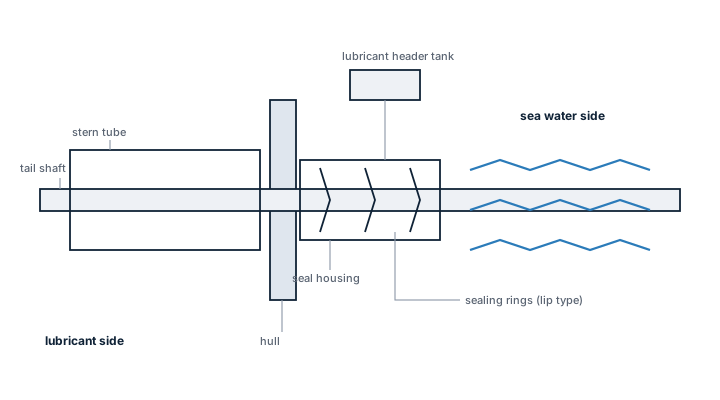
Within shaft line equipment, the stern tube seal is the one component working directly at the hull penetration, sealing a rotating shaft against sea pressure that increases with draught and speed. Unlike a bearing, which supports load, the seal's only job is to hold a thin film of lubricant or grease against ingress of seawater and against loss of lubricant to the sea, and it does this without touching the shaft with anything harder than a soft sealing lip or a controlled water film.
Read the full guide
Main components
Sealing rings or lips
Most modern seals use two to four lip seals or face seals in series, arranged so an outer element takes the sea pressure and an inner element retains lubricant, with the middle elements as backup if the outer fails.
Housing and liner
A shaft liner, often bronze or a stainless overlay, gives the sealing elements a smooth, corrosion-resistant running surface, since the bare tail shaft steel would pit and wear unevenly under the seal.
Lubrication and monitoring lines
Oil-lubricated seals run from a header tank that keeps the seal chamber pressure slightly above sea pressure at the working draught; grease-lubricated seals use periodic injection instead.
Selection and sizing
- Shaft diameter and running speed, which set the seal size and the lip material's wear life.
- Design draught and operating depth, which set the sea pressure the seal must hold against.
- Lubricant type: mineral oil, environmentally acceptable lubricant, or grease, each needing a matched seal design.
- Access for maintenance, since some seal designs can be replaced afloat while others require drydocking.
Regulations and class
Class rules require periodic survey of the stern tube seal and lubricant condition, with sampling of the lubricant for water content as part of tailshaft survey regimes. Where an oil-lubricated seal is fitted, MARPOL Annex I and regional requirements increasingly push owners toward environmentally acceptable lubricants or a seal design certified to prevent any lubricant loss to the sea. Class societies also set minimum requirements for standby or emergency sealing arrangements on vessels without a means of drydocking at short notice.
Typical faults
| Fault | Consequence |
|---|---|
| Lip wear from a scored or pitted shaft liner | Rising oil consumption or water ingress into the stern tube lubricant |
| Header tank level not monitored | Loss of the pressure margin that keeps sea pressure out, undetected leakage |
| Seal chamber overheating from misalignment | Accelerated lip wear, premature seal failure |
| Contaminated lubricant left unchanged | Abrasive wear on the sealing lips and liner surface |
What to look for in a supplier
- Type approval from the relevant class society for the exact seal design and shaft size.
- Documented compatibility with the vessel's chosen lubricant, including environmentally acceptable lubricant approval if required.
- Availability of an afloat repair kit or split seal design where drydock access is limited.
- Clear guidance on running-in procedure, since a new seal often needs a controlled break-in period.
A slow but steady rise in stern tube lubricant water content is worth acting on immediately, since by the time a seal visibly leaks at the flange the sealing lips are usually already beyond a simple adjustment.