What to check on a Refrigeration Compressor (Piston / Screw).
The refrigeration compressor is the component that raises refrigerant vapour from evaporator (low) pressure to condenser (high) pressure, driving the whole vapour-compression cycle that keeps chill and freeze rooms at setpoint. Two mechanical principles dominate on board: reciprocating piston compressors, which compress refrigerant with pistons in cylinders through suction and discharge valves, and screw compressors, which compress it continuously between meshing helical rotors. Piston units are simpler, cheaper to overhaul, and common on smaller provisions plants; screw compressors run smoother, tolerate slight liquid carryover better, and are the usual choice…
What makes this type
The refrigeration compressor is the component that raises refrigerant vapour from evaporator (low) pressure to condenser (high) pressure, driving the whole vapour-compression cycle that keeps chill and freeze rooms at setpoint. Two mechanical principles dominate on board: reciprocating piston compressors, which compress refrigerant with pistons in cylinders through suction and discharge valves, and screw compressors, which compress it continuously between meshing helical rotors. Piston units are simpler, cheaper to overhaul, and common on smaller provisions plants; screw compressors run smoother, tolerate slight liquid carryover better, and are the usual choice once capacity or continuous duty cycle grows, such as on larger reefer or fishing vessels.
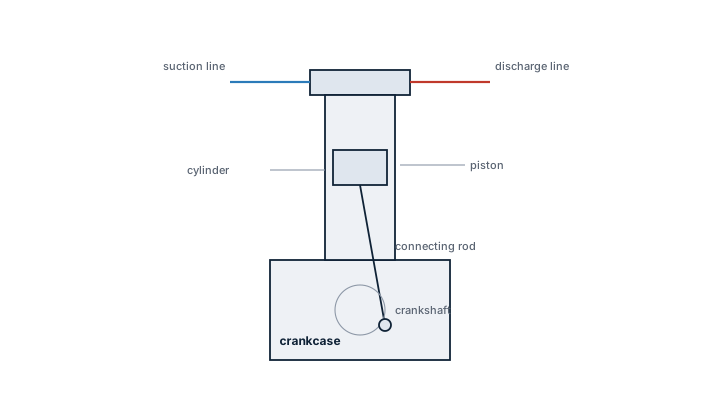
Main components
Cylinder block and pistons (reciprocating type)
Houses the pistons, suction and discharge reed or ring valves, and crankshaft; multi-cylinder units allow capacity control by unloading individual cylinders.
Rotor pair (screw type)
A male and female helical rotor meshing inside a close-tolerance housing, compressing refrigerant continuously along the rotor length without valves.
Capacity control
Cylinder unloaders on piston units, or a sliding slide valve on screw units, allowing the compressor to match cooling demand without cycling on and off constantly.
Oil separator and oil management system
Removes lubricating oil carried over with the discharge gas and returns it to the crankcase or, on screw units, to the oil injection system that also cools and seals the rotors.
Suction and discharge shut-off valves, safety relief valve
Isolate the compressor for service and protect against overpressure on the discharge side.
Selection / Sizing
- Required cooling capacity in kW at the design evaporating and condensing temperatures for chill and freeze duty separately.
- Refrigerant type: R404A legacy systems versus R507A, R448A/R449A or ammonia/CO2 on newer plants, each with different compressor compatibility.
- Duty cycle: continuous running favours screw compressors, intermittent cycling favours simpler piston units.
- Capacity turndown range needed to hold setpoint efficiently across seasonal load swings between port and open sea.
- Available engine room space and noise/vibration allowance, since screw units generally need more rigid foundations.
Regulations / Class
Refrigerant handling falls under MARPOL Annex VI ozone-depleting substance restrictions, which have phased out R22 and are tightening around high-GWP HFCs under the Kigali Amendment schedule adopted by many flag states. Classification societies survey the refrigeration plant as part of periodic machinery surveys, including pressure vessel and relief valve testing on the high side. Ammonia systems carry additional class and flag requirements for gas detection and machinery space ventilation given the toxicity risk.
Typical faults
| Fault | Consequence |
|---|---|
| Suction or discharge valve plate wear/breakage (piston type) | Loss of compression efficiency, falling capacity, and risk of debris damaging the cylinder |
| Liquid slugging from poor superheat control | Bent connecting rods or broken valves on piston units; on screw units, rotor and bearing damage |
| Oil carryover from a failed or fouled oil separator | Oil coats evaporator surfaces, reducing heat transfer and cooling capacity over time |
| Slide valve actuator wear (screw type) | Erratic capacity control, plant hunts between load steps and struggles to hold setpoint |
| Low refrigerant charge from a slow leak | Compressor runs hot, short-cycles, and eventually trips on high discharge temperature |
What to look for in a supplier
- Confirmed compatibility with the ship's chosen refrigerant, including oil type, since mixing oils across refrigerant families causes lubrication failures.
- Availability of wear parts (valve plates, gaskets, bearings) through a marine parts network, not only through the original factory.
- Documented capacity and COP data at the plant's actual design conditions, not just standard rating conditions.
- Vibration and noise data if the compressor sits near accommodation spaces.
Track discharge temperature trend over weeks, not just the alarm setpoint; a slow creep upward with unchanged ambient conditions is almost always low charge or a failing valve, caught long before it becomes a breakdown.