What to check on a Refrigeration Compressor (Screw).
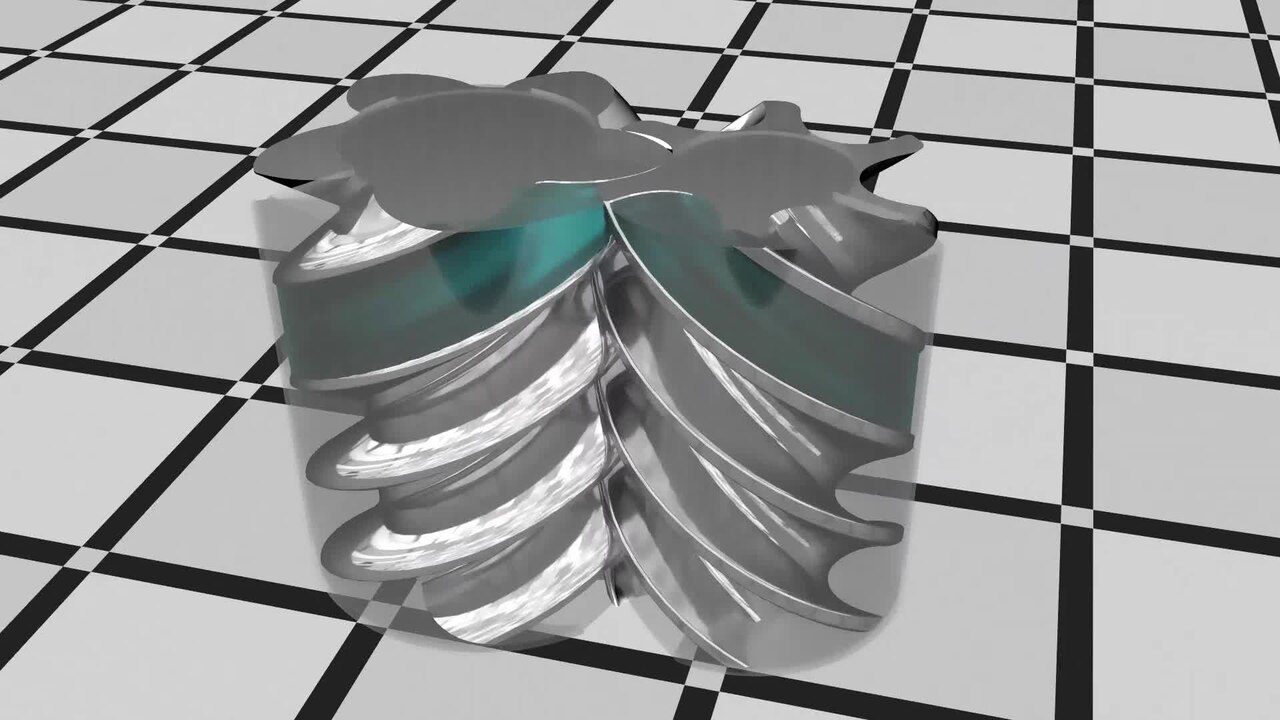
A screw compressor compresses refrigerant vapour between two meshing helical rotors, a male rotor with lobes driving a female rotor with matching flutes, inside a close-tolerance housing. Unlike the reciprocating piston compressors fitted to most provisions refrigeration plants, the screw design has no valves that open and close thousands of times a minute and no reciprocating mass to balance. Compression is continuous rather than pulsed, which keeps discharge pressure and temperature steadier and reduces vibration transmitted into the machinery foundation. This makes the screw compressor the usual choice once required…
What Sets a Screw Compressor Apart
A screw compressor compresses refrigerant vapour between two meshing helical rotors, a male rotor with lobes driving a female rotor with matching flutes, inside a close-tolerance housing. Unlike the reciprocating piston compressors fitted to most provisions refrigeration plants, the screw design has no valves that open and close thousands of times a minute and no reciprocating mass to balance. Compression is continuous rather than pulsed, which keeps discharge pressure and temperature steadier and reduces vibration transmitted into the machinery foundation. This makes the screw compressor the usual choice once required capacity moves beyond what a multi-cylinder reciprocating unit can deliver economically, typically on larger provisions plants serving cruise or passenger tonnage, on refrigerated cargo hold systems, and on fishing vessel RSW (refrigerated seawater) plants. Below that capacity threshold, reciprocating and scroll compressors remain more common because they are cheaper to overhaul and tolerate partial-load cycling better.

Main Components
Rotor pair and casing
The male and female rotors run with a small, oil-sealed clearance rather than metal-to-metal contact; the oil film also removes heat of compression as it passes through the rotor mesh.
Slide valve or variable Vi mechanism
Capacity is adjusted by an internal slide valve that shortens the effective compression length, allowing turndown typically between 10% and 100% without stopping the compressor, and independently adjusting the internal volume ratio to match condensing and evaporating conditions.
Oil separator and injection system
Because oil is injected directly into the compression chamber for sealing, lubrication and cooling, an efficient oil separator downstream of the discharge is essential; carry-over that is too high starves the system of oil and fouls heat exchanger surfaces over time.
Suction and discharge check valves, economizer port
Many marine screw compressors include an economizer (side) port that admits flash gas from an intermediate pressure stage, improving efficiency at the low evaporating temperatures typical of freeze rooms and reefer holds.
Selection and Sizing
Sizing is driven by the required refrigeration duty at the design evaporating and condensing temperatures, not by displacement alone, because volumetric efficiency falls as the pressure ratio rises. Key figures to compare between offers:
- Refrigeration capacity (kW) at a stated evaporating/condensing temperature pair, not a generic rating
- Built-in volume ratio (Vi) and whether it is fixed or variable
- Turndown range of the slide valve and minimum stable capacity
- Refrigerant compatibility (R404A, R507, R134a or the lower-GWP replacements now specified on newbuildings)
- Oil type and charge, since screw compressors typically hold a larger oil charge than a reciprocating unit of similar duty
Regulations and Class
Refrigerant handling on board falls under MARPOL Annex VI reporting for ozone-depleting substances and, increasingly, restrictions applied through flag and class rules on high-GWP refrigerants. Classification societies require periodic survey of refrigeration machinery serving cargo holds or provisions rooms, including pressure vessel inspection of the oil separator and condenser, and verification of high-pressure and low-pressure cutout settings. Where the plant serves cargo spaces on a reefer vessel, class rules on redundancy typically require at least two compressors per circuit so a single failure does not lose the hold.
Typical Faults
| Fault | Cause | Consequence |
|---|---|---|
| Excessive oil carry-over | Worn or fouled oil separator, overcharged oil, high load operation | Oil logging in the evaporator, loss of heat transfer, eventual oil starvation of the compressor |
| Slide valve sticking | Oil breakdown, debris in hydraulic actuating oil | Compressor stuck at full or partial load, inability to control room temperature or excessive cycling |
| Low suction superheat / liquid slugging | Faulty expansion valve, low load with poor control | Rotor and bearing damage, sudden high discharge temperature alarms |
| High discharge temperature | Low oil flow, high pressure ratio, refrigerant undercharge | Oil breakdown, rotor seizure risk, automatic trip |
What to Look for in a Supplier
- Documented performance curves at the actual evaporating/condensing conditions of the vessel's service, not a single rated point
- Availability of the specific slide valve actuator and oil separator spares in the vessel's trading area
- Experience with the refrigerant charge specified for the plant, including any low-GWP retrofit path
- Reference installations of comparable capacity on similar vessel types
- Clear oil specification and compatibility with the refrigerant, since the two are matched pairs
Watch the oil level sight glass and discharge temperature together, not separately — a screw compressor running short of oil often still shows a normal-looking discharge pressure right up until the bearings let go.