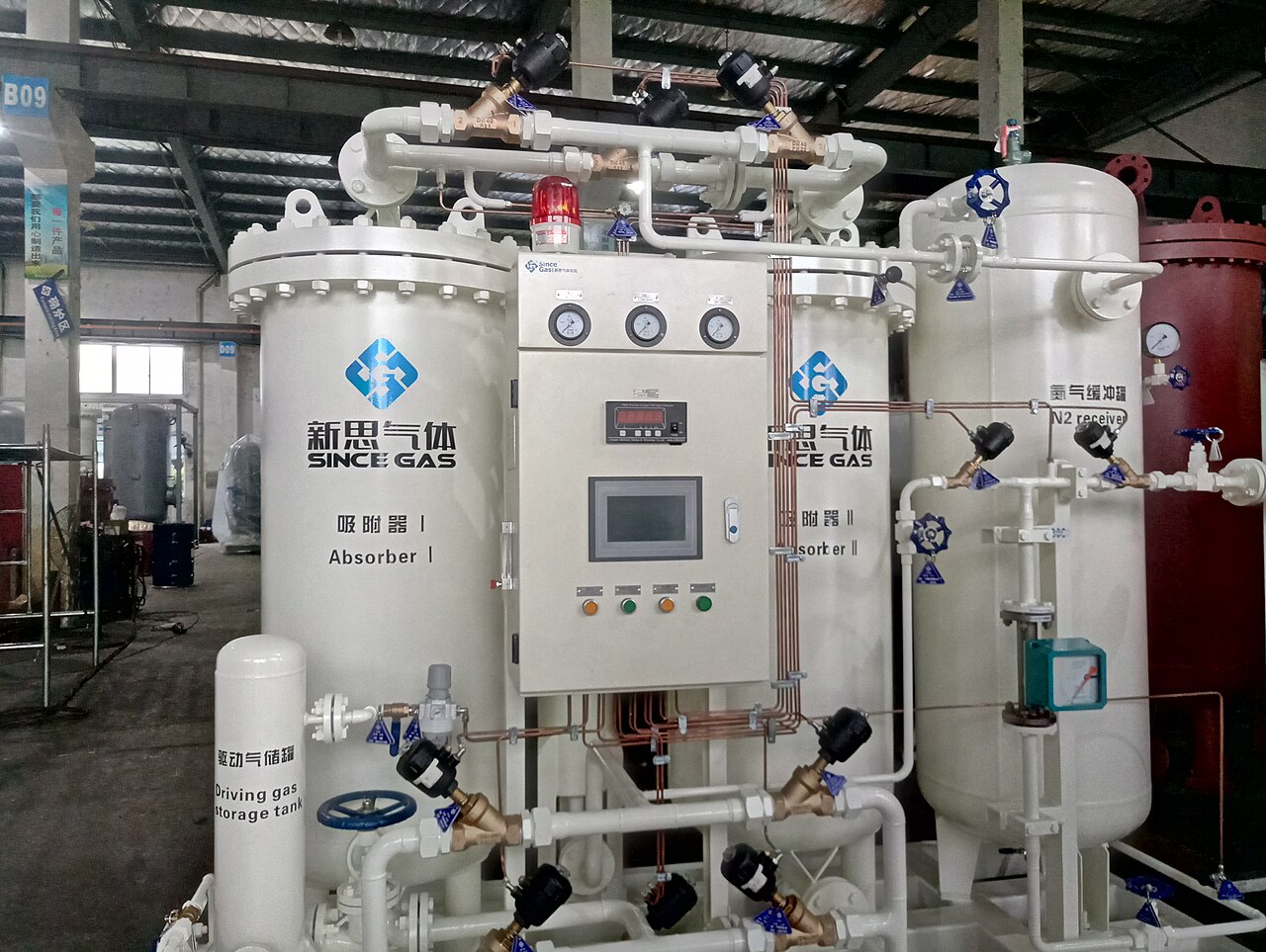
What to check on a Nitrogen Generator (PSA).
1 models from Atlas Copco Marine in Nitrogen Generator (PSA). Below: the full model list.
What sets PSA nitrogen generation apart
Conventional inert gas plants burn fuel oil and scrub the flue gas down to a low-oxygen mixture that still carries traces of sulphur oxides and soot. A Pressure Swing Adsorption nitrogen generator instead compresses ordinary air and pushes it through beds of carbon molecular sieve that adsorb oxygen preferentially, leaving a nitrogen-rich stream behind. There is no combustion, no flue gas chemistry to manage, and no fuel consumption tied to the inerting duty -- which is why chemical tankers and gas carriers favour it over flue-gas IG for cargoes that cannot tolerate combustion by-products.

Read the full guide
Main components
Air compressor and pre-treatment
Feeds dry, oil-free compressed air to the sieve beds; any moisture or oil carryover shortens sieve life sharply.
Carbon molecular sieve beds
Two or more vessels operating in alternating adsorption and regeneration cycles, so the plant delivers a continuous nitrogen stream while one bed vents captured oxygen and regenerates under reduced pressure.
Purity and flow control
An oxygen analyser on the product stream feeding a control valve that adjusts flow or diverts off-spec gas back to atmosphere until purity recovers after start-up.
Selection criteria
- Required purity -- cargo tank blanketing often accepts 95 to 97.5 percent nitrogen, while some chemical grades demand higher purity and lower flow.
- Flow rate matched to the largest single tank's filling or purging rate, since undersized plants cannot keep pace during fast discharge.
- Sieve bed capacity and expected feed air quality, since ambient humidity and temperature both affect achievable purity.
Regulations and class
IACS UR and class rules for inert gas systems apply to PSA plants in the same way as combustion-type IG, covering oxygen content monitoring, alarm setpoints and backup arrangements. IMO's IGC Code addresses inerting requirements for gas carriers where nitrogen systems are common, and class surveys check the oxygen analyser calibration and the plant's ability to maintain the required tank atmosphere continuously through the voyage.
Typical faults
- Sieve bed contamination from oil carryover in the feed air, which drops nitrogen purity gradually rather than all at once and can go unnoticed without trend logging.
- Oxygen analyser drift, giving a false purity reading that either wastes nitrogen through unnecessary venting or, worse, allows an off-spec gas into the tank.
- Regeneration valve wear causing incomplete bed switching, which shows up as a slow purity decline under high demand.
- Undersized product buffer causing purity dips during rapid demand swings at the start of tank purging.
What to look for in a supplier
- Sieve bed replacement intervals and cost stated up front, since this is the main recurring expense of the system.
- Documented purity and flow performance across the ambient temperature and humidity range the vessel actually trades in.
- Oxygen analyser type and calibration schedule compatible with the ship's existing spares and calibration gas stock.
Nitrogen purity on paper is measured at the analyser, not at the tank -- long, poorly purged distribution lines can let oxygen back-diffuse into the blanket gas well before it reaches the far tank, so check the actual tank atmosphere, not just the generator's output reading.