Hydrophore Unit
A hydrophore unit is the pressure vessel and pump set that keeps domestic fresh water taps, showers and galley outlets running at usable pressure without the pump cycling on and off every time a tap opens, using a cushion of compressed air above the water to smooth demand.
Read more — Hydrophore Unit explained ▾
What sets a hydrophore unit apart
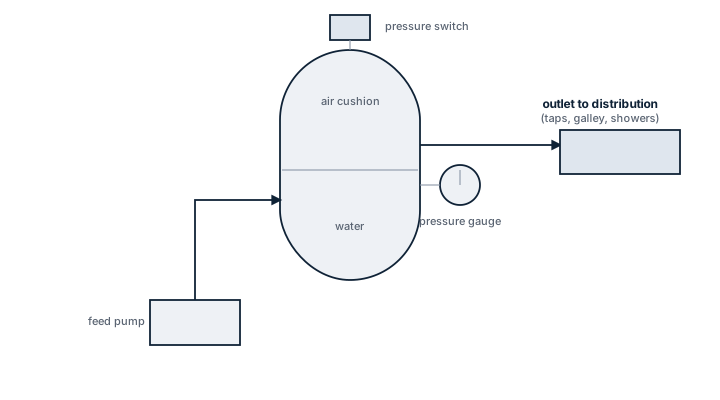
Unlike the fresh water generator, which makes potable water, or the storage tanks that hold it, the hydrophore is purely a pressure delivery device sitting between the storage tanks and the domestic distribution piping. It works on a simple principle: a closed steel vessel, part filled with water and part with compressed air, is fed by one or more pumps drawing from the fresh water storage tanks. As water is drawn off by taps and appliances, the trapped air expands and pressure falls; when it drops to a set low pressure, a pressure switch starts the pump, which refills the vessel and recompresses the air until the high-pressure cutout stops the pump again. This cycle keeps line pressure within a working band without the pump running continuously for every small draw.
Main components
- Pressure vessel - a certified pressure vessel, sized to hold enough water and air cushion to avoid excessive pump cycling.
- Feed pump(s) - usually duplicated (duty/standby) centrifugal pumps drawing from the potable water storage tanks.
- Pressure switch - controls pump start/stop between set high and low pressure points.
- Air charging arrangement - either an air compressor connection or a diaphragm/bladder separating air from water in more modern units, since plain air cushions slowly absorb into the water over time and need periodic recharging.
- Pressure gauge and relief valve - monitor vessel pressure and protect against overpressure.
Selection / Sizing
Vessel capacity and pump duty are sized against peak simultaneous demand - the number of outlets likely to be drawing water at once, weighted by crew or passenger complement, plus a working pressure band suited to the tallest deck served (a unit serving accommodation decks several levels up needs enough set pressure to overcome the static head as well as friction losses). Bladder-type vessels are generally preferred over plain air-cushion vessels on modern installations because they hold their air charge far longer and need less manual attention, at a higher initial cost.
Regulations / Class
The pressure vessel itself falls under class society rules for unfired pressure vessels, requiring design approval, hydrostatic testing and periodic internal or hydrostatic survey, since it is a vessel under continuous internal pressure with people relying on it daily. There is no dedicated SOLAS chapter for domestic water pressure systems; the requirement sits within general potable water and habitability provisions plus the pressure vessel's own class certification.
Typical faults
| Fault | Consequence |
|---|---|
| Air cushion absorbed into the water over time (plain air-cushion type) | Pump short-cycles rapidly, wears out prematurely, uneven tap pressure |
| Bladder rupture in bladder-type vessels | Loss of air/water separation, same short-cycling symptom as above |
| Pressure switch drift or contact wear | Pump fails to start or stop at the correct pressure, taps run at wrong pressure or pump runs continuously |
| Pump seal leakage or impeller wear | Falling delivered pressure, pump runs longer to reach cutout |
| Corrosion inside the pressure vessel | Structural weakening, potential for vessel failure at survey or worse in service |
What to look for in a supplier
- Pressure vessel design certificate and material test certificates suitable for the flag and class of the vessel.
- Bladder or diaphragm type construction for lower maintenance, unless the existing fleet standard is plain air-cushion.
- Duty/standby pump arrangement with automatic changeover, not a single pump with no redundancy.
Rapid pump cycling with no obvious leak almost always means the air cushion is gone or the bladder has failed, not that the pump itself is faulty - check vessel pre-charge pressure before condemning the pump.
2 manufacturers · 2 models
Alfa Laval
1- Pump, heater or control failure causes low pressure, poor hot-water supply or repeated cycling
- Pressure-switch, thermostat or level faults cause unstable operation or protective trips
- Air-charge loss, vessel leakage or failed non-return valves cause frequent pump starts or pressure fluctuation
- Scale or internal deposits reduce heating or water-flow performance
- Seal, flange or relief-valve leakage causes visible water loss and corrosion
- Self‑priming and able to deliver consistent pressure without external air compressors
- Compact footprint and low power demand (5.5 kW) suitable for space‑constrained installations
- Integrated pressure vessel reduces the need for separate storage tanks
- Simple control logic with built‑in pressure switch for automatic operation
- Alfa Laval reputation for corrosion‑resistant stainless steel construction
- Bladder can become water‑logged and requires periodic inspection/replacement
- Pump seal leaks are a common failure mode requiring timely maintenance
- Check valve may stick, leading to loss of pressure or backflow
- Limited maximum flow compared with larger dedicated pump‑tank systems
- Requires monthly verification of vessel air charge and annual pump service
Grundfos Marine
1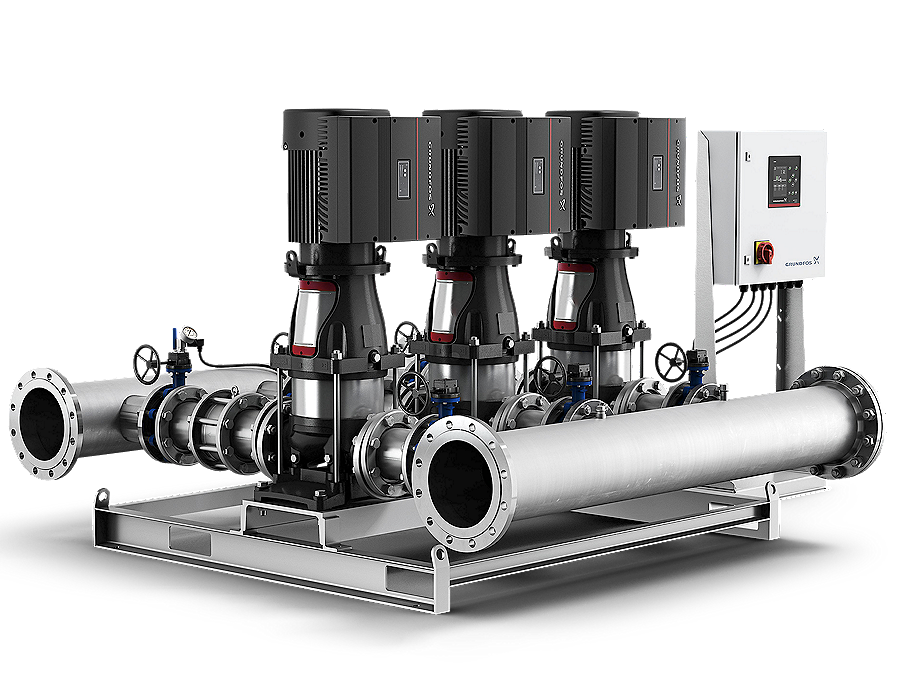
- Pump, heater or control failure causes low pressure, poor hot-water supply or repeated cycling
- Pressure-switch, thermostat or level faults cause unstable operation or protective trips
- Air-charge loss, vessel leakage or failed non-return valves cause frequent pump starts or pressure fluctuation
- Scale or internal deposits reduce heating or water-flow performance
- Seal, flange or relief-valve leakage causes visible water loss and corrosion
- VFD operation provides energy‑efficient pump speed control
- Redundant pump arrangement ensures continuous supply if one pump fails
- Constant pressure set‑point eliminates the need for manual throttling
- Integrated monitoring of pump alternation and pressure transducer simplifies maintenance
- Modular design allows quick pump replacement on board
- VFD communication errors can interrupt pressure control
- Higher initial capital cost compared with single‑pump systems
- Requires annual calibration of the pressure transducer to maintain accuracy
- Check valve leakage between pumps may cause pressure drop if not inspected regularly
- Mechanical seal wear on individual pumps demands scheduled maintenance