CO2 Fixed Fire System
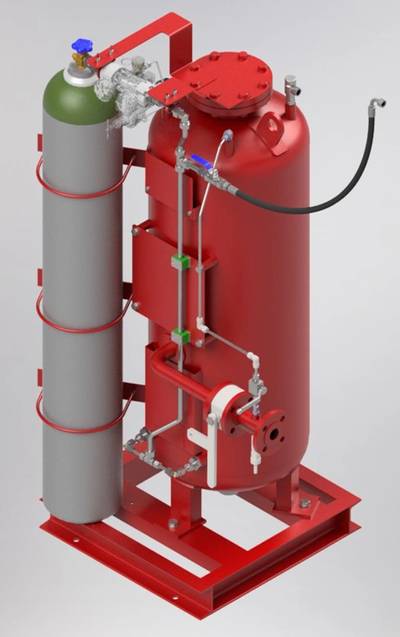
A CO2 fixed fire system floods a protected space with carbon dioxide gas from a bank of pressurised cylinders, extinguishing a fire by reducing oxygen concentration below the level that sustains combustion, which is also what makes it lethal to anyone left inside.
Read more — CO2 Fixed Fire System explained ▾
What sets a CO2 fixed fire system apart
A CO2 fixed fire system extinguishes by smothering rather than cooling: it displaces oxygen in the protected space until combustion can no longer sustain itself, typically requiring the CO2 concentration to reach around 30-40 percent by volume depending on the space and cargo. This is different from a water mist or sprinkler system, which extinguishes mainly by cooling, and from a foam system, which blankets a liquid surface. Because the same mechanism that starves a fire of oxygen also asphyxiates a person, CO2 systems are fitted only in normally unmanned spaces such as engine rooms, cargo pump rooms and paint lockers, with strict release procedures.
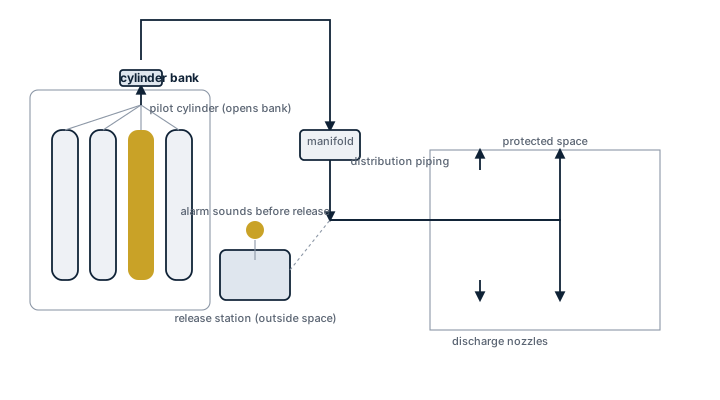
Main components
Cylinder bank
Liquid CO2 is stored under its own vapour pressure in a bank of steel cylinders in a dedicated room, sized by total protected volume and, on some ships, split between a main and reserve bank.
Distribution piping and nozzles
Fixed pipework runs from the cylinder bank manifold to discharge nozzles positioned to flood the protected space evenly, sized so the required concentration is reached within the time set by the system's design standard.
Release arrangement
Release is deliberately a two-stage manual action: opening the space's boundary and ventilation dampers, then operating a separate release lever, with a time-delayed alarm and audible warning before gas actually discharges, giving anyone inside time to evacuate.
Detection and alarm
Fixed detection in the protected space (smoke, heat, or flame detectors depending on the risk) triggers the fire alarm and readies the system, though release itself normally remains a manual crew decision rather than fully automatic.
Regulations and class requirements
Fixed gas fire-extinguishing systems are governed by SOLAS Chapter II-2 and detailed in the IMO Fire Safety Systems (FSS) Code, which sets minimum CO2 quantity per protected volume, discharge time, piping design, and the mandatory pre-discharge alarm sequence. Cylinders are weighed or otherwise checked for content loss at intervals set by class and the FSS Code, commonly during each survey cycle, and a loss beyond the allowed tolerance requires the cylinder to be recharged.
Typical faults
- Slow CO2 loss through a cylinder valve seal — bank shows correct pressure on a quick check but is under-charged by weight, giving less than the design concentration
- Corroded or damaged distribution piping — gas escapes before reaching the intended nozzles, delaying or preventing the fire from being smothered
- Boundary or ventilation dampers not closing fully — released gas leaks out and the space never reaches extinguishing concentration
- Release lever or Bowden cable seized — crew cannot operate the system quickly when it is actually needed
- Pre-discharge alarm disabled or ignored — loss of the warning time meant to clear personnel from the space
What to look for in a supplier
- System sizing calculation matching the actual protected volume, not a generic figure carried over from a sister ship
- FSS Code compliant pre-discharge alarm and time delay arrangement
- Cylinder weighing or level-checking method the crew can realistically carry out on board
- Documented piping design confirming discharge time and nozzle coverage for the space
- Service support able to recharge and pressure-test cylinders locally rather than requiring a full bank exchange abroad
Treat every CO2 release drill as if the space were occupied: confirm the muster count before anyone touches the release lever, not after, because the gas gives no second chance once discharged.
15 manufacturers · 230 models
Survitec Group
50- Loss of extinguishing-agent inventory or pressure caused by leakage or poor maintenance, resulting in low-level or low-pressure indication and reduced system readiness
- Nozzle, pipe or distribution blockage caused by corrosion, paint, deposits or mechanical damage, resulting in restricted discharge
- Release-valve or actuator failure caused by corrosion, sticking or control faults, resulting in inability to discharge the system when commanded
- Detection, interlock or alarm failure caused by wiring, sensor or control-panel faults, resulting in missing alarms or inhibited release sequence
- Pump, cylinder or pressure-regulating equipment deterioration caused by wear, corrosion or electrical faults, resulting in inadequate discharge performance
- Loss of extinguishing-agent inventory or pressure caused by leakage or poor maintenance, resulting in low-level or low-pressure indication and reduced system readiness
- Nozzle, pipe or distribution blockage caused by corrosion, paint, deposits or mechanical damage, resulting in restricted discharge
- Release-valve or actuator failure caused by corrosion, sticking or control faults, resulting in inability to discharge the system when commanded
- Detection, interlock or alarm failure caused by wiring, sensor or control-panel faults, resulting in missing alarms or inhibited release sequence
- Pump, cylinder or pressure-regulating equipment deterioration caused by wear, corrosion or electrical faults, resulting in inadequate discharge performance
- Loss of extinguishing-agent inventory or pressure caused by leakage or poor maintenance, resulting in low-level or low-pressure indication and reduced system readiness
- Nozzle, pipe or distribution blockage caused by corrosion, paint, deposits or mechanical damage, resulting in restricted discharge
- Release-valve or actuator failure caused by corrosion, sticking or control faults, resulting in inability to discharge the system when commanded
- Detection, interlock or alarm failure caused by wiring, sensor or control-panel faults, resulting in missing alarms or inhibited release sequence
- Pump, cylinder or pressure-regulating equipment deterioration caused by wear, corrosion or electrical faults, resulting in inadequate discharge performance
- Loss of extinguishing-agent inventory or pressure caused by leakage or poor maintenance, resulting in low-level or low-pressure indication and reduced system readiness
- Nozzle, pipe or distribution blockage caused by corrosion, paint, deposits or mechanical damage, resulting in restricted discharge
- Release-valve or actuator failure caused by corrosion, sticking or control faults, resulting in inability to discharge the system when commanded
- Detection, interlock or alarm failure caused by wiring, sensor or control-panel faults, resulting in missing alarms or inhibited release sequence
- Pump, cylinder or pressure-regulating equipment deterioration caused by wear, corrosion or electrical faults, resulting in inadequate discharge performance
- Loss of extinguishing-agent inventory or pressure caused by leakage or poor maintenance, resulting in low-level or low-pressure indication and reduced system readiness
- Nozzle, pipe or distribution blockage caused by corrosion, paint, deposits or mechanical damage, resulting in restricted discharge
- Release-valve or actuator failure caused by corrosion, sticking or control faults, resulting in inability to discharge the system when commanded
- Detection, interlock or alarm failure caused by wiring, sensor or control-panel faults, resulting in missing alarms or inhibited release sequence
- Pump, cylinder or pressure-regulating equipment deterioration caused by wear, corrosion or electrical faults, resulting in inadequate discharge performance
- Loss of extinguishing-agent inventory or pressure caused by leakage or poor maintenance, resulting in low-level or low-pressure indication and reduced system readiness
- Nozzle, pipe or distribution blockage caused by corrosion, paint, deposits or mechanical damage, resulting in restricted discharge
- Release-valve or actuator failure caused by corrosion, sticking or control faults, resulting in inability to discharge the system when commanded
- Detection, interlock or alarm failure caused by wiring, sensor or control-panel faults, resulting in missing alarms or inhibited release sequence
- Pump, cylinder or pressure-regulating equipment deterioration caused by wear, corrosion or electrical faults, resulting in inadequate discharge performance
- Loss of extinguishing-agent inventory or pressure caused by leakage or poor maintenance, resulting in low-level or low-pressure indication and reduced system readiness
- Nozzle, pipe or distribution blockage caused by corrosion, paint, deposits or mechanical damage, resulting in restricted discharge
- Release-valve or actuator failure caused by corrosion, sticking or control faults, resulting in inability to discharge the system when commanded
- Detection, interlock or alarm failure caused by wiring, sensor or control-panel faults, resulting in missing alarms or inhibited release sequence
- Pump, cylinder or pressure-regulating equipment deterioration caused by wear, corrosion or electrical faults, resulting in inadequate discharge performance
- Loss of extinguishing-agent inventory or pressure caused by leakage or poor maintenance, resulting in low-level or low-pressure indication and reduced system readiness
- Nozzle, pipe or distribution blockage caused by corrosion, paint, deposits or mechanical damage, resulting in restricted discharge
- Release-valve or actuator failure caused by corrosion, sticking or control faults, resulting in inability to discharge the system when commanded
- Detection, interlock or alarm failure caused by wiring, sensor or control-panel faults, resulting in missing alarms or inhibited release sequence
- Pump, cylinder or pressure-regulating equipment deterioration caused by wear, corrosion or electrical faults, resulting in inadequate discharge performance
- Loss of extinguishing-agent inventory or pressure caused by leakage or poor maintenance, resulting in low-level or low-pressure indication and reduced system readiness
- Nozzle, pipe or distribution blockage caused by corrosion, paint, deposits or mechanical damage, resulting in restricted discharge
- Release-valve or actuator failure caused by corrosion, sticking or control faults, resulting in inability to discharge the system when commanded
- Detection, interlock or alarm failure caused by wiring, sensor or control-panel faults, resulting in missing alarms or inhibited release sequence
- Pump, cylinder or pressure-regulating equipment deterioration caused by wear, corrosion or electrical faults, resulting in inadequate discharge performance
- Loss of extinguishing-agent inventory or pressure caused by leakage or poor maintenance, resulting in low-level or low-pressure indication and reduced system readiness
- Nozzle, pipe or distribution blockage caused by corrosion, paint, deposits or mechanical damage, resulting in restricted discharge
- Release-valve or actuator failure caused by corrosion, sticking or control faults, resulting in inability to discharge the system when commanded
- Detection, interlock or alarm failure caused by wiring, sensor or control-panel faults, resulting in missing alarms or inhibited release sequence
- Pump, cylinder or pressure-regulating equipment deterioration caused by wear, corrosion or electrical faults, resulting in inadequate discharge performance
- Loss of extinguishing-agent inventory or pressure caused by leakage or poor maintenance, resulting in low-level or low-pressure indication and reduced system readiness
- Nozzle, pipe or distribution blockage caused by corrosion, paint, deposits or mechanical damage, resulting in restricted discharge
- Release-valve or actuator failure caused by corrosion, sticking or control faults, resulting in inability to discharge the system when commanded
- Detection, interlock or alarm failure caused by wiring, sensor or control-panel faults, resulting in missing alarms or inhibited release sequence
- Pump, cylinder or pressure-regulating equipment deterioration caused by wear, corrosion or electrical faults, resulting in inadequate discharge performance
- Loss of extinguishing-agent inventory or pressure caused by leakage or poor maintenance, resulting in low-level or low-pressure indication and reduced readiness
- Nozzle, pipe or distribution blockage caused by corrosion, paint, deposits or mechanical damage, resulting in restricted discharge
- Release-valve or actuator failure caused by corrosion, sticking or control faults, resulting in inability to discharge the system when commanded
- Detection, interlock or alarm failure caused by wiring, sensor or panel faults, resulting in missing alarms or inhibited release sequence
- Pump, cylinder or pressure-regulating equipment deterioration caused by wear, corrosion or electrical faults, resulting in inadequate discharge performance
- Loss of extinguishing-agent inventory or pressure caused by leakage or poor maintenance, resulting in low-level or low-pressure indication and reduced readiness
- Nozzle, pipe or distribution blockage caused by corrosion, paint, deposits or mechanical damage, resulting in restricted discharge
- Release-valve or actuator failure caused by corrosion, sticking or control faults, resulting in inability to discharge the system when commanded
- Detection, interlock or alarm failure caused by wiring, sensor or panel faults, resulting in missing alarms or inhibited release sequence
- Pump, cylinder or pressure-regulating equipment deterioration caused by wear, corrosion or electrical faults, resulting in inadequate discharge performance
- Loss of extinguishing-agent inventory or pressure caused by leakage or poor maintenance, resulting in low-level or low-pressure indication and reduced readiness
- Nozzle, pipe or distribution blockage caused by corrosion, paint, deposits or mechanical damage, resulting in restricted discharge
- Release-valve or actuator failure caused by corrosion, sticking or control faults, resulting in inability to discharge the system when commanded
- Detection, interlock or alarm failure caused by wiring, sensor or panel faults, resulting in missing alarms or inhibited release sequence
- Pump, cylinder or pressure-regulating equipment deterioration caused by wear, corrosion or electrical faults, resulting in inadequate discharge performance
- Loss of extinguishing medium, cylinder pressure or water supply reduces available firefighting capacity
- Valve, nozzle, pump or release-system faults prevent correct discharge into the protected area
- Corrosion, seal deterioration or mechanical damage causes leakage or unreliable operation
- Detection, alarm, fan-stop or shutdown interlock faults create an incomplete or unsafe release sequence
- Blocked nozzles, hoses or distribution piping reduce agent delivery to the fire area
- Loss of extinguishing medium, cylinder pressure or water supply reduces available firefighting capacity
- Valve, nozzle, pump or release-system faults prevent correct discharge into the protected area
- Corrosion, seal deterioration or mechanical damage causes leakage or unreliable operation
- Detection, alarm, fan-stop or shutdown interlock faults create an incomplete or unsafe release sequence
- Blocked nozzles, hoses or distribution piping reduce agent delivery to the fire area
- Loss of extinguishing medium, cylinder pressure or water supply reduces available firefighting capacity
- Valve, nozzle, pump or release-system faults prevent correct discharge into the protected area
- Corrosion, seal deterioration or mechanical damage causes leakage or unreliable operation
- Detection, alarm, fan-stop or shutdown interlock faults create an incomplete or unsafe release sequence
- Blocked nozzles, hoses or distribution piping reduce agent delivery to the fire area
- Loss of extinguishing medium, cylinder pressure or water supply reduces available firefighting capacity
- Valve, nozzle, pump or release-system faults prevent correct discharge into the protected area
- Corrosion, seal deterioration or mechanical damage causes leakage or unreliable operation
- Detection, alarm, fan-stop or shutdown interlock faults create an incomplete or unsafe release sequence
- Blocked nozzles, hoses or distribution piping reduce agent delivery to the fire area
- Loss of extinguishing medium, cylinder pressure or water supply reduces available firefighting capacity
- Valve, nozzle, pump or release-system faults prevent correct discharge into the protected area
- Corrosion, seal deterioration or mechanical damage causes leakage or unreliable operation
- Detection, alarm, fan-stop or shutdown interlock faults create an incomplete or unsafe release sequence
- Blocked nozzles, hoses or distribution piping reduce agent delivery to the fire area
- Loss of extinguishing medium, cylinder pressure or water supply reduces available firefighting capacity
- Valve, nozzle, pump or release-system faults prevent correct discharge into the protected area
- Corrosion, seal deterioration or mechanical damage causes leakage or unreliable operation
- Detection, alarm, fan-stop or shutdown interlock faults create an incomplete or unsafe release sequence
- Blocked nozzles, hoses or distribution piping reduce agent delivery to the fire area
- Loss of extinguishing-agent inventory or pressure caused by leakage or poor maintenance, resulting in low-level or low-pressure indication and reduced system readiness
- Nozzle, pipe or distribution blockage caused by corrosion, paint, deposits or mechanical damage, resulting in restricted discharge
- Release-valve or actuator failure caused by corrosion, sticking or control faults, resulting in inability to discharge the system when commanded
- Detection, interlock or alarm failure caused by wiring, sensor or control-panel faults, resulting in missing alarms or inhibited release sequence
- Pump, cylinder or pressure-regulating equipment deterioration caused by wear, corrosion or electrical faults, resulting in inadequate discharge performance
- Loss of extinguishing-agent inventory or pressure caused by leakage or poor maintenance, resulting in low-level or low-pressure indication and reduced system readiness
- Nozzle, pipe or distribution blockage caused by corrosion, paint, deposits or mechanical damage, resulting in restricted discharge
- Release-valve or actuator failure caused by corrosion, sticking or control faults, resulting in inability to discharge the system when commanded
- Detection, interlock or alarm failure caused by wiring, sensor or control-panel faults, resulting in missing alarms or inhibited release sequence
- Pump, cylinder or pressure-regulating equipment deterioration caused by wear, corrosion or electrical faults, resulting in inadequate discharge performance
- Loss of extinguishing-agent inventory or pressure caused by leakage or poor maintenance, resulting in low-level or low-pressure indication and reduced system readiness
- Nozzle, pipe or distribution blockage caused by corrosion, paint, deposits or mechanical damage, resulting in restricted discharge
- Release-valve or actuator failure caused by corrosion, sticking or control faults, resulting in inability to discharge the system when commanded
- Detection, interlock or alarm failure caused by wiring, sensor or control-panel faults, resulting in missing alarms or inhibited release sequence
- Pump, cylinder or pressure-regulating equipment deterioration caused by wear, corrosion or electrical faults, resulting in inadequate discharge performance
- Loss of extinguishing-agent inventory or pressure caused by leakage or poor maintenance, resulting in low-level or low-pressure indication and reduced system readiness
- Nozzle, pipe or distribution blockage caused by corrosion, paint, deposits or mechanical damage, resulting in restricted discharge
- Release-valve or actuator failure caused by corrosion, sticking or control faults, resulting in inability to discharge the system when commanded
- Detection, interlock or alarm failure caused by wiring, sensor or control-panel faults, resulting in missing alarms or inhibited release sequence
- Pump, cylinder or pressure-regulating equipment deterioration caused by wear, corrosion or electrical faults, resulting in inadequate discharge performance
- Loss of extinguishing-agent inventory or pressure caused by leakage or poor maintenance, resulting in low-level or low-pressure indication and reduced system readiness
- Nozzle, pipe or distribution blockage caused by corrosion, paint, deposits or mechanical damage, resulting in restricted discharge
- Release-valve or actuator failure caused by corrosion, sticking or control faults, resulting in inability to discharge the system when commanded
- Detection, interlock or alarm failure caused by wiring, sensor or control-panel faults, resulting in missing alarms or inhibited release sequence
- Pump, cylinder or pressure-regulating equipment deterioration caused by wear, corrosion or electrical faults, resulting in inadequate discharge performance
- Loss of extinguishing-agent inventory or pressure caused by leakage or poor maintenance, resulting in low-level or low-pressure indication and reduced system readiness
- Nozzle, pipe or distribution blockage caused by corrosion, paint, deposits or mechanical damage, resulting in restricted discharge
- Release-valve or actuator failure caused by corrosion, sticking or control faults, resulting in inability to discharge the system when commanded
- Detection, interlock or alarm failure caused by wiring, sensor or control-panel faults, resulting in missing alarms or inhibited release sequence
- Pump, cylinder or pressure-regulating equipment deterioration caused by wear, corrosion or electrical faults, resulting in inadequate discharge performance
- Loss of extinguishing-agent inventory or pressure caused by leakage or poor maintenance, resulting in low-level or low-pressure indication and reduced system readiness
- Nozzle, pipe or distribution blockage caused by corrosion, paint, deposits or mechanical damage, resulting in restricted discharge
- Release-valve or actuator failure caused by corrosion, sticking or control faults, resulting in inability to discharge the system when commanded
- Detection, interlock or alarm failure caused by wiring, sensor or control-panel faults, resulting in missing alarms or inhibited release sequence
- Pump, cylinder or pressure-regulating equipment deterioration caused by wear, corrosion or electrical faults, resulting in inadequate discharge performance
- Loss of extinguishing-agent inventory or pressure caused by leakage or poor maintenance, resulting in low-level or low-pressure indication and reduced system readiness
- Nozzle, pipe or distribution blockage caused by corrosion, paint, deposits or mechanical damage, resulting in restricted discharge
- Release-valve or actuator failure caused by corrosion, sticking or control faults, resulting in inability to discharge the system when commanded
- Detection, interlock or alarm failure caused by wiring, sensor or control-panel faults, resulting in missing alarms or inhibited release sequence
- Pump, cylinder or pressure-regulating equipment deterioration caused by wear, corrosion or electrical faults, resulting in inadequate discharge performance
- Loss of extinguishing-agent inventory or pressure caused by leakage or poor maintenance, resulting in low-level or low-pressure indication and reduced system readiness
- Nozzle, pipe or distribution blockage caused by corrosion, paint, deposits or mechanical damage, resulting in restricted discharge
- Release-valve or actuator failure caused by corrosion, sticking or control faults, resulting in inability to discharge the system when commanded
- Detection, interlock or alarm failure caused by wiring, sensor or control-panel faults, resulting in missing alarms or inhibited release sequence
- Pump, cylinder or pressure-regulating equipment deterioration caused by wear, corrosion or electrical faults, resulting in inadequate discharge performance
- Loss of extinguishing-agent inventory or pressure caused by leakage or poor maintenance, resulting in low-level or low-pressure indication and reduced system readiness
- Nozzle, pipe or distribution blockage caused by corrosion, paint, deposits or mechanical damage, resulting in restricted discharge
- Release-valve or actuator failure caused by corrosion, sticking or control faults, resulting in inability to discharge the system when commanded
- Detection, interlock or alarm failure caused by wiring, sensor or control-panel faults, resulting in missing alarms or inhibited release sequence
- Pump, cylinder or pressure-regulating equipment deterioration caused by wear, corrosion or electrical faults, resulting in inadequate discharge performance
- Loss of extinguishing-agent inventory or pressure caused by leakage or poor maintenance, resulting in low-level or low-pressure indication and reduced system readiness
- Nozzle, pipe or distribution blockage caused by corrosion, paint, deposits or mechanical damage, resulting in restricted discharge
- Release-valve or actuator failure caused by corrosion, sticking or control faults, resulting in inability to discharge the system when commanded
- Detection, interlock or alarm failure caused by wiring, sensor or control-panel faults, resulting in missing alarms or inhibited release sequence
- Pump, cylinder or pressure-regulating equipment deterioration caused by wear, corrosion or electrical faults, resulting in inadequate discharge performance
- Loss of extinguishing-agent inventory or pressure caused by leakage or poor maintenance, resulting in low-level or low-pressure indication and reduced system readiness
- Nozzle, pipe or distribution blockage caused by corrosion, paint, deposits or mechanical damage, resulting in restricted discharge
- Release-valve or actuator failure caused by corrosion, sticking or control faults, resulting in inability to discharge the system when commanded
- Detection, interlock or alarm failure caused by wiring, sensor or control-panel faults, resulting in missing alarms or inhibited release sequence
- Pump, cylinder or pressure-regulating equipment deterioration caused by wear, corrosion or electrical faults, resulting in inadequate discharge performance
- Loss of extinguishing-agent inventory or pressure caused by leakage or poor maintenance, resulting in low-level or low-pressure indication and reduced system readiness
- Nozzle, pipe or distribution blockage caused by corrosion, paint, deposits or mechanical damage, resulting in restricted discharge
- Release-valve or actuator failure caused by corrosion, sticking or control faults, resulting in inability to discharge the system when commanded
- Detection, interlock or alarm failure caused by wiring, sensor or control-panel faults, resulting in missing alarms or inhibited release sequence
- Pump, cylinder or pressure-regulating equipment deterioration caused by wear, corrosion or electrical faults, resulting in inadequate discharge performance
- Loss of extinguishing-agent inventory or pressure caused by leakage or poor maintenance, resulting in low-level or low-pressure indication and reduced system readiness
- Nozzle, pipe or distribution blockage caused by corrosion, paint, deposits or mechanical damage, resulting in restricted discharge
- Release-valve or actuator failure caused by corrosion, sticking or control faults, resulting in inability to discharge the system when commanded
- Detection, interlock or alarm failure caused by wiring, sensor or control-panel faults, resulting in missing alarms or inhibited release sequence
- Pump, cylinder or pressure-regulating equipment deterioration caused by wear, corrosion or electrical faults, resulting in inadequate discharge performance
- Loss of extinguishing-agent inventory or pressure caused by leakage or poor maintenance, resulting in low-level or low-pressure indication and reduced system readiness
- Nozzle, pipe or distribution blockage caused by corrosion, paint, deposits or mechanical damage, resulting in restricted discharge
- Release-valve or actuator failure caused by corrosion, sticking or control faults, resulting in inability to discharge the system when commanded
- Detection, interlock or alarm failure caused by wiring, sensor or control-panel faults, resulting in missing alarms or inhibited release sequence
- Pump, cylinder or pressure-regulating equipment deterioration caused by wear, corrosion or electrical faults, resulting in inadequate discharge performance
- Loss of extinguishing-agent inventory or pressure caused by leakage or poor maintenance, resulting in low-level or low-pressure indication and reduced system readiness
- Nozzle, pipe or distribution blockage caused by corrosion, paint, deposits or mechanical damage, resulting in restricted discharge
- Release-valve or actuator failure caused by corrosion, sticking or control faults, resulting in inability to discharge the system when commanded
- Detection, interlock or alarm failure caused by wiring, sensor or control-panel faults, resulting in missing alarms or inhibited release sequence
- Pump, cylinder or pressure-regulating equipment deterioration caused by wear, corrosion or electrical faults, resulting in inadequate discharge performance
- Loss of extinguishing-agent inventory or pressure caused by leakage or poor maintenance, resulting in low-level or low-pressure indication and reduced system readiness
- Nozzle, pipe or distribution blockage caused by corrosion, paint, deposits or mechanical damage, resulting in restricted discharge
- Release-valve or actuator failure caused by corrosion, sticking or control faults, resulting in inability to discharge the system when commanded
- Detection, interlock or alarm failure caused by wiring, sensor or control-panel faults, resulting in missing alarms or inhibited release sequence
- Pump, cylinder or pressure-regulating equipment deterioration caused by wear, corrosion or electrical faults, resulting in inadequate discharge performance
- Loss of extinguishing-agent inventory or pressure caused by leakage or poor maintenance, resulting in low-level or low-pressure indication and reduced system readiness
- Nozzle, pipe or distribution blockage caused by corrosion, paint, deposits or mechanical damage, resulting in restricted discharge
- Release-valve or actuator failure caused by corrosion, sticking or control faults, resulting in inability to discharge the system when commanded
- Detection, interlock or alarm failure caused by wiring, sensor or control-panel faults, resulting in missing alarms or inhibited release sequence
- Pump, cylinder or pressure-regulating equipment deterioration caused by wear, corrosion or electrical faults, resulting in inadequate discharge performance
- Loss of extinguishing-agent inventory or pressure caused by leakage or poor maintenance, resulting in low-level or low-pressure indication and reduced system readiness
- Nozzle, pipe or distribution blockage caused by corrosion, paint, deposits or mechanical damage, resulting in restricted discharge
- Release-valve or actuator failure caused by corrosion, sticking or control faults, resulting in inability to discharge the system when commanded
- Detection, interlock or alarm failure caused by wiring, sensor or control-panel faults, resulting in missing alarms or inhibited release sequence
- Pump, cylinder or pressure-regulating equipment deterioration caused by wear, corrosion or electrical faults, resulting in inadequate discharge performance
- Loss of extinguishing-agent inventory or pressure caused by leakage or poor maintenance, resulting in low-level or low-pressure indication and reduced system readiness
- Nozzle, pipe or distribution blockage caused by corrosion, paint, deposits or mechanical damage, resulting in restricted discharge
- Release-valve or actuator failure caused by corrosion, sticking or control faults, resulting in inability to discharge the system when commanded
- Detection, interlock or alarm failure caused by wiring, sensor or control-panel faults, resulting in missing alarms or inhibited release sequence
- Pump, cylinder or pressure-regulating equipment deterioration caused by wear, corrosion or electrical faults, resulting in inadequate discharge performance
- Loss of extinguishing-agent inventory or pressure caused by leakage or poor maintenance, resulting in low-level or low-pressure indication and reduced system readiness
- Nozzle, pipe or distribution blockage caused by corrosion, paint, deposits or mechanical damage, resulting in restricted discharge
- Release-valve or actuator failure caused by corrosion, sticking or control faults, resulting in inability to discharge the system when commanded
- Detection, interlock or alarm failure caused by wiring, sensor or control-panel faults, resulting in missing alarms or inhibited release sequence
- Pump, cylinder or pressure-regulating equipment deterioration caused by wear, corrosion or electrical faults, resulting in inadequate discharge performance
- Loss of extinguishing-agent inventory or pressure caused by leakage or poor maintenance, resulting in low-level or low-pressure indication and reduced system readiness
- Nozzle, pipe or distribution blockage caused by corrosion, paint, deposits or mechanical damage, resulting in restricted discharge
- Release-valve or actuator failure caused by corrosion, sticking or control faults, resulting in inability to discharge the system when commanded
- Detection, interlock or alarm failure caused by wiring, sensor or control-panel faults, resulting in missing alarms or inhibited release sequence
- Pump, cylinder or pressure-regulating equipment deterioration caused by wear, corrosion or electrical faults, resulting in inadequate discharge performance
- Loss of extinguishing-agent inventory or pressure caused by leakage or poor maintenance, resulting in low-level or low-pressure indication and reduced system readiness
- Nozzle, pipe or distribution blockage caused by corrosion, paint, deposits or mechanical damage, resulting in restricted discharge
- Release-valve or actuator failure caused by corrosion, sticking or control faults, resulting in inability to discharge the system when commanded
- Detection, interlock or alarm failure caused by wiring, sensor or control-panel faults, resulting in missing alarms or inhibited release sequence
- Pump, cylinder or pressure-regulating equipment deterioration caused by wear, corrosion or electrical faults, resulting in inadequate discharge performance
- Loss of extinguishing-agent inventory or pressure caused by leakage or poor maintenance, resulting in low-level or low-pressure indication and reduced system readiness
- Nozzle, pipe or distribution blockage caused by corrosion, paint, deposits or mechanical damage, resulting in restricted discharge
- Release-valve or actuator failure caused by corrosion, sticking or control faults, resulting in inability to discharge the system when commanded
- Detection, interlock or alarm failure caused by wiring, sensor or control-panel faults, resulting in missing alarms or inhibited release sequence
- Pump, cylinder or pressure-regulating equipment deterioration caused by wear, corrosion or electrical faults, resulting in inadequate discharge performance
- Loss of extinguishing-agent inventory or pressure caused by leakage or poor maintenance, resulting in low-level or low-pressure indication and reduced system readiness
- Nozzle, pipe or distribution blockage caused by corrosion, paint, deposits or mechanical damage, resulting in restricted discharge
- Release-valve or actuator failure caused by corrosion, sticking or control faults, resulting in inability to discharge the system when commanded
- Detection, interlock or alarm failure caused by wiring, sensor or control-panel faults, resulting in missing alarms or inhibited release sequence
- Pump, cylinder or pressure-regulating equipment deterioration caused by wear, corrosion or electrical faults, resulting in inadequate discharge performance
- Loss of extinguishing-agent inventory or pressure caused by leakage or poor maintenance, resulting in low-level or low-pressure indication and reduced system readiness
- Nozzle, pipe or distribution blockage caused by corrosion, paint, deposits or mechanical damage, resulting in restricted discharge
- Release-valve or actuator failure caused by corrosion, sticking or control faults, resulting in inability to discharge the system when commanded
- Detection, interlock or alarm failure caused by wiring, sensor or control-panel faults, resulting in missing alarms or inhibited release sequence
- Pump, cylinder or pressure-regulating equipment deterioration caused by wear, corrosion or electrical faults, resulting in inadequate discharge performance
- Loss of extinguishing-agent inventory or pressure caused by leakage or poor maintenance, resulting in low-level or low-pressure indication and reduced system readiness
- Nozzle, pipe or distribution blockage caused by corrosion, paint, deposits or mechanical damage, resulting in restricted discharge
- Release-valve or actuator failure caused by corrosion, sticking or control faults, resulting in inability to discharge the system when commanded
- Detection, interlock or alarm failure caused by wiring, sensor or control-panel faults, resulting in missing alarms or inhibited release sequence
- Pump, cylinder or pressure-regulating equipment deterioration caused by wear, corrosion or electrical faults, resulting in inadequate discharge performance
- Loss of extinguishing-agent inventory or pressure caused by leakage or poor maintenance, resulting in low-level or low-pressure indication and reduced system readiness
- Nozzle, pipe or distribution blockage caused by corrosion, paint, deposits or mechanical damage, resulting in restricted discharge
- Release-valve or actuator failure caused by corrosion, sticking or control faults, resulting in inability to discharge the system when commanded
- Detection, interlock or alarm failure caused by wiring, sensor or control-panel faults, resulting in missing alarms or inhibited release sequence
- Pump, cylinder or pressure-regulating equipment deterioration caused by wear, corrosion or electrical faults, resulting in inadequate discharge performance
- Loss of extinguishing-agent inventory or pressure caused by leakage or poor maintenance, resulting in low-level or low-pressure indication and reduced system readiness
- Nozzle, pipe or distribution blockage caused by corrosion, paint, deposits or mechanical damage, resulting in restricted discharge
- Release-valve or actuator failure caused by corrosion, sticking or control faults, resulting in inability to discharge the system when commanded
- Detection, interlock or alarm failure caused by wiring, sensor or control-panel faults, resulting in missing alarms or inhibited release sequence
- Pump, cylinder or pressure-regulating equipment deterioration caused by wear, corrosion or electrical faults, resulting in inadequate discharge performance
- Loss of extinguishing-agent inventory or pressure caused by leakage or poor maintenance, resulting in low-level or low-pressure indication and reduced system readiness
- Nozzle, pipe or distribution blockage caused by corrosion, paint, deposits or mechanical damage, resulting in restricted discharge
- Release-valve or actuator failure caused by corrosion, sticking or control faults, resulting in inability to discharge the system when commanded
- Detection, interlock or alarm failure caused by wiring, sensor or control-panel faults, resulting in missing alarms or inhibited release sequence
- Pump, cylinder or pressure-regulating equipment deterioration caused by wear, corrosion or electrical faults, resulting in inadequate discharge performance
Wilhelmsen Ships Service
48- Closed, seized or incorrectly positioned isolation valves can block discharge, detected during functional checks or by valve-position indication
- Loss of agent, water or system pressure through leakage can reduce readiness, seen as low-pressure indication or inventory discrepancy
- Blocked or damaged nozzles and distribution piping can impair coverage, found by inspection or flow testing
- Release-circuit, solenoid or control-panel faults can prevent actuation, seen as failed tests or system alarms
- Corrosion, contamination or mechanical damage to storage and piping components can compromise integrity, found during inspection or pressure-related checks
- Closed, seized or incorrectly positioned isolation valves can block discharge, detected during functional checks or by valve-position indication
- Loss of agent, water or system pressure through leakage can reduce readiness, seen as low-pressure indication or inventory discrepancy
- Blocked or damaged nozzles and distribution piping can impair coverage, found by inspection or flow testing
- Release-circuit, solenoid or control-panel faults can prevent actuation, seen as failed tests or system alarms
- Corrosion, contamination or mechanical damage to storage and piping components can compromise integrity, found during inspection or pressure-related checks
- Closed, seized or incorrectly positioned isolation valves can block discharge, detected during functional checks or by valve-position indication
- Loss of agent, water or system pressure through leakage can reduce readiness, seen as low-pressure indication or inventory discrepancy
- Blocked or damaged nozzles and distribution piping can impair coverage, found by inspection or flow testing
- Release-circuit, solenoid or control-panel faults can prevent actuation, seen as failed tests or system alarms
- Corrosion, contamination or mechanical damage to storage and piping components can compromise integrity, found during inspection or pressure-related checks
- Closed, seized or incorrectly positioned isolation valves can block discharge, detected during functional checks or by valve-position indication
- Loss of agent, water or system pressure through leakage can reduce readiness, seen as low-pressure indication or inventory discrepancy
- Blocked or damaged nozzles and distribution piping can impair coverage, found by inspection or flow testing
- Release-circuit, solenoid or control-panel faults can prevent actuation, seen as failed tests or system alarms
- Corrosion, contamination or mechanical damage to storage and piping components can compromise integrity, found during inspection or pressure-related checks
- Closed, seized or incorrectly positioned isolation valves can block discharge, detected during functional checks or by valve-position indication
- Loss of agent, water or system pressure through leakage can reduce readiness, seen as low-pressure indication or inventory discrepancy
- Blocked or damaged nozzles and distribution piping can impair coverage, found by inspection or flow testing
- Release-circuit, solenoid or control-panel faults can prevent actuation, seen as failed tests or system alarms
- Corrosion, contamination or mechanical damage to storage and piping components can compromise integrity, found during inspection or pressure-related checks
- Closed, seized or incorrectly positioned isolation valves can block discharge, detected during functional checks or by valve-position indication
- Loss of agent, water or system pressure through leakage can reduce readiness, seen as low-pressure indication or inventory discrepancy
- Blocked or damaged nozzles and distribution piping can impair coverage, found by inspection or flow testing
- Release-circuit, solenoid or control-panel faults can prevent actuation, seen as failed tests or system alarms
- Corrosion, contamination or mechanical damage to storage and piping components can compromise integrity, found during inspection or pressure-related checks
- Closed, seized or incorrectly positioned isolation valves can block discharge, detected during functional checks or by valve-position indication
- Loss of agent, water or system pressure through leakage can reduce readiness, seen as low-pressure indication or inventory discrepancy
- Blocked or damaged nozzles and distribution piping can impair coverage, found by inspection or flow testing
- Release-circuit, solenoid or control-panel faults can prevent actuation, seen as failed tests or system alarms
- Corrosion, contamination or mechanical damage to storage and piping components can compromise integrity, found during inspection or pressure-related checks
- Closed, seized or incorrectly positioned isolation valves can block discharge, detected during functional checks or by valve-position indication
- Loss of agent, water or system pressure through leakage can reduce readiness, seen as low-pressure indication or inventory discrepancy
- Blocked or damaged nozzles and distribution piping can impair coverage, found by inspection or flow testing
- Release-circuit, solenoid or control-panel faults can prevent actuation, seen as failed tests or system alarms
- Corrosion, contamination or mechanical damage to storage and piping components can compromise integrity, found during inspection or pressure-related checks
- Closed, seized or incorrectly positioned isolation valves can block discharge, detected during functional checks or by valve-position indication
- Loss of agent, water or system pressure through leakage can reduce readiness, seen as low-pressure indication or inventory discrepancy
- Blocked or damaged nozzles and distribution piping can impair coverage, found by inspection or flow testing
- Release-circuit, solenoid or control-panel faults can prevent actuation, seen as failed tests or system alarms
- Corrosion, contamination or mechanical damage to storage and piping components can compromise integrity, found during inspection or pressure-related checks
- Closed, seized or incorrectly positioned isolation valves can block discharge, detected during functional checks or by valve-position indication
- Loss of agent, water or system pressure through leakage can reduce readiness, seen as low-pressure indication or inventory discrepancy
- Blocked or damaged nozzles and distribution piping can impair coverage, found by inspection or flow testing
- Release-circuit, solenoid or control-panel faults can prevent actuation, seen as failed tests or system alarms
- Corrosion, contamination or mechanical damage to storage and piping components can compromise integrity, found during inspection or pressure-related checks
- Closed, seized or incorrectly positioned isolation valves can block discharge, detected during functional checks or by valve-position indication
- Loss of agent, water or system pressure through leakage can reduce readiness, seen as low-pressure indication or inventory discrepancy
- Blocked or damaged nozzles and distribution piping can impair coverage, found by inspection or flow testing
- Release-circuit, solenoid or control-panel faults can prevent actuation, seen as failed tests or system alarms
- Corrosion, contamination or mechanical damage to storage and piping components can compromise integrity, found during inspection or pressure-related checks
- Closed, seized or incorrectly positioned isolation valves can block discharge, detected during functional checks or by valve-position indication
- Loss of agent, water or system pressure through leakage can reduce readiness, seen as low-pressure indication or inventory discrepancy
- Blocked or damaged nozzles and distribution piping can impair coverage, found by inspection or flow testing
- Release-circuit, solenoid or control-panel faults can prevent actuation, seen as failed tests or system alarms
- Corrosion, contamination or mechanical damage to storage and piping components can compromise integrity, found during inspection or pressure-related checks
- Closed, seized or incorrectly positioned isolation valves can block discharge, detected during functional checks or by valve-position indication
- Loss of agent, water or system pressure through leakage can reduce readiness, seen as low-pressure indication or inventory discrepancy
- Blocked or damaged nozzles and distribution piping can impair coverage, found by inspection or flow testing
- Release-circuit, solenoid or control-panel faults can prevent actuation, seen as failed tests or system alarms
- Corrosion, contamination or mechanical damage to storage and piping components can compromise integrity, found during inspection or pressure-related checks
- Closed, seized or incorrectly positioned isolation valves can block discharge, detected during functional checks or by valve-position indication
- Loss of agent, water or system pressure through leakage can reduce readiness, seen as low-pressure indication or inventory discrepancy
- Blocked or damaged nozzles and distribution piping can impair coverage, found by inspection or flow testing
- Release-circuit, solenoid or control-panel faults can prevent actuation, seen as failed tests or system alarms
- Corrosion, contamination or mechanical damage to storage and piping components can compromise integrity, found during inspection or pressure-related checks
- Closed, seized or incorrectly positioned isolation valves can block discharge, detected during functional checks or by valve-position indication
- Loss of agent, water or system pressure through leakage can reduce readiness, seen as low-pressure indication or inventory discrepancy
- Blocked or damaged nozzles and distribution piping can impair coverage, found by inspection or flow testing
- Release-circuit, solenoid or control-panel faults can prevent actuation, seen as failed tests or system alarms
- Corrosion, contamination or mechanical damage to storage and piping components can compromise integrity, found during inspection or pressure-related checks
- Closed, seized or incorrectly positioned isolation valves can block discharge, detected during functional checks or by valve-position indication
- Loss of agent, water or system pressure through leakage can reduce readiness, seen as low-pressure indication or inventory discrepancy
- Blocked or damaged nozzles and distribution piping can impair coverage, found by inspection or flow testing
- Release-circuit, solenoid or control-panel faults can prevent actuation, seen as failed tests or system alarms
- Corrosion, contamination or mechanical damage to storage and piping components can compromise integrity, found during inspection or pressure-related checks
- Closed, seized or incorrectly positioned isolation valves can block discharge, detected during functional checks or by valve-position indication
- Loss of agent, water or system pressure through leakage can reduce readiness, seen as low-pressure indication or inventory discrepancy
- Blocked or damaged nozzles and distribution piping can impair coverage, found by inspection or flow testing
- Release-circuit, solenoid or control-panel faults can prevent actuation, seen as failed tests or system alarms
- Corrosion, contamination or mechanical damage to storage and piping components can compromise integrity, found during inspection or pressure-related checks
- Closed, seized or incorrectly positioned isolation valves can block discharge, detected during functional checks or by valve-position indication
- Loss of agent, water or system pressure through leakage can reduce readiness, seen as low-pressure indication or inventory discrepancy
- Blocked or damaged nozzles and distribution piping can impair coverage, found by inspection or flow testing
- Release-circuit, solenoid or control-panel faults can prevent actuation, seen as failed tests or system alarms
- Corrosion, contamination or mechanical damage to storage and piping components can compromise integrity, found during inspection or pressure-related checks
- Closed, seized or incorrectly positioned isolation valves can block discharge, detected during functional checks or by valve-position indication
- Loss of agent, water or system pressure through leakage can reduce readiness, seen as low-pressure indication or inventory discrepancy
- Blocked or damaged nozzles and distribution piping can impair coverage, found by inspection or flow testing
- Release-circuit, solenoid or control-panel faults can prevent actuation, seen as failed tests or system alarms
- Corrosion, contamination or mechanical damage to storage and piping components can compromise integrity, found during inspection or pressure-related checks
- Closed, seized or incorrectly positioned isolation valves can block discharge, detected during functional checks or by valve-position indication
- Loss of agent, water or system pressure through leakage can reduce readiness, seen as low-pressure indication or inventory discrepancy
- Blocked or damaged nozzles and distribution piping can impair coverage, found by inspection or flow testing
- Release-circuit, solenoid or control-panel faults can prevent actuation, seen as failed tests or system alarms
- Corrosion, contamination or mechanical damage to storage and piping components can compromise integrity, found during inspection or pressure-related checks
- Closed, seized or incorrectly positioned isolation valves can block discharge, detected during functional checks or by valve-position indication
- Loss of agent, water or system pressure through leakage can reduce readiness, seen as low-pressure indication or inventory discrepancy
- Blocked or damaged nozzles and distribution piping can impair coverage, found by inspection or flow testing
- Release-circuit, solenoid or control-panel faults can prevent actuation, seen as failed tests or system alarms
- Corrosion, contamination or mechanical damage to storage and piping components can compromise integrity, found during inspection or pressure-related checks
- Closed, seized or incorrectly positioned isolation valves can block discharge, detected during functional checks or by valve-position indication
- Loss of agent, water or system pressure through leakage can reduce readiness, seen as low-pressure indication or inventory discrepancy
- Blocked or damaged nozzles and distribution piping can impair coverage, found by inspection or flow testing
- Release-circuit, solenoid or control-panel faults can prevent actuation, seen as failed tests or system alarms
- Corrosion, contamination or mechanical damage to storage and piping components can compromise integrity, found during inspection or pressure-related checks
- Closed, seized or incorrectly positioned isolation valves can block discharge, detected during functional checks or by valve-position indication
- Loss of agent, water or system pressure through leakage can reduce readiness, seen as low-pressure indication or inventory discrepancy
- Blocked or damaged nozzles and distribution piping can impair coverage, found by inspection or flow testing
- Release-circuit, solenoid or control-panel faults can prevent actuation, seen as failed tests or system alarms
- Corrosion, contamination or mechanical damage to storage and piping components can compromise integrity, found during inspection or pressure-related checks
- Closed, seized or incorrectly positioned isolation valves can block discharge, detected during functional checks or by valve-position indication
- Loss of agent, water or system pressure through leakage can reduce readiness, seen as low-pressure indication or inventory discrepancy
- Blocked or damaged nozzles and distribution piping can impair coverage, found by inspection or flow testing
- Release-circuit, solenoid or control-panel faults can prevent actuation, seen as failed tests or system alarms
- Corrosion, contamination or mechanical damage to storage and piping components can compromise integrity, found during inspection or pressure-related checks
- Closed, seized or incorrectly positioned isolation valves can block discharge, detected during functional checks or by valve-position indication
- Loss of agent, water or system pressure through leakage can reduce readiness, seen as low-pressure indication or inventory discrepancy
- Blocked or damaged nozzles and distribution piping can impair coverage, found by inspection or flow testing
- Release-circuit, solenoid or control-panel faults can prevent actuation, seen as failed tests or system alarms
- Corrosion, contamination or mechanical damage to storage and piping components can compromise integrity, found during inspection or pressure-related checks
- Closed, seized or incorrectly positioned isolation valves can block discharge, detected during functional checks or by valve-position indication
- Loss of agent, water or system pressure through leakage can reduce readiness, seen as low-pressure indication or inventory discrepancy
- Blocked or damaged nozzles and distribution piping can impair coverage, found by inspection or flow testing
- Release-circuit, solenoid or control-panel faults can prevent actuation, seen as failed tests or system alarms
- Corrosion, contamination or mechanical damage to storage and piping components can compromise integrity, found during inspection or pressure-related checks
- Closed, seized or incorrectly positioned isolation valves can block discharge, detected during functional checks or by valve-position indication
- Loss of agent, water or system pressure through leakage can reduce readiness, seen as low-pressure indication or inventory discrepancy
- Blocked or damaged nozzles and distribution piping can impair coverage, found by inspection or flow testing
- Release-circuit, solenoid or control-panel faults can prevent actuation, seen as failed tests or system alarms
- Corrosion, contamination or mechanical damage to storage and piping components can compromise integrity, found during inspection or pressure-related checks
- Closed, seized or incorrectly positioned isolation valves can block discharge, detected during functional checks or by valve-position indication
- Loss of agent, water or system pressure through leakage can reduce readiness, seen as low-pressure indication or inventory discrepancy
- Blocked or damaged nozzles and distribution piping can impair coverage, found by inspection or flow testing
- Release-circuit, solenoid or control-panel faults can prevent actuation, seen as failed tests or system alarms
- Corrosion, contamination or mechanical damage to storage and piping components can compromise integrity, found during inspection or pressure-related checks
- Closed, seized or incorrectly positioned isolation valves can block discharge, detected during functional checks or by valve-position indication
- Loss of agent, water or system pressure through leakage can reduce readiness, seen as low-pressure indication or inventory discrepancy
- Blocked or damaged nozzles and distribution piping can impair coverage, found by inspection or flow testing
- Release-circuit, solenoid or control-panel faults can prevent actuation, seen as failed tests or system alarms
- Corrosion, contamination or mechanical damage to storage and piping components can compromise integrity, found during inspection or pressure-related checks
- Closed, seized or incorrectly positioned isolation valves can block discharge, detected during functional checks or by valve-position indication
- Loss of agent, water or system pressure through leakage can reduce readiness, seen as low-pressure indication or inventory discrepancy
- Blocked or damaged nozzles and distribution piping can impair coverage, found by inspection or flow testing
- Release-circuit, solenoid or control-panel faults can prevent actuation, seen as failed tests or system alarms
- Corrosion, contamination or mechanical damage to storage and piping components can compromise integrity, found during inspection or pressure-related checks
- Closed, seized or incorrectly positioned isolation valves can block discharge, detected during functional checks or by valve-position indication
- Loss of agent, water or system pressure through leakage can reduce readiness, seen as low-pressure indication or inventory discrepancy
- Blocked or damaged nozzles and distribution piping can impair coverage, found by inspection or flow testing
- Release-circuit, solenoid or control-panel faults can prevent actuation, seen as failed tests or system alarms
- Corrosion, contamination or mechanical damage to storage and piping components can compromise integrity, found during inspection or pressure-related checks
- Closed, seized or incorrectly positioned isolation valves can block discharge, detected during functional checks or by valve-position indication
- Loss of agent, water or system pressure through leakage can reduce readiness, seen as low-pressure indication or inventory discrepancy
- Blocked or damaged nozzles and distribution piping can impair coverage, found by inspection or flow testing
- Release-circuit, solenoid or control-panel faults can prevent actuation, seen as failed tests or system alarms
- Corrosion, contamination or mechanical damage to storage and piping components can compromise integrity, found during inspection or pressure-related checks
- Closed, seized or incorrectly positioned isolation valves can block discharge, detected during functional checks or by valve-position indication
- Loss of agent, water or system pressure through leakage can reduce readiness, seen as low-pressure indication or inventory discrepancy
- Blocked or damaged nozzles and distribution piping can impair coverage, found by inspection or flow testing
- Release-circuit, solenoid or control-panel faults can prevent actuation, seen as failed tests or system alarms
- Corrosion, contamination or mechanical damage to storage and piping components can compromise integrity, found during inspection or pressure-related checks
- Closed, seized or incorrectly positioned isolation valves can block discharge, detected during functional checks or by valve-position indication
- Loss of agent, water or system pressure through leakage can reduce readiness, seen as low-pressure indication or inventory discrepancy
- Blocked or damaged nozzles and distribution piping can impair coverage, found by inspection or flow testing
- Release-circuit, solenoid or control-panel faults can prevent actuation, seen as failed tests or system alarms
- Corrosion, contamination or mechanical damage to storage and piping components can compromise integrity, found during inspection or pressure-related checks
- Closed, seized or incorrectly positioned isolation valves can block discharge, detected during functional checks or by valve-position indication
- Loss of agent, water or system pressure through leakage can reduce readiness, seen as low-pressure indication or inventory discrepancy
- Blocked or damaged nozzles and distribution piping can impair coverage, found by inspection or flow testing
- Release-circuit, solenoid or control-panel faults can prevent actuation, seen as failed tests or system alarms
- Corrosion, contamination or mechanical damage to storage and piping components can compromise integrity, found during inspection or pressure-related checks
- Closed, seized or incorrectly positioned isolation valves can block discharge, detected during functional checks or by valve-position indication
- Loss of agent, water or system pressure through leakage can reduce readiness, seen as low-pressure indication or inventory discrepancy
- Blocked or damaged nozzles and distribution piping can impair coverage, found by inspection or flow testing
- Release-circuit, solenoid or control-panel faults can prevent actuation, seen as failed tests or system alarms
- Corrosion, contamination or mechanical damage to storage and piping components can compromise integrity, found during inspection or pressure-related checks
- Closed, seized or incorrectly positioned isolation valves can block discharge, detected during functional checks or by valve-position indication
- Loss of agent, water or system pressure through leakage can reduce readiness, seen as low-pressure indication or inventory discrepancy
- Blocked or damaged nozzles and distribution piping can impair coverage, found by inspection or flow testing
- Release-circuit, solenoid or control-panel faults can prevent actuation, seen as failed tests or system alarms
- Corrosion, contamination or mechanical damage to storage and piping components can compromise integrity, found during inspection or pressure-related checks
- Closed, seized or incorrectly positioned isolation valves can block discharge, detected during functional checks or by valve-position indication
- Loss of agent, water or system pressure through leakage can reduce readiness, seen as low-pressure indication or inventory discrepancy
- Blocked or damaged nozzles and distribution piping can impair coverage, found by inspection or flow testing
- Release-circuit, solenoid or control-panel faults can prevent actuation, seen as failed tests or system alarms
- Corrosion, contamination or mechanical damage to storage and piping components can compromise integrity, found during inspection or pressure-related checks
- Closed, seized or incorrectly positioned isolation valves can block discharge, detected during functional checks or by valve-position indication
- Loss of agent, water or system pressure through leakage can reduce readiness, seen as low-pressure indication or inventory discrepancy
- Blocked or damaged nozzles and distribution piping can impair coverage, found by inspection or flow testing
- Release-circuit, solenoid or control-panel faults can prevent actuation, seen as failed tests or system alarms
- Corrosion, contamination or mechanical damage to storage and piping components can compromise integrity, found during inspection or pressure-related checks
- Closed, seized or incorrectly positioned isolation valves can block discharge, detected during functional checks or by valve-position indication
- Loss of agent, water or system pressure through leakage can reduce readiness, seen as low-pressure indication or inventory discrepancy
- Blocked or damaged nozzles and distribution piping can impair coverage, found by inspection or flow testing
- Release-circuit, solenoid or control-panel faults can prevent actuation, seen as failed tests or system alarms
- Corrosion, contamination or mechanical damage to storage and piping components can compromise integrity, found during inspection or pressure-related checks
- Closed, seized or incorrectly positioned isolation valves can block discharge, detected during functional checks or by valve-position indication
- Loss of agent, water or system pressure through leakage can reduce readiness, seen as low-pressure indication or inventory discrepancy
- Blocked or damaged nozzles and distribution piping can impair coverage, found by inspection or flow testing
- Release-circuit, solenoid or control-panel faults can prevent actuation, seen as failed tests or system alarms
- Corrosion, contamination or mechanical damage to storage and piping components can compromise integrity, found during inspection or pressure-related checks
- Closed, seized or incorrectly positioned isolation valves can block discharge, detected during functional checks or by valve-position indication
- Loss of agent, water or system pressure through leakage can reduce readiness, seen as low-pressure indication or inventory discrepancy
- Blocked or damaged nozzles and distribution piping can impair coverage, found by inspection or flow testing
- Release-circuit, solenoid or control-panel faults can prevent actuation, seen as failed tests or system alarms
- Corrosion, contamination or mechanical damage to storage and piping components can compromise integrity, found during inspection or pressure-related checks
- Closed, seized or incorrectly positioned isolation valves can block discharge, detected during functional checks or by valve-position indication
- Loss of agent, water or system pressure through leakage can reduce readiness, seen as low-pressure indication or inventory discrepancy
- Blocked or damaged nozzles and distribution piping can impair coverage, found by inspection or flow testing
- Release-circuit, solenoid or control-panel faults can prevent actuation, seen as failed tests or system alarms
- Corrosion, contamination or mechanical damage to storage and piping components can compromise integrity, found during inspection or pressure-related checks
- Closed, seized or incorrectly positioned isolation valves can block discharge, detected during functional checks or by valve-position indication
- Loss of agent, water or system pressure through leakage can reduce readiness, seen as low-pressure indication or inventory discrepancy
- Blocked or damaged nozzles and distribution piping can impair coverage, found by inspection or flow testing
- Release-circuit, solenoid or control-panel faults can prevent actuation, seen as failed tests or system alarms
- Corrosion, contamination or mechanical damage to storage and piping components can compromise integrity, found during inspection or pressure-related checks
- Closed, seized or incorrectly positioned isolation valves can block discharge, detected during functional checks or by valve-position indication
- Loss of agent, water or system pressure through leakage can reduce readiness, seen as low-pressure indication or inventory discrepancy
- Blocked or damaged nozzles and distribution piping can impair coverage, found by inspection or flow testing
- Release-circuit, solenoid or control-panel faults can prevent actuation, seen as failed tests or system alarms
- Corrosion, contamination or mechanical damage to storage and piping components can compromise integrity, found during inspection or pressure-related checks
- Closed, seized or incorrectly positioned isolation valves can block discharge, detected during functional checks or by valve-position indication
- Loss of agent, water or system pressure through leakage can reduce readiness, seen as low-pressure indication or inventory discrepancy
- Blocked or damaged nozzles and distribution piping can impair coverage, found by inspection or flow testing
- Release-circuit, solenoid or control-panel faults can prevent actuation, seen as failed tests or system alarms
- Corrosion, contamination or mechanical damage to storage and piping components can compromise integrity, found during inspection or pressure-related checks
- Closed, seized or incorrectly positioned isolation valves can block discharge, detected during functional checks or by valve-position indication
- Loss of agent, water or system pressure through leakage can reduce readiness, seen as low-pressure indication or inventory discrepancy
- Blocked or damaged nozzles and distribution piping can impair coverage, found by inspection or flow testing
- Release-circuit, solenoid or control-panel faults can prevent actuation, seen as failed tests or system alarms
- Corrosion, contamination or mechanical damage to storage and piping components can compromise integrity, found during inspection or pressure-related checks
- Closed, seized or incorrectly positioned isolation valves can block discharge, detected during functional checks or by valve-position indication
- Loss of agent, water or system pressure through leakage can reduce readiness, seen as low-pressure indication or inventory discrepancy
- Blocked or damaged nozzles and distribution piping can impair coverage, found by inspection or flow testing
- Release-circuit, solenoid or control-panel faults can prevent actuation, seen as failed tests or system alarms
- Corrosion, contamination or mechanical damage to storage and piping components can compromise integrity, found during inspection or pressure-related checks
Danfoss Semco
43- Detector or sensing-element contamination, poisoning or ageing can cause false alarms, slow response or failed functional tests
- Battery, power-supply or control-circuit faults caused by ageing, loose wiring or blown protection can lead to trouble alarms or unavailable safety functions
- Cylinder pressure loss, leakage or damaged valves where stored media is used can leave the equipment outside ready condition and may be found during inspection or weighing checks
- Blocked, corroded or mechanically damaged nozzles, piping, hoses or masks can restrict discharge or breathing flow and show as poor functional test results
- Incorrect isolation, expired service status or disturbed release interlocks after maintenance can prevent normal arming and create panel faults or failed readiness checks
- Blocked, damaged, corroded, or contaminated detectors, nozzles, piping, valves, or release components reduce coverage or prevent correct discharge
- Loss of extinguishing medium, pressure, water supply, or foam concentrate causes low-level indications, failed tests, or reduced firefighting capability
- Control-panel, power-supply, loop, cable, or communication faults produce alarms, disabled zones, or loss of remote release
- Valve, damper, actuator, or interlock faults prevent the required shutdown, isolation, or agent release sequence
- Poor maintenance, incorrect line-up, or obstructed access is identified during tests and can delay emergency response
- Blocked, damaged, corroded, or contaminated detectors, nozzles, piping, valves, or release components reduce coverage or prevent correct discharge
- Loss of extinguishing medium, pressure, water supply, or foam concentrate causes low-level indications, failed tests, or reduced firefighting capability
- Control-panel, power-supply, loop, cable, or communication faults produce alarms, disabled zones, or loss of remote release
- Valve, damper, actuator, or interlock faults prevent the required shutdown, isolation, or agent release sequence
- Poor maintenance, incorrect line-up, or obstructed access is identified during tests and can delay emergency response
- Blocked, damaged, corroded, or contaminated detectors, nozzles, piping, valves, or release components reduce coverage or prevent correct discharge
- Loss of extinguishing medium, pressure, water supply, or foam concentrate causes low-level indications, failed tests, or reduced firefighting capability
- Control-panel, power-supply, loop, cable, or communication faults produce alarms, disabled zones, or loss of remote release
- Valve, damper, actuator, or interlock faults prevent the required shutdown, isolation, or agent release sequence
- Poor maintenance, incorrect line-up, or obstructed access is identified during tests and can delay emergency response
- Blocked, damaged, corroded, or contaminated detectors, nozzles, piping, valves, or release components reduce coverage or prevent correct discharge
- Loss of extinguishing medium, pressure, water supply, or foam concentrate causes low-level indications, failed tests, or reduced firefighting capability
- Control-panel, power-supply, loop, cable, or communication faults produce alarms, disabled zones, or loss of remote release
- Valve, damper, actuator, or interlock faults prevent the required shutdown, isolation, or agent release sequence
- Poor maintenance, incorrect line-up, or obstructed access is identified during tests and can delay emergency response
- Blocked, damaged, corroded, or contaminated detectors, nozzles, piping, valves, or release components reduce coverage or prevent correct discharge
- Loss of extinguishing medium, pressure, water supply, or foam concentrate causes low-level indications, failed tests, or reduced firefighting capability
- Control-panel, power-supply, loop, cable, or communication faults produce alarms, disabled zones, or loss of remote release
- Valve, damper, actuator, or interlock faults prevent the required shutdown, isolation, or agent release sequence
- Poor maintenance, incorrect line-up, or obstructed access is identified during tests and can delay emergency response
- Blocked, damaged, corroded, or contaminated detectors, nozzles, piping, valves, or release components reduce coverage or prevent correct discharge
- Loss of extinguishing medium, pressure, water supply, or foam concentrate causes low-level indications, failed tests, or reduced firefighting capability
- Control-panel, power-supply, loop, cable, or communication faults produce alarms, disabled zones, or loss of remote release
- Valve, damper, actuator, or interlock faults prevent the required shutdown, isolation, or agent release sequence
- Poor maintenance, incorrect line-up, or obstructed access is identified during tests and can delay emergency response
- Loss of extinguishing-agent inventory or pressure caused by leakage or poor maintenance, resulting in low-level or low-pressure indication and reduced readiness
- Nozzle, pipe or distribution blockage caused by corrosion, paint, deposits or mechanical damage, resulting in restricted discharge
- Release-valve or actuator failure caused by corrosion, sticking or control faults, resulting in inability to discharge the system when commanded
- Detection, interlock or alarm failure caused by wiring, sensor or panel faults, resulting in missing alarms or inhibited release sequence
- Pump, cylinder or pressure-regulating equipment deterioration caused by wear, corrosion or electrical faults, resulting in inadequate discharge performance
- Loss of extinguishing-agent inventory or pressure caused by leakage or poor maintenance, resulting in low-level or low-pressure indication and reduced readiness
- Nozzle, pipe or distribution blockage caused by corrosion, paint, deposits or mechanical damage, resulting in restricted discharge
- Release-valve or actuator failure caused by corrosion, sticking or control faults, resulting in inability to discharge the system when commanded
- Detection, interlock or alarm failure caused by wiring, sensor or panel faults, resulting in missing alarms or inhibited release sequence
- Pump, cylinder or pressure-regulating equipment deterioration caused by wear, corrosion or electrical faults, resulting in inadequate discharge performance
- Loss of extinguishing-agent inventory or pressure caused by leakage or poor maintenance, resulting in low-level or low-pressure indication and reduced readiness
- Nozzle, pipe or distribution blockage caused by corrosion, paint, deposits or mechanical damage, resulting in restricted discharge
- Release-valve or actuator failure caused by corrosion, sticking or control faults, resulting in inability to discharge the system when commanded
- Detection, interlock or alarm failure caused by wiring, sensor or panel faults, resulting in missing alarms or inhibited release sequence
- Pump, cylinder or pressure-regulating equipment deterioration caused by wear, corrosion or electrical faults, resulting in inadequate discharge performance
- Loss of extinguishing-agent inventory or pressure caused by leakage or poor maintenance, resulting in low-level or low-pressure indication and reduced readiness
- Nozzle, pipe or distribution blockage caused by corrosion, paint, deposits or mechanical damage, resulting in restricted discharge
- Release-valve or actuator failure caused by corrosion, sticking or control faults, resulting in inability to discharge the system when commanded
- Detection, interlock or alarm failure caused by wiring, sensor or panel faults, resulting in missing alarms or inhibited release sequence
- Pump, cylinder or pressure-regulating equipment deterioration caused by wear, corrosion or electrical faults, resulting in inadequate discharge performance
- Loss of extinguishing-agent inventory or pressure caused by leakage or poor maintenance, resulting in low-level or low-pressure indication and reduced readiness
- Nozzle, pipe or distribution blockage caused by corrosion, paint, deposits or mechanical damage, resulting in restricted discharge
- Release-valve or actuator failure caused by corrosion, sticking or control faults, resulting in inability to discharge the system when commanded
- Detection, interlock or alarm failure caused by wiring, sensor or panel faults, resulting in missing alarms or inhibited release sequence
- Pump, cylinder or pressure-regulating equipment deterioration caused by wear, corrosion or electrical faults, resulting in inadequate discharge performance
- Loss of extinguishing-agent inventory or pressure caused by leakage or poor maintenance, resulting in low-level or low-pressure indication and reduced readiness
- Nozzle, pipe or distribution blockage caused by corrosion, paint, deposits or mechanical damage, resulting in restricted discharge
- Release-valve or actuator failure caused by corrosion, sticking or control faults, resulting in inability to discharge the system when commanded
- Detection, interlock or alarm failure caused by wiring, sensor or panel faults, resulting in missing alarms or inhibited release sequence
- Pump, cylinder or pressure-regulating equipment deterioration caused by wear, corrosion or electrical faults, resulting in inadequate discharge performance
- Loss of extinguishing-agent inventory or pressure caused by leakage or poor maintenance, resulting in low-level or low-pressure indication and reduced readiness
- Nozzle, pipe or distribution blockage caused by corrosion, paint, deposits or mechanical damage, resulting in restricted discharge
- Release-valve or actuator failure caused by corrosion, sticking or control faults, resulting in inability to discharge the system when commanded
- Detection, interlock or alarm failure caused by wiring, sensor or panel faults, resulting in missing alarms or inhibited release sequence
- Pump, cylinder or pressure-regulating equipment deterioration caused by wear, corrosion or electrical faults, resulting in inadequate discharge performance
- Loss of extinguishing-agent inventory or pressure caused by leakage or poor maintenance, resulting in low-level or low-pressure indication and reduced readiness
- Nozzle, pipe or distribution blockage caused by corrosion, paint, deposits or mechanical damage, resulting in restricted discharge
- Release-valve or actuator failure caused by corrosion, sticking or control faults, resulting in inability to discharge the system when commanded
- Detection, interlock or alarm failure caused by wiring, sensor or panel faults, resulting in missing alarms or inhibited release sequence
- Pump, cylinder or pressure-regulating equipment deterioration caused by wear, corrosion or electrical faults, resulting in inadequate discharge performance
- Loss of extinguishing-agent inventory or pressure caused by leakage or poor maintenance, resulting in low-level or low-pressure indication and reduced readiness
- Nozzle, pipe or distribution blockage caused by corrosion, paint, deposits or mechanical damage, resulting in restricted discharge
- Release-valve or actuator failure caused by corrosion, sticking or control faults, resulting in inability to discharge the system when commanded
- Detection, interlock or alarm failure caused by wiring, sensor or panel faults, resulting in missing alarms or inhibited release sequence
- Pump, cylinder or pressure-regulating equipment deterioration caused by wear, corrosion or electrical faults, resulting in inadequate discharge performance
- Loss of extinguishing-agent inventory or pressure caused by leakage or poor maintenance, resulting in low-level or low-pressure indication and reduced readiness
- Nozzle, pipe or distribution blockage caused by corrosion, paint, deposits or mechanical damage, resulting in restricted discharge
- Release-valve or actuator failure caused by corrosion, sticking or control faults, resulting in inability to discharge the system when commanded
- Detection, interlock or alarm failure caused by wiring, sensor or panel faults, resulting in missing alarms or inhibited release sequence
- Pump, cylinder or pressure-regulating equipment deterioration caused by wear, corrosion or electrical faults, resulting in inadequate discharge performance
- Loss of extinguishing-agent inventory or pressure caused by leakage or poor maintenance, resulting in low-level or low-pressure indication and reduced readiness
- Nozzle, pipe or distribution blockage caused by corrosion, paint, deposits or mechanical damage, resulting in restricted discharge
- Release-valve or actuator failure caused by corrosion, sticking or control faults, resulting in inability to discharge the system when commanded
- Detection, interlock or alarm failure caused by wiring, sensor or panel faults, resulting in missing alarms or inhibited release sequence
- Pump, cylinder or pressure-regulating equipment deterioration caused by wear, corrosion or electrical faults, resulting in inadequate discharge performance
- Loss of extinguishing-agent inventory or pressure caused by leakage or poor maintenance, resulting in low-level or low-pressure indication and reduced readiness
- Nozzle, pipe or distribution blockage caused by corrosion, paint, deposits or mechanical damage, resulting in restricted discharge
- Release-valve or actuator failure caused by corrosion, sticking or control faults, resulting in inability to discharge the system when commanded
- Detection, interlock or alarm failure caused by wiring, sensor or panel faults, resulting in missing alarms or inhibited release sequence
- Pump, cylinder or pressure-regulating equipment deterioration caused by wear, corrosion or electrical faults, resulting in inadequate discharge performance
- Loss of extinguishing-agent inventory or pressure caused by leakage or poor maintenance, resulting in low-level or low-pressure indication and reduced readiness
- Nozzle, pipe or distribution blockage caused by corrosion, paint, deposits or mechanical damage, resulting in restricted discharge
- Release-valve or actuator failure caused by corrosion, sticking or control faults, resulting in inability to discharge the system when commanded
- Detection, interlock or alarm failure caused by wiring, sensor or panel faults, resulting in missing alarms or inhibited release sequence
- Pump, cylinder or pressure-regulating equipment deterioration caused by wear, corrosion or electrical faults, resulting in inadequate discharge performance
- Loss of extinguishing-agent inventory or pressure caused by leakage or poor maintenance, resulting in low-level or low-pressure indication and reduced readiness
- Nozzle, pipe or distribution blockage caused by corrosion, paint, deposits or mechanical damage, resulting in restricted discharge
- Release-valve or actuator failure caused by corrosion, sticking or control faults, resulting in inability to discharge the system when commanded
- Detection, interlock or alarm failure caused by wiring, sensor or panel faults, resulting in missing alarms or inhibited release sequence
- Pump, cylinder or pressure-regulating equipment deterioration caused by wear, corrosion or electrical faults, resulting in inadequate discharge performance
- Loss of extinguishing-agent inventory or pressure caused by leakage or poor maintenance, resulting in low-level or low-pressure indication and reduced readiness
- Nozzle, pipe or distribution blockage caused by corrosion, paint, deposits or mechanical damage, resulting in restricted discharge
- Release-valve or actuator failure caused by corrosion, sticking or control faults, resulting in inability to discharge the system when commanded
- Detection, interlock or alarm failure caused by wiring, sensor or panel faults, resulting in missing alarms or inhibited release sequence
- Pump, cylinder or pressure-regulating equipment deterioration caused by wear, corrosion or electrical faults, resulting in inadequate discharge performance
- Loss of extinguishing-agent inventory or pressure caused by leakage or poor maintenance, resulting in low-level or low-pressure indication and reduced readiness
- Nozzle, pipe or distribution blockage caused by corrosion, paint, deposits or mechanical damage, resulting in restricted discharge
- Release-valve or actuator failure caused by corrosion, sticking or control faults, resulting in inability to discharge the system when commanded
- Detection, interlock or alarm failure caused by wiring, sensor or panel faults, resulting in missing alarms or inhibited release sequence
- Pump, cylinder or pressure-regulating equipment deterioration caused by wear, corrosion or electrical faults, resulting in inadequate discharge performance
- Loss of extinguishing-agent inventory or pressure caused by leakage or poor maintenance, resulting in low-level or low-pressure indication and reduced readiness
- Nozzle, pipe or distribution blockage caused by corrosion, paint, deposits or mechanical damage, resulting in restricted discharge
- Release-valve or actuator failure caused by corrosion, sticking or control faults, resulting in inability to discharge the system when commanded
- Detection, interlock or alarm failure caused by wiring, sensor or panel faults, resulting in missing alarms or inhibited release sequence
- Pump, cylinder or pressure-regulating equipment deterioration caused by wear, corrosion or electrical faults, resulting in inadequate discharge performance
- Loss of extinguishing-agent inventory or pressure caused by leakage or poor maintenance, resulting in low-level or low-pressure indication and reduced readiness
- Nozzle, pipe or distribution blockage caused by corrosion, paint, deposits or mechanical damage, resulting in restricted discharge
- Release-valve or actuator failure caused by corrosion, sticking or control faults, resulting in inability to discharge the system when commanded
- Detection, interlock or alarm failure caused by wiring, sensor or panel faults, resulting in missing alarms or inhibited release sequence
- Pump, cylinder or pressure-regulating equipment deterioration caused by wear, corrosion or electrical faults, resulting in inadequate discharge performance
- Loss of extinguishing-agent inventory or pressure caused by leakage or poor maintenance, resulting in low-level or low-pressure indication and reduced readiness
- Nozzle, pipe or distribution blockage caused by corrosion, paint, deposits or mechanical damage, resulting in restricted discharge
- Release-valve or actuator failure caused by corrosion, sticking or control faults, resulting in inability to discharge the system when commanded
- Detection, interlock or alarm failure caused by wiring, sensor or panel faults, resulting in missing alarms or inhibited release sequence
- Pump, cylinder or pressure-regulating equipment deterioration caused by wear, corrosion or electrical faults, resulting in inadequate discharge performance
- Loss of extinguishing-agent inventory or pressure caused by leakage or poor maintenance, resulting in low-level or low-pressure indication and reduced readiness
- Nozzle, pipe or distribution blockage caused by corrosion, paint, deposits or mechanical damage, resulting in restricted discharge
- Release-valve or actuator failure caused by corrosion, sticking or control faults, resulting in inability to discharge the system when commanded
- Detection, interlock or alarm failure caused by wiring, sensor or panel faults, resulting in missing alarms or inhibited release sequence
- Pump, cylinder or pressure-regulating equipment deterioration caused by wear, corrosion or electrical faults, resulting in inadequate discharge performance
- Loss of extinguishing-agent inventory or pressure caused by leakage or poor maintenance, resulting in low-level or low-pressure indication and reduced readiness
- Nozzle, pipe or distribution blockage caused by corrosion, paint, deposits or mechanical damage, resulting in restricted discharge
- Release-valve or actuator failure caused by corrosion, sticking or control faults, resulting in inability to discharge the system when commanded
- Detection, interlock or alarm failure caused by wiring, sensor or panel faults, resulting in missing alarms or inhibited release sequence
- Pump, cylinder or pressure-regulating equipment deterioration caused by wear, corrosion or electrical faults, resulting in inadequate discharge performance
- Loss of extinguishing-agent inventory or pressure caused by leakage or poor maintenance, resulting in low-level or low-pressure indication and reduced readiness
- Nozzle, pipe or distribution blockage caused by corrosion, paint, deposits or mechanical damage, resulting in restricted discharge
- Release-valve or actuator failure caused by corrosion, sticking or control faults, resulting in inability to discharge the system when commanded
- Detection, interlock or alarm failure caused by wiring, sensor or panel faults, resulting in missing alarms or inhibited release sequence
- Pump, cylinder or pressure-regulating equipment deterioration caused by wear, corrosion or electrical faults, resulting in inadequate discharge performance
- Loss of extinguishing-agent inventory or pressure caused by leakage or poor maintenance, resulting in low-level or low-pressure indication and reduced readiness
- Nozzle, pipe or distribution blockage caused by corrosion, paint, deposits or mechanical damage, resulting in restricted discharge
- Release-valve or actuator failure caused by corrosion, sticking or control faults, resulting in inability to discharge the system when commanded
- Detection, interlock or alarm failure caused by wiring, sensor or panel faults, resulting in missing alarms or inhibited release sequence
- Pump, cylinder or pressure-regulating equipment deterioration caused by wear, corrosion or electrical faults, resulting in inadequate discharge performance
- Loss of extinguishing-agent inventory or pressure caused by leakage or poor maintenance, resulting in low-level or low-pressure indication and reduced readiness
- Nozzle, pipe or distribution blockage caused by corrosion, paint, deposits or mechanical damage, resulting in restricted discharge
- Release-valve or actuator failure caused by corrosion, sticking or control faults, resulting in inability to discharge the system when commanded
- Detection, interlock or alarm failure caused by wiring, sensor or panel faults, resulting in missing alarms or inhibited release sequence
- Pump, cylinder or pressure-regulating equipment deterioration caused by wear, corrosion or electrical faults, resulting in inadequate discharge performance
- Loss of extinguishing-agent inventory or pressure caused by leakage or poor maintenance, resulting in low-level or low-pressure indication and reduced readiness
- Nozzle, pipe or distribution blockage caused by corrosion, paint, deposits or mechanical damage, resulting in restricted discharge
- Release-valve or actuator failure caused by corrosion, sticking or control faults, resulting in inability to discharge the system when commanded
- Detection, interlock or alarm failure caused by wiring, sensor or panel faults, resulting in missing alarms or inhibited release sequence
- Pump, cylinder or pressure-regulating equipment deterioration caused by wear, corrosion or electrical faults, resulting in inadequate discharge performance
- Loss of extinguishing-agent inventory or pressure caused by leakage or poor maintenance, resulting in low-level or low-pressure indication and reduced readiness
- Nozzle, pipe or distribution blockage caused by corrosion, paint, deposits or mechanical damage, resulting in restricted discharge
- Release-valve or actuator failure caused by corrosion, sticking or control faults, resulting in inability to discharge the system when commanded
- Detection, interlock or alarm failure caused by wiring, sensor or panel faults, resulting in missing alarms or inhibited release sequence
- Pump, cylinder or pressure-regulating equipment deterioration caused by wear, corrosion or electrical faults, resulting in inadequate discharge performance
- Loss of extinguishing-agent inventory or pressure caused by leakage or poor maintenance, resulting in low-level or low-pressure indication and reduced readiness
- Nozzle, pipe or distribution blockage caused by corrosion, paint, deposits or mechanical damage, resulting in restricted discharge
- Release-valve or actuator failure caused by corrosion, sticking or control faults, resulting in inability to discharge the system when commanded
- Detection, interlock or alarm failure caused by wiring, sensor or panel faults, resulting in missing alarms or inhibited release sequence
- Pump, cylinder or pressure-regulating equipment deterioration caused by wear, corrosion or electrical faults, resulting in inadequate discharge performance
- Loss of extinguishing-agent inventory or pressure caused by leakage or poor maintenance, resulting in low-level or low-pressure indication and reduced readiness
- Nozzle, pipe or distribution blockage caused by corrosion, paint, deposits or mechanical damage, resulting in restricted discharge
- Release-valve or actuator failure caused by corrosion, sticking or control faults, resulting in inability to discharge the system when commanded
- Detection, interlock or alarm failure caused by wiring, sensor or panel faults, resulting in missing alarms or inhibited release sequence
- Pump, cylinder or pressure-regulating equipment deterioration caused by wear, corrosion or electrical faults, resulting in inadequate discharge performance
- Loss of extinguishing-agent inventory or pressure caused by leakage or poor maintenance, resulting in low-level or low-pressure indication and reduced readiness
- Nozzle, pipe or distribution blockage caused by corrosion, paint, deposits or mechanical damage, resulting in restricted discharge
- Release-valve or actuator failure caused by corrosion, sticking or control faults, resulting in inability to discharge the system when commanded
- Detection, interlock or alarm failure caused by wiring, sensor or panel faults, resulting in missing alarms or inhibited release sequence
- Pump, cylinder or pressure-regulating equipment deterioration caused by wear, corrosion or electrical faults, resulting in inadequate discharge performance
- Loss of extinguishing-agent inventory or pressure caused by leakage or poor maintenance, resulting in low-level or low-pressure indication and reduced readiness
- Nozzle, pipe or distribution blockage caused by corrosion, paint, deposits or mechanical damage, resulting in restricted discharge
- Release-valve or actuator failure caused by corrosion, sticking or control faults, resulting in inability to discharge the system when commanded
- Detection, interlock or alarm failure caused by wiring, sensor or panel faults, resulting in missing alarms or inhibited release sequence
- Pump, cylinder or pressure-regulating equipment deterioration caused by wear, corrosion or electrical faults, resulting in inadequate discharge performance
- Loss of extinguishing-agent inventory or pressure caused by leakage or poor maintenance, resulting in low-level or low-pressure indication and reduced readiness
- Nozzle, pipe or distribution blockage caused by corrosion, paint, deposits or mechanical damage, resulting in restricted discharge
- Release-valve or actuator failure caused by corrosion, sticking or control faults, resulting in inability to discharge the system when commanded
- Detection, interlock or alarm failure caused by wiring, sensor or panel faults, resulting in missing alarms or inhibited release sequence
- Pump, cylinder or pressure-regulating equipment deterioration caused by wear, corrosion or electrical faults, resulting in inadequate discharge performance
- Loss of extinguishing-agent inventory or pressure caused by leakage or poor maintenance, resulting in low-level or low-pressure indication and reduced readiness
- Nozzle, pipe or distribution blockage caused by corrosion, paint, deposits or mechanical damage, resulting in restricted discharge
- Release-valve or actuator failure caused by corrosion, sticking or control faults, resulting in inability to discharge the system when commanded
- Detection, interlock or alarm failure caused by wiring, sensor or panel faults, resulting in missing alarms or inhibited release sequence
- Pump, cylinder or pressure-regulating equipment deterioration caused by wear, corrosion or electrical faults, resulting in inadequate discharge performance
- Loss of extinguishing-agent inventory or pressure caused by leakage or poor maintenance, resulting in low-level or low-pressure indication and reduced readiness
- Nozzle, pipe or distribution blockage caused by corrosion, paint, deposits or mechanical damage, resulting in restricted discharge
- Release-valve or actuator failure caused by corrosion, sticking or control faults, resulting in inability to discharge the system when commanded
- Detection, interlock or alarm failure caused by wiring, sensor or panel faults, resulting in missing alarms or inhibited release sequence
- Pump, cylinder or pressure-regulating equipment deterioration caused by wear, corrosion or electrical faults, resulting in inadequate discharge performance
- Loss of extinguishing-agent inventory or pressure caused by leakage or poor maintenance, resulting in low-level or low-pressure indication and reduced readiness
- Nozzle, pipe or distribution blockage caused by corrosion, paint, deposits or mechanical damage, resulting in restricted discharge
- Release-valve or actuator failure caused by corrosion, sticking or control faults, resulting in inability to discharge the system when commanded
- Detection, interlock or alarm failure caused by wiring, sensor or panel faults, resulting in missing alarms or inhibited release sequence
- Pump, cylinder or pressure-regulating equipment deterioration caused by wear, corrosion or electrical faults, resulting in inadequate discharge performance
- Closed, seized or incorrectly positioned isolation valves can block discharge, detected during functional checks or by valve-position indication
- Loss of agent, water or system pressure through leakage can reduce readiness, seen as low-pressure indication or inventory discrepancy
- Blocked or damaged nozzles and distribution piping can impair coverage, found by inspection or flow testing
- Release-circuit, solenoid or control-panel faults can prevent actuation, seen as failed tests or system alarms
- Corrosion, contamination or mechanical damage to storage and piping components can compromise integrity, found during inspection or pressure-related checks
- Closed, seized or incorrectly positioned isolation valves can block discharge, detected during functional checks or by valve-position indication
- Loss of agent, water or system pressure through leakage can reduce readiness, seen as low-pressure indication or inventory discrepancy
- Blocked or damaged nozzles and distribution piping can impair coverage, found by inspection or flow testing
- Release-circuit, solenoid or control-panel faults can prevent actuation, seen as failed tests or system alarms
- Corrosion, contamination or mechanical damage to storage and piping components can compromise integrity, found during inspection or pressure-related checks
Kidde Marine / Carrier
39- Loss of extinguishing-agent inventory or pressure caused by leakage or poor maintenance, resulting in low-level or low-pressure indication and reduced system readiness
- Nozzle, pipe or distribution blockage caused by corrosion, paint, deposits or mechanical damage, resulting in restricted discharge
- Release-valve or actuator failure caused by corrosion, sticking or control faults, resulting in inability to discharge the system when commanded
- Detection, interlock or alarm failure caused by wiring, sensor or control-panel faults, resulting in missing alarms or inhibited release sequence
- Pump, cylinder or pressure-regulating equipment deterioration caused by wear, corrosion or electrical faults, resulting in inadequate discharge performance
- Loss of extinguishing-agent inventory or pressure caused by leakage or poor maintenance, resulting in low-level or low-pressure indication and reduced system readiness
- Nozzle, pipe or distribution blockage caused by corrosion, paint, deposits or mechanical damage, resulting in restricted discharge
- Release-valve or actuator failure caused by corrosion, sticking or control faults, resulting in inability to discharge the system when commanded
- Detection, interlock or alarm failure caused by wiring, sensor or control-panel faults, resulting in missing alarms or inhibited release sequence
- Pump, cylinder or pressure-regulating equipment deterioration caused by wear, corrosion or electrical faults, resulting in inadequate discharge performance
- Loss of extinguishing-agent inventory or pressure caused by leakage or poor maintenance, resulting in low-level or low-pressure indication and reduced system readiness
- Nozzle, pipe or distribution blockage caused by corrosion, paint, deposits or mechanical damage, resulting in restricted discharge
- Release-valve or actuator failure caused by corrosion, sticking or control faults, resulting in inability to discharge the system when commanded
- Detection, interlock or alarm failure caused by wiring, sensor or control-panel faults, resulting in missing alarms or inhibited release sequence
- Pump, cylinder or pressure-regulating equipment deterioration caused by wear, corrosion or electrical faults, resulting in inadequate discharge performance
- Closed, seized or incorrectly positioned isolation valves can block discharge, detected during functional checks or by valve-position indication
- Loss of agent, water or system pressure through leakage can reduce readiness, seen as low-pressure indication or inventory discrepancy
- Blocked or damaged nozzles and distribution piping can impair coverage, found by inspection or flow testing
- Release-circuit, solenoid or control-panel faults can prevent actuation, seen as failed tests or system alarms
- Corrosion, contamination or mechanical damage to storage and piping components can compromise integrity, found during inspection or pressure-related checks
- Closed, seized or incorrectly positioned isolation valves can block discharge, detected during functional checks or by valve-position indication
- Loss of agent, water or system pressure through leakage can reduce readiness, seen as low-pressure indication or inventory discrepancy
- Blocked or damaged nozzles and distribution piping can impair coverage, found by inspection or flow testing
- Release-circuit, solenoid or control-panel faults can prevent actuation, seen as failed tests or system alarms
- Corrosion, contamination or mechanical damage to storage and piping components can compromise integrity, found during inspection or pressure-related checks
- Closed, seized or incorrectly positioned isolation valves can block discharge, detected during functional checks or by valve-position indication
- Loss of agent, water or system pressure through leakage can reduce readiness, seen as low-pressure indication or inventory discrepancy
- Blocked or damaged nozzles and distribution piping can impair coverage, found by inspection or flow testing
- Release-circuit, solenoid or control-panel faults can prevent actuation, seen as failed tests or system alarms
- Corrosion, contamination or mechanical damage to storage and piping components can compromise integrity, found during inspection or pressure-related checks
- Closed, seized or incorrectly positioned isolation valves can block discharge, detected during functional checks or by valve-position indication
- Loss of agent, water or system pressure through leakage can reduce readiness, seen as low-pressure indication or inventory discrepancy
- Blocked or damaged nozzles and distribution piping can impair coverage, found by inspection or flow testing
- Release-circuit, solenoid or control-panel faults can prevent actuation, seen as failed tests or system alarms
- Corrosion, contamination or mechanical damage to storage and piping components can compromise integrity, found during inspection or pressure-related checks
- Closed, seized or incorrectly positioned isolation valves can block discharge, detected during functional checks or by valve-position indication
- Loss of agent, water or system pressure through leakage can reduce readiness, seen as low-pressure indication or inventory discrepancy
- Blocked or damaged nozzles and distribution piping can impair coverage, found by inspection or flow testing
- Release-circuit, solenoid or control-panel faults can prevent actuation, seen as failed tests or system alarms
- Corrosion, contamination or mechanical damage to storage and piping components can compromise integrity, found during inspection or pressure-related checks
- Closed, seized or incorrectly positioned isolation valves can block discharge, detected during functional checks or by valve-position indication
- Loss of agent, water or system pressure through leakage can reduce readiness, seen as low-pressure indication or inventory discrepancy
- Blocked or damaged nozzles and distribution piping can impair coverage, found by inspection or flow testing
- Release-circuit, solenoid or control-panel faults can prevent actuation, seen as failed tests or system alarms
- Corrosion, contamination or mechanical damage to storage and piping components can compromise integrity, found during inspection or pressure-related checks
- Closed, seized or incorrectly positioned isolation valves can block discharge, detected during functional checks or by valve-position indication
- Loss of agent, water or system pressure through leakage can reduce readiness, seen as low-pressure indication or inventory discrepancy
- Blocked or damaged nozzles and distribution piping can impair coverage, found by inspection or flow testing
- Release-circuit, solenoid or control-panel faults can prevent actuation, seen as failed tests or system alarms
- Corrosion, contamination or mechanical damage to storage and piping components can compromise integrity, found during inspection or pressure-related checks
- Closed, seized or incorrectly positioned isolation valves can block discharge, detected during functional checks or by valve-position indication
- Loss of agent, water or system pressure through leakage can reduce readiness, seen as low-pressure indication or inventory discrepancy
- Blocked or damaged nozzles and distribution piping can impair coverage, found by inspection or flow testing
- Release-circuit, solenoid or control-panel faults can prevent actuation, seen as failed tests or system alarms
- Corrosion, contamination or mechanical damage to storage and piping components can compromise integrity, found during inspection or pressure-related checks
- Closed, seized or incorrectly positioned isolation valves can block discharge, detected during functional checks or by valve-position indication
- Loss of agent, water or system pressure through leakage can reduce readiness, seen as low-pressure indication or inventory discrepancy
- Blocked or damaged nozzles and distribution piping can impair coverage, found by inspection or flow testing
- Release-circuit, solenoid or control-panel faults can prevent actuation, seen as failed tests or system alarms
- Corrosion, contamination or mechanical damage to storage and piping components can compromise integrity, found during inspection or pressure-related checks
- Closed, seized or incorrectly positioned isolation valves can block discharge, detected during functional checks or by valve-position indication
- Loss of agent, water or system pressure through leakage can reduce readiness, seen as low-pressure indication or inventory discrepancy
- Blocked or damaged nozzles and distribution piping can impair coverage, found by inspection or flow testing
- Release-circuit, solenoid or control-panel faults can prevent actuation, seen as failed tests or system alarms
- Corrosion, contamination or mechanical damage to storage and piping components can compromise integrity, found during inspection or pressure-related checks
- Closed, seized or incorrectly positioned isolation valves can block discharge, detected during functional checks or by valve-position indication
- Loss of agent, water or system pressure through leakage can reduce readiness, seen as low-pressure indication or inventory discrepancy
- Blocked or damaged nozzles and distribution piping can impair coverage, found by inspection or flow testing
- Release-circuit, solenoid or control-panel faults can prevent actuation, seen as failed tests or system alarms
- Corrosion, contamination or mechanical damage to storage and piping components can compromise integrity, found during inspection or pressure-related checks
- Closed, seized or incorrectly positioned isolation valves can block discharge, detected during functional checks or by valve-position indication
- Loss of agent, water or system pressure through leakage can reduce readiness, seen as low-pressure indication or inventory discrepancy
- Blocked or damaged nozzles and distribution piping can impair coverage, found by inspection or flow testing
- Release-circuit, solenoid or control-panel faults can prevent actuation, seen as failed tests or system alarms
- Corrosion, contamination or mechanical damage to storage and piping components can compromise integrity, found during inspection or pressure-related checks
- Closed, seized or incorrectly positioned isolation valves can block discharge, detected during functional checks or by valve-position indication
- Loss of agent, water or system pressure through leakage can reduce readiness, seen as low-pressure indication or inventory discrepancy
- Blocked or damaged nozzles and distribution piping can impair coverage, found by inspection or flow testing
- Release-circuit, solenoid or control-panel faults can prevent actuation, seen as failed tests or system alarms
- Corrosion, contamination or mechanical damage to storage and piping components can compromise integrity, found during inspection or pressure-related checks
- Closed, seized or incorrectly positioned isolation valves can block discharge, detected during functional checks or by valve-position indication
- Loss of agent, water or system pressure through leakage can reduce readiness, seen as low-pressure indication or inventory discrepancy
- Blocked or damaged nozzles and distribution piping can impair coverage, found by inspection or flow testing
- Release-circuit, solenoid or control-panel faults can prevent actuation, seen as failed tests or system alarms
- Corrosion, contamination or mechanical damage to storage and piping components can compromise integrity, found during inspection or pressure-related checks
- Closed, seized or incorrectly positioned isolation valves can block discharge, detected during functional checks or by valve-position indication
- Loss of agent, water or system pressure through leakage can reduce readiness, seen as low-pressure indication or inventory discrepancy
- Blocked or damaged nozzles and distribution piping can impair coverage, found by inspection or flow testing
- Release-circuit, solenoid or control-panel faults can prevent actuation, seen as failed tests or system alarms
- Corrosion, contamination or mechanical damage to storage and piping components can compromise integrity, found during inspection or pressure-related checks
- Closed, seized or incorrectly positioned isolation valves can block discharge, detected during functional checks or by valve-position indication
- Loss of agent, water or system pressure through leakage can reduce readiness, seen as low-pressure indication or inventory discrepancy
- Blocked or damaged nozzles and distribution piping can impair coverage, found by inspection or flow testing
- Release-circuit, solenoid or control-panel faults can prevent actuation, seen as failed tests or system alarms
- Corrosion, contamination or mechanical damage to storage and piping components can compromise integrity, found during inspection or pressure-related checks
- Closed, seized or incorrectly positioned isolation valves can block discharge, detected during functional checks or by valve-position indication
- Loss of agent, water or system pressure through leakage can reduce readiness, seen as low-pressure indication or inventory discrepancy
- Blocked or damaged nozzles and distribution piping can impair coverage, found by inspection or flow testing
- Release-circuit, solenoid or control-panel faults can prevent actuation, seen as failed tests or system alarms
- Corrosion, contamination or mechanical damage to storage and piping components can compromise integrity, found during inspection or pressure-related checks
- Closed, seized or incorrectly positioned isolation valves can block discharge, detected during functional checks or by valve-position indication
- Loss of agent, water or system pressure through leakage can reduce readiness, seen as low-pressure indication or inventory discrepancy
- Blocked or damaged nozzles and distribution piping can impair coverage, found by inspection or flow testing
- Release-circuit, solenoid or control-panel faults can prevent actuation, seen as failed tests or system alarms
- Corrosion, contamination or mechanical damage to storage and piping components can compromise integrity, found during inspection or pressure-related checks
- Closed, seized or incorrectly positioned isolation valves can block discharge, detected during functional checks or by valve-position indication
- Loss of agent, water or system pressure through leakage can reduce readiness, seen as low-pressure indication or inventory discrepancy
- Blocked or damaged nozzles and distribution piping can impair coverage, found by inspection or flow testing
- Release-circuit, solenoid or control-panel faults can prevent actuation, seen as failed tests or system alarms
- Corrosion, contamination or mechanical damage to storage and piping components can compromise integrity, found during inspection or pressure-related checks
- Closed, seized or incorrectly positioned isolation valves can block discharge, detected during functional checks or by valve-position indication
- Loss of agent, water or system pressure through leakage can reduce readiness, seen as low-pressure indication or inventory discrepancy
- Blocked or damaged nozzles and distribution piping can impair coverage, found by inspection or flow testing
- Release-circuit, solenoid or control-panel faults can prevent actuation, seen as failed tests or system alarms
- Corrosion, contamination or mechanical damage to storage and piping components can compromise integrity, found during inspection or pressure-related checks
- Closed, seized or incorrectly positioned isolation valves can block discharge, detected during functional checks or by valve-position indication
- Loss of agent, water or system pressure through leakage can reduce readiness, seen as low-pressure indication or inventory discrepancy
- Blocked or damaged nozzles and distribution piping can impair coverage, found by inspection or flow testing
- Release-circuit, solenoid or control-panel faults can prevent actuation, seen as failed tests or system alarms
- Corrosion, contamination or mechanical damage to storage and piping components can compromise integrity, found during inspection or pressure-related checks
- Closed, seized or incorrectly positioned isolation valves can block discharge, detected during functional checks or by valve-position indication
- Loss of agent, water or system pressure through leakage can reduce readiness, seen as low-pressure indication or inventory discrepancy
- Blocked or damaged nozzles and distribution piping can impair coverage, found by inspection or flow testing
- Release-circuit, solenoid or control-panel faults can prevent actuation, seen as failed tests or system alarms
- Corrosion, contamination or mechanical damage to storage and piping components can compromise integrity, found during inspection or pressure-related checks
- Closed, seized or incorrectly positioned isolation valves can block discharge, detected during functional checks or by valve-position indication
- Loss of agent, water or system pressure through leakage can reduce readiness, seen as low-pressure indication or inventory discrepancy
- Blocked or damaged nozzles and distribution piping can impair coverage, found by inspection or flow testing
- Release-circuit, solenoid or control-panel faults can prevent actuation, seen as failed tests or system alarms
- Corrosion, contamination or mechanical damage to storage and piping components can compromise integrity, found during inspection or pressure-related checks
- Closed, seized or incorrectly positioned isolation valves can block discharge, detected during functional checks or by valve-position indication
- Loss of agent, water or system pressure through leakage can reduce readiness, seen as low-pressure indication or inventory discrepancy
- Blocked or damaged nozzles and distribution piping can impair coverage, found by inspection or flow testing
- Release-circuit, solenoid or control-panel faults can prevent actuation, seen as failed tests or system alarms
- Corrosion, contamination or mechanical damage to storage and piping components can compromise integrity, found during inspection or pressure-related checks
- Closed, seized or incorrectly positioned isolation valves can block discharge, detected during functional checks or by valve-position indication
- Loss of agent, water or system pressure through leakage can reduce readiness, seen as low-pressure indication or inventory discrepancy
- Blocked or damaged nozzles and distribution piping can impair coverage, found by inspection or flow testing
- Release-circuit, solenoid or control-panel faults can prevent actuation, seen as failed tests or system alarms
- Corrosion, contamination or mechanical damage to storage and piping components can compromise integrity, found during inspection or pressure-related checks
- Closed, seized or incorrectly positioned isolation valves can block discharge, detected during functional checks or by valve-position indication
- Loss of agent, water or system pressure through leakage can reduce readiness, seen as low-pressure indication or inventory discrepancy
- Blocked or damaged nozzles and distribution piping can impair coverage, found by inspection or flow testing
- Release-circuit, solenoid or control-panel faults can prevent actuation, seen as failed tests or system alarms
- Corrosion, contamination or mechanical damage to storage and piping components can compromise integrity, found during inspection or pressure-related checks
- Closed, seized or incorrectly positioned isolation valves can block discharge, detected during functional checks or by valve-position indication
- Loss of agent, water or system pressure through leakage can reduce readiness, seen as low-pressure indication or inventory discrepancy
- Blocked or damaged nozzles and distribution piping can impair coverage, found by inspection or flow testing
- Release-circuit, solenoid or control-panel faults can prevent actuation, seen as failed tests or system alarms
- Corrosion, contamination or mechanical damage to storage and piping components can compromise integrity, found during inspection or pressure-related checks
- Closed, seized or incorrectly positioned isolation valves can block discharge, detected during functional checks or by valve-position indication
- Loss of agent, water or system pressure through leakage can reduce readiness, seen as low-pressure indication or inventory discrepancy
- Blocked or damaged nozzles and distribution piping can impair coverage, found by inspection or flow testing
- Release-circuit, solenoid or control-panel faults can prevent actuation, seen as failed tests or system alarms
- Corrosion, contamination or mechanical damage to storage and piping components can compromise integrity, found during inspection or pressure-related checks
- Closed, seized or incorrectly positioned isolation valves can block discharge, detected during functional checks or by valve-position indication
- Loss of agent, water or system pressure through leakage can reduce readiness, seen as low-pressure indication or inventory discrepancy
- Blocked or damaged nozzles and distribution piping can impair coverage, found by inspection or flow testing
- Release-circuit, solenoid or control-panel faults can prevent actuation, seen as failed tests or system alarms
- Corrosion, contamination or mechanical damage to storage and piping components can compromise integrity, found during inspection or pressure-related checks
- Closed, seized or incorrectly positioned isolation valves can block discharge, detected during functional checks or by valve-position indication
- Loss of agent, water or system pressure through leakage can reduce readiness, seen as low-pressure indication or inventory discrepancy
- Blocked or damaged nozzles and distribution piping can impair coverage, found by inspection or flow testing
- Release-circuit, solenoid or control-panel faults can prevent actuation, seen as failed tests or system alarms
- Corrosion, contamination or mechanical damage to storage and piping components can compromise integrity, found during inspection or pressure-related checks
- Closed, seized or incorrectly positioned isolation valves can block discharge, detected during functional checks or by valve-position indication
- Loss of agent, water or system pressure through leakage can reduce readiness, seen as low-pressure indication or inventory discrepancy
- Blocked or damaged nozzles and distribution piping can impair coverage, found by inspection or flow testing
- Release-circuit, solenoid or control-panel faults can prevent actuation, seen as failed tests or system alarms
- Corrosion, contamination or mechanical damage to storage and piping components can compromise integrity, found during inspection or pressure-related checks
- Closed, seized or incorrectly positioned isolation valves can block discharge, detected during functional checks or by valve-position indication
- Loss of agent, water or system pressure through leakage can reduce readiness, seen as low-pressure indication or inventory discrepancy
- Blocked or damaged nozzles and distribution piping can impair coverage, found by inspection or flow testing
- Release-circuit, solenoid or control-panel faults can prevent actuation, seen as failed tests or system alarms
- Corrosion, contamination or mechanical damage to storage and piping components can compromise integrity, found during inspection or pressure-related checks
- Closed, seized or incorrectly positioned isolation valves can block discharge, detected during functional checks or by valve-position indication
- Loss of agent, water or system pressure through leakage can reduce readiness, seen as low-pressure indication or inventory discrepancy
- Blocked or damaged nozzles and distribution piping can impair coverage, found by inspection or flow testing
- Release-circuit, solenoid or control-panel faults can prevent actuation, seen as failed tests or system alarms
- Corrosion, contamination or mechanical damage to storage and piping components can compromise integrity, found during inspection or pressure-related checks
- Closed, seized or incorrectly positioned isolation valves can block discharge, detected during functional checks or by valve-position indication
- Loss of agent, water or system pressure through leakage can reduce readiness, seen as low-pressure indication or inventory discrepancy
- Blocked or damaged nozzles and distribution piping can impair coverage, found by inspection or flow testing
- Release-circuit, solenoid or control-panel faults can prevent actuation, seen as failed tests or system alarms
- Corrosion, contamination or mechanical damage to storage and piping components can compromise integrity, found during inspection or pressure-related checks
- Closed, seized or incorrectly positioned isolation valves can block discharge, detected during functional checks or by valve-position indication
- Loss of agent, water or system pressure through leakage can reduce readiness, seen as low-pressure indication or inventory discrepancy
- Blocked or damaged nozzles and distribution piping can impair coverage, found by inspection or flow testing
- Release-circuit, solenoid or control-panel faults can prevent actuation, seen as failed tests or system alarms
- Corrosion, contamination or mechanical damage to storage and piping components can compromise integrity, found during inspection or pressure-related checks
- Closed, seized or incorrectly positioned isolation valves can block discharge, detected during functional checks or by valve-position indication
- Loss of agent, water or system pressure through leakage can reduce readiness, seen as low-pressure indication or inventory discrepancy
- Blocked or damaged nozzles and distribution piping can impair coverage, found by inspection or flow testing
- Release-circuit, solenoid or control-panel faults can prevent actuation, seen as failed tests or system alarms
- Corrosion, contamination or mechanical damage to storage and piping components can compromise integrity, found during inspection or pressure-related checks
Minimax Marine
37- Loss of electrical, hydraulic, pneumatic, or other service supply caused by a tripped protection device, leakage, blockage, or upstream fault results in failed starting or loss of function
- Mechanical wear, corrosion, fouling, or contamination of moving and wetted parts causes increased noise, leakage, sticking, vibration, or reduced performance
- Seal, gasket, hose, cable, or connection deterioration from age, heat, vibration, or environmental exposure produces visible leakage, intermittent signals, or loss of pressure
- Sensor, switch, actuator, relay, or control-system faults can cause incorrect indication, nuisance alarms, failed automatic sequences, or loss of remote control
- Incorrect adjustment, assembly, or maintenance can lead to unstable operation, recurrent alarms, or performance that differs from the vessel's normal baseline
- Loss of extinguishing-agent inventory or pressure caused by leakage or poor maintenance, resulting in low-level or low-pressure indication and reduced readiness
- Nozzle, pipe or distribution blockage caused by corrosion, paint, deposits or mechanical damage, resulting in restricted discharge
- Release-valve or actuator failure caused by corrosion, sticking or control faults, resulting in inability to discharge the system when commanded
- Detection, interlock or alarm failure caused by wiring, sensor or panel faults, resulting in missing alarms or inhibited release sequence
- Pump, cylinder or pressure-regulating equipment deterioration caused by wear, corrosion or electrical faults, resulting in inadequate discharge performance
- Loss of extinguishing-agent inventory or pressure caused by leakage or poor maintenance, resulting in low-level or low-pressure indication and reduced readiness
- Nozzle, pipe or distribution blockage caused by corrosion, paint, deposits or mechanical damage, resulting in restricted discharge
- Release-valve or actuator failure caused by corrosion, sticking or control faults, resulting in inability to discharge the system when commanded
- Detection, interlock or alarm failure caused by wiring, sensor or panel faults, resulting in missing alarms or inhibited release sequence
- Pump, cylinder or pressure-regulating equipment deterioration caused by wear, corrosion or electrical faults, resulting in inadequate discharge performance
- Loss of extinguishing-agent inventory or pressure caused by leakage or poor maintenance, resulting in low-level or low-pressure indication and reduced readiness
- Nozzle, pipe or distribution blockage caused by corrosion, paint, deposits or mechanical damage, resulting in restricted discharge
- Release-valve or actuator failure caused by corrosion, sticking or control faults, resulting in inability to discharge the system when commanded
- Detection, interlock or alarm failure caused by wiring, sensor or panel faults, resulting in missing alarms or inhibited release sequence
- Pump, cylinder or pressure-regulating equipment deterioration caused by wear, corrosion or electrical faults, resulting in inadequate discharge performance
- Loss of extinguishing-agent inventory or pressure caused by leakage or poor maintenance, resulting in low-level or low-pressure indication and reduced readiness
- Nozzle, pipe or distribution blockage caused by corrosion, paint, deposits or mechanical damage, resulting in restricted discharge
- Release-valve or actuator failure caused by corrosion, sticking or control faults, resulting in inability to discharge the system when commanded
- Detection, interlock or alarm failure caused by wiring, sensor or panel faults, resulting in missing alarms or inhibited release sequence
- Pump, cylinder or pressure-regulating equipment deterioration caused by wear, corrosion or electrical faults, resulting in inadequate discharge performance
- Loss of extinguishing-agent inventory or pressure caused by leakage or poor maintenance, resulting in low-level or low-pressure indication and reduced readiness
- Nozzle, pipe or distribution blockage caused by corrosion, paint, deposits or mechanical damage, resulting in restricted discharge
- Release-valve or actuator failure caused by corrosion, sticking or control faults, resulting in inability to discharge the system when commanded
- Detection, interlock or alarm failure caused by wiring, sensor or panel faults, resulting in missing alarms or inhibited release sequence
- Pump, cylinder or pressure-regulating equipment deterioration caused by wear, corrosion or electrical faults, resulting in inadequate discharge performance
- Loss of extinguishing-agent inventory or pressure caused by leakage or poor maintenance, resulting in low-level or low-pressure indication and reduced readiness
- Nozzle, pipe or distribution blockage caused by corrosion, paint, deposits or mechanical damage, resulting in restricted discharge
- Release-valve or actuator failure caused by corrosion, sticking or control faults, resulting in inability to discharge the system when commanded
- Detection, interlock or alarm failure caused by wiring, sensor or panel faults, resulting in missing alarms or inhibited release sequence
- Pump, cylinder or pressure-regulating equipment deterioration caused by wear, corrosion or electrical faults, resulting in inadequate discharge performance
- Closed, seized or incorrectly positioned isolation valves can block discharge, detected during functional checks or by valve-position indication
- Loss of agent, water or system pressure through leakage can reduce readiness, seen as low-pressure indication or inventory discrepancy
- Blocked or damaged nozzles and distribution piping can impair coverage, found by inspection or flow testing
- Release-circuit, solenoid or control-panel faults can prevent actuation, seen as failed tests or system alarms
- Corrosion, contamination or mechanical damage to storage and piping components can compromise integrity, found during inspection or pressure-related checks
- Closed, seized or incorrectly positioned isolation valves can block discharge, detected during functional checks or by valve-position indication
- Loss of agent, water or system pressure through leakage can reduce readiness, seen as low-pressure indication or inventory discrepancy
- Blocked or damaged nozzles and distribution piping can impair coverage, found by inspection or flow testing
- Release-circuit, solenoid or control-panel faults can prevent actuation, seen as failed tests or system alarms
- Corrosion, contamination or mechanical damage to storage and piping components can compromise integrity, found during inspection or pressure-related checks
- Closed, seized or incorrectly positioned isolation valves can block discharge, detected during functional checks or by valve-position indication
- Loss of agent, water or system pressure through leakage can reduce readiness, seen as low-pressure indication or inventory discrepancy
- Blocked or damaged nozzles and distribution piping can impair coverage, found by inspection or flow testing
- Release-circuit, solenoid or control-panel faults can prevent actuation, seen as failed tests or system alarms
- Corrosion, contamination or mechanical damage to storage and piping components can compromise integrity, found during inspection or pressure-related checks
- Closed, seized or incorrectly positioned isolation valves can block discharge, detected during functional checks or by valve-position indication
- Loss of agent, water or system pressure through leakage can reduce readiness, seen as low-pressure indication or inventory discrepancy
- Blocked or damaged nozzles and distribution piping can impair coverage, found by inspection or flow testing
- Release-circuit, solenoid or control-panel faults can prevent actuation, seen as failed tests or system alarms
- Corrosion, contamination or mechanical damage to storage and piping components can compromise integrity, found during inspection or pressure-related checks
- Closed, seized or incorrectly positioned isolation valves can block discharge, detected during functional checks or by valve-position indication
- Loss of agent, water or system pressure through leakage can reduce readiness, seen as low-pressure indication or inventory discrepancy
- Blocked or damaged nozzles and distribution piping can impair coverage, found by inspection or flow testing
- Release-circuit, solenoid or control-panel faults can prevent actuation, seen as failed tests or system alarms
- Corrosion, contamination or mechanical damage to storage and piping components can compromise integrity, found during inspection or pressure-related checks
- Closed, seized or incorrectly positioned isolation valves can block discharge, detected during functional checks or by valve-position indication
- Loss of agent, water or system pressure through leakage can reduce readiness, seen as low-pressure indication or inventory discrepancy
- Blocked or damaged nozzles and distribution piping can impair coverage, found by inspection or flow testing
- Release-circuit, solenoid or control-panel faults can prevent actuation, seen as failed tests or system alarms
- Corrosion, contamination or mechanical damage to storage and piping components can compromise integrity, found during inspection or pressure-related checks
- Closed, seized or incorrectly positioned isolation valves can block discharge, detected during functional checks or by valve-position indication
- Loss of agent, water or system pressure through leakage can reduce readiness, seen as low-pressure indication or inventory discrepancy
- Blocked or damaged nozzles and distribution piping can impair coverage, found by inspection or flow testing
- Release-circuit, solenoid or control-panel faults can prevent actuation, seen as failed tests or system alarms
- Corrosion, contamination or mechanical damage to storage and piping components can compromise integrity, found during inspection or pressure-related checks
- Closed, seized or incorrectly positioned isolation valves can block discharge, detected during functional checks or by valve-position indication
- Loss of agent, water or system pressure through leakage can reduce readiness, seen as low-pressure indication or inventory discrepancy
- Blocked or damaged nozzles and distribution piping can impair coverage, found by inspection or flow testing
- Release-circuit, solenoid or control-panel faults can prevent actuation, seen as failed tests or system alarms
- Corrosion, contamination or mechanical damage to storage and piping components can compromise integrity, found during inspection or pressure-related checks
- Closed, seized or incorrectly positioned isolation valves can block discharge, detected during functional checks or by valve-position indication
- Loss of agent, water or system pressure through leakage can reduce readiness, seen as low-pressure indication or inventory discrepancy
- Blocked or damaged nozzles and distribution piping can impair coverage, found by inspection or flow testing
- Release-circuit, solenoid or control-panel faults can prevent actuation, seen as failed tests or system alarms
- Corrosion, contamination or mechanical damage to storage and piping components can compromise integrity, found during inspection or pressure-related checks
- Closed, seized or incorrectly positioned isolation valves can block discharge, detected during functional checks or by valve-position indication
- Loss of agent, water or system pressure through leakage can reduce readiness, seen as low-pressure indication or inventory discrepancy
- Blocked or damaged nozzles and distribution piping can impair coverage, found by inspection or flow testing
- Release-circuit, solenoid or control-panel faults can prevent actuation, seen as failed tests or system alarms
- Corrosion, contamination or mechanical damage to storage and piping components can compromise integrity, found during inspection or pressure-related checks
- Closed, seized or incorrectly positioned isolation valves can block discharge, detected during functional checks or by valve-position indication
- Loss of agent, water or system pressure through leakage can reduce readiness, seen as low-pressure indication or inventory discrepancy
- Blocked or damaged nozzles and distribution piping can impair coverage, found by inspection or flow testing
- Release-circuit, solenoid or control-panel faults can prevent actuation, seen as failed tests or system alarms
- Corrosion, contamination or mechanical damage to storage and piping components can compromise integrity, found during inspection or pressure-related checks
- Closed, seized or incorrectly positioned isolation valves can block discharge, detected during functional checks or by valve-position indication
- Loss of agent, water or system pressure through leakage can reduce readiness, seen as low-pressure indication or inventory discrepancy
- Blocked or damaged nozzles and distribution piping can impair coverage, found by inspection or flow testing
- Release-circuit, solenoid or control-panel faults can prevent actuation, seen as failed tests or system alarms
- Corrosion, contamination or mechanical damage to storage and piping components can compromise integrity, found during inspection or pressure-related checks
- Closed, seized or incorrectly positioned isolation valves can block discharge, detected during functional checks or by valve-position indication
- Loss of agent, water or system pressure through leakage can reduce readiness, seen as low-pressure indication or inventory discrepancy
- Blocked or damaged nozzles and distribution piping can impair coverage, found by inspection or flow testing
- Release-circuit, solenoid or control-panel faults can prevent actuation, seen as failed tests or system alarms
- Corrosion, contamination or mechanical damage to storage and piping components can compromise integrity, found during inspection or pressure-related checks
- Closed, seized or incorrectly positioned isolation valves can block discharge, detected during functional checks or by valve-position indication
- Loss of agent, water or system pressure through leakage can reduce readiness, seen as low-pressure indication or inventory discrepancy
- Blocked or damaged nozzles and distribution piping can impair coverage, found by inspection or flow testing
- Release-circuit, solenoid or control-panel faults can prevent actuation, seen as failed tests or system alarms
- Corrosion, contamination or mechanical damage to storage and piping components can compromise integrity, found during inspection or pressure-related checks
- Closed, seized or incorrectly positioned isolation valves can block discharge, detected during functional checks or by valve-position indication
- Loss of agent, water or system pressure through leakage can reduce readiness, seen as low-pressure indication or inventory discrepancy
- Blocked or damaged nozzles and distribution piping can impair coverage, found by inspection or flow testing
- Release-circuit, solenoid or control-panel faults can prevent actuation, seen as failed tests or system alarms
- Corrosion, contamination or mechanical damage to storage and piping components can compromise integrity, found during inspection or pressure-related checks
- Closed, seized or incorrectly positioned isolation valves can block discharge, detected during functional checks or by valve-position indication
- Loss of agent, water or system pressure through leakage can reduce readiness, seen as low-pressure indication or inventory discrepancy
- Blocked or damaged nozzles and distribution piping can impair coverage, found by inspection or flow testing
- Release-circuit, solenoid or control-panel faults can prevent actuation, seen as failed tests or system alarms
- Corrosion, contamination or mechanical damage to storage and piping components can compromise integrity, found during inspection or pressure-related checks
- Closed, seized or incorrectly positioned isolation valves can block discharge, detected during functional checks or by valve-position indication
- Loss of agent, water or system pressure through leakage can reduce readiness, seen as low-pressure indication or inventory discrepancy
- Blocked or damaged nozzles and distribution piping can impair coverage, found by inspection or flow testing
- Release-circuit, solenoid or control-panel faults can prevent actuation, seen as failed tests or system alarms
- Corrosion, contamination or mechanical damage to storage and piping components can compromise integrity, found during inspection or pressure-related checks
- Closed, seized or incorrectly positioned isolation valves can block discharge, detected during functional checks or by valve-position indication
- Loss of agent, water or system pressure through leakage can reduce readiness, seen as low-pressure indication or inventory discrepancy
- Blocked or damaged nozzles and distribution piping can impair coverage, found by inspection or flow testing
- Release-circuit, solenoid or control-panel faults can prevent actuation, seen as failed tests or system alarms
- Corrosion, contamination or mechanical damage to storage and piping components can compromise integrity, found during inspection or pressure-related checks
- Closed, seized or incorrectly positioned isolation valves can block discharge, detected during functional checks or by valve-position indication
- Loss of agent, water or system pressure through leakage can reduce readiness, seen as low-pressure indication or inventory discrepancy
- Blocked or damaged nozzles and distribution piping can impair coverage, found by inspection or flow testing
- Release-circuit, solenoid or control-panel faults can prevent actuation, seen as failed tests or system alarms
- Corrosion, contamination or mechanical damage to storage and piping components can compromise integrity, found during inspection or pressure-related checks
- Closed, seized or incorrectly positioned isolation valves can block discharge, detected during functional checks or by valve-position indication
- Loss of agent, water or system pressure through leakage can reduce readiness, seen as low-pressure indication or inventory discrepancy
- Blocked or damaged nozzles and distribution piping can impair coverage, found by inspection or flow testing
- Release-circuit, solenoid or control-panel faults can prevent actuation, seen as failed tests or system alarms
- Corrosion, contamination or mechanical damage to storage and piping components can compromise integrity, found during inspection or pressure-related checks
- Closed, seized or incorrectly positioned isolation valves can block discharge, detected during functional checks or by valve-position indication
- Loss of agent, water or system pressure through leakage can reduce readiness, seen as low-pressure indication or inventory discrepancy
- Blocked or damaged nozzles and distribution piping can impair coverage, found by inspection or flow testing
- Release-circuit, solenoid or control-panel faults can prevent actuation, seen as failed tests or system alarms
- Corrosion, contamination or mechanical damage to storage and piping components can compromise integrity, found during inspection or pressure-related checks
- Closed, seized or incorrectly positioned isolation valves can block discharge, detected during functional checks or by valve-position indication
- Loss of agent, water or system pressure through leakage can reduce readiness, seen as low-pressure indication or inventory discrepancy
- Blocked or damaged nozzles and distribution piping can impair coverage, found by inspection or flow testing
- Release-circuit, solenoid or control-panel faults can prevent actuation, seen as failed tests or system alarms
- Corrosion, contamination or mechanical damage to storage and piping components can compromise integrity, found during inspection or pressure-related checks
- Closed, seized or incorrectly positioned isolation valves can block discharge, detected during functional checks or by valve-position indication
- Loss of agent, water or system pressure through leakage can reduce readiness, seen as low-pressure indication or inventory discrepancy
- Blocked or damaged nozzles and distribution piping can impair coverage, found by inspection or flow testing
- Release-circuit, solenoid or control-panel faults can prevent actuation, seen as failed tests or system alarms
- Corrosion, contamination or mechanical damage to storage and piping components can compromise integrity, found during inspection or pressure-related checks
- Closed, seized or incorrectly positioned isolation valves can block discharge, detected during functional checks or by valve-position indication
- Loss of agent, water or system pressure through leakage can reduce readiness, seen as low-pressure indication or inventory discrepancy
- Blocked or damaged nozzles and distribution piping can impair coverage, found by inspection or flow testing
- Release-circuit, solenoid or control-panel faults can prevent actuation, seen as failed tests or system alarms
- Corrosion, contamination or mechanical damage to storage and piping components can compromise integrity, found during inspection or pressure-related checks
- Closed, seized or incorrectly positioned isolation valves can block discharge, detected during functional checks or by valve-position indication
- Loss of agent, water or system pressure through leakage can reduce readiness, seen as low-pressure indication or inventory discrepancy
- Blocked or damaged nozzles and distribution piping can impair coverage, found by inspection or flow testing
- Release-circuit, solenoid or control-panel faults can prevent actuation, seen as failed tests or system alarms
- Corrosion, contamination or mechanical damage to storage and piping components can compromise integrity, found during inspection or pressure-related checks
- Closed, seized or incorrectly positioned isolation valves can block discharge, detected during functional checks or by valve-position indication
- Loss of agent, water or system pressure through leakage can reduce readiness, seen as low-pressure indication or inventory discrepancy
- Blocked or damaged nozzles and distribution piping can impair coverage, found by inspection or flow testing
- Release-circuit, solenoid or control-panel faults can prevent actuation, seen as failed tests or system alarms
- Corrosion, contamination or mechanical damage to storage and piping components can compromise integrity, found during inspection or pressure-related checks
- Closed, seized or incorrectly positioned isolation valves can block discharge, detected during functional checks or by valve-position indication
- Loss of agent, water or system pressure through leakage can reduce readiness, seen as low-pressure indication or inventory discrepancy
- Blocked or damaged nozzles and distribution piping can impair coverage, found by inspection or flow testing
- Release-circuit, solenoid or control-panel faults can prevent actuation, seen as failed tests or system alarms
- Corrosion, contamination or mechanical damage to storage and piping components can compromise integrity, found during inspection or pressure-related checks
- Closed, seized or incorrectly positioned isolation valves can block discharge, detected during functional checks or by valve-position indication
- Loss of agent, water or system pressure through leakage can reduce readiness, seen as low-pressure indication or inventory discrepancy
- Blocked or damaged nozzles and distribution piping can impair coverage, found by inspection or flow testing
- Release-circuit, solenoid or control-panel faults can prevent actuation, seen as failed tests or system alarms
- Corrosion, contamination or mechanical damage to storage and piping components can compromise integrity, found during inspection or pressure-related checks
- Closed, seized or incorrectly positioned isolation valves can block discharge, detected during functional checks or by valve-position indication
- Loss of agent, water or system pressure through leakage can reduce readiness, seen as low-pressure indication or inventory discrepancy
- Blocked or damaged nozzles and distribution piping can impair coverage, found by inspection or flow testing
- Release-circuit, solenoid or control-panel faults can prevent actuation, seen as failed tests or system alarms
- Corrosion, contamination or mechanical damage to storage and piping components can compromise integrity, found during inspection or pressure-related checks
- Closed, seized or incorrectly positioned isolation valves can block discharge, detected during functional checks or by valve-position indication
- Loss of agent, water or system pressure through leakage can reduce readiness, seen as low-pressure indication or inventory discrepancy
- Blocked or damaged nozzles and distribution piping can impair coverage, found by inspection or flow testing
- Release-circuit, solenoid or control-panel faults can prevent actuation, seen as failed tests or system alarms
- Corrosion, contamination or mechanical damage to storage and piping components can compromise integrity, found during inspection or pressure-related checks
NAFFCO Marine
4- Blocked, damaged, corroded, or contaminated detectors, nozzles, piping, valves, or release components reduce coverage or prevent correct discharge
- Loss of extinguishing medium, pressure, water supply, or foam concentrate causes low-level indications, failed tests, or reduced firefighting capability
- Control-panel, power-supply, loop, cable, or communication faults produce alarms, disabled zones, or loss of remote release
- Valve, damper, actuator, or interlock faults prevent the required shutdown, isolation, or agent release sequence
- Poor maintenance, incorrect line-up, or obstructed access is identified during tests and can delay emergency response
- Blocked, damaged, corroded, or contaminated detectors, nozzles, piping, valves, or release components reduce coverage or prevent correct discharge
- Loss of extinguishing medium, pressure, water supply, or foam concentrate causes low-level indications, failed tests, or reduced firefighting capability
- Control-panel, power-supply, loop, cable, or communication faults produce alarms, disabled zones, or loss of remote release
- Valve, damper, actuator, or interlock faults prevent the required shutdown, isolation, or agent release sequence
- Poor maintenance, incorrect line-up, or obstructed access is identified during tests and can delay emergency response
- Blocked, damaged, corroded, or contaminated detectors, nozzles, piping, valves, or release components reduce coverage or prevent correct discharge
- Loss of extinguishing medium, pressure, water supply, or foam concentrate causes low-level indications, failed tests, or reduced firefighting capability
- Control-panel, power-supply, loop, cable, or communication faults produce alarms, disabled zones, or loss of remote release
- Valve, damper, actuator, or interlock faults prevent the required shutdown, isolation, or agent release sequence
- Poor maintenance, incorrect line-up, or obstructed access is identified during tests and can delay emergency response
- Detector or sensing-element contamination, poisoning or ageing can cause false alarms, slow response or failed functional tests
- Battery, power-supply or control-circuit faults caused by ageing, loose wiring or blown protection can lead to trouble alarms or unavailable safety functions
- Cylinder pressure loss, leakage or damaged valves where stored media is used can leave the equipment outside ready condition and may be found during inspection or weighing checks
- Blocked, corroded or mechanically damaged nozzles, piping, hoses or masks can restrict discharge or breathing flow and show as poor functional test results
- Incorrect isolation, expired service status or disturbed release interlocks after maintenance can prevent normal arming and create panel faults or failed readiness checks
Johnson Controls International Korea
1Kidde Fire Protection
1Kidde-Fenwal
1Knaack & Jahn Schiffbau
1Minimax
1NK
1Presto Brannteknikk AS avd Alf Lea & Co Brannvern
1SURVITEC Fire Solution Poland
1