Totally Enclosed Lifeboat (TELB)
A totally enclosed lifeboat carries its occupants inside a closed, water-resistant shell with seat belts and its own engine, and is normally self-righting. Its on-load release hook, not the boat itself, is the component with the worst accident record in the lifeboat fleet.
Read more — Totally Enclosed Lifeboat (TELB) explained ▾
What sets this type apart
A totally enclosed lifeboat (TELB) differs from an open or partially enclosed lifeboat by fully closing the occupants inside a rigid, buoyant shell that protects them from weather and sea spray, and, for the fire-protected variant, from radiant heat during a launch past a burning ship's side. Occupants sit in fixed seats with lap or full harness belts, since a self-righting hull can genuinely roll through 360 degrees in a heavy sea and come back upright with everyone still inside. Tankers and gas carriers typically require the fire-protected version, rated to survive a period of exposure to an external fire while people remain inside.
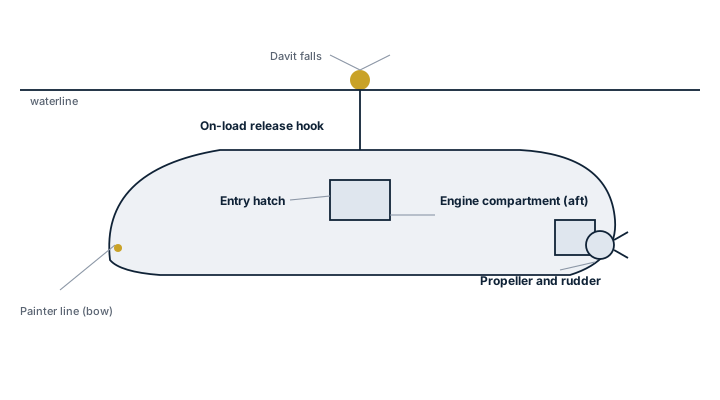
Main components
Hull and canopy
A one-piece or bonded fibre-reinforced plastic hull provides buoyancy and structural strength; the fire-protected variant adds an external water-spray or insulated skin so the shell can pass through burning fuel on the water without the interior becoming unsurvivable for the rated exposure time.
Engine and propulsion
A compression-ignition engine, often air-cooled or with a water-cooling system that keeps working during brief full immersion, drives a propeller through a simple gearbox. The engine must start and run reliably after long idle periods, which makes fuel and battery maintenance one of the more neglected items on the annual inspection.
On-load release hook and hydrostatic interlock
The on-load release system lets the crew release the boat from the falls while still waterborne under load, avoiding a fall that damages the boat or injures occupants. This mechanism has caused a disproportionate number of serious and fatal accidents worldwide, usually from accidental release during lowering or from crew misunderstanding the interlock meant to prevent release before the boat is waterborne.
Davit, falls and winch
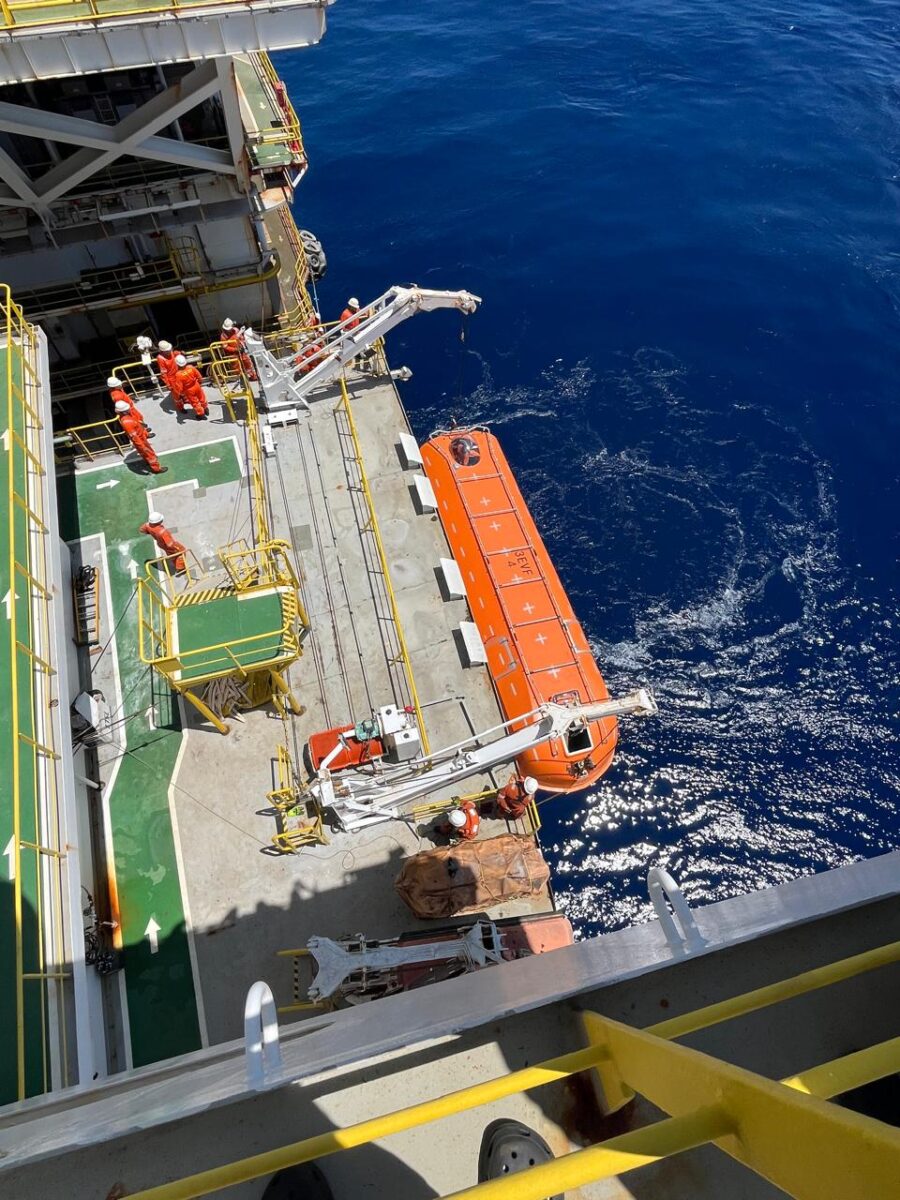
Gravity davits lower the boat under brake control; the falls and winch brake must hold the boat's full loaded weight reliably at any point during lowering, and the brake is one of the items proof-loaded at survey.
Painter and release line
A painter line lets the boat be held clear of the ship's side or towed away after release, and on some arrangements includes a weak link intended to part before the falls, rather than the crew, take the strain if the boat is not properly released.
Selection and sizing
Capacity is set by the certified maximum number of persons the hull, seating and davit system can carry, not by internal volume alone; every seat has a rated occupant mass, and loading beyond the certified number is not permitted regardless of available space inside. Davit SWL and boat weight fully equipped and manned must match, with margin built into the davit and winch brake rating.
Regulations and class
Totally enclosed lifeboats fall under the SOLAS Life-Saving Appliances (LSA) Code, and after a string of on-load release hook accidents, IMO introduced amendments requiring on-load release gear on existing ships to be assessed and, where it does not meet the updated design standard, replaced. Annual inspection, five-yearly load testing of falls and davit, and periodic servicing of the release gear by an approved service provider are separate class and flag requirements, and a lifeboat found without current servicing documentation is routinely detained.
Typical faults
- Release hook misadjustment or wear - accidental release during lowering, or failure to release once waterborne; the leading cause of serious lifeboat accidents.
- Engine failing to start after prolonged idle - stale fuel, flat or sulphated battery, seized cooling water pump.
- Corroded or seized falls and blocks - uneven lowering, one end dropping faster than the other.
- Painter or weak link fitted incorrectly - boat not held clear after release, or premature parting under normal handling.
- Seat belt and seating hardware deterioration - reduced protection in a genuine capsize or heavy impact launch.
What to look for in a supplier
- An approved service provider certificate specific to the release gear maker and model fitted, not a general lifeboat service claim.
- Documented compliance path for the on-load release gear amendments where the ship's existing hook predates the updated standard.
- Availability of hull, canopy and seating spares matched to the boat's actual model year, since hook and davit interfaces have changed across production runs.
Treat any unexplained slack, stiffness or inconsistent feel in the release hook operating lever as a reason to stop and call the service provider, not as something to work around during the next drill.
19 manufacturers · 377 models
Misea Machinery
22 ✓ 22 verified- Area: Weekly engine system inspection and functional testing per SOLAS requirementsCheck: Weekly engine system inspection and functional testing per SOLAS requirements
- Area: Monthly lifeboat release mechanism testing and load line verificationCheck: Monthly lifeboat release mechanism testing and load line verification
- Area: Quarterly visual inspection of airtight seals, hatches, and hull integrity for corrosion or damageCheck: Quarterly visual inspection of airtight seals, hatches, and hull integrity for corrosion or damage
- Area: Annual compressed air supply system functionality test (minimum 10 minutes duration coverage)Check: Annual compressed air supply system functionality test (minimum 10 minutes duration coverage)
- Area: Annual fire-resistant material inspection (capability to withstand 1,200°C for 8 minutes)Check: Annual fire-resistant material inspection (capability to withstand 1,200°C for 8 minutes)
- Area: Five-year comprehensive third-party classification survey and recertificationCheck: Five-year comprehensive third-party classification survey and recertification
- Area: Annual ventilation system capacity verification (minimum 5 m³/hour per person for 24 hours)Check: Annual ventilation system capacity verification (minimum 5 m³/hour per person for 24 hours)
- Area: Biennial self-righting mechanism test and hydraulic system performance verificationCheck: Biennial self-righting mechanism test and hydraulic system performance verification
Typ-universelle Inspektionspunkte fuer Lifeboats (verifiziert, 2026-06).
- Area: Weekly engine system inspection and functional testing per SOLAS requirementsCheck: Weekly engine system inspection and functional testing per SOLAS requirements
- Area: Monthly lifeboat release mechanism testing and load line verificationCheck: Monthly lifeboat release mechanism testing and load line verification
- Area: Quarterly visual inspection of airtight seals, hatches, and hull integrity for corrosion or damageCheck: Quarterly visual inspection of airtight seals, hatches, and hull integrity for corrosion or damage
- Area: Annual compressed air supply system functionality test (minimum 10 minutes duration coverage)Check: Annual compressed air supply system functionality test (minimum 10 minutes duration coverage)
- Area: Annual fire-resistant material inspection (capability to withstand 1,200°C for 8 minutes)Check: Annual fire-resistant material inspection (capability to withstand 1,200°C for 8 minutes)
- Area: Five-year comprehensive third-party classification survey and recertificationCheck: Five-year comprehensive third-party classification survey and recertification
- Area: Annual ventilation system capacity verification (minimum 5 m³/hour per person for 24 hours)Check: Annual ventilation system capacity verification (minimum 5 m³/hour per person for 24 hours)
- Area: Biennial self-righting mechanism test and hydraulic system performance verificationCheck: Biennial self-righting mechanism test and hydraulic system performance verification
Typ-universelle Inspektionspunkte fuer Lifeboats (verifiziert, 2026-06).
- Area: Weekly engine system inspection and functional testing per SOLAS requirementsCheck: Weekly engine system inspection and functional testing per SOLAS requirements
- Area: Monthly lifeboat release mechanism testing and load line verificationCheck: Monthly lifeboat release mechanism testing and load line verification
- Area: Quarterly visual inspection of airtight seals, hatches, and hull integrity for corrosion or damageCheck: Quarterly visual inspection of airtight seals, hatches, and hull integrity for corrosion or damage
- Area: Annual compressed air supply system functionality test (minimum 10 minutes duration coverage)Check: Annual compressed air supply system functionality test (minimum 10 minutes duration coverage)
- Area: Annual fire-resistant material inspection (capability to withstand 1,200°C for 8 minutes)Check: Annual fire-resistant material inspection (capability to withstand 1,200°C for 8 minutes)
- Area: Five-year comprehensive third-party classification survey and recertificationCheck: Five-year comprehensive third-party classification survey and recertification
- Area: Annual ventilation system capacity verification (minimum 5 m³/hour per person for 24 hours)Check: Annual ventilation system capacity verification (minimum 5 m³/hour per person for 24 hours)
- Area: Biennial self-righting mechanism test and hydraulic system performance verificationCheck: Biennial self-righting mechanism test and hydraulic system performance verification
Typ-universelle Inspektionspunkte fuer Lifeboats (verifiziert, 2026-06).
- Area: Weekly engine system inspection and functional testing per SOLAS requirementsCheck: Weekly engine system inspection and functional testing per SOLAS requirements
- Area: Monthly lifeboat release mechanism testing and load line verificationCheck: Monthly lifeboat release mechanism testing and load line verification
- Area: Quarterly visual inspection of airtight seals, hatches, and hull integrity for corrosion or damageCheck: Quarterly visual inspection of airtight seals, hatches, and hull integrity for corrosion or damage
- Area: Annual compressed air supply system functionality test (minimum 10 minutes duration coverage)Check: Annual compressed air supply system functionality test (minimum 10 minutes duration coverage)
- Area: Annual fire-resistant material inspection (capability to withstand 1,200°C for 8 minutes)Check: Annual fire-resistant material inspection (capability to withstand 1,200°C for 8 minutes)
- Area: Five-year comprehensive third-party classification survey and recertificationCheck: Five-year comprehensive third-party classification survey and recertification
- Area: Annual ventilation system capacity verification (minimum 5 m³/hour per person for 24 hours)Check: Annual ventilation system capacity verification (minimum 5 m³/hour per person for 24 hours)
- Area: Biennial self-righting mechanism test and hydraulic system performance verificationCheck: Biennial self-righting mechanism test and hydraulic system performance verification
Typ-universelle Inspektionspunkte fuer Lifeboats (verifiziert, 2026-06).
- Area: Weekly engine system inspection and functional testing per SOLAS requirementsCheck: Weekly engine system inspection and functional testing per SOLAS requirements
- Area: Monthly lifeboat release mechanism testing and load line verificationCheck: Monthly lifeboat release mechanism testing and load line verification
- Area: Quarterly visual inspection of airtight seals, hatches, and hull integrity for corrosion or damageCheck: Quarterly visual inspection of airtight seals, hatches, and hull integrity for corrosion or damage
- Area: Annual compressed air supply system functionality test (minimum 10 minutes duration coverage)Check: Annual compressed air supply system functionality test (minimum 10 minutes duration coverage)
- Area: Annual fire-resistant material inspection (capability to withstand 1,200°C for 8 minutes)Check: Annual fire-resistant material inspection (capability to withstand 1,200°C for 8 minutes)
- Area: Five-year comprehensive third-party classification survey and recertificationCheck: Five-year comprehensive third-party classification survey and recertification
- Area: Annual ventilation system capacity verification (minimum 5 m³/hour per person for 24 hours)Check: Annual ventilation system capacity verification (minimum 5 m³/hour per person for 24 hours)
- Area: Biennial self-righting mechanism test and hydraulic system performance verificationCheck: Biennial self-righting mechanism test and hydraulic system performance verification
Typ-universelle Inspektionspunkte fuer Lifeboats (verifiziert, 2026-06).
- Area: Weekly engine system inspection and functional testing per SOLAS requirementsCheck: Weekly engine system inspection and functional testing per SOLAS requirements
- Area: Monthly lifeboat release mechanism testing and load line verificationCheck: Monthly lifeboat release mechanism testing and load line verification
- Area: Quarterly visual inspection of airtight seals, hatches, and hull integrity for corrosion or damageCheck: Quarterly visual inspection of airtight seals, hatches, and hull integrity for corrosion or damage
- Area: Annual compressed air supply system functionality test (minimum 10 minutes duration coverage)Check: Annual compressed air supply system functionality test (minimum 10 minutes duration coverage)
- Area: Annual fire-resistant material inspection (capability to withstand 1,200°C for 8 minutes)Check: Annual fire-resistant material inspection (capability to withstand 1,200°C for 8 minutes)
- Area: Five-year comprehensive third-party classification survey and recertificationCheck: Five-year comprehensive third-party classification survey and recertification
- Area: Annual ventilation system capacity verification (minimum 5 m³/hour per person for 24 hours)Check: Annual ventilation system capacity verification (minimum 5 m³/hour per person for 24 hours)
- Area: Biennial self-righting mechanism test and hydraulic system performance verificationCheck: Biennial self-righting mechanism test and hydraulic system performance verification
Typ-universelle Inspektionspunkte fuer Lifeboats (verifiziert, 2026-06).
- Area: Weekly engine system inspection and functional testing per SOLAS requirementsCheck: Weekly engine system inspection and functional testing per SOLAS requirements
- Area: Monthly lifeboat release mechanism testing and load line verificationCheck: Monthly lifeboat release mechanism testing and load line verification
- Area: Quarterly visual inspection of airtight seals, hatches, and hull integrity for corrosion or damageCheck: Quarterly visual inspection of airtight seals, hatches, and hull integrity for corrosion or damage
- Area: Annual compressed air supply system functionality test (minimum 10 minutes duration coverage)Check: Annual compressed air supply system functionality test (minimum 10 minutes duration coverage)
- Area: Annual fire-resistant material inspection (capability to withstand 1,200°C for 8 minutes)Check: Annual fire-resistant material inspection (capability to withstand 1,200°C for 8 minutes)
- Area: Five-year comprehensive third-party classification survey and recertificationCheck: Five-year comprehensive third-party classification survey and recertification
- Area: Annual ventilation system capacity verification (minimum 5 m³/hour per person for 24 hours)Check: Annual ventilation system capacity verification (minimum 5 m³/hour per person for 24 hours)
- Area: Biennial self-righting mechanism test and hydraulic system performance verificationCheck: Biennial self-righting mechanism test and hydraulic system performance verification
Typ-universelle Inspektionspunkte fuer Lifeboats (verifiziert, 2026-06).
- Area: Weekly engine system inspection and functional testing per SOLAS requirementsCheck: Weekly engine system inspection and functional testing per SOLAS requirements
- Area: Monthly lifeboat release mechanism testing and load line verificationCheck: Monthly lifeboat release mechanism testing and load line verification
- Area: Quarterly visual inspection of airtight seals, hatches, and hull integrity for corrosion or damageCheck: Quarterly visual inspection of airtight seals, hatches, and hull integrity for corrosion or damage
- Area: Annual compressed air supply system functionality test (minimum 10 minutes duration coverage)Check: Annual compressed air supply system functionality test (minimum 10 minutes duration coverage)
- Area: Annual fire-resistant material inspection (capability to withstand 1,200°C for 8 minutes)Check: Annual fire-resistant material inspection (capability to withstand 1,200°C for 8 minutes)
- Area: Five-year comprehensive third-party classification survey and recertificationCheck: Five-year comprehensive third-party classification survey and recertification
- Area: Annual ventilation system capacity verification (minimum 5 m³/hour per person for 24 hours)Check: Annual ventilation system capacity verification (minimum 5 m³/hour per person for 24 hours)
- Area: Biennial self-righting mechanism test and hydraulic system performance verificationCheck: Biennial self-righting mechanism test and hydraulic system performance verification
Typ-universelle Inspektionspunkte fuer Lifeboats (verifiziert, 2026-06).
- Area: Weekly engine system inspection and functional testing per SOLAS requirementsCheck: Weekly engine system inspection and functional testing per SOLAS requirements
- Area: Monthly lifeboat release mechanism testing and load line verificationCheck: Monthly lifeboat release mechanism testing and load line verification
- Area: Quarterly visual inspection of airtight seals, hatches, and hull integrity for corrosion or damageCheck: Quarterly visual inspection of airtight seals, hatches, and hull integrity for corrosion or damage
- Area: Annual compressed air supply system functionality test (minimum 10 minutes duration coverage)Check: Annual compressed air supply system functionality test (minimum 10 minutes duration coverage)
- Area: Annual fire-resistant material inspection (capability to withstand 1,200°C for 8 minutes)Check: Annual fire-resistant material inspection (capability to withstand 1,200°C for 8 minutes)
- Area: Five-year comprehensive third-party classification survey and recertificationCheck: Five-year comprehensive third-party classification survey and recertification
- Area: Annual ventilation system capacity verification (minimum 5 m³/hour per person for 24 hours)Check: Annual ventilation system capacity verification (minimum 5 m³/hour per person for 24 hours)
- Area: Biennial self-righting mechanism test and hydraulic system performance verificationCheck: Biennial self-righting mechanism test and hydraulic system performance verification
Typ-universelle Inspektionspunkte fuer Lifeboats (verifiziert, 2026-06).
- Area: Weekly engine system inspection and functional testing per SOLAS requirementsCheck: Weekly engine system inspection and functional testing per SOLAS requirements
- Area: Monthly lifeboat release mechanism testing and load line verificationCheck: Monthly lifeboat release mechanism testing and load line verification
- Area: Quarterly visual inspection of airtight seals, hatches, and hull integrity for corrosion or damageCheck: Quarterly visual inspection of airtight seals, hatches, and hull integrity for corrosion or damage
- Area: Annual compressed air supply system functionality test (minimum 10 minutes duration coverage)Check: Annual compressed air supply system functionality test (minimum 10 minutes duration coverage)
- Area: Annual fire-resistant material inspection (capability to withstand 1,200°C for 8 minutes)Check: Annual fire-resistant material inspection (capability to withstand 1,200°C for 8 minutes)
- Area: Five-year comprehensive third-party classification survey and recertificationCheck: Five-year comprehensive third-party classification survey and recertification
- Area: Annual ventilation system capacity verification (minimum 5 m³/hour per person for 24 hours)Check: Annual ventilation system capacity verification (minimum 5 m³/hour per person for 24 hours)
- Area: Biennial self-righting mechanism test and hydraulic system performance verificationCheck: Biennial self-righting mechanism test and hydraulic system performance verification
Typ-universelle Inspektionspunkte fuer Lifeboats (verifiziert, 2026-06).
- Area: Weekly engine system inspection and functional testing per SOLAS requirementsCheck: Weekly engine system inspection and functional testing per SOLAS requirements
- Area: Monthly lifeboat release mechanism testing and load line verificationCheck: Monthly lifeboat release mechanism testing and load line verification
- Area: Quarterly visual inspection of airtight seals, hatches, and hull integrity for corrosion or damageCheck: Quarterly visual inspection of airtight seals, hatches, and hull integrity for corrosion or damage
- Area: Annual compressed air supply system functionality test (minimum 10 minutes duration coverage)Check: Annual compressed air supply system functionality test (minimum 10 minutes duration coverage)
- Area: Annual fire-resistant material inspection (capability to withstand 1,200°C for 8 minutes)Check: Annual fire-resistant material inspection (capability to withstand 1,200°C for 8 minutes)
- Area: Five-year comprehensive third-party classification survey and recertificationCheck: Five-year comprehensive third-party classification survey and recertification
- Area: Annual ventilation system capacity verification (minimum 5 m³/hour per person for 24 hours)Check: Annual ventilation system capacity verification (minimum 5 m³/hour per person for 24 hours)
- Area: Biennial self-righting mechanism test and hydraulic system performance verificationCheck: Biennial self-righting mechanism test and hydraulic system performance verification
Typ-universelle Inspektionspunkte fuer Lifeboats (verifiziert, 2026-06).
- Area: Weekly engine system inspection and functional testing per SOLAS requirementsCheck: Weekly engine system inspection and functional testing per SOLAS requirements
- Area: Monthly lifeboat release mechanism testing and load line verificationCheck: Monthly lifeboat release mechanism testing and load line verification
- Area: Quarterly visual inspection of airtight seals, hatches, and hull integrity for corrosion or damageCheck: Quarterly visual inspection of airtight seals, hatches, and hull integrity for corrosion or damage
- Area: Annual compressed air supply system functionality test (minimum 10 minutes duration coverage)Check: Annual compressed air supply system functionality test (minimum 10 minutes duration coverage)
- Area: Annual fire-resistant material inspection (capability to withstand 1,200°C for 8 minutes)Check: Annual fire-resistant material inspection (capability to withstand 1,200°C for 8 minutes)
- Area: Five-year comprehensive third-party classification survey and recertificationCheck: Five-year comprehensive third-party classification survey and recertification
- Area: Annual ventilation system capacity verification (minimum 5 m³/hour per person for 24 hours)Check: Annual ventilation system capacity verification (minimum 5 m³/hour per person for 24 hours)
- Area: Biennial self-righting mechanism test and hydraulic system performance verificationCheck: Biennial self-righting mechanism test and hydraulic system performance verification
Typ-universelle Inspektionspunkte fuer Lifeboats (verifiziert, 2026-06).
- Area: Weekly engine system inspection and functional testing per SOLAS requirementsCheck: Weekly engine system inspection and functional testing per SOLAS requirements
- Area: Monthly lifeboat release mechanism testing and load line verificationCheck: Monthly lifeboat release mechanism testing and load line verification
- Area: Quarterly visual inspection of airtight seals, hatches, and hull integrity for corrosion or damageCheck: Quarterly visual inspection of airtight seals, hatches, and hull integrity for corrosion or damage
- Area: Annual compressed air supply system functionality test (minimum 10 minutes duration coverage)Check: Annual compressed air supply system functionality test (minimum 10 minutes duration coverage)
- Area: Annual fire-resistant material inspection (capability to withstand 1,200°C for 8 minutes)Check: Annual fire-resistant material inspection (capability to withstand 1,200°C for 8 minutes)
- Area: Five-year comprehensive third-party classification survey and recertificationCheck: Five-year comprehensive third-party classification survey and recertification
- Area: Annual ventilation system capacity verification (minimum 5 m³/hour per person for 24 hours)Check: Annual ventilation system capacity verification (minimum 5 m³/hour per person for 24 hours)
- Area: Biennial self-righting mechanism test and hydraulic system performance verificationCheck: Biennial self-righting mechanism test and hydraulic system performance verification
Typ-universelle Inspektionspunkte fuer Lifeboats (verifiziert, 2026-06).
- Area: Weekly engine system inspection and functional testing per SOLAS requirementsCheck: Weekly engine system inspection and functional testing per SOLAS requirements
- Area: Monthly lifeboat release mechanism testing and load line verificationCheck: Monthly lifeboat release mechanism testing and load line verification
- Area: Quarterly visual inspection of airtight seals, hatches, and hull integrity for corrosion or damageCheck: Quarterly visual inspection of airtight seals, hatches, and hull integrity for corrosion or damage
- Area: Annual compressed air supply system functionality test (minimum 10 minutes duration coverage)Check: Annual compressed air supply system functionality test (minimum 10 minutes duration coverage)
- Area: Annual fire-resistant material inspection (capability to withstand 1,200°C for 8 minutes)Check: Annual fire-resistant material inspection (capability to withstand 1,200°C for 8 minutes)
- Area: Five-year comprehensive third-party classification survey and recertificationCheck: Five-year comprehensive third-party classification survey and recertification
- Area: Annual ventilation system capacity verification (minimum 5 m³/hour per person for 24 hours)Check: Annual ventilation system capacity verification (minimum 5 m³/hour per person for 24 hours)
- Area: Biennial self-righting mechanism test and hydraulic system performance verificationCheck: Biennial self-righting mechanism test and hydraulic system performance verification
Typ-universelle Inspektionspunkte fuer Lifeboats (verifiziert, 2026-06).
- Area: Weekly engine system inspection and functional testing per SOLAS requirementsCheck: Weekly engine system inspection and functional testing per SOLAS requirements
- Area: Monthly lifeboat release mechanism testing and load line verificationCheck: Monthly lifeboat release mechanism testing and load line verification
- Area: Quarterly visual inspection of airtight seals, hatches, and hull integrity for corrosion or damageCheck: Quarterly visual inspection of airtight seals, hatches, and hull integrity for corrosion or damage
- Area: Annual compressed air supply system functionality test (minimum 10 minutes duration coverage)Check: Annual compressed air supply system functionality test (minimum 10 minutes duration coverage)
- Area: Annual fire-resistant material inspection (capability to withstand 1,200°C for 8 minutes)Check: Annual fire-resistant material inspection (capability to withstand 1,200°C for 8 minutes)
- Area: Five-year comprehensive third-party classification survey and recertificationCheck: Five-year comprehensive third-party classification survey and recertification
- Area: Annual ventilation system capacity verification (minimum 5 m³/hour per person for 24 hours)Check: Annual ventilation system capacity verification (minimum 5 m³/hour per person for 24 hours)
- Area: Biennial self-righting mechanism test and hydraulic system performance verificationCheck: Biennial self-righting mechanism test and hydraulic system performance verification
Typ-universelle Inspektionspunkte fuer Lifeboats (verifiziert, 2026-06).
- Area: Weekly engine system inspection and functional testing per SOLAS requirementsCheck: Weekly engine system inspection and functional testing per SOLAS requirements
- Area: Monthly lifeboat release mechanism testing and load line verificationCheck: Monthly lifeboat release mechanism testing and load line verification
- Area: Quarterly visual inspection of airtight seals, hatches, and hull integrity for corrosion or damageCheck: Quarterly visual inspection of airtight seals, hatches, and hull integrity for corrosion or damage
- Area: Annual compressed air supply system functionality test (minimum 10 minutes duration coverage)Check: Annual compressed air supply system functionality test (minimum 10 minutes duration coverage)
- Area: Annual fire-resistant material inspection (capability to withstand 1,200°C for 8 minutes)Check: Annual fire-resistant material inspection (capability to withstand 1,200°C for 8 minutes)
- Area: Five-year comprehensive third-party classification survey and recertificationCheck: Five-year comprehensive third-party classification survey and recertification
- Area: Annual ventilation system capacity verification (minimum 5 m³/hour per person for 24 hours)Check: Annual ventilation system capacity verification (minimum 5 m³/hour per person for 24 hours)
- Area: Biennial self-righting mechanism test and hydraulic system performance verificationCheck: Biennial self-righting mechanism test and hydraulic system performance verification
Typ-universelle Inspektionspunkte fuer Lifeboats (verifiziert, 2026-06).
- Area: Weekly engine system inspection and functional testing per SOLAS requirementsCheck: Weekly engine system inspection and functional testing per SOLAS requirements
- Area: Monthly lifeboat release mechanism testing and load line verificationCheck: Monthly lifeboat release mechanism testing and load line verification
- Area: Quarterly visual inspection of airtight seals, hatches, and hull integrity for corrosion or damageCheck: Quarterly visual inspection of airtight seals, hatches, and hull integrity for corrosion or damage
- Area: Annual compressed air supply system functionality test (minimum 10 minutes duration coverage)Check: Annual compressed air supply system functionality test (minimum 10 minutes duration coverage)
- Area: Annual fire-resistant material inspection (capability to withstand 1,200°C for 8 minutes)Check: Annual fire-resistant material inspection (capability to withstand 1,200°C for 8 minutes)
- Area: Five-year comprehensive third-party classification survey and recertificationCheck: Five-year comprehensive third-party classification survey and recertification
- Area: Annual ventilation system capacity verification (minimum 5 m³/hour per person for 24 hours)Check: Annual ventilation system capacity verification (minimum 5 m³/hour per person for 24 hours)
- Area: Biennial self-righting mechanism test and hydraulic system performance verificationCheck: Biennial self-righting mechanism test and hydraulic system performance verification
Typ-universelle Inspektionspunkte fuer Lifeboats (verifiziert, 2026-06).
- Area: Weekly engine system inspection and functional testing per SOLAS requirementsCheck: Weekly engine system inspection and functional testing per SOLAS requirements
- Area: Monthly lifeboat release mechanism testing and load line verificationCheck: Monthly lifeboat release mechanism testing and load line verification
- Area: Quarterly visual inspection of airtight seals, hatches, and hull integrity for corrosion or damageCheck: Quarterly visual inspection of airtight seals, hatches, and hull integrity for corrosion or damage
- Area: Annual compressed air supply system functionality test (minimum 10 minutes duration coverage)Check: Annual compressed air supply system functionality test (minimum 10 minutes duration coverage)
- Area: Annual fire-resistant material inspection (capability to withstand 1,200°C for 8 minutes)Check: Annual fire-resistant material inspection (capability to withstand 1,200°C for 8 minutes)
- Area: Five-year comprehensive third-party classification survey and recertificationCheck: Five-year comprehensive third-party classification survey and recertification
- Area: Annual ventilation system capacity verification (minimum 5 m³/hour per person for 24 hours)Check: Annual ventilation system capacity verification (minimum 5 m³/hour per person for 24 hours)
- Area: Biennial self-righting mechanism test and hydraulic system performance verificationCheck: Biennial self-righting mechanism test and hydraulic system performance verification
Typ-universelle Inspektionspunkte fuer Lifeboats (verifiziert, 2026-06).
- Area: Weekly engine system inspection and functional testing per SOLAS requirementsCheck: Weekly engine system inspection and functional testing per SOLAS requirements
- Area: Monthly lifeboat release mechanism testing and load line verificationCheck: Monthly lifeboat release mechanism testing and load line verification
- Area: Quarterly visual inspection of airtight seals, hatches, and hull integrity for corrosion or damageCheck: Quarterly visual inspection of airtight seals, hatches, and hull integrity for corrosion or damage
- Area: Annual compressed air supply system functionality test (minimum 10 minutes duration coverage)Check: Annual compressed air supply system functionality test (minimum 10 minutes duration coverage)
- Area: Annual fire-resistant material inspection (capability to withstand 1,200°C for 8 minutes)Check: Annual fire-resistant material inspection (capability to withstand 1,200°C for 8 minutes)
- Area: Five-year comprehensive third-party classification survey and recertificationCheck: Five-year comprehensive third-party classification survey and recertification
- Area: Annual ventilation system capacity verification (minimum 5 m³/hour per person for 24 hours)Check: Annual ventilation system capacity verification (minimum 5 m³/hour per person for 24 hours)
- Area: Biennial self-righting mechanism test and hydraulic system performance verificationCheck: Biennial self-righting mechanism test and hydraulic system performance verification
Typ-universelle Inspektionspunkte fuer Lifeboats (verifiziert, 2026-06).
- Area: Weekly engine system inspection and functional testing per SOLAS requirementsCheck: Weekly engine system inspection and functional testing per SOLAS requirements
- Area: Monthly lifeboat release mechanism testing and load line verificationCheck: Monthly lifeboat release mechanism testing and load line verification
- Area: Quarterly visual inspection of airtight seals, hatches, and hull integrity for corrosion or damageCheck: Quarterly visual inspection of airtight seals, hatches, and hull integrity for corrosion or damage
- Area: Annual compressed air supply system functionality test (minimum 10 minutes duration coverage)Check: Annual compressed air supply system functionality test (minimum 10 minutes duration coverage)
- Area: Annual fire-resistant material inspection (capability to withstand 1,200°C for 8 minutes)Check: Annual fire-resistant material inspection (capability to withstand 1,200°C for 8 minutes)
- Area: Five-year comprehensive third-party classification survey and recertificationCheck: Five-year comprehensive third-party classification survey and recertification
- Area: Annual ventilation system capacity verification (minimum 5 m³/hour per person for 24 hours)Check: Annual ventilation system capacity verification (minimum 5 m³/hour per person for 24 hours)
- Area: Biennial self-righting mechanism test and hydraulic system performance verificationCheck: Biennial self-righting mechanism test and hydraulic system performance verification
Typ-universelle Inspektionspunkte fuer Lifeboats (verifiziert, 2026-06).
- Area: Weekly engine system inspection and functional testing per SOLAS requirementsCheck: Weekly engine system inspection and functional testing per SOLAS requirements
- Area: Monthly lifeboat release mechanism testing and load line verificationCheck: Monthly lifeboat release mechanism testing and load line verification
- Area: Quarterly visual inspection of airtight seals, hatches, and hull integrity for corrosion or damageCheck: Quarterly visual inspection of airtight seals, hatches, and hull integrity for corrosion or damage
- Area: Annual compressed air supply system functionality test (minimum 10 minutes duration coverage)Check: Annual compressed air supply system functionality test (minimum 10 minutes duration coverage)
- Area: Annual fire-resistant material inspection (capability to withstand 1,200°C for 8 minutes)Check: Annual fire-resistant material inspection (capability to withstand 1,200°C for 8 minutes)
- Area: Five-year comprehensive third-party classification survey and recertificationCheck: Five-year comprehensive third-party classification survey and recertification
- Area: Annual ventilation system capacity verification (minimum 5 m³/hour per person for 24 hours)Check: Annual ventilation system capacity verification (minimum 5 m³/hour per person for 24 hours)
- Area: Biennial self-righting mechanism test and hydraulic system performance verificationCheck: Biennial self-righting mechanism test and hydraulic system performance verification
Typ-universelle Inspektionspunkte fuer Lifeboats (verifiziert, 2026-06).
- Area: Weekly engine system inspection and functional testing per SOLAS requirementsCheck: Weekly engine system inspection and functional testing per SOLAS requirements
- Area: Monthly lifeboat release mechanism testing and load line verificationCheck: Monthly lifeboat release mechanism testing and load line verification
- Area: Quarterly visual inspection of airtight seals, hatches, and hull integrity for corrosion or damageCheck: Quarterly visual inspection of airtight seals, hatches, and hull integrity for corrosion or damage
- Area: Annual compressed air supply system functionality test (minimum 10 minutes duration coverage)Check: Annual compressed air supply system functionality test (minimum 10 minutes duration coverage)
- Area: Annual fire-resistant material inspection (capability to withstand 1,200°C for 8 minutes)Check: Annual fire-resistant material inspection (capability to withstand 1,200°C for 8 minutes)
- Area: Five-year comprehensive third-party classification survey and recertificationCheck: Five-year comprehensive third-party classification survey and recertification
- Area: Annual ventilation system capacity verification (minimum 5 m³/hour per person for 24 hours)Check: Annual ventilation system capacity verification (minimum 5 m³/hour per person for 24 hours)
- Area: Biennial self-righting mechanism test and hydraulic system performance verificationCheck: Biennial self-righting mechanism test and hydraulic system performance verification
Typ-universelle Inspektionspunkte fuer Lifeboats (verifiziert, 2026-06).
PALFINGER
16 ✓ 16 verified- Area: Hull structural integrity and crack inspection (visual and non-destructive testing per SOLAS)Check: Hull structural integrity and crack inspection (visual and non-destructive testing per SOLAS)
- Area: Lifeboat davit and winch system functionality and safety device testingCheck: Lifeboat davit and winch system functionality and safety device testing
- Area: Life jacket, lifeline, and personal survival equipment condition per IMO LSA CodeCheck: Life jacket, lifeline, and personal survival equipment condition per IMO LSA Code
- Area: Engine and fuel system condition including fuel quality testing and filter replacementCheck: Engine and fuel system condition including fuel quality testing and filter replacement
- Area: Launching and recovery system verification with load testing (60% working load minimum)Check: Launching and recovery system verification with load testing (60% working load minimum)
- Area: Interior hull condition inspection for osmotic blistering and delamination (GRP models)Check: Interior hull condition inspection for osmotic blistering and delamination (GRP models)
- Area: Safety equipment functionality (flares, signaling equipment, seasickness medication expiration)Check: Safety equipment functionality (flares, signaling equipment, seasickness medication expiration)
- Area: Annual certification maintenance per maritime classification authority requirements (MED, USCG, or equivalent)Check: Annual certification maintenance per maritime classification authority requirements (MED, USCG, or equivalent)
Typ-universelle Inspektionspunkte fuer Lifeboats (verifiziert, 2026-06).
- Area: Hull structural integrity and crack inspection (visual and non-destructive testing per SOLAS)Check: Hull structural integrity and crack inspection (visual and non-destructive testing per SOLAS)
- Area: Lifeboat davit and winch system functionality and safety device testingCheck: Lifeboat davit and winch system functionality and safety device testing
- Area: Life jacket, lifeline, and personal survival equipment condition per IMO LSA CodeCheck: Life jacket, lifeline, and personal survival equipment condition per IMO LSA Code
- Area: Engine and fuel system condition including fuel quality testing and filter replacementCheck: Engine and fuel system condition including fuel quality testing and filter replacement
- Area: Launching and recovery system verification with load testing (60% working load minimum)Check: Launching and recovery system verification with load testing (60% working load minimum)
- Area: Interior hull condition inspection for osmotic blistering and delamination (GRP models)Check: Interior hull condition inspection for osmotic blistering and delamination (GRP models)
- Area: Safety equipment functionality (flares, signaling equipment, seasickness medication expiration)Check: Safety equipment functionality (flares, signaling equipment, seasickness medication expiration)
- Area: Annual certification maintenance per maritime classification authority requirements (MED, USCG, or equivalent)Check: Annual certification maintenance per maritime classification authority requirements (MED, USCG, or equivalent)
Typ-universelle Inspektionspunkte fuer Lifeboats (verifiziert, 2026-06).
- Area: Hull structural integrity and crack inspection (visual and non-destructive testing per SOLAS)Check: Hull structural integrity and crack inspection (visual and non-destructive testing per SOLAS)
- Area: Lifeboat davit and winch system functionality and safety device testingCheck: Lifeboat davit and winch system functionality and safety device testing
- Area: Life jacket, lifeline, and personal survival equipment condition per IMO LSA CodeCheck: Life jacket, lifeline, and personal survival equipment condition per IMO LSA Code
- Area: Engine and fuel system condition including fuel quality testing and filter replacementCheck: Engine and fuel system condition including fuel quality testing and filter replacement
- Area: Launching and recovery system verification with load testing (60% working load minimum)Check: Launching and recovery system verification with load testing (60% working load minimum)
- Area: Interior hull condition inspection for osmotic blistering and delamination (GRP models)Check: Interior hull condition inspection for osmotic blistering and delamination (GRP models)
- Area: Safety equipment functionality (flares, signaling equipment, seasickness medication expiration)Check: Safety equipment functionality (flares, signaling equipment, seasickness medication expiration)
- Area: Annual certification maintenance per maritime classification authority requirements (MED, USCG, or equivalent)Check: Annual certification maintenance per maritime classification authority requirements (MED, USCG, or equivalent)
Typ-universelle Inspektionspunkte fuer Lifeboats (verifiziert, 2026-06).
- Area: Hull structural integrity and crack inspection (visual and non-destructive testing per SOLAS)Check: Hull structural integrity and crack inspection (visual and non-destructive testing per SOLAS)
- Area: Lifeboat davit and winch system functionality and safety device testingCheck: Lifeboat davit and winch system functionality and safety device testing
- Area: Life jacket, lifeline, and personal survival equipment condition per IMO LSA CodeCheck: Life jacket, lifeline, and personal survival equipment condition per IMO LSA Code
- Area: Engine and fuel system condition including fuel quality testing and filter replacementCheck: Engine and fuel system condition including fuel quality testing and filter replacement
- Area: Launching and recovery system verification with load testing (60% working load minimum)Check: Launching and recovery system verification with load testing (60% working load minimum)
- Area: Interior hull condition inspection for osmotic blistering and delamination (GRP models)Check: Interior hull condition inspection for osmotic blistering and delamination (GRP models)
- Area: Safety equipment functionality (flares, signaling equipment, seasickness medication expiration)Check: Safety equipment functionality (flares, signaling equipment, seasickness medication expiration)
- Area: Annual certification maintenance per maritime classification authority requirements (MED, USCG, or equivalent)Check: Annual certification maintenance per maritime classification authority requirements (MED, USCG, or equivalent)
Typ-universelle Inspektionspunkte fuer Lifeboats (verifiziert, 2026-06).
- Area: Hull structural integrity and crack inspection (visual and non-destructive testing per SOLAS)Check: Hull structural integrity and crack inspection (visual and non-destructive testing per SOLAS)
- Area: Lifeboat davit and winch system functionality and safety device testingCheck: Lifeboat davit and winch system functionality and safety device testing
- Area: Life jacket, lifeline, and personal survival equipment condition per IMO LSA CodeCheck: Life jacket, lifeline, and personal survival equipment condition per IMO LSA Code
- Area: Engine and fuel system condition including fuel quality testing and filter replacementCheck: Engine and fuel system condition including fuel quality testing and filter replacement
- Area: Launching and recovery system verification with load testing (60% working load minimum)Check: Launching and recovery system verification with load testing (60% working load minimum)
- Area: Interior hull condition inspection for osmotic blistering and delamination (GRP models)Check: Interior hull condition inspection for osmotic blistering and delamination (GRP models)
- Area: Safety equipment functionality (flares, signaling equipment, seasickness medication expiration)Check: Safety equipment functionality (flares, signaling equipment, seasickness medication expiration)
- Area: Annual certification maintenance per maritime classification authority requirements (MED, USCG, or equivalent)Check: Annual certification maintenance per maritime classification authority requirements (MED, USCG, or equivalent)
Typ-universelle Inspektionspunkte fuer Lifeboats (verifiziert, 2026-06).
- Area: Hull structural integrity and crack inspection (visual and non-destructive testing per SOLAS)Check: Hull structural integrity and crack inspection (visual and non-destructive testing per SOLAS)
- Area: Lifeboat davit and winch system functionality and safety device testingCheck: Lifeboat davit and winch system functionality and safety device testing
- Area: Life jacket, lifeline, and personal survival equipment condition per IMO LSA CodeCheck: Life jacket, lifeline, and personal survival equipment condition per IMO LSA Code
- Area: Engine and fuel system condition including fuel quality testing and filter replacementCheck: Engine and fuel system condition including fuel quality testing and filter replacement
- Area: Launching and recovery system verification with load testing (60% working load minimum)Check: Launching and recovery system verification with load testing (60% working load minimum)
- Area: Interior hull condition inspection for osmotic blistering and delamination (GRP models)Check: Interior hull condition inspection for osmotic blistering and delamination (GRP models)
- Area: Safety equipment functionality (flares, signaling equipment, seasickness medication expiration)Check: Safety equipment functionality (flares, signaling equipment, seasickness medication expiration)
- Area: Annual certification maintenance per maritime classification authority requirements (MED, USCG, or equivalent)Check: Annual certification maintenance per maritime classification authority requirements (MED, USCG, or equivalent)
Typ-universelle Inspektionspunkte fuer Lifeboats (verifiziert, 2026-06).
- Area: Hull structural integrity and crack inspection (visual and non-destructive testing per SOLAS)Check: Hull structural integrity and crack inspection (visual and non-destructive testing per SOLAS)
- Area: Lifeboat davit and winch system functionality and safety device testingCheck: Lifeboat davit and winch system functionality and safety device testing
- Area: Life jacket, lifeline, and personal survival equipment condition per IMO LSA CodeCheck: Life jacket, lifeline, and personal survival equipment condition per IMO LSA Code
- Area: Engine and fuel system condition including fuel quality testing and filter replacementCheck: Engine and fuel system condition including fuel quality testing and filter replacement
- Area: Launching and recovery system verification with load testing (60% working load minimum)Check: Launching and recovery system verification with load testing (60% working load minimum)
- Area: Interior hull condition inspection for osmotic blistering and delamination (GRP models)Check: Interior hull condition inspection for osmotic blistering and delamination (GRP models)
- Area: Safety equipment functionality (flares, signaling equipment, seasickness medication expiration)Check: Safety equipment functionality (flares, signaling equipment, seasickness medication expiration)
- Area: Annual certification maintenance per maritime classification authority requirements (MED, USCG, or equivalent)Check: Annual certification maintenance per maritime classification authority requirements (MED, USCG, or equivalent)
Typ-universelle Inspektionspunkte fuer Lifeboats (verifiziert, 2026-06).
- Area: Hull structural integrity and crack inspection (visual and non-destructive testing per SOLAS)Check: Hull structural integrity and crack inspection (visual and non-destructive testing per SOLAS)
- Area: Lifeboat davit and winch system functionality and safety device testingCheck: Lifeboat davit and winch system functionality and safety device testing
- Area: Life jacket, lifeline, and personal survival equipment condition per IMO LSA CodeCheck: Life jacket, lifeline, and personal survival equipment condition per IMO LSA Code
- Area: Engine and fuel system condition including fuel quality testing and filter replacementCheck: Engine and fuel system condition including fuel quality testing and filter replacement
- Area: Launching and recovery system verification with load testing (60% working load minimum)Check: Launching and recovery system verification with load testing (60% working load minimum)
- Area: Interior hull condition inspection for osmotic blistering and delamination (GRP models)Check: Interior hull condition inspection for osmotic blistering and delamination (GRP models)
- Area: Safety equipment functionality (flares, signaling equipment, seasickness medication expiration)Check: Safety equipment functionality (flares, signaling equipment, seasickness medication expiration)
- Area: Annual certification maintenance per maritime classification authority requirements (MED, USCG, or equivalent)Check: Annual certification maintenance per maritime classification authority requirements (MED, USCG, or equivalent)
Typ-universelle Inspektionspunkte fuer Lifeboats (verifiziert, 2026-06).
- Area: Hull structural integrity and crack inspection (visual and non-destructive testing per SOLAS)Check: Hull structural integrity and crack inspection (visual and non-destructive testing per SOLAS)
- Area: Lifeboat davit and winch system functionality and safety device testingCheck: Lifeboat davit and winch system functionality and safety device testing
- Area: Life jacket, lifeline, and personal survival equipment condition per IMO LSA CodeCheck: Life jacket, lifeline, and personal survival equipment condition per IMO LSA Code
- Area: Engine and fuel system condition including fuel quality testing and filter replacementCheck: Engine and fuel system condition including fuel quality testing and filter replacement
- Area: Launching and recovery system verification with load testing (60% working load minimum)Check: Launching and recovery system verification with load testing (60% working load minimum)
- Area: Interior hull condition inspection for osmotic blistering and delamination (GRP models)Check: Interior hull condition inspection for osmotic blistering and delamination (GRP models)
- Area: Safety equipment functionality (flares, signaling equipment, seasickness medication expiration)Check: Safety equipment functionality (flares, signaling equipment, seasickness medication expiration)
- Area: Annual certification maintenance per maritime classification authority requirements (MED, USCG, or equivalent)Check: Annual certification maintenance per maritime classification authority requirements (MED, USCG, or equivalent)
Typ-universelle Inspektionspunkte fuer Lifeboats (verifiziert, 2026-06).
- Area: Hull structural integrity and crack inspection (visual and non-destructive testing per SOLAS)Check: Hull structural integrity and crack inspection (visual and non-destructive testing per SOLAS)
- Area: Lifeboat davit and winch system functionality and safety device testingCheck: Lifeboat davit and winch system functionality and safety device testing
- Area: Life jacket, lifeline, and personal survival equipment condition per IMO LSA CodeCheck: Life jacket, lifeline, and personal survival equipment condition per IMO LSA Code
- Area: Engine and fuel system condition including fuel quality testing and filter replacementCheck: Engine and fuel system condition including fuel quality testing and filter replacement
- Area: Launching and recovery system verification with load testing (60% working load minimum)Check: Launching and recovery system verification with load testing (60% working load minimum)
- Area: Interior hull condition inspection for osmotic blistering and delamination (GRP models)Check: Interior hull condition inspection for osmotic blistering and delamination (GRP models)
- Area: Safety equipment functionality (flares, signaling equipment, seasickness medication expiration)Check: Safety equipment functionality (flares, signaling equipment, seasickness medication expiration)
- Area: Annual certification maintenance per maritime classification authority requirements (MED, USCG, or equivalent)Check: Annual certification maintenance per maritime classification authority requirements (MED, USCG, or equivalent)
Typ-universelle Inspektionspunkte fuer Lifeboats (verifiziert, 2026-06).
- Area: Hull structural integrity and crack inspection (visual and non-destructive testing per SOLAS)Check: Hull structural integrity and crack inspection (visual and non-destructive testing per SOLAS)
- Area: Lifeboat davit and winch system functionality and safety device testingCheck: Lifeboat davit and winch system functionality and safety device testing
- Area: Life jacket, lifeline, and personal survival equipment condition per IMO LSA CodeCheck: Life jacket, lifeline, and personal survival equipment condition per IMO LSA Code
- Area: Engine and fuel system condition including fuel quality testing and filter replacementCheck: Engine and fuel system condition including fuel quality testing and filter replacement
- Area: Launching and recovery system verification with load testing (60% working load minimum)Check: Launching and recovery system verification with load testing (60% working load minimum)
- Area: Interior hull condition inspection for osmotic blistering and delamination (GRP models)Check: Interior hull condition inspection for osmotic blistering and delamination (GRP models)
- Area: Safety equipment functionality (flares, signaling equipment, seasickness medication expiration)Check: Safety equipment functionality (flares, signaling equipment, seasickness medication expiration)
- Area: Annual certification maintenance per maritime classification authority requirements (MED, USCG, or equivalent)Check: Annual certification maintenance per maritime classification authority requirements (MED, USCG, or equivalent)
Typ-universelle Inspektionspunkte fuer Lifeboats (verifiziert, 2026-06).
- Area: Hull structural integrity and crack inspection (visual and non-destructive testing per SOLAS)Check: Hull structural integrity and crack inspection (visual and non-destructive testing per SOLAS)
- Area: Lifeboat davit and winch system functionality and safety device testingCheck: Lifeboat davit and winch system functionality and safety device testing
- Area: Life jacket, lifeline, and personal survival equipment condition per IMO LSA CodeCheck: Life jacket, lifeline, and personal survival equipment condition per IMO LSA Code
- Area: Engine and fuel system condition including fuel quality testing and filter replacementCheck: Engine and fuel system condition including fuel quality testing and filter replacement
- Area: Launching and recovery system verification with load testing (60% working load minimum)Check: Launching and recovery system verification with load testing (60% working load minimum)
- Area: Interior hull condition inspection for osmotic blistering and delamination (GRP models)Check: Interior hull condition inspection for osmotic blistering and delamination (GRP models)
- Area: Safety equipment functionality (flares, signaling equipment, seasickness medication expiration)Check: Safety equipment functionality (flares, signaling equipment, seasickness medication expiration)
- Area: Annual certification maintenance per maritime classification authority requirements (MED, USCG, or equivalent)Check: Annual certification maintenance per maritime classification authority requirements (MED, USCG, or equivalent)
Typ-universelle Inspektionspunkte fuer Lifeboats (verifiziert, 2026-06).
- Area: Hull structural integrity and crack inspection (visual and non-destructive testing per SOLAS)Check: Hull structural integrity and crack inspection (visual and non-destructive testing per SOLAS)
- Area: Lifeboat davit and winch system functionality and safety device testingCheck: Lifeboat davit and winch system functionality and safety device testing
- Area: Life jacket, lifeline, and personal survival equipment condition per IMO LSA CodeCheck: Life jacket, lifeline, and personal survival equipment condition per IMO LSA Code
- Area: Engine and fuel system condition including fuel quality testing and filter replacementCheck: Engine and fuel system condition including fuel quality testing and filter replacement
- Area: Launching and recovery system verification with load testing (60% working load minimum)Check: Launching and recovery system verification with load testing (60% working load minimum)
- Area: Interior hull condition inspection for osmotic blistering and delamination (GRP models)Check: Interior hull condition inspection for osmotic blistering and delamination (GRP models)
- Area: Safety equipment functionality (flares, signaling equipment, seasickness medication expiration)Check: Safety equipment functionality (flares, signaling equipment, seasickness medication expiration)
- Area: Annual certification maintenance per maritime classification authority requirements (MED, USCG, or equivalent)Check: Annual certification maintenance per maritime classification authority requirements (MED, USCG, or equivalent)
Typ-universelle Inspektionspunkte fuer Lifeboats (verifiziert, 2026-06).
- Area: Hull structural integrity and crack inspection (visual and non-destructive testing per SOLAS)Check: Hull structural integrity and crack inspection (visual and non-destructive testing per SOLAS)
- Area: Lifeboat davit and winch system functionality and safety device testingCheck: Lifeboat davit and winch system functionality and safety device testing
- Area: Life jacket, lifeline, and personal survival equipment condition per IMO LSA CodeCheck: Life jacket, lifeline, and personal survival equipment condition per IMO LSA Code
- Area: Engine and fuel system condition including fuel quality testing and filter replacementCheck: Engine and fuel system condition including fuel quality testing and filter replacement
- Area: Launching and recovery system verification with load testing (60% working load minimum)Check: Launching and recovery system verification with load testing (60% working load minimum)
- Area: Interior hull condition inspection for osmotic blistering and delamination (GRP models)Check: Interior hull condition inspection for osmotic blistering and delamination (GRP models)
- Area: Safety equipment functionality (flares, signaling equipment, seasickness medication expiration)Check: Safety equipment functionality (flares, signaling equipment, seasickness medication expiration)
- Area: Annual certification maintenance per maritime classification authority requirements (MED, USCG, or equivalent)Check: Annual certification maintenance per maritime classification authority requirements (MED, USCG, or equivalent)
Typ-universelle Inspektionspunkte fuer Lifeboats (verifiziert, 2026-06).
- Area: Hull structural integrity and crack inspection (visual and non-destructive testing per SOLAS)Check: Hull structural integrity and crack inspection (visual and non-destructive testing per SOLAS)
- Area: Lifeboat davit and winch system functionality and safety device testingCheck: Lifeboat davit and winch system functionality and safety device testing
- Area: Life jacket, lifeline, and personal survival equipment condition per IMO LSA CodeCheck: Life jacket, lifeline, and personal survival equipment condition per IMO LSA Code
- Area: Engine and fuel system condition including fuel quality testing and filter replacementCheck: Engine and fuel system condition including fuel quality testing and filter replacement
- Area: Launching and recovery system verification with load testing (60% working load minimum)Check: Launching and recovery system verification with load testing (60% working load minimum)
- Area: Interior hull condition inspection for osmotic blistering and delamination (GRP models)Check: Interior hull condition inspection for osmotic blistering and delamination (GRP models)
- Area: Safety equipment functionality (flares, signaling equipment, seasickness medication expiration)Check: Safety equipment functionality (flares, signaling equipment, seasickness medication expiration)
- Area: Annual certification maintenance per maritime classification authority requirements (MED, USCG, or equivalent)Check: Annual certification maintenance per maritime classification authority requirements (MED, USCG, or equivalent)
Typ-universelle Inspektionspunkte fuer Lifeboats (verifiziert, 2026-06).
- Area: Hull structural integrity and crack inspection (visual and non-destructive testing per SOLAS)Check: Hull structural integrity and crack inspection (visual and non-destructive testing per SOLAS)
- Area: Lifeboat davit and winch system functionality and safety device testingCheck: Lifeboat davit and winch system functionality and safety device testing
- Area: Life jacket, lifeline, and personal survival equipment condition per IMO LSA CodeCheck: Life jacket, lifeline, and personal survival equipment condition per IMO LSA Code
- Area: Engine and fuel system condition including fuel quality testing and filter replacementCheck: Engine and fuel system condition including fuel quality testing and filter replacement
- Area: Launching and recovery system verification with load testing (60% working load minimum)Check: Launching and recovery system verification with load testing (60% working load minimum)
- Area: Interior hull condition inspection for osmotic blistering and delamination (GRP models)Check: Interior hull condition inspection for osmotic blistering and delamination (GRP models)
- Area: Safety equipment functionality (flares, signaling equipment, seasickness medication expiration)Check: Safety equipment functionality (flares, signaling equipment, seasickness medication expiration)
- Area: Annual certification maintenance per maritime classification authority requirements (MED, USCG, or equivalent)Check: Annual certification maintenance per maritime classification authority requirements (MED, USCG, or equivalent)
Typ-universelle Inspektionspunkte fuer Lifeboats (verifiziert, 2026-06).
Fassmer Maritime
11 ✓ 11 verified
- Area: Weekly visual inspection of hull integrity, composite structure for cracks, and all seals for water tightnessCheck: Weekly visual inspection of hull integrity, composite structure for cracks, and all seals for water tightness
- Area: Weekly engine start-up and run for minimum 3 minutes at operating temperature to verify propulsion system functionalityCheck: Weekly engine start-up and run for minimum 3 minutes at operating temperature to verify propulsion system functionality
- Area: Monthly turn-out from stowed position without crew to test davit and launching appliance operationCheck: Monthly turn-out from stowed position without crew to test davit and launching appliance operation
- Area: Monthly verification of release gear reset condition and hook attachment securityCheck: Monthly verification of release gear reset condition and hook attachment security
- Area: Annual thorough examination of lifeboat structure, propulsion systems, maneuvering controls, and airtight door seals by competent certified personnelCheck: Annual thorough examination of lifeboat structure, propulsion systems, maneuvering controls, and airtight door seals by competent certified personnel
- Area: Annual inspection of ventilation system and air supply lines including CO2 bottles and sprinkler system (if applicable)Check: Annual inspection of ventilation system and air supply lines including CO2 bottles and sprinkler system (if applicable)
- Area: Annual davit inspection including structural condition, wire rope condition, sheaves, and lubrication of moving partsCheck: Annual davit inspection including structural condition, wire rope condition, sheaves, and lubrication of moving parts
- Area: Five-yearly renewal of wire rope falls and load testing of on-load/off-load release gear at 1.1x rated capacityCheck: Five-yearly renewal of wire rope falls and load testing of on-load/off-load release gear at 1.1x rated capacity
- Area: Quarterly operational drills with assigned crew aboard to verify launching procedures and equipment readinessCheck: Quarterly operational drills with assigned crew aboard to verify launching procedures and equipment readiness
Typ-universelle Inspektionspunkte fuer Lifeboats (verifiziert, 2026-06).
- Area: Weekly visual inspection of hull integrity, composite structure for cracks, and all seals for water tightnessCheck: Weekly visual inspection of hull integrity, composite structure for cracks, and all seals for water tightness
- Area: Weekly engine start-up and run for minimum 3 minutes at operating temperature to verify propulsion system functionalityCheck: Weekly engine start-up and run for minimum 3 minutes at operating temperature to verify propulsion system functionality
- Area: Monthly turn-out from stowed position without crew to test davit and launching appliance operationCheck: Monthly turn-out from stowed position without crew to test davit and launching appliance operation
- Area: Monthly verification of release gear reset condition and hook attachment securityCheck: Monthly verification of release gear reset condition and hook attachment security
- Area: Annual thorough examination of lifeboat structure, propulsion systems, maneuvering controls, and airtight door seals by competent certified personnelCheck: Annual thorough examination of lifeboat structure, propulsion systems, maneuvering controls, and airtight door seals by competent certified personnel
- Area: Annual inspection of ventilation system and air supply lines including CO2 bottles and sprinkler system (if applicable)Check: Annual inspection of ventilation system and air supply lines including CO2 bottles and sprinkler system (if applicable)
- Area: Annual davit inspection including structural condition, wire rope condition, sheaves, and lubrication of moving partsCheck: Annual davit inspection including structural condition, wire rope condition, sheaves, and lubrication of moving parts
- Area: Five-yearly renewal of wire rope falls and load testing of on-load/off-load release gear at 1.1x rated capacityCheck: Five-yearly renewal of wire rope falls and load testing of on-load/off-load release gear at 1.1x rated capacity
- Area: Quarterly operational drills with assigned crew aboard to verify launching procedures and equipment readinessCheck: Quarterly operational drills with assigned crew aboard to verify launching procedures and equipment readiness
Typ-universelle Inspektionspunkte fuer Lifeboats (verifiziert, 2026-06).
- Area: Weekly visual inspection of hull integrity, composite structure for cracks, and all seals for water tightnessCheck: Weekly visual inspection of hull integrity, composite structure for cracks, and all seals for water tightness
- Area: Weekly engine start-up and run for minimum 3 minutes at operating temperature to verify propulsion system functionalityCheck: Weekly engine start-up and run for minimum 3 minutes at operating temperature to verify propulsion system functionality
- Area: Monthly turn-out from stowed position without crew to test davit and launching appliance operationCheck: Monthly turn-out from stowed position without crew to test davit and launching appliance operation
- Area: Monthly verification of release gear reset condition and hook attachment securityCheck: Monthly verification of release gear reset condition and hook attachment security
- Area: Annual thorough examination of lifeboat structure, propulsion systems, maneuvering controls, and airtight door seals by competent certified personnelCheck: Annual thorough examination of lifeboat structure, propulsion systems, maneuvering controls, and airtight door seals by competent certified personnel
- Area: Annual inspection of ventilation system and air supply lines including CO2 bottles and sprinkler system (if applicable)Check: Annual inspection of ventilation system and air supply lines including CO2 bottles and sprinkler system (if applicable)
- Area: Annual davit inspection including structural condition, wire rope condition, sheaves, and lubrication of moving partsCheck: Annual davit inspection including structural condition, wire rope condition, sheaves, and lubrication of moving parts
- Area: Five-yearly renewal of wire rope falls and load testing of on-load/off-load release gear at 1.1x rated capacityCheck: Five-yearly renewal of wire rope falls and load testing of on-load/off-load release gear at 1.1x rated capacity
- Area: Quarterly operational drills with assigned crew aboard to verify launching procedures and equipment readinessCheck: Quarterly operational drills with assigned crew aboard to verify launching procedures and equipment readiness
Typ-universelle Inspektionspunkte fuer Lifeboats (verifiziert, 2026-06).
- Area: Weekly visual inspection of hull integrity, composite structure for cracks, and all seals for water tightnessCheck: Weekly visual inspection of hull integrity, composite structure for cracks, and all seals for water tightness
- Area: Weekly engine start-up and run for minimum 3 minutes at operating temperature to verify propulsion system functionalityCheck: Weekly engine start-up and run for minimum 3 minutes at operating temperature to verify propulsion system functionality
- Area: Monthly turn-out from stowed position without crew to test davit and launching appliance operationCheck: Monthly turn-out from stowed position without crew to test davit and launching appliance operation
- Area: Monthly verification of release gear reset condition and hook attachment securityCheck: Monthly verification of release gear reset condition and hook attachment security
- Area: Annual thorough examination of lifeboat structure, propulsion systems, maneuvering controls, and airtight door seals by competent certified personnelCheck: Annual thorough examination of lifeboat structure, propulsion systems, maneuvering controls, and airtight door seals by competent certified personnel
- Area: Annual inspection of ventilation system and air supply lines including CO2 bottles and sprinkler system (if applicable)Check: Annual inspection of ventilation system and air supply lines including CO2 bottles and sprinkler system (if applicable)
- Area: Annual davit inspection including structural condition, wire rope condition, sheaves, and lubrication of moving partsCheck: Annual davit inspection including structural condition, wire rope condition, sheaves, and lubrication of moving parts
- Area: Five-yearly renewal of wire rope falls and load testing of on-load/off-load release gear at 1.1x rated capacityCheck: Five-yearly renewal of wire rope falls and load testing of on-load/off-load release gear at 1.1x rated capacity
- Area: Quarterly operational drills with assigned crew aboard to verify launching procedures and equipment readinessCheck: Quarterly operational drills with assigned crew aboard to verify launching procedures and equipment readiness
Typ-universelle Inspektionspunkte fuer Lifeboats (verifiziert, 2026-06).
- Area: Weekly visual inspection of hull integrity, composite structure for cracks, and all seals for water tightnessCheck: Weekly visual inspection of hull integrity, composite structure for cracks, and all seals for water tightness
- Area: Weekly engine start-up and run for minimum 3 minutes at operating temperature to verify propulsion system functionalityCheck: Weekly engine start-up and run for minimum 3 minutes at operating temperature to verify propulsion system functionality
- Area: Monthly turn-out from stowed position without crew to test davit and launching appliance operationCheck: Monthly turn-out from stowed position without crew to test davit and launching appliance operation
- Area: Monthly verification of release gear reset condition and hook attachment securityCheck: Monthly verification of release gear reset condition and hook attachment security
- Area: Annual thorough examination of lifeboat structure, propulsion systems, maneuvering controls, and airtight door seals by competent certified personnelCheck: Annual thorough examination of lifeboat structure, propulsion systems, maneuvering controls, and airtight door seals by competent certified personnel
- Area: Annual inspection of ventilation system and air supply lines including CO2 bottles and sprinkler system (if applicable)Check: Annual inspection of ventilation system and air supply lines including CO2 bottles and sprinkler system (if applicable)
- Area: Annual davit inspection including structural condition, wire rope condition, sheaves, and lubrication of moving partsCheck: Annual davit inspection including structural condition, wire rope condition, sheaves, and lubrication of moving parts
- Area: Five-yearly renewal of wire rope falls and load testing of on-load/off-load release gear at 1.1x rated capacityCheck: Five-yearly renewal of wire rope falls and load testing of on-load/off-load release gear at 1.1x rated capacity
- Area: Quarterly operational drills with assigned crew aboard to verify launching procedures and equipment readinessCheck: Quarterly operational drills with assigned crew aboard to verify launching procedures and equipment readiness
Typ-universelle Inspektionspunkte fuer Lifeboats (verifiziert, 2026-06).
- Area: Weekly visual inspection of hull integrity, composite structure for cracks, and all seals for water tightnessCheck: Weekly visual inspection of hull integrity, composite structure for cracks, and all seals for water tightness
- Area: Weekly engine start-up and run for minimum 3 minutes at operating temperature to verify propulsion system functionalityCheck: Weekly engine start-up and run for minimum 3 minutes at operating temperature to verify propulsion system functionality
- Area: Monthly turn-out from stowed position without crew to test davit and launching appliance operationCheck: Monthly turn-out from stowed position without crew to test davit and launching appliance operation
- Area: Monthly verification of release gear reset condition and hook attachment securityCheck: Monthly verification of release gear reset condition and hook attachment security
- Area: Annual thorough examination of lifeboat structure, propulsion systems, maneuvering controls, and airtight door seals by competent certified personnelCheck: Annual thorough examination of lifeboat structure, propulsion systems, maneuvering controls, and airtight door seals by competent certified personnel
- Area: Annual inspection of ventilation system and air supply lines including CO2 bottles and sprinkler system (if applicable)Check: Annual inspection of ventilation system and air supply lines including CO2 bottles and sprinkler system (if applicable)
- Area: Annual davit inspection including structural condition, wire rope condition, sheaves, and lubrication of moving partsCheck: Annual davit inspection including structural condition, wire rope condition, sheaves, and lubrication of moving parts
- Area: Five-yearly renewal of wire rope falls and load testing of on-load/off-load release gear at 1.1x rated capacityCheck: Five-yearly renewal of wire rope falls and load testing of on-load/off-load release gear at 1.1x rated capacity
- Area: Quarterly operational drills with assigned crew aboard to verify launching procedures and equipment readinessCheck: Quarterly operational drills with assigned crew aboard to verify launching procedures and equipment readiness
Typ-universelle Inspektionspunkte fuer Lifeboats (verifiziert, 2026-06).
- Area: Weekly visual inspection of hull integrity, composite structure for cracks, and all seals for water tightnessCheck: Weekly visual inspection of hull integrity, composite structure for cracks, and all seals for water tightness
- Area: Weekly engine start-up and run for minimum 3 minutes at operating temperature to verify propulsion system functionalityCheck: Weekly engine start-up and run for minimum 3 minutes at operating temperature to verify propulsion system functionality
- Area: Monthly turn-out from stowed position without crew to test davit and launching appliance operationCheck: Monthly turn-out from stowed position without crew to test davit and launching appliance operation
- Area: Monthly verification of release gear reset condition and hook attachment securityCheck: Monthly verification of release gear reset condition and hook attachment security
- Area: Annual thorough examination of lifeboat structure, propulsion systems, maneuvering controls, and airtight door seals by competent certified personnelCheck: Annual thorough examination of lifeboat structure, propulsion systems, maneuvering controls, and airtight door seals by competent certified personnel
- Area: Annual inspection of ventilation system and air supply lines including CO2 bottles and sprinkler system (if applicable)Check: Annual inspection of ventilation system and air supply lines including CO2 bottles and sprinkler system (if applicable)
- Area: Annual davit inspection including structural condition, wire rope condition, sheaves, and lubrication of moving partsCheck: Annual davit inspection including structural condition, wire rope condition, sheaves, and lubrication of moving parts
- Area: Five-yearly renewal of wire rope falls and load testing of on-load/off-load release gear at 1.1x rated capacityCheck: Five-yearly renewal of wire rope falls and load testing of on-load/off-load release gear at 1.1x rated capacity
- Area: Quarterly operational drills with assigned crew aboard to verify launching procedures and equipment readinessCheck: Quarterly operational drills with assigned crew aboard to verify launching procedures and equipment readiness
Typ-universelle Inspektionspunkte fuer Lifeboats (verifiziert, 2026-06).
- Area: Weekly visual inspection of hull integrity, composite structure for cracks, and all seals for water tightnessCheck: Weekly visual inspection of hull integrity, composite structure for cracks, and all seals for water tightness
- Area: Weekly engine start-up and run for minimum 3 minutes at operating temperature to verify propulsion system functionalityCheck: Weekly engine start-up and run for minimum 3 minutes at operating temperature to verify propulsion system functionality
- Area: Monthly turn-out from stowed position without crew to test davit and launching appliance operationCheck: Monthly turn-out from stowed position without crew to test davit and launching appliance operation
- Area: Monthly verification of release gear reset condition and hook attachment securityCheck: Monthly verification of release gear reset condition and hook attachment security
- Area: Annual thorough examination of lifeboat structure, propulsion systems, maneuvering controls, and airtight door seals by competent certified personnelCheck: Annual thorough examination of lifeboat structure, propulsion systems, maneuvering controls, and airtight door seals by competent certified personnel
- Area: Annual inspection of ventilation system and air supply lines including CO2 bottles and sprinkler system (if applicable)Check: Annual inspection of ventilation system and air supply lines including CO2 bottles and sprinkler system (if applicable)
- Area: Annual davit inspection including structural condition, wire rope condition, sheaves, and lubrication of moving partsCheck: Annual davit inspection including structural condition, wire rope condition, sheaves, and lubrication of moving parts
- Area: Five-yearly renewal of wire rope falls and load testing of on-load/off-load release gear at 1.1x rated capacityCheck: Five-yearly renewal of wire rope falls and load testing of on-load/off-load release gear at 1.1x rated capacity
- Area: Quarterly operational drills with assigned crew aboard to verify launching procedures and equipment readinessCheck: Quarterly operational drills with assigned crew aboard to verify launching procedures and equipment readiness
Typ-universelle Inspektionspunkte fuer Lifeboats (verifiziert, 2026-06).
- Area: Weekly visual inspection of hull integrity, composite structure for cracks, and all seals for water tightnessCheck: Weekly visual inspection of hull integrity, composite structure for cracks, and all seals for water tightness
- Area: Weekly engine start-up and run for minimum 3 minutes at operating temperature to verify propulsion system functionalityCheck: Weekly engine start-up and run for minimum 3 minutes at operating temperature to verify propulsion system functionality
- Area: Monthly turn-out from stowed position without crew to test davit and launching appliance operationCheck: Monthly turn-out from stowed position without crew to test davit and launching appliance operation
- Area: Monthly verification of release gear reset condition and hook attachment securityCheck: Monthly verification of release gear reset condition and hook attachment security
- Area: Annual thorough examination of lifeboat structure, propulsion systems, maneuvering controls, and airtight door seals by competent certified personnelCheck: Annual thorough examination of lifeboat structure, propulsion systems, maneuvering controls, and airtight door seals by competent certified personnel
- Area: Annual inspection of ventilation system and air supply lines including CO2 bottles and sprinkler system (if applicable)Check: Annual inspection of ventilation system and air supply lines including CO2 bottles and sprinkler system (if applicable)
- Area: Annual davit inspection including structural condition, wire rope condition, sheaves, and lubrication of moving partsCheck: Annual davit inspection including structural condition, wire rope condition, sheaves, and lubrication of moving parts
- Area: Five-yearly renewal of wire rope falls and load testing of on-load/off-load release gear at 1.1x rated capacityCheck: Five-yearly renewal of wire rope falls and load testing of on-load/off-load release gear at 1.1x rated capacity
- Area: Quarterly operational drills with assigned crew aboard to verify launching procedures and equipment readinessCheck: Quarterly operational drills with assigned crew aboard to verify launching procedures and equipment readiness
Typ-universelle Inspektionspunkte fuer Lifeboats (verifiziert, 2026-06).
- Area: Weekly visual inspection of hull integrity, composite structure for cracks, and all seals for water tightnessCheck: Weekly visual inspection of hull integrity, composite structure for cracks, and all seals for water tightness
- Area: Weekly engine start-up and run for minimum 3 minutes at operating temperature to verify propulsion system functionalityCheck: Weekly engine start-up and run for minimum 3 minutes at operating temperature to verify propulsion system functionality
- Area: Monthly turn-out from stowed position without crew to test davit and launching appliance operationCheck: Monthly turn-out from stowed position without crew to test davit and launching appliance operation
- Area: Monthly verification of release gear reset condition and hook attachment securityCheck: Monthly verification of release gear reset condition and hook attachment security
- Area: Annual thorough examination of lifeboat structure, propulsion systems, maneuvering controls, and airtight door seals by competent certified personnelCheck: Annual thorough examination of lifeboat structure, propulsion systems, maneuvering controls, and airtight door seals by competent certified personnel
- Area: Annual inspection of ventilation system and air supply lines including CO2 bottles and sprinkler system (if applicable)Check: Annual inspection of ventilation system and air supply lines including CO2 bottles and sprinkler system (if applicable)
- Area: Annual davit inspection including structural condition, wire rope condition, sheaves, and lubrication of moving partsCheck: Annual davit inspection including structural condition, wire rope condition, sheaves, and lubrication of moving parts
- Area: Five-yearly renewal of wire rope falls and load testing of on-load/off-load release gear at 1.1x rated capacityCheck: Five-yearly renewal of wire rope falls and load testing of on-load/off-load release gear at 1.1x rated capacity
- Area: Quarterly operational drills with assigned crew aboard to verify launching procedures and equipment readinessCheck: Quarterly operational drills with assigned crew aboard to verify launching procedures and equipment readiness
Typ-universelle Inspektionspunkte fuer Lifeboats (verifiziert, 2026-06).
- Area: Weekly visual inspection of hull integrity, composite structure for cracks, and all seals for water tightnessCheck: Weekly visual inspection of hull integrity, composite structure for cracks, and all seals for water tightness
- Area: Weekly engine start-up and run for minimum 3 minutes at operating temperature to verify propulsion system functionalityCheck: Weekly engine start-up and run for minimum 3 minutes at operating temperature to verify propulsion system functionality
- Area: Monthly turn-out from stowed position without crew to test davit and launching appliance operationCheck: Monthly turn-out from stowed position without crew to test davit and launching appliance operation
- Area: Monthly verification of release gear reset condition and hook attachment securityCheck: Monthly verification of release gear reset condition and hook attachment security
- Area: Annual thorough examination of lifeboat structure, propulsion systems, maneuvering controls, and airtight door seals by competent certified personnelCheck: Annual thorough examination of lifeboat structure, propulsion systems, maneuvering controls, and airtight door seals by competent certified personnel
- Area: Annual inspection of ventilation system and air supply lines including CO2 bottles and sprinkler system (if applicable)Check: Annual inspection of ventilation system and air supply lines including CO2 bottles and sprinkler system (if applicable)
- Area: Annual davit inspection including structural condition, wire rope condition, sheaves, and lubrication of moving partsCheck: Annual davit inspection including structural condition, wire rope condition, sheaves, and lubrication of moving parts
- Area: Five-yearly renewal of wire rope falls and load testing of on-load/off-load release gear at 1.1x rated capacityCheck: Five-yearly renewal of wire rope falls and load testing of on-load/off-load release gear at 1.1x rated capacity
- Area: Quarterly operational drills with assigned crew aboard to verify launching procedures and equipment readinessCheck: Quarterly operational drills with assigned crew aboard to verify launching procedures and equipment readiness
Typ-universelle Inspektionspunkte fuer Lifeboats (verifiziert, 2026-06).
Ningbo New Marine Lifesaving Equipment Co., Ltd.
11 ✓ 11 verified- Area: Hull integrity and GRP condition - check for cracks, delamination, osmotic blisteringCheck: Hull integrity and GRP condition - check for cracks, delamination, osmotic blistering
- Area: Structural frame and internal stiffening members - inspect for corrosion and deformationCheck: Structural frame and internal stiffening members - inspect for corrosion and deformation
- Area: Hatch/door seals and closure mechanisms - verify watertight/weathertight integrityCheck: Hatch/door seals and closure mechanisms - verify watertight/weathertight integrity
- Area: Inboard diesel engine condition and fuel system - verify fuel filter cleanliness and tank integrityCheck: Inboard diesel engine condition and fuel system - verify fuel filter cleanliness and tank integrity
- Area: Launch and recovery davit compatibility - test winch brake operationCheck: Launch and recovery davit compatibility - test winch brake operation
- Area: Life-saving equipment quantity and accessibility - verify per SOLAS regulations (lifejackets, flares, first aid kits, signals)Check: Life-saving equipment quantity and accessibility - verify per SOLAS regulations (lifejackets, flares, first aid kits, signals)
- Area: Interior ventilation and drainage systems - confirm clear drainage and functioning ventsCheck: Interior ventilation and drainage systems - confirm clear drainage and functioning vents
- Area: Certification validity and GRP paint/coating condition - verify all SOLAS marking and decalsCheck: Certification validity and GRP paint/coating condition - verify all SOLAS marking and decals
Typ-universelle Inspektionspunkte fuer Lifeboats (verifiziert, 2026-06).
- Area: Hull integrity and GRP condition - check for cracks, delamination, osmotic blisteringCheck: Hull integrity and GRP condition - check for cracks, delamination, osmotic blistering
- Area: Structural frame and internal stiffening members - inspect for corrosion and deformationCheck: Structural frame and internal stiffening members - inspect for corrosion and deformation
- Area: Hatch/door seals and closure mechanisms - verify watertight/weathertight integrityCheck: Hatch/door seals and closure mechanisms - verify watertight/weathertight integrity
- Area: Inboard diesel engine condition and fuel system - verify fuel filter cleanliness and tank integrityCheck: Inboard diesel engine condition and fuel system - verify fuel filter cleanliness and tank integrity
- Area: Launch and recovery davit compatibility - test winch brake operationCheck: Launch and recovery davit compatibility - test winch brake operation
- Area: Life-saving equipment quantity and accessibility - verify per SOLAS regulations (lifejackets, flares, first aid kits, signals)Check: Life-saving equipment quantity and accessibility - verify per SOLAS regulations (lifejackets, flares, first aid kits, signals)
- Area: Interior ventilation and drainage systems - confirm clear drainage and functioning ventsCheck: Interior ventilation and drainage systems - confirm clear drainage and functioning vents
- Area: Certification validity and GRP paint/coating condition - verify all SOLAS marking and decalsCheck: Certification validity and GRP paint/coating condition - verify all SOLAS marking and decals
Typ-universelle Inspektionspunkte fuer Lifeboats (verifiziert, 2026-06).
- Area: Hull integrity and GRP condition - check for cracks, delamination, osmotic blisteringCheck: Hull integrity and GRP condition - check for cracks, delamination, osmotic blistering
- Area: Structural frame and internal stiffening members - inspect for corrosion and deformationCheck: Structural frame and internal stiffening members - inspect for corrosion and deformation
- Area: Hatch/door seals and closure mechanisms - verify watertight/weathertight integrityCheck: Hatch/door seals and closure mechanisms - verify watertight/weathertight integrity
- Area: Inboard diesel engine condition and fuel system - verify fuel filter cleanliness and tank integrityCheck: Inboard diesel engine condition and fuel system - verify fuel filter cleanliness and tank integrity
- Area: Launch and recovery davit compatibility - test winch brake operationCheck: Launch and recovery davit compatibility - test winch brake operation
- Area: Life-saving equipment quantity and accessibility - verify per SOLAS regulations (lifejackets, flares, first aid kits, signals)Check: Life-saving equipment quantity and accessibility - verify per SOLAS regulations (lifejackets, flares, first aid kits, signals)
- Area: Interior ventilation and drainage systems - confirm clear drainage and functioning ventsCheck: Interior ventilation and drainage systems - confirm clear drainage and functioning vents
- Area: Certification validity and GRP paint/coating condition - verify all SOLAS marking and decalsCheck: Certification validity and GRP paint/coating condition - verify all SOLAS marking and decals
Typ-universelle Inspektionspunkte fuer Lifeboats (verifiziert, 2026-06).
- Area: Hull integrity and GRP condition - check for cracks, delamination, osmotic blisteringCheck: Hull integrity and GRP condition - check for cracks, delamination, osmotic blistering
- Area: Structural frame and internal stiffening members - inspect for corrosion and deformationCheck: Structural frame and internal stiffening members - inspect for corrosion and deformation
- Area: Hatch/door seals and closure mechanisms - verify watertight/weathertight integrityCheck: Hatch/door seals and closure mechanisms - verify watertight/weathertight integrity
- Area: Inboard diesel engine condition and fuel system - verify fuel filter cleanliness and tank integrityCheck: Inboard diesel engine condition and fuel system - verify fuel filter cleanliness and tank integrity
- Area: Launch and recovery davit compatibility - test winch brake operationCheck: Launch and recovery davit compatibility - test winch brake operation
- Area: Life-saving equipment quantity and accessibility - verify per SOLAS regulations (lifejackets, flares, first aid kits, signals)Check: Life-saving equipment quantity and accessibility - verify per SOLAS regulations (lifejackets, flares, first aid kits, signals)
- Area: Interior ventilation and drainage systems - confirm clear drainage and functioning ventsCheck: Interior ventilation and drainage systems - confirm clear drainage and functioning vents
- Area: Certification validity and GRP paint/coating condition - verify all SOLAS marking and decalsCheck: Certification validity and GRP paint/coating condition - verify all SOLAS marking and decals
Typ-universelle Inspektionspunkte fuer Lifeboats (verifiziert, 2026-06).
- Area: Hull integrity and GRP condition - check for cracks, delamination, osmotic blisteringCheck: Hull integrity and GRP condition - check for cracks, delamination, osmotic blistering
- Area: Structural frame and internal stiffening members - inspect for corrosion and deformationCheck: Structural frame and internal stiffening members - inspect for corrosion and deformation
- Area: Hatch/door seals and closure mechanisms - verify watertight/weathertight integrityCheck: Hatch/door seals and closure mechanisms - verify watertight/weathertight integrity
- Area: Inboard diesel engine condition and fuel system - verify fuel filter cleanliness and tank integrityCheck: Inboard diesel engine condition and fuel system - verify fuel filter cleanliness and tank integrity
- Area: Launch and recovery davit compatibility - test winch brake operationCheck: Launch and recovery davit compatibility - test winch brake operation
- Area: Life-saving equipment quantity and accessibility - verify per SOLAS regulations (lifejackets, flares, first aid kits, signals)Check: Life-saving equipment quantity and accessibility - verify per SOLAS regulations (lifejackets, flares, first aid kits, signals)
- Area: Interior ventilation and drainage systems - confirm clear drainage and functioning ventsCheck: Interior ventilation and drainage systems - confirm clear drainage and functioning vents
- Area: Certification validity and GRP paint/coating condition - verify all SOLAS marking and decalsCheck: Certification validity and GRP paint/coating condition - verify all SOLAS marking and decals
Typ-universelle Inspektionspunkte fuer Lifeboats (verifiziert, 2026-06).
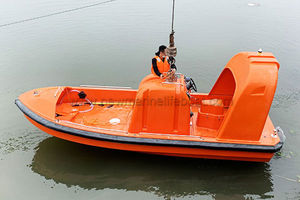
- Area: Hull integrity and GRP condition - check for cracks, delamination, osmotic blisteringCheck: Hull integrity and GRP condition - check for cracks, delamination, osmotic blistering
- Area: Structural frame and internal stiffening members - inspect for corrosion and deformationCheck: Structural frame and internal stiffening members - inspect for corrosion and deformation
- Area: Hatch/door seals and closure mechanisms - verify watertight/weathertight integrityCheck: Hatch/door seals and closure mechanisms - verify watertight/weathertight integrity
- Area: Inboard diesel engine condition and fuel system - verify fuel filter cleanliness and tank integrityCheck: Inboard diesel engine condition and fuel system - verify fuel filter cleanliness and tank integrity
- Area: Launch and recovery davit compatibility - test winch brake operationCheck: Launch and recovery davit compatibility - test winch brake operation
- Area: Life-saving equipment quantity and accessibility - verify per SOLAS regulations (lifejackets, flares, first aid kits, signals)Check: Life-saving equipment quantity and accessibility - verify per SOLAS regulations (lifejackets, flares, first aid kits, signals)
- Area: Interior ventilation and drainage systems - confirm clear drainage and functioning ventsCheck: Interior ventilation and drainage systems - confirm clear drainage and functioning vents
- Area: Certification validity and GRP paint/coating condition - verify all SOLAS marking and decalsCheck: Certification validity and GRP paint/coating condition - verify all SOLAS marking and decals
Typ-universelle Inspektionspunkte fuer Lifeboats (verifiziert, 2026-06).
- Area: Hull integrity and GRP condition - check for cracks, delamination, osmotic blisteringCheck: Hull integrity and GRP condition - check for cracks, delamination, osmotic blistering
- Area: Structural frame and internal stiffening members - inspect for corrosion and deformationCheck: Structural frame and internal stiffening members - inspect for corrosion and deformation
- Area: Hatch/door seals and closure mechanisms - verify watertight/weathertight integrityCheck: Hatch/door seals and closure mechanisms - verify watertight/weathertight integrity
- Area: Inboard diesel engine condition and fuel system - verify fuel filter cleanliness and tank integrityCheck: Inboard diesel engine condition and fuel system - verify fuel filter cleanliness and tank integrity
- Area: Launch and recovery davit compatibility - test winch brake operationCheck: Launch and recovery davit compatibility - test winch brake operation
- Area: Life-saving equipment quantity and accessibility - verify per SOLAS regulations (lifejackets, flares, first aid kits, signals)Check: Life-saving equipment quantity and accessibility - verify per SOLAS regulations (lifejackets, flares, first aid kits, signals)
- Area: Interior ventilation and drainage systems - confirm clear drainage and functioning ventsCheck: Interior ventilation and drainage systems - confirm clear drainage and functioning vents
- Area: Certification validity and GRP paint/coating condition - verify all SOLAS marking and decalsCheck: Certification validity and GRP paint/coating condition - verify all SOLAS marking and decals
Typ-universelle Inspektionspunkte fuer Lifeboats (verifiziert, 2026-06).
- Area: Hull integrity and GRP condition - check for cracks, delamination, osmotic blisteringCheck: Hull integrity and GRP condition - check for cracks, delamination, osmotic blistering
- Area: Structural frame and internal stiffening members - inspect for corrosion and deformationCheck: Structural frame and internal stiffening members - inspect for corrosion and deformation
- Area: Hatch/door seals and closure mechanisms - verify watertight/weathertight integrityCheck: Hatch/door seals and closure mechanisms - verify watertight/weathertight integrity
- Area: Inboard diesel engine condition and fuel system - verify fuel filter cleanliness and tank integrityCheck: Inboard diesel engine condition and fuel system - verify fuel filter cleanliness and tank integrity
- Area: Launch and recovery davit compatibility - test winch brake operationCheck: Launch and recovery davit compatibility - test winch brake operation
- Area: Life-saving equipment quantity and accessibility - verify per SOLAS regulations (lifejackets, flares, first aid kits, signals)Check: Life-saving equipment quantity and accessibility - verify per SOLAS regulations (lifejackets, flares, first aid kits, signals)
- Area: Interior ventilation and drainage systems - confirm clear drainage and functioning ventsCheck: Interior ventilation and drainage systems - confirm clear drainage and functioning vents
- Area: Certification validity and GRP paint/coating condition - verify all SOLAS marking and decalsCheck: Certification validity and GRP paint/coating condition - verify all SOLAS marking and decals
Typ-universelle Inspektionspunkte fuer Lifeboats (verifiziert, 2026-06).
- Area: Hull integrity and GRP condition - check for cracks, delamination, osmotic blisteringCheck: Hull integrity and GRP condition - check for cracks, delamination, osmotic blistering
- Area: Structural frame and internal stiffening members - inspect for corrosion and deformationCheck: Structural frame and internal stiffening members - inspect for corrosion and deformation
- Area: Hatch/door seals and closure mechanisms - verify watertight/weathertight integrityCheck: Hatch/door seals and closure mechanisms - verify watertight/weathertight integrity
- Area: Inboard diesel engine condition and fuel system - verify fuel filter cleanliness and tank integrityCheck: Inboard diesel engine condition and fuel system - verify fuel filter cleanliness and tank integrity
- Area: Launch and recovery davit compatibility - test winch brake operationCheck: Launch and recovery davit compatibility - test winch brake operation
- Area: Life-saving equipment quantity and accessibility - verify per SOLAS regulations (lifejackets, flares, first aid kits, signals)Check: Life-saving equipment quantity and accessibility - verify per SOLAS regulations (lifejackets, flares, first aid kits, signals)
- Area: Interior ventilation and drainage systems - confirm clear drainage and functioning ventsCheck: Interior ventilation and drainage systems - confirm clear drainage and functioning vents
- Area: Certification validity and GRP paint/coating condition - verify all SOLAS marking and decalsCheck: Certification validity and GRP paint/coating condition - verify all SOLAS marking and decals
Typ-universelle Inspektionspunkte fuer Lifeboats (verifiziert, 2026-06).
- Area: Hull integrity and GRP condition - check for cracks, delamination, osmotic blisteringCheck: Hull integrity and GRP condition - check for cracks, delamination, osmotic blistering
- Area: Structural frame and internal stiffening members - inspect for corrosion and deformationCheck: Structural frame and internal stiffening members - inspect for corrosion and deformation
- Area: Hatch/door seals and closure mechanisms - verify watertight/weathertight integrityCheck: Hatch/door seals and closure mechanisms - verify watertight/weathertight integrity
- Area: Inboard diesel engine condition and fuel system - verify fuel filter cleanliness and tank integrityCheck: Inboard diesel engine condition and fuel system - verify fuel filter cleanliness and tank integrity
- Area: Launch and recovery davit compatibility - test winch brake operationCheck: Launch and recovery davit compatibility - test winch brake operation
- Area: Life-saving equipment quantity and accessibility - verify per SOLAS regulations (lifejackets, flares, first aid kits, signals)Check: Life-saving equipment quantity and accessibility - verify per SOLAS regulations (lifejackets, flares, first aid kits, signals)
- Area: Interior ventilation and drainage systems - confirm clear drainage and functioning ventsCheck: Interior ventilation and drainage systems - confirm clear drainage and functioning vents
- Area: Certification validity and GRP paint/coating condition - verify all SOLAS marking and decalsCheck: Certification validity and GRP paint/coating condition - verify all SOLAS marking and decals
Typ-universelle Inspektionspunkte fuer Lifeboats (verifiziert, 2026-06).
- Area: Hull integrity and GRP condition - check for cracks, delamination, osmotic blisteringCheck: Hull integrity and GRP condition - check for cracks, delamination, osmotic blistering
- Area: Structural frame and internal stiffening members - inspect for corrosion and deformationCheck: Structural frame and internal stiffening members - inspect for corrosion and deformation
- Area: Hatch/door seals and closure mechanisms - verify watertight/weathertight integrityCheck: Hatch/door seals and closure mechanisms - verify watertight/weathertight integrity
- Area: Inboard diesel engine condition and fuel system - verify fuel filter cleanliness and tank integrityCheck: Inboard diesel engine condition and fuel system - verify fuel filter cleanliness and tank integrity
- Area: Launch and recovery davit compatibility - test winch brake operationCheck: Launch and recovery davit compatibility - test winch brake operation
- Area: Life-saving equipment quantity and accessibility - verify per SOLAS regulations (lifejackets, flares, first aid kits, signals)Check: Life-saving equipment quantity and accessibility - verify per SOLAS regulations (lifejackets, flares, first aid kits, signals)
- Area: Interior ventilation and drainage systems - confirm clear drainage and functioning ventsCheck: Interior ventilation and drainage systems - confirm clear drainage and functioning vents
- Area: Certification validity and GRP paint/coating condition - verify all SOLAS marking and decalsCheck: Certification validity and GRP paint/coating condition - verify all SOLAS marking and decals
Typ-universelle Inspektionspunkte fuer Lifeboats (verifiziert, 2026-06).
Norsafe
10 ✓ 10 verified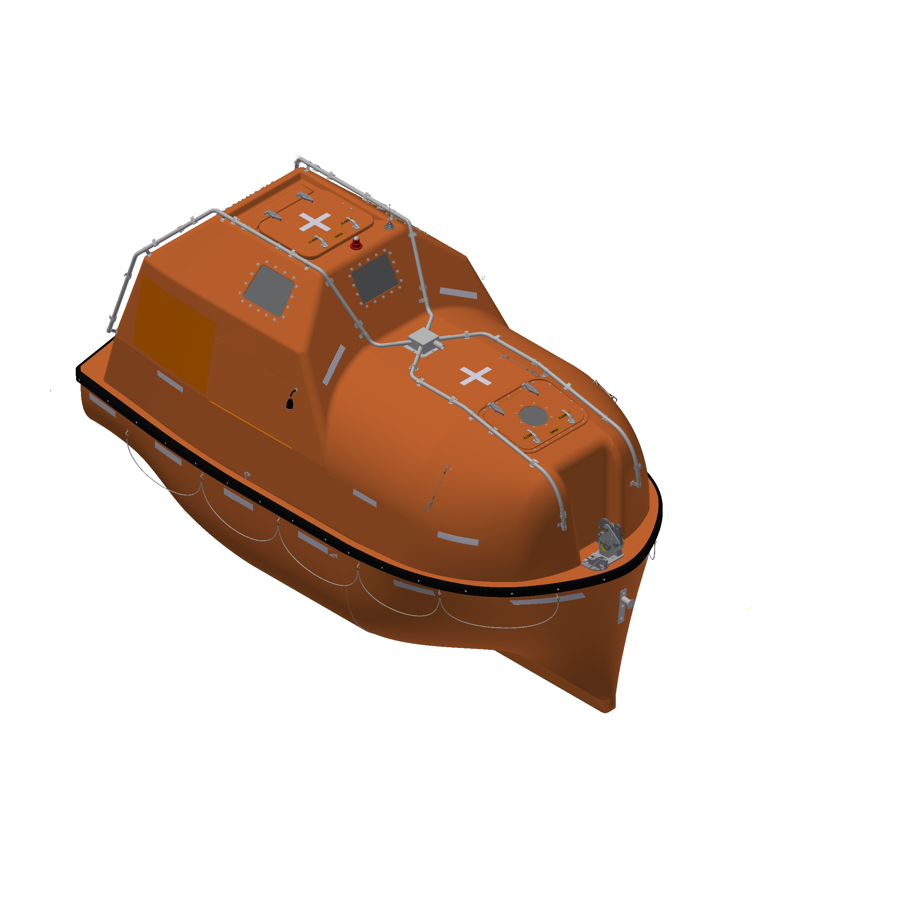
- Area: Visual inspection of hull, superstructure and buoyant tanks for cracks, corrosion, deformation, or fire damage; condition of fire-retardant GRP materialCheck: Visual inspection of hull, superstructure and buoyant tanks for cracks, corrosion, deformation, or fire damage; condition of fire-retardant GRP material
- Area: Engine propulsion system functionality test (minimum 3-minute run); fuel system integrity and emergency engine start capabilityCheck: Engine propulsion system functionality test (minimum 3-minute run); fuel system integrity and emergency engine start capability
- Area: Airtight seals and hatch integrity; condition and operation of all doors, hatches, and ventilation systems per MSC.535(107)/MSC.559(108)Check: Airtight seals and hatch integrity; condition and operation of all doors, hatches, and ventilation systems per MSC.535(107)/MSC.559(108)
- Area: On-load and off-load release gear functionality; annual dynamic load testing at 1.1x maximum loaded weight; certification of hook release mechanismsCheck: On-load and off-load release gear functionality; annual dynamic load testing at 1.1x maximum loaded weight; certification of hook release mechanisms
- Area: Self-righting mechanism operation verification (must self-right within 15 seconds if capsized); positive stability checks up to 180 degreesCheck: Self-righting mechanism operation verification (must self-right within 15 seconds if capsized); positive stability checks up to 180 degrees
- Area: Compressed air supply systems and breathing apparatus; verification of minimum 10+ minutes occupancy air capacityCheck: Compressed air supply systems and breathing apparatus; verification of minimum 10+ minutes occupancy air capacity
- Area: External sprinkler/water spray systems and thermal insulation condition; fire-resistant material integrityCheck: External sprinkler/water spray systems and thermal insulation condition; fire-resistant material integrity
- Area: Safety equipment verification: life jackets, personal protective equipment, harnesses, shock-absorbing seats, ladder conditionCheck: Safety equipment verification: life jackets, personal protective equipment, harnesses, shock-absorbing seats, ladder condition
Typ-universelle Inspektionspunkte fuer Lifeboats (verifiziert, 2026-06).
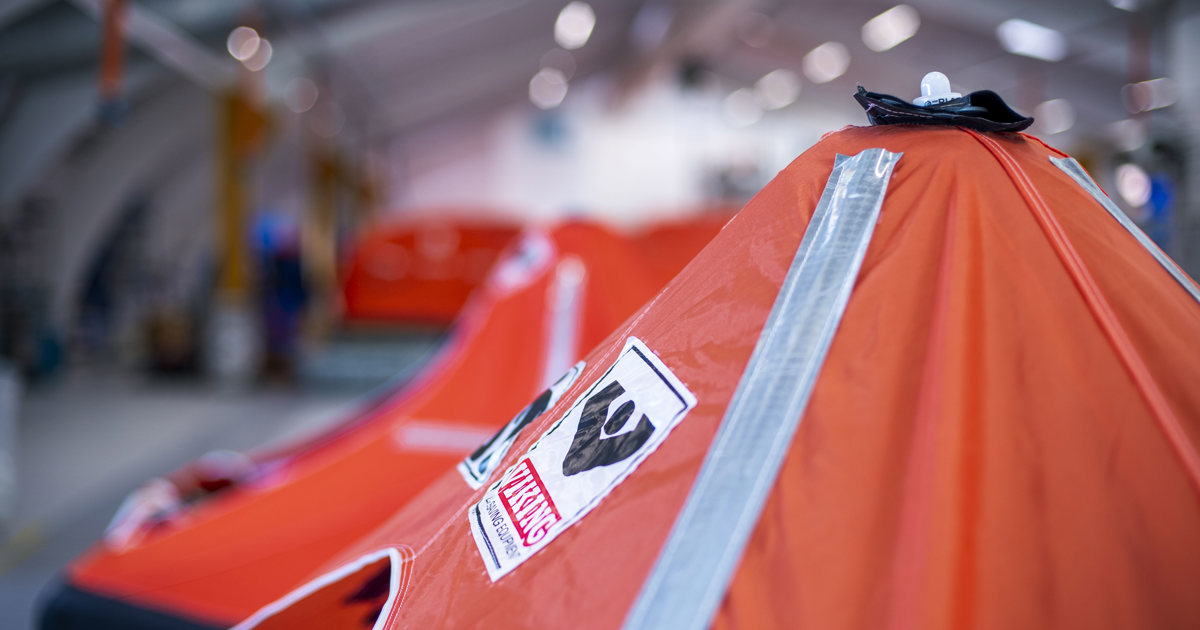
- Area: Visual inspection of hull, superstructure and buoyant tanks for cracks, corrosion, deformation, or fire damage; condition of fire-retardant GRP materialCheck: Visual inspection of hull, superstructure and buoyant tanks for cracks, corrosion, deformation, or fire damage; condition of fire-retardant GRP material
- Area: Engine propulsion system functionality test (minimum 3-minute run); fuel system integrity and emergency engine start capabilityCheck: Engine propulsion system functionality test (minimum 3-minute run); fuel system integrity and emergency engine start capability
- Area: Airtight seals and hatch integrity; condition and operation of all doors, hatches, and ventilation systems per MSC.535(107)/MSC.559(108)Check: Airtight seals and hatch integrity; condition and operation of all doors, hatches, and ventilation systems per MSC.535(107)/MSC.559(108)
- Area: On-load and off-load release gear functionality; annual dynamic load testing at 1.1x maximum loaded weight; certification of hook release mechanismsCheck: On-load and off-load release gear functionality; annual dynamic load testing at 1.1x maximum loaded weight; certification of hook release mechanisms
- Area: Self-righting mechanism operation verification (must self-right within 15 seconds if capsized); positive stability checks up to 180 degreesCheck: Self-righting mechanism operation verification (must self-right within 15 seconds if capsized); positive stability checks up to 180 degrees
- Area: Compressed air supply systems and breathing apparatus; verification of minimum 10+ minutes occupancy air capacityCheck: Compressed air supply systems and breathing apparatus; verification of minimum 10+ minutes occupancy air capacity
- Area: External sprinkler/water spray systems and thermal insulation condition; fire-resistant material integrityCheck: External sprinkler/water spray systems and thermal insulation condition; fire-resistant material integrity
- Area: Safety equipment verification: life jackets, personal protective equipment, harnesses, shock-absorbing seats, ladder conditionCheck: Safety equipment verification: life jackets, personal protective equipment, harnesses, shock-absorbing seats, ladder condition
Typ-universelle Inspektionspunkte fuer Lifeboats (verifiziert, 2026-06).
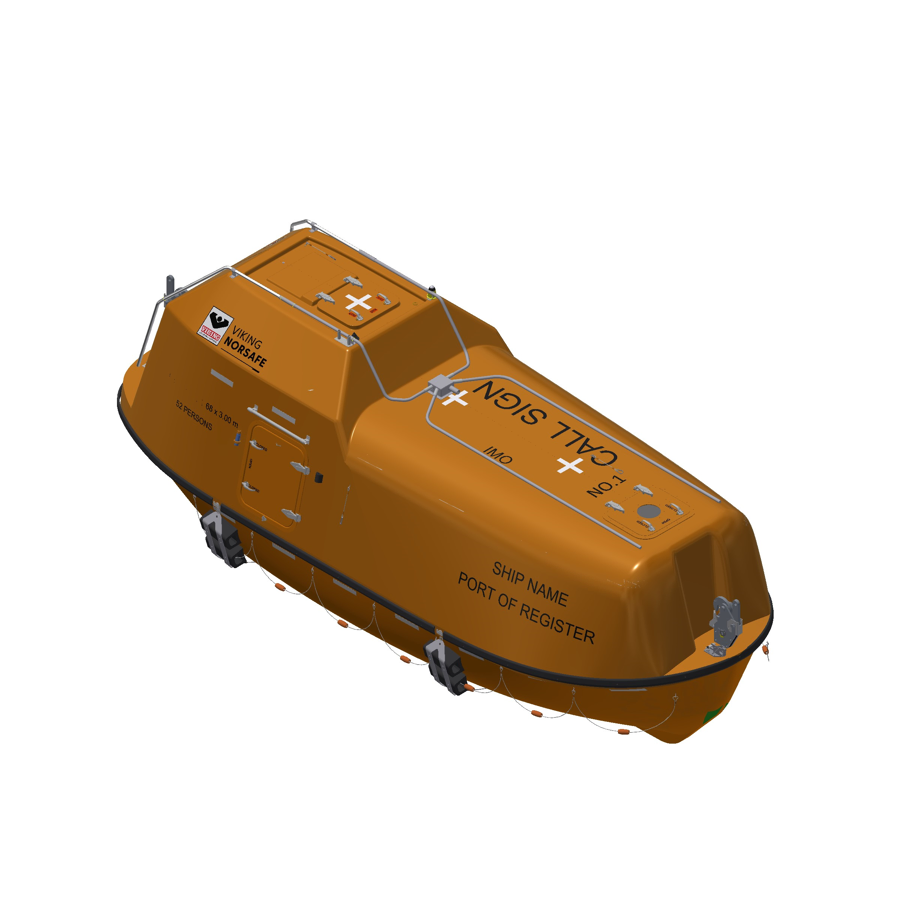
- Area: Visual inspection of hull, superstructure and buoyant tanks for cracks, corrosion, deformation, or fire damage; condition of fire-retardant GRP materialCheck: Visual inspection of hull, superstructure and buoyant tanks for cracks, corrosion, deformation, or fire damage; condition of fire-retardant GRP material
- Area: Engine propulsion system functionality test (minimum 3-minute run); fuel system integrity and emergency engine start capabilityCheck: Engine propulsion system functionality test (minimum 3-minute run); fuel system integrity and emergency engine start capability
- Area: Airtight seals and hatch integrity; condition and operation of all doors, hatches, and ventilation systems per MSC.535(107)/MSC.559(108)Check: Airtight seals and hatch integrity; condition and operation of all doors, hatches, and ventilation systems per MSC.535(107)/MSC.559(108)
- Area: On-load and off-load release gear functionality; annual dynamic load testing at 1.1x maximum loaded weight; certification of hook release mechanismsCheck: On-load and off-load release gear functionality; annual dynamic load testing at 1.1x maximum loaded weight; certification of hook release mechanisms
- Area: Self-righting mechanism operation verification (must self-right within 15 seconds if capsized); positive stability checks up to 180 degreesCheck: Self-righting mechanism operation verification (must self-right within 15 seconds if capsized); positive stability checks up to 180 degrees
- Area: Compressed air supply systems and breathing apparatus; verification of minimum 10+ minutes occupancy air capacityCheck: Compressed air supply systems and breathing apparatus; verification of minimum 10+ minutes occupancy air capacity
- Area: External sprinkler/water spray systems and thermal insulation condition; fire-resistant material integrityCheck: External sprinkler/water spray systems and thermal insulation condition; fire-resistant material integrity
- Area: Safety equipment verification: life jackets, personal protective equipment, harnesses, shock-absorbing seats, ladder conditionCheck: Safety equipment verification: life jackets, personal protective equipment, harnesses, shock-absorbing seats, ladder condition
Typ-universelle Inspektionspunkte fuer Lifeboats (verifiziert, 2026-06).
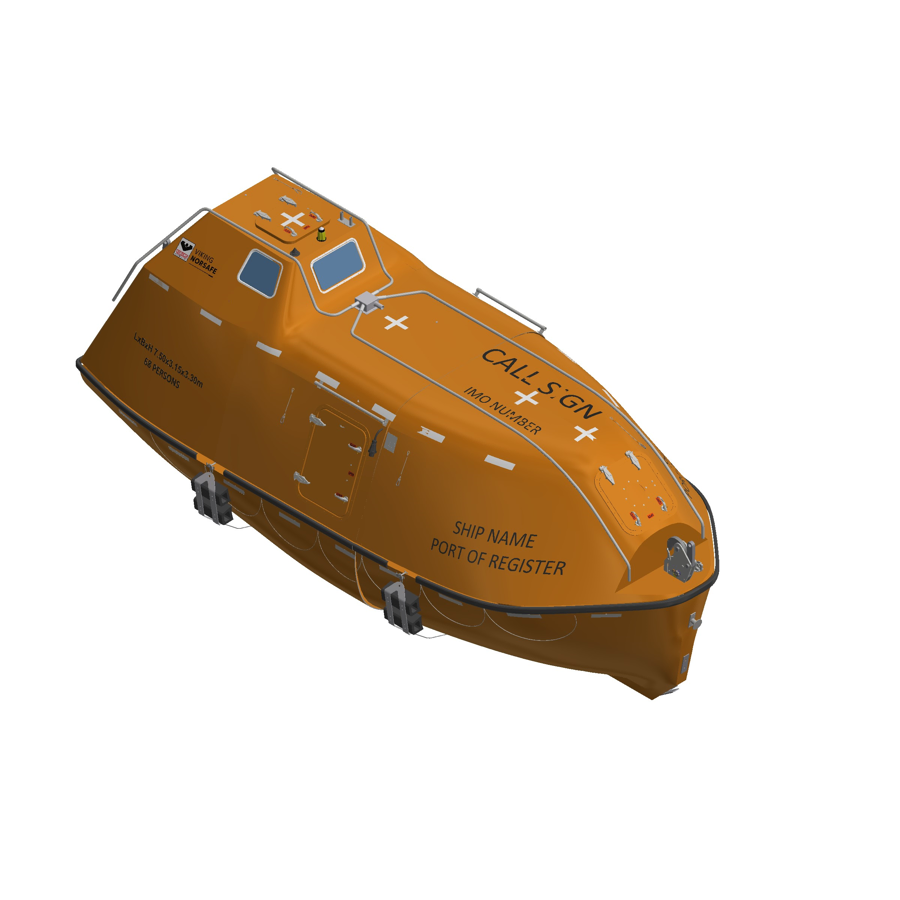
- Area: Visual inspection of hull, superstructure and buoyant tanks for cracks, corrosion, deformation, or fire damage; condition of fire-retardant GRP materialCheck: Visual inspection of hull, superstructure and buoyant tanks for cracks, corrosion, deformation, or fire damage; condition of fire-retardant GRP material
- Area: Engine propulsion system functionality test (minimum 3-minute run); fuel system integrity and emergency engine start capabilityCheck: Engine propulsion system functionality test (minimum 3-minute run); fuel system integrity and emergency engine start capability
- Area: Airtight seals and hatch integrity; condition and operation of all doors, hatches, and ventilation systems per MSC.535(107)/MSC.559(108)Check: Airtight seals and hatch integrity; condition and operation of all doors, hatches, and ventilation systems per MSC.535(107)/MSC.559(108)
- Area: On-load and off-load release gear functionality; annual dynamic load testing at 1.1x maximum loaded weight; certification of hook release mechanismsCheck: On-load and off-load release gear functionality; annual dynamic load testing at 1.1x maximum loaded weight; certification of hook release mechanisms
- Area: Self-righting mechanism operation verification (must self-right within 15 seconds if capsized); positive stability checks up to 180 degreesCheck: Self-righting mechanism operation verification (must self-right within 15 seconds if capsized); positive stability checks up to 180 degrees
- Area: Compressed air supply systems and breathing apparatus; verification of minimum 10+ minutes occupancy air capacityCheck: Compressed air supply systems and breathing apparatus; verification of minimum 10+ minutes occupancy air capacity
- Area: External sprinkler/water spray systems and thermal insulation condition; fire-resistant material integrityCheck: External sprinkler/water spray systems and thermal insulation condition; fire-resistant material integrity
- Area: Safety equipment verification: life jackets, personal protective equipment, harnesses, shock-absorbing seats, ladder conditionCheck: Safety equipment verification: life jackets, personal protective equipment, harnesses, shock-absorbing seats, ladder condition
Typ-universelle Inspektionspunkte fuer Lifeboats (verifiziert, 2026-06).

- Area: Visual inspection of hull, superstructure and buoyant tanks for cracks, corrosion, deformation, or fire damage; condition of fire-retardant GRP materialCheck: Visual inspection of hull, superstructure and buoyant tanks for cracks, corrosion, deformation, or fire damage; condition of fire-retardant GRP material
- Area: Engine propulsion system functionality test (minimum 3-minute run); fuel system integrity and emergency engine start capabilityCheck: Engine propulsion system functionality test (minimum 3-minute run); fuel system integrity and emergency engine start capability
- Area: Airtight seals and hatch integrity; condition and operation of all doors, hatches, and ventilation systems per MSC.535(107)/MSC.559(108)Check: Airtight seals and hatch integrity; condition and operation of all doors, hatches, and ventilation systems per MSC.535(107)/MSC.559(108)
- Area: On-load and off-load release gear functionality; annual dynamic load testing at 1.1x maximum loaded weight; certification of hook release mechanismsCheck: On-load and off-load release gear functionality; annual dynamic load testing at 1.1x maximum loaded weight; certification of hook release mechanisms
- Area: Self-righting mechanism operation verification (must self-right within 15 seconds if capsized); positive stability checks up to 180 degreesCheck: Self-righting mechanism operation verification (must self-right within 15 seconds if capsized); positive stability checks up to 180 degrees
- Area: Compressed air supply systems and breathing apparatus; verification of minimum 10+ minutes occupancy air capacityCheck: Compressed air supply systems and breathing apparatus; verification of minimum 10+ minutes occupancy air capacity
- Area: External sprinkler/water spray systems and thermal insulation condition; fire-resistant material integrityCheck: External sprinkler/water spray systems and thermal insulation condition; fire-resistant material integrity
- Area: Safety equipment verification: life jackets, personal protective equipment, harnesses, shock-absorbing seats, ladder conditionCheck: Safety equipment verification: life jackets, personal protective equipment, harnesses, shock-absorbing seats, ladder condition
Typ-universelle Inspektionspunkte fuer Lifeboats (verifiziert, 2026-06).
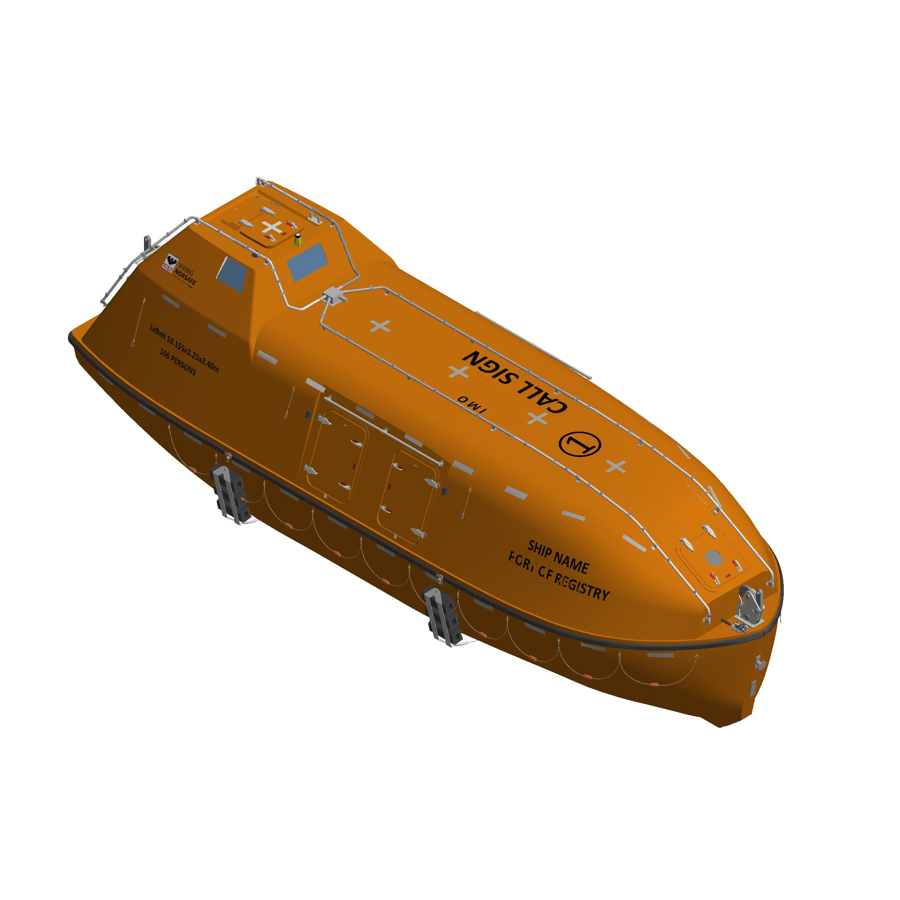
- Area: Visual inspection of hull, superstructure and buoyant tanks for cracks, corrosion, deformation, or fire damage; condition of fire-retardant GRP materialCheck: Visual inspection of hull, superstructure and buoyant tanks for cracks, corrosion, deformation, or fire damage; condition of fire-retardant GRP material
- Area: Engine propulsion system functionality test (minimum 3-minute run); fuel system integrity and emergency engine start capabilityCheck: Engine propulsion system functionality test (minimum 3-minute run); fuel system integrity and emergency engine start capability
- Area: Airtight seals and hatch integrity; condition and operation of all doors, hatches, and ventilation systems per MSC.535(107)/MSC.559(108)Check: Airtight seals and hatch integrity; condition and operation of all doors, hatches, and ventilation systems per MSC.535(107)/MSC.559(108)
- Area: On-load and off-load release gear functionality; annual dynamic load testing at 1.1x maximum loaded weight; certification of hook release mechanismsCheck: On-load and off-load release gear functionality; annual dynamic load testing at 1.1x maximum loaded weight; certification of hook release mechanisms
- Area: Self-righting mechanism operation verification (must self-right within 15 seconds if capsized); positive stability checks up to 180 degreesCheck: Self-righting mechanism operation verification (must self-right within 15 seconds if capsized); positive stability checks up to 180 degrees
- Area: Compressed air supply systems and breathing apparatus; verification of minimum 10+ minutes occupancy air capacityCheck: Compressed air supply systems and breathing apparatus; verification of minimum 10+ minutes occupancy air capacity
- Area: External sprinkler/water spray systems and thermal insulation condition; fire-resistant material integrityCheck: External sprinkler/water spray systems and thermal insulation condition; fire-resistant material integrity
- Area: Safety equipment verification: life jackets, personal protective equipment, harnesses, shock-absorbing seats, ladder conditionCheck: Safety equipment verification: life jackets, personal protective equipment, harnesses, shock-absorbing seats, ladder condition
Typ-universelle Inspektionspunkte fuer Lifeboats (verifiziert, 2026-06).
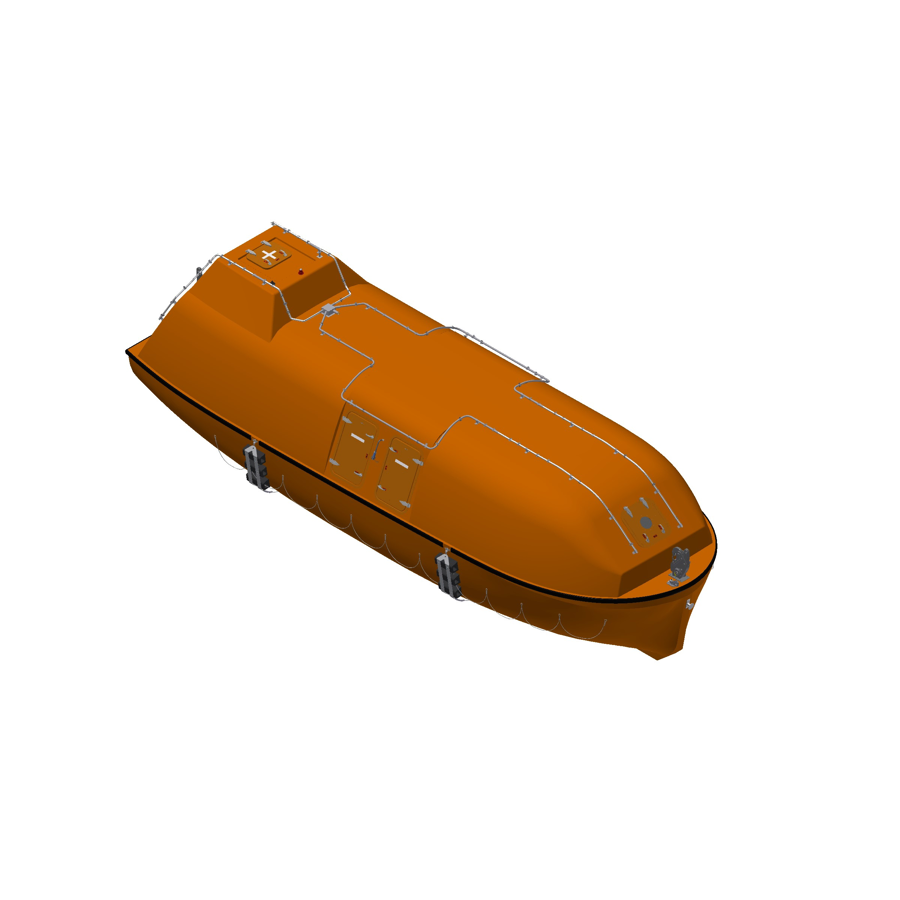
- Area: Visual inspection of hull, superstructure and buoyant tanks for cracks, corrosion, deformation, or fire damage; condition of fire-retardant GRP materialCheck: Visual inspection of hull, superstructure and buoyant tanks for cracks, corrosion, deformation, or fire damage; condition of fire-retardant GRP material
- Area: Engine propulsion system functionality test (minimum 3-minute run); fuel system integrity and emergency engine start capabilityCheck: Engine propulsion system functionality test (minimum 3-minute run); fuel system integrity and emergency engine start capability
- Area: Airtight seals and hatch integrity; condition and operation of all doors, hatches, and ventilation systems per MSC.535(107)/MSC.559(108)Check: Airtight seals and hatch integrity; condition and operation of all doors, hatches, and ventilation systems per MSC.535(107)/MSC.559(108)
- Area: On-load and off-load release gear functionality; annual dynamic load testing at 1.1x maximum loaded weight; certification of hook release mechanismsCheck: On-load and off-load release gear functionality; annual dynamic load testing at 1.1x maximum loaded weight; certification of hook release mechanisms
- Area: Self-righting mechanism operation verification (must self-right within 15 seconds if capsized); positive stability checks up to 180 degreesCheck: Self-righting mechanism operation verification (must self-right within 15 seconds if capsized); positive stability checks up to 180 degrees
- Area: Compressed air supply systems and breathing apparatus; verification of minimum 10+ minutes occupancy air capacityCheck: Compressed air supply systems and breathing apparatus; verification of minimum 10+ minutes occupancy air capacity
- Area: External sprinkler/water spray systems and thermal insulation condition; fire-resistant material integrityCheck: External sprinkler/water spray systems and thermal insulation condition; fire-resistant material integrity
- Area: Safety equipment verification: life jackets, personal protective equipment, harnesses, shock-absorbing seats, ladder conditionCheck: Safety equipment verification: life jackets, personal protective equipment, harnesses, shock-absorbing seats, ladder condition
Typ-universelle Inspektionspunkte fuer Lifeboats (verifiziert, 2026-06).
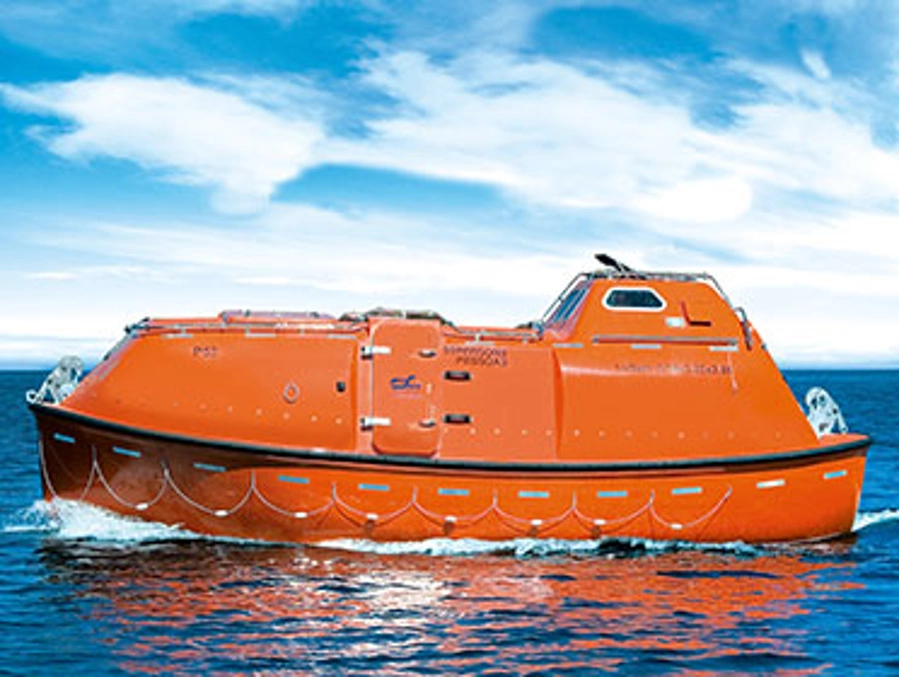
- Area: Visual inspection of hull, superstructure and buoyant tanks for cracks, corrosion, deformation, or fire damage; condition of fire-retardant GRP materialCheck: Visual inspection of hull, superstructure and buoyant tanks for cracks, corrosion, deformation, or fire damage; condition of fire-retardant GRP material
- Area: Engine propulsion system functionality test (minimum 3-minute run); fuel system integrity and emergency engine start capabilityCheck: Engine propulsion system functionality test (minimum 3-minute run); fuel system integrity and emergency engine start capability
- Area: Airtight seals and hatch integrity; condition and operation of all doors, hatches, and ventilation systems per MSC.535(107)/MSC.559(108)Check: Airtight seals and hatch integrity; condition and operation of all doors, hatches, and ventilation systems per MSC.535(107)/MSC.559(108)
- Area: On-load and off-load release gear functionality; annual dynamic load testing at 1.1x maximum loaded weight; certification of hook release mechanismsCheck: On-load and off-load release gear functionality; annual dynamic load testing at 1.1x maximum loaded weight; certification of hook release mechanisms
- Area: Self-righting mechanism operation verification (must self-right within 15 seconds if capsized); positive stability checks up to 180 degreesCheck: Self-righting mechanism operation verification (must self-right within 15 seconds if capsized); positive stability checks up to 180 degrees
- Area: Compressed air supply systems and breathing apparatus; verification of minimum 10+ minutes occupancy air capacityCheck: Compressed air supply systems and breathing apparatus; verification of minimum 10+ minutes occupancy air capacity
- Area: External sprinkler/water spray systems and thermal insulation condition; fire-resistant material integrityCheck: External sprinkler/water spray systems and thermal insulation condition; fire-resistant material integrity
- Area: Safety equipment verification: life jackets, personal protective equipment, harnesses, shock-absorbing seats, ladder conditionCheck: Safety equipment verification: life jackets, personal protective equipment, harnesses, shock-absorbing seats, ladder condition
Typ-universelle Inspektionspunkte fuer Lifeboats (verifiziert, 2026-06).

- Area: Visual inspection of hull, superstructure and buoyant tanks for cracks, corrosion, deformation, or fire damage; condition of fire-retardant GRP materialCheck: Visual inspection of hull, superstructure and buoyant tanks for cracks, corrosion, deformation, or fire damage; condition of fire-retardant GRP material
- Area: Engine propulsion system functionality test (minimum 3-minute run); fuel system integrity and emergency engine start capabilityCheck: Engine propulsion system functionality test (minimum 3-minute run); fuel system integrity and emergency engine start capability
- Area: Airtight seals and hatch integrity; condition and operation of all doors, hatches, and ventilation systems per MSC.535(107)/MSC.559(108)Check: Airtight seals and hatch integrity; condition and operation of all doors, hatches, and ventilation systems per MSC.535(107)/MSC.559(108)
- Area: On-load and off-load release gear functionality; annual dynamic load testing at 1.1x maximum loaded weight; certification of hook release mechanismsCheck: On-load and off-load release gear functionality; annual dynamic load testing at 1.1x maximum loaded weight; certification of hook release mechanisms
- Area: Self-righting mechanism operation verification (must self-right within 15 seconds if capsized); positive stability checks up to 180 degreesCheck: Self-righting mechanism operation verification (must self-right within 15 seconds if capsized); positive stability checks up to 180 degrees
- Area: Compressed air supply systems and breathing apparatus; verification of minimum 10+ minutes occupancy air capacityCheck: Compressed air supply systems and breathing apparatus; verification of minimum 10+ minutes occupancy air capacity
- Area: External sprinkler/water spray systems and thermal insulation condition; fire-resistant material integrityCheck: External sprinkler/water spray systems and thermal insulation condition; fire-resistant material integrity
- Area: Safety equipment verification: life jackets, personal protective equipment, harnesses, shock-absorbing seats, ladder conditionCheck: Safety equipment verification: life jackets, personal protective equipment, harnesses, shock-absorbing seats, ladder condition
Typ-universelle Inspektionspunkte fuer Lifeboats (verifiziert, 2026-06).
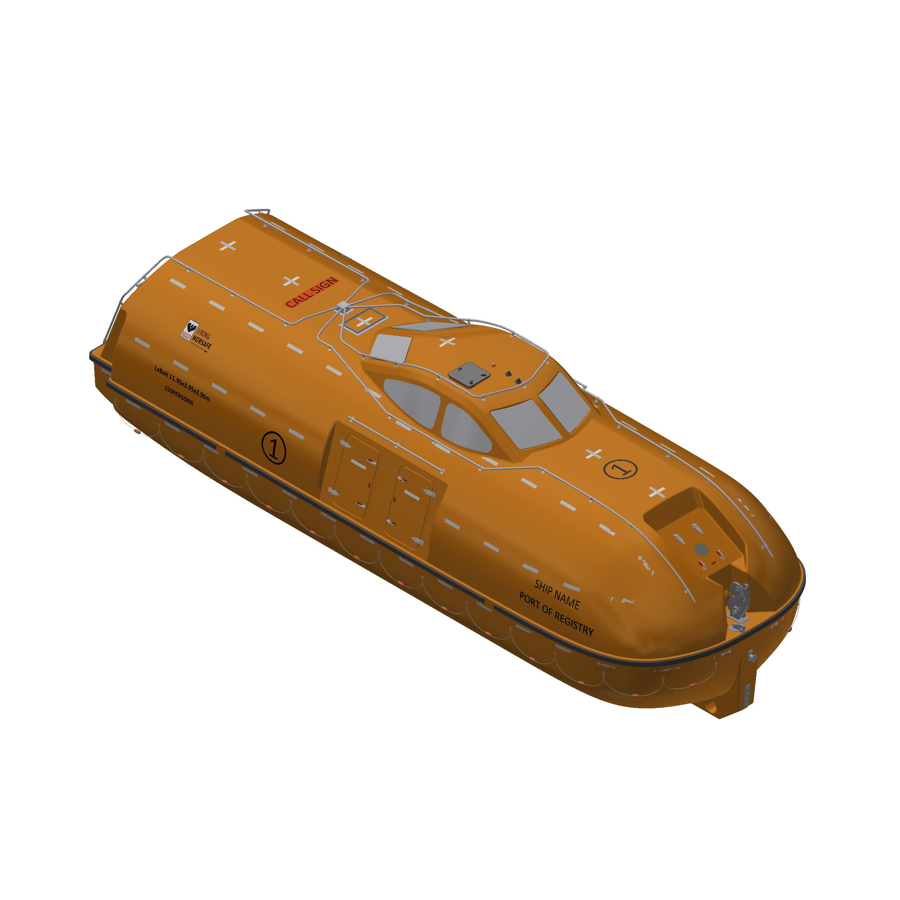
- Area: Visual inspection of hull, superstructure and buoyant tanks for cracks, corrosion, deformation, or fire damage; condition of fire-retardant GRP materialCheck: Visual inspection of hull, superstructure and buoyant tanks for cracks, corrosion, deformation, or fire damage; condition of fire-retardant GRP material
- Area: Engine propulsion system functionality test (minimum 3-minute run); fuel system integrity and emergency engine start capabilityCheck: Engine propulsion system functionality test (minimum 3-minute run); fuel system integrity and emergency engine start capability
- Area: Airtight seals and hatch integrity; condition and operation of all doors, hatches, and ventilation systems per MSC.535(107)/MSC.559(108)Check: Airtight seals and hatch integrity; condition and operation of all doors, hatches, and ventilation systems per MSC.535(107)/MSC.559(108)
- Area: On-load and off-load release gear functionality; annual dynamic load testing at 1.1x maximum loaded weight; certification of hook release mechanismsCheck: On-load and off-load release gear functionality; annual dynamic load testing at 1.1x maximum loaded weight; certification of hook release mechanisms
- Area: Self-righting mechanism operation verification (must self-right within 15 seconds if capsized); positive stability checks up to 180 degreesCheck: Self-righting mechanism operation verification (must self-right within 15 seconds if capsized); positive stability checks up to 180 degrees
- Area: Compressed air supply systems and breathing apparatus; verification of minimum 10+ minutes occupancy air capacityCheck: Compressed air supply systems and breathing apparatus; verification of minimum 10+ minutes occupancy air capacity
- Area: External sprinkler/water spray systems and thermal insulation condition; fire-resistant material integrityCheck: External sprinkler/water spray systems and thermal insulation condition; fire-resistant material integrity
- Area: Safety equipment verification: life jackets, personal protective equipment, harnesses, shock-absorbing seats, ladder conditionCheck: Safety equipment verification: life jackets, personal protective equipment, harnesses, shock-absorbing seats, ladder condition
Typ-universelle Inspektionspunkte fuer Lifeboats (verifiziert, 2026-06).
VIKING Life-Saving
9 ✓ 9 verified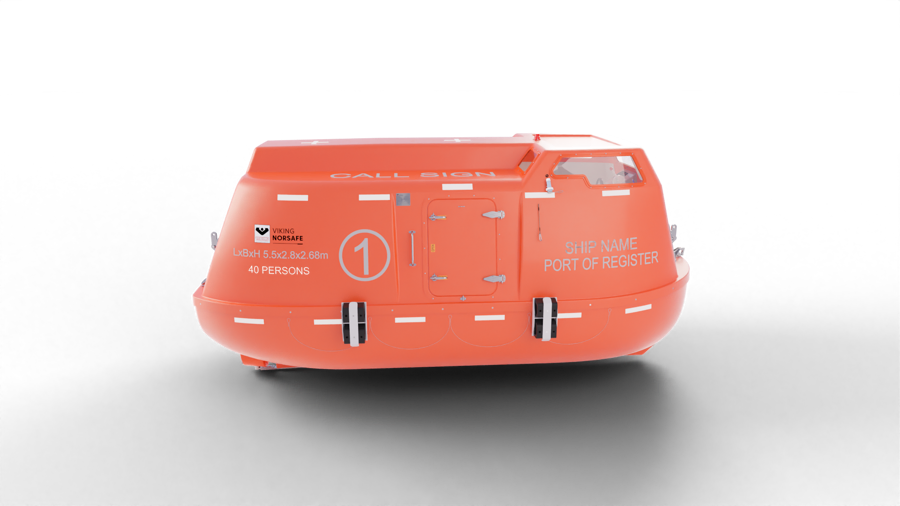
- Area: Weekly visual inspection of TELB condition, hooks, and attachment points per SOLAS III/20Check: Weekly visual inspection of TELB condition, hooks, and attachment points per SOLAS III/20
- Area: Monthly engine run-test for minimum 3 minutes to verify propulsion system functionalityCheck: Monthly engine run-test for minimum 3 minutes to verify propulsion system functionality
- Area: Monthly davit structural inspection including wires, sheaves, and brake mechanismsCheck: Monthly davit structural inspection including wires, sheaves, and brake mechanisms
- Area: Annual certified service agent inspection of lifeboat hull structure, buoyancy foam, and watertight integrityCheck: Annual certified service agent inspection of lifeboat hull structure, buoyancy foam, and watertight integrity
- Area: Annual testing and adjustment of On-Load Release Hooks with hydrostatic interlock verificationCheck: Annual testing and adjustment of On-Load Release Hooks with hydrostatic interlock verification
- Area: Annual inspection of windows, hatches, doors, and all hull penetrations for watertightnessCheck: Annual inspection of windows, hatches, doors, and all hull penetrations for watertightness
- Area: Five-yearly comprehensive service including complete disassembly and overhaul of release unitsCheck: Five-yearly comprehensive service including complete disassembly and overhaul of release units
- Area: Verification of self-righting capability and polyurethane foam buoyancy integrity per LSA CodeCheck: Verification of self-righting capability and polyurethane foam buoyancy integrity per LSA Code
Typ-universelle Inspektionspunkte fuer Lifeboats (verifiziert, 2026-06).
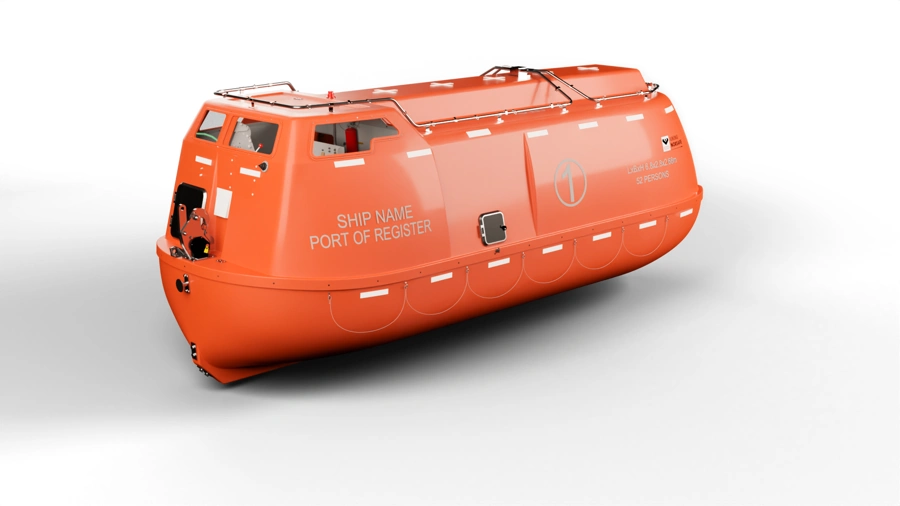
- Area: Weekly visual inspection of TELB condition, hooks, and attachment points per SOLAS III/20Check: Weekly visual inspection of TELB condition, hooks, and attachment points per SOLAS III/20
- Area: Monthly engine run-test for minimum 3 minutes to verify propulsion system functionalityCheck: Monthly engine run-test for minimum 3 minutes to verify propulsion system functionality
- Area: Monthly davit structural inspection including wires, sheaves, and brake mechanismsCheck: Monthly davit structural inspection including wires, sheaves, and brake mechanisms
- Area: Annual certified service agent inspection of lifeboat hull structure, buoyancy foam, and watertight integrityCheck: Annual certified service agent inspection of lifeboat hull structure, buoyancy foam, and watertight integrity
- Area: Annual testing and adjustment of On-Load Release Hooks with hydrostatic interlock verificationCheck: Annual testing and adjustment of On-Load Release Hooks with hydrostatic interlock verification
- Area: Annual inspection of windows, hatches, doors, and all hull penetrations for watertightnessCheck: Annual inspection of windows, hatches, doors, and all hull penetrations for watertightness
- Area: Five-yearly comprehensive service including complete disassembly and overhaul of release unitsCheck: Five-yearly comprehensive service including complete disassembly and overhaul of release units
- Area: Verification of self-righting capability and polyurethane foam buoyancy integrity per LSA CodeCheck: Verification of self-righting capability and polyurethane foam buoyancy integrity per LSA Code
Typ-universelle Inspektionspunkte fuer Lifeboats (verifiziert, 2026-06).
- Area: Weekly visual inspection of TELB condition, hooks, and attachment points per SOLAS III/20Check: Weekly visual inspection of TELB condition, hooks, and attachment points per SOLAS III/20
- Area: Monthly engine run-test for minimum 3 minutes to verify propulsion system functionalityCheck: Monthly engine run-test for minimum 3 minutes to verify propulsion system functionality
- Area: Monthly davit structural inspection including wires, sheaves, and brake mechanismsCheck: Monthly davit structural inspection including wires, sheaves, and brake mechanisms
- Area: Annual certified service agent inspection of lifeboat hull structure, buoyancy foam, and watertight integrityCheck: Annual certified service agent inspection of lifeboat hull structure, buoyancy foam, and watertight integrity
- Area: Annual testing and adjustment of On-Load Release Hooks with hydrostatic interlock verificationCheck: Annual testing and adjustment of On-Load Release Hooks with hydrostatic interlock verification
- Area: Annual inspection of windows, hatches, doors, and all hull penetrations for watertightnessCheck: Annual inspection of windows, hatches, doors, and all hull penetrations for watertightness
- Area: Five-yearly comprehensive service including complete disassembly and overhaul of release unitsCheck: Five-yearly comprehensive service including complete disassembly and overhaul of release units
- Area: Verification of self-righting capability and polyurethane foam buoyancy integrity per LSA CodeCheck: Verification of self-righting capability and polyurethane foam buoyancy integrity per LSA Code
Typ-universelle Inspektionspunkte fuer Lifeboats (verifiziert, 2026-06).
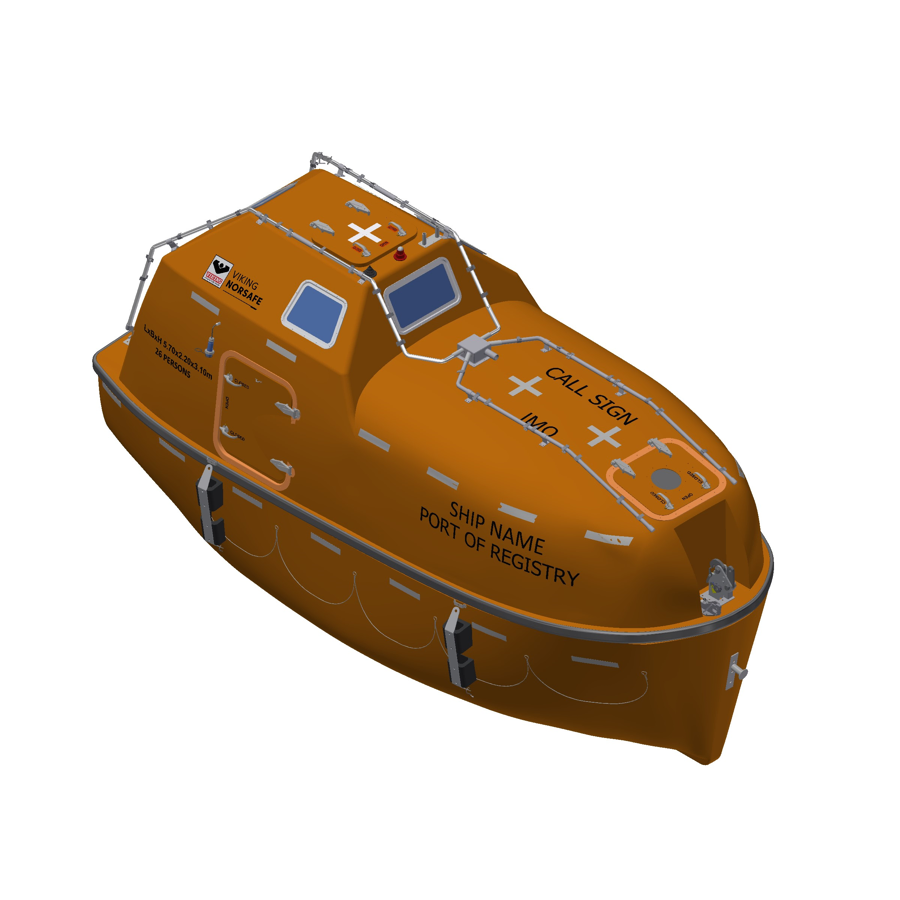
- Area: Weekly visual inspection of TELB condition, hooks, and attachment points per SOLAS III/20Check: Weekly visual inspection of TELB condition, hooks, and attachment points per SOLAS III/20
- Area: Monthly engine run-test for minimum 3 minutes to verify propulsion system functionalityCheck: Monthly engine run-test for minimum 3 minutes to verify propulsion system functionality
- Area: Monthly davit structural inspection including wires, sheaves, and brake mechanismsCheck: Monthly davit structural inspection including wires, sheaves, and brake mechanisms
- Area: Annual certified service agent inspection of lifeboat hull structure, buoyancy foam, and watertight integrityCheck: Annual certified service agent inspection of lifeboat hull structure, buoyancy foam, and watertight integrity
- Area: Annual testing and adjustment of On-Load Release Hooks with hydrostatic interlock verificationCheck: Annual testing and adjustment of On-Load Release Hooks with hydrostatic interlock verification
- Area: Annual inspection of windows, hatches, doors, and all hull penetrations for watertightnessCheck: Annual inspection of windows, hatches, doors, and all hull penetrations for watertightness
- Area: Five-yearly comprehensive service including complete disassembly and overhaul of release unitsCheck: Five-yearly comprehensive service including complete disassembly and overhaul of release units
- Area: Verification of self-righting capability and polyurethane foam buoyancy integrity per LSA CodeCheck: Verification of self-righting capability and polyurethane foam buoyancy integrity per LSA Code
Typ-universelle Inspektionspunkte fuer Lifeboats (verifiziert, 2026-06).
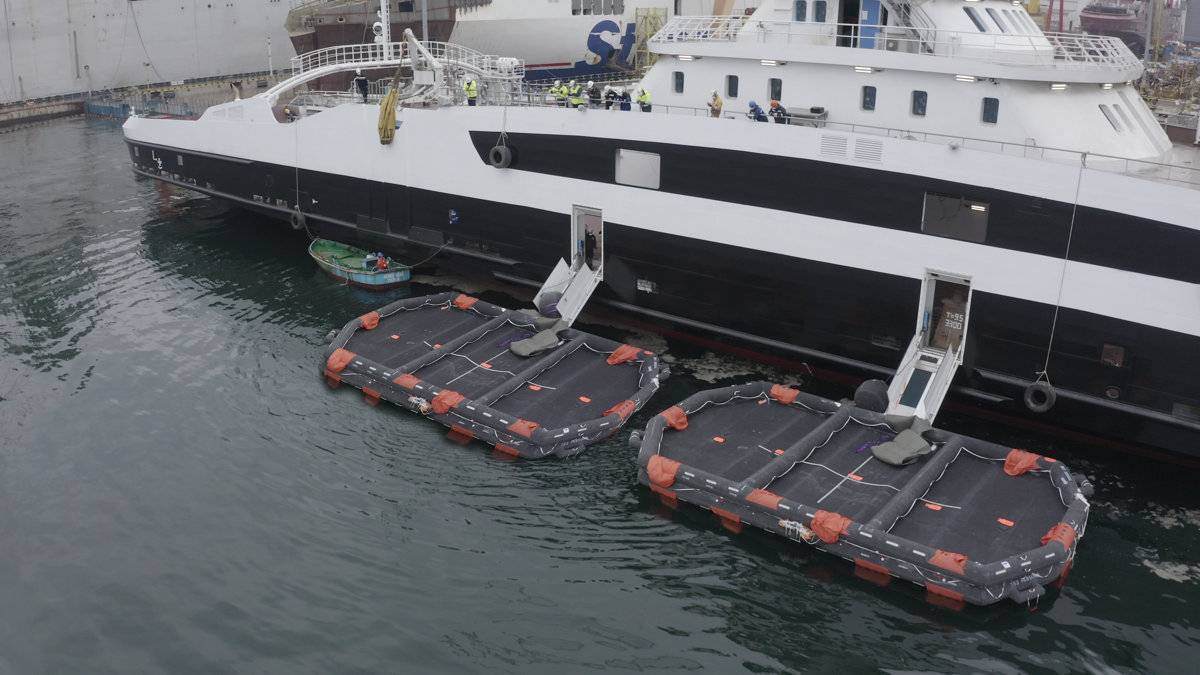
- Area: Weekly visual inspection of TELB condition, hooks, and attachment points per SOLAS III/20Check: Weekly visual inspection of TELB condition, hooks, and attachment points per SOLAS III/20
- Area: Monthly engine run-test for minimum 3 minutes to verify propulsion system functionalityCheck: Monthly engine run-test for minimum 3 minutes to verify propulsion system functionality
- Area: Monthly davit structural inspection including wires, sheaves, and brake mechanismsCheck: Monthly davit structural inspection including wires, sheaves, and brake mechanisms
- Area: Annual certified service agent inspection of lifeboat hull structure, buoyancy foam, and watertight integrityCheck: Annual certified service agent inspection of lifeboat hull structure, buoyancy foam, and watertight integrity
- Area: Annual testing and adjustment of On-Load Release Hooks with hydrostatic interlock verificationCheck: Annual testing and adjustment of On-Load Release Hooks with hydrostatic interlock verification
- Area: Annual inspection of windows, hatches, doors, and all hull penetrations for watertightnessCheck: Annual inspection of windows, hatches, doors, and all hull penetrations for watertightness
- Area: Five-yearly comprehensive service including complete disassembly and overhaul of release unitsCheck: Five-yearly comprehensive service including complete disassembly and overhaul of release units
- Area: Verification of self-righting capability and polyurethane foam buoyancy integrity per LSA CodeCheck: Verification of self-righting capability and polyurethane foam buoyancy integrity per LSA Code
Typ-universelle Inspektionspunkte fuer Lifeboats (verifiziert, 2026-06).
- Area: Weekly visual inspection of TELB condition, hooks, and attachment points per SOLAS III/20Check: Weekly visual inspection of TELB condition, hooks, and attachment points per SOLAS III/20
- Area: Monthly engine run-test for minimum 3 minutes to verify propulsion system functionalityCheck: Monthly engine run-test for minimum 3 minutes to verify propulsion system functionality
- Area: Monthly davit structural inspection including wires, sheaves, and brake mechanismsCheck: Monthly davit structural inspection including wires, sheaves, and brake mechanisms
- Area: Annual certified service agent inspection of lifeboat hull structure, buoyancy foam, and watertight integrityCheck: Annual certified service agent inspection of lifeboat hull structure, buoyancy foam, and watertight integrity
- Area: Annual testing and adjustment of On-Load Release Hooks with hydrostatic interlock verificationCheck: Annual testing and adjustment of On-Load Release Hooks with hydrostatic interlock verification
- Area: Annual inspection of windows, hatches, doors, and all hull penetrations for watertightnessCheck: Annual inspection of windows, hatches, doors, and all hull penetrations for watertightness
- Area: Five-yearly comprehensive service including complete disassembly and overhaul of release unitsCheck: Five-yearly comprehensive service including complete disassembly and overhaul of release units
- Area: Verification of self-righting capability and polyurethane foam buoyancy integrity per LSA CodeCheck: Verification of self-righting capability and polyurethane foam buoyancy integrity per LSA Code
Typ-universelle Inspektionspunkte fuer Lifeboats (verifiziert, 2026-06).
- Area: Weekly visual inspection of TELB condition, hooks, and attachment points per SOLAS III/20Check: Weekly visual inspection of TELB condition, hooks, and attachment points per SOLAS III/20
- Area: Monthly engine run-test for minimum 3 minutes to verify propulsion system functionalityCheck: Monthly engine run-test for minimum 3 minutes to verify propulsion system functionality
- Area: Monthly davit structural inspection including wires, sheaves, and brake mechanismsCheck: Monthly davit structural inspection including wires, sheaves, and brake mechanisms
- Area: Annual certified service agent inspection of lifeboat hull structure, buoyancy foam, and watertight integrityCheck: Annual certified service agent inspection of lifeboat hull structure, buoyancy foam, and watertight integrity
- Area: Annual testing and adjustment of On-Load Release Hooks with hydrostatic interlock verificationCheck: Annual testing and adjustment of On-Load Release Hooks with hydrostatic interlock verification
- Area: Annual inspection of windows, hatches, doors, and all hull penetrations for watertightnessCheck: Annual inspection of windows, hatches, doors, and all hull penetrations for watertightness
- Area: Five-yearly comprehensive service including complete disassembly and overhaul of release unitsCheck: Five-yearly comprehensive service including complete disassembly and overhaul of release units
- Area: Verification of self-righting capability and polyurethane foam buoyancy integrity per LSA CodeCheck: Verification of self-righting capability and polyurethane foam buoyancy integrity per LSA Code
Typ-universelle Inspektionspunkte fuer Lifeboats (verifiziert, 2026-06).
- Area: Weekly visual inspection of TELB condition, hooks, and attachment points per SOLAS III/20Check: Weekly visual inspection of TELB condition, hooks, and attachment points per SOLAS III/20
- Area: Monthly engine run-test for minimum 3 minutes to verify propulsion system functionalityCheck: Monthly engine run-test for minimum 3 minutes to verify propulsion system functionality
- Area: Monthly davit structural inspection including wires, sheaves, and brake mechanismsCheck: Monthly davit structural inspection including wires, sheaves, and brake mechanisms
- Area: Annual certified service agent inspection of lifeboat hull structure, buoyancy foam, and watertight integrityCheck: Annual certified service agent inspection of lifeboat hull structure, buoyancy foam, and watertight integrity
- Area: Annual testing and adjustment of On-Load Release Hooks with hydrostatic interlock verificationCheck: Annual testing and adjustment of On-Load Release Hooks with hydrostatic interlock verification
- Area: Annual inspection of windows, hatches, doors, and all hull penetrations for watertightnessCheck: Annual inspection of windows, hatches, doors, and all hull penetrations for watertightness
- Area: Five-yearly comprehensive service including complete disassembly and overhaul of release unitsCheck: Five-yearly comprehensive service including complete disassembly and overhaul of release units
- Area: Verification of self-righting capability and polyurethane foam buoyancy integrity per LSA CodeCheck: Verification of self-righting capability and polyurethane foam buoyancy integrity per LSA Code
Typ-universelle Inspektionspunkte fuer Lifeboats (verifiziert, 2026-06).
- Area: Weekly visual inspection of TELB condition, hooks, and attachment points per SOLAS III/20Check: Weekly visual inspection of TELB condition, hooks, and attachment points per SOLAS III/20
- Area: Monthly engine run-test for minimum 3 minutes to verify propulsion system functionalityCheck: Monthly engine run-test for minimum 3 minutes to verify propulsion system functionality
- Area: Monthly davit structural inspection including wires, sheaves, and brake mechanismsCheck: Monthly davit structural inspection including wires, sheaves, and brake mechanisms
- Area: Annual certified service agent inspection of lifeboat hull structure, buoyancy foam, and watertight integrityCheck: Annual certified service agent inspection of lifeboat hull structure, buoyancy foam, and watertight integrity
- Area: Annual testing and adjustment of On-Load Release Hooks with hydrostatic interlock verificationCheck: Annual testing and adjustment of On-Load Release Hooks with hydrostatic interlock verification
- Area: Annual inspection of windows, hatches, doors, and all hull penetrations for watertightnessCheck: Annual inspection of windows, hatches, doors, and all hull penetrations for watertightness
- Area: Five-yearly comprehensive service including complete disassembly and overhaul of release unitsCheck: Five-yearly comprehensive service including complete disassembly and overhaul of release units
- Area: Verification of self-righting capability and polyurethane foam buoyancy integrity per LSA CodeCheck: Verification of self-righting capability and polyurethane foam buoyancy integrity per LSA Code
Typ-universelle Inspektionspunkte fuer Lifeboats (verifiziert, 2026-06).
AGI GROUP
5 ✓ 5 verified- Area: Weekly visual inspection of hull structure, fixed and loose equipment, including condition of davit hooks and attachment pointsCheck: Weekly visual inspection of hull structure, fixed and loose equipment, including condition of davit hooks and attachment points
- Area: Weekly operational test: run inboard diesel engine for minimum 3 minutes under supervision and reset on-load release gearCheck: Weekly operational test: run inboard diesel engine for minimum 3 minutes under supervision and reset on-load release gear
- Area: Monthly turn-out inspection: verify lifeboat can be launched from stowed position and check all LSA equipment inventoryCheck: Monthly turn-out inspection: verify lifeboat can be launched from stowed position and check all LSA equipment inventory
- Area: Annual thorough examination of boat structure (internal and external), propulsion system, air supply system, and sprinkler/fire system functionalityCheck: Annual thorough examination of boat structure (internal and external), propulsion system, air supply system, and sprinkler/fire system functionality
- Area: Annual fire-resistance material verification: confirm fire-retardant GRP plastic and closure mechanisms withstand specificationsCheck: Annual fire-resistance material verification: confirm fire-retardant GRP plastic and closure mechanisms withstand specifications
- Area: Annual ventilation system check: verify ventilation capacity >= 5 m³/hour per person and operational integrity for 24+ hoursCheck: Annual ventilation system check: verify ventilation capacity >= 5 m³/hour per person and operational integrity for 24+ hours
- Area: Annual self-righting mechanism test: confirm automatic uprighting within 15 seconds from capsized positionCheck: Annual self-righting mechanism test: confirm automatic uprighting within 15 seconds from capsized position
- Area: Five-yearly comprehensive overhaul, overload operational test, and recertification by manufacturer or authorized IACS-certified service providerCheck: Five-yearly comprehensive overhaul, overload operational test, and recertification by manufacturer or authorized IACS-certified service provider
Typ-universelle Inspektionspunkte fuer Lifeboats (verifiziert, 2026-06).
- Area: Weekly visual inspection of hull structure, fixed and loose equipment, including condition of davit hooks and attachment pointsCheck: Weekly visual inspection of hull structure, fixed and loose equipment, including condition of davit hooks and attachment points
- Area: Weekly operational test: run inboard diesel engine for minimum 3 minutes under supervision and reset on-load release gearCheck: Weekly operational test: run inboard diesel engine for minimum 3 minutes under supervision and reset on-load release gear
- Area: Monthly turn-out inspection: verify lifeboat can be launched from stowed position and check all LSA equipment inventoryCheck: Monthly turn-out inspection: verify lifeboat can be launched from stowed position and check all LSA equipment inventory
- Area: Annual thorough examination of boat structure (internal and external), propulsion system, air supply system, and sprinkler/fire system functionalityCheck: Annual thorough examination of boat structure (internal and external), propulsion system, air supply system, and sprinkler/fire system functionality
- Area: Annual fire-resistance material verification: confirm fire-retardant GRP plastic and closure mechanisms withstand specificationsCheck: Annual fire-resistance material verification: confirm fire-retardant GRP plastic and closure mechanisms withstand specifications
- Area: Annual ventilation system check: verify ventilation capacity >= 5 m³/hour per person and operational integrity for 24+ hoursCheck: Annual ventilation system check: verify ventilation capacity >= 5 m³/hour per person and operational integrity for 24+ hours
- Area: Annual self-righting mechanism test: confirm automatic uprighting within 15 seconds from capsized positionCheck: Annual self-righting mechanism test: confirm automatic uprighting within 15 seconds from capsized position
- Area: Five-yearly comprehensive overhaul, overload operational test, and recertification by manufacturer or authorized IACS-certified service providerCheck: Five-yearly comprehensive overhaul, overload operational test, and recertification by manufacturer or authorized IACS-certified service provider
Typ-universelle Inspektionspunkte fuer Lifeboats (verifiziert, 2026-06).
- Area: Weekly visual inspection of hull structure, fixed and loose equipment, including condition of davit hooks and attachment pointsCheck: Weekly visual inspection of hull structure, fixed and loose equipment, including condition of davit hooks and attachment points
- Area: Weekly operational test: run inboard diesel engine for minimum 3 minutes under supervision and reset on-load release gearCheck: Weekly operational test: run inboard diesel engine for minimum 3 minutes under supervision and reset on-load release gear
- Area: Monthly turn-out inspection: verify lifeboat can be launched from stowed position and check all LSA equipment inventoryCheck: Monthly turn-out inspection: verify lifeboat can be launched from stowed position and check all LSA equipment inventory
- Area: Annual thorough examination of boat structure (internal and external), propulsion system, air supply system, and sprinkler/fire system functionalityCheck: Annual thorough examination of boat structure (internal and external), propulsion system, air supply system, and sprinkler/fire system functionality
- Area: Annual fire-resistance material verification: confirm fire-retardant GRP plastic and closure mechanisms withstand specificationsCheck: Annual fire-resistance material verification: confirm fire-retardant GRP plastic and closure mechanisms withstand specifications
- Area: Annual ventilation system check: verify ventilation capacity >= 5 m³/hour per person and operational integrity for 24+ hoursCheck: Annual ventilation system check: verify ventilation capacity >= 5 m³/hour per person and operational integrity for 24+ hours
- Area: Annual self-righting mechanism test: confirm automatic uprighting within 15 seconds from capsized positionCheck: Annual self-righting mechanism test: confirm automatic uprighting within 15 seconds from capsized position
- Area: Five-yearly comprehensive overhaul, overload operational test, and recertification by manufacturer or authorized IACS-certified service providerCheck: Five-yearly comprehensive overhaul, overload operational test, and recertification by manufacturer or authorized IACS-certified service provider
Typ-universelle Inspektionspunkte fuer Lifeboats (verifiziert, 2026-06).
- Area: Weekly visual inspection of hull structure, fixed and loose equipment, including condition of davit hooks and attachment pointsCheck: Weekly visual inspection of hull structure, fixed and loose equipment, including condition of davit hooks and attachment points
- Area: Weekly operational test: run inboard diesel engine for minimum 3 minutes under supervision and reset on-load release gearCheck: Weekly operational test: run inboard diesel engine for minimum 3 minutes under supervision and reset on-load release gear
- Area: Monthly turn-out inspection: verify lifeboat can be launched from stowed position and check all LSA equipment inventoryCheck: Monthly turn-out inspection: verify lifeboat can be launched from stowed position and check all LSA equipment inventory
- Area: Annual thorough examination of boat structure (internal and external), propulsion system, air supply system, and sprinkler/fire system functionalityCheck: Annual thorough examination of boat structure (internal and external), propulsion system, air supply system, and sprinkler/fire system functionality
- Area: Annual fire-resistance material verification: confirm fire-retardant GRP plastic and closure mechanisms withstand specificationsCheck: Annual fire-resistance material verification: confirm fire-retardant GRP plastic and closure mechanisms withstand specifications
- Area: Annual ventilation system check: verify ventilation capacity >= 5 m³/hour per person and operational integrity for 24+ hoursCheck: Annual ventilation system check: verify ventilation capacity >= 5 m³/hour per person and operational integrity for 24+ hours
- Area: Annual self-righting mechanism test: confirm automatic uprighting within 15 seconds from capsized positionCheck: Annual self-righting mechanism test: confirm automatic uprighting within 15 seconds from capsized position
- Area: Five-yearly comprehensive overhaul, overload operational test, and recertification by manufacturer or authorized IACS-certified service providerCheck: Five-yearly comprehensive overhaul, overload operational test, and recertification by manufacturer or authorized IACS-certified service provider
Typ-universelle Inspektionspunkte fuer Lifeboats (verifiziert, 2026-06).
- Area: Weekly visual inspection of hull structure, fixed and loose equipment, including condition of davit hooks and attachment pointsCheck: Weekly visual inspection of hull structure, fixed and loose equipment, including condition of davit hooks and attachment points
- Area: Weekly operational test: run inboard diesel engine for minimum 3 minutes under supervision and reset on-load release gearCheck: Weekly operational test: run inboard diesel engine for minimum 3 minutes under supervision and reset on-load release gear
- Area: Monthly turn-out inspection: verify lifeboat can be launched from stowed position and check all LSA equipment inventoryCheck: Monthly turn-out inspection: verify lifeboat can be launched from stowed position and check all LSA equipment inventory
- Area: Annual thorough examination of boat structure (internal and external), propulsion system, air supply system, and sprinkler/fire system functionalityCheck: Annual thorough examination of boat structure (internal and external), propulsion system, air supply system, and sprinkler/fire system functionality
- Area: Annual fire-resistance material verification: confirm fire-retardant GRP plastic and closure mechanisms withstand specificationsCheck: Annual fire-resistance material verification: confirm fire-retardant GRP plastic and closure mechanisms withstand specifications
- Area: Annual ventilation system check: verify ventilation capacity >= 5 m³/hour per person and operational integrity for 24+ hoursCheck: Annual ventilation system check: verify ventilation capacity >= 5 m³/hour per person and operational integrity for 24+ hours
- Area: Annual self-righting mechanism test: confirm automatic uprighting within 15 seconds from capsized positionCheck: Annual self-righting mechanism test: confirm automatic uprighting within 15 seconds from capsized position
- Area: Five-yearly comprehensive overhaul, overload operational test, and recertification by manufacturer or authorized IACS-certified service providerCheck: Five-yearly comprehensive overhaul, overload operational test, and recertification by manufacturer or authorized IACS-certified service provider
Typ-universelle Inspektionspunkte fuer Lifeboats (verifiziert, 2026-06).
Zhongyuan Ship Machinery Manufacture
2 ✓ 2 verified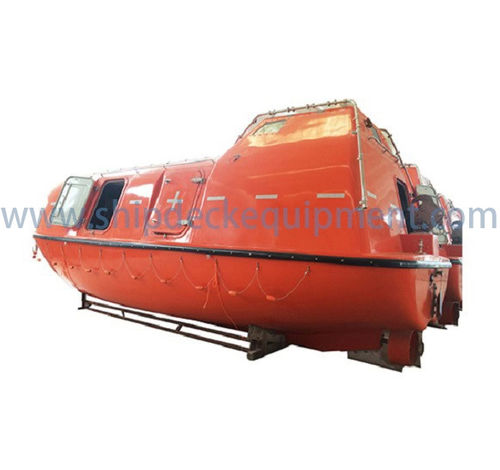
- Area: Hull structural integrity and GRP composite condition including cracks, delamination, and moisture ingressCheck: Hull structural integrity and GRP composite condition including cracks, delamination, and moisture ingress
- Area: Watertight door and hatch seals, frames, and operating mechanismsCheck: Watertight door and hatch seals, frames, and operating mechanisms
- Area: Davit hook systems, shackles, and hydrostatic release units (HRU) functionalityCheck: Davit hook systems, shackles, and hydrostatic release units (HRU) functionality
- Area: Engine condition, fuel systems, and emergency start capability (diesel engine for motorized models)Check: Engine condition, fuel systems, and emergency start capability (diesel engine for motorized models)
- Area: Buoyancy tank integrity and polyurethane foam saturation levelsCheck: Buoyancy tank integrity and polyurethane foam saturation levels
- Area: Communication and signaling equipment (including radio, flares, mirrors)Check: Communication and signaling equipment (including radio, flares, mirrors)
- Area: Life-saving appliances inventory (life jackets, survival kits, emergency food/water)Check: Life-saving appliances inventory (life jackets, survival kits, emergency food/water)
- Area: Fire-protection systems and fire detection equipment (for tanker versions with spraying systems)Check: Fire-protection systems and fire detection equipment (for tanker versions with spraying systems)
- Area: Electrical systems and backup power suppliesCheck: Electrical systems and backup power supplies
- Area: Deck fittings, grab rails, and structural attachment pointsCheck: Deck fittings, grab rails, and structural attachment points
Typ-universelle Inspektionspunkte fuer Lifeboats (verifiziert, 2026-06).
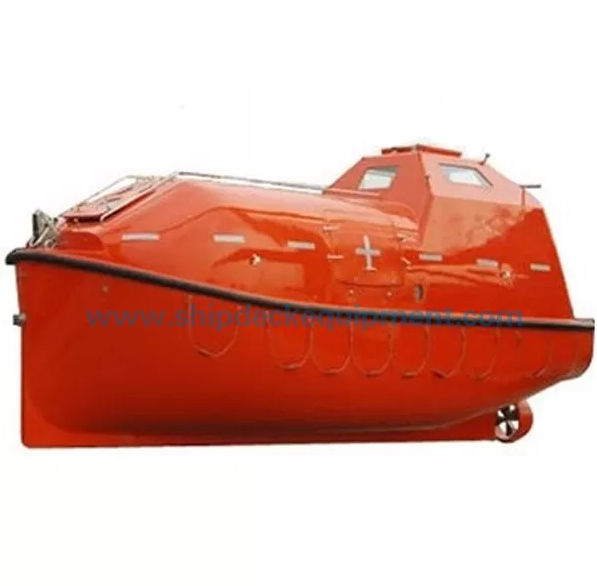
- Area: Hull structural integrity and GRP composite condition including cracks, delamination, and moisture ingressCheck: Hull structural integrity and GRP composite condition including cracks, delamination, and moisture ingress
- Area: Watertight door and hatch seals, frames, and operating mechanismsCheck: Watertight door and hatch seals, frames, and operating mechanisms
- Area: Davit hook systems, shackles, and hydrostatic release units (HRU) functionalityCheck: Davit hook systems, shackles, and hydrostatic release units (HRU) functionality
- Area: Engine condition, fuel systems, and emergency start capability (diesel engine for motorized models)Check: Engine condition, fuel systems, and emergency start capability (diesel engine for motorized models)
- Area: Buoyancy tank integrity and polyurethane foam saturation levelsCheck: Buoyancy tank integrity and polyurethane foam saturation levels
- Area: Communication and signaling equipment (including radio, flares, mirrors)Check: Communication and signaling equipment (including radio, flares, mirrors)
- Area: Life-saving appliances inventory (life jackets, survival kits, emergency food/water)Check: Life-saving appliances inventory (life jackets, survival kits, emergency food/water)
- Area: Fire-protection systems and fire detection equipment (for tanker versions with spraying systems)Check: Fire-protection systems and fire detection equipment (for tanker versions with spraying systems)
- Area: Electrical systems and backup power suppliesCheck: Electrical systems and backup power supplies
- Area: Deck fittings, grab rails, and structural attachment pointsCheck: Deck fittings, grab rails, and structural attachment points
Typ-universelle Inspektionspunkte fuer Lifeboats (verifiziert, 2026-06).
Norsafe / Survitec
48
- Engine, battery, inflation or release-system deterioration causes failed drills or unreliable deployment depending on the appliance
- Hook, release, painter, securing or interlock faults cause stiff operation, incorrect indication or unsafe deployment
- Hull, fabric, canopy, seal or container damage causes water ingress, pressure loss or reduced protection
- Propulsion, steering, fall or davit faults cause poor manoeuvrability or failed launching and recovery
- Missing, expired or damaged emergency inventory is detected during drills or statutory inspection
- Loss of electrical, hydraulic, pneumatic, or other service supply caused by a tripped protection device, leakage, blockage, or upstream fault results in failed starting or loss of function
- Mechanical wear, corrosion, fouling, or contamination of moving and wetted parts causes increased noise, leakage, sticking, vibration, or reduced performance
- Seal, gasket, hose, cable, or connection deterioration from age, heat, vibration, or environmental exposure produces visible leakage, intermittent signals, or loss of pressure
- Sensor, switch, actuator, relay, or control-system faults can cause incorrect indication, nuisance alarms, failed automatic sequences, or loss of remote control
- Incorrect adjustment, assembly, or maintenance can lead to unstable operation, recurrent alarms, or performance that differs from the vessel's normal baseline

- Loss of electrical, hydraulic, pneumatic, or other service supply caused by a tripped protection device, leakage, blockage, or upstream fault results in failed starting or loss of function
- Mechanical wear, corrosion, fouling, or contamination of moving and wetted parts causes increased noise, leakage, sticking, vibration, or reduced performance
- Seal, gasket, hose, cable, or connection deterioration from age, heat, vibration, or environmental exposure produces visible leakage, intermittent signals, or loss of pressure
- Sensor, switch, actuator, relay, or control-system faults can cause incorrect indication, nuisance alarms, failed automatic sequences, or loss of remote control
- Incorrect adjustment, assembly, or maintenance can lead to unstable operation, recurrent alarms, or performance that differs from the vessel's normal baseline
- Loss of electrical, hydraulic, pneumatic, or other service supply caused by a tripped protection device, leakage, blockage, or upstream fault results in failed starting or loss of function
- Mechanical wear, corrosion, fouling, or contamination of moving and wetted parts causes increased noise, leakage, sticking, vibration, or reduced performance
- Seal, gasket, hose, cable, or connection deterioration from age, heat, vibration, or environmental exposure produces visible leakage, intermittent signals, or loss of pressure
- Sensor, switch, actuator, relay, or control-system faults can cause incorrect indication, nuisance alarms, failed automatic sequences, or loss of remote control
- Incorrect adjustment, assembly, or maintenance can lead to unstable operation, recurrent alarms, or performance that differs from the vessel's normal baseline

- Loss of electrical, hydraulic, pneumatic, or other service supply caused by a tripped protection device, leakage, blockage, or upstream fault results in failed starting or loss of function
- Mechanical wear, corrosion, fouling, or contamination of moving and wetted parts causes increased noise, leakage, sticking, vibration, or reduced performance
- Seal, gasket, hose, cable, or connection deterioration from age, heat, vibration, or environmental exposure produces visible leakage, intermittent signals, or loss of pressure
- Sensor, switch, actuator, relay, or control-system faults can cause incorrect indication, nuisance alarms, failed automatic sequences, or loss of remote control
- Incorrect adjustment, assembly, or maintenance can lead to unstable operation, recurrent alarms, or performance that differs from the vessel's normal baseline
- Loss of electrical, hydraulic, pneumatic, or other service supply caused by a tripped protection device, leakage, blockage, or upstream fault results in failed starting or loss of function
- Mechanical wear, corrosion, fouling, or contamination of moving and wetted parts causes increased noise, leakage, sticking, vibration, or reduced performance
- Seal, gasket, hose, cable, or connection deterioration from age, heat, vibration, or environmental exposure produces visible leakage, intermittent signals, or loss of pressure
- Sensor, switch, actuator, relay, or control-system faults can cause incorrect indication, nuisance alarms, failed automatic sequences, or loss of remote control
- Incorrect adjustment, assembly, or maintenance can lead to unstable operation, recurrent alarms, or performance that differs from the vessel's normal baseline
- Loss of electrical, hydraulic, pneumatic, or other service supply caused by a tripped protection device, leakage, blockage, or upstream fault results in failed starting or loss of function
- Mechanical wear, corrosion, fouling, or contamination of moving and wetted parts causes increased noise, leakage, sticking, vibration, or reduced performance
- Seal, gasket, hose, cable, or connection deterioration from age, heat, vibration, or environmental exposure produces visible leakage, intermittent signals, or loss of pressure
- Sensor, switch, actuator, relay, or control-system faults can cause incorrect indication, nuisance alarms, failed automatic sequences, or loss of remote control
- Incorrect adjustment, assembly, or maintenance can lead to unstable operation, recurrent alarms, or performance that differs from the vessel's normal baseline
- Loss of electrical, hydraulic, pneumatic, or other service supply caused by a tripped protection device, leakage, blockage, or upstream fault results in failed starting or loss of function
- Mechanical wear, corrosion, fouling, or contamination of moving and wetted parts causes increased noise, leakage, sticking, vibration, or reduced performance
- Seal, gasket, hose, cable, or connection deterioration from age, heat, vibration, or environmental exposure produces visible leakage, intermittent signals, or loss of pressure
- Sensor, switch, actuator, relay, or control-system faults can cause incorrect indication, nuisance alarms, failed automatic sequences, or loss of remote control
- Incorrect adjustment, assembly, or maintenance can lead to unstable operation, recurrent alarms, or performance that differs from the vessel's normal baseline
- Loss of electrical, hydraulic, pneumatic, or other service supply caused by a tripped protection device, leakage, blockage, or upstream fault results in failed starting or loss of function
- Mechanical wear, corrosion, fouling, or contamination of moving and wetted parts causes increased noise, leakage, sticking, vibration, or reduced performance
- Seal, gasket, hose, cable, or connection deterioration from age, heat, vibration, or environmental exposure produces visible leakage, intermittent signals, or loss of pressure
- Sensor, switch, actuator, relay, or control-system faults can cause incorrect indication, nuisance alarms, failed automatic sequences, or loss of remote control
- Incorrect adjustment, assembly, or maintenance can lead to unstable operation, recurrent alarms, or performance that differs from the vessel's normal baseline
- Loss of electrical, hydraulic, pneumatic, or other service supply caused by a tripped protection device, leakage, blockage, or upstream fault results in failed starting or loss of function
- Mechanical wear, corrosion, fouling, or contamination of moving and wetted parts causes increased noise, leakage, sticking, vibration, or reduced performance
- Seal, gasket, hose, cable, or connection deterioration from age, heat, vibration, or environmental exposure produces visible leakage, intermittent signals, or loss of pressure
- Sensor, switch, actuator, relay, or control-system faults can cause incorrect indication, nuisance alarms, failed automatic sequences, or loss of remote control
- Incorrect adjustment, assembly, or maintenance can lead to unstable operation, recurrent alarms, or performance that differs from the vessel's normal baseline
- Loss of electrical, hydraulic, pneumatic, or other service supply caused by a tripped protection device, leakage, blockage, or upstream fault results in failed starting or loss of function
- Mechanical wear, corrosion, fouling, or contamination of moving and wetted parts causes increased noise, leakage, sticking, vibration, or reduced performance
- Seal, gasket, hose, cable, or connection deterioration from age, heat, vibration, or environmental exposure produces visible leakage, intermittent signals, or loss of pressure
- Sensor, switch, actuator, relay, or control-system faults can cause incorrect indication, nuisance alarms, failed automatic sequences, or loss of remote control
- Incorrect adjustment, assembly, or maintenance can lead to unstable operation, recurrent alarms, or performance that differs from the vessel's normal baseline
- Loss of electrical, hydraulic, pneumatic, or other service supply caused by a tripped protection device, leakage, blockage, or upstream fault results in failed starting or loss of function
- Mechanical wear, corrosion, fouling, or contamination of moving and wetted parts causes increased noise, leakage, sticking, vibration, or reduced performance
- Seal, gasket, hose, cable, or connection deterioration from age, heat, vibration, or environmental exposure produces visible leakage, intermittent signals, or loss of pressure
- Sensor, switch, actuator, relay, or control-system faults can cause incorrect indication, nuisance alarms, failed automatic sequences, or loss of remote control
- Incorrect adjustment, assembly, or maintenance can lead to unstable operation, recurrent alarms, or performance that differs from the vessel's normal baseline
- Engine, battery, inflation or release-system deterioration causes failed drills or unreliable deployment depending on the appliance
- Hook, release, painter, securing or interlock faults cause stiff operation, incorrect indication or unsafe deployment
- Hull, fabric, canopy, seal or container damage causes water ingress, pressure loss or reduced protection
- Propulsion, steering, fall or davit faults cause poor manoeuvrability or failed launching and recovery
- Missing, expired or damaged emergency inventory is detected during drills or statutory inspection
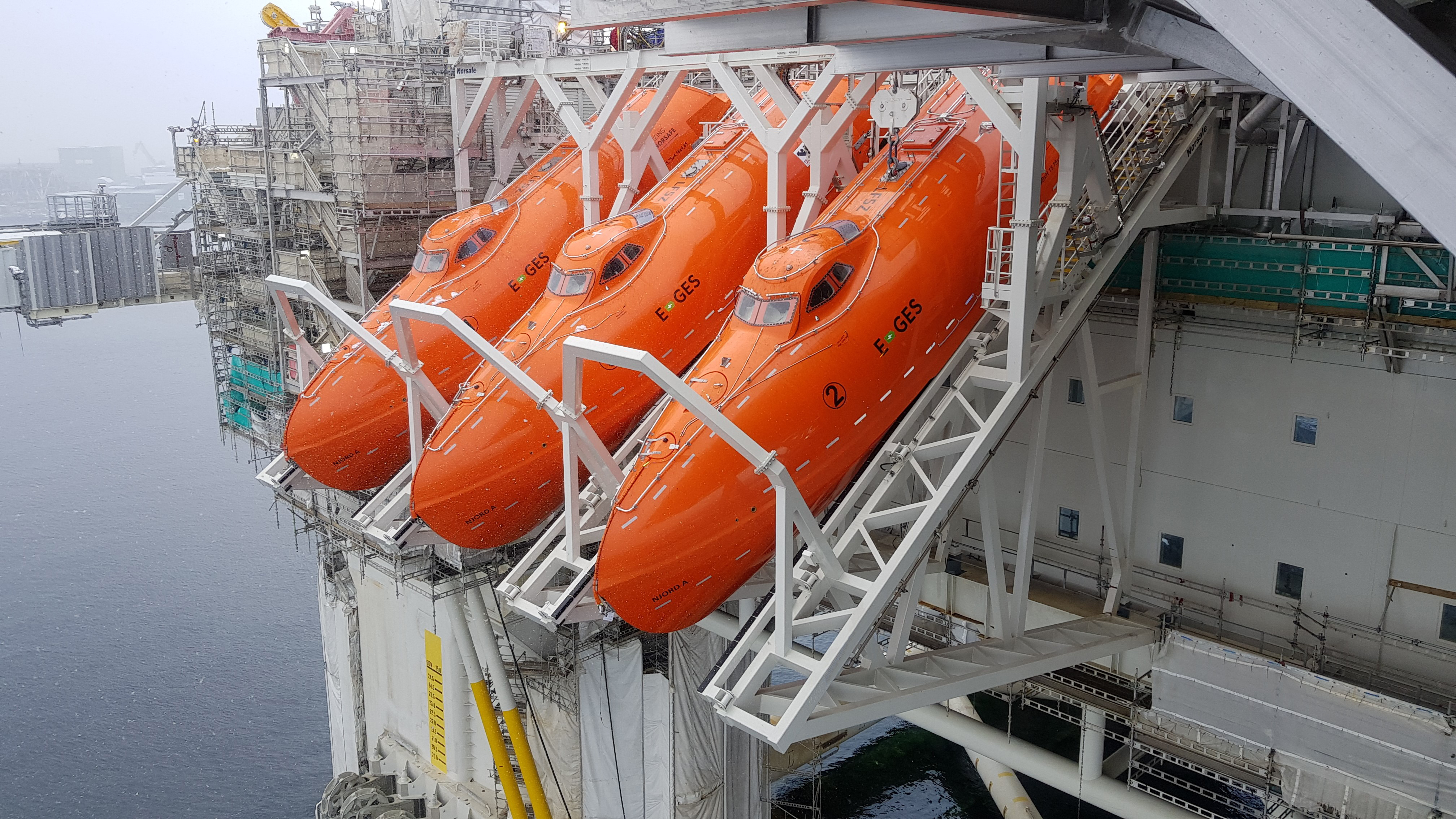
- Loss of electrical, hydraulic, pneumatic, or other service supply caused by a tripped protection device, leakage, blockage, or upstream fault results in failed starting or loss of function
- Mechanical wear, corrosion, fouling, or contamination of moving and wetted parts causes increased noise, leakage, sticking, vibration, or reduced performance
- Seal, gasket, hose, cable, or connection deterioration from age, heat, vibration, or environmental exposure produces visible leakage, intermittent signals, or loss of pressure
- Sensor, switch, actuator, relay, or control-system faults can cause incorrect indication, nuisance alarms, failed automatic sequences, or loss of remote control
- Incorrect adjustment, assembly, or maintenance can lead to unstable operation, recurrent alarms, or performance that differs from the vessel's normal baseline
- Loss of electrical, hydraulic, pneumatic, or other service supply caused by a tripped protection device, leakage, blockage, or upstream fault results in failed starting or loss of function
- Mechanical wear, corrosion, fouling, or contamination of moving and wetted parts causes increased noise, leakage, sticking, vibration, or reduced performance
- Seal, gasket, hose, cable, or connection deterioration from age, heat, vibration, or environmental exposure produces visible leakage, intermittent signals, or loss of pressure
- Sensor, switch, actuator, relay, or control-system faults can cause incorrect indication, nuisance alarms, failed automatic sequences, or loss of remote control
- Incorrect adjustment, assembly, or maintenance can lead to unstable operation, recurrent alarms, or performance that differs from the vessel's normal baseline
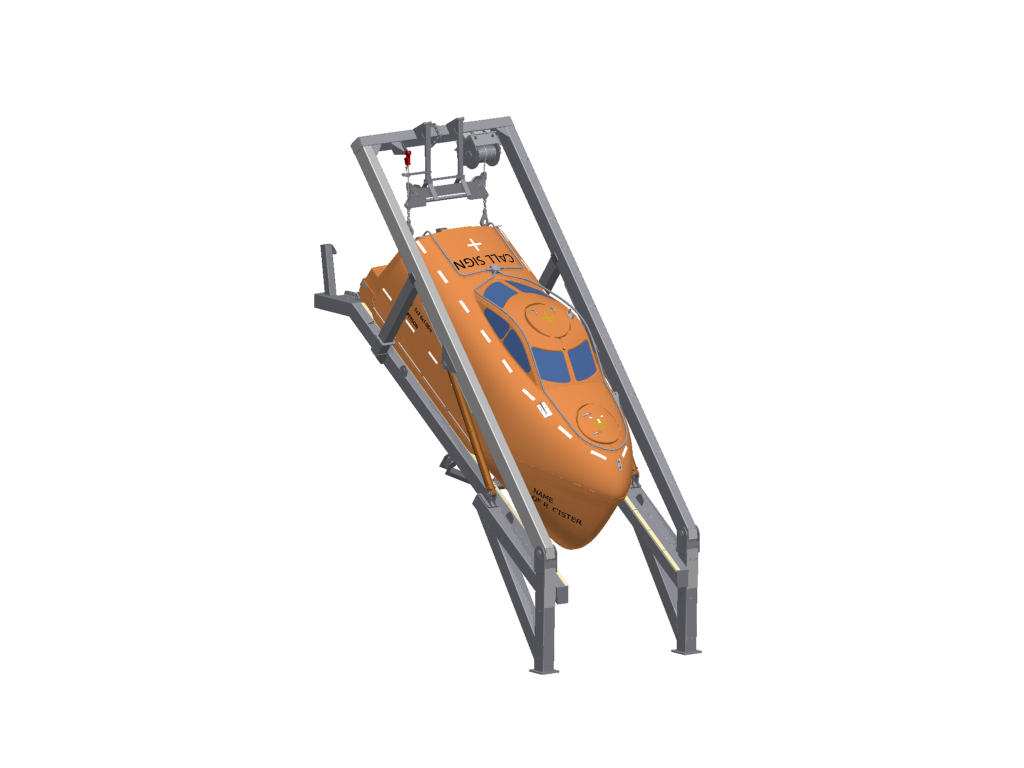
- Loss of electrical, hydraulic, pneumatic, or other service supply caused by a tripped protection device, leakage, blockage, or upstream fault results in failed starting or loss of function
- Mechanical wear, corrosion, fouling, or contamination of moving and wetted parts causes increased noise, leakage, sticking, vibration, or reduced performance
- Seal, gasket, hose, cable, or connection deterioration from age, heat, vibration, or environmental exposure produces visible leakage, intermittent signals, or loss of pressure
- Sensor, switch, actuator, relay, or control-system faults can cause incorrect indication, nuisance alarms, failed automatic sequences, or loss of remote control
- Incorrect adjustment, assembly, or maintenance can lead to unstable operation, recurrent alarms, or performance that differs from the vessel's normal baseline
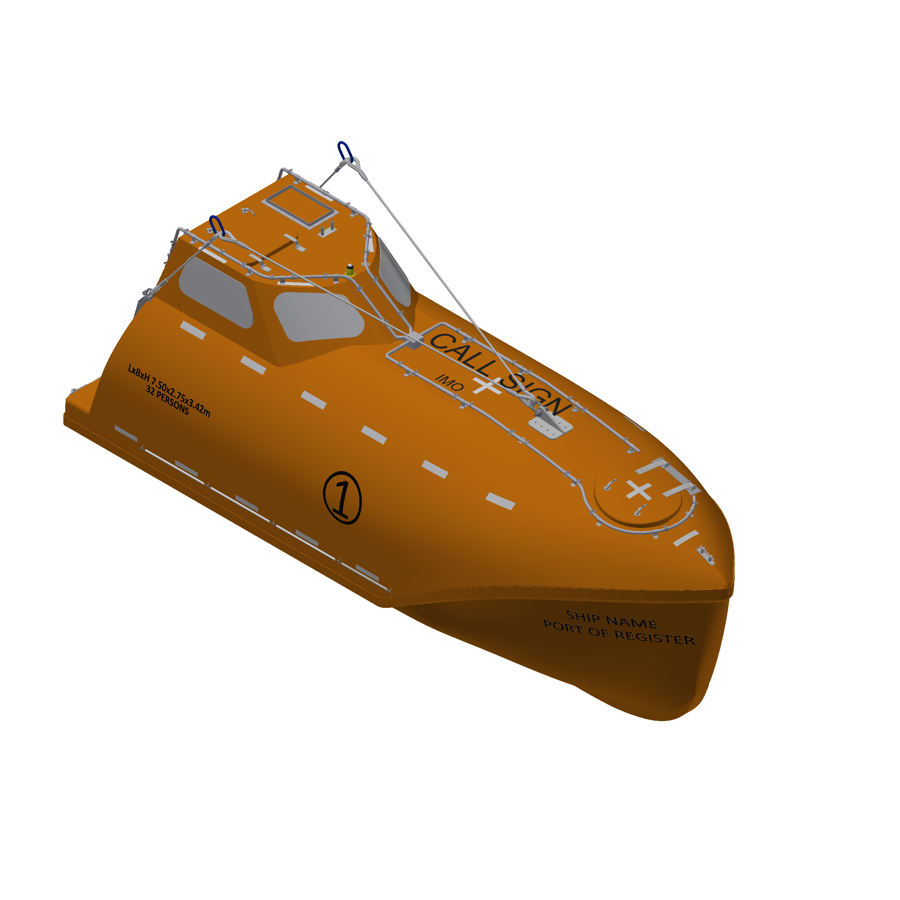
- Loss of electrical, hydraulic, pneumatic, or other service supply caused by a tripped protection device, leakage, blockage, or upstream fault results in failed starting or loss of function
- Mechanical wear, corrosion, fouling, or contamination of moving and wetted parts causes increased noise, leakage, sticking, vibration, or reduced performance
- Seal, gasket, hose, cable, or connection deterioration from age, heat, vibration, or environmental exposure produces visible leakage, intermittent signals, or loss of pressure
- Sensor, switch, actuator, relay, or control-system faults can cause incorrect indication, nuisance alarms, failed automatic sequences, or loss of remote control
- Incorrect adjustment, assembly, or maintenance can lead to unstable operation, recurrent alarms, or performance that differs from the vessel's normal baseline

- Loss of electrical, hydraulic, pneumatic, or other service supply caused by a tripped protection device, leakage, blockage, or upstream fault results in failed starting or loss of function
- Mechanical wear, corrosion, fouling, or contamination of moving and wetted parts causes increased noise, leakage, sticking, vibration, or reduced performance
- Seal, gasket, hose, cable, or connection deterioration from age, heat, vibration, or environmental exposure produces visible leakage, intermittent signals, or loss of pressure
- Sensor, switch, actuator, relay, or control-system faults can cause incorrect indication, nuisance alarms, failed automatic sequences, or loss of remote control
- Incorrect adjustment, assembly, or maintenance can lead to unstable operation, recurrent alarms, or performance that differs from the vessel's normal baseline

- Loss of electrical, hydraulic, pneumatic, or other service supply caused by a tripped protection device, leakage, blockage, or upstream fault results in failed starting or loss of function
- Mechanical wear, corrosion, fouling, or contamination of moving and wetted parts causes increased noise, leakage, sticking, vibration, or reduced performance
- Seal, gasket, hose, cable, or connection deterioration from age, heat, vibration, or environmental exposure produces visible leakage, intermittent signals, or loss of pressure
- Sensor, switch, actuator, relay, or control-system faults can cause incorrect indication, nuisance alarms, failed automatic sequences, or loss of remote control
- Incorrect adjustment, assembly, or maintenance can lead to unstable operation, recurrent alarms, or performance that differs from the vessel's normal baseline
- Loss of electrical, hydraulic, pneumatic, or other service supply caused by a tripped protection device, leakage, blockage, or upstream fault results in failed starting or loss of function
- Mechanical wear, corrosion, fouling, or contamination of moving and wetted parts causes increased noise, leakage, sticking, vibration, or reduced performance
- Seal, gasket, hose, cable, or connection deterioration from age, heat, vibration, or environmental exposure produces visible leakage, intermittent signals, or loss of pressure
- Sensor, switch, actuator, relay, or control-system faults can cause incorrect indication, nuisance alarms, failed automatic sequences, or loss of remote control
- Incorrect adjustment, assembly, or maintenance can lead to unstable operation, recurrent alarms, or performance that differs from the vessel's normal baseline
- Loss of electrical, hydraulic, pneumatic, or other service supply caused by a tripped protection device, leakage, blockage, or upstream fault results in failed starting or loss of function
- Mechanical wear, corrosion, fouling, or contamination of moving and wetted parts causes increased noise, leakage, sticking, vibration, or reduced performance
- Seal, gasket, hose, cable, or connection deterioration from age, heat, vibration, or environmental exposure produces visible leakage, intermittent signals, or loss of pressure
- Sensor, switch, actuator, relay, or control-system faults can cause incorrect indication, nuisance alarms, failed automatic sequences, or loss of remote control
- Incorrect adjustment, assembly, or maintenance can lead to unstable operation, recurrent alarms, or performance that differs from the vessel's normal baseline
- Loss of electrical, hydraulic, pneumatic, or other service supply caused by a tripped protection device, leakage, blockage, or upstream fault results in failed starting or loss of function
- Mechanical wear, corrosion, fouling, or contamination of moving and wetted parts causes increased noise, leakage, sticking, vibration, or reduced performance
- Seal, gasket, hose, cable, or connection deterioration from age, heat, vibration, or environmental exposure produces visible leakage, intermittent signals, or loss of pressure
- Sensor, switch, actuator, relay, or control-system faults can cause incorrect indication, nuisance alarms, failed automatic sequences, or loss of remote control
- Incorrect adjustment, assembly, or maintenance can lead to unstable operation, recurrent alarms, or performance that differs from the vessel's normal baseline
- Loss of electrical, hydraulic, pneumatic, or other service supply caused by a tripped protection device, leakage, blockage, or upstream fault results in failed starting or loss of function
- Mechanical wear, corrosion, fouling, or contamination of moving and wetted parts causes increased noise, leakage, sticking, vibration, or reduced performance
- Seal, gasket, hose, cable, or connection deterioration from age, heat, vibration, or environmental exposure produces visible leakage, intermittent signals, or loss of pressure
- Sensor, switch, actuator, relay, or control-system faults can cause incorrect indication, nuisance alarms, failed automatic sequences, or loss of remote control
- Incorrect adjustment, assembly, or maintenance can lead to unstable operation, recurrent alarms, or performance that differs from the vessel's normal baseline
- Loss of electrical, hydraulic, pneumatic, or other service supply caused by a tripped protection device, leakage, blockage, or upstream fault results in failed starting or loss of function
- Mechanical wear, corrosion, fouling, or contamination of moving and wetted parts causes increased noise, leakage, sticking, vibration, or reduced performance
- Seal, gasket, hose, cable, or connection deterioration from age, heat, vibration, or environmental exposure produces visible leakage, intermittent signals, or loss of pressure
- Sensor, switch, actuator, relay, or control-system faults can cause incorrect indication, nuisance alarms, failed automatic sequences, or loss of remote control
- Incorrect adjustment, assembly, or maintenance can lead to unstable operation, recurrent alarms, or performance that differs from the vessel's normal baseline
- Corrosion or mechanical damage to securing and release parts can impair launching, found as seized, deformed or heavily corroded components
- Degraded seals, fabric, buoyancy or enclosure components can compromise readiness, seen as damage, leakage or failed service inspection
- Expired or deteriorated survival-equipment contents can leave the appliance non-compliant, found during inventory or service checks
- Battery, lighting or communication-device failure can reduce emergency functionality, noticed during scheduled tests
- Poor stowage, obstruction or incorrect lashing can delay deployment, found during deck inspection or drills
- Corrosion or mechanical damage to securing and release parts can impair launching, found as seized, deformed or heavily corroded components
- Degraded seals, fabric, buoyancy or enclosure components can compromise readiness, seen as damage, leakage or failed service inspection
- Expired or deteriorated survival-equipment contents can leave the appliance non-compliant, found during inventory or service checks
- Battery, lighting or communication-device failure can reduce emergency functionality, noticed during scheduled tests
- Poor stowage, obstruction or incorrect lashing can delay deployment, found during deck inspection or drills
- Corrosion or mechanical damage to securing and release parts can impair launching, found as seized, deformed or heavily corroded components
- Degraded seals, fabric, buoyancy or enclosure components can compromise readiness, seen as damage, leakage or failed service inspection
- Expired or deteriorated survival-equipment contents can leave the appliance non-compliant, found during inventory or service checks
- Battery, lighting or communication-device failure can reduce emergency functionality, noticed during scheduled tests
- Poor stowage, obstruction or incorrect lashing can delay deployment, found during deck inspection or drills
- Corrosion or mechanical damage to securing and release parts can impair launching, found as seized, deformed or heavily corroded components
- Degraded seals, fabric, buoyancy or enclosure components can compromise readiness, seen as damage, leakage or failed service inspection
- Expired or deteriorated survival-equipment contents can leave the appliance non-compliant, found during inventory or service checks
- Battery, lighting or communication-device failure can reduce emergency functionality, noticed during scheduled tests
- Poor stowage, obstruction or incorrect lashing can delay deployment, found during deck inspection or drills
- Corrosion or mechanical damage to securing and release parts can impair launching, found as seized, deformed or heavily corroded components
- Degraded seals, fabric, buoyancy or enclosure components can compromise readiness, seen as damage, leakage or failed service inspection
- Expired or deteriorated survival-equipment contents can leave the appliance non-compliant, found during inventory or service checks
- Battery, lighting or communication-device failure can reduce emergency functionality, noticed during scheduled tests
- Poor stowage, obstruction or incorrect lashing can delay deployment, found during deck inspection or drills
- Corrosion or mechanical damage to securing and release parts can impair launching, found as seized, deformed or heavily corroded components
- Degraded seals, fabric, buoyancy or enclosure components can compromise readiness, seen as damage, leakage or failed service inspection
- Expired or deteriorated survival-equipment contents can leave the appliance non-compliant, found during inventory or service checks
- Battery, lighting or communication-device failure can reduce emergency functionality, noticed during scheduled tests
- Poor stowage, obstruction or incorrect lashing can delay deployment, found during deck inspection or drills
- Corrosion or mechanical damage to securing and release parts can impair launching, found as seized, deformed or heavily corroded components
- Degraded seals, fabric, buoyancy or enclosure components can compromise readiness, seen as damage, leakage or failed service inspection
- Expired or deteriorated survival-equipment contents can leave the appliance non-compliant, found during inventory or service checks
- Battery, lighting or communication-device failure can reduce emergency functionality, noticed during scheduled tests
- Poor stowage, obstruction or incorrect lashing can delay deployment, found during deck inspection or drills
- Corrosion or mechanical damage to securing and release parts can impair launching, found as seized, deformed or heavily corroded components
- Degraded seals, fabric, buoyancy or enclosure components can compromise readiness, seen as damage, leakage or failed service inspection
- Expired or deteriorated survival-equipment contents can leave the appliance non-compliant, found during inventory or service checks
- Battery, lighting or communication-device failure can reduce emergency functionality, noticed during scheduled tests
- Poor stowage, obstruction or incorrect lashing can delay deployment, found during deck inspection or drills
- Corrosion or mechanical damage to securing and release parts can impair launching, found as seized, deformed or heavily corroded components
- Degraded seals, fabric, buoyancy or enclosure components can compromise readiness, seen as damage, leakage or failed service inspection
- Expired or deteriorated survival-equipment contents can leave the appliance non-compliant, found during inventory or service checks
- Battery, lighting or communication-device failure can reduce emergency functionality, noticed during scheduled tests
- Poor stowage, obstruction or incorrect lashing can delay deployment, found during deck inspection or drills
- Corrosion or mechanical damage to securing and release parts can impair launching, found as seized, deformed or heavily corroded components
- Degraded seals, fabric, buoyancy or enclosure components can compromise readiness, seen as damage, leakage or failed service inspection
- Expired or deteriorated survival-equipment contents can leave the appliance non-compliant, found during inventory or service checks
- Battery, lighting or communication-device failure can reduce emergency functionality, noticed during scheduled tests
- Poor stowage, obstruction or incorrect lashing can delay deployment, found during deck inspection or drills
- Corrosion or mechanical damage to securing and release parts can impair launching, found as seized, deformed or heavily corroded components
- Degraded seals, fabric, buoyancy or enclosure components can compromise readiness, seen as damage, leakage or failed service inspection
- Expired or deteriorated survival-equipment contents can leave the appliance non-compliant, found during inventory or service checks
- Battery, lighting or communication-device failure can reduce emergency functionality, noticed during scheduled tests
- Poor stowage, obstruction or incorrect lashing can delay deployment, found during deck inspection or drills
- Corrosion or mechanical damage to securing and release parts can impair launching, found as seized, deformed or heavily corroded components
- Degraded seals, fabric, buoyancy or enclosure components can compromise readiness, seen as damage, leakage or failed service inspection
- Expired or deteriorated survival-equipment contents can leave the appliance non-compliant, found during inventory or service checks
- Battery, lighting or communication-device failure can reduce emergency functionality, noticed during scheduled tests
- Poor stowage, obstruction or incorrect lashing can delay deployment, found during deck inspection or drills
- Corrosion or mechanical damage to securing and release parts can impair launching, found as seized, deformed or heavily corroded components
- Degraded seals, fabric, buoyancy or enclosure components can compromise readiness, seen as damage, leakage or failed service inspection
- Expired or deteriorated survival-equipment contents can leave the appliance non-compliant, found during inventory or service checks
- Battery, lighting or communication-device failure can reduce emergency functionality, noticed during scheduled tests
- Poor stowage, obstruction or incorrect lashing can delay deployment, found during deck inspection or drills
- Corrosion or mechanical damage to securing and release parts can impair launching, found as seized, deformed or heavily corroded components
- Degraded seals, fabric, buoyancy or enclosure components can compromise readiness, seen as damage, leakage or failed service inspection
- Expired or deteriorated survival-equipment contents can leave the appliance non-compliant, found during inventory or service checks
- Battery, lighting or communication-device failure can reduce emergency functionality, noticed during scheduled tests
- Poor stowage, obstruction or incorrect lashing can delay deployment, found during deck inspection or drills
- Corrosion or mechanical damage to securing and release parts can impair launching, found as seized, deformed or heavily corroded components
- Degraded seals, fabric, buoyancy or enclosure components can compromise readiness, seen as damage, leakage or failed service inspection
- Expired or deteriorated survival-equipment contents can leave the appliance non-compliant, found during inventory or service checks
- Battery, lighting or communication-device failure can reduce emergency functionality, noticed during scheduled tests
- Poor stowage, obstruction or incorrect lashing can delay deployment, found during deck inspection or drills
- Corrosion or mechanical damage to securing and release parts can impair launching, found as seized, deformed or heavily corroded components
- Degraded seals, fabric, buoyancy or enclosure components can compromise readiness, seen as damage, leakage or failed service inspection
- Expired or deteriorated survival-equipment contents can leave the appliance non-compliant, found during inventory or service checks
- Battery, lighting or communication-device failure can reduce emergency functionality, noticed during scheduled tests
- Poor stowage, obstruction or incorrect lashing can delay deployment, found during deck inspection or drills
- Corrosion or mechanical damage to securing and release parts can impair launching, found as seized, deformed or heavily corroded components
- Degraded seals, fabric, buoyancy or enclosure components can compromise readiness, seen as damage, leakage or failed service inspection
- Expired or deteriorated survival-equipment contents can leave the appliance non-compliant, found during inventory or service checks
- Battery, lighting or communication-device failure can reduce emergency functionality, noticed during scheduled tests
- Poor stowage, obstruction or incorrect lashing can delay deployment, found during deck inspection or drills
- Corrosion or mechanical damage to securing and release parts can impair launching, found as seized, deformed or heavily corroded components
- Degraded seals, fabric, buoyancy or enclosure components can compromise readiness, seen as damage, leakage or failed service inspection
- Expired or deteriorated survival-equipment contents can leave the appliance non-compliant, found during inventory or service checks
- Battery, lighting or communication-device failure can reduce emergency functionality, noticed during scheduled tests
- Poor stowage, obstruction or incorrect lashing can delay deployment, found during deck inspection or drills
- Corrosion or mechanical damage to securing and release parts can impair launching, found as seized, deformed or heavily corroded components
- Degraded seals, fabric, buoyancy or enclosure components can compromise readiness, seen as damage, leakage or failed service inspection
- Expired or deteriorated survival-equipment contents can leave the appliance non-compliant, found during inventory or service checks
- Battery, lighting or communication-device failure can reduce emergency functionality, noticed during scheduled tests
- Poor stowage, obstruction or incorrect lashing can delay deployment, found during deck inspection or drills
- Corrosion or mechanical damage to securing and release parts can impair launching, found as seized, deformed or heavily corroded components
- Degraded seals, fabric, buoyancy or enclosure components can compromise readiness, seen as damage, leakage or failed service inspection
- Expired or deteriorated survival-equipment contents can leave the appliance non-compliant, found during inventory or service checks
- Battery, lighting or communication-device failure can reduce emergency functionality, noticed during scheduled tests
- Poor stowage, obstruction or incorrect lashing can delay deployment, found during deck inspection or drills
- Corrosion or mechanical damage to securing and release parts can impair launching, found as seized, deformed or heavily corroded components
- Degraded seals, fabric, buoyancy or enclosure components can compromise readiness, seen as damage, leakage or failed service inspection
- Expired or deteriorated survival-equipment contents can leave the appliance non-compliant, found during inventory or service checks
- Battery, lighting or communication-device failure can reduce emergency functionality, noticed during scheduled tests
- Poor stowage, obstruction or incorrect lashing can delay deployment, found during deck inspection or drills
- Corrosion or mechanical damage to securing and release parts can impair launching, found as seized, deformed or heavily corroded components
- Degraded seals, fabric, buoyancy or enclosure components can compromise readiness, seen as damage, leakage or failed service inspection
- Expired or deteriorated survival-equipment contents can leave the appliance non-compliant, found during inventory or service checks
- Battery, lighting or communication-device failure can reduce emergency functionality, noticed during scheduled tests
- Poor stowage, obstruction or incorrect lashing can delay deployment, found during deck inspection or drills
- Corrosion or mechanical damage to securing and release parts can impair launching, found as seized, deformed or heavily corroded components
- Degraded seals, fabric, buoyancy or enclosure components can compromise readiness, seen as damage, leakage or failed service inspection
- Expired or deteriorated survival-equipment contents can leave the appliance non-compliant, found during inventory or service checks
- Battery, lighting or communication-device failure can reduce emergency functionality, noticed during scheduled tests
- Poor stowage, obstruction or incorrect lashing can delay deployment, found during deck inspection or drills
- Corrosion or mechanical damage to securing and release parts can impair launching, found as seized, deformed or heavily corroded components
- Degraded seals, fabric, buoyancy or enclosure components can compromise readiness, seen as damage, leakage or failed service inspection
- Expired or deteriorated survival-equipment contents can leave the appliance non-compliant, found during inventory or service checks
- Battery, lighting or communication-device failure can reduce emergency functionality, noticed during scheduled tests
- Poor stowage, obstruction or incorrect lashing can delay deployment, found during deck inspection or drills
Schat-Harding / Survitec
48- Hull, canopy or closure damage from weather, impact or poor maintenance, typically indicated by cracks, leaks or inability to secure openings
- Engine or fuel-system deterioration from long standby periods, typically indicated by hard starting, unstable running or inability to achieve reliable propulsion
- Battery/electrical failure, typically indicated by starter failure, dead lights or charging alarms
- Release-hook or steering-system wear/corrosion, typically indicated by stiff operation, incorrect locking indication or poor steering
- Missing/degraded survival equipment or seals, typically indicated by failed statutory inventory or service inspection
- Hull, canopy or closure damage from weather, impact or poor maintenance, typically indicated by cracks, leaks or inability to secure openings
- Engine or fuel-system deterioration from long standby periods, typically indicated by hard starting, unstable running or inability to achieve reliable propulsion
- Battery/electrical failure, typically indicated by starter failure, dead lights or charging alarms
- Release-hook or steering-system wear/corrosion, typically indicated by stiff operation, incorrect locking indication or poor steering
- Missing/degraded survival equipment or seals, typically indicated by failed statutory inventory or service inspection
- Hull, canopy or closure damage from weather, impact or poor maintenance, typically indicated by cracks, leaks or inability to secure openings
- Engine or fuel-system deterioration from long standby periods, typically indicated by hard starting, unstable running or inability to achieve reliable propulsion
- Battery/electrical failure, typically indicated by starter failure, dead lights or charging alarms
- Release-hook or steering-system wear/corrosion, typically indicated by stiff operation, incorrect locking indication or poor steering
- Missing/degraded survival equipment or seals, typically indicated by failed statutory inventory or service inspection
- Hull, canopy or closure damage from weather, impact or poor maintenance, typically indicated by cracks, leaks or inability to secure openings
- Engine or fuel-system deterioration from long standby periods, typically indicated by hard starting, unstable running or inability to achieve reliable propulsion
- Battery/electrical failure, typically indicated by starter failure, dead lights or charging alarms
- Release-hook or steering-system wear/corrosion, typically indicated by stiff operation, incorrect locking indication or poor steering
- Missing/degraded survival equipment or seals, typically indicated by failed statutory inventory or service inspection
- Hull, canopy or closure damage from weather, impact or poor maintenance, typically indicated by cracks, leaks or inability to secure openings
- Engine or fuel-system deterioration from long standby periods, typically indicated by hard starting, unstable running or inability to achieve reliable propulsion
- Battery/electrical failure, typically indicated by starter failure, dead lights or charging alarms
- Release-hook or steering-system wear/corrosion, typically indicated by stiff operation, incorrect locking indication or poor steering
- Missing/degraded survival equipment or seals, typically indicated by failed statutory inventory or service inspection
- Hull, canopy or closure damage from weather, impact or poor maintenance, typically indicated by cracks, leaks or inability to secure openings
- Engine or fuel-system deterioration from long standby periods, typically indicated by hard starting, unstable running or inability to achieve reliable propulsion
- Battery/electrical failure, typically indicated by starter failure, dead lights or charging alarms
- Release-hook or steering-system wear/corrosion, typically indicated by stiff operation, incorrect locking indication or poor steering
- Missing/degraded survival equipment or seals, typically indicated by failed statutory inventory or service inspection
- Hull, canopy or closure damage from weather, impact or poor maintenance, typically indicated by cracks, leaks or inability to secure openings
- Engine or fuel-system deterioration from long standby periods, typically indicated by hard starting, unstable running or inability to achieve reliable propulsion
- Battery/electrical failure, typically indicated by starter failure, dead lights or charging alarms
- Release-hook or steering-system wear/corrosion, typically indicated by stiff operation, incorrect locking indication or poor steering
- Missing/degraded survival equipment or seals, typically indicated by failed statutory inventory or service inspection
- Hull, canopy or closure damage from weather, impact or poor maintenance, typically indicated by cracks, leaks or inability to secure openings
- Engine or fuel-system deterioration from long standby periods, typically indicated by hard starting, unstable running or inability to achieve reliable propulsion
- Battery/electrical failure, typically indicated by starter failure, dead lights or charging alarms
- Release-hook or steering-system wear/corrosion, typically indicated by stiff operation, incorrect locking indication or poor steering
- Missing/degraded survival equipment or seals, typically indicated by failed statutory inventory or service inspection
- Hull, canopy or closure damage from weather, impact or poor maintenance, typically indicated by cracks, leaks or inability to secure openings
- Engine or fuel-system deterioration from long standby periods, typically indicated by hard starting, unstable running or inability to achieve reliable propulsion
- Battery/electrical failure, typically indicated by starter failure, dead lights or charging alarms
- Release-hook or steering-system wear/corrosion, typically indicated by stiff operation, incorrect locking indication or poor steering
- Missing/degraded survival equipment or seals, typically indicated by failed statutory inventory or service inspection
- Hull, canopy or closure damage from weather, impact or poor maintenance, typically indicated by cracks, leaks or inability to secure openings
- Engine or fuel-system deterioration from long standby periods, typically indicated by hard starting, unstable running or inability to achieve reliable propulsion
- Battery/electrical failure, typically indicated by starter failure, dead lights or charging alarms
- Release-hook or steering-system wear/corrosion, typically indicated by stiff operation, incorrect locking indication or poor steering
- Missing/degraded survival equipment or seals, typically indicated by failed statutory inventory or service inspection
- Hull, canopy or closure damage from weather, impact or poor maintenance, typically indicated by cracks, leaks or inability to secure openings
- Engine or fuel-system deterioration from long standby periods, typically indicated by hard starting, unstable running or inability to achieve reliable propulsion
- Battery/electrical failure, typically indicated by starter failure, dead lights or charging alarms
- Release-hook or steering-system wear/corrosion, typically indicated by stiff operation, incorrect locking indication or poor steering
- Missing/degraded survival equipment or seals, typically indicated by failed statutory inventory or service inspection
- Hull, canopy or closure damage from weather, impact or poor maintenance, typically indicated by cracks, leaks or inability to secure openings
- Engine or fuel-system deterioration from long standby periods, typically indicated by hard starting, unstable running or inability to achieve reliable propulsion
- Battery/electrical failure, typically indicated by starter failure, dead lights or charging alarms
- Release-hook or steering-system wear/corrosion, typically indicated by stiff operation, incorrect locking indication or poor steering
- Missing/degraded survival equipment or seals, typically indicated by failed statutory inventory or service inspection
- Hull, canopy or closure damage from weather, impact or poor maintenance, typically indicated by cracks, leaks or inability to secure openings
- Engine or fuel-system deterioration from long standby periods, typically indicated by hard starting, unstable running or inability to achieve reliable propulsion
- Battery/electrical failure, typically indicated by starter failure, dead lights or charging alarms
- Release-hook or steering-system wear/corrosion, typically indicated by stiff operation, incorrect locking indication or poor steering
- Missing/degraded survival equipment or seals, typically indicated by failed statutory inventory or service inspection
- Hull, canopy or closure damage from weather, impact or poor maintenance, typically indicated by cracks, leaks or inability to secure openings
- Engine or fuel-system deterioration from long standby periods, typically indicated by hard starting, unstable running or inability to achieve reliable propulsion
- Battery/electrical failure, typically indicated by starter failure, dead lights or charging alarms
- Release-hook or steering-system wear/corrosion, typically indicated by stiff operation, incorrect locking indication or poor steering
- Missing/degraded survival equipment or seals, typically indicated by failed statutory inventory or service inspection
- Hull, canopy or closure damage from weather, impact or poor maintenance, typically indicated by cracks, leaks or inability to secure openings
- Engine or fuel-system deterioration from long standby periods, typically indicated by hard starting, unstable running or inability to achieve reliable propulsion
- Battery/electrical failure, typically indicated by starter failure, dead lights or charging alarms
- Release-hook or steering-system wear/corrosion, typically indicated by stiff operation, incorrect locking indication or poor steering
- Missing/degraded survival equipment or seals, typically indicated by failed statutory inventory or service inspection
- Hull, canopy or closure damage from weather, impact or poor maintenance, typically indicated by cracks, leaks or inability to secure openings
- Engine or fuel-system deterioration from long standby periods, typically indicated by hard starting, unstable running or inability to achieve reliable propulsion
- Battery/electrical failure, typically indicated by starter failure, dead lights or charging alarms
- Release-hook or steering-system wear/corrosion, typically indicated by stiff operation, incorrect locking indication or poor steering
- Missing/degraded survival equipment or seals, typically indicated by failed statutory inventory or service inspection
- Hull, canopy or closure damage from weather, impact or poor maintenance, typically indicated by cracks, leaks or inability to secure openings
- Engine or fuel-system deterioration from long standby periods, typically indicated by hard starting, unstable running or inability to achieve reliable propulsion
- Battery/electrical failure, typically indicated by starter failure, dead lights or charging alarms
- Release-hook or steering-system wear/corrosion, typically indicated by stiff operation, incorrect locking indication or poor steering
- Missing/degraded survival equipment or seals, typically indicated by failed statutory inventory or service inspection
- Hull, canopy or closure damage from weather, impact or poor maintenance, typically indicated by cracks, leaks or inability to secure openings
- Engine or fuel-system deterioration from long standby periods, typically indicated by hard starting, unstable running or inability to achieve reliable propulsion
- Battery/electrical failure, typically indicated by starter failure, dead lights or charging alarms
- Release-hook or steering-system wear/corrosion, typically indicated by stiff operation, incorrect locking indication or poor steering
- Missing/degraded survival equipment or seals, typically indicated by failed statutory inventory or service inspection
- Hull, canopy or closure damage from weather, impact or poor maintenance, typically indicated by cracks, leaks or inability to secure openings
- Engine or fuel-system deterioration from long standby periods, typically indicated by hard starting, unstable running or inability to achieve reliable propulsion
- Battery/electrical failure, typically indicated by starter failure, dead lights or charging alarms
- Release-hook or steering-system wear/corrosion, typically indicated by stiff operation, incorrect locking indication or poor steering
- Missing/degraded survival equipment or seals, typically indicated by failed statutory inventory or service inspection
- Hull, canopy or closure damage from weather, impact or poor maintenance, typically indicated by cracks, leaks or inability to secure openings
- Engine or fuel-system deterioration from long standby periods, typically indicated by hard starting, unstable running or inability to achieve reliable propulsion
- Battery/electrical failure, typically indicated by starter failure, dead lights or charging alarms
- Release-hook or steering-system wear/corrosion, typically indicated by stiff operation, incorrect locking indication or poor steering
- Missing/degraded survival equipment or seals, typically indicated by failed statutory inventory or service inspection
- Hull, canopy or closure damage from weather, impact or poor maintenance, typically indicated by cracks, leaks or inability to secure openings
- Engine or fuel-system deterioration from long standby periods, typically indicated by hard starting, unstable running or inability to achieve reliable propulsion
- Battery/electrical failure, typically indicated by starter failure, dead lights or charging alarms
- Release-hook or steering-system wear/corrosion, typically indicated by stiff operation, incorrect locking indication or poor steering
- Missing/degraded survival equipment or seals, typically indicated by failed statutory inventory or service inspection
- Hull, canopy or closure damage from weather, impact or poor maintenance, typically indicated by cracks, leaks or inability to secure openings
- Engine or fuel-system deterioration from long standby periods, typically indicated by hard starting, unstable running or inability to achieve reliable propulsion
- Battery/electrical failure, typically indicated by starter failure, dead lights or charging alarms
- Release-hook or steering-system wear/corrosion, typically indicated by stiff operation, incorrect locking indication or poor steering
- Missing/degraded survival equipment or seals, typically indicated by failed statutory inventory or service inspection
- Hull, canopy or closure damage from weather, impact or poor maintenance, typically indicated by cracks, leaks or inability to secure openings
- Engine or fuel-system deterioration from long standby periods, typically indicated by hard starting, unstable running or inability to achieve reliable propulsion
- Battery/electrical failure, typically indicated by starter failure, dead lights or charging alarms
- Release-hook or steering-system wear/corrosion, typically indicated by stiff operation, incorrect locking indication or poor steering
- Missing/degraded survival equipment or seals, typically indicated by failed statutory inventory or service inspection
- Hull, canopy or closure damage from weather, impact or poor maintenance, typically indicated by cracks, leaks or inability to secure openings
- Engine or fuel-system deterioration from long standby periods, typically indicated by hard starting, unstable running or inability to achieve reliable propulsion
- Battery/electrical failure, typically indicated by starter failure, dead lights or charging alarms
- Release-hook or steering-system wear/corrosion, typically indicated by stiff operation, incorrect locking indication or poor steering
- Missing/degraded survival equipment or seals, typically indicated by failed statutory inventory or service inspection
- Corrosion or mechanical damage to securing and release parts can impair launching, found as seized, deformed or heavily corroded components
- Degraded seals, fabric, buoyancy or enclosure components can compromise readiness, seen as damage, leakage or failed service inspection
- Expired or deteriorated survival-equipment contents can leave the appliance non-compliant, found during inventory or service checks
- Battery, lighting or communication-device failure can reduce emergency functionality, noticed during scheduled tests
- Poor stowage, obstruction or incorrect lashing can delay deployment, found during deck inspection or drills
- Corrosion or mechanical damage to securing and release parts can impair launching, found as seized, deformed or heavily corroded components
- Degraded seals, fabric, buoyancy or enclosure components can compromise readiness, seen as damage, leakage or failed service inspection
- Expired or deteriorated survival-equipment contents can leave the appliance non-compliant, found during inventory or service checks
- Battery, lighting or communication-device failure can reduce emergency functionality, noticed during scheduled tests
- Poor stowage, obstruction or incorrect lashing can delay deployment, found during deck inspection or drills
- Corrosion or mechanical damage to securing and release parts can impair launching, found as seized, deformed or heavily corroded components
- Degraded seals, fabric, buoyancy or enclosure components can compromise readiness, seen as damage, leakage or failed service inspection
- Expired or deteriorated survival-equipment contents can leave the appliance non-compliant, found during inventory or service checks
- Battery, lighting or communication-device failure can reduce emergency functionality, noticed during scheduled tests
- Poor stowage, obstruction or incorrect lashing can delay deployment, found during deck inspection or drills
- Corrosion or mechanical damage to securing and release parts can impair launching, found as seized, deformed or heavily corroded components
- Degraded seals, fabric, buoyancy or enclosure components can compromise readiness, seen as damage, leakage or failed service inspection
- Expired or deteriorated survival-equipment contents can leave the appliance non-compliant, found during inventory or service checks
- Battery, lighting or communication-device failure can reduce emergency functionality, noticed during scheduled tests
- Poor stowage, obstruction or incorrect lashing can delay deployment, found during deck inspection or drills
- Corrosion or mechanical damage to securing and release parts can impair launching, found as seized, deformed or heavily corroded components
- Degraded seals, fabric, buoyancy or enclosure components can compromise readiness, seen as damage, leakage or failed service inspection
- Expired or deteriorated survival-equipment contents can leave the appliance non-compliant, found during inventory or service checks
- Battery, lighting or communication-device failure can reduce emergency functionality, noticed during scheduled tests
- Poor stowage, obstruction or incorrect lashing can delay deployment, found during deck inspection or drills
- Corrosion or mechanical damage to securing and release parts can impair launching, found as seized, deformed or heavily corroded components
- Degraded seals, fabric, buoyancy or enclosure components can compromise readiness, seen as damage, leakage or failed service inspection
- Expired or deteriorated survival-equipment contents can leave the appliance non-compliant, found during inventory or service checks
- Battery, lighting or communication-device failure can reduce emergency functionality, noticed during scheduled tests
- Poor stowage, obstruction or incorrect lashing can delay deployment, found during deck inspection or drills
- Corrosion or mechanical damage to securing and release parts can impair launching, found as seized, deformed or heavily corroded components
- Degraded seals, fabric, buoyancy or enclosure components can compromise readiness, seen as damage, leakage or failed service inspection
- Expired or deteriorated survival-equipment contents can leave the appliance non-compliant, found during inventory or service checks
- Battery, lighting or communication-device failure can reduce emergency functionality, noticed during scheduled tests
- Poor stowage, obstruction or incorrect lashing can delay deployment, found during deck inspection or drills
- Corrosion or mechanical damage to securing and release parts can impair launching, found as seized, deformed or heavily corroded components
- Degraded seals, fabric, buoyancy or enclosure components can compromise readiness, seen as damage, leakage or failed service inspection
- Expired or deteriorated survival-equipment contents can leave the appliance non-compliant, found during inventory or service checks
- Battery, lighting or communication-device failure can reduce emergency functionality, noticed during scheduled tests
- Poor stowage, obstruction or incorrect lashing can delay deployment, found during deck inspection or drills
- Corrosion or mechanical damage to securing and release parts can impair launching, found as seized, deformed or heavily corroded components
- Degraded seals, fabric, buoyancy or enclosure components can compromise readiness, seen as damage, leakage or failed service inspection
- Expired or deteriorated survival-equipment contents can leave the appliance non-compliant, found during inventory or service checks
- Battery, lighting or communication-device failure can reduce emergency functionality, noticed during scheduled tests
- Poor stowage, obstruction or incorrect lashing can delay deployment, found during deck inspection or drills
- Corrosion or mechanical damage to securing and release parts can impair launching, found as seized, deformed or heavily corroded components
- Degraded seals, fabric, buoyancy or enclosure components can compromise readiness, seen as damage, leakage or failed service inspection
- Expired or deteriorated survival-equipment contents can leave the appliance non-compliant, found during inventory or service checks
- Battery, lighting or communication-device failure can reduce emergency functionality, noticed during scheduled tests
- Poor stowage, obstruction or incorrect lashing can delay deployment, found during deck inspection or drills
- Corrosion or mechanical damage to securing and release parts can impair launching, found as seized, deformed or heavily corroded components
- Degraded seals, fabric, buoyancy or enclosure components can compromise readiness, seen as damage, leakage or failed service inspection
- Expired or deteriorated survival-equipment contents can leave the appliance non-compliant, found during inventory or service checks
- Battery, lighting or communication-device failure can reduce emergency functionality, noticed during scheduled tests
- Poor stowage, obstruction or incorrect lashing can delay deployment, found during deck inspection or drills
- Corrosion or mechanical damage to securing and release parts can impair launching, found as seized, deformed or heavily corroded components
- Degraded seals, fabric, buoyancy or enclosure components can compromise readiness, seen as damage, leakage or failed service inspection
- Expired or deteriorated survival-equipment contents can leave the appliance non-compliant, found during inventory or service checks
- Battery, lighting or communication-device failure can reduce emergency functionality, noticed during scheduled tests
- Poor stowage, obstruction or incorrect lashing can delay deployment, found during deck inspection or drills
- Corrosion or mechanical damage to securing and release parts can impair launching, found as seized, deformed or heavily corroded components
- Degraded seals, fabric, buoyancy or enclosure components can compromise readiness, seen as damage, leakage or failed service inspection
- Expired or deteriorated survival-equipment contents can leave the appliance non-compliant, found during inventory or service checks
- Battery, lighting or communication-device failure can reduce emergency functionality, noticed during scheduled tests
- Poor stowage, obstruction or incorrect lashing can delay deployment, found during deck inspection or drills
- Corrosion or mechanical damage to securing and release parts can impair launching, found as seized, deformed or heavily corroded components
- Degraded seals, fabric, buoyancy or enclosure components can compromise readiness, seen as damage, leakage or failed service inspection
- Expired or deteriorated survival-equipment contents can leave the appliance non-compliant, found during inventory or service checks
- Battery, lighting or communication-device failure can reduce emergency functionality, noticed during scheduled tests
- Poor stowage, obstruction or incorrect lashing can delay deployment, found during deck inspection or drills
- Corrosion or mechanical damage to securing and release parts can impair launching, found as seized, deformed or heavily corroded components
- Degraded seals, fabric, buoyancy or enclosure components can compromise readiness, seen as damage, leakage or failed service inspection
- Expired or deteriorated survival-equipment contents can leave the appliance non-compliant, found during inventory or service checks
- Battery, lighting or communication-device failure can reduce emergency functionality, noticed during scheduled tests
- Poor stowage, obstruction or incorrect lashing can delay deployment, found during deck inspection or drills
- Corrosion or mechanical damage to securing and release parts can impair launching, found as seized, deformed or heavily corroded components
- Degraded seals, fabric, buoyancy or enclosure components can compromise readiness, seen as damage, leakage or failed service inspection
- Expired or deteriorated survival-equipment contents can leave the appliance non-compliant, found during inventory or service checks
- Battery, lighting or communication-device failure can reduce emergency functionality, noticed during scheduled tests
- Poor stowage, obstruction or incorrect lashing can delay deployment, found during deck inspection or drills
- Corrosion or mechanical damage to securing and release parts can impair launching, found as seized, deformed or heavily corroded components
- Degraded seals, fabric, buoyancy or enclosure components can compromise readiness, seen as damage, leakage or failed service inspection
- Expired or deteriorated survival-equipment contents can leave the appliance non-compliant, found during inventory or service checks
- Battery, lighting or communication-device failure can reduce emergency functionality, noticed during scheduled tests
- Poor stowage, obstruction or incorrect lashing can delay deployment, found during deck inspection or drills
- Corrosion or mechanical damage to securing and release parts can impair launching, found as seized, deformed or heavily corroded components
- Degraded seals, fabric, buoyancy or enclosure components can compromise readiness, seen as damage, leakage or failed service inspection
- Expired or deteriorated survival-equipment contents can leave the appliance non-compliant, found during inventory or service checks
- Battery, lighting or communication-device failure can reduce emergency functionality, noticed during scheduled tests
- Poor stowage, obstruction or incorrect lashing can delay deployment, found during deck inspection or drills
- Corrosion or mechanical damage to securing and release parts can impair launching, found as seized, deformed or heavily corroded components
- Degraded seals, fabric, buoyancy or enclosure components can compromise readiness, seen as damage, leakage or failed service inspection
- Expired or deteriorated survival-equipment contents can leave the appliance non-compliant, found during inventory or service checks
- Battery, lighting or communication-device failure can reduce emergency functionality, noticed during scheduled tests
- Poor stowage, obstruction or incorrect lashing can delay deployment, found during deck inspection or drills
- Corrosion or mechanical damage to securing and release parts can impair launching, found as seized, deformed or heavily corroded components
- Degraded seals, fabric, buoyancy or enclosure components can compromise readiness, seen as damage, leakage or failed service inspection
- Expired or deteriorated survival-equipment contents can leave the appliance non-compliant, found during inventory or service checks
- Battery, lighting or communication-device failure can reduce emergency functionality, noticed during scheduled tests
- Poor stowage, obstruction or incorrect lashing can delay deployment, found during deck inspection or drills
- Corrosion or mechanical damage to securing and release parts can impair launching, found as seized, deformed or heavily corroded components
- Degraded seals, fabric, buoyancy or enclosure components can compromise readiness, seen as damage, leakage or failed service inspection
- Expired or deteriorated survival-equipment contents can leave the appliance non-compliant, found during inventory or service checks
- Battery, lighting or communication-device failure can reduce emergency functionality, noticed during scheduled tests
- Poor stowage, obstruction or incorrect lashing can delay deployment, found during deck inspection or drills
- Corrosion or mechanical damage to securing and release parts can impair launching, found as seized, deformed or heavily corroded components
- Degraded seals, fabric, buoyancy or enclosure components can compromise readiness, seen as damage, leakage or failed service inspection
- Expired or deteriorated survival-equipment contents can leave the appliance non-compliant, found during inventory or service checks
- Battery, lighting or communication-device failure can reduce emergency functionality, noticed during scheduled tests
- Poor stowage, obstruction or incorrect lashing can delay deployment, found during deck inspection or drills
- Corrosion or mechanical damage to securing and release parts can impair launching, found as seized, deformed or heavily corroded components
- Degraded seals, fabric, buoyancy or enclosure components can compromise readiness, seen as damage, leakage or failed service inspection
- Expired or deteriorated survival-equipment contents can leave the appliance non-compliant, found during inventory or service checks
- Battery, lighting or communication-device failure can reduce emergency functionality, noticed during scheduled tests
- Poor stowage, obstruction or incorrect lashing can delay deployment, found during deck inspection or drills
- Corrosion or mechanical damage to securing and release parts can impair launching, found as seized, deformed or heavily corroded components
- Degraded seals, fabric, buoyancy or enclosure components can compromise readiness, seen as damage, leakage or failed service inspection
- Expired or deteriorated survival-equipment contents can leave the appliance non-compliant, found during inventory or service checks
- Battery, lighting or communication-device failure can reduce emergency functionality, noticed during scheduled tests
- Poor stowage, obstruction or incorrect lashing can delay deployment, found during deck inspection or drills
Jiangyin Neptune
36- Engine, battery or fuel-system deterioration causes difficult starting or failure to run during drills
- Release-hook, linkage or interlock wear causes stiff operation, incorrect indication or unsafe release behaviour
- Hull, canopy, window or seal damage causes water ingress, corrosion or reduced weathertight integrity
- Steering or propulsion faults cause poor manoeuvrability, abnormal vibration or loss of thrust
- Inventory, securing or communication-equipment deficiencies are noticed during drills or statutory inspection
- Engine, battery or fuel-system deterioration causes difficult starting or failure to run during drills
- Release-hook, linkage or interlock wear causes stiff operation, incorrect indication or unsafe release behaviour
- Hull, canopy, window or seal damage causes water ingress, corrosion or reduced weathertight integrity
- Steering or propulsion faults cause poor manoeuvrability, abnormal vibration or loss of thrust
- Inventory, securing or communication-equipment deficiencies are noticed during drills or statutory inspection
- Engine, battery or fuel-system deterioration causes difficult starting or failure to run during drills
- Release-hook, linkage or interlock wear causes stiff operation, incorrect indication or unsafe release behaviour
- Hull, canopy, window or seal damage causes water ingress, corrosion or reduced weathertight integrity
- Steering or propulsion faults cause poor manoeuvrability, abnormal vibration or loss of thrust
- Inventory, securing or communication-equipment deficiencies are noticed during drills or statutory inspection
- Engine, battery or fuel-system deterioration causes difficult starting or failure to run during drills
- Release-hook, linkage or interlock wear causes stiff operation, incorrect indication or unsafe release behaviour
- Hull, canopy, window or seal damage causes water ingress, corrosion or reduced weathertight integrity
- Steering or propulsion faults cause poor manoeuvrability, abnormal vibration or loss of thrust
- Inventory, securing or communication-equipment deficiencies are noticed during drills or statutory inspection
- Engine, battery or fuel-system deterioration causes difficult starting or failure to run during drills
- Release-hook, linkage or interlock wear causes stiff operation, incorrect indication or unsafe release behaviour
- Hull, canopy, window or seal damage causes water ingress, corrosion or reduced weathertight integrity
- Steering or propulsion faults cause poor manoeuvrability, abnormal vibration or loss of thrust
- Inventory, securing or communication-equipment deficiencies are noticed during drills or statutory inspection
- Engine, battery or fuel-system deterioration causes difficult starting or failure to run during drills
- Release-hook, linkage or interlock wear causes stiff operation, incorrect indication or unsafe release behaviour
- Hull, canopy, window or seal damage causes water ingress, corrosion or reduced weathertight integrity
- Steering or propulsion faults cause poor manoeuvrability, abnormal vibration or loss of thrust
- Inventory, securing or communication-equipment deficiencies are noticed during drills or statutory inspection
- Engine, battery or fuel-system deterioration causes difficult starting or failure to run during drills
- Release-hook, linkage or interlock wear causes stiff operation, incorrect indication or unsafe release behaviour
- Hull, canopy, window or seal damage causes water ingress, corrosion or reduced weathertight integrity
- Steering or propulsion faults cause poor manoeuvrability, abnormal vibration or loss of thrust
- Inventory, securing or communication-equipment deficiencies are noticed during drills or statutory inspection
- Engine, battery or fuel-system deterioration causes difficult starting or failure to run during drills
- Release-hook, linkage or interlock wear causes stiff operation, incorrect indication or unsafe release behaviour
- Hull, canopy, window or seal damage causes water ingress, corrosion or reduced weathertight integrity
- Steering or propulsion faults cause poor manoeuvrability, abnormal vibration or loss of thrust
- Inventory, securing or communication-equipment deficiencies are noticed during drills or statutory inspection
- Engine, battery or fuel-system deterioration causes difficult starting or failure to run during drills
- Release-hook, linkage or interlock wear causes stiff operation, incorrect indication or unsafe release behaviour
- Hull, canopy, window or seal damage causes water ingress, corrosion or reduced weathertight integrity
- Steering or propulsion faults cause poor manoeuvrability, abnormal vibration or loss of thrust
- Inventory, securing or communication-equipment deficiencies are noticed during drills or statutory inspection
- Container, hull or fabric damage from weathering or impact compromises readiness and is visible during inspection
- Release, hook or securing defects can prevent correct launching or create unsafe premature release
- Expired, missing or damaged emergency equipment is identified during service or inventory checks
- Inflation or pressure loss in inflatable craft may result from valve, cylinder or fabric defects and is found during certified servicing
- Corrosion or seizure of fittings and moving parts can hinder launching, steering or recovery
- Container, hull or fabric damage from weathering or impact compromises readiness and is visible during inspection
- Release, hook or securing defects can prevent correct launching or create unsafe premature release
- Expired, missing or damaged emergency equipment is identified during service or inventory checks
- Inflation or pressure loss in inflatable craft may result from valve, cylinder or fabric defects and is found during certified servicing
- Corrosion or seizure of fittings and moving parts can hinder launching, steering or recovery
- Container, hull or fabric damage from weathering or impact compromises readiness and is visible during inspection
- Release, hook or securing defects can prevent correct launching or create unsafe premature release
- Expired, missing or damaged emergency equipment is identified during service or inventory checks
- Inflation or pressure loss in inflatable craft may result from valve, cylinder or fabric defects and is found during certified servicing
- Corrosion or seizure of fittings and moving parts can hinder launching, steering or recovery
- Corrosion or mechanical damage to securing and release parts can impair launching, found as seized, deformed or heavily corroded components
- Degraded seals, fabric, buoyancy or enclosure components can compromise readiness, seen as damage, leakage or failed service inspection
- Expired or deteriorated survival-equipment contents can leave the appliance non-compliant, found during inventory or service checks
- Battery, lighting or communication-device failure can reduce emergency functionality, noticed during scheduled tests
- Poor stowage, obstruction or incorrect lashing can delay deployment, found during deck inspection or drills
- Corrosion or mechanical damage to securing and release parts can impair launching, found as seized, deformed or heavily corroded components
- Degraded seals, fabric, buoyancy or enclosure components can compromise readiness, seen as damage, leakage or failed service inspection
- Expired or deteriorated survival-equipment contents can leave the appliance non-compliant, found during inventory or service checks
- Battery, lighting or communication-device failure can reduce emergency functionality, noticed during scheduled tests
- Poor stowage, obstruction or incorrect lashing can delay deployment, found during deck inspection or drills
- Corrosion or mechanical damage to securing and release parts can impair launching, found as seized, deformed or heavily corroded components
- Degraded seals, fabric, buoyancy or enclosure components can compromise readiness, seen as damage, leakage or failed service inspection
- Expired or deteriorated survival-equipment contents can leave the appliance non-compliant, found during inventory or service checks
- Battery, lighting or communication-device failure can reduce emergency functionality, noticed during scheduled tests
- Poor stowage, obstruction or incorrect lashing can delay deployment, found during deck inspection or drills
- Corrosion or mechanical damage to securing and release parts can impair launching, found as seized, deformed or heavily corroded components
- Degraded seals, fabric, buoyancy or enclosure components can compromise readiness, seen as damage, leakage or failed service inspection
- Expired or deteriorated survival-equipment contents can leave the appliance non-compliant, found during inventory or service checks
- Battery, lighting or communication-device failure can reduce emergency functionality, noticed during scheduled tests
- Poor stowage, obstruction or incorrect lashing can delay deployment, found during deck inspection or drills
- Corrosion or mechanical damage to securing and release parts can impair launching, found as seized, deformed or heavily corroded components
- Degraded seals, fabric, buoyancy or enclosure components can compromise readiness, seen as damage, leakage or failed service inspection
- Expired or deteriorated survival-equipment contents can leave the appliance non-compliant, found during inventory or service checks
- Battery, lighting or communication-device failure can reduce emergency functionality, noticed during scheduled tests
- Poor stowage, obstruction or incorrect lashing can delay deployment, found during deck inspection or drills
- Corrosion or mechanical damage to securing and release parts can impair launching, found as seized, deformed or heavily corroded components
- Degraded seals, fabric, buoyancy or enclosure components can compromise readiness, seen as damage, leakage or failed service inspection
- Expired or deteriorated survival-equipment contents can leave the appliance non-compliant, found during inventory or service checks
- Battery, lighting or communication-device failure can reduce emergency functionality, noticed during scheduled tests
- Poor stowage, obstruction or incorrect lashing can delay deployment, found during deck inspection or drills
- Corrosion or mechanical damage to securing and release parts can impair launching, found as seized, deformed or heavily corroded components
- Degraded seals, fabric, buoyancy or enclosure components can compromise readiness, seen as damage, leakage or failed service inspection
- Expired or deteriorated survival-equipment contents can leave the appliance non-compliant, found during inventory or service checks
- Battery, lighting or communication-device failure can reduce emergency functionality, noticed during scheduled tests
- Poor stowage, obstruction or incorrect lashing can delay deployment, found during deck inspection or drills
- Corrosion or mechanical damage to securing and release parts can impair launching, found as seized, deformed or heavily corroded components
- Degraded seals, fabric, buoyancy or enclosure components can compromise readiness, seen as damage, leakage or failed service inspection
- Expired or deteriorated survival-equipment contents can leave the appliance non-compliant, found during inventory or service checks
- Battery, lighting or communication-device failure can reduce emergency functionality, noticed during scheduled tests
- Poor stowage, obstruction or incorrect lashing can delay deployment, found during deck inspection or drills
- Corrosion or mechanical damage to securing and release parts can impair launching, found as seized, deformed or heavily corroded components
- Degraded seals, fabric, buoyancy or enclosure components can compromise readiness, seen as damage, leakage or failed service inspection
- Expired or deteriorated survival-equipment contents can leave the appliance non-compliant, found during inventory or service checks
- Battery, lighting or communication-device failure can reduce emergency functionality, noticed during scheduled tests
- Poor stowage, obstruction or incorrect lashing can delay deployment, found during deck inspection or drills
- Corrosion or mechanical damage to securing and release parts can impair launching, found as seized, deformed or heavily corroded components
- Degraded seals, fabric, buoyancy or enclosure components can compromise readiness, seen as damage, leakage or failed service inspection
- Expired or deteriorated survival-equipment contents can leave the appliance non-compliant, found during inventory or service checks
- Battery, lighting or communication-device failure can reduce emergency functionality, noticed during scheduled tests
- Poor stowage, obstruction or incorrect lashing can delay deployment, found during deck inspection or drills
- Corrosion or mechanical damage to securing and release parts can impair launching, found as seized, deformed or heavily corroded components
- Degraded seals, fabric, buoyancy or enclosure components can compromise readiness, seen as damage, leakage or failed service inspection
- Expired or deteriorated survival-equipment contents can leave the appliance non-compliant, found during inventory or service checks
- Battery, lighting or communication-device failure can reduce emergency functionality, noticed during scheduled tests
- Poor stowage, obstruction or incorrect lashing can delay deployment, found during deck inspection or drills
- Corrosion or mechanical damage to securing and release parts can impair launching, found as seized, deformed or heavily corroded components
- Degraded seals, fabric, buoyancy or enclosure components can compromise readiness, seen as damage, leakage or failed service inspection
- Expired or deteriorated survival-equipment contents can leave the appliance non-compliant, found during inventory or service checks
- Battery, lighting or communication-device failure can reduce emergency functionality, noticed during scheduled tests
- Poor stowage, obstruction or incorrect lashing can delay deployment, found during deck inspection or drills
- Corrosion or mechanical damage to securing and release parts can impair launching, found as seized, deformed or heavily corroded components
- Degraded seals, fabric, buoyancy or enclosure components can compromise readiness, seen as damage, leakage or failed service inspection
- Expired or deteriorated survival-equipment contents can leave the appliance non-compliant, found during inventory or service checks
- Battery, lighting or communication-device failure can reduce emergency functionality, noticed during scheduled tests
- Poor stowage, obstruction or incorrect lashing can delay deployment, found during deck inspection or drills
- Corrosion or mechanical damage to securing and release parts can impair launching, found as seized, deformed or heavily corroded components
- Degraded seals, fabric, buoyancy or enclosure components can compromise readiness, seen as damage, leakage or failed service inspection
- Expired or deteriorated survival-equipment contents can leave the appliance non-compliant, found during inventory or service checks
- Battery, lighting or communication-device failure can reduce emergency functionality, noticed during scheduled tests
- Poor stowage, obstruction or incorrect lashing can delay deployment, found during deck inspection or drills
- Corrosion or mechanical damage to securing and release parts can impair launching, found as seized, deformed or heavily corroded components
- Degraded seals, fabric, buoyancy or enclosure components can compromise readiness, seen as damage, leakage or failed service inspection
- Expired or deteriorated survival-equipment contents can leave the appliance non-compliant, found during inventory or service checks
- Battery, lighting or communication-device failure can reduce emergency functionality, noticed during scheduled tests
- Poor stowage, obstruction or incorrect lashing can delay deployment, found during deck inspection or drills
- Corrosion or mechanical damage to securing and release parts can impair launching, found as seized, deformed or heavily corroded components
- Degraded seals, fabric, buoyancy or enclosure components can compromise readiness, seen as damage, leakage or failed service inspection
- Expired or deteriorated survival-equipment contents can leave the appliance non-compliant, found during inventory or service checks
- Battery, lighting or communication-device failure can reduce emergency functionality, noticed during scheduled tests
- Poor stowage, obstruction or incorrect lashing can delay deployment, found during deck inspection or drills
- Corrosion or mechanical damage to securing and release parts can impair launching, found as seized, deformed or heavily corroded components
- Degraded seals, fabric, buoyancy or enclosure components can compromise readiness, seen as damage, leakage or failed service inspection
- Expired or deteriorated survival-equipment contents can leave the appliance non-compliant, found during inventory or service checks
- Battery, lighting or communication-device failure can reduce emergency functionality, noticed during scheduled tests
- Poor stowage, obstruction or incorrect lashing can delay deployment, found during deck inspection or drills
- Corrosion or mechanical damage to securing and release parts can impair launching, found as seized, deformed or heavily corroded components
- Degraded seals, fabric, buoyancy or enclosure components can compromise readiness, seen as damage, leakage or failed service inspection
- Expired or deteriorated survival-equipment contents can leave the appliance non-compliant, found during inventory or service checks
- Battery, lighting or communication-device failure can reduce emergency functionality, noticed during scheduled tests
- Poor stowage, obstruction or incorrect lashing can delay deployment, found during deck inspection or drills
- Corrosion or mechanical damage to securing and release parts can impair launching, found as seized, deformed or heavily corroded components
- Degraded seals, fabric, buoyancy or enclosure components can compromise readiness, seen as damage, leakage or failed service inspection
- Expired or deteriorated survival-equipment contents can leave the appliance non-compliant, found during inventory or service checks
- Battery, lighting or communication-device failure can reduce emergency functionality, noticed during scheduled tests
- Poor stowage, obstruction or incorrect lashing can delay deployment, found during deck inspection or drills
- Corrosion or mechanical damage to securing and release parts can impair launching, found as seized, deformed or heavily corroded components
- Degraded seals, fabric, buoyancy or enclosure components can compromise readiness, seen as damage, leakage or failed service inspection
- Expired or deteriorated survival-equipment contents can leave the appliance non-compliant, found during inventory or service checks
- Battery, lighting or communication-device failure can reduce emergency functionality, noticed during scheduled tests
- Poor stowage, obstruction or incorrect lashing can delay deployment, found during deck inspection or drills
- Corrosion or mechanical damage to securing and release parts can impair launching, found as seized, deformed or heavily corroded components
- Degraded seals, fabric, buoyancy or enclosure components can compromise readiness, seen as damage, leakage or failed service inspection
- Expired or deteriorated survival-equipment contents can leave the appliance non-compliant, found during inventory or service checks
- Battery, lighting or communication-device failure can reduce emergency functionality, noticed during scheduled tests
- Poor stowage, obstruction or incorrect lashing can delay deployment, found during deck inspection or drills
- Corrosion or mechanical damage to securing and release parts can impair launching, found as seized, deformed or heavily corroded components
- Degraded seals, fabric, buoyancy or enclosure components can compromise readiness, seen as damage, leakage or failed service inspection
- Expired or deteriorated survival-equipment contents can leave the appliance non-compliant, found during inventory or service checks
- Battery, lighting or communication-device failure can reduce emergency functionality, noticed during scheduled tests
- Poor stowage, obstruction or incorrect lashing can delay deployment, found during deck inspection or drills
- Corrosion or mechanical damage to securing and release parts can impair launching, found as seized, deformed or heavily corroded components
- Degraded seals, fabric, buoyancy or enclosure components can compromise readiness, seen as damage, leakage or failed service inspection
- Expired or deteriorated survival-equipment contents can leave the appliance non-compliant, found during inventory or service checks
- Battery, lighting or communication-device failure can reduce emergency functionality, noticed during scheduled tests
- Poor stowage, obstruction or incorrect lashing can delay deployment, found during deck inspection or drills
- Corrosion or mechanical damage to securing and release parts can impair launching, found as seized, deformed or heavily corroded components
- Degraded seals, fabric, buoyancy or enclosure components can compromise readiness, seen as damage, leakage or failed service inspection
- Expired or deteriorated survival-equipment contents can leave the appliance non-compliant, found during inventory or service checks
- Battery, lighting or communication-device failure can reduce emergency functionality, noticed during scheduled tests
- Poor stowage, obstruction or incorrect lashing can delay deployment, found during deck inspection or drills
Shigi Shipbuilding
34- Engine, battery or fuel-system deterioration causes difficult starting or failure to run during drills
- Release-hook, linkage or interlock wear causes stiff operation, incorrect indication or unsafe release behaviour
- Hull, canopy, window or seal damage causes water ingress or reduced weathertight integrity
- Steering or propulsion faults cause poor manoeuvrability, abnormal vibration or loss of thrust
- Inventory, securing or communication-equipment deficiencies are noticed during drills or statutory inspection
- Full enclosure offers crew protection in severe weather and night conditions
- Self‑propelled with an onboard diesel engine, eliminating reliance on towing or external power
- SOLAS compliant and ClassNK approved, meeting international safety standards
- High passenger capacity (26) suitable for large vessels
- Standard fit on Japanese bulk carriers, ensuring proven integration with existing davit systems
- Release hook can become stiff over time, requiring regular inspection and lubrication
- Engine battery degradation has been reported, leading to increased maintenance cycles
- Hull gelcoat is prone to damage in harsh marine environments, necessitating periodic recoating
- Heavier than open lifeboats, impacting deck load calculations and davit sizing
- Limited maneuverability compared with smaller, open‑type rescue boats
- Engine, battery or fuel-system deterioration causes difficult starting or failure to run during drills
- Release-hook, linkage or interlock wear causes stiff operation, incorrect indication or unsafe release behaviour
- Hull, canopy, window or seal damage causes water ingress or reduced weathertight integrity
- Steering or propulsion faults cause poor manoeuvrability, abnormal vibration or loss of thrust
- Inventory, securing or communication-equipment deficiencies are noticed during drills or statutory inspection
- High passenger capacity (40) in a fully protected cabin
- SOLAS‑compliant design with self‑righting capability
- Proven service record on MOL and NYK liner fleets
- Enclosed hull offers weather protection for long transits
- Reported corrosion of the release hook mechanism
- Engine coolant loss incidents reported in field service
- GRP laminate cracking observed after extended exposure to harsh marine environments
- Maintenance of enclosure seals can be labour‑intensive
- Engine, battery or fuel-system deterioration causes difficult starting or failure to run during drills
- Release-hook, linkage or interlock wear causes stiff operation, incorrect indication or unsafe release behaviour
- Hull, canopy, window or seal damage causes water ingress or reduced weathertight integrity
- Steering or propulsion faults cause poor manoeuvrability, abnormal vibration or loss of thrust
- Inventory, securing or communication-equipment deficiencies are noticed during drills or statutory inspection
- Capacity for 50 occupants in a single enclosure
- Fully enclosed cabin provides protection from weather and sea spray
- SOLAS compliant and ClassNK approved, ensuring regulatory acceptance
- Proven service on Japanese-built VLCCs, indicating reliability for large tankers
- Self‑righting hull design enhances survivability after capsizing
- Hook mechanism has a known tendency to corrode if not inspected regularly
- Engine battery degradation reported in high humidity conditions
- Canopy latch failure observed after repeated use cycles
- Potential spare‑part availability issues outside Japan
- Engine, battery, inflation or release-system deterioration causes failed drills or unreliable deployment depending on the appliance
- Hook, release, painter, securing or interlock faults cause stiff operation, incorrect indication or unsafe deployment
- Hull, fabric, canopy, seal or container damage causes water ingress, pressure loss or reduced protection
- Propulsion, steering, fall or davit faults cause poor manoeuvrability or failed launching and recovery
- Missing, expired or damaged emergency inventory is detected during drills or statutory inspection
- Engine, battery, inflation or release-system deterioration causes failed drills or unreliable deployment depending on the appliance
- Hook, release, painter, securing or interlock faults cause stiff operation, incorrect indication or unsafe deployment
- Hull, fabric, canopy, seal or container damage causes water ingress, pressure loss or reduced protection
- Propulsion, steering, fall or davit faults cause poor manoeuvrability or failed launching and recovery
- Missing, expired or damaged emergency inventory is detected during drills or statutory inspection
- Engine, battery, inflation or release-system deterioration causes failed drills or unreliable deployment depending on the appliance
- Hook, release, painter, securing or interlock faults cause stiff operation, incorrect indication or unsafe deployment
- Hull, fabric, canopy, seal or container damage causes water ingress, pressure loss or reduced protection
- Propulsion, steering, fall or davit faults cause poor manoeuvrability or failed launching and recovery
- Missing, expired or damaged emergency inventory is detected during drills or statutory inspection
- Engine, battery, inflation or release-system deterioration causes failed drills or unreliable deployment depending on the appliance
- Hook, release, painter, securing or interlock faults cause stiff operation, incorrect indication or unsafe deployment
- Hull, fabric, canopy, seal or container damage causes water ingress, pressure loss or reduced protection
- Propulsion, steering, fall or davit faults cause poor manoeuvrability or failed launching and recovery
- Missing, expired or damaged emergency inventory is detected during drills or statutory inspection
- Engine, battery, inflation or release-system deterioration causes failed drills or unreliable deployment depending on the appliance
- Hook, release, painter, securing or interlock faults cause stiff operation, incorrect indication or unsafe deployment
- Hull, fabric, canopy, seal or container damage causes water ingress, pressure loss or reduced protection
- Propulsion, steering, fall or davit faults cause poor manoeuvrability or failed launching and recovery
- Missing, expired or damaged emergency inventory is detected during drills or statutory inspection
- Engine, battery, inflation or release-system deterioration causes failed drills or unreliable deployment depending on the appliance
- Hook, release, painter, securing or interlock faults cause stiff operation, incorrect indication or unsafe deployment
- Hull, fabric, canopy, seal or container damage causes water ingress, pressure loss or reduced protection
- Propulsion, steering, fall or davit faults cause poor manoeuvrability or failed launching and recovery
- Missing, expired or damaged emergency inventory is detected during drills or statutory inspection
- Loss of electrical, hydraulic, pneumatic, or other service supply caused by a tripped protection device, leakage, blockage, or upstream fault results in failed starting or loss of function
- Mechanical wear, corrosion, fouling, or contamination of moving and wetted parts causes increased noise, leakage, sticking, vibration, or reduced performance
- Seal, gasket, hose, cable, or connection deterioration from age, heat, vibration, or environmental exposure produces visible leakage, intermittent signals, or loss of pressure
- Sensor, switch, actuator, relay, or control-system faults can cause incorrect indication, nuisance alarms, failed automatic sequences, or loss of remote control
- Incorrect adjustment, assembly, or maintenance can lead to unstable operation, recurrent alarms, or performance that differs from the vessel's normal baseline
- Corrosion or mechanical damage to securing and release parts can impair launching, found as seized, deformed or heavily corroded components
- Degraded seals, fabric, buoyancy or enclosure components can compromise readiness, seen as damage, leakage or failed service inspection
- Expired or deteriorated survival-equipment contents can leave the appliance non-compliant, found during inventory or service checks
- Battery, lighting or communication-device failure can reduce emergency functionality, noticed during scheduled tests
- Poor stowage, obstruction or incorrect lashing can delay deployment, found during deck inspection or drills
- Corrosion or mechanical damage to securing and release parts can impair launching, found as seized, deformed or heavily corroded components
- Degraded seals, fabric, buoyancy or enclosure components can compromise readiness, seen as damage, leakage or failed service inspection
- Expired or deteriorated survival-equipment contents can leave the appliance non-compliant, found during inventory or service checks
- Battery, lighting or communication-device failure can reduce emergency functionality, noticed during scheduled tests
- Poor stowage, obstruction or incorrect lashing can delay deployment, found during deck inspection or drills
- Corrosion or mechanical damage to securing and release parts can impair launching, found as seized, deformed or heavily corroded components
- Degraded seals, fabric, buoyancy or enclosure components can compromise readiness, seen as damage, leakage or failed service inspection
- Expired or deteriorated survival-equipment contents can leave the appliance non-compliant, found during inventory or service checks
- Battery, lighting or communication-device failure can reduce emergency functionality, noticed during scheduled tests
- Poor stowage, obstruction or incorrect lashing can delay deployment, found during deck inspection or drills
- Corrosion or mechanical damage to securing and release parts can impair launching, found as seized, deformed or heavily corroded components
- Degraded seals, fabric, buoyancy or enclosure components can compromise readiness, seen as damage, leakage or failed service inspection
- Expired or deteriorated survival-equipment contents can leave the appliance non-compliant, found during inventory or service checks
- Battery, lighting or communication-device failure can reduce emergency functionality, noticed during scheduled tests
- Poor stowage, obstruction or incorrect lashing can delay deployment, found during deck inspection or drills
- Corrosion or mechanical damage to securing and release parts can impair launching, found as seized, deformed or heavily corroded components
- Degraded seals, fabric, buoyancy or enclosure components can compromise readiness, seen as damage, leakage or failed service inspection
- Expired or deteriorated survival-equipment contents can leave the appliance non-compliant, found during inventory or service checks
- Battery, lighting or communication-device failure can reduce emergency functionality, noticed during scheduled tests
- Poor stowage, obstruction or incorrect lashing can delay deployment, found during deck inspection or drills
- Corrosion or mechanical damage to securing and release parts can impair launching, found as seized, deformed or heavily corroded components
- Degraded seals, fabric, buoyancy or enclosure components can compromise readiness, seen as damage, leakage or failed service inspection
- Expired or deteriorated survival-equipment contents can leave the appliance non-compliant, found during inventory or service checks
- Battery, lighting or communication-device failure can reduce emergency functionality, noticed during scheduled tests
- Poor stowage, obstruction or incorrect lashing can delay deployment, found during deck inspection or drills
- Corrosion or mechanical damage to securing and release parts can impair launching, found as seized, deformed or heavily corroded components
- Degraded seals, fabric, buoyancy or enclosure components can compromise readiness, seen as damage, leakage or failed service inspection
- Expired or deteriorated survival-equipment contents can leave the appliance non-compliant, found during inventory or service checks
- Battery, lighting or communication-device failure can reduce emergency functionality, noticed during scheduled tests
- Poor stowage, obstruction or incorrect lashing can delay deployment, found during deck inspection or drills
- Corrosion or mechanical damage to securing and release parts can impair launching, found as seized, deformed or heavily corroded components
- Degraded seals, fabric, buoyancy or enclosure components can compromise readiness, seen as damage, leakage or failed service inspection
- Expired or deteriorated survival-equipment contents can leave the appliance non-compliant, found during inventory or service checks
- Battery, lighting or communication-device failure can reduce emergency functionality, noticed during scheduled tests
- Poor stowage, obstruction or incorrect lashing can delay deployment, found during deck inspection or drills
- Corrosion or mechanical damage to securing and release parts can impair launching, found as seized, deformed or heavily corroded components
- Degraded seals, fabric, buoyancy or enclosure components can compromise readiness, seen as damage, leakage or failed service inspection
- Expired or deteriorated survival-equipment contents can leave the appliance non-compliant, found during inventory or service checks
- Battery, lighting or communication-device failure can reduce emergency functionality, noticed during scheduled tests
- Poor stowage, obstruction or incorrect lashing can delay deployment, found during deck inspection or drills
- Corrosion or mechanical damage to securing and release parts can impair launching, found as seized, deformed or heavily corroded components
- Degraded seals, fabric, buoyancy or enclosure components can compromise readiness, seen as damage, leakage or failed service inspection
- Expired or deteriorated survival-equipment contents can leave the appliance non-compliant, found during inventory or service checks
- Battery, lighting or communication-device failure can reduce emergency functionality, noticed during scheduled tests
- Poor stowage, obstruction or incorrect lashing can delay deployment, found during deck inspection or drills
- Corrosion or mechanical damage to securing and release parts can impair launching, found as seized, deformed or heavily corroded components
- Degraded seals, fabric, buoyancy or enclosure components can compromise readiness, seen as damage, leakage or failed service inspection
- Expired or deteriorated survival-equipment contents can leave the appliance non-compliant, found during inventory or service checks
- Battery, lighting or communication-device failure can reduce emergency functionality, noticed during scheduled tests
- Poor stowage, obstruction or incorrect lashing can delay deployment, found during deck inspection or drills
- Corrosion or mechanical damage to securing and release parts can impair launching, found as seized, deformed or heavily corroded components
- Degraded seals, fabric, buoyancy or enclosure components can compromise readiness, seen as damage, leakage or failed service inspection
- Expired or deteriorated survival-equipment contents can leave the appliance non-compliant, found during inventory or service checks
- Battery, lighting or communication-device failure can reduce emergency functionality, noticed during scheduled tests
- Poor stowage, obstruction or incorrect lashing can delay deployment, found during deck inspection or drills
- Corrosion or mechanical damage to securing and release parts can impair launching, found as seized, deformed or heavily corroded components
- Degraded seals, fabric, buoyancy or enclosure components can compromise readiness, seen as damage, leakage or failed service inspection
- Expired or deteriorated survival-equipment contents can leave the appliance non-compliant, found during inventory or service checks
- Battery, lighting or communication-device failure can reduce emergency functionality, noticed during scheduled tests
- Poor stowage, obstruction or incorrect lashing can delay deployment, found during deck inspection or drills
- Corrosion or mechanical damage to securing and release parts can impair launching, found as seized, deformed or heavily corroded components
- Degraded seals, fabric, buoyancy or enclosure components can compromise readiness, seen as damage, leakage or failed service inspection
- Expired or deteriorated survival-equipment contents can leave the appliance non-compliant, found during inventory or service checks
- Battery, lighting or communication-device failure can reduce emergency functionality, noticed during scheduled tests
- Poor stowage, obstruction or incorrect lashing can delay deployment, found during deck inspection or drills
- Corrosion or mechanical damage to securing and release parts can impair launching, found as seized, deformed or heavily corroded components
- Degraded seals, fabric, buoyancy or enclosure components can compromise readiness, seen as damage, leakage or failed service inspection
- Expired or deteriorated survival-equipment contents can leave the appliance non-compliant, found during inventory or service checks
- Battery, lighting or communication-device failure can reduce emergency functionality, noticed during scheduled tests
- Poor stowage, obstruction or incorrect lashing can delay deployment, found during deck inspection or drills
- Corrosion or mechanical damage to securing and release parts can impair launching, found as seized, deformed or heavily corroded components
- Degraded seals, fabric, buoyancy or enclosure components can compromise readiness, seen as damage, leakage or failed service inspection
- Expired or deteriorated survival-equipment contents can leave the appliance non-compliant, found during inventory or service checks
- Battery, lighting or communication-device failure can reduce emergency functionality, noticed during scheduled tests
- Poor stowage, obstruction or incorrect lashing can delay deployment, found during deck inspection or drills
- Corrosion or mechanical damage to securing and release parts can impair launching, found as seized, deformed or heavily corroded components
- Degraded seals, fabric, buoyancy or enclosure components can compromise readiness, seen as damage, leakage or failed service inspection
- Expired or deteriorated survival-equipment contents can leave the appliance non-compliant, found during inventory or service checks
- Battery, lighting or communication-device failure can reduce emergency functionality, noticed during scheduled tests
- Poor stowage, obstruction or incorrect lashing can delay deployment, found during deck inspection or drills
- Corrosion or mechanical damage to securing and release parts can impair launching, found as seized, deformed or heavily corroded components
- Degraded seals, fabric, buoyancy or enclosure components can compromise readiness, seen as damage, leakage or failed service inspection
- Expired or deteriorated survival-equipment contents can leave the appliance non-compliant, found during inventory or service checks
- Battery, lighting or communication-device failure can reduce emergency functionality, noticed during scheduled tests
- Poor stowage, obstruction or incorrect lashing can delay deployment, found during deck inspection or drills
- Corrosion or mechanical damage to securing and release parts can impair launching, found as seized, deformed or heavily corroded components
- Degraded seals, fabric, buoyancy or enclosure components can compromise readiness, seen as damage, leakage or failed service inspection
- Expired or deteriorated survival-equipment contents can leave the appliance non-compliant, found during inventory or service checks
- Battery, lighting or communication-device failure can reduce emergency functionality, noticed during scheduled tests
- Poor stowage, obstruction or incorrect lashing can delay deployment, found during deck inspection or drills
- Corrosion or mechanical damage to securing and release parts can impair launching, found as seized, deformed or heavily corroded components
- Degraded seals, fabric, buoyancy or enclosure components can compromise readiness, seen as damage, leakage or failed service inspection
- Expired or deteriorated survival-equipment contents can leave the appliance non-compliant, found during inventory or service checks
- Battery, lighting or communication-device failure can reduce emergency functionality, noticed during scheduled tests
- Poor stowage, obstruction or incorrect lashing can delay deployment, found during deck inspection or drills
- Corrosion or mechanical damage to securing and release parts can impair launching, found as seized, deformed or heavily corroded components
- Degraded seals, fabric, buoyancy or enclosure components can compromise readiness, seen as damage, leakage or failed service inspection
- Expired or deteriorated survival-equipment contents can leave the appliance non-compliant, found during inventory or service checks
- Battery, lighting or communication-device failure can reduce emergency functionality, noticed during scheduled tests
- Poor stowage, obstruction or incorrect lashing can delay deployment, found during deck inspection or drills
- Corrosion or mechanical damage to securing and release parts can impair launching, found as seized, deformed or heavily corroded components
- Degraded seals, fabric, buoyancy or enclosure components can compromise readiness, seen as damage, leakage or failed service inspection
- Expired or deteriorated survival-equipment contents can leave the appliance non-compliant, found during inventory or service checks
- Battery, lighting or communication-device failure can reduce emergency functionality, noticed during scheduled tests
- Poor stowage, obstruction or incorrect lashing can delay deployment, found during deck inspection or drills
- Corrosion or mechanical damage to securing and release parts can impair launching, found as seized, deformed or heavily corroded components
- Degraded seals, fabric, buoyancy or enclosure components can compromise readiness, seen as damage, leakage or failed service inspection
- Expired or deteriorated survival-equipment contents can leave the appliance non-compliant, found during inventory or service checks
- Battery, lighting or communication-device failure can reduce emergency functionality, noticed during scheduled tests
- Poor stowage, obstruction or incorrect lashing can delay deployment, found during deck inspection or drills
- Corrosion or mechanical damage to securing and release parts can impair launching, found as seized, deformed or heavily corroded components
- Degraded seals, fabric, buoyancy or enclosure components can compromise readiness, seen as damage, leakage or failed service inspection
- Expired or deteriorated survival-equipment contents can leave the appliance non-compliant, found during inventory or service checks
- Battery, lighting or communication-device failure can reduce emergency functionality, noticed during scheduled tests
- Poor stowage, obstruction or incorrect lashing can delay deployment, found during deck inspection or drills
Fassmer
33- Engine or propulsion failure where fitted caused by battery, fuel or mechanical faults, noticed during drills
- Release, hook or launching-interface fault caused by corrosion, wear or incorrect adjustment, noticed as stiff operation or failed approved test
- Hull, enclosure or raft-pack damage caused by weather, impact or poor stowage, noticed as cracks, leakage, deformation or damaged container
- Steering, restraint or securing fault caused by wear/damage, noticed during drill or inspection
- Missing, expired or overdue survival equipment/service caused by maintenance-control failure, noticed from inventory or service labels
- Engine or propulsion failure where fitted caused by battery, fuel or mechanical faults, noticed during drills
- Release, hook or launching-interface fault caused by corrosion, wear or incorrect adjustment, noticed as stiff operation or failed approved test
- Hull, enclosure or raft-pack damage caused by weather, impact or poor stowage, noticed as cracks, leakage, deformation or damaged container
- Steering, restraint or securing fault caused by wear/damage, noticed during drill or inspection
- Missing, expired or overdue survival equipment/service caused by maintenance-control failure, noticed from inventory or service labels
- Engine or propulsion failure where fitted caused by battery, fuel or mechanical faults, noticed during drills
- Release, hook or launching-interface fault caused by corrosion, wear or incorrect adjustment, noticed as stiff operation or failed approved test
- Hull, enclosure or raft-pack damage caused by weather, impact or poor stowage, noticed as cracks, leakage, deformation or damaged container
- Steering, restraint or securing fault caused by wear/damage, noticed during drill or inspection
- Missing, expired or overdue survival equipment/service caused by maintenance-control failure, noticed from inventory or service labels
- Engine or propulsion failure where fitted caused by battery, fuel or mechanical faults, noticed during drills
- Release, hook or launching-interface fault caused by corrosion, wear or incorrect adjustment, noticed as stiff operation or failed approved test
- Hull, enclosure or raft-pack damage caused by weather, impact or poor stowage, noticed as cracks, leakage, deformation or damaged container
- Steering, restraint or securing fault caused by wear/damage, noticed during drill or inspection
- Missing, expired or overdue survival equipment/service caused by maintenance-control failure, noticed from inventory or service labels
- Engine or propulsion failure where fitted caused by battery, fuel or mechanical faults, noticed during drills
- Release, hook or launching-interface fault caused by corrosion, wear or incorrect adjustment, noticed as stiff operation or failed approved test
- Hull, enclosure or raft-pack damage caused by weather, impact or poor stowage, noticed as cracks, leakage, deformation or damaged container
- Steering, restraint or securing fault caused by wear/damage, noticed during drill or inspection
- Missing, expired or overdue survival equipment/service caused by maintenance-control failure, noticed from inventory or service labels
- Engine or propulsion failure where fitted caused by battery, fuel or mechanical faults, noticed during drills
- Release, hook or launching-interface fault caused by corrosion, wear or incorrect adjustment, noticed as stiff operation or failed approved test
- Hull, enclosure or raft-pack damage caused by weather, impact or poor stowage, noticed as cracks, leakage, deformation or damaged container
- Steering, restraint or securing fault caused by wear/damage, noticed during drill or inspection
- Missing, expired or overdue survival equipment/service caused by maintenance-control failure, noticed from inventory or service labels
- Loss of electrical, hydraulic, pneumatic, or other service supply caused by a tripped protection device, leakage, blockage, or upstream fault results in failed starting or loss of function
- Mechanical wear, corrosion, fouling, or contamination of moving and wetted parts causes increased noise, leakage, sticking, vibration, or reduced performance
- Seal, gasket, hose, cable, or connection deterioration from age, heat, vibration, or environmental exposure produces visible leakage, intermittent signals, or loss of pressure
- Sensor, switch, actuator, relay, or control-system faults can cause incorrect indication, nuisance alarms, failed automatic sequences, or loss of remote control
- Incorrect adjustment, assembly, or maintenance can lead to unstable operation, recurrent alarms, or performance that differs from the vessel's normal baseline
- Loss of electrical, hydraulic, pneumatic, or other service supply caused by a tripped protection device, leakage, blockage, or upstream fault results in failed starting or loss of function
- Mechanical wear, corrosion, fouling, or contamination of moving and wetted parts causes increased noise, leakage, sticking, vibration, or reduced performance
- Seal, gasket, hose, cable, or connection deterioration from age, heat, vibration, or environmental exposure produces visible leakage, intermittent signals, or loss of pressure
- Sensor, switch, actuator, relay, or control-system faults can cause incorrect indication, nuisance alarms, failed automatic sequences, or loss of remote control
- Incorrect adjustment, assembly, or maintenance can lead to unstable operation, recurrent alarms, or performance that differs from the vessel's normal baseline
- Loss of electrical, hydraulic, pneumatic, or other service supply caused by a tripped protection device, leakage, blockage, or upstream fault results in failed starting or loss of function
- Mechanical wear, corrosion, fouling, or contamination of moving and wetted parts causes increased noise, leakage, sticking, vibration, or reduced performance
- Seal, gasket, hose, cable, or connection deterioration from age, heat, vibration, or environmental exposure produces visible leakage, intermittent signals, or loss of pressure
- Sensor, switch, actuator, relay, or control-system faults can cause incorrect indication, nuisance alarms, failed automatic sequences, or loss of remote control
- Incorrect adjustment, assembly, or maintenance can lead to unstable operation, recurrent alarms, or performance that differs from the vessel's normal baseline
- Material, hull or container deterioration caused by weather, ultraviolet exposure, impact or aging, resulting in cracks, tears, corrosion or visible deformation
- Release, securing or launching-component wear caused by drills, corrosion or misalignment, resulting in stiff operation, abnormal play or failed readiness checks
- Battery, light or communication-equipment failure caused by aging, charging faults or water ingress, resulting in failed self-test or missing emergency indication
- Engine, steering or inflation-system failure where applicable caused by fuel, mechanical, pneumatic or seal problems, resulting in inability to maneuver or deploy the appliance
- Incorrect stowage, identification or service status caused by inventory or maintenance errors, resulting in delayed use or an appliance that is not ready
- Material, hull or container deterioration caused by weather, ultraviolet exposure, impact or aging, resulting in cracks, tears, corrosion or visible deformation
- Release, securing or launching-component wear caused by drills, corrosion or misalignment, resulting in stiff operation, abnormal play or failed readiness checks
- Battery, light or communication-equipment failure caused by aging, charging faults or water ingress, resulting in failed self-test or missing emergency indication
- Engine, steering or inflation-system failure where applicable caused by fuel, mechanical, pneumatic or seal problems, resulting in inability to maneuver or deploy the appliance
- Incorrect stowage, identification or service status caused by inventory or maintenance errors, resulting in delayed use or an appliance that is not ready
- Material, hull or container deterioration caused by weather, ultraviolet exposure, impact or aging, resulting in cracks, tears, corrosion or visible deformation
- Release, securing or launching-component wear caused by drills, corrosion or misalignment, resulting in stiff operation, abnormal play or failed readiness checks
- Battery, light or communication-equipment failure caused by aging, charging faults or water ingress, resulting in failed self-test or missing emergency indication
- Engine, steering or inflation-system failure where applicable caused by fuel, mechanical, pneumatic or seal problems, resulting in inability to maneuver or deploy the appliance
- Incorrect stowage, identification or service status caused by inventory or maintenance errors, resulting in delayed use or an appliance that is not ready
- Material, hull or container deterioration caused by weather, ultraviolet exposure, impact or aging, resulting in cracks, tears, corrosion or visible deformation
- Release, securing or launching-component wear caused by drills, corrosion or misalignment, resulting in stiff operation, abnormal play or failed readiness checks
- Battery, light or communication-equipment failure caused by aging, charging faults or water ingress, resulting in failed self-test or missing emergency indication
- Engine, steering or inflation-system failure where applicable caused by fuel, mechanical, pneumatic or seal problems, resulting in inability to maneuver or deploy the appliance
- Incorrect stowage, identification or service status caused by inventory or maintenance errors, resulting in delayed use or an appliance that is not ready
- Material, hull or container deterioration caused by weather, ultraviolet exposure, impact or aging, resulting in cracks, tears, corrosion or visible deformation
- Release, securing or launching-component wear caused by drills, corrosion or misalignment, resulting in stiff operation, abnormal play or failed readiness checks
- Battery, light or communication-equipment failure caused by aging, charging faults or water ingress, resulting in failed self-test or missing emergency indication
- Engine, steering or inflation-system failure where applicable caused by fuel, mechanical, pneumatic or seal problems, resulting in inability to maneuver or deploy the appliance
- Incorrect stowage, identification or service status caused by inventory or maintenance errors, resulting in delayed use or an appliance that is not ready
- Material, hull or container deterioration caused by weather, ultraviolet exposure, impact or aging, resulting in cracks, tears, corrosion or visible deformation
- Release, securing or launching-component wear caused by drills, corrosion or misalignment, resulting in stiff operation, abnormal play or failed readiness checks
- Battery, light or communication-equipment failure caused by aging, charging faults or water ingress, resulting in failed self-test or missing emergency indication
- Engine, steering or inflation-system failure where applicable caused by fuel, mechanical, pneumatic or seal problems, resulting in inability to maneuver or deploy the appliance
- Incorrect stowage, identification or service status caused by inventory or maintenance errors, resulting in delayed use or an appliance that is not ready
- Material, hull or container deterioration caused by weather, ultraviolet exposure, impact or aging, resulting in cracks, tears, corrosion or visible deformation
- Release, securing or launching-component wear caused by drills, corrosion or misalignment, resulting in stiff operation, abnormal play or failed readiness checks
- Battery, light or communication-equipment failure caused by aging, charging faults or water ingress, resulting in failed self-test or missing emergency indication
- Engine, steering or inflation-system failure where applicable caused by fuel, mechanical, pneumatic or seal problems, resulting in inability to maneuver or deploy the appliance
- Incorrect stowage, identification or service status caused by inventory or maintenance errors, resulting in delayed use or an appliance that is not ready
- Material, hull or container deterioration caused by weather, ultraviolet exposure, impact or aging, resulting in cracks, tears, corrosion or visible deformation
- Release, securing or launching-component wear caused by drills, corrosion or misalignment, resulting in stiff operation, abnormal play or failed readiness checks
- Battery, light or communication-equipment failure caused by aging, charging faults or water ingress, resulting in failed self-test or missing emergency indication
- Engine, steering or inflation-system failure where applicable caused by fuel, mechanical, pneumatic or seal problems, resulting in inability to maneuver or deploy the appliance
- Incorrect stowage, identification or service status caused by inventory or maintenance errors, resulting in delayed use or an appliance that is not ready
- Material, hull or container deterioration caused by weather, ultraviolet exposure, impact or aging, resulting in cracks, tears, corrosion or visible deformation
- Release, securing or launching-component wear caused by drills, corrosion or misalignment, resulting in stiff operation, abnormal play or failed readiness checks
- Battery, light or communication-equipment failure caused by aging, charging faults or water ingress, resulting in failed self-test or missing emergency indication
- Engine, steering or inflation-system failure where applicable caused by fuel, mechanical, pneumatic or seal problems, resulting in inability to maneuver or deploy the appliance
- Incorrect stowage, identification or service status caused by inventory or maintenance errors, resulting in delayed use or an appliance that is not ready
- Corrosion or mechanical damage to securing and release parts can impair launching, found as seized, deformed or heavily corroded components
- Degraded seals, fabric, buoyancy or enclosure components can compromise readiness, seen as damage, leakage or failed service inspection
- Expired or deteriorated survival-equipment contents can leave the appliance non-compliant, found during inventory or service checks
- Battery, lighting or communication-device failure can reduce emergency functionality, noticed during scheduled tests
- Poor stowage, obstruction or incorrect lashing can delay deployment, found during deck inspection or drills
- Corrosion or mechanical damage to securing and release parts can impair launching, found as seized, deformed or heavily corroded components
- Degraded seals, fabric, buoyancy or enclosure components can compromise readiness, seen as damage, leakage or failed service inspection
- Expired or deteriorated survival-equipment contents can leave the appliance non-compliant, found during inventory or service checks
- Battery, lighting or communication-device failure can reduce emergency functionality, noticed during scheduled tests
- Poor stowage, obstruction or incorrect lashing can delay deployment, found during deck inspection or drills
- Corrosion or mechanical damage to securing and release parts can impair launching, found as seized, deformed or heavily corroded components
- Degraded seals, fabric, buoyancy or enclosure components can compromise readiness, seen as damage, leakage or failed service inspection
- Expired or deteriorated survival-equipment contents can leave the appliance non-compliant, found during inventory or service checks
- Battery, lighting or communication-device failure can reduce emergency functionality, noticed during scheduled tests
- Poor stowage, obstruction or incorrect lashing can delay deployment, found during deck inspection or drills
- Material, hull or container deterioration caused by weather, ultraviolet exposure, impact or aging, resulting in cracks, tears, corrosion or visible deformation
- Release, securing or launching-component wear caused by drills, corrosion or misalignment, resulting in stiff operation, abnormal play or failed readiness checks
- Battery, light or communication-equipment failure caused by aging, charging faults or water ingress, resulting in failed self-test or missing emergency indication
- Engine, steering or inflation-system failure where applicable caused by fuel, mechanical, pneumatic or seal problems, resulting in inability to maneuver or deploy the appliance
- Incorrect stowage, identification or service status caused by inventory or maintenance errors, resulting in delayed use or an appliance that is not ready
- Corrosion or mechanical damage to securing and release parts can impair launching, found as seized, deformed or heavily corroded components
- Degraded seals, fabric, buoyancy or enclosure components can compromise readiness, seen as damage, leakage or failed service inspection
- Expired or deteriorated survival-equipment contents can leave the appliance non-compliant, found during inventory or service checks
- Battery, lighting or communication-device failure can reduce emergency functionality, noticed during scheduled tests
- Poor stowage, obstruction or incorrect lashing can delay deployment, found during deck inspection or drills
- Corrosion or mechanical damage to securing and release parts can impair launching, found as seized, deformed or heavily corroded components
- Degraded seals, fabric, buoyancy or enclosure components can compromise readiness, seen as damage, leakage or failed service inspection
- Expired or deteriorated survival-equipment contents can leave the appliance non-compliant, found during inventory or service checks
- Battery, lighting or communication-device failure can reduce emergency functionality, noticed during scheduled tests
- Poor stowage, obstruction or incorrect lashing can delay deployment, found during deck inspection or drills
- Corrosion or mechanical damage to securing and release parts can impair launching, found as seized, deformed or heavily corroded components
- Degraded seals, fabric, buoyancy or enclosure components can compromise readiness, seen as damage, leakage or failed service inspection
- Expired or deteriorated survival-equipment contents can leave the appliance non-compliant, found during inventory or service checks
- Battery, lighting or communication-device failure can reduce emergency functionality, noticed during scheduled tests
- Poor stowage, obstruction or incorrect lashing can delay deployment, found during deck inspection or drills
- Corrosion or mechanical damage to securing and release parts can impair launching, found as seized, deformed or heavily corroded components
- Degraded seals, fabric, buoyancy or enclosure components can compromise readiness, seen as damage, leakage or failed service inspection
- Expired or deteriorated survival-equipment contents can leave the appliance non-compliant, found during inventory or service checks
- Battery, lighting or communication-device failure can reduce emergency functionality, noticed during scheduled tests
- Poor stowage, obstruction or incorrect lashing can delay deployment, found during deck inspection or drills
- Corrosion or mechanical damage to securing and release parts can impair launching, found as seized, deformed or heavily corroded components
- Degraded seals, fabric, buoyancy or enclosure components can compromise readiness, seen as damage, leakage or failed service inspection
- Expired or deteriorated survival-equipment contents can leave the appliance non-compliant, found during inventory or service checks
- Battery, lighting or communication-device failure can reduce emergency functionality, noticed during scheduled tests
- Poor stowage, obstruction or incorrect lashing can delay deployment, found during deck inspection or drills
- Corrosion or mechanical damage to securing and release parts can impair launching, found as seized, deformed or heavily corroded components
- Degraded seals, fabric, buoyancy or enclosure components can compromise readiness, seen as damage, leakage or failed service inspection
- Expired or deteriorated survival-equipment contents can leave the appliance non-compliant, found during inventory or service checks
- Battery, lighting or communication-device failure can reduce emergency functionality, noticed during scheduled tests
- Poor stowage, obstruction or incorrect lashing can delay deployment, found during deck inspection or drills
- Corrosion or mechanical damage to securing and release parts can impair launching, found as seized, deformed or heavily corroded components
- Degraded seals, fabric, buoyancy or enclosure components can compromise readiness, seen as damage, leakage or failed service inspection
- Expired or deteriorated survival-equipment contents can leave the appliance non-compliant, found during inventory or service checks
- Battery, lighting or communication-device failure can reduce emergency functionality, noticed during scheduled tests
- Poor stowage, obstruction or incorrect lashing can delay deployment, found during deck inspection or drills
- Corrosion or mechanical damage to securing and release parts can impair launching, found as seized, deformed or heavily corroded components
- Degraded seals, fabric, buoyancy or enclosure components can compromise readiness, seen as damage, leakage or failed service inspection
- Expired or deteriorated survival-equipment contents can leave the appliance non-compliant, found during inventory or service checks
- Battery, lighting or communication-device failure can reduce emergency functionality, noticed during scheduled tests
- Poor stowage, obstruction or incorrect lashing can delay deployment, found during deck inspection or drills
- Corrosion or mechanical damage to securing and release parts can impair launching, found as seized, deformed or heavily corroded components
- Degraded seals, fabric, buoyancy or enclosure components can compromise readiness, seen as damage, leakage or failed service inspection
- Expired or deteriorated survival-equipment contents can leave the appliance non-compliant, found during inventory or service checks
- Battery, lighting or communication-device failure can reduce emergency functionality, noticed during scheduled tests
- Poor stowage, obstruction or incorrect lashing can delay deployment, found during deck inspection or drills
- Corrosion or mechanical damage to securing and release parts can impair launching, found as seized, deformed or heavily corroded components
- Degraded seals, fabric, buoyancy or enclosure components can compromise readiness, seen as damage, leakage or failed service inspection
- Expired or deteriorated survival-equipment contents can leave the appliance non-compliant, found during inventory or service checks
- Battery, lighting or communication-device failure can reduce emergency functionality, noticed during scheduled tests
- Poor stowage, obstruction or incorrect lashing can delay deployment, found during deck inspection or drills
- Corrosion or mechanical damage to securing and release parts can impair launching, found as seized, deformed or heavily corroded components
- Degraded seals, fabric, buoyancy or enclosure components can compromise readiness, seen as damage, leakage or failed service inspection
- Expired or deteriorated survival-equipment contents can leave the appliance non-compliant, found during inventory or service checks
- Battery, lighting or communication-device failure can reduce emergency functionality, noticed during scheduled tests
- Poor stowage, obstruction or incorrect lashing can delay deployment, found during deck inspection or drills
Palfinger Marine Safety
32- Engine, fuel, battery, or starting-system faults cause failed start or unreliable propulsion during drills
- Hull, hatch, window, drain, or seal damage from weather exposure causes water ingress or loss of watertight integrity
- Steering, throttle, propeller, or transmission faults cause poor maneuverability or inability to make way
- Release gear, hook, painter, or securing-device faults can prevent safe launching, release, or recovery
- Expired, damaged, or missing survival and safety equipment reduces readiness and is found during inventory or inspection
- Engine, fuel, battery, or starting-system faults cause failed start or unreliable propulsion during drills
- Hull, hatch, window, drain, or seal damage from weather exposure causes water ingress or loss of watertight integrity
- Steering, throttle, propeller, or transmission faults cause poor maneuverability or inability to make way
- Release gear, hook, painter, or securing-device faults can prevent safe launching, release, or recovery
- Expired, damaged, or missing survival and safety equipment reduces readiness and is found during inventory or inspection
- Engine, fuel, battery, or starting-system faults cause failed start or unreliable propulsion during drills
- Hull, hatch, window, drain, or seal damage from weather exposure causes water ingress or loss of watertight integrity
- Steering, throttle, propeller, or transmission faults cause poor maneuverability or inability to make way
- Release gear, hook, painter, or securing-device faults can prevent safe launching, release, or recovery
- Expired, damaged, or missing survival and safety equipment reduces readiness and is found during inventory or inspection
- Engine, fuel, battery, or starting-system faults cause failed start or unreliable propulsion during drills
- Hull, hatch, window, drain, or seal damage from weather exposure causes water ingress or loss of watertight integrity
- Steering, throttle, propeller, or transmission faults cause poor maneuverability or inability to make way
- Release gear, hook, painter, or securing-device faults can prevent safe launching, release, or recovery
- Expired, damaged, or missing survival and safety equipment reduces readiness and is found during inventory or inspection
- Engine, fuel, battery, or starting-system faults cause failed start or unreliable propulsion during drills
- Hull, hatch, window, drain, or seal damage from weather exposure causes water ingress or loss of watertight integrity
- Steering, throttle, propeller, or transmission faults cause poor maneuverability or inability to make way
- Release gear, hook, painter, or securing-device faults can prevent safe launching, release, or recovery
- Expired, damaged, or missing survival and safety equipment reduces readiness and is found during inventory or inspection
- Engine, fuel, battery, or starting-system faults cause failed start or unreliable propulsion during drills
- Hull, hatch, window, drain, or seal damage from weather exposure causes water ingress or loss of watertight integrity
- Steering, throttle, propeller, or transmission faults cause poor maneuverability or inability to make way
- Release gear, hook, painter, or securing-device faults can prevent safe launching, release, or recovery
- Expired, damaged, or missing survival and safety equipment reduces readiness and is found during inventory or inspection
- Engine, fuel, battery, or starting-system faults cause failed start or unreliable propulsion during drills
- Hull, hatch, window, drain, or seal damage from weather exposure causes water ingress or loss of watertight integrity
- Steering, throttle, propeller, or transmission faults cause poor maneuverability or inability to make way
- Release gear, hook, painter, or securing-device faults can prevent safe launching, release, or recovery
- Expired, damaged, or missing survival and safety equipment reduces readiness and is found during inventory or inspection
- Engine, fuel, battery, or starting-system faults cause failed start or unreliable propulsion during drills
- Hull, hatch, window, drain, or seal damage from weather exposure causes water ingress or loss of watertight integrity
- Steering, throttle, propeller, or transmission faults cause poor maneuverability or inability to make way
- Release gear, hook, painter, or securing-device faults can prevent safe launching, release, or recovery
- Expired, damaged, or missing survival and safety equipment reduces readiness and is found during inventory or inspection
- Corrosion or mechanical damage to securing and release parts can impair launching, found as seized, deformed or heavily corroded components
- Degraded seals, fabric, buoyancy or enclosure components can compromise readiness, seen as damage, leakage or failed service inspection
- Expired or deteriorated survival-equipment contents can leave the appliance non-compliant, found during inventory or service checks
- Battery, lighting or communication-device failure can reduce emergency functionality, noticed during scheduled tests
- Poor stowage, obstruction or incorrect lashing can delay deployment, found during deck inspection or drills
- Corrosion or mechanical damage to securing and release parts can impair launching, found as seized, deformed or heavily corroded components
- Degraded seals, fabric, buoyancy or enclosure components can compromise readiness, seen as damage, leakage or failed service inspection
- Expired or deteriorated survival-equipment contents can leave the appliance non-compliant, found during inventory or service checks
- Battery, lighting or communication-device failure can reduce emergency functionality, noticed during scheduled tests
- Poor stowage, obstruction or incorrect lashing can delay deployment, found during deck inspection or drills
- Corrosion or mechanical damage to securing and release parts can impair launching, found as seized, deformed or heavily corroded components
- Degraded seals, fabric, buoyancy or enclosure components can compromise readiness, seen as damage, leakage or failed service inspection
- Expired or deteriorated survival-equipment contents can leave the appliance non-compliant, found during inventory or service checks
- Battery, lighting or communication-device failure can reduce emergency functionality, noticed during scheduled tests
- Poor stowage, obstruction or incorrect lashing can delay deployment, found during deck inspection or drills
- Corrosion or mechanical damage to securing and release parts can impair launching, found as seized, deformed or heavily corroded components
- Degraded seals, fabric, buoyancy or enclosure components can compromise readiness, seen as damage, leakage or failed service inspection
- Expired or deteriorated survival-equipment contents can leave the appliance non-compliant, found during inventory or service checks
- Battery, lighting or communication-device failure can reduce emergency functionality, noticed during scheduled tests
- Poor stowage, obstruction or incorrect lashing can delay deployment, found during deck inspection or drills
- Corrosion or mechanical damage to securing and release parts can impair launching, found as seized, deformed or heavily corroded components
- Degraded seals, fabric, buoyancy or enclosure components can compromise readiness, seen as damage, leakage or failed service inspection
- Expired or deteriorated survival-equipment contents can leave the appliance non-compliant, found during inventory or service checks
- Battery, lighting or communication-device failure can reduce emergency functionality, noticed during scheduled tests
- Poor stowage, obstruction or incorrect lashing can delay deployment, found during deck inspection or drills
- Corrosion or mechanical damage to securing and release parts can impair launching, found as seized, deformed or heavily corroded components
- Degraded seals, fabric, buoyancy or enclosure components can compromise readiness, seen as damage, leakage or failed service inspection
- Expired or deteriorated survival-equipment contents can leave the appliance non-compliant, found during inventory or service checks
- Battery, lighting or communication-device failure can reduce emergency functionality, noticed during scheduled tests
- Poor stowage, obstruction or incorrect lashing can delay deployment, found during deck inspection or drills
- Corrosion or mechanical damage to securing and release parts can impair launching, found as seized, deformed or heavily corroded components
- Degraded seals, fabric, buoyancy or enclosure components can compromise readiness, seen as damage, leakage or failed service inspection
- Expired or deteriorated survival-equipment contents can leave the appliance non-compliant, found during inventory or service checks
- Battery, lighting or communication-device failure can reduce emergency functionality, noticed during scheduled tests
- Poor stowage, obstruction or incorrect lashing can delay deployment, found during deck inspection or drills
- Corrosion or mechanical damage to securing and release parts can impair launching, found as seized, deformed or heavily corroded components
- Degraded seals, fabric, buoyancy or enclosure components can compromise readiness, seen as damage, leakage or failed service inspection
- Expired or deteriorated survival-equipment contents can leave the appliance non-compliant, found during inventory or service checks
- Battery, lighting or communication-device failure can reduce emergency functionality, noticed during scheduled tests
- Poor stowage, obstruction or incorrect lashing can delay deployment, found during deck inspection or drills
- Corrosion or mechanical damage to securing and release parts can impair launching, found as seized, deformed or heavily corroded components
- Degraded seals, fabric, buoyancy or enclosure components can compromise readiness, seen as damage, leakage or failed service inspection
- Expired or deteriorated survival-equipment contents can leave the appliance non-compliant, found during inventory or service checks
- Battery, lighting or communication-device failure can reduce emergency functionality, noticed during scheduled tests
- Poor stowage, obstruction or incorrect lashing can delay deployment, found during deck inspection or drills
- Corrosion or mechanical damage to securing and release parts can impair launching, found as seized, deformed or heavily corroded components
- Degraded seals, fabric, buoyancy or enclosure components can compromise readiness, seen as damage, leakage or failed service inspection
- Expired or deteriorated survival-equipment contents can leave the appliance non-compliant, found during inventory or service checks
- Battery, lighting or communication-device failure can reduce emergency functionality, noticed during scheduled tests
- Poor stowage, obstruction or incorrect lashing can delay deployment, found during deck inspection or drills
- Corrosion or mechanical damage to securing and release parts can impair launching, found as seized, deformed or heavily corroded components
- Degraded seals, fabric, buoyancy or enclosure components can compromise readiness, seen as damage, leakage or failed service inspection
- Expired or deteriorated survival-equipment contents can leave the appliance non-compliant, found during inventory or service checks
- Battery, lighting or communication-device failure can reduce emergency functionality, noticed during scheduled tests
- Poor stowage, obstruction or incorrect lashing can delay deployment, found during deck inspection or drills
- Corrosion or mechanical damage to securing and release parts can impair launching, found as seized, deformed or heavily corroded components
- Degraded seals, fabric, buoyancy or enclosure components can compromise readiness, seen as damage, leakage or failed service inspection
- Expired or deteriorated survival-equipment contents can leave the appliance non-compliant, found during inventory or service checks
- Battery, lighting or communication-device failure can reduce emergency functionality, noticed during scheduled tests
- Poor stowage, obstruction or incorrect lashing can delay deployment, found during deck inspection or drills
- Corrosion or mechanical damage to securing and release parts can impair launching, found as seized, deformed or heavily corroded components
- Degraded seals, fabric, buoyancy or enclosure components can compromise readiness, seen as damage, leakage or failed service inspection
- Expired or deteriorated survival-equipment contents can leave the appliance non-compliant, found during inventory or service checks
- Battery, lighting or communication-device failure can reduce emergency functionality, noticed during scheduled tests
- Poor stowage, obstruction or incorrect lashing can delay deployment, found during deck inspection or drills
- Corrosion or mechanical damage to securing and release parts can impair launching, found as seized, deformed or heavily corroded components
- Degraded seals, fabric, buoyancy or enclosure components can compromise readiness, seen as damage, leakage or failed service inspection
- Expired or deteriorated survival-equipment contents can leave the appliance non-compliant, found during inventory or service checks
- Battery, lighting or communication-device failure can reduce emergency functionality, noticed during scheduled tests
- Poor stowage, obstruction or incorrect lashing can delay deployment, found during deck inspection or drills
- Corrosion or mechanical damage to securing and release parts can impair launching, found as seized, deformed or heavily corroded components
- Degraded seals, fabric, buoyancy or enclosure components can compromise readiness, seen as damage, leakage or failed service inspection
- Expired or deteriorated survival-equipment contents can leave the appliance non-compliant, found during inventory or service checks
- Battery, lighting or communication-device failure can reduce emergency functionality, noticed during scheduled tests
- Poor stowage, obstruction or incorrect lashing can delay deployment, found during deck inspection or drills
- Corrosion or mechanical damage to securing and release parts can impair launching, found as seized, deformed or heavily corroded components
- Degraded seals, fabric, buoyancy or enclosure components can compromise readiness, seen as damage, leakage or failed service inspection
- Expired or deteriorated survival-equipment contents can leave the appliance non-compliant, found during inventory or service checks
- Battery, lighting or communication-device failure can reduce emergency functionality, noticed during scheduled tests
- Poor stowage, obstruction or incorrect lashing can delay deployment, found during deck inspection or drills
- Corrosion or mechanical damage to securing and release parts can impair launching, found as seized, deformed or heavily corroded components
- Degraded seals, fabric, buoyancy or enclosure components can compromise readiness, seen as damage, leakage or failed service inspection
- Expired or deteriorated survival-equipment contents can leave the appliance non-compliant, found during inventory or service checks
- Battery, lighting or communication-device failure can reduce emergency functionality, noticed during scheduled tests
- Poor stowage, obstruction or incorrect lashing can delay deployment, found during deck inspection or drills
- Corrosion or mechanical damage to securing and release parts can impair launching, found as seized, deformed or heavily corroded components
- Degraded seals, fabric, buoyancy or enclosure components can compromise readiness, seen as damage, leakage or failed service inspection
- Expired or deteriorated survival-equipment contents can leave the appliance non-compliant, found during inventory or service checks
- Battery, lighting or communication-device failure can reduce emergency functionality, noticed during scheduled tests
- Poor stowage, obstruction or incorrect lashing can delay deployment, found during deck inspection or drills
- Corrosion or mechanical damage to securing and release parts can impair launching, found as seized, deformed or heavily corroded components
- Degraded seals, fabric, buoyancy or enclosure components can compromise readiness, seen as damage, leakage or failed service inspection
- Expired or deteriorated survival-equipment contents can leave the appliance non-compliant, found during inventory or service checks
- Battery, lighting or communication-device failure can reduce emergency functionality, noticed during scheduled tests
- Poor stowage, obstruction or incorrect lashing can delay deployment, found during deck inspection or drills
- Corrosion or mechanical damage to securing and release parts can impair launching, found as seized, deformed or heavily corroded components
- Degraded seals, fabric, buoyancy or enclosure components can compromise readiness, seen as damage, leakage or failed service inspection
- Expired or deteriorated survival-equipment contents can leave the appliance non-compliant, found during inventory or service checks
- Battery, lighting or communication-device failure can reduce emergency functionality, noticed during scheduled tests
- Poor stowage, obstruction or incorrect lashing can delay deployment, found during deck inspection or drills
- Corrosion or mechanical damage to securing and release parts can impair launching, found as seized, deformed or heavily corroded components
- Degraded seals, fabric, buoyancy or enclosure components can compromise readiness, seen as damage, leakage or failed service inspection
- Expired or deteriorated survival-equipment contents can leave the appliance non-compliant, found during inventory or service checks
- Battery, lighting or communication-device failure can reduce emergency functionality, noticed during scheduled tests
- Poor stowage, obstruction or incorrect lashing can delay deployment, found during deck inspection or drills
- Corrosion or mechanical damage to securing and release parts can impair launching, found as seized, deformed or heavily corroded components
- Degraded seals, fabric, buoyancy or enclosure components can compromise readiness, seen as damage, leakage or failed service inspection
- Expired or deteriorated survival-equipment contents can leave the appliance non-compliant, found during inventory or service checks
- Battery, lighting or communication-device failure can reduce emergency functionality, noticed during scheduled tests
- Poor stowage, obstruction or incorrect lashing can delay deployment, found during deck inspection or drills
- Corrosion or mechanical damage to securing and release parts can impair launching, found as seized, deformed or heavily corroded components
- Degraded seals, fabric, buoyancy or enclosure components can compromise readiness, seen as damage, leakage or failed service inspection
- Expired or deteriorated survival-equipment contents can leave the appliance non-compliant, found during inventory or service checks
- Battery, lighting or communication-device failure can reduce emergency functionality, noticed during scheduled tests
- Poor stowage, obstruction or incorrect lashing can delay deployment, found during deck inspection or drills
- Corrosion or mechanical damage to securing and release parts can impair launching, found as seized, deformed or heavily corroded components
- Degraded seals, fabric, buoyancy or enclosure components can compromise readiness, seen as damage, leakage or failed service inspection
- Expired or deteriorated survival-equipment contents can leave the appliance non-compliant, found during inventory or service checks
- Battery, lighting or communication-device failure can reduce emergency functionality, noticed during scheduled tests
- Poor stowage, obstruction or incorrect lashing can delay deployment, found during deck inspection or drills
Hatecke
30- Engine or propulsion failure where fitted caused by battery, fuel or mechanical faults, noticed during drills
- Release, hook or launching-interface fault caused by corrosion, wear or incorrect adjustment, noticed as stiff operation or failed approved test
- Hull, enclosure or raft-pack damage caused by weather, impact or poor stowage, noticed as cracks, leakage, deformation or damaged container
- Steering, restraint or securing fault caused by wear/damage, noticed during drill or inspection
- Missing, expired or overdue survival equipment/service caused by maintenance-control failure, noticed from inventory or service labels
- Engine or propulsion failure where fitted caused by battery, fuel or mechanical faults, noticed during drills
- Release, hook or launching-interface fault caused by corrosion, wear or incorrect adjustment, noticed as stiff operation or failed approved test
- Hull, enclosure or raft-pack damage caused by weather, impact or poor stowage, noticed as cracks, leakage, deformation or damaged container
- Steering, restraint or securing fault caused by wear/damage, noticed during drill or inspection
- Missing, expired or overdue survival equipment/service caused by maintenance-control failure, noticed from inventory or service labels
- Engine or propulsion failure where fitted caused by battery, fuel or mechanical faults, noticed during drills
- Release, hook or launching-interface fault caused by corrosion, wear or incorrect adjustment, noticed as stiff operation or failed approved test
- Hull, enclosure or raft-pack damage caused by weather, impact or poor stowage, noticed as cracks, leakage, deformation or damaged container
- Steering, restraint or securing fault caused by wear/damage, noticed during drill or inspection
- Missing, expired or overdue survival equipment/service caused by maintenance-control failure, noticed from inventory or service labels
- Engine or propulsion failure where fitted caused by battery, fuel or mechanical faults, noticed during drills
- Release, hook or launching-interface fault caused by corrosion, wear or incorrect adjustment, noticed as stiff operation or failed approved test
- Hull, enclosure or raft-pack damage caused by weather, impact or poor stowage, noticed as cracks, leakage, deformation or damaged container
- Steering, restraint or securing fault caused by wear/damage, noticed during drill or inspection
- Missing, expired or overdue survival equipment/service caused by maintenance-control failure, noticed from inventory or service labels
- Loss of electrical, hydraulic, pneumatic, or other service supply caused by a tripped protection device, leakage, blockage, or upstream fault results in failed starting or loss of function
- Mechanical wear, corrosion, fouling, or contamination of moving and wetted parts causes increased noise, leakage, sticking, vibration, or reduced performance
- Seal, gasket, hose, cable, or connection deterioration from age, heat, vibration, or environmental exposure produces visible leakage, intermittent signals, or loss of pressure
- Sensor, switch, actuator, relay, or control-system faults can cause incorrect indication, nuisance alarms, failed automatic sequences, or loss of remote control
- Incorrect adjustment, assembly, or maintenance can lead to unstable operation, recurrent alarms, or performance that differs from the vessel's normal baseline
- Loss of electrical, hydraulic, pneumatic, or other service supply caused by a tripped protection device, leakage, blockage, or upstream fault results in failed starting or loss of function
- Mechanical wear, corrosion, fouling, or contamination of moving and wetted parts causes increased noise, leakage, sticking, vibration, or reduced performance
- Seal, gasket, hose, cable, or connection deterioration from age, heat, vibration, or environmental exposure produces visible leakage, intermittent signals, or loss of pressure
- Sensor, switch, actuator, relay, or control-system faults can cause incorrect indication, nuisance alarms, failed automatic sequences, or loss of remote control
- Incorrect adjustment, assembly, or maintenance can lead to unstable operation, recurrent alarms, or performance that differs from the vessel's normal baseline
- Material, hull or container deterioration caused by weather, ultraviolet exposure, impact or aging, resulting in cracks, tears, corrosion or visible deformation
- Release, securing or launching-component wear caused by drills, corrosion or misalignment, resulting in stiff operation, abnormal play or failed readiness checks
- Battery, light or communication-equipment failure caused by aging, charging faults or water ingress, resulting in failed self-test or missing emergency indication
- Engine, steering or inflation-system failure where applicable caused by fuel, mechanical, pneumatic or seal problems, resulting in inability to maneuver or deploy the appliance
- Incorrect stowage, identification or service status caused by inventory or maintenance errors, resulting in delayed use or an appliance that is not ready
- Material, hull or container deterioration caused by weather, ultraviolet exposure, impact or aging, resulting in cracks, tears, corrosion or visible deformation
- Release, securing or launching-component wear caused by drills, corrosion or misalignment, resulting in stiff operation, abnormal play or failed readiness checks
- Battery, light or communication-equipment failure caused by aging, charging faults or water ingress, resulting in failed self-test or missing emergency indication
- Engine, steering or inflation-system failure where applicable caused by fuel, mechanical, pneumatic or seal problems, resulting in inability to maneuver or deploy the appliance
- Incorrect stowage, identification or service status caused by inventory or maintenance errors, resulting in delayed use or an appliance that is not ready
- Material, hull or container deterioration caused by weather, ultraviolet exposure, impact or aging, resulting in cracks, tears, corrosion or visible deformation
- Release, securing or launching-component wear caused by drills, corrosion or misalignment, resulting in stiff operation, abnormal play or failed readiness checks
- Battery, light or communication-equipment failure caused by aging, charging faults or water ingress, resulting in failed self-test or missing emergency indication
- Engine, steering or inflation-system failure where applicable caused by fuel, mechanical, pneumatic or seal problems, resulting in inability to maneuver or deploy the appliance
- Incorrect stowage, identification or service status caused by inventory or maintenance errors, resulting in delayed use or an appliance that is not ready
- Material, hull or container deterioration caused by weather, ultraviolet exposure, impact or aging, resulting in cracks, tears, corrosion or visible deformation
- Release, securing or launching-component wear caused by drills, corrosion or misalignment, resulting in stiff operation, abnormal play or failed readiness checks
- Battery, light or communication-equipment failure caused by aging, charging faults or water ingress, resulting in failed self-test or missing emergency indication
- Engine, steering or inflation-system failure where applicable caused by fuel, mechanical, pneumatic or seal problems, resulting in inability to maneuver or deploy the appliance
- Incorrect stowage, identification or service status caused by inventory or maintenance errors, resulting in delayed use or an appliance that is not ready
- Material, hull or container deterioration caused by weather, ultraviolet exposure, impact or aging, resulting in cracks, tears, corrosion or visible deformation
- Release, securing or launching-component wear caused by drills, corrosion or misalignment, resulting in stiff operation, abnormal play or failed readiness checks
- Battery, light or communication-equipment failure caused by aging, charging faults or water ingress, resulting in failed self-test or missing emergency indication
- Engine, steering or inflation-system failure where applicable caused by fuel, mechanical, pneumatic or seal problems, resulting in inability to maneuver or deploy the appliance
- Incorrect stowage, identification or service status caused by inventory or maintenance errors, resulting in delayed use or an appliance that is not ready
- Material, hull or container deterioration caused by weather, ultraviolet exposure, impact or aging, resulting in cracks, tears, corrosion or visible deformation
- Release, securing or launching-component wear caused by drills, corrosion or misalignment, resulting in stiff operation, abnormal play or failed readiness checks
- Battery, light or communication-equipment failure caused by aging, charging faults or water ingress, resulting in failed self-test or missing emergency indication
- Engine, steering or inflation-system failure where applicable caused by fuel, mechanical, pneumatic or seal problems, resulting in inability to maneuver or deploy the appliance
- Incorrect stowage, identification or service status caused by inventory or maintenance errors, resulting in delayed use or an appliance that is not ready
- Material, hull or container deterioration caused by weather, ultraviolet exposure, impact or aging, resulting in cracks, tears, corrosion or visible deformation
- Release, securing or launching-component wear caused by drills, corrosion or misalignment, resulting in stiff operation, abnormal play or failed readiness checks
- Battery, light or communication-equipment failure caused by aging, charging faults or water ingress, resulting in failed self-test or missing emergency indication
- Engine, steering or inflation-system failure where applicable caused by fuel, mechanical, pneumatic or seal problems, resulting in inability to maneuver or deploy the appliance
- Incorrect stowage, identification or service status caused by inventory or maintenance errors, resulting in delayed use or an appliance that is not ready
- Material, hull or container deterioration caused by weather, ultraviolet exposure, impact or aging, resulting in cracks, tears, corrosion or visible deformation
- Release, securing or launching-component wear caused by drills, corrosion or misalignment, resulting in stiff operation, abnormal play or failed readiness checks
- Battery, light or communication-equipment failure caused by aging, charging faults or water ingress, resulting in failed self-test or missing emergency indication
- Engine, steering or inflation-system failure where applicable caused by fuel, mechanical, pneumatic or seal problems, resulting in inability to maneuver or deploy the appliance
- Incorrect stowage, identification or service status caused by inventory or maintenance errors, resulting in delayed use or an appliance that is not ready
- Material, hull or container deterioration caused by weather, ultraviolet exposure, impact or aging, resulting in cracks, tears, corrosion or visible deformation
- Release, securing or launching-component wear caused by drills, corrosion or misalignment, resulting in stiff operation, abnormal play or failed readiness checks
- Battery, light or communication-equipment failure caused by aging, charging faults or water ingress, resulting in failed self-test or missing emergency indication
- Engine, steering or inflation-system failure where applicable caused by fuel, mechanical, pneumatic or seal problems, resulting in inability to maneuver or deploy the appliance
- Incorrect stowage, identification or service status caused by inventory or maintenance errors, resulting in delayed use or an appliance that is not ready
- Corrosion or mechanical damage to securing and release parts can impair launching, found as seized, deformed or heavily corroded components
- Degraded seals, fabric, buoyancy or enclosure components can compromise readiness, seen as damage, leakage or failed service inspection
- Expired or deteriorated survival-equipment contents can leave the appliance non-compliant, found during inventory or service checks
- Battery, lighting or communication-device failure can reduce emergency functionality, noticed during scheduled tests
- Poor stowage, obstruction or incorrect lashing can delay deployment, found during deck inspection or drills
- Corrosion or mechanical damage to securing and release parts can impair launching, found as seized, deformed or heavily corroded components
- Degraded seals, fabric, buoyancy or enclosure components can compromise readiness, seen as damage, leakage or failed service inspection
- Expired or deteriorated survival-equipment contents can leave the appliance non-compliant, found during inventory or service checks
- Battery, lighting or communication-device failure can reduce emergency functionality, noticed during scheduled tests
- Poor stowage, obstruction or incorrect lashing can delay deployment, found during deck inspection or drills
- Material, hull or container deterioration caused by weather, ultraviolet exposure, impact or aging, resulting in cracks, tears, corrosion or visible deformation
- Release, securing or launching-component wear caused by drills, corrosion or misalignment, resulting in stiff operation, abnormal play or failed readiness checks
- Battery, light or communication-equipment failure caused by aging, charging faults or water ingress, resulting in failed self-test or missing emergency indication
- Engine, steering or inflation-system failure where applicable caused by fuel, mechanical, pneumatic or seal problems, resulting in inability to maneuver or deploy the appliance
- Incorrect stowage, identification or service status caused by inventory or maintenance errors, resulting in delayed use or an appliance that is not ready
- Corrosion or mechanical damage to securing and release parts can impair launching, found as seized, deformed or heavily corroded components
- Degraded seals, fabric, buoyancy or enclosure components can compromise readiness, seen as damage, leakage or failed service inspection
- Expired or deteriorated survival-equipment contents can leave the appliance non-compliant, found during inventory or service checks
- Battery, lighting or communication-device failure can reduce emergency functionality, noticed during scheduled tests
- Poor stowage, obstruction or incorrect lashing can delay deployment, found during deck inspection or drills
- Corrosion or mechanical damage to securing and release parts can impair launching, found as seized, deformed or heavily corroded components
- Degraded seals, fabric, buoyancy or enclosure components can compromise readiness, seen as damage, leakage or failed service inspection
- Expired or deteriorated survival-equipment contents can leave the appliance non-compliant, found during inventory or service checks
- Battery, lighting or communication-device failure can reduce emergency functionality, noticed during scheduled tests
- Poor stowage, obstruction or incorrect lashing can delay deployment, found during deck inspection or drills
- Corrosion or mechanical damage to securing and release parts can impair launching, found as seized, deformed or heavily corroded components
- Degraded seals, fabric, buoyancy or enclosure components can compromise readiness, seen as damage, leakage or failed service inspection
- Expired or deteriorated survival-equipment contents can leave the appliance non-compliant, found during inventory or service checks
- Battery, lighting or communication-device failure can reduce emergency functionality, noticed during scheduled tests
- Poor stowage, obstruction or incorrect lashing can delay deployment, found during deck inspection or drills
- Corrosion or mechanical damage to securing and release parts can impair launching, found as seized, deformed or heavily corroded components
- Degraded seals, fabric, buoyancy or enclosure components can compromise readiness, seen as damage, leakage or failed service inspection
- Expired or deteriorated survival-equipment contents can leave the appliance non-compliant, found during inventory or service checks
- Battery, lighting or communication-device failure can reduce emergency functionality, noticed during scheduled tests
- Poor stowage, obstruction or incorrect lashing can delay deployment, found during deck inspection or drills
- Corrosion or mechanical damage to securing and release parts can impair launching, found as seized, deformed or heavily corroded components
- Degraded seals, fabric, buoyancy or enclosure components can compromise readiness, seen as damage, leakage or failed service inspection
- Expired or deteriorated survival-equipment contents can leave the appliance non-compliant, found during inventory or service checks
- Battery, lighting or communication-device failure can reduce emergency functionality, noticed during scheduled tests
- Poor stowage, obstruction or incorrect lashing can delay deployment, found during deck inspection or drills
- Corrosion or mechanical damage to securing and release parts can impair launching, found as seized, deformed or heavily corroded components
- Degraded seals, fabric, buoyancy or enclosure components can compromise readiness, seen as damage, leakage or failed service inspection
- Expired or deteriorated survival-equipment contents can leave the appliance non-compliant, found during inventory or service checks
- Battery, lighting or communication-device failure can reduce emergency functionality, noticed during scheduled tests
- Poor stowage, obstruction or incorrect lashing can delay deployment, found during deck inspection or drills
- Corrosion or mechanical damage to securing and release parts can impair launching, found as seized, deformed or heavily corroded components
- Degraded seals, fabric, buoyancy or enclosure components can compromise readiness, seen as damage, leakage or failed service inspection
- Expired or deteriorated survival-equipment contents can leave the appliance non-compliant, found during inventory or service checks
- Battery, lighting or communication-device failure can reduce emergency functionality, noticed during scheduled tests
- Poor stowage, obstruction or incorrect lashing can delay deployment, found during deck inspection or drills
- Corrosion or mechanical damage to securing and release parts can impair launching, found as seized, deformed or heavily corroded components
- Degraded seals, fabric, buoyancy or enclosure components can compromise readiness, seen as damage, leakage or failed service inspection
- Expired or deteriorated survival-equipment contents can leave the appliance non-compliant, found during inventory or service checks
- Battery, lighting or communication-device failure can reduce emergency functionality, noticed during scheduled tests
- Poor stowage, obstruction or incorrect lashing can delay deployment, found during deck inspection or drills
- Corrosion or mechanical damage to securing and release parts can impair launching, found as seized, deformed or heavily corroded components
- Degraded seals, fabric, buoyancy or enclosure components can compromise readiness, seen as damage, leakage or failed service inspection
- Expired or deteriorated survival-equipment contents can leave the appliance non-compliant, found during inventory or service checks
- Battery, lighting or communication-device failure can reduce emergency functionality, noticed during scheduled tests
- Poor stowage, obstruction or incorrect lashing can delay deployment, found during deck inspection or drills
- Corrosion or mechanical damage to securing and release parts can impair launching, found as seized, deformed or heavily corroded components
- Degraded seals, fabric, buoyancy or enclosure components can compromise readiness, seen as damage, leakage or failed service inspection
- Expired or deteriorated survival-equipment contents can leave the appliance non-compliant, found during inventory or service checks
- Battery, lighting or communication-device failure can reduce emergency functionality, noticed during scheduled tests
- Poor stowage, obstruction or incorrect lashing can delay deployment, found during deck inspection or drills
- Corrosion or mechanical damage to securing and release parts can impair launching, found as seized, deformed or heavily corroded components
- Degraded seals, fabric, buoyancy or enclosure components can compromise readiness, seen as damage, leakage or failed service inspection
- Expired or deteriorated survival-equipment contents can leave the appliance non-compliant, found during inventory or service checks
- Battery, lighting or communication-device failure can reduce emergency functionality, noticed during scheduled tests
- Poor stowage, obstruction or incorrect lashing can delay deployment, found during deck inspection or drills
Verhoef
23- Engine or propulsion failure where fitted caused by battery, fuel or mechanical faults, noticed during drills
- Release, hook or launching-interface fault caused by corrosion, wear or incorrect adjustment, noticed as stiff operation or failed approved test
- Hull, enclosure or raft-pack damage caused by weather, impact or poor stowage, noticed as cracks, leakage, deformation or damaged container
- Steering, restraint or securing fault caused by wear/damage, noticed during drill or inspection
- Missing, expired or overdue survival equipment/service caused by maintenance-control failure, noticed from inventory or service labels
- Engine or propulsion failure where fitted caused by battery, fuel or mechanical faults, noticed during drills
- Release, hook or launching-interface fault caused by corrosion, wear or incorrect adjustment, noticed as stiff operation or failed approved test
- Hull, enclosure or raft-pack damage caused by weather, impact or poor stowage, noticed as cracks, leakage, deformation or damaged container
- Steering, restraint or securing fault caused by wear/damage, noticed during drill or inspection
- Missing, expired or overdue survival equipment/service caused by maintenance-control failure, noticed from inventory or service labels
- Engine or propulsion failure where fitted caused by battery, fuel or mechanical faults, noticed during drills
- Release, hook or launching-interface fault caused by corrosion, wear or incorrect adjustment, noticed as stiff operation or failed approved test
- Hull, enclosure or raft-pack damage caused by weather, impact or poor stowage, noticed as cracks, leakage, deformation or damaged container
- Steering, restraint or securing fault caused by wear/damage, noticed during drill or inspection
- Missing, expired or overdue survival equipment/service caused by maintenance-control failure, noticed from inventory or service labels
- Engine or propulsion failure where fitted caused by battery, fuel or mechanical faults, noticed during drills
- Release, hook or launching-interface fault caused by corrosion, wear or incorrect adjustment, noticed as stiff operation or failed approved test
- Hull, enclosure or raft-pack damage caused by weather, impact or poor stowage, noticed as cracks, leakage, deformation or damaged container
- Steering, restraint or securing fault caused by wear/damage, noticed during drill or inspection
- Missing, expired or overdue survival equipment/service caused by maintenance-control failure, noticed from inventory or service labels
- Engine or propulsion failure where fitted caused by battery, fuel or mechanical faults, noticed during drills
- Release, hook or launching-interface fault caused by corrosion, wear or incorrect adjustment, noticed as stiff operation or failed approved test
- Hull, enclosure or raft-pack damage caused by weather, impact or poor stowage, noticed as cracks, leakage, deformation or damaged container
- Steering, restraint or securing fault caused by wear/damage, noticed during drill or inspection
- Missing, expired or overdue survival equipment/service caused by maintenance-control failure, noticed from inventory or service labels
- Engine or propulsion failure where fitted caused by battery, fuel or mechanical faults, noticed during drills
- Release, hook or launching-interface fault caused by corrosion, wear or incorrect adjustment, noticed as stiff operation or failed approved test
- Hull, enclosure or raft-pack damage caused by weather, impact or poor stowage, noticed as cracks, leakage, deformation or damaged container
- Steering, restraint or securing fault caused by wear/damage, noticed during drill or inspection
- Missing, expired or overdue survival equipment/service caused by maintenance-control failure, noticed from inventory or service labels
- Engine or propulsion failure where fitted caused by battery, fuel or mechanical faults, noticed during drills
- Release, hook or launching-interface fault caused by corrosion, wear or incorrect adjustment, noticed as stiff operation or failed approved test
- Hull, enclosure or raft-pack damage caused by weather, impact or poor stowage, noticed as cracks, leakage, deformation or damaged container
- Steering, restraint or securing fault caused by wear/damage, noticed during drill or inspection
- Missing, expired or overdue survival equipment/service caused by maintenance-control failure, noticed from inventory or service labels
- Material, hull or container deterioration caused by weather, ultraviolet exposure, impact or aging, resulting in cracks, tears, corrosion or visible deformation
- Release, securing or launching-component wear caused by drills, corrosion or misalignment, resulting in stiff operation, abnormal play or failed readiness checks
- Battery, light or communication-equipment failure caused by aging, charging faults or water ingress, resulting in failed self-test or missing emergency indication
- Engine, steering or inflation-system failure where applicable caused by fuel, mechanical, pneumatic or seal problems, resulting in inability to maneuver or deploy the appliance
- Incorrect stowage, identification or service status caused by inventory or maintenance errors, resulting in delayed use or an appliance that is not ready
- Material, hull or container deterioration caused by weather, ultraviolet exposure, impact or aging, resulting in cracks, tears, corrosion or visible deformation
- Release, securing or launching-component wear caused by drills, corrosion or misalignment, resulting in stiff operation, abnormal play or failed readiness checks
- Battery, light or communication-equipment failure caused by aging, charging faults or water ingress, resulting in failed self-test or missing emergency indication
- Engine, steering or inflation-system failure where applicable caused by fuel, mechanical, pneumatic or seal problems, resulting in inability to maneuver or deploy the appliance
- Incorrect stowage, identification or service status caused by inventory or maintenance errors, resulting in delayed use or an appliance that is not ready
- Material, hull or container deterioration caused by weather, ultraviolet exposure, impact or aging, resulting in cracks, tears, corrosion or visible deformation
- Release, securing or launching-component wear caused by drills, corrosion or misalignment, resulting in stiff operation, abnormal play or failed readiness checks
- Battery, light or communication-equipment failure caused by aging, charging faults or water ingress, resulting in failed self-test or missing emergency indication
- Engine, steering or inflation-system failure where applicable caused by fuel, mechanical, pneumatic or seal problems, resulting in inability to maneuver or deploy the appliance
- Incorrect stowage, identification or service status caused by inventory or maintenance errors, resulting in delayed use or an appliance that is not ready
- Material, hull or container deterioration caused by weather, ultraviolet exposure, impact or aging, resulting in cracks, tears, corrosion or visible deformation
- Release, securing or launching-component wear caused by drills, corrosion or misalignment, resulting in stiff operation, abnormal play or failed readiness checks
- Battery, light or communication-equipment failure caused by aging, charging faults or water ingress, resulting in failed self-test or missing emergency indication
- Engine, steering or inflation-system failure where applicable caused by fuel, mechanical, pneumatic or seal problems, resulting in inability to maneuver or deploy the appliance
- Incorrect stowage, identification or service status caused by inventory or maintenance errors, resulting in delayed use or an appliance that is not ready
- Material, hull or container deterioration caused by weather, ultraviolet exposure, impact or aging, resulting in cracks, tears, corrosion or visible deformation
- Release, securing or launching-component wear caused by drills, corrosion or misalignment, resulting in stiff operation, abnormal play or failed readiness checks
- Battery, light or communication-equipment failure caused by aging, charging faults or water ingress, resulting in failed self-test or missing emergency indication
- Engine, steering or inflation-system failure where applicable caused by fuel, mechanical, pneumatic or seal problems, resulting in inability to maneuver or deploy the appliance
- Incorrect stowage, identification or service status caused by inventory or maintenance errors, resulting in delayed use or an appliance that is not ready
- Material, hull or container deterioration caused by weather, ultraviolet exposure, impact or aging, resulting in cracks, tears, corrosion or visible deformation
- Release, securing or launching-component wear caused by drills, corrosion or misalignment, resulting in stiff operation, abnormal play or failed readiness checks
- Battery, light or communication-equipment failure caused by aging, charging faults or water ingress, resulting in failed self-test or missing emergency indication
- Engine, steering or inflation-system failure where applicable caused by fuel, mechanical, pneumatic or seal problems, resulting in inability to maneuver or deploy the appliance
- Incorrect stowage, identification or service status caused by inventory or maintenance errors, resulting in delayed use or an appliance that is not ready
- Material, hull or container deterioration caused by weather, ultraviolet exposure, impact or aging, resulting in cracks, tears, corrosion or visible deformation
- Release, securing or launching-component wear caused by drills, corrosion or misalignment, resulting in stiff operation, abnormal play or failed readiness checks
- Battery, light or communication-equipment failure caused by aging, charging faults or water ingress, resulting in failed self-test or missing emergency indication
- Engine, steering or inflation-system failure where applicable caused by fuel, mechanical, pneumatic or seal problems, resulting in inability to maneuver or deploy the appliance
- Incorrect stowage, identification or service status caused by inventory or maintenance errors, resulting in delayed use or an appliance that is not ready
- Material, hull or container deterioration caused by weather, ultraviolet exposure, impact or aging, resulting in cracks, tears, corrosion or visible deformation
- Release, securing or launching-component wear caused by drills, corrosion or misalignment, resulting in stiff operation, abnormal play or failed readiness checks
- Battery, light or communication-equipment failure caused by aging, charging faults or water ingress, resulting in failed self-test or missing emergency indication
- Engine, steering or inflation-system failure where applicable caused by fuel, mechanical, pneumatic or seal problems, resulting in inability to maneuver or deploy the appliance
- Incorrect stowage, identification or service status caused by inventory or maintenance errors, resulting in delayed use or an appliance that is not ready
- Material, hull or container deterioration caused by weather, ultraviolet exposure, impact or aging, resulting in cracks, tears, corrosion or visible deformation
- Release, securing or launching-component wear caused by drills, corrosion or misalignment, resulting in stiff operation, abnormal play or failed readiness checks
- Battery, light or communication-equipment failure caused by aging, charging faults or water ingress, resulting in failed self-test or missing emergency indication
- Engine, steering or inflation-system failure where applicable caused by fuel, mechanical, pneumatic or seal problems, resulting in inability to maneuver or deploy the appliance
- Incorrect stowage, identification or service status caused by inventory or maintenance errors, resulting in delayed use or an appliance that is not ready
- Corrosion or mechanical damage to securing and release parts can impair launching, found as seized, deformed or heavily corroded components
- Degraded seals, fabric, buoyancy or enclosure components can compromise readiness, seen as damage, leakage or failed service inspection
- Expired or deteriorated survival-equipment contents can leave the appliance non-compliant, found during inventory or service checks
- Battery, lighting or communication-device failure can reduce emergency functionality, noticed during scheduled tests
- Poor stowage, obstruction or incorrect lashing can delay deployment, found during deck inspection or drills
- Corrosion or mechanical damage to securing and release parts can impair launching, found as seized, deformed or heavily corroded components
- Degraded seals, fabric, buoyancy or enclosure components can compromise readiness, seen as damage, leakage or failed service inspection
- Expired or deteriorated survival-equipment contents can leave the appliance non-compliant, found during inventory or service checks
- Battery, lighting or communication-device failure can reduce emergency functionality, noticed during scheduled tests
- Poor stowage, obstruction or incorrect lashing can delay deployment, found during deck inspection or drills
- Corrosion or mechanical damage to securing and release parts can impair launching, found as seized, deformed or heavily corroded components
- Degraded seals, fabric, buoyancy or enclosure components can compromise readiness, seen as damage, leakage or failed service inspection
- Expired or deteriorated survival-equipment contents can leave the appliance non-compliant, found during inventory or service checks
- Battery, lighting or communication-device failure can reduce emergency functionality, noticed during scheduled tests
- Poor stowage, obstruction or incorrect lashing can delay deployment, found during deck inspection or drills
- Corrosion or mechanical damage to securing and release parts can impair launching, found as seized, deformed or heavily corroded components
- Degraded seals, fabric, buoyancy or enclosure components can compromise readiness, seen as damage, leakage or failed service inspection
- Expired or deteriorated survival-equipment contents can leave the appliance non-compliant, found during inventory or service checks
- Battery, lighting or communication-device failure can reduce emergency functionality, noticed during scheduled tests
- Poor stowage, obstruction or incorrect lashing can delay deployment, found during deck inspection or drills
- Corrosion or mechanical damage to securing and release parts can impair launching, found as seized, deformed or heavily corroded components
- Degraded seals, fabric, buoyancy or enclosure components can compromise readiness, seen as damage, leakage or failed service inspection
- Expired or deteriorated survival-equipment contents can leave the appliance non-compliant, found during inventory or service checks
- Battery, lighting or communication-device failure can reduce emergency functionality, noticed during scheduled tests
- Poor stowage, obstruction or incorrect lashing can delay deployment, found during deck inspection or drills
- Corrosion or mechanical damage to securing and release parts can impair launching, found as seized, deformed or heavily corroded components
- Degraded seals, fabric, buoyancy or enclosure components can compromise readiness, seen as damage, leakage or failed service inspection
- Expired or deteriorated survival-equipment contents can leave the appliance non-compliant, found during inventory or service checks
- Battery, lighting or communication-device failure can reduce emergency functionality, noticed during scheduled tests
- Poor stowage, obstruction or incorrect lashing can delay deployment, found during deck inspection or drills
- Corrosion or mechanical damage to securing and release parts can impair launching, found as seized, deformed or heavily corroded components
- Degraded seals, fabric, buoyancy or enclosure components can compromise readiness, seen as damage, leakage or failed service inspection
- Expired or deteriorated survival-equipment contents can leave the appliance non-compliant, found during inventory or service checks
- Battery, lighting or communication-device failure can reduce emergency functionality, noticed during scheduled tests
- Poor stowage, obstruction or incorrect lashing can delay deployment, found during deck inspection or drills
Jiangsu Jiaoyan Marine Equipment
5- Engine, battery or fuel-system deterioration causes difficult starting or failure to run during drills
- Release-hook, linkage or interlock wear causes stiff operation, incorrect indication or unsafe release behaviour
- Hull, canopy, window or seal damage causes water ingress or reduced weathertight integrity
- Steering or propulsion faults cause poor manoeuvrability, abnormal vibration or loss of thrust
- Inventory, securing or communication-equipment deficiencies are noticed during drills or statutory inspection
- Budget‑friendly price compared with Western equivalents
- CCS (China Classification Society) approval ensures basic compliance
- Totally enclosed cabin protects occupants from harsh weather
- Meets SOLAS requirements for a 25‑person capacity lifeboat
- Simple design facilitates quicker crew training and drills
- Reported hook release stiffness can delay launch
- Engine fuel system issues have been noted in service feedback
- Hull blistering observed on some units, affecting long‑term durability
- Limited global after‑sales support and spare‑parts network
- May lack advanced navigation or communication equipment found on premium models
- Engine, battery or fuel-system deterioration causes difficult starting or failure to run during drills
- Release-hook, linkage or interlock wear causes stiff operation, incorrect indication or unsafe release behaviour
- Hull, canopy, window or seal damage causes water ingress or reduced weathertight integrity
- Steering or propulsion faults cause poor manoeuvrability, abnormal vibration or loss of thrust
- Inventory, securing or communication-equipment deficiencies are noticed during drills or statutory inspection
- High passenger capacity (50 persons) in a single enclosure
- Totally enclosed hull offers protection from harsh weather and sea spray
- SOLAS compliant and CCS approved, satisfying international safety standards
- Reported corrosion of the release mechanism can impair rapid launch
- Engine start failures have been noted in service history
- Seat mounting looseness observed, potentially affecting crew comfort and safety
- Engine, battery or fuel-system deterioration causes difficult starting or failure to run during drills
- Release-hook, linkage or interlock wear causes stiff operation, incorrect indication or unsafe release behaviour
- Hull, canopy, window or seal damage causes water ingress or reduced weathertight integrity
- Steering or propulsion faults cause poor manoeuvrability, abnormal vibration or loss of thrust
- Inventory, securing or communication-equipment deficiencies are noticed during drills or statutory inspection
- High capacity (up to 100 persons) suitable for cruise ships and ferries
- Fully enclosed hull provides protection from weather and sea spray during evacuation
- Meets SOLAS requirements and carries CCS/LR certification for passenger vessels
- Designed as a totally enclosed, self‑contained survival unit
- Reported hook synchronization problems can affect safe launch operations
- Engine power may be marginal for full‑load speed and maneuverability requirements
- Observed hull structural flex raises concerns about long‑term durability
- Limited operational history outside the Chinese market, reducing comparative data
- Engine, battery or fuel-system deterioration causes difficult starting or failure to run during drills
- Release-hook, linkage or interlock wear causes stiff operation, incorrect indication or unsafe release behaviour
- Hull, canopy, window or seal damage causes water ingress or reduced weathertight integrity
- Steering or propulsion faults cause poor manoeuvrability, abnormal vibration or loss of thrust
- Inventory, securing or communication-equipment deficiencies are noticed during drills or statutory inspection
- Very high passenger capacity (150) suitable for large cruise or ferry vessels
- Fully enclosed capsule provides protection from harsh weather and sea spray
- Meets SOLAS standards, ensuring regulatory acceptance worldwide
- Integrated davit system allows rapid launch from a single side of the ship
- Reported dual‑davit synchronization failures can delay launch if not maintained
- Engine tends to overheat under full load, requiring vigilant cooling system checks
- Release mechanism corrosion observed in high‑salinity environments
- Large size demands substantial davit infrastructure and deck space
- Engine, battery or fuel-system deterioration causes difficult starting or failure to run during drills
- Release-hook, linkage or interlock wear causes stiff operation, incorrect indication or unsafe release behaviour
- Hull, canopy, window or seal damage causes water ingress or reduced weathertight integrity
- Steering or propulsion faults cause poor manoeuvrability, abnormal vibration or loss of thrust
- Inventory, securing or communication-equipment deficiencies are noticed during drills or statutory inspection
- High passenger capacity (75 persons) reduces the number of lifeboats needed on large vessels
- Fully enclosed hull offers protection from weather, sea spray and fire
- SOLAS compliant and certified by CCS and BV, simplifying regulatory approval
- Robust construction suitable for long‑range merchant ships
- Hook mechanism wear reported in service, requiring frequent inspection and replacement
- Engine overheating incidents noted, especially in warm climates or prolonged use
- Seat mounting issues have been observed, affecting crew comfort and safety
- Large footprint may limit installation on vessels with restricted deck space
SCHAT-Harding
1- Engine, battery or fuel-system deterioration causes difficult starting or failure to run during drills
- Release-hook, linkage or interlock wear causes stiff operation, incorrect indication or unsafe release behaviour
- Hull, canopy, window or seal damage causes water ingress or reduced weathertight integrity
- Steering or propulsion faults cause poor manoeuvrability, abnormal vibration or loss of thrust
- Inventory, securing or communication-equipment deficiencies are noticed during drills or statutory inspection
- Very fast deployment – can be released in under 5 seconds without davits.
- Totally enclosed hull protects occupants from weather, spray and fire.
- Self‑righting design ensures the boat remains upright after impact with water.
- High occupant capacity compared with conventional lifeboats of similar size.
- Integrated air‑support system supplies breathable air for extended survival.
- On‑load release hook is prone to corrosion if not inspected regularly.
- Air‑support system can develop leaks, requiring vigilant maintenance.
- Navigation lights have a known failure mode that must be checked before each voyage.
- Free‑fall launch requires sufficient clearance height and clear launch path on the vessel.
VIKING (Norsafe heritage)
1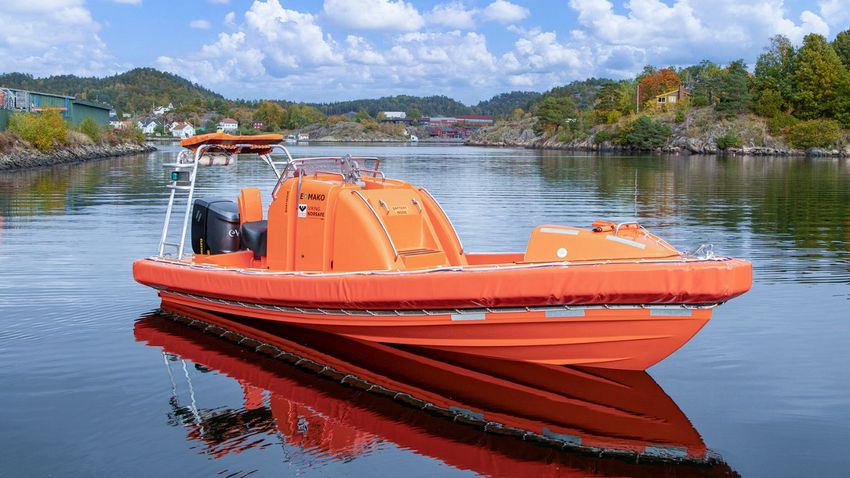
- Engine, battery or fuel-system deterioration causes difficult starting or failure to run during drills
- Release-hook, linkage or interlock wear causes stiff operation, incorrect indication or unsafe release behaviour
- Hull, canopy, window or seal damage causes water ingress or reduced weathertight integrity
- Steering or propulsion faults cause poor manoeuvrability, abnormal vibration or loss of thrust
- Inventory, securing or communication-equipment deficiencies are noticed during drills or statutory inspection
- Fully enclosed cabin provides weather and fire protection for crew during evacuation
- Self‑propelled diesel engine enables maneuverability after launch, reducing reliance on rescue vessels
- Compact footprint fits on vessels with limited deck space while still meeting SOLAS capacity requirements
- Integrated inflation system allows rapid hull deployment without external equipment
- USCG and IMO type approvals simplify certification for new builds and conversions
- Inflation system has a documented history of malfunction, requiring strict inspection intervals
- Propulsion battery (used for auxiliary power) can degrade faster in harsh climates, increasing maintenance costs
- Canopy seals are prone to leaks if not regularly inspected, compromising enclosure integrity
- Higher upfront cost compared with open liferafts or conventional lifeboats
- Requires dedicated launch and recovery system compatible with the enclosed design