Ballast Tank Coating
Ballast tank coating is a dedicated epoxy system applied to the worst corrosion environment on a ship: alternating wet and dry cycles, oxygen-rich seawater, and steel surfaces the crew can inspect only at rare tank openings.
Read more — Ballast Tank Coating explained ▾
What defines this type
Ballast tank coating is not a hull paint applied to a different substrate — it is a system engineered for the harshest corrosion regime on the ship. The tank sees full immersion in oxygenated seawater at sea, near-total dryness in port, condensation on the underside of the deck plating, and mechanical wear from ballast flow around suction bells and stringers. General cargo hold or external deck coatings are formulated for weathering and abrasion; ballast tank systems are formulated for cyclic wet/dry exposure and cathodic protection compatibility, and they carry a mandatory design life that hull topside paint does not.
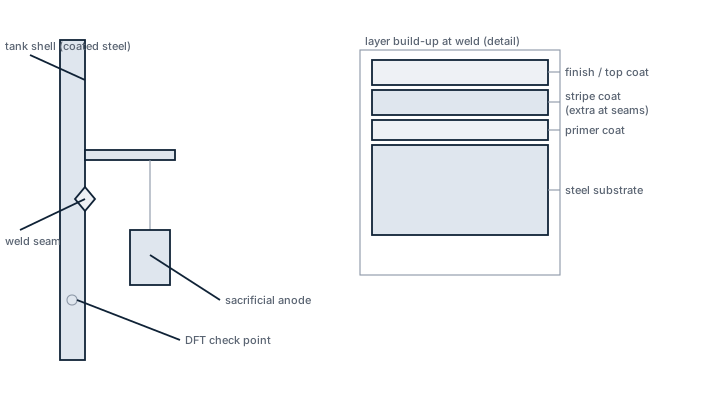
Main components
Surface preparation
Blast cleaning to Sa 2.5 (near-white metal) with an angular profile of 30-75 microns is the baseline; anything less and the epoxy cannot key into the steel and will disbond within the first survey cycle.
Primer / stripe coat
A zinc-rich or epoxy primer goes down first, followed by a stripe coat brushed or rolled onto welds, edges, cut-outs and stiffener toes — the geometry where dry film thickness naturally runs thin and where corrosion starts first.
Full coat epoxy system
Two or more spray-applied coats of a high-solids epoxy build the system to its specified dry film thickness (DFT), typically light grey or another light colour so that later tank inspections can spot rust bleed and breakdown by eye.
Cathodic protection
Sacrificial zinc or aluminium anodes are hung inside the tank to protect the small percentage of steel the coating inevitably misses — coating and anodes are a paired system, not alternatives.
Selection / Sizing
The variables that matter for a ballast tank system:
| Parameter | Typical range / requirement |
|---|---|
| Total DFT | 320 microns minimum for new construction under IMO PSPC |
| Surface profile | 30-75 microns, angular |
| Topcoat colour | Light colour for inspectability |
| Overcoating window | Coating-specific; exceeding it forces re-blasting before the next coat |
| Application dew point margin | Steel temperature at least 3°C above dew point |
Yard schedule and tank access (double bottom vs. topside ballast tank, manhole size) drive whether spray or airless application with extension lances is used, which in turn affects achievable DFT consistency on stiffener webs.
Regulations / Class
New construction bulk carriers and tankers of 150m and above, and all ships with dedicated seawater ballast tanks, fall under the IMO Performance Standard for Protective Coatings for dedicated seawater ballast tanks (PSPC, resolution MSC.215(82)). PSPC sets minimum DFT, requires a Coating Technical File documenting every stage of surface prep and application, and defines "GOOD" condition as no breakdown or rust for at least five years. Class societies survey coating condition at each special survey and downgrade it to FAIR or POOR based on visible rust and blistering percentage, which then drives thickness-gauging and close-up survey requirements under the IACS harmonised common structural rules for tankers and bulkers.
Typical faults
- Holidays and pinholes — caused by insufficient DFT or contamination on the steel; each one becomes a corrosion cell under immersion.
- Edge and weld breakdown — coating naturally thins over sharp edges and weld toes; without a stripe coat these fail first, years before the flat plating.
- Cathodic disbondment — coating blisters and lifts around anodes when the system is not formulated for cathodic protection compatibility.
- Intercoat delamination — the maximum overcoating interval was exceeded, so the next coat never chemically bonds to the one beneath it.
- Flash rust under coating — steel was coated too soon after blasting in humid conditions, trapping surface rust bloom beneath the film.
What to look for in a supplier
- A PSPC-compliant system with third-party type approval and a documented Coating Technical File template.
- Application supervision by a NACE or FROSIO Level 2 certified coating inspector, not just the applicator's own foreman.
- Batch and mix-ratio traceability for every drum used on the job, tied to the tank it went into.
- A stated overcoating window and recoat interval that the yard's schedule can actually meet.
- Compatibility data with the specific anode alloy fitted, not a generic cathodic protection statement.
A tank that looks perfect from the manhole can still be failing on the underside of the deckhead — always inspect stiffener toes and the boundary near anodes with a torch held at a raking angle, not straight on.
36 manufacturers · 224 models
Jotun
26- Jotamastic 90 DFT
- 100 µm (Trockenfilm-Dicke)
- Marathon IQ2 Maximum DFT
- bis 500 µm, solidentfrei (98% Volumen)
- Penguard Primer DFT
- 60–120 µm typisch
- SeaQuantum Ultra VOC-Gehalt
- Niedrig (<340 g/l); IMO AFS/CONF/26 konform
- Haftungs-anforderung
- ≥5 MPa; ASTM D3359 Level 0–1
- Salzsprühwiderstand (ASTM B117)
- >1,000 hours typical; Marine Heavy-Duty 500–2,000 h
- Jotamastic 90/87/80 (Epoxy Mastic Primer)
- Marathon IQ2 (solventfrei Epoxy Topcoat)
- Penguard Primer/HB/Universal (High-MW Epoxy Primer)
- SeaQuantum Ultra III/S/SP (Antifouling Silyl-Acrylat)
- SeaForce Shield/Active/Active Plus (Biozidbasierte Antifouling)
- Area: Unzureichende Schichtdicke (DFT) = Keine Korrosionsschutz-GarantieCheck: Measure with coating thickness gauge (gage) per SSPC-PA2. Example: Jotamastic 90 shall be 100 µm = passed; <75 µm = rework required. Statistical sampling: minimum 20 points/m².
- Area: Schlechte Haftung (Adhesion-Versagen) = Abblätterung/DelaminierungCheck: Cross-Hatch-Adhäsionstest (ASTM D3359) durchführen: 6mm Rasterabstände, Klebeband aufreißen. Bewertung: Level 0 = beste Haftung (0% Verlust). Level ≥3 = Schicht-Versagen → Nacharbeiten. Alternativ: Pull-off Test >5 MPa.
- Area: Unvollständige Aushärtung = Weiche/klebrige Oberfläche, reduzierte HärteCheck: Pencil hardness test (ASTM D3363) perform: guide pencil at 45° angle with pressure over surface. Expected for epoxy after 7 days: ≥H (hard). Observe test duration per TDS (typically 24–48h hard-dry, 7 days full cure).
- Area: Surface preparation non-conforming (too rough/too smooth surface) = adhesion defectCheck: Surface roughness inspect: ISO 8501-1 grade Sa 2½ (medium roughness) or white-metal. Surface roughness: 30–85 µm (ISO 8503-2, fine–medium). Visual + surface roughness gauge (profile gauge) use.
- Area: Holiday/Pinhole-Defekte = lokale Korrosion trotz BeschichtungCheck: Holiday detector (spark tester for >250 µm; low-volt sponge for <500 µm) guide over entire area systematically. Defects localize and mark with red marking → must be repaired before operation.
- Area: PSPC/IMO non-conformity = tanks fail classification (ballast/cargo)Check: IMO PSPC certificate of coating system inspect (ballast tank coatings, COT = cargo oil tank). Salt spray test references (ASTM B117) ≥500 hours for ballast, ≥1000–2000h for heavy marine applications inspect. Certificates: ClassNK, Lloyd's Register.
Type-universal inspection/maintenance points for paint & coating systems (Jotun, Mega-Schwarm 2026-06). Per-model specs not auto-filled.
- Jotamastic 90 DFT
- 100 µm (Trockenfilm-Dicke)
- Marathon IQ2 Maximum DFT
- bis 500 µm, solidentfrei (98% Volumen)
- Penguard Primer DFT
- 60–120 µm typisch
- SeaQuantum Ultra VOC-Gehalt
- Niedrig (<340 g/l); IMO AFS/CONF/26 konform
- Haftungs-anforderung
- ≥5 MPa; ASTM D3359 Level 0–1
- Salzsprühwiderstand (ASTM B117)
- >1,000 hours typical; Marine Heavy-Duty 500–2,000 h
- Jotamastic 90/87/80 (Epoxy Mastic Primer)
- Marathon IQ2 (solventfrei Epoxy Topcoat)
- Penguard Primer/HB/Universal (High-MW Epoxy Primer)
- SeaQuantum Ultra III/S/SP (Antifouling Silyl-Acrylat)
- SeaForce Shield/Active/Active Plus (Biozidbasierte Antifouling)
- Area: Unzureichende Schichtdicke (DFT) = Keine Korrosionsschutz-GarantieCheck: Measure with coating thickness gauge (gage) per SSPC-PA2. Example: Jotamastic 90 shall be 100 µm = passed; <75 µm = rework required. Statistical sampling: minimum 20 points/m².
- Area: Schlechte Haftung (Adhesion-Versagen) = Abblätterung/DelaminierungCheck: Cross-Hatch-Adhäsionstest (ASTM D3359) durchführen: 6mm Rasterabstände, Klebeband aufreißen. Bewertung: Level 0 = beste Haftung (0% Verlust). Level ≥3 = Schicht-Versagen → Nacharbeiten. Alternativ: Pull-off Test >5 MPa.
- Area: Unvollständige Aushärtung = Weiche/klebrige Oberfläche, reduzierte HärteCheck: Pencil hardness test (ASTM D3363) perform: guide pencil at 45° angle with pressure over surface. Expected for epoxy after 7 days: ≥H (hard). Observe test duration per TDS (typically 24–48h hard-dry, 7 days full cure).
- Area: Surface preparation non-conforming (too rough/too smooth surface) = adhesion defectCheck: Surface roughness inspect: ISO 8501-1 grade Sa 2½ (medium roughness) or white-metal. Surface roughness: 30–85 µm (ISO 8503-2, fine–medium). Visual + surface roughness gauge (profile gauge) use.
- Area: Holiday/Pinhole-Defekte = lokale Korrosion trotz BeschichtungCheck: Holiday detector (spark tester for >250 µm; low-volt sponge for <500 µm) guide over entire area systematically. Defects localize and mark with red marking → must be repaired before operation.
- Area: PSPC/IMO non-conformity = tanks fail classification (ballast/cargo)Check: IMO PSPC certificate of coating system inspect (ballast tank coatings, COT = cargo oil tank). Salt spray test references (ASTM B117) ≥500 hours for ballast, ≥1000–2000h for heavy marine applications inspect. Certificates: ClassNK, Lloyd's Register.
Type-universal inspection/maintenance points for paint & coating systems (Jotun, Mega-Schwarm 2026-06). Per-model specs not auto-filled.
- Jotamastic 90 DFT
- 100 µm (Trockenfilm-Dicke)
- Marathon IQ2 Maximum DFT
- bis 500 µm, solidentfrei (98% Volumen)
- Penguard Primer DFT
- 60–120 µm typisch
- SeaQuantum Ultra VOC-Gehalt
- Niedrig (<340 g/l); IMO AFS/CONF/26 konform
- Haftungs-anforderung
- ≥5 MPa; ASTM D3359 Level 0–1
- Salzsprühwiderstand (ASTM B117)
- >1,000 hours typical; Marine Heavy-Duty 500–2,000 h
- Jotamastic 90/87/80 (Epoxy Mastic Primer)
- Marathon IQ2 (solventfrei Epoxy Topcoat)
- Penguard Primer/HB/Universal (High-MW Epoxy Primer)
- SeaQuantum Ultra III/S/SP (Antifouling Silyl-Acrylat)
- SeaForce Shield/Active/Active Plus (Biozidbasierte Antifouling)
- Area: Unzureichende Schichtdicke (DFT) = Keine Korrosionsschutz-GarantieCheck: Measure with coating thickness gauge (gage) per SSPC-PA2. Example: Jotamastic 90 shall be 100 µm = passed; <75 µm = rework required. Statistical sampling: minimum 20 points/m².
- Area: Schlechte Haftung (Adhesion-Versagen) = Abblätterung/DelaminierungCheck: Cross-Hatch-Adhäsionstest (ASTM D3359) durchführen: 6mm Rasterabstände, Klebeband aufreißen. Bewertung: Level 0 = beste Haftung (0% Verlust). Level ≥3 = Schicht-Versagen → Nacharbeiten. Alternativ: Pull-off Test >5 MPa.
- Area: Unvollständige Aushärtung = Weiche/klebrige Oberfläche, reduzierte HärteCheck: Pencil hardness test (ASTM D3363) perform: guide pencil at 45° angle with pressure over surface. Expected for epoxy after 7 days: ≥H (hard). Observe test duration per TDS (typically 24–48h hard-dry, 7 days full cure).
- Area: Surface preparation non-conforming (too rough/too smooth surface) = adhesion defectCheck: Surface roughness inspect: ISO 8501-1 grade Sa 2½ (medium roughness) or white-metal. Surface roughness: 30–85 µm (ISO 8503-2, fine–medium). Visual + surface roughness gauge (profile gauge) use.
- Area: Holiday/Pinhole-Defekte = lokale Korrosion trotz BeschichtungCheck: Holiday detector (spark tester for >250 µm; low-volt sponge for <500 µm) guide over entire area systematically. Defects localize and mark with red marking → must be repaired before operation.
- Area: PSPC/IMO non-conformity = tanks fail classification (ballast/cargo)Check: IMO PSPC certificate of coating system inspect (ballast tank coatings, COT = cargo oil tank). Salt spray test references (ASTM B117) ≥500 hours for ballast, ≥1000–2000h for heavy marine applications inspect. Certificates: ClassNK, Lloyd's Register.
Type-universal inspection/maintenance points for paint & coating systems (Jotun, Mega-Schwarm 2026-06). Per-model specs not auto-filled.
- Jotamastic 90 DFT
- 100 µm (Trockenfilm-Dicke)
- Marathon IQ2 Maximum DFT
- bis 500 µm, solidentfrei (98% Volumen)
- Penguard Primer DFT
- 60–120 µm typisch
- SeaQuantum Ultra VOC-Gehalt
- Niedrig (<340 g/l); IMO AFS/CONF/26 konform
- Haftungs-anforderung
- ≥5 MPa; ASTM D3359 Level 0–1
- Salzsprühwiderstand (ASTM B117)
- >1,000 hours typical; Marine Heavy-Duty 500–2,000 h
- Jotamastic 90/87/80 (Epoxy Mastic Primer)
- Marathon IQ2 (solventfrei Epoxy Topcoat)
- Penguard Primer/HB/Universal (High-MW Epoxy Primer)
- SeaQuantum Ultra III/S/SP (Antifouling Silyl-Acrylat)
- SeaForce Shield/Active/Active Plus (Biozidbasierte Antifouling)
- Area: Unzureichende Schichtdicke (DFT) = Keine Korrosionsschutz-GarantieCheck: Measure with coating thickness gauge (gage) per SSPC-PA2. Example: Jotamastic 90 shall be 100 µm = passed; <75 µm = rework required. Statistical sampling: minimum 20 points/m².
- Area: Schlechte Haftung (Adhesion-Versagen) = Abblätterung/DelaminierungCheck: Cross-Hatch-Adhäsionstest (ASTM D3359) durchführen: 6mm Rasterabstände, Klebeband aufreißen. Bewertung: Level 0 = beste Haftung (0% Verlust). Level ≥3 = Schicht-Versagen → Nacharbeiten. Alternativ: Pull-off Test >5 MPa.
- Area: Unvollständige Aushärtung = Weiche/klebrige Oberfläche, reduzierte HärteCheck: Pencil hardness test (ASTM D3363) perform: guide pencil at 45° angle with pressure over surface. Expected for epoxy after 7 days: ≥H (hard). Observe test duration per TDS (typically 24–48h hard-dry, 7 days full cure).
- Area: Surface preparation non-conforming (too rough/too smooth surface) = adhesion defectCheck: Surface roughness inspect: ISO 8501-1 grade Sa 2½ (medium roughness) or white-metal. Surface roughness: 30–85 µm (ISO 8503-2, fine–medium). Visual + surface roughness gauge (profile gauge) use.
- Area: Holiday/Pinhole-Defekte = lokale Korrosion trotz BeschichtungCheck: Holiday detector (spark tester for >250 µm; low-volt sponge for <500 µm) guide over entire area systematically. Defects localize and mark with red marking → must be repaired before operation.
- Area: PSPC/IMO non-conformity = tanks fail classification (ballast/cargo)Check: IMO PSPC certificate of coating system inspect (ballast tank coatings, COT = cargo oil tank). Salt spray test references (ASTM B117) ≥500 hours for ballast, ≥1000–2000h for heavy marine applications inspect. Certificates: ClassNK, Lloyd's Register.
Type-universal inspection/maintenance points for paint & coating systems (Jotun, Mega-Schwarm 2026-06). Per-model specs not auto-filled.
- Jotamastic 90 DFT
- 100 µm (Trockenfilm-Dicke)
- Marathon IQ2 Maximum DFT
- bis 500 µm, solidentfrei (98% Volumen)
- Penguard Primer DFT
- 60–120 µm typisch
- SeaQuantum Ultra VOC-Gehalt
- Niedrig (<340 g/l); IMO AFS/CONF/26 konform
- Haftungs-anforderung
- ≥5 MPa; ASTM D3359 Level 0–1
- Salzsprühwiderstand (ASTM B117)
- >1,000 hours typical; Marine Heavy-Duty 500–2,000 h
- Jotamastic 90/87/80 (Epoxy Mastic Primer)
- Marathon IQ2 (solventfrei Epoxy Topcoat)
- Penguard Primer/HB/Universal (High-MW Epoxy Primer)
- SeaQuantum Ultra III/S/SP (Antifouling Silyl-Acrylat)
- SeaForce Shield/Active/Active Plus (Biozidbasierte Antifouling)
- Area: Unzureichende Schichtdicke (DFT) = Keine Korrosionsschutz-GarantieCheck: Measure with coating thickness gauge (gage) per SSPC-PA2. Example: Jotamastic 90 shall be 100 µm = passed; <75 µm = rework required. Statistical sampling: minimum 20 points/m².
- Area: Schlechte Haftung (Adhesion-Versagen) = Abblätterung/DelaminierungCheck: Cross-Hatch-Adhäsionstest (ASTM D3359) durchführen: 6mm Rasterabstände, Klebeband aufreißen. Bewertung: Level 0 = beste Haftung (0% Verlust). Level ≥3 = Schicht-Versagen → Nacharbeiten. Alternativ: Pull-off Test >5 MPa.
- Area: Unvollständige Aushärtung = Weiche/klebrige Oberfläche, reduzierte HärteCheck: Pencil hardness test (ASTM D3363) perform: guide pencil at 45° angle with pressure over surface. Expected for epoxy after 7 days: ≥H (hard). Observe test duration per TDS (typically 24–48h hard-dry, 7 days full cure).
- Area: Surface preparation non-conforming (too rough/too smooth surface) = adhesion defectCheck: Surface roughness inspect: ISO 8501-1 grade Sa 2½ (medium roughness) or white-metal. Surface roughness: 30–85 µm (ISO 8503-2, fine–medium). Visual + surface roughness gauge (profile gauge) use.
- Area: Holiday/Pinhole-Defekte = lokale Korrosion trotz BeschichtungCheck: Holiday detector (spark tester for >250 µm; low-volt sponge for <500 µm) guide over entire area systematically. Defects localize and mark with red marking → must be repaired before operation.
- Area: PSPC/IMO non-conformity = tanks fail classification (ballast/cargo)Check: IMO PSPC certificate of coating system inspect (ballast tank coatings, COT = cargo oil tank). Salt spray test references (ASTM B117) ≥500 hours for ballast, ≥1000–2000h for heavy marine applications inspect. Certificates: ClassNK, Lloyd's Register.
Type-universal inspection/maintenance points for paint & coating systems (Jotun, Mega-Schwarm 2026-06). Per-model specs not auto-filled.
- Jotamastic 90 DFT
- 100 µm (Trockenfilm-Dicke)
- Marathon IQ2 Maximum DFT
- bis 500 µm, solidentfrei (98% Volumen)
- Penguard Primer DFT
- 60–120 µm typisch
- SeaQuantum Ultra VOC-Gehalt
- Niedrig (<340 g/l); IMO AFS/CONF/26 konform
- Haftungs-anforderung
- ≥5 MPa; ASTM D3359 Level 0–1
- Salzsprühwiderstand (ASTM B117)
- >1,000 hours typical; Marine Heavy-Duty 500–2,000 h
- Jotamastic 90/87/80 (Epoxy Mastic Primer)
- Marathon IQ2 (solventfrei Epoxy Topcoat)
- Penguard Primer/HB/Universal (High-MW Epoxy Primer)
- SeaQuantum Ultra III/S/SP (Antifouling Silyl-Acrylat)
- SeaForce Shield/Active/Active Plus (Biozidbasierte Antifouling)
- Area: Unzureichende Schichtdicke (DFT) = Keine Korrosionsschutz-GarantieCheck: Measure with coating thickness gauge (gage) per SSPC-PA2. Example: Jotamastic 90 shall be 100 µm = passed; <75 µm = rework required. Statistical sampling: minimum 20 points/m².
- Area: Schlechte Haftung (Adhesion-Versagen) = Abblätterung/DelaminierungCheck: Cross-Hatch-Adhäsionstest (ASTM D3359) durchführen: 6mm Rasterabstände, Klebeband aufreißen. Bewertung: Level 0 = beste Haftung (0% Verlust). Level ≥3 = Schicht-Versagen → Nacharbeiten. Alternativ: Pull-off Test >5 MPa.
- Area: Unvollständige Aushärtung = Weiche/klebrige Oberfläche, reduzierte HärteCheck: Pencil hardness test (ASTM D3363) perform: guide pencil at 45° angle with pressure over surface. Expected for epoxy after 7 days: ≥H (hard). Observe test duration per TDS (typically 24–48h hard-dry, 7 days full cure).
- Area: Surface preparation non-conforming (too rough/too smooth surface) = adhesion defectCheck: Surface roughness inspect: ISO 8501-1 grade Sa 2½ (medium roughness) or white-metal. Surface roughness: 30–85 µm (ISO 8503-2, fine–medium). Visual + surface roughness gauge (profile gauge) use.
- Area: Holiday/Pinhole-Defekte = lokale Korrosion trotz BeschichtungCheck: Holiday detector (spark tester for >250 µm; low-volt sponge for <500 µm) guide over entire area systematically. Defects localize and mark with red marking → must be repaired before operation.
- Area: PSPC/IMO non-conformity = tanks fail classification (ballast/cargo)Check: IMO PSPC certificate of coating system inspect (ballast tank coatings, COT = cargo oil tank). Salt spray test references (ASTM B117) ≥500 hours for ballast, ≥1000–2000h for heavy marine applications inspect. Certificates: ClassNK, Lloyd's Register.
Type-universal inspection/maintenance points for paint & coating systems (Jotun, Mega-Schwarm 2026-06). Per-model specs not auto-filled.
- Jotamastic 90 DFT
- 100 µm (Trockenfilm-Dicke)
- Marathon IQ2 Maximum DFT
- bis 500 µm, solidentfrei (98% Volumen)
- Penguard Primer DFT
- 60–120 µm typisch
- SeaQuantum Ultra VOC-Gehalt
- Niedrig (<340 g/l); IMO AFS/CONF/26 konform
- Haftungs-anforderung
- ≥5 MPa; ASTM D3359 Level 0–1
- Salzsprühwiderstand (ASTM B117)
- >1,000 hours typical; Marine Heavy-Duty 500–2,000 h
- Jotamastic 90/87/80 (Epoxy Mastic Primer)
- Marathon IQ2 (solventfrei Epoxy Topcoat)
- Penguard Primer/HB/Universal (High-MW Epoxy Primer)
- SeaQuantum Ultra III/S/SP (Antifouling Silyl-Acrylat)
- SeaForce Shield/Active/Active Plus (Biozidbasierte Antifouling)
- Area: Unzureichende Schichtdicke (DFT) = Keine Korrosionsschutz-GarantieCheck: Measure with coating thickness gauge (gage) per SSPC-PA2. Example: Jotamastic 90 shall be 100 µm = passed; <75 µm = rework required. Statistical sampling: minimum 20 points/m².
- Area: Schlechte Haftung (Adhesion-Versagen) = Abblätterung/DelaminierungCheck: Cross-Hatch-Adhäsionstest (ASTM D3359) durchführen: 6mm Rasterabstände, Klebeband aufreißen. Bewertung: Level 0 = beste Haftung (0% Verlust). Level ≥3 = Schicht-Versagen → Nacharbeiten. Alternativ: Pull-off Test >5 MPa.
- Area: Unvollständige Aushärtung = Weiche/klebrige Oberfläche, reduzierte HärteCheck: Pencil hardness test (ASTM D3363) perform: guide pencil at 45° angle with pressure over surface. Expected for epoxy after 7 days: ≥H (hard). Observe test duration per TDS (typically 24–48h hard-dry, 7 days full cure).
- Area: Surface preparation non-conforming (too rough/too smooth surface) = adhesion defectCheck: Surface roughness inspect: ISO 8501-1 grade Sa 2½ (medium roughness) or white-metal. Surface roughness: 30–85 µm (ISO 8503-2, fine–medium). Visual + surface roughness gauge (profile gauge) use.
- Area: Holiday/Pinhole-Defekte = lokale Korrosion trotz BeschichtungCheck: Holiday detector (spark tester for >250 µm; low-volt sponge for <500 µm) guide over entire area systematically. Defects localize and mark with red marking → must be repaired before operation.
- Area: PSPC/IMO non-conformity = tanks fail classification (ballast/cargo)Check: IMO PSPC certificate of coating system inspect (ballast tank coatings, COT = cargo oil tank). Salt spray test references (ASTM B117) ≥500 hours for ballast, ≥1000–2000h for heavy marine applications inspect. Certificates: ClassNK, Lloyd's Register.
Type-universal inspection/maintenance points for paint & coating systems (Jotun, Mega-Schwarm 2026-06). Per-model specs not auto-filled.
- Jotamastic 90 DFT
- 100 µm (Trockenfilm-Dicke)
- Marathon IQ2 Maximum DFT
- bis 500 µm, solidentfrei (98% Volumen)
- Penguard Primer DFT
- 60–120 µm typisch
- SeaQuantum Ultra VOC-Gehalt
- Niedrig (<340 g/l); IMO AFS/CONF/26 konform
- Haftungs-anforderung
- ≥5 MPa; ASTM D3359 Level 0–1
- Salzsprühwiderstand (ASTM B117)
- >1,000 hours typical; Marine Heavy-Duty 500–2,000 h
- Jotamastic 90/87/80 (Epoxy Mastic Primer)
- Marathon IQ2 (solventfrei Epoxy Topcoat)
- Penguard Primer/HB/Universal (High-MW Epoxy Primer)
- SeaQuantum Ultra III/S/SP (Antifouling Silyl-Acrylat)
- SeaForce Shield/Active/Active Plus (Biozidbasierte Antifouling)
- Area: Unzureichende Schichtdicke (DFT) = Keine Korrosionsschutz-GarantieCheck: Measure with coating thickness gauge (gage) per SSPC-PA2. Example: Jotamastic 90 shall be 100 µm = passed; <75 µm = rework required. Statistical sampling: minimum 20 points/m².
- Area: Schlechte Haftung (Adhesion-Versagen) = Abblätterung/DelaminierungCheck: Cross-Hatch-Adhäsionstest (ASTM D3359) durchführen: 6mm Rasterabstände, Klebeband aufreißen. Bewertung: Level 0 = beste Haftung (0% Verlust). Level ≥3 = Schicht-Versagen → Nacharbeiten. Alternativ: Pull-off Test >5 MPa.
- Area: Unvollständige Aushärtung = Weiche/klebrige Oberfläche, reduzierte HärteCheck: Pencil hardness test (ASTM D3363) perform: guide pencil at 45° angle with pressure over surface. Expected for epoxy after 7 days: ≥H (hard). Observe test duration per TDS (typically 24–48h hard-dry, 7 days full cure).
- Area: Surface preparation non-conforming (too rough/too smooth surface) = adhesion defectCheck: Surface roughness inspect: ISO 8501-1 grade Sa 2½ (medium roughness) or white-metal. Surface roughness: 30–85 µm (ISO 8503-2, fine–medium). Visual + surface roughness gauge (profile gauge) use.
- Area: Holiday/Pinhole-Defekte = lokale Korrosion trotz BeschichtungCheck: Holiday detector (spark tester for >250 µm; low-volt sponge for <500 µm) guide over entire area systematically. Defects localize and mark with red marking → must be repaired before operation.
- Area: PSPC/IMO non-conformity = tanks fail classification (ballast/cargo)Check: IMO PSPC certificate of coating system inspect (ballast tank coatings, COT = cargo oil tank). Salt spray test references (ASTM B117) ≥500 hours for ballast, ≥1000–2000h for heavy marine applications inspect. Certificates: ClassNK, Lloyd's Register.
Type-universal inspection/maintenance points for paint & coating systems (Jotun, Mega-Schwarm 2026-06). Per-model specs not auto-filled.
- Jotamastic 90 DFT
- 100 µm (Trockenfilm-Dicke)
- Marathon IQ2 Maximum DFT
- bis 500 µm, solidentfrei (98% Volumen)
- Penguard Primer DFT
- 60–120 µm typisch
- SeaQuantum Ultra VOC-Gehalt
- Niedrig (<340 g/l); IMO AFS/CONF/26 konform
- Haftungs-anforderung
- ≥5 MPa; ASTM D3359 Level 0–1
- Salzsprühwiderstand (ASTM B117)
- >1,000 hours typical; Marine Heavy-Duty 500–2,000 h
- Jotamastic 90/87/80 (Epoxy Mastic Primer)
- Marathon IQ2 (solventfrei Epoxy Topcoat)
- Penguard Primer/HB/Universal (High-MW Epoxy Primer)
- SeaQuantum Ultra III/S/SP (Antifouling Silyl-Acrylat)
- SeaForce Shield/Active/Active Plus (Biozidbasierte Antifouling)
- Area: Unzureichende Schichtdicke (DFT) = Keine Korrosionsschutz-GarantieCheck: Measure with coating thickness gauge (gage) per SSPC-PA2. Example: Jotamastic 90 shall be 100 µm = passed; <75 µm = rework required. Statistical sampling: minimum 20 points/m².
- Area: Schlechte Haftung (Adhesion-Versagen) = Abblätterung/DelaminierungCheck: Cross-Hatch-Adhäsionstest (ASTM D3359) durchführen: 6mm Rasterabstände, Klebeband aufreißen. Bewertung: Level 0 = beste Haftung (0% Verlust). Level ≥3 = Schicht-Versagen → Nacharbeiten. Alternativ: Pull-off Test >5 MPa.
- Area: Unvollständige Aushärtung = Weiche/klebrige Oberfläche, reduzierte HärteCheck: Pencil hardness test (ASTM D3363) perform: guide pencil at 45° angle with pressure over surface. Expected for epoxy after 7 days: ≥H (hard). Observe test duration per TDS (typically 24–48h hard-dry, 7 days full cure).
- Area: Surface preparation non-conforming (too rough/too smooth surface) = adhesion defectCheck: Surface roughness inspect: ISO 8501-1 grade Sa 2½ (medium roughness) or white-metal. Surface roughness: 30–85 µm (ISO 8503-2, fine–medium). Visual + surface roughness gauge (profile gauge) use.
- Area: Holiday/Pinhole-Defekte = lokale Korrosion trotz BeschichtungCheck: Holiday detector (spark tester for >250 µm; low-volt sponge for <500 µm) guide over entire area systematically. Defects localize and mark with red marking → must be repaired before operation.
- Area: PSPC/IMO non-conformity = tanks fail classification (ballast/cargo)Check: IMO PSPC certificate of coating system inspect (ballast tank coatings, COT = cargo oil tank). Salt spray test references (ASTM B117) ≥500 hours for ballast, ≥1000–2000h for heavy marine applications inspect. Certificates: ClassNK, Lloyd's Register.
Type-universal inspection/maintenance points for paint & coating systems (Jotun, Mega-Schwarm 2026-06). Per-model specs not auto-filled.
- Jotamastic 90 DFT
- 100 µm (Trockenfilm-Dicke)
- Marathon IQ2 Maximum DFT
- bis 500 µm, solidentfrei (98% Volumen)
- Penguard Primer DFT
- 60–120 µm typisch
- SeaQuantum Ultra VOC-Gehalt
- Niedrig (<340 g/l); IMO AFS/CONF/26 konform
- Haftungs-anforderung
- ≥5 MPa; ASTM D3359 Level 0–1
- Salzsprühwiderstand (ASTM B117)
- >1,000 hours typical; Marine Heavy-Duty 500–2,000 h
- Jotamastic 90/87/80 (Epoxy Mastic Primer)
- Marathon IQ2 (solventfrei Epoxy Topcoat)
- Penguard Primer/HB/Universal (High-MW Epoxy Primer)
- SeaQuantum Ultra III/S/SP (Antifouling Silyl-Acrylat)
- SeaForce Shield/Active/Active Plus (Biozidbasierte Antifouling)
- Area: Unzureichende Schichtdicke (DFT) = Keine Korrosionsschutz-GarantieCheck: Measure with coating thickness gauge (gage) per SSPC-PA2. Example: Jotamastic 90 shall be 100 µm = passed; <75 µm = rework required. Statistical sampling: minimum 20 points/m².
- Area: Schlechte Haftung (Adhesion-Versagen) = Abblätterung/DelaminierungCheck: Cross-Hatch-Adhäsionstest (ASTM D3359) durchführen: 6mm Rasterabstände, Klebeband aufreißen. Bewertung: Level 0 = beste Haftung (0% Verlust). Level ≥3 = Schicht-Versagen → Nacharbeiten. Alternativ: Pull-off Test >5 MPa.
- Area: Unvollständige Aushärtung = Weiche/klebrige Oberfläche, reduzierte HärteCheck: Pencil hardness test (ASTM D3363) perform: guide pencil at 45° angle with pressure over surface. Expected for epoxy after 7 days: ≥H (hard). Observe test duration per TDS (typically 24–48h hard-dry, 7 days full cure).
- Area: Surface preparation non-conforming (too rough/too smooth surface) = adhesion defectCheck: Surface roughness inspect: ISO 8501-1 grade Sa 2½ (medium roughness) or white-metal. Surface roughness: 30–85 µm (ISO 8503-2, fine–medium). Visual + surface roughness gauge (profile gauge) use.
- Area: Holiday/Pinhole-Defekte = lokale Korrosion trotz BeschichtungCheck: Holiday detector (spark tester for >250 µm; low-volt sponge for <500 µm) guide over entire area systematically. Defects localize and mark with red marking → must be repaired before operation.
- Area: PSPC/IMO non-conformity = tanks fail classification (ballast/cargo)Check: IMO PSPC certificate of coating system inspect (ballast tank coatings, COT = cargo oil tank). Salt spray test references (ASTM B117) ≥500 hours for ballast, ≥1000–2000h for heavy marine applications inspect. Certificates: ClassNK, Lloyd's Register.
Type-universal inspection/maintenance points for paint & coating systems (Jotun, Mega-Schwarm 2026-06). Per-model specs not auto-filled.
- Jotamastic 90 DFT
- 100 µm (Trockenfilm-Dicke)
- Marathon IQ2 Maximum DFT
- bis 500 µm, solidentfrei (98% Volumen)
- Penguard Primer DFT
- 60–120 µm typisch
- SeaQuantum Ultra VOC-Gehalt
- Niedrig (<340 g/l); IMO AFS/CONF/26 konform
- Haftungs-anforderung
- ≥5 MPa; ASTM D3359 Level 0–1
- Salzsprühwiderstand (ASTM B117)
- >1,000 hours typical; Marine Heavy-Duty 500–2,000 h
- Jotamastic 90/87/80 (Epoxy Mastic Primer)
- Marathon IQ2 (solventfrei Epoxy Topcoat)
- Penguard Primer/HB/Universal (High-MW Epoxy Primer)
- SeaQuantum Ultra III/S/SP (Antifouling Silyl-Acrylat)
- SeaForce Shield/Active/Active Plus (Biozidbasierte Antifouling)
- Area: Unzureichende Schichtdicke (DFT) = Keine Korrosionsschutz-GarantieCheck: Measure with coating thickness gauge (gage) per SSPC-PA2. Example: Jotamastic 90 shall be 100 µm = passed; <75 µm = rework required. Statistical sampling: minimum 20 points/m².
- Area: Schlechte Haftung (Adhesion-Versagen) = Abblätterung/DelaminierungCheck: Cross-Hatch-Adhäsionstest (ASTM D3359) durchführen: 6mm Rasterabstände, Klebeband aufreißen. Bewertung: Level 0 = beste Haftung (0% Verlust). Level ≥3 = Schicht-Versagen → Nacharbeiten. Alternativ: Pull-off Test >5 MPa.
- Area: Unvollständige Aushärtung = Weiche/klebrige Oberfläche, reduzierte HärteCheck: Pencil hardness test (ASTM D3363) perform: guide pencil at 45° angle with pressure over surface. Expected for epoxy after 7 days: ≥H (hard). Observe test duration per TDS (typically 24–48h hard-dry, 7 days full cure).
- Area: Surface preparation non-conforming (too rough/too smooth surface) = adhesion defectCheck: Surface roughness inspect: ISO 8501-1 grade Sa 2½ (medium roughness) or white-metal. Surface roughness: 30–85 µm (ISO 8503-2, fine–medium). Visual + surface roughness gauge (profile gauge) use.
- Area: Holiday/Pinhole-Defekte = lokale Korrosion trotz BeschichtungCheck: Holiday detector (spark tester for >250 µm; low-volt sponge for <500 µm) guide over entire area systematically. Defects localize and mark with red marking → must be repaired before operation.
- Area: PSPC/IMO non-conformity = tanks fail classification (ballast/cargo)Check: IMO PSPC certificate of coating system inspect (ballast tank coatings, COT = cargo oil tank). Salt spray test references (ASTM B117) ≥500 hours for ballast, ≥1000–2000h for heavy marine applications inspect. Certificates: ClassNK, Lloyd's Register.
Type-universal inspection/maintenance points for paint & coating systems (Jotun, Mega-Schwarm 2026-06). Per-model specs not auto-filled.
- Jotamastic 90 DFT
- 100 µm (Trockenfilm-Dicke)
- Marathon IQ2 Maximum DFT
- bis 500 µm, solidentfrei (98% Volumen)
- Penguard Primer DFT
- 60–120 µm typisch
- SeaQuantum Ultra VOC-Gehalt
- Niedrig (<340 g/l); IMO AFS/CONF/26 konform
- Haftungs-anforderung
- ≥5 MPa; ASTM D3359 Level 0–1
- Salzsprühwiderstand (ASTM B117)
- >1,000 hours typical; Marine Heavy-Duty 500–2,000 h
- Jotamastic 90/87/80 (Epoxy Mastic Primer)
- Marathon IQ2 (solventfrei Epoxy Topcoat)
- Penguard Primer/HB/Universal (High-MW Epoxy Primer)
- SeaQuantum Ultra III/S/SP (Antifouling Silyl-Acrylat)
- SeaForce Shield/Active/Active Plus (Biozidbasierte Antifouling)
- Area: Unzureichende Schichtdicke (DFT) = Keine Korrosionsschutz-GarantieCheck: Measure with coating thickness gauge (gage) per SSPC-PA2. Example: Jotamastic 90 shall be 100 µm = passed; <75 µm = rework required. Statistical sampling: minimum 20 points/m².
- Area: Schlechte Haftung (Adhesion-Versagen) = Abblätterung/DelaminierungCheck: Cross-Hatch-Adhäsionstest (ASTM D3359) durchführen: 6mm Rasterabstände, Klebeband aufreißen. Bewertung: Level 0 = beste Haftung (0% Verlust). Level ≥3 = Schicht-Versagen → Nacharbeiten. Alternativ: Pull-off Test >5 MPa.
- Area: Unvollständige Aushärtung = Weiche/klebrige Oberfläche, reduzierte HärteCheck: Pencil hardness test (ASTM D3363) perform: guide pencil at 45° angle with pressure over surface. Expected for epoxy after 7 days: ≥H (hard). Observe test duration per TDS (typically 24–48h hard-dry, 7 days full cure).
- Area: Surface preparation non-conforming (too rough/too smooth surface) = adhesion defectCheck: Surface roughness inspect: ISO 8501-1 grade Sa 2½ (medium roughness) or white-metal. Surface roughness: 30–85 µm (ISO 8503-2, fine–medium). Visual + surface roughness gauge (profile gauge) use.
- Area: Holiday/Pinhole-Defekte = lokale Korrosion trotz BeschichtungCheck: Holiday detector (spark tester for >250 µm; low-volt sponge for <500 µm) guide over entire area systematically. Defects localize and mark with red marking → must be repaired before operation.
- Area: PSPC/IMO non-conformity = tanks fail classification (ballast/cargo)Check: IMO PSPC certificate of coating system inspect (ballast tank coatings, COT = cargo oil tank). Salt spray test references (ASTM B117) ≥500 hours for ballast, ≥1000–2000h for heavy marine applications inspect. Certificates: ClassNK, Lloyd's Register.
Type-universal inspection/maintenance points for paint & coating systems (Jotun, Mega-Schwarm 2026-06). Per-model specs not auto-filled.
- Jotamastic 90 DFT
- 100 µm (Trockenfilm-Dicke)
- Marathon IQ2 Maximum DFT
- bis 500 µm, solidentfrei (98% Volumen)
- Penguard Primer DFT
- 60–120 µm typisch
- SeaQuantum Ultra VOC-Gehalt
- Niedrig (<340 g/l); IMO AFS/CONF/26 konform
- Haftungs-anforderung
- ≥5 MPa; ASTM D3359 Level 0–1
- Salzsprühwiderstand (ASTM B117)
- >1,000 hours typical; Marine Heavy-Duty 500–2,000 h
- Jotamastic 90/87/80 (Epoxy Mastic Primer)
- Marathon IQ2 (solventfrei Epoxy Topcoat)
- Penguard Primer/HB/Universal (High-MW Epoxy Primer)
- SeaQuantum Ultra III/S/SP (Antifouling Silyl-Acrylat)
- SeaForce Shield/Active/Active Plus (Biozidbasierte Antifouling)
- Area: Unzureichende Schichtdicke (DFT) = Keine Korrosionsschutz-GarantieCheck: Measure with coating thickness gauge (gage) per SSPC-PA2. Example: Jotamastic 90 shall be 100 µm = passed; <75 µm = rework required. Statistical sampling: minimum 20 points/m².
- Area: Schlechte Haftung (Adhesion-Versagen) = Abblätterung/DelaminierungCheck: Cross-Hatch-Adhäsionstest (ASTM D3359) durchführen: 6mm Rasterabstände, Klebeband aufreißen. Bewertung: Level 0 = beste Haftung (0% Verlust). Level ≥3 = Schicht-Versagen → Nacharbeiten. Alternativ: Pull-off Test >5 MPa.
- Area: Unvollständige Aushärtung = Weiche/klebrige Oberfläche, reduzierte HärteCheck: Pencil hardness test (ASTM D3363) perform: guide pencil at 45° angle with pressure over surface. Expected for epoxy after 7 days: ≥H (hard). Observe test duration per TDS (typically 24–48h hard-dry, 7 days full cure).
- Area: Surface preparation non-conforming (too rough/too smooth surface) = adhesion defectCheck: Surface roughness inspect: ISO 8501-1 grade Sa 2½ (medium roughness) or white-metal. Surface roughness: 30–85 µm (ISO 8503-2, fine–medium). Visual + surface roughness gauge (profile gauge) use.
- Area: Holiday/Pinhole-Defekte = lokale Korrosion trotz BeschichtungCheck: Holiday detector (spark tester for >250 µm; low-volt sponge for <500 µm) guide over entire area systematically. Defects localize and mark with red marking → must be repaired before operation.
- Area: PSPC/IMO non-conformity = tanks fail classification (ballast/cargo)Check: IMO PSPC certificate of coating system inspect (ballast tank coatings, COT = cargo oil tank). Salt spray test references (ASTM B117) ≥500 hours for ballast, ≥1000–2000h for heavy marine applications inspect. Certificates: ClassNK, Lloyd's Register.
Type-universal inspection/maintenance points for paint & coating systems (Jotun, Mega-Schwarm 2026-06). Per-model specs not auto-filled.
- Jotamastic 90 DFT
- 100 µm (Trockenfilm-Dicke)
- Marathon IQ2 Maximum DFT
- bis 500 µm, solidentfrei (98% Volumen)
- Penguard Primer DFT
- 60–120 µm typisch
- SeaQuantum Ultra VOC-Gehalt
- Niedrig (<340 g/l); IMO AFS/CONF/26 konform
- Haftungs-anforderung
- ≥5 MPa; ASTM D3359 Level 0–1
- Salzsprühwiderstand (ASTM B117)
- >1,000 hours typical; Marine Heavy-Duty 500–2,000 h
- Jotamastic 90/87/80 (Epoxy Mastic Primer)
- Marathon IQ2 (solventfrei Epoxy Topcoat)
- Penguard Primer/HB/Universal (High-MW Epoxy Primer)
- SeaQuantum Ultra III/S/SP (Antifouling Silyl-Acrylat)
- SeaForce Shield/Active/Active Plus (Biozidbasierte Antifouling)
- Area: Unzureichende Schichtdicke (DFT) = Keine Korrosionsschutz-GarantieCheck: Measure with coating thickness gauge (gage) per SSPC-PA2. Example: Jotamastic 90 shall be 100 µm = passed; <75 µm = rework required. Statistical sampling: minimum 20 points/m².
- Area: Schlechte Haftung (Adhesion-Versagen) = Abblätterung/DelaminierungCheck: Cross-Hatch-Adhäsionstest (ASTM D3359) durchführen: 6mm Rasterabstände, Klebeband aufreißen. Bewertung: Level 0 = beste Haftung (0% Verlust). Level ≥3 = Schicht-Versagen → Nacharbeiten. Alternativ: Pull-off Test >5 MPa.
- Area: Unvollständige Aushärtung = Weiche/klebrige Oberfläche, reduzierte HärteCheck: Pencil hardness test (ASTM D3363) perform: guide pencil at 45° angle with pressure over surface. Expected for epoxy after 7 days: ≥H (hard). Observe test duration per TDS (typically 24–48h hard-dry, 7 days full cure).
- Area: Surface preparation non-conforming (too rough/too smooth surface) = adhesion defectCheck: Surface roughness inspect: ISO 8501-1 grade Sa 2½ (medium roughness) or white-metal. Surface roughness: 30–85 µm (ISO 8503-2, fine–medium). Visual + surface roughness gauge (profile gauge) use.
- Area: Holiday/Pinhole-Defekte = lokale Korrosion trotz BeschichtungCheck: Holiday detector (spark tester for >250 µm; low-volt sponge for <500 µm) guide over entire area systematically. Defects localize and mark with red marking → must be repaired before operation.
- Area: PSPC/IMO non-conformity = tanks fail classification (ballast/cargo)Check: IMO PSPC certificate of coating system inspect (ballast tank coatings, COT = cargo oil tank). Salt spray test references (ASTM B117) ≥500 hours for ballast, ≥1000–2000h for heavy marine applications inspect. Certificates: ClassNK, Lloyd's Register.
Type-universal inspection/maintenance points for paint & coating systems (Jotun, Mega-Schwarm 2026-06). Per-model specs not auto-filled.
- Jotamastic 90 DFT
- 100 µm (Trockenfilm-Dicke)
- Marathon IQ2 Maximum DFT
- bis 500 µm, solidentfrei (98% Volumen)
- Penguard Primer DFT
- 60–120 µm typisch
- SeaQuantum Ultra VOC-Gehalt
- Niedrig (<340 g/l); IMO AFS/CONF/26 konform
- Haftungs-anforderung
- ≥5 MPa; ASTM D3359 Level 0–1
- Salzsprühwiderstand (ASTM B117)
- >1,000 hours typical; Marine Heavy-Duty 500–2,000 h
- Jotamastic 90/87/80 (Epoxy Mastic Primer)
- Marathon IQ2 (solventfrei Epoxy Topcoat)
- Penguard Primer/HB/Universal (High-MW Epoxy Primer)
- SeaQuantum Ultra III/S/SP (Antifouling Silyl-Acrylat)
- SeaForce Shield/Active/Active Plus (Biozidbasierte Antifouling)
- • Breites Anwendungsspektrum
- • Bewaehrte Jotun-Qualitaet
- • IMO-PSPC-konform
- • Erfordert gute Oberflaechenvorbereitung (min. Sa 2.5 fuer N-Varianten)
- Area: Unzureichende Schichtdicke (DFT) = Keine Korrosionsschutz-GarantieCheck: Measure with coating thickness gauge (gage) per SSPC-PA2. Example: Jotamastic 90 shall be 100 µm = passed; <75 µm = rework required. Statistical sampling: minimum 20 points/m².
- Area: Schlechte Haftung (Adhesion-Versagen) = Abblätterung/DelaminierungCheck: Cross-Hatch-Adhäsionstest (ASTM D3359) durchführen: 6mm Rasterabstände, Klebeband aufreißen. Bewertung: Level 0 = beste Haftung (0% Verlust). Level ≥3 = Schicht-Versagen → Nacharbeiten. Alternativ: Pull-off Test >5 MPa.
- Area: Unvollständige Aushärtung = Weiche/klebrige Oberfläche, reduzierte HärteCheck: Pencil hardness test (ASTM D3363) perform: guide pencil at 45° angle with pressure over surface. Expected for epoxy after 7 days: ≥H (hard). Observe test duration per TDS (typically 24–48h hard-dry, 7 days full cure).
- Area: Surface preparation non-conforming (too rough/too smooth surface) = adhesion defectCheck: Surface roughness inspect: ISO 8501-1 grade Sa 2½ (medium roughness) or white-metal. Surface roughness: 30–85 µm (ISO 8503-2, fine–medium). Visual + surface roughness gauge (profile gauge) use.
- Area: Holiday/Pinhole-Defekte = lokale Korrosion trotz BeschichtungCheck: Holiday detector (spark tester for >250 µm; low-volt sponge for <500 µm) guide over entire area systematically. Defects localize and mark with red marking → must be repaired before operation.
- Area: PSPC/IMO non-conformity = tanks fail classification (ballast/cargo)Check: IMO PSPC certificate of coating system inspect (ballast tank coatings, COT = cargo oil tank). Salt spray test references (ASTM B117) ≥500 hours for ballast, ≥1000–2000h for heavy marine applications inspect. Certificates: ClassNK, Lloyd's Register.
Type-universal inspection/maintenance points for paint & coating systems (Jotun, Mega-Schwarm 2026-06). Per-model specs not auto-filled.
- Breites Anwendungsspektrum
- Bewaehrte Jotun-Qualitaet
- IMO-PSPC-konform
- Erfordert gute Oberflaechenvorbereitung (min. Sa 2.5 fuer N-Varianten)
Hempel
17- DFT Standard (Hempadur PSPC)
- 320 µm total / 2×160 µm pro Schicht
- DFT (Globic Antifouling)
- 100 µm Trockenfilm
- Aushärtungszeit (Hempadur)
- 1–2 months full cure; 5–47 hours reworking window (temperature dependent)
- Oberflächenrauhheit Anforderung
- Sa 2.5 ISO 8501-1, Rugotest No. 3 or ISO roughness mean (G)
- Haftungs-Mindestwert (Pull-off)
- ≥2,5 MPa allgemein; ≥5 MPa Immersion; ≥8 MPa >250 µm Gesamtdicke
- Brennstoff-Ersparnis (Hempaguard X7)
- 21% über 90-Monats-Docking-Intervall (DNV validiert)
- Aushärtungs-Temperaturkorrektionen
- T ↓10°C → Aushärtungszeit ×2; T ↑10°C → ÷2
- Hempadur (epoxy primers and intermediate coats)
- Hempaguard (Silicon-Hydrogel Rumpfbeschichtung fuer Brennstoffeffizienz)
- Globic (Antifouling mit Nano-Acrylat-Technologie)
- Area: Insufficient surface roughness or preparation before coatingCheck: Sa 2.5 (ISO 8501-1) surface roughness with Rugotest No. 3 or ISO comparator rough-medium inspect; visual inspection white surface
- Area: Salt contamination reduces adhesion and causes blisteringCheck: Ion tester before/after blast cleaning (ISO 8502-1/2/3); limit value <50 mg/m² PSPC
- Area: Dry film thickness <80% specification or >120% causes failureCheck: DFT meter use; 90% measured values ≥256 µm at 320 µm nominal; edges with stripe coating; all values document
- Area: Unvollständige Aushärtung → schlechte Schicht-Bindung, Wassereintritt, BlasenbildungCheck: Cure time per manufacturer instructions (Hempadur 15570: 5-47 hours); temperature monitoring (T ↓10°C ×2); full cure 1-2 months before test
- Area: Intercoat adhesion failure (<2.5 MPa) causes peeling and corrosionCheck: ISO 4624 pull-off test after 1-2 months full cure; minimum adhesion ≥5 MPa immersion; ≥8 MPa >250 µm; 3 measurements/100 m²
- Area: Oberflächenmängel (Blasen, Risse, Kratzer, ungleichmäßige Deckkraft) ermöglichen WassereintrittCheck: Visual 100% inspection for blisters/scratches/peeling; surface roughness global max. 125 µm inspect; finish standard per ship class
Type-universal inspection/maintenance points for paint & coating systems (Hempel, Mega-Swarm 2026-06). Per-model specs not auto-populated.
- DFT Standard (Hempadur PSPC)
- 320 µm total / 2×160 µm pro Schicht
- DFT (Globic Antifouling)
- 100 µm Trockenfilm
- Aushärtungszeit (Hempadur)
- 1–2 months full cure; 5–47 hours reworking window (temperature dependent)
- Oberflächenrauhheit Anforderung
- Sa 2.5 ISO 8501-1, Rugotest No. 3 or ISO roughness mean (G)
- Haftungs-Mindestwert (Pull-off)
- ≥2,5 MPa allgemein; ≥5 MPa Immersion; ≥8 MPa >250 µm Gesamtdicke
- Brennstoff-Ersparnis (Hempaguard X7)
- 21% über 90-Monats-Docking-Intervall (DNV validiert)
- Aushärtungs-Temperaturkorrektionen
- T ↓10°C → Aushärtungszeit ×2; T ↑10°C → ÷2
- Hempadur (epoxy primers and intermediate coats)
- Hempaguard (Silicon-Hydrogel Rumpfbeschichtung fuer Brennstoffeffizienz)
- Globic (Antifouling mit Nano-Acrylat-Technologie)
- Area: Insufficient surface roughness or preparation before coatingCheck: Sa 2.5 (ISO 8501-1) surface roughness with Rugotest No. 3 or ISO comparator rough-medium inspect; visual inspection white surface
- Area: Salt contamination reduces adhesion and causes blisteringCheck: Ion tester before/after blast cleaning (ISO 8502-1/2/3); limit value <50 mg/m² PSPC
- Area: Dry film thickness <80% specification or >120% causes failureCheck: DFT meter use; 90% measured values ≥256 µm at 320 µm nominal; edges with stripe coating; all values document
- Area: Unvollständige Aushärtung → schlechte Schicht-Bindung, Wassereintritt, BlasenbildungCheck: Cure time per manufacturer instructions (Hempadur 15570: 5-47 hours); temperature monitoring (T ↓10°C ×2); full cure 1-2 months before test
- Area: Intercoat adhesion failure (<2.5 MPa) causes peeling and corrosionCheck: ISO 4624 pull-off test after 1-2 months full cure; minimum adhesion ≥5 MPa immersion; ≥8 MPa >250 µm; 3 measurements/100 m²
- Area: Oberflächenmängel (Blasen, Risse, Kratzer, ungleichmäßige Deckkraft) ermöglichen WassereintrittCheck: Visual 100% inspection for blisters/scratches/peeling; surface roughness global max. 125 µm inspect; finish standard per ship class
Type-universal inspection/maintenance points for paint & coating systems (Hempel, Mega-Swarm 2026-06). Per-model specs not auto-populated.
- DFT Standard (Hempadur PSPC)
- 320 µm total / 2×160 µm pro Schicht
- DFT (Globic Antifouling)
- 100 µm Trockenfilm
- Aushärtungszeit (Hempadur)
- 1–2 months full cure; 5–47 hours reworking window (temperature dependent)
- Oberflächenrauhheit Anforderung
- Sa 2.5 ISO 8501-1, Rugotest No. 3 or ISO roughness mean (G)
- Haftungs-Mindestwert (Pull-off)
- ≥2,5 MPa allgemein; ≥5 MPa Immersion; ≥8 MPa >250 µm Gesamtdicke
- Brennstoff-Ersparnis (Hempaguard X7)
- 21% über 90-Monats-Docking-Intervall (DNV validiert)
- Aushärtungs-Temperaturkorrektionen
- T ↓10°C → Aushärtungszeit ×2; T ↑10°C → ÷2
- Hempadur (epoxy primers and intermediate coats)
- Hempaguard (Silicon-Hydrogel Rumpfbeschichtung fuer Brennstoffeffizienz)
- Globic (Antifouling mit Nano-Acrylat-Technologie)
- Area: Insufficient surface roughness or preparation before coatingCheck: Sa 2.5 (ISO 8501-1) surface roughness with Rugotest No. 3 or ISO comparator rough-medium inspect; visual inspection white surface
- Area: Salt contamination reduces adhesion and causes blisteringCheck: Ion tester before/after blast cleaning (ISO 8502-1/2/3); limit value <50 mg/m² PSPC
- Area: Dry film thickness <80% specification or >120% causes failureCheck: DFT meter use; 90% measured values ≥256 µm at 320 µm nominal; edges with stripe coating; all values document
- Area: Unvollständige Aushärtung → schlechte Schicht-Bindung, Wassereintritt, BlasenbildungCheck: Cure time per manufacturer instructions (Hempadur 15570: 5-47 hours); temperature monitoring (T ↓10°C ×2); full cure 1-2 months before test
- Area: Intercoat adhesion failure (<2.5 MPa) causes peeling and corrosionCheck: ISO 4624 pull-off test after 1-2 months full cure; minimum adhesion ≥5 MPa immersion; ≥8 MPa >250 µm; 3 measurements/100 m²
- Area: Oberflächenmängel (Blasen, Risse, Kratzer, ungleichmäßige Deckkraft) ermöglichen WassereintrittCheck: Visual 100% inspection for blisters/scratches/peeling; surface roughness global max. 125 µm inspect; finish standard per ship class
Type-universal inspection/maintenance points for paint & coating systems (Hempel, Mega-Swarm 2026-06). Per-model specs not auto-populated.
- DFT Standard (Hempadur PSPC)
- 320 µm total / 2×160 µm pro Schicht
- DFT (Globic Antifouling)
- 100 µm Trockenfilm
- Aushärtungszeit (Hempadur)
- 1–2 months full cure; 5–47 hours reworking window (temperature dependent)
- Oberflächenrauhheit Anforderung
- Sa 2.5 ISO 8501-1, Rugotest No. 3 or ISO roughness mean (G)
- Haftungs-Mindestwert (Pull-off)
- ≥2,5 MPa allgemein; ≥5 MPa Immersion; ≥8 MPa >250 µm Gesamtdicke
- Brennstoff-Ersparnis (Hempaguard X7)
- 21% über 90-Monats-Docking-Intervall (DNV validiert)
- Aushärtungs-Temperaturkorrektionen
- T ↓10°C → Aushärtungszeit ×2; T ↑10°C → ÷2
- Hempadur (epoxy primers and intermediate coats)
- Hempaguard (Silicon-Hydrogel Rumpfbeschichtung fuer Brennstoffeffizienz)
- Globic (Antifouling mit Nano-Acrylat-Technologie)
- Area: Insufficient surface roughness or preparation before coatingCheck: Sa 2.5 (ISO 8501-1) surface roughness with Rugotest No. 3 or ISO comparator rough-medium inspect; visual inspection white surface
- Area: Salt contamination reduces adhesion and causes blisteringCheck: Ion tester before/after blast cleaning (ISO 8502-1/2/3); limit value <50 mg/m² PSPC
- Area: Dry film thickness <80% specification or >120% causes failureCheck: DFT meter use; 90% measured values ≥256 µm at 320 µm nominal; edges with stripe coating; all values document
- Area: Unvollständige Aushärtung → schlechte Schicht-Bindung, Wassereintritt, BlasenbildungCheck: Cure time per manufacturer instructions (Hempadur 15570: 5-47 hours); temperature monitoring (T ↓10°C ×2); full cure 1-2 months before test
- Area: Intercoat adhesion failure (<2.5 MPa) causes peeling and corrosionCheck: ISO 4624 pull-off test after 1-2 months full cure; minimum adhesion ≥5 MPa immersion; ≥8 MPa >250 µm; 3 measurements/100 m²
- Area: Oberflächenmängel (Blasen, Risse, Kratzer, ungleichmäßige Deckkraft) ermöglichen WassereintrittCheck: Visual 100% inspection for blisters/scratches/peeling; surface roughness global max. 125 µm inspect; finish standard per ship class
Type-universal inspection/maintenance points for paint & coating systems (Hempel, Mega-Swarm 2026-06). Per-model specs not auto-populated.
- DFT Standard (Hempadur PSPC)
- 320 µm total / 2×160 µm pro Schicht
- DFT (Globic Antifouling)
- 100 µm Trockenfilm
- Aushärtungszeit (Hempadur)
- 1–2 months full cure; 5–47 hours reworking window (temperature dependent)
- Oberflächenrauhheit Anforderung
- Sa 2.5 ISO 8501-1, Rugotest No. 3 or ISO roughness mean (G)
- Haftungs-Mindestwert (Pull-off)
- ≥2,5 MPa allgemein; ≥5 MPa Immersion; ≥8 MPa >250 µm Gesamtdicke
- Brennstoff-Ersparnis (Hempaguard X7)
- 21% über 90-Monats-Docking-Intervall (DNV validiert)
- Aushärtungs-Temperaturkorrektionen
- T ↓10°C → Aushärtungszeit ×2; T ↑10°C → ÷2
- Hempadur (epoxy primers and intermediate coats)
- Hempaguard (Silicon-Hydrogel Rumpfbeschichtung fuer Brennstoffeffizienz)
- Globic (Antifouling mit Nano-Acrylat-Technologie)
- Area: Insufficient surface roughness or preparation before coatingCheck: Sa 2.5 (ISO 8501-1) surface roughness with Rugotest No. 3 or ISO comparator rough-medium inspect; visual inspection white surface
- Area: Salt contamination reduces adhesion and causes blisteringCheck: Ion tester before/after blast cleaning (ISO 8502-1/2/3); limit value <50 mg/m² PSPC
- Area: Dry film thickness <80% specification or >120% causes failureCheck: DFT meter use; 90% measured values ≥256 µm at 320 µm nominal; edges with stripe coating; all values document
- Area: Unvollständige Aushärtung → schlechte Schicht-Bindung, Wassereintritt, BlasenbildungCheck: Cure time per manufacturer instructions (Hempadur 15570: 5-47 hours); temperature monitoring (T ↓10°C ×2); full cure 1-2 months before test
- Area: Intercoat adhesion failure (<2.5 MPa) causes peeling and corrosionCheck: ISO 4624 pull-off test after 1-2 months full cure; minimum adhesion ≥5 MPa immersion; ≥8 MPa >250 µm; 3 measurements/100 m²
- Area: Oberflächenmängel (Blasen, Risse, Kratzer, ungleichmäßige Deckkraft) ermöglichen WassereintrittCheck: Visual 100% inspection for blisters/scratches/peeling; surface roughness global max. 125 µm inspect; finish standard per ship class
Type-universal inspection/maintenance points for paint & coating systems (Hempel, Mega-Swarm 2026-06). Per-model specs not auto-populated.
- DFT Standard (Hempadur PSPC)
- 320 µm total / 2×160 µm pro Schicht
- DFT (Globic Antifouling)
- 100 µm Trockenfilm
- Aushärtungszeit (Hempadur)
- 1–2 months full cure; 5–47 hours reworking window (temperature dependent)
- Oberflächenrauhheit Anforderung
- Sa 2.5 ISO 8501-1, Rugotest No. 3 or ISO roughness mean (G)
- Haftungs-Mindestwert (Pull-off)
- ≥2,5 MPa allgemein; ≥5 MPa Immersion; ≥8 MPa >250 µm Gesamtdicke
- Brennstoff-Ersparnis (Hempaguard X7)
- 21% über 90-Monats-Docking-Intervall (DNV validiert)
- Aushärtungs-Temperaturkorrektionen
- T ↓10°C → Aushärtungszeit ×2; T ↑10°C → ÷2
- Hempadur (epoxy primers and intermediate coats)
- Hempaguard (Silicon-Hydrogel Rumpfbeschichtung fuer Brennstoffeffizienz)
- Globic (Antifouling mit Nano-Acrylat-Technologie)
- Area: Insufficient surface roughness or preparation before coatingCheck: Sa 2.5 (ISO 8501-1) surface roughness with Rugotest No. 3 or ISO comparator rough-medium inspect; visual inspection white surface
- Area: Salt contamination reduces adhesion and causes blisteringCheck: Ion tester before/after blast cleaning (ISO 8502-1/2/3); limit value <50 mg/m² PSPC
- Area: Dry film thickness <80% specification or >120% causes failureCheck: DFT meter use; 90% measured values ≥256 µm at 320 µm nominal; edges with stripe coating; all values document
- Area: Unvollständige Aushärtung → schlechte Schicht-Bindung, Wassereintritt, BlasenbildungCheck: Cure time per manufacturer instructions (Hempadur 15570: 5-47 hours); temperature monitoring (T ↓10°C ×2); full cure 1-2 months before test
- Area: Intercoat adhesion failure (<2.5 MPa) causes peeling and corrosionCheck: ISO 4624 pull-off test after 1-2 months full cure; minimum adhesion ≥5 MPa immersion; ≥8 MPa >250 µm; 3 measurements/100 m²
- Area: Oberflächenmängel (Blasen, Risse, Kratzer, ungleichmäßige Deckkraft) ermöglichen WassereintrittCheck: Visual 100% inspection for blisters/scratches/peeling; surface roughness global max. 125 µm inspect; finish standard per ship class
Type-universal inspection/maintenance points for paint & coating systems (Hempel, Mega-Swarm 2026-06). Per-model specs not auto-populated.
- DFT Standard (Hempadur PSPC)
- 320 µm total / 2×160 µm pro Schicht
- DFT (Globic Antifouling)
- 100 µm Trockenfilm
- Aushärtungszeit (Hempadur)
- 1–2 months full cure; 5–47 hours reworking window (temperature dependent)
- Oberflächenrauhheit Anforderung
- Sa 2.5 ISO 8501-1, Rugotest No. 3 or ISO roughness mean (G)
- Haftungs-Mindestwert (Pull-off)
- ≥2,5 MPa allgemein; ≥5 MPa Immersion; ≥8 MPa >250 µm Gesamtdicke
- Brennstoff-Ersparnis (Hempaguard X7)
- 21% über 90-Monats-Docking-Intervall (DNV validiert)
- Aushärtungs-Temperaturkorrektionen
- T ↓10°C → Aushärtungszeit ×2; T ↑10°C → ÷2
- Hempadur (epoxy primers and intermediate coats)
- Hempaguard (Silicon-Hydrogel Rumpfbeschichtung fuer Brennstoffeffizienz)
- Globic (Antifouling mit Nano-Acrylat-Technologie)
- Area: Insufficient surface roughness or preparation before coatingCheck: Sa 2.5 (ISO 8501-1) surface roughness with Rugotest No. 3 or ISO comparator rough-medium inspect; visual inspection white surface
- Area: Salt contamination reduces adhesion and causes blisteringCheck: Ion tester before/after blast cleaning (ISO 8502-1/2/3); limit value <50 mg/m² PSPC
- Area: Dry film thickness <80% specification or >120% causes failureCheck: DFT meter use; 90% measured values ≥256 µm at 320 µm nominal; edges with stripe coating; all values document
- Area: Unvollständige Aushärtung → schlechte Schicht-Bindung, Wassereintritt, BlasenbildungCheck: Cure time per manufacturer instructions (Hempadur 15570: 5-47 hours); temperature monitoring (T ↓10°C ×2); full cure 1-2 months before test
- Area: Intercoat adhesion failure (<2.5 MPa) causes peeling and corrosionCheck: ISO 4624 pull-off test after 1-2 months full cure; minimum adhesion ≥5 MPa immersion; ≥8 MPa >250 µm; 3 measurements/100 m²
- Area: Oberflächenmängel (Blasen, Risse, Kratzer, ungleichmäßige Deckkraft) ermöglichen WassereintrittCheck: Visual 100% inspection for blisters/scratches/peeling; surface roughness global max. 125 µm inspect; finish standard per ship class
Type-universal inspection/maintenance points for paint & coating systems (Hempel, Mega-Swarm 2026-06). Per-model specs not auto-populated.
- DFT Standard (Hempadur PSPC)
- 320 µm total / 2×160 µm pro Schicht
- DFT (Globic Antifouling)
- 100 µm Trockenfilm
- Aushärtungszeit (Hempadur)
- 1–2 months full cure; 5–47 hours reworking window (temperature dependent)
- Oberflächenrauhheit Anforderung
- Sa 2.5 ISO 8501-1, Rugotest No. 3 or ISO roughness mean (G)
- Haftungs-Mindestwert (Pull-off)
- ≥2,5 MPa allgemein; ≥5 MPa Immersion; ≥8 MPa >250 µm Gesamtdicke
- Brennstoff-Ersparnis (Hempaguard X7)
- 21% über 90-Monats-Docking-Intervall (DNV validiert)
- Aushärtungs-Temperaturkorrektionen
- T ↓10°C → Aushärtungszeit ×2; T ↑10°C → ÷2
- Hempadur (epoxy primers and intermediate coats)
- Hempaguard (Silicon-Hydrogel Rumpfbeschichtung fuer Brennstoffeffizienz)
- Globic (Antifouling mit Nano-Acrylat-Technologie)
- Area: Insufficient surface roughness or preparation before coatingCheck: Sa 2.5 (ISO 8501-1) surface roughness with Rugotest No. 3 or ISO comparator rough-medium inspect; visual inspection white surface
- Area: Salt contamination reduces adhesion and causes blisteringCheck: Ion tester before/after blast cleaning (ISO 8502-1/2/3); limit value <50 mg/m² PSPC
- Area: Dry film thickness <80% specification or >120% causes failureCheck: DFT meter use; 90% measured values ≥256 µm at 320 µm nominal; edges with stripe coating; all values document
- Area: Unvollständige Aushärtung → schlechte Schicht-Bindung, Wassereintritt, BlasenbildungCheck: Cure time per manufacturer instructions (Hempadur 15570: 5-47 hours); temperature monitoring (T ↓10°C ×2); full cure 1-2 months before test
- Area: Intercoat adhesion failure (<2.5 MPa) causes peeling and corrosionCheck: ISO 4624 pull-off test after 1-2 months full cure; minimum adhesion ≥5 MPa immersion; ≥8 MPa >250 µm; 3 measurements/100 m²
- Area: Oberflächenmängel (Blasen, Risse, Kratzer, ungleichmäßige Deckkraft) ermöglichen WassereintrittCheck: Visual 100% inspection for blisters/scratches/peeling; surface roughness global max. 125 µm inspect; finish standard per ship class
Type-universal inspection/maintenance points for paint & coating systems (Hempel, Mega-Swarm 2026-06). Per-model specs not auto-populated.
- DFT Standard (Hempadur PSPC)
- 320 µm total / 2×160 µm pro Schicht
- DFT (Globic Antifouling)
- 100 µm Trockenfilm
- Aushärtungszeit (Hempadur)
- 1–2 months full cure; 5–47 hours reworking window (temperature dependent)
- Oberflächenrauhheit Anforderung
- Sa 2.5 ISO 8501-1, Rugotest No. 3 or ISO roughness mean (G)
- Haftungs-Mindestwert (Pull-off)
- ≥2,5 MPa allgemein; ≥5 MPa Immersion; ≥8 MPa >250 µm Gesamtdicke
- Brennstoff-Ersparnis (Hempaguard X7)
- 21% über 90-Monats-Docking-Intervall (DNV validiert)
- Aushärtungs-Temperaturkorrektionen
- T ↓10°C → Aushärtungszeit ×2; T ↑10°C → ÷2
- Hempadur (epoxy primers and intermediate coats)
- Hempaguard (Silicon-Hydrogel Rumpfbeschichtung fuer Brennstoffeffizienz)
- Globic (Antifouling mit Nano-Acrylat-Technologie)
- Area: Insufficient surface roughness or preparation before coatingCheck: Sa 2.5 (ISO 8501-1) surface roughness with Rugotest No. 3 or ISO comparator rough-medium inspect; visual inspection white surface
- Area: Salt contamination reduces adhesion and causes blisteringCheck: Ion tester before/after blast cleaning (ISO 8502-1/2/3); limit value <50 mg/m² PSPC
- Area: Dry film thickness <80% specification or >120% causes failureCheck: DFT meter use; 90% measured values ≥256 µm at 320 µm nominal; edges with stripe coating; all values document
- Area: Unvollständige Aushärtung → schlechte Schicht-Bindung, Wassereintritt, BlasenbildungCheck: Cure time per manufacturer instructions (Hempadur 15570: 5-47 hours); temperature monitoring (T ↓10°C ×2); full cure 1-2 months before test
- Area: Intercoat adhesion failure (<2.5 MPa) causes peeling and corrosionCheck: ISO 4624 pull-off test after 1-2 months full cure; minimum adhesion ≥5 MPa immersion; ≥8 MPa >250 µm; 3 measurements/100 m²
- Area: Oberflächenmängel (Blasen, Risse, Kratzer, ungleichmäßige Deckkraft) ermöglichen WassereintrittCheck: Visual 100% inspection for blisters/scratches/peeling; surface roughness global max. 125 µm inspect; finish standard per ship class
Type-universal inspection/maintenance points for paint & coating systems (Hempel, Mega-Swarm 2026-06). Per-model specs not auto-populated.
- DFT Standard (Hempadur PSPC)
- 320 µm total / 2×160 µm pro Schicht
- DFT (Globic Antifouling)
- 100 µm Trockenfilm
- Aushärtungszeit (Hempadur)
- 1–2 months full cure; 5–47 hours reworking window (temperature dependent)
- Oberflächenrauhheit Anforderung
- Sa 2.5 ISO 8501-1, Rugotest No. 3 or ISO roughness mean (G)
- Haftungs-Mindestwert (Pull-off)
- ≥2,5 MPa allgemein; ≥5 MPa Immersion; ≥8 MPa >250 µm Gesamtdicke
- Brennstoff-Ersparnis (Hempaguard X7)
- 21% über 90-Monats-Docking-Intervall (DNV validiert)
- Aushärtungs-Temperaturkorrektionen
- T ↓10°C → Aushärtungszeit ×2; T ↑10°C → ÷2
- Hempadur (epoxy primers and intermediate coats)
- Hempaguard (Silicon-Hydrogel Rumpfbeschichtung fuer Brennstoffeffizienz)
- Globic (Antifouling mit Nano-Acrylat-Technologie)
- Area: Insufficient surface roughness or preparation before coatingCheck: Sa 2.5 (ISO 8501-1) surface roughness with Rugotest No. 3 or ISO comparator rough-medium inspect; visual inspection white surface
- Area: Salt contamination reduces adhesion and causes blisteringCheck: Ion tester before/after blast cleaning (ISO 8502-1/2/3); limit value <50 mg/m² PSPC
- Area: Dry film thickness <80% specification or >120% causes failureCheck: DFT meter use; 90% measured values ≥256 µm at 320 µm nominal; edges with stripe coating; all values document
- Area: Unvollständige Aushärtung → schlechte Schicht-Bindung, Wassereintritt, BlasenbildungCheck: Cure time per manufacturer instructions (Hempadur 15570: 5-47 hours); temperature monitoring (T ↓10°C ×2); full cure 1-2 months before test
- Area: Intercoat adhesion failure (<2.5 MPa) causes peeling and corrosionCheck: ISO 4624 pull-off test after 1-2 months full cure; minimum adhesion ≥5 MPa immersion; ≥8 MPa >250 µm; 3 measurements/100 m²
- Area: Oberflächenmängel (Blasen, Risse, Kratzer, ungleichmäßige Deckkraft) ermöglichen WassereintrittCheck: Visual 100% inspection for blisters/scratches/peeling; surface roughness global max. 125 µm inspect; finish standard per ship class
Type-universal inspection/maintenance points for paint & coating systems (Hempel, Mega-Swarm 2026-06). Per-model specs not auto-populated.
- DFT Standard (Hempadur PSPC)
- 320 µm total / 2×160 µm pro Schicht
- DFT (Globic Antifouling)
- 100 µm Trockenfilm
- Aushärtungszeit (Hempadur)
- 1–2 months full cure; 5–47 hours reworking window (temperature dependent)
- Oberflächenrauhheit Anforderung
- Sa 2.5 ISO 8501-1, Rugotest No. 3 or ISO roughness mean (G)
- Haftungs-Mindestwert (Pull-off)
- ≥2,5 MPa allgemein; ≥5 MPa Immersion; ≥8 MPa >250 µm Gesamtdicke
- Brennstoff-Ersparnis (Hempaguard X7)
- 21% über 90-Monats-Docking-Intervall (DNV validiert)
- Aushärtungs-Temperaturkorrektionen
- T ↓10°C → Aushärtungszeit ×2; T ↑10°C → ÷2
- Hempadur (epoxy primers and intermediate coats)
- Hempaguard (Silicon-Hydrogel Rumpfbeschichtung fuer Brennstoffeffizienz)
- Globic (Antifouling mit Nano-Acrylat-Technologie)
- Area: Insufficient surface roughness or preparation before coatingCheck: Sa 2.5 (ISO 8501-1) surface roughness with Rugotest No. 3 or ISO comparator rough-medium inspect; visual inspection white surface
- Area: Salt contamination reduces adhesion and causes blisteringCheck: Ion tester before/after blast cleaning (ISO 8502-1/2/3); limit value <50 mg/m² PSPC
- Area: Dry film thickness <80% specification or >120% causes failureCheck: DFT meter use; 90% measured values ≥256 µm at 320 µm nominal; edges with stripe coating; all values document
- Area: Unvollständige Aushärtung → schlechte Schicht-Bindung, Wassereintritt, BlasenbildungCheck: Cure time per manufacturer instructions (Hempadur 15570: 5-47 hours); temperature monitoring (T ↓10°C ×2); full cure 1-2 months before test
- Area: Intercoat adhesion failure (<2.5 MPa) causes peeling and corrosionCheck: ISO 4624 pull-off test after 1-2 months full cure; minimum adhesion ≥5 MPa immersion; ≥8 MPa >250 µm; 3 measurements/100 m²
- Area: Oberflächenmängel (Blasen, Risse, Kratzer, ungleichmäßige Deckkraft) ermöglichen WassereintrittCheck: Visual 100% inspection for blisters/scratches/peeling; surface roughness global max. 125 µm inspect; finish standard per ship class
Type-universal inspection/maintenance points for paint & coating systems (Hempel, Mega-Swarm 2026-06). Per-model specs not auto-populated.
- DFT Standard (Hempadur PSPC)
- 320 µm total / 2×160 µm pro Schicht
- DFT (Globic Antifouling)
- 100 µm Trockenfilm
- Aushärtungszeit (Hempadur)
- 1–2 months full cure; 5–47 hours reworking window (temperature dependent)
- Oberflächenrauhheit Anforderung
- Sa 2.5 ISO 8501-1, Rugotest No. 3 or ISO roughness mean (G)
- Haftungs-Mindestwert (Pull-off)
- ≥2,5 MPa allgemein; ≥5 MPa Immersion; ≥8 MPa >250 µm Gesamtdicke
- Brennstoff-Ersparnis (Hempaguard X7)
- 21% über 90-Monats-Docking-Intervall (DNV validiert)
- Aushärtungs-Temperaturkorrektionen
- T ↓10°C → Aushärtungszeit ×2; T ↑10°C → ÷2
- Hempadur (epoxy primers and intermediate coats)
- Hempaguard (Silicon-Hydrogel Rumpfbeschichtung fuer Brennstoffeffizienz)
- Globic (Antifouling mit Nano-Acrylat-Technologie)
- Area: Insufficient surface roughness or preparation before coatingCheck: Sa 2.5 (ISO 8501-1) surface roughness with Rugotest No. 3 or ISO comparator rough-medium inspect; visual inspection white surface
- Area: Salt contamination reduces adhesion and causes blisteringCheck: Ion tester before/after blast cleaning (ISO 8502-1/2/3); limit value <50 mg/m² PSPC
- Area: Dry film thickness <80% specification or >120% causes failureCheck: DFT meter use; 90% measured values ≥256 µm at 320 µm nominal; edges with stripe coating; all values document
- Area: Unvollständige Aushärtung → schlechte Schicht-Bindung, Wassereintritt, BlasenbildungCheck: Cure time per manufacturer instructions (Hempadur 15570: 5-47 hours); temperature monitoring (T ↓10°C ×2); full cure 1-2 months before test
- Area: Intercoat adhesion failure (<2.5 MPa) causes peeling and corrosionCheck: ISO 4624 pull-off test after 1-2 months full cure; minimum adhesion ≥5 MPa immersion; ≥8 MPa >250 µm; 3 measurements/100 m²
- Area: Oberflächenmängel (Blasen, Risse, Kratzer, ungleichmäßige Deckkraft) ermöglichen WassereintrittCheck: Visual 100% inspection for blisters/scratches/peeling; surface roughness global max. 125 µm inspect; finish standard per ship class
Type-universal inspection/maintenance points for paint & coating systems (Hempel, Mega-Swarm 2026-06). Per-model specs not auto-populated.
- DFT Standard (Hempadur PSPC)
- 320 µm total / 2×160 µm pro Schicht
- DFT (Globic Antifouling)
- 100 µm Trockenfilm
- Aushärtungszeit (Hempadur)
- 1–2 months full cure; 5–47 hours reworking window (temperature dependent)
- Oberflächenrauhheit Anforderung
- Sa 2.5 ISO 8501-1, Rugotest No. 3 or ISO roughness mean (G)
- Haftungs-Mindestwert (Pull-off)
- ≥2,5 MPa allgemein; ≥5 MPa Immersion; ≥8 MPa >250 µm Gesamtdicke
- Brennstoff-Ersparnis (Hempaguard X7)
- 21% über 90-Monats-Docking-Intervall (DNV validiert)
- Aushärtungs-Temperaturkorrektionen
- T ↓10°C → Aushärtungszeit ×2; T ↑10°C → ÷2
- Hempadur (epoxy primers and intermediate coats)
- Hempaguard (Silicon-Hydrogel Rumpfbeschichtung fuer Brennstoffeffizienz)
- Globic (Antifouling mit Nano-Acrylat-Technologie)
- Area: Insufficient surface roughness or preparation before coatingCheck: Sa 2.5 (ISO 8501-1) surface roughness with Rugotest No. 3 or ISO comparator rough-medium inspect; visual inspection white surface
- Area: Salt contamination reduces adhesion and causes blisteringCheck: Ion tester before/after blast cleaning (ISO 8502-1/2/3); limit value <50 mg/m² PSPC
- Area: Dry film thickness <80% specification or >120% causes failureCheck: DFT meter use; 90% measured values ≥256 µm at 320 µm nominal; edges with stripe coating; all values document
- Area: Unvollständige Aushärtung → schlechte Schicht-Bindung, Wassereintritt, BlasenbildungCheck: Cure time per manufacturer instructions (Hempadur 15570: 5-47 hours); temperature monitoring (T ↓10°C ×2); full cure 1-2 months before test
- Area: Intercoat adhesion failure (<2.5 MPa) causes peeling and corrosionCheck: ISO 4624 pull-off test after 1-2 months full cure; minimum adhesion ≥5 MPa immersion; ≥8 MPa >250 µm; 3 measurements/100 m²
- Area: Oberflächenmängel (Blasen, Risse, Kratzer, ungleichmäßige Deckkraft) ermöglichen WassereintrittCheck: Visual 100% inspection for blisters/scratches/peeling; surface roughness global max. 125 µm inspect; finish standard per ship class
Type-universal inspection/maintenance points for paint & coating systems (Hempel, Mega-Swarm 2026-06). Per-model specs not auto-populated.
- DFT Standard (Hempadur PSPC)
- 320 µm total / 2×160 µm pro Schicht
- DFT (Globic Antifouling)
- 100 µm Trockenfilm
- Aushärtungszeit (Hempadur)
- 1–2 months full cure; 5–47 hours reworking window (temperature dependent)
- Oberflächenrauhheit Anforderung
- Sa 2.5 ISO 8501-1, Rugotest No. 3 or ISO roughness mean (G)
- Haftungs-Mindestwert (Pull-off)
- ≥2,5 MPa allgemein; ≥5 MPa Immersion; ≥8 MPa >250 µm Gesamtdicke
- Brennstoff-Ersparnis (Hempaguard X7)
- 21% über 90-Monats-Docking-Intervall (DNV validiert)
- Aushärtungs-Temperaturkorrektionen
- T ↓10°C → Aushärtungszeit ×2; T ↑10°C → ÷2
- Hempadur (epoxy primers and intermediate coats)
- Hempaguard (Silicon-Hydrogel Rumpfbeschichtung fuer Brennstoffeffizienz)
- Globic (Antifouling mit Nano-Acrylat-Technologie)
- Area: Insufficient surface roughness or preparation before coatingCheck: Sa 2.5 (ISO 8501-1) surface roughness with Rugotest No. 3 or ISO comparator rough-medium inspect; visual inspection white surface
- Area: Salt contamination reduces adhesion and causes blisteringCheck: Ion tester before/after blast cleaning (ISO 8502-1/2/3); limit value <50 mg/m² PSPC
- Area: Dry film thickness <80% specification or >120% causes failureCheck: DFT meter use; 90% measured values ≥256 µm at 320 µm nominal; edges with stripe coating; all values document
- Area: Unvollständige Aushärtung → schlechte Schicht-Bindung, Wassereintritt, BlasenbildungCheck: Cure time per manufacturer instructions (Hempadur 15570: 5-47 hours); temperature monitoring (T ↓10°C ×2); full cure 1-2 months before test
- Area: Intercoat adhesion failure (<2.5 MPa) causes peeling and corrosionCheck: ISO 4624 pull-off test after 1-2 months full cure; minimum adhesion ≥5 MPa immersion; ≥8 MPa >250 µm; 3 measurements/100 m²
- Area: Oberflächenmängel (Blasen, Risse, Kratzer, ungleichmäßige Deckkraft) ermöglichen WassereintrittCheck: Visual 100% inspection for blisters/scratches/peeling; surface roughness global max. 125 µm inspect; finish standard per ship class
Type-universal inspection/maintenance points for paint & coating systems (Hempel, Mega-Swarm 2026-06). Per-model specs not auto-populated.
- DFT Standard (Hempadur PSPC)
- 320 µm total / 2×160 µm pro Schicht
- DFT (Globic Antifouling)
- 100 µm Trockenfilm
- Aushärtungszeit (Hempadur)
- 1–2 months full cure; 5–47 hours reworking window (temperature dependent)
- Oberflächenrauhheit Anforderung
- Sa 2.5 ISO 8501-1, Rugotest No. 3 or ISO roughness mean (G)
- Haftungs-Mindestwert (Pull-off)
- ≥2,5 MPa allgemein; ≥5 MPa Immersion; ≥8 MPa >250 µm Gesamtdicke
- Brennstoff-Ersparnis (Hempaguard X7)
- 21% über 90-Monats-Docking-Intervall (DNV validiert)
- Aushärtungs-Temperaturkorrektionen
- T ↓10°C → Aushärtungszeit ×2; T ↑10°C → ÷2
- Hempadur (epoxy primers and intermediate coats)
- Hempaguard (Silicon-Hydrogel Rumpfbeschichtung fuer Brennstoffeffizienz)
- Globic (Antifouling mit Nano-Acrylat-Technologie)
- Area: Insufficient surface roughness or preparation before coatingCheck: Sa 2.5 (ISO 8501-1) surface roughness with Rugotest No. 3 or ISO comparator rough-medium inspect; visual inspection white surface
- Area: Salt contamination reduces adhesion and causes blisteringCheck: Ion tester before/after blast cleaning (ISO 8502-1/2/3); limit value <50 mg/m² PSPC
- Area: Dry film thickness <80% specification or >120% causes failureCheck: DFT meter use; 90% measured values ≥256 µm at 320 µm nominal; edges with stripe coating; all values document
- Area: Unvollständige Aushärtung → schlechte Schicht-Bindung, Wassereintritt, BlasenbildungCheck: Cure time per manufacturer instructions (Hempadur 15570: 5-47 hours); temperature monitoring (T ↓10°C ×2); full cure 1-2 months before test
- Area: Intercoat adhesion failure (<2.5 MPa) causes peeling and corrosionCheck: ISO 4624 pull-off test after 1-2 months full cure; minimum adhesion ≥5 MPa immersion; ≥8 MPa >250 µm; 3 measurements/100 m²
- Area: Oberflächenmängel (Blasen, Risse, Kratzer, ungleichmäßige Deckkraft) ermöglichen WassereintrittCheck: Visual 100% inspection for blisters/scratches/peeling; surface roughness global max. 125 µm inspect; finish standard per ship class
Type-universal inspection/maintenance points for paint & coating systems (Hempel, Mega-Swarm 2026-06). Per-model specs not auto-populated.
- DFT Standard (Hempadur PSPC)
- 320 µm total / 2×160 µm pro Schicht
- DFT (Globic Antifouling)
- 100 µm Trockenfilm
- Aushärtungszeit (Hempadur)
- 1–2 months full cure; 5–47 hours reworking window (temperature dependent)
- Oberflächenrauhheit Anforderung
- Sa 2.5 ISO 8501-1, Rugotest No. 3 or ISO roughness mean (G)
- Haftungs-Mindestwert (Pull-off)
- ≥2,5 MPa allgemein; ≥5 MPa Immersion; ≥8 MPa >250 µm Gesamtdicke
- Brennstoff-Ersparnis (Hempaguard X7)
- 21% über 90-Monats-Docking-Intervall (DNV validiert)
- Aushärtungs-Temperaturkorrektionen
- T ↓10°C → Aushärtungszeit ×2; T ↑10°C → ÷2
- Hempadur (epoxy primers and intermediate coats)
- Hempaguard (Silicon-Hydrogel Rumpfbeschichtung fuer Brennstoffeffizienz)
- Globic (Antifouling mit Nano-Acrylat-Technologie)
- Area: Insufficient surface roughness or preparation before coatingCheck: Sa 2.5 (ISO 8501-1) surface roughness with Rugotest No. 3 or ISO comparator rough-medium inspect; visual inspection white surface
- Area: Salt contamination reduces adhesion and causes blisteringCheck: Ion tester before/after blast cleaning (ISO 8502-1/2/3); limit value <50 mg/m² PSPC
- Area: Dry film thickness <80% specification or >120% causes failureCheck: DFT meter use; 90% measured values ≥256 µm at 320 µm nominal; edges with stripe coating; all values document
- Area: Unvollständige Aushärtung → schlechte Schicht-Bindung, Wassereintritt, BlasenbildungCheck: Cure time per manufacturer instructions (Hempadur 15570: 5-47 hours); temperature monitoring (T ↓10°C ×2); full cure 1-2 months before test
- Area: Intercoat adhesion failure (<2.5 MPa) causes peeling and corrosionCheck: ISO 4624 pull-off test after 1-2 months full cure; minimum adhesion ≥5 MPa immersion; ≥8 MPa >250 µm; 3 measurements/100 m²
- Area: Oberflächenmängel (Blasen, Risse, Kratzer, ungleichmäßige Deckkraft) ermöglichen WassereintrittCheck: Visual 100% inspection for blisters/scratches/peeling; surface roughness global max. 125 µm inspect; finish standard per ship class
Type-universal inspection/maintenance points for paint & coating systems (Hempel, Mega-Swarm 2026-06). Per-model specs not auto-populated.
KCC Corporation, Ulsan Plant
16AkzoNobel / International Paint
15Chugoku Marine Paints
14- Adhesion loss from inadequate surface preparation or contamination, typically indicated by flaking, peeling or blistering
- Osmotic blistering or moisture entrapment, typically indicated by blisters and localized coating breakdown
- Mechanical damage or abrasion, typically indicated by exposed substrate, scratches or coating loss
- Incorrect mixing/application conditions, typically indicated by poor curing, soft film or uneven finish
- Chemical or UV degradation beyond the coating's service suitability, typically indicated by chalking, discoloration or premature breakdown
- Adhesion loss from inadequate surface preparation or contamination, typically indicated by flaking, peeling or blistering
- Osmotic blistering or moisture entrapment, typically indicated by blisters and localized coating breakdown
- Mechanical damage or abrasion, typically indicated by exposed substrate, scratches or coating loss
- Incorrect mixing/application conditions, typically indicated by poor curing, soft film or uneven finish
- Chemical or UV degradation beyond the coating's service suitability, typically indicated by chalking, discoloration or premature breakdown
- Blistering caused by moisture, osmotic contamination or poor surface preparation, resulting in raised bubbles and localized coating loss
- Delamination caused by inadequate surface preparation, contamination or incompatible overcoating, resulting in peeling or loss of adhesion
- Underfilm corrosion caused by coating damage, holidays or poor edge coverage, resulting in rust staining and progressive coating breakdown
- Cracking or embrittlement caused by excessive film build, aging or substrate movement, resulting in visible cracks and loss of barrier protection
- Abrasion, impact or chemical attack caused by service exposure, resulting in worn areas, discoloration or exposed substrate
- Blistering caused by moisture, osmotic contamination or poor surface preparation, resulting in raised bubbles and localized coating loss
- Delamination caused by inadequate surface preparation, contamination or incompatible overcoating, resulting in peeling or loss of adhesion
- Underfilm corrosion caused by coating damage, holidays or poor edge coverage, resulting in rust staining and progressive coating breakdown
- Cracking or embrittlement caused by excessive film build, aging or substrate movement, resulting in visible cracks and loss of barrier protection
- Abrasion, impact or chemical attack caused by service exposure, resulting in worn areas, discoloration or exposed substrate
- Blistering caused by moisture, osmotic contamination or poor surface preparation, resulting in raised bubbles and localized coating loss
- Delamination caused by inadequate surface preparation, contamination or incompatible overcoating, resulting in peeling or loss of adhesion
- Underfilm corrosion caused by coating damage, holidays or poor edge coverage, resulting in rust staining and progressive coating breakdown
- Cracking or embrittlement caused by excessive film build, aging or substrate movement, resulting in visible cracks and loss of barrier protection
- Abrasion, impact or chemical attack caused by service exposure, resulting in worn areas, discoloration or exposed substrate
- Blistering caused by moisture, osmotic contamination or poor surface preparation, resulting in raised bubbles and localized coating loss
- Delamination caused by inadequate surface preparation, contamination or incompatible overcoating, resulting in peeling or loss of adhesion
- Underfilm corrosion caused by coating damage, holidays or poor edge coverage, resulting in rust staining and progressive coating breakdown
- Cracking or embrittlement caused by excessive film build, aging or substrate movement, resulting in visible cracks and loss of barrier protection
- Abrasion, impact or chemical attack caused by service exposure, resulting in worn areas, discoloration or exposed substrate
- Blistering caused by moisture, osmotic contamination or poor surface preparation, resulting in raised bubbles and localized coating loss
- Delamination caused by inadequate surface preparation, contamination or incompatible overcoating, resulting in peeling or loss of adhesion
- Underfilm corrosion caused by coating damage, holidays or poor edge coverage, resulting in rust staining and progressive coating breakdown
- Cracking or embrittlement caused by excessive film build, aging or substrate movement, resulting in visible cracks and loss of barrier protection
- Abrasion, impact or chemical attack caused by service exposure, resulting in worn areas, discoloration or exposed substrate
- Poor surface preparation can cause early loss of adhesion, seen as peeling, blistering or underfilm corrosion
- Contamination or moisture during application can create coating defects, noticed as pinholes, craters, soft film or poor cure
- Mechanical damage can expose the substrate, seen as scratches, impact damage or localized rusting
- Incompatible overcoating or incorrect application sequence can cause wrinkling or delamination, found during inspection
- Ageing and environmental attack can reduce film integrity, seen as chalking, erosion, cracking or fouling depending on service
- Blistering caused by moisture, osmotic contamination or poor surface preparation, resulting in raised bubbles and localized coating loss
- Delamination caused by inadequate surface preparation, contamination or incompatible overcoating, resulting in peeling or loss of adhesion
- Underfilm corrosion caused by coating damage, holidays or poor edge coverage, resulting in rust staining and progressive coating breakdown
- Cracking or embrittlement caused by excessive film build, aging or substrate movement, resulting in visible cracks and loss of barrier protection
- Abrasion, impact or chemical attack caused by service exposure, resulting in worn areas, discoloration or exposed substrate
- Blistering caused by moisture, osmotic contamination or poor surface preparation, resulting in raised bubbles and localized coating loss
- Delamination caused by inadequate surface preparation, contamination or incompatible overcoating, resulting in peeling or loss of adhesion
- Underfilm corrosion caused by coating damage, holidays or poor edge coverage, resulting in rust staining and progressive coating breakdown
- Cracking or embrittlement caused by excessive film build, aging or substrate movement, resulting in visible cracks and loss of barrier protection
- Abrasion, impact or chemical attack caused by service exposure, resulting in worn areas, discoloration or exposed substrate
- Poor surface preparation can cause early loss of adhesion, seen as peeling, blistering or underfilm corrosion
- Contamination or moisture during application can create coating defects, noticed as pinholes, craters, soft film or poor cure
- Mechanical damage can expose the substrate, seen as scratches, impact damage or localized rusting
- Incompatible overcoating or incorrect application sequence can cause wrinkling or delamination, found during inspection
- Ageing and environmental attack can reduce film integrity, seen as chalking, erosion, cracking or fouling depending on service
- Poor surface preparation can cause early loss of adhesion, seen as peeling, blistering or underfilm corrosion
- Contamination or moisture during application can create coating defects, noticed as pinholes, craters, soft film or poor cure
- Mechanical damage can expose the substrate, seen as scratches, impact damage or localized rusting
- Incompatible overcoating or incorrect application sequence can cause wrinkling or delamination, found during inspection
- Ageing and environmental attack can reduce film integrity, seen as chalking, erosion, cracking or fouling depending on service
- Poor surface preparation can cause early loss of adhesion, seen as peeling, blistering or underfilm corrosion
- Contamination or moisture during application can create coating defects, noticed as pinholes, craters, soft film or poor cure
- Mechanical damage can expose the substrate, seen as scratches, impact damage or localized rusting
- Incompatible overcoating or incorrect application sequence can cause wrinkling or delamination, found during inspection
- Ageing and environmental attack can reduce film integrity, seen as chalking, erosion, cracking or fouling depending on service
- Poor surface preparation can cause early loss of adhesion, seen as peeling, blistering or underfilm corrosion
- Contamination or moisture during application can create coating defects, noticed as pinholes, craters, soft film or poor cure
- Mechanical damage can expose the substrate, seen as scratches, impact damage or localized rusting
- Incompatible overcoating or incorrect application sequence can cause wrinkling or delamination, found during inspection
- Ageing and environmental attack can reduce film integrity, seen as chalking, erosion, cracking or fouling depending on service
Chugoku Marine Paints, Ltd. (Hiroshima Head Office)
14Sherwin-Williams Marine
14- Volume Solids (Seaguard 5000 HS)
- 73 ± 2% gemischt
- Mischverhaeltnis
- 1:1 by volume (two-component)
- VOC (EPA Method 24)
- <250 g/L
- Nenndicke DFT
- 0,1778–0,2540 mm (7–10 mils)
- PSPC 90/10 DFT-Regel
- 90% der Messungen ≥ NDFT; 10% mindestens ≥ 0,9×NDFT (typisch 320 µm für Ballasttank)
- Oberflächenprofil (nach Blastdreinigung)
- ISO 8501-3 P2; minimum 2 mm rounded edge after grinding
- Seaguard 5000 HS (High-Solids Epoxy Primer)
- Seaguard Marine Epoxy
- Pro-Line Series (Pro-Glo Xpress, Pro-Line 4800, Pro-Line 3000)
- Sher-Loxane 800 (Epoxy-Polyurethane Hybrid)
- Seaguard 1000
- Seaguard 6100
- Area: Dry Film Thickness (DFT) does not meet PSPC 90/10 requirementCheck: Perform DFT measurement with calibrated wet film thickness gauge (ASTM D7091): 90% of all measurements ≥ nominal DFT; maximum 10% may be between 0.9×NDFT and NDFT. Minimum 3 measurements per square meter required. Measurement only after minimum 1 week drying time.
- Area: Haftung des Beschichtungssystems zu Substrat unzureichend (Abloesung)Check: Perform pull-off adhesion test (ASTM D4541) with portable adhesion tester: glue dolly to dry layer (≥1 week cure), increase perpendicular tensile force at constant rate until failure. Determine reading in MPa/PSI. Classify failure mode (adhesion failure at substrate, layer-to-layer failure or substrate failure). Minimum 5 test points per application area.
- Area: Surface profile (anchor pattern) insufficient for adhesion after blast cleaningCheck: Measure surface profile per ASTM D4417 (Method B: depth micrometer, Method C: replica tape) BEFORE application. Determine Mean Maximum Profile (h_max) by averaging at least 20 peak-to-valley measurements. Required profile typically 50–75 µm for epoxy systems. If too shallow (<50 µm): blast clean again; if too deep (>75 µm): not acceptable.
- Area: Fehlstellen (Pinholes/Holidays) in der Beschichtung — KorrosionsnukleationCheck: Deploy holiday/pinhole detector: low-voltage wet brush method (≤500 µm thickness) or high-voltage spark tester (>250 µm). Move electrode surface step-by-step over all surfaces. Alarm/needle indication shows defect. Mark and document. Alternatively: UV-pigment method for large-area tank testing in darkness.
- Area: Application conditions (temperature/humidity/dew point) violate PSPC requirements — adhesion and cure failuresCheck: During application and cure continuously document: steel temperature (surface temperature with infrared pyrometer), relative humidity (hygrometer), dew point. Ensure steel temperature is at least 3°C above dew point (condensation risk). Air temperature between 2–43°C (Seaguard 5000 HS: 35–110°F). Document in inspection record with date/time.
- Area: Visuelle Maengel: Glanzgrad, Farbkontinuitaet, Kratzer, Blasen, Schalebildung, KratzerCheck: Inspect visually against reference standard per ASTM D4141 Method C (gloss/color). Scan surfaces for weak points: scratches, blisters (pores), shell formation, scratches, color spots. Measure defect area with calipers and document photographically. Some surface defects (small scratches <5 mm²) are acceptable per PSPC tolerances; blisters or shell formation = rework required.
Type universal inspection/maintenance points for Paint & Coating Systems (Sherwin-Williams Marine, Mega-Schwarm 2026-06). Per-model specs not auto-populated.
- Volume Solids (Seaguard 5000 HS)
- 73 ± 2% gemischt
- Mischverhaeltnis
- 1:1 by volume (two-component)
- VOC (EPA Method 24)
- <250 g/L
- Nenndicke DFT
- 0,1778–0,2540 mm (7–10 mils)
- PSPC 90/10 DFT-Regel
- 90% der Messungen ≥ NDFT; 10% mindestens ≥ 0,9×NDFT (typisch 320 µm für Ballasttank)
- Oberflächenprofil (nach Blastdreinigung)
- ISO 8501-3 P2; minimum 2 mm rounded edge after grinding
- Seaguard 5000 HS (High-Solids Epoxy Primer)
- Seaguard Marine Epoxy
- Pro-Line Series (Pro-Glo Xpress, Pro-Line 4800, Pro-Line 3000)
- Sher-Loxane 800 (Epoxy-Polyurethane Hybrid)
- Seaguard 1000
- Seaguard 6100
- Area: Dry Film Thickness (DFT) does not meet PSPC 90/10 requirementCheck: Perform DFT measurement with calibrated wet film thickness gauge (ASTM D7091): 90% of all measurements ≥ nominal DFT; maximum 10% may be between 0.9×NDFT and NDFT. Minimum 3 measurements per square meter required. Measurement only after minimum 1 week drying time.
- Area: Haftung des Beschichtungssystems zu Substrat unzureichend (Abloesung)Check: Perform pull-off adhesion test (ASTM D4541) with portable adhesion tester: glue dolly to dry layer (≥1 week cure), increase perpendicular tensile force at constant rate until failure. Determine reading in MPa/PSI. Classify failure mode (adhesion failure at substrate, layer-to-layer failure or substrate failure). Minimum 5 test points per application area.
- Area: Surface profile (anchor pattern) insufficient for adhesion after blast cleaningCheck: Measure surface profile per ASTM D4417 (Method B: depth micrometer, Method C: replica tape) BEFORE application. Determine Mean Maximum Profile (h_max) by averaging at least 20 peak-to-valley measurements. Required profile typically 50–75 µm for epoxy systems. If too shallow (<50 µm): blast clean again; if too deep (>75 µm): not acceptable.
- Area: Fehlstellen (Pinholes/Holidays) in der Beschichtung — KorrosionsnukleationCheck: Deploy holiday/pinhole detector: low-voltage wet brush method (≤500 µm thickness) or high-voltage spark tester (>250 µm). Move electrode surface step-by-step over all surfaces. Alarm/needle indication shows defect. Mark and document. Alternatively: UV-pigment method for large-area tank testing in darkness.
- Area: Application conditions (temperature/humidity/dew point) violate PSPC requirements — adhesion and cure failuresCheck: During application and cure continuously document: steel temperature (surface temperature with infrared pyrometer), relative humidity (hygrometer), dew point. Ensure steel temperature is at least 3°C above dew point (condensation risk). Air temperature between 2–43°C (Seaguard 5000 HS: 35–110°F). Document in inspection record with date/time.
- Area: Visuelle Maengel: Glanzgrad, Farbkontinuitaet, Kratzer, Blasen, Schalebildung, KratzerCheck: Inspect visually against reference standard per ASTM D4141 Method C (gloss/color). Scan surfaces for weak points: scratches, blisters (pores), shell formation, scratches, color spots. Measure defect area with calipers and document photographically. Some surface defects (small scratches <5 mm²) are acceptable per PSPC tolerances; blisters or shell formation = rework required.
Type universal inspection/maintenance points for Paint & Coating Systems (Sherwin-Williams Marine, Mega-Schwarm 2026-06). Per-model specs not auto-populated.
- Volume Solids (Seaguard 5000 HS)
- 73 ± 2% gemischt
- Mischverhaeltnis
- 1:1 by volume (two-component)
- VOC (EPA Method 24)
- <250 g/L
- Nenndicke DFT
- 0,1778–0,2540 mm (7–10 mils)
- PSPC 90/10 DFT-Regel
- 90% der Messungen ≥ NDFT; 10% mindestens ≥ 0,9×NDFT (typisch 320 µm für Ballasttank)
- Oberflächenprofil (nach Blastdreinigung)
- ISO 8501-3 P2; minimum 2 mm rounded edge after grinding
- Seaguard 5000 HS (High-Solids Epoxy Primer)
- Seaguard Marine Epoxy
- Pro-Line Series (Pro-Glo Xpress, Pro-Line 4800, Pro-Line 3000)
- Sher-Loxane 800 (Epoxy-Polyurethane Hybrid)
- Seaguard 1000
- Seaguard 6100
- Area: Dry Film Thickness (DFT) does not meet PSPC 90/10 requirementCheck: Perform DFT measurement with calibrated wet film thickness gauge (ASTM D7091): 90% of all measurements ≥ nominal DFT; maximum 10% may be between 0.9×NDFT and NDFT. Minimum 3 measurements per square meter required. Measurement only after minimum 1 week drying time.
- Area: Haftung des Beschichtungssystems zu Substrat unzureichend (Abloesung)Check: Perform pull-off adhesion test (ASTM D4541) with portable adhesion tester: glue dolly to dry layer (≥1 week cure), increase perpendicular tensile force at constant rate until failure. Determine reading in MPa/PSI. Classify failure mode (adhesion failure at substrate, layer-to-layer failure or substrate failure). Minimum 5 test points per application area.
- Area: Surface profile (anchor pattern) insufficient for adhesion after blast cleaningCheck: Measure surface profile per ASTM D4417 (Method B: depth micrometer, Method C: replica tape) BEFORE application. Determine Mean Maximum Profile (h_max) by averaging at least 20 peak-to-valley measurements. Required profile typically 50–75 µm for epoxy systems. If too shallow (<50 µm): blast clean again; if too deep (>75 µm): not acceptable.
- Area: Fehlstellen (Pinholes/Holidays) in der Beschichtung — KorrosionsnukleationCheck: Deploy holiday/pinhole detector: low-voltage wet brush method (≤500 µm thickness) or high-voltage spark tester (>250 µm). Move electrode surface step-by-step over all surfaces. Alarm/needle indication shows defect. Mark and document. Alternatively: UV-pigment method for large-area tank testing in darkness.
- Area: Application conditions (temperature/humidity/dew point) violate PSPC requirements — adhesion and cure failuresCheck: During application and cure continuously document: steel temperature (surface temperature with infrared pyrometer), relative humidity (hygrometer), dew point. Ensure steel temperature is at least 3°C above dew point (condensation risk). Air temperature between 2–43°C (Seaguard 5000 HS: 35–110°F). Document in inspection record with date/time.
- Area: Visuelle Maengel: Glanzgrad, Farbkontinuitaet, Kratzer, Blasen, Schalebildung, KratzerCheck: Inspect visually against reference standard per ASTM D4141 Method C (gloss/color). Scan surfaces for weak points: scratches, blisters (pores), shell formation, scratches, color spots. Measure defect area with calipers and document photographically. Some surface defects (small scratches <5 mm²) are acceptable per PSPC tolerances; blisters or shell formation = rework required.
Type universal inspection/maintenance points for Paint & Coating Systems (Sherwin-Williams Marine, Mega-Schwarm 2026-06). Per-model specs not auto-populated.
- Volume Solids (Seaguard 5000 HS)
- 73 ± 2% gemischt
- Mischverhaeltnis
- 1:1 by volume (two-component)
- VOC (EPA Method 24)
- <250 g/L
- Nenndicke DFT
- 0,1778–0,2540 mm (7–10 mils)
- PSPC 90/10 DFT-Regel
- 90% der Messungen ≥ NDFT; 10% mindestens ≥ 0,9×NDFT (typisch 320 µm für Ballasttank)
- Oberflächenprofil (nach Blastdreinigung)
- ISO 8501-3 P2; minimum 2 mm rounded edge after grinding
- Seaguard 5000 HS (High-Solids Epoxy Primer)
- Seaguard Marine Epoxy
- Pro-Line Series (Pro-Glo Xpress, Pro-Line 4800, Pro-Line 3000)
- Sher-Loxane 800 (Epoxy-Polyurethane Hybrid)
- Seaguard 1000
- Seaguard 6100
- Area: Dry Film Thickness (DFT) does not meet PSPC 90/10 requirementCheck: Perform DFT measurement with calibrated wet film thickness gauge (ASTM D7091): 90% of all measurements ≥ nominal DFT; maximum 10% may be between 0.9×NDFT and NDFT. Minimum 3 measurements per square meter required. Measurement only after minimum 1 week drying time.
- Area: Haftung des Beschichtungssystems zu Substrat unzureichend (Abloesung)Check: Perform pull-off adhesion test (ASTM D4541) with portable adhesion tester: glue dolly to dry layer (≥1 week cure), increase perpendicular tensile force at constant rate until failure. Determine reading in MPa/PSI. Classify failure mode (adhesion failure at substrate, layer-to-layer failure or substrate failure). Minimum 5 test points per application area.
- Area: Surface profile (anchor pattern) insufficient for adhesion after blast cleaningCheck: Measure surface profile per ASTM D4417 (Method B: depth micrometer, Method C: replica tape) BEFORE application. Determine Mean Maximum Profile (h_max) by averaging at least 20 peak-to-valley measurements. Required profile typically 50–75 µm for epoxy systems. If too shallow (<50 µm): blast clean again; if too deep (>75 µm): not acceptable.
- Area: Fehlstellen (Pinholes/Holidays) in der Beschichtung — KorrosionsnukleationCheck: Deploy holiday/pinhole detector: low-voltage wet brush method (≤500 µm thickness) or high-voltage spark tester (>250 µm). Move electrode surface step-by-step over all surfaces. Alarm/needle indication shows defect. Mark and document. Alternatively: UV-pigment method for large-area tank testing in darkness.
- Area: Application conditions (temperature/humidity/dew point) violate PSPC requirements — adhesion and cure failuresCheck: During application and cure continuously document: steel temperature (surface temperature with infrared pyrometer), relative humidity (hygrometer), dew point. Ensure steel temperature is at least 3°C above dew point (condensation risk). Air temperature between 2–43°C (Seaguard 5000 HS: 35–110°F). Document in inspection record with date/time.
- Area: Visuelle Maengel: Glanzgrad, Farbkontinuitaet, Kratzer, Blasen, Schalebildung, KratzerCheck: Inspect visually against reference standard per ASTM D4141 Method C (gloss/color). Scan surfaces for weak points: scratches, blisters (pores), shell formation, scratches, color spots. Measure defect area with calipers and document photographically. Some surface defects (small scratches <5 mm²) are acceptable per PSPC tolerances; blisters or shell formation = rework required.
Type universal inspection/maintenance points for Paint & Coating Systems (Sherwin-Williams Marine, Mega-Schwarm 2026-06). Per-model specs not auto-populated.
- Volume Solids (Seaguard 5000 HS)
- 73 ± 2% gemischt
- Mischverhaeltnis
- 1:1 by volume (two-component)
- VOC (EPA Method 24)
- <250 g/L
- Nenndicke DFT
- 0,1778–0,2540 mm (7–10 mils)
- PSPC 90/10 DFT-Regel
- 90% der Messungen ≥ NDFT; 10% mindestens ≥ 0,9×NDFT (typisch 320 µm für Ballasttank)
- Oberflächenprofil (nach Blastdreinigung)
- ISO 8501-3 P2; minimum 2 mm rounded edge after grinding
- Seaguard 5000 HS (High-Solids Epoxy Primer)
- Seaguard Marine Epoxy
- Pro-Line Series (Pro-Glo Xpress, Pro-Line 4800, Pro-Line 3000)
- Sher-Loxane 800 (Epoxy-Polyurethane Hybrid)
- Seaguard 1000
- Seaguard 6100
- Area: Dry Film Thickness (DFT) does not meet PSPC 90/10 requirementCheck: Perform DFT measurement with calibrated wet film thickness gauge (ASTM D7091): 90% of all measurements ≥ nominal DFT; maximum 10% may be between 0.9×NDFT and NDFT. Minimum 3 measurements per square meter required. Measurement only after minimum 1 week drying time.
- Area: Haftung des Beschichtungssystems zu Substrat unzureichend (Abloesung)Check: Perform pull-off adhesion test (ASTM D4541) with portable adhesion tester: glue dolly to dry layer (≥1 week cure), increase perpendicular tensile force at constant rate until failure. Determine reading in MPa/PSI. Classify failure mode (adhesion failure at substrate, layer-to-layer failure or substrate failure). Minimum 5 test points per application area.
- Area: Surface profile (anchor pattern) insufficient for adhesion after blast cleaningCheck: Measure surface profile per ASTM D4417 (Method B: depth micrometer, Method C: replica tape) BEFORE application. Determine Mean Maximum Profile (h_max) by averaging at least 20 peak-to-valley measurements. Required profile typically 50–75 µm for epoxy systems. If too shallow (<50 µm): blast clean again; if too deep (>75 µm): not acceptable.
- Area: Fehlstellen (Pinholes/Holidays) in der Beschichtung — KorrosionsnukleationCheck: Deploy holiday/pinhole detector: low-voltage wet brush method (≤500 µm thickness) or high-voltage spark tester (>250 µm). Move electrode surface step-by-step over all surfaces. Alarm/needle indication shows defect. Mark and document. Alternatively: UV-pigment method for large-area tank testing in darkness.
- Area: Application conditions (temperature/humidity/dew point) violate PSPC requirements — adhesion and cure failuresCheck: During application and cure continuously document: steel temperature (surface temperature with infrared pyrometer), relative humidity (hygrometer), dew point. Ensure steel temperature is at least 3°C above dew point (condensation risk). Air temperature between 2–43°C (Seaguard 5000 HS: 35–110°F). Document in inspection record with date/time.
- Area: Visuelle Maengel: Glanzgrad, Farbkontinuitaet, Kratzer, Blasen, Schalebildung, KratzerCheck: Inspect visually against reference standard per ASTM D4141 Method C (gloss/color). Scan surfaces for weak points: scratches, blisters (pores), shell formation, scratches, color spots. Measure defect area with calipers and document photographically. Some surface defects (small scratches <5 mm²) are acceptable per PSPC tolerances; blisters or shell formation = rework required.
Type universal inspection/maintenance points for Paint & Coating Systems (Sherwin-Williams Marine, Mega-Schwarm 2026-06). Per-model specs not auto-populated.
- Volume Solids (Seaguard 5000 HS)
- 73 ± 2% gemischt
- Mischverhaeltnis
- 1:1 by volume (two-component)
- VOC (EPA Method 24)
- <250 g/L
- Nenndicke DFT
- 0,1778–0,2540 mm (7–10 mils)
- PSPC 90/10 DFT-Regel
- 90% der Messungen ≥ NDFT; 10% mindestens ≥ 0,9×NDFT (typisch 320 µm für Ballasttank)
- Oberflächenprofil (nach Blastdreinigung)
- ISO 8501-3 P2; minimum 2 mm rounded edge after grinding
- Seaguard 5000 HS (High-Solids Epoxy Primer)
- Seaguard Marine Epoxy
- Pro-Line Series (Pro-Glo Xpress, Pro-Line 4800, Pro-Line 3000)
- Sher-Loxane 800 (Epoxy-Polyurethane Hybrid)
- Seaguard 1000
- Seaguard 6100
- Area: Dry Film Thickness (DFT) does not meet PSPC 90/10 requirementCheck: Perform DFT measurement with calibrated wet film thickness gauge (ASTM D7091): 90% of all measurements ≥ nominal DFT; maximum 10% may be between 0.9×NDFT and NDFT. Minimum 3 measurements per square meter required. Measurement only after minimum 1 week drying time.
- Area: Haftung des Beschichtungssystems zu Substrat unzureichend (Abloesung)Check: Perform pull-off adhesion test (ASTM D4541) with portable adhesion tester: glue dolly to dry layer (≥1 week cure), increase perpendicular tensile force at constant rate until failure. Determine reading in MPa/PSI. Classify failure mode (adhesion failure at substrate, layer-to-layer failure or substrate failure). Minimum 5 test points per application area.
- Area: Surface profile (anchor pattern) insufficient for adhesion after blast cleaningCheck: Measure surface profile per ASTM D4417 (Method B: depth micrometer, Method C: replica tape) BEFORE application. Determine Mean Maximum Profile (h_max) by averaging at least 20 peak-to-valley measurements. Required profile typically 50–75 µm for epoxy systems. If too shallow (<50 µm): blast clean again; if too deep (>75 µm): not acceptable.
- Area: Fehlstellen (Pinholes/Holidays) in der Beschichtung — KorrosionsnukleationCheck: Deploy holiday/pinhole detector: low-voltage wet brush method (≤500 µm thickness) or high-voltage spark tester (>250 µm). Move electrode surface step-by-step over all surfaces. Alarm/needle indication shows defect. Mark and document. Alternatively: UV-pigment method for large-area tank testing in darkness.
- Area: Application conditions (temperature/humidity/dew point) violate PSPC requirements — adhesion and cure failuresCheck: During application and cure continuously document: steel temperature (surface temperature with infrared pyrometer), relative humidity (hygrometer), dew point. Ensure steel temperature is at least 3°C above dew point (condensation risk). Air temperature between 2–43°C (Seaguard 5000 HS: 35–110°F). Document in inspection record with date/time.
- Area: Visuelle Maengel: Glanzgrad, Farbkontinuitaet, Kratzer, Blasen, Schalebildung, KratzerCheck: Inspect visually against reference standard per ASTM D4141 Method C (gloss/color). Scan surfaces for weak points: scratches, blisters (pores), shell formation, scratches, color spots. Measure defect area with calipers and document photographically. Some surface defects (small scratches <5 mm²) are acceptable per PSPC tolerances; blisters or shell formation = rework required.
Type universal inspection/maintenance points for Paint & Coating Systems (Sherwin-Williams Marine, Mega-Schwarm 2026-06). Per-model specs not auto-populated.
- Volume Solids (Seaguard 5000 HS)
- 73 ± 2% gemischt
- Mischverhaeltnis
- 1:1 by volume (two-component)
- VOC (EPA Method 24)
- <250 g/L
- Nenndicke DFT
- 0,1778–0,2540 mm (7–10 mils)
- PSPC 90/10 DFT-Regel
- 90% der Messungen ≥ NDFT; 10% mindestens ≥ 0,9×NDFT (typisch 320 µm für Ballasttank)
- Oberflächenprofil (nach Blastdreinigung)
- ISO 8501-3 P2; minimum 2 mm rounded edge after grinding
- Seaguard 5000 HS (High-Solids Epoxy Primer)
- Seaguard Marine Epoxy
- Pro-Line Series (Pro-Glo Xpress, Pro-Line 4800, Pro-Line 3000)
- Sher-Loxane 800 (Epoxy-Polyurethane Hybrid)
- Seaguard 1000
- Seaguard 6100
- Area: Dry Film Thickness (DFT) does not meet PSPC 90/10 requirementCheck: Perform DFT measurement with calibrated wet film thickness gauge (ASTM D7091): 90% of all measurements ≥ nominal DFT; maximum 10% may be between 0.9×NDFT and NDFT. Minimum 3 measurements per square meter required. Measurement only after minimum 1 week drying time.
- Area: Haftung des Beschichtungssystems zu Substrat unzureichend (Abloesung)Check: Perform pull-off adhesion test (ASTM D4541) with portable adhesion tester: glue dolly to dry layer (≥1 week cure), increase perpendicular tensile force at constant rate until failure. Determine reading in MPa/PSI. Classify failure mode (adhesion failure at substrate, layer-to-layer failure or substrate failure). Minimum 5 test points per application area.
- Area: Surface profile (anchor pattern) insufficient for adhesion after blast cleaningCheck: Measure surface profile per ASTM D4417 (Method B: depth micrometer, Method C: replica tape) BEFORE application. Determine Mean Maximum Profile (h_max) by averaging at least 20 peak-to-valley measurements. Required profile typically 50–75 µm for epoxy systems. If too shallow (<50 µm): blast clean again; if too deep (>75 µm): not acceptable.
- Area: Fehlstellen (Pinholes/Holidays) in der Beschichtung — KorrosionsnukleationCheck: Deploy holiday/pinhole detector: low-voltage wet brush method (≤500 µm thickness) or high-voltage spark tester (>250 µm). Move electrode surface step-by-step over all surfaces. Alarm/needle indication shows defect. Mark and document. Alternatively: UV-pigment method for large-area tank testing in darkness.
- Area: Application conditions (temperature/humidity/dew point) violate PSPC requirements — adhesion and cure failuresCheck: During application and cure continuously document: steel temperature (surface temperature with infrared pyrometer), relative humidity (hygrometer), dew point. Ensure steel temperature is at least 3°C above dew point (condensation risk). Air temperature between 2–43°C (Seaguard 5000 HS: 35–110°F). Document in inspection record with date/time.
- Area: Visuelle Maengel: Glanzgrad, Farbkontinuitaet, Kratzer, Blasen, Schalebildung, KratzerCheck: Inspect visually against reference standard per ASTM D4141 Method C (gloss/color). Scan surfaces for weak points: scratches, blisters (pores), shell formation, scratches, color spots. Measure defect area with calipers and document photographically. Some surface defects (small scratches <5 mm²) are acceptable per PSPC tolerances; blisters or shell formation = rework required.
Type universal inspection/maintenance points for Paint & Coating Systems (Sherwin-Williams Marine, Mega-Schwarm 2026-06). Per-model specs not auto-populated.
- Volume Solids (Seaguard 5000 HS)
- 73 ± 2% gemischt
- Mischverhaeltnis
- 1:1 by volume (two-component)
- VOC (EPA Method 24)
- <250 g/L
- Nenndicke DFT
- 0,1778–0,2540 mm (7–10 mils)
- PSPC 90/10 DFT-Regel
- 90% der Messungen ≥ NDFT; 10% mindestens ≥ 0,9×NDFT (typisch 320 µm für Ballasttank)
- Oberflächenprofil (nach Blastdreinigung)
- ISO 8501-3 P2; minimum 2 mm rounded edge after grinding
- Seaguard 5000 HS (High-Solids Epoxy Primer)
- Seaguard Marine Epoxy
- Pro-Line Series (Pro-Glo Xpress, Pro-Line 4800, Pro-Line 3000)
- Sher-Loxane 800 (Epoxy-Polyurethane Hybrid)
- Seaguard 1000
- Seaguard 6100
- Area: Dry Film Thickness (DFT) does not meet PSPC 90/10 requirementCheck: Perform DFT measurement with calibrated wet film thickness gauge (ASTM D7091): 90% of all measurements ≥ nominal DFT; maximum 10% may be between 0.9×NDFT and NDFT. Minimum 3 measurements per square meter required. Measurement only after minimum 1 week drying time.
- Area: Haftung des Beschichtungssystems zu Substrat unzureichend (Abloesung)Check: Perform pull-off adhesion test (ASTM D4541) with portable adhesion tester: glue dolly to dry layer (≥1 week cure), increase perpendicular tensile force at constant rate until failure. Determine reading in MPa/PSI. Classify failure mode (adhesion failure at substrate, layer-to-layer failure or substrate failure). Minimum 5 test points per application area.
- Area: Surface profile (anchor pattern) insufficient for adhesion after blast cleaningCheck: Measure surface profile per ASTM D4417 (Method B: depth micrometer, Method C: replica tape) BEFORE application. Determine Mean Maximum Profile (h_max) by averaging at least 20 peak-to-valley measurements. Required profile typically 50–75 µm for epoxy systems. If too shallow (<50 µm): blast clean again; if too deep (>75 µm): not acceptable.
- Area: Fehlstellen (Pinholes/Holidays) in der Beschichtung — KorrosionsnukleationCheck: Deploy holiday/pinhole detector: low-voltage wet brush method (≤500 µm thickness) or high-voltage spark tester (>250 µm). Move electrode surface step-by-step over all surfaces. Alarm/needle indication shows defect. Mark and document. Alternatively: UV-pigment method for large-area tank testing in darkness.
- Area: Application conditions (temperature/humidity/dew point) violate PSPC requirements — adhesion and cure failuresCheck: During application and cure continuously document: steel temperature (surface temperature with infrared pyrometer), relative humidity (hygrometer), dew point. Ensure steel temperature is at least 3°C above dew point (condensation risk). Air temperature between 2–43°C (Seaguard 5000 HS: 35–110°F). Document in inspection record with date/time.
- Area: Visuelle Maengel: Glanzgrad, Farbkontinuitaet, Kratzer, Blasen, Schalebildung, KratzerCheck: Inspect visually against reference standard per ASTM D4141 Method C (gloss/color). Scan surfaces for weak points: scratches, blisters (pores), shell formation, scratches, color spots. Measure defect area with calipers and document photographically. Some surface defects (small scratches <5 mm²) are acceptable per PSPC tolerances; blisters or shell formation = rework required.
Type universal inspection/maintenance points for Paint & Coating Systems (Sherwin-Williams Marine, Mega-Schwarm 2026-06). Per-model specs not auto-populated.
- Volume Solids (Seaguard 5000 HS)
- 73 ± 2% gemischt
- Mischverhaeltnis
- 1:1 by volume (two-component)
- VOC (EPA Method 24)
- <250 g/L
- Nenndicke DFT
- 0,1778–0,2540 mm (7–10 mils)
- PSPC 90/10 DFT-Regel
- 90% der Messungen ≥ NDFT; 10% mindestens ≥ 0,9×NDFT (typisch 320 µm für Ballasttank)
- Oberflächenprofil (nach Blastdreinigung)
- ISO 8501-3 P2; minimum 2 mm rounded edge after grinding
- Seaguard 5000 HS (High-Solids Epoxy Primer)
- Seaguard Marine Epoxy
- Pro-Line Series (Pro-Glo Xpress, Pro-Line 4800, Pro-Line 3000)
- Sher-Loxane 800 (Epoxy-Polyurethane Hybrid)
- Seaguard 1000
- Seaguard 6100
- Area: Dry Film Thickness (DFT) does not meet PSPC 90/10 requirementCheck: Perform DFT measurement with calibrated wet film thickness gauge (ASTM D7091): 90% of all measurements ≥ nominal DFT; maximum 10% may be between 0.9×NDFT and NDFT. Minimum 3 measurements per square meter required. Measurement only after minimum 1 week drying time.
- Area: Haftung des Beschichtungssystems zu Substrat unzureichend (Abloesung)Check: Perform pull-off adhesion test (ASTM D4541) with portable adhesion tester: glue dolly to dry layer (≥1 week cure), increase perpendicular tensile force at constant rate until failure. Determine reading in MPa/PSI. Classify failure mode (adhesion failure at substrate, layer-to-layer failure or substrate failure). Minimum 5 test points per application area.
- Area: Surface profile (anchor pattern) insufficient for adhesion after blast cleaningCheck: Measure surface profile per ASTM D4417 (Method B: depth micrometer, Method C: replica tape) BEFORE application. Determine Mean Maximum Profile (h_max) by averaging at least 20 peak-to-valley measurements. Required profile typically 50–75 µm for epoxy systems. If too shallow (<50 µm): blast clean again; if too deep (>75 µm): not acceptable.
- Area: Fehlstellen (Pinholes/Holidays) in der Beschichtung — KorrosionsnukleationCheck: Deploy holiday/pinhole detector: low-voltage wet brush method (≤500 µm thickness) or high-voltage spark tester (>250 µm). Move electrode surface step-by-step over all surfaces. Alarm/needle indication shows defect. Mark and document. Alternatively: UV-pigment method for large-area tank testing in darkness.
- Area: Application conditions (temperature/humidity/dew point) violate PSPC requirements — adhesion and cure failuresCheck: During application and cure continuously document: steel temperature (surface temperature with infrared pyrometer), relative humidity (hygrometer), dew point. Ensure steel temperature is at least 3°C above dew point (condensation risk). Air temperature between 2–43°C (Seaguard 5000 HS: 35–110°F). Document in inspection record with date/time.
- Area: Visuelle Maengel: Glanzgrad, Farbkontinuitaet, Kratzer, Blasen, Schalebildung, KratzerCheck: Inspect visually against reference standard per ASTM D4141 Method C (gloss/color). Scan surfaces for weak points: scratches, blisters (pores), shell formation, scratches, color spots. Measure defect area with calipers and document photographically. Some surface defects (small scratches <5 mm²) are acceptable per PSPC tolerances; blisters or shell formation = rework required.
Type universal inspection/maintenance points for Paint & Coating Systems (Sherwin-Williams Marine, Mega-Schwarm 2026-06). Per-model specs not auto-populated.
- Volume Solids (Seaguard 5000 HS)
- 73 ± 2% gemischt
- Mischverhaeltnis
- 1:1 by volume (two-component)
- VOC (EPA Method 24)
- <250 g/L
- Nenndicke DFT
- 0,1778–0,2540 mm (7–10 mils)
- PSPC 90/10 DFT-Regel
- 90% der Messungen ≥ NDFT; 10% mindestens ≥ 0,9×NDFT (typisch 320 µm für Ballasttank)
- Oberflächenprofil (nach Blastdreinigung)
- ISO 8501-3 P2; minimum 2 mm rounded edge after grinding
- Seaguard 5000 HS (High-Solids Epoxy Primer)
- Seaguard Marine Epoxy
- Pro-Line Series (Pro-Glo Xpress, Pro-Line 4800, Pro-Line 3000)
- Sher-Loxane 800 (Epoxy-Polyurethane Hybrid)
- Seaguard 1000
- Seaguard 6100
- Area: Dry Film Thickness (DFT) does not meet PSPC 90/10 requirementCheck: Perform DFT measurement with calibrated wet film thickness gauge (ASTM D7091): 90% of all measurements ≥ nominal DFT; maximum 10% may be between 0.9×NDFT and NDFT. Minimum 3 measurements per square meter required. Measurement only after minimum 1 week drying time.
- Area: Haftung des Beschichtungssystems zu Substrat unzureichend (Abloesung)Check: Perform pull-off adhesion test (ASTM D4541) with portable adhesion tester: glue dolly to dry layer (≥1 week cure), increase perpendicular tensile force at constant rate until failure. Determine reading in MPa/PSI. Classify failure mode (adhesion failure at substrate, layer-to-layer failure or substrate failure). Minimum 5 test points per application area.
- Area: Surface profile (anchor pattern) insufficient for adhesion after blast cleaningCheck: Measure surface profile per ASTM D4417 (Method B: depth micrometer, Method C: replica tape) BEFORE application. Determine Mean Maximum Profile (h_max) by averaging at least 20 peak-to-valley measurements. Required profile typically 50–75 µm for epoxy systems. If too shallow (<50 µm): blast clean again; if too deep (>75 µm): not acceptable.
- Area: Fehlstellen (Pinholes/Holidays) in der Beschichtung — KorrosionsnukleationCheck: Deploy holiday/pinhole detector: low-voltage wet brush method (≤500 µm thickness) or high-voltage spark tester (>250 µm). Move electrode surface step-by-step over all surfaces. Alarm/needle indication shows defect. Mark and document. Alternatively: UV-pigment method for large-area tank testing in darkness.
- Area: Application conditions (temperature/humidity/dew point) violate PSPC requirements — adhesion and cure failuresCheck: During application and cure continuously document: steel temperature (surface temperature with infrared pyrometer), relative humidity (hygrometer), dew point. Ensure steel temperature is at least 3°C above dew point (condensation risk). Air temperature between 2–43°C (Seaguard 5000 HS: 35–110°F). Document in inspection record with date/time.
- Area: Visuelle Maengel: Glanzgrad, Farbkontinuitaet, Kratzer, Blasen, Schalebildung, KratzerCheck: Inspect visually against reference standard per ASTM D4141 Method C (gloss/color). Scan surfaces for weak points: scratches, blisters (pores), shell formation, scratches, color spots. Measure defect area with calipers and document photographically. Some surface defects (small scratches <5 mm²) are acceptable per PSPC tolerances; blisters or shell formation = rework required.
Type universal inspection/maintenance points for Paint & Coating Systems (Sherwin-Williams Marine, Mega-Schwarm 2026-06). Per-model specs not auto-populated.
- Volume Solids (Seaguard 5000 HS)
- 73 ± 2% gemischt
- Mischverhaeltnis
- 1:1 by volume (two-component)
- VOC (EPA Method 24)
- <250 g/L
- Nenndicke DFT
- 0,1778–0,2540 mm (7–10 mils)
- PSPC 90/10 DFT-Regel
- 90% der Messungen ≥ NDFT; 10% mindestens ≥ 0,9×NDFT (typisch 320 µm für Ballasttank)
- Oberflächenprofil (nach Blastdreinigung)
- ISO 8501-3 P2; minimum 2 mm rounded edge after grinding
- Seaguard 5000 HS (High-Solids Epoxy Primer)
- Seaguard Marine Epoxy
- Pro-Line Series (Pro-Glo Xpress, Pro-Line 4800, Pro-Line 3000)
- Sher-Loxane 800 (Epoxy-Polyurethane Hybrid)
- Seaguard 1000
- Seaguard 6100
- Area: Dry Film Thickness (DFT) does not meet PSPC 90/10 requirementCheck: Perform DFT measurement with calibrated wet film thickness gauge (ASTM D7091): 90% of all measurements ≥ nominal DFT; maximum 10% may be between 0.9×NDFT and NDFT. Minimum 3 measurements per square meter required. Measurement only after minimum 1 week drying time.
- Area: Haftung des Beschichtungssystems zu Substrat unzureichend (Abloesung)Check: Perform pull-off adhesion test (ASTM D4541) with portable adhesion tester: glue dolly to dry layer (≥1 week cure), increase perpendicular tensile force at constant rate until failure. Determine reading in MPa/PSI. Classify failure mode (adhesion failure at substrate, layer-to-layer failure or substrate failure). Minimum 5 test points per application area.
- Area: Surface profile (anchor pattern) insufficient for adhesion after blast cleaningCheck: Measure surface profile per ASTM D4417 (Method B: depth micrometer, Method C: replica tape) BEFORE application. Determine Mean Maximum Profile (h_max) by averaging at least 20 peak-to-valley measurements. Required profile typically 50–75 µm for epoxy systems. If too shallow (<50 µm): blast clean again; if too deep (>75 µm): not acceptable.
- Area: Fehlstellen (Pinholes/Holidays) in der Beschichtung — KorrosionsnukleationCheck: Deploy holiday/pinhole detector: low-voltage wet brush method (≤500 µm thickness) or high-voltage spark tester (>250 µm). Move electrode surface step-by-step over all surfaces. Alarm/needle indication shows defect. Mark and document. Alternatively: UV-pigment method for large-area tank testing in darkness.
- Area: Application conditions (temperature/humidity/dew point) violate PSPC requirements — adhesion and cure failuresCheck: During application and cure continuously document: steel temperature (surface temperature with infrared pyrometer), relative humidity (hygrometer), dew point. Ensure steel temperature is at least 3°C above dew point (condensation risk). Air temperature between 2–43°C (Seaguard 5000 HS: 35–110°F). Document in inspection record with date/time.
- Area: Visuelle Maengel: Glanzgrad, Farbkontinuitaet, Kratzer, Blasen, Schalebildung, KratzerCheck: Inspect visually against reference standard per ASTM D4141 Method C (gloss/color). Scan surfaces for weak points: scratches, blisters (pores), shell formation, scratches, color spots. Measure defect area with calipers and document photographically. Some surface defects (small scratches <5 mm²) are acceptable per PSPC tolerances; blisters or shell formation = rework required.
Type universal inspection/maintenance points for Paint & Coating Systems (Sherwin-Williams Marine, Mega-Schwarm 2026-06). Per-model specs not auto-populated.
- Volume Solids (Seaguard 5000 HS)
- 73 ± 2% gemischt
- Mischverhaeltnis
- 1:1 by volume (two-component)
- VOC (EPA Method 24)
- <250 g/L
- Nenndicke DFT
- 0,1778–0,2540 mm (7–10 mils)
- PSPC 90/10 DFT-Regel
- 90% der Messungen ≥ NDFT; 10% mindestens ≥ 0,9×NDFT (typisch 320 µm für Ballasttank)
- Oberflächenprofil (nach Blastdreinigung)
- ISO 8501-3 P2; minimum 2 mm rounded edge after grinding
- Seaguard 5000 HS (High-Solids Epoxy Primer)
- Seaguard Marine Epoxy
- Pro-Line Series (Pro-Glo Xpress, Pro-Line 4800, Pro-Line 3000)
- Sher-Loxane 800 (Epoxy-Polyurethane Hybrid)
- Seaguard 1000
- Seaguard 6100
- Area: Dry Film Thickness (DFT) does not meet PSPC 90/10 requirementCheck: Perform DFT measurement with calibrated wet film thickness gauge (ASTM D7091): 90% of all measurements ≥ nominal DFT; maximum 10% may be between 0.9×NDFT and NDFT. Minimum 3 measurements per square meter required. Measurement only after minimum 1 week drying time.
- Area: Haftung des Beschichtungssystems zu Substrat unzureichend (Abloesung)Check: Perform pull-off adhesion test (ASTM D4541) with portable adhesion tester: glue dolly to dry layer (≥1 week cure), increase perpendicular tensile force at constant rate until failure. Determine reading in MPa/PSI. Classify failure mode (adhesion failure at substrate, layer-to-layer failure or substrate failure). Minimum 5 test points per application area.
- Area: Surface profile (anchor pattern) insufficient for adhesion after blast cleaningCheck: Measure surface profile per ASTM D4417 (Method B: depth micrometer, Method C: replica tape) BEFORE application. Determine Mean Maximum Profile (h_max) by averaging at least 20 peak-to-valley measurements. Required profile typically 50–75 µm for epoxy systems. If too shallow (<50 µm): blast clean again; if too deep (>75 µm): not acceptable.
- Area: Fehlstellen (Pinholes/Holidays) in der Beschichtung — KorrosionsnukleationCheck: Deploy holiday/pinhole detector: low-voltage wet brush method (≤500 µm thickness) or high-voltage spark tester (>250 µm). Move electrode surface step-by-step over all surfaces. Alarm/needle indication shows defect. Mark and document. Alternatively: UV-pigment method for large-area tank testing in darkness.
- Area: Application conditions (temperature/humidity/dew point) violate PSPC requirements — adhesion and cure failuresCheck: During application and cure continuously document: steel temperature (surface temperature with infrared pyrometer), relative humidity (hygrometer), dew point. Ensure steel temperature is at least 3°C above dew point (condensation risk). Air temperature between 2–43°C (Seaguard 5000 HS: 35–110°F). Document in inspection record with date/time.
- Area: Visuelle Maengel: Glanzgrad, Farbkontinuitaet, Kratzer, Blasen, Schalebildung, KratzerCheck: Inspect visually against reference standard per ASTM D4141 Method C (gloss/color). Scan surfaces for weak points: scratches, blisters (pores), shell formation, scratches, color spots. Measure defect area with calipers and document photographically. Some surface defects (small scratches <5 mm²) are acceptable per PSPC tolerances; blisters or shell formation = rework required.
Type universal inspection/maintenance points for Paint & Coating Systems (Sherwin-Williams Marine, Mega-Schwarm 2026-06). Per-model specs not auto-populated.
- Volume Solids (Seaguard 5000 HS)
- 73 ± 2% gemischt
- Mischverhaeltnis
- 1:1 by volume (two-component)
- VOC (EPA Method 24)
- <250 g/L
- Nenndicke DFT
- 0,1778–0,2540 mm (7–10 mils)
- PSPC 90/10 DFT-Regel
- 90% der Messungen ≥ NDFT; 10% mindestens ≥ 0,9×NDFT (typisch 320 µm für Ballasttank)
- Oberflächenprofil (nach Blastdreinigung)
- ISO 8501-3 P2; minimum 2 mm rounded edge after grinding
- Seaguard 5000 HS (High-Solids Epoxy Primer)
- Seaguard Marine Epoxy
- Pro-Line Series (Pro-Glo Xpress, Pro-Line 4800, Pro-Line 3000)
- Sher-Loxane 800 (Epoxy-Polyurethane Hybrid)
- Seaguard 1000
- Seaguard 6100
- Area: Dry Film Thickness (DFT) does not meet PSPC 90/10 requirementCheck: Perform DFT measurement with calibrated wet film thickness gauge (ASTM D7091): 90% of all measurements ≥ nominal DFT; maximum 10% may be between 0.9×NDFT and NDFT. Minimum 3 measurements per square meter required. Measurement only after minimum 1 week drying time.
- Area: Haftung des Beschichtungssystems zu Substrat unzureichend (Abloesung)Check: Perform pull-off adhesion test (ASTM D4541) with portable adhesion tester: glue dolly to dry layer (≥1 week cure), increase perpendicular tensile force at constant rate until failure. Determine reading in MPa/PSI. Classify failure mode (adhesion failure at substrate, layer-to-layer failure or substrate failure). Minimum 5 test points per application area.
- Area: Surface profile (anchor pattern) insufficient for adhesion after blast cleaningCheck: Measure surface profile per ASTM D4417 (Method B: depth micrometer, Method C: replica tape) BEFORE application. Determine Mean Maximum Profile (h_max) by averaging at least 20 peak-to-valley measurements. Required profile typically 50–75 µm for epoxy systems. If too shallow (<50 µm): blast clean again; if too deep (>75 µm): not acceptable.
- Area: Fehlstellen (Pinholes/Holidays) in der Beschichtung — KorrosionsnukleationCheck: Deploy holiday/pinhole detector: low-voltage wet brush method (≤500 µm thickness) or high-voltage spark tester (>250 µm). Move electrode surface step-by-step over all surfaces. Alarm/needle indication shows defect. Mark and document. Alternatively: UV-pigment method for large-area tank testing in darkness.
- Area: Application conditions (temperature/humidity/dew point) violate PSPC requirements — adhesion and cure failuresCheck: During application and cure continuously document: steel temperature (surface temperature with infrared pyrometer), relative humidity (hygrometer), dew point. Ensure steel temperature is at least 3°C above dew point (condensation risk). Air temperature between 2–43°C (Seaguard 5000 HS: 35–110°F). Document in inspection record with date/time.
- Area: Visuelle Maengel: Glanzgrad, Farbkontinuitaet, Kratzer, Blasen, Schalebildung, KratzerCheck: Inspect visually against reference standard per ASTM D4141 Method C (gloss/color). Scan surfaces for weak points: scratches, blisters (pores), shell formation, scratches, color spots. Measure defect area with calipers and document photographically. Some surface defects (small scratches <5 mm²) are acceptable per PSPC tolerances; blisters or shell formation = rework required.
Type universal inspection/maintenance points for Paint & Coating Systems (Sherwin-Williams Marine, Mega-Schwarm 2026-06). Per-model specs not auto-populated.
- Volume Solids (Seaguard 5000 HS)
- 73 ± 2% gemischt
- Mischverhaeltnis
- 1:1 by volume (two-component)
- VOC (EPA Method 24)
- <250 g/L
- Nenndicke DFT
- 0,1778–0,2540 mm (7–10 mils)
- PSPC 90/10 DFT-Regel
- 90% der Messungen ≥ NDFT; 10% mindestens ≥ 0,9×NDFT (typisch 320 µm für Ballasttank)
- Oberflächenprofil (nach Blastdreinigung)
- ISO 8501-3 P2; minimum 2 mm rounded edge after grinding
- Seaguard 5000 HS (High-Solids Epoxy Primer)
- Seaguard Marine Epoxy
- Pro-Line Series (Pro-Glo Xpress, Pro-Line 4800, Pro-Line 3000)
- Sher-Loxane 800 (Epoxy-Polyurethane Hybrid)
- Seaguard 1000
- Seaguard 6100
- Area: Dry Film Thickness (DFT) does not meet PSPC 90/10 requirementCheck: Perform DFT measurement with calibrated wet film thickness gauge (ASTM D7091): 90% of all measurements ≥ nominal DFT; maximum 10% may be between 0.9×NDFT and NDFT. Minimum 3 measurements per square meter required. Measurement only after minimum 1 week drying time.
- Area: Haftung des Beschichtungssystems zu Substrat unzureichend (Abloesung)Check: Perform pull-off adhesion test (ASTM D4541) with portable adhesion tester: glue dolly to dry layer (≥1 week cure), increase perpendicular tensile force at constant rate until failure. Determine reading in MPa/PSI. Classify failure mode (adhesion failure at substrate, layer-to-layer failure or substrate failure). Minimum 5 test points per application area.
- Area: Surface profile (anchor pattern) insufficient for adhesion after blast cleaningCheck: Measure surface profile per ASTM D4417 (Method B: depth micrometer, Method C: replica tape) BEFORE application. Determine Mean Maximum Profile (h_max) by averaging at least 20 peak-to-valley measurements. Required profile typically 50–75 µm for epoxy systems. If too shallow (<50 µm): blast clean again; if too deep (>75 µm): not acceptable.
- Area: Fehlstellen (Pinholes/Holidays) in der Beschichtung — KorrosionsnukleationCheck: Deploy holiday/pinhole detector: low-voltage wet brush method (≤500 µm thickness) or high-voltage spark tester (>250 µm). Move electrode surface step-by-step over all surfaces. Alarm/needle indication shows defect. Mark and document. Alternatively: UV-pigment method for large-area tank testing in darkness.
- Area: Application conditions (temperature/humidity/dew point) violate PSPC requirements — adhesion and cure failuresCheck: During application and cure continuously document: steel temperature (surface temperature with infrared pyrometer), relative humidity (hygrometer), dew point. Ensure steel temperature is at least 3°C above dew point (condensation risk). Air temperature between 2–43°C (Seaguard 5000 HS: 35–110°F). Document in inspection record with date/time.
- Area: Visuelle Maengel: Glanzgrad, Farbkontinuitaet, Kratzer, Blasen, Schalebildung, KratzerCheck: Inspect visually against reference standard per ASTM D4141 Method C (gloss/color). Scan surfaces for weak points: scratches, blisters (pores), shell formation, scratches, color spots. Measure defect area with calipers and document photographically. Some surface defects (small scratches <5 mm²) are acceptable per PSPC tolerances; blisters or shell formation = rework required.
Type universal inspection/maintenance points for Paint & Coating Systems (Sherwin-Williams Marine, Mega-Schwarm 2026-06). Per-model specs not auto-populated.
Nippon Paint Marine
12- Poor surface preparation causes loss of adhesion, blistering or early coating breakdown
- Incorrect application or curing conditions cause runs, pinholes, incomplete cure or premature wear
- Mechanical damage exposes the substrate and leads to localized corrosion
- Chemical, cargo or immersion incompatibility causes softening, swelling, discoloration or delamination
- Incorrect mixing or overcoating practice causes poor cure or intercoat adhesion
- Blistering caused by moisture, osmotic contamination or poor surface preparation, resulting in raised bubbles and localized coating loss
- Delamination caused by inadequate surface preparation, contamination or incompatible overcoating, resulting in peeling or loss of adhesion
- Underfilm corrosion caused by coating damage, holidays or poor edge coverage, resulting in rust staining and progressive coating breakdown
- Cracking or embrittlement caused by excessive film build, aging or substrate movement, resulting in visible cracks and loss of barrier protection
- Abrasion, impact or chemical attack caused by service exposure, resulting in worn areas, discoloration or exposed substrate
- Poor surface preparation causes loss of adhesion, blistering or early coating breakdown
- Incorrect application or curing conditions cause runs, pinholes, incomplete cure or premature wear
- Mechanical damage exposes the substrate and leads to localized corrosion
- Chemical, cargo or immersion incompatibility causes softening, swelling, discoloration or delamination
- Incorrect mixing or overcoating practice causes poor cure or intercoat adhesion
- Poor surface preparation causes loss of adhesion, blistering or early coating breakdown
- Incorrect application or curing conditions cause runs, pinholes, incomplete cure or premature wear
- Mechanical damage exposes the substrate and leads to localized corrosion
- Chemical, cargo or immersion incompatibility causes softening, swelling, discoloration or delamination
- Incorrect mixing or overcoating practice causes poor cure or intercoat adhesion
- Poor surface preparation causes loss of adhesion, blistering or early coating breakdown
- Incorrect application or curing conditions cause runs, pinholes, incomplete cure or premature wear
- Mechanical damage exposes the substrate and leads to localized corrosion
- Chemical, cargo or immersion incompatibility causes softening, swelling, discoloration or delamination
- Incorrect mixing or overcoating practice causes poor cure or intercoat adhesion
- Blistering caused by moisture, osmotic contamination or poor surface preparation, resulting in raised bubbles and localized coating loss
- Delamination caused by inadequate surface preparation, contamination or incompatible overcoating, resulting in peeling or loss of adhesion
- Underfilm corrosion caused by coating damage, holidays or poor edge coverage, resulting in rust staining and progressive coating breakdown
- Cracking or embrittlement caused by excessive film build, aging or substrate movement, resulting in visible cracks and loss of barrier protection
- Abrasion, impact or chemical attack caused by service exposure, resulting in worn areas, discoloration or exposed substrate
- Poor surface preparation can cause early loss of adhesion, seen as peeling, blistering or underfilm corrosion
- Contamination or moisture during application can create coating defects, noticed as pinholes, craters, soft film or poor cure
- Mechanical damage can expose the substrate, seen as scratches, impact damage or localized rusting
- Incompatible overcoating or incorrect application sequence can cause wrinkling or delamination, found during inspection
- Ageing and environmental attack can reduce film integrity, seen as chalking, erosion, cracking or fouling depending on service
- Blistering caused by moisture, osmotic contamination or poor surface preparation, resulting in raised bubbles and localized coating loss
- Delamination caused by inadequate surface preparation, contamination or incompatible overcoating, resulting in peeling or loss of adhesion
- Underfilm corrosion caused by coating damage, holidays or poor edge coverage, resulting in rust staining and progressive coating breakdown
- Cracking or embrittlement caused by excessive film build, aging or substrate movement, resulting in visible cracks and loss of barrier protection
- Abrasion, impact or chemical attack caused by service exposure, resulting in worn areas, discoloration or exposed substrate
- Poor surface preparation can cause early loss of adhesion, seen as peeling, blistering or underfilm corrosion
- Contamination or moisture during application can create coating defects, noticed as pinholes, craters, soft film or poor cure
- Mechanical damage can expose the substrate, seen as scratches, impact damage or localized rusting
- Incompatible overcoating or incorrect application sequence can cause wrinkling or delamination, found during inspection
- Ageing and environmental attack can reduce film integrity, seen as chalking, erosion, cracking or fouling depending on service
- Poor surface preparation can cause early loss of adhesion, seen as peeling, blistering or underfilm corrosion
- Contamination or moisture during application can create coating defects, noticed as pinholes, craters, soft film or poor cure
- Mechanical damage can expose the substrate, seen as scratches, impact damage or localized rusting
- Incompatible overcoating or incorrect application sequence can cause wrinkling or delamination, found during inspection
- Ageing and environmental attack can reduce film integrity, seen as chalking, erosion, cracking or fouling depending on service
- Poor surface preparation can cause early loss of adhesion, seen as peeling, blistering or underfilm corrosion
- Contamination or moisture during application can create coating defects, noticed as pinholes, craters, soft film or poor cure
- Mechanical damage can expose the substrate, seen as scratches, impact damage or localized rusting
- Incompatible overcoating or incorrect application sequence can cause wrinkling or delamination, found during inspection
- Ageing and environmental attack can reduce film integrity, seen as chalking, erosion, cracking or fouling depending on service
- Poor surface preparation can cause early loss of adhesion, seen as peeling, blistering or underfilm corrosion
- Contamination or moisture during application can create coating defects, noticed as pinholes, craters, soft film or poor cure
- Mechanical damage can expose the substrate, seen as scratches, impact damage or localized rusting
- Incompatible overcoating or incorrect application sequence can cause wrinkling or delamination, found during inspection
- Ageing and environmental attack can reduce film integrity, seen as chalking, erosion, cracking or fouling depending on service
Nippon Paint Marine Coatings
11International Paint / AkzoNobel
9- Poor surface preparation can cause early loss of adhesion, seen as peeling, blistering or underfilm corrosion
- Contamination or moisture during application can create coating defects, noticed as pinholes, craters, soft film or poor cure
- Mechanical damage can expose the substrate, seen as scratches, impact damage or localized rusting
- Incompatible overcoating or incorrect application sequence can cause wrinkling or delamination, found during inspection
- Ageing and environmental attack can reduce film integrity, seen as chalking, erosion, cracking or fouling depending on service
- Poor surface preparation can cause early loss of adhesion, seen as peeling, blistering or underfilm corrosion
- Contamination or moisture during application can create coating defects, noticed as pinholes, craters, soft film or poor cure
- Mechanical damage can expose the substrate, seen as scratches, impact damage or localized rusting
- Incompatible overcoating or incorrect application sequence can cause wrinkling or delamination, found during inspection
- Ageing and environmental attack can reduce film integrity, seen as chalking, erosion, cracking or fouling depending on service
- Poor surface preparation can cause early loss of adhesion, seen as peeling, blistering or underfilm corrosion
- Contamination or moisture during application can create coating defects, noticed as pinholes, craters, soft film or poor cure
- Mechanical damage can expose the substrate, seen as scratches, impact damage or localized rusting
- Incompatible overcoating or incorrect application sequence can cause wrinkling or delamination, found during inspection
- Ageing and environmental attack can reduce film integrity, seen as chalking, erosion, cracking or fouling depending on service
- Poor surface preparation can cause early loss of adhesion, seen as peeling, blistering or underfilm corrosion
- Contamination or moisture during application can create coating defects, noticed as pinholes, craters, soft film or poor cure
- Mechanical damage can expose the substrate, seen as scratches, impact damage or localized rusting
- Incompatible overcoating or incorrect application sequence can cause wrinkling or delamination, found during inspection
- Ageing and environmental attack can reduce film integrity, seen as chalking, erosion, cracking or fouling depending on service
- Poor surface preparation can cause early loss of adhesion, seen as peeling, blistering or underfilm corrosion
- Contamination or moisture during application can create coating defects, noticed as pinholes, craters, soft film or poor cure
- Mechanical damage can expose the substrate, seen as scratches, impact damage or localized rusting
- Incompatible overcoating or incorrect application sequence can cause wrinkling or delamination, found during inspection
- Ageing and environmental attack can reduce film integrity, seen as chalking, erosion, cracking or fouling depending on service
- Poor surface preparation can cause early loss of adhesion, seen as peeling, blistering or underfilm corrosion
- Contamination or moisture during application can create coating defects, noticed as pinholes, craters, soft film or poor cure
- Mechanical damage can expose the substrate, seen as scratches, impact damage or localized rusting
- Incompatible overcoating or incorrect application sequence can cause wrinkling or delamination, found during inspection
- Ageing and environmental attack can reduce film integrity, seen as chalking, erosion, cracking or fouling depending on service
- Poor surface preparation can cause early loss of adhesion, seen as peeling, blistering or underfilm corrosion
- Contamination or moisture during application can create coating defects, noticed as pinholes, craters, soft film or poor cure
- Mechanical damage can expose the substrate, seen as scratches, impact damage or localized rusting
- Incompatible overcoating or incorrect application sequence can cause wrinkling or delamination, found during inspection
- Ageing and environmental attack can reduce film integrity, seen as chalking, erosion, cracking or fouling depending on service
- Poor surface preparation can cause early loss of adhesion, seen as peeling, blistering or underfilm corrosion
- Contamination or moisture during application can create coating defects, noticed as pinholes, craters, soft film or poor cure
- Mechanical damage can expose the substrate, seen as scratches, impact damage or localized rusting
- Incompatible overcoating or incorrect application sequence can cause wrinkling or delamination, found during inspection
- Ageing and environmental attack can reduce film integrity, seen as chalking, erosion, cracking or fouling depending on service
- Poor surface preparation can cause early loss of adhesion, seen as peeling, blistering or underfilm corrosion
- Contamination or moisture during application can create coating defects, noticed as pinholes, craters, soft film or poor cure
- Mechanical damage can expose the substrate, seen as scratches, impact damage or localized rusting
- Incompatible overcoating or incorrect application sequence can cause wrinkling or delamination, found during inspection
- Ageing and environmental attack can reduce film integrity, seen as chalking, erosion, cracking or fouling depending on service
PPG
9
PPG / Sigma Coatings
8- Blistering caused by moisture, osmotic contamination or poor surface preparation, resulting in raised bubbles and localized coating loss
- Delamination caused by inadequate surface preparation, contamination or incompatible overcoating, resulting in peeling or loss of adhesion
- Underfilm corrosion caused by coating damage, holidays or poor edge coverage, resulting in rust staining and progressive coating breakdown
- Cracking or embrittlement caused by excessive film build, aging or substrate movement, resulting in visible cracks and loss of barrier protection
- Abrasion, impact or chemical attack caused by service exposure, resulting in worn areas, discoloration or exposed substrate
- Blistering caused by moisture, osmotic contamination or poor surface preparation, resulting in raised bubbles and localized coating loss
- Delamination caused by inadequate surface preparation, contamination or incompatible overcoating, resulting in peeling or loss of adhesion
- Underfilm corrosion caused by coating damage, holidays or poor edge coverage, resulting in rust staining and progressive coating breakdown
- Cracking or embrittlement caused by excessive film build, aging or substrate movement, resulting in visible cracks and loss of barrier protection
- Abrasion, impact or chemical attack caused by service exposure, resulting in worn areas, discoloration or exposed substrate
- Blistering caused by moisture, osmotic contamination or poor surface preparation, resulting in raised bubbles and localized coating loss
- Delamination caused by inadequate surface preparation, contamination or incompatible overcoating, resulting in peeling or loss of adhesion
- Underfilm corrosion caused by coating damage, holidays or poor edge coverage, resulting in rust staining and progressive coating breakdown
- Cracking or embrittlement caused by excessive film build, aging or substrate movement, resulting in visible cracks and loss of barrier protection
- Abrasion, impact or chemical attack caused by service exposure, resulting in worn areas, discoloration or exposed substrate
- Blistering caused by moisture, osmotic contamination or poor surface preparation, resulting in raised bubbles and localized coating loss
- Delamination caused by inadequate surface preparation, contamination or incompatible overcoating, resulting in peeling or loss of adhesion
- Underfilm corrosion caused by coating damage, holidays or poor edge coverage, resulting in rust staining and progressive coating breakdown
- Cracking or embrittlement caused by excessive film build, aging or substrate movement, resulting in visible cracks and loss of barrier protection
- Abrasion, impact or chemical attack caused by service exposure, resulting in worn areas, discoloration or exposed substrate
- Blistering caused by moisture, osmotic contamination or poor surface preparation, resulting in raised bubbles and localized coating loss
- Delamination caused by inadequate surface preparation, contamination or incompatible overcoating, resulting in peeling or loss of adhesion
- Underfilm corrosion caused by coating damage, holidays or poor edge coverage, resulting in rust staining and progressive coating breakdown
- Cracking or embrittlement caused by excessive film build, aging or substrate movement, resulting in visible cracks and loss of barrier protection
- Abrasion, impact or chemical attack caused by service exposure, resulting in worn areas, discoloration or exposed substrate
- Blistering caused by moisture, osmotic contamination or poor surface preparation, resulting in raised bubbles and localized coating loss
- Delamination caused by inadequate surface preparation, contamination or incompatible overcoating, resulting in peeling or loss of adhesion
- Underfilm corrosion caused by coating damage, holidays or poor edge coverage, resulting in rust staining and progressive coating breakdown
- Cracking or embrittlement caused by excessive film build, aging or substrate movement, resulting in visible cracks and loss of barrier protection
- Abrasion, impact or chemical attack caused by service exposure, resulting in worn areas, discoloration or exposed substrate
- Blistering caused by moisture, osmotic contamination or poor surface preparation, resulting in raised bubbles and localized coating loss
- Delamination caused by inadequate surface preparation, contamination or incompatible overcoating, resulting in peeling or loss of adhesion
- Underfilm corrosion caused by coating damage, holidays or poor edge coverage, resulting in rust staining and progressive coating breakdown
- Cracking or embrittlement caused by excessive film build, aging or substrate movement, resulting in visible cracks and loss of barrier protection
- Abrasion, impact or chemical attack caused by service exposure, resulting in worn areas, discoloration or exposed substrate
- Poor surface preparation can cause early loss of adhesion, seen as peeling, blistering or underfilm corrosion
- Contamination or moisture during application can create coating defects, noticed as pinholes, craters, soft film or poor cure
- Mechanical damage can expose the substrate, seen as scratches, impact damage or localized rusting
- Incompatible overcoating or incorrect application sequence can cause wrinkling or delamination, found during inspection
- Ageing and environmental attack can reduce film integrity, seen as chalking, erosion, cracking or fouling depending on service
Carboline
6- Poor surface preparation leaves rust, salts, oil, or dust beneath the coating and causes early blistering, delamination, or underfilm corrosion
- Mechanical damage from impact, abrasion, cargo, or maintenance exposes the substrate and produces localized corrosion
- Incorrect application conditions or film build cause pinholes, runs, cracking, incomplete cure, or weak adhesion
- Chemical, UV, immersion, or temperature exposure beyond the coating capability causes softening, chalking, discoloration, or erosion
- Ageing and repeated maintenance create incompatible layers or weak interfaces that peel during inspection or cleaning
- Poor surface preparation causes loss of adhesion, blistering or early coating breakdown
- Incorrect film build or application conditions cause runs, pinholes, incomplete cure or premature wear
- Mechanical damage exposes the substrate and leads to localized corrosion
- Chemical, cargo or immersion incompatibility causes softening, swelling, discoloration or delamination
- Incorrect mixing, induction or overcoating practice causes poor cure or intercoat adhesion
- Blistering caused by moisture, osmotic contamination or poor surface preparation, resulting in raised bubbles and localized coating loss
- Delamination caused by inadequate surface preparation, contamination or incompatible overcoating, resulting in peeling or loss of adhesion
- Underfilm corrosion caused by coating damage, holidays or poor edge coverage, resulting in rust staining and progressive coating breakdown
- Cracking or embrittlement caused by excessive film build, aging or substrate movement, resulting in visible cracks and loss of barrier protection
- Abrasion, impact or chemical attack caused by service exposure, resulting in worn areas, discoloration or exposed substrate
- Blistering caused by moisture, osmotic contamination or poor surface preparation, resulting in raised bubbles and localized coating loss
- Delamination caused by inadequate surface preparation, contamination or incompatible overcoating, resulting in peeling or loss of adhesion
- Underfilm corrosion caused by coating damage, holidays or poor edge coverage, resulting in rust staining and progressive coating breakdown
- Cracking or embrittlement caused by excessive film build, aging or substrate movement, resulting in visible cracks and loss of barrier protection
- Abrasion, impact or chemical attack caused by service exposure, resulting in worn areas, discoloration or exposed substrate
- Blistering caused by moisture, osmotic contamination or poor surface preparation, resulting in raised bubbles and localized coating loss
- Delamination caused by inadequate surface preparation, contamination or incompatible overcoating, resulting in peeling or loss of adhesion
- Underfilm corrosion caused by coating damage, holidays or poor edge coverage, resulting in rust staining and progressive coating breakdown
- Cracking or embrittlement caused by excessive film build, aging or substrate movement, resulting in visible cracks and loss of barrier protection
- Abrasion, impact or chemical attack caused by service exposure, resulting in worn areas, discoloration or exposed substrate
- Blistering caused by moisture, osmotic contamination or poor surface preparation, resulting in raised bubbles and localized coating loss
- Delamination caused by inadequate surface preparation, contamination or incompatible overcoating, resulting in peeling or loss of adhesion
- Underfilm corrosion caused by coating damage, holidays or poor edge coverage, resulting in rust staining and progressive coating breakdown
- Cracking or embrittlement caused by excessive film build, aging or substrate movement, resulting in visible cracks and loss of barrier protection
- Abrasion, impact or chemical attack caused by service exposure, resulting in worn areas, discoloration or exposed substrate
Chugoku Samhwa Paints
6International / AkzoNobel
6- Blistering caused by moisture, osmotic contamination or poor surface preparation, resulting in raised bubbles and localized coating loss
- Delamination caused by inadequate surface preparation, contamination or incompatible overcoating, resulting in peeling or loss of adhesion
- Underfilm corrosion caused by coating damage, holidays or poor edge coverage, resulting in rust staining and progressive coating breakdown
- Cracking or embrittlement caused by excessive film build, aging or substrate movement, resulting in visible cracks and loss of barrier protection
- Abrasion, impact or chemical attack caused by service exposure, resulting in worn areas, discoloration or exposed substrate
- Blistering caused by moisture, osmotic contamination or poor surface preparation, resulting in raised bubbles and localized coating loss
- Delamination caused by inadequate surface preparation, contamination or incompatible overcoating, resulting in peeling or loss of adhesion
- Underfilm corrosion caused by coating damage, holidays or poor edge coverage, resulting in rust staining and progressive coating breakdown
- Cracking or embrittlement caused by excessive film build, aging or substrate movement, resulting in visible cracks and loss of barrier protection
- Abrasion, impact or chemical attack caused by service exposure, resulting in worn areas, discoloration or exposed substrate
- Poor surface preparation can cause early loss of adhesion, seen as peeling, blistering or underfilm corrosion
- Contamination or moisture during application can create coating defects, noticed as pinholes, craters, soft film or poor cure
- Mechanical damage can expose the substrate, seen as scratches, impact damage or localized rusting
- Incompatible overcoating or incorrect application sequence can cause wrinkling or delamination, found during inspection
- Ageing and environmental attack can reduce film integrity, seen as chalking, erosion, cracking or fouling depending on service
- Poor surface preparation can cause early loss of adhesion, seen as peeling, blistering or underfilm corrosion
- Contamination or moisture during application can create coating defects, noticed as pinholes, craters, soft film or poor cure
- Mechanical damage can expose the substrate, seen as scratches, impact damage or localized rusting
- Incompatible overcoating or incorrect application sequence can cause wrinkling or delamination, found during inspection
- Ageing and environmental attack can reduce film integrity, seen as chalking, erosion, cracking or fouling depending on service
- Poor surface preparation can cause early loss of adhesion, seen as peeling, blistering or underfilm corrosion
- Contamination or moisture during application can create coating defects, noticed as pinholes, craters, soft film or poor cure
- Mechanical damage can expose the substrate, seen as scratches, impact damage or localized rusting
- Incompatible overcoating or incorrect application sequence can cause wrinkling or delamination, found during inspection
- Ageing and environmental attack can reduce film integrity, seen as chalking, erosion, cracking or fouling depending on service
- Poor surface preparation can cause early loss of adhesion, seen as peeling, blistering or underfilm corrosion
- Contamination or moisture during application can create coating defects, noticed as pinholes, craters, soft film or poor cure
- Mechanical damage can expose the substrate, seen as scratches, impact damage or localized rusting
- Incompatible overcoating or incorrect application sequence can cause wrinkling or delamination, found during inspection
- Ageing and environmental attack can reduce film integrity, seen as chalking, erosion, cracking or fouling depending on service
Shanghai Hilong Shine New Materials
6PPG / Sigma
5- Adhesion loss from inadequate surface preparation or contamination, typically indicated by flaking, peeling or blistering
- Osmotic blistering or moisture entrapment, typically indicated by blisters and localized coating breakdown
- Mechanical damage or abrasion, typically indicated by exposed substrate, scratches or coating loss
- Incorrect mixing/application conditions, typically indicated by poor curing, soft film or uneven finish
- Chemical or UV degradation beyond the coating's service suitability, typically indicated by chalking, discoloration or premature breakdown
- Blistering caused by moisture, osmotic contamination or poor surface preparation, resulting in raised bubbles and localized coating loss
- Delamination caused by inadequate surface preparation, contamination or incompatible overcoating, resulting in peeling or loss of adhesion
- Underfilm corrosion caused by coating damage, holidays or poor edge coverage, resulting in rust staining and progressive coating breakdown
- Cracking or embrittlement caused by excessive film build, aging or substrate movement, resulting in visible cracks and loss of barrier protection
- Abrasion, impact or chemical attack caused by service exposure, resulting in worn areas, discoloration or exposed substrate
- Blistering caused by moisture, osmotic contamination or poor surface preparation, resulting in raised bubbles and localized coating loss
- Delamination caused by inadequate surface preparation, contamination or incompatible overcoating, resulting in peeling or loss of adhesion
- Underfilm corrosion caused by coating damage, holidays or poor edge coverage, resulting in rust staining and progressive coating breakdown
- Cracking or embrittlement caused by excessive film build, aging or substrate movement, resulting in visible cracks and loss of barrier protection
- Abrasion, impact or chemical attack caused by service exposure, resulting in worn areas, discoloration or exposed substrate
- Blistering caused by moisture, osmotic contamination or poor surface preparation, resulting in raised bubbles and localized coating loss
- Delamination caused by inadequate surface preparation, contamination or incompatible overcoating, resulting in peeling or loss of adhesion
- Underfilm corrosion caused by coating damage, holidays or poor edge coverage, resulting in rust staining and progressive coating breakdown
- Cracking or embrittlement caused by excessive film build, aging or substrate movement, resulting in visible cracks and loss of barrier protection
- Abrasion, impact or chemical attack caused by service exposure, resulting in worn areas, discoloration or exposed substrate
- Blistering caused by moisture, osmotic contamination or poor surface preparation, resulting in raised bubbles and localized coating loss
- Delamination caused by inadequate surface preparation, contamination or incompatible overcoating, resulting in peeling or loss of adhesion
- Underfilm corrosion caused by coating damage, holidays or poor edge coverage, resulting in rust staining and progressive coating breakdown
- Cracking or embrittlement caused by excessive film build, aging or substrate movement, resulting in visible cracks and loss of barrier protection
- Abrasion, impact or chemical attack caused by service exposure, resulting in worn areas, discoloration or exposed substrate
Kansai Paint Marine
3- Blistering caused by moisture, osmotic contamination or poor surface preparation, resulting in raised bubbles and localized coating loss
- Delamination caused by inadequate surface preparation, contamination or incompatible overcoating, resulting in peeling or loss of adhesion
- Underfilm corrosion caused by coating damage, holidays or poor edge coverage, resulting in rust staining and progressive coating breakdown
- Cracking or embrittlement caused by excessive film build, aging or substrate movement, resulting in visible cracks and loss of barrier protection
- Abrasion, impact or chemical attack caused by service exposure, resulting in worn areas, discoloration or exposed substrate
- Blistering caused by moisture, osmotic contamination or poor surface preparation, resulting in raised bubbles and localized coating loss
- Delamination caused by inadequate surface preparation, contamination or incompatible overcoating, resulting in peeling or loss of adhesion
- Underfilm corrosion caused by coating damage, holidays or poor edge coverage, resulting in rust staining and progressive coating breakdown
- Cracking or embrittlement caused by excessive film build, aging or substrate movement, resulting in visible cracks and loss of barrier protection
- Abrasion, impact or chemical attack caused by service exposure, resulting in worn areas, discoloration or exposed substrate
- Poor surface preparation can cause early loss of adhesion, seen as peeling, blistering or underfilm corrosion
- Contamination or moisture during application can create coating defects, noticed as pinholes, craters, soft film or poor cure
- Mechanical damage can expose the substrate, seen as scratches, impact damage or localized rusting
- Incompatible overcoating or incorrect application sequence can cause wrinkling or delamination, found during inspection
- Ageing and environmental attack can reduce film integrity, seen as chalking, erosion, cracking or fouling depending on service
Tianjin Dowill Paints Technology
3Xiamen SunRui Ship Coating
3Yung Chi Paint & Varnish Mfg
3Carboline Norge
2KANSAI PAINT MARINE
2KCC Marine Coatings
2- Blistering caused by moisture, osmotic contamination or poor surface preparation, resulting in raised bubbles and localized coating loss
- Delamination caused by inadequate surface preparation, contamination or incompatible overcoating, resulting in peeling or loss of adhesion
- Underfilm corrosion caused by coating damage, holidays or poor edge coverage, resulting in rust staining and progressive coating breakdown
- Cracking or embrittlement caused by excessive film build, aging or substrate movement, resulting in visible cracks and loss of barrier protection
- Abrasion, impact or chemical attack caused by service exposure, resulting in worn areas, discoloration or exposed substrate
- Poor surface preparation can cause early loss of adhesion, seen as peeling, blistering or underfilm corrosion
- Contamination or moisture during application can create coating defects, noticed as pinholes, craters, soft film or poor cure
- Mechanical damage can expose the substrate, seen as scratches, impact damage or localized rusting
- Incompatible overcoating or incorrect application sequence can cause wrinkling or delamination, found during inspection
- Ageing and environmental attack can reduce film integrity, seen as chalking, erosion, cracking or fouling depending on service