OceanSphereEnginesPartsWorkServiceNetworkAdditiveFree accountLog inDEENPL
OceanSphereENGINES
Library› HVAC› Elevator & Access› Marine Elevator / Lift
Elevator & Access

Marine Elevator / Lift

A marine lift is built to keep running through roll, pitch, and vibration that would trip a shoreside lift's safety gear, and it must offer a manual or battery-backed way down if main power fails, since being stopped between decks is not an acceptable failure mode at sea.

135models 2manufacturers
Models

Models in this type.

The 100 models with the most complete data of 135 in Marine Elevator / Lift. Every row links to full specifications, documents and service notes.

TK Elevator MarineMonoSpace Marine 300kg 0.5m/s 10-deck TK Elevator MarineMonoSpace Marine 300kg 0.5m/s 12-deck TK Elevator MarineMonoSpace Marine 300kg 0.5m/s 2-deck TK Elevator MarineMonoSpace Marine 300kg 0.5m/s 3-deck TK Elevator MarineMonoSpace Marine 300kg 0.5m/s 4-deck TK Elevator MarineMonoSpace Marine 300kg 0.5m/s 5-deck TK Elevator MarineMonoSpace Marine 300kg 0.5m/s 6-deck TK Elevator MarineMonoSpace Marine 300kg 0.5m/s 7-deck TK Elevator MarineMonoSpace Marine 300kg 0.5m/s 8-deck TK Elevator MarineMonoSpace Marine 300kg 0.5m/s 9-deck TK Elevator MarineMonoSpace Marine 300kg 1.0m/s 10-deck TK Elevator MarineMonoSpace Marine 300kg 1.0m/s 12-deck TK Elevator MarineMonoSpace Marine 300kg 1.0m/s 2-deck TK Elevator MarineMonoSpace Marine 300kg 1.0m/s 3-deck TK Elevator MarineMonoSpace Marine 300kg 1.0m/s 4-deck TK Elevator MarineMonoSpace Marine 300kg 1.0m/s 5-deck TK Elevator MarineMonoSpace Marine 300kg 1.0m/s 6-deck TK Elevator MarineMonoSpace Marine 300kg 1.0m/s 7-deck TK Elevator MarineMonoSpace Marine 300kg 1.0m/s 8-deck TK Elevator MarineMonoSpace Marine 300kg 1.0m/s 9-deck TK Elevator MarineMonoSpace Marine 300kg 1.5m/s 10-deck TK Elevator MarineMonoSpace Marine 300kg 1.5m/s 12-deck TK Elevator MarineMonoSpace Marine 300kg 1.5m/s 2-deck TK Elevator MarineMonoSpace Marine 300kg 1.5m/s 3-deck TK Elevator MarineMonoSpace Marine 300kg 1.5m/s 4-deck TK Elevator MarineMonoSpace Marine 300kg 1.5m/s 5-deck TK Elevator MarineMonoSpace Marine 300kg 1.5m/s 6-deck TK Elevator MarineMonoSpace Marine 300kg 1.5m/s 7-deck TK Elevator MarineMonoSpace Marine 300kg 1.5m/s 8-deck TK Elevator MarineMonoSpace Marine 300kg 1.5m/s 9-deck TK Elevator MarineMonoSpace Marine 300kg 2.0m/s 10-deck TK Elevator MarineMonoSpace Marine 300kg 2.0m/s 12-deck TK Elevator MarineMonoSpace Marine 300kg 2.0m/s 2-deck TK Elevator MarineMonoSpace Marine 300kg 2.0m/s 3-deck TK Elevator MarineMonoSpace Marine 300kg 2.0m/s 4-deck TK Elevator MarineMonoSpace Marine 300kg 2.0m/s 5-deck TK Elevator MarineMonoSpace Marine 300kg 2.0m/s 6-deck TK Elevator MarineMonoSpace Marine 300kg 2.0m/s 7-deck TK Elevator MarineMonoSpace Marine 300kg 2.0m/s 8-deck TK Elevator MarineMonoSpace Marine 300kg 2.0m/s 9-deck TK Elevator MarineMonoSpace Marine 300kg 2.5m/s 10-deck TK Elevator MarineMonoSpace Marine 300kg 2.5m/s 12-deck TK Elevator MarineMonoSpace Marine 300kg 2.5m/s 2-deck TK Elevator MarineMonoSpace Marine 300kg 2.5m/s 3-deck TK Elevator MarineMonoSpace Marine 300kg 2.5m/s 4-deck TK Elevator MarineMonoSpace Marine 300kg 2.5m/s 5-deck TK Elevator MarineMonoSpace Marine 300kg 2.5m/s 6-deck TK Elevator MarineMonoSpace Marine 300kg 2.5m/s 7-deck TK Elevator MarineMonoSpace Marine 300kg 2.5m/s 8-deck TK Elevator MarineMonoSpace Marine 300kg 2.5m/s 9-deck TK Elevator MarineMonoSpace Marine 500kg 0.5m/s 10-deck TK Elevator MarineMonoSpace Marine 500kg 0.5m/s 12-deck TK Elevator MarineMonoSpace Marine 500kg 0.5m/s 2-deck TK Elevator MarineMonoSpace Marine 500kg 0.5m/s 3-deck TK Elevator MarineMonoSpace Marine 500kg 0.5m/s 4-deck TK Elevator MarineMonoSpace Marine 500kg 0.5m/s 5-deck TK Elevator MarineMonoSpace Marine 500kg 0.5m/s 6-deck TK Elevator MarineMonoSpace Marine 500kg 0.5m/s 7-deck TK Elevator MarineMonoSpace Marine 500kg 0.5m/s 8-deck TK Elevator MarineMonoSpace Marine 500kg 0.5m/s 9-deck TK Elevator MarineMonoSpace Marine 500kg 1.0m/s 10-deck TK Elevator MarineMonoSpace Marine 500kg 1.0m/s 12-deck TK Elevator MarineMonoSpace Marine 500kg 1.0m/s 2-deck TK Elevator MarineMonoSpace Marine 500kg 1.0m/s 3-deck TK Elevator MarineMonoSpace Marine 500kg 1.0m/s 4-deck TK Elevator MarineMonoSpace Marine 500kg 1.0m/s 5-deck TK Elevator MarineMonoSpace Marine 500kg 1.0m/s 6-deck TK Elevator MarineMonoSpace Marine 500kg 1.0m/s 7-deck TK Elevator MarineMonoSpace Marine 500kg 1.0m/s 8-deck TK Elevator MarineMonoSpace Marine 500kg 1.0m/s 9-deck TK Elevator MarineMonoSpace Marine 500kg 1.5m/s 10-deck TK Elevator MarineMonoSpace Marine 500kg 1.5m/s 12-deck TK Elevator MarineMonoSpace Marine 500kg 1.5m/s 2-deck TK Elevator MarineMonoSpace Marine 500kg 1.5m/s 3-deck TK Elevator MarineMonoSpace Marine 500kg 1.5m/s 4-deck TK Elevator MarineMonoSpace Marine 500kg 1.5m/s 5-deck TK Elevator MarineMonoSpace Marine 500kg 1.5m/s 6-deck TK Elevator MarineMonoSpace Marine 500kg 1.5m/s 7-deck TK Elevator MarineMonoSpace Marine 500kg 1.5m/s 8-deck TK Elevator MarineMonoSpace Marine 500kg 1.5m/s 9-deck TK Elevator MarineMonoSpace Marine 500kg 2.0m/s 10-deck TK Elevator MarineMonoSpace Marine 500kg 2.0m/s 12-deck TK Elevator MarineMonoSpace Marine 500kg 2.0m/s 2-deck TK Elevator MarineMonoSpace Marine 500kg 2.0m/s 3-deck TK Elevator MarineMonoSpace Marine 500kg 2.0m/s 4-deck TK Elevator MarineMonoSpace Marine 500kg 2.0m/s 5-deck TK Elevator MarineMonoSpace Marine 500kg 2.0m/s 6-deck TK Elevator MarineMonoSpace Marine 500kg 2.0m/s 7-deck TK Elevator MarineMonoSpace Marine 500kg 2.0m/s 8-deck TK Elevator MarineMonoSpace Marine 500kg 2.0m/s 9-deck TK Elevator MarineMonoSpace Marine 500kg 2.5m/s 10-deck TK Elevator MarineMonoSpace Marine 500kg 2.5m/s 12-deck TK Elevator MarineMonoSpace Marine 500kg 2.5m/s 2-deck TK Elevator MarineMonoSpace Marine 500kg 2.5m/s 3-deck TK Elevator MarineMonoSpace Marine 500kg 2.5m/s 4-deck TK Elevator MarineMonoSpace Marine 500kg 2.5m/s 5-deck TK Elevator MarineMonoSpace Marine 500kg 2.5m/s 6-deck TK Elevator MarineMonoSpace Marine 500kg 2.5m/s 7-deck TK Elevator MarineMonoSpace Marine 500kg 2.5m/s 8-deck TK Elevator MarineMonoSpace Marine 500kg 2.5m/s 9-deck
By manufacturer

Manufacturers.

All 2 manufacturers with models of Marine Elevator / Lift. Names with a manufacturer page open it; the others open a search across the full library.

All manufacturers
Related types

Also in Elevator & Access.

The other equipment types in this category.

Marine Elevator
Knowledge

What to check on a Marine Elevator / Lift.

A marine elevator does the same job as a building lift but under different load conditions: it must run true and stop level while the whole structure is rolling and pitching, tolerate salt air and vibration that would corrode or loosen a shoreside installation, and provide a way to bring the car back to a landing on backup power if the ship loses main power, because a car stuck between decks is not an acceptable outcome offshore. The guide rails, buffers, and safety gear are all rated against the vessel's…

What makes this type distinct

A marine elevator does the same job as a building lift but under different load conditions: it must run true and stop level while the whole structure is rolling and pitching, tolerate salt air and vibration that would corrode or loosen a shoreside installation, and provide a way to bring the car back to a landing on backup power if the ship loses main power, because a car stuck between decks is not an acceptable outcome offshore. The guide rails, buffers, and safety gear are all rated against the vessel's stated roll and pitch angles, not against a level shoreside floor, and the car itself is usually smaller and more heavily built for its size than a comparable building lift.
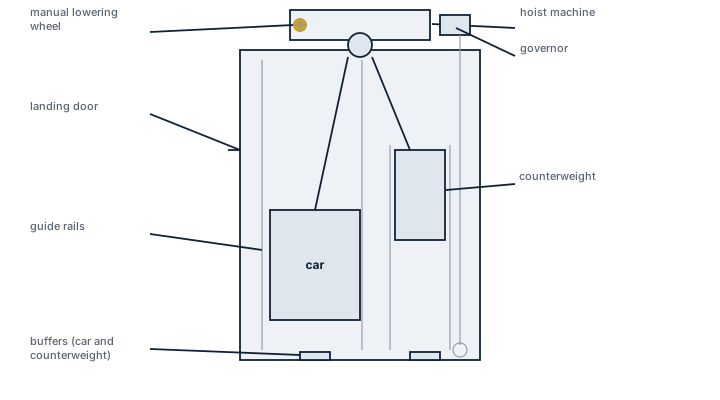
Marine lift shaft arrangement
Side view of a marine elevator shaft showing the hoist machine and drive sheave at the top, the overspeed governor and its rope, the car and counterweight running on guide rails, landing doors at deck level, and the buffers at the bottom of the pit.

Main components

Car and guide rails

Steel-framed car running on guide rails bolted to the shaft structure; rail brackets are spaced and reinforced to resist the lateral loads generated by ship motion, not just the static weight of the car.

Drive machine

Traction machine with wire ropes and a counterweight, or a hydraulic ram, depending on travel height and space. Traction drives dominate on taller shafts; hydraulic units suit short travel where machine room space is limited.

Safety gear and buffers

Overspeed governor and car-mounted safety gear that clamps onto the rails if the car overspeeds or the ropes fail, plus buffers at the bottom of the shaft sized for the car's rated speed and load.

Control system

Motion sensors that detect roll and pitch and can hold or slow the car during heavy weather, plus a battery-backed emergency drive that brings the car to the nearest landing on power loss.

Doors and landing gear

Car and landing doors interlocked so the car cannot move with a door open, built to marine fire and watertight standards where the shaft passes through a fire-rated bulkhead or deck.

Selection and sizing

Rated load and car size follow the intended use - crew and stores, passengers, or a stretcher-capable car for casualty evacuation - and the last of these drives minimum internal dimensions regardless of passenger numbers. Travel height and number of stops set the choice between hydraulic and traction drive. The vessel's maximum expected roll and pitch angles, taken from the ship's stability data, size the safety gear and rail bracket spacing, and a lift for an offshore vessel or an icebreaker is specified against a wider motion envelope than one for a coastal ferry.

  • Rated load and car dimensions, including stretcher clearance where required
  • Travel height, number of landings, and drive type
  • Roll and pitch angles the safety gear and rails are qualified against
  • Power supply, including the emergency drive's battery duration
  • Fire rating of doors and shaft enclosure where it crosses fire zones

Regulations and class

Marine lifts on passenger and cargo ships fall under SOLAS Ch. II-2 for fire protection where the shaft penetrates fire-rated boundaries, and under class society rules for lifting appliances, which cover load testing, safety gear certification, and periodic survey of ropes, brakes, and the governor. Lifts intended for use as an escape or evacuation aid, such as stretcher lifts on passenger ships, carry additional requirements for emergency power and manual lowering. Initial load test and periodic re-testing of ropes and safety gear are carried out at class-defined intervals, and the results go into the ship's survey record.

Typical faults

FaultConsequence
Corroded or slack rail bracketsCar misalignment, rough ride, accelerated rail and guide shoe wear
Door interlock contacts fouled by salt or paintNuisance stops or, worse, a door that fails to lock reliably
Emergency battery not load-testedCar stranded between decks on a real power failure
Governor rope worn or under-tensionedOverspeed protection does not trip when needed
Motion sensor miscalibratedLift keeps running in sea states it should lock out, or locks out unnecessarily

What to look for in a supplier

  • Documented qualification of the safety gear against the vessel's actual roll and pitch envelope, not a generic land-based rating
  • Class type approval for the drive and safety components on the flag and class the vessel carries
  • Local service presence or a trained network able to reach the vessel's trading ports
  • Emergency drive and battery sized with test data, not a manufacturer's nominal figure
  • Spare parts commonality with other lifts already in the owner's fleet, if relevant

Test the emergency lowering or backup drive under real load, not just on an empty car - a battery that lifts an empty cabin comfortably can stall under a stretcher and two crew members.

By manufacturer AFRISOWISKASwagelokAlfa Laval S.p.A.MAN Energy SolutionsWärtsiläEndress+HauserABB MarineAlfa LavalMacGregorNovenco MarineCarrier MarineseimiSiemens MarineHeinen & HopmanAll manufacturersSpare parts by equipment
Would you like to know more?

One request. A person answers within 24 hours on working days.

Tell us the manufacturer, the model and what you need — a part, a service call, a second opinion. Our desk asks the right suppliers from a network of over 114,000 companies and comes back with a quote or a sourcing plan, not a search page.

Frequently asked

Three things people ask first.

Is Marine Elevator / Lift data free?

Yes. Every model page, every guide and every datasheet for this type is readable without an account. An account adds saved searches and requests, nothing is taken away.

My model is missing — what now?

Send us the nameplate. We identify it by hand, add it to the library, and if you need a part or a service, the request is already on our desk.

Can you source a Marine Elevator / Lift part?

Yes. Tell us the manufacturer, the model and what you need — our desk asks the right suppliers from a network of over 114,000 companies and comes back with a quote or a sourcing plan.