What to check on a Ironer / Mangle.
An ironer, sometimes called a mangle or flatwork finisher, is built to press and finish large flat items such as bed sheets, pillowcases and tablecloths rather than to wash or dry them. It works on damp, pre-extracted linen that still holds enough moisture for heat and pressure to set a smooth, wrinkle-free finish, then completes the drying in the same pass. That is the key difference from a tumble dryer, which tumbles items loose in a rotating drum and cannot produce a pressed, flat finish, and from a washing machine…
What Makes an Ironer Different
An ironer, sometimes called a mangle or flatwork finisher, is built to press and finish large flat items such as bed sheets, pillowcases and tablecloths rather than to wash or dry them. It works on damp, pre-extracted linen that still holds enough moisture for heat and pressure to set a smooth, wrinkle-free finish, then completes the drying in the same pass. That is the key difference from a tumble dryer, which tumbles items loose in a rotating drum and cannot produce a pressed, flat finish, and from a washing machine, which only ever removes soil and excess water. On a ship, the ironer is normally the last machine in the laundry line, working on linen that has already been through a washer-extractor.
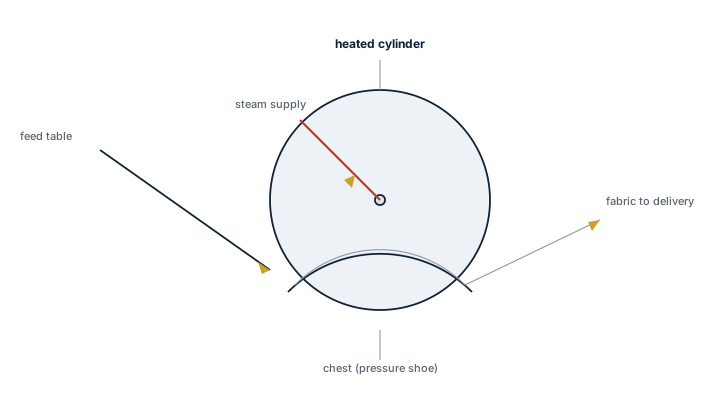
Main Components
Heated cylinder (chest)
A large-diameter rotating steel roll, heated internally by steam, thermal oil or electric elements, typically to 140-180 degrees C at the surface depending on fabric type and line speed.
Pressure chest / bed
A curved, matching stationary shell wrapped in padding and an ironing belt, pressed against the cylinder to hold linen in contact long enough for moisture to flash off and creases to set.
Ironing belts
Continuous fabric belts, usually a cotton or polyester-cotton blend, that carry linen around the cylinder and protect it from direct metal contact; they wear steadily and need periodic replacement.
Feed and folding section
An infeed table, often with clamps or a feeding aid, that squares the item before it enters the nip; larger shipboard units may have an integrated folder taking finished linen straight off the chest.
Heat source and controls
Steam-heated units need a supply from the ship's auxiliary boiler at a set pressure; electric units draw directly from the ship's supply and need no boiler steam, which matters on vessels that shut the boiler down at sea.
Selection and Sizing
- Chest diameter and width, which set both the linen size handled and the achievable throughput in kg or pieces per hour
- Heat source matched to what the ship actually has available, since steam only makes sense where boiler steam is reliably on line during laundry hours
- Line speed and temperature range needed for the fabric mix, since synthetic blends scorch at temperatures cotton tolerates easily
- Available laundry space and the height needed for chest access during maintenance
Typical Faults
| Fault | Cause | Consequence |
|---|---|---|
| Scorching or yellowing of linen | Chest temperature too high for the fabric, or belt worn thin at one point | Damaged linen, uneven finish, belt replacement needed |
| Linen jamming at the nip | Misfed corners, or foreign objects such as buttons and pins left in linen | Belt tearing, chest surface damage, unplanned downtime |
| Loss of steam pressure mid-cycle | Boiler load shed elsewhere, trap or valve fault | Damp, unfinished linen, throughput backlog |
| Uneven pressure across the width | Worn or unevenly stretched ironing belt, chest padding compressed | Streaked finish, localized belt wear accelerates |
What to Look for in a Supplier
- Belt and padding materials available as standard spares, not a proprietary item only the maker stocks
- A heat source option that matches the ship's actual utilities rather than assuming boiler steam is always available
- Realistic throughput figures given for the fabric mix on board, not just for cotton sheeting under ideal conditions
- Access panels and chest arrangement that allow belt changes without a full teardown
Belts and padding are consumables, not spares to order after they fail; keeping a spare belt set on board avoids a laundry standing idle for weeks waiting on a port call with the right supplier.