What to check on a Marine Laundry.
A washing machine or dryer built for a ship is not simply a commercial unit dropped into a steel room. It has to run on the ship's own fresh water and, usually, steam or electrical heat rather than mains gas, hold its footing and door seal through continuous roll and pitch, and keep working with the harder or more variable water quality some ships make from their evaporators. Crew laundry runs day after day, so downtime is not an inconvenience, it is a hygiene and morale problem within days.
What sets marine laundry equipment apart
A washing machine or dryer built for a ship is not simply a commercial unit dropped into a steel room. It has to run on the ship's own fresh water and, usually, steam or electrical heat rather than mains gas, hold its footing and door seal through continuous roll and pitch, and keep working with the harder or more variable water quality some ships make from their evaporators. Crew laundry runs day after day, so downtime is not an inconvenience, it is a hygiene and morale problem within days.
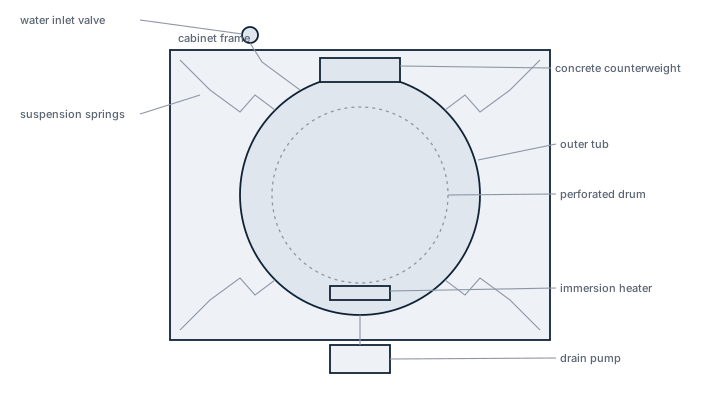
Main components
- Washer-extractor — combines wash and high-speed spin extraction in one drum, reducing the moisture load the dryer then has to remove.
- Tumble dryer — steam-heated or electric, with a lint filter and exhaust ducting that has to be kept clear as a fire-prevention item.
- Calender or flatwork ironer — used mainly on passenger ships for bed linen and tablecloths at volumes a domestic iron could never handle.
- Water and steam supply system — fresh water connection sized against the ship's daily production capacity, plus a steam or electric heating circuit for both the washer and the dryer.
- Anti-vibration mounting — machines are through-bolted to the deck with mounts rated for the out-of-balance forces a high-speed extraction cycle generates in a seaway.
Selection and sizing
Capacity is set by crew complement and, on passenger ships, by guest laundry and linen turnover, expressed in kilograms of dry laundry the equipment needs to process per day. Fresh water and steam consumption per cycle matter as much as drum size, since both draw on limited ship-generated resources shared with accommodation and galley demand. Electrical load also needs checking against the ship's available supply, particularly for dryers on ships without spare steam capacity.
Typical faults
| Fault | Consequence |
|---|---|
| Lint filter and dryer ducting not cleaned regularly | Restricted airflow raises fire risk and extends drying time. |
| Anti-vibration mounts worn or loosened | Excessive vibration transmits into the deck structure and accelerates bearing wear. |
| Door seal degraded on the washer-extractor | Water leaks during the wash cycle, and high-speed spin can become unbalanced. |
| Steam trap on the dryer or ironer failing | Wet steam reaches the heating coil, cutting drying efficiency and wasting fresh water condensate. |
What to look for in a supplier
- Confirmed marine-duty rating for vibration and roll tolerance, not a shore-based commercial model adapted after the fact.
- Water and steam or electrical consumption figures per cycle, checked against what the ship can actually supply.
- Spares availability for door seals, bearings, and lint filters, the parts that wear fastest under daily heavy use.
- Compatibility with the ship's existing fresh water quality, particularly where evaporator-made water runs harder or softer than shore supply.
Keep the dryer ducting on the same cleaning schedule as any other fire-risk item on board — a blocked lint trap is one of the more common, and more preventable, sources of an engine-room-adjacent fire.