What to check on a Refrigeration Compressor (Reciprocating).
27 models from MENERGA Marine in Refrigeration Compressor (Reciprocating). Below: the full model list.
What defines this type
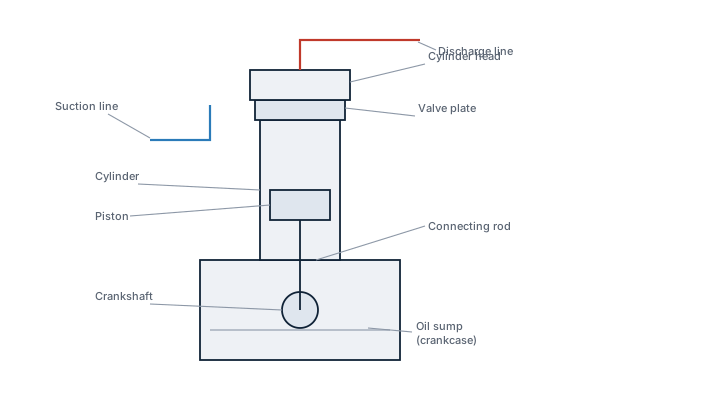
A reciprocating compressor moves refrigerant by piston displacement in a cylinder, opening and closing spring-loaded suction and discharge valves on every stroke. For a provisions plant serving separate chill and freeze rooms, this is the standard choice because the plant cycles on and off constantly as rooms reach setpoint, and reciprocating machines start and stop cleanly at this size without the oil migration and surge problems that make screw compressors better suited to continuous, larger duty. Semi-hermetic versions seal the motor inside the refrigerant circuit; open-drive versions use an external motor and shaft seal, chosen where a class-approved motor separate from the refrigerant circuit is preferred.
Read the full guide
Main components
- Crankcase and crankshaft – converts motor rotation into piston stroke, houses the sump oil charge.
- Cylinders and pistons – typically two to six cylinders on a provisions plant compressor, arranged in a V or W.
- Suction and discharge valve plates – thin steel reed valves that flex open and shut on every revolution; the single most failure-prone part.
- Capacity control – cylinder unloaders or a suction bypass that step the compressor down to part load rather than short-cycling the whole machine.
- Oil pump and lubrication circuit – force-feeds bearings and cylinder walls; low oil pressure cutout protects against a dry start.
- Crankcase heater – keeps refrigerant from dissolving into the standing oil during long shutdowns, since a foaming start-up washes oil out of the bearings.
- Suction and discharge shut-off valves – isolate the compressor for service without pumping down the whole circuit.
Selection and sizing
The compressor is selected against the plant's cooling duty at the design evaporating and condensing temperatures, not against a single nameplate horsepower figure. Points a superintendent should check on a replacement or newbuild spec:
- Cooling capacity in kW at the actual design evaporating temperature for chill versus freeze duty – capacity falls sharply as evaporating temperature drops.
- Refrigerant type: R404A is being phased down under the Kigali Amendment schedule, and R448A, R449A or R507A are common replacements or newbuild choices, each with a different pressure-temperature relationship.
- Number of cylinders and capacity control steps, which set how finely the plant can match a partial load without excessive cycling.
- Compression ratio at design conditions – a ratio pushed too high by an undersized condenser shortens valve life regardless of compressor quality.
Regulations and class
Class rules require the refrigeration plant and its pressure parts to be surveyed periodically, and pressure vessels in the circuit such as the receiver are subject to the same pressure test regime as other class-surveyed pressure equipment. Refrigerant choice is increasingly shaped by the Montreal Protocol's Kigali Amendment phase-down of high-GWP HFCs, which affects which refrigerants remain available for top-up on older plants and which are specified on new compressors.
Typical faults
| Fault | Consequence |
|---|---|
| Valve plate or reed valve failure | Sudden capacity loss and metal fragments circulating into the cylinder and oil, often forcing a full valve plate change |
| Oil dilution from refrigerant migration during shutdown | Foaming on start-up and momentary loss of lubrication at the bearings |
| Capacity control solenoid sticking | Compressor runs fully loaded when only part load is needed, or fails to reach full capacity when the room calls for it |
| Low suction superheat | Liquid refrigerant slugging back into the cylinder, which can bend a connecting rod |
| Shaft seal leakage on open-drive machines | Slow refrigerant loss that shows up as gradually rising room temperature long before an alarm trips |
What to look for in a supplier
- Semi-hermetic or open-drive matched to the vessel's existing plant, since spares and running gear are not interchangeable between the two.
- A stocked valve plate and gasket kit, since valve failure is the most common in-service repair.
- Confirmed compatibility with the low-GWP refrigerant the plant will actually run, including oil type.
- Documented capacity control range matching the plant's chill and freeze room split.
A compressor that trips on low oil pressure right after a long idle period is usually refrigerant-diluted oil, not a failed oil pump; give the crankcase heater time to work before condemning the pump.